WABASH SENIOR LIVING & REHAB
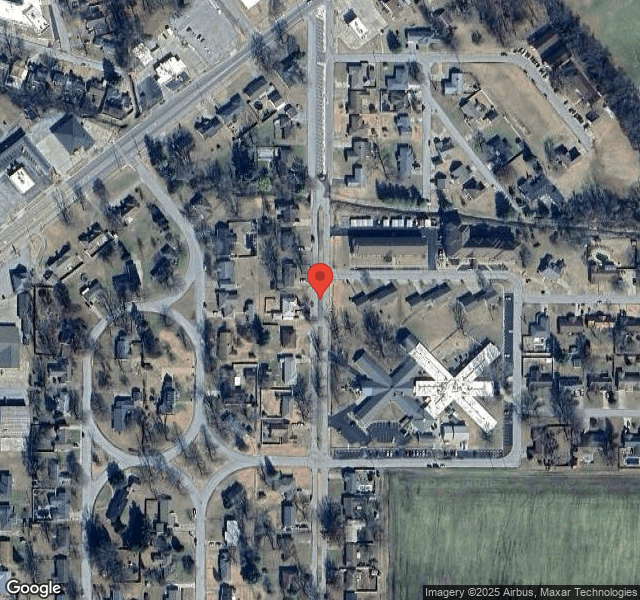

216 COLLEGE BOULEVARD, CARMI, IL 62821 (618) 382-4644
For profit - Limited Liability company 156 Beds WLC MANAGEMENT FIRM Data: November 2025
Trust Grade
65/100
#191 of 665 in IL
Last Inspection: April 2025

Within standard 12-15 month inspection cycle. Federal law requires annual inspections.

Overview

Wabash Senior Living & Rehab has a Trust Grade of C+, which means it is considered decent and slightly above average among nursing homes. In Illinois, it ranks #191 out of 665 facilities, placing it in the top half, and it is the top option among three facilities in White County. The facility's performance is stable, with two issues reported in both 2024 and 2025, but staffing is a concern, receiving only 2 out of 5 stars and experiencing a high turnover rate of 99%, well above the state average. While there have been no fines, which is positive, there have been serious incidents, including a medication error that led to a resident being hospitalized for an acute kidney injury and failures to properly assess and intervene after residents' falls. Overall, while Wabash Senior Living has strengths in its health inspections and no fines, the staffing issues and specific incidents raise significant concerns for families considering this facility.

Trust Score
C+
65/100
In Illinois
#191/665
Top 28%
Safety Record
Moderate
Needs review
Inspections
Holding Steady
2 → 2 violations
Staff Stability
⚠ Watch
99% turnover. Very high, 51 points above average. Constant new faces learning your loved one's needs.
Penalties
✓ Good
No fines on record. Clean compliance history, better than most Illinois facilities.
Skilled Nurses
⚠ Watch
Each resident gets only 29 minutes of Registered Nurse (RN) attention daily — below average for Illinois. Fewer RN minutes means fewer trained eyes watching for problems.
Violations
○ Average
7 deficiencies on record. Average for a facility this size. Mostly minor or procedural issues.
★★★★☆
4.0
Overall Rating
★★☆☆☆
2.0
Staff Levels
★☆☆☆☆
1.0
Care Quality
★★★★★
5.0
Inspection Score
Stable
2024: 2 issues
2025: 2 issues

The Good

  • Full Sprinkler Coverage · Fire safety systems throughout facility
  • No fines on record

Facility shows strength in fire safety.

The Bad

Staff Turnover: 99%

52pts above Illinois avg (47%)

Frequent staff changes - ask about care continuity

Chain: WLC MANAGEMENT FIRM

Part of a multi-facility chain

Ask about local staffing decisions and management

Staff turnover is very high (99%)

51 points above Illinois average of 48%

The Ugly 7 deficiencies on record

1 actual harm
Apr 2025 2 deficiencies
CONCERN (D)

Potential for Harm - no one hurt, but risky conditions existed

Deficiency F0638 (Tag F0638)

Could have caused harm · This affected 1 resident

Based on interview and record review, the facility failed to timely transmit Minimum Data Set (MDS) Assessments for 2 (R20 & R25) of 2 residents reviewed for timely MDS submission in the sample of 45....

Read full inspector narrative →
Based on interview and record review, the facility failed to timely transmit Minimum Data Set (MDS) Assessments for 2 (R20 & R25) of 2 residents reviewed for timely MDS submission in the sample of 45. The findings include: 1. R20's Face Sheet documented an admission date of 11/20/2024 and included diagnoses of Chronic Obstructive Pulmonary Disease, Anxiety, and Depression. This same document listed a discharge date of 12/5/24. R20's last transmitted MDS was an admission assessment and was completed on 11/27/24. 2. R25's Face Sheet documented an admission date of 10/29/2024 and included diagnoses of repeated falls, anemia, type 2 diabetes, and muscle weakness. This same document listed a discharge date of 11/26/24. R20's last transmitted MDS was an admission assessment and was completed on 11/5/24. On 4/23/25 at 11:00 AM, V4 (MDS Coordinator) stated that she just took over this job in March of 2025 and recognizes that R20 and R25's assessments are showing up as overdue quarterly assessments, however a discharge assessment should have been completed and transmitted with a due date of 12/5/24 for R20, and a discharge assessment should have been completed and transmitted with a due date of 11/26/25 for R25. On 4/24/25 at 11:30 AM, V4 stated that she had completed and transmitted the discharge MDS's for R20 and R25. Review of the final validation report documents that R20's discharge assessment target date was 12/05/2024, but was not transmitted as complete until 4/24/25 and documents a message that the completion date is more than 14 days after the assessment reference target date. This same report documents that R25's discharge assessment target date was 11/26/24, but was not transmitted as complete until 4/24/25 and documents the same message that the completion date is more than 14 days after the assessment reference target date.
CONCERN (D)

Potential for Harm - no one hurt, but risky conditions existed

Deficiency F0760 (Tag F0760)

Could have caused harm · This affected 1 resident

**NOTE- TERMS IN BRACKETS HAVE BEEN EDITED TO PROTECT CONFIDENTIALITY** Based on interview and record review, the facility failed to ensure residents received the correct medications in accordance wit...

Read full inspector narrative →
**NOTE- TERMS IN BRACKETS HAVE BEEN EDITED TO PROTECT CONFIDENTIALITY** Based on interview and record review, the facility failed to ensure residents received the correct medications in accordance with their physician's orders for 2 (R83, R92) of 7 residents reviewed for significant medication errors in the sample of 45. This past noncompliance occurred between 3/17/2024 and 4/1/2025. Findings include: 1. R83's admission Record documented an admission date of 3/13/2024 and included diagnoses of unspecified dementia, unspecified severity, without behavioral disturbance, psychotic disturbance mood, anxiety disorder, unspecified, and unspecified atrial fibrillation. R83's Minimum Data Set (MDS) dated [DATE] documented a Brief Interview for Mental Status (BIMS) score of 5, which indicates severe cognitive impairment. R83's Physician Order Summary documented divalproex (seizure and/or mood stabilization treatment) oral tablet delayed release 500mg (milligrams) -1 tablet by mouth twice a day, acetaminophen (pain reliever) oral tablet 500mg-give 2 tablets by mouth two times a day and apixaban (blood thinner) 5mg tablet-take 1 tablet by mouth twice a day. R83's Progress Note dated 3/17/2025 by V3 (Registered Nurse/RN) documented that she was passing medications and took R83 and R92 back to their shared room. V3 documented that she heard a conflict up the hall that made her accidentally mix up the unlabeled medication cups. V3 documented R83 was given R92's medications including donepezil (dementia treatment) 5mg. 2. R92's admission Record documented an admission date of 8/8/2024 and included diagnoses of unspecified dementia, unspecified severity, without behavioral disturbance, psychotic disturbance mood, altered mental status and muscle weakness. R92's MDS dated [DATE] documented a BIMS score of 3, which indicates severe cognitive impairment. R92's Physician Order Summary documented donepezil hydrochloride (dementia treatment) 5mg-1 tablet by mouth at bedtime and memantine (dementia treatment) 10mg tablet, take 1 tablet by mouth twice a day. R92's Progress Note dated 3/17/2025 by V3 (RN) documented that she was passing medications and took R92 and R83 back to their shared room. V3 documented that she heard a conflict up the hall and accidentally swapped the medication cups. V3 documented R92 was given R83's medications including acetaminophen 1000mg, valproate 500mg and apixaban 5mg. On 04/24/25 at 10:00 AM, V1 (Administrator) stated, he had been notified by V3 (RN) that she administered the wrong medications to R83 and R92. V1 stated, he advised V3 to contact V2 (Director of Nursing/DON) and then he immediately started working on the plan of correction that included education and observation of medication administration by nursing staff. On 04/24/25 at 10:36 AM, V2 (DON) stated, she was notified via phone by V3 (RN) that she had given R83 and R92 the wrong medications. V2 stated V5 (Physician) was contacted, vitals were obtained on R83 and R92 with monitoring scheduled for every 2 hours for the next 24 hours. V2 stated V1 immediately started a plan of correction that included education and auditing of the nursing staff being observed during medication administration on 10 residents. The facility policy Adverse Consequences and Medications Error (revised April 2014) documented under Policy The interdisciplinary team evaluates medication usage in order to prevent and detect adverse consequences and mediation-related problems such as adverse drug reactions (ADRs) and side effects. Adverse consequences shall be reported to the Attending Physician and Pharmacist, and to federal agencies as appropriate. Under Policy, 5. A medication error is defined as the preparation or administration of drugs or biological which is not in accordance with physician's orders, manufacturer specifications, or accepted professionals' standards and principles of the professional(s) providing services. Prior to the survey date, the facility took the following actions to correct the non-compliance: 1. Incident Investigation of 2 residents on one wing had received the wrong medication during the bedtime medication pass. 2. Per review of the Interdisciplinary team, it is felt that there is potential for other residents. 3. Staff member had been offered education regarding 5 rights of medication administration. Completed by 4/1/2025. Mediation Administration rate at 0% during survey. 4. All nursing staff to be educated regarding 5 rights of medication administration. Completed by 4/1/2025, Medication Administration rate at 0% during survey. 5. The Administrator/Director of Nursing and/or designee will observe return demonstration of medication on each nurse with 10 residents med passes being observed. V2 completed audits by 4/1/2025 with V1 and V2 in attendance. 6. QAPI (Quality Assurance Performance Improvement) meeting held - any issue identified will be immediately corrected and re-education will be offered and reviewed during QAPI meeting. This was also completed by 4/1/25.
Dec 2024 1 deficiency
CONCERN (D) 📢 Someone Reported This

A family member, employee, or ombudsman was alarmed enough to file a formal complaint

Potential for Harm - no one hurt, but risky conditions existed

Accident Prevention (Tag F0689)

Could have caused harm · This affected 1 resident

**NOTE- TERMS IN BRACKETS HAVE BEEN EDITED TO PROTECT CONFIDENTIALITY** Based on interview and record review, the facility failed to transfer a resident safely for 1 (R1) of 3 residents reviewed for a...

Read full inspector narrative →
**NOTE- TERMS IN BRACKETS HAVE BEEN EDITED TO PROTECT CONFIDENTIALITY** Based on interview and record review, the facility failed to transfer a resident safely for 1 (R1) of 3 residents reviewed for accidents in the sample of 6. This past non-compliance occurred between 12/01/2024 to 12/13/2024. The findings include: R1's admission Record documents R1 was admitted to the facility on [DATE] and includes diagnoses of cerebral aneurysm, non-ruptured, contracture of muscle, multiple sites, adult failure to thrive, altered mental status, delusional disorder, generalized anxiety disorder, and Paroxysmal Atrial Fibrillation. R1's Minimum Data Set (MDS) dated [DATE] documents a Brief Interview of Mental Status (BIMS) score of 01, indicating R1 has severe cognitive impairment. The same MDS documents that R1 has impairment on both upper and lower extremities, is dependent for showers, bed to chair transfers, and getting in and out of shower. R1's Care Plan documents that R1 has an ADL (Activities of Daily Living) self-care performance deficit. Documented interventions include that R1 requires extensive assist with bathing/dressing/hygiene and R1 requires two assist with full body mechanical lift for all transfers. R1's [NAME] documents for Toilet Use: R1 requires two assist with full body mechanical lift for all transfers and R1 requires two assist with full body lift for all transfers or two assists with transfers. R1's Physician's Orders dated as of 11/1/2024 document an order for Eliquis tablet 2.5mg (milligrams) two times a day for AFib (Atrial Fibrillation). R1's Progress Note dated 12/2/24 at 12:51 PM by V12 (Licensed Practical Nurse) documents (R1) noted to have a large bruise to right forearm. (R1) reported that staff transferred her to shower without using hoyer (mechanical) lift yesterday afternoon. MD (physician) and POA (Power of Attorney) notified. R1's Nurse's Progress Note dated 12/2/24 at 3:21pm by V1 documents I spoke with (R1) today regarding a bruise that occurred the night before during a transfer prior to her shower. (R1) stated that the aides in no way intentionally set out to harm her in any way. She thanked me for talking with her and had no other concerns at this time. On 12/10/24 at 2:00pm, V2 (Assistant Administrator) said there was an incident on 12/1/24 involving R1 that occurred on 12/1/24. V2 said that there were 2 Certified Nurse's Aides (CNA), that do not usually work that hall, that gave R1 a shower. V2 said that instead of using the mechanical lift, they lifted R1 under her arms. V2 said that both staff told her that R1 never screamed or yelled or even told them they needed to use the lift. V2 said that the incident was brought to her attention on 12/2/24 (Monday) that R1 had a large bruise on her right forearm from not being transferred with the mechanical lift. V2 said that V15 (Certified Nurse's Aide/CNA) said that there were no issues with the mechanical lifts, they just didn't use it and lifted her without it. V2 said that they should have used the mechanical lift, but didn't. V2 also said that R1 is on Eliquis which is a blood thinner and does bruise easily. On 12/10/24 at 11:30am, R1 was sitting in her recliner in her room. R1 said she did not want to talk about it and she had told the story a million times and was not going to say it again. R1 would not let this surveyor look at her arm. R1 was alert and answered questions appropriately at this time. On 12/12/24 at 11:25 AM, R1 was asked about the incident on 12/1/24 and R1 said they didn't use the lift and those girls were never going to shower her again. R1 said they are not allowed in her room again. R1 said she did not tell them to stop or to use the lift when they transferred her. R1 said that she is ok and that that will not happen again. R1 said they made this big bruise on her arm. R1 was asked to see the bruise and R1 would not let this surveyor look at the bruise. R1 was observed to have contractures in both hands and unable to use them. The lower part of the bruising towards her wrist was visible and it was reddish pink in color. R1 was alert and answered questions appropriately at this time. On 12/12/24 at 3:15 PM, V15 (CNA) said she worked on 12/1/24 and said she was told that R1 needed a shower and no one told her that she needed a mechanical lift. V15 said she was not aware of looking at the [NAME] and has been employed at the facility for maybe 9-10 weeks. V15 said that they transferred R1 under her arms and held the seat of her pants. V15 said that facing R1 she put her arm under R1's arms in the arm pit area and R1's arm pit area was in the bend of her arm. V15 said she also had ahold of the seat of R1's pants. V15 said that R1 did not scream or yell and all that R1 said they were never giving her a shower again. V15 said they used the shower in the 800 hall that was closed since the showers on the 500 hall were being used. V15 said that R1 never told them to stop and they should use the lift or they would have used it. V15 said to her knowledge, the lifts were not broken. V15 said there was bruising on R1's right arm before they showered her. V15 said after R1's shower, they lifted her back in bed. V15 said they did not use the lift putting her in bed. V15 also said she did not use a gait belt. On 12/10/24 at 3:24pm, V16 (CNA) said she was not aware that R1 required a mechanical lift for transfers. V16 said she was being trained and had only worked a couple of days. V16 said that on 12/1/24 she transferred R1 with V15. V16 said she was on the opposite side of V15 and placed her arm under R1's arm with R1's weight resting in the bend of her arm and used her other hand to hold the seat of R1's pants. V16 also said she did not use a gait belt. V16 said R1 never told them they needed to use the lift. V16 said they took R1 to the 800 hall to shower since the shower on the 500 hall was being used. V1 6 said that no one could have heard R1 screaming and yelling since she did not yell or scream at all. V16 said that R1 kept saying you will never give me a shower again and that was it. V16 said they showered her without any issues and then put her back in bed again not using the lift. On 12/11/24 at 10:00am, V12 (Licensed Practical Nurse/LPN) said she came in on Monday (12/2/24) and saw bruising on R1's right arm. V12 said that R1 told her that the CNA's couldn't get the lift to work and lifted her under her arms and that is where the bruise came from yesterday (12/1/24) V12 said R1 also told her that they were transferring her to a chair. V12 said she took a picture of the bruise and reported it to administration on 12/2/24 and also called the physician and R1's POA (Power of Attorney). On 12/11/24 at 10:50am, V14 (Registered Nurse/RN/Infection Preventionist/wound nurse) said that she is aware of the incident. V14 said she was not aware of any bruising present on R1's right arm prior to the incident on 12/1/24. The facility policy titles Safe Lifting and Movement of Residents (revised July 2021) documents Mechanical lifting devices shall be used for heavy lifting, including lifting and moving residents when necessary. A resident that requires a mechanical lift may also be a two person assist with the use of proper equipment i.e (in example) gait/transfer belts.
Apr 2024 1 deficiency 1 Harm
SERIOUS (G)

Actual Harm - a resident was hurt due to facility failures

Deficiency F0760 (Tag F0760)

A resident was harmed · This affected 1 resident

**NOTE- TERMS IN BRACKETS HAVE BEEN EDITED TO PROTECT CONFIDENTIALITY** Based on observation, interview and record review, the facility failed to ensure medications were administered as ordered for 1 ...

Read full inspector narrative →
**NOTE- TERMS IN BRACKETS HAVE BEEN EDITED TO PROTECT CONFIDENTIALITY** Based on observation, interview and record review, the facility failed to ensure medications were administered as ordered for 1 (R77) of 10 residents reviewed for medication administration in the sample of 38. This failure resulted in R77 experiencing a significant medication error in which 5 additional doses of diuretic medication were administered resulting in dizziness, abnormal lab values, Intravenous Fluid administration, supplemental Potassium medication, and a hospital admission for an Acute Kidney Injury. This past non-compliance occurred between 3/14/24 and 3/19/24. Findings Include: R77's admission Record documented R77 was [AGE] years old with an admission date to the facility of 03/08/2023. Diagnoses listed in their entirety on this document are: Alzheimer's Disease with late onset; Essential Hypertension; Dementia in other diseases classified elsewhere, unspecified severity, without behavioral disturbance, psychotic disturbance, mood disturbance, and anxiety. R77's Progress Note dated 3/8/2024 with a time of 1:48 P.M. documented V12 (Physician) was here for rounds in which he reviewed medications, labs, vitals and weights. Received new order to start Duo nebs BID (twice daily) x 7 days and Zaroxolyn 5mg (milligrams) daily for 5 days. R77's Progress Note dated 03/18/2024 with a time of 2:23 P.M. documented R77 was complaining of dizziness, reported to V12. New orders were received for a CBC (Complete Blood Count), CMP (Complete Metabolic Panel), UA (Urinalysis Analysis) and orthostatic B/P (blood pressure). R77's Progress Note dated 03/19/2024 with a time of 12:44 A.M. documented R77 is currently receiving 2 diuretics, Furosemide 40 mg two times a day and Zaroxolyn 5 mg in the morning. R77 was noted to be experiencing dizziness, dry mouth, and urinating less this shift. Had to ambulate to the bathroom with one assist. A Progress Note dated 03/19/2024 with a time of 1:31 P.M. documented R77 was prescribed Zaroxolyn on 03/08/2024 intended for 5 days. Medication was ordered in the system for an indefinite end date therefore R77 has been receiving Zaroxolyn since 03/09/2024. Held this AM (03/19/2024) due to symptoms. V12 notified to discontinue medication and V13 (Nurse Practitioner/NP) will see R77 today. R77's Medication Administration Record documented Zaroxolyn was administered daily from 03/09/2024 - 03/18/2024 and held on 03/19/2024. R77's Progress Note dated 03/19/2024 with a time of 1:31 P.M. documented new orders for Potassium 40 meq (milliequivalent) by mouth three times a day and a 500 milliliters intravenous (IV) bolus. R77 was then to have an additional 100 milliliters per hour times two hours, along with a BMP daily for 3 days, and close monitoring for fluid overload. Additionally, R77's Furosemide was to be decreased to 20mg BID for 3 days. A document labeled CBC/CMP dated 03/19/2024 documents the following: BUN (blood urea nitrogen) 96 (high) normal value 7-25, Creatinine 2.8 (high) normal value 0.6-1.3, Sodium 134 (low) normal 136-145, Potassium 2.3 (Low) normal 3.5-5.1, and GFR 14 (low) normal >90. R77's Medication Administration Record dated March 2024 documented the bolus and intravenous fluids ordered to be given were Normal Saline Solution 0.9% with administration completed as ordered. R77's Progress Note dated 03/19/2024 with a time of 6:20 P.M. documented that the certified nurse assistant reported R77 pulled IV out. R77's Progress Note dated 03/19/2024 with a time of 7:15 P.M. documents that IV attempts were made with no success. R77 was refusing additional attempts. R77's Progress Notes further document that on 03/20/2024 at 3:27 A.M., R77 was reapproached and explained the need to restart the IV. R77 tolerated the restart well, and voiced no concerns. IV of Normal Saline was hung at 100 ml / hr (hour). On 03/20/2024 at 05:15 A.M., a note documented that lab was here to draw the BMP at this time. A nurses note dated 03/20/2024 with a time of 10:13 A.M. documented V13 was notified of a BUN critical at 100--new order received to give bolus of 500mL NS (Normal then back to 100mL per hour at previous dosage). A nurses note dated 3/20/2024 with a time of 10:40 A.M. documented an IV of 500mL bolus NS infused and hung new bag, set rate at 100mL per hour. IV site patent at this time and no redness, no edema noted. A nurse note dated 03/20/2024 with a time of 12:06 P.M. documents R77 pulled out IV line. R77 does not comprehend what IV is or what it is for. A nurse note dated 3/20/2024 with a time of 2:40 P.M, documented received order from V13 to send to (name of local hospital) for direct admit. The local hospital Discharge summary dated [DATE] documented R77 had an admission date to the hospital of 03/20/2024 with a diagnosis of Acute Kidney Injury. This same document noted R77 was having worsening edema in the long term care facility and more aggressive diuretics were ordered however, the length of treatment was extended beyond what was initially ordered. R77 experienced a decline in renal function. R77 had received IV fluids at the facility however, R77 continued to remove the IV. During R77's hospitalization R77 was treated with IV fluids for the Acute Kidney Injury, and diuretics were held. R77 initially had a creatine of 2.9 (No reference range given although lab results indicated high), creatine down to 1.7 (no reference [NAME], although a high but improving level is noted). A Progress Note dated 03/20/2024 with a time of 2:20 P.M. documented R77 admitted back to facility around 12:30 PM. On 04/19/2024 at 8:53 A.M., V3 (Director of Nursing/DON) stated she was made aware of the medication error by V14 (Licensed Practical Nurse). After reviewing the incident, it was discovered that when V10 (LPN) placed the order in the Electronic Medical Record (EMR) system with no end date. The EMR system places an end date of indefinite on each order unless a different date is selected. R77 was assessed by medical staff at the time of the medication error discovery and new orders were received for treatment that same day. R77 was treated in the facility until she wouldn't keep her IV in. V3 started a QAPI (Quality Assurance Performance Improvement) plan on the medication error. V3 checks the physician orders daily to ensure that the orders were written correctly. V3 stated that moving forward, all new orders will be matched against the nurses note. V3 educated all nursing staff on properly placing an order with an end date. On 04/19/2024 at 9:18 A.M. V10 (LPN) stated that she received the order for Zaroxolyn and that she was the nurse who placed the order for R77 Zaroxolyn in the computer. V10 stated that she did not place an end date on the order. V10 stated that she had been educated since the incident to ensure if the order contains an end date to make sure it is on the order in the EMR. On 04/18/2024 at 12:35 P.M., V12 stated that the expectation is that the facility follow physician orders. V12 stated that the extra doses of Zaroxolyn was a medication error. The extra doses of the medication lead to admission to a local hospital with diagnosis of Acute Kidney Injury. V12 stated that there was timely notification of the medication error and the hospitalization was a direct result of the medication error. A document titled Med Error, dated 3/19/24 documented R77 was prescribed Zaroxolyn 5mg daily times 5 days starting on 03/09/2024. When the order was placed there was no end date, so the order was indefinite. R77 has been receiving metolazone (Zaroxolyn) from 03/09/2024 - 03/18/2024 due to medication being held 03/19/2024 due to R77 having symptoms of dizziness. R77 was unable to give description. Action taken documents V13 saw R77 on rounds. Labs were ordered and done on R77. New order for IV fluids for 2 days, Oral Potassium 40 meq three times a day, decrease Furosemide to 20 mg for 3 days then return to 40 mg dose. Monitor for fluid overload. Do BMP daily times three days. A note dated focus area in R77's Plan of Care documented R77 receives diuretic therapy related to edema of bilateral lower legs and feet. The goal listed for this focus area is that R77 will be free of any discomfort or adverse side effects of diuretic therapy through the review date. The policy titled Administering Medications with a revised date of April 2019 documented, Medications are administered in a safe and timely manner. The same policy goes on to state .4. Medications are administered in accordance with prescriber orders, including any required time frame. Prior to the survey date, the facility took the following actions to correct the deficient practice: 1. A Quality Assurance and Performance Improvement (QAPI) meeting was held on 3/20/24. The incident was reviewed and identification of others at risk was discussed. In attendance - V1 (Administrator), V3 (DON) and V12 (Medical Director). 2. Interventions put into place to reduce risk of recurrence: Nursing staff educated regarding double checking orders for end dates upon entry. All nursing staff education was completed by 3/20/24. 3. Monitoring/Effectiveness: Administrator (V1), DON (V3) or designee will monitor order entries for end dates, 2 new orders will be monitored 5 days per week for 4 weeks. Any issue identified will be immediately corrected and re-education will be offerred and reviewed during QAPI Meetings.
Aug 2023 1 deficiency
CONCERN (D) 📢 Someone Reported This

A family member, employee, or ombudsman was alarmed enough to file a formal complaint

Potential for Harm - no one hurt, but risky conditions existed

Transfer Requirements (Tag F0622)

Could have caused harm · This affected 1 resident

**NOTE- TERMS IN BRACKETS HAVE BEEN EDITED TO PROTECT CONFIDENTIALITY** Based on interview and record review the facility failed to provide written documentation which stated the reason the facility c...

Read full inspector narrative →
**NOTE- TERMS IN BRACKETS HAVE BEEN EDITED TO PROTECT CONFIDENTIALITY** Based on interview and record review the facility failed to provide written documentation which stated the reason the facility could not meet the resident's needs for 1 (R1) of 3 residents reviewed for discharge procedure in the sample of 3. Findings include: 1. R1's face sheet documented R1 was admitted to the facility on [DATE] with diagnoses including: pneumonitis due to inhalation of food and vomit, dysphagia, unspecified intellectual disorders, autistic disorder, insomnia. R1's care plan documented R1 had several physical behaviors such as hitting, pinching, and biting staff. R1's 6/22/23 Minimum Data Set (MDS) documented R1 was severely cognitively impaired. On 8/24/23 at 10:11 AM, V1 (Administrator) said R1 was admitted after a hospital stay due to aspiration pneumonia. V1 said R1 was going to work with speech therapy and be discharged back to the group home R1 was residing prior to hospital stay. On 8/24/23 at 12:29 PM, V2 (R1's Legal Guardian) said R1 was living in a group home and was transferred to the hospital due to aspiration problems. V2 said the hospital had recommended placing a feeding tube in R1 but V2 felt that was unnecessary and wanted a second opinion. V2 said R1 was transferred to another hospital for a second opinion and declined a feeding tube be placed again. V2 said R1 is not verbal and would not have been able to maintain a feeding tube. V2 said he chose R1 to be placed on palliative care if R1's only other option was having a feeding tube placed. V2 said R1 was transferred to the facility with the intention of end of life care. On 8/24/23 at 2:37 PM, V3 (Social Services Assistant) said R1 was admitted to the facility with the expectation R1 would be receiving services of hospice. V3 said when R1 arrived to the facility it was clear R1 was not going to be a candidate for hospice services. V3 said when R1 arrived to the facility he was very mobile and did have some aggressive behaviors with staff such as bending staff's finger back, twisting staff's wrists, attempting to bite staff, and pounding on doors trying to get out of the building. V3 said he did not recall R1 having any aggressive behaviors towards other residents. V3 said R1 was transferred to an acute psychiatric facility for evaluation of his behaviors. V3 was asked why the facility could not meet R1's needs V3 said it was mainly nursing not being able to be one on one with R1. V3 said R1 required constant supervision due to exit seeking and wandering. V3 stated we (the facility) can't have a single staff follow a resident around the building all day. On 8/24/23 at 10:11 AM, V1 (Administrator) said R1 had been transferred to an acute psychiatric hospital for behaviors. V1 said the hospital had notified the facility they were R1's base line behaviors and R1 would be discharged back to the facility. V1 said the facility had completed an emergency involuntary discharge after being notified there was no improvement to R1's behaviors. R1's Electronic Medical Record (EMR) documented several progress notes documenting the facility's attempts to find placement in group homes like the group home R1 had previously resided in. R1's EMR documented a 6/26/23 at 3:00 PM progress note .(Acute psychiatric hospital) called. They can accept (R1). They would like for him to be sent with 3 outfits and night clothes if he wears them . sent current medications . Transportation notified that (R1) has been accepted . R1's EMR documented a 7/3/23 at 12:17 PM progress note .(Acute psychiatric hospital) called and requested (R1) to be picked up from their facility this Friday at 1100. Transportation Supervisor is aware and will make arrangements for transportation. (Acute psychiatric hospital) reported that (R1) is still pinching and exit seeking but can be easily redirected . R1's EMR documented a 7/6/23 at 11:13 AM progress note .called with an update on (R1) today from (Acute psychiatric hospital). (R1) is eating and sleeping well, he is exit seeking, pinching, getting physical today when being redirected. Doctor has said this is his baseline behavior and they don't feel they can do anymore with him. They do feel like he has more behaviors with male staff and advise if we can avoid this it may be helpful, he prefers female staff. I did ask if they can keep him a bit longer to try and help with the behaviors as we feel it will put our other guests at risk. She said she understands and does feel like he would be in a better setting like his previous home but they're unable to do anything further as doctor said it's his baseline behavior . R1's EMR documented a 7/6/23 at 4:59 PM progress note . Phone call made this afternoon to (R1's) guardian, (V2), letting him know that the facility would be doing an involuntary/ emergency discharge at this time . R1's 7/6/23 Notice of Involuntary Transfer or Discharge and Opportunity for Hearing for Nursing Home Residents documented an emergency transfer or discharge from the facility citing . your welfare and needs cannot be met in the facility, as documented in your clinical records by your physician . and .the safety of individuals in this facility is endangered The facility was not able to produce any documentation R1 was a danger to other residents or documentation from R1's physician why R1's needs could not be met in the facility. R1's 7/6/23 Notice of Involuntary Transfer or Discharge and Opportunity for Hearing for Nursing Home Residents also documented . on the date of transfer or discharge, you will be relocated to: Facility/ Person: (V3/ R1's Legal Guardian) . R1 was discharged to an acute psychiatric hospital. On 8/24/23 at 12:29 PM, V2 (R1's Legal Guardian) said the facility had called him to inform him R1 would not be allowed to be readmitted to the facility after his stay in the acute psychiatric hospital because the facility could not handle R1's behaviors. V2 stated he was unsure why they were unable to find R1 placement in a group home after his return from the hospital. V3 said R1 was still at the acute psychiatric hospital at the time of this investigation. V3 said he was told there was an appeal process but V3 did not know what he was supposed to do or who to talk to about that. On 8/24/23 at 1:44 PM, V5 (Chief Nursing Officer at the Acute Psychiatric Hospital) said R1 had been in the Acute Psychiatric Hospital for almost 2 months and had only had approximately 5 days with aggressive behaviors and was doing well. On 8/29/23 at 9:45 AM, V1 (Administrator) was asked why an emergency involuntary discharge was performed when R1 had been at the acute psychiatric hospital for 10 days and responded R1 was initially sent to the acute psychiatric hospital for behaviors and when they called back and told us his behaviors were his base line that is when we initiated the emergency involuntary discharge. V1 said she felt like the acute psychiatric hospital was better equipped to care for R1's behavioral needs. V1 verified there was no documentation from R1's physician documenting why the facility could not meet R1's needs, what interventions had been put in place, and why the receiving facility was better equipped to care for R1. The facility's 9/1/09 Transfer/ Discharge policy documented .1. When a resident is transferred or discharged , the resident's chart will be documented by a physician. 2. Each resident is allowed to request or agree to relocate within the community or transfer to another facility, and to participate in the transfer or discharge . 4. Notification of transfer or discharge will follow the regulations of the State in which (the facility) is licensed and will be made at least 30 days in advance unless the individual qualifies for a State- defined emergency relocation .
Mar 2023 1 deficiency
CONCERN (E) 📢 Someone Reported This

A family member, employee, or ombudsman was alarmed enough to file a formal complaint

Potential for Harm - no one hurt, but risky conditions existed

Accident Prevention (Tag F0689)

Could have caused harm · This affected multiple residents

**NOTE- TERMS IN BRACKETS HAVE BEEN EDITED TO PROTECT CONFIDENTIALITY** Based on observation, interview, and record review, the facility failed to ensure residents received treatment and care in accor...

Read full inspector narrative →
**NOTE- TERMS IN BRACKETS HAVE BEEN EDITED TO PROTECT CONFIDENTIALITY** Based on observation, interview, and record review, the facility failed to ensure residents received treatment and care in accordance with professional standards of practice that includes post fall assessment, monitoring, and implementation of fall interventions for 4 of 4 residents (R1, R2, R3, and R4) reviewed for accidents in a sample of 4. Findings include: 1. R1's face sheet documented an admission date of 1/13/23 and diagnoses including: cerebral infarction, atrial fibrillation, hypertension, obstructive sleep apnea, insomnia, hyperlipidemia. R1's 1/19/23 Minimum Data Set (MDS) documented a Brief Interview for Mental Status (BIMS) score of 14, indicating R1 was cognitively intact. The facility's Occurrence Type Falls printed 3/22/23 documented R1 had 15 falls in the facility since R1's admission. R1's care plan with a revision date of 1/19/23 documented R1 was at risk for falls with a 2/4/23 intervention documenting in part .Resident to not be left unattended in wheelchair in room . and a 1/31/23 intervention documenting .urinal to remain in reach . On 3/23/23 at 2:03 PM and 3:04 PM, R1 was sitting in his wheelchair in his room unattended with his urinal hanging in his bathroom on the handrail. On 3/24/23 at 1:09 PM, R1 was sitting in his room in his wheelchair unattended. On 3/23/23 at 2:03 PM, R1 said he has fallen several times in the facility. R1 said he thought his last fall was a couple weeks ago. R1 said he was trying to get his urinal. R1 said he did not want to bother staff and tried to use his urinal without help when he could. R1 said he was unsure how he had fallen any other times. On 3/23/23 at 1:37 PM, V9 (Certified Nurse's Assistant/CNA) said fall interventions for R1 could be found in R1's care plan in R1's Electronic Medical Record (EMR). V9 said R1 had an intervention for his urinal to be in reach, but V9 was unsure why that was in R1's care plan because R1 was not physically able to use a urinal by himself. V9 said R1 had an intervention to not be left in his wheelchair unattended. V9 said R1 was in his room in his wheelchair unattended at the time of this interview but R1 had gotten better about not falling out of his wheelchair and was safe to be in his room in his wheelchair unattended because his room was close to the nurses station. R1's 1/17/23 facility fall investigation documented R1 had an unwitnessed fall, and the facility was unable to produce any documentation of serial neurological checks being performed. R1's 1/22/23 facility fall investigation documented R1 had an unwitnessed fall, and the facility was unable to produce any documentation of serial neurological checks being performed. R1's 1/27/23 facility fall investigation documented R1 had an unwitnessed fall, and the facility was unable to produce any documentation of serial neurological checks being performed. R1's 3/5/23 facility fall investigation documented R1 had an unwitnessed fall, and the facility was unable to produce any documentation of serial neurological checks being performed. On 3/23/23 at 1:51 PM, V2 (Director of Nursing/DON) said R1 had several falls in the facility. V2 said on the interventions put in place for R1 was R1 was not to be left in his wheelchair in his room unattended. V2 said when R1 was up in his wheelchair he should be in common areas where he can be supervised by staff. V2 said when R1 is in his room he should be assisted to his recliner or to his bed. V2 said she was not sure why R1 did not have serial neurological checks completed after every unwitnessed fall. V2 said the facility did not have a designated person to review resident's EMRs for completeness and timeliness of assessments after a resident fall. V2 said after an unwitnessed fall the neurological assessment form was sent to medical records to be scanned into the resident's EMR but no auditing was being done. 2. R2's face sheet documented an admission date of 2/26//23 and diagnoses including: dementia, hypertension, hyperlipidemia, macular degeneration, depression. R2's 3/4/23 MDS documented a BIMS score of 5, indicating severe cognitive impairment. The facility's Occurrence Type Falls printed 3/22/23 documented R2 had falls in the facility on 3/5/23, 3/13/23, and 3/14/23. R2's 3/14/23 facility fall investigation documented R2 had an unwitnessed fall and no documentation of neurological checks being completed could be produced. R2's 3/14/23 facility fall investigation documented in part . Root Cause: Attempting to toilet, incontinent of loose stools. Interventions: Nursing to have MD/ NP (Medical Doctor/ Nurse Practitioner) review lactulose dosage related to loose stools and ammonia levels decreasing . R2's 3/1/23 through 3/31/23 Medication Administration Record (MAR) documented a 3/13/23 order for Lactulose 20 grams per 30 milliliters (ml) give 30 ml by mouth four times a day for elevated ammonia levels and bowel movement regimen do not hold due to loose stools. No changes to this order were made after R2's 3/14/23 fall. R2's care plan with a revision date of 3/14/23 documented R2 was at risk for falls and a 3/15/23 intervention of .nursing to have MD (Medical Doctor) review lactulose dosage r/t (related to) loose stools and ammonia levels decreasing . no other interventions were documented after 3/15/23. On 3/23/23 at 1:51 PM, V2 (DON) said she was not sure why R2 did not have neurological checks completed after R2's 3/14/23 unwitnessed fall. V2 said R2's 3/14/23 fall was due to R2 trying to ambulate to the bathroom without calling for assistance and R2 taking lactulose and causing loose stools. V2 said the interdisciplinary team had met and put an intervention in place for R2's medical provider to assess R2's lactulose dosage and possible decrease it so R2 would have less loose stools. V2 said R2's lactulose dosage was not changed after R2's 3/14/23 fall and the facility had not put any other fall interventions in place. 3. R3's face sheet documented an admission date of 1/12/23 and diagnoses including: hypertensive heart disease with heart failure, dementia, hyperlipidemia, anxiety disorder, major depressive disorder, muscle weakness, history of falling. R3's 2/21/23 MDS documented a BIMS score of 13, indicating R3 was cognitively intact. The facility's Occurrence Type Falls printed 3/22/23 documented R3 had falls in the facility on 1/23/23, 2/3/23, 3/1/23, and 3/15/23. R3's 3/15/23 facility fall investigation documented R3 had an unwitnessed fall on 3/15/23 at 12:00 AM. R3's 3/15/23 Neurological Assessment Flow Sheet documented vital signs were recorded every fifteen minutes from 12:00 AM until 12:45 AM but no neurological checks were documented as being completed, for 1:00 AM through 4:00 AM no vital signs or neurological checks were completed and sleeping was documented at 1:00 AM, and 8:00 PM. For 3/16/23 at 12:00 AM no vital signs or neurological checks were documented as being completed but sleeping was documented, for 4:17 AM vital signs were documented but no neurological check were documented as being completed, no further vital signs or neurological checks were documented. On 3/23/23 at 11:43 AM, V4 Licensed Practical Nurse (LPN) said she was the nurse caring for R3 on the night of 3/14/23 to the morning or 3/15/23 when R3 had an unwitnessed fall. V4 said after a resident has an unwitnessed fall neurological checks should be started immediately. V4 said neurological checks included vital signs, pupillary response, assessing for any change in orientation, and assessing for any changes in bilateral body movement. V4 said she was unsure why R3's neurological checks were not completed on 3/15/23. V4 said a resident can refuse to have a neurological check completed and refused should be documented on the Neurological Assessment Flow Sheet. On 3/23/23 at 10:12 AM, V2 (DON) said she was unsure why R3's neurological checks were not completed and the resident being asleep should not be the reason a nurse does not complete a neurological check after an unwitnessed fall. 4. R4's face sheet documented an admission date of 3/7/22 and diagnoses including: cirrhosis of the liver, dementia, dysphasia, iron deficiency anemia, hepatic encephalopathy, depression. R4's 1/27/23 MDS documented a BIMS score of 8, indicating mild cognitive impairment. The facility's Occurrence Type Falls printed 3/22/23 documented R4 had falls on 1/31/23, 2/17/23, 3/4/23, 3/16/23, and 3/19/23. On 3/23/23 at 3:06 PM and on 3/24/23 at 11:00 AM and 1:09 PM, R4 was sitting in a recliner in her room watching television with a bedside commode at the foot of her bed. On 3/24/23 at 1:09 PM, R4 said she was able to get up and walk to her bedside commode without staff's assistance. On 3/24/23 at 1:37 PM, V9 (CNA) said fall interventions for residents could be found on the residents [NAME] (summary of care areas for the resident) in the residents EMR. V9 said R4 did not have a fall intervention to remove the bedside commode from R4's room on the [NAME]. V9 said fall interventions could also be found in the resident's care plan in the residents EMR. V9 said she was not aware R4 was supposed to have the bedside commode removed from her room. V9 said she did not think R4 was strong enough to walk to the bathroom and it would be unsafe for R4 not to have a bedside commode. V9 said she did not know how staff would be alerted to changes in a resident's care plan. R4's 1/31/23 facility fall investigation documented R4 had an unwitnessed fall, and the facility was unable to produce any documentation of serial neurological checks being performed. R4's 3/16/23 facility fall investigation documented R4 had an unwitnessed fall, and the facility was unable to produce any documentation of serial neurological checks being performed. R4's 3/19/23 facility fall investigation documented R4 had an unwitnessed fall, and the facility was unable to produce any documentation of serial neurological checks being performed. R4's revised 2/1/23 care plan documented R4 is at risk for falls with a 3/20/23 intervention of staff to remove bedside commode. R4's [NAME] printed 3/24/23 did not show staff were to remove bedside commode from R4's room. On 3/24/23 at 1:51 PM, V2 (DON) said she expected staff to complete serial neurological checks per the facility's protocol after all unwitnessed falls and was unsure why R4 did not have serial neurological checks after R4's 1/31/23, 3/16/23, 3/17/23, and 3/19/23 unwitnessed falls. V2 said one of the interventions put in place after R4's 3/19/23 fall was to remove the bedside commode from R4's room. V2 said R4 was getting up without calling for help and the interdisciplinary team thought if R4 did not have a bedside commode in her room she would be less likely to get up without calling for help. V2 said staff should be aware of all fall interventions put in place for residents and use guidance from the resident's care plan. The facility's 2/17/20 Fall Prevention - Steady Steps Policy documented in part .Post Fall Intervention . Assess Resident for changes in condition post fall (immediately after the fall and for 72-hours post fall) . Complete Neuro checks per protocol on any resident who has an unwitnessed fall or has hit his/ her head and document in the clinical record . attempt to determine appropriate fall intervention (s) and implement as soon as possible after the fall . Care plan will be reviewed and revised with additional/ modified fall interventions as indicated . The facility's 12/7/11 Neurological Assessment policy documented in part . a neurological assessment will be performed by a licensed nurse when the resident status warrants, such as head injury, possible PVA (stroke), and/ or unwitnessed fall . 3. Neurological assessment should be performed as follows for a 72 hour., unless otherwise ordered by the attending physician. Every 15 minutes x4, Every 1 hour x4, Every 2 hours x4, Every 4 hours until 72 hour period complete 5. Documentation should be made in the nurses notes or on a flow sheet, describing the required aspects. Neurological checks should be complete, specific, and compare the right side of the body with the left .
Jan 2023 1 deficiency
CONCERN (D)

Potential for Harm - no one hurt, but risky conditions existed

Accident Prevention (Tag F0689)

Could have caused harm · This affected 1 resident

**NOTE- TERMS IN BRACKETS HAVE BEEN EDITED TO PROTECT CONFIDENTIALITY** Based on observation, interview, and record review, the facility failed to provide two staff members to carry out a mechanical l...

Read full inspector narrative →
**NOTE- TERMS IN BRACKETS HAVE BEEN EDITED TO PROTECT CONFIDENTIALITY** Based on observation, interview, and record review, the facility failed to provide two staff members to carry out a mechanical lift transfer for one of one resident (R13) reviewed for mechanical lift transfers in the sample of forty two. Findings include: On 01/17/23 at 10:55am, the surveyor entered the room of R13 . V2, Certified Nursing Assistant (CNA), was observed performing a mechanical lift transfer of R13 from the bed into the wheelchair. V2 was unassisted by other staff. V5, R13's family member, was also present during this transfer. V2 completed the procedure and left the room. V5, and R13, who was alert and oriented to person, place, and time, both stated this was not the first time only one staff member had performed a mechanical lift transfer for R13 . R13's Minimum Data Set (MDS) dated [DATE] documented a Brief Interview for Mental Status Score of 12, indicating R13 has minimal deficits in cognitive function. The same MDS documented that R13 requires extensive assistance from at least two staff members for transfers. On 1/18/23 at 9:52am, V1, Administrator, stated V2 had approached V1 and V2 reported to V1 that V2 had done R13's transfer by herself. V1 confirmed there should always be at least two staff members present when performing mechanical lift transfers. V1 stated she told V2 that V2 would be disciplined when V2 came back from lunch. V1 stated V2 did not return after lunch, thereby terminating V2's employment. V1 stated staff were immediately re-educated about safe mechanical lift transfers. On 1/19/23 at 9:45am, V3 CNA, confirmed there should always be at least two staff present during mechanical lift transfers. V3 stated in the past few days, staff were re-educated about safe transfers. A Mechanical Lift Transfers Policy dated 01/30/20 documented, Guidelines: #5: Two nursing or therapy associates are required when using a mechanical lift.
Understanding Severity Codes (click to expand)
Life-Threatening (Immediate Jeopardy)
J - Isolated K - Pattern L - Widespread
Actual Harm
G - Isolated H - Pattern I - Widespread
Potential for Harm
D - Isolated E - Pattern F - Widespread
No Harm (Minor)
A - Isolated B - Pattern C - Widespread

Questions to Ask on Your Visit

  • "Why is there high staff turnover? How do you retain staff?"
  • "Can I speak with families of current residents?"
  • "What's your RN coverage like on weekends and overnight?"

Our Honest Assessment

Strengths
  • • No fines on record. Clean compliance history, better than most Illinois facilities.
Concerns
  • • 7 deficiencies on record, including 1 serious (caused harm) violation. Ask about corrective actions taken.
  • • 99% turnover. Very high, 51 points above average. Constant new faces learning your loved one's needs.
Bottom line: Mixed indicators with Trust Score of 65/100. Visit in person and ask pointed questions.

About This Facility

What is Wabash Senior Living & Rehab's CMS Rating?

CMS assigns WABASH SENIOR LIVING & REHAB an overall rating of 4 out of 5 stars, which is considered above average nationally. Within Illinois, this rating places the facility higher than 99% of the state's 100 nursing homes. This rating reflects solid performance across the metrics CMS uses to evaluate nursing home quality.

How is Wabash Senior Living & Rehab Staffed?

CMS rates WABASH SENIOR LIVING & REHAB's staffing level at 2 out of 5 stars, which is below average compared to other nursing homes. Staff turnover is 99%, which is 52 percentage points above the Illinois average of 47%. High turnover can affect care consistency as new staff learn residents' individual needs. RN turnover specifically is 100%, which is notably high. RNs provide skilled clinical oversight, so turnover in this role can affect medical care quality.

What Have Inspectors Found at Wabash Senior Living & Rehab?

State health inspectors documented 7 deficiencies at WABASH SENIOR LIVING & REHAB during 2023 to 2025. These included: 1 that caused actual resident harm and 6 with potential for harm. Deficiencies causing actual harm indicate documented cases where residents experienced negative health consequences.

Who Owns and Operates Wabash Senior Living & Rehab?

WABASH SENIOR LIVING & REHAB is owned by a for-profit company. For-profit facilities operate as businesses with obligations to shareholders or private owners. The facility is operated by WLC MANAGEMENT FIRM, a chain that manages multiple nursing homes. With 156 certified beds and approximately 97 residents (about 62% occupancy), it is a mid-sized facility located in CARMI, Illinois.

How Does Wabash Senior Living & Rehab Compare to Other Illinois Nursing Homes?

Compared to the 100 nursing homes in Illinois, WABASH SENIOR LIVING & REHAB's overall rating (4 stars) is above the state average of 2.5, staff turnover (99%) is significantly higher than the state average of 47%, and health inspection rating (5 stars) is much above the national benchmark.

What Should Families Ask When Visiting Wabash Senior Living & Rehab?

Based on this facility's data, families visiting should ask: "How do you ensure continuity of care given staff turnover, and what is your staff retention strategy?" "Can you walk me through typical staffing levels on day, evening, and night shifts?" "Can I visit during a mealtime to observe dining assistance and food quality?" "How do you handle medical emergencies, and what is your hospital transfer rate?" These questions are particularly relevant given the facility's high staff turnover rate and the below-average staffing rating.

Is Wabash Senior Living & Rehab Safe?

Based on CMS inspection data, WABASH SENIOR LIVING & REHAB has a clean safety record: no substantiated abuse findings (meaning no confirmed cases of resident harm), no Immediate Jeopardy citations (the most serious violation level indicating risk of serious injury or death), and is not on the Special Focus Facility watch list (a federal program monitoring the lowest-performing 1% of nursing homes). The facility has a 4-star overall rating and ranks #1 of 100 nursing homes in Illinois. While no facility is perfect, families should still ask about staff-to-resident ratios and recent inspection results during their visit.

Do Nurses at Wabash Senior Living & Rehab Stick Around?

Staff turnover at WABASH SENIOR LIVING & REHAB is high. At 99%, the facility is 52 percentage points above the Illinois average of 47%. Registered Nurse turnover is particularly concerning at 100%. RNs handle complex medical decisions and coordinate care — frequent RN changes can directly impact care quality. High turnover means new staff may not know residents' individual needs, medications, or preferences. It can also be disorienting for residents, especially those with dementia who rely on familiar faces. Families should ask: What is causing the turnover? What retention programs are in place? How do you ensure care continuity during staff transitions?

Was Wabash Senior Living & Rehab Ever Fined?

WABASH SENIOR LIVING & REHAB has no federal fines on record. CMS issues fines when nursing homes fail to meet care standards or don't correct problems found during inspections. The absence of fines suggests the facility has either maintained compliance or corrected any issues before penalties were assessed. This is a positive indicator, though families should still review recent inspection reports for the full picture.

Is Wabash Senior Living & Rehab on Any Federal Watch List?

WABASH SENIOR LIVING & REHAB is not on any federal watch list. The most significant is the Special Focus Facility (SFF) program, which identifies the bottom 1% of nursing homes nationally based on persistent, serious quality problems. Not being on this list means the facility has avoided the pattern of deficiencies that triggers enhanced federal oversight. This is a positive indicator, though families should still review the facility's inspection history directly.