ALDEN ESTATES OF NORTHMOOR
5831 NORTH NORTHWEST HIGHWAY, CHICAGO, IL 60631 (773) 775-8080
For profit - Corporation 198 Beds THE ALDEN NETWORK Data: November 2025
Trust Grade
33/100
#307 of 665 in IL
Last Inspection: November 2024

Within standard 12-15 month inspection cycle. Federal law requires annual inspections.

Overview

Alden Estates of Northmoor has received a Trust Grade of F, indicating significant concerns about the quality of care provided. They rank #307 out of 665 facilities in Illinois, which places them in the top half, but their overall performance is still below average with a 2 out of 5 star rating. The facility is trending in a positive direction, having reduced issues from 18 in 2024 to just 3 in 2025. Staffing is a concern with a poor rating of 1 out of 5 stars, but impressively, staff turnover is at 0%, suggesting stability among the workforce. However, there have been serious incidents reported, including a resident who fell and sustained fractures due to inadequate supervision, and another who was not provided lunch, leading to significant weight loss. While there are some strengths, such as staff retention, the facility's weaknesses are concerning and require careful consideration.

Trust Score
F
33/100
In Illinois
#307/665
Top 46%
Safety Record
High Risk
Review needed
Inspections
Getting Better
18 → 3 violations
Staff Stability
○ Average
Turnover data not reported for this facility.
Penalties
○ Average
$11,180 in fines. Higher than 62% of Illinois facilities. Some compliance issues.
Skilled Nurses
○ Average
Each resident gets 33 minutes of Registered Nurse (RN) attention daily — about average for Illinois. RNs are the most trained staff who monitor for health changes.
Violations
⚠ Watch
45 deficiencies on record. Higher than average. Multiple issues found across inspections.
★★☆☆☆
2.0
Overall Rating
★☆☆☆☆
1.0
Staff Levels
★★★★☆
4.0
Care Quality
★★★☆☆
3.0
Inspection Score
Stable
2024: 18 issues
2025: 3 issues

The Good

  • 4-Star Quality Measures · Strong clinical quality outcomes
  • Full Sprinkler Coverage · Fire safety systems throughout facility
  • No fines on record

Facility shows strength in quality measures, fire safety.

The Bad

2-Star Overall Rating

Below Illinois average (2.5)

Below average - review inspection findings carefully

Federal Fines: $11,180

Below median ($33,413)

Minor penalties assessed

Chain: THE ALDEN NETWORK

Part of a multi-facility chain

Ask about local staffing decisions and management

The Ugly 45 deficiencies on record

3 actual harm
Jul 2025 2 deficiencies
CONCERN (D) 📢 Someone Reported This

A family member, employee, or ombudsman was alarmed enough to file a formal complaint

Potential for Harm - no one hurt, but risky conditions existed

Notification of Changes (Tag F0580)

Could have caused harm · This affected 1 resident

Based on interview and record review, the facility failed to ensure a resident's representative was notified of an allegation of abuse. This failure affected 1 (R2) resident reviewed for notification ...

Read full inspector narrative →
Based on interview and record review, the facility failed to ensure a resident's representative was notified of an allegation of abuse. This failure affected 1 (R2) resident reviewed for notification of representative in the total sample of 10 residents. Findings include: On 07/05/2025 at 11:02am, V2 (Director Of Nursing) stated it was reported to her on 06/206/2025 by (V7- CNA/Certified Nursing Assistant) that (V3 LPN/Licensed Practical Nurse) told (R2) show me your n***r strength. (V2) pulled (V3) to investigate. (V3) stated he was just repeating the story about (R2) spilling the water and (V3) gave (R2) a paper towel and refused to give back the paper towel to him, she was resisting, and he said to her, Wow, you are so strong. and she (R2) said to him I am N***r Strong. He (V3) was repeating the story to the staff on 6/26/25. V2 stated that she told (V3) I understand you are repeating a story but that is inappropriate language and should not be used in the building. On 07/05/2025 at 11:19am, V2 stated that she did not inform R2's POA (Power of Attorney) about the racial slur. On 07/09/2025 at 8:12am, V2 stated she did not notify R2's POA, because the allegation is not toward the resident. V2 added that she understands now, it is an allegation of verbal abuse. That it is the policy of the facility, if there is an allegation of abuse, the POA should be notified. R2's admission Record documented that R2's diagnoses (include but not limited to) dementia, age related osteoporosis, and history of falling. R2's (04/23/2025) Minimum Data Set documented, in part Section C. Cognitive Patterns. C0500. BIMS (Brief Interview for Mental Status) Summary Score: 6. Indicating R2's mental status as severely impaired. R2's Initial reportable, dated 07/09/2025, documented, in part On 06/26/25 a staff member reported that another staff member made a racial slur towards a resident while providing care. The resident could not recall this incident. The staff member was suspended on 06/26/2025. R2's Progress Notes, dated 06/25/2025 to 07/09/2025 were reviewed with no notes for notification of R2's POA regarding allegation of verbal abuse on 06/26/2025. The Abuse Policy, dated 03/25, documented, in part Policy: The facility affirms the right of our residents to be free from abuse, neglect, misappropriation of resident property, corporal punishment, and involuntary seclusion. The facility will report reasonable suspicion of a crime. The facility therefore prohibits mistreatment, neglect or abuse of its residents and has attempted to establish a resident sensitive and resident secure environment. The purpose of this policy is to assure that the facility is doing all that is within its control to prevent occurrences of mistreatment, neglect or abuse of our residents. This will be done: 7. Filing accurate and timely investigative reports. 7. Reporting. a. The administrator or designee will also inform the residents representative of the report of an occurrence of potential mistreatment and that an investigation is being conducted.
CONCERN (D) 📢 Someone Reported This

A family member, employee, or ombudsman was alarmed enough to file a formal complaint

Potential for Harm - no one hurt, but risky conditions existed

Report Alleged Abuse (Tag F0609)

Could have caused harm · This affected 1 resident

Based on interview and record review, the facility failed to ensure an allegation of abuse was reported to the State Agency within the mandated timeframe and failed to ensure an allegation of abuse wa...

Read full inspector narrative →
Based on interview and record review, the facility failed to ensure an allegation of abuse was reported to the State Agency within the mandated timeframe and failed to ensure an allegation of abuse was reported to the State Agency. These failures affected 2 (R1 and R2) residents reviewed for reporting of abuse allegations in the total sample of 10 residents. Findings include: 1. On 07/07/2025 at 2:43pm, V13 (Unit Manager) stated that on 07/01/2025 (Tuesday) she was standing by the 3rd floor's nurse's station putting the transportation form back in the binder when (R1) stated she wanted to speak with the Administration. She (R1) did not want to tell her. She just kept repeating I want to talk to somebody. V13 stated that she (R1) seemed upset and that she (V13) ended up going downstairs to talk to (V11 - Assistant Administrator). V13 stated that she told (V11) that something is going on, on the 3rd floor, she (V11) needed to talk to the resident (R1), and that she (R1) is upset. (V11) was on a call and she (V11) said she would talk to the resident. V13 stated she did not see her (V11) talk to the resident (R1). V13 stated she went back along with her day. V13 stated that she (V13) saw (V7 -CNA/Certified Nurses Assistant) who informed her (V13) that (R1) was saying that a nurse stuck up the middle finger at her (R1). V13 stated she went straight to the office and informed V11. V13 stated sticking up a middle finger is considered mental abuse. She went straight to the admin office and told (V11) that a nurse stuck up the middle finger at (R1). V13 stated that she (V11) will deal with it. On 07/07/2025 at 3:20pm, V11 (Assistant Administrator) stated she started about a month ago. Somebody reported to her that (R1) was upset. She thinks it was (V13) who told her on Tuesday probably sometime in the morning. V11 stated (V13) might have come to her twice and that she (V11) was busy with 'payroll'. V11 stated if a nurse stuck up the middle finger at (R1) it is probably mental abuse. V11 stated if there was an allegation of abuse, whether true or not, it should be investigated and it should be reported to IDPH as soon the facility has the information. At this time, this surveyor handed V11 the facility abuse policy and procedure. V11 then stated an allegation of abuse should be reported within 24 hours. If there was an allegation of mental abuse on Tuesday (07/01/2025) then it should be reported immediately within 24 hours. V11 stated the allegation of mental abuse was reported on 07/03/2025, the facility is not within the regulation of reporting the allegation of abuse. R1's admission Record documented that R1's diagnoses (include but not limited to) presence of right artificial knee joint, open angle bilateral glaucoma, and dementia. R1's (06/23/2025) Minimum Data Set documented, in part Section C. Cognitive Patterns. C0500. BIMS (Brief Interview for Mental Status) Summary Score: 15. Indicating R1's mental status as cognitively intact. R1's Initial reportable, dated 07/03/2025, documented, in part Resident reported that a staff member on her floor told her to shut up. Resident could not recall when this occurred. Resident could not describe staff member other than he was a male. Of note, initial reportable was submitted more than 24 hours after the facility was made aware of the allegation on 07/01/2025. 2. On 07/05/2025 at 11:02am, V2 (Director Of Nursing) stated it was reported to her on 06/26/2025 by (V7- CNA) that (V3-LPN/Licensed Practical Nurse) told (R2) show me your n***r strength. She (V2) pulled (V3) to investigate. (V3) stated he was just repeating the story about (R2) spilling the water and (V3) gave (R2) a paper towel and refused to give back the paper towel to him, she was resisting, and he said to her, Wow, you are so strong. and she (R2) said to him I am N***r Strong. He was repeating the story to the staff on 6/26/25. V2 stated that she told (V3) I understand you are repeating a story but that is inappropriate language and should not be used in the building. On 07/08/2025 at 12:52pm, V2 (Director of Nursing) stated she did the investigation and did not find anything, and she did not submit an initial reportable to the State because the racial slur was not directed to the resident. V2 added she should have reported it to the State as an allegation of verbal abuse. R2's admission Record documented that R2's diagnoses (include but not limited to) dementia, age related osteoporosis, and history of falling. R2's (04/23/2025) Minimum Data Set documented, in part Section C. Cognitive Patterns. C0500. BIMS (Brief Interview for Mental Status) Summary Score: 6. Indicating R2's mental status as severely impaired. R2's Initial reportable, dated 07/09/2025, documented, in part On 06/26/25 a staff member reported that another staff member made a racial slur towards a resident while providing care. The resident could not recall this incident. The staff member was suspended on 06/26/2025. Of note, R2's initial reportable was sent to State Agency more than 24 hours after the allegation was made. The Abuse Policy, dated 03/25, documented, in part Policy: affirms the right of our residents to be free from abuse, neglect, misappropriation of resident property, corporal punishment, and involuntary seclusion. The facility will report reasonable suspicion of a crime. The facility therefore prohibits mistreatment, neglect or abuse of its residents and has attempted to establish a resident sensitive and resident secure environment. The purpose of this policy is to assure that the facility is doing all that is within its control to prevent occurrences of mistreatment, neglect or abuse of our residents. This will be done: 7. Filing accurate and timely investigative reports. 7. Reporting. Initial reporting of allegations shall be completed immediately upon notification of that allegation. The written report shall be sent to the Department of Public Health. g. the report must be made not later than 24 hours after forming a suspicion.
Jun 2025 1 deficiency 1 Harm
SERIOUS (G) 📢 Someone Reported This

A family member, employee, or ombudsman was alarmed enough to file a formal complaint

Actual Harm - a resident was hurt due to facility failures

Accident Prevention (Tag F0689)

A resident was harmed · This affected 1 resident

Deficiency Text Not Available

Read full inspector narrative →
Deficiency Text Not Available
Nov 2024 12 deficiencies
CONCERN (D)

Potential for Harm - no one hurt, but risky conditions existed

Resident Rights (Tag F0550)

Could have caused harm · This affected 1 resident

Based on observation, interview and record review, the facility failed to treat 1 (R17) resident with respect and dignity by standing over the resident while assisting to eat. This failure affected 1 ...

Read full inspector narrative →
Based on observation, interview and record review, the facility failed to treat 1 (R17) resident with respect and dignity by standing over the resident while assisting to eat. This failure affected 1 (R17) resident reviewed for dignity during dining observation in a sample of 33. The findings include: R17's health record documented admission date on 1/26/2018 with diagnoses not limited to Multiple sclerosis, Pseudobulbar affect, Attention-deficit hyperactivity disorder, Dysphagia oropharyngeal phase, Flexion deformity right wrist, Peripheral vascular disease, Anemia, Anxiety disorder, Bipolar disorder. On 10/30/24 at 12:36 2nd floor dining observation conducted. Observed R17 sitting in wheelchair, alert with confusion. Lunch tray observed with bread, grounded meat, and green beans. Observed V26 (Certified Nursing Assistant/CNA) standing over R17 while feeding R17 in the dining room. 2 other residents (R115 and R5) were also seated at the same table with R17. On 10/30/24 at 4:03pm V3 (DON/DIRECTOR OF NURSING) stated when staff is feeding the resident, the staff should be sitting at eye level with the resident, not standing. She stated we do not want the staff standing over the resident because it is a dignity issue. V3 stated we want to make the resident feel comfortable while we are feeding them and not to make them feel as if we are rushing them through the meal. Sitting next to the resident while assisting at mealtime is more comfortable and provides dignity to the resident. R17's order summary report dated 11/1/24 showed active order not limited to: General diet Mechanical Soft texture, Thin Liquids consistency, Feeder. MDS (Minimum Data Set) dated 9/16/24 showed R17 was cognitively impaired, rarely or never understood. She needed total assistance or dependent to staff with eating. Facility's policy for Feeding a resident dated 9/2020 documented in part: Tell the resident that you are going to be seated during the feeding, staff to position a chair where it will be convenient for both them and the resident.
CONCERN (D)

Potential for Harm - no one hurt, but risky conditions existed

Deficiency F0658 (Tag F0658)

Could have caused harm · This affected 1 resident

Based on observations, interviews, and record reviews, the facility failed to follow standards of practice during medication administration for one (R63) out of three residents reviewed during medicat...

Read full inspector narrative →
Based on observations, interviews, and record reviews, the facility failed to follow standards of practice during medication administration for one (R63) out of three residents reviewed during medication administration observations. Findings include: R63's admission Record documents in part medical diagnoses of Alzheimer's disease; dementia; muscle wasting and atrophy; weakness; age-related physical debility; and adult failure to thrive. R63's Order Summary Report documents in part orders for Aspirin, Ferrous Sulfate, Jardiance, and Sertraline. It also documents in part that staff may crush medications if manufacturer allows or give liquids if R63 is unable to take intact dosage form. On 10/30/2024 at 9:59 AM, Observed V10 (Nurse) prepare R63's morning medications which included one tablet of Aspirin 81 mg (milligram), one tablet of Ferrous Sulfate 325 mg, one tablet of Jardiance 10 mg, and one tablet of Sertraline Hydrochloride 50 mg. At 10:04 AM, V10 placed all four tablets in a clear, plastic packet and crushed them using a pill crusher. V10 poured the crushed contents into a medicine cup and mixed it with apple sauce. V10 administered the mixture to R63 at 10:09 AM. On 10/30/2024 at 2:30 PM, V29 (Pharmacist) stated nurses must crush each medication individually and administer each medication one at a time with the liquid or food they're mixing it with. Facility's Medication Administration: General Guidelines (dated 01/2022) documents in part: To ensure that medications are administered safely as prescribed. Facility's Crushing of Medications policy (dated 06/2022) does not include guidelines or procedures for when administering multiple crushed medications. An article from the American Association of Post-Acute Care Nursing (dated 2/12/2019) documents in part: A best practice for administering crushed medication is to crush and administer each medication separately. Crushing and combining medication may result in physical and chemical incompatibilities, leading to an altered therapeutic response.
CONCERN (D)

Potential for Harm - no one hurt, but risky conditions existed

ADL Care (Tag F0677)

Could have caused harm · This affected 1 resident

Based on observation, interview, and record review, the facility failed to ensure incontinence care was provided in a timely manner for 1 (R66) resident who is dependent in toileting reviewed for acti...

Read full inspector narrative →
Based on observation, interview, and record review, the facility failed to ensure incontinence care was provided in a timely manner for 1 (R66) resident who is dependent in toileting reviewed for activities of daily living (ADL) in a total sample of 33. The findings include: R66's health record documented initial admission date on 4/1/2024 with diagnoses not limited to Chronic obstructive pulmonary disease, Hypertensive heart and chronic kidney disease with heart failure, Type 2 diabetes mellitus, Unspecified atrial fibrillation, Heart failure, Atherosclerotic heart disease of native coronary artery, Hyperlipidemia, Major depressive disorder, Insomnia, Post-traumatic stress disorder, Unspecified asthma, Other sequelae of cerebral infarction, Chronic kidney disease, Gastro-esophageal reflux disease, Gout, Dependence on supplemental oxygen, Anemia. On 10/29/24 at 11:14 AM R66 was observed lying in bed on moderate high back rest with oxygen inhalation via nasal cannula at 2L(liters)/min. Alert and oriented x 3, verbally responsive. R66 said she is using an incontinence brief and is incontinent of bowel and bladder. R66 stated at times she is not changed for almost 6 hours, lying on soiled brief. R66 stated she needed to pee at least 4-6x in her incontinence brief then she will be changed by staff. She stated she was last changed about an hour ago. At 2:44pm R66 was observed lying in bed on moderate high back rest, alert and oriented x 3, verbally responsive. R66 stated she was last checked and provided incontinence care an hour or so after breakfast. She stated she is wet and needed to be changed. At 2:46pm V11 (Licensed Practical Nurse/LPN) stated he (V11) has been working in the facility for 2 years and regularly assigned on the 2nd floor. V11 stated he is working with R66, incontinent of bowel and bladder. V11 stated rounding is done at least every 2 hours and as needed including incontinence care. V11 stated assigned CNA/Certified Nursing Assistant (V12) was sent home and R66 is assigned to V13 (CNA). Surveyor requested assigned CNA in R66's room. At 2:49pm V13 (CNA) and V14 (CNA) came to R66's room. Incontinence care observation conducted, R66 incontinence brief was soiled. Buttocks observed reddened and excoriated, V13 applied moisture barrier cream. Incontinence care was completed. At 2:55pm V14 (CNA) said she was with V12 when incontinence care was provided to R66 between 10-11am. She said rounding should be done at least every 2 hours including checking for incontinence episode and providing incontinence care. She said incontinence care should be done timely to prevent sore/breakdown. She said earlier during incontinence care between 10-11am, R66 buttocks was observed raw/reddened. V14 stated, R66 claimed that during night shift, it takes a little longer for her to be changed so it itches at times and she (R66) is scratching her bottom. On 10/30/24 at 4:03pm Interview with V3 (DON/DIRECTOR OF NURSING) stated rounding should be done by staff at least every 2 hours and as needed. Staff should be asking residents if they need to be changed and provide care, check if the resident is okay, and attend to their needs. If Incontinence care is not done in a timely manner the resident could develop a possible skin condition such as rash or redness. MDS (Minimum Data Set) dated 9/25/24 showed R66 was cognitively intact. She needed substantial/maximal assistance with toileting hygiene. MDS showed R66 was frequently incontinent of bowel and bladder. Care plan dated 4/2/24 documented in part: R66 displays functional incontinence due to weakness. Will show no complications secondary to incontinence. Skin will remain intact. Provide assistance with toileting. Facility's policy for perineal care dated 9/2020 documented in part: To cleanse the perineum. To maintain skin integrity.
CONCERN (D)

Potential for Harm - no one hurt, but risky conditions existed

Deficiency F0688 (Tag F0688)

Could have caused harm · This affected 1 resident

Based on observation, interview and record review the facility failed to follow plan of care and apply splint to both hands as prescribed by doctor for 1 (R136) resident reviewed for limited range of ...

Read full inspector narrative →
Based on observation, interview and record review the facility failed to follow plan of care and apply splint to both hands as prescribed by doctor for 1 (R136) resident reviewed for limited range of motion in a sample of 33. The findings include: R136's health record showed initial admission date on 7/21/2023 with diagnoses not limited to Permanent atrial fibrillation, Encounter for attention to gastrostomy, Hypertensive heart disease with heart failure, Chronic systolic (congestive) heart failure, Anemia in chronic kidney disease, Rheumatoid arthritis, Pressure ulcer of sacral region stage 4, Pressure ulcer of right upper back stage 4, Hypothyroidism, Adult failure to thrive, Anxiety disorder, Dependence on supplemental oxygen, Chronic embolism and thrombosis of other specified veins, Gastro-esophageal reflux disease, Adjustment disorder with mixed anxiety and depressed mood. On 10/29/24 12:04pm R136 Observed lying in bed, alert and oriented x 4, and verbally responsive. R136's hands were both contracted, with no splint or device in place. R136 stated she has crippled rheumatoid arthritis. She stated staff is putting a splint on both hands x 2 hours each hand. R136's POS (Physician order sheet) showed: Splint to: right resting hand - apply 2 hrs in am, 2 hrs in pm. May remove during adl care and skin checks. Splint to: left resting hand - apply 2 hrs in am, 2 hrs in pm. May remove during adl care and skin checks. Between 1:30pm to 3pm R136 lying in bed, no device or splint observed on either hand. She said hand splint is applied between 7am - 9am on 1 hand then removed after 2 hours and applied to another hand between 9 - 11am, removed after 2 hours. She said in the afternoon it is applied between 1pm to 3pm. On 10/30/24 between 10am to 12noon R136 Observed lying in bed, alert and oriented x 4, verbally responsive with contractures on both hands. No splint or device observed on either right or left hand. She said splint is applied 2 hours in the morning and 2 hours in the afternoon on each hand. On 10/31/24 at 10:05am interview with V3 (Director of Nursing / DON) said has been working in the facility for over 6years, transitioned as DON for over 2 years. Stated she oversight Restorative currently, 2 new restorative nurses are still on orientation. Stated the purpose of splint is to assist resident with prevention of further contractures or maintain current mobility. Splint could be put in 2 hours on or 4 hours off every day, could be twice a day. There should be a doctor's order and should be care planned. If splint is not provided or applied could sustain further contracture. V3 stated R136 has contractures to both hands. Reviewed electronic health record (EHR) with V3 and stated R136 has active order of resting hand splint to be applied twice a day. Apply 2 hours in am and 2 hours in pm. Restorative aid and nurses applying the device. Should be documented in the task or R136's record that splint was applied. Nursing standards of practice if not documented it was not done or provided. Refusal of splint application should also be documented. Reviewed R136's task record for splint application showed splint were not documented as applied twice daily as ordered on 10/5/24, 10/9/24, 10/14/24, 10/17/24, 10/20/24, 10/26/24, 10/29/24. R136's order summary report dated 10/31/24 showed active order not limited to splint to: right resting hand - apply 2 hrs in am, 2 hrs in pm. May remove during adl care and skin checks. Splint to: left resting hand - apply 2 hrs in am, 2 hrs in pm. May remove during adl (activities of daily living) care and skin checks. Care plan dated 4/1/24 showed in part: SPLINT RESTORATIVE PROGRAM: R136 requires a splint secondary to Rheumatoid Arthritis. R136 to wear left and right resting hand splint 2 hours in the morning and 2 hours in the afternoon with assistance of CNA/Nurse. Apply splint/brace per MD order to affected area. MDS (Minimum Data Set) dated 10/8/24 showed R136 was cognitively intact. She needed total assistance or dependent with staff with oral, toileting and personal hygiene, upper and lower body dressing. MDS showed restorative nursing programs - splint or brace assistance. Facility's policy for splint or brace assistance dated 3/10/22 documented in part: Splint or brace assistance refers to a scheduled program of applying and removing a splint or brace These sessions are individualized to the resident's needs, planned, monitored, evaluated, and documented in the resident's medical record.
CONCERN (D)

Potential for Harm - no one hurt, but risky conditions existed

Respiratory Care (Tag F0695)

Could have caused harm · This affected 1 resident

Based on observations, interviews, and record reviews, the facility failed to have a spare tracheostomy (trach) tube at bedside for R14 for one of two residents reviewed for tracheostomies. Findings ...

Read full inspector narrative →
Based on observations, interviews, and record reviews, the facility failed to have a spare tracheostomy (trach) tube at bedside for R14 for one of two residents reviewed for tracheostomies. Findings include: R14's admission Record documents in part medical diagnoses of chronic respiratory failure with hypoxia and encounter for attention to tracheostomy. R14's Order Summary Report documents in part the type and brand of trach tube for R14. Trach size of 7.5 mm (millimeter). It also documents in part an order for Trach Care: In case of emergency, trained nurse may reinsert outer cannula of tracheostomy as needed (active 07/01/2024). On 10/29/2024 at 12:05 PM, R14 was alert and oriented to person, place, and time. During interview, R14 did not know the type of trach [R14] had or the size of the trach tube. R14 gave permission for surveyors to search tracheostomy care supplies at bedside. Surveyors did not find a spare trach tube. At 12:16 PM, V6 (Nurse) entered the room. V6 stated V6 regularly cared for R14 but could not recall the type or size of R14's trach tube. Surveyor inquired about a spare trach tube for R14. V6 searched R14's room, and stated there wasn't a spare trach tube for R14 at bedside. At 12:17 PM, V6 searched the supply room by the nurses' station but there were no extra trach tubes. At 12:18 PM, V6 went into the unit's medication room. V6 found a box of 6.5 mm inner cannulas but no spare outer trach tube for R14. On 10/30/2024 at 10:15 AM, V3 (Director of Nursing) stated the facility did not have a policy on respiratory services specifically related to tracheostomies. However, V3 stated the facility does have a respiratory therapist (V7) that assists with care for residents with tracheostomies on a regular and as needed basis. During a telephone interview on 10/30/2024 at 10:54 AM with V7 (Respiratory Therapist), V7 stated there should be a spare trach at R14's bedside in case it comes out. V7 stated the facility should have one that is the same size or smaller if the resident's trach is difficult to put back in. V7 stated that a spare trach at bedside is required for all tracheostomy residents, and it should be care planned as part of the interventions. R14's comprehensive care plan contains focus of R14's potential for complications secondary to tracheostomy. It documents in part that [R14] has been noted to take out [R14's] trach at times despite education and redirection (initiated 6/10/2024). Interventions do not include to keep a spare tracheostomy tube at bedside in case of emergency. Facility's clinical practice guidelines for Comprehensive Care Plans (dated 11/2017) documents in part: An individualized, person-centered comprehensive care plan, including measurable objectives with timetables to meet Resident's physical, psychosocial and functional needs, is developed and implemented for each Resident. Care plan interventions are initiated based on an analysis of information collected throughout the comprehensive assessment process. Facility's clinical practice guidelines for Tracheostomy Care (dated 09/2020) did not contain interventions to keep a spare tracheostomy tube at bedside in case of emergency.
CONCERN (D)

Potential for Harm - no one hurt, but risky conditions existed

Deficiency F0697 (Tag F0697)

Could have caused harm · This affected 1 resident

Based on observation, interview and record review, the facility failed to recognize and offer pain medication to resident experiencing pain and failed to update or revise comprehensive care plan to re...

Read full inspector narrative →
Based on observation, interview and record review, the facility failed to recognize and offer pain medication to resident experiencing pain and failed to update or revise comprehensive care plan to reflect resident's pain status, goals and preferences. These failures affected 1 (R35) resident reviewed for pain management in a sample of 33. The findings include: R35's health record showed initial admission date on 5/26/2021 with diagnoses not limited to Chronic obstructive pulmonary disease, Hypertensive heart and chronic kidney disease with heart failure, Heart failure, Cervicalgia, Non-pressure chronic ulcer of left calf with fat layer exposed, Type 2 diabetes mellitus with diabetic polyneuropathy, Schizoaffective disorder, Gastro-esophageal reflux disease, Chronic venous hypertension (idiopathic) with ulcer of unspecified lower extremity, Other specified peripheral vascular diseases, Anxiety disorder, Hypothyroidism, Hyperlipidemia, Other specified arthritis, Anemia, Dependence on supplemental oxygen, Chronic kidney disease, Chronic respiratory failure. On 10/29/24 At 11:36AM R35 was observed lying in bed on moderate high back rest, alert and oriented x 3, verbally responsive. R35 stated she has been residing in the facility for 3 years. R35 stated she has constant neck and shoulder pain. R35 stated she was unable to turn neck on her left side and requested surveyor to stay on right side. She said she has been getting Tylenol #3 with some relief and she is also on scheduled pain medication. On 10/30/24 at 12:30PM R35 observed lying in bed on moderate high back rest, alert and oriented x 3, verbally responsive. R35 claimed she has constant neck and shoulder pain, and as needed pain medication was not given yet. Observed R35 with stiff neck unable to turn to left side. V11 (Licensed Practical Nurse/LPN) said he is working with R35. Reviewed R35's EMAR (Electronic Medication Administration Record) and stated Prn (as needed) Tylenol #3 was last given yesterday 10/29/24 and 2pm. Surveyor informed V11 that R35 needed pain medication due to neck pain. On 10/31/24 at 10:17am Interview with V3 (DON/DIRECTOR OF NURSING) said nurses are expected to assess pain every shift and as needed. V3 stated scheduled pain medication should be given as ordered or offer PRN pain medication. V3 stated nurses should also provide Nonpharmacological interventions. V3 stated nurses should asess and evaluate pain level, acknowledge pain, and inform MD accordingly if pain is not managed. V3 stated resident will be uncomfortable and in pain, if PRN pain medication is not given or offered. Reviewed electronic health record with V3 noted R35's care plan documented potential for pain. V3 said R35's care plan should reflect the pain status of the resident. R35's October MAR (Medication Administration Record) showed pain evaluation recorded pain level from 1-5/10 almost every day. MAR showed order of Acetaminophen-codeine oral tablet 300-30mg (milligrams) give 1 tablet by mouth every 8 hours as needed for pain management, documented that it was given on 10/29/24 at 2:14pm and on 10/30/24 at 12:40pm after surveyor alerted V11 due to R35 complaint of neck pain. R35's care plan dated 9/13/21 documented in part: (R35) has the potential for pain related to cervicalgia, diabetic neuropathy, arthritis. Administer pain strategies according to MAR. Monitor for nonverbal indicators of pain daily with care tasks and activities. MDS (Minimum Data Set) dated 10/7/24 showed R35 was cognitively intact. MDS showed numeric pain rating scale of 4/10. Facility's pain management evaluation policy dated 9/2020 documented in part: Facilitate resident independence, promote resident comfort and preserve resident dignity. During pain evaluation, determine the most workable pain rating scale for the resident. The following scales are available: 1-3 (mild), 4-6 (moderate), 7-10 (severe). Pain will be evaluated every shift.
CONCERN (D)

Potential for Harm - no one hurt, but risky conditions existed

Pharmacy Services (Tag F0755)

Could have caused harm · This affected 1 resident

Based on observations, interviews, and record reviews, the facility failed to account for and dispose of controlled medications in a manner that would decrease the possibility of loss or diversion. Th...

Read full inspector narrative →
Based on observations, interviews, and record reviews, the facility failed to account for and dispose of controlled medications in a manner that would decrease the possibility of loss or diversion. This failure affected two residents (R2, R115) during narcotic reconciliation for one out of four medication carts. Findings include: R2's admission Record documents in part a medical diagnosis of chronic pain syndrome and osteoarthritis. R2's Order Summary Report documents in part an order for Tramadol HCl (Hydrochloride) 50 mg (milligram) one tablet by mouth every eight hours as needed for pain. R115's admission Record documents in part a medical diagnosis of polyosteoarthritis, adjustment disorder with anxiety, and encounter for palliative care. R115's Order Summary Report documents in part an order for Lorazepam 1 mg one tablet by mouth every two hours as needed for anxiety and restlessness. It also contains an order for Oxycodone HCl 5 mg one tablet by mouth every four hours as needed for pain management. On 10/29/2024 at 10:20 AM, surveyor reviewed the Team Two medication cart with V9 (Nurse). In the narcotics bin, there was a blister packet for R2's Tramadol HCl 50 mg. There were ten tablets in the blister packet. The number ten slot was compromised and had a piece of transparent tape over the back. V9 was not sure if the white, round tablet in the number ten slot was Tramadol. V9 stated the nurse who broke the seal should have thrown out the tablet in the sharps and had it witnessed by another nurse. In the same narcotic bin, there was a blister packet for R115's Oxycodone HCl 5 mg. There were four remaining tablets. R115's Controlled Drug Record corresponding to the Oxycodone blister packet documents in part that there should be three remaining tablets. In addition to R115's Oxycodone, there was a medication bottle for R115's Lorazepam 1 mg. There were two tablets left in the bottle. R115's Controlled Drug Record corresponding to the Lorazepam documents in part that there should be three tablets left in the bottle. V9 stated administering a Lorazepam dose to R115 earlier that morning and must have signed in the wrong Controlled Drug Record. During an interview with V4 (Assistant Director of Nursing) and V30 (Assistant Director of Nursing) on 10/31/2024 at 9:34 AM, both stated if a resident refuses a controlled substance, the nurse should discard the medication in the sharps or flush it with two nurses present. Nurses should recount the controlled substances and make sure the drug records are correct. V4 and V30 stated nurses should not attempt to return controlled medications once their original seal or packaging is broken. Facility's policies and procedures for Storage/Labeling/Packaging of Medications (dated 01/2022) documents in part: To store medications and biologicals under proper conditions of temperature, light, and security. Each resident's medications are stored in original containers and must be properly labeled. Medications are only administered from their originally dispensed containers. Medication containers that are damaged, soiled, contaminated, or outdated are immediately removed and either returned or disposed of according to procedure. Reorder from the pharmacy as applicable. Facility's policies and procedures for Disposal/Destruction of Discontinued Controlled Drugs (dated 09/2022) documents in part: Purpose: To provide for the disposal/destruction of any discontinued controlled substances in a safe and controlled manger in accordance with the regulations set forth by the Drug Enforcement Agency (DEA). Disposal of controlled drugs will be conducted within the facility. This may be done by two licensed healthcare professionals. Under no circumstances should controlled substances be returned to the pharmacy.
CONCERN (D)

Potential for Harm - no one hurt, but risky conditions existed

Medication Errors (Tag F0758)

Could have caused harm · This affected 1 resident

**NOTE- TERMS IN BRACKETS HAVE BEEN EDITED TO PROTECT CONFIDENTIALITY** Based on interview and record review the facility failed to follow their policy to complete AIMS (Abnormal Involuntary Movement ...

Read full inspector narrative →
**NOTE- TERMS IN BRACKETS HAVE BEEN EDITED TO PROTECT CONFIDENTIALITY** Based on interview and record review the facility failed to follow their policy to complete AIMS (Abnormal Involuntary Movement Scale) Assessment in a timely manner. These failures could potentially affect one (R26) of seven residents reviewed for Unnecessary Psychotic Medication Use in a sample of 33. The findings include: R26's electronic health record (EHR) documented admission date 04/11/22 with diagnosis includes but not limited to Unspecified Dementia, Unspecified Psychosis, Unspecified Mood Affective Disorder, Dysphagia, Atherosclerotic Heart Disease. R26's MDS (Minimum Data Set) from 10/22/24 documents in part, R26 is taking high risk drug class antipsychotic on a routine basis and on 08/19/24 GDR (Gradual Dose Reduction) has been documented by a physician as clinically contraindicated. R26's Order Summary Report dated 10/31/24 documents in part, Olanzapine 7.5 mg (milligram) give 0.5 tablet by mouth two times a day related to Unspecified Psychosis with start date of 06/26/23. Review of R26's EHR discontinued orders shows order for Olanzapine 7.5 give 0.5 mg tablet by mouth two times a day started initially upon admission on [DATE]. R26's Consent for Psychotropic Medication in R26's EHR documents in part for Olanzapine 7.5 mg give 0.5 tablet by mouth two times a day dated 04/12/22. R26's care plan initiated 04/11/22 documents in part, R26 is receiving antipsychotic medication Olanzapine noted to have diagnosis of Unspecified Psychosis and interventions include but not limited to AIMS per protocol for anti-psychotic use, monitor for signs and symptoms of side effects. On 05/31/24, V30 (Assistant Director of Nursing/Psychotropic Nurse/Infection Preventionist) provided copy of R26's Nursing: Abnormal Involuntary Movement Scale (AIMS) Assessment started 04/11/22 but not signed to complete it and R26's Nursing: AIMS Assessment completed 11/23/22. On 10/31/24, reviewed in R26's EHR Consultant Pharmacist's Medication Record Regimen Review dated 10/23/24, 09/23/24, 08/05/24, 07/17/24, 06/20/24, 05/08/24, 04/09/24 with no recommendations. On 10/31/24 at 10:15 AM, V30 stated AIMS Assessments are completed upon admission, and then quarterly/annual/significant change/readmission for residents receiving antipsychotic medications. V30 stated the purpose of the AIMS Assessment is to see if the resident is having any potential side effects from the psychotropics medications including involuntary movements such as tremors, gait change, abnormal facial/oral movements. V30 stated it is important for the AIMS Assessment to be done for safety because if the medication is causing side effects the facility would want to notify the doctor. V30 stated the potential problem if the AIMS Assessment is not done is that no one would see if there were any changes in side effects potentially caused by the psychotropic medication which would be a safety concern. V30 stated the doctor would need to be informed of any changes so they could evaluate if the medication dose needed to be lowered or changed. V30 stated the AIMS Assessments are filed under Assessments in the resident's EHR and if the AIMS Assessment is not in the resident's EHR then they were not done. V30 stated they do not do paper AIMS Assessments. V30 reviewed R26's EHR and AIMS Assessment completed 11/23/22. V30 stated V30 did not know why that was the last AIMS completed for R26 and that an AIMS Assessment should have been completed as part of the last quarterly MDS which was on 10/22/24. Facility provided policy titled Psychotropic Medications - Use of dated 09/2020 which documents in part ongoing monitoring for side effects of all psychotropic medications will be completed and a baseline AIMS assessment, will be initiated when receiving antipsychotic medications. A re-assessment will be completed every six months.
CONCERN (E)

Potential for Harm - no one hurt, but risky conditions existed

Deficiency F0761 (Tag F0761)

Could have caused harm · This affected multiple residents

Based on observations, interviews, and record reviews, the facility failed to follow their policy by not ensuring that medications are stored in original containers and labeled for one out of four med...

Read full inspector narrative →
Based on observations, interviews, and record reviews, the facility failed to follow their policy by not ensuring that medications are stored in original containers and labeled for one out of four medication carts reviewed for medication storage and labeling. This failure was found in the third floor's Team A medication cart and affected 24 residents. Findings include: On 10/29/2024 at 10:04 AM, V6 (Nurse) stated the facility assigned V6 to the third floor's Team A medication cart. V6 stated the cart housed medications for 24 residents. In one of the top drawers, observed three white round tablets in a clear plastic bag. The bag did not have a label to indicate what the tablets were or who they belonged to. V6 stated [V6] didn't know what medications the tablets were or who placed them in the plastic bag. V6 stated nurses should not have done that and should discard the tablets instead. During an interview with V4 (Assistant Director of Nursing) and V30 (Assistant Director of Nursing) on 10/31/2024 at 9:34 AM, V30 stated that unknown tablets should be discarded in the sharps' container. V30 stated no medication should be saved on the side. If a nurse needs a medication, they can always access the electronic dispensing system for additional medications. Facility's policies and procedures for Storage/Labeling/Packaging of Medications (dated 01/2022) documents in part: To store medications and biologicals under proper conditions of temperature, light, and security. Each resident's medications are stored in original containers and must be properly labeled. Medications are only administered from their originally dispensed containers. Medication containers that are damaged, soiled, contaminated, or outdated are immediately removed and either returned or disposed of according to procedure. Reorder from the pharmacy as applicable.
CONCERN (E)

Potential for Harm - no one hurt, but risky conditions existed

Menu Adequacy (Tag F0803)

Could have caused harm · This affected multiple residents

Based on observation, interview, and record review the facility failed to follow standardized pureed recipe during food preparation. This failure has the potential to affect 4 residents (R34, R71, R95...

Read full inspector narrative →
Based on observation, interview, and record review the facility failed to follow standardized pureed recipe during food preparation. This failure has the potential to affect 4 residents (R34, R71, R95, R160) receiving pureed diets prepared in the facility's kitchen based on Diet Type Report dated 10/31/24. Findings Include: On 10/29/24 at 12:30 PM, observed vegetable soup being served with lunch meal which contained pasta, fresh spinach, carrots, and celery. Residents on pureed diets received thin broth. The pureed broth was not blended with anything. V42 (Dietary Aide) stated that is the way the pureed soup usually looks (broth only). On 10/30/24 at 10:38 AM, V37 (Chef) stated when preparing soup for a meal first, the soup is made for the regular diets and then portions of the regular soup are placed in a large strainer to separate the liquid from the solids. V38 stated the strained off liquid is then used as soup for the pureed diets. V37 stated no solids from the regular soup are given to the pureed diets only the broth is given. V37 stated the soup for the pureed diets is not prepared using a blender. On 10/30/24 at 10:52 AM, observed V37 added an unmeasured but large amount of cream of mushroom soup into an industrial sized strainer. The solids from the regular soup appeared to be celery, potatoes and mushrooms were left in the strainer and the strained liquid was then placed in a container to be served at lunch to the residents on pureed diets. On 10/31/24 at 8:51 AM, V34 (Dietary Supervisor) stated the cooks should be following the recipes especially the procedure on how to prepare the item. V34 stated it is important for the cooks to follow the recipes to ensure standardization and to make sure the item being prepared has the right amount of nutritional value it is supposed to have. V34 stated based on the recipe pureed soup should be prepared using the food processor to blend the regular soup to pureed consistency. V34 stated the recipe does not call for the cooks to strain out the solids of the soup. V34 stated it is important for the cooks to blend the soup for the pureed diets to make sure they are getting all the nutrition needed from the soup. On 10/31/24 at 11:30 AM, V36 (Consultant Registered Dietitian) stated via phone interview that the menus are put together to provide adequate nutrition for the resident. V36 stated tor this reason, all items listed on the menu should be provided and the kitchen should follow the standardized recipes. V36 stated if the recipes are not followed the amount of calories, protein, and fat provided in the diet could be off which could change the nutritional quality of the diet. V36 stated residents on a pureed diet are potentially at higher nutritional risk due to chewing/swallowing problems. V36 stated residents receiving pureed diets should receive the same items as residents on regular diets except in pureed form unless contraindicated. For example, if regular diet consistencies are being served soup, then the pureed diets should also receive the same soup except in pureed form. V36 stated recipes for pureed soup should be followed and if the cooks are straining regular soup of the solids and only giving the pureed diets the strained broth then those residents are missing out on protein and carbohydrates. V36 stated pureeing the regular soup in a blender with the solids would provide more nutrition and the extra calories and protein could be helpful in providing more nutrients to the resident and potentially prevent weight loss and/or muscle loss if the resident is having decreased oral intake and/or only eating the soup. R34's diet order per Order Summary Report dated 10/31/24 documented in part, pureed texture, thin liquids ordered 06/11/24. R71's diet order per Order Summary Report dated 10/31/24 documented in part, pureed texture, nectar consistency ordered 07/19/24. R95's diet order per Order Summary Report dated 10/31/24 documented in part, pureed texture, honey consistency ordered 06/21/24. R160's diet order per Order Summary Report dated 10/31/24 documented in part, pureed texture, honey consistency ordered 10/14/24. Summer/Fall Regular Menu 2024 documents in part, Tuesday lunch vegetable soup and Wednesday lunch cream of mushroom soup. Summer/Fall Regular Menu 2024 Spreadsheets documents in part, 10/29/24 lunch vegetable soup for regular diet and pureed vegetable soup for pureed diet. Summer/Fall Regular Menu 2024 Spreadsheets documents in part, 10/30/24 lunch cream of mushroom soup for regular diet and pureed cream of mushroom soup for pureed diet. Kitchen recipe titled Pureed Soup Vegetable documents in part, 1.) Prepare according to regular recipe. 2.) Measure desired # of servings into food processor. Blend until smooth. Add commercial thickener if product needs to be thickened. Kitchen recipe titled Pureed Soup Cream of Mushroom documents in part, 1.) Prepare according to regular recipe. 2.) Measure desired # of servings into food processor. Blend until smooth. Add commercial thickener if product needs to be thickened. Document titled Job Description for Chef/Cook undated documents in part, essential functions - prepare food in accordance with standardized recipes. Kitchen document titled, Puree dated 07/2013 document in part, this diet is designed for people who have moderate to severe dysphagia, with poor oral phase abilities and reduced ability to protect their airway.
CONCERN (E)

Potential for Harm - no one hurt, but risky conditions existed

Deficiency F0883 (Tag F0883)

Could have caused harm · This affected multiple residents

**NOTE- TERMS IN BRACKETS HAVE BEEN EDITED TO PROTECT CONFIDENTIALITY** R150's health record showed admission date on 4/25/2024 with diagnoses not limited to Acute and chronic respiratory failure with...

Read full inspector narrative →
**NOTE- TERMS IN BRACKETS HAVE BEEN EDITED TO PROTECT CONFIDENTIALITY** R150's health record showed admission date on 4/25/2024 with diagnoses not limited to Acute and chronic respiratory failure with hypoxia, Chronic obstructive pulmonary disease, Unspecified systolic (congestive) heart failure, Hypertensive heart disease with heart failure, Dementia in other diseases classified elsewhere, Vascular dementia, Alzheimer's disease, Schizophrenia, Anxiety disorder, Type 2 diabetes mellitus, Benign prostatic hyperplasia, Insomnia, Spinal stenosis, Other pulmonary embolism without acute cor pulmonale, Dependence on supplemental oxygen, Unspecified chronic bronchitis, Other emphysema, Polyosteoarthritis. On 10/29/24 11:32 AM R150 Observed sitting on the side of the bed, alert and oriented x 3, verbally responsive. R150 said he has been residing in the facility since April, with oxygen inhalation via nasal cannula at 2L (liters)/min. He (R150) stated he wanted to receive pneumonia vaccine but was not offered and was not given. R150 order summary report dated 10/30/24 with active order not limited to: May receive pneumonia vaccine as appropriate for age and date of last dosage unless contraindicated. MDS (Minimum Data Set) dated 9/27/24 showed R150 was cognitively intact, did not receive pneumococcal vaccine and was not offered. Based on record review and interview the facility failed to follow Influenza and Pneumococcal Immunization policy related to determining, offering, and providing the vaccine for five [R93, R124, R145, R150, R158] residents reviewed in the sample of 33. Findings Include: On 10/31/24 at 9:22 AM, R145 stated, I would like my Influenza and pneumonia shot, but I was not offered. R145's minimum data set [MDS]section [C] brief interview dated 10/9/24, indicates R145 is alert, oriented and cognitively intact. R145's MDS section [O] dated 10/9/24 indicates R145 was not offered influenza vaccine, and R145 was not eligible to receive pneumococcal vaccine. R145 is a [AGE] year-old with the following medical diagnosis in part; Peripheral vascular disease, type II diabetes, essential hypertension, and long-term use of insulin. On 10/31/24 at 9:26 AM, R158 stated, I was admitted here in July. The nurse told me they did not give out the flu shots until October, but tomorrow is November, and I have not received my flu shot, I don't want to get sick, and I have heart problems. I would like the pneumonia shot as well to help me. R158's minimum data set [MDS]section [C] brief interview dated 10/14/24, indicates R158 is alert, oriented and cognitively intact. R158's MDS section [O] dated 10/14/24 indicates R158 was not offered influenza vaccine because not in season, and R158 was not offered the pneumococcal vaccine. R158 is a seventy-five-year-old with the following medical diagnosis in part; chronic atrial fibrillation, essential hypertension, adult failure to thrive, and obesity. On 10/31/24 at 9:43 AM, observed R93 sitting his recliner wheelchair. Alert and confused. R93's minimum data set [MDS]section [C] brief interview dated 9/25/24, indicates R93 is moderately cognitively impaired. MDS section [O] dated 8/23/24 indicates R93 received influenza vaccine on 11/16/23, pneumococcal vaccine was not offered dated 8/23/24. R93 is a seventy-two-year-old with the following medical diagnosis in part; cerebral infarction, atherosclerotic heart disease, essential hypertension, type II diabetes, age related debility, and long-term use of insulin. [R93 was not offered the influenza vaccine this flu season nor the pneumococcal vaccine] On 10/31/24 at 9:55 AM, R124 stated, I finally received my influenza vaccine on 10/1/24, but I been asking for my influenza since March. The pneumococcal vaccine I consented to in March, and I have not received it. R124's minimum data set [MDS]section [C] brief interview dated 8/7/24, indicates R124 is alert, oriented and cognitively intact. R124's MDS section [O] dated 8/7/24 indicates R124 was not offered influenza vaccine because not in season, and R124 was not offered the pneumococcal vaccine. R124 is a ninety-year-old with the follow medical diagnosis in part; chronic congestive heart failure, chronic obstructive pulmonary disease, hypertensive heart and chronic kidney disease stage 3, and squamous cell carcinoma of skin. On 10/31/24 V10 [Registered Nurse] stated, If a resident expresses to the floor nurse that they want the influenza or pneumococcal vaccine. I would first check with the physician or nurse practitioner to ensure it would be okay to given, then I would place in the order. Once the vaccine is received from the pharmacy, then the floor nurse would administer the vaccine, and document under the immunization tab in the resident's electronic chart. On 10/31/24 at 11:00 AM, V30 [Assistant Director of Nursing/Psychotropic Nurse/Infection Preventionist] stated, Flu season is from October first to March thirty first. All new admissions are offered the influenza and pneumococcal vaccinations. If the resident is admitted from April to September, which is not flu season then the resident is not offered the flu shot, but should be offered the pneumonia shot, and documented under the immunization tab in the resident's electronic chart. The nurse should also ask the resident if they received the pneumonia shot previously and look at their medical paperwork from the hospital to observed which pneumococcal vaccination and when it was administered. On 10/31/24 at 11:15 AM, V4 [Assistant Director of Nursing/Infection Control Preventionist] stated, I usually start asking all residents consents for the influenza, pneumococcal, and covid at the beginning of September. Then I have a head count to give the pharmacy. The pharmacy will set up dates that they will come out for a vaccination clinic. We had a vaccination clinic on 10/18/24. The next clinic will be on 11/21/24. Some residents did not want to take all vaccinations at the same time. If a resident is admitted and requests a vaccination, and is appropriate, the resident should receive the vaccination within a week. Pneumococcal vaccine has guidelines; The age is 65 years or older, or have chronic health problems such as alcoholism, heart disease, lung disease, leukemia, kidney disease or failure, diabetes, HIV infections, cirrhosis, sickle cell disease, lymphoma, Hodgkin's disease or organ transplants should be offered the Pneumococcal vaccine at any age. The influenza vaccine is offered from October first to March 31st, annually to all residents. I believe the admitting nurses may have indicated some of the residents was not eligible for the vaccine due to their age alone and did not investigate the qualifying medical diagnosis. I will in-service the nursing staff. On 10/31/24 at 12:10 PM, V3 [Director of Nursing] stated, All residents should be offered the influenza vaccine during flu season and administered. The staff nurses should not wait for the vaccination clinic. The staff nurse is able to order the vaccine and administer. All residents of 65 years or older and or any one with chronic illness should be offered the Pneumococcal vaccine, and not wait for the vaccination clinic. The vaccination is offered to give the resident an extra layer of protection. The vaccines do not prevent the infection, but it will help the resident's immune system fight the infection, and hopefully prevent hospitalization. If a resident does not receive the requested vaccine, it could potentially cause a negative outcome on a resident's health with some one that has a chronic illness. Policy documented in part: Pneumococcal vaccine [ No date] It is the policy of this facility that residents will be offered in immunizations against pneumococcal disease. Pneumococcal vaccine guidelines by the CDC; residents aged 65 years or older or and residents with immune compromising conditions, chronic renal failure, HIV, Hodgkin's disease, leukemia, myeloma, organ transplant, alcoholism, chronic heart disease, liver disease, lung disease, chronic renal disease, cigarette smoking, diabetes, cancer, sickle cell disease or other hemoglobin diseases. If consented or declined it will be documented in the resident's medical records. Historical information will be entered, if available. Influenza Vaccination Influenza vaccinations to be offered October 1st through March 31st annually. All new admissions will be offered the influenza vaccine during October 1st through March 31st unless ordered otherwise or has received the vaccine. If consented or decline it will be documented in the residence's medical records.
CONCERN (F)

Potential for Harm - no one hurt, but risky conditions existed

Food Safety (Tag F0812)

Could have caused harm · This affected most or all residents

Based on observations, interviews, and record reviews, the facility failed to follow manufacturer's guidelines for food storage and failed to follow their policy to ensure ready to eat food items were...

Read full inspector narrative →
Based on observations, interviews, and record reviews, the facility failed to follow manufacturer's guidelines for food storage and failed to follow their policy to ensure ready to eat food items were not refrigerated for longer than seven days. These failures have the potential to affect all 163 residents receiving food prepared in the facility's kitchen. Findings include: On 10/29/24 at 9:19 AM, V34 (Dietary Supervisor) stated items should be labeled with a delivery date, an opened or prepared date and a use by date. V34 stated prepared foods and/or ready to eat items should be used within seven days of preparation and/or when opened. V34 stated the reason food items should be labeled and dated is so the staff knows the expiration date of items and when to discard them so expired items are not served to the residents. On 10/29/24 at 9:38 AM, during initial kitchen tour with V34 and V35 (Company Dietary Coordinator) observed in the Walk-In Refrigerator the following items: 1.) Opened Pre-Sliced Cooked Turkey wrapped in plastic wrap dated with delivery date 10/16/24, opened date 10/19/24. There was no use by date labeled on the product. 2.) Opened package labeled Buffet Ham wrapped in plastic wrap dated with delivery date 10/04/24, opened date 10/09/24. There was no use by date labeled on the product. On 10/29/24 at 9:41 AM, V35 stated there is no use by date labeled on the items and there should be. V35 stated V35 did not know how long the products are good for once opened and will have to check. On 10/29/24 at 9:58 AM, observed opened 1-quart Lemon Juice labeled with delivery date 08/21/24. No opened or use by date was labeled. Observed manufacturer label on Lemon Juice bottle printed, Refrigerate After Opening. V25 stated whether the Lemon Juice needs to be refrigerated is debatable but yes it should have been stored in the refrigerator based on the manufacturer's guidelines. On 10/31/24 at 8:48 AM, V34 stated the precooked ham/turkey found in the Walk-In Refrigerator during the initial kitchen tour should have been thrown out after seven days from the opened date as per the facility policy. Facility provided policy titled, Labeling & Dating dated 7/23 documenting in part, ready-to-eat time/temperature control for safety foods may be stored in the refrigerator held at 41 degrees F (Fahrenheit) for 7 days and the purpose is to reduce the risk of food borne illness. Facility provided document titled, Food Expiration Dates Guidelines Chart undated documents in part, fully cooked ham whole 7 days, fully cooked ham half 3 to 5 days, fully cooked ham slices 3 to 4 days. Facility provided document titled, Diet Type Report dated 10/29/24 listing residents with their diet orders indicating there are six residents who are receiving nothing by mouth (NPO).
Oct 2024 1 deficiency
CONCERN (D) 📢 Someone Reported This

A family member, employee, or ombudsman was alarmed enough to file a formal complaint

Potential for Harm - no one hurt, but risky conditions existed

Investigate Abuse (Tag F0610)

Could have caused harm · This affected 1 resident

**NOTE- TERMS IN BRACKETS HAVE BEEN EDITED TO PROTECT CONFIDENTIALITY** Based on interview and record review, the facility failed to investigate and report an injury of unknown origin for one (R1) of ...

Read full inspector narrative →
**NOTE- TERMS IN BRACKETS HAVE BEEN EDITED TO PROTECT CONFIDENTIALITY** Based on interview and record review, the facility failed to investigate and report an injury of unknown origin for one (R1) of three residents in a sample of four. Findings include: R1's face sheet documents R1 is an [AGE] year-old admitted to the facility on [DATE], with diagnoses including but not limited to: Hypertensive Heart Disease with Heart Failure, Spinal Stenosis, Type 2 Diabetes Mellitus, History of Falling, and Generalized Anxiety Disorder. R1's MDS (Minimum Data Set-10/21/2024) documents a BIMS (Brief Interview for Mental Status) of 10 (moderate cognitive impairment). On 10/22/2024, at 10:36 AM, R1 was observed lying in bed. Two greenish bruises/bumps to right side of his forehead and abrasion to the right side of nose was noted. R1 denied falling. R1 said approximately one week ago, a female hit him in his face with a phone. R1 said it was dark out when this occurred. R1 did not provide any other details (time, who female is). R1 said he did not report the incident. On 10/22/2024, at 12:38 PM V2 (Director of Nursing) said, last week staff noted bruising to the side of R1's head. The overnight CNA (Certified Nursing Assistant) reported R1 bumped his head during care. The CNA reported the bruises/bumps to the nurse, the nurse reported to me. I don't remember who the CNA or nurse was. I did not complete an incident report. I did report it to V1 (Administrator). You would have to ask him (V1) if he did an incident report. On 10/22/2024, at 12:48 PM, V1 (Administrator) said, regarding R1, I did not do an incident report. I asked him what happened, he said he didn't know. I asked him if he had any issues with staff, he said no. I asked him if he felt safe, he said yes. I did ask his roommates, they said they didn't notice anything. I spoke with V8 (CNA) who took care of the resident (R1) that night, she said he was combative during the shift during ADL (Activities of Daily Living) care. On 10/22/2024, at 2:12 PM, V7 (Licensed Practical Nurse) stated the overnight nurse said R1 had a bump and discoloration on R1's forehead. I went there to check on him at the end of my rounds. He was awake/alert, there were two bumps on the right side of the forehead. I asked him if he was in is pain, he shook head no. I assessed his head, there were no other bumps, skin was intact. I did ask him what happened. He did not tell me how he got the bump on his head. He has good days and bad days. Some days he's very energetic, wants to get up; other days he's lethargic, combative. V7 said R1 is more physical with CNAs (Certified Nursing Assistants), and doesn't like to be touched. V7 defined R1's combativeness as refusing ADL (Activities of Daily Living) care and medications. On 10/22/2024, at 2:27 PM via telephone, V8 (CNA) stated I worked 11:00 AM to 7:00 PM, that night (10/14/2024). The nurse, I don't remember her name, called me to help her, that R1 was almost on the floor. When I got to R1's room, he was almost out of the bed. We quickly picked him up. I went back to check on him, he was naked and almost out of the bed again. He wasn't on the floor. He was screaming at me, he was not trying to hit me, he doesn't do that. I saw that he had bumps on his head, I asked him what happened. I don't know what happened to him to cause the bumps. I reported the bumps to the nurse. I don't remember who that nurse was. On 10/22/2024, at 2:46 PM, V5 (Hospice Registered Nurse) said I came in, I got report from the nurse (V7-Licensed Practical Nurse). I was told R1 had unexplainable bumps to his head. I did go to sit with him. He was very lethargic; I did ask him what happened but R1 didn't answer. V5 said, per report he has been combative in the past, he has not been combative with me. My hospice CNAs (Certified Nursing Assistants) and nurses on the unit tell me he's combative during ADLs (Activities of Daily Living). He has never been combative with me. I don't know how he got the bumps. On 10/22/2024, at 3:18 PM, V6 (Licensed Practical Nurse) said, it was endorsed to me that R1 was sent to the hospital for bruising, restlessness, and agitation. He's always restless and confused when CNAs change him. V6 said the bruising was new. V6 said I am not aware of R1 trying to hit a CNA. No CNA has ever come to me to tell me that R1 was combative or refusing care. V6 then said twice R1 was restless; defined restless as R1 doesn't know where R1 is; R1 refused to allow CNA to change him. V6 said R1 has never tried to strike CNA/staff. On 10/23/2024, at 2:45 PM, via telephone, V14 (R1's Physician) said he was informed by staff that R1 was more lethargic than usual and with head trauma of unknown etiology. V14 said, I saw R1 at the facility; there were two bumps/bruises to the side of his head. V14 added, it was unclear to me if R1 was sedated from the Ativan, or the lethargy was a sequelae (consequence or result) of the head injury. V14 said per hospice R1 was more lethargic than usual, I sent him to the hospital for evaluation. R1's CT scans were negative. Hospice note dated 10/15/2024, at 11:52 PM, documents in part: Patient was received in bed appears very lethargic sleeping and was difficult to arouse throughout the assessment. Patient had (head?) noted with an unknown head injury on the right side of the forehead. Noted pt (patient) with 2 bumps, with discoloration & skin intact. Pt noted very sleepy. This writer assessed and stayed with pt for observation. (Patient) pt was less awake and alert. MD (Medical Doctor) came and assessed. (Patient) pt was sent to (local hospital) for AMS (Altered Mental Status). Nurses Note dated 10/15/2024, 12:57 PM, documents in part: Upon morning rounds, outgoing nurse endorsed that the resident had unknown head injury on the right side of the forehead. Noted resident with 2 bumps, discoloration & skin intact. Emergency Department note for R1 dated 10/15/2024, at 2:09 PM, documents in part presents to ED (Emergency Department) with chief complaint of Head Injury (Unknown Origin). Presents from nursing home for evaluation of right sided head abrasions. Patient unable to answer questions regarding how he sustained the injuries. Decision was made to scan patient's head with a CT and CT C-Spine (neck). CT head was negative for any acute findings as well as CT C-Spine. Patient was stable throughout hospitalization and was stable for discharge to his facility, with no concerns for elder abuse at this time. Abuse Policy (09/20) documents in part under Policy, this will be done by: 7. Filing accurate and timely investigative reports. Documents in part under 4. Identification: Supervisors shall immediately inform the administrator or designee of all reports of potential mistreatment. Upon learning of the report, the administrator or designee shall initiate an incident investigation. The nursing staff is additionally responsible for report on a facility incident report the appearance of bruising of unknown origin. .
Oct 2024 2 deficiencies
CONCERN (D) 📢 Someone Reported This

A family member, employee, or ombudsman was alarmed enough to file a formal complaint

Potential for Harm - no one hurt, but risky conditions existed

ADL Care (Tag F0677)

Could have caused harm · This affected 1 resident

**NOTE- TERMS IN BRACKETS HAVE BEEN EDITED TO PROTECT CONFIDENTIALITY** Based on observation, interview, and record review, the facility failed to ensure that two residents (R3 and R4) were provided w...

Read full inspector narrative →
**NOTE- TERMS IN BRACKETS HAVE BEEN EDITED TO PROTECT CONFIDENTIALITY** Based on observation, interview, and record review, the facility failed to ensure that two residents (R3 and R4) were provided with incontinent care as needed. This failure resulted in R3 and R4 being wet and soiled with urine for an extended period during the day shift. Findings include: R4 is a [AGE] year old with diagnosis including but not limited to: polyneuropathy, age-related physical debility, morbid obesity and history of falling. R4's BIMS (Brief Interview of Mental Status) score is 15, which indicates cognitively intact. R4's MDS - Function Abilities dated 09/18/2024 documents, R4 is dependent on facility for hygiene; R4 does not have the ability to utilize a toilet due to medical condition. On 10/15/2024 at 11:50 AM, R4 was observed lying in bed. At that time, R4 said, I need to be changed. I've been wet since 6:00 AM. I'm so tired of this happening to me. It happens all of the time. I just want to be treated like a human. They tell me that I need to wait for my turn to be changed. On 10/15/2024 at 11:50 AM, Surveyor asked R4 what was wet. R4 stated that her (R4's) brief and bed was wet. Surveyor then went to the nurse's station to inform V12 (LPN/ Licensed Practical Nurse) that R4 needed incontinent care. On 10/15/2024 at 12:00 PM, V12 (LPN) said that V9 (CNA/Certified Nurse Assistant) was assigned to R4 and would be returning from her (V9's) lunch break soon. On 10/15/2024 at 12:15 PM, V9 returned from her lunch break and entered R4's room to clean and change R4. At that time, V9 (CNA) pulled back R4's bed sheet. On 10/15/2024 at 12:15 PM, Surveyor observed R4's saturated incontinence brief and saturated bed sheet with a brown ring on the sheet. Surveyor also noted a strong urine odor in R4's room. Surveyor asked V12 (LPN) to come to R4's room to observe R4's bed. On 10/15/2024 at 12:17 PM, V12 said that he (V12) did not know that R4's bed and incontinent brief were both saturated. Surveyor inquired about the last time that R4 was changed. On 10/15/2024 at 12:35 PM V9 (CNA) said, The previous shift told me that R4 was changed at 7AM. I (V9) checked on her (R4) at 10:00 AM. I (V9) asked R4 if she was wet and she said no, but I know that is part of her behaviors. R4 knows to put her call light on if she needs to be changed. I (V9) was going to change her after lunch, but she never told me that she needed to be changed so I assumed she was dry. I will have to start checking her and make her turn over to make sure that she is not wet. On 10/15/2024 at 1:35 PM, V9 approached Surveyor again in the hall and said, R4 always says no she is not wet, but I know she probably is wet. I didn't check because she said she was not wet. R4 is a heavy wetter. I know that R4 has psychiatric issues and behaviors. Sometimes she refuses care and I document it. I usually go back and recheck her if she says she doesn't need to be changed. Surveyor asked if R4 had refused care or exhibited behaviors today. On 10/15/2024 at 1:35 PM V9 (CNA) said, No. R4 did not refuse care today. She (R4) did not get aggressive today. She (R4) just said 'no' when I asked her if she was wet. I told her (R4) that going forward, I will have to just check her to make sure that she is dry. R3 is a [AGE] year old with diagnosis including but not limited to: contracture of muscle, dependence on supplemental oxygen, encounter for attention to tracheostomy, and posterior reversible encephalopathy syndrome. R3's MDS (Minimum Data Set) - Functional Abilities dated 10/07/2024 documents, R3 is dependent on facility for perineal hygiene and bathing; R3 does not have the ability to utilize a toilet due to medical condition. On 10/15/2024 at 1:42 PM, R3 was observed lying in bed with a strong urine odor in his room. On 10/15/2024 at 1:56 PM, R3's bed sheet and mattress were observed saturated with a brown ring around the bed sheet. At that time, V16 (CNA) said, R3 is a heavy bed wetter. He should actually be changed more frequently than every two hours. The last time that I changed him was around 10 AM. I have about 12 residents assigned to me. On 10/15/2024 at 2:22 PM, V14 (Unit Manager) stated that she (V14) managed all floors in the facility. Surveyor asked about the expectations regarding incontinent care. On 10/15/2024 at 2:22 PM V14 said, It is expected that all residents are clean and dry to prevent wounds and skin breakdown. If a resident is confused or refusing care, we always take a second person to help redirect the resident. If a resident states that he/she are dry, we still have to check because they may be confused. Surveyor asked what should happen if a CNA is stating that a resident is refusing care. On 10/21/2024 at 3:08 PM, V1 (Administrator) said, If a resident refuses care, we should go back with another staff member and try other interventions. Surveyor asked if a resident says that he/she is not wet, would that be considered refusing care. On 10/21/2024 at 3:08 PM, V1 (Administrator) said, No, that would not be considered refusing care. On 10/21/2024 at 3:08 PM, V1 (Administrator) stated that the facility did not have a policy related to incontinent care or ADLs (Activities of Daily Living). Facility policy titled Perineal Care documents, purpose to maintain skin integrity.
CONCERN (D) 📢 Someone Reported This

A family member, employee, or ombudsman was alarmed enough to file a formal complaint

Potential for Harm - no one hurt, but risky conditions existed

Quality of Care (Tag F0684)

Could have caused harm · This affected 1 resident

**NOTE- TERMS IN BRACKETS HAVE BEEN EDITED TO PROTECT CONFIDENTIALITY** Based on observation, interviews and record review the facility failed to ensure that one resident (R1), who has a tracheostomy,...

Read full inspector narrative →
**NOTE- TERMS IN BRACKETS HAVE BEEN EDITED TO PROTECT CONFIDENTIALITY** Based on observation, interviews and record review the facility failed to ensure that one resident (R1), who has a tracheostomy, was supervised while eating as recommended by Speech Therapy. This failure has the potential to affect thirteen other residents who require feeding assistance in the facility. Findings include: R1 is [AGE] year old with diagnosis including but not limited to: Encounter for attention to tracheostomy, age related physical debility, malignant neoplasm of thyroid gland, paralysis of vocal cord and larynx. R1 has a BIMS (Brief Interview of Mental Status) score of 15, which indicates cognitively intact. On 10/15/2024 at 12:50 PM, R1 was observed in bed having lunch. At that time, no staff member was monitoring R1 while eating. Surveyor asked R1 if any staff usually monitored R1 for choking during meals. R1 said No, no one monitors me while I eat. I can just pull my call light if I ever feel like I may choke. I'm not worried about it because I just eat small bites of food so that it's easier for me to swallow. I can eat solid foods. I don't know why they keep changing my diet order for no reason. On 10/16/2024 at 12:30 PM, R1 was in bed having lunch. At that time, no staff member was monitoring R1 while eating. On 10/17/2024 at 11:10 AM, V7 (Speech Therapist) said, He (R1) recently went out to the hospital and while he was there, he was evaluated by Speech Therapy. When he was admitted back to the facility, his diet order was entered by the nurse as mechanical soft. I did not question the order or reevaluate R1 because I felt like he was safer on mechanical soft diet. R1 has poor safety awareness and I have educated him on the importance of not sneaking and drinking thin liquids from his visitors. R1 also tends to eat fast and leans back while eating. I discharged R1 from speech therapy back on 05/17/2024 with an order for solid foods but with occasional supervision. I'm not sure how R1 is being supervised. After I discharged him and gave my recommendations, it is nursing that should follow and monitor R1 with meals to track his progression and tolerance of his diet. On 10/21/2024 at 4:10 PM, Surveyor inquired about expectations regarding supervision with meals. V1 (Administrator) said, If the care plan says a patient needs supervision, then we have to follow the care plan. Surveyor inquired about the purpose of the care plan. At that time, V1 said the purpose of the care plan is so that we have a plan of care for each resident. On 10/21/2024 at 4:12 PM, Surveyor inquired about R1's Speech Therapist recommendations. V1 said, I didn't know he (R1) had recommendations to monitor with meals. R1's Care plan dated 02/09/2024 documents, R1 has a swallowing problem related to dysphagia; Interventions include: observe R1 for difficulties with swallowing. R1's Speech Therapy Discharge summary dated [DATE] documents, Recommendations for occasional supervision with oral intake. MDS (Minimum Data Set) - Functional Abilities and Goals dated 09/17/2024 documents, R1 requires Supervision while eating. Physician order sheet excludes any order to supervise R1 while eating. Facility Feeders list documents thirteen residents who require feeding assistance, but excludes R1. Facility Policy titled Feeding a Resident documents the following: document on meal monitor sheet as applicable and/or report to the nurse if a resident refused a meal or had minimal intake or if a resident had difficulty swallowing or chewing a meal. Facility unable to provide Surveyor with any meal monitor sheets for R1 during investigation.
Sept 2024 1 deficiency
CONCERN (F) 📢 Someone Reported This

A family member, employee, or ombudsman was alarmed enough to file a formal complaint

Potential for Harm - no one hurt, but risky conditions existed

Safe Environment (Tag F0921)

Could have caused harm · This affected most or all residents

Based on observation, interview, and record review the facility failed to follow their Fire Watch policy by failing to provide all staff with an in-service related to Fire Watch and fire safety proced...

Read full inspector narrative →
Based on observation, interview, and record review the facility failed to follow their Fire Watch policy by failing to provide all staff with an in-service related to Fire Watch and fire safety procedures and failed to notify the Fire Department and State Health Agency after all systems have been restored. These failures have the potential to affect all 175 residents and facility staff safety related to fire safety emergencies. Findings include: On 9/24/2024 at 9:31 AM, V1 (Administrator) stated that the box for the water sprinkler has a problem. If the water sprinkler will turn on, it will be low pressure after 7 minutes. The fire department needs to come and connect a water hose to help water pressure in the sprinklers. We (the facility) were on fire watch. On 9/24/2024 at 1:42 PM, surveyor requested to meet with V3, listed as Building Manager on the facility directory provided by V1. V1 stated that V3 had not worked in the facility for quite some time and the best person to answer questions is either him (V1) or V4 (Corporate Maintenance). V1 stated that fire sprinklers were not functioning from 9/11/2024 to 9/17/2024. V1 stated that sprinkler pressure decreases if it goes to a certain amount of time. As a result, the fire department needs to connect a hose to help in the water needs of the sprinklers. V1 stated that V21 (Fire Sprinkler Repair Company) came the first day to repair and several times in between and it did not fix the problem until the last day, 9/17/2024. After the repair, a test was done to test the sprinklers. When asked if an in-service was provided to facility staff regarding Fire Watch, V1 stated, I am not sure if there was an in-service given. V1 was informed that it should be given to all staff at the beginning of every shift per policy. V1 stated, does the policy say that every shift? After looking at the policy, V1 stated, No, in-service done for everybody. V1 stated that there may have been some sort of in-service and had to check with V4. On 9/24/2024 at 2:15 PM, V5 (VP of Facilities Environmental Services and Life-safety) stated that since he was near the facility he came because he knew about the situation. V5 was asked who the Building Manager was of the facility since V3 is not anymore connected with the facility. V5 stated that V1 the administrator is in-charge of the whole facility, and that the facility just hired a new Building Manager. V5 stated that V3 was not employed with the facility for over six (6) months. For that reason, V4 came out to the facility the first day of Fire Watch (9/11/2024). The reason for the problem was that the fire sprinkler pump control failed. Parts were ordered but take time to arrive. V5 stated that V4 did an in-service for certain staff but did not have any form of documentation. V5 stated that V4 did in-service the first shift and first shift in-serviced the next shift, so on and so forth. During a phone conversation between writer, V5 and V4, V4 stated that it was only the night-shift staff on the floor that he did an in-service regarding Fire Watch and it included the process of walking around the building. V4 said, there were a couple of girls. V4 and V5 were asked what would happen if there were a fire and the pump control for the sprinklers does not work. V5 answered, The fire pump would not run when there is fire. V4 and V5 were asked if after the fire pump control was fixed if the fire department came to witness that it worked. V5 stated, The fire department did not come, it needs to be scheduled. V4 and V5 were asked if there was a final report sent to the Fire Department and State Health Department. V5 stated that there was no report sent yet. The outside vendor (V21) who did the repair needs to schedule. Facility submitted print out document that reads: V3 (Former Building Manager) last day work 3/8/2024 and termed dated 7/28/2024. V9 (Current Building Manager) hire date 8/29/2024. V1 (Administrator) was requested to submit documentation from Human Resources (HR) to support accuracy of dates on the employment record of both V3 and V9. None was provided. V5 submitted a list of staff printed on a piece of paper. With the following list of staff: V11 (Registered Nurse) V12 (Licensed Practical Nurse) V13 (Licensed Practical Nurse) - V14 (Licensed Practical Nurse) V15 (Licensed Practical Nurse) V16 (Certified Nursing Assistant) V17 (Certified Nursing Assistant) V8 (Assistant Administrator) - V18 (admission Officer) - V19 (Licensed Practical Nurse) V20 (Activity Aide/Certified Nursing Assistant) - V4 (Corporate Maintenance) V5 stated that these are the staff that was in-serviced. Staff that have a mark after their names (V13, V8, V18, and V20) were in-serviced by V4. Staff that has no mark at the end of their names (V11, V12, V14, V15, V16, V17 and V19) were in-serviced by V8 (Assistant Administrator). In comparison to all the staff on schedule that worked 9/11/2024 to 9/17/2024 very few were in-serviced. Per nursing daily schedule from 9/11/2024 to 9/17/2024 facility has an average of eight (8) nurses on 7:00 AM to 3:00 PM and eight (8) nurses on 3:00 PM to 11:00 PM shifts and four (4) nurses on 11:00 PM to 7:00 AM shift. This is an average total of twenty (20) nurses per day. The facility had thirty-seven (37) Certified Nursing Assistants on 9/11/2024 schedule alone when Fire Watch was started. Most of the nursing staff were not included in the list of staff that were in-serviced submitted by V5. The list of in-serviced staff does not include other departments that may be affected during an actual emergency related to a fire. On 9/26/2024 at 9:19 AM, V9 (Building Manager) stated that he started working in the facility on 9/16/2024. V9 was asked what happened when the facility was under Fire Watch. V9 stated that he did not know anything about Fire Watch. V9 was reminded that the facility was under Fire Watch from 9/11/2024 to 9/17/2024. Since he (V9) started working on 9/16/2024, the facility was still under fire watch. V9 stated that when he came in the facility on 9/16/2024. V1 informed him that the fire pump controller was under repair and the facility was under Fire Watch. V9 stated that the importance of doing an in-service on Fire Watch is to make sure all of the building occupants stay safe and that all areas of the building have no signs of fire. Staff need to know the location of all fire extinguishers. All this information needs to be communicated to the staff. On 9/26/24 at 9:42 AM an inspection was done with V9. Inside the Fire Pump Room, V9 showed the Jockey Pump. Per V9, the Jockey Pump helps to supply water to the main pump to maintain pressure. The Fire Control Panel Room was observed with V9 and V10 (Maintenance Staff). It shows panel of each area that has a small green light with multiple subpanels. Per V9 those subpanels represent each sprinkler. If the light color turns to yellow it needs trouble shooting. If the light turns red it needs to be attended. V10 stated that if the light is either yellow or red it needs to be turned off and turned back on to reset. Control panels also automatically notify the fire department when there is fire in the facility. If fire panel does not work, it does not notify the fire department. The fire department would need to be informed manually or by phone. The fire control panel serves as a command to let the Jockey pump know to help the main pump supply water to the sprinklers. If it is not working, it will not signal the Jockey pump to supply water and it will only supply water depending on the needs of the sprinkler. Wide areas of fire need more sprinkler and demands more water. The fire department needs to supply additional water if the demand is high. Fire Watch - Automatic Sprinkler System policy dated 4/18, reads: Fire Watch must be implemented when one of the following exists for more than 10 hours in any 24-hour period: a. Automatic Sprinkler System is not functioning. b. Construction and remodeling situations which adversely affect a above. All Department Heads (and others designated by the Administrator) shall be trained on Fire Watch procedures. Building Manager will be present or on call during Fire Watch Emergency. Repair contractors (Sprinkler, Construction) will be called on site for repairs to system. Under procedure, the Administrator or designee shall be responsible for assuring that the following steps are taken: A brief in-service for all staff shall be conducted at the beginning of each shift to inform them of the Fire Watch and to review Fire Plan procedures. This in-service shall include a brief review of the correct use of the fire extinguishers. The Fire Watch will be conducted by trained staff member(s) not included in the resident care staffing pattern. The staff member(s) conducting the Fire Watch shall not have any other duties during his Fire Watch shift. Staff member(s) shall record their name, time, and areas of search on the Fire Watch Log Sheets specific for their area of tour. The Administrator or designee shall notify: a. The local fire department and alarm company b. The State Public Health Regional Office c. V7 (Corporate Construction Officer) State Health Department notification will be in writing using facility incident form of narrative faxed/emailed to the appropriate Regional Office. Confirmation of the fax will be kept with the Fire Watch Records. Per Incident/Accident Notification dated 9/12/2024 under description of occurrence: The facility will be on fire watch. (No additional information of description was added). When all systems have been restored the facility will perform a test of the fire alarm system and receive confirmation from the local fire department or intermediary alarm company that the signal has been received. Written confirmation of this test will be kept with the Fire Watch records. The Administrator shall notify all parties (Fire Department, State Health Agency, Regional Office, V7 (Corporate Construction Officer) when the situation has been resolved and proper fire protection system are restored. This notification to the State Health Department will be in writing using the facility incident form or narrative faxed/emailed to the appropriate Regional Office. Confirmation of the fax will be kept with the Fire Watch Records.
Jun 2024 1 deficiency
CONCERN (D) 📢 Someone Reported This

A family member, employee, or ombudsman was alarmed enough to file a formal complaint

Potential for Harm - no one hurt, but risky conditions existed

Accident Prevention (Tag F0689)

Could have caused harm · This affected 1 resident

**NOTE- TERMS IN BRACKETS HAVE BEEN EDITED TO PROTECT CONFIDENTIALITY** Based on interview and record review, the facility failed to provide appropriate adaptive equipment during transfer of a residen...

Read full inspector narrative →
**NOTE- TERMS IN BRACKETS HAVE BEEN EDITED TO PROTECT CONFIDENTIALITY** Based on interview and record review, the facility failed to provide appropriate adaptive equipment during transfer of a resident which resulted with the resident falling and sustaining a bruise and an abrasion on the resident's knees. This failure affected 1 (R1) resident reviewed for use of adaptive equipment in the total sample of 5 residents. Findings include: R1's (06/05/2024) Fall documented, in part Staff notified nurse that the resident is on the floor in the shower room. Immediate Action Taken. Description: Body assessment done(,) noted with small superficial abrasion to left knee, no bleeding and small bruise to right knee. Notes. 6/6/2024. (R1) is dependent on transfer with (mechanical lift). (R1) has history of falling. On 6/5/2024, CNA (certified nursing assistant). was going to give a shower to the resident, resident was standing up holding on to the side rails in the shower room and going to transfer to the shower chair, resident(')s legs gave in and was assisted to the floor by the CNA. Head to toe assessment, noted with small abrasion to left knee and a small bruise to right knee. Intervention: (Mechanical lift) to be utilized for all transfer. On 06/12/2024 at 11:10am, with V5 (Licensed Practice Nurse/LPN) R1 was noted with a quarter size reddish purplish discoloration on the right knee and about a penny size scabbing on the left knee. R1 stated I (R1) fell. On 06/12/2024 at 2:14pm, with V12 (CNA), R1 stated there was no sling on the wheelchair. There was no sling on my chair on that day because (V17 CNA), put me on the wheelchair without using the mechanical lift. I (R1) was by the nurse's station close to the dining room around 3:00pm and the CNA (V11) took me (R1) to the shower room. I (R1) was about to sit on the shower chair, and I (R1) fell. On 06/12/2024 at 2:17pm inside the 3rd floor's shower room with V12, R1 stated the CNA (V11) told me (R1) to hold on to the grab bar, she (V11) pulled me up while she (V11) was behind me, she (V11) took the wheelchair off me (R1) and I (R1) fell. On 06/12/2024 at 1:10pm, V4 (Registered Nurse) stated it happened during the morning shift, after lunch. She (R1) was seated by the nurses station on the wheelchair and I (V4) told the CNA (V11) that she (R1) needed a shower. I (V4) was with another resident when (V6 -LPN) told me (V4) that (R1) fell in the shower. When I (V4) got to the shower room, the CNA (V11) was leaning against the wall and (R1) was seated on (V11)'s lap. There was no mechanical lift sling on the floor and on the shower chair. I (V4) think she (V11) transferred (R1) from the wheelchair to the shower chair without using a mechanical lift. At the beginning of the shift, I (V4) gave a 'roster' to the CNA (V11). The 'roster' will tell how a resident transfers from bed to wheelchair, wheelchair to bed, wheelchair to the shower chair and the shower chair to the bed. I (V4) would contribute her (R1) being on the floor due to weakness on the knees and not using the mechanical lift and the CNA (V11) not using her (V11) judgment in transferring (R1). On 06/12/2024 at 1:36pm, V4 stated after the incident she (V11) told me (V4) she's (R1) a (mechanical) lift! she (R1) can't stand up! The tone of voice as if she (V11) was surprised and as if she (V11) was asking me why you (V4) did not tell me (V11) she (R1) is a mechanical lift and that she (R1) can't stand up on her (R1) own. I (V4) told her (V11) 'but she (R1) can stand up and she (R1) was walking earlier with the restorative.' On 06/12/2024 at 11:53am, V7 (Restorative Nurse) stated a mechanical lift is a device being used by the staff to transfer residents from bed to chair, chair to bed, bed to shower chair and shower chair to bed. On 06/12/2024 at 11:54am, surveyor requested V7 to read R1's Restorative assessment dated [DATE]. V7 stated on the 'Adaptive Equipment use' it means staff are supposed to use mechanical lift to transfer resident from bed to chair and chair to bed, bed to shower chair and shower chair to bed. The expectation of the staff is to use the mechanical lift with all transfers. On 06/12/2024 at 12:01pm, V7 stated the importance of using the mechanical lift is for the safety of the resident because we (facility) don't want them to fall. We have a 'ROOM ROSTER' sheet with the resident's name, room number and their transfer status. We update it only if there is a change in room number, or any changes. We (facility) started using the 'roster' in June of 2023. Her (R1) name was already included and that her (R1) transfer was with a mechancial lift. Back then, she (R1) is already a mechanical lift with transfer. On 06/13/2024 at 10:37am, V16 (PT-Physical Therapist/Rehab Director) stated during the morning medicare meeting, I (V16) relayed to the department heads her (R1)'s transfer status. My (V16) recommendation was mechanical lift for all transfers and that's what was written in the 'roster'. I (V16) recommended the mechanical lift and it was written in the roster and it should be followed across the board by staff whether regular staff or not regular staff. There is a potential risk of jeopardizing the health of the resident and staff if staff will not follow the recommendation on the 'Roster'. On 06/13/2024 at 10:55am, V16 handed R1's PT (Physical Therapy) evaluation and stated she (R1) is total dependence without attempt to initiate. It means she (R1) is not helping with transfer at the time of evaluation. Since she (R1) is dependent, I (V16) told the department heads that she (R1) is a mechanical lift for all transfers. And that is how it was updated on the roster, transfer with a mechanical lift. R1 admission Record documented, in part Diagnoses: (include but not limited to) history of falling, morbid obesity, lack of coordination and unsteadiness on feet. R1's (05/07/2024) Minimum Data Set documented, in part Section C0500. BIMS (Brief Interview for mental status) Summary Score: 14. Indicating R1's mental status as cognitively intact. R1's (5/6/2024-7/4/2024) Physical Therapy Evaluation and Plan of Treatment documented, in part Stand Pivot. Baseline Total Dependence w/o (without) attempts to initiate. R1's (05/07/2024) Restorative Nursing Assessment documented, in part Adaptive ADL Equipment Used: check mark on Mechanical Lift. R1's (12/15/22) Fall Risk Assessment documented, in part Score: 9. Category: At risk. R1's (06/05/2024) Fall risk Assessment documented, in part Score: 9. Category: At risk. V11's (6/6/24) statement documented, in part I (V11) was the assigned CNA for (R1) on 6/5/24. I (V11) asked the nurse how the resident transfer because she (R1) was due to have a shower today. Nurse gave me a copy of the resident roster in the morning when my (V11) shift started. When I (V11) went to take her (R1) to the shower room, she(R1) stood up and was holding on the siderails (grab bar) in the shower room, when I (V11) was about to have her (R1) sit on the shower chair, her (R1) legs gave in and I (V11) assisted her (R1) to sit in the floor. When CNA asked why she (V11) did not use a mechanical lift she (V11) was unable to answer. R1's (06/05/2024) Post Occurrence Documentation documented, in part Staff notified nurse that the resident is on the floor in the shower room, noted resident on the CNA assigned on the floor with both her knees on the floor. The CNA was holding on to the resident and the resident was on the CNAs lap/legs. 3 Facility staff assisted resident back on the shower chair. Body assessment done resident noted with small superficial abrasion to left knee, no bleeding and small bruise to right knee. R1's (Target date: 08/19/2024) care plan documented, in part (Mechanical) lift to be utilized for all transfer. The (undated) Room Roster - 3rd floor documented, in part R1- TRANSFER STATUS: (MECHANICAL) LIFT. The (03/2023) certified nursing assistant job description documented, in part Job Summary. Provides residents with daily nursing care in accordance with current federal, state, and local standards, guidelines and regulations, facility policies and as may be directed by the charge nurse, supervisor, assistant director of nursing, director of nursing or administrator to ensure that the highest degree of quality care is maintained at all times. II. Qualifications H. Must possess the ability to make independent decision when circumstances warrant such action. IV. Essential functions: M. Participates in and receives the nursing report upon reporting for duty. The (08/2020) MANAGEMENT OF FALLS documented, in part Policy: The facility will assess hazards and risk, develop a plan of care to address hazards and risk, implement appropriate resident interventions, and revise the resident's plan of care in order to minimize the risk for fall incidents and/ or injuries to the resident. PROCEDURE: 4. Provide assistive device for mobility as appropriate for the resident. The (01/14/2021) Total Mechanical Lift documented, in part purpose: 1. To lift, transfer and move a resident from one surface to another. Procedure: 3. Place sling evenly under client. 11. The sling remains in place under the resident and is reattached to the frame when the resident is moved back.
May 2024 1 deficiency
CONCERN (D) 📢 Someone Reported This

A family member, employee, or ombudsman was alarmed enough to file a formal complaint

Potential for Harm - no one hurt, but risky conditions existed

Pressure Ulcer Prevention (Tag F0686)

Could have caused harm · This affected 1 resident

**NOTE- TERMS IN BRACKETS HAVE BEEN EDITED TO PROTECT CONFIDENTIALITY** Based on observation, interview, and record review, the facility failed to turn and reposition as identified in the care plan fo...

Read full inspector narrative →
**NOTE- TERMS IN BRACKETS HAVE BEEN EDITED TO PROTECT CONFIDENTIALITY** Based on observation, interview, and record review, the facility failed to turn and reposition as identified in the care plan for one resident (R4) out of three residents reviewed who are identified as at risk for development of pressure injuries. Findings include: On 05/25/2024 between 9:23 AM to 11:34 AM, no observations of staff helping R4 to turn and reposition. On 5/25/24 9:23 AM observed R4 lying on her bed, on her back, sleeping. On 5/25/24 11:34 AM observed R4 laying on her bed, laying on her back, wearing a yellow gown. R4 states that she needs assistance with getting cleaned up and to turn to different positions because R4 states that she is unable to do it by herself. R4 states that her skin has kind of cleared up. R4 states that she used to have a lot of blisters. R4 states that the last time she was changed was during the night shift. R4 states that she has not been moved or repositioned since the last time they changed her in the night shift. R4 states that staff have not been in her room to ask her if she wanted to be turned or reposition. R4 states that sometimes R4 has pain or pressure on her neck and back, because R4 states that she slides down at times due to the mattress and position that she is in and R4 states that when she tries to lift her head up, her neck feels scrunched up. R4 states that causes her to have discomfort. On 5/25/2024 12:26 PM V6 (certified nursing assistant) states that R4 is total care, but V6 states that R4 can tell you everything that she wants and needs. V6 states it is important to turn and reposition residents to prevent skin breakdown, and bed wounds and bed sores. R4's Face sheet documents that R4 was admitted to the facility on [DATE] who has diagnoses not limited to: Type 2 Diabetes Mellitus, peripheral vascular disease, diaper dermatitis, morbid (severe) obesity due to excess calories, and low back pain. R4's Minimum Data Set (MDS), dated [DATE], documents R4 has a Brief Interview for Mental Status (BIMS) of 15 out of 15, indicating R4 is cognitively intact. R4's Minimum Data Set (MDS), dated [DATE], documents R4 has a rolling left and right mobility score of 1 out of 6 indicating R4 is dependent. R4 recent Braden scale for predicting pressure sore risk assessment dated [DATE] documents R4 scored 14.0 indicating R4 is at moderate risk for pressure injury. R4's care plan document's in part R4 has actual skin alteration due to impaired circulation, decreased mobility, dependence on ADLs (activities of daily living), incontinence and other underlying comorbidities. Interventions not limited to turn and reposition every two hours and as needed. Facility document, dated 03/10/2022, titled Bed Mobility documents in part, bed mobility refers to activities provided to improve or maintain the resident's self-performance .turning side to side. These activities are individualized to the resident's needs, planned, monitored, evaluated, and documented in the resident's medical record.
Oct 2023 9 deficiencies
CONCERN (D)

Potential for Harm - no one hurt, but risky conditions existed

Deficiency F0558 (Tag F0558)

Could have caused harm · This affected 1 resident

**NOTE- TERMS IN BRACKETS HAVE BEEN EDITED TO PROTECT CONFIDENTIALITY** Based on observation, interview and record review, the facility failed to ensure a resident's call light was accessible within r...

Read full inspector narrative →
**NOTE- TERMS IN BRACKETS HAVE BEEN EDITED TO PROTECT CONFIDENTIALITY** Based on observation, interview and record review, the facility failed to ensure a resident's call light was accessible within reach to call for staff assistance which affected two (R53 and R149) in the sample of 59 reviewed for accommodation of needs. Findings include: 1) On 10/22/23 at 10:35 am, R53 observed awake lying in bed, and R53's call light is not visible. R53 asked if R53 needed help and if so, how does R53 call for help from staff. R53 stated, R53 cannot see the call light. This surveyor then activated the bathroom call light in R53 and R149's room. On 10/22/23 at 10:36 am, V5 (Assistant Director of Nursing, ADON) responded to R53 and R149's room. This surveyor asked V5 where R53's call light was located since it was not visible to this surveyor or R53. V5 then squatted down towards floor and traced R53's call light cord from the wall and pulled the cord from the floor through bed frame. After retrieving R53's call light, V5 placed the call light button next to R53 by pinning it on the bed sheet saying, Let's put this closer to you (R53). R53's admission Record, documents, in part, diagnoses of dementia, attention for gastrostomy, type 2 diabetes mellitus, atrial fibrillation, schizoaffective disorder, right eye nuclear cataract, dysphagia, right ear hearing loss, chronic kidney disease (stage 2), spondylosis, and osteoarthritis. R53's Minimum Data Set (MDS), dated [DATE], documents, in part, a Brief Interview for Mental Status (BIMS) score of 3 indicating R53 has severe cognitive impairment. R53's Functional Status for Activities of Daily Living (ADL) assistance for bed mobility (roll left and right) is coded as dependent. R53's Care Plan, dated 8/29/2020, documents, in part, a focus of an ADL Self Care Performance Deficit with an intervention of encourage use of call light for assistance when needed (9/9/2020). R53's Care Plan, dated 9/23/2022, documents, in part, a focus of (R53) is at risk for falls with an intervention of promote placement of call light within reach (8/29/2020). 2) On 10/22/23 at 10:34 am, R149 was observed, awake lying in bed, and R149's call light was not visible by this surveyor. R149 asked if R149 needed help, how would R149 call for help from staff. R149 reached over on the left side of R149's bed and was not able to locate the call light. R149 stated, I (R149) can't find it (feeling on left side of the bed). On 10/22/23 at 10:35 am, this surveyor then activated the bathroom call light in R53 and R149's room. On 10/22/23 at 10:36 am, V5 (Assistant Director of Nursing, ADON) responded to R53 and R149's room. On 10/22/23 at 10:38 am, this surveyor asked about the call light location for R149. V5 physically bent down on the left side of R149's bed and traced the call light near the lower bed frame, then lifted the left side of the mattress off the bed frame to remove R149's call light cord from under the mattress. V5 then placed the call light for R149 in reach saying, Let's clip this to your pillow so you (R149) can reach it. R149's admission Record, documents, in part, diagnoses of Alzheimer's disease, dementia, hyperlipidemia, major depressive disorder, bilateral nuclear cataract, peripheral vascular disease, syncope and collapse and adult failure to thrive. R149's MDS, dated [DATE], documents, in part, a BIMS score of 12 indicating R149 has moderate cognitive impairment. R149's Functional Status for ADL assistance for bed mobility is coded as extensive assistance for self-performance and coded as one-person physical assist for staff support. R149's Care Plan, dated 9/12/23, documents, in part, a focus of an ADL Functional Performance Deficit with an intervention of encourage use of call light for assistance when needed (9/13/23). R149's Care Plan, dated 9/12/23, documents, in part, a focus of (R149) is at risk for falls with an intervention of promote placement of call light within reach. On 10/24/23 at 11:20 am, when asked where call lights should be placed for residents to call for staff assistance in their rooms, V3 (Director of Nursing, DON) stated, Within reach. When asked the purpose of a resident having a call light within their reach, V3 stated, To ensure resident safety. Residents are able to call for help for assistance if they need something. Facility policy dated 9/2020 and titled Call Light, Use of, documents, in part, Purpose: 1. To respond promptly to resident's call for assistance. Procedure: 1. All facility personnel must be aware of call lights at all times . 7. Be sure call lights are placed within resident reach at all times. Facility Job Description dated January 2015 and titled Staff Nurse (Registered Nurse/Licensed Practical Nurse), documents, in part, Reports to: Director of Nursing. I. Job Summary: Responsible to provide direct nursing care to the customer, and to supervise the day-to-day nursing activities performed by the nursing assistants. Such supervision must be in accordance with current Federal, State, and local standards, guidelines and regulations, facility policies. The objective is to ensure the highest degree of quality care is maintained at all times . Essential Functions: . C. Assume all Nursing procedures and protocols are followed in accordance with established policies. Facility Job Description dated March 2023 and titled Certified Nursing Assistant, documents, in part, Reports to: Staff Nurse. I. Job Summary: Provides residents with daily nursing care in accordance with current federal, state and local standards, guidelines and regulations, facility policies and as may be directed by the Charge Nurse, Supervisor, Assistant Director of Nursing, Director of Nursing or Administrator to ensure the highest degree of quality care is maintained at all times . IV. Essential Functions: A. Ensure all nursing procedures and protocols are followed in accordance with established policies . B. Provides assistance with activities of daily living to a specific number of residents . P. Answers call lights promptly.
CONCERN (D)

Potential for Harm - no one hurt, but risky conditions existed

Tube Feeding (Tag F0693)

Could have caused harm · This affected 1 resident

**NOTE- TERMS IN BRACKETS HAVE BEEN EDITED TO PROTECT CONFIDENTIALITY** Based on observation, interview and record review, the facility failed to label the use date for gastrostomy tube (G-tube) pisto...

Read full inspector narrative →
**NOTE- TERMS IN BRACKETS HAVE BEEN EDITED TO PROTECT CONFIDENTIALITY** Based on observation, interview and record review, the facility failed to label the use date for gastrostomy tube (G-tube) piston syringe bottle and failed to discard G-tube piston syringe bottle after one week per facility policy which affected two (R53 and R66) residents reviewed for tube feedings in the sample of 59 residents. Findings include: R53's admission Record, documents, in part, diagnoses of dementia, attention for gastrostomy, type 2 diabetes mellitus, atrial fibrillation, schizoaffective disorder, right eye nuclear cataract, dysphagia, right ear hearing loss, chronic kidney disease (stage 2), spondylosis, and osteoarthritis. R53's Minimum Data Set (MDS), dated [DATE], documents, in part, a Brief Interview for Mental Status (BIMS) score of 3 indicating that R53 has severe cognitive impairment. R53's Nutritional Status for nutritional approaches includes a feeding tube. R53's Care Plan, dated 9/23/22, documents, in part, a focus of (R53) requires tube feeding with an intervention of check placement and patency of feeding tube prior to administering meds, feedings and flushes. On 10/22/23 at 10:35 am, R53 observed in bed, awake with R53's tube feeding infusion hanging from a pole and infusing via a pump into R53's G-tube. In addition, there is R53's G-tube piston syringe in a bottle enclosed in a clear plastic bag hanging from the pole. The black labeling on R53's piston syringe bottle reads Feeding Tube Irrigation. 10/9/23. A scant amount of water is noted as residual in the clear plastic bag indicating that the piston syringe bottle has been utilized. On 10/22/23 at 10:43 am, R66 observed lying in bed, sleeping. R66's tube feeding is hanging from a pole and infusing via a pump into R66's G-tube. Observed hanging from the pole is R66's G-tube piston syringe in a bottle enclosed in a clear plastic bag. The black labeling on R66's piston syringe bottle is R66's name and room number. No date labeled on R66's piston syringe bottle or clear bag with a scant amount of water noted in the clear bag (indicating that R66's equipment has been used). On 10/22/23 at 12:09 pm, R66's hanging piston syringe in a bottle in the clear bag remains unchanged with no date labeling noted. R66's admission Record, documents, in part, diagnoses of attention for gastrostomy, dysphagia, primary sclerosing cholangitis, vascular dementia, metabolic encephalopathy, gastric esophageal reflux disease, hypertensive heart disease, malaise, glaucoma and adult failure to thrive. R66's MDS, dated [DATE], documents, in part, a BIMS score of 3 indicating that R66 has severe cognitive impairment. R66's Nutritional Status for nutritional approaches includes a feeding tube. R66's Care Plan, dated 1/25/22, documents, in part, a focus of (R66) requires tube feeding with an intervention of check placement and patency of feeding tube prior to administering meds, feedings and flushes. On 10/23/23 at 10:34 am, V7 (Registered Nurse, RN) stated, the G-tube piston syringe in a bottle is used by nurses to flush and give medications. When asked how often the G-tube piston syringe and bottle are being changed, V7 stated, It's changed once a week and PRN (whenever needed). On 10/24/23 at 11:20 am, V3 (Director of Nursing, DON) stated, the G-tube piston syringe in a bottle is used by nurses to flush and administer medications and to flush water in the G-tube. When asked what the nurses are labeling on the G-tube piston syringe bottle, V3 stated, Nurse will label their (the residents') name and date on the bottle. When asked about which date is used, V3 stated, The date that it was changed is on the bottle. It's changed weekly or as needed. When asked if the G-tube piston syringe bottle has no date marked, how is your nurse expected to know when it was opened or used, V3 stated, We would get a new bottle right away. Change it and date it for that new day. When asked if a piston syringe bottle is used after one week time frame from first being used, what would be a risk to the resident if the nurse was continuing to use this G-tube equipment, V3 stated, It could increase risk of bacteria because of use more than one week. Infection control problem from that. V3 stated, the resident would be exposed to increased bacteria from residual tube feeding material, water, and from connecting to and from the G-tube. Facility policy dated September 2020 and titled Equipment Change Schedule, documents, in part, Policy: Equipment will be changed following established schedules to prevent cross contamination. Procedure: . 4. NG (nasogastric)/G-Tubes: . b. Change NG tubes and G-tube irrigation set and/or piston syringe weekly and PRN. Label irrigation sets with name, use and date. Facility Job Description dated January 2015 and titled Staff Nurse (Registered Nurse/Licensed Practical Nurse), documents, in part, Reports to: Director of Nursing. I. Job Summary: Responsible to provide direct nursing care to the customer, and to supervise the day-to-day nursing activities performed by the nursing assistants. Such supervision must be in accordance with current Federal, State, and local standards, guidelines and regulations, facility policies. The objective is to ensure the highest degree of quality care is maintained at all times . Essential Functions: . C. Assume all Nursing procedures and protocols are followed in accordance with established policies.
CONCERN (D)

Potential for Harm - no one hurt, but risky conditions existed

Respiratory Care (Tag F0695)

Could have caused harm · This affected 1 resident

Based on observation, interview and record review, the facility failed to properly date oxygen tubing and failed to ensure the humidifier bottle was not empty. These failures affected two residents (R...

Read full inspector narrative →
Based on observation, interview and record review, the facility failed to properly date oxygen tubing and failed to ensure the humidifier bottle was not empty. These failures affected two residents (R105 and R126) reviewed for oxygen equipment, in a total sample of 59 residents. Findings include: R105 has a history of respiratory failure with hypoxia, heart failure, cardiomyopathy, and dependence on supplemental oxygen. R105 BIMS (Brief Interview for Mental Status) dated 10/2/23 score is 13. R105 is cognitively intact. On 10/22/23 observed R105 lying in bed receiving oxygen thru an oxygen nasal tube at 3 ½ liters. R105's humidifier bottle was undated and empty. R105 stated, the humidifier bottle had been empty for a couple of days. R105 said had told the CNA to tell the nurse that he needed some water in the bottle. R105's Active Orders as of 10/24/23 documents in part, Respiratory: Oxygen per nasal cannula at 2-3 liters per minute continuous every shift. R105's care plan date 8/8/23 documents in part, R105 requires oxygen therapy related to diagnosis of acute respiratory failure. R126 has a history of heart failure, atrial fibrillation, COPD (Chronic Obstructive Pulmonary Disease), asthma, and dependence on supplemental oxygen. R126 BIMS (Brief Interview for Mental Status) dated 8/3/23 score is 15. R126 is cognitively intact. On 10/22/23 surveyor observed R126 in room sitting on a wheelchair receiving oxygen thru an oxygen nasal tube at 2 liters. The oxygen nasal tube was dated 10/31/23. R126's active orders as of 10/25/23 documents in part, respiratory: change O2 (oxygen) tubing monthly and PRN (as needed). R126's care plan dated 7/27/23 documents in part, Focus: R126 requires oxygen therapy related to diagnosis of COPD, Asthma, and Congestive Heart Failure. On 10/10/23 at 11:59 am V3 DON (Director of Nursing) stated, the oxygen tubing is changed monthly, and PRN (as needed) and the humidifier bottle is changed weekly. V3 stated the practice for dating the oxygen tubing is to put the date the oxygen tubing was hung, and the humidifier bottle should never be empty. The purpose for the humidifier bottle is for the air that the resident receives. Facility policy titled Oxygen Therapy Devices- Nasal Cannula, dated 9/2020, documents in part, Procedure: 1. It is recommended that a humidifier be applied at liter flow greater than 2 lpm (liters per minute). Facility Job description titled Staff Nurse, documents in part, Job Summary: Responsible to provide direct nursing care to the customer, and to supervise the day-to-day nursing activities performed by the nursing assistants. Such supervision must be in accordance with current Federal, State, and local standards, guidelines, and regulations, facility policies. The objective is to ensure the highest degree of quality care is maintained at all times. Essential Functions: C. Assume all Nursing procedures and protocols are followed in accordance with established policies.
CONCERN (D)

Potential for Harm - no one hurt, but risky conditions existed

Deficiency F0761 (Tag F0761)

Could have caused harm · This affected 1 resident

**NOTE- TERMS IN BRACKETS HAVE BEEN EDITED TO PROTECT CONFIDENTIALITY** Based on observations, interviews, and record reviews, the facility failed to properly label multidose medication with discard d...

Read full inspector narrative →
**NOTE- TERMS IN BRACKETS HAVE BEEN EDITED TO PROTECT CONFIDENTIALITY** Based on observations, interviews, and record reviews, the facility failed to properly label multidose medication with discard date and failed to follow policy for discontinued medication for one (R90) resident. These failures affected R90 reviewed for medication storage and labeling in the total sample of 59 residents. Findings include: On [DATE] at 10:47am, during the medication cart observation task with V26 (Licensed Practice Nurse) of the medication cart labeled 1st floor, side 2, observed R90's Novolog pen with open date 10/11 and exp (Expire) 11/27. On [DATE] at 10:48am, V26 stated, I (V26) know insulin should be discarded after 28days upon opening. Whoever opened the insulin did not calculate the discard date right. On [DATE] at 11:15am, V3 (Director of Nursing - DON) stated for insulin, except Levemir, the expectation is to the label it with the date it was opened and to label with the discard date which is 28 days upon opening. The purpose of labeling the insulin is to know the expiration date of the medication; for resident's safety, as to not dispensing or administering the insulin. Because the insulin could be less effective. On [DATE] at 1:04pm, V24 (Clinical Pharmacist) stated, there is a sticker, on the insulin that the facility provides for open date and discard date. Open date is when the insulin was opened, and the discard date is 28 days after the insulin was opened except for Levemir in which the discard date is 42 days upon opening. Humalog and Novolog discard dates are 28 days upon opening. It is the standard of practice; the label will tell the staff when to discard the insulin. It is expected of staff to pull out all expired insulin out of the med cart. It should not be administered because it may not be as effective. R90's (dispensed [DATE]) Novolog Pharmacy sticker documented, in part Novolog Inj (injection) 100 units/ml Flxpn (flexpen) inject 8 unit subcutaneously three times daily with meal discard in 28 days after 1st. R90's (Active Order as Of: [DATE]) Order Summary Report documented, in part Diagnoses: (include but not limited to) Type 2 Diabetes Mellitus with diabetic neuropathy. Of note, there was no order for Novolog Inj (injection) 100 units/ml Flxpn (flexpen) inject 8 unit subcutaneously three times daily with meal. R90's (Order Date: [DATE] - [DATE]) Order Recap Report documented, in part Novolog Flexpen Solution Pen-injector 100 units/ml inject 8 unit subcutaneously with meals. Order Status. Discontinued. Order Date. [DATE]. End Date. [DATE]. R90's (10/2023) MAR (Medication Administration Record) documented, in part Novolog Flexpen Solution Pen-injector 100 units/ml inject 8 unit subcutaneously with meals. Order Date - [DATE]. D/C (discontinued) Date - [DATE]. On [DATE] at 2:15pm, V5 (Assistant DON) stated for multidose insulin, if there is a change in the dosing, the expectation is to put a new sticker and write 'See New Order' so that the staff would refer to the new order for the changes and instruction. The (01/2022) Prefilled Insulin Multi-dose Pens, Use Of documented, in part Purpose: to provide for the appropriate use and disposal of injectable medications packaged by the manufacturer in prefilled multi-dose pens (MDPs). C. Policy: MDPs contain a preservative so that they may be used multiple times for an individual resident. MDPs will be initialed and noted with the open date and expiration date (also known as Beyond Use Date ad Discard Date) at the time the pen is used initially. D. Procedure: 5. If this is an unused MDP, using an ink pen, write the current date, the date the MDP expires (also known as Beyond Use Date ad Discard Date), and nurse's initials on the pharmacy label (or affixed auxiliary sticker). The (03/21) Return of Medications documented, in part A. Purpose: To safely return medications to the pharmacy. B. Policy. 1. Medications may be destroyed on site at the facility or may be returned to the pharmacy in the following instances: d. Medication is discontinued per physician. C. Procedure: 2. Do not return already opened multidose vials unless unused and original seal is intact. These items should be destroyed appropriately on site.
CONCERN (D)

Potential for Harm - no one hurt, but risky conditions existed

Deficiency F0919 (Tag F0919)

Could have caused harm · This affected 1 resident

**NOTE- TERMS IN BRACKETS HAVE BEEN EDITED TO PROTECT CONFIDENTIALITY** Based on observation, interview and record review, the facility failed to ensure that the call light system was functioning whic...

Read full inspector narrative →
**NOTE- TERMS IN BRACKETS HAVE BEEN EDITED TO PROTECT CONFIDENTIALITY** Based on observation, interview and record review, the facility failed to ensure that the call light system was functioning which affected one (R76) resident in the sample of 59 residents. Findings include: R76's admission Record, documents, in part, diagnoses of hemiplegia and hemiparesis following cerebral infarction affecting right dominant side, Alzheimer's disease, dementia, dysphagia, history of falling, type 2 diabetes mellitus, chronic kidney disease, dependence on supplemental oxygen, diastolic (congestive) heart failure and depression. R76's Minimum Data Set (MDS), dated [DATE], documents, in part, a Brief Interview for Mental Status (BIMS) score of 5 indicating that R76 has severe cognitive impairment. R76's Functional Status for Activities of Daily Living (ADL) assistance for bed mobility is coded as extensive assistance for self-performance and coded as one-person physical assist for staff support. R76's Care Plan, dated 7/14/23, documents, in part, a focus of (R76) is at risk for falls with an intervention of promote placement of call light within reach. R76's Care Plan, dated 7/14/23, documents, in part, a focus of an ADL Self Care Performance Deficit with an intervention of provide needed level of assistance and support to complete Activities of Daily Living. On 10/22/23 at 12:02 pm, R76 was observed lying in bed awake. R76 told this surveyor that R76 needed some help. When this surveyor asked R76 to find R76's call light for help, R76 felt on the right side of the bed and held the call light button. R76 pressed the white button while holding the call light sensor (gray in color) with no light appearing on the call light panel on the wall behind R76's head of the bed. When asked to press again, R76 pressed the white button on the call light, and again no light illuminated on the call light wall panel. This surveyor stepped outside of R76's room to check the call light in hallway for R76's room, and it was not activated. When asked at nurse's station for the CNA (Certified Nursing Assistant) assigned for R76's room, V10 (CNA) indicated R76 is the CNA for R76. This surveyor asked V10 to come to R76's room. When asked for R76 to press call light in V10's presence, R76 pressed the white button on the call light, and no light activated on the call light wall panel. V10 stated, It's not working. V10 then tried pressing the call light button, and no light activated on the wall panel. V10 pressed R76's call light again, and this surveyor looked in hallway with no call light activated. V10 pressed the call light an additional time, and the call light sensor illuminated red in color on the wall panel. This surveyor and V10 checked, and the outside hallway light was activated. V10 said, It's fixed. On 10/23/23 at 10:29 am, R76 was observed awake and lying in bed with R76's call light in reach on the right side of the bed. When asked to press R76's call light, R76 pressed the white button on the gray call light, and no light was noted illuminating on the wall panel. When asked to repeat, R76 pressed the call light hard with thumb, and no call light on the wall was activated. V7 (Registered Nurse, RN) entered R76's room to tell R76 that R76 is going out to the doctor's appointment shortly and R76's family member will be meeting R76 at the doctor's office. On 10/23/23 at 10:32 am, V8 (CNA) entered R76's room with a clean incontinence brief and linens to get R76 cleaned up for the doctor's appointment. This surveyor asked V7 and V8 to watch R76 press the call light. R76 pressed the call light button again with no light illuminated on the call light wall panel. V8 said to R76, Press it harder to which R76 pressed the white button harder. V7 then pressed R76's call light with no call light illuminating on the wall panel, saying It's not working. V8 tried pressing the call light button, and it was not working. V7 stated, I will let maintenance know right away. On 10/23/23 at 11:01 am, V8 (CNA) exited room, and V9 (Building Manager) and this surveyor entered R76's room. V9 pulled up the call light from the right side of R76's bed rail and then pressed the white button on the call light with the red light illuminating on the call light panel. V9 went outside saying that it was lighting up in the hallway. This surveyor informed V9 of the observations with this surveyor, R76, and multiple staff on 10/22/23 and 10/23/23 with pressing repeatedly to activate R76's call light with it not functioning. V9 stated that it's a single button, on and off call light. V9 said since with this surveyor reporting this incidents to V9 about R76's call light that hasn't been working, V9 will go ahead and replace it. When asked how V9 gets notified if a call light is not working, V9 stated, V9 gets text or phone calls by staff, or the receptionist. V9 stated, V9 was notified of R76's call light today not working by the receptionist (10/23/23). When asked if V9 performs routine call light checks in resident rooms, V9 stated, I (V9) don't do physical turns to check call lights but will do room audits to check lights, call lights, baths, faucets and closets. This surveyor requested V9's records of room audits performed. V9 updated V7 (RN) that R76's call light is fixed by switching out the call light cord, saying about the old cord, I have a feeling it's broke. On 10/23/23 at 2:08 pm, V9 provided the Resident Room/Common Areas Audit log forms to this surveyor with no dates noted. When asked when these room audits were done, V9 stated, This is all for 2023 and this is current. Facility document, undated and titled Resident Room/Common Areas Audit, documents, in part, for R76's room audit, no maintenance repair was performed on call lights. On 10/24/23 at 11:20 am, when asked if the call light system is not functioning properly in a residents room, what are the expectations of the nursing staff V3 (Director of Nursing, DON) stated, We would try to get it fixed and would call and report it to the responsible person who knows how to fix it. Ensure that they (staff) are checking on residents. Or use another able form. When asked who's responsible for fixing call lights not functioning, V3 stated, Maintenance. Nursing staff will call or text. V3 stated another method (other than the facility's call light system) a resident could use to get staff assistance would be a bell. Facility policy dated March 2014 and titled Facility Maintenance Requests, documents, in part, A. Policy: Staff will put all non-emergency requests for Maintenance Services in writing on the Maintenance and Housekeeping Log. The Log sheets will be completed by the Building Manager . B. Procedure: 1. All staff will record all observed needs and requests that are reported to them by visitors and residents for Maintenance Services. 2. The Building Manager will be contacted by phone or in person for all emergency and time sensitive issues. Facility policy dated 9/2020 and titled Call Light, Use of, documents, in part, Purpose: 1. To respond promptly to resident's call for assistance. Procedure: 1. All facility personnel must be aware of call lights at all times . 7. Be sure call lights are placed within resident reach at all times. Facility Job Description dated January 2015 and titled Staff Nurse (Registered Nurse/Licensed Practical Nurse), documents, in part, Reports to: Director of Nursing. I. Job Summary: Responsible to provide direct nursing care to the customer, and to supervise the day-to-day nursing activities performed by the nursing assistants. Such supervision must be in accordance with current Federal, State, and local standards, guidelines and regulations, facility policies. The objective is to ensure the highest degree of quality care is maintained at all times . Essential Functions: . C. Assume all Nursing procedures and protocols are followed in accordance with established policies. Facility Job Description dated March 2023 and titled Certified Nursing Assistant, documents, in part, Reports to: Staff Nurse. I. Job Summary: Provides residents with daily nursing care in accordance with current federal, state and local standards, guidelines and regulations, facility policies and as may be directed by the Charge Nurse, Supervisor, Assistant Director of Nursing, Director of Nursing or Administrator to ensure that the highest degree of quality care is maintained at all times . IV. Essential Functions: A. Ensure that all nursing procedures and protocols are followed in accordance with established policies . B. Provides assistance with activities of daily living to a specific number of residents . P. Answers call lights promptly.
CONCERN (E)

Potential for Harm - no one hurt, but risky conditions existed

Accident Prevention (Tag F0689)

Could have caused harm · This affected multiple residents

Based on observation, interview and record review, the facility failed to eliminate the hazard of unsecured medication being accessible to residents in the facility which has the potential to affect t...

Read full inspector narrative →
Based on observation, interview and record review, the facility failed to eliminate the hazard of unsecured medication being accessible to residents in the facility which has the potential to affect the 49 residents residing on the 4th floor. Findings include: On 10/22/23 at 12:45 pm, this surveyor observed a capsule pill, pale yellow in color with 215 marking on the pill in blue color (in no packaging) on the hallway floor (hardwood) outside the dining room in front of a seating bench and the communal bathrooms. This surveyor called over V11 (Admissions Director) to where this surveyor was standing in hallway, pointed to the unsecured pill, and asked V11 about the pill on the floor? V11 stated, It looks like a pill, but I (V11) am not clinical. V11 stated, V11 would get the nurse and called V6 (Licensed Practical Nurse, LPN) over to this surveyor in the 4th floor hallway outside the dining room. This surveyor pointed to the pill on the hallway floor asking about the pill on the floor. V6 stated, It's medication. When asked what medication it was, V6 stated, It looks like Gabapentin. When asked what V6 will be doing with this medication, V6 stated, I (V6) am not going to give this to a resident no more. I am not sure who this (pill) was for. V6 then retrieved a glove from the medication cart and picked up the pill from the hallway floor. V6 verified that the pill has the writing 215 on it. V6 placed the pill wrapped in the glove in the garbage can on the medication cart. When asked where resident medications are to be stored, V6 stated, medications are stored in the medication cart under lock and key. When asked why medications are stored under lock and key, V6 stated, So residents can't reach it. When asked with this pill being found in the main hallway, is there a safety risk for residents on this 4th floor, and V6 stated, Yes. Another resident can see it, and pick it up, and take it. On 10/24/23 at 11:20 am, V3 (Director of Nursing, DON) stated, Nurses store medications in their medication cart or the medication room. They are locked. When asked what's the purpose of storing medications in a locked area, V3 stated, The purpose is to ensure that nobody is going to get into them (medications). V3 stated, the medications are stored under lock by a licensed staff member, so residents or family don't have access to the medications. Surveyor asked V3 the possible effect of a resident having access to unsecured medications (not being directly administered by the licensed nurse), V3 stated, If the resident were to ingest anything, it (medication) could cause the resident potential harm for what it was or whatever it is. V3 stated, nurses not having medication accessible to any resident ensures resident safety. V3 stated, if a pill is found unsecured in a community area in the facility, the nurse will clean it up right away and remove it from that area so a resident or family can't potentially take it. Facility policy dated 1/2022 and titled Storage/Labeling/Packaging of Medications, documents, in part, A. Purpose: To store medications and biologicals under proper conditions of temperature, light, and security. B. Policy: 1. Resident-specific medications are placed in a locked cabinet or cart that is affixed to a wall, in close proximity to a nursing station, or in a locked, well-illuminated room accessible only to licensed nursing personnel, licensed pharmacy personnel or staff members lawfully authorized to administer medications . 7. Each resident's medications are stored in original containers and must be properly labeled. Facility document dated 10/22/23 and titled Resident Listing Report, documents, in part, that 49 residents are residing on the 4th floor of the facility. Facility Job Description dated January 2015 and titled Staff Nurse (Registered Nurse/Licensed Practical Nurse), documents, in part, Reports to: Director of Nursing. I. Job Summary: Responsible to provide direct nursing care to the customer, and to supervise the day-to-day nursing activities performed by the nursing assistants. Such supervision must be in accordance with current Federal, State, and local standards, guidelines and regulations, facility policies. The objective is to ensure the highest degree of quality care is maintained at all times . Essential Functions: . C. Assume all Nursing procedures and protocols are followed in accordance with established policies. Facility Assessment Tool, dated 10/1/23, documents, in part, that for the type of specific care or practices provided for the resident population in the facility includes to provide person-centered/direct care to identify hazards and risks for residents. Document from the online medication website from the National Institutes of Health/National Library of Medicine, titled Gabapentin and dated 5/15/2020, documents, in part that Gabapentin is a class of medications called anticonvulsants that are used to treat certain types of seizures and neuralgia pain.
CONCERN (E)

Potential for Harm - no one hurt, but risky conditions existed

Pharmacy Services (Tag F0755)

Could have caused harm · This affected multiple residents

Based on observation, interview, and record review the facility failed to ensure two licensed personnel conducted a physical inventory of controlled substances at each change of shift. This failure ha...

Read full inspector narrative →
Based on observation, interview, and record review the facility failed to ensure two licensed personnel conducted a physical inventory of controlled substances at each change of shift. This failure has the potential to affect all 24 residents receiving medications from the 3rd Floor side two medication cart. Findings include: On 10/24/2023 at 11:00 am review of the 3rd floor, side 2, medication cart with V27 (LPN/Licensed Practical Nurse) surveyor observed the controlled substance shift count documentation form for October 2023. The signature in the off duty box was left blank for October 1, 2023, first shift, indicating the controlled substance shift count documentation at the end and beginning of the shift was not completed. On 10/24/2023 at 1:25pm V3 (DON/Director of Nursing) stated, the outgoing and oncoming nurses are to count the controlled substance medications together. V3 stated, the on-coming and outgoing nurses are to sign the controlled substance shift count documentation form once the count of the controlled substances is correct. V3 stated, the nurses on duty are responsible for completing the controlled substance shift count documentation sheet. On 10/24/2023 at 1:55pm V27 (LPN/Licensed Practical Nurse) stated the nurses are responsible for completing the controlled substance shift count documentation form. V27 stated, the on-coming nurse is counting the controlled substances with the off-going nurse to make sure the count for the controlled substances is correct. V27 stated, the nurses are to inform the director of nursing if there is a missing signature on the controlled substance shift count documentation sheet. On 10/24/2023 reviewed the policy dated 03/21 titled Controlled Drug Documentation which documents, in part, A. Purpose: To maintain control and prevent loss and/or diversion of controlled substances. C. Procedure: 2. Controlled substances must be counted and verified every shift, usually at shift change. Balances are documented on the Shift Count form and must be signed by both the incoming and outgoing staff. Any discrepancy between the number of controlled drugs on hand and the sheet's balance must be brought to the attention of the Resident Care/ Nursing Director (or equivalent) immediately, following the facility's policy. On 10/24/2023 reviewed the Staff Nurse (Registered Nurse/License Practical Nurse) job description dated 1/2015 which documents, in part, IV. Essential Functions V. Perform routine charting duties as required and in accordance with our established Charting and Documentation Policies and Procedures.
CONCERN (F)

Potential for Harm - no one hurt, but risky conditions existed

Food Safety (Tag F0812)

Could have caused harm · This affected most or all residents

Based on observation, interview and record review the facility failed to properly label and date food items stored in the refrigerator. This failure has the potential to affect all residents residing ...

Read full inspector narrative →
Based on observation, interview and record review the facility failed to properly label and date food items stored in the refrigerator. This failure has the potential to affect all residents residing in the facility that receives meals from the kitchen. Findings include: On 10/22/2023 at 9:23am surveyor observed food items listed below with no use by date on any of the items. 1 Medium sized metal pan with salad mix-10/21/2023 2 large pans of beef with orange sticker-10/21/2023 2 large pans of lemon and 2 large pans of orange gelatin with no date and not covered. 2 stacks of yellow cheese slices, 2 stacks of ham slices wrapped in saran wrap with no date on it. 1 square pan of pudding (8 cups) with 10/11/2023; 1 round silver tray of 26 cups of pudding with 10/11/2023. 1 medium sized steel pan of Pureed fruit-10/21/2023 1 medium sized steel pans of Tomato Paste with a date of 10/15/2023 and a use by date of 10/21/2023 1 medium sized steel pans of Ketchup (10/18/2023), Jelly (10/19/2023), Oil/Garlic mixture (10/20/2023), Garlic mixture (10/20/2023), peas and carrots (10/21/2023). On 10/22/2023 at 9:30am V32(Dietary Aide) stated, the date on the food items is the date that it (food item) was put into the refrigerator. On 10/24/2023 at 1:37am V4 (Dietary Manager) stated, food items taken out of the original packaging and placed in the refrigerator should be labeled with the product name, date it was put in the refrigerator, the use by date and facility staff has 7 days to use the item. V4 stated, for the dry good (rice, beans, noodles) staff are to include the product name and the delivery date on the outside of the container. Food storage policy with a revision date of 7/17 documents, in part, food storage areas will be maintained in a clean, safe, and sanitary manner, to reduce the risk of food borne illness and foods taken from their original container will be labeled by common name. Labeling and Dating with a date of 7/23 documents, in part, ready to eat time/temperature control for safety (TCS) foods may be stored in the refrigerator for 7 days, ready to eat time/temperature for safety food that is held for less than 24 hours may be labeled with the common name, date and time it is place in the refrigerator and on premise preparation of ready to eat item that is held for longer than 24 hours in the refrigerator will be marked to indicate which date or day the food must be consumed or discarded. Commercially processed TCS that is to be held for longer than 24 hours in the refrigerator will be marked to indicate which date or day the food must be consumed or discarded. Food and Nutrition Services Manager job description with a revised date of 11/17 documents, in part, ensure that established departmental policies and procedures are followed and perform rounds daily to guarantee all food items are labeled and stored properly, etc. Dietary Aide job description dated 1/2015 documents, in part, assists in maintaining all food and supply storage areas in a clean and orderly manner at all times.
CONCERN (F)

Potential for Harm - no one hurt, but risky conditions existed

Garbage Disposal (Tag F0814)

Could have caused harm · This affected most or all residents

Based on observation, interview and record review the facility failed to secure lids on the external garbage dumpster. This failure has the potential to affect all residents residing in the facility. ...

Read full inspector narrative →
Based on observation, interview and record review the facility failed to secure lids on the external garbage dumpster. This failure has the potential to affect all residents residing in the facility. Findings include: On 10/22/2023 at 12:44pm surveyor observed the lid for the middle section of the dumper open. On 10/23/2023 at 11:03am surveyor observed the garbage dumpster with the two outer lids open. On 10/23/2023 at 11:37am V4 (Dietary Manager) stated, the lids should be closed on all dumpsters to prevent rodents from entering the dumpsters. Groundskeeping policy with a revised date of 1/23 documents, in part, the facility grounds will be kept free of trash and debris through regular inspection and maintenance and dumpster lids and corral doors will be kept closed at all times.
Oct 2023 2 deficiencies
CONCERN (D) 📢 Someone Reported This

A family member, employee, or ombudsman was alarmed enough to file a formal complaint

Potential for Harm - no one hurt, but risky conditions existed

Quality of Care (Tag F0684)

Could have caused harm · This affected 1 resident

**NOTE- TERMS IN BRACKETS HAVE BEEN EDITED TO PROTECT CONFIDENTIALITY** Based on interview and record review, the facility failed to obtain parameters for antihypertensive medications for one of three...

Read full inspector narrative →
**NOTE- TERMS IN BRACKETS HAVE BEEN EDITED TO PROTECT CONFIDENTIALITY** Based on interview and record review, the facility failed to obtain parameters for antihypertensive medications for one of three residents (R1) reviewed for antihypertensive medications. Findings include: R2's medical record (Face Sheet) documents R2 is a [AGE] year-old admitted to the facility on 9.6.2023 with diagnoses including but not limited to: Hemorrhage affecting right dominant side, Dysarthria following nontraumatic intracerebral hemorrhage, Aphasia following nontraumatic intracerebral hemorrhage, and Encounter for attention to colostomy. R2's MDS (Minimum Data Set of 9.13.2023) documents R2 is cognitively intact, is totally dependent/2+persons physical assist for bed mobility, transfers, and toilet use, and is frequently incontinent of urine/has a colostomy. 10.18.2023 at 1:40 PM and 10.20.2023 at 9:50 AM, V2 (DON-Director of Nursing) said, They (R2's Family Members) are hyper fixated on her blood pressure because she had a stroke. They wanted an outside doctor to follow her blood pressure, we agreed. We asked that they tell us what they needed. They recently came back with an order from the outside physician which stated, that after this one-time order, the facility would be managing the residents blood pressure/medication. I told the nurse to call the outside physician for additional information such as when did they want the medication to be given and if they wanted parameters (to hold the medication). Her blood pressure started to trend downward after the addition of the Hydrochlorothiazide. She was on so many medications (antihypertensives). I called V14 (NP-Nurse Practitioner) yesterday (10.19.2023) about parameters for her blood pressure medications. 10.19.2023 at 3:12 PM via telephone, V14 (Nurse Practitioner) said, I don't think we established those (parameters for R2's blood pressure medications) when we looked at her vital signs and medications. I did speak with the nurse; I added a medication and it (R2's blood pressure) seemed to come down quite nicely. I gave parameters to hold R2's Hydrochlorothiazide if the systolic blood pressure was less than 120 (mmHg). I don't recall getting any phone calls from the facility that R2's blood pressure was elevated. We need to do a better job, moving forward I will be making sure that I write parameters (when staff should not give a resident's blood pressure medication). R2's Blood Pressure Summary documents abnormal blood pressures as follows: All below values include the following warning: Systolic High of 139 exceeded. 9.9.2023 at 11:49 AM: 143/78 mmHg 9.9.2023 at 2:34 PM: 149/88 mmHg 9.16.2023 at 10:26 AM: 145/96 mmHg also includes warning Diastolic High of 89 exceeded. 9.19.2023 at 6:39 AM: 153/87 mmHg 9.21.2023 at 7:52 AM: 148/96 mmHg 9.21.2023 at 1:23 PM: 152/84 mmHg 9.21.2023 at 11:06 PM: 153/81 mmHg 9.22.2023 at 8:08 AM: 148/77 mmHg 9.24.2023 at 10:49 AM: 145/79 mmHg 9.25.2023 at 8:19 AM: 158/98 mmHg also includes warning Diastolic High of 89 exceeded. 9.26.2023 at 7:54 AM: 159/91 mmHg also includes warning Diastolic High of 89 exceeded. 9.26.2023 at 6:04 PM: 167/90 mmHg also includes warning Diastolic High of 89 exceeded. 9.26.2023 at 7:33 PM: 145/81 mmHg 9.27.2023 at 8:15 AM: 148/90 mmHg also includes warning Diastolic High of 89 exceeded. 9.28.2023 at 8:02 AM: 144/88 mmHg 9.29.2023 at 8:16 AM: 175/93 mm/Hg also includes warning Diastolic High of 89 exceeded. 9.29.2023 at 10:46 AM: 161/79 mmHg 9.29.2023 at 4:34 PM: 153/80 mmHg 9.30.2023 at 10:36 AM: 140/81 mmHg 10.1.2023 at 10:02 AM: 144/88 mmHg 10.02.2023 at 8:19 AM: 155/88 mmHg 10.02.2023 at 2:24 PM: 167/85 mmHg 10.2.2023 at 3:52 PM: 155/79 mmHg 10.3.2023 at 8:02 AM: 158/79 mmHg 10.3.2023 at 4:10 PM: 147/79 mmHg 10.4.2023 at 7:51 AM: 183/98 mmHg also includes warning Diastolic High of 89 exceeded. 10.4.2023 at 6:16 PM: 144/81 mmHg 10.6.2023 at 9:26 AM: 165/92 mmHg also includes warning Diastolic High of 89 exceeded. 10.6.2023 at 1:06 PM: 144/78 mmHg 10.7.2023 at 8:04 AM: 171/92 mmHg also includes warning Diastolic High of 89 exceeded. 10.7.2023 at 2:43 PM: 154/80 mmHg 10.9.2023 8:43 AM: 150/91 mmHg also includes warning Diastolic High of 89 exceeded. 10.10.2023 at 7:49 AM 154/88 mmHg 10.11.2023 at 7:53 AM: 156/89 mmHg 10.12.2023 at 7:46 AM: 146/83 mmHg R2's care plan potential for altered cardiac/pulmonary function related to Hypertension/Pulmonary Hypertension (initiated 9.6.2023) states to monitor blood pressure per orders and report out of range results to physician. Physician Order Sheet and EMAR (Electronic Medication Administration Record-10.1.2023-10.31.2023) document orders for: Amlodipine Besylate Oral Tablet 10 MG, Lisinopril Oral Tablet 40 MG, Carvedilol Oral Tablet 25 MG (all used to treat hypertension). No parameters to hold these medications are documented. The American Heart Association (May 23, 2023) defines blood pressure categories as follows: -Hypertension Stage 1 is when blood pressure consistently ranges from 130 to 139 systolic or 80 to 89 mm Hg diastolic. -Hypertension Stage 2 is when blood pressure consistently is 140/90 mm Hg or higher. -Hypertensive Crisis is when blood pressure rises quickly and severely with readings of 180/120 mm Hg or greater.
CONCERN (D) 📢 Someone Reported This

A family member, employee, or ombudsman was alarmed enough to file a formal complaint

Potential for Harm - no one hurt, but risky conditions existed

Deficiency F0691 (Tag F0691)

Could have caused harm · This affected 1 resident

**NOTE- TERMS IN BRACKETS HAVE BEEN EDITED TO PROTECT CONFIDENTIALITY** Based on observation, interview, and record review, the facility failed to perform colostomy care consistent with professional s...

Read full inspector narrative →
**NOTE- TERMS IN BRACKETS HAVE BEEN EDITED TO PROTECT CONFIDENTIALITY** Based on observation, interview, and record review, the facility failed to perform colostomy care consistent with professional standards for one of three residents (R2) reviewed for colostomy care. Findings include: R2's medical record (Face Sheet) documents R2 is a [AGE] year-old admitted to the facility on 9.6.2023 with diagnoses including but not limited to: Hemorrhage affecting right dominant side, Dysarthria following nontraumatic intracerebral hemorrhage, Aphasia following nontraumatic intracerebral hemorrhage, and Encounter for attention to colostomy. R2's MDS (Minimum Data Set of 9.13.2023) documents R2 is cognitively intact, is totally dependent/2+persons physical assist for bed mobility, transfers, and toilet use, and is frequently incontinent of urine/has a colostomy. 10.18.2023 at 3:35 PM, R2 was observed, awake, alert, neat and clean, sitting up in bed. V16 was noted to be oval and irregularly shaped. R2 (R2's Family Member) was sitting at R2's bedside and answered most questions for R2 as R2 has expressive aphasia following a stroke. V16 (R2's Family Member) showed surveyor a template used to trace and cut R2's wafer in order to achieve a correct fit. The template was noted to be oval with irregular borders. V16 said she sent an email to numerous facility managers including V2 (DON-Director of Nursing) informing them that R2's family would change R2's colostomy set-up after they noted that the wafer/adhesive was applied to a portion of R2's stoma, not around it. 10.19.2023 3:46 PM V12 (LPN-Licensed Practical Nurse) said, She's (R2) on my side, yes, I did change her set up I believe I was the only one who did it. It was sometime in September, maybe on a Thursday. After I changed it, the same day my supervisor came to me and said the family was not too happy with the way it (barrier/wafer) was cut, the hole was too small. I used the facility's supplies (colostomy), they are not the same as resident's supplies. I assessed the stoma after taking off dirty one (barrier/wafer). Then I cleaned the area, and I got my measurements of the stoma. In the box they have a booklet (templates), it has different sizes to measure the stoma. I used a marker to get the measurements then I cut it (barrier/wafer). Based on my experience I cut it a little large, so it won't be too tight. Then I smooth the edges before I apply the wafer. 9.19.2023 Email sent by V19 (R2's Family Member) to V2 (DON-Director of Nursing) documents in part: With the unsanitary handling and improper practice used to replace (R2's) colostomy bag, we are going to stand by replacing it ourselves. For someone who specializes in wound care, and training others how to replace it, and it ended up covering half of her stoma opening, is alarming. Facility's Colostomy and Ileostomy Care (Changing and Emptying) (9.2020) documents: 12. Measure stoma with a measurement guide. The opening should be approximately 1/8 inch or less wider than the stoma. You want to hug the stoma. While checking for proper size with measurement guide, if you place the measurement tool over the stoma and it rubs against the guide go to the next larger size. 13. Trace pattern and cut opening in pouch. United Ostomy Associations of America (4.27.2022) An ostomy barrier needs to be snug to the stoma and measured properly. If the barrier size is cut too big, the risk of stool or urine on the skin from the fit not being appropriate can create irritation or even sores. If the barrier is too tight, the proper seal may not be achieved, and the improper fit could lead to irritation on the skin or even to the stoma if the fit is far too tight.
Sept 2023 3 deficiencies
CONCERN (D) 📢 Someone Reported This

A family member, employee, or ombudsman was alarmed enough to file a formal complaint

Potential for Harm - no one hurt, but risky conditions existed

Free from Abuse/Neglect (Tag F0600)

Could have caused harm · This affected 1 resident

Based on interview and record review, the facility failed to ensure a resident (R1) was free from resident-to-resident physical abuse. This failure affected R1 reviewed for physical altercation with a...

Read full inspector narrative →
Based on interview and record review, the facility failed to ensure a resident (R1) was free from resident-to-resident physical abuse. This failure affected R1 reviewed for physical altercation with another resident, who sustained a redness on right side of face. Findings include: R1's (7/4/2023) # 1520 Physical (Risk Management) documented, in part: Nursing Description: while coming back from another resident's room I heard a scream in the hall way, and noted another resident struck (R1) on the right side of her (R1) eyes. Immediate Action Taken. Description: Resident immediately separated, assessed for any injury, a little bruising noted, ice pack was placed on it. Authored by V19 (Licensed Practice Nurse). On 09/21/2023 at 11:07am, V19 stated, I (V19) remember I (V19) was passing the medication, before or after dinner; between 4pm-6pm when I (V19) heard (R5) screaming. (R5) usually sits close to the nurse's station, and usually (R1) walks. The CNAs and other staff were seated by the nurse's station supervising the residents. (R5) screamed because (R1) was getting in her (R5) space. Staff were saying 'stop, stop!'. After that (R5) was seated in her (R5) usual place. We took her (R1) to the other side of the nurse's station. I (V19) did assessment. There was a redness on side of (R1'a) cheek close to her (R1) eye less than 1 cm. I (V19) checked her (R1) vitals which were within her (R1) normal limits. I (V19) called the doctor and the doctor ordered to keep monitoring her (R1). (R1) was sent to the hospital. She (R1) was still walking around. Someone was keeping an eye on her (R1). Everybody was monitoring (R1). Making sure she (R1) is not getting close to (R5). (R1) walked around the nurse station. On 09/19/2023 at 11:27am, V10 (Memory Care Director) stated all residents in the unit have dementia and /or Alzheimer's. V10 stated. (R5) she gets irritated easily and yells if she (R5) needs something and she (R5) wants it right away. She (R5) is picky about how she (R5) eats. She (R5) decides when she (R5) wants to lie down on her (R5) bed. Staff know her (R5) routine. She's (R5) been with us for over a year. She (R5) is selective with who she (R5) will sit next to and who she (R5) will interact with. It is her (R5) personality; very strong-willed woman with routine that she (R5) likes; and we support that. This is not just for her (R5) but for all the residents in the dementia unit. We assure that the people she (R5) is sitting with she (R5) gets along with. She (R5) has dementia and could be unpredictable. Every now and then she (R5) shouts, has universal gesture like food, or does not want to be with someone. All the staff in dementia unit are aware of this behavior. I (V10) don't think there is an intention to hurt. I (V10) think it is a quick behavior with no process or intent to hurt someone. It is not a regular behavior that requires an increase in medication, but an increase in intervention. Medication is always our last resort. On 09/19/2023 at 11:56am, V10 stated, If there is a behavior, I (V10) check the care plan if it is there. She (R5) is already covered with verbal and physical aggression towards peers and staff. She (R5) is already covered with interventions. If there is something we have not tried before, then I (V10) will add the intervention. On 09/20/2023 at 10:22am, V2 (Director of Nursing) stated, After the start of the evening shift, there was an altercation between 2 residents (R1 and R5). (R5) hit or tapped the right side of the (R1's) face. It was a light bruise. I (V2) saw her (R1) the next day. Obviously, with dementia, they do not necessarily know what they are doing, no intent to harm. Sending the resident to the hospital depends on the situation and doctor or family. State Guardian was notified and did not request (R1) to be sent to the hospital for evaluation. Based on the evaluation of the nurse and the doctor, (R1) redness on the face did not necessitate to send her (R1) to the hospital. The police were not notified because there is no intent to harm. The next day after the altercation, (R1) was fine still walking around. (R5) same no difference. R1's admission Record documented that R1's diagnoses include but not limited to presence of right artificial neck of right femur, chronic respiratory failure, Alzheimer's disease, hypertension, dementia. R1's (09/09/2023) Minimum Data Set documented, in part Section C. Cognitive Patterns. C0500. BIMS (Brief Interview for Mental Status) Summary Score: no entry. C0700. Short-term Memory OK: 1. Memory problem. C1000. Cognitive Skills for Daily Decision Making. 3. Severely impaired. R5's admission Record documented that R5's diagnoses include but not limited to dementia, Type 2 Diabetes Mellitus, spinal stenosis, hypertension. R5's (06/20/2023) Minimum Data Set documented, in part Section C. Cognitive Patterns. C0500. BIMS (Brief Interview for Mental Status) Summary Score: 04. Indicating R5's mental status as severely impaired. R5's (07/17/2021) Care plan documented, in part Focus: receiving anti-depressant medication related to diagnosis of dementia with anxiety with exhibited symptoms of physical aggression (hitting peers). Goal: will show decrease in agitation. Interventions/Tasks: For reduction of agitation symptoms; assure basic needs are met. The (09/20) Abuse Policy documented, in part POLICY: This facility affirms the right of our residents to be free from abuse, neglect, misappropriation of resident property, corporal punishment and involuntary seclusion. The facility will report reasonable suspicion of a crime. This facility therefore prohibits mistreatment, neglect or abuse of its residents and has attempted to establish a resident sensitive and resident secure environment. The purpose of this policy is to assure that the facility is doing all that is within its control to prevent occurrences of mistreatment, neglect, or abuse of our residents. Definitions: Abuse means any physical or mental injury or sexual assault inflicted upon a resident other than by accidental means in a facility. Abuse is the willful infliction of injury, unreasonable confinement, intimidation, or punishment with resulting physical harm, pain, or mental anguish. Willful means the individual acted deliberately, not that the individual must have intended the injury or harm. Physical Abuse includes hitting, slapping, pinching, kicking, and controlling behavior through corporal punishment. Abuse Prevention and Program. 3. Prevention. The facility desires to prevent abuse, neglect, and theft by establishing a resident sensitive and resident secure environment. d. As part of the social service assessment, staff will identify residents with increased vulnerability for abuse or who have needs and behaviors that might lead to conflict. Through the care planning process, staff will identify any problems, goals and approaches which would reduce the chances of mistreatment for these residents. Staff will continue to monitor the goals and approaches on a regular basis.
CONCERN (D) 📢 Someone Reported This

A family member, employee, or ombudsman was alarmed enough to file a formal complaint

Potential for Harm - no one hurt, but risky conditions existed

Report Alleged Abuse (Tag F0609)

Could have caused harm · This affected 1 resident

Based on interview and record review, the facility failed to report an injury of unknown origin to IDPH (Illinois Department of Public Health) within regulatory requirements. This failure affected one...

Read full inspector narrative →
Based on interview and record review, the facility failed to report an injury of unknown origin to IDPH (Illinois Department of Public Health) within regulatory requirements. This failure affected one resident (R3) reviewed for reporting of injury of unknown origin. Findings include: R3's admission Record documented that R3's diagnoses include but not limited to multiple sclerosis, paraplegia, fracture of left femur, disorder of bone density and structure, localized osteoporosis, and dementia. R3's (08/07/2023) Minimum Data Set documented, in part Section C. Cognitive Patterns. C0500. BIMS (Brief Interview for Mental Status) Summary Score: 02. Indicating R3's mental status as severely impaired. V2 (Director of Nursing)'s (08/02/2023) email correspondence with State Agency documented, in part Sent: Wednesday, August 2, 2023, 9:18 PM. Subject: Initial Report. Attachments: (R3) Initial 8-2-23. R3's (8/2/2023) Initial reportable documented, in part MD (medical doctor) ordered x-ray of L (left), L hip, and L rib. X-ray results showed a fracture of the distal shaft of L femur. R3's (08/01/2023) Radiology Results Report documented, in part Interpretation: Reason Rule out Fracture. Procedure. Left femur x-rays 2 views. Findings: Examination reveals an oblique fracture of the distal shaft of the left femur with slight overriding of the fracture fragments and no significant displacement. IMPRESSION: Fracture of the distal shaft of the left femur. R3's (08/01/2023 19:05 (7:05pm)) Nurses Note documented, in part (V16-Nurse Practitioner (NP) Provider Partner Care Management) informed of Xray results. Authored by V17 (Registered Nurse). On 09/20/2023 at 3:21pm, surveyor showed V17 the note authored by V17 on 08/01/2023. V17 stated, I (V17) remember the nurses note. V17 stated, Whoever gave me the endorsement on 08/01/2023 told me (V17) to follow up on the x-ray result for (R3). I (V17) knew there was an abnormality of the result because Radiology called me (V17) prior to sending me the x-ray result saying she (R3) has a fracture of the left femur. So, I (V17) told Radiology to put the result in the (electronic health record). When I (V17) saw the report I (V17) read it right away. I (V17) texted (V16) right away and told her (V16) that (R3) has a fracture of the left femur. I (V17) was waiting for her (V16) response. She (V16) responded within an hour and ordered to send her (R3) to the hospital. I (V17) might have notified (V2). I (V17) informed them around the time I (V17) wrote the progress note at 7:05pm. Policy with reporting the fracture is as soon as possible to alert them DON, NP, MD, and family. I (V17) informed them within the time frame so they could report it to the State. On 09/20/2023 at 12:23pm, V16 stated, The nurse (V17) texted me (V16) the result came back with left distal shaft femur fracture. I (V16) ordered (V17) to send (R3) to ER (emergency room). V16 checked her (V16) cell phone and showed this surveyor the timeline (V17) texted V16 of R3's x-ray result. Text message was on 08/01/2023 at 7:01pm. On 09/20/2023 at 4:01pm, V18 (Assistant DON) stated, It was (V2) who communicated with me (V18) about (R3)'s fracture. It was right when (V17) notified (V2) that (R3) has a fracture. (V2) said she (V2) was notified by (V17) that (R3) has a fracture of the femur according to the x-ray result. V2 called me (V18) and V22 (ADON) to communicate with us (V18 and V22) the result. On 09/20/2023 at 10:55am, V2 stated, If a resident has fracture it is considered a serious injury. The progress note says (V16) was notified at 19:05 (7:05pm), so give or take she (V16) was notified 15-20 minutes before 7:05pm. I (V2) was notified by (V17) the evening of 08/01/2023. The nurses are aware to notify me of the result with fracture because we (facility) have to report it to the State Agency. Timeframe of reporting to State Agency is within 2 hours for abuse and 24 hours for incidents or injuries. We treated R3's fracture as an injury of unknown origin and this should be reported within two hours from the time it was determine there was a fracture so by the time (V17) notified me (V2) of the result. The R3's initial report was sent on 08/02/2023 to the State Agency. On 09/2023 at 11:07am, V2 stated, We (facility) normally are within the timeframe in reporting to State Agency. It seems we are not with this one. Let me look if there is another reportable for her (R3). The (09/20/2023) email correspondence with V1 (Administrator) documented, in part any other reportable made for (R3) prior to 08/02/2023. V1's response '(R3) has not had any other reportables'. The (09/2020) Incident/Accident Reports (for State Facilities) documented, in part POLICY: the incident/Accident Report is completed for all unexplained bruises or abrasions, all accidents or incidents where there is injury or the potential to result in injury, allegation of theft and abuse registered by residents, visitors or other, and resident to resident altercations. Procedure: 12. The Director of Nursing, Assistant Director of Nursing or Nursing Supervisor must notify: b. The facility shall notify the Regional Office within 24 hours after each reportable incident or accident. Any injuries of unknown source are reported immediately (no later than 2 hours) to the state survey agency.
CONCERN (D) 📢 Someone Reported This

A family member, employee, or ombudsman was alarmed enough to file a formal complaint

Potential for Harm - no one hurt, but risky conditions existed

Pressure Ulcer Prevention (Tag F0686)

Could have caused harm · This affected 1 resident

Based on observation, interview, and record review, the facility failed to ensure one resident (R2) was not layered properly while lying on a low air loss mattress; and failed to ensure the low air lo...

Read full inspector narrative →
Based on observation, interview, and record review, the facility failed to ensure one resident (R2) was not layered properly while lying on a low air loss mattress; and failed to ensure the low air loss mattress was set at the recommended setting for one resident (R3). These failures affected two residents (R2 and R3) reviewed for prevention of pressure injury/ulcer in the total sample of 9 residents. Findings include: 1. On 09/18/2023 at 11:15am, R2 was lying on a low air loss mattress setting was at 130 lbs., alternating every 10-15 minutes. On 09/18/2023 at 11:20am, V9 (Licensed Practice Nurse) checked (R2's) incontinence brief. (R2) was wearing a blue incontinence brief and a yellow incontinence brief. The low air loss mattress was layered with a quad folded blanket and a flat sheet. V9 stated, our policy is to use just one incontinence brief to prevent sore. On 09/18/2023 at 11:38am, V11 (Wound Care Coordinator) stated, the purpose of the low air loss mattress is to alleviate pressure, minimize moisture and to prevent skin breakdown. Low air loss mattress should be layered with just a flat sheet and with the resident using just one incontinence brief. If layered with multiple sheets and resident is using double incontinence briefs, the skin will be more susceptible to breakdown. Low air loss mattress can be used as preventative measure or treatment for pressure ulcer. V11 stated, I know her (R2) a little, she (R2) does have some behavior not adhering to turning and repositioning, and with ADLS. Sometimes, she (R2) pushes you even with incontinence brief changes, but we encourage her (R2) as much as we could. Even with that behavior of pushing and scratching staff, we are still expected to apply or use one incontinence brief to the resident and a flat sheet applied to the low air loss mattress. On 09/18/2023 at 11:44am, V11 stated, For her (R2), the purpose of the low air loss mattress is to prevent pressure ulcer because she (R2) has history of ulcer. V11 and V7 (CNA supervisor) checked the layers of linens between R2 and the low air loss mattress. V11 stated, There's a quad folded blanket, a flat sheet and (R2) is wearing a blue and incontinence brief and a yellow incontinence brief. The blue incontinence brief that is touching her (R2) skin is heavily soaked with urine and there's poop (feces) also. V11 also stated (R2) has history of MASD (moisture associated skin damage) from the hospital. On 09/19/2023 at 12:19pm, V21 (Agency CNA) stated, Yesterday I (V21) was assigned to (R2). She (R2) originally has 2 diapers on her (R2). When I (V21) changed her (R2) around 9:15am yesterday after breakfast, I (V21) assumed that was the way it was supposed to be done on her (R2) because she (R2) fights while changing her (R2) diapers. The Blue diaper is smaller, so I (V21) put that blue diaper first. The yellow diaper is bigger than the blue diaper. It is not a good practice to put 2 diapers on residents, but for someone who refused or aggressive towards staff, or does not want to be bothered or to lessen the frequency of changing her (R2) or bothering her (R2). On 09/20/2023 at 11:11am, V2 (Director of Nursing) stated, resident should have one brief on unless requested by family or resident for preference. V2 stated, If requested, it should be care planned. (R2) is not care planned to have 2 incontinence briefs. We (facility) are not supposed to use 2 incontinence brief to residents to prevent or avoid skin breakdown. R2's admission Record documented R2's diagnoses include but not limited to vascular dementia, chronic systolic heart failure, anemia, adult failure to thrive. R2's (Active Order as of: 09/19/2023) Order Summary Report documented, in part Low air loss mattress. Active. 09/19/2023. R2's 09/11/2023) Minimum Data Set documented, in part Section C. Cognitive Patterns. C0500. BIMS (Brief Interview for Mental Status) Summary Score: 03. Indicating R2's mental status as severely impaired. Section G. Functional Status. I. Toilet use: 3/3 coding extensive assistance/Two +persons physical assist. Section M. Skin Conditions. M0150. Risk of Pressure Ulcers/Injuries. Yes. M1200. Skin and Ulcer/ Injury Treatments. B. Pressure reducing device for bed. R2's (09/14/2023) Braden Scale documented, in part Score: 12: Category: High Risk. 2. Moisture - degree to which skin is exposed to moisture. 2. Very Moist: Skin is often, but not always moist. R2's (Target Date: 12/10/2022) Care Plan documented, in part Focus: experiences bowel and bladder incontinence due to Confusion, Functional Incontinence, cognitive problems, Inability to communicate toileting needs secondary to DEMENTIA. Focus care on keeping resident clean and dry. Requires extensive staff assistance with ADLs. will be socially continent: clean, dry and odor free. Interventions: Provide incontinence care after each incontinent episode. Use adult incontinence product as needed. Wash, rinse and dry perineum with incontinence care. R2's (09/07/2023) Care Plan documented, in part Focus has actual skin alteration in skin integrity due to: MASD (moisture associated skin damage) to bilateral buttocks. (R2) has hx (history) of L (left) proximal hip pressure injury, hx of abrasion to left anterior lower leg, hx of pressure injury to sacrum, and hx of pressure injury to right hip. Goal: will not have further skin alteration till next review. Interventions: Pressure reduction foam mattress or pressure redistribution support (low air or alternation air) in bed. R2's (Target Date: 12/10/2022) care plan was reviewed. R2 was not care planned to use two incontinence briefs. 2. On 09/18/2023 at 12:28pm, R3 was lying on a low air loss mattress (LALM). Surveyor observed LALM setting at 180 lbs., 10 minutes alternating. On 09/18/2023 at 12:39pm V11 stated, The setting of the low air loss mattress should be based on the resident's weight. Depending on the increment of the weight setting, I (V11) will set the low air loss mattress to the nearest resident's weight. For her (R3), the low air loss mattress is used as preventative measure because she (R3) has history of pressure ulcer. On 09/18/2023 at 12:48pm, V11 checked the setting of R3's low air loss mattress and stated the setting is at 180lbs, alternating every 10 minutes. V11 stated, I (V11) will not set the low air loss mattress too high or 50 lbs. more than the resident's body weight because that setting will have a potential to cause skin breakdown. R3's admission Record documented that R3's diagnoses include but not limited to multiple sclerosis, paraplegia, fracture of left femur, disorder of bone density and structure, localized osteoporosis, and dementia. R3's (Active Order as of: 09/19/2023) Order Summary Report documented, in part low air loss mattress. 08/07/2023. R3's (09/19/2023) weight was documented as 117 lbs. R3's (08/07/2023) Minimum Data Set documented, in part Section C. Cognitive Patterns. C0500. BIMS (Brief Interview for Mental Status) Summary Score: 02. Indicating R3's mental status as severely impaired. Section M. Skin Conditions. M0150. Risk of Pressure Ulcers/Injuries. Yes. M1200. Skin and Ulcer/ Injury Treatments. B. Pressure reducing device for bed. R3's (Target date: 11/05/203) Care Plan documented, in part Focus: has actual alteration in skin integrity d/t (due to) rash to lt (left) lateral thigh and bilateral groin, MASD (moisture associated skin damage). Goal: will have no further skin alteration. Interventions: Pressure reduction support surface in bed. The (undated) Operation Manual for P****t A**e 6000 documented, in part General. P****t A***e 6000 pump and mattress is high quality and affordable air mattress system suitable for medium and high-risk pressure ulcer treatment. They have been specifically designed for prevention o bedsores and offer an affordable solution to 24-hour pressure area care. Installation. Step 2. Cover the mattress system with a cotton sheet to avoid direct skin contact and reduce friction. Operation. For patients: Please cover the mattress with a cotton sheet to avid direct skin contact and for patient's comfort. Pressure set Up. Users can adjust the pressure level of the air mattress to a desired firmness by themselves or according to the suggestion from a health care professional. NOTE: It is recommended to press Auto Firm on the panel when the mattress is first inflated. Users can then easily adjust the air mattress to a desired firmness according to the patient's weight and comfort. The (09/2020) Perineal Care documented, in part PURPOSE: 1. To cleanse the perineum. 2. To prevent infection and odor. 3. To maintain skin integrity. Procedure: Female Perineal Care. k. Apply gloves before putting on clean brief.
Mar 2023 2 deficiencies 1 Harm
SERIOUS (G) 📢 Someone Reported This

A family member, employee, or ombudsman was alarmed enough to file a formal complaint

Actual Harm - a resident was hurt due to facility failures

Accident Prevention (Tag F0689)

A resident was harmed · This affected 1 resident

**NOTE- TERMS IN BRACKETS HAVE BEEN EDITED TO PROTECT CONFIDENTIALITY** Based upon interview and record review, the facility failed to supervise a cognitively impaired resident at risk for fall. This...

Read full inspector narrative →
**NOTE- TERMS IN BRACKETS HAVE BEEN EDITED TO PROTECT CONFIDENTIALITY** Based upon interview and record review, the facility failed to supervise a cognitively impaired resident at risk for fall. This failure affected one resident (R2) of two residents reviewed for falls. As a result of this failure, R2 fell from the wheelchair to the floor and sustained multiple fractures to the pubic/pelvic area. Findings include: On 3/13/23 at 10:15am after the entrance conference, V1 (Administrator) presented the facility's census which shows that there were 42 residents on the fourth floor, which is the Dementia Floor. The nursing staff assignment sheet for the 3-11 shift of 1/29/23 shows 2 nurses and 2 CNAs (Certified Nurse Assistants) took care of all residents on the Dementia floor for that shift. R2's face sheet shows that admission diagnoses include but are not limited to Anxiety Disorder, Overactive Bladder, Insomnia, and Dementia with Agitation. On 3/14/23, during this investigation, V2 (Director of Nursing/DON) presented the facility's incident reports of R2's fall event that was sent to the State Agency. This report states that R2 was noted by multiple staff members sitting in the wheelchair in the dining room watching TV with other residents, and later observed on the floor next to the wheelchair. On 3/16/23 at 11:30am, V19 (Licensed Practical Nurse/LPN) was interviewed about which staff was with R2 in the dining room when R2 fell. V19 stated, It was on a 3-11 shift and (R2) was yelling and trying to get out of the wheelchair. I was busy passing medications and I put her (R2) in the dining room to watch movie with other residents, and I was watching her through the dining room window while passing medications. I saw her (R2) sliding out of the wheelchair, and by the time I got to her, she already was on the floor. The surveyor inquired from V19 if there was any staff watching R2 and the other residents in the dining room at that time; V19 responded, I think there was a CNA assigned to watch the residents in the dining room, but I don't remember who the CNA was. On 3/16/23 at 3:34pm, V2 (DON) was asked about the staff that was watching the residents in the dining room. V2 stated that she (V2) would look at the schedule to know the CNA assigned. V2 stated, V20 (Certified Nursing Assistant/CNA) was the CNA assigned. On 3/16/23 at 4:05pm, V20 (CNA) was interviewed regarding being assigned to R2 on the 3-11 shift of 1/29/23. V20 stated, she (V20) was the CNA. V20 stated, after dinner on that day, R2 was yelling and trying to get up from the wheelchair and she (V20) put R2 in the dining room with other residents to watch TV. The surveyor inquired from V20 if she (V20) was there in the dining room when R2 fell from the wheelchair. V20 responded, I (V20) was changing another resident at that time and was not in the dining room when R2 fell. On 3/16/23 at 3:47pm, V10 (Physician) was interviewed regarding R2's supervision, fall, pelvic fracture, pelvic fracture treatment, and the eventual placement of R2 on hospice care. V10 stated, You don't have to fix pelvic fracture, you just need proper management - No weight-bearing, and since the patient is bed-bound, that can be achieved. Inquired from V10 if R2's fall and fracture with the associated pain was the reason R2 was placed on hospice care; V10 responded, That could be part of the equation, but not the only reason; the patient has several medical conditions. R2's records reviewed include but are not limited to the following: Hospital Records dated 1/30/23 was reviewed. Results of the CT (Computed Tomography) scan of pelvis states in part: There is an acute left pelvic sidewall hematoma, measuring approximately 6 x 4.5 cm(centimeters) in the CC, transverse dimension. In the AP dimension of this hematoma measures 7 cm. There is an impacted fracture involving the left superior pubic ramus with extension into the pubic symphysis. There is an impacted but nondisplaced fracture involving the left inferior pubic ramus on series 4 image 278. There is also a posterior inferior right pubic ramus fracture, with minimal disruption of the cortex. This is seen on series 4 image 279. Fall Risk assessment dated [DATE] and 2/6/23 both show that R2 is at risk for falls. MDS (Minimum Data Set) section G dated 12/23/22 and MDS dated [DATE] both show that R2 needs extensive assistance for locomotion on unit and for transfers. MDS section C dated 2/8/23 shows BIMS (Basic Interview for Mental Status) score of 3 out of 15 (severe cognitive impairment). Care Plan dated 9/19/22 states R2 is at high risk for falls related to medical several medical conditions; Intervention states: Rounding frequently and prompt or assist for change in position, toileting, offer fluids, and ensure resident is warm and dry. Another intervention states to encourage appropriate use of wheelchair. Care plan dated 2/1/23 states R2 has an ADL (Activities of Daily Living) self-care performance deficit related to medical conditions; Intervention states to assist with locomotion as needed, and to assist with ADL tasks as needed. Care Plan dated 2/1/23 states that R2 is at high risk for falls related to weakness, poor balance, unsteadiness on feet, pain, physical limitation r/t recent hospitalization with dx of fracture left superior and inferior pubic rami and right inferior pubic rami. POS (Physician Order Sheet) dated 2/6/2023 states: Hospice Evaluation per family request. POS dated 2/1/23 states in part: Comfort-Focused Treatment; Relieve Pain and suffering through the use of medication . Facility's Fall Policy dated 08/2020 states in #6: Assess and monitor resident's immediate environment to ensure appropriate management of potential hazards. Facility's CNA job description (undated) states in #F: Makes rounds to assure customers are safe and comfortable.
CONCERN (E) 📢 Someone Reported This

A family member, employee, or ombudsman was alarmed enough to file a formal complaint

Potential for Harm - no one hurt, but risky conditions existed

Pressure Ulcer Prevention (Tag F0686)

Could have caused harm · This affected multiple residents

Based on observation, interview, and record review, the facility failed to implement pressure ulcer prevention interventions as indicated in the care plan for residents at risk for pressure ulcers. Th...

Read full inspector narrative →
Based on observation, interview, and record review, the facility failed to implement pressure ulcer prevention interventions as indicated in the care plan for residents at risk for pressure ulcers. This failure has the potential to affect seven residents (R4, R8, R9, R10, R11, R12, and R13), reviewed for pressure ulcer prevention interventions. Findings include: On 3/13/23 between 11:30am and 12:30am during observation of residents on the fourth floor (Dementia Floor) dining room, R9, R10, R11, R12 and R13 were observed in the dining room sitting in the wheelchairs without pressure relieving cushion devices as indicated in their care plans. R4 and R8 were observed in bed on the Low Air Loss Mattress (LALM) with double pads, a sheet, and an incontinence brief. Again, on 3/13/23 at 1:30pm, all five residents were observed sitting in the wheelchairs without any cushions. R4 and R8 were also observed in bed with the multiple linens on the LALM. At this time, V5 (RN/Registered Nurse) was called to see both R4 and R8 and was asked why the residents should not have multiple linens on the LALM. V5 stated, if the pad is there with the sheet and incontinence brief, the mattress will not work well to prevent skin breakdown. On 3/13/23 at 1:40pm with V4 (Restorative Director) on the fourth floor, the five residents in the wheelchairs were observed again. V4 stated, They should have cushions on the wheelchairs for pressure relief to prevent pressure ulcers because of immobility. Regarding the LALMs with multiple layering of linens, V4 stated that multiple layering would defeat the purpose of the LALM. V4 further stated, We will do in-services for all nurses and CNAs (Certified Nurse Assistants). On 3/14/23 at 2:25pm, V3 (Corporate Nurse) stated that there should be only one linen in addition to the diaper on the LALM. On 3/14/23 at 1:40pm, V2 (Director of Nursing/DON) was interviewed regarding pressure ulcer prevention policy. V2 stated the Nurses and CNAs know not to put to many linens. V2 presented In-Service/ Meeting Attendance Record dated 3/13/23 and 3/14/23 with staff signatures. This document states Low air loss mattresses should have proper layering, a maximum of 2 layers including the disposable brief. If a resident requests a fitted sheet or chuck, please notify the resident's nurse and document accordingly. An addendum to these in-service states When a resident uses a low air loss mattress, it is important that there are not too many layers between the resident and the mattress. Too many layers will not allow the mattress to relieve pressure effectively. This can cause breakdown of the patient's skin. Pressure Ulcer Risk Assessments for all 7 residents (R4, R8, R9, R10, R11, R12, and R13) show that all 7 residents are at risk for pressure ulcers. The risk assessment dates are as stated below for each resident: R4 dated 3/13/23 R8 dated 1/10/23 R9 dated 1/4/23 R10 dated 3/2/23 R11 dated 1/2/23 R12 dated 1/25/23 R13 dated 2/21/23 Care plans for all 7 residents (R4, R8, R9, R10, R11, R12, and R13) show that all 7 residents are at risk for pressure ulcers. Interventions state to use pressure reduction foam mattress, pressure reduction support on wheelchair, or pressure redistribution support (low air or alternating air) in bed. The care plan dates are as stated below for each resident: R4 dated 2/4/22 R8 dated 6/23/20 R9 dated 8/23/21 R10 dated 4/5/17 R11 dated 2/28/21 R12 dated 12/14/15 R13 dated 3/22/23. Facility's policy titled Prevention and Treatment of Pressure Injury and other Skin Alterations dated 03/02/21 documents in part in #1: Identify residents at risk for developing pressure injuries. #3 states: Implement preventative measures and appropriate treatment modalities for pressure injuries and/ or other skin alterations through individualized resident care plan.
Jul 2022 8 deficiencies 1 Harm
SERIOUS (G)

Actual Harm - a resident was hurt due to facility failures

Deficiency F0692 (Tag F0692)

A resident was harmed · This affected 1 resident

Based on observations, interviews and record reviews, the facility failed to feed a cognitively impaired resident(R28) lunch who required extensive staff assistance with ADL's. The facility failed to ...

Read full inspector narrative →
Based on observations, interviews and record reviews, the facility failed to feed a cognitively impaired resident(R28) lunch who required extensive staff assistance with ADL's. The facility failed to address R28's daily nutritional intake and monitor R28's weight resulting in weight loss of 8 % in the span of 1 month. This affected 1 resident(R28) of 3 reviewed for nutrition and hydration in a sample of 30. Findings include: On 07/05/22 R28 was observed from 12:20PM to 1:30PM lying in bed, soiled in urine and feces, awaiting ADL care and waiting to be feed. R28 had not received his lunch tray. On 07/05/2022 at 11:00 AM, the surveyor observed R28 lying in his bed with no food or water at the bedside. On 07/05/2022 at 11:30 AM, the surveyor observed dietary staff bring lunch meal up to the floor. On 07/05/2022 at 11:37 AM, the surveyor observed V6 (Certified Nursing Assistant/CNA), V7 (CNA) and V22 (Resident Assistant) pass trays to the residents in the dining room. And at 11:45 AM, the surveyor observed them (V6, V7, and V22) pass lunch trays to the residents sitting in their rooms. On 07/05/2022 at 12:00 PM, the surveyor observed R28 lying in his bed without any food or water. On 07/05/2022 at 12:15 PM, 12:30 PM, 12:45 PM, 1:15 PM, 1:30 PM, and 1:45 PM the surveyor observed R28 did not receive his lunch meal tray. On 07/05/2022 at 1:41 PM, the surveyor observed the dining room empty and V22 cleaning up the tables and no more trays were being passed out. On 07/05/2022 at 2:00 PM, V4 (Licensed Practical Nurse/LPN) stated that R28 is a feeder and needs help eating his meal. V4 stated that she (V4) did not take the meal tray to R28 nor feed him (R28). V6 stated that she (V6) did not feed R28. V7 stated that she (V7) did not feed R28. V22 stated that she (V22) did not feed R28. On 07/05/2022 at 2:05 PM, V4 stated that R28 did not receive his lunch meal tray because no one took it to him (R28), so he (R28) was not able to eat his lunch. Surveyor asked if there was anything that could be given to R28. V4 stated. Because he (R28) is on a puree diet, and lunch is over there are no more puree meals. We can get him some pudding. On 07/06/2022 at 12:59 PM, V2 (Director of Nursing) stated that if a resident does not get a meal tray nor do they get fed then that could lead to a nutritional deficit and weight loss. Nutritional deficit and weight loss could lead to skin breakdown, vitamin deficiency and overall deterioration of health. R28's Weights in electronic medical record documents in part: 4/12/2022: R28 was 186.3 lbs. 5/12/2022 R28 was 171.6 lbs. On 07/08/2022 at 11:30 PM, V21 (Dietician) stated that an 8% weight loss in a span of 1 month is significant. V21 stated that if R28 was receiving all his (R28) meals he should not have that significant of a weight loss. V23's (Dietician) progress note for R28 (6/23/2022) documents in part: wt-172.8 lbs (6/23/22), 171.6 (5/12/22), 186.3 (4/12/22), 185.8 (4/5/22), weight loss noted. res with previous sig weight loss. R28's care plan (4/5/2022) documents in part: Focus- R28 has an ADL Self Care Performance Deficit due to Communication Problems, Decreased Functional Ability, Dementia/impaired cognition, Impaired Balance, Limited Mobility, Limited ROM, Musculoskeletal Impairment, Weakness, Contracture of muscle, Spinal Stenosis, Cerebral infarction. R28 requires extensive staff assistance with ADLs. R28 experiences bowel and bladder incontinence due to Advancing Disease Process, Confusion, Functional Incontinence, Inability to communicate toileting needs, Inability to sense urge to void. R28 requires extensive staff assist with toileting. Intervention- Assist R28 with ADL tasks as needed. May be fed by a feeding assistant. Rounding at a minimum of every 2 hours and prompt or assist for change in position, toileting, offer fluids, and ensure resident is warm and dry. Check residents for incontinence. Facility's Feeding A Resident policy (9/2020) documents in part: Residents who need assistance will be fed a well-balanced meal by a nurse, CNA, or an individual who has completed a state approved feeding course.
CONCERN (D)

Potential for Harm - no one hurt, but risky conditions existed

Deficiency F0558 (Tag F0558)

Could have caused harm · This affected 1 resident

**NOTE- TERMS IN BRACKETS HAVE BEEN EDITED TO PROTECT CONFIDENTIALITY** Based on observation, interview and record review, the facility failed to accommodate the needs of residents by failing to 1) en...

Read full inspector narrative →
**NOTE- TERMS IN BRACKETS HAVE BEEN EDITED TO PROTECT CONFIDENTIALITY** Based on observation, interview and record review, the facility failed to accommodate the needs of residents by failing to 1) ensure a resident has the call system within reach and can use it if desired and, 2) provide safe and comfortable positioning of residents during mealtime. These failures have the potential to affect 3 (R56, R98, R130) of 3 residents reviewed for accommodation of needs in a sample of 30 residents. Findings Include: R130 was admitted to the facility on [DATE]. R130's medical diagnosis includes but not limited to; chronic obstructive pulmonary disease, type 2 diabetes mellitus with diabetic polyneuropathy, gout, malaise, Peripheral vascular disease. R130's Brief Interview for Mental Status (BIMS) score completed Jun 13, 2022 noted R130 score as 5/15, indicating R130 has severe cognitive challenges. Review of R130's Functional Status completed on Jun 15, 2022, note that R130 needs extensive assistance in transfer, and R130 is not steady and only able to stabilize with staff assistance during transitions and walking. On 7/6/2022 at 11:20am, R130 was in R130's room and was shouting, Help, Help, can someone help me? The surveyor went into R130's room and R130 was sitting in wheelchair which was placed at the foot of R130's bed. R130 said I have been sitting here for a long time and I want to get back to bed. R130 stated R130 had been calling for help for a while and no one was coming to help R130. R130 stated R130 did not know where call light was and that is why he was shouting for help. The surveyor went and called V8 (Licensed Practical Nurse/LPN). V8 said that V8 could not hear R130 calling because R130's room was at the end of the hall, away from the nurses' station, where V8 was. V8 said R130 is supposed to have call light within reach at all times. Call light was observed on the bedside table, near R130's head of bed, far from R130 and R130 could not see or reach it. V8 said that if R130 cannot reach the call light, R130 can try to get up and has a high risk of falling. V8 said it was important for R130 to reach and use the call light since R130 is a high risk for falls. On 7/6/2022 at 11:35am, V9 (Certified Nurse Assistant/CNA), said that V9 put R130 in wheelchair at about 10:30 and forgot to make sure R130's call light was within R130's reach. V9 said R130 needs the call light to reach staff. If R130 cannot reach the call light, it could be a health hazard because R130 can fall trying to get to the call light. R130 is supposed to have a call light within reach al all times. On 7/6/2022 at 11:42am, V10 (CNA/Unit Manager), said that R130 is supposed to have call light within reach. V10 said that V10 went to assist V9 (CNA) put R130 in the wheelchair and left the room without checking if R130's call light was placed near R130's reach. V10 said call light should be within reach because it is considered a lifeline, because residents use it to reach us when residents are in distress. V10 said that if call light is not within reach, R130 can fall trying to reach the call light, and R130 can get hurt or injured. V10 said it was important for R130 to have call light within reach, to help keep R130 safe. Review of facility call light policy titled: Call light, use of, dated 09/20 note: -To respond promptly to resident's call for assistance -Be sure lights are placed within reach of resident at all times. On 7/5/2022 at 12pm, R56 was observed lying in bed with head of bed approximately at a twenty-five-degree angle. R56's lunch tray was on the bedside table in front of R56. R56 was eating soup. The surveyor observed soup spilled on R56's clothing. R56 diagnoses include but not limited to dysphagia, chronic obstructive pulmonary disease, and arthritis. After R56's head of bed was raised to approximately ninety-degrees, R56 stated that position was better. On 7/5/2022 at 12:10pm, observed R98 in bed with head of bed elevated approximately twenty-five degrees. R98 had a lunch tray on the bedside table in front of R98 that R98 was eating from. R98 was attempting to elevate upper body by propping self-up on one elbow. After R98's head of bed was raised to approximately ninety-degrees, R98 stated that position was better. R98 was not able to work the bed remote on the bed side-rail. R98 stated my hands are not working today. On 7/5/2022 at 12:56pm, V17 (LPN) stated that the CNAs should pull the resident up when they take the food trays into the rooms. V17 stated the residents head of bed should be at least thirty degrees. V17 stated that R56's head of bed was about twenty-degrees. V17 stated that the resident should have been asked by staff if they wanted to sit up. On 7/5/2022 at 1:05pm, V18 (CNA) stated that residents should be sitting at a ninety-degree angle to eat. The resident should be able to reach, chew and swallow their food. V18 stated that if the resident is reclined back, they could aspirate while eating. V18 stated that when staff take the resident their food tray, the staff person are supposed to raise the head of the bed. V18 stated that some residents cannot reach or use the bed remote on the side rail. V18 stated that when V18 takes a food tray into the resident's room, they make sure the resident is in the correct position. On 7/5/2022 at 1:14pm, V19 (Resident Assistant) stated that it is not safe for the resident to eat while reclined back. V19 stated the resident should be sat up to a ninety-degree angle. V19 stated that the resident could choke or spill their food if reclined back. On 7/6/2022 at 12:04pm, V20 (Activity Director) stated that the residents head of bed should be at a ninety-degree angle for eating. On 7/7/2022 at 1:13pm, V2 (Director of Nursing) stated that when staff brings a resident a food tray to their room, the staff person should provide set-up for the resident which includes raising the head of the bed. V2 stated the head of the bed should be above a thirty-five-degree angle. V2 stated the purpose of raising the head of the bed is to avoid aspiration, and chocking. Facility clinical practice guidelines for Meal Service dated 9/2020 documents in part: Purpose: 4. To assure that each resident receives the amount of assistance necessary. Procedure: 1. Assist resident to a comfortable position.
CONCERN (D)

Potential for Harm - no one hurt, but risky conditions existed

Deficiency F0578 (Tag F0578)

Could have caused harm · This affected 1 resident

**NOTE- TERMS IN BRACKETS HAVE BEEN EDITED TO PROTECT CONFIDENTIALITY** Based on observation, interviews and records review, the facility failed to ensure a resident's active/current Code Status was m...

Read full inspector narrative →
**NOTE- TERMS IN BRACKETS HAVE BEEN EDITED TO PROTECT CONFIDENTIALITY** Based on observation, interviews and records review, the facility failed to ensure a resident's active/current Code Status was maintained so staff would know what action to take or not take when/if an emergency arises. This failure has the potential to affect one (R74) of one resident reviewed for Advanced Directives in a sample of thirty. Findings include: R74 was admitted to the facility on [DATE]. R74 medical diagnosis include but not limited to: Chronic respiratory failure, Moderate Persistent asthma, chronic Respiratory failure with Hypoxia. R74's Brief Interview for Mental Status (BIMS) dated 5/4/2022 note that R74's BIMS score is 99/15 which indicates R74 was unable to complete the BIMS score interview, and R74 has severe cognitive functions. R74's Functional Status completed 5/4/2022 note R74 needs extensive two-person assistance with Activities of Daily Living (ADLs). On 7/5/2022 at 11:15am, writer reviewed R74's medical records and noted there were no current code status in R74's medical/health records. On 7/7/2022 about 11:45am, the surveyor asked V1(Administrator) where R74's advance directives can be found, since R74's code status was not documented in R74's health records. V1 said V1 would get R74's Advance Directives. On 7/7/2022 at 2:30pm, the surveyor asked V1 for R74's Advance Directives again. V1 said that R74 code status were discontinued on 3/27/2022 when R74 was admitted to the hospital. V1 said that when R74 was re-admitted to the facility on [DATE], the nurses forgot get an order for R74's code status/Advance Directives and to put those orders in R74's health records. V1 said code status are supposed to be put on residents' health records upon resident's admission to the facility. V1 said if there is no code status on resident's health records and there is an emergency, nurse can get confused on what care to provide and waste time trying to figure it out even though residents without an active/current code status on file should be treated like full code residents. V1 said treating all residents like full code because resident does not have current or active code status on file can be bad for those residents who are Do Not Resuscitate (DNR). V1 said the Social Services Director would call R74's guardian for code status. On 7/7/2022 at 3:52pm V2(Director of Nursing), said that Advance Directives should be in the chart when a resident is admitted or re-admitted to the facility. V2 said that all steps should be taken to make sure the residents' code status is put in the chart on admission to make sure nurse know which actions to take in case of an emergency. V1 said code status should be on resident chart where nurses can find it easily. V2 said if code status/Advance Directives are not on file this can be a problem. Review of R74 health records note that R74's code status/Advance Directives were discontinued on 3/27/2022 when R74 was discharged to the hospital. R74's Advance directives were not updated or reordered when R74 was readmitted to the facility 4/2/2022. Facility Policy titled: Advance Directives/Life Sustaining Treatment, dated 11/17 noted: -The Social Services Director and or designee will assess, care plan and implement Advance Directives within thirty (30) days after admission. - The Social Services Director/designee will document the decisions on the Advance Directives in the Electronic Medical Record (EMR)
CONCERN (D)

Potential for Harm - no one hurt, but risky conditions existed

ADL Care (Tag F0677)

Could have caused harm · This affected 1 resident

Based on observation, interview and record review, facility failed to follow their policy of routine resident checks every two hours, in order to provide the resident who is unable to carry out activi...

Read full inspector narrative →
Based on observation, interview and record review, facility failed to follow their policy of routine resident checks every two hours, in order to provide the resident who is unable to carry out activities of daily living, the necessary services to maintain good nutrition, grooming, and personal hygiene for one resident(R28) in a sample of 30. Findings include: On 07/05/22 11:01am, the surveyor observed R28 laying on his back covered in feces on his hands and under his thigh. On 07/05/2022 at 11:15am, the surveyor observed, R28 is still laying on his back, covered in feces on his hands and under his thigh. On 07/05/22 11:27am, R28 is still laying on his back, covered in feces on his hands and under his thigh. On 07/05/22 11:42am, R28 is still laying on his back covered in feces on his hands and under his thigh. On 07/05/22 12:04pm, R28 has not been cleaned, laying on his back and is still covered in feces on his hands and under his thigh. Surveyor also observed R28 has not received his lunch tray. On 07/05/22 12:20pm, R28 has not been cleaned, laying on his back and is still covered in feces on his hands and under his thigh. R28 has not received his lunch tray. On 07/05/22 12:45pm, R28 has not been cleaned, laying on his back and is covered in feces on his hands and under his thigh. R28 still has not received his lunch tray. On 07/05/22 1:06pm, R28 has not received his lunch tray and is covered in feces on his hands and under his thigh. The surveyor observed R28 is still laying on his back. On 07/05/22 01:15pm, R28 has not received his lunch tray and is covered in feces on his hands and under his thigh. Surveyor observed R28 is still laying on his back. On 07/05/22 01:30pm, R28 has not received his lunch tray and is covered in feces on his hands and under his thigh. Surveyor observed R28 is still laying on his back. On 07/05/2022 at 1:38pm, the surveyor observed V6 (Certified Nursing Assistant) enter R28's room. V6 immediately left the room. At 1:41 PM, V6 came back with clean linen. On 07/05/2022 at 2:00pm, V4 (Licensed Practical Nurse) stated that R28 is a feeder and needs help eating his meal. V4 stated that she (V4) did not take the meal tray to R28 nor feed him (R28). V6 stated that she (V6) did not feed R28. V7 stated that she (V7) did not feed R28. V22 stated that she (V22) did not feed R28. On 07/05/2022 at 2:05pm, V4 stated, R28 did not receive his lunch meal tray because no one took it to him (R28) and helped him eat. So, he (R28) was not able to eat his lunch. The surveyor asked if there was anything that could be given to R28. V4 stated. Because he (R28) is on a puree diet, and lunch is over there are no more puree meals. We can get him some pudding. On 07/06/2022 at 12:59pm, V2 (Director of Nursing) stated the expectation to prevent skin breakdown for residents is by, using the Braden Scale, turning and repositioning residents every two hours, low air loss mattress, and keeping the resident dry and clean. V2 also stated that nurses are expected to do weekly skin checks. V2 stated if residents are lying in bed soiled, they can develop infection which could lead to decline in wound status and increase in size. V2 stated, The expectation for nurses and CNAs are that they should be checking on every resident every two hours. They are to check if the resident is soiled and cleaned up, repositioning, hydration and nutritional requests. These routine resident checks are done to prevent skin breakdown, prevent resident being soiled for too long and prevent falls. V2 also stated, CNAs are expected to give the meal tray to resident and feed them at the same time. If a resident does not get a meal tray nor do they get fed, then that could lead to a nutritional deficit and weight loss. Nutritional deficit and weight loss could lead to skin breakdown, vitamin deficiency and overall deterioration of health. R28's care plan (4/5/2022) documents in part: Focus- R28 has an ADL Self Care Performance Deficit due to Communication Problems, Decreased Functional Ability, Dementia/impaired cognition, Impaired Balance, Limited Mobility, Limited ROM, Musculoskeletal Impairment, Weakness, Contracture of muscle, Spinal Stenosis, Cerebral infarction. R28 requires extensive staff assistance with ADLs. R28 experiences bowel and bladder incontinence due to Advancing Disease Process, Confusion, Functional Incontinence, Inability to communicate toileting needs, Inability to sense urge to void. R28 requires extensive staff assist with toileting. Intervention- Assist R28 with ADL tasks as needed. May be fed by a feeding assistant. Rounding at a minimum of every 2 hours and prompt or assist for change in position, toileting, offer fluids, and ensure resident is warm and dry. Check residents for incontinence. Focus - R28 has actual alteration in skin integrity related to R foot 1st toe surgical site, and L heel pressure injury. Incontinent of bowel and bladder. R28 requires assistance with ADL's. Contractions to bilateral lower extremities. Interventions - Turn and reposition every two hours and as needed. Peri care after incontinent episodes. Facility's Routine Resident Checks policy (09/2020) documents in part: To ensure the safety and well-being of our residents, a resident check will be made at least every two hours throughout each 24 hour shift by nursing service personnel. Routine resident checks involve entering the resident's room to determine if the resident's needs are being met, if there has been a change in the resident's condition, if the resident has any complaints, if the resident is sleeping, needs toileting assistance, etc.
CONCERN (D)

Potential for Harm - no one hurt, but risky conditions existed

Respiratory Care (Tag F0695)

Could have caused harm · This affected 1 resident

Based on observation, interview and record review the facility failed to ensure oxygen tubing and the CPAP mask were labeled and stored properly to prevent the potential for contamination for 1 (R86) ...

Read full inspector narrative →
Based on observation, interview and record review the facility failed to ensure oxygen tubing and the CPAP mask were labeled and stored properly to prevent the potential for contamination for 1 (R86) of 4 (R51, R71, R84) residents reviewed for oxygen therapy. The facility also failed to have a suction canister available for 1 (R51) resident receiving tracheostomy care in a sample of 30. Findings Include: 1.) R51 has diagnosis not limited to Encephalopathy, Chronic Respiratory Failure, Tracheostomy, Pulmonary Embolism, Peripheral Vascular Disease and Contracture of Muscle Unspecified Upper Arm. R51's MDS (Minimum Data Set) Cognitive Patterns indicate: Cognitive Skills for Daily Decision Making: Severely Impaired. R51's Order Summary Report dated 07/06/22 document in part Suction Q (Every) 4 hours PRN (As Needed). Trach Care: Change Suction Canister Weekly and PRN. Care Plan document in part: R51 has the potential for complication secondary to tracheostomy. On 07/05/22 at 11:48 AM R51 was observed lying in bed in a semi-Fowler_position. Tracheostomy intact with oxygen at 3 liters per trach collar. A suction machine was observed at the bedside with no suction canister. On 07/05/22 at 12:07 PM V11 (Registered Nurse) stated R51 is receiving oxygen at 3 liters, has a tracheostomy and barely need suctioning. 2.) R71 has diagnosis not limited to Chronic Obstructive Pulmonary Disease, Chronic Respiratory Failure with Hypoxia, Obstructive Sleep Apnea, Pulmonary Hypertension, Dependence on Supplemental Oxygen and Dependence on other Enabling Machines and Devices. R71 has a BIMS (Brief Interview Mental Status) of 15 indicating intact cognition. R71's Order Summary Report dated 07/06/22 document in part: Respiratory: CPAP: Apply at bedtime and PRN. Care Plan document in part: R71 requires oxygen therapy. R71 is noted with potential for respiratory difficulty. On 07/05/22 at 12:30 PM R71 was observed lying in the bed with oxygen in use at 4 liters per nasal cannula. CPAP (Continuous Positive Air Pressure) mask was observed lying on the table next to the bed unlabeled and not stored in a bag to prevent contamination. R71 stated I don't know where the CPAP mask be at. They have never given me a bag to put the CPAP mask in to keep it clean. 3.) R86 has diagnosis not limited to Dementia, Essential (Primary) Hypertension, Depression, Anxiety Disorder and Personal History of Transient Ischemic Attack and Cerebral Infarction. R86 has a BIMS (Brief Interview Mental Status) of 10 indicating moderate impairment. R86's Order Summary Report dated 07/06/22 document in part Respiratory: Oxygen per Nasal Cannula at 2-3 liters per Minute PRN (As Needed). On 07/05/22 at 12:34 PM R86 was observed lying in the bed in a semi-Fowler_position. Oxygen tubing was observed hanging on the knob of the bed side table, undated and not stored in a bag to prevent contamination. On 07/05/22 at 12:39 PM V11 (Registered Nurse) stated when the oxygen tubing is changed it is to be labeled and dated. When the oxygen tubing, CPAP or BIPAP (Bi-level Positive Airway Pressure) is not in use it is to be stored in a zip lock bag. V11 entered R71 room with the surveyor and stated, the CPAP mask is on the table next to the bed and it should be in a zip lock bag. On 07/05/22 at 12:41 PM V11 (Registered Nurse) entered R86 room with the surveyor. V11 stated unfortunately the oxygen tubing is not on R8, it is hanging on the knob of the bedside table. I will change the whole thing because it is contaminated. On 07/05/22 at 12:44 PM V11 (Registered Nurse) retrieved oxygen tubing, placed it on top of the medication cart, labeled the oxygen tubing then entered R86 room and replaced the oxygen tubing. 07/07/22 at 1:17 PM V2 (Director of Nursing) stated residents with a tracheostomy will have a suction canister in the room. 0n 07/07/22 at 02:55 PM V2 (Director of Nursing) stated R51 suction canister was removed because it was due to be changed. If the canister was not scheduled to be changed it would be on the suction machine. Residents that have a tracheostomy have a suction machine. Policy: Titled Oxygen Therapy Devices- Nasal Cannula dated 09/20 document in part: Oxygen delivered per nasal cannula, will be used to prevent or reverse hypoxia and improve tissue oxygenation. Titled CPAP dated 09/20 document in part: CPAP therapy will be administered by a Respiratory Therapist or Nurse upon order of a physician. Care Unit of CPAP: 2. Either the resident or the nursing staff should rinse and wipe down the mask on a daily basis to eliminate facial oil buildup and prolong the life of the mask.
CONCERN (E)

Potential for Harm - no one hurt, but risky conditions existed

Pressure Ulcer Prevention (Tag F0686)

Could have caused harm · This affected multiple residents

6.) R62 has diagnosis not limited to Type 2 Diabetes Mellitus, Respiratory Failure, Heart Failure, Hypertensive Heart Disease and Schizoaffective Disorder. R62 has a BIMS (Brief Interview Mental Statu...

Read full inspector narrative →
6.) R62 has diagnosis not limited to Type 2 Diabetes Mellitus, Respiratory Failure, Heart Failure, Hypertensive Heart Disease and Schizoaffective Disorder. R62 has a BIMS (Brief Interview Mental Status) score of 15 indicating intact cognition. Order Summary Report document in part: Low Air Loss Mattress order date 07/26/21. Care Plan document in part: R62 has potential for alteration in skin integrity. Pressure reduction foam mattress or pressure redistribution support (low air or alternation air) in bed. Dated initiated 07/26/21. R62's Monthly Weight Report document in part: June 2022, 112.8 pounds. On 7/5/22 at 12:10PM R62 observed in bed, lying on a low air loss mattress set to 180 lbs. On 7/6/22 at 12:44PM R62 observed in bed, lying on a low air loss mattress set to 180 lbs with a cycle time of 10. Based on observation, interview and record review the facility failed to ensure air mattresses were at the appropriate settings for 6 (R51, R55, R62, R78, R84, R144) of 9 (R37, R95, R106) residents reviewed for pressure ulcer prevention in a sample of 30. Findings Include: 1.) R84 has diagnosis not limited to Hypertensive Heart Disease with Failure, Rheumatoid Arthritis, Disorders of Bone Density and Structure, Left Lower Leg Malignant Neoplasm and Lack of Coordination. R84 has a BIMS (Brief Interview Mental Status) score of 11 indicating moderate impairment. R84's Order Summary Report document in part: Low Air Loss Mattress, order date 11/11/21. Care Plan document in part: R84 has actual alteration in skin integrity. Pressure reduction foam mattress or pressure redistribution support (low air or alternation air) in bed. Date initiated 11/17/21. R84's Braden Scale dated 05/11/22 document in part: Risk Category/Scoring 4. Mild Risk - Total Score 15-18. R84 has a score of 16. R84's Monthly Weight Report document in part: June 2022 weight 116.0 pounds. On 07/05/22 at 11:33am, R84 was observed sitting in the bed on a low air loss mattress. The low air loss mattress was set at 340 pounds with a cycle time of 10. 2.) R55 has diagnosis not limited to Hypertensive Heart Kidney Disease, Chronic Obstructive Pulmonary Disease, Osteoarthritis, Morbid Obesity, and Type 2 Diabetes Mellitus. R55 has a BIMS (Brief Interview Mental Status) score of 12 indicating moderate impairment. R55's Order Summary Report document in part: Low Air Loss Mattress, order date 08/11/21. Care Plan document in part: R55 has potential for alteration in skin integrity. Pressure reduction foam mattress or pressure redistribution support (low air or alternation air) in bed. Date initiated 08/11/21. R55's Braden Scale dated 04/25/22 document in part: Risk Category/Scoring 3. Moderate Risk - Total Score 13-14. R55 has a score of 14. R55's Monthly Weight Report document in part: June 2022 weight 185.4 pounds. On 07/05/22 at 11:37 AM R55 was observed lying in the bed on a low air loss mattress with a splint to the left hand. The low air loss mattress was set at 280 pounds with a cycle time of 20. R55 stated I had a sore that has healed up now. 3.) R144 has diagnosis not limited to Multiple Sclerosis, Idiopathic Peripheral Autonomic Neuropathy, Poly-osteoarthritis, Peripheral Vascular Disease, Major Depressive Disorder, Schizoaffective Disorder and Age-Related Osteoporosis. R144 has a BIMS (Brief Interview Mental Status) score of 11 indicating moderate impairment. R144's Order Summary Report document in part: Low Air Loss Mattress, order date 05/26/22. Care Plan document in part: R144 has potential for alteration in skin integrity. Pressure reduction support surface bed. Date initiated 08/19/16. R144's Braden Scale dated 06/26/22 document in part: Risk Category/Scoring 2. High Risk - Total Score 10-12. R144 has a score of 12. R144's Monthly Weight Report document in part: June 2022 weight 116.2 pounds. On 07/05/22 at 11:42 AM R144 was observed lying in bed on a low air loss mattress. The low air loss mattress was set at 180 pounds with a cycle time of 25. 4.) R51 has diagnosis not limited to Encephalopathy, Chronic Respiratory Failure, Tracheostomy, Pulmonary Embolism, Peripheral Vascular Disease and Contracture of Muscle Unspecified Upper Arm. R51's MDS (Minimum Data Set) Cognitive Patterns indicate: Cognitive Skills for Daily Decision Making: Severely Impaired. R51's Order Summary Report document in part: Low Air Loss Mattress, order date 02/25/22. Care Plan document in part: R51 has potential for alteration in skin integrity. Pressure reduction foam mattress or pressure redistribution support (low air or alternation air) in bed. Date initiated 03/01/21. R51's Braden Scale dated 04/24/22 document in part: Risk Category/Scoring 1. Severe Risk - Total Score 9 or less. R51 has a score of 9. R51's Monthly Weight Report document in part: June 2022 weight 160.0 pounds. On 07/05/22 at 11:48 AM R51 was observed in bed in a semi-Fowler_position on a low air loss mattress with bilateral hand splints in place. The low air loss mattress was set at 280 pounds. On 07/05/22 at 12:07 PM V11 (Registered Nurse) stated the low air loss mattress is set by the company and R51's is set at 280 pounds. 5.) R78 has diagnosis not limited to Folate Deficiency Anemia, Adult Failure to Thrive, Immune Thrombocytopenic Purpura and Lack of Coordination. R78 has a BIMS (Brief Interview Mental Status) score of 03 indicating severe cognitive impact. R78's Order Summary Report document in part: Low Air Loss Mattress, order date 06/05/22. Care Plan document in part: R78 has actual alteration in skin integrity. Pressure reduction foam mattress or pressure redistribution support (low air or alternation air) in bed. Date initiated 06/05/22. R78's Braden Scale dated 05/08/22 document in part: Risk Category/Scoring 3. Moderate Risk - Total Score 13-14. R78 has a score of 14. R78's Monthly Weight Report document in part: June 2022 weight 124.6 pounds. On 07/05/22 at 12:08 PM R78 was observed lying in bed on a low air loss mattress. The low air loss mattress was set at 180 pounds. On 07/05/22 at 01:16 PM V11 (Registered Nurse) was asked by the surveyor the weight of R55 and R84. V11 checked the computer and stated R55 weight is 185.4 pounds and R84 weight is 116 pounds. On 07/05/22 at 01:17 PM V11 (Registered Nurse) entered R84 room with the surveyor and when asked what was the low air loss mattress settings V11 stated the low air loss mattress is fluctuating from 80 - 340 pounds. The lights for the weights are all lite up because the weight is alternating. On 07/05/22 at 01:19 PM V11 (Registered Nurse) entered R55 room with the surveyor and when asked what was the low air loss mattress settings V11 stated the low air loss mattress is set on a fluctuating weight of 80 - 280 pounds. (R51, R55, R62, R78, R84, R144) were observed by the surveyor to have the same brand of a low air loss mattress with the weight settings range of 80/130/180/230/280/340 pounds. On 07/06/22 at 11:46 AM R84 was observed sitting in bed on a low air loss mattress. The low air loss mattress setting was observed to be changed to 180 pounds with a cycle time of 10. On 07/06/22 at 11:48 AM R55 was observed lying in bed on a low air loss mattress. The low air loss mattress setting was observed to be changed to 180 pounds with a cycle time of 20. On 07/06/22 at 11:50 AM R144 was observed lying in bed with bilateral lower extremities contracted on a low air loss mattress. The low air loss mattress setting was observed to be changed to 130 pounds with a cycle time of 25. On 07/06/22 at 11:55 AM R78 was observed lying in bed on a low air loss mattress. The low air loss mattress setting was observed to be changed to 130 pound with a cycle time of 10. On 07/06/22 at 11:56 AM R51 was observed in bed in a semi-Fowler_position on a low air loss mattress. The low air loss mattress setting was observed to be changed to 180 pounds with a cycle time of 10. On 07/06/22 at 02:38 PM V2 (Director of Nursing) stated I have been the Director of Nursing for 2 months. V2 stated the settings for the low air loss mattresses are done by the nurses that know how to set them up. The nurses are aware of the settings on the low air loss mattress box and the settings are based on the residents' weight. If the low air loss mattress is on the wrong settings it would not benefit the purpose of the air mattress, could harm the wounds and potentially cause a wound to develop. V2 was made aware by the surveyor that five 5 residents (R51, R55, R78, R84, 144) setting were observed by this surveyor to have been changed from 07/05/22 untill 07/06/22. V2 stated the setting was changed if the settings were not accurate or if the residents' weight change from the last month. The settings could have been changed by a family member or a staff member that was unknowledgeable about the settings. The settings are checked when a resident is readmitted , a new admission, if there are any changes in weight or if there is an order by the doctor for a specific setting. The wound care nurse will check the settings when doing wound care as the treatments are being done. On 07/07/22 at 12:03 PM V14 (Registered Nurse) stated when a low air loss mattress is ordered, as soon as it is delivered, we put the mattress on the residents bed. We will connect it and turn on the machine and it is set depending on the residents' weight. We set the residents' weight and the minutes to alternate. The low air loss mattress has to be set based on the residents' weight so it can work appropriately. If the low air loss mattress is not on the correct weight for the resident, it will not work the way that it is supposed to work for the resident and the resident can potentially end up with an alteration in the skin integrity. V14 was shown weight documentation by the surveyor. V14 stated R84 has a weight of 116 pounds and the low air loss mattress should have been set at 130. If it were set at 340 pounds the low air loss mattress would have been too firm. R51 160 pounds and the low air loss mattress should be set at 180. R55 weight is 185.4 pounds, and the low air loss mattress should be set at 180. R144 weight is 116.2 pounds, and the low air loss mattress should be set at 130. R62 weight is 112.8 pounds, and the low air loss mattress should be set at 130. R78 weight is 124.6 pounds, and the low air loss mattress should be set at 130. As nurses and Certified Nurse Assistants we have to make sure the mattress is working properly and that the resident is comfortable. The low air loss mattress settings are checked frequently, at least every shift and should be touched to make sure it's okay. Document Titled Operating Instructions for Low Air Loss (LAL) Mattress document in part: Once unit has cycled the 10 min refer to the weight chart. In patient setup you can set the patient's weight. This determines what alternating pressure is given to the patient at that given weight. Document Titled Operation Manual (Brand name of bed) document in part: General: (Brand name of bed) pump mattress is high quality and affordable air mattress system suitable for medium and high-risk pressure ulcer treatment. They have been specifically designed for prevention of bedsores. (Brand name of bed) pump and mattress is intended to reduce the incident of pressure ulcers while optimizing patient comfort. When the normal pressure LED (Green) comes on to indicate the pressure is adjusted to the desired firmness. Select from the touch panel to adjust the cycle time and pressure level to the patient's specific requirements. Policy: Titled Prevention and Treatment of Pressure Injury and Other Skin Alterations dated 03/02/21 document in part: Policy: 1. Identify residents at risk for developing pressure injuries. Procedure: 1. Identify residents at risk for developing injuries utilizing the Braden Score. 5. Develop a Care Plan for either Actual or Potential Alteration in skin integrity and change as needed.
CONCERN (E)

Potential for Harm - no one hurt, but risky conditions existed

Deficiency F0761 (Tag F0761)

Could have caused harm · This affected multiple residents

**NOTE- TERMS IN BRACKETS HAVE BEEN EDITED TO PROTECT CONFIDENTIALITY** Based on observation, interview and record review the facility failed to ensure medications were labeled after opening in 2 of 4...

Read full inspector narrative →
**NOTE- TERMS IN BRACKETS HAVE BEEN EDITED TO PROTECT CONFIDENTIALITY** Based on observation, interview and record review the facility failed to ensure medications were labeled after opening in 2 of 4 medication carts. The facility also failed to ensure an Insulin pen was labeled and stored to prevent the potential for cross contamination in 1 of 4 medication carts being reviewed for medication labeling and storage. Findings Include: On [DATE] at 10:43 AM during review of the first-floor medication cart 1 with V11 (Registered Nurse) R114's Albuterol Sulfate Nebulization Solution (2.5 MG/3ML) (Milligram/Milliliter) 0.083% 3 ml inhale orally via nebulizer every 6 hours that was dispensed on [DATE] was observed unlabeled with no open date. R28's Atrovent HFA (Hydrofluoroalkane) Aerosol Solution 17 MCG/ACT(Microgram/Activated Clotting Time) 2 puff inhale orally every 6 hours that was dispensed on [DATE] was observed unlabeled with no open date. R28's ProAir HFA Aerosol Solution 108 (90 Base) MCG/ACT (Albuterol Sulfate HFA) 2 puff inhale orally every 6 hours as needed that was dispensed on [DATE] was observed unlabeled with no open date. On [DATE] at 10:57 AM V13 (Registered Nurse) stated an open date is supposed to be on the inhalers. On [DATE] at 11:07 AM V11 (Registered Nurse) stated inhalers only expired when the medication expires. We are not required to put an open date, if there is no time stamp, we use the manufacturers expiration date. On [DATE] at 11:09 AM during review of the second-floor medication cart with V12 (Licensed Practical Nurse) A Levemir Flex Pen was observed stored with no name and without a bag to prevent the potential for cross contamination. The label indicated open date [DATE], expires [DATE]. V12 (Licensed Practical Nurse) stated the insulin Flex pen has been used because 200 is full. R134's Albuterol 108 mcg (Microgram) 2 puffs every 6 hours as needed was observed in the unlabeled with no open date. R134's ProAir HFA Aerosol Solution 108 (90 Base) MCG/ACT 2 puff inhale orally every 6 hours as needed was observed unlabeled with no open date. R6's Polyvinyl Sol (Solution) 1.4 opt. (Ophthalmic) dispensed [DATE] was observed in the medication cart drawer was observed with no labeled open date. V12 (Licensed Practical Nurse) stated we have to write the open date when opening the eye drops. On [DATE] surveyor requested information concerning labeling and storage of the inhalers and eye drops. V1 (Administrator returned to the conference room at 3:42 PM and stated I still do not have the information from the pharmacy. Policy: Titled Storage/Labeling/Packaging of Medication dated 03/18 document in part: Purpose: To store medications and biologicals under proper conditions. 5. Individual resident's medications are stored and labeled according to legal requirements. 7. Each resident's medications are stored in original containers and must be properly labeled.
CONCERN (F)

Potential for Harm - no one hurt, but risky conditions existed

Food Safety (Tag F0812)

Could have caused harm · This affected most or all residents

Based on observation, interview and record reviews, the facility failed to follow their policy to maintain proper dishwashing temperatures to properly sanitize dishes. This failure has the potential t...

Read full inspector narrative →
Based on observation, interview and record reviews, the facility failed to follow their policy to maintain proper dishwashing temperatures to properly sanitize dishes. This failure has the potential to affect 143 residents who are on an oral diet. Findings include: 07/05/2022 at 11:31 am, the surveyor observed dishes being washed in the facility dishwasher. Surveyor asked V3 (dietary manager) to test the dishwasher temperatures. V3 put a test strip on a jug and run the dish washer. After washing cycle was complete, test trip did not turn black. V3 said the testing strip is supposed to turn black to indicate the dishwasher has reached the correct temperatures to sanitize the dishes. V3 said V3 did not know why the strip remained green. V3 said let me test it with a dish washer thermometer. V3 put the thermometer in the dishwasher and run the machine. Thermometer come out of the dishwasher and read 136 degrees. V3 said V3 did not know why the dishwasher temperature was low. V3 said the dishwasher temperature is supposed to be 180 degrees and above. V3 said if dishes are not properly sanitized, the dishes can be contaminated and/or cross contamination can occur, and this can affect residents health. V3 said It's an infection control issue. 07/6/2022 at 09:16 am, V3 said the dishwasher is still not fixed. It is not working. Review of facility policy titled: Operation of the (Brand name of dish washer) dated 1/18 stated: -Report any temperatures deviating from the standards as listed on the temperature log. Review of Dietary Department (Brand name of dish washer), No date noted: -Final Rinse Temperature 180 degrees F.
Understanding Severity Codes (click to expand)
Life-Threatening (Immediate Jeopardy)
J - Isolated K - Pattern L - Widespread
Actual Harm
G - Isolated H - Pattern I - Widespread
Potential for Harm
D - Isolated E - Pattern F - Widespread
No Harm (Minor)
A - Isolated B - Pattern C - Widespread

Questions to Ask on Your Visit

  • "Can I speak with families of current residents?"
  • "What's your RN coverage like on weekends and overnight?"

Our Honest Assessment

Strengths
  • • Licensed and certified facility. Meets minimum state requirements.
Concerns
  • • Multiple safety concerns identified: 3 harm violation(s). Review inspection reports carefully.
  • • 45 deficiencies on record, including 3 serious (caused harm) violations. Ask about corrective actions taken.
  • • $11,180 in fines. Above average for Illinois. Some compliance problems on record.
  • • Grade F (33/100). Below average facility with significant concerns.
Bottom line: Trust Score of 33/100 indicates significant concerns. Thoroughly evaluate alternatives.

About This Facility

What is Alden Estates Of Northmoor's CMS Rating?

CMS assigns ALDEN ESTATES OF NORTHMOOR an overall rating of 2 out of 5 stars, which is considered below average nationally. Within Illinois, this rating places the facility higher than 0% of the state's 100 nursing homes. A rating at this level reflects concerns identified through health inspections, staffing assessments, or quality measures that families should carefully consider.
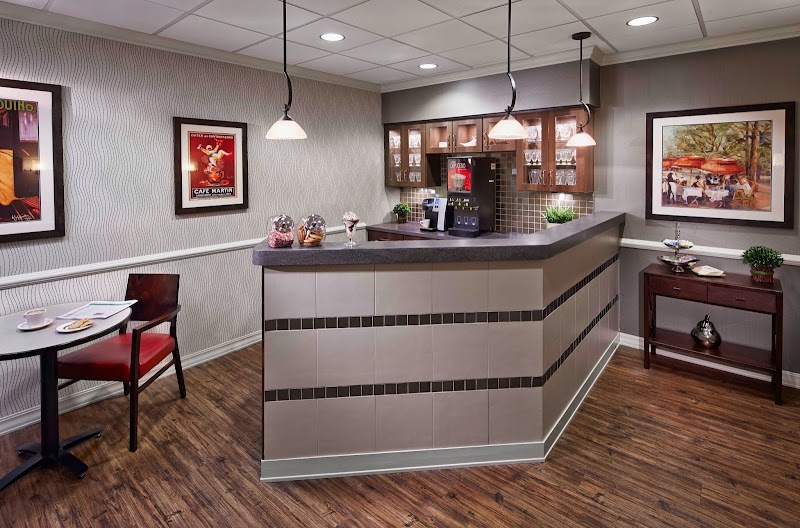
How is Alden Estates Of Northmoor Staffed?

CMS rates ALDEN ESTATES OF NORTHMOOR's staffing level at 1 out of 5 stars, which is much below average compared to other nursing homes.

What Have Inspectors Found at Alden Estates Of Northmoor?

State health inspectors documented 45 deficiencies at ALDEN ESTATES OF NORTHMOOR during 2022 to 2025. These included: 3 that caused actual resident harm and 42 with potential for harm. Deficiencies causing actual harm indicate documented cases where residents experienced negative health consequences.

Who Owns and Operates Alden Estates Of Northmoor?

ALDEN ESTATES OF NORTHMOOR is owned by a for-profit company. For-profit facilities operate as businesses with obligations to shareholders or private owners. The facility is operated by THE ALDEN NETWORK, a chain that manages multiple nursing homes. With 198 certified beds and approximately 182 residents (about 92% occupancy), it is a mid-sized facility located in CHICAGO, Illinois.
How Does Alden Estates Of Northmoor Compare to Other Illinois Nursing Homes?

Compared to the 100 nursing homes in Illinois, ALDEN ESTATES OF NORTHMOOR's overall rating (2 stars) is below the state average of 2.5 and health inspection rating (3 stars) is at the national benchmark.

What Should Families Ask When Visiting Alden Estates Of Northmoor?

Based on this facility's data, families visiting should ask: "Can you walk me through typical staffing levels on day, evening, and night shifts?" "Can I visit during a mealtime to observe dining assistance and food quality?" "How do you handle medical emergencies, and what is your hospital transfer rate?" "Can I speak with family members of current residents about their experience?" These questions are particularly relevant given the below-average staffing rating.

Is Alden Estates Of Northmoor Safe?

Based on CMS inspection data, ALDEN ESTATES OF NORTHMOOR has a clean safety record: no substantiated abuse findings (meaning no confirmed cases of resident harm), no Immediate Jeopardy citations (the most serious violation level indicating risk of serious injury or death), and is not on the Special Focus Facility watch list (a federal program monitoring the lowest-performing 1% of nursing homes). The facility has a 2-star overall rating and ranks #100 of 100 nursing homes in Illinois. While no facility is perfect, families should still ask about staff-to-resident ratios and recent inspection results during their visit.

Do Nurses at Alden Estates Of Northmoor Stick Around?

ALDEN ESTATES OF NORTHMOOR has not reported staff turnover data to CMS. Staff turnover matters because consistent caregivers learn residents' individual needs, medications, and preferences. When staff frequently change, this institutional knowledge is lost. Families should ask the facility directly about their staff retention rates and average employee tenure.

Was Alden Estates Of Northmoor Ever Fined?

ALDEN ESTATES OF NORTHMOOR has been fined $11,180 across 1 penalty action. This is below the Illinois average of $33,191. While any fine indicates a compliance issue, fines under $50,000 are relatively common and typically reflect isolated problems that were subsequently corrected. Families should ask what specific issues led to these fines and confirm they've been resolved.

Is Alden Estates Of Northmoor on Any Federal Watch List?

ALDEN ESTATES OF NORTHMOOR is not on any federal watch list. The most significant is the Special Focus Facility (SFF) program, which identifies the bottom 1% of nursing homes nationally based on persistent, serious quality problems. Not being on this list means the facility has avoided the pattern of deficiencies that triggers enhanced federal oversight. This is a positive indicator, though families should still review the facility's inspection history directly.