AMBASSADOR NURSING & REHAB CENTER
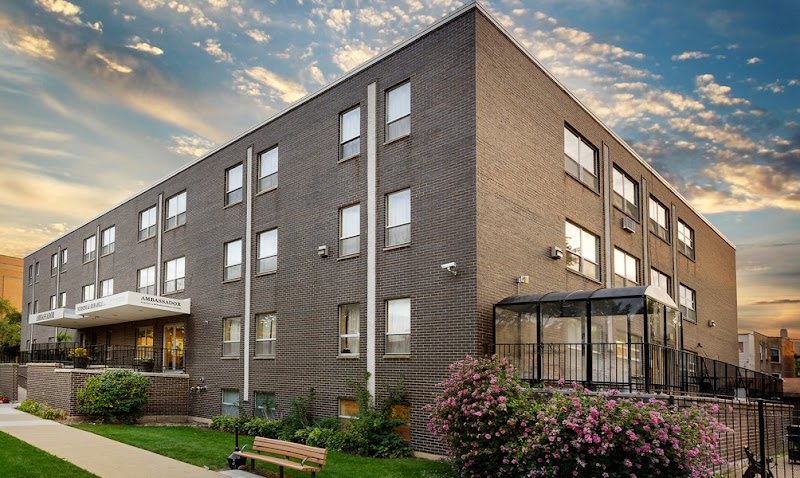
4900 NORTH BERNARD, CHICAGO, IL 60625 (773) 583-7130
For profit - Individual 190 Beds INFINITY HEALTHCARE CONSULTING Data: November 2025
Trust Grade
15/100
#432 of 665 in IL
Last Inspection: July 2024

Within standard 12-15 month inspection cycle. Federal law requires annual inspections.

Overview

Ambassador Nursing & Rehab Center has received a Trust Grade of F, indicating significant concerns regarding care quality and overall performance. With a state ranking of #432 out of 665 and a county ranking of #141 out of 201 in Cook County, it is positioned in the bottom half for facilities in Illinois, suggesting that many other options may provide better care. While the facility's trend is improving, with issues decreasing from 18 in 2024 to 11 in 2025, it still reported serious deficiencies, including incidents where residents were subjected to physical abuse and inadequate supervision, leading to significant injuries. Staffing is a relative strength, with a turnover rate of 25%, which is well below the state average, indicating that many staff members remain long-term; however, staffing ratings are only 2 out of 5 stars, suggesting there may still be concerns. On a positive note, the facility has not faced any fines, which is a good sign, but the overall quality of care and safety issues should be carefully considered by families looking for a nursing home.

Trust Score
F
15/100
In Illinois
#432/665
Bottom 36%
Safety Record
High Risk
Review needed
Inspections
Getting Better
18 → 11 violations
Staff Stability
✓ Good
25% annual turnover. Excellent stability, 23 points below Illinois's 48% average. Staff who stay learn residents' needs.
Penalties
✓ Good
No fines on record. Clean compliance history, better than most Illinois facilities.
Skilled Nurses
○ Average
Each resident gets 39 minutes of Registered Nurse (RN) attention daily — about average for Illinois. RNs are the most trained staff who monitor for health changes.
Violations
⚠ Watch
61 deficiencies on record. Higher than average. Multiple issues found across inspections.
★☆☆☆☆
1.0
Overall Rating
★★☆☆☆
2.0
Staff Levels
★★★☆☆
3.0
Care Quality
★☆☆☆☆
1.0
Inspection Score
Stable
2024: 18 issues
2025: 11 issues

The Good

  • Low Staff Turnover (25%) · Staff stability means consistent care
  • Full Sprinkler Coverage · Fire safety systems throughout facility
  • No fines on record
  • Staff turnover is low (25%)

    23 points below Illinois average of 48%

Facility shows strength in staff retention, fire safety.

The Bad

1-Star Overall Rating

Below Illinois average (2.5)

Significant quality concerns identified by CMS

Chain: INFINITY HEALTHCARE CONSULTING

Part of a multi-facility chain

Ask about local staffing decisions and management

The Ugly 61 deficiencies on record

3 actual harm
Sept 2025 1 deficiency
CONCERN (D) 📢 Someone Reported This

A family member, employee, or ombudsman was alarmed enough to file a formal complaint

Potential for Harm - no one hurt, but risky conditions existed

Report Alleged Abuse (Tag F0609)

Could have caused harm · This affected 1 resident

**NOTE- TERMS IN BRACKETS HAVE BEEN EDITED TO PROTECT CONFIDENTIALITY** Based on interviews and record review, the facility failed to report an allegation of resident abuse within two hours of notific...

Read full inspector narrative →
**NOTE- TERMS IN BRACKETS HAVE BEEN EDITED TO PROTECT CONFIDENTIALITY** Based on interviews and record review, the facility failed to report an allegation of resident abuse within two hours of notification. This failure affected one resident (R1) reviewed for Reporting of Alleged Violation. Findings include:R1 is [AGE] year old with diagnosis including but not limited to: spinal stenosis, morbid obesity, other abnormalities of gait and mobility, low back pain and heart failure.R2 is [AGE] year old with diagnosis including but not limited to: depression, insomnia, aphasia, hypertensive heart disease without heart failure and facial weakness.On 9/10/25 at 10:30 am, V2 (DON) stated the following, We transferred R1 to a sister facility because he alleged that R2 hurt his arm. The incident was unwitnessed and occurred on 7/29/25. V25 (MDS Nurse) was the MOD (Manager on Duty) on that day and completed an incident report of the incident between R1 and R2. R1 had an in-house X-ray done because he complained of pain to his arm, but there were no injuries noted via X-ray and no redness. All abuse allegations are handled by V1, however in his absence I am able to send an abuse incident to IDPH. All alleged abuse incidents must be reported within 2 hours of the incident.On 9/10/25 at 10:45 am, V25 (MDS Nurse) stated the following, R1 had stated that he was in an altercation with R2 a little after 7:00 am. I was the MOD that morning, which is why I completed an incident report. The information was given directly from R1 since the incident was unwitnessed. The Administrator was notified by me immediately via telephone. I always notify the Administrator about any allegations regarding abuse immediately.On 9/10/25 at 10:56 am, V1 (Administrator) stated the following, With abuse allegations, we are to report abuse within two hours of the incident. Abuse can be physical, verbal, mental, financial, seclusion and more. Abuse can also be resident to resident, staff to resident, family member to resident, etc. All allegations are reported to me immediately.Facility Census Report dated 9/8/25 documents a total of 172 current residents.Facility Incident Report dated 7/29/25 at 7:36 am documents, R1 alleged that another resident (R2) made contact with him while he was in bed.Facility email transmittal dated 7/29/25 documents, IDPH Incident Report involving R1 was reported at 10:22 am.Facility policy titled Abuse Prevention Program documents, this report (abuse report) should be made immediately, but no longer than two hours after the allegation is made.
Aug 2025 3 deficiencies
CONCERN (D) 📢 Someone Reported This

A family member, employee, or ombudsman was alarmed enough to file a formal complaint

Potential for Harm - no one hurt, but risky conditions existed

Deficiency F0776 (Tag F0776)

Could have caused harm · This affected 1 resident

Number of residents sampled: 35Number of residents cited: 1 Based on interviews and record reviews, the facility failed to follow provider orders and provide radiology services to one resident (R78) o...

Read full inspector narrative →
Number of residents sampled: 35Number of residents cited: 1 Based on interviews and record reviews, the facility failed to follow provider orders and provide radiology services to one resident (R78) out of a total sample of 35 residents.Findings include: On 8/05/2025 at 11:20 AM, R78 stated experiencing coughing spells sometime last month. A provider evaluated R78 and ordered a chest x-ray. R78 stated facility never did it. R78's 7/14/2025 11:15 AM progress note by V32 (Nurse Practitioner) documents in part that R78 complained of chronic cough. As part of treatment plan, V32 ordered a chest x-ray. R78's ‘Order Audit Report' documents in part that V30 (Nurse) entered the two-view chest x-ray on 7/16/2025 (two days later) at 4:47 PM on behalf of V32. On 08/06/2025 at approximately 9:30 AM, V1 (Administrator) informed surveyor that there was no chest x-ray results for R78. On 08/06/2025 at 12:22 PM, V34 (Nurse) stated the nurse practitioners or doctors will communicate to the nurses if there are new orders. The providers will put the orders in the computer unless it's a verbal or telephone order. The nurses will then have to acknowledge and confirm the order in the electronic medical record. V34 stated if the nurse doesn't see the order then they can call the provider and verify whether they still want the order. V35 (Nurse) also stated that they can follow-up with V2 (Director of Nursing) or V3 (Assistant Director of Nursing) to help verify the order. On 8/06/2025 at 3:26 PM, V30 (Nurse) stated following up with V32 (Nurse Practitioner) regarding the chest x-ray on 7/16/2025. Per V30, V32 gave a verbal order to another nurse on 7/14/2025. V30 stated the nurse should have entered it in the electronic medical record but must have forgotten to do it. V32 instructed V30 to continue with the order for chest x-ray for cough and shortness of breath so V30 entered it in the computer. V30 stated calling the contracted radiology company twice to do the chest x-ray but they never did it during V30's shift so V30 endorsed it to the oncoming shift to follow-up. R78's progress note dated 7/18/2025 at 5:30 AM documents in part that R78 continued to complain of cough and was still due for the chest x-ray. R78 called emergency services for hospital evaluation. Facility's ‘Guidelines for Diagnostic Services' documents in part: It is the policy of this facility to ensure that laboratory, radiology, and other diagnostic services meet the needs of residents, that results are reported promptly to the ordering provider to address potential concerns and for disease prevention, provide for resident assessment, diagnosis, and treatment, and that the facility has established policies and procedures, and is responsible for the quality and timeliness of services whether services are provided by the facility or an outside resource. The facility will provide or obtain radiology and other diagnostic services to meet the needs of its residents.
CONCERN (E) 📢 Someone Reported This

A family member, employee, or ombudsman was alarmed enough to file a formal complaint

Potential for Harm - no one hurt, but risky conditions existed

Pharmacy Services (Tag F0755)

Could have caused harm · This affected multiple residents

**NOTE- TERMS IN BRACKETS HAVE BEEN EDITED TO PROTECT CONFIDENTIALITY** F755Based on observation, interview and record review, the facility failed to follow their policies and procedures to ensure res...

Read full inspector narrative →
**NOTE- TERMS IN BRACKETS HAVE BEEN EDITED TO PROTECT CONFIDENTIALITY** F755Based on observation, interview and record review, the facility failed to follow their policies and procedures to ensure resident received their medications according to the physician's order for 6 (R25, R34, R46, R77, R107 and R156) residents reviewed for medication administration in a sample of 35.The findings include: R34’s admission record showed admit date on 5/29/2025 with diagnoses not limited to Other seizures, Hypertensive heart disease without heart failure, Polyneuropathy, Depression, Idiopathic peripheral, Autonomic neuropathy. MDS (Minimum Data Set) dated 6/5/2025 showed R34’s cognition was intact. R46’s admission record showed admit date on 4/3/2020 with diagnoses not limited to Unilateral primary osteoarthritis right hip, Chronic obstructive pulmonary disease, Chronic pulmonary edema, Heart failure, Paroxysmal atrial fibrillation, Unspecified atrial flutter, Hypertensive heart disease with heart failure, Type 2 diabetes mellitus, Venous insufficiency (chronic) (peripheral), Iron deficiency anemia, Hyperlipidemia. MDS dated [DATE] showed R46’s cognition was intact. R77’s admission record showed admit date on 5/26/2021 with diagnoses not limited to Chronic obstructive pulmonary disease, Acute and chronic respiratory failure with hypercapnia, Chronic obstructive pulmonary disease with (acute) exacerbation, Chronic diastolic (congestive) heart failure, Hypertensive heart disease with heart failure , Venous insufficiency (chronic) (peripheral), Type 2 diabetes mellitus, Other unilateral secondary osteoarthritis of hip, Gout. MDS dated [DATE] showed R77’s was cognitively intact. R156’s admission record showed admit date on 12/21/2023 with diagnoses not limited to Paraplegia, Hyperlipidemia, Neuromuscular dysfunction of bladder, Polyneuropathy, Acquired absence of kidney. MDS dated [DATE] showed R156’s cognition was intact. On 8/5/25 At 10:50AM Observed R34 up and about, ambulatory with steady gait, alert and oriented x 3, verbally responsive. Stated medication does not come on time depending on the nurse. R34 said on 8/2/25 (Saturday) there was only 1 nurse working and the nurse on her side came late around 12noon. She said she got her morning medications around 12noon, and it is supposed to be given around 9am. Stated medications were given late because of short staff. R34’s physician order sheet (POS) and medication audit report dated 8/6/25 documented medications not limited to Furosemide, Magnesium, Thiamine, Cyanocobalamin, Folic Acid, Aspirin, Potassium Chloride, Divalproex, Gabapentin, Amlodipine, Metoprolol scheduled on 8/2/25 with physician ordered time at 9AM were administered at 11:34AM, 11:39AM and 11:40AM. R34’s care plan dated 5/30/25 showed interventions not limited to Administer medication per physician order. On 8/5/25 at 11:26AM R46 observed sitting on wheelchair, alert and oriented x 3, verbally responsive, very upset stated that he did not get his 9am medications yet. He said he has been having pain on right leg and scored pain as 8/10. R46 said he does not need PRN (as needed) pain medication if he gets his scheduled medications around 9am. Stated he has been residing in the facility for almost 5 years and at times, his medications are given late depending on the nurse working. R46 said he has been waiting for his medications for couple of hours and no staff came. On 8/5/25 At 11:28AM Surveyor asked V18 (Licensed Practical Nurse / LPN) regarding R46 scheduled medications and stated she came in late around 10am today, it was V2 (DON) and V15 (LPN) covered her assignment with V11 (RN orientee) and prepared R46’s medications. She said V11 attempted to give medications to R46 but did not take it stating there were medications missing. V18 attempted to administer previously prepared medications to R46 and said could not see his blood thinner medication which is pink and oval shape and did not see the Glucosamine. On 8/5/25 At 11:33AM V18 discarded previously prepared medications and prepared the following medications: Cephalexin 500mg 1 capsule, Diclofenac 50mg 1 tablet, Eliquis 5mg 1 tablet, Lisinopril 10mg 1 tablet, Metoprolol 50mg 1tablet, Magnesium oxide 400mg 1 tablet, Furosemide 40mg 1 tablet, Fish oil 1 capsule, Folic acid 1 tablet. V18 said Glucosamine tablet was not available. She said she will order it to the pharmacy. V18 administer prepared medications and R46 said “where is my Glucosamine?” V18 responded it was not available and was ordered already. R46 took prepared medications by mouth. R46’s POS and MAR (Medication Administration record dated 8/5/25 showed medications not limited to Cephalexin, Diclofenac, Eliquis, Lisinopril, Metoprolol, Magnesium oxide, Furosemide, Fish oil, Folic acid with physician ordered time at 9AM. On 8/06/2025 10:08 AM Surveyor conducted resident council meeting attended by 6 residents including R77 and R156 and stated on 8/2/25 their medications were given late. They waited for 2-3 hours to get their scheduled medications. R77 said if medication is given late there is shorter time gap for the next dose of medication. R77’s physician order sheet (POS) and medication audit report dated 8/6/25 documented medications not limited to Furosemide, Spironolactone, Zinc oxide, Fluticasone, Jardiance, Methocarbamol, Spiriva inhaler, Allopurinol, Metformin, Gabapentin, Amlodipine scheduled on 8/2/25 with physician ordered time at 9AM were administered at 12:37PM. R77’s care plan dated 5/29/25 showed intervention not limited to Administer medication as ordered. R156’s physician order sheet (POS) and medication audit report dated 8/6/25 documented medications not limited to Pregabalin, Vitamin C, Multivitamin, Lidocaine, Baclofen, Docusate Sodium, Polyethylene Glycol scheduled on 8/2/25 with physician ordered time at 9AM were administered at 11:29AM and 11:30AM. R156’s care plan dated 11/7/23 showed intervention not limited to Administer medication as ordered. On 8/7/25 at 11:49AM V2 (Director of Nursing / DON) stated nurses are expected to administer Medications to residents according to physician order. Should follow 5R’s (right route, right resident, right time, right frequency, right dose) in giving medications. V2 said nurses should give meds 60minutes before and after physician ordered time. She said If the order time is at 9am, nurse is expected to give medication between 8am to 10am. If medication was given at 11:30am, it is considered late and not following physician ordered time. V2 said if blood pressure, blood sugar, pain medication was not given according to physician ordered time could potentially affect blood pressure, blood sugar or aggravate pain. Facility’s LPN’s and RN’s job description (undated) showed in part: Prepares and administers medications as ordered by the physician. Facility’s medication administration policy (undated) showed in part: To ensure that resident medications are administered in a timely manner. Unless otherwise specified by the physician, medications will be administered within 60minutes before and after the facility’s dosing schedule. Licensed professional nurses administer medications according to times documented on the medication administration record. Medication administration pass may begin sixty minutes before the scheduled times of administration but may not exceed to sixty minutes after the scheduled times of administration. Findings Include: R25’s Minimum Data Set (MDS) dated [DATE] shows he is cognitively intact. R25's Electronic Medical Record (EMR) revealed he was admitted to the facility on [DATE] and is [AGE] years of age with diagnoses that included but were not limited to: end stage renal disease, dependence on renal dialysis, other age-related cataract, unspecified atrial fibrillation, type2 diabetes mellitus with foot ulcer, dry eye syndrome, anemia, and hypertensive heart disease without heart failure. R107’s Minimum Data Set (MDS) dated [DATE] shows she is cognitively intact. R107's Electronic Medical Record (EMR) revealed he was admitted to the facility on [DATE] and is [AGE] years of age with diagnoses that included but were not limited to: anemia in chronic kidney disease, atherosclerotic heart disease of native coronary artery without angina pectoris, hypertension, chronic obstructive pulmonary disease, and epilepsy. On 8/5/25 at 10:35 AM, R25 in bed, stated that he has been in the facility for about eight months. He does not receive his scheduled medication at times and sometimes he received his medication late, and he did not receive some of his medications last Saturday 8/2/25. On 8/5/25 at 11:23 AM, R107 up in wheelchair, stated that she has been in the facility for ten years, she receives her medication late at times, and she did not receive most of her medications on Saturday 8/2/25. On 8/7/25 at 10:03 AM, V44 (Registered Nurse/RN) stated that she has been in the facility since 2016, Medication Administration Record (MAR) should be signed once the medication is given, and if MAR is not signed, then the medication is not given. She worked 3pm-11pm shift on 8/2/25 with R25 without signing the MAR. On 8/7/25 at 10:18 AM, V42 (Licensed Practical Nurse/LPN) stated that she has been in the facility for twenty-seven years, and she worked 7am-3pm shift on 8/2/25 with R107. Nurses should administer medication as ordered by the physician, sign the MAR, and if MAR is not signed, the medication is not given, and that will affect the resident’ well-being. On 8/7/25 at 11:12 AM, V2 (Director of Nursing/DON) stated that she has been in the facility for three months, it is her expectation that nurses will administer medication has scheduled by the physician, and sign MAR. When medications are not administered to resident as ordered it could lead to increase sickness and distress. She ensures that nurses sign the MAR once the medication is given, and no resident reported to her that medication was not administered as scheduled. Documents reviewed for this complaint are not limited to the following. R25’s Medication Administration Record (MAR) shows that fourteen medications were not signed/administered to him on 8/2/25 during the 3pm-11pm shift. R107’s MAR shows that fifteen medications were not signed/administered to her on 8/2/25 during 7pm-3pm shift. R25, and R107’s Face Sheet, POS, MAR, and Section C of MDS. Policy and Procedure titled, “Medication Administration” documents in part: Medication administration record (MAR) will be signed after for each medication administered to the resident. Resident Council Meeting Minutes from 6/24/24 to 7/29/25. Grievance/Concern Forms from 8/2/24 to 12/12/24, and 5/1/25 to 8/4/25.
CONCERN (F) 📢 Someone Reported This

A family member, employee, or ombudsman was alarmed enough to file a formal complaint

Potential for Harm - no one hurt, but risky conditions existed

Deficiency F0725 (Tag F0725)

Could have caused harm · This affected most or all residents

**NOTE- TERMS IN BRACKETS HAVE BEEN EDITED TO PROTECT CONFIDENTIALITY** F725Based on observation, interview and record review, the facility failed to ensure sufficient staff to administer medications ...

Read full inspector narrative →
**NOTE- TERMS IN BRACKETS HAVE BEEN EDITED TO PROTECT CONFIDENTIALITY** F725Based on observation, interview and record review, the facility failed to ensure sufficient staff to administer medications as ordered by physician and attend to resident's needs or care in a timely manner. These failures could potentially affect all residents residing in the facility. The findings include:On 8/5/25 At 10:50AM Observed R34 up and about, ambulatory with steady gait, alert and oriented x 3, verbally responsive. Stated medication does not come on time depending on the nurse. R34 said on 8/2/25 (Saturday) there was only 1 nurse working and the nurse on her side came late around 12noon. She said she got her morning medications around 12noon, and it is supposed to be given around 9am. Stated medications were given late because of short staff. MDS (Minimum Data Set) dated 6/5/2025 showed R34's cognition was intact. R34's physician order sheet (POS) and medication audit report dated 8/6/25 documented medications not limited to Furosemide, Magnesium, Thiamine, Cyanocobalamin, Folic Acid, Aspirin, Potassium Chloride, Divalproex, Gabapentin, Amlodipine, Metoprolol scheduled on 8/2/25 with physician ordered time at 9AM were administered at 11:34AM, 11:39AM and 11:40AM. R34's care plan dated 5/30/25 showed interventions not limited to Administer medication per physician order. On 8/5/25 at 11:26AM R46 observed sitting on wheelchair, alert and oriented x 3, verbally responsive, very upset stated that he did not get his 9am medications yet. He said he has been having pain on right leg and scored pain as 8/10. R46 said he does not need PRN (as needed) pain medication if he gets his scheduled medications around 9am. Stated he has been residing in the facility for almost 5 years and at times, his medications are given late depending on the nurse working and at times short of staff. R46 said he has been waiting for his medications for couple of hours and no staff came. On 8/5/25 At 11:33AM Observed V18 (Licensed Practical Nurse / LPN) prepared medications and prepared the following medications: Cephalexin 500mg 1 capsule, Diclofenac 50mg 1 tablet, Eliquis 5mg 1 tablet, Lisinopril 10mg 1 tablet, Metoprolol 50mg 1tablet, Magnesium oxide 400mg 1 tablet, Furosemide 40mg 1 tablet, Fish oil 1 capsule, Folic acid 1 tablet. MDS dated [DATE] showed R46's cognition was intact. R46's POS and MAR (Medication Administration record dated 8/5/25 showed medications not limited to Cephalexin, Diclofenac, Eliquis, Lisinopril, Metoprolol, Magnesium oxide, Furosemide, Fish oil, Folic acid with physician ordered time at 9AM. On 8/06/2025 10:08 AM Surveyor conducted resident council meeting attended by 6 residents including R77 and R156 and stated on 8/2/25 their medications were given late due to short of staff. They waited for 2-3 hours to get their scheduled medications. R77 said if medication is given late there is shorter time gap for the next dose of medication. R156 stated he had witnessed that his roommates have been calling for help to be changed and needed to wait for more than an hour.R77's physician order sheet (POS) and medication audit report dated 8/6/25 documented medications not limited to Furosemide, Spironolactone, Zinc oxide, Fluticasone, Jardiance, Methocarbamol, Spiriva inhaler, Allopurinol, Metformin, Gabapentin, Amlodipine scheduled on 8/2/25 with physician ordered time at 9AM were administered at 12:37PM. R77's care plan dated 5/29/25 showed intervention not limited to Administer medication as ordered. MDS dated [DATE] showed R77's was cognitively intact. R156's physician order sheet (POS) and medication audit report dated 8/6/25 documented medications not limited to Pregabalin, Vitamin C, Multivitamin, Lidocaine, Baclofen, Docusate Sodium, Polyethylene Glycol scheduled on 8/2/25 with physician ordered time at 9AM were administered at 11:29AM and 11:30AM. R156's care plan dated 11/7/23 showed intervention not limited to Administer medication as ordered.MDS dated [DATE] showed R156's cognition was intact.On 8/7/25 at 10:55am Observed R70 resting in bed, alert and oriented x 3, verbally responsive. Stated there are times that he needed to wait for at least an hour to be changed. He said at one point he waited for 3hours to be changed, and he missed his therapy session because he was late to go down. R70 said care is not done in a timely manner because of short staffing. MDS dated [DATE] showed R70's cognition was intact. He needed Partial / moderate assistance with toileting and personal hygiene, shower / bathe self, upper and lower body dressing. MDS showed R70 was Occasionally incontinent of bowel and bladder.At 8/7/25 at 11:01AM Observed R163 resting in bed on moderate high back rest, alert and oriented x 3, verbally responsive. Stated most of the time, has been calling for help but nobody would respond to call light to attend to his needs in a timely manner. Stated he needed to wait at least an hour to an hour and half to be changed due to short of staff. MDS dated [DATE] showed R163's cognition was intact. He needed Partial / moderate assistance with oral hygiene; Dependent with toileting hygiene, shower / bathe self, lower body dressing, chair / bed transfer; Substantial / maximal assistance with upper body dressing and personal hygiene. MDS showed R163 was always incontinent of bowel and bladder. On 8/7/25 at 11:49AM V2 (Director of Nursing / DON) stated nurses are expected to administer Medications to residents according to physician order. Should follow 5R's (right route, right resident, right time, right frequency, right dose) in giving medications. V2 said nurses should give meds 60minutes before and after physician ordered time. She said If the order time is at 9am, nurse is expected to give medication between 8am to 10am. If medication was given at 11:30am, it is considered late and not following physician ordered time. V2 said if blood pressure, blood sugar, pain medication was not given according to physician ordered time could potentially affect blood pressure, blood sugar or aggravate pain. V2 said she makes sure that there is always sufficient staff to meet resident's needs or care in a timely manner.Facility's census dated 8/5/25 showed 172 residents. Facility's LPN's and RN's job description (undated) showed in part: Prepares and administers medications as ordered by the physician. Facility's medication administration policy (undated) showed in part: To ensure that resident medications are administered in a timely manner. Unless otherwise specified by the physician, medications will be administered within 60minutes before and after the facility's dosing schedule. Licensed professional nurses administer medications according to times documented on the medication administration record. Medication administration pass may begin sixty minutes before the scheduled times of administration but may not exceed to sixty minutes after the scheduled times of administration. Facility's call light use policy (undated) showed in part: To respond promptly to resident's call for assistance. Facility's staffing policy dated 1/2021 showed in part: Adjust staff schedules to support resident care and provide ADLs.
Jul 2025 5 deficiencies 2 Harm
SERIOUS (G) 📢 Someone Reported This

A family member, employee, or ombudsman was alarmed enough to file a formal complaint

Actual Harm - a resident was hurt due to facility failures

Free from Abuse/Neglect (Tag F0600)

A resident was harmed · This affected 1 resident

Based on interview, and record review the facility failed to protect one resident (R6) from physical abuse. This failure affected 1 of 3 residents reviewed for physical abuse and caused R6 to be sent ...

Read full inspector narrative →
Based on interview, and record review the facility failed to protect one resident (R6) from physical abuse. This failure affected 1 of 3 residents reviewed for physical abuse and caused R6 to be sent to local hospital and R6 sustaining a comminuted left intertrochanteric fracture requiring R6 to have open reduction internal fixation of the left hip fracture. Findings include: R6 has a diagnosis which include but are not limited to: Repeated falls, Alzheimer's disease, lack of coordination, abnormalities of gait and mobility, weakness, dementia, ataxic gait, unsteadiness on feet, and insomnia. R6 has a Brief Interview for Mental Status (BIMS) dated 07/10/25 with no score and indicates that R6 has memory impairments.R7 has a diagnosis which includes but are not limited to: cocaine abuse, disorientation, other disorders of the brain, cerebral infarction, cerebral ischemia, and anxiety.R7 has a Brief Interview for Mental Status (BIMS) dated 04/30/25 with a score of 6 and indicates that R6 has memory impairments. During this survey R6 was able to answer surveyor questions appropriately.The facility Initial Reportable Incident to the state agency dated 07/13/25 at 9:40 am, documents, in part: R7 allegedly made contact with R6. R6 and R7 immediately separated. Body assessment completed on R7, no injuries or pain. R6 sent to local hospital for an evaluation. Hospital reported R6 sustained left hip fracture due to fall. Physician and family notified. Police was contacted and notified. R7 was placed on one-to-one period. investigation initiated. R6's local hospital record dated 07/14/25 documents, in part: Interval Events: Plan for open reduction internal fixation left hip fracture . Imaging/Other Studies: CT (Computed Tomography) without contrast, left: Results: 07/14/25: Impression: 1: Comminuted left intertrochanteric fracture.On 07/15/25 at 11:30 am, Surveyors observed V23 (Licensed Practical Nurse, LPN) (R6 and R7's nurse on 07/13/25) leave the facility via 911 emergency due to V23 not feeling well. On 07/15/25 at 1:07 pm, V12 (R6's Family Member) stated that on 07/13/25 V12 received a phone call from V23 (LPN) stating that V23 turned away from R6 for one second and R6 was pushed by R7 onto the floor. V12 also explained that V23 informed V12 that R6 was going to the local hospital for an evaluation. V12 stated that the local hospital informed V12 that R6 sustained a left hip fracture. V12 then explained that on 07/14/25 V12 came to the facility and informed V1 (Administrator) at facility that V12 filed a police report number JJ333620 regarding R7 pushing R6 onto the floor causing R6 to sustain a left hip fracture. On 07/16/25 at 9:31 am, V1 (Administrator) informed surveyors that V23 was a admitted to the local hospital. Surveyor was not able to interview V23 for this investigation. On 07/16/25 at 9:52 am, R7 stated that a few days ago R7 was standing at the elevator when R6 kept approaching R7. R7 stated that R7 told R6 Get the F*** away from me and pushed R6 away from R7. R7 explained that R6 landed on the floor after R7 pushed R6. R7 then stated, I didn't throw her down. I pushed her. R7 then reiterated that R7 kept yelling at R6 Stay away from me and that R6 didn't. On 07/16/25 at 10:23 am, V22 (Certified Nursing Assistant, CNA) denied that V22 was assigned to R6 or R7 on 07/13/25 and does not know where V25 (CNA) and V26 (CNA) (who were assigned to R6 and R7) were located on the unit during the time of R6 and R7's incident. V22 explained that V22 believes that V25 and V26 were down the hallway gathering their belongings to leave for the day. V22 further explained that V22 was at the nurse's station on 07/13/25 during the time of the incident with R6 and R7. V22 then stated that V22 recalls R6 standing in front of R7 at the nurse's station, elevator area when R7 was telling R6 to get out of her (R7's) face. V22 further explained that R6 kept walking into R7's face when R7 turned around and put her (R7's) hand out in front of R6 making contact with R6's chest causing R6 to fall onto the floor. V22 further explained that V22 was behind the nurse's station when the incident occurred and was gathering her belongings to go home. V22 then explained that by the time she came from around the nurse's station to R6 and R7, R6 was already on the floor. V22 also explained that V23 (Licensed Practical Nurse, LPN) R6 and R7's assigned nurse was down the third-floor unit hallway still passing medications and that V24 (Registered Nurse, RN) was sitting at the nurse's station charting. V22 explained that V22 and V23 (LPN) assisted R6 off the floor. On 07/17/25 at 9:34 am V24 (Registered Nurse, RN) stated that on 07/13/25 around 6:45 am, V24 was at the nurses station charting and not paying attention to R6 and R7 at the third-floor unit elevator area in front of the nurses station. V24 explained that V22 (CNA) was informed V24 that R6 sustained a fall at the nurses station in front of the elevator. V24 stated that although V24 was at the nurses station with R6 when R6 sustained a fall, V24 denies witnessing or hearing R6 sustained a fall or hear any conversation between R6 and R7. V24 explained that V24 was not the assigned nurse for R7 or R6 and did not assist with R6's fall on 07/13/25. V24 stated that R6 is a resident that ambulates with unsteady gait and requires assistance from staff supervision. V24 explained if a resident who ambulates requires staff supervision to ambulate is not supervised, the resident can sustain a fall, elope, or encounter an argument with another resident. V24 then explained that it is important to monitor and supervise residents who walk with an unsteady gait that are high risk for falls because the resident may need assistance from staff to prevent the resident from falling. On 07/17/25 at 9:48 am V25 (CNA) stated that on 07/13/25 when R6 sustained a fall, V25 was assigned to R6, got R6 dressed around 4:30 am and R6 began walking throughout the unit. V25 explained that R6 is a resident who requires supervision from staff when she walks to prevent R6 from falling. V25 further explained that V25 is instructed to walk with R6 when she is up walking because R6 is a high risk for falls. V25 then explained that during the time of R6's fall on 07/13/25, V25 did not witness R6's fall at the nurse's station in front of the elevator and that V25 was at the nurse's station packing V25 belongings (cell phone and cell phone charger) preparing to go home. V25 explained that V25 heard a sound and observed R6 laying on the floor in front of the elevator at the nurses station and R7 standing next to R6. V25 also explained that R6's nurse was down the third-floor unit hallway preparing her cart/medications when V25 called for R6's nurse after R6 sustained a fall on 07/13/25. V25 explained that V25 and V23 (LPN) assisted R6 off the floor. V25 denies seeing R7 push R6 on 07/13/25 or recalls anything R7 said to R6 on 07/13/25.On 07/17/25 at 10:00 am, V26 (CNA) stated that V26 did not witness R6 fall on 07/13/25. V26 explained that it was the end of V26's shift around 6:45 am and V26 was at the nurses station charting waiting for the next shift of staff to arrive on the unit. V26 stated that V26 was not assigned to R6 or R7 on 07/13/25 during the time of R6 fall incident. V26 explained that V22 (CNA) informed V26 that R7 pushed R6. V26 also stated that V26 heard V23 (LPN) stating to R7 Why did you do that to R6. V26 further explained that V23 (LPN), V25 (CNA), and V22 (CNA) (who were assigned to R6 and R7) addressed the incident between R6 and R7 on 07/13/25 and that V26 went home. V26 also stated that V26 is familiar and has cared for R6 in the past. V26 stated that R6 ambulates and requires supervision from staff when walking to prevent R6 from falling.On 07/17/25 at 10:35 am, V28 (On Call Physician) (R6 physician on 07/13/25) stated that on 7/13/25 V28 received a call from the facility that staff witnessed R6 falling backwards onto R6's back area and complained of facial grimaces. V28 explained that staff informed V28 that R6 was a resident who walked with an unsteady gait and was roaming the nurses station area when R6 fell. V28 stated that residents who ambulate with and unsteady gait should be placed in a fall supervision program and supervised by staff at all times when walking to avoid the resident from falling and sustaining an injury. V28 further explained that V28 gave orders for R6 to be sent out to the local hospital for an evaluation to rule out fractures. V28 then stated that V28 was informed that R6 sustained a hip fracture due to R6 fall on 07/13/25. When V28 was asked regarding R7's aggressive behaviors, V28 explained that when staff called V28 at the time of R6's fall on 07/13/25, staff at the facility did not inform V28 regarding R7 being involved with R6's fall on 07/13/25 until right before the surveyor spoke with V28 on 07/17/25. V28 stated, If I was made aware that there was a fight, I would have ordered interventions to address R7's behaviors such as possibly ordering a mood stabilizer, placing R7 on one-to-one monitoring, and sending R7 out to the local hospital for a psychiatric evaluation. On 07/17/25 11:25 am, V2 (Director of Nursing, DON) stated that R6 is an alert, not oriented resident, who wanders throughout the unit, is high risk for falls, has had multiple fall incidents in the past and requires supervision from staff when walking. V2 explained that residents who are high risk for falls can sustain a fall if the resident is not supervised when ambulating and require staff supervision when walking to keep the resident safe. V2 stated that fall interventions in place for R6 include staff placing R6 in a wheelchair after R6 has been ambulating the unit for a while and making sure R6 is hydrated. V2 stated that V2 was not present in the facility during the time of R6 and R7's incident on 07/13/25. V2 stated that V2 was informed by staff that R7 was allegedly seen extending R7's left arm towards R6 during the time of R6's fall on 07/13/25 and that V2 was still investigating the cause of R6's fall on 07/13/25. V2 then explained that V2 instructed staff to call R6's physician regarding R6's fall incident and that R6 physician gave orders to send R6 out on 07/13/25 to the local hospital and was diagnosed with left hip fracture. When V2 was asked regarding the physicians orders/response to R7's behaviors V2 stated that V28 should have been made aware of R7's aggressive behaviors and that V2 was still conducting V2's investigation with R6 and R7's incident on 07/13/25.On 07/17/25 12:32 pm, V1 (Administrator) stated that V1 is the facility abuse coordinator. V1 explained that staff should report abuse immediately to V1 and that V1 reports allegations of abuse to the local state agency within two hours. V1 explained that on 07/13/25 V1 reported an alleged abuse regarding R6 and R7 that V1 labeled allegation of contact. V1 then explained that if a resident pushes another resident that it is considered physical abuse. V1 further explained that if physical abuse occurs in the facility the facility must protect the alleged victim and remove the alleged perpetrator. V1 stated that the facility must address and report abuse to the local state agency to assure the safety of the residents. V1 stated that V1 was still conducting V1's investigation regarding R6 and R7 on 07/13/25.R7 progress note dated 07/13/25 authored by V6 (Licensed Practical Nurse, LPN) documents in part: R7 placed on 1:1 (one-to-one) monitoring.The facility's document dated 03/26/25 through 07/16/25 and titled Incident by Incident Type show that R6 sustained a fall on 07/13/25 at the facility. R6's progress notes dated 07/13/25 at 7:59 am authored by V23 (Licensed Practical Nurse, LPN) documents in part: Writer standing at nurses station providing care to another resident and upon turning around writer heard another resident stating don't come near me and when writer turned around resident had her arm extended and resident walked into her arm and stumbled back losing balance falling on her buttocks.R6's care plan dated 06/30/25 documents in part R6 demonstrates movement behavior that may be interpreted as wandering, pacing, or roaming. R6 has problems understanding the immediate environment. Symptoms are manifested by: Attempting to leave the facility with a responsible escort (elopement). Pacing roaming or wandering in and out of peers' room. Goal: The resident will respond to staff redirection to re-direct attention from a potentially problematic situation (such as elopement or entering a peers' s room) when any difficult behavior occurs. Interventions: Staff will encourage R6 to sit and take breaks. ADL's (Activities of Daily Living): R6 has a Self-Care Deficit and R6 require assistance with ADLs to maintain the highest possible level of functioning . Interventions: Ambulation: I usually require supervision and set-up support for Walking (Verbal Cures and set-up assistance): Locomotion on Unit I usually require supervision and set-up support for Locomotion on Unit: Provide frequent rest periods as indicated . Falls: R6 is at risk for falls as evidence by the following risk factors and potential contributing diagnosis: Dementia, Alzheimer's Disease: Interventions: 05/27 increase supervision, provide structured supervision discussed with therapy continued skilled Therapy: Provide me with activities that minimize the potential for falls while providing diversion and distractions.The facility's document dated 01/2019 and titled Abuse Prevention Program documents, in part: Policy it is the policy of the facility to prohibit and prevent resident abuse, neglect, exploitation, mistreatment, and misappropriation of resident property and crime against a resident in the facility. The following procedure shall be implemented when an employee or agent becomes aware of abuse or neglect of a resident, or of an allegation of suspected abuse or neglect of a resident by a third party . If you suspect abuse: separate the alleged perpetrator and assure all residents safety . for the purposes of this policy, and to assist staff members in recognizing abuse, the following definitions shall pertain: 1. Abuse: the willful infliction of injury, unreasonable confinement, intimidation, or punishment with resulting physical harm or pain or mental anguish or deprivation by an individual, including a caretaker, of goods or services that are necessary to attain or maintain physical, mental psychosocial well-being. Willful, as used in this definition of abuse, means the individual must have acted deliberately not that the individual must have intended to inflict injury or harm . 4. Physical Abuse: hitting, slapping, pinching, kicking, etcetera it also includes controlling behavior through corporal punishment.
SERIOUS (G) 📢 Someone Reported This

A family member, employee, or ombudsman was alarmed enough to file a formal complaint

Actual Harm - a resident was hurt due to facility failures

Accident Prevention (Tag F0689)

A resident was harmed · This affected 1 resident

**NOTE- TERMS IN BRACKETS HAVE BEEN EDITED TO PROTECT CONFIDENTIALITY** Based on interview, and record review, the facility failed to provide adequate supervision for a resident (R6) at risk for falls...

Read full inspector narrative →
**NOTE- TERMS IN BRACKETS HAVE BEEN EDITED TO PROTECT CONFIDENTIALITY** Based on interview, and record review, the facility failed to provide adequate supervision for a resident (R6) at risk for falls and failed to ensure that a resident (R6) at risk for falls does not have repeated falls. These failures affected 1 of 3 residents, reviewed for falls and fall prevention interventions, caused R6 to be sent to local hospital and R6 sustaining a comminuted left intertrochanteric fracture requiring R6 to have open reduction internal fixation of the left hip fracture.Findings include:R6 has a diagnosis which include but are not limited to: Repeated falls, Alzheimer's disease, lack of coordination, abnormalities of gait and mobility, weakness, dementia, ataxic gait, unsteadiness on feet, and insomnia. R6 has a Brief Interview for Mental Status (BIMS) dated 07/10/25 with no score and indicates that R6 has memory impairments.R6 [NAME] Data Set (MDS) dated [DATE] shows that R6 requires supervision or touching assistance for walking. The facility's document dated 03/26/25 through 07/16/25 and titled Incident by Incident Type show that R6 sustained falls on 05/08/25, 05/20/25, 05/25/25, 05/27/25 and 07/13/25 at the facility.R6 Fall Risk Reviews dated 07/13/25, 06/09/25, 05/27/25, 05/26/25, indicate that R6 is high risk for falls.R6's local hospital record dated 07/14/25 documents, in part: Imaging/Other Studies: CT (Computed Tomography) without contrast, left: Results: 07/14/25: Impression: 1: Comminuted left intertrochanteric fracture.On 07/17/25 at 9:34 am V24 (Registered Nurse, RN) stated that on 07/13/25 around 6:45 am, V24 was at the nurse's station charting and not paying attention to R6 when V24 was informed by V22 (Certified Nursing Assistant, CNA) that R6 sustained a fall at the nurse's station near the elevator. V24 denies witnessing or hearing R6 fall when R6 sustained a fall. V24 stated that although V24 was at the nurse's station with R6 when R6 sustained a fall, V24 was not the assigned nurse for R6 and did not assist with R6's fall on 07/13/25. V24 stated that R6 is a resident that ambulates with unsteady gait and requires assistance from staff supervision when ambulating. V24 explained if a resident who ambulates requires staff supervision is not supervised the resident can sustain a fall, elope, or encounter an argument with another resident. V24 then explained that it is important to monitor residents who walk with an unsteady gait because the resident may need assistance from staff to prevent the resident from falling. On 07/17/25 at 9:48 am V25 (Certified Nurse's Assistant/CNA) stated that on 07/13/25 when R6 sustained a fall, V25 was assigned to R6 and got R6 dressed around 4:30 am and R6 began walking throughout the unit. V25 explained that R6 is a resident who requires supervision from staff when she walks. V25 further explained that V25 is instructed to walk with R6 when she is up walking because R6 is a high risk for falls. V25 explained that during the time of R6's fall on 07/13/25 V25 did not witness R6 fall at the nurse's station near the elevator and that V25 was at the nurse's station packing V25's belongings (cell phone and cell phone charger) preparing to go home. V25 explained that V25 heard a sound and observed R6 laying on the floor in front of the elevator at the nurse's station and R7 standing next to R6. V25 also explained that V23 (Licensed Practical Nurse/LPN) (R6's nurse) was down the third-floor unit hallway preparing her cart/medications when V25 called for V23 to assist after R6's fall. V25 explained that V25 and V23 (Licensed Practical Nurse, LPN) assisted R6 off the floor. On 07/17/25 at 10:00 am, V26 (CNA) stated that V26 did not witness R6 fall on 07/13/25. V26 explained that it was the end of V26's shift and V26 was at the nurse's station charting waiting for the next shift staff to arrive. V26 stated that V26 was not assigned to R6 or R7 on 07/13/25 during the time of R6's fall incident. V26 explained that V22 (CNA) informed V26 that R7 pushed R6. V26 also stated that V26 heard V23 (LPN) stating to R7 Why did you do that to R6. V26 explained that the V23 (LPN), V25, and V22 (who were assigned to R6 and R7) addressed the situation. V26 stated that V26 is familiar and has cared for R6 in the past. V26 stated that R6 ambulates and requires supervision when walking to prevent R6 from falling.On 07/17/25 at 10:35 am V28 (On Call Physician) (R6 physician on 07/13/25, R6 last fall) stated that on 7/13/25 V28 received a call from the facility that staff witness R6 falling backwards onto R6's back area and complained of facial grimaces. V28 explained that staff informed V28 that R6 was a resident who walked with an unsteady gait and was roaming the nurses station area when R6 fell. V28 stated that residents who ambulate with and unsteady gait should be placed in a fall supervision program and supervised by staff at all times when walking to avoid the resident from falling and sustaining an injury. V28 also stated that V28 was informed that R6 ‘s evaluation at the local hospital showed that R6 sustained a hip fracture due to R6 fall on 07/13/25.On 07/17/25 11:25 am, V2 (Director of Nursing, DON) stated that R6 is an alert not alert resident, who wanders throughout the unit, is high risk for falls, has had multiple fall incidents in the past and requires supervision from staff when walking. V2 explained that residents who are high risk for falls can sustain a fall if the resident is not supervised when ambulating and require staff supervision when walking to keep the resident safe. V2 stated that fall interventions in place for R6 include staff placing R6 in a wheelchair after R6 has been ambulating the unit for a while and making sure R6 is hydrated. The facility's undated policy titled Incident/Accidents/Falls documents, in part: Policy: It is the policy of the facility to ensure that any incident/accident to include falls is reported immediately to the nurse or appropriate person designated to be in charge. After the resident has had immediate attention and their safety is established, a written report will be entered into Risk Management . The facility will ensure that incidents and accidents that occur involving residents are identified, reported, investigated, and resolved. The facility will create a data base related to incidents/accidents as part of the QAPI (Quality Assurance Performance Improvement) process to enable trending and tracking. This information will be used to implement corrective actions to include any needed training to prevent reoccurrences when possible.
CONCERN (D) 📢 Someone Reported This

A family member, employee, or ombudsman was alarmed enough to file a formal complaint

Potential for Harm - no one hurt, but risky conditions existed

Notification of Changes (Tag F0580)

Could have caused harm · This affected 1 resident

Based on interview and record review the facility failed to notify a physician of a residents (R7) condition/status. This failure affected 1 resident in the total sample of 10 residents.Findings inclu...

Read full inspector narrative →
Based on interview and record review the facility failed to notify a physician of a residents (R7) condition/status. This failure affected 1 resident in the total sample of 10 residents.Findings include:R6 has a diagnosis which include but are not limited to: Repeated falls, Alzheimer's disease, lack of coordination, abnormalities of gait and mobility, weakness, dementia, ataxic gait, unsteadiness on feet, and insomnia. R6 has a Brief Interview for Mental Status (BIMS) dated 07/10/25 with no score and indicates that R6 has memory impairments.R7 has a diagnosis which includes but are not limited to: cocaine abuse, disorientation, other disorders of the brain, cerebral infarction, cerebral ischemia, and anxiety.R7 has a Brief Interview for Mental Status (BIMS) dated 04/30/25 with a score of 6 and indicates that R6 has memory impairments. During this survey R6 was able to answer surveyor questions appropriately.On 07/15/25 at 11:30 am, Surveyors observed V23 (Licensed Practical Nurse, LPN) (R6 and R7's nurse on 07/13/25) leave the facility via 911 emergency due to V23 not feeling well. On 07/15/25 at 1:07 pm, V12 (R6's Family Member) stated that on 07/13/25 V12 received a phone call from V23 (LPN) stating that V23 turned away from R6 for one second and R6 was pushed by R7 onto the floor. V12 also explained that V23 informed V12 that R6 was going to the local hospital for and evaluation. V12 stated that the local hospital informed V12 that R6 sustained a left hip fracture. V12 then explained that on 07/14/25 V12 came to the facility and informed V1 (Administrator) at facility that V12 filed a police report number JJ333620 regarding R7 pushing R6 onto the floor causing R6 to sustain a left hip fracture. On 07/16/25 at 9:31 am, V1 (Administrator) informed surveyors that V23 was a admitted to the local hospital. Surveyor was not able to interview V23 for this investigation. On 07/16/25 at 9:52 am, R7 stated that a few days ago R7 was standing at the elevator when R6 kept approaching R7. R7 stated that R7 told R6 Get the F*** away from me and pushed R6 away from R7. R7 explained that R6 landed on the floor after R7 pushed R6. R7 then stated, I didn't throw her down. I pushed her. R7 then reiterated that R7 kept yelling at R6 Stay away from me and that R6 didn't. On 07/16/25 at 10:23 am, V22 (Certified Nursing Assistant, CNA) denied that V22 was assigned to R6 or R7 on 07/13/25 and does not know where V25 (CNA) and V26 (CNA) (who were assigned to R6 and R7) were located on the unit during the time of R6 and R7's incident. V22 explained that V22 believes that V25 and V26 were down the hallway gathering their belongings to leave for the day. V22 further explained that V22 was at the nurse's station on 07/13/25 during the time of the incident with R6 and R7. V22 then stated that V22 recalls R6 standing in front of R7 at the nurses station, elevator area when R7 was telling R6 to get out of her (R7's) face. V22 further explained that R6 kept walking into R7's face when R7 turned around and put her (R7's) hand out in front of R6 making contact with R6's chest causing R6 to fall onto the floor. V22 further explained that V22 was behind the nurse's station when the incident occurred and was gathering her belongings to go home. V22 then explained that by the time she came from around the nurse's station to R6 and R7, R6 was already on the floor. V22 also explained that V23 (Licensed Practical Nurse, LPN) R6 and R7's assigned nurse was down the third-floor unit hallway still passing medications and that V24 (Registered Nurse, RN) was sitting at the nurse's station charting. V22 explained that V22 and V23 (LPN) assisted R6 off the floor. On 07/17/25 at 10:35 am, V28 (On Call Physician) (R6 physician on 07/13/25) stated that on 7/13/25 V28 received a call from the facility that staff witnessed R6 falling backwards onto R6's back area and complained of facial grimaces. V28 explained that staff informed V28 that R6 was a resident who walked with an unsteady gait and was roaming the nurses station area when R6 fell. V28 stated that residents who ambulate with and unsteady gait should be placed in a fall supervision program and supervised by staff at all times when walking to avoid the resident from falling and sustaining an injury. V28 further explained that V28 gave orders for R6 to be sent out to the local hospital for an evaluation to rule out fractures. V28 then stated that V28 was informed that R6 sustained a hip fracture due to R6's fall on 07/13/25. When V28 was asked regarding R7's aggressive behaviors, V28 explained that when staff called V28 at the time of R6's fall on 07/13/25, staff at the facility did not inform V28 regarding R7 being involved with R6's fall on 07/13/25 until right before the surveyor spoke with V28 on 07/17/25. V28 stated, If I was made aware that there was a fight, I would have ordered interventions to address R7's behaviors such as possibly ordering a mood stabilizer, placing R7 on one-to-one monitoring, and sending R7 out to the local hospital for a psychiatric evaluation.On 07/17/25 11:25 am, V2 (Director of Nursing, DON) V2 stated that V2 was not present in the facility during the time of R6 and R7's incident on 07/13/25. V2 stated that V2 was informed by staff that R7 was allegedly seen extending R7's left arm towards R6 during the time of R6 fall on 07/13/25 and that V2 was still investigating the cause of R6's fall on 07/13/25. V2 then explained that V2 instructed staff to call R6's physician regarding R6's fall incident and that R6 physician gave orders to send R6 out on 07/13/25 to the local hospital and was diagnosed with left hip fracture. When V2 was asked regarding the physicians orders/response to R7's behaviors V2 stated that V28 should have been made aware of all details of the incident including R7's alleged aggressive behaviors and that V2 was still conducting V2's investigation with R6 and R7's incident on 07/13/25. V2 further explained that V2 does not know what staff reported to the physician regarding R7 on 07/13/25. V2 finally explained that it is important for the physician to be notified regarding a resident condition/status so that the physician can make an educated decision. When V2 was asked regarding R7's progress notes regarding R6 and R7's incident on 07/13/25, V2 stated, It is not there. When V2 was asked regarding who gave orders to place R7 on 1:1 supervision V2 stated that R7 was placed on 1:1 supervision for extending R7's arm out to R6.The facility Initial Reportable Incident to the state agency dated 07/13/25 at 9:40 am, documents, in part: R7 allegedly made contact with R6. R6 and R7 immediately separated. Body assessment completed on R7, no injuries or pain. R6 sent to local hospital for an evaluation. Hospital reported R6 sustained left hip fracture due to fall. Physician and family notified. Police was contacted and notified. R7 was placed on one-to-one period. investigation initiated. R7 progress note dated 07/13/25 authored by V6 (Licensed Practical Nurse, LPN) documents in part: R7 placed on 1:1 (one-to-one) monitoring however, there is no physician's orders or documentation regarding why R7 was placed on 1:1 monitoring. The facility undated document titled Change in Resident's Condition or Status documents in part: Policy: it is the policy of the facility to ensure that the residents attending physician and representative are notified of changes in the residence condition or status. Procedure: 1. The nurse will notify the residents attending physician when: the resident is involved in any accident or incident that results in injury including injuries of unknown origin. The resident is involved in an abuse situation or allegation of abuse. There is significant change in the residents physical, mental or psychosocial status. There is a need to alter the residents treatment plan significantly.
CONCERN (D) 📢 Someone Reported This

A family member, employee, or ombudsman was alarmed enough to file a formal complaint

Potential for Harm - no one hurt, but risky conditions existed

Deficiency F0761 (Tag F0761)

Could have caused harm · This affected 1 resident

Based on observation, interviews and record reviews, the facility failed to ensure controlled substance is properly labeled. This failure affected 1 (R2) resident reviewed for labeling of controlled s...

Read full inspector narrative →
Based on observation, interviews and record reviews, the facility failed to ensure controlled substance is properly labeled. This failure affected 1 (R2) resident reviewed for labeling of controlled substance in the total sample of 10 residents.Findings include:On 07/14/2025 at 3:34pm, this surveyor requested V6 (Licensed Practice Nurse) to show the label on R2's Morphine Sulfate. R2's Morphine sulfate label on the packages of the medication indicated Take 0.25ml (5mg) for moderate pain or take 0.5ml (10mg) by mouth under the tongue every 1 hour as needed for severe pain. This surveyor requested V6 to check for R2's order of Morphine Sulfate. V6, looking at R2's electronic health record, stated the order is to may give 0.25ml or 0.5ml every 4 hours. This surveyor requested V6 to check the label on the package of R2's Morphine Sulfate and the actual order for R2's Morphine sulfate. V6 stated the label on the package and the active order for Morphine Sulfate don't match. The expectation is the label on the packaging should match the order for accuracy. On 07/15/2025 at 11:29pm, V2 (Director Of Nursing) stated Hospice, initially, ordered Morphine sulfate to be given every 1 hour, then, I guess the nurse's assessment is the dose is too much if given every 1 hour. The nurse called hospice to change the order to every 4 hours. And when hospice came and do the hospice assessment, they found out every 4 hours as needed is appropriate for her (R2). So, the nurses have been giving her (R2) Morphine every 4 hours as needed. Usually, hospice sends out another bottle with the current order. The expectation is for hospice company to change the label to the current order or send another bottle with a label of the current order to prevent errors in medication administration. R2's (05/23/2025) Minimum Data Set documented, in part Section C. Cognitive Patterns. C0500. BIMS (Brief Interview for Mental Status) Summary Score: 15. Indicating R2's mental status as cognitively intact. R2's (Order Date Range: 05/01/2025-07/31/2025) Order Summary Report documented, in part Diagnoses: (include but not limited to) abdominal pain, restless leg syndrome, and chronic pain syndrome. Order Summary. Morphine Sulfate solution 20MG/ml, give 0.25ml by mouth every 1 hour. Order Status: Discontinued. Order Date: 05/22/2025. Morphine Sulfate solution 20MG/ml, give 0.5ml by mouth every 1 hour. Order Status: Discontinued. Order Date: 05/22/2025. Morphine Sulfate solution 20MG/ml, give 0.25ml by mouth every 4 hours. Order Status: Active. Order Date: 05/22/2025. Morphine Sulfate solution 20MG/ml, give 0.5ml by mouth every 4 hours. Order Status: Active. Order Date: 05/22/2025. R2's (05/2025) MAR (Medication Administration Record) documented, in part Morphine Sulfate (Concentrate) Solution 20 MG/ML Give 0.25 ml by mouth every 1 hours as needed for Pain or SOB -Start Date- 05/22/2025 1329 -D/C (discontinue) Date-05/22/2025 1329. Morphine Sulfate (Concentrate) Solution 20 MG/ML Give 0.25 ml by mouth every 4 hours s needed for Pain or SOB -Start Date- 05/22/2025 1329. Morphine Sulfate (Concentrate) Solution 20 MG/ML Give 0.5 ml by mouth every 1 hours as needed for Shortness of Breath or Pain -Start Date-05/22/2025 1346 -D/C Date- 05/22/2025 1346. Morphine Sulfate (Concentrate) Solution 20 MG/ML Give 0.5 ml by mouth every 4 hours as needed forShortness of Breath or Pain -Start Date- 05/22/2025 1346. The (undated) Prescription Labels documented, in part Policy: Medications are labeled in accordance with state and federal laws as well as facility requirements. Procedure: 2. Improperly labeled medications should be rejected and returned upon delivery. The (undated) Direction/Label Change policy and procedure documented, in part : A registered pharmacist is authorized to make a label change on a medication. The pharmacy will not dispense new labels which are not attached to a product. Procedure: 1. When an existing medication order is changed, the nurse will note the physician's order and update the medication record or treatment record according to facility policy and procedure.5. It is the facility nursing staff's responsibility to inform the pharmacy of these changes. It is imperative that the POS (Physician Order Sheet), the MAR (Medication Administration Record), and prescription label are consistent and uniform.
CONCERN (E) 📢 Someone Reported This

A family member, employee, or ombudsman was alarmed enough to file a formal complaint

Potential for Harm - no one hurt, but risky conditions existed

Pharmacy Services (Tag F0755)

Could have caused harm · This affected multiple residents

**NOTE- TERMS IN BRACKETS HAVE BEEN EDITED TO PROTECT CONFIDENTIALITY** Based on observation, interviews and record reviews, the facility failed to ensure the outgoing nurse signed the First Floor Tea...

Read full inspector narrative →
**NOTE- TERMS IN BRACKETS HAVE BEEN EDITED TO PROTECT CONFIDENTIALITY** Based on observation, interviews and record reviews, the facility failed to ensure the outgoing nurse signed the First Floor Team II Controlled Substances Check Form. This failure affected 4 (R2, R8, R9, and R10) residents reviewed for controlled medications in the total sample of 10 residents.Findings include: On 07/14/2025 at 11:34am, V6 (Licensed Practice Nurse) stated the First Floor Team II medication cart is for residents from room [ROOM NUMBER] to 118. The (07/14/2025) Daily Roster indicated that R2, R8, R9, and R10 resided in First Floor Team II.On 07/14/2025 at 11:58am, during the medication storage and labeling task with V6 (Licensed Practice Nurse) of the First Floor Team II medication cart, the Controlled Substances Check Form has a missing signature on day 7/11/2025, 3-11 shift, Nurse Off. This was pointed out to V6. V6 stated that nurses are signing the form to document the controlled medications are counted to ensure there are no missing controlled medications.On 07/15/2025 at 11:26am, V2 (Director Of Nursing) stated incoming and outgoing nurses should count the controlled medications during shift change to ensure there are no missing controlled medications. The nurses are expected to sign the Controlled Substances Check Form to document and prove they counted the controlled substances. R2's (Order Date Range: 05/01/2025-07/31/2025) Order Summary Report documented, in part Diagnoses: (include but not limited to) abdominal pain, restless leg syndrome, and chronic pain syndrome. Order Summary. Morphine Sulfate solution 20MG/ml, give 0.25ml by mouth every 4 hours. Order Status: Active. Order Date: 05/22/2025. Morphine Sulfate solution 20MG/ml, give 0.5ml by mouth every 4 hours. Order Status: Active. Order Date: 05/22/2025. R8's (Active Order as Of: 07/17/2025) Order Summary Report documented, in part Diagnoses: (include but not limited to) chronic pain syndrome, depression, and bariatric surgery status. Order Summary. HYDROcodone-Acetaminophen Oral Tablet 10-325 MG (Hydrocodone-Acetaminophen) Give 1 tablet by mouth every 6 hours as needed for Pain. Active 02/06/2025.R9's (Active Order as Of: 07/17/2025) Order Summary Report documented, in part Diagnoses: (include but not limited to) anxiety disorder, extrapyramidal and movement disorder, and bipolar disorder. Order Summary. LORazepam Oral Tablet 0.5 MG (Lorazepam) Give 1 tablet by mouth two times a day for anxiety. Active: 12/09/2024. R10's (Active Order as Of: 07/17/2025) Order Summary Report documented, in part Diagnoses: (include but not limited to) depression, pain, and low back pain. Order Summary. Hydrocodone-Acetaminophen Tablet 5-325 MG Give 1 tablet by mouth every 6 hours as needed for Pain. Active: 05/12/2025.The (undated) Registered Nurse Job Description documented, in part Position Summary: The Registered Nurse provides direct nursing care to the residents and supervises the day-to-day nursing activities performed by nursing assistants. The person holding this position is delegated the administrative authority, responsibility, and accountability for carrying out the assigned duties and responsibilities in accordance with current existing federal and state regulations and established company policies and procedures to ensure that the highest degree of quality care is maintained at all times. C. Role Responsibilities- Drug Administration: 6. Ensures That narcotic records are accurate for your shift.The (05/2024) Controlled substances documented, in part policy: medications classified by the FDA (food and drug authority) trolled substances have high abuse potential and may be subject to special handling, storage, and record keeping. Procedure: 4. While a controlled substance is in use (,) the nursing staff will maintain the following medication records: b. All schedule II controlled substances (and other schedules if facility policy so dictates) will be counted each shift or whenever there is an exchange of keys between off going and oncoming licensed nurses. 4. Both nurses will sign the shift/shift controlled substance counts sheet acknowledging that the actual count of controlled substances and count sheet matches the quantity documented
May 2025 1 deficiency
CONCERN (D) 📢 Someone Reported This

A family member, employee, or ombudsman was alarmed enough to file a formal complaint

Potential for Harm - no one hurt, but risky conditions existed

Free from Abuse/Neglect (Tag F0600)

Could have caused harm · This affected 1 resident

**NOTE- TERMS IN BRACKETS HAVE BEEN EDITED TO PROTECT CONFIDENTIALITY** Based on interview, and record review the facility failed to prevent resident to resident physical abuse for 1 (R2) of 4 (R1, R3...

Read full inspector narrative →
**NOTE- TERMS IN BRACKETS HAVE BEEN EDITED TO PROTECT CONFIDENTIALITY** Based on interview, and record review the facility failed to prevent resident to resident physical abuse for 1 (R2) of 4 (R1, R3, R4) residents reviewed for abuse. This failure resulted in R2 sustaining swelling to the left side of R2's face near the eyebrow. Findings Include R2 has diagnosis not limited to Long Term (Current) use of Anticoagulants, Insomnia, Fall, Adult Failure To Thrive, Low Back Pain, Cerebrovascular Disease, Aphasia Following Cerebral Infarction, Nontraumatic Subarachnoid Hemorrhage from Unspecified Intracranial Artery, Acute Embolism and Thrombosis of Unspecified Deep Veins of Unspecified Lower Extremity, Acute Kidney Failure, Seizures, Respiratory Failure, Unspecified with Hypoxia, Emphysema, Dysphagia, Hypertensive Heart Disease, Hemiplegia and Hemiparesis Following Cerebral Infarction Affecting Right Dominant Side. R2's MDS (Minimum Data Set) BIMS (Brief Interview for Mental Status) score is 12 indicating moderate cognitive impairment. R2's Progress note dated 04/22/25 13:19 document in part: Incident Note Text: Another patient (R3) made contact with resident (R2). Immediately separated, Code Gray called. Swelling on Left eyebrow. R2's Progress note dated 04/22/25 13:41 document in part: Summary for Providers Situation: The Change in Condition/s reported on this Evaluation are/were: Other change in condition Outcomes of Physical Assessment: Positive findings reported on the resident/patient evaluation for this change in condition were Skin Status Evaluation: Other Nursing observations, evaluation, and recommendations are: Another patient made contact with resident. Code Gray called. Swelling on Left eyebrow. R2's Progress note dated 04/22/25 23:30 document in part: Nursing Progress Text: 6:10 pm-Resident returned from the hospital. Slight swelling noted to left brow area. Neuro checks ongoing. R3 has diagnosis not limited to Long Term (Current) use of Aspirin, Long Term (Current) use of Oral Hypoglycemic Drugs, Cataract, Seizures, Extrapyramidal and Movement Disorder, Atherosclerotic Heart Disease of Native Coronary Artery, Thyrotoxicosis and Conduct Disorder. R3's MDS document 99 resident was unable to complete the interview. R3's Petition for Involuntary/Judicial admission dated 04/22/25 document in part; R3 with a diagnosis of Conduct Disorder, Dementia and other comorbidities is allegedly displaying physically aggressive behavior. It is alleged that R3 hit a staff member and another resident in the face. Resident is a danger to himself and others and is in need of immediate inpatient medical attention. R3's Progress note dated 04/11/25 17:07 document in part: Behavior Charting Describe Behavior/Mood: R3 was being verbally and physically aggressive. What was the resident doing prior to or at the time of behavior/mood: on the smoking patio asking for more cigarettes and got angry when he was told he smoked all of the cigarettes he could get on this smoke break. Interventions attempted: writer attempted to make him come back inside the facility. Effectiveness of the interventions: unsuccessful R3 was steadily being verbally and physically aggressive. R3 is being sent out to hospital for evaluation. R3's Progress note dated 04/22/25 14:34 document in part: Summary for Providers Situation: The Change in Condition/s reported on this Evaluation are/were: Behavioral symptoms (e.g. agitation, psychosis) - Behavioral Status Evaluation: Physical aggression Verbal aggression. Nursing observations, evaluation, and recommendations are Writer passing by the doorway noted pt (patient) (R3) standing by roommate (R2) bed and made contact with another patient (R2). Immediately separated. Code Gray called. Pt educated and tried to redirect not effective continue to be verbally/physically aggressive. R3's Progress note dated 04/23/25 08:15 document in part: Resident was involuntarily petitioned for aggressive behavior. R3's Progress note dated 04/23/25 09:42 document in part: General Progress Note Text: Psychiatric Progress Note. Neurocognitive Disorder- Present Judgment: Poor Insight: Poor Recommendation/Treatment Plan: GDR (Gradual Dose reduction) not indicated due to persisting symptoms. R3's Progress note dated 04/24/25 13:00 document in part: Nurses Note: R3 was admitted on behavioral floor. DX (diagnosis): Major depressive Disorder. R3's Care Plan document in part: Focus: Aggressive Behavior: R3 displays behavioral symptoms related to: Poor and/or ineffective coping skills. These behaviors are manifested by verbal abuse/aggression. These behavioral symptoms are manifested by physical abuse/aggression. Date initiated 04/11/25. Goal: R3 will comply with staff redirection and behave in a safe and respectful manner. On 05/07/25 at 01:21 PM Surveyor attempted to interview R3. R3 did not respond to questions that were asked. V5 (Certified Nurse Assistant) 1:1 sitter was observed at R3's bedside and said R3 does not respond to questions. Reportable dated 04/22/25 document in part: Initial Report. Brief Description of Incident: R3 allegedly made contact with R2. R3 placed on 1:1. R2 and R3 being sent to the hospital for evaluation. Reportable dated 04/28/25 document in part: Final Report: The facility has concluded its investigation. R2 and R3 sent to hospital due to irritability and for evaluation. R2 reported R3 engaged with him (R2) in a disagreement and R3 made contact with him (R2). There are no residents/witnesses that witnessed R3 making contact with R2. Therefore, the facility determines the allegation unsubstantiated. Document titled Statement dated 04/24/25 document in part: V9 (Registered Nurse) stated she was trying to break up the fight between R2 and R3 and R3 struck V9 in the shoulder and pulled V9's hair. On 05/07/25 at 12:52 PM R2 stated I was sitting here on the bed facing the door eating my lunch. No one was in the room but me and R3. R3 was slamming drawers, and I told him (R3) to stop. R3 was taking the other roommate belongings. I turned around and R3 started slamming things again. When I was eating R3 came behind me and hit me on the left side of my face on the eyebrow and it was swollen. I got up, R3 was acting like he (R3) was going to hit me and grabbed him then I lost my balance and fell on bed. R3 was between my legs trying to hit me in my face. I tried to kick my feet when R3 was swinging. The nurse came in here and got R3 off of me. It happened around lunch time, and they sent me to the hospital. On 05/07/24 at 12:35 PM R4 stated There have been several fights in the hallway. On 04/22/25 I could hear the commotion, but I did not witness the abuse. You can hear the certified nurse assistants and nurses running and calling for help, so you knew something was going on. I heard the commotion and some curse saying m****f****r. On 05/07/25 at 01:13 PM V4 (Licensed Practical Nurse) stated Recently R3 was transferred to the second floor because he (R3) was violent with the social worker. R3 was aggressive to his (R3's) roommate. R3 has 1:1 monitoring all shifts now. If R3's breakfast was late R3 will throw a fit and get aggressive. He was violent to the paramedics. R3 has been on 1:1 since the incident happened with R2. On 05/07/25 at 01:21 PM V5 (Certified nurse assistant) stated R3 is not really verbal but is impatient and physically aggressive, I witnessed R3 behaviors, R3 doesn't talk much, try to get people out the way and shove them. On 04/22/25 I came up after they petitioned R3 out and sent R3 to the hospital for a psych evaluation. R3 has had a 1:1 sitter since he (R3) returned to the facility. I heard R2 got hit in the head. On 05/07/25 at 01:30 PM V6 (Registered Nurse) stated R3 has had a 1:1 sitter since he (R3) came back from the hospital on [DATE]. On 05/07/25 at 02:21 PM V3 (Assistant Director of Nursing) stated I was here in the building in my office when the nurse reported R3 hit R2. R3 was just returning to the facility because R3 had went to the hospital for behaviors, agitation. During the admission process R3 was put in the room with R2. The nurse reported R3 hit R2 and when I got there the staff was taking R3 to the first floor. The staff separated R2 and R3 then we initiated 1:1 for R3 immediately. V9 (Registered Nurse) did the assessment and R2 was sent to the emergency room for evaluation. R2 had swelling to the left lateral side of the head near the eye. I asked what happen, R2 said I was eating and when I said don't take my wheelchair the guy (R3) hit him (R2). The abuse policy is to notify the administrator, separate the residents, initiate 1:1, do a full head to toe assessment, send to the hospital to do a CT (Computed Tomography) and initiated risk management. The policy is for abuse prevention. V3 then read the abuse prevention program and resident rights policy aloud. To prohibit and prevent resident abuse, neglect, exploitation, mistreatment, and misappropriation of resident property and a crime against a resident in the facility. The resident rights policy is the right to be free from verbal, sexual, physical or mental abuse. From what I saw R2 had swelling so of course I would say yes R2 was abused. R3 ambulates in a wheelchair. I talked to the R2 and the nurses, but I was not able to interview R3. R3 gave me a blank stare and would not answer when I asked what had happened. This was my first time trying to talk to R3 and I never tried to talk to R3 before this incident. On 05/07/25 at 02:45 PM V8 (Social Service Director) stated I did not witness the incident between R2 and R3, I was taking statements. R2 said R3 got physically aggressive and hit him (R2) by the eyebrow, somewhere in the face. R3 went out for a psych evaluation and R2 went out for a well-being check. R3 can become verbally and physically aggressive especially for smoking. R3 want to smoke at times and not smoking R3 easily becomes agitated. I was not able to interview R3 because R3 will not respond to any questions. R3 will tell you no for things he does not want. R3 got sent out on 04/11/25 for aggressive behavior. When R3 was readmitted R3 has a 1:1 sitter and is separated from R2 by floors. R3 tried to punch me on 04/11/25 and I was afraid for the resident's safety. R3 was on the smoking patio and wanted more cigarettes. The residents receive 2 cigarettes per smoke break and R3 came charging toward the monitor via wheelchair. R3 was told you can't go that way you had your 2 cigarettes and R3 tried to punch me when I was holding onto his (R3's) wheelchair. On 04/22/25 V9 (Registered nurse) said she (V9) heard the commotion, she (V9) immediately intervened and separated R3 from R2. V9 said R3 struck her (V9) in the shoulder and pulled her (V9) hair. On 05/07/25 at 03:16 PM V2 (Director of Nursing) stated The only thing I know is V1 (Administrator) put R3 on 1:1, presuming because of the incident that happen between R2 and R3 because of prevention and safety measures. The Abuse Policy is we want to keep residents safe, prevent harm, separate, 1:1, and if the resident need to be sent out we petition them out. On 05/07/25 at 03:21 PM Per telephone interview V9 (Registered Nurse) stated I was going to pass medications, looked in and saw R3 charging towards R2. R3 was really mad and R3 was sent out for another behavior. R3 was trying to hit R2. R2 was in bed and R2 was screaming when I came in between them R3 shoved me. I don't know what happen before I came into the room. R2 was at the bottom of the bed facing towards the door and R2 looked like he (R2) was trying to stand. R2's face did not look right to me, the left brow looked slightly swollen to the left side. R3 was charging at me and the activity aide. The activity aide tried to stop R3 from charging me and the activity aide stopped R3 when R3 was pulling my hair. R3 grabbed the wheelchair and tried to hit me with the wheelchair so I had to put the wheelchair in front of me. We could not get R3 to calm down and we called 911. I believe R3 has behaviors and R3 had just come back from the hospital. The reason R3 was sent out was due to aggressive behaviors. The incident happened between 01:00 pm and 01:30 pm. On 05/07/25 at 03:38 PM Per telephone interview V10 (Registered Nurse) stated I did receive R2 when he (R2) came back from the hospital and there was some swelling on his face, it could have been his brow, but I don't remember. R2 mentioned he had an incident with another resident (R3), an altercation but did not go into detail. On 05/07/25 at 04:31 PM V12 (Licensed Practical Nurse) stated On 04/11/25 we wanted to give R3 medication, and the paramedics had difficulty to take R3. The paramedics said they could not force R3. I called the police and doctor to send R3 out. R3 was so aggressive the paramedics finally took R3. R3 hit the social worker. We had R3 petitioned out for a psych evaluation. On 05/08/25 at 12:13 PM V13 (Social Service Coordinator) stated I believe a code gray was called for the incident between R2 and R3. I came to the second floor and the best way to describe it was coax. R3 was put on 1:1 and a different floor. V9 (Registered Nurse) went to break R2 and R3 up then R3 hit her (V9). I think it was in her (V9's) face because V9 was pointing to her (V9) head. R2 was sent to the hospital and had redness near the eye. Based on what V9 was telling me R3 was displaying aggressive behavior, was placed on 1:1 and sent out to the hospital. R3 was petitioned out for about a week and within about 20 minutes after R3 returned a code grey was called. When a resident displays physical or verbal aggression for staff to come assist and are having issues of calming the resident down a code grey is called. On 04/11/25 when on the smoke patio V8 (Social Service Director) was out there. The residents receive 2 cigarettes per break and V8 told R3 he could not have any additional cigarettes. V8 went to the smoke monitor and R3 almost ran a resident over. V8 and I were trying to calm R3 down and we were trying to bring R3 inside. R3 was trying to ram his wheelchair into both of us. V8 lost her footing and fell to the ground. R3 continued a couple of times to ram the wheelchair into me. R3 eventually came inside, and I was following after him (R3) because R3 was going toward another resident. I grabbed the wheelchair because I was concerned about the resident. When I grabbed the wheelchair R3 turned around and hit me on my cheek, knocking my glasses off. I am not sure of the reason for R3's behavior. Based on R3 being involuntarily discharged on 04/22/25, that would be considered as abuse, resident to resident. R3 just mumbles. On 05/08/25 at 12:33 PM Per telephone interview the surveyor asked V1 (Administrator) the rationale for unsubstantiating the altercation between R2 and R3 on 04/22/25. V1 stated R2 presented with no injuries. R2 went to the hospital and came back with no injuries and there were no witnesses. V9 (Registered Nurse) saw R3 approaching R2's bed and V9 intervened and separated R2 and R3 immediately. V9 said she did not see R2 and R3 make any contact. We don't know if R2's swelling was from the altercation. R3 is on a 1:1 and was diagnosed with dementia. Even if R2 is alert and oriented x3, R3 could not tell me what happened because R3 has dementia. The definition of abuse they are not willfully trying to harm someone. R3 was not willfully trying hurt R2. R3 has been fine, and something happened internally that have changed R3. The policy is to keep everyone safe and have someone there to monitor. The facility policy is to prohibits abuse. I did not see R2 being completely honest, and I can't say 100% that R3 hit R2. When a resident feel abused, they want to do a police report. I did ask R2 if it raises to a level of abuse. I did not feel and there are no witnesses that can tell me that R3 did it intentionally. R3 has dementia and I really don't feel R3 did it intentionally. On 05/09/25 at 12:53 PM Per telephone interview V14 (Activity Aide) stated on 04/22/25 I was in the activity closet. V9 (Registered Nurse) was screaming for help. I went to help V9 separate R2 and R3. I did not witness the altercation. When I entered the room R2 was standing by his (R2) bed. R3 was standing by his (R3) bed and V9 was in between them. We called for more help and the ambulance was called. R2 had a knot above the left eyebrow that and the knot had not been there before. R2 said R3 did that to him. R3 was getting aggressive with V9, trying to put his (R3) hands on V9. I was trying to calm R2 down because R2 was very, very upset. Policy: Titled Resident Rights undated document in part: The facility will protect and promote your rights. Abuse - You have the right to be free from verbal, physical or mental abuse, corporal punishment and involuntary seclusion. Titled Abuse Prevention Program revised 03/01/21 document in part: It is the policy of this facility to prohibit and prevent resident abuse, neglect, exploitation, mistreatment, and misappropriation of resident property and a crime against a resident in the facility. The facility will not tolerate resident abuse or mistreatment or crimes against a resident by anyone, including staff members, other residents, consultants, volunteers, and staff of other agencies, family members, legal guardians, friends, or other individuals. 4. Physical Abuse: Hitting, slapping, pinching, kicking, etc.
Jan 2025 1 deficiency
CONCERN (D) 📢 Someone Reported This

A family member, employee, or ombudsman was alarmed enough to file a formal complaint

Potential for Harm - no one hurt, but risky conditions existed

Accident Prevention (Tag F0689)

Could have caused harm · This affected 1 resident

**NOTE- TERMS IN BRACKETS HAVE BEEN EDITED TO PROTECT CONFIDENTIALITY** Based on observation, interview, and record review the facility failed to a.) provide appropriate supervision b.) reduce the ris...

Read full inspector narrative →
**NOTE- TERMS IN BRACKETS HAVE BEEN EDITED TO PROTECT CONFIDENTIALITY** Based on observation, interview, and record review the facility failed to a.) provide appropriate supervision b.) reduce the risk of a fall for one (R5) resident out of five residents reviewed for falls, in a total sample of five residents. This failure resulted in R5 sustaining a fall without injury. Findings include: On 01/08/2025, at 11:45 AM, V6 (Certified Nursing Assistant) states that she is working the middle set assignment. Surveyor asked V6 which residents on her set are high fall risk. V6 states that R5 fell this morning. V6 continues that she was barely arriving to work when the night shift nurse found R5 on the floor, his bottom on the floor, in his room, next to his bed. 01/08/2025, 11:50 AM, R5 in bed lying down and in no apparent distress. R5 wearing white socks but not non-skid socks. R5's bed is not at the lowest position. Urinal noted approximately 5 feet away from R5's bed on the floor, sideways, no urine inside the urinal noted. Black shoes noted near R5's nightstand, next to R5's bed. Surveyor asked R5 what his full name is, R5 answered correctly. Surveyor asked R5 if he knows where he is at, R5 states the name of the facility. R5 was asked who the president is and R5 answered correctly. R5 was asked when Christmas is, and R5 answered 25th, but could not recall the month. R5 states that he did fall this morning. R5 states that he lost track of how many times he has fallen. R5 states that he cannot blame the staff entirely. R5 states that he needs some assistance with putting on his shoes. R5 states that sometimes he can get one shoe and not the other. 01/08/2025, 12:07 PM, R5's room door open, R5 sitting at edge of bed, attempting to stand, noted unbalanced, with no nonskid socks on. Surveyor informed V7 (Registered Nurse) and V7 went into R5's room to assist him. R5 sat down on his bed. V7 brought a spoon to R5. 01/08/2025, 12:09 PM, V7 states that R5 just wants to get up despite being weak and does not use the call light to call for assistance. V7 states that R5 forgets a lot. V7 states that R5's wheelchair is outside of R5's room because it is too tight for R5's roommate to get through. V7 states that R5's keeps forgetting to call for help. V7 reports that R5 has the urinal and bed commode, but he also forgets to use them. V7 continues to state we ask him (R5) why he didn't call, he says he forgot. He doesn't like to stay in the bed or wheelchair for too long. On 01/09/2025, at 2:48 PM, V17 (Licensed Practical Nurse) states that she was the night shift nurse for R5 on Tuesday night. V17 states that it was around 7:37 AM when R5's roommate approached V17 to inform her that R5 needed help. V17 states that she went to R5's room and R5 was at the edge of the bed, and she told him to wait. V17 states I personally couldn't transfer him to the wheelchair by myself, so I told him to wait. V17 continues she went out to get the CNA (Certified Nursing Assistant). V17 states that she got the help of the CNA. V17 states that R5's bed was at the lowest position and R5's back was on the edge of his bed. V17 states that V7 (Registered Nurse) was coming from the elevator. V17 reports that V7 also helped transfer R5 to the wheelchair. V17 reports that R5's bottom was on the floor, but his back was on the bed. V17 states that she didn't think it was a fall at that time. V17 states that it could be considered a fall though. On 01/09/2025, at 1:25 PM, V2 (Director of Nursing) states that she checked with the facility consultant and there are no other fall policies. 01/10/2025, 1:36 PM, V2 states that she agrees R5 should have had non-skid socks on. R5's current face sheet documents R5 is a [AGE] year-old individual admitted to the facility on [DATE]and has diagnoses not limited to: unsteadiness on feet, unspecified lack of coordination, repeated falls, weakness, need for assistance with personal care, dry eye syndrome of bilateral lacrimal glands, major depressive disorder, single episode, unspecified. R5's MDS/Minimum Data Set, dated [DATE], documents that R5 has a BIMS/Brief Interview for Mental Status score of 13/15, indicating that R5 is cognitive intact. R5's MDS section GG Functional Abilities dated 12/24/2024, documents in part that R5 requires partial/moderate assistance to put on/take off footwear. R5's fall risk review dated 12/27/2024, documents in part that R5 is a high risk for falls. R5's current risk for falls care plan documents in part, R5 will have a safe environment maintained through next review. Ensure that I'm wearing appropriate footwear that provide stability and good traction when ambulating. Bed will be on lowest position while in bed. R2 would like staff to provide me with a safe environment with floors free from spills and/or clutter, adequate glare-free lighting, a working and reachable call light, and bed mobility positioning devices and transfer devices as applicable to support my highest level of bed mobility and transfer independence. Facility document not dated, titled Incidents/accidents/falls documents in part, the resident's care plan will be addressed to ensure that any needed points to focus have measurable goals with appropriate interventions in place.
Nov 2024 1 deficiency
CONCERN (D) 📢 Someone Reported This

A family member, employee, or ombudsman was alarmed enough to file a formal complaint

Potential for Harm - no one hurt, but risky conditions existed

Report Alleged Abuse (Tag F0609)

Could have caused harm · This affected 1 resident

Based on interview and record review, the facility failed to ensure an allegation of abuse was reported to the Illinois Department of Public Health (IDPH), within two hours of notification of the alle...

Read full inspector narrative →
Based on interview and record review, the facility failed to ensure an allegation of abuse was reported to the Illinois Department of Public Health (IDPH), within two hours of notification of the allegation and withing five days of the abuse allegation for one of three residents (R2) reviewed for abuse in the sample of three. Findings include: 11/3/2024, at 11:20 AM, R1 said, on Tuesday 10/15/2024, at 5:04 AM, he heard someone (female) say, don't push me, don't push me, followed by a thump. R1 said the conversation was coming from the room directly above him. R1 said he then heard the same female voice say, why did you do that, you pushed her down, she's hurt, you threw her on the floor, and don't push me. R1 identified the voice as R3, R2's former roommate at the time of the incident but could not identify the staff member's voice. R1 said he recorded the incident on his phone. R1 said he reported the incident to V3 (ADON-Assistant Director of Nursing) on 10/15/2024, at approximately 10:30 AM. I made her aware of what happened; she listened to the recording. R1 said V4 (Minimum Data Set Coordinator) took a statement from me on Friday 10/18/2024. R1 said V4 listened to the recording and asked me to text it (recording to him) which I did. 11/3/2024, at 1:52 PM, V4 (Minimum Data Set Coordinator) said via telephone, that is correct, I spoke with R1 on 10/18/2024. R1 said he heard yelling and screaming and reported it. R1 played the tape to for a staff member who reported it to V1 (Administrator). I went to speak with him because V1 asked me to interview R1. V4 said, I listened to recording, I heard noises or yelling, I could not discern words. R1 texted me the recording, I forwarded it to V1, V2 (Director of Nursing), and V5 (Consulting Administrator). V4 said, then I left it, it was beyond the boundaries of my job description. I cannot investigate, I cannot point fingers. 11/3/2024, at 2:56 PM, V3 (Assistant Director of Nursing) said, V7 (Registered Nurse/Wound Care Coordinator) informed me R1 wanted to speak with me; he has an audio from R2's fall. I went to R1's room; said there was a fall around 5:00 AM for R2. I listened to the recording, I could hear voices, but they weren't clear. I reported it immediately to V2 (Director of Nursing). I asked V2 to follow up with R1. 11/3/2024, at 3:10 PM, V1 (Administrator) said, he found out about the allegation of staff to resident abuse he believes from the V2 (Director of Nursing) on 10/18/2024, I was leaving the country. 11/3/2024, at 3:18 PM, V2 (Director of Nursing) said, I didn't hear about the allegation until 10/21/2024. R2's daughter reported to me there was an audio recording that R1 showed her, that you could clearly hear, you pushed me. That was the first time I heard about the abuse allegation. I told the daughter that we would take this very seriously. I reported the allegation to V5 (Consulting Administrator), he oversaw the investigation. 11/3/2024, at 4:03 PM, V7 (RN/Wound Care Coordinator) said, yes, I spoke with R1. He told me he had a recording, he let me listen to the recording. It was on a Tuesday. R1 said to me, I don't know what happened upstairs, I was hearing a lot of noise (screaming). R1 said he was concerned that a resident might have been hurt by another person, he wanted to report what he heard. I called V3 (Assistant Director of Nursing) to talk to R1. 11/04/2024, at 1:34 PM, V5 (Consulting Administrator) said via telephone, the day I was there (facility), whatever day that was, I typically go there on Wednesday or maybe it was Thursday. We found out about this recording, the day the reportable (incident report) was sent in (to IDPH-Illinois Department of Public Health). Abuse allegations should be reported to IDPH as soon as you hear about it; within two hours, that's the goal. 10/21/2024 Facility Incident Report documents in part, On 10/21/24, the resident ' s daughter alleged that C.N.A (Certified Nursing Assistant-V9) had contact with (R2). Abuse Prevention Program (Revised 01/2019) documents in part, Abuse and Crime Reporting, under Policy: This facility will not tolerate resident abuse or mistreatment or crimes against a resident by anyone, including staff members, other residents, consultants, volunteers, and staff of other agencies, family members, legal guardians, friends, or other individuals. All personnel must promptly report any incident or suspected incident of resident abuse, mistreatment, neglect, or exploitation including injuries of an unknown origin. Under Procedure: When an alleged or suspected case of abuse, neglect, exploitation, or crime against a resident is reported to the facility Administrator, the Administrator, or DON in the Administrator's absence, will notify the following persons or agencies of such incident immediately. Any incident that involves crimes or a significant injury to a resident will be reported within 2 hours of the incident. 1.State Licensing and Certification Agency (i.e., IDPH). The investigator will submit a final report of the conclusion of the investigation in writing within 5 working days of the incident. The administrator or DON in the absence of the Administrator will review the report. The Administrator or DON in the absence of the Administrator is then responsible for forwarding a final written report of the results of the investigation and of any corrective action taken to the Department of Public Health within five working days of the reported incident.
Oct 2024 1 deficiency
CONCERN (D) 📢 Someone Reported This

A family member, employee, or ombudsman was alarmed enough to file a formal complaint

Potential for Harm - no one hurt, but risky conditions existed

Free from Abuse/Neglect (Tag F0600)

Could have caused harm · This affected 1 resident

Based on interview and record review, the facility failed to follow their policy on abuse. This failure resulted in R1 and R3 bumping into one another while on the patio smoking , causing R1 to fall a...

Read full inspector narrative →
Based on interview and record review, the facility failed to follow their policy on abuse. This failure resulted in R1 and R3 bumping into one another while on the patio smoking , causing R1 to fall and sustain a right hip fracture. Findings Include: On 10/17/24 at 11:21 AM, R1 stated that R3 pulled R1on R1's left wrist at the smoking patio, and R1 fell on the concrete floor on R1's right hip. R1 stated that there was a staff monitoring at the smoking patio. R1 stated that the nurse told R1 to go to the hospital but R1 refused. R1 later agreed to go to the hospital and report to the police. On 10/17/24 at 12:15 PM, R3 stated R3 speaks Polish with little English. Via the phone V11 (Polish Interpreter) stated that R3 stated that R3 did not punch or pulled R1. R3 stated that R1 pulled R3's wheelchair. On 10/17/24 at 3:17 PM, V4 (Social Service Director) stated that staff reported to V4 that R1 and R3 had verbal altercation outside the smoking patio on 9/13/24 (Friday) R1 bumped R1's rollator into R3's wheelchair, and R1 and R3 exchanged profanity words. V4 stated on 9/16/24 R1 told V4 to call the police to report the incident between R1 and R3. V4 called the police and made the police report. On 10/17/24 at 3:39 PM, V27 (Smoking Monitor) stated that V1 is the abuse coordinator, and V27 will report any abuse to V1 immediately. V27 stated that V27 was monitoring sometimes in September after lunch time, and R1 was very anxious to get into the smoking area, R1 bumped R1' rollator into R3's wheelchair. V27 stated that R1 and R3 started exchanging profanity words, and V27 quickly separated R1 and R3. On 10/17/24 at 4:28 PM, V19 (Nurse Practitioner) stated that V19 was called on 9/13/24 that R1 was having verbal altercation with R3 and as R1 was walking away, R1 lost R1's balance and R1 fell on R1's right side. V19 stated that R1 was sent to Swedish hospital where the CT scan result shows fractures of the right superior and inferior pubic rami. V19 stated that CT scan is more detailed than Xray, the inferior pubic fracture could potentially be a new fracture related to the fall. On 10/17/24 at 5:02 PM, V2 (Director of Nursing/DON) stated that the nurse reported to V2 that R1 was rushing to the smoking patio and R1 bumped into R3's wheelchair, and R3 became angry and there was verbal altercation between R1 and R3. V9 stated that staff separated R1 and R3, R1 was very aggressive, R1 purposely put self on the floor, and R1 denied pain. V2 stated that R1 requested to be sent to the hospital for a second opinion on 9/16/24. On 10/17/24 at 5:22 PM, V21 (LPN) stated that V21 cannot remember the date in September that V27 called V21 that there was verbal altercation between R1 and R3, and that R1 purposely put himself ( R1) on the floor. On 10/17/24 at 6:00 PM, V1 stated that V1 is the abuse coordinator. V1 stated that R1 and R3 had a verbal altercation on the smoking patio on 9/13/24, and staff separated both residents. V1 investigated the incident, and V1 cannot substantiate the abuse allegation. V6 (CNA), V7 (Restorative Aide), V8 (Smoking Monitor), V9(Registered Nurse/RN), and V11 (LPN) all stated that bumping is a form of resident-to-resident physical abuse. Survey team reviewed R1, R3's Face Sheet, POS, and Section C of MDS. R1's CT scan result dated 9/16/24 documents in part: Fractures of the right superior and inferior pubic rami. R1's police report dated 9/17/24 documents in part: Battery simple. Social Service progress note on 9/13/24 documents in part: R1 stated that R3 bumped into R1 when R1 and R3 were going to smoke. A review of R3's care plan revision dated 9/10/24, R3 has inappropriate personal boundaries. Abuse Policy dated 3/1/21 documents in part: It is the policy of this facility to prohibit and prevent resident abuse. Smoking Policy undated, document in part: All residents that smoke will be supervised during smoking activities.
Aug 2024 1 deficiency
CONCERN (D) 📢 Someone Reported This

A family member, employee, or ombudsman was alarmed enough to file a formal complaint

Potential for Harm - no one hurt, but risky conditions existed

Deficiency F0558 (Tag F0558)

Could have caused harm · This affected 1 resident

Based on interviews and record reviews the facility failed to make reasonable accommodations toward assisting one resident, R1 of three R5, R6 residents to maintain independent functioning and well be...

Read full inspector narrative →
Based on interviews and record reviews the facility failed to make reasonable accommodations toward assisting one resident, R1 of three R5, R6 residents to maintain independent functioning and well being with R1's own needs and preferences. Findings inlude, R1's clinical record indicates in part, R1 is an eighty-five-year-old admitted with medical diagnosis of transient cerebral ischemic attack, vitamin D deficiency, atherosclerotic heart disease of native coronary artery, chronic obstructive pulmonary disease, weakness and retention of urine. R1's minimum data set indicates R1 is cognitively intact. On 8/27/24 at 1:45 PM, R1 stated I have back pain and need to use my cane for short distance. I use my walker for long distances. I have not hit anyone with my cane. I have not fallen since I been here in the facility. One day the social worker lady took my cane and did not tell me why. Therapy told me I could use my cane for short distance and use the wheelchair for long distance. I do not know why the social worker took my cane; she did not tell me the reason. I came here with my own cane that I paid for, she had no right taking my cane. I been crying over my cane; they gave me a walker that I do not use it makes my shoulder hurt and makes me stiff. I almost fell a few times because I did not have my cane to go to the bathroom. The social worker took my cane, for no reason. I have never used my cane as a weapon, nor have I ever hit anyone with my cane. I have used my cane for years to help me get around independently and safely. I have been asking V1 (Administrator) for my cane back, but he has nothing to say, nor has he gave it back to me. On 8/28/24 at 10:00 AM, V20 (Director of Therapy) stated, When R1 was admitted she came to the facility with her own cane. R1 started physical therapy on 3/29/24 thru 6/24/24. With the use of her walker at the beginning of therapy, she could walk with her cane, for 25 feet, but needed staff minimal assistance. For longer distance, R1 needed to use her wheelchair. R1 was also given a front wheel walker to use at her convivence for short distance but did not need any staff assistance. R1 has three assistive devices she can use. Its all what R1 prefers. R1 has not had any falls or hit anyone with the cane to my understanding. I was told that her cane was taken away, because R1 was walking with the cane up in the air and not on the ground. Upon R1 completing physical therapy she was much stronger than she was at the start of therapy, R1's mobility had improved. R1 was safe to use her cane. The goal for all residents is to keep them at their highest level of mobility. If a resident is able to walk with a cane, they should use their cane to keep their strength and mobility functioning properly. If resident mobility assistive devices are not being used it could decrease their mobility and make the resident potentially weaker. On 8/29/24 at 11:33 AM, V21 (Restorative Nurse) stated, R1 is alert and oriented x3. R1 used her wheelchair for long distance and uses her walker for short distance. R1 did have her own cane, I am not sure what happened. R1 has not fallen or hit anyone with her cane, I am not sure why she doesn't have her cane. If R1 uses a wheelchair or walker, and is capable of using her cane, it could potentially cause R1 strength and mobility to decrease or worsen. The main goal is to keep all the residents at their highest level of functioning. On 8/29/24 at 12:14 PM, V18 (Social Service Director) stated, I took the cane from R1 in June. R1 was using the cane to help herself propel the wheelchair. R1 would hold the cane up and down to help push herself in the wheelchair. I did not want R1 to accidently hit anyone with the cane. R1 has not hit anyone with the cane, nor has R1 used her cane as a weapon. R1 and I had a conversation that she could not use the cane to help her propel in the wheelchair, because the cane may hit someone, she said okay, but she continued to use the cane. I took the cane from her, and it is in my office. I did not call or notify R1's family that I took her cane. There were no interventions implemented before I took R1's cane. I did not recommend for therapy to show R1, how to self -propel in the wheelchair. I did not care plan R1's behavior in regard to her cane. I was responsible to care plan her behavior, but I forgot to care plan it before in June. R1's behavior with the cane was just care planned on 8/27/24, after I heard it was a concern regarding R1's cane. On 8/29/24 at 3:22PM, V2 (Director of Nursing) stated, R1's cane was removed, because she would also use the cane to self-propel the wheelchair. Holding the cane up in the air then down. Administration team asked V18 to remove R1's cane. The team did not implement any interventions before the team decided to take R1's cane. R1 did not hit anyone with the cane nor did R1 have a fall while using the cane. On 8/29/24 V1 (Administrator) stated, R1's cane was taken away because she was using the cane as a paddle raising the cane up in the air. R1 did not hit anyone with cane. R1 was upset that her cane was taken away, but it was best for everyones safety. Policy document in part: Resident's Rights Your facility must provide services to keep your physical and mental health at the highest practical level. You have the right to refuse any medical treatment. If you refuse a treatment your facility must tell you what may happen because of you refusal and tell you other possible treatments. This is called a negotiated risk agreement and must be documented in your careplan.
Jul 2024 13 deficiencies 1 Harm
SERIOUS (G)

Actual Harm - a resident was hurt due to facility failures

Free from Abuse/Neglect (Tag F0600)

A resident was harmed · This affected 1 resident

**NOTE- TERMS IN BRACKETS HAVE BEEN EDITED TO PROTECT CONFIDENTIALITY** Based on interview and record review, the facility failed to follow their policy to ensure residents were free from abuse by one...

Read full inspector narrative →
**NOTE- TERMS IN BRACKETS HAVE BEEN EDITED TO PROTECT CONFIDENTIALITY** Based on interview and record review, the facility failed to follow their policy to ensure residents were free from abuse by one staff member being physically abusive towards two residents ( R104, R119) out of five residents reviewed for abuse in a sample of 28. This failure resulted in the residents experiencing emotional trauma/fear and anxiety. Findings include: 1. According to R119's facesheet printed 7/11/24, R119 is [AGE] years old with diagnoses that include but are not limited to unilateral primary osteoarthritis, right and left knee; venous insufficiency; need for assistance with personal care. According to R119's MDS (Minimum Data Set), 6/3/24, R119 has a BIMS (Brief Interview for Mental Status) score of 15, indicating intact cognition. R119's care plan initiated 2/13/24 reads in part: R119 is an adult living with chronic health conditions and comorbidities that include orthopedic aftercare, unsteadiness on feet, gait and mobility issues, anxiety; that requires the support, services and structure of this care setting to maintain stability and highest practicable level of functioning. Facility Reported Incidents, 7/10/24, reads in part: Resident (R119) alleges that employee (V11/Certified Nursing Assistant-CNA)) displayed inappropriate behavior. V11 Employee Disciplinary Action Form, 7/10/24, reads in part: Suspended pending investigation. On 7/10/24 at 1:30 PM, R120 (husband of and roommate of R119) said R119 was in bed and he (R120) was in the wheelchair near his bed. R120 said, V11 came into the room looking mean. V11 had a mad face. R120 said, R119 and I felt vulnerable and we could see V11 was not in a good mood. V11 let the head of the bed up to take off R119's gown. R119 was reaching behind untying the gown. V11 was standing with hand on hip looking at R119. R119 was taking time because she had eyeglasses on. R119 was not able to untie the gown and was pulling the gown over her head when V11 said, you're not going fast enough. V11 then grabbed the gown and yanked it off R119's head. R119 said to V11, watch it you're going to break my glasses. R120 stated he said to V11 be careful. Then V11 said to R119 I can't break your glasses. After V11 yanked the gown over R119's head R119's eyeglasses were skew on R119's nose. V11 threw the gown in R119's face. By the look on R119's face, R119 was distressed by what happened. R120 said, It made me feel scared of V11. I'm in a wheelchair and V11 is big and solid. I felt like I failed as a fiancé because I was not able to protect R119. I was worried about V11 hitting R119 and me. R119 said, I was full of stress, and it made me distressed. R120 said V11 was the kind of person you never knew what kind of mood V11 would be in. R119 would ask the morning shift who would be R119's CNA for the evening. Knowing V11 would be the CNA made R119 nervous because V11 was frequently rough with R119. R119 said I'm nervous when I have V11 because I don't know what's going to happen. R120 said R120 and R119 did not report to the facility because V11 had been rough in the past and we would just not let V11 back in the room. I would go to the head nurse and request someone else. 2. According to R104's facesheet printed 7/11/24, R104 is [AGE] years old and have diagnoses that include but are not limited to atrial fibrillation, morbid (severe) obesity due to excess calories, atherosclerotic heart disease of native coronary artery, hypertensive heart disease with heart failure, need for assistance with personal care. According to R104 MDS, 5/22/24, R104 has a BIMS score of 14, indicating intact cognition. R104's care plan initiated 7/11/24 reads in part: R104 is an adult living with chronic health conditions and comorbidities that requires the support, services and structure of this care setting to maintain stability and highest practicable level of functioning. Facility Reported Incidents, 7/10/24, reads in part: R1 (now R104) alleged that the employee (V11) displayed inappropriate behavior a few months ago. V11 Employee Disciplinary Action Form, 7/10/24, reads in part: Suspended pending investigation. 7/10/24 at 2:06 PM, R104 said V11 was changing me and wanted to move my legs toward the center of the bed. V11 grabbed my legs to aggressively and twisted my left leg. I yelled ouch and V11 backed off. In general, V11 is rough. It's annoying. I did not report because I didn't consider it to be serious. I did mention it in casual conversation with another CNA (R104 did not want to give the name of the CNA). 7/11/24 at 1:06 PM, V24 (Registered Nurse) stated I have worked with V11 before. I have not had a problem with V11. 7/11/24 at 4:55 PM, V29 (Licensed Practical Nurse) stated I have worked with V11. I have not had complaints about V11. 7/11/24 at 5:17 PM, V30 (Certified Nursing Assistant) stated I have worked with V11 before. V11 does V11's job. On 7/11/24 at 6:30 PM, V2 (Director of Nursing) said, I am head of the team while the administrator is on vacation. The facility does abuse training, upon hire and as needed. Every employee gets abuse training. The Administrator is the Abuse Coordinator. If there is an allegation of abuse, investigation starts right away. First goal is to keep the resident safe. Report to the Abuse Coordinator. Do a head-to-toe assessment, assess distress, notify physician, and family. If staff is involved the staff is suspended immediately pending investigation. V11 was suspended right away after being notified of the allegations. V11 was suspended for the allegations of abuse by three different residents, involving three different situations. The facility reported all incidences to State Agency and facility investigated allegations. Psychological, emotional, physical, sexual, verbal, involuntary seclusion, neglect, exploitation, financial, misappropriation of resident property, injury of unknow origin are forms of abuse. V11's natural personality is to be strong, V11 is not friendly and bubbly. V11 should be thoroughly educated on customer service when taking care of patients. Throwing a gown at a resident, pushing a resident down, twisting a resident's leg, telling a resident they are useless and will die soon is abuse. 7/12/24 at 10:28 AM and 1:20 PM attempted to call V11 (CNA) there was no answer, unable to leave message due to mail box full and cannot except messages at this time. 7/12/24 at 11:30 AM, contacted V2 (DON) to contact V11 for phone interview but did not receive a response or call from V11. Facility Abuse Prevention Program, 3/1/21, documents in part: It is the policy of this facility to prohibit and prevent resident abuse, neglect, exploitation, mistreatment, and misappropriation of resident property and a crime against a resident in the facility. This facility will not tolerate resident abuse or mistreatment or crimes against a resident by anyone, including staff members, other residents, consultants, volunteers, and staff of other agencies, family members, legal guardians, friends, or other individuals. Abuse: The willful infliction of injury, unreasonable confinement, intimidation, or punishment with resulting physical harm or pain or mental anguish or deprivation by an individual, including a caretaker, of goods or services that are necessary to attain or maintain physical, mental psychosocial well-being. Willful, as used in this definition of abuse, means the individual must have acted deliberately, not that the individual must have intended to inflict injury or harm.
CONCERN (D)

Potential for Harm - no one hurt, but risky conditions existed

Deficiency F0578 (Tag F0578)

Could have caused harm · This affected 1 resident

**NOTE- TERMS IN BRACKETS HAVE BEEN EDITED TO PROTECT CONFIDENTIALITY** Based on record review and interviews the facility failed to provide the right of every resident to formulate an advance directi...

Read full inspector narrative →
**NOTE- TERMS IN BRACKETS HAVE BEEN EDITED TO PROTECT CONFIDENTIALITY** Based on record review and interviews the facility failed to provide the right of every resident to formulate an advance directive and advance care planning for 1 of 1 resident (R29) reviewed in a sample of 28 residents. These failures have the potential to affect 1 resident (R29) to exercise the option for advance directives and choose treatment. Findings include: R29 is [AGE] years old, initially admitted on [DATE], with a medical diagnosis of schizophrenia. Per Minimum Data Set (MDS) dated [DATE], R29 has a brief interview for mental status (BIMS) score of 7, meaning R29's cognition is impaired. R29's documented code status per physician's order is full code. The hospital record dated 5/15/2024 documents on care planning wound care provided to promote comfort needs (Hospice). On 07/10/24 at10:19 AM, V2 (Director of Nursing) stated that Social Service spoke with R29 and R29 chooses full code. A request of care plan for advance directive was made to V2. V2 stated that Social Services did not have any care plan for advance directives but did the care plan just today. On 07/11/2024 at 10:18 AM, V22 (Social Service Director) stated that there was no documentation in the progress notes that R29 was given discussion about advance directives. V22 stated, although there was no documentation in the progress notes, she (V22) discussed with R29 about advance directives. V22 stated that R29's representative (appointed State Guardian) was just called yesterday 7/10/2024 and left a message to clarify if what R29's real intentions are, whether he is a full code or DNR (Do Not Resuscitate). V22 stated that prior than yesterday 7/10/2024, there was no communication to R29's representative. Per R29's hospital records by V31 (Doctor) documents both reasoning and communicating a choice of R29 are both inadequate. It reads that R29 lacks decisional capacity to make some or all decisions. R29 demonstrate's poor insight, understanding, and reasoning. R29 does not appear to have the capacity to make decisions. Policy on Guidelines for Resident's Rights - Advance Directives dated 6/24/2024, reads: Residents have specific rights related to advance directives and advance planning. The facility must ensure that these rights are explained, documented, and implemented as indicated for residents as per State and Federal regulations. Residents have the right to request treatment as well as refuse treatment. Advance care planning is a process of communicating between individuals and their healthcare agent/providers to understand, reflect on and discuss, the plan for future healthcare decisions for a time when individuals are not able to make their own healthcare decisions - for various reasons. Upon admission, it should be determined whether or not the resident has an advance directive(s) in place. If not, it must be determined if the resident wishes to formulate an advance directive(s). The facility must provide information about advance directive(s) in a manner easily understood by resident and/or representative. The resident and/or their responsible party must be educated as to when (under what circumstances) the advance directive(s) they have chosen will be implemented.
CONCERN (D)

Potential for Harm - no one hurt, but risky conditions existed

Deficiency F0583 (Tag F0583)

Could have caused harm · This affected 1 resident

**NOTE- TERMS IN BRACKETS HAVE BEEN EDITED TO PROTECT CONFIDENTIALITY** Based on observation, interviews and record review, the facility failed to protect the privacy and confidentiality of one (R40) ...

Read full inspector narrative →
**NOTE- TERMS IN BRACKETS HAVE BEEN EDITED TO PROTECT CONFIDENTIALITY** Based on observation, interviews and record review, the facility failed to protect the privacy and confidentiality of one (R40) resident's personal and medical records of six reviewed in a sample of 28. Findings include: R4's current face sheet documents R4 is a [AGE] year-old individual with medical diagnoses that include but are not limited to: schizophrenia, Major depressive disorder, bipolar. On 07/09/2024 at 9:55am, V4 (Registered Nurse-RN) was observed on the 1st floor using team two cart administering medication to R40. V4 was observed leaving the computer screen open, showing R40's information on the screen. There were other residents and staff passing by the medication cart glancing at the computer screen. R28 was observed sitting in his wheelchair directly facing the open computer screen, and R40 was standing near the open computer screen waiting for V4 to come back and continue administering R40's medications. V4 stated she had walked to the nursing station after R28 had informed V4 that he (R28) had an appointment at 9:00am this morning. V4 had walked over to the nurses station to find out if R28 had an appointment scheduled for 9:00am. V4 stated she forgot to lock her computer screen. V4 stated leaving the computer screen unlocked with R40's personal medical information showing is a HIPAA (Health Insurance Portability and Accountability Act) violation because other residents and staff can see R40's personal and confidential information which should be protected and not seen by anyone not taking care of R40. Computer screen was observed showing R40's medications which included: amLODIPine Besylate Oral Tablet 5 MG (Milligrams) Benztropine Mesylate Oral Tablet 1 MG, Divalproex Sodium Oral Tablet Delayed Release 500 MG, Docusate Sodium Oral Capsule 100 MG, Furosemide Oral Tablet 20 MG (Furosemide), Losartan, Oral Tablet 100 MG, Potassium Chloride ER Oral Tablet Extended Release- 10 mEq, SEROquel Oral Tablet 300mg. On 07/09/2024 at 1:23pm, V2 (Director of Nursing-DON) stated when a nurse walks away from her computer, the nurse should lock her computer screen to protect the resident information for HIPAA, so that other residents or staff cannot see a resident's protected personal information, because that's a HIPAA violation. Facility Policy titled Resident Rights, no date, documents: -You have the right of privacy over your personal and clinical records
CONCERN (D)

Potential for Harm - no one hurt, but risky conditions existed

Safe Environment (Tag F0584)

Could have caused harm · This affected 1 resident

Based on observations, interview and review of records, the facility failed to maintain a homelike environment for one (R80) out of 3 residents reviewed for homelike environment in a sample of 28. Fi...

Read full inspector narrative →
Based on observations, interview and review of records, the facility failed to maintain a homelike environment for one (R80) out of 3 residents reviewed for homelike environment in a sample of 28. Findings include: On 07/09/2024 at 11:37 AM, surveyor observed R80's bathroom and saw there was a one foot size hole broken from the ceiling tile above the toilet. R80 stated that the hole has been there for about a month. She stated that she asked to have it repaired but no one has come to patch it up. On 07/10/2024 at 10:00 AM, surveyor observed R80's bathroom and saw the same hole unattended to. R80 stated that no one has come in to fix it. On 07/11/2024 at 10:28 AM, V16 (Maintenance Director) stated that he is the maintenance director for the facility. V16 stated that he started working at the facility since January 14, 2024. V16 stated that he does rounds on every floor every morning when he starts his shift. V16 stated that he starts on the 3rd floor and peaks into everybody's rooms to see what needs to be fixed. He observes what is going on with the lights. V16 stated that depending on the issue, we prioritize them based on how severe. V16 stated that the main thing the facility addresses is leakage. We don't want water damage. V16 stated that he noticed the hole on the ceiling in R80's bathroom a couple days ago. V16 stated that there was water leakage in the room above and we left the hole there to air out and dry out before we repatch it up again, so that we don't get mold. V16 stated that he never received a work order from anyone about this. Reviewed facility's work order. No work order for R80's bathroom. Facility's Maintenance Request Log (In-house Work Order) (undated) documents in part: Work orders can be entered into the TELS system in which notifications are sent directly to the Maintenance Supervisor. The work orders can be entered through TELS on PCC or any computer with internet access. Staff can also communicate directly to maintenance manager. If an issue is urgent, it will be addressed within a reasonable time frame or immediately depending on the nature of the request. Buildings and ground are to be inspected daily. Areas needing repair or attention are identified, they should be dealt with immediately. If that is not possible, the issue and the area and/or resident room number should be recorded for proper follow up.
CONCERN (D)

Potential for Harm - no one hurt, but risky conditions existed

Incontinence Care (Tag F0690)

Could have caused harm · This affected 1 resident

**NOTE- TERMS IN BRACKETS HAVE BEEN EDITED TO PROTECT CONFIDENTIALITY** Based on interview and record review the facility failed to assure that a resident who was incontinent of bowel and bladder rece...

Read full inspector narrative →
**NOTE- TERMS IN BRACKETS HAVE BEEN EDITED TO PROTECT CONFIDENTIALITY** Based on interview and record review the facility failed to assure that a resident who was incontinent of bowel and bladder received the appropriate services to restore continence to the extent possible for one (R111) resident reviewed for bowel and bladder in a sample of 28. Findings include: R111's Face sheet dated 7/11/2024 documents that R111 is a [AGE] year-old male who has diagnoses not limited to: end stage renal disease, weakness, need for assistance with personal care, unspecified abnormalities of gait and mobility. R111's MDS/Minimum Data Set Section C dated 04/22/2024 shows R111 has a BIMS/Brief Interview for Mental Status score of 15/15, indicating that R111 is cognitively intact. R111's Minimum Data Set (MDS) section GG dated 04/22/2024 documents R111 needs substantial/maximal assistance for toilet transfer. R111's Minimum Data Set (MDS) section H dated 04/22/2024 documents R111 is not put on a trial of bowel and bladder toileting program, R111 is frequently incontinent for both bladder and bowel. 07/09/24 12:39 PM observed R111 laying on his bed, dressed in his gown, covered in a sheet, in no apparent distress. R111 states that he can feel when he needs to urinate and have a bowel movement most of the time. R111 states but I need assistance to use the toilet. 7/11/24 10:47 AM V23 (Restorative Nurse) states that she completes the assessment on residents who will be appropriate for the bowel and bladder training program. V23 states that if the residents can ambulate, then we can do bowel and bladder training program. V23 states that if the residents are wheelchair bound and are incontinent, we just do the check and change program. It is also care planned if they are on a bladder and bowel program. V23 states that other criteria that residents can have to be on a bowel and bladder program, is if they are in the wheelchair and V23 states the residents can verbalize that they need to use the restroom then staff can put them on the bowel and bladder program. 7/11/2024 1:55 PM V23 states that it was her mistake, and she oversaw it R111's being appropriate to be on the bowel and bladder training program. V23 states that the CNAs (certified nursing assistants) can be more proactive and ask him if he needs to go to the toilet instead of him waiting to be changed even if he has episodes of incontinence. 7/11/2024 12:32 PM V27 (Certified Nursing Assistant/CNA) states that he works with R111 sometimes. V27 stated we do change him, we dress him, he calls you when he needs to be changed. V27 states that R111 does not walk and uses the wheelchair. V27 stated sometimes therapy take him and I do sometimes help him transfer from his bed to his wheelchair. V27 states that R111 does not go to the toilet. V27 stated we change him in the bed, R111 has not asked me to take him to the toilet. V27 stated we also change him when he has a bowel movement. V27 stated R111 was using the bed pan before when he was on the 3rd floor. V27 states that R111 does use the urinal sometimes when asked by surveyor if R111 uses the urinal. V27 stated when R111 pees, I change him on the bed. R111's care plan dated 01/24/2024 documents in part I have a Self Care Deficit and I require assistance with ADL's (Activities of Daily Living) to maintain the highest possible level of functioning AEB (as evidenced by) the following limitations and potential contributing factors: - General weakness . Toileting: I usually require Extensive assistance and 1 person support for Toileting. Facility document, not dated, titled Policy and Procedure for facility Restorative Nursing Programming documents in part, the nursing facility must also ensure that the resident's abilities in ADL's (Bathing, Dressing, Grooming, Bed Mobility, Transfer, Ambulation, Toilet, Eating, use of Speech, Language or other functional communication system) do not deteriorate unless the deterioration was unavoidable. The facility is responsible for providing maintenance and restorative programs that will not only maintain, but improve, as indicated by the resident's comprehensive assessment to care and maintain the highest practicable outcome. The facility is responsible to ensure that residents receive care and services needed if they are unable to perform their own ADL care independently.
CONCERN (D)

Potential for Harm - no one hurt, but risky conditions existed

Tube Feeding (Tag F0693)

Could have caused harm · This affected 1 resident

Based on observation, interviews, and review of records the facility failed to ensure that a resident's head was elevated during administration and flushing of enteral feeding for 1 out of 1 resident ...

Read full inspector narrative →
Based on observation, interviews, and review of records the facility failed to ensure that a resident's head was elevated during administration and flushing of enteral feeding for 1 out of 1 resident (R398) for a total sample of 28 residents. This failure has the potential to affect 1 resident (R398) in preventing aspiration related to enteral feeding. Findings include: On 07/09/2024 at 12:01 PM, R398 was on the bed having their feeding tube flushed by V8 (Registered Nurse) using a syringe via enteral tube. R398 was laying on her side, head dangling off the bed on the level of her knees. V8 was seen flushing R398's enteral tube twice, after it was done. V8 was asked if R398's head is in the right position when enteral tube was being flushed. V8 stated that it was upright before but R398 moved to her right. After pointing out to V8 that R398's head is at the level of her knees. V8 went back to R398's bedside and repositioned R398 in an upright position. V8 then went out of the room and stated, the head should be maintained to at least 30 degrees to avoid aspiration. On 07/10/2024 at 10:28 AM, V2 (Director of Nursing) after reviewing enteral feeding policy stated that during medication administration and flushing via tube feeding the head of the resident needs to be elevated to prevent aspiration. Per V2, R398 enteral tube was just placed recently after going to the hospital. Per physician order it was directed to elevate head of bed 30 to 45 degrees at all times except when performing ADL (Activities of Daily Living) care. Policy on Guidelines for Enteral Feeding dated 7/3/2023, reads: To provide guidance to qualified licensed clinical staff in hanging and maintaining and managing and administering Tube/Feedings and Enteral Nutrition to residents to include medication administration. Under procedure, the nurse will elevate the head of the bed 30 - 45 degrees while the tube feeding is infusing and will maintain this elevation for 30 - 45 minutes after the feeding is completed. National Library of Medicine, National Institutes of Health, dated 2023. It reads: Under reducing risk for aspiration, In addition to verifying tube placement, nurses perform additional interventions to prevent aspiration. The American Association of Critical Care Nurses recommends the following guidelines to reduce the risk for aspiration: Maintain the head of the bed at 30°-45° unless contraindicated.
CONCERN (D)

Potential for Harm - no one hurt, but risky conditions existed

Deficiency F0883 (Tag F0883)

Could have caused harm · This affected 1 resident

Based on review of records and interview the facility failed to provide education for the benefits and risks of influenza and pneumococcal vaccinations for 2 out of 5 residents (R147 and R29) per poli...

Read full inspector narrative →
Based on review of records and interview the facility failed to provide education for the benefits and risks of influenza and pneumococcal vaccinations for 2 out of 5 residents (R147 and R29) per policy. These failures have the potential to affect 2 residents (R147 and R29) in understanding the benefits and risks of vaccination and prevention of infections. Findings include: Per resident's record under immunization, it documents: R147 Pneumococcal vaccine (Prevnar 13) documents consent required. R29 Pneumococcal vaccine (Pneumovax 23) and Influenza refused to give consent. On 07/10/2024 at 12:20 PM, V19 (Infection Control Preventionist / Licensed Practical Nurse) stated that education was provided to the granddaughter of R147 and not to R147. R147 has a documented BIMS (Brief Interview of Mental Status) score 13 that indicates R147 cognition is intact. V19 stated education should have been provided to R147 since R147 is cognitively intact. R29 only heard a part of the education on the risk and benefit of the vaccinations. All vaccination education was given and refused on the same day. R29 has a documented BIM's score of 7. V19 stated that his cognition may be impaired. No education was given to resident's representative. V19 was asked if there was any follow up education given to R29 after refusal. V19 stated that no follow up was done after refusal to re-educate R29. V19 stated that no notes are charted in the progress notes as to specifics about residents' immunization. Per R29's hospital records by V31 (Doctor) both reasoning and communicating a choice of R29 are both inadequate. It reads that R29 lacks decisional capacity to make some or all decisions. R29 demonstrate's poor insight, understanding, and reasoning. R29 does not appear to have the capacity to make decisions. Under facility's guidelines on both Influenza dated 6/19/2023 and Pneumococcal Vaccines dated 6/10/2023, it reads: It is the intent of this facility to minimize the risk of residents acquiring, transmitting, or experiencing complications from influenza/Pneumococcal pneumonia. This policy will ensure/assure that each resident and/or their representative/(POA) is informed about the benefits and risks of immunization related to influenza/Pneumococcal pneumonia immunization and has the opportunity to receive it.
CONCERN (E)

Potential for Harm - no one hurt, but risky conditions existed

Pharmacy Services (Tag F0755)

Could have caused harm · This affected multiple residents

**NOTE- TERMS IN BRACKETS HAVE BEEN EDITED TO PROTECT CONFIDENTIALITY** Based on observations, interviews and records review, the facility failed to follow its policy on disposing expired medication f...

Read full inspector narrative →
**NOTE- TERMS IN BRACKETS HAVE BEEN EDITED TO PROTECT CONFIDENTIALITY** Based on observations, interviews and records review, the facility failed to follow its policy on disposing expired medication for one (R127) resident, and failed to properly store insulin for three (R4, R7, R90) of six residents reviewed in a sample of 28. Findings include: R28's current face sheet documents R127 is a [AGE] year-old individual with medical diagnosis that include but not limited to unspecified fracture of lower end of right tibia, subsequent encounter for closed fracture with routine healing, displaced fracture of lateral malleolus of right fibula, subsequent encounter for closed fracture with routine healing R28's current POS (Physician Order Sheet) documents: 7/25/2023 -Ibuprofen Tablet 600 MG -Give 1 tablet by mouth every 8 hours as needed for pain alternate with norco-Discontinued 7/25/2023 R90's current face sheet documents R90 is a is a [AGE] year-old individual with medical diagnosis that include but not limited to: type 2 diabetes mellitus with foot ulcer R90's current POS (Physician Order Sheet) documents: 3/21/2024-Lantus SoloStar Subcutaneous Solution Pen-injector 100 UNIT/ML (milliliters) (Insulin Glargine). Inject 21 unit subcutaneously. R4's current face sheet documents R4 is a [AGE] year-old individual with medical diagnosis that include but not limited to: type 2 diabetes mellitus with hyperglycemia, and R4's POS (Physician Order Sheet) documents: 7/10/2024 -Insulin Aspart (w/Niacinamide) Injection Solution (Insulin Aspart (with Niacinamide) Inject 8 unit subcutaneously with meals for antidiabetic give three times a day. R7's current face sheet documents R7 is a [AGE] year-old individual with medical diagnosis that include but not limited to: type 2 diabetes mellitus with diabetic chronic kidney disease, and R7's POS (Physician Order Sheet) documents: 12/20/2023-Insulin Glargine Solution 100 UNIT/ML. Inject 70 unit subcutaneously every 12 hours related to type 2 diabetes mellitus with diabetic chronic kidney disease. On 07/10/2024 at 9:28am on the 2nd floor during medication cart one observation with V15 (Licensed Practical Nurse-LPN) three unopened insulins, pens/vials for R7, R4, and R90, were observed stored in the medication cart drawer. All three medications had a refrigerate label on them. All three medications did not have a received-on date label on them. V15 stated once the insulin is received from pharmacy, it should be refrigerated to increase shelf life and maintain potency, to make sure residents receive medication that is effective. the unopened insulin was labeled refrigerate. No received-on date was observed on the medications. On 7/11/2024 at 4:25pm, V28(Nurse consultant) stated unopened insulin should be refrigerated to maintain its potency and effectiveness, and if not refrigerated and left in the medication cart, it should be labeled when it was received so that the nurses can know when to discard it after 28 days. V28 stated if the medication is not labeled with a received-on date and discard by date, nurses will not know when the medication was left unrefrigerated, and therefore not know when the medications are to be discarded, which can affect a medication's effectiveness. On 07/09/2024 at 10:11am, during review of medication cart and medication room storage first floor, with V5 (Registered Nurse-RN), in cart team 1, R127's medication, Ibuprofen Tablet 600 MG tablets on a bingo card were observed in the mediation cart. The medication had an expired on 07/02/2024. V5 stated expired medications should not be in the medication cart because it can be given to the resident by mistake. V5 further said expired medications should be sent to pharmacy to be destroyed because they are no longer effective if given to residents. V5 stated R127 is no longer on Ibuprofen, therefore it should not be in the medication cart because it can be given to R127, and the medication is already discontinued and expired, and R127 is already prescribed another medication for pain. On 07/11/2024 at 4:29pm, V2(Director of Nursing) stated expired medications should be pulled out of the card right away so that pharmacy can discard them because the potency/effectiveness of the medications can be reduced. Facility provided insulin guide titled Long-Acting Insulin, no date, documents: -Lantus: Unopened: Refrigeration: Manufacturer esp. date. Room Temp: 28 days Facility policy titled Medication Storage in the Facility, no date, documents: Outdated, contaminated, or deteriorated drugs and those in containers, which are cracked, soiled, or without secure closures will be immediately withdrawn from stock. They will be disposed of according to drug disposal procedure, and reordered from the pharmacy if a current order exists.
CONCERN (E)

Potential for Harm - no one hurt, but risky conditions existed

Deficiency F0804 (Tag F0804)

Could have caused harm · This affected multiple residents

Based on observation, interviews and record reviews, the facility failed to follow their policy to ensure correct food temperatures were maintained when delivering food to residents for three (R50, R1...

Read full inspector narrative →
Based on observation, interviews and record reviews, the facility failed to follow their policy to ensure correct food temperatures were maintained when delivering food to residents for three (R50, R121, R104) residents reviewed for dietary services in a sample of 28. Findings include: 7/9/2024 12:40 PM R50 said the facility food is bad and cold. 07/09/24 1:06 PM R121 is observed sitting on his motorized wheelchair in his room, dressed in his own clothes, in no apparent distress. R121 states the food is 90% always cold. 07/09/2024 1:08 PM R104 states that the food is cold probably because it is handed out late. 7/10/2024 12:11 pm, the last tray is put in the 2nd floor's lunch cart, test tray placed in the 2nd floor's lunch cart. Staff observed taking the cart upstairs, surveyor follows. 7/10/2024 12:13 pm, tray cart arrived on the 2nd floor dining area. V18 (Cook) arrived with a thermometer. 7/10/2024 12:15 pm, several staff observed passing out trays. 7/10/2024 12:20 PM the last resident on the 2nd floor received their lunch tray. 7/10/2024 12:20 PM, test tray consisted of one hamburger, coleslaw, one watermelon slice, and a bag of potato chips. V18 placed the clean thermometer in the middle of the hamburger, V18 states that the thermometer read 120 degrees Fahrenheit. Surveyor observed thermometer reading 120 degrees Fahrenheit. Surveyor tasted a piece of the hamburger, and the taste was ok. V18 states that the standing temperature should be at least 150-degrees Fahrenheit. 7/11/2024 1:39 PM V9 (Cook) states that residents can get sick if they receive cold food because not all stomachs are the same and some stomachs can tolerate cold food, and some do not. Facility document dated 04/2017, titled Food Temperature Resident Service documents in part:, Hot foods will be served to the resident at a temperature palatable and acceptable to the resident, general practice should not be less than 125 degree Fahrenheit.
CONCERN (F)

Potential for Harm - no one hurt, but risky conditions existed

Food Safety (Tag F0812)

Could have caused harm · This affected most or all residents

Based on observation, interview, and record review the facility failed to store, label, and protect food items in accordance with professional standards for food service safety. This failure has the p...

Read full inspector narrative →
Based on observation, interview, and record review the facility failed to store, label, and protect food items in accordance with professional standards for food service safety. This failure has the potential to affect 135 residents that eat food from the kitchen. Findings include: 07/09/2024 09:44 AM, V9 (Cook) states that the kitchen director is currently on vacation. V9 states that V10 (Dietician consultant) is currently assisting V9 with the kitchen director's duties. V9 states that she will walk through the kitchen with the surveyor. 07/09/2024 9:47 AM, the walk-in cooler's outside thermometer reads 36-degrees Fahrenheit and the inside thermometer reads 37-degrees Fahrenheit. Peeled eggs dated 7/4/24 with no use by date are observed. V9 states that peeled eggs expire in two weeks. One whipped cream bottle is seen with a use by date of 06/24/2024. 07/09/2024 9:55 AM, opened, uncovered meat is observed on the counter. No staff are around. V9 states the second cook was in the middle of cutting the meat, then the second cook is observed walking around the counter. 07/09/2024 10:00 AM, there are approximately forty uncovered chocolate puddings observed on a tray cart while a staff member continues to prepare more on the counter next to the cart. 07/09/2024 10:07 AM, one fly was observed in the kitchen. 07/09/2024 10:39 AM, V10 (Dietician consultant) walked with surveyor through the dry storage room. 12 closed cans of evaporated milk dated 4/21/2023 were observed. A box of raisins with an expiration date of 08/07/2023 and bags of raisins with a best before date of 06/13/2024 are also observed. Facility's census dated 7/9/2024 documents total residents occupying beds is 138 residents. Facility's diet type report dated 07/11/24 documents three residents are NPO (nothing by mouth) diet. Facility document dated 2017, titled Food Service Policy documents in part, food may be infected by coughs, sneezes, handling dirty equipment, vermin, animals, and wastes. It should be protected during storage, preparation, display, and service. Facility document dated 03/2023, titled Storage of Dry Foods/Supplies documents in part: Facility will follow safe handling and storage of dry foods and supplies to reduce the risk of food-borne illness. Below is the recommended maximum storage period of certain food items for easy reference, recommended shelf life, milk, canned evaporated 12 mos (months).
CONCERN (F)

Potential for Harm - no one hurt, but risky conditions existed

Garbage Disposal (Tag F0814)

Could have caused harm · This affected most or all residents

Based on observation, interview, and record review the facility failed to properly contain waste in dumpsters and failed to ensure dumpster lids were securely closed. Findings include: 7/10/2024 10:...

Read full inspector narrative →
Based on observation, interview, and record review the facility failed to properly contain waste in dumpsters and failed to ensure dumpster lids were securely closed. Findings include: 7/10/2024 10:23 AM V16 (Maintenance Director) showed surveyor where the facility's two dumpster's were located at. Surveyor observed two large dumpsters, one dumpster (recycling) is noted with open lid, and the second dumpster (garbage) did not have a lid for half of the dumpster. Surveyors observed the facility's garbage dumpsters overfilled with clear trash bags with disposable chucks and briefs, V16 states yes, this one doesn't have a lid, maybe it got thrown away. V16 states that he hasn't had a chance to call the dumpster company to order a new lid. Facility document dated 04/2022, titled Garbage Disposal documents in part, keep dumpsters closed at all times. If the dumpster becomes full contact the garbage service for removal.
CONCERN (F)

Potential for Harm - no one hurt, but risky conditions existed

Administration (Tag F0835)

Could have caused harm · This affected most or all residents

**NOTE- TERMS IN BRACKETS HAVE BEEN EDITED TO PROTECT CONFIDENTIALITY** Based on interviews and review of records, the facility failed to ensure staff management is managed by the administration by al...

Read full inspector narrative →
**NOTE- TERMS IN BRACKETS HAVE BEEN EDITED TO PROTECT CONFIDENTIALITY** Based on interviews and review of records, the facility failed to ensure staff management is managed by the administration by allowing staff to work with multiple abuse allegations per policy. These failures have the potential to affect all the residents in the facility related to nursing staff to resident services. Findings include: 1. According to R119's facesheet printed 7/11/24, R119 is [AGE] years old and have diagnoses that include but are not limited to unilateral primary osteoarthritis, right and left knee; venous insufficiency; need for assistance with personal care. According to R119 MDS (Minimum Data Set), 6/3/24, R119 has a BIMS (Brief Interview for Mental Status) score of 15, indicating intact cognition. R119's care plan initiated 2/13/24 reads in part: R119 is an adult living with chronic health conditions and comorbidities that include orthopedic aftercare, unsteadiness on feet, gait and mobility issues, anxiety; that requires the support, services and structure of this care setting to maintain stability and highest practicable level of functioning. Facility Reported Incidents, 7/10/24, reads in part: Resident (R119) alleges that employee (V11 (Certified Nursing Assistant-CNA)) displayed inappropriate behavior. V11 Employee Disciplinary Action Form, 7/10/24, reads in part: Suspended pending investigation On 7/10/24 at 1:30 PM, R120 said R119 was in bed and he (R120) was in the wheelchair near R120's bed. V11 came into the room looking mean. V11 had a mad face. Me and R119 felt vulnerable. V11 was not in a good mood. R119 let the head of the bed up to take off R119's gown. R119 was reaching behind untying the gown. V11 was standing with hand on hip looking at R119. R119 was taking time because R119 had eyeglasses on. R119 was not able to untie the gown so R119 was taking the gown over R119's head. V11 said you're not going fast enough and grabbed the gown and yanked it off R119's head. R119 said watch it you're going to break my glasses. I (R120) said be careful. V11 said I can't break your glasses. After V11 yanked the gown over R119's head R119's eyeglasses were skew on R119's nose. V11 threw the gown in R119's face. By the look on R119's face, R119 was distressed by what happened. It made me (R120) feel scared. I'm in a wheelchair and V11 is big and solid. I felt like I failed as a fiancé because I was not able to protect R119. I (R120) was worried about V11 hitting R119 and me. R119 said I was full of stress, and it made me distressed. R120 said V11 was the kind of person you never knew what kind of mood V11 would be in. R119 would ask the morning shift who would be R119's CNA for the evening. Knowing V11 would be the CNA made R119 nervous because V11 was frequently rough with R119. R119 said I'm nervous when I have V11 because I don't know what's going to happen. R120 said R120 and R119 did not report to the facility because V11 had been rough in the past and we would just not let V11 back in the room. I would go to the head nurse and request someone else. 2. According to R104 facesheet printed 7/11/24, R104 is [AGE] years old and have diagnoses that include but are not limited to atrial fibrillation, morbid (severe) obesity due to excess calories, atherosclerotic heart disease of native coronary artery, hypertensive heart disease with heart failure, need for assistance with personal care. According to R104 MDS, 5/22/24, R104 has a BIMS score of 14, indicating intact cognition. R104 care plan initiated 7/11/24 reads in part: R104 is an adult living with chronic health conditions and comorbidities that requires the support, services and structure of this care setting to maintain stability and highest practicable level of functioning. Facility Reported Incidents, 7/10/24, reads in part: R1 (now R104) alleged that the employee (V11) displayed inappropriate behavior a few months ago. V11 Employee Disciplinary Action Form, 7/10/24, reads in part: Suspended pending investigation. 7/10/24 at 2:06 PM, R104 said V11 was changing me and wanted to move my legs toward the center of the bed. V11 grabbed my legs to aggressively and twisted my left leg. I yelled ouch and V11 backed off. In general, V11 is rough. It's annoying. I did not report because I didn't consider it to be serious. I did mention it in casual conversation with another CNA (R104 did not want to give the name of the CNA). 3. According to R64 facesheet printed 7/11/24, R64 is [AGE] years old and have diagnoses that include but are not limited to hemiplegia and hemiparesis following cerebral infarction affecting left non-dominant side, epilepsy, need for assistance with personal care. According to R64 MDS, 5/13/24, R64 has a BIMS score of 5, indicating severe cognitive impairment. R64 care plan initiated 7/11/24 reads in part: R64 is an adult living with chronic health conditions and comorbidities that requires the support, services and structure of this care setting to maintain stability and highest practicable level of functioning. Facility Reported Incidents, 6/4/24, reads in part: Staff member (V11) allegedly made contact with R1 (now R64). V11 Record of Conversation, 6/9/24, reads in part: V11 was re-educated on customer service expectations and approach with residents. V11 was educated on procedure of incontinence care and bed mobility. 7/10/24 at 2:15 PM, R64 said V11 is violent. V11 knocked me down on my bed and I hit my head on the windowsill. My head hurt. I feel threatened by V11 because I don't know what V11 will do next. 4. According to R50 facesheet printed 7/11/24, R50 is [AGE] years old and have diagnoses that include but are not limited to sequelae of cerebral infarction, chronic atrial fibrillation, atherosclerotic heart disease of native coronary artery, hypertensive heart disease with heart failure, need for assistance with personal care. According to R50 MDS, 6/21/24, R50 has a BIMS score of 15, indicating intact cognition. R50 care plan initiated 10/31/22 reads in part: R50 is an adult living with chronic health conditions, challenges, and comorbidities. Facility Reported Incidents, 4/12/24, reads in part: R1 (now R50) reported the CNA (V11) allegedly spoke inappropriately to R50. Untitled document, 4/12/24, reads in part: I educated V11 on customer service expectations to include: communication, problem solving, empathy, and friendliness with a positive and warm attitude. 7/11/24 at 6:30 PM, V2 (Director of Nursing) I am head of the team while the administrator is on vacation. The facility does abuse training, upon hire and as needed. Every employee gets abuse training. The Administrator is the Abuse Coordinator. If an allegation of abuse, investigation starts right away. First goal is to keep the resident safe. Report to the Abuse Coordinator. Do a head-to-toe assessment, assess distress, notify physician, and family. If staff is involved the staff is suspended immediately pending investigation. V11 was suspended right away after being notified of the allegations. V11 was suspended for the three allegations that have reportables already. Psychological, emotional, physical, sexual, verbal, involuntary seclusion, neglect, exploitation, financial, misappropriation of resident property, injury of unknow origin are forms of abuse. V11's natural personality is to be strong, V11 is not friendly and bubbly. V11 should be thoroughly educated on customer service when taking care of patients. Throwing a gown at a resident, pushing a resident down, twisting a resident's leg, telling a resident they are useless and will die soon is abuse. On 07/11/2024 at 3:00 PM, V28 (Nurse Consultant) stated that the prior allegations against V11 was investigated and were unsubstantiated. We don't believe her actions fall under abuse but more so along the lines of poor customer service. As per nursing staffing schedule V11 (Certified Nursing Assistant) was allowed to work in July, 2024. Reviewed Facility Payroll Based Journal from January 2024 to March 2024. V11 worked from January to March. Facility Abuse Prevention Program, 3/1/21, documents in part: It is the policy of this facility to prohibit and prevent resident abuse, neglect, exploitation, mistreatment, and misappropriation of resident property and a crime against a resident in the facility. This facility will not tolerate resident abuse or mistreatment or crimes against a resident by anyone, including staff members, other residents, consultants, volunteers, and staff of other agencies, family members, legal guardians, friends, or other individuals. Abuse: The willful infliction of injury, unreasonable confinement, intimidation, or punishment with resulting physical harm or pain or mental anguish or deprivation by an individual, including a caretaker, of goods or services that are necessary to attain or maintain physical, mental psychosocial well-being. Willful, as used in this definition of abuse, means the individual must have acted deliberately, not that the individual must have intended to inflict injury or harm.
CONCERN (F)

Potential for Harm - no one hurt, but risky conditions existed

Infection Control (Tag F0880)

Could have caused harm · This affected most or all residents

**NOTE- TERMS IN BRACKETS HAVE BEEN EDITED TO PROTECT CONFIDENTIALITY** Based on observations, interviews, and review of records the facility failures are as follows: Failed to follow laundry policy o...

Read full inspector narrative →
**NOTE- TERMS IN BRACKETS HAVE BEEN EDITED TO PROTECT CONFIDENTIALITY** Based on observations, interviews, and review of records the facility failures are as follows: Failed to follow laundry policy on maintaining clean environment/equipment used in air circulation and failed to sort and handle soiled linen to prevent overflowing in the laundry areas. Failed to follow Legionella policy on establishing preventive measures (worksheet, checklist, and other preventive means). Failed to follow its medication administration policy on handwashing while administering medications. These failures have the potential to affect all 139 residents in the facility who are receiving laundry and water services, and 20 residents receiving medications from the first-floor team two cart. Findings include: 1. On 07/10/2024 at 1:10 PM, V20 (Laundry Aide) was observed in the laundry room folding clean linens on the table near the wall. A large fan was facing directly on V20. Upon request to turn off the fan, V20 stated that it is hot in the laundry room when the fan is off. When the fan made a complete stop, V20 was asked to check the fan to see if it needs to be cleaned. V20 said, Yes, this fan has a lot of dust. In the past it has been even dustier compared to now. This fan needs to be cleaned. The fan blade and fan guard is observed to have grayish color dirt. When poked with a pen, grayish lint sticking on the fan guard became loose. V20 was informed that the dirt in the fan will circulate and can affect the clean linen she is folding. V20 said, I understand what you mean. V20 then went to the fan and turned it back on. The soiled room where the laundry chute is located has a large gray bin overflowing with transparent plastic bags of soiled linen. One bag was observed to be on the floor. V20 said that it needs to be sorted out. V20 took the bag off the floor and threw it on top of the overflowing gray bin. After a few minutes, another bag was seen on the floor. V20 stated that it was because the gray bin was overflowing so when someone throws a bag down the chute, it will not stay in the bin. V21 (Laundry Supervisor) arrived in the laundry room and saw the fan. V21 said, Yes, it is dirty. Then went to the soiled room and saw the large bin overflowing with bags of soiled linens. V21 stated that this happened because laundry staff failed to sort soiled laundry and placed it on these containers (pointing to 5 cylindrical containers). V21 then opened one (1) of the containers and it was empty. V21 stated that staff needs to sort and place them in this container to prevent overflowing and dropping on the floor. Laundry Policies and Procedures for Laundry Personnel not dated, reads: Under clean linen, all clean linens should be stored by methods that minimize microbial contamination from airborne deposit. Under laundry room environment, the floors, walls, and work surfaces must be cleaned and disinfected daily. The design of the laundry should accommodate clean and dirty linen areas, e.g. dirty linen should be brought into the laundry, processed, and come out as clean linen, without becoming re-contaminated. Soiled laundry/bedding shall be handled in a manner that prevents gross microbial contamination of the air and persons handling the linen. Under collection of soiled linen, all dirty linen must be handled with care to minimize transmission of microorganisms via dust and skin scales. Under transferring soiled linen, at designated times, laundry workers using an approved container with a lid for soiled linen will go to each soiled linen room to trade the existing soiled linen container with an empty container. Under sorting, all soiled linen is to be sorted into its own container. When it arrives in laundry, it is emptied into the soiled linen container. 2. On 07/11/2024 at 11:30 AM V16 (Maintenance Director) was asked to present the policy and procedure for prevention or identification of Legionella. V16 stated he has policy in his office but was unable to present the policy after going to V16's office. V16 was asked what the facility policy is for prevention of Legionella in general? V16 stated that he does not know what the Legionella policy in general. V16 was asked if water samples are sent for testing. V16 stated that he does not know when the last time a water specimen was sent for Legionella testing and that he (V16) did not send a specimen this year. V16 then showed a binder that includes the following documents: Legionella Testing record dated 2/15/2021 (more than three (3) years ago), per V16 no other records were available for Legionella Testing that he (V16) knew. V16 then presented the facility's Water Management Program dated 8/25/2023 that includes Water Systems - Legionella Risk Prevention policy dated 6/2017 that reads: It is the policy of the facility to ensure that microbial growth is inhibited in the water system. The facility will provide a safe, sanitary, and comfortable environment to include practices in place to help prevent the development and transmission of communicable diseases and infections. The facility will comply with CMS requirements to identify and monitor waterborne pathogens which can include: Legionella Pseudomonas Acinetobacter Burkholderia Stenotrophomonas Non-tuberculous mycobacteria Fungi Under procedure, facility to complete the worksheet titled Identifying Buildings at Increased Risk to determine if the entire building or parts of it are at an increased risk for Legionella growth. It is noted in the policy that the Worksheet was taken out of CDC - Water Management Program and it is included in the facility policy. V16 was asked to present the worksheet to determine whether the facility's building or part thereof is at risk or not for Legionella growth. V16 said, I don't have that worksheet. I know it is in that policy, but I don't have it. Under the same policy, facility will make a building specific list (for the building for which the Water Management Program is being devised) taken from the Master List as to areas/equipment that need to be monitored the includes as follows: Hot and cold water storage tanks Water heaters Water-hammer arrestors Expansion tanks Water filters Electric and manual faucets Aerators Faucets flow restrictors Shower heads and hoses Pipes, valves, and fittings Centrally installed misters, atomizers, air washers and humidifiers Non-steam generating aerosols humidifiers Infrequently used equipment, including eyewash stations Ice machines Hot tubs Decorative fountains Cooling towers Medical devices such as CPAP machines, hydrotherapy equipment and bronchoscopes - as these devises can spread Legionella through aerosols or aspiration. V16 stated that he has a log in his computer at his office. At V16's office, V16 showed the following: 1st floor (various areas), 2nd floor (various areas), 3rd floor (various areas). V16 was asked, what does it mean various areas? V16 said, If you want specifics, I don't know. I know it is a concern. An increase in cases of Legionnaires' Disease in July 2021 was tracked by local (Chicago Public Health) public health for a total of 49 cases. 3. R28 is a [AGE] year-old male with medical diagnosis that include but not limited to: Unspecified Asthma with (acute) exacerbation. R2's POS (Physcian Order Sheet) Documents: -1/25/2023-Breo Ellipta Aerosol Powder Breath Activated 100-25 MCH/INH (Fluticasone Furoate-Vilanterol) 1 Puff inhale orally one time a day related to UNSPECIFIED ASTHMA, UNCOMPLICATED. RINSE MOUTH WITH WATER AND SPIT INTO CUP AFTER USE. On 07/09/2024 at 9:29 am V4 (Registered Nurse-RN) was observed administering medications to R28. V4 was observed putting R28's medication Ipratropium-Albuterol Inhalation Solution 0.5-2.5 (3) MG/3ML (Milligrams/Milliliters) (Ipratropium-Albuterol) in the inhaler device without gloves or washing hands, then processed to hand the inhaler device to R28 and gave R28 instructions on how to inhale the medications. R28 inhaled the medication and stated he did not feel like he got the medications. V4 took the inhaler device and opened it and saw the capsule was still intact and proceeded to put the capsule back in to the inhaler device V4 then handed it to R28 who administered the medication and stated he felt it down into his throat this time. V4 took the inhaler from R28, opened it and discarded the empty capsule then gave R28 water in a cup to rinse mouth. R28 rinsed mouth and spit in the cup R28 then handed V4 the cup to discard. V4 then proceeded to her computer and looked up information and opened the medication cart drawers. During this whole process and after, V4 did not once clean her hands with sanitizer or wash her hands with soap and water. V4 stated she should have used gel to sanitize her hands between tasks because she was touching multiple surfaces and then R28 had used the inhaler in his mouth. V4 stated her touching R28's medications, the inhaler device, the computer and medication cart without hand hygiene can cause the spread of germs which can make residents sick. V4 stated she is supposed to clean her hands between tasks, but she was too busy this morning and forgot. V4 stated it was an infection control issue. On 07/09/2024 at 1:23pm, V2 (Director of Nursing-DON) stated nursing should perform hand hygiene before touching the medications to residents and after, in between residents to prevent the spread of germs which can cause infections. V2 stated 20 residents were receiving medications from first floor west - team 2 side cart. Facility policy titled 5.2: Medication Administration, No date, documents: -Wash hands before beginning, whenever you contaminate your hands, and if contact is made with the medication. -Cleanse hands before beginning each medication pass. Cleanse hands when contact is made with a medication. Cleanse hands whenever they are contaminated. You may use antiseptic foam or gel such as Spetisol or all Care.
Jun 2024 1 deficiency
CONCERN (D) 📢 Someone Reported This

A family member, employee, or ombudsman was alarmed enough to file a formal complaint

Potential for Harm - no one hurt, but risky conditions existed

Safe Environment (Tag F0584)

Could have caused harm · This affected 1 resident

**NOTE- TERMS IN BRACKETS HAVE BEEN EDITED TO PROTECT CONFIDENTIALITY** Based on interview, observation, and record review, the facility failed to ensure that the resident's bathroom sink and toilet w...

Read full inspector narrative →
**NOTE- TERMS IN BRACKETS HAVE BEEN EDITED TO PROTECT CONFIDENTIALITY** Based on interview, observation, and record review, the facility failed to ensure that the resident's bathroom sink and toilet were maintained and working properly for 2 of 3 residents, R4 and R6 (R4, R6, R3) reviewed for physical environment in the sample of 3. Findings include: On 6/18/2024 at 9:21AM surveyor observed R4 shared bathroom with broken sink faucet, no water coming out when turned on and a non-working toilet not flushing properly. Toilet with water surrounding all area on the floor. At 9:23AM V1 (Administrator) approached surveyor in R4's bathroom and observed non- working faucet and toilet with water coming out of the bottom of the toilet. R4 not present in room at the time. R4 observed in dining room sitting at a table with a walker participating in activities. V1stated, he was unaware of this and will inform maintenance. On 6/18/2024 at 11:00AM R4 states, yes, my bathroom sink has been broken for about a month now. I keep telling them nothing is done. I have to brush my teeth and use the bathroom in the next room. Toilet keeps leaking at the bottom. I told housekeeper many times. I live here I should not have to go in another room to brush my teeth and wash my hands or use another toilet. I don't use the bathroom because the toilet is messed up and I don't want to fall on the floor. On 6/18/2024 R6 states, I don't use the bathroom I'm bedridden but R4 does. When staff provide care, they have to go to room [ROOM NUMBER] to get water so they can give me my bath. I know the CNAs have to use a towel to turn on the water. It's been like that for about three months. On 6/18/2024 at 9:41AM V9 (Licensed Practical Nurse) states, if something needs fixing, we verbalize it to maintenance or we make out a form to submit work order in PCC system. I'm not aware if room [ROOM NUMBER] having sink or plumbing issues. On 6/18/2024 at 9:35AM V17 (Certified Nursing Assistant) states, I just returned from vacation for two weeks. Before leaving for vacation, sink and toilet in R4's room was working properly. Today I had to get water from room [ROOM NUMBER] to complete bed bath for R6. R4 is the only resident in that room that can walk to the bathroom, and she uses the toilet. All staff make sure linen is not thrown on floor. We throw dirty linen in linen carts and send bag down shoot. On 6/20/2024 at 12:00PM V21(R4's Relative) states, R4 bathroom has been out of order for thirty days now. We reported to housekeeper about three weeks ago and nothing was done. The sink is broken, and the hot water won't come on. R4 can't brush her teeth or wash her hands after using bathroom. R4 has to go in another room where she doesn't sleep to do her am care. I'm there often visiting and reported this, and they keep telling me the same thing. R4 told me every time she uses the toilet it floods. I just got a call today informing me that they fixed the issue. She shouldn't have to leave her room just to use the toilet in another room. On 6/20/2024 at 11:20AM V19 (Housekeeper) states, on my last schedule workday the toilet in R4 room was working fine. The handles on the faucet were broken but, I don't remember reporting it to anyone. I noticed it last Sunday. On 6/20/2024 at 11:21AM V20 (Housekeeping Director) states, the housekeepers clean each room daily. Housekeepers should report to the director or nurse immediately if faucet or toilet isn't working. The nurse should put order request in PCC. maintenance should get order or check PCC. Reviewed Facility provided weekly water run flushing log for 3/2024 and 4/2024 no log provided for 5/2024 or week beginning 6/1/2024. Reviewed facility Tels work orders print out date 6/18/2024 no open or closed dates identified on work orders. Facility policy titled Preventative Maintenance Program Life Safety Code documentation Page eleven states, Inspect all faucets, toilets, and grab bars throughout the facility for proper operation. Repair any leaking faucets or toilets as needed. Residents' rights for People in Long Term Care Facilities document in part, your facility must be safe, clean, comfortable and homelike.
Feb 2024 1 deficiency
CONCERN (F) 📢 Someone Reported This

A family member, employee, or ombudsman was alarmed enough to file a formal complaint

Potential for Harm - no one hurt, but risky conditions existed

Safe Environment (Tag F0921)

Could have caused harm · This affected most or all residents

Based on observation, interviews, and record reviews, the facility failed to ensure waste management and odors were maintained regarding the facility's sewage pit. This failure has the potential to af...

Read full inspector narrative →
Based on observation, interviews, and record reviews, the facility failed to ensure waste management and odors were maintained regarding the facility's sewage pit. This failure has the potential to affect all 155 residents that reside in the facility. Findings Include: During the survey date of 2/24/24, upon entry of the facility, observed a light smell of sewage. V3[ MDS Coordinator] escorted surveyor to the basement conference room. Upon exiting the elevator, odor of feces and sewage was strong and offensive. V3 moved surveyor to another conference room on the first floor. On 2/24/24 at 12:04 PM, V3 [MDS Coordinator] stated, The smell in the basement is from the sewer. I am not sure why the odor is strong. Let's go to another conference room on the first floor, where the odor is not as strong. On 2/24/4/24 at 12:13 PM, V4 [Receptionist] stated, There is a strong odor in the basement, and it makes me sick to smell it every time I have to punch in and punch out. The smell is coming up from the basement throughout the facility. On 2/24/24 at 1:07 PM, V5 [Certified Nurse Assistant] stated, I been working here for a month. Resident's dirty and/or wet clothing go into a plastic bag and the bag is placed on the shelf in the resident closet. Someone from laundry comes and picks up the dirty clothes out of the resident's closet. Each resident has a day for laundry pick up, but the days are not on the weekend. The dirty linen goes down the chute directly to the laundry room. There is a urine odor on the second and third floor, due to incontinent residents, and the sewer system smell from the basement moving all over the building. The wet clothing with urine has to stay in the closet until their laundry pick up day. Even though the laundry is in a plastic bag, you can still smell the odor of urine or feces. There is a strong smell in the basement of human waste. I am not sure what is causing the odor. I have been smelling the odor since I started working here, it's been a month. On 2/24/24 at 10:00 AM, V10 [Licensed Practical Nurse] stated, I smell an odor in the facility, some days are worse than others. Seems like most of the smell is coming up from the basement. The smell is stronger in the basement. Sometimes there are activities for the residents in the basement lounge area. On 2/24/24 at 2:55 PM, V8 [Housekeeping Director] stated, I oversee the laundry department as well as housekeeping. The odor in the facility is not from housekeeping, it is from the basement sewage system seeping up throughout the facility. I am not sure what the issue is with the sewage system, but the smell has been here for a while, maybe over a month or so. All residents have a specific laundry date. Residents on the first-floor laundry is picked up, washed, and returned on Mondays, second floor is on Tuesdays and third floor is on Wednesdays. The smell of urine on the floors could come from the soiled laundry bags in the resident rooms. I will come up with a different plan to get the resident clothes washed sooner. On 2/24/24 at 3:10 PM surveyor and V9 [Maintenance Director] toured the basement sewage pit. There was large hole in the center of the locked sewer room with a board partially covering the hole. V9 removed the board and noted a dark brown blackish liquid substance almost to floor level with brown color substances floating around. On 2/24/24 at 3:13 PM, V9 [Maintenance Director] stated, I been working here for three months. The sewer odor is from the sewage pit. The pit is where the building sewage goes into, then it is pumped into the city waste lines. The smell is not new, the odor has been here every day since I started three months ago. The facility needs a ventilation system installed. I will call corporate today for a resolution. R2 and R3 both stated there is an odor in the facility, but not in their rooms. Policy: Documents in part dated 8/18/2017- Facility Assessment Tool- Physical environment and building needs . 3.8- Ensure equipment is maintained to protect and promote the health and safety of the residents.
Nov 2023 4 deficiencies
CONCERN (D) 📢 Someone Reported This

A family member, employee, or ombudsman was alarmed enough to file a formal complaint

Potential for Harm - no one hurt, but risky conditions existed

Comprehensive Care Plan (Tag F0656)

Could have caused harm · This affected 1 resident

Based on record review and interview the facility failed to develop and implement a discharge care plan for three of three residents (R1, R11, R12) reviewed for discharge planning. On 11/16/23 V2 (Di...

Read full inspector narrative →
Based on record review and interview the facility failed to develop and implement a discharge care plan for three of three residents (R1, R11, R12) reviewed for discharge planning. On 11/16/23 V2 (Director of Nursing) provided R1's entire care plan as requested. Review of R1's care plan showed no care plan for potential discharge. R1's social service notes for the last full year was requested. On 11/20/23 V14 (Social Service Director) provided one page of notes dated 11/24/23. This note was reviewed and did not contain any information on R1's potential discharge. On 11/20/23 at 11:05am, V14 (Social Service Director) stated, there is only one page of notes for R1. V14 stated, I do not know why there is only one note. V14 stated, we do not develop a care plan for discharge unless they are discharging. On 11/20/23 R11 and R12's comprehensive care plans were reviewed however neither resident had a discharge care plan. Facility (undated) policy titled Transfer Requests, Discharge Planning Policy, Protocol and Procedure states Discharge planning needs and concerns will be addressed in the plan of care.
CONCERN (D) 📢 Someone Reported This

A family member, employee, or ombudsman was alarmed enough to file a formal complaint

Potential for Harm - no one hurt, but risky conditions existed

Pressure Ulcer Prevention (Tag F0686)

Could have caused harm · This affected 1 resident

**NOTE- TERMS IN BRACKETS HAVE BEEN EDITED TO PROTECT CONFIDENTIALITY** Based on observation, interview and record review the facility failed to document timely skin assessments upon readmission and f...

Read full inspector narrative →
**NOTE- TERMS IN BRACKETS HAVE BEEN EDITED TO PROTECT CONFIDENTIALITY** Based on observation, interview and record review the facility failed to document timely skin assessments upon readmission and failed to ensure that treatment orders were obtained and/or administered to R1 on readmission Findings include: 1. On [DATE], IDPH (Illinois Department of Public Health) received allegations that R1 was sent to the emergency room and found to have severe infected wounds on the spine (to the bone) and heels. R1 expired [DATE] (per complainant). R1's diagnoses include but not limited to dementia, peripheral vascular disease, severe protein-calorie malnutrition, and unstageable sacrum pressure ulcer. R1's ([DATE]) BIMS (Brief Interview Mental Status) affirms resident is rarely/never understood. Cognitive skills for daily decision making are severely impaired. R1's ([DATE]) functional assessment affirms (2 persons) physical assist is required for bed mobility and toilet use. On [DATE] at 2:20pm, surveyor inquired about R1's functional status. V8 (Wound Care Coordinator) stated, I believe he (R1) was bed bound. Surveyor inquired about R1's current location. V8 responded, He (R1) passed and affirmed he expired. Surveyor inquired about R1's wounds V8 replied He (R1) acquired wounds at the hospital, he came back with a wound on the sacrum. Surveyor inquired what the facility implemented for R1's wounds V8 stated After the assessment, I call the doctor, get orders, and put him on the list to be seen by the doctor. Surveyor inquired if R1 was compliant with treatments V8 responded As far as wound care, yes. Surveyor requested R1's (initial) wound assessments and (most current) wound assessments during this survey. The census affirms R1 was readmitted (from the hospital) on [DATE]. R1's ([DATE]) initial wound assessment includes (right heel) pressure injury (unstageable), identified [DATE]. (Sacrum) pressure injury (unstageable), identified [DATE]. Exudate: serous. Odor: not present. [R1's assessments were documented 4 days after readmission]. The census affirms R1 was also readmitted (from the hospital) on [DATE]. R1's ([DATE]) Treatment Administration Record affirms from [DATE]-[DATE] (4 days) treatment orders and/or administration are excluded. R1's ([DATE]) wound assessment includes (right heel) pressure injury (unstageable). (Sacrum) pressure injury (unstageable). Exudate: seropurulent. Odor: foul. 100% necrotic. [Purulent/odorous exudate affirms R1's sacrum wound was likely infected}. The ([DATE]) guidelines for prevention/treatment of pressure injuries states immobility can play a large role in the causing pressure injuries. Tissue closest to the bone may be the first tissue to undergo changes related to pressure. PU/PIs are usually located over a bony prominence, such as the sacrum. Turn and reposition resident who are at risk for pressure injury often unless contraindicated. At least every 2 hours is recommended. Shearing occurs when layers of skin rub against each other when the skin remains stationary, and the underlying tissue moves and stretches and angulates or tears the underlying capillaries and blood vessels causing tissue damage. If upon any assessment an actual pressure ulcer/pressure injury is found immediate steps will be taken to ensure that notifications to the physician are made. Also, to ensure that a treatment is in place as well as any appropriate interventions related to area(s). Both urine and feces contain substances that may irritate the epidermis and make the skin more vulnerable to break-down and moisture related skin damage. Irritation and maceration resulting from prolonged exposure to urine and feces may hasten skin breakdown, and moisture may make skin more susceptible to damage from friction and shear during positioning. The first signs of infection may be a delay in healing and an increase in exudate. Signs may include the following: changes in the characteristics of any exudate. Abnormal odor.
CONCERN (D) 📢 Someone Reported This

A family member, employee, or ombudsman was alarmed enough to file a formal complaint

Potential for Harm - no one hurt, but risky conditions existed

Accident Prevention (Tag F0689)

Could have caused harm · This affected 1 resident

**NOTE- TERMS IN BRACKETS HAVE BEEN EDITED TO PROTECT CONFIDENTIALITY** Based upon observation, interview and record review the facility failed to ensure that staff are aware of how to transfer reside...

Read full inspector narrative →
**NOTE- TERMS IN BRACKETS HAVE BEEN EDITED TO PROTECT CONFIDENTIALITY** Based upon observation, interview and record review the facility failed to ensure that staff are aware of how to transfer residents (from chair to bed) safely, failed to implement fall prevention interventions, and failed to provide supervision for one of three residents (R2) reviewed for falls. Findings include: The fall log affirms that R2 fell on [DATE], 10/20/23, and 10/29/23. R2's diagnoses include dementia, restlessness, and agitation. R2's (10/3/23) BIMS (Brief Interview Mental Status) determined a score of 1 (severe impairment). R2's (10/3/23) functional assessment affirms moderate assistance is required for sit to stand and chair/bed to chair transfer. R2's care plan states (9/27/23) Resident is at risk for falls as evidenced by cognitive impairment, decreased strength and endurance. Interventions: If resident is awake upon rounds offer to assist resident up to wheelchair and bring to Nurse's station. Resident will join morning and afternoon activities. Intervention: I would like staff to provide me transfer devices as applicable. (10/31/23) Resident has an alteration in skin on her left side of forehead. Laceration with three sutures. R2's (10/29/23) incident report states resident noted sitting on her wheelchair by the nurse's station awake and alert. During afternoon medication pass saw her walking and about to fall but it happened too fast for intervention. Resident noted with skin alteration to left side of forehead. Predisposing factors: confused, impaired memory, decreased strength and endurance. Resident is confused as per baseline. Uses a wheelchair with x1 staff assist for locomotion. R2's (10/29/23) initial FRI (Facility Reported Incident) states resident noted laying on the floor on her left side. 911 was called for immediate transfer. Resident received 3 sutures. On 11/16/23 at 11:11am, surveyor inquired about R2's (10/29/23) fall. V9 (CNA/Certified Nursing Assistant) stated, I was at the nurse's station in my POC (electronic medical records) by the time I raised my head and heard somebody say hey stop it she (R2) went down, she was on the floor. Surveyor inquired about R2's fall prevention interventions. V9 responded, We did do one on one some days, but that day we put her at the nurse's station so we can see her, but we couldn't get there that fast. On 11/16/23 at 11:24am, surveyor inquired about R2's (10/29/23) fall. V10 (LPN/Licensed Practical Nurse) stated, because she is a fall risk, we put her at the nurse's station so we can monitor. While I was talking to the nurse practitioner on the phone (behind nurse station), she (R2) stood up and took like 2 or 3 steps, but I couldn't get there on time to intervene. We (staff) tried to stop the bleeding and called 911 immediately. She (R2) hit her head on the floor. On the left side she (R2) had a cut on her head, a laceration I would say. Surveyor inquired about R2's fall prevention interventions. V10 responded, what I know so far is we put her (R2) by the Nurse station to observe from time to time. On 11/14/23 at 1:43am, R2 (and 4 other residents) were observed (unsupervised) in the dining room. V3 (Activities) subsequently entered the dining room, surveyor inquired why the residents were unsupervised in the dining room. V3 stated, We start at 2:00pm, so I have to prepare. On 11/14/23 at approximately 1:47pm, V4 (LPN/Licensed Practical Nurse) entered the dining room. Surveyor inquired why R2 was left unattended - in the dining room. V4 stated, I have to check with one of the Nurses. Surveyor inquired about R2's fall prevention interventions. V4 responded, She (R2) needs to be monitored. On 11/14/23 at approximately 1:52pm, surveyor inquired about R2's cognitive and functional status. V5 (LPN) stated, She's confused. She (R2) used to walk like 2 months ago but after the fall incident she stopped walking. Surveyor inquired about R2's fall prevention interventions. V5 responded, The bed should be in the lowest position, call light within reach and we put her by the Nurse station so we can watch. Surveyor inquired about R2's current location. V5 stated, She's in the dining room now. On 11/14/23 at 2:07pm, V6 (CNA) attempted to transfer R2 from the wheelchair to the bed (by herself) however R2 was unable to stand therefore assistance was requested. V6 and V7 (CNA) subsequently transferred R2 to the bed without a gait belt. R2 was unable to plant her feet on the ground and/or stand during transfer therefore V6 grabbed the back of R2's pants to prevent her from falling. V7 was noted to be wearing a gait belt around her (V7) waist. Surveyor inquired why R2 was transferred without a gait belt. V7 stated, Usually she could walk, and I wasn't at a good angle to use it. On 11/16/23 at 2:40pm, surveyor inquired about potential harm to a resident that falls from a standing position and hits their head. V12 (Medical Director) stated, They can get a subdural hematoma. The (undated) transfer belts/gait belts policy states a gait belt is used as indicated for safety by the person qualified to transfer the resident. The resident is transferred by grasping the secured gait belt to provide stability and balance during movement. The (undated) incidents/accidents/falls policy states the facility will ensure that incidents and accidents that occur involving residents are identified, reported, investigated, and resolved.
CONCERN (E) 📢 Someone Reported This

A family member, employee, or ombudsman was alarmed enough to file a formal complaint

Potential for Harm - no one hurt, but risky conditions existed

Safe Environment (Tag F0584)

Could have caused harm · This affected multiple residents

Based on observation, interview, and record review the facility failed to provide housekeeping and maintenance services necessary to maintain a sanitary, orderly and comfortable interior on 3 of 4 flo...

Read full inspector narrative →
Based on observation, interview, and record review the facility failed to provide housekeeping and maintenance services necessary to maintain a sanitary, orderly and comfortable interior on 3 of 4 floors of the facility. Findings include: On 11/14/23 at 2:01pm, the floor in R2's room was visibly soiled with a thick grime buildup on the floor. Surveyor inquired about the appearance of R2's bedroom floor. V6 (CNA) stated, They can be mopped. The floors need to be stripped, mopped and waxed. On 11/14/23 at approximately 2:10pm, surveyor inquired about housekeeping in resident rooms. V7 (CNA) stated, It should be every day. On 11/15/23 at 9:35AM a 3rd Foor room was observed with a toilet room that was heavily soiled with feces smeared all over the floor and toilet. A clear plastic bag containing feces and paper towels was next to the toilet. On 11/15/23 at 9:37AM R9's toilet room was observed with a heavily stained floor with black substance and debris. On 11/15/23 at 9:40AM R6's room was observed with a toilet room hand sink half full of yellow water. The drain was clogged. On 11/15/23 at 9:40AM R6 stated, my bathroom hand sink has been backed up for a long time, we can't wash our hands. It has been like this for a long time. They don't fix it. On 11/15/23 at 9:50AM a 3rd Foor room was observed with the heating element cover missing at the floor wall junction in front of the toilet. There were two 110 volt electrical wires exposed which are an electrical hazard to the resident. On 11/15/23 at 10:05AM the 2nd floor restroom located next to nurses station was observed with a hand sink that was backed up. On 11/15/23 at 10:10 AM R9's toilet room floor was observed heavily stained from black encrustation. On 11/15//23 at 10:15AM a 3rd Foor room was observed with a half full urinal on the floor. The floor of the toilet room and resident bedroom was heavily soiled from black encrustation and litter debris. On 11/15/23 at 10:20AM R10's room was observed with a heavily soiled floor from black encrustation and litter debris. A pair of used patient care gloves were laying on the floor. On 11/15, 11/16 and 11/20/2023 the facility basement was observed with a strong sewer odor. The sewer odor was also observed on the 1st floor of facility in the morning. The basement houses the facility laundry, food service kitchen, physical therapy room, dining room and other service areas. Residents were observed in the basement during this observation. On 11/20/23 at 10AM the basement pump room was observed as the source of the strong sewer odor. The ejector pit for the facility sewer discharge had the cover off the pit and against the wall. The cover is an oval shaped metal cover approximately 16 inches by 24 inches in size. On 11/20/23 V9 (Maintenance Director) stated, the reason for the sewer odor in the basement is because the ejector pump for the facility sewer discharge does not function correctly. I leave the ejector pump cover off the pit so I can work on the pump. That reason is the source of the sewer odor. The float for the ejector switch falls off when the sewer water hits it. When inquired as to why he doesn't place the cover back on the pit, V9 did not respond. Facility Resident Council Meeting Minute documentation dated September and October 2023 and shows concern of residents that housekeeping is not cleaning rooms properly. On 11/16/23 at 11:08AM V2 (DON) produced a document titled Maintenance Repair Log Procedure Policy: which states Repair logs will be kept at all nursing stations, kitchen area, laundry area, and other key areas in facility to use when online repair logs are not operational. On 11/16/23 at 11:08AM V2 (DON stated, this is all I have for a maintenance procedure. Facility policy titled General Cleaning Policies and Procedures Resident Room -Clean (Undated) States Purpose: To provide a clean and safe environment for residents, visitors and staff.
Oct 2023 1 deficiency
CONCERN (F) 📢 Someone Reported This

A family member, employee, or ombudsman was alarmed enough to file a formal complaint

Potential for Harm - no one hurt, but risky conditions existed

Infection Control (Tag F0880)

Could have caused harm · This affected most or all residents

Based on observations, interview and record review, the facility failed to follow its policy on infection control and prevention to prevent the spread of COVID -19 by not having biohazard garbage bins...

Read full inspector narrative →
Based on observations, interview and record review, the facility failed to follow its policy on infection control and prevention to prevent the spread of COVID -19 by not having biohazard garbage bins in a room of residents with confirmed COVID-19 infections and staff not wearing proper PPE (Personal Protective Equipment) when entering a room of a resident with confirmed COVID-19 infection. This deficiency has the potential of affecting all 123 residents residing in the facility. Findings include: On 10/07/2023 at 8:57am, V4(Licensed Practical Nurse -LPN) was observed by the first-floor nursing station without a face mask talking to residents and staff. V4 said she started work this morning at 7am and was not wearing a mask. V4 said she is supposed to be wearing a mask while in the facility because there is an outbreak of COVID-19 at the facility and wearing a mask can prevent further spread of COVID-19 in the facility. V4 said there was a resident on the first floor (R3) with COVID-19. On 10/07/2023 at 9:09am, V10 (Licensed Practical Nurse -LPN/Weekend wound Nurse) was observed going into R3's room, who is on droplet/contact isolation for COVID-19, without wearing a gown and gloves. V10 said she is required to wear a gown and gloves before entering R3's room so that she does not spread COVID-19 to other residents. V10 said she is the wound nurse this weekend and is doing wound care on all resident floors. On 10/07/2023 at 9:23am, during a unit tour with V11(Registered Nurse-RN), a room with four residents (R1, R2, R7, R8) who are in an isolation room for COVID-19 positive status, was observed with the door wide open. V11 said the door is supposed to be closed to prevent the spread of COVID-19. On 10/07/2023 at 9:28am, surveyor and V12(Registered Nurse-RN), went to a room with four residents (R1, R2, R7, R8) who are on an isolation room for COVID-19 positive status. Observed in the room was one regular garbage can with a lid on it by the exit of the room. No biohazard garbage can was observed in the unit. V12 said there are supposed to be two biohazard bins in the room. One for linen and one for garbage. V12 said the biohazard garbage and linen cans are to remind staff to be extra careful and dispose/put the linen and garbage in the right place for biohazard materials. V12 said if garbage is not disposed of properly, it can cause further spread of COVID-19 in the facility. On 10/07/2023 at 11:04am, V2(Infection Preventionist) said currently there are 12 residents (at the facility) and two staff (Not in the facility at this time), who are positive for COVID-19. V2 said to control the spread of COVID-19, all staff are required to wear a mask, and in COVID 19 positive rooms, or on the second floor where most COVID-19 residents are being housed, it is mandatory for staff to wear an N95 mask and face shield or goggles, to prevent the spread of COVID-19. V2 further said that for COVID-19 rooms, when staff are going into the rooms, staff are expected to wear N95 masks, face shield, gloves, and gown for protection for both residents and staff, to prevent the spread of the disease. V2 said outside the door of COVID-19 residents' rooms, there should be signage for special contact plus droplet precautions, outside the room should be a bin that provides all the PPE (Personal Protective Equipment) for staff to wear before going into the room. Inside the room, just before staff comes out should be a biohazard bin with a lid on it for any garbage coming out of the isolation room. V2 said it is important for staff to differentiate biohazard waste from regular waste so that during disposal, it can be disposed of correctly to prevent spread of disease. If it is not disposed of correctly, it can cause contamination and spread of disease. On 10/07/2023 at 3:58pm, V1(Director of Nursing-DON) said staff taking care of COVID-19 residents should perform PPE use and hand hygiene, before and after taking care of COVID 19 residents to prevent it from spreading. If they don ' t, it's an infection control issue and COVID -19 can spread in the facility. Facility policy titled Post Public Health Emergency -Standard and Guidelines dated 5/23/2023 documents: Personal Protective Equipment (PPE) -HCP (Health Care Personal) who enter the room of a resident with suspected or confirmed SAR-CoV-2 infection will follow Transmission Based Precautions and use a NIOSH Approved respirator with N95 filters or higher, gown, gloves, and eye protection. -Management of laundry, food service utensils and medical waste will be performed in accordance with routine procedures. Resident Council Meeting Minutes dated 10/3/2023 document residents' concerns with the spread of COVID-19 in the facility, and what the facility was doing to prevent the spreading of the virus.
Aug 2023 12 deficiencies
CONCERN (D)

Potential for Harm - no one hurt, but risky conditions existed

Deficiency F0558 (Tag F0558)

Could have caused harm · This affected 1 resident

**NOTE- TERMS IN BRACKETS HAVE BEEN EDITED TO PROTECT CONFIDENTIALITY** Based on observation, interviews, and record review, the facility failed to provide accommodation of call device system for one ...

Read full inspector narrative →
**NOTE- TERMS IN BRACKETS HAVE BEEN EDITED TO PROTECT CONFIDENTIALITY** Based on observation, interviews, and record review, the facility failed to provide accommodation of call device system for one resident (R9) with physical limitations in a sample of 66 residents. Findings include: R9 is [AGE] year old with diagnosis including but not limited to: Hemiplegia and Hemiparesis affecting right dominant side, paraplegia, Dysarthria, Adult failure to thrive, Pressure ulcer and Hypertensive heart disease. R9's Functional Status section of MDS (Minimal Data Sheet) documents, R9 is totally dependent with bed mobility and Activities of Daily Living. On 7/31/23 at 11:03 AM, during floor rounds, R9 was observed in bed reaching for her call device. R9's Call device was observed on R9's right side above her head. R9's right arm appeared immobile with a splint in her hand. R9 tried to reach for the call light but could not reach it. V17 Licensed Practical Nurse (LPN) said, The call device shouldn't be up here. I don't know who put it here. They put it on the wrong side. V17 then removed the call device from R9's right side and placed it near R9's left hand. Surveyor asked R9 if she (R9) could now reach the call device. On 7/31/32 at 11:07 AM, R9 said, I can reach it (the call device) now. It was too far to reach at first. On 8/1/23, V1 (Director of Nursing) said, upon admission we screen all residents on call device use. R9 is able to use her call device. The call device should always be within reach in case of emergency. Facility policy titled Call lights documents, always place the call light in an accessible location to where the resident is located in their room.
CONCERN (D)

Potential for Harm - no one hurt, but risky conditions existed

Deficiency F0576 (Tag F0576)

Could have caused harm · This affected 1 resident

**NOTE- TERMS IN BRACKETS HAVE BEEN EDITED TO PROTECT CONFIDENTIALITY** Based on interview and record review, the facility failed to ensure that a resident received mail timely in the facility and fai...

Read full inspector narrative →
**NOTE- TERMS IN BRACKETS HAVE BEEN EDITED TO PROTECT CONFIDENTIALITY** Based on interview and record review, the facility failed to ensure that a resident received mail timely in the facility and failed to ensure that a resident received personal mail unopened which affected R10 and R66 in the sample of 66 residents reviewed. Findings include: On 8/1/23 at 2:59 pm, R10 stated that her personal mail had been opened by facility staff prior to receiving it from the activity staff. R10 stated, It was personal mail with R10 describing R10's personal mail as a card in a letter, and they opened it. R10 stated that she gets cards and letters from V50 (R10's Family Member, and that activities staff members deliver R10's personal mail to R10. R10 stated that she could not recall the exact date when R10 received this personal mail from activities staff, but it was opened before I got it. On 8/2/23 at 11:15 am, R10 stated that the mail letter from V50 that R10 received opened in the facility was around 2 months ago. R10 stated that when R10 received the personal mail open, R10 was upset. R10 stated that when R10 talked to the activities staff about receiving opened personal mail, R10 was told to talk to the business office manager. R10 stated that she then spoke to V31 (Business Office Manager, BOM) who informed R10 that the facility can open R10's mail. R10 stated that V31 can't open R10's personal mail when it's addressed to R10. R10's Minimum Data Set (MDS), dated [DATE], documents, in part, a Brief Interview for Mental Status (BIMS) score of 11 which indicates that R10 has some moderate cognitive impairment. On 8/1/23 at 2:59 pm, R66 stated that R66 doesn't receive R66's mail often in the facility and was waiting for R66's social security card to come in the mail. R66 stated that R66 went to the activities staff asking, did I get mail? and that they instructed R66 to go downstairs to the finance office to get R66's mail. R66 stated that in V31's (BOM) office, there's a pile of 100 mail letters behind (V31). R66 stated that R66 informed V31 that R66 didn't get R66's social security card, and I (R66) was waiting for it all the time. R66 stated that V31 told R66 to go back and check with activities staff for the mail, and R66 told V31 before R66 goes back upstairs in R66's wheelchair then has to come back downstairs, can V31 please check the mail pile behind V31. R66 stated that 3 pieces of R66's mail was in V31's mail pile and that this occurred about 2 months ago. R66 stated that the 3 letters from social security were unopened. R66 stated that 2 of the letters were that the social security card application was processed, and the social security card was on its way. R66 stated that the 3rd letter was from social security with the social security card itself. R66 stated, My card had been here the whole time, and I (R66) lost that apartment that I wanted. I got a new apartment. R66 stated that R66 was in the process of securing housing in the community to be discharged to the community. R66's MDS, dated [DATE], documents, in part, the BIMS score of 15 which indicates that R66 is cognitively intact. On 8/2/23 at 12:15 pm, V1 (Administrator) stated that the facility receives it's mail daily usually after 1:00 pm in the afternoon. V1 stated that V31 (BOM) checks for communications from social security or if it's personal mail for the residents and will separate the mail. V1 stated that V31 will then gives the personal mail unopened to activities staff to distribute to the residents. When asked specifically about Social Security cards/correspondence, V1 stated that V1 doesn't know the policy, but V1 would ensure that for Social Security cards, the resident does receive that document. V1 stated that V1 expects the social services staff is to make a hand delivery to the resident. On 8/2/23 at 11:24 am, V44 (Activities Director) stated that mail is delivered to the facility, and it comes to the front desk. V44 stated that V31 (BOM) sorts out the mail and puts mail in the box for activities staff to deliver it to the resident. V44 stated that V44 and V44's activities staff check the mailbox in the front office daily, and the activities staff will then deliver it directly to the residents. V44 stated that the activity staff will check the resident list for the correct room number and the name, and deliver it in person, unopened, to the resident. V44 stated, Activities staff do not open the mail. V44 stated that if the resident needs assistance to open the mail, then activities staff will provide the assistance. V44 stated that if the resident doesn't require assistance, then activities staff will just deliver it. On 8/2/23 at 12:02 pm, V31 (BOM) stated that V31 receives the mail from the front office. V31 stated that personal mail is distributed unopened to residents by activities department staff. V31 stated that V31 separates the personal mail from the mail that is from Social Security, Medicaid, Medicare or insurances. V31 stated that V31 goes up every day to the front desk and will sort the mail. When asked how resident mail is sorted, Work wise, I (V31) separate the mail. I will separate junk mail and then what's mine. When asked what's mine, V31 stated that if it's directed to the facility and a resident's name, then I (V31) open it. V31 explained that if it's an insurance redetermination notice and it has the resident's name and facility's name on it, the resident won't fill it out, so since the facility is in charge of the resident's public aide, then V31 will open it. V31 stated when correspondence from Social Security arrives, and is addressed as the facility being the payee to the resident, then V31 opens this mail. V31 stated that if the Social Security correspondence is addressed to the resident only, V31 will call the resident down to come take a look at it. V31 stated that V31 gave R66's the Social Security card in the time frame of April to June 12th, 2023, because V31 left the facility after June 12th, 2023, and recently came back to work in the facility. V31 stated that for Social Security cards or birth certificates that are delivered to residents in the facility, V31 will have the social services director give that mail directly to the resident. V31 stated that V31 will hold the Social Security cards or birth certificates in V31's office for the social service director to give to the residents. V31 stated that V35 (Former Social Services Director) was off of work for an extended period of time, and V31 stated that V35 did not give R66's Social Security card to R66. V31 stated that with V35 being off of work in the facility, this is the reason why I (V31) held it (R66's Social Security card) for when (V35) comes back. Facility policy undated and titled, Resident Rights, documents, in part, As a resident of this facility, you have the right to a dignified existence and to communicate with individuals and representatives of choice. The facility will protect and promote your rights as designated below: . Mail: You have the right to send and promptly receive your mail unopened. Facility policy dated 3/30/16 and titled Mail Service, documents, in part, Procedure Statement: Resident will have the opportunity to stay in contact with family/friends/community through mail services. Purpose: To keep residents in contact with family, friends and community by assuring a mail delivery service per postal services standards. Process: Residents will receive and send mail un-opened.
CONCERN (D)

Potential for Harm - no one hurt, but risky conditions existed

Safe Environment (Tag F0584)

Could have caused harm · This affected 1 resident

**NOTE- TERMS IN BRACKETS HAVE BEEN EDITED TO PROTECT CONFIDENTIALITY** Based on observation, interview and record review, the facility failed to inventory and document a resident's personal belonging...

Read full inspector narrative →
**NOTE- TERMS IN BRACKETS HAVE BEEN EDITED TO PROTECT CONFIDENTIALITY** Based on observation, interview and record review, the facility failed to inventory and document a resident's personal belongings and failed to ensure that a resident's personal belongings are labeled appropriately with the resident's name which affected one (R42) resident in the sample of 66 residents reviewed. Findings include: On 7/31/23 at 3:25 pm, V36 (R42's Family Member) stated that some of the clothes that R42 came to the facility with are not present in R42's room, and the facility is doing R42's laundry but that the clothes had R42' name on them. V36 stated that during visits to the facility, V36 observed R42 wearing odd clothes. On 7/31/23 at 4:18 pm, this surveyor informed V2 (Director of Nursing, DON) about V36's concerns and requested R42's inventory list of personal belongings. On 8/1/23 at 11:29 am, this surveyor was asking V2 for follow up about R42's inventory list. V2 stated, I couldn't find any inventory list for (R42). V2 stated that it should be completed on admission with all belongings listed. When asked the purpose of an inventory list, V2 stated, So that way we (facility staff) know if something is missing. R42's admission Report documents, in part, diagnoses of hemiplegia and hemiparesis following cerebral infarction, aphasia, type 2 diabetes, neuromuscular dysfunction of the bladder, gastrostomy, dementia, reduced mobility, weakness and need for assistance with personal care. On 8/1/23 at 12:58 pm, this surveyor asked V26 (Certified Nursing Assistant, CNA) to come to R42's room to inventory R42's belongings. V26 opened R42's dresser drawers assigned to R42. This surveyor observed the following: Top drawer: 1) Gray T-shirt with yellow writing with 204-2 labeled written inside neck collar. V26 stated, That was (R42's) old room number. 2) Long sleeved T-shirt light green and dark gray sleeves labeled with another resident's name on inside neck collar. V26 stated, That was a resident who lived here and is no longer here. 3) Blue T-shirt with no label or marking (no name or room number). 4) White T-shirt: Label marking (in black ink) is unreadable and appears to be letters and not numbers. 5) Black T-shirt with a sports symbol with marking 205-1 on neck collar. 2nd drawer: 1) One black sweatpants with marking of 304-1. 2) Two gray sweatpants: No label or marking (no name or room number). 3rd drawer: Incontinence briefs and pads (from facility). 4th drawer: 1) One winter green jack with no label or marking (no name or room number). 2) Three blue jeans: No label or marking (no name or room number). V26 then stated that dirty clothes go in a regular plastic bag by the CNA and that V26 will put a note with the name and room number of the resident and will throw the resident's laundry bag down the laundry chute. V26 stated that Thursdays are for R42's floor. V26 stated that as long as the resident's name and room number are on the plastic bag, it'll come back up to that same resident. When asked who brings back the laundry to the resident, V26 stated, (V32, Laundry Aide) in laundry. When asked who puts the clean clothes away in the resident's room, V26 stated, (V32) puts the clothes away. When asked about how any staff knows whose clothes are whose, V26 stated, Most of them are labeled. V26 stated that when residents are admitted to the facility and has no clothes, then staff will go down to laundry and pick out from the extra clothes some clothes that are around the size of the resident. When asked if a resident would receive clothes that have been a previous resident's clothes which has been marked, what should happen when giving it to the new resident, V26 stated It should have been labeled to new person's name. R42's Census List, which indicates which rooms R42 has resided in from admission [DATE]) to current, does not show the room numbers (204-2, 205-1, 304-1) identified on R42's current clothes in R42's dresser drawer. On 8/2/23 at 10:45 am, V32 (Laundry Aide) stated that V32 is responsible for washing and drying resident's personal laundry. V32 stated that V32 does 1st floor residents' personal laundry on Monday, 2nd floor on Tuesday, Wednesday is a day for catch up and then Thursday is for the 3rd floor. V32 stated, I try to do it on the same day and deliver back the same day. When asked about the process of residents' dirty clothes on floor coming down, being laundered and then returned to the resident. V32 stated, CNAs will make sure the laundry is in the plastic bags and are put by the door. V32 stated that V32 starts at 6:00 am and will go upstairs and pick up the bags on the assigned days. When asked how the bags are labeled, V32 stated that there is a piece of paper with the room number and name of the resident. V32 stated that V32 brings down laundry to the laundry room, then it goes into the washer and dryer, then V32 will deliver it the same day and put on the clean clothes on hangers in the room. When asked when V32 brings clothes back to the resident's room, what's the process, and V32 stated, I knock on the door and say 'Laundry.' I deliver it, not folded, then put on the hangers. When asked if resident can't speak to V32 or is confused when V32 delivers the clean laundry, V32 stated that V32 will fold the clean clothes and put them in the drawers and try to explain to resident with signs that laundry is in the drawers. When asked if the clothes are marked to identify the resident, V32 stated, Yes. When asked if there is black markings of a resident's name or room number, V32 stated No and that they are using labels in the neck of the clothes with the residents' name. When asked how does V32 keep the resident's laundry straight (not getting mixed up with other residents' clothes), V32 stated that V32 keeps the paper with name and room number and does one individual residents' clothes at a time. V32 stated, So I won't mix it up. When asked what label V32 uses for the clothes to identify which clothes belong to which resident, V32 stated that it's a label that V32 irons on with the name of the resident. On 8/2/23 at 9:11 am, V2 (DON) was asked if a resident sends down clothes to be laundered in the facility, is V2 expecting that the resident will receive the same items back, and V2 (DON) stated, Yes. V2 stated that the clothes should have the name of the resident on it, so it goes back to the correct patient. When asked if clothes are to be labeled with room numbers, V2 stated, No, I don't recommend that. We do room changes often. V2 stated that the name of the resident should be labeled on the clothes. Facility policy undated and titled, Resident Rights, documents, in part, As a resident of this facility, you have the right to a dignified existence and to communicate with individuals and representatives of choice. The facility will protect and promote your rights as designated below: . Personal Property: You can retain and use personal possessions as space permits. Facility policy undated and titled, Resident Personal Clothing and Belongings Handling, documents, in part, To ensure that all resident's clothing are identified, stored, and laundered appropriately. Procedure: Upon Admission/and Annually: Clothes are to be labeled with the resident's name by the CNA or laundry staff on an inconspicuous area of the resident's clothing. Personal Belongings are to be listed on the Belongings List in the resident's chart. New items brought to the facility other than during the admission process, should also be added to this list . Washing Resident Clothing: CNA will check if clothing is marked with the resident's name before sending the clothes to the laundry. CNA will bag the clothes in a blue bag before placing the clothes in the soiled utility room. Blue bags will be picked up by laundry personnel three times a day from the soiled utility rooms. Laundry personnel delivers personal laundry daily . Clothing items must be delivered to the resident's room and placed in the resident closet or drawers. A copy of a blank Inventory Sheet is included in this facility policy.
CONCERN (D)

Potential for Harm - no one hurt, but risky conditions existed

Pressure Ulcer Prevention (Tag F0686)

Could have caused harm · This affected 1 resident

Based on observations, interviews, and record reviews, the facility failed to ensure the low air loss mattress is set on an appropriate setting for 1 resident (R123) reviewed for pressure ulcer preven...

Read full inspector narrative →
Based on observations, interviews, and record reviews, the facility failed to ensure the low air loss mattress is set on an appropriate setting for 1 resident (R123) reviewed for pressure ulcer prevention in the total sample of 66 residents. Findings include: On 07/31/2023 at 11:11am, R123 was lying on low air loss mattress S****e A*r. The setting was between 300lbs - 400lbs and the 'Static' light was on. There were 4 mode options noted. 1. Static 2. Alternate 3. Pulsate and 4. Seat Inflate. This surveyor inquired if R123 has wound. R123 stated no but I (R123) can't move my legs. On 07/31/2023 at 11:17am, V4 (Licensed Practice Nurse) checked the setting of R123 low air loss mattress and stated static mode is on. On 07/31/23 11:44am, V8 (Wound Care Nurse/LPN) stated the purpose of the low air loss mattress is to prevent wounds and to keep a wound from getting worst. We (facility) use it (low air loss mattress) for stages 3 and 4 and for multiple stage 2s. It helps the wounds from getting worst. If they (resident) don't have a wound, we try to incorporate the low air loss mattress to prevent residents from getting pressure wounds. We discuss during the meeting if the resident would benefit from the low air loss mattress. All residents in 3rd floor with low air loss mattress, are set based on the resident's weight. We use static mode when staff are about to put the resident on bed. When the resident is already on bed, the static mode should be off. The purpose of turning the static mode off is to keep the weight setting at the level. Surveyor inquired about the effect of setting the low air loss mattress on static mode to the skin of the resident. V8 stated I (V8) don't know but I (V8) can find out for you. On 07/31/2023 at 11:51am, V8 checked R123's low air mattress setting and stated setting is between 300-400. The 'static' light is on. On 08/02/2023 at 12:36pm, V2 (Director of Nursing) stated we set the low air loss mattress on static mode if staff is doing ADL (activities of daily living) care and set it back to alternating pressure once the ADL care is done. The purpose of the low air loss mattress is to prevent skin breakdown. If a resident is lying on a low air loss mattress on static mode, it defeats the purpose of the low air loss mattress. R123's (Active Order As Of: 08/02/2023) Order Summary Report documented, in part Diagnoses: malignant neoplasm of spinal cord, paraplegia, morbid obesity and need for assistance with personal care. Order Summary. Low air loss mattress. Active. 06/01/2023. R123's (06/01/2023) admission Braden Scale for predicting Pressure Sore Risk documented, in part Score: 13. Category: Moderate Risk. 3. Activity. 1. Bedfast. 4. Mobility. 1. Completely Immobile. 6. Friction and Shear. 1. Problem. R123's (06/27/2023) admission Braden Scale for predicting Pressure Sore Risk documented, in part Score: 13. Category: Moderate Risk. 3. Activity. 1. Bedfast. 4. Mobility. 1. Completely Immobile. 6. Friction and Shear. 1. Problem. R123's (06/07/2023) Minimum Data Set documented, in part Section C. Cognitive Patterns. C0500. BIMS (Brief Interview for Mental Status) Summary Score: 15. Indicating that R123's mental status as cognitively intact. Section M. Skin Conditions. M0150. Risk of Pressure Ulcers/Injuries. Is the resident at risk of developing pressure ulcers/injuries. 1. Yes. M1200. Skin and Ulcer/ Injury Treatments. B. Pressure reducing device for bed. R123's (06/12/2023) Care Plan documented, in part Focus: at increased risk for alteration in skin integrity. Goal: will not develop any skin integrity issue. Interventions: Pressure reducing/relieving mattress. The (undated) S****e A*r User's Manual documented, in part Intended Use. This product is intended: to help and reduce the incidence of pressure ulcers while optimizing patient comfort. 1. Comfort setting. The comfort Setting controls the air pressure output. When the firmness is increased, the output pressure will increase and vice versa for decreasing air pressure. NOTE: Every time the mattress is initialized (inflated), it will automatically go to Max Firm mode to hasten inflation. Once the system is ready to use, the system will go to alternate mode or your preset function automatically. 2. Therapy Modes. A. Static. Redistribute body mass over a greater surface area at a constant low pressure. All of the air cells are equally inflated at lower pressure when compared to the respective comfort level in alternating mode. B. Alternate Pressure. 1-in-2 alternating cell cycle achieves periodic pressure relief. The (11/2/22) Treatment /Services to Prevent /Heal Pressure and Non-Pressure wounds documented, in part Policy: It is the policy of the facility to ensure it identifies and provides needed care and services that are resident centered, in accordance with the resident's preferences, goals for care and professional standards of practice that will meet each resident's physical, mental, and psychosocial needs. PROCEDURE: 1. The facility will ensure that based on the comprehensive Assessment of a resident: 1a: A resident receives care, consistent with professional standards of practice, to prevent pressure and non-wounds and does not develop pressure or non-pressure wounds unless the individual's clinical condition demonstrates that they were unavoidable as documented by the wound care specialist.
CONCERN (D)

Potential for Harm - no one hurt, but risky conditions existed

Medical Records (Tag F0842)

Could have caused harm · This affected 1 resident

Based on observation, interview, and record review, the facility failed to ensure nursing staff properly documented the medication administration record. This failure affected one resident (R37) in th...

Read full inspector narrative →
Based on observation, interview, and record review, the facility failed to ensure nursing staff properly documented the medication administration record. This failure affected one resident (R37) in the sample of 66 residents. R37's diagnosis includes, but are not limited to, other cerebrovascular disease, gastrostomy malfunction, chronic respiratory failure with hypoxia, chronic respiratory failure with hypercapnia, anemia, unspecified, chronic obstructive pulmonary disease, unspecified, left ventricular failure, unspecified, atherosclerotic heart disease of native coronary artery without angina pectoris, dysphagia, oropharyngeal phase, difficulty in walking, not elsewhere classified, muscle weakness (generalized), thrombocytopenia, unspecified, personal history of transient ischemic attack , and cerebral infarction without residual deficits, hyperlipidemia, unspecified, moderate protein-calorie malnutrition, essential (primary) hypertension, benign prostatic hyperplasia without lower urinary tract symptoms, anxiety disorder due to known physiological condition, and insomnia, unspecified. R37's Brief Interview for Mental Status dated 2/15/2023 documents R37 has a BIMS score of 04, which indicates that R37 is severely impaired cognitively. Findings include: On 8/02/2023 at 2:00pm R37's June 2023, July 2023, and August 2023 MARs (Medication Administration Records) were reviewed. Observed missing entries of nurses' signatures or codes on the MARs for June 2023 and July 2023 for the following medications: R37's June (6/1/2023-6/30/2023) 2023 MAR: 6/15/2023 2100 Atorvastatin Calcium Tablet 10mg(milligrams) give 1 tablet via G-Tube one time a day. 6/15/2023 2100 Doxazosin Mesylate Tablet 1mg(milligrams) give 1 tablet via G-Tube at bedtime. 6/15/2023 2100 Trazodone HCL tablet give 25mg(milligrams) via G-Tube at bedtime. 6/15/2023 1800 Heparin Sodium (Porcine) Solution inject 5000 unit subcutaneously two time a day. R37's July (7/1/2023- 7/31/2023) 2023 MAR: 7/13/2023 Nig (Night) Calmoseptine Ointment 0.44-20.6% (Menthol-Zinc Oxide) apply to G-Tube site topically every night shift. 7/14/2023 0600 B Complex Tablet (B Complex Vitamins) give 1 tablet via G-Tube one time a day. 7/14/2023 0600 Amlodipine besylate tablet 10mg(milligrams) give 1 tablet via G-Tube one time a day. 7/14/2023 0600 FeroSul (Ferrous Sulfate) 220 (44 Fe) mg(milligrams)/ 5ml(milliliters) give 5 ml(milliliters) via G-Tube one time a day. 7/14/2023 0600 Finasteride tablet 5mg(milligrams) give 1 tablet via G-Tube one time a day. 7/14/2023 0600 Fluoxetine HCL tablet 20mg(milligrams) give 1 tablet via G-Tube one time a day. 7/14/2023 0600 Omeprazole Suspension 2 mg(milligrams)/ ml(milliliters) give 10 ml(milliliters) via G-Tube one time a day. 7/14/2023 0600 Potassium Chloride Solution 40 MEQ (milliequivalent)/15ml(milliliters) (20%) give 15ml(milliliters) via G-Tube in the morning. 7/14/2023 0600 Senna tablet 8.6mg(milligrams) Sennosides) give 1 tablet by mouth in the morning. 7/14/2023 0600 Vitamin B12 Oral Tablet 100mcg (micrograms) (Cyanocobalamin) give 1 tablet via G-Tube one time a day. 7/14/2023 0600 Vitamin C tablet 500mg(milligrams) (Ascorbic Acid) give 1 tablet via G-Tube one time a day. 7/14/2023 0600 Vitamin D tablet (Cholecalciferol) Give 400 IU (international units) via G-Tube one time a day. 7/14/2023 0600 Docusate Sodium Oral Tablet 100mg(milligrams) give 1 tablet via G-Tube two times a day. 7/14/2023 0600 Glycopyrrolate tablet 1mg(milligram) give 1 tablet via G-Tube two times a day. 7/14/2023 0600 Heparin Sodium (Porcine) Solution Inject 5000 unit subcutaneously two times a day. 7/14/2023 0600 Lasix Oral Tablet 20mg(milligrams) (furosemide) give 1 tablet via G-Tube two times a day. 7/14/2023 0600 Metoprolol Tartrate Tablet 25mg(milligrams) give 12.5 tablet via G-Tube two times a day. On 8/02/2023 at 3:06pm V2(DON/Director of Nursing) stated the nurse that administered the medication to the resident is responsible for signing the MAR (medication administration record) indicating the medication was administered to the resident. V2 stated it is my expectation that the nurse who has administered the medication to the resident places their initials in the box on the medication administration record on the date and time the medication was administered. V2 stated there should be no blank boxes on the medication administration record. V2 stated at the bottom of the medication administration record there are codes the nurse can use if the medications are not administered to the resident. On 8/02/2023 at 3:45pm V41(RN/Registered Nurse) stated the nurses are responsible for administering medications to the residents. V41 stated if there is a blank space on the medication administration record that indicates the nurse administering the medication did not sign that the medication was given. V41 stated best practice standards, if there is missing initials on the medication administration record the medication was not administered to the resident. V41 stated there are codes for nurses to use on the electronic medication administration record when a medication is not given to the resident. Reviewed facility's undated Medication Administration Policy and Procedure which documents, in part, underneath Purpose: To ensure that resident medications are administered in a timely manner and documentation is completed to substantiate administration. 4. Medication Administration record will be signed after for each medication administered to the resident. Medications that are refused by the resident or are not administered for other reasons will be circled on the particular day of no administration. The reason for not administering the medication will be documented on the back of the medication administration record. Reviewed facility's undated Job Description for Registered Nurse which documents, in part, underneath B. Role Responsibilities -Charting and Documentation: 11. Performs routine charting duties as required and in accordance with established charting and documentation policies and procedures. Reviewed facility's undated Job Description for Licensed Practical Nurse which documents, in part, underneath B. Role Responsibilities -Charting and Documentation: 11. Performs routine charting duties as required and in accordance with established charting and documentation policies and procedures.
CONCERN (E)

Potential for Harm - no one hurt, but risky conditions existed

ADL Care (Tag F0677)

Could have caused harm · This affected multiple residents

**NOTE- TERMS IN BRACKETS HAVE BEEN EDITED TO PROTECT CONFIDENTIALITY** R10 is [AGE] year old with diagnosis including but not limited to: Fracture of left femur, Depression, Tremor, Repeated falls, M...

Read full inspector narrative →
**NOTE- TERMS IN BRACKETS HAVE BEEN EDITED TO PROTECT CONFIDENTIALITY** R10 is [AGE] year old with diagnosis including but not limited to: Fracture of left femur, Depression, Tremor, Repeated falls, Muscle weakness, and need for assistance with personal care. On 7/31/23 at 11:15 AM, during floor rounds. Surveyor observed facial hair on R10's chin. Surveyor inquired about R10's facial hair preference. On 7/31/23 at 11:15 AM, R10 said, I would like to be shaved. The hair on my face makes me feel nasty and it itches. I asked yesterday if I could be shaved during my shower, but I didn't get shaved. R71 is [AGE] year old with diagnosis including but not limited to: Disease of spinal cord, Major depressive disorder, Osteoarthritis, Lack of coordination, and need for assistance with personal care. On 7/31/23 during lunch, Surveyor observed facial hair on R71's chin. On 7/31/23 at 12:11 PM, R71 said, the hair makes me feel uncomfortable. I would really like to have it cut. On 7/31/23 at 12:23 PM, V16 RN (Registered Nurse) said, the residents are not able to shave themselves. They (residents) require assistance from the CNAs (Certified Nurse Assistants) with shaving. Based on observation, interview, and record review, the facility failed to provide ADL (Activities of Daily Living) care related to shaving for four residents (R6, R10, R65, and R71). This failure affected four residents from a sample of 64 residents. Findings include: R6 is a [AGE] year-old with diagnosis including but not limited to: Encephalopathy, Asthma, Chronic Obstructive Pulmonary Disease, Diabetes, Dependent on oxygen, weakness and need for assistance with personal care. R6's 5/17/23 BIMS (Brief Interview for Mental Status) documents a score of 12, which indicates moderately impaired. R6's MDS (Minimal Data Set) functional status: personal hygiene- how resident maintains personal hygiene, including combing hair, brushing teeth, shaving, applying makeup, washing/drying face, and hands (excludes baths and showers), documents, requires extensive assistance with one-person physical assist. On 7/31/23 at 11:10 am, Surveyor observed facial hair on R6's upper lip and chin. R6 stated, I do not like having facial hair on my face, that is the first thing people see when talking to me. I do ask staff to shave me, sometimes they do but not all the time, depends on who is working. R6's care plan dated 6/30/23 documents, in part, focus: I (R6) have a Self-Care Deficit with impaired dressing and grooming abilities . Interventions: Special Note for my ADL Care: I (R6) may have fluctuations in my normal day to day ADL assistance and staff support needs due to my chronic disease process and/or any acute exacerbations. R65 is a [AGE] year-old with diagnoses including but not limited to Rheumatoid Arthritis, Diabetes, Hypertension, Depression, Dementia, Schizoaffective disorder, and need for assistance with personal care. R65's 7/17/23 BIMS documents a score of 15, which indicates cognitively intact. R65's 7/17/23 MDS functional status for personal hygiene documents requires limited assistance with one-person physical assist. On 7/31/23 at 11:30 am, Surveyor observed R65 lying in bed with facial hair on the upper lip and chin. R65 stated, I don't like facial hair on my face, I want it cut, but staff say they're going to cut it but they don't. R65's care plan dated 9/4/22 documents, in part, focus: I (R65) have a Self-Care Deficit with impaired Dressing and Grooming abilities . On 8/2/23 at 10:00 am, V2 DON (Director of Nursing) stated that shaving is part of ADL care and is part of daily care. V2 stated that shaving should be done as needed and based on residents' request. V2 stated that women should not have facial hair especially if they are requesting to be shaved. Staff should assist with shaving the residents. On 8/2/23 at 12:35 pm V26 CNA (Certified Nursing Assistant) stated that shaving is part of ADL care and if the residents needs to be shaven than the staff should shave the residents. Facility policy undated, titled, Activities of Daily Living documents in part, Policy: Resident are given routine daily care and HS (Hour Sleep) care by a CNA (Certified Nursing Assistant) or a Nurse to promote hygiene, provide comfort and provide a homelike environment. Assisting the resident in personal care such as bathing, showering, dressing, eating, hair care, oral care, nail care, appropriately skin care . Job description titled Certified Nursing Assistant states in part, provides each assigned resident with routine daily nursing care and services I accordance with the resident's assessment and care plan, and as may be directed by supervisors. C. Role Responsibilities- Personal Nursing Care: 7. Shaves residents as needed.
CONCERN (E)

Potential for Harm - no one hurt, but risky conditions existed

Respiratory Care (Tag F0695)

Could have caused harm · This affected multiple residents

**NOTE- TERMS IN BRACKETS HAVE BEEN EDITED TO PROTECT CONFIDENTIALITY** Based on observation, interview, and record review that facility failed to ensure that CPAP/ BIPAP (Continuous Positive Airway P...

Read full inspector narrative →
**NOTE- TERMS IN BRACKETS HAVE BEEN EDITED TO PROTECT CONFIDENTIALITY** Based on observation, interview, and record review that facility failed to ensure that CPAP/ BIPAP (Continuous Positive Airway Pressure/ Bilevel Positive Airway Pressure) machines were cleaned after each use for four residents (R55, R57, R121, and R433) that were reviewed in a sample of 66 residents. This failure has the potential to affect all eight residents that use CPAP machines. Findings include: R55 is [AGE] year old with diagnosis including but not limited to: Obstructive Sleep Apnea, Asthma, Allergic Rhinitis, Weakness and Need for assistance with personal care. R55 has a BIMS (Brief interview of Mental Status) score of 14, which indicates cognitively intact. R57 is a [AGE] year old with diagnosis including but not limited to: Chronic Obstructive Pulmonary Disease, Dyspnea, Asthma, Shortness of Breath, Need for assistance with personal care, Weakness, and Morbid obesity with Alveolar Hypoventilation. R57 has a BIMS (Brief interview of Mental Status) score of 15, which indicates cognitively intact. R433 is a [AGE] year old with diagnosis including but not limited to: Acute Pulmonary Edema, Acute Respiratory failure with Hypoxia, Obstructive Sleep Apnea, Fluid Overload, Pulmonary Hypertension, Dyspnea, Dependence on supplementary oxygen and need for assistance with personal care. R433 has a BIMS (Brief interview of Mental Status) score of 15, which indicates cognitively intact. On 7/31/23, Surveyor observed R55 sitting in bed in his room with a CPAP machine on R55's bedside table. On 7/31/23 at 11:55 AM, R55 said, My CPAP mask and hose needs to be replaced. I can't remember the last time it was replaced. On 8/2/23 at 11:56 AM, R57 said, I have had my CPAP for about one month. I clean the mask myself with a wipe. On 8/2/23 at 12:00 AM, R433 said, I haven't seen anyone clean my CPAP machine. 8/1/23 at 11:37 AM DON said, We don't have a regular cleaning schedule for the CPAP. There is no QA (Quality Assurance) tool for the cleaning of the CPAP and no documentation of the cleaning. The CPAP should be cleaned to ensure the bacteria is not harbored in the tubing, for infection control. On 8/3/2023 at 12:50pm V49 (Medical Supply Customer service representative) said, we are a medical equipment provider, we deliver respiratory equipment including, continuous positive airway pressure (C-PAP). We are responsible for the preventive and routine maintenance of the equipment. We do the filters and the functionality of the machine. The facility is responsible for the daily cleaning and management of the mask and corrugated tubing, they should be cleaning the equipment based on manufactures guidelines. R55's Physician Order Sheet (POS) documents, CPAP machine at bedtime for Hours of sleep related to Obstructive Sleep Apnea. R57's POS documents, CPAP machine at bedtime related to Obstructive Sleep Apnea. R433's POS documents, CPAP to wear at night and during naps related to Acute Respiratory Failure with Hypoxia. Facility's list of residents on CPAP/BIPAP machine documents, R57, R433, R55, R6, R97, R33, R121, R103. Facility policy titled BIPAP/ CPAP documents, wash mask in soap and water after each use. Device manual documents, As needed, clean the device and humidifier exterior using a mild liquid dishwashing detergent. Use a mixture of 1 teaspoon dishwashing detergent per 1 gallon of water. R121's admission Record documents, in part, diagnoses of obstructive sleep apnea, chronic obstructive pulmonary disease, acute respiratory failure with hypercapnia, type 2 diabetes, chronic kidney disease, heart failure, muscle weakness and need for assistance with personal care. R121's Minimum Data Set (MDS), dated [DATE], documents, in part, the Brief Interview for Mental Status (BIMS) score of 15 which indicates that R121 is cognitively intact. On 8/2/23 at 12:36 pm, R121 observed in bed with R121's Bipap (bilevel positive airway pressure) machine near R121 on a table with the tubing to a face mask that is stored in a bag in the bedside drawer. R121 stated that R121 wears the Bipap mask every night, and the nurse helps to put the Bipap mask and machine on R121 because R121 has low mobility in R121's left arm. When asked if R121's Bipap mask or tubing has been cleansed by the nurses in the facility, R121 stated No. They just put the machine on (R121). When asked if R121 has observed a nurse wash R121's Bipap mask or tubing with soap and water, R121 stated, No. R121 stated that R121 has been here a few months. R121 stated that when R121 sees dried skin residue on R121's Bipap mask, R121 stated, I see it and take a napkin and wipe it off while pointing to a stack of napkins on R121's bedside table. R121's Order Summary Report, dated active orders of 8/2/23, documents, in part, the following orders: Bipap machine-settings 10/20, Apply mask and start machine at 9:00 pm with an order date of 4/24/23 and Bipap machine-settings 10/20, Stop machine and remove mask at 7:00 am with an order date of 4/24/23. R121's Medication Administration Record, dated July and August 2023, documents, in part, that R121 has utilized the Bipap machine nightly.
CONCERN (E)

Potential for Harm - no one hurt, but risky conditions existed

Deficiency F0813 (Tag F0813)

Could have caused harm · This affected multiple residents

**NOTE- TERMS IN BRACKETS HAVE BEEN EDITED TO PROTECT CONFIDENTIALITY** 5) R116 is [AGE] year old with diagnosis including but not limited to: Elevated of levels of Liver Transaminase levels, Alcoholi...

Read full inspector narrative →
**NOTE- TERMS IN BRACKETS HAVE BEEN EDITED TO PROTECT CONFIDENTIALITY** 5) R116 is [AGE] year old with diagnosis including but not limited to: Elevated of levels of Liver Transaminase levels, Alcoholic cirrhosis of liver, Anxiety disorder, Hypertensive heart disease and Localized edema. On 7/31/23 at 11:28 PM, Surveyor observed 2 half pint cartons of expired milk in R116's personal refrigerator. Both cartons of milk were dated 7/24/23. Old fruit observed on the side of the refrigerator, and temperature log with missing signatures on it. R116's refrigerator temperature log was missing temperature recordings for 7/22/23- 7/31/23. The dates of 7/22/23- 7/20/23 documents random dates. On 7/31/23 at 11:35 AM V17 LPN (Licensed Practical Nurse) said, Housekeeping is responsible for checking the temperature logs daily. Housekeeping are also responsible for cleaning the refrigerators and removing old and spoiled food. The milk in R116's refrigerator is expired. 6) R55 is [AGE] year old with diagnosis including but not limited to: Vitamin D deficiency, Morbid Obesity due to excess calories, Allergic Rhinitis, Deficiency of other specific B group Vitamins, Cognitive communication deficit, Asthma, and Hypertension. On 7/31/23 at 11:24 AM during room rounds, Surveyor observed a personal refrigerator in R55's room. The temperature log taped on the front of R55's refrigerator was missing temperature recordings for July 21st, through 7/31/23. The dates of 7/13/23- 7/20/23 documents random dates. On 7/31/23 at 11:37 AM, V18 (Housekeeper) said, We (housekeeping staff) check the resident refrigerators daily for spoiled food and temperature to make sure that the resident's food is safe. I've been gone for the last week. I (V18) told V19 (Housekeeping supervisor) that the refrigerators haven't been checked since I've been gone. On 8/1/23, V19 said, We (housekeeping) are responsible for checking the temperature and the inside of the refrigerators. We discard any old food if we see it. We check the refrigerators to make sure that the refrigerators are the right temperature and that they are working properly. If a resident consumes expired milk or food it could cause a number of problems for the resident. Facility policy titled Unit (Resident Room) Refrigerators documents, Refrigerator temps (temperatures) will be checked and documented daily. The resident's refrigerator will be cleaned by the housekeeping department every three days to check and see that all foods/ drinks stored in the refrigerator are palatable and not beyond their expiration date. Based on observation, interview and record review, the facility failed to check and document the temperatures of residents' personal refrigerators daily per their policy and failed to maintain a thermometer in a resident's personal refrigerator which affected R16, R55, R66, R92, R116, and R121 in the sample of 66 residents reviewed. Findings include: 1) On 7/31/23 at 10:05 am, R16's personal refrigerator in R16's room observed with a temperature log paper posted by the R16's refrigerator with the last marked date of 7/13/23. R16's refrigerator contents observed as ketchup, mustard, milk carton, lunch meat container, bread and yogurt. R16 stated that V48 (R16's Family Member) had recently threw out some food from R16's personal refrigerator. R16's Resident Room Refrigerator Temperature Log, dated July 2023, documents, in part, consecutive dates from 7/1/23 to 7/13/23 that a thermometer is present, temperature readings and staff signatures. R16's Minimum Data Set (MDS), dated [DATE], documents, in part, the Brief Interview for Mental Status (BIMS) score of 15 which indicates that R16 is cognitively intact. 2) On 7/31/23 at 10:55 am, R66's personal refrigerator in R66's room observed with a temperature log paper posted inside a plastic holder on the front of R66's refrigerator with the last marked date of 7/17/23. R66's refrigerator contents observed as milk carton, hard boiled egg in a plastic bag, margarine, and a can of soda. R66 stated that that R66 recently cleaned out (R66's) refrigerator. R66's Resident Room Refrigerator Temperature Log, dated July 2023, documents, in part, consecutive dates from 7/1/23 to 7/12/23 and then 7/16/23 and 7/17/23 that a thermometer is present, temperature readings and staff signatures. R66's MDS, dated [DATE], documents, in part, the BIMS score of 15 which indicates that R66 is cognitively intact. 3) On 7/31/23 at 11:06 am, R92's personal refrigerator in R92's room observed with no temperature log noted posted on or near R92's room. R92's refrigerator contents observed as mustard and milk carton. R92 stated that R92 cleaned out the refrigerator recently and that R92 doesn't see a refrigerator temperature log paper in R92's room. R92's MDS, dated [DATE], documents, in part, the BIMS score of 15 which indicates that R92 is cognitively intact. 4) On 7/31/23 at 11:22 am, R121's personal refrigerator in R121's room observed with a temperature log paper posted inside a plastic holder on the front of R121's refrigerator with the last marked date of 7/18/23. R121 stated that an unknown housekeeper had came into R121's room recently and had moved furniture around and had unplugged R121's refrigerator. R121 stated that when R121 asked a CNA to retrieve a pickle from inside R121's refrigerator, the pickle was warm. R121's refrigerator contents observed as 5 cans of tea, one open pickle jar with pickles inside, 2 candy bars, 1 bag of apples and 5 yogurt containers. This surveyor observed no thermometer in R121's personal refrigerator. R121 stated that with the refrigerator being unplugged for an uncertain amount of time, the yogurt should have been thrown out since it was dairy and the pickles since the jar had already been opened. This surveyor called V14 (Certified Nursing Assistant, CNA) to R121's room. V14 opened R121's refrigerator and went through each item in the refrigerator. When asked where R121's refrigerator thermometer is, V14 stated, There is not one. R121's Resident Room Refrigerator Temperature Log, dated July 2023, documents, in part, consecutive dates from 7/1/23 to 7/18/23 that a thermometer is present (marked Yes), temperature readings and staff signatures R121's MDS, dated [DATE], documents, in part, the BIMS score of 15 which indicates that R121 is cognitively intact. On 8/2/23 at 9:11 am, V2 (Director of Nursing, DON) stated that housekeeping staff monitors the residents' personal refrigerators in their rooms and that the temperature checks are performed daily. V2 stated that the temperature log is to be posted on each refrigerator, and that a thermometer is to be present in each refrigerator.
CONCERN (E)

Potential for Harm - no one hurt, but risky conditions existed

Infection Control (Tag F0880)

Could have caused harm · This affected multiple residents

Based on observations, interviews, and record reviews, the facility failed to ensure the food cart was not left unattended without staff presence and failed to ensure staff perform appropriate hand hy...

Read full inspector narrative →
Based on observations, interviews, and record reviews, the facility failed to ensure the food cart was not left unattended without staff presence and failed to ensure staff perform appropriate hand hygiene prior to touching a resident's food tray. These failures affected R26 and have the potential to affect all 9 residents receiving an early tray on the 3rd floor. Findings include: The (undated) list of 3rd Floor Residents on 1st food cart batch documented that R14, R15 R23, R25, R26, R56, R85, R98, and R102 were on the list. On 07/31/23 at 12:04 PM, the food cart was brought by staff to 3rd floor. The individual food items on the tray were covered, however, the food cart was left by the nurse's station without staff presence. Surveyor counted 10 trays in the food cart. Surveyor observed one resident get close to the food cart, getting a surgical mask from the counter of the nurse's station. On 07/31/23 at 12:09 pm, V7 (Certified Nursing Assistant) got out of the elevator, touched a food tray without performing hand hygiene and brought the food tray inside a resident's room and placed it on a bedside table. Surveyor followed V7 in the room and inquired who the food tray for. V7 stated for (R26). On 07/31/23 at 12:12 PM outside R26's room, surveyor inquired about hand hygiene prior to touching a resident food tray. V7 stated I (V7) have hand sanitizer in my pocket. This surveyor informed V7 that surveyor observed V7 get out of the elevator, went straight where the food cart was and touched a resident food tray. V7 stated I (V7) used the hand sanitizer on the wall (V7 was pointing to the sanitizer dispenser by the elevator). V7 stated hand hygiene should be performed before touching a resident food for infection control. On 07/31/2023 at 12:30pm inside V1 (Administrator)'s office, this surveyor and V3 (Infection Preventionist/LPN) reviewed the 3rd floor camera and observed the food trays were left by the nurse's station without any staff present, a resident getting a mask from the nurse's station, and V7 coming out of the elevator went straight to the food cart and touched a resident food tray without performing hand hygiene. V3 stated she (V7) did not perform hand hygiene prior to touching a food tray. ON 07/31/23 at 12:32 PM, surveyor inquired about covering for the food cart. V3 stated I (V3) don't know what the kitchen policy is. But there is high risk for contaminating the food if not covered and residents are passing by. On 07/31/2023 at 12:33pm, V3 stated the expectation before and after touching the food tray is to perform hand hygiene to prevent cross contamination. We (facility) don't know what she (V7) touched prior to touching (R26)'s food tray. On 08/02/2023 at 9:05am inside the elevator, observed the food cart with plastic a cover. On 08/02/2023 at 9:50am, V9 (Dietary Manager) stated we weren't covering our food cart, but our trays are covered. We (facility) are supposed to serve the food trays immediately once the cart gets to the floor. It should not be left unattended, without staff present. On that day (07/31/2023), I (V9) talked to (V5 - RN). He (V5) was not at the nurse's station. I (V9) found him (V5) on the hallway. I (V9) told him (V5) the early trays were ready. Now, the food carts are being covered, because V3 (Infection Preventionist/LPN) suggested to cover the food cart to protect the food. The trays should be distributed right away and not left unattended in the hallway because we want to serve it right. Right food temperature and we don't want other residents to touch the food trays. It is expected of the Dietary Aide to let someone know that the food trays are ready. I (V9) went to 3rd floor on that day because I (V9) was assigned to help the CNA's distribute the food trays. I (V9) expect the staff to perform hand hygiene prior to touching the food trays to prevent cross contamination. On 08/02/2023 at 1:32pm, V2 (Director of Nursing) stated it is expected for staff to pass the trays as soon as the food cart gets to the floor. Right away, meaning immediately. Food cart should not be left unattended, without staff present. So, we can serve it fresh and warm and also because residents may grab or touch the food tray and may cause cross contamination of food. We have a mix residents in 3rd floor. We do have confused residents on 3rd floor. The (undated) Certified Nursing Assistant Job Description documented, in part Position Summary: The Certified Nursing Assistant provides each assigned resident with routine daily nursing care and services in accordance with the resident's assessment and care plan, and as may be directed by the supervisors. The person holding this position is delegated the administrative authority, responsibility, and accountably for carrying out the assigned duties and responsibilities in accordance with current existing federal and state regulations and established company policies and procedures. Essential Job functions: I. Role Responsibilities - Infection Control & Sanitation: Washes hands before and after performing any service for the resident. The (undated) Policy and Procedure Meal Service documented, in part Policy Statement: it is the policy of this facility that all residents are provided adequate supervision to meet each resident's nursing and personal care needs including meal service and assistance with eating. Procedure: 6. Staff providing direct resident care by passing meals/trays will wash their hands before serving the food. The (8/23) Food Safety and Sanitation Tray delivery documented, in part Policy. Food will be delivered to the units to be dispersed by nursing staff for dining service and room trays. Procedure. The food will be sent up to the units covered so that there is no contamination of foods. Nursing staff will deliver the trays in a timely manner during meal times.
CONCERN (F)

Potential for Harm - no one hurt, but risky conditions existed

Food Safety (Tag F0812)

Could have caused harm · This affected most or all residents

Based on observation, interview, and record review, the facility failed to document temperature reading on the reach-in cooler temperature log and ensure food is being discarded on or before the expir...

Read full inspector narrative →
Based on observation, interview, and record review, the facility failed to document temperature reading on the reach-in cooler temperature log and ensure food is being discarded on or before the expiration date. This has the potential to affect all 124 residents in the facility who receive an oral diet. Findings include: On 07/31/2023 at 9:36am upon initial tour of the kitchen, observed the temperature log for reach-in cooler. The temperature log was missing documentation of a temperature reading for the following date 7/30/2023. On 7/31/2023 at 9:37am observed two half pint cartons of vitamin A & D fat free milk, both cartons labeled with an expiration date of 7/29/2023. On 8/02/2023 at 9:44am V9 (Dietary Director) stated the purpose of checking the temperature logs for the freezers and coolers is to make sure the freezers and coolers are functioning properly and to maintain a proper temperature for the coolers and freezers. V9 stated the cooks are responsible for checking the temperature in the reach in cooler for every shift. V9 stated if the temperatures are too high in the reach-in cooler than the food will start to defrost and the food in the reach-in cooler could spoil. V9 stated the residents can get sick if they are served spoiled food. On 8/02/2023 at 1:10 pm V33 (Dietary Aide) stated the cook is responsible for taking and logging the temperature for the reach in cooler. V33 stated I am responsible for taking and logging the temperature for the freezers. V33 stated all the kitchen staff are responsible for checking the freezers and coolers for expired food. Reviewed the undated Dietary Manager's job description which documents underneath B. Role Responsibilities-Administrative Duties 18. Make periodic rounds to check equipment and to assure that necessary equipment is available and working properly. Review of facility's policy titled Monitoring Fridge/Freezer developed 4/2017 documents, in part, Policy: To ensure food is stored at proper temperatures for storage, fridge and freezer temperatures will be taken by dietary staff. Procedure: The fridges/freezers in the kitchen will be monitored daily and temperature logs will be logged on a sheet and kept by the dietary department. Review of the facility's policy titled First In and First Out (FIFO) developed April 2017 documents underneath procedure: 3. Stocks must be used before their expiration dates. Stocks not used by the expiration dates will be discarded.
CONCERN (F)

Potential for Harm - no one hurt, but risky conditions existed

QAPI Program (Tag F0867)

Could have caused harm · This affected most or all residents

Based on interview and record review the facility failed to follow Quality Assurance/ Performance Improvement Program (QAPI) policy and procedure by not analyzing, identifying, and implementing correc...

Read full inspector narrative →
Based on interview and record review the facility failed to follow Quality Assurance/ Performance Improvement Program (QAPI) policy and procedure by not analyzing, identifying, and implementing corrective actions. This failure has the potential to affect 128 residents in the facility receiving care and services. Findings include: On 8/2/2023 at 1:00 PM, during QAPI meeting with V1 (Administrator), reviewed QAPI binder provided by V1. QAPI binder excluded QAPI Tools or QAPI Plan. Surveyor inquired about the facility's system to monitor and measure specific areas of care. On 8/2/2023 at 1:30pm V1 said, We don't have a tool to measure different areas of care at this time. What we have here is not a QAPI. I am familiar with the program I have been trying to change the way the facility does QA here. The managers have been doing things a certain way for so long, so it takes time to break habits and implement new systems. V1 presented facility assessment that reads: QAPI program feedback, data systems and monitoring. The policies and procedures must include a minimum, the following: Facility maintenance of effective systems to identify, collect, and use data and information from all departments. The facility Assessment Tool documents, Administrator and Director of Nursing/ DON names different than the current Administrator (V1) and DON (V2). V1 presented Quality Assurance/Performance Improvement Program (QAPI) dated: 3-9-2022, reads: It is the intent of this facility to conduct an on-going QAPI program designated to systematically monitor, evaluate and improve the quality and appropriateness of resident care.
CONCERN (F)

Potential for Harm - no one hurt, but risky conditions existed

Safe Environment (Tag F0921)

Could have caused harm · This affected most or all residents

Based on observation, interview and record review, the facility failed to clean the lint screen thoroughly in an effort to provide a safe environment to the residents. This failure has the potential t...

Read full inspector narrative →
Based on observation, interview and record review, the facility failed to clean the lint screen thoroughly in an effort to provide a safe environment to the residents. This failure has the potential to affect all 128 residents at the facility. Findings include: On 8/2/23 at 11:10 am, observed 2 dryers inside the laundry room. Dryer #1 and Dryer #2 were both in use. Surveyor requested V40 (Laundry Aide) to stop dryer #1 and open the lint compartment. The lint compartment floor was clean however the lint screen was fully covered with lint. On 8/2/23 at 11:15 am, surveyor requested V40 to stop Dryer #2 and open the lint compartment. The lint compartment floor had loose lint on the floor. The lint screen was fully covered with lint. On 8/2/23 at 11:17 am, V40 stated, I have not cleaned the lint compartment today because I've been too busy. V40 stated the lint compartment is cleaned every hour or after every drying cycle, but I haven't had time today to clean it. On 8/2/23 at 12:00 pm V19 (Housekeeping Supervisor) stated the lint traps are checked every hour. V19 stated the expectation of the staff is to clean out the lint traps every hour. The purpose for cleaning the lint trap is to prevent a fire from starting. Facility Job Description titled Laundry Aide states in part, Role Responsibility-Job Knowledge Duties: 2. Carries out and follows all facility policies and procedures.
Jul 2023 2 deficiencies
CONCERN (D) 📢 Someone Reported This

A family member, employee, or ombudsman was alarmed enough to file a formal complaint

Potential for Harm - no one hurt, but risky conditions existed

ADL Care (Tag F0677)

Could have caused harm · This affected 1 resident

**NOTE- TERMS IN BRACKETS HAVE BEEN EDITED TO PROTECT CONFIDENTIALITY** Based on interviews and record reviews, the facility failed to ensure residents who are dependent on staff's assistance for thei...

Read full inspector narrative →
**NOTE- TERMS IN BRACKETS HAVE BEEN EDITED TO PROTECT CONFIDENTIALITY** Based on interviews and record reviews, the facility failed to ensure residents who are dependent on staff's assistance for their ADL (Activities of Daily Living) care received toilet use care. This failure affects two (R3 and R4) residents reviewed for ADL care in the sample of 4 (R2, R3, R4, and R7) residents. Findings include: On 07/21/2023 at 11:45 am, surveyor inquired about asking for assistance with ADL care. R3 stated if you are going to ask to be changed during shift change, you are not going to get it. On 3rd shift, it will be a while. On 2nd shift, a little better. Morning shift is the best shift. They are pretty quick like in 5-15 minutes. On 3rd shift, it is totally a different story. I used the call light; someone answered it and I had to wait for an hour to get changed. At one time, I was wet the whole night. On 07/22/2023 at 11:42 am, R3 stated I prefer the cheapskate here open up their books to fill staffing. Their employees feel undervalued that's why they don't show up for work. On 07/21/2023 at 11:58 am, R4 stated the facility responds to call lights in daytime, 7-3 shift, an average of 10 minutes. I know they are busy, so I understand. On PM shift, about 20-30 minutes. Night shift is a crap shoot. Sometimes I wait for 5 minutes, sometimes an hour. Because of low staffing and if resident has problematic issue, the staff has to stay there longer. Then if I called for help, it would take about an hour for them to get to me. On 07/22/2023 at 11:47 am, R4 stated I feel frustrated when I have to wait to be changed. I fell asleep waiting for them to change me but sometimes it's hard for me to go back to sleep because I was wet. The facility is understaffed at night. On 07/22/2023 at 10:40 am, this surveyor showed V16 (Staffing Coordinator) the (07/03/2023) Daily Assignment sheet for the 1st floor on 11-7 shift. V16 stated V21 (CNA) did not show up on that day. I was not here during that time. On 07/22/2023 at 11:00 am, V17 (Certified Nursing Assistant/CNA) stated it was two weeks ago. I did work by myself. A co-worker (V21, CNA) that is scheduled on the same floor that V21 was supposed to come and did not show up. V21 is training to be a nurse. V21 passed the board. V21 will comeback once she gets her license. V21's name was kept being in the schedule and not being removed. They could not pull from other floors because the 3rd floor is the heaviest floor in the building and on the second floor there were only 2 CNAs so they could not pull one. So, the facility are just short all the way around. The facility tried to call somebody, but nobody came. So, I (V17) was stuck on the floor by myself . And of course, first floor, we have bariatric patients. Quite a few of them. And I can't stay on both sides of the floor. I did mostly of the POCs. I changed most of the patients on the first floor. The bariatric patients, I could not clean them because you need more than one CNA. So, some of the patients were not cleaned. R7 usually pulls the call light, if she did not want to be cleaned, the morning shift will clean. R2 can actually do by herself, but she cannot turn and move herself. I just did not clean R2 for a simple fact that I am on the floor by myself. I was not able to clean R2. I keep tabs of the patients on oxygen and patients pulling the call light the most. I left it for the morning shift CNAs to clean R2. R3 and R4 also. R3 weighs close to 600 lbs. and R4 is a bariatric patient, as well. So, I have 4 bariatric patients and I could not just clean them because I need to keep tabs on the call light and the ones on oxygen. Sometimes the nurses help clean some of the patients but other times they don't help. They have to chart and there are other things they have to do. I did ask for help of the nurses. The nurses did help me. The nurses were complaining, and they were upset that I was by myself on the floor. We have bariatric patients we have to look after. The nurses did help me clean other patients but call lights go out like crazy and they have to pass medicines. One of the residents was in a motorcycle accident. The nurses help with that resident. But not with the bariatric residents, it was hard. The nurses could not help me with that because we have call lights to answer and they have medications the nurses need to give. I just left it for the morning shift to clean them. I try to do the best with what I can work with, with what is available. I did all the POCs. R3's admission Record documented that R3's diagnoses include but not limited to chronic obstructive pulmonary disease and morbid (severe) obesity. R3's (07/07/2023) weight was 456 lbs. R3's (06/21/2023) Minimum Data Set documented, in part Section C. Cognitive Patterns. C0500. BIMS (Brief Interview for Mental Status) Summary Score: 15. Indicating R3's mental status as cognitively intact. Section G. I. Toilet use - how resident use that toilet room, commode, bedpan, or urinal; transfer on / off toilet; cleanses self after elimination; changes pads, manages ostomy or catheter; and adjusts clothes: 4/3 Total dependence/Two+ persons physical assist. R3's (03/17/2023) Care Plan documented, in part Focus: I have incontinence episode and would benefit from a restorative toileting program. Goal: I'm not appropriate for a structured restorative toileting program I will be toileted by nursing staff every 2 hours. Target Date: 09/19/2023. Interventions: check and change every 2-3 hours and prn (as needed). R3's (03/17/2023) Care Plan documented, in part Focus: I have a self care deficit and I require assistance with ADL's to maintain the highest possible level of functioning. Goal: I will improve or maintain my current level of ADL functioning. Interventions: Toileting: I require total assistance and 2 staff for Toileting (Totally Dependent on Staff). R3'S (06/23/2023 - 07/22/2023) Toilet use documented, in part 07/04/2023. 01:07(am) check mark on 'total dependence. R4's admission Record documented that R4's diagnoses include but not limited to hypertensive heart disease, morbid (severe) obesity and need for assistance with personal care. R4's (07/06/2023) weight was 440.2 lbs. R4's (05/30/2023) Minimum Data Set documented, in part Section C. Cognitive Patterns. C0500. BIMS (Brief Interview for Mental Status) Summary Score: 15. Indicating R4's mental status as cognitively intact. Section G. I. Toilet use - how resident use that toilet room, commode, bedpan, or urinal; transfer on / off toilet; cleanses self after elimination; changes pads, manages ostomy or catheter; and adjusts clothes: 3/3 coding extensive assistance/Two+ persons physical assist. R4's (05/24/2023) Care Plan documented, in part Focus: I have a Self Care deficit and I require assistance with ADLs (activities of daily living). Goal: will improve or maintain current level of ADL functioning. Interventions: Toileting: I usually require limited assistance and 1 person support for toileting. R4's (05/24/2023) Care Plan documented, in part Focus: I have been assessed for my bed mobility self - performance and support needs. Goal: will receive current bed mobility assistance. Interventions: Special Note for my ADL Care: I may occasionally receive a 2 person assist with toileting as I can have fluctuations in my ADL care needs. R4'S (06/23/2023 - 07/22/2023) Toilet use documented, in part 07/04/2023. 02:10(am) check mark on 'one person physical assist'. The ([DATE]-8, 2023) CNA schedule documented that V17 (CNA) and V21 (CNA) were scheduled to work on 07/03/2023 at 10:45 pm - 6:45 am on 1st floor. V21's (07/01/2023 - 07/07/2023) Timecard documented, in part Date: 07/03/2023. Action: Sick. The (07/03/2023) Daily Assignment Sheet First Floor shift 11-7 documented under 'Column' 2 CNA's that V17 was assigned to rooms 101-118. The (07/03/2023) Midnight Census on First floor documented R3 and R4 were at the facility. The (2023-04-01) Certified Nursing Assistant Job Description documented, in part Position Summary. The Certified Nursing Assistant provides each resident with routine daily nursing care and services in accordance with the resident's assessment and care plan. A. Role Responsibilities - Care. performing assistance at all times as stated in the resident's plan of care. Ensures incontinent residents are clean and dry. The (undated) Incontinence Care documented, in part Policy: It is the policy of the facility to ensure that residents receive as much assistance as needed for cleaning the perineum and buttock after incontinent episode or with routine daily care. Frequency depends on bladder diary results and or routine minimal Q (every) 2 hour checks as well as care planning. The (undated) Activities of Daily Living (Routine Care) documented, in part Policy: Residents are given routine daily care and HS (hour of sleep) care by a CNA or a Nurse to promote hygiene, provide comfort and provide a homelike environment. ADL care is provided throughout the day, evening and night as care planned and/or as needed. Do all required ADL documentation as required per policy and regulations.
CONCERN (E) 📢 Someone Reported This

A family member, employee, or ombudsman was alarmed enough to file a formal complaint

Potential for Harm - no one hurt, but risky conditions existed

Deficiency F0725 (Tag F0725)

Could have caused harm · This affected multiple residents

**NOTE- TERMS IN BRACKETS HAVE BEEN EDITED TO PROTECT CONFIDENTIALITY** Based on interview and record review, the facility failed to provide sufficient CNA (Certified Nursing Assistant) staffing to me...

Read full inspector narrative →
**NOTE- TERMS IN BRACKETS HAVE BEEN EDITED TO PROTECT CONFIDENTIALITY** Based on interview and record review, the facility failed to provide sufficient CNA (Certified Nursing Assistant) staffing to meet the ADL (Activities of Daily Living) care needs of residents. This failure affected 2 (R3 and R4) residents reviewed for staffing and had the potential to affect all residents residing on the first floor. Findings include: The (07/03/2023) Midnight Census on First floor documented R3 and R4 were at the facility and that there were 35 residents residing on the 1st floor. On 07/21/2023 at 11:45 am, surveyor inquired about asking for assistance with ADL care. R3 stated if you are going to ask to be changed during shift change, you are not going to get it. On 3rd shift, it will be a while. On 2nd shift, a little better. Morning shift is the best shift. They are pretty quick like in 5-15 minutes. On 3rd shift, it is totally a different story. I used the call light; someone answered it and I had to wait for an hour to get changed. At one time, I was wet the whole night. On 07/22/2023 at 11:42 am, R3 stated I prefer the cheapskate here open up their books to fill staffing. Their employees feel undervalued that's why they don't show up for work. On 07/21/2023 at 11:58 am, R4 stated the facility respond to call light in daytime, 7-3 shift, an average of 10 minutes. I know staff are busy, so I understand. On PM shift, about 20-30 minutes. Night shift is a crap shoot. Sometimes I wait for 5 minutes, sometimes an hour. Because of low staffing and if a resident has problematic issue, the staff has to stay there longer. Then if I called for help, it would take about an hour for them to get to me. On 07/22/2023 at 11:47 am, R4 stated I feel frustrated when I have to wait to be changed. I fell asleep waiting for them to change me but sometimes it's hard for me to go back to sleep because I was wet. The facility is understaffed at night. On 07/22/2023 at 10:22 am, V16 (Staffing Coordinator) stated 12 residents need assistance in 1st floor. It's a mixed population. Skilled and long-term residents. We have 2-3 CNAs on 1st and 2nd shifts; and on 3rd shift, a minimum of 2 CNAs and maximum of 3 CNAs. On 07/22/2023 at 10:40 am, this surveyor showed to V16 (Staffing Coordinator) the (07/03/2023) Daily Assignment sheet for 1st floor on 11-7 shift. V16 stated V21 (CNA) did not show up on that day. I was not here during that time. On 07/22/2023 at 11:00 am, V17 (Certified Nursing Assistant/CNA) stated it was two weeks ago. I did work by myself. A co-worker (V21, CNA) that is scheduled on the same floor, V21 was supposed to come and did not show up. V21 is training to be a nurse. V21 passed the board. V21 will comeback once she gets her license. V21's name was kept being in the schedule and not being removed. They could not pull from other floors because the 3rd floor is the heaviest floor in the building and on the second floor there were only 2 CNAs so they could not pull one. So, the facility are just short all the way around. The facility tried to call somebody, but nobody came. So, I (V17) was stuck on the floor by myself . And of course, first floor, we have bariatric patients. Quite a few of them. And I can't stay on both sides of the floor. I did mostly of the POCs. I changed most of the patients on the first floor. The bariatric patients, I could not clean them because you need more than one CNA. So, some of the patients were not cleaned. R7 usually pulls the call light, if she did not want to be cleaned, the morning shift will clean. R2 can actually do by herself, but she cannot turn and move herself. I just did not clean R2 for a simple fact that I am on the floor by myself. I was not able to clean R2. I keep tabs of the patients on oxygen and patients pulling the call light the most. I left it for the morning shift CNAs to clean R2, R3 and R4. R3 weighs close to 600 lbs. and R4 is a bariatric patient, as well. So, I have 4 bariatric patients and I could not just clean them because I need to keep tabs on the call light and the ones on oxygen. Sometimes the nurses help clean some of the patients but other times they don't help. They have to chart and there are other things they have to do. I did ask for help of the nurses. The nurses did help me. The nurses were complaining, and they were upset that I was by myself on the floor. We have bariatric patients we have to look after. The nurses did help me clean other patients but call lights go out like crazy and they have to pass medicines. One of the residents was in a motorcycle accident. The nurses help with that resident. But not with the bariatric residents, it was hard. The nurses could not help me with that because we have call lights to answer and they have medications the nurses need to give. I just left it for the morning shift to clean them. I try to do the best with what I can work with, with what is available. I did all the POCs. R3's admission Record documented that R3's diagnoses include but not limited to chronic obstructive pulmonary disease and morbid (severe) obesity. R3's (07/07/2023) weight was 456 lbs. R3's (06/21/2023) Minimum Data Set documented, in part Section C. Cognitive Patterns. C0500. BIMS (Brief Interview for Mental Status) Summary Score: 15. Indicating R3's mental status as cognitively intact. Section G. I. Toilet use - how resident use that toilet room, commode, bedpan, or urinal; transfer on / off toilet; cleanses self after elimination; changes pads, manages ostomy or catheter; and adjusts clothes: 4/3 Total dependence/Two+ persons physical assist. R3's (03/17/2023) Care Plan documented, in part Focus: I have incontinence episode and would benefit from a restorative toileting program. Goal: I'm not appropriate for a structured restorative toileting program I will be toileted by nursing staff every 2 hours. Target Date: 09/19/2023. Interventions: check and change every 2-3 hours and prn (as needed). R3's (03/17/2023) Care Plan documented, in part Focus: I have a self care deficit and I require assistance with ADL's to maintain the highest possible level of functioning. Goal: I will improve or maintain my current level of ADL functioning. Interventions: Toileting: I require total assistance and 2 staff for Toileting (Totally Dependent on Staff). R3'S (06/23/2023 - 07/22/2023) Toilet use documented, in part 07/04/2023. 01:07(am) check mark on 'total dependence. R4's admission Record documented that R4's diagnoses include but not limited to hypertensive heart disease, morbid (severe) obesity and need for assistance with personal care. R4's (07/06/2023) weight was 440.2 lbs R4's (05/30/2023) Minimum Data Set documented, in part Section C. Cognitive Patterns. C0500. BIMS (Brief Interview for Mental Status) Summary Score: 15. Indicating R4's mental status as cognitively intact. Section G. I. Toilet use - how resident use that toilet room, commode, bedpan, or urinal; transfer on / off toilet; cleanses self after elimination; changes pads, manages ostomy or catheter; and adjusts clothes: 3/3 coding extensive assistance/Two+ persons physical assist. R4's (05/24/2023) Care Plan documented, in part Focus: I (R4) have a Self Care deficit and I require assistance with ADLs (activities of daily living). Goal: will improve or maintain current level of ADL functioning. Interventions: Toileting: I (R4) usually require limited assistance and 1 person support for toileting. R4's (05/24/2023) Care Plan documented, in part Focus: I (R4) have been assessed for my bed mobility self - performance and support needs. Goal: will receive current bed mobility assistance. Interventions: Special Note for my ADL Care: I may occasionally receive a 2 person assist with toileting as I can have fluctuations in my ADL care needs. R4'S (06/23/2023 - 07/22/2023) Toilet use documented, in part 07/04/2023. 02:10(am) check mark on 'one person physical assist'. The ([DATE]-8 2023) CNA schedule documented that V17 (CNA) and V21 (CNA) were scheduled to work on 07/03/2023 at 10:45 pm - 6:45 am on 1st floor. The ([DATE]- 8 2023) Nurses Schedule documented no entry for 11 P - 7 A shift supervisor. V21's (07/01/2023 - 07/07/2023) Timecard documented, in part Date: 07/03/2023. Action: Sick. The (07/03/2023) Daily Assignment Sheet First Floor shift 11-7 documented under 'Column' 2 CNA's that V17 was assigned to rooms 101-118. The (07/03/2023) Report of Nursing Staff Directly Responsible for Resident care documented that 2 CNA's are scheduled to work on NOC (night shift) on first floor, 2 CNAs on second floor and 3 CNAs on third floor. No Nursing Management for NOC shift. The (2023-04-01) Certified Nursing Assistant Job Description documented, in part Position Summary. The Certified Nursing Assistant provides each resident with routine daily nursing care and services in accordance with the resident's assessment and care plan. A. Role Responsibilities - Care. performing assistance at all times as stated in the resident's plan of care. Ensures incontinent residents are clean and dry. The (undated) Incontinence Care documented, in part Policy: It is the policy of the facility to ensure that residents receive as much assistance as needed for cleaning the perineum and buttock after incontinent episode or with routine daily care. Frequency depends on bladder diary results and or routine minimal Q (every) 2 hour checks as well as care planning. The (undated) Activities of Daily Living (Routine Care) documented, in part Policy: Residents are given routine daily care and HS (hour of sleep) care by a CNA or a Nurse to promote hygiene, provide comfort and provide a homelike environment. ADL care is provided throughout the day, evening and night as care planned and/or as needed. Do all required ADL documentation as required per policy and regulations. The (01/01/2019) Staffing Policy documented, in part Policy: It is the policy of this facility to provide an adequate number of staff to successfully implement resident functions to meet resident needs. Standards: 2. Adequate staffing ratios, by numbers and positions, required to meet the needs of the residents will be maintained including the scheduling of relief staff during all vacations, holidays and relief periods.
Apr 2023 1 deficiency
CONCERN (D) 📢 Someone Reported This

A family member, employee, or ombudsman was alarmed enough to file a formal complaint

Potential for Harm - no one hurt, but risky conditions existed

Deficiency F0685 (Tag F0685)

Could have caused harm · This affected 1 resident

Based on interview and record review, the facility failed to follow physician orders and failed to ensure one resident (R1) in a sample of three residents received proper treatment and assistive devic...

Read full inspector narrative →
Based on interview and record review, the facility failed to follow physician orders and failed to ensure one resident (R1) in a sample of three residents received proper treatment and assistive devices to maintain hearing abilities. Findings include: On 4/22/23 at 4:35 PM, V1 (Administrator) stated that medical records have no documentation and cannot remember if an appointment was made for R1 to see an audiologist. I cannot prove, have no documentation that R1 was seen by an audiologist. Medical records are in charge of audiologist appointments. We don't have any notes from the audiologist to prove R1 was seen. The audiologist comes to the facility. The nurse who made the order made a request to medical records for the appointment with no follow up. If a resident cannot hear, it could cause behaviors, make them upset, cause them to withdraw. A lot of things could happen. It is not a good feeling to not hear. On 4/22/23 at 5:35 PM, V2 (Director of Nursing) stated If I cannot hear I would feel bad. May be sad, depressed because I cannot communicate properly, may be frustrated. R1 POS (Physician Order Summary) indicates an order for audiology consult, order date 12/31/2022 and an order for audiology eval, order date 1/30/2023. Facility not able to provide documentation that R1 was provided audiology services. Facility policy Physician Orders- (Following Physician Orders), not dated, reads in part: It is the policy of the facility to follow the orders of the physician.
Apr 2023 1 deficiency
CONCERN (F) 📢 Someone Reported This

A family member, employee, or ombudsman was alarmed enough to file a formal complaint

Potential for Harm - no one hurt, but risky conditions existed

Deficiency F0919 (Tag F0919)

Could have caused harm · This affected most or all residents

**NOTE- TERMS IN BRACKETS HAVE BEEN EDITED TO PROTECT CONFIDENTIALITY** Based on observations, interviews and records reviews, the facility failed to follow their policy by failing to ensure all porti...

Read full inspector narrative →
**NOTE- TERMS IN BRACKETS HAVE BEEN EDITED TO PROTECT CONFIDENTIALITY** Based on observations, interviews and records reviews, the facility failed to follow their policy by failing to ensure all portions of the call light system are functioning. This failure has the potential of affecting all 135 residents residing in the facility. Findings include: On 4/11/2023 at 12:17 pm V4(Certified Nurse's Assistant) with surveyor present, tested the call light in resident room [ROOM NUMBER]. When the call light switch position in the bathroom was in the halfway position and not turned off all the way up, the call light at the resident bedside was inactivated. V4 said it was important for the call light to be fully functional because this is how residents reached staff in case of any resident needs or emergency. On 4/11/2023 at 12:47pm, V3 (Maintenance Director) with surveyor checked the call light function in residents' rooms. V3 put the call light on in the bathroom of several residents' rooms to test it and one room that was under renovation. When V3 put the call light switch in the bathroom halfway off, and the switch was not put all the way up to turn off the call light at the resident's bedside; the bedside call light would not go on/activate when V3 put it on. V3 said staff would not know if the resident had put the call light on by the bedside as long as the call light in the bathroom is turned of halfway and not all the way up. V3 said if the bathroom call light is not switched off all the way, the call light at the resident's bedside will not work. V3 said I try to save money because fixing this old system will cost a lot of money, therefore I check every room every day to make sure the call light switch is switched off all the way to the top, because if not, it will not work. V3 said he has opened several call light switches in the bathroom to see if there is something blocking the call light switch from going up all the way when switched off, but V3 did not see anything blocking the switch. V3 said he does not know why the call light switch can be switched to halfway up because it is not a dimmable switch. V3 further stated that he educates the staff on making sure the call light switch in the bathroom is switched off all the way up after assisting residents. V3 also said I have bought bells and they are in cartons in my office. We will be giving residents these bells to use incase their call light is not working. This is a cheap way to deal with the call lights. V3 further said that at this time, he was not thinking about residents who cannot use the bell because modified call lights, the call light that the resident can blow into is very expensive, it is like $600 each. V3 said that the facility call light system bothers him as it does not function properly because the call light switch in the bathroom has to be switched all the way up. Therefore, V3 is going to write little stickers and put by the call light switch in the bathroom to reminding nursing staff to switch the call light off all the way up, so that the call light in resident bed side can function when a resident wants to use it. On 4/11/2023 at 1:41pm, V2 (Director of Nursing-DON) said properly functioning call lights are important for residents to have call lights that are functioning properly because that's how the residents can let staff know what is going on with them and if they need assistance, residents can use the call light to get staff attention. V2 said if the call light system is not working, a lot of things can happen to the residents because the residents will not have a way of contacting staff in case of an emergency. V2 said if the call light system is not functioning properly, We might not know when residents need our help. On 4/11/2023 at 1:45pm, V1 (Administrator) said I don't think that's a system failure because it is in resident rooms. I did not know of this problem; we will get to it right away and we will let you know what we have done. V1 said I will talk to my boss right away about this. On 4/12/2023 at 10:09am V1(Administrator) said we have contacted the company who will come to look at the lights and fix the call light switches. On 4/12/2023 at 2:20pm, R16 was observed in his room watching TV. R16 was alert and oriented to person, place, time, and situation. R16 said At night, staff do not answer call lights and the call lights go on and on and on, and the staff will not answer. R16 said he was glad he was leaving/being discharged in the morning and he does not have to deal with staff not answering call lights especially at night. R16 said It's bad here at night with call lights going unanswered for a long period of time, maybe 30-40 minutes at a time. R16 said residents who are dependent suffer at night because staff do not answer call lights. On 4/12/2023 at 2:28pm, R17 was observed in room laying on his bed. R17 was alert and oriented to person and place and situation and has moderate cognitive impairment. R17 said staff do not answer call lights especially at night and R17 must wait for a long time to be changed. On 4/12/2023 at 12:52 pm, R18 was observed in his room watching TV. R18 was alert and oriented to person, place, time, and situation. R18 said call lights are not answered at night and they keep ringing. R18 has to wake up from his bed and go to the nursing station to request the night staff to answer the call light from other residents' rooms. R18 said most of the times he is ignored and told that the residents pulling the call lights are confused. R18 said it is difficult to sleep at night because the call lights are constantly going off for over 30 minutes at a time before they are answered. On 4/12/2023 at 1:08pm, R3 and V26 (R3's family member and POA (Power of Attorney)) for health said that it takes a long time before call lights are answered and sometimes R3 needs incontinence change and has to wait for a long time to be changed, especially at night. Facility policy titled CALL LIGHTS, no date, documented: -All facility staff must be oriented to and aware of call light system -Never make the resident feel as though you are too busy to give assistance. If you yourself cannot provide the requested assistance, assure resident that you will take their request to the appropriate staff. Follow through with this commitment and follow up to see if the resident had the need met. NEVER TURN OFF A CALL LIGHT THEN FAIL TO SEE THAT THE RESIDENT'S REQUEST WAS ADDRESED. -In the event of widespread call light malfunction; bells or other means of notifying the staff will be instituted. Further, every 15-minute documented rounds will be initiated until the call lights are functioning.
Jan 2023 1 deficiency
CONCERN (E) 📢 Someone Reported This

A family member, employee, or ombudsman was alarmed enough to file a formal complaint

Potential for Harm - no one hurt, but risky conditions existed

Deficiency F0558 (Tag F0558)

Could have caused harm · This affected multiple residents

Based on observation and interview, the facility failed to ensure the right of the resident reasonable accommodation of needs in 5 (R3, R6, R8, R10 and R11) of 11 residents in the sample. The facility...

Read full inspector narrative →
Based on observation and interview, the facility failed to ensure the right of the resident reasonable accommodation of needs in 5 (R3, R6, R8, R10 and R11) of 11 residents in the sample. The facility failed to ensure the nurse call are accessible to the residents. Findings include: On 1/20/23 9:50AM R10 was observed in bed. The nurse call cord was located hanging behind R10's headboard and not within reach. R10 stated I can't reach my call cord. Sometimes when I need it to call, I can't find the cord. On 1/20/23 10AM R11 was observed in room in bed with both siderails up. R11's nurse call was observed behind the headboard and out of reach. On 1/20/23 10:10AM R3 was observed with the nurse call behind the headboard. On 1/20/23 10:16AM R6 stated, I am very sick. The cord is behind the bed, and I can't get to it. Since I am sick, I would like to be able to get to it. On 1/20/23 10:25 R6 was observed in room in bed. R6 was on her stomach in the bed crying. R6's nurse call was observed behind the bed and out of reach of the resident. On 1/20/23 11AM R8 stated, sometimes I use the call and it takes 2-3 hours for a staff to show up. Sometimes I can't find the nurse call. On 1/21/22 1:05PM V1 (Administrator) stated, residents are supposed to have their nurse calls assessable at all times. The staff are reminded to ensure that they are.
Sept 2022 10 deficiencies
CONCERN (D)

Potential for Harm - no one hurt, but risky conditions existed

Deficiency F0554 (Tag F0554)

Could have caused harm · This affected 1 resident

**NOTE- TERMS IN BRACKETS HAVE BEEN EDITED TO PROTECT CONFIDENTIALITY** Based on observations, interviews and record review the facility failed to follow self-administration policy as it relates to as...

Read full inspector narrative →
**NOTE- TERMS IN BRACKETS HAVE BEEN EDITED TO PROTECT CONFIDENTIALITY** Based on observations, interviews and record review the facility failed to follow self-administration policy as it relates to assessment, care plan, physician order and proper storage of medication of 2 out of 2 residents (R5 and R75) for a total number of 30 residents. These failures have the potential to affect 2 residents (R5 and R75) to receive their respective medication in a safe and proper method when administering. Findings include: On 09/13/2022 at 12:28 PM, with V25 (Licensed Practical Nurse) at R5's room, on the resident's bedside table was a bottle of Nystatin powder. R5 said, he used the powder under his belly by himself but he stopped using the medication like a month ago. On 09/14/2022 at 08:36 AM, with V3 (Registered Nurse) inside R5's room, there was a bottle of Nystatin powder on the bedside table. V3 said she does not know anything about the Medication and took the Nystatin bottle and placed it inside the Treatment Cart. R75 was [AGE] years old, with medical diagnosis of COPD (Chronic Obstructive Pulmonary Disease). Brief Interview for Mental Status (BIMS) score dated 2/14/2022 was 13. That means R75 cognition is intact. On 09/14/2022 at 09:16 AM, V3 (Registered Nurse) was in R75's room administering Advair Diskus (Fluticasone/Salmeterol 250/50 mcg), no education was provided by V3 before giving the medication. After R75 inhaled the medication, R75 immediately spoke to the nurse without holding his breath. After V3 exited the room and went to her medication cart. V3 was asked why R75 did not hold his breath after inhaling the medication and why no teaching was provided on the proper use of inhaler medication? V3 said, Oh yes, he (R75) should have held his breath after inhalation. V3 then asked R75 about holding his breath. R75 said, I think I held my breath for 3 or 5 seconds. V3 was asked why was teaching not done before medication administration for the resident to follow the right procedure. V3 did not answer. On R75's bedside table was an inhaler with Albuterol Sulfate HFA printed. Medication was on the surface of the table without cap or cover on the opening that is being used to place in the mouth and inhale. R75 said that he used the medication for his breathing. I use as I need it, every time I have problem with breathing. R75 was asked how often and if he is following a specific time to use? R75 said, I just use it. On 9/15/2022 at 10:05 AM, V23 (Assistant Director of Nursing) stated that the inhaler must be stored in a plastic bag and there is no need to educate resident that was previously educated but choose not to follow. V23 said, R75 was previously educated about to put the inhaler inside a plastic bag but he does not follow. Do you want me to put it in a medication bag every day? I don't think every time the nurse giving inhaler, the nurse must explain to the resident to hold his breath. V2 was asked if R75 was not taking his scheduled inhaler without the proper method of holding his breath and no teaching was being done; and how do R75 takes his inhaler when performing self-administration? V23 did not answer. V23 was asked, what are the requirements for resident to be able to self-administer mediation? V23 said, Resident must be assessed first before self-administration. V23 was asked about R75 self-administration assessment which was dated 9/14/2022 when the order for the inhaler was dated 2/6/2022. V23 said that there should be an initial assessment and she will look for R75's prior assessment. None was provided. When asked about R5's Nystatin Powder on the bedside that according to the resident he was using. V23 said that they must follow the same guidelines for self-administration the same as R75. V23 informed that during the time the medication was seen, R5 does not have any order for the medication. V23 said, I will look into it. At 1:00 PM V2 (Director of Nursing) said, It is enough to have an order for resident to keep medication on the bedside that they can perform self-administration. Assessment may be done after resident is self-administering medication. As long as we inform the doctor and there is an order. Yes, may keep on the bedside means that resident can perform self-administration. If I am the nurse on the floor, I will record self-administered medication when the resident using it in the MAR (medication administration record). But I am not the nurse on the floor. Yes, floor nurses must account for all narcotic medications. When a person taking inhaler does not hold his breath it will probably affect the effectivity of the medication because it may not totally absorb. When the nurse observed that resident does not hold his breath, education should have been provided. But as to R75, he does not listen even if you educate him many times. Well even if he does not do it correctly it is his right to self-medicate his inhaler. Even if they are non-compliant, we cannot stop them for self-medicating because that is there right. Review of R5's records are as follows: R5's Nystatin medication was not ordered during the time it was found on the bedside. Order was only received on 9/14/2022. R5's Self-Administration of Medications Assessment was also done on 9/14/2022 after the fact that R5 was already self-administering the medicine. Review of R75 records are as follows: R75's Albuterol Sulfate HFA Aerosol Solution 108 (90 Base) MCG/ACT dated 2/6/2022 physician order was for 2 puff to inhale orally every 6 hours as needed for difficulty of breathing may keep at bedside. No physician order for self-administration. R75's Self-Administration of Medications Assessment was done on 9/14/2022 after the fact that R5 was already self-administering the medicine. R75's care plan for self-administration was done on 9/14/2022 after R75 was already self-administering the medication. Facility's Self-Administration of Medications by Residents Policy dated 10/2021 in part reads: If the resident desires to self-administer medications, an assessment is conducted by an interdisciplinary team. This assessment includes the resident's cognitive, physical, and visual ability to carry out this responsibility. If bedside storage is to be used, the resident is asked to complete a bedside record indicating the administration of the medication. Pharmacy to provide specially prepared medication packages containing a medication substitute. These packages contain a complete label with administration instructions for the resident's medications that are exactly the same as those used in the facility. Alternatively, the facility may utilize the resident's existing medication packages, having the resident complete all steps except for the actual removal of the medication from the package. If bedside storage is to be used, the resident is asked to complete a bedside record indicating the administration of medication. A further assessment of the safety of bedside medication storage is conducted. The medication provided to the resident for bedside storage are kept in the container dispensed by the pharmacy. The facility nurse is responsible to account for every dose of medication that the resident has taken. A physician order is obtained to self-administer medications if the above storage and skill assessment have been approved for the resident by the interdisciplinary team. The order is recorded on the MAR (Medication Administration Record). Non-compliant residents are informed by the nurse or nurse supervisor that they may not self-administer medications or treatments. Update the resident care plan quarterly or as indicated by the change in medication scheduling, dose or a change in resident's condition with a reassessment of the resident's knowledge and ability to self-administer medications. Facility policy on Drug Administration - General Guidelines not dated, in part reads: Resident are allowed to self-administer medications when specifically authorized by the attending physician and in accordance with facility procedure for self-administration of medications. Manufacturer's Direction for Advair Diskus (Fluticasone/Salmeterol 250/50 mcg) reads: For correct use of the DISKUS, remember: Always use the DISKUS in a level, flat position. Make sure the lever firmly clicks into place. Hold your breath for about 10 seconds after inhaling. Then breathe out fully. After each dose, rinse your mouth with water and spit it out. Do not swallow the water. Do not take an extra dose, even if you did not taste or feel the powder.
CONCERN (D)

Potential for Harm - no one hurt, but risky conditions existed

Deficiency F0578 (Tag F0578)

Could have caused harm · This affected 1 resident

**NOTE- TERMS IN BRACKETS HAVE BEEN EDITED TO PROTECT CONFIDENTIALITY** Findings include: On [DATE] at 05:11 PM, R151's Order Summary Report dated [DATE] lists FULL CODE status per physician order fr...

Read full inspector narrative →
**NOTE- TERMS IN BRACKETS HAVE BEEN EDITED TO PROTECT CONFIDENTIALITY** Findings include: On [DATE] at 05:11 PM, R151's Order Summary Report dated [DATE] lists FULL CODE status per physician order from [DATE]. R151's admission Record/Face Sheet dated [DATE] documents FULL CODE status. R151's POLST (Practitioner Order for Life Sustaining Treatment) form completed on [DATE] indicates DNR (Do Not Resuscitate) status. On [DATE] at 10:12 AM, R151 stated that she (R151) did not remember what she wanted done regarding resuscitation status. R151 stated, it would depend on the situation and I think I'd like to be saved. Based on observation and record review the facility failed to a.) ensure a physician order was obtained for the correct code status and transcribed correctly in the Electronic Medical Records for 1 (R150) resident, b.) the facility also failed to remove the POLST (Physician Order Life Sustaining) form from the DNR (Do Not Resuscitate) binder for 2 of 2 (R66, R151) residents with documented full code physician orders reviewed for Advance Directives in a sample of 30. Findings Include: R150's initial admittance to the facility was [DATE] with a readmission date of [DATE]. R150 has diagnosis not limited to Multiple Sclerosis, Metabolic Encephalopathy, Epilepsy, Pressure Ulcer of Sacral Region, Stage 4, Anxiety Disorder, Muscle Weakness, Pressure Ulcer of Left Ankle, Stage 3, Dysphagia Oropharyngeal Phase, Osteomyelitis of Vertebra, Sacral and Sacrococcygeal Region, Pressure Ulcer of Right Ankle, Acute Kidney Failure and Essential (Primary) Hypertension. R150's MDS (Minimum Data Set) BIMS (Brief Interview for Mental Status) score is 03 indicating severe impairment. On [DATE] during review of R150 Advance Directives, surveyor was unable to locate Advance Directives in R150's Physician orders or in R150's profile in the Electronic Medical Records. R150's POLST (Physician Order for Life Sustaining Treatment) form signed by the representative on [DATE] and signed by the Nurse Practitioner on [DATE] document in part: Do Not Attempt Resuscitation/DNR, Selective Treatment. Care Plan: Focus: document in part: Pursuant to resident rights and the individual's desire to retain control and autonomy over his (R150) health care decisions, the individual has: Executed a Do Not Resuscitate (DNR) order. Date initiated [DATE]. Goal: The resident's wishes for DNR status specified in his/her advance directive documents will be honored and clearly delineated in the medical record in compliance with state law. Date initiated [DATE]. Document titled Order Summary Report document in part: Do Not Resuscitate (DNR) order date [DATE]. On [DATE] at 10:23 AM surveyor asked V8 (Licensed Practical Nurse) what R150's code status was. V8 logged into the computer then searched R150's Electronic Medical Records and Physician Orders. V8 stated I do not see anything. V8 requested V18's (Licensed Practical Nurse) assistance with finding R150's code status. V18 was unable to locate the code status in the Electronic Medical Records, then picked up the telephone and paged the Social Service Director. V8 (Licensed Practical Nurse) stated we have the code status in the physician orders and the code status come up on the patient profile. If R150 had a code, because there is no code status, we are not going to just let him (R150) die. We would call the doctor first but while calling the doctor we would start CPR (Cardio-Pulmonary Resuscitation) to keep the patient stabilized. In a scenario, if there is a code and if something happened like that, we would start CPR and as soon as we get the DNR order we would stop CPR. V8 left the nurse station. Surveyor continued to search the Electronic Medical Records and located a POLST (Physician Order for Life Sustaining Treatment) form located in the document tab documenting in part: Do Not Resuscitate, Selective Treatment date signed [DATE]. On [DATE] at 10:40 AM V22 (Social Service Director) stated I have been here for 6 months. The nurse is responsible for putting the order in for the residents' code status. R150's code status should have been done already. I just update everything. If I get a new order for the code status, I notify the nurse and they call to get an order from the doctor. The code status should have been on R150's profile and physician orders. On [DATE] at 10:47 AM V18 (Licensed Practical Nurse) stated usually I do the audits of the charts. The nurses are responsible for getting the physician order for the code status and putting it on the residents Electronic Medical Record profile. Without a copy of the POLST form we have to contact the family but without a copy of the POLST form the resident is considered a full code and if they were to code CPR would be started on the resident. If CPR would have been started on R150 that would have been an error. On [DATE] the DNR binder and Electronic Medical Records code status and orders were reviewed and compared by the surveyor. A signed POLST form indicating Do Not Resuscitate was in the DNR binder for R66 and R151 with physician orders in the Electronic Medical Health Record indicating Full Code. R66 was admitted to the facility on [DATE] and readmitted on [DATE] with diagnosis not limited to Rheumatoid Arthritis, Type 2 Diabetes Mellitus, Major Depressive Disorder, Dementia, Schizoaffective Disorder, Muscle Weakness, Suicidal Ideations, Border Line Personality, Delusional Disorders, Anxiety Disorder, Post-Traumatic Stress Disorder and Cognitive Communication Deficit. R66's MDS (Minimum Data Set) BIMS (Brief Interview for Mental Status) score is 15 indicating cognitively intact. R66 Face Sheet, Electronic Medical Record profile and Physician order dated [DATE] document in part: Full Code. R66 POLST (Physician Order for Life Sustaining Treatment) form signed [DATE] document in part: Do Not Attempt Resuscitation/DNR Selective Treatment. Document titled Advance Directive Discussion (Admission) effective date [DATE] document in part: R66 wants to remain a Full Code at this time. Document titled Order Summary Report document in part: Full Code order dated [DATE]. Care Plan: Focus: document in part: Pursuant to resident rights and the individual's desire to retain control and autonomy over his (R66) health care decisions, the individual has: Executed a power of attorney for health care. Date initiated [DATE]. Goal: The resident's wishes to be a full code status as specified in his/her advance directive documents will be honored and clearly delineated in the medical record in compliance with state law. Date initiated [DATE]. R151 was admitted to the facility [DATE] and readmitted on [DATE] with diagnosis not limited to Chronic Obstructive Pulmonary Disease, Type 2 Diabetes Mellitus, Schizoaffective Disorder, Bipolar Disorder, Depression, Dysphagia, Delusional Disorders, Essential (Primary) Hypertension, Cognitive Communication Deficit and Muscle Weakness. R151's MDS (Minimum Data Set) BIMS (Brief Interview for Mental Status) score is 12 indicating moderately impaired. R151's face sheet, Electronic Health Record profile and Physician order dated [DATE] document in part: Full Code. R151's POLST (Physician Order for Life Sustaining Treatment) form signed [DATE] document in part Do Not Attempt Resuscitation/DNR Selective Treatment. Document titled Order Summary Report document in part: Full Code order dated [DATE]. Care Plan: Focus: document in part: R151 requested that CPR measures are to be performed (FULL CODE STATUS) date initiated [DATE]. Document titled Advance Directive Discussion (Admission) effective date [DATE] document in part R151 wanted to remain Full Code at this time. Due surgery. On [DATE] at 11:01 AM V2 (Director of Nursing) stated R150 has a DNR form, and no code status orders. Prior to R150 being hospitalized there was an order for DNR, and they did not reenter the order. If the resident is coding, we look in the DNR binder. If the POLST form is in the binder, we treat the resident as a DNR. There also need to be a code status order. We need to reeducate the nurses. The Policy is, if there is no order and no code status, we treat the resident as a full code. If we cannot confirm the resident is a DNR, I would start CPR. R151 is a full code in the Electronic Medical Record profile and the physician orders. R151 was admitted to the hospital on [DATE] and readmitted to the facility on [DATE]. R151's code status should have been confirmed. R66 is considered a Full Code as well and has an order as of [DATE]. R66 was last hospitalized on [DATE] and readmitted to the facility on [DATE]. When a resident goes to the hospital, all of the orders are discontinued and the DNR order have to be reentered. Social Service have to confirm the code status. On [DATE] after interview with V8 (Licensed Practical Nurse) a Physician order dated [DATE] was entered on R159 Order Summary Report dated [DATE] documenting in part: Do Not Resuscitate (DNR). On [DATE] 12:21 PM V2 (Director of Nursing) stated if a resident codes, most of the time we check the electronic medical records first to check their code status. If the computer system is down and we cannot check the electronic medical records, then we check the DNR binder for the code status. If the computer system was down, we would treat R150 as a full code because there was no physician order or code status in the electronic medical records. In the electronic medical records both R66 and R151 are full codes, and we would start CPR. If there is a DNR form in the DNR binder and the computer system is down I would acknowledge the DNR form and not start CPR. If either R66 or R151 had coded and the computer system was down, we would first look in the DNR binder and not start CPR but since R66 and R151 had a DNR form in the DNR binder and are Full Codes, that would be considered as an error. Policy: Titled Advance Directives Policy and Procedure: dated [DATE] document in part: The facility provides to all residents the right to accept or refuse medical and surgical treatment, and at the resident's option, formulate an advance directive. Determine upon admission whether the resident/legal representative has an advanced directive. Review the resident's condition and existing choices and modify approaches as necessary. Establish mechanisms for documenting and communicating resident choices to the IDT (Interdisciplinary Team) 2. Upon admission, the facility must determine if the resident executed an advance directive or has given instructions to indicate what care is desired in case of subsequent incapacity. 3. If the resident/resident legal representative has executed one or more advance directives (or executes one upon admission), copies will be obtained and incorporated in the resident medical record. 5. The resident choice of advance directive will be developed into the resident's plan of care. The resident's desires will be re-evaluated on an annual basis or upon a change in condition as indicated to ensure that the resident's/legal representative's choices are honored timely. Titled Policy and Procedure Code Blue Medical Emergency revised [DATE] document in part. Purpose: To provide care and services to residents in accordance with Advance Directives that have been discussed with the resident or resident's legal representative in advance of medical emergencies including medical emergencies including medical interventions used to restore circulatory and respiratory function. Procedure: 2. The resident's Code status will be identified within the resident's medical record. 4. No treatment will be rendered to any resident with a signed DNR and DNR order from the primary care physician within the chart. 5. Residents that do not have a signed DNR and DNR order will have CPR initiated and maintained.
CONCERN (D)

Potential for Harm - no one hurt, but risky conditions existed

Comprehensive Care Plan (Tag F0656)

Could have caused harm · This affected 1 resident

**NOTE- TERMS IN BRACKETS HAVE BEEN EDITED TO PROTECT CONFIDENTIALITY** Based on observations, interviews and record review the facility failed to provide person centered care plans for falls and medi...

Read full inspector narrative →
**NOTE- TERMS IN BRACKETS HAVE BEEN EDITED TO PROTECT CONFIDENTIALITY** Based on observations, interviews and record review the facility failed to provide person centered care plans for falls and medication self-administration for 2 out of 2 residents (R149 and R75). These failures have the potential to affect 2 residents (R149 and R75) for recurrence of falls and for receiving medication as prescribed. Findings include: R149 is [AGE] years old with medical diagnosis that includes repeated falls. History of falling and lack of coordination, Dementia, and cerebral infarction among others. On 9/13/2022 at R149 is seen inside her room on her bed. R149 was unable to be interviewed and was slow to move. Under R149's progress notes multiple dates were documented that R149 fell. R149 fell on the following dates inclusive year 2022 only: 3/25/2022, 3/29/2022, 4/19/2022, 5/5/2022, 5/27/2022, 6/2/2022, 6/13/2022. Per V3 (Registered Nurse) notes dated 8/11/2022 R149 fell twice on the same day and sustained on her left forehead a 2cm of discoloration during first fall. First fall, in the doorway with staff and second fall, was with another resident pushing her wheelchair. Per multiple Fall Risk Assessment, R149 scores high risk of falling. R149's most recent full care plan was reviewed and under R149's fall care plan there was no review during each fall. Date initiated was 6/5/2022 and does not show any actual intervention for each fall that happened to R149. On 9/14/2022 at 4:10 PM V19 (Minimum Data Set Coordinator) said, Yes, I am doing the care plan, and I understand what you mean. Each fall should be assessed to determine if interventions are working or not and dates must reflect when it was reviewed. V19 was asked if he knows that R149 fell on 8/11/2022 where she sustained an injury on the forehead? V19 did not answer the question but said, Let me check on it, because I think we change from hard copy to computer on June, July or August. The next day (9/15/2022 at 11:15 AM) V19 submitted a pre-made form care plan with overlapping dates as to interventions. An intervention was dated 8/11/2022, although electronic care plan on fall already started on 6/5/2022. V19 was asked, why intervention dated 8/11/2022 was not on the care plan initiated on 6/5/2022. V19 said, I see what you mean, it should have been on the current care plan of R149 and an intervention should be included to prevent a fall. Facility Incidents/Accidents/Falls policy not dated in part reads: Under procedure: Based on the results of the incident/accident/fall, the resident's care plan will be addressed to ensure that any needed points of focus have measurable goals with appropriate intervention in place. R75 is [AGE] years old, with medical diagnosis of COPD (Chronic Obstructive Pulmonary Disease). Brief Interview for Mental Status (BIMS) score dated 2/14/2022 was 13. That means R75's cognition is intact. On 09/14/2022 at 09:16 AM with V3 (Registered Nurse) in R75's room administering Advair Diskus (Fluticasone/Salmeterol 250/50mcg), no education was provided by V3 before giving the medication. After R75 inhaled the medication, R75 immediately spoke to the nurse without holding his breath. After V3 exited the room and went to her medication cart; V3 was asked why R75 did not held his breath after inhaling the medication and why no teaching was provided on the proper use of inhaler medication? V3 said, Oh yes, he (R75) should have held his breath after inhalation. V3 then asked R75 about holding his breath. R75 said, I think I held my breath for 3 or 5 seconds. V3 was asked why was teaching not done before medication administration for the resident to follow the right procedure. V3 did not answer. On R75's bedside table was an inhaler with Albuterol Sulfate HFA printed. Medication was on the surface of the table without cap or cover on the opening that is being used to place on the mouth and inhale. R75 said that he used the medication for his breathing. I use as I need it, every time I have problem with breathing. R75 was asked how often and if he is following a specific time to use? R75 said, I just use it. Review of R75 records are as follows: R75's Albuterol Sulfate HFA Aerosol Solution 108 (90 Base) MCG/ACT dated 2/6/2022 physician order was for 2 puff to inhale orally every 6 hours as needed for difficulty of breathing may keep at bedside. No physician order for self-administration. R75's Self-Administration of Medications Assessment was done on 9/14/2022 after the fact that R5 was already self-administering the medicine. R75's care plan for self-administration was done on 9/14/2022 after R75 was already self-administering the medication. Facility's Self-Administration of Medications by Residents Policy dated 10/2021 in part reads: Update the resident care plan quarterly or as indicated by the change in medication scheduling, dose or a change in resident's condition with a reassessment of the resident's knowledge and ability to self-administer medications.
CONCERN (D)

Potential for Harm - no one hurt, but risky conditions existed

Deficiency F0658 (Tag F0658)

Could have caused harm · This affected 1 resident

Based on observations, interviews and record review the facility failed to meet professional standards of care in proper administration of medications for 2 out of 2 residents (R130 and R75). These fa...

Read full inspector narrative →
Based on observations, interviews and record review the facility failed to meet professional standards of care in proper administration of medications for 2 out of 2 residents (R130 and R75). These failures have the potential to affect 2 residents (R130 and R75) in receiving medication as prescribed. Findings include: On 09/13/2022 at 11:05 AM with V27 (Licensed Practical Nurse) preparing insulin for R130. V27 took Insulin Lispro Pen from the medication cart, then aspirated using a separate syringe by puncturing the tip of the pen to extract insulin. V27 was asked if there is an available needle that goes with the insulin pen and why she was not using it? V27 said, I just learn it this way. This was taught in nursing school. When V27 was about to administer the insulin medication the syringe was reviewed and it was seen that the insulin was just below 5 units line and far from the 10 unit line. V27 was asked how many units that needs to be administered? V27 said, Per physician order, 8 units. V27 was informed that between 5 to 10 units is 7.5 units and since insulin was just below 5 units and does not reach the midpoint between 5 to 10 units it will be less than 7.5 units which is below the intended dose of 8 units. V27 said, I think this is 8 units, but I agree let me ask the other nurse. V27 showed the syringe to V25 (Licensed Practical Nurse). V25 said, That is 7 units. V27 then said, I guess it is less than 8 units. On 09/14/2022 at 01:27 PM V23 (Assistant Director of Nursing) stated, Insulin pens must be used with the correct needle to attach to the pen and a separate syringe must never be used to aspirate insulin inside the pen. Facility policy on Insulin Pens in part reads: Insulin pens are used to inject insulin for the treatment of diabetes. They are composed of an insulin cartridge and a dial to measure the dose and are used with disposable pen needles to deliver the dose. The prefilled pens are entirely disposable, are more convenient, administer more accurate dosages, are easier to use and have less injection site pain. Under procedure, screw on a new pen needle to attach to the pen during medication administration. On 09/14/2022 at 09:16 AM with V3 (Registered Nurse) in R75's room administering Advair Diskus (Fluticasone/Salmeterol 250/50mcg), no education was provided by V3 before giving the medication. After R75 inhaled the medication, R75 immediately spoke to the nurse without holding his breath. After V3 exited the room and went to her medication cart, V3 was asked why R75 did not held his breath after inhaling the medication and why no teaching was provided on the proper use of inhaler medication? V3 said, Oh yes, he (R75) should have held his breath after inhalation. V3 then asked R75 about holding his breath. R75 said, I think I held my breath for 3 or 5 seconds. V3 was asked why was teaching not done before medication administration for the resident to follow the right procedure? V3 did not answer. On R75's bedside table was an inhaler with Albuterol Sulfate HFA printed. Medication was on the surface of the table without a cap or cover on the opening that is being used to place on the mouth and inhale. R75 said that he used the medication for his breathing. I use as I need it, every time I have problem with breathing. R75 was asked how often and if he is following a specific time to use? R75 said, I just use it. On 9/15/2022 at 10:05 AM V23 (Assistant Director of Nursing) stated that an inhaler must be stored in a plastic bag and there is no need to educate a resident that was previously educated but choose not to follow. V23 said, R75 was previously educated about to put the inhaler inside a plastic bag but he does not follow. Do you want me to put a medication bag every day? I don't think every time the nurse giving inhaler, the nurse must explain to the resident to hold his breath. V2 was asked if R75 was not taking his scheduled inhaler without the proper method of holding his breath and no teaching was being done. How does R75 takes his inhaler when performing self-administration? V23 did not answer. At 1:00 PM V2 (Director of Nursing) said, When a person taking inhaler does not hold his breath it will probably affect the effectivity of medication because it may not totally absorb and when the nurse observed that resident does not hold his breath education should have been provided. But as to R75 he does not listen even if you educate him many times. Well even if he does not do it correctly it is his rights to self-medicate his inhaler. Even if they are non-compliant resident, we cannot stop them for self-medicating because that is there right. Manufacturer's Direction for Advair Diskus (Fluticasone/Salmeterol 250/50mcg) reads: For correct use of the DISKUS, remember: Always use the DISKUS in a level, flat position. o Make sure the lever firmly clicks into place. Hold your breath for about 10 seconds after inhaling. Then breathe out fully. After each dose, rinse your mouth with water and spit it out. Do not swallow the water. Do not take an extra dose, even if you did not taste or feel the powder.
CONCERN (D)

Potential for Harm - no one hurt, but risky conditions existed

Accident Prevention (Tag F0689)

Could have caused harm · This affected 1 resident

**NOTE- TERMS IN BRACKETS HAVE BEEN EDITED TO PROTECT CONFIDENTIALITY** Based on record review and interview the facility failed to maintain supervision and address multiple falls on planning of care ...

Read full inspector narrative →
**NOTE- TERMS IN BRACKETS HAVE BEEN EDITED TO PROTECT CONFIDENTIALITY** Based on record review and interview the facility failed to maintain supervision and address multiple falls on planning of care for 1 of 1 resident (R149) for a total of 30 residents. R149 had multiple falls, with the most current fall leading to her transfer to the hospital with forehead bruising. These failures have the potential for R149's reoccurrence of fall. Findings include: R149 is [AGE] years old with a medical diagnosis that includes repeated falls, history of falling, lack of coordination, Dementia, and cerebral infarction among others. On 9/13/2022 at R149 was seen inside her room on her bed. R149 was unable to be interviewed and was slow to move. Under R149 progress notes multiple dates were documented that R149 fell. R149 fell on the following dates inclusive year 2022 only: 3/25/2022, 3/29/2022, 4/19/2022, 5/5/2022, 5/27/2022, 6/2/2022, 6/13/2022. Per V3 (Registered Nurse) notes dated 8/11/2022 R149 fell twice on the same day and sustained on her a left forehead 2cm of discoloration during first fall at the doorway with staff. The second fall was with another resident pushing her wheelchair. On 09/14/2022 at 03:36 PM, V3 was interviewed about the incident. V3 said, Yes, R149 fell twice on the same day. It happened when I was wheeling her (R149) on her wheelchair. She (R149) grabbed what do you call that? Not the headboard but the board on the foot and fell forward. Then the second fall was when I was calling the doctor about the fall. I was on the Nurse's Station, and she was in front of me. When V3 was asked if there are certified nursing assistant supervising R149, V3 said, They are busy with other residents. When asked why she did not wait for any staff to be with R149 before calling the doctor, V3 said, It happened fast, while I was calling the doctor another resident pushed her and she fell again facing forward. If I could come back to the same situation or it happened again; I will put her on bed right away or I will make sure that somebody will stay with her. Yes, the second fall happened after she fell when I was pushing her (R149) on the wheelchair and grabbed the foot of the bed. I don't know about her now, but she (R149) has behavioral problem that led to her (R149) fall. I think she has a stroke when she went to the hospital. That may change her from being at risk for falling. Per multiple Fall Risk Assessment, R149 scores high risk of falling. R149's most recent full care plan was reviewed and under R149's fall care plan there was no review during each fall. Date initiated was 6/5/2022 and does not show any actual intervention for each fall that happened to R149. On 9/14/2022 at 4:10 PM, V19 (Minimum Data Set Coordinator) said, Yes, I am doing the care plan, and I understand what you mean. Each fall should be assessed to determine if interventions are working or not; and dates must reflect when it was reviewed. V19 was asked if he knows that R149 fell on 8/11/2022 where she sustained an injury on the forehead. V19 did not answer the question but said, Let me check on it, because I think we change from hard copy to computer on June, July or August. The next day (9/15/2022 at 11:15 AM) V19 submitted a pre-made form care plan with overlapping dates as to interventions. An intervention was dated 8/11/2022, although an electronic care plan on fall already started on 6/5/2022. V19 was asked, why intervention dated 8/11/2022 was not on the care plan initiated on 6/5/2022. V19 said, I see what you mean, it should have been on the current care plan of R149 and an intervention should be included to prevent falls. Facility Incidents/Accidents/Falls policy not dated in part reads: Under procedure: Based on the results of the incident/accident/fall, the resident's care plan will be addressed to ensure that any needed points of focus have measurable goals with appropriate intervention in place.
CONCERN (D)

Potential for Harm - no one hurt, but risky conditions existed

Respiratory Care (Tag F0695)

Could have caused harm · This affected 1 resident

Based on observation, interview, and record review the facility failed to properly store respiratory supplies to prevent contamination for 2 (R85, R90) reviewed for respiratory care in sample of 30 re...

Read full inspector narrative →
Based on observation, interview, and record review the facility failed to properly store respiratory supplies to prevent contamination for 2 (R85, R90) reviewed for respiratory care in sample of 30 residents. Findings Include: On 09/13/22 at 12:55 PM, surveyor observed R85's Continuous Positive Airway Pressure (CPAP) mask laying directly on the windowsill next to R85's bed. Surveyor did not observe a storage bag on windowsill or near bedside area. R85 stated that he (R85) uses his (R85)'s CPAP machine every night and when he (R85) takes off the CPAP mask he (R85) leaves it on the windowsill until he (R85) uses it the following night. R85 stated, the nurses never told me to put the mask in a storage bag or container. On 09/13/22 at 1:06 PM, V13 (RN) observed R85's CPAP mask on the windowsill and stated that R85's CPAP mask should be in a storage bag. V13 verbalized that she (V13) did not see a storage bag in R85's room. V13 stated that CPAP masks should be in a storage bag to avoid bacteria from contaminating the CPAP mask. On 09/13/22 at 1:09 PM, V12 (RN) stated that CPAP masks should be inside a bag for protection due to infection control concerns and that it should not just be laying around the room. On 09/15/22 at 2:17 PM, V23 (ADON) stated that the CPAP mask should be in a storage bag when not in use to prevent contamination and infections. V23 stated that it is the nursing staff's responsibility to provide education to the resident on proper storage of CPAP mask when not in use. R85 has diagnosis not limited to Chronic Obstructive Pulmonary Disease (COPD), Obstructive Sleep Apnea, Severe Morbid Obesity, Unspecified Diastolic Heart Failure, Chronic Kidney Disease, Hypoxemia, Unspecified Asthma, Shortness of Breath. R85's MDS (Minimum Data Set) from 08/01/22 BIMS (Brief Interview for Mental Status) score is 15 indicating intact cognition. R85's Order Summary dated 09/14/22 documents, in part CPAP machine settings 8/30% at bedtime. R85's care plan dated 08/01/22 documents, in part R85 is at respiratory risk related to asthma, COPD and intervention includes CPAP as ordered. Facility policy titled, Continuous Positive Airway Pressure (CPAP) undated documents, in part when CPAP machine is not in use the face mask is stored in a plastic bag at the bedside. R90 has diagnosis not limited to Obstructive Sleep Apnea, Asthma, Major Depressive Disorder, Allergic Rhinitis, Essential (Primary) Hypertension and Cognitive Communication Deficit. R90's MDS (Minimum Data Set) BIMS (Brief Interview for Mental Status) score is 15 indicating cognitively intact. Care Plan document in part, Focus: R90 is at risk R/T (Related/To) asthma problem may be manifested by SOB (Shortness of Breath): Respiratory Infection, Difficulty breathing. Date initiated 08/04/22. Interventions: CPAP as ordered. Date initiated 09/15/22. On 09/13/22 at 11:36 AM R90 was observed sitting on the bed. CPAP (Continuous Positive Air Pressure) mask was observed on the bedside table unlabeled and not stored in a plastic bag to prevent contamination. R90 stated I use the CPAP every night and no bag has been given to me to store the CPAP mask. I may have had a bag when I first came here but I have not had a bag in a while. On 09/13/22 at 11:11 AM the surveyor asked V8 (Licensed Practical Nurse) to enter R90's room to observe the location of R90's CPAP (Continuous Positive Air Pressure) mask. V8 entered R90 room then stated, the CPAP mask is supposed to be in a bag for infection control. V8 exited R90 room to retrieve a zip lock bag from the nurse station then stated, a zip lock bag like this. On 09/13/22 at 11:13 AM V8 (Licensed Practical Nurse) returned to R90 room and placed the CPAP mask in the zip lock bag.
CONCERN (D)

Potential for Harm - no one hurt, but risky conditions existed

Unnecessary Medications (Tag F0759)

Could have caused harm · This affected 1 resident

Based on observation, interview and record review, the facility failed to administer the right dose of medication as ordered. There were 31 opportunities with 2 errors resulting to 6.45% (percent) err...

Read full inspector narrative →
Based on observation, interview and record review, the facility failed to administer the right dose of medication as ordered. There were 31 opportunities with 2 errors resulting to 6.45% (percent) error rate. This applies to 2 residents (R130 and R60) of 7 residents (R5, R140, R110, R1227, R7, R138 and R75) observed for medication administration. Finding includes: On 09/13/2022 at 11:05 AM with V27 (Licensed Practical Nurse) preparing insulin for R130. V27 took an Insulin Lispro Pen from the medication cart, then aspirated using a separate syringe by puncturing the tip of the pen to extract insulin. V27 was asked if there is an available needle that goes with the insulin pen and why she was not using it. V27 said, I just learn it this way. This was taught in nursing school. When V27 was about to administer the insulin medication, the syringe was reviewed and seen that the insulin was just below 5 units line and far from 10 unit. V27 was asked how many units that needs to be administered? V27 said, Per physician order, 8 units. V27 was informed that between 5 to 10 units is 7.5 units and since insulin was just below 5 units and does not reach the midpoint between 5 to 10 units it will be less than 7.5 units which is below the intended dose of 8 units. V27 said, I think this is 8 units, but I agree let me ask the other nurse. V27 showed the syringe to V25 (Licensed Practical Nurse). V25 said, That is 7 units. V27 then said, I guess it is less than 8 units. On 09/14/2022 at 01:27 PM V23 (Assistant Director of Nursing) stated Insulin pens must be used with the correct needle to attach to the pen and one must never use a separate syringe aspirating insulin inside the pen. Facility policy on Insulin Pens in part reads: Insulin pens are used to inject insulin for the treatment of diabetes. They are composed of an insulin cartridge and a dial to measure the dose and are used with disposable pen needles to deliver the dose. The prefilled pens are entirely disposable, are more convenient, administer more accurate dosages, are easier to use and have less injection site pain. Under procedure, screw on a new pen needle to attach to the pen during medication administration. On 09/13/2022 at 01:40 PM with V27 preparing medication for R7 Morphine Sulfate 20 MG per ML, V27 used a dropper pressing multiple times. Then V27 put it in the medication cup using the dropper. V27 went inside R7's room and was about to administer the medication via enteral feeding. V27 was asked how many ML she intends to administer to R7? V27 said, The order is for 0.25 ML. V27 was asked if by her procedure the measurement she performed was accurate. V27 said, Yes. V27 went outside R7's room to the Nurse's Station and V27 was asked to measure it with a 1 ml syringe. With the help of V25 (Licensed Practical Nurse), V27 got hold of a 1 ML syringe. After aspirating it with the syringe, the medication measurement was 0.2 ML. V24 (Registered Nurse) told V27 that she needs to add 0.5 ML via syringe in order to follow what was ordered by physician. V27 said, I can see now, it is easy to have correct measurement using a syringe than a dropper. On 09/14/2022 at 11:33 AM. V2 (Director of Nursing) stated, Yes, resident must receive the right dose as ordered by physician. Facility policy on Drug Administration - General Guidelines not dated, in part reads: When administering potent medication in liquid form or those requiring precise measurements, devices provided by the manufacturer, a needle-less syringe, or devices obtained from pharmacy are used to assure accurate measurement.
CONCERN (D)

Potential for Harm - no one hurt, but risky conditions existed

Deficiency F0761 (Tag F0761)

Could have caused harm · This affected 1 resident

Based on observations, interviews and record review the facility failed to follow policy on labeling narcotic medications with 3 different instructions as to timing and doses in 1 out of 2 medication ...

Read full inspector narrative →
Based on observations, interviews and record review the facility failed to follow policy on labeling narcotic medications with 3 different instructions as to timing and doses in 1 out of 2 medication rooms for a total of 3 medication rooms inspected in the facility. Failure has the potential to affect 1 (R133) out of a sample of 30. Findings include: On 09/14/2022 at 10:55 AM at the 3rd Floor, Medication Cart 2 was reviewed with V3 (Registered Nurse). The following are concerns: R133 has 3 different label instructions as to timing and amount of dose to give for the same narcotic medication: - Morphine Sulfate Solution 100/5ML to give 0.5 ML by mouth as needed every 1-hour facility received 30 ML as written on the narcotic sheet cannot be found. - A bottle of Morphine 100MG/5ML to take 0.25ML (5MG) by mouth or under the tongue every 3 hours as needed for pain or shortness of breath has no narcotic sheet that record's this narcotic medication was being accounted for. - Both Morphine instructions does not reflect under physician order: Under Physician Order it reads: Morphine Sulfate (Concentrate) Solution 100MG/5ML - Give 0.5 ML by mouth every 6 hours as needed for pain scale 6-7. V3 stated that during change of shift counting of narcotics with the outgoing nurse; they did not include the count for narcotics inside the refrigerator. On 09/15/2022 at 1:00 PM V2 (Director of Nursing) said, I understand what you mean. There are discrepancies on physician order, narcotic sheet and the actual narcotic medication on hand. R133 was discharged from hospice and her primary physician wanted to continue the morphine medication so we did not waste it. So, the stock on hand was from hospice pharmacy; that is why it does not reflect the current order. We can use the hospice provided morphine and will reorder it from our pharmacy. I guess we can ask our pharmacy to send us a new label to reflect the current order. Facility policy on Prescription Labels dated 10/2021 in part reads: Each prescription medication label includes: - Direction for use, including route of administration. - Liquid medication will include strength per ML, and the amount to be given in ML equivalent on label. If the physician's direction for use change and it is impractical to return the medication to the pharmacy for relabeling, the nurse follows the procedures for LABEL CHANGE.
CONCERN (E)

Potential for Harm - no one hurt, but risky conditions existed

Pharmacy Services (Tag F0755)

Could have caused harm · This affected multiple residents

Based on observations, interviews, and record review the facility failed to follow the policy to use a insulin pen needle by aspirating insulin content with a separate syringe; failed to account for a...

Read full inspector narrative →
Based on observations, interviews, and record review the facility failed to follow the policy to use a insulin pen needle by aspirating insulin content with a separate syringe; failed to account for all narcotics medications that are in the medication room refrigerator; failed to document narcotic medication administered and failed to provide health teaching instructions during use of a inhaler in 1 out of 2 medication rooms inspected. These failures have the potential to affect 5 residents (R133, R130, R82, R23 and R75) in receiving proper pharmaceutical services. Findings include: On 09/13/2022 at 11:05 AM with V27 (Licensed Practical Nurse) preparing insulin for R130, V27 took the Insulin Lispro Pen from the medication cart, then aspirated using a separate syringe by puncturing the tip of the pen to extract insulin. V27 was asked if there is an available needle that goes with the insulin pen and why she was not using it? V27 said, I just learn it this way. This was taught in nursing school. When V27 was about to administer the insulin medication, the syringe was reviewed and seen that the insulin was just below 5 units line and far from 10 unit. V27 was asked how many units that needs to be administered? V27 said, Per physician order, 8 units. V27 was informed that between 5 to 10 units is 7.5 units and since insulin was just below 5 units and does not reach the midpoint between 5 to 10 units it will be less than 7.5 units which is below the intended dose of 8 units. V27 said, I think this is 8 units, but I agree let me ask the other nurse. V27 showed the syringe to V25 (Licensed Practical Nurse). V25 said, That is 7 units. V27 then said, I guess it is less than 8 units. On 09/14/2022 at 01:27 PM. V23 (Assistant Director of Nursing) stated Insulin pens must be used with the correct needle to attach to the pen and one must never use a separate syringe aspirating insulin inside the pen. Facility policy on Insulin Pens in part reads: Insulin pens are used to inject insulin for the treatment of diabetes. They are composed of an insulin cartridge and a dial to measure the dose and are used with disposable pen needles to deliver the dose. The prefilled pens are entirely disposable, are more convenient, administer more accurate dosages, are easier to use and have less injection site pain. Under procedure, screw on a new pen needle to attach to the pen during medication administration. On 09/14/2022 at 10:55 AM at 3rd Floor, the Medication Cart 2 was reviewed with V3 (Registered Nurse) for the following concerns: R133 has the following Narcotic or Controlled Substance Medications: - Morphine Sulfate Solution 100/5ML to give 0.5 ML by mouth as needed every 1-hour facility received 30 ML as written on the narcotic sheet cannot be found. - Morphine 100MG/5ML to take 0.25ML (5MG) by mouth or under the tongue every 3 hours as needed for pain or shortness of breath has no narcotic sheet that record this narcotic medication was being accounted for. - Both Morphine instructions does not reflect under physician order: Under Physician Order it reads: Morphine Sulfate (Concentrate) Solution 100MG/5ML - Give 0.5 ML by mouth every 6 hours as needed for pain scale 6-7. V3 stated that during change of shift counting of narcotics with the outgoing nurse; they did not include the count for narcotics inside the refrigerator. Further review of narcotic accuracy shows the following discrepancies: R23 APAP/Codeine 300-30MG - Take 1 tablet by mouth every 4 hours as needed: Controlled Drug Form documents 11 tablets left but the actual number of tablets on the bingo card was 10; and on the Controlled Drug form on 9/8/2022 and 9/11/2022 it was signed as given. It was not recorded and signed on the medication administration record as given. R82 Tramadol HCl 50MG scheduled to give every 12 hour - Controlled Drug Form documents 17 tablets left, but the actual number of tablets on the bingo card was 16. V3 said, I did not sign the narcotic sheet, but I know I was supposed to sign it. I'm not sure if I signed the MAR (Medication Administration Record). On 09/14/2022 at 11:07 AM V18 (Licensed Practical Nurse) stated that during shift change incoming and outgoing nurses must count all narcotics including those inside the refrigerator. As to administering narcotic medications, it must be signed right away after administering the narcotic medication and it must also be recorded in the Medication Administration Record (MAR). On 09/14/2022 at 11:33 AM V2 (Director of Nursing) stated that during narcotic count between incoming and outgoing nurses every change of shift, all narcotics must be counted including those inside the medication room and refrigerator inside the medication room. As to documentation of narcotic medication, it should reflect on the narcotic or control substance form and MAR. Facility policy and procedure for Controlled Substances not dated in part reads: The purpose is to ensure that schedule II substances are labeled, handled and accounted for in accordance with the Controlled Substance Act. Under policy, to maintain individual records of receipt and distribution of all controlled drugs in sufficient details to enable accurate reconciliation. The Director of Nursing and Consultant Pharmacist are responsible for the control of Schedule II drugs. Both are responsible for periodically auditing the system and records to assure proper control is maintained. Change of shift will be conducted by authorized nursing personnel to reconcile drug availability. Discrepancies between record and the physical count will be reported to the Director of Nursing and the consultant pharmacist. An investigation will be conducted for any discrepancies identified. On a separate policy for Controlled Substances not dated in part reads: While a controlled substance is in use the nursing staff will maintain the following medication records: Medication Administration Record (MAR), Controlled Substances Count Sheet and other documentation as mandated by the facility policy. On 09/14/2022 at 09:16 AM with V3 (Registered Nurse) in R75's room administering Advair Diskus (Fluticasone/Salmeterol 250/50mcg), no education was provided by V3 before giving the medication. After R75 inhaled the medication, R75 immediately spoke to the nurse without holding his breath. After V3 exited the room and went to her medication cart, V3 was asked why R75 did not hold his breath after inhaling the medication and why was no teaching was provided on the proper use of inhaler medication? V3 said, Oh yes, he (R75) should have held his breath after inhalation. V3 then asked R75 about holding his breath, R75 said, I think I held my breath for 3 or 5 seconds. V3 was asked why teaching wasnot done before medication administration for the resident to follow the right procedure?V3 did not answer. On R75's bedside table was an inhaler with Albuterol Sulfate HFA printed. Medication was on the surface of the table without cap or cover on the opening that is being used to place the mouth and inhale. R75 said that he used the medication for his breathing. I use as I need it, every time I have problem with breathing. R75 was asked how often and if he is following a specific time to use? R75 said, I just use it. On 9/15/2022 at 10:05 AM V23 (Assistant Director of Nursing) stated that inhaler must be stored in a plastic bag and there is no need to educate resident that was previously educated but choose not to follow. V23 said, R75 was previously educated about to put the inhaler inside a plastic bag but he does not follow. Do you want me to put a medication bag every day? I don't think every time the nurse giving inhaler, the nurse must explain to the resident to hold his breath. V2 was asked if R75 was not taking his scheduled inhaler without the proper method of holding his breath and no teaching was being done and how does R75 takes his inhaler when performing self-administration? V23 did not answer. At 1:00 PM. V2 (Director of Nursing) said, When a person taking inhaler does not hold his breath it will probably affect the effectivity of medication because it may not totally absorb and when the nurse observed that resident does not hold his breath education should have been provided; but as to R75 he does not listen even if you educate him many times. Well even if he does not do it correctly it is his rights to self-medicate his inhaler. Even if they are non-compliant resident, we cannot stop them for self-medicating because that is there right. Manufacturer's Direction for Advair Diskus (Fluticasone/Salmeterol 250/50mcg) reads: For correct use of the DISKUS, remember: o Always use the DISKUS in a level, flat position. Make sure the lever firmly clicks into place. Hold your breath for about 10 seconds after inhaling. Then breathe out fully. After each dose, rinse your mouth with water and spit it out. Do not swallow the water. Do not take an extra dose, even if you did not taste or feel the powder.
CONCERN (E)

Potential for Harm - no one hurt, but risky conditions existed

Deficiency F0813 (Tag F0813)

Could have caused harm · This affected multiple residents

Based on observation, interview and record review the facility failed to A.) monitor temperatures of resident's personal refrigerators; B.) clean resident's personal refrigerators; C.) discard expired...

Read full inspector narrative →
Based on observation, interview and record review the facility failed to A.) monitor temperatures of resident's personal refrigerators; B.) clean resident's personal refrigerators; C.) discard expired food items from resident's personal refrigerators for 5 (R8, R50, R90, R131 and R151) residents reviewed in the sample of 30 for safe personal food storage. Findings include: On 09/13/22 at 11:09 AM, R151's personal refrigerator located on top of R151's dresser contained a plastic container 50% full of apple sauce with a use by date of 09/24/22 per manufacturers guidelines but not labeled with an open date. Surveyor observed that the top layer of the apple sauce was speckled with light white and green pale dots. Surveyor observed the freezer within the refrigerator contained 4 push-up pops which were stuck together by a clump of ice, and the liquid from the push-up pops was dripping underneath the freezer creating a pool of liquid in the refrigerator section. R151's thermometer inside the refrigerator read 10 degrees however the refrigerator did not feel cold to the touch. Surveyor did not observe a temperature log outside the refrigerator. R151 stated that the staff is supposed to check the refrigerator and clean it out but, I don't know the last time the staff check it and I'd like it cleaned out. On 09/13/22 at 11:59 AM, V14 (Certified Nursing Assistant) was shown container of apple sauce in R151's personal refrigerator. V14 stated that the apple sauce looked like it had gone bad and I wouldn't eat that. V14 stated it would be dangerous for R151 to eat the apple cause because it could make her (R151) sick. On 09/13/22 at 11:54 AM, R131's personal refrigerator contained the following items: 2% milk container dated with manufacturers use by date of 08/25/22, and 1 pound of sliced polish ham from local grocery store deli packaged 08/10/22 with sell by date 08/15/22. R131's thermometer inside his (R131's) personal refrigerator read 50 degrees. Surveyor did not observe a temperature log outside the refrigerator. On 09/13/22 at 11: 59 AM, V14 was shown food items inside of R131's refrigerator. V14 stated that the 2% carton of milk and package of cold cuts was not good, and that it would not be okay for R131 to eat these items because it could give him (R131) diarrhea and make him (R131) very sick. On 09/13/22 at 12:05 PM, V17 (Housekeeper) stated that she (V17) disinfects the refrigerators two times per week and checks for expired food items. V17 stated that she (V17) does not label or date the resident's food in the refrigerator. V17 stated that the nurse and/or social worker are notified if a resident does not want (V17) to throw out expired food from their refrigerator. V17 stated that she (V17) does not check the temperature of the refrigerator but that V4 (Housekeeping Director) takes the temperatures. V17 stated that she (V17) did not know how often V4 checks the temperature inside the resident's personal refrigerators. On 09/13/22 at 12:15PM, surveyor observed 2-2% cartons of milk in R50's personal refrigerator. Both milk cartons were dated with manufacturers use by date of 06/28/22. Surveyor did not observe a thermometer inside R50's refrigerator. On 09/13/22 at 12:17 PM, V11 (Licensed Practical Nurse) stated that residents should not eat foods after the expiration date because it could make the residents very sick. V11 stated, you don't know the number of bacteria in an item if it is past the expiration date and bacteria causes food borne illnesses. On 09/13/22 at 12:22 PM, V18 (Licensed Practical Nurse) read off expiration dates on R131's food items (2% milk used by date 8/25/22, 1 pound polish ham sell by date 08/10/22) and stated, these items are expired and should not be consumed. They need to be thrown out. On 09/13/22 at 2:52 PM, V4 (Housekeeping Director) stated that housekeeper's daily responsibilities include cleaning the resident refrigerators with disinfectant spray, checking temperatures using the thermometers in the refrigerator and checking the dates of the food items to monitor for expired items. V4 stated that the housekeepers cannot throw anything away unless they get a resident's permission. V4 stated that the housekeepers notify the resident of an expired food item and if the resident refuses to let the housekeepers throw away the item, then they would notify the nurse who would then call the social worker to intervene. V4 stated that all refrigerators should have a thermometer in them and that the temperature inside the refrigerator should be between 40-42 degrees. V4 stated that if the temperature of the refrigerator is 45 degrees the refrigerator is then replaced by the facility. V4 stated that the housekeepers tell him (V4) what the refrigerator temperatures are daily and then he (V4) writes the temperatures in the temperature logbook which is kept in his (V4)'s office. On 09/13/22 at 3:05 PM, V4 provided copy of Resident Room Refrigerator Temperature Logs for the 2nd floor. R131 and R151 did not have any log sheets for September 2022. V4 stated that he (V4) did not know R131 and R151 had refrigerators in their rooms. R50's log sheet had temperature readings entered in on the following dates: 9/1/22, 9/2/22 and 9/13/22. R50's log sheet had temperature readings missing for: 9/3/22, 9/4/22, 9/5/22, 9/6/22, 9/7/22, 9/8/22, 9/9/22, 9/10/22, 9/11/22, 9/12/22. V4 stated the dates are missing because we just put the refrigerator in there. On 09/13/22 at 3:15 PM, Surveyor traveled with V4 to R50's room. V4 opened R50's refrigerator and surveyor asked V4 to verbalize what the thermometer reading was. V4 stated there was no thermometer inside R50's refrigerator and therefore he (V4) could not tell what the temperature was. V4 stated that R50 was given a new thermometer yesterday (9/12/22) and he (V4) did not know where the thermometer was. On 09/13/22 at 3:22 PM, V4 viewed R131's refrigerator thermometer and stated that the thermometer read 50 degrees. Surveyor asked V4 is 50 degrees was an acceptable refrigerator temperature and V4 stated, yes, 50 degrees is good, and it can go up to 80 degrees but if the temperature goes down below 50 degrees, then we have a problem. On 09/14/22 at 11:20 AM, surveyor interviewed V9 (Housekeeper) using V21 (Certified Nursing Assistant) as an interpreter. V9 stated that she does not check the temperatures of resident's personal refrigerators. On 09/14/22 at 11:25 AM, surveyor and V8 (Licensed Practical Nurse) observed black mold-like substance on the inside shelf and door of R90's personal refrigerator. V8 stated, that looks like mold. V8 stated that she (V8) did not see a thermometer inside R90's refrigerator. On 09/14/22 at 11:32 AM, surveyor and V10 (Registered Nurse) observed the inside of R8's personal refrigerator. The surveyor observed a strong order when the R8's refrigerator door was opened by V10. Surveyor observed that the bottom drawer of R8's refrigerator had approximately 1 of yellow/green liquid covering the entire bottom of the drawer and in this liquid, there were 3 containers of smoked beef packages. V10 picked up the packages of smoked beef and read the dates printed on the packaging as 04/23/22. Surveyor observed black, wet slimy spots covering the outside of the smoked beef packages. V10 stated that the spots looked like mold. R8 stated that when he (R8) purchased the packages of smoked beef they were refrigerated in the grocery store. Surveyor observed the thermometer in R8's refrigerator which read 45 degrees. V10 stated that R8's refrigerator needed to be thoroughly cleaned and that he (R8) could get sick if he (R8) consumed outdated food. On 09/15/22 at 9:05 AM, V6 (Food Service Director) stated that perishable food should be stored in a refrigerator at 40 degrees or less. V6 stated that if the refrigerator temperature is above 40 degrees, then the food would have to be discarded because it is not safe anymore. V6 stated that there is a high risk the food will spoil, and this can cause a food borne illness which can make a resident very sick. V6 stated that it is important for refrigerators to have thermometers inside of them to accurately check what the temperature is inside the refrigerator and that without a thermometer you cannot tell what the temperature is. Facility policy titled, Food Brought into the Facility by Friends/Family/Others (Outside Sources) for Residents Policy dated 11/28/16 documents, in part foods or beverages brought in from the outside will be monitored by nursing staff for spoilage, contamination and safety, foods brought in from the outside will be labeled and dated with the resident's name, room number and the date the item was brought into the facility for consumption/storage, food that are in the original manufacturer's container when brought in will be labeled appropriately, but will be discarded after the expiration date, facility staff will monitor resident personal refrigerators for food disposal needs for safety, all refrigerators in use in the facility have an internal thermometer to monitor temperature. All refrigerators have their internal temps recorded daily. Any refrigerators found to have an internal temperature that is outside of the accepted safe parameters of temperature will be immediately addressed and taken out of service if the internal temperature cannot be corrected within a reasonable time frame to maintain food safety, any affected food will be discarded, Facility job description titled, Certified Nursing Assistant undated documents, in part role responsibilities to check rooms for food articles. Facility job description titled, Registered Nurse undated documents, in part under role responsibilities to check food brought into the facility by the resident's family/visitors. Facility job description titled, Housekeeping undated documents, in part the housekeeper is responsible for cleaning resident rooms to ensure resident's rooms are safe and cleans and sanitizes areas of responsibility.
Understanding Severity Codes (click to expand)
Life-Threatening (Immediate Jeopardy)
J - Isolated K - Pattern L - Widespread
Actual Harm
G - Isolated H - Pattern I - Widespread
Potential for Harm
D - Isolated E - Pattern F - Widespread
No Harm (Minor)
A - Isolated B - Pattern C - Widespread

Questions to Ask on Your Visit

  • "What safeguards are in place to prevent abuse and neglect?"
  • "Can I speak with families of current residents?"
  • "What's your RN coverage like on weekends and overnight?"

Our Honest Assessment

Strengths
  • • No fines on record. Clean compliance history, better than most Illinois facilities.
  • • 25% annual turnover. Excellent stability, 23 points below Illinois's 48% average. Staff who stay learn residents' needs.
Concerns
  • • Multiple safety concerns identified: Federal abuse finding, 3 harm violation(s), Payment denial on record. Review inspection reports carefully.
  • • 61 deficiencies on record, including 3 serious (caused harm) violations. Ask about corrective actions taken.
  • • Grade F (15/100). Below average facility with significant concerns.
Bottom line: This facility has a substantiated abuse finding. Extreme caution advised. Explore alternatives.

About This Facility

What is Ambassador Nursing & Rehab Center's CMS Rating?

CMS assigns AMBASSADOR NURSING & REHAB CENTER an overall rating of 1 out of 5 stars, which is considered much below average nationally. Within Illinois, this rating places the facility higher than 0% of the state's 100 nursing homes. A rating at this level reflects concerns identified through health inspections, staffing assessments, or quality measures that families should carefully consider.
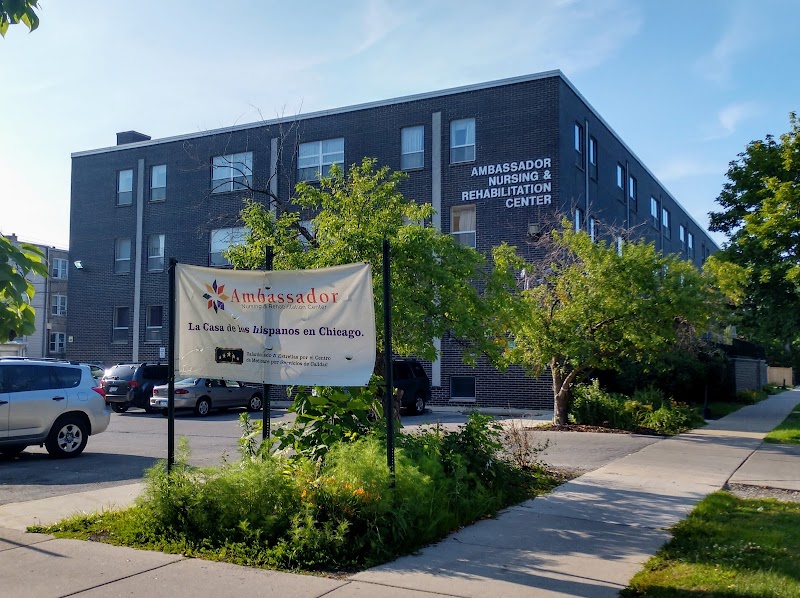
How is Ambassador Nursing & Rehab Center Staffed?

CMS rates AMBASSADOR NURSING & REHAB CENTER's staffing level at 2 out of 5 stars, which is below average compared to other nursing homes. Staff turnover is 25%, compared to the Illinois average of 46%. This relatively stable workforce can support continuity of care.

What Have Inspectors Found at Ambassador Nursing & Rehab Center?

State health inspectors documented 61 deficiencies at AMBASSADOR NURSING & REHAB CENTER during 2022 to 2025. These included: 3 that caused actual resident harm and 58 with potential for harm. Deficiencies causing actual harm indicate documented cases where residents experienced negative health consequences.
Who Owns and Operates Ambassador Nursing & Rehab Center?

AMBASSADOR NURSING & REHAB CENTER is owned by a for-profit company. For-profit facilities operate as businesses with obligations to shareholders or private owners. The facility is operated by INFINITY HEALTHCARE CONSULTING, a chain that manages multiple nursing homes. With 190 certified beds and approximately 160 residents (about 84% occupancy), it is a mid-sized facility located in CHICAGO, Illinois.
How Does Ambassador Nursing & Rehab Center Compare to Other Illinois Nursing Homes?

Compared to the 100 nursing homes in Illinois, AMBASSADOR NURSING & REHAB CENTER's overall rating (1 stars) is below the state average of 2.5, staff turnover (25%) is significantly lower than the state average of 46%, and health inspection rating (1 stars) is much below the national benchmark.

What Should Families Ask When Visiting Ambassador Nursing & Rehab Center?

Based on this facility's data, families visiting should ask: "What safeguards and monitoring systems are in place to protect residents from abuse or neglect?" "Can you walk me through typical staffing levels on day, evening, and night shifts?" "Can I visit during a mealtime to observe dining assistance and food quality?" "How do you handle medical emergencies, and what is your hospital transfer rate?" These questions are particularly relevant given the substantiated abuse finding on record and the below-average staffing rating.

Is Ambassador Nursing & Rehab Center Safe?

Based on CMS inspection data, AMBASSADOR NURSING & REHAB CENTER has documented safety concerns. The facility has 1 substantiated abuse finding (meaning confirmed case of resident harm by staff or other residents). The facility has a 1-star overall rating and ranks #100 of 100 nursing homes in Illinois. Families considering this facility should ask detailed questions about what corrective actions have been taken since these incidents.

Do Nurses at Ambassador Nursing & Rehab Center Stick Around?

Staff at AMBASSADOR NURSING & REHAB CENTER tend to stick around. With a turnover rate of 25%, the facility is 21 percentage points below the Illinois average of 46%. Low turnover is a positive sign. It means caregivers have time to learn each resident's needs, medications, and personal preferences. Consistent staff also notice subtle changes in a resident's condition more quickly. Registered Nurse turnover is also low at 29%, meaning experienced RNs are available to handle complex medical needs.

Was Ambassador Nursing & Rehab Center Ever Fined?

AMBASSADOR NURSING & REHAB CENTER has no federal fines on record. CMS issues fines when nursing homes fail to meet care standards or don't correct problems found during inspections. The absence of fines suggests the facility has either maintained compliance or corrected any issues before penalties were assessed. This is a positive indicator, though families should still review recent inspection reports for the full picture.

Is Ambassador Nursing & Rehab Center on Any Federal Watch List?

AMBASSADOR NURSING & REHAB CENTER is not on any federal watch list. The most significant is the Special Focus Facility (SFF) program, which identifies the bottom 1% of nursing homes nationally based on persistent, serious quality problems. Not being on this list means the facility has avoided the pattern of deficiencies that triggers enhanced federal oversight. This is a positive indicator, though families should still review the facility's inspection history directly.