APERION CARE INTERNATIONAL
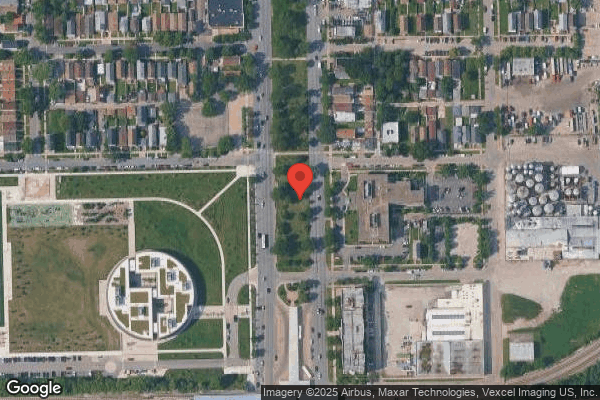
4815 SOUTH WESTERN AVE, CHICAGO, IL 60609 (773) 927-4200
For profit - Limited Liability company 218 Beds APERION CARE Data: November 2025
Trust Grade
0/100
#434 of 665 in IL
Last Inspection: May 2024

Within standard 12-15 month inspection cycle. Federal law requires annual inspections.

Overview

Aperion Care International in Chicago has received a Trust Grade of F, indicating significant concerns regarding its operations and care quality. Ranked #434 out of 665 facilities in Illinois, it falls in the bottom half, and is #143 out of 201 in Cook County, suggesting limited local options for better care. While the facility is improving, dropping from 23 issues in 2024 to 7 in 2025, it still has serious deficiencies, including incidents where residents did not receive timely emergency care after falls, resulting in severe injuries like hip fractures. Staffing is a concern with a low rating of 1 out of 5, and while turnover is close to the state average at 54%, the overall staffing situation remains weak. Additionally, the facility has incurred $114,013 in fines, indicating ongoing compliance issues, even though it has average RN coverage, which is crucial for catching potential problems.

Trust Score
F
0/100
In Illinois
#434/665
Bottom 35%
Safety Record
High Risk
Review needed
Inspections
Getting Better
23 → 7 violations
Staff Stability
⚠ Watch
54% turnover. Above average. Higher turnover means staff may not know residents' routines.
Penalties
○ Average
$114,013 in fines. Higher than 73% of Illinois facilities. Some compliance issues.
Skilled Nurses
⚠ Watch
Each resident gets only 26 minutes of Registered Nurse (RN) attention daily — below average for Illinois. Fewer RN minutes means fewer trained eyes watching for problems.
Violations
⚠ Watch
91 deficiencies on record. Higher than average. Multiple issues found across inspections.
★☆☆☆☆
1.0
Overall Rating
★☆☆☆☆
1.0
Staff Levels
★★★☆☆
3.0
Care Quality
★☆☆☆☆
1.0
Inspection Score
Stable
2024: 23 issues
2025: 7 issues

The Good

  • Full Sprinkler Coverage · Fire safety systems throughout facility
  • No fines on record

Facility shows strength in fire safety.

The Bad

1-Star Overall Rating

Below Illinois average (2.5)

Significant quality concerns identified by CMS

Staff Turnover: 54%

Near Illinois avg (46%)

Higher turnover may affect care consistency

Federal Fines: $114,013

Well above median ($33,413)

Significant penalties indicating serious issues

Chain: APERION CARE

Part of a multi-facility chain

Ask about local staffing decisions and management

The Ugly 91 deficiencies on record

6 actual harm
Jun 2025 1 deficiency
CONCERN (D) 📢 Someone Reported This

A family member, employee, or ombudsman was alarmed enough to file a formal complaint

Potential for Harm - no one hurt, but risky conditions existed

Free from Abuse/Neglect (Tag F0600)

Could have caused harm · This affected 1 resident

**NOTE- TERMS IN BRACKETS HAVE BEEN EDITED TO PROTECT CONFIDENTIALITY** Based on interview and record review, the facility failed to prevent and protect residents from resident-to-resident verbal abus...

Read full inspector narrative →
**NOTE- TERMS IN BRACKETS HAVE BEEN EDITED TO PROTECT CONFIDENTIALITY** Based on interview and record review, the facility failed to prevent and protect residents from resident-to-resident verbal abuse. This failure affects one (R6) resident out of four residents reviewed for abuse in a total sample of six. As a result of this failure, R3 verbally abused R6 on 06/14/25. Findings include: On 06/17/2025, at 11:10 AM, R3 stepped out of the restroom ambulating without an assistive device, in no apparent distress. R3 agreed to speak to the surveyor by his bed. R3 stated that this past Sunday he was coming out of the bathroom. His previous roommate R6, was yelling at one of the housekeepers. R3 was yelling, why don't you clean my bed? Why do you clean R3's only? R3 stated that when he heard this R3 told R6 they do clean yours too. The housekeeper lady said, yes [NAME] I do it for you. R3 stated that R6 got in R3's face and said, you know what, I'm tired of you too, you are always on the phone. R3 stated I told him I have family I speak to, I don't bother you sir. R6 tried to get in my face. R3 stated that he is usually very patient, but at that moment, R3 stated that he became stressed and tensed. R3 stated I have to tell you the truth, I told him I am going to f*ck you up. R3 stated that R6 sat down after that and R3 did not get physically aggressive towards R6. R3 stated that he denied R6 hurting R3 in any way. R3 stated that staff separated them and R3 remained downstairs. R3 stated the only thing that made me mad is that he (R6) can walk and do everything. I said I can hit him, and he can fight back. On 06/18/2025 at 10:49 AM V6 (Housekeeping) stated that she was working on Saturday June 14th when R6 was really mad saying they never do his bed just because he is Mexican and that all the black people don't mind him when he needs something. V6 stated that after that R6 started arguing bad with R3. V6 stated that R6 told R3 that he (R6) was tired of R3 getting calls at 5:00AM and R6 is trying to sleep. V6 stated that R3 started getting mad and started saying I am going to kick his a**. V6 stated that she did not witness the residents being physically violent. V6 stated that R3 is usually really calm, but when they get R3 mad, R3 can get really mad. V6 stated R6 fights with everyone, they keep switching him to different floors. V6 stated R6 really has a big mouth, one time he was fighting with a Mexican lady, calling her names. He (R6) is alert and sometimes he fights with the nurses, when they give him his meds (medications) late. On 06/18/2025 at 3:44 PM R6 preferred to speak in Spanish, stated that R6 has been in the facility since December 14 and stated it has been a year and almost 7 months. R6 stated that he feels safe in the facility. R6 stated that he has had some issues with some residents. R6 stated one wanted to hit me, but they didn't let him. And another one, they kept calling him on his phone at 5:00 AM, and I (R6) was trying to rest. R6 stated that he had let the night shift nurse know, she was African American. R6 stated that the nurse said that she was going to talk to him (R3) that day. R6 stated that he understands a little of English. R6 stated that he cannot remember the name of the nurse that he informed. R6 stated later that day R3 was going to hit me, I don't remember the time, when he was going to hit me, they separated us. R6 stated I am a very nervous person; I need to sleep. R6 stated that R3 speaks Spanish too and is Latino too. R6 stated I sat down, and I didn't go to his face. R6 stated that R3 was taken away and R6 stated I am fine with this room and roommate. R3's face sheet documents R3 is a [AGE] year-old individual admitted to the facility on [DATE] and has diagnoses not limited to seizures, unspecified cirrhosis of liver, essential (primary) hypertension, adjustment disorder with mixed anxiety and depressed mood. R3's MDS/Minimum Data Set, dated [DATE] documents that R3 has a BIMS/Brief Interview for Mental Status score of 15/15, indicating that R3 has intact cognitive response. R3's behavior note dated 06/14/2025 at 9:30AM documents in part nurse on duty was summon to resident room and having a verbal altercation with his roommate. Upon entering the room both the residents were screaming and using foul language towards each other. R3's current care plan documents in part R3 is at risk for abuse/neglect possibly r/t (related to) adjustment disorder with mixed, anxiety and depressed mood which can lead to agitation as well as health and none health related complaints. Interventions document in part provide reassurance when negative feelings occur. R6's face sheet documents R6 is a [AGE] year-old individual admitted to the facility on [DATE] and has diagnoses not limited to other seizures, anxiety disorder, unspecified, unspecified dementia, unspecified severity, with other behavioral disturbance, insomnia, unspecified, major depressive disorder. R6's MDS/Minimum Data Set, dated [DATE] documents that R6 has a BIMS/Brief Interview for Mental Status score of 07/15, indicating that R6 has impaired cognitive response. R6's behavior note dated 06/14/2025 at 9:16 AM documents in part nurse on duty was summon to resident room because resident was being verbally aggressive with his roommate. Upon entering the room both the residents were screaming and using foul language towards each other. R6's current care plan documents in part R6 is at risk for abuse/neglect r/t: Major Depressive disorder. I will be cared for in a safe manner and verbalize to staff any incidences of abuse or neglect through review date. Ensure safety if feeling unsafe. Observe resident when in company of peers. Facility document dated 03/01/21, titled abuse prevention program documents in part abuse: Abuse means any physical or mental injury or sexual assault inflicted upon a resident other than by accidental means (210 ILCS 45/1-103). Abuse is the willful infliction of injury, unreasonable confinement, intimidation, or punishment with resulting physical harm, pain, or mental anguish to a resident. Verbal abuse may be considered to be a type of mental abuse. Verbal abuse includes the use of oral, written, or gestured communication, or sounds, to residents within hearing distance, regardless of age, ability to comprehend, or disability. Examples of mental and verbal abuse include, but are not limited to: yelling or hovering over a resident, with the intent to intimidate; threatening residents.
May 2025 1 deficiency
CONCERN (D) 📢 Someone Reported This

A family member, employee, or ombudsman was alarmed enough to file a formal complaint

Potential for Harm - no one hurt, but risky conditions existed

Deficiency F0776 (Tag F0776)

Could have caused harm · This affected 1 resident

**NOTE- TERMS IN BRACKETS HAVE BEEN EDITED TO PROTECT CONFIDENTIALITY** Based on interview and record review, the facility failed to provide radiology services in a timely manner. This failure affecte...

Read full inspector narrative →
**NOTE- TERMS IN BRACKETS HAVE BEEN EDITED TO PROTECT CONFIDENTIALITY** Based on interview and record review, the facility failed to provide radiology services in a timely manner. This failure affected 1 resident (R3) out of three residents reviewed for injuries of unknown origin. Findings include: On 5/27/25 at 11:57am, R3 said, I'm (R3) doing pretty good. I (R3) like it here. Not sure what happened to my hand. The nurse said it (left hand) was swollen and I (R3) needed an x-ray. Don't know what happened. It (left hand) didn't even hurt, so I (R3) thought everything was all good. Then they (staff) told me (R3) my finger was fractured. I (R3) don't know how. No, I (R3) didn't fall. I (R3) don't remember hitting it (left hand) on anything. R3's face sheet documents diagnoses that include but are not limited to dementia, major depressive disorder, and suicidal ideations. R3's Minimum Data Set (MDS), dated [DATE], documents, in part, a Brief Interview of Mental Status (BIMS) score of 06 which indicates that R3's cognition is severely impaired. R3's progress note, dated 5/7/25 at 7:54pm, per V6 (Licensed Practical Nurse/LPN) documents, in part, Change of condition: During routine care observed +3 pitting edema/swelling to the left hand. No pain voiced. Team Health on-call center notified NP (Nurse Practitioner/V8), new orders for STAT doppler and x-ray of the left hand. Orders placed and carried out. MD (Medical Doctor/V7) notified via voice message . R3's progress note, dated 5/7/25 at 11:33pm, per V9 (Licensed Practical Nurse/LPN) documents, in part, Writer spoke to (employee) from (radiology company) he stated, that they will not be able to make it tonight for the STAT X-ray. They will arrive tomorrow morning for the x-ray to the left hand due to high volume. R3's progress note, dated 5/8/25 at 1:08pm, per V10 (Licensed Practical Nurse/LPN) documents, in part, Writer placed call to (radiology company) to follow up with possible ETA (estimated time of arrival) for stat x-ray and doppler of upper extremity. Writer spoke with (employee) from (radiology company) and stated an X-ray tech and sonography has been assigned. No ETA can be given at the moment but both techs should be arriving to the facility soon. R3's progress note, dated 5/8/25 at 10:08pm, per V11 (Registered Nurse/RN) documents, in part, EMS (emergency medical services) on unit to transfer patient (hospital) for further evaluation of left finger fracture. He (R3) left facility AOx1 via stretcher accompanied by x2 paramedics in good condition . R3's progress note, dated 5/9/25 at 4:31am, per V12 (Licensed Practical Nurse/LPN) documents, in part, resident returned with dx (diagnosis) of small fracture to 5th finger. dx (diagnosis) hand swelling, closed nondisplaced fracture of distal phalanx of left little finger . On 5/28/25 at 10:14am, V1 (Administrator) said, STAT x-rays should be done within 4 hours. On 5/28/25 at 10:31am, V25 (ADON/Assistant Director of Nursing) said STAT x-rays should be done in 4 to 6 hours. If they (STAT x-rays) are not here in 4 hours we (staff) usually send the patient to the hospital and notify physician. Yes, there's been issues with STAT x-rays We (facility) started sending them (residents) out because their STAT is not STAT. Our (facility) boss will speak to their (Radiology company) boss. In the meantime, we (staff) are sending them (residents) out. This issue has been brought up to QAPI (Quality Assurance and Improvement) committee. Our Administrator and company (radiology company) has had phone meetings because of this. Anything over 4 hours is a long time for a stat. On 5/28/25 at 10:53am, V2 (Director of Nursing/DON) said, STAT x-rays should be done within 4 to 6 hours. STAT x-rays round about time will be quicker. The resident should be sent out to the hospital if the STAT x-ray is not done within 4 to 6 hours. Yes, there has been delays with the x-ray company and we have been meeting with them about. On 5/28/25 at 12:54pm, V6 (Licensed Practical Nurse/LPN) said, When I (V6) seen his (R3) hands the left hand appeared swollen. He (R3) has big hands but not that big. It was localized swelling on the left hand. I (V6) called the physician, and the physician ordered a STAT x-ray. STAT x-rays should be done in 4 to 6 hours. I (V6) endorsed everything to the next nurse on the next shift. On 5/28/25 at 12:58pm, V9 (Licensed Practical Nurse/LPN) said, About 4 hours passed and they still didn't come to do the x-ray for R3. I (V9) called (Radiology Company) and was told it could not be done until the next day due to high volume. Yes, I notified the doctor and told the morning nurse. I (V9) must not have documented in my progress notes that I (V9) notified the physician that they (radiology company) couldn't do the x-ray STAT. I (V9) cannot remember the name of the physician I (V9) notified. On 5/28/25 9::55am, V7 (physician) said, I (V7) was not notified the x-ray wasn't done STAT. It should have been done STAT. Most likely, the x-ray being done the next day would not have changed the outcome. I (V7) cannot really say if not doing the x-ray STAT caused harm to the resident. Facility presented Facility Agreement titled, (Name of Company) Portable X Ray, dated 8/01/2016, documents, in part, STAT studies will be performed in 4 hours. Facility policy titled, Physician Notification of Laboratory/ Radiology/Diagnostic Results, revised date 3/14/18, documents, in part, To assure physician ordered diagnostic test are performed, and to assure test results are reported to the physician so that prompt, appropriate action may be taken if indicated for the resident's care . A licensed nurse is responsible for assuring the laboratory is notified of physician's orders for testing . STAT or Same Day orders will be called to the laboratory service by the nurse who transcribes the order. A nurse is responsible for monitoring the receipt of test results. Test results should be reported to the physician or other practitioner who ordered them . X-ray or other diagnostic tests reveal suspected findings which may require immediate intervention including but not limited to: Pneumonia, New fracture . Facility policy titled, Physician-Family Notification- Change in Condition, revised date 11/13/18, documents, in part, To ensure that medical care problems are communicated to the attending physician and family/responsible party in a timely, efficient, and effective manner . The facility will inform the resident; consult with the resident's physician; and if known, notify the resident's legal representative or an interested family member when there is: A decision to transfer or discharge the resident from the facility .
Feb 2025 1 deficiency 1 Harm
SERIOUS (G) 📢 Someone Reported This

A family member, employee, or ombudsman was alarmed enough to file a formal complaint

Actual Harm - a resident was hurt due to facility failures

Quality of Care (Tag F0684)

A resident was harmed · This affected 1 resident

**NOTE- TERMS IN BRACKETS HAVE BEEN EDITED TO PROTECT CONFIDENTIALITY** Based on observation interviews and record review, the facility failed to provide emergency care for one resident (R2) who had a...

Read full inspector narrative →
**NOTE- TERMS IN BRACKETS HAVE BEEN EDITED TO PROTECT CONFIDENTIALITY** Based on observation interviews and record review, the facility failed to provide emergency care for one resident (R2) who had an unwitnessed fall and complained of leg pain. This failure resulted in R2 sustaining a hip fracture that was not detected until more than twelve hours later. Findings include: R2 is [AGE] year old with diagnosis including but not limited to: Displaced intertrochanteric fracture of right femur, unspecified fall, unsteadiness on feet, limitation of activities due to disability, other abnormalities of gait and mobility. On 2/20/25 at 11:50 PM, R2 stated, I was walking around when I fell. I told my nurse that I had fallen and my leg was hurting. I went to the hospital the next day and had surgery on my leg. Surveyor asked if R2's leg was x-rayed in the facility after his (R2's) fall. R2 stated that his leg was not x-rayed until he (R2) arrived to the hospital on the next day. On 2/20/25 at 12:20 PM, V4 (LPN/Licensed Practical Nurse) stated, the purpose of a stat x-ray after a fall is to make sure that there are no fractures or injuries. We (Nurses) need to know immediately if there is a broken bone or anything else wrong. On 2/25/25/ at 11:35 AM, V13 (ADON/ Assistant Director of Nursing) stated, I got report from the 3- 11 PM Nurse (V10) that R2 had a fallen earlier that day and that an x-ray was ordered. The X-ray Company never came during my shift. Between 6:30 AM and 7:00 AM I was told by the CNA (Certified Nurse Assistant) that R2 was complaining of pain. When I went to assess him, he was guarded, complained of pain and his right leg looked abnormally swollen. At that time, I called the NP and was given orders to send him out. V13 (ADON) said that R2 was sent to the hospital on [DATE] between 9 and 10 AM. V13 stated, Usually if a resident is complaining of pain post-fall, I will try to treat the pain and see if I can get a STAT (Now) X-ray or order to send the patient out. I would rather be safe than sorry. A patient could have a dislocation, a fracture, a tear or anything. On 2/25/25 at 1:45 PM, V12 (NP/Nurse Practitioner) stated, After a patient has sustained an unwitnessed fall and is complaining of pain, we (assigned nurse) do a head to toe assessment and check for pain and do STAT x-rays and blood work, to know if there is a fracture. V12 (NP) stated, that a STAT x-ray should be at the facility within 1-2 hours and if the x-ray is not done within the 2- hour window, she (V12) would want to have the resident sent out to the Emergency department for an x-ray and further evaluation. On 2/25/25 at 1:45 PM, V12 (NP) said, If there is an untreated fracture, the risk of blood clots can increase and can travel to the lungs causing a pulmonary embolism. There is also a risk for stroke and excruciating pain from the fracture. Facility Fall Occurrence Note dated 12/29/24 documents, R2 had an unwitnessed fall at 2000; R2 noted in bed stated to staff (V10/ LPN) that he (R2) had fallen; R2 worsening hip pain of 5 on a 1-10 scale. Progress note dated 12/29/24 at 2102 and authored by V10 (LPN) documents, on- call Nurse Practitioner called and informed of fall, V10 received orders for x-ray to left leg. Progress note dated 12/30/24 at 0749 and authored by V13 (ADON) documents, R2's pain 10 of 10 to right leg; new onset of pain; sent to hospital emergency department. Progress note dated 12/30/24 at 0829 and authored by V13 (ADON) documents, PRN (As needed medication) administered and ineffective. Progress note dated 12/30/24 a 0853 and authored by V13 (ADON) documents, R2 with increased pain to the right leg where he (R2) can't turn from side to side; R2 not allowing passive range of motion to right leg; Nurse Practitioner gave order to send to Hospital. Progress note dated 12/30/24 at 1000 documents, R2 out to Hospital via ambulance. Facility Reported Incident submitted on 1/7/25 documents, Final report; on 12/29/24, R2 stated he had a fall; on 12/30/24 R2 complained that his pain had increased; R2's Nurse (V13) called NP and obtained orders to send R2 out to the Emergency Room. Hospital History and Physical report dated 12/30/24 documents, R2 presenting to the emergency department after a fall at the nursing home yesterday (12/29/24) with persistent right hip pain. Hospital Summary dated 1/7/25 documents, R2 was seen for intertrochanteric fracture of right hip; R2 status/ post Open Reduction and Internal Fixation right hip with metal rod and screw on 1/3/25. Facility Policy titled Fall / Incident Occurrence documents, provide or obtain emergency care or first aide as needed; if incident or fall occurs between the hours of 5 PM- 7 AM; Emergency Medical Services will be notified to complete an assessment for injury and transport to local hospital for further evaluation and/or treatment if indicated.
Feb 2025 1 deficiency
CONCERN (D) 📢 Someone Reported This

A family member, employee, or ombudsman was alarmed enough to file a formal complaint

Potential for Harm - no one hurt, but risky conditions existed

Deficiency F0687 (Tag F0687)

Could have caused harm · This affected 1 resident

**NOTE- TERMS IN BRACKETS HAVE BEEN EDITED TO PROTECT CONFIDENTIALITY** Based on observation, interview and record review the facility failed to provide a resident escort for one (R3) of nine resident...

Read full inspector narrative →
**NOTE- TERMS IN BRACKETS HAVE BEEN EDITED TO PROTECT CONFIDENTIALITY** Based on observation, interview and record review the facility failed to provide a resident escort for one (R3) of nine residents who require assistance to podiatry appointments. This failure has the potential to affect one resident reviewed for medical appointments. Findings include: R3 is a [AGE] year-old male, admitted to the facility on [DATE] with diagnoses not limited to: Hemiplegia and Hemiparesis, Diabetes Mellitus, Hypertension, Contracture, Vascular Syndromes of Brain In Cerebrovascular Diseases, Spastic Hemiplegia Affecting Left Nondominant Side, Contracture, Right Wrist, Unsteadiness On Feet, Lack Of Coordination, Hypothyroidism, Abnormal Weight Loss, Vitamin D Deficiency R3's BIMS dated 11/22/2024 documents score of 10 indicating moderately impaired cognition. On 1/31/2025 at 1:40pm R3 asked surveyor if surveyor was from the state (Illinois Department of Public Health). Surveyor confirmed she was from the state. R3 was dressed, groomed, sitting in a wheelchair with foley catheter, wearing non-skid socks. R3 was visibly upset and stated, I (R3) have a doctor's appointment at local hospital, and I was supposed to be picked up at 12:30pm and taken to appointment with an escort. R3 stated, they did not have anybody to go with me, so I missed my appointment. Surveyor asked R3 if this was a scheduled doctor's appointment. R3 stated, yes. Surveyor asked R3 if he had been to doctor visits before and if he had an escort to go with him. R3 stated, yes, I always have to have somebody go with me. I cannot go in my electric wheelchair; they have to put me in this wheelchair. Surveyor observed wheelchair R3 was sitting in was manual wheelchair. R3 stated, I cannot move this wheelchair. V6 (RN) was standing next to R3 during this time and stated, I am R3's nurse. Surveyor asked V6 if R3 was scheduled for an appointment. V6 stated, yes, I got him ready for appointment. R3 has an electric wheelchair, and he cannot be transported in an electric wheelchair so I had him put into a manual wheelchair, but he needs an escort because he cannot propel himself in a manual wheelchair, so he has an escort go with him to get him to the appointment and back to facility. Surveyor asked V6 if R3 was taken downstairs to get transportation. V6 stated, yes, he is already, but when he got down there was told there is no one to escort R3 to doctors' appointment. Surveyor asked V6 why an escort was not available. V6 stated, I do not know, but R3 was not able to go to doctors' appointment for his foot because there was no escort. V6 stated, I had him ready to go. On 1/31/2025 at 1:43pm V2 DON (Director of Nursing) was asked by surveyor who is responsible to schedule transportation for residents that have medical appointments. V2 stated, V9 (Concierge) is the scheduler and schedules transportation and if an escort is required makes sure there is an escort but depends on if resident is alert and oriented x4. If a resident is alert and oriented x4 and can ambulate without assistance that resident does not need a escort. If a resident is not oriented x4 and cannot operate wheelchair by them self, they have to have an escort. On 1/31/2025 at 1:54pm V2 stated, R3's podiatry appointment was canceled because scheduler did not arrange for an escort to take R3, I am not sure why. R3's podiatry appointment has been rescheduled for 2/7/2025 at 2:00pm. On 1/31/2025 at 2:07pm V8 Surveyor asked V8 (Scheduler) if she schedules an escort to go with residents to appointment. V8 stated, no V9 is responsible for scheduling residents for transportation and schedules the escort. If V9 cannot find someone she will ask me if I have anyone extra. On 1/31/2025 at 2:15pm surveyor asked V9 (Concierge) if she was aware of R3 having an appointment on 1/31/2025 with a doctor and R3 needed an escort to go to with him. V9 stated, I am familiar with R3, and he had an appointment and due to his condition and him having to go in a regular wheelchair, R3 must go with an escort. I (V9) could not find an escort to go with R3 for today's appointment, so he could not go to his appointment. Residents that need an escort I have a list of people that escort. I sent out a list of residents that need an escort to appointment. No one offered to escort R3. Surveyor asked, if there was anyone in the building that could escort R3 to appointment. V9 stated, it was impossible to get someone off the floor. I believe we are at minimum staffing. I tried to call people. Surveyor asked V9 who you informed that R3 had a doctor's appointment, needed an escort and no one was available. I told the resident, nurse and V2, and put in the manager group chat. It was also mentioned in the daily morning meeting today (1/31/2025) that I could not find anyone to escort R3. I did not tell the nurse, not sure if anyone told her. Surveyor asked, who told R3 there was no escort available. I did not tell him; it slipped my mind. V2 was not in the morning meeting. Normally, V2 is in the meeting, she (V2) did not know. I did not send notification to the managers because we had the morning meeting between 9:30am and 9:45am. We were still looking. I am not sure if scheduler knew there was no escort for R3. I (V9) did not communicate this to V2. Surveyor asked, V9, what is the process for scheduling a resident for transportation to medical visits and having an escort for the resident. V9 stated, paperwork is copied and put in my mailbox, nurse put in the orders and one copy is given back to me (V9). There is a list of residents that need an escort and if there is not an escort, I let them (managers) and V2 know by sending a text thread. Normally, I find someone to go, or someone will go from the floor. V2 or V8 will make decision to send someone. I am not sure why scheduler did not pull from the floor. On 1/31/2025 at 2:37pm V8 stated, V9 will ask if I can help find someone if she cannot find an escort for a resident. V9 told me at today's meeting. V9 usually tells me ahead of time. Told to get restorative to go with R3. R3's pick up time was 12:00m V9 asked me if I had anyone to go. I told V9 to try and get restorative to go with him and call the supervisor. If there is a scheduled doctor visit, we try to get someone early, maybe family member can go, but we know in advance. Today (1/31/2025) is the first time I heard about this appointment. If V9 needs my help V9 will let me know in advance. V9 said she asked everyone. V9 did not communicate that with me. I have gone on appointments if needed. I did not know. On 1/31/2025 at 2:52pm V2 (Director of Nursing) stated, when V9 needs escorts to go to an appointment, we discuss it and will put in text I need escorts for residents on these days and these times. If we cannot find somebody, the day before or day of, I will pull somebody. V9 will let us know there is no one and I will pull someone and if appointment is later, I will see if someone will stay and go with resident. I was not notified that R3 did not have an escort. I did not receive a text that there was no one to take resident. Restorative aide can go. I usually have 3-4 in the building and can usually pull one to go out. We also have several other people that can go out with residents. I did not receive any information that there was no escort. R3 does have appointments and will need to get in different wheelchair and will always need an escort because he cannot propel wheelchair himself. He has to have someone take him to the clinic. He is accustomed to electric wheelchair. Someone did talk to him about his new appointment. Review of nursing facility assignment sheets for 1/31/25 shows V6 was the nurse for R3. Review of R3's Appointment Reminder documents (in part): 1/31/2025, 1:30pm, arrive by 1:15pm, office visit. Review of facility Patient Schedule Form For Lifeline Services documents (in part): Appointment Made By V9, Medicar, Appt: (Appointment) 1/31, Pick Time: 12:30 Appt Time: 1:30, Patient Name: R3, Purpose of Appt: Office Visit Facility Transportation Coordinator (undated) Job Description documents (in part): SUMMARY: The Transportation Coordinator is responsible for scheduling the transportation of patients to and from hospitals, medical offices, dialysis centers and private residences in a safe, secure and professional manner. ESSENTIAL DUTIES AND RESPONSIBILITIES: Assist residents in obtaining transportation when it is necessary to be obtain for medical services outside the facility. Arrange and coordinate with family members, nursing personnel, or designee to accompany residents to medical appointments outside the facility as their medical condition and mental status warrants or upon provider/family request. maintain a current list of transportation arrangements for upcoming residents' appointments. Facility Assessment Tool (2/8/24) documents (in part): 3.1 Staff type Identify the type of staff members, other health care professionals, and medical practitioners that are needed to provide support and care for residents. Nursing Services (DON, RN, LPN, CNA, Restorative nurse), Ancillary services - Podiatrist 3. Staffing plan Based on your resident population and their needs for care and support, ensure that you have sufficient staff to [NAME] the needs of the residents at an given time. Staff Licensed Nurses (RN, LPN, providing direct care CNA Restorative Aides providing direct care 3.3 Individual staff assignment will be based on the individual resident needs, preferences and acuity provided and will be re-evaluated and adjusted accordingly to meet these needs.
Jan 2025 1 deficiency
CONCERN (E) 📢 Someone Reported This

A family member, employee, or ombudsman was alarmed enough to file a formal complaint

Potential for Harm - no one hurt, but risky conditions existed

Deficiency F0583 (Tag F0583)

Could have caused harm · This affected multiple residents

**NOTE- TERMS IN BRACKETS HAVE BEEN EDITED TO PROTECT CONFIDENTIALITY** Based on observation, interview and record review, the facility failed to follow the facility policy and provide two (R12 and R1...

Read full inspector narrative →
**NOTE- TERMS IN BRACKETS HAVE BEEN EDITED TO PROTECT CONFIDENTIALITY** Based on observation, interview and record review, the facility failed to follow the facility policy and provide two (R12 and R13) residents confidentiality of medical records. This failure has the potential to affect 23 residents residing on the second floor and 23 residents residing on the third floor. Finding include: R12 is a [AGE] year-old male, admitted to the facility on [DATE] with diagnoses not limited to: Essential (Primary) Hypertension, Syncope and Collapse, Acute Respiratory Failure with Hypoxia, Hypothyroidism, Unspecified, Anemia, Unspecified, Malignant Neoplasm of Parotid Gland R13 is a [AGE] year-old female, admitted to the facility on [DATE] with diagnoses not limited to: Type 2 Diabetes Mellitus Without Complications, Hyperglycemia, Unspecified, Chronic Obstructive Pulmonary Disease, Unspecified, Acute Kidney Failure, Unspecified, Cognitive Communication Deficit On 1/24/2025 at 1:56pm surveyor rounding on second floor in hall observed V10's (LPN) computer on cart three unattended with R12's MAR (Medication Administration Record) open and in view of anyone walking past cart and in vicinity of cart. Surveyor stood at computer and waited for V10 to returned. Upon V10's return, Surveyor asked V10 if computer on medication cart three was her cart. V10 stated, yes. Surveyor asked V10 if computer should be open with resident information visible. V10 stated, no. Surveyor asked why. V10 stated, resident information is private, and computer should not be left open. On 1/25/2025 at 11:55am surveyor rounding on third floor observed, V6's RN (Registered Nurse) medication cart computer open, with R13's patient information visible to public. V6 was not at cart nor in vicinity of open computer. On 1/25/2025 at 11:56am surveyor asked V5 (LPN) if cart with open computer was her computer. V5 stated, No. Surveyor asked if computer with resident information should be open without nurse present. V5 stated, no, because of privacy and HIPAA (Health Insurance Portability and Accountability Act) we are supposed to log out and lock computer. On 1/25/2025 at 11:58am V6 (RN) asked by surveyor if she was responsible for team three cart and if computer information with resident information should be open. V6 stated, I thought I logged out. If I am not in front of the computer, supposed to be down. It (referring to computer) should never be left up because of resident privacy and personal information and anyone can look at it. V6 stated, this computer and medication cart is team 3. On 1/25/2025 at 12:02pm asked V2 DON (Director of Nursing) if a computer with resident information should be open without nurse at computer. V2 stated, the nurse should not walk away from computer and if they walk away from the computer, they should shrink or log off the computer. Surveyor asked why should nurse log off computer. V2 stated, because you can see resident information, diagnosis, medication, date of birth and is a privacy concern. Review of nursing facility assignment sheets for 1/24/25 and 1/25/25 shows V10 was the nurse for residents that received medication from second floor cart three and V6 was the nurse for residents that received medication from third floor cart three. Facility Policy Residents' Rights (undated) shows (in part): J. Residents have the right to the following: 6) Be afforded confidentiality of treatment. X. Residents have the right to confidentiality of all personal and clinical records. Y. residents have the right to be treated as individuals with consideration and respect for their privacy.
Jan 2025 2 deficiencies
CONCERN (D) 📢 Someone Reported This

A family member, employee, or ombudsman was alarmed enough to file a formal complaint

Potential for Harm - no one hurt, but risky conditions existed

Accident Prevention (Tag F0689)

Could have caused harm · This affected 1 resident

**NOTE- TERMS IN BRACKETS HAVE BEEN EDITED TO PROTECT CONFIDENTIALITY** Based on observation, interview, and record review, the facility failed implement fall prevention interventions as stated in the...

Read full inspector narrative →
**NOTE- TERMS IN BRACKETS HAVE BEEN EDITED TO PROTECT CONFIDENTIALITY** Based on observation, interview, and record review, the facility failed implement fall prevention interventions as stated in the care plans and follow facility fall prevention policy for three (R3, R4 and R5) of four residents reviewed for accidents on the sample list of 13. Findings include: On 1/6/25 at 11:25am in the second-floor dining room, R3 was observed sitting in the wheelchair in the day room wearing red socks with white patterns that are all smooth on the bottom. Again at 11:45am, R3 still had the same pair of socks on. The surveyor notified V4(CNA/Certified Nurse Assistant). V4 stated I know residents should wear proper shoes or non-skid socks. (R3) should wear non-skid socks since she is not wearing shoes. I will ask someone to get the nonskid socks. On 1/6/25 at 11:10am in the third-floor dining room, R4 and R5 were both observed. R4 was in the wheelchair with grey socks that are smooth on the bottom. R5 also was in the wheelchair with grey socks that are smooth on the bottom. V5(CNA/Certified Nurse Assistant) confirmed the names of both R4 and R5. Again on 1/6/25 at 11:35am, R4 and R5 still had the same socks on. V6 (CNA) was notified. V6 stated maybe the socks were brought in by the residents' families. V6 added I will find non-skid socks for both of them. V6 explained that the socks need to be non-skid to prevent falling. On 1/6/25 at 11:45am, V3 (Restorative Nurse) erroneously stated It is not mandatory for residents in the wheelchair to have non-skid socks, as long as they don't walk. On 1/6/25 at 12:15pm, V2 (Assistant Director of Nursing/ADON) stated I just came to correct what the restorative nurse told you. The restorative nurse is kind of new. All residents should have nonskid socks or proper fitting shoes to prevent falling. I in-serviced her about it. I in-serviced the other staff also. V2 later presented a record of in-service signed by nursing staff, dated 1/6/25, that says All residents should have on proper footwear which should include shoes and nonskid socks when up. R3's records reviewed are as follows: Fall Risk assessment dated [DATE] states that R3 is at risk for falls. MDS (Minimum Data Set) dated 10/1/24 shows that R3's mobility device is wheelchair. Care plan dated 2/2/23 states in part that R3 is at risk for falls. Intervention says to ensure that the resident is wearing appropriate footwear when ambulating or mobilizing in wheelchair. BIMS Score dated 1/7/25 is 12 out of 15(Mild Cognitive Impairment). R4's records reviewed are as follows: Fall Risk assessment dated [DATE] states that R4 is at risk for falls. MDS dated [DATE] shows that R4's mobility device is wheelchair. Care plan dated 6/7/24 states in part that R4 is at risk for falls and a history of recurrent falls and remains at risk for new falls, related to poor safety awareness. BIMS Score dated 10/18/24 is 4 out of 6 (Severe Cognitive Impairment). R5's records reviewed are as follows: R5 had unwitnessed falls on 2/22/24, 2/24/24, 3/9/24, and 6/3/24. Fall Risk assessment dated [DATE] states that R4 is at risk for falls. MDS dated [DATE] shows that R5's mobility device is wheelchair. Care plan dated 12/24/22 states in part that R5 should have appropriate footwear when out of bed. BIMS Score dated 1/3/25 is 6 out of 15(Severe Cognitive Impairment). Facility's Fall Prevention Program with latest review date 11/21/17 states in part: To assure the safety of all residents in the facility when possible. This program will include measures which determine the individual needs of each resident by assessing the risk of falls and implementation of appropriate interventions to provide necessary supervision and assistive devices are utilized as necessary Footwear will be monitored to ensure the residents have proper fitting shoes and/or footwear is nonskid.
CONCERN (E) 📢 Someone Reported This

A family member, employee, or ombudsman was alarmed enough to file a formal complaint

Potential for Harm - no one hurt, but risky conditions existed

Pressure Ulcer Prevention (Tag F0686)

Could have caused harm · This affected multiple residents

**NOTE- TERMS IN BRACKETS HAVE BEEN EDITED TO PROTECT CONFIDENTIALITY** Based on observation, interview, and record review, the facility failed to implement pressure ulcer prevention interventions as ...

Read full inspector narrative →
**NOTE- TERMS IN BRACKETS HAVE BEEN EDITED TO PROTECT CONFIDENTIALITY** Based on observation, interview, and record review, the facility failed to implement pressure ulcer prevention interventions as stated in the care plan for residents at risk for pressure ulcers. This failure has the potential to affect four residents (R9, R10, R11, and R12), reviewed for wheelchair cushions as a pressure ulcer prevention intervention for residents. Findings include: On 1/8/25 at 12:02pm during observation of residents in the third-floor dining room, R9, R11 and R12 were observed in the dining room sitting in the wheelchair without pressure relieving cushion. Again at 12:15pm, all 3 residents were still in the wheelchairs without cushions. At this time, V5 (CNA/Certified Nurse Assistant) who was with the residents at the time was notified and stated that (V5) would ask Restorative. On 1/8/25 at 12:07pm during observation of residents in the second-floor dining room, R10 was observed in the dining room sitting in the wheelchair without pressure relieving cushion. Again at 12:25pm, R10 was still in the wheelchair without cushion. At this time, V14 (CNA/Restorative Aide) was notified and V14 stated I am the Restorative Aide. I just got here. I will go and get a cushion now. I usually go round and make sure everyone has a cushion in the wheelchair to prevent pressure sore. On 1/8/25 at 1:02pm, V2 (Assistant Director of Nursing) stated Residents should have cushions in the wheelchair to prevent pressure ulcers; We will in-service them. On 1/8/25 at 1:10pm, V13 (Wound Care Nurse) stated: Residents' wheelchairs should have cushions to prevent pressure ulcers. R9's records show the following: Face sheet shows diagnoses which include but are not limited Dementia. Pressure Ulcer Risk assessment dated [DATE] shows that R9 is at high risk for pressure ulcer. MDS (Minimum Data Status) section M dated 12/23/24 states that R9 is at risk of developing pressure ulcers/injuries and should have a pressure reducing device for chair. Care plan dated 7/7/23 states: R9 is at risk for impaired skin integrity. Intervention states to use pressure relieving chair cushion. R10's records show the following: Face sheet shows diagnoses which include but are not limited Generalized Muscle Weakness. Pressure Ulcer Risk assessment dated [DATE] shows that R10 is at moderate risk for pressure ulcer. MDS section M dated 12/23/24 states that R10 is at risk of developing pressure ulcers/injuries and should have a pressure reducing device for chair. Care plan dated 7/15/24 states: R10 is at risk for impaired skin integrity. Intervention states to use pressure relieving chair cushion. R11's records show the following: Face sheet shows diagnoses which include but are not limited Generalized Muscle Weakness. Pressure Ulcer Risk assessment dated [DATE] show that R11 is at moderate risk for pressure ulcer. MDS section M dated 12/24/24 states that R11 is at risk of developing pressure ulcers/injuries and should have a pressure reducing device for bed. Care plan dated 9/20/23 states: R11 is at risk for impaired skin integrity. Intervention states to use pressure relieving chair cushion. R12's records show the following: Face sheet shows diagnoses which include but are not limited protein calorie malnutrition and chronic kidney disease. Pressure Ulcer Risk assessment dated [DATE] shows that R12 is at high risk for pressure ulcer. MDS section M dated 10/18/24 states that R12 is at risk of developing pressure ulcers/injuries and should have a pressure reducing device for bed. Care plan dated 5/19/23 states: R12 is at risk for skin breakdown. Intervention states to use pressure relieving/reducing cushion so protect the skin while up in chair. Facility's policy titled Pressure Ulcer Prevention with latest revision date 1/15/18 states under Purpose: To prevent and treat pressure injuries. #10 states: Use pressure reducing pads in chairs (all types) to protect bony prominences for residents identified as moderate/high/severe risk.
Oct 2024 1 deficiency
CONCERN (E) 📢 Someone Reported This

A family member, employee, or ombudsman was alarmed enough to file a formal complaint

Potential for Harm - no one hurt, but risky conditions existed

Abuse Prevention Policies (Tag F0607)

Could have caused harm · This affected multiple residents

**NOTE- TERMS IN BRACKETS HAVE BEEN EDITED TO PROTECT CONFIDENTIALITY** Based on interview and records review, the facility failed to follow their abuse policy and procedure to develop comprehensive p...

Read full inspector narrative →
**NOTE- TERMS IN BRACKETS HAVE BEEN EDITED TO PROTECT CONFIDENTIALITY** Based on interview and records review, the facility failed to follow their abuse policy and procedure to develop comprehensive person-centered care plans that includes goals and approaches to prevent abuse for 4 (R1, R2, R3, R4) out of 4 residents reviewed. Findings Include: R1's face sheet shows an admission date of 6/11/24 with included diagnoses but not limited to Dysphagia Oropharyngeal Phase and Protein-Calorie Malnutrition. R1's Minimum Data Set (MDS) assessment dated [DATE] shows R1 has severe impairment with cognition. R1's Abuse/Neglect Screening dated 6/30/24 shows R1 is at risk for abuse. R1's comprehensive care plan shows R1 has self-care and mobility deficit. R1's care plan does not include goals and approaches to prevent abuse. R2's face sheet shows an admission date of 5/2/24 with included diagnoses but not limited to Major Depressive Disorder, Multiple Sites Contracture of Muscle, and Type 1 Diabetes Mellitus. R2's MDS assessment dated [DATE] shows R2 is cognitively impaired. Facility Reported Incident on R2 dated 9/16/24 shows R2 alleged V6 (Certified Nursing Assistant) was rude to R2 during care on 9/14/24. R2's Abuse/Neglect Screening dated 6/29/24 and 10/4/24 show R2 is at risk for abuse. R2's comprehensive care plan shows R2 has self-care and mobility deficit. R2's care plan does not include goals and approaches to prevent abuse. R3's face sheet shows an admission date of 8/15/24 with included diagnoses but not limited to Major Depressive Disorder and Stage 3 Chronic Kidney Disease. R3's MDS assessment dated [DATE] shows R3 is cognitively intact. R3's comprehensive care plan shows R3 has self-care and mobility deficit. R3's care plan does not include goals and approaches to prevent abuse. R4's face sheet shows an admission date of 12/20/22 with included diagnoses but not limited to Hemiplegia and Hemiparesis Following Cerebral Infarction and Chronic Obstructive Pulmonary Disease. R4's MDS assessment dated [DATE] shows R4 is cognitively intact. R4's Abuse/Neglect Screening dated 9/12/24 shows R4 is at risk for abuse. R4's comprehensive care plan shows R4 has self-care and mobility deficit. R4's care plan does not include goals and approaches to prevent abuse. On 10/23/24 at 9:48 AM, interviewed V3 (Assistant Administrator) and stated abuse assessment is completed upon admission, quarterly, annually, and as needed. V3 stated all residents residing in the facility is considered at risk for abuse. They are elderly and vulnerable residents. V3 stated it is important to address at risk for abuse in the resident's care plan. V3 stated the assessment is completed to determine the risks of residents for abuse and interventions to prevent abuse should be in the care plan. The facility's Abuse Prevention and Reporting policy (revised 10/24/22) reads in part: Resident Assessment: As part of the resident's life history on the admission assessment, comprehensive care plan, and MDS assessments, staff will identify residents with increased vulnerability for abuse, neglect, exploitation, mistreatment, history of trauma or misappropriation of resident property, who have needs, triggers and behaviors that might lead to conflict. Through the care planning process, staff will identify any problems, goals, and approaches, which would reduce the chances of abuse, neglect, exploitation, mistreatment or misappropriation of resident property for these residents.
Jun 2024 4 deficiencies
CONCERN (D) 📢 Someone Reported This

A family member, employee, or ombudsman was alarmed enough to file a formal complaint

Potential for Harm - no one hurt, but risky conditions existed

Free from Abuse/Neglect (Tag F0600)

Could have caused harm · This affected 1 resident

Based on interview and record review, the facility failed to affirm the right of the resident to be free from physical abuse. This failure has affected 1 (R3) of 5 residents reviewed for abuse. Findin...

Read full inspector narrative →
Based on interview and record review, the facility failed to affirm the right of the resident to be free from physical abuse. This failure has affected 1 (R3) of 5 residents reviewed for abuse. Findings Include: On 6/11/24 at 11:03 AM, R4 speaks Spanish with little English, V23 (Housekeeper) assisted in interpreting to R4. R4 stated on 4/26/24, during the 3-11 shift R4 was in the dining room writing on a paper. R4 stated R3 bumped R3's wheelchair into R4's wheelchair. R4 denied hitting R3 in the back. On 6/11/24 at 11:37 AM, R3 stated R3 cannot remember what happened on 4/26/24. Surveyor asked if R3 feels safe in the facility? R3 stated R3 does not know. On 6/11/24 at 12:43 PM, V26 (Social Service Director) stated V26 has been on the 3rd floor in this facility for five years. V26 stated V26 was on vacation during the incident between R3 and R4, but V26 heard that there was a physical altercation between R3 and R4. Surveyor asked what intervention the facility put in place after the incident? V26 stated R4 was moved from 3rd floor to the 2nd floor. On 6/11/24 at 2:12 PM, V12 (Social Service Assistant) stated V12 did not witness the incident, but R4 hit R3 in the back. On 6/11/24 at 3:23 PM, V1 (Administrator) stated V1 was on religious holiday during the incident of 4/26/24, but V1 heard that R3 hit R4 in the back when V1 returned to the facility on 4/30/24. On 6/12/24 at 10:59 AM, V31 (Licensed Practical Nurse/LPN) stated has been working in the facility for 12 years. V31 worked 3-11 shift on 4/26/24 the day of the incident, V31 did not witness the incident, but V31 assisted the nurse with the paperwork. V31 cannot remember the staff that told V31 that R4 hit R3 in the back when in the dining room. On 6/12/24 at 1:26 PM, V33 (Certified Nursing Assistant/CNA) stated has been in this facility for about 5 months. V33 worked 3-11 shift on 4/26/24 the day of the incident. V33 stated V33 was in the dining room, V33 witnessed R3 up in wheelchair, R3 bumped R3's wheelchair into R4's wheelchair. R4 then hit R3 in the back. V33 separated R3 and R4, V33 asked R4 why R4 hit R3? R4 stated I don't care. V33 transferred R4 to the nurse's station for one-on-one monitoring, the police came to the facility to take the report, and the ambulance came to pick up R4 to transport R4 to the hospital. On 6/12/24 at 2:50 PM, V13 (Assistant Director of Nursing/ADON) stated V13 has been working 2 years in this facility. V13 was called on the phone by V34 (3rd Floor Nurse Manager) and told that R4 hit R3 in the back. V13 conducted the investigation. On 6/13/24 at 11:41 AM, V34 (3rd Floor Nurse Manager) stated V34 was told by a CNA that R3 bumped R3's wheelchair into R4's wheelchair and R4 then hit R3 in the back. V34 asked R4 why R4 hit R3, R4 stated because R3 bumped into R4. V34 stated hitting is a form of physical abuse. On 6/13/24 at 12:44 PM, V35 (Registered Nurse/RN) stated V33 reported to V35 that R4 has hit R3. V35 separated R4 and R3, V35 asked R4 why R4 hit R3? R4 stated R4 did not care and R4 will do again. V35 called the physician and R4 was sent to the hospital for evaluation. And R4 was transferred to another floor. V2 (DON), V22 (LPN), V24 (CNA), V26 (Social Worker), V28 (CNA), V30 (Housekeeper), V34 (Nurse Manager), and V35 (RN) stated hitting is a form of physical abuse. Reviewed: Facility's Final Incident Report Form for physical abuse dated 4/26/24 documents in part: The nurse on the unit reported that R4 hit R3. Nurses progress note on 4/26/24 document in part: V33 was doing dining time when V33 witness a resident hit another resident. R4's Aggressive Behavior Assessment signed dated 11/24/23. Facility's Abuse Policy dated 10/24/22 document in part: This facility affirms the right of our residents to be free from abuse. Police report dated 4/26/24 document in part: Simple battery.
CONCERN (D) 📢 Someone Reported This

A family member, employee, or ombudsman was alarmed enough to file a formal complaint

Potential for Harm - no one hurt, but risky conditions existed

ADL Care (Tag F0677)

Could have caused harm · This affected 1 resident

Based on observation, interview and record review, the facility failed to ensure incontinence care was provided in a timely manner for 1 (R9) of 3 residents who needed assistance with toileting review...

Read full inspector narrative →
Based on observation, interview and record review, the facility failed to ensure incontinence care was provided in a timely manner for 1 (R9) of 3 residents who needed assistance with toileting reviewed for improper nursing care. The findings include: R9's health record documented admission Date on 9/17/2021 with diagnoses not limited to Hemiplegia and hemiparesis following nontraumatic intracerebral hemorrhage affecting left non-dominant side, Type 2 diabetes mellitus, Hyperlipidemia, Major depressive disorder, Unspecified atherosclerosis, Other seizures, Unspecified acute conjunctivitis left eye, Essential (primary) hypertension, Long term (current) use of anticoagulants, Personal history of other venous thrombosis and embolism, Gastro-esophageal reflux disease without esophagitis. On 6/12/24 at 11:09am Observed R9 lying on bed, alert, oriented x 3, verbally responsive. Stated he did a bowel movement and had called a little after 9am and staff stated to him that she still has other residents that she is taking care of. R9 said he has been waiting for 2 hours to be changed. At 11:11am Incontinence care observation conducted with V7 (Certified Nursing Assistant / CNA), R9 lying on bed, observed incontinence brief soiled with urine and feces. V7 provided Incontinence care. At 11:21am R9 said he always waited for at least 2 hours and at times almost 3 hours to be taking care of. He said he is always the last to be cared or changed. Stated this is the first time he was changed today from this shift (7am - 3 pm shift). R9 said it is the way staff is always doing it. He stated staff is not sufficient or short to take care of their needs. He always needs to wait for couple of hours to be changed. Stated he would ask the staff what taking them so long to care for him with no response from staff at times. R9 said staff will get to you when they got time, and it is taking too long. At 11:29am V7 (CNA) stated she has been working in the facility for 2 years. She said rounding should be done at least every 2 hours and as needed to assist resident with incontinence care. She said R9 had called earlier to be changed but not able to remember the exact time and she was not ready yet to attend to him as she was prioritizing to get up the fall risk residents and residents on get up list. She said was not able to get back with R9 until past 11am when she did the incontinence care with the surveyor, and it was the first time on this shift that R9 was provided with incontinence care. V7 stated she need to get up 3 fall risk residents and need to stop in between to do dining observation for at least 30 minutes. She said CNAs are rotating to do dining observation and at least 3x in a shift that they need to do it. Stated she can attend and do incontinence care for 2-3 residents in 30 minutes that she has been sitting in the dining room. She said they needed help with dining observation to attend and do incontinence care for residents in a timely manner. On 6/13/24 at 12:32pm V2 (Director of Nursing / DON) said started working in the facility as DON in September 2023. She said rounding is done every 2 hours and as needed to check if resident is clean and dry and provide incontinence care promptly so resident won't get infection, skin breakdown, irritation or odors. MDS (Minimum Data Set) dated 3/14/2024 showed R9's cognition was moderately impaired. He needed supervision / touching assistance with eating; Partial / moderate assistance with oral and personal hygiene, chair/bed and toilet transfer; Substantial / maximal assistance with toileting hygiene, shower / bathe self, upper body dressing; Dependent with lower body dressing. MDS showed R9 was frequently incontinent of bowel and bladder. Care plan dated 12/17/23 showed R9 have an ADL and functional ability for self-care and mobility performance deficit related to left side hemiplegia. Toilet use: R9 requires maximal assistance from staff for toileting. R9 have bowel and bladder incontinence related to limited mobility and require staff assistance. Facility's policy for incontinence care dated 4/20/21 documented in part: To prevent excoriation and skin breakdown, discomfort and maintain dignity. Incontinent resident will be checked periodically in accordance with the assessed incontinent episodes or approximately every 2 hours and provided perineal and genital care after each episode.
CONCERN (E) 📢 Someone Reported This

A family member, employee, or ombudsman was alarmed enough to file a formal complaint

Potential for Harm - no one hurt, but risky conditions existed

Pharmacy Services (Tag F0755)

Could have caused harm · This affected multiple residents

Based on observation, interview, and record review, the facility failed to ensure that medications were given as ordered by the prescriber. This failure affected 6 (R2, R4, R5, R6, R7, R8) of 6 reside...

Read full inspector narrative →
Based on observation, interview, and record review, the facility failed to ensure that medications were given as ordered by the prescriber. This failure affected 6 (R2, R4, R5, R6, R7, R8) of 6 residents reviewed for improper nursing care. The findings include: R2's health record documented admission Date on 1/20/2024 with diagnoses not limited to Unspecified sequelae of cerebral infarction, Encounter for palliative care, Dysphagia following other cerebrovascular, Occlusion and stenosis of right carotid artery, Acquired absence of left leg below knee, Atherosclerotic heart disease of native coronary artery, Non-st elevation (nstemi) myocardial infarction, Type 2 diabetes mellitus without complications, Essential (primary) hypertension, Unspecified dementia. R4's health record documented admission Date on 11/28/2020 with diagnoses not limited to Other seizures, Type 2 diabetes mellitus without complications, Acute respiratory failure with hypoxia, Essential (primary) hypertension, Personal history of covid-19, Hypothyroidism, Anemia, Gastro-esophageal reflux disease without esophagitis. R5's health record documented admission Date on 3/8/2022 with diagnoses not limited to Unspecified dementia, Unspecified severe protein-calorie malnutrition, Iron deficiency anemia, Pain, Depression, Acquired absence of right leg below knee, Acquired absence of left leg below knee, Schizophrenia. R6's health record documented admission Date on 3/22/2024 with diagnoses not limited to Spinal stenosis cervical region, Dysphagia oropharyngeal phase, Flaccid neuropathic bladder, Schizoaffective disorder, Shortness of breath, Essential (primary) hypertension, Attention-deficit hyperactivity disorder, Unspecified dementia. R7's health record documented admission Date on 2/18/2019 with diagnoses not limited to Chronic gout, Chronic respiratory failure with hypercapnia, Chronic combined systolic and diastolic heart failure, Malignant neoplasm of ascending colon, Chronic kidney disease, Hyperlipidemia, Chronic obstructive pulmonary disease, Cor pulmonale (chronic), Non-st elevation (nstemi) myocardial infarction, Personal history of other malignant neoplasm of large intestine, Essential (primary) hypertension. R8's health record documented admission Date on 8/15/2019 with diagnoses not limited to Cerebral infarction due to unspecified occlusion or stenosis of unspecified cerebral artery, Dysphagia oropharyngeal phase, Hemiplegia unspecified affecting right dominant side, Chronic respiratory failure, Chronic obstructive pulmonary disease, Other secondary hypertension, Vitamin d deficiency, Gastro-esophageal reflux disease without esophagitis, Other seizures, Unspecified dementia, Hyperlipidemia, Essential (primary) hypertension. On 6/11/24 at 11:20am Medication observation conducted with V3 (Licensed Practical Nurse / LPN) stated she is a wound nurse but was pulled to work on the floor due to short of nurses. At 11:25am Observed V3 prepared and administered the following medications to R7: 1. MVI with minerals 1 tablet 2. Spironolactone 25mg (milligrams) 1 tablet 3. Sertraline 50mg 1 tablet 4. Metoprolol succinate 5mg 1tablet 5. Aspirin 81mg 1 tablet R7's POS (Physician order sheet) and MAR (Medication administration record) documented above medications ordered time at 9am. At 11:33am V3 prepared and administered the following medications to R8: 1. Clopidogrel 75mg 1 tablet 2. Oxcarbazepine 600mg 1 tablet 3. Vitamin D 125mcg (micrograms) equivalent to 5000iu 4. Aspirin 81mg 1 tablet 5. Senna concentrate geri kot 8.6mg 1 tablet 6. Iron tablet 325mg 1 tablet R8's POS and MAR documented above medications ordered time at 9am except for Ferrous Gluconate Oral Tablet 324MG ordered time at 8am. At 11:55 AM V3 prepared and administered the following medications to R6: 1. Iron tablet 325mg 1 tablet 2. Tamsulosin 0.4mg 1 capsule 3. Fluoxetine 20mg 3 capsules R6's POS and MAR documented above medications ordered time at 9am. Docusate Sodium Oral Liquid 100 MG/10ML Give 10 ml by mouth two times a day ordered time at 9am - WAS NOT GIVEN during medication administration observation. At 12:05pm V3 prepared and administered the following medications to R5: 1. Acetaminophen 325mg 2 tablets 2. Aspirin 81mg 1 tablet 3. Vitamin B12 500mcg 2 tablets 4. Gabapentin 100mg 1 capsule 5. Aripiprazole 5mg 1 tablet 6. Ezetimibe 10mg 1 tablet 7. Sertraline 50mg 1 tablet R5's POS and MAR documented above medications ordered time at 9am except for Gabapentin Capsule 100 MG scheduled at 8am - 4pm - 12mn and Acetaminophen Tablet 325 MG scheduled at 12mn - 4am - 8am - 12nn- 4pm - 8pm. At 12:10pm V3 stated I think I still have 8 more residents to give morning medications. On 6/13/24 at 12:32pm V2 (Director of Nursing / DON) said she started working in the facility as DON in September 2023. Stated nurses are supposed to follow physician order when giving medications and follow the 5 rights in giving medication (right resident, medication, right time, right dose, right route). She said medication should be given 1 hour before and 1 hour after the ordered time. V2 said if medication was given more than an hour the ordered time, it is considered late, not following doctor's order and it may counteract the medications especially if there is a medication scheduled in the next couple of hours. V2 said after giving medications nurses are expected to sign the eMAR (electronic medication administration record) to prove that medications were given. She said standard nursing practice, if it was not documented, it was not done or was not given. R2's MAR (medication administration record) showed Quetiapine 50mg on 5/10/24 scheduled at 9pm was not signed that medication was given. R4's MAR showed on 5/10/24 Hydralazine scheduled at 4pm, Keppra 500mg, Lopressor 50mg, Metformin 100mg, Insulin regular 8units scheduled at 5pm and Insulin Glargine 22 units scheduled at 9pm were not signed that medications were given. R5's medication audit report documented Acetaminophen 650mg and Gabapentin 100mg scheduled / ordered time at 8am was administered at 12:05pm and 12:07pm; Aspirin 81mg 1, Vitamin B12 500mcg, Aripiprazole 5mg, Ezetimibe 10mg, Sertraline 50mg scheduled time at 9am were given at 12:06pm, 12:07pm, 12:08pm 12:09pm. R5's MAR showed on 5/10/24 Gabapentin 100mg scheduled at 4pm; Acetaminophen 650mg scheduled at 4pm and 8pm; Atorvastatin 40mg scheduled time at 9pm were not signed that medications were given. R6 medication audit report documented Iron tablet 325mg, Fluoxetine 20mg and Tamsulosin 0.4mg scheduled time at 9am were given at 11:58am. R6's MAR showed on 5/10/24 Sennosides 8.6mg scheduled at 4:30pm; Docusate sodium 10ml (milliliters) scheduled at 6pm; Melatonin 3mg, Quetiapine 300mgscheduled at 8pm were not signed that medications were given. R7 medication audit report documented Metoprolol succinate 25mg, Aspirin 81mg, Spironolactone 25mg, Sertraline 50mg, MVI with minerals scheduled at 9am were given at 11:25am. R7's MAR showed on 5/10/24 Advair Diskus 500-50mcg/dose, Fluticasone HFA inhalation scheduled at 6pm; Simvastatin 20mg scheduled at 9pm were not signed that medications were given. R8 medication audit report documented Ferrous Gluconate 324MG ordered time at 8am was given at 11:52am; Senna 8.6mg, Clopidogrel 75mg, Aspirin 81mg, Vitamin D 125mcg, Oxcarbazepine 600mg scheduled time at 9am were given at 11:52am. R8's MAR showed on 5/10/24 Oxcarbazepine 600mg, Senna 8.6mg scheduled at 5pm; Lipitor 40mg scheduled at 9pm were not signed that medications were given. Facility's medication administration policy and procedures (undated) documented in part: FIVE RIGHTS - right resident, right drug, right dose, right route and right time, are applied for each medication being administered. Medications are administered in accordance with written orders of the prescriber. Medications are administered within 1 hour before or after scheduled time, except before, with or after meal orders, which are administered based on mealtimes. The individual who administers the medication dose records the administration on the resident's MAR (Medication administration record) directly after the medication is given.
CONCERN (F) 📢 Someone Reported This

A family member, employee, or ombudsman was alarmed enough to file a formal complaint

Potential for Harm - no one hurt, but risky conditions existed

Deficiency F0725 (Tag F0725)

Could have caused harm · This affected most or all residents

Based on observation, interview and record review, the facility failed to provide a.) sufficient licensed nursing staff (Registered Nurse/Licensed Practical Nurse) on 5/10/24, b.) sufficient certified...

Read full inspector narrative →
Based on observation, interview and record review, the facility failed to provide a.) sufficient licensed nursing staff (Registered Nurse/Licensed Practical Nurse) on 5/10/24, b.) sufficient certified nursing assistants (CNA) on 05/12/24, c.) adequate staffing to ensure Activities of Daily Living (ADL) care provided to dependent resident who required assistance with bladder/bowel incontinence, d.) adequate staffing to ensure medication administration dispensed in a timely manner. This failure could potentially affect 207 residents residing in the facility as of census dated 6/11/24. Findings include: On 06/12/24 at 11:09 AM, R9 stated to another team surveyor that R9 had been waiting for two hours to be changed and that survey observed R9's incontinence brief to be soiled with urine and feces. R9 told the team surveyor that R9 had used R9's call light at 9:00 AM to alert staff that R9 had a bowel movement and needed to be changed. R9 stated R9 always has to wait for at least two hours and at times almost three hours to be taking care of. R9 stated staff is not sufficient to take care of R9's needs. On 06/11/24 at 11:10 AM, observed during initial unit tour V4 (Licensed Practical Nurse) passing medications on the 2nd floor unit. On 06/11/24 at 11:25 AM, V4 stated at times there is enough staffing at the facility and that fully staffed on the 2nd floor would be 3 nurses (RN-Registered Nurse or LPN-Licensed Practical Nurse) and 5 CNAs (Certified Nursing Assistants) but what is more typical of staffing on the 2nd floor is 2 nurses and 4-5 CNAs. V4 stated today there are 68 residents on the 2nd floor and V4 is one of two nurses covering the unit. V4 stated V4 is covering 34 residents today. V4 said, it is 11:36 AM right now and I'm still passing out 9 AM medications. V4 stated V4 still has to pass out 9 AM medications to ten residents. V4 stated if the Unit Nurse Manager was here today, V4 would tell the Unit Nurse Manager so the Unit Nurse Manager could help V4 get though the 9:00 AM medication pass but the Unit Nurse Manager is not working today so now V4 is just going to keep trying to get through them as quickly as V4 can.V4 stated by the time V4 finishes giving out all of the 9 AM medications V4 will be restarting right away on getting the 12 o'clock med passes administered. On 06/11/24 at 11:50 AM, V5 (CNA) stated she is a CNA who usually works the 11pm-7am (night) shift. V5 stated on a good day there are three CNAs working the 11p-7a shift but typically there are only two CNAs working nights. V5 stated V5 worked last night and there were only two CNAs working so V5 had to take care of 34 residents. V5 stated V5 does her best to get to everyone eventually but it would be easier if there were more aides to help. At 12:35 PM, V5 stated V5 was scheduled to work on Mother's Day, 05/12/24 on the 11p-7a shift. V5 stated V5 arrived t 10:30 PM for the 11-7 shift and at that time there were 2 CNAs working the 3p-11p shift. V5 said, I don't know how many 3p-11p shift CNAs there were supposed to be on that day, but I think that shift was also short staff too. V5 stated on 05/12/24 there were 3 CNAs scheduled to work the 11p-7a shift on the 2nd floor but only V5 and another CNA showed up. V5 stated that at 12:00 AM, the other CNA V5 was working with, got pulled from the 2nd floor and sent to cover a different unit because they were short of staff on that unit. V5 stated when the scheduled changed and V5 was expected to be the only CNA working the 2nd floor unit covering 70-72 residents V5 stated V5 refused because V5 did not feel it was safe for the residents or realistic for V5 to get all that work done. V5 stated V5 refused to work alone and clocked out. On 06/11/24 at 2:53 PM, V11 (Staffing Coordinator) stated V11 is responsible for the nursing schedule including RN/LPN and CNAs. V11 stated the facility uses agency staff for nurses (RN/LPN), not CNAs. V11 stated the facility used to use agency staff to cover CNA shifts but the facility hired a number of CNAs, so the facility is now fully staffed with CNAs and no longer need to use agency for them. V11 stated when putting together the daily staffing schedule V11 follows the following guidelines: 1st, 2nd and 3rd floors for the (7a-3p) and (3p-11p) shift should each have 2-3 nurses per unit per shift and 4-5 CNAs per unit per shift and 1st, 2nd and 3rd floors for the (11p-7a) shift should each have 2 nurses per unit and 2-3 CNAs per unit. V11 stated total staff for the day by shift should be as follows: (7-3) shift should have 6-9 nurses and 12-15 CNAs, (3-11) shift should have 6-9 nurses and 12-15 CNAs and the (11-7) shift should have 6 nurses and 6-9 CNAs. V11 stated V11 tries to schedule to the higher number of the range but must least have the lower number of staff as the minimum to run the units. V11 stated it is important to make sure the units are adequately staff so the residents can be properly care for in all aspect including making sure residents receive their medications as ordered and that they receive the ADL care they need. V11 stated there has not been a situation wherein 1 nurse or 1 CNA was asked to work the floor by themselves. V11 stated V11 would not want this to happen and said, I don't want anyone to work like that. On 06/12/24 at 3:48 PM, V2 (Director of Nursing) stated V2 is trying to get the agency invoices requested by surveyor to prove when agency staff was working however V2 is not sure V2 is going to be able to provide them. V2 stated the only way the facility can prove the agency nurses worked a shift at the facility on a specific day is to check the MAR (Medication Administration Record). On 06/13/24 at 1:00 PM, V2 stated V2 was not able to find the MAR for V37 (Agency Nurse) listed on the (3p-11p) schedule for 5/10/24. V2 stated V37 was not there that shift because V37 did not sign in and V2 could not find V37's electronic signature on any of the MARs. V2 stated that (3-11) shift on 05/10/24 ran with 5 nurses instead of 6. On 06/12/24 at 3:00 PM, surveyor reviewed documents titled, Daily Schedule: International, Daily Assignment Sheets and Individual Timecard Reports with V11 from 05/10/24 (3p-11p) shift and 05/12/24 (7a-3p), (3p-11p) and (11p-7a) shifts. The documents showed the facility did not meet staffing numbers for RN/LPN coverage for the (3p-11p) shift on 05/10/24 because only a total of 5 nurses worked the (3p-11p) shift. The documents also showed that the facility did not meet staffing numbers for CNA coverage for the (7a-3p), (3p-11p) and (11p-7a) shift on 05/12/24 because only a total of 11 CNAs worked the (7a-3p) shift, 9 CNAs worked the (3p-11p shift) and 2 CNAs worked the (11p-7a) shift after 12:17 AM. On 05/13/24 at 1:18 PM, V2 stated V2 had heard there were not enough CNAs working on 05/12/24 over the (11p-7a) shift. V2 stated two CNAs to cover the building is not enough and not having enough coverage on the floor may cause a delay in treatment and prevent residents getting prompt care when they needed. V2 stated If there is less than the minimum number of staff working the staff may not be able to get to everyone. For example, everyone is supposed to be changed every 2 hours but if the facility does not have adequate staffing this time frame may be prolonged. V2 stated if this occurs V2's expectation is that the nurses would help the CNAs deliver ADLs care to residents. On 06/11/24 at 4:05 PM, V1 (Administrator) stated the facility uses staffing agencies for nursing staff (RN or LPN), not for CNAs. V1 stated some of the managers are RN/LPN and CNAs and they are expected to work the floor as needed if a nurse or CNA calls out. V1 stated V1 was not aware of any nursing staffing concerns. V1 stated having only one CNA or one nurse to work a unit alone would not be adequate staffing and that staffing is important so the facility can provide adequate care to the residents. On 6/11/24 at 11:20am Medication observation conducted with V3 (Licensed Practical Nurse / LPN) stated she is a wound nurse but was pulled to work on the floor due to short of nurses. At 11:25am Observed V3 prepared and administered the following medications to R7: 1. MVI with minerals 1 tablet 2. Spironolactone 25mg (milligrams) 1 tablet 3. Sertraline 50mg 1 tablet 4. Metoprolol succinate 5mg 1tablet 5. Aspirin 81mg 1 tablet R7's POS (Physician order sheet) and MAR (Medication administration record) documented above medications ordered time at 9am. At 11:33am V3 prepared and administered the following medications to R8: 1. Clopidogrel 75mg 1 tablet 2. Oxcarbazepine 600mg 1 tablet 3. Vitamin D 125mcg equivalent to 5000iu 4. Aspirin 81mg 1 tablet 5. Senna concentrate geri kot 8.6mg 1 tablet 6. Iron tablet 325mg 1 tablet R8's POS and MAR documented above medications ordered time at 9am except for Ferrous Gluconate Oral Tablet 324MG ordered time at 8am. At 11:55 AM V3 prepared and administered the following medications to R6: 1. Iron tablet 325mg 1 tablet 2. Tamsulosin 0.4mg 1 capsule 3. Fluoxetine 20mg 3 capsules R6's POS and MAR documented above medications ordered time at 9am. Docusate Sodium Oral Liquid 100 MG/10ML Give 10 ml by mouth two times a day ordered time at 9am - WAS NOT GIVEN during medication administration observation. At 12:05pm V3 prepared and administered the following medications to R5: 1. Acetaminophen 325mg 2 tablets 2. Aspirin 81mg 1 tablet 3. Vitamin B12 500mcg (micrograms) 2 tablets 4. Gabapentin 100mg 1 capsule 5. Aripiprazole 5mg 1 tablet 6. Ezetimibe 10mg 1 tablet 7. Sertraline 50mg 1 tablet R5's POS and MAR documented above medications ordered time at 9am except for Gabapentin Capsule 100 MG scheduled at 8am - 4pm - 12mn and Acetaminophen Tablet 325 MG scheduled at 12mn - 4am - 8am - 12nn- 4pm - 8pm. At 12:10pm V3 stated I think I still have 8 more residents to give morning medications. On 6/13/24 at 12:32pm V2 (Director of Nursing / DON) said she started working in the facility as DON in September 2023. Stated nurses are supposed to follow physician order when giving medications and follow the 5 rights in giving medication (right resident, medication, right time, right dose, right route). She said medication should be given 1 hour before and 1 hour after the ordered time. V2 said if medication was given more than an hour the ordered time, it is considered late, not following doctor's order and it may counteract the medications especially if there is a medication scheduled in the next couple of hours. V2 said after giving medications nurses are expected to sign the eMAR (electronic medication administration record) to prove that medications were given. She said standard nursing practice, if it was not documented, it was not done or was not given. R2's MAR (medication administration record) showed Quetiapine 50mg on 5/10/24 scheduled at 9pm was not signed that medication was given. R4's MAR showed on 5/10/24 Hydralazine scheduled at 4pm, Keppra 500mg, Lopressor 50mg, Metformin 100mg, Insulin regular 8units scheduled at 5pm and Insulin Glargine 22 units scheduled at 9pm were not signed that medications were given. R5's medication audit report documented Acetaminophen 650mg and Gabapentin 100mg scheduled / ordered time at 8am was administered at 12:05pm and 12:07pm; Aspirin 81mg 1, Vitamin B12 500mcg, Aripiprazole 5mg, Ezetimibe 10mg, Sertraline 50mg scheduled time at 9am were given at 12:06pm, 12:07pm, 12:08pm 12:09pm. R5's MAR showed on 5/10/24 Gabapentin 100mg scheduled at 4pm; Acetaminophen 650mg scheduled at 4pm and 8pm; Atorvastatin 40mg scheduled time at 9pm were not signed that medications were given. R6 medication audit report documented Iron tablet 325mg, Fluoxetine 20mg and Tamsulosin 0.4mg scheduled time at 9am were given at 11:58am. R6's MAR showed on 5/10/24 Sennosides 8.6mg scheduled at 4:30pm; Docusate sodium 10ml scheduled at 6pm; Melatonin 3mg, Quetiapine 300mg scheduled at 8pm were not signed that medications were given. R7 medication audit report documented Metoprolol succinate 25mg, Aspirin 81mg, Spironolactone 25mg, Sertraline 50mg, MVI with minerals scheduled at 9am were given at 11:25am. R7's MAR showed on 5/10/24 Advair Diskus 500-50mcg/dose, Fluticasone HFA inhalation scheduled at 6pm; Simvastatin 20mg scheduled at 9pm were not signed that medications were given. R8 medication audit report documented Ferrous Gluconate 324MG ordered time at 8am was given at 11:52am; Senna 8.6mg, Clopidogrel 75mg, Aspirin 81mg, Vitamin D 125mcg, Oxcarbazepine 600mg scheduled time at 9am were given at 11:52am. R8's MAR showed on 5/10/24 Oxcarbazepine 600mg, Senna 8.6mg scheduled at 5pm; Lipitor 40mg scheduled at 9pm were not signed that medications were given. Facility's census report dated 06/11/24 showed total census of 207 residents. Facility provided document titled, Facility Assessment Tool which document the following: 1.) Requirement - Nursing facilities will conduct, document, and annually review a facility-wide assessment, which includes both their resident population and the resources the facility needs to care for their residents. 2.) Purpose - the purpose of the assessment is to determine what resources are necessary to care for residents competently during both day-to-day operations and emergencies. Use this assessment to make decisions about your direct care staff needs, as well as your capabilities to provide services to the residents in your facility. Using a competency based approach focuses on ensuring that each resident is provided care that allows the resident to maintain or attain their highest practicable physical, mental, and psychosocial well-being. 3.) The following are estimated staffing needs only and may change based on census and the acuity of resident care required. a.) Licensed Nurses: RN, LPN, providing direct care. Total number of Licensed Nurses staffed per shift on average - Day Shift:8, Evening Shift: 8, Night Shift: 6 b.) CNA, Restorative Aides providing direct care. Total number of CNA's staffed per shift on average (includes Restorative Aides) Day Shift: 11, Evening Shift:11, Night Shift:9 Facility provided policy titled, Personnel Policy dated September 2015 which documented in part, 1.) Purpose - To define basic staffing requirements and patterns for all facility personnel. 2.) Policy - It is the policy of the facility to provide an adequate number of staff to successfully implement resident functions to meet resident needs. 3.) The facility operates in compliance with applicable federal, state, and local laws, regulations, and codes with accepted professional standards and principles that apply to professionals. 4.) Adequate staffing ratios by numbers and positions required to meet the needs of the residents will be maintained including the scheduling of relief staff during all vacation, holidays, and relief periods.
May 2024 13 deficiencies
CONCERN (D)

Potential for Harm - no one hurt, but risky conditions existed

Deficiency F0558 (Tag F0558)

Could have caused harm · This affected 1 resident

**NOTE- TERMS IN BRACKETS HAVE BEEN EDITED TO PROTECT CONFIDENTIALITY** Based on observation, interview and record review, the facility failed to ensure that the call light was accessible for one resi...

Read full inspector narrative →
**NOTE- TERMS IN BRACKETS HAVE BEEN EDITED TO PROTECT CONFIDENTIALITY** Based on observation, interview and record review, the facility failed to ensure that the call light was accessible for one resident (R18) who was reviewed for call lights. This failure had the potential to affect 1 resident out of a sample of 88 residents. Findings include: On 04/28/24 at 11:59am, R18 was observed lying in bed, on her right side, with call light laying on the floor under R18's bed and out of reach. R18 is not capable of being interviewed. R18's admission Record documents, in part, R18's diagnoses including but not limited to: unspecified osteoarthritis, unspecified dementia, anemia, type 2 diabetes mellitus, chronic kidney disease, pressure ulcer of sacral region unstageable, pressure-induced deep tissue damage of right heel, and pressure ulcer of other site stage 4. R18's Staff Assessment for Mental Status, dated 4/17/24, documents, in part, that R18 has short and long-term memory problems and cognitive skills for daily decision making are moderately impaired. On 4/28/24 at 12:05pm, V21 (Licensed Practical Nurse/LPN) stated, The call light is on the floor. It must have fell. R18 can't reach it. V21 then picked the call light up from underneath R18's bed and clipped it to R18's bed sheet so it is now within reach of R18. On 4/28/24 at 4:59pm, V35 (R18's family member) stated, (R18) is [AGE] years old. R18 needs help with everything. R18 needs the call light. On 4/30/2024 at 1:57pm, V19 (Assistant Director of Nursing/ADON/Infection Preventionist) stated, Call lights should be connected in the bed within the resident's reach so the resident can call for assistance. R18's Care Plan, with date initiated on 9/06/2023 with last revised on 11/29/23, documents, in part, a focus of (R18) am at risk for falls and injury related to falls. Risk factors: Requires assistance with ADL's (activities of daily living) with an intervention of Be sure The resident's call light is within reach and encourage the resident to use it. Facility policy title, Call Light, revision date 2/2/18, documents, in part, All residents shall have the nurse call light system available at all times and within easy accessibility to the resident at the bedside or other reasonable accessible location. Facility document, dated 5/22, and title, Residents' Rights for People in Long-term Care Facilities, documents, in part, You have the right to .Your facility must provide services to keep your physical and mental health, and sense of satisfaction. Facility job description title, Licensed Practical Nurse (LPN),'' dated 5/2/17, documents, in part, .ensure that nursing services and activities can be adequately maintained to meet the needs of the residents.
CONCERN (D)

Potential for Harm - no one hurt, but risky conditions existed

Deficiency F0676 (Tag F0676)

Could have caused harm · This affected 1 resident

On 4/28/2024 at 10:32am R7 observed with unshaved grey and black facial hair. R7 stated I have asked the staff to assist me with shaving and the staff tell me that they do not have anyone who can shav...

Read full inspector narrative →
On 4/28/2024 at 10:32am R7 observed with unshaved grey and black facial hair. R7 stated I have asked the staff to assist me with shaving and the staff tell me that they do not have anyone who can shave my facial hair. On 4/30/2024 at 9:44am V19 (ADON/LPN/IP-Assistant Director of Nursing/Licensed Practical Nurse/Infection Preventionist) stated the Certified Nursing Assistant is responsible for shaving a resident's facial hair. V19 stated if a resident has made a request to the certified nursing assistant to be shaved then the certified nursing assistant is to shave the resident. On 4/30/2024 at 9:49am V34 (CNA/Certified Nursing Assistant) stated the Certified Nursing Assistant is responsible for shaving the resident's facial hair. V34 stated if a resident requested that I shave his/her facial hair, then I am to shave the resident. R7's diagnosis includes but are not limited to chronic obstructive pulmonary disease, unspecified, acute on chronic diastolic (congestive) heart failure, acute pulmonary edema, type 2 diabetes mellitus without complications, end stage renal disease, other lack of coordination, need for assistance with personal care, adult failure to thrive, unspecified dementia, unspecified severity, without behavioral disturbance, psychotic disturbance, mood disturbance, and anxiety, essential (primary) hypertension, and human immunodeficiency virus disease. Reviewed R7's Brief Interview for Mental Status (BIMS) dated 2/12/2024 documents R7 has a BIMS score of 7, which indicates R7's cognition is severely impaired. Reviewed R7's MDS (Minimum Data Set) Section GG dated 2/12/2024 which documents in part, Personal hygiene: The ability to maintain personal hygiene, including combing hair, shaving, applying makeup, washing/drying face, and hands. A code 05 is documented which indicates R7 requires Setup or clean-up assistance-helper sets up or cleans up; resident completes the activity. Helper assists only prior to or following the activity. Reviewed R7's care plan received from the facility on 4/30/2024, documents in part, Focus: I require assistance with ADLs and functional status in oral/dental care, bed mobility, transfer, walking, locomotion, dressing, eating, toilet use, personal hygiene, and bathing. Based on observation, interview and record review the facility failed to ensure that residents who require assistance with ADLs (Activities of Daily Living) received the assistance. This failure affected three residents (R7, R40 and R189) out of a sample of 88 residents reviewed for ADL care. Findings include: On 04/28/2024 at 10:44am, R189 has facial hair on chin and upper lip, R189 stated staff was just here. I (R189) was not offered assistance to shave my (R189) lip and chin. I (R189) did not know that they (staff) can do that. Staff did not say anything about me having hair on my chin and lip. The hair on my lip and chin are irritating because they are long. Of course, I (R189) need staff to help shave myself. On 04/28/2024 at 10:45am, surveyor informed V6 (CNA) that R189 requested assistance with shaving her (R189) facial hair. V6 looked at R189 facial hair and stated 'Okay.' On 04/28/2024 at 11:23am, R40 has facial hair on her (R40) chin. R40 stated I (R40) need assistance with shaving my chin. I (R40) cannot do it myself (R40) because I (R40) am afraid I (R40) will cut myself. Staff never offered assistance to shave my (R40) chin. On 04/28/2024 at 11:24am, surveyor informed V6 (CNA) that R40 requested assistance with shaving her (R40) facial hair. V6 looked at R40's facial hair and stated 'Okay.' On 04/30/2024 at 10:25am, V19 (Infection Preventionist/Assistant Director of Nursing) stated shaving of facial hair for female residents is as needed and per preference. Shaving of facial hair should be offered when performing care to residents. When a CNA comes in to provide care like getting the resident up, providing incontinence care, or providing shower or bed bath and noted facial hair to residents, they should offer to shave the facial hair. It is for the appearance and dignity of the resident. R40's (Active Order As Of: 04/30/2024) Order summary Report documented, in part Diagnoses: (include but not limited to) cellulitis of left lower limb and need for assistance with personal care. R40's (04/15/2024) Minimum Data Set documented, in part Section C0500. BIMS (Brief Interview for mental status) Summary Score: 14. Indicating R40's mental status as cognitively intact. Section GG. Functional Abilities and Goals. I. Personal hygiene (ability to maintain personal hygiene including shaving): 05 - set up or clean -up assistance. R40's (04/15/2024) care plan documented, in part my functional ability impairment vary at times, I (R40) require assistance with ADLs (x) Personal hygiene. will improve ADL self-performance. Assist with personal hygiene as needed. R189's (Active Order As Of: 04/30/2024) Order Summary report documented, in part Diagnoses: (include but not limited to) acute myocardial infarction, need for assistance with personal care. R189's (03/01/2024) Minimum Data Set documented, in part Section C0500. BIMS (Brief Interview for mental status) Summary Score: 15. Indicating R189's mental status as cognitively intact. Section GG. Functional Abilities and Goals I. Personal Hygiene (the ability to maintain personal hygiene including shaving): 4 - Supervision or touching assistance. R189's (02/28/2024) careplan documented, in part I (R189) require assistance with ADLs and functional status in (x) Personal hygiene. Will maintain existing ADL self-performance. Assist with personal hygiene as needed. The (05/02/2017) Certified Nursing Assistant Job Description documented, in part Summary: The Certified Nursing Assistant is responsible for providing residents care and support in all activities of daily living and ensures the health, welfare and safety of all residents. Essential Duties and Responsibilities: Provide assistance in personal hygiene by giving shaves. The (undated) Activities of Daily Living (ADLS) documented, in part Grooming. Maintaining personal hygiene including shaving. The (undated) shaving male and female residents documented, in part Purpose: To provide cleanliness, comfort, and improved morale. Important information on frequency and method of shaving. 1. Male residents will be assessed for daily shaving need and assisted as his functional needs indicate. 3. Female residents will be assessed weekly, and assistance provided in accordance with the residence preference.
CONCERN (D)

Potential for Harm - no one hurt, but risky conditions existed

Deficiency F0688 (Tag F0688)

Could have caused harm · This affected 1 resident

Based upon observation, interview, and record review, the facility failed to ensure that an adaptive device (splint/palm grip) was in place of a contracted hand for one resident (R18) who was reviewed...

Read full inspector narrative →
Based upon observation, interview, and record review, the facility failed to ensure that an adaptive device (splint/palm grip) was in place of a contracted hand for one resident (R18) who was reviewed for limited mobility. This failure had the potential to affect 1 resident out of a sample of 88 residents. Findings include: On 04/28/24 at 11:59am, R18 was observed lying in bed, on her right side, with no hand assistive device (splint/palm grip) in either R18's right or left hands. The splint/palm grip was observed laying on R18's bedside dresser. On 4/28/24 at 1:44pm, R18 was again observed without the splint/palm grip in place in either R18's right or left hands. V21 (Licensed Practical Nurse/LPN) stated, Yes, she (R18) does have an order for the (splint/palm grip) to be placed in her right hand. (V21) am not sure why it is not in her hand. It's to help prevent the contracture from worsening. V21 then picked up the splint/palm grip from R18's bedside dresser and placed it in R18's right hand. R18 is not capable of being interviewed. R18's admission Record documents, in part, R18's diagnoses including but not limited to: unspecified osteoarthritis, unspecified dementia, anemia, type 2 diabetes mellitus, chronic kidney disease, pressure ulcer of sacral region unstageable, pressure-induced deep tissue damage of right heel, and pressure ulcer of other site stage 4. R18's Staff Assessment for Mental Status, dated 4/17/24, documents, in part, that R18 has short and long-term memory problems and cognitive skills for daily decision making are moderately impaired. On 4/28/24 at 4:59pm, V35 (R18's family member) stated, R18 dug her nails into her skin on her right hand cause the right hand is contracted. R18 now has a wound there. On 4/30/2024 at 11:44am, V43 (Restorative Nurse) stated, The (splint/palm grip) is to prevent further contracting. R18 is supposed to have it on daily and PRN (as needed). It (splint/palm grip) should be on R18 from 7:00am to 3:00pm ever day. R18's Medication Administration Record, dated 4/1/2024 - 4/30/2024, documents, in part, Right Palm-clean with soap and water and apply (splint/palm grip) every day R18's Physician Order, dated 08/4/23, shows that R18 has an order for Right Palm-clean with soap and water and apply (splint/palm grip) every day R18's Care Plan, with date initiated on 9/29/2023 with last revised on 12/01/23, documents, in part, a focus of Current Functional Performance; PROM (passive range of motion) to bilateral upper extremities and hands due to contractures with an intervention of Ensure (splint/palm grip) in place or contractual device is in place daily. Facility document, undated, title, Passive Range of Motion Exercises, documents, in part, If the resident is recommended for a PROM (passive range of motion) program, trained nursing staff will provide . Facility policy, review/revision date 1/4/19 and title, Restorative Nursing Program, documents, in part, To promote each resident's ability to maintain or regain the highest degree of independence as safely as possible. Includes, but is not limited to, programs in splint or brace assistance Facility document dated 5/22 and title, Residents' Rights for People in Long-term Care Facilities, documents, in part, You have the right to .Your facility must provide services to keep your physical and mental health, and sense of satisfaction. Facility job description title, Licensed Practical Nurse (LPN),'' dated 5/2/17, documents, in part, .ensure that nursing services and activities can be adequately maintained to meet the needs of the residents.
CONCERN (D)

Potential for Harm - no one hurt, but risky conditions existed

Deficiency F0813 (Tag F0813)

Could have caused harm · This affected 1 resident

On 4/28/2024 at 10:55am observed a black colored personal refrigerator in R22's room. Observed a temperature log affixed to the front of R22's refrigerator, the temperature log had missing documentati...

Read full inspector narrative →
On 4/28/2024 at 10:55am observed a black colored personal refrigerator in R22's room. Observed a temperature log affixed to the front of R22's refrigerator, the temperature log had missing documentation of a daily temperature for the following dates: 4/2/24, 4/4/24, 4/7/24, 4/9/24, 4/11/24, 4/14/24, 4/17/24, 4/18/24, 4/21/24, 4/23/24, 4/25/24, and 4/27/24. Observed the inside of R22's personal refrigerator, the thermometer reading was 40 degrees Fahrenheit, the refrigerator contained 2 packages of sliced lunch meat, 3 red apples, 3 oranges and 1 container of cantaloupe. On 4/29/2024 at 8:51am surveyor asked V33 (Housekeeper) who is responsible for checking the temperature daily in a resident's personal refrigerator; V33 stated I am not sure. On 4/30/2024 at 9:44am V19 (ADON/LPN/IP-Assistant Director of Nursing/Licensed Practical Nurse/Infection Preventionist) stated the housekeeping staff is responsible for taking and recording a daily temperature for a resident's personal refrigerator. On 4/30/2024 at 9:49am V34 (CNA/Certified Nursing Assistant) stated the maintenance department is responsible for maintaining and recording a daily temperature on the temperature logs for a resident's personal refrigerator. On 4/30/2024 at 11:22am V16 (Housekeeping Director) stated I check the temperatures daily of the resident's personal refrigerators. V16 stated I am at work on Mondays, Wednesdays, Fridays, and some Saturdays. V16 stated checking the temperatures in resident's personal refrigerators used to be the maintenance staff's job; V16 stated this was maintenance's task under the past administration. V16 stated the new administration has not assigned the task of checking the resident's personal refrigerator daily for a temperature to any other staff at the facility; so, I keep doing it. V16 stated a daily temperature is to be taken and logged for each resident with a personal refrigerator. V16 stated if the temperature in a resident's personal refrigerator gets too high the resident's food can spoil and start smelling. Reviewed the facility's policy (from Guidance and Procedure Manual 2000) titled Refrigerators in Resident Rooms which documents in part, Procedure: 3. The housekeeper will enter the temperature once daily. Based on observation, interview and record review, the facility failed to properly log personal refrigerator temperatures for two (R22 and R87) of two residents with personal refrigerators in their rooms on the total sample list of 88. Finding include: On 04/28/24 at 11:05 am, Surveyor observed R87 in R87's room awake, alert and oriented sitting in a wheelchair. Surveyor inspected R87's refrigerator and observed R87's refrigerator temperature at 40 degrees Fahrenheit (F), R87's refrigerator temperature logs sheet with missing temperatures and incomplete. R87 stated staff at the facility inspects R87's refrigerator about once a week. The facility's document dated Month: April, Year : 2024 and titled Medication Refrigerator Temperature log Location R87's: shows missing temperature logs for 04/02/24, 04/04/24, 04/07/24, 04/09/24, 04/11/24, 04/14/24, 04/17/24, 04/18/24, 04/21/24, 04/23/24, and 04/25/24. R87's face sheets shows that R87 has a diagnosis which includes but is not limited to morbid obesity due to excess calories, hyperlipidemia, hemiplegia and hemiparesis following unspecified cerebrovascular disease affecting unspecified side, chronic obstructive pulmonary disease, and obstructive sleep apnea (adult) (pediatric). R87 has a Brief Interview for Mental Status (BIMS) dated 03/01/24 that shows R87 has a BIMS score of 15 which indicates that R87 is cognitively intact.
CONCERN (E)

Potential for Harm - no one hurt, but risky conditions existed

Pressure Ulcer Prevention (Tag F0686)

Could have caused harm · This affected multiple residents

**NOTE- TERMS IN BRACKETS HAVE BEEN EDITED TO PROTECT CONFIDENTIALITY** Based on observation, interview and record review, the facility failed to have low air loss mattress at the correct weight setti...

Read full inspector narrative →
**NOTE- TERMS IN BRACKETS HAVE BEEN EDITED TO PROTECT CONFIDENTIALITY** Based on observation, interview and record review, the facility failed to have low air loss mattress at the correct weight settings for five residents (R73, R38, R8, R43 and R18) of five residents reviewed for pressure ulcers in a total sample of 88 residents. Findings include: 1. On 4/28/24 at 10:09am, R73 was observed on a low air loss mattress set at 180 pounds. When asked about R73's weight, R73 replied, Last month (R73) weighed 85 pounds. (R73) have a sore on my butt that they change every day. Facility presented document, title, Weights and Vitals Summary, dated 4/5/24, which shows R73's weight is 93.6 pounds. R73's MDS (Minimum Data Status), section M, dated 4/05/24, states that R73 is at risk for developing pressure ulcers/injuries, has 1 stage 3 pressure ulcer and should have a pressure reducing device for bed. R73's Preventive Interventions Worksheet, dated 4/23/24, documents, in part, a Braden scale of 12 which indicates R73 is at high risk for developing pressure ulcers. R73's Care Plan, dated, 4/22/2024, documents, in part, a focus of Non-Complicated Pressure Ulcer Prevention Using an Air Loss Mattress. R73's Care Plan, with date initiated on 4/8/2024 with last revised on 4/29/2024, documents, in part, a focus of (R73) have pressure ulcer to sacrum. R73's Care Plan, with date initiated on 10/06/23 with last revised on 1/08/2024, documents, in part, a focus of (R73) have impaired skin integrity puts (R73) at risk for further impairment in skin, with a goal of Pressure reducing device for chair and bed. R73's admission Record documents, in part, R73's diagnoses including but not limited to: psoriatic arthritis, need for assistance with personal care, and pressure ulcer of sacral region stage 3. R73's Minimum Data Set (MDS), dated [DATE], documents, in part, that R73's BIMS (Brief Interview for Mental Status) score is 15, which indicates that R73 is cognitively intact. 2. On 4/28/24 at 10:18am, R38 was observed laying on her left side on a low air loss mattress set at 350 pounds. Facility presented document, title, Weights and Vitals Summary, dated 4/5/24, shows R38's weight is 159.2 pounds. R38's MDS (Minimum Data Status), section M, dated 1/30/24, states that R38 has 1 stage 3 pressure ulcer and should have a pressure reducing device for bed. R38's Preventive Interventions Worksheet, dated, 4/21/24, documents, in part, a Braden scale of 15 which indicates R38 is at risk for developing pressure ulcers. R38's Care Plan, dated 10/25/23, documents, in part, a focus of (R38) have a potential for impairment to skin integrity. with an intervention of Pressure reducing mattress. R38's admission Record documents, in part, R38's diagnoses including but not limited to: type 2 diabetes mellitus, peripheral vascular disease, schizophrenia, acquires absence of right leg above knee and major depressive disorder. R38's Minimum Data Set (MDS), dated [DATE], documents, in part, that R38's BIMS (Brief Interview for Mental Status) score is 12, which indicates that R38 is moderately cognitively intact. 3. On 4/28/24 at 10:32am, R8 was observed laying on her back, on a low air loss (LAL) mattress set at 210 pounds. Facility presented document, title, Weights and Vitals Summary, dated 4/5/24, shows R8's weight is 159.2 pounds. R8's MDS (Minimum Data Status), section M, dated 3/22/24, states that R8 is at risk for developing pressure ulcers/injuries and should have a pressure reducing device for bed. R8's Preventive Interventions Worksheet, dated, 2/17/24, documents, in part, a Braden scale of 17 which indicates R8 is at risk for developing pressure ulcers. R8's Order Summary Report Active Order as of 4/29/24, documents, in part, Low air loss mattress to bed. R8's Care Plan, with date initiated on 3/15/2017 with last revised on 11/04/22, documents, in part, a focus of (R8) have a Venous Stasis ulcer(s) . with an intervention of LAL (low air loss) mattress. R8's admission Record documents, in part, R8's diagnoses including but not limited to: right shoulder osteoarthritis, abnormal posture, non-pressure chronic ulcer of right ankle, hypertension and epilepsy. R8's Minimum Data Set (MDS), dated [DATE], documents, in part, that R8's BIMS (Brief Interview for Mental Status) score is 15, which indicates that R8 is cognitively intact. 4. On 4/28/24 at 10:34am, R43 was observed laying on her back, on a low air loss mattress set at 450 pounds. Facility presented document, title, Weights and Vitals Summary, dated 4/5/24, shows R43's weight is 223.2 pounds. R43's MDS (Minimum Data Status), section M, dated 3/28/24, states that R43 is at risk for developing pressure ulcers/injuries and should have a pressure reducing device for bed. R43's Preventive Interventions Worksheet, dated, 2/11/24, documents, in part, a Braden scale of 14 which indicates R43 is at moderate risk for developing pressure ulcers. R43's Order Summary Report Active Order as of 4/29/24, documents, in part, Low air loss mattress to bed. R43's Care Plan, with date initiated on 12/27/2023 with last revised on 1/18/2024, documents, in part, a focus of (R43) have an ADL and functional ability for self-care and mobility performance deficit r/t weakness and Impaired mobility, with an intervention of Bed Mobility: Total dependence. R43's Care Plan, with date initiated on 6/12/2018 with last revised on 4/06/2024, documents, in part, a focus of (R43) have potential for impairment to skin integrity r/t decreased mobility, with a goal of (R43) will not develop further alteration in skin integrity . R43's admission Record documents, in part, R43's diagnoses including but not limited to: type 2 diabetes mellitus, anxiety, hemiplegia and hemiparesis following cerebral infarction. R43's Minimum Data Set (MDS), dated [DATE], documents, in part, that R43's BIMS (Brief Interview for Mental Status) score is 10, which indicates that R43 is moderately cognitively intact. 5. On 04/28/24 at 11:59am, R18 was observed lying in bed, on her right side, on a Low air loss mattress set at 150 pounds. Facility presented document, title, Weights and Vitals Summary, dated 4/19/24, shows R18's weight is 80 pounds. R18's MDS (Minimum Data Status), section M, dated 4/17/24, states that R18 is at risk for developing pressure ulcers/injuries, has 2 stage 4 pressure ulcers and should have a pressure reducing device for bed. R18's Preventive Interventions Worksheet, dated, 2/19/24, documents, in part, a Braden scale of 11 which indicates R18 is at high risk for developing pressure ulcers. R18's Care Plan, with date initiated on 2/24/2023 with last revised on 4/18/24, documents, in part, a focus of (R18) have pressure ulcer to my left shoulder, coccyx, right heel, and sacrum r/t decreased mobility with an intervention of Low air loss mattress. R18's admission Record documents, in part, R18's diagnoses including but not limited to: unspecified osteoarthritis, unspecified dementia, anemia, type 2 diabetes mellitus, chronic kidney disease, pressure ulcer of sacral region unstageable, pressure-induced deep tissue damage of right heel, and pressure ulcer of other site stage 4. R18's Staff Assessment for Mental Status, dated 4/17/24, documents, in part, that R18 has short and long-term memory problems and cognitive skills for daily decision making are moderately impaired. On 4/30/2024 at 11:31am, V36 (wound care nurse) stated, The low air loss mattress settings for the weight should match the resident's weight. The low air loss mattress is weight based and it reduces pressure on the resident's body based on the resident's weight. It helps to prevent pressure ulcers and help pressure ulcers heal. Manufacturer's operator's manual, title, (Company) Alternating Pressure Low Air Loss Mattress Replacement System, revision date 3/22/21, documents, in part, .Determine the patient's weight and set the control knob to that weight setting on the control unit. Manufacturer's operation manual, title, (Company) low air loss mattress Operation Manual, undated, documents, in part, .Determine the patient's weight and set the control knob to that weight setting on the control unit. Facility policy title, Pressure Ulcer Prevention, revision date 1/15/18, documents, in part, Purpose: To prevent and treat pressure sores/pressure injury Specialty mattresses such as low air loss, alternating pressure, etc. may be used as determines clinically appropriate. Facility document dated 5/22 and title, Residents' Rights for People in Long-term Care Facilities, documents, in part, You have the right to .Your facility must provide services to keep your physical and mental health, and sense of satisfaction.
CONCERN (E)

Potential for Harm - no one hurt, but risky conditions existed

Respiratory Care (Tag F0695)

Could have caused harm · This affected multiple residents

Findings include: On 4/28/2024 at 11:04am observed R32's nebulizer machine and nebulizer face mask sitting on a blue chair in R32's room not in use by R32. Observed the nebulizer face mask not contain...

Read full inspector narrative →
Findings include: On 4/28/2024 at 11:04am observed R32's nebulizer machine and nebulizer face mask sitting on a blue chair in R32's room not in use by R32. Observed the nebulizer face mask not contained in a bag while sitting on the blue chair and not in use by R32. On 4/28/2024 at 11:12am V8 (LPN/Licensed Practical Nurse) stated the face mask should not be there (referring to sitting in the blue chair in resident's room). V8 stated the nebulizer face mask should be covered when not in use by the resident. V8 stated I am going to cover it (referring to the face mask) right now. On 4/30/2024 at 9:44am V19(ADON/LPN/IP-Assistant Director of Nursing/Licensed Practical Nurse/Infection Preventionist) stated when a resident is not using/wearing the facial mask the mask should be stored in a plastic bag for sanitation purposes. R32's diagnosis includes but are not limited to chronic obstructive pulmonary disease, unspecified, unspecified dementia, unspecified severity, without behavioral disturbance, psychotic disturbance, mood disturbance, and anxiety, and essential (primary) hypertension. Reviewed R32's Physician Order Summary Report with active orders as of 4/30/2024 which documents in part, order for DuoNeb Solution 0.5-2.5 (3) mg(milligrams)/3ml(milliliters) (Ipratropium-Albuterol) 1 vial inhale orally via nebulizer every 6 hours for shortness of breath; dyspnea. On 04/28/24 at 11:06 am, Surveyor observed R87 in R87's room awake, alert and oriented sitting in a wheelchair. Surveyor observed R87 with oxygen in place at 4 Liters (L) per N/C (nasal cannula) with R87's tubing labeled with a date of 04/15/22. R87 stated that the staff at the facility changes R87's oxygen tubing every couple of weeks when R87's humidifier bottle water runs out. On 04/28/22 at 12:31 pm, Surveyor brought this observation to V18 (Licensed Practical Nurse, LPN), R87's nurse on 04/28/24 and V18 stated, Oxygen tubing is changed every day on the night shift at the facility. When Surveyor asked V18 regarding the importance of changing the nasal cannula tubing per facility's policy V18 stated, For infection control. R87's Physician Order Sheet (POS) order date 08/30/22 documents in part: Oxygen at 4 (L) per N/C. R87's Physician Order Sheet (POS) start date 09/04/22 documents in part: Change 02 (oxygen) humidifier 500 cc and 02 tubing every Sunday every night shift every Sun (Sunday) for shortness of breath. R87's face sheets shows that R87 has a diagnosis which includes but is not limited to morbid obesity due to excess calories, chronic obstructive pulmonary disease, and obstructive sleep apnea (adult) (pediatric). R87 has a Brief Interview for Mental Status (BIMS) dated 03/01/24 that shows R87 has a BIMS score of 15 which indicates that R87 is cognitively intact. On 04/28/24 at 10:31am, R74 was using a nasal cannula. On 04/28/24 at 10:35am, V11 (Licensed Practice Nurse) checked R74's nasal cannula per this surveyor's request and stated the nasal cannula is not dated. I (V11) don't see a date. The nasal cannula should be labeled and dated to make sure that it is still good for use. On 04/30/2024 at 10:22am, V19 (Infection Preventionist/Assistant Director of Nursing) stated staff are expected to change the nasal cannula weekly and to label with the date it was changed to reduce the bio burden. Meaning, to keep the germs away. R74's (Active Order As Of: 04/30/2024) Order summary Report documented, in part Diagnoses: (include but not limited to) parkinson's disease, asthma, pleural effusion and COPD (chronic obstructive pulmonary disease). O2 (oxygen) continuous via nasal cannula 2 liters. R74's (1/18/2024) care plan documented, in part altered respiratory status. Will have no s/sx (signs and symptoms) of poor oxygen adsorption. Administer medication asa ordered. The (1/7/19) Oxygen & Respiratory Equipment - Changing /cleaning documented, in part Purpose: 3. To minimize the risk of infection. Procedure: 2. Nasal Cannula. Nasal cannulas are to be changed once a week and PRN (as need). C. it will be dated with the date the tubing was changed. Based on observation, interview and record review the facility failed to ensure the nebulizer mask was secured, when not in use, for one resident (R32) and oxygen tubing was dated for 3 residents (R74, R87 and R88). The failure affected 4 residents (R32, R74, R87 and R88) out of a sample size of 88 residents. Findings include: R88 has a diagnosis of Chronic Obstructive Pulmonary Disease, Acute and Chronic Respiratory Failure, Hypoxemia, and Shortness of Breath. R88 has a Brief Interview of Mental Status score of 13. On 4/28/2024 at 10:15am surveyor observed R88's oxygen tubing with no date on it. On 4/30/2024 at 10:50am surveyor observed R88's oxygen tubing with no date on it. On 4/30/2024 at 10:54am V10 (Registered Nurse) stated the oxygen tubing should be dated. Physician Order Summary with active orders as of 4/30/2024 documents, in part, Apply oxygen per nasal cannula prn (as needed). Policy titled Oxygen and Respiratory Equipment Changing/Cleaning with a revised date of 1/07/2019 documents, in part, to provide guidelines to employees for changing all disposable respiratory supplies, to ensure the safety of residents by providing maintenance of all disposable respiratory supplies and to minimize the risk of infection transmission. Policy also documents, Hand Held Nebulizer (HHN) and Mask, if applicable a clean plastic bac with a zip loc or draw string, etc. will be provided with each new set up and Nasal Cannula will be dated with the date the tubing was changed.
CONCERN (E)

Potential for Harm - no one hurt, but risky conditions existed

Garbage Disposal (Tag F0814)

Could have caused harm · This affected multiple residents

Based on observation, interview and record review, the facility failed to ensure that the dumpster's were closed and free from overflowing trash. These failures have the potential to affect all 192 re...

Read full inspector narrative →
Based on observation, interview and record review, the facility failed to ensure that the dumpster's were closed and free from overflowing trash. These failures have the potential to affect all 192 residents residing at the facility. Findings include: On 4/28/24, V1 (Administrator) and V3 (Regional [NAME] President of Operations) confirmed that the resident census was 192 active residents on 04/28/24 at the facility. On 4/28/2024 at 11:33 am, Surveyor and V16 (Housekeeping Director) inspected the facility dumpster area and observed two dumpster's: one dumpster lid open and one dumpster lid unable to close with overflowing trash and boxes hanging outside the dumpster. On 04/28/24 at 11:35 am, V16 stated that the dumpster lids should remain closed for rodent and animal control at the facility. V16 stated that it is V16 and V24 (Maintenance Director) responsibility to check the dumpster area at the facility. The facility's document dated 2020 and titled Garbage and Rubbish Disposal documents in part: Guidelines: garbage and rubbish will be disposed of to ensure a clean and sanitary kitchen that does not encourage insect or rodents. All outside dumpster's will be maintained in clean and sanitary condition. Procedure: . 8. Outdoor trash receptacles will be kept covered and the surrounding area kept free of litter. The facility's document dated 04/28/24 and titled In-service/Meeting Attendance Record Topic: Garbage leads (lids) closed. Presenter: V16. Documents in part : When taking out garbage please make sure all leads (lid) are closed and make sure all boxes are broken down.
CONCERN (E)

Potential for Harm - no one hurt, but risky conditions existed

Infection Control (Tag F0880)

Could have caused harm · This affected multiple residents

**NOTE- TERMS IN BRACKETS HAVE BEEN EDITED TO PROTECT CONFIDENTIALITY** On 4/28/24 at 12:42pm, this surveyor observed V20 (Certified Nursing Assistant/CNA) not perform hand hygiene, remove a lunch tra...

Read full inspector narrative →
**NOTE- TERMS IN BRACKETS HAVE BEEN EDITED TO PROTECT CONFIDENTIALITY** On 4/28/24 at 12:42pm, this surveyor observed V20 (Certified Nursing Assistant/CNA) not perform hand hygiene, remove a lunch tray from the meal cart, walk to the table R8 was sitting at and serve R8 the tray. V20 then walked back to the meal cart, did not perform hand hygiene, removed another lunch tray from the meal cart, walked to the table R180 was sitting at and served R180 the tray. After serving R180 the lunch tray, V20 went back to the meal cart, did not perform hand hygiene, removed another lunch tray from the meal cart, walked to the table R64 was sitting at and served R64 the tray. V20 then walked back to the meal cart, did not perform hand hygiene, removed another lunch tray from the meal cart, walked to the table R54 was sitting at and served R54 the tray. This surveyor observed V20 pass lunch trays to R8, R180, R64 and R54 without performing hand hygiene between each resident. On 4/28/24 at 1:25pm, V20 (CNA) stated, Wash hands with soap and water before the start of the meal. Use hand sanitizer between each resident while passing the trays to them. When asked if V20 used hand sanitizer between each resident while serving trays, V20 replied, A couple times. Not every time. I forgot. When asked the purpose of performing proper hand hygiene between each resident while serving trays, V20 replied, To prevent the spread of germs. R8's admission Record documents, in part, R8's diagnoses including but not limited to: right shoulder osteoarthritis, abnormal posture, non-pressure chronic ulcer of right ankle, hypertension and epilepsy. R8's Minimum Data Set (MDS), dated [DATE], documents, in part, that R8's BIMS (Brief Interview for Mental Status) score is 15, which indicates that R8 is cognitively intact. R54's admission Record documents, in part, R54's diagnoses including but not limited to: bilateral osteoarthritis of knee, anemia, heart failure, and hypothyroidism. R54's Minimum Data Set (MDS), dated [DATE], documents, in part, that R54's BIMS (Brief Interview for Mental Status) score is 9, which indicates that R54 is moderately cognitively impaired. R64's admission Record documents, in part, R64's diagnoses including but not limited to: hypothyroidism, vascular dementia, aphasia following cerebral infarction and chronic atrial fibrillation. R64's Minimum Data Set (MDS), dated [DATE], documents, in part, that R64's BIMS (Brief Interview for Mental Status) score is 8, which indicates that R64 is moderately cognitively impaired. R180's admission Record documents, in part, R180's diagnoses including but not limited to: abnormalities of gait and mobility, dysphagia, hyperlipidemia, and hypertension. R180's Minimum Data Set (MDS), dated [DATE], documents, in part, that R180's BIMS (Brief Interview for Mental Status) score is 6, which indicates that R180 is severely cognitively impaired. On 4/29/2024 at 12:36pm, V19 (Assistant Director of Nursing/ADON/Infection Preventionist) stated, Performing hand hygiene while passing trays lowers the risk of contamination to other residents. Facility document dated 5/22 and title, Residents' Rights for People in Long-term Care Facilities, documents, in part, You have the right to .Your facility must provide services to keep your physical and mental health, and sense of satisfaction. On 04/28/2024 at 1:07pm, V6 (Certified Nursing Assistant) was holding a meal tray, knocked and entered R31's room. V6 placed the meal tray on top of R31's bedside table, repositioned R31, and lowered the bedside table. V6 left R31's room without performing appropriate hand hygiene. On 04/28/2024 at 1:09pm, V6 took another meal tray and deliver the food tray to R100. On 04/28/2024 at 1:12pm, V6 stated when I (V6) passed the tray to (R31), I (V6) had to scoot her (R31) up. I (V6) lowered her (R31) table so she (R31) can eat. I (V6) did not sanitize my (V6) hands after setting up her (R31) lunch tray. Then I (V6) passed (R100) tray without sanitizing my (V6) hands. I (V6) am supposed to sanitize my (V6) hands prior to touching anything to prevent passing any types of germs to residents. On 04/29/24 at 01:25pm, V19 (Infection Preventionist/ADON) stated staff should perform hand hygiene before and after patient contact. Staff should wash their hands with soap and water or use alcohol-based hand rub. When serving meal trays, staff are expected to do hand hygiene between residents to reduce contamination and spreading of germs. R31's (Active Order As Of: 04/30/2024) Order summary Report documented, in part Diagnoses: (include but not limited to) dependence on Renal dialysis, cerebral infarction and pressure ulcer of sacral region. R31's (04/26/2024) Minimum Data Set documented, in part Section C0500. BIMS (Brief Interview for mental status) Summary Score: 11. Indicating R31's mental status as moderately impaired. Section GG0130. Self-Care. A. Eating: 4 (Supervision or touching assistance. R100's (Active Order As Of: 04/30/2024) Order Summary Report documented, in part Diagnoses: (include but not limited to) essential hypertension, need for assistance with personal care and neoplasm o upper lobe right bronchus or lung. R100's (04/04/2024) Minimum Data Set documented, in part Section C0500. BIMS (Brief Interview for mental status) Summary Score: 15. Indicating R100's mental status as cognitively intact. Section GG0130. Self -care. A. Eating = 5 (Set up or clean up assistance). The (1/10/18) Hand Hygiene/Handwashing documented, in part Definition: hand hygiene means cleaning your hands by using either hand washing (washing hands with soap and water), antiseptic hand wash, or antiseptic hand rub (i.e. Alcohol based hand sanitizer including foam or gel). Examples of when to perform hand hygiene (either alcohol based hand sanitizer or hand washing): after contact with inanimate objects (including medical equipment) in the immediate vicinity of the patient. The (1/10/18) infection precaution guidelines documented, in part Guidelines: it is the policy of this facility to, when necessary, prevent the transmission of infections within the facility through the use of isolation precautions. Standard precautions combine the major features of universal precautions and body substance isolation are based on the principle that all blood, body fluids, secretions, excretions, non-intact skin, and mucous membranes may contain transmissible infectious agents. Standard precautions consist of a group of infection prevention practices that apply to all residents, regardless of suspected or confirmed infection status, in any setting in which Healthcare is delivered. These include hand hygiene. Standard precautions will be employed by all personnel for all residents at all times. Points to remember. Hand washing (hand hygiene) is the single most important precaution to prevent the transmission of infection from one person to another. Wash hands with soap and water before and after each resident contact, and after contact with resident belongings and equipment. Alcohol based hand rub may be used if hands are not visibly soiled. Based on observations, interviews and record review, the facility failed to ensure staff appropriately performed hand hygiene between residents during meal tray pass in an effort to prevent spread of infectious microorganism. This failure affected 9 (R8, R25, R31, R54, R64, R100, R117, R180, R197) residents reviewed for infection control in the total sample of 88 residents. Findings include: On 4/28/24 at 12:40 pm, V48 (Dietary Aide) observed plating residents' lunch meal trays from the steam table in the dining room. V20 (Certified Nursing Assistant, CNA) observed standing waiting to pass prepared trays from the steam table, and V20 did not perform hand hygiene by using alcohol based hand sanitizer (ABHS) or hand washing. On 4/28/24 at 12:48 pm, V22 (CNA) now observed in dining room to pass lunch trays, and V22 did not perform hand hygiene. On 4/28/24 at 12:52 pm, R197 observed sitting at a dining room table in wheelchair. V20 (CNA) retrieved the prepared lunch tray from cart next to the steam table and delivered the lunch tray to R197. V20 did not perform hand hygiene after passing R197's lunch tray. On 4/28/24 at 12:54 pm, R25 observed sitting at a dining room table. V20 passed R25 the prepared lunch meal tray, and R25 requested a new lunch tray from V20 due to wanting the substitute menu item. V20 then retrieved a new lunch tray from V48 at the steam table, and V20 delivered R25's new tray to R25. V20 did not perform hand hygiene in before, in between or after R25's tray passes. On 4/28/24 at 12:56 pm, R117 wheeled into the dining room to a table. V22 (CNA) passed R117's lunch tray to R117 without performing hand hygiene before or afterwards. V20 brought over R117's milk from the drink cart and placed the milk carton on R117's lunch tray. V20 did not perform hand hygiene before or after passing R117's milk. R197's admission Record documents, in part, diagnoses of type 2 diabetes mellitus, chronic obstructive pulmonary disease with acute exacerbation, diastolic congestive heart failure, protein-calorie malnutrition, atrial fibrillation, gastrointestinal hemorrhage, and adult failure to thrive. R25's admission Record documents, in part, diagnoses of type 2 diabetes mellitus with diabetic chronic kidney disease, hypertension, scenic cardiomyopathy, radiculopathy, anemia, peripheral vascular disease and hyperlipidemia. R117's admission Record documents, in part, diagnoses of Wernicke's encephalopathy, chronic obstructive pulmonary disease, hypertension, tachycardia, anemia and adult failure to thrive.
CONCERN (F)

Potential for Harm - no one hurt, but risky conditions existed

Abuse Prevention Policies (Tag F0607)

Could have caused harm · This affected most or all residents

**NOTE- TERMS IN BRACKETS HAVE BEEN EDITED TO PROTECT CONFIDENTIALITY** Based on interview and record review, the facility failed to follow the facility abuse policy to perform criminal background che...

Read full inspector narrative →
**NOTE- TERMS IN BRACKETS HAVE BEEN EDITED TO PROTECT CONFIDENTIALITY** Based on interview and record review, the facility failed to follow the facility abuse policy to perform criminal background checks for new residents within 24 hours of admission which affected R198, R199, R200, and R202 in the sample of 88 residents reviewed and has the potential to affect 192 residents in the facility reviewed for abuse. Findings include: On 4/29/24 at 12:25 pm, V13 (Admissions Director) stated that resident criminal back ground checks are done for residents when they come in within 24 hours. When asked if a resident is admitted at 9:00 am, should the criminal background check be done by 9:00 am on the following day, V13 stated, Yes. V13 stated that V13 will initiate the Criminal History Information Response Process (CHIRP) request by filling out the Resident Background Check with the new resident's first and last names, gender, birthdate and race and email the request to the facility's corporate office to process the CHIRP request. On 4/30/24 at 11:23 am, V13 (Admissions Director) stated that V13 does the new resident's criminal background checks within 24 hours of admission. I (V13) don't do them on the weekends. I (V13) don't know if anyone is here to run the CHIRPS. When asked the purpose of checking residents' criminal background checks within 24 hours of admission, V13 stated, To know who we have in the facility, so there's not injury to staff or patients. We need to know these types of individuals. For the overall safety of the building. On 4/30/24 at approximately 1:15 pm, V13 (Admissions Director) and this surveyor reviewed the requested, in part, criminal background checks for R198, R199, R200, and R202 as follows: R198: V13 confirmed that R198 was admitted on [DATE] and that the Resident Background Check form was initiated by V13 for a CHIRP on 4/29/24 which is greater than 24 hours from R198's admission. R199: V13 confirmed that R199 was admitted on [DATE] and that the Resident Background Check form was initiated by V13 for a CHIRP on 4/29/24 which is greater than 24 hours from R199's admission. R200: V13 confirmed that R200 was admitted on [DATE] and that the Resident Background Check form was initiated by V13 for a CHIRP on 4/29/24 which is greater than 24 hours from R198's admission. R202: V13 stated that R202 was admitted to the facility on [DATE], and R202's Resident Background Check form was initiated by V13 for a CHIRP on 4/24/24 which is greater than 24 hours from R202's admission. On 4/30/24 at 3:30 pm, V3 (Regional VP of Operations) stated that new resident's criminal background checks within 24 hours of admission. When asked the purpose of running criminal background checks within 24 hours of new residents, V3 stated, To make sure there's no dangerous person here. On 5/1/24 at 2:44 pm V1 (Administrator) stated that V1 is the abuse coordinator for the facility. When asked what V1's general responsibilities are as an abuse coordinator, V1 stated that V1 is to report and investigate all allegations of abuse in the facility to ensure that no abuse is being done. When asked what is the purpose of performing new residents' criminal background checks, V1 stated, So that all residents are free from abuse. When asked when are the new residents' criminal background checks to be performed, V1 stated, Upon admission and that they'd typically perform the background checks prior to admission usually the day before. When asked is it acceptable for facility staff to perform a criminal background check greater than 24 hours of a resident admission, V1 stated, No. When asked why a resident criminal background check is performed within 24 hours of a resident's admission, V1 stated, To make sure the status comes back from the background check. To ensure that residents are free from abuse. 1) R198's admission Record, documents, in part, diagnoses of rheumatoid arthritis, pulmonary hypertension and fracture of sacrum, and R198's admission date into the facility is 4/27/24. R198's Resident Background Check form for a CHIRP request, documents, in part, that R198's CHIRP request was performed by V13 on 4/29/24 which is greater than 24 hours after R198's admission into the facility on 4/27/24. 2) R199's admission Record, documents, in part, diagnoses of type 2 diabetes mellitus, hyperlipidemia, systolic (congestive) heart failure, and hypertension, and R199's admission date into the facility is 4/26/24. R199's Resident Background Check form for a CHIRP request, documents, in part, that R199's CHIRP request was performed by V13 on 4/29/24 which is greater than 24 hours after R199's admission into the facility on 4/26/24. 3) R200's admission Record, documents, in part, diagnoses of malignant neoplasm of duodenum, hypertension and systolic (congestive) heart failure, and R200's admission date into the facility is 4/26/24. R200's Resident Background Check form for a CHIRP request, documents, in part, that R200's CHIRP request was performed by V13 on 4/29/24 which is greater than 24 hours after R200's admission into the facility on 4/26/24. 4)R202's admission Record, documents, in part, diagnoses of chronic obstructive pulmonary disease, combined systolic (congestive) and diastolic (congestive) heart failure, bronchitis, hypertension, and abnormalities of gait and mobility, and R202's admission date into the facility is 4/20/24. R202's Resident Background Check form for a CHIRP request, documents, in part, that R202's CHIRP request was performed by V13 on 4/24/24, which is 4 days after R202's admission into the facility. Facility policy titled Abuse Prevention and Reporting - Illinois and dated 10/24/22 documents, in part, Guidelines: This facility affirms the right of our residents to be free from abuse, neglect, exploitation, misappropriation of property, deprivation of goods and services by staff or mistreatment. This facility therefore prohibits the abuse, neglect, exploitation, misappropriation of property, and mistreatment of residents. In ordered to do so, and the facility has attempted to establish a resident sensitive and resident secure environment. The purpose of this policy is to assure that the facility is doing all that is what in its control occurrences of abuse, neglect, exploitation, misappropriation of property, deprivation of goods and services by staff and mistreatment of residents. This will be done by: Conducting . pre-admission screening of residents . establishing an environment that promotes resident sensitivity, resident security and prevention of mistreatment . Abuse Prevention: . Pre-admission Screening of Potential Residents: This facility shall check the criminal history background on any resident seeking admission to the facility in order to identify previous criminal convictions. This facility will: Request a Criminal History Background Check within 24 hours after admission of a new resident. On 4/28/24, V1 (Administrator) and V3 (Regional [NAME] President of Operations) stated that there are 192 active residents in the facility.
CONCERN (F)

Potential for Harm - no one hurt, but risky conditions existed

Deficiency F0761 (Tag F0761)

Could have caused harm · This affected most or all residents

**NOTE- TERMS IN BRACKETS HAVE BEEN EDITED TO PROTECT CONFIDENTIALITY** Based on observation, interview and record review, the facility failed to label and store biologicals in accordance with pharmac...

Read full inspector narrative →
**NOTE- TERMS IN BRACKETS HAVE BEEN EDITED TO PROTECT CONFIDENTIALITY** Based on observation, interview and record review, the facility failed to label and store biologicals in accordance with pharmaceutical recommendations; failed to store medications in a sanitary condition; failed to discard of expired medications; failed to maintain appropriate temperature in storing medications; failed to account for and store narcotics safely. This failure affects 22 residents (R104, R121, R11, R32, R126, R75, R76, R168, R144, R67, R144, R124, R114, R162, R140, R170, R27, R136, R28, R156, R30, R34) and has the potential to affect residents who receive medications on the first, second and third floor medication carts out of 88 residents sampled. Findings include: On 04/29/24 at 10:38 AM Surveyor observed medication storage fridge in the 3rd floor medication storage room with no thermometer in fridge. Temperature log for medication storage intact and shows all temperatures within stated range. V27 (Licensed Practical Nurse Unit Manager) stated we would not be able to track temperatures without a thermometer in the fridge. I do not know how they obtained those temperatures without a thermometer. If medications are not kept at an appropriate temperature, it can damage the medication. On 04/29/24 at 10:40 AM Surveyor observed V27 withdraw a bag with R104's Lorazepam from an unsecured basin in the medication storage fridge. V27 stated Lorazepam is a controlled substance and that requires the medication to be behind 2 locks. It was not kept in the lock box in the fridge. On 4/29/24 at 10:54 AM: Medications in the 3rd Floor Cart 1 surveyor observed the following medications opened with no open date: R121's and R11's 2 vials of Lantus 100 (insulin) units/mL, R32's Wilexa 500-50 mcg inhaler. On 4/29/24 at 10:54 AM: Surveyor observed the following medications located in 3rd floor medication cart 1 not refrigerated with directions to refrigerate: R22's 1 Fiasp (insulin) 3mL Prefilled Flex Touch, R126's and R75's 2 bottles of Latanoprost 0.005% ophthalmic solution. V27 stated that medications should be stored according to manufacturer's guidelines. Insulin should be discarded after 28 days and can be stored in the cart. Insulin and Latanoprost must be stored in the fridge until opening. The expectation is that we label our medications when we open them, and night shift performs QA to ensure expired medications are removed and all open medications are labeled. On 4/29/24 at 11:28 AM: Medications in the 3rd Floor Cart 2 surveyor observed the following medications that were past expiration date: 1 bottle B-Complex (exp. 1/2024), Zinc Sulfate 20 mg (exp. 3/2024). V27 stated the medication is expired and should be discarded. On 04/29/24 at 11:41 AM during narcotic reconciliation, surveyor observed R76's Acetaminophen with codeine 300-30 mg tablet card with a quantity of 13 tablets. Controlled drug administration record review indicates last dose was administered on 4/27/24, total remaining quantity of 14 tablets. On 04/29/24 at 11:47 AM V17 (Licensed Practical Nurse/LPN) stated There should be 14 tablets. I did not administer the medication to R76 this morning. We count the narcotics with 2 nurses on each shift change. I did count with night shift. I do not know where one tablet of the controlled medication is. When there is a discrepancy, we do a complete narcotic count and notify the physician. I would have to ask my supervisor if I am supposed to do anything else. On 04/29/2024 at 12:35 V3 (Regional [NAME] President (VP) of Operations) stated that he was made aware of the missing medications by V2 (Interim Director of Nursing) and that an investigation was started. On 4/29/24 at 12:40 PM: Surveyor observed the following medications in the 1st Floor Cart 1 opened with no open date: 2 bottles of R168's Brimonidine 0.2% ophthalmic solution, R144's Moxifloxacin 0.5% ophthalmic solution and 2 Basaglar (insulin) quick pen, R113's Latanoprost 0.005% ophthalmic solution, R67's Novolog (insulin) 100 unit flex pen. Surveyor observed the following medications in the 1st floor medication cart 1 that were past expiration date: 2 bottles of [NAME] shell calcium 500mg (exp. 2/2024), nephron vitamins (exp. 3/2024), vitamin B6 (exp. 11/23), one-a-day multivitamin (exp. 3/2024). Surveyor also observed R144's Basaglar quickpen (insulin) not refrigerated with directions to refrigerate. On 04/29/24 at 12:52 PM Surveyor observed V31 (Agency LPN) withdraw 5 blue tablets, 3 green tablets, 5 yellow capsules, 3 yellow caplets, 2 peach tablets, 5 peach capsules, 3 yellow tablets, 2 beige tablets, 2 black and orange capsules, 17 white round tablets, 2 blue round tablets, 1 red tablet, 6 white capsules, 2 brown round tablets, 10 white oblong tablets from the bottom of the medication cart drawers. V31 stated, I cannot identify any of these medications or which residents they belong to. It is the night shift nurse's responsibility to clean the medication carts and the other nurses should be cleaning it as needed. These loose pills should all be discarded and not dispensed to residents. Expired medication should also be discarded and not administered to residents. Giving medication that is expired can cause a resident to receive less than therapeutic dose. On 04/29/24 at 12:56 PM surveyor observed 1st floor medication storage room with V11 Licensed Practical Nurse (LPN). Surveyor observed 2 cartons of thickened orange juice with expiration dates of 3/18/24 and 1/18/24. 3 bottles of Aspirin 325mg with the expiration date of 2/2024 and 4 bottles of vitamin D 10mcg with the expiration date of 2/2024. V11 LPN stated, I'm not sure why these expired items are still here and that it is everyone's job to check for expirations. On 04/29/24 at 01:25 PM 2nd floor medication cart team 3 Surveyor observed with V32 (LPN), the following medications expired: NephroVitamins expired 3/2024, zinc 50mg expired 12/2023, calcium 500mg expired 2/2024. R54's Fluticasone nasal spray with no open on date. R124's Dorzol/Timol and Prednisone 1% ophthalmic solutions with no open date. 3 round white pills, 1 yellow capsule, 1 green tablet, 1 yellow tablet, 1 blue capsule found at bottom of medication cart. Humulin R insulin unopened, but kept in cart, instead of refrigerator as per dispenser's recommendation. R162's Novolin R insulin with no open or discard date. R114's Humulin R insulin with no open or discard date. On 4/29/24 at 1:31 PM surveyor observed the following medications in the 2nd Floor Medication Cart open with no open date: R140's Mupirocin 2% ointment, R170's Cicloprirox 0.77% cream, R27's Latanoprost 0.005% ophthalmic solution, 3 vials of R136's Timolol 0.5% ophthalmic solution and Fluticasone 100/50 mcg inhaler, R28's kertolac 0.5% ophthalmic solution, R156's Incruse Ellipta 62.5 mcg inhaler, and R30's Symbicort 160-4.5 inhaler. Surveyor also observed the following medication not refrigerated with directions to refrigerate: R38's Lantus (insulin), R34's Fiasp (insulin) 100 unit/ml pen, R34's vial of insulin glargine and vial of insulin lispro. On 4/29/24 at 1:47 PM During interview V28 (LPN) stated, All medications should be labeled by the nurse that opened them so we can track when they expire, this includes insulins and inhalers. Medications should be disposed of when they are expired to prevent any adverse reaction to the resident. Insulin should be stored in the refrigerator until it is opened. On 04/29/24 at 01:56 PM Surveyor observed Lorazepam 2mg/ml, 8ml bottle stored in medication refrigerator not secured in lock box. V32 (LPN) stated it should be in the locked box right there, but when I came, it wasn't in there, it was on the door. On 4/29/24 at 3:00 PM, surveyor reviewed R76's medication administration record (MAR) for the month of April 2024. Acetaminophen-Codeine 300-30 mg tablet was administered on April 11th, 2024 only. The control drug administration record for R76's Acetaminophen-Codeine 300-30 MG tablet indicates that it was administered on 4/2/24, 4/13/24, 4/15/24 and 4/27/24. On 04/30/24 at 09:47 AM Interview was conducted by surveyor with V19 (Assistant Director of Nursing/Infection Preventionist LPN) and V17. V17 stated I retraced my steps, and I did administer medication (Acetaminophen-Codeine 300-30 mg) to R76 at around 8:00 AM. He was complaining of hip pain and generalized pain 7/10. I did not document administering the medication in the medication administration record nor on the controlled drug administration record. The standard should be to document both on the medication administration record and the controlled drug administration record. When a controlled medication goes missing, I am to report it to my supervisor and follow the chain of command. V19 confirmed that administration of controlled substances should be documented on both the medication administration record and the controlled drug administration record. On 4/30/24 at 1:53 PM V19 stated If there are expired medications, I expect staff to pull the expired medications from the cart, including Over The Count (OTC) meds. The expectation is that all controlled substances are stored behind 2 locks and that medications are stored according to manufacturer's direction. Policy Titled Storage of Medications (no date) reads, Medications and biologicals are stored safely, securely, and properly, following manufacture's recommendations or those of the supplier. The medication supply is accessible only to licensed nursing personnel, pharmacy personnel, or staff members lawfully authorized to administer medications .#7. Outdated, contaminated, or deteriorated medications and those in containers that are cracked, soiled, or without secure closures are immediately removed from inventory, disposed of according to procedures for medication disposal and reordered from the pharmacy, if current order exists #8. Medication storage areas are kept clean, well-lit, and free of clutter and extreme temperatures and humidity. Temperature #1. - Medications and biologicals are stored at their appropriate temperatures and humidity according to the United States Pharmacopeia guidelines for temperature ranges. #3. Medications requiring refrigeration are kept in a refrigerator at temperatures between 2 degrees C (36 degrees F) and 8 degrees C (46 degrees F) with a thermometer to allow temperature monitoring. Medications requiring storage in a cool place are refrigerated unless otherwise directed on the label. Controlled-substances that require refrigeration are stored within a locked box within the refrigerator. This box must be attached to the inside of the refrigerator. Expiration Dating (Beyond-use-dating) #2. Drugs dispensed in the manufacture's original container will be labeled with the manufacture's expiration date. #3. Certain medications or package types, such as IV solutions, multidose injectable vials, ophthalmic, nitroglycerin tablets, once opened, require an expiration date shorter than the manufacture's expiration date to insure medication purity and potency. #8. All expired medications will be removed from the active supply and destroyed in the facility, regardless of amount remaining. The medication will be destroyed in the usual manner. Policy titled Controlled Substances (no date) reads, medications included in the Drug Enforcement Administration (DEA) Classification as controlled substances are subject to special handling, storage, disposal, and recordkeeping in the facility in accordance with federal and state laws and regulations. .#3. All controlled substances CII-V are stored or maintained in a locked cabinet or compartment. If refrigeration is required, the refrigerator or a container kept in the refrigerator is locked. #4 Accurate accountability of the inventory of all controlled drugs is maintained at all times. When a controlled substance is administered, the licensed nursing personnel administering the medication immediately enters the following information on the accountability record and the medication administration record (MAR): a) Date and time of administration (MAR, accountability record) b) Amount administered (MAR, accountability record) c) Remaining quantity (accountability record) d) Signature of nursing personnel administering the dose (accountability record) e) Initials of the nurse administering the dose, completed after the medication is actually administered (MAR)
CONCERN (F)

Potential for Harm - no one hurt, but risky conditions existed

Food Safety (Tag F0812)

Could have caused harm · This affected most or all residents

**NOTE- TERMS IN BRACKETS HAVE BEEN EDITED TO PROTECT CONFIDENTIALITY** Based on observation, interview and record review the facility failed to ensure that residents' food items in the facility kitch...

Read full inspector narrative →
**NOTE- TERMS IN BRACKETS HAVE BEEN EDITED TO PROTECT CONFIDENTIALITY** Based on observation, interview and record review the facility failed to ensure that residents' food items in the facility kitchen are properly labeled, dated when received and when opened, and a food package is securely sealed after opening; failed to discard expired food items; failed to follow proper food storage practices and labeling food to prevent food-borne illnesses; failed to ensure that staff store their food and drinks out of the facility kitchen used for residents; failed to record the cooler and freezer temperature logs; failed to maintain the proper sanitation levels of the kitchen sanitation buckets; failed to accurately test the sanitation level of the sanitation buckets in the kitchen; and failed to ensure sanitation was maintained related to the cleanliness of the kitchen. These failures have the potential to affect all 185 residents receiving an oral diet in the facility. Findings include: 04/28/24 at 9:16 am, Surveyor entered the facility's kitchen area. Surveyor observed V14 (Dietary Cook) at the cook station. At 9:18 am, Surveyor and V14 (Dietary Cook) toured the facility's kitchen with the following observations: In the walk-in cooler Surveyor and V14 observed: The walk-in cooler at 39 degrees Fahrenheit (F). The cooler temperature log sheet on the front of the cooler with an incomplete temperature log for the pm shift for 04/27/24. The first rack in the cooler, on a the bottom shelf a pan with: Seven hamburgers and two hotdog's in a silver pan covered with saran wrap on the bottom shelf not labeled with a date. A pan with sliced ham meat in a silver pan covered with saran wrap undated. A large silver pan with green gelatin covered with saran wrap without a dated. Another pan of green gelatin wrapped with saran wrap dated 04/22/24 and a use by date of 04/25/24. One half of a watermelon covered with saran wrap without a date. A silver pan with a thick yellow custard liquid with onion and two hamburgers cover with plastic saran wrap undated. A silver roll cart with multiple shelves to the left of the cooler doorway entry with: On the top shelf, twelve sandwiches individually wrapped with saran wrap labeled Renal with all sandwiches undated. Below the shelf of sandwiches, a silver pan of yellow pudding without a date. A tray with 16 cups of cottage cheese and one cup of apple sauce dated 04/22/24 and a use by date of 04/25/24. Below the 16 cups of cottage cheese and apple sauce was six tuna sandwiches without a date and a rack was observed with a fruit plate cover with saran [NAME] without a date. To the right of the walk in cooler first shelf with an undated bag of open eggs. V14 stated, That's my fault. I (V14) served that this morning and put that in here like that. A blue and silver, red bull drink on the top shelf. V14 stated, That's from the staff. A bowl with brown and yellow welted lettuce on the bottom shelf without a date. At 9:35 am, Surveyor and V14 observed the kitchen freezer with a temperature of 0 degrees (F). Surveyor and V14 Observed the freezer temperature log sheet on the front of the freezer with a missing temperature logs for 04/27/24. To the right of the freezer on the middle shelf a bluish green water bottle with liquid inside. V14 stated, that is V15 (Dietary Aide) cool aide bottle. To the left of the freezer middle shelf with a frozen pie cover with a plastic saran wrap without a date. A silver pan covered with saran wrap that V14 stated was chicken quesadillas without a date. A silver pan covered with saran wrap that V14 stated was fish without a date. V14 stated, We served fish the day before yesterday. A bag of frozen blueberries dated with an expiration date of 02/15/2021. At 9:40 am, Surveyor and V14 toured the dry storage area and observed the middle shelf with five bowls of dry cereal without a date. At 9:45 am Surveyor and V14 observed the sanitation buckets with particles floating in a low level of grey water, without adequate sanitation solution. V14 stated that the kitchen has two sanitation buckets for use. Surveyor requested V14 to perform a check of the sanitation solution level of bucket number one at the cook station. Surveyor observed V14 bring a plastic bag with and unraveled ball of tan colored strips that V14 was observed cutting a piece of the tan color strip off, to test the sanitation bucket number one. V14 stated, I (V14) do not know where the manufactures bottle for the sanitation strips is. This is how we test the sanitation buckets. I (V14) do not know if the sanitation strips is expired. Surveyor observed the sanitation strip remain a tan color after V14 placed the sanitation strip into the sanitation bucket. At 9:48 am, Surveyor and V14 observed a bag of hot cheese corn snacks at the counter on the cook station. V14 stated, Someone left that from yesterday. On 04/28/24 at 12:44 pm, Surveyor observed V15 (Dietary Aide) at the third-floor dining room steam table perform temperature checks of the lunch meal. Surveyor observed V15 place a probe thermometer inside a pan of sweet potatoes with a temperature at 160 degrees (F), then use a piece of plastic wrap hanging from the edge of a silver pan with cooked chicken on the steam table to clean the probe thermometer before V15 placed the probe thermometer inside the pan of cauliflower that had a temperature at register at 170 degrees. After V15 tested the pan of cauliflower, V15 used the same piece of plastic wrap hanging from the edge of a silver pan with cooked chicken on the steam table to clean the probe thermometer before placing the probe thermometer inside of pan of puree rice that hand a temperature of 170 degrees (F) and then use the same piece of plastic wrap hanging from the edge of a silver pan with cooked chicken on the steam table to clean the probe thermometer again. When Surveyor asked V15 regarding using the piece of plastic wrap hanging from the edge of a silver pan with cooked chicken on the steam table to clean the probe thermometer and what the facility's policy for cleaning the probe thermometer in between testing foods and V15 stated, I (V15) probably should have used a napkin, or a towel to clean the thermometer (referring to the probe thermometer). On 04/30/24 at 10:36 am, Surveyor observed V14 prepare the facility's turkey meat puree for the resident's lunch time meal. Surveyor observed V14 wearing gloves mixing the turkey puree ingredients into a silver electric mixer and walk over to the stove area to twist the first stove knob then remove a bundle of hot dogs that was in a silver pan on top of the stove, walk over to a shelf, grab another silver pan and then place the bundle of hot dogs from the pan on the top of the stove into a new silver pan, then return to finish blending and mixing the turkey puree. When the surveyor brought this observation to V14, V14 stated, I (V14) should have removed my gloves and washed my (V14) hands before returning to mixing the puree because I (V14) could have caused contamination. On 04/30/24 at 11:43 am, V42 (Dietary Manager) stated that is important to follow safe practices in the kitchen to avoid contamination of food causing food borne illness and to maintain infection control in the kitchen. V42 stated that staff should be recording the cooler and freezer temperature logs twice a day and discarding expired foods in the kitchen every day, immediately upon expiration. V42 also stated that foods in the kitchen should be labeled with an open and expiration dated as well as properly sealed. V42 then explained that staff personal food items should be stored in the break room lounge refrigerator. V42 also explained that all gloves worn by staff in the kitchen should be changed each time the staff is prepping and preparing a meal in the kitchen before touching other items. V42 also stated that the sanitation buckets should have adequate solution and the sanitation test strips should be stored in the manufactures bottle. The facility's document dated 04/29/24 and titled Order Listing Report shows that the facility has 185 residents receiving an oral diet in the facility. The facility's job description document dated 03/23/2017 and titled Dietary Manager documents in part: Summary: The Dietary Manager is responsible for partnering with the dietitian to plan, organize, develop and direct the overall operation of the dietary department in accordance with federal, state, and the local standards, guidelines and regulations governing our facility, and as may be directed by the administrator, to ensure that quality nutritional services are provided on a daily basis and that the dietary department is maintained in a clean, safe and sanitary manner. Essential Duties and Responsibilities: inspect food storage rooms, utility/janitorial closets for upkeep and supply control. Ensure that dietary service work area, food storage area, and food preparation areas are maintained in a clean and sanitary manner. The facility's document dated year: 2024 month: April and titled Freezer Log shows that no freezer temperature recorded for 04/27/24 in the AM (morning). The facility's document dated year: 2024 month: April and titled Fridge Log shows that no freezer temperature recorded for 04/27/24 in the PM (evening). The facility's document dated 2020 and titled Labeling and Dating Foods (Date Marking) documents in part: Guidelines: all food stored will be properly labeled according to the following guidelines. Procedure: 2.) date marking for refrigerated storage food items: once open, all ready to eat, potentially hazardous food will be redated with a used by date according to current safe food storage guidelines or by the manufacturer's expiration date. 3.) date marking for freezer storage food items: frozen food packages removed from the case will be dated with the date the item was received into the facility and will be stored using the first in first out method of rotation. Once a package is opened, it will be redated with the date the item was opened and shall be used by the safe food storage guidelines or by the manufacturer's expiration date. 4.) Prepared food or open food items should be discarded when: the food item does not have a specific manufacturer expiration date and has been refrigerated for seven days the food item is leftover for more than 72 hours the food item is older than the expiration date. The facility's document dated 2020 and titled Employee Health and Infection Control Training documents in part: Guidelines: all employees will receive in service training at time of hire and at least annually thereafter regarding employee health standards and infection control guidelines. Procedure: 7. As a part of the infection control program, all employees will be trained on proper hand washing, proper glove use, appropriate use of personal protective equipment (PPE), and universal infection control precautions. 8. no food or drinks will be allowed in the food prep or serving areas. The facility's document dated 2020 and titled Thermometer Calibration documents in part: Procedure: 6. Thermometers shall be washed, rinsed, and sanitize before and after each use to prevent cross contamination. The facility's document dated 2020 and titled Food Storage (Dry, Refrigerated, and Frozen) Guideline: Food shall be stored on shelves in a clean, dry area free from contaminants. Food shall be stored at appropriate temperatures and using appropriate methods to ensure the highest level of food safety. Procedure: 1. General storage guidelines to be followed: c. Discard food that has passed the expiration date and discard food that has been prepared in the facility after seven days of storing under proper refrigeration. The facility's document dated 2020 and titled Refrigerator and Freezer Temperatures documents in part: Guidelines: To ensure all perishable foods stay fresh and palatable, temperatures will be recorded on all refrigerators and freezers in use, including unit refrigerators located in nourishment rooms. Procedure: 1. Dining Services will be responsible for taking temperatures on all kitchen and nourishment room refrigerators and freezers, and recording temperatures on temperature report logs daily, during each shift. Corrective actions are taken as necessary to insure only safely stored foods are served to residents. The facility's document dated 2020 and titled Monitoring Food Temperatures for Food Service documents in part: Guidelines: Food temperatures will be monitored to prevent foodborne illness and ensure foods are served at palatable temperatures. Procedure: . 3 . b. Thermometers are washed, rinsed, sanitized before, and after each meal use. An alcohol swab may be used to sanitize between uses while taking temperatures during the same meal or if contamination of the thermometer occurs. If applicable, the manufacturer's recommendations for cleaning and sanitizing the thermometer may be followed.
CONCERN (F)

Potential for Harm - no one hurt, but risky conditions existed

Safe Environment (Tag F0921)

Could have caused harm · This affected most or all residents

Based on observation, interview and record review, the facility failed to ensure there is no accumulation of lint at the bottom of the lint compartment in an effort to provide a safe environment to th...

Read full inspector narrative →
Based on observation, interview and record review, the facility failed to ensure there is no accumulation of lint at the bottom of the lint compartment in an effort to provide a safe environment to the residents. These failures have the potential to affect all 192 residents in the facility. Findings include: On 04/29/2024 at 12:54pm, V16 (Housekeeping Director) opened the drawer of the lint compartment of dryer #1 and stated we (facility) clean the lint screen every day. This surveyor requested V16 to pull out the drawer of the lint compartment. There were accumulation of lint at the bottom of the dryer 1 that housed the lint compartment. V16 stated we don't mess with that, that's maintenance. On 04/29/2024 at 12:58pm, V25 (Laundry) stated that is an issue because lint could catch fire. Maintenance checks the washer and dryer once a week. V24 (Maintenance Director) was here 1 and ½ week ago because the lint compartment was flooded. On 04/29/2024 at 1:01pm, V24 checked the bottom of dryer 1 that housed the lint compartment and stated that is not good, it could catch fire. It is a fire hazard. The (Undated) Laundry Aide Job Description documented, in part Job Summary: The primary purpose of your job position is to perform the day-to-day laundry department functions, to assure that quality laundry services are provided on a daily basis, to safeguard the health, safety and welfare of all residents of the facility, and to assure the facility laundry is maintained in a clean, safe and sanitary manner, in accordance with the facilities established policies and procedures, applicable laws and regulations. Main duties: H. Remove lint from equipment. L. Assure that work/assignment Areas are clean and free of hazardous conditions. The (05/02/2017) Maintenance Director Job Description documented, in part Summary: The primary purpose of the maintenance director is to plan, organize, develop, and direct the overall operation of the Maintenance Department in accordance with current, federal, state and local standards, guidelines and regulations governing our facility, and as may be directed by the administrator, to assure that our facility is maintained in a safe and comfortable manner. ESSENTIAL DUTIES AND RESPONSIBILITIES. Supervise safety and Fire Protection and prevention programs by inspecting work areas and equipment at least weekly. Ensures that equipment are maintained to provide safe and comfortable environment. The (undated) Laundry Inspections documented, in part Daily inspections: Dryers: 1. Laundry personnel should brush the lint from the lint screens after each load and remove all accumulated lint from the lint compartment and tops of the units. The (undated) Residents' Right for People on Long-Term Care Facilities documented, in part As a Long-term care resident, you are guaranteed certain rights, protections and privileges according to the state and federal laws. Your Rights to safety. Your facility must be safe.
MINOR (C)

Minor Issue - procedural, no safety impact

Staffing Information (Tag F0732)

Minor procedural issue · This affected most or all residents

Based on observation, interview and record review, the facility failed to post the daily nursing staffing and failed to ensure the daily nursing staffing information was complete and accurate. These f...

Read full inspector narrative →
Based on observation, interview and record review, the facility failed to post the daily nursing staffing and failed to ensure the daily nursing staffing information was complete and accurate. These failures affected all 192 residents residing in the facility. Findings include: On 4/28/24 at 9:00am, upon entrance to the facility, surveyor observed daily nursing staffing posted with a date of 1/25/24 near the receptionist area. On 4/30/24 at 9:40am, surveyor observed daily staffing posted with a date of 4/29/24. On 4/30/24 at 9:43am, surveyor asked V30 (receptionist) who was responsible for posting the daily nursing staffing. V30 replied, (V30) am responsible. (V30) count daily the nurses for all three shifts and the total number of residents for the census. This is to be done every day. When asked why the daily nursing staffing that was posted on 4/28/24 had a date of 1/25/24 and why today's (4/30/24) daily nursing staffing has not been posted, V30 replied, (V30) am not sure. (V30) will ensure its updated daily from now and on. On 4/28/24, V1 (Administrator) and V3 (Regional [NAME] President of Operations) confirmed that the resident census is 192 active residents. Facility document title, (Facility) DAILY STAFFING/CENSUS Date: Monday April 29, 2024, CENSUS: 191, which was posted on Tuesday, April 30, 2024, at 9:40am showed the wrong day, inaccurate census and also no specific unit(s) was reflected on the daily posting.
Apr 2024 3 deficiencies 1 Harm
SERIOUS (G) 📢 Someone Reported This

A family member, employee, or ombudsman was alarmed enough to file a formal complaint

Actual Harm - a resident was hurt due to facility failures

Accident Prevention (Tag F0689)

A resident was harmed · This affected 1 resident

**NOTE- TERMS IN BRACKETS HAVE BEEN EDITED TO PROTECT CONFIDENTIALITY** Based on interview and record review the facility failed to develop and implement individualized fall prevention interventions f...

Read full inspector narrative →
**NOTE- TERMS IN BRACKETS HAVE BEEN EDITED TO PROTECT CONFIDENTIALITY** Based on interview and record review the facility failed to develop and implement individualized fall prevention interventions for one of three residents (R1) reviewed for falls. R1 fell four times in 26 days, including two falls on the same day (4/1/2024). This failure resulted in R1 falling and sustaining fractures of the sacral spine and coccyx on 3/12/2024. Findings include: On 4/12/2024 at 1:39 PM R1 was observed sitting in wheelchair behind nurses station. R1 said I fell five times, they told me not to get up. I had to go to the bathroom, they didn't help me, I wouldn't have got up (to the bathroom) if they had, I wouldn't have got up by myself. On 4/12/2024 at 11:38 AM, V4 (Restorative Director/Fall Nurse) said the IDT (Interdisciplinary Team) is responsible for determining the Root Cause Analysis for falls and developing interventions to prevent further falls. R1's medical record (Face Sheet) documents R1 is a [AGE] year-old admitted to the facility on [DATE] with diagnoses including but not limited to: Gastroparesis (condition that prevents proper stomach emptying), Chronic Obstructive Pulmonary Disease, Lack of Coordination, and Repeated Falls. R1's MDS (Minimum Data Set, 2.22.24) documents: BIMS (Brief Interview for Mental Status): 14 (cognitively intact) R1's medical record documents on 3/12/2024 at 8:02 AM Nurses Note Narrative: Writer was informed by staff that resident had a fall in room. Upon entering room, resident was noted on floor at foot of bed in supine position, complaining of pain. Head to toe assessment was done, resident complaint of pain when trying to assess during ROM (range of motion), and resident couldn't move. Resident vital's were taken, complaints of pain was 8/10, and 911 was called. Resident informed staff that she was trying to get to closet, but when asked why, she didn't know. She also stated that she hit her head. Neuro Checks initiated, and ambulance came and transferred resident to (local emergency room) for further evaluation. PCP (primary care physician) was notified, ( Power of Attorney-POA) was informed. R1's medical record documents on 3/5/2024 at 1:15 AM Fall Occurrence Note documents in part: The Nurse observed the resident on the in the hallway of the facility. Resident was observed on the floor in the hallway in a upright seated position scooting down the hallway. When this Nurse asked the resident what was she doing the resident replied she had gotten out of bed to go to the bathroom in the process she forgot where she was going. IDT (Interdisciplinary Team) Committee Meeting Note documents in part: Resident had an unwitnessed fall in bedroom and proceeded to the hallway where she was observed scooting down the hall on her buttocks. Root Cause of the fall determined by IDT: Root cause of fall is resident has increased confusion. What new interventions and/or changes are suggested by the IDT at this time?: Resident sent to ER for evaluation to rule out abnormalities. Intervention is medical response to a fall event. R1's medical record documents on 3/12/2024 at at 725AM Fall Occurrence Note documents in part: Writer was informed by staff that resident had a fall in room. Upon entering room, resident was noted on floor at foot of bed in supine position, complaining of pain. IDT (Interdisciplinary Team) Committee Meeting Note documents in part: Resident had unwitnessed fall attempting to retrieve something from closet. Root Cause of the fall determined by IDT: Root cause of fall is resident has poor insight on functional ability, a strong history of confusion r/t (related to) other recent falls. What new interventions and/or changes are suggested by the IDT at this time?: Neuro consult. Intervention is medical response to a fall event. R1's medical record documents 4/1/2024 at at 3:09AM, Fall Occurrence Note documents in part: Writer was informed by staff that resident had a fall in room. Upon entering room, resident was noted on floor at foot of bed in supine position. When asked was she in any pain, resident replied No. Resident stated I was trying to get up to go to work with that man over there. Writer asked resident Where was she trying to go? Resident replied I'm going home. I'm not staying here. I gotta go to work. Y'all going to get me in trouble. IDT (Interdisciplinary Team) Committee Meeting Note documents in part: Resident had unwitnessed fall at bedside. Root Cause of the fall determined by IDT: Root cause of fall is resident has altered mental status r/t (related to) abnormal labs. What new interventions and/or changes are suggested by the IDT at this time?: Administer meds (medications) per MD (physician) order. R1's medical record documents 4/1/2024 at 3:45 PM Fall Occurrence Note documents in part: Resident is observed on the floor in an upright seated position next to the resident's bed. This writer asked the resident why she was on the floor she said she had to go (to) the restroom. At this time the resident is very confused IDT (Interdisciplinary Team) Committee Meeting Note in part: Resident had unwitnessed fall at bedside. Root Cause of the fall determined by IDT: Root cause of fall is resident continues to have altered mental status. What new interventions and/or changes are suggested by the IDT at this time?: Remain in high visible areas at all times. R1's emergency room medical record reports document, CT Abdomen Pelvis with contrast dated 3/12/24 notes acute, mildly displaced fractures of the S3 vertebral body and coccyx. R1's fall with no injury care plan (initiated 1.5.2024) and at risk for falls care plan (initiated 1.5.2024) does not document any fall interventions for falls of 3.5.2024 or 3.12.2024.
CONCERN (D) 📢 Someone Reported This

A family member, employee, or ombudsman was alarmed enough to file a formal complaint

Potential for Harm - no one hurt, but risky conditions existed

ADL Care (Tag F0677)

Could have caused harm · This affected 1 resident

**NOTE- TERMS IN BRACKETS HAVE BEEN EDITED TO PROTECT CONFIDENTIALITY** Based on observation, interview and record review, the facility failed to ensure ADL (Activities of Daily Living) care was provi...

Read full inspector narrative →
**NOTE- TERMS IN BRACKETS HAVE BEEN EDITED TO PROTECT CONFIDENTIALITY** Based on observation, interview and record review, the facility failed to ensure ADL (Activities of Daily Living) care was provided for a dependent resident who required assistance with bladder and bowel incontinence for one of three residents (R3) reviewed for ADL care. Findings include: On 4/12/2024 at 1:15 PM R3 was observed sitting up in bed with head of bed elevated approximately 45 degrees, oxygen per nasal cannula gastric tube feeding was infusing at 70cc/hour (cubic centimeter/hour) on infusion pump at bedside, splint was noted to left hand. Bilateral side rails were elevated, low air loss mattress was on and functioning, bed, in low position, call light was not within reach (tied to right side rail, dangling on floor between side rail and bed frame). R3 was unable to answer questions. Roommate's call light activated at 1:29 PM. On 4/12/2024 at 1:30 PM, with V5 (CNA). Blue line noted to front of R'3 brief. V5 said that means she's wet. V5 opened R3's brief, brief was saturated with dark colored urine. V5 repositioned R3 onto R3's right side, exposing the back of R3's brief. Dark brown stool was noted to R3's gluteal cleft and brief, brief was saturated with dark colored urine extending to the top of R3's brief. V5 said V6 (CNA) is assigned to R3 today, she is on break. On 4/12/2024 at 2:22 PM, V6 (CNA) said I didn't realize R3 was assigned to me. I saw her in the morning but didn't change her. The first time I changed her was this afternoon with V5, we changed her together around 2 PM. On 4/12//2024 at 3:53 PM, V2 (ADON-assistant director of nursing) said staff should check on residents at least every two hours in order to turn and reposition and complete incontinence care if needed. V2 said a blue strip on the front of a resident's incontinence brief means the resident is wet. Surveyor informed V2 of observation made with V5 (CNA-Certified Nursing Assistant. V2 responded, that means V7 (Agency LPN-Licensed Practical Nurse) did not make rounds. V2 said if a resident is not changed in a timely manner, resident could develop skin breakdown. On 4/16/2024 at 3:20 PM, V15 (LPN-Licensed Practical Nurse) said, soiled resident should be changed immediately, if not, skin breakdown could occur. On 4/16/2024 at 3:30 PM, V16 (CNA-Certified Nursing Assistant) said, You can tell that someone has been left soiled for awhile if the incontinent pad and top sheet are soaked or soiled, urine is going up the back of the brief, brief is full, urine is dark. On 4/16/2024 at 4:33 PM, V3 (Wound Care Coordinator) said, if a resident is left soiled for a prolonged period of time you may see a full brief, wet incontinent pad, possible odor, dark colored urine in brief; if not changed timely they could develop MASD (Moisture-associated Skin Damage) that can easliy progress to a Stage 2 pressure ulcer. R3's medical record (Face Sheet) documents R3 is an [AGE] year-old admitted to the facility on [DATE] with diagnoses including but not limited to: Parkinson's Disease Without Dyskinesia, Type 2 Diabetes Mellitus, Unspecified Asthma, Pleural Effusion, Chronic Obstructive Pulmonary Disease, and Gastrostomy Status. R3's MDS (Minimum Data Set, 4.4.2024) documents: -Section C Cognitive-Patterns Cognitive Skills for Daily Decision Making: severely impaired. -Section GG-Functional Abilities and Goals Toileting hygiene: Dependent-Helper does ALL of the effort. Resident does not of the effort to complete the activity. -Section H-Bowel and Bladder 3/3-always incontinent Care plan (initiated 1.18.2024) documents in part, R3 has potential for complications related to incontinence of Bowel/Bladder. Incontinent care will be provided. Check and change Q2-3H (every 2-3 hours) and PRN (as needed). Incontinence Care Policy (Effective 11.28.2012, Revisions 1.16.2018) documents in part: Guidelines: Incontinent residents will be checked periodically in accordance with the assessed incontinent episodes or every two hours and provided perineal and genital care after each episode.
CONCERN (D) 📢 Someone Reported This

A family member, employee, or ombudsman was alarmed enough to file a formal complaint

Potential for Harm - no one hurt, but risky conditions existed

Pressure Ulcer Prevention (Tag F0686)

Could have caused harm · This affected 1 resident

**NOTE- TERMS IN BRACKETS HAVE BEEN EDITED TO PROTECT CONFIDENTIALITY** Based on interview and record review, the facility failed to properly assess and obtain a physician's order for newly identified...

Read full inspector narrative →
**NOTE- TERMS IN BRACKETS HAVE BEEN EDITED TO PROTECT CONFIDENTIALITY** Based on interview and record review, the facility failed to properly assess and obtain a physician's order for newly identified skin alteration for one of three residents (R2) reviewed for wounds. Findings include: R2's medical record (Face Sheet) documents R2 is an [AGE] year-old admitted to the facility on 2.24.2022 with diagnoses including but not limited to: Cerebral Infarction, End Stage Renal Disease, Type 2 Diabetes, Peripheral Vascular Disease, Idiopathic Aseptic Necrosis of Right Foot, and Idiopathic Aseptic Necrosis of Left Foot. On 4/12/2024 at 3:53 PM V2 (ADON - Assistant Director of Nursing) said V11 (LPN-Licensed Practical Nurse/Treatment Nurse) notified me that resident R2 had to go out (to the hospital), it was serious. V2 said, when V8 (Agency LPN-Licensed Practical Nurse) assessed the wound (documented as skin tear by V8), V8 should have completed a head-to-toe assessment; head to toe assessments should be completed with each new wound. On 4/16/2024 at approximately 12:30 PM, V11 (LPN-Licensed Practical Nurse/Treatment Nurse) said, regarding R2, I went to change her dressings (to both feet). I glanced at risk management (3/18/2024) and noted a new skin issue for R2, it was not a skin tear. I wasn't expecting to see what I saw based on the previous nurse's (V8's- LPN-Licensed Practical Nurse) note. V8 should have done a head-to-toe assessment on R2 as well as described in detail what she saw (regarding new skin alteration to R2's right hip). On 4/17/2024 at 11:12 AM via telephone, V8 (Agency LPN-Licensed Practical Nurse) said, the CNA (Certified Nursing Assistant), I don't remember her name, told me R3 had something on her right hip. I looked at it, it was a skin tear, like skin shear, like it was already healing. She (V9) told me she saw it the day before but didn't report it. I called her (R2) doctor. I got an order to refer her to wound care. I patched her up, I don't know what I used, I can't just tell you stuff off the top of my head. I documented it in her chart. I paged wound care multiple times (they were still in the facility), they didn't respond. I endorsed her (R2) to the next shift (nurse) and I punched out. I'm agency, I don't wait around. On 4/17/2024 at 1:26 PM via telephone, V9 (CNA-Certified Nursing Assistant) said, on 3/17/2024, I reported to V8 (LPN) R2 had a skin tear to her right hip; the area was red and looked like the skin had been rubbed away. I found it while I was in the process of cleaning (R2) up. I don't remember what time it was when I was cleaning her up, I called V9 to come in and look at it, I didn't wait. I did not notice any discoloration to R3's feet, they were covered with dressings. I did not tell V9 that I saw it (skin alteration) the day before but didn't report it. The 17th (March) was my first day back from vacation. On 3/17/2024 at 3:26 PM, Nurses Note Narrative, signed by V8 documents, I was informed by CNA of new skin concern. I went to assess the patient, and observed skin tear on right side hip. I then notified (Physician) who gave orders to have wound care follow up. I also notified patients family whom was in facility at the time. No wound assessment or physician's order for dressing to right hip noted. On 3/18/2024 at 12:01 PM Nurses Note Narrative, signed by V11 documents, wound care: This writer was informed through the risk management system that the resident had an opening to the right hip, she was assessed and was noted with an unstageable pressure wound to the right hip measuring 4.0 cm (centimeter) x 6.0 cm depth unknown, that was 60% necrotic soft adherent, 25% deep maroon and 15% pale pink with no drainage noted. The primary MD (physician) was notified and new orders were received to cleanse with (normal saline) pat dry, paint with betadine and cover with a dry dressing daily. Physician's orders for February 2024- March 2024 were reviewed. No treatment order was found for 3/17/2024 for dressing to R2's right hip.
Mar 2024 1 deficiency
CONCERN (D) 📢 Someone Reported This

A family member, employee, or ombudsman was alarmed enough to file a formal complaint

Potential for Harm - no one hurt, but risky conditions existed

Accident Prevention (Tag F0689)

Could have caused harm · This affected 1 resident

**NOTE- TERMS IN BRACKETS HAVE BEEN EDITED TO PROTECT CONFIDENTIALITY** Based on interviews and record reviews, facility failed to follow appropriate supervision measures during activities of daily fo...

Read full inspector narrative →
**NOTE- TERMS IN BRACKETS HAVE BEEN EDITED TO PROTECT CONFIDENTIALITY** Based on interviews and record reviews, facility failed to follow appropriate supervision measures during activities of daily for two (R5, R3) out of three residents reviewed for accidents and supervisions in a sample of 6. Findings include: R3 is an [AGE] year-old male. R3's diagnoses are but not limited to Parkinsons disease with dyskinesia, hypertension, major depressive disorder, lung disease, respiratory failure, repeated falls, dementia, and insomnia. R3's BIMS (Brief Interview for Mental Status) dated 1/2/2024, notes R3 is not alert. R3's care plan notes R3 has compulsive behaviors and can attempt to get out or climb out of his chair. R3 is unable to ambulate possibly due to Parkinsons disease with dyskinesia. R3 has impaired cognitive function, dementia, or impaired thought process possibly due to dementia. R3 is at risk for falls. Nurse's note dated 2/24/2024, notes nurse was called to nurses' station by aide due to R3 falling out of specialized chair. R3 alert to name only and is unable to state what happen. He can move all extremities without pain. The back of his head is slightly swollen. Nurses and aides assisted getting R3 off the floor and back into his specialized chair. Vitals are within normal limits. Nurse practitioner notified of resident condition and gave order to transfer to local hospital. Order carried out. Nurse spoke with emergency room charge nurse. Report given awaiting resident arrival. Resident at nurses' station being closely monitored until the ambulance arrives. Nurse called from local hospital and notified this writer R3 will be discharged from hospital and returning to the facility. Brain scan of R3's head noted no bleeding or head fracture. R3 has an old chronic right hip fracture. No new fracture reported. Director of nursing and on-call manager made aware of resident condition and return. R3 returned to the facility from the hospital via ambulance. Discharge diagnoses are as follows fall, initial encounter, acute pain of right shoulder, and right leg pain. Fall incident report dated 02/24/2024, notes per the nurse, R3 was observed sitting on the floor inside the nurses' station. R3 could not provide a statement of what occurred. R3 had unwitnessed fall. He is alert and disoriented per usual baseline. He has no injuries noted. Daily assignment sheet dated 2/24/2024, notes V7 (Certified Nursing Assistant) was scheduled to monitor residents at 7:00 AM. On 3/19/2024, at 11:26 AM, V4 (Licensed Practical Nurse) stated, I was one of the nurses on duty. I was at the nurses' station training another nurse. R3 was behind us, and I heard a fall. I, the training nurse, and R3's assigned nurse assessed him. R3 was put back in the specialized chair. When I assessed R3, he did not have any injuries, but he complained that he hit his head. R3's vitals were at baseline. The aide walked away from the nurses' station. R3 must be supervised. My back was to the resident. When the aide walked away, within seconds R3 was on the floor. He was in a reclining specialized chair. The aide stated was going to go do his rounds. I told him not to leave the patient. When he left, R3 was on the floor. I cannot recall any other nurses that were there. Normally, there are three nurses and five aides. I do not remember how many were scheduled that day. I cannot recall any other falls that the resident has had since I have been working. The third floor is the dementia floor. R3 is fidgety. He is alert to self. R3 cannot answered detailed questions. I believe that V11 (Licensed Practical Nurse) did send him out. I did assess his head and there was no bruising or anything. There was no loss of consciousness or neurological changes. The assigned nurse did the head assessment, and I did the vitals. On 3/19/2024, at 11:51 AM, V5 (Certified Nursing Assistant) stated, Yes, I think R3 needs to be watched closely. At times, he will try to get out of the chair and move a lot. He is usually in the dining room not his room so staff can keep a close eye on him. On 3/19/2024, at 12:15 PM, V7 stated, I was the aide on the floor. R3 was not my patient that day. I came in at 7:00 AM. I started rounds later that hour. Five minutes into my rounds, I believe that is when the fall happened. I did not witness the fall. R3 was at the nurses' station. I do not remember where the assigned aide was. I have taken care of him before. He is considered a fall risk resident. There should always be an aide watching the residents. He recently moved up to third flood because he had an injury to his hip. I did not see him get antsy. He is usually calm. When he gets jumpy, this means he needs to be changed. There were four or five aides that day. I oversaw about seven resident rooms. It might have been another room as well. I do not remember the details. I do not remember any aides, but I remember one nurse and another orientee at the nurses 'station. When I left to do my rounds, R3 was not left unsupervised. I informed V4. I only notified V4. Usually around that time the aides know when the other aides are doing their rounds. I did not find he out R3 fell until the staff informed me. On 3/19/2024, at 12:53 PM, V11 (Licensed Practical Nurse) stated, This is what happened. I came for my morning shift at 7:30 AM. R3 was sitting at nurses station with V7 and some other aides. V4 was the other nurse, and she was orientating another nurse. I got my assignment, and I started my work. I left the two nurses up there. V7 and the other two aides were watching R3. When I started going down the hallway, one of the aides V22 (Certified Nursing Assistant) came to get me. V22 asked me for help. She explained to me that R3 fell on the floor at the nurses' station. When I went up there to assess R3, I asked them what happened. I asked where was V7? V4 told me what happened. She told me that V7 left the nurses' station. V7 asked V4 to watch R3. V4 stated I cannot watch R3 because V4 was orienting another nurse. She stated V7 left the patient. When he left the nurses 'station, that is when R3 fell out of the specialized chair on the floor. When I asked everyone for their statement, V7 stated V7 asked V4 to watch R3 and V4 told V7 no. I asked V7 why he left, and he did not respond. I asked V7 to write his statement. V7 stated V7 told the three nurses that V7 was going to start V7's work and R3 ended up falling on the floor. I asked V7 about the three nurses. I told him I was the third nurse and he never told me anything. If that would have happened R3 would have never fell because he would have had coverage. He said that is what he can recall. I told V7 that we have surveillance. He was sitting at the nurse's station, and I was nowhere near R3. On 3/19/2024, at 1:51 PM, V13 (Assistant Director of Nursing) stated, I did have a meeting with V11, V4, and V7. The meeting was about the statement that V7 wrote. V7 stated that all the nurses were at the nurses 'station when he left the nurses' station. Both nurses stated that only V4 and an orientee were at the nurses station. V11 was passing medication down the hall. V4 expressed when V7 got up to tell V4 he was leaving she told him no because her back was to R3. She was also orientating a nurse. I told V7 what happened. He stated it was all three nurses at the nurses 'station and that is the way he remembered it. I took this to the DON (Director of Nursing). I did do an investigation. Per the camera footage, the aide got up from R3. He walked around to the front of the nurses' station and then then R3 fell. The resident did not have any injuries. On 3/20/2024, at 10:48 AM, V8 (Fall Coordinator) stated, R3 had an incident where he fell out of a specialized chair. I reviewed this incident. This happened at in the morning. He fell at the nurses' station. During the investigation, V7 stated that he told V4 to watch the patient. I did not see the video footage. I believe the administrator watched it. R3 is impulsive and high fall risk. He needs supervision. He has had four unwitnessed falls. The root cause is due to him being impulsive. During morning huddle and in the fall binders, staff are aware who need more supervision. The facility is the process of training staff to be aware of residents the need to be within arm's reach. His truck control is not good. That is why he is in the specialized chair. I have been here since October 23, 2023, and R3 has not had any injuries from these falls. On 3/20/2024, at 12:07 PM, V18 (Nurse Manager) stated, On 2/24/2024, V19 (Certified Nursing Assistant) was assigned to R3. But V7 was scheduled to monitor the residents in the dining room. The residents are put in line around the nurses 'station before the go into the dining room for breakfast. On 3/20/2024, at 12:11 PM, V19 (Certified Nursing Assistant) stated, R3 is usually up when I arrive for my shift. I arrive for my shift around 7:00 AM or 7:30 AM. After that the aides have about thirty minutes to get residents up for breakfast. The residents are put at the nurses' station before they go in for breakfast. Most of them are in wheelchairs or specialized chairs. That day, R3 was behind the nurses' station because staff must watch him. He is a fall risk, and he climbs out of his chair. I got up to start my rounds. I went into the locker room, and I heard a thump. When I came out of the locker room, I saw R3 on the floor. But before I left there were two nurses and one aide at the nurses' station. Staff got R3 up off the floor. He stated his head was hurting. Staff is supposed to tell the nurse or another aide when we are leaving R3 alone. When I came in V7 was with R3. V4 was training V15 (Licensed Practical Nurse) at the nurse's station. I got up and I heard V7 tell nurse V4 he was going to get up. After that, I do not know what happened. On 3/20/2024, at 1:32 PM, V20 (Certified Nursing Assistant) stated, I was working that day. I have worked with R3 before. He is a total care and a fall risk. Staff must watch him because he is antsy. He is very confused. He is on the midnight get up list. When I come in for my shift, he is already up. He is at the nurses 'station when we come in. Staff is supposed watch the residents when they leave for whatever reason. On 3/20/2024, at 2:06 PM, V22 (Certified Nursing Assistant) stated, I know of R3. Staff must watch him closely. There are monitoring times for him in his specialized chair. He is a fall risk. and I have seen him fall. He slides and scoots out of his chair. I was floated on the day of the incident. I was walking towards where he was. He was sliding up to the top of the chair. The chair tipped back, and he fell backwards. He was behind the nurses' station. I did not see him hit his head, but I know he did because the chair went backwards. It was a nurse at the nurses' station. The nurse was charting. It is supposed to be a team effort to watch the residents. I am not sure exactly which aide had R3 on their assignment. Staff is supposed to let each other know what they are going to be doing to keep the resident safe. There is a sheet that notes who is supposed to be monitoring and when. It also lists the residents that are high risk for fall. V7's statement of the incident dated 2/24/2024, notes I started my rounds. R3 was at the nurses station with three other nurses there. I asked V4 to watch R3 because I was going to start my rounds and V4 stated no. V11's statement of the incident dated 2/27/2024, notes R3 was in a specialized chair at the nurses' station with V7 monitoring R3. I started my medication pass when an aide informed me R3 fell out of the specialized chair. A head-to-toe assessment was completed. No signs or symptoms or deformities noted on all extremities. The co-nurses and aide helped put R3 back into the specialized chair. Vitals were normal. The doctor gave orders to send the resident to the hospital for evaluation. V4's statement dated 02/24/2024, notes R3 was last seen at the nurses station in specialized chair. I was at the nurses station with co-nurses looking at computer with my back to R3. I heard a noise. I turned to observe R3 on the floor with the specialized chair flipped backward. The co-nurse made aware R3 had fallen. R3 was assessed and assisted back into the specialized chair. V15 (Licensed Practical Nurse) statement dated 2/24/2024, notes at 7:49 AM, I was at the nurses' station with V4. V4 was showing me something on the computer. R3 was sitting behind us on a specialized chair. Suddenly, both of us heard a noise. I turned around to see what the noise was. R3 had fallen out of R3's chair backwards and onto the floor. V4 called the other nurse, who came from one of the rooms. The nurse did some assessment and we placed R3 back into his specialized chair. On 03/19/2024 at 11:35 AM, R5 was observed laying on her bed. R5 is nonverbal. On 03/19/2024 at 12:00 PM, R6 was seen laying on her bed. R6 stated that on 02/25/2024, R4 fell off her bed while she was being changed by a CNA. R6 stated that only one CNA was cleaning and changing R4. Might have helped if there was two. On 03/19/2024 at 12:55 PM, V8 (Falls Coordinator) stated R5 cannot walk. V8 stated that R5 is dependent and the staff has to do all of the work for her. V8 stated that if a resident is dependent, then a minimum of two staff members are required to change her in bed. V8 stated that R5 had a fall recently on 2/25/2024. V8 stated that V9 (Certified Nursing Assistant) was providing care for her and she reached back to get the towel. By the time V9 turned around R5 was on her way falling down. I already had an in-service with V9. On 03/21/2024 at 1:00 PM V25 stated that she is R5's nurse when R5 fell and when she was sent to the hospital. V3 stated that V9 (Certified Nursing Assistant) came out in the hall and called her to say that she was changing R5 and that she fell over the rail. V3 stated that V9 was by herself when she was changing her. V3 stated that the hospital was supposed to send her back that next day but when she called, the hospital said they are holding her for a couple more days because R5 has a hematoma and need to repeat the CT scan. If I documented hematoma on my progress notes then most likely I was told that R5's fall resulted in a hematoma. R5's Progress Note by V3 (Licensed Practical Nurse) on 2/25/2024 documents in part: V9 made this writer aware that the resident was on the floor in the residents room. This writer went to the room and observed R5 on the floor in lying on her back. Resident is Alert and Oriented same as baseline. VS BP (blood pressure) 112/68, P (pulse) 68, T (temperature) 97.7 R (respiration) 18, SPO2 (pulse oximerty) 99% O2 (oxygen) @ 2L/NC (nasal cannula). This writer asked V9 what happened, the CNA stated while changing the resident the I turned the resident on her side and when I went to reach for the sheet the resident leaned forward and as she leaned forward she fell off the bed. Resident was assessed for pain and or injury at the time of the assessment the resident displayed no facial grimacing or moaning as indicative to pain, because the resident is nonverbal. Nurse Practitioner made aware. Orders to send R5 to outside hospital for CT scan because R5 receives Heparin q (every) 12. Call placed to both ambulance companies had no available transports at that time. call placed to 911. Ambulance arrived at the facility @ 7:50 pm. Resident transferred over to another hospital via 911. Family made aware. DON made aware. R5's Progress Note by V3 (Licensed Practical Nurse) on 2/26/2024 documents in part: Nurse at outside hospital stated that they were going to give R5 another CT scan before they send her back to the facility because R5 has a hematoma. R5's MDS Section GG (1/20/2024) documents in part: R5 is dependent when it comes to the ability to roll from lying on back to left and right side and return to lying on back on the bed. MDS Section GG defines, dependent as, helper does all of the effort. Resident does none of the effort to complete the activity. The assistance of 2 or more helpers is required for the resident to complete the activity. R5's care plan documents in part: ADL (activities of daily living) self care deficit. Need assistance or is dependent in bed mobility. Transfer assistance required, two assist.
Feb 2024 1 deficiency 1 Harm
SERIOUS (G) 📢 Someone Reported This

A family member, employee, or ombudsman was alarmed enough to file a formal complaint

Actual Harm - a resident was hurt due to facility failures

Deficiency F0698 (Tag F0698)

A resident was harmed · This affected 1 resident

**NOTE- TERMS IN BRACKETS HAVE BEEN EDITED TO PROTECT CONFIDENTIALITY** Based on interview and record review, facility failed to provide dialysis services to 1 (R3) out of three residents who were rev...

Read full inspector narrative →
**NOTE- TERMS IN BRACKETS HAVE BEEN EDITED TO PROTECT CONFIDENTIALITY** Based on interview and record review, facility failed to provide dialysis services to 1 (R3) out of three residents who were reviewed for dialysis. This failure resulted in R3 being sent to the emergency department and experiencing lower extremity edema, mild hypervolemia, and metabolic acidosis. Findings include: According to R3's facesheet, R3 was admitted on [DATE]. R3's diagnosis (onset date 01/05/2024) consist of, systolic and diastolic congestive heart failure, dysphagia, shortness of breath, type 2 diabetes mellitus, end stage renal disease, dependence on renal dialysis, cardiomegaly hypertension, anemia, acute kidney failure, and benign prostatic hyperplasia. R3's progress note from 01/05/2024 documents in part: R3 admitted to facility from outside hospital. Resident is Alert and Oriented x 3. R3's admitting Dx; Congestive Heart Failure. SOB, Depression, Chest Pain. R3 has a history of atrial fibrillation, anemia, Acute Kidney Injury, Hypertension, Diabetes Mellitus, Cardiomegaly, Renal Cancer, Left nephrectomy. Resident will be receiving In-house dialysis Monday, Wednesday, Friday. On 02/13/2024, at 10:00 AM, R3 was seen laying on his bed. R3 is alert oriented x4. R3 stated that he has no concerns with receiving dialysis at the facility. On 02/22/2024 at 1:30 PM, V11 (Dialysis Registered Nurse) stated that R3's first dialysis at the facility took place on 01/31/2024. Prior to that, R3 has not received any dialysis. V11 stated if a resident misses dialysis, they could have serious implications. If a resident misses dialysis they could have high blood pressure, high potassium and chemical imbalance. If a resident misses more than three weeks of dialysis they could have severe shortness of breath and other physical symptoms from chemical imbalances. If anyone misses more than three treatments, we automatically send them out. On 02/22/2024 at 1:00 PM, V1 (Administrator) stated that we messed up with R3. R3 was supposed to receive dialysis but then missed for some reason. We have no excuse. But since then we have put in place interventions and paid close attention to our admissions to make sure this doesn't happen again. R3's Nursing Progress Notes provided to surveyor by V11 documents in part: On 01/31/2024, R3 tolerated dialysis treatment well. R3 was provided how to contact dialysis after hours, dialysis care staff, dialysis procedure, consents, dialysis schedule. R3's initial Dialysis communication report documents in part- date: 1/31/2024. Pre-weight 90.2. Post weight 89.2. Total fluids removed was 1.5L (liters). R3's care plan documents in part (1/30/2024): R3 receives Hemodialysis treatment via Left CVC (central venous catheter), 3 times per week. R3 has potential for complications related to Hemodialysis treatment. No documentation of care plan prior to this date. R3's physician order report (1/29/2024) documents in part: In house dialysis on Tuesday, Thursday and Saturday every day shift. R3's progress note (1/23/2024) documents in part: Writer received orders to send R3 out to outside hospital to be dialyzed. R3's Incident reportable (1/23/2024) documents in part: On 01/23/2024 R3's chart reviewed with dialysis company discovering R3 had missing dialysis days. Per doctor, R3 to be transferred to ER for further evaluation. R3 exited building on stretcher accompanied via x2 EMTs (emergency medical technicians). R3's hospital record (1/23/2024) documents in part: R3 is a 69 y.o. male admitted for ESRD (end stage renal disease) management. R3 is from nursing home where they have inpatient dialysis, however R3 has not been receiving dialysis for 2 weeks according to records. admitted via the ED (emergency department) for reassessment, edema, elevated troponin and BNP (brain natriuretic peptide),. R3 has not received dialysis for two weeks for unclear reason. R3 has significant residual GFR (glomerular filtration rate) . Missed dialysis resulted in lower extremity edema, mild hypervolemia, and metabolic acidosis.
Dec 2023 5 deficiencies
CONCERN (D) 📢 Someone Reported This

A family member, employee, or ombudsman was alarmed enough to file a formal complaint

Potential for Harm - no one hurt, but risky conditions existed

Resident Rights (Tag F0550)

Could have caused harm · This affected 1 resident

Based on interview and record review the facility failed to provide consistent transportation services to medical appointments for one resident (R5) out of the sample of fourteen residents. This failu...

Read full inspector narrative →
Based on interview and record review the facility failed to provide consistent transportation services to medical appointments for one resident (R5) out of the sample of fourteen residents. This failure caused R5 to miss medical appointments. Findings include: R5's diagnosis includes but are not limited to Chronic Systolic (Congestive) Heart Failure, Unspecified Asthma With (Acute) Exacerbation, Chronic Obstructive Pulmonary Disease, Unspecified, Other Seizures, Essential (Primary) Hypertension, Lymphedema, Not Elsewhere Classified, Acute Kidney Failure, Unspecified, Other Abnormalities Of Gait And Mobility, Need For Assistance With Personal Care, Other Hypotension, Urinary Tract Infection, Site Not Specified, Extended Spectrum Beta Lactamase (ESBL) Resistance, Anorexia, Other Secondary Hypertension, Malignant Melanoma Of Skin, Unspecified, Peripheral Vascular Disease, Unspecified, Benign Prostatic Hyperplasia Without Lower Urinary Tract Symptoms, Obstructive Sleep Apnea (Adult) (Pediatric), Anxiety Disorder, Unspecified, Hyperlipidemia, Unspecified, Chronic Respiratory Failure With Hypoxia. R5's Brief Interview for Mental Status (BIMS) dated 09/29/2023 documents that R5 has a BIMS score of 14 with indicates that R5's cognition is intact. On 12/19/2023 at 12:05pm V11 (Concierge) stated, I am familiar with R5. V11 stated, R5 has missed a few scheduled appointments. V11 stated, the transportation company was late picking R5 up from the facility. V11 stated, R5 would get to the doctor's appointment late and the doctor would reschedule the appointment and send R5 back to the facility. V11 stated, R5 was always dressed and ready for the appointment. V11 stated, R5 was transported by ambulance because R5 was on oxygen. V11 stated, once staff noticed the transportation company was going to be late, the staff would call the transportation company and the transportation company would give the staff a 45-minute delay time. V11 stated, I have received complaints from the family regarding R5 missing appointments due to late transportation. V11 stated, R5's nephew started coming to the facility to take R5 to R5's appointments. V11 stated, the social worker started sending me the list of scheduled appointments for R5. This started occurring at the end of October 2023 to beginning of November 2023. V11 stated, R5 has missed four to five doctor's appointments due to transportation issues before R5's family stepped in. On 12/20/2023 at 2:59pm V2 (DON/Director of Nursing) stated, the transportation service was late picking R5 up from the facility for R5's doctor's appointments sometimes. V2 stated, R5's chemotherapy appointments were already set up by the hospital. V2 stated, I would have to get an oncologist's opinion regarding if missing R5's chemotherapy appointments caused an increase in the tumors in R5's legs or caused R5 not being deemed at stage four for his cancer. V2 stated, I don't think the facility is blaming the transportation service, but it is a factor in R5 getting to R5's scheduled appointment on time. V2 stated, the facility staff attempted to find an alternative transportation service, but sometimes the transportation service does not have availability. V2 stated, when R5 was going to be late to an appointment because the transportation service was running late, staff would call the hospital and let the hospital staff know that R5 would be late. V2 stated, the staff would also try to get another transportation service to the facility for R5, but it is a difficult time for that right now. On 12/20/2023 reviewed R5's transportation schedules from 07/2023 to 12/2023. V11(Concierge) documented R5 had appointment on 10/03/2023 at 9:30am with a pickup time by the transportation service of 8:30am. V11 documented the transportation company was late and resident (R5) missed the appointment, Appointment has been rescheduled. R5's Nurses Note from electronic health records dated 11/20/2023 at 16:01 (4:01pm) by LPN (Licensed Practical Nurse) documents in part, transportation service arrived at 15:30, after pickup time. Oncology department informed writer that appointment must be rescheduled. R5's Social Service Note from electronic health records dated 11/21/2023 at 15:29 by Social Service Assistant documents in part, writer was approached by resident's (R5's) sister, brother, and nephew, all upset because latest oncology appointment missed. Reviewed the facility's policy dated 11/28/12 titled, Transportation for Residents documents in part,9. In the event that the arranged transportation does not show up as scheduled, attempts will be made to either change the appointment time or arrange transportation with another provider if available.
CONCERN (D) 📢 Someone Reported This

A family member, employee, or ombudsman was alarmed enough to file a formal complaint

Potential for Harm - no one hurt, but risky conditions existed

Deficiency F0553 (Tag F0553)

Could have caused harm · This affected 1 resident

**NOTE- TERMS IN BRACKETS HAVE BEEN EDITED TO PROTECT CONFIDENTIALITY** Based on interview and record review, the facility failed to ensure a care plan meeting was provided quarterly to a resident and...

Read full inspector narrative →
**NOTE- TERMS IN BRACKETS HAVE BEEN EDITED TO PROTECT CONFIDENTIALITY** Based on interview and record review, the facility failed to ensure a care plan meeting was provided quarterly to a resident and a resident's family member. This failure affected one resident (R2) reviewed for care plan meetings in the total sample of 14 residents. Findings include: On 12/18/23 at 11:50 am, when asked about R2 having care plan meetings and V22 (R2's Power of Attorney, POA) attending the care plan meetings, R2 stated, R2 doesn't remember having care plan meetings. R2's admission Record, documents, in part, diagnoses hemiplegia and hemiparesis following cerebral infarction affecting right dominant side, aphasia, dysphagia, psoriasis, type 2 diabetes mellitus, pleural effusion, seizures, history of falling, acute cholecystitis, right upper quadrant pain, acute kidney failure, chronic kidney disease stage 3, lack of coordination, need for assistance with personal care, vitamin D deficiency, hypertension, hyperlipidemia, and long term use of insulin. R2's Minimum Data Set (MDS), dated [DATE], documents, in part, a Brief Interview for Mental Status (BIMS) score of 10 which indicates that R2 has moderate cognitive impairment. R2's Participation in Assessment and Goal Setting (Section Q) documents, in part, that all participants in the assessment process is marked for only resident with family, significant other or legally authorized representative not participating in the assessment. R2's MDSs, dated 4/4/23 and 7/4/23, documents, in part for Participation in Assessment and Goal Setting (Section Q) documents, all participants in the assessment process is marked for only resident with family, significant other or legally authorized representative not participating in the assessment. On 12/19/23 at 11:35 am, V1 (Administrator) was asked who is responsible for setting up and sending invites to family members for care plan meetings. V1 stated, it's V14's (Social Services Director, SSD) responsibility. On 12/19/23 at 12:18 pm, V14 (SSD) stated, care plan meetings are held quarterly for each resident in the facility. When asked how often is quarterly, V14 stated, Every 90 days. V14 stated, V14 is responsible for initiating and setting up the quarterly and whenever needed care plan meetings and began this task in April 2023. V14 stated, when a resident is alert and is fully oriented, then V14 will set up the care plan meeting and provide the time to the resident. When asked if the resident is not alert or fully oriented, what is the process with setting up the quarterly care plan meeting, V14 stated We contact the family. V14 stated, V14 will let the family know the purpose of the care plan meeting and will schedule the date and time on the family member's availability. V14 stated, the care plan meeting with the family member can be done in person or by phone. V14 stated, depending on the individual resident's care plan needs, members of the interdisciplinary team (IDT) will also be present and may include nursing, therapy, or the business office staff. V14 stated, V14 is familiar with R2 and R2 has lately had cognitive decline. When asked about R2's quarterly care plan meetings, V14 stated, R2 had a hospitalization around the last due quarterly care plan meeting (October 2023), and V14 left a message for V22 (R2's POA) but did not receive a call back. When asked what date V14 phoned V22, V14 stated, I do not recall. When asked how does V14 know when it's been 90 days (quarterly) to set up the care plan meeting, V14 stated, the care plan meetings are initiated when the quarterly MDS assessments are due. This surveyor and V14 viewed R2's last quarterly MDS assessment (in the EHR, electronic health record) dated as 10/4/23, and R2's census showing a hospital stay from 10/24/23 to 10/29/23. When asked after R2's return from the hospital stay on 10/29/23, what has V14 done to set up R2's quarterly care plan meeting, V14 stated that V14 called V22 again with no return call back. When asked where does V14 document in R2's EHR the attempted contact of family members, V14 stated, I normally chart in (EHR) in progress notes. If for whatever reason, I may not have charted it. This surveyor reviewed R2's most previous quarterly MDS assessment date of 7/4/23. When asked if R2 had a care plan meeting in July 2023, V14 stated, No, (R2) didn't have one in July. That is correct. When asked about the MDS quarterly assessment date of 4/4/23, V14 stated that V14 did not recall a care plan meeting for R2 in April 2023 or if V14 made a call to invite V22 to R2's care plan meeting in April 2023. V14 stated that there is no sign-in sheet for the facility care plan meetings, and that the IDT team would make a Progress Note to specify who was present for the care plan meeting. In review of R2's Progress Notes from March 2023 to December 2023, no entries were noted of R2's quarterly care plan meetings. R2's admission Record documents, in part, that R2's most recent hospital stay is from 10/24/23 to 10/29/23, and R2's original admission date to the facility is 8/10/2017. On 12/20/23 at 3:35 pm, V2 (Director of Nursing, DON) stated, V14 sets up the care plan meetings and will ask V2 to attend from the nursing part of the IDT. V2 stated, I (V2) am invited to all of them (care plan meetings). V2 stated, family members are invited as well. When asked the purpose of a resident's care plan meeting, V2 stated, it's to discuss patient's overall care. To keep abreast of what's going on with the resident, and if resident is able to come, the resident needs to know. Discussion encompasses all about patient's care. When asked if V2 has attended any care plan meeting for R2 this year in 2023, V2 stated, I (V2) have not. Facility policy dated 11/17/17 and titled Comprehensive Care Plan, documents, in part, Purpose: To develop a comprehensive care plan that directs the care team and incorporates the resident's goals, preferences, and services that are to be furnished to attain or maintain the resident's highest practicable physical, mental, and psychosocial well-being. Guidelines: The facility will develop and implement a comprehensive person-centered care plan for each resident, consistent with the resident rights, that includes measurable objectives and timeframes to meet a resident's medical, nursing, and mental and psychosocial needs that are identified in the comprehensive assessment. The comprehensive care plan must describe the following: and the services that are to be furnished to attain or maintain the resident's highest practicable physical, mental, and psychosocial well-being . A comprehensive care plan must: . To the extent practicable, the participation of the resident and the resident's representative(s) . The resident and/or resident representative shall be invited to review the plan of care with the interdisciplinary team either in person, via telephone or video conference (if available) at least quarterly. Facility policy dated 1/4/19 and titled Resident Rights, documents, in part, Purpose: To promote the exercise of rights for each resident, including any who face barriers (such as communication problems, hearing problems and cognition limits) in the exercise of these rights . Facility practices designed to support and encourage resident participation in meeting care planning goals as documented in the resident assessment and care plan are not interference or coercion. Facility job description dated 5/2/2017 and titled Social Services Director, documents, in part, Summary: The primary purpose of the Social Services Director is to assist in planning, organizing, implementing, evaluating, and directing the overall operation of our facility's Social Services Department in accordance with federal, state, and local standards, guidelines and regulations, our established policies and procedures, and as may be directed by the Administrator, to assure that the medically related emotional and social needs of the residents are met/maintained on an individual basis. Essential Duties and Responsibilities: Review facility policies and procedures as part of the facility's interdisciplinary team to assure compliance with state and federal regulations . Document progress in meeting the psychosocial needs of the residents . Work with residents, families, significant others and staff to provide support, information and organization for taking a more proactive role in self-advocacy to improve quality of life/care for individual residents . Participate in the development of a written, interdisciplinary plan of care for each resident that identifies the psychosocial needs/issues of the resident, the goals to be accomplished for those needs/issues, and the appropriate social worker interventions . Educate residents and families/significant others regarding their rights and responsibilities, effective problem solving and the extend of the community, health and social services that are available to them.
CONCERN (D) 📢 Someone Reported This

A family member, employee, or ombudsman was alarmed enough to file a formal complaint

Potential for Harm - no one hurt, but risky conditions existed

ADL Care (Tag F0677)

Could have caused harm · This affected 1 resident

**NOTE- TERMS IN BRACKETS HAVE BEEN EDITED TO PROTECT CONFIDENTIALITY** Based on observation, interview, and record review, the facility failed to ensure that a resident with aspiration precautions wh...

Read full inspector narrative →
**NOTE- TERMS IN BRACKETS HAVE BEEN EDITED TO PROTECT CONFIDENTIALITY** Based on observation, interview, and record review, the facility failed to ensure that a resident with aspiration precautions who depends on staff assistance for ADL (Activities of Daily Living) care received assistance for feeding and maintaining clean clothes. These failures affect one resident (R2) reviewed for ADL care in the total sample of 14 residents. Findings include: R2's admission Record, documents, in part, diagnoses hemiplegia and hemiparesis following cerebral infarction affecting right dominant side, aphasia, dysphagia, psoriasis, type 2 diabetes mellitus, pleural effusion, seizures, history of falling, acute cholecystitis, right upper quadrant pain, acute kidney failure, chronic kidney disease stage 3, lack of coordination, need for assistance with personal care, vitamin D deficiency, hypertension, hyperlipidemia, and long term use of insulin. On 12/18/23 at 11:50 am, R2 was observed lying in bed with the head of bed (HOB) at an approximate angle of 45 degrees. R2 was observed wearing a gown and was covered with a sheet up to R2's waist. On R2's right side of body on gown near waist, a full piece of toast (uneaten) is observed with R2's bedside table over R2's lap. This surveyor observed on the left side of R2's bed on the floor R2's breakfast ticket (12/18/23); a plastic plate; a bowl with oatmeal residue; a clear, plastic cup (empty); a sugar packet tore in half; a opened jelly container with jelly residue; and a napkin. R2 then woke up. When asked about feeding assistance from staff, R2 stated, I (R2) need help. I can't see too good. On 12/18/23 at 1:00 pm, V4 (Restorative Aide) was observed wheeling the lunch tray cart down the 3rd floor hallway and passing lunch trays to residents from room to room. When asked V4's name and title, V4 gave V4's name and title and stated, I (V4) am not the CNA (Certified Nursing Assistant). On 12/18/23 at 1:05 pm, V4 delivered R2's lunch tray to R2 in R2's room. After the tray was delivered, R2 was observed lying in bed, with R2's HOB remaining at 45 degrees with R2's meal tray sitting on top of R2's bedside table over R2's lap. The breakfast food and food items observed earlier at 11:50 am still remained on R2 and in R2's room. On 12/18/23 at 1:31 pm, R2 observed in same position with HOB 45 degrees and lunch meal tray in front of R2 unattended by staff. On 12/18/23 at 1:40 pm, V5 (CNA) entered R2's room and sets up R2's lunch tray and moves the bedside table closer to R2. V5 does not change R2's HOB position. V5 then was observed walking out of R2's room. This surveyor requesting V5 to come back into R2's room and points to R2's toast on R2's right side of body. V5 said that V5 didn't see that earlier when R2 ate R2's breakfast. V5 stated that V5 saw R2 after R2 ate R2's breakfast. V5 stated, I (V5) didn't get to (R2). V5 stated that V5 cleaned up R2 this morning and dressed R2 at 7:10 am, prior to breakfast. This surveyor pointed to the breakfast tray items on the floor on the left side of R2's bed. When asked the feeding assistance level of R2, V5 stated that it's a set up, and there's a book at the nurse's station that tells us who the feeders (one to one feeding) are, who need supervision, or who needs cueing. This surveyor asked V5 to view the posted paper on the wall above R2's head, and V5 reads aloud aspiration precautions, one to one help needed, head of bed 90 degrees. This surveyor observed R2's HOB at approximately 45 degrees. When asked what is R2's current HOB level, V5 stated that V5 doesn't know, but it's less than 90 degrees. V5 then moved R2's HOB up to 90 degrees. On 12/18/23 at 1:44 pm, V5 walked out of R2's room with the lunch tray still directly in front of R2. On 12/18/23 at 1:46 pm, R2 begins picking up the rice with R2's hand and putting some of the rice in R2's mouth with the remaining rice falling down on R2's gown. On 12/18/23 at 1:47 pm. V5 comes back into R2's room with a water cup and fed R2 as a one to one feed. R2's Minimum Data Set (MDS), dated [DATE], documents, in part, a Brief Interview for Mental Status (BIMS) score of 10 which indicates that R2 has moderate cognitive impairment. R2's Functional Abilities and Goals (section GG) in R2's 10/4/23 MDS documents, in part, that R2's ability for upper body dressing and lower body dressing is coded as 1 for Dependent: Helper does ALL of the effort. Resident does none of the effort to complete the activity. Or the assistance of 2 or more helpers is required for the resident to complete the activity. R2's document posted in R2's room on 12/18/23, titled STOP: Aspiration Precautions, documents, in part, Do not leave food/drink. Speak with nurse first. Follow specific swallow strategies. Regular/thin (diet texture/liquid consistency). 1:1 help needed at all times . Sit Up: 90 (degrees) for meals. Facility (undated) document titled 3rd floor Feeder, documents, in part, a list of residents, including R2, requiring feeding assistance, with notation of: These residents should be up for every meal. On 12/20/23 at 12:02 pm, V24 (3rd floor Unit Manager, Licensed Practical Nurse, LPN) stated, V24 is familiar with R2, R2 is flaccid on the right side of R2's body, and R2 has had a physical and mental decline in the last few months. When asked about aspiration precautions, V24 stated, staff have to be in the room with R2 when R2's eating. Surveyor asked V24 to describe what aspiration precautions are. V24 stated, for monitoring, having resident upright position and making sure it's the right type of liquid in food to prevent aspiration. V24 stated, You can't be laying down and eating. When asked how the CNAs know who is requiring feeding assistance, V24 stated, a copy of residents who required to be fed (one to one) is kept at the nurse's station. V24 stated, speech and language pathologist (SLP) will leave instructions on how to feed residents for aspiration and swallow precautions. V24 stated, V24 expects the staff to read those instructions that are posted in a resident's room. On 12/20/23 at 12:49 pm, V25 (SLP) stated, V25 assessed R2 in early November 2023 for an upgrade from mechanical soft to regular texture diet. V25 stated, R2 was discharged from speech therapy after 6 sessions with the upgraded regular texture food, and V25 posted R2's aspiration and swallowing precautions for staff to follow above R2's HOB in R2's room on the wall. When asked if R2 is able to feed R2's self, V25 stated, Not now. (R2) is legally blind. (R2) is supposed to be getting fed (by staff). When asked about aspiration precautions, V25 stated, aspiration precautions apply with all residents and that some residents, like R2, have additional swallow precautions in place that V25 will post on the resident's room wall to better communicate with CNAs and new staff. This surveyor and V25 reviewed R2's aspirations precautions list which was posted in R2's room, and V25 stated, This can guide anyone. They (staff) can't miss it posted. V25 stated, R2's aspiration precautions include: staff are not to leave food or drink unattended by staff at R2's bedside at meals; R2 is on a regular texture diet with thin liquids consistency; R2 is a one to one assistance for one staff to be feeding R2; staff only feed R2 when R2 is awake and alert; and to sit up R2's head of the bed to 90 degrees for meals. When asked the purpose of staff elevating the HOB to 90 degrees, V25 stated, It's to prevent pneumonia. It's gravity. V25 stated, if a resident's HOB is at 45 degrees (head and upper body tilted back) while swallowing/eating then begins to talk or cough, the food can possibly be aspirated into the lungs. V25 stated, when the HOB is upright at 90 degrees, with the same resident swallowing/eating then begins to talk or cough, the food would propel out of the resident's mouth and not aspirated. V25 stated, when a resident is assigned as a 1:1 feed, the staff should bring food to the resident and not leave the room. R2's SLP Discharge Summary, dated 11/13/23, documents, in part, for discharge recommendations and status that R2's strategies to facilitate safety and efficiency during oral intake R2 is in upright position during meals. On 12/20/23 at 3:35 pm, V2 (Director of Nursing, DON) stated CNAs are to review the list of residents needing one to one feeding assistance at the beginning of their shift for their respective residents. V2 stated, for aspiration precautions, nursing staff must ensure upright position and verify that the correct food and fluids are on the meal tray. V2 stated, specific feeding instructions are given by the SLP and will be posted in the residents' rooms. V2 stated, nursing staff must view the posting and follow those instructions. When asked if food particles or residue are observed on a resident's person or clothing, what are the staff to do, and V2 stated, To clean up the resident. When asked how can this affect the resident, with having food particles on clothes, V2 stated, It's a dignity issue. No one wants to sit with dirty clothes. On 12/20/23 at 4:00 pm, V31 (Regional Dietitian Consultant) stated, R2 does require assistance with eating. R2's Care Plan (initiated on 8/17/17, revised on 11/7/23) documents, in part, a focus of R2 at potential for nutritional risk secondary to chronic kidney disease, diabetes mellitus, history of dysphagia, and cerebral infarction with an intervention of provide and serve diet as ordered. R2's Care Plan (initiated on 9/18/17, revised on 11/2/23) documents, in part, a focus of R2 having an ADL self-care performance deficit related to weakness and comorbidities. R2's Care Plan (initiated on 2/17/23, revised on 8/10/23) documents, in part, a focus of R2 having impaired visual function. Facility policy (undated) titled Feeding and Assisting Residents to Eat documents, in part, Purpose: To assist the resident to obtain nutrients and hydration . Procedure: . 7. Avoid tilting head/neck backwards (Rationale/Amplification: Opens trachea - may cause aspiration). Facility policy titled Clothing - Dressing and dated 11/28/12, documents, in part, Guidelines: Residents will be encouraged to change clothing daily or at regular intervals as often as needed to maintain a clean, attractive appearance and maintain dignity . Residents should wear clothing that is clean . to maintain dignity. Facility policy titled Dignity and dated 4/23/18, documents, in part, Guidelines: The facility shall promote care for residents in a manner and in an environment that maintains or enhances each resident's dignity and respect in full recognition of his or her individuality . Staff shall carry out activities in a manner which assess the resident to maintain and enhance his/her self-esteem and self-worth. Facility job description dated 5/2/2017 and titled Certified Nursing Assistant, documents, in part, Summary: The Certified Nursing Assistant (CNA) is responsible for providing resident care and support in all activities of daily living and ensures the health, welfare and safety of all residents. Essential Duties and Responsibilities: Provide assistance with serving meals and feeding . Provide assistance in personal hygiene . Provide for resident comfort by utilizing resources and material . Adhere to professional standards, company policies and procedures, and all federal, state, and local requirements . Perform other duties as assigned.
CONCERN (E) 📢 Someone Reported This

A family member, employee, or ombudsman was alarmed enough to file a formal complaint

Potential for Harm - no one hurt, but risky conditions existed

Quality of Care (Tag F0684)

Could have caused harm · This affected multiple residents

**NOTE- TERMS IN BRACKETS HAVE BEEN EDITED TO PROTECT CONFIDENTIALITY** R9's diagnosis includes but are not limited to Chronic Obstructive Pulmonary Disease, Unspecified, Chronic Airway Obstruction, E...

Read full inspector narrative →
**NOTE- TERMS IN BRACKETS HAVE BEEN EDITED TO PROTECT CONFIDENTIALITY** R9's diagnosis includes but are not limited to Chronic Obstructive Pulmonary Disease, Unspecified, Chronic Airway Obstruction, Encounter For Attention To Gastrostomy, Hyperlipidemia, Unspecified, Alzheimer's Disease, Unspecified, Major Depressive Disorder, Single Episode, Unspecified, Dysphagia Following Unspecified Cerebrovascular Disease, Hemiplegia and Hemiparesis Following Unspecified Cerebrovascular Disease Affecting Unspecified Side, Chronic Respiratory Failure, Unspecified Whether With Hypoxia Or Hypercapnia, Essential (Primary) Hypertension, Gastrointestinal Hemorrhage, Unspecified, Atherosclerotic Heart Disease Of Native Coronary Artery Without Angina Pectoris, Age-Related Osteoporosis Without Current Pathological Fracture. R9's Brief Interview for Mental Status (BIMS) dated 10/07/2023 documents that R9 has a BIMS score of 06 which indicates that R9's cognition is severely impaired. There were missing entries of nurses' signatures/initials or codes on R9's MAR for the following medications, dates, and times: On 11/09/2023 at 0600 (6:00 am) Aspirin Low Dose Oral Tablet Chewable 81mg(milligrams)(Aspirin)-Give 1 tablet via G-tube in the morning. On 11/02/2023 at 2100 (9:00 pm) Atorvastatin Calcium Tablet 10mg-Give 5mg via G-tube at bedtime. On 11/16/2023 at 2100 Atorvastatin Calcium Tablet 10mg-Give 5mg via G-tube at bedtime. On 11/21/2023 at 2100 Atorvastatin Calcium Tablet 10mg-Give 5mg via G-tube at bedtime. On 11/09/2023 at 0600 Lexapro Oral Tablet 10mg-Give 1 tablet by mouth one time a day. On 11/02/2023 at 2100 Senexon Liquid 8.8 mg(milligrams)/ml(milliliters)-Give 10 ml via G-tube at bedtime. On 11/16/2023 at 2100 Senexon Liquid 8.8 mg(milligrams)/ml(milliliters)-Give 10 ml via G-tube at bedtime. On 11/21/2023 at 2100 Senexon Liquid 8.8 mg(milligrams)/ml(milliliters)-Give 10 ml via G-tube at bedtime. On 11/09/2023 at 0600 Docusate Sodium Liquid 50mg/ml-Give 10 ml via G-tube two times a day. On 11/21/2023 at 1700 (5:00 pm) Docusate Sodium Liquid 50mg/ml-Give 10 ml via G-tube two times a day. On 11/21/2023 at 1700 Ferrous Sulfate Oral Syrup 300(60 Fe) mg/ml-Give 5ml via G-tube two times a day. On 11/09/2023 at 0600 Metoprolol Tartrate Tablet 25mg-Give 25mg via G-tube every 12 hours. On 11/21/2023 at 1800 (6:00 pm) Metoprolol Tartrate Tablet 25mg-Give 25mg via G-tube every 12 hours. On 11/09/2023 at 0600 Vitamin D Tablet 400 unit-Give 1 tablet via G-tube two times a day. On 11/21/2023 at 1700 Vitamin D Tablet 400 unit-Give 1 tablet via G-tube two times a day. On 12/16/2023 at 0600 Aspirin Low Dose Oral Tablet Chewable 81mg-Give 1 tablet via G-tube at bedtime. On 12/03/2023 at 2100 Atorvastatin Calcium Tablet 10mg -Give 5mg via G-tube at bedtime. On 12/16/2023 at 0600 Lexapro Oral Tablet 10mg-Give 1 tablet by mouth one time a day. On 12/03/2023 at 2100 Senexon Liquid 8.8 mg/ml-Give 10 ml via G-tube at bedtime. On 12/16/2023 at 0600 Docusate Sodium Liquid 50 mg/5ml-Give 10 ml via G-tube two times a day. On 12/16/2023 at 0600 Metoprolol Tartrate Tablet 25mg-Give 25mg via G-tube every 12 hours. On 12/16/2023 at 0600 Vitamin D tablet 400 unit-Give 1 tablet via G-tube two times a day. On 12/17/2023 at 1300 (1:00 pm) Hydralazine HCL Oral Tablet 25mg-Give 1 tablet by mouth three times a day. R7's diagnosis includes but are not limited to Unspecified Dementia, Unspecified Severity, With Agitation, Drug Induced Subacute Dyskinesia, Mild Protein-Calorie Malnutrition, Spondylosis Without Myelopathy or Radiculopathy, Lumbar Region, Other Lack of Coordination, Unspecified Inflammatory Spondylopathy, Sacral and Sacrococcygeal Region. Anemia ,Onychogryphosis, Hordeolum Internum Left Lower Eyelid, Anxiety Disorder, Unspecified, Acute Respiratory Failure With Hypoxia, Coronavirus Infection, Unspecified, Violent Behavior, Unilateral Primary Osteoarthritis, Left Hip, Cognitive Communication Deficit, Other Abnormalities Of Gait And Mobility, Need For Assistance With Personal Care, Major Depressive Disorder, Single Episode, Unspecified, Alcohol Dependence, Alcohol Use, Unspecified With Unspecified Alcohol-Induced Disorder, History Of Falling, Pain In Unspecified Hip, Pain In Left Knee. R7's Brief Interview for Mental Status (BIMS) dated 10/26/2023 documents that R7 has a BIMS score of 08 indicating R7's cognition is moderately impaired. There were missing entries of nurses' signatures/initials or codes on R7's MAR for the following medications, dates, and times: On 11/03/2023 at 2200 Lactulose Solution 10 gm/15ml-Give 30ml by mouth three times a day. On 11/28/2023 at 0600 Lactulose Solution 10 gm/15ml-Give 30ml by mouth three times a day. On 12/09/2023 at 2200 Lactulose Solution 10 gm/15ml-Give 30ml by mouth three times a day. On 12/19/2023 at 1400 (2:00 pm) Lactulose Solution 10 gm/15ml-Give 30ml by mouth three times a day. R8's diagnosis includes but are not limited to Spinal Stenosis, Lumbar Region Without Neurogenic Claudication, Other Spondylosis With Radiculopathy, Lumbosacral Region, Sjogren syndrome, Unspecified, Cognitive Communication Deficit, Radiculopathy, Lumbar Region, Unspecified Injury To Sacral Spinal Cord, Subsequent Encounter, Other Lack Of Coordination, Chronic Obstructive Pulmonary Disease, Unspecified, Unspecified Severe Protein-Calorie Malnutrition, Other Seizures, End Stage Renal Disease, Dysphagia, Oropharyngeal Phase, Abnormal Posture, Anemia, Unspecified, Hypertensive Chronic Kidney Disease With Stage 5 Chronic Kidney Disease Or End Stage Renal Disease, Other Chorea, Essential (Primary) Hypertension, Alcohol Abuse, Uncomplicated, Carpal Tunnel syndrome, Unspecified Upper Limb, Adjustment Disorder With Depressed Mood, Polyp Of Colon, Secondary Hyperparathyroidism Of Renal Origin, Neuralgia And Neuritis, Unspecified, Other Psychoactive Substance Abuse, Uncomplicated, Gastrointestinal Hemorrhage, Unspecified, Hyperkalemia, Weakness, Left Ventricular Failure, Unspecified, History Of Falling, Dependence On Renal Dialysis, Hyperlipidemia, Unspecified. R8's Brief Interview for Mental Status (BIMS) dated 10/12/2023 documents that R8 has a BIMS score of 13 which indicates that R8's cognition is intact. There were missing entries of nurses' signatures/initials or codes on R8's MAR for the following medications, dates, and times: On 11/28/2023 at 0600 Omeprazole 20 mg Capsule delayed release-Give 1 capsule by mouth one time a day. On 11/28/2023 at 0600 Fluticasone Propionate Suspension 50 mcg(micrograms)-1 spray in both nostrils two times a day. On 11/27/2023 at Night Zinc Oxide External Ointment 20% -Apply to left buttock topically every shift. On 12/19/2023 at 1300 Sevelamer Carbonate 800 mg Tablet-Give 2 tablets by mouth three times a day. On 12/20/2023 at 2:30pm V1(Administrator) presented R7's, R8's and R9's MARs (medication administration records) to the surveyor, which were reviewed. There were missing entries of nurses' signatures/initials or codes on the MARs for November 2023 (11/1/2023 to 11/30/2023) and December 2023 (12/1/2023 to 12/31/2023). On 12/20/2023 at 2:59pm, V2 (DON/Director of Nursing) stated, the nurse is responsible for administering medications to the residents. V2 stated, in my (V2's) professional opinion, if a scheduled medication for resident has missing initials on the medication administration record for a specific date and time the medication was to be administered, this would indicate the medication was not administered to the resident. V2 stated, it is my expectation that nurses should utilize the appropriate code on the medication administration record indicting why a scheduled dose of medication was not administered to the resident. On 12/20/2023 at 4:22pm, V30 (LPN/Licensed Practical Nurse) stated, the nurse is responsible for administering the medications to the resident. V30 stated, in my (V30's) professional opinion, missing initials on the medication administration record for a resident's scheduled medication that was to be given on a specific date and time and the nurse did not initial the medication administration record, this means the nurse did not give the medication. V30 stated, there are codes the nurse can use on the medication administration record to indicate why a resident did not receive a medication. Facility's undated Policy titled Administration Procedures for All Medications which documents, in part, 10. After administration, return to cart, replace medication container (if multi-dose and doses remain), and document administration in the MAR (medication administration record) or TAR (treatment administration record), and controlled substance sign out record, if indicated. Registered Nurse Job Description dated 05/02/2017 which documents, in part, underneath Essential Duties and Responsibilities: Perform routine charting duties as required & in accordance with established charting & documentation policies & procedures. Licensed Practical Nurse Job Description dated 05/02/2017 which documents, in part, underneath Essential Duties and Responsibilities: Perform routine charting duties as required & in accordance with established charting & documentation policies & procedures. Based on observation, interview and record review the facility failed to provide dialysis as ordered for one resident (R1); and failed to administer scheduled medications for four residents (R3, R7, R8 and R9). These failures affected 5 residents out of the sample of 14 residents reviewed for quality of care. Findings include: R1's face sheet shows that R1 was admitted to the facility on [DATE] with diagnoses which include but not limited to end stage renal disease, dependence on renal dialysis, malignant neoplasm of endocrine pancreas, type 2 diabetes mellitus without complications, acute respiratory failure unspecified. R1's Brief Interview for Mental Status (BIMS) dated 09/19/23 documents that R1 has a BIMS of 14 which indicates that R1 is cognitively intact. R1's progress notes dated 09/16/23 at 7:27 am, authored by V26 (Licensed Practical Nurse, LPN) documents, in part: Resident has dialysis on Tuesday, Thursday, and Saturday. PCP (Primary Care Physician) was notified. R1's progress notes dated 09/16/23 at 2:10 pm, authored by V28 (Licensed Practical Nurse, LPN) documents, in part: Nurse on duty endorsed that patient has not had dialysis since admission to follow up. R1 did not receive dialysis due to paperwork was not done in time. Per V15 (R1's Nurse Practitioner) new labs BNP and monitor for fluid overload and if patient does not receive dialysis by Monday to send patient out to ER (Emergency Room). R1's progress notes dated 09/18/23 at 3:00 pm, authored by V27 (Licensed Practical Nurse, LPN) documents, in part: Resident did not receive dialysis today due to (contracted dialysis company) not approving chair time. NP (Nurse Practitioner) made aware if resident is not approved tomorrow for chair resident must be sent to dialysis in the hospital. R1's hospital record dated 09/19/23 page 22, documents, in part: R1 is a 76 y.o. (year old) female with a past medical history included below who presents via EMS (Emergency Medical Service) from nursing home due to missed dialysis. R1 explains that R1 is currently in the nursing home and missed dialysis x2 (times two). Patient received dialysis Tuesday, Thursday, Saturday last received this previous Thursday. Patient is without acute complaint. On 12/19/23 at 11:54 am, V2 (Director of Nursing) was asked the process regarding residents who admit to the facility to receive in house dialysis at the facility. V2 stated, prior to the resident's admission to the facility the admission department and the contracted dialysis company coordinate the resident's acceptance with the contracted dialysis company to provide the resident with dialysis at the facility. V2 explained, the resident is accepted to the facilities in house dialysis company prior to the resident's admission to the facility. When V2 was asked regarding R1 being accepted to the facilities in house contracted dialysis company to receive dialysis at the facility, V2 stated, R1 was not accepted to the facilities in house contracted dialysis company prior to R1's admission to the facility and R1 did not receive dialysis at the facility. Surveyor asked V2 what can happen if a resident does not receive dialysis treatment for five days in between dialysis sessions or misses a dialysis session. V2 stated, the patient can have complications such as fluid overload. V2 was asked if R1 had fluid overload at the facility. V2 denied any knowledge of R1 having fluid overload at the facility. On 12/19/23 at 1:15 pm, V18 (Registered Nurse, RN, Dialysis Nurse) stated, the process for residents to receive dialysis from the in-house dialysis center at the facility is coordinated with the facility's admissions department and the in-house dialysis admissions department. V18 explained until a resident is on the list of approved dialysis residents to receive in-house dialysis at the facility the resident cannot receive dialysis from the in-house dialysis center. V18 stated, Sometimes residents are admitted who have not been approved to receive dialysis. V18 explained, when a resident admits to the facility who has not been approved to receive dialysis at the facility, the floor nurse then calls down to the dialysis center and notify's the in-house dialysis regarding the resident admission. V18 stated, V18 will then make the in-house dialysis admissions department aware so they can coordinate with the facility to get the resident accepted to receive dialysis at the facility. On 12/19/23 at 1:36 pm, V20 (admission Director) stated, V20 has been the admission Director at the facility since June 2023. When V20 was asked regarding the facility's policy and procedure for residents who are admitted to the facility requiring in-house dialysis at the facility, V20 stated, No resident should ever be admitted to the facility without being approved to receive dialysis at the facility prior to the resident admitting to the facility. This never happens. V20 stated, V20 coordinates with the contracted in-house dialysis to obtain approval for new admissions to receive in house dialysis at the facility prior to the resident's admission. V20 stated, V20 initially coordinates new admissions with the local hospital liaison for residents who are admitting to the facility to obtain documents requested by the in-house dialysis company for dialysis approval. V20 then explained, once the in-house dialysis company approves the resident to receive dialysis at the facility the resident is admitted to the facility. V20 stated, once the resident who has been approved to receive dialysis at the facility admits to the facility the floor manager will then coordinate the resident's dialysis schedule with the in house dialysis at the facility. When V20 was asked regarding R1's admission to the facility to receive dialysis, V20 stated, She (R1) was admitted without an accepting dialysis seat. I (V20) do not know what happen in R1's case. It should have never happened. We (referring to the facility) should not have accepted R1's admission. It is not our normal process. V20 explained, R1's hepatitis B laboratory result was dated 05/25/23 upon the in-house dialysis company review and the in-house dialysis company requested a hepatitis B laboratory report that was more recent in the month of September. V20 stated, by the time R1's physician ordered a hepatitis B laboratory report R1 was already sent out of the facility to the local hospital to receive dialysis. On 12/20/23 at 11:24 am, V15 (R1's Nurse Practitioner) stated, V15 briefly remembers R1 at the facility. V15 stated, R1 resided at the facility for a short period of time and V15 never conducted an assessment with R1. V15 stated, R1 had orders to receive dialysis at the facility however the resident was not approved to receive dialysis at the facility by the facilities in house dialysis company. V15 stated, the floor nurse informed V15 that R1 missed R1's Saturday dialysis session due to R1 not being approved to receive dialysis at the facility and V15 gave orders to send R1 out to the local hospital the following Monday if R1 did not receive dialysis by the following Monday or if R1's showed signs of distress. V15 explained, the facility's admissions department is responsible for obtaining approval for residents to receive dialysis at the facility prior to admitting to the facility. When V15 was asked if R1's legs were retaining water and R1 was becoming weak, V15 stated, V15 did not assess R1 while R1 was at the facility. V15 was asked if V15 determined that it was safe for R1 to remain in the facility without R1 receiving R1's scheduled dialysis for 5 days. V15 stated, I (V15) just answered those questions. Are you (referring to the surveyor) listening to the interview? I (V15) told you (the surveyor) R1 was at the facility a short time. I (V15) did not assess R1. I (V15) told the nurse to send R1 out (referring to sending to the local hospital) if R1 started experiencing distress. V15 was asked what could happen if a resident does not receive their ordered dialysis V15 stated, A lot of things can happen. The resident can have fluid overload, hyperkalemia, and a lot of other things. The facility's document dated 09/15/23 and titled Patient Discharge Instructions documents, in part: Additional information (organized services to be performed after discharged ): Hemodialysis Tue (Tuesday)/ Thu (Thursday)/ Sat (Saturday). R1's Physician Order Sheet (POS) dated 09/18/23 documents, in part: May have dialysis treatment in house (contracted in-house dialysis). R1's Care plan dated 09/18/23 documents, in part: R1 receives Hemodialysis treatment via left upper arm AV (Arteriovenous) Fistula. R1 has potential for complications related to Hemodialysis Treatment. Complications may include fluid imbalance, catheter related complications such as clogged dialysis access, infection etc. Interventions: Collaborate/communicate with dialysis center staff as need. The facility's document dated 02/13/18 and titled Dialysis Monitoring and Observation documents, in part: Purpose: To ensure residents receiving Hemodialysis are monitored for complications. The facility's undated document and titled Home Dialysis Services and Coordination Agreement documents, in part: Recitals: . Whereas facility desires on-site provision of home dialysis services, training, support, and related services to its Residents who require such services; and (contracted in-house dialysis) desires to provide [NAME] dialysis services, training, support, and related services to Facility's Residents. R3's admission Record documents, in part, diagnoses of hypertension, schizophrenia, bipolar disorder, type 2 diabetes mellitus, morbid obesity, hyperlipidemia, arthritis, major depressive disorder, pain in knee, and chronic obstructive pulmonary disease. R3's Minimum Data Set (MDS), dated [DATE], documents, in part, a Brief Interview for Mental Status (BIMS) score of 15 which indicates that R3 is cognitively intact. On 12/18/23 at 2:57 pm, R3 stated that R3 is not receiving R3's medications as ordered due to the facility running out of the medication. R3 stated, R3 is not receiving Geodon 80 milligrams (mg) as R3's psychotropic medication in the evenings and takes it only if they (nurses) have it stocked. R3's Order Summary Report documents, in part, an active order: Geodon Capsule 80 mg (Ziprasidone HCl {Hydrochloride}) Give 1 capsule by mouth at bedtime related to Schizophrenia with an order date of 12/23/2020. R3's Care Plan, dated 1/30/23, documents, in part, a focus of (R3) uses psychotropic medication r/t (related to) schizophrenia, bipolar with an intervention of administer psychotropic medications as ordered by physician. R3's Electronic Medication Administration Record (EMAR) for November 2023, documents, in part, R3's Geodon 80 mg by mouth at bedtime with no administration documentation noted on 11/2/23 and 11/16/23. On 11/30/23, for R3's Geodon 80 mg by mouth at bedtime order, V30 (Licensed Practical Nurse, LPN) documented 9 which indicates the pharmacy code of other/see progress notes. In R3's EMAR Administration Progress Notes, dated 11/30/23 at 9:40 pm, V30 (LPN) documents, On order. R3's EMAR for December 2023, documents, in part, R3's Geodon 80 mg by mouth at bedtime order with no administration documentation noted on 12/3/23. On 12/1/23, for R3's Geodon 80 mg by mouth at bedtime order, V30 documented 9 which indicates the pharmacy code of other/see progress notes. On 12/2/23, for R3's Geodon 80 mg by mouth at bedtime, V32 (LPN) documented 9 which indicates the pharmacy code of other/see progress notes. In R3's EMAR Administration Progress Notes, dated 12/1/23 at 9:06 pm, V30 (LPN) documents, On order. In R3's EMAR Administration Progress Notes, dated 12/2/23 at 10:25 pm, V32 (LPN) documents, Will be delivered over night. On 12/20/23 at 4:22 pm, when asked about the process of reordering resident medications to ensure that residents have adequate supply in the facility, V30 (LPN) stated, on the medication distribution punch cards, there is a section that is colored (blue) that let's us (nurses) know to reorder the medication. V30 stated, to reorder a resident's medication, V30 will access the resident's electronic health record (EHR) and click on the med that gives an option to reorder where pharmacy will receive the medication reorder. V30 stated, the pharmacy usually delivers the reordered medication within 2 days. V30 stated, V30 can go to the medication distribution machine in the facility to get a general medication or borrow the medication from another nurse's cart if the pharmacy hasn't delivered the medication yet. When asked if these two options are not available and there is no medication available to be administered, what does V30 do. V30 stated, I (V30) usually put it 'on order' and let the patient know that we don't have the med right now. When asked if there is anyone else that V30 would notify, V30 stated, I could call the pharmacy and ask for a stat order that comes the next morning. V30 stated, V30 will document a pharmacy code if V30 doesn't administer a resident's medication. V30 stated, V30 is familiar with R3. This surveyor showed V30 the November and December 2023 EMARs and reviewed R3's scheduled Geodon 80 mg orally every evening order at 9:00 pm. This surveyor reviewed V30's documentation from the 11/30/23 and 12/1/23 for R3's scheduled Geodon 80 mg orally every evening with 9 documented as the pharmacy code. V30 stated, on 11/30/23, V30 placed the reorder request for R3's Geodon due to the medication not being available in the facility. When asked if V30 phoned the pharmacy on 11/30/23 about R3's Geodon reorder, V30 stated, No, I didn't call the pharmacy. When asked about not administering R3's Geodon on 12/1/23 at 9:00 pm by documenting on order, this surveyor asked V30 if V30 phoned the pharmacy to inquire about R3's Geodon reorder status, V30 stated, No, I didn't call the pharmacy. I kind of wait for the pharmacy to send it. It usually comes that day or the next day. I just usually try to wait for pharmacy. When asked if V30 placed a stat reorder for Geodon on 11/30/23 or 12/1/23, V30 stated, No stat order. On 12/20/23 at 3:35 pm, V2 (Director of Nursing, DON) stated, V2's expectation of facility nurses when reordering residents' medications when medication count is low is that it's on the (medication distribution punch card). There's a reorder section, in that darker color section. That way it gives pharmacy time to get the med in. V2 stated, the colored section on the medication distribution punch card gives the nurses a reminder which is 5 days to reorder the medication from pharmacy. Surveyor asked the process to reorder medication from pharmacy. V2 stated, nurses will click the reorder button in the resident's EHR to get more medication. When asked how do nurses know that reordered medications are coming from the pharmacy, V2 stated, the nurse gets a report in the EHR that the pharmacy will kick it (medication) back, and that the nurse is to call the pharmacy to check on the status of the reordered medication due to some medications needing additional authorization from V1 (Administrator) or V2 (DON). When asked if resident is not administered a scheduled psychotropic medication for 3 consecutive nights, V2 stated, It's not acceptable. Facility policy (undated) documents, in part, Procedures: Ordering Medications from the Pharmacy. 1. Medication orders are . entered into the facility's EHR system and transmitted to the pharmacy . 2. Repeat medications (refills) are . requested via the facility's EHR system and ordered as follows: a) Reordering of medications is done in accordance with the order and delivery schedule developed by the pharmacy provider(s) . Reorder medication based on the reorder date on the Pharmacy Rx (Prescription) label, to assure an adequate supply is on hand. Facility job description titled Licensed Practical Nurse (LPN) and dated 5/2/2017, documents, in part, Summary: The LPN is responsible for providing direct nursing care to the residents, and to supervise the day-to-day nursing activities performed by nursing assistants. Such supervision must be in accordance with current federal, state, and local standards, guidelines, and regulations that govern our facility, and as may be required by the Director of Nursing to ensure that the highest degree of quality care is maintained at all times. Essential Duties and Responsibilities: . Prepare & (and) administer medications as ordered by the physician.
CONCERN (E) 📢 Someone Reported This

A family member, employee, or ombudsman was alarmed enough to file a formal complaint

Potential for Harm - no one hurt, but risky conditions existed

Pharmacy Services (Tag F0755)

Could have caused harm · This affected multiple residents

Based on observation, interview, and record review the facility failed to ensure licensed nursing personnel conducted a physical inventory of controlled substances at each change of shift. This failur...

Read full inspector narrative →
Based on observation, interview, and record review the facility failed to ensure licensed nursing personnel conducted a physical inventory of controlled substances at each change of shift. This failure has the potential to affect all 20 residents receiving medications from the 1st floor third set medication cart. Findings include: On 12/19/2023 at 9:46am surveyor review of the 1st floor third set medication cart with V10 (LPN/Licensed Practical Nurse) observed the controlled drug shift count sheet for December 2023. The nurse's initials in the nurse leaving and the nurse arriving boxes were blank for certain dates. The controlled drug shift count sheet at the end and beginning of the shift was not completed. This occurred for the following dates and shifts: On 12/1/2023 for the 7am-3pm shift, there are missing initials from the nurse arriving. On 12/1/2023 for the 3pm-11pm shift, there are missing initials from the nurse leaving and the nurse arriving. On 12/1/2023 for the 11pm-7am shift, there are missing initials from the nurse leaving. On 12/2/2023 for the 7am-3pm shift, there are missing initials from the nurse arriving. On 12/2/2023 for the 3pm-11pm shift, there are missing initials from the nurse leaving and the nurse arriving. On 12/2/2023 for the 11pm-7am shift, there are missing initials from the nurse leaving and the nurse arriving. On 12/3/2023 for the 7am-3pm shift, there are missing initials from the nurse leaving. On 12/3/2023 for the 3pm-11pm shift, there are missing initials from the nurse arriving. On 12/3/2023 for the 11pm-7am shift, there are missing initials from the nurse leaving and the nurse arriving. On 12/4/2023 for the 7am-3pm shift, there are missing initials from the nurse leaving and the nurse arriving. On 12/4/2023 for the 3pm-11pm shift, there are missing initials from the nurse leaving. On 12/4/2023 for the 11pm-7am shift, there are missing initials from the nurse arriving. On 12/5/2023 for the 7am-3pm shift, there are missing initials from the nurse leaving and the nurse arriving. On 12/5/2023 for the 3pm-11pm shift, there are missing initials from the nurse leaving. On 12/5/2023 for the 11pm-7am shift, there are missing initials from the nurse arriving. On 12/6/2023 for the 7am-3pm shift, there are missing initials from the nurse leaving and the nurse arriving. On 12/6/2023 for the 3pm-11pm shift, there are missing initials from the nurse leaving. On 12/7/2023 for the 3pm-11pm shift, there are missing initials from the nurse leaving. On 12/7/2023 for the 11pm-7am shift, there are missing initials from the nurse leaving. On 12/8/2023 for the 3pm-11pm shift, there are missing initials from the nurse arriving. On 12/8/2023 for the 11pm-7am shift, there are missing initials from the nurse leaving. On 12/10/2023 for the 7am-3pm shift, there are missing initials from the nurse arriving. On 12/10/2023 for the 3pm-11pm shift, there are missing initials from the nurse leaving. On 12/12/2023 for the 7am-3pm shift, there are missing initials from the nurse arriving. On 12/13/2023 for the 7am-3pm, 3pm-11pm and the 11pm-7am shifts, there are missing initials from the nurse leaving and the nurse arriving. On 12/14/2023 for the 7am-3pm shift, there are missing initials from the nurse leaving and the nurse arriving. On 12/14/2023 for the 3pm-11pm shift, there are missing initials from the nurse leaving. On 12/15/2023 for the 7am-3pm shift, there are missing initials from the nurse leaving and the nurse arriving. On 12/15/2023 for the 3pm-11pm shift, there are missing initials from the nurse leaving and the nurse arriving. On 12/15/2023 for the 11pm-7am shift, there are missing initials from the nurse leaving. On 12/16/2023 for the 3pm-11pm shift, there are missing initials from the nurse arriving. On 12/16/2023 for the 11pm-7am shift, there are missing initials from the nurse leaving and the nurse arriving. On 12/17/ 2023 for the 7am-3pm shift, there are missing initials from the nurse leaving. On 12/17/ 2023 for the 3pm-11pm shift, there are missing initials from the nurse arriving. On 12/17/2023 for the 11pm-7am shift, there are missing initials from the nurse leaving. On 12/19/2023 at 9:53am V10 (LPN/Licensed Practical Nurse) stated, both the oncoming shift nurse and the outgoing shift nurse should be signing in and out on the controlled drug count sheet. On 12/20/2023 at 2:59pm V2 (DON/Director of Nursing) stated, the process for completion of the controlled substance shift to shift count sheet is the oncoming nurse counts all the controlled substances with the outgoing nurse and both the oncoming nurse and the outgoing nurse both sign the form that the count for the controlled substances is correct. V2 stated, my expectation is that both nurses count the controlled substances together and sign the shift-to-shift controlled drug count sheet indicating that the count is correct for the controlled substances in that medication cart. On 12/20/2023 reviewed the undated policy titled Controlled Substances which documents, in part, underneath Policy: Medications included in the Drug Enforcement Administration (DEA) classification as controlled substances are subject to special handling, storage, disposal, and recordkeeping in the facility, in accordance with federal and state laws and regulations. Underneath Procedures: documents in part, 4. Accurate accountability of the inventory of all controlled drugs is maintained at all times. On 12/20/2023 reviewed the Registered Nurse Job Description dated 05/02/2017 which documents, in part, underneath Essential Duties and Responsibilities: Perform routine charting duties as required & in accordance with established charting & documentation policies & procedures. On 12/20/2023 reviewed the Licensed Practical Nurse Job Description dated 05/02/2017 which documents, in part, underneath Essential Duties and Responsibilities: Perform routine charting duties as required & in accordance with established charting & documentation policies & procedures.
Sept 2023 6 deficiencies 1 Harm
SERIOUS (G) 📢 Someone Reported This

A family member, employee, or ombudsman was alarmed enough to file a formal complaint

Actual Harm - a resident was hurt due to facility failures

Accident Prevention (Tag F0689)

A resident was harmed · This affected 1 resident

**NOTE- TERMS IN BRACKETS HAVE BEEN EDITED TO PROTECT CONFIDENTIALITY** Based on interviews and records review, the facility failed to follow its policy and procedures for Fall Prevention by not prope...

Read full inspector narrative →
**NOTE- TERMS IN BRACKETS HAVE BEEN EDITED TO PROTECT CONFIDENTIALITY** Based on interviews and records review, the facility failed to follow its policy and procedures for Fall Prevention by not properly completing a fall risk assessment to determine fall risk factors, failed to target approaches to reduce risks, failed to post fall and quarterly, and failed to not ensure that the residents' care plan addresses each fall, identifies fall risks, and interventions were changed with each fall for three (R1, R5, and R6) out of four residents reviewed for falls. R1 fell on the floor on 06/07/2023 while located inside of her room and sustained a facial bone fracture. R6 sustained a cerebral hemorrhage due to a fall dated 08/08/2023. Findings Include: Face sheet dated 09/06/2023, documents that R1 is an [AGE] year-old female with diagnoses not limited to: Cognitive communication deficit, need for assistance with personal care, abnormalities of gait and mobility, adult failure to thrive, and generalized anxiety disorder. R1's MDS (Minimum Data Set) dated 07/28/2023, documents that R1 has a BIMS (Brief Interview for Mental Status) of 06/15 indicating that R1 is severely cognitively impaired. R1's Activities of Daily Living (ADL) Assistance documents that R1 requires total dependence with transfer, locomotion on/off the unit, and dressing, requiring one-persons physical assist. R1 is frequently incontinent of bowel and has an indwelling urinary catheter. R1's MDS dated [DATE] documents that walking activity for R1 did not occur. Activity with moving from a seated to standing position, turning around, moving on and off the toilet, and surface-to-surface transfer (transfer between bed and chair or wheelchair) also did not occur. R1 utilizes a manual wheelchair, and the activity of walking 10 feet was not attempted due to R1's medical condition or safety concerns. R1 has a history of recent hospitalizations within recent months as a result of sustaining repeated falls while in the facility. R1's hospital records dated 06/07/2023 documents that R1 had an admitting diagnosis of a facial bone fracture while hospitalized . R1's hospital records dated 08/08/2023 documents that R1 had admitting diagnoses of a head injury and elbow contusion while hospitalized . On 09/06/2023 at 9:51 AM, V6 (Director of Nursing/DON) stated A resident's Fall Risk Assessment should be completed at the time of admission, re-admission, after each fall, and quarterly. The purpose of the Fall Risk Assessment is to determine the potential risks of falling for the residents and has the components that will determine the risk score of the resident. Nursing staff are responsible for completing the Risk Management Assessment each time a resident sustain's a fall. The Risk Management Assessment serves the purpose of alerting all the department managers. The department managers then have a meeting to discuss the fall and try to determine the root cause of the fall. Nursing staff and restorative staff are responsible for implementing fall preventative interventions based on the fall risk score and care plan of the resident. The resident's care plan should be updated to reflect each fall. The fall care plan interventions should also be updated with different interventions. If a resident falls multiple times, the fall interventions should not remain the same because this indicates that those interventions are not working to prevent the resident from falling. Progress note dated 09/03/2023 at 1:30 PM documents in part, FALL-INITIAL OCCURRENCE NOTE- Fall Description: R1 had an un-witnessed fall 09/03/2023 1:30 PM Location of Fall: R1 was observed in room, on the floor, laying on left side with head on the ground. R1 fell out the wheelchair in room while eating lunch on 09/03/2023 1:30 PM. R1 denied pain in her head but was observed with a raised bruise in head on opposites of fall (right side). Actions Taken: R1 was assessed for injuries and writer noted a raised bruised in head on opposite side of the head as well as a smaller bruise on left side of the head. Progress note dated 9/1/2023 at 12:10 PM documents in part, FALL-INITIAL OCCURRENCE NOTE- Fall Description: R1 had an un-witnessed fall 09/01/2023 11:00 AM Location of Fall: R1 room. R1 was found on the floor on 09/01/2023 11:00 AM. R1 states that she is in pain. No injuries observed. Progress note dated 08/14/2023 at 9:15 AM documents in part, FALL-INITIAL OCCURRENCE NOTE- Fall Description: R1 had an un-witnessed fall 08/14/2023 9:15 AM Location of Fall: R1 was sitting in dining room. R1 was sitting in wheelchair and wanted to go to the bathroom even though she has a foley catheter intact. R1 attempted to walk and fell on [DATE] 9:15 AM. R1 verbalized she hit her head. stated it hurts call my son while moving her head away when the writer attempted to assess R1's head. New injury observed, hematoma left lateral side of head. Actions Taken: R1 was placed in the wheelchair by CNA. The writer assessed R1's L.O.C. and pain level. DON gave verbal orders to transfer R1 out for further evaluation of injuries due to head hematoma. Progress note dated 08/08/2023 at 12:17PM documents in part, FALL-INITIAL OCCURRENCE NOTE- Fall Description: R1 had a witnessed fall 08/08/2023 12:10 PM Location of Fall: Dining room. Per R1. CNA, R1 was sitting in chair and propelled herself out of chair and was next observed sitting on the floor on 08/08/2023 12:10 PM. Witnessed fall, observed to have struck head; No injuries observed. no injuries observed r/t to current fall. Actions Taken: Post fall evaluation, assist to chair then bed, sent to ER for evaluation. Intervention: PT/OPT eval Restorative eval Safety checks, send to ER for further evaluation. Progress note dated 6/7/2023 at 5:30PM documents in part, FALL-INITIAL OCCURRENCE NOTE- Fall Description: R1 had an un-witnessed fall 06/07/2023 5:30 PM Location of Fall: Resident room, at bedside. Staff informed writer R1 was observed on floor next to bedside near dresser drawer laying on left side on 06/07/2023 5:30 PM. R1 statement (if applicable): I was going to the washroom and to get some underwear. No injuries observed. Actions Taken: Intervention: PT/OPT eval Safety checks Other send to local hospital for evaluation and CT scan. R1's Fall Risk assessment dated [DATE] inaccurately documents that R1 has a fall risk score of 5, indicating that R1 is not at risk for falls. R1's comprehensive care plan dated 09/05/2023 does not document and address all of R1's actual falls. R1's care plan also does not document new interventions with each fall as a measure to prevent falls. Per facility reported incident dated 06/08/2023, R1 sustained a fall which resulted in a fracture to R1s' facial bone while at the facility on 06/07/2023. R1s' Face sheet does not documents that R1 has a diagnosis of history of falls. R1s' Physician Order Sheet/POS does not document that R1 has an order for fall precautions. On 09/06/2023 at 3:28 PM, R5's electronic health record was reviewed with V42 (MDS Coordinator), during record review, surveyor observed that R5 did not have an updated Fall Risk Assessment. R5's last Fall Risk Assessment is dated 02/24/2023. R5's Fall Risk assessment dated [DATE] documents that R5 has a fall risk score of 14, indicating that R5 is at risk for falls. R5's care plan dated 03/16/2023 documents that R5 is not care planned for being at risk for falls. V42 stated I do not see a fall risk care plan for R5, R5's care plan should document that R5 is at risk for falls. Facility Fall Policy dated 11/21/2017, titled Fall Prevention Program documents in part, Guidelines: The Fall Prevention Program includes the following components: Methods to identify risk factors. Methods to identify residents at risk. Care plan incorporates: Identification of all risk/issue, addresses each fall, interventions are changed with each fall, as appropriate, preventative measures. A Fall Risk Assessment will be performed at least quarterly and with each significant change in mental or functional condition and after any fall incident. Safety interventions will be implemented for each resident identified at risk. Residents who require staff assistance will not be left alone after being assisted to bath, shower, or toilet. The fall risk interventions will be identified on the care plan. The frequency of safety monitoring will be determined by the resident's risk factors and the plan of care.R6 is [AGE] years old, recently admitted on [DATE] and was transferred to the hospital on [DATE] due to fall. R6 has left foot and right leg below the knee amputation per diagnosis information. Progress notes dated 08/08/2023 for R6 by V10 (Licensed Practical Nurse) documents as follows: R6 fell on his wheelchair where he sustained laceration on the back of the head. R6 was sent to hospital. Staff of the hospital informed V10 that R6 needs to be transferred to another hospital due to acute brain bleed. Notes dated 08/09/2023 for R6 by V10 documents that R6 was admitted for cerebral hemorrhage. Progress notes dated 07/14/2023 for R6 by V33 (Licensed Practical Nurse) documents that R6 had a prior fall that also hit his head and was transferred to the hospital. R6 fall risk assessment documents that R6 was assessed on 05/17/2023 (admission assessment) and 08/08/2023 (due to fall with injury). No fall risk assessment was done on 07/14/2023 fall incident. Per Minimum Data Set, dated [DATE], R6 needs 1-person extensive physical assistance for bed mobility and transfers. R6 needs wheelchair for locomotion and is non ambulatory. Care plan for R6 reads that R6 is at risk for fall initiated on 05/18/2023 and revised on 05/26/2023. R6 fall care plan goal is to have interventions in place to address risk for falls. All interventions in the care plan of R6 were all dated 05/18/2023. Except, the following interventions: R6 will have laboratory drawn dated 07/14/2023 and to transfer R6 to emergency room for evaluation dated 08/08/2023. V6 (Director of Nursing) on 09/06/2023 at 01:25 PM stated that for every fall there should have been fall risk assessment including the fall of R6 on 07/14/2023. The purpose of fall risk assessment is to determine if resident who fell are at risk of fall. Based on fall risk assessment, proper protocol and interventions must be initiated. V33 (Licensed Practical Nurse) on 09/07/2023 at 11:47 AM stated that she may have witnessed the fall and that R6 can wheel himself in a wheelchair and was not seen as ambulatory. R6 needs more help as time goes by. V42 (Minimum Data Set Coordinator) on 09/07/2023 at 12:21 PM stated that each fall needs to be care planned so that staff will know what intervention to implement to prevent a fall. After reviewing full care plan of R6, V42 said, I don't see any intervention for R6's fall on 07/14/2023 and that the correct intervention is something in place that the facility staff can do to prevent a fall to the resident. Drawing of labs is not an intervention that can prevent R6 from falls. V10 (Licensed Practical Nurse) on 09/07/2023 at 2:35 PM stated R6 fell inside his room and was first seen by a CNA (Certified Nursing Assistant) that she cannot remember her name. R6 sustained a dime size laceration at the back of his head. R6 was transferred to the hospital, that later transferred into another hospital because R6 has cerebral hemorrhage. V10 stated that she does not know what interventions are needed for R6 to prevent falls because she did not check the care plan. V48 (Nurse Practitioner) on 09/08/2023 at 09:25 AM stated that R6 needs redirection and was not always oriented although he appears to be every day. R6 had history of multiple falls in the past. R6's fall on 08/08/2023 resulted to cerebral hemorrhage that means bleeding in the brain that affects a person's motor ability. Fall Prevention Program dated 11/21/2017 as revised, reads: The purpose is to assure the safety of all residents in the facility, when possible. The program will include measures which determine the individual needs of each resident by assessing the risk of falls and implementation of appropriate interventions to provide necessary supervision and assistive devises are utilized as necessary. Care plan incorporates the following: Identification of all risk/issue, address each fall, interventions are changed with each fall, and preventative measures. A fall risk assessment will be performed at least quarterly and with each significant change in mental or functional condition and after any fall incident.
CONCERN (D) 📢 Someone Reported This

A family member, employee, or ombudsman was alarmed enough to file a formal complaint

Potential for Harm - no one hurt, but risky conditions existed

Deficiency F0583 (Tag F0583)

Could have caused harm · This affected 1 resident

**NOTE- TERMS IN BRACKETS HAVE BEEN EDITED TO PROTECT CONFIDENTIALITY** Based on observations, interviews and records review, the facility failed to follow their policy on resident rights by failing t...

Read full inspector narrative →
**NOTE- TERMS IN BRACKETS HAVE BEEN EDITED TO PROTECT CONFIDENTIALITY** Based on observations, interviews and records review, the facility failed to follow their policy on resident rights by failing to maintain confidentiality of personal and medical records for two residents (R1, R12) of four reviewed. Findings include: R1 is an [AGE] year-old individual with a BIMS (Brief Interview for Mental Status) score of 6/15, indicating has severe cognitive impairment. BIMS is dated 7/28/2023. On 09/06/2023 at 12:10pm, R1 was observed sitting in the dining room sitting with her family member. R1's family member agreed to wait for R1 as R1 was taken to her room for skin assessment. R1 was observed with a white wristband on her left hand. V12 (Licensed Practical Nurse-LPN) said R1 was discharged back to the facility on 9/5/2023 after a recent hospitalization. On the wrist band was written R1's date of birth , gender, age, account and medical record number, name of nearby hospital R1 had gone to. V12 said the wrist band should have been removed from R1's wrist after R1 was identified as the right resident by the facility. V12 said the wrist band contained R1's private information and it was visible to other residents, staff, and visitors; therefore, it should have been removed for R1's privacy. On 09/07/2023 at 11:49pm, V41(Certified Nursing Assistant-CNA) was observed sitting with R1 in the dining room, with other residents near R1. Surveyor asked V41 what R1 was wearing on the left side of R1's hand. V41 said R1 was wearing a white wrist band. surveyor asked V41 what was written on the wrist band. V41 looked at R1's wrist band and stated R1's date of birth , age, gender, account, and medical record number were listed on the wrist band, including the name of the hospital R1 had gone to. V41 said nurses are supposed to remove the wristbands when residents come back from the hospital. On 09/07/2023 at 11:53am, surveyor asked V12 to look at R1's wrists. V12 said R1 was wearing a white wrist band on her left hand. V12 said the wristband was from a recent hospital visit and had R1's identifying information. Observed on the wrist band were R1's date of birth , age, gender, account, and medical record number were listed on the wrist band, including the name of the hospital R1 had gone to. V12 said I should have removed the wrist band yesterday when you asked about it. It has R1's personal identifying information that needs to be protected. V12 said R1's personal and medical information was visible to anyone passing near R1. R12 is a [AGE] year-old individual with a BIMS (Brief Interview for Mental Status) score of 8/15, indicating has moderate cognitive impairment. BIMS is dated 8/23/2023. On 9/7/2023 at 11:38am, R12 was observed in the basement, sitting on a table near the elevator eating lunch with her family. R12 was observed wearing two wrist bands. On the right hand was a yellow wristband with black bold words Fall Risk. On the right hand was a white wristband and it had R12's date of birth , gender, age, account number, medical record number and name of community hospital R12 had visited. The information on R12's wrist band was visible to anyone passing near R12. R12 was asked by surveyor what she was wearing on her wrist. R12 said she got those from the hospital yesterday when she went to an appointment. When asked if she knows what is written on the wristbands and if she likes them on her wrists, R12 said she does not know what is written on the wristbands and she said, I just want to go home. On 9/07/2023 at 11:38am, surveyor asked V38 (Licensed Practical Nurse-LPN) what was on R12 wrists. V38 said that R12 has wristbands on both wrists. V38 said she could see a white wrist band on R12's right hand and it had R12's date of birth , age, gender, account and medical records number, name of hospital where R12 had gone to for appointment yesterday, 09/07/2023. V38 said on the left hand, R12 had a yellow band on which was written fall risk. V38 said that R12 come back to the facility from her appointment yesterday at about 5:15pm. V38 said the wrist bands on R12's hands should have been removed because the wrist bands have R12's identifying personal information that should be protected. V38 said when residents come back to the facility, after being identified, the wristbands should be removed to protect residents' personal information. On 09/07/2023 at 11:59am, V6(Director of Nursing-DON) said if residents come back to the facility with hospital wrist bracelets, these should be removed because the bracelets may contain residents' private information, which should not be exposed to other residents and visitors. V6 said the facility does not put identification bracelets on residents' wrists because the facility wants to provide a homelike environment to the residents and to protect the resident's private/confidential information. Facility policy titled Resident Rights, dated 8-23-17 documents: -Purpose: To promote and exercise the rights for each resident, including any who face barriers (such as communication problems, hearing problems, and cognation limits) in the exercise of these rights. A resident, even though determined to be incompetent, should be able to assert these rights based on his or her degree of capability. -Privacy and confidentiality.
CONCERN (D) 📢 Someone Reported This

A family member, employee, or ombudsman was alarmed enough to file a formal complaint

Potential for Harm - no one hurt, but risky conditions existed

Deficiency F0688 (Tag F0688)

Could have caused harm · This affected 1 resident

Based on observation, interview, and record review, the facility failed to follow its policy and procedures for the Restorative Program by not providing documentation on restorative services and quart...

Read full inspector narrative →
Based on observation, interview, and record review, the facility failed to follow its policy and procedures for the Restorative Program by not providing documentation on restorative services and quarterly restorative progress notes that detail the progress or lack of progress in the restorative services; and, not completing a quarterly restorative care plan to reflect the individual needs for one (R5) out of three residents reviewed for restorative services. Findings include: R5's Physician Order Sheet/POS documents in part, Start date 08/24/2023- Right Palm- clean with soap and water and apply carrot device (CNA may apply). On 09/05/2023 at 10:00AM, R5 observed laying on an air mattress bed on her right side with a gown on and bed sheets pulled over her entire body. A green wedge pillow observed on R5's right side behind R5's right shoulder. R5 is not interviewable and unable to verbally make needs known. On 09/05/2023 at 10:22AM, V15 (Certified Nursing Assistant/CNA) located inside of R5's room and pulls back R5's bed sheets. Surveyor observed that R5 had bilateral contractures of upper and lower extremities with R5's right hand contracted into a tight closed fist. On 09/05/2023 at 11:51AM, V1 (Administrator) stated We currently do not have a Restorative Director, there are restorative aides who are assigned to each floor of the facility. Nursing staff are responsible for completing and updating the restorative care plans for the residents. On 09/06/2023 at 11:11AM, V14 (Licensed Practical Nurse/LPN) and surveyor located inside of R5's room. V14 observed that R5 was laying on her right side when V14 pulled back R5's bed sheets. On 09/06/2023 at 11:15AM, V15 (CNA) located inside of R5's room with V14 and surveyor. V15 observed helping to assist V14 with turning and repositioning R5 to her left side. Surveyor observed R5's right hand contracted into a tight closed fist. V15 stated R5 is supposed to have a carrot device placed in her right hand to keep her hand from contracting but I have not seen the carrot device and do not know where it is. V15 observed searching inside of R5's dresser drawer adjacent to R5's bed attempting to locate the carrot device. V15 is unable to locate the carrot device. V15 observed grabbing a small washcloth, rolls it up, and attempts to place the rolled washcloth inside of R5's right hand. V15 observed providing verbal cueing to R5 to open her right hand while physically attempting to open R5's right hand. V15 is unable to open R5's right hand, R5's right hand remained in a tight closed fist. On 09/06/2023 at 11:24AM, V14 (LPN) states I did not know that R5 was supposed to have a carrot device placed in her right hand. V14 employed R5's electronic medication administration record (eMAR/electronic Medication Administration Record) and states I see that R5 has a physician order for a carrot device to be placed in her right palm. On 09/06/2023 at 11:25 AM, V19 (CNA) stated Yes, R5 is supposed to have a carrot device in her right hand. In June of this year, I had to order R5 a replacement carrot device when it became lost. I am not sure where R5's current carrot device is but V2 (Central Supplies) is the person I ordered the replacement carrot device from. On 09/06/2023 at 2:30 PM, V6 (DON) stated We do not have any restorative progress notes documented for R5. On 09/07/2023 at 11:50AM, V2 (Central Supplies) stated I received an email on 09/04/2023 by someone in restorative and was informed R5 needed a carrot device for her hand that carrot devices needed to be ordered for the facility. I have not yet placed the order for the delivery of carrot devices to the facility. I do not have any particular reason why I have not ordered them, I guess I must have been real busy. Record review of R5's care plan 08/21/2023 documents that R5 does not have a Restorative Care Plan to address R5's restorative needs. R5 is not care planned for contractures and the use of a carrot device for her right palm. Facility Policy dated 01/04/2019, titled Restorative Nursing Program documents in part Purpose: To promote each resident's ability to maintain or regain the highest degree of independence as safely as possible. Guidelines: A licensed nurse supervises the restorative nursing programs. Each resident involved in a restorative program will have an individualized program with individualized goals and measurable objectives documented on the plan of care. Review assessments quarterly Develop an individualized restorative program as appropriate based on the assessment information and update the resident care plan. The restorative nurse or designee will review the restorative program at least quarterly and as needed for appropriateness of that individual plan and will document a note on the appropriate form. The resident care plan will also be reviewed and updated at least quarterly and as needed by the restorative nurse or designee.
CONCERN (D) 📢 Someone Reported This

A family member, employee, or ombudsman was alarmed enough to file a formal complaint

Potential for Harm - no one hurt, but risky conditions existed

Deficiency F0692 (Tag F0692)

Could have caused harm · This affected 1 resident

**NOTE- TERMS IN BRACKETS HAVE BEEN EDITED TO PROTECT CONFIDENTIALITY** Based on review of record review and interview the facility failed to document performing enteral feeding ordered by physician f...

Read full inspector narrative →
**NOTE- TERMS IN BRACKETS HAVE BEEN EDITED TO PROTECT CONFIDENTIALITY** Based on review of record review and interview the facility failed to document performing enteral feeding ordered by physician for 1 out of 3 residents (R3) reviewed for nutritional and hydration status. R3 had weight loss and was dependent on enteral feeding for her nutritional and hydration needs. Findings include: R3 is [AGE] years old, initially admitted on [DATE] and was discharged from facility on 07/07/2023. R3's diagnosis includes dysphagia and diverticulum of esophagus. R3 was NPO/Nothing Per Orem (means nothing by mouth) and uses enteral tube feeding for all nutrition and fluids, including taking of medication per physician's order. R3's medication administration record (MAR) from April to July 2023, that includes physician order for enteral feeding and water flushing, does not document as performed. There were multiple days that were not signed or initialed that rendered physician orders cannot be determined they were performed. V49 (Dietitian) Nutritional Progress Note dated 05/24/2023 documents that R3 has significant weight loss of 6.5 for one week. R3's weights and vital signs summary documents on 05/16/2023 R3's weight was 120.9 LBS., and on 05/23/2023 R3's weight went down to 113.9 LBS. V25 (Registered Dietitian / Consultant) documents on Nutritional assessment dated [DATE] that R3 sustained 6.2 percent weight loss for 21 days. R3's care plan for gastrostomy tube dated 04/05/2023 documents that R3 is at risk for fluid imbalance and nutritional needs will be met as evidenced by stable weight. Part of R3's intervention to attain nutritional needs was infused feeding as ordered. R3 was also care planned for nutritional problem related to NPO diet and the need for enteral feeding dated 04/05/2023. R3's goal is to maintain current body weight within 5% give or take. Only intervention for R3's nutritional problem is to provide tube feeding as ordered by physician. Per facility guidelines and procedure manual dated 2020, it reads: Enteral feedings provided nutrients and fluids using the gastrointestinal tract. Enteral feedings can be used to supplement oral intake or can provide all of an individual's nutritional needs. Registered Dietitian needs to visit individuals that are receiving enteral nutrition (EN) to observe the pump flow rate, assess down times, check medicine administration records (MAR) for feeding administration and assess any input or output records.
CONCERN (D) 📢 Someone Reported This

A family member, employee, or ombudsman was alarmed enough to file a formal complaint

Potential for Harm - no one hurt, but risky conditions existed

Deficiency F0726 (Tag F0726)

Could have caused harm · This affected 1 resident

Based on observation, interview, and record review, the facility failed to follow its policy and procedures for the Restorative Program by not ensuring that a licensed nurse supervised the restorative...

Read full inspector narrative →
Based on observation, interview, and record review, the facility failed to follow its policy and procedures for the Restorative Program by not ensuring that a licensed nurse supervised the restorative program. This failure affected one resident(R5) reviewed for restorative care and services. Findings include: Record review of R5's care plan 08/21/2023 documents that R5 does not have a Restorative Care Plan to address R5's restorative needs. R5 is not care planned for contractures and the use of a carrot device for her right palm. On 09/05/2023 at 10:00AM, R5 observed laying on an air mattress bed on her right side with a gown on and bed sheets pulled over her entire body. A green wedge pillow observed on R5's right side behind R5's right shoulder. R5 is not interviewable and unable to verbally make needs known. On 09/05/2023 at 10:22AM, V15 (Certified Nursing Assistant/CNA) located inside of R5's room and pulls back R5's bed sheets. Surveyor observed that R5 had bilateral contractures of upper and lower extremities with R5's right hand contracted into a tight closed fist. On 09/05/2023 at 11:51AM, V1 (Administrator) stated We currently do not have a Restorative Director, there are restorative aides who are assigned to each floor of the facility. Nursing staff are responsible for completing and updating the restorative care plans for the residents. On 09/06/2023 at 11:11AM, V14 (Licensed Practical Nurse/LPN) and surveyor located inside of R5's room. V14 observed that R5 was laying on her right side when V14 pulled back R5's bed sheets. On 09/06/2023 at 11:15AM, V15 (CNA) located inside of R5's room with V14 and surveyor. V15 observed helping to assist V14 with turning and repositioning R5 to her left side. Surveyor observed R5's right hand contracted into a tight closed fist. V15 stated R5 is supposed to have a carrot device placed in her right hand to keep her hand from contracting but I have not seen the carrot device and do not know where it is. V15 observed searching inside of R5's dresser drawer adjacent to R5's bed attempting to locate the carrot device. V15 is unable to locate the carrot device. V15 observed grabbing a small washcloth, rolls it up, and attempts to place the rolled washcloth inside of R5's right hand. V15 observed providing verbal cueing to R5 to open her right hand while physically attempting to open R5's right hand. V15 is unable to open R5's right hand, R5's right hand remained in a tight closed fist. On 09/06/2023 at 11:24AM, V14 (LPN) states I did not know that R5 was supposed to have a carrot device placed in her right hand. V14 employed R5's electronic medication administration record (eMAR) and states I see that R5 has a physician order for a carrot device to be placed in her right palm. On 09/06/2023 at 11:25 AM, V19 (CNA) stated Yes, R5 is supposed to have a carrot device in her right hand. In June of this year, I had to order R5 a replacement carrot device when it became lost. I am not sure where R5's current carrot device is but V2 (Central Supplies) is the person I ordered the replacement carrot device from. On 09/06/2023 at 2:30 PM, V6 (DON) stated We do not have any restorative progress notes documented for R5. Facility Policy dated 01/04/2019, titled Restorative Nursing Program documents in part Purpose: To promote each resident's ability to maintain or regain the highest degree of independence as safely as possible. Guidelines: A licensed nurse supervises the restorative nursing programs. Each resident involved in a restorative program will have an individualized program with individualized goals and measurable objectives documented on the plan of care. Review assessments quarterly Develop an individualized restorative program as appropriate based on the assessment information and update the resident care plan. The restorative nurse or designee will review the restorative program at least quarterly and as needed for appropriateness of that individual plan and will document a note on the appropriate form. The resident care plan will also be reviewed and updated at least quarterly and as needed by the restorative nurse or designee.
CONCERN (D) 📢 Someone Reported This

A family member, employee, or ombudsman was alarmed enough to file a formal complaint

Potential for Harm - no one hurt, but risky conditions existed

Deficiency F0806 (Tag F0806)

Could have caused harm · This affected 1 resident

**NOTE- TERMS IN BRACKETS HAVE BEEN EDITED TO PROTECT CONFIDENTIALITY** Based on observation, interview and record review, the facility failed to identify resident food intolerance and provide food th...

Read full inspector narrative →
**NOTE- TERMS IN BRACKETS HAVE BEEN EDITED TO PROTECT CONFIDENTIALITY** Based on observation, interview and record review, the facility failed to identify resident food intolerance and provide food that accommodates resident food preferences and intolerances. This failure affected 1 (R2) out of 3 residents reviewed for dietary services. Findings include: On 09/05/23 at 11:25 AM, R2 stated I don't eat pork and I'm lactose intolerant and cannot tolerate milk or any food items containing cheese, yogurt, cottage cheese, or ice cream. R2 stated the kitchen sends R2 pork and foods containing lactose that R2 cannot eat all the time. R2 showed surveyor picture from R2's mobile phone of a ham and cheese sandwich R2 stated R2 received on Saturday (date not specified). R2 stated see? They keep sending me ham and cheese sandwiches when they know I cannot eat it! R2 stated this mistake has not happened just 1 time, or 2 times or 3 times but keeps happening over and over. R2 stated they've sent me pork and food with cheese in it so many times I've lost count. R2 stated that it says no pork on R2's meal ticket but does not say anything about R2 being lactose intolerant. R2 says when R2 receives foods R2 cannot eat it makes him angry and upset and stated, then I just don't even want to eat anymore, I cannot be bothered by it. R2 stated R2 met with someone from the kitchen staff and that R2 told this person that R2 cannot tolerate lactose items and does not eat pork. On 09/06/23 at 4:38 PM, V35 (Hospice Team Director) stated via telephone interview that on 08/28/23 R2's lunch tray arrived when V35 was with R2 and R2 was served a pork chop covered in gravy. V35 stated that V35 looked on R2's meal ticket and it specifically stated no pork. R2 told V35 that this happens all the time and that R2 had received bacon that morning at breakfast. On 09/05/23 at 12:45 PM, observed R2's lunch tray ticket which listed no pork under dislikes/intolerances and had the following items to be served for lunch: Mexican Tortilla Lasagna, Roasted Corn & Black Beans, Diced Peaches, Bread Stick and Beverage. On 09/05/23 at 1:00 PM, V21 (Dietary Aide) stated food preferences are written on resident's individual meal tickets under dislikes/intolerances. V21 stated it is her responsibility to read the food dislikes/intolerances listed on the resident's meal ticket and make sure the resident does not receive those foods. For each meal the specific food item each resident should receive is listed on the meal ticket for that meal which also take into consideration the resident's dislikes/intolerances. On 09/05/23 at 1:10 PM, observed R2 receive lunch tray which contained Mexican Tortilla Lasagna. R2 took one look at the tray and stated, I won't eat that because it has cheese all over it and I'm lactose intolerant. On 09/05/23 at 1:14 PM, V21 stated R2's meal ticket says for R2 to receive the Mexican Tortilla Lasagna so that is what V21 served. V21 stated the Mexican Tortilla Lasagna has cheese in it. V21 stated V21 would not know R2 cannot have cheese because it is not listed on R2's meal ticket under dislikes or intolerances, only pork is documented on R2's meal ticket as a dislike or intolerance. On 09/05/23 at 2:03 PM, V24 (Food Service Director) stated V24 met with R2 for an initial meeting to obtain food preferences and during that initial meeting R2 told V24 that R2 disliked pork and is lactose intolerant which would mean the following items would be removed milk, cheese, cottage cheese, yogurt, ice cream, pudding from R2's menu profile. V24 stated this information then gets put into the dietary computer system so that when the meal tickets are printed the food preferences get printed on the meal ticket so the diet aide serving the food on the unit knows what food to serve and what food not to serve. V24 stated this is important because otherwise there would be no way for the dietary aide to know the residents' preferences or food tolerances unless they are listed on the meal ticket. V24 stated if a resident received food items, they cannot tolerate it could make the residents sick because of the intolerance and/or the resident might just not eat based on the food preference. On 09/05/23 at 2:36 PM, V24 viewed R2's meal ticket and stated that only no pork is documented under dislikes/intolerances. V24 stated R2's lactose intolerance is not documented on R2's meal tickets and therefore the diet aide would not know that they should not serve R2 food items containing lactose. On 09/05/23 at 2:55 PM, V25 (Consultant Registered Dietitian) stated the expectation is that resident's dislikes and intolerances are listed on the resident's meal ticket and that they should not receive that item. V25 stated based on R2's meal ticket R2 should not receive pork. V25 viewed R2's meal ticket and stated that R2 does not have a problem with lactose. V25 stated if a resident is lactose intolerance it would be listed under the dislikes/intolerance section of the meal ticket and that the resident would not be served milk, cheese, cottage cheese, or ice cream. V25 reviewed R2's Electronic Health Record (EHR) and stated there is no documentation about R2 having any food intolerances. V25 also reviewed the initial nutrition assessment completed by the RD and stated, I don't see R2 having a food intolerance to lactose or food preference for no pork noted in the nutrition assessment. Potential problem of giving R2 food he will not eat such as pork or has an intolerance to such as lactose is that R2 may not meet R2's nutritional needs because R2 is not eating, and this has the risk to cause impaired wound healing and/or lead to further skin breakdown. On 09/06/23 at 12:50 PM, observed lunch meal being served on the 1st floor unit which included: Smoked Sausage on a Bun, Fried Potatoes, Italian Blend Vegetables, Chocolate Cream Pie. Observed V24 standing by steam table supervising meal service. On 09/06/23 at 12:52 PM, observed R2 in room with lunch tray on bedside table and plate covered in a dome lid. R2 stated, I cannot eat that. With R2's permission surveyor lifted the dome lid to see that R2 was served Smoked Sausage on a Bun. R2's meal ticket read dislikes/intolerance to pork and Smoked Sausage was crossed out. On 09/06/23 at 12:54 PM, surveyor brought R2's tray to the steam table and showed V24 R2's tray. V24 stated R2 should not have been served the Smoked Sausage because it was kielbasa and contained pork which is why it was crossed off on R2's meal ticket. On 09/06/23 at 12:56 PM, V31 (Dietary Aide) stated that V31 reads the tickets to know what food to serve the residents and that giving R2 a Smoked Sausage was just an oversite. On 09/06/23 at 1:07 PM, surveyor traveled to the kitchen and asked V24 to show surveyor food label for the Smoked Sausage product served at lunch. V24 provided empty box of Kielbasa which listed pork as the first ingredient. V24 stated R2 received that item but should not have because R2 does not eat pork. V24 stated R2 was served the Smoked Sausage (Kielbasa) because the diet aide did not read the ticket. R2's diagnoses includes but not limited to Severe Protein-Calorie Malnutrition, Myelofibrosis, Paraplegia, Colostomy, Pressure Ulcer of Sacral Region, Unstageable, Pressure Ulcer of Left Heel, Stage 4, Pressure Ulcer Of Left Buttock, Stage 4, Pressure Ulcer Of Other Site, Stage 3, Pressure Ulcer Of Left Hip, Stage 4, Pressure Ulcer Of Right Heel, Stage 4, Pressure Ulcer Of Right Buttock, Stage 4. R2 admitted to the facility on [DATE] under hospice care with diagnosis severe protein calorie malnutrition. R2's MDS (Minimum Data Set) dated 08/21/23 BIMS (Brief Interview for Mental Status) score is 15 indicating intact cognition. R2's dietary care plan dated 08/18/23 documents in part R2 is at high nutritional risk secondary to severe protein-calorie malnutrition, wounds/increased nutrient needs and includes one of interventions as determine food likes. R2's meal tickets on 09/05/23 and 09/06/23 documented in part under dislikes/intolerances: pork. R2's Order Summary Report reviewed 09/05/23 did not include any food allergies listed under allergies. R2's Order Summary Report printed 09/06/23 listed lactose intolerant under allergies. R2's diet order dated 08/17/23 documents in part regular diet, regular texture, thin consistency. Kitchen policy titled Food Preferences dated 2020 documents in part, Dining Services Department will gather information upon admission to the facility regarding resident food preferences, and information should be appropriately logged in the meal card. Job Description for Dietary Aide dated 05/02/17 documents in part, essential duties and responsibilities include to review, prepare, and serve meals in accordance with planned menus and special diet orders. Job Description for Dietary Manager dated 03/23/17 documents in part, interview residents to obtain diet history and participate in maintaining records of the resident's food likes and dislikes. Kitchen Recipe for Mexican Lasagna dated 2023 documents in part ingredients list as cottage cheese, Shredded Monterey [NAME] Cheese and Shredded Cheddar Cheese and lists allergies for lactose. Kitchen Recipe for [NAME] Sugar Mustard Glazed Smoke Sausage dated 2023 documents in part ingredient list as pork link or smoked sausage and lists allergies for pork and lactose.
Jul 2023 15 deficiencies
CONCERN (D)

Potential for Harm - no one hurt, but risky conditions existed

Deficiency F0558 (Tag F0558)

Could have caused harm · This affected 1 resident

Based on observation, interview, and record review, the facility failed to follow their policy to ensure the call light is within reach for 1 (R11) out of 3 residents reviewed for call lights in a sam...

Read full inspector narrative →
Based on observation, interview, and record review, the facility failed to follow their policy to ensure the call light is within reach for 1 (R11) out of 3 residents reviewed for call lights in a sample of 37. Findings Include: 07/11/23 10:25 AM, surveyor observed R11 sitting on the left side of the bed in her wheelchair watching TV. Surveyor noticed R11's call light on the right side of the bed and not within reach of R11. Surveyor asked R11 if she could reach the call light. R11 stated she doesn't even know where the call light even is. On 07/13/2023 at 11:15 AM, V4 (3rd floor Unit Manager) stated that it is the expectation for nurses and CNAs to round on residents every two hours. V4 stated that in these rounds, the staff is to ensure safety for the resident by making sure the call is within reach, bed in low position, what they need is within reach and if their needs are met. If these things are not followed you run the risk of a fall incident. R11's MDS Section C (04/17/2023) documents in part: R11's BIMS score is 14, which means R11 awareness is cognitively intact. R11's care plan documents in part (7/31/2019): Ensure call light is within reach and answer promptly. Call Light policy (02/02/2018) documents in part: All residents that have the ability to use a call light shall have the nurse call light system available at all times and within easy accessibility to the resident at the bedside or other reasonable accessible location.
CONCERN (D)

Potential for Harm - no one hurt, but risky conditions existed

Deficiency F0688 (Tag F0688)

Could have caused harm · This affected 1 resident

Based on observations, interviews, and record reviews, the facility failed to follow physician's orders and apply a resident's (R74) left-hand splint, document refusals, and update the comprehensive c...

Read full inspector narrative →
Based on observations, interviews, and record reviews, the facility failed to follow physician's orders and apply a resident's (R74) left-hand splint, document refusals, and update the comprehensive care plan for 1 out of a total sample of 37 residents. Findings include: R74's face sheet documents in part left sided weakness/paralysis, left hand contracture, and lack of coordination. R74's physician orders document in part: Apply left hand splint as tolerated on in am [morning], off in pm [evening]. May release for ADL [Activities of Daily Living] care and activities as needed; observe skin and report any changes. Order is active and was last revised in 04/01/2021. R74's comprehensive care plan documents in part that R74 requires the use of a left-hand splint for contracture management. Interventions initiated 12/06/2017 document in part: Apply device per therapy or manufacture instructions and Establish wearing schedule: on during the day shift as tolerated. Intervention initiated on 01/12/2021 documents in part M.D. [Medical Doctor] order-Apply left-hand splint as tolerated on in am, off in pm. May release for ADL care and activities as needed; observe skin and report any changes in skin. On 07/11/2023 at 10:42 AM, R74 was alert and oriented to person and place. R74 was lying in bed with head of the bed elevated. R74's left hand was contracted. R74 stated they have no splint. No splint was visible in R74's room. R74 stated the facility has not placed one on in a long time and was not aware a splint was needed. Conducted additional observations at 11:05 AM, 11:16 AM, 11:33 AM, 11:50 AM, 11:58 AM, 12:19 PM, and 12:50 PM. Staff did not apply the left-hand splint. At 1:01 PM, surveyor reviewed R74's progress notes which did not document in part that R74 refused splint use or that the splint was discontinued. Splint was not on at 1:03 PM. On 07/12/2023 at 10:08 AM, R74 was not wearing a left-hand splint. At 10:09 AM, V27 (Certified Nurse Assistant) stated [V27] works with R74 at least four to five times a week. V27 stated there is no splint for R74. V27 stated V27 has not seen one on R74. At 12:07 PM, V4 (Unit Manager) stated I think [R74] had a splint but not sure what's going on with it. V4 stated Restorative Services oversees applying the splint. At 12:41 PM, V28 (Restorative Nurse) stated V28 recently took the position of Restorative Nurse in the last week. V28 stated the facility has not had a Restorative Nurse in months. V29 (Restorative Aide) stated V28 has been in the role for three months. V28 stated other staff has mentioned that R74 has been refusing the splint and did not elaborate who the other staff are. V29 stated R74 refused the splint yesterday and today. Surveyor logged onto R74's electronic medical record. V29 stated V29 did not chart the refusals. Surveyor asked where Restorative Services chart Splint Application. Surveyor pulled up the Point of Care Task for the Splint wear. V29 stated that is not where [V29] charts the splint use. Asked what the 15 signifies in the columns. V29 stated it signifies the passive range of motion done and not the splint wear. Asked V28 and V29 to show surveyor where staff documented the splint wear and the refusals. V28 and V29 stated they didn't know. V28 guessed it would be in the progress notes. Reviewed R74's progress notes from January 2023 to current and did not document in part that R74 refused splint use or that splint was discontinued. Reviewed R74's comprehensive care plan and it did not document in part that R74 has a behavior of refusing the splint use. Undated Application of Splints policy documents in part: Purpose: To properly apply a splint for support, comfort, or aid in contracture prevention. Note time the splint was applied, and time splint is to be removed according to the plan of care. Document initials and total minutes for the appropriate shift. Document any difficulties or unusual situations on the reverse of the form in the nursing notes and contact nursing supervisor. Facility's Residents' Rights handout from the Illinois Long-Term Care Ombudsman Program documents in part: You should receive the services and/or items included in the plan of care.
CONCERN (D)

Potential for Harm - no one hurt, but risky conditions existed

Accident Prevention (Tag F0689)

Could have caused harm · This affected 1 resident

Based on observation, interview and record review, the facility failed to follow their policy to ensure the safety of a resident during transfer using mechanical lift for 1 (R50) out of three resident...

Read full inspector narrative →
Based on observation, interview and record review, the facility failed to follow their policy to ensure the safety of a resident during transfer using mechanical lift for 1 (R50) out of three residents reviewed for accidents and hazards in a sample of 37. Findings Include: On 07/11/2023 at 11:45 AM, surveyor observed R50 laying in her room in bed. On 07/11/2023 at 11:50 AM, surveyor observed V6 (Certified Nursing Assistant) wheel in a mechanical lift into R50's room. Surveyor waited outside R50's room until Certified Nursing Assistant/CNA came out. On 07/11/2023 at 12:02 PM, surveyor observed only V6 wheel out R50 on her Geri chair with no other healthcare staff members in the room. On 07/11/2023 at 12:05 PM, V6 stated that R50 does not walk and requires a hoyer lift for transfer to the geri chair. V6 stated that it was just herself who transferred R50 to the geri chair using the mechanical lift. V6 stated there are supposed to be two people when using the mechanical lift when transferring a resident. On 07/12/23 at 01:15 PM, V2 (Assistant Administrator) stated that it is important that at least two people are required to be present when using a mechanical lift when transferring a resident. V2 stated otherwise the resident could fall and get hurt. Facility's Manual Gait Belt and Mechanical Lifts policy (01/19/2018) documents in part: Mechanical lifting devices shall be used for any resident needing a two person assist, or who cannot be transferred comfortably and/or safely by normal transfer technique. Mechanical life require two caregivers.
CONCERN (D)

Potential for Harm - no one hurt, but risky conditions existed

Tube Feeding (Tag F0693)

Could have caused harm · This affected 1 resident

Based on observation, interview, and record review, the facility failed to follow their policy to ensure a resident was receiving nutrition via a G-tube according to physician orders for 1 (R173) out ...

Read full inspector narrative →
Based on observation, interview, and record review, the facility failed to follow their policy to ensure a resident was receiving nutrition via a G-tube according to physician orders for 1 (R173) out of three residents reviewed for tube feedings in a sample of 37. Findings include: On 07/11/23 at 10:00 AM, surveyor observed R173 laying in his room with the tube feeding equipment attached to his G-tube. Surveyor observed the tube feeding to be Jevity 1.2, 1.5L bottle, date 7/11/2023, start time: 03:00 AM. Tube feeding machine however was off and all 1500mL was still remaining in the bottle. On 07/11/2023 at 11:30 AM, surveyor again noticed R137's tube feeding bottle, full at 1500 mL and attached to his G-tube with the machine turned off. On 07/11/23 at 11:30 AM, surveyor asked V5 (Agency Licensed Practical Nurse) why R173's tube feedings was not running. V5 stated that's because it is a bolus feeding and they start it at 5 PM every day. Then surveyor asked V5, the order says start at 5:00 PM at 80mL for 21 hours till 1680mL administered, so how many mL should have been administered by now? V5 stated 680mL. Surveyor stated correct. Surveyor also asked if the order says run for 21 hours, at what time should the tube feeding be stopped. V5 stated, 2:00 PM, that's my fault. I should have made sure the bag was running during my rounds. R137's physician order sheet documents in part: Enteral feed; One time a day Jevity 1.2 @ 80 mL/hour x 21 hours, total volume 1680 mL/day, on at 1700, may turn off for ADLs. R137's care plan (07/13/2022) documents in part: I am dependent with tube feeding and water flushes. See MD orders for current feeding orders. Date Initiated: 07/13/2023. Facility's Gastrostomy Tube-Feeding and Care policy (08/03/2020) documents in part: Purpose is to provide nutrients, fluids and medications, as per physician orders, to residents requiring feeding through an artificial opening into the stomach. Continuous feeding is a prescribed formula volume given continuously over 16-24 hours.
CONCERN (D)

Potential for Harm - no one hurt, but risky conditions existed

Unnecessary Medications (Tag F0759)

Could have caused harm · This affected 1 resident

Based on observation, interview, and record review the facility failed to ensure a medication error rate of less than 5% for two (R62, R156) of four residents reviewed for medication administration re...

Read full inspector narrative →
Based on observation, interview, and record review the facility failed to ensure a medication error rate of less than 5% for two (R62, R156) of four residents reviewed for medication administration resulting in a 12% error rate. Findings Include: R62 has diagnosis not limited to Hemiplegia and Hemiparesis Following Cerebral Infarction, Type 2 Diabetes, Chronic Kidney Disease, Chronic Respiratory Failure with Hypoxia, and Chronic Obstructive Pulmonary Disease. R62's electronic medication administration record (eMAR) dated 07/01/2023 - 07/12/2023 documents: Budesonide-Formoterol Fumarate Inhalation Aerosol 80-4.5 mcg/act- 2 puffs inhale orally two times a day scheduled at 9:00AM. Gabapentin 100mg- 1 cap by mouth three times a day scheduled at 9:00AM. On 07/12/2023 at 8:13AM, surveyor observed that these medications were not given during the 9:00AM medication administration pass with V12 (Licensed Practical Nurse/LPN). On 07/12/2023 at 8:13AM, V12 stated that the medications prepared for R62 was all the medication scheduled for R62's 9:00AM medication pass. R156 has diagnosis not limited to: Essential (primary) hypertension, Heart failure, unspecified, and aphasia following cerebral infarction. R156's electronic medication administration record (eMAR) dated 07/01/2023 - 07/12/2023 documents: Amlodipine 10mg- 1 tablet by mouth daily scheduled at 9:00AM. On 07/12/2023 at 9:24AM, V13 (Licensed Practical Nurse/LPN) stated that R156's scheduled Amlodipine medication was not available for administration. On 07/12/2023 at 9:25AM, surveyor observed V13 administering R156's other scheduled medications. Surveyor observed that R156's Amlodipine medication was not given during the 9:00AM medication administration pass with V13. Facility policy, undated, titled Medication Administration General Guideline documents in part, Administration 2. Medications are administered in accordance with written orders of the prescriber.
CONCERN (D)

Potential for Harm - no one hurt, but risky conditions existed

Deficiency F0760 (Tag F0760)

Could have caused harm · This affected 1 resident

Based on interview and record review the facility failed to ensure medications were administered as ordered by the residents' physician for three (R62, R156, R364,) residents in a sample of 37 residen...

Read full inspector narrative →
Based on interview and record review the facility failed to ensure medications were administered as ordered by the residents' physician for three (R62, R156, R364,) residents in a sample of 37 residents. Findings Include: On 07/11/2023 at11:26AM, R364 stated that he has not received his anxiety medication (Identified as Alprazolam) for several days and has been asking the staff where his medication is located. R364 stated that his anxiety has been increasing since he has not been getting his medication when he needs it. On 07/11/2023 at 11:42AM, surveyor located on the first floor of the facility with V9 (Licensed Practical Nurse/LPN). V9 states that R364's Alprazolam medication is available. Surveyor observed R364's Alprazolam medication inside of medication cart identified as Team 1 medication cart. R364's Alprazolam medication bingo card observed full of a 30 pill quantity count, no medication has been dispersed from the bingo card. R364's physician order sheet/POS documents the following order: Start date: 07/01/2023 Alprazolam 1mg- Give 1 tab by mouth every 12 hours as needed/PRN for anxiety. R364's medication administration record (MAR) documents that R364 has not received his PRN Alprazolam medication on the following date: 07/01/2023, 07/02/2023, 07/03/2023, 07/04/2023, 07/05/2023, 07/06/2023, 07/07/2023, 07/08/2023, 07/09/2023, 07/10/2023, 07/11/2023, and 07/12/2023. R364s' facesheet documents that R364 has diagnoses not limited to Anxiety disorder, unspecified and other Seizures. R62 has diagnosis not limited to Hemiplegia and Hemiparesis Following Cerebral Infarction, Type 2 Diabetes, Chronic Kidney Disease, Chronic Respiratory Failure with Hypoxia, and Chronic Obstructive Pulmonary Disease. R62's electronic medication administration record (eMAR) dated 07/01/2023 - 07/12/2023 documents: Budesonide-Formoterol Fumarate Inhalation Aerosol 80-4.5 mcg/act- 2 puffs inhale orally two times a day scheduled at 9:00AM. Gabapentin 100mg- 1 cap by mouth three times a day scheduled at 9:00AM. On 07/12/2023 at 8:13AM, surveyor observed that these medications were not given during the 9:00AM medication administration pass with V12 (Licensed Practical Nurse/LPN). On 07/12/2023 at 8:13AM, V12 stated that the medications prepared for R62 was all the medication scheduled for R62's 9:00AM medication pass. R156 has diagnosis not limited to: Essential (primary) hypertension, Heart failure, unspecified, and aphasia following cerebral infarction. On 07/12/2023 at 9:24AM, V13 (Licensed Practical Nurse/LPN) stated that R156's scheduled Amlodipine medication was not available for administration. On 07/12/2023 at 9:25AM, surveyor observed V13 administering R156's other scheduled medications. Surveyor observed that R156's Amlodipine medication was not given during the 9:00AM medication administration pass with V13. R156's electronic medication administration record (eMAR) dated 07/01/2023 - 07/12/2023 documents: Amlodipine 10mg- 1 tablet by mouth daily scheduled at 9:00AM. Aspirin 81mg- 1 tab by mouth once a day for blood thinner scheduled at 8:00AM. R156's eMAR documents that R156's Aspirin medication was not given on 07/03/2023 and 07/09/2023. R156's eMAR documents that R156's Amlodipine medication was not given on 07/09/2023. Facility policy, undated, titled Medication Administration General Guideline documents in part, Administration 2. Medications are administered in accordance with written orders of the prescriber. Facility policy, undated, titled Medication Administration General Guideline documents in part, Documentation 1. The individual who administers the medication dose records the administration on the resident's MAR directly after the medication is given. In no case should the individual who administered the medications report off-duty without first recording the administration of any medications.
CONCERN (D)

Potential for Harm - no one hurt, but risky conditions existed

Infection Control (Tag F0880)

Could have caused harm · This affected 1 resident

Based on observation, interview and record review, the facility failed to follow their policy to ensure proper infection control guideline practices were followed regarding personal protective equipme...

Read full inspector narrative →
Based on observation, interview and record review, the facility failed to follow their policy to ensure proper infection control guideline practices were followed regarding personal protective equipment not being worn when entering a contact isolation room for 1 (R200) out of 3 residents reviewed for transmission-based precautions in sample of 37. Findings include: On 07/11/2023 at 10:40 AM, surveyor saw R200's call light going off in his room. Surveyor also noticed R200's door was closed with contact isolation sign posted on the front of the door. On 07/11/2023 at 10:48 AM, surveyor observed V5 (Agency Licensed Practical Nurse) enter R200's room without wearing gown and gloves. Surveyor observed V5 in R200's room without gown or gloves handling R200's linen. On 07/11/2023 at 10:55 AM, V5 stated that R200 is on contact isolation for ESBL of his wound. V5 stated that there is a drawer outside the room with all the gowns and gloves inside the drawer. V5 also stated that you are supposed to wear gown and gloves prior to entering the room. V5 stated that she did not wear the gown. On 07/13/2023 at 11:11 AM, V4 (3rd floor Unit Manager) stated R200 is on isolation for ESBL of his wound. Her expectation for her staff is for staff members to wear gown and gloves prior to entering the room. V4 quoted, I hope that nurse didn't touch anything. If these guidelines are not followed, you risk contamination and spread of disease. R200's physician order sheet documents in part: Isolation related to ESBL of Sacral Wound. Facility's Infection Precaution Guideline (05/15/2023) documents in part: Standard precautions consist of a group of infection prevention practices that apply to all residents, regardless of suspected or confirmed infection status. These include; use of gloves, gowns mask, eye protection or face shield depending on the anticipated exposure. In addition to Standard Precautions, use Contact Precautions for residents known or suspected to be infected with microorganisms that can be easily transmitted by direct or indirect contact, such as handling environmental surfaces or resident-care items. Facility's Infection Control, Determining PPE Needs policy (10/30/2017) documents in part: Personal Protective Equipment are necessary during soiled linen handling, dressing changes, infectious waste handling.
CONCERN (E)

Potential for Harm - no one hurt, but risky conditions existed

Deficiency F0658 (Tag F0658)

Could have caused harm · This affected multiple residents

Based on observation, interview, and record review the facility failed to: ensure medications were given when scheduled, ensure medications were given when the Medication Administration Record was sig...

Read full inspector narrative →
Based on observation, interview, and record review the facility failed to: ensure medications were given when scheduled, ensure medications were given when the Medication Administration Record was signed, ensure Medications that were given late were documented, and failed to provide care according to professional standards for ten (R6, R28, R47, R62, R64, R81, R115, R141, R171, R180) residents out of a sample of 37 residents reviewed. Findings include: On 07/12/2023 at approximately 8:13AM, surveyor located on the second floor of the facility observing a medication administration pass with V12 (LPN). R62's electronic medication administration record (eMAR) dated 07/01/2023 - 07/12/2023 documents: - Budesonide-Formoterol Fumarate Inhalation Aerosol 80-4.5 mcg/act- 2 puffs inhale orally two times a day scheduled at 9:00AM. - Gabapentin 100mg- 1 cap by mouth three times a day scheduled at 9:00AM. On 07/12/2023 at 8:13AM, surveyor observed that these medications were not given during the 9:00AM medication administration pass with V12 (Licensed Practical Nurse/LPN). V12 stated that the medications prepared for R62 was all the medication scheduled for R62's 9:00AM medication pass. On 07/12/2023 at approximately 9:00AM, V13 (LPN) and V12 (LPN) switch work assignments. V13 states that she checked with V12 already and V12 informed her that all medications had been administered for R62. V13 (LPN) states that she will not be administering medications for R62 since it was completed already. Record reviewed of R62's eMAR documents that V13 (LPN) signed that R62's Gabapentin and Budesonide-Formoterol Fumarate Inhalation Aerosol medication was given. This does not align with surveyor's direct observation of R62 not receiving the above medications. On 07/12/2023 at approximately 9:13AM during medication administration pass with V13 (LPN/Licensed Practical Nurse), V13 stated that R141 had no more Baclofen medication. V13 stated that she needed to let V8 (LPN/1st floor Unit Manager) know that R141 needed more Baclofen medication. On 07/12/2023 at approximately 9:25AM, V8 observed handing V13 a clear medication cup with two round white pills inside. V13 states This is R141s' Baclofen medication, I am about to administer it to R141 now. Surveyor asked V13 how did V13 know what the two round white pills were since V13 was not the person who prepared the medication as V13 was about to administer the unknown medication to R141. V13 stated I use an internet search engine to check and verify medications, I do this all the time. Surveyor does not advise or consult V13 on what V13 should do. V13 then walks into R141's room and administers the two round white pills to R141. On 07/12/2023 at approximately 9:42AM, surveyor located on the first floor of the facility inside the medication storage room with V8 (LPN/1st floor Unit Manager). V8 stated that V13 called to inform her that R141 needed some medication. V8 stated that she obtained R141's Baclofen medication from the automated medication dispenser located inside of the first-floor medication storage room. V8 stated that emergency medications are kept in the automated medication dispenser and that she regularly obtains medication for the nurses when they need it. Record review of R141s' electronic medication administration record documents Baclofen 5mg-Give 10mg by mouth three times a day for muscle spasticity scheduled at 9:00AM, 1:00PM, and 5:00PM. Facility policy, undated, titled Medication Administration General Guideline documents in part, Administration 5. The person who prepares the dose for administration is the person who administers the dose. Documentation: 1. The individual who administers the medication dose records the administration on the resident's MAR directly after the medication is given. On 07/11/23 at 01:43 PM R115 stated My morning medications are sometime given in the afternoon. This is an ongoing problem. On 07/12/23 at 10:02 AM during resident council the residents said the morning medications were not given until almost 1 pm. R64 said she did not receive her morning medication until about 08:00 PM one day this week. (R64, R81, R171, R180) said late medications is an ongoing problem, we have so many agency nurses. On 07/12/23 at 03:10 PM R6 and R47 said that they had not received their morning medications yet. On 07/12/23 at 03:33 PM R28 was observed in bed. R28 stated I just received my morning medications about 15 minutes ago. The nurse from the third floor came down and gave me my morning medications. I am not sure what medications were given because I felt so bad that I asked for something for nausea. Medication Administration Record with date of 07/12/23 was reviewed and indicated R28 morning medications were signed out by V12 (Agency Licensed Practical Nurse). On 07/13/23 at 04:00 PM Telephone attempt made to contact V12 (Agency Licensed Practical Nurse) that was assigned to and signed out the morning medications for R28 on 07/12/23 with no response. On 07/12/23 at 04:34 PM V4 (3rd floor Unit Manager) stated I went to the second floor and passed medications at about 03:00 PM. R28 had not gotten her medications. I gave R28 Tylenol, nausea medication, meclizine, and her morning medication. I don't know what other medications off hand that were given. I have not signed for them yet. I came down to the floor because R28 did not get her medications this morning. The nurse was not here, and R28 complained of not receiving her medications this morning. R28 is alert and oriented x3 and gets a little anxious. R28 was upset and said that she did not get anything. R28 was upset and said the nurse did not give her meds and she had not seen the nurse all day. We tried to call the nurse that was assigned to R28. On 07/13/23 at 11:20 AM V4 (3rd floor Unit Manager) stated I did not document when I gave R28 medications, but I have to. You are supposed to document when the medication is given, I notified the nurse practitioner, but I did not document it. I have to document it. You have 72 hours to document. R28's Progress note dated 07/12/23 15:43 document in part: Health Status Late Entry: Note Text: Called NP (Nurse Practitioner) to notify that the resident received her meds late. The resident needs an updated script for her Ativan.
CONCERN (E) 📢 Someone Reported This

A family member, employee, or ombudsman was alarmed enough to file a formal complaint

Potential for Harm - no one hurt, but risky conditions existed

ADL Care (Tag F0677)

Could have caused harm · This affected multiple residents

**NOTE- TERMS IN BRACKETS HAVE BEEN EDITED TO PROTECT CONFIDENTIALITY** Based on observation, interview, and record review, the facility failed to provide incontinence care, grooming care, and feeding...

Read full inspector narrative →
**NOTE- TERMS IN BRACKETS HAVE BEEN EDITED TO PROTECT CONFIDENTIALITY** Based on observation, interview, and record review, the facility failed to provide incontinence care, grooming care, and feeding assistance to eight (R7, R13, R28, R47, R73, R74, R143, R362) dependent residents reviewed for Activities of Daily Living/ADL care. Findings include: On 07/11/2023 at approximately 12:20pm, surveyor and V10 (Certified Nursing Assistant/CNA) located inside of R362's room. Surveyor observes that R362's incontinence briefs are visibly soiled. R362 is not interviewable. V10 stated that she started her shift at 7:00AM but did not get the chance to change R362's incontinence briefs. V10 stated that she was too busy giving another resident a bed bath and did not have time. V10 stated I see that R362's diaper is soiled with urine because it looks big and bulky. When R362 urinates, there is a line on her diaper that turns blue in color, which indicates that the diaper is soiled. I need to change R362's diaper now. R362s' Face sheet documents that R362 was admitted to the facility on [DATE] and has diagnoses not limited to: Uterovaginal prolapse, type 2 diabetes, stage 2 pressure ulcer of sacral region, and urinary tract infection. No Minimum Data Set/MDS available for review for R362. R362s' care plan dated 07/07/2023 documents that R362 is care planned for impaired skin integrity, impaired communication, impaired cognition, ADL care, and urinary/bowel incontinence. R362s' care plan states R362 needs assistance in: oral/dental care, bed mobility, transfer, walking, locomotion, eating, toilet use, personal hygiene, and bathing. R362 is at risk for developing complications associated with decreased ADL self-performance. Assist with personal hygiene as needed. R362 has potential for complications related to incontinence. Check R362 for incontinence regularly. On 07/13/2023 at approximately 11:13AM, V4 (LPN/3rd floor Unit Manager) stated that the expectations are for the residents to be checked on at least every two hours. Facility policy dated 04/20/2021, titled Incontinence Care documents in part, Purpose: To prevent excoriation and skin breakdown, discomfort and maintain dignity. Guidelines: Incontinent resident will be checked periodically in accordance with the assess incontinent episodes or approximately every two hours and provided perineal and genital care after each episode. R7's 05/15/2023 MDS (Minimum Data Set) Assessment documents in part that R7 requires extensive assistance with one-person physical assist with toilet use. R7's comprehensive care plan documents in part that R7 has an ADL (Activities of Daily Living) self-care performance deficit related to general weakness. Intervention initiated on 07/15/2021 documents in part: TOILET USE: The resident requires assistance by staff for toileting. Care plan also documents in part that R7 has a potential for impairment to the skin integrity. Intervention initiated on 07/14/2021 documents in part: Keep skin clean and dry. Care plan also documents in part that R7 has bladder incontinence. Interventions initiated on 07/14/2021 document in part: Clean peri-area with each incontinence episode and INCONTINENT: Check and as required for incontinence. Wash, rinse and dry perineum. Change clothing PRN [as needed] after incontinence episodes. On 07/11/2023 at 10:57 AM, R7 was alert and oriented to person, place, and time. R7 stated staff does not change residents right away. R7 stated wait times vary from a couple of hours to sometimes three to four hours. R7 stated R7 cannot change self and requires staff assistance. R7 stated R7 has been waiting an hour and half to get changed. R7 stated R7 uses the call light to call for assistance but staff will answer it only to tell R7 to wait for the CNA (Certified Nurse Assistant). R7 pressed the call light button at 11:01 AM. At 11:03 AM, V4 (Unit Manager) answered the call light. R7 informed V4 that [R7] needs to be changed. V4 stated [V4] will find R7's CNA. At 11:04 AM, V4 returned to R7's room and stated that R7's CNA was busy but V4 will look for another CNA to change R7. Conducted additional observations at 11:18 AM and 11:34 AM. R7 stated, they did not provide incontinence care. At 11:39 AM, V23 (CNA) entered R7's room to provide incontinence care. R13's 04/11/2023 MDS Assessment documents in part that R13 requires extensive assistance with two plus persons physical assist for toilet use. R13's comprehensive care plan documents in part that R13 has an ADL self-care performance deficit related to weakness and age. Intervention initiated on 02/08/2022 documents in part: TOILET USE: The resident requires total assist from staff for toileting. Care plan also documents in part that R13 has a potential for impairment to skin integrity related to immobility and incontinence. Intervention initiated on 01/07/2022 documents in part: Keep skin clean and dry. Care plan also documents in part that R13 has bladder incontinence. Interventions initiated 01/07/2022 document in part: Check and change Q2-3H [every two to three hours] and PRN and Clean peri-area with each incontinent episode. On 07/11/2023 at 10:49 AM, surveyor observed R13's call light on. V24 (CNA) answered the call light. R13 stated that R13 needed to be changed. V24 stated someone will come to change R13. At 10:51 AM, surveyor entered R13's room for interview. R13 was alert and oriented to person, place, and time. R13 stated R13 needed incontinence care because R13 urinated on self. R13 stated [R13] used the call light twice but staff keep telling R13 that the assigned CNA to R13 is busy. At 11:05 AM, observed R13's call light on. V4 went into the room and immediately told R13 that the CNA will come soon to change R13. R13 stated I've been waiting. At 11:17 AM, R13 stated staff did not provide incontinence care. At 11:20 AM, V23 entered R13's room to provide incontinence care. R74's face sheet documents in part left sided weakness/paralysis, left hand contracture, and lack of coordination. R74's physician orders document in part one-to-one assistance with meals/feeder. R74's 05/30/2023 MDS Assessment documents in part that R74 requires extensive assistance with one-person physical assist with eating and extensive assistance with two plus persons physical assist for dressing and personal hygiene. R74's comprehensive care plan documents in part that R74 is at high nutritional risk. Intervention initiated on 03/18/2023 documents in part: Provide necessary assistance with PO [oral] intake. On 07/11/2023 at 10:42 AM, R74 was alert and oriented to person and place. R74 was lying in bed with the head of the bed elevated. R74 was wearing a blue hospital gown. There were food remnants on R74's left side of neck, left upper chest, and on the hospital gown. Conducted additional observations at 11:05 AM, 11:16 AM, 11:33 AM, 11:50 AM, 11:58 AM, 12:19 PM, 12:50 PM, and 01:03 PM. R74 remained unchanged. Staff did not come in to wipe food remnants off R74's left neck and upper chest. Staff did not change R74's clothing. At 1:07 PM, V4 provided surveyor with a copy of the unit's 'Feeder' list. R74's name was on the list. At 1:37 PM, V25 (Resident Care Aide) dropped off R74's lunch tray. V25 raised R74's head of the bed higher and left. R74 started feeding self. On 07/12/2023 at 10:03 AM, surveyor observed R74 lying in bed. R74 had food remnants on left side of face, left neck, and left upper chest. At 12:07 PM, V4 stated R74 does not like to be fed but has a physician order for staff to assist with meals. V4 stated if R74 declines to be fed, staff should remain at bedside during meals to monitor R74 due to R74's diagnosis of dysphagia (difficulty swallowing). Reviewed R74's progress notes from 07/11/2023 and 07/12/2023. No note indicating that R74 refused staff assistance with feeding. Reviewed R74's comprehensive care plan. Care plan does not document that R74 has a behavior of refusing staff's assistance during meals. R143's face sheet documents in part left sided weakness/paralysis, lack of coordination, unsteadiness on feet, and abnormalities of gait and mobility. R143's 05/31/2023 MDS Assessment documents in part that R143 requires extensive assistance with two plus persons physical assist for toilet use. R143's comprehensive care plan contains focuses initiated on 09/17/2021 that document in part that R143 has bowel and bladder incontinence related to limited mobility and requires staff assistance. R143 has ADL self-care performance deficit related to left sided paralysis. On 07/11/2023 at 11:12 AM, R143 was alert and oriented to person, place, and time. R143 stated R143 was waiting for staff to provide incontinence care. R143 had a bowel and bladder movement and required staff assistance. At 11:22 AM, R143's call light was on. R143 stated staff did not provide incontinence care. At 11:24 AM, V25 answered R143's call light. V25 stated V25 will find R143's CNA. Conducted additional observations and interviews at 11:34 AM and 11:52 AM. R143 stated R143 remained soiled because staff did not provide incontinence care yet. At 12:10 PM, V6 (CNA) entered R143's room to provide incontinence care. Facility's Residents' Rights handout from the Illinois Long-Term Care Ombudsman Program documents in part: You should receive the services and/or items included in the plan of care. Facility's Incontinence Care policy, last revised 04/20/2021, documents in part: Purpose: To prevent excoriation and skin breakdown, discomfort and maintain dignity. Guidelines: Incontinent resident will be checked periodically in accordance with the assessed incontinent episodes or approximately every two hours and provided perineal and genital care after each episode. Facility's undated Feeding and Assisting Residents to Eat policy documents in part: Purpose: To assist the resident to obtain nutrients and hydration. Assist resident to cleanse mouth and hands, remove clothing protector. On 07/12/23 at 03:10 PM R47 stated I am wet now. R47 was observed sitting in a wheelchair at the bedside soiled with urine. There were no bed sheets observed on R47 bed. On 07/12/23 at 03:24 PM V19 (Certified Nurse Assistant) stated most of the residents that are up in the wheelchairs are not being touched. On 07/12/23 at 03:33 PM R28 was observed in bed. R28 stated I am soaked now, and my bed is wet. The last time that I was changed was at breakfast time around 08:30 AM. R28 pulled the covers down, pulled the gown up and the surveyor observed R28 under brief and bed pad wet. On 07/12/23 at 04:34 PM V4 (3rd floor Unit Manager) stated I went to the second floor and passed medications at about 03:00 PM. R28 is alert and oriented x3 and gets a little anxious. R28 was wet and pulled the call light again to ask for her prn (as needed) medications too. On 07/13/23 at 09:17 AM V26 (Certified Nurse Assistant) stated I worked on the second floor yesterday. I had the back set, made my rounds when I first get here and passed water. R28 had a real bad bowel movement, and I gave her a complete bed bath at 9:30 -10:00 AM. I had dining room time and did not see her any more after that. I did not change R28 again. I try to get to the residents twice, but we be so short staffed I am not going to lie to you I can't get to them more than 1 time with all the showers, feeders and we have dining room time. No one take over my residents. It was told to me by the unit manager on the third floor that the residents have to wait because we have to do our dining room time to sit with and watch and keep an eye on the resident for 30 minutes that are in there. R47 is gotten up in the wheelchair with the mechanical lift. I got R47 up at around 11:00 AM. R47 is incontinent but I was not aware that R47 was soiled. I only changed R47 one time. I clocked out at 02:53 PM when I was told that R28 was wet. The policy is that rounds should be made every 2 hours. On 07/13/23 at 04:00 PM Telephone attempt made to contact V12 (Agency Licensed Practical Nurse) that was assigned to and signed out the morning medications for R28 on 07/12/23 with no response.
CONCERN (E)

Potential for Harm - no one hurt, but risky conditions existed

Respiratory Care (Tag F0695)

Could have caused harm · This affected multiple residents

**NOTE- TERMS IN BRACKETS HAVE BEEN EDITED TO PROTECT CONFIDENTIALITY** R7's face sheet documents in part medical diagnoses of Chronic Obstructive Pulmonary Disease, Sleep Apnea, Respiratory Failure, ...

Read full inspector narrative →
**NOTE- TERMS IN BRACKETS HAVE BEEN EDITED TO PROTECT CONFIDENTIALITY** R7's face sheet documents in part medical diagnoses of Chronic Obstructive Pulmonary Disease, Sleep Apnea, Respiratory Failure, and dependence on supplemental oxygen. R7's physician orders document in part active orders for oxygen at 3 liters per minute via nasal cannula every shift and change oxygen humidifier and oxygen tubing every Sunday during night shift. Start date for the orders were 08/01/2022 and 09/04/2022 respectively. R7's comprehensive care plan contains a focus that reads I use oxygen as ordered. I am at risk for complications related to its use. Focus was not initiated until 07/11/2023 (the start of the survey). Intervention initiated 07/11/2023 documents in part Change oxygen apparatus, tubing per protocol and as needed to reduce risk for infection. On 07/11/2023 at 10:59 AM, R7's oxygen concentrator was at 5 liters of oxygen per minute. The oxygen tubing/nasal cannula did not have a date. The oxygen humidifier was not bubbling and had less than 50 milliliters of liquid in it. R7 stated staff have not changed the nasal cannula in a long time. On 07/12/2023 at 12:07 PM, V4 (Unit Manager) stated the facility's protocol is to change a resident's oxygen tubing every Sunday during the night shift. V4 stated the staff are to change the tubing and the oxygen humidifier. V4 stated staff are also to label the oxygen tubing and date them. R7's July Medication Administration Record documents in part that staff were to change R7's oxygen tubing and humidifier on 07/09/2023. Staff did not chart it as done. R13's face sheet documents in part medical diagnoses of asthma and chronic obstructive pulmonary disease. On 07/11/2023 at 10:54 AM, R13 was on 2 liters of oxygen per minute via nasal cannula. Nasal cannula did not have a label or date. R13 does not have a physician's order for the oxygen. R13's comprehensive care plan does not contain a focus for oxygen use. Facility's Oxygen & Respiratory Equipment- Changing / Cleaning policy, last revised 01/07/2019, documents in part: Nasal Cannulas are to be changed once a week and PRN [as needed]. A clean plastic bag with a zip loc or draw string, etc. will be provided to store the cannula when it is not in use. It will be dated with the date the tubing was changed. Oxygen humidifiers should be changed weekly or as needed and will be dated when changed. Facility's Comprehensive Care Plan, last revised 11/17/2017, documents in part: Purpose: To develop a comprehensive care plan that directs the care team and incorporates the resident's goals, preferences, and services that are to be furnished to attain or maintain the resident's highest practicable physical, mental, and psychosocial well-being. Guidelines: The facility will develop and implement a comprehensive person-centered care plan for each resident, consistent with the resident rights, that includes measurable objectives and timeframes to meet a resident's medical, nursing, and mental and psychosocial needs that are identified in the comprehensive assessment. Based on observation, interview and record review the facility failed to label/date 4 (R7, R13, R28, R155) of 4 residents oxygen tubing, failed to properly store 2 (R28, R155) of 2 residents oxygen tubing to prevent contamination, failed to follow physician's orders for 3 (R7,R28 R183) of 3 residents, failed to have a physician order for 3 (R13, R62, R153) of 3 residents oxygen use and failed to change R13's oxygen humidifier, and care plan R7 and R13's oxygen use in a sample of 37. Findings Include: Resident R155 has a diagnosis not limited to Chronic Obstructive Pulmonary Disease with (Acute) Exacerbation, Shortness of Breath, and Anxiety Disorder. Care Plan: R155 has COPD and has potential for complications such as Shortness of breath when lying flat, decreased endurance, decreased strength, and decreased activity intolerance. Date Initiated: 04/01/22. R155 uses oxygen as ordered, R155 is at risk for complications related to its use. Change oxygen apparatus, tubing per protocol and as needed to reduce risk for infection. Date Initiated: 05/09/23. Physician Order dated 01/11/23 document in part: May start 02 (Oxygen) at 2L (Liter)/NC (Nasal Cannula) and titrate to 4L/NC to maintain 02 above 90% prn (as needed). On 07/11/23 at 10:58 AM, R155 was observed sitting on the bed with oxygen in use at 4 liters per nasal cannula. The tubing connected to the portable tank observed near the window was undated and hanging on the portable oxygen tank not stored in a bag to prevent contamination. On 07/11/23 11:01 AM R153 was observed in bed with oxygen at 2.5 liters per nasal canula in use. When reviewing R153 physician orders there was no order for oxygen. On 07/11/23 at 11:50 AM surveyor requested V16 (Licensed Practical Nurse) to check the oxygen setting on R153's oxygen concentrator. V16 entered R153's room then stated the oxygen is set on 2.5 liters. When asked to check R153's oxygen order, V16 stated I don't see an order for oxygen. I don't know why R153 would be on oxygen. I will take it off him and do my assessment. I don't know why someone would put the oxygen on R153's face. I don't know the policy and I am not sure of this facility protocol. On 07/11/23 at 11:56 AM V16 (Licensed Practical Nurse) proceeded to R153's room and stated R153 was on 2.5 liters of oxygen, I applied the pulse oximeter, and I am monitoring R153 to make sure his saturations are above 92% because he has COPD ([NAME] Obstructive Pulmonary Disease). They should have had an order for the oxygen. R153 has diagnosis not limited to Chronic Obstructive Pulmonary Disease with (Acute) Exacerbation and Hypertensive Heart Disease with Heart Failure. R153's Physician orders dated 07/11/23 document in part: 2 liters of oxygen prn (as needed). Care Plan document in part: R153 uses oxygen as ordered, I am at risk for complications related to its use Date Initiated: 07/11/23. Interventions: Administer oxygen as ordered. Date Initiated: 07/11/23. R183 has diagnosis not limited to Chronic Obstructive Pulmonary Disease, Chronic Pulmonary Embolism, Shortness of Breath, Acute and Chronic Respiratory Failure with Hypoxia. R183's Physician orders dated 06/05/23 document in part: Continuous 02 2 L (Liters) three times a day for of COPD. Care Plan document in part: R183 uses oxygen/ CPAP (Continuous Positive Air Pressure) as ordered, I am at risk for complications related to its use Date Initiated: 07/11/23. Interventions: Administer oxygen as ordered. Date Initiated: 07/11/23. On 07/11/23 at 12:13 PM R183 was observed receiving oxygen at 5 liters per nasal cannula. On 07/11/23 12:17 PM V16 (Licensed Practical Nurse) entered R183 room per surveyor request to check the oxygen settings then stated, the oxygen is set at 5 liters. On 07/11/23 12:19 PM V16 (Licensed Practical Nurse) checked R183 oxygen orders and stated R183 oxygen order is for 2 liters. Resident R62 has diagnosis not limited to Chronic Respiratory Failure with Hypoxia, Chronic Obstructive Pulmonary Disease with (Acute) Exacerbation, Anxiety Disorder, Dyspnea and Shortness of Breath. R62 Physician Order dated 07/11/23 document in part: 2 liters of oxygen. R62s Care Plan document in part: Resident R62 has altered respiratory status/difficulty breathing r/t (related/to) my COPD Date Initiated: 06/03/22. Intervention: Oxygen Settings: see POS (Physician Order Summary), MAR (Medication Administration Record). Date Initiated: 01/22/23. On 07/11/23 at 12:29 PM R62 was observed in bed receiving oxygen at 4 liters per nasal cannula. On 07/11/23 at 12:36 PM V16 (Licensed Practical Nurse) entered R62 room then returned to the nurse station and stated R62 oxygen is set at 4 liters. V16 checked R62 orders and stated, there is no order for oxygen. On 07/11/23 03:39 PM V16 (Licensed Practical Nurse) stated I am waiting on the doctor to respond about the oxygen orders. R28 has diagnosis not limited to Chronic Obstructive Pulmonary Disease with (Acute) Exacerbation, Morbid Obesity, Essential (Primary) Hypertension, Morbid Obesity, Lack of Coordination, Anxiety Disorder, Hyperlipidemia, Major Depressive Disorder, Chronic Pulmonary Embolism, Overactive Bladder, Insomnia and Aural Vertigo. R28's Order Summary Report dated 11/12/23 document in part: Oxygen 4L/NC continuous. R28's Care Plan document in part: R28 has Emphysema/COPD (Chronic Obstructive Pulmonary Disease) Date Initiated: 04/15/22. On 07/12/23 at 03:33 PM R28 was observed in bed with oxygen at 2 liters per nasal cannula in use. A portable oxygen tank was observed on the back of R28 wheelchair with a nasal cannula connected to and wrapped around the top of the oxygen tank undated and without a storage bag to prevent contamination. On 07/12/23 at 05:20 PM V22 (Licensed Practical Nurse) entered R28's room per surveyor request to check R28 oxygen settings. V22 stated R28 oxygen concentrator is set at 2 liters. Surveyor requested V22 check R28 oxygen order. V22 stated R28 oxygen should be set at 4 liters. V22 reentered R28 room and stated, I'm going to fix that now. Policy: Titled Oxygen and Respiratory Equipment - Changing/Cleaning revised 01/07/19 document in part: Purpose: 1. To provide guidelines to employees for changing all disposable respiratory supplies. 2. To ensure the safety of residents by providing maintenance of all disposable respiratory supplies. 3. To minimize the risk of infection transmission. 2. Nasal Cannula. a. Nasal cannulas are to be changed once a week and prn (as needed). c. A clean plastic bag with a zip lock or draw string, etc. will be provided to store the cannula when it is not in use. It will be dated with the date the tubing was changed. 4. Oxygen Humidifiers. a. Oxygen humidifiers should be changed weekly or as needed and will be dated when changed.
CONCERN (E) 📢 Someone Reported This

A family member, employee, or ombudsman was alarmed enough to file a formal complaint

Potential for Harm - no one hurt, but risky conditions existed

Deficiency F0725 (Tag F0725)

Could have caused harm · This affected multiple residents

On 07/11/23 at 12:20 PM, R362 was observed inside of her room lying in bed. R362's incontinence briefs observed visibly soiled. CNA assigned to care for R362 stated that she did not get a chance to pe...

Read full inspector narrative →
On 07/11/23 at 12:20 PM, R362 was observed inside of her room lying in bed. R362's incontinence briefs observed visibly soiled. CNA assigned to care for R362 stated that she did not get a chance to perform incontinence care for R362. Based on interview and record review, the facility failed to ensure adequate staffing was available to provide care, toilet and/or change residents, for 8 (R3, R6, R28, R47, R88, R115, R165, R362) of 8 residents reviewed for staffing concerns, in a sample of 37. Findings Include: On 07/11/23 at 01:09 PM R88 stated there is not enough staff to take care of our needs. On 07/06/23 evening shift there were only two CNA's (Certified Nurse Assistants) and one nurse on the floor. It took a long time before we were changed. On 07/11/23 at 01:43 PM R115 stated there are not enough CNA's (Certified Nurse Assistants), and it will be 3 hours before you are taken care of. I look at the time on my phone. This is an ongoing problem. On 07/11/23 at 03:40 PM V17 (Certified Nurse Assistant) stated On 07/06/23 I worked on the second floor and arrived at about 03:15 PM. It was only two CNA's (Certified Nurse Assistants) and one nurse working on the second floor during the evening shift. I think there were 72 residents on the floor. Someone was supposed to come to the floor to help but no one ever came. The nurse called and spoke to V3 (Director of Nursing) and was told that she would let V12 (Agency Licensed Practical Nurse) know about someone coming in. There was a lot of complaints from the residents that day. R28 and R47 complained that they had not been touched since earlier that morning. R88 also complained. The dinner trays did not come up to the floor from the kitchen until between 06:30 PM - 07:00 PM and it took time to pass the trays. We got to as many residents as we could, and some residents were not changed. It has been happening more often where there are only 2 CNA's working the floor. On 07/12/23 at 08:53 AM V15 (Staffing Coordinator) stated We staff according to the census and need. The second floor can run with 2 nurses on days, evening, and nights. Every now and then I have 3 nurses on the second floor but not too often. On the 1st floor there are 3-4 Certified Nurse Assistants (CNA's) on days and 4-5 (CNA's) on the second and 3rd floors. On the evening shift there are 3-4 (CNA's) on the 1st and second floor and 4-5 (CNA's) on the third floor. On 07/06/23 I was on vacation. On the evening shift there were, 2 (CNA's) on the second floor. The two nurses called off on the second floor for the evening shift and 2 agency nurses were assigned but only one showed up. We have a sign in sheet for the agency nurses when they come in at the front desk. On 07/12/23 at 12:55 PM V15 (Staffing Coordinator) stated on 07/06/23 evening shift there were only 2 CNA's working on the second floor and the census was 68 residents. On 07/12/23 at 01:06 PM V2 (Assistant Administrator) stated on 07/06/23 evening shift the second floor was short staffed. I worked the back side as a CNA. I was here until 09:40 PM - 10:00 PM. I have to sign in and out. I changed, fed residents, made beds, passed, and picked up trays. I don't remember what time trays came up, but it had to be early because the kitchen was cleaned up at 08:30 PM before I left. On 07/12/23 at 01:36 PM per telephone interview V18 (Agency Licensed Practical Nurse) stated on 07/06/23 evening shift I made out the assignment sheet and it was myself and two Certified Nurse Assistants on the second floor. At one point I saw a nurse on the other side of the floor with the medication cart. No one ever came to the floor to assist the Certified Nurse Assistants and they worked nonstop. There was a family member of the new admit (R362) from the other side of the floor that came up to the nurse station and was looking for the CNA to come to R362 room. There were 68 residents on the floor and the CNA's were doing the best that they could. There were only 2 CNA's working the floor and that is the truth. If the V2 (Assistant Administrator) ever came up to the floor, I did not see her. On 07/12/23 at 01:46 PM per telephone interview V21 (Registered Nurse) stated on 07/06/23 day and evening shift I worked on the third floor. I went down to the second floor to help pass medications and that is all that I did. I was on the second floor for an hour or two. There were only two CNA's on the floor and one nurse. I did not see V2 (Assistant Administrator), and I do not know what time she left the facility. On 07/12/23 at 03:10 PM R6 and R47 said V17 (Certified Nurse Assistant), V19 (Certified Nurse Assistant) and V18 (Agency Licensed Practical Nurse) were the only ones working on the floor on 07/06/23 evening shift. They did the best that they could. The dinner trays were served at 08:15 PM. V47 stated I sat in the wheelchair all day and my clothes were wet before I was put in bed and changed by V17 and V19. I was changed that morning at about 11:00 AM when I was gotten out of bed and was not put back to bed until 08:30 PM. I am wet now. R47 was observed sitting in a wheelchair at the bedside soiled with urine. There were no bed sheets observed on R47 bed. On 07/12/23 at 03:24 PM V19 (Certified Nurse Assistant) stated On 07/06/23 evening shift V17 (Certified Nurse Assistant) and I were working on the second floor by ourselves. V2 (Assistant Administrator) never came up to the floor to help. R362's family member was complaining because he wanted R362 to be changed about 20 minutes after I had changed R362. R362 was wet when I went back in her room maybe 2 ½ hours later. I stopped what I was doing. There were a lot of residents that needed to be changed. Most of the residents that are up in the wheelchairs are not being touched and all of the residents were complaining because we could not get to them adequately. There was one agency nurse on the floor, but I did not see another nurse. I called to let them know that we were short a nurse and CNA and the Director of Nursing said they were in the process of getting someone. I don't feel we can meet the needs of the residents. Dinner came up from the kitchen between 06:30 PM and 07:00 PM. V17 and I worked together passing trays and finished with the trays about 09:00 PM. On 07/12/23 at 03:33 PM R28 was observed in bed. R28 stated It is the norm that they are always short staffed. The CNA picked up my lunch tray after 03:00 PM today. They need more CNA's. The workload is too heavy, and somebody is going to go lacking. On 07/13/23 at 09:17 AM V26 (Certified Nurse Assistant) stated I worked on the second floor yesterday. I had the back set, made my rounds when I first get here and pass water. R28 had a real bad bowel movement, and I gave her a complete bed bath at 9:30 -10:00 AM. I had dining room time and did not see her any more after that. I did not change R28 again. I try to get to the residents twice, but we be so short staffed I am not going to lie to you I can't get to them more than 1 time with all the showers, feeders and we have dining room time. No one takes over my residents. It was told to me by the unit manager on the third floor that the residents have to wait because we have to do our dining room time to sit with and watch and keep an eye on the resident for 30 minutes that are in there. R47 is gotten up in the wheelchair with the mechanical lift. I got R47 up at around 11:00 AM. R47 is incontinent but I was not aware that R47 was soiled. I only changed R47 one time. I clocked out at 02:53 PM when I was told that R28 was wet. The policy is that rounds should be made every 2 hours. R3 has diagnosis not limited to Hemiplegia and Hemiparesis Following other Cerebrovascular Disease Affecting Right Dominant Side, Major Depressive Disorder and History of Falling. R3 MDS (Minimum Data Set) BIMS (Brief Interview for Mental Status) score is 09 indicating moderately impaired. On 07/13/23 at 11:05 the surveyor requested V2 (Assistant Administrator) to accompany her to the second floor. Upon exiting the elevator, the surveyor asked V2 for the names of the residents that are alert and oriented that V2 claim's to have provided care for on the evening shift of 07/06/23. V2 stated I changed R3 who is alert and oriented. V2 and the surveyor proceeded to and entered R3 room. After speaking to R3 V2 excused herself from the room. The surveyor asked R3 was the second floor short staffed on Thursday 07/06/23 and R3 responded yes. When asked did she have to be changed by a staff member R3 responded yes. When asked did V2 change her on 07/06/23 R3 responded no, I don't remember V2 ever changing me. R165 has diagnosis not limited to Repeated Falls, Lack of Coordination and Anxiety Disorder. R165 MDS (Minimum Data Set) BIMS (Brief Interview for Mental Status) score is 15 indicating intact cognitive response. On 07/13/23 at 11:10 AM Surveyor asked V2 (Assistant Administrator) was there another resident that was provided care by her and V2 responded R165. Surveyor entered R165 room and asked if R165 could recall the evening shift on 07/06/23 and R165 responded They were short staffed, not enough aides. It took them three hours before they changed me on the 3-11 shift. When asked did she remember who changed her R165 responded no. The surveyor asked R165 would she recognize the individual that changed her if she saw them R165 responded yes. The surveyor asked V2 to accompany her into R165 room and when R165 saw V2, R165 stated no. On 07/13/23 at 11:15 AM Surveyor told V2 (Assistant Administrator) that none of the staff nor the residents that were interviewed can confirm that she (V2) worked on the second-floor evening shift on 07/06/23. V2 responded I was up here. V2 (Assistant Administrator) said that she assisted with CNA duties consisting of changing/feeding residents, making beds, passing, and picking up trays on the evening shift on 07/06/23, however after interviewing staff and residents no one could corroborate that V2 was there. Document titled Daily Schedule dated Thursday 07/06/23 3PM -11PM second floor nurse indicate 2 nurses called off V18 (Agency Licensed Practical Nurse) and V19 (Licensed Practical Nurse). Document Titled All Agency Staff Must Fill Out This Sheet for HR (Human Resources) indicate on 07/06/23 V18 (Agency Licensed Practical Nurse) arrived at 03:00 PM. Timecard Report indicate on 07/06/23 V17 (Certified Nurse Assistant) arrived at 03:30 PM - 11:15 PM. Timecard Report indicate on 07/06/23 V19 (Certified Nurse Assistant) arrived at 03:08 PM - 11:19 PM. Policy: Titled Staffing During Emergency Management - COVID-19 review/revisions 09/17/21 document in part: Guidelines: Maintaining appropriate staffing in healthcare facilities is essential to providing a safe work environment for healthcare personnel and safe patient care. At baseline, the facility should: Understand their staffing needs and the minimum number of staff needed to provide a safe work environment and safe patient care.
CONCERN (E)

Potential for Harm - no one hurt, but risky conditions existed

Deficiency F0761 (Tag F0761)

Could have caused harm · This affected multiple residents

Based on observation, interview, and record review the facility failed to ensure medications were locked and secured while unattended and failed to remove and discard expired liquid antibiotic medicat...

Read full inspector narrative →
Based on observation, interview, and record review the facility failed to ensure medications were locked and secured while unattended and failed to remove and discard expired liquid antibiotic medication that had been open in one of two medication storage rooms reviewed for medication labeling and storage. These failures have the potential to affect 141 residents residing in the facility. Findings Include: On 07/11/2023 at approximately 9:35AM, surveyor located on the third floor of the facility. V5 (Licensed Practical Nurse) observed leaving medication cart (identified as Team 1 medication cart) unlocked and unattended. On 07/11/2023 at approximately 10:21AM, surveyor located on the first floor of the facility. V9 (Licensed Practical Nurse) observed leaving medication cart (identified as Team 1 medication cart) unlocked and unattended with the keys inside the lock. On 07/12/2023 at approximately 7:55AM, surveyor located on the second floor of the facility. Surveyor observed that medication storage room was unlocked and unattended with the door kept open using a utility cart. On 07/12/2023 at approximately 8:13AM during medication administration pass with V12 (Licensed Practical Nurse/LPN), V12 observed entering a resident's room to administer medication. V12 observed leaving medication cart (identified as Team 1 medication cart) unlocked and unattended. V12 states that residents can potentially get access to the medications if the cart is left unlocked and unattended. On 07/12/2023 at approximately 9:42AM, surveyor located on the first floor of the facility inside the medication storage room with V8 (LPN/1st floor Unit Manager). Surveyor observed a white medication bottle labeled Vancomycin 25mg/ml inside of the medication refrigerator. Liquid antibiotic medication identified as Vancomycin 25mg/ml observed with an open date labeled 06/17/202 and expiration date labeled 07/01/2023. V8 stated that the liquid antibiotic medication should not be in the medication refrigerator and should have been discarded once it expired on 07/01/2023. Facility policy, undated, titled Storage of Medications documents in part, Procedures: 2. Medication rooms, carts, and medication supplies are locked when not attended by persons with authorized access. 7. Outdated, contaminated, or deteriorated medications . are immediately removed from inventory, disposed of according to procedures for medication disposal . Expiration Dating (Beyond-use dating): 8. All expired medications will be removed from the active supply and destroyed in the facility, regardless of amount remaining.
CONCERN (E)

Potential for Harm - no one hurt, but risky conditions existed

Deficiency F0806 (Tag F0806)

Could have caused harm · This affected multiple residents

Based on observations, interviews, and record reviews, the facility failed to follow residents' food preferences for 6 (R43, R49, R81, R115, R171, R180) residents out of a total sample of 37 residents...

Read full inspector narrative →
Based on observations, interviews, and record reviews, the facility failed to follow residents' food preferences for 6 (R43, R49, R81, R115, R171, R180) residents out of a total sample of 37 residents. Findings include: During lunch observations on 07/11/2023 at 01:15 PM, R43 and R81 called surveyor over to their table. R43 stated the facility did not provide what is on the meal ticket. R43's meal ticket documents in part beef soft taco with bread and margarine. Facility gave R43 noodles with ground beef on top. R43 stated facility also forgot the butter or margarine on the tray. R43 and R81 stated the facility does this often where staff do not follow what's on the meal ticket. R81 stated [R81] was still waiting on their lunch tray because the facility forgot about the fruit plate and grilled cheese R81 requested. Staff told R81 that they had to request the items from the kitchen. At 2:48 PM, V7 (Dietary Manager) stated the menu runs on a 28-day schedule. V7 stated the facility is on week three of the menu cycle. V7 stated for lunch today, the renal residents were supposed to receive beef soft shell tacos, roasted corn, diced peaches and bread. V7 stated [V7] was not sure why R43 did not receive tacos for lunch. V7 stated there were tacos available. Meal Substitute form for 07/11/2023 documents in part that R43 did not request a substitute. It also documents in part that R81 requested a fruit plate and a grilled cheese. Facility's Residents' Rights handout from the Illinois Long-Term Care Ombudsman Program documents in part: You have a right to make your own choices. Facility's undated Food Preferences policy document in part: Resident food preference are kept on file in the Dining Services Department as a part of the meal card system and used to ensure each resident's needs and desires are met. On 07/11/23 at 11:33 AM R49 stated we get bologna sandwiches for dinner. I have been here for 3 years, and I don't eat oatmeal, but they keep sending it up. I prefer cold cereal or grits. I am on dialysis Monday - Wednesday - Friday because I have kidney trouble and cannot drink orange juice, but they keep sending it on my tray. On 07/11/23 at 01:43 PM R115 stated The kitchen does not send up what is requested because they do not sort and read the tickets. Activities come around and tell us what is on the menu. If we don't want what's on the menu and request a substitute it is not sent up. On 07/12/23 at 10:02 AM during resident council residents said they always run out of salads and fruit salads that are substitutes. (R81, R171, R180) said activities come around and if you order the substitute, you do not receive the substitution you are asking for. They are not following their menu because they do not have the supplies to give you what you order. R81 said they had 2 different meals for lunch on 07/11/23 on the same floor at the same time. Beef taco got ground beef over noodles.
CONCERN (F)

Potential for Harm - no one hurt, but risky conditions existed

Pharmacy Services (Tag F0755)

Could have caused harm · This affected most or all residents

Based on interview, and record review, the facility failed to ensure controlled substances were counted, and documented, at the beginning and end of each shift for 123 out of 161 shifts. This failure ...

Read full inspector narrative →
Based on interview, and record review, the facility failed to ensure controlled substances were counted, and documented, at the beginning and end of each shift for 123 out of 161 shifts. This failure has the potential to affect 154 residents. Findings include: On 07/11/2023 at approximately 9:25AM, V5 (LPN/Licensed Practical Nurse) stated that she did not perform a narcotic drug count. V5 was responsible for the 3rd floor Team 1 medication cart. On 07/11/2023 at approximately 9:25AM, review of the Controlled Drug Count Sheet for the month of July 2023 for cart identified as Team 1 medication cart located on the 3rd floor of the facility indicated for 29 shifts in July 2023, nurses had not counted and documented the controlled substances. The following dates were missing signatures: On 07/01/23, 1st shift (7am-3pm), 2nd shift (3pm-11pm), and 3rd shift (11pm-7am) On 07/02/23, 1st shift (7am-3pm), 2nd shift (3pm-11pm), and 3rd shift (11pm-7am) On 07/03/23, 1st shift (7am-3pm), 2nd shift (3pm-11pm), and 3rd shift (11pm-7am) On 07/04/23, 1st shift (7am-3pm), 2nd shift (3pm-11pm), and 3rd shift (11pm-7am) On 07/05/23, 1st shift (7am-3pm), 2nd shift (3pm-11pm), and 3rd shift (11pm-7am) On 07/06/23, 2nd shift (3pm-11pm), and 3rd shift (11pm-7am) On 07/07/23, 1st shift (7am-3pm), 2nd shift (3pm-11pm), and 3rd shift (11pm-7am) On 07/08/23, 1st shift (7am-3pm), 2nd shift (3pm-11pm), and 3rd shift (11pm-7am) On 07/09/23, 1st shift (7am-3pm) and 2nd shift (3pm-11pm) On 07/10/23, 1st shift (7am-3pm), 2nd shift (3pm-11pm), and 3rd shift (11pm-7am) On 07/11/23, 1st shift (7am-3pm) On 07/11/2023 at approximately 9:42AM, V11 (LPN/Licensed Practical Nurse) stated that she did not perform a narcotic drug count because the off-going nurse was not present when she arrived on her shift. V11 stated that there are supposed to be two nurses present to perform the narcotic drug count. V11 was responsible for the 3rd floor Team 2 medication cart. On 07/11/2023 at approximately 9:42AM, review of the Controlled Drug Count Sheet for the month of July 2023 for cart identified as Team 2 medication cart located on the 3rd floor of the facility indicated for 29 shifts in July 2023, nurses had not counted and documented the controlled substances. The following dates were missing signatures: On 07/01/23, 1st shift (7am-3pm), 2nd shift (3pm-11pm), and 3rd shift (11pm-7am) On 07/02/23, 1st shift (7am-3pm), 2nd shift (3pm-11pm), and 3rd shift (11pm-7am) On 07/03/23, 1st shift (7am-3pm), 2nd shift (3pm-11pm), and 3rd shift (11pm-7am) On 07/04/23, 1st shift (7am-3pm), 2nd shift (3pm-11pm), and 3rd shift (11pm-7am) On 07/05/23, 1st shift (7am-3pm), 2nd shift (3pm-11pm), and 3rd shift (11pm-7am) On 07/06/23, 1st shift (7am-3pm) On 07/07/23, 1st shift (7am-3pm), 2nd shift (3pm-11pm), and 3rd shift (11pm-7am) On 07/08/23, 1st shift (7am-3pm), 2nd shift (3pm-11pm), and 3rd shift (11pm-7am) On 07/09/23, 1st shift (7am-3pm) and 2nd shift (3pm-11pm) On 07/10/23, 1st shift (7am-3pm), 2nd shift (3pm-11pm), and 3rd shift (11pm-7am) On 07/11/23, 1st shift (7am-3pm) On 07/11/2023 at approximately 10:20AM, V9 (LPN/Licensed Practical Nurse) stated that she performed a narcotic drug count but did not sign the sheet. Surveyor observed that V9's signature was missing for 07/11/2023 on the Controlled Drug Count Sheet 7am-3pm oncoming shift. Surveyor also observed that the Controlled Drug Count Sheet for the 1st floor Team 1 medication cart had missing signatures for multiple days/shifts for July 2023. V9 was responsible for the 1st floor Team 1 medication cart. On 07/11/2023 at approximately 10:50AM, Surveyor asks V9 for a copy of the Controlled Drug Count Sheet. V9 makes a copy and returns it to surveyor. Surveyor observes that the missing signatures are now signed using the same signature for the multiple missing days/shifts. Surveyor also observed that V9's missing signature for the 7am-3pm oncoming shift has also been signed using the same signature that was used to sign the other missing days/shifts for July 2023. Review of the Controlled Drug Count Sheet also indicates that signatures are predated and signed for future dates in July 2023. Observation of the Controlled Drug Count Sheet for the month of July 2023 for cart identified as Team 1 medication cart located on the 1st floor of the facility indicated for 22 shifts in July 2023, nurses had not counted and documented the controlled substances. The following dates were missing signatures: On 07/01/23, 1st shift (7am-3pm), 2nd shift (3pm-11pm), and 3rd shift (11pm-7am) On 07/02/23, 1st shift (7am-3pm) and 2nd shift (3pm-11pm) On 07/03/23, 1st shift (7am-3pm) and 2nd shift (3pm-11pm) On 07/04/23, 2nd shift (3pm-11pm) and 3rd shift (11pm-7am) On 07/05/23, 1st shift (7am-3pm) and 2nd shift (3pm-11pm) On 07/06/23, 1st shift (7am-3pm) and 2nd shift (3pm-11pm) On 07/07/23, 1st shift (7am-3pm) and 2nd shift (3pm-11pm) On 07/08/23, 1st shift (7am-3pm) and 2nd shift (3pm-11pm) On 07/09/23, 3rd shift (11pm-7am) On 07/10/23, 1st shift (7am-3pm), 2nd shift (3pm-11pm), and 3rd shift (11pm-7am) On 07/11/23, 1st shift (7am-3pm) On 07/12/2023 at approximately 8:17AM, V12 (LPN/Licensed Practical Nurse) stated that she did not perform a narcotic drug count. V12 was responsible for the 2nd floor Team 1 medication cart. On 07/12/2023 at approximately 8:17AM, review of the Controlled Drug Count Sheet for the month of July 2023 for cart identified as Team 1 medication cart located on the 2nd floor of the facility indicated for 33 shifts in July 2023, nurses had not counted and documented the controlled substances. The following dates were missing signatures: On 07/01/23, 1st shift (7am-3pm), 2nd shift (3pm-11pm), and 3rd shift (11pm-7am) On 07/02/23, 1st shift (7am-3pm), 2nd shift (3pm-11pm), and 3rd shift (11pm-7am) On 07/03/23, 1st shift (7am-3pm), 2nd shift (3pm-11pm), and 3rd shift (11pm-7am) On 07/04/23, 1st shift (7am-3pm), 2nd shift (3pm-11pm), and 3rd shift (11pm-7am) On 07/05/23, 1st shift (7am-3pm) and 2nd shift (3pm-11pm) On 07/06/23, 1st shift (7am-3pm), 2nd shift (3pm-11pm), and 3rd shift (11pm-7am) On 07/07/23, 1st shift (7am-3pm), 2nd shift (3pm-11pm), and 3rd shift (11pm-7am) On 07/08/23, 1st shift (7am-3pm), 2nd shift (3pm-11pm), and 3rd shift (11pm-7am) On 07/09/23, 1st shift (7am-3pm) and 2nd shift (3pm-11pm) On 07/10/23, 1st shift (7am-3pm), 2nd shift (3pm-11pm), and 3rd shift (11pm-7am) On 07/11/23, 1st shift (7am-3pm), 2nd shift (3pm-11pm), and 3rd shift (11pm-7am) On 07/12/23, 1st shift (7am-3pm) On 07/12/2023 at approximately 10:07AM, V14 (LPN/Licensed Practical Nurse) stated that she performed a narcotic drug count but forgot to sign the sheet. V14 was responsible for the 1st floor Team 2 medication cart. On 07/12/2023 at approximately 10:07AM, review of the Shift Change Count Sheet for the month of July 2023 for cart identified as Team 2 medication cart located on the 1st floor of the facility indicated for 10 shifts in July 2023, nurses had not counted and documented the controlled substances. The following dates were missing signatures: On 07/07/23, 3rd shift (11pm-7am) On 07/08/23, 1st shift (7am-3pm), 2nd shift (3pm-11pm), and 3rd shift (11pm-7am) On 07/10/23, 1st shift (7am-3pm), 2nd shift (3pm-11pm), and 3rd shift (11pm-7am) On 07/11/23, 2nd shift (3pm-11pm) and 3rd shift (11pm-7am) On 07/12/23, 1st shift (7am-3pm) Facility policy titled Narcotic/Controlled Substance- Counting dated 11/26/2017, documents in part, Purpose: 1. To count controlled substances with a partner and to verify the accuracy of the log sheets. General Guidelines: 1. Always participate in the counting of the controlled substance at the beginning and ending of your shift. 16. Sign name, time and date of completed count.
CONCERN (F)

Potential for Harm - no one hurt, but risky conditions existed

Food Safety (Tag F0812)

Could have caused harm · This affected most or all residents

Based on observation, interview, and record review the facility failed to follow proper sanitation and food storage practices as evidenced by food not properly labeled, and food not properly stored. T...

Read full inspector narrative →
Based on observation, interview, and record review the facility failed to follow proper sanitation and food storage practices as evidenced by food not properly labeled, and food not properly stored. These deficient practices have the potential to affect all 200 residents receiving food prepared in the facility kitchen. Findings include: On 7/11/23 at 09:15 AM during the initial kitchen tour with V7 (Dietary Manager) the following items were found in the walk-in refrigerator: 1.) 1 open carton of liquid scramble eggs no open or expiration date, 2.) 25 open/uncovered slices of cheese, no open or expiration date, 3.) uncovered plate with slices of cheeses, tomatoes, and onion slices no preparation date or discard date, 4.) 20 ground beef patties not packaged, no open date or discard date, 5.) open half-filled cup of coffee with an outside company logo on the cup sitting on the shelf with open food items. On 7/11/23 at 9:34 AM the following items were found in the walk-in freezer: 1.) open/uncovered package of hamburger patties, with white and gray color, no open date or discard date. 2.) open/uncovered package of pork chops, no open date of discard date On 7/11/23 at 10:01 AM, V7 stated, All food items stored in the cooler and freezer should have an open and discard date wrote on the packaging and covered at all times to decrease the risk of food borne illness. The cup of coffee belongs to an employee, and personal food items should not be stored in the walk-in cooler to prevent cross contamination. Serving residents food that does not have an open or discard date could potentially cause a food borne illness. Policy: Documents in part Labeling and Dating Food (2020) -Once a package is opened, it will be re-dated with the date the item was opened and shall be used by the safe food storage guidelines or by the manufacture's expiration date. -All food items will be labeled. The label must include the name of the food and the date by which it should be sold, consumed, or discarded. Discard food that has passed the expiration date, and discard food that has been prepared in the facility after 7days. -Never leave any food item uncovered and not labeled.
May 2023 8 deficiencies
CONCERN (D) 📢 Someone Reported This

A family member, employee, or ombudsman was alarmed enough to file a formal complaint

Potential for Harm - no one hurt, but risky conditions existed

Resident Rights (Tag F0550)

Could have caused harm · This affected 1 resident

**NOTE- TERMS IN BRACKETS HAVE BEEN EDITED TO PROTECT CONFIDENTIALITY** Based on observation, interview, and record review the facility failed to ensure that one resident (R17) in the sample was affor...

Read full inspector narrative →
**NOTE- TERMS IN BRACKETS HAVE BEEN EDITED TO PROTECT CONFIDENTIALITY** Based on observation, interview, and record review the facility failed to ensure that one resident (R17) in the sample was afforded privacy regarding a urine collection bag while in bed and the facility failed to follow up with a podiatrist recommendation for one resident (R2) in the sample reviewed for podiatrist follow up consultation. This failure affected R17 whose urine collection bag was not covered for privacy and was visible from the hallway and R2 who was supposed to be seen by the podiatrist for follow up care and was not scheduled. This failure has the potential to affect all 211 residents residing at the facility. Findings include: On 05/04/23 at 11:40am R17 noted in bed with urine collection bag visible to the hallway with no covering for privacy. When this observation was brought to V25 LPN (Licensed Practical Nurse)'s attention. V25 stated that the urine collection bag should have a urine bag for a cover, and it should not be exposed to other residents or whoever is in the hallway. R17's plan of care for indwelling urine catheter under the interventions documented in part to cover drainage bag to promote privacy and dignity. R2 record review showed that R2 was last seen by V29 (Podiatrist) on 02/03/23 with recommendation to be seen in nine weeks. V1 (Administrator) calculated that R2 should have been scheduled for podiatrist consultation on 4/7/23 before being admitted to the local hospital to rule out aspiration. R2 did not have any documentation as to why the facility did not schedule the appointment. R2 was sent to the hospital on [DATE]. As of 05/10/23 the facility was unable to provide documentation that showed a podiatrist appointment made for R2. The facility presented V29(Podiatrist) consultation report dated 2/03/23 that showed that R2's toenail was trimmed down and debrided. V29 documented in part that manual debridement by use of nail nippers to debride all fungal nails order to decrease pain and risk as required by medical necessity. Oral antifungal medications contraindicated for this patient (referring to R2). Risk of oral anti-fungal have a great risk for patient with co-morbidities to the liver. Without debridement and treatment of mycotic nails further complication and marked limitation of ambulation / secondary infection is likely to occur. Podiatric professional is needed to avoid possible infection. V29 documented that attempt to file the toenails to decrease injury, and to keep socks from catching. Patient (R2) to be seen again in 9 weeks. The facility policy on Dignity presented with revision date 4/23/18 documented in part that the facility shall promote care for residents in a manner and in an environment that maintains or enhances each resident's dignity and respect in full recognition of his or her individuality. Refraining from practices demeaning to residents such as leaving urinary catheter bags uncovered. The State Residents' Rights for the people in Long Term Care Facilities documented in part that the residents have the right to good care and the facility must provide services to keep residents' physical health and sense of satisfaction.
CONCERN (D) 📢 Someone Reported This

A family member, employee, or ombudsman was alarmed enough to file a formal complaint

Potential for Harm - no one hurt, but risky conditions existed

Deficiency F0558 (Tag F0558)

Could have caused harm · This affected 1 resident

Based on observation, interview, and record review the facility failed to ensure that the call light is within reach for three residents (R10, R11, and R12) reviewed for call light. This failure affec...

Read full inspector narrative →
Based on observation, interview, and record review the facility failed to ensure that the call light is within reach for three residents (R10, R11, and R12) reviewed for call light. This failure affected R10, R11 and R12, whose call light were not within their reach. Findings include: On 05/04/23 at 10:33am, R10 noted in bed with call light not within reach, on the floor. On 05/04/23 at 10:42am, R11 noted sitting in a wheelchair in the room on the right side of the bed and the call light was noted on the floor under the bed. R11 ask the surveyor to place the call light on the bed near (R11). V8 LPN (Licensed Practical Nurse) who was noted in the hallway walking around was made aware and V8 stated the call light should be kept where it is reachable even when in the wheelchair in the residents' room. On 05/04/23 at 10:54am R12 was observed in bed, the call light not within reach under the safety mat. When this was shown to V23 (RCA Student), V23 stated that the call light should be within resident reach. V9 (Unit Manager) who was shown the call light placement stated that the call light should be placed within the residents reach, it fell there I supposed. When the surveyor asked V9 how often you make rounds, V9 stated every time and walked away from the surveyor. R10's facility assessment tool used in assessing the residents MDS (Minimum Data Set) dated 3/31/2023 coded R10's BIMS (Brief Interview for Mental Status) as 03. R11's facility assessment tool used in assessing the residents MDS (Minimum Data Set) dated 3/31/2023 coded R11's BIMS (Brief Interview for Mental Status) as 15. R12's facility assessment tool used in assessing the residents MDS (Minimum Data Set) dated 4/20/2023 coded R12's BIMS (Brief Interview for Mental Status) as 13. The facility Call Light policy presented with revision date of 2/2/18 documented that the purpose of the policy is to respond to resident's request and needs in a timely and courteous manner. Guidelines listed includes but not limited to all residents that can use call light shall always have the nurse call light system available and within easy accessibility to the resident at the bedside or other reasonable accessible location.
CONCERN (D) 📢 Someone Reported This

A family member, employee, or ombudsman was alarmed enough to file a formal complaint

Potential for Harm - no one hurt, but risky conditions existed

Deficiency F0657 (Tag F0657)

Could have caused harm · This affected 1 resident

**NOTE- TERMS IN BRACKETS HAVE BEEN EDITED TO PROTECT CONFIDENTIALITY** Based on observation, interview, and record review the facility failed to review and revise care plan interventions to minimize ...

Read full inspector narrative →
**NOTE- TERMS IN BRACKETS HAVE BEEN EDITED TO PROTECT CONFIDENTIALITY** Based on observation, interview, and record review the facility failed to review and revise care plan interventions to minimize the risk for falls and injuries for one of four residents (R1) reviewed for falls in the sample. This failure affected R1 who had an unwitnessed fall incident with an injury, Acute Non-displaced Fracture of Right Eighth Rib. The care plan was not reviewed and revised after the fall. Thgis failure has the potential to affect all 211 residents residing in the facility. Findings include: R1's admission record showed that R1 was admitted to the facility on [DATE], diagnosis information listed includes but not limited to Schizophrenia Unspecified, Heart Failure, Type 2 Diabetes Mellitus with unspecified complications, Cardiomyopathy Unspecified, Anxiety, Chronic Kidney Disease Stage 4, Unspecified Cirrhosis of Liver Acquired Absence of left foot, Major Depressive Disorder Recurrent, Repeated falls, Fracture of one rib, Subsequent Encounter for Fracture with routine healing, Chronic Obstructive Pulmonary Disease Unspecified. R1 is under hospice care. R1's facility assessment tool used in assessing all the resident's MDS (Minimum Data Set) coded R1 as having a BIMS (Brief Interview for Mental Status) of 09. Section G of the MDS coded bed mobility as 3/2 showing that R1 needs extensive assistance with ADL (Activity of Daily Living) performance and one-person physical assist. R1 had a fall on 4/7/23. According to the facility incident report R1 wanted to change position while in bed and rolled off the bed. R1's fall care plan documented that the fall injury was last revised 5/04/23 with new interventions added on 4/10/23; three days after the fall and another intervention added 4/28/23 twenty-one days after the fall. On 5/4/23 and 5/8/23 R1's safety mattress was noted placed by the wall in an upright position and not in use. V12 RN (Registered Nurse) stated R1 refused to use the mattress. On 05/10/23 at 3:01pm, interview conducted with V28 RN (Registered Nurse) MDS coordinator regarding R1's fall care plan revision after the fall of 4/7/23, V28 stated that the restorative nurse is supposed to revise and update the care plan after each fall during the clinical meeting. V28 stated that right now we (referring to the facility) do not have a full-time restorative nurse so (V2) DON (Director of Nurse's) is the one in charge of the care plan revision after each fall. On 05/10/23 at 3:53pm, surveyor interview with V2 regarding R1's fall care plan review. V2 stated in part that the expectation is to review, revise and update the fall care plan after each fall. V2 stated that interventions already put in place before the fall will be reviewed and new interventions will be added after IDT (Interdisciplinary Team) discussion. The facility policy on Fall Prevention Program with revised date 11/12/17 documented that the policy is to assure the safety of all residents in the facility, when possible. The program will include measures which determine the individual needs of each resident by assessing the risk of falls and implementation of appropriate interventions to provide necessary supervision and assistive devices are utilized as necessary. Guidelines for fall prevention program components includes but not limited to care plan incorporation that includes changing of interventions with each fall, as appropriate.
CONCERN (D) 📢 Someone Reported This

A family member, employee, or ombudsman was alarmed enough to file a formal complaint

Potential for Harm - no one hurt, but risky conditions existed

Deficiency F0694 (Tag F0694)

Could have caused harm · This affected 1 resident

Based on observation, interview, and record review the facility failed to administer IV Intravenous Antibiotic (ABT) medication in accordance with the established medication administration schedule an...

Read full inspector narrative →
Based on observation, interview, and record review the facility failed to administer IV Intravenous Antibiotic (ABT) medication in accordance with the established medication administration schedule and within 60 minutes of the scheduled time for one of four residents (R9) in the sample. This failure affected R9 whose IV ABT medication was administered 2 hours late of the scheduled time. This failure has the potential to affect all the residents residing in the facility. Findings include: On 05/04/23 at 11:40am, IV ABT Vancomycin 1gm already reconstituted in 250ml Normal saline, noted hanging on the IV pole with no tubing and not dated. V24 (Social Services) who was in the room assisting R9 into bed and stated R9 was the resident getting the IV ABT. At 11:46AM V25 LPN (Licensed Practical Nurse) who was assigned to R9 stated that (R9) is on IV ABT for endocarditis. V25 stated that because she is an LPN, she will not be able to administer the IV medication and she has been waiting for the (V2) DON who is an RN to assist in administration of the medication. V25 stated the medication is now late because medication can be given one hour before of one hour after it is scheduled and now it is 11:50am. When asked who reconstitute the medication, V25 stated I (V25) did. V25 stated the IV ABT bag should be dated after preparing it. V25 stated that I (V25) am just waiting for an RN, the DON (V2) to come and administer it (IV ABT). When the surveyor asked whether R9 had refused the medication, V25 stated that R9 did not refuse any medicine from me or the ABT this morning. Upon getting to the nursing station with V25, V15 (LPN) approached V25 and ask what V25 needed to do, after V25 told V15 about needing an RN to administer the IV medication. V15 stated I (V15) will go and administer the medication. The surveyor then asked V15 about her (V15) title/qualification. V15 replied I am an RN. The surveyor asked for V2's attention, V2 who was by the elevator was asked for clarification of V15 educational background and title. V2 stated that V15 is an LPN. V25 then approached V2 to administer the IV medication to R9. On 05/04/23 at 12:10pm V2 (DON) administered the IV ABT without notifying the NP, or physician of the IV ABT being administered late. The midline access dressing had no date, and the disinfection cap cover was missing. When the surveyor asked V2 about the facility policy on the midline care, V2 stated that the lumen should have a disinfection cap cover and the dressing dated but she will have to see (investigate) to know what happened and why the cap was missing. V2 stated that she (V2) has always told V5 (Staffing Coordinator) about scheduling only RN's on the first floor but was not informed that there was no RN scheduled for the wing (Unit). On 05/08/23 at 1:48pm, R9 observed in bed being assisted with incontinent care with IV ABT infusing via pump showing that 166ml still remaining. At 1:54pm, the surveyor asked V12 whether the scheduled time had changed, V12 stated the IV ABT was late because when she (V12) set the IV pump at 9:00am it was not set correctly so the IV ABT was not infusing, and she (V12) did not check on the pump till later. V12 stated, I restarted about 40 to 45minutes ago. The surveyor asked whether the physician was notified and V12 stated that I (V12) did not notify the physician, but I (V12) can call the nurse practitioner now. V12 stated that the nurse practitioner is in the building. On 05/08/23 at 2:14pm, interview with V18 NP (Nurse Practitioner) stated that she (V18) is on orientation with V19 the facility nurse Practitioner. When questioned, V18 stated in part that if the antibiotics IV is not administered at the right time, it can affect the therapeutic level and the goal of the treatment will not be achieved. On 05/08/23 at 2:16pm, V19 NP (Nurse Practitioner) stated that R9 is on vancomycin for endocarditis, legally blind, has respiratory failure from shortness of breath on oxygen and has anxiety and agitation. V19 stated in part that R9 tends to yell out and swears a lot. The facility policy titled Peripheral Venous Access Devices with revision date 12/2014 presented documented that the policy is to provide routine standardized cannula insertion site inspection, render site care and application of a sterile dressing to reduce or prevent the complications of cannula related sepsis, IV (Intravenous) sites shall be labelled as to dressing change date with nurse initials, and the insertion date from previous dressing. Procedure listed includes but not limited to applying label that documents the dressing change and initials, and insertion date from previous dressing. Medications are administered as prescribed in accordance with good nursing principles and practices and only by persons legally authorized to do so. Procedure listed includes but not limited to Medication are prepared only by licensed nursing, medical, pharmacy or other personnel authorized by state laws and regulations to prepare and administer medications. Listed Five Rights of medication administration includes but not limited to right time. Under administration the policy documented in part that medications are administered in accordance with written order of prescriber. Medications are administered without unnecessary interruptions. The person who prepares the dose for administration is the person who administer the dose. Medications are administered within one hour before or after scheduled time, unless specified by the prescriber.
CONCERN (D) 📢 Someone Reported This

A family member, employee, or ombudsman was alarmed enough to file a formal complaint

Potential for Harm - no one hurt, but risky conditions existed

Respiratory Care (Tag F0695)

Could have caused harm · This affected 1 resident

Based on observation, interview, and record review the facility failed to ensure that the nebulizer medication chamber, mask and tubing are cleaned, labeled, dated, and contained for infection prevent...

Read full inspector narrative →
Based on observation, interview, and record review the facility failed to ensure that the nebulizer medication chamber, mask and tubing are cleaned, labeled, dated, and contained for infection prevention and control for two residents (R15 and R9) in the sample. This failure affected R15 and R9 whose nebulizer mask, medication chamber and tubing were kept uncontained on the bedside dresser. Findings include: On 05/04/23 at 11:12am surveyor observed R15's nebulizer mask and medication chamber hanging on the closet door of R15 with tubing dated 4/20/23. At 11:16am, during interview with V12 RN (Registered Nurse) regarding respiratory equipment storage; V12 stated the nebulizer medication chamber, mask and tubing should be kept in a plastic bag and that the tubing is changed once a week on Sunday for infection control and prevention reasons. On 05/04/23 at 11:40am, R9 noted in bed, nebulizer treatment machine observed on the bedside dresser with nebulizer medication chamber and the mask noted uncontained on the bedside dresser. Tubing noted not dated. At 11:46am, interview with V25 LPN (Licensed Practical Nurse) regarding the nebulizer medication chambers, tubing and the mask facility policy/protocol. V25 stated they should be placed in a plastic bag for storage for infectious control and preventive reasons. As at 05/11/23 the facility was unable to present any policy addressing the respiratory equipment storage that includes nebulizer mask, tubing, and the medication chamber. The facility Job description for Director of Nursing (DON) presented with created date 05/02/2017 documented in part that the primary purpose of DON position is to plan , organize, develop and direct the overall operation of the facility nursing department in accordance with current federal ,state and local standards, guidelines and regulations that govern the facility and as may be directed by the administrator and the medical director, to ensure that the highest degree of quality care is maintained at all times. Essential duties listed includes but not limited to developing, maintaining and periodically update written policies and procedure that govern the day-to-day functions of the nursing service department.
CONCERN (E) 📢 Someone Reported This

A family member, employee, or ombudsman was alarmed enough to file a formal complaint

Potential for Harm - no one hurt, but risky conditions existed

Accident Prevention (Tag F0689)

Could have caused harm · This affected multiple residents

**NOTE- TERMS IN BRACKETS HAVE BEEN EDITED TO PROTECT CONFIDENTIALITY** Based on observation, interview and record review, the facility failed to ensure the residents' environment remained free of acc...

Read full inspector narrative →
**NOTE- TERMS IN BRACKETS HAVE BEEN EDITED TO PROTECT CONFIDENTIALITY** Based on observation, interview and record review, the facility failed to ensure the residents' environment remained free of accidental hazards. This failure affected R5, R8, R15, R18 reviewed for hazards and supervision and has the potential to affect all the residents residing on the 2nd and 3rd floor of the facility. Findings include: On 05/04/23 at 10:31am, on the windowsill by R5's bed were three shaving disposable razors noted stored in a plastic cup one used and two unused. At 10:33am, when V10 CNA (Certified Nurse's Aide) was shown the disposable shaving razor. V10 stated in part that the disposable shaving razors are not to be kept in the rooms but in the clean utility room for safety reasons because we don't know who can get it and hurt themselves. R5's admission record documented in part that R5 was admitted on [DATE] with diagnosis that includes but not limited to Hemiplegia and Hemiparesis following unspecified Cerebrovascular Disease affecting Right dominant side, Cocaine abuse with intoxication unspecified, Anxiety disorder, Chronic Respiratory Failure unspecified whether with Hypoxia or Hypercapnia, Insomnia and abnormalities of gait and mobility. R5's facility assessment tool used in assessing the residents MDS (Minimum Data Set) dated 3/20/2023 coded R5's BIMS (Brief Interview for Mental Status) as 12. On 05/04/23 at 10:48am, Fluticasone 50mcg/act, Deep Sea Nasal saline, Artificial tears, and Albuterol Sulfate inhalation aerosol noted on R8's bedside table visible from the hallway. When this was shown to V7 LPN (Licensed Practical Nurse) who was the medication nurse for R8; and R8 was asked about the facility policy on medication being left at the bedside, V7 stated that I (V7) did not put them on the table. Residents are not to keep any medication at the bedside unless it is with physician order to do so. Both the surveyor and V7 looked through the EMAR (Electronic Medication Administration Record) to clarify whether there was a physician order and any instruction to keep these medications at the bed side. V7 stated that there is no order for the medications to be kept at the bedside and R8 is not on self-administration to my knowledge. R8's EPOS (Electronic Physician Order) did not have order for the medications to be kept at the bed side. V7 showed the surveyor the EMAR (Electronic Medication Administration Record and EPOS (Electronic Physician Order) that documented in part orders that includes but not limited to that Saline Nasal Spray Solution (Saline) 1 spray in each nostril every 2 hours as needed, Albuterol Sulfate HFA Aerosol Solution 108 (90 Base) MCG/ACT give 2 inhalation orally every 6 hours as needed for shortness of breath, Fluticasone Propionate Suspension 50 MCG/ACT 1 spray in both nostrils one time a day for nasal congestion, Artificial Tear Solution Instill 1 drop in both eyes two times a day. There is no instruction to keep any of these medications at bedside. V7 stated that I (V7) am an agency nurse, I (V7) will have to let V9 (Unit Manager), or V2 DON (Director of Nurse's) know so the physician can be notified to change the orders for R8 to keep the medication at bedside. R8's admission record listed R8's facility admission as 05/30/2017 with diagnosis that includes but not limited to Chronic obstructive pulmonary disease with (Acute) Exacerbation, Paroxysmal Atrial Fibrillation, Unspecified Diastolic (Congestive) Heart Failure, Age-Related Cataract, Essential (Primary) Hypertension, Major Depressive Disorder Single Episode unspecified, Shortness of Breath, and Gout. R8's facility assessment tool used in assessing the residents MDS (Minimum Data Set) dated 4/3/2023 coded R8's BIMS (Brief Interview for Mental Status) as 15. On 05/04/23 at 11:12am, surveyor observed on the windowsill one disposable shaving razor blade noted by R15's side of the bed. At 11:15am this was shown to V12 (RN) and V12 was asked about the policy on hazards, supervision, and sharps storage and disposal. V12 stated that disposable shaving razors are considered a sharp object, we (staff) are supposed to keep them in the clean utility room for safety problem (safety hazard). R15's admission records documented admission as 08/08/2019 with diagnosis listed that includes but not limited to Chronic Obstructive Pulmonary Disease, Wernicke's Encephalopathy, Type 2 Diabetes Mellitus without complications, Alcohol abuse with Alcohol -Induced Anxiety Disorder, and Essential (Primary) Hypertension. R15's facility assessment tool used in assessing the residents MDS (Minimum Data Set) dated 3/13/2023 coded R15's BIMS (Brief Interview for Mental Status) as 10. On 05/08/23 at 1:00pm, on the 3rd floor while coming out of the elevator, surveyor noted one of the medication carts was unlocked and not in the vicinity of the nurse. V2 (DON) who was passing medication on the floor was made aware of the observation and shown the medication cart. When V2 was asked about the facility policy on medication storage regarding medication cart, V2 stated that that's one of the three medication carts on the floor, and it should be locked when not in use and when not within the nurse's visuals. On 05/08/23 at 1:29pm, 3 metal knives, 4 metal forks noted in the room stored in a wash basin unlabeled on the floor beside R18's bed. When shown to V2 (DON), V2 stated the CNAs should have returned the cutleries to the kitchen after each meal for safety because of the residents. V2 stated in part the resident is not allowed to keep metal cutleries in their rooms, after each meal the staff are supposed to return them to the kitchen for safety reasons. R18's admission record documented in part that R18 was admitted to the facility on [DATE] with diagnosis list that includes but not limited to chronic kidney disease stage 2 (Mild), Dysuria, Cortical Age-Related Cataract, Left Eye, Other Headache Syndromes, and Essential (Primary) Hypertension. R18's facility assessment tool used in assessing the residents MDS (Minimum Data Set) dated 3/13/2023 coded R18's BIMS (Brief Interview for Mental Status) as 15. Facility policy titled Medical Waste Disposal documented that the purpose of the policy is to provide for the safe and sanitary disposal of solid waste, including dressings, needles, syringes, and similar items. Definition of medical waste listed includes but not limited to contaminated sharps or objects that could potentially become contaminated sharps. Type one medical waste listed includes but not limited to sharps that includes razor blades contaminated with blood. Facility policy titled Self-Administration of Medication with no revision date documented that to maintain the resident's high level of independence, residents who desire to self-administer medications are permitted to do so if the facility's interdisciplinary team has determined that the practice would be safe for the resident and other residents of the facility and there is a prescriber's order to self-medicate. Procedure listed includes but not limited to if resident demonstrates the ability to safely self-administer medications, a further assessment of the safety of bedside medication storage is conducted. Bedside medication storage is permitted only when it does not present a risk to confused residents who wanders into rooms of, or room with, residents who self-administer. Facility policy titled Self-Administration of Medication with no revision date documented that to maintain the resident's high level of independence, residents who desire to self-administer medications are permitted to do so if the facility's interdisciplinary team has determined that the practice would be safe for the resident and other residents of the facility and there is a prescriber's order to self-medicate. Procedure listed includes but not limited to if resident demonstrates the ability to safely self-administer medications, a further assessment of the safety of bedside medication storage is conducted. Bedside medication storage is permitted only when it does not present a risk to confused residents who wanders into rooms of, or room with, residents who self-administer.
CONCERN (E) 📢 Someone Reported This

A family member, employee, or ombudsman was alarmed enough to file a formal complaint

Potential for Harm - no one hurt, but risky conditions existed

Deficiency F0761 (Tag F0761)

Could have caused harm · This affected multiple residents

Based on observation, interview, and record review the facility failed to ensure that the medication cart was locked when not in visual proximity of the nurse and not in use to prevent tampering. This...

Read full inspector narrative →
Based on observation, interview, and record review the facility failed to ensure that the medication cart was locked when not in visual proximity of the nurse and not in use to prevent tampering. This failure has the potential to affect all 67 residents residing on the 3rd floor of the facility. Findings include: On 05/08/23 at 1:00pm, on the 3rd floor of the facility as the surveyor was coming out of the elevator, one of the medication carts was noted to be unlocked and was not in the vicinity of the nurse. V2 DON (Director of Nurse's) who was passing medication on the floor was made aware of the observation and shown the medication cart. When the surveyor asked V2 about the facility policy on medication storage regarding medication cart. V2 stated that that's one of the three medication carts on the floor, and it should be locked when not in use and when not within the nurse's visuals. Facility policy titled Storage of Medication with revised date 08-2020 documented in part that Medications and biologicals are stored, safely secured and properly. The medication supply is accessible only to licensed nursing personnel, pharmacy personnel, or staff members lawfully authorized to administer medications. Procedures listed in part under general guidance includes but not limited to medication carts and medication supplies are locked when they are not attended by persons with authorized access.
CONCERN (E) 📢 Someone Reported This

A family member, employee, or ombudsman was alarmed enough to file a formal complaint

Potential for Harm - no one hurt, but risky conditions existed

Infection Control (Tag F0880)

Could have caused harm · This affected multiple residents

Based on observation, interview, and record review, the facility failed to follow current standards of infection control practices during and following the provision of care for three residents (R9, R...

Read full inspector narrative →
Based on observation, interview, and record review, the facility failed to follow current standards of infection control practices during and following the provision of care for three residents (R9, R22 and R23) in the sample reviewed for infection control and prevention. This failure affected R9, R22 and R23 and has the potential to affect all the 68 residents residing on the 2nd floor. Findings include: On 05/04/23 at 10:55am, soiled linen noted on the bare floor in R22 and R23's room. The surveyor made V9 LPN (Licensed Practical Nurse) who identified self as the unit manager for 3rd floor aware of the observation and was asked whether the soiled linen should be stored on the bare floor, V9 stated in part that no it should not be stored on the bare floor and that it should be placed in a plastic bag. On 05/04/23 at 11:27am in the hallway on the 2nd floor the surveyor observed a dirty linen cart in the hallway that was full and not able to close, overflowing with the dirty linen hanging on the sides. When this observation was shown to V14 (CNA), V14 stated I don't know who left it like that (referring to the cart). V14 stated for infection prevention and control reasons it should not be left like that. On 05/08/23 at 1:48pm, R9 was noted in bed with V17 CNA (Certified Nurse's Aide) assisting R9 with incontinent care with gloved hands. V17 removed soiled linen and a soiled incontinent brief on the bare floor. V17 did not remove the soiled gloves, V17 used the same soiled gloves in picking up clean linen, touching the bedside table and R9's hands and head. At 1:52pm, surveyor asked V17 about the observation and about the facility policy/protocol on hand hygiene for infection control and prevention. V17 stated that I should remove the dirty gloves and wash my hands before touching the clean linen, (R9) and the table. The facility policy on Linen Handling with revision date 11/28/12 pointed out in part that the purpose of the policy is to ensure the proper handling, storage and transporting of all linens in accordance with accepted national standards to prevent the spread of infection to the extent possible. Guidelines listed includes but not limited to the facility staff should handle all used laundry as potential contaminated and use standard precautions. Soiled linens shall be placed in plastic bags by nursing personnel. Soiled linens and personal linens shall not be placed on the floor during sorting process. The facility Infection Precaution Guidelines with revision date 1/10/18 documented in part that hand hygiene is the simple most important precaution to prevent the transmission of infection from one person to another. If soiled linen must be removed from the room transport the soiled linen in a plastic bag to prevent contamination of the environment.
Apr 2023 4 deficiencies
CONCERN (D) 📢 Someone Reported This

A family member, employee, or ombudsman was alarmed enough to file a formal complaint

Potential for Harm - no one hurt, but risky conditions existed

Resident Rights (Tag F0550)

Could have caused harm · This affected 1 resident

Based on interview and record review the facility failed to provide one resident's (R3) personal belongings upon readmission from the local hospital. This failure affected one of five residents (R3) r...

Read full inspector narrative →
Based on interview and record review the facility failed to provide one resident's (R3) personal belongings upon readmission from the local hospital. This failure affected one of five residents (R3) reviewed for resident rights. Findings: R3 has a diagnosis of but not limited to Chronic Obstructive Pulmonary Disease, Bronchiectasis with (Acute) Exacerbation, Hemiplegia and Hemiparesis following Cerebral Infarction affecting Left Non-Dominant Side, Cognitive Communication Deficit. R3 has a Brief Interview of Mental Status score of 14 suggests cognitively intact. On 4/17/2023 at 11:59am R3 stated, he went to an unknown hospital in March of 2023, and he returned at 2:30am on a Saturday morning. R3 stated later that morning he (R3) told the CNA that he wanted his personal items (eyeglasses, phone charger and clothes). R3 stated, he was told that the social service person (V18) would bring them to him, but the CNA never returned and V18 had left for the day on Saturday. R3 stated, He was upset about not having his glasses because he could not see. On 4/18/2023 at 11:54am V18 (Social Service Director) stated, Yes, I believe I did work on 4/01/2023 and no, I (V18) did not receive a call about R3's personal items being locked in her office or in the storage room and needing to be retrieved. On 4/18/2023 at 12:23pm V19 (Social Service Assistant-1st floor) stated, I V (19) retrieved R3's personal items (eyeglasses, phone charger and clothes) on Monday April 3rd at about 11:00am. On 4/19/2023 at 1:03pm V1 (Administrator) said, I don't have a specific policy on what to do with resident's belonging when they go or return to the hospital. V1 stated, my expectations are for staff to get the resident's needed items and that it does not matter that it is the weekend. V1 also stated, the MOD (Manager on Duty) knows to message V22 (Patient Relations) to get access to the code to return the items to the resident. On 4/20/2023 at 2:07pm via email, V1 (Administrator) states when the resident returns to the facility, the Concierge or her designee will return the belongings to the resident's room. Resident Rights for People in Long Term Care Facilities with a Revision date of 3/2017 states, in part, you have the right to safety and good care and your facility must provide services to keep your physical and mental health, and sense of satisfaction.
CONCERN (D) 📢 Someone Reported This

A family member, employee, or ombudsman was alarmed enough to file a formal complaint

Potential for Harm - no one hurt, but risky conditions existed

ADL Care (Tag F0677)

Could have caused harm · This affected 1 resident

Based on observation, interview and record review, the facility failed to ensure residents who depend on staff for their ADL (Activities of Daily Living) care related to toileting were provided with t...

Read full inspector narrative →
Based on observation, interview and record review, the facility failed to ensure residents who depend on staff for their ADL (Activities of Daily Living) care related to toileting were provided with timely incontinence care. This failure affected two residents (R1 and R6) out of three residents reviewed for incontinence care. Findings include: On 04/18/23 at 8:42 AM, the surveyor observed the call light notification panel at the 1st floor nurses' station. V12 (Agency LPN/Licensed Practical Nurse) stated, That says 23 minuntes. Somebody probably forgot to turn it off. The surveyor inquired if the length of time meant how long that call light has been on? V12 replied, Yes. On 04/18/23 at 8:46 AM, R1 stated I been waiting since 5 am to be changed. The surveyor notified R1 that the panel showed that the call device was on for 23 minutes. R1 replied, This time. She (unsure if nurse or CNA) came in and cut it off before then and said she'd come back. At 8:50 AM, V17 (CNA/Certified Nursing Assistant) entered the room to drop off R1's breakfast tray. R1 told V17, I need to be changed. V17 replied that she (V17) would come back in 10 minutes to change R1 since she (V17) was passing trays and didn't want the food to get cold. On 4/18/23 at 9:26 AM, approximately 40 minutes after being notified that R1 needed to be changed, V17 arrived to perform incontinence care for R1. R1's incontinence brief was observed to be heavily soaked and leaked onto the bed sheet with two dark yellow stains observed. The surveyor inquired if the urine had leaked onto the bed sheet. V17 replied, Yes. I will change the sheet. R1's admission Record documents diagnoses including but not limited to intervertebral disc degeneration, heart-valve replacement, need for assistance with personal care and fusion of spine (lumbar region). R1's 2/27/23 BIMS (Brief Interview for Mental Status) determined a score of 10, indicating R1's cognition is moderately impaired. R1's 2/27/23 MDS (Minimum Data Set) Section G for Functional Status determined that for the ADL (Activities of Daily Living) task of Toilet Use, R1 coded a 3. Extensive Assistance for Self-Performance and a 2. One Person Physical Assist for Support Provided. On 4/17/23 at 1:00 PM, the surveyor was conducting an interview with V5 (LPN/Licensed Practical Nurse, Unit Manager) when V6 (R6's family member) approached and asked V5 for an incontinence brief stating, I can change him (R6) myself. V5 told V6 that staff were passing out lunch trays, but another CNA (Certified Nursing Assistant) was in the room next door and was on the way to R6's room. V6 replied, How long do we have to wait? On 4/17/23 at 1:08 PM, V6 (R6's family member) stated, I (V6) got here at 12pm. He (R6) told me when I (V6) got here that he (R6) needs to be changed. A girl was in there (R6's room) giving the other guy some pills, and I (V6) told her he (R6) needs to be changed. Then I (V6) seen her at the desk, and she said she forgot to tell her (CNA). V6 stated that R6 did not tell her (V6) how long he (R6) had been waiting prior to V6's arrival but V6 added, Most of the time when you call, they don't answer. When V6 and the surveyor returned to R6's room at approximately 1:25 pm after speaking in a private area, R6 was observed fully dressed and sitting up in a wheelchair. R6's admission Record documents diagnoses including but not limited to hemiplegia and hemiparesis following non-traumatic subarachnoid hemorrhage affecting right non-dominant side, hypotension, chronic obstructive pulmonary disease and history of falling. R6's 3/7/23 BIMS determined a score of 11, indicating R6's cognition is moderately impaired. R6's 3/7/23 MDS Section G for Functional Status determined that for the ADL task of Toilet Use, R6 coded a 3. Extensive Assistance for Self-Performance and a 2. One Person Physical Assist for Support Provided. On 4/18/23 at 1:47 PM, V2 (DON/Director of Nursing) stated that incontinence care is expected to be performed every 2 hours and as needed. The surveyor inquired what if a resident is asking to be changed while meal trays are being passed out. V2 responded that during mealtime, staff are expected to assist with passing out the trays, however, if a resident has an emergency and needs to be cleaned up then it is, Expected to clean the resident up because no one want's to eat being dirty. The revised 4/20/21 Incontinence Care guideline documents, in part, Purpose: To prevent excoriation and skin breakdown, discomfort and maintain dignity. Guidelines: Incontinent resident will be checked periodically in accordance with the assessed incontinent episodes or approximately every two hours and provided perineal and genital care after each episode.
CONCERN (D) 📢 Someone Reported This

A family member, employee, or ombudsman was alarmed enough to file a formal complaint

Potential for Harm - no one hurt, but risky conditions existed

Deficiency F0700 (Tag F0700)

Could have caused harm · This affected 1 resident

Based on observation, interview, and record review, the facility failed to ensure that residents with bed/side rails were assessed for bed/side rail use and failed to ensure that consents were obtaine...

Read full inspector narrative →
Based on observation, interview, and record review, the facility failed to ensure that residents with bed/side rails were assessed for bed/side rail use and failed to ensure that consents were obtained for bed/side rail use according to the facility policy. These failures affected two residents (R1 and R5) out of three residents reviewed for bed/side rail use. Findings include: On 4/17/23 at 11:59 AM, the surveyor observed R1 lying in bed with two half-side rails up about midway along the side of the bed on either side of the bed. The surveyor inquired if the side rails were used to help with R1's bed mobility. R1 replied, I assume that's what they're for. On 4/17/23 at 12:35 PM, this observation was brought to the attention of V2 (DON/Director of Nursing) who stated, The side rails are for assistance, like how he (R1) was reaching for it. R1's 2/23/23 Side Rail Assessment documents, in part, Is a bar or railing attached to the resident's bed frame? The bubble next to n. No is filled in. Upon review of R1's EMR (Electronic Medical Record), the surveyor could not locate a side rail consent. On 4/18/23 at 1:47 PM, V2 (DON) confirmed that on R1's 2/23/23 Side Rail Assessment, it was documented that R1 did not have side rails. The surveyor inquired what the risks of having side rails are. V2 replied, They could get caught up in the side rail. It could cause more harm if they try to climb up over the side rails. The surveyor inquired if a resident with half side rails needs to be assessed. V2 answered, Yes, for bed mobility. On 4/19/23 at 3:40 PM, V1 (Administrator) presented the surveyor with an Acknowledgement of Restraint/Device Use dated 4/18/23 which documents, in part, Type of device: side rails, Circumstances of use: Use as enabler. V1 verified that the form was completed on 4/18/23 and after looking at R1's EMR, V1 confirmed that there was no consent done prior. The surveyor inquired if a consent is required for use of bed rails. V1 replied, Yeah. R1's admission Record documents diagnoses including but not limited to intervertebral disc degeneration, heart-valve replacement, need for assistance with personal care, history of falling and fusion of spine (lumbar region). R1's 2/27/23 BIMS (Brief Interview for Mental Status) determined a score of 10, indicating R1's cognition is moderately impaired. On 4/19/23 at 11:59 AM, the surveyor observed R5 in bed with two small assist rails noted at the head of the bed on either side of the bed. V5 stated, They was up here when I (R5) got here. R5 grabbed ahold of the rails with each hand demonstrating to the surveyor how he (R5) pulls himself up and stated, I (R5) could scoot up with that. On 4/19/23 at 2:00 PM, the surveyor inquired what was at R5's head of the bed. V7 (RN/Registered nurse) stated, Side rails for mobilization. V7 was not sure what type of rails they were but added that a side rail assessment is usually done upon admission by the nurses and if there's a change of condition. R5's 3/2/23 Side Rail Assessment documents, in part, Is a bar or railing attached to the resident's bed frame? The bubble next to n. No is filled in. R5's 3/6/23 BIMS determined a score of 14, indicating R5's cognition is intact. Review of R5's EMR revealed no consent for use of bed rails. On 4/19/23 at 3:40 PM, V1 (Administrator) stated, (R5) doesn't have a side rail. It's an enabler, which is a different product. The surveyor read from the Side Rail Assessment which lists the different types of bed/side rails and inquired if an enabler is different from an assist bar or a quarter rail. V1 stated, Yes to the best of my knowledge. The 10/22/22 Side Rails/Bed Rails policy documents, in part, Purpose: To ensure the appropriate, safe and correct installation, use, and maintenance of bed rails. Definitions: 'Bed rails' are adjustable metal or rigid plastic bars that attach to the bed. They are available in a variety of types, shapes and sizes ranging from full to one-half, one-quarter, or one-eighth lengths. Also, some bed rails are not designed as part of the bed by the manufacturer and may be installed on or used alongside of a bed. Examples of bed rails include, but are not limited to: side rails, bed side rails, and safety rails; and grab bars and assist bars. 'Entrapment' is an event in which a resident is caught, trapped, or entangled in the space in or about the bed rail. Guidelines: The facility shall ensure that prior to the installation of bed rails, the facility has attempted to use alternatives. If the alternatives that were attempted were not adequate to meet the resident's needs, the resident is assessed for the use of bed rails, which includes a review of risks including entrapment; and informed consent is obtained from the resident or if applicable, the resident representative.
CONCERN (E) 📢 Someone Reported This

A family member, employee, or ombudsman was alarmed enough to file a formal complaint

Potential for Harm - no one hurt, but risky conditions existed

Deficiency F0558 (Tag F0558)

Could have caused harm · This affected multiple residents

Based on observation, interview and record review, the facility failed to follow their policy and ensure call lights were answered in a timely manner. This failure affected four residents (R1, R3, R6 ...

Read full inspector narrative →
Based on observation, interview and record review, the facility failed to follow their policy and ensure call lights were answered in a timely manner. This failure affected four residents (R1, R3, R6 and R11) and has the potential to affect all the residents on the first floor who are able to use a call light. Findings include: On 4/17/23 at 11:59 AM, the surveyor inquired how quickly staff respond to R1's call light. R1 stated, Not right away. Usually, an hour or more or if they serve trays, they'll use that excuse, and it might be 2 hours. On 04/18/23 at 8:42 AM, the surveyor heard a call light dinging at the 1st floor nurse's station. V12 (Agency LPN) was observed sitting at the nurse's station at the computer. The surveyor inquired what was showing on the call light notification panel on the wall of the nurse's station. V12 answered, That says 23 minutes. Somebody probably forgot to turn it off. The panel also listed R1's room number in addition to the amount of time. The surveyor inquired if the length of time meant how long that call light has been on. V12 replied, Yes. On 04/18/23 at 8:46 AM, R1 stated I been waiting since 5 am to be changed. The surveyor notified R1 that the panel showed that the call device was on for 23 minutes. R1 replied, This time. She (CNA) came in and cut it off before then and said she'd come back. At 8:50 AM, V17 (CNA/Certified Nursing Assistant) entered the room to drop off R1's breakfast tray. R1 told V17, I need to be changed. V17 replied that she (V17) would come back in 10 minutes to change R1 since she (V17) was passing trays and didn't want the food to get cold. On 4/18/23 at 9:26 AM, surveyor observed V17 arriving to perform incontinence care for R1. R1's incontinence brief was observed to be heavily soaked and leaked onto the bed sheet with two dark yellow stains observed. The surveyor inquired if the urine had leaked onto R1's bed sheet. V17 replied, Yes. I will change the sheet. R1's admission Record documents diagnoses including but not limited to intervertebral disc degeneration, heart-valve replacement, history of falling, need for assistance with personal care, osteoarthritis, benign prostatic hyperplasia and fusion of spine (lumbar region). R1's 2/27/23 BIMS (Brief Interview for Mental Status) determined a score of 10, indicating R1's cognition is moderately impaired. R1's 2/27/23 MDS (Minimum Data Set) Section G for Functional Status determined that for the ADL (Activities of Daily Living) task of Toilet Use, R1 coded a 3. Extensive Assistance for Self-Performance and a 2. One Person Physical Assist for Support Provided. R1's 1/25/23 care plan documents, in part, Focus: I (R1) am at risk for falls r/t (related to) osteoarthritis. Interventions include but are not limited to, The resident needs prompt response to all requests for assistance. ----- On 4/17/2023 at 11:59 AM, another surveyor interviewed R3 who stated that the call light response time is awful. R3's admission Record documents diagnoses including but not limited to Chronic Obstructive Pulmonary Disease, bronchiectasis with (acute) exacerbation, hemiplegia and hemiparesis following cerebral infarction affecting left non-dominant side, and cognitive communication deficit. R3's BIMS determined a score of 14, indicating that R3's cognition is intact. ----- On 4/17/23 at 1:08 PM, V6 (R6's family member) stated, A couple times he (R6) pushed the button and waited an hour. They always make some excuse. On 4/18/23 at 9:41 AM, when the surveyor inquired how long it takes staff to answer a call light, R6 replied, Anywhere from 5 minutes to an hour. R6's admission Record documents diagnoses including but not limited to cognitive communication deficit, hemiplegia and hemiparesis following non-traumatic subarachnoid hemorrhage affecting right non-dominant side, hypotension, seizures and history of falling. R6's 3/7/23 BIMS determined a score of 11, indicating R6's cognition is moderately impaired. R6's 2/1/23 care plan documents, in part, Focus: I (R6) am at risk for falls and injury related to falls. Interventions include but are not limited to, The resident needs prompt response to all requests for assistance. ------ On 4/19/23 at 8:39 AM, the surveyor arrived at the facility and while waiting for the elevator on the first floor, the surveyor noted a call light ringing at the nurse's station. A woman who stated she was a medical assistant was observed sitting at a computer at the nurse's station. The length of time noted on the call light panel on the wall was 48 minutes for R11's room. On 4/19/23 at 8:41 AM, V1 (Administrator) was waiting for the elevator. The surveyor inquired what the time of 50 minutes (at that present moment) on the call light panel indicated. V1 stated, A minute count. Indicator for amount of time. The surveyor inquired if it indicated the amount of time the call light has been on. V1 stated, Yes, and walked towards R11's room. At 8:43 AM, V1 stated that R11 needed someone to check his (R11) blood sugar. On 04/19/23 at 8:45 AM, R11 stated, I need somebody to check my sugar before I eat. The surveyor inquired how long it's been since R11's breakfast tray was delivered. R11 replied, About 10 minutes, but R11 added that he (R11) had the call device on earlier so that he (R11) wouldn't have to wait to eat when breakfast arrived. R11's admission Record documents diagnoses including but not limited to Type 2 diabetes mellitus with diabetic peripheral angiopathy, dependence on renal dialysis, and abnormalities of gait and mobility. R11's 3/6/23 BIMS determined a score of 15, indicating R11's cognition is intact. On 4/18/23 at 1:47 PM, V2 (DON/Director of Nursing) stated that the expectation regarding call device response is to, Answer them in a timely manner. When the surveyor inquired what V2 considered timely, V2 replied, No more than 10-15 minutes. V2 added that the timeframe is to account for staff being in rooms and providing care to other residents. V2 stated, anyone can answer the call device, and if that person can't assist the resident with their request, they should let the resident know that he/she will get someone to assist the resident. V2 stated, it's expected to turn off the call device once the resident's request has been acknowledged. Expected to turn it off and let the nurse or CNA know what they need. V2 added, I always encouraged them (staff) to do teamwork. V2 clarified that if another CNA is answering a call device, even if it's a resident not his/her team, then that CNA should address the resident's request instead of telling the resident that his/her CNA will be on the way. V2 added, Just do it if you're able to. The surveyor inquired how soon after a nurse is notified of a resident's request should that request be addressed. V2 answered, Within 5-10 minutes. The revised 2/2/18 Call Light guideline documents, in part, Purpose: To respond to residents' requests and needs in a timely and courteous manner. Guidelines: Resident call lights will be answered in timely manner .2. All staff should assist in answering call lights. Nursing staff members shall go to resident room to respond to call system and promptly cancel the call light when the room is entered.
Mar 2023 1 deficiency
CONCERN (D) 📢 Someone Reported This

A family member, employee, or ombudsman was alarmed enough to file a formal complaint

Potential for Harm - no one hurt, but risky conditions existed

ADL Care (Tag F0677)

Could have caused harm · This affected 1 resident

**NOTE- TERMS IN BRACKETS HAVE BEEN EDITED TO PROTECT CONFIDENTIALITY** Based on interview and record review the facility failed to ensure ADL care was provided to 3 residents (R1, R2 and R4) on a wee...

Read full inspector narrative →
**NOTE- TERMS IN BRACKETS HAVE BEEN EDITED TO PROTECT CONFIDENTIALITY** Based on interview and record review the facility failed to ensure ADL care was provided to 3 residents (R1, R2 and R4) on a weekly basis. The failure affected 3 residents (R1, R2 and R4) out of 5 residents residing on the 1st, 2nd and 3rd floors. Findings include: R2 is a [AGE] year-old female with a diagnosis of but not limited to Osteoarthritis (Left Knee), Constipation, Dysarthria, Abnormalities of Gait and Mobility, Intestinal Obstruction and Dysarthria. R2 has a Brief Interview of Mental Status score of 15 that suggests cognitively intact. R1 is a [AGE] year-old male with a diagnosis of but not limited to Heart failure, Type 2 Diabetes Mellitus, Acquired absence of left and right leg below knee, Cognitive Communication Deficit, Dementia moderate with Mood Disturbance, Hypertension, Hypertension, Hypoglycemia, Hyperlipidemia, Peripheral Vascular Disease and Atherosclerotic Heart Disease of Native Coronary Artery. R1 has a Brief Interview of Mental Status score of 07 that suggests severe impairment. R4 is an [AGE] year-old female with a diagnosis of but not limited to Type 2 Diabetes Mellitus, Dependence on Renal Dialysis, Hyperlipidemia, End Stage Renal Disease. R4 has a Brief Interview of Mental Status score of 15 that suggests cognitively intact. On 3/20/2023 at 12:04pm R2 stated that she has had only 3 showers since she has been on this floor (2nd floor), and she has been on this floor since July of 2022. R2 stated, she wants to take showers but is told that they (the facility) are short staffed. On 3/22/2023 at 10:00am surveyor reviewed R1's Plan of Care's (POC) Documentation Survey Record for bathing for February 2023 that documents that R1's shower days are on Tuesday (AM) and Friday (PM). R1's bathing sheet for February 2023 has empty boxes on: 2/03/23, 2/7/23, 2/10/23, 2/14/23, 2/21/23, 2/24/23 and 2/28/23 and March 2023 has empty boxes on 3/10/23, 3/17/23, and 3/21/23. On 3/22/2023 at 10:10am surveyor reviewed R2's POC's Documentation Survey Record for bathing for February 2023 that documents that R2's shower days are on Tuesday (AM) and Friday (PM). R2's bathing sheet for February 2023 has empty boxes on: 2/04/23, 2/11/23, 2/22/23 and 2/25/23 and March 2023 has empty boxes on 3/4/23, 3/11/23, 3/15/23 and 3/18/23. On 3/22/2023 at 10:20am surveyor reviewed R4's POC's Documentation Survey Record for bathing for February 2023 that documents that R4's shower days are on Tuesday (PM) and Friday (AM). R4's bathing sheet for February 2023 has empty boxes on: 2/03/23, 2/10/23, 2/14/23, 2/17/23, 2/24/23 and 2/28/23 and March 2023 has empty boxes on 3/3/23, 3/07/23, and 3/14/23. On 3/21/2023 at 2:52pm V2 (DON) stated, empty boxes mean no documentation has been done and if there is no documentation that means that the shower was not given. V2 stated, the CNA's (Certified Nursing Assistant) are supposed to document if the shower or bed bath has been given and if the resident refuses. V2 further stated, residents are scheduled for 2 showers per week and can receive more if they request. Concern/Compliment form dated 1/27/2023 states, in part, resident's daughter came to facility and requested that R6 be given showers instead of bed baths. R2's care plan focus on ADL self-care performance documents the resident requires assistance by staff with bathing/showering as necessary. Policy titled Bathing-Shower and Tub Bath with a revision date of 1/31/2018 documents, in part, to ensure resident's cleanliness to maintain proper hygiene, dignity and a shower, tub bath or bed/sponge bath will be offered according to resident's preference two times per week and as needed or requested and document bathing task and assistance provided in the electronic record. Job Description titled Certified Nursing Assistant with a creation date of 5/02/2017 documents, in part, the certified nursing assistant (CNA) is responsible for providing resident care and support in all activities of daily living and provide assistance in personal hygiene by giving bath.
Mar 2023 4 deficiencies 1 Harm
SERIOUS (G) 📢 Someone Reported This

A family member, employee, or ombudsman was alarmed enough to file a formal complaint

Actual Harm - a resident was hurt due to facility failures

Quality of Care (Tag F0684)

A resident was harmed · This affected 1 resident

Based on interview and record review, the facility failed to utilize proper technique to pull a dependent resident (R2) up in bed. As a result of this failure, R2 sustained a fracture of the right mid...

Read full inspector narrative →
Based on interview and record review, the facility failed to utilize proper technique to pull a dependent resident (R2) up in bed. As a result of this failure, R2 sustained a fracture of the right mid humeral diaphysis. Findings include: R2's admission Record documents diagnoses including but not limited to malignant neoplasm of prostate, secondary carcinoid tumors of bone and pressure ulcer of sacral region, stage 1. R2's 1/13/23 BIMS (Brief Interview for Mental Status) determined a score of 10, indicating that R2's cognition was moderately impaired. R2's admission Record documents a discharge date of 2/2/23. R2 no longer resides at the facility and attempts to reach R2 for interview were unsuccessful. R2's 1/13/23 MDS section G for Functional Status determined that for ADL (Activities of Daily Living) support provided related to bed mobility, R2 was coded at a 2. One-person physical assist. For transfers, R2 was coded at a 3. Two-person physical assist for ADL support provided. R2's Preliminary 24-hour Abuse Investigation Report for an injury of unknown origin that was sent to the state agency on 2/1/23 with a date of occurrence of 2/1/23 documents, in part, Based on the initial investigation, review of the medical record, and interview of witnesses during the first 24 hours after the incident, the following are the known facts at this time: Resident was being repositioned and began to make facial grimaces and c/o (complain of) pain to right arm. Resident was assessed and medicated with pain medication. X-rays were ordered and came back with an acute nondisplaced mildly angulated fracture of middle humeral diaphysis. MD (Medical Doctor) was notified with orders to send to ER (Emergency Room) for further evaluation. The final Abuse Investigation Report sent to the state agency on 2/7/23 documents, in part, Summary of investigator's findings: A review of the radiology results states that (R2) has a severe diffuse osteopenia. This is likely the reason for the fracture. Other residents that received wound care from (V24 Wound Care Nurse) were interviewed and all reported that she (V24) provided care properly and no concerns of abuse. On 2/28/23 at 1:45 PM, V24 (Wound Care Nurse) stated that she (V24) asked V4 (LPN) for assistance in repositioning R2 because, He (R2) wasn't in the bed correctly, so that V24 could provide wound care. V24 added, We repositioned him (R2) and pulled him (R2) up to the head of the bed. I (V24) was standing on his (R2) right side because I (V24) was closer to the window. The surveyor inquired how V24 pulled R2 up in bed. V24 replied, The way I (V24) have been taught since I (V24) was in nursing school was the way I (V24) pulled him (R2) up, which was underneath his (R2) arm with support. The surveyor inquired if R2 was complaining of pain immediately after being repositioned. V24 answered, He (R2) wasn't screaming or doing anything like that, but he (R2) kind of like took the left arm and kind of touched it (the right arm). On 02/28/23 at 2:50 PM, V4 (LPN/Licensed Practical Nurse) answered, Yes when the surveyor asked if she (V4) assisted V24 with repositioning R2. V4 stated, I was on the left side of him (R2). (V24) was on the right. We went to pull him (R2) up in bed and that's when he (R2) began with the guarding of his arm and the facial grimaces. When the surveyor inquired what was used to reposition R2, V4 stated, I cannot remember if we used a chuck or if under his arms. That one I cannot recall. The surveyor inquired at what point R2 began complaining of the right arm pain. V4 replied, Immediately after he (R2) was pulled up. On 02/28/23 at 2:33 PM, R19 (R2's roommate) stated, I (R19) remember that they came in to do a wound on his (R2) back. I (R19) left out the room. When I came back in, he (R2) said, They broke my arm! R19's 12/30/22 BIMS determined a score of 13, indicating R19's cognition is intact. On 03/01/23 at 9:10 AM, V2 (DON/Director of Nursing) stated, The expectation is for staff to use the drawsheet or pad with lifting the patient. The surveyor inquired if staff should ever grab a resident under the arms or any other extremity to pull up in bed. V2 replied, No, should use the draw sheet to reposition. On 03/01/23 at 10:28 AM, V28 (Nurse Practitioner) stated, I was notified that he (R2) was having arm pain after either transfer or repositioning, so I ordered an x-ray. X-ray, as I (V28) recall, was with an acute finding, so I (V28) sent him (R2) out for an ortho (orthopedic) evaluation. V28 added that R2 has metastatic cancer and is on hospice. V28 stated, He's (R2) very frail. There's always a risk of pathological fracture. The surveyor inquired if a resident is being improperly transferred or repositioned, is there a risk of a fracture occurring? V8 replied, There is. R2's 2/1/23 Medical Transportation Patient Care Report documents, in part, Pt (patient) remembered the events of the incident and stated the facility staff member attempted to move the Pt by cradling them when the Pt was telling them to stop. R2's 2/1/23 Hospital ED (Emergency Department) History and Physical authored by V29 (MD/Medical Doctor), documents, in part, History of Present Illness, Initial Comments: . EMS (Emergency Medical Services) reports the staff was assisting the patient and moving him (R2) up in bed when he (R2) started reporting pain. Patient states they pulled on his (R2) arm too fast and moved too quickly. Reports sudden onset pain when this incident occurred. R2's 02/01/23 hospital Radiology report of the right humerus documents in part, Impression: Acute transversely oriented minimally displaced fracture of the mid humeral diaphysis. The revised 1/19/18 Transfers-Manual Gait Belt and Mechanical Lifts documents, in part, Purpose: In order to protect the safety and well-being of the Staff and Residents, and to promote quality care, this facility will use Mechanical lifting devices for the lifting and movement of Residents. Guidelines: 1. Mechanical lifting devices shall be used for any resident needing a two person assist, or who cannot be comfortably and/or safely by normal transfer technique. Except during emergency situations or unavoidable circumstances, manual lifting is not permitted. The MedlinePlus website (a service of the National Library of Medicine) article dated 10/23/2021 and titled Pulling a patient up in bed documents, in part, You must move or pull someone up in bed the right way to avoid injuring the patient's shoulders and skin. Using the right method will also help protect your back. It takes at least 2 people to safely move a patient up in bed . Never move patients up by grabbing them under their arms and pulling. This can injure their shoulders. A slide sheet is the best way to prevent friction. If you do not have one, you can make a draw sheet out of a bed sheet folded in half. (https://medlineplus.gov/ency/patientinstructions/000429.htm)
CONCERN (D) 📢 Someone Reported This

A family member, employee, or ombudsman was alarmed enough to file a formal complaint

Potential for Harm - no one hurt, but risky conditions existed

Deficiency F0825 (Tag F0825)

Could have caused harm · This affected 1 resident

**NOTE- TERMS IN BRACKETS HAVE BEEN EDITED TO PROTECT CONFIDENTIALITY** Based on observation, interview and record review the facility failed to provide services to maintain the highest level of funct...

Read full inspector narrative →
**NOTE- TERMS IN BRACKETS HAVE BEEN EDITED TO PROTECT CONFIDENTIALITY** Based on observation, interview and record review the facility failed to provide services to maintain the highest level of function for one resident (R5) for restorative care services. This failure resulted in R5 having contractures to bilateral lower extremities. Findings include: R5 has a diagnosis of but not limited to nondisplaced fracture of 5th cervical vertebra, quadriplegia, schizophrenia, bipolar, cognitive communication deficit and chronic respiratory failure/trach. R5's (12/31/22) BIMS (Brief Interview for Mental Status) determined a score of 4 (severely impaired). R5's (12/31/22) functional assessment affirms R5 requires extensive assistance with one-person physical assist for Bed mobility, dressing, eating, toilet use, personal hygiene, and bathing. Extensive assistance with two-person physical assist for transferring. On 2/27/23 at 11:30 am R5 stated that V21 and the therapist stopped R5 from getting therapy. R5 stated that R5 only got therapy for 2 ½ weeks. R5's (11/23/22) POS (Physician Order Set) documents in part, Therapy: PT (Physical Therapy) Evaluation and Treatment 3 to 5 x/week (5 times a week) x 41 days. R5's (12/12/22) POS (Physician Order Set) documents in part, D/C skilled Physical Therapy. Restorative program recommendations provided. R5's Physical therapy discharge summary, documents in part, date of service 11/23/22 - 12/12/22. Discharge reason: highest practical level achieved. Discharge recommendations: provided with restorative program. Restorative program: Restorative range of motion program, restorative transfer program, restorative bed mobility program. R5's Restorative documentation report documents in part, Intervention/task: Nursing Rehab/ Restorative: Passive Range of Motion Program. R5 will receive PROM (passive range of motion) to the left upper shoulder, elbow, and wrist and bilateral lower extremities. 10 reps x (time) 2 sets for a minimum of 15 minutes for 6-7 days a wk (week). Week of 1/8/23- 1/14/23 PROM documented 2 times on 1/8/23 and 1/9/23. Week of 1/15/23- 1/21/23 PROM documented 1 time on 1/21/23. Week of 1/22/23 -1/28/23 PROM documented 3 times on 1/22/23, 1/25/23 and 1/27/23. Week of 1/29/23- 2/4/23 PROM documented 2 times on 2/3/23 and 2/4/23. Week of 2/5/23-2/8/23 PROM documented 0 times. R5 was hospitalized on [DATE] and returned to facility on 2/13/23. Week of 2/19/23-2/25/23 PROM documented for 1 day on 2/24/23 for morning and evening shift. R5's (2/19/23) POS documents in part, Therapy: PT (Physical Therapy) Evaluation and Treatment 3 to 5 x/week x 41 days, to address therapeutic activities, therapeutic exercises, w/c mgt/trng,(wheelchair, management/training) orthotic training / mgt. On 2/28/23 at 11:18 am V19 (Director of Rehab) stated that R5 was reevaluated on 2/19/23 for therapy. V19 stated that R5 knees were contracted and was measured for splints for bilateral knees. On 3/1/23 at 1:40 pm V33 (Physical Therapist, PT) stated that R5 needed someone to do PROM and positioning R5. V33 stated that R5 was not getting to a point where R5 could do ROM (Range of Motion) on his (R5) own, so PT referred R5 back to the facility to restorative for PROM. V33 stated that now R5 had an evaluation on 2/19/23 for contractures and measurement for bilateral knee brace. On 3/1/23 at 3:32 pm Surveyor inquired about the blank spots on R5's documentation for the PROM charting to V40 (Restorative Nurse). V40 stated, if not charted not done. Surveyor inquired to V40 if ordered treatment is not done could it contribute to R5 having contractures, V40 stated, I don't know, but it can make you stiff. Restorative Nurse Job Description documents, in part, Essential Duties and Responsibilities: Works closely with the therapy department. Sees that specific recommendations, when discharged from therapy and carried through. Review weekly documentation completed for residents receiving restorative services. Restorative Aide Job Description documents, in part, Essential Duties and Responsibilities: Assumes direct responsibilities for facilitating the transition of each patient from skilled rehab services to the restorative progressive and preventative programs. Maintains restorative nursing progress/documentation records on all patients participating in any restorative program. Monitors all customers with ROM (Range of Motion) and T&P (Turn and Position) orders to ensure compliance of the order. Facility Restorative Policy dated 1/4/2019, titled, Restorative Nursing Program, documents in part, Purpose: To promote each resident's ability to maintain or regain the highest degree of independence as safely as possible. Guidelines: Documentation of the interventions and the resident's response will be completed with each implementation.
CONCERN (E) 📢 Someone Reported This

A family member, employee, or ombudsman was alarmed enough to file a formal complaint

Potential for Harm - no one hurt, but risky conditions existed

ADL Care (Tag F0677)

Could have caused harm · This affected multiple residents

On 2/27/23 at 11:24 AM, the surveyor inquired if R6 gets a shower. R6 shook her head No. When the surveyor asked when was the last time R6 received a shower, R6 replied, Oh Lord, I don't know. R7 (R6'...

Read full inspector narrative →
On 2/27/23 at 11:24 AM, the surveyor inquired if R6 gets a shower. R6 shook her head No. When the surveyor asked when was the last time R6 received a shower, R6 replied, Oh Lord, I don't know. R7 (R6's roommate) overheard the conversation and stated, When the shower day comes for us, we have different shower days. I'm not sure when mine is. R6 stated, I don't know either. On 3/01/23 at 1:36 PM, the surveyor inquired if either R6 or R7 received a shower yet. Both R6 and R7 replied, No. The surveyor inquired if they wanted to get a shower. Both R6 and R7 replied, Yes. R6's admission Record documents diagnoses including but not limited to hemiplegia and hemiparesis following cerebral infarction affecting right dominant side. R6's 1/23/23 BIMS (Brief Interview for Mental Status) documented a score of 10, indicating R6's cognition is moderately impaired. R6's 1/23/23 MDS (Minimum Data Set) Section G for Functional Status determined that for the ADL (Activities of Daily Living) task of bathing, R6 was coded a 4. Total Dependence for part A. Self-Performance, and for part B. Support Provided, R6 was coded a 3. Two+ (plus) person physical assist. R7's admission Record documents diagnoses including but not limited to non-pressure chronic ulcer of right ankle and right lower leg, varicose veins of right lower extremity with ulcer other part of lower leg and need for assistance with personal care. R7's 1/16/23 BIMS documented a score of 15, indicating R7's cognition is intact. R7's 1/6/23 MDS Section G for Functional Status determined that for the ADL task of bathing, R7 was coded a 3. Physical help in part of bathing activity for part A. Self-Performance, and for part B. Support Provided, R7 was coded a 2. One-person physical assist. Review of the 2nd floor AM/PM Shower Schedule from Monday-Saturday documents that R6's shower day is Saturday on the AM shift and Friday on the PM shift, and R7's shower day is only listed as Wednesday on the PM shift. R6's Documentation Survey Report for the months of January and February 2023 documents, for the Intervention/Task of ADL-Bathing (Monday AM) (Friday PM), that R6 only received a bed bath once each month on the following dates: Friday, January 6th and Friday, February 24th. R6's nurses note, located in the progress notes section of the electronic medical record, authored by V39 (LPN/Unit Manager) documents, in part, Writer gave resident a full bed bath from head to feet. Therefore, R6's electronic medical record documentation reveals that R6 has only been bathed three times in two months. R7's Documentation Survey Report for the months of January and February 2023 documents, for the Intervention/Task of ADL-Bathing (Saturday AM) (Wednesday PM), that R7 received a bed bath once in January on Saturday, January 14 and once in February on Wednesday, February 15. On the bottom of the Documentation Survey Report is states, System Response available for all question: RR-Resident Refused, GN-Resident Not Available, 08-Not Applicable. For Saturday, February 18, R7 was coded 08 for the ADL-Bathing task. Review of R7's progress notes from January-February 2023 did not yield any documentation related to bath/shower provided. Therefore, R7's electronic medical record documentation reveals that R7 has only been bathed twice in the last two months. R6 and R7's progress notes were reviewed for the months of January and February 2023 with no documentation recorded related to refusal of a bath or shower despite R6's care plan documenting, in part, I (R6) am at times noncompliant with ADL care (refuse showers, brief changes). On 03/01/23 at 9:10 AM, V2 (DON/Director of Nursing) stated, They (residents) get showered twice a week or as needed. Some prefer a bed bath instead of a shower. The surveyor inquired if it is expected that at minimum residents get bathed or showered at least twice a week. V2 replied, Yes. V2 added that the CNAs (Certified Nursing Assistants) are responsible for documenting the bath/shower in the POC (Point of Care) in the electronic medical record. The surveyor presented V2 with R6's Documentation Survey Report for the months of January and February for the POC task of bathing. V2 stated, It's just once on each one (month). It means that they only documented one time. V2 added, Again, if it wasn't documented, it wasn't done. The surveyor inquired what if a resident refuses a bath/shower. V2 replied, It should still be documented. On 03/01/23 at 3:12 PM, the surveyor asked V2 to review the 2nd floor shower schedule to see if R7 was listed more than once. V2 replied, No. V2 stated that this schedule (the schedule presented to V2) is the one that the CNAs (Certified Nursing Assistants) should be following, which is located in the shower book on each unit. The surveyor inquired if it's possible that R7 may only receive one shower per week since R7 is only listed once on the 2nd floor schedule. V2 replied, According to this, yes. The surveyor inquired what the risk of not receiving a bath or shower may be. V2 replied, It could lead to poor hygiene. The revised 1/31/18 facility Bathing-Shower and Tub Bath policy documents in part, Purpose: To ensure resident's cleanliness to maintain proper hygiene and dignity. Guidelines: A shower, tub bath or bed/sponge bath will be offered according to resident's preference two times per week or according to the resident's preferred frequency and as needed or requested. On 2/27/2023 at 11:50am R3 stated I was supposed to receive a shower Saturday, but I refused because the heater in my room was broken. It has been about 4 weeks ago since I had a shower. R3 stated I have never had a shower on Wednesdays because of the floor being short of staff. On 2/28/2023 at 11:15am R16 stated the staff usually bath me in the bed, because I can't get out of the bed. On 3/01/2023 at 1:30pm, the surveyor inquired if R3 received a shower. R3 replied, No. The surveyor inquired if R3 wanted to get a shower and R3 replied, Yes. R3's admission Record documents diagnoses including but not limited to unilateral primary osteoarthritis, left knee, constipation, repeated falls, personal history of transient ischemic attack and cerebral infarction without residual deficits, dysarthria following cerebral infraction other abnormalities of gait and mobility, other lack of coordination, unspecified intestinal obstruction. R3's 12/31/2022 BIMS (Brief Interview for Mental Status) documented a score of 15, indicating R3's cognition is intact. R3's 12/31/2022 MDS Section G for Functional Status determined that for the ADL task of bathing, R3 was coded a 3. Physical help in part of bathing activity for part A. Self-Performance, and for part B. Support provided R3 was coded a 2. One-person physical assist. R16's admission Record documents diagnosis including but not limited to COVID-19, Type 2 Diabetes Mellitus without complications, asthma, hyperlipidemia, acute renal failure, essential hypertension, gastro-esophageal reflux disease without esophagitis, chronic obstructive pulmonary disease with acute exacerbation, contact with and suspected exposure to COVID-19. R16's 1/24/2023 BIMS documents a score of 12, indicating R16's cognition is moderately impaired. R16's 1/24/2023 MDS Section G for Functional Status determined that for the ADL task of bathing R16 was coded a 4. Total Dependence in part of bathing activity for part A. Self-performance and for part B. Support provided, R16 was coded a 3. Two + persons physical assist. Review of the 2nd Floor AM/PM shower schedule from Monday-Saturday documents that R3's shower day is Saturday on the AM shift and Wednesday on the PM shift and R16's shower day is Tuesday on the AM shift and Saturday on the PM shift. R3's Documentation Survey Report for the months of January and February 2023 documents, for the Intervention/Task of ADL bathing (Saturday AM) (Wednesday PM) that R3 received a bed bath once in January on Wednesday January 18, 2023, and once in February on Wednesday February 1st, 2023. Therefore, R3's electronic medical record documentation reveals that R3 has only been bathed twice in the last two months. R16's Documentation Survey Report for the months of January and February 2023 documents for the Intervention/Task of ADL Bathing (Tuesday AM) (Saturday PM) that R16 received a bed bath three times in January 2023 on Monday January 2nd, Tuesday January 10th and Tuesday January 31st. R16 received one shower on Saturday January 14th. In February 2023, R16 received a bed bath once on Tuesday February 21, 2023. R3's and R16's progress notes were reviewed for the months of January and February 2023 with no documentation recorded related to refusal of a bath or shower. On 3/1/2023 at 3:13pm V2 (DON/Director of Nursing) stated the purpose of ADL (activities of daily living) care and showers is to ensure that the resident is well groomed and clean. V2 stated showers not provided to residents can lead to poor hygiene. V2 stated there is a dignity issue if a resident starts to smell. The surveyor presented V2 with R3's and R16's Documentation Survey Report for the months of January and February 2023 for the POC task of bathing. V2 stated the missing documentation on the shower sheets of R3 and R16 indicates that the showers were not done. The revised 1/31/18 facility Bathing-Shower and Tub Bath policy documents in part, Purpose: to ensure resident's cleanliness to maintain proper hygiene and dignity. Guidelines: A shower, tub bath, or bed/sponge bath will be offered according to resident's preferred frequency and as needed or requested. Based on observation, interview and record review the facility failed to ensure that residents who depend on staff's assistance for their ADL (Activities of Daily Living) care and grooming receive showers/bed baths, shaving and nail care. This affects six residents (R3, R6, R7, R8, R9 and R16) out of eight residents reviewed for ADL care and grooming. Findings include: On 02/27/22 at 1:30 pm, Surveyor observed R8 in R8's room awake, alert sitting on the edge of R8's bed. Surveyor observed R8 ungroomed, unshaved with a facial beard, mustache (hair above upper lip) and long dirty fingernails with black debris visible underneath R8's nail beds. When R8 was asked when was the last time R8's nails were trimmed and facial hairs (beard and mustache) were shaved, R8 stated I (R8) don't remember. Not as often as I (R8) would like to be. On 02/27/22 at 1:35 pm, Surveyor observed R9 in R9's room awake, alert sitting on the edge of R9's bed. Surveyor observed R9 ungroomed with a facial beard and long dirty fingernails with a black debris visible underneath R9's nail beds. When R9 was asked when was the last time R9's nails were trimmed and R9 was shaved, R9 stated I (R9) don't remember. I (R9) would like them to be cut but I (R9) am never asked. I (R9) have to wait until they (referring to staff) have time to shave me (R9) and cut my fingernails. On 02/28/22 at 1:13 pm, Surveyor observed R8 in R8's room awake lying in R8's bed. Surveyor observed R8 remained ungroomed, unshaved with a facial beard, mustache (hair above upper lip) and long dirty fingernails with black debris visible underneath R8's nail beds. On 02/28/22 at 1:16 pm, Surveyor observed R9 in R9's room awake alert sitting on the edge of R9's bed. Surveyor observed R9 ungroomed with a facial beard and long dirty fingernails with a black debris visible underneath R9's nail beds. On 03/01/23 at 3:09 pm, V2 (Director of Nursing, DON) was interviewed regarding the facility's policy regarding providing nail care and shaving and V2 stated, Nail care and shaving should be done as part of the residents ADL (Activities of Daily Living) grooming. Nails should be clipped weekly with the residents showers and as needed. Shaving should be done as needed. When V2 was asked regarding the importance of providing shaving and nail care to the residents V2 stated, The purpose is to ensure that the resident is clean, well-groomed and taken care of. When V2 was asked what could happen to residents who do not receive ADL care V2 stated, If ADL care is not provided to the residents it (referring to ADL care) can lead to poor hygiene, and other skin issues such as overgrowth of nails. It can be a dignity issue with the residents. R8's Brief Interview for Mental Status (BIMS) dated 01/25/23 documents that R8 has a BIMS score of 10 which indicates that R8 has some cognitive impairments. R9's Brief Interview for Mental Status (BIMS) dated 12/22/22 documents that R9 has a BIMS score of 11 which indicates that R9 has some cognitive impairments. The care plans for both residents as dated below show that both R8 and R9 have self-care deficit, and they require assistance with ADL care and grooming: R8's care plan dated 6/9/21. R9's care plan dated 4/07/22. MDS (Minimal Data Status) Section G dated 1/25/23 for R8 shows that R8 is dependent on staff for ADL care. MDS Section G dated 12/22/22 for R9 shows that R9 is dependent on staff for ADL care. Facility's policy dated 01/25/18 and titled Nail Care documents, in part: Guidelines: 1. Observe condition of resident nails during each time of bathing. Note cleanliness length uneven edges, hypertrophied nails . 4. After bathing use orange stick and clean debris from around and under finger and toes nails. Facility undated policy and procedure titled Shaving Male & Female Residents documents, in part: Purpose: To provide cleanliness, comfort, and improve morale . Important Information on Frequency and Method of Shaving: 1. Male residents will be assessed for daily shaving need and assisted as his functional need indicate. Facility's undated document titled Certified Nursing Assistant Job description documents, in part: Summary: The Certified Nursing Assistant (CNA) is responsible for providing resident care and support in all activities of daily living and ensures the health, welfare, and safety of all residents. Essential Duties and Responsibilities: . Provide assistance in personal hygiene by giving bedpans, urinals baths, back rubs, shampoos and shaves; assisting with travel to the bathroom; helping with showers and baths.
CONCERN (E) 📢 Someone Reported This

A family member, employee, or ombudsman was alarmed enough to file a formal complaint

Potential for Harm - no one hurt, but risky conditions existed

Food Safety (Tag F0812)

Could have caused harm · This affected multiple residents

Based on observation, interview and record review, the facility failed to maintain a proper holding temperature of food on the steam table to prevent foodborne illness; failed to prepare an adequate a...

Read full inspector narrative →
Based on observation, interview and record review, the facility failed to maintain a proper holding temperature of food on the steam table to prevent foodborne illness; failed to prepare an adequate amount of food for the number of meal trays served; failed to ensure food was served at a palatable temperature according to facility policy and failed to maintain the 2nd floor steam table temperature log. These failures have the potential to affect all 65 residents on the 2nd floor receiving a meal tray from the kitchen. Findings include: On 2/27/23 at 11:24 AM, when asked about the food temperature for meals served, R7 replied, Sometimes it's warm, sometimes it's not warm enough. R7's 1/16/23 BIMS (Brief Interview for Mental Status) determined a score of 15, indicating R7's cognition is intact. On 2/27/23 at 1:03 PM, R14 stated, The food is cold. R14's 1/13/23 BIMS documented a score of 10, indicating R14's cognition is moderately impaired. On 02/27/23 at 2:43 PM, V12 (Dietary Manager) stated that each floor has its own steam table. V12 added, The cooks temp the food when they place it on the steam table in the kitchen, and the dietary aides will temp it on the floor. On 2/28/23 at 12:13 PM, V27 (Dietary Aide) began to check the food items on the steam table located in the 2nd floor dining room. The parslied buttered pasta recorded a temperature of 125 degrees (F). The surveyor observed V27 writing the temperatures down on the back of a piece of paper in the temperature logbook. V27 stated, They need to make more copies of the log sheets. Upon review of the Food Service HACCP (Hazard Analysis Critical Control Point) Temperature Log, the log sheets dated 1/15/23, 2/22/23 and an undated sheet for the 2nd floor steam table were all noted to be missing the lunch tray line temperatures. There was no log sheet for the date of 2/28/23 since V27 wrote the temperatures on the back of another log sheet. On 2/28/23 at 12:25 PM, V27 began plating the food without reheating the pasta. On 2/28/23 at 1:02 PM, V27 called the kitchen because she (V27) ran out of green beans with 4 trays left to serve. At 1:06 PM, more green beans were delivered. At 1:09 PM, V27 realized there was no more cilantro chicken left either. At 1:12 PM, the chicken was delivered. Neither the green beans nor the chicken were checked for a temperature by V27 prior to being added to the steam table. On 02/28/23 at 1:18 PM, the surveyor asked for a test tray to be prepared since the last tray had been served. There were no more green beans left for the test tray. The chicken and pasta were checked for a serving temperature. V27 stuck the thermometer in the chicken and stated, It's (thermometer needle) not moving. V27 then placed the thermometer into the pasta and again stated, It's not moving. V27 then recalibrated the thermometer under cold water and attempted to take the temperature of the chicken that was still on the steam table. V27 stated, It moved a little, but not even to 100 (degrees Fahrenheit). On 02/28/2023 at 2:44 PM, V12 (Dietary Manager) stated, My expectation is to serve hot meals on time. It should come off the steam table at least 135 (degrees F) and above. The surveyor inquired if the temperature is not at 135 degrees F, what should be done. V12 replied, We will reheat it to 165. If it's not at the appropriate temperature it should be notified to the cook and myself. The surveyor inquired why that is important. V12 stated, Making sure that the food is at the correct temperature for the patient's needs. The surveyor inquired what the expectation is regarding the steam table temperature log. V12 replied, The food temperature should be checked before each meal and documented to prevent food-borne illness. On 03/01/23 at 8:42 AM, the surveyor inquired how the facility ensures enough food is prepared for the number of residents served, We go by the recipes, and it's scaled per census. We also make extra as well. Would you expect that there are enough servings per unit? V12 replied, Yes. The surveyor inquired if the dietary aide is responsible for checking the food temperatures of any additional food that sent up from the kitchen. V12 replied, Normally we have the extra food down in the steamer in the main kitchen on hold. The cook will check the temperature of the food items before it's sent up to the unit. The Diet Texture Tally for the 2nd floor documents 56 residents that receive a regular diet, 2 residents that receive a pureed diet, 6 residents that receive a dental soft (mechanical soft) diet and 1 resident that receives a not specified diet, for a total of 65 residents receiving a meal from the kitchen on the 2nd floor. The facility 2020 Guideline and Procedure Manual Serving Temperatures for Hot and Cold Foods documents, in part, Guideline: Staff will follow the guidelines below when serving hot and cold beverages and food. Procedure: 1. Foods will be served at the following temperatures to ensure a safe and appetizing dining experience .Meat, casseroles: 135-170 degrees F; Vegetables, Potatoes 135-170 degrees F; Gravy 135-170 degrees F; Soups 135-170 degrees F .Monitoring Food Temperatures for Meal Service .g. Meals that are served on room trays may be periodically checked at the point of service for palatable food temperatures. Food temperatures of hot foods on room trays at the point of service are preferred to be at 120 degrees F or greater to promote palatability to the resident. The facility 2020 Guideline and Procedure Manual Standardized Recipes documents, in part, Guideline: Standardized recipes will be used for all menu items, including pureed and therapeutic diets. Procedure: 1. Each standardized recipe will include the following: . b. Number of servings or yield.
Jan 2023 2 deficiencies
CONCERN (E) 📢 Someone Reported This

A family member, employee, or ombudsman was alarmed enough to file a formal complaint

Potential for Harm - no one hurt, but risky conditions existed

Deficiency F0658 (Tag F0658)

Could have caused harm · This affected multiple residents

**NOTE- TERMS IN BRACKETS HAVE BEEN EDITED TO PROTECT CONFIDENTIALITY** Based on observation, interview and record review the facility failed to administer medication in accordance with acceptable cli...

Read full inspector narrative →
**NOTE- TERMS IN BRACKETS HAVE BEEN EDITED TO PROTECT CONFIDENTIALITY** Based on observation, interview and record review the facility failed to administer medication in accordance with acceptable clinical practice for 6 residents (R1, R2, R4, R5, R6, and R7). This failure has the potential to affect 6 residents in a sample of 7. Findings include: R1 has a diagnosis of but not limited to Wedge Compression Fracture of First Lumbar Vertebra, Major Depressive Disorder, Anxiety Disorder, Suicidal Ideations, Type 2 Diabetes Mellitus with Diabetic Neuropathy, Anosmia, Dorsaligia, Acute Osteomyelitis of Left Ankle and Foot. R1 has a BIMS (Brief Interview of Mental Status) score of 15. R1 is cognitively intact. R2 has a diagnosis of but not limited to Chronic Obstructive Pulmonary Disease, Paroxysmal Atrial Fibrillation, diastolic Congestive Heart Failure, Vitamin Deficiency, Chronic Pulmonary Edema, Peripheral Vascular Disease, Type 2 Diabetes Mellitus. R2 has a BIMS (Brief Interview of Mental Status) score of 15. R2 is cognitively intact. R4 has a diagnosis of but not limited to Type 2 Diabetes Mellitus, Covid 19, Chronic Kidney Disease, Cerebrovascular Disease, Hemiplegia and Hemiparesis and Aphasia. R4 has a BIMS (Brief Interview of Mental Status) score of 08 which suggests moderately impaired. R4 has a BIMS (Brief Interview of Mental Status) score of 08. R4 is moderately impaired. R5 has a diagnosis of but not limited to Type 2 Diabetes Mellitus, Chronic Respiratory Failure, Atherosclerotic Heart Disease of Native Coronary Artery without Angina Pectoris, Hyperlipidemia, Benign Prostatic Hyperplasia, and Schizophrenia. R5 has a BIMS (Brief Interview of Mental Status) score of 10. R5 is moderately impaired. R6 has a diagnosis of but not limited to Wedge Compression Fracture of Second Lumbar Vertebra, Acute Respiratory Failure, Type 2 Diabetes Mellitus, Chronic Combine Systolic (Congestive) and Diastolic Heart Failure, Hypertension and Paroxysmal Atrial Fibrillation. R6 has a BIMS (Brief Interview of Mental Status) score of 10. R6 is moderately impaired. R7 has a diagnosis of but not limited to Bilateral Primary Osteoarthritis of Hip and Knee, Benign Prostatic Hyperplasia with Lower Urinary Tract Symptoms, Hypertension, Hematuria, End Stage Renal Disease, Hypotension and Combined Systolic and Diastolic (Congestive) Heart Failure. R7 has a BIMS (Brief Interview of Mental Status) score of 12. R7 is moderately impaired. On 1/17/2023 at 1:35pm R1 stated that when there are two nurses there have been times when R1 does not get his morning meds until noon. On 1/17/2023 at 1:52pm R2 stated there are times when he does not get his medications until 11:30am or noon. On 1/18/2023 at 8:43am surveyor observed R6's medication screen in EMAR (Electronic Medication Administration Record) highlighted in pink. R6's 7:30am dose of Furosemide 20mg (BID-twice a day) was observed being administered by V11 at 8:58am. On 1/18/2023 at 8:51am V11 (RN) stated, medications highlighted in pink in EMAR means the medication is overdue, not given and is late. On 1/18/2023 at 9:26am surveyor observed R7's 8:00am dose of Metoprolol 12.5mg daily highlighted in Pink. R7's 8:00am dose of Metoprolol 12.5 mg was administered at 10:56am on 1/18/2023. On 1/18/2023 at 10:04am R1 stated, he had not received his medicine for this morning and stated his roommate (R5) had not either. R1 stated, he was not sure about the other roommate (R4) because he was at dialysis. On 1/18/2023 at 10:05am R5 stated that he had not gotten his medicine today. On 1/18/2023 at about 2:40pm surveyor reviewed R1's Medication Administration Audit Report (MAAR) dated 1/18/2023 at 1:43pm documents that R1 did not receive his 8:00am scheduled dose of Humalog 100 unit/ml on a sliding scale (sliding scale is determined by what the blood glucose reading was for the blood sugar), and Gabapentin 100mg every 12 hours. R1 did not receive the following scheduled 9:00am doses scheduled to be administered twice a day (BID) of: Famotidine Tablet 20mg, Metformin HCL ER tablet 750mg, Lithium Carbonate Oral Capsule 300mg, and Quetiapine Fumerate tablet 100mg. R1 did not receive his scheduled 9:00am dose of: Amlodipine Besylate tablet 10mg (daily), Aspirin tablet 81mg (daily), Tamsulosin HCL capsule 0.4mg (daily), and Paroxetine HCL tablet 20mg (daily). R1 also did not receive the 11:00am scheduled dose of: Humalog KwikPen Solution 100 unit/ml sliding scale. R1's blood glucose was checked at noon on 1/18/2023. R1's medications were administered between 12:09pm and 12:18pm on 1/18/2023. On 1/18/2023 at about 3:00pm surveyor reviewed R2's Medication Administration Audit Report (MAAR) dated 1/18/2023 at 1:43pm that documents that R2 did not receive any of his 9:00am, 10:00am and noon scheduled doses of medication. R2 did not receive the following scheduled 9:00am dose of Apixaban Tablet 5mg, Aspirin tablet 81mg, Bactrim DS tablet 800-160mg, Breo Ellipta Aerosol Powder Breath 100-25 mcg/inh, Cyanocobalamin tablet 1000 mcg, Fluticasone Propionate Suspension 50 mcg, Finasteride Tablet 5 mg, Saccharomyces Boulardi Capsule 250mg, Provencid tablet 500 mg, Potassium Chloride ER 20 [NAME], Metoproplol Succinate ER tablet 25mg, and Flomax Capsule 0.4mg. R2 did not receive his 10:00am scheduled dose of Furosemide tablet 20 mg, Docusate Sodium Capsule 100mg, and Cholecalciferol tablet 1000 unit. R2 did not receive his scheduled noon dose of ProAir HFA Aersol Solution 108 (90Base) mcg. R2's MAAR does not indicate that any of the 9:00am, 10:00am and noon meds were administered before 1:40pm. The administration column is blank. R2's scheduled 9:00am blood pressure reading, and vitals were not documented. Vitals were taken at 2:21pm on 1/18/2023. On 1/18/2023 at 3:10pm surveyor reviewed R4's Medication Administration Audit Report (MAAR) dated 1/18/2023 at 1:43pm that documents R4 did not receive his 9:00am scheduled dose of Insulin Lispro Solution 100 unit/ml (4 units) after meals and R4's blood glucose was not checked at 8:00am. R4 did not receive the following scheduled 9:00am doses that are scheduled to be administered twice a day of Sevelamer Carbonate tablet 800mg, Levetiracetam tablet 500mg, Sod Citrate-Citric Acid Solution 500-334 mg/5ml, Metoprolol Tartrate tablet 50mg, Amlodipine Besylate tablet 10 mg and Calcium Acetate tablet 667mg. R4 did not receive his 9:00am dose of Calcitriol Capsule 0.25mg. MAAR indicates blood glucose and medications were checked and given at 12:23pm on 1/18/2023. On 1/18/2023 at 3:18pm surveyor reviewed R5's Medication Administration Audit Report (MAAR) dated 1/18/2023 at 1:43pm that documents R5 did not receive scheduled 9:00am Insulin Glargine Solution 100 unit/ml20 units (BID-twice a day), Plavix Tablet 75mg daily, Hydroxyzine HCL tablet 25mg (TID-three times a day), Sennosides-Docusate Sodium Tab 8.6-50mg (BID), Oyster-Cal 500 tablet (BID) and Insulin Lispro Solution 6 units (TID) with meals. R5's medications were administered at 12:33pm on 1/18/2023. On 1/18/2023 at 3:30pm surveyor reviewed R7's Medication Administration Audit Report (MAAR) dated 1/18/2023 at 1:43pm that documents R7 did not receive the following scheduled 9:00am doses that are scheduled to be administered twice a day of Eliquis Tablet 5mg, Colace Capsule 100mg (every 12 hours) and Renvela Tablet 800mg. R7 did not receive his 9:00am daily dose of Midodrine HCL tablet 5mg every Monday, Wednesday and Friday, Sertraline HCL tablet 50mg Cholecalciferol tablet 2000 unit, Hydroxyzine HCL tablet 50mg every Monday, Wednesday, and Friday. R7 medications were administered between 10:55am - 10:57am on 1/18/2023. On 1/18/2023 at 1:52pm V3 (DON) stated, the nurses are expected to pass medications one hour before and up to an hour after the scheduled time and if the medication is given outside of the timeframe, it is considered late. V3 said, You know the rule in nursing that if it wasn't documented it was not given. V3 also stated, if a medication is not given the patient can be at risk for their illnesses to worsen. On 1/19/2023 at 12:51pm V17 (Nurse Practitioner) stated, I expect the nurses to follow my orders. V17 also said, Yes, I do expect them to contact me if meds are not given or late and I would give a one-time order for the medication. Surveyor asked if she was contacted yesterday regarding residents' meds being late. V17 said, I believe not, and No I don't think so and that no resident has had any adverse effects, so far, from either not receiving or meds being late. Undated policy titled Medication Administration General Guidelines states, in part, medications are administered as prescribed in accordance with good nursing principles and practices, medications are administered within 1 hour before or after scheduled times, except before, with or after meal orders, which are administered based on mealtimes, and medications are administered in accordance with written orders of the prescriber. Undated job descriptions for LPN and RN states, in part, prepare and administer medications as ordered by physician.
CONCERN (E) 📢 Someone Reported This

A family member, employee, or ombudsman was alarmed enough to file a formal complaint

Potential for Harm - no one hurt, but risky conditions existed

Deficiency F0760 (Tag F0760)

Could have caused harm · This affected multiple residents

Based on interview and record review the facility failed to follow physician orders, failed to ensure insulin was administered (as ordered) for three residents (R1, R4, R5), and failed to administer s...

Read full inspector narrative →
Based on interview and record review the facility failed to follow physician orders, failed to ensure insulin was administered (as ordered) for three residents (R1, R4, R5), and failed to administer significant medications to 5 residents (R1, R2, R4, R5, R6, R7) per physician's orders. This failure has the potential to affect 6 residents in the sample of 7. Findings include: R1 has a diagnosis of but not limited to Wedge Compression Fracture of First Lumbar Vertebra, Major Depressive Disorder, Anxiety Disorder, Suicidal Ideations, Type 2 Diabetes Mellitus with Diabetic Neuropathy, Anosmia, Dorsaligia, Acute Osteomyelitis of Left Ankle and Foot. R1 has a BIMS (Brief Interview of Mental Status) score of 15. R1 is cognitively intact. R2 has a diagnosis of but not limited to Chronic Obstructive Pulmonary Disease, Paroxysmal Atrial Fibrillation, diastolic Congestive Heart Failure, Vitamin Deficiency, Chronic Pulmonary Edema, Peripheral Vascular Disease, Type 2 Diabetes Mellitus. R2 has a BIMS (Brief Interview of Mental Status) score of 15. R2 is cognitively intact. R4 has a diagnosis of but not limited to Type 2 Diabetes Mellitus, Covid 19, Chronic Kidney Disease, Cerebrovascular Disease, Hemiplegia and Hemiparesis and Aphasia. R4 has a BIMS (Brief Interview of Mental Status) score of 08 which suggests moderately impaired. R4 has a BIMS (Brief Interview of Mental Status) score of 08. R4 is moderately impaired. R5 has a diagnosis of but not limited to Type 2 Diabetes Mellitus, Chronic Respiratory Failure, Atherosclerotic Heart Disease of Native Coronary Artery without Angina Pectoris, Hyperlipidemia, Benign Prostatic Hyperplasia, and Schizophrenia. R5 has a BIMS (Brief Interview of Mental Status) score of 10. R5 is moderately impaired. R6 has a diagnosis of but not limited to Wedge Compression Fracture of Second Lumbar Vertebra, Acute Respiratory Failure, Type 2 Diabetes Mellitus, Chronic Combine Systolic (Congestive) and Diastolic Heart Failure, Hypertension and Paroxysmal Atrial Fibrillation. R6 has a BIMS (Brief Interview of Mental Status) score of 10. R6 is moderately impaired. R7 has a diagnosis of but not limited to Bilateral Primary Osteoarthritis of Hip and Knee, Benign Prostatic Hyperplasia with Lower Urinary Tract Symptoms, Hypertension, Hematuria, End Stage Renal Disease, Hypotension and Combined Systolic and Diastolic (Congestive) Heart Failure. R7 has a BIMS (Brief Interview of Mental Status) score of 12. R7 is moderately impaired. On 1/18/2023 at 8:43am surveyor observed R6's medication screen in Electronic Medical Administration Record (EMAR) that indicated R6's 7:30am dose of Furosemide 20mg (BID-twice a day) was highlighted in pink. On 1/18/2023 at 8:51am V11 (RN) stated that medications highlighted in pink in EMAR means the medication is overdue, not given and is late. On 1/18/2023 at 9:26am surveyor observed R7's 8:00am dose of Metoprolol 12.5mg daily was highlighted in Pink. On 1/18/2023 at about 2:40pm surveyor reviewed R1's Medication Administration Audit Report (MAAR) dated 1/18/2023 at 1:43pm shows R1 did not receive his 8:00am scheduled dose of Humalog 100 unit/ml on a sliding scale (sliding scale is determined by what the blood glucose reading was for the blood sugar), and Gabapentin 100mg every 12 hours. R1 did not receive the following scheduled 9:00am doses that are scheduled to be administered twice a day (BID) of: Metformin HCL ER tablet 750mg, Lithium Carbonate Oral Capsule 300mg, and Quetiapine Fumerate tablet 100mg. On 1/18/2023 at about 3:00pm surveyor reviewed R2's Medication Administration Audit Report (MAAR) dated 1/18/2023 at 1:43pm shows R2 did not receive any of his 9:00am, 10:00am and noon scheduled dose of medications. R2 did not receive the following scheduled 9:00am medications that were listed as twice a day (BID or Every 12 hours) of Bactrim DS tablet 800-160mg, Probenecid tablet 500 mg, Potassium Chloride ER 20 meq, Metoprolol Succinate ER tablet 25mg, Apixaban tablet 5mg. R2 did not receive his noon dose of ProAir HFA Aerosol Solution 108 (Base) mcg scheduled every 6 hours. On 1/18/2023 at 3:18pm surveyor reviewed R5's Medication Administration Audit Report (MAAR) dated 1/18/2023 at 1:43pm shows R5 did not receive scheduled 9:00am Insulin Glargine Solution 100 unit/ml20 units (BID-twice a day), Plavix Tablet 75mg daily, Hydroxyzine HCL tablet 25mg (TID-three times a day), and Insulin Lispro Solution 6 units (TID) with meals. R5's medications were administered at 12:33pm on 1/18/2023. On 1/18/2023 at 3:10pm surveyor reviewed R4's Medication Administration Audit Report (MAAR) dated 1/18/2023 at 1:43pm shows R4 did not receive his 9:00am scheduled dose of Insulin Lispro Solution 100 unit/ml (4 units) after meals. R4 did not receive the following scheduled 9:00am doses that are scheduled to be administered twice a day of Sevelamer Carbonate tablet 800mg, Levetiracetam tablet 500mg, Metoprolol Tartrate tablet 50mg, Amlodipine Besylate tablet 10 mg and Calcium Acetate tablet 667mg. On 1/18/2023 at 3:30pm surveyor reviewed R7's Medication Administration Audit Report (MAAR) dated 1/18/2023 at 1:43pm shows R7 did not receive the following scheduled 9:00am doses that are scheduled to be administered twice a day of Eliquis Tablet 5mg and Renvela Tablet 800mg. On 1/18/2023 at 1:52pm V3 (DON) stated, the nurses are expected to pass medications one hour before and up to an hour after the scheduled time and if the medication is given outside of the timeframe, it is considered late. V3 also stated, if a medication is not given the patient can be at risk for their illnesses to worsen. On 1/19/2023 at 12:51pm V17 (Nurse Practitioner) stated, I expect the nurses to follow my orders. Surveyor inquired from V17 about adverse effects when medications that are scheduled BID (twice a day) or more are not given as ordered. V17 said, It's hard to say and it depends on the type of medicine. Blood pressures and blood sugars levels won't be correct. Immuno-suppressants medications must be given on time. If it's an insulin that was to be given in the morning the blood sugar can be expected to be elevated in the afternoon and harder to bring down once the insulin is given. Same thing applies with the blood pressure it will be higher and harder to bring down if the first dose of blood pressure medicine is not given. Undated policy titled Medication Administration General Guidelines states, in part, medications are administered as prescribed in accordance with good nursing principles and practices and medications are administered in accordance with written orders of the prescriber. Undated job descriptions for LPN and RN states, in part, prepare and administer medications as ordered by physician.
Jan 2023 2 deficiencies
CONCERN (D) 📢 Someone Reported This

A family member, employee, or ombudsman was alarmed enough to file a formal complaint

Potential for Harm - no one hurt, but risky conditions existed

Free from Abuse/Neglect (Tag F0600)

Could have caused harm · This affected 1 resident

Based on interview and record review, facility failed to follow their policy to ensure a resident will be free from verbal abuse for 1 (R2) out of three residents reviewed for abuse. Findings include:...

Read full inspector narrative →
Based on interview and record review, facility failed to follow their policy to ensure a resident will be free from verbal abuse for 1 (R2) out of three residents reviewed for abuse. Findings include: On 01/10/2023 at 11:55 AM, R2 was seen sitting in her (R2) wheelchair in her room. R2 stated that she (R2) was verbally abused one time by a CNA (V8). It was very rude, and I (R2) felt hurt. R2 stated V8 said, I'm sick of this. I'm never getting you up. I (R2) immediately told my told my daughter and my daughter told the staff. She (V8) got me (R2) up but then was yelling at me (R2) to call my daughter to tell her I (R2) am up. On 01/10/2023 at 12:00 PM, R5 stated that V8 (Certified Nursing Assistant) was rude to R2. She (V8) was yelling at R2 to get her (R2) to call her (R2) daughter to tell her (R2's daughter) that she (R2) is in the chair. She (V8) was definitely verbally abusive. On 01/10/2023 at 11:44 AM, V2 (Director of Nursing) stated that the nurse told her (V2) that the family member for R2 was upset because of what the CNA said. V8 (Certified Nursing Assistant) was rude and loud. V8 was discourteous to R2. V2 stated, Earlier in the day, V8 stated to R2 that she (V8) is not getting her (R2) up. Later on, she (V8) got R2 up but then was yelling at R2 to call her (R2) daughter to tell her (R2's daughter) that she (R2) is up in the chair. She (V8) should not have spoken to R2 like that. She (V8) was rude and behaved in appropriately to R2. V8 was fired because of that incident. R2's Incident Note (12/26/2022) documents in part: Summary of the incident: R2 stated that she (R2) was verbally abused by a CNA. Root cause of the incident: CNA was refusing to change the resident. Intervention and care plan updated. Facility's final abuse investigation report documents in part: R2's family member reported the alleged incident on 12/26/2022. R2's daughter reported to V2 that V8 yelled at R2 because she (V8) did not want to assist her with ADL care and get her up from bed. V2 immediately reported the incident to V1 (Administrator) and V8 was suspended. Facility's final abuse investigation report documents in part: Summary of interview with the witness- R5 was interviewed. R5 is the roommate of R2 and was present in the room when the alleged incident took place. R5 was interviewed by V3 (Interim Administrator). R5 reported, I (R5) heard that V8 yell at my roommate (R2). V8 did not want to help R2 stating, I am getting her up never and I am sick of this. Facility's final abuse investigation report documents in part: Summary of interview with resident (R2)- R2 was interviewed by V3 and V2. R2 stated, V8 didn't want to get me up and hollered at me. I told my daughter what happened right away. Facility's final abuse investigation report documents in part: Summary of Interview with staff members having contact with R2 during the period of the location- Facility staff was interviewed about the alleged incident involving R2. Interviews revealed that V8 behaved in an unprofessional manner, and it was determined that she (V8) should not return to the facility. Facility's final abuse investigation report documents in part: Summary of Investigation Findings- Based upon the interviews with the resident, facility staff, and family member, it was determined that V8 behaved in an unprofessional manner and will not be returning to the facility following her suspension. Reviewed R1, R2 and R5's care plan, physician order sheets, and progress notes. No concerns. Facility's Abuse Policy (01/22/2019) documents in part: The resident has the right to be free from abuse, neglect, misappropriation of resident property and exploitation. Abuse also includes the deprivation by an individual of goods or services that are necessary to attain or maintain physical, mental, and psychosocial well-being. It includes verbal abuse, sexual abuse, physical abuse and mental abuse. Willful, as used in this definition of abuse, means the individual must have acted deliberately, not that the individual must have intended to inflict injury or harm. Neglect is defined as the failure to provide goods and services to a resident that are necessary to avoid physical harm, pain, mental anguish or emotional distress.
CONCERN (D) 📢 Someone Reported This

A family member, employee, or ombudsman was alarmed enough to file a formal complaint

Potential for Harm - no one hurt, but risky conditions existed

ADL Care (Tag F0677)

Could have caused harm · This affected 1 resident

Based on interview and record review, the facility failed to follow their policy to ensure residents are changed within an expected time of two hours, for 1 (R1) out of 3 residents reviewed for ADL ca...

Read full inspector narrative →
Based on interview and record review, the facility failed to follow their policy to ensure residents are changed within an expected time of two hours, for 1 (R1) out of 3 residents reviewed for ADL care. Findings include: On 01/10/2023 at 11:45 AM, surveyor observed R1 sitting in her (R1) wheelchair in her (R1) room. R1 stated that when the CNAs' and nurses come in to answer my (R1) call light, they turn off my (R1) light and don't change me (R1) when I (R1) tell them I (R1) need to be changed. R1 stated, I (R1) pressed my (R1) call light at 6:42 AM today to be changed because I (R1) was wet, and I (R1) soiled myself. The bed linen and pad was wet as well. At 7:04 AM, V6 (Registered Nurse) comes in, doesn't say anything, turns off the call light and goes back out. At 7:17 AM, I (R1) turn the light back on, but no one comes in. At 8:38 AM, V7 (Certified Nursing Assistant) comes in and places my breakfast tray down and tells me (R1) she (V7) will change me (R1) as soon as I am done with breakfast. Last night there was only 1 CNA working the whole floor and she changed me last at 2:00 AM. On 01/10/2023 at 11:50 AM, R1 stated that when V6 (Registered Nurse) came in at 7:04 AM, she (V6) did not change R1. The staff turned off the call light and go back out. V7 (Certified Nursing Assistant) came in later around 9:20 to change R1. On 01/10/2023 at 12:00 PM, V6 stated she (V6) answered R1's call light around 7:00 AM. She (V6) stated that she (V6) did not clean up R1, but she (V6) mentioned it to V7 (Certified Nursing Assistant). On 01/10/2023 at 12:00 PM, as surveyor was talking to V6, V7 was passing by. V6 asked V7, What time did you change R1? V7 stated that she (V7) cleaned and changed R1 at 9:30AM. V6 stated R1 should not have been left changed for that long. If a resident is left in urine for long periods of time, they could develop skin breakdown. On 01/11/2023 at 1:03 PM, V2 (Director of Nursing) states the resident should be checked every two hours. It should be the CNAs that clean up the residents when they have an incontinent episode, nurses can assist. If the CNA is unavailable, it is the nurse's responsibility to clean the resident up. If a nurse answers the call light of resident who needs to be cleaned up, the nurse should tell the CNA and shouldn't take longer than 15-20 to clean up a resident. V2 stated that R1 should not have been left unclean for that long. If a resident is laying in urine or stool for long periods of time, they could develop skin breakdown. Reviewed R1, R2, and R4's care plan, physician order sheets and progress notes. No concern. Facility's Incontinence Care policy (4/20/2021) documents in part: Incontinent resident will be checked periodically in accordance with the assessed incontinent episodes or approximately every two hours.
Dec 2022 1 deficiency
CONCERN (D) 📢 Someone Reported This

A family member, employee, or ombudsman was alarmed enough to file a formal complaint

Potential for Harm - no one hurt, but risky conditions existed

Pharmacy Services (Tag F0755)

Could have caused harm · This affected 1 resident

Based on interview and record review, the facility failed to follow their policy to ensure a resident received their medications according to the physician order for 1 resident (R1) out of a sample of...

Read full inspector narrative →
Based on interview and record review, the facility failed to follow their policy to ensure a resident received their medications according to the physician order for 1 resident (R1) out of a sample of 3 residents reviewed for medication administration. Findings include: R1 is a closed record. R1's physician order sheet for 11/2022 documents in part: Teflaro Solution Reconstituted 400 MG (Ceftaroline Fosamil). Use 200 mg intravenously every 8 hours for Osteomyelitis. R1's November Medication Administration Record documents in part: Missed doses for Teflaro Solution 400 MG (Ceftaroline Fosamil) administer 200 mg intravenously every 8 hours for Osteomyelitis, on 11/18/2022, 11/26/2022, and 11/30/2022. R1's December Medication Administration Record documents in part: Missed doses for Teflaro Solution 400 MG (Ceftaroline Fosamil) administer 200 mg intravenously every 8 hours for Osteomyelitis, on 12/2/2022, 12/3/2022 and 12/5/2022. On 12/27/2022 at 10:49 AM, V2 (Director of Nursing) stated that if something is not charted then the task has not been completed. V2 stated that she was not aware that R1 had an infection. V2 stated that his (R1) vitals were all normal and he gained weight. R1 was admitted on IV antibiotics. He went out for bacteremia. He was on isolation for MRSA. V2 stated I'm not sure what happened but if it is not charted then most likely R1 did not receive the antibiotics. If R1 does not receive the prescribed number of antibiotics doses his (R1) outcome could decline. Facility's medication administration policy (1/1/2015) documents in part: Medications must be administered in accordance with a physician's order.
Nov 2022 2 deficiencies
CONCERN (D) 📢 Someone Reported This

A family member, employee, or ombudsman was alarmed enough to file a formal complaint

Potential for Harm - no one hurt, but risky conditions existed

Deficiency F0657 (Tag F0657)

Could have caused harm · This affected 1 resident

**NOTE- TERMS IN BRACKETS HAVE BEEN EDITED TO PROTECT CONFIDENTIALITY** Based on interview and record review the facility failed to ensure a resident's care plan was revised related to implementing ne...

Read full inspector narrative →
**NOTE- TERMS IN BRACKETS HAVE BEEN EDITED TO PROTECT CONFIDENTIALITY** Based on interview and record review the facility failed to ensure a resident's care plan was revised related to implementing new interventions to prevent falls for 1 (R2) of 3 residents reviewed for care plans. Finding include: R2 was admitted to the facility on [DATE], hospitalized [DATE] and returned to the facility on [DATE], hospitalized [DATE] and expired in the hospital on [DATE]. R2 has diagnosis not limited to Atrial Fibrillation, Essential (Primary) Hypertension, Phlebitis and Thrombophlebitis, Major Depressive Disorder, Osteoarthritis, Dementia, Weakness, Hemiplegia and Hemiparesis, Pain in Right Knee, Difficulty in Walking, Abnormalities of Gait and Walking. R2 MDS (Minimum Data Set) Section C Cognitive Pattern BIMS (Brief Interview of Mental Status) score of 04 indicating severe impairment. Care Plan Focus document in part: R2 is at risk for falls r/t (Related to): Gait/balance problems. Interventions: Active Range of Motion (AROM) Program: Resident will participate in daily AROM (Active Range of Motion) exercises of flexion/extension of 10 reps to each extremity upper/lower to maintain ROM and strength Date Initiated: [DATE] o Anticipate and meet the resident's needs. Date Initiated: [DATE] Revision on: [DATE] o Be sure the resident's call light is within reach and encourage the resident to use it for assistance as needed. The resident needs prompt response to all requests for assistance. Date Initiated: [DATE] Revision on: [DATE] o Dycem place in resident wheelchair Date Initiated: [DATE] Revision on: [DATE] o PT/OT (Physical Therapy/Occupational Therapy) evaluate and treat as ordered or PRN (as needed). Date Initiated: [DATE] Revision on: [DATE] o resident is reminded to ask for assistance as needed review for [DATE] Date Initiated: [DATE]. Care Plan Focus document in part: R2 has had an actual fall with no injury r/t attempting to self-transfer. Interventions: dated [DATE]. Reinforce Dycem on w/c (Wheelchair); Resident educated to use call light to ask for staff assistance. Progress Note dated [DATE] 09:34 document in part: Fall Time of fall; location of fall; vital signs: 9:15 am: fall Location was in resident room Description of fall: Observed resident side lying position on floor next to bed. Range of Motion(ROM); mental status, neuro checks if unwitnessed or hit head; injuries: ROM is ok possibly hit head, observed her rubbing side of head Immediate intervention: ice pack given, on call doctor called. Fall log reviewed with R2 document fall dated [DATE]. On [DATE] at 03:25 PM V29 (Restorative Director/Fall Coordinator) stated R2's fall interventions were the Dycem to the wheelchair, reeducate to use call light, increased monitoring and continue interventions to at risk plan. R2 had a fall on [DATE], [DATE], [DATE], [DATE], [DATE] and [DATE]. The care plan should have been updated by the restorative director after the fall on [DATE]. That would have been a change in condition and the care plan and MDS (Minimum Data Set) should have been updated. On [DATE] at 04:20 PM V2 (Director of Nursing) stated the care plan should be updated as soon as possible. The nurse initially does the interventions after the fall. The purpose of updating the care plan is to prevent further falls. A fall is a change in condition. After a fall the residents are assessed, notify the physician, family, Director of Nursing, and administration. Upon returning from the hospital follow-up documentation is done for 72 hours and the care plan is updated. I know that R2 had a fall and rolled out of the bed. On [DATE] at 5:30 PM V2 (Director of Nursing) stated if the care plan is not updated the staff will not know the additional needs that the resident require. We have not had a restorative manager in place, but the MDS nurse has been here. The Fall Coordinator/Restorative Nurse up and quit at the end of August or beginning of September. There was no one in place at the time of R2's fall on [DATE]. The restorative nurse's responsibility is to update the care plan but since there was no one in place either myself or the MDS coordinator should have updated the care plan. The care plan for R2 had failed to be updated. On [DATE] at 10:43 AM per telephone interview V33 (Former Restorative/Fall Coordinator) stated, I was employed there from [DATE] - [DATE]. I was in charge of restorative, looked into falls and updated the fall care plan. The interdisciplinary team had a morning meeting to address falls and the fall care plan would be updated within 24 hours. Policy: Titled Comprehensive Care Plan revised [DATE] document in part: Purpose: To develop a comprehensive care plan that directs the care team and incorporates the resident's goals, preferences and services that are to be furnished to attain or maintain the resident's highest practicable physical, mental, and psychosocial well-being. Guidelines: Reviewed and revised by the interdisciplinary team after each assessment. The care plan should be revised on an ongoing basis to reflect changes in the resident and the care that the resident is receiving.
CONCERN (D) 📢 Someone Reported This

A family member, employee, or ombudsman was alarmed enough to file a formal complaint

Potential for Harm - no one hurt, but risky conditions existed

Deficiency F0692 (Tag F0692)

Could have caused harm · This affected 1 resident

**NOTE- TERMS IN BRACKETS HAVE BEEN EDITED TO PROTECT CONFIDENTIALITY** Based on observation, interview and record review the facility failed to ensure one resident (R13) received physician ordered or...

Read full inspector narrative →
**NOTE- TERMS IN BRACKETS HAVE BEEN EDITED TO PROTECT CONFIDENTIALITY** Based on observation, interview and record review the facility failed to ensure one resident (R13) received physician ordered oral nutritional supplements and failed to document weekly weights. This failure affected one (R13) of three residents reviewed for nutritional supplements. Findings include: According to R13's admission Record dated 05/25/22 R13 is a [AGE] year old female who has diagnosis not limited to, Dysphagia following Cerebral Infarction, Hypertension, Hyperlipidemia, Gastro-Esophageal Reflux Disease, Gastrostomy Status, Lack of Coordination, Abnormalities of Gait and Mobility, History of Falling, Unspecified Fracture of Right Femur, Subsequent Encounter for Closed Fracture with Routine Healing. R13 was admitted to the facility on [DATE] receiving enteral feedings as sole source of nutrition with nothing by mouth status ordered (06/01/22). R13 passed a video swallow and started on oral diet on 06/06/22 with a mechanical soft diet texture. R13's diet was advanced to regular diet texture on 06/30/22 to present. On 11/09/22 at 1:06 PM, surveyor observed R13's lunch meal ticket listed frozen fortified supplement, whole milk, and 1:1 feed assist under note section. R13 received pulled pork, cowboy beans, baked potato, soft roll, yellow cake, juice on lunch meal tray. Surveyor did not observe frozen nutritional treat or whole milk on lunch tray. V23 (Licensed Practical Nurse/2nd Unit Manager) stated that R13 sometimes eats well, but other times R13 does not eat. Surveyor observed V23 provide 1:1 feeding assistance. V23 did not know if R13 was receiving any oral nutritional supplements but stated that there were no supplements on R13's tray today. R13's Order Summary Report dated 11/09/22 documents in part, regular diet with thin liquids, whole milk with all meals, house supplement 2.0 four times a day 180 ml, fortified frozen supplement with meals for weight loss, fortified hot cereal one time a day with breakfast, and weekly weights every Saturday. On 11/09/22 at 1:14 PM, V3 (Registered Nurse) stated that the house supplement is a fortified shake which requires refrigeration. V3 brought surveyor into the medication storage room, opened the refrigerator, and took out one of the fortified shakes inside to show the surveyor. Surveyor asked V3 if R13 received a fortified shake this morning during morning medication pass and V3 stated, no, not this morning. V3 stated that she (V3) has not seen R13 take the fortified shake before and I've offered it in the past but not today. On 11/09/22 at 1:55 PM, V25 (Certified Nursing Assistant) stated that R13 did not receive a fortified frozen treat or other type of oral nutritional supplement on the breakfast tray. On 11/09/22 at 2:00 PM, V26 (Food Service Manager) stated that the kitchen provides frozen nutritional treats on resident trays. V26 stated that the expectation is oral nutritional supplement should be provided as ordered by the physician. V26 stated that if whole milk is written as part of a resident's diet order, then the whole milk would be considered to be a supplement and would therefore be listed on the resident's meal ticket. V26 printed copy of R13's meal tickets for breakfast, lunch and dinner and provided this to the surveyor. V26 stated that fortified frozen treat, and whole milk was listed on R13's meal tickets for every meal and in addition fortified hot cereal was listed for breakfast meal. V26 stated that due to supply chain issues fortified milk shakes may be substituted for house supplement or frozen nutritional treats as needed. On 11/09/22 at 2:08 PM, V27 (Dietary Aide) stated that she (V27) was the person who served lunch to 2nd floor unit today. V27 stated that the frozen nutritional treats are brought up in bulk to the unit with the meal delivery. V27 stated she (V27) puts the food on the resident's trays and that the CNAs are the ones who put the liquids and frozen nutritional supplement on the trays. Surveyor asked V27 if any of the residents receive frozen nutritional supplements at lunch meal and V27 stated, not for lunch but there are two residents who receive them with their dinner meal. V27 stated that a lot of the residents want juice at lunch because they receive milk in the morning with breakfast, and because of this V27 only brought up 2-2% cartons of milk. V27 stated that she (V27) did not bring up any whole milk for lunch today. On 11/09/22 at 2:13 PM, V27 brought surveyor into the walk-in freezer to find frozen nutritional treats. V27 stated that there were 2 cartons of frozen nutritional treats out of a box in the freezer on a shelf this morning. V27 stated the 2 cartons of frozen nutritional treats are no longer there and that the supplements must have been used at lunch for other residents. Surveyor observed many cases of fortified shakes in the walk-in freezer and asked V27 to count up the number of cases. V27 stated, there are 19 cases. V27 stated that she (V27) did not know R13 was supposed to receive fortified frozen treat with every meal. On 11/09/22 at 3:06 PM, V23 stated that dietary aides serve food, and the CNAs add drinks to the resident's meal trays. V23 stated that if a resident needed a supplement, then dietary would put the supplement on the tray and if the supplement is not on the tray but printed on the meal ticket then the CNA may notice the item is missing and let the dietary aide know that the supplement is missing. Weights: On 11/09/22 at 1:37 PM, V24 (Restorative Aide) stated that she (V24) weighs all the residents monthly and does initial, readmit weights, daily and weekly as needed. V24 stated, I don't know of anyone on weekly weights right now. On 11/09/22 at 1:42 PM, V24 and V21 (Certified Nursing Assistant) weighed R13 using a mechanical lift scale. V24 stated that the restorative department has their own mechanical lift scale which is kept in the restorative room in the basement and that this is the scale used to obtain resident's weights. V24 stated she (V24) weighed R13 earlier in the month using the same mechanical lift scale as used today. Surveyor observed V24 and V21 position R13 on the sling pad and use the controls on the mechanical lift to raise R13 into the air. V24 read the weight of R13 when R13 was fully up in the air, not touching the mattress and not rocking back and forth. When the surveyor asked V24 to read the weight on the mechanical lift, V24 looked at the mechanical lift's digital scale and stated, 99.3 pounds. Surveyor viewed the mechanical lift's digital scale and it read 99 pounds. V24 confirmed the digital scale was set to give readings in pounds, not kilograms. On 11/09/22 at 3:43 PM, V29 (Restorative Director) stated that the restorative aides do the monthly, daily, weekly, initials and readmission weights. V29 stated that she (V29) does not save the weight documentation sheets completed by the restorative aide with monthly weight data and that those weight documentation sheets are shredded after the weights are entered into the Electronic Medical Record (EMR). V29 stated that for consistency all of the weights which require a mechanical lift are obtained using the restorative mechanical lift because it has a scale on it and stays in the restorative room when not in use. On 11/09/22 at 4:07 PM, V28 (Registered Dietitian) stated that if an oral nutritional supplement is listed on a meal ticket, then the supplement is provided by dietary and that if nursing notices the oral nutritional supplement is not on the tray then nursing should alert dietary. V28 stated that either way the resident should receive the supplement because it was ordered by the physician. V28 stated that R13's tube feedings were discontinued 07/08/22 and that since the feeding tube was removed R13 has been losing weight. On 11/09/22 at 4:07 PM, V28 stated that R13's weight loss is unplanned and attributed to intake not being adequate. V28 stated that oral nutritional supplements have been initiated for R13. V28 stated that R13's desirable BMI (Body Mass Index) range is between (19-26). V28 stated that based on 103.2-pound weight from (11/05/22) R13's BMI was 18.3 which indicates R13 is underweight. V28 stated that the BMI is not the only factor she (V28) looks at. V28 was not aware of current weight of 99.3/99 pounds or that R13 did not receive oral nutritional supplements today on meal trays or from nursing with medication pass. V28 stated that unless nursing documents that a resident is refusing an oral nutritional supplement or sends her (V28) a nutrition referral she (V28) assumes the resident is consuming the oral nutritional supplement as ordered. V28 stated that R13's meal intake is improving based on nursing documentation of intake. Surveyor asked V28 if she (V28) has ever observed R13 eat a meal or seen if she (R13) is receiving oral supplements on meal trays and V28 stated, I've not seen her eat personally. V28 stated that the potential risk of R13 not receiving oral nutritional supplements is weight loss. V28 stated that the weekly weight order was likely ordered by the physician and that nursing would follow up with the physician about the weight loss and that the tube feeding may need to be restarted. On 11/09/22 at 5:25 PM, V10 (Director of Nursing) stated that the nurse of duty would give oral nutritional supplement as part of the medication pass and that fortified shakes are stored in the refrigerator in the medication room and are now being used as the house supplement. V10 stated that dietary would give frozen fortified supplement on meal tray during service. V10 stated that if a resident does not receive a physician prescribed oral nutritional supplement, then that resident would be at increased risk for weight loss. V10 was not aware of R13's current weight as of today. V10 stated that the facility conducts NARS (Nutrition At Risk & Skin) meetings weekly but did not remember if R13 was discussed recently. V10 stated that minutes of NARS meetings do not include specific residents discussed, only attendance documentation of staff members who participated. V10 stated R13's physician will be notified and discuss options with the family. V10 stated that restorative is responsible for obtaining weights and that weekly weights would be documented in the EMR underweight tab with the monthly weights. V10 reviewed R13's MARs (Medication Administration Review) for the month of October and stated, there is a check mark entered by the nurse, but I don't see any weekly weights entered. V10 stated that if something is not documented then it was not done. V10 stated that the risk of the weekly weights not being obtained is that R13's weight would not accurately identify weight changes over time. On 11/09/22 at 5:47 PM, V32 (Nurse Practitioner) stated over the phone that she (V32) is aware R13 has been losing weight but was not aware of R13's weight as of today. V32 stated that they are trying to avoid reinserting a feeding tube because R13 could pull it out again. V32 stated that interventions initiated due to weight loss include use of an appetite stimulant and oral nutritional supplements. V32 was not aware R13 did not receive oral supplements today. V32 stated that the medical staff want R13's overall calorie intake to be ideal to prevent further weight loss, otherwise R13 may need a gastrostomy tube placement for tube feeding. V32 stated that the reason for R13's weight loss is probably because R13 is not eating. V32 stated she (V32) will be in the facility on Friday and that a family meeting will be needed. R13 MDS (Minimum Data Set) dated 09/21/22 BIMS (Brief Interview for Mental Status) score is 03 indicating severely impaired cognition. R13's Medication Administration Record for October 2022 printed on 11/09/22 at 15.41 CST documents in part, weekly weights every day shift every Saturday with start date 07/09/22 has X marks on 10/01/22, and 10/08/22, NA on 10/15/22, 10/22/22, and 10/29/22. R13's Medication Administration Record for November 2022 printed on 11/09/22 at 16:39 CST documents in part, frozen nutritional supplement with meals for weight loss start date 07/17/22 indicates this supplement was given on 11/09/22 at 0800 and 1200 using a check mark, house supplement 2.0 four times a day 180 ml with start date 08/15/22 indicates on 11/09/22 R13 refused at 0900. R13's care plan dated 10/17/22 documents in part, R13 unintentional weight loss related to suspected inadequate PO intake as evidenced by 9.1% weight loss x3 months and continues trending downward. Interventions include in part, monitor weight as ordered, provide nutrition supplements as ordered, serve diet as ordered, and monitor intake and record every meal. R13's Nutrition Progress Note dated 08/15/22 documents in part, unintentional weight loss related to tube feed discontinuation and appetite decline, suspected inadequate PO intake as evidenced by 7.7% weight loss x3 months and gradually trending downward, with recommendations to liberalize diet and start nutritional supplements 120 ml QID. Weight used to complete this progress note was 109.1 pounds. R13's Nutrition Progress Note dated 09/19/22 documents in part, PO intake usually fair-poor per intake documentation, unintentional weight loss related to suspected inadequate PO intake, current nutrition plan of care without positive outcome as evidenced by 8.5% weight loss x3 months and gradually trending downward, with recommendation to increase nutrition supplement to 180 ml QID. Weight used to complete this progress note was 106.1 pounds. R13's Nutrition Progress Note dated 10/17/22 documents in part, unintentional weight loss related to suspected inadequate PO intake as evidenced by 9.1% weight loss x3 months and continues trending downward, BMI 18.2 (underweight), with recommendation to continue with house supplement 180 ml QID and fortified frozen supplements with meals and to add fortified hot cereal with breakfast, and whole milk with all meals to promote weight stability. Weight used to complete this progress note was 102.7 pounds. R13's Physician Progress Note dated 08/23/22 documents in part, weight loss and continue with appetite stimulant, 1:1 feeding assistance, frozen fortified supplement three times per day with meals, and weekly weights. Facility document titled; Weight Summary is as follows in pounds: (11/10/22) 99.4. (11/05/22) 103.2, (10/12/22) 102.7, (09/09/22) 106.1, (08/09/22) 109.1, (07/03/22) 113 (06/23/22) 113.2, (06/03/22) 116, (05/26/22) 118.2 Facility policy titled, Weights dated 11/14/12 documents in part, each resident shall be weighed at least monthly or in accordance with physician orders or plan of care, residents identified at nutritional risk may be weighed weekly as per physician order, undesired or unanticipated weight gains/loss of 5% in 30 days, 7.5% in three months, or 10% in six months shall be reported to the physician, dietician.
Nov 2022 1 deficiency
CONCERN (D) 📢 Someone Reported This

A family member, employee, or ombudsman was alarmed enough to file a formal complaint

Potential for Harm - no one hurt, but risky conditions existed

ADL Care (Tag F0677)

Could have caused harm · This affected 1 resident

**NOTE- TERMS IN BRACKETS HAVE BEEN EDITED TO PROTECT CONFIDENTIALITY** Based on observation, interview, and record review, the facility failed to provide timely incontinence care to a resident. This ...

Read full inspector narrative →
**NOTE- TERMS IN BRACKETS HAVE BEEN EDITED TO PROTECT CONFIDENTIALITY** Based on observation, interview, and record review, the facility failed to provide timely incontinence care to a resident. This failure affects one (R3) of three residents reviewed for incontinence care in a total sample of seven residents. Findings include: R3 is a [AGE] year-old female. R3's diagnoses are, but not limited to, high blood pressure, renal disease, and gout. R3's MDS (Minimum Data Set) dated 09/16/2022, notes that R3 is not alert. R3's care plan notes that R3 is incontinent of R3's bowels. Progress note dated 10/28/2022, notes R3 is alert to self only, unable to answer questions and is confused. On 10/29/2022, the staffing on the first floor was two RNs (registered nurses), one LPN (Licensed Practical Nurse), and two aides. The census was sixty residents. The staffing on the second floor was one RN, one LPN, and three aides. The census was 63 residents. The staffing on the third floor was one RN, one LPN, and three aides. The census was 71 residents. On 10/29/2022, at 10:46AM, R3 had a strong feces odor. Upon entering R3's room, R3's gown had brown stains. Surveyor asked R3 to push the call light for assistance, but R3 did not know how to push the call light for help. Surveyor pushed the call light at 10:47AM. The call light was answered at 10:53AM, but R3 still had a strong feces smell. On 10/29/2022, at 12:33PM, R3 stated R3 had been changed. On 10/29/2022, at 12:35PM, V10(CNA) stated, I started at 7:00AM. I just finished cleaning R3 up at 12:00PM. This was the first time R3 was changed. I had to give R3 a full bed bath and change everything. I cannot answer if R3 was changed by the previous shift. On 10/29/2022, no documentation was provided by V10 to note that R3 had been changed by staff before 12:30PM.
Aug 2022 10 deficiencies 1 Harm
SERIOUS (G)

Actual Harm - a resident was hurt due to facility failures

Free from Abuse/Neglect (Tag F0600)

A resident was harmed · This affected 1 resident

**NOTE- TERMS IN BRACKETS HAVE BEEN EDITED TO PROTECT CONFIDENTIALITY** Based on observations, interviews, and records review the facility failed to follow thier abuse policy for 1 resident (R60) bein...

Read full inspector narrative →
**NOTE- TERMS IN BRACKETS HAVE BEEN EDITED TO PROTECT CONFIDENTIALITY** Based on observations, interviews, and records review the facility failed to follow thier abuse policy for 1 resident (R60) being free from physical abuse by 1 resident (R102) out of 3 residents reviewed for abuse. R102 hit R60 on the head. The facility also failed to ensure 1 resident (R53) was free from verbal abuse by V5 (Certified Nursing Assistant). These failures resulted in R60 verbalizing feeling scared and unsafe due to physical assault by R102; and R53 verbalizing feeling scared of staff treating her badly and staff retaliation. Findings include: R60 is a [AGE] years old, observed with bilateral below the knee amputation. Per R60's minimum data set assessment dated [DATE] on brief interview on mental status (BIMS). R60 scored 12, that means his (R60) cognition was borderline between no impairment to moderate impairment. Due to bilateral leg amputation R60 uses his wheelchair for locomotion and does not ambulate. R102 is [AGE] years old, with medical diagnosis of violent behavior. Per R102 Minimum Data Set, dated [DATE], R102 on brief interview of mental status (BIMS) scored 10; which means moderate impairment in his cognition. On 07/31/2022 at 11:22 AM, R60 was seen in a wheelchair, with bilateral below the knee amputation (BKA). R60 was using his wheelchair to wheel himself from Nurse's Station to the Dining Room. R60 asked for help since he cannot move fast wheeling himself. R60 was alert and able to express his thoughts well. R60 said, He (R102) punched me on the ear (pointing at his right ear). I don't know why he did that. It was that hallway (pointing at the hallway outside of the dining room where we passed by.) He (R102) was aggressive to me before, verbally aggressive, shouting at me. After he (R102) punched me, I just went to the office and told the Social Worker. I don't remember the name of the Social Worker. I think R102 went to the hospital after he punched me. They took him out and sent him to the hospital. I don't know where he is right now. But after he (R102) punched me, I feel scared because as I said he (R102) was verbally aggressive towards me. He(R102) also goes to my room even if I don't want him to. R102 was always in my room. I said, What are you doing in my room? But R102 just ignored me. Also, I told him that I don't like him to go inside my room, but he always goes inside my room. I told staff about it, Social Worker, and nurses. Nobody followed up after the incident. Nobody talked to me, I guess they don't care. My wife came and visited after the incident. She is in another facility. She told me why did I not fight back? I told her that I will be in trouble if I fight back. Staff here, they don't do nothing about it. On 07/31/2022 at 12:12 PM. R102 was seen laying on his bed. R102 was alert and able to express his thoughts within topic. R102 said, Yes, I know R60. The man with no legs? Right? I tapped him at the back of his head. I was going to lunch, and he was in my way. He (R60) did not move so I tapped him on his head. I asked him 3 to 4 times to move. Yeah, I always go in his room. Sometimes he is there, sometimes he is not. I like to check on him and to see what he was doing. I can walk but I used that wheelchair (pointing at the wheelchair on the wall fronting the foot of the other bed). It was the nurse who made a big deal about it. On 08/01/2022 at 10:36 AM. V6 (Assistant Administrator) stated that there could have been additional issues between R60 and R102. We may not know if there was verbal aggression or an issue between them (R60 and R102) before the incident. V6 further stated that R60 has a history of being dishonest. But a resident smacking the head of another resident is considered as abuse. After R102 hit the head of R60, R60 did not retaliate to R102. V6 said, I am not saying that I based my investigation on R60 being dishonest on the past but if someone hit my face, I will feel bad. Yes, it is abuse to hit any person on the head. On 08/01/2022 at 11:10 AM, V17 (Social Service Director) stated that R60 was pushed by R102. And R60 is a doubtful character. V17 was asked if she read the investigation report done by facility, that it was described as a smack not a push on the head of R60. V17 did not answer the question but stated, If someone smacked me on the head. I will consider it as abuse. Any person smacked another person on the head is considered abuse. On 08/01/2022 at 11:38 AM, V4 (Registered Nurse) stated that she directly witnessed the incident that happened. V4 said, While I was preparing medication to give to R60 near the Nurse's Station. He (R60) was on my side. Suddenly, R102 came near R60 and yelled, 'Move out of my way!' I told R102 that you don't talk to people that way. Then R102 without warning slapped R60, hitting on the side of his face (pointing to her right ear). His (R102) hands were open. Then I told R102 you don't treat people like that. R102 did not give us a chance to move. I consider slapping the head abuse. I would really feel bad if someone slapped me on the face. Facility Resident Abuse Investigation Form documents the following: Under Summary of Interview with the person reporting the incident. V4 was giving medication to R60 near nurse's station close to the dining room. R102 came down in the hallway in his wheelchair and said, Get out of the way! R102 began to argue with me (V4) and smacked R60 on the side of his head hitting his ear. We separated the residents immediately, called Social Services, and reported the incident to Administration. Under Summary of Interview with the witnesses: V16 (Licensed Practical Nurse) was working at the nurse's station at the time the incident took place. I saw R60 talking to the nurse (V4). R102 was yelling at him, telling him to get out of his way. Then I heard him smacked to the side of his head. I heard the nurse (V4) tell him not to act like that. The residents were separated right away. Progress notes by V3 (Registered Nurse) dated 7/19/2022 documents: She (V3) was passing medications when other staff nurse informed her that resident hit the other resident on the head and telling to move out of the way in the dining room. She (V3) asked R102 what happened. And he (R102) stated I did not hit him. But R102 showed her how he struck resident's (R60's) head. Progress notes by V7 (Social Service) dated 7/19/2022 documents: She (V7) made aware by staff R102 being physically aggressive towards other residents. Social Services along with nurses met with R102 regarding behavior. R102 stated, I did not hit him, I just tapped him on the side of the head lightly so he could move. R102 was educated regarding safety and keeping hands to himself. However, resident found it to be funny and stated it was not that serious. R102 also being racist towards staff calling them racial slurs and taunting resident calling them a cry baby. Progress notes by V28 (Wound Nurse) dated 1/3/2022 documents: That R102 had argument with roommate today and started to fight each other. On 08/01/2022 at 02:50 PM. V28 (Registered Nurse) confirmed that R102 has a fight with another resident who was his roommate. But unable to recall the name of R102's roommate. V28 stated that he did not witness physical contact but seen residents attempted to make physical contact. V28 further stated that R102 stopped his roommate to get out of the room that made his roommate upset. R102 most recent complete care plan documents that R102 has history of criminal behavior. R60 most recent complete care plan documents that R60 has limited physical mobility related to general weakness. Both R60 and R102 Care Plans does not include abuse as an identified problem. R53 is [AGE] years old, with medical diagnosis that includes hemiplegia and hemiparesis following cerebral infarction affecting right dominant side. Per R53 minimum data set assessment dated [DATE] on brief interview on mental status (BIMS), R53 scored 12; that means his (R53) cognition was borderline between no impairment to moderate impairment. R53 uses a wheelchair as her mobility device. On 07/31/22 10:42 AM. R53 was seen inside her room, sitting on her wheelchair. R53 does not speak english during conversation and was seen calm and pleasant during encounter. On 08/01/2022 at 10:36 AM, V6 (Assistant Administrator) stated that it was during a phone conversation between R53 and her daughter (V40) trying to translate to V5 (Certified Nursing Assistant). It was a miss communication since V5 does not know how to speak Spanish and R53 was saying no, no, no because the diaper was not the right size. On 08/02/2022 at 09:52 AM. V5 (Certified Nursing Assistant) stated, It was Friday 3-11 shift. R53 was ready to go to bed. During that time, we could not communicate. So R53 became upset and kept saying, daughter, daughter, daughter. So, I asked R53 to call her daughter. When I spoke to her daughter (V40) she asked, Do you have problem with my mom? I asked V37 (Certified Nursing Assistant) to help. During the time, R53 and V40 was speaking on the phone. I think V40 overheard me talking to R53's roommate, telling that roommate give me a minute I will change you. I think my response was normal and R53 was more aggressive towards me. A lot of stuff was going over my head during that time and I don't know what I said. When I spoke to V40 I think she was upset, because she sounds upset. That is only my interpretation. I was called by supervisor and was sent home around 10-10:30 PM. She said I am being cruel, rough and treating resident not appropriate. I forgot the name of the Supervisor. On 08/02/2022 at 11:50 AM. V37 (Certified Nursing Assistant) stated, Yes, the statement on the report was true. When I walked into the room, V5 was loud or using a firm tone to R53. Yes, I would say, it similar or the same as screaming or yelling. I cannot remember the exact words V5 was screaming to R53. On 08/02/2022 at 12:03 PM V40 (R53's Daughter) stated that her mother (R53) told her during phone conversation, every time V5 takes care with her mom, she (V5) yells at her. During transferring from wheelchair to bed, R53 gave her hand to V5. Then V5 yelled at my mom (R53) saying, Don't touch me! Don't touch me! I don't speak Spanish. You don't have to touch me! V40 further stated, When I spoke to V5, I told her that why you (V5) need a translator; not to yell at her or me. You are there to help them. There was a time that my mom (R53) told me that she was left without a gown the whole night. I told my mom to report it to Administration; and my mom told me that she was afraid that staff will treat her bad or some kind of retaliation. My mom (R53) told me that there are no staff that speak Spanish at night. While I was talking to my mom over the phone. I overheard V5 yelling at my mom's roommate. I cannot remember exact words. I told V5 that if she cannot understand Spanish it would help to have a translator; and that residents need to be taken care because they are dependent with her help. Facility Resident Abuse Investigation Form dated 7/22/2022 documents the following: Summary of Interview with the person reporting the incident: V39 (Licensed Practical Nurse/LPN) stated, R53 was on her cellphone with her daughter (V40) at the time of incident. V5(CNA) had difficulty understanding the resident because she does not speak Spanish. V5 asked the resident (R53) to contact her daughter (V40) to translate to her. V5 became frustrated and stated to R53's daughter, I do not speak Spanish and raised her voice. I asked another CNA (V37) to come into the room and assist R53 because V37 spoke Spanish and R53 was more comfortable with V37. I told V5 that it is unacceptable to speak to a resident that way. 08/02/2022 at 11:57 AM, V39 (LPN) confirmed her statement on record but stated that she cannot remember what V5 said to R53 when she stated, It is unacceptable to speak to a resident that way. Facility's Resident Abuse Investigation Form documents: V37 stated, When I walked into the room, V5 (CNA) was yelling at the resident (R53) and using the wrong size diaper on her (R53). The resident (R53) told me in Spanish that she was being too rough with her and didn't want to help her move her leg when she was trying to get into bed. I have worked with R53 before and never had any behaviors or complaints from her at all. This was confirmed by V37 during interview. Facility's Resident Abuse Investigation Form documents: V5 (Certified Nursing Assistant) during interview with V6 (Assistant Administrator) stated, I went into her room to get ready for bed, I changed her diaper and followed her lead. I couldn't understand what she said because I do not speak Spanish. I think she was irritated with me because she kept saying, No, no, no. I asked her to call her daughter (V40) to translate for me. I told her that I did not speak Spanish and I was telling R53 that she is capable of helping me transfer her to bed. I have only worked with this resident (R53) one other time and did not have a problem. She (R53) didn't want to help me. The resident's daughter (V40) became upset and asked me if I was having a problem with her mom. I am not sure what went wrong. The nurse came into the room with V37 (Certified Nursing Assistant), V37 ended up getting R53 ready for bed. Facility's Resident Abuse Investigation Form documents: R53 was interviewed with a translator. R53 stated, V5 was mean to me. She (V5) kept telling me that I can transfer on my own. She (V5) didn't want to help me. I told her that I only speak Spanish and that is why we called my daughter (V40). I kept saying no, no, no because she put the wrong size diaper on me. V5 told me not to touch her hand and was putting me to bed too late. I told V5 I cannot move, and I need help. She (V5) told me that I don't speak Spanish and had an attitude with me. The other Certified Nursing Assistant (V37) knows how to take care of me the right way. My daughter (V40) heard her (V5) yelling at me when I was on the phone with her (V40). Facility Abuse Prevention Policy not dated in part reads: This facility affirms the right of our residents to be free from abuse, neglect, misappropriation of resident property, corporal punishment, and involuntary seclusion. This facility therefore prohibits mistreatment, neglect, or abuse of its residents, and has attempted to establish a resident sensitive and resident secure environment. The purpose of this policy is to assure that the facility is doing all that is within its control to prevent occurrences of mistreatment, neglect, or abuse of our residents. This facility is committed to protecting our residents from abuse by anyone including, but not limited to, facility staff, other residents, consultants, volunteers, staff from other agencies providing services to the individuals, family members or legal guardians, friends, or any other individuals. This facility will not knowingly employ individuals who have been convicted of abusing, neglecting, or mistreating individuals. Abuse means any physical or mental injury or sexual assault inflicted upon a resident other than by accidental means in a facility. Abuse is a willful infliction of injury, unreasonable confinement, intimidation, or punishment with resulting physical harm, pain, or mental anguish. This also includes the deprivation by an individual, including a caretaker, of goods or services that are necessary to attain and/or maintain physical, mental, and psychosocial well-being. This assumes that all instances of abuse of residents, even those in a coma, cause physical harm or pain or anguish. Physical Abuse includes hitting, slapping, pinching, kicking, and controlling behavior through corporal punishment. Verbal Abuse is the use of oral, written, or gestured language that willfully includes disparaging and derogatory terms to residents or family members, or within their hearing distance, regardless of their age, ability to comprehend, or disability.
CONCERN (D)

Potential for Harm - no one hurt, but risky conditions existed

Deficiency F0557 (Tag F0557)

Could have caused harm · This affected 1 resident

On 08/01/22 11:18 AM, V43 (Registered Nurse-RN) was observed going into R122's room. V43 did not knock on R122's door before entering and did not ask R122 for permission to enter. V43 entered R122's r...

Read full inspector narrative →
On 08/01/22 11:18 AM, V43 (Registered Nurse-RN) was observed going into R122's room. V43 did not knock on R122's door before entering and did not ask R122 for permission to enter. V43 entered R122's room without asking for permission to enter. When asked if V43 should knock of a resident door and ask for permission to enter before entering, V43 said yes, I should knock and ask for permission before I enter a resident door. V43 said entering a resident room without knocking is violating their privacy. I should have knocked and asked for permission to enter, because R122 could have been dressing or needing privacy. On 08/2/2022 at 2:30pm, V2 (Director of Nursing) said that staff are supposed to knock before entering resident's rooms and they (staff), know it. V2 said if staff do not knock before entering resident rooms, they are violating residents' privacy. Review of facility policy titled Dignity, No date, documents: -Maintaining a resident's dignity should include but not limited to the following: -Protecting and valuing residents' private space (for example, knocking on doors and requesting permission before entering, closing doors as requested by the resident). Based on observation, interview, and record review, the facility failed to provide privacy for 3 [R53, R122 and R154] residents reviewed for dignity in a sample of 35. Findings include: On 07/31/22 at 09:51 AM observed V20 [Registered Nurse] administer an injection of insulin to R154's abdomen without pulling the privacy curtain closed or closing the bedroom door. R154's roommate [R82] was present, staff and visitors walking in the hallway. On 07/31/22 at 10:00 AM V20 stated, I forgot to pull close the privacy curtain or close the bedroom door. I was standing in front of R154, I do not think anyone seen his stomach. On 07/31/22 at 10:53AM observed V21 [Housekeeper] walk into R53's room without knocking on the door. On 07/31/22 at 10:56 AM V21 stated, I did not knock on the door because the nurse was already in the room. On 08/02/22 at 12:54 PM, V2 [Director of Nursing] stated, All resident must be provided privacy at all times. All staff knows to knock on the door and announce themselves before entering a resident's room. All nurses must provide privacy when performing nursing task at all times. If privacy is not provided, it can potentially cause a dignity issue with the resident. Policy: documents in part: Resident and Family Handbook (undated) -your medical and personal care are private. Facility staff must respect your privacy when you are being examined or given care. -facility staff must knock before entering your room.
CONCERN (D)

Potential for Harm - no one hurt, but risky conditions existed

Notification of Changes (Tag F0580)

Could have caused harm · This affected 1 resident

Based on interview and record review the facility failed to follow their policy to assess a resident for pass privileges, obtain an order for a resident's pass privileges and notify the resident's pri...

Read full inspector narrative →
Based on interview and record review the facility failed to follow their policy to assess a resident for pass privileges, obtain an order for a resident's pass privileges and notify the resident's primary physician of a resident's failure to return to the facility after going out on pass. This failure affected one resident (R101) in a sample of 35 residents. Findings include: On 8/2/2022 at 12:00PM, V17 (Social Service Director) stated that there is no social service assessment for R101 within 72 hours of admission to go out on pass due to a social worker terminating employment with the facility. R101 was in and out of the hospital when assessments were due. V17 stated that R101 was in the hospital at the 72 hours and back in the hospital when time to do 72 hours again. V17 stated that the assessment done on 7/29 is because V17 was doing an audit of 2nd floor because the social worker left. On 8/2/2022 at 12:35PM, V45 (R101's Primary Physician) stated that V45 was not aware that R101 did not return to the facility from pass. On 8/2/2022 at 1:21PM, V2 (Director of Nursing) stated that R101 went out on pass Friday (7/29/2022). V2 stated I don't know when he should have returned. The nurses track the pass times and let the resident's sign-out. Most of the time the resident tells the nurse that they are back from pass because the residents must sign back in and the nurse documents that the resident is back. When the nurse does rounding, they will know if the resident is not back. If the resident is not back the nurse will follow-up with a phone call to the resident or family member. On Friday the nurse called me at approximately 1AM to tell me that R101 had not returned to the facility from pass. The nurse said there is no contact number for R101 or a family member, so I instructed the nurse to call Social Service. V2 stated that the residents pass times vary. V2 stated I don't know how long R101's pass was for. I have not talked to R101. I think admissions and/or Social Service talked to R101. V2 stated that the Physician/NP (Nurse Practitioner) and family should be notified if a resident chooses not to return to the facility. It would be documented that the resident left and did not want to return, and the facility would notify the physician/NP. V2 stated I don't know if that was done. The nurse or a supervisor is responsible to notify the physician/NP. On 8/2/2022 at 1:55PM, V17 (Social Service Director) stated that on 7/29 (Friday) R101 signed-out on pass. R101 did not tell the nurse how long pass would be. V17 got a call from the nurse at approximately 12AM that R101 was not back from pass. V17 stated that V17 called the contact number for R101 and called the number for a person that claimed to be a caretaker for R101 and both numbers were not in service. V17 stated that on Monday, Admissions sent the Local Park police to R101's address on file to do a well-being check. V17 stated that during that time Admissions and V17 talked to R101 on the phone. R101 stated that R101 was fine and did not want to return to the facility. V17 explained leaving AMA (against medical advice) to R101. R101 said R101 is staying at R101's apartment, had medications and was fine. V17 stated that V17 put a note in and notified the DON (Director of Nursing) and the Administrator. R101's Order Summary Report indicates there is no physician order for pass privileges for R101. R101's Census List indicates that R101 transferred in from the hospital on 6/21/22 at 04:00 and transferred out to hospital on 6/27/22 at 20:00, a 96-hour (4 day) time frame. Reviewed R101's Progress Notes for 7/2022-8/2022, no documentation that R101's primary physician was notified that R101 did not return to the facility from pass. Reviewed facility pass sign-out sheet, R101 signed-out for pass on 7/29/22 and 6/27/22. Facility policy AMA Discharge Guidelines- (Against Medical Advice) revision date: 3/22/22 documents in part: 2. The resident's physician will be notified of the resident's request to leave the facility against medical advice. Facility policy Outside Pass Policy, not dated, documents in part: 1. Newly admitted residents will be evaluated over the first 72 hours (3) days of their stay to determine: -Cognitive status (including judgment, rational thinking, insight and sensible decision making); -Degree and severity of mental and/or physical illness; -Addiction history and present addictive behaviors (including susceptibility to engage in high risk behavior); -Community safety skills; -Ability to follow rules and procedures; -Maintenance of appropriate grooming and hygiene; -Ability to follow rules and return within appropriate time parameters. 2. Decisions regarding pass privileges, including, independent privileges or being accompanied by a responsible individual are determined by physician's orders and social services assessments. 5. Persons who elect not to return to the facility while out on a pass will be considered discharged against medical advice and their physician will be appropriately notified.
CONCERN (D)

Potential for Harm - no one hurt, but risky conditions existed

ADL Care (Tag F0677)

Could have caused harm · This affected 1 resident

**NOTE- TERMS IN BRACKETS HAVE BEEN EDITED TO PROTECT CONFIDENTIALITY** Based on observation, interview and record review the facility failed to provide ADL (Activity of Daily Living) care to resident...

Read full inspector narrative →
**NOTE- TERMS IN BRACKETS HAVE BEEN EDITED TO PROTECT CONFIDENTIALITY** Based on observation, interview and record review the facility failed to provide ADL (Activity of Daily Living) care to residents who are dependent on staff assistance with ADL's. This failure affected R29 and R299 in a sample 35 residents reviewed for incontinence care and personal hygiene. Finding include: On 07/31/22 at 11:10 AM, observed V11 [R29's Significant Partner] providing incontinence care after a large bowel movement. V11 stated, Every time I come visit especially in the morning, I clean R29 up and change her under brief. When I ask for staff assistance, they take over an hour or don't come at all to provide care. On 07/31/22 at 11:15 AM, R29 stated, My butt hurts and burn because the bowel movement is left on my skin for a long time. I do not have any bed sores and do not want to get any. On 08/01/22 at 7:53 AM, observed R29 resting in bed with a foul odor of feces coming from R29. R29 stated, I need to be changed, my butt is hurting and burning. The CNA [Certified Nurse Assistant] cleaned me up and put me to bed around 10PM last night. No one has been in my room to clean me up since then. On 08/01/22 at 07:58 AM, surveyor, V18 [Licensed Practical Nurse], and V25 [Certified Nurse Assistant] entered R29's room. Observed R29 with dried feces all over the buttocks area up midway R29's back. The sheets were hard and dried on R29's buttocks. V18 stated, the night staff did not change R29, the bowel movement is dried onto R29's buttocks. V25 stated, I started my shift at 7:00 AM, and making rounds now. I will give R29 a shower to clean her up. On 08/01/22 at 09:38 AM, V2 [ Director of Nursing] stated, The nursing staff is to make rounds on the residents at least every two hours to check for residents needs and incontinence care. If a resident is not cleaned or changed at least every two hours, it can potentially cause a skin breakdown, infection and dignity issues. Reviewed R29 face sheet read: admitted to the facility on [DATE] with medical diagnosis of spinal stenosis, injury of spinal cord, hypertensive chronic kidney disease, hyperparathyroidism, weakness, renal dialysis, left- ventricular failure and neuralgia. MDS [Minimum Data Set] Brief Interview for Mental Status [BIMS] score is 13, indicates R29 is intact. R29's MDS Section G dated 4/25/22 reads: bed mobility, toilet use, and personal hygiene needs extensive assistance for staff. Care plan dated 07/24/22 read: R29 immobility and incontinence, the facility will keep the skin clean and well lubricated. Policy: Facility policies document in part: Incontinence Care dated 1/16/18- To prevent excoriation and skin break down, discomfort and maintain dignity. Incontinent residents will be checked periodically in accordance3 with the assessed incontinent episodes or ever two hours and provided perineal and genital care after each episode. On 7/31/2022 at 12:03pm, R299 was observed inside of R299s' room sitting up at the bedside table with a sling on R299s' left arm. R299 verbalized not receiving a shower since last week and not sure of R299 showers days except for on Mondays. R299s' family observed at bedside and states that last week was the only shower R299 has received by staff since being admitted to the facility. R299 stated that R299 had surgery to left shoulder due to a torn rotator cuff. R299s' family verbalized coming to the facility every day to assist R299 because R299 is unable to self-perform a lot of tasks due to shoulder limitations. On 08/01/2022 (Monday) at 8:51am, R299 stated R299 has not received a shower yet. R299 observed eating breakfast at bedside table sitting up in bed with a gown on. On 08/1/2022 at 9:51am, surveyor located at first floor nurses' station with R299s' room within view. R299 and R299s' family observed walking out of R299s' room and stated that R299 did not receive a shower by staff today, and that R299s' family had to wash R299 today prior to R299s' doctor appointment at 10:30am. R299 and R299s' family member observed walking out of facility at 9:55am. Facility shower schedule for the 1st floor documents that R299 is scheduled for a shower every Monday during the AM 7am-3pm shift and Thursday during the PM 3pm-11pm shift. R299 Face sheet documents that R299 was admitted to the facility on [DATE]. R299 has diagnoses that include but not limited to: need for assistance with personal care, presence of artificial shoulder joint, and arthritis. R229s' electronic shower report documents that R299 received a shower on 07/27/2022 only. Facility's policy titled Bathing- Shower and Tub Bath dated 1-31-2018, states A shower, tub bath or bed/sponge bath will be offered according to the resident's preference two times per week or according to the resident's preferred frequency and as needed or requested.
CONCERN (D)

Potential for Harm - no one hurt, but risky conditions existed

Quality of Care (Tag F0684)

Could have caused harm · This affected 1 resident

**NOTE- TERMS IN BRACKETS HAVE BEEN EDITED TO PROTECT CONFIDENTIALITY** Based on observation, interview and record review, the facility failed to ensure two residents (R181 and R154) did not receive e...

Read full inspector narrative →
**NOTE- TERMS IN BRACKETS HAVE BEEN EDITED TO PROTECT CONFIDENTIALITY** Based on observation, interview and record review, the facility failed to ensure two residents (R181 and R154) did not receive expired insulin medications; failed to ensure R181 did not receive insulin medication from another resident's insulin vial. In addition, failed to ensure the 5 rights of medication pass were followed during medication pass for 2 residents(R181and R154); the nurse did not identify right resident to right medication. These failures could result in R181 and R154 experiencing decreased medication effectiveness and potential infection from another resident's vial use. Findings include: On [DATE] at 09:32 AM, during medication administration observation, V18 [Licensed Practical Nurse/LPN] administer R181 4 units of Humalog insulin 100unit/ml (Lispro). The name on the half -filled insulin vail was another resident (R89) Humalog insulin. This vial did not have an open or expiration date on it. On [DATE] at 09:34 AM V18 stated, R181 do not have any Humalog insulin available. The facility does not have an emergency box or computerized medication dispensary machine to obtain R181's insulin. I have to use R89's Humalog insulin, I do not have a choice. R181 blood glucose level is (202mg/dl), and she [R181] needs insulin coverage. The insulin vial (R89) was supposed to be dated upon opening, but I was not the nurse who opened the insulin. Insulin is only good for 28 days, once it is opened. I do not know when this (R89's) Humalog was opened, the dispense date on the bottle says [DATE], so I guess it is considered expired. Expired insulin may not work as good to keep blood glucose levels normal. On [DATE] at 09:51AM, observed V20 [Registered Nurse] administer R154's Novolin 70/30 100 unit/ml insulin with an open date of [DATE]. The insulin vial is expired. On [DATE] at 09:58 AM, V20 stated, The Novolin 70/30 was opened on [DATE] and 28 days later the expiration date is on [DATE]. Expired insulin is not as effective and can cause the resident blood glucose level remain elevated. Current POS(Physician Order Sheet) for R181 documents: Humalog 100 unit/ml, eject per(see- sliding scale). Current POS for R154 documents: Novolin 70/30, 100 units/ml, eject 6 units subcutaneously before meals. Current POS for R89 documents: Humalog 100 units/ml. Give 4 units subcutaneously before meals and at bedtime. On [DATE] V2 [Director of Nursing] stated, The facility has an emergency machine like a computerized medication dispensary machine which include house stock of insulin and medication for emergency use in case a resident runs out of a medication. All the nurses know to call the physician, and pharmacy to notify them the resident's medication is not available. All insulin is to be dated upon opening along with an expiration date. Expired insulin loses its effectiveness to lower blood glucose levels, which can potentially cause harm and problems to the resident. All nurses must follow the five rights to administered medication, Right resident, right medication, right dosage, right route, and right time, to avoid medication errors. Medication Administration Policy dated [DATE] Documents in part: -Medications must be administered in accordance with a physician's order, the right resident, right medication, right dosage, right route, and right time. -Expired medication may not be administered to the resident. Return the medication to the pharmacy for a new supply and notify the physician. - Medications supplied to one resident may not be administered to another resident.
CONCERN (D)

Potential for Harm - no one hurt, but risky conditions existed

Deficiency F0688 (Tag F0688)

Could have caused harm · This affected 1 resident

**NOTE- TERMS IN BRACKETS HAVE BEEN EDITED TO PROTECT CONFIDENTIALITY** Based on observation, interview, and record review the facility failed to review the quarterly restorative observation assessmen...

Read full inspector narrative →
**NOTE- TERMS IN BRACKETS HAVE BEEN EDITED TO PROTECT CONFIDENTIALITY** Based on observation, interview, and record review the facility failed to review the quarterly restorative observation assessment for significant changes; and, update and document the assessment goals, interventions, and resident tolerance of the assessment goals. In addition, the facility failed to replace the missing right hand palm guard for one [R180] of 35 residents reviewed in the sample for limited range of motion. This failure could potentially result in R180 developing right hand contracture. Findings include: On 07/31/22 at 12:25 PM, observed R180 in the dining room with her right hand contracted. On 07/31/22 at 12:26 PM V13 [R180's Family Member] stated, R180's right hand contracture is getting worse since her palm guard has been missing. I noted palm guard to be missing around Mother's Day 2022. Reviewed R180's medical chart read: admitted on [DATE]. Medical diagnosis of mood disorder, chronic obstructive pulmonary disease, anemia, hyperlipidemia, dementia, major depressive disorder, LMAO cognitive impairment, insomnia, essential hypertension, cardiac arrhythmia, dysphasia, restlessness and agitation. MDS [Minimum Data Set] section C -BIMS [brief interview for mental status] dated 07/08/22 score is 05, indicates R180 is severely cognitive impaired. Occupational therapy Discharge summary dated [DATE] reads: Goal R180 will increase the 3rd to 5th digit on the right hand to 90 degrees without complaints of pain and contractors in order to complete self-care task. Goal met on 11/19/2021, staff will appropriately place palm guard on and off, to the right hand. R180 made significant progress in areas of self-feeding. R180 tolerated using palm guard without complaints of pain or discomfort. Last quarterly restorative observation assessment dated [DATE] read: No existing contractures or limited range of motion. R180's right hand/fingers were normal without contracture. R180 will remain on the active range of motion program. R180 is able to flex and extend all extremities with limited assist from staff no complaints of pain or rest periods provided. R180 will benefit from continued participation with active range of motion for maintenance. On 08/01/22 at 9:42 AM V15[Director of Restorative] stated, I started working here at this facility for 3 weeks. R180 right hand is contracted, and the right palm guard cannot be located. I will ask occupational therapy to evaluate R180 for services. The last quarterly restorative evaluation was completed on 04/09/2021. The Therapy to Nursing Recommendations sheet dated 11/22/2021 was given to the restorative program at that time documented. For R180 to continue with slow and gentle passive range of motion for the right hand and placement of the right-hand palm guard. If a palm guard, splint, or brace is not placed on the resident, it can potentially cause the contracture to get worsen. Policy: Restorative Nursing Program, dated 01/04/2019 documents in part: -Each resident will be screened for restorative nursing upon admission, annually, quarterly, and with any significant change in function. -To promote each resident's ability to maintain or regain the highest degree of independence as safety as possible. -Includes, but is not limited to, programs and walking, mobility, dressing, and grooming, eating and swallowing, transferring, bed mobility, communication, splint or brace assisted, and continence programs. -Identify residents who currently have splints, braces or previous range of motion programs or those that have actual or potential limitations with range of motion and or pain. -Review assessments quarterly and with significant changes in condition and cooling but not limited to and improvement or decline in mobility, range of motion, activities of daily living, cognitive behavior, or mobility. -The restorative nurse or a designee will review the restorative program at least quarterly and as needed for appropriateness of that individual plan and we'll document a note on the appropriate form. This will include reviewing the program goals, interventions, patience tolerance, and any recommended changes to the plan.
CONCERN (D)

Potential for Harm - no one hurt, but risky conditions existed

Respiratory Care (Tag F0695)

Could have caused harm · This affected 1 resident

Based on observation, interview, and record review, the facility failed to change oxygen tubing and failed to properly label oxygen tubing for two residents (R5, R97) reviewed for oxygen therapy in a ...

Read full inspector narrative →
Based on observation, interview, and record review, the facility failed to change oxygen tubing and failed to properly label oxygen tubing for two residents (R5, R97) reviewed for oxygen therapy in a sample of 35 residents. Findings include: On 7/31/2022 at 1:04pm during interview with R5 inside of R5s' room, R5 observed lying in bed in semi-Fowlers' position. R5 receiving oxygen therapy via nasal cannula with oxygen tubing connected to oxygen concentrator next to R5's bed. Surveyor observed that R5's oxygen nasal cannula tubing was not labeled with a date. On 07/31/22 at 1:14pm, surveyor and V33 (LPN) walk inside of R5's room and V33 observed R5's nasal cannula tubing. Surveyor asks V33 does R5's oxygen tubing need to have a date labeled on the tubing. V33 stated Yes, the oxygen tubing is supposed to be changed every Sunday on the 3-11pm shift and the tubing is supposed to have a date on it. I do not see a date on R5's oxygen tubing. V33 verbalized that if R5's oxygen tubing is not changed and dated then there could be a risk for infection to R5. On 08/02/2022 at 9:25am, R97 observed sitting up in bed inside of R97's room eating breakfast at the bedside table. R97 observed with nasal cannula oxygen tubing connected to oxygen concentrator and tubing laying on the bed. R97 stated that R97 took oxygen off just to eat breakfast. Surveyor observed that R97's nasal cannula oxygen tubing did not have a date labeled on the tubing. Record Review documents that R5 has a diagnosis that includes but not limited to chronic obstructive pulmonary disease (COPD) heart failure, and malignant neoplasm of unspecified part of unspecified bronchus or lung. R5's POS has an order dated 07/27/2022 for oxygen at 2 LPM continuous via nasal cannula. R5's POS has an order that states Change out, date, and label all tubing, and wipe down the machine every night shift every Sun for Oxygen Equipment Management. Record review of R97's POS documents that R97 has medical diagnoses that includes but not limited to chronic embolism and thrombosis of other specified veins, pulmonary embolism, and hypotension. R97's POS has the following orders: Oxygen via nasal cannula at 2 L/min. Facility document dated 1-7-2019, titled Oxygen and Respiratory Equipment- Changing/Cleaning states, Nasal cannulas are to be changed once a week and PRN; it will be dated with the date the tubing was changed.
CONCERN (E)

Potential for Harm - no one hurt, but risky conditions existed

Deficiency F0761 (Tag F0761)

Could have caused harm · This affected multiple residents

**NOTE- TERMS IN BRACKETS HAVE BEEN EDITED TO PROTECT CONFIDENTIALITY** Based on observation, interview and record review the facility failed to properly label refrigerated stored insulin with a label...

Read full inspector narrative →
**NOTE- TERMS IN BRACKETS HAVE BEEN EDITED TO PROTECT CONFIDENTIALITY** Based on observation, interview and record review the facility failed to properly label refrigerated stored insulin with a label open and expiration date; and destroy and reorder medications with missing, incomplete, or expired labels for 6 [R12, R42, R61, R89, R154, and R175] of 73 residents residing on the third- floor reviewed for medication storage. Findings include: On [DATE] at 08:35 AM During medication storage observation on the third floor with V14[ RN-Unit Manager], observed the following refrigerated open insulins: R61's Lispro open insulin half- filled dispense dated [DATE]; R175's Aspart Insulin dispense date [DATE]; R42's Lantus Insulin dispense dated [DATE]; R12's Humalog Insulin dispense date [DATE]; R89's Humalog insulin dispense date of [DATE]; and R154'Novolin 70/30 insulin dispense date of [DATE]. On [DATE] at 08:50 AM V14 stated, The insulin is supposed to be dated once it is open, and after 28 days the insulin needs to be discarded and reordered. If expired insulin is used, it can cause side effects, and not work as well. On [DATE] at 12:54 PM V2 [Director of Nursing] stated, All insulin rather it is in the refrigerator or not, once the insulin is open, a date must be placed on the vail or pen. If a resident receives an undated insulin, it can cause harm to the resident by not lowering the blood glucose effectively. Current POS reviewed for R12, R42, R61, R89, R154, and R175. Policy: Documents in part: -Medication Storage To ensure proper storage, labeling and expiration dates of medications biologicals, syringes and needles. -The facility should ensure that medications have an expiration date on the label, have been retained longer than recommended by the manufacturer or supplier guidelines, or I have been contaminated or deteriorated our store separate from other medications until destroyed or returned to the supplier. -The facility should destroy and reorder medications damage or missing labels or expired from the pharmacy.
CONCERN (E)

Potential for Harm - no one hurt, but risky conditions existed

Infection Control (Tag F0880)

Could have caused harm · This affected multiple residents

**NOTE- TERMS IN BRACKETS HAVE BEEN EDITED TO PROTECT CONFIDENTIALITY** Based on observation, interview, and record review, the facility failed to ensure the appropriate use of personal protective equ...

Read full inspector narrative →
**NOTE- TERMS IN BRACKETS HAVE BEEN EDITED TO PROTECT CONFIDENTIALITY** Based on observation, interview, and record review, the facility failed to ensure the appropriate use of personal protective equipment (PPE) worn by staff caring for residents on contact and droplet isolation precautions for confirmed or suspected COVID-19. This failure affected three residents (R300, R301, and R116) reviewed for infection control in a sample of 35 residents. The facility also failed to sanitize shared medical equipment between each resident use for 4 [R75, R53, R154, and R181] of 25 residents reviewed for medication administration observation. Findings include: On 08/01/2022 at 10:11am, surveyor observed a sign outside of R301 and R116's shared room located on the first floor of the facility. The sign read, Yellow Zone Droplet and Contact precautions, full PPE to be used when entering rooms, clean hands, wear N95 mask, gown, and eye protection. Surveyor observed isolation cart outside of R301 and R116's room with the following items inside: N95 masks, gowns, and gloves. On 08/01/2022 at 10:12am, V35 (CNA) observed inside of R301 and R116s' room handling meal trays. V35 observed wearing only a face shield and surgical mask while inside of R301 and R116's room. Upon exiting R301 and R116's room, surveyor asked V35 what PPE should be worn while inside of R301 and R116's room. V35 stated They are not on isolation anymore, so I don't have to wear that PPE. The person at the front desk told me that R301 and R116 are no longer on isolation. When surveyor asked V35 to identify the person who informed V35 that R301 and R116 was no longer on isolation precautions, V35 stated I can't remember the name or who told me, but I know it was someone at the front desk. On 08/02/2022 at 9:21am, surveyor observed sign outside of R300's room located on the first floor of the facility that read Yellow Zone Droplet and Contact precautions, full PPE to be used when entering rooms, clean hands, wear N95 mask, gown, and eye protection. Surveyor observed V41 (Restorative Aide) enter R300's room wearing a gown, face shield, gloves, and a surgical mask. Surveyor observed an isolation cart outside of R300's room with PPE inside. Surveyor asks V41 to read the sign outside of R300s' room and identify the type of mask located inside of the isolation cart. V41 reads the sign and looks inside the isolation cart and states That's an N95 mask, yes, I'm supposed to wear it before entering R300's room. On 08/02/2022 at 10:42am, V2(DON/Infection Preventionist) stated PPE (Personal protective equipment) is kept at the front reception desk, is available in the isolation bins, and in our central supplies area. Staff are supposed to wear appropriate PPE when entering the residents' rooms who are on isolation. Yes, an N95 mask should be worn when staff are caring for new admissions and re-admissions, COVID positive, and PUI (persons under COVID investigation) residents. If the proper PPE is not worn, then the staff are putting everyone at risk for infection. List of residents on isolation provided to surveyor on 07/31/2022 at approximately 3pm by V2 (DON/Infection Preventionist) lists R300, R301, and R116 as residents who are 10-day quarantine residents on isolation for new admission or re-admission to the facility. Facility COVID policy dated 07/29/2022 states For residents on contact and droplet isolation precautions for confirmed or suspected COVID-19 including undiagnosed respiratory symptoms and new admissions/readmissions in the quarantine for observation (Yellow and Red Zones): Staff apply full PPE. Surveyor: [NAME]-Tobbler, [NAME] On 07/31/22 at 09:32 AM, observed V18 [Licensed Practical Nurse] remove an automatic wrist blood pressure cuff out of her nursing scrub pocket and placed the device onto R181 left wrist. After obtaining the blood pressure reading (136/76), V18 placed the wrist blood pressure cuff device back into her [V18] pocket without sanitizing the device. V18 pulled out the glucometer device out her other pocket and obtained R181's blood glucose reading (202), then placed the glucometer device into the medication cart draw on top of the lancets. On 07/31/22 at 9:45 AM V18 stated, I am done taking blood glucose levels for this morning, along with my 9am medication pass. It is hard to go into a resident's room with medication and the glucometer, that's why I place it into my pocket. I did not sanitize the glucometer, because there are no wipes available. My nursing scrub pocket is clean, but I should have wiped the glucometer off between each resident. The wrist blood pressure cuff is my personal cuff that is used, I do not like using the manual blood pressure cuff. I did not wipe off my blood pressure cuff, because again there is not any sanitizing wipes on this cart or at the nursing station. I know that cleaning the glucometer and blood pressure cuff will stop the transfer of germ and infection. On 07/31/22 at 09:51 AM observed V20 [Registered Nurse] during medication pass observation, enter R54's room with the glucometer and supplies to obtain a blood glucose level. V20 place the glucometer on R154's bed while wiping his finger with an alcohol wipe. After the blood glucose was obtain read (216), V20 placed the glucometer back into the medication cart drawl with sanitizing the glucometer. V20 took an automatic arm blood pressure cuff machine off the top of the medication cart to obtain R154's blood pressure and placed the cuff directly onto R54's arm. The blood pressure reading was (95/59). Then placed the blood pressure machine back on the top the medication cart without sanitizing the machine. At 10:07 AM V20 took the same automatic arm blood pressure cuff machine in R53's room and placed the machine directly onto her arm to and obtained her blood pressure reading (129/79). V20 place the blood pressure machine back on top of the medication cart. At 10:14 AM V20 went into R75's room with the automatic arm blood pressure cuff machine off the top of the medication cart to obtain R75's blood pressure and placed the cuff directly onto R75's arm. The blood pressure reading was (152/99). V20 placed the blood pressure machine back onto the medication cart. On 07/31/22 at 10:26 AM V20 stated, I did not sanitize the glucometer or my blood pressure cuff, because I do not have any wipes on the medication cart available. I use my own blood pressure cuff because, the manual cuff takes too long that the facility provides. I need to clean the glucometer and blood pressure machine off between each resident to stop the spread of infection, but the facility needs to provide the sanitizing wipes. I do not have time looking all over the facility for sanitizing wipes. On 08/02/22 at 12:54 PM V2 [Director of Nursing] stated, There are plenty of sanitizing wipes in the storage room on each floor. All the nursing staff know to clean the glucometer and blood pressure cuff between each resident. The manual cuff is wipeable, the nursing staff know to let the devices air dry before the next use. If the blood pressure cuffs and glucometer machines are not sanitized between residents it spread infection among the residents and can potentially harm the residents. Policy: Documents in part Cleaning & Sanitizing Wheelchairs and Other Medical Equipment -Medical equipment or devices will be cleaned and sanitized weekly or more often as needed when used by the same resident. -Equipment or devices used by more than one resident will be cleaned and sanitized between each use.
CONCERN (F)

Potential for Harm - no one hurt, but risky conditions existed

Food Safety (Tag F0812)

Could have caused harm · This affected most or all residents

Based on observations, interviews, and record reviews, the facility failed to date opened food in the dry food storage and freezer; failed to ensure the level of chemical sanitizer in the dishwasher, ...

Read full inspector narrative →
Based on observations, interviews, and record reviews, the facility failed to date opened food in the dry food storage and freezer; failed to ensure the level of chemical sanitizer in the dishwasher, three compartment sink, and sanitizing buckets were at the appropriate ppm (parts per million); and failed to maintain a clear working environment (Kitchen). These failures have the potential of affecting 189 residents who are on an oral diet and receiving food from the kitchen. Findings include: On 7/31/2022 at 9:32am, Dish wash washer machine was observed being used to wash dishes. A load of dishes was put in the dishwasher and testing trip was added. Testing strip remained white after washing cycle. V8 (Dietary Aide) said that the testing trip is supposed to turn black when the dishwasher is done cleaning. V10 (Cook) said this strip did not turn black; it is still white. On 7/31/2022 at 9:36 am V8 (Dietary Aide) put in another load in the dishwasher and a testing trip was added. Testing trip remained white when the dishwasher cycle was done. V8 said this strip did not turn black; it is white. V8 said if the test trip does not turn black after the dishwasher is done washing, We just continue washing and put in the next load. V8 did not answer when asked what would happen if dishes were not properly sanitized. V8 was observed continuing to load dirty dishes in the dish washer. V8 was alone by the dishwasher and was loading dirty dishes in the machine. After the wash cycle was done, V8 was observed unloading the clean dishes. V8 was not changing gloves in-between loading the dirty dishes and emptying the clean dishes from the dishwasher. On 7/31/2022 at 9:40am V9(Dietary Aide) was observed washing dishes in the three-compartment sink; pots and pans, and sanitizing dishes in the three-compartment sink. V9 tested sanitizing solution in the third compartment sink with an orange test strip. Strip did not turn green. V9 said V9 was still training and was learning how to wash dishes in the three-sink compartment. On 7/31/2022 at 9:40am V10(Cook) came to the three-compartment sink and tested the sanitizing solution in the three-compartment sink with an orange testing strip for ten seconds. Testing strip did not turn towards green and remained orange. V10 said the testing strip should have turned green, indicating the sanitize g solution was properly mixed and sanitizing dishes. V10 said if dishes are not sanitized properly, it can make residents eating from these dishes sick. V10 said V9 is on training and the dietary supervisor is training V9. V10 said the supervisor was not in this morning and had assigned V9 dish washing duties in the three-compartment sink. On 7/31/2022 at 9:48am, observed freezer door not completely closed and ice was seen on the foods and on the floor in the freezer. Observed in the freezer: -Bread sticks in an open plastic bag, loosely knotted on top with no open date. Ice was observed formed on the bread sticks. V10(cook) said these bread sticks are supposed to be sealed properly and labelled. I will take them out of the freezer. -A big bag of mixed vegetables was observed open to air, no date when opened. V10 said the mixed vegetables are supposed to be in a sealed bag, with a date when opened. -A box of muffins was observed open to air with no date when opened. The box of muffins was full of ice. V10 (Cook) said, these open foods should not be in the freezer without being properly sealed and labeled with the opened-on date. They should be dated and covered properly. If not dated, the food can be spoiled and the food can make residents sick. On 7/31/2022 at 9:55am, with V10 observed in the dry food storage: -Vanilla cake mix, in a plastic bag, open to air-No date when opened. -Marshmallows open to air-No date when opened. -Cereals (Fruit loops)-Open to air. No date when opened. On 7/31/2022 at 10:00am, V10(Cook) said food should not be left open to air because it can get stale, can cause food borne illness to residents, and fruit flies, dust, rodents can get in the open food and contaminate the food. This can cause residents to get sick. On 7/31/2022 at 10:03am with V10 observed in the kitchen the first-floor cleaning food cart was observed with two buckets on the lower shelf. One bucket was green, the other bucket was red. Both buckets had a solution in it. V10 (cook) said the dietary staff-V30 (Dietary Aide) had prepared the buckets for cleaning during lunch. V20 said the green bucket has water in it and the red bucket had sanitizing solution, ready to clean and sanitize surfaces during lunch. V10 tested the red bucket, which had sanitizing solution. The testing strip did not turn color and remained orange. V10 said the testing strip is supposed to turn greenish to at least 200 Parts Per Million if the cleaning solution is properly mixed. V10 said this testing strip did not change color. V10 said If the food carts are not properly sanitized, the residents can get sick of food borne illnesses. On 08/01/2022 at 9:17am, observed on the floor of the kitchen was breadcrumbs, black and dark greenish looking grim on the floor, behind the ice machine and behind the stove. Also observed black/greyish sticky looking substance on the kitchen floors. Observed on the kitchen walls was dried reddish/brownish food streaks near the washer and dish washing station. On 8/1/2022 at 9:19am, V31 (Dietary Manager) said that he, V31 was gone for the weekend and that the dietary staff had not been on top of cleaning the kitchen. V31 said there is trash on the floor, the floor is dirty, and it is not 100%, we need to clean it. V31 said the brown wet grimy stuff on the service food carts should not be there and the carts should be cleaned. V31 said if food preparation areas are not cleaned properly, there is a potential for residents to get food borne illness because dirty services can contaminate food during food preparation. V31 said V31 does not remember the last time the kitchen was deep cleaned. V31 said the dish washer temperature should be at least 160-180 degrees and the testing trip should turn black, to indicate the dish washer is getting to the right temperature during the sanitation cycle. V31 said if the dishes are not sanitized properly, residents can get sick from food borne illnesses. V31 said all dishes should be sanitized properly. V31 was asked for the deep cleaning log and policy for cleaning kitchen. V31 said V31 does not have the deep cleaning log. No deep cleaning log was provided, no policy was provided for keeping kitchen clean. Review of dish washer log for July 2020, titled -Dish Machine-High temperature sanitizing log noted no dish washer temperatures were logged in for 7/28/2022, 7/29/2022, partial logs for 7/30/22 and 7/31/2022. Review of Sanitizing sink Chemical log for July 2022 noted partial or missing logs for 7/5/22, 7/6/22, 7/7/22, 7/31/22. Sanitizing Equipment and Food Contact Surfaces Policy dated 2020 documents: -Employees shall follow the sanitizing recommendations and procedures for each piece of equipment or food contact surface as discussed in the cleaning guideline and procedure for the specific piece of equipment, or per manufacturer's recommendations. Dishwashing: Machine Operation Policy dated 2020 documents: -Record log documents twice a day. -If machine is found to be out of the acceptable range for either final rinse temperature or proper chemical sanitizing concentration, do not proceed to wash dishes. Food storage (Dry, Refrigerated and frozen) policy, dated 2020 documents: -All food items will be labelled. The label must include the name of the food and the date by which it should be sold, consumed or discarded.
Understanding Severity Codes (click to expand)
Life-Threatening (Immediate Jeopardy)
J - Isolated K - Pattern L - Widespread
Actual Harm
G - Isolated H - Pattern I - Widespread
Potential for Harm
D - Isolated E - Pattern F - Widespread
No Harm (Minor)
A - Isolated B - Pattern C - Widespread

Questions to Ask on Your Visit

  • "What safeguards are in place to prevent abuse and neglect?"
  • "Can I speak with families of current residents?"
  • "What's your RN coverage like on weekends and overnight?"

Our Honest Assessment

Strengths
  • • Licensed and certified facility. Meets minimum state requirements.
Concerns
  • • Multiple safety concerns identified: Federal abuse finding, 6 harm violation(s), $114,013 in fines, Payment denial on record. Review inspection reports carefully.
  • • 91 deficiencies on record, including 6 serious (caused harm) violations. Ask about corrective actions taken.
  • • $114,013 in fines. Extremely high, among the most fined facilities in Illinois. Major compliance failures.
  • • Grade F (0/100). Below average facility with significant concerns.
Bottom line: This facility has a substantiated abuse finding. Extreme caution advised. Explore alternatives.

About This Facility

What is Aperion Care International's CMS Rating?

CMS assigns APERION CARE INTERNATIONAL an overall rating of 1 out of 5 stars, which is considered much below average nationally. Within Illinois, this rating places the facility higher than 0% of the state's 100 nursing homes. A rating at this level reflects concerns identified through health inspections, staffing assessments, or quality measures that families should carefully consider.

How is Aperion Care International Staffed?

CMS rates APERION CARE INTERNATIONAL's staffing level at 1 out of 5 stars, which is much below average compared to other nursing homes. Staff turnover is 54%, compared to the Illinois average of 46%. RN turnover specifically is 70%, which is notably high. RNs provide skilled clinical oversight, so turnover in this role can affect medical care quality.

What Have Inspectors Found at Aperion Care International?

State health inspectors documented 91 deficiencies at APERION CARE INTERNATIONAL during 2022 to 2025. These included: 6 that caused actual resident harm, 84 with potential for harm, and 1 minor or isolated issues. Deficiencies causing actual harm indicate documented cases where residents experienced negative health consequences.

Who Owns and Operates Aperion Care International?

APERION CARE INTERNATIONAL is owned by a for-profit company. For-profit facilities operate as businesses with obligations to shareholders or private owners. The facility is operated by APERION CARE, a chain that manages multiple nursing homes. With 218 certified beds and approximately 196 residents (about 90% occupancy), it is a large facility located in CHICAGO, Illinois.
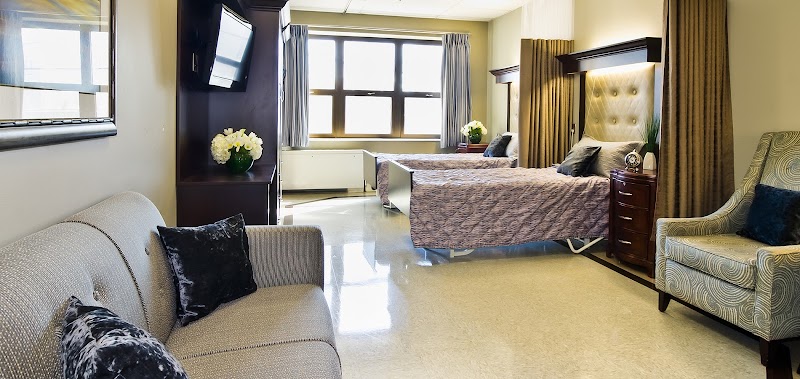
How Does Aperion Care International Compare to Other Illinois Nursing Homes?

Compared to the 100 nursing homes in Illinois, APERION CARE INTERNATIONAL's overall rating (1 stars) is below the state average of 2.5, staff turnover (54%) is near the state average of 46%, and health inspection rating (1 stars) is much below the national benchmark.

What Should Families Ask When Visiting Aperion Care International?

Based on this facility's data, families visiting should ask: "What safeguards and monitoring systems are in place to protect residents from abuse or neglect?" "Can you walk me through typical staffing levels on day, evening, and night shifts?" "Can I visit during a mealtime to observe dining assistance and food quality?" "How do you handle medical emergencies, and what is your hospital transfer rate?" These questions are particularly relevant given the substantiated abuse finding on record and the below-average staffing rating.

Is Aperion Care International Safe?

Based on CMS inspection data, APERION CARE INTERNATIONAL has documented safety concerns. The facility has 1 substantiated abuse finding (meaning confirmed case of resident harm by staff or other residents). The facility has a 1-star overall rating and ranks #100 of 100 nursing homes in Illinois. Families considering this facility should ask detailed questions about what corrective actions have been taken since these incidents.

Do Nurses at Aperion Care International Stick Around?

APERION CARE INTERNATIONAL has a staff turnover rate of 54%, which is 8 percentage points above the Illinois average of 46%. Moderate turnover is common in nursing homes, but families should still ask about staff tenure and how the facility maintains care continuity when employees leave.

Was Aperion Care International Ever Fined?

APERION CARE INTERNATIONAL has been fined $114,013 across 5 penalty actions. This is 3.3x the Illinois average of $34,219. Fines at this level are uncommon and typically indicate a pattern of serious deficiencies, repeated violations, or failure to correct problems promptly. CMS reserves penalties of this magnitude for facilities that pose significant, documented risk to resident health or safety. Families should request specific documentation of what issues led to these fines and what systemic changes have been implemented.

Is Aperion Care International on Any Federal Watch List?

APERION CARE INTERNATIONAL is not on any federal watch list. The most significant is the Special Focus Facility (SFF) program, which identifies the bottom 1% of nursing homes nationally based on persistent, serious quality problems. Not being on this list means the facility has avoided the pattern of deficiencies that triggers enhanced federal oversight. This is a positive indicator, though families should still review the facility's inspection history directly.