APERION CARE LAKESHORE
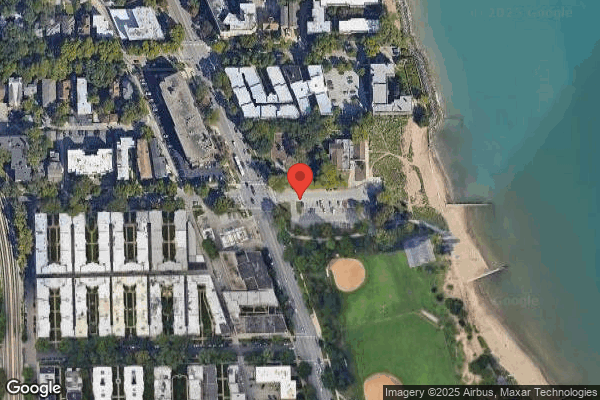
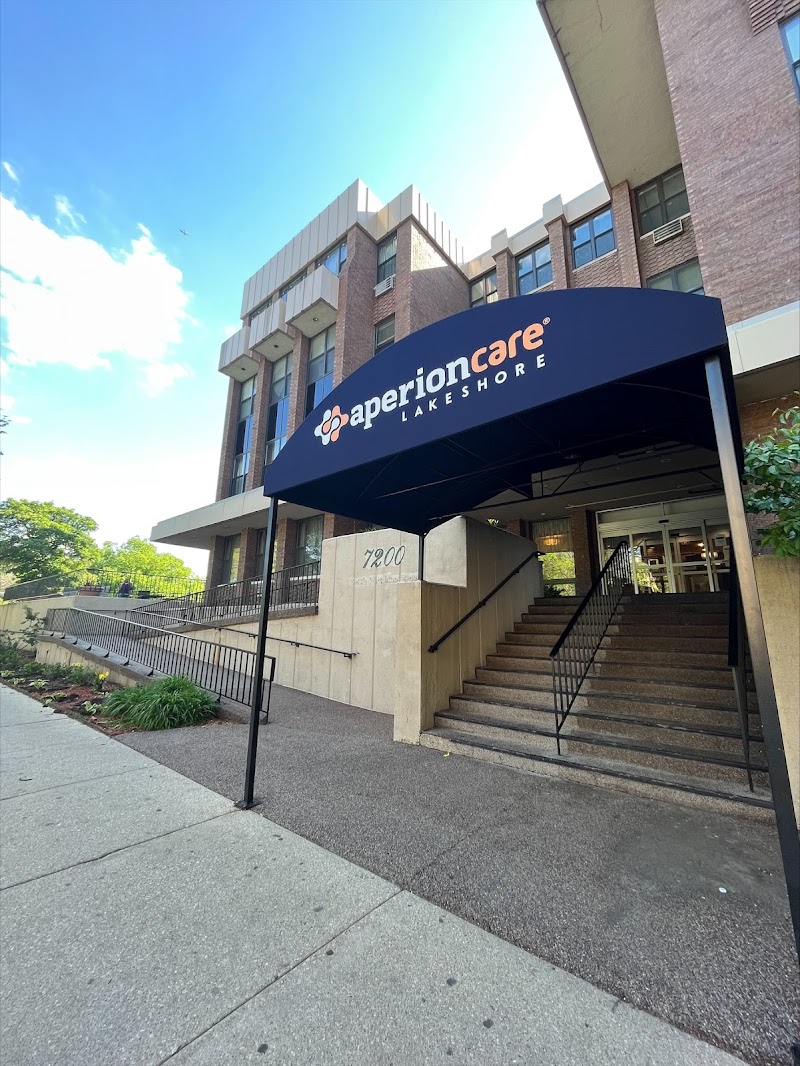
7200 NORTH SHERIDAN ROAD, CHICAGO, IL 60626 (773) 973-7200
For profit - Limited Liability company 313 Beds APERION CARE Data: November 2025
Trust Grade
0/100
#435 of 665 in IL
Last Inspection: February 2025

Within standard 12-15 month inspection cycle. Federal law requires annual inspections.

Overview

Aperion Care Lakeshore has received a Trust Grade of F, indicating significant concerns about the quality of care provided. Ranking #435 out of 665 facilities in Illinois places it in the bottom half of nursing homes in the state, and #144 out of 201 in Cook County suggests that only a few local options are better. The facility is showing improvement, with a decrease in reported issues from 34 in 2024 to 27 in 2025. However, it has a concerning staffing rating of 1 out of 5 stars, although turnover is relatively low at 26%, which is better than the state average. Additionally, the facility has incurred fines totaling $175,990, which is average but could indicate compliance problems. Specific incidents of concern include a failure to prevent physical abuse, resulting in a resident sustaining a fracture, and inadequate supervision leading to a resident falling and suffering a head injury. There were also issues with preventing pressure ulcers, as one resident developed a severe unstageable ulcer due to poor skin assessments. While the low turnover suggests that some staff members are committed to their roles, the overall poor ratings and serious incidents highlight significant weaknesses that families should consider when researching this facility.

Trust Score
F
0/100
In Illinois
#435/665
Bottom 35%
Safety Record
High Risk
Review needed
Inspections
Getting Better
34 → 27 violations
Staff Stability
✓ Good
26% annual turnover. Excellent stability, 22 points below Illinois's 48% average. Staff who stay learn residents' needs.
Penalties
✓ Good
$175,990 in fines. Lower than most Illinois facilities. Relatively clean record.
Skilled Nurses
⚠ Watch
Each resident gets only 19 minutes of Registered Nurse (RN) attention daily — below average for Illinois. Fewer RN minutes means fewer trained eyes watching for problems.
Violations
⚠ Watch
99 deficiencies on record. Higher than average. Multiple issues found across inspections.
★☆☆☆☆
1.0
Overall Rating
★☆☆☆☆
1.0
Staff Levels
★★☆☆☆
2.0
Care Quality
★☆☆☆☆
1.0
Inspection Score
Stable
2024: 34 issues
2025: 27 issues

The Good

  • Low Staff Turnover (26%) · Staff stability means consistent care
  • Full Sprinkler Coverage · Fire safety systems throughout facility
  • No fines on record
  • Staff turnover is low (26%)

    22 points below Illinois average of 48%

Facility shows strength in staff retention, fire safety.

The Bad

1-Star Overall Rating

Below Illinois average (2.5)

Significant quality concerns identified by CMS

Federal Fines: $175,990

Well above median ($33,413)

Significant penalties indicating serious issues

Chain: APERION CARE

Part of a multi-facility chain

Ask about local staffing decisions and management

The Ugly 99 deficiencies on record

8 actual harm
Sept 2025 1 deficiency 1 Harm
SERIOUS (G) 📢 Someone Reported This

A family member, employee, or ombudsman was alarmed enough to file a formal complaint

Actual Harm - a resident was hurt due to facility failures

Free from Abuse/Neglect (Tag F0600)

A resident was harmed · This affected 1 resident

**NOTE- TERMS IN BRACKETS HAVE BEEN EDITED TO PROTECT CONFIDENTIALITY** Based on interview and record review, the facility failed to prevent and protect residents from physical abuse. This failure aff...

Read full inspector narrative →
**NOTE- TERMS IN BRACKETS HAVE BEEN EDITED TO PROTECT CONFIDENTIALITY** Based on interview and record review, the facility failed to prevent and protect residents from physical abuse. This failure affected one (R3) out of three residents reviewed for abuse. This failure resulted in R2 sustaining a closed fracture of orbital wall.Findings include:R3's admission record shows admission date on 12/31/24, with diagnoses not limited to Chronic Kidney Disease, Hypo-Osmolality and Hyponatremia, Hypokalemia, Osteoarthritis, Hypertension, Other Abnormalities of Gait and Mobility, Fracture of Other Specified Skull and Facial Bones, Left Side, Initial Encounter for Closed Fracture (added 09/14/25). R3's MDS (Minimum Data Set), dated 06/26/25, reveals R3 is cognitively intact and requires supervision or touching assistance for mobility. R3 has a care plan initiated on 01/03/25 stating he is at risk for abuse/neglect and will be cared for in a safe manner. R6's admission record shows admission date on 06/27/25, with diagnoses not limited to Psychotic Disorder with Delusions due to Unknown Physiological Condition, Unspecified Dementia with Other Behavioral Disturbance, Alcohol Dependence with Withdrawal, Bipolar Disorder, Anxiety Disorder. R6's MDS, dated [DATE], indicates R6's cognition is moderately impaired and R6 has adequate vision. R6's Admission/re-admission Observation Assessment, dated 09/08/25, documents R6 requires supervision or touch assistance with mobility and R6's Activities of Daily Living care plan indicates R6 requires supervision with mobility. R6 has a care plan in place for verbal aggression initiated on 08/12/25 which documents, (R6) has the potential to be verbally/physically aggressive/threatening staff and others related to ineffective coping skills, mental/emotional illness, and poor impulse control. R6 has a care plan for diagnosis and history of severe mental illness as manifested by delusions-paranoia.R6's electronic health records reveal R6 was hospitalized from [DATE] to 08/15/25 due to verbally threatening facility staff by saying, I will beat your ass. Bit** ass nig**. R6's admitting hospital diagnosis for this hospitalization was aggressive behavior. R6 was also hospitalized from [DATE] to 09/01/25 due to increased agitation and odd behavior of defacing facility property with gang signs and attempting to smoke in his room. R6's admitting hospital diagnosis for this hospitalization was for acute psychosis. R6 was also hospitalized from [DATE] to 09/08/25. On 09/02/25, R6 was threatening to hurt staff inside and outside the facility and searching for staff with an object in his hand saying he was going to hit the staff with it. R6's hospital admitting diagnosis for this hospitalization was aggressive behavior. R6 readmitted to the facility on [DATE]. On 09/08/25 at 11:45 AM, R3 was in the lounge sitting in a chair. R3 had black and blue marks under R3's right eye and right eye was bloodshot. R3's response to questions was garbled, with R3 mumbling in a low voice which was difficult to understand. R3 provided responded to questions with short responses. R3 stated he does not remember what happened to his eye. R3 indicates he did not fall and was not pushed. When asked if R3 remember R6, R3 said, maybe. R3 stated R6 did not bump into him or push him. When asked if anyone punched R3, he said, I'm not sure. On 09/18/25 at 8:20 AM, V36 (Housekeeper) stated via an interpreter, V29 (Food Service Director), on 09/09/25, V36 was cleaning a resident's room on the 4th floor when she heard a thud sound, so she went to see what was going on. V36 stated when she went to the 4-North Lounge, she saw R3 lying on his back on the floor and R6 was on top of R3. V36 stated she ran to get help. On 09/16/25 at 2:39 PM, V19 (Social Service Director) stated he was doing rounds on the 4th floor on 09/09/25 and while in the 4-North Lounge, he saw R6 walk into the dayroom aggressively. V19 remembers R3 was the only resident in the lounge at that time. V19 stated R6 was angry and walking quickly. V19 stated at that time, R3 in the process of getting up from his chair, and V19 saw R6 aggressively bump into R3 causing R3 to fall to the ground. V19 stated he asked R6 what was going on and R6 told V19, I'm mad, man. I'm mad. I'm pissed off and I don't want to talk. I'm pissed off. I'm pissed off. V19 stated R6 was not specifically going after R3, it is just that R3 was in the wrong place at the wrong time. V19 stated R6 was angry about something leading up to this, but he does not know what happened. V19 stated the goal is to always protect the residents to keep them safe and free from abuse. V19 stated R6 did make physical contact with R3, which is considered abuse.On 9/17/25 at 12:45 PM, V19 reenacted what he saw on 09/09/25 in the 4-North Lounge with the surveyor acting as R3 and V19 acting as R6. V19 stated it looked as if R3 was in the process of getting up from a chair when R6 made physical contact with R3. V19 acting as R6 charged head on directly toward surveyor as surveyor was attempting to get up from a chair. V19 demonstrated how the front of R6's right shoulder area made contact with R3's face. V19 stated this is what caused R3 to fall, but he not sure if R3 fell backwards or forward. V19 stated R6 was mad and there was some type of trigger that caused R6's anger, but he does not know what it was. V19 stated it was R6's anger that led to R6 willfully and aggressively hit R3 with force. On 09/16/25 at 1:20 pm, V13 (Certified Nursing Assistant) stated the incident happened in the 4-North Lounge right before lunch time on 09/09/25. V13 stated usually R3 sits in the 4-Southwest Lounge, but on that day when staff tried to get R3 to eat in the 4-Southwest Lounge, R3 wanted to go to the 4-North Lounge. V13 stated R3 was the only resident in the 4-North Lounge that she knows of, because all the other residents were in the 4-Southwest Lounge waiting for the lunch trays to arrive and be passed out. V13 stated when the incident occurred, she was sitting at the 4th floor nursing station with some of the other staff because they were waiting for the lunch trays to arrive. V13 stated this was around 12:00-12:30 PM. V13 stated one of the housekeepers was yelling fall, fall so they all got up and ran to the 4-North Lounge. V13 stated when she entered the 4-North Lounge, she saw R3 on the floor and could see that he was trying to get up. R6 was walking out of the 4-North Lounge, and she asked R6 what happened and R6 said to V13, I don't know what happened, he (R3) just fell on the floor.On 09/17/25 at 11:10 AM, V2 (Director of Nursing) stated on 09/09/25, he was called to go up to the unit, and R3 and R6 were already separated by the time V2 arrived on the unit. V2 stated he first went to check on R3 who was in his room with his nurse. V2 stated R3 had an abrasion under his eye with mild swelling. V2 stated R3 appeared calm but irritated and restless. V2 stated R3's doctor was notified and gave order to transfer him to the hospital. V2 stated when he saw R6 he was alert, agitated, irritable. V2 stated R6 said he bumped into R3. V2 stated he does not remember if R6 said it was intentional. V2 stated we think it was an accident because R6 was agitated and aggressively walking and bumped into R3. V2 stated he does not know why R6 was agitated and R6 could be unpredictable and demonstrate aggressive behaviors abruptly; they just happen, there is not necessarily a trigger. On 09/17/25 at 3:33 PM, V1 (Administrator) stated he is the Abuse Coordinator for the facility. V1 stated the goal is to keep the resident's safe and free from abuse. V1 stated it is the resident's rights to be free from abuse while they are residing in the facility and that all residents are at risk for abuse, and it is everyone's responsibility to prevent abuse. V1 stated on 09/09/25, R6 walked into the room aggressively and quickly made contact with R3. V1 stated R3 fell straight backwards. V1 stated maybe when R3 fell, he made contact with the floor and that is how R3 injured his eye. V1 stated R3 was sent to the hospital and diagnosed with a fractured eye socket. V1 stated this injury was caused by contact with R6 and he does not know what R6's state of mind was when he made contact with R3. V1 stated it was an observed fall and R6 bumped into him, it was not willful intent, so therefore it was not abuse. V1 stated he does not think R6 had intent to harm R3; R6 happened to aggressively bump into R3 and that caused the injury to R3. V1 stated there is no video footage of the incident because the facility cameras have not been working for a while. V1 stated the facility did an immediate discharge for R6 because of the other incidences he was involved in and because R6 he made contact with a resident. V1 stated he did not want to take a chance R6 could do something like that again. On 09/18/25 at 10:52 AM, V34 (Nurse Practitioner) stated R3 sustained a fall due to an unintentional interaction with another resident and this fall is what caused R3's injury. V34 stated R3 was sent out to the hospital and was diagnosed with an orbital wall fracture of the right eye. V34 stated R3's eye area would have had to come in contact with something to cause the injury, but no one knows what that was because no one witnessed the fall. R3's Nurse's Note titled Fall-Initial Occurrence, dated 09/09/25, documented, resident had a witnessed fall on 09/09/25 12:30 PM in the 4-North Lounge. Resident was watching television in 4-North Lounge, then another resident who was agitated and walking fast toward the 4-North Lounge bumped into this resident resulting him losing his balance and fell on the floor. Witnessed fall, observed to have struck head. An abrasion under the eyes. Send to hospital for further evaluation per doctor's order.R3's hospital records, dated 09/09/25, documented, some concern from nursing staff, as well as myself, with lack of description of mechanism of injury. Nursing facility (name of facility) was called twice but was uncertain as to why patient had blood from his nose. After workup patient with orbital fractures and significant periorbital ecchymosis and periorbital swelling. As a mandated reporter, filed report through the Illinois Department of Public Health, for possible elder abuse. R3's Emergency Department Physical Exam comments documents ecchymosis to inferior aspect of right eye. Raccoon sign on the left eye. Blood from right nare. Contusion and ecchymosis overlying left forehead.R3's hospital records, dated 09/09/25, Quantitative Computed Tomography (CT) completed 09/09/25 impression right medial orbital and likely inferior orbital wall fractures. R6's Petition for Involuntary/Judicial Admission, dated 09/09/25, documents, resident presents with increased agitation and responding to internal stimuli resulting in psychomotor whereby resident was walking very fast towards 4-North Dining Room and bumped into other resident. Also, resident was verbally confrontational with staff, placed on 1:1 monitoring; unable to be redirected, refused a PRN (as needed), may pose as a threat to himself and others. R6's Nursing Progress Note, dated 09/10/25, documents resident is admitted to hospital with diagnosis: aggression. Facility's final incident report submitted to Illinois Department of Health on 09/16/25 listed R3 as the victim and R6 as the perpetrator. Incident category listed as Resident Abuse. Facility final incident report documents in part, based on the investigation that included interviews with staff and residents R6 was agitated and was walking swiftly into the 4-Floor Lounge when he accidentally bumped into R3, resulting with R3 losing his balance and falling to the floor.Facility provided document titled, Illinois Long-Term Care Ombudsman Program Residents' Rights for People in Long-Term Care Facilities dated 11/2018 which documents your rights to safety: you must not be abused, neglected, or exploited by anyone financially, physically, verbally, mentally or sexually. Facility provided policy titled Abuse Prevention and Reporting - Illinois reviewed 04/13/22 which documents the resident has the right to be free from abuse, neglect, misappropriation of resident property and exploitation.
Aug 2025 1 deficiency
CONCERN (D) 📢 Someone Reported This

A family member, employee, or ombudsman was alarmed enough to file a formal complaint

Potential for Harm - no one hurt, but risky conditions existed

Free from Abuse/Neglect (Tag F0600)

Could have caused harm · This affected 1 resident

**NOTE- TERMS IN BRACKETS HAVE BEEN EDITED TO PROTECT CONFIDENTIALITY** Based on interview and record review, the facility failed to follow their policy to ensure one resident (R6) was free from abuse...

Read full inspector narrative →
**NOTE- TERMS IN BRACKETS HAVE BEEN EDITED TO PROTECT CONFIDENTIALITY** Based on interview and record review, the facility failed to follow their policy to ensure one resident (R6) was free from abuse. This failure affects 1 resident (R6) reviewed for abuse.Findings include: According to R6 face sheet provided by facility, R6 has diagnoses that include but not limited to moderate protein-calorie malnutrition, autistic disorder, bipolar disorder, anxiety disorder, and chronic obstructive pulmonary disease with (acute) exacerbation. R6's MDS (Minimum Data Set), dated 7/17/2025, indicates R6 has a BIMS (Brief Interview for Mental Status) score of 8, indicating moderately impaired cognition. According to R9 face sheet provided by facility, R9 has diagnoses that include but not limited to autistic disorder, Tourette's disorder, epileptic seizures, schizoaffective disorder, generalized anxiety, major depressive disorder, Asperger's syndrome, violent behavior. R9's MDS, dated [DATE], indicates R9 has a BIMS score of 11, indicating moderately impaired cognition. According to R9's Aggressive Behavior Assessment, dated 5/7/2025, comment section, on 5/7/25 R9 was physically and verbally aggressive with staff, punched a staff member in the face, slammed doors, banged on facility property. Facility Reported Incident, incident date 6/26/25, documents: In the early morning hours of 6/26/25 resident R9 woke up and stood up in the middle of the night and walked towards the bathroom. Resident's roommate R6 was startled and got up out of bed quickly. While R9 was trying to go around R6, R9 became agitated, and his shoulder made contact with R6. Resident R9 was sent out for a psychiatric evaluation. R6 refused to go to the hospital for a medical evaluation. 8/13/25 at 1:30 PM, V1 (Administrator) stated, I am the Abuse Coordinator. Some types of abuse are physical, verbal, mental, misappropriation of funds/property, sexual, neglect. All staff are in-serviced on abuse. Within the last three months, the entire building has been in-serviced on abuse. When abuse is witnessed, staff have to immediately report to the Abuse Coordinator. For resident-to-resident abuse, staff separate the residents, they are put on one-to-one, staff do a room change, we notify family, physician, police, IDPH (Illinois Department of Public Health). We hospitalize as needed, investigate, and conduct interviews (staff and residents), conclude investigation and act accordingly, notify IDPH of final conclusion. For the incident involving (R6) and (R9), (R9) woke up to go to the bathroom. (R6) got startled and got out of bed quickly. (R9) got startled and agitated and (R9's) shoulder made contact with (R6). Staff heard something coming from the room and went to the room. Staff did not witness anything. (R9) was relocated to a different room. (R9) bumped into (R6) in the middle of the night when going to the bathroom. On 8/14/25 at 3:10 PM, V22 (Certified Nursing Assistant) stated V22 just started working in the facility, part-time, overnights. The nurse told me there was a fight between the two residents (R6 and R9) and there would be a room change. I did not hear or witness anything. I accompanied the resident to the new room. I don't remember the name of the resident I accompanied. The resident did not say anything about what happened. On 8/15/25 at 10:16 AM, V23 (Licensed Practical Nurse) stated, (V33, Certified Nursing Assistant) notified me that (R6) was getting up from bed. (V33) was in the hallway and saw (R6) coming towards the door. I asked (R6) 'what is the problem'. (R9) was getting up from bed to go to the bathroom. (R6) was thinking (R9) was coming to (R6), so (R6) stood up from the bed, and (R9) thought (R6) was coming for (R9). They each thought the other was coming for them. (R9's) arms were swinging and bumped (R6). (R6) told me (R9) touched (R6) on the shoulder and in the face. (R9) told me that (R9) was trying to maneuver around (R6) to go to the toilet. I assessed both of them, separated them, and put them on one-to-one. Because (R6) stated (R6) was touched in the face, the Medical Doctor ordered for (R6) to be sent to the hospital for evaluation. (R6) refused. We called the police. They came. (R6) refused to go to the hospital. (R9) was not sent to the hospital. I observed drainage from (R6's) eyes. R6's Nurses progress note, dated 6/26/25 at 07:27, reads: Resident had altercation with roommate. Writer observed resident bleeding from left eye. Resident stated roommate choked resident on the neck. The writer cleaned the resident's bleeding with normal saline and moved resident to another room. Psych doctor was notified and ordered resident's transfer to hospital for medical evaluation and send roommate to hospital for psych evaluation. Paramedics came to pick up resident, but resident refused to go to hospital. Police was called (sic) and came to talk to resident, but resident also refused. Police acknowledged they will come back whenever the resident change mind (sic). Currently resident is sleeping, no bleeding at this time and we will continue to monitor. Nurses progress note, dated 6/26/25 at 16:15, reads: Concerned of resident having difficulty opening eyes with mild drainage, mild swelling and bruising on left eye likely due to prior incident.R9's Behavior progress note, dated 6/26/2025 at 03:59, reads: The resident was petitioned to the hospital for a psychiatric evaluation following an altercation with roommate. During the investigation resident was swinging at both roommate and staff. Resident denied to have (sic) any issue with roommate. Resident refused PRN (as needed) medication and couldn't be redirected, indicating resident posed a danger to self and others. Due to unpredictable behavior, a psych evaluation would be beneficial. Paramedics picked up the resident at 3:45 am. Resident was alert with no injury and denied pain or discomfort at the time. Facility policy Abuse Prevention and Reporting-Illinois, 10/24/22, documents: This facility affirms the right of our residents to be free from abuse, neglect, exploitation, misappropriation of property, deprivation of goods and services by staff or mistreatment. Physical abuse is the infliction of injury on a resident that occurs other than by accidental means and that requires medical attention. Physical abuse includes hitting, slapping, pinching, kicking, and controlling behavior through corporal punishment.
Apr 2025 6 deficiencies 2 Harm
SERIOUS (G) 📢 Someone Reported This

A family member, employee, or ombudsman was alarmed enough to file a formal complaint

Actual Harm - a resident was hurt due to facility failures

Pressure Ulcer Prevention (Tag F0686)

A resident was harmed · This affected 1 resident

Based on observation, interview, and record review, the facility failed to prevent the development of pressure ulcers; failed to ensure a resident's wound dressing is intact as ordered by the physicia...

Read full inspector narrative →
Based on observation, interview, and record review, the facility failed to prevent the development of pressure ulcers; failed to ensure a resident's wound dressing is intact as ordered by the physician; and failed to complete skin assessments accurately. This failure caused 1 resident (R2) to develop a 25x10 cm unstageable pressure ulcer to the sacrum and sustain severe pain (7/10). This failure affects 1 resident (R2) in a sample of 4 residents reviewed for pressure ulcers. Findings Include: R2's Face sheet, dated 4/21/2025, documents a diagnosis of but is not limited to Failure to thrive, Dysphagia, Major Depressive Disorder. Review of R2's Weekly Skin Assessments documents, on 3/12/2025 R2's skin was intact with no concerns. On 3/19/25, documents an unstageable pressure ulcer to R2's coccyx. On 3/24/2025, R2's skin was assessed and documented skin was intact with no concerns (incongruent with current unhealed pressure ulcer). No weekly skin observation was completed in R2's electronic health record since 3/24/25. Record review of document titled, Facility Acquired Worsening Wound Investigation Report, dated 3/19/24, documents R2 had predisposing risk factors including hypertension, anemia, poor appetite, bowel incontinence, and urinary incontinence. 27 other risk factors were not noted, including malnutrition. At the time the wound was developed turning and repositioning, and preventative skin products were in place. 11 other potential interventions were not noted. The document also indicates the wound was unavoidable based on: Resident advanced disease process, but also unavoidable due to, goals of care review, review of clinical record, collaboration with PCP, visual examination of the wound, discussion with wound care nurse R2's physician orders document an active order (4/10/2025) for Wound: Coccyx: cleanse with Dakin's, apply silver calcium alginate cover with foam dressing daily every shift for wound care. R2's wound summary (4/21/25) documents an unstageable pressure ulcer was first assessed on R2's coccyx on 3/17/2025 with dimensions of 25 cm x 10 cm, and was last assessed on 4/17/2025 as unstageable. On 4/21/2025 at 11:14 am, R2 stated R2 has a pressure ulcer to R2's bottom (sacrum). R2 explained the pressure ulcer was caused, from my diaper. R2 affirmed the pain from the pressure ulcer is about 7/10. On 4/21/2025 at 11:28am, V18 (Wound Care Nurse, Licensed Practical nurse) stated V18 was unsure when R2's sacral pressure ulcer was discovered. V18 stated when the ulcer was discovered, the pressure ulcer was unstageable. On 4/21/2025 at 11:36 am, R2's sacral wound was observed and appeared open, reddened, with wound edges intact. No dressing was noted covering the wound. V18 affirmed there should be a dressing on R2's pressure ulcer. On 4/21/2025 at 12:45pm, R2's sacrum was observed, and no dressing was noted on the wound. V18 stated the purpose of dressing changes is to help heal the wound and for infection control measures. V18 stated when staff notice the dressing is not present on a wound, the staff member should notify the nurse or wound care nurse to reapply the dressing. On 4/22/25 at 11:10 am, V11 (Wound Care Coordinator) stated V11 was notified R2 had a wound to her coccyx on 3/17/2025 that measured 25x10 cm. V11 stated R2's wound to the coccyx was unstageable due to slough being present when the wound was first assessed. V11 stated the nurses do conduct skin checks weekly. V11 affirmed V11 was assessed on 3/12/24 with skin intact. V11 stated V13 (Nurse Practitioner) was notified of the wound and V13 was involved in determining that the pressure ulcer is unavoidable. On 4/22/2025 at 12:21 pm, V13 (Nurse Practitioner) affirmed V13 is the primary care provider for R2. V13 affirmed pressure ulcers are usually preventable, and caused by prolonged pressure to bony areas. V13 explained R2's pressure ulcer was caused by poor oral intake. V13 recalled R2 used to be up walking around the facility, then had a change in condition and became weaker, developing malnutrition. V13 stated R2's pressure ulcer couldn't have developed in a week. On 4/23/25 at 10:53 am, V9 (Licensed Practical Nurse) stated V9 is familiar with R2. V9 recalled assessing R2's skin on 3/12/2025 while R2 was receiving continent care, and affirmed R2's skin was intact. V9 stated the wound was later discovered over the weekend, and V9 was not sure which nurse discovered the wound. V9 stated pressure ulcers can be caused by incontinence, poor hydration/nutrition, friction/sheering, incontinence and prolonged pressure to an area. V9 affirmed R2 was incontinent, had poor nutrition, and was bedbound because whenever we (staff) put (R2) in the wheelchair, she would slide down. V9 stated the facility expectation is that resident's skin is assessed weekly by the nurse. V9 stated V9 was unsure why no weekly skin observation was completed for R2 since 3/24/25. V9 stated V9 has not been assigned to care for R2 since before 3/24/25. On 4/23/2025 at 12:50 pm, V20 (Director of Nursing) stated the expectation is that a weekly skin assessment is completed on every resident weekly by the nurses. V20 stated, I don't know why the last weekly skin assessment was completed on 3/24/2025. Every shift the CNA (Certified Nursing Assistant) is to report any skin changes to the nurse or the wound care nurse. This wound didn't develop in one shift, but probably over 24 hours. V20 verified the weekly skin Assessment completed on 3/24/25 that the skin is intact. V20 affirmed the weekly skin assessment on 3/24/25 is incorrect, and should document a coccyx wound with a description of the wound. V20 stated pressure ulcers are caused by pressure to bony prominences. V20 stated, It is possible an unstageable pressure ulcer measuring at 25x10 cm, if we consider other things. V20 affirmed the form titled Facility Acquired/Worsening Wound Investigation Report that the form doesn't quite make sense, and needs to be revised. Part of this form needs to be reviewed more. V20 affirmed malnutrition is not checked on the unavoidable wound care assessment. V20 affirmed every nurse should be able to apply a temporary dressing if the dressing is removed during continent care. On 4/23/24 at 2:03 PM, V21 (Wound Care Physician) affirmed V21 is the Wound Care physician for R2. V21 believed R2's wound was primarily caused by malnutrition, incontinence, and immobility. V21stated a resident could have developed an unstageable pressure ulcer in an 8-hour shift if the resident was lying on a hard surface without proper pressure relief, like a deflated mattress. It only takes a few hours for damage to occur in vulnerable areas in these situations. Facilities Pressure Ulcer Policy with a revision date of 1/15/2018 documents: Purpose: To prevent and treat pressure sores/ pressure injury. Guidelines: 1. Maintain clean/dry skin during daily hygiene measures. 2. Inspect the skin several times daily during bathing, hygiene, and repositioning measures. May use lotion on dry skin. 3. Change bed linen per schedule and whenever soiled with urine, feces or other material. 4. Keep bottom sheet dry and tightly stretched and free of wrinkles. 5. Turn dependent resident approximately every two hours or as needed and position resident with pillow or pads protecting bony prominences as indicated. 6. Employ active and passive range of motion exercises to improve circulation as indicated (in accordance with physician order and plan of care) 7. Whenever possible, encourage resident to change position at regular intervals as able to promote circulation. Wheelchair residents may be instructed to shift weight from one buttock to the other. 8. If redness does not disappear within 30 minutes the turning schedule may be shortened to 1 hour. 9. Pressure reducing (foam) mattresses are used for all residents unless otherwise indicated. Specialty mattresses such as low air loss, alternating pressure, etc. may be used as determined clinically appropriate. Specialty mattresses are typically used for residents who have multiple Stage 2 wounds or one or more Stage 3 or Stage 4 wounds.
SERIOUS (G) 📢 Someone Reported This

A family member, employee, or ombudsman was alarmed enough to file a formal complaint

Actual Harm - a resident was hurt due to facility failures

Accident Prevention (Tag F0689)

A resident was harmed · This affected 1 resident

**NOTE- TERMS IN BRACKETS HAVE BEEN EDITED TO PROTECT CONFIDENTIALITY** Based on interview and record review, the facility failed to provide adequate supervision to prevent a fall of a resident (R1), ...

Read full inspector narrative →
**NOTE- TERMS IN BRACKETS HAVE BEEN EDITED TO PROTECT CONFIDENTIALITY** Based on interview and record review, the facility failed to provide adequate supervision to prevent a fall of a resident (R1), who was assessed at risk for fall and has a history of falls. These failures affect 1 resident in a sample of 4 residents reviewed for falls. As a result, R1 fell and sustained a head injury with a laceration, requiring R1 to be sent to the hospital. R1 received sutures to close the laceration. Findings include: R1's face sheet documents, R1 was admitted to the facility on [DATE]. R1's face sheet documents diagnoses that include but are not limited to repeated falls, dementia, schizophrenia, anxiety disorder, and major depressive disorder. R1's care plan, revised date 10/27/22, documents, I (R1) am at risk for falls r/t (related to) convulsion, dementia, anxiety and MDD (major depressive disorder) with interventions that document, in part, Ensure resident wearing non-skid footwear . Frequent rounding to ensure resident is wearing nonskid socks . R1's care plan, date initiated 5/6/23, documents, WANDERING/ELOPEMENT: (R1) has been observed to be disoriented to place, have impaired safety awareness, wander aimlessly throughout the facility, and have a history of attempting to exit the facility without supervision r/t dementia. It has been determined by the outcome of the elopement assessment that the resident is included in the elopement prevention program. R1's care plan, revised date 7/9/24, documents, I (R1) have an ADL (activities of daily living) and functional ability for self-care and mobility performance/deficit r/t (related to) dementia, schizophrenia, anxiety disorder, MDD (major depressive disorder), and convulsion with interventions that document, in part, BED MOBILITY: The resident requires supervision from staff for repositioning and turning in bed . TRANSFER: The resident requires partial assistance from staff to move between surfaces . R1's care plan, revised date 8/25/24, documents, I (R1) require assistance with walking r/t (related to): dementia. R1's Minimum Data Set (MDS), dated [DATE], documents a Brief Interview of Mental Status (BIMS) score of 00, which indicates R1's cognition is severely impaired. R1's Minimum Data Set (MDS) section GG, dated 2/06/25, documents R1 requires partial/moderate assistance for sit to stand: The ability to come to a standing position from sitting in a chair, wheelchair, or on the side of the bed; partial/moderate assistance chair/bed-to-chair transfer: The ability to transfer to and from a bed to a chair (or wheelchair); and partial/moderate assistance for ambulating 10 feet. R1's FALL- INITIAL OCCURRENCE NOTE, dated 10/29/24, documents, . Unwitnessed Fall . This writer was at the Nurses station charting when a sound of something falling was heard. Room was checked with CNA (certified nursing assistant) and observed resident kneeling down trying to get back up. This writer asked resident to remain seated to be assessed, resident was non-compliant and got back up by himself. R1's FALL- INITIAL OCCURRENCE NOTE, dated 11/11/24, documents, . Witnessed Fall . reported that resident stood up from the chair and lost balance and fell on his buttocks without hitting his head. R1's FALL- INITIAL OCCURRENCE NOTE, dated 4/7/25, documents, . Unwitnessed Fall . Resident walked out of his room with blood noted on the left eyebrow . Unable to give statement due to been delirious. R1's Order Summary Report, order date 4/7/25, documents, Send resident to (Name of Hospital) Hospital for medical evaluation due to unwitnessed fall. R1's Order Summary Report, ordered date 4/17/25, documents, Wound Left eyebrow, suture site, cleanse with antimicrobial wound cleanser apply bacitracin and LOTA (leave open to air) everyday shift for wound care for 7 Days. R1's progress note, dated 4/7/2025 at 7:15am, V7 (Registered Nurse/RN), documents, Resident had an unwitnessed fall 04/07/2025 5:45 AM. Location of Fall: Resident room. Resident walked out of his room with blood noted on the left eyebrow on 04/07/2025 5:45 AM . Assessment: Unwitnessed fall . New injury observed. Laceration to the left eyebrow . R1's progress note, dated 4/7/2025 2:50pm, V9 (Licensed Practical Nurse/LPN), documents, Resident was received at 7:05 AM with endorsement of awaiting ambulance to be sent to (hospital) ER (emergency room) for evaluation post fall. Resident transported to (hospital) by . ambulance at 8:10am. Follow Up call made at 1: 30pm and resident was still under evaluation. Another call made at 3:05pm and resident is awaiting discharge. (Hospital) ER will call for report . Will endorse for next shift to follow up return. R1's progress note, dated 4/7/2025 5:31pm, V10 (Licensed Practical Nurse/LPN), documents, The resident is brought back to the facility by two paramedics from (Hospital)on a stretcher. He presents with a left eyebrow laceration, sutured with three stitches, opened to air without s/s (signs and symptoms) of infection noted . On 4/20/25 at 10:45am, R1 was sitting on the side of R1's bed, swaying back and forth, appearing as if R1 was attempting to stand up. R1 was barefoot, with a pair of red nonskid footwear/socks under R1's bed. Surveyor introduced self and R1 replied, Can you help me? I'm trying to get up. Surveyor inquired about R1's call light that was attached to R1's bottom sheet of R1's bed, and R1 replied, My call light for the nurse is over there (R1 pointed to the towards the door of R1's bedroom). Surveyor pointed to R1's call light that was next to R1, and was attached to R1's bottom sheet of R1's bed, and R1 replied, What's that string for? R1 was oriented only to person. When asked about R1's fall that occurred on 4/7/25, R1 replied, I didn't fall. What do you mean? On 4/21/25 at 10:51am, V6 (Licensed Practical Nurse/LPN) said, (R1) is a fall risk. There is a sticker of a leaf by his name by his bedroom door that indicates he's a fall risk. I do not know anything about his recent fall. For fall risk residents, the bed is in the low position, call light within reach. And for (R1), (R1) is by the nurse's station so the CNAs (Certified Nursing Assistants) can watch him. And plus, we (staff) do frequent rounds. When asked if the pair of red non-skid socks under R1's bed should be on R1, V6 replied, Yeah. They (nonskid socks) are to prevent falls, but he kicks them off. When asked if there is staff at the nurse's station at all times monitoring R1, V6 replied, Well . not all the time, but most of the time. On 4/22/25 at 9:51am, V7 (Registered Nurse/RN) said, I know him. I had him that day (4/7/25 fall). I am also the supervisor. At 5:30, I was doing rounds, and a CNA said she found a resident on the floor. (R1) had a cut on forehead that was bleeding. I gave him first aid, cleaned it, and applied gauze. I called the physician. I called the ambulance and ambulance picked him up before I left there. Later, I saw that he got stitches to the laceration. (R1) can walk. He goes to the bathroom by himself sometimes. He's a dementia resident. Gait is not steady. That's why they put a diaper on him, so he won't get up. Bed is always lower, lowest setting. Yes, he is supposed to have nonskid socks on. I'm not sure if he had his skid socks on. The nonskid socks help if resident gets up, if there was water on the floor, they are not gonna (sic) fall. I'm not sure if he had his nonskid socks on cause (sic) he was in bed with cover on during my shift. On 4/22/25 at 10:31am, V10 (Licensed Practical Nurse/LPN) said, I've been here 4 months. Yes, I work with (R1) sometimes .I mean once in a while. On April 7th, I had (R1). He came back from the hospital and was stable. He was okay. There wasn't anything different about him other than the left eyebrow. He had a cut there because he fell. I can't remember what the hospital did. He did have sutures. Since I've been here, he walks but with an unsteady gait and kinda (sic) zig zags when he walks . Most times. He can walk on his own. His bed is always in lowest position, call light by side, rounds every 2 hours, and (R1's) room is opposite nurse's station so eyes are always on him. He should have nonskid footwear all the time because he is impulsive, and he has some shoes too. No other falls that I am aware of. On 4/22/25 at 10:48am, V2 (Assistant Director of Nursing/ADON) said, Yes, in a general, I'm familiar with (R1). Since I've been here, he's ambulated with some assistance from staff. If a fall assessment was completed incorrectly, I don't know if anything extra would have been done. Yes, I expect fall assessments to be completed accurately. not sure if he had a fall plan. Restorative would know. It (Fall Assessments) might trigger a care plan for someone to be at risk for falls. I know what happened with his most recent fall (4/7/25 fall), but I wasn't here. I believe the fall took place in (R1's) room. He came out of the room, had a cut to one of the eyebrows, and was sent to the hospital. The hospital didn't admit (R1), just placed sutures and he came back. Fall requiring sutures is an injury that needs to be reported to you (IDPH). I didn't see him, so I don't know if it hurt him. I'd have to look at his chart to see if fall precautions were in place. On 4/22/25 at 12:08pm, V12 (Medical Director) said, A fall with sutures can cause harm to the resident. It is an injury. That is the harm, he got sutures, so that has harm. On 4/22/25 at 1:44 pm, V14 (MDS Coordinator/Licensed Practical Nurse (Prior Restorative Nurse) said, Yes, know (R1). He is ambulatory, but there were days when we had to sit him in the wheelchair. He would refuse to get up and walk. He has dementia. When he is ambulatory, (R1) would walk on his own. His gait is not steady. I mean he would be wobbly sometimes when walking, sit in his wheelchair sometimes, and other days he would be walking on his own fine. We weren't encouraging him to walk on his own, but were kinda (sic) redirecting him. Interventions in place to prevent (R1) from falling was nonskid socks, but I'm not familiar with other interventions. For the 4/7 fall: evaluate for assistive device was the recommendation. (R1) never used an assistive device prior to his falls. He wasn't as unsteady, and we (facility) didn't want to take away his independence. Restorative couldn't get him to use a walker. No 1:1 for supervision interventions. Yes, (R1's) Fall Risk Assessment on 2/12/25 was not accurately completed. I'm not sure if it (accurately completing R1's 2/12/25 Fall Assessment) would have changed anything. On 4/23/25 at 10:42am, V9 (Licensed Practical Nurse/LPN) said, Yes, he's my patient. A little bit about (R1) is that he walks around with redirection, and with no assistance, other than cuing and observing with constat monitoring. (R1's) gait is unsteady. His room is across the nurse's station because he is a fall risk patient. We (staff) check him (R1) every 15 minutes throw a side-eye and look at (R1) from the nurse's station. He always has non-skid socks on. He sleeps with them (non-skid socks). (R1) always has to have them (non-skid socks) on even when sleeping. (R1) will not wear shoes. On 4/7, the nurse before endorsed to me that (R1) fell and he called hospital, and the ambulance is on its way. I continued monitoring (R1) until the ambulance picked him up. He did not return for me. On 4/23/25 at 11:50 am, V17 (Physical Therapy Director) said, Yes, we (Physical Therapy) evaluated him last week for Physical Therapy. (R1) was evaluated for an assistive device but (R1) is not suitable for an assistive device. (R1) is partial monitor assistance for bed mobility and staff assistance while ambulating. On 4/23/25 at 12:43pm, V20 (Director of Nursing/DON) said, Yes, staff should implement interventions in care plan. Supervise him when walking. Complicated residents like him like the inability to call for help, his impulsiveness. They (residents) have the tendency to fall again. There are certain residents that need increased supervision. Very impulsive . Doesn't call for staff. It's part of the supervision issue that already in place. We (facility) cannot do 1:1. There's a lot of dementia patients and a lot of redirection. Staff are doing their best. During daytime they (residents) have a lot of activities to involve and engage in. Facility policy titled, Fall Prevention Program, revised date 11/21/17, documents, To assure the safety of all residents in the facility, when possible. The program will include measures which determine the individual needs of each resident by assessing the risk of falls and implementation of appropriate interventions to provide necessary supervision and assistive devices are utilized as necessary . The Fall Prevention Program includes the following components: . Care plan incorporates: Identification of all risk/issue; Addresses each fall; Interventions are changed with each fall, as appropriate; Preventative measures. Standards: A Fall Risk Assessment will be performed by a licensed nurse at the time of admission. The assessment tool will incorporate current clinical practice guidelines; A Fall Risk Assessment will be performed at least quarterly and with each significant change in mental or functional condition and after any fall incident; Safety interventions will be implemented for each resident identified at risk; The admitting nurse and assigned CNA are responsible for initiating safety precautions at the time of admission. All assigned nursing personnel are responsible for ensuring ongoing precautions are put in place and consistently maintained; Accident/Incident Reports involving falls will be reviewed by the Interdisciplinary Team to ensure appropriate care and services were provided and determine possible safety interventions; The Director of Nursing or Designee is responsible for monitoring the Fall Prevention Program, including further staff education programs, purchase of additional equipment, or other appropriate environmental alterations. In addition, Director of Nursing is responsible for informing the Administrator of program analysis. Fall/safety interventions may include but are not limited to: Direct care staff will be oriented and trained in the Fall Prevention Program; Footwear will be monitored to ensure the resident has proper fitting shoes and/or footwear is non-skid. Facility policy titled, Resident Rights, reviewed 1/4/19, documents, To promote the exercise of rights for each resident, including any who face barriers (such as communication problems, hearing problems and cognition limits) in the exercise of these rights. A resident, even though determined to be incompetent, should be able to assert these rights based on his or her degree of capability . Facility presented pamphlet titled, RESIDENTS' RIGHTS' For People In Long-Term Care facilities, revised date 11/18, documents, . Your facility must treat you with dignity and respect and must care for you in a manner that promotes your quality of life . Your facility must provide equal access to quality care regardless of diagnosis . You must not be abused, neglected, or exploited by anyone - financially, physically, verbally, mentally, or sexually . Your facility must be safe, clean, comfortable, and homelike . You may participate in developing a person-centered care plan which states all the services your facility will provide to you and everything you are expected to do. This plan must include your personal and cultural choices. Your facility must make reasonable arrangements to meet your needs and choices . You should receive the services and/or items included in the plan of care .
CONCERN (D) 📢 Someone Reported This

A family member, employee, or ombudsman was alarmed enough to file a formal complaint

Potential for Harm - no one hurt, but risky conditions existed

Assessment Accuracy (Tag F0641)

Could have caused harm · This affected 1 resident

**NOTE- TERMS IN BRACKETS HAVE BEEN EDITED TO PROTECT CONFIDENTIALITY** Based on interview and record review, the facility failed to accurately complete Fall Assessments for one resident (R1). This fa...

Read full inspector narrative →
**NOTE- TERMS IN BRACKETS HAVE BEEN EDITED TO PROTECT CONFIDENTIALITY** Based on interview and record review, the facility failed to accurately complete Fall Assessments for one resident (R1). This failure affects one resident (R1) in a sample of 4 residents reviewed for falls. Findings include: R1's face sheet documents R1 was admitted to the facility on [DATE]. R1's face sheet documents diagnoses that include but are not limited to repeated falls, dementia, schizophrenia, anxiety disorder, and major depressive disorder. R1's care plan, revised date 10/27/22, documents, I (R1) am at risk for falls r/t (related to) convulsion, dementia, anxiety and MDD (major depressive disorder) with interventions that document, in part, Ensure resident wearing non-skid footwear . Frequent rounding to ensure resident is wearing nonskid socks . R1's care plan, date initiated 5/6/23, documents, WANDERING/ELOPEMENT: (R1) has been observed to be disoriented to place, have impaired safety awareness, wander aimlessly throughout the facility, and have a history of attempting to exit the facility without supervision r/t dementia. It has been determined by the outcome of the elopement assessment that the resident is included in the elopement prevention program. R1's care plan, revised date 7/9/24, documents, I (R1) have an ADL (activities of daily living) and functional ability for self-care and mobility performance/deficit r/t (related to) dementia, schizophrenia, anxiety disorder, MDD (major depressive disorder), and convulsion with interventions that document, in part, BED MOBILITY: The resident requires supervision from staff for repositioning and turning in bed . TRANSFER: The resident requires partial assistance from staff to move between surfaces . R1's care plan, revised date 8/25/24, documents, I (R1) require assistance with walking r/t (related to): dementia. R1's Fall Risk Assessment, dated 2/12/25, documents, Not at Risk for Falls . Ambulation/Elimination status chair bound . Gait/Balance N/A - not able to perform function. R1's Minimum Data Set (MDS), dated [DATE], documents a Brief Interview of Mental Status (BIMS) score of 00, which indicates R1's cognition is severely impaired. Section GG documents, Walk 10 feet: Once standing, the ability to walk at least 10 feet in a room, corridor, or similar space requires partial/moderate assistance. R1's Order Summary Report, order date 4/7/25, documents, Send resident to (Name of Hospital) Hospital for medical evaluation due to unwitnessed fall. R1's Initial FRI (Facility Reported Incident), documents, Date of Occurrence 4/7/25 . On 4/7 /25 at approximately 0545AM, the resident (R1) sustained a fall and was observed with an open area on his left eyebrow. Full body assessment performed. First aid interventions were administered to stop bleeding. He (R1) denied pain. Neurochecks initiated. Sent to (Hospital) ER (emergency room) for further evaluation and treatment per MD (medical doctor) orders. At around 6PM, he (R1) was sent back to the facility with 3 sutures on L (left) eyebrow . On 4/20/25 at 10:45am, R1 was sitting on the side of R1's bed, swaying back and forth, attempting to stand up. R1 was barefoot, with a pair of red nonskid footwear/socks under R1's bed. R1 asked, Can you help me? I'm (R1) trying to get up. R1 was asked about R1's call light that was attached to R1's bottom sheet of R1's bed, and R1 replied, My call light for the nurse is over there (R1 pointed to the towards the door of R1's bedroom). Surveyor pointed to R1's call light that was next to R1, and was attached to R1's bottom sheet of R1's bed, and R1 replied, What's that string for? R1 was oriented only to person. When asked about R1's fall that occurred on 4/7/25, R1 replied, I didn't fall. What do you mean? On 4/22/25 at 10:48am, V2 (Assistant Director of Nursing/ADON) said, Yes, I expect fall assessments to be completed accurately. On 4/22/25 at 1:44 pm, V14 (MDS Coordinator/Licensed Practical Nurse (Prior Restorative Nurse) said, Yes, (R1's) Fall Risk Assessment on 2/12/25 was not accurately completed. On 4/23/25 at 12:43pm, V20 (Director of Nursing/DON) said, Fall assessments should be completed to be correctly. If assessments are not filled out properly we (staff) cannot identify the most appropriate interventions. If we fail to identify the need, it can potentially result to a fall that could have been prevented. Facility policy titled, Fall Prevention Program, revised date 11/21/17, documents, To assure the safety of all residents in the facility, when possible. The program will include measures which determine the individual needs of each resident by assessing the risk of falls and implementation of appropriate interventions to provide necessary supervision and assistive devices are utilized as necessary . The Fall Prevention Program includes the following components: . Care plan incorporates: Identification of all risk/issue; Addresses each fall; Interventions are changed with each fall, as appropriate; Preventative measures. Standards: A Fall Risk Assessment will be performed by a licensed nurse at the time of admission. The assessment tool will incorporate current clinical practice guidelines; A Fall Risk Assessment will be performed at least quarterly and with each significant change in mental or functional condition and after any fall incident; Safety interventions will be implemented for each resident identified at risk; The admitting nurse and assigned CNA are responsible for initiating safety precautions at the time of admission. All assigned nursing personnel are responsible for ensuring ongoing precautions are put in place and consistently maintained; Accident/Incident Reports involving falls will be reviewed by the Interdisciplinary Team to ensure appropriate care and services were provided and determine possible safety interventions; The Director of Nursing or Designee is responsible for monitoring the Fall Prevention Program, including further staff education programs, purchase of additional equipment, or other appropriate environmental alterations. In addition, Director of Nursing is responsible for informing the Administrator of program analysis. Fall/safety interventions may include but are not limited to: Direct care staff will be oriented and trained in the Fall Prevention Program; Footwear will be monitored to ensure the resident has proper fitting shoes and/or footwear is non-skid. Facility policy titled, Resident Rights, reviewed 1/4/19, documents, To promote the exercise of rights for each resident, including any who face barriers (such as communication problems, hearing problems and cognition limits) in the exercise of these rights. A resident, even though determined to be incompetent, should be able to assert these rights based on his or her degree of capability . Facility presented pamphlet titled, RESIDENTS' RIGHTS' For People In Long-Term Care facilities, revised date 11/18, documents, . Your facility must treat you with dignity and respect and must care for you in a manner that promotes your quality of life . Your facility must provide equal access to quality care regardless of diagnosis . You must not be abused, neglected, or exploited by anyone - financially, physically, verbally, mentally, or sexually . Your facility must be safe, clean, comfortable, and homelike . You may participate in developing a person-centered care plan which states all the services your facility will provide to you and everything you are expected to do. This plan must include your personal and cultural choices. Your facility must make reasonable arrangements to meet your needs and choices . You should receive the services and/or items included in the plan of care . Facility job description titled, Director of Nursing, documents, The primary purpose of the Director of Nursing position is to plan, organize, develop and direct the overall operation of our Nursing Department in accordance with current federal, state, and local standards, guidelines, and regulations that govern our facility, and as may be directed by the Administrator and the Medical Director, to ensure that the highest degree of quality care is maintained at all times .
CONCERN (D) 📢 Someone Reported This

A family member, employee, or ombudsman was alarmed enough to file a formal complaint

Potential for Harm - no one hurt, but risky conditions existed

Comprehensive Care Plan (Tag F0656)

Could have caused harm · This affected 1 resident

**NOTE- TERMS IN BRACKETS HAVE BEEN EDITED TO PROTECT CONFIDENTIALITY** Based on observation, interview, and record review, the facility failed to implement a resident's (R1) care plan, who was assess...

Read full inspector narrative →
**NOTE- TERMS IN BRACKETS HAVE BEEN EDITED TO PROTECT CONFIDENTIALITY** Based on observation, interview, and record review, the facility failed to implement a resident's (R1) care plan, who was assessed at risk for fall and has a history of falls. This affects 1 resident (R1) out of 4 residents reviewed for care plans. Findings include: R1's face sheet documents R1 was admitted to the facility on [DATE]. R1's face sheet documents diagnoses that include but are not limited to repeated falls, dementia, schizophrenia, anxiety disorder, and major depressive disorder. R1's care plan, revised date 10/27/22, documents, I (R1) am at risk for falls r/t (related to) convulsion, dementia, anxiety and MDD (major depressive disorder) with interventions that document, in part, Ensure resident wearing non-skid footwear . Frequent rounding to ensure resident is wearing nonskid socks . R1's care plan, date initiated 5/6/23, documents, WANDERING/ELOPEMENT: (R1) has been observed to be disoriented to place, have impaired safety awareness, wander aimlessly throughout the facility, and have a history of attempting to exit the facility without supervision r/t dementia. It has been determined by the outcome of the elopement assessment that the resident is included in the elopement prevention program. R1's care plan, revised date 7/9/24, documents, I (R1) have an ADL (activities of daily living) and functional ability for self-care and mobility performance/deficit r/t (related to) dementia, schizophrenia, anxiety disorder, MDD (major depressive disorder), and convulsion with interventions that document, in part, BED MOBILITY: The resident requires supervision from staff for repositioning and turning in bed . TRANSFER: The resident requires partial assistance from staff to move between surfaces . R1's care plan, revised date 8/25/24, documents, I (R1) require assistance with walking r/t (related to): dementia. R1's Minimum Data Set (MDS), dated [DATE], documents a Brief Interview of Mental Status (BIMS) score of 00, which indicates R1's cognition is severely impaired. R1's Minimum Data Set (MDS) section GG, dated 2/06/25, documents R1 requires partial/moderate assistance for sit to stand: The ability to come to a standing position from sitting in a chair, wheelchair, or on the side of the bed; partial/moderate assistance chair/bed-to-chair transfer: The ability to transfer to and from a bed to a chair (or wheelchair); and partial/moderate assistance for ambulating 10 feet. R1's FALL- INITIAL OCCURRENCE NOTE, dated 10/29/24, documents, . Unwitnessed Fall . This writer was at the Nurses station charting when a sound of something falling was heard. Room was checked with CNA (certified nursing assistant) and observed resident kneeling down trying to get back up. This writer asked resident to remain seated to be assessed, resident was non-compliant and got back up by himself. R1's FALL- INITIAL OCCURRENCE NOTE, dated 11/11/24, documents, . Witnessed Fall . reported that resident stood up from the chair and lost balance and fell on his buttocks without hitting his head. R1's FALL- INITIAL OCCURRENCE NOTE, dated 4/7/25, documents, . Unwitnessed Fall . Resident walked out of his room with blood noted on the left eyebrow . Unable to give statement due to been delirious. On 4/20/25 at 10:45am, R1 was sitting on the side of R1's bed, swaying back and forth, appearing as if R1 was attempting to stand up. R1 was barefoot, with a pair of red nonskid footwear/socks under R1's bed. R1 asked, Can you help me? I'm trying to get up. Surveyor inquired about R1's call light that was attached to R1's bottom sheet of R1's bed, and R1 replied, My call light for the nurse is over there (R1 pointed to the towards the door of R1's bedroom). Surveyor pointed to R1's call light that was next to R1, and was attached to R1's bottom sheet of R1's bed, and R1 replied, What's that string for? R1 was oriented only to person. When asked about R1's fall that occurred on 4/7/25, R1 replied, I didn't fall. What do you mean? On 4/21/25 at 10:51am, V6 (Licensed Practical Nurse/LPN) said, (R1) is a fall risk. When asked if the pair of red non-skid socks under R1's bed should be on R1, V6 replied, Yeah. They (nonskid socks) are to prevent falls, but he kicks them off. When asked if there is staff at the nurse's station at all times monitoring R1, V6 replied, Well . not all the time, but most of the time. On 4/22/25 at 9:51am, V7 (Registered Nurse/RN) said, (R1) can walk. He goes to the bathroom by himself sometimes. He's a dementia resident. Gait is not steady. That's why they put a diaper on him, so he won't get up. Bed is always lower, lowest setting. Yes, he is supposed to have nonskid socks on. I'm not sure if he had his skid socks on. The nonskid socks help if resident gets up, if there was water on the floor, they are not gonna (sic) fall. I'm not sure if he had his nonskid socks on cause (sic) he was in bed with cover on during my shift. On 4/22/25 at 10:31am, V10 (Licensed Practical Nurse/LPN) said, Since I've been here, he walks but with an unsteady gait, and kinda (sic) zig zags when he walks . Most times. He can walk on his own. His bed is always in lowest position, call light by side, rounds every 2 hours, and (R1's) room is opposite nurse's station so eyes are always on him . He should have nonskid footwear all the time because he is impulsive, and he has some shoes too. On 4/22/25 at 10:48am, V2 (Assistant Director of Nursing/ADON) said, Yes, in a general I'm familiar with (R1). Since I've been here, he's ambulated with some assistance from staff. On 4/22/25 at 1:44 pm, V14 (MDS Coordinator/Licensed Practical Nurse (Prior Restorative Nurse) said, Yes, I know (R1). He is ambulatory, but there were days when we had to sit him in the wheelchair. He would refuse to get up and walk. He has dementia. When he is ambulatory, would walk on his own. His gait is not steady. I mean he would be wobbly sometimes when walking, sit in his wheelchair sometimes, and other days he would be walking on his own fine. We weren't encouraging him to walk on his own but were kinda (sic) redirecting him. Interventions in place to prevent from falling was nonskid socks, but I'm not familiar with other interventions. For his 10/29 (10/29/24) fall, we (facility) had frequent rounding and staff encouraged (R1) to have nonskid socks on. On 4/23/25 at 10:42am, V9 (Licensed Practical Nurse/LPN) said, Yes, he's my patient. A little bit about (R1) is that he walks around with redirection and with no assistance, other than cuing and observing with constant monitoring. (R1's) gait is unsteady. His room is across the nurse's station because he is a fall risk patient. We (staff) check him every 15 minutes throw a side-eye and look at him from the nurse's station. He always has non-skid socks on. He sleeps with them (non-skid socks). (R1) always has to have them (non-skid socks) on even when sleeping. (R1) will not wear shoes. On 4/23/25 at 12:43pm, V20 (Director of Nursing/DON) said, Yes, staff should implement interventions in care plan. Supervise him when walking. Complicated residents like him like the inability to call for help, his impulsiveness. They (residents) have the tendency to fall again. Staff is aware of increase supervision. Staff knows. There are certain residents that need increased supervision. Very impulsive. Doesn't call for staff. It's part of the supervision issue. Already in place. We (facility) cannot do 1:1. Staffing, we have enough for supervision. Facility policy titled, Comprehensive Care Plan, revised date 11/17/17, documents, The facility will develop and implement a comprehensive person-centered care plan for each resident, consistent with the resident rights, that includes measurable objectives and timeframes to meet a resident's medical, nursing, and mental and psychosocial needs that are identified in the comprehensive assessment . The services that are to be furnished to attain or maintain the resident's highest practicable physical, mental, and psychosocial well-being. Facility policy titled, Fall Prevention Program, revised date 11/21/17, documents, To assure the safety of all residents in the facility, when possible. The program will include measures which determine the individual needs of each resident by assessing the risk of falls and implementation of appropriate interventions to provide necessary supervision and assistive devices are utilized as necessary . The Fall Prevention Program includes the following components: . Care plan incorporates: Identification of all risk/issue; Addresses each fall; Interventions are changed with each fall, as appropriate; Preventative measures. Standards: A Fall Risk Assessment will be performed by a licensed nurse at the time of admission. The assessment tool will incorporate current clinical practice guidelines; A Fall Risk Assessment will be performed at least quarterly and with each significant change in mental or functional condition and after any fall incident; Safety interventions will be implemented for each resident identified at risk; The admitting nurse and assigned CNA are responsible for initiating safety precautions at the time of admission. All assigned nursing personnel are responsible for ensuring ongoing precautions are put in place and consistently maintained; Accident/Incident Reports involving falls will be reviewed by the Interdisciplinary Team to ensure appropriate care and services were provided and determine possible safety interventions; The Director of Nursing or Designee is responsible for monitoring the Fall Prevention Program, including further staff education programs, purchase of additional equipment, or other appropriate environmental alterations. In addition, Director of Nursing is responsible for informing the Administrator of program analysis. Fall/safety interventions may include but are not limited to: Direct care staff will be oriented and trained in the Fall Prevention Program; Footwear will be monitored to ensure the resident has proper fitting shoes and/or footwear is non-skid. Facility policy titled, Resident Rights, reviewed 1/4/19, documents, To promote the exercise of rights for each resident, including any who face barriers (such as communication problems, hearing problems and cognition limits) in the exercise of these rights. A resident, even though determined to be incompetent, should be able to assert these rights based on his or her degree of capability . Facility presented pamphlet titled, RESIDENTS' RIGHTS' For People In Long-Term Care facilities, revised date 11/18, documents, . Your facility must treat you with dignity and respect and must care for you in a manner that promotes your quality of life . Your facility must provide equal access to quality care regardless of diagnosis . You must not be abused, neglected, or exploited by anyone - financially, physically, verbally, mentally, or sexually . Your facility must be safe, clean, comfortable, and homelike . You may participate in developing a person-centered care plan which states all the services your facility will provide to you and everything you are expected to do. This plan must include your personal and cultural choices. Your facility must make reasonable arrangements to meet your needs and choices . You should receive the services and/or items included in the plan of care .
CONCERN (D) 📢 Someone Reported This

A family member, employee, or ombudsman was alarmed enough to file a formal complaint

Potential for Harm - no one hurt, but risky conditions existed

Quality of Care (Tag F0684)

Could have caused harm · This affected 1 resident

**NOTE- TERMS IN BRACKETS HAVE BEEN EDITED TO PROTECT CONFIDENTIALITY** Based on interview and record review, the facility failed to have one (R1) resident assessed by Physical Therapy in a timely man...

Read full inspector narrative →
**NOTE- TERMS IN BRACKETS HAVE BEEN EDITED TO PROTECT CONFIDENTIALITY** Based on interview and record review, the facility failed to have one (R1) resident assessed by Physical Therapy in a timely manner. This affects 1 resident (R1) out of 4 residents reviewed for quality of care. Findings include: R1's face sheet documents R1 was admitted to the facility on [DATE]. R1's face sheet documents diagnoses that include but are not limited to repeated falls, dementia, schizophrenia, anxiety disorder, and major depressive disorder. R1's care plan, revised date 10/27/22, documents, I (R1) am at risk for falls r/t (related to) convulsion, dementia, anxiety and MDD (major depressive disorder) with interventions that document, in part, Ensure resident wearing non-skid footwear . Frequent rounding to ensure resident is wearing nonskid socks . R1's care plan, date initiated 5/6/23, documents, WANDERING/ELOPEMENT: (R1) has been observed to be disoriented to place, have impaired safety awareness, wander aimlessly throughout the facility, and have a history of attempting to exit the facility without supervision r/t dementia. It has been determined by the outcome of the elopement assessment that the resident is included in the elopement prevention program. R1's care plan, revised date 7/9/24, documents, I (R1) have an ADL (activities of daily living) and functional ability for self-care and mobility performance/deficit r/t (related to) dementia, schizophrenia, anxiety disorder, MDD (major depressive disorder), and convulsion with interventions that document, in part, BED MOBILITY: The resident requires supervision from staff for repositioning and turning in bed . TRANSFER: The resident requires partial assistance from staff to move between surfaces . R1's care plan, revised date 8/25/24, documents, I (R1) require assistance with walking r/t (related to): dementia. R1's Minimum Data Set (MDS), dated [DATE], documents a Brief Interview of Mental Status (BIMS) score of 00, which indicates R1's cognition is severely impaired. R1's FALL- INITIAL OCCURRENCE NOTE, dated 10/29/24, documents, . Unwitnessed Fall . This writer was at the Nurses station charting when a sound of something falling was heard. Room was checked with CNA (certified nursing assistant) and observed resident kneeling down trying to get back up. This writer asked resident to remain seated to be assessed, resident was non-compliant and got back up by himself. R1's FALL- INITIAL OCCURRENCE NOTE, dated 11/11/24, documents, . Witnessed Fall . reported that resident stood up from the chair and lost balance and fell on his buttocks without hitting his head. R1's FALL- INITIAL OCCURRENCE NOTE, dated 4/7/25, documents, . Unwitnessed Fall . Resident walked out of his room with blood noted on the left eyebrow . Unable to give statement due to been delirious. R1's IDT (Interdisciplinary Team) FALL COMMITTEE MEETING NOTE, dated 4/8/25, documents, PT (Physical Therapy) eval (evaluation) for assistive device. R1's Order Summary Report, ordered date 4/11/25, documents, Refer for PT (Physical Therapy) evaluation and treatment for gait imbalance and use of assistive device. R1's PT (Physical therapy & (and) Plan of Treatment, dated 4/17/25, documents R1 was assessed by Physical Therapy for an assistive device on 4/17/25. Physical therapy did not assess R1 until 10 days after R1's fall; Physical Therapy did not assess R1 until 9 days after IDT's recommendation; and Physical Therapy did not assess R1 until 6 days after the physical therapy order was placed. On 4/20/25 at 10:45am, R1 was sitting on the side of R1's bed, swaying back and forth, appearing as if R1 was attempting to stand up. R1 was barefoot, with a pair of red nonskid footwear/socks under R1's bed. R1 asked, Can you help me? I'm trying to get up. Surveyor inquired about R1's call light that was attached to R1's bottom sheet of R1's bed, and R1 replied, My call light for the nurse is over there (R1 pointed to the towards the door of R1's bedroom). Surveyor pointed to R1's call light that was next to R1, and was attached to R1's bottom sheet of R1's bed, and R1 replied, What's that string for? R1 was oriented only to person. When asked about R1's fall that occurred on 4/7/25, R1 replied, I didn't fall. What do you mean? On 4/23/25 at 11:50 am, V17 (Physical Therapy Director) said, Yes, we (Physical Therapy) evaluated him last week for Physical Therapy. Physical Therapy should complete evaluations ASAP (as soon as possible) so the resident can be seen. I was verbally told on 4/15 (415/25) or 4/16 (4/16/25) for the fall on 4/7. They (staff) notify by paper, verbal, or e-mail. It was the DON (Director of Nursing) that notified me of the 4/7 fall, but a lot of people can notify us. I mean if he had that fall then, yes he should have been seen earlier. On 4/23/25 at 12:43pm, V20 (Director of Nursing/DON) said, Notification of Physical Therapy is done when we (staff) have morning meetings. Physical Therapy should be notified ASAP (as soon as possible) when they are needed. We review the 24 hour report and then we notify PT verbally or through e-amil. Any supervisor/nurse manager can send out the notification when they (physical therapy/nurse manager) see the referral order from the staff. Sometimes when we do the IDT (interdisciplinary) meetings, fall referrals for therapy are discussed and we notify them. As soon as we get the referral we notify them. If there was a 10 day gap, that wouldn't be a timely manner. Special circumstances may cause a delay. Delay can be the result not getting the order immediately. Maybe there was an oversight. Facility policy titled, Fall Prevention Program, revised date 11/21/17, documents, To assure the safety of all residents in the facility, when possible. The program will include measures which determine the individual needs of each resident by assessing the risk of falls and implementation of appropriate interventions to provide necessary supervision and assistive devices are utilized as necessary . The Fall Prevention Program includes the following components: . Care plan incorporates: Identification of all risk/issue; Addresses each fall; Interventions are changed with each fall, as appropriate; Preventative measures. Standards: A Fall Risk Assessment will be performed by a licensed nurse at the time of admission. The assessment tool will incorporate current clinical practice guidelines; A Fall Risk Assessment will be performed at least quarterly and with each significant change in mental or functional condition and after any fall incident; Safety interventions will be implemented for each resident identified at risk; The admitting nurse and assigned CNA are responsible for initiating safety precautions at the time of admission. All assigned nursing personnel are responsible for ensuring ongoing precautions are put in place and consistently maintained; Accident/Incident Reports involving falls will be reviewed by the Interdisciplinary Team to ensure appropriate care and services were provided and determine possible safety interventions; The Director of Nursing or Designee is responsible for monitoring the Fall Prevention Program, including further staff education programs, purchase of additional equipment, or other appropriate environmental alterations. In addition, Director of Nursing is responsible for informing the Administrator of program analysis. Fall/safety interventions may include but are not limited to: Direct care staff will be oriented and trained in the Fall Prevention Program; Footwear will be monitored to ensure the resident has proper fitting shoes and/or footwear is non-skid. Facility policy titled, Resident Rights, reviewed 1/4/19, documents, To promote the exercise of rights for each resident, including any who face barriers (such as communication problems, hearing problems and cognition limits) in the exercise of these rights. A resident, even though determined to be incompetent, should be able to assert these rights based on his or her degree of capability . Facility presented pamphlet titled, RESIDENTS' RIGHTS' For People In Long-Term Care facilities, revised date 11/18, documents, . Your facility must treat you with dignity and respect and must care for you in a manner that promotes your quality of life . Your facility must provide equal access to quality care regardless of diagnosis . You must not be abused, neglected, or exploited by anyone - financially, physically, verbally, mentally, or sexually . Your facility must be safe, clean, comfortable, and homelike . You may participate in developing a person-centered care plan which states all the services your facility will provide to you and everything you are expected to do. This plan must include your personal and cultural choices. Your facility must make reasonable arrangements to meet your needs and choices . You should receive the services and/or items included in the plan of care . Facility presented document titled, Job Title: Physical Therapist, dated 2/2024, documents, Responsible for overall supervision of department, oversees daily operations and therapist performance. Ensure all discipline programs are running smoothly . Ensure proper utilization to meet patient needs . Ensure all policies and procedures are being implemented, followed and staff are compliant with company policies . Ensure all MD orders, signatures and certifications are compliant . Ensure claims on review are submitted accurately and timely. Facility job description titled Director of Nursing, documents, The primary purpose of the Director of Nursing position is to plan, organize, develop and direct the overall operation of our Nursing Department in accordance with current federal, state, and local standards, guidelines, and regulations that govern our facility, and as may be directed by the Administrator and the Medical Director, to ensure that the highest degree of quality care is maintained at all times .
CONCERN (D) 📢 Someone Reported This

A family member, employee, or ombudsman was alarmed enough to file a formal complaint

Potential for Harm - no one hurt, but risky conditions existed

Deficiency F0800 (Tag F0800)

Could have caused harm · This affected 1 resident

Based on observation, interview, and record review, the facility failed to ensure the correct diet was served in accordance to physician orders and Dietician recommendations. This failure affects 1 re...

Read full inspector narrative →
Based on observation, interview, and record review, the facility failed to ensure the correct diet was served in accordance to physician orders and Dietician recommendations. This failure affects 1 resident (R2) out of 4 residents reviewed for diet orders. Findings include: R2's Face sheet, dated 4/21/202,5 documents a diagnosis of but is not limited to Failure to thrive, Dysphagia, Major Depressive Disorder. R2's Minimum Data Set Section C documents a Brief Interview Mental Status of 14, which indicates R2 is cognitively intact. R2's Physician order sheet documents an active diet order, dated 3/14/2025 at 12:31pm, for General Diet Pureed in texture; regular/thin consistency, super cereal at breakfast (x2), whole milk with meals, ice cream lunch and dinner, pudding with meals. On 4/21/2025 at 12:04 pm, V23 (Certified Nurses Aid) passed R2's dietary tray, and exited R2's room. R2's dietary slip served with R2's lunch (4/21/24) documents, Diet: Regular; Texture: Mechanical Soft; Beverages: Lemonade-1 cup; Notes: Shake on Tray, add cream soup with lunch and dinner tray. On 4/21/2025 at 12:09 pm, R2's tray contained mechanical soft chicken, mashed potatoes with gravy, a cup of fruit, and a cup of lemonade. R2's dietary tray contained a mechanical soft diet, and there was no whole milk, ice cream, or pudding was on R2's tray. On 4/21/2025 at 12:11 pm, V15, Licensed Practical Nurse/LPN affirmed R2 has a dietary order for General diet Pureed in consistence with thin liquids. On 4/21/2025 at 12:41 PM, V19 (Dietary Manager) affirmed the tray and meal ticket should reflect R2's current diet and other foods added. V19 stated R2 should have had ice cream, whole milk, and pudding with meals. V19 did not know why these were not on the meal ticket and were not given to R2 during the meal pass. On 4/22/25 at 1:37pm, V22 (Registered Dietician) stated V22 comes to the facility a few times a month and is familiar with R2. V22 affirmed R2 has a diagnosis of Failure To Thrive and supplements were put in place, which included R2's food choices. V22 stated V22 calls the Dietary Manager for dietary texture orders. V22 stated when the physician orders a new diet, the nurses will complete a dietary order slip and send it to the kitchen. On 4/23/2025 at 12:54 pm, V20, Director of Nursing/DON, stated a meal ticket is filled out by nurses, and they forward it to the kitchen so the diet can be updated to the Dietary Manager. V20 state the Speech Therapist collaborates with nurse managers and the doctor regarding the diet. V20 verified R2's Physician Order Sheet dated 3/14/2025 at 12:31pm documents a General Diet Pureed in texture; regular/thin consistency, super cereal at breakfast (x2), whole milk with meals, ice cream lunch and dinner, pudding with meals. V20 stated the facility should be following the active diet orders that the physician orders. Facilities Policy undated Dining Services Manager Roles and Responsibilities are as follows: Dining Services Manager Roles and Responsibilities Guideline & Procedure Manual ©2020 DiningRD.com | Health Technologies, Inc. Guideline: Under the direction of the Dining Services Manager, all activities of the Dining Services Department shall occur to meet the specified purposes and functions as follows. Procedure: 1. To ensure all residents have an exceptional dining experience that enhances their quality of life and provides attention to the individual resident plan of care, food preferences, and dining wishes. 2. To provide a nutritious and well-balanced meals that meet the daily nutritional needs of residents. 3. To comply with physician diet orders for all residents, including those on therapeutic diets and those with special nutritional needs. 4. To store, prepare, and serve foods in a clean and sanitary manner, in compliance with local, state, and federal regulations. 5. To operate the Dining Services Department in a cost effective manner by budgeting and controlling the costs of food, labor, and other related supplies. 6. To comply with current public health and safety standards in all phases of department operation. 7. To provide orientation, training, supervision, and evaluation of all dining services staff. 8. To coordinate with all other department activities relative to nutrition care and dining services. 9. To accomplish the above within the specific goals and guidelines established by this community.
Apr 2025 3 deficiencies
CONCERN (D) 📢 Someone Reported This

A family member, employee, or ombudsman was alarmed enough to file a formal complaint

Potential for Harm - no one hurt, but risky conditions existed

Free from Abuse/Neglect (Tag F0600)

Could have caused harm · This affected 1 resident

Based upon interview and record review, the facility failed to ensure two of five residents (R2, R3) in the sample remained free from abuse. These failures resulted in a physical altercation between R...

Read full inspector narrative →
Based upon interview and record review, the facility failed to ensure two of five residents (R2, R3) in the sample remained free from abuse. These failures resulted in a physical altercation between R2 and R3. R2 sustained a large bruise on the forehead, bump on the back of the head, and pain rated 2 out of 10. Findings include: On 3/27/25, IDPH (Illinois Department of Public Health) received an allegation regarding facility abuse. The (4/2/25) initial FRI (Facility Reported Incident) states resident abuse. (R3) was agitated in the 1st floor common area. While (R3) was entering the elevator, he swiftly turned around pointing his finger at the elevator and his right hand made contact with (R2) forehead. (R2) was noted with redness to his forehead. (R3) will be sent out for a psychiatric evaluation. R2's (4/3/25) progress notes states, patient seen and examined today, noted to have a large bruise on the front of his head. Reports he got into an altercation with another resident. Patient reports he was repeatedly punched in the head. On 4/9/25 at 1:38pm, V1 (Administrator) stated, (R3's) hand made contact with (R2's) forehead resulting in him (R2) falling to the ground. (R2) had some redness on his forehead and I believe when he fell, he hit the back of his head. I believe he also had a bump on the back of his head. (R3) was sent out to the hospital for psychiatric evaluation because he was visually agitated. We did an immediate discharge on (R3). On 4/8/25 at 2:05pm, V5 (Licensed Practical Nurse) stated, I would say he's alert and oriented times 3 and affirmed R2 does not exhibit behaviors. R2's (3/13/25) BIMS (Brief Interview Mental Status) determined a score of 13 (cognition intact). On 4/9/25 at 2:17pm, R2 was noted to be alert and oriented x3, and responded appropriately during interview. R2 stated, This guy (referring to R3) went out for a smoke break, and he cut in line. I told him he needed to get in line that's all I said to him. He started talking not to me directly; he was just trying to get other people on his side, and they would just walk away from him. I don't think he was right in the head. Then, when I was standing by the elevator, he came up and I don't remember exactly what he said to me, but he had something in his hand; it was silver, I thought he had a knife. He hit me in the head with a closed fist, and I fell. He had fell on top of me and started hitting me in the forehead a number of times. R2 affirmed he sustained a Bruised forehead. On 4/10/25 at 12:13pm, V13 (Receptionist) stated, I heard a loud thump or somebody falling, so I just came out the door to see what it was, and (R2) was on the floor. (V1) was already there helping him up. I actually didn't see (R3) until after I called the code. He (R2) really didn't say much, but he looked hurt, cause (sic) he fell on the ground. V13 was asked about R3's behaviors. V13 replied, He always like agitated, saying 'I wanna go outside and I wanna smoke.' Most of the time he's upset, because he can't go outside or smoke when he wants to. R3's diagnoses include schizophrenia, anxiety disorder, and altered mental status. On 4/10/25 at 12:20pm, V12 (Registered Nurse) was asked about R3's cognitivie status. V12 stated, He's alert and oriented times 4. He's delusional in his thoughts. Sometimes he will tell you; 'did you know I'm a graduate from UIC (University of Illinois at Chicago)? He's a catholic, and his mom used to do this and that, and the words sometimes don't match up with what he is saying. V12 about the 4/2/25 incident. V12 replied, When he (R3) got up to the unit he was monitored, but he was agitated and not redirectable. He was just so agitated and didn't want to talk. He just said that he got into some sort of altercation downstairs with another patient. On 4/10/25 at 12:46pm, V14 (Licensed Practical Nurse) stated, I only observed redness by the forehead. He (R2) reported pain of 2 by the forehead, and I gave him pain medication. On 4/14/25 at 12:31pm,V15, Physician, was asked about potential harm to a resident that was repeatedly punched in the head V15 stated, The possibility is the patient can have an injury to the brain. The abuse prevention policy (revised 4/13/22) states the resident has the right to be free from abuse. Abuse is the willful infliction of injury, unreasonable confinement, intimidation, or punishment with resulting physical harm, pain, or anguish.
CONCERN (D) 📢 Someone Reported This

A family member, employee, or ombudsman was alarmed enough to file a formal complaint

Potential for Harm - no one hurt, but risky conditions existed

Deficiency F0657 (Tag F0657)

Could have caused harm · This affected 1 resident

**NOTE- TERMS IN BRACKETS HAVE BEEN EDITED TO PROTECT CONFIDENTIALITY** Based upon interview and record review, the facility failed to revise comprehensive care plans for two of four residents (R2, R4...

Read full inspector narrative →
**NOTE- TERMS IN BRACKETS HAVE BEEN EDITED TO PROTECT CONFIDENTIALITY** Based upon interview and record review, the facility failed to revise comprehensive care plans for two of four residents (R2, R4) reviewed for abuse and community access. Findings include: 1. The ([DATE]) Final FRI (Facility Reported Incident) affirms (R3's) right hand made contact to (R2's) forehead. Plan of care will be updated as needed. R2's ([DATE]) progress notes state, patient seen and examined today, noted to have a large bruise on the front of his head. Reports he got into an altercation with another resident. Patient reports he was repeatedly punched in the head. R2's comprehensive care plan (received [DATE]) excludes risk for abuse and/or [DATE] abuse incident. On [DATE] at 1:56pm, V2 (Director of Nursing) was asked about requirements for comprehensive care plan development. V2 stated, Upon admission, we establish their needs especially for people who are coming from a psychiatric hospital. It's individualized and there's a requirement that if there's a significant change, we revise it. V2 was asked if R2's comprehensive care plan was updated post [DATE] incident. V2 reviewed R2's comprehensive care plan and responded, I don't see any care plan about abuse. V2 was asked if risk for abuse was included in R2's care plan. V2 replied, I didn't see it. On [DATE], IDPH (Illinois Department of Public Health) received allegations regarding facility abuse and confinement. R2's ([DATE]) BIMS (Brief Interview Mental Status) determined a score of 13 (cognition intact). On [DATE] at 2:17pm, R2 was asked about concerns at the facility. R2 stated, The main concern is my community access. R2's ([DATE]) care plan includes supervised community access, Goal Target Date: [DATE] (expired over 3 weeks ago). On [DATE] at 12:27pm, V4 (Social Service Director) was asked when care plans are required to be reviewed and/or revised. V4 stated, Every quarter or with significant change. V4 was asked about concerns with R2's (expired) community access care plan. V4 responded, I see the issue is the target date is 3/18, it needs to be updated. 2. R4's ([DATE]) BIMS determined a score of 13. On [DATE] at 2:26pm, R4 was asked if R4 has community pass privileges. R4 stated No, they (staff) need to get me off restriction because there's nothing wrong with my feet. They claim the Doctor said something's wrong with my feet. They need to get me off of restriction as soon as possible. R4's care plan includes the following: ([DATE]) Resident has been determined by community access assessment to be able to access the community independently, Goal Target Date: [DATE]. ([DATE]) Abuse/Neglect, Goal Target Date: [DATE] (expired over 2 months ago). On [DATE] at 12:37pm, V4 (Social Service Director) was asked about R4's community access. V4 stated, She had been out in the community, but she got some medical things going on. She needs to rest her legs and needs to be out with someone and be supervised at this point. V4 was asked about concerns with R4's (expired) community access care plan. V4 responded, The target date needs to be updated. V4 was asked if R4's community access care plan includes a hold or supervised access as warranted. V4 replied, It's not on the care plan, no. On [DATE] at 2:07pm, V2 (Director of Nursing) was asked about requirements for care plan revision. V2 stated, Upon admission, every quarterly and whenever there is a significant event that happens. V2 was asked about concerns with R4's (expired) Abuse/Neglect care plan. V2 responded, This target date is on [DATE]st, 2025. The comprehensive care plan policy (revised [DATE]) states a comprehensive care plan must be reviewed and revised by the interdisciplinary team after each assessment, including both the comprehensive and quarterly review assessments. The care plan should be revised on an ongoing basis to reflect changes in the resident and the care that the resident is receiving.
CONCERN (F) 📢 Someone Reported This

A family member, employee, or ombudsman was alarmed enough to file a formal complaint

Potential for Harm - no one hurt, but risky conditions existed

Investigate Abuse (Tag F0610)

Could have caused harm · This affected most or all residents

Based upon interview and record review, the facility failed to conduct a thorough investigation, and failed to determine the root cause of an altercation for two of four residents (R2, R3) reviewed fo...

Read full inspector narrative →
Based upon interview and record review, the facility failed to conduct a thorough investigation, and failed to determine the root cause of an altercation for two of four residents (R2, R3) reviewed for abuse. These failures have the potential to affect 241 residents. Findings include: The (4/8/25) facility census includes 241 residents. The (4/2/25) initial FRI (Facility Reported Incident) states resident abuse. (R3) was agitated in the 1st floor common area. While (R2) was exiting the elevator, (R3) was about to enter the elevator. While (R3) was entering the elevator, he swiftly turned around pointing his finger at the elevator and his right hand made contact with (R2) forehead. Both residents were immediately separated. (R2) was noted with redness to his forehead. (R3) will be sent out for a psychiatric evaluation. R2's progress notes include (4/2/25), receptionist notified there is an altercation on the 1st floor between two residents. Nurse on duty performed a head-to-toe assessment observed redness on forehead, resident verbalized pain 2/10 on forehead. (4/3/25), zzz'Patient seen and examined today, noted to have a large bruise on the front of his head. Reports he got into an altercation with another resident. Patient reports he was repeatedly punched in the head.z' On 4/9/25 at 1:38pm, V1 (Administrator) stated, Basically one person was entering, and one person was exiting the elevator and they bumped into each other. (R3's) hand made contact with (R2's) forehead resulting in him (R2) falling to the ground. (R2) said it appeared that it was an accident when I followed-up with him later. (R2) had some redness on his forehead, and I believe when he fell, he hit the back of his head. I believe he also had a bump on the back of his head. (R3) was sent out to the hospital for psychiatric evaluation because he was visually agitated. We (facility) did an immediate discharge on (R3) because of agitation and safety reasons. V1 was asked if the facility reported incident was substantiated abuse. V1 responded, What it was is that they accidentally bumped into each other it wasn't substantiated because it wasn't abuse. V1 was asked for the definition of abuse. V1 replied, Willfully creating injury and harm to another resident or staff and its proven. On 4/8/25 at 2:05pm, V5 (Licensed Practical Nurse) was asked about R2's cognitive status. V5 stated, I would say he's alert and oriented times 3. R2's (3/13/25) BIMS (Brief Interview Mental Status) determined a score of 13 (cognition intact). On 4/9/25 at 2:17pm, R2 was noted to be alert and oriented x3 ,and responded appropriately during interview. R2 stated, This guy (referring to R3) went out for a smoke break, and he cut in line. I told him he needed to get in line; that's all I said to him. He started talking not to me directly; he was just trying to get other people (residents) on his side, and they would just walk away from him. I don't think he was right in the head. Then, when I was standing by the elevator, he came up, and I don't remember exactly what he said to me, but he had something in his hand; it was silver; I thought he had a knife. He hit me in the head with a closed fist and I fell. He had fell on top of me and started hitting me in the forehead a number of times. It wasn't accidental, he didn't trip over nothing (sic); that's the only way it could have been an accident. R2 was asked if staff immediately intervened. R2 replied, Yes, the office is right here by the elevator; it was (V1) and a female (unknown receptionist) that pulled him off me. This was premeditated from what I can tell. They (staff) had the police come and see me I told them I want to press charges against him. On 4/10/25 at 12:13pm, V13 (Receptionist) stated, I heard a loud thump or somebody falling, so I just came out the door to see what it was, and (R2) was on the floor. (V1) was already there helping him up. I actually didn't see (R3) until after I called the code. V13 was asked if R2 appeared injured. V13 responded, He (R2) really didn't say much, but he looked hurt cause (sic) he fell on the ground. R3's diagnoses include schizophrenia, anxiety disorder, and altered mental status. On 4/10/25 at 12:20pm, V12 (Registered Nurse) stated, When he (R3) got up to the unit, he was monitored, but he was agitated and not redirectable. He was just so agitated and didn't want to talk. He just said that he got into some sort of altercation downstairs with another patient. On 4/10/25 at 12:46pm, V14 (Licensed Practical Nurse) was asked if R2 was injured post (4/2/25) altercation with R3. V14 stated, I only observed redness by the forehead. He (R2) reported pain of 2 by the forehead, and I gave him pain medication. V14 was asked if R2 stated it was an accident. V14 responded, He (R2) didn't tell me it was an accident. The (4/2/25) final FRI states based on follow-up interview (R2) stated, That other man bumped into me and swiped my forehead, I fell to the ground. I don't believe it was intentional. Staff assigned to the area did not witness the incident, however, they did make sure the residents were separated when they arrived. Other residents did not witness the incident. Based on the investigation (R2) bumped into (R3). In result of this (R3's) right hand made contact to (R2's) forehead also resulting in (R2) falling to the ground. Considering reasonable person concept, R3's agitation/involuntary discharge due to safety concerns, staff statements, and documentation R2 reported he was repeatedly punched in the head and sustained injuries, concluding the 4/2/25 incident was an accident and/or residents accidentally bumped into each other is incongruent with the findings. The abuse prevention policy (revised 4/13/22) states any incident or allegation involving abuse neglect, exploitation, mistreatment, or misappropriation of resident property will result in an investigation. The appointed investigator will at minimum, attempt to interview the person who reported the incident anyone likely to have direct knowledge of the incident and the resident, if interviewable. Any written statements that have been submitted will be reviewed, along with any pertinent medical records or other documents.
Mar 2025 1 deficiency 1 Harm
SERIOUS (G) 📢 Someone Reported This

A family member, employee, or ombudsman was alarmed enough to file a formal complaint

Actual Harm - a resident was hurt due to facility failures

Accident Prevention (Tag F0689)

A resident was harmed · This affected 1 resident

**NOTE- TERMS IN BRACKETS HAVE BEEN EDITED TO PROTECT CONFIDENTIALITY** Based on interview and record review, the facility failed to ensure ongoing precautions were put into place and consistently mai...

Read full inspector narrative →
**NOTE- TERMS IN BRACKETS HAVE BEEN EDITED TO PROTECT CONFIDENTIALITY** Based on interview and record review, the facility failed to ensure ongoing precautions were put into place and consistently maintained, and failed to ensure residents were in a safe position, for 1 residents (R2) of 3 residents reviewed for safety. These failures resulted in R2 falling out the bed, sustaining a right femur fracture. Findings include, R2's clinical record indicates: R2 is a sixty-seven-year-old admitted with the following medical diagnosis of severe morbid obesity, bilateral primary osteoarthritis of knee, fracture of right femur, major depressive disorder, post-traumatic disorder, anxiety disorder, overactive bladder, and unsteadiness on feet, embolism of lower extremity. R2's Minimum Data Set (MDS) Brief Interview Mental Status score= 15, indicating R2 is cognitively intact. R2's MDS section GG indicates R2 is total dependent for ADL incontinence care and personal hygiene assistance. R2 requires maximum assistance with bed mobility. R2's Care plan indicates in part: 4/1/22, R2 at risk for falls related to osteoarthritis of knee. Interventions: Be sure R2 is centered in bed when sleeping. Check and change R2 three times per shift for incontinence, toileting before and after meals, upon rising in the morning and before bed at night. (8/24/22). 10/5/21, R2's bed height to be placed where R2's feet are flat on the floor. 2/22/22, be sure R2's call light is in reach. R2 needs prompt response to all requests for assistance. 8/3/2021, R2 has limited mobility in bilateral lower extremities related limited mobility, osteoarthritis in both knees. 7/21/24, R2 has an ADL and functional ability for self-care and mobility deficit related to osteoarthritis of knee. Interventions: R2 requires extensive assistance by staff to turn and reposition in bed. 1/25/24, R2 is totally dependent on staff for toilet use. 2/20/25, R2 has a right hip fracture. R2's fall history: 9/3/21 R2 observed sitting on the floor; R2 was trying to transfer self. 10/4/21 R2 observed on bathroom floor; slipped while trying to sit on toilet seat. 11/2/21 while staff answering call light, observed R2 sitting on the floor trying to transfer from wheelchair to the bed. 10/4/23 observed R2 on floor next to bed; R2 said she was dreaming and fell to the floor. Intervention: ensure resident centered in bed while sleeping. 1/31/25 1040 am resident was observed sliding out of bed but before staff could get to R2 she fell out of bed. R2's Hospital discharge instructions, dated [DATE], indicated: Diagnosis: Femur Fracture. Diagnostic Radiology report, dated 2/14/25: Acute mildly displaced fracture of the medial femoral metaphysis. On 3/13/25 at 10:00 AM, R2 stated, On 1/31/25, day shift (V5, Certified Nurse Assistant) came to assist me, because I was soiled with bowel movement and urine. The last time I was changed was 4AM. (V5) assisted me to turn on to my right side, and I grabbed my side grab bar to hold on. I told (V5) I could not turn any further because I was the edge of the bed. (V5) was trying to remove the linen from under me, and she pushed me forward while doing so. Then my left leg flopped over the bed mattress, and I kept going. I ended up somehow in a sitting position between my bed and the wall, underneath the window. (V5) ran out to get assistance. (V4, Assistant Director of Nursing), (V6, Restorative Nurse/Licensure), and a few Certified Nurse Assistants. (V4) asked me what happened, and I explained to her how I feel out the bed, due to the fact I told (V5) to stop, and she kept pushing me over. I did not slide out the bed trying to reposition myself; that is not true. After I fell I was not in pain, just sore. (V13, Licensed Practical Nurse) was my nurse and called an ambulance for me. When the ambulance arrived, I refused to go to the hospital because I was not in pain at this time. The pain slowly increased over time to horrible pain, then I was sent to the emergency room. I learned my femur bone was broken. This would have never happened, if (V5) stopped pushing me over when I told her to stop. On 3/12/25, at 11:00 AM, V5, Certified Nurse Assistant, stated, Start of my shift, I made rounds and (R2) was sleeping in twisted position near the edge of the right side of her bed. I did not check to see if she needed incontinence care because she was sleeping, and I did not move her to the center of the bed because I did not want to wake her up. I took (R2) her breakfast tray, but she was still sleeping. Later around 10:20AM, I was making rounds picking up the breakfast trays, and observed (R2's) leg hanging out of the bed, between the bed and the wall. By the time I reached (R2), she had fallen off the bed onto the floor in a sitting up position between the bed and wall. I called out for assistance. (V13, R2's nurse/Licensed Practical Nurse/LPN), (V4) and other nurses and Certified Nurse Assistants came to assist. (R2's) nurse, (V13), and (V4, Assistant Director of Nursing) assessed (R2). (V6, Restorative Nurse), another Certified Nurse Assistant, and I assisted (R2) off the floor using a mechanical lift into bed. Once (R2) was in bed, (V6) and I provided incontinence care to (R2); she had a bowel movement. During ADL care, (R2) did not complain of pain or have any signs of distress. Once the ambulance came, (R2) refused to go get checked out. Around a week or so later, (V4, Assistant Director of Nursing) told me not to work with (R2) anymore, because (R2) told (V11, Insurance Case Manager) that I pushed her off the bed. (V4) suspended me pending investigation. I did not push (R2) off the bed onto the floor. I saw her hanging off the bed but could not reach her in time. I returned to work a few days later. Upon the start of my shift, I should have repositioned (R2) in the center of the bed and checked to see if she needed to be cleaned up, maybe she wouldn't have fallen. I did not want to wake her up. On 3/13/25 at 2:00 PM, V13, Licensed Practical Nurse, stated, I was (R2's) nurse the day she slid out the bed. (V5, Certified Nurse Assistant) called out for help I entered (R2's) room and noted (R2) on the floor between the bed and wall. (R2) told me that she was trying to reposition herself and slid off the bed. During (R2's) body assessment, (R2) denied pain. The physician gave an order for (R2) to be evaluated at the hospital, but (R2) refused to go. On 3/12/25 at 2:18 PM, V6, Restorative Nurse\Licensed Practical Nurse, stated, (R2) is alert and oriented x3. (R2's) bed mobility I maximal assist; (R2) requires one staff to assist. For ADL care, (R2) needs total assistance from staff, and mechanical lift for transfers. (R2) has two side handles to assist with repositioning. On 1/31/25, I heard (V5) yell out for assistance. I walked in (R2's) room and observed (R2) in a sitting up position on the floor between the bed and wall. (R2) said that she slipped of the bed, I do not know the details. After (R2) was assessed, (V5) and I used the mechanical lift to transfer (R2) off the back into bed. (R2) had a large amount of bowel movement on her. I assisted (V5) in providing incontinence care. During ADL care, (R2) did not complain of pain. (R2) has fallen five times since her admission. (R2's) fall interventions are to ensure (R2) is centered in the bed while sleeping, check resident three times per shift for incontinence. If (V5) noted (R2) sleeping on the edge of the bed and did not assist and reposition her to the center of bed, (R2's) fall was avoidable. On 2/15/25, (R2) reported an increase in pain in her right leg area and (R2) agreed to go receive an evaluation and (R2) was diagnosed with right femur fracture. On 3/13/25 at 3:04 PM, V4, Assistant Director of Nursing, stated, On 1/31/25, I went into (R2's) room to provide assistance with the fall. (R2) said she slid out of bed, while trying to move over off the edge of the bed. (R2) was assessed on the floor, no compliant of pain or distress noted. (R2's) physician gave order to send (R2) to hospital for further investigation. (R2) had an incontinent episode and was cleaned up. Once the ambulance arrived, (R2) refused to go, she said there was not pain and did not want to go. (R2) requested that (V5) no longer takes care of her. I did not ask (R2) why she felt that way about (V5). I made sure (V5) did not provide any care for (R2). On 2/15/25, (R2) reported an increase in pain in her right leg area and (R2) agreed to receive an evaluation, and (R2) was diagnosed with right femur fracture. On 2/19/25, the Administrator received a phone call from (V11, Insurance Case Manager) and she said that (R2) reported she was pushed off the bed by (V5, Certified Nurse Assistant). (V1) and I both went to interview (R2) about her fall incident on 1/31/25. (R2) explained to (V1) and I, that she slid off the bed. I did not ask (R2) if (V5) had pushed her off the bed; I do not know why I did not ask her. (V5) was suspended. (V1) completed the IDPH (Illinois Department of Public Health) reportable and investigation. I was not made aware of the abuse allegation until 2/19/25. If (V5) observed (R2) early in her shift laying twisted on the edge of the bed, then (V5) should have followed (R2's) care plan and assisted (R2) in the center of the bed. (R2's) care plan also states for staff to provide ADL incontinent care three times per shift. If (V5) would have repositioned (R2) in the center in bed and provided ADL care, potentially (R2) would not have fallen off the bed. On 3/12/25 at 4:25 PM, V1, Administrator, stated, I was made aware of (R2's) fall with fracture and reported the incident to IDPH. I also made an addendum on 2/19/25, when I received a phone call from (V11, R2's Insurance Case Manager). I spoke with (R2), and she explained she slipped out of bed trying to reposition herself off the edge of the bed. During our interview, (R2) did not mention (V5) pushed her off the bed. (V5) was suspended and investigation was completed. The abuse allegation of the fall was not substantiated after interviewing other residents and nursing staff. I was not made aware of the abuse allegation until 2/19/25. Policy documents in part: Fall Prevention Program dated 11/28/12. To assure the safety of all residents in the facility. The program will include measures which determine the individual needs of each resident by assessing the risk of falls and implementation of appropriate interventions. Use and implement of professional standards of practice. Care plan incorporates identification of all risk, address each fall. Preventative measures, interventions are changed with each fall. Assigned certified nurse assistant are responsible for initiating safety precautions. All assigned nursing personnel are responsible for ensuring ongoing precautions are put in place and consistently maintained. The resident will be checked approximately every two hours or as according to the care plan, to assure they are in a safe position.
Feb 2025 14 deficiencies
CONCERN (D)

Potential for Harm - no one hurt, but risky conditions existed

Resident Rights (Tag F0550)

Could have caused harm · This affected 1 resident

Based on observation, interview, and record review, the facility failed to ensure an indwelling catheter drainage bag was covered in a privacy bag. This failure affected two residents (R56 and R101) r...

Read full inspector narrative →
Based on observation, interview, and record review, the facility failed to ensure an indwelling catheter drainage bag was covered in a privacy bag. This failure affected two residents (R56 and R101) reviewed for privacy and dignity in the sample of 84 residents. Findings include: 1. On 02/03/2025 at 10:48 am, R101 was observed in bed resting, with R101's indwelling catheter hanging on the lower part of R101's bed, facing the entrance of the doorway, and without a drainage bag cover. R101's face sheet shows R101 has a diagnoses which includes, but not limited to, obstructive and reflux uropathy and unspecified hydronephrosis. R101's Brief Interview for Mental Status (BIMS), dated 1/1/25, shows R101 has a BIMS score of 11, which indicates that R11 has some cognitive impairments. R101's care plan, dated 01/30/25, documents: Focus: R101 has a indwelling catheter. Intervention: Catheter : R101 have a FR (French) 16 catheter. Position, catheter bag and tubing below the level of the bladder and away from entrance room door. 2. On 02/03/2025 at 11:00 am, R56 was observed in a wheelchair sitting in the doorway of R56's room, with a indwelling catheter hanging on the lower part of R56's wheelchair, without a drainage bag cover. R56's face sheet shows R56 has a diagnoses which includes, but not limited to, displacement of indwelling ureteral stent, sequela. R56's Brief Interview for Mental Status (BIMS), dated 1/29/25, shows R56 has a BIMS score of 9, which indicates that R56 has some cognitive impairments. On 02/03/2025 at 11:05 am, V23 (Certified Nursing Assistant, CNA) was asked about R56's indwelling catheter drainage bag, and V23 stated, I have to look for one. He (R56) just came back from the hospital. I am still working on it. When V23 asked regarding the importance of residents indwelling catheters being in a privacy bag, V23 stated, It should be in a bag for dignity. On 02/03/2025 at 11:23 am, V14 (Licensed Practical Nurse, LPN) was asked about R101's indwelling catheter drainage bag. V14 stated, It should be in a drainage bag. When V14 asked regarding the importance of residents indwelling catheters being in a privacy bag, V14 stated, So the residents can have dignity. On 02/05/25 at 8:35 am, V2 (Director of Nursing, DON) stated the drainage bag should be covered with a dignity bag. V2 stated it is important to maintain dignity for the resident; it can bring infection if it (referring to the indwelling catheter bag) touches the floor, and it's to prevent the indwelling catheter bag from touching the floor. The facility's document, dated 04/23/18, and titled Dignity, documents: Guidelines: The facility shall promote care for residents in a manner and in an environment that maintains or enhances each resident's dignity and respect in full recognition of his or her individuality. The facility shall consider the resident's life style and personal choices identified through the assessment processes to obtain a picture of his or her individual needs and preferences. Maintaining a resident's dignity should include but is not limited to the following: Refraining from practices demeaning to residents such as leaving urinary catheter bags uncovered, refusing to comply with a resident's request for bathroom assistance during meal times, and restricting residents from use of common areas open to the general public such as lobbies and restrooms, unless they are on transmission-based isolation precaution or are restricted according to their care planned needs.
CONCERN (D)

Potential for Harm - no one hurt, but risky conditions existed

Deficiency F0558 (Tag F0558)

Could have caused harm · This affected 1 resident

Based on observation, interview, and record review, the facility failed to ensure the call light was within reach for two residents (R13, R41). This failure affects two residents (R13, R41) reviewed f...

Read full inspector narrative →
Based on observation, interview, and record review, the facility failed to ensure the call light was within reach for two residents (R13, R41). This failure affects two residents (R13, R41) reviewed for call lights. Findings include: 1. R13 has diagnoses of Cerebral Palsy, Contracture, Unspecified Hand, Gastrointestinal Hemorrhage, Peptic Ulcer, Gastro-Esophageal Reflux Disease Without Esophagitis, Type 2 Diabetes Mellitus, and Mild Intellectual Disabilities. R13 does not have a Brief Interview of Mental Status score, because R13 is rarely/never understood. R13's Minimum Data Sheet, section GG (12/18/2024), documents Functional Limitation in Range of Motion: Upper extremities: Impairments on both sides. R13's care plan focus for ADL (Activities of Daily Living), dated 9/10/2022, documents an intervention on 2/08/2022 encourage the resident to use bell to call for assistance. On 2/3/2025 at 11:02am, R13's call light device was wrapped around side rail on left side, and not within reach it. had a hand splint on her left hand. On 2/3/2025 at 11:05am, V11 (Licensed Practical Nurse-LPN), said, No, she (R13) cannot reach it (call light) and the call light should be within reach. V11 stated, No, (R13) cannot use it. 2. R41 has a diagnoses of Cerebral Infarction, Hemiplegia, and Hemiparesis affecting Left Non-Dominant Side, Interstitial Pulmonary Disease, Hypertension, and Cognitive Communication Deficit. R41's Brief Interview of Mental Status score is 13. R41's Minimum Data Sheet, section GG (12/10/2024), documents Functional Limitation in Range of Motion: Upper extremities: No impairments. R41's care plan focus for ADL (Activities of Daily Living), dated 9/17/2024, documents an intervention on 1/09/2024 encourage the resident to use bell to call for assistance. On 2/03/2025 at 10:49am, R41's call light was on the floor behind the bed, not in reach of the resident. On 2/3/2025 at 11:13am, V12 (Certified Nursing Assistant-CNA) stated the call light should be within reach of the resident. On 2/05/2025, V2 (Director of Nursing) stated, The call light should be within reach of the resident, and upon admission, we do an assessment to determine the appropriate call device for the resident. If a resident does not have use of a limb, we would provide a high touch call device, such as a pad that can be activated with the resident's cheek. V2 stated the purpose of the call light is to alert staff when assistance is needed. Call light policy, with a revised date of 02/02/2018, documents to respond to residents' requests and needs in a timely and courteous manner and all residents that have the ability to use a call light shall have the nurse call light system available at all times and within easy accessibility to the resident at the bedside or other reasonable accessible location. Job Description (05/02/2017) for Certified Nursing Assistant(CNA) the CNA is responsible for providing resident care and support in all activities of daily living and ensures the health, welfare and safety of all residents.
CONCERN (D)

Potential for Harm - no one hurt, but risky conditions existed

Deficiency F0578 (Tag F0578)

Could have caused harm · This affected 1 resident

**NOTE- TERMS IN BRACKETS HAVE BEEN EDITED TO PROTECT CONFIDENTIALITY** 2. R56's face sheet shows R56 was admitted to the facility on [DATE], and has diagnoses which includes, but not limited to, disp...

Read full inspector narrative →
**NOTE- TERMS IN BRACKETS HAVE BEEN EDITED TO PROTECT CONFIDENTIALITY** 2. R56's face sheet shows R56 was admitted to the facility on [DATE], and has diagnoses which includes, but not limited to, displacement of indwelling ureteral stent, sequela. R56's Brief Interview for Mental Status (BIMS), dated [DATE], shows R56 has a BIMS score of 9, which indicates R56 has some cognitive impairments. On [DATE], R56's physician order sheet (POS) did not have active orders for a code status for R56. Upon request for R56 POS for R56's code status, R56 code status of Full Code was added to R56's POS. On [DATE] at 8:49 am, V2 (Director of Nursing, DON) stated when a resident is referred to the facility, the residents code status is reviewed and given from the hospital in report. V2 explained the admitting nurse should obtain/verify the residents Advanced Directives and code status and document them in the residents physicians orders upon admission. When V2 was asked regarding the importance of a residents code status being on the residents physicians orders, V2 stated, In case of an unexpected event to determine if cardiopulmonary resuscitation (CPR) is required or not. If Advanced Directives are not in the orders we (referring to staff) could potentially give CPR to a DNR (Do Not Resuscitation) resident. V2 further explained it is the admitting nurse's responsibility to put in the residents code status orders on the residents Physicians Orders Sheet (POS), and the supervisor should then follow up to ensure the residents have a code status on the residents POS. When V2 was asked regarding R56's code status, V2 stated R56's code status should have been documented in R56's POS upon R56 return to the facility on [DATE]. R56's POS, dated [DATE], shows R56 has orders for full code entered on [DATE]. Facility's policy titled Advance Directives (revision date [DATE]) documents, Guidelines: 22. A written physician's order is required in response to the resident's Advanced Directive (s). Physician orders shall be specific and address each Advance Directives. Facility's job description titled Registered Nurse RN and License Practical Nurse LPN (revised [DATE]) documents Essential Duties and Responsibilities: Complete and file required recordkeeping forms/charts upon the resident's admission, transfer and/or discharge. Receive and transcribe telephone orders from physician and record on the physician's order form. Based on observation, interview, and record review, the facility failed to obtain a doctor's order for an Advanced Directive, which affected two residents (R56 and R133) reviewed for Advanced Directives in the sample of 84 residents. Findings include: 1. R133's admission record history documents CODP (Chronic Obstructive Pulmonary Disease), diabetes, end stage renal disease, and hypertensive heart disease. R133's Minimum Data Set (MDS), dated [DATE], documents Brief Interview for Mental Status (BIMS) score of 14, which indicates R133 is cognitively intact. R133's Order Summary Report active orders as of [DATE] has no physician order for an Advanced Directive (Full code or Do not Resuscitate) status for R133. R133's admission Record Form for Advanced Directive section is blank. There are no Advanced Directives selected for this resident. On [DATE] at 1:00 pm, V26, LPN (License Practical Nurse), stated the nurse should get the Advanced Directive order on admission and enter it into the computer. On [DATE] at 1:10 pm, V15, LPN, stated there should be an order for an Advance Director. V15 was aksed if there is an order for an Advanced Directive for R133? V15 looked in the electronic medical records and stated, I do not see an order. V15 was asked how do staff know the Advanced Directive status of a resident? V15 stated it should be on the residents profile in the computer. V15 looked at R133's profile for the Advanced Directive status, and the Advanced Directive area was blank. V15 stated, It's not there.
CONCERN (D)

Potential for Harm - no one hurt, but risky conditions existed

Safe Environment (Tag F0584)

Could have caused harm · This affected 1 resident

**NOTE- TERMS IN BRACKETS HAVE BEEN EDITED TO PROTECT CONFIDENTIALITY** Based on observation, interview, and record review, the facility failed to ensure one resident's (R589) bed was free from old fo...

Read full inspector narrative →
**NOTE- TERMS IN BRACKETS HAVE BEEN EDITED TO PROTECT CONFIDENTIALITY** Based on observation, interview, and record review, the facility failed to ensure one resident's (R589) bed was free from old food, condiments, and a meal tray. This failure affects R589 in the sample reviewed for a safe, clean, home-like environment. Findings include: R589 is an [AGE] year old, with diagnoses including but not limited to: Type 2 diabetes mellitus with hyperglycemia, hyperlipidemia, depression, unspecified convulsions and anemia. R589 has a BIMS (Brief Interview of Mental Status) score of 14, which indicates cognitively intact. On 2/3/25 at 11:20 am, R589 was observed in bed with a tray of food in her bed, bread and condiments on top of her bed sheet, and a slice of pizza in her bed near her pillow. At that time, R589 said she had the pizza in her bed since last Friday, and had forgot to throw it out. R589 also said she had been eating on the pizza whenever she gets hungry because she would sometimes get hungry in between meals, and never got a snack. On 2/3/25 at 11:24 am, V20 (CNA/ Certified Nurse Assistant) said she was assigned to R589, but did not see the food in R589's bed when she served her (R589) breakfast meal tray because the unit was short one CNA at the time. V20 said there were only 3 CNA's earlier, before the 4th CNA came in to work. On 2/3/25 at 11:24 am, V20 (CNA) said usually V20 just places R589's meal tray on her bed because she would have to find R589 a bedside table. On 2/3/25 at 11:24 am, V19 (LPN/ Licensed Practical Nurse) said the food shouldn't be in R589's bed because it is unsanitary. On 2/3/25 at 12:10 pm, V22 (Housekeeping Director) said each resident should have a bedside table for their food, and all old food should be removed from the resident's rooms by a CNA or Housekeeping staff. Facility Certified Nursing Assistant job description documents the Certified Nurse Assistant is responsible for providing resident care and support in all activities of daily living and ensures health, welfare and safety of all residents. Facility document titled Housekeeping Cleaning Schedule documents, Purpose: to establish a schedule in which ensures the building and equipment is maintained in a clean and sanitary manner.
CONCERN (D)

Potential for Harm - no one hurt, but risky conditions existed

Deficiency F0645 (Tag F0645)

Could have caused harm · This affected 1 resident

Based on observation, interview, and record review, the facility failed to complete a new pre-admission screening and resident review (PASARR) when resident was admitted to the facility. This failure ...

Read full inspector narrative →
Based on observation, interview, and record review, the facility failed to complete a new pre-admission screening and resident review (PASARR) when resident was admitted to the facility. This failure affects 1 resident (R137) out of a sample of 84. Findings include: R137 has ]diagnosi]es of Hemiplegia and Hemiparesis affecting Left Non-Dominant Side, Dementia with other Behavioral Disturbance, Major Depressive Disorder, Bipolar Disorder, and Mood Disorder due to Known Physiological Condition with Manic Features. R137 has a Brief Interview of Mental Status score of 10. R137's Order Summary Report ,with active orders as of 2/05/2025, document Quetiapine Fumarate Oral Tablet 100mg: Give 1 tablet by mouth at bedtime related to Bipolar Disorder. On 2/03/2025 at 1:23pm, there was no Level 1 or Level 2 PASARR for R137 in the facility's Point Click Care software. On 2/04/2025 at 10:15am, surveyor requested R137's Level 1 and Level 2 PASARR from V1 (Administrator). On 02/04/2025 at 12:03pm, V29 (Assistant Administrator) stated, I monitor the Maximus program and if a resident is due for an updated PASARR screening, I update it and the purpose of pre-admission screening is to make sure residents are suitable for Nursing Home placement. On 2/4/2025 at 2:12pm, V1 (Administrator) stated, We could not find a PASARR level 1 for R137. We will have to run a new one. On 02/04/2025 at 2:30pm, V29 stated, I have no record of the resident you requested a PASARR level II and the resident is not in the Maximus system yet. If residents are not in the Maximus system yet, there is no way of knowing if they are due for a new PAS screening, and no way of knowing if I have to update their PASARR. On 2/05/2025 at 1:00pm, V29 provided the surveyor with a printout showing R137 had been put into the Maximus system on 2/05/2025. On 2/6/2025 at 9:49am, via phone, V37 (admission Director) stated, When new residents come from the hospital, they should come with a Level 1 PASARR screening completed already, and if not, we can submit a request for screening on the day of admission to be completed immediately, and if the resident is coming from home, we are able to do a screening prior to admission. If a resident is coming from home, I will get the information from the family to upload into Maximus so that a level 1 screening can be completed, and based on the outcome of the Level 1 screening, a Level 2 screening will be triggered. This is done prior to the resident coming to the facility. V37 stated the purpose of the PASARR is to ensure a short-term stay and try not to keep the patient too long, and to ensure the facility is the appropriate facility for the resident. V37 stated a level 1 PASARR could not be found for R137, and he had not been put in the Maximus system because he was admitted prior to the start of the Maximus system being used. Preadmission Screening and Annual Resident Review (PASARR) Policy, with a revision date of 11/17/2017, documents, it is the policy to screen all potential admissions on an individualized basis. As part of the preadmission process, the facility participates in the Preadmission Screening and Resident Review (PASARR) screening process (Level 1) for all new and readmissions per requirement to determine if the individual meets the criterion for mental disorder and the objective of the PASARR policy is to ensure that individuals with mental illness and intellectual disabilities receive the care and services that they need in the most appropriate setting. The facility will participate in or complete the Level 1 screen for all potential admissions.
CONCERN (D)

Potential for Harm - no one hurt, but risky conditions existed

ADL Care (Tag F0677)

Could have caused harm · This affected 1 resident

**NOTE- TERMS IN BRACKETS HAVE BEEN EDITED TO PROTECT CONFIDENTIALITY** Based on observation, interview, and record review, the facility failed to ensure one dependent resident (R74) received her sche...

Read full inspector narrative →
**NOTE- TERMS IN BRACKETS HAVE BEEN EDITED TO PROTECT CONFIDENTIALITY** Based on observation, interview, and record review, the facility failed to ensure one dependent resident (R74) received her scheduled showers. This failure affected one of three residents reviewed for ADL care (Activities of Daily Living). Findings include: R74 is a [AGE] year old, with diagnoses including Contracture of muscle, muscle spasm of back, cerebral infarction, hemiplegia and hemiparesis following cerebral infarction affecting left side, and essential hypertension. R74 has a BIMS (Brief Interview of Mental Status) score of 13, which indicates cognitively intact. R74's Section GG- Functional Abilities assessment, dated 11/1/24, documents R74 is dependent with showers, baths, and transfers. R74's Care plan documents R74 has an ADL functional ability self-care and mobility deficit related to late effects of cerebral infarction. R74 has a bathing order for Sundays (AM) and Wednesdays (PM) entered on 6/24/23. On 2/3/25 at 12:05 pm, R74 said before 1/26/25, she had not had a shower in over a month. and she had complained to V1 (Administrator). R74 said staff always refused to shower her, and complained she R74 needed two- person assistance with showers. On 2/3/25 at 12:05 pm, R74 said, The bed baths are a joke. I am not cleaned and still feel dirty. All they (staff) do is wipe my private area and barely use enough soap and water. I want a shower, and every time I ask for a shower, I get an excuse about why I cannot have a shower. I went to (V1, Administrator) this past weekend and complained. That's the only reason I finally got a shower on 1/26/25. On 2/5/25 at 3:08 PM, V31 (Assistant Director of Nursing/ADON) said each resident should be showered or bathed on their two scheduled days of the week, and as needed. V31 (ADON) said, A blank spot on the documentation survey indicates that the activity did not occur, the S indicates that a shower was given, and a B indicates that a bed bath was given. If a resident refuses a shower, it would be documented and it should reflect on the POC (Point of Care/ documentation survey report). R74's Documentation Survey Report for the period of 1/1/25- 1/29/25 documents one AM shower received on 1/26/25; and one weekly bed bath received on 1/8/25, 1/15/25, 1/22/25 and 1/29/25. R74's Documentation Survey Report for the period of 1/1/25- 1/29/25 has no documentation of showers for the following dates: 1/5/25, 1/12/25 and 1/19/25. Facility Certified Nursing Assistant job description documents, provide assistance in personal hygiene by giving bedpans, urinals, baths, backrubs, shampoos, and shaves; assisting with travel to the bathroom; helping with showers and baths. Facility policy titled Activities of Daily Living documents, washing and drying the body, including full body sponge bath, planning the task, and gathering supplies, and transfer into and out of tub/shower.
CONCERN (D)

Potential for Harm - no one hurt, but risky conditions existed

Pressure Ulcer Prevention (Tag F0686)

Could have caused harm · This affected 1 resident

Based on observation, interview, and record review, the facility failed to ensure the low air loss mattress was not layered with multiple linens for 1 resident (R13). This failure affected 1 resident ...

Read full inspector narrative →
Based on observation, interview, and record review, the facility failed to ensure the low air loss mattress was not layered with multiple linens for 1 resident (R13). This failure affected 1 resident reviewed for pressure ulcer/injury prevention and treatment in a sample size of 84. R13 has diagnoses of Cerebral Palsy, Contracture, Unspecified Hand, Gastrointestinal Hemorrhage, Peptic Ulcer, Gastro-Esophageal Reflux Disease Without Esophagitis, Type 2 Diabetes Mellitus, and Mild Intellectual Disabilities. R13 does not have a Brief Interview of Mental Status score, because R13 is rarely/never understood. R13's Minimum Data Sheet, section GG (12/12/2024), documents Functional Limitation in Range of Motion: Upper and lower extremities: Impairments on both sides, and dependent (Helper does all the effort) for all self-care and mobility performance. R13's Braden Observation, dated 9/27/2024, documents R13's Braden scale score of 12 high risk, mobility: ability to change and control body position: Very limited. On 2/3/2025 at 11:01am, R13 was in bed with an incontinence brief, mattress pad, and a flat sheet underneath her while lying on a low air loss mattress. On 2/3/2025 at 11:05am, V11 (Licensed Practical Nurse-LPN) stated R13 is supposed to have only one sheet under her while since she has a low air loss mattress, and the purpose of mattress is to help prevent further breakdown. On 2/05/2025 at 8:43am, V2 (Director of Nursing) stated a resident on a low air loss mattress should have a flat sheet and a mattress pad or incontinence brief under them. The purpose is to promote healing and prevent skin breakdown. Manufacturer's guide for low air loss mattress documents pump and mattress system is indicated for the prevention and treatment of any and all stage pressure ulcers when used in conjunction with a comprehensive pressure ulcer management program, you may place a thin cotton sheet over the quilted mattress top cover and patients can directly lie on the mattress or cover with a sheet and tuck loosely to increase the comfort of the patient. Pressure Ulcer Prevention policy, with a revision date of 1/15/2018, documents to prevent and treat pressure sores/pressure injury. Job Description (05/02/2017) for Certified Nursing Assistant (CNA) documents the CNA is responsible for providing resident care and support in all activities of daily living and ensures the health, welfare and safety of all residents.
CONCERN (D)

Potential for Harm - no one hurt, but risky conditions existed

Accident Prevention (Tag F0689)

Could have caused harm · This affected 1 resident

Based on observation, interview, and record review, the facility failed to ensure residents at risk for falls were supervised while at the dining room. This failure affected 2 (R82 and R88) residents ...

Read full inspector narrative →
Based on observation, interview, and record review, the facility failed to ensure residents at risk for falls were supervised while at the dining room. This failure affected 2 (R82 and R88) residents reviewed for fall prevention program in the total sample of 84 residents. Findings include: 1. R82's (Active Order as Of: 02/04/2025) Order Summary Report documented Diagnoses: (include but not limited to) hypertension, schizophrenia, schizoaffective disorder and type 2 diabetes mellitus. R82's (01/13/2025) Minimum Data Set documented, in part Section C. Cognitive Patterns. C0500. BIMS (Brief Interview for Mental Status) Summary Score: 03., indicating R82's mental status as severely impaired. R82's (08/29/2024) Fall risk Assessment documented, Score: 13. Category: At Risk for Falls. R82's (02/04/2025) Fall risk Assessment documented, Score: 15. Category: At Risk for Fall. R82's (Revision on: 10/22/2024) care plan documented, I am at risk for falls r/t (related to) Gait/balance problems. I will not sustain injury. Anticipate and meet the resident's needs. 2. R88's (Active Order as Of: 02/06/20250 Order Summary Report documented, Diagnoses: (include but not limited to) dementia with other behavioral disturbance and epilepsy and epileptic syndrome with seizures with status epilepticus. R88's (01/10/2025) Minimum Data Set documented, Section C. Cognitive Patterns. C0500. BIMS (Brief Interview for Mental Status) Summary Score: no entry. C0700. Short-Term memory Ok: 1 memory problem. C0800. Long-Term Memory Ok: 1. Memory Problem. C1000. Cognitive Skills for daily decision making: 2 - moderately impaired. R88's (01/21/2025) Fall risk Assessment documented, Score: 10. Category: At Risk for Fall. R88's (Revision on: 12/24/2024) care plan documented, at risk for falls r/t (related to) dementia. Will not sustain serious injury. Anticipate and meet the resident's needs. On 02/03/2025 at 12:24pm, there were 4 residents, including R82 and R88, on the 4th floor dining room without staff supervision. On 02/03/2025 at 12:28pm, V9 (Wound Care Coordinator) brought food for R88. After setting up the tray, V9 left. V10 (Administrator in Training) entered the dining room. This surveyor inquired if anyone in the room at risk for fall. V10 stated R82 is at risk for fall. V10 stated, In my professional opinion, I believe someone should be here monitoring (R82). R88 was also identified as at risk for falls. On 02/05/2025 at 9:44am, V32 (Restorative Nurse) stated if a resident is at risk for fall, the expectation is the resident should be supervised while in the dining room to prevent the resident from falling. On 02/05/2025 at 9:45am, V2 (Director of Nursing) stated it is expected of staff to supervise resident at risk for falls. Residents at risk for fall should be within the sight of the staff to prevent falls. (02/05/2025) email correspondence with V2 documented, There is no policy on supervision but expectations are frequent monitoring/checking and keeping fall risk resident within sight of staff. (02/05/2025) email correspondence with V2 documented, The fall risk assessment on (EHR - Electronic Health Record) will only indicate a resident fall risks. (EHR) will compute total score: 0-9 - Not At Risk for falls. >10 - At risk for falls. The (undated) Residents' Rights for People in Long-Term Care Facilities documented, As a long-term care resident in the State, you are guaranteed certain rights, protections and privileges according to State and Federal laws. Your rights to safety. Your facility must provide services to keep your physical and mental health at their highest practicable levels. Your facility must be safe. The (11/21/17) Fall Prevention Program documented, Purpose: To assure the safety of all residents in the facility, when possible. The program will include measures which determine the individual needs of each resident by assessing the risk for falls and implementation of appropriate interventions to provide necessary supervision. Guidelines: Use and implementation of professional standards of practice. Safety interventions will be implemented for each resident identified at risk.
CONCERN (D)

Potential for Harm - no one hurt, but risky conditions existed

Respiratory Care (Tag F0695)

Could have caused harm · This affected 1 resident

Based on observation, interview, and record review, the facility failed to change oxygen equipment (nebulizer mask) per the facility policy. Thia failure affected one resident (R68) reviewed for oxyge...

Read full inspector narrative →
Based on observation, interview, and record review, the facility failed to change oxygen equipment (nebulizer mask) per the facility policy. Thia failure affected one resident (R68) reviewed for oxygen equipment, in a total sample of 84 residents. Findings include: R68's face sheet shows R68 has diagnoses which includes asthma and hypertensive heart disease with heart failure. R68's Brief Interview for Mental Status (BIMS), dated 12/10/24, shows R68 has a BIMS score of 6, which indicates R68 has cognitive impairments. R68's Physicians Order Sheet (POS) active orders, dated 02/03/25, shows R68 has orders for Budesonide Suspension 0.25 MG (milligrams)/2ML (milliliter)1 vial inhale orally via nebulizer two times a day for asthma and Ipratropium-Albuterol Solution 0.5-2.5 (3) MG/3ML 3 ml inhale every 6 hours as needed for SOB (shortness of breath or Wheezing via nebulizer. Record Pulse / O2 (oxygen) Saturation/ Breath Sounds Code: 0= Clear 1 = Crackles 2 = Wheezes 3 = Rales 4 = Rhonchi. On 02/03/25 at 10:35 am, R68 was observed in bed, resting with a nebulizer mask next to R68's bed, dated 06/17. V23 (Certified Nursing Assistant, CNA) stated, I don't change that. You have to ask the nurse. On 02/03/25 at 11:00 am, V26 (Licensed Practical Nurse, LPN) stated R68 receives nebulizer treatments daily. When V26 was asked how often nebulizer mask should be changed and V26 stated, That should be changed every week by the night shift nurse. When V26 was asked regarding the importance of changing the nebulizer mask per the facility policy, V26 stated, For infection control. On 02/05/25 at 8:32 am, V2 (Director of Nursing, DON) stated the nebulizer mask should be changed every week and prn (as needed) by the night nurses. When V2 was asked regarding the importance of changing the nebulizer mask per the facility's policy, V2 stated it is to ensure that it is hygienic to the resident and to prevent any other infections going into the residents lungs. V2 stated it is the expectation of the nebulizer mask to be changed and dated every week and monitored by the night nurses at the facility. The facility's document, dated 01/07/19, titled Oxygen and Respiratory Equipment - Changing/ Cleaning, documents, Guidelines: 1. To provide guidelines to employees for changing all disposable respiratory supplies. 2. To ensure the safety of residents by providing maintenance of all disposable respiratory supplies. 3. To minimize the risk of infection transmission. Procedure: 1. Handheld Nebulizer (HHN) and Mask if applicable. a. The handheld nebulizer mask should be changed weekly and prn (as needed).
CONCERN (D)

Potential for Harm - no one hurt, but risky conditions existed

Pharmacy Services (Tag F0755)

Could have caused harm · This affected 1 resident

Based on observation, interview, and record review, the facility failed to ensure narcotic count was recorded on each shift; failed to record accurate narcotic medication counts; and failed to have a ...

Read full inspector narrative →
Based on observation, interview, and record review, the facility failed to ensure narcotic count was recorded on each shift; failed to record accurate narcotic medication counts; and failed to have a shift change controlled substance inventory count sheet available to ensure accurate count and review of narcotic medications are recorded and signed each shift by a nurse. These failures affected one resident (R46) out of one resident reviewed for controlled drug administration. Findings include: Facility presented a list of residents receiving narcotic medications on the first floor. Only R46 is on the list. Facility census documents a census of eight on the first-floor unit. On 2/3/25 at 11:45am, during first floor medication cart review, the narcotic binder was reviewed, and the Shift change controlled substance inventory count sheet was not observed in the narcotic binder. R46's Controlled drug administration record displayed 21 tablets of Tramadol 50 milligrams (mg), but the medication bingo card only has 20 tablets of Tramadol 50 mg in narcotic box. The Controlled Drug Administration record did not reflect the accurate amount of medication that was available on the medication bingo card. V14, Licensed Practical Nurse (LPN) stated, I don't know why we don't have a shift change controlled substance inventory count sheet in this narcotic book. The purpose of narcotic count is to make sure medication count is correct and witnessed by two nurses. V14 (LPN), also stated she administered the Tramadol 50mg tablet to R46 this morning, but did not sign the Controlled Drug Administration Record. On 2/5/25 at 1:33pm, V2 (Director of Nursing) was interviewed, and stated, They have a narcotic binder, and the nurse should document in the narcotic binder to verify how many pills are available, the nurse must sign off on controlled drug administration sheet at time of administration because it is a controlled medication. If the nurse observes a discrepancy with the narcotic count, they are responsible to report the concern to the Nursing Director for reconciliation of the concern. If there is no shift change controlled substance inventory count sheet in narcotic binder the nurse is responsible to notify the Nursing Director. V1 presented policy titled Narcotic/Controlled Substances-Counting with revision 11/2017 which documents: Purpose: To count controlled substances with a partner and to verify the accuracy of the log sheets. Always participate in the counting of the controlled substances at the beginning and ending of your shift. Never say, go ahead without me and I'll sign later. Never leave it to someone else's discretion when you are the one on duty. If you do not observe the medications that you sign as being present, you may be implicated if the medications are later missing.
CONCERN (E)

Potential for Harm - no one hurt, but risky conditions existed

Deficiency F0761 (Tag F0761)

Could have caused harm · This affected multiple residents

Based on observation, interview, and record review, the facility failed to ensure two medication carts were free of loose tablets; failed to ensure multi-dose insulin vials and inhalers were labeled w...

Read full inspector narrative →
Based on observation, interview, and record review, the facility failed to ensure two medication carts were free of loose tablets; failed to ensure multi-dose insulin vials and inhalers were labeled with an open date; failed to ensure expired house stock medications, insulin vials, and nebulizers were removed from medication carts and discarded; failed to ensure medication requiring refrigeration was properly stored; failed to ensure and maintain appropriate temperature recording for medication fridge; and failed to ensure medication for a discharge resident was removed from medication cart. These failures affected ten (R3, R44, R64, R66, R133, R149, R174, R228, R739, R740) residents reviewed for medication storage and labeling, and has the potential to affect all 158 residents residing on first, second, and third floor of the facility. Findings include: Facility census provided by V1, Administrator, documents the following: First floor nine residents, second floor 68 residents, third floor 81 residents for total of 158 residents. 1. On 02/03/25 at 10:54 am, during observation of medication cart on the third floor southwest with V13, Licensed Practical Nurse (LPN), the following loose medication tablets were observed at the bottom of the cart outside of the bingo cards: 6- white round pills 1 white oval 1 pink oval 1 bluish oval 2 yellow capsules 1 white capsule 1 green oval 1 yellow round 1 blue 1/2 round V13, LPN, stated, When loose pills are at bottom of cart, it is the responsibility of all nurses to clean the cart and discard pills that are at bottom of cart. I will waste those pills in solution. V13 also stated she was not able to identify what the loose medications were. The following medications were also observed: R174's opened Novolog 100unit/ml vial with an open date of 1/1/25 and no expiration date; R44's opened Humalog 100 unit/ml with an open date of 1/4/25 and expiration date of 2/1/25; R44's Tiotropium Bromide inhalation powder with no open date or expiration date; R3's Breo Elipta no open or expiration date. V13, LPN, stated expired medications should be discarded, and multi dose insulin vials and inhalers should be dated with an open date and expiration date. 2. On 2/3/25 at 11:37 am, the third-floor refrigerator temperature was read by V13. The reading on the thermometer was 53 degrees Fahrenheit according to V13.V13 could not provide the temperature log for February 2025, but could only provide the temperature log for January 2025. V13 stated she does not know where the February temperature log was and she would contact the Maintenance department to have the refrigerator checked. On 2/4/25 at 10:30 am, the third flood medication refrigerator was checked by V21, Licensed Practical Nurse, who stated the temperature was 48 degrees Fahrenheit. V21 stated, The temperature should be up to 46 degrees Fahrenheit, but I don't know what to do. V21 presented February 2025 temperature log which excludes documentation of temperature reading for 2/4/2025. V13 stated she doesn't know where this February 2025 came from because it was not there yesterday. 3. On 02/03/25 at 11:45 am, during observation of medication cart on the first floor with V14, Licensed Practical Nurse (LPN), the following loose medication tablets were observed at the bottom of the cart outside of the bingo cards: 4-white round 2-oval capsules 1-brown/oval 2 round off white 2 pink round V14, LPN stated, We are supposed to discard these loose pills in discard liquid. V14 stated she was familiar with some of the tablets, but she was not 100% sure . The following were also observed on the first-floor medication cart: R739's, Fluticasone Propionate and Salmeterol inhaler with no open or expiration date. R228's, open bottle of Lactulose was still in medication cart. V14 stated that R228, was already discharged from the facility and that the medication should have been discarded from the cart. 4. On 02/03/25 at 12:40 PM, during observation of medication cart on the second floor south with V15, Licensed Practical Nurse (LPN), the following were observed: House stock bottle of Aspirin 81 mg with expiration date 01/2025 House stock box of Omeprazole 20 mg tables with expiration date 01/2025 R149's, Albuterol HFA inhaler with open date of 12/30/2024 R64 's Albuterol HFA inhaler with open date of 12/1/2024 R740's, Fluticasone Propionate and Salmeterol inhaler with no open date or expiration date V15 stated the medications should have open and expiration dates and she would discard the medications that are expired and did not have open dates. 5. On 02/03/25 at 2:24 PM, during observation of medication cart on the second-floor northeast with V16, Licensed Practical Nurse (LPN), the following were observed: R133's Humalog 100 unit/ml vial with no open or expiration date R66's Lantus 100 unit/ml unopened vial was left on the bottom of cart, enclosed in a zip brown bag with label that stated refrigerate. V16 stated he would discard the Lantus of R66 because the vial was not refrigerated. V1 presented policy titled Storage of Medications, with revision 08/2020, which documents in part: Medication storage areas are kept clean, well-lit, and free of clutter and extreme temperatures and humidity. All medications are maintained within the temperature ranges noticed in the United States Pharmacopeia (USP) and by the Centers for Disease control (CDC) Refrigerated:36F to 46 F (2C to 8 C) with a thermometer to allow temperature monitoring. Medications and biologicals are stored at their appropriate temperatures and humidity according to the USP guidelines for temperatures ranges. Medications requiring refrigeration are kept in a refrigerator at temperatures between 36F (2C) and 46F (8C) with a thermometer to allow temperature monitoring. When the original seal of a manufacturer's container or vial is initially broken, the container or vial will be dated. The nurse shall place a date opened sticker on the medication and record the date opened and the new date of expiration. All expired medications will be removed from the active supply and destroyed in accordance with facility policy, regardless of amount remaining.
CONCERN (E)

Potential for Harm - no one hurt, but risky conditions existed

Deficiency F0813 (Tag F0813)

Could have caused harm · This affected multiple residents

**NOTE- TERMS IN BRACKETS HAVE BEEN EDITED TO PROTECT CONFIDENTIALITY** Based on observation, interview, and record review, the facility failed to ensure two of five residents (R79, R141) did not have...

Read full inspector narrative →
**NOTE- TERMS IN BRACKETS HAVE BEEN EDITED TO PROTECT CONFIDENTIALITY** Based on observation, interview, and record review, the facility failed to ensure two of five residents (R79, R141) did not have expired milk in their personal refrigerators; failed to ensure four of five residents (R51 R79, R141 and R216) personal refrigerators had both thermometers and temperature logs; and failed to ensure one of five residents (R61) personal refrigerator temperature log was completed daily. These failures has the potential to affect all residents with personal refrigerators in the facility. Findings include: 1.R141 is a [AGE] year old, with diagnoses including Type 2 diabetes mellitus without complications, mild protein-calorie malnutrition, hyperlipidemia, essential hypertension, and unspecified convulsions. R79 is [AGE] year old, with diagnoses including Type 2 diabetes mellitus without complications, hyperlipidemia, vitamin D deficiency, gastro-esophageal reflux disease, and essential hypertension. On 2/3/25 at 11:50 am, R141's personal refrigerator had no thermometer, no temperature log, and a brown frozen substance at the bottom inside of the refrigerator. There were five, half pint cartoons of milk with the following expiration dates: two cartons expired on 8/28/24; two cartons expired on 9/7/24 and one carton expired on 10/07/24. On 2/3/25 at 12:10 pm, V22 (Housekeeping Director) said she had been off of work for the past week, but expected for the housekeeping staff to maintain the temperatures and cleanliness of the resident's refrigerators. V22 said was the Housekeeping department's duty to clean the refrigerators, keep a thermometer in the refrigerators and record the temperatures on a refrigerator temperature log (placed on the refrigerator) daily in order to ensure the resident's personal food items are kept safe to consume. On 2/3/25 at 1:25 pm, R79's refrigerator no thermometer, no temperature log, and a brown liquid substance on the inside at the bottom. R79's refrigerator had five, half pint cartoons of milk with the following expiration dates: two cartons expired on 1/25/25; two cartons expired on 1/27/25, and one carton expired on 2/1/25. On 2/3/25 at 1:27 pm, V19 (LPN/ Licensed Practical Nurse) removed and discarded the expired milk from R79's refrigerator. V19 (LPN) said expired milk should be discarded because if the expired mild is consumed, it can cause a person to get sick. Facility policy titled, Refrigerators in Resident Rooms documents, each refrigerator shall have a temperature log with daily entry. Each refrigerator will have an inside thermometer. The refrigerator temperatures will be maintained at or below 41 degrees F (Fahrenheit); all food will be monitored when daily temperature check is performed. Any food item past its use by date will be discarded by staff or resident; the housekeeping department will clean and sanitize the refrigerators at least once a month or as required. 4. R61's admission record history documents COPD (Chronic Obstructive Pulmonary Disease) diabetes, hypertension, heart failure, hypothyroidism, and gastro-esophageal reflux disease. R61's Minimum Data Set (MDS), dated [DATE], documents Brief Interview for Mental Status (BIMS) score of 14 which indicates that R61 is cognitively intact. On 2/4/23 at 11:10 am, a January 2025 refrigerator temperature log was on R61's personal refrigerator. Last date checked on the temperature log was 1/15/2025. R61 stated no one really comes in and checks the refrigerator. On 2/5/25 at 11:35 am, a February 2025 refrigerator temperature log sheet was on R61's personal refrigerator, with missing dates for February 1st, 2nd, and 5th. 3.On 02/03/25 at 10:38 am, R216's personal room refrigerator had a refrigerator temperature log sheet dated for January 2025. On 02/03/25 at 10:41 am, V7 (Housekeepter) stated, I don't check that. On 02/03/25 at 10:41 am, V24 (Certified Nursing Assistant, CNA) stated, I don't check that. I don't know who checks it. On 02/05/25 at 8:37 am, V2 (Director of Nursing, DON) stated, The personal refrigerators are being monitored by housekeeping on a regular basis. The nursing department does not monitor personal refrigerators. R216 has a diagnosis which includes but not limited to type 2 diabetes mellitus with hyperglycemia. R216 Brief Interview for Mental Status (BIMS) dated 11/13/24 documents that R216 has a BIMS score of 15 which indicates that R216 is cognitively intact. 2.On 02/03/25 at 10:49am, there was a small refrigerator inside R51's room. R51 stated, My family brings food for me. V5 (Certified Nursing Assistant) checked the small refrigerator. V5 stated, There's chicken and beans in the refrigerator. There is no thermometer and there is no temperature log sheet. R51 stated, I have had the refrigerator for about 5-6 months now, and nobody checks the refrigerator. On 02/03/2025 at 12:20pm, V8 (Floor Tech) translating for V7 (Housekeeping). V7 stated Housekeeping is responsible in checking the refrigerator inside the resident's room once daily. There should be a thermometer inside the refrigerator and a log for the temperature. On 02/03/2025 at 12:23pm, inside R51's room, V7 stated there is no thermometer and there is no log. R51's (Active Order as Of: 02/04/2025) Order Summary Report documented, Diagnoses: (include but not limited to) hemiplegia, hypertension, and pain in unspecified joint. R51's (01/02/2025) Minimum Data Set documented, Section C. Cognitive Patterns. C0500. BIMS (Brief Interview for Mental Status) Summary Score: 13. Indicating R51's mental status as cognitively intact.
CONCERN (E)

Potential for Harm - no one hurt, but risky conditions existed

Infection Control (Tag F0880)

Could have caused harm · This affected multiple residents

Based on observation, interview, and record review, the facility failed to ensure staff don appropriate PPE (Personal Protective Equipment) while providing high contact care for a resident (R80) with ...

Read full inspector narrative →
Based on observation, interview, and record review, the facility failed to ensure staff don appropriate PPE (Personal Protective Equipment) while providing high contact care for a resident (R80) with Enhanced Barrier Precautions (EBP). This failure has the potential to affect all 69 residents on the second floor. Findings include: On 02/03/25 at 9:50 am, V1 (Administrator) presented a facility census of 69 residents on the second floor. R80's face sheet shows R80's has diagnosis including disruption of wound. R80's Brief Interview for Mental Status (BIMS), dated 01/20/25, shows R80 has a BIMS score of 15, which indicates R80 is cognitively intact. R80's Physician Order Sheet (POS) active orders, dated 02/03/25, shows R80 has orders for Wound: Right Heel: Cleanse with ¼ Dakin's, pat dry, apply Santyl and dry dressing daily. Every day shift for wound care. Santyl Ointment 250 unit/gram (GM) (Collagenase) Apply to right heel topically every shift for Wound. On 02/03/25 at 10:39 am, observed a sign on R80's door that read, Enhanced Barrier Precautions and a Personal Protective Equipment (PPE) bin next to R80's bed. R80 was awake, alert, in bed, with a dressing to R80's right foot in place, and V24 (Certified Nursing Assistant, CNA) providing Activities of Daily Care (ADL) care (perineal peri care) to R80 without PPE (gown and gloves). V24 was asked about wearing PPE during peri care with R80. V24 stated, Well, I wasn't going towards that area (referring to R80's wound) so I didn't wear PPE. On 02/05/25 at 8:38 am, V2 (Director of Nursing, DON) stated \V30 (Infection Preventionist, IP, Assistant Director of Nursing, ADON) is the Infection Preventionist nurse for the facility, and could explain regarding residents requiring EBP. V2 then stated \if a resident has an indwelling catheter, ostomy, and tubing devices, the resident should be placed on EBP. When V2 was asked regarding residents with wounds being placed on EBP, V2 stated V2 was not sure if residents with chronic wounds require EBP. When V2 was questioned regarding the importance of residents being placed on EBP and V2 stated, To prevent from introducing infection to the resident. It protects the resident and the caregiver. Staff should be wearing gown and gloves when providing care to residents on EBP and if potential for splashing they should wear a face shield. When V2 was asked regarding the importance of staff wearing proper PPE when providing high contact care to residents who require EBP, V2 stated, There is potential to introduce infection if staff is not wearing PPE when providing care to EBP residents. On 02/25 at 11:16 am, V30 (Infection Preventionist, IP, Assistant Director of Nursing, ADON) stated EBP are residents who have a port of entry such as Gastrostomy tube (G-tube), indwelling catheter, Intravenous lines (IV's) and chronic wounds. V2 explained when staff are providing care such as peri care, changing linens, administering IV's, handling G- tubes, emptying indwelling catheter bags, or wound care, the staff should be wearing gown, gloves, and mask. When V30 was asked regarding what could happen if staff is not wearing proper PPE with residents who require EBP, V30 stated it could expose the resident to germs. V30 also stated EBP is to protect both staff and the resident from outside microbes. When V30 was asked regarding R80's EBP, V30 stated R80 has a chronic wound and is on EBP precautions. V30 also stated staff should be wearing gown, gloves, and mask when providing peri care to R80. V30 explained R80 was not on V30's list for residents with EBP, did not have orders in R80's chart for EBP, and R80's EBP was not care planned. V30 stated, I added her (R80) today. I didn't get to her until today. I was not aware of chronic wound and me and (V9, Wound Care Coordinator) worked out a system where I am alerted. The facility document, dated 05/07/24, titled Enhanced Barrier Precautions documents, Purpose: To reduce risk of transmitting multidrug-resistant organisms (MDRO) and targeted MDRO when contact precautions do not apply for residents identified as higher risk. Guidelines: Enhanced Barrier Precautions (EBP) refer to an infection control intervention designed to reduce transmission of multidrug-resistant organisms that employs targeted gown and glove use during high contact resident care activities. EBP are indicated for residents with any of the following . Chronic Wounds and/or indwelling medical devices even if the resident is not known to be infected or colonized with a MDRO.
CONCERN (F)

Potential for Harm - no one hurt, but risky conditions existed

Deficiency F0809 (Tag F0809)

Could have caused harm · This affected most or all residents

**NOTE- TERMS IN BRACKETS HAVE BEEN EDITED TO PROTECT CONFIDENTIALITY** Based on observation, interview, and record review, the facility failed to provide bedtime snacks to residents who want to eat o...

Read full inspector narrative →
**NOTE- TERMS IN BRACKETS HAVE BEEN EDITED TO PROTECT CONFIDENTIALITY** Based on observation, interview, and record review, the facility failed to provide bedtime snacks to residents who want to eat outside of scheduled meal service times. This failure has the potential to affect all 235 residents receiving oral diets in the facility. Findings include: R200 is [AGE] year old, with diagnoses including but not limited to: Type 2 diabetes mellitus, hypomagnesemia, hypo- osmolality and hyponatremia and major depressive disorder. R200's BIMS (Brief Interview of Mental Status) score is 15, which indicates cognitively intact. R589 is an [AGE] year old, with diagnoses including but not limited to: Type 2 diabetes mellitus with hyperglycemia, hyperlipidemia, depression, unspecified convulsions and anemia. R589 has a BIMS (Brief Interview of Mental Status) score of 14, which indicates cognitively intact. On 2/3/25 at 11:20 am, R589 was observed in bed with a slice of pizza in her bed near her pillow. R589 said she had the pizza in her bed since last Friday, and had forgoten to throw it out. R589 also said she had been eating on the pizza whenever she gets hungry, because she would sometimes get hungry in between meals and never got a snack. On 2/3/25 at 1:34 pm, R200 said, We don't get snacks. They only send up a small tray of snacks and we have to basically fight for a snack. If you don't go to the nurse's station when the few snacks arrive and practically beg for a snack, you won't get one. I was told that I have to be on the snack list to get a snack every night. People steal other resident's food from their meal trays because everyone is so hungry. When we finally get breakfast, we sometimes get a boiled egg and a slice of toast. That is not enough even for a child. The meals are small, especially breakfast, and the meals are always late. Most of us are on psychiatric medication, which makes us even hungrier. On 2/4/25 11:30am,V17 (Food Service Director) was asked about resident's snacks at bedtime and if all residents were provided with a snack. V17 said, The snack list consists of residents who are diabetic, residents who have personally requested a snack, and residents added to the list by request of a nurse or the Dietician. Snacks are usually prepared for just the residents on the snack list, but most of the time, I try sending up a few extra snacks for other residents. Facility document titled Mealtimes for Carts documents a 14.5 hours gap between dinner and breakfast. Facility Snack list documents 44 resident's names listed for snacks. Facility Diet report, dated 2/5/25, documents, 235 residents with oral diets. Facility policy titled Dining Options for Meal Service documents, there should be no more than 14 hours between the time the evening meal is offered and the breakfast meal is offered, or 16 hours if a substantial evening snack is provided. A substantial evening snack includes a protein source and a fruit or bread source. Facility policy titled Dining Options for Meal Service documents, an HS (bedtime) snack must be offered to all residents.
Jan 2025 1 deficiency 1 Harm
SERIOUS (G) 📢 Someone Reported This

A family member, employee, or ombudsman was alarmed enough to file a formal complaint

Actual Harm - a resident was hurt due to facility failures

Accident Prevention (Tag F0689)

A resident was harmed · This affected 1 resident

**NOTE- TERMS IN BRACKETS HAVE BEEN EDITED TO PROTECT CONFIDENTIALITY** Based on interview and record review, the facility failed to have fall interventions in place to prevent a resident from serious...

Read full inspector narrative →
**NOTE- TERMS IN BRACKETS HAVE BEEN EDITED TO PROTECT CONFIDENTIALITY** Based on interview and record review, the facility failed to have fall interventions in place to prevent a resident from serious injury. This failure affects one (R1) of three residents reviewed for falls in a total sample of four residents. The failure resulted in R1 sustaining two cervical (neck) fractures and be subjected to excruciating pain while awaiting surgery to fix the injuries. Findings include: R1 is a [AGE] year-old male. R1's diagnoses are, but not limited to: displaced fracture of first cervical vertebra, displaced fracture of second cervical vertebra, anterior displaced dens fracture, Parkinson's disease, dementia, schizoaffective disorder bipolar type, schizophrenia, bipolar disorder, major depressive disorder, anxiety disorder, cognitive communication deficit, and high blood pressure. R1's BIMS (Brief Interview for Mental Status), dated 1/10/2025, notes R1 is alert. R1's care plan notes R1 requires the use of a neck brace due to fracture of the first and second cervical vertebrae. R1 has had a fall due to Parkinson's disease, dementia, abnormal gait and mobility, anxiety disorder, and a history of falls. R1 is at risk for falls. R1 has had an actual fall due to Parkinson's disease, dementia, abnormal gait and mobility, anxiety disorder, and history of falls. R1's care plan goals are not sustaining serious injury through the review date, provide (sticky pad to prevent resident from sliding out from the wheelchair) to the wheelchair, and re-educate R1 to lock the wheelchair before sitting down or when stationary. R1 fall risk assessments, dated 11/22/2024, 12/09/2024, and 12/19/2024, note R1 has had 1-4 falls in the past three months, is chair bound, requires the use of assistive devices, and takes medications such as antiseizure, narcotics, psychotropics and/or sedatives/hypnotics. Facility final report, dated 12/23/2024, notes R1 is alert, able to verbalize his needs, uses a wheelchair as primary locomotion but forgetful, impulsive and needs persistent redirection/education for safety awareness. On 12/19/2024, a loud noise was heard and R1 was observed on the floor. R1 reported he was attempting to pick up something off the floor and he fell forward. R1 had a small skin cut on his forehead. R1 was sent to the hospital and admitted with cervical fracture now pending surgical procedure per hospital nurse. Currently, R1 wears a neck brace around the clock. Nurse's note, dated 12/19/2024, notes, around 12:00 PM, this writer heard a noise coming from (R1's) room. Writer immediately went to (R1's) room; (R1) calling for help. When in the room, the writer observed (R1) lying on his left side facing the room's door, and blood coming from his forehead. A head-to-toe assessment was done. (R1) was observed with laceration about 3 centimeters long and 0.5 centimeters deep. (R1) complained of a headache and a pain level of 8/10, on the pain scale. At 5:22 PM, writer called local hospital emergency department and spoke to hospital staff. (R1) was be admitted with the diagnoses of cervical spine fracture. Fall Occurrence Report, dated 12/19/2024, notes R1 had an un-witnessed fall on 12/19/2024 in his room. R1 was lying on his left side, facing the door, and bleeding from his forehead. R1 stated, While sitting on my wheelchair, I was trying to pick up something from the floor. I lost my balance, fell to the floor, and hit my head on the door. Cervical Spine X-ray, dated 12/20/2024, notes R1 has an acute transverse fracture through the base of the dens type II. Acute type II odontoid fracture with mild posterior displacement of odontoid process. There is a communicated fracture of C1 with fractures involving the anterior arch and the posterior arches bilaterally. IDT (Interdisplinary Team) Note, dated 12/23/2024, notes R1 was asked what he was trying to do prior to fall. R1 stated he was sitting in his wheelchair and tried to pick up something on the floor. R1 lost control of his upper trunk fell face forward. On 1/25/2025, at 9:40 AM, R1 was lying flat in bed. R1 had a C-collar (medical device used to support and immobilize a person's neck). On 1/25/2025, at 9:42 AM, R1 stated, I do not know what happened. I have a lot of pain in my neck. I do not remember if I could walk around. I can get out of bed by myself, but they do not want me to. I can get up and go to the bathroom by myself, but they do not let me. On 1/25/2025, at 9:48 AM, V2 (Certified Nursing Assistant) stated, (R1) is alert and oriented. I must help him go to the bathroom. I always must tell him to push the call light if he needs something. But he is not compliant. He wants to get up and do things by himself, but he cannot. He has always been this way. He cannot walk by himself. I was here when he had the fall. I was with another resident helping them change. I came out of the room. I heard my name. It was a nurse that called me. We went there but there was someone in the room. Everyone came up. It was a fall. It was (V10, Certified Nursing Assistant). He was the first one in the room. When I got there, care was already being rendered. On 1/25/2025, at 9:55 AM, V3 (Licensed Practical Nurse) stated, I was (R1's) nurse the day he fell. I sent him out. I was at the nurse's station. It was almost at the end of my shift. I heard a noise. It sounded like a big thump. I ran with (V11, Nurse). The bathroom door was blocking us from entering. (R1) stated he was alright. He stated he was trying to get something from the closet, and he fell forward out of the wheelchair. It looks like he got up from the wheelchair. He cannot walk by himself, and he is wheelchair bound. He shakes a lot possibly due to his Parkinson's. (V11) called for help. I asked (R1) if he could push backwards so I could get in. I got in the room and assessed him. He was bleeding from the forehead. He was at his baseline. He denied hitting his head. I sent him out because he could have hit his head. He was alert and oriented and just complained of pain from his head. On 1/25/2025, at 1:08 PM, V10 stated, I was the Restorative Aide that day. After I finished my round, I started my charting. I heard one of the nurses yelling. The door was halfway open. I was slim enough to rescue (R1). I opened the door so staff could get in. I saw the resident on his side on the floor. He was bleeding a little. To my knowledge he was not complaining of anything. The wheelchair was close to him, but it was not locked. He can lock and unlock himself. He had shoes on, and his bed was low. He does not always fall. He is cautious. He does a lot of things by himself. He cannot walk by himself. He uses his wheelchair to move around. On 1/26/2025, at 10:12 AM, V12 (Fall Coordinator/Nurse) stated, Before the 12/19/2024 fall, he was a high risk for falls due to his fall risk assessments. The fall on 12/19/2024, resulted in first and the second cervical fractures. The interventions in place before this fall was call light in reach to use when needed, remind him of his center of gravity when reaching for things on the floor, educate to call staff for assistance, dycem to the wheelchair, and re-educate to lock his wheelchair when he is stationary. (Wheelchair pad) is a sticky mat that helps the residents not to slip out of the wheelchair. He is alert enough to understand the education pertaining to locking his wheelchair. I believe he is alert and oriented. The root cause of this fall is he was picking up an item on the floor. He lost his balance and fell forward. The resident was able to verbalize this. The new interventions in place were to provide him with a reacher and grabber. The nurse on the floor told me the (wheelchair pad) was in place. (V3) stated it was in place. I cannot find in my documentation if his wheelchair was locked. If the wheelchair was not locked and he fell forward, this could contribute to his injuries. On 1/26/2025, at 11:30 AM, V3 stated, I saw the wheelchair locked and I saw the (wheelchair pad). It is a pad, and it attaches. Staff put it in the wheelchair. It is used for support for him not to slide. Per his statement he got up to get something and he was far from his call light. On 1/26/2025, at 12:25 PM, V13 (Medical Physician) stated, I am his physician. I was notified of his fall. I was aware of his significant injuries. I think he hit his forehead, and it caused a fracture. A forehead injury can cause a fracture. Review of R1's medical record and fall documents do not note if R1's wheelchair was locked to prevent R1 from falling out of his wheelchair. Facility policy titled Fall Prevention Program, dated 11/21/2017, notes to assure the safety of all residents in the facility, when possible. The program will include measures which determine the individual needs of each resident by assessing the risk of falls and implementation of appropriate interventions to provide necessary supervision and assistive devices are utilized as necessary. Safety interventions will be implemented for each resident identified at risk.
Nov 2024 1 deficiency
CONCERN (F) 📢 Someone Reported This

A family member, employee, or ombudsman was alarmed enough to file a formal complaint

Potential for Harm - no one hurt, but risky conditions existed

Deficiency F0925 (Tag F0925)

Could have caused harm · This affected most or all residents

**NOTE- TERMS IN BRACKETS HAVE BEEN EDITED TO PROTECT CONFIDENTIALITY** Based on observation, interview, and record review, the facility failed to ensure no pests were in resident's rooms. This failur...

Read full inspector narrative →
**NOTE- TERMS IN BRACKETS HAVE BEEN EDITED TO PROTECT CONFIDENTIALITY** Based on observation, interview, and record review, the facility failed to ensure no pests were in resident's rooms. This failure has affected three residents (R3, R4, and R5), with the potential to affect 242 residents that currently are residing in the facility. Findings include: R3 is [AGE] year old with diagnosis including but not limited to: Type 2 diabetes mellitus, heart failure, essential hypertension, insomnia, localized swelling and bilateral primary osteoarthritis of knee. R3's BIMS (Brief Interview of Mental Status) score is 13, indicating cognitively intact. R4 is [AGE] year old with diagnosis including but not limited to: Asthma, type 2 diabetes mellitus, major depressive disorder, overactive bladder, dysphagia and essential hypertension. R4's BIMS (Brief Interview of Mental Status) score is 12, indicating moderate impairment. R5 is [AGE] year old with diagnosis including but not limited to: Major depressive disorder, obesity, chronic kidney disease, abnormalities of gait and balance, and essential hypertension. R5's BIMS (Brief Interview of Mental Status) score is 13, indicating cognitively intact. On 11/18/24 at 12:58 PM, R3 was observed sitting in the dining room. Surveyor inquired about issues with roaches, staffing, housekeeping, and abuse. At that time, R3 said, We have lots of roaches in our room. I hate being in my room because the roaches are terrible. My roommate hoards a lot of food and dishes in our room. I have reported the roach problem more than once to different housekeeping staff but there is still the same problems. On 11/18/2024 at 1:10 PM, there was five roaches scattering from underneath a nightstand against the wall near R4's bed, as well as several dead cockroaches. At that time, R4 said she had complained several times to housekeeping regarding the roaches in her room. On 11/18/2024 at 1:12 PM, R5 said she hated having roached is her room every day. On 11/19/2024 at 3:10 PM, V2 (DON/ Director of Nursing) said, Roaches should not be present in the facility because they may carry bacteria and could contaminate food if ingested. We have to be more vigilant because we consider this a home for the resident. Facility report titled Service Inspection Report, dated 06/13/2024, documents V1 (Administrator) reported roaches in 4 rooms and other places around the area. Facility report titled Service Inspection Report, dated 06/17/2024, documents V1 (Administrator) reported roaches and would like to walk with technician to see if clean out of third floor is needed; dead roaches were seen at the time of service. Cleaning after treatment is crucial for efficiency and complete eradication of pest and prevent dead roach eggs to hatch. Facility report titled Service Inspection Report, dated 09/27/2024, documents V1 (Administrator) reported roaches in the kitchen. Facility report titled Service Inspection Report, dated 11/12/2024, documents V1 reported roaches in the north section dining room and fourth floor common areas. Facility report titled Service Inspection Report, dated 11/18/2024, documents, resident room was found to have a bad roach problem, must follow up every visit. Resident has excessive amount of food and is untidy. Sanitation measures must be addressed with residents. Facility Census, dated 11/18/2024, documents a total of 242 residents living in the facility. Facility policy titled, Pest Control documents, the facility shall be kept in such condition and cleaning procedures used to prevent the harborage or feeding of insects or rodents.
Aug 2024 1 deficiency
CONCERN (D) 📢 Someone Reported This

A family member, employee, or ombudsman was alarmed enough to file a formal complaint

Potential for Harm - no one hurt, but risky conditions existed

Accident Prevention (Tag F0689)

Could have caused harm · This affected 1 resident

**NOTE- TERMS IN BRACKETS HAVE BEEN EDITED TO PROTECT CONFIDENTIALITY** Based on observation, interview, and record review, the facility failed to develop safety precautions to address resident risk a...

Read full inspector narrative →
**NOTE- TERMS IN BRACKETS HAVE BEEN EDITED TO PROTECT CONFIDENTIALITY** Based on observation, interview, and record review, the facility failed to develop safety precautions to address resident risk and environmental hazards to minimize the likelihood of accidents related to residents smoking inside their rooms/bathrooms/lounge in the facility for two (R3, R5) of six residents reviewed for safety. Findings include: 1. R3 current face sheet documents R3 is a [AGE] year-old individual, initially admitted to the facility on [DATE], and re-entered facility on 12/26/2022. R3's medical diagnosis includes but not limited to paranoid personality disorder, delusional disorders, schizophrenia, unspecified. R3's smoking assessment, dated 5/23/2024, documents R3 was observed smoking in her bathroom. R3's care plan, last updated 07/07/2024, documents R3's Inappropriate Smoking behavior. R3's Social Services notes, dated 7/7/2024, 5/23/2024, 4/30/2024, 4/11/2024, documents R3's history of smoking in R3's room/bathroom. R3's Brief Interview for Mental Status (BIMS), dated 08/15/2024, documents R3 has a BIMS score of 13/15, indicating R3 has intact cognitive function. On 08/29/2024 at 11:25am, R3 was well dressed and ambulating in the hallway, and stated R3 was going downstairs. R3 stated she smokes; sometimes R3 smokes in the fourth-floor lounge by the window, and R3 showed surveyor the window, which was observed to be open about 4-6 inches, and the screen was torn to make an opening. R2 stated she is not supposed to smoke on the unit, but she smokes by the window sometimes during the evening before R3 goes to bed. On the outside sill of the window, there were cigarette ashes. On 08/29/2024 at 10:48am, R2 stated she has a roommate (R3) who smokes in the bathroom, and R3 has been caught several times and all staff (no names Provided) did was yell at R3 and nothing else was done. R2 stated the facility has smoke breaks at 8am, 11:30am, 4pm, 6pm and 8pm. R2 stated R3 must be saving cigarettes to smoke latter in R3 room or in the 4th floor lounge, because R3 does it all the time. R2 stated other residents (no names provided) smoke in the 4 north lounge where staff cannot see them. R2 and surveyor observed the window in the 4th floor lounge and window can open approximately 4-6 inches and on the outside windowsill was observed grayish ashes from cigarettes. R2 stated residents open the window and smoke there and throw the cigarette butts outside to conceal evidence of smoking in the facility. R2 stated smoking inside the facility usually happens in the evening before residents go to sleep. 2. R5's current face sheet documents R5 is a [AGE] year-old individual admitted to the facility on [DATE]. R5's medical diagnosis includes but not limited to: major depressive disorder, recurrent, unspecified, anxiety disorder, unspecified, unspecified psychosis not due to a substance or known physiological condition, schizoaffective disorder, bipolar type, schizophrenia, unspecified, suicidal ideations, and nicotine dependence, unspecified, uncomplicated Brief Interview for Mental Status, dated 7/15/2024, documents R5 has a BIMS score of 13/15, indicating R5 has intact cognitive function. R5's social service note, dated 8/5/2024 at 13:36, documents R5 was smoking in the bathroom with a peer. R5's care plan, dated 8/5/24, documents R4 was observed smoking in the bathroom with a peer. Date Initiated: 07/12/2024 Revision on: 08/05/2024. R5's smoking assessment, dated 8/5/2024, documents R5 requires supervision while smoking. On 08/29/2024 at 12:05pm, R5 was observed in the elevator going upstarts from the first floor to the 4th floor where R5 resides. R5 was eating snacks as he rode the elevator, and R5 and was holding a white cigarette (unsmoked) in one hand. R5 stated he picked the cigarette up from the floor in the elevator, and R5 was taking the cigarette to R5's room. R5 stated he is a smoker and will smoke the cigarette later. R5 declined to answer if he had a lighter in his room, and walked out of the elevator and refused to speak any more. On 08/29/2024 at 2:07pm, V5(Social services Director/ CADL) was reached by phone. V5 stated smoking assessment is done upon admission, quarterly, and annually, to make sure residents know the smoking rules in the facility, and to assess residents safety while smoking, and also to go over smoking rules at the facility such as not smoking in the inside facility, and smoking is only allowed have to smoke at the outside patio during smoking times and with supervision unless they have a community pass and safe smoker. V5 stated drugs are not allowed in the facility and searches are done as needed when suspected. V5 stated R3 has been caught smoking in her room and has received counseling about it. V5 further stated the facility has got better, but there is still work to be done to prevent residents from smoking inside the building. V5 stated R5 is not supposed to have cigarettes because that is contraband. V5 stated residents smoking in the facility cannot be eliminated completely, but it has gotten better. V5 stated it is possible visitors are sneaking cigarettes inside the facility even though they (visitors) checked as they come to the facility, but residents are not checked every time they come from community pass. V5 said residents who have community pass might be the ones bringing in the lighters to the facility. V5 said if residents are smoking in the rooms or inside the facility, it's a health hazard and can start a fire and this can put residents living in facility in danger. On 08/29/2024 at 2:55pm, V1(Administrator) stated there is a has been reports of residents smoking in their rooms, and the facility is doing much better to stop this. V1 stated the facility is testing residents who go out on a pass and upon coming back are suspected of being on drugs. V1 stated visitor bags including meal delivery services bags are searched before going into resident rooms, as well as when residents come back from community pass. V1 stated there are residents on oxygen and other health issues that can be affected by cigarette smoke inside the building, and smoking in the building is a fire hazard. V1 stated there has not been police involved in the facility related to drugs because there have been no drug activity in the facility. Facility policy titled Smoking Safety, dated 10/24/22, documents: -If smoking is allowed at this facility, the facility will designate outdoor areas approved for smoking by residents, visitors, and staff. Smoking includes the use of electronic cigarettes and vaping devices. The designed area(s) will be outside in accordance with state/local standards. -Designated Smoking Areas for this facility area as follows: Residents: Outside of the facility on the Patio. Staff: Outside of Facility -A smoking Assessment will be completed to determine the level of assistance and supervision needed during smoking, the ability to carry and store smoking materials and if a smoking apron is indicated.
Aug 2024 1 deficiency
CONCERN (D) 📢 Someone Reported This

A family member, employee, or ombudsman was alarmed enough to file a formal complaint

Potential for Harm - no one hurt, but risky conditions existed

Deficiency F0553 (Tag F0553)

Could have caused harm · This affected 1 resident

Based on interview and record review, the facility failed to ensure residents participated in care planning conferences for 3 (R1, R6, R7) out of 3 residents reviewed. Findings Include: R1's clinical ...

Read full inspector narrative →
Based on interview and record review, the facility failed to ensure residents participated in care planning conferences for 3 (R1, R6, R7) out of 3 residents reviewed. Findings Include: R1's clinical records show an original admission date of 3/29/24. R1's Quarterly MDS assessment, dated 6/30/24, shows R1 is cognitively intact. R1's clinical records lacked documentation of a care conference for R1. On 8/11/24 at 9:13 AM, R1 stated the facility has not conducted any care plan meeting since R1's admission. R1 stated, They have not given me a care plan meeting. I'm leaving at the end of the month and they still have not done any meeting. I told [V1 Administrator], and V1 said that V1 would schedule one, but there is no point anymore since I'm leaving end of the month. R6's clinical records show an original admission date of 3/6/24. R6's Quarterly MDS assessment, dated 6/6/24, shows R6 is cognitively intact. R6's clinical records lacked documentation of a care conference for R6. At 9:41 AM, R6 stated the facility has not done any care plan conference since R6's admission. R6 stated, I'd like to. They have not informed me of any schedule for a care plan meeting. When I used to live in a different facility, they would do care plan meetings, but not here. R7's clinical records show an original admission date of 4/22/24. R7's Quarterly MDS assessment, dated 6/25/24, shows R7 is cognitively intact. R7's clinical records lacked documentation of a care conference for R7. At 9:54 AM, R7was asked if the facility has done a care plan meeting with R7. R7 answered, I don't think they ever did a care plan meeting with me. On 8/11/24 at 10:31 AM, V29 (Psychiatric Rehabilitation Services Coordinator/PRSC) stated V10 (Social Service Director/Psychiatric Services Rehabilitation Director) schedules residents' care plan conferences. On 8/11/24 at 11:14 AM, V10 (Social Service Director/Psychiatric Services Rehabilitation Director) stated the interdisciplinary team (IDT) collaborates in scheduling care plan meeting. V10 stated, We do care plan meetings as requested. I am not sure how they schedule care plan meetings here. As far as I know, as requested by the resident. I am not sure if [R1] had a care plan meeting yet. I am not familiar with [R6]. I'm not sure if [R7] received a care plan meeting. V10 stated V10 has not documented anything in R1, R6, and R7's clinical records regarding care plan meeting minutes. On 8/11/24 at 11:44 AM, a phone interview was conducted with V2 (Director of Nursing). V2 stated V2 participates with care plan meetings. V2 gets invited by V10. V2 stated, There are times that families would reach out to me and they would ask for care plan conference to review. There are times that I coordinate the care conference. But that's more when the families reach out to me directly. Our general practice is the care plan coordinator coordinates those. I don't know the specifics. I believe they do the scheduling. Social service will document the minutes of the care conference. V2 stated V2 has not attended any care plan meeting for R1, R6, and R7. On 8/11/24 at 1:11 PM, V19 (MDS Coordinator/Care Plan Coordinator) stated, Care plan meeting scheduling is done by the Social Services. The meeting schedules are based on the MDS ARD [Minimum Data Set Assessment Reference Date]. It depends on the scheduling of the Social Service. For example, if there is an MDS quarterly assessment, they should schedule a care plan meeting. They have to do a care plan meeting when there is an admission MDS assessment, quarterly, or significant change assessment. Care plan meetings are attended by [V2], [V10], therapy if they are in therapy, Dietary, Activities, and one of the MDS Coordinators. If the resident has been here for 6 months, that resident should have had at least 2 care plan meetings. V19 stated V19 has not attended care plan meetings for R1, R6, and R7. V19 stated care plan meeting minutes should be documented in the residents' clinical records. On 8/11/24 at 2:35 PM, a phone interview conducted with V27 (MDS Coordinator/Care Plan Coordinator) and stated V27 sets the MDS in the resident's electronic health record, and from that, V10 assigns a care plan meeting; then V10 notifies the MDS/Care plan coordinators of the care plan meeting schedule. V27 stated, We attend the meeting, and we sign the attendance sheet. I did not attend [R1, R6, or R7's] care plan meetings. They don't ring a bell. The facility's policy titled; Comprehensive Care Plan, dated 11/17/17, reads: A comprehensive care plan must be developed within 7 days after completion of the comprehensive assessment. Reviewed and revised by the interdisciplinary team after each assessment, including both the comprehensive and quarterly review assessments. The resident and/or resident representative shall be invited to review the plan of care with the interdisciplinary team either in person, via telephone or video conference (if available) at least quarterly. As a best practice, the interdisciplinary team should attempt to schedule an initial meeting with the resident and/or resident representative within 5 days of admission to review the baseline plan of care and make updates or revisions as indicated based on feedback and input of the resident and/or representative prior to the development of the comprehensive care plan.
May 2024 21 deficiencies 1 Harm
SERIOUS (G)

Actual Harm - a resident was hurt due to facility failures

Incontinence Care (Tag F0690)

A resident was harmed · This affected 1 resident

**NOTE- TERMS IN BRACKETS HAVE BEEN EDITED TO PROTECT CONFIDENTIALITY** Based on observation, interview, and record review, the facility failed to provide appropriate and sufficient services to ensure...

Read full inspector narrative →
**NOTE- TERMS IN BRACKETS HAVE BEEN EDITED TO PROTECT CONFIDENTIALITY** Based on observation, interview, and record review, the facility failed to provide appropriate and sufficient services to ensure comprehensive bladder function assessment was completed and comprehensive care plan was developed for 2 (R39 and R145) residents reviewed for indwelling urinary catheter, and failed to address R52's urinalysis results in a sample of 35. This resulted in R52 experiencing burning with urination, which was left untreated. The findings include: 1. R52's Progress note, dated 4/19/2024 at 12 PM, by V40 (Nurse Practitioner) was reviewed. The progress note stated R52 complained of dysuria. R52 reported burning upon urination. Repeat urinalysis was ordered. R52 completed oral antibiotics recently. On 4/30/2024 at 9:31 AM, review of the electronic medical record included an order for Nitrofurantoin Macrocrystal Oral Capsule 100 MG, which was ordered on 4/9/2024 and discontinued 4/16/2024. On 4/30/2024 at 1 PM, review of the urinalysis collected 4/20/2024 at 7:40 PM and resulted on 4/22/2024 at 11:39 AM, was positive for a small amount of blood, cloudy clarity, the presence of calcium oxalate crystals, moderate leukocytes, nitrate was present, WBC clumps were present, there was trace protein, many bacteria and white blood cells greater than 100. On 05/01/24 at 10:03 AM, V15 (Licensed Practical Nurse/LPN) was interviewed. Laboratory result reporting expectations to provider were discussed. V15 (LPN) stated the nurse receives laboratory results and notifies the provider in the moment. V15 (LPN) entered the electronic health record and V15 (LPN) reviewed the urinalysis collected on 4/20/2024 and results on 4/22/2024. V15 (LPN) stated the expectation is the nurse notify the Nurse Practitioner of the results. V15 (LPN) reviewed the electronic health record and could not locate provider notification of the urinalysis results. V15 (LPN) contacted V3 (Director of Nursing/DON). V3 (DON) stated the process when laboratory results are received, is the floor nurse contacts the provider, notifies the provider of the results, and enters that notification in the electronic health record. V25 (Wound Nurse) was brought into the discussion by V3 (DON), because V3 (DON) stated that she was new. V25 (Wound Nurse) reviewed the electronic health record and stated notification of urinalysis results to the provider was not documented if it occurred. R52's progress note, dated 5/1/2024 at 10:45 AM, entered by V25 (Wound Nurse). It stated: Relayed labs to NP/PPHR new order for repeat UA and urine culture. Notified nurse on duty to collect urine. On 5/2/2023 at 10:00 AM, R52 stated she has burning when she urinates for the past few weeks. R52 stated she was on antibiotics, but the burning came back. R52 stated they took another urine sample today. On 5/02/24 at 10:05 AM, V38 (LPN) attempted to reach V39 (Nurse Practitioner) by phone. V38 (LPN) stated V39 (Nurse Practitioner) will be at the facility around 10:30 or 11 AM. V38 (LPN) stated she does not know if there is another way to reach the Nurse Practitioner. On 05/02/24 at 12:33 PM, surveyor attempted unsuccessfully to reach V39 (Nurse Practitioner) by phone. V1 (Administrator) stated V1 (Administrator) was trying to reach V39 (Nurse Practitioner), and has asked the facility's front desk to let surveyor know when V39 (Nurse Practitioner) arrives. On 05/02/24 at 2:08 PM, V1 (Administrator) stated V39 (Nurse Practitioner) is not coming to the facility today. V1 (Administrator) stated he is trying to get hold of V39 (Nurse Practitioner) by phone so that surveyor can speak to V39 (Nurse Practitioner). V1 (Administrator) stated there is no one that covers for V39 (Nurse Practitioner) when she is not available. On 5/3/2024 at 10:10 AM V1 (Administrator) provided a copy of a document titled: Laboratory: 4/22/2024 11:39 Urinalysis. It documented Reviewed by V39 (Nurse Practitioner) on 4/22/2024 at 12:23. On 5/3/224 at 11:49 AM, V39 (Nurse Practitioner) was interviewed with V1 (Administrator) present. V39 (Nurse Practitioner) stated she was waiting on the culture and sensitivity results after she reviewed the urinalysis on 4/22/2024 before any action was taken on the urinalysis results. V1 (Administrator) reviewed the medical orders. V39 (Nurse Practitioner) and V1 (Administrator) confirmed no urine culture and sensitive was ordered until 5/2/2023, when V25 (Wound Nurse) contacted the nurse practitioner. V39 (Nurse Practitioner) stated, I see what you are seeing. It was not that I wasn't seeing her, but it was an oversight that the culture and sensitivity wasn't ordered. V39 (Nurse Practitioner) stated, The quality of care fell through because there were two different providers involved. Review of policy titled Physician-Family Notification - Change in Condition, dated 10/1/2015 and updated 11/17/2017 and 11/13/2018, stated: Purpose: to ensure that medical care problems are communicated to the attending physician or authorized designee and family/responsible party in a timely, efficient and effective manner. 2. R145's health record documented admission date on 11/13/2020, with diagnoses not limited to Chronic ischemic heart disease, Transient cerebral ischemic attack, Hyperlipidemia, Heart disease, Retention of urine, Unspecified open wound of right forearm, Major depressive disorder, Bipolar disorder, Unspecified atrial fibrillation, Elevated prostate specific antigen, Personal history of covid-19, Insomnia, and Acute ischemic heart disease. Minimum Data Set (MDS), dated [DATE], showed R145's cognition was intact. He needed supervision or touching assistance with oral, toileting and personal hygiene, upper and lower body dressing, chair/bed and toilet transfer; Partial/moderate assistance with shower/bathe self. MDS indicated R145 was continent of bowel and bladder. Bladder function assessment, dated 3/6/24, showed R145 had no catheter. On 4/30/24 at 11:01 AM, R145 was very agitated, screaming/yelling, showing his leg bag with yellow colored urine, and stating remove this (pointing to his urinary bag). I don't need this, I can pee to the bathroom in a very loud voice. On 5/1/24 at 1:28 PM, V3 (Director of Nursing / DON) said, For a resident with indwelling urinary catheter, a bladder function assessment should be done upon admission/readmission, quarterly, and as needed. Assessment is done to know the appropriate care or needs of the resident, justification of indwelling urinary catheter use, as resident will be put at risk for infection. Care plan should be developed as well for urinary catheter use. Care plan is like a road map of needs of the resident to identify the concern and problem, put interventions appropriate for the resident, a plan of treatment based on the needs of the resident. Reviewed R145's electronic health record, no bladder function assessment completed, and no care plan found for urinary catheter use. Facility's policy for bowel and bladder assessment dated [DATE] documented in part: - A bowel and bladder assessment will be completed by a licensed nurse: Admission, quarterly and with significant resident changes,and as needed. - The resident's plan of care will be developed to address the issue(s), goals and appropriate interventions for elimination program, using an interdisciplinary team approach. 3. On 4/30/24 at 11:33 AM, R39 was resting in bed alert and able to verbalize needs. R39 was noted with an indwelling urinary catheter. On 5/01/24 at 9:52 AM, R39 was noted still with an indwelling urinary catheter. R39 stated it was inserted to help with R39's wound healing. R39's Minimum Data Set (MDS), dated [DATE], shows R39 is cognitively intact. R39's physician orders with active orders as of 4/30/24 shows an order of: Foley Catheter: 18 French 30 ML Balloon to Gravity Drainage. To promote wound healing. R39's electronic health records do not show a comprehensive bladder function assessment was completed related to the use of indwelling urinary catheter. R39's comprehensive care plan does not address the use of the indwelling urinary catheter. On 5/01/24 at 2:58 PM, V32 (MDS/Care Plan Coordinator) stated all services provided to the residents should be addressed in the care plan for the staff to know what to do for the residents based on the care plan interventions. V32 stated the use of indwelling urinary catheter should be addressed in the resident's care plan. The facility's policy titled; Comprehensive Care Plan, dated 11/17/17, documents: The facility will develop and implement a comprehensive person-centered care plan for each resident and must describe the services that are to be furnished to attain or maintain resident's highest practicable physical, mental, and psychosocial well-being.
CONCERN (D)

Potential for Harm - no one hurt, but risky conditions existed

Resident Rights (Tag F0550)

Could have caused harm · This affected 1 resident

Based on observation, interview, and record review, the facility failed to provide privacy and promote dignity for one resident [R38] reviewed for urinary catheters in the sample of 35. R38's clinical...

Read full inspector narrative →
Based on observation, interview, and record review, the facility failed to provide privacy and promote dignity for one resident [R38] reviewed for urinary catheters in the sample of 35. R38's clinical record indicates the following medical diagnoses of neuromuscular dysfunction of bladder, acute kidney failure, hematuria, essential (primary) hypertension, chronic obstructive pulmonary disease with (acute) exacerbation, and schizoaffective disorder. On 4/30/24, at 11:15 AM, R38 was lying in bed with his urinary bag half filled, with urine noted from the hallway. On 4/30/24 at 11:18 AM, R38 stated, I have a urinary catheter, due to my bladder not working. I am not sure when the nurse aide emptied my urine bag. I do not want anyone seeing my urine or urinary bag. On 4/30/24, at 11:22AM, V6 [Licensed Practical Nurse] stated, I see (R38's) urinary bag from the hallway half filled with urine. The Certified Nurse Assistants should keep the urinary bags emptied and covered for the resident privacy. I will have the Certified Nurse Assistant come empty the urinary bag, and place the bag into the privacy bag. On 5/2/24 at 12:05 PM, V3 [Director of Nursing] stated, All urinary bags should always be kept in the urinary privacy bag. If the resident urinary bag is exposed to the hallway, it could be embarrassing for the resident and cause a dignity issue. Facility policy Urinary Catheter Care documents: -Place drainage bag and excess tubing in a secondary vinyl bag Facility's policy Resident Rights documents: Facility must treat you with dignity and respect and must care for you in a manner that promotes your quality of life.
CONCERN (D)

Potential for Harm - no one hurt, but risky conditions existed

Deficiency F0558 (Tag F0558)

Could have caused harm · This affected 1 resident

Based on observation, interview, and record review the facility, failed to ensure the call light was within reach for 3 (R39, R82, R114) of 5 residents reviewed for accommodation of needs in a sample ...

Read full inspector narrative →
Based on observation, interview, and record review the facility, failed to ensure the call light was within reach for 3 (R39, R82, R114) of 5 residents reviewed for accommodation of needs in a sample of 35. Findings Include: 1. R82 has diagnoses not limited to Cognitive Communication Deficit, Essential (Primary) Hypertension, History of Falling, Hypothyroidism, Obesity, Atrial Fibrillation, Transient Cerebral Ischemic Attack, Hyperlipidemia, Chronic Obstructive Pulmonary Disease with (Acute) Exacerbation, Asthma with (Acute) Exacerbation, Dysphagia, Oropharyngeal Phase, Chronic Kidney Disease, Hypokalemia, Dementia, Major Depressive Disorder, Diabetes Mellitus Abnormalities of Gait And Mobility, Thyrotoxicosis, Osteoarthritis of Knee, and Chronic Diastolic (Congestive) Heart Failure. R82's Care plan documents: Focus: (R82) has an ADL (Activities of Daily Living) and functional ability for self-care and mobility performance/deficit. Interventions: Encourage the resident to use bell to call for assistance. Focus: (R82) is at risk for falls r/t (related/to) impaired mobility. Interventions: Be sure the resident's call light is within reach and encourage the resident to use it for assistance as needed. The resident needs prompt response to all requests for assistance. Focus: I am incontinent of bladder and bowel r/t limited mobility. Interventions: Ensure call light is within reach and answer promptly. On 04/30/24 at 10:59 AM, R82 was observed lying in bed with the call button hanging on the left side rail, out of R82's reach. Surveyor pressed the call button, and it did not light up on the wall or outside of the door. 2. R114 has diagnoses not limited to Essential (Primary) Hypertension, Insomnia, Chronic Obstructive Pulmonary Disease With (Acute) Exacerbation, Major Depressive Disorder, Atherosclerotic Heart Disease of Native Coronary Artery, Syncope and Collapse, Orthostatic Hypotension, Hyperlipidemia, Generalized Anxiety Disorder, Cognitive Communication Deficit, Multiple Fractures of Ribs, Left Side, Vitamin D Deficiency, Abnormalities of Gait and Mobility, and Psychosis. R114's Care plan documents: Focus: (R114) has an ADL and functional ability for self-care and mobility deficit Date Initiated: 03/22/22. Interventions: Encourage the resident to use bell to call for assistance. Focus: (R114) is at risk for falls r/t (related to) major depression, anxiety disorder, limited mobility and on psych meds. Interventions: Be sure the resident's call light is within reach and encourage the resident to use it for assistance as needed. The resident needs prompt response to all requests for assistance. Focus: (R114) has bladder and bowel incontinence r/t cognitive communication deficit Date Initiated: 05/16/23. Interventions: Ensure call light is within reach and answer promptly. On 04/30/24 at 11:22 AM, R114 was observed lying in bed on her right side, turned facing the window. R114's call light was observed located behind R114, hanging from the left side rail, out of R114 reach. Surveyor asked R114 did she know where the call light was located. R114 responded, No I don't. 3. R39 has diagnoses not limited to Acute Conjunctivitis, Bilateral, Schizoaffective Disorder, Chronic Atrial Fibrillation, Generalized Idiopathic Epilepsy and Epileptic Syndromes, Essential (Primary) Hypertension, Hyperlipidemia, Gastro-Esophageal Reflux Disease, Asthma, Contracture, Left Foot, Type 2 Diabetes Mellitus, Benign Prostatic Hyperplasia, Bipolar Disorder, Acute Pain Due to Trauma, Manic Episode, Severe with Psychotic Symptoms, Schizophrenia, Chronic Diastolic (Congestive) Heart Failure, Pressure Ulcer of Left Heel, Unstageable, Open Wound, Left Ankle, Lack Of Coordination, Chronic Venous Hypertension (Idiopathic) with Ulcer of Left Lower Extremity, Acute Embolism, and Thrombosis. R39's Care plan documents: Focus: (R39) has an ADL and functional ability for self-care and mobility deficit. Interventions: Encourage the resident to use bell to call for assistance. Focus: I am at risk for falls. Interventions: Be sure the resident's call light is within reach and encourage the resident to use it for assistance as needed. The resident needs prompt response to all requests for assistance. Focus: I have bladder and bowel incontinence. Interventions: Ensure call light is within reach and answer promptly. On 04/30/24 at 11:52 AM, the surveyor entered R39 room and asked R39 the location of his call light. R39 responded, The cord is over there; (pointing to his left) I can't reach it. R39's call light was observed lying on the floor on the left side of the bed ,out of R39 reach. On 04/30/24 at 11:53 AM, R39 called out V19's (Certified Nurse Assistant) name, and V19 entered R39's room. Surveyor asked V19 the location of R39's call light. V19 went to the left side of R39's bed then picked up the call light from the floor and said, That was my fault, I just changed (R39's) bed. The call light was on the floor. On 05/02/24 at 10:13 AM, V3 (Director of Nursing) stated, The call light should be placed within reach of the patient, so they have easy access to call for help if needed. My expectation is that the call lights are working. If the call light is not working, the staff can trouble shoot, and if not able to immediately fix it, they should report it to Maintenance. Policy: Titled Call Light, revised 02/02/18, documents: Purpose: To respond to residents' requests and needs in a timely and courteous manner. 1. All residents that have the ability to use a call light shall have the nurse call light system available at all times and within easy accessibility to the resident at the bedside or other reasonable accessible location. 6. Call bell system defects will be reported promptly to the Maintenance Department for servicing.
CONCERN (D)

Potential for Harm - no one hurt, but risky conditions existed

PASARR Coordination (Tag F0644)

Could have caused harm · This affected 1 resident

**NOTE- TERMS IN BRACKETS HAVE BEEN EDITED TO PROTECT CONFIDENTIALITY** Based on record review and interview, the facility failed to make a referral for re-evaluation after a change in mental health s...

Read full inspector narrative →
**NOTE- TERMS IN BRACKETS HAVE BEEN EDITED TO PROTECT CONFIDENTIALITY** Based on record review and interview, the facility failed to make a referral for re-evaluation after a change in mental health status for 1 (R2) of 2 residents reviewed for Preadmission Screening and Resident Review (PASRR) in a sample of 35. Findings Include: R2 was admitted to the facility on [DATE], with diagnoses not limited to Cocaine Abuse, Abnormal Posture, Seizures, Bipolar Disorder, and Essential (Primary) Hypertension. R2's Care plan documents: Focus: (R2) has a mood problem r/t (related/to) Bipolar Date Initiated: 10/28/22. Interventions: Administer medications as ordered. Monitor/document for side effects and effectiveness. R2's Interagency Certification of Screening Results for Long Term Care documents: Date client received screening: 03/13/1998. Screening is valid for 90 days from date of screening. Screening indicated nursing facility services are appropriate. R2's OBRA (Omnibus Budget Reconciliation Act) screen, dated 03/13/1998, documents: Based upon all information and data available to me for this person: there is not a reasonable basis for suspecting DD (Developmental Disability) or Severe MI (Mental Illness). On 05/01/24 at 1:10 PM, V2 (Assistant Administrator) stated, All the residents who were admitted to the facility prior to the new PASARR (Preadmission Screening and Resident Review) system being implemented, were not referred to have a level II PASARR screening. To my knowledge, the residents who were admitted to the facility prior to the change of the PASSAR system do not require a PASSAR level II screening, and that the OBRA screen was sufficient. This is due to the OBRA level I screenings documenting that the resident is appropriate for a nursing home facility for medical reasons. On 05/02/24 at 1:22 PM, V2 (Assistant Administrator) stated, I have been updating the level 2 PASARR. Residents that were admitted a long time ago I could not find anything because they had OBRA I screens. In March 2022 it was to my understanding that if the resident had the OBRA I screen, it was still good. If the resident moves, they would need a new PASARR screen. If there is a change of condition or if they go to the hospital and return with a different level of care, they may ask me to do a new PASARR screen. People with level 2 PASARR are screened annually. Policy: Titled Preadmission Screening and Annual Resident Review (PASARR), revised 11/13/18, documents: Annually and with any significant change of status, the facility will complete the PASARR Level I screen for those individuals identified per the Level II screen requiring specialized services. The facility will report any changes as identified via the screen to the state mental health authority or state intellectual disability authority promptly. Objective PASARR Policy: The objective of the PASARR policy is to ensure that individuals with mental illness and intellectual disabilities receive the care and services that they need in the most appropriate setting. The PASARR will be evaluated annually and upon any significant change for those individuals identified.
CONCERN (D)

Potential for Harm - no one hurt, but risky conditions existed

Deficiency F0645 (Tag F0645)

Could have caused harm · This affected 1 resident

**NOTE- TERMS IN BRACKETS HAVE BEEN EDITED TO PROTECT CONFIDENTIALITY** Based on interview and record review, the facility failed to initiate a new Level I screen for residents with known mental illne...

Read full inspector narrative →
**NOTE- TERMS IN BRACKETS HAVE BEEN EDITED TO PROTECT CONFIDENTIALITY** Based on interview and record review, the facility failed to initiate a new Level I screen for residents with known mental illness for one (R59) of two residents reviewed for Pre-admission Screening and Record Review (PASARR) in a total sample of 35. Findings include: R59's Facehsheet documents R59 was admitted to the facility on [DATE], with diagnoses not limited to: major depressive disorder, single episode, unspecified, generalized anxiety disorder, bipolar disorder, and unspecified dementia, unspecified severity, with other behavioral disturbance. R59's Interagency Certification of Screening Results OBRA-I Initial Screen, dated 11/26/2008, indicates R59 has no reasonable basis for suspecting MI (mental illness). R59's Minimum Data Set (MDS) Section I, dated 03/04/2024, indicates active diagnoses of anxiety, depression, and bipolar disease. On 05/01/2024 at 1:10PM, surveyor inquired to V2 (Assistant Administrator) about level II PASSAR screenings for residents who are admitted to the facility with a diagnosis of a psychiatric mental health illness. V2 stated she has been responsible for ensuring the resident's level II PASSAR screenings are performed for the residents who are more recently admitted to the facility. V2 stated, since the new PASSAR system has been implemented, she refers those residents to have a level II PASSAR screening. V2 stated all the residents who were admitted to the facility prior to the new PASSAR system being implemented, those residents were not referred to have a level II PASARR screening. V2 stated, to her knowledge, the residents who were admitted to the facility prior to the change of the PASSAR system do not require a PASSAR level II screening. V2 stated this is due to the OBRA level I screenings documenting the resident is appropriate for a nursing home facility for medical reasons. Surveyor inquired to V2 about level II PASSAR screenings for residents who are diagnosed and developed a psychiatric mental health illness after being admitted to the facility. V2 stated she is not certain, but believes the Admissions Department is responsible for referring residents for a level II PASSAR screening if they develop a psychiatric mental health illness after being admitted to the facility. V2 stated she will follow up with surveyor to inform surveyor of who is responsible for referring residents to be screened for level II PASSAR screenings. V2 did not follow up with surveyor, and surveyor was not made aware by V2 of who is responsible for referring residents for level II PASSAR screenings. Facility policy, dated 11/13/2018, titled, Preadmission Screening and Annual Resident Review (PASARR), documents, Guidelines: It is the policy to screen all potential admissions on an individualized basis. Based upon the Level I screen, the facility will not admit an individual with a mental disorder or intellectual disability until the Level II screening process has been requested. The facility will coordinate with the State PASARR representative related to the individual needs of the resident as indicated. Annually and with any significant change of status, the facility will complete the PASARR Level I screen for those individuals identified per the Level II screen requiring specialized services. The objective of the PASARR policy is to ensure that individuals with mental illness and intellectual disabilities receive the care and services that they need in the most appropriate setting. The PASARR will be evaluated annually and upon any significant change for those residents identified.
CONCERN (D)

Potential for Harm - no one hurt, but risky conditions existed

Comprehensive Care Plan (Tag F0656)

Could have caused harm · This affected 1 resident

Based on interview and record review, the facility failed to follow their policy to include Advance Directives in the resident's plan of care. This failure affected three (R12, R91, R186) residents re...

Read full inspector narrative →
Based on interview and record review, the facility failed to follow their policy to include Advance Directives in the resident's plan of care. This failure affected three (R12, R91, R186) residents reviewed for Advanced Directives and comprehensive care plans in a total sample of 35 residents. Finding include: 1. R12 has diagnoses including, but not limited to Parkinson's Disease Without Dyskinesia, Idiopathic rogressive Neuropathy, Chronic Obstructive Pulmonary Disease with Acute Exacerbation, Type 2 Diabetes Mellitus with Hyperglycemia, Schizophrenia, Hypothyroidism, Hyperlipidemia, Dysphasia, Hypertension, Overactive Bladder, Abnormalities of Gait Immobility, Anemia, Major Depressive Disorder, and Psoriasis Vulgaris. R12's Order Summary Report, dated 05/01/24, documents full code status ordered on 07/10/23. Per review of R12's electronic health record (EHR), R12 does not have a care plan for Advanced Directives. 2. R91 has diagnoses including but not limited to Seizures, Type 2 Diabetes Mellitus with Hyperglycemia, Major Depressive Disorder, Schizophrenia, Iron Deficiency, Schizoaffective Disorder, Thiamine Deficiency, Psychotic Disorder with Delusions Due to Known Physiological Condition, Insomnia, Hypertension, Hirsutism, Rosacea, and Hallucinations. R91's Order Summary Report, dated 05/01/24, documents full code status ordered on 04/02/24. Per review of R91's EHR, R91 does not have a care plan for Advanced Directives. 3. R186 has diagnoses including, but not limited to Major Depressive Disorder, Human Immunodeficiency Virus (HIV) Disease, Paranoid Schizophrenia, Unspecified Behavior and Emotional Disorder, Homicidal Ideations, Anemia, Histoplasmosis, Abnormalities of Gait and Mobility, Unspecified Protein Calorie Malnutrition, Chronic Obstructive Pulmonary Disease with Acute Exacerbation, Psychoactive Substance Use, and Anxiety Disorder. R186's Order Summary Report, dated 05/01/24, documents full code status ordered on 03/22/24. Per review of R186's EHR, R186 does not have a care plan for Advanced Directives. On 05/01/24 at 2:20 PM, V30 (Assistant Director of Social Services) stated V30 has been working at the facility since January 2023, and was previously working as the Social Service Director up until one week ago. V30 stated, Full code means you want to be resuscitated; they want any/all life sustaining measures. A resident's code status should have a physician order, and everyone should have a care plan for Advanced Directives, so that all the staff knows what the resident wants regarding their code status choice. V30 stated the care plan is a tool that gives an overview of the resident's care and helps direct their care. On 05/01/24 at 4:22 PM, V30 checked R12's, R91's and R186's electronic health records (EHR). Looking at R186's EHR, V30 stated R186's code status is full code, and R186 does not have a care plan for Advanced Directives based on the information in R186's EHR. V30 stated R186 should have a care plan for full code status. Looking at R91's EHR, V30 stated R91's code status is full code, and was ordered by R91's doctor. V30 said, I don't see that (R91) has a care plan in place for Advanced Directives. Looking at R12's EHR, V30 stated R12's code status is full code based on R12's face sheet. V30 stated R12 does not have a care plan for Advanced Directives. V30 said, I'm shocked that the care plans are not in there. V30 stated all residents should have care plans for Advance Directives in their EHR for safe measures. V30 stated it is better to have more information than less and the staff needs to know the resident's choice about the resident's code status. Facility policy titled Advance Directives, dated 08/14/18, documents, for the purposes of this policy and procedure Advanced Directives means a written instrument, such as a life prolonging procedure declaration, and Advanced Directive(s) shall be included in the resident's plan of care. Facility policy titled, Comprehensive Care Plan, dated 11/17/17, documents, the purpose: to develop a comprehensive care plan that directs the care team and incorporates the resident's goals, preferences and services that are to be furnished to attain or maintain the resident's highest practicable physical, mental and psychosocial well-being.
CONCERN (D)

Potential for Harm - no one hurt, but risky conditions existed

Deficiency F0657 (Tag F0657)

Could have caused harm · This affected 1 resident

**NOTE- TERMS IN BRACKETS HAVE BEEN EDITED TO PROTECT CONFIDENTIALITY** Based on interview and record review, the facility failed to follow their policy to ensure resident will have a comprehensive ca...

Read full inspector narrative →
**NOTE- TERMS IN BRACKETS HAVE BEEN EDITED TO PROTECT CONFIDENTIALITY** Based on interview and record review, the facility failed to follow their policy to ensure resident will have a comprehensive care plan that is current with the medical regimen for 1 (R81) resident reviewed for individualized revision of care plan in a total sample of 35. Findings Include: R81's Minimum Data Set (MDS), dated [DATE], shows R81 is not cognitively intact. According to the admission Record, R81 was admitted to the facility on [DATE], and readmitted on [DATE], with the following diagnoses of, but not limited to Paranoid Personality Disorder, Dementia, Parkinson's disease, and Chronic Obstructive Pulmonary Disease. R81's Physician Order Sheet (POS) shows R81 has an active order as of 5/1/24 for Do Not Resuscitate (DNR). Practitioner Orders for Life Sustaining Treatment (POLST), dated 6/16/23, documented: Do Not Resuscitate (DNR). R81's comprehensive care plan, completed on 4/22/24, documented: Advance Directive Status-Full Code. On 05/2/24 at 8:40 AM, V32 (MDS/Care Plan Coordinator) stated V32 initiates care plan upon admission, and V32 revises care plan quarterly, annually, and as the need arises with significant changes. V32 stated, Social Services is responsible for the Advanced Directives care plan, and V32 stated the care plan should match the physician's order. On 05/02/24 at 11:28 AM, V30 (Assistant Director of Social Services) stated Social Services is responsible for the Advanced Directives care plan. V30 stated if a resident has a physician order for Do Not Resuscitate (DNR) status, the Advanced Directive care plan should also be DNR. Surveyor asked V30 why R81's care plan states Full Code instead of DNR as ordered by the physician? V30 stated that must be an oversight, V30 reviews care plan quarterly, annually, and as needed to reflect the current Advanced Directive status of the resident. V30 stated care plans should be resident centered. V30 stated having this conflicting information in the care plan could mislead care staff and potentially lead to inappropriate treatment against the wish of R81. The facility policy for Advance Directives, dated 08/14/18, documented: Advanced Directive(s) shall be included in the Resident's plan of care. The facility policy for comprehensive care plan dated 11/17/17 documented in part: The care plan should be revised on an ongoing basis to reflect changes in the resident and the care that the resident is receiving.
CONCERN (D)

Potential for Harm - no one hurt, but risky conditions existed

ADL Care (Tag F0677)

Could have caused harm · This affected 1 resident

**NOTE- TERMS IN BRACKETS HAVE BEEN EDITED TO PROTECT CONFIDENTIALITY** Based on observation, interview, and record review, the facility failed to provide fingernail care for one (R169) dependent resi...

Read full inspector narrative →
**NOTE- TERMS IN BRACKETS HAVE BEEN EDITED TO PROTECT CONFIDENTIALITY** Based on observation, interview, and record review, the facility failed to provide fingernail care for one (R169) dependent resident in a total sample of 35 residents reviewed for ADL/Activities of Daily Living care Findings include: R169's Minimum Data Set/MDS, dated [DATE], documents R169 is dependent with ADL care and requires a two person assist with ADL care. R169s' care plan, dated 01/29/2024, documents R169 is care planned for ADL and mobility self-care deficit. R169s' care plan documents R169 is totally dependent on staff for baths and shower and requires maximal assistance with other ADL care tasks. On 04/30/2024 at 11:46AM, R169 stated he informed a male CNA/Certified Nursing Assistant staff member approximately 2-3 days ago he would like his fingernails cut. R169 stated his nails are too long, and he does not prefer them to be that long. R169 stated it has been a long time since he had his nails cut. R169 is able to freely lift his right hand and surveyor observed R169's fingernails on his right hand have a collection of dirt underneath his fingernails, with all fingernails observed yellow in color and overgrown to approximately 1/4 inch in length past R169s' fingertips. R169's left hand had a towel rolled inside on R169's left hand. R169 stated he cannot open his left hand and when the towel is not inside of his left hand, then his fingernails digs into his skin. R169's fingernails on his left hand also had a collection of dirt underneath his fingernails with all fingernails observed yellow in color and his ring finger and middle finger overgrown to approximately 1/2 inch in length past R169s' fingertips. On 04/30/2024 at 11:59AM, V9 (CNA) stated she is responsible for grooming and cutting the residents nails when she has time to do so. V9 stated it has been approximately four weeks since she has cut R169's nails. At 12:03PM, surveyor and V9 located inside of R169's room, and V9 observed R169's fingernails on both of his hands. V9 stated, It's only so much I can do. V9 stated when she has a day off from work and returns back to the facility, she noticed no one else had groomed the residents she is assigned to care for. V9 stated if she doesn't groom the residents, then no one else will do it. V9 stated R169's fingernails are long and need to be clipped, and R169 also has food particles collected under his nails. V9 stated she is the person who placed the towel inside of R169's hand, and was previously aware of the status of R169's fingernails. On 05/01/2024 at 2:20PM, V3 (Director of Nursing/DON) stated the staff is expected to perform ADL care for residents as needed or as requested by the resident. V3 states CNA staff should ask the residents if they want to be groomed. V3 stated it is unacceptable for resident's nails to be unkept and dirt collecting underneath a resident's nails. V3 stated resident's nails should not dig into the resident's skin. V3 stated once a resident requests to have their nails cut, it should be completed for the resident. V3 stated if that staff member is unable to perform the task, then they should endorse it to another staff member for it to be completed. Facility document titled Activities of Daily Living (ADLS) documents, Grooming- maintaining personal hygiene, including planning the task and gathering supplies, combing and/or styling hair, face and hands, brushing teeth, shaving or applying makeup, oral hygiene, self manicure (safety awareness with nail care), and/or application of deodorant or powder.
CONCERN (D)

Potential for Harm - no one hurt, but risky conditions existed

Quality of Care (Tag F0684)

Could have caused harm · This affected 1 resident

Based on observation, interview, and record review, the facility failed to ensure adequate oxygenation, failed to ensure head of bed was elevated, and failed to change and properly store oxygen tubing...

Read full inspector narrative →
Based on observation, interview, and record review, the facility failed to ensure adequate oxygenation, failed to ensure head of bed was elevated, and failed to change and properly store oxygen tubing for 1 [R18] resident reviewed for oxygen in the sample of 35. R18's clinical record indicates R18' s following medical diagnoses include but no limited to chronic obstructive pulmonary disease with exacerbation, muscle wasting, hypertensive disease, and schizophrenia. R18's Care plan, dated 11/9/21, indicates: R18 have to chronic obstructive pulmonary disease and should be free of signs. Interventions: -Elevated head of bed to prevent shortness of breath while lying flat -Oxygen settings: Oxygen at 3liters per nasal canula for chronic obstructive pulmonary disease R18's Minimum Data Set section [J], dated 3/4/24,- shortness of breath, R18 have trouble breathing when lying flat. On 4/30/24 at 10:52 AM, surveyor observed R18 lying flat in bed with labored breathing, and R18's nasal canula oxygen tubing was hanging off the bed touching the bed frame, while V26 [Certified Nurse Assistant] was providing ADL care. R18 stated, I am short of breath, I am not sure where my oxygen for my nose is at. On 4/30/24 at 10: 53 PM, V26 [Certified Nurse Assistant] stated, I took off (R18's) oxygen to shave his face, it fell off the bed. V26 and surveyor observed the nasal cannula tubing hanging off the bed dated 4/22/24. V26 stated, I will have to nurse bring in a new tubing, that one is dirty. On 4/30/24 at 11:00 AM, R18 was lying flat in bed without any oxygen infusing. V6 [Licensed Practical Nurse] stated, (R18's) head of bed should be elevated, and his oxygen tubing should have been changed a couple of days ago. (R18) should always have his oxygen always infusing, he receives 3 liters per nasal cannula continuous. Surveyor and V6 observed R18's oxygen concentrator set on 1 liter of oxygen. V6 obtained R18's oxygen saturation reading as 87% to 88%. V6 corrected the settings on R18's oxygen concentrator machine and noted the settings was at 2liters. V6 stated, (R18's) oxygen concentrator is broken. I will go now and get him another concentrator. On 5/2/24 at 12:09 PM, V3 [Director of Nursing] stated, The oxygen tubing is changed every seven days on the night shift. On the oxygen concentration there should be a sticker with the number of liters the resident is to receive. The Certified Nurse Assistants know under each resident task say the resident needs oxygen, and elevated the head of bed is noted for the Certified Nurse Assistant to see. If a resident with to chronic obstructive pulmonary disease is lying flat in bed, with no oxygen infusing, could potentially cause the resident respiratory distress and low blood oxygen levels. Policy documents: Oxygen and Respiratory Equipment dated 1/7/19. -To ensure the safety of residents by providing maintenance of all disposable respiratory supplies. -Nasal cannula are to be changes once a week and as needed -A clean plastic bag with a zip lock or draw string will be provided to store the cannula when it is not in use
CONCERN (D)

Potential for Harm - no one hurt, but risky conditions existed

Respiratory Care (Tag F0695)

Could have caused harm · This affected 1 resident

Based on observation, interview, and record review, the facility failed to follow their policy and procedure for respiratory equipment by not ensuring handheld nebulizer was changed weekly and not pro...

Read full inspector narrative →
Based on observation, interview, and record review, the facility failed to follow their policy and procedure for respiratory equipment by not ensuring handheld nebulizer was changed weekly and not providing a clean plastic bag with a zip loc or draw string for each set up for 1 (R133) resident reviewed for respiratory care in a sample of 35. The findings include: R133's health record documented admission date on 10/9/2019, with diagnoses not limited to Respiratory failure, Type 2 diabetes mellitus, Anemia, Acute pulmonary edema, Essential (primary) hypertension, Bipolar disorder, Anxiety disorder, Major depressive disorder, Borderline personality disorder, Unspecified tracheostomy complication, Skin graft (allograft) (autograft) infection, Burn of unspecified body region, unspecified degree, Dysphagia following nontraumatic subarachnoid hemorrhage, Encounter for prophylactic measures, Insomnia due to other mental disorder, Chronic pulmonary edema, Encounter for attention to tracheostomy, Nicotine dependence, and Other psychoactive substance abuse. On 4/30/24 at 11:18 AM, handheld nebulizer and tubing, dated 4/21/24, were not in use and placed on the top dresser in front of R133's bed. V10 (Licensed Practical Nurse/LPN) stated handheld nebulizer and tubing was dated 4/21/24; it should be changed weekly every Sunday and nebulization kit should be put in a bag when not in use. V10 said R133 had an order for nebulization treatment. On 5/1/24 at 1:28 PM, V3 (Director of Nursing/DON) said handheld nebulizer and tubing should be changed weekly and as needed, and dated when it was last changed. Zip loc bag or clear plastic bag should be provided to store handheld nebulizer and tubing when not in use to prevent contamination. Facility's policy for oxygen and respiratory equipment - changing/cleaning, dated 1/7/19, documented: - The handheld nebulizer should be changed weekly and PRN. - A clean plastic bag with a zip loc or draw string, etc. will be provided with each new set up, and will be marked with the date the set up was changed.
CONCERN (D)

Potential for Harm - no one hurt, but risky conditions existed

Deficiency F0700 (Tag F0700)

Could have caused harm · This affected 1 resident

**NOTE- TERMS IN BRACKETS HAVE BEEN EDITED TO PROTECT CONFIDENTIALITY** Based on observation, interview, and record review, the facility failed to assess the risk versus benefits of using bed rails an...

Read full inspector narrative →
**NOTE- TERMS IN BRACKETS HAVE BEEN EDITED TO PROTECT CONFIDENTIALITY** Based on observation, interview, and record review, the facility failed to assess the risk versus benefits of using bed rails and review them with the resident or the resident's representative prior using them; failed to obtain informed consent prior to using the bed rails; and railed to implement person-centered comprehensive care plan addressing the use of the bed rails. These failures have the potential to affect 2 (R32, R158) out of 2 residents reviewed for bed rails in a final sample of 35. Findings Include: 1. R158's clinical records show R158 has diagnoses not limited to Dementia, Cognitive Communication Deficit, Restlessness and Agitation, and Altered Mental Status. R158's Minimum Data Set (MDS), dated [DATE], shows R158 is cognitively impaired and requires staff assistance with bed mobility. R158's comprehensive care plan does not address the use of the bed rails. R158's electronic health records (EHR) show the last side rail assessment was completed on 7/19/23, and the use of bed rails were not assessed. R158's EHR does not show an informed consent was obtained from R158's representative for the use of the bed rails. On 5/01/24 at 9:43 AM, R158 was sleeping in bed, and 2 half bed rails were up. 2. R32's clinical records show R32 has diagnoses not limited to Dementia, Hemiplegia and Hemiparesis Following Cerebral Infarction, and Seizures. R32's MDS, dated [DATE] ,shows R32 is cognitively intact and requires staff assistance with bed mobility. R32's comprehensive care plan does not address the use of the bed rails. R32's electronic health records (EHR) show the last side rail assessment was completed on 10/30/23 and the use of bed rails were not assessed. R32's EHR does not show an informed consent was obtained from R32 or R32's representative for the use of the bed rails. On 5/01/24 at 9:44 AM, R32 was sleeping in bed, and all 4 half bed rails were up. On 5/2/24 at 9:27AM, V36 (Restorative Director) stated, Bed rail assessment is done in the resident' chart electronically. It should be completed prior to using the bed rails, to assess if it is beneficial for the resident or not, and to see if the bed rail is safe for the resident or a hazard. Bed/side rail assessments are done quarterly, annually, with significant change, and as necessary. Bed rails are not used for residents who do not move in bed. V36 stated, We don't use side rails for residents who are confused and move in bed; they can injure themselves. V36 stated the use of bed rails should be addressed in the care plan to ensure that appropriate interventions are in place for the resident. V36 stated R32 does not move in bed and does not need side rails. Surveyor and V36 checked R32's EHR and V36 confirmed R32 had no bed rail assessment and no care plan for the use of the bed rails. V36 also stated R158 is high risk for falls and tends to roll over in bed. V36 stated R158 should not have bed rails. Surveyor and V36 checked R158's EHR and V36 confirmed R158 had no bed rail assessment and no care plan for the use of the bed rails. V36 stated, [R32, R158] are not supposed to be on side rails because they can injure themselves and it's not beneficial for [R32, R158]. The facility's policy titled; Side Rails/Bed Rails, dated 10/24/22, documents: The facility shall ensure that prior to the installation of bed rails, the facility has attempted to use alternatives. After alternatives to bed rails have been attempted and determined that these alternatives do not meet the resident's needs, the facility shall assess the resident for the risks of entrapment and possible benefits of bed rails. After alternatives have been attempted and prior to installation, the facility shall obtain informed consent from the resident or if applicable, the resident representative for the use of bed rails. The care plan shall be developed on an individual basis related to the use of bed rails.
CONCERN (D)

Potential for Harm - no one hurt, but risky conditions existed

Medication Errors (Tag F0758)

Could have caused harm · This affected 1 resident

Based on interview and record review, the facility failed to follow their policy and procedure to ensure consent was obtained prior to administering psychotropic medication to 1 (R122) out 5 residents...

Read full inspector narrative →
Based on interview and record review, the facility failed to follow their policy and procedure to ensure consent was obtained prior to administering psychotropic medication to 1 (R122) out 5 residents reviewed for psychotropic medications in a final sample of 35. Findings Include: R122's Order Summary Report, printed on 5/2/24, shows R122 is on antipsychotic medication Quetiapine 25 mg by mouth at bedtime related to diagnosis of Dementia with behavioral disturbance ordered on 12/11/23 and Mirtazapine 15 mg by mouth at bedtime related to diagnosis of major depressive disorder ordered on 3/15/23. R122 had an order for Seroquel 50 mg by mouth two times a day on 3/15/23. R122's Medication Administration Record (MAR) for March 2023 showed R122 started receiving the Seroquel 50 mg twice a day and Mirtazapine 15 mg at bedtime on 3/15/23. R122's psychotropic consents were not obtained until 5/1/23. On 5/02/24 at 11:17 AM, V3 (Director of Nursing) stated psychotropic medication consents should be obtained prior administering the medications to the resident. Surveyor requested for R122's consents for psychotropic medications Seroquel and Mirtazapine that were administered to R122 started on 3/15/23, but V3 was unable to provide. The facility's policy titled; Psychotropic Medication- Gradual Dosage Reduction, dated 2/1/18, documents: Psychotropic medication shall not be administered without the informed consent of the resident or the authorized resident representative.
CONCERN (D)

Potential for Harm - no one hurt, but risky conditions existed

Deficiency F0919 (Tag F0919)

Could have caused harm · This affected 1 resident

**NOTE- TERMS IN BRACKETS HAVE BEEN EDITED TO PROTECT CONFIDENTIALITY** Based on observation, interview, and record review, the facility failed to ensure the call light was within reach for 3 (R39, R8...

Read full inspector narrative →
**NOTE- TERMS IN BRACKETS HAVE BEEN EDITED TO PROTECT CONFIDENTIALITY** Based on observation, interview, and record review, the facility failed to ensure the call light was within reach for 3 (R39, R82, R114) of 5 residents, and failed to ensure resident's room call lights were functioning for the residents to call for staff assistance when needed for 2 (R2, R82) of 3 residents reviewed for accommodation of needs in a sample of 35. Findings Include: 1. R82 has diagnosis not limited to Cognitive Communication Deficit, Essential (Primary) Hypertension, History of Falling, Hypothyroidism, Obesity, Atrial Fibrillation, Transient Cerebral Ischemic Attack, Hyperlipidemia, Chronic Obstructive Pulmonary Disease with (Acute) Exacerbation, Asthma with (Acute) Exacerbation, Dysphagia, Oropharyngeal Phase, Chronic Kidney Disease, Hypokalemia, Dementia, Major Depressive Disorder, Diabetes Mellitus Abnormalities of Gait And Mobility, Thyrotoxicosis, Osteoarthritis of Knee, and Chronic Diastolic (Congestive) Heart Failure. R82's Care plan documents: Focus: R82 have an ADL (Activities of Daily Living) and functional ability for self-care and mobility performance/deficit. Interventions: Encourage the resident to use bell to call for assistance. Focus: R82 is at risk for falls r/t (related/to) impaired mobility. Interventions: Be sure the resident's call light is within reach and encourage the resident to use it for assistance as needed. The resident needs prompt response to all requests for assistance. Focus: I am incontinent of bladder and bowel r/t limited mobility. Interventions: Ensure call light is within reach and answer promptly. On 04/30/24 at 10:59 AM R82 was observed lying in bed with the call button hanging on the left side rail out of R82 reach. Surveyor pressed the call button, and it did not light up on the wall or outside of the door. 2. R114 has diagnosis not limited to Essential (Primary) Hypertension, Insomnia, Chronic Obstructive Pulmonary Disease With (Acute) Exacerbation, Major Depressive Disorder, Atherosclerotic Heart Disease of Native Coronary Artery, Syncope and Collapse, Orthostatic Hypotension, Hyperlipidemia, Generalized Anxiety Disorder, Cognitive Communication Deficit, Multiple Fractures of Ribs, Left Side, Vitamin D Deficiency, Abnormalities of Gait and Mobility, and Psychosis. R114's Care plan documents: Focus: R114 have an ADL and functional ability for self-care and mobility deficit Date Initiated: 03/22/22. Interventions: Encourage the resident to use bell to call for assistance. Focus: R114 is at risk for falls r/t (related to) major depression, anxiety disorder, limited mobility and on psych meds. Interventions: Be sure the resident's call light is within reach and encourage the resident to use it for assistance as needed. The resident needs prompt response to all requests for assistance. Focus: R114 have bladder and bowel incontinence r/t cognitive communication deficit Date Initiated: 05/16/23. Interventions: Ensure call light is within reach and answer promptly. On 04/30/24 at 11:22 AM, R114 was observed lying in bed on her right side, turned facing the window. R114's call light was observed located behind R114, hanging from the left side rail out of R114's reach. Surveyor asked R114 did she know where the call light was located. R114 responded, No I don't. 3. R39 has diagnosis not limited to Acute Conjunctivitis, Bilateral, Schizoaffective Disorder, Chronic Atrial Fibrillation, Generalized Idiopathic Epilepsy and Epileptic Syndromes, Essential (Primary) Hypertension, Hyperlipidemia, Gastro-Esophageal Reflux Disease, Asthma, Contracture, Left Foot, Type 2 Diabetes Mellitus, Benign Prostatic Hyperplasia, Bipolar Disorder, Acute Pain Due to Trauma, Manic Episode, Severe with Psychotic Symptoms, Schizophrenia, Chronic Diastolic (Congestive) Heart Failure, Pressure Ulcer of Left Heel, Unstageable, Open Wound, Left Ankle, Lack Of Coordination, Chronic Venous Hypertension (Idiopathic) with Ulcer of Left Lower Extremity, Acute Embolism, and Thrombosis. R39's Care plan documents: Focus: R39 have an ADL and functional ability for self-care and mobility deficit. Interventions: Encourage the resident to use bell to call for assistance. Focus: I am at risk for falls. Interventions: Be sure the resident's call light is within reach and encourage the resident to use it for assistance as needed. The resident needs prompt response to all requests for assistance. Focus: I have bladder and bowel incontinence. Interventions: Ensure call light is within reach and answer promptly. On 04/30/24 at 11:52 AM, the surveyor entered R39 room and asked R39 the location of his call light. R39 responded, The cord is over there (pointing to his left); I can't reach it. R39's call light was observed lying on the floor on the left side of the bed out of R39's reach. On 04/30/24 at 11:53 AM, R39 called out V19 (Certified Nurse Assistant) name, and V19 entered R39's room. Surveyor asked V19 the location of R39's call light. V19 went to the left side of R39's bed, then picked up the call light from the floor and said, That was my fault, I just changed (R39's) bed. The call light was on the floor. On 05/02/24 at 10:13 AM V3 (Director of Nursing) stated, The call light should be placed within reach of the patient, so they have easy access to call for help if needed. My expectation is that the call lights are working. If the call light is not working the staff can trouble shoot and if not able to immediately fix it, they should report it to maintenance. Policy: Titled Call Light, revised 02/02/18, documents: Purpose: To respond to residents' requests and needs in a timely and courteous manner. 1. All residents that have the ability to use a call light shall have the nurse call light system available at all times and within easy accessibility to the resident at the bedside or other reasonable accessible location. 6. Call bell system defects will be reported promptly to the Maintenance Department for servicing. 4. R2 was admitted to the facility on [DATE] with diagnoses not limited to Dry Eye Syndrome of Unspecified Lacrimal Gland, Osteoarthritis, Cocaine Abuse, Abnormal Posture, Dermatitis, Gastroduodenitis, Hemiplegia and Hemiparesis following Unspecified Cerebrovascular Disease Affecting Left Non-Dominant Side, Hyperlipidemia, Anemia, Atherosclerotic Heart Disease of Native Coronary Artery, Arthropathy, Seizures, Bipolar Disorder, Gastro-Esophageal Reflux Disease, and Essential (Primary) Hypertension. R2's Care plan documents: Focus: Focus: R2 have an ADL and functional ability for self-care and mobility performance/deficit. Interventions: Encourage the resident to use bell to call for assistance. Focus: am at risk for falls r/t impaired mobility. Interventions: Be sure the resident's call light is within reach and encourage the resident to use it for assistance as needed. The resident needs prompt response to all requests for assistance. Focus: I am incontinent of B & B (bowel & bladder). Interventions: Ensure call light is within reach and answer promptly. On 04/30/24 at 10:56 AM, R2 was observed lying in bed with the call light wrapped around the right-side rail. R2's left upper extremity was observed to be contracted. R2 stated, The light is for emergencies, but it doesn't work. Surveyor asked R2 to push the call button. R2 pulled the call light cord from around the right-side rail, pressed the call button and it did not light up on the wall or outside of the door. 5. R82 has diagnosis not limited to Cognitive Communication Deficit, Essential (Primary) Hypertension, History of Falling, Hypothyroidism, Obesity, Atrial Fibrillation, Transient Cerebral Ischemic Attack, Hyperlipidemia, Chronic Obstructive Pulmonary Disease with (Acute) Exacerbation, Asthma with (Acute) Exacerbation, Dysphagia, Oropharyngeal Phase, Chronic Kidney Disease, Hypokalemia, Dementia, Major Depressive Disorder, Diabetes Mellitus Abnormalities of Gait And Mobility, Thyrotoxicosis, Osteoarthritis of Knee, and Chronic Diastolic (Congestive) Heart Failure. R82's Care plan documents: Focus: R82 have an ADL (Activities of Daily Living) and functional ability for self-care and mobility performance/deficit. Interventions: Encourage the resident to use bell to call for assistance. Focus: R82 is at risk for falls r/t impaired mobility. Interventions: Be sure the resident's call light is within reach and encourage the resident to use it for assistance as needed. The resident needs prompt response to all requests for assistance. Focus: I am incontinent of bladder and bowel r/t limited mobility. Interventions: Ensure call light is within reach and answer promptly. On 04/30/24 at 10:59 AM, R82 was lying in bed with the call button hanging on left side rail out of R82's reach. Surveyor pressed the call button, and it did not light up on the wall or outside of the door. On 04/30/24 at 11:03 AM, V19, Certified Nursing Assistant, pushed R2's and R82's call light buttons then stated, I wasn't aware that the call lights were not working. They are not lighting up outside of the door. On 04/30/24 at 11:17 AM V14 (Housekeeper) was walking pass the 3rd floor nursing station and the was informed the call light in R2's and R8's2 room was not working and V13 (Maintenance) stated he only speaks a little English. V14 said he (V14) will speak to V13, then proceeded down the hallway in the direction of V13. On 05/01/24 at 1:59 PM , V29, Maintenance Director, stated, No one brought the call light to my attention yesterday. I will go and check the call light right now. If anything is not working the staff is supposed to fill out a maintenance request. If they call the front desk the receptionist will page me, and I or the maintenance assistant will go take of it. On 05/02/24 at 10:13 AM, V3 (Director of Nursing) stated, The call light should be placed within reach of the patient, so they have easy access to call for help if needed. My expectation is that the call lights are working. If the call light is not working the staff can trouble shoot and if not able to immediately fix it, they should report it to maintenance. Policy: Titled Call Light, revised 02/02/18, documents: Purpose: To respond to residents' requests and needs in a timely and courteous manner. 1. All residents that have the ability to use a call light shall have the nurse call light system available at all times and within easy accessibility to the resident at the bedside or other reasonable accessible location. 6. Call bell system defects will be reported promptly to the Maintenance Department for servicing. Titled Preventive Maintenance and Inspections, undated, documents: In order to provide a safe environment for residents, employees, and visitors, a preventative maintenance program has been implemented to promote the maintenance of fixtures and equipment in a state of good repair and condition. Inspections: A schedule is developed to delineate all inspections that are to be completed on a regular basis. Inspections verify that all equipment and furnishings are in working order, esthetically pleasant, clean, and free from safety hazards.
CONCERN (E)

Potential for Harm - no one hurt, but risky conditions existed

Deficiency F0761 (Tag F0761)

Could have caused harm · This affected multiple residents

Based on observation, interview, and record review, the facility failed to ensure medications were labeled when opened, and failed to ensure discontinued medications were removed from the medication c...

Read full inspector narrative →
Based on observation, interview, and record review, the facility failed to ensure medications were labeled when opened, and failed to ensure discontinued medications were removed from the medication cart in 4 of 5 medication carts reviewed for medication storage and labeling. This affects 9 residents (R3, R47, R82, F195, R35, R52, R74, R136, and R76) reviewed for medication storage. Findings Include: On 04/30/24 at 10:39 AM, the 3 Southwest medication cart was reviewed with V12 (Licensed Practical Nurse). R3's Advair Diskus Aerosol Powder Breath Activated 100-50 MCG (Microgram)/Dose 1 inhalation inhale orally every 12 hours was observed in the medication cart opened and undated. The Advair label reads (Discard 1 month after opening). V12 stated, After opening it they are supposed to date it. R47's Symbicort Inhalation Aerosol 160-4.5 MCG/ACT 2 puff inhale orally two times a day. The Symbicort label reads discard within 3 months, and R82's Trelegy Ellipta Aerosol Powder Breath Activated 100-62.5-25 MCG/INH 1 puff inhale orally one time a day was observed in the medication cart opened and undated. On 04/30/24 at 12:32 PM, the 4 Southeast medication cart was reviewed with V15 (Licensed Practical Nurse). R35's Insulin Aspart Injection Solution 100 UNIT/ML (Milliliter) Inject as per sliding scale: if 0 - 150 = 0 unit; 151 - 200 = 2 units; 201 - 250 = 3 units; 251 - 300 = 4 units; 301 - 350 = 5 units; 351 - 400 = 6 units > 400 call MD (Medical Doctor), subcutaneously three times a day related to -Start Date- 11/17/23 -D/C (Discontinue) Date- 04/05/24 was observed in the medication cart opened, undated and discontinued on 04/05/24. V15 stated, This is new and supposed to be dated. It is good for 28 days. R52's Albuterol Sulfate HFA Inhalation Aerosol Solution 108 (90 Base) MCG/ACT 2 puff inhale orally every 4 hours as needed, R74 Albuterol Sulfate HFA Aerosol Solution 108 (90 Base) MCG/ACT Give 1 puff orally as needed and R136 Albuterol Sulfate HFA Inhalation Aerosol Solution 108 (90 Base) MCG/ACT 2 puff inhale orally every 4 hours as needed was observed in the medication cart opened and undated. On 04/30/24 at 12:47 PM, the 2 Northeast medication cart was reviewed with V5 (Licensed Practical Nurse). R76's ProAir HFA Aerosol Solution 108 (90 Base) MCG/ACT (Albuterol Sulfate HFA) 2 puffs inhale orally every 6 hours as needed was observed in the medication cart opened and undated. The Albuterol label reads discard after 12 months. On 04/30/24 at 12:57 PM, the 2 Northwest medication cart was reviewed with V16 (Licensed Practical Nurse). R195's Symbicort Inhalation Aerosol 80-4.5 MCG/ACT 2 puff inhale orally every 12 hours, with the label reading discard within 3 months after opening was observed in the medication cart opened and undated. V16 stated, The Symbicort don't have an open date that I can see. R195's NovoLog Flex Pen Subcutaneous Solution Pen-injector 100 UNIT/ML Inject 15 unit subcutaneously before meals Start Date 03/23/24 -D/C Date- 04/06/24 was observed in the medication cart opened, undated and discontinued on 04/06/24. On 05/02/24 at 10:13 AM, V3 (Director of Nursing) stated, Labeling and storage of medications if over the counter it should be labeled with the date when opened. Insulin should be labeled with the end use by date. Once the inhalers are opened, they should be dated. Insulin is good typically for 28 days once opened. If a medication is discontinued, it should be removed from the medication cart. The purpose that the medication is dated is so you will know how long that the medications are opened so you will know when to order or discard it. Policy: Titled Storage of Medications, undated, document: Medications and biologicals are stored safely, securely, and properly, following manufacturer's recommendations or those of the supplier. Expiring Dating (Beyond-use dating) 3. Certain medications or package types such as multiple dose injectable vials, once opened, require an expiration date shorter than the manufacturer's expiration date to ensure medication purity and potency. 5. When the original seal of a manufacturer's container or vial is initially broken, the container or vial will be dated. a) The nurse shall place a date opened sticker on the medication and enter the date opened.
CONCERN (E)

Potential for Harm - no one hurt, but risky conditions existed

Infection Control (Tag F0880)

Could have caused harm · This affected multiple residents

Based on observation, interview, and record review, the facility failed to ensure the multi-use blood pressure device and glucometer was properly cleaned and disinfected between resident use for 5 (R9...

Read full inspector narrative →
Based on observation, interview, and record review, the facility failed to ensure the multi-use blood pressure device and glucometer was properly cleaned and disinfected between resident use for 5 (R97, R120, R176, R183, R271) residents; failed to ensure signage on the door or wall outside of the resident room indicating Enhanced Barrier Precaution (EBP) was posted for 1 (R145) resident; and failed to ensure PPE (Personal Protective Equipment) was readily accessible and worn when providing care for 3 (R23, R39, R47) of 10 residents on Enhanced Barrier Precautions. These failures have the potential for cross contamination for 9 (R23, R39, R47, R97, R120, R145, R176, R183, R271) residents reviewed for infection control in a sample of 35. The findings include: 1. R97's health record documented admission date on 7/23/2014, with diagnoses not limited to Type 2 Diabetes mellitus with diabetic neuropathy, Hypothyroidism, Hypertensive heart disease without heart failure, Hyperlipidemia, Other epilepsy, Major depressive disorder, Other hereditary and idiopathic neuropathies, Essential (primary) hypertension, Gastro-esophageal reflux disease without esophagitis, Long term (current) use of insulin, Long term (current) use of oral hypoglycemic drugs, Personal history of Covid-19, and Acquired absence of other right toe(s). 2. R120's health record documented admission date on 4/13/2023, with diagnoses not limited to Cerebral infarction due to embolism of unspecified cerebral artery, Chronic obstructive pulmonary disease with (acute) exacerbation, Hypertensive heart disease with heart failure, Ataxic gait, Hyperlipidemia, Major depressive disorder, Schizoaffective disorder, Hypertensive heart disease without heart failure, Functional dyspepsia, and History of falling. 3. R145's health record documented admission date on 11/13/2020, with diagnoses not limited to Chronic ischemic heart disease, Transient cerebral ischemic attack, Hyperlipidemia, Heart disease, Retention of urine, Unspecified open wound of right forearm, Major depressive disorder, Bipolar disorder, Unspecified atrial fibrillation, Elevated prostate specific antigen, Personal history of covid-19, Insomnia, and Acute ischemic heart disease. On 4/30/24 at 9:39 AM and 9:50 AM, V6 (Licensed Practical Nurse / LPN), checked R120's blood pressure (BP) =113/65; pulse rate (PR) =95/min and took R97's BP=127/74; PR=88/min with the same device without cleaning / disinfecting BP machine / cuff in between resident's use. At 11:01 AM, R145 was up and about, ambulatory with steady gait, with indwelling urinary catheter attached to leg bag draining to yellow colored urine. No signage placed above R145's bed and no signage posted for EBP (enchanced barrier precaution) on door or wall outside of R145's room. On 5/1/24 at 10:06 AM, V4 (ADON/Infection Preventionist) stated, Enhanced Barrier Precaution (EBP) signage should be placed above the resident's bed or at the door for resident with indwelling urinary catheter. Nurses would be using disinfectant wipes to clean multi use devices in between each use because when you apply it to somebody it's spreading potential germs from one body to another. They must wait at least 5 mins after to air dry the disinfectant. At 1:28 PM, V3 (Director of Nursing / DON) said resident with indwelling urinary catheter should be on EBP, and signage should be placed by the resident's room door or by resident's bed so people or staff going in the room would be informed and proper PPE should be worn for high contact care activities. She stated multi use devices like blood pressure device / machine should be cleaned / disinfected in between resident's use. To prevent the spread of infection. Facility's policy for cleaning and sanitizing other medical equipment dated 1/25/18 documented in part: - Devices / equipment used for more than one resident shall be cleaned between each resident. Facility's policy for Enhanced Barrier Precautions dated 4/8/24 documented in part: - EBP are indicated for residents with any of the following: wounds and / or indwelling medical devices even if the resident is not known to be infected or colonized with a MDRO. - Indwelling medical device example includes: urinary catheter. Enhanced Barrier Precautions signage documented in part: Everyone must clean their hands, including before entering and when leaving the room. Providers and staff must also: Wear gloves and a gown for the following high contact resident care activities. Device care or use: Urinary catheter. 4. On 04/30/24 at 11:35 AM, V12 (Licensed Practical Nurse) entered R176's room to check her blood glucose with a green tray containing the blood glucose strips, lancets, alcohol wipes, and 2 disposable trays with gloves, glucometer, a sanitizing wipe and 4x4 gauze. V12 placed the trays on a dresser near the foot of R176's bed, checked R176's blood glucose with a result of 134. V12 wrapped the glucometer with one sanitizing wipe without wiping off the glucometer with a separate sanitizing wipe then placed it on one of the disposable trays. On 04/30/24 at 11:37 AM, V12 (Licensed Practical Nurse) returned to the medication cart placing the green tray and the disposable tray with the glucometer on top of the medication cart. V12 put one of the disposable trays in the garbage then went to the nurse station to obtain another disposable tray. V12 placed a second glucometer on the disposable tray removing and placing the first glucometer on top of the medication cart. On 04/30/24 at 11:43 AM, V12 (Licensed Practical Nurse) retrieved the green tray with the blood glucose supplies and a disposable tray, then entered R271's room placing the green and disposable tray on R271's overbed table. V12 checked R271's blood glucose with the result of 134. On 04/30/24 at 11:46 AM, V12 (Licensed Practical Nurse) returned to the medication cart, placed the green tray on top of the medication cart then wrapped the glucometer with one sanitizing wipe without wiping off the glucometer with a separate sanitizing wipe. On 04/30/24 at 11:50 AM, V12 (Licensed Practical Nurse) retrieved the green tray with the blood glucose supplies, a disposable tray and the glucometer then entered R183's room to check R183's blood glucose. On 04/30/24 at 11:55 AM, V12 stated, I wipe them off then wrap them with a sanitizing wipe. Surveyor asked V12 to demonstrate the procedure. V12 retrieved a sanitizing wipe and proceeded to wipe the glucometer with the sanitizing wipe. When asked if the glucometer is wrapped with the same sanitizing wipe, V12 responded, No, with this one I use 2 wipes. 5. R47 has diagnoses not limited to Acquired Absence of Right Leg Above Knee, Hypo-Osmolality and Hyponatremia, Syndrome of Inappropriate Secretion of Antidiuretic Hormone, Osteoarthritis, Alcohol Abuse, Major Depressive Disorder, Gastro-Esophageal Reflux Disease, Acquired Absence of Left Leg Above Knee, Mild Intermittent Asthma, Aphasia, Atherosclerotic Heart Disease of Native Coronary Artery, Cerebral Infarction, Hemiplegia, Affecting Right Dominant Side, Chronic Obstructive Pulmonary Disease With (Acute) Exacerbation, Essential (Primary) Hypertension, Atrial Fibrillation, Dysphagia, Oral Phase, Dementia, Type 2 Diabetes Mellitus with Hyperglycemia, Hyperlipidemia, Pressure Ulcer of Sacral Region, Stage 3, Long Term (Current) Use of Insulin, and Dehydration. R47's Care plan documents in part: Focus: Enhanced barrier precautions r/t (related/to): Chronic Wounds. Interventions: Educate staff/resident/family on enhanced barrier precautions as needed. Date Initiated: 04/22/24. Gown and glove during high contact resident care activities (such as dressing, bathing, showering, transferring, providing hygiene, changing linens, changing briefs, or assisting with toileting, device care/use, wound care (any chronic skin opening). Maintain enhanced barrier precautions for the duration of their stay or until resolution of the wound. On 04/30/24 at 11:03 AM, R47 is on EBP (Enhanced Barrier Precautions) and resides in the room with R2 and R82. R47 was observed lying in bed on a low air mattress. There was no bin with PPE (Personal Protective Equipment) near R47's entry door or within R47's room. On 04/30/24 at 11:47 AM, V12 (Licensed Practical Nurse) stated (R47) has a wound and is on Enhanced Barrier Precautions). I don't know if (R47's) wound is facility acquired. 5. R39 has diagnoses not limited to Acute Conjunctivitis, Bilateral, Schizoaffective Disorder, Chronic Atrial Fibrillation, Generalized Idiopathic Epilepsy and Epileptic Syndromes, Essential (Primary) Hypertension, Hyperlipidemia, Gastro-Esophageal Reflux Disease, Asthma, Contracture, Left Foot, Type 2 Diabetes Mellitus, Benign Prostatic Hyperplasia, Bipolar Disorder, Acute Pain Due to Trauma, Manic Episode, Severe with Psychotic Symptoms, Schizophrenia, Chronic Diastolic (Congestive) Heart Failure, Pressure Ulcer of Left Heel, Unstageable, Open Wound, Left Ankle, Lack Of Coordination, Chronic Venous Hypertension (Idiopathic) with Ulcer of Left Lower Extremity, Acute Embolism, and Thrombosis. R39's Care plan documents: Focus: Focus: Enhanced barrier precautions. Interventions: Educate staff/resident/family on enhanced barrier precautions as needed. Gown and glove during high contact resident care activities (such as dressing, bathing, showering, transferring, providing hygiene, changing linens, changing briefs, or assisting with toileting, device care/use, wound care (any chronic skin opening). Maintain enhanced barrier precautions for the duration of their stay or until resolution of the wound. On 04/30/24 at 11:52 AM, R39 is on EBP and resides in the room with R3, R46 and R183. Upon entering R39's room there was no bin with PPE located near the entry door or within R39 room. On 04/30/24 at 11:53 AM, V19 (Certified Nurse Assistant) stated, (R39) has wounds and is on bedrest. 6. R23 has diagnoses not limited to Hyperlipidemia, Type 2 Diabetes Mellitus, Viral Hepatitis C, Anemia, Hypertensive Emergency, Mild Cognitive Impairment, Systolic (Congestive) Heart Failure, Atherosclerotic Heart Disease of Native Coronary Artery, Gastro-Esophageal Reflux Disease, Schizoaffective Disorder, Dependence on Renal Dialysis, Essential (Primary) Hypertension, End Stage Renal Disease, Convulsions, Schizoaffective Disorder, Bipolar Type, Chronic Obstructive Pulmonary Disease with (Acute) Exacerbation, Cyst of Kidney, Restlessness and Agitation, Acute Pain Due To Trauma, Long Term (Current) use of Insulin, and Generalized Anxiety Disorder. R23's Care plan documents: Focus: Enhanced barrier precautions. Interventions: Educate staff/resident/family on enhanced barrier precautions as needed. Gown and glove during high contact resident care activities (such as dressing, bathing, showering, transferring, providing hygiene, changing linens, changing briefs, or assisting with toileting, device care/use, wound care (any chronic skin opening). Maintain enhanced barrier precautions for the duration of their stay. On 04/30/24 at 12:14 PM, R23 is on EBP and resides in a room with R13 and R213. R23 stated R23 was observed with a left arm fistula with Enhanced Barrier Precaution signage over the head of the bed. There was no PPE (Personal Protective Equipment) located near R23 room entrance or within R23's room. On 04/30/24 at 12:20 PM, surveyor asked V12 (Licensed Practical Nurse) where were the isolation bins that contained the PPE (Personal Protective Equipment) was located for the three isolation rooms with the signage on the doors. V12 responded, I don't know who took the isolation bins out. On 04/30/24 at 12:22 PM, V3 (Director of Nursing) entered the three rooms with the signage on the doors and was unable to locate the isolation bins with the PPE. V3 stated, It was right here. These rooms should have an isolation bin. I am going to check now. On 04/30/24 at 12:24 PM, the surveyor asked V19 (Certified Nurse Assistant) did she provide care to the residents that have the signage on the door. V19 stated, I provided care for the residents (R2, R3, R39, R46, R47, R82, R183) in two of the rooms with no PPE. I saw the signage on the door but thought it was over, because the isolation bins that are usually by the doors were not there. On 05/02/24 at 10:13 AM, V3 (Director of Nursing) stated, Cleaning of the glucometer is done with sanitizing wipe or bleach wipe that are kept on the medication cart clean. The glucometer is disinfected in between resident use and we follow manufacturer recommendations. The glucometer surface is wiped and wrap with a sanitizing wipe for the recommended time. The entire surface of the glucometer should be clean then wrapped with the sanitizing wipes then let it sit for the recommended amount of time. The purpose of disinfecting the glucometer is to make sure there is no cross contamination, for infection prevention. EBP (Enhance Barrier Precautions) the residents should have a bin with PPE. There need to be a bin accessible for the EBP rooms that has the enhanced barrier signs. On 04/30/24 on the third floor I was not able to locate any of the bins in the 3 EBP rooms. They moved it down the hall. PPE should be readily accessible for high contact activity so the staff can go to the bin to get PPE to perform that task. There are other residents that are not on EBP in the rooms with those that are on EBP but there is a sign on the door and over each resident bed that is on EBP. The person on EBP has a port of entry and there is a potential there can be a spread or sharing of bacteria with the roommates. The resident on EBP have some level of additional risk and that is the purpose of the EBP. Policy: Titled Glucometer Cleaning, revised 11/17/17, documents: Purpose: To prevent the growth and spread of microorganisms and blood borne pathogens. The blood glucose monitor should be cleaned and disinfected between each resident test. 3. To clean and disinfect the meter, use pre-moistened wipe/towel of 1 ml (milliliter) or 5-6% sodium hypochlorite solution (household bleach) and 9 ml water to achieve a 1:10 dilution. 4. Wipe meter with 1:10 solution bleach wipe/towel until all surfaces of the glucometer are visibly wet.
CONCERN (E)

Potential for Harm - no one hurt, but risky conditions existed

Deficiency F0883 (Tag F0883)

Could have caused harm · This affected multiple residents

**NOTE- TERMS IN BRACKETS HAVE BEEN EDITED TO PROTECT CONFIDENTIALITY** Based on interview and record review, the facility failed to follow their policy and procedure to ensure the residents medical r...

Read full inspector narrative →
**NOTE- TERMS IN BRACKETS HAVE BEEN EDITED TO PROTECT CONFIDENTIALITY** Based on interview and record review, the facility failed to follow their policy and procedure to ensure the residents medical records includes documentation if influenza and pneumococcal immunizations were received or did not received for 3 residents (R208, R205, R139); failed to ensure the residents medical records includes documentation education was provided to eligible residents and/or resident representatives regarding the benefits and potential side effects of all available pneumococcal and influenza immunizations for 5 residents (R208, R205, R58, R77, R139); failed to assess eligibility and offer influenza immunization to 1 resident (R208); and failed to assess eligibility and offer pneumococcal immunization to 1 (R208) out of 5 residents reviewed for pneumococcal and influenza immunizations in the final sample of 35. Findings Include: R208's face sheet shows R208 was admitted on [DATE] and is [AGE] years of age with diagnoses not limited to Dementia and Type 2 Diabetes Mellitus. R205's face sheet shows R205 is [AGE] years of age admitted on [DATE] with diagnoses not limited to Heart Failure, Hypertension, Type 2 Diabetes Mellitus, and Hyperlipidemia. R139's face sheet shows R139 was admitted on [DATE] and is [AGE] years of age with diagnoses not limited to Chronic Obstructive Pulmonary Disease, Hypertension, Atherosclerotic Heart Disease, and Type 2 Diabetes Mellitus. R58's face sheet shows R58 is [AGE] years of age admitted on [DATE] with listed diagnoses not limited to Chronic Obstructive Pulmonary Disease, Hypertension, and Hyperlipidemia. R77's face sheet shows R77 is [AGE] years of age admitted on [DATE] with diagnoses not limited to Dementia, Hypertension, and Atherosclerotic Heart Disease. On 4/30/2024 at 1:59 PM, the following residents were reviewed for their information regarding influenza and pneumococcal immunizations. V4 (Assistant Director of Nursing/Infection Preventionist) provided the facility's immunization tracker. R208 - No documentation of R208's immunization records, and no documentation if education was provided to R208 regarding the benefits and potential side effects of pneumococcal and influenza immunizations in R208's Electronic Health Record (EHR). No immunization records documented in the facility tracker. Tracker documents NO I-CARE under Pneum and no information about the influenza immunization. R205 - No documentation of R205's immunization records and no documentation if education was provided to R205 regarding the benefits and potential side effects of pneumococcal and influenza immunizations in R205's EHR. No immunization records documented in the facility tracker. Tracker documents NO I-CARE under Pneum and no information about the influenza immunization. R58 - Influenza and Prevnar 20 documents in EHR as Consent Refused. No documentation if education was provided to R58 regarding the benefits and potential side effects of pneumococcal and influenza immunizations in R58's EHR. Tracker documents R58 refused influenza immunization and no information about the pneumococcal immunization. R77 - Influenza and Prevnar 20 documents in EHR as Consent Refused. No documentation if education was provided to R77 regarding the benefits and potential side effects of pneumococcal and influenza immunizations in R77's EHR. Tracker documents R77 refused influenza immunization and no information about the pneumococcal immunization. R139 - No documentation of R139's immunization records and no documentation if education was provided to R139 regarding the benefits and potential side effects of pneumococcal and influenza immunizations in R139's EHR. No immunization records documented in the facility tracker. Tracker documents NO I-CARE under Pneum and no information about the influenza immunization. Facility did not provide immunization consents for R208. R205's consents show R205 did not give consent to receive the influenza and pneumococcal immunizations, dated 1/19/24. R58's consents show R58 did not give consent to receive the influenza and pneumococcal immunizations, dated 12/9/23. R77's consents show R77 did not give consent to receive pneumococcal immunizations, dated 1/24/24 and 10/26/23 for the influenza immunization. R139's consents show R139 gave consent to receive the influenza and pneumococcal immunizations dated 3/1/24. On 5/1/24 at 10:06 AM, V4 (ADON/Infection Preventionist) stated NO I-CARE means V4 has no information regarding the resident's immunizations because V4 has no access to the database system to obtain information regarding the resident's immunization records. V4 stated V4's immunization tracker is not updated. V4 stated education about the influenza and pneumococcal immunizations are provided to the residents. V4 stated after education is provided, it should be documented in the resident's electronic health records under the immunization tab. However, V4 has been behind and has not done any documentation about some of the residents' education. When asked V4 if V4 has paper documentation education was provided to the residents, V4 stated V4 does not have anything in paper, and it's all electronic. V4 stated there is no documentation if education was provided to R205, R208, R77, R58 and R139 regarding the influenza and pneumococcal immunizations. When asked about R208's immunization consents, V4 stated R208 has no consents. On 5/01/24 at 1:28 PM, V3 (Director of Nursing) stated if services are not documented, that means it's not done. The facility's policy titled; Influenza and Pneumococcal Immunizations, dated 4/21/22, reads: The facility shall provide pertinent information about the significant risks and benefits of vaccines to residents (or resident's legal representative); for example, risk factors that have been identified for specific age groups or individuals with risk factors such as allergies or pregnancy. The resident's medical record includes documentation that indicates, at a minimum, that the resident or resident's representative was provided education regarding the benefits and potential side effects of influenza and pneumococcal immunizations, and that the resident either received or did not receive the influenza and/or the pneumococcal immunization due to medical contraindications or refusal.
CONCERN (E)

Potential for Harm - no one hurt, but risky conditions existed

Deficiency F0887 (Tag F0887)

Could have caused harm · This affected multiple residents

**NOTE- TERMS IN BRACKETS HAVE BEEN EDITED TO PROTECT CONFIDENTIALITY** Based on interview and record review, the facility failed to follow their policy and procedure to ensure the residents medical r...

Read full inspector narrative →
**NOTE- TERMS IN BRACKETS HAVE BEEN EDITED TO PROTECT CONFIDENTIALITY** Based on interview and record review, the facility failed to follow their policy and procedure to ensure the residents medical records includes documentation if COVID-19 immunizations were received or not received for 3 residents (R208, R205, R139), and failed to ensure the residents medical records includes documentation education was provided to residents and/or resident representatives regarding the benefits and potential side effects of COVID-19 immunization for 5 (R208, R205, R58, R77, R139) out of 5 residents reviewed for COVID-19 immunization in the final sample of 35. Findings Include: R208's face sheet shows R208 was admitted on [DATE] and is [AGE] years of age with diagnoses not limited to Dementia and Type 2 Diabetes Mellitus. R205's face sheet shows R205 is [AGE] years of age admitted on [DATE] with diagnoses not limited to Heart Failure, Hypertension, Type 2 Diabetes Mellitus, and Hyperlipidemia. R139's face sheet shows R139 was admitted on [DATE] and is [AGE] years of age with diagnoses not limited to Chronic Obstructive Pulmonary Disease, Hypertension, Atherosclerotic Heart Disease, and Type 2 Diabetes Mellitus. R58's face sheet shows R58 is [AGE] years of age admitted on [DATE] with listed diagnoses not limited to Chronic Obstructive Pulmonary Disease, Hypertension, and Hyperlipidemia. R77's face sheet shows R77 is [AGE] years of age admitted on [DATE] with diagnoses not limited to Dementia, Hypertension, and Atherosclerotic Heart Disease. On 4/30/2024 at 1:59 PM the following residents were reviewed for their information regarding influenza and pneumococcal immunizations. V4 (Assistant Director of Nursing/Infection Preventionist) provided the facility's immunization tracker. R208 - No documentation of R208's COVID-19 immunization records and no documentation if education was provided to R208 regarding the benefits and potential side effects of COVID-19 immunization in R208's Electronic Health Record (EHR). No COVID-19 immunization records documented in the facility tracker. R205 - No documentation of R205's COVID-19 immunization records and no documentation if education was provided to R205 regarding the benefits and potential side effects of COVID-19 immunization in R205's EHR. No COVID-19 immunization records documented in the facility tracker. R58 - COVID-19 immunization documents in EHR as Consent Refused. No documentation if education was provided to R58 regarding the benefits and potential side effects of COVID-19 immunization in R58's EHR. No COVID-19 immunization records documented in the facility tracker. R77 - COVID-19 immunization documents in EHR as Consent Refused. No documentation if education was provided to R77 regarding the benefits and potential side effects of COVID-19 immunization in R77's EHR. No COVID-19 immunization records documented in the facility tracker. R139 - No documentation of R139's COVID-19 immunization records and no documentation if education was provided to R139 regarding the benefits and potential side effects of COVID-19 immunization in R139's EHR. No COVID-19 immunization records documented in the facility tracker. Facility did not provide immunization consents for R208. R205's consent shows R205 did not give consent to receive the COVID-19 immunization, dated 1/19/24. R58's consent shows R58 did not give consent to receive the COVID-19 immunization, dated 12/9/23. R77's consent shows R77 refused to receive the COVID-19 immunization, dated 1/24/24 and 10/26/23 for the influenza immunization. R139's consent shows R139 gave consent to receive the COVID-19 immunization dated 3/1/24. On 5/1/24 at 10:06 AM, V4 (ADON/Infection Preventionist) stated NO I-CARE on the immunization facility tracker means V4 has no information regarding the resident's immunizations because V4 has no access to the database system to obtain information regarding the resident's immunization records. V4 stated V4's immunization tracker is not updated. V4 stated education about the COVID-19 immunization is provided to the residents. V4 stated t after education is provided, it should be documented in the resident's electronic health records under the immunization tab. However, V4 has been behind and has not done any documentation about some of the residents' education. When asked V4 if V4 has paper documentation education was provided to the residents, V4 stated V4 does not have anything in paper and it's all electronic. V4 stated there is no documentation if educations were provided to R205, R208, R77, R58 and R139 regarding the COVID-19 immunization. When asked about R208's immunization consents, V4 stated that R208 has no consents. On 5/01/24 at 1:28 PM, V3 (Director of Nursing) stated if services are not documented, that means it's not done. The facility's policy titled; COVID-19 Vaccination Guidelines - Residents and Employees, dated 6/6/23, reads: The facility shall provide pertinent information about the significant risks and benefits of vaccines to residents (or resident's legal representative); for example, risk factors that have been identified for specific age groups or individuals with risk factors such as allergies or pregnancy. The resident's medical record includes documentation that indicates, at a minimum, the following: (A) That the resident or resident's representative was provided education regarding the benefits and potential risks associated with COVID-19 vaccine; (B) Each dose of COVID-19 vaccine administered to the resident, or (C) If the resident did not receive the COVID-19 vaccine due to medical contraindications or refusal.
CONCERN (F)

Potential for Harm - no one hurt, but risky conditions existed

Deficiency F0576 (Tag F0576)

Could have caused harm · This affected most or all residents

**NOTE- TERMS IN BRACKETS HAVE BEEN EDITED TO PROTECT CONFIDENTIALITY** Based on interview and record review, the facility failed to provide mail services to residents on Saturdays. This has the poten...

Read full inspector narrative →
**NOTE- TERMS IN BRACKETS HAVE BEEN EDITED TO PROTECT CONFIDENTIALITY** Based on interview and record review, the facility failed to provide mail services to residents on Saturdays. This has the potential to affect all 213 residents residing in the facility. Findings include: On 05/01/2024 at 1:49PM, during the resident council group meeting, all residents (R4, R88, R109, R118, R121, R129, R155, and R162) in attendance stated there is no mail delivered to the residents on Saturdays. Residents stated mail is first checked by the business office, then the business office gives it to the receptionist, and then the receptionist gives it to the Activity department, and then the Activity department is who delivers mail to the residents. Residents states they have to wait until Monday to get their mail at the facility. Residents state sometimes their mail is already opened when they receive it. On 05/02/2024 at 9:53AM, V41 (Activity Director) stated she has a total of four Activity Aide staff members that she oversees. V41 stated she has one employee in the Activity department who works every weekend, and one employee who rotates working every other weekend. V41 stated the Activity Aide staff members are expected to deliver residents' mail every day that there is mail delivered, even on Saturdays. V41 states resident mail is picked up from the receptionist at the front office and then delivered to the residents. On 05/02/2024 at 10:06AM, V42 (Receptionist) stated she has been working at the facility for three years, and stated she last worked the weekend shift at the facility approximately one month ago. V42 stated mail is delivered at the facility on the weekends. V42 stated when she worked that weekend, resident mail was delivered to the facility, but V42 did not disperse resident's mail to anyone. V42 states the protocol that is followed when resident mail is delivered is as follows: The receptionist places resident's mail inside the mail room located behind the receptionist desk, the mail is kept there until the business office sorts through it. Once the business office sorts through it, the resident's mail is then given to the receptionist who sorts the mail by resident's floors, then the receptionist gives the resident's mail to the Activity Aides to disperse to the residents by floor numbers. V42 states the business office works Monday through Friday and does not work on the weekends. V42 states other Receptionists are also familiar with the mail protocol, and usually will not touch the resident's mail until after the business office sorts through it. V42 states she has overheard residents talking amongst themselves stating that their mail is sometimes opened when it is delivered to them. On 05/02/2024 at 10:30AM, V24 (Business Office Manager) stated she works at the facility Monday through Friday, and the protocol regarding resident's mail is as follows: staff waits for V24 to sort through resident's mail. V24 stated she should be the only one who checks the mail first when it arrives. Once resident's mail arrives, V24 checks the mail for certain [NAME] such as the Department of Human Services and the Social Security office. V24 stated if resident's mail is delivered from these [NAME], then she opens the mail because the facility applies for services from these facilities on the resident's behalf. V24 stated mail from these [NAME] are not given to the resident, but instead uploaded into the resident's electronic medical record. V24 stated even if mail is delivered on the weekend, staff knows to wait for her to sort through the resident's mail. V24 stated once she sorts through the mail first, she gives the rest of the mail to the Receptionist to sort for the residents. Facility census, dated 04/30/2024, documents a total of 213 residents reside in the facility. Long Term Care Ombudsman Program Residents' Rights, dated 11/2018, documents, Your facility must deliver and send your mail promptly. Your facility may not open your mail without your permission.
CONCERN (F) 📢 Someone Reported This

A family member, employee, or ombudsman was alarmed enough to file a formal complaint

Potential for Harm - no one hurt, but risky conditions existed

Deficiency F0725 (Tag F0725)

Could have caused harm · This affected most or all residents

**NOTE- TERMS IN BRACKETS HAVE BEEN EDITED TO PROTECT CONFIDENTIALITY** Based on interview and record review, the facility failed to ensure there was adequate staffing to provide care for the resident...

Read full inspector narrative →
**NOTE- TERMS IN BRACKETS HAVE BEEN EDITED TO PROTECT CONFIDENTIALITY** Based on interview and record review, the facility failed to ensure there was adequate staffing to provide care for the residents. This failure has the potential to affect all 213 residents residing in the facility. Findings include: On 4/30/24 at 10:00 AM, V28 [Certified Nurse Assistant/CNA] stated, On the weekends there are times, we are short a CNA. It makes it more challenging, however we help each other with the residents. On 4/30/24 at 10:55 AM, V26 [Certified Nurse Assistant] stated, I work every other weekend, and there is always a call off, especially during the weekends. Which make it harder to complete our job, and take care of the residents. On 4/30/24 at 1:00 PM, V12 [Licensed Practical Nurse] stated, I work on the weekends. Most of the time we have sufficient staffing. There call offs during the week and weekends. However, the past few months staffing has gotten better, than before. On 5/2/24 at 11:22 AM, V37 [Human Resource Director/Nursing Staff Scheduler] stated, I started taking over the schedule responsibilities on 10/22/23. The facility does not use agency staff. The staffing was set up from 10/1/23-12/31/23 as follows: 2nd, 3rd, and 4th are where resident is on the nursing floors. The first floor was closed. First shift 7am to 3pm, second shift 3pm-11pm, and third shift is 11pm-7am. The second floor is high acuity medical residents. Gastric feeding tubes, IV medications, and bed bound residents. The third floor is where the dementia, memory care, cognitive impaired, and bed bound residents resides. The fourth floor is where the psych and mostly ambulatory residents reside. First and second floors the staffing are the same: Two nurses for first and second shift and four CNA's each shift. Third shift, there are two nurse, three CNA's. The fourth-floor staff on first and second shifts are three nurses and four CNA's. One the third shift, there are two nurse and three CNAs scheduled. V37 stated, The facility was short staffed on the following dates: -10/7/23 on 3rd floor 11pm-7am short one CNA -10/22/23 on 2nd 7am-3pm short one CNA 4th floor 7am-3pm short one CNA -10/29/23 on 2nd 7am-3pm short one CNA 3pm-11pm on 2nd floor short one CNA -11/4/23 on 3rd floor 11pm-7am short one CNA -11/11/23 on 2nd 7am-3pm was short one nurse -11/11/23 on 4th floor 11pm-7am short one nurse -11/12/23 on 3rd floor 7am-3pm short one nurse -11/18/23 on 2nd floor 11pm-7am short one nurse -12/3/23 on 3rd floor 7am-3pm short one CNA -12/23/23 on 2nd floor 7am-3pm short one nurse -12/24/23 on 2nd floor 7am-3pm short one nurse -12/31/23 on 3rd floor 11pm-7am short on nurse V37 stated, The facility was short staffed between 10/1/23 thru 12/31/23. The facility does not use agency staffing. This year in January, we started doing contract on our own with nurses to get them to work. Most of our nursing contracts are for 90days. Four of the contract nurses came on a facility staff. The facility is staffed much better since 1/2024. On 5/2/24 at 12:08 PM, V3 [Director of Nursing stated, There is always registered nurse coverage seven days a week for at least 8 hours. I review the nursing and CNA schedules daily to make sure we have enough staff working. I work here full time Monday through Friday and sometimes on the weekends as needed. We stopped using agency staff to assist with staffing. According to our staffing schedule, we have been short staff with nurses and certified nurse assistants from 10/1/23 thru 12/31/23. However, there has been an improvement since January of this year. On 5/2/24 at 1:49 PM, V1 [Administrator] stated, The Director of Maintenance [V29], and Maintenance Assistant [V13] work Monday thru Friday. If anything needs to be repaired minor the house keeping staff will complete. If a major event happens then [V29] is called into the facility. On 5/1/24 at 3:00 PM, V29 stated, I work during the week and only come into the facility for big major repairs only. If there is something small that the housekeeper cannot repair, then it will wait until Monday. [R64] has a few complaints regarding his television antenna channels, toilet leaking at the knob, window screen had a hole. The repairs were made. [R64] was upset because he wanted the repairs to completed at that moment and not wait until Monday. On 5/2/24 at 2:00 PM, R64 stated, [V29] made the repairs but I had to wait until Monday, because there is no Maintenance staff working on the weekends. The toilet leaked for three weeks before the repair was made. Policy: Documents in part Facility assessment dated [DATE]. -Acuity - Sufficiency Analysis Summary Considerations: Use and/or refer to: 1. Staffing and scheduling systems 2. A review of individual staff assignments and systems for coordination and continuity of care for residents within and across staff assignments. Staffing policy dated 3/25/19. -Create staffing schedule at least two weeks in advance. Identify open shifts, utilize contracted agencies to fill vacant positions, reach out to regional staff for support.
CONCERN (F)

Potential for Harm - no one hurt, but risky conditions existed

Food Safety (Tag F0812)

Could have caused harm · This affected most or all residents

Based on observation, interview, and record review, the facility failed to ensure food items were labeled and dated, failed to properly store scoops when not in use, failed to store food based on manu...

Read full inspector narrative →
Based on observation, interview, and record review, the facility failed to ensure food items were labeled and dated, failed to properly store scoops when not in use, failed to store food based on manufacturer's guidelines, and failed to sanitize cooking equipment based on manufacturers' directions. These failures have the potential to affect all 209 residents receiving food prepared in the facility's kitchen. Findings include: On 04/30/24 at 9:10 AM, V7 (Cook) conducted the initial kitchen tour with surveyor. V1 (Administrator) was present for part of the kitchen tour. On 04/30/24 between 9:18 AM - 9:31 AM, observed the following items in the walk-in cooler: 1.) Tray of left over gelatin mixed with fruit not labeled or dated. V7 stated this was made two days ago and should have been labeled with a prepared and use by date. 2.) One opened bag of liquid eggs not labeled or dated. V7 stated since the bag was opened it should have been labeled with an open and use by date. 3.) Eleven meat sandwiches wrapped in plastic on a sheet pan not labeled or dated. V7 stated whoever made the sandwiches forgot to label and date them. V7 thinks they were made yesterday but V7 was not sure of the exact date the sandwiches were made. 4.) Opened 5-pound bag of shredded mozzarella cheese not labeled or dated with an open or use by date. V1 stated items should be labeled with an open or prepared date and use by date for safety reasons so staff know if an item(s) is still safe to eat. 5.) Six small containers of vanilla pudding covered with lids not labeled or dated. V7 said, they forgot to label and date these. On 04/30/24 at 9:34 AM, observed ice machine scoop laying inside the ice machine laying directly on top of the ice. V7 stated the scoop should not be touching the ice and that the scoop should have been stored in a plastic bag and then placed into a holder outside of the ice machine container. On 04/30/24 at 9:36 AM, observed the following items inside the kitchen prep cooler next to the ice machine: 1.) Stack of sliced American cheese wrapped in plastic wrap not labeled or dated. 2.) Fruit cocktail in a large metal container covered in plastic wrap not labeled or dated. 3.) ½ fresh tomato not labeled or dated 4.) Grape jelly in a large metal container covered in plastic wrap not labeled or dated. 5.) Opened 1 gallon container or pancake/waffle syrup with a delivery date of 03/23/24 not labeled with an open or use by date. V7 stated all of these opened items should have an open or prepared date and a use by date. On 04/30/24 at 9:52 AM, observed opened 1 gallon container of soy sauce with 25% left inside stored under prep table near the stove. V7 stated they usually store the soy sauce there and the soy sauce is not refrigerated. Surveyor observed manufacturers label which reads, Refrigerate After Opening for Quality. On 04/30/24 at 9:55 AM, observed clear plastic scoop sitting on top of closed thickener container. The scoop was not covered or in a holder. V7 stated the scoop should not be left on top of the thickener container like that and that the scoop should be covered in a bag or washed after every use. On 04/30/24 at 9:56 AM, V8 (Food Service Director) stated all items should be labeled with a delivery date, an open or prepared date and a use by date. V8 stated if an item is not labeled or dated then the staff would not know when the item was prepared or opened, and they would not know when the item would expire so they would not know when to discard the item. On 04/30/24 at 10:02 AM, V8 stated scoops should not be stored inside the ice machine directly touching the ice and the scoops should not be left uncovered. V8 stated scoops should be covered and stored in a scoop holder. V8 stated there is bacteria in the air and this could land on the scoop and make the residents ill. On 04/30/24 at 10:04 AM, V8 stated soy sauce should be stored in the refrigerator once it is opened per the manufacturer's guidelines printed on the soy sauce bottle. V8 stated once opened the soy sauce should not be left out at room temperature. On 05/01/24 between 9:39 AM - 9:50 AM, observed V7 preparing pureed ham served for lunch meal using an industrial blender. On 05/01/24 at 9:51 AM, observed V7 take dirty industrial blender container and lid to the 3-compartment sink. V7 manually washed the lid of the blender in the first sink, rinsed the lid in the second sink and then dipped the lid into the third compartment sink filled with sanitation solution for less than 5 seconds. Observed V7 manually washed the blender container in the first sink and then rinsed the blender container under running water from the sink faucet. V7 did not put the blender container in the third compartment sink containing the sanitizing solution. V7 then returned the blender lid and container back to the preparation area for use. Observed pool of liquid at the bottom of the blender container. Observed that blender lid and container was not fully dry. On 05/01/24 at 9:57 AM, observed V7 add to the wet blender measured amount of stuffing mix, hot water, and chicken base and then pureed until desired consistency was reached. On 05/01/24 at 10:05 AM, V7 stated when using the 3-compartment sink the item being washed needs to stay in the sanitizing solution in the third sink for at least 20 seconds to fully clean it. V7 stated V7 put the lid of the blender into the sanitizing solution but forgot to put the blender container into the sanitizing solution. On 05/01/24 at 10:09 AM, V21 (Former Food Service Manager) stated the 3-compartment sink is used to wash, rinse, and disinfect kitchen equipment. V21 stated the kitchen uses a Quat (quaternary) disinfectant and that the item being washed needs to stay in the sanitizing solution for 15-20 seconds to fully sanitize an item. V21 stated the purpose of the sanitizing solution is to disinfect and sanitize all the equipment being washed to prevent cross contamination and food borne illness. V21 pointed to a sign posted above the 3-compartment titled Procedures for 3 Compartment Sinks and stated, that is the brand of sanitizer that we use here in the kitchen. On 05/01/24 at 2:40 PM, V21 stated V21 read the manufacturer's procedure guidelines and the kitchen equipment needs to be left in the sanitation solution for 60 seconds to sanitize an item. On 05/01/24, V21 provided list of diet orders for all residents in the facility printed 05/01/24 at 09:41 AM from the facility electronic health system. Diet order list indicates there are four residents receiving nothing by mouth (NPO). Facility provided policy titled Labeling and Dating Foods (Date Marking), dated 2020, documents, all foods stored will be properly labeled, once opened all ready to eat, potentially hazardous food will be re-dated with a use by date according to current safe food storage guidelines or by manufacturers expiration date, and prepared food or opened food items should be discarded when: the food items does not have a specific manufacturer expiration date and has been refrigerated for 7 days, and the food item is leftover for more than 72 hours. Facility provided policy titled Three Compartment Sink Policy, undated, documents, 1.) Used dishes carry physical and biological hazards, like food particles and bacteria. Cleaning removes food particles, grease and other grime with soap and water. Sanitizing uses chemicals to kill any bacteria that remain after cleaning. When these steps are done incorrectly, kitchenware can carry physical or biological hazards that can be dangerous for customers. 2.) In the third sink, sanitize the rinsed items by placing them in a sanitizing soluntion for the required contact time. 3.) Air-dry the items. This is very important. 4.) Wait until the items are completely dry before putting them away. Facility provided policy titled Sanitizing and Disinfectant Solutions dated 2020 documents in part, employees shall refer to the manufacturer guidelines for the proper use of sanitizer and disinfectant solutions. V21 provided copy of manufacturer's guidelines for sanitation solution used in the 3-compartment sink titled, Procedures for 3 Compartment Sink, undated, which documents, immerse utensils in sanitizer sink for a full minute. Facility provided policy titled Ice Handling and Cleaning dated 2020 documents in part, scoops will be stored in a protected manner to ensure the scoop handle does not make contact with the ice. Facility provided policy titled Storing Utensils, Tableware and Equipment dated 2020 documents in part, cleaned and sanitized equipment and utensils should be handled in a way that protects them from contamination.
CONCERN (F)

Potential for Harm - no one hurt, but risky conditions existed

Garbage Disposal (Tag F0814)

Could have caused harm · This affected most or all residents

Based on observation, interview, and record review, the facility failed to ensure dumpster was covered to prevent the harborage and feeding of pests, insects, and rodents. This deficient sanitation pr...

Read full inspector narrative →
Based on observation, interview, and record review, the facility failed to ensure dumpster was covered to prevent the harborage and feeding of pests, insects, and rodents. This deficient sanitation practice has the potential to affect all 213 residents who reside in the facility. Findings include: On 05/01/24 at 8:25 AM, during observation of the outside garbage dumpsters with V21 (Former Food Service Manager), observed two out of the four dumpster lids fully opened. V21 stated the lids on the dumpsters should be fully shut to prevent rodents from getting inside and to prevent garbage from flying outside the dumpster. V21 stated V21 instructs the kitchen employees to make sure all the dumpster lids are closed and that the dumpsters are not overfilled. On 05/01/24 at 8:30 AM, V20 (Housekeeping Director) stated V20 instructs the housekeeping staff to make sure there is no trash around the outside dumpsters and to always keep the lids to the dumpsters closed. V20 stated the dumpster lids should always be kept shut to keep away animals/pests to prevent rodents/animals from being attracted to the dumpsters which are located close to the building. On 05/01/24 at 4:55 PM, surveyor observed the outside dumpsters, and two of the four dumpster lids were wide open. Kitchen policy titled, Garbage and Rubbish Disposal, dated 2020, documents, garbage and rubbish will be disposed of to ensure a clean and sanitary kitchen that does not encourage insects or rodents, all outside dumpsters will be maintained in clean and sanitary condition and outdoor trash receptacles will be kept covered and the surrounding area kept free of litter.
Apr 2024 2 deficiencies
CONCERN (F) 📢 Someone Reported This

A family member, employee, or ombudsman was alarmed enough to file a formal complaint

Potential for Harm - no one hurt, but risky conditions existed

Safe Environment (Tag F0584)

Could have caused harm · This affected most or all residents

Based upon observation, interviews, and record review, the facility failed to follow the housekeeping cleaning schedule, and failed to ensure that adequate staff are available to ensure the building i...

Read full inspector narrative →
Based upon observation, interviews, and record review, the facility failed to follow the housekeeping cleaning schedule, and failed to ensure that adequate staff are available to ensure the building is maintained in a clean sanitary condition. These failures have the potential to affect 218 residents residing in the facility. Findings include: The (4/21/24) facility census includes 218 residents. On 4/22/24 at 10:29am, surveyor inquired why soiled towels were on the bathroom floor. V7 (Maintenance Director) stated, I'm not sure why they're here. On 4/22/24 at approximately 10:38am, the (4th floor) NW (North-West) shower room was inspected. A pink basin, soiled toilet paper, towels, popcorn, cigarette butts and ashes were observed on the floor. Ashes were also in the bathtub, and the trash can was full. Surveyor inquired about the appearance of the shower room. V7 stated, When there's towels and linens on the floor it's a Nursing issue. There's garbage, there's towels on the floor and it smells like smoke. That bin (referring to pink basin) shouldn't be here too. Housekeeping isn't coming in here like they're supposed to. On 4/22/24 at 10:44am, surveyor stated the (4th floor) NW shower room was unclean and smelled like cigarette smoke. V6 (LPN/Licensed Practical Nurse) replied, I know when I went inside there. Surveyor inquired if housekeeping was notified the shower room was unclean. V6 stated, No, not yet cause (sic) the CNA (Certified Nursing Assistant) was busy, I was busy and the patient was coming. On 4/22/24 at 10:48am, surveyor inquired who picks up the soiled towels after residents exit the shower room. V11 (CNA) replied, We (staff) do. Surveyor inquired why the (4th floor) NW shower room was unclean. V11 stated, It's supposed to be clean. Showers will start like at 10:30 or 11am, so it had to come from last night. On 4/22/24 at 10:52am, V12 (Housekeeping Director) was observed sweeping a room, the following was observed on the floor; 2 knit gloves, 2 plastic gloves, 2 surgical masks, 2 plastic cups, 1 washcloth, 1 mustard packet, 1 sugar packet, 1 pepper packet, 1 sweetener packet, 1 cigar, 1 plastic bag, 2 pills, a brownie wrapper and food debris. Surveyor inquired about the current housekeeping staff. V12 stated, We short (sic), I just come up here to volunteer to clean up the room because I don't have nobody up here. She (housekeeping staff) was off today this floor. We got 2 (housekeeping staff) today, we need more people. On 4/22/24 at 10:58, the (4th floor) dining room was inspected. Soiled plates, bowls, cups, and food items were observed on the tables. Napkins, plastic wrap, pepper packets, food debris, a cigarette butt and ashes were on the floor. V9 (Activities) was sitting in the dining room at this time. Surveyor inquired if V9 reported the dining room was unclean. V9 stated, Usually I do try to call Housekeeping to come clean this up, but I know they're usually short staffed. Surveyor inquired about housekeeping concerns with R7, who was present in the room. R7 responded they usually keep up unless short staffed. On 4/22/24 at 11:09am, surveyor inquired about the current housekeeping staff. V13 (Housekeeping) affirmed she was working Solo on 2nd floor. Surveyor inquired if the current housekeeping staff was adequate. V8 (Licensed Practical Nurse/LPN) translated for V13 in English and stated, She said, we need more people, basically to help. On 4/22/24 at 11:20am, the (2nd floor) NE shower room was inspected with V14 (CNA) and 2 soiled towels were observed on the floor. Surveyor inquired why towels were on the floor. V14 stated, Every day someone comes in and showers here, and then they (residents) don't pull 'em up. On 4/22/24 at 11:27am, the (2nd floor) NW shower room was inspected with V14 (CNA). Cigarette ashes, an opened vitamin A & D ointment packet, and a nit comb (to remove lice) were observed in the tub. Hair was atop of the shower drain. The toilet wasn't flushed. The trash can was full, and the following items were on the floor: bagged clothing, a soiled dressing, a roll of toilet paper and ashes. Surveyor inquired about the appearance of the shower room. V14 stated, I know that it's not cleaned at all, and the toilet hasn't been cleaned, its ashes in there. R13 resides on 2nd floor. On 4/22/24 at 11:31am, R13's trash can was full, and the bedroom floor was soiled with food debris. Surveyor inquired when the room was last cleaned. R13 stated, It's been a while, my garbage can hasn't been dumped, it's over flowing with trash as you can see. R5 resides on the 2nd floor. On 4/22/24 at 11:14am, surveyor inquired about facility housekeeping concerns. R5 stated, They (housekeeping staff) clean every day except for the weekends; they don't come on the weekends. R6 resides on the 2nd floor. On 4/22/24 at 11:34am, surveyor inquired about concerns with the (2nd floor) shower rooms R6 stated, It's very dirty, because it's so dirty I get up around 4:00am and wash up in my bathroom. I heard that they have used towels on the floor and cigarette butts on the floor and it shouldn't be that way. R9 resides on the 2nd floor. On 4/22/24 at 11:44am, piles of dirty clothes were observed on R9's floor. A urinal with 300 cubic centimeters of urine, rolling papers, body wash, lotion, cigarettes, multiple piles of papers, multiple carry-out food containers, 4 tall stacks of soiled cups, opened 2-liter bottles of soda, multiple food items and/or snacks were observed on R9's dressers and over-bed table. On 4/23/24 at 1:22pm, the (4th floor) dining room was inspected. The tables were soiled, there were plastic lids, candy wrappers and soiled cups on the tables. Food debris, candy wrappers, and spilled milk were on the floor. On 4/23/24 at 1:29pm, the (2nd floor) dining room was inspected, and the tables were soiled. Food debris, candy wrappers, a straw wrapper, napkin, and popcorn kernels were on the floor. The (undated) housekeeping cleaning schedule states to establish a schedule which ensures the building is maintained in a clean and sanitary manner. All items may be cleaned more frequently, if necessary. Daily: toilet and central bathing areas, resident room floors, dining room tables and chairs (after each use).
CONCERN (F) 📢 Someone Reported This

A family member, employee, or ombudsman was alarmed enough to file a formal complaint

Potential for Harm - no one hurt, but risky conditions existed

Accident Prevention (Tag F0689)

Could have caused harm · This affected most or all residents

Based upon observation, interview, and record review the facility failed to ensure staff are aware of the smoking safety policy, failed to follow policy procedures, failed to implement care plan inter...

Read full inspector narrative →
Based upon observation, interview, and record review the facility failed to ensure staff are aware of the smoking safety policy, failed to follow policy procedures, failed to implement care plan interventions, failed to ensure (R8, R9) smoking materials were confiscated, and failed to ensure smoking did not occur inside the facility. These failures have the potential to affect 218 residents residing in the facility. Findings include: The (4/21/24) facility census includes 218 residents. On 4/22/24 at approximately 10:38am, an electronic keypad was observed on the (4th floor) NW (North-West) shower room door. V7 (Maintenance Supervisor) entered the door code and inspected the (locked) shower room with surveyor. A cigarette smoke odor was noted upon entry. Cigarette butts and ashes were on the floor, ashes were also observed in the bathtub. Surveyor inquired about the odor in the shower room, V7 stated, Somebody was smoking in here. It smells like smoke. On 4/22/24 at 10:42am, an electronic keypad was observed on the (4th floor) NE (North-East) shower room door. V7 entered the door code and inspected the (locked) shower room with surveyor. Surveyor inquired about the ashes observed in the bathtub. V7 responded, People were in here smoking; people are not watching these residents. On 4/22/24 at 10:44am, surveyor inquired how residents access the shower rooms. V6 (Licensed Practical Nurse) stated, We have codes on the door and the CNA (Certified Nursing Assistant) help 'em (residents). Surveyor stated the (4th floor) NW shower room smells like cigarette smoke V6 replied, I know when I went inside there. On 4/22/24 at 10:48am, V6 stated did you open the shower room for anybody? V11 (CNA) responded, I haven't even been by the shower rooms. Surveyor inquired how residents access the shower rooms, V11 replied, We let 'em (residents) in. Surveyor inquired who has access to the shower rooms. V11 stated, The residents do. V6 responded, They (residents) are very smart, sometimes they watch what we do and figure it (access code) out. On 4/22/24 at 10:52am, a cigar and tobacco were observed on the floor in a room. Surveyor inquired what was on the floor. V12 (Housekeeping Director) stated, A cigarette butt whatever it is. Surveyor inquired if residents are allowed to smoke in the room. V12 responded, No. On 4/22/24 at 10:58 am, a cigarette butt and ashes were observed on the (4th floor) dining room floor. R8's (4/11/24) smoking risk assessment affirms resident currently smokes cigarettes. R8's (5/6/22) care plan states resident has a behavior problem of smoking in the room. Intervention: keep smoking materials with responsible personnel. R8's (4/1/24) BIMS (Brief Interview Mental Status) determined a score of 13 (cognition intact). On 4/22/24 at 11:05am, R8 was observed with a cigarette and lighter in her hand when entering the elevator. V10 (Registered Nurse) was also in the elevator, however, provided no redirection to R8 at this time. Surveyor inquired if residents are allowed to keep smoking materials in their possession V10 stated, Actually it depends on the facility policy. Surveyor inquired what the facility smoking policy states, V10 affirmed she was unsure. R8 stated, They (staff) always let me carry them (lighter, cigarettes) so they don't come up missing. On 4/22/24 at 11:44am, rolling papers and 4 packs of cigarettes were observed on R9's dresser. On 4/23/24 at 3:29 pm, surveyor inquired if residents, staff and/or visitors are allowed to smoke inside the facility V1 (Administrator) stated, No. Surveyor inquired if residents are allowed to have smoking materials in their possession, V1 responded, No, they should not, and when were made aware of it, we confiscate it. Surveyor inquired why smoking materials (cigarettes, cigar, tobacco, rolling papers) and ashes were observed in resident rooms, the dining room, and/or locked shower rooms V1 replied, We (facility) just changed the codes on the shower rooms so this way residents should not be accessing that. They should not be smoking in the building; if they do, we put them on smoking contract and Social Service continues to follow-up with the resident. The smoking safety policy (revised 10/24/22) states if smoking is allowed at this facility, the facility will designate outdoor areas approved for smoking by residents, visitors, and staff. The designated area(s) will be outside in accordance with state/local standards. Designated smoking areas for this facility are as follows: residents: exterior of facility and smoking patios. Staff: exterior of facility. The facility maintains the right to limit and restrict access to smoking products, matches, and lighters for persons deemed unsafe. Smoking privileges will be revoked if there is a pattern of persistent, hazardous behavior.
Mar 2024 2 deficiencies
CONCERN (D) 📢 Someone Reported This

A family member, employee, or ombudsman was alarmed enough to file a formal complaint

Potential for Harm - no one hurt, but risky conditions existed

ADL Care (Tag F0677)

Could have caused harm · This affected 1 resident

**NOTE- TERMS IN BRACKETS HAVE BEEN EDITED TO PROTECT CONFIDENTIALITY** Based on observation, interview, and record review, the facility failed to ensure a resident (R5) who depends on staff's assista...

Read full inspector narrative →
**NOTE- TERMS IN BRACKETS HAVE BEEN EDITED TO PROTECT CONFIDENTIALITY** Based on observation, interview, and record review, the facility failed to ensure a resident (R5) who depends on staff's assistance for their ADL (Activities of Daily Living) care received incontinence care. This failure affected one out of four residents reviewed for ADL care. Findings include: R5's Brief Interview for Mental Status (BIMS), dated 01/24/24, shows R5 has a score of 13, which indicates R5 is cognitively intact. R5 has diagnoses which includes but not limited to: overactive bladder, hereditary and idiopathic neuropathy, bilateral primary osteoarthritis of knee, chronic obstructive pulmonary disease with acute exacerbation, type 2 diabetes mellitus without complications, anxiety disorder, drug induced subacute dyskinesia dysphagia oral phase, bipolar disorder, and long-term current use of oral hypoglycemic drugs. R5's Minimum Data Set (MDS), dated [DATE], shows R5 requires partial/moderate assistance from staff for personal hygiene. R5's care plan, dated 01/31/24, documents, Interventions: Toilet use: The resident requires maximal assistance from staff for toileting. On 03/25/24 at 11:42 am, there was a foul smell of feces on the second-floor unit. Residents had pink water pitchers at the residents bedside, and there was an ice machine in the second-floor pantry area. Several residents stated they are able to get ice from the second-floor pantry area as needed. On 03/25/24 at 12:07 pm, R5 was in bed awake and alert, without sheets covering R5, and a large amount of brown stool seeping from R5's incontinence brief onto R5's sheets. R5's sheets had hard brown dried stool and the stool on R5 skin was dry and hard. R5 was asked how long R5 had the stool seeping from R5's incontinence brief. R5 stated, For a while. On 03/25/24 at 12:30 pm, R5 remained in bed without sheets, uncovered, and a large amount of dried brown stool still seeping out from R5's incontinence brief that R5 was unable to clean herself. R5's lunch tray had been delivered to R5 and placed on top of R5's bedside table in front of R5's bed, out of R5's reach. R5 stated R5 was waiting on staff to come into R5's room to help R5 get cleaned up. On 03/26/24 at 12:33 pm, V2 stated, Oh my God. We have got to get her (R5) cleaned up. V2 stated V2 was going to address R5 being left in feces immediately. When V2 was asked regarding R5's room tray placed on top of R5's dresser, V2 stated V2 did not know who placed R5's lunch tray in R5's room. On 03/26/24 at 12:43 pm, V2 stated residents should be checked for incontinence throughout the shift. V2 stated if a resident is soiled, the resident should be changed right away. V2 explained there is no timeframe for residents to be provided incontinence care, and the staff should be completing repeated rounds to ensure the residents are clean and dry. V2 stated V2 observed the foul smell of feces on the second-floor unit. When V2 was asked regarding R5's being left in feces, V2 stated, (R5) was not changed timely and that is not acceptable. When V2 was asked regarding the importance of keeping residents clean and dry, V2 stated residents are kept clean and dry for the dignity of the resident, to prevent skin breakdown, and to keep the resident comfortable. When V2 was asked if R5 was able to provide care to herself (R5), V2 stated R5 is able to clean herself, but was unable to clean herself on 03/25/24. Surveyor reviewed R5's care plan with V2, and V2 stated R5's care plan indicated R5 required maximum assistance with R5's toileting care. On 03/26/24 at 1:27 pm, V9 (Certified Nursing Assistant, CNA) stated V9 was R5's CNA on 03/25/24. V9 explained R5 is occasionally incontinent of bowel and bladder, and V9 provided R5 with incontinence care around 8:00 am on 03/25/24, and had not seen R5 since. V9 stated V9 did not serve R5, R5's lunch tray on 03/25/24 and V9 was not made aware R5 was left in feces. V9 explained incontinence care is provided to the residents as soon as possible anytime the resident is soiled with urine or feces. V9 stated it important to round on the residents for incontinent care to avoid skin breakdown to the resident. On 03/27/24 11:36 am, V29 (Licensed Practical Nurse, Wound Care Coordinator) stated on 03/25/24, V29 could smell a foul odor on the second-floor unit that smelled like stool. V29 then explained V29 assisted with passing lunch trays on the second-floor unit during lunch time. V29 stated when V29 served R5's lunch tray, R5 instructed V29 to place R5's lunch tray on R5's overbed table by the window. V29 stated V29 was moving too fast, and did not notice R5's diaper with feces seeping from R5's incontinence brief onto R5's bed on 03/25/24. V29 stated V29 did not notice a foul smell of stool coming from R5 because V29 had smelled the foul smell of stool since V29 had been on the second-floor unit. When V29 was asked how long V29 had been on the second-floor unit on 03/25/24, V29 stated V29 did not recall how long V29 was on the second-floor unit prior to passing R5's lunch tray. When V29 was asked the importance of residents being clean and dry, V29 stated it is important to keep residents clean and dry for the residents dignity, to avoid skin breakdown, and so the resident feels clean, comfortable, and well cared for. The facility's document, dated 04/02/21 and titled Incontinence Care, documents, in part: Purpose: To prevent excoriation and skin breakdown, discomfort and maintain dignity. Guidelines: Incontinent resident will be checked periodically in accordance with the assessed incontinent episodes or approximately every two hours and provided perineal and genital care after each episode. The facility's policy, dated 1/31/18 and titled Morning Care, documents, Purpose: To promote comfort, cleanliness and dignity. The facility's job description titled Certified Nursing Assistant documents, Summary: The Certified Nursing Assistant (CNA) is responsible for providing resident care and support in all activities of daily living and ensures the health, welfare and safety of all residents. Essential Duties and Responsibilities: Provide assistance in personal hygiene by giving bedpans, urinals, baths, backrubs, shampoos, and shaves; assign with travel to bathroom; helping with showers and baths.
CONCERN (D) 📢 Someone Reported This

A family member, employee, or ombudsman was alarmed enough to file a formal complaint

Potential for Harm - no one hurt, but risky conditions existed

Deficiency F0806 (Tag F0806)

Could have caused harm · This affected 1 resident

**NOTE- TERMS IN BRACKETS HAVE BEEN EDITED TO PROTECT CONFIDENTIALITY** Based on observation, interview, and record review, the facility failed to serve a resident's food preference based on religious...

Read full inspector narrative →
**NOTE- TERMS IN BRACKETS HAVE BEEN EDITED TO PROTECT CONFIDENTIALITY** Based on observation, interview, and record review, the facility failed to serve a resident's food preference based on religious beliefs, which affected one resident (R3) in a sample of four residents (R3, R4, R6 and R8) reviewed for menus and meal variety. Findings include: R3's admission Record, documents diagnoses of chronic obstructive pulmonary disease, acute angle closure glaucoma bilateral, chronic pain syndrome, bipolar disorder, psychosis, major depressive disorder, anemia, hyperlipidemia, and abnormalities of gait and mobility. R3's Minimum Data Set (MDS), dated [DATE], documents, the Brief Interview for Mental Status (BIMS) score is 11, which indicates R3 has moderate cognitive impairment. On 3/25/24 at 11:39 am, R3 stated with R3's religious beliefs from the [NAME] religion, R3 believes in the reincarnation of animals, so R3 eats plant-based foods and no meat. R3 stated R3 communicated R3's vegan food preferences based on religious beliefs to V17 (Dietary Manager) about two months ago. R3 stated R3 talks to V17 and V18 (Cook) about R3's vegan food preferences, so R3 can have a variety of vegan options. R3 stated, They don't respect my religion. I have been settling, and I don't want to have to settle on my religious beliefs. On 3/25/24 at 12:49 pm, R3 showed this surveyor R3's new lunch tray that was just delivered by staff, and a large scoop of chicken salad was observed on R3's plate. R3's meal ticket on R3's tray, dated 3/25/24 for lunch, documents R3's preferences/likes are VEGAN. On 3/26/24 at 1:07 pm, V18 (Cook) stated V18 sees R3 almost daily to discuss what R3 would like for R3's vegan breakfast meal. When asked how is R3's vegan preference communicated to Dietary staff preparing the meal trays, V18 stated the Dietary Aide will read out the meal ticket diet and preferences during meal tray preparation in the kitchen. When asked about what a vegan preference means, V18 stated, Vegan does not include meat. No meat. On 3/25/24 at 3:11 pm, V17 (Dietary Manager) stated in February 2024, R3 came to V17 about R3's religious beliefs to have a vegan diet. V17 stated V17 worked with R3 to offer as many vegan food and drink options from the facility's food vendor company. V17 stated due to R3's religious beliefs, R3 stated R3 can have plant based foods and cannot have meats, eggs, fish or cheese. V17 stated V17 reiterated R3's vegan food and drink preferences to the kitchen staff and V17 placed vegan on R3's meal ticket under preference. V17 stated kitchen staff must look at the diet slip which is the meal ticket when preparing a resident's meal tray. When asked should a vegan preference on a meal ticket mean there is meat served to the resident, V17 stated, No. No meat. On 3/26/24 at 2:12 pm, V17 stated V17 does not update the Dietary assessments except for quarterly, due to residents changing their minds frequently about food preferences. V17 stated preferences/likes such as vegan are updated on the meal ticket, which is the gold standard of what kitchen staff use to serve residents their listed food preferences. Facility document titled Concern/Compliment Form, dated 2/19/24, documents R3 reported on 2/19/24, I've given my concerns to (V1, Administrator) and (V17, Dietary Manager) about my vegan diet due to my religion. V17 then documents on 2/20/24, V17 interviewed R3 about R3's requests for recent vegan diet. Facility policy, dated 2020 and titled Food Preferences, documents, Guideline: Dining Services Department will gather information upon admission to the facility regarding resident food preferences. Procedure: 1. Following admission to the community (facility), and periodically as necessary, the Dining Services Manager, Registered Dietitian, or other designee will interview the resident to determine food preferred and inform resident about meal services at the community . Information should be appropriately logged in the meal card or preference tally and filed in the Dining Services department . according to facility practice . 5. Resident food preferences are kept on file in the Dining Services Department as a part of the meal card system and used to ensure each resident's needs and desires are met. Facility policy, dated 1/4/19 and titled Resident Rights, documents, Purpose: To promote the exercise of rights for each resident . Guidelines: . Exercising rights means that residents have autonomy and choice, to the maximum extent possible, about how they live their everyday lives and received care.
Feb 2024 2 deficiencies
CONCERN (D) 📢 Someone Reported This

A family member, employee, or ombudsman was alarmed enough to file a formal complaint

Potential for Harm - no one hurt, but risky conditions existed

Pressure Ulcer Prevention (Tag F0686)

Could have caused harm · This affected 1 resident

**NOTE- TERMS IN BRACKETS HAVE BEEN EDITED TO PROTECT CONFIDENTIALITY** Based on observation, interview, and record review, the facility failed to ensure a resident (R1) who developed pressure ulcer a...

Read full inspector narrative →
**NOTE- TERMS IN BRACKETS HAVE BEEN EDITED TO PROTECT CONFIDENTIALITY** Based on observation, interview, and record review, the facility failed to ensure a resident (R1) who developed pressure ulcer at the facility did not develop sepsis from the wound; failed to have low air loss mattress (LALM) connected to power(R12); and failed to have LALM at the correct weight settings(R13 and R14), for residents with current pressure ulcers(R13) and for residents with recently healed pressure ulcers(R12 and R14) who are at risk for further pressure ulcers. These failures affected four residents, R1, R12, R13, and R14, reviewed for pressure ulcers and pressure ulcer prevention interventions. Findings include: Face sheet lists diagnoses which include but are not limited To Dementia, Pressure Ulcer of Sacral Region, Major Depressive Disorder, and Abnormalities of Gait and Mobility. R1's Pressure Ulcer Risk Assessment, dated 11/20/23, shows risk for pressure ulcer. Minimum Data Set/MDS section M says to use pressure reducing device for bed. MDS section C shows BIMS score 5 (cognitively impaired). Care plan, dated 8/26/22, says R1 has potential for skin integrity impairment. R1's Wound Assessment Details Report dated as follows: 12/10/23 - shows R1's sacral wound was facility-acquired on 12/10/23, with a measurement of 4.00 x 10.00 x Unknown (LxWxD) in centimeters (CM). 1/19/24 - R1 returned from the hospital, record shows the sacral wound measurement were 9.5 x 10.00 x 2.00 CM. R1's progress notes show the following: 11/10/23 at 12:56pm written by V30 ((LPN/Licensed Practical Nurse ) states: Resident was observed with lethargy, decreased appetite. In house NP (Nurse Practitioner) notified. 11/13/23 at 1:58pm written by V7(Wound Care Coordinator) states: Wound care team saw resident for DTI (Deep Tissue Injury) to both heels. Obtained new order from wound Doctor. Notified family and DON(Director of Nursing). Also contacted dietician as well for nutritional support, as well as implemented air loss mattress to prevent further injury. On 12/10/23 at 1:51pm, V13 (Licensed Practical Nurse/LPN) wrote: Open wound noted on resident sacrum. Wound care nurse notified and responded. DON (Director of Nursing) and family made aware, left a call back message for the NP(Nurse Practitioner). Progress notes, dated 1/20/24 at 4:30am, written by V19, LPN, states Type of infection: wound sacral, Resident is receiving antibiotic therapy for pneumonia. Resident is receiving antibiotic therapy for wound infection, sacral. 2/1/24 at 2:30pm written by V26 (LPN) states: Resident was running a fever today 100.8 degrees and the NP (Nurse Practitioner) was notified. He was sent out to the hospital for change of condition, possible sepsis, and infection of the wound, complained of no pain. Last vitals were BP 120/74 P 79 T 99.0 Res 20, O2 97 on 3L oxygen nasal cannula. Family was notified of transfer. 2/1/24 at 11:58pm written by V27 (RN/Registered Nurse) states: Called (Hospital) to follow up, resident admitted to Telemetry unit with admitting diagnosis of Sepsis. R1's weight records show R1 weighed 151.6 pounds on 8/3/23; R1 weighed 135.6 pounds on 11/2/23. R1 lost 10.5 percent weight within three months. On 2/5/24 at 1:30pm, V2 (Director of Nursing) stated the Dietician was on vacation and could not be reached for interview. Dietician's notes were reviewed. On 2/5/24 at 12:41pm, V7(Wound Care Coordinator) stated, On admission, when he (R1) first came, he was walking. But he started declining. No, he did not have any wounds on admission, but he stopped walking and stays in bed. We put him on Low air loss mattress and heel boots. The wounds on the heels started on 11/11/23, and the sacral wound was identified on 12/10/23. He went to the hospital from [DATE] to 1/19/24, and the sacral wound got worse. The hospital debrided the wound. It was infected, and he was placed on antibiotics when he came back from the hospital. He was on IV (intravenous) antibiotics because of wound infection. The wounds on the heels were healed. Inquired from V7 if R1 had low air loss mattress or any other prevention intervention in place prior to R1 developing the pressure ulcers; V7 was not sure and did not respond. However, V7's documentation dated 11/13/23 at 1:58pm states: Wound care team saw resident for DTI (Deep Tissue Injury) to both heels. Obtained new order from wound Doctor. Notified family and DON(Director of Nursing). Also contacted dietician as well for nutritional support, as well as implemented air loss mattress to prevent further injury. No record to show R1 had low air loss mattress or heel protectors prior to the development of the pressure ulcers. On 11/20/23 at 11:17am, V7 wrote: Implemented heel boots as well, resident is in bed. On 2/7/24 at 12:55pm with the Director of Nursing (V2), the surveyor observed R13 and R14 in bed still on the wrong weight settings for the LALM. V2 stated, I will change the weight settings. It should be at the weight closest to the resident's weight. We will in-service the staff. Other Residents were observed as follows: On 2/5/24 between 12pm and 12:30pm, R12 was observed in the LALM bed that was not plugged into the electrical outlet and not working. On 2/5/24 between 1:20pm and 1:40pm, the following residents were observed on LALM bed: R13 in bed with LALM weight setting on 280 pounds, but R13 weighs 209 pounds. R14 in bed with LALM weight setting on 280 pounds, but R14 weighs 207.8 pounds. R12 still in bed with the LALM not plugged into the electrical outlet. R12 was asked about the air mattress, and R12 stated it has not been working for a while. At this time, V25 (LPN) was asked, and V25 stated maybe the CNA (Certified Nurse Assistant) pulled out the plug during care, and V25 stated the CNA is V18. V18 stated she(V18) cleaned up R12 this morning, but did not remove the LALM electrical plug. V18 added, No, I did not touch the air mattress plug; I will not do that. R12's records show the following: Healed Stage 3 pressure ulcer on the coccyx which was identified on 6/24/23. Pressure Ulcer Risk Assessment, dated 11/8/23, shows moderate risk for pressure ulcer. MDS section M says to use pressure reducing device for bed. MDS section C shows BIMS score 6 (cognitively impaired). Care plan, dated 2/8/22, says R12 has potential for skin integrity impairment. R13's records show the following: Current pressure ulcers on right heel, left heel, and left ankle which were identified on 2/5/24. Healed pressure ulcer on the left heel (9/26/22) and right heel (11/7/23). Pressure Ulcer Risk assessment dated [DATE] shows moderate risk for pressure ulcer. MDS section M says to use pressure reducing device for bed. MDS section C shows BIMS score 5 (cognitively impaired). Care plan, dated 9/21/22, says to use pressure reducing mattress. POS (Physician Order Sheet) dated 1/20/23 states to use Air loss mattress for wound care. R14's records show the following: Healed pressure ulcer on the left heel (9/26/22) and right heel (11/7/23). Pressure Ulcer Risk Assessment, dated 12/17/23, shows moderate risk for pressure ulcer. MDS section M says to use pressure reducing device for bed. MDS section C shows BIMS score 8(cognitively impaired). Care plan, dated 9/26/22, says to use pressure reducing mattress. On 2/7/24 at 1:25pm, V7 (Wound Care Nurse) stated, We check the weight settings when we do rounds, and the weight setting should always be at the patient's weight. At this time, V7 presented the Manufacturer's Operating Instructions of the Low Air Loss Mattress. This document states in #6: Determine the patient's weight and set the control knob to that weight setting on the control unit. At this time, V1 (Administrator) presented the document Inservice Form, dated 2/7/24, with 23 nursing staff signatures. This In-Service document states in part: Please, while rounding, make sure all air mattresses are plugged and working properly, and on appropriate settings. On 2/7/24 at 2:07pm, V28 (Medical Director) stated facility staff should follow the pressure ulcer prevention interventions, and the low air loss mattress should be plugged in to ensure it works. V28, however, stated that she does not have an opinion on the pressure settings of the air mattresses. Facility's policy titled Pressure Ulcer Prevention, dated 11/28/12 with latest revision date 1/15/18, states: To prevent and treat pressure ulcer/pressure injury. #9 states: Pressure reducing foam mattresses are used for all residents unless otherwise indicated. Specialty mattresses such as low air loss, alternating pressure, may be used as determined clinically appropriate. Specialty mattresses are typically used for residents who have multiple stage 2 wounds or one or more stage 3 or stage 4 wounds.
CONCERN (D) 📢 Someone Reported This

A family member, employee, or ombudsman was alarmed enough to file a formal complaint

Potential for Harm - no one hurt, but risky conditions existed

Accident Prevention (Tag F0689)

Could have caused harm · This affected 1 resident

**NOTE- TERMS IN BRACKETS HAVE BEEN EDITED TO PROTECT CONFIDENTIALITY** Based on interview and record review, the facility failed to ensure the safety and supervision of a resident at risk for falls w...

Read full inspector narrative →
**NOTE- TERMS IN BRACKETS HAVE BEEN EDITED TO PROTECT CONFIDENTIALITY** Based on interview and record review, the facility failed to ensure the safety and supervision of a resident at risk for falls who had repeated falls, and failed to prevent the resident (R10), with a documented history of alcohol abuse and alcohol intoxication, from obtaining and using alcohol. Findings include: R10's Face sheet shows admitting diagnoses which include both are not limited to Alcohol Abuse, Acute Pancreatitis, Anxiety Disorder, Bipolar Disorder, Suicidal Ideations, and Repeated Falls. MDS (Minimal Data Status) section GG, dated 12/14/23, states R10 requires touching assistance only for usual abilities for everyday activities. R10's Care plan, dated 11/24/23 and reviewed on 12/10/23, states R10 has a history of engaging in substance use (alcohol) and has brought alcohol in the building. R10's Care plan, dated 9/12/23, states: R10 is at risk for fall/injury from weakness and tiredness related to: Osteoarthritis and recent fall, intoxication. R10's Fall Risk Assessment, dated 11/30/23 and 1/8/24, both show R10 is at risk for falls. R10's POS (Physician Order Sheet), dated 2/2/24, has orders for Independent Community Access. R10's Fall Initial Occurrence Notes shows all the 11 fall incidents as follows: 8/28/23 - Fell in the room. 9/2/23 - fell on the first floor; sent to the hospital. 9/11/23 - Fell in the room. 9/12/23 - Fell into the nursing station medication cart. 10/11/23 - Fell in the room with meal tray. 11/6/23 - Fell in the hallway. 11/10/23 - Fell in the room. 11/23/23 - Fell in the hallway and hit her head; sent to the hospital. 11/30/23 - Fell in the hallway. 12/25/23 - Fell in the hallway. 1/8/24 - Fell in the room; X-Ray of Right Knee ordered. Progress Notes, dated 12/13/23 at 3:53am, written by V19 (Licensed Practical Nurse/LPN) states: Resident was found in room [ROOM NUMBER] with male resident at 2am by Nursing staff. Resident returned to room with alcohol. Patient appears to have agitated and aggressive behavior. Resident also noted smoking in room. Progress Notes, dated 10/3/24 at 7:11pm written by V20 (PRSC/Psychiatric Rehabilitation Services Coordinator), states: PRSC was notified of the resident possessing alcohol in her bag. Resident initially was verbally aggressive and denied having alcohol in her possession. Resident eventually handed the bottle of alcohol to the PRSC. On 2/6/24 at 5:18pm, V20 was interviewed and confirmed R10 was found with a bottle of alcohol and became agitated when he(V20) took the alcohol away from her(R10). Progress Notes, dated 9/2/23 at 6:30pm written by V8 (LPN/Nursing Supervisor), states: Resident fell at 4:30pm. Resident refused to be assessed and have her vital signs taken. Resident noted with agitation, smells of alcohol and appears intoxicated. Education provided but resident still attempting to walk with her walker and almost fell several times. Resident assisted safely back to her room. Resident became more agitated and started slamming the door in her room which caused the bathroom ceiling tile to fall out. Resident put on close monitoring. Doctor and NP (Nurse Practitioner) notified with new order to send to the hospital. Progress notes, dated 9/13/23 at 12:37pm written by V21 (RN/Registered Nurse), states: Resident was physically and verbally abusive towards staff member, seems intoxicated and refused urine drug test. She(R10) is currently on 1:1 monitoring. Progress Notes, dated 11/23/23 at 2:51pm written by V21 (RN), states: Resident alert and oriented times 4, she fell on hallway and hit her head by the room door and trying to get up from the floor. Order received from the doctor to send resident to the Hospital. On 1/30/24 at 10:50am, R10 (BIMS/Basic Interview for Mental Status 15-cognitively intact) stated, About a week or 2 weeks ago, my girlfriend's husband (R2) came here intoxicated and asked me for sex, the answer is NO. He asked me about 3 times in the past, and the answer is NO. Each time he (R2) has an argument with his wife, my girlfriend (R6), he will come here, and we'll just talk. But this time, he took off his clothes and started dancing with no music with his arms wide open. I knew he was drunk. My boyfriend (R4) knows about what happened. At this time, R3 (R10's roommate) interjected and stated R2 was drunk when he came into the room, and she (R3) left the room and did not see what happened. R3 stated R2 is a friend to R10 and they usually hang out together, and she (R3) usually leaves the room when he (R2) comes in, so they will have privacy. On 1/30/24 at 11:25am, R4 (BIMS 13), R10's boyfriend on the fourth floor, stated, (R10) is my friend; we've been friends for about 4 months. (R10) has a drinking problem, and (R2) was bringing in alcohol for her (R10). I told her(R10) to be careful because she cannot handle alcohol. A couple of guys here bring in alcohol. (R10) would do laundry for them and she would get paid, and use the money to buy alcohol. This place is not good for her (R10) because she can easily get alcohol anytime from the guys. She needs to be in a place where she cannot easily get alcohol. That thing (alleged sexual assault) would not have happened if she and the guy (R2) did not drink so much alcohol. (R2) goes to her (R10's) room frequently, she gives him money and he brings back the alcohol and they both drink. (R10) gets very loud when drunk. I'm glad the guy (R2) is out of here. On 1/30/24 at 2:50pm, R6 (BIMS 15), R10's Girlfriend, stated, (R10) was my friend, but not anymore. (R2), my husband, is always drunk since he got here, because he brings in the alcohol and would drink with (R10). We (R6 and R2) met at a shelter, and we got married in the church, that was before we came here. But (R10) got into a relationship with my husband (R2) because (R10) would get the drink from (R2) and they would drink together. (R10) would put her head on my husband's chest, and they would be in his bed together. I don't know what they do in bed, but I get mad whenever I see her in my husband's bed. I don't believe he (R2) tried to rape her (R10); they do whatever they want to do when they drink together behind closed doors. That is not rape. On 1/30/24 at 3:02pm, R5 (BIMS 13), another resident familiar with both R2 and R10, stated, We sometimes hang out together, but (R10) gets drunk all the time. It's that guy (R2) that brings the drink for them. With him (R2) gone now, I think the problem of people getting drunk in this place should be resolved. On 1/30/24 at 12:40pm, V29(Front Desk Receptionist) stated, We check residents' bags only when they come back from shopping. If they just went out on a pass, we don't check them. It's not easy to search them because the phone is ringing and I'm here by myself. On 2/5/24 at 1:32pm, V1(Administrator) was interviewed about how the facility ensures residents who go out on pass do not bring back alcohol or drugs into the facility. V1 stated, At the front desk, the residents are supposed to show their bags to staff. We can only check the bags, we cannot search the coat or jacket. On 2/5/24 at 5:42pm, V17 (R10's sister/POA/Power of Attorney) stated, I'm concerned that my sister (R10) drinks alcohol at the nursing home because the alcohol interferes with her medication, and when she drinks, then she will fall and then her knees will hurt. She has had several falls after drinking at the nursing home and losing her balance. She gets the alcohol from her friends at the nursing home. Also, when she gets her $30 every month, she goes out to the liquor store across the street and spends the money on alcohol. We were talking about moving her to another nursing home where she will not have access to alcohol. I spoke with the Social Worker (V18) about finding another place for her, but nothing has been done about it. She (R10) also told me that a guy in the nursing home that she's very friendly with came into her room while intoxicated and tried to force himself on her. My concern is not just about the alcohol issue, but also about the other disabilities that she has, I mean mental health disability. On 2/6/24 at 11:39am, V22 (Primary Physician) stated, When she (R10) gets intoxicated, she would lose her balance and fall. She gets aggressive when she's intoxicated. At that time, she's a bit difficult to redirect. The nursing home can restrict her access to the community or where she could get alcohol. She can have limited access or supervised access to the outside. When she gets visitors, the visit should be supervised, and they should be inspecting the bags of the visitors to make sure that the patient does not endanger herself with alcohol. I will get in touch with the Director of Nursing so this can be put in place. Facility's Fall Prevention Program, dated 11/28/12 with revision date 11/21/17, states: Purpose - To assure safety of all residents in the facility when possible. The program will include measures which determine the individual needs of each resident by assessing the fall risks and implementation of appropriate interventions to provide necessary supervision and assistive devices are utilized as necessary. Quality assurance programs will monitor the program to assure ongoing effectiveness. Interventions are changed with each fall as appropriate. Safety interventions will be implemented for each resident at risk. Facility's policy titled Community Pass Guidelines, dated 11/28/2012 with revision date 11/17/17, says in #3: Residents returning from passes that are suspected to be under the influence of alcohol or illegal drugs will agree to drug testing and treatment programming. They are also subject of pass restriction.
Jan 2024 4 deficiencies
CONCERN (D) 📢 Someone Reported This

A family member, employee, or ombudsman was alarmed enough to file a formal complaint

Potential for Harm - no one hurt, but risky conditions existed

Deficiency F0558 (Tag F0558)

Could have caused harm · This affected 1 resident

Based on observation, interview, and record review, the facility failed to provide a lock per the resident's preference to aid in securing personal valuables for one (R3) resident out of three residen...

Read full inspector narrative →
Based on observation, interview, and record review, the facility failed to provide a lock per the resident's preference to aid in securing personal valuables for one (R3) resident out of three residents reviewed for resident's rights. Findings include: R3's Social Services progress note, dated 10/18/2023 at 1:22 PM, documents the following: Note Text: Grievance Initiated Staff interviewed (R3's) roommate, floor staff, and reminded (R3) to lock up his personal belongings. Staff notified Maintenance to install a lock holder on (R3's) drawer so that he can put a lock on his dresser drawer. (R3) was reminded of the setting that he is in and was encouraged and educated to lock all of his personal belongings up especially when he is out of the room or out on pass. (R3) was receptive to this information. Administrative was made aware. Will follow-up as needed. On 01/23/2024 at 11:45am, R3 was lying in bed, alert, and responsive. R3 agreed to speak to surveyor, sat up on his bed. R3 pointed to his dresser under the television. Surveyor observed a gold latch on the third drawer of R3's four-drawer dresser. No lock noted on R3's dresser. R3 opened his drawer where surveyor observed a tablet, one charger, and a phone. Surveyor observed another tablet, another phone and charger at the head of the bed, under the mattress. R3 stated if he is not in his room, then his belongings can become missing, and that is why R3 tucks his items under his mattress. R3 stated the facility staff keep saying they are going to give him a lock to lock his drawer, but they haven't. R3 stated V8 (Maintenance Assistant) came in R3's room sometime in November 2023, and asked R3 if R3 wanted a lock for his drawer. R3 stated R3 responded yes to V8, but V8 never came back. On 01/23/24 at 12:58 PM, V1 (Administrator) stated a couple of months ago, V1 offered R3 to lock any money or belongings in V1's office or if R3 wants a lock to his drawer, but R3 responded no. On 01/23/2024 at 12:34 PM, V8 (Maintenance Assistant) stated the maintenance department takes care of purchasing the latches, locks, and keys, and hands them out to who requests them. V8 stated he is unaware R3 needed a lock for his drawer. V8 stated maybe the Social Services Department notified his boss V12 (Maintenance Manager) that R3 needed a lock for his drawer. On 01/23/24 at 1:33 PM, V6 (Social Services Assistant) stated she did notify Maintenance staff in October 2023 regarding installing a lock holder on R3's drawer. V6 stated Maintenance staff who was informed no longer works in the facility. V6 stated she has not followed up on R3 needing a lock for his drawer after she reported it to Maintenance in October 2023. On 01/24/24 at 11:50 AM, V12 (Maintenance Manager) stated he began working in the facility in August of 2023. V12 stated locks are a high requested item. V12 stated he does not remember R3 requesting a lock for R3's drawer and there is no Maintenance log for R3. Facility document, dated 08/23/17, titled Resident Rights documents in part, Purpose: To promote the exercise of rights for each resident .Guidelines: Exercising rights means that residents have autonomy and choice, to the maximum extent possible, about how they wish to live their everyday lives and receive care . Long-Term Care Ombudsman Program Residents' Rights documents in part Your personal property rights: You have the right to expect your facility to have a safe place where you can keep small valuables which you can get to daily. Your facility must try to keep your property from being lost or stolen. If your property is missing, the facility must try to find it.
CONCERN (D) 📢 Someone Reported This

A family member, employee, or ombudsman was alarmed enough to file a formal complaint

Potential for Harm - no one hurt, but risky conditions existed

Free from Abuse/Neglect (Tag F0600)

Could have caused harm · This affected 1 resident

Based on interview and record review, the facility failed to keep two residents (R2, R6) free from abuse resulting in R6 receiving minor injuries. Findings include: R2 nurse progress note, 12/30/23, 1...

Read full inspector narrative →
Based on interview and record review, the facility failed to keep two residents (R2, R6) free from abuse resulting in R6 receiving minor injuries. Findings include: R2 nurse progress note, 12/30/23, 18:45, documents in part: Resident involved in an altercation with another resident. Both residents separated. Police notified. R6 social service note, 12/30/23, 07:42, documents in part: Resident involved in altercation with peer. Staff intervened immediately. Both residents separated. Facility Resident Abuse Investigation Form, 1/4/24, documents in part: R2 and R6 was in an argument in their room that escalated. R2 lost footing and landed on top of R6 making contact with R6's lip resulting in a small superficial cut with minimal blood noted. On 1/23/24 at 12:33 PM, R6 said, They (R2 and other residents) were partying in the room. I asked them to leave. There were verbal assaults back and forth. Somehow, I got poked in the eye. On 1/23/2024 at 12:40PM, R2 stated R2 was involved in a physical altercation with R6. R2 stated R2 sent R6 to the store to buy something for R2, and R6 did not bring the item back. R2 stated R6 came back from the store without the item that R2 had sent R6 to buy. R2 stated R2 confronted R6 about the item, and R6 hit R2 in the face. R2 stated R2 hit R6 back and the fight continued. R2 stated R2 continued to beat and punch R6. R2 stated the nurses came in the room to stop the fight, and R2 was sent to the hospital. On 1/23/24 at 4:36 PM, V1 (Administrator) stated, I am the Abuse Coordinator since I became the Administrator over a year ago. I believe the altercation on 12/30 was the only altercation involving (R2) and (R6). I don't recall anything else between the two of them. (R2) and (R6) are pretty alert. I was called on the weekend. (V18), the weekend supervisor, said there was an incident. A verbal altercation and while they were arguing (R2) fell on top of (R6), and may have hit (R6) in the face. (V18) said staff heard something and responded. (R2) and (R6) were in their room, trying to get off the floor. (R2) was in the process of getting up from on top of (R6), who was still on the floor. We conducted interviews, did reportable, called police, family, doctor, did room change. There were some cuts on (R6's) lower lip, arm, and forehead. (R2) was sent out for a psych evaluation because (R2) made contact with (R6), whether on purpose or not, and (R2) was agitated. I don't know the reason for the altercation. On 1/24/24 at 12:09 PM, V17 (Licensed Practical Nurse) stated V17 was R2's and R6's nurse the day of the altercation. I was doing rounds and observed them on the floor. (R2) was trying to get up. I assisted (R6) off (R6's) knees. I asked what happened. (R6) said everything is fine. (R2) also said everything is fine. I called for the Social Worker. (R2) and (R6) told the Social Worker they were fine, there's nothing going on, they are friends. I informed the Administrator. I called (R2's) medical doctor, no orders. I called (R2's) psych doctor, who ordered to send (R2) to the emergency room for a psych evaluation. I called (R6's) medical doctor for scrape on left chin. I sent (R6) out also because (R6) is on a blood thinner. We separated their rooms. On 1/24/24 at 1:25 PM, V18 (LPN/Weekend Nurse Supervisor) stated, I did not witness the altercation. I was in the building. (R2's) and (R6's) nurse called for help because of a commotion from their room. When I went in the room, (R6) was on (R6's) back on the floor. (R2) was sitting on top of (R6) by (R6's) legs. The nurse and CNA (Certified Nursing Assistant) were helping (R2) get up. I helped (R2) get up to the rollator. Then helped (R6) up. (R6) said nothing was going on, they are friends, it was a misunderstanding. (R2) did not answer to what happened. I reported to the Administrator and the DON (Director of Nursing). There was redness on (R6's) face. We moved (R6) to another room. (R6) was sent out for redness on the face and because on a blood thinner. (R2) was sent out for a psych evaluation. On 1/24/24 at 1:50 PM, V20 (Licensed Practical Nurse) stated, I was not the nurse but assigned to the same unit. I did not witness anything. I heard the nurse call for help. When I got to (R2's) and (R6's) room I saw (R6) on the floor, and (R2) on top of (R6). They were being separated by the supervisor. On 1/24/24 at 3:52 PM, V7 (Social Service Director) stated, I received a call that (R2) and (R6) had a physical altercation. I was told (R2) was on top and would not stop fighting, was not redirectable. (R2) was being sent out for a psych evaluation. Facility policy Abuse Prevention and Reporting - Illinois, 4/13/22, documents: The resident has the right to be free from abuse, neglect, misappropriation of resident property, and exploitation.
CONCERN (D) 📢 Someone Reported This

A family member, employee, or ombudsman was alarmed enough to file a formal complaint

Potential for Harm - no one hurt, but risky conditions existed

Report Alleged Abuse (Tag F0609)

Could have caused harm · This affected 1 resident

**NOTE- TERMS IN BRACKETS HAVE BEEN EDITED TO PROTECT CONFIDENTIALITY** Based on interview and record review, the facility failed to report and investigate misappropriation of property for one (R3) of...

Read full inspector narrative →
**NOTE- TERMS IN BRACKETS HAVE BEEN EDITED TO PROTECT CONFIDENTIALITY** Based on interview and record review, the facility failed to report and investigate misappropriation of property for one (R3) of three residents reviewed for misappropriation of resident property. Findings include: R3's Minimum Data Set (MDS), dated [DATE], documents R3 has a Brief Interview for Mental Status (BIMS) of 15 out of 15, indicating R3 is cognitively intact. Facility grievance log, dated October 2023 to December 2023, was reviewed. Grievance form, dated 10/18/2023, documents that a concern was made for R3's missing money. Facility reported incidents, dated October 2023 to January 2024, were reviewed and does not document a report was submitted to the State Agency for an allegation related to misappropriation of property for R3. On 01/23/2024 at 11:46 AM, R3 stated his uncle sent him money via wired and R3 spent some of it and R3 had about $100 dollars in cash missing sometime in September 2023 or October 2023. R3 stated he informed V6 (Social Services Assistant) R3 thinks R4 stole his $100 dollars in cash. R3 stated R4 would walk around and go in and out of other resident's room, taking belongings. R3 stated he reported he was missing $100 dollars in cash to V6. R3 stated he last saw his $100 cash inside a blue gift bag, on top of his dresser, and then R3 went out on pass. R3 stated he last saw his $100 in cash two days before he reported his money missing to V6. R3 stated he did not tell V1 (Administrator) R3 thought he lost his money in the community. R3 stated R3 does not think he lost the $100 cash in the community. R3 stated R3 provided V1 with a receipt from a wire transfer company proving R3 had the money in cash. R3 stated he does not remember R4's whole name, and R3 stated R3 thinks R4 was discharged . On 01/23/24 at 12:58 PM, V1 (Administrator) stated if a resident says someone stole their money, then V1 will file it and report it to the state agency, the police, call the family, and the doctor. V1 stated he is the abuse prevention coordinator. V1 stated if the facility is not aware the resident had the property prior to the alleged loss, V1 usually sides with the resident and replaces the item. V1 stated he did not report the concern of R3's missing money to the State Agency or the authorities, due to R3 informing V1 that R3 thinks he lost his $100 dollars in cash in the community. V1 stated R3 was fine with the outcome of the finished investigation, and it was noted in the concern form. V1 stated R3 did not provide V1 with a copy of the wire transfer company receipt. On 01/23/24 at 1:33 PM, V6 (Social Services Assistant) stated she completed the concern form for R3's missing money. V6 stated she went into R3's room and R3 informed V6 that R3's money was missing. V6 stated R3 stated he had no idea who had taken it, and didn't say any names to her. V6 stated R3 informed V6 that his uncle sent him money. V6 stated V6 knew R3 had cash, but R3 had spent part of it. V6 stated R3 informed V6 he was missing about $100 dollars in cash. V6 stated she thinks R3 said he last placed the money in his drawer. V6 stated R3 never admitted losing money in the community. On 01/23/24 at 1:43pm, V7 (Social Services Director) stated she also assisted with R3's missing money concern. V7 stated R3 stated R3 left his $100 in cash on the dresser inside R3's new admission bag. Facility document dated 04/13/2022, titled Abuse Prevention and Reporting documents, Initial Reporting of Allegations: When an allegation of abuse, exploitation, neglect, mistreatment or misappropriation of resident property has occurred, the resident's representative and the Department of Public Health's regional office shall be informed by telephone or fax. Public Health shall be informed that an occurrence of potential abuse, neglect, exploitation, mistreatment or misappropriation of resident property has been reported and is being investigated.
CONCERN (E) 📢 Someone Reported This

A family member, employee, or ombudsman was alarmed enough to file a formal complaint

Potential for Harm - no one hurt, but risky conditions existed

Deficiency F0804 (Tag F0804)

Could have caused harm · This affected multiple residents

Based on observation, interview, and record review, the facility failed to provide food prepared at a safe and appetizing temperature. This failure has the potential to affect 80 residents living on t...

Read full inspector narrative →
Based on observation, interview, and record review, the facility failed to provide food prepared at a safe and appetizing temperature. This failure has the potential to affect 80 residents living on the 4th floor of the facility. Findings include: On 01/23/2024 at 12:42PM, surveyor located on the fourth floor of the facility observed meal carts and staff passing lunch meal trays to residents. Surveyor located inside of R2's room and observes staff entering R2's room to deliver R2's lunch meal tray to R2. R2 states, Majority of the time, the hot foods are not served hot. On 01/23/2024 at 1:29PM, V21 (Certified Nursing Assistant/CNA) observed delivering R12's lunch meal tray to R12 in his room. V21 states R12's lunch tray was the final food tray delivered to residents on the fourth floor of the facility. Surveyor asks R12 how is the temperature of his food? R12 states his lunch meal is a little chilled, and states he would like his food to be reheated. On 01/23/2024 at 1:52PM, V4 (Dietary Manager) states the final food cart that leaves the kitchen for lunch service goes to the fourth floor of the facility (identified as 4 North food cart). V4 states the final lunch food cart leaves the kitchen at approximately 12:40PM everyday. V4 states the kitchen staff checks the temperature of the food at different interval of the tray line service. V4 states when food leaves the kitchen, the temperature of the foods are usually 180 degrees Fahrenheit or above. V4 states sometimes when the food gets to the resident's floors, if the food is not served timely, then there is a possibility that resident's food can be served cold. On 01/24/2024 at 1:05PM, V22 (Assistant Dietary Manager) states the last time the food temperature was taken for lunch service was approximately 1 hour prior. On 01/24/2024, the final food cart left the kitchen and arrived on the fourth floor of the facility at 1:08PM. On 01/24/2024 at 1:13PM, the final lunch tray was served to residents on the fourth floor of the facility. On 01/24/2024 at 1:15PM, with V22 (Assistant Dietary Manager) present, the food items on the test tray were checked for temperature using the facility thermometer used by V22. Meat was 100 degrees Fahrenheit. Refried beans were 110 degrees Fahrenheit. [NAME] was 140 degrees Fahrenheit. On 01/24/2024 at 1:29PM, V22 stated the food temperature should be 160-170 degrees Fahrenheit when it is served to the residents for them to eat. Facility document undated, titled Mealtimes for Lunch Carts documents in part, 4 North- 12:35PM-12:40PM. Facility Census, dated 01/23/2024, documents that a total of 80 residents reside on the fourth floor of the facility. Facility document, dated 2020, titled Monitoring Food Temperatures for Meal Service documents, Food temperatures of hot foods on room trays at point of service are preferred to be at 120 degrees Fahrenheit or greater to promote palatability for the resident. Facility document, dated 2020, titled Serving Temperatures for Hot and Cold Foods documents, Foods will be served at the following temperatures to ensure a safe and appetizing dining experience: Meat, Casserole- 135 degrees Fahrenheit to 170 degrees Fahrenheit, Vegetables. Potatoes- 135 degrees Fahrenheit to 170 degrees Fahrenheit.
Oct 2023 3 deficiencies
CONCERN (D) 📢 Someone Reported This

A family member, employee, or ombudsman was alarmed enough to file a formal complaint

Potential for Harm - no one hurt, but risky conditions existed

Quality of Care (Tag F0684)

Could have caused harm · This affected 1 resident

**NOTE- TERMS IN BRACKETS HAVE BEEN EDITED TO PROTECT CONFIDENTIALITY** Based on interview and record review, the facility failed to ensure blood pressure medications were administered prior to a resi...

Read full inspector narrative →
**NOTE- TERMS IN BRACKETS HAVE BEEN EDITED TO PROTECT CONFIDENTIALITY** Based on interview and record review, the facility failed to ensure blood pressure medications were administered prior to a resident's appointment. This failure affected R9 whose blood pressure registered at 180/93 while at the clinic, which put R9 at an increased risk for stroke. Findings include: R9's admission Record documented R9's diagnoses include but not limited to type 2 Diabetes Mellitus, Type 1 diabetes mellitus, stiff-man syndrome, and essential (primary) hypertension. R9's (09/05/2023) Minimum Data Set documented, Section C. Cognitive Patterns. C0500. BIMS (Brief Interview for Mental Status) Summary Score: 15., indicating R9's mental status as cognitively intact. R9's (9/21/2023) ambulatory Progress Note documented, History of Present illness. She is not happy with the facility since they skip her meds. Her BP (blood pressure) is high today since she did not take her BP meds before leaving the facility. Vitals: 09/21/23 1218 (12:18pm) BP: 184/95. 09/21/23 1224 (12:24pm) 180/93. Assessment and Plan. 3. Elevated BP - did not take her BP this am. According to our records she is on multiple BP meds. Additional Documentation. Vitals: BP 180/93! (Abnormal). R9's (Schedule date: 09/21/2023 - 09/21/2023) Medication Admin audit Report documented, Day (7-3 (7am - 3pm)) Second Floor. Gabapentin Oral Capsule 300mg give 1 capsule by mouth two times a day. Schedule date: 09/21/2023 08:00(am). Administration time. 09/21/2023 15:31(pm). Colace Capsule give 100mg by mouth two times a day. Schedule date: 09/21/2023 09:00(am). Administration time. 09/21/2023 15:31(pm). Clonazepam tablet 0.5mg give 1 tablet by mouth two times a day. Schedule date: 09/21/2023 09:00(am). Administration time. 09/21/2023 15:33(pm). Baclofen tablet 10mg give 1 tablet b mouth three times a day. Schedule date: 09/21/2023 08:00(am). Administration time. 09/21/2023 15:31(pm). Amlodipine 5mg give 1tablet by mouth one time a day related to essential hypertension. Schedule date: 09/21/2023 08:00(am). Administration time. 09/21/2023 15:31(pm). Venlafaxine HCl tablet 37.5mg by mouth one time a day. Schedule date: 09/21/2023 09:00(am). Administration time. 09/21/2023 15:31(pm). Losartan Potassium tablet 50mg give 1 tablet by mouth one time a day related to essential hypertension. Schedule date: 09/21/2023 09:00(am). Administration time. 09/21/2023 15:31(pm) R9's (Active Order As Of: 09/30/2023) Order Summary Report documented, MD (medical doctor) appointment: follow up with endocrinology for latent autoimmune diabetes in adult on 9/21/23. Active. 07/26/2023. R9 has active orders for Amlodipine 5mg, Baclofen 10mg, clonazepam 0.5mg, Colace 100mg, gabapentin 300mg, Venlafaxine 37.5mg, and losartan 50mg. On 10/03/2023 at 10:16am, R9 stated, One time my meds (medicines) were not given to me. I had an appointment with endocrinology to check on my diabetes and I have a goiter. This was on 9/21/2023. I had to be at the clinic at 11am. I missed all of my morning medications. They (facility) recently changed the nurse who was supposed to give me my meds. Before, it was south side nurse, and now it was the north side nurse. The day before my appointment, I told the nurse I had an appointment. On that day (09/21/2023), before 9am, I asked the nurse who has my medications. I had a 9:30am pick up by (company) van. I cried so hard. First of all, she (V7, Registered Nurse/RN) ignored me. I talked to her before 9:30am and requested for my medicines. This is the first time it happened. I usually have my meds before my appointment, and she said 'wait a minute.' At first, I went to the south side nurse, and they told me the north side nurse should be giving me my medications. The north side nurse just looked on her phone all the time. The (company) van came on time at 9:30am. I was not able to take medications, and 2 of them were from my blood pressure. When I was in the clinic, my blood pressure was through the roof. It was at 180/93. I was back around 1pm. That's the time I got my morning medications. On 10/05/2023 at 9:32am, R9 stated, I started asking for my medications on that day (09/21/2023) at 8:45am. First, I asked the 2South nurse (V32, Licensed Practical Nurse/LPN) where my meds at (sic). (V32) told me the 2North nurse had me, and that she (V7- Registered Nurse) got (my room). And it turned out (V32) had my medications in her cart, and she took the medications out and put them in 2North cart. 2North nurse (V7) asked her what was going on, and (V32) told her that she (V7) had me. And she (V32) showed her (V7) the schedule on the board (2south board). I kept track of the time because it was already 9:00am. It was at 9:00am when (V32) put the my medications to 2North cart. At that time (9:00am), I asked (V7) when would I get my medications; she (V7) ignored me. She did not look in my eyes. I kept wheeling myself between (V7) and (V32) to get my medications. My legs got tired, but I wanted my medications before I had to leave for my appointment. Then I heard the overhead (page) asking me to come downstairs because my 'ride' was waiting. I went down and the (company) driver was talking to (V41, Receptionist). I was crying and screaming at (V41) and told her 'I have not taken my medications yet.' (V41) paged for the 2North nurse (V7) to give me my medications. The driver told me she would wait for 5 minutes. But it would take longer than 5 minutes to bring my medications. I was up there in second floor, and she did not give me my meds. I waited for 45minutes and begged them to give me my meds. I left that day (09/21/2023) for my appointment without taking my morning medications. I told the nurse who worked on 09/20/2023 that I had an appointment the next day. On 10/04/2023 at 10:26am, V32 (Licensed Practice Nurse) stated, I remember that I worked in 2south on 09/21/2023. And my work assignment started at room [ROOM NUMBER] to room [ROOM NUMBER]. I don't have her medication in my cart. On 10/04/2023 at 10:41am, V32 (Licensed Practice Nurse) stated, The medication was on the northside medication cart. I don't know if she (V7) gave the medication. I told her (V7) to give the medications. Not only me, another staff (V34-Certified Nursing Assistant) also told her (V7) that she needs her medications. On 10/04/2023 at 1:57pm, V34 (Certified Nursing Assistant) stated, She (R9) was asking for her medicines. But I believe the nurse (V7) was busy. I believe she had an appointment that day. That's why she was asking for her medications. This was morning time, after breakfast, around 9am. She was fine for the most part, but after that, she (R9) was hysterical; she was crying and saying she needs her medications, and everybody was trying to calm her down. On 10/04/2023 at 3:22pm, V7 (Registered Nurse) stated, I remember she wanted her medications and her medications were not in 2N cart; they were in 2South cart. She (R9) was in 2 South. I was surprised she came to me. Because she was not supposed to come to me for her medications. I told her that her medications were not in 2North cart. It was in 2south. She has been taking her medications from that side. She said she had the nurse (V32) from 2south for medications, and the nurse told her to go to nurse (V7) in 2North. I told her I did not have her medications. I told her '(R9) you never take medications on this side.' She said, 'I know, that's why I went to the nurse (V32) on the 2south.' I told her to calm down; to let me go to 2 South to sort things out. I went to 2 south and asked the nurse 'why you told her to come to me for her medications.' She said they (facility) changed the room assignment. I was not made aware by the (Director of Nursing/V3) and (Assistant Director of Nursing/Infection Preventionist/V4). I said I don't know anything about it. I told her to give her medications to me. She brought the medications to 2N. (R9) was all over the place already. (R9) was yelling 'give me my medications'. I told her to calm down. 'I want to give you your medications. There was an overhead page for her to come down downstairs. '(R9) please come downstairs your transportation is waiting for you.' She left. She was not able to take her medication prior to her leaving for her appointment. R9 takes Amlodipine and Losartan in the morning. V7 stated, Those medications are for high blood pressure. I know her blood pressure would be shooting up. With her being upset it will also make her blood pressure elevated. On 10/04/2023 at 4:59pm, V3 (Director of Nursing) stated, The expectation is to pass the medication one hour before and after the schedule. To follow the rights of medication administration which are the right resident, right route, right dose, and right time. The expectation with doctor's order is to follow the doctor's order. On 10/04/2023 at 12:07pm, V28 (R9's Endocrinologist) stated, I saw her on 09/21/2023. She was very upset, frustrated. Her blood pressure was high that day; it was 180/93. She takes blood pressure medications and these were not given to her. I am not blood pressure expert, but high blood pressure can cause and increase risk of stroke and heart attack to a resident. On 10/05/2023 at 11:15am, V30 (R9's Primary Care Physician) stated, If a resident missed their blood pressure medications, the risk to the resident depends on the blood pressure of the resident during that time. V30 was informed R9's blood pressure, while in her (V28)'s clinic, was 180/93. V30 stated, The blood pressure is high; the resident is at an increased risk of having a stroke. The (undated) Policy title Medication Administration General Guidelines documented, in part Policy. Medications are administered as prescribed in accordance with good nursing practices and principles and only by persons legally authorized to do so. Personnel authorized to administer medications do so only after they have been properly oriented to the facility's medication distribution system (procurement, storage, handling and administration). Procedures. Preparation. 6. FIVE RIGHTS - Right resident, right dose, right route and right time are applied for each medication being administered. Administration. 2. Medications are administered in accordance with written orders of the prescriber. 10. Medications are administered within 1 hour before or after the scheduled time.
CONCERN (D) 📢 Someone Reported This

A family member, employee, or ombudsman was alarmed enough to file a formal complaint

Potential for Harm - no one hurt, but risky conditions existed

Unnecessary Medications (Tag F0759)

Could have caused harm · This affected 1 resident

Based on observation, interview, and record review, the facility failed to ensure a medication error rate of <5% for 2 (R10 and R11) of 3 (R9, R10, and R11) residents observed for medication admini...

Read full inspector narrative →
Based on observation, interview, and record review, the facility failed to ensure a medication error rate of <5% for 2 (R10 and R11) of 3 (R9, R10, and R11) residents observed for medication administration. There were 36 opportunities and 8 errors resulting in 22.2% medication error rate. Findings include: 1. On 10/03/2023 at 9:38am during the medication observation with V14 (Licensed Practice Nurse), V14 dispensed the following medications for R10: 1. Aspirin 81mg Adult dose low dose chewable 2. Vit D 25mcg equivalent 1000IU 2tabs 3. Linzess 145mcg 1cap 4. Docusate Sodium 100mg 1tab 5. Nuedexta 20-10mg 1cap 6. Jardiance 10mg 1tab 7. Metformin 500mg 1tab 8. Seroquel 50mg 1tab 9. Tizanidine 2mg 1tab 10. Gabapentin 100 1cap 11. Eliquiz 2.5mg 1tab. On 10/03/2023 at 9:42am, V14 counted the medications that were to be administered to R10, and stated, 12 pills. R10's (10.2023) MAR (Medication Administration Record) documented R10 was also due the following medications: 12. Lisinopril 2.5mg at 9am once daily, 13. Polyehtylene Glycol 17gm at 9am once daily, 14. Senna Tablet 8.6mg at 9am once daily, 15. Artificial tears 1gtt at 0800 and 1600, 16. Simethicone Tablet 80mg at 0900, 1300, and 1700. R10's (Schedule Date: 10/03/2023 - 10/03/2023) Medication Admin (Administration) Audit Report documented R10 was administered these oral medications at 0900, and the Artificial tears at 09:37(am). V14 was not observed administering these medications to R10. 2. On 10/03/2023 at 9:55am, V14 dispenssed the following medications for R11: 1. Phenytoin 100mg 1cap 2. Isosorbide Mononitrate 60mg ER 1tab 3. Carvedilol 25mg 1tab 4. Keppra 500mg 1tab 5. Hydralazine 50mg 1tab. This is an error. R11's (10.2023) MAR documented that R11 was scheduled to receive Hydralazine 50mg 1tab every 4 hours at 1200 (12am), 0400 (4am), 0800(8am), 1200 (12pm), 1600(4pm), and 2000 (8pm) and R11 was administered Hydralazine more than 1 hour after the scheduled time. 6. Olanzapine 20mg 1/2tab 7. Calcium Acetate 667mg 2caps. This is an error. R11's (10.2023) MAR documented that R11 was scheduled to receive Calcium Acetate Oral Capsule 667mg give 2 capsules by mouth with meals at 0800 (8am), 1200(12pm), and 1700 (5pm). 8. Amlodipine 10mg 1tab 9. Furosemide 80mg 1tab 10. Calcitriol 0.5mcg 1cap 11. Benztropine 1mg 1tab 12. Miralax 17grams On 10/03/2023 at 10:04am, V14 counted the medications she prepared for R11, and stated, 12 pills and Miralax, so total of 13 medications. R11's (10.2023) MAR (Medication Administration Record) documented R11 was scheduled to receive: 13. Lisinopril 20mg at 0800 and 2000. V14 did not dispense this medication when V14 prepared R11's medication. R11's (schedule Date: 10/03/2023 - 10/03/2023) medication Admin (administration) audit report documented,Order summary: Hydralazine HCl tablet 50mg, Give 1 tablet by mouth every 4 hours for hypertension. Schedule Date: 10/03/2023 08:00. Administration Time: 10:00. Order Summary. Lisinopril Tablet 20MG give 1 tablet by mouth one time a day for hypertension. Schedule Date: 10/03/2023 08:00. Administration Date: 10/03/2023 12:08(pm) Order Summary: Calcium Acetate Oral Capsule 667mg give 2 capsules by mouth with meals. Schedule date: 10/03/2023 08:00 (am). Administration Date 09:59 (am). On 10/04/2023 at 4:59pm, V3 (Director of Nursing) stated, The expectation is to pass the medication one hour before and after the schedule. To follow the rights of medication administration which are the right resident, right route, right dose, and right time. The expectation with doctor's order is to follow the doctor's order. The (undated) Policy title Medication Administration General Guidelines documented, in part Policy. Medications are administered as prescribed in accordance with good nursing practices and principles and only by persons legally authorized to do so. Personnel authorized to administer medications do so only after they have been properly oriented to the facility's medication distribution system (procurement, storage, handling and administration). Procedures. Preparation. 6. FIVE RIGHTS - Right resident, right dose, right route and right time are applied for each medication being administered. Administration. 2. Medications are administered in accordance with written orders of the prescriber. 10. Medications are administered within 1 hour before or after the scheduled time.
CONCERN (D) 📢 Someone Reported This

A family member, employee, or ombudsman was alarmed enough to file a formal complaint

Potential for Harm - no one hurt, but risky conditions existed

Medical Records (Tag F0842)

Could have caused harm · This affected 1 resident

Based on observation, interview, and record review, the facility failed to ensure nursing staff properly documented on the medication administration record (MAR). This failure affected one resident (R...

Read full inspector narrative →
Based on observation, interview, and record review, the facility failed to ensure nursing staff properly documented on the medication administration record (MAR). This failure affected one resident (R6) in the sample of 82 residents residing on the third floor. Findings Include: R6's diagnosis includes, but are not limited to, fibromyalgia, covid-19, pneumonia due to sars-associated coronavirus, chronic respiratory failure, unspecified whether with hypoxia or hypercapnia, other coronavirus as the cause of diseases classified elsewhere, acute pancreatitis without necrosis or infection, unspecified, chronic obstructive pulmonary disease with (acute) exacerbation, alcohol abuse, uncomplicated, rheumatoid arthritis, unspecified, anxiety disorder, unspecified, post-traumatic stress disorder, chronic, other lack of coordination, insomnia, unspecified, bipolar disorder, unspecified, unspecified osteoarthritis, unspecified site, gastro-esophageal reflux disease without esophagitis, suicidal ideations, repeated falls, anemia, unspecified, obsessive-compulsive disorder, unspecified and essential (primary) hypertension. R6's Brief Interview for Mental Status, dated 9/20/2023, documents R6 has a BIMS score of 15, which indicates that R6 is cognitively intact. On 10/03/2023 at 2:00pm R6's September 2023 and October 2023 MARs (Medication Administration Records) were reviewed. Observed missing entries of nurses' signatures or codes on the MARs for September 2023 for the following medications: R6's September (9/1/2023-9/30/2023) 2023 MAR 9/11/2023 0600 Asper creme Lidocaine External Patch 4%(Lidocaine) Apply to lower back topically in the morning for pain. 9/19/2023 0600 Asper creme Lidocaine External Patch 4%(Lidocaine) Apply to lower back topically in the morning for pain. 9/21/2023 0600 Asper creme Lidocaine External Patch 4%(Lidocaine) Apply to lower back topically in the morning for pain. 9/25/2023 0600 Asper creme Lidocaine External Patch 4%(Lidocaine) Apply to lower back topically in the morning for pain. 9/2/2023 2100 Clonazepam Oral Tablet 0.5mg(milligrams) (Clonazepam) Give 1 tablet by mouth at bedtime. 9/18/2023 2100 Clonazepam Oral Tablet 0.5mg(milligrams) (Clonazepam) Give 1 tablet by mouth at bedtime. 9/2/2023 2000 Lamictal Oral Tablet 25 mg(milligrams) (Lamotrigine) Give 1 tablet by mouth at bedtime. 9/18/2023 2000 Lamictal Oral Tablet 25 mg(milligrams) (Lamotrigine) Give 1 tablet by mouth at bedtime. 9/11/2023 apply 0900 NicoDerm CQ Transdermal patch 24-hour 21 MG (milligram) /24HR (hour) (Nicotine) Apply 1 patch trans dermally in the morning for pain until 9/21/2023 and remove per schedule. 9/2/2023 remove 2000 NicoDerm CQ Transdermal patch 24-hour 21 MG (milligram) /24HR (hour) (Nicotine) Apply 1 patch trans dermally in the morning for pain until 9/21/2023 and remove per schedule. 9/18/2023 remove 2000 NicoDerm CQ Transdermal patch 24-hour 21 MG (milligram) /24HR (hour) (Nicotine) Apply 1 patch trans dermally in the morning for pain until 9/21/2023 and remove per schedule. 9/11/2023 0600 Pantoprazole Sodium Tablet Delayed Release 40MG (milligrams) Give 40mg(milligrams) by mouth in the morning. 9/19/2023 0600 Pantoprazole Sodium Tablet Delayed Release 40MG (milligrams) Give 40mg(milligrams) by mouth in the morning. 9/25/2023 0600 Pantoprazole Sodium Tablet Delayed Release 40MG (milligrams) Give 40mg(milligrams) by mouth in the morning. 9/02/2023 2100 Quetiapine Fumarate Oral Tablet 50 mg(milligrams) Give 1 tablet by mouth at bedtime. 9/18/2023 2100 Quetiapine Fumarate Oral Tablet 50 mg(milligrams) Give 1 tablet by mouth at bedtime. 9/02/2023 2100 Trazodone HCL Oral Tablet 100mg(milligrams) Give 1 tablet by mouth at bedtime. 9/18/2023 2100 Trazodone HCL Oral Tablet 100mg(milligrams) Give 1 tablet by mouth at bedtime. 9/02/2023 2100 Lamotrigine Oral Tablet 100mg(milligrams) Give 1 tablet by mouth two times a day. 9/18/2023 2100 Lamotrigine Oral Tablet 100mg(milligrams) Give 1 tablet by mouth two times a day. 9/02/2023 2000 Meloxicam Oral Tablet 7.5 mg(milligrams) Give one tablet by mouth two times a day. 9/18/2023 2000 Meloxicam Oral Tablet 7.5 mg(milligrams) Give one tablet by mouth two times a day. 9/02/2023 2100 Propranolol HCL Oral Tablet 20 mg(milligrams) Give 1 tablet by mouth two times a day. 9/18/2023 2100 Propranolol HCL Oral Tablet 20 mg(milligrams) Give 1 tablet by mouth two times a day. 9/02/2023 2100 Gabapentin Oral Capsule 300mg(milligrams) Give 1 capsule by mouth three times a day. 9/18/2023 2100 Gabapentin Oral Capsule 300mg(milligrams) Give 1 capsule by mouth three times a day. 9/02/2023 2000 Pancreaze (Pancrelipase Protease-Amylase) Oral Capsule Delayed Release Particles 21000-54700 Unit Give 1 capsule by mouth three times a day. 9/18/2023 2000 Pancreaze (Pancrelipase Protease-Amylase) Oral Capsule Delayed Release Particles 21000-54700 Unit Give 1 capsule by mouth three times a day. On 10/04/2023 at 11:05am, V12(LPN/Licensed Practical Nurse) stated, The nurse is responsible for administering the medications to the resident. If there is a blank space on the medication administration record, that indicates the medication was not given to the resident. There are codes we can use on the medication administration record to indicate why a medication was not given to a resident. On 10/04/2023 at 1:14pm, V36 (RN/Registered Nurse) stated, The nurses are responsible for administering medications to the resident. If there are missing initials on the medication administration record and the box is blank, this indicates the nurse did not administer the medication to the resident. There are codes the nurses can use on the medication administration record to indicate why a medication was not administered. On 10/04/2023 at 1:45pm, V14 (LPN/Licensed Practical Nurse) stated the nurses are responsible for administering medications to the residents. V14 stated if there is no documentation of the nurse's initials or a code in the box on the day and time the medication was to be administered to the resident, this indicates the nurse did not administer the medication to the resident. On 10/04/2023 at 2:05pm, V32(LPN/Licensed Practical Nurse) stated the nurse is responsible for administering the medications to the residents. V32 stated, Once the medication is administered to the resident, the medication is to be signed out on the medication administration record. The nurse's initials who administered the medication would be in the box for that specific date and time. The box should not be blank. In best practice standards, if there is no documentation, then it was not done. On 10/04/2023 at 3:28pm, V16(LPN/Licensed Practical Nurse) stated the nurses are responsible for administering medications to the residents. V16 stated once the medication is administered to the resident, the nurse signs/initials the medication administration record indicating the medication was administered to the resident. V16 stated if there is a blank space on the medication administration record for a specific date and time when a medication was due to be administered to the resident, then the medication was not given to the resident. On 10/05/2023 at 12:42pm, V3 (DON/Director of Nursing) stated, I am familiar with (R6). (R6) has not mentioned anything to me about not getting the prescribed Lidocaine patch on time. (R6) has not complained to me about (V33, Licensed Practical Nurse) delaying her medication by over two hours. The nurses have one hour before to one hour after the prescribed time to get the medication administered to the resident. The nurses are to document on the medication administration record immediately after the medication is administered to the resident. There are codes on the medication administration record the nurse can use if the resident refuses the medication, or the resident is out on pass and does not receive the medications at the prescribed time. The nurses should document something (initials or a code) on the medication administration record for a prescribed medication when the medication is given or if the medication is refused. The box for the specific time frame and date should not be blank. Facility's undated Policy titled Medication Administration General Guidelines Policy # 7.2 which documents, underneath Documentation (including electronic): 1. The individual who administers the medication dose records the administration on the resident's MAR (medication administration record) directly after the medication is given. At the end of each medication pass, the person administering the medications reviews the MAR to ensure necessary doses were administered and documented. In no case should the individual who administered the medications report off duty without first recording the administration of any medications. 4. The resident's MAR is initialed by the person administering the medication, in the space provided under the date, and on the line for that specific medication dose administration. Facility's Job Description for Registered Nurse, dated 05/02/2017, which documents, underneath Essential duties and Responsibilities: Perform routine charting duties as required and in accordance with established charting and documentation policies and procedures. Reviewed facility's Job Description for Licensed Practical Nurse dated 05/02/2017 which documents, in part, Essential duties and Responsibilities: Perform routine charting duties as required and in accordance with established charting and documentation policies and procedures.
Aug 2023 9 deficiencies
CONCERN (D) 📢 Someone Reported This

A family member, employee, or ombudsman was alarmed enough to file a formal complaint

Potential for Harm - no one hurt, but risky conditions existed

Resident Rights (Tag F0550)

Could have caused harm · This affected 1 resident

Based on observation, interview, and record review, the facility failed to ensure dignified treatment of a residents by failing to empty the urinals for 1 (R3) of 3 residents reviewed for ADL (Activit...

Read full inspector narrative →
Based on observation, interview, and record review, the facility failed to ensure dignified treatment of a residents by failing to empty the urinals for 1 (R3) of 3 residents reviewed for ADL (Activities of Daily Living) care. Findings Include: R3 has diagnosis not limited to Essential (Primary) Hypertension, Dysphagia, Major Depressive Disorder, Obesity, Insomnia, Lack of Coordination, Bipolar Disorder, Dysarthria Following Cerebral Infarction, Chronic Embolism and Thrombosis Of Left Tibial Vein, Bipolar Disorder, Hemiplegia And Hemiparesis Following Cerebral Infarction Affecting Left Non-Dominant Side, Heart Failure, Cerebral Infarction, Asthma with (Acute) Exacerbation, Combined Systolic (Congestive) And Diastolic (Congestive) Heart Failure, Atrial Fibrillation, Acute Embolism And Thrombosis Of Left Tibial Vein, Bipolar Disorder and Current Episode Manic Severe With Psychotic Features. R3's MDS (Minimum Data Set) BIMS (Brief Interview for Mental Status) score is 15, indicating intact cognitive response. MDS Section H Bladder and Bowel: documents in part: Urinary continence, occasionally incontinent. Bowel continence: Always incontinent. On 08/22/23 at 10:45 AM, R3 was observed in lying bed. A urinal with 350 milliliters of urine was observed on R3 overbed table on the right side of the bed. Two additional empty urinals were observed hanging on the overbed table. On 08/22/23 at 1:02 PM, R3's lunch tray was delivered to R3's room by V18 (Certified Nursing Assistant). The lunch tray was placed on the table in front of R3. V18 exited R3 room, leaving 2 urinals observed on the over bed table with approximately 350 milliliters of urine in each urinal, in R3 view while eating his lunch. R3 was observed lying in bed eating the apple pie from the lunch tray. R3 stated I try not to look over there at the urine while I'm eating my food, or I try not to eat. On 08/22/23 at 1:10 PM, V18 (Certified Nurse Assistant) stated I usually empty the urinals when I come in the room, but it skipped my mind. I empty the urinals in the toilet. That makes (R3) feel bad with the urinals sitting there next to (R3) while he is eating. V18 proceeded to enter R3's bathroom and emptied both urinals. On 08/23/23 12:13 PM, V3 (Director of Nursing) stated My expectation is that the urinals are emptied in a timely manner. The staff should empty the urinal if it needs emptying, and when they deliver the resident meal. Policy: Titled Giving and Removing Urinal undated document in part: Purpose: To assist the resident with urinary elimination. 10. Cover urinal to take to Soiled Utility Room, or empty in resident's toilet. 11. Cleanse urinal and return to bedside unit. Titled Residents' Rights for People in Long-Term Care Facilities undated document in part: Your rights to dignity and respect. Your facility must treat you with dignity and respect and must care for you in a manner that promotes your quality of life.
CONCERN (D) 📢 Someone Reported This

A family member, employee, or ombudsman was alarmed enough to file a formal complaint

Potential for Harm - no one hurt, but risky conditions existed

Deficiency F0558 (Tag F0558)

Could have caused harm · This affected 1 resident

Based on observation, interview, and record review, the facility failed to ensure the call light was within reach for 1 (R4) of 3 (R3, R5) residents reviewed for call lights. Findings Include: R4 has ...

Read full inspector narrative →
Based on observation, interview, and record review, the facility failed to ensure the call light was within reach for 1 (R4) of 3 (R3, R5) residents reviewed for call lights. Findings Include: R4 has diagnoses not limited to Psychoactive Substance Abuse, Gastro-Esophageal Reflux Disease Without Esophagitis, Acute Embolism and Thrombosis Of Unspecified Deep Veins of Unspecified Lower Extremity, Human Immunodeficiency Virus [HIV] Disease, Cognitive Communication Deficit, Major Depressive Disorder, Psychotic Disorder With Delusions Due To Known Physiological Condition, Suicidal Ideations, Schizophrenia, Schizoaffective Disorder, Bipolar Type and Schizoaffective Disorder, Depressive Type. R4's MDS (Minimum Data Set) BIMS (Brief Interview for Mental Status) score is 15, indicating intact cognitive response. On 08/22/23 at 12:12 PM, R4 was observed lying in bed with the bed elevated to the highest position. R4 sat up on the edge of the bed with his legs dangling in the air. R4 was asked the location of the call light, and R4 responded, You see where it is. R4's call light was observed on the floor partially underneath the head of R4's bed. R4 stated, I am not going to try to bend over to get it. I know it is over there somewhere. I can't see the call light because I have issues with my eyes and can't see it. I have been here for 2 weeks. On 08/22/23 at 12:28 PM, V16 (Licensed Practical Nurse/Restorative Manager) stated (R4's) call light is on the floor and the call light should be next to the resident on the bed. V16 proceeded to pick up R4's call light from the floor and placed it on R4's bed. V16 stated, Sometimes (R4) do not need the call light (sic). If the call light is not within reach, the residents needs would not be met. On 08/23/23 12:13 PM, V3 (Director of Nursing) stated, My expectation is that the call light is within the resident reach, unless the resident moves it. Rounds are made every 2 hours; the resident is asked if they need anything and to make sure the call light is in reach. If the call light is not in reach, there is a potential the resident may not have the ability to call out if he/she needs assistance. If a resident gets to a point that they cannot call out they would not be able to summons assistance. Policy: Titled Call Light, revised 02/02/18, documents, Purpose: to respond to residents' request and needs in a timely and courteous manner. Guidelines: Resident call lights will be answered in a timely manner. 1. All residents that have the ability to use a call light shall have the nurse called light system available at all times and within easy accessibility to the resident at the bedside or other reasonable accessible location. 2. All staff should assist in answering call lights. Nursing staff members shall go to the resident room to respond to call system and promptly cancel the call light when the room is entered.
CONCERN (D) 📢 Someone Reported This

A family member, employee, or ombudsman was alarmed enough to file a formal complaint

Potential for Harm - no one hurt, but risky conditions existed

Accident Prevention (Tag F0689)

Could have caused harm · This affected 1 resident

Based on observation, interview, and record review, the facility failed to ensure the bed was at the appropriate height to prevent the potential for a fall for 1 (R4) of 4 residents reviewed for falls...

Read full inspector narrative →
Based on observation, interview, and record review, the facility failed to ensure the bed was at the appropriate height to prevent the potential for a fall for 1 (R4) of 4 residents reviewed for falls. Findings Include: R4 has diagnoses not limited to Psychoactive Substance Abuse, Gastro-Esophageal Reflux Disease Without Esophagitis, Acute Embolism and Thrombosis Of Unspecified Deep Veins of Unspecified Lower Extremity, Human Immunodeficiency Virus [HIV] Disease, Cognitive Communication Deficit, Major Depressive Disorder, Psychotic Disorder With Delusions Due To Known Physiological Condition, Suicidal Ideations, Schizophrenia, Schizoaffective Disorder, Bipolar Type and Schizoaffective Disorder, Depressive Type. R4's MDS (Minimum Data Set) BIMS (Brief Interview for Mental Status) score is 15, indicating intact cognitive response. R4's Care plan documents in part: (R4) is at risk for falls r/t (related/to) Vision problems Date Initiated: 08/16/23. Intervention: Bed height to be placed where my feet are flat on the floor. Ensure that the resident is wearing appropriate footwear. (R4) has impaired visual function Date Initiated: 08/10/23. On 08/22/23 at 12:12 PM, R4 was observed lying in the bed with the bed elevated to the highest position. R4 sat up on the edge of the bed with his legs dangling in the air. R4's feet could not touch the floor from a sitting position. R4 stated, The staff left the bed up when they made the bed, and they never let the bed back down. The buttons that control the bed are at the bottom of the bed, but I cannot see them, so I don't bother them. On 08/22/23 at 12:28 PM, V16 (Licensed Practical Nurse/Restorative Manager) stated, It is possible the level of (R4's) bed is up that high because of (R4's) height. There is a potential that an accident can happen by (R4's) bed being so high, and there is a potential for a fall. (R4's) bed was too high. V16 proceeded to let R4's bed down. On 08/23/23 12:13 PM, V3 (Director of Nursing) stated, The position of (R4's) bed is because R4 is taller, and R4 might need the bed a little higher to get up. The bed should be at a height where the residents' feet are not dangling, and should be able to place their feet on the floor. There is a potential (R4) would not be able to place his feet square on the floor. Based on the care plan, (R4) is at risk for a fall if (R4's) bed is not at the appropriate height. Policy: Titled Fall Prevention Program, revised 11/21/17, documents: Purpose: To assure the safety of all residents in the facility, when possible. The program will include measures which determine the individual needs of each resident by assessing the risk of falls and implementation of appropriate interventions to provide necessary supervision and assistance assistive devices are utilized as necessary. Guidelines: The fall prevention program includes the following components: Care plan and care incorporates: Identification of all risk/issues, Preventive measures. Standards: Safety interventions will be implemented for each resident identified at risk. The bed will be maintained in a position appropriate for resident transfers. Titled Comprehensive Care Plan, revised 11/17/17, doucments, Purpose: To develop a comprehensive care plan that directs the care team and incorporates the resident's goals, preferences, and services that are to be furnished to attain and maintain the residence highest practicable physical, mental, and psychosocial well-being. Guidelines: The facility will develop and implement a comprehensive person-centered care plan for each resident, consistent with the resident rights, that includes measurable objectives and time frame to meet the resident's medical, nursing, and mental and psychosocial needs that are identified in the comprehensive assessment.
CONCERN (D) 📢 Someone Reported This

A family member, employee, or ombudsman was alarmed enough to file a formal complaint

Potential for Harm - no one hurt, but risky conditions existed

Pharmacy Services (Tag F0755)

Could have caused harm · This affected 1 resident

Based on observation, interview, and record review, the facility failed to administer medications as ordered by the physician and to notify the physician when medication is not administered in accorda...

Read full inspector narrative →
Based on observation, interview, and record review, the facility failed to administer medications as ordered by the physician and to notify the physician when medication is not administered in accordance with the facility policy for 1 (R4) of 4 residents reviewed for medications. Findings Include: R4 has diagnoses not limited to Psychoactive Substance Abuse, Gastro-Esophageal Reflux Disease Without Esophagitis, Acute Embolism and Thrombosis Of Unspecified Deep Veins of Unspecified Lower Extremity, Human Immunodeficiency Virus [HIV] Disease, Cognitive Communication Deficit, Major Depressive Disorder, Psychotic Disorder With Delusions Due To Known Physiological Condition, Suicidal Ideations, Schizophrenia, Schizoaffective Disorder, Bipolar Type and Schizoaffective Disorder, Depressive Type. R4's MDS (Minimum Data Set) BIMS (Brief Interview for Mental Status) score is 15, indicating intact cognitive response. On 08/23/23 at 2:17 PM, R4 stated Yesterday (V12, Licensed Practical Nurse) walked in when I was walking to take my breakfast tray to the cart. (V12) had my medication in her hand and walked past me, then went back to the medication cart. I did not refuse my medications and (V12) never offered them to me. I take Biktarvy and cannot miss a day of taking my medication. Medication Administration Record, dated 08/01/23 - 08/31/32, documents in part: Biktarvy Oral Tablet 50-200-25 MG (Milligram) for HIV+. Documented as refused 08/22/23 09:00 AM, Seroquel 25 MG for Bipolar related to Schizoaffective Disorder, Bipolar Type and Zoloft Oral Tablet 50 MG for Depression related to Major Depressive Disorder, Schizoaffective Disorder, Depressive Type. Documented as refused 08/20/23, 08/21/23 and 08/22/23 09:00 AM with no documented physician notification. On 08/23/23 at 3:40 PM, per telephone interview, V12 (Licensed Practical Nurse) stated, (R4) made an allegation of abuse. (R4) said that I did not give him his medication. When I went to give (R4) his 09:00 AM medication 08/22/23, (R4) was not in the room, so I documented that it was refused. V12 was asked did V12 offer to give R4 his medication or notify the doctor that it was not given? V12 stated, No I notified the Social Worker. I was dealing with (R3), and it was busy, so I did not offer (R4) the medication or notify the doctor. (R4) receives Seroquel, Biktarvy and Zoloft. When asked what the policy was if medication is refused or not given, V12 stated I notify Social Service and the doctor is supposed to be notified. On 08/24/23 at 12:45 PM, V4 (Assistant Director of Nursing) stated, My expectation if a resident refused the medication, staff is to chart and document. If the medication is not given twice, Social Service is to be notified. If the medication is missed, the nurse needs to indicate why it was missed, and if not available, notify pharmacy to make it become available. The physician should be notified if the medication is missed or refused. If the nurse did not give the medication but documented that the resident refused, the nurse should be pulled aside, written up, and counseled. The doctor should have been notified of the nurse's action. Policy: Titled Medication Administration General Guidelines undated documents: Medications are administered as prescribed in accordance with good nursing principles and practices and only by persons legally authorized to do so. Refusal of medication: 5. Medication refusal must be reported to the prescriber after 3 doses are refused and there must be documentation of prescriber notification of such. Documentation including electronic number 6. If a dose of regularly scheduled medication is withheld, refused, not available or given at a time other than the scheduled time an explanatory note is entered on the reverse side of the record. If 3 consecutive doses are with of a vital medication are withheld, refused or not available the physician is notified. Nursing documents the notification and physicians' response.
CONCERN (E) 📢 Someone Reported This

A family member, employee, or ombudsman was alarmed enough to file a formal complaint

Potential for Harm - no one hurt, but risky conditions existed

Quality of Care (Tag F0684)

Could have caused harm · This affected multiple residents

Based on observation, interview, and record review, the facility failed to follow their insulin pen procedure policy for 1 (R7) of 3 residents observed for insulin administration. This failure has th...

Read full inspector narrative →
Based on observation, interview, and record review, the facility failed to follow their insulin pen procedure policy for 1 (R7) of 3 residents observed for insulin administration. This failure has the potential to affect all 21 residents in the facility that receive insulin from an insulin pen. Findings included: R7's electronic medication administration record documented 276mg/dl. R7 physician orders: (1) Dated: 2/1/23 Humalog Kwik Pen Subcutaneous Pen injector 100unit/ml-inject 10 units before meals. (2) Dated: 2/1/23 Humalog Kwik Pen Subcutaneous Pen injector 100unit/ml per slide scale. On 8/22/23 at 12:45 PM, observed V5 (Licensed Practical Nurse) obtain R7's blood glucose level. The glucometer read R7's level at 276mg/dl. V5 used an insulin syringe with needle attached to withdraw 15units of insulin from R7's Humalog Kwik Pen tip end. V5 administered R7 15 units of Humalog insulin. On 8/22/23 at 12:55 PM, V5 stated, I used a syringe to withdraw insulin from R7's Humalog Kwik Pen whenever there are no insulin pen needles. There are no pen needles available on my cart. On 8/22/23 at 12:56 PM, V3 (Director of Nursing) said there were pen needles available, in the medication storage room. V3 and V5 did not locate any insulin pen needles in the medication storage room. V3 stated, I will call V24 (Central Supply) and have her bring some pen needles to the floor. On 8/23/23 at 8:39 AM, V22 (Consultant Pharmacist) stated, I been a pharmacist since 2004. It is not common practice to insert an insulin syringe needle into an insulin pen to withdraw insulin. The end of an insulin pen does not have a rubber stopper. Inserting a needle from another syringe multiple times could cause the insulin pen to leak, which could potentially cause a dosing error. On 8/23/23 at 10:06 AM, V24 (Central Supply) stated, I been working her for 14 years. I order needles, under briefs, nursing supplies, and resident supplies. I order pen needles twice a month or as needed. I order 10 boxes and there are 100 needle pens in each box. I just made sure I restocked all the floors. On 8/23/23 at 11:42 AM, V3 (Director of Nursing) stated, When the nurses are using the insulin pens, I expect the nurse attach the needle caps to the end of the pen for insulin administration. If the nurse uses another syringe and insert it into the insulin pen it could potentially cause contamination. After inserting a needle in the insulin pen, then later attaching a pen needle, it could potentially cause a resident to receive a wrong dose of insulin. On 8/23/23 at 9:55 AM, V23 (Pharmacist) stated, I wanted to call you back and make sure you received my message. Regarding the insulin pens, a syringe should not be used to take the insulin out of an insulin pen that can result in the wrong dose, and it is not the correct standard of practice. Once a syringe needle is inserted into the insulin pen it causes the pen to leak, due to the size and length of inserted needle. The insulin pen takes a special needle. The insulin pen does not have a rubber stopper, like an insulin vial. If a nurse attaches an insulin pen needle after a syringe needle has been inserted, the end of the insulin pen opening is now larger and causes the insulin to leak into the insulin pen. Therefore, when a nurse turns the insulin pen dial to the prescribed amount of insulin, the resident will receive the amount dialed on the pen, plus the leakage amount; that could potentially cause the resident to receive more insulin. Policy documents in part: Insulin Pen Procedure dated 8/4/2020. -Attach a new pen needle onto the insulin pen
CONCERN (E) 📢 Someone Reported This

A family member, employee, or ombudsman was alarmed enough to file a formal complaint

Potential for Harm - no one hurt, but risky conditions existed

Deficiency F0761 (Tag F0761)

Could have caused harm · This affected multiple residents

Based on observation, interview, and record review, the facility failed to ensure 1 of 6 medication carts were locked while not in use or in view. This failure has the potential to affect 31 residents...

Read full inspector narrative →
Based on observation, interview, and record review, the facility failed to ensure 1 of 6 medication carts were locked while not in use or in view. This failure has the potential to affect 31 residents residing on the third floor of the facility. Findings included: On 8/22/23 at 12:12 PM, R1 stated, (V36, Registered Nurse) always keeps the medication cart unlocked and unattended with needles and diabetic supplies on top of the cart. On 8/22/23 at 12:28 PM, V5 (Licensed Practical Nurse) walked away from the 3 south west medication cart, leaving the medication cart unlock and unattended. V5 returned four minutes later. V5 stated, I forgot to lock the medication cart. I was moving fast to complete my medication pass. On 8/23/23 at 11:38 AM, V3 (Director of Nursing) stated, My expectation of the medication cart is the nurses to keep the cart locked when the cart is not in view, or the nurse walks away. Before walking away, the nurse should remove any supplies or medications off the top of the medication cart. If the cart if left open and unattended, a resident, visitor, or unauthorized staff could potentially gain access to medications and nursing supplies. R7, R10, R11 and R12 all said they have observed the medications carts unlocked and unattended often. R1's, R10's, R11's, and R12's face-sheet, medical diagnosis, physician order sheets, Minimum Data Set (MDS) Brief Interview Mental Status Score Indicates they all are cognitively intact. Policy documents in part: Administration Procedures for all Medications date (No Date) Security: All medication storage areas (carts, medication rooms, central supply) are locked at all times unless in use and under the direct observation of the medication nurse.
CONCERN (E) 📢 Someone Reported This

A family member, employee, or ombudsman was alarmed enough to file a formal complaint

Potential for Harm - no one hurt, but risky conditions existed

Food Safety (Tag F0812)

Could have caused harm · This affected multiple residents

Based on observation, interview, and record review, the facility failed to store food under sanitary conditions in the walk-in freezer. This has the potential to affect 201 of 206 residents who receiv...

Read full inspector narrative →
Based on observation, interview, and record review, the facility failed to store food under sanitary conditions in the walk-in freezer. This has the potential to affect 201 of 206 residents who receive nutritional services from the kitchen. Findings include: On 8/22/2023 at 10:08 AM, surveyor conducted kitchen tour with V48 (Food Service Director). At 10:18 AM, entered facility's walk-in freezer. Compressor had ice build-up on one of the tubing hanging from it. There were multiple pieces of ice on the floor underneath the compressor. There were stacked boxes of food underneath the compressor. The top box was a box of 144 breadsticks. Box was moist and had ice buildup in some parts. Box was warped and concaved in. V48 stated it was an unopened box of breadsticks, but the tape on the box was no longer sticking to the box, leaving it unsealed. V48 stated, The box of breadsticks is no longer good. Facility's Food Storage (Dry, Refrigerated, and Frozen) policy from the Guideline & Procedure Manual Copyright 2020 documents in part: Food shall be stored on shelves in a clean, dry areas free from contaminants. Food shall be stored at appropriate temperatures and using appropriate methods to ensure the highest level of food safety.
CONCERN (E) 📢 Someone Reported This

A family member, employee, or ombudsman was alarmed enough to file a formal complaint

Potential for Harm - no one hurt, but risky conditions existed

Infection Control (Tag F0880)

Could have caused harm · This affected multiple residents

Based on observation, interview, and record review, the facility failed to handle and store linens in manner that prevent cross-contamination. This has the potential to affect 47 residents that reside...

Read full inspector narrative →
Based on observation, interview, and record review, the facility failed to handle and store linens in manner that prevent cross-contamination. This has the potential to affect 47 residents that reside in Two South and Four North. Findings include: On 8/23/2023 at 10:11 AM, there was an open, green, transparent bag with linen on the floor outside of R9's room. No staff or residents were in R9's room. The bag remained on the floor at 10:17 AM. At 10:21 AM, there was a clean linen cart in the Four North hallway. Linen cart was not covered. Linens were facing out to the hall. At 10:22 AM, R13 went up to the cart and grazed R13's hands over some of the linens. R13 pulled some of the linens and put them back in the cart. R13 eventually grabbed a towel and went to the bathroom. At 10:26 AM, surveyor went back down to R9's floor. Open linen bag remained on the floor outside of R9's room. At 10:27 AM, V11 (Housekeeper) stated did not know who left the bag. At 11:21 AM, V28 (Housekeeping Director) stated the policy is for staff to bag up dirty linen in the green clear bags. Staff are to tie up the bag and send it down the laundry chute right away. V28 stated staff should not leave the dirty linen bags unopened and lingering on the floor. V28 also stated clean linen carts should be always covered. Facility's undated Storage of Soiled Linens policy documents: Objective: To keep all linen in one area in a covered cart to keep down any odors and prevent the spreading of germs. Facility's undated Transportation of Soiled Linens policy documents: The CNAs (Certified Nurse Assistants) use clear bags to collect soiled linen as they go from room to room. The bags of soiled linen are placed in the yellow carts in the shower rooms. Soiled linen is never to be placed on the floors either in the resident's room, shower rooms, or laundry rooms. Facility's undated Transportation of Clean Linen policy documents: As CNAs fill their smaller carts for use on their shifts, they are also to use a clean cart cover to cover the linen.
CONCERN (F) 📢 Someone Reported This

A family member, employee, or ombudsman was alarmed enough to file a formal complaint

Potential for Harm - no one hurt, but risky conditions existed

Safe Environment (Tag F0921)

Could have caused harm · This affected most or all residents

Based on observation, interview, and record review, the facility failed to provide a functional and sanitary homelike environment. This has the potential to affect all 206 residents in the facility. ...

Read full inspector narrative →
Based on observation, interview, and record review, the facility failed to provide a functional and sanitary homelike environment. This has the potential to affect all 206 residents in the facility. Findings include: 1. On 8/22/2023 at 10:50 AM, V7 (Housekeeper) stated V7 floats to all the floors. V7 stated there is supposed to be two housekeepers during the day, but V7 works alone most of the week. When short staffed, V7 has 35 residents' rooms to clean. V7 stated, It is difficult because some resident rooms are a lot dirtier than others. There is only one housekeeper in the evenings, but that housekeeper does not clean residents' rooms regularly. On 8/22/2023 at 12:43 AM, V8 (Housekeeper) stated V8 floats to all the floors. V8 stated, There should be two housekeepers on the floor during mornings, but most of the time there is only one. It is a lot to clean 35 resident rooms alone. At times, I cannot thoroughly clean all the rooms, so the minimum I can do is empty out the residents' garbage. I cannot sweep or dust when housekeeping is short staffed. V8 stated there is also no housekeeper at night. On 8/22/2023 at 1:00 PM, V9 (Housekeeper) stated most of the time there is only one housekeeper on the floor during days. V9 stated, The floors on the fourth floor get dirty a lot. The facility needs two housekeepers to clean them and keep them clean but can't do it when short staffed. V9 stated (V28, Housekeeping Supervisor) will say don't mop because (V28) doesn't have the personnel. On 8/23/2023 at 10:03 AM, R4 stated housekeeping usually comes only once a day. R4 stated no housekeeper comes in the evening. If there is a spill or mess in the evening or nighttime, it will sit there until the next day. On 8/23/2023 at 11:21 AM, V28 stated there should be two housekeepers per resident floor during the morning shift. Resident Council Meeting Minutes from 4/26/2023, 6/26/2023, and 6/29/2023 document housekeeping needs more staffing. Facility's undated Housekeeping Guidelines documents: Purpose: To provide guidelines to maintain a safe and sanitary environment for residents, facility staff and visitors. 2. On 8/22/2023 at 10:57 AM, R1 stated R1's bathroom sink has clogged at least ten times in the last three months. R1 stated the sink keeps backing up and won't drain properly. Surveyor ran R1's bathroom faucet at 11:03 AM. A fourth of the sink filled up and did not drain. Surveyor left R1's room at 11:11 AM, and the sink remained clogged. On 8/23/2023 at 11:03 AM, V27 (Maintenance Director) stated a lot of the residents' bathroom sinks were clogged when V27 started working about two months ago. V27 stated R1's bathroom sink remains as a problem sink that keeps getting clogged. V27 stated facility needs to get a special truck to unclog the grease trap that's causing R1's sink to clog. V27 stated there was no date when it would happen. Facility's undated Maintenance Policy documents in part: Purpose: To ensure that the building (interior and exterior), grounds, and equipment are maintained in a safe and operable manner. Plumbing fixtures and piping shall function properly and maintained in good repair. 3. On 08/22/23 at 12:12 PM, R4 was lying in bed with the bed elevated to the highest position. R4 sat up on the edge of the bed with his legs dangling in the air. The floor near and underneath R4 bed was observed unclean with crumbs and other particles. R4 scooted to the edge of the bed placing his feet on the floor without socks, slid his foot on the floor then stated, I can feel all the stuff on the floor with my feet. R4 then sat back on the bed wiping the crumbs from his feet. R4 stated, They don't come in and clean the floor and I can feel it on my feet. The only thing they do is empty the garbage, exit the room, and go to the next room. There are crumbs on the floor and they don't come in and clean it. On 08/22/23 at 12:26 PM, V8 (Housekeeper) stated, We clean and sweep the resident rooms daily. Sometimes we don't have time to clean with the disinfectant and mop, so we take the garbage out. We clean the resident rooms once a day and when there are two of us, we make a second round. When there is only one of us, we don't have time. On 08/22/23 at 12:28 PM, V16 (Licensed Practical Nurse/Restorative Manager) stated ,I see the crumbs on the floor near (R4's) bed. Housekeeping usually clean the resident rooms. Policy: Titled Residents' Rights for People in Long-Term Care Facilities undated documents: Your rights to safety. Your facility must be safe, clean, comfortable, and homelike.
Jun 2023 3 deficiencies
CONCERN (D) 📢 Someone Reported This

A family member, employee, or ombudsman was alarmed enough to file a formal complaint

Potential for Harm - no one hurt, but risky conditions existed

Free from Abuse/Neglect (Tag F0600)

Could have caused harm · This affected 1 resident

Based on interview and record review, the facility failed to follow their policy and procedure to ensure that residents are free from willful intimidation. This failure affected 1 resident (R2), revie...

Read full inspector narrative →
Based on interview and record review, the facility failed to follow their policy and procedure to ensure that residents are free from willful intimidation. This failure affected 1 resident (R2), reviewed for abuse. The findings include: R2's health record documented an admission date of 2/5/14, with diagnoses not limited to: Paraplegia, Type 1 diabetes mellitus, Essential hypertension, Osteoarthritis, Gastro-esophageal reflux disease, Age-related Osteoporosis, Spondylosis with myelopathy, Acute embolism and thrombosis, Glaucoma, Major depressive disorder, Malignant neoplasm of vertebral column, Neoplasm of uncertain behavior of brain, Obesity, Hyperlipidemia, Insomnia. R2's Minimum Data Set (MDS) with Assessment Reference Date (ARD) of 5/23/23 documented R2 has moderate impaired cognition. R2 needs extensive assistance with bed mobility, Dressing, Toilet use and Personal hygiene. R2 needed total assistance with transfer. R2 is always incontinent of bowel and bladder. Facility's resident abuse investigation form, dated 5/8/23, documented in part: Preliminary report: On 5/8/23 at approximately 7:15 pm (R2's) daughter called and reported to nurse supervisor that the resident told her a nurse hit her on her face. Nurse on duty (V19) sent home and suspended pending investigation. The resident's family, doctor and the police have been notified. Summary of interview with alleged individual: V19 (Registered Nurse/RN) stated he was charting at the nurse's station when he heard R2 yelling very loudly in her room. V19 stated he went to check on her to see what was wrong and if he could assist her. V19 stated R2 was yelling and pointing at a picture on her phone of a water bottle. V19 stated he asked if she wanted water or ice or needed a bottle and he was unable to figure out what she was upset about. V19 stated he asked R2 to lower her voice several times. V19 stated he accidentally touched her lips with one finger trying to demonstrate and motion to her to lower her voice. Summary of interviews with staff members working with the resident and / or present on the unit or other locations where the incident occurred: V18 (LPN/Licensed Practical Nurse/ Nurse Supervisor) stated he received a call from R2's daughter alleging that a staff member allegedly touched her mom R2 in the mouth. V18 stated he immediately suspended and removed the team member V19 from the facility. V18 also stated that he notified the Administrator, the doctor, and called the police. V18 stated he was not in the room during the alleged incident and did not witness anything. All other staff on the unit were interviewed and stated they were not aware of any incident nor did they witness any incident in regards to R2. Summary of interview with resident's roommate: R5 roommate to R2 stated she was awake during the time of the alleged incident. R5 stated she did not witness the staff member V19 hit her roommate R2. R2's Nurses Note, dated 5/8/2023, documented in part: Daughter notified about allegation of abuse towards the resident. Skin assessment done together with another nurse. No visible signs of injury noted. Nurses Note, dated 5/9/2023, documented in part: Examined residents face and arms. No bruising or discoloration noted. Resident declined for full skin check. Social Service note, dated 5/9/2023, documented in part: Resident stated she was ok and still felt safe within the facility. No signs of distress or abnormal behaviors observed or noted at this time. On 6/20/23 at 11:02 AM, R2 was observed lying on bed, head of bed slightly elevated. R2 was alert and verbally responsive, Spanish speaking, but able to speak and understand simple English. R2 appeared to have difficulty hearing. V25 (Housekeeping staff) Spanish speaking staff interpreter requested to R2's room. R2 stated she prefers to stay in bed most of the time. R2 stated she feels dizzy when she gets up. R2 unable to recall any incident that had happened last month. R2 stated that she (R2) feels safe in the facility. V15 (Registered Nurse - RN), V16 (Certified Nursing Assistant - CNA) and V17 (Certified Nursing Assistant - CNA) were interviewed and stated they (V15, V16 and V17) never witnessed any kind or type of abuse in the facility. Identified Administrator (V1) as abuse coordinator. At 1:05 PM, V2 (Director of Nursing -DON) was interviewed regarding R2's incident on 5/8/23, and stated she is aware of the incident but unable to completely recall. V2 requested to read R2's reportable incident. V2 then stated the incident happened when the nurse on duty identified as V19 (Registered Nurse - RN) was trying to communicate with R2 using a hand gestures. V2 stated R2 is Spanish speaking. V2 stated R2 was loud, screaming, and yelling. V2 stated V19 was shushing R2 in an attempt to calm her (R2) down. V2 stated ,V19 was doing a finger gesture of shushing, as they are not able to understand each other. V2 stated, I think the resident (R2) moved that's why his (V19) finger accidentally touched her (R2) lips. V2 stated V19 was immediately suspended pending investigation. V2 stated a body assessment was done, no injury noted. V2 stated R2's MD was notified and police were informed. V2 stated V19 was terminated. At 1:26 PM, V1 (Administrator) was interviewed regarding R2's incident on 5/8/23. V1 stated he V1 is the Abuse Coordinator. V1 stated V18 (Licensed Practical Nurse/ LPN Nursing Supervisor) reported to him there was an abuse allegation from R2's family. V1 stated V19 was purposely shushing R2 with a finger gesture, and accidentally V19's finger touched R2's lips. V1 stated he instructed V18 to send V19 home, suspended under pending investigation. V1 stated the family called the police and came to facility. V1 stated V19 was arrested. V1 stated V19 was terminated due to inappropriate behavior - shushing R2 and touching R2's lips. On 6/21/23 at 10:49 AM, V18 (LPN Nursing Supervisor) was interviewed via phone, and stated he has been working full time in the facility since 2012. V18 was able to recall R2's incident on 5/8/23. V18 stated he received a call from R2's daughter. V18 stated R2's daughter was upset and claiming the nurse touched R2's face. V18 stated according to V19, R2 was screaming and yelling, roommate was getting agitated and trying to get out of the bed. V18 stated according to V19, he was trying to keep R2 quiet by shushing R2 with a finger gesture. V18 stated V19 put his finger towards R2, and he might have touched R2's lips. V18 stated he called the Administrator (V1) to inform regarding R2's daughter allegation against the nurse (V19). V18 stated he was instructed by V1 to suspend V19 and to send him home. V18 stated he called R2's daughter and informed that the police came to the facility. V18 stated he went to R2's room with the police, and saw R2 and 3 female family members in the room. V18 stated R2 was still talking in Spanish. V18 stated R2 was not crying, but noticed R2 was upset or mad. V18 stated R2 was not scared per his (V18) observation. V18 stated he did not notice any marks on R2's face. V18 stated V19 was taken by policemen and left the facility. V18 stated R2's family left the facility too. V18 stated he went to R2's room with another nurse. V18 stated R2 was not crying, R2 was not scared. V18 stated R2 was observed watching movie on her phone. V18 stated a body assessment done with another nurse, with no injury noted. On 6/21/23 at 11:39 AM, V20 (R2's daughter) came to the facility and was interviewed, and stated she is the oldest daughter of R2. V20 stated R2 called her crying, and complaining the nurse threw water on R2 and smacked R2 on the face. V20 stated she called the nursing supervisor while on her way to the facility. V20 stated she spoke with the nurse on duty (V19) over the phone. V20 stated V19 admitted he just touched R2's face for her (R2) to stop screaming. V20 stated she told V19 you are not allowed to touch (R2's) face. V20 stated she does not want to accuse anybody, so she came to see her mom immediately. V20 stated she was accompanied by her 2 daughters to the facility. V20 stated when she arrived the facility, she saw her mom (R2) crying. V20 stated she was in the facility when she called the police. V20 stated R2 was asked to go to the hospital for further evaluation, but R2 refused to go. V20 stated V19 was interviewed and was arrested. V20 stated R2 was attended and was changed by CNA (Certified Nursing Assistant). On 6/21/23 at 12:50 PM, R2 was on R2's bed, alert, and verbally responsive, more conversant, Spanish speaking. R2 prefers to stay in bed, stated she feels dizzy when getting up. R2's daughter (V20) at beside interpreting the conversation. R2 was asked regarding the incident on 5/8/23, and R2 stated water was thrown on her by a male nurse, and R2 was hit on the face. R2 stated she never saw the nurse again after the incident. R2 stated she feels safe in the facility. At 1:22 pm V21 (Certified Nursing Assistant - CNA) was the assigned CNA to R2 on 5/8/23 incident. V1 stated that V21 is not working in the facility anymore due to attendance. V1 stated that V21 had several call offs and no call - no show. Surveyor called V21 and message left to voicemail . There 2 more attempts to contact V21 with no success. There was no return call from V21. At 1:29 PM, V19 (Registered Nurse) was the nurse assigned to R2 on 5/8/23 incident. Surveyor placed a call to V19, and sV19 tated he was not comfortable speaking to the surveyor regarding the incident on 5/8/23. V19 stated this case is under legal matters. V19 confirmed he is not working in the facility anymore. V19 then hung up the phone. Facility's policy for abuse prevention and reporting, dated 11/28/16, documented in part: The resident has the right to be free from abuse. Abuse is the willful infliction of injury, unreasonable confinement, intimidation, or punishment with resulting physical harm, pain, or mental anguish. Willful, as used in this definition of abuse, means the individual must have acted deliberately, not that the individual must have intended to inflict injury or harm.
CONCERN (D) 📢 Someone Reported This

A family member, employee, or ombudsman was alarmed enough to file a formal complaint

Potential for Harm - no one hurt, but risky conditions existed

ADL Care (Tag F0677)

Could have caused harm · This affected 1 resident

Based on observation, interview, and record review, the facility failed to follow policy and procedure for incontinence care by not checking every 2 hours for incontinent episodes for residents who ar...

Read full inspector narrative →
Based on observation, interview, and record review, the facility failed to follow policy and procedure for incontinence care by not checking every 2 hours for incontinent episodes for residents who are unable to carry out ADLs (activities of daily living) or incontinence care to maintain good personal hygiene. This failure affected two (R2 and R5) of three residents reviewed for activities of daily living. The findings include: 1. R2's health record documented admission, date of 2/5/14, with diagnoses not limited to Paraplegia, Type 1 diabetes mellitus, Essential hypertension, Osteoarthritis, Gastro-esophageal reflux disease, Age-related Osteoporosis, Spondylosis with myelopathy, Acute embolism and thrombosis, Glaucoma, Major depressive disorder, Malignant neoplasm of vertebral column, Neoplasm of uncertain behavior of brain, Obesity, Hyperlipidemia, and Insomnia. R2's Minimum Data Set (MDS) with Assessment Reference Date (ARD) of 5/23/23, documented R2 has moderate impaired cognition. R2 needs extensive assistance with bed mobility, Dressing, Toilet use and Personal hygiene. R2 needs total assistance with transfer. R2 is always incontinent of bowel and bladder. On 6/20/23 at 11:02 AM, R2 was lying on R2's bed, head of bed slightly elevated. R2 was wearing a hospital gown. R2 wass alert and verbally responsive, Spanish speaking, but able to speak and understand simple English. V25 (Housekeeping staff), Spanish speaking staff interpreter, requested to R2's room. R2 stated she prefers to stay in bed most of the time. R2 stated she feels dizzy when she gets up. There was a strong odor of urine in R2's room. At 11:05 AM, V16 (Certified Nursing Assistant - CNA) V16 stated she is assigned to R2. V16 stated R2 is incontinent of bowel and bladder. V16 stated R2 has no wounds. V16 stated R2 can turn / reposition with staff assistance. V16 stated the last incontinence care was done right after breakfast, probably around 9am. V16 stated she is rounding or checking resident at least every 2 hours for incontinence episode. V16 stated turning / repositioning care should be provided every 2 hours for those residents who need assistance with bed mobility At 11:55 AM, V16 went inside R2's room with basin, incontinence products, towels / cloth. Linens, gown, and incontinence pads were at bedside. V16 went to R2's bathroom and filled basin with water. V16 was assisted by V17 with care. V17 wiped R2's back and body with a wet cloth. R2's incontinence pad soaked with urine. Perineal, groin, buttocks / sacral area was reddened and excoriated. V16 went out of the room and asked for cream to apply to perineal / buttocks area. V17 applied moisture barrier cream to perineal / groin and buttocks area. V17 put 2 yellow incontinence pads under R2. V16 and V17 changed R2's hospital gown. V16 and V17 repositioned R2 comfortably in bed. 2. R5'5 health record documented admission date of 1/16/23, with diagnoses not limited to Parkinson's disease, Hypothyroidism, Anxiety disorder, Hyperlipidemia, Schizoaffective disorder, Essential hypertension, Gastro-esophageal reflux disease, Unspecified dementia with other behavioral disturbance, Violent behavior, and Unspecified convulsions. R5's Minimum Data Set (MDS) with Assessment Reference Date (ARD) of 5/24/2023 documented R5 has moderate impaired cognition. R5 needs extensive assistance with bed mobility, transfer, Toilet use. R5 needs total assistance with dressing and personal hygiene. R5 is frequently incontinent of bowel and bladder. At 11:04 AM, there was a strong odor of urine in R5's room. R2 and R5 shared the same room. R5 was lying in bed, awake, wearing a hospital gown. The bed was on the lowest position, with floor pads on both sides of the bed. R5 was alert and verbally responsive. R5 stated she is being helped by staff with care. R5 stated she is getting up almost every day. R5 stated she is being helped by staff to get up. At 11:12 AM, V17 (Certified Nursing Assistant - CNA) stated she is assigned to R5. V17 stated R5 is incontinent of bowel and bladder. V17 stated she last changed R5 around 8 AM. V17 stated R5 has no wounds or skin breakdown. V17 stated R5 gets up on some days; R5 will tell if she wants to get up. V17 stated R5 is a fall risk. V17 stated R5 needs assistance at mealtime. V17 stated residents who are incontinent should be checked every 2 hours for incontinence episode. V17 stated she is rounding her residents at least every 2 hours. At 11:40 AM, V17 went to R5's room. V17 brought towels / cloth, linens, and incontinence pad to R5's room. V17 was wearing disposable gloves. V17 went out of the room and came back with 2 bottle of incontinence products / cleanser. V17 wet 3 towels / cloth in R5's bathroom. V17 wiped R2's back and body with a wet cloth. V17 wiped R2's legs with a wet cloth. R5's incontinence pad was soaked with urine. Incontinence care provided; no skin breakdown noted. V17 changed R5's linens. V17 assisted R5 with dressing, putting on top and pants. V17 went out of the room and brought under pad, and placed under R5's buttocks. V17 repositioned R5 comfortably in bed. On 6/22/23 at 9:50 AM, V2 (Director of Nursing - DON) was interviewed, and stated staff is expected to do frequent rounding, every hour between nurses and CNAs. V2 stated the resident should be turned and repositioned, checked for incontinence care every 2 hours and as needed. V2 stated prompt incontinence care should be done by staff to prevent skin irritation, rash, or skin breakdown. V2 stated CNAs may apply moisture barrier cream after incontinence care. V2 stated CNA are expected to report to nurse if any skin breakdown or skin alteration noted so proper treatment can be provided. V2 stated staff is expected to perform hand hygiene / hand washing before providing care to resident. V2 stated staff is expected to wear gloves for incontinence care. V2 stated staff is expected remove gloves and put on new gloves, performing hand hygiene when touching dirty to clean area. V2 stated putting double incontinence pads under a resident is not acceptable. V2 stated the resident could get warm with 2 incontinence pads, could not see if resident is soaked or wet, and could lead to skin breakdown. Facility's policy for incontinence care, dated 11/28/12, documented in part: To prevent excoriation and skin breakdown, discomfort and maintain dignity. Incontinent resident will be checked periodically in accordance with the assessed incontinent episodes or approximately every two hours and provided perineal and genital care after each episode.
CONCERN (E) 📢 Someone Reported This

A family member, employee, or ombudsman was alarmed enough to file a formal complaint

Potential for Harm - no one hurt, but risky conditions existed

Pharmacy Services (Tag F0755)

Could have caused harm · This affected multiple residents

Based on observation, interview, and record review, the facility failed to follow pharmacy guidelines to administer extended-release medication to one (R11) resident, and failed to ensure that residen...

Read full inspector narrative →
Based on observation, interview, and record review, the facility failed to follow pharmacy guidelines to administer extended-release medication to one (R11) resident, and failed to ensure that residents receive medications in accordance with physician's order for five (R10, R11, R12, R13, R14) residents. These failures apply to five (R10, R11, R12, R13, R14) of six residents reviewed for medication administration. Findings include: 1. On 6/21/23 at 9:27 AM, V6 (Licensed Practical Nurse - LPN) stated she has been working in the facility for almost a year. Observed medication administration with V6. V6 checked R10's blood pressure (BP)= 128/81mmhg, pulse rate (PR) = 78/min. V6 observed prepared the following medications for R10: 1. Ferrous sulfate 325mg (milligram) 1 tablet 2. Sertraline 50mg 1 tablet 3. Gabapentin 300mg 2 capsules 4. Losartan 50mg 1 tablet 5. Eliquis 5mg 1 tablet 6. Benztropine 0.5mg 1 tablet 7. Haloperidol 20mg ½ tablet 8. Calcium carbonate 500mg chewable 1 tablet V6 took the prepared medications and went inside R10's room, leaving medications in bingo cards on top of the medication cart. V6 administered medications to R10. R10 took medications by mouth. R10's physician order sheet (POS), medication administration record (MAR) and medication admin audit report, dated 6/21/23, documented the following orders and medication administration time: 1. Haloperidol Tablet 20 MG Give 10 mg by mouth two times a day for schizoaffective 10 mg BID (two times a day). Ordered time at 8am and 4pm. Documented as administered at 9:29am. 2. Eliquis Tablet 5 MG (Apixaban) Give 1 tablet by mouth two times a day. Ordered time at 9am and 5pm. Documented as administered at 9:29am 3. Benztropine Mesylate Tablet 0.5 MG Give 1 tablet by mouth one time a day. Ordered time at 9am. Documented as administered at 9:29am 4. Calcium Antacid Tablet Chewable 500 MG (Calcium Carbonate Antacid) Give 1 tablet by mouth one time a day. Ordered time at 9am. Documented as administered at 9:29am 5. Cozaar Tablet 50 MG (Losartan Potassium) Give 1 tablet by mouth one time a day. Ordered time at 9am. Documented as administered at 9:30am. 6. Gabapentin Capsule 300 MG Give 2 capsule by mouth one time a day for Pain - Severe. Ordered time at 9am. Documented as administered at 9:30am 7. Feosol Tablet 325 (65 Fe) MG (Ferrous Sulfate) Give 1 tablet by mouth one time a day. Ordered time at 9am. Documented as administered at 9:30am. 8. Sertraline HCl Tablet 50 MG Give 1 tablet by mouth one time a day. Ordered time at 9am. Documented as administered at 9:30am 2. At 9:46 AM, V6 checked R11's BP=114/59mmhg; PR=64/min. V6 prepared the following medications for R11: 1. Clonazepam 0.5mg 1 tablet 2. Aripiprazole 30mg 1 tablet 3. Escitalopram 20mg 1 tablet 4. Multivitamin 1 tablet 5. Docusate sodium 100mg 1 tablet 6. Ferrous sulfate 325mg 1 tablet 7. Potassium Chloride ER (extended release) 20meq 1 tablet 8. Valproic acid oral solution 250mg / 5ml, observed V6 poured 20ml in the medication cup. V6 crushed all medications that were prepared and mixed with apple sauce. Potassium Chloride label indicated Do not crush medication. Take with food with a full glass of water. V6 administered crushed medications to R11. R11 took all crushed medications and Valproic acid 20ml by mouth. R11's POS, MAR and medication admin audit report, dated 6/21/23, documented the following orders and medication administration time: 1. Aripiprazole Tablet 30 MG Give 1 tablet by mouth one time a day. Ordered time at 9am. Documented as administered at 9:49am 2. Cyanocobalamin Tablet 1000 MCG Give 1 tablet by mouth one time a day. Ordered time at 9am. Documented as administered at 11:54am. 3. Ergocalciferol Capsule 50 MCG (2000 UT) Give 1 capsule by mouth one time a day. Ordered time at 9am. Documented as administered at 11:54am. 4. Escitalopram Oxalate Tablet 20 MG Give 1 tablet by mouth one time a day. Ordered time at 8am. Documented as administered at 9:48am 5. Folic Acid Tablet 800 MCG Give 1 tablet by mouth one time a day. Ordered time at 9am. Documented as administered at 11:55am. 6. Furosemide Tablet Give 40 gram by mouth one time a day. Ordered time at 9am. Documented as administered at 11:54am. 7. GlycoLax Powder (Polyethylene Glycol 3350) Give 17 gram by mouth one time a day for constipation Add in 8 oz of liquid. Ordered time at 8am. Documented as administered at 9:48am. Observed V6 not preparing and administering Glycolax powder during medication administration observation. 8. Multi Vitamin Tablet (Multiple Vitamin) Give 1 gram by mouth one time a day. Ordered time at 9am. Documented as administered at 9:48am. 9. clonazePAM Tablet 0.5 MG Give 1 tablet by mouth two times a day. Ordered time at 9am and 5pm. Documented as administered at 9:53am. 10. Colace Capsule 100 MG (Docusate Sodium) Give 1 capsule by mouth two times a day. Ordered time at 9am and 5pm. Documented as administered at 9:53am. 11. Ferrous Sulfate Tablet 325 (65 Fe) MG Give 1 tablet by mouth two times a day. Ordered time at 9am and 5pm. Documented as administered at 9:53am. 12. Potassium Chloride ER Tablet Extended Release 20 MEQ Give 1 tablet by mouth two times a day. Ordered time at 9am and 5pm. Documented as administered at 9:53am. 13. Valproic Acid Solution 250 MG/5ML (Valproate Sodium) Give 20 ml by mouth two times a day. Ordered time at 9am and 5pm. Documented as administered at 9:54am. 3. At 10:06 AM, V6 checked R12's BP =118/86mmhg; PR=91/min. V6 prepared R12 medication: 1. Furosemide 20mg 1 tablet V6 administered medication to R12. R12 took medication by mouth. R12's POS, MAR, and medication admin audit report, dated 6/21/23, documented the following orders and medication administration time: 1. Furosemide Oral Tablet 20 MG (Furosemide) Give 1 tablet by mouth one time a day, hold for sbp (systolic blood pressure) <110. Ordered time at 8:00 am. Documented as administered at 10:13am. 4. At 10:22 AM, V6 checked R13's BP=128/91mmhg; PR=100/min. V6 prepared the following medications for R13: 1. Glycopyrrolate 2MG 1 tablet 2. Fanapt 12mg 1 tablet 3. Metoprolol succinate 50mg ER 1 tablet 4. Potassium chloride ER 20meq 1 tablet 5. Fish oil 1000mg 1capsule 6. Senokot 1 tablet V6 administered medications to R13. Observed R13 took all medications by mouth R13's POS, MAR and medication audit report, dated 6/21/23, documented the following orders and medication administration time: 1. Aspirin Tablet 325 MG Give 1 tablet by mouth in the morning. Ordered time at 9am. Documented that medication was administered at 10:24am. 2. Omega-3 Fatty Acids Capsule 1000 MG Give 1 capsule by mouth one time a day. Ordered time at 9am. Documented that medication was administered at 10:25am. 3. Potassium Tablet Give 20 mEq by mouth one time a day. Ordered time at 9 am. Documented that medication was administered at 10:25 am. 4. Fanapt Tablet 12 MG (Iloperidone) Give 1 tablet by mouth two times a day. Ordered time at 9 am and 4 pm. Documented that medication was administered at 10:25 am 5. Glycopyrrolate Tablet 2 MG Give 2 mg by mouth two times a day. Ordered time at 8 am and 4 pm. Documented that medication was administered at 10:24 am. 6. Senna-Time Oral Tablet 8.6 MG (Sennosides) Give 1 tablet by mouth two times a day for Constipation Hold if with loose BM. Ordered time at 8 am and 8 pm. Documented that medication was administered at 10:24 am. 7. Toprol XL tablet extended Release 24-hour 50 mg (Metoprolol Succinate ER) Give 1 tablet by mouth in the morning. Ordered time at 9 am. Documented that medication was administered at 11:52 am. 5. At 10:29 AM, V6 prepared the following medications for R14: 1. Vitamin B1 100mg 1 tablet 2. Midodrine 2.5mg 1 tablet 3. Divalproex ER 500mg 1 tablet 4. Sertraline 100mg 1 tablet 5. Divalproex ER 250mg 1 tablet 6. Metformin 100mg 1 tablet V6 administered medications to R14. R14 took medications by mouth. R14's POS, MAR and medication audit report, dated 6/21/23, documented the following orders and medication administration time: 1. Sertraline HCl Oral Tablet 100 MG (Sertraline HCl) Give 1 tablet by mouth one time a day. Ordered time at 10am. Documented as administered at 10:32 am. 2. Thiamine HCl Oral Tablet 100 MG (Thiamine HCl) Give 1 tablet by mouth one time a day. Ordered time at 10am. Documented as administered at 10:32 am. 3. Divalproex Sodium ER Oral Tablet Extended Release 24 Hour 500 MG (Divalproex Sodium) Give 750 mg by mouth two times a day. Ordered time at 8am and 8pm. Documented as administered at 12:34 pm. 4. Metformin HCl Tablet 500 MG Give 1 tablet by mouth two times a day. Ordered time at 8am and 4pm. Documented as administered at 10:33 am 5. Midodrine HCl Oral Tablet 2.5 MG (Midodrine HCl) Give 10 mg by mouth three times a day. Ordered time at 10am, 2pm and 6pm. Documented as administered at 10:33 am. At 10:40 AM, V6 still passing morning medications. On 6/22/23 at 9:50 AM, V2 (Director of Nursing - DON) stated she has been working in the facility since January 2023. V2 stated nurses are expected to follow the 5 rights in giving medications (Right resident, medication, time, dose, route). V2 stated nurses are expected to administer medications 1 hour before and 1 hour after the ordered time. V2 stated if medication was administered after 1 hour the ordered time, then it is considered late and not following doctor's order, unless resident refuses at that time of administration. V2 stated extended-release medication should not be crushed as it may result in the drug being released a little too fast or too early. V2 stated medications should not be left on top of the medication cart for safety. Facility's policy and procedures for medication administration general guidelines (undated) documented in part: Medications are administered as prescribed in accordance with good nursing principles and practices. 6. FIVE RIGHTS - Right resident, right drug, right dose, right route, and right time, are applied for each medication being administered. 8. Tablet Crushing: a) Long-acting or enteric-coated dosage forms should not be crushed; an alternative should be sought. 10. Medications are administered within 1 hour before or after scheduled time, except before, with or after meal orders, which are administered based on mealtimes. 14. No medications are kept on top of the cart.
May 2023 2 deficiencies 1 Harm
SERIOUS (G) 📢 Someone Reported This

A family member, employee, or ombudsman was alarmed enough to file a formal complaint

Actual Harm - a resident was hurt due to facility failures

Quality of Care (Tag F0684)

A resident was harmed · This affected 1 resident

**NOTE- TERMS IN BRACKETS HAVE BEEN EDITED TO PROTECT CONFIDENTIALITY** Based on interview and record review, the facility: failed to re-assess the hydration needs of a resident in a timely manner aft...

Read full inspector narrative →
**NOTE- TERMS IN BRACKETS HAVE BEEN EDITED TO PROTECT CONFIDENTIALITY** Based on interview and record review, the facility: failed to re-assess the hydration needs of a resident in a timely manner after hospitalization for Hypernatremia; failed to follow up on the abnormally high blood levels of sodium; and failed to follow the Dietician's recommendation to increase gastrostomy tube feeding water flush for a resident with hypernatremia and dehydration. These failures affected one resident (R1) who was recently hospitalized for Hypernatremia/Dehydration. As a result, R1 was re-hospitalized within a month of the previous hospitalization and diagnosed with Hypernatremia again and Fecal Impaction. Findings include: R1's face sheet and progress notes show R1 was originally admitted to the facility on [DATE], and re-admitted on [DATE], with diagnoses which include but are not limited to: Cerebral Palsy, Gastrostomy, and Dysphagia. R1 is on NPO (Nothing by mouth) status and receives all nutrition and hydration by G-Tube. These records also show R1 was hospitalized for Hypernatremia/Dehydration due to water deficit on 3/26/23 through 3/29/23, and again on 4/29/23 through 5/7/23. R1 was re-admitted with Hypernatremia and Fecal Impaction. R1's MDS (Minimum Data Set), dated 2/9/23 and 4/29/23, both show R1 is severely cognitively impaired, without any BIMS (Basic Interview for Mental Status) score listed. After R1 was hospitalized for high blood levels of sodium from 3/26/23 through 3/29/23, R1's blood levels of sodium in mEq/L (milliequivalents per liter) as shown in the laboratory results reviewed were as follows: 4/6/23 -151mEq/L (Normal Range is 131-145); No record that a physician or Nurse Practitioner was notified. 4/20/23 - 150 mEq/L; No record that a physician or Nurse Practitioner was notified. 4/25/23 - 153 mEq/L; No record that a physician or Nurse Practitioner was notified. 4/28/23 - 158 mEq/L - V6(LPN) notified Nurse Practitioner (NP) the next day(4/29/23). NP ordered to send R1 to the hospital for Hypernatremia. R1's Care plan, dated 5/11/22, states R1 is at risk for dehydration related to G-Tube feeding. Intervention states to evaluate the diet and refer to the Dietician. Intervention, dated 9/7/21, states R1 is dependent on Tube Feeding and water flushes and to provide Tube Feeding as ordered. Another intervention states in part to monitor for constipation or fecal impaction, diarrhea, nausea/vomiting, and dehydration. R1's hospital records, dated 03/26/2023, written by V14 (emergency room - ED Physician) states in part: Reason For Consultation: Hypernatremia [AGE] year-old Nursing home (NH) resident admitted for evaluation of dyspnea. Per ED notes, sent from NH due to desaturations. Labs on admission were significant for: Na (Sodium)-162 mEq/L . Under Assessment/Plan, V14 (Hospital ER Physician) wrote in part: Hypernatremia-Dehydration due to water deficit ~ 5-5.7L. R1's Hospital Records, dated 4/29/23, documents R1's admitting diagnoses includes Hypernatremia and Fecal Impaction. On 5/7/23, V15(Hospital Physician) wrote, under Detailed Hospitalization Summary, R1 has recurrent episodes of Hypernatremia. V15 documented there should be a bowel regimen to prevent constipation. Page 18 of the Hospital Records: On 4/29/23, V17(Hospital Physician), under Assessment /Plan, documented in part: Hypernatremia . Free water deficit of around 4 liters, likely caused by inadequate water with tube feedings. This note also states R1's vomiting was resolved, and R1 was severely dehydrated with fecal impaction on admission. X-Ray of the abdomen, dated 5/2/23, also shows fecal impaction. Page 58 states in part: Problem List - Emesis (Vomiting), Dark Stool, Fecal Impaction (now resolved). On admission, patient was found to have a physical impaction, (now disimpacted) and severe hypernatremia. Page 65 states in part: Diagnosis (Nutrition): New Nutrition Diagnosis: Inadequate enteral nutrition infusion related to infusion volume not reached or schedule for infusion interrupted. Inadequate enteral nutrition volume compared to estimated requirements and evidence of dehydration. Page 53 states in part: Under Initial Nutrition Assessment written by V27(Hospital Dietitian) on 5/1/23 at 10:03am, states in part: SNF (Skilled Nursing Facility) scans with Cyclic feeds of Glucerna 1.5 at 65 ml/hour with no referenced volume target, stop or start time. Page 37 states in part: Under Assessment and Plan, states that R1 was severely dehydrated with fecal impaction on admission. For the first hospitalization, R1's progress notes, dated 3/26/23 at 11:25 AM, written by V5(LPN/Licensed Practical Nurse) states: Called hospital; The resident was admitted for hypernatremia. For the second hospitalization, R1's progress notes, dated 4/29/23 at 3:18 PM, written by V6 (LPN) states R1 was sent to the hospital for Hypernatremia. On 4/29/23 at 7:34 PM, V21(LPN) documented in part: Ambulance notified facility that resident was diverted to (another) hospital due to tachycardia. Resident will be admitted with diagnosis of hypernatremia. On 5/9/23 at 2:50 PM, V13 (Dietician) was interviewed regarding R1's hospitalization on 3/26/23 through 3/29/23, and the diagnoses of Hypernatremia, and what the facility did to increase R1's hydration status to prevent another hospitalization. V13 stated R1 has orders for 250 ml(milliliters) of water flush every 6 hours. V13 added, But I'm not there and I don't know how much the nurses give. V13's attention was drawn to R1's order, dated 4/27/23 and 4/29/23,(about a month after the hospitalization of 3/26/23 and diagnosis of Hypernatremia); this order is the same feeding rate and 250 ml water flush, with no schedule and no total volume (Glucerna 1.5 65ml/hr(hour) x 15 hours). V13 responded she(V13) was not aware of the first hospitalization (3/26/23 through 3/29/23) until around April 26, (a month after). V13 added, When I saw the hypernatremia around April 26th, I increased the water flush from 250ml QID (4 times a day) to 300ml QID (not reflected on the current POS dated 5/7/23). Inquired from V13 why the POS (Physician Order Sheets) and Medication Administration Record (MAR) for March, April, and May 2023 do not state the total volume of formula R1 was supposed to receive, and there is no scheduled time for the G-Tube feeding for R1. V13 responded R1 should get a total volume of 900 ml for 15 hours. V13 was asked for the schedule for the 15 hours, and V13 stated the nurses will determine the schedule. Dietician Recommendation, dated 4/26/23, under Progress Notes/Plan, states in part: Increase water flush to 300ml QID 2/2 hypernatremia. However, this recommendation was not followed and R1's POS dated 4/27/23 and 5/7/23 for water flush still reads Flush Tubing with 250 ml water every 6 hours. Dietician Recommendation dated 2/18/23, 2/27/23, and 3/17/23, under Nutrition Progress Notes/Plan, states in part: Tube Feeding Glucerna 1.5 65ml/hr x 15hrs with 300ml water flush QID (4 times a day). However, R1's POS did not reflect this change. R1's Physician Order Listing Report shows R1 was getting only 250 ml water flush instead of 300 ml water flush recommended by the Dietician on the above listed dates. Current POS, dated 5/7/23, states Flush Tubing with 250 ml water every 6 hours. On 5/10/23 at 2:32 PM, V24 (Facility's Medical Director/R1's Physician) was interviewed regarding R1's hospitalizations in March and April 2023, and the hospital diagnoses of Hypernatremia, Dehydration, and Fecal Impaction, since R1 depends on staff to get hydrated through the G-Tube. V24 stated some patients can have insensible water loss, and it could also be due to not getting enough fluids, but the tests done in the hospital will determine the cause of the dehydration/hypernatremia for the patient. V24 was also asked about how physician orders are written for G-Tube feeding for residents. V24 responded when the Dietician writes the G-Tube feeding recommendations, the physician order will be entered in the system. On 5/15/23 at 9:12 AM, V2(Director of Nursing) was asked about how the Dietician gets notified about the need for nutrition/hydration re-assessment of a resident who was hospitalized for dehydration and returns to the facility, to prevent another hospitalization from the same hydration issues. V2 stated, Usually, the Dietician will get a phone call. Inquired from V2 about who was responsible for making the phone call to notify the Dietician. V2 responded, I will get back to you on that. V2 was also asked about why some residents on G-Tube feeding have the total volume and scheduled time of feeding specified in the physician orders, and other residents don't. V2 responded, It depends on which nurse puts in the order. Facility's policy on Assessment of Residents, dated 11/28/12 with latest revision date 4/18/22, states, under purpose To gather comprehensive information as a basis for identifying president problems and needs and developing or revising an individual plan of care. Other assessment monitoring shall be initiated and recorded on facility approved forms or in conjunction with the resident's clinical condition, assessed needs, and planned interventions. These assessments are to be performed at the time of admission when the resident's past or current history indicates the need/problem is present and/or as observed or deemed necessary. Examples include but are not limited to: Upon Admission, As indicated. #b states: Dehydration Risk Assessment: To determine risk for dehydration based on clinical diagnosis, oral intake, medications and cognition. Assessment to be completed within the first 14 days in conjunction with the MDS (Minimum Data Set) process. Facility's policy on gastrostomy tube feeding and care, dated 11/28/2012 with latest revision on 8/3/20, states: To provide nutrients, fluids, and medications as per physician orders to residents requiring feeding through an artificial opening into the stomach. Cyclic - prescribed amount of formula volume is given over a specific period of time that is usually less than 24 hours (8-20 hours). Continuous - prescribed formula volume is given continuously over 16 to 24 hours. Facility's policy on Hydration Monitoring Protocol, dated 2020, states, under Guidelines, Residents at risk for dehydration will be identified using the care assessment areas for dehydration, and fluid maintenance or other appropriate quality indicators. Determining residents at risk for dehydration is completed with collaboration between the dining services manager, registered dietitian, and nursing staff. Under Procedure, this policy states: Resident's fluid needs shall be determined according to Registered Dietitian Recommendation. #3 states: The Nutrition Assessment and all progress notes shall reflect factors that put the resident at risk for dehydration as well as interventions to reduce risk factors and ensure adequate fluid intake.
CONCERN (D) 📢 Someone Reported This

A family member, employee, or ombudsman was alarmed enough to file a formal complaint

Potential for Harm - no one hurt, but risky conditions existed

Tube Feeding (Tag F0693)

Could have caused harm · This affected 1 resident

Based on observation, interview, and record review, the facility failed to ensure that physician orders for residents' gastrostomy tube(G-Tube) feeding includes the the total volume and schedule of fe...

Read full inspector narrative →
Based on observation, interview, and record review, the facility failed to ensure that physician orders for residents' gastrostomy tube(G-Tube) feeding includes the the total volume and schedule of feeding. This failure affected three residents, (R1, R7 and R8), of five residents, reviewed for G-Tube Feeding. Findings include: On 5/8/23 at 11:30 AM, R1 was observed in bed without the G-Tube feeding running, but the tube was connected to the resident with visible formula left-over in the tube. V5 (LPN/Licensed Practical Nurse) was asked for the schedule of tube feeding for R1. V5 stated the resident starts the feeding at 4:00 PM after his shift, and the feeding should be finished before 7:00 AM. However, the feeding tube formula was half full, and the tube was connected to the resident but not running. V5 was asked for the total volume of formula the resident was supposed to receive per day. V5 stated he was not sure of the total volume the resident was supposed to receive. On 5/8/23 at 12:30pm, R7 and R8 were observed in bed with no G- Tube feeding running. V10 (LPN) was asked about the feeding schedule, and at what time R7 and R8 were supposed to have the feeding formula running. V10 stated there is no specific schedule, and anytime the CNA (Certified Nurse Assistant) finishes with ADL (Activities of Daily Living Care), and the CNA notifies him (V10), then, he (V10) would hang the tube feeding. V10 stated he tries to hang it up about 12 PM so the feeding will end before midnight (8 hours). (Physician order says 15 hours). V10 was asked again about the total volume of formula R8 was supposed to get for the whole day. V10 stated he was not sure about the total volume. On 5/9/23 at 11:10 AM, R8's G-Tube feeding was observed running at 85 ml(milliliters) per hour, with 20 ml already fed to the resident. V10 was asked the same question as the previous day, about resident's G-Tube feeding schedule. V10 stated the schedule is from about 10 AM to before midnight. POS (Physician Order Sheets) for all 3 residents were reviewed as follows: R1's POS dated 4/29/23 - Every shift Glucerna 1.5 at 65ml/hr(hour) x 15 hours; POS dated 5/8/23 shows 60ml/hr x 15 hours. No total volume included, and no scheduled time is specified for the feeding. R7's POS dated 2/12/23 - Every shift related to Ileus Jevity 1.2 at 85ml/hr x 20hrs. TV (total volume): 1700ml. R8's POS dated 12/30/22 - One time a day Jevity 1.5 at 85ml/hr(hour) x 16hrs TV: 1360ml. The physician orders did not include the prescribed formula total volume and schedule of feeding (for R1), and did not include schedule of tube feeding for R1, R7, and R8. Physician Orders for G-Tube feedings were reviewed for two other residents R11 and R12. The POS for R11 shows R11 has a schedule for the feeding to start at 5 PM and stop at 9 AM. R12's POS shows R12 has a schedule for the feeding to start at 12 PM and stop at 8 AM. On 5/9/23 at 2:50 PM, V13(Dietician) was notified the POS and Medication Administration Record (MAR) for March, April, and May 2023, do not state the total volume of formula R1 was supposed to receive, and there is no scheduled time for the G-Tube feeding for R1. V13 responded R1 should get a total volume of 900 ml for 15 hours. V13 was asked for the schedule for the 15 hours, and V13 stated the nurses will determine the schedule. On 5/10/23 at 2:32pm, V24 (Facility's Medical Director/R1's physician) was interviewed regarding physician orders for the residents with G-Tube feedings. V24 stated the physician orders for G-Tube feeding should have a scheduled time so that everybody will be on the same page as to what time the feeding is supposed to be given. On 5/15/23 at 9:12 AM, V2(Director of Nursing) was interviewed. V2 was asked about why some residents on G-Tube feeding have the total volume and scheduled time of feeding specified in the physician orders, and other residents don't. V2 responded, It depends on which nurse puts in the order. Facility's policy on gastrostomy tube feeding and care, dated 11/28/2012, with latest revision on 8/3/20, states: To provide nutrients, fluids, and medications as per physician orders to residents requiring feeding through an artificial opening into the stomach. Cyclic - Prescribed amount of formula volume is given over a specific period of time that is usually less than 24 hours (8-20 hours). Continuous - Prescribed formula volume is given continuously over 16 to 24 hours.
Apr 2023 15 deficiencies
CONCERN (D)

Potential for Harm - no one hurt, but risky conditions existed

Deficiency F0554 (Tag F0554)

Could have caused harm · This affected 1 resident

Based on observation, interview, and record review, the facility failed to assess one resident (R150) for the ability to safely self-administer a medication. This failure affected 1 resident (R150) re...

Read full inspector narrative →
Based on observation, interview, and record review, the facility failed to assess one resident (R150) for the ability to safely self-administer a medication. This failure affected 1 resident (R150) reviewed for self-administration of medication in the sample of 67 residents. Findings include: On 04/04/2023 at 9:03am, there was a container of Albuterol Sulfate on R150's bedside table. V22 (Licensed Practice Nurse/LPN) checked the container and stated the inhaler was inside the container. On 04/04/2023 at 9:04am, R150 stated the night nurse gave her the inhaler to take. On 04/04/2023 at 9:07am, V22 stated the inhaler should not be left at resident's bedside, because the resident might abuse it and use it multiple times. On 04/04/2023 at 12:34pm, V2 (Director of Nursing) stated, The resident would have to have an order from the doctor to may self-administer medication, and they would have to have an assessment. Staff are not expected to leave the medication at resident's bedside if there is no order to self-administer. Some residents have inhalers ordered to have at bedside. With resident administered inhaler, staff should watch the administration. If there is no order to self-administer, the nurse would administer the medication and return the medication to the medication cart. The nurse has to see the resident take the inhaler. On 04/05/2023 at 11:52am, this surveyor was presented by V2 with R150's Order Summary Report, dated 04/04/2023, to 'may self-administer her (R150) albuterol inhaler' and Medication Self-Administration Assessment, dated 04/04/2023. V2 (Director of Nursing) stated, I will be honest with you; these were done after your observation. R150's (Printed 04/04/2023) Order Summary Report documented, in part Diagnoses: Unspecified Asthma. Pharmacy. Order Summary. Albuterol Sulfate HFA Aerosol Solution. Status: Active. Order date: 10/30/2022. Of note, no order to 'may self-administer'. R150's (Printed: 04/05/2023) Order Summary Report documented, in part May self-administer her (R150) albuterol inhaler. Order Status: Active. Order Date: 04/04/2023. R150's (01/03/2023) Minimum Data Set documented, in part Section C. C0500. BIMS (Brief Interview for Mental Status) Summary Score: 15., indicating R150's mental status as cognitively intact. R150's Medication Self-Administration Assessment Effective Date was 04/04/2023. R150's (Schedule Date: 04/04/2023 - 04/04/2023) Medication Audit Report documented R150 was administered Albuterol Sulfate on 04/04/2023 at 00:10 (12:10am) and at 06:00 (6:00am). R150's (04/2023) MAR documented R150 was scheduled to receive Albuterol Sulfate at 0000 (12:00am), 0600 (6:00am), 1200 (12:00pm) and at 1800 (6:00pm). The (undated) Policy Title: Self- Administration of Medication documented, in part Policy. In order to maintain the residents' high level of independence, residents who desire to self-administer medications are permitted to do so if the facility's interdisciplinary team has determined that the practice would be safe for the resident and other residents of the facility and there is a prescriber's order to self-administer. Procedures. 1. If the resident desires to self-administer medications, an assessment is conducted by the interdisciplinary team of the resident's cognitive, physical, and visual ability to carry out this responsibility during the care planning process.
CONCERN (D)

Potential for Harm - no one hurt, but risky conditions existed

Deficiency F0578 (Tag F0578)

Could have caused harm · This affected 1 resident

**NOTE- TERMS IN BRACKETS HAVE BEEN EDITED TO PROTECT CONFIDENTIALITY** Based on interview and record review, the facility failed to list the code status for one resident (R246) on the electronic medi...

Read full inspector narrative →
**NOTE- TERMS IN BRACKETS HAVE BEEN EDITED TO PROTECT CONFIDENTIALITY** Based on interview and record review, the facility failed to list the code status for one resident (R246) on the electronic medical record. This failure has the potential to affect one resident (R246) out of a sample of 67 residents. Findings: R246 is a [AGE] year-old male with a diagnosis of, but not limited to: Pneumonia due to SARS-Associated Coronavirus, Hypercapnia, Hemiplegia affecting Left Nondominant side and Thrombocytopenia. R246 has a Brief Interview of Mental Status score of 06, indicating severe impairment. On 4/05/2023 at 1:30pm, surveyor reviewed R246's Electronic Medical Record Profile screen, and there was no code status listed. Surveyor also reviewed R246's Order Summary Report, with active orders as of 4/6/2023, that does not list an order for the code status. On 4/06/2023 at 11:21am, V34 (Licensed Practical Nurse/LPN) stated the code status should be on the resident's profile screen, and in the orders, and R246 does not have anything listed, or an order for the code status. On 4/6/2023 at 1:49pm, V2 (Director of Nursing/DON) stated, The code status order is put on the system by the admitting nurse and I do not see a code status order for (R246). Policy titled Advance Directives, with a revision date of 8/14/2018, documents, in part, Advance Directive shall be made and maintained in the resident's clinical record.
CONCERN (D)

Potential for Harm - no one hurt, but risky conditions existed

Deficiency F0657 (Tag F0657)

Could have caused harm · This affected 1 resident

**NOTE- TERMS IN BRACKETS HAVE BEEN EDITED TO PROTECT CONFIDENTIALITY** Based on observation, interview, and record review, the facility failed to develop a plan of care for a resident (R135) with and...

Read full inspector narrative →
**NOTE- TERMS IN BRACKETS HAVE BEEN EDITED TO PROTECT CONFIDENTIALITY** Based on observation, interview, and record review, the facility failed to develop a plan of care for a resident (R135) with and unidentified neck mass that has become painful, and the facility failed to develop a plan of care for a resident (R39) who has a bulging eye with Physician's orders for ongoing treatment. This failure affects 2 residents (R135 and R39) reviewed for care plans. Findings include: 1. R135 is a [AGE] year old with diagnosis including but not limited to: Dysphagia, Cerebral Infarction, Major Depressive Disorder, Schizoaffective Disorder and History of Falling. R135 has a BIMS (Brief Interview of Mental Status) score of 15, which indicates cognitively intact. MD Progress note, dated 2/18/2022, documents, Soft tissue mass, further evaluation is recommended, General Surgery consult. R135's Physician Order Sheet documents an order for General Surgical Consult; Diagnosis Mass to right shoulder, dated 2/22/2022. Medical Doctor's progress note, dated 3/22/23, documents, Lipoma, Right sided neck. Non-painful. Mobile. To monitor. R135's Care Plan, revised 2/20/2023, excludes the monitoring of R135's mass. R135's Care plan excludes a plan of Surgical Consult for R135's shoulder mass. On 4/3/23 at 12: 12 pm, R135 was observed with a lump on the shoulder, near the right side of R135s neck. R135 said, This lump on my shoulder is starting to bother me, it hurts. My neck hurts sometimes too, and my ears are ringing. On 4/3/23 at 12:15, V11 (LPN/ Licensed Nurse Practitioner) said, (R135) has had that lump for a while now. I don't believe it is cancerous. I don't know what the plan is for (R135's) lump. I am not sure if the lump is in (R135's) care plan. I will get (R135) something for pain. On 4/7/23 at 1:24 pm V39 (MD/ Medical Doctor) said, With a diagnosis such as this, 'Follow up with Surgeon' should have been in (R135's) care plan. I would expect to be notified with any changes regarding the mass such as the mass growing, infected, or becoming painful. In this case I would want to order a tissue biopsy to make sure that the mass has not become harmful. Surveyor inquired about risks factors involved when there is a lack of care planning or monitoring of a resident's condition. V39 (MD) replied, I'm not sure. (R135) should have been evaluated sooner so that we could understand what the mass is. I'm not sure what it is, so I not sure what the results could be. I will make sure to visit (R135). (R135) can be evaluated by a surgeon before she returns to the facility from the Hospital. 2. R39 is [AGE] year old with diagnosis including but not limited to: Cornea Ulcer, Right Eye Lagophthalmos, Conjunctivitis, Dementia, Dysphagia, Type 2 Diabetes, Hemiplegia and Hemiparesis. R39's BIMS (Brief Interview for Mental Status) score is 11 which indicates moderate impairment. R39's Physician Order Sheet documents the following active orders: Tape Right eye closed at bedtime for lubrication and healing; Moxifloxacin HCl Solution 0.5%, instill one drop in right eye every two hours for Lagophthalmos; Refresh Plus Solution 0.5 %, instill two drops in left eye in the morning related to Acute Conjunctivitis; and Lubricating Eye Drop Solution 0.4- 0.3 % instill two drops in right eye three times daily related to Conjunctivitis. R39's MD/ NP (Medical Doctor/ Nurse Practitioner) Progress Note, dated 3/9/2023, documents Systane Preservative Free Solution 0.4- 0.3% instill 1 drop in right eye every hour for Corneal Ulceration. On 4/3/23 at 11:54 am, R39 noted in bed with HOB (head of bed) elevated. R39's Right eye was bulging, red and glossy. At 12:05 pm V11 (LPN) said, I'm not sure if (R39's) right eye is taped closed at night as ordered by the Doctor, and I don't think it is mentioned in the care plan to tape (R39's) eye closed. On 4/6/23 at 2:12 pm, V2 (DON/ Director of Nursing) said, I've just been the Director of Nursing since January 2023. I have not gotten the chance to meet all of the residents yet. No, I don't know about (R39's) eye. (R39) has orders related to eye care but, I can't say if (R39's) eye care is in (R39's) plan of care. Surveyor inquired about the purpose of a Plan of Care. V2 said, Care plan to provide guidance and direction for patient care related to specific care areas. (R39's) eye care should be something that is included in the plan of care. R39's Care Plan excludes any plan related to R39's eye treatment, care or monitoring. Facility's Policy titled Comprehensive Care Plan, revised 11/17/2017, documents, the care plan should be revised on an ongoing basis to reflect changes in the resident and the care that the resident is receiving.
CONCERN (D)

Potential for Harm - no one hurt, but risky conditions existed

Quality of Care (Tag F0684)

Could have caused harm · This affected 1 resident

**NOTE- TERMS IN BRACKETS HAVE BEEN EDITED TO PROTECT CONFIDENTIALITY** Based on observation, interview, and record review, the facility failed to follow Physician's Orders for surgical consult and fu...

Read full inspector narrative →
**NOTE- TERMS IN BRACKETS HAVE BEEN EDITED TO PROTECT CONFIDENTIALITY** Based on observation, interview, and record review, the facility failed to follow Physician's Orders for surgical consult and further evaluation for one resident (R135) with a mass on the shoulder. Findings include: R135 is a [AGE] year old, with diagnosis including but not limited to: Dysphagia, Cerebral Infarction, Major Depressive Disorder, Schizoaffective Disorder and History of Falling. R135 has a BIMS (Brief Interview of Mental Status) score of 15, which indicates cognitively intact. MD Progress note, dated 2/18/2022, documents, Soft tissue mass, further evaluation is recommended, General Surgery consult. R135's Physician Order Sheet documents an order for General Surgical Consult; Diagnosis Mass to right shoulder, dated 2/22/2022. Medical Doctor's progress note, dated 3/22/2,3 documents, Lipoma, Right sided neck. Non-painful. Mobile. To monitor. Radiology Results Report, dated 2/22/2022, documents, swelling; There is a 4.8 x 1.9 x 3.7 cm mass in right shoulder subcutaneous soft tissues; This examination should not preclude further evaluation of suspicious masses or other findings. On 4/3/23 at 12:12 pm, R135 was observed with a lump on the shoulder, near the right side of R135s neck. R135 said, This lump on my shoulder is starting to bother me, it hurts. My neck hurts sometimes too, and my ears are ringing. On 4/3/23 at 12:15, V11 (LPN/ Licensed Nurse Practitioner) said, (R135) has had that lump for a while now. I don't believe it is cancerous. I will get her something for pain. On 4/6/23 at 12:13 pm, V2 (DON/ Director of Nursing) said, I am not sure if (R135) had a surgical consult, I would have to look into that. I'm not sure if I will find anything, honestly. The risks of not obtaining a surgical consult as ordered by the Doctor; I am not sure. It could be bad. I can't say for sure what the lump on (R135's) shoulder is. Surveyor asked if the MD should be notified with any change to the mass such as pain. V2 (DON) said, Yes, I believe that the Doctor should be notified if a patient with a mass is experiencing new pain in the mass. On 4/7/23 at 1:24 pm, V39 (Medical Doctor) said, I've been following (R135). The lump on (R135's) shoulder I believe is a lipoma. I can't really say what it is. That's why I usually consult with a Surgeon for masses, such as the mass on R135's shoulder. I tried in August 2022 for a Surgical Consult, but the order may have not got carried out. Surveyor asked how soon he (V39) would recommend a Surgical Consult be done for a mass such as R135's mass. V39 said, My normal practice when I find a mass is to send the patient for further evaluation, normally within one month. (R135's) mass should have had further evaluation sooner than now, just to understand what the mass is. It could be a Lipoma or something else. Surveyor asked if V39 was aware of R135 complaining that her mass was painful. V39 said, No I was not aware that (R135's) complained that the mass was painful. I would expect to be notified with any changes regarding the mass such as the mass growing, infected, or becoming painful. In this case, I would want to order a tissue biopsy to make sure that the mass has not become harmful. Pain could mean anything. I cannot say for a fact that the mass is not cancerous. Surveyor asked what could result in the lack of care planning or monitoring V39 said, I'm not sure. (R135) should have been evaluated sooner. I'm not sure what it is so I not sure what the results could be. I will make sure to visit (R135). (R135) will be evaluated by a surgeon before she returns to the facility from the Hospital. On 4/5/23 at 10:22 am, V13 (CNA) said, (R135) was sent to the Hospital for a fall. (R135) is not here. Facility policy titled Physician- Notification- Change in Condition, revised 11/13/2018, documents, the facility consult with the resident's physician when there is a significant change in the resident's physical, mental, or psychosocial status. Facility policy titled Physician Orders, revised 1/31/2018, documents, A licensed nurse will check for any orders that require confirmation. The orders will be confirmed by the nurse and the instructions for the order will be completed.
CONCERN (D)

Potential for Harm - no one hurt, but risky conditions existed

Respiratory Care (Tag F0695)

Could have caused harm · This affected 1 resident

**NOTE- TERMS IN BRACKETS HAVE BEEN EDITED TO PROTECT CONFIDENTIALITY** Based on observation, interview, and record review, the facility failed to label and date oxygen equipment (oxygen tubing and ne...

Read full inspector narrative →
**NOTE- TERMS IN BRACKETS HAVE BEEN EDITED TO PROTECT CONFIDENTIALITY** Based on observation, interview, and record review, the facility failed to label and date oxygen equipment (oxygen tubing and nebulizer mask) and failed to properly contain oxygen equipment (oxygen tubing and nebulizer mask) per the facility policy. These failures affected two residents (R147 and R165) reviewed for oxygen equipment, in a total sample of 67 residents. Findings include: 1. R147's Brief Interview for Mental Status (BIMS), dated 2/3/23, Section C documents R147 has a BIMS score of 15, which indicates R147 is cognitively intact. R147 face sheets shows R147 has a diagnosis which includes but is not limited to: Unspecified tracheostomy, encounter for attention to tracheostomy anemia unspecified, type two diabetes mellitus without complications, acute pulmonary edema, essential (primary) hypertension, bipolar disorder current episode depressed severe without psychotic features, anxiety disorder unspecified, major depressive disorder recurrent seer without psychotic features, borderline personality disorder, nicotine dependence unspecified uncomplicated, insomnia due to other mental disorder, dysphagia following non traumatic subarachnoid hemorrhage, chronic pulmonary edema, edema, burn of unspecified body region unspecified degree, skin graft allograft autograft infection, and encounter for prophylactic measures unspecified. R147's Physicians Order Sheet (POS), dated 10/08/2022, documents, in part: Change all trach tubing, mask and suction canister every night shift every Sun (Sunday) for reducing risk and POS dated 07/22/2021 shows that R147 has FI02 40 percent/liters per minute via tracheostomy every shift. On 04/03/23 at 10:42 am, R147's oxygen tubing was undated, uncontained, and R147's nebulizer mask was undated and uncontained. R147 stated, I wear it (referring to R147's oxygen connection to R147's tracheostomy) 16 hours a day and whenever I need it. I use the nebulizer machine one hour per day. The surveyor inquired how often R147's oxygen tubing/equipment is changed. R147 replied, It is supposed to be changed weekly, but I am not sure of when the last time it has been changed. When R147 was asked regarding how R147's oxygen tubing and nebulizer mask are stored when not in use and R147 stated, It is not stored in anything. I just take it off when I am not wearing it. On 04/03/23 11:16 am, this observation was brought to the attention of V6 (LPN/Licensed Practical Nurse), R147's nurse. V6 was unable to find a date on R147's oxygen tubing and nebulizer tubing and mask, and stated that oxygen tubing and nebulizer mask looks old. V6 also stated all oxygen tubing should be changed weekly on Sundays. When V6 was asked regarding the importance of changing the oxygen tubing and nebulizer mask V6 stated, It is changed weekly for infection control. On 04/06/23 at 12:16 pm, V2 (Director of Nursing, DON) stated oxygen tubing and masks should be changed and dated every Saturday night on the night shift. V2 also stated oxygen tubing and masks should be contained when not in use for infection control. 2. R165 is an [AGE] year-old male, with diagnoses of but not limited to Alzheimer's Disease, Type 2 Diabetes, Mellitus, Major Depressive Disorder, Anemia, and Acute Kidney Failure. R165 has a Brief Interview of Mental Status score of 08, indicating R165 is moderately impaired. On 4/03/2023 at 10:45am, R165's nasal cannula and oxygen tubing were hanging on a portable oxygen tank, with no date and not contained. R165 stated he had only used it oncem and he does not know if they have changed it or not. On 4/03/2023 at 12:28 pm, surveyor observed R122's nebulizer mask uncovered and not dated. Order Summary Report with active orders as of 4/6/2023 documents non-rebreather mask at 10 LPM (liters per minute). On 4/06/2023 at 1:57pmm V2 (DON) stated oxygen tubing, masks, and bubbler, are changed weekly on Saturday, and it should be labeled with the date. V2 also stated oxygen tubing should be rolled up and nasal cannula and nebulizer masks should be contained in a plastic bag for infection control. Facility's document, dated 09/08/16, and titled Oxygen & Respiratory Equipment Changing Cleaning documents, in part: Guidelines: Purpose: 1. To provide guidelines to employees for changing all disposable respiratory supplies. 2. To ensure the safety of residents by providing maintenance of all disposable respiratory supplies. 3. To minimize the risk of infection transmission. Procedure: 1. Handheld nebulizer and mask, if applicable. A. The handheld nebulizer should be changed weekly and PRN (as needed). B. a clean plastic bag with a zip loc or draw string etc. will be provided with each new set up and will be marked with the date the set up was changed . 2. Nasal Cannula. A. Nasal cannulas are to be changed once a week and PRN (as needed) . c. A clean plastic bag with a zip loc or draw string, etc. will be provided to store the cannula when it is not in use. It will be dated with the date the tubing was changed.
CONCERN (D)

Potential for Harm - no one hurt, but risky conditions existed

Unnecessary Medications (Tag F0759)

Could have caused harm · This affected 1 resident

Based on observation, interview, and record review, the facility failed to ensure a medication error rate of less than 5% for 1 (R70) of 3 (R36, R70, and R150) residents observed for medication admini...

Read full inspector narrative →
Based on observation, interview, and record review, the facility failed to ensure a medication error rate of less than 5% for 1 (R70) of 3 (R36, R70, and R150) residents observed for medication administration. There were 29 opportunities and 2 errors, resulting in 6.9% medication administration error rate. Findings include: On 04/04/2023 at 8:30am, V22 (Licensed Practice Nurse/LPN) prepared the following medications for R70. Aspirin Chewable 81mg 1 tab, Vit D 125mcg (5,000IU) 1tab, Fish Oil 1000mg/softgel 2softgels, Thera M 1 tab, Atorvastatin 80mg 1 tab, Furosemide 20mg 1 tab, Potassium chloride 20MEq 2 tabs, Amlodipine 10mg 1 tab, Metoprolol tartrate 50mg 1tab. On 04/04/2023 at 8:38am, V22 counted the medications V22 prepared for R70, and stated there were 11 pills to be administered to R70. On 04/04/2023 at 8:44am, V22 administered R70's medications. R70's (printed 04/04/2023) Order Summary Report documented, in part Albuterol Sulfate HFA Aerosol solution 108 (90 base) MCG/ACT 2 puff (s) inhale orally two times a day, Loratadine Tablet 10MG Give 1 tablet by mouth one time a day. R70's (04/2023) MAR (Medication Administration Record) documented R70 was scheduled to receive Loratadine tablet 10mg one time daily and Albuterol Sulfate HFA (hydrofluoroalkane - a propellant) Aerosol solution 2 puffs two times daily. R70's (Schedule 04/04/2023-04/04/2023) Medication Administration Audit Report (MAAR) documented R70 was administered Albuterol Sulfate HFA Aerosol solution at 08:32 (am) and Loratadine Tablet 10MG at 08:34 (am) by V22. These were omission errors as these two medications were not given during the time of the observation, however, were documented in R70's MAR and MAAR. On 04/04/2023 at 12:45pm, V2 (Director of Nursing) stated medications are expected to be administered one hour before and one hour after the schedule. Staff are to follow the doctor's order like the right dose, time, person, and route; follow the 'rights' of medication administration. On 04/07/2023 at 12:45pm, V2 stated staff is required to document medication administration when they (staff) provide the medication. The (undated) Policy Title: Administration Procedures for All Medications documented, in part Policy. To administer medications in a safe and effective manner. Procedures. 10. After administration, return to cart and document administration in MAR.
CONCERN (D)

Potential for Harm - no one hurt, but risky conditions existed

Deficiency F0813 (Tag F0813)

Could have caused harm · This affected 1 resident

2. On 4/3/2023 at 11:20am, the March 2023 refrigerator temperature log in R175's room not completed. On 4/3/2023 at 11:35am, V8 (Housekeeper) stated, I check the personal refrigerator temperature logs...

Read full inspector narrative →
2. On 4/3/2023 at 11:20am, the March 2023 refrigerator temperature log in R175's room not completed. On 4/3/2023 at 11:35am, V8 (Housekeeper) stated, I check the personal refrigerator temperature logs in the resident's rooms every day; this is done when I am cleaning the room. The X on the temperature log means the refrigerator temperature was checked, and I logged that the temperature of the refrigerator was in the acceptable range. On 4/4/2023 at 12:51pm, V24 (Housekeeping Director) stated the housekeeping staff is responsible for maintaining the personal refrigerator temperature logs in the resident's room. V24 stated the personal refrigerator log is to be checked daily by the housekeeping staff. V24 stated, My expectation of housekeeping staff is to check the personal refrigerator temperature logs and sign their initials on the log indicating the temperature in the refrigerator is within the acceptable range. If the temperature in the resident's personal refrigerator is out of the acceptable range the food in the refrigerator can spoil and the resident can get sick. Facility undated document titled Refrigerator in Residents Rooms documents, in part: Guidelines: In keeping with the home-like environment for residents, some residents will request to have a refrigerator in the room. Residents and /or responsible party that request to have a refrigerator in the room will be counseled on food safety guidelines. Resident and /or responsible party will agree to allow periodic safety checks by staff and allow staff to discard outdated foot per safety guidelines. Procedure . 3. The housekeeper will enter the temperature once daily. Any temperature not in range will be immediately reported to the Housekeeping Supervisor or Nursing Supervisor and Maintenance. Facility's document dated 03/23/17 and titled Housekeeping Director documents, in part: Summary: The primary purpose of the Housekeeping Director is to perform the day-to-day activities of the Housekeeping Department in accordance with current federal, state, and local standards, guidelines and regulations governing out facility, and as may be directed by the Administrator, and /or the Director of Environmental Services to assure that the facility is maintained in a clean, safe, and comfortable manner. Essential Functions: Follow established safety precautions when performing tasks and when using equipment and supplies. Based on observation, interview, and record review, the facility failed to properly log refrigerator temperatures for two residents (R147 and R175) reviewed for food storage. Findings include: 1. R147's Brief Interview for Mental Status (BIMS), dated 2/3/23, Section C documents R147 has a BIMS score of 15 which indicates that R147 is cognitively intact. R147 face sheets shows R147 has diagnoses which includes, but is not limited to: anemia unspecified, type two diabetes mellitus without complications, acute pulmonary edema, essential (primary) hypertension, bipolar disorder current episode depressed severe without psychotic features, anxiety disorder unspecified, major depressive disorder recurrent seer without psychotic features, borderline personality disorder, nicotine dependence unspecified uncomplicated, insomnia due to other mental disorder, dysphagia following non traumatic subarachnoid hemorrhage, chronic pulmonary edema, unspecified tracheostomy edema, burn of unspecified body region unspecified degree, skin graft allograft autograft infection, encounter for prophylactic measures unspecified, and encounter for attention to tracheostomy. On 04/03/23 at 10:35 am, R147's room refrigerator thermometer had a temperature of 48 degrees Fahrenheit (F), and the temperature log sheets on the front of R147's refrigerator, dated 03/2023 and 04/2023, had no temperature logged. On 04/03/23 at 11:16 am, this observation was brought to V6 (Licensed Practical Nurse, LPN) and V6 stated the housekeeping staff are responsible for monitoring and recording the temperature logs for the residents room refrigerators. On 04/04/23 at 12:51 pm, V24 (Housekeeping Director) stated, Housekeeping staff are responsible for checking the residents refrigerators and recording the temperature on the log sheet every day. When V24 was asked regarding the importance of monitoring the temperature logs for the residents refrigerators, V24 stated it is important to monitor the residents refrigerators and record the temperature on the temperature logs to ensure that the residents refrigerators are at an acceptable temperature to keep the residents food from spoiling. V24 also explained if the residents refrigerator logs are not being monitored, then the residents room refrigerator temperatures can be at a level that allows the residents food to spoil, and if the resident eats the spoiled food the resident can get sick. Facility untitled and undated documents, shows no refrigerator temperatures were logged for R147's refrigerator for 03/2023 and 04/2023.
CONCERN (E)

Potential for Harm - no one hurt, but risky conditions existed

Deficiency F0558 (Tag F0558)

Could have caused harm · This affected multiple residents

**NOTE- TERMS IN BRACKETS HAVE BEEN EDITED TO PROTECT CONFIDENTIALITY** 4. R22 is [AGE] year old with diagnosis included but not limited to: Muscle wasting, Chronic Obstructive Pulmonary Disease, Pneu...

Read full inspector narrative →
**NOTE- TERMS IN BRACKETS HAVE BEEN EDITED TO PROTECT CONFIDENTIALITY** 4. R22 is [AGE] year old with diagnosis included but not limited to: Muscle wasting, Chronic Obstructive Pulmonary Disease, Pneumonia, Heart Disease and Abnormality of Gait and Mobility. R52 is [AGE] years old, with diagnosis including but not limited to: Absence of Right Leg, Absence of Left Leg, Farmer's Lung, Aphasia, Atrial Fibrillation, Chronic Obstructive Pulmonary Disease and Type 2 Diabetes Mellitus. On 4/3/23 at 10:32 am, R22 was observed in bed. Surveyor asked how he was, and resident didn't respond. Call light was observed on the floor underneath the bed. Surveyor asked V13 (CNA /Certified Nurse Assistant) if R22 was non-verbal. On 4/3/23 at 11:38 pm, V11 (LPN/ Licensed Practical Nurse) said, (R22) talks sometimes. (R22) is able to use the call light for help. No, cannot reach the call light because it's on the floor. 5. On 4/3/23 at 11:30 am, Surveyor observed R52s call light wrapped around the head of R52's headboard. Surveyor asked R52, Can you reach your call light? R52 said, No (as R52 tried to reach for the call light). I need the nurse. On 4/3/23 at 11:31 am, V25 (Transportation) said, I am the guardian angel for this floor. I do round and checks on all the residents to make sure they are ok. I don't know why (R52's) call light is all the way up there (referring to R52's headboard). No, (R52) cannot reach the call light. I will get the nurse for (R52). On 4/3/23 at 11:38 am, V11 (LPN) said, It's important for all resident's to be able to call for help at all times, in case of a medical emergency or anything. Facility policy titled Call light revised 2/2/2018 documents, All residents shall have the nurse call light system available at all times and within easy accessibility to the resident at the bedside or other reasonable accessible location. The (05/02/2017) Certified Nursing Assistant Job Description documented, in part summary: the certified nursing assistant opened parentheses CNA) is responsible for providing resident care and support in all activities of daily living and ensures the health, welfare and safety of all residents. essential duties and responsibilities: answering call lights and requests. Based on observation, interview, and record review, the facility failed to ensure the call light was within reach for five residents (R22, R46, R52, R136, and R180). This failure has the potential to affect all 67 residents in the sample. Findings include: 1. R46 is a [AGE] year-old male with a diagnoses of, but not limited to Chronic Obstructive Pulmonary Disease with acute exacerbation, Anxiety, Depression, Ataxic Gait, and Benign Prostatic Hyperplasia with Lower Urinary Tract Systems. R46 has a BIMS (Brief Interview Mental Status) score of 10, indicating R46 is moderately impaired. On 4/3/23 at 10:30 am, surveyor observed R46's call light on floor, hanging from a lowered bed rail. Surveyor inquired to R46 where is the call light? R46 stated, I don't know where it is, but I need help. On 4/3/23 at 10:35 am, V7 (License Practical Nurse) came into R46's room and located the call light on the floor. V7 stated the call light should be within reach of the resident. 2. R180 is a [AGE] year-old female with a diagnoses of but not limited to Hypertension, Bipolar, Falls, Lack of Coordination, Displaced Fracture of Left Tibia. R180 has a BIMS score of 15, indicating R180 is cognitively intact. On 4/3/23 at 11:00 am, observed R180's call light on floor under bed. Surveyor inquired to R180 where is the call light? and R180 stated, I don't know, its somewhere. On 4/4/23 at 11:10 am, surveyor inquired to V35 (Certified Nursing Assistant) where is the location of R180's call light? V35 stated, (R180's) call light is on the floor, but it should be on the bed so R180 can reach it. The call light should be in reach incase R180 needs assistance. Findings include: 3. R136's (03/20/2023) Minimum Data Set documented, in part Section C. Cognitive Patterns. C0500. BIMS (Brief Interview for Mental Status) Summary Score: 06. Indicating R136's mental status as severely impaired. R136 (03/24/2023) care plan documented in part Focus: I (R136) have an ADL self-care performance deficit related to the DM 2 (diabetes mellitus). Goal: I (R136) will improve current level of function. Interventions. Encourage the resident to use bell to call for assistance. Focus. I (R136) am at risk for falls related to HX of falls. Goal. I (R136) will not sustain serious injury. Interventions. Be sure the residents call light is within reach. On 04/03/23 at 10:45am, R136's call device was clipped to R136's roommate's bed's right siderail, not within reach of R136. On 04/03/23 at 10:48AM, when asked if R136 could reach R136's call device, V13 (Certified Nursing Assistant) did not respond and instead unclipped R136's call device from R136's roommate's bed's right siderail and clipped it to R136's bedsheet, within reach of R136. On 04/04/2023 at 12:32pm, V2 (Director of Nursing) stated the call light should be located within reach of the resident. The purpose is for residents to get assistance when needed.
CONCERN (E)

Potential for Harm - no one hurt, but risky conditions existed

Safe Environment (Tag F0584)

Could have caused harm · This affected multiple residents

Based on observation, interview, and record review, the facility failed to maintain a safe and homelike environment for 4 (R33, R56, R93, and R116) residents reviewed for homelike environment, in the ...

Read full inspector narrative →
Based on observation, interview, and record review, the facility failed to maintain a safe and homelike environment for 4 (R33, R56, R93, and R116) residents reviewed for homelike environment, in the total sample of 67 residents. Findings include: R33's (03/15/2023) Minimum Data Set documented, in part Section C. Cognitive Patterns. C0500. BIMS (Brief Interview for Mental Status) Summary Score: 15. Indicating R33's mental status as cognitively intact. R56's (02/22/2023) Minimum Data Set documented, in part Section C. Cognitive Patterns. C0500. BIMS (Brief Interview for Mental Status) Summary Score: 14. Indicating R56's mental status as cognitively intact. R93's (02/28/2023) Minimum Data Set documented, in part Section C. Cognitive Patterns. C0500. BIMS (Brief Interview for Mental Status) Summary Score: 11. Indicating R93's mental status as moderately impaired. R116's (02/27/2023) Minimum Data Set documented, in part Section C. Cognitive Patterns. C0500. BIMS (Brief Interview for Mental Status) Summary Score: 11. Indicating R116's mental status as moderately impaired. On 04/03/23 at 11:06 AM, R33's and R56's window blinds were missing multiple slats. R33 stated, The window blinds in most of rooms have problems, like broken blinds. R33 also stated when R33 got in the room, the window blinds were already broken. On 04/03/23 at 11:13am, this observation was pointed out to V10 (Licensed Practice Nurse), and stated the window blinds were broken. On 04/03/23 at 12:03pm, R116's window blinds were missing multiple slats. On 04/03/23 at 12:08pm, this observation was pointed out to V16 (Licensed Practice Nurse). V16 stated the condition of the window blinds did not create a home-like environment for the residents. On 04/03/2023 at 12:12pm, R93's 1 of 2 window blinds was missing. The wallpaper by the window was peeling and was noted with black matter. The left end cap of the floor register on the wall was open. One of the ceiling tiles was open. On 04/03/2023 at 12:16pm, inside R93's room with V18 (Maintenance Director), V1 (Administrator) stated he (V1) didn't know what the black matter was on the peeling wallpaper (as V1 was stating this, V1 was wiping off the black matter on the wall). V1 also stated the ceiling tile was open, and the floor register end cap was open. V1 stated, We will fix these. We want to ensure the resident is safe. On 04/03/2023 at 12:21pm, V1 stated the facility was cited for the window blinds from the last survey, and the facility has ordered window blinds already. On 04/04/2023 at 12:42pm, V2 (Director of Nursing) stated the broken blinds and missing blinds should be replaced. Residents are expected to have blinds that they can close. Peeling wallpaper, open ceiling tiles, and open end cap on floor register are not homelike. The (undated) Residents' Rights for People in the Long-Term Care Facilities documented, in part Your rights to safety. Your facility must be safe, clean, comfortable and homelike.
CONCERN (E)

Potential for Harm - no one hurt, but risky conditions existed

Pharmacy Services (Tag F0755)

Could have caused harm · This affected multiple residents

Based on observation, interview, and record review, the facility failed to ensure two licensed personnel conducted a physical inventory of controlled substances at each change of shift. This failure h...

Read full inspector narrative →
Based on observation, interview, and record review, the facility failed to ensure two licensed personnel conducted a physical inventory of controlled substances at each change of shift. This failure has the potential to affect all residents on the 2 North unit and all residents on 3 South East unit of the facility. Findings include: On 4/6/2023 at 10:17am, review of the (3rd Floor) 3 South East medication cart with V32 (RN/Registered Nurse), surveyor observed the shift change accountability record for controlled substances for April 2023. The Nurse's Initials off initial box was left blank for April 4, 2023, second shift, indicating the controlled substance reconciliation at the end and beginning of the shift was not completed. On 4/6/2023 at 10:25am, V32 (RN) stated the outgoing and oncoming nurses are to place their initials on the shift change accountability record for controlled substances sheet, once the total count for all controlled substances in the medication cart is complete. On 4/6/2023 at 11:42am ,V2 (DON/Director of Nursing) stated the nurses are responsible for signing the shift change accountability record for controlled substances sheet after both nurses have verified the count for controlled substances is correct. On 04/04/2023 at 9:09am, surveyor inquired about the other nurse who V22 (Licensed Practical Nurse/LPN) counted the controlled medications with during shift change. V22 stated no one. V22 also stated he counted the controlled medications by himself to make sure the count was okay. V22 stated he was using 2North medication cart. V22 provided this surveyor the copy of 2N (04/2023) Shift Change Accountability Record For Controlled Medications upon this surveyor's request. The (04/2023) Shift Change Accountability Record For Controlled Medications was noted to have missing initials on (1) Day 3, ON, 3rd shift and (2) Day 4, OFF, 1st shift. On 04/04/2023 at 9:15am, V19 (Licensed Practical Nurse/LPN) stated he worked the entire 2nd floor last night (04/3/2023) and he did not get the chance to count the controlled medications with the incoming nurse. V19 usually counted the controlled medications with the incoming nurse, but he got busy. On 04/04/2023 at 12:38pm, V2 (Director of Nursing) stated if she were the nurse coming in, she would count the controlled medication with outgoing nurse to make sure the count was correct. She should be counting the medication with someone she was taking the medication cart keys to (from). V2 also stated it was not expected for the nurse to count the controlled medication alone. The (04/2023) Shift Change Accountability Record For Controlled Medications has missing initials on (1) Day 3, ON, 3rd shift and (2) Day 4, OFF, 1st shift. The (undated) Policy Title: Controlled Substance Storage documented, in part Policy. Medications included in the Drug Enforcement Administration (DEA) classification as controlled substances are subject to special handling, storage, disposal and record keeping in the facility in accordance with federal, state and other applicable laws and regulations. Procedures. 5. At each shift change, or when keys are transferred, a physical inventory of all controlled substances, including refrigerated items is conducted by two licensed personnel and is documented.
CONCERN (E)

Potential for Harm - no one hurt, but risky conditions existed

Deficiency F0761 (Tag F0761)

Could have caused harm · This affected multiple residents

Based on observation, interview, and record review, the facility failed to label opened multi-dosed insulin vials with a discard date. This failure has the potential to affect all 26 residents receivi...

Read full inspector narrative →
Based on observation, interview, and record review, the facility failed to label opened multi-dosed insulin vials with a discard date. This failure has the potential to affect all 26 residents receiving medication from the 2 south medication cart. Findings include: On 4/5/2023 at 11:15am, surveyor observed two opened multi-dosed insulin vials of Novolog 100 unit/ml(milliliter) with no discard date labeled on the vial. On 4/5/2023 at 11:16am, V22(LPN/Licensed Practical Nurse) stated there should be a discard date labeled on the insulin vial; the date listed should be 28 days after the open date. V22 stated there are no discard dates located on these vials of insulin. V22 stated the nurses are responsible for dating the insulin vials once the insulin vial has been opened and placing a discard date on the vial or packaging the vial came in from the pharmacy. On 4/5/2023 at 11:42am, V2(DON/Director of Nursing) stated the nurse who opens the vial of insulin is responsible for dating the vial with an opened and discard date. On 4/5/2023 reviewed facility's policy # 7.3 titled Vials and Ampules of Injectable Medications(undated) documents, in part, underneath Procedures 2. Expiration Dates: Opening a vial triggers a shortened expiration date that is unique for that product. The date opened and this triggered expiration date are both important to be recorded on the multi-dose vials. 6. The date opened, and the triggered expiration date should be recorded on a label for such purpose affixed to the vial.
CONCERN (E)

Potential for Harm - no one hurt, but risky conditions existed

Infection Control (Tag F0880)

Could have caused harm · This affected multiple residents

Based on observation, interview, and record review, the facility failed to maintain infection control measures to prevent contamination and the spread of infectious microorganisms throughout the facil...

Read full inspector narrative →
Based on observation, interview, and record review, the facility failed to maintain infection control measures to prevent contamination and the spread of infectious microorganisms throughout the facility. This failure has the potential to affect all residents residing on the second floor. Findings include: On 4/3/2023 at 12:10pm, V9 (CNA/Certified Nursing Assistant) was in R41's room, providing care to R41. V9 was not wearing a gown. On 4/3/2023 at 12:12pm, surveyor observed a sign on R41's bedroom door which documents, in part, STOP contact precautions everyone must: clean their hands, including before entering and when leaving the room. Providers and staff must also: Put on gloves before room entry. Discard gloves before room exit. Put on gown before room entry. Discard gown before room exit. Do not wear the same gown and gloves for the care of more than one person. Use dedicated or disposable equipment. Clean and disinfect reusable equipment before use on another person. On 4/3/2023 at 12:15pm, V9 (CNA) stated, I should have a gown, gloves, goggles, and mask on when entering R41's room. I have been trained on what PPE (personal protective equipment) to wear. I removed the gown when I entered R41's room. On 4/5/2023 at 11:42am, V2 (DON/Director of Nursing) stated, The staff are to read the transmission-based precautions signs on the resident's doors and follow the requirement for personal protective equipment before entering the resident's room. The staff receive training regarding proper use of personal protective equipment quarterly. On 4/5/2023 reviewed facility's policy (revised date of 6/8/22) for Red Zone Droplet and Contact precautions which documents, in part, Gown (Always) must wear gown when entering room for any reason-remove prior to exiting room.
CONCERN (E)

Potential for Harm - no one hurt, but risky conditions existed

Deficiency F0924 (Tag F0924)

Could have caused harm · This affected multiple residents

**NOTE- TERMS IN BRACKETS HAVE BEEN EDITED TO PROTECT CONFIDENTIALITY** Findings include: 2.On 4/3/2023 at 11:49am, surveyor observed the handrail on the second floor (near room [ROOM NUMBER], right s...

Read full inspector narrative →
**NOTE- TERMS IN BRACKETS HAVE BEEN EDITED TO PROTECT CONFIDENTIALITY** Findings include: 2.On 4/3/2023 at 11:49am, surveyor observed the handrail on the second floor (near room [ROOM NUMBER], right side of the wall) of the facility not secured to the wall. On 4/4/2023 at 10:20am, V18 (Maintenance Director) stated, I am responsible for fixing the handrails in the facility. V18 stated the handrails should be secured to the wall for the safety of the residents, the resident would be at risk for falling due to a broken handrail. The facility did not have policies on handrails. The (05/02/2017) Maintenance Director Job Description document, in part Summary: The primary purpose of the maintenance director is to plan, organize, develop, and direct the overall operation of the maintenance department in accordance with current, federal, state and local standards, guidelines, and regulations governing our facility, and as may be directed by the administrator, to assure that our facility is maintained in a safe and comfortable manner. Essential duties and responsibilities: Ensure that supplies, equipment, etc., are maintained to provide safe and comfortable environment. promptly report facility damage to the administrator. qualifications: must perform regular inspections of residents rooms/units for orders, safety. The (undated) Residents' Rights for People in the Long-Term Care Facilities documented, in part Your rights to safety. Your facility must be safe. Based on observations, interviews, and record review, the facility failed to ensure the handrails on the 2nd and 3rd floors were firmly secured to the wall. This failure has the potential to affect all 81 residents on the 2nd and 3rd floors. Findings include: 1. The (04/03/2023) 3 North facility census was 31. On 04/03/2023 at 12:14pm, the handrails by the nurse's station and between rooms [ROOM NUMBERS] on the 3rd floor's dementia unit were loose. V1 (Administrator) checked the conditions of the handrails, and stated the handrails need to be fixed for the safety of the residents. On 04/04/2023 at 12:29am, V2 (Director of Nursing) stated 3 North is a locked dementia unit. Handrails are for assistance to the residents; to help balance with walking. Handrails should be fastened; secured on the wall. The purpose is to provide stability while the residents are walking.
CONCERN (F)

Potential for Harm - no one hurt, but risky conditions existed

Safe Environment (Tag F0921)

Could have caused harm · This affected most or all residents

Based upon observation, interview, and record review, the facility failed to empty the lint compartment and lint filter in an effort to provide safe environment to residents. This failure has the pote...

Read full inspector narrative →
Based upon observation, interview, and record review, the facility failed to empty the lint compartment and lint filter in an effort to provide safe environment to residents. This failure has the potential to affect all 208 residents in the facility. Findings include: On 04/04/2023 at 10:09 am, Surveyor questioned V24 (Housekeeping Director) regarding the facility's laundry area, and V24 stated the facility only has one laundry area for washing and drying. Surveyor and V24 (Housekeeping Director) toured the facility's laundry area, and observed three washers and five dryers. V24 stated all three washers and all five dryers in the laundry area were operable, and V24 used the washers and dryers to wash and dry the residents privacy curtains and window drapes daily. Upon inspection of dryer number four and five's lint traps compartments, surveyor and V24 observed the lint traps compartment to dryer number four and dryer number five not emptied, with a large buildup of lint in the lint trap compartments. V24 was asked regarding the facility's policy for cleaning the dryer lint traps and V24 stated, I do not know the facility's policy for cleaning the lint traps. I only clean the lint traps every week. When V24 was asked regarding the importance of cleaning the dryer lint traps per the facility policy, V24 stated, Oh it can cause a fire. On 04/06/2023 at 10:09 am, V24 stated. We have another laundry area that the residents use. Surveyor and V24 (Housekeeping Director) toured the facility's laundry area for residents use. Surveyor observed one washer and one dryer for residents use in a working condition. Upon inspection of the dryer for residents use, Surveyor observed a large amount of lint in the lint trap. When V24 was asked regarding how often the lint trap for the dryer for residents use was checked and cleaned V24 stated, Sometimes I check the lint trap if I have time, but the residents are responsible for checking the lint trap when they (referring to the residents who use the dryers) use the dryers. When V24 was asked regarding the facility's policy for residents usage of the facility's dryers and cleaning of the lint trap V24 stated, I do not know. Facility's document, dated 11/28/12 and titled Linen Handling Laundry Department, documents, in part: Purpose: To ensure the proper handling, storage, processing, and transport of all linens and laundry in accordance with accepted national standards in order to produce hygienically clean laundry and prevent the spread of infection to the extent possible. Guidelines: 2 . Work surfaces shall be cleaned daily, including sinks, lint traps and washer and dryers surfaces by Laundry personnel. Facility's document, dated 03/23/17 and titled Housekeeping Director, documents, in part: Summary: The primary purpose of the Housekeeping Director is to perform the day-to-day activities of the Housekeeping Department in accordance with current federal, state, and local standards, guidelines and regulations governing out facility, and as may be directed by the Administrator, and /or the Director of Environmental Services to assure that the facility is maintained in a clean, safe, and comfortable manner. Essential Functions: Follow established safety precautions when performing tasks and when using equipment and supplies.
MINOR (C)

Minor Issue - procedural, no safety impact

Staffing Information (Tag F0732)

Minor procedural issue · This affected most or all residents

Based on observation, interview, and record review, the facility failed to ensure the Daily Nursing Staffing was updated daily, and failed to ensure the Daily Nursing Staffing was complete. These fail...

Read full inspector narrative →
Based on observation, interview, and record review, the facility failed to ensure the Daily Nursing Staffing was updated daily, and failed to ensure the Daily Nursing Staffing was complete. These failures affected all 208 residents residing in the facility. Findings include: The (04/03/2023) facility census was 208. On 04/03/2023 at 2:50pm , this surveyor requested for the copy of the Daily Nursing Staffing posted by the receptionist area. The Daily Nursing Staffing form was dated 03/31/2023. V14 (Restorative Director) stated, It is dated 3/31/2023. It is not current. It has to be updated every day. Today is the 3rd of April. On 04/03/2023 at 2:54pm, V2 (Director of Nursing) stated, The Daily Nursing Staffing is supposedly updated daily. The facility receptionist (V37) is supposed to change it daily. On 04/04/2023 at 12:46pm, V2 (Director of Nursing) stated the facility does not have policy for daily nursing staffing posting. On 04/04/2023 at 12:47pm, this surveyor showed V2 the 03/31/23, 04/03/23, and 04/04/23 Daily Nursing Staffing, and inquired if resident's census were indicated in the space provided for 'Facility Census'. V2 stated, No, it says Lakeshore. The (3/31/23, 4/3/22(23), 4/4/23, 4/5/23, and 4/6/23) Daily Nursing Staffing sheets all documented, in part To be posted daily at the beginning of each shift. Of note, resident census were not indicated on these forms. The (undated) Policies that the facility does not have include Daily Nursing Staffing Posting.
Mar 2023 2 deficiencies
CONCERN (D) 📢 Someone Reported This

A family member, employee, or ombudsman was alarmed enough to file a formal complaint

Potential for Harm - no one hurt, but risky conditions existed

Safe Environment (Tag F0584)

Could have caused harm · This affected 1 resident

Based on observation, interview, and record review, the facility failed to provide window treatments in residents' rooms for one of three residents (R2) reviewed for comfortable, homelike environment....

Read full inspector narrative →
Based on observation, interview, and record review, the facility failed to provide window treatments in residents' rooms for one of three residents (R2) reviewed for comfortable, homelike environment. Findings include: On 03.23.2023 at 4:00 PM, blinds were noted on only one of two windows in R2's room. R2 said the blinds have been missing since she moved to that room. On 03.28.2023 at 2:13 PM, blinds were noted to both windows in R2's room. R2 said the blinds were replaced yesterday (03.27.2023). R2 said there are gaps between the slats of the blinds and the blinds do not go all the way down. R2 said her room gets unbearably hot in the afternoon. On 03.28.2023 at 3:10 PM via telephone, V3 (Maintenance Director) said, We ordered blinds for many rooms at least a month ago. We got them on Friday, (R2's) were installed yesterday. I know that there are numerous rooms that need blinds, but can't just throw them up. I have a lot of other things that I need to take care of. On 03.28.2023 at 4:25 PM, V1 (Administrator) said, We just got the blinds in, the Maintenance Assistant has been putting them up. I can't say how long we've been without them. Invoice, dated 02.10.2023, notes an order for 20 white mini blinds, measuring 41 inches x 72 inches was placed on that date.
CONCERN (D) 📢 Someone Reported This

A family member, employee, or ombudsman was alarmed enough to file a formal complaint

Potential for Harm - no one hurt, but risky conditions existed

Deficiency F0914 (Tag F0914)

Could have caused harm · This affected 1 resident

Based on observation, interview, and record review, the facility failed to provide privacy curtains in resident rooms to provide full visual privacy for one of three residents (R2) reviewed for visual...

Read full inspector narrative →
Based on observation, interview, and record review, the facility failed to provide privacy curtains in resident rooms to provide full visual privacy for one of three residents (R2) reviewed for visual privacy. Findings include: On 03.23.2023 at 4:00 PM, no privacy curtains were noted in R2's room. R2 said there were no privacy curtains when she transferred to her current room. R2 resides in a two bedroom and currently has a roommate. On 03.28.2023 at 2:14 PM, V17 (LPN-Licensed Practical Nurse) confirmed there were no privacy curtains in between the beds in R2's room. On 3.28.2023 at 3:36 PM, V18 (Housekeeping Supervisor) said, (R2) asked me to put privacy curtains up on Friday (03.24.2023). I told (R2) that I had to wash and dry them (privacy curtains) before I could hang them. I hung them today (03.28.2023). Sometimes we have backups (getting linen back from laundry vendor), you don't want to hang different colored curtains. R2's census notes R2 moved to her current room on 02.17.2023.
Feb 2023 2 deficiencies
CONCERN (D) 📢 Someone Reported This

A family member, employee, or ombudsman was alarmed enough to file a formal complaint

Potential for Harm - no one hurt, but risky conditions existed

Report Alleged Abuse (Tag F0609)

Could have caused harm · This affected 1 resident

Based on interview and record review, the facility failed to ensure an unwitnessed fall that resulted in right frontal acute subdural hematoma was reported to the State on a timely manner. This failur...

Read full inspector narrative →
Based on interview and record review, the facility failed to ensure an unwitnessed fall that resulted in right frontal acute subdural hematoma was reported to the State on a timely manner. This failure affected 1 (R5) resident reviewed for Incident and Accident Reporting in the sample of 3 residents. Findings include: R5's (01/04/2023) Minimum Data Set documented, in part Section C. Cognitive Patterns. C0500. BIMS (Brief Interview for Mental Status) Summary Score: 09. Indicating R5 mental status as moderately impaired. R5's (01/23/2023) Hospital Record documented, in part Exam Date Time: 01/23/2023. Procedure: CT Brain/Head w/o (without) contrast. Indication: Head Trauma . Comments: Right frontal acute subdural hematoma measuring 5.2mm in its maximum thickness. Impression: Right frontal acute subdural hematoma measuring 5.2mm in its maximum thickness. R5's (1/23/2023 10:56am) Progress Note documented, in part Type: Nurses Note. Resident was sent out last night to (hospital) ER for evaluation post fall. Follow up call made by this writer and report received, resident is admitted for SDH (Subdural hematoma) DON & all responsible parties notified. Authored by V19 (Licensed Practice Nurse). R5's (01/23/2023 Mon 14:06 (2:06pm) Initial Reportable documented, in part Transmission OK. ST. (start) Time 01/23 14:04pm (2:04pm) . known facts at this time: . Resident was sent to hospital for evaluation and admitted with Subdural Hematoma . R5's (01/27/2023) Final Reportable documented, in part Results of findings and corrective action taken reported to: State Agency. Date: 1/23/2023. Time: 2:04pm. By whom: (V1). On 02/14/2023 at 3:48pm, this surveyor had V19 (Licensed Practice Nurse) read the progress note written by V19 on 01/23/2023 at 10:56am. V19 stated, When I (V19) got the diagnosis, my part is to notify the DON (Director of Nursing) (V2). The Administrator (V1) was called, but he did not answer, so I called the DON (V2). She asked who gave me the report, who I talked to from the hospital. The time 10:56am in the progress could be later because I had to call the DON before I could do the documentation. On 02/16/2023 at 12:02pm, this surveyor inquired if facility follows the regulation when reporting serious injury. V1 stated, Yes, reporting is within the regulations. This surveyor inquired what the facility considered as serious injury. V1 stated, Serious injury includes broken bone or anything that requires sutures and stitches and internal bleeding like subdural hematoma. On 2/16/2023 at 1:42pm, this surveyor showed R5's initial reportable and inquired what ST. TIME 01/23 14:04 meant. V1 stated, That's January 23 at 2:04pm. This surveyor then pointed out to V1 the top left portion of R5's reportable 01/23/2023 MON 14:06 and what it meant. V1 stated, It is the time it was transmitted to (State). The (Reviewed: 04/07/2019) Incident and Accidents policy documented, in part Policy: The Incident/Accident Report is completed for all unexplained bruise or abrasion, all accidents or incidents where there is injury or potential to result in injury . Procedure: . An accident is defined as any happening, not consistent with the routine operation of the facility that results in bodily injury other that abuse. An incident/accident report will completer for: 1. All serious accidents or incidents or residents . 9. Any conditions resulting from an accident requiring first aid . or transfer to another health care facility . Public Health is to be notified of the following: . accidents . resulting in . serious injury requiring hospitalization . The (Rev. 208, 10-21-22) State Operations Manual Appendix PP - Guidance to Surveyors for Long Term Care Facilities documented, in part Serious bodily injury is defined in section 2011(19) of the Act and means an injury involving extreme physical pain, substantial risk of death, protracted loss or impairment of the function of a bodily member, organ, or mental faculty, or requiring medical intervention such as surgery, hospitalization, or physical rehabilitation (see section 2011(19)(A) of the Act) . GUIDANCE REPORTING It is the responsibility of the facility to ensure that all staff are aware of reporting requirements. The following table describes the different reporting requirements that are addressed under 42 CFR 483.12: when: Serious bodily injury- Immediately but not later than 2 hours* after forming the suspicion.
CONCERN (D) 📢 Someone Reported This

A family member, employee, or ombudsman was alarmed enough to file a formal complaint

Potential for Harm - no one hurt, but risky conditions existed

Deficiency F0658 (Tag F0658)

Could have caused harm · This affected 1 resident

Based on interview and record review, the facility failed to ensure neuro checks were performed timely for a resident who had an unwitnessed fall and who was noted with small open wound on the head. T...

Read full inspector narrative →
Based on interview and record review, the facility failed to ensure neuro checks were performed timely for a resident who had an unwitnessed fall and who was noted with small open wound on the head. This failure affected 1 (R5) resident reviewed for incident and accident in the sample of 3 residents. Findings include: The (printed: 02/15/2023) Incidents by Incident Type documented R5 had an un-witnessed Fall incident on 01/22/2023. R5's (01/04/2023) Minimum Data Set documented, in part Section C. Cognitive Patterns. C0500. BIMS (Brief Interview for Mental Status) Summary Score: 09. Indicating R5's mental status as moderately impaired. R5's (Effective Date: 01/22/2023 20:00 (8:00pm) Neuro Checks - 72 HR (hours) documented, in part A. Initial/15MIN. A Vital Signs. A1. Date & Time of Assessment: 01/22/2023 20:15 (8:15pm). B. 15MIN. A. Vital Signs. A1. Date & Time of Assessment: 01/22/2023 20:30 (8:30pm). A Vital Signs. A1. Date & time of Assessment: 01/22/2023 20:45 (8:45pm). A. Vital Signs. A1. Date & Time of Assessment: 01/22/2023 21:00 (9:00pm). E. 30MIN. A. Vital Signs. A1. Date & Time of Assessment: 01/22/2023 21:30 (9:30pm). R5's (Effective Date: 01/22/2023 20:54 (8:54pm) Fall -Initial Occurrence Note documented, in part A. Fall Information. 1. Date/Time of Fall: 01/22/2023 1840 (6:40pm). 2. Type of Fall: Unwitnessed fall. B. Assessment. 1. Most recent Blood Pressure: . Date: 01/22/2023 20:45 (8:45pm). 2. Most Recent Temperature: . Date 01/22/2023 20:45 (8:45pm). 3. Most recent Pulse: . Date: 01/22/2023 20:51 (8:51pm) 8. NEURO CHECKS: 1. Unwitnessed Fall -Neuro Checks Initiated. 10a. Describe injuries observed. Laceration on forehead. Authored by V20 (LPN). On 02/14/2023 at 4:07pm, this surveyor inquired about R5's incident on 01/22/2023. V20 (Licensed Practical Nurse/LPN) stated, It happened during my 3-11 shift. The CNA (Ceritified Nursing Assistant) told me that she (V32) heard a noise like a sound from the resident's room. When she got there, she saw (R5) standing by the bedside. When I got to him, (R5) was standing by the bedside. I noted a laceration on front of the head; about 1 centimeter. There was little blood, and I cleaned it with normal saline. I called the doctor. The doctor said to send to the hospital for evaluation. I called the ambulance immediately as the doctor gave me the order. I did the neuro check every 15 minutes. This surveyor inquired when V20 started the neuro assessment. V20 stated, When I did the head to toe assessment, that is the time when I started the neuro checks. Immediately after the CNA told me. I want to make sure the resident is fine. Every 15 minute neuro checks, I think, should be 4 times; every 30 minute (neuro checks) is 4 times; and every 4hours is 6 times. This surveyor showed V20 the initial neuro assessment documented in R5's electronic medical record, which documented the Initial Neuro assessment was done on 01/22/2023 at 8:15pm. V20 stated, Yes, because I needed to call the doctor and make the appointment; I needed to call the family and notify them of the incident. I had to do the paper work for the ambulance. I had to give them the medication list, and the facesheet, the transfer list, I needed to answer where he (R5) is going, the reason why we (facility) are sending, vitals, and list of medications. This surveyor inquired if V20 asked for the supervisor's assistance. V20 stated, I did not ask for help. On 02/16/2023 at 9:43am, V2 (Director of Nursing) stated, The computer generates the neuro checks when they (Staff) do the assessment at the time of the fall. The initial fall assessment include neuro checks. I expect the staff to do the next neuro check in 15 minutes to determine if there is mental status changes or neurological status change. On 02/16/2023 at 11:35am, surveyor inquired when neuro check should be initiated after a fall. V25 (Nurse Practitioner) stated, Right after the fall and every15 minutes right after the initial assessment. Surveyor inquired about the purpose of neuro check. V25 stated, Purpose is to check for mental status changes, if vitals are worsening compared to baseline, and to rule out any further cause if there is a change in mental status. Surveyor inquired if the unwitnessed fall was documented at 6:40pm, when should neuro check be initiated. V25 stated, So you would start neuro check at 6:40pm when you see the resident; then after 15 minutes, so the next one would be at 6:55pm. If there is a delay in assessment - and a change in mental status did happen then (facility) are delaying further treatment. The (02/21/2023) email correspondence with V1 (Administrator) upon request of Neuro Check/Assessment policy and procedure post fall incident documented, in part We do not have a policy(.) We just initiate neuro checks for unwitnessed falls and falls/incidents with head injury.
Jan 2023 1 deficiency
CONCERN (D) 📢 Someone Reported This

A family member, employee, or ombudsman was alarmed enough to file a formal complaint

Potential for Harm - no one hurt, but risky conditions existed

Deficiency F0660 (Tag F0660)

Could have caused harm · This affected 1 resident

**NOTE- TERMS IN BRACKETS HAVE BEEN EDITED TO PROTECT CONFIDENTIALITY** Based on interview and record review, the facility failed to follow their policy for discharge planning guidelines which affecte...

Read full inspector narrative →
**NOTE- TERMS IN BRACKETS HAVE BEEN EDITED TO PROTECT CONFIDENTIALITY** Based on interview and record review, the facility failed to follow their policy for discharge planning guidelines which affected one (R4) of three residents (R4, R5 and R6) reviewed for discharge planning. Findings include: R4's admission Record documents, in part, diagnoses of chronic obstructive pulmonary disease, schizophrenia and bipolar disorder, and R4's original admission date of 5/27/2022. R4's Minimum Data Set (MDS), dated [DATE], documents, in part, a Brief Interview of Mental Status (BIMS) score of 15, which indicates that R4 is cognitively intact. On 1/9/23 at 2:33 pm, R4 was interviewed and stated, I (R4) have been here for 9 months. Social workers don't do nothing to help. (V14, Former Social Worker). (V15, Former Social Worker). V4 (Social Services Director, SSD). I (R4) asked for paperwork if my intake from (Community Transition Agency) has been set up, and they didn't get back to me (R4). In R4's document, titled SS (Social Services)-Discharge Planning Review and dated 6/3/22 at 1:03 pm, V15 (Former Social Worker) documents, in part, R4's anticipated length of stay is less than 90 days as stated by (R4) and that R4's overall goal established during assessment process is that R4 expects to be discharged to the community. V15 documents, in part, (R4) has a desire to d/c (discharge) to another facility or back out in the community independently. Upon R4's record review for SS (Social Services)-Discharge Planning Review, only one (on 6/3/22 for R4's admission assessment) is noted for R4. On 1/10/23 at 3:06 pm, V15 (Former Social Worker) stated one of V15's responsibilities included resident discharge planning and R4 did express to discharge to the community. V15 stated V15 gave (R4's) name to the Community Transition Agency the facility utilizes for transitioning residents into the community for independent living, but, I (V15) don't know where she's at with the (Community Transition Agency) list. V15 stated discharge planning assessments are done quarterly or as needed. If they (residents) bring it (discharge) back up, then we (social services staff) would look again. On 1/10/23 at 10:15 am, V4 (Social Services Director, SSD) stated V4 oversees the social services department and is responsible for MDS assessments which are done annually and quarterly and PRN (whenever needed). V4 stated residents are reassessed for a change, progression or decline. Measure to see if things are working effectively. When asked about R4, V4 stated R4 is alert and oriented times 4 (person, place, time, situation) and is long term. V4 stated, (R4) hasn't expressed any discharge needs. (Community Transition Agency) hasn't asked for information for (R4). V4 stated discharge planning assessment are reflected in the MDS, Section Q, where a referral for the Community Transition Agency is made. V4 was asked where does V4 get the assessment information about a resident wanting to discharge to the community. V4 stated, I (V4) get it from the resident. On 1/10/23, this surveyor requested from V1 (Administrator) the current list of residents in the program for transition to independent community discharge from the facility. V1 clarified this surveyor's request of a Moving-On List and provided the list to this surveyor on 1/11/23. Facility document, received on 1/11/23 from V1 and titled, [NAME]/[NAME] Decree List, lists 10 resident names, but does not include R4's name. In R4's Social Service Note, dated 9/7/22 at 3:51 pm, V4 (SSD) documented, (V4) met with (R4) for an 1:1 counseling/follow up. At this time, (R4) states that (R4) is fine, no signs of agitation noted and or observed by (V4). (R4) took medications. (R4) inquired about (R4's) placement in the [NAME]/[NAME] Decree. (V4) assured to (R4) that (V4) will reach to (Community Transition Agency) to see exactly how far along (R4) is under the decree. (R4) verbalized understanding by stating okay. (V4) assured to (R4) that staff is available whenever needed and to seek out the attention of staff when needed. (R4) verbalized understanding. Staff will continue to monitor and document accordingly. V4's documentation contradicts V4's above statement (1/10/23) to surveyor about R4 wanting to be discharged to the community. This surveyor reviewed R4's social services progress notes from 8/27/22 to 1/12/23, and only one note (9/7/22 at 3:51 pm from V4) is observed to indicate discharge planning services provided to R4. On 1/11 at 12:26 pm, V4 (SSD) stated, Discharge planning to the community is done in conjunction with a specific Community Transition Agency. This surveyor then showed V4 the progress note for R4 that V4 authored on 9/7/22, and reiterated V4 stated to this surveyor during V4's 1/10/23 interview that R4 mentioned nothing to V4 about wanting to discharge to community (which contradicts V4's statement). V4 stated, They (Community Transition Agency) didn't want to pick (R4) up due to R4's refusal of medications and care. This surveyor asked V4 where V4 documented R4's information from the Community Transition Agency in R4's chart, and V4 stated, I (V4) forgot. When V4 was asked about performing timely resident assessments, V4 stated, I (V4) have had staffing issues for 2 months with a cluster of new residents. If (V4) had a full staff, I (V4) could do them quickly and faster. We are in outbreak mode, and I (V4) am working by myself. R4's Care Plan, dated 6/6/22, documents, in part, a focus of, (R4) wish to (discharged ) to (another facility) with an intervention of encourage (R4) to discuss feelings and concerns with impending discharge. Monitor for and address episodes of anxiety, fear, distress. R4's Care Plan is not updated to include R4's assessed goal of being discharged in the community independently. Facility policy, dated 10/27/22 and titled Discharge Planning Guidelines, documents, in part, Discharge planning is the process of creating an individualized discharge care plan, which is part of the comprehensive care plan. It involves the interdisciplinary team working with the resident and resident representative, if applicable, to develop interventions to meet the resident's discharge goals and needs to ensure a smooth and safe transition from the facility to the post-discharge setting. Discharge planning begins at admission and is based on the resident's assessment and goals for care, desire to be discharged , and the resident's capacity for discharge . Discharge Planning Process Should: Ensure that the discharge needs of each resident are identified and result in the development of a discharge plan for each resident. Include regular re-evaluation of residents to identify changes that require modifications of the discharge plan. The discharge plan should be updated, as needed, to reflect these changes . Involve the resident . in the development of the discharge plan and inform the resident . of the final plan . Inquire about their interest in receiving information regarding returning to the community. If the resident indicates an interest in returning to the community, the facility will document any referrals to local contact agencies . made for this purpose. Update a resident's comprehensive care plan and discharge plan, as appropriate, in response to information received from referrals to local contact agencies . If discharge to the community is determined not feasible, the facility should document who made the determination and why.
Nov 2022 1 deficiency 1 Harm
SERIOUS (G) 📢 Someone Reported This

A family member, employee, or ombudsman was alarmed enough to file a formal complaint

Actual Harm - a resident was hurt due to facility failures

Accident Prevention (Tag F0689)

A resident was harmed · This affected 1 resident

**NOTE- TERMS IN BRACKETS HAVE BEEN EDITED TO PROTECT CONFIDENTIALITY** Based on observation, interview, and record review, the facility failed to (a) ensure resident safety by allowing two residents(...

Read full inspector narrative →
**NOTE- TERMS IN BRACKETS HAVE BEEN EDITED TO PROTECT CONFIDENTIALITY** Based on observation, interview, and record review, the facility failed to (a) ensure resident safety by allowing two residents(R4 and R5) to go out on a community pass without a medical provider authorization/order, (b) ensure safe return of one resident(R4) from a community pass that was unauthorized by medical provider. These failures resulted in R4 and R5 sustaining serious injuries requiring hospitalization and treatment. Findings Include: 1. R4's Brief Interview for Mental Status (BIMS), dated May 24, 2022, documents R4's BIMS (Brief Interview for Mental Status as 13/15. R4's Activities of Daily Living (ADL) Assistance, dated May 25, 2022, documents R4 as requiring extensive assistance with transfer and bed mobility, and R4 needs limited assistance with walking. Current POS(Physician Order Sheet) documents: R4 is an [AGE] year-old female admitted to the facility on [DATE]. R4 is [AGE] year-old female with diagnosis not limited to: Alzheimer's disease, unspecified, Chronic Obstructive Pulmonary Disease with (Acute) exacerbation, Bipolar disorder, Current episode mixed, Mild, anxiety Disorder, unspecified, Disorder, unspecified psychosis not due to a substance, or known physiological condition, unspecified hearing loss, bilateral. On 10/19/2022, staff allowed R4 to go out on a community pass, and R4 was returned to the facility at 9:30pm by Chicago Police. On 10/30/22 Social Worker(V6) provided R4 another community pass. R4's progress notes by V6 (SSD/Social Services Director), dated 10/20/2022 at 11:40, document R4's community pass was restricted for 14 days after R4 went on a community pass on 10/19/2022 and was brought back to the facility via CPD (Chicago Police Department). R4's SS-Community Survival Skills Assessment, dated 10/13/2022 and 10/20/2022, completed by V6 document R4 has the ability to adhere to pass privilege policies, e.g., respecting time parameters and curfews Social Services progress notes documents, (R4) left facility on a restricted community pass (four hours only pass) on 10/30/2022. (R4) has failed to return the facility to date. On 11/16/2022, 10:30am, V1(Administrator) said based on the admitting diagnosis from the hospital, a resident is placed on dementia unit and an Interdisciplinary team-IDT does resident assessments. V1 said a resident pass privilege is based on Social Services assessments and based on assessment, a resident's pass level is determined. V1 said documentation on resident assessments and residents progress notes should be completed on time. On 11/16/2022 at 10:42am, V6(Social Services Director) said when a resident is admitted to the facility, the resident is coded red, which means the resident is restricted on observation for 14 days, and during this time, the resident cannot leave the facility on a community pass. V6 said after the resident is monitored for 14 days for behavior, medication compliance, cognition and if there were no issues with resident, the resident can then be given a yellow pass, which means the resident can leave the facility on a community pass for up to four hours. V6 stated if the resident displays good conduct for a month when the resident is on yellow, then they go to green, which means resident can leave the facility for up to ten hours. V6 said, If the resident is on red, they can still go out on a pass with an escort who is a family member and on file, or with a staff member. On 11/16/2022 at 10:42am, V6 said, (R4) did not exhibit and behavioral problems and was fine and was not aggressive and took her(R4) medication. (R4) went out on a pass on the 10/19/2022, and (R4) was brought back by the police the same day because (R4) ran out of money and (R4) flagged down the police who escorted resident back to the facility. V6 stated she spoke to R4 who said R4 had run out of money, and told the police to bring R4 back. V6 stated R4 provided the name of the facility to the police and R4 was brought back to the facility. V6 stated she completed another community assessment on R4 on 10/20/2022, and R4 was a yellow. V6 said V6 congratulated R4 for calling the police, and since R4 was able to use the police to get back to the facility, V6 gave R4 a yellow pass, even though R4 had used all of her money in the community and was not able to get back to the facility. V6 stated, a yellow coded pass means the resident can be out only for 4 hours. On 11/16/2022 at 10:42am, V6 stated she did not consider the previous time R4 was gone for more than 4 hours from the facility, and R4 did not have money to get back to the facility. V6 said, I did not know what time specifically (R4) had come back to the facility. We only look for the residents after 8pm, if they go on a pass and don't come back. I don't know when (R4) left the faciity on a community pass, and I think (R4) came back after 7pm. (R4) was brought back to facility by the police. On 11/16/22 at 10:55am, V10(PCP/Primary Care Provider) said, When (R4) left the faciity on [DATE], I did not know where (R4) was until 10 days later. V10 stated R4 was not supposed to leave the unit, but R4 was able to get out of the facility. V10 indicated she (V10) was not consulted by staff, and did not write an order for R4 community pass. Subsequently, R4 sustained a left jaw and nasal fracture, two aching wrists and R4 has unsteady gait per medical records from community hospital. R4's medical records from community ED(Emergency Department), dated 11/09/2022, document: R4 sustained a left jaw and nasal fracture, two aching wrists and R4 has unsteady gait per medical records from community hospital. On 11/16/2022 11:36am, V1(Administrator) said, When residents go out, the residents sign out by receptionist, and sign back in upon entry. If a resident did not come back to the facility, the receptionist would notify Social Services staff that the resident does not come back.After staff is notified, the staff should notify the resident's physician, family member, Director of Nursing and the Administrator ,and possibly the police will be notified. On 11/16/2022 11:36am,V1 stated she started working at the facility on 11/10/2022. V1 stated she met with the previous Administrator, who told V1 that R4 was in a hospital, and at the hospital, R4 had told hospital staff R4 had left Against Medical Advice-AMA. Per surveyor documentation review, there is no evidence R4 left facility AMA. V1 stated if a resident does not come back at the time their pass privileges they should return, the facility should start looking for the resident, the facility should follow facility policies. V1 stated resident community pass privileges should have a physician order. V1 said Our goal is to keep residents safe. On 11/16/2022 at 12:11pm, V2(Director of Nursing -DON) said R4 was going out to the community on a pass and comes back. V2 said Social Services do community assessments and assign residents pass privileges depending on the assessment. V2 said that on 10/19/2022, R4 went out on a pass to the community. V2 said V2 does not know what time R4 left the facility, but R4 come back to the facility at 9:32pm, brought back by the police. V2 said If a resident is gone out on a pass for longer than the pass privilege allows, Nursing staff is supposed to call V2 or V1 (Administrator), and notify resident family who is the emergency contact number, and then call police. V2 said, I have no idea how long (R4) was supposed to go out on a pass for. V2 said R4 came back within R4 time frame to come back, but V2 does not know what time R4 left, and what time R4 was supposed to come back to the facility. V2 said that the pass privilege / facility policy determines who is safe to go into the community safely on a pass, and who needs an escort to be safe going out into the community. V2 said there are residents who don't get pass privileges because they are not safe to go to the community alone, or without an escort. On 11/16/2022 at 1:40pm, V12(Nurse) said on 10/19/2022 when V12 started her evening shift of 3-11pm, she did not see R4 in the unit. V12 said V12 did not know exactly what time she called the receptionist to ask about R4's whereabouts. V12 stated she was told R4 was out on a community pass. V12 said, This was after 6pm. V12 stated she documented at 9:28pm that R4 was brought in by police. On 11/16/2022 at 2:29pm, V6(Social Services) stated she does not know the whereabouts of R4, and does not know if R4 is at the hospital. Progress note(written by V6) on 10/20/22 at 11:40am, documents: (R4) was on a restricted pass. V6 said, The progress note should not be in (R4's) progress notes, it should have been error-ed out. On 11/16/2022 at 2:29pm, V6 said V6 makes discretionary decisions on resident's community pass privileges. V6 said Yes, a doctor order is needed for a community pass. V6 was unable to show a doctor's order in R4's physician order sheet for R4's community pass. V6 said V6 should follow facility policies. On 11/16/2022 at 2:45pm, V14(Family member of R4) said, I don't know where (R4) is. The Social Worker from a hospital called me last week and told me (R4) is in the hospital and the Social Worker is trying to place (R4) somewhere else, but I don't know where the Social Worker was calling me from. V14 said the police had put out a missing person flier, and that is how the hospital knew R4 is was a missing person. The Social Worker from the hospital called V14 to let V14 know R4 was at the hospital. V14 said, I don't know where (R4) is and I have not seen (R4) since (R4) left the facility. On 11/16/2022 at 2:55pm, surveyor called V10(Nurse Practitioner) regarding R4. V10 said, (R4) plays a very good game and (R4) is good at masking (R4's) delusions, but after talking to (R4) for a while, you would know (R4) is very delusional. (R4) is very confused at times and has strange beliefs. V10 said, (R4) said (R4) can have (R4's) teeth made out of (R4's) hip bone, by getting (R4's) hip bone and mashing it to make teeth, which shows (R4) has very poor insight. V10 stated because R4 has dementia, R4 is at brisk for serious harm if R4 is not supervised. R4 was on the 3rd floor, which is for dementia residents, and even though R4 is not on the complete locked unit on the 3rd floor, R4 was still in the dementia unit for safety. V10 said, When (R4) left the faciity on [DATE], I did not know where (R4) was until 10 days later. R4 was not supposed to leave the unit, but R4 was able to get out of the facility. V10 said review of the video system at the facility showed R4 left the faciity on [DATE] at 9:00 am. V10 said V10 got the information on when R4 left from the Social Worker (V6) and the previous Administrator. V10 said R4 should never have left the faciity on [DATE] because recently, on 10/19/2022, R4 left the faciity on a restricted community pass and R4 got confused while out in the community and police had to bring R4 back to the facility. On 11/16/2022 at 2:55pm, V10 said, After (R4) did not return to the facility on [DATE], facility made a police report. On 11/9/2022, (R4) was reported to have been taken at a nearby hospital by EMS (Emergency Medical Services) on 11/092022. (R4) was domiciled when EMS found (R4), and (R4) has been domiciled since (R4) left the facility. V10 said per hospital records, R4 fell and broke R4's Maxillary bone and sprained bilateral wrists. V10 said R4 was also very dehydrated when R4 was taken to the emergency department of a nearby hospital after R4 was found sleeping on a bus stop bench. On 11/16/2022 at 4:06PM, V26(Licensed Practical Nurse-LPN) said, (R4) would go out on a community pass about 3 times a week and (R4) would come back between 7-8pm, and if (R4) was not in at this time, that is when a supervisor would be notified. V26 said V26 did not know how many hours R4 was supposed to be out in the community as long as R4 come back between 7-8pm. Review of physician orders do not document Community pass privileges for R4. 2. POS(Physician Order Sheet) dated 9/05/22, documents R5 is [AGE] year-old male, with Diagnosis not limited to: Parkinson's Disease, Type II DM, Dementia-unspecified), lack of coordination, abnormal gait and mobility, Schizophrenia and Bipolar Disorder) was allowed to go out on community pass without community skills assessment and without doctor's order. According to resident's (R5) medical records, R5 fell while out on a pass and sustained fracture of right pubis and fracture of right femur. R5's Brief Interview for Mental Status (BIMS), dated 9/16/22, documents: R5 has a BIMS score of 13/15, and R5's Activities of Daily Living (ADL) Assistance, dated 9/22/22, documents R5 needs extensive assistance with ADLs. R5's SS/Social Services-Community Survival Skills Assessment, dated 10/12/2022, document R5 is not eligible for community pass at this time. No previous Community Assessment Pass is documented. Elopement /Authorized leave assessment, dated 10/12/2022, is on file for R5. Review of Physician Orders do not document Community pass privileges for R5. On 11/15/2022 at 12:33pm, R5 was observed in R5's room speaking to R5's roommate. R5 was laying in bed with R5's wheelchair nearby. R5 said R5 can walk a little distance without wheelchair. R5 said on 9/15/2022, R5 went with R5's brother to the gas station near the facility to buy chips. R5 said R5's wheelchair got caught on something and R5 fell and broke R5 hip, leg, and R5 had to be transported to the hospital where R5 said R5 had surgery. R5 said before R5's fall on 8/15/2022, R5 used to go to the beach during the summer, and R5 said at that time, R5 was never restricted from going out to the facility. On 11/15/2022at 12:46pm, V10 (Nurse Practitioner) said R5 went out to a nearby gas station, and while there, fell and landed on right side and broke the head femur head, superior and inferior acetabular (socket of the ball-and-socket hip joint). V10 said R5 has slight dementia and should not have been out there by himself (R5). V10 said R5 was assessed by Social Services. V10 said Social Services assess residents for pass privileges. V10 said R5 should have had an escort when R5 left the building on a pass so that if anything was to happen to R5, the escort could have helped R5, because R5 does not have the ability to correct the problem. V10 said R5 thinks R5 has more capabilities to take care of R5 than R5 has. V10 said if R5 had an escort the day R5 fell, the fall could have absolutely been prevented. V10 said, I have seen (R5) go out by himself after the fall. On 11/15/2022 at 1:08pm, V11 (Licensed Nurse Practitioner-LPN), said R5's cognition is a 3, meaning R5 is oriented to person, place and time, but sometimes R5 can be confused. V11 said R5 knows how to ask for help. V11 said R5 should not have been going out by himself because R5 has Parkinson's disease and should have an escort to keep R5 safe when R5 is out and about. V11 said an escort while R5 is out and about in the community can help R5 maneuver R5's wheelchair. V11 said R5 is a fall risk because of R5's medical diagnosis and should have an escort to keep R5 safe when R5 is going on the ramp in and out of the facility without staff supervision. Facility Policy titled Community Pass Guidelines, dated 11/28/2022, documents -The resident has the right to community access with the consent of the facility, physician's orders and the residents' cooperation with the standards described -Decisions regarding pass privileges, including, independent privileges or being accompanied by a responsible individual are determined by physician orders and social services assessments
Understanding Severity Codes (click to expand)
Life-Threatening (Immediate Jeopardy)
J - Isolated K - Pattern L - Widespread
Actual Harm
G - Isolated H - Pattern I - Widespread
Potential for Harm
D - Isolated E - Pattern F - Widespread
No Harm (Minor)
A - Isolated B - Pattern C - Widespread

Questions to Ask on Your Visit

  • "What safeguards are in place to prevent abuse and neglect?"
  • "Can I speak with families of current residents?"
  • "What's your RN coverage like on weekends and overnight?"

Our Honest Assessment

Strengths
  • • 26% annual turnover. Excellent stability, 22 points below Illinois's 48% average. Staff who stay learn residents' needs.
Concerns
  • • Multiple safety concerns identified: Federal abuse finding, 8 harm violation(s), $175,990 in fines, Payment denial on record. Review inspection reports carefully.
  • • 99 deficiencies on record, including 8 serious (caused harm) violations. Ask about corrective actions taken.
  • • $175,990 in fines. Extremely high, among the most fined facilities in Illinois. Major compliance failures.
  • • Grade F (0/100). Below average facility with significant concerns.
Bottom line: This facility has a substantiated abuse finding. Extreme caution advised. Explore alternatives.

About This Facility

What is Aperion Care Lakeshore's CMS Rating?

CMS assigns APERION CARE LAKESHORE an overall rating of 1 out of 5 stars, which is considered much below average nationally. Within Illinois, this rating places the facility higher than 0% of the state's 100 nursing homes. A rating at this level reflects concerns identified through health inspections, staffing assessments, or quality measures that families should carefully consider.
How is Aperion Care Lakeshore Staffed?

CMS rates APERION CARE LAKESHORE's staffing level at 1 out of 5 stars, which is much below average compared to other nursing homes. Staff turnover is 26%, compared to the Illinois average of 46%. This relatively stable workforce can support continuity of care.

What Have Inspectors Found at Aperion Care Lakeshore?

State health inspectors documented 99 deficiencies at APERION CARE LAKESHORE during 2022 to 2025. These included: 8 that caused actual resident harm, 90 with potential for harm, and 1 minor or isolated issues. Deficiencies causing actual harm indicate documented cases where residents experienced negative health consequences.
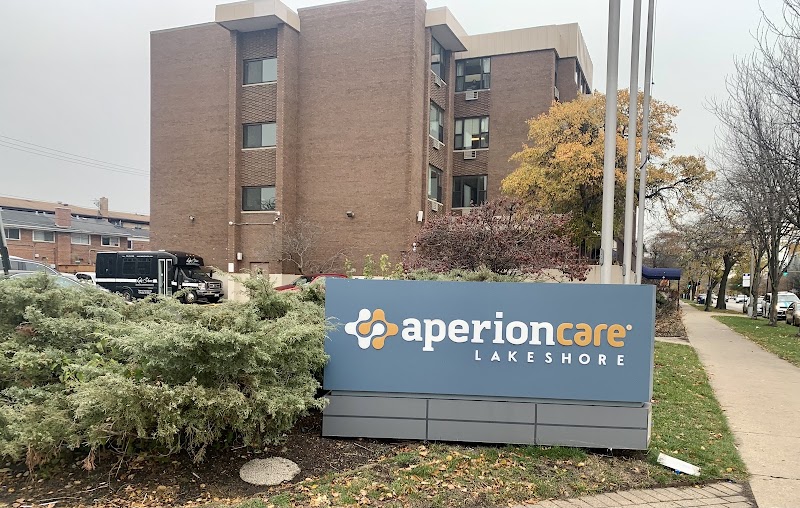
Who Owns and Operates Aperion Care Lakeshore?

APERION CARE LAKESHORE is owned by a for-profit company. For-profit facilities operate as businesses with obligations to shareholders or private owners. The facility is operated by APERION CARE, a chain that manages multiple nursing homes. With 313 certified beds and approximately 235 residents (about 75% occupancy), it is a large facility located in CHICAGO, Illinois.
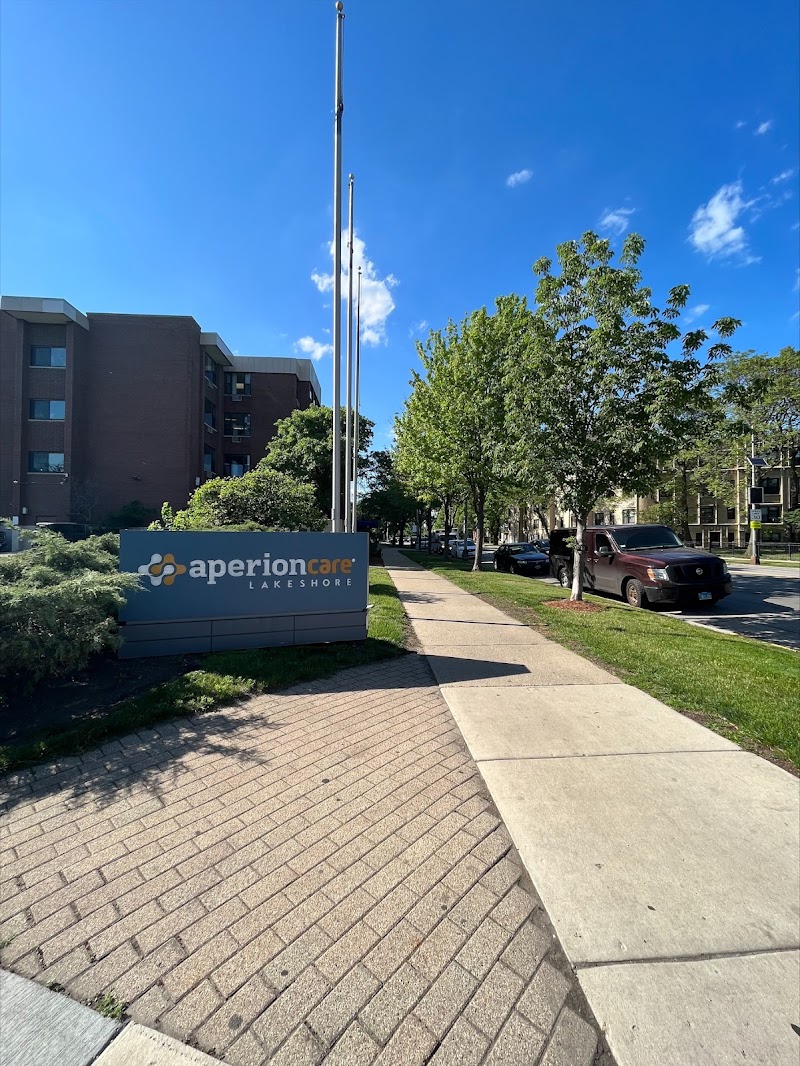
How Does Aperion Care Lakeshore Compare to Other Illinois Nursing Homes?

Compared to the 100 nursing homes in Illinois, APERION CARE LAKESHORE's overall rating (1 stars) is below the state average of 2.5, staff turnover (26%) is significantly lower than the state average of 46%, and health inspection rating (1 stars) is much below the national benchmark.

What Should Families Ask When Visiting Aperion Care Lakeshore?

Based on this facility's data, families visiting should ask: "What safeguards and monitoring systems are in place to protect residents from abuse or neglect?" "Can you walk me through typical staffing levels on day, evening, and night shifts?" "Can I visit during a mealtime to observe dining assistance and food quality?" "How do you handle medical emergencies, and what is your hospital transfer rate?" These questions are particularly relevant given the substantiated abuse finding on record and the below-average staffing rating.

Is Aperion Care Lakeshore Safe?

Based on CMS inspection data, APERION CARE LAKESHORE has documented safety concerns. The facility has 1 substantiated abuse finding (meaning confirmed case of resident harm by staff or other residents). The facility has a 1-star overall rating and ranks #100 of 100 nursing homes in Illinois. Families considering this facility should ask detailed questions about what corrective actions have been taken since these incidents.

Do Nurses at Aperion Care Lakeshore Stick Around?

Staff at APERION CARE LAKESHORE tend to stick around. With a turnover rate of 26%, the facility is 20 percentage points below the Illinois average of 46%. Low turnover is a positive sign. It means caregivers have time to learn each resident's needs, medications, and personal preferences. Consistent staff also notice subtle changes in a resident's condition more quickly.

Was Aperion Care Lakeshore Ever Fined?

APERION CARE LAKESHORE has been fined $175,990 across 3 penalty actions. This is 5.1x the Illinois average of $34,839. Fines at this level are uncommon and typically indicate a pattern of serious deficiencies, repeated violations, or failure to correct problems promptly. CMS reserves penalties of this magnitude for facilities that pose significant, documented risk to resident health or safety. Families should request specific documentation of what issues led to these fines and what systemic changes have been implemented.

Is Aperion Care Lakeshore on Any Federal Watch List?

APERION CARE LAKESHORE is not on any federal watch list. The most significant is the Special Focus Facility (SFF) program, which identifies the bottom 1% of nursing homes nationally based on persistent, serious quality problems. Not being on this list means the facility has avoided the pattern of deficiencies that triggers enhanced federal oversight. This is a positive indicator, though families should still review the facility's inspection history directly.