ASTORIA PLACE LIVING & REHAB
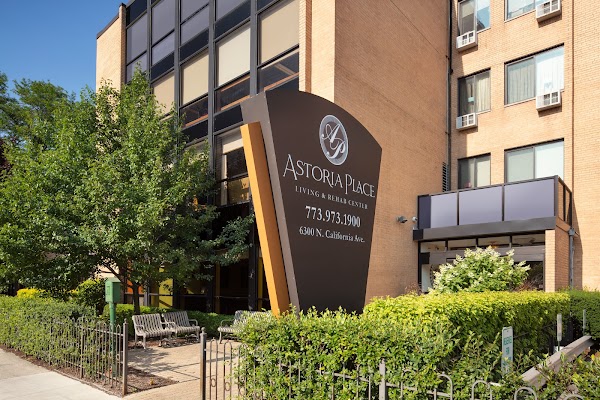

6300 NORTH CALIFORNIA AVENUE, CHICAGO, IL 60659 (773) 973-1900
For profit - Limited Liability company 164 Beds LEGACY HEALTHCARE Data: November 2025
Trust Grade
48/100
#217 of 665 in IL
Last Inspection: November 2024

Within standard 12-15 month inspection cycle. Federal law requires annual inspections.

Overview

Astoria Place Living & Rehab has a Trust Grade of D, indicating below-average quality and some concerning issues. With a state ranking of #217 out of 665, the facility is in the top half of Illinois but still faces challenges, especially with a trend showing recent improvement from 9 issues in 2024 to 5 in 2025. Staffing is a strength here, with a 3/5-star rating and a turnover rate of 35%, which is lower than the Illinois average, indicating that staff tend to stay and build relationships with residents. However, there were serious incidents where residents did not receive timely pain medication, resulting in one resident crying in pain, and another fell during a transfer, leading to a laceration requiring stitches. While the facility has good RN coverage, more than 87% of Illinois facilities, these incidents highlight significant areas that need attention.

Trust Score
D
48/100
In Illinois
#217/665
Top 32%
Safety Record
Moderate
Needs review
Inspections
Getting Better
9 → 5 violations
Staff Stability
○ Average
35% turnover. Near Illinois's 48% average. Typical for the industry.
Penalties
✓ Good
$7,360 in fines. Lower than most Illinois facilities. Relatively clean record.
Skilled Nurses
✓ Good
Each resident gets 56 minutes of Registered Nurse (RN) attention daily — more than average for Illinois. RNs are trained to catch health problems early.
Violations
⚠ Watch
30 deficiencies on record. Higher than average. Multiple issues found across inspections.
★★★☆☆
3.0
Overall Rating
★★★☆☆
3.0
Staff Levels
★★★★☆
4.0
Care Quality
★★★☆☆
3.0
Inspection Score
Stable
2024: 9 issues
2025: 5 issues

The Good

  • 4-Star Quality Measures · Strong clinical quality outcomes
  • Full Sprinkler Coverage · Fire safety systems throughout facility
  • No fines on record
  • Staff turnover below average (35%)

    13 points below Illinois average of 48%

Facility shows strength in quality measures, fire safety.

The Bad

3-Star Overall Rating

Near Illinois average (2.5)

Meets federal standards, typical of most facilities

Staff Turnover: 35%

11pts below Illinois avg (46%)

Typical for the industry

Federal Fines: $7,360

Below median ($33,413)

Minor penalties assessed

Chain: LEGACY HEALTHCARE

Part of a multi-facility chain

Ask about local staffing decisions and management

The Ugly 30 deficiencies on record

2 actual harm
Aug 2025 1 deficiency
CONCERN (D) 📢 Someone Reported This

A family member, employee, or ombudsman was alarmed enough to file a formal complaint

Potential for Harm - no one hurt, but risky conditions existed

Medical Records (Tag F0842)

Could have caused harm · This affected 1 resident

Based on interview and record review the facility failed to ensure that a resident's medications were documented as administered, as ordered by the physician. This failure affects one resident (R1) ou...

Read full inspector narrative →
Based on interview and record review the facility failed to ensure that a resident's medications were documented as administered, as ordered by the physician. This failure affects one resident (R1) out of three residents reviewed for quality of care.Findings include:On 08/12/2025 at 12:30pm V2 (DON/Director of Nursing) presented R1's MARs (medication administration records) to the surveyor, which were reviewed. There were missing entries of nurses' signatures/initials or codes on the MARs for June 2025 (6/1/2025 to 6/30/2025).R1's diagnoses include Dementia, Asthma, Bipolar Disorder, Chronic Diastolic Heart Failure, and Major Depressive Disorder.There were missing entries of nurses' signatures/initials or codes on R1's medication administration record for the following medications, dates, and times:On 06/08/2025 at 6:00am Levothyroxine Sodium (Hormone) 50 mcg (microgram) tablet- Give 1 Tablet by mouth in the morning.On 06/08/2025 at 6:00am Pantoprazole Sodium (Antiulcer) Oral Tablet Delayed Release 40 mg (milligrams)- Give 1 tablet by mouth in the morning.On 06/08/2025 at 6:00am Advair Diskus (Corticosteroid) Aerosol Powder Breath Activated 100-50 mcg/dose-1 inhalation inhale orally every 12 hours.On 8/12/2025 at 1:37pm V4 (ADON (Assistant Director of Nursing)/RN (Registered Nurse) stated the nurses are responsible for administering the medications to the residents. The nurse is to document in the electronic medication administration record that the medication was administered to the resident. V4 stated there are codes the nurses can use on the electronic medication administration record when a resident refuses the medication, or the resident is out of the facility on pass. V4 stated if a there is a blank space on the medication administration record for a scheduled dose of medication to be administered to the resident on a certain date and time in my professional opinion this would indicate that the medication was not administered to the resident.On 8/12/2025 at 3:00pm V2 (DON/Director of Nursing) stated the nurse are responsible for administering the medications to the residents. The nurses are to document on the electronic medication administration record after a medication is administered to the resident. There are codes the nurses can use on the electronic medication record when a resident refuses the medication or if the resident is out on pass from the facility or hospitalized . Reviewed the Facility's Policy titled Medication Pass which documents, 7. After medication is administered to each resident, sign MAR (medication administration record) that it was given.Reviewed facility's Registered Nurse Job Description, which documents, in part, 16. Completes medical records documenting care provided and other information in accordance with nursing policies while maintaining strict confidentiality.
May 2025 1 deficiency
CONCERN (D) 📢 Someone Reported This

A family member, employee, or ombudsman was alarmed enough to file a formal complaint

Potential for Harm - no one hurt, but risky conditions existed

Deficiency F0697 (Tag F0697)

Could have caused harm · This affected 1 resident

**NOTE- TERMS IN BRACKETS HAVE BEEN EDITED TO PROTECT CONFIDENTIALITY** Based on interview and record review, the facility failed to provide pain management in accordance with the resident's comprehen...

Read full inspector narrative →
**NOTE- TERMS IN BRACKETS HAVE BEEN EDITED TO PROTECT CONFIDENTIALITY** Based on interview and record review, the facility failed to provide pain management in accordance with the resident's comprehensive care plan, the resident's goals for care and preferences. This failure affects one (R1) resident of four residents reviewed for pain in the sample of seven. Findings include: R1's current face sheet documents R1 is a [AGE] year-old individual admitted to the facility on [DATE] and has diagnoses not limited to: multiple sclerosis, encounter for palliative care, malignant neoplasm of colon, unspecified, unspecified displaced fracture of second cervical vertebra, subsequent encounter for fracture with routine healing. R1's MDS/Minimum Data Set, dated [DATE] documents that R1 has a BIMS/Brief Interview for Mental Status score of 15/15, indicating that R1 is cognitively intact. R1's physician order set documents in part R1 has an active order for HYDROmorphone HCl (Hydrochloride) Tablet 4 MG (milligrams) Give 1.5 tablet by mouth every 6 hours for Pain since 02/25/2025. R1's physician order set documents in part R1 has an active order for Morphine Sulfate (Concentrate) Solution 20 MG/ML (milliliter), give 0.25 ml sublingually every 1 hours as needed for Pain/difficulty breathing since 02/11/2025. R1's physician order set documents in part R1 has an active order for Morphine Sulfate (Concentrate) Solution 20 MG/ML, give 0.25 ml sublingually every 2 hours as needed for pain/difficulty breathing since 02/11/2025. R1's current care plan (date initiated 12/06/2024) documents in part R1 is at risk for tremors, damage to motor and sensory control centers, damage to motor nerve tracts, damage to sensory tracts, pain, related to the diagnosis of multiple sclerosis. R1 will remain free of complications or discomfort related to Multiple Sclerosis. Interventions include give medication as ordered. Monitor/document for side effects and effectiveness (date Initiated: 12/06/2024). On 05/23/2025, at 10:23 AM, R1 stated that one time the nurses told R1 that the HYDROmorphone HCl (Dilaudid) Tablet was not available. They waited until the hospice nurse came to tell R1 that he had one tablet left. R1 stated that it affected him and it agitates R1 because the pain medication helps R1 feel less pain. On 5/23/2025, at 10:31 AM, V4 (Certified Nursing Assistant) stated He (R1) does have pain. He pulls the light for that every time he calls. I'll call the nurse and the nurse will go see him. On 05/23/2025, at 10:41 AM, V5 (Registered Nurse) stated that R1 has multiple sclerosis (MS) and has a lot of pain issues. On 05/27/2025, at 9:42 AM, V6 (Licensed Practical Nurse) stated that she doesn't work too often with R1. V6 stated that R1 would not feel alright if he didn't receive his scheduled Dilaudid medication. Sometimes if he is sleeping at 12:00 PM, V6 will return at 1:00 PM. V6 will give R1 the Dilaudid because R1 will tell V6 that he is in pain. V6 stated that the emergency medication box is located on the second floor. V6 stated that she is not sure if Dilaudid is available in the emergency medication box. V6 stated that she gave the Morphine PRN (as needed) pain medication in the morning. V6 did not offer it to R1 at 12:00 PM because V6 stated that she was expecting the Dilaudid to be delivered during her shift. V6 stated that she didn't check if there was Dilaudid in the emergency medication box because the medication was pending to be delivered. V6 stated that pain management is important because it is important to make sure the resident is not feeling pain and do whatever we can to manage his pain. On 5/27/25, at 2:51 PM, V3 (Assistant Director of Nursing) stated that the nurses on the floor should be refilling/reordering medications when there is 8 tablets/capsules left. V3 stated that means it is time to reorder. V3 stated for residents that are under hospice care, usually the hospice doctor provides the prescriptions. V3 stated that for R1's Dilaudid and Morphine medication refill prescriptions, the nurse on duty should be reaching out to the hospice provider to notify that they have 8 tablets left. V3 stated the hospice nurse will take care of refilling the medication through the pharmacy that the hospice company uses. The pharmacy will deliver that medication to the facility. V3 stated that purpose of a PRN (as needed) pain medication, is to address the patient's breakthrough pain, or if the resident does not have routine pain medication. If they ask for pain medication, that's when they give it. V3 stated that if the scheduled pain medication is not available then the nurses should offer it. V3 stated that R1's conditions which may cause R1 to have pain is malignancy cancer, unspecified fracture, and multiple sclerosis. V3 stated that it is important to administer pain medication to a resident experiencing pain because if not, it may affect their quality of life. On 05/27/2025, at 3:51 PM, V8 (Hospice Registered Nurse) stated that V8 visited R1 on 04/29/2025. V8 called the pharmacy to refill the Dilaudid medication. V8 stated that he was informed by the nurse on duty that R1 had three more tablets. V8 stated that this was around 3:00 PM. V8 stated that if the pharmacy does not deliver it the same day, then they will deliver it the next morning. V8 stated that the nursing staff did not notify V8 that R1 was running low on Dilaudid prior to 04/29/2025. V8 stated if the nurses call the hospice 24-hour service line, on the weekend or on Monday, then it can be refilled. V8 stated that if the Dilaudid medication is not available, then the Morphine can be offered. V8 stated that R1 has multiple sclerosis and generalized chronic constant pain and missing a scheduled pain medication can affect him and make him have more pain and agitation. V8 stated that V8 saw R1 several times already. R1 informed him that R1 missed some Dilaudid doses because staff didn't wake him up during night. V8 stated that sometimes R1 would call V8 at night. V8 stated that he informed V2 (Director of Nursing) and that is why there is an order for R1 to be awaken at night to be given the scheduled pain. On 05/28/2025, at 1:47 PM, via telephone V9 (Registered Nurse) stated that she worked the night shift on 4/29/25, going to 4/30/25, in the morning. V9 stated that they were waiting for pharmacy to deliver R1's Dilaudid medication. V9 stated that she administered Morphine to R1. V9 stated I told R1 that he didn't have the Dilaudid. R1 had another option for pain relief. R1 said yes I will take that. V9 stated I gave the Morphine to R1 twice that shift. V9 stated that she endorsed it to the next shift. V9 stated that she is aware that Dilaudid is available in the emergency medication box. V9 stated that she didn't have access to it since V9 works through agency. V9 stated I believe nobody had access that night. V9 stated that she endorsed to the morning nurse, that they are waiting for hospice to deliver Dilaudid and to just give R1 liquid Morphine until it gets here. V9 stated that R1 told V9 that the morphine helped him. V9 stated that she mistakenly documented that she administered the Dilaudid to R1 and she is sorry for that. V9 stated I just clicked it, but I'm sorry I shouldn't have documented it if I didn't administer it. R1's controlled substance record for HYDROmorphone HCl (Dilaudid) tablet medications documents in part 04/29 at 6:00PM amount remaining is 0 (zero). R1's controlled substance record for HYDROmorphone HCl (Dilaudid) tablet medications documents in part dated received 04/30, quantity received 60. 04/30 at 6:00 PM amount remaining is 58.5. R1's medication administration note dated 04/30/2025 1:00 PM documents HYDROmorphone HCl Tablet 4 MG (milligrams), give 1.5 tablet by mouth every 6 hours for Pain on order, awaiting from pharmacy. R1's April 2025 medication administration record documents in part R1 did not receive scheduled HYDROmorphone HCl (Dilaudid) medication order on 04/30/2025 at 12:00PM. R1's April 2025 medication administration record documents in part R1 received Morphine Sulfate (Concentrate) Solution 20 MG/ML, 0.25 ml sublingually on 04/30/2025 at 08:42 AM. Reviewed list of medications in the emergency box stock and it documents that HYDROmorphone HCl Tablet 2 MG (milligrams) max (maximum) 4 tablets available. Facility document dated 01/30/2025, titled pain documents in part it is the policy of the facility to ensure that all residents are assessed for pain in every situation where there is a potential for pain. Facility document not dated titled resident rights for people in long-term care facilities documents in part you have the right to safety and good care. Your facility must provide services to keep your physical and mental health, and sense of satisfaction.
Apr 2025 2 deficiencies 1 Harm
SERIOUS (G) 📢 Someone Reported This

A family member, employee, or ombudsman was alarmed enough to file a formal complaint

Actual Harm - a resident was hurt due to facility failures

Deficiency F0697 (Tag F0697)

A resident was harmed · This affected 1 resident

**NOTE- TERMS IN BRACKETS HAVE BEEN EDITED TO PROTECT CONFIDENTIALITY** Based upon observation, interview, and record review the facility failed to follow facility polices and procedures, failed to en...

Read full inspector narrative →
**NOTE- TERMS IN BRACKETS HAVE BEEN EDITED TO PROTECT CONFIDENTIALITY** Based upon observation, interview, and record review the facility failed to follow facility polices and procedures, failed to ensure that residents are assessed for signs/symptoms of pain, failed to obtain physician orders, failed to follow physician orders, and failed to ensure that physician orders are transcribed on the MAR (Medication Administration Record). The facility also failed to administer pain medication timely to three of four residents (R1,R2, R4) reviewed for pain. These failures resulted in R2 crying due to experiencing excruciating pain. Findings include: 1. R2 was admitted on [DATE] (9 months ago) with cervical radiculopathy (pinched or irritated nerve in the neck causing pain radiating into the chest or arm). R2's (7/12/24) care plan states resident is at risk for pain related to cervical radiculitis, interventions: monitor and record/report to Nurse any signs/symptoms of non-verbal pain. Resident will be able to tell you how much pain is experienced and tell you what increases or alleviates pain. Administer pain medication per request. R2's (April 2025) POS (Physician Order Sheets) exclude pain medication. R2's (2/7/25) BIMS (Brief Interview Mental Status) determined a score of 14 (cognition intact). On 4/16/25 at 2:05pm, surveyor inquired about concerns at the facility R2 stated I (R2) have debilitating RA (Rheumatoid Arthritis) that's in my hands and shoulders [R2's fingers were notably misaligned]. I have tried on multiple occasions to get them (facility staff) to prescribe me lidocaine patches because I've been on them for years. I can't get them here and I've sat here in excruciating pain, on a scale of 1 to 10 it's been 20. Surveyor inquired if R2 has prescribed pain medication R2 responded I should but no one's giving me one. There are times when the pain is so horrific, I will cry out for hours. Surveyor inquired about R2's current pain level R2 replied Right now, it's only about a 5. Surveyor inquired if R2 receives Tylenol R2 stated It doesn't do diddly, so I don't take it. It's like putting a bandaid on a sliced wound. Surveyor inquired if facility staff assess R2's pain level every shift R2 responded Oh, h*** no, they're (staff) very incompetent here (facility) in many respects. On 4/16/25 at 2:29pm, V8 (Registered Nurse) affirmed that she's assigned to R2. Surveyor inquired if a Lidocaine patch is prescribed for R2 V8 stated I'm looking through the orders, no I (V8) don't see any Lidocaine patch. Surveyor inquired if R2 is prescribed pain medication V8 responded No, no pain medication. Surveyor inquired why R2's physician orders exclude pain medication if she has pain related to RA V8 replied I'm gonna have to follow-up with the doctor for that. Surveyor inquired if R2's pain is assessed every shift V8 stated Yeah, I'm doing pain assessments on her. Surveyor inquired about R2's pain assessment conducted today V8 accessed R2's EMR (Electronic Medical Record) and responded, Today at 1:46, it was zero. Surveyor advised that R2 is currently experiencing pain and returned to the resident's room (with V8). Surveyor inquired if R2 reported that her pain level was zero today R2 replied That's not true, nobody's ever asked me about it and V8 failed to request R2's pain level at this time. Surveyor inquired why R2's pain was rated zero today (per EMR) V8 stated That was at 1:46am (over 12 hours ago), I haven't documented for my shift. I was gonna document it at 2:30 (7.5 hours after V8's shift started). R2's (4/16/25) dayshift (7am-3pm) pain assessment (documented by V8) states 0 however this assessment was entered after surveyor record review/interview and clearly incongruent with actual findings. On 4/17/25 at 11:29am, V2 (Director of Nursing) stated We got orders for (R2) for the lidocaine patch. R2's (April 2025) MAR affirms that 4% Lidocaine patch orders were received (the following day); start date 4/17/25. R2's Lidocaine patch was administered on 4/17/25 at 8am (roughly 17.5 hours after V8 was made aware of R2's reported pain) and 4% Lidocaine patches are (over the counter) facility floor stock therefore readily available. 2. R4's diagnoses include dementia, chronic peptic ulcer, and encounter for palliative care. R4's (3/17/25) care plan states resident is at risk for pain. R4's (3/20/25) BIMS determined that resident is rarely/never understood and altered level of consciousness is continuously present. R4's POS includes (3/17/25) pain assessment every shift. Acetaminophen (Analgesic) 650mg (milligrams) every 4 hours as needed for pain (pain scale 1-3). (3/19/25) Hydromorphone (Narcotic) 4mg tablet give 0.25ml (milliliters) every 2 hours as needed for moderate pain. R4's (March 2025) monitoring record affirms pain assessments were not documented on (dayshift) 3/21, 3/23, 3/25, (evenings) 3/21, 3/28 and (nights) 3/17, the entries are blank. On 4/15/25 at 2:27pm, R4 was observed lying in bed in a fetal position. R4 was noted to be grimacing and both hands were grasping the right shin. R4's right foot appeared severely bruised (dark purple) and notably edematous. Surveyor inquired if R4 was in pain however R4 did not respond. On 4/15/25 at 2:29pm, V4 (LPN/Licensed Practical Nurse) affirmed that she was assigned to R4. Surveyor inquired about R4's cognitive and functional status V4 stated He's bed bound, alert x1, and Yugoslavian speaking. Surveyor inquired how staff communicate with R4 V4 responded We have a service posted the language help desk, then we have a staff (V5/CNA-Certified Nursing Assistant) 5 days a week in the morning. Surveyor inquired if R4 injured his right foot V4 replied He came like this, he's here for 1 or 2 weeks [R4 was admitted on [DATE], roughly 1 month ago]. V4 subsequently assessed R4's right foot (as requested) and stated, Looks swollen, it's maybe looks like +4, we elevate with the pillow. Surveyor inquired if R4's foot also appeared bruised V4 responded Yeah, discolored. When V4 touched R4's right foot he jerked it away from V4 and placed it over the edge of the mattress (out of reach). Surveyor inquired if R4 has pain medication prescribed V4 replied He has Acetaminophen and Hydromorphone. Surveyor inquired if R4 received pain medication today V4 stated Hydromorphone was not recently taken. Surveyor inquired if R4 received Acetaminophen today V4 responded Not given today. During the assessment, V4 failed to utilize the language help desk and/or staff to determine R4's pain level. On 4/15/25 at 2:35pm, surveyor inquired what language R4 speaks V5 (CNA) stated Bosnian and affirmed that she's able to communicate with R4. V5 inquired if R4 was experiencing pain however received no verbal response and he was motioning towards his ears. Surveyor inquired if R4 is hard of hearing V5 responded He has a little bit hearing problem. V5 inquired (again) in a louder voice if R4 was experiencing pain R4 raised both hands in the air, shrugged his shoulders and appeared perplexed as if he didn't understand what was asked and/or didn't hear the question. Surveyor inquired if R4's foot appeared bruised V5 responded Probably, but like a little bit swollen however failed to determine R4's pain level. On 4/15/25 at 2:45pm, surveyor inquired when R4 was last medicated for pain V4 reviewed the EMR (Electronic Medical Records) and stated, Hydromorphone he never got, 3/21/25 was the Acetaminophen (several weeks ago). R4's (4/15/25) MAR affirms at 11:24pm (roughly 9 hours after V4's assessment) R4 received Acetaminophen 650mg for pain rated 4 however Acetaminophen was prescribed for pain scale 1-3 [Hydromorphone should have been administered]. 3. R1's diagnoses include dislocation of right hip, pain in left leg, and sciatica right side. R1 was discharged from the facility on 4/10/25. R1's (3/20/25) care plan affirms resident is at risk for pain, intervention: provide analgesic as ordered. R1's POS includes (3/20/25) Pain assessment every shift. (3/24/25) Lidocaine Patch 4% apply to right hip in the morning for pain. R1's (2025) monitoring record affirms pain assessments were not documented on 3/22, 3/26, 3/27, and 4/6 (dayshift). R1's MAR affirms the prescribed Lidocaine Patch was marked UV (Unavailable) on 4/5/25. On 4/21/25 at 3:16pm, surveyor inquired what UV indicates on the MAR V10 (Registered Nurse) replied I believe it's unavailable. The (2/28/25) resident counsel concern/response form includes the following: residents state they are having to wait a long time when requesting pain medication, in-service done however the (undated) pain medication administration in-service/training sign in sheet includes only 9 staff signatures. The pain policy (revised 1/30/25) states it is the policy to ensure that all residents are assessed for pain in every situation where there is a potential for pain. For pain complaints and for situations/incidents that might result to pain, the nursing staff may document it in any part of the resident's medical record that may include Nurses notes, incident report, medication record, etc. Upon admission, the nurse will assess resident for pain. For those identified with pain upon admission/readmission assessment, an order for pain medication will be obtained from the physician. Pain medication ordered will be administered to the resident as soon as possible. The physician orders policy (revised 8/16/24) states the facility shall ensure to follow physician orders as it is written in the POS.
CONCERN (E) 📢 Someone Reported This

A family member, employee, or ombudsman was alarmed enough to file a formal complaint

Potential for Harm - no one hurt, but risky conditions existed

Quality of Care (Tag F0684)

Could have caused harm · This affected multiple residents

Based upon interview and record review the facility failed to follow policy procedures, failed to ensure that floor stock medication was available, failed to ensure that floor stock medication was tra...

Read full inspector narrative →
Based upon interview and record review the facility failed to follow policy procedures, failed to ensure that floor stock medication was available, failed to ensure that floor stock medication was transcribed on the MAR (Medication Administration Record), failed to ensure that prescribed medication was transcribed correctly, and/or failed to administer medication as ordered for four of four residents (R1, R2, R3, R4) reviewed for medication administration. Findings include: 1. R1's diagnoses include dislocation of right hip, pain in left leg, and sciatica right side. R1 was discharged from the facility on 4/10/25. R1's (3/20/25) care plan includes risk for pain, intervention: provide analgesic as ordered. R1's (3/24/25) POS (Physician Order Sheets) includes Lidocaine Patch 4% apply to right hip in the morning for pain. On 4/15/25 at 3:11pm, V6 (Registered Nurse) affirmed that the 4% lidocaine patch is a facility house stock (over the counter) medication. On 4/16/25 at 2:46pm, surveyor inquired about the facility (house stock) 4% Lidocaine patch availability V7 (Central Supply) stated I order every Monday and the supply comes on Friday. There's some occasions where the supplier doesn't have them and their on backorder. So, we (facility) take petty cash, go to (Drug Store) and buy the patches so there's always patches all the time available. R1's MAR affirms the prescribed Lidocaine Patch was marked UV (Unavailable) on 4/5/25. On 4/21/25 at 3:16pm, surveyor inquired what UV indicates on the MAR V10 (Registered Nurse) replied I believe it's unavailable. 2. R2's diagnoses include type II diabetes mellitus. R2's (7/12/24) care plan includes diabetes mellitus, interventions: diabetes medication as ordered by doctor. R2's (9/8/24) POS includes Glargine (Insulin) 15 units at bedtime. R2's (2/7/25) BIMS (Brief Interview Mental Status) determined a score of 14 (cognition intact). On 4/16/25 at 2:05pm, surveyor inquired if R2's insulin is administered as ordered R2 stated Not to me and my blood sugars are poorly controlled. The Nurses give me insulin sometimes and sometimes they don't. R2's (March 2025) MAR does not document R2's Glargine insulin was administered on 3/8/25, the entry is blank. 3. R3's diagnoses include age related nuclear cataracts, osteoarthritis and neuropathy. R3's (4/8/15) care plan states resident is at risk for pain administer analgesia as per orders. R3's (4/4/25) BIMS (Brief Interview Mental Status) determined a score of 14 (cognition intact). On 4/15/25 at 2:54pm, surveyor inquired about concerns with medication administration R3 stated I (R3) requested a medication patch, she (Nurse) looked at my page and said you have nothing on the order for a pain patch. She gave me my (oral) medication but not the eye drops. I asked her about the eye drops, she said I don't have your eye drops. R3's POS includes Latanoprost 0.005% 1 drop both eyes at bedtime for glaucoma (start date: 2/17/25). (4/9/25) Lidocaine patch 4% apply to affected skin every 12 hours as needed for pain. R3's (February 2025) MAR affirms Latanoprost administration was not documented on 2/17/25, the entry is blank. R3's (April 2025) MAR excludes the prescribed Lidocaine patch. On 4/17/25 at 3:08pm, surveyor inquired about the requirements for entering physician orders V9 (ADON/Assistant Director of Nursing) stated It automatically populates to the MAR when entered under POS and should be entered by the pharmacy. Surveyor inquired if R3's (April 2025) MAR includes the 4% Lidocaine patch (prescribed 4/9/25) V9 stated No, I don't see it here. Usually, we (staff) put in the POS and the pharmacy give us (staff) a reminder for the 4% to be entered because it's a floor stock and affirmed that facility staff are required to enter the 4% Lidocaine patch orders on the MAR. 4. R4's diagnoses include dementia and encounter for palliative care. R4's (3/17/25) care plan states resident is at risk for pain related to dementia. R4's (3/20/25) BIMS determined that resident is rarely/never understood and altered level of consciousness is continuously present. R4's (3/19/25) POS includes Hydromorphone (Narcotic) 4mg (milligram) tablet give 0.25ml (milliliters) every 2 hours as needed for moderate pain and Hydromorphone 4mg tablet give 0.5ml every 2 hours as needed for severe pain. On 4/17/25 at 2:54pm, surveyor inquired about concerns with R4's Hydromorphone orders V9 (ADON) stated Hydromorphone 4 milligrams, oh I think it's a tablet and uh the dispensation is dispense as liquid. On 4/21/25 at 2:36pm, surveyor inquired if medication tablets are dispensed in milliliters V11 (Medical Director) responded No. The Physician Orders policy (revised 8/16/24) states it is the policy of this facility to ensure that all resident/patient medications, treatment, and plan of care must be in accordance with the licensed physician's orders. The facility shall ensure to follow physician orders as it is written in the POS. Medication orders entered in the POS shall be reflected accurately in the MAR.
Mar 2025 1 deficiency 1 Harm
SERIOUS (G) 📢 Someone Reported This

A family member, employee, or ombudsman was alarmed enough to file a formal complaint

Actual Harm - a resident was hurt due to facility failures

Accident Prevention (Tag F0689)

A resident was harmed · This affected 1 resident

**NOTE- TERMS IN BRACKETS HAVE BEEN EDITED TO PROTECT CONFIDENTIALITY** Based on interviews and record review, the facility failed to ensure the safety of one resident (R3) as two Certified Nurse Assi...

Read full inspector narrative →
**NOTE- TERMS IN BRACKETS HAVE BEEN EDITED TO PROTECT CONFIDENTIALITY** Based on interviews and record review, the facility failed to ensure the safety of one resident (R3) as two Certified Nurse Assistants prepared to transfer resident from chair to bed. This failure resulted in R3 falling and sustaining a laceration to the forehead requiring hospitalization and stitches. Findings include: R3 is [AGE] year old with diagnosis including but not limited to: history of falling, presence of artificial right hip joint, other osteoporosis and fracture of unspecified part of right femur. During investigation on 3/24/25 at 12:53 PM, R3 was observed lying in bed with a scar on her forehead. On 3/24/25 at 12:53 PM, V7 (CNA/ Certified Nurse Assistant) said that R3 had fallen from her geri-chair (geriatric chair) while she (V7) and V6 (CNA) were preparing to transfer R3 to her bed. V7 said, V6 (CNA) and I were working together to transfer her (R3) because she is a total care patient. R3 was sitting up in her chair by the bed and I went to go and get the mechanical lift. V6 was standing on the other side of the bed at that time when R3 leaned forward and fell. I (V7) could not try to catch her (R3) because I was too far from her. On 3/24/25 at 12:55 PM, V6 (CNA) said that she (V6) was on the side of the bed when R3 fell and could not reach her (R3) in enough time to stop her from falling from the chair. At that time, V6 pointed to the side of R3's bed near the window and said that this is where she (V6) was standing during R3's fall. V6 then pointed to the position where R3 was sitting at the time of her fall, which was at the foot of R3's bed. Surveyor asked if R3 was reclined or sitting up in the geri chair at the time of her fall. On 3/24/25 at 12:55 PM, V6 (CNA) said that at the time of R3's fall, R3's chair was not reclined, yet in an upward position. Surveyor asked if a staff member should be standing close to R3 in preparation to transfer R3 from her geri chair to the bed. On 3/24/25 at 1:18 PM, V5 (RN/ Registered Nurse) said, R3 has poor trunk support and usually leans from side to side in the geri (geriatric) chair. R3 also sometimes slides in the chair and is unable to sit up straight. It is unsafe for her (R3), which is why she is usually reclined in her geri chair. If a staff member was with R3, the fall may have been prevented. On 3/24/2025 at 2:30 PM, V8 (Restorative Nurse) said, R3 has a tendency to slouch and slide in the chair because she has poor trunk control. Upon inquiry of the process of transferring from bed to chair, V8 said, One person should be with R3 and applying the slings or guiding the patient, the other CNA is controlling the lift. Once the patient is in the sling during the transfer, one CNA is guiding the patient and the other CNA is maneuvering the machine. Surveyor asked if was safe for R3 to sit upward in a geri chair alone. V8 said that if a CNA (Certified Nurse Assistant) was standing near R3 prior to the transfer, it would decrease the chances of her falling due to R3's poor trunk control. On 3/26/25 at 3:15 PM, V14 (CNA) said that during a patient transfer to bed, a CNA should be within arms reach of the patient for safety and to prevent the patient from falling. Surveyor asked if it would be easier for a patient to lean forward in a geriatric chair if the chair is not reclined. On 3/27/25 at 12:55 PM, V12 (NP/ Nurse Practitioner) said, a patient with poor trunk control can definitely sit up and lean forward in a geri- chair depending on how weak or strong the patient is. Surveyor asked if a fall with head injury may be detrimental to a geriatric patient. On 3/27/25 at 12:55 PM, V12 (NP) said, Sure, yes it can. R3's Care plan documents, R3 uses reclining wheelchair for proper body alignment, comfort and positioning due to poor trunk control; R3 is at high risk for falls; staff instructed to use tactile cueing, holding on R3's shoulder when R3 is seated on geri chair during showers days, to lower risk of R3 rocking forward. Section GG- Functional Abilities assessment documents, R3 is dependent on staff for chair to bed transfers. Facility Incident Report dated 3/4/25 documents, R3 had an observed fall with injury in resident's room; CNA reported to the Nurse on duty that R3 leaned forward and fell on the floor; CNA was unable to reach R3 to stop her from falling; R3 was taken to the hospital and returned to the facility with ten sutures on the right frontal head. R3's Hospital visit summary dated 3/4/25 documents, diagnosis: Fall, injury of head and facial laceration. Facility policy titled Mechanical lift transfers documents, there will always be two staff to assist the resident. One staff will control the lift as the other will guide resident and support back and neck to transfer surface.
Nov 2024 8 deficiencies
CONCERN (D)

Potential for Harm - no one hurt, but risky conditions existed

Resident Rights (Tag F0550)

Could have caused harm · This affected 1 resident

Based on observation, interview, and record review, the facility failed to provide privacy and promote dignity for one of one resident [R105] reviewed for urinary catheter use on the sample list of 31...

Read full inspector narrative →
Based on observation, interview, and record review, the facility failed to provide privacy and promote dignity for one of one resident [R105] reviewed for urinary catheter use on the sample list of 31. Findings included: On 11/19/24 at 10:24 AM, R105's urinary catheter bag was hanging on the side of R105's bed, half filled with urine and visible from the hallway. The urinary catheter bag did not have a protective cover over the bag. R105 stated the [R105] is on the urinary catheter bag because of [R105's] wound. On 11/20/24 at 10:33 AM, interviewed V2 (Director of Nursing) and stated that urinary catheter bag placement should not be facing the door, and if it's facing the door, it should be inside of a bag for privacy. V2 stated that if the urinary catheter bag is exposed, it can potentially cause a dignity issue. R105's physician orders document in part: Indwelling Catheter Type: (urinary) Catheter Size: 16 FR, 10 cc (cubic centimeter) balloon Reason for use: Neurogenic Bladder (ordered 10/27/24). The facility's Privacy and Dignity policy dated 8/16/24 documents in part: It is the facility's policy to ensure that resident's privacy and dignity is respected by the staff at all times. Urine bags will be covered with the use of privacy bags.
CONCERN (D)

Potential for Harm - no one hurt, but risky conditions existed

Pressure Ulcer Prevention (Tag F0686)

Could have caused harm · This affected 1 resident

**NOTE- TERMS IN BRACKETS HAVE BEEN EDITED TO PROTECT CONFIDENTIALITY** Based on observation, interview, and record review, the facility failed to ensure a low air loss mattress device was on the corr...

Read full inspector narrative →
**NOTE- TERMS IN BRACKETS HAVE BEEN EDITED TO PROTECT CONFIDENTIALITY** Based on observation, interview, and record review, the facility failed to ensure a low air loss mattress device was on the correct weight setting for one dependent resident (R105) of two residents with pressure ulcers on a sample list of 31 residents. Findings Include: R105's clinical records show an admission date of 10/27/24 with included diagnoses not limited to Multiple Sclerosis and Stage 4 Pressure Ulcer. R105's physician orders read: Low Air Loss (LAL) Mattress ordered on 10/27/24. R105's skin care plan date initiated on 10/27/24 reads in part: R105 has a pressure injury on the sacral area with one intervention that reads, Check air mattress if functioning properly every shift and prn [as needed]. R105's weight shows 180 lbs dated 11/15/24. R105's Skin Risk assessment dated [DATE] shows a score of 10 (High Risk in developing a pressure ulcer). On 11/19/24 at 10:24 AM, R105's lying in bed alert and able to verbalize needs. Surveyor observed R105's low air loss mattress weight setting was set to 180 pounds (lbs). R105 stated [R105] has a wound above the tail bone area and is being seen by the wound care team. On 11/20/24 at 9:06 AM, V18 (Wound Care Coordinator/Registered Nurse) and V19 (Treatment Nurse/Licensed Practical Nurse both stated R105 came in with a stage 4 sacral pressure ulcer with wound treatment daily. Both stated R105's wound assessment scale (a tool used to assess risks of developing pressure ulcer) dated 11/11/24 is 10 which means R105 is high risk in developing pressure ulcer. Both stated R105 is on a low air loss mattress and supplements for wound healing. At 9:23 AM, R105's wound dressing was observed with V18 and V19. R105's wound dressing on the sacral area was intact. R105's low air loss mattress machine was observed set to 210 lbs. V18 stated that the purpose of the low air loss mattress is to offload the pressure point and alternates the weight of the resident to promote wound healing and prevention of developing pressure ulcer. V18 stated that the low air loss mattress should be set correctly and is based on the current weight of the resident. V18 stated nurses and wound care team should be monitoring and making sure that the low air loss mattress is in the correct setting and if it's in the wrong setting, the mattress could be so hard or so soft. For example, if it's in a low setting it's not doing its purpose and the resident will sink. At 9:33 AM, V18 checked R105's current weight recorded in the electronic health record and showed R105 weighed 180 lbs dated 11/15/24. V18 stated that R105's low air loss mattress weight setting should be set to 180 lbs. The facility's Specialized Mattress and Appropriate Layers of Padding policy dated 8/19/24 reads in part: use specialized air mattresses like Low Air Loss Mattress on residents with stage 3 and 4 pressure sores to ensure moisture, heat, and friction control.
CONCERN (D)

Potential for Harm - no one hurt, but risky conditions existed

Accident Prevention (Tag F0689)

Could have caused harm · This affected 1 resident

Based on observation, interview and record review the facility failed to distinguish between a behavior slide versus a fall, and failed to follow their fall occurrence policy for one [R119] resident r...

Read full inspector narrative →
Based on observation, interview and record review the facility failed to distinguish between a behavior slide versus a fall, and failed to follow their fall occurrence policy for one [R119] resident reviewed for falls on the sample list of 31 residents. Findings include: R119 's clinical record indicates the follow in part; R119 was admitted the medical diagnosis of cerebral infarction with hemiplegia and hemiparesis affecting left dominant side, coronary angioplasty, ventricular tachycardia, cardiac implants, major depressive disorder, generalized weakness, anxiety, and alcohol abuse with withdrawal. R119's Minimum Data Set [MDS] section [ C] Brief interview Mental Status he scored [04] indicates R119 is moderately impaired. R119's care plan indicates the following: 8/9/24- R119 demonstrate cognitive impairment related to psychiatric disorder, history of substance abuse, impaired decision making, poor logic and poor ability to understand cause and effect. Poor judgement and awareness. 6/17/24- R119 has an impaired mobility. 8/6/23- R119 is at high risk for falls related to cognitive deficit, poor balance, limited mobility. 11/19/24- R119 has behavior of sliding onto the floor when experiencing any abdominal discomfort. [Behavior Care Plan was entered after care plan was requested by the state survey agency] On 11/19/24 at 10:43 AM, during initial interview with R82 in his room behind his privacy curtain by the window, surveyor heard a noise. Surveyor observed R82's roommate R119 on the floor next to his bed, with his head resting on the wheelchair's leg rest. Surveyor called for R119's nurse, V8 [Licensed Practical Nurse]. Surveyor explained to V8 that she heard a noise and observed R119 on the floor with his head on top of the wheelchair leg rest. On 11/19/24 at 10:45 AM, V8 [Licensed Practical Nurse] entered the room and moved the wheelchair off the mat to reach R119. V8 stated, I am not sure who placed the wheelchair next to R119's bed on his floor mat. I see his head was resting on the wheelchair leg. V8 asked surveyor if R119 hit his head on the wheelchair leg. Surveyor said, she did not witness the fall, but observed R119 head on top of the wheelchair's leg rest. V8 asked R119 if he hit his head, R119 did not respond. On 11/19/24 at 10:55 AM V8 stated, R119 has a behavior of sliding out of the bed. R119 did not fall out of bed, he slides out of bed. Surveyor asked V8, because the occurrence was not witnessed, how do she [V8] know it was a slide versus a fall. V8 stated, V2 [Director of Nursing] told the nursing staff that R119 has a behavior of sliding out of the bed, so it is not treated as a fall, it is documented as a behavior. Anytime R119 is observed on the floor, it is automatically documented as behavior slide. I will take R119 vital signs and notify the nurse practitioner and family member. R119 is confused and he is not able to communicate his needs. Nursing staff make frequent rounds on R119. Sometimes R119 responds to my questions, but I am not sure the answer is true, because R119 is very confused. R119 is not answering me today.' Reviewed R119's progress note indicates in part: 11/19/24 at 10:53 V8 [ Licensed Practical Nurse] Note. R119 continues to slide out of bed onto the landing pad located on the floor next to his bed. R119 was removed from the floor by the certified nurse assistant and placed back in bed. R119 was redirected, re-oriented and re-educated on the importance of staying in bed and pressing his call button when needing assistance. Writer assessed R119, and he was clean and dry, vital signs within normal limits. Nurse practitioner and R119's family made aware. [There was no information regarding R119's head was on top of the wheelchair's leg, and no neurological assessment noted.] On 11/21/24 at 11:00 AM, V16 [Restorative Director/Registered Nurse] stated, I assist with fall interventions along with the director of nursing [V2]. A fall means rather if the resident intentionally or unintentionally falls on the floor. A fall is sometimes considered a change of plane. R119 is very confused and is a high fall risk. R119 has a behavior of sliding out of bed. If R119 is observed on his floor mat and he intentionally place himself there, then it is not a fall. R119 is very confused with a BIMS sore of 4, but he can make an intentional decision to get on the floor. If R119 is on the floor, it is always a behavior slide, the floor mat helps to reduce the risk of injury, it does not 100% eliminate injury. On 11/20/22 at 11:34 AM, V2 [Director of Nursing] stated, A fall is a change of plane. However, that rule does not apply to R119, because he slides out of bed, and it was considered a behavior. During the Behavior Committee Meeting on 1/18/24. The interdisciplinary team decided R119 had a behavior. The difference from a fall and a behavior slide is that the behavior slide is usually witness, but when R119 is observed on the floor, and no one witnesses him sliding to the floor, it is usually still a behavior slide. It is a fall when R119 is observed off the floor mat then it should consider a fall. R119 have not had any documented falls since 12/12/23 but had several bed slides. If R119 was observed on the floor next to his bed with his head resting on the wheelchair footrest, then V8 should have documented and treated the incident as a fall not a behavior slide. V8 should have started neurological assessments and completed risk management fall incident report. R119 needs a sitter by his bed side 24 hours per day. The facility is not able to provide a sitter. R119's family member cannot afford a sitter as well. Maybe this is not the right facility for R119, because we cannot provide one to one monitoring that he needs. I will in-service the staff between the difference between a fall versus a behavior slide. R119's care plan was updated on 11/19/24, that's why you don't see the behavior care plan dated for 1/18/24. I am not sure what happened to the original behavioral care plan. Policy: Fall Occurrence dated 7/26/24. If a resident had fallen, the resident is automatically considered a high risk for falls. An incident report will be completed by the nurse each time a resident fall. The incident may be written in the nurse note or other parts of the resident's medical record that will remain accessible to any person who has the right to access the residents record.
CONCERN (D)

Potential for Harm - no one hurt, but risky conditions existed

Pharmacy Services (Tag F0755)

Could have caused harm · This affected 1 resident

Based on observation, interview and record review, the facility failed to ensure medication was administered and not left at bedside for 1 (R113) resident reviewed for medication administration in a s...

Read full inspector narrative →
Based on observation, interview and record review, the facility failed to ensure medication was administered and not left at bedside for 1 (R113) resident reviewed for medication administration in a sample of 31. Findings include: R113's admission record showed admission date on 6/24/2023 with diagnoses including Hemiplegia and hemiparesis following cerebral infarction affecting left non-dominant side, Occlusion and stenosis of left carotid artery, Other sequelae of cerebral infarction, Other specified arthritis multiple sites, Deficiency of other vitamins, Thyrotoxicosis, Nicotine dependence cigarettes, Chronic obstructive pulmonary disease, Essential (primary) hypertension, Other psychoactive substance abuse, Chronic viral hepatitis C. On 11/19/24 at 10:31 AM Observed R113 sitting on the side of the bed, alert and verbally responsive. Observed 1 white round pill inside the medication clear cup at bedside table. R113 stated he does not know what medication it was. Requested V5 (Registered Nurse/RN) in R113's room and said it could be a thyroid medication from 11-7 shift nurse. She said medication should not be left at bedside. R113 stated nobody told me nothing, I don't know what it is. On 11/20/24 At 10:43am V2 (Director of Nursing / DON) said has been working in the facility for almost 3 years. Stated nurses are expected to administer medications as ordered by the doctor. Nurses are expected to make sure that resident took the medication before leaving the room. Nurse is not supposed to leave the medication at bedside that is a standard nursing practice. V2 said unless resident is able to self-administer medication then it could be left at bedside but it should have an order, an assessment that resident is able to self-administer. R113's physician order summary report dated 11/19/24 showed active order not limited to Methimazole Tablet 5 MG Give 1 tablet by mouth one time a day for hyperthyroidism scheduled at 6am. Order does not reflect R113 may self-administer medication. No assessment for self-administration evaluation found in R113's electronic health record. MDS (Minimum Data Set) dated 9/17/24 showed R113's cognition was moderately impaired. Facility's medication pass policy dated 8/16/24 documented in part: It is the policy of the facility to adhere to all federal and state regulations with medication pass procedures. Facility's medication storage, labeling and disposal policy dated 8/16/24 documented in part: Medications will be secured in locked storage area. Facility's Nurse job description (undated) documented in part: Administer medications.
CONCERN (E)

Potential for Harm - no one hurt, but risky conditions existed

Respiratory Care (Tag F0695)

Could have caused harm · This affected multiple residents

**NOTE- TERMS IN BRACKETS HAVE BEEN EDITED TO PROTECT CONFIDENTIALITY** The findings include: R86's admission record showed admission date on 1/4/2021 with diagnoses not limited to Chronic respirator...

Read full inspector narrative →
**NOTE- TERMS IN BRACKETS HAVE BEEN EDITED TO PROTECT CONFIDENTIALITY** The findings include: R86's admission record showed admission date on 1/4/2021 with diagnoses not limited to Chronic respiratory failure with hypoxia, Other emphysema, Generalized anxiety disorder, Other specified symptoms and signs involving the circulatory and respiratory systems, Personal history of covid-19, Chronic obstructive pulmonary disease. R399's admission record showed admission date on 11/13/2024 with diagnoses not limited to Other specified chronic obstructive pulmonary disease, Other pericardial effusion, Unspecified right bundle-branch block , Generalized anxiety disorder, Solitary pulmonary nodule, Acute respiratory failure with hypoxia, Bronchiectasis, Unspecified atrial flutter, Single subsegmental thrombotic pulmonary embolism without acute cor pulmonale, Paroxysmal atrial fibrillation. On 11/19/24 at 10:17 AM Observed R86 sitting on the side of the bed, alert, and oriented x 3, verbally responsive, with oxygen tank and Oxygen tubing hanging on it, not stored properly. R86 said he is using oxygen at 3L/min as needed. He uses it almost daily. On 11/19/24 at 10:38AM Observed R399 lying in bed, alert and verbally responsive. With oxygen inhalation via nasal cannula at 4Lmin. No oxygen signage by the door entrance. V6 (Licensed Practical Nurse / LPN) requested by R399's doorway and stated there should have a signage for oxygen in use by the room entrance / door. On 11/20/24 At 10:43am V2 (Director of Nursing / DON) said has been working in the facility for almost 3 years. Stated Oxygen cannula / tubing should be stored properly not the touching the floor. If O2 tubing is not being used should be kept inside a clear bag to maintain cleanliness and prevent contamination. V2 said signage should be posted by the doorway for a warning for everyone to be aware that oxygen is in use. R86's order summary report dated 11/19/24 with active order not limited to Oxygen at 3liter/min via nasal cannula as needed for SOB (shortness of breath). R399's order summary report dated 11/19/24 with active order not limited to Oxygen continuous 3-4 L/min via nasal cannula every shift. Baseline care plan dated 11/15/2024 documented in part: R399 has Oxygen Therapy related to COPD, Emphysema, Atrial fibrillation. Give oxygen as ordered by the physician - continuous oxygen at 3-4L/min/nasal cannula. Facility's Oxygen storage policy dated 8/16/24 documented in part: It is the policy of the facility to store oxygen safely and properly. On 11/19/24 at 10:36 AM, Surveyor observed R95 lying in bed and using oxygen (O2) via nasal cannula (NC). R95 was not interviewable. R95's oxygen flow rate was set to 4 liters per minute (LPM). At 10:38 AM, Surveyor asked V20 (Agency Registered Nurse) to check R95's oxygen setting. V20 entered R95's room and verified R95's oxygen flow rate was set to 4LPM. On 11/19/24 at 10:55 AM, Surveyor observed R110 lying in bed and was using oxygen via nasal cannula. R110's oxygen flow rate was set to 4 LPM. R110 stated [R110] has sleep apnea and uses oxygen to help [R110] breath better. R110 stated R110 does not walk and needs staff assistance to get up from bed. At 10:59 AM, Surveyor asked V21 (Registered Nurse) to check R110's oxygen setting. V21 entered R110's room and verified R110's oxygen flow rate was set to 4LPM. V21 stated that R110's oxygen should be set to 3LPM. On 11/20/24 at 10:33 AM, interviewed V2 (Director of Nursing) and stated that the nurses are supposed to be monitoring that the resident's oxygen is in the right setting. V2 stated that O2 setting is based on the physician's order and should be followed for the effective use of the oxygen on the resident. R95's clinical records show an admission date of 10/06/22 with included diagnoses but not limited to Chronic Respiratory Failure with Hypoxia. R95's Minimum Data Set (MDS) dated [DATE] shows R95 has memory problem and dependent on staff with transfers. R95's physician orders read in part: Oxygen continuous 2-3L/min via nasal cannula every shift for sob [shortness of breath] (ordered 3/09/24). R95's care plan documents in part: R95 has order for oxygen secondary to diagnosis of Chronic Obstructive Pulmonary Disease (date initiated 10/10/22) with one intervention that reads, Give oxygen as ordered by the physician. Administer 2-3 L/NC continuous. R110's clinical records show an admission date of 10/11/24 with included diagnoses but not limited to Obstructive Sleep Apnea and Chronic Respiratory Failure with Hypoxia. R110's MDS dated [DATE] shows R110 is cognitively intact and requires substantial/maximal assistance with bed mobility. R110's physician orders read in part: Apply oxygen 2-3 lpm to keep O2 sat greater than or equal to 90% as needed (ordered 10/16/24). R110's care plan documents in part: R110 is at risk for altered respiratory status/difficulty breathing related to Sleep Apnea and Chronic Respiratory Failure (dated initiated 1011/24) with one intervention that reads, Give oxygen as ordered by the physician. Oxygen at 2-3 LPM/NC as needed. The facility's Oxygen Therapy and Administration policy dated 8/16/24 reads in part: Oxygen therapy shall be administered to patients as indicated and upon a physician's order. Procedure: Confirm order from physician (this should include liter flow, FiO2 and delivery device). Based on observations, interviews, and record reviews, the facility failed to follow R95 and R110's care plans by not administering the ordered oxygen flow rates, label R40's oxygen tubing, store R86's oxygen tubing while not in use and have oxygen signage for R399 for five out of a total sample of 31 residents. Findings include: R40's admission Record documents in part a primary diagnosis of chronic respiratory failure with hypoxia (low oxygen content in the blood). R40's Order Summary Report documents in part orders to change oxygen tubing every night shift every [Sunday] for infection control (active 10/03/2024) and oxygen continuous 2 [liters per minute] via nasal cannula every shift (active 10/03/2024). On 11/19/2024 at 11:18 AM, R40 was sitting in the common/dining room reading. R40 received 2 liters of oxygen via nasal cannula. The nasal cannula was not labeled and R40 did not recall the last time staff changed it. On 11/20/2024 at 10:42 AM, V2 (Director of Nursing) stated the nasal cannula should be changed weekly or as needed. V2 stated whoever changes the nasal cannula should also label it. Reviewed facility's Oxygen Therapy and Administration policy, last revised on 8/16/2024. Under Procedure, it documents in part: Date your equipment.
CONCERN (E)

Potential for Harm - no one hurt, but risky conditions existed

Deficiency F0761 (Tag F0761)

Could have caused harm · This affected multiple residents

**NOTE- TERMS IN BRACKETS HAVE BEEN EDITED TO PROTECT CONFIDENTIALITY** Based on observation, interview, and record review, the facility failed to properly date opened multi-dose respiratory inhalers ...

Read full inspector narrative →
**NOTE- TERMS IN BRACKETS HAVE BEEN EDITED TO PROTECT CONFIDENTIALITY** Based on observation, interview, and record review, the facility failed to properly date opened multi-dose respiratory inhalers and nasal spray, failed to store unopened multi-dose eye drop solution and discard expired multi dose medications for 6 residents (R38, R58, R75, R103, R111, R125) from 3 of 6 medication carts reviewed for medication storage and labeling. Findings include: R38's admission record showed admission date on [DATE] with diagnoses including Type 2 diabetes mellitus with unspecified diabetic retinopathy, Primary open-angle glaucoma bilateral, Age-related nuclear cataract bilateral. R58's admission record showed admission date on [DATE] with diagnoses including Diabetes mellitus, Legal blindness, Chronic obstructive pulmonary disease, Essential (primary) hypertension. R75's admission record showed admission date on [DATE] with diagnoses including Other sequelae of nontraumatic intracerebral hemorrhage, Thyrotoxicosis, Essential (primary) Chronic obstructive pulmonary disease. R103's admission record showed admission date on [DATE] with diagnoses inlcuding Spondylosis without myelopathy or radiculopathy lumbar region, Essential (primary) hypertension, Chronic obstructive pulmonary disease. R111's admission record showed admission date on [DATE] with diagnoses including Type 2 diabetes mellitus, Epilepsy, Personal history of Covid-19, Chronic diastolic (congestive) heart failure, Essential (primary) hypertension. R125'a admission record showed admission date on [DATE] with diagnoses including Displaced fracture of base of neck of right femur, Osteonecrosis due to previous trauma right femur, Paroxysmal atrial fibrillation, Chronic diastolic (congestive) heart failure, Nonrheumatic mitral (valve) stenosis, Essential (primary) hypertension. On [DATE] at 11:05 AM A Medication cart was inspected with V7 (Registered Nurse / RN), found R38's Latanoprost ophthalmic solution sealed / unopen inside the medication cart. Pharmacy label indicated refrigerate unopened, store opened at room temperature. Discard after 6 weeks. V7 said unopen Latanoprost eyedrops should be refrigerated. At 11:17 AM A Medication cart was inspected V8 (Licensed Practical Nurse / LPN) and found the following inside the medication cart: 1. R58's Latanoprost ophthalmic solution sealed / unopen. Pharmacy label indicated Refrigerate unopened, store opened at room temperature. Discard after 6 weeks. 2. R58's Latanoprost ophthalmic solution date opened [DATE]. Pharmacy label indicated Refrigerate unopened, store opened at room temperature. Discard after 6 weeks. V8 stated medication should have been discarded 6 weeks after opening. 3. R75's Symbicort inhaler date opened [DATE]. Pharmacy label indicated Discard within 3 months after opening. V8 said it should have been discarded in June. 4. R103's Symbicort inhaler opened, no open date. Pharmacy label indicated Discard within 3 months after opening. 5. R111's Fluticasone 50mcg nasal spray opened with no open date. 6. R125's Albuterol Sulfate Inhaler opened with no open date. Pharmacy label indicated Discard 12 months after removal from pouch. V8 said medication should have an open date once opened to know when to discard. She said medication has an expiration don't want to give expired meds. Stated Latanoprost ophthalmic solution should be refrigerated when not opened. On [DATE] At 10:43am V2 (Director of Nursing / DON) has been working in the facility for almost 3 years. She said nurses are expected to date when medication is opened including inhaler, nasal spray, etc. Medications should be labeled and dated once opened so there is awareness when to dispose the medication. V2 said if medication is used when it should have been discarded It will affect the effectivity of the medication. She said Latanoprost eyedrop should be kept in fridge when not in use. Could potentially affect the potency of the medication if not stored properly. She said if expired medication was not discarded could potentially use the medication and have an adverse reaction to the resident. R38's physician order summary (POS) report dated [DATE] showed an active order for Latanoprost solution 0.005% instill 1 drop in both eyes at bedtime for glaucoma. R58's POS report dated [DATE] showed active order for Latanoprost ophthalmic emulsion 0.005% instill 1 drop in both eyes at bedtime. R75's POS report dated [DATE] showed active order for Symbicort inhalation Aerosol 160-4.5mcg (micrograms)/act (actuator) 1 puff inhale orally two times a day for SOB (shortness of breath) / wheezing. R103's POS report dated [DATE] showed active order for Symbicort inhalation Aerosol 160-4.5mcg/act 2 inhalation inhale orally every 12 hours for asthma rinse mouth after every application. R111's POS report dated [DATE] showed active order for Fluticasone Propionate nasal suspension 50mcg 1 spray in each nostril two times a day for treatment. R125's POS report dated [DATE] showed active order for Albuterol Sulfate HFA Inhalation Aerosol solution 108mcg/act 1 puff inhale orally one time a day for SOB / Chronic obstructive lung disease. Facility medication storage, labelling and disposal policy dated [DATE] documented in part: It is the facility's policy to comply with federal regulations in storage, labeling and disposal of medications. Medications will be stored safely under appropriate environmental controls. Follow pharmacy recommendation as to when the medication should be discarded after opening.
CONCERN (E)

Potential for Harm - no one hurt, but risky conditions existed

Infection Control (Tag F0880)

Could have caused harm · This affected multiple residents

Based on observation, interview and record review the facility failed to follow their infection prevention and control policy by failing to don proper personal protective equipment, failing to handle ...

Read full inspector narrative →
Based on observation, interview and record review the facility failed to follow their infection prevention and control policy by failing to don proper personal protective equipment, failing to handle soiled linen properly and failing to perform hand hygiene after handling soiled linen. These failures have the potential to affect all 45 residents residing on the one residental floor at the facility. Findings include: On 11/19/24 at 11:45 AM, there was orange signage for Enhanced Barrier Precautions (EBP) posted on the outside of R77's door. On 11/19/24 at 11:47 AM, V12 (Certified Nursing Assistant) viewed the orange signage for Enhanced Barrier Precautions posted outside R77's room and stated that sign tells V12 that R77 is on Enhanced Barrier Precautions which means that when V12 goes into R77's room to provide direct resident care V12 wears a gown and gloves. V12 stated if V12 is only going into the room to drop something off such as R77's food tray and V12 is not going to touch the resident then V12 only has to use hand sanitizing solution before and after entering the room, no gown or gloves are required. V12 stated if R77 was on contact isolation, then there would be a different type of sign posted outside R77's room and then anytime V12 enters R77's room V12 would have to put on a gown, and gloves whether V12 is providing direct care or not. On 11/19/24 at 12:10 PM, V13 (Certified Nursing Assistant) stated V13 reads the infection control signs posted outside the resident's rooms to see what type of isolation the resident is on. V13 stated R77 is on Enhanced Barrier Precautions. V13 stated when V13 is doing any activities of daily living requiring V13 to touch R77, then V13 puts on gloves and a gown but if V13 is only entering the room to deliver R77's meal tray or is not going to touch R77 then V13 does not need to put on any personal protective equipment, only hand hygiene before and after entering the room. On 11/19/24 at 12:27 PM, V13 entered R77's room carrying R77's lunch tray. V13 did not have on a gown or gloves. On 11/19/24 at 12:47 PM, V4 (Infection Preventionist Nurse) stated R77 is on Contact Isolation precautions for Extended-Spectrum Beta-Lactamases (ESBL) in wound. V4 viewed the orange Enhanced Barrier Precaution sign posted outside R77's room and stated that is not the correct sign. It should be the Contact Isolation Precautions sign. V4 stated V4 has confirmed with wound care that R77 is still having draining from R77's wound despite completing course of antibiotics and that R77's wound was re-cultured to make sure the ESBL is gone. V4 stated the results of the culture is not back yet and therefore R77 is still on Contact Isolation precautions until the wound cultures results get back. V4 stated staff should be wearing a gown and gloves anytime they are entering R77's room. V4 stated if the staff is not wearing the appropriate PPE the potential problem is the infection can spread to other residents. R77's diagnoses inlcude Hemiplegia And Hemiparesis Following Cerebral Infarction Affecting Right Dominant Side, Other Specified Symptoms And Signs Involving The Circulatory And Respiratory Systems, Chronic Embolism And Thrombosis Of Right Femoral Vein, Vascular Dementia, Moderate, With Other Behavioral Disturbance, Chronic Systolic (Congestive) Heart Failure, Vitamin D Deficiency, Dysphagia, Insomnia, Morbid (Severe) Obesity Due To Excess Calories, Aphasia Following Cerebral Infarction, Atherosclerotic Heart Disease Of Native Coronary Artery Without Angina Pectoris, Type 2 Diabetes Mellitus, Hypertension, Diabetes Mellitus Due To Underlying Condition With Diabetic Neuropathy, Unspecified Psychosis Not Due To A Substance Or Known Physiological Condition, Major Depressive Disorder, Recurrent, Moderate, Cellulitis. R77's Order Summary Report dated 11/08/24 documents in part, Isolation-Contact precautions. Reason for isolation: ESBL in wound. R77's Lab Results Report collected 11/05/24, report date 11/08/24 documents in part, wound positive for ESBL. R77's progress note in electronic health record (EHR) dated 11/08/24, 11:20 documents in part, (R77) wound culture positive for ESBL. R77's infection control care plan dated 11/08/24 documents in part, (R77) is on contact isolation related to positive ESBL to back wound with interventions including to maintain contact isolation precautions in accordance with Centers for Disease Control (CDC) guidelines. The facility policy titled Infection Prevention and Control dated 07/31/24 documents, 1.) A sign will be provided outside the room for residents on transmission-based precaution indicating the type of the precaution (Contact, Droplet, or EBP). 2.) Hand hygiene will be performed by staff before and after direct patient contact and after each situation that necessitates hand hygiene. Alcohol-based hand rubs or hand washing x 20 seconds will be used. 3.) Standard Precaution - based on principle that all blood, body fluids, secretions, excretions except sweat, non-intact skin, and mucous membrane may contain transmissible infectious agents. Infection prevention practices include hand hygiene, use of gloves, gown, or mask depending on anticipated exposure, and safe injection practices. 4.) Contact Precaution - intended to prevent transmission of infectious agents spread by direct or indirect contact with patient or the environment and use of gown and gloves is necessary prior to room entry. U.S. Department of Health and Human Services Center for Disease Control and Prevention sign titled, Contact Precautions documents in part, Providers and Staff Must Also: 1.) Put on gloves before room entry. Discard gloves before room exit. 2.) Put on gown before room entry. Discard gown before room exit. On 11/19/24 at 11:01 AM surveyor observed V12 [Certified Nurse Assistant] walking down the hallway and passes the nursing station holding soiled linen hanging down with yellow, brownish stains next to her uniform with bare hands and went into the soiled utility room. V12 came immediately out of the soiled utility room and entered the clean supply room and came out with an under brief and towel in her hands. On 11/19/24 at 11:02 AM, V12 stated I removed soiled linen from a resident's bed that had urinated on the sheets and took the linen into the soiled utility room. Then I went into the clean supply room for an under brief and towel. I did not wash my hands I was rushing and forgot. I was supposed to place the soiled linen in a plastic bag, soon as I removed them from the bed and washed my hands. I should not have walked down the hallway with the soiled linen, due to infection control. I will go a wash my hands now. On 11/20/24 at 2:00 PM, V2 [Director of Nursing] stated, My expectation for handling soiled linen is when the linen is removed from the bed, the nursing staff should immediately place the linen into a plastic bag, then take the back to the soiled utility room. Then staff then should immediately wash their hands to prevent the spread of infection and or cross contamination between the soiled linen and clean linen from one resident to another. On 11/22/24 at 110:59 AM, V2 [Director of Nursing] via email said, the facility does not have policy for nursing staff handling linen. Policy: Infection Prevention and Control dated 7/31/24. Standard precautions Based on principle that all blood, body fluids, secretions, excretions, may contain transmissible infectious agents. Infection prevention practices include hand hygiene, use of gloves, gown, mask.
CONCERN (F)

Potential for Harm - no one hurt, but risky conditions existed

Food Safety (Tag F0812)

Could have caused harm · This affected most or all residents

Based on observation, interview, and record review the facility failed to ensure prepared foods stored in the walk-in cooler were properly dated, labeled and discarded on the use by date. These failur...

Read full inspector narrative →
Based on observation, interview, and record review the facility failed to ensure prepared foods stored in the walk-in cooler were properly dated, labeled and discarded on the use by date. These failures have the potential to affect 154 residents in the facility who are receive an oral diet. Findings Include: On 11/19/24 at 9:08 AM during the initial kitchen tour in the kitchen with V23 (Cook), there was a food cart with trays of prepared foods such as ham sandwich, vanilla pudding, chocolate pudding, cups of fruits, and pitchers of lemonade. The prepared foods on the tray had no labels when they were prepared. The plastic cover covering the food cart had no label. V23 called V22 (Dietary Aide) and entered the main cooler. V22 stated that the plastic cover should have a date labeled when they were made to know when the food should be discarded. Surveyor and V22 also found a bag of opened grated parmesan cheese with the label that reads prepared date 11/9/24 and used by 11/16/24 (no manufacturer's expiration date noted). V22 stated prepared date is the same as opened date on the label. There was also a tray of pie crust inside a clear bag with no label. On 11/19/24 at 11:38 AM, interviewed V24 (Dietary Manager) and stated, We keep everything for 7 days after opening 7 days we throw it out. Dry goods after opening good for 6 months. If it says used by, we wait for few more days. If it's not in the box and no expiration date, we go by the used by date. All prepared foods should be labeled and dated. They are good for 7 days. We discard on the 7th day. If prepared foods are in the cart, the cart should be covered with plastic cover and labeled and dated whatever day it was prepared. The facility's Receiving policy dated 10/19 documents in part: All food items will be appropriately labeled and dated either through manufacturer packaging or staff notation. The facility's roster dated 11/19/24 documents 156 residents residing in the facility with 2 residents who are NPO (Nothing by Mouth).
Nov 2024 1 deficiency
CONCERN (D) 📢 Someone Reported This

A family member, employee, or ombudsman was alarmed enough to file a formal complaint

Potential for Harm - no one hurt, but risky conditions existed

Free from Abuse/Neglect (Tag F0600)

Could have caused harm · This affected 1 resident

**NOTE- TERMS IN BRACKETS HAVE BEEN EDITED TO PROTECT CONFIDENTIALITY** Based on interview and record review, the facility failed to affirm the rights of a resident to be free from abuse. This failure...

Read full inspector narrative →
**NOTE- TERMS IN BRACKETS HAVE BEEN EDITED TO PROTECT CONFIDENTIALITY** Based on interview and record review, the facility failed to affirm the rights of a resident to be free from abuse. This failure affects one (R1) of three residents reviewed for abuse. Findings Include: R1's electronic health records (EHR) documents R1 was initially admitted to the facility on [DATE] with listed diagnoses not limited to but including Unspecified Dementia, Alzheimer's Disease, Dysphagia, Moderate Protein Calorie Malnutrition, Anorexia, Chronic Kidney Disease Stage 4, Repeated Falls, Type 2 Diabetes Mellitus. R1 was admitted under hospice services on 05/04/23 for end-of-life support. R1's Minimum Data Set (MDS) dated [DATE] documents R1 has severely impaired cognition and requires substantial/maximal assistance with Activities of Daily Living (ADLs). R2's EHR documents R2 was initial admitted to the facility on [DATE] with listed diagnoses not limited to but including Alzheimer's Disease Late Onset, Dysarthria and Anarthria, Major Depressive Disorder, Unspecified Mood Affective Disorder, Alcohol Abuse, Psychoactive Substance Abuse, Nontraumatic Chronic Subdural Hemorrhage, History of Falling. R2's MDS dated [DATE] documents R2 has severely impaired cognition and requires partial/moderate assistance with ADLs. R2 does not use a wheelchair or scooter and is able to walk 50 feet with supervision. R1's EHR indicates R1 and R2 have been roommates since 10/09/24. R1's Change in Condition assessment dated [DATE] at 10:32 AM completed by V2 (Assistant Director of Nursing/Registered Nurse) documents in part, skin alteration on his (R1) right arm observed after his (R1) roommate grabbed him on his arm and skin evaluation identified as skin tear with scant amount of bleeding. R2's Change in Condition assessment dated [DATE] at 9:50 AM completed by V2 documented in part, resident (R2) is verbally and physically aggressive toward his roommate and the resident exhibited an increased in anger and irritability towards others, CNA witnessed that (R2) is within his roommate's territory and was yelling and cursing him, he (R2) is also saying verbally inappropriate things towards his roommate. As per his roommate (R1) he (R2) just suddenly stands in front of him (R1) and grabs his (R1) right arm and becomes verbally aggressive toward him. As per (R2), (R2) got angry because his roommate (R1) keeps on changing the television channel. Per R2's EHR R2 was sent to (hospital) via Involuntary Petition to prevent further harm to others. On 11/03/24 at 12:40 PM, observed R1 lying in bed eating lunch meal with steri-strips intact on R1's right arm near inside of wrist. R1 pointed to the empty bed next to R1 and stated, he grabbed my hand rough, and then R1 said, I don't know why. R1 did not remember the name of the resident who grabbed R1's hand. R1 stated he hurt me and stated look! and pointed to R1's arm where steri-strip was. On 11/03/24 at 11:52 AM, V4 (Agency Certified Nursing Assistant) stated around 9:30-10:00 AM on 10/26/24 V4 was providing ADL care to another resident when V4 heard a resident (R3) holler at V4 to come to a room because help was needed. V4 stated when V4 entered the room R1 was lying in bed and R2 was standing over R1 pointing his finger aggressively yelling you are a racist! MF***er, MF***er! my TV, my TV, you're a racist! V4 stated R2 was very mad and angry and was still yelling at R1 racist, MF***er, MF***er! even after V4 separated R1 and R2. V4 stated R2 reported that R1 was changing R2's television with R1's remote on purpose. V4 stated V4 did not see R2 grabbing R1's arm when V4 entered the room but after V4 separated R1 and R2, R1 lifted up R1's right hand and pointed at R1's right hand with his left finger to show V4 R1's arm. V4 stated that there was an opened area the size of nickel, where the skin was pulled back on R1's right arm, near R1's wrist area and it was red from a little bleeding, and it appeared to be a fresh wound. On 11/03/24 at 12:35 PM, R3 stated on 10/26/24 sometime in the morning R3 was walking down the hallway to buy an item at the vending machine and from the hallway saw R2 shaking R1 by the arm and R2 was yelling and swearing at R1 as R2 stood over R1. R3 stated R2 likes to get into with people over small stuff and can go off on people sometimes. On 11/03/24 at 5:50 PM, via phone interview V15 (Registered Nurse) stated V15 was working on 10/26/24 and was called into R1/R2's room around 9:30-10:00 AM. V15 stated V15 immediately went into R1/R2's room and saw that V4 (CNA) had already separated R1 and R2. V15 stated V15 could see R2 was sitting on R2's bed but R2 was upset and getting more and more agitated, V15 stated R2 kept talking and talking in a very angry tone and looked very upset and was still pointing at R1 and swearing and threatening R1. V15 stated R2 was immediately removed from the room and put under supervision with another staff member. V15 stated R1 told V15 that R2 came over and grabbed R1's arm and then R1 pointed to the cut on R1's arm. V15 stated V15 could see a cut on R1's right arm near the wrist and there was some bleeding. V15 stated the cut was a skin tear. V15 stated R1 appeared angry but not scared and told V15 R1 did not want to stay in the room with R2. V15 stated V15 reassured R1 that R1 is safe and R2 would not be allowed back into the room. V15 stated R2 was not allowed back into the room and was taken off the unit and kept busy until the ambulance came to pick R2 up which was around 1:00 PM. On 11/03/24 at 5:00 PM, via phone V12 (Maintenance Director) stated V12 was working last Saturday, 10/26/24 and was asked to do a 1:1 with R2. V12 stated initially R2 was growling, grumbling, muttering under his breath F*** these F******* people. V12 stated V12 asked R2 Is everything okay? and R2 responded with F*** these people and F*** everyone in here. On 11/03/24 at 5:21 PM, via phone interview V13 (Nursing Supervisor/Registered Nurse) stated V13 was the nursing supervisor working on 10/26/24 and when V13 entered R1's room R1 told V13 that R1 did not know why R2 was so mad and why R2 was standing over R1 saying words to R1 that R1 did not know. V13 stated R1 told V13 that R2 grabbed R1 's arm. V13 stated V13 saw a skin altercation on R1's right arm, near wrist area with minimal bleeding. V13 stated R1 was upset about the incident. V13 stated R1 denied pain and discomfort. R1's doctor, family and hospice company was notified. V13 stated V13 went to talk to R2 who had already been removed from the room and when V13 approached R2, R2 was so mad, and frustrated that R1 was changing R2's television with R1's remote and that is why R2 got so mad at R1. V13 stated V13 could still see that R2 was still frustrated by the way R2 was talking about the situation and seemed to be getting more agitated, so V13 stopped asking questions to prevent further escalation. V13 stated R2's psych nurse practitioner and primary doctor was notified, and the recommendation was to send R2 out for further evaluation, so the facility initiated an involuntary petition. V13 stated R2 was sent out for verbally and physical aggression toward R1 and to prevent other injury or danger to other residents including himself and staff. On 11/03/24 at 5:08 PM, via phone interview V14 (Wound Care Nurse/Licensed Practical Nurse) stated V14 was told R1's roommate had attacked R1 and V14 was needed to conduct a skin assessment. V14 stated V14 observed R1 to have an open skin tear on R1's right forearm with minimal bleeding. V14 stated V14 cleaned the wound with normal saline and put a dry dressing on it to protect the area. On 11/03/24 at 4:05 PM, V1 (Administrator) stated V1 is the Abuse Coordinator for the facility and the goal of our abuse program is to keep all the residents free from abuse and to make sure they have a safe and comfortable place to live. V1 stated it is the resident's right to be free from abuse while they are living in the facility. V1 stated all residents are at risk for abuse and it is everyone's responsibility to prevent abuse. V1 stated the meaning of abuse is the willful or intentional act of harming someone. V1 stated V1 was made aware of the situation on 10/26/24 and an investigation was opened and submitted to Illinois Department of Health on 10/26/24 within the two-hour window. V1 stated R2 grabbing R1's arm caused harm to R1 by giving R1 a skin tear and that a skin tear is an injury. V1 stated R2 pointing R2's finger and yelling at R1 could be considered verbal abuse. V1 stated R2 was sent out because R2 continued to make verbally inappropriate comments and could not calm down so R2's doctor gave the order to send R2 to the hospital rather than to keep R2 here and potentially have another situation/outburst. Ombudsman Resident Rights for People in Long Term Care Facilities undated documents in part, your rights to safety. You must not be abused, neglected, or exploited by anyone - financially, physically, verbally, mentally, or sexually. Facility policy titled Abuse & Neglect dated 07/12/24 documents in part, it is the policy of the facility to provide professional care and services in an environment that is free from any type of abuse, corporal punishment, misappropriation of property, exploitation, neglect, or mistreatment. Abuse is willful infliction of mistreatment, injury, unreasonable confinement, intimidation, or punishment. Abuse assumes intent to harm, but inadvertent or careless behavior done deliberately that results in harm may be considered abuse. Physical abuse includes but not limited to infliction of injury that occur other than by accidental means and requires mental attention. Examples include hitting, slapping, kicking, squeezing, grabbing, pinching, poking twisting, and roughly handling. Verbal abuse includes but not limited to the use of oral, written, or gestured language. This definition includes communication that expresses disparaging and derogatory terms to residents within their hearing/seeing distance. Examples include name calling, swearing, yelling, threatening harm, trying to frighten the resident, racial slurs etc.
Dec 2023 9 deficiencies
CONCERN (D)

Potential for Harm - no one hurt, but risky conditions existed

Safe Environment (Tag F0584)

Could have caused harm · This affected 1 resident

**NOTE- TERMS IN BRACKETS HAVE BEEN EDITED TO PROTECT CONFIDENTIALITY** Based on interview and record review, the facility failed to ensure residents have a quiet and home like environment while sleep...

Read full inspector narrative →
**NOTE- TERMS IN BRACKETS HAVE BEEN EDITED TO PROTECT CONFIDENTIALITY** Based on interview and record review, the facility failed to ensure residents have a quiet and home like environment while sleeping at night without being disturbed by loud noises from another resident. This failure affected 2 residents (R57 and R115), reviewed for resident's rights to enjoy a quiet homelike environment, in a total sample of 50 residents. Findings include: On 12/11/2023 at 11:00am, during the Resident Council group interview, R57 and R115 stated, R40 yells and screams all day and night. R57 and R115 stated, R40's yelling and screaming is preventing them from having a quiet and peaceful sleep at night. On 12/11/23 at 2:17pm, surveyor and V8 (Licensed Practical Nurse, LPN) at the 3rd floor nurses station could hear R40's audible noises from R40's room down the hallway. When asked how often R40 was loudly audible, V8 stated, R40 has lately been more often. When asked how is V8 ensuring other residents on the floor were ensured their rights to a quiet environment. V8 stated, V8 will redirect and reorient (R40) to try to help (R40) and did not speak about other residents' rights. Surveyor asked if V8 has received any complaints or concerns about R40's audible noises. V8 stated, some residents have complained on the night shift. On 12/12/2023 at 9:58am, R115 stated, (R40) screams all day, at any time of the day and at any time of the night. I (R115) can even hear (R40) screaming even when my door is closed. I even have ear plugs, look (R115 shows this surveyor the ear plugs), and they don't help either. Sometimes I get waken out of my sleep because of (R40's) screaming. It's just out of nowhere when (R40) screams, and there's no reason for it. I even went down to the end of the hall and checked for myself, and I can still hear (R40's) scream. It's just annoying hearing it and to be awaken in my sleep. I feel this is not an appropriate facility for (R40). The screaming is driving me crazy. Somebody please do something. I just wanna pull my hair out cause it is all day, every day. R115's admission Record documents, in part, R115's diagnoses including but not limited to: obesity, pulmonary embolism, spinal stenosis, Hemiplegia and Hemiparesis. R115's Minimum Data Set (MDS), dated [DATE], documents, in part, that R115's BIMS (Brief Interview for Mental Status) score is 15, which indicates that R115 is cognitively intact. On 12/12/2023 at 10:15am, R57 said, It's (R40's) screaming that is aggravating. We try to sleep in between the screaming. One or 2 days a week, (R40's family) take (R40) somewhere and its quiet here. Once (R40) gets back, (R40) starts right back up. We're asleep and it wakes us up. Just listening to it all day and night is aggravating. R57's admission Record documents, in part, R57's diagnoses including but not limited to: polyosteoarthritis, chronic kidney disease, hypothyroidism, and hypertension. R57's MDS, dated , 11/07/23, documents, in part, R57's BIMS score is 13, which indicates that R57 is cognitively intact. On 12/12/2023 at 11:19 am, surveyor asked how the facility is ensuring residents' rights of other residents for a quiet environment with R40's audible loud noises. V2 (Director of Nursing/DON) stated, We have made room changes for other residents. When asked who these other residents were, V2 stated, I cannot remember which residents those were. Surveyor asked if any residents have expressed concerns or grievances about R40's loud noises. V2 stated, I don't know if other residents filed grievances in regard to this matter. Surveyor asked if residents have the right to a calm, quiet environment. V2 stated, If you hear it all day and all night it's not a homelike environment. Facility document dated 9/19/23 and titled Concern/Response Form, documents, in part, that concerns were expressed regarding noises in R40's room. In R40's Progress Note, on 10/6/23 at 2:42 pm, V19 (Social Services Director, SSD) documents, in part, Writer received a concern from other residents on the floor (B-side) that they cannot sleep at night because resident is screaming during the night. In R40's Progress Note, on 11/3/23 at 8:20 am, V8 (Licensed Practical Nurse, LPN) documents, in part, (R40) nonverbal, screaming and yelling . disturbing other residents with loud screaming. In R40's Progress Note, on 11/14/23 at 12:11 pm, V19 (SSD) documents, in part, Writer received a concern from other residents on the floor (B-side) that they cannot sleep at night because resident is screaming during the night. Facility presented contract titled, Facility admission Contract, with a revised date of January 2022. This contract documents, in part, . No resident shall be deprived of any rights, benefits, or privileges guaranteed by law, the Constitution of the State of Illinois, or the Constitution of the United States solely on account of his or her status as a resident of the Community, nor shall a resident forfeit any of the following rights: 1. The right to live in an environment that promotes and supports each resident's dignity, individuality, independence, self-determination, privacy, and choice and to be treated with consideration and respect; Facility document dated 8/20/2021 and title, Residents' Rights for People in Long-term Care Facilities, documents, in part, You have the right to .Your facility must provide services to keep your physical and mental health, and sense of satisfaction.
CONCERN (D)

Potential for Harm - no one hurt, but risky conditions existed

Pressure Ulcer Prevention (Tag F0686)

Could have caused harm · This affected 1 resident

**NOTE- TERMS IN BRACKETS HAVE BEEN EDITED TO PROTECT CONFIDENTIALITY** 2. On 12/10/2023 at 11:36am, R198 was lying on a Low Air Loss (LAL) mattress. The setting of R198's LAL mattress observed at 230...

Read full inspector narrative →
**NOTE- TERMS IN BRACKETS HAVE BEEN EDITED TO PROTECT CONFIDENTIALITY** 2. On 12/10/2023 at 11:36am, R198 was lying on a Low Air Loss (LAL) mattress. The setting of R198's LAL mattress observed at 230 pounds. On 12/10/2023 at 12:30 pm, this surveyor inquired with R198 about R198's weight. R198 stated, I (R198) weigh about 120 pounds. R198's admission Record documents, in part, R198's diagnoses including but not limited to: hypertension, hyperparathyroidism, chronic kidney disease, Hemiplegia and Hemiparesis. R198's Minimum Data Set (MDS), dated [DATE], documents, in part, R198's Brief Interview for Mental Status (BIMS) score is 09, which indicates R198 is moderately cognitively intact. R198's (printed date: 12/12/2023) Monthly Weight Report documented, in part December 114.0 lbs (pounds). R198's Patient Risk Profile, dated 12/07/2023, documents a Braden score of 13 which shows R198 is at moderate risk for developing a pressure ulcer injury. R198's Care Plan, with initiated on 4/24/23 with last review completed on 11/6/23, documents, in part, a focus of (R198) is at risk for alteration in skin integrity and additional skin breakdown based on co-morbidities stroke, HTN (hypertension), CDK (chronic kidney disease) stage 5, ESRD (end stage renal disease), renal dialysis, HLD (hyperlipidemia), anemia, hyperparathyroidism, anemia, protein-calorie malnutrition, insomnia, hypertensive urgency, DM-II (type 2 diabetes mellitus) and sacroilitis with an intervention of Apply Special mattress on bed LAL (Low Air Loss Mattress) for preventative. R198's Order Summary Report documents, in part, an active order (dated 12/6/23) for Pressure relieving mattress. Based on observation, interview, and record review, the facility failed to have low air loss mattress at the correct weight settings for a resident with pressure ulcer who was at high risk for further pressure ulcers, and for another resident at risk for pressure ulcers. This failure affected two residents (R26 and R198) of two residents, reviewed for pressure ulcer prevention interventions, in a total sample of 50 residents. Findings include: 1. On 12/10/23 at 10:40am during observation of residents on the fourth floor, R26 was observed on a low-air-loss mattress (LALM) system with the machine weight setting at 100 pounds. On 12/10/23 at 11:50am, and at 1:40pm, R26's LALM was still at a weight setting of 100 pounds. At this time, R26 was asked if she (R26) requested staff to change the LALM weight settings at any time. R26 stated I don't know what they do with the machine, and I just want my wound to heal. R26's weight records show that R26 weighs 172 pounds. On 12/11/23 at 11:55am, V14 (Wound Care Nurse) was interviewed and requested to observe R26's LALM. V14 stated, (R26) is on air mattress because of pressure ulcers that has been there for almost a year, and is now healing, and the weight setting should always be at the patient's weight. I usually go round to check the air mattress settings for all the residents. I will remind the CNAs (Certified Nurse Assistants) to make sure they don't put the weight at the wrong setting. R26's Pressure Ulcer Risk assessment dated [DATE] shows a score of 12 (high risk). R26's skin care plan dated 6/3/2020 states in part: (R26) is at high risk for skin impairment. Intervention states to check Air Mattress if functioning properly. R26's MDS (Minimum Data Status) section M dated 10/1/23 states that R26 should have a Pressure reducing device for bed and that R26 has unhealed pressure ulcer. R26's face sheet shows a diagnosis of Pressure Ulcer of Sacral Region Stage 4 dated 6/3/2020. V14 presented the Operations Manual for the Low Air Loss Mattress System for R26. This document states in #9: Turn the pressure adjust knob to set a comfortable pressure level using the weight scale as a guide. Facility's policy titled Skin Care Treatment Regimen with latest revision date 7/28/23 was reviewed. This policy states in #9: Residents with stage 3 or stage 4 pressure ulcer will be placed in specialized air mattresses like low air loss mattress . #b3 and #b4 both state that the Use of Pressure Relief Mattress is part of the treatment for stage 3 and stage 4 pressure ulcers.
CONCERN (D)

Potential for Harm - no one hurt, but risky conditions existed

Tube Feeding (Tag F0693)

Could have caused harm · This affected 1 resident

Based on observation, interview and record review the facility failed to ensure the G-tube feeding was labeled for one resident (R103). This has the potential to affect all residents receiving enteral...

Read full inspector narrative →
Based on observation, interview and record review the facility failed to ensure the G-tube feeding was labeled for one resident (R103). This has the potential to affect all residents receiving enteral feeding on the 2nd floor. Findings: R103 has a diagnosis of Sequelae of Cerebral Infarction, Chronic Respiratory Failure with Hypoxia, Metabolic Encephalopathy, Severe Protein-Calorie Malnutrition, Hypertension, Hemiplegia and Hemiparesis following Nontraumatic Intracerebral Hemorrhage, Dysphagia, Oropharyngeal Phase, Aphasia and Gastrostomy. R103's Order Summary Report with active orders as of 12/12/2023 documents Enteral Feed Order every shift Enteral Feeding: G-tube Nutren 2.0 at rate of 50ml for 21 hours to reach 1050ml. On 12/10/2023 at 10:50am surveyor observed R103's g-tube feeding running with no patient identifiers on the bag. On 12/10/2023 at about 11:00am V7 (LPN) stated, feedings are changed every 24 hours and should be labeled with the resident's name, rate, start and stop date and there is no label on R103 feeding or the information section is not completed. On 12/12/2023 at 11:45am surveyor observed R103's g-tube feeding with no patient identifiers on the bag. On 12/12/2023 at 11:47am V23 (LPN) stated, the night shift nurse hangs the feeding and should label the feeding with the name, date, time and rate when hanging the feeding. On 12/12/2023 at 8:46am V2 (DON) stated, g-tube feedings should include the resident's name, room number, rate of feeding and date and time of when the new feeding is hung. Policy titled Enteral Tube Feeding care with a revised date of 7/28/2023 documents, in part, check that Feeding bag is properly labeled to include: resident's name, Formula (If not a closed system) and rate of feeding administration, date and time feeding was started.
CONCERN (D)

Potential for Harm - no one hurt, but risky conditions existed

Deficiency F0694 (Tag F0694)

Could have caused harm · This affected 1 resident

Based on observation, interview and record review, the facility failed to label with date: the bag of intravenous (IV) fluids being infused, the IV site on the resident's left wrist, and the IV tubing...

Read full inspector narrative →
Based on observation, interview and record review, the facility failed to label with date: the bag of intravenous (IV) fluids being infused, the IV site on the resident's left wrist, and the IV tubing, during administration of intravenous fluids to a resident. This failure affected one resident (R138), reviewed for IV fluids administration, in a total sample of 50 residents. Findings include: On 12/10/23 at 10:50am during observation of residents on the fourth floor, R138 was observed awake in bed with IV(Intravenous) fluids, 1000mL IV Fluid Bag of 5% Dextrose in 0.45% Sodium Chloride infusing at 70 ml (milliliters) per hour. The IV bag was half infused but there was no date or label to show when it was hung up, no label or date on the left wrist IV site, and no label/date on the IV tubing. R138 told the surveyor that the IV was inserted 5 days ago. On 12/10/23 at 12:05pm, R138's IV fluid was running and there was no date on the IV bag, IV tubing and the IV site. On 12/10/23 at 11:20am, V18(Psychotropic Nurse) stated, I helped with putting in the IV and it's not up to 5 days; it was put in on the 8th (12/8/23). V18 was asked why the IV bag, tubing, and site should be labeled with the date. V18 stated, the IV should have a date so they will know when it should be changed. V18 added, I'm not sure when the IV bag was hanged up. I think it should be changed every 3 days. Also, V22 (LPN/Licensed Practical Nurse) stated I just looked in the resident's progress notes, and it shows that the IV fluids started on the 8th (12/8/23). R138's physician order sheets (POS) dated 12/8/23 states Dextrose-NaCl Intravenous Solution 5-0.45 %(percent); Use 70ml per hour intravenously every shift for Treatment for 2 days. On 12/11/23 at 11:55am, V2 (Director of Nursing) stated, the tubing is usually changed when the IV site is changed every 3 days. V2 explained, if there is no date on the site and tubing, they will not know when it should be changed. At this time, V2 presented the facility's policy titled Continuous Infusion dated 12-2014. This policy states in #3 states: Administration set should be changed every 96 hours or per facility policy. #26 states: Label medication/solution container and administration set with: (a)Date and time and nurses initials; (b) Nurse's initials. Another policy titled intravenous therapy with latest revision date 8/7/23 states in #2a: All peripheral IVs and dressing will be removed and IV reinserted on a different site every three days and PRN (as needed). The facility did not follow these policies.
CONCERN (D)

Potential for Harm - no one hurt, but risky conditions existed

Respiratory Care (Tag F0695)

Could have caused harm · This affected 1 resident

**NOTE- TERMS IN BRACKETS HAVE BEEN EDITED TO PROTECT CONFIDENTIALITY** Based on observation, interview and record review, the facility failed to ensure that physician ordered oxygen therapy was provi...

Read full inspector narrative →
**NOTE- TERMS IN BRACKETS HAVE BEEN EDITED TO PROTECT CONFIDENTIALITY** Based on observation, interview and record review, the facility failed to ensure that physician ordered oxygen therapy was provided to a resident which affected one resident (R21) in the sample of 50 residents when reviewed for oxygen therapy. Findings include: On 12/11/23 at 10:20 am, R21 observed in bed with nasal cannula oxygen tubing noted on R21's face with the prongs outside of R21's nares above nose. R21's nasal cannula tubing observed disconnected from the humidifier bottle on the concentrator oxygen machine and laying on the floor next to R21's bed. R21's oxygen level is set at 2 liters per minute (L/min) on the oxygen concentrator machine. On 12/11/23 at 10:26 am, this surveyor requested V8 (Licensed Practical Nurse, LPN) to come see R21. This surveyor showed V8 that R21's oxygen is outside R21's nares on R21's face and is disconnected from the concentrator on the floor. V8 stated, sometimes, R21 will pull off the nasal cannula oxygen. V8 stated that the night nurse changes the oxygen tubing at 6:00 am and maybe the night nurse didn't connect it. V8 stated that R21's physician order for oxygen is at 2 L/min with consistent oxygen, and R21 recently had pneumonia and returned from the hospital with oxygen therapy. R21's admission Record, documents, in part, diagnoses of chronic diastolic (congestive) heart failure, pneumonia, sepsis, dementia, chronic respiratory failure with hypoxia and adult failure to thrive. R21's Minimum Data Set (MDS), dated [DATE], documents, in part, that R21 Brief Interview of Mental Status is not conducted with R21's Staff Assessment for Mental Staff indicates that R21 has short and long term memory deficits with R21's Cognitive Skills for Daily Decision Making scored as severely impaired. R21's Order Summary Report documents, in part, an active order, dated 12/4/23, of Oxygen therapy at 2 L/min via nasal cannula continuously. R21's Care Plan, dated 12/8/23, documents, in part, a focus of (R21) has oxygen therapy related to CHF (congestive heart failure) and pneumonia with an intervention of give continuous oxygen 2 L/min via NC (nasal cannula) as ordered by the physician. R21's Care Plan, dated 12/8/23, documents, in part, a focus of (R21) has pneumonia, RLL (right lower lobe) with an intervention of oxygen therapy as ordered - continuous oxygen at 2 L/min via nasal cannula. On 12/12/23 at 11:30 am, V2 (Director of Nursing, DON) stated, nurses must follow physician orders. V2 stated that an order for oxygen therapy is to keep oxygen saturations stable and to ease with (resident) breathing. When asked if there is an order placed for oxygen therapy, nurses should provide oxygen therapy, V2 stated, Yes, (they) follow the order. V2 confirmed that oxygen therapy can be used for resident with pneumonia or congestive heart failure (CHF). When asked how nasal cannula oxygen is delivered to a resident, V2 stated that the oxygen therapy flows in the tube into the resident's nostrils (via the nares prongs). V2 stated that nasal cannula tubing is connected to the oxygen tank or concentrator machine which provides the oxygen. When asked if a resident has a behavior of removing oxygen from nares, what must nurse do, and V2 stated, Staff have to frequently check the resident. When asked with a resident's disconnected nasal cannula oxygen tubing is in contact with the floor, how can this affect the resident, and V2 stated, The resident could develop an infection due to the open end of the oxygen tubing being in contact with the floor. Facility policy dated 7/28/23 and titled Oxygen Therapy and Administration, documents, in part, Oxygen therapy shall be administered to patients as indicated and upon a physician's order. Purpose: To assure adequate oxygenation to all spontaneously breathing and ventilator dependent patients . Procedure: Confirm order from physician . assemble equipment as needed. Use a humidifier for all patients requiring nasal cannula . Note: . b. 2. That the device is connected properly. Facility job description dated 12/1/19 and titled LPN Floor Nurse, documents, in part, Summary/Objective: In keeping with our organization's goal of improving the lives of the Guests we serve, the Licensed Practical Nurse (L.P.N.) plays a critical role in providing superior customer service and nursing care to all Guests. The L.P.N. provides supervision of staff and will safeguard the health, safety and welfare of all Guests/guests under their care by following applicable laws, regulations, and established nursing policies and procedures. Essential Functions: Reasonable accommodations may be made to enable individuals with disabilities to perform the essential functions: . 9. Responsible for all nursing care of assigned Guests while on duty. 10. Ensure that Guest care plans are being followed and assess each Guest's status in accord with their care plan.
CONCERN (D)

Potential for Harm - no one hurt, but risky conditions existed

Pharmacy Services (Tag F0755)

Could have caused harm · This affected 1 resident

**NOTE- TERMS IN BRACKETS HAVE BEEN EDITED TO PROTECT CONFIDENTIALITY** Based on observation, interview and record review, the facility failed to maintain an accurate account of controlled substance r...

Read full inspector narrative →
**NOTE- TERMS IN BRACKETS HAVE BEEN EDITED TO PROTECT CONFIDENTIALITY** Based on observation, interview and record review, the facility failed to maintain an accurate account of controlled substance record for two residents (R28 and R42) reviewed for controlled substance in a sample of 50 residents. Findings include: On 12/10/23 at 11:37 am, V26 (Registered Nurse) review of 2nd floor team 2 medication cart. (room [ROOM NUMBER]-214, 216-229, excluding 211, 213 and 215). On 12/10/23 at 11:40 am, R28's controlled drug administration record documented, Hydrocodone-APAP 10/325 mg (Milligram) count of 27, observed 25 hydrocodone- APAP 10/325 mg on the medication bingo card. On 12/10/23 at 11:42 am, R42's controlled drug administration record documented Alprazolam 0.5 mg count of 24, observed 23 Alprazolam 0.5 mg on the medication bingo card. On 12/10/23 at 11:45 am, R42's controlled drug administration record documented Hydrocodone-APAP 5/325 mg count of 10, observed 9 Hydrocodone APAP 5/325 mg on the mediation bingo card. On 12/10/23 at 11:46 am, V26 (RN) stated, the night shift nurse took mediation out and did not sign it out. Surveyor inquired if a narcotic count was counted with the outgoing nurse and V26 (RN) stated, No, the nurse was already gone when I (V26) got to work. V26 (RN) stated, I (V26) counted with V7 (LPN) the other oncoming nurse. Surveyor inquired to V26 if the count was not correct doing the morning narcotic count? V26 stated, the night shift nurse must not have signed out the medications when they gave them. On 12/10/23 at 2:12 pm V2 Director of Nursing (DON) stated, narcotic count is counted shift to shift with the incoming nurse and the outgoing nurse. It could be two incoming nurses, as long as the cart is counted. The nurse is expected to sign out medications as soon as they take them out of the medication card. Facility job description undated and titled, RN Floor Nurse, documents in part, Essential Functions: 5. Administer medications within the scope of practice of the RN licensure. Maintain a current report of narcotics received and used. 6. Review daily the documentations of the dispensing of the controlled substances and narcotics. Ensure that drugs covered by controlled substances laws are verified by inventory. Facility Policy (revised 7/27/23) titled Controlled Medications Count, documents in part, Policy Statement: It is the policy of the facility to maintain an accurate count of scheduled II controlled medications. Procedure: 1. After removing the controlled medication from the bingo card or individual packet, the nurse will sign off the accompanying controlled mediation sheet indicating the medication is taken.
CONCERN (D)

Potential for Harm - no one hurt, but risky conditions existed

Deficiency F0813 (Tag F0813)

Could have caused harm · This affected 1 resident

Based on observation, interview and record review the facility failed to properly log refrigerator temperatures for two residents (R 47 and R110); and failed to discard expired food from a resident (R...

Read full inspector narrative →
Based on observation, interview and record review the facility failed to properly log refrigerator temperatures for two residents (R 47 and R110); and failed to discard expired food from a resident (R110) refrigerator. These failures affected R47 and R110 in the sample of 50 residents. Findings include: R47 has a diagnosis which includes but not limited to vitamin D deficiency, corticobasal degeneration, anemia, dysphagia oropharyngeal phase, acute respiratory failure with hypoxia, mixed hyperlipidemia, malignant neoplasm of prostate, anxiety, and spinal stenosis. R47's Brief Interview for Mental Status (BIMS) dated 09/30/23 documents that R47 has a BIMS score of 00 which indicates that R47 is cognitively impaired. During this interview R47 was able to answer questions appropriately. R110 has a diagnosis which includes but not limited to hypertensive heart disease without failure, seborrhea capitis, major depressive disorder single episode, generalized anxiety disorder, vitamin D deficiency, mixed hyperlipidemia, other insomnia not due to a substance or known physiological condition, obstructive sleep apnea, essential primary hypertension, gastro-esophageal reflux disease without esophagitis, alcoholic cirrhosis of liver without ascites, fatty (change of) liver, hypomagnesemia, alcohol abuse. R110's Brief Interview for Mental Status (BIMS) dated 09/12/23 documents that R92 has a BIMS score of 15 which indicates that R92 is cognitively intact. On 12/10/23 at 11:55 am, R110 was observed in bed awake and alert. R110's personal refrigerator was observed with an incomplete temperature log sheet dated Month: 11, and the last refrigerator temperature log recorded 11/08/23. Surveyor observed 1% low fat lactose free milk with an expiration date of 2022 in R110's personal refrigerator. R110 stated, R110 cleans and defrost R110's refrigerator himself at the facility. The facility's document dated year: 2023 (2023), month: 11 (November) and titled Resident Refrigerator Temperature Log and Weekly Cleaning documents, in part: R110's personal refrigerator last temperature log recorded on 11/08/23. On 12/10/23 at 12:13 pm, R47 was observed sitting in a wheelchair in the activity area of the second-floor unit with R47's private caregiver. Surveyor observed R47's personal refrigerator inside of R47's room with an incomplete temperature log sheet and the last recorded temperature log dated 12/03/23. R47 stated, R47 does not know when the last time R47's refrigerator was checked by staff. The facility's document dated year: 2023, month: Dec (December) and titled Resident Refrigerator Temperature Log and Weekly Cleaning documents, in part: R47's personal refrigerator last temperature log recorded on 12/03/23. On 12/11/23 at 2:37 pm, V21 (Environmental Service Director) stated, V21 manages the housekeeping services in the facility. V21 stated, the housekeeping department at the facility is responsible for cleaning the residents personal refrigerators and completing the personal refrigerator temperature logs at the facility. V21 explained, the residents personal refrigerator temperature log sheets are completed every day by the housekeeping staff. When V21 was asked regarding discarding expired foods from the residents personal refrigerators V21 stated, The nurses and the Certified Nursing Assistants, (CNA's) are responsible for removing expired food from the residents personal refrigerators. When V21 was asked regarding the purpose of ensuring that the residents personal refrigerator temperature logs are completed and that expired foods are removed from the residents personal refrigerators V21 stated, To ensure cleanliness and so that bacteria does not build up. Temperature logs are checked to make sure the refrigerators are in working order and so that food does not spoil. On 12/11/23 at 2:50 pm, V2 (Director of Nursing, DON) stated, the housekeeping department is responsible for cleaning the residents personal refrigerators, completing the residents personal refrigerator logs, and removing expired foods from the residents refrigerators. V2 stated, the nurses and CNA's are not responsible for removing expired foods from the residents personal refrigerators. On 12/12/23 at 10:11 am, V4 (Director of Maintenance) stated, all resident personal refrigerator checks are done by the housekeeping department at the facility. V4 explained that cleaning the residents personal refrigerators, completing the residents personal refrigerator logs, and removing expired foods from the residents refrigerators are done by the housekeeping department at the facility. On 12/12/23 at 3:05 pm, V1 (Administrator) was asked to provide the facility's policy regarding the residents personal refrigerator temperature logs and discarding of expired foods from the residents personal refrigerators. V1 (Administrator) stated, the facility does not have a policy for the logging of the residents personal refrigerator temperatures, or the discarding of expired foods from the residents refrigerators. The facility's policy dated 07/28/23 and titled Refrigerator and Resident Appliance Maintenance Service documents, in part: Procedure: 1. The maintenance department or facility designee is responsible for maintaining the resident appliance e.g., refrigerators are safe, clean and operable at all times. a. Refrigerator in resident room . e. ensure proper dating and disposition of outdated food items including food brought by family and residents from the outside. The facility's policy dated 07/28/23 and titled Food from the Outside Policy documents, in part: Policy: The facility will comply with sanitary food practices in storing, handling, and consumption of food brought by family and visitors from the outside of the facility.
CONCERN (E)

Potential for Harm - no one hurt, but risky conditions existed

Deficiency F0761 (Tag F0761)

Could have caused harm · This affected multiple residents

On 12/10/23 Surveyor was presented with a census of 48 residents on the second-floor unit at the facility. On 12/12/23 at 10:54 am, Surveyor observed V14's (Registered Nurse, RN, Wound Care Coordinato...

Read full inspector narrative →
On 12/10/23 Surveyor was presented with a census of 48 residents on the second-floor unit at the facility. On 12/12/23 at 10:54 am, Surveyor observed V14's (Registered Nurse, RN, Wound Care Coordinator) treatment cart on the south area of the second-floor unit hallway, unlocked and not in view of staff. Surveyor observed treatment medications noted in the unlocked treatment cart. Residents noted going back and forth in the second-floor hallway while V14 was inside of R37's room with R37's door closed. On 12/12/23 at 10:59 am, this observation was brought to V14 and V14 stated The cart (referring to V14's treatment cart) should be locked at all the time while I (V14) am in a residents room. V14 was asked regarding the importance of ensuring treatment medications are secure in locked treatment cart. V14 stated, Lots of medications that are dangerous for people are inside. Someone can eat them and have an allergic reaction or get harmed. On 12/12/23 at 11:28 am, V2 (Director of Nursing, DON) stated, the treatment cart should be locked at all times unless it is in the nurses view. When V2 was asked regarding the importance of the treatment cart locked when unattended and V2 stated that the treatment cart should be locked when not in use and out of view of the nurse for the safety of the residents. V2 explained if residents obtain medications from an unattended treatment cart the resident can get harmed from the medications if the medication is not prescribed to the resident. R37's Brief Interview for Mental Status (BIMS) dated 09/22/23 documents that R37 has a BIMS score of 15 which indicates that R37 is cognitively intact. R37's has a diagnosis of hemiplegia and hemiparesis following cerebral infarction affecting left non-dominant side, morbid (severe) obesity due to excess calories, opioid dependence in remission, and other adrenocortical insufficiency. The facility's policy dated 08/24/23 and titled Medication Storage, Labeling, and Disposal documents, in part: Policy Statement: It is the facility's policy to comply with federal regulations in storage, labeling, and disposal of medications. Procedures: .4. Medications will be secured in locked storage area. Based on observation, interview and record review, the facility failed to ensure that medications were secured in a locked medication and treatment cart which has the potential to affect 48 residents on the second floor and 52 residents on the third floor. Findings include: On 12/11/23 at 9:17 am, during the medication pass observation, V9 (Agency LPN) observed standing in front of medication cart A. V9 pulls out the medication cart keys out of V9's scrubs pocket, and a clear, plastic squeeze vial of nebulizer medication falls out of V9's pocket onto the floor. V9 then picked up the nebulizer medication vial (Ipratropium-Albuterol Solution 0.5-2.5 milligrams/3 milliliters) off the floor and placed it on top of medication cart A. V9 asked this surveyor where to show this surveyor the prepared medications, and this surveyor instructed V9 to perform V9's own process and that this surveyor will check the container that the medication is dispensed out of after V9 removes the medications. V9 next removes and prepares R69's medications from medication cart A except the Vitamin D 12 100 mg. V9 stated that V9 will go to the stock room down the hall at the nurse's station to find it. On 12/11/23 at 9:23 am, V9 locks medication cart A, and the nebulizer medication vial is still on top of medication cart A. V9 then holds onto R69's prepared medications (in 2 medicine cups) in V9's hand and walks to the nurse's station where V9 walked into the medication room. V9 comes out of the medication room saying that the stock medications are not in there. V9 then is approached by V13 (Registered Nurse, RN/Electronic Medical Record, EMR nurse) asking what V9 needs. V9 said that V9 needs the Vitamin D 12 100 mg. V13 then leaves off the floor via the elevator to retrieve the medications. V9 is waiting at nurse's station from 9:23 to 9:31 am, down the hallway from medication cart A with V9's back turned towards the cart A. On 12/11/23 at 9:31 am, V9 stated, it's taking a while for V13 to return, and this surveyor reiterated to V9 that V9 performs V9's own process during this medication pass observation. V9 stated, V9 will go to administer R69's medications and walked back to the unattended medication cart A with the nebulizer medication vial on top of the cart. V9 then enters R69's room and administered R69's medications to R69. On 12/11/23 at 9:36 am, V9 walks back to the unattended medication cart A. This surveyor points to the clear, plastic vial of Ipratropium-Albuterol Solution 0.5-2.5 (3) mg/3ml on top of the medication cart A and asks V9 what is this? V9 stated that it's an inhaler from a resident (R35) on the 4th floor. V9 stated that it was in V9's pocket because V9 pulled an extra one (dose) when V9 gave R35 the Ipratropium-Albuterol Solution 0.5-2.5 mg/3 ml this morning on the 4th floor. V9 stated that V9 worked a double shift from 11:00 pm to 7:00 am and moved to the 3rd floor for the day shift 7:00 am to 3:00 pm. On 12/12/23 at 11:30 am, when asked where nurses are expected to store resident medications, V2 (Director of Nursing, DON) stated, In the medication cart. Cart should be locked. When asked the purpose of securing resident medications, V2 stated that residents have no access (to medications) and for safety of other residents. When asked if medications are stored outside of the medication cart, like on top of the medication cart, is the medication secured, and V2 stated, No. V2 stated that the resident medication is not secured outside the medication cart when the nurse leaves the area. When asked if the nurse walks down the hallway away from the medication cart, is this acceptable to leave a medication on top of the medication cart, and V2 stated, No, it's not acceptable. What is the possible effect of a resident who would have access or take the unsecured medication, V2 stated, It could cause harm if ingested with it not ordered for that individual resident. R69's admission Record, documents, in part, diagnoses of hemiplegia and hemiparesis following cerebral infarction affecting right dominant side, cervicogenic headache, aphasia, type 2 diabetes mellitus, major depressive disorder and hypertension. R69's Minimum Data Set (MDS) documents, in part, that R69 has a Brief Interview of Mental Status (BIMS) score of 14 indicating that R69 is cognitively intact. In R69's Progress Note, dated 12/11/23 at 9:45 am, V13 documents, in part, (R69) has order for Vitamin B12 100 mcg (microgram)/tab 1 tablet by mouth once a day; notified (V25, Nurse Practitioner, NP) that med is unavailable as house stock. R35's admission Record, documents, in part, diagnoses of chronic respiratory failure, Parkinson's disease, chronic viral hepatitis C, obstructive sleep apnea, chronic obstructive pulmonary disease, and personal history of COVID-19. R35's MDS documents, in part, that R35 has a BIMS score of 15 indicating that R35 is cognitively intact. R35's Order Summary Report, documents, in part, Ipratropium-Albuterol Solution 0.5-2.5 (3) mg (milligram)/3 ml (milliliter), 3 ml inhale orally four times a day for shortness of breath administer for 15 min with this order date of 7/4/22. R35's Medication Administration Record (MAR) for December 2023 documents, in part, that V9 administered R35's Ipratropium-Albuterol Solution 0.5-2.5 mg/ml inhaler on 12/11/23 at 0000 (midnight) and 0600 (6:00 am). Facility document, titled Daily Staffing for 12/10/23, documents, in part, that for the 11:00 pm to 7:00 am shift, V9 was working as the nurse on the 4th floor. Facility document, titled Midnight Census Report: 12/10/23 and provided to this surveyor on 12/11/23 by V1 (Administrator), documents, in part, that 52 residents reside on the third floor. Facility job description dated 12/1/19 and titled LPN Floor Nurse, documents, in part, Summary/Objective: In keeping with our organization's goal of improving the lives of the Guests we serve, the Licensed Practical Nurse (L.P.N.) plays a critical role in providing superior customer service and nursing care to all Guests. The L.P.N. provides supervision of staff and will safeguard the health, safety and welfare of all Guests/guests under their care by following applicable laws, regulations, and established nursing policies and procedures. Essential Functions: Reasonable accommodations may be made to enable individuals with disabilities to perform the essential functions: . 18. Follow established safety precautions when performing tasks.
CONCERN (F)

Potential for Harm - no one hurt, but risky conditions existed

Garbage Disposal (Tag F0814)

Could have caused harm · This affected most or all residents

Based on observation, interview and record review, the facility failed to ensure that the lids on the outside dumpsters were closed and maintained in a sanitary condition to prevent the harborage and ...

Read full inspector narrative →
Based on observation, interview and record review, the facility failed to ensure that the lids on the outside dumpsters were closed and maintained in a sanitary condition to prevent the harborage and feeding of rodents and pests. This failure has the potential to affect all 150 residents in the facility. Findings include: On 12/10/23 at 11:30am after the entrance conference, the facility census was 150 as reported by V1 (Assistant Administrator). On 12/10/23 at 9.20am, two outside dumpsters were observed. Each dumpster had a lid attached. The larger 3 compartment dumpster had the middle lid flipped to the back of the dumpster, and the smaller dumpster also was left open. On 12/10/23 at 10:45am immediately after observation of the kitchen with V16 (Cook), the dumpsters were still in the same conditions. At this time, V16 was asked about why the dumpsters were left open. V16 stated that he believes that the housekeeping staff left the dumpsters open because housekeeping also dumps garbage there. On 12/11/23/at 10:50am, the smaller dumpster had the lid partially covering the dumpster, while the third compartment of the larger dumpster was left uncovered. On 12/11/23 at 11:45am, with V21(Environmental Services Director) was asked why the dumpsters were not closed. V21 stated, the dumpsters should be completely closed to prevent rodents from entering the dumpster and bringing out stuff from the dumpster. V21 added, We don't want those pests coming into the building. I will remind all the housekeeping staff to be sure to always close the dumpsters. Facility's policy titled Waste Management dated 7/14/23 states in part: It is the policy of this facility to maintain a clean environment for waste management. Areas around the dumpsters must be free of debris; cannot be overflowing with garbage; must have lids, and lids must be closed. The facility did not follow this policy.
Mar 2023 1 deficiency
CONCERN (D) 📢 Someone Reported This

A family member, employee, or ombudsman was alarmed enough to file a formal complaint

Potential for Harm - no one hurt, but risky conditions existed

Deficiency F0808 (Tag F0808)

Could have caused harm · This affected 1 resident

Based on observation, interview and record review the facility failed to ensure to follow texture modified diet order as prescribed by physician as it is written in the physician order sheet for 1 res...

Read full inspector narrative →
Based on observation, interview and record review the facility failed to ensure to follow texture modified diet order as prescribed by physician as it is written in the physician order sheet for 1 resident (R6) of 4 residents reviewed for therapeutic / mechanically altered diet. Findings include: On 2/28/23 at 12:35 pm, R6 observed lying on bed, head of bed elevated. R6 observed alert but non-verbal. Observed R6 assisted by V21 (Certified Nursing Assistant - CNA) at lunchtime. Observed lunch tray with pureed consistency food, no liquids on the tray. Surveyor asked V21 why liquids are not available, V21 stated I don't offer liquids because the resident (R6) will stop eating once he (R6) tasted sweets. V21 stated that R6 diet is pureed and thin liquids. At 12:47 pm, Observed V21 brought a cup of fruit punch and hot tea to R6's tray at bedside. Observed R6 drinking fruit punch not thickened. Observed R6 ate almost 75% of the food. Observed R6 drank a cup of fruit punch not thickened. At 1:35 pm, V21 (Certified Nursing Assistant - CNA) was interviewed and stated that R6 requires assistance every mealtime. V21 stated that R6 diet is pureed and regular thin liquids as stated in the meal ticket. V21 stated that R6 usual meal intake is about 50-75%. V21 stated that if she (V21) notice R6 with coughing episodes at mealtime, she (V21) would immediately inform the nurse. At 2:10 pm, V20 (Registered Dietician) was interviewed and stated that kitchen staff is responsible for preparing and providing food in the meal tray as ordered. V20 stated that kitchen staff is also responsible for providing liquids for residents who are on thickened liquids. V20 stated that kitchen staff would bring pitchers of juices, water; thermos filled with coffee or hot water every mealtime. V20 stated that staff on the floor either CNA or nurses will provide regular thin liquids for those residents who are on regular thin liquids. V20 stated that there should always be liquids in resident's meal tray whether thickened or regular thin. V20 stated that R6 current diet order is Puree, honey thick liquid due to some swallowing issues. V20 stated that R6 has a diagnosis of Dysphagia. V20 stated that staff should always follow diet order, texture of food and consistency of liquids as ordered by physician. V20 stated that the potential effect if liquid consistency is given incorrectly to resident can lead to aspiration. V20 stated that R6 was last seen by nutritionist and registered dietician on 1/11/23 and 1/31/23 respectively with no diet order changes. On 3/1/23 At 9:56 am, V2 (Director of Nursing - DON) was interviewed and stated that staff are expected to follow diet order and should provide food and liquid consistency as ordered by the physician. V2 stated that if wrong food texture / liquid consistency is given to the resident might potentially cause aspiration. On 3/2/23 at 9:36 am, V12 (Certified Dietary Manager - Nutritionist) was interviewed and stated that it is very important to follow diet order, food texture and liquid consistency as ordered by physician for safety of the resident to prevent aspiration. V12 stated that kitchen is the one printing the meal ticket to be provided every mealtime so CNA would be able to identify what type of diet the resident has. V12 stated that kitchen staff is the one providing thickened liquids which will be included in the meal tray. V12 stated that resident's preference for beverages is included in the meal ticket. V12 stated that staff is expected to provide liquids in every meal tray. V12 stated that R6 current diet order is pureed, honey thick liquids. V12 unable to identify what had happened why R6 meal ticket had a wrong liquid consistency. Reviewed R6's physician order sheet current diet order documented in part: Regular diet, Puree texture, Honey Thick Liquids consistency. R6 recent admission was on 8/6/22 with dx not limited to Dysphagia, oropharyngeal phase; Emphysema; Unspecified Dementia; Hypertension; Anemia; Hyperlipidemia; Diabetes Melllitus; Chronic Kidney Disease. R6's Minimum Data Set (MDS) Quarterly Assessment Reference Date (ARD) 1/10/2023 indicated R6 had severe impaired cognition. R6 required extensive assistance with eating. R6's care plan with next review date of 4/3/2023 documented in part: SWALLOWING PROBLEMS - R6 has some risk to potentially choke or aspirate food or liquids. This problem is related to Diagnosis of dementia or delirium resulting in mental instability, confusion, disorientation. diagnosis of dysphagia. 4/8/21: diet downgraded to pureed, thin liquids. On Speech therapy for dysphagia 9/11/20: upgraded to mechanical soft/thin liquids 4/17/20 on pureed diet, nectar thick liquids 4/9/20: downgraded to pureed texture, thin liquids 4/17/20: on pureed texture, nectar thick liquids 9/11/20: upgraded to mechanical soft texture,thin liquids 4/8/21: downgraded to pureed texture, thin liquids. On 1:1 feeding 8/6/22: downgraded to pureed texture, honey thick liquids. On pleasure feeding 3/1/23: Discontinue pleasure feeding Facility's policy for therapeutic diets revised date 10/2019 documented in part: Mechanically altered diet means one in which the texture of the diet is altered. When the texture is modified, the type of texture must be specific and part of the physicians' or delegated registered or licensed dietician's order. 3. Diets are prepared in accordance with the guidelines in the approved diet and the individualized plan of care. Facility's policy for physician orders revised 7/28/22 documented in part: The facility shall ensure to follow physician orders as it is written in the POS (Physician order sheet).
Jan 2023 6 deficiencies
CONCERN (D)

Potential for Harm - no one hurt, but risky conditions existed

Deficiency F0554 (Tag F0554)

Could have caused harm · This affected 1 resident

Based on observation, interview and record review, the facility failed to follow their policy on Self Medication Administration for 1 resident (R76) reviewed for self-medication administration in a sa...

Read full inspector narrative →
Based on observation, interview and record review, the facility failed to follow their policy on Self Medication Administration for 1 resident (R76) reviewed for self-medication administration in a sample of 28 residents reviewed. Findings include: On 1/3/2023 at 9:33 am, V7(Registered Nurse-RN) and surveyor went to R76's room. On R76 bedside table were two medications: Trelegy Ellipta inhaler and Ventolin HFA inhaler. V7 said R76 self administers R76 medications and medications stay on R76's bedside table. On 1/3/2022 at 9:40 am, R76 said R76 self-administers the inhalers. R76 said R76 takes Ventolin HFA inhaler four times a day when needed. R76 did not know how long R76 should wait between doses. R76 said R76 takes Trelegy Ellipta inhaler at night. R76 said R76 does not rinse mouth after R76 takes Trelegy Ellipta inhaler. On 1/3/2023 at 11:40 am, V2 (Director of Nursing -DON) said if a resident is to self-administer medications, there should be an order for the resident to self-administer medications. V2 said before a resident is allowed to self-administer medications, an assessment/evaluation and education should be done to make sure the resident can safely self-administer medications. V2 and surveyor looked in R76 POS (Physician Order sheet). V2 said there are no orders for R76 to self-administer, and there are not orders for R76 to have medications on R76's bed side. V2 said if R76 does not have an order to self-administer medications, and R76 is not assessed/educated on safe medication administration, R76 might not take the medication correctly and the medication might have an adverse effect on R76's health. R76's Medication Administration Physician Order documents: 10/17/2022 - Trelegy Ellipta inhalation Aerosol Powder Breath Activated 100-62.5-25 MCG/INH (Fluticasone-Umeclidinium-Vilaterol) 1 puff inhale orally at bed for SOB (Shortness of breath). 10/14/2022-Ventolin HFA Inhalation Aerosol Solution 108(90 Base) MCG/ACT (Albuterol Sulfate) 1 puff inhale orally as needed for SOB 1 puff orally up to 4X daily as needed. Facility Policy titled: Self Administration of Medication 7/28/2022 documents: -The IDT will assign a staff to evaluate resident's ability to safely administer medication. A Self-Administration Evaluation will be filled out to determine capability. A return demonstration will be done to accurately evaluate resident's ability after the health teaching. -The resident may store the medication at the bedside if there is a physician order to keep it at the bedside. - The resident's ability to self-administer medication will be assessed regularly by the facility to coincide with the MDS assessment or any notable change in condition.
CONCERN (D)

Potential for Harm - no one hurt, but risky conditions existed

Respiratory Care (Tag F0695)

Could have caused harm · This affected 1 resident

Based on observation, interview, and record review, the facility failed to change oxygen tubing and failed to properly label oxygen tubing for three residents (R57, R42, R129) reviewed for oxygen ther...

Read full inspector narrative →
Based on observation, interview, and record review, the facility failed to change oxygen tubing and failed to properly label oxygen tubing for three residents (R57, R42, R129) reviewed for oxygen therapy in a sample of 28 residents. Findings include: 1. On 01/04/2023 at 11:16 am, R57 observed sitting in a wheelchair located on the 3rd floor dining room of the facility. R57 observed receiving prescribed oxygen therapy via nasal cannula with oxygen tubing connected to an oxygen tank next to R57s' wheelchair. Surveyor observed that R57s' nasal cannula oxygen tubing was not properly labeled with a date and R57s' room number. On 01/04/2023 at 11:18 am, V7 (Registered Nurse/RN) entered the 3rd floor dining room where R57 was located and V7 also observed that R57s' nasal cannula tubing was not properly labeled. V7 stated No, I do not see a date on R57s' oxygen tubing, it should be dated. I'm not sure when R57s' oxygen tubing was last changed. They usually change the oxygen tubing and humidifier on the night shift every Sunday. I can change R57's nasal cannula and date it now. Record review of R57s' POS documents that R57 has medical diagnoses that includes heart failure, anemia, and dysphagia. R57s' POS has the following orders: Oxygen continuous 2-3 L/min via nasal cannula every shift. Change R57s' oxygen tubing as needed and every night shift every Sunday for infection control. Facility document dated 07/28/2022 titled Oxygen Therapy and Administration states in part Oxygen therapy shall be administered to patients as indicated and upon a physician's order. Procedure: Confirm order from physician. Date your equipment. b. Oxygen rounds should be completed weekly by RN or RCP, depending on facility. c. Oxygen setups should be changed every seven days and as needed if heavy soiling is present. 2. R42 with diagnoses including but not limited to chronic respiratory failure, chronic obstructive pulmonary disease and obstructive sleep apnea. On 01/03/23 at 11:49 AM, surveyor entered R42's room for interview. R42 was receiving oxygen via nasal cannula. Nasal cannula was not labeled or dated. 3. R129 with diagnoses including but not limited to chronic obstructive pulmonary disease and asthma. On 01/03/23 at 12:26 PM, surveyor entered R129's room for interview. R129 was receiving oxygen via nasal cannula. Nasal cannula was not labeled or dated.
CONCERN (E)

Potential for Harm - no one hurt, but risky conditions existed

Deficiency F0558 (Tag F0558)

Could have caused harm · This affected multiple residents

**NOTE- TERMS IN BRACKETS HAVE BEEN EDITED TO PROTECT CONFIDENTIALITY** Based on observation, interview, and record review, the facility failed to follow their call light protocol to ensure dependent ...

Read full inspector narrative →
**NOTE- TERMS IN BRACKETS HAVE BEEN EDITED TO PROTECT CONFIDENTIALITY** Based on observation, interview, and record review, the facility failed to follow their call light protocol to ensure dependent residents have accessibility to the call light at all times for four [R50, R70, R95, R100] of 4 residents reviewed for call lights in a sample of 28 residents. Findings include, On 1/3/23 10:30 AM, observed R95 resting in bed and the call light laying in the dresser drawer. On 1/3/23 V4 [Certified Nurse Assistant] stated, R95 is able to use the call light. The call light should be attached to the bedding, not in the dresser drawer, so R95 can call for assistance as needed. Reviewed R95's medical record document in part; admitted on [DATE], with the primary diagnosis of Hemiplegia affection right dominant side. Care plan dated 7/12/22 read- Place R95's call light within assessable reach. Encourage R95 to use call light for assistance. Please make sure that R95's call light is within reach and encourage R95 to use it for assistance as needed. On 1/3/23 at 10:44 AM, observed R70 resting in bed, without her call light in reach. Surveyor was not able to visualize the call light. On 1/3/23 at 10:46 AM, V27 [Certified Nurse Assistant] stated, Here's the call light, it is clipped to the privacy curtain. R70 is not able reach the call light, I will attach the call light to R70 now. R70 is able to use the call light for assistance. Reviewed R70's medical record documents in part; admitted on [DATE], with the primary diagnosis of multiple sclerosis. Care plan dated 11/27/21- Place the call light within accessible reach. Encourage R70 to use call light for assistance. Keep call lights within reach when in bedroom. On 1/3/23 at 10:56 AM, observed R100 resting in bed without the call light in reach. On 1/3/23 at 11:00 AM, V5 [Social Worker] stated, The call light is jammed between the side rail and the bed. I'll clip the call light to his gown. R100 is able to use his call light. Reviewed R100's medical record documents in part: admitted on [DATE], with the primary diagnosis of cerebral infarction. Care plan dated 7/23/21- Please make sure that R100's call light is within reach and encourage R100 to use it for assistance as needed. On 1/3/23 at 11:08 AM, observed R50's call light on the floor. On 1/3/23 at 11:10 AM, V6 [Treatment Registered Nurse] stated, All the resident's call lights should be in reach at all times. R50 is able to place on the call light, I will clip the call light button in reach. Reviewed R50's medical record, documents in part; admitted on [DATE], with the primary diagnosis of epilepsy. Care plan dated 11/21/2021- Keep the call light within reach when in the bedroom. On 1/5/23 V2 at 12:01 PM, [Director of Nursing] stated, Residents that are able to place on the call light, should have the call light in reach at all times. If the call light is not in reach, it could potentially prevent the resident to receive assistance as needed. Policy-Documents in part: -Call Light Policy dated 7/27/22-Be sure call lights are placed within reach of residents who are able to use it at all times.
CONCERN (E)

Potential for Harm - no one hurt, but risky conditions existed

Deficiency F0761 (Tag F0761)

Could have caused harm · This affected multiple residents

Based on observation, interview and record review, the facility failed to follow their policy on (a) controlled medication count for 1 resident (R16), (b) failed to securely store controlled medicatio...

Read full inspector narrative →
Based on observation, interview and record review, the facility failed to follow their policy on (a) controlled medication count for 1 resident (R16), (b) failed to securely store controlled medication for 1 resident (R8) and (C) failed to dispose expired medications in 2 of 3 medication carts reviewed. This deficiency has the potential of affecting all 90 residents residing on the 2nd and 4th floors. Findings include: On 1/3/2023 at 12:31 pm on the 3rd floor, during inspection of 3rd floor side B medication cart with V9 (Licensed Practical Nurse-LPN), house Stock medication Folic acid 400mg was observed with manufacture's expiration date of 7/22. V9 said expired medications should not be in the medication cart and should be discarded to prevent being given to residents. V9 said expired medications, if given to residents can cause adverse effects on residents' health. On 1/3/2023 at 12:52 pm, during medication room inspection on fourth floor, V10 (Registered Nurse-RN) and surveyor observed the medication fridge with a metal latch on the side without a lock or key. V10 pulled open the door, which was not locked. Inside the unlocked fridge was observed Medications for residents: R8-Morphine Sulfate, Oral Solution 100mg/5mL (10ml, unopened) -Lorazepam, 2mg per mL, 30ml bottle. 4 vials (unopened) Other medications stored in the unlocked medication fridge included: R95-Lantus Solostar Pen 100units /mL (unopened) R79-Insulin Lispro (Unopened) R45-Levemir 100 units/mL (unopened) V10 said there was no lock on the medication fridge when I got here this morning. V10 said there should be a lock on the medication fridge to keep it safe so that no-one who is not supposed to have access to medication gets in the medication fridge and will prevent the wrong person from getting the medication and consuming it. V10 and surveyor reviewed 4th floor cart (narcotics). R16's Clonazepam 0.5mg was counted as 25 pills but was documented on the paper medication administration record (MAR) as 26 pills remaining. V10 said I gave one pill (Clonazepam 0.5mg) to R16 this morning, but I (V10) forgot to document it. V10 said medication count should match pill count and what is reflected on the paper MAR. On 1/4/2023 at 10:37 am, during medication cart inspection on the 2nd floor medication Cart Side A, with V28 (Licensed Practical Nurse-LPN), different opened medications were observed in different drawers of the cart. V28 said V28 does know what the various medications were. V28 said opened medications with no names should not be in the medication cart and should have been discarded properly. Also observed in the medication cart were expired house stock medications: -Oyster Shell calcium 250mg bottle -manufacture's expiration date- 7/22 -Cranberry Supplement 450mL -manufacture's expiration date- 6/22 -Aspirin, regular strength enteric coated, 325mg- manufacture's expiration date- 7/22 Guaifenesin (Expectorant) 400mg -manufacture's expiration date- 7/22. V28 said expired medications should not be in the medication cart because the expired medications lose their potency and if administer to residents, these expired medications can be dangerous to resident health. On 1/5/2022 at 11:45 am, V2 (Director of Nursing-DON) said all controlled medications should be stored in a fridge with a double lock for safe keeping. V2 said R8's medication Morphine Sulfate and Lorazepam should have been stored in a fridge with a double lock on it to make sure the medication is secure. V2 said the narcotic book should be signed as soon as the medication is given. V2 said this is to make sure the resident received their medications. Facility Policy Titled Medication Storage, Labeling and Disposal dated 10/24/2022 documents: -House stocks designed for multiple administration will be labelled with the name of the medication, strength, instruction, and expiration. The information from the manufacture is enough to meet this requirement. The facility does not date this medication when opened. And the medication automatically expires based on the expiration date on the manufacture's guidelines. -Medications will be secured in locked storage area. -Scheduled 2 medications will be double-locked (Example: Placed in a locked medication cart inside a locked medication box, placed in a refrigerator with 2 separate locks if the medication requires refrigeration, or placed in a locked medication room inside a locked fridge if the scheduled 2 medication requires refrigeration). Facility Policy titled: Controlled Medication Count, Dated 7/27/2022 documents: -After removing the controlled medication from the bingo card or individual packet, the nurse will sign off the accompanying controlled medication sheet indicating the medication is taken. -After administration of the controlled medication, the nurse will sing off the eMAR.
CONCERN (E)

Potential for Harm - no one hurt, but risky conditions existed

Infection Control (Tag F0880)

Could have caused harm · This affected multiple residents

Based on observation, interview, and record review, the facility failed to follow their infection control procedures during an outbreak of COVID-19 by not having the proper isolation signage outside o...

Read full inspector narrative →
Based on observation, interview, and record review, the facility failed to follow their infection control procedures during an outbreak of COVID-19 by not having the proper isolation signage outside of COVID-19 positive residents and performing proper hand hygiene when doffing gloves from a COVID-19 positive room for 4 (R13, R192, R99 and R129) of 7 residents reviewed for transmission-based precautions in a total sample of 28 residents. Findings include: On 01/03/2023 at 12:13 PM, surveyor observed a PPE (Personal Protective Equipment) bin outside R13 and R192' door. There were no transmission-based precautions on their door. Surveyor asked V14 (Agency Certified Nurse Aide) if R13 and R192 are on isolation. V14 stated [V14] didn't know. Surveyor reviewed R192's POS (Physician Order Sheets). POS documents in part: Maintain at all times: Strict contact/droplet isolation precautions due to an active infection COVID 19. At 2:55 PM, surveyor re-checked R13 and R192's room. There were no transmission-based precautions on their door or inside the PPE bin outside their door. At 4:30 PM, surveyor reviewed facility's document titled RESIDENTS ON CONTACT/DROPLET ISOLATION FOR SARs-CoV 19 AS OF DECEMBER 2022. It documents in part that R192 is positive for COVID-19. Isolation dates are 12/27/2022-01/06/2023. On 01/03/2023 at 12:26 PM, surveyor observed a PPE (Personal Protective Equipment) bin outside R99 and R129's door. There were no transmission-based precautions on their door. At 12:36 PM, V14 donned gown and gloves to enter R99 and R129's room. V14 received lunch trays from staff and dropped them off to R99 and R129's bedside tables. At 12:37 PM, V14 doffed gown and gloves. V14 walked out of the room without washing hands. Instead, V14 walked across the hallway to use hand sanitizer. At 2:42 PM, surveyor reviewed R99 and R129's POS. Both their POS document in part: Maintain at all times: Strict contact/droplet isolation precautions due to an active infection COVID 19. At 2:52 PM, surveyor re-checked R99 and R129's room. There were no transmission-based precautions on their door or inside the PPE bin outside their door. At 4:30 PM, surveyor reviewed facility's document titled RESIDENTS ON CONTACT/DROPLET ISOLATION FOR SARs-CoV 19 AS OF DECEMBER 2022. It documents in part that R99 and R129 are positive for COVID-19. Isolation dates are 12/27/2022-01/06/2023. Facility document titled [FACILITY NAME] dated 01/03/2023 documents in part current list of residents who are COVID-19 positive. List of residents included but were not limited to R13, R99, R129, and R192. On 01/05/2023 at 9:59 AM, surveyor interviewed V3 (Assistant Director of Nursing/Infection Preventionist). Surveyor asked how staff can differentiate which residents are COVID-19 positive. V3 stated [V3] provides a list of COVID-19 positive residents to the nurses and leave it at the nurses' station. V3 stated COVID-19 positive residents are placed on contact and droplet isolation. V3 stated there should be transmission-base precaution signage on their doors along with signage about donning and doffing PPE. V3 stated when doffing PPE from an COVID-19 positive room, staff are to wash their hands. Surveyor reviewed facility's COVID 19 Guidelines and Emergency Preparedness Plan last revised 11/07/2022. It documents in part: PUIs [Persons Under Investigations] and COVID-19 positive cases should immediately be placed in Contact and Droplet isolation. Surveyor reviewed facility's Infection Prevention and Control policy last revised 05/29/2020. It documents in part: A sign will be provided outside the room for residents on transmission-based precaution indicating the type of the precaution (Contact or Droplet).
CONCERN (F)

Potential for Harm - no one hurt, but risky conditions existed

Food Safety (Tag F0812)

Could have caused harm · This affected most or all residents

**NOTE- TERMS IN BRACKETS HAVE BEEN EDITED TO PROTECT CONFIDENTIALITY** Based on observation, interview and record review, the facility failed to serve meals with an appetizing temperature by providin...

Read full inspector narrative →
**NOTE- TERMS IN BRACKETS HAVE BEEN EDITED TO PROTECT CONFIDENTIALITY** Based on observation, interview and record review, the facility failed to serve meals with an appetizing temperature by providing food with temperatures below 135 degrees F for 2 residents (R37, R104) reviewed in a sample of 47. This deficient practice has the potential to affect all 135 who receive their meals from the kitchen. Finding Include: On 01/03/2022 at 11:08 am, R104 stated, The hot meals that we are served at lunch and dinner time are often cold. It's hard to eat the meal and enjoy it when it's cold. Many times, I could not eat and enjoy the meals because it's cold and not cooked properly. On several occasions when they served us broccoli at mealtimes, the tip of the broccoli was refrigerator cold, and I could not eat it. On 01/03/2022 at 11:11 am, R37 stated, The facility has a problem with serving warm meals. The lunch and dinner that we get are often served cold. On many occasions the broccoli was not only cold but still frozen and not even cooked properly. I don't like eating my meals cold because I can't enjoy it. I have expressed my concerns to the staff, but I still continue to get served with cold meals. On 01/03/2022 at 12:43 pm, V11 (dietary manager) stated, The temperature of the meals served to the resident should be at least 135 degrees F. The cooking temperatures are higher, however, the temperature of the hot meals served to the residents should be at least 135 degrees F. The cooks follow the spreadsheets and recipes to get internal temperatures of all foods. We take a beginning temp when the food comes out of the oven. We take a second temp halfway through serving. We take a 3rd temperature towards the end of the serving. A lunch meal test tray was requested to perform a temperature check. On 01/03/2022 at 12:45 pm, V11 (dietary manager) tested the temperature of a meal that was served with a facility calibrated thermometer. The temperatures after the last resident on the second floor was served were: Baked Breaded [NAME]-124 degrees F Spanish Rice- 115 degrees F Buttered Broccoli-106 degrees F Food: Quality and Palatability Policy (dated October 2019) states: Food served to the residents should be palatable, attractive and at a safe and appetizing temperature.
Understanding Severity Codes (click to expand)
Life-Threatening (Immediate Jeopardy)
J - Isolated K - Pattern L - Widespread
Actual Harm
G - Isolated H - Pattern I - Widespread
Potential for Harm
D - Isolated E - Pattern F - Widespread
No Harm (Minor)
A - Isolated B - Pattern C - Widespread

Questions to Ask on Your Visit

  • "Can I speak with families of current residents?"
  • "What's your RN coverage like on weekends and overnight?"

Our Honest Assessment

Strengths
  • • 35% turnover. Below Illinois's 48% average. Good staff retention means consistent care.
Concerns
  • • 30 deficiencies on record, including 2 serious (caused harm) violations. Ask about corrective actions taken.
  • • Grade D (48/100). Below average facility with significant concerns.
Bottom line: Trust Score of 48/100 indicates significant concerns. Thoroughly evaluate alternatives.

About This Facility

What is Astoria Place Living & Rehab's CMS Rating?

CMS assigns ASTORIA PLACE LIVING & REHAB an overall rating of 3 out of 5 stars, which is considered average nationally. Within Illinois, this rating places the facility higher than 99% of the state's 100 nursing homes. This mid-range rating indicates the facility meets federal standards but may have areas for improvement.
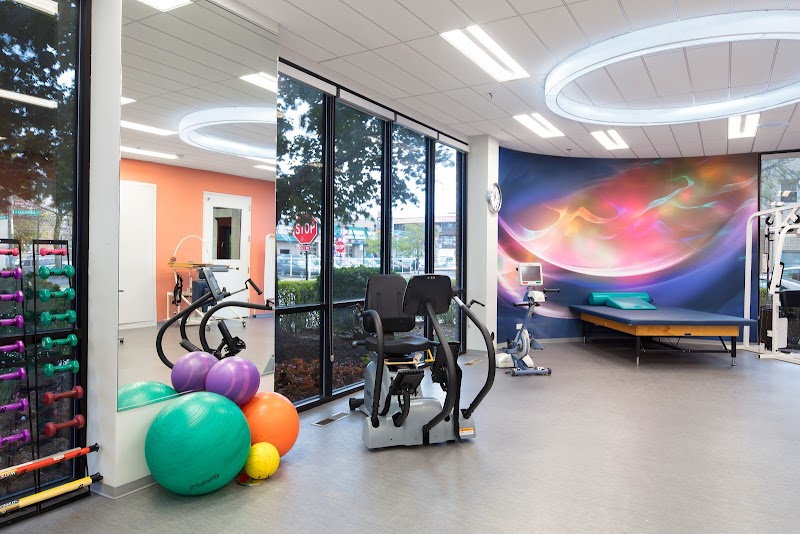
How is Astoria Place Living & Rehab Staffed?

CMS rates ASTORIA PLACE LIVING & REHAB's staffing level at 3 out of 5 stars, which is average compared to other nursing homes. Staff turnover is 35%, compared to the Illinois average of 46%. This relatively stable workforce can support continuity of care.

What Have Inspectors Found at Astoria Place Living & Rehab?

State health inspectors documented 30 deficiencies at ASTORIA PLACE LIVING & REHAB during 2023 to 2025. These included: 2 that caused actual resident harm and 28 with potential for harm. Deficiencies causing actual harm indicate documented cases where residents experienced negative health consequences.
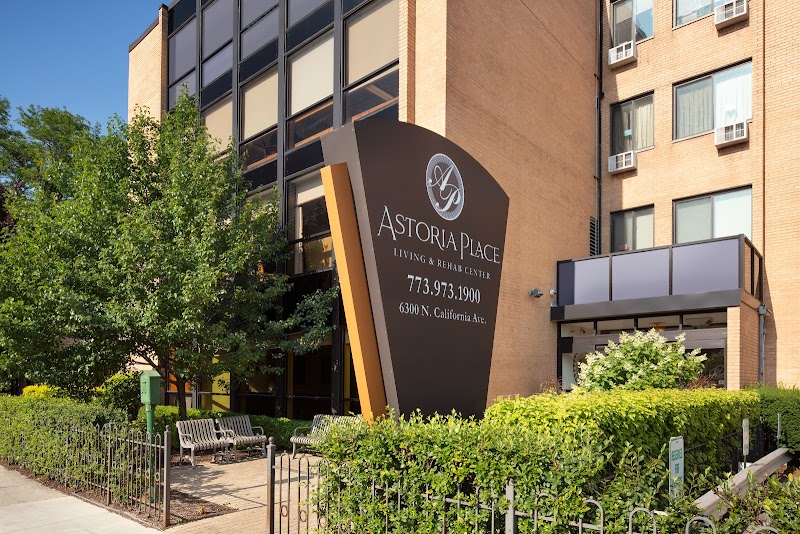
Who Owns and Operates Astoria Place Living & Rehab?

ASTORIA PLACE LIVING & REHAB is owned by a for-profit company. For-profit facilities operate as businesses with obligations to shareholders or private owners. The facility is operated by LEGACY HEALTHCARE, a chain that manages multiple nursing homes. With 164 certified beds and approximately 149 residents (about 91% occupancy), it is a mid-sized facility located in CHICAGO, Illinois.
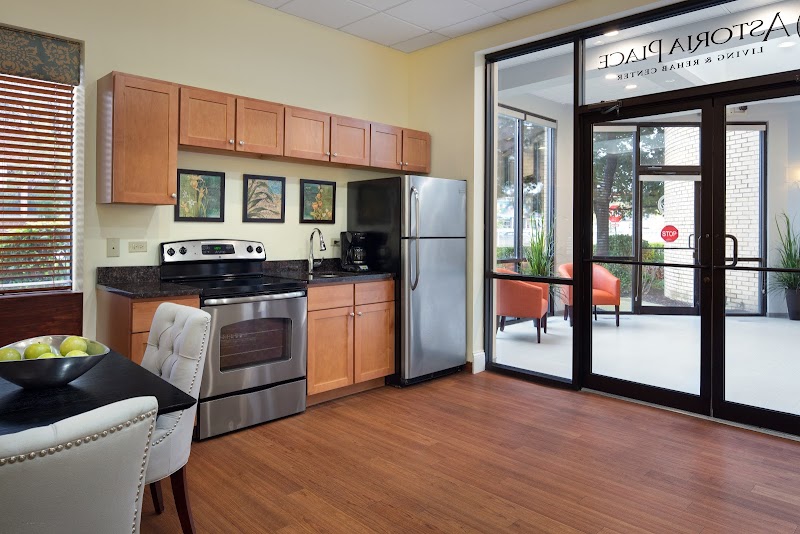
How Does Astoria Place Living & Rehab Compare to Other Illinois Nursing Homes?

Compared to the 100 nursing homes in Illinois, ASTORIA PLACE LIVING & REHAB's overall rating (3 stars) is above the state average of 2.5, staff turnover (35%) is significantly lower than the state average of 46%, and health inspection rating (3 stars) is at the national benchmark.

What Should Families Ask When Visiting Astoria Place Living & Rehab?

Based on this facility's data, families visiting should ask: "Can I visit during a mealtime to observe dining assistance and food quality?" "How do you handle medical emergencies, and what is your hospital transfer rate?" "Can I speak with family members of current residents about their experience?"

Is Astoria Place Living & Rehab Safe?

Based on CMS inspection data, ASTORIA PLACE LIVING & REHAB has a clean safety record: no substantiated abuse findings (meaning no confirmed cases of resident harm), no Immediate Jeopardy citations (the most serious violation level indicating risk of serious injury or death), and is not on the Special Focus Facility watch list (a federal program monitoring the lowest-performing 1% of nursing homes). The facility has a 3-star overall rating and ranks #1 of 100 nursing homes in Illinois. While no facility is perfect, families should still ask about staff-to-resident ratios and recent inspection results during their visit.

Do Nurses at Astoria Place Living & Rehab Stick Around?

ASTORIA PLACE LIVING & REHAB has a staff turnover rate of 35%, which is about average for Illinois nursing homes (state average: 46%). Moderate turnover is common in nursing homes, but families should still ask about staff tenure and how the facility maintains care continuity when employees leave.

Was Astoria Place Living & Rehab Ever Fined?

ASTORIA PLACE LIVING & REHAB has been fined $7,360 across 1 penalty action. This is below the Illinois average of $33,152. While any fine indicates a compliance issue, fines under $50,000 are relatively common and typically reflect isolated problems that were subsequently corrected. Families should ask what specific issues led to these fines and confirm they've been resolved.

Is Astoria Place Living & Rehab on Any Federal Watch List?

ASTORIA PLACE LIVING & REHAB is not on any federal watch list. The most significant is the Special Focus Facility (SFF) program, which identifies the bottom 1% of nursing homes nationally based on persistent, serious quality problems. Not being on this list means the facility has avoided the pattern of deficiencies that triggers enhanced federal oversight. This is a positive indicator, though families should still review the facility's inspection history directly.