AVANTARA LINCOLN PARK
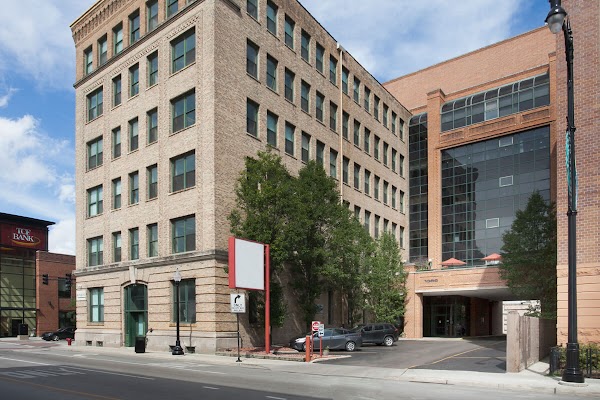
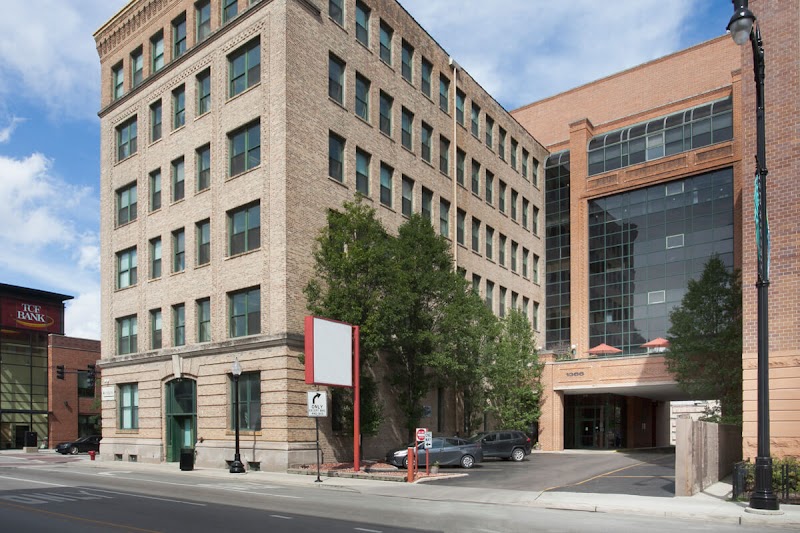
1366 WEST FULLERTON AVENUE, CHICAGO, IL 60614 (773) 248-9300
For profit - Corporation 248 Beds LEGACY HEALTHCARE Data: November 2025
Trust Grade
10/100
#328 of 665 in IL
Last Inspection: June 2024

Within standard 12-15 month inspection cycle. Federal law requires annual inspections.

Overview

Avantara Lincoln Park in Chicago has received a Trust Grade of F, indicating poor performance with significant concerns. Ranking #328 of 665 facilities in Illinois puts it in the top half, but this does not offset the low grade. The facility is showing improvement, as the number of reported issues decreased from 18 in 2024 to 9 in 2025. Staffing is rated at 2 out of 5 stars, with a turnover rate of 43%, which is better than the state average, suggesting some stability among staff. However, the facility has faced serious incidents, such as a resident suffering significant weight loss due to lack of monitoring, and another resident being injured after being struck by a walker from another resident, highlighting serious care concerns despite average RN coverage.

Trust Score
F
10/100
In Illinois
#328/665
Top 49%
Safety Record
High Risk
Review needed
Inspections
Getting Better
18 → 9 violations
Staff Stability
○ Average
43% turnover. Near Illinois's 48% average. Typical for the industry.
Penalties
✓ Good
$54,883 in fines. Lower than most Illinois facilities. Relatively clean record.
Skilled Nurses
✓ Good
Each resident gets 47 minutes of Registered Nurse (RN) attention daily — more than average for Illinois. RNs are trained to catch health problems early.
Violations
⚠ Watch
70 deficiencies on record. Higher than average. Multiple issues found across inspections.
★★☆☆☆
2.0
Overall Rating
★★☆☆☆
2.0
Staff Levels
★★★☆☆
3.0
Care Quality
★★☆☆☆
2.0
Inspection Score
Stable
2024: 18 issues
2025: 9 issues

The Good

  • Full Sprinkler Coverage · Fire safety systems throughout facility
  • No fines on record
  • Staff turnover below average (43%)

    5 points below Illinois average of 48%

Facility shows strength in fire safety.

The Bad

2-Star Overall Rating

Below Illinois average (2.5)

Below average - review inspection findings carefully

Staff Turnover: 43%

Near Illinois avg (46%)

Typical for the industry

Federal Fines: $54,883

Above median ($33,413)

Moderate penalties - review what triggered them

Chain: LEGACY HEALTHCARE

Part of a multi-facility chain

Ask about local staffing decisions and management

The Ugly 70 deficiencies on record

6 actual harm
Sept 2025 1 deficiency
CONCERN (D) 📢 Someone Reported This

A family member, employee, or ombudsman was alarmed enough to file a formal complaint

Potential for Harm - no one hurt, but risky conditions existed

Accident Prevention (Tag F0689)

Could have caused harm · This affected 1 resident

**NOTE- TERMS IN BRACKETS HAVE BEEN EDITED TO PROTECT CONFIDENTIALITY** Based on interviews and record reviews, the facility [A] failed to provide adequate supervision for 1 cognitive impaired residen...

Read full inspector narrative →
**NOTE- TERMS IN BRACKETS HAVE BEEN EDITED TO PROTECT CONFIDENTIALITY** Based on interviews and record reviews, the facility [A] failed to provide adequate supervision for 1 cognitive impaired resident (R1) who is a high fall risk with a history of falls, and [B] failed to follow their fall prevention policy to ensure fall interventions were put into place for each fall, and failed to implement the interventions that were in place, for one [R1] of two residents reviewed for falls. Findings Include:R1's clinical record indicates the following in part: R1 with medical diagnoses of hydrocephalus, repeated falls, type II diabetes, dementia, history of falling, and essential hypertension. Minimum data set [MDS] Brief Interview Mental Status Score Indicates R1 is cognitively impaired. R1's Clinical Electronic Record indicates:R1 sustained 11 falls on: 3/31/25, 4/10/25, 5/12/25, 5/16/25, 5/30/25, 6/28/25, 7/15/25, 7/17/25, 8/4/25, 8/15/25, and 8/27/25.R1's Care plan in part:3/14/25, R1 is a high fall risk related to dementia.Interventions:Keep all needed items like water pitcher, tissue box, urinal within reach [3/14/25],Provide a safe environment, and a working and reachable call light [3/14/25]Engage R1 in activities that interest him during the day [5/12/25]R1 to assisted in putting on appropriate footwear when out of bed in the morning [5/12/25]Family will provide well-fitting nonskid shoes [6/28/25]Bed alarm [7/17/25][Missing fall interventions for 3/31/25, 4/10/25, 5/16/25, 5/30/25, 8/4/25, 8/15/25, and 8/27/25]8/28/25 R1 has osteoarthritis of bilateral hips and chronic pain due to cervicalgia. Interventions: Educate care givers on safety measures that need to be taken in order to reduce risk of falls.R1's Progress notes in part:8/15/25 Nurse Note at 11:30 PM:R1 is awake. He got out of his bed sitting on the floor.V5 [Registered Nurse]8/21/2025 9:30 PM Behavior Note Behavior: CNA [Certified Nurse Assistant] staff observed R1 slowly lowering self to the floor. Resident able to stand up by himself, no assistance. R1 given a chair to sit on. Non-Pharmacological Interventions: Redirected to sit in the chair. Pharmacological Interventions: Night medication administered. List education provided: Summary/Outcomes: R1 sat on the floor witnessed by the CNA, resident then stood up by himself with no assistance needed. Resident currently on the chair near the nurse's station.8/22/25 V7 [Licensed Practical] Nurse Note:R1 observed to have yellowish purple bruise to top of right shoulder. V6 [Nurse Practitioner] notified, new orders to transfer R1 to emergency room for evaluation.8/23/25 at 12:42 AM Nurse Note:R1 admitted to hospital diagnosis: Fall. X-rays and CT scan was negative.8/27/25 at 1:09 PM Nurse note:R1 returned to facility. Nurse practitioner and family made aware.8/27/25 at 2:42 PM V7 [Licensed Practical Nurse] Nurse Note:Change in Condition: R1 witness fall, unresponsive verbally for approximately five minutes. Primary physician gave order to send to emergency room.8/31/25 at 9:25 PM Psych Note:Chart review, R1 was recently hospitalized from [DATE] to 8/27/25 for an unwitnessed fall. CT scan of head no acute findings. After R1 returned to the facility, R1 had a witnessed mechanical fall, evaluated at emergency room, EKG negative, pelvis and bilateral hips x-rays no acute findings. R1 returned in stable condition.Interviews:On 9/6/25 at 12:05 PM, V14 [Licensed Practical Nurse] and surveyor observed R1 sitting on the edge of his bed eating lunch alone, wearing socks. R1's call light was tangled on the floor underneath the head of bed. Water pitcher, tissue box or urinal was not in reach. R1 stood up and walked around in the room the bed alarm did not sound off. V14 stated, I am an agency nurse and work here often. I am familiar with R1. He [R1] is a high fall risk and a frequent fall resident. Nursing staff provides R1 with frequent monitoring and supervision. R1 needs stay in his room because he has a cough. R1 is negative for Covid and influenza, but in nurse-to-nurse report, R1 needs to stay in his room. R1 is not on isolation. R1's call light in tangled up on the floor, its supposed to be in reach at all times. I think the bed alarm is not on, because it did not sound when R1 stood up off the bed. I did not turn the bed alarm off, but the alarm needs to be on. R1 does not have any bruises now, but he had some face and shoulder bruises about a month ago from a fall.On 9/6/25 at 12:22 PM, V16 [Activity Assistant] stated, I am familiar with R1. He has not participated in activities for a couple of days because he must stay in his room due to coughing. R1 enjoys sensory, touching, music, exercise, and coloring. Typically, when is resident is on isolation I would go and complete one-to-one activities in their room. R1 has not had one-to-one activity in his room, but I can start today.On 9/6/25 at 2:33 PM, V7 [Licensed Practical Nurse] stated, R1 is alert but very confused, and requires constant supervision and monitoring due to wandering and frequent falls. On 8/22/25, R1's family member [V4] requested R1 to be sent out to the hospital due to bruising on his forehead and shoulder from a previous fall. All test results were negative for fractures. On 8/27/25 R1 returned back to the facility around 1:00 PM. Later around 3PM, R1 was in the dining room, I guess he tried to sit on another resident's lap, but he missed the chair and fell on his buttocks. R1 was alert when he came back from the hospital, but when I fell, he was unconscious for approximately five minutes. R1 was sent to the emergency room, all tests were negative for injuries. Some fall interventions for R1 are low bed, call light in reach, bed alarm, and activities. I try to keep my eyes on him at all times, but I also have other resident to monitor.On 9/6/25 at 3:00 PM, V6 [Nurse Practitioner] stated, I am R1's Nurse Practitioner, and I assessed R1 on 8/22/25. R1 had old bruises colored yellowish on his forehead and shoulder, all skin was intact from a previous fall on 8/15/25. R1 is a wander with a diagnosis of dementia. R1 has experience several falls, but with no major injuries. R1 is not on isolation. R1 returned from the hospital with a cough, R1 was negative for Covid and Flu, but positive for common cold. R1 is able to leave his room, staff encourages R1 to wear a face mask when possible. R1 needs close supervision and monitoring and re-direction to prevent further falls.On 9/6/25 at 3:50 PM, V2 [Director of Nursing] stated, I took over the fall coordinator responsibilities, until I find a replacement for the position. R1 is alert but confused and has a diagnosis of dementia. R1 has fallen 11 times from 3/25 to 9/25 with no major injuries. Some of R1 falls required him to be evaluated at the hospital, but each time the results were negative for fractures or injuries.On 8/21/25 R1's family member [V4] requested R1 to be sent to the hospital emergency room due to R1 having an old bruise on his face and shoulder from a previous fall on 8/15/25. R1 was doing well. R1 did not voice nor have any signs or symptoms dizziness, headaches, or difficulty moving. R1 only went to the hospital per V4's request. There was discoloration on his forehead and shoulder, no open areas, no bleeding.If the resident falls one time, they are automatically a high fall risk. For every fall there should be an individualized intervention in place to their care plan, hopefully preventing another fall from occurring. The nursing staff need to ensure they follow each resident's individualize care plan. R1's care plan fall interventions are to keep all needed items like water pitcher, tissue box, urinal within reach, provide a safe environment, and a working and reachable call light, Engage R1 in activities that interest him during the day, R1 to assisted putting on appropriate footwear when out of bed in the morning, and bed alarm. All R1's fall interventions should be in place and followed to help prevent further falls. R1 is not on isolation and does not have to stay in his room, and should be allowed to participate in activities, as it is part of R1's care plan as a fall intervention. However, if resident is on isolation and activity staff would go into their room to engage the resident with one-to-one activities. The bed alarm purpose to alert nursing staff that the resident has gotten off the pad, to prevent a fall. If the bed alarm is not turned on, the resident could get up and staff would not be alerted. Nurses should check the bed and chair alarms at the start of their shifts. All residents should have their call light and frequently used items in reach. R1 requires close monitoring and supervision. R1 needs one-to- one supervision, we are having a meeting with R1's family to discuss options.Policy documented in part:Fall Occurrence dated 6/30/25.It is the policy of the facility to ensure that residents are assessed for risk for falls, that interventions are put in place, and interventions are re-evaluated and revised as necessary. If a resident had fallen, the resident is automatically considered a high fall risk.The nurse may immediately start interventions to address falls in the unit, even prior to the fall's coordinator investigation. Ultimately, the fall coordinator may change the interventions provided by the nurse if the fall coordinator investigation identifies a more appropriate intervention for the individual fall. The fall coordinator will add the intervention to the resident's care plan.The fall interventions will be re-evaluated and] revised as necessary.
Aug 2025 2 deficiencies 1 Harm
SERIOUS (G) 📢 Someone Reported This

A family member, employee, or ombudsman was alarmed enough to file a formal complaint

Actual Harm - a resident was hurt due to facility failures

Deficiency F0692 (Tag F0692)

A resident was harmed · This affected 1 resident

**NOTE- TERMS IN BRACKETS HAVE BEEN EDITED TO PROTECT CONFIDENTIALITY** Based on observation, interview and record review the facility failed to address a resident's significant weight loss for 1 (R1)...

Read full inspector narrative →
**NOTE- TERMS IN BRACKETS HAVE BEEN EDITED TO PROTECT CONFIDENTIALITY** Based on observation, interview and record review the facility failed to address a resident's significant weight loss for 1 (R1) of 4 residents reviewed for weight loss. This failure resulted in R1 having a 30-pound weight loss in 4 months, 34 pounds in 6 months and 44.5 pounds in 7 months.Findings Include:Findings Include:R1 was admitted to the facility on [DATE] with diagnoses not limited to Asthma, Hemiplegia and Hemiparesis Following Cerebral Infarction Affecting Left Non-Dominant Side, Intervertebral Disc Degeneration, Lumbar Region with Discogenic Back Pain Only, Cervical Disc Degeneration, Atherosclerotic Heart Disease, Low Back Pain, Essential (Primary) Hypertension, Idiopathic Gout, Gastro-Esophageal Reflux Disease, Depression, Obstructive Sleep Apnea, Cervicalgia, Mood Disorder due to known physiological condition with depressive features, symptoms and signs involving cognitive functions following unspecified Cerebrovascular Disease, Dementia and Dysphagia, Oropharyngeal Phase. R1 was unable to complete the Brief Interview for Mental Status. The review of R1's individualized, comprehensive care Plan document in part: Focus: R1 is at risk for alteration in nutritional status related to an active therapeutic diet and mechanically altered texture. Comparison Weight 06/15/25, 167.0 Lbs., -9.6%, -16.0 Lbs. Date Initiated: 01/20/25 Revision on: 08/21/25 Interventions: Provide assistance for meals if indicated. Provide diet and supplements as ordered. Date Initiated: 01/20/25. Focus: R1 requires assistance with ADL's (Activities of Daily Living) (bed mobility, transfers, dressing, walking, personal hygiene, eating and toileting). Date Initiated: 01/16/25 Revision on: 07/03/25. Interventions: Eating: 1:1 staff assistance with all meals and as needed. Date Initiated: 07/03/25. Encourage participation in ADL's. Focus: R1 impaired cognitive function/dementia or impaired thought processes. Interventions: Ask yes/no questions in order to determine R1's needs. Focus: R1 has expressive communication barrier.A review of R1's weights reflected that the resident had a significant weight loss and was not on a physician prescribed weight loss regimen. R1's weights dated as follows: 01/15/25 201.0 Lbs., 02/18/25 180.3 Lbs., 03/11/25 178.0 Lbs., 04/09/25 177.5 Lbs., 05/14/25 171.0 Lbs., 06/15/25 167.0 Lbs., 07/10/25 156.5 Lbs. and 08/27/25 146.5 lbs. R1 had a 20.7-pound 10.30% weight loss from 01/15/25-02/18/25. R1 had an additional 8.7-pound 5.16% weight loss from 02/18/25-05/14/25, and an additional 14.5-pound 8.48% weight loss from 05/14/25-07/10/25 totaling a 44.5-pound 22.14% weight loss from 01/15/25-07/10/25 before the facility implemented a diet change on 07/15/25, Exam and modified barium swallow study completed 07/23/25, adding supplements on 07/24/25 and 07/25/25. R1 continued to lose weight, losing an additional 10 pounds 6.39% since the implementation of the interventions. R1 has a weight loss of 54.5 pounds 27.11% since admission on [DATE]-[DATE]. A review of the Dietary Progress Notes (DPN) completed by the dietician dated 03/06/25 reflected that the resident's weight of 180.3 pounds on (02/18/25) and 201 pounds on (01/15/25) with a -10.3% significant weight loss in a one-month time period. Now presents with significant unplanned weight loss > 1 month. The DPN further indicated that the resident reports a fair appetite depending on the meal, will request subs for menu dislikes, also states orders food out at times. Resident declined extra portions or ONS (oral nutritional supplements) offered. Updated food preferences and will relay to kitchen. The DPN indicated nutritional interventions: 1.) Add super cereal and double eggs at breakfast, ice cream at lunch and dinner. Dietician recommendation on 03/06/25 per progress note 1.) Add super cereal and double eggs at breakfast, ice cream at lunch and dinner. (Cereal, double eggs at breakfast, ice cream at lunch and dinner was recommended but never ordered or provided to the resident). A review of the Dietary Progress Notes (DPN) completed by the dietician dated 04/30/25 reflected that the resident weight of 177.5 pounds on (04/09/25), 178 pounds on (03/11/25), 180.3 pounds on (02/18/25) and 201 pounds on (01/15/25) significant weight loss -11.7% x 3 months from admission weight. Presents with significant unplanned weight loss > 3 months. Physician order document in part as follows: No Salt Packet diet, Regular texture, thin liquids consistency Diet dated 01/22/25, Discontinued 07/15/25. 1:1 Feeder & give medication one at a time or if trouble swallowing can crush medications dated 05/22/25, Discontinued 07/03/25 swallow eval (evaluation), noted cough with eating. ST (Speech Therapy) eval (evaluation) and treat 2-4x a week for 4 weeks for dysphagia follow up and safety dated 05/22/25. ST (Speech Therapy) eval (evaluation) and treat 2-3x a week for dysphagia management dated 07/15/25. No Salt Packet diet, Mechanical Soft texture, thin liquids consistency for diet dated 07/15/25 13:00, discontinued 07/23/2025. Exam and modified barium swallow study dx. (diagnosis) dysphagia 07/17/25. No Salt Packet diet, Mechanical Soft texture, Nectar Thick Liquids Consistency Diet dated 07/23/25 11:27. Super cereal one time a day with breakfast Supplement dated 07/25/25 09:00. Med Plus 2.0 two times a day 120 ml (med pass 2.0 or nectar-thick equivalent supplement) dated 07/24/25 17:00. Swallow evaluation to be scheduled at Hospital dated 08/01/25. Video swallow evaluation, DX CVA (Diagnosis Cerebral Vascular Accident) dated 08/04/25. DC ST (Discontinue Speech Therapy) services dated 08/11/25. GI (Gastrointestinal) consult 09/24/25 @ (at) 09:00am please schedule transportation and escort dated 08/27/25. Speech Therapy Evaluation and Plan of Treatment document in part: Staff will feed patient with 1:1 assist, small bites, slow rate, one sip at a time in 90% of [NAME] (opportunities) to decrease signs and symptoms aspiration (Target 06/04/25). Baseline (05/22/25) difficulty feeding self, coughing observed. Current referral: Reason for referral: Patient referred to speech therapy due to observed coughing/gagging during meals with concerns patient needs increased assist. Speech Therapy Treatment Encounter Note(s) Date of Service: 07/15/25 Precautions Details: Feeder, dysarthric, mechanical soft. Practiced strategies for small bites, alteration of bites/sips, slow rate, increased time between bites. Educated nursing on downgrade and plan of treatment. Speech Therapy Evaluation and Plan of Treatment document in part: Baseline 07/15/25 In order to safely consume highest level of oral intake, patient will use bolus size modifications, general swallow techniques/precautions, effortful swallow, rate modification and alteration of liquid/solids and upright posture during meals 90% of opportunities in order to decrease risk for weight loss, efficiently consume diet of choice, minimize aspiration and safely consume highest level of oral intake. Current referral: Reason for referral/Current illness: Patient referred to speech therapy due to noted difficulties swallowing, with observed coughing and need to remove from oral cavity from certified nurse assistant. Concerns/complaints: Certified Nurse Assistant and nursing with concerns with decline and choking risk. Malnutrition risk: Malnutrition Risk Factors Identified as part of Assessment = Need for altered diet, Poor PO (oral) intake. Swallow Strategies: 1:1 assist, small bites/sips, slow rate.Speech Therapy Treatment Encounter Note(s) Date of Service: 08/19/25 Precautions Details: Feeder, dysarthric, mechanical soft, nectar thick liquids. Modified Barium Swallow Study dated 07/23/25 document in part: Primary referral diagnosis Dysphagia. Clinical reason for referral: increased difficulty swallowing. Summary: Patient presents with a mild oral dysphagia and mild-moderate pharyngeal dysphagia. Swallow function declined as the study progressed: most likely due to muscular fatigue. Patient demonstrated trace silent aspiration of thin toward end of study with a liquid wash of solids. Question patient's ability to maintain adequate nutrition, as patient reported not eating very much at meals as well as reported weight loss. Given fatigue/decline in swallow function with exertion, patient may benefit from smaller meals with high calorie snacks between meals. Diet Recommendation: Solid soft and bite sized (Mechanical Soft). Liquid Mildly thick (nectar thick). Recommended swallow/feeding precautions to improve safety with PO intake: Care giver assist with feeding, No Straws, Supervision with oral intake 1:1. Swallow strategies should include: secondary swallow, alternate consistencies, no straws, patient should be upright in chair for all meals.On 08/26/25 at 12:36 PM R1 was observed in bed on a low air loss mattress with the setting of 160. Surveyor asked does she (R1) feed herself and R1 shook her head indicating no. On 08/26/25 at 01:14 PM R1 indicated yes when asked did the staff feed her and no, when asked did she like the food. R1 indicated yes when asked did she drink the juice and eat the grilled cheese sandwich. R1 indicated that her appetite is not good, she lost a lot of weight, and she drinks the supplements.On 08/28/25 12:22 PM Per telephone interview V14 (R1's Family Member) stated They called me yesterday at 06:16pm to let me know R1 lost 4 pounds. R1 is having difficulty swallowing liquids. I told them R1 does not like the food there. I was sending R1 food at least twice a week. I stay on top of them to make sure R1 is being fed. R1 has noticeable weight loss.On 08/27/25 at 12:31 PM V13 (Certified Nurse Assistant) was observed feeding R1 a tuna fish sandwich and red thickened juice. [NAME] beans, a banana, orange juice and a cup of thin lemonade was observed on the meal tray. R1 consumed 75% of the tuna fish sandwich. A large cup of water with no thickener and a straw was observed on the overbed table in front of R1. Restorative weighed R1 this morning. R1 will eats her food but it depends on what it is. Whatever R1 is able to eat she will eat.On 08/27/25 at 12:51 PM V12 (Registered Dietician) stated I have worked for the facility about a year, and I come see the resident once a week. R1 is someone who has been on my radar. R1 came in with diagnosis of failure to thrive and she stays in bed a lot. R1 has been losing weight and has a worsening swallowing disorder. R1 is working with speech therapy, updating preferences, ordered fortified cereal and liquid ensure supplement. The goal is to slow the weight loss and maintain the R1's weight. R1 was working with the speech therapist to see what diet is best for her. This is unplanned weight loss for R1. There is a potential for the development of wounds. The supplements would help prevent that from happening. On 08/27/25 at 02:30 PM Per telephone interview V18 (Nurse Practitioner) stated I was notified of R1's weight loss by speech therapy, and they did a video swallow evaluation. R1 has silent aspiration, and we recommended a gastric tube. We told R1's family she needed a gastric tube, and they said that they wanted a second opinion. I found someone at a Hospital and R1 has a follow-up appointment on 09/24/25. We started R1 on thicken liquids but R1 refuse. R1 is declining. On 06/16/225 R1 weighed 167.0 pounds, and I picked her up. R1 does not have a really good cough. The 6 pounds R1 lost in 12 days is water weight. That is my biggest complaint about the food, residents say it is awful. I spoke to the family myself. I peaked in on Friday and R1 was sleeping. On 08/08/25 I wrote a note. R1's weight loss is unavoidable. R1 really needs a gastric tube.On 08/27/25 at 02:05 PM Per telephone interview V15 (R1's Attending Physician) stated I was notified of R1's weight loss and they are doing nutritional support. I think they need to do a workup, CT (Computed Tomography) of the chest, an entire workup and try sending R1 to the hospital. The tests are normally done outpatient. I will have to probably try to get R1 admitted to the hospital. It is hard to say what the cause is of R1's weight loss, it can be thousands of causes, and it is not one test that can identify the weight loss. Surveyor informed V15 that R1 has had a weight loss of 54.5 pounds since her admission on [DATE]. V15 responded, that is a huge weight loss. Earlier it was not bought to my attention but recently it was brought to my attention in the last 2 months. This is alarming and I will address it right away.On 08/27/25 at 04:25 PM V20 (Contracted Speech Therapist) stated I have an outside contract and have worked here since November. I originally say R1 in January and February. R1 came from the hospital and had a decline in speech, slurred, was on thick liquids and was upgraded to thin liquids. At the end of May R1 was consulted for difficulty swallowing and coughing. There was no coughing or swallowing during being fed slow with the certified nurse assistant. In mid-July R1 was repeatedly coughing and there was a dramatic decline with R1's speech. R1's speech was more slurred, and it was difficult to understand. We did a down grade to a mech soft diet and downgrade to thick liquids on 07/23/25. R1's muscles got weaker, she had a trace aspiration and was unable to expel food from her airway. R1 would not be effectively getting it (food) out and had weak oral muscle skills. The plan was oral motor and pharyngeal exercises. I explained what we saw on video and our recommendation but R1does not like the soft food. R1refused the food in general and the option was soft food because of the risk of aspiration. The third option was a gastric tube so R1 could get the calories she needs if not eating. R1 does not want the gastric tube and wanted a second opinion. The interventions are small bites, small sips and if aspirating stop feeding. I educated the nurses, certified nurse assistants, explained to staff and family that R1 has a weak cough response. I called and told the family where we were at and saw R1 for 3 more sessions and education. I was not doing trials of thin liquids but would walk in R1's room and there would be thin liquids at the bedside. I would remove them and let the nurse know. R1 is not eating, and this is not sustainable for her. R1 would refuse the meals, and I got in touch with V18 (Nurse Practitioner) and asked was the gastric tube going to be inserted. It is up to the family to decide what the plan is going to be. That discussion was this month (August). R1 is refusing her food. The silent aspiration is just with the thin liquids which is why we recommended the nectar thick liquids. With solid foods R1 does gage and R1 is not to have any straws. I make recommendations and they are not followed through, this is frustrating. If R1 wants thin liquids for the quality-of-life R1 had to be a DNR (Do not Resuscitate) because she could end up with pneumonia and end up in the hospital. We recommended R1 be up in the chair when eating.On 08/27/25 at 03:48 PM V19 (Care Plan Coordinator) stated if there is a new problem that arises the care plan should be updated within 24 hours. If there is a change in dietary the dietary should update the care plan. For weight loss also I started tracking when a care plan is updated and revised. Silent aspiration should have been updated in the care plan. The care plans are supposed to be person centered. There is nothing in R1's care plan. I will probably talk to R1's family about the silent aspiration and the refusal of the gastric tube placement.On 08/27/25 at 04:21 PM V1 (Administrator) presented the surveyor with a physician order and stated, this is R1's recommended calorie count, and I am giving extra education.On 08/28/25 V1 (Administrator) emailed the revised care plan. Focus: Nutrition/Aspiration. R1 is at risk for alteration in nutritional status related to an active therapeutic diet and mechanically altered texture. R1 was observed that she is potential for aspiration related to diagnosis Cerebral vascular Accident, Hemiplegia and Hemiparesis. Diagnosis Dysphagia Oropharyngeal Phase, Silent Aspiration. Wallow evaluation to be scheduled. 08/27/25 - 3day calorie count. Revision on 08/28/25. Goal: Resident will be free from signs and symptoms of dehydration or malnutrition. Resident will maintain stable weight to next review. Will be able to have no undetected incident of aspiration x (times) 3 months. Date initiated 08/27/25. Interventions: Aspiration Precautions. Monitor for signs and symptoms of weight loss. Date initiated 08/27/24. 08/27/25 3 days calorie count. Date initiated 08/28/25. Monitor during mealtime, Keep head of bed elevated assist with ff (Free Fluid) swallowing strategies. Swallowing strategies should include secondary swallow, alternate consistencies, No Straws, R1 should be in upright position in chair for all meals, Registered Dietician Medical Doctor order. Monitor resident with difficulty swallowing, assess for signs of choking and/or aspiration. Provide thickened Nectar Thick liquids consistency. Date initiated 08/27/25. Other recommendations, R1/family education provided regarding study results and recommendations. Assess diet tolerance. Provide diet and supplements as ordered. Date initiated 08/27/25.Policy: Titled Weights revised 07/03/25 document in part: 3. Significant weight changes (monthly (5%), quarterly (7.5%), and every 6 months (10%) will be assessed and addressed by the IDT (Interdisciplinary Team) which includes but not limited to the Dietitian, Physician, Medical Specialist, Speech Therapist, Nutritionist, and Nurses.
CONCERN (D) 📢 Someone Reported This

A family member, employee, or ombudsman was alarmed enough to file a formal complaint

Potential for Harm - no one hurt, but risky conditions existed

Comprehensive Care Plan (Tag F0656)

Could have caused harm · This affected 1 resident

**NOTE- TERMS IN BRACKETS HAVE BEEN EDITED TO PROTECT CONFIDENTIALITY** Based on observation, interview, and record review, the facility failed to ensure that the development of individualized, compre...

Read full inspector narrative →
**NOTE- TERMS IN BRACKETS HAVE BEEN EDITED TO PROTECT CONFIDENTIALITY** Based on observation, interview, and record review, the facility failed to ensure that the development of individualized, comprehensive care plans had appropriate and measurable goals with target dates to address the resident(s) needs related to weight loss, difficulty swallowing and medical decline. This deficient practice was identified for 1 (R1) resident.Findings Include:R1 was admitted to the facility on [DATE] with diagnoses not limited to Asthma, Hemiplegia and Hemiparesis following Cerebral Infarction Affecting Left Non-Dominant Side, Intervertebral Disc Degeneration, Lumbar Region with Discogenic Back Pain only, Cervical Disc Degeneration, Atherosclerotic Heart Disease, Low Back Pain, Essential (Primary) Hypertension, Idiopathic Gout, Gastro-Esophageal Reflux Disease, Depression, Obstructive Sleep Apnea, Cervicalgia, Mood Disorder due to known physiological condition with depressive features, symptoms and signs involving cognitive functions following unspecified Cerebrovascular Disease, Dementia and Dysphagia, Oropharyngeal Phase. R1 was unable to complete the Brief Interview for Mental Status. The review of R1's individualized, comprehensive care Plan document in part: Focus: R1 is at risk for alteration in nutritional status related to an active therapeutic diet and mechanically altered texture. Comparison Weight 06/15/25, 167.0 Lbs., -9.6%, -16.0 Lbs. Date Initiated: 01/20/25 Revision on: 08/21/25 Interventions: Provide assistance for meals if indicated. Provide diet and supplements as ordered. Date Initiated: 01/20/25. Focus: R1 requires assistance with ADL's (Activities of Daily Living) (bed mobility, transfers, dressing, walking, personal hygiene, eating and toileting). Date Initiated: 01/16/25 Revision on: 07/03/25. Interventions: Eating: 1:1 staff assistance with all meals and as needed. Date Initiated: 07/03/25. Encourage participation in ADL's. Focus: R1 impaired cognitive function/dementia or impaired thought processes. Interventions: Ask yes/no questions in order to determine R1's needs. Focus: R1 has expressive communication barrier.A review of R1's weights reflected that the resident had a significant weight loss and was not on a physician prescribed weight loss regimen.R1's weights dated as follows: 01/15/25 201.0 Lbs., 02/18/25 180.3 Lbs., 03/11/25 178.0 Lbs., 04/09/25 177.5 Lbs., 05/14/25 171.0 Lbs., 06/15/25 167.0 Lbs., 07/10/25 156.5 Lbs. and 08/27/25 146.5 lbs. R1 had a 20.7-pound 10.30% weight loss from 01/15/25-02/18/25. R1 had an additional 8.7-pound 5.16% weight loss from 02/18/25-05/14/25, and an additional 14.5-pound 8.48% weight loss from 05/14/25-07/10/25 totaling a 44.5-pound 22.14% weight loss from 01/15/25-07/10/25 before the facility implemented a diet change on 07/15/25, Exam and modified barium swallow study completed 07/23/25, adding supplements on 07/24/25 and 07/25/25. R1 continued to lose weight, losing an additional 10 pounds 6.39% since the implementation of the interventions. R1 has a weight loss of 54.5 pounds 27.11% since admission on [DATE]-[DATE]. A review of the Dietary Progress Notes (DPN) completed by the dietician dated 03/06/25 reflected that the resident's weight of 180.3 pounds on (02/18/25) and 201 pounds on (01/15/25) with a -10.3% significant weight loss in a one-month time period. Now presents with significant unplanned weight loss > 1 month. The DPN further indicated that the resident reports a fair appetite depending on the meal, will request subs for menu dislikes, also states orders food out at times. Resident declined extra portions or ONS (oral nutritional supplements) offered. Updated food preferences and will relay to kitchen. The DPN indicated nutritional interventions: 1.) Add super cereal at double eggs at breakfast, ice cream at lunch and dinner.Dietician recommendation on 03/06/25 per progress note 1.) Add super cereal at double eggs at breakfast, ice cream at lunch and dinner. (Cereal, double eggs at breakfast, ice cream at lunch and dinner was recommended but never ordered or provided to the resident). A review of the Dietary Progress Notes (DPN) completed by the dietician dated 04/30/25 reflected that the resident weight of 177.5 pounds on (04/09/25), 178 pounds on (03/11/25), 180.3 pounds on (02/18/25) and 201 pounds on (01/15/25) significant weight loss -11.7% x 3 months from admission weight. Presents with significant unplanned weight loss > 3 months.Physician order document in part as follows: No Salt Packet diet, Regular texture, thin liquids consistency Diet dated 01/22/25, Discontinued 07/15/25. 1:1 Feeder & give medication one at a time or if trouble swallowing can crush medications dated 05/22/25, Discontinued 07/03/25 swallow eval, noted cough with eating. ST (Speech Therapy) eval (evaluation) and treat 2-4x a week for 4 weeks for dysphagia follow up and safety dated 05/22/25. ST (Speech Therapy) eval (evaluation) and treat 2-3x a week for dysphagia management dated 07/15/25. No Salt Packet diet, Mechanical Soft texture, thin liquids consistency for diet dated 07/15/25 13:00, discontinued 07/23/2025. Exam and modified barium swallow study dx. (diagnosis) dysphagia 07/17/25. No Salt Packet diet, Mechanical Soft texture, Nectar Thick Liquids Consistency Diet dated 07/23/25 11:27. Super cereal one time a day with breakfast Supplement dated 07/25/25 09:00. Med Plus 2.0 two times a day 120 ml (med pass 2.0 or nectar-thick equivalent supplement) dated 07/24/25 17:00 Swallow evaluation to be scheduled at Hospital dated 08/01/25. Video swallow evaluation, DX CVA (Diagnosis Cerebral Vascular Accident) dated 08/04/25. DC ST (Discontinue Speech Therapy) services dated 8/11/25. GI (Gastrointestinal) consult 09/24/25 @ (at) 09:00am please schedule transportation and escort dated 08/27/25.Speech Therapy Evaluation and Plan of Treatment document in part: Staff will feed patient with 1:1 assist, small bites, slow rate, one sip at a time in 90% of [NAME] (opportunities) to decrease signs and symptoms aspiration (Target 06/04/25). Baseline (05/22/25) difficulty feeding self, coughing observed. Current referral: Reason for referral: Patient referred to speech therapy due to observed coughing/gagging during meals with concerns patient needs increased assist.Speech Therapy Treatment Encounter Note(s) Date of Service: 07/15/25 Precautions Details: Feeder, dysarthric, mechanical soft. Practiced strategies for small bites, alteration of bites/sips, slow rate, increased time between bites. Educated nursing on downgrade and plan of treatment.Speech Therapy Evaluation and Plan of Treatment document in part: Baseline 07/15/25 In order to safely consume highest level of oral intake, patient will use bolus size modifications, general swallow techniques/precautions, effortful swallow, rate modification and alteration of liquid/solids and upright posture during meals 90% of opportunities in order to decrease risk for weight loss, efficiently consume diet of choice, minimize aspiration and safely consume highest level of oral intake. Current referral: Reason for referral/Current illness: Patient referred to speech therapy due to noted difficulties swallowing, with observed coughing and need to remove from oral cavity from certified nurse assistant. Concerns/complaints: Certified Nurse Assistant and nursing with concerns with decline and choking risk. Malnutrition risk: Malnutrition Risk Factors Identified as part of Assessment = Need for altered diet, Poor PO (oral) intake. Swallow Strategies: 1:1 assist, small bites/sips, slow rate.Speech Therapy Treatment Encounter Note(s) Date of Service: 08/19/25 Precautions Details: Feeder, dysarthric, mechanical soft, nectar thick liquids.Modified Barium Swallow Study dated 07/23/25 document in part: Primary referral diagnosis Dysphagia. Clinical reason for referral: increased difficulty swallowing. Summary: Patient presents with a mild oral dysphagia and mild-moderate pharyngeal dysphagia. Swallow function declined as the study progressed: most likely due to muscular fatigue. Patient demonstrated trace silent aspiration of thin toward end of study with a liquid wash of solids. Question patient's ability to maintain adequate nutrition, as patient reported not eating very much at meals as well as reported weight loss. Given fatigue/decline in swallow function with exertion, patient may benefit from smaller meals with high calorie snacks between meals. Diet Recommendation: Solid soft and bite sized (Mechanical Soft). Liquid Mildly thick (nectar thick). Recommended swallow/feeding precautions to improve safety with PO intake: Care giver assist with feeding, No Straws, Supervision with oral intake 1:1. Swallow strategies should include: secondary swallow, alternate consistencies, no straws, patient should be upright in chair for all meals.On 08/26/25 at 12:36 PM R1 was observed in bed on a low air loss mattress with the setting of 160. Surveyor asked does she (R1) feed herself and R1 shook her head indicating no.On 08/26/25 at 01:14 PM R1 indicated yes when asked did the staff feed her and no, when asked did she like the food. R1 indicated yes when asked did she drink the juice and eat the grilled cheese sandwich. R1 indicated that her appetite is not good, she lost a lot of weight, and she drinks the supplements.On 08/28/25 12:22 PM Per telephone interview V14 (R1's Family Member) stated They called me yesterday at 06:16pm to let me know R1 lost 4 pounds. R1 is having difficulty swallowing liquids. I told them R1 does not like the food there. I was sending R1 food at least twice a week. I stay on top of them to make sure R1 is being fed. R1 has noticeable weight loss.On 08/27/25 at 12:31 PM V13 (Certified Nurse Assistant) was observed feeding R1 a tuna fish sandwich and red thickened juice. [NAME] beans, a banana, orange juice and a cup of thin lemonade was observed on the meal tray. R1 consumed 75% of the tuna fish sandwich. A large cup of water with no thickener and a straw was observed on the overbed table in front of R1. Restorative weighed R1 this morning. R1 will eats her food but it depends on what it is. Whatever R1 is able to eat she will eat.On 08/27/25 at 12:51 PM V12 (Registered Dietician) stated I have worked for the facility about a year, and I come see the resident once a week. R1 is someone who has been on my radar. R1 came in with diagnosis of failure to thrive and she stays in bed a lot. R1 has been losing weight and has a worsening swallowing disorder. R1 is working with speech therapy, updating preferences, ordered fortified cereal and liquid ensure supplement. The goal is to slow the weight loss and maintain the R1's weight. R1 was working with the speech therapist to see what diet is best for her. This is unplanned weight loss for R1. There is a potential for the development of wounds. The supplements would help prevent that from happening. On 08/27/25 at 02:30 PM Per telephone interview V18 (Nurse Practitioner) stated I was notified of R1's weight loss by speech therapy, and they did a video swallow evaluation. R1 has silent aspiration, and we recommended a gastric tube. We told R1's family she needed a gastric tube, and they said that they wanted a second opinion. I found someone at a Hospital and R1 has a follow-up appointment on 09/24/25. We started R1 on thicken liquids but R1 refuse. R1 is declining. On 06/16/225 R1 weighed 167.0 pounds, and I picked her up. R1 does not have a really good cough. The 6 pounds R1 lost in 12 days is water weight. That is my biggest complaint about the food, residents say it is awful. I spoke to the family myself. I peaked in on Friday and R1 was sleeping. On 08/08/25 I wrote a note. R1's weight loss is unavoidable. R1 really needs a gastric tube.On 08/27/25 at 02:05 PM Per telephone interview V15 (R1's Attending Physician) stated I was notified of R1's weight loss and they are doing nutritional support. I think they need to do a workup, CT (Computed Tomography) of the chest, an entire workup and try sending R1 to the hospital. The tests are normally done outpatient. I will have to probably try to get R1 admitted to the hospital. It is hard to say what the cause is of R1's weight loss, it can be thousands of causes, and it is not one test that can identify the weight loss. Surveyor informed V15 that R1 has had a weight loss of 54.5 pounds since her admission on [DATE]. V15 responded, that is a huge weight loss. Earlier it was not bought to my attention but recently it was brought to my attention in the last 2 months. This is alarming and I will address it right away.On 08/27/25 at 04:25 PM V20 (Contracted Speech Therapist) stated I have an outside contract and have worked here since November. I originally say R1 in January and February. R1 came from the hospital and had a decline in speech, slurred, was on thick liquids and was upgraded to thin liquids. At the end of May R1 was consulted for difficulty swallowing and coughing. There was no coughing or swallowing during being fed slow with the certified nurse assistant. In mid-July R1 was repeatedly coughing and there was a dramatic decline with R1's speech. R1's speech was more slurred, and it was difficult to understand. We did a down grade to a mech soft diet and downgrade to thick liquids on 07/23/25. R1's muscles got weaker, she had a trace aspiration and was unable to expel food from her airway. R1 would not be effectively getting it (food) out and had weak oral muscle skills. The plan was oral motor and pharyngeal exercises. I explained what we saw on video and our recommendation but R1does not like the soft food. R1refused the food in general and the option was soft food because of the risk of aspiration. The third option was a gastric tube so R1 could get the calories she needs if not eating. R1 does not want the gastric tube and wanted a second opinion. The interventions are small bites, small sips and if aspirating stop feeding. I educated the nurses, certified nurse assistants, explained to staff and family that R1 has a weak cough response. I called and told the family where we were at and saw R1 for 3 more sessions and education. I was not doing trials of thin liquids but would walk in R1's room and there would be thin liquids at the bedside. I would remove them and let the nurse know. R1 is not eating, and this is not sustainable for her. R1 would refuse the meals, and I got in touch with V18 (Nurse Practitioner) and asked was the gastric tube going to be inserted. It is up to the family to decide what the plan is going to be. That discussion was this month (August). R1 is refusing her food. The silent aspiration is just with the thin liquids which is why we recommended the nectar thick liquids. With solid foods R1 does gage and R1 is not to have any straws. I make recommendations and they are not followed through, this is frustrating. If R1 wants thin liquids for the quality-of-life R1 had to be a DNR (Do not Resuscitate) because she could end up with pneumonia and end up in the hospital. We recommended R1 be up in the chair when eating.On 08/27/25 at 03:48 PM V19 (Care Plan Coordinator) stated The care plan should be updated every 3 months, for newly admitted residents, within 24 hours and if there is a new problem that arises it should be updated within 24 hours. If there is a change in dietary the dietary should update the care plan. Sometimes I will oversee it, and it should be multidisciplinary. For weight loss also I started tracking when a care plan is updated and revised. Silent aspiration should have been updated in the care plan. The care plans are supposed to be person centered. There is nothing in R1's care plan. I will probably talk to R1's family about the silent aspiration and the refusal of the gastric tube placement.On 08/27/25 at 04:21 PM V1 (Administrator) presented the surveyor with a physician order and stated, this is R1's recommended calorie count, and I am giving extra education.On 08/28/25 V1 (Administrator) emailed the revised care plan. Focus: Nutrition/Aspiration. R1 is at risk for alteration in nutritional status related to an active therapeutic diet and mechanically altered texture. R1 was observed that she is potential for aspiration related to diagnosis Cerebral vascular Accident, Hemiplegia and Hemiparesis. Diagnosis Dysphagia Oropharyngeal Phase, Silent Aspiration. Wallow evaluation to be scheduled. 08/27/25 - 3day calorie count. Revision on 08/28/25. Goal: Resident will be free from signs and symptoms of dehydration or malnutrition. Resident will maintain stable weight to next review. Will be able to have no undetected incident of aspiration x 3 months. Date initiated 08/27/25. Interventions: Aspiration Precautions. Monitor for signs and symptoms of weight loss. Date initiated 08/27/24. 08/27/25 3 days calorie count. Date initiated 08/28/25. Monitor during mealtime, Keep head of bed elevated assist with ff (Free Fluid) swallowing strategies. Swallowing strategies should include secondary swallow, alternate consistencies, No Straws, R1 should be in upright position in chair for all meals, Registered Dietician Medical Doctor order. Monitor resident with difficulty swallowing, assess for signs of choking and/or aspiration. Provide thickened Nectar Thick liquids consistency. Date initiated 08/27/25. Other recommendations, R1/family education provided regarding study results and recommendations. Assess diet tolerance. Provide diet and supplements as ordered. Date initiated 08/27/25.Policy: Titled Care Plan revised 06/30/25 document in part: It is the policy of this facility to ensure that all care plans including base line care plans are in conjunction with the federal regulations. 5. These will be periodically reviewed and revised by a team of qualified person after each assessment.
May 2025 1 deficiency
CONCERN (D) 📢 Someone Reported This

A family member, employee, or ombudsman was alarmed enough to file a formal complaint

Potential for Harm - no one hurt, but risky conditions existed

Deficiency F0806 (Tag F0806)

Could have caused harm · This affected 1 resident

**NOTE- TERMS IN BRACKETS HAVE BEEN EDITED TO PROTECT CONFIDENTIALITY** Based on observation, interview and record review the facility failed to provide one resident (R1) with food that accommodates R...

Read full inspector narrative →
**NOTE- TERMS IN BRACKETS HAVE BEEN EDITED TO PROTECT CONFIDENTIALITY** Based on observation, interview and record review the facility failed to provide one resident (R1) with food that accommodates R1's food allergies and intolerances. This failure affected one resident (R1) out of three residents reviewed for food accommodations. Findings include: R1's medical diagnoses include but are not limited to type 2 diabetes mellitus, muscle weakness, major depressive disorder, essential hypertension, and blindness one eye. R1's Minimum Data Set, dated [DATE] has a Brief Interview for Mental Status score of 14, which indicates R1's cognition is intact. On 05/22/25 at 11:25am R1 stated that the facility gives R1 food that R1 is either allergic to or cannot tolerate. On 05/22/25 at 12:26pm, observed R1's lunch tray delivered to R1's bedside. R1's lunch tray observed with shrimp, rich, corn on the cob and apple pie alamode. R1's meal ticket on R1's lunch tray documents in part, Allergies: cheese, dairy products, ice cream, milk, yogurt .Dislikes: apple, applesauce, bratwurst sausage, corn. On 05/22/25 at 12:26pm V6 (Central supply) stated that R1's meal ticket states that R1 has an allergy to dairy, so R1 should not have ice cream served to R1 on the meal tray. V6 stated that R1's dislikes include apples and corn, so R1 should not have apples or corn served to R1 on R1's meal tray. On 05/27/25 at 9:33am V7 (Director of Dietary) stated that a resident's food allergies and dislikes should not be served to the resident. V7 stated that a resident with a dairy allergy should not receive ice cream. V7 stated that the resident could have an allergic reaction to the ice cream. V7 stated that the diet card of each resident should be followed. Facility's policy titled Food Preference Policy dated 07/26/24 documents in part, Purpose: The facility will provide food that accommodates allergies and preferences .Policy: 1. The facility will identify resident's allergies, intolerances, and preferences based on medical records and interviews. 2 The facility will ensure that residents will not be given good that they are allergic to or good that give them intolerance reactions.
Feb 2025 5 deficiencies
CONCERN (D) 📢 Someone Reported This

A family member, employee, or ombudsman was alarmed enough to file a formal complaint

Potential for Harm - no one hurt, but risky conditions existed

Deficiency F0676 (Tag F0676)

Could have caused harm · This affected 1 resident

Based on observation, interview and record review, the facility failed to provide grooming assistance for one resident (R9) out of a total of 3 residents reviewed . Findings include: On 02/02/25 at ...

Read full inspector narrative →
Based on observation, interview and record review, the facility failed to provide grooming assistance for one resident (R9) out of a total of 3 residents reviewed . Findings include: On 02/02/25 at 9:55 AM, R9's beard and mustache bushy, shaggy, and untamed. R9's mustache appears to be long in length. The beard began to twist and extended beyond R9's upper lip area and the hair had grown long enogh that it can be visable that the hair reached into R9's mouth. R9 stated R9 gets a shower whenever R9 wants one. R9 stated no one has asked R9 about R9's beard and mustache and R9 would like to get his beard/mustache trimmed. R9 stated R9 does not like the way it looks. R9 stated, Look, my mustache is growing into my mouth! R9 stated he thinks in order to get it trimmed/cut R9 needs to go to the barber and the barber in the facility charges too much money. R9 stated he went out on pass yesterday to go to the barber but R9 walked one block and got so tired he had to turn back. R9 stated he never made it to the barbers and asked can the staff help me? and also stated, no one has ever asked or offered to cut it. I'd appreciate that if they could. R9 stated no one offered to set him up for him to do it himself. R9 stated he needs the staff to help, R9 does not think he can do it on his own. On 02/02/25 at 2:50 PM, V16 (Certified Nursing Assistant) stated it is the CNAs responsibility to shave/trim a resident's beard/mustache and this should be offered to the resident on a daily basis. V16 stated V16 does not know why R9's beard/mustache has not been trimmed yet. On 02/02/25 at 2:55 PM, V19 (Restorative Aide/Certified Nursing Assistant) stated today V19 was was pulled to the unit to work an assignment because of staffing shortage. V19 stated V19 has not asked if R9 wants to be shaved or groomed. V19 stated V19 will do that today. V19 stated there is not enough staff and we often have to run short-staffed. On 02/02/25 at 4:10 PM, V2 (Director of Nursing) stated shaving/grooming should be done and/or offered daily. V12 (Staffing Scheduler) stated on 02/02/25 the facility has 14 CNAs working the (7-3 shift) and should have 17-19 CNAs working the (7-3 shift). R9 has diagnoses which includes but not limited to Chronic Systolic Congestive Heart Failure, Hyperlipidemia, Hypertension, Arteriosclerotic Heart Disease, Infection And Inflammation Reaction Due To Indwelling Urethral Catheter, Obesity, Sepsis, Personal History Of Transient Ischemic Attack And Cerebral Infarction Without Residual Deficits, Chronic Kidney Disease Stage 3, Personal History Of Other Malignant Neoplasm Of Skin, Unspecified Mental Disorder Due To Psychological Condition, Abnormalities Of Gait And Mobility, Unspecified Lack Of Coordination, Unsteadiness On Feet, Need For Assistance With Personal Care. R9's MDS (Minimum Data Set) dated 12/16/24 BIMS (Brief Interview for Mental Status) score is 15 out of 15 indicating intact cognition and requires set up/cleaning assistance with personal hygiene. Facility provided policy titled, Shower and Hygiene dated 08/19/24 which documents in part, it is the policy of this facility to ensure that resident shower/hygienic care is provided by the nursing staff to promote cleanliness, provide comfort to the resident and observe the condition of the resident's skin and any resident who needs hygienic care will be provided care to promote hygiene (facial, body, perineal care, etc.). Facility provided policy titled, General Care dated 07/30/24 which documents in part, it is the facility's policy to provide care for every resident to meet their needs. Facility provided copy of contract between resident and the facility titled Attachment D: Statement of Resident Rights dated January 2022 which documents in part, the right to live in an environment that promote and supports each resident's dignity, individualism, independence, self-determination, privacy, and choice and to be treated with consideration and respect. Facility provided policy titled Staffing dated 08/19/24 which documents in part, it is the facility's policy to provide adequate staff to meet the needs of the residents which is the requirements under the federal regulations. Facility provided document titled, Facility Assessment Tool 2024 dated 08/26/24 which documents in part, evaluation of overall number of facility staff needed to ensure a sufficient number of qualified staff are available to meet each resident's needs and total number needed or average or range for nurses' aides is 15-20.
CONCERN (D) 📢 Someone Reported This

A family member, employee, or ombudsman was alarmed enough to file a formal complaint

Potential for Harm - no one hurt, but risky conditions existed

ADL Care (Tag F0677)

Could have caused harm · This affected 1 resident

**NOTE- TERMS IN BRACKETS HAVE BEEN EDITED TO PROTECT CONFIDENTIALITY** Based on observation, interview and record review, the facility failed to follow their policy and procedures by not checking in ...

Read full inspector narrative →
**NOTE- TERMS IN BRACKETS HAVE BEEN EDITED TO PROTECT CONFIDENTIALITY** Based on observation, interview and record review, the facility failed to follow their policy and procedures by not checking in on and/or provide incontinence care every two hours for 3 (R2, R7, R8) dependent residents out of a total of 6 residents reviewed for improper nursing care. Findings Include: On 2/2/25 at 10:25 AM, Surveyor entered R2's room with V7 (Licensed Practical Nurse). R2 was lying in bed alert and able to verbalize needs. R2 stated that [R2's] incontinence brief was soiled and needed to be changed. R2 was unable to verbalize when was the last time R2's incontinence brief was changed. R2 stated, I can't tell you how long, but I've been uncomfortable for a while. Surveyor and V7 checked R2's incontinence brief and noted to be saturated with urine and feces. R2's incontinence under pad was also wet. On 2/2/25 at 10:36 AM, interviewed V8 (Certified Nursing Assistant/CNA) and stated [V8] is the CNA assign to R2. V8 stated [V8] provides incontinence care to residents a couple of times a shift. V8 stated [V8] has not checked on R2 and has not changed [R2's] incontinence brief yet. V8 stated that R2's incontinence brief was last changed by the night shift staff, and they leave at 7:00 AM. V8 stated [V8] started at 7:00 AM this morning. On 2/2/25 at 10:58 AM, interviewed V2 (Director of Nursing) and stated that incontinence care should be provided to residents at least every 2 hours and as needed. R2's Minimum Data Set (MDS) dated [DATE] shows R2 is cognitively intact, always incontinent of bowel and bladder, and requires substantial/maximal staff assistance with toileting hygiene. R2's comprehensive care plan documents in part: R2 has potential for/an actual impairment to skin integrity and at risk for development of pressure injury related to self-care deficits, impaired mobility, incontinence, and present co-morbidities with one intervention that reads, keep skin clean and dry (date initiated 12/20/24). The facility's Toileting Interventions policy and procedures dated 8/19/24 document in part: Toileting interventions may be administered as follow depending on the resident's rehabilitation/restorative assessment: a. Incontinent care every 2 hours/after each involuntary episode to help keep patient clean and dry. On 02/02/2025 at 9:28 AM, R7 stated there are not enough nursing staff working here. R7 stated she wears an incontinence brief and needs the staff to assist her to change and bring her to the bathroom. R7 stated today someone on the night shift checked R7's incontinent brief at 5:00 AM. R7 stated no one has checked on R7 since then. R7 stated R7 gets in bed at 6:00 PM for the night and usually falls asleep by 8:00 PM. R7 stated no one checks on her during the night never. R7 stated when the staff checks on her at 5:00 AM she is very wet. On 02/02/25 at 9:10 AM, R8 stated no one has checked to see if R8 needed to be changed yet this shift. R8 stated the last time R8's incontinent brief was changed was at 5:00 AM this morning by the night shift staff. R8 stated, no one has checked on me since then. R8 stated R8 does not know if R8 is wet or not because R8 cannot tell. On 02/02/25 at 8:47 AM, V15 (Certified Nursing Assistant) stated there are only two CNAs working on the 4th floor today. V15 stated there should be at least three CNAs but ideally there should be four CNAs. V15 stated the typical number of CNAs on this unit are usually two or three and we are shorted staff a lot. On 02/02/25 at 9:20 AM, V16 (Certified Nursing Assistant) stated when V16 comes on shift V16 rounds on all of V16's residents to see if they are wet/soiled, or bedding is wet and/or clothing is wet and change them if they are wet/soiled. V16 stated V16 has to manually check if a resident is wet/soiled, not just ask them verbally because some of them may not be able to know if they are wet or not. V16 stated V16 has not been in to check on R7 or R8 yet today because there are only two CNA working the floor and V16 is still trying to get up the residents on V16's get up list because they are the priority. V16 stated R8 is incontinent and dependent on staff for ADL/activities of daily living toileting care. V16 does not know if R8 is wet or soiled right now. V16 stated R7's wears incontinent briefs and can change and transfer herself to the bathroom. V16 stated R7 is continent and therefore V16 does not have to do a manual check on R7. On 02/02/25 at 12:37 PM, V11 (Restorative Nurse/Licensed Practical Nurse) stated R7 needs partial/moderate assistance with toileting and all transfers. V11 stated R7 requires weight-bearing assistance from the staff and needs help from staff transferring herself from the wheelchair to the bathroom. V11 stated the staff should make rounds every 2 hours and should manually check to see if R7 is wet. V11 stated R8 needs maximum to total assistance with toileting and requires total assistance for transfers with the mechanical lift. V11 stated R8 is incontinent, and the staff should be checking on R8 every 2 hours and doing a manual check to see if R8 is wet. On 02/02/25 at 2:55 PM, V19 (Restorative Aide/Certified Nursing Assistant) stated the residents on this floor require a lot of supervision and care and therefore they should have four CNAs to provide care and monitoring. V19 stated without the four CNAs the quality of resident care goes down which impact if ADL care is given including showers/baths, incontinence care/diaper changes, and repositioning. V19 stated there is not enough staff and they often have to run short-staffed. On 02/02/25 at 4:10 PM, V2 (Director of Nursing) stated residents should be rounded on every two hours and the CNAs should be checking the residents at the start of their shift for incontinence care which includes manually checking the resident and changing them if there are wet or soiled. V12 (Staffing Scheduler) stated on 02/02/25 the facility has 14 CNAs working the (7-3 shift) and should have 17-19 CNAs working the (7-3 shift). R7 has diagnoses which include but not limited to Type 2 Diabetes Mellitus Without Complication, Fluency Disorder Following Cerebral Infarction, Personal History of Transient Ischemic Attack (Tia), And Cerebral Infarction Without Residual Deficits, Depression, Myopia, Bilateral, Diplopia, Lattice Degeneration of Retina, Right Eye, Generalized Anxiety Disorder. R7's MDS (Minimum Data Set) dated 12/24/24 BIMS (Brief Interview for Mental Status) score is 14 out of 15 indicating intact cognition and requires partial/moderate assistance with toileting hygiene and transfers include chair/bed to chair and toilet transfer. R7 has a care plan in place for ADL self-performance and impaired mobility which documents in part, I (R7) would like staff to assist me to (transfer onto toilet, transfer off toilet) to use toilet and high risk for falls and injury related to decreased visual acuity. R8 has diagnoses which includes but not limited to Hemiplegia and Hemiparesis Following Unspecified Cerebrovascular Disease Affecting Right Non-Dominant Side, Hypertensive Urgency, Hypertension, Nervousness, Transient Cerebral Ischemic Attack, Disorganized Schizophrenia, Cerebrovascular Disease, Homelessness, Hypothyroidism, Anxiety Disorder, Schizoaffective Disorder, Bipolar Type. R8's MDS (Minimum Data Set) dated 01/01/25 BIMS (Brief Interview for Mental Status) score is 12 out of 15 indicating moderately impaired cognition and is dependent on staff for toileting hygiene and requires substantial/maximal assistance with chair/bed to chair transfer. R8 has a care plan in place for self-care deficit and fall risk. R7's Concern/Response Form dated 11/18/24 documents in part, resident (R7) reported CNA did not attend to her in a timely manner. Facility provided policy titled, Toileting Interventions dated 08/19/24 which documents in part, incontinent care every two hours after each involuntary episode to help keep patient clean and dry. Facility provided policy titled, General Care dated 07/30/24 which documents in part, it is the facility's policy to provide care for every resident to meet their needs. Facility provided copy of contract between resident and the facility titled Attachment D: Statement of Resident Rights dated January 2022 which documents in part, the right to live in an environment that promote and supports each resident's dignity, individualism, independence, self-determination, privacy, and choice and to be treated with consideration and respect. Facility provided policy titled Staffing dated 08/19/24 which documents in part, it is the facility's policy to provide adequate staff to meet the needs of the residents which is the requirements under the federal regulations. Facility provided document titled, Facility Assessment Tool 2024 dated 08/26/24 which documents in part, evaluation of overall number of facility staff needed to ensure a sufficient number of qualified staff are available to meet each resident's needs and total number needed or average or range for nurses' aides is 15-20.
CONCERN (D) 📢 Someone Reported This

A family member, employee, or ombudsman was alarmed enough to file a formal complaint

Potential for Harm - no one hurt, but risky conditions existed

Pressure Ulcer Prevention (Tag F0686)

Could have caused harm · This affected 1 resident

**NOTE- TERMS IN BRACKETS HAVE BEEN EDITED TO PROTECT CONFIDENTIALITY** Based on observation, interview, and record review the facility failed to ensure wound care dressing was in place and intact for...

Read full inspector narrative →
**NOTE- TERMS IN BRACKETS HAVE BEEN EDITED TO PROTECT CONFIDENTIALITY** Based on observation, interview, and record review the facility failed to ensure wound care dressing was in place and intact for 1 (R2) out of 3 residents reviewed for wound care. Findings Include: On 2/2/25 at 10:25 AM, Surveyor entered R2's room with V7 (Licensed Practical Nurse). R2 was lying in bed alert and able to verbalize needs. R2 stated that R2's incontinence brief was soiled and needed to be changed. R2 was unable to verbalize when the last time R2's incontinence brief was changed. R2 stated, I can't tell you how long, but I've been uncomfortable for a while. Surveyor and V7 checked R2's incontinence brief and noted to be saturated with urine and feces. R2's incontinence under pad was also wet. R2's sacral open wound had no dressing in place. V7 stated that the wound is open to air. V7 stated that if a dressing falls off, the nurse should provide wound treatment and apply wound dressing as ordered. On 2/2/25 at 10:36 AM, interviewed V8 (Certified Nursing Assistant/CNA) and stated [V8] is the CNA assign to R2. V8 stated [V8] has not checked on R2 and has not changed [R2's] incontinence brief yet. V8 stated that R2's incontinence brief was last changed by the night shift staff, and they leave at 7:00 AM. V8 stated [V8] started at 7:00 AM this morning. On 2/2/25 at 11:00 AM, interviewed V4 (Wound Care Coordinator Registered Nurse) and stated that R2 was assessed on 1/15/25 with sacral pressure ulcer unstageable, and the treatment order is to cleanse it with normal saline, apply medical grade honey, and secure with border foam dressing three times a week and as needed. V4 stated that if the wound dressing falls off, the CNAs (Certified Nursing Assistants) would report to the nurse and the nurse will re-apply the dressing. V4 stated that R2's dressing should be in place at all times. R2 is on low air loss mattress, turning and reposition every 2 hours and as needed. V4 stated R2 is supposed to be clean and dry at all times. R2 is able to tell the staff if she needs to be changed. V4 stated R2 needs to be always clean and dry to promote wound healing, to prevent the wound to get worse and prevent [R2] from getting more wounds. R2's clinical records show an admission date of 1/14/25 with included diagnoses but not limited to Epilepsy and Peripheral Vascular Disease. R2's Minimum Data Set (MDS) dated [DATE] shows R2 is cognitively intact, always incontinent of bowel and bladder, and requires substantial/maximal staff assistance with toileting hygiene. R2's skin/wound notes dated 1/16/25 and 1/27/25 show R2 assessed with sacral pressure ulcer measuring 6 cm (centimeters) x 7 cm x 0.1 cm. R2's February Treatment Administration Record (TAR), physician order sheet (POS), and skin care plan show R2 has a treatment order for sacral wound to cleanse with normal saline, apply medical grade honey then cover with bordered foam one time a day every Monday, Wednesday, Friday and as needed for soilage/dislodgement. The facility's Skin Care Regimen and Treatment Formulary policy dated 1/28/25 documented in part: It is the policy of this facility to ensure prompt identification, documentation and to obtain appropriate treatment for residents with skin breakdown. Routine daily wound care treatment/dressing change is administered by the wound care nurse or designee daily unless otherwise indicated by the patient's attending physician.
CONCERN (D) 📢 Someone Reported This

A family member, employee, or ombudsman was alarmed enough to file a formal complaint

Potential for Harm - no one hurt, but risky conditions existed

Deficiency F0804 (Tag F0804)

Could have caused harm · This affected 1 resident

Based on observation, interview, and record review the facility failed to provide food at an appetizing temperature for three (R7, R8, R9) of three residents reviewed food temperatures. Findings incl...

Read full inspector narrative →
Based on observation, interview, and record review the facility failed to provide food at an appetizing temperature for three (R7, R8, R9) of three residents reviewed food temperatures. Findings include: On 02/02/25 at 9:25 AM, R8 lying in bed eating breakfast. R8 stated the hot food is always cold. Observed R8 had consumed 100% hot cereal, 0% eggs, 0% sausage links, 0% toast. R8 stated the eggs are nasty and I couldn't eat them because they are so cold. R8 stated that cold food is not appealing, and that is why R8 won't eat it. On 02/02/25 at 9:27 AM, R7 stated, the food here is always cold. R7 stated the eggs were cold this morning but R7 ate them anyway because R7 was hungry. R7 stated hot food being cold is not just a problem with today's meal, it is a problem with a lot of the meals. R7 stated, I'm hungry so I just eat the food even if it is cold. On 02/02/25 at 9:55 AM, R9 stated the food here is always cold. R9 stated today R9 received eggs and sausage for breakfast. R9 stated the eggs were cold and the sausages were warmish. R9 stated R9 has been here for approximately 6 weeks and R9 has never received any hot food except for the coffee. R9 stated R9 eats the food because R9 is hungry but that R9 would enjoy the food more if the hot food was hot. R9 stated, it would be more appetizing to me. On 02/02/25 at 8:43 AM, surveyor observed breakfast trays arrive on the 4th floor. The breakfast meals did not have a heated palate underneath the ceramic plates and the ceramic plates were not heated. On 02/02/25 at 8:49 AM, V16 (Certified Nursing Assistant) stated sometimes the kitchen uses heated palates but they do not always use them, like now. On 02/02/25 at 9:15 AM, a test tray was conducted using a digital thermometer provided by the kitchen after the last tray was passed out. The temperatures were read aloud by V16 who observed the test tray process. The temperatures were as follows: apple juice 62 degrees Fahrenheit (F), scrambled eggs 85 degrees F, and sausage links 88.5 degrees F. Surveyor tasted the scrambled eggs which tasted cold and rubbery. The sausage links were cold to the touch and the juice felt to be at room temperature. On 02/02/25 at 9:17 AM, V16 (Certified Nursing Assistant) stated V16 did not want to taste any of the food on the test tray. V16 stated V16 hears a lot of the residents complaining about the hot food being served cold at the meals. V16 stated, I believe the residents. V16 stated there is a microwave on the unit but it would not be possible for V16 to microwave everyone's food. V16 stated the hot food should be delivered hot/warm to the residents and that the residents would eat better if the kitchen served the food at the right temperature. On 2/02/25 at 10:11 AM. V14 (Diet Aide) stated the kitchen usually uses the hot palates under the ceramic plates but because the kitchen is short-staffed today there is not enough staff to work in the dish room and using the hot palates creates extra pieces of equipment which need to get washed. V14 stated the kitchen used to heat up the ceramic plates before serving but something happened to the warmer, the plug does not work so the kitchen does not heat up the plates anymore. On 02/02/25 at 10:28 AM, via telephone V25 (Director of Dietary) stated the kitchen should be heating the ceramic plates and using the heat palate system at every meal to keep the hot food staying hot when it goes up the floors. V25 stated it is expected there will be some drop in food temperature during the delivery process because of the time it takes to pass out the trays and the heated plates and heat palate system will help the food stay warmer to prevent the temperature of the food from dropping quickly. V25 stated when the resident receives their food the hot food temperature should at least 110-115 degrees F and cold food should be 41 degrees F or below. V25 stated we do not want the food in the temperature danger zone. Surveyor shared test tray temperature results with V25 and V25 stated, those temperatures are unacceptable. V25 stated the goal is for the hot food to be hot and the cold food to be cold and if the resident is getting cold hot food or hot cold food, they will not enjoy the food and maybe this could have an effect on the amount of food they eat. R7 has diagnoses which include but not limited to Type 2 Diabetes Mellitus Without Complication, Fluency Disorder Following Cerebral Infarction, Personal History of Transient Ischemic Attack (Tia), And Cerebral Infarction Without Residual Deficits, Depression, Myopia, Bilateral, Diplopia, Lattice Degeneration of Retina, Right Eye, Generalized Anxiety Disorder. R7's MDS (Minimum Data Set) dated 12/24/24 BIMS (Brief Interview for Mental Status) score is 14 out of 15 indicating intact cognition. R7's diet order is regular consistency, No Concentrated Sweets, thin liquids. R8 has diagnoses which includes but not limited to Hemiplegia and Hemiparesis Following Unspecified Cerebrovascular Disease Affecting Right Non-Dominant Side, Hypertensive Urgency, Hypertension, Nervousness, Transient Cerebral Ischemic Attack, Disorganized Schizophrenia, Cerebrovascular Disease, Homelessness, Hypothyroidism, Anxiety Disorder, Schizoaffective Disorder, Bipolar Type. R8's MDS (Minimum Data Set) dated 01/01/25 BIMS (Brief Interview for Mental Status) score is 12 out of 15 indicating moderately impaired cognition. R8's diet order is regular consistency, No Salt Packet, thin liquids. R9 has diagnoses which includes but not limited to Chronic Systolic Congestive Heart Failure, Hyperlipidemia, Hypertension, Arteriosclerotic Heart Disease, , Infection And Inflammation Reaction Due To Indwelling Urethral Catheter, Obesity, Sepsis, Personal History Of Transient Ischemic Attack And Cerebral Infarction Without Residual Deficits, Chronic Kidney Disease Stage 3, Personal History Of Other Malignant Neoplasm Of Skin, Unspecified Mental Disorder Due To Psychological Condition, Abnormalities Of Gait And Mobility, Unspecified Lack Of Coordination, Unsteadiness On Feet, Need For Assistance With Personal Care. R9's MDS (Minimum Data Set) dated 12/16/24 BIMS (Brief Interview for Mental Status) score is 15 out of 15 indicating intact cognition. R9's diet order is regular consistency, thin liquids. Concern Response Form dated 01/06/25 which documents in part, resident received food items, temperature cold. Facility provided policy titled, Food Temperature Maintenance dated 07/26/24 which documents in part, food shall be prepared in methods that maintain nutritional integrity and palatability and hot food items should leave the kitchen or steam table and served to the residents at temperature above 135 degrees Fahrenheit. Cold foods should be stored and served to the residents at a temperature at or below 41 degrees F. Facility provided policy titled, Kitchen dated 08/16/24 which documents in part, hot food temperature should be 135 degrees F or above and cold food temperatures should be 41 degrees and below.
CONCERN (F) 📢 Someone Reported This

A family member, employee, or ombudsman was alarmed enough to file a formal complaint

Potential for Harm - no one hurt, but risky conditions existed

Deficiency F0725 (Tag F0725)

Could have caused harm · This affected most or all residents

Based on observation, interview and record review, the facility failed to provide sufficient staffing to ensure staff is monitoring residents (R2, R7, R8) every two hours and to ensure ADL (Activities...

Read full inspector narrative →
Based on observation, interview and record review, the facility failed to provide sufficient staffing to ensure staff is monitoring residents (R2, R7, R8) every two hours and to ensure ADL (Activities of Daily Living) needs are met in a timely manner. The facility's short staffing has the potential to affect all 212 residents residing in the facility as of census 02/02/25. Findings include: On 2/2/25 at 10:25 AM, a fellow surveyor entered R2's room with V7 (Licensed Practical Nurse). R2 was lying in bed alert and able to verbalize needs. R2 stated that (R2's) incontinence brief was soiled and needed to be changed. R2 was unable to verbalize when the last time R2's incontinence brief was changed. R2 stated, I can't tell you how long, but I've been uncomfortable for a while. Surveyor team member and V7 checked R2's incontinence brief and noted to be saturated with urine and feces. R2's incontinence under pad was also wet. On 2/2/25 at 10:36 AM, a fellow surveyor interviewed V8 (Certified Nursing Assistant/CNA) and stated (V8) is the CNA assign to R2. V8 stated (V8) provides incontinence care to residents a couple of times a shift. V8 stated (V8) has not checked on R2 and has not changed ([R2's) incontinence brief yet. V8 stated that R2's incontinence brief was last changed by the night shift staff, and they leave at 7:00 AM. V8 stated (V8) started at 7:00 AM this morning. On 02/02/2025 at 9:28 AM, R7 stated there is not enough nursing staff working here. R7 stated for example R7 wears an incontinence brief and needs the staff to change her and bring R7 to the bathroom. R7 stated today someone on the night shift checked R7's incontinent brief at 5:00 AM. R7 stated no one has checked on R7 since then. R7 stated R7 gets in bed at 6:00 PM for the night and usually falls asleep by 8:00 PM. R7 stated no one checks on me during the night never. R7 stated when the staff checks on R7 at 5:00 AM R7 is very wet. On 02/02/25 at 9:10 AM, R8 stated no one has checked to see if R8 needed to be changed yet this shift. R8 stated the last time R8's incontinent brief was changed was at 5:00 AM this morning by the night shift staff. R8 stated, no one has checked on me since then. R8 stated R8 does not know if R8 is wet or not because R8 cannot tell. On 02/02/25 at 8:47 AM, V15 (Certified Nursing Assistant) stated there are only two CNAs working on the 4th floor today. V15 stated there should be at least three CNAs but ideally there should be four CNAs. V15 stated the typical number of CNAs on this unit are usually two or three and we are shorted staff a lot. On 02/02/25 at 9:20 AM, V16 stated V16 has not been in to check on R7 or R8 yet today because there are only two CNA working the floor and V16 is still trying to get up the residents on V16's get up list because they are the priority. On 02/02/25 at 11:08 AM, V17 (Licensed Practical Nurse) stated V17 is one of the nurses working on the 3rd floor today. V17 stated there are three CNAs working on the unit today. V17 stated the unit runs better when there are four CNAs because more staff is needed for monitoring the residents. V17 stated the 3rd floor is one of the dementia floors so there are a lot of residents who wander, have behavior issues and are at fall risk. On 02/02/25 at 2:40 PM, V18 (Agency Licensed Practical Nurse) stated V18 has been working at the facility for approximately one year and covers the facility two to three times per week on the 7AM-7PM shift. V18 stated today on the 4th floor there were two CNAs covering the unit initially. V18 stated on a good day there are three CNAs covering the unit, rarely four CNAs. V18 stated due to the ratio and acuity of the residents two CNAs covering the whole floor is not enough staff. V18 stated the residents on this floor are long-term residents many of which have dementia and so they wander around and are at high risk for falls. V18 stated if there are not enough staff on the unit then there is an increased risk for residents to fall because not enough people are available to do rounds and monitor the residents. V18 stated the other problem with only having two CNAs is there is delay in rounding and should be checking on residents every two hours but if there is not enough staff this could be delayed. V18 stated we have to ask the mangers for help and demand for them to get us more coverage. V18 stated V18 hears the CNAs saying, we cannot work like this! V18 stated the scheduler (V12) will help at times with an assignment but no one else from management does. V18 stated V19 (Restorative Aide/Certified Nursing Assistant) was eventually pulled from the 3rd floor today and given an assignment on this floor because we were so short staffed. V18 stated V18 thinks V19 came up later in the morning sometime. On 02/02/25 at 2:55 PM, V19 stated (Restorative Aide/Certified Nursing Assistant) is responsible for applying resident's splints, doing ROM (Range of Motion) exercises, and ambulating the residents. V19 stated today V19 was supposed to be working on the 3rd floor but V19 was pulled to work on the 4th floor because there were only two CNAs covering this unit. V19 stated fully staff is having four CNAs on the 4th floor but usually there are only three CNAs, and three CNAs are not enough. V19 stated the residents on this floor require a lot of supervision and care and therefore they should have four CNAs to provide care and monitoring. V19 stated without the four CNAs the quality of resident care goes down which impact if ADL care is given including showers/baths, incontinence care/diaper changes, and repositioning. V19 stated there is not enough staff and they often have to run short staff which also means that since V19 was assigned to a different unit as a CNA none of V19's Restorative work was done on V19's regular unit today. V19 stated staff shortages on one or two floors affect the rest of the floors because often the Restorative staff gets pulled to work a shift which leaves the residents without being provided Restorative Services. On 02/02/25 at 11:55 AM, V12 (Staffing Scheduler) stated the facility does not use agency for the CNAs, only for Registered Nurses and Licensed Practical Nurses. V12 stated the desired breakdown for the CNA staffing schedule based on the census is as follows: - 2nd floor 7-3 and 3-11 shift there should be three CNAs each shift and for 11-7 shift should be three CNAs. - 3rd floor 7-3 and 3-11 shift should have four CNAs and for 11-7 shift should have three CNAs. - 4th floor 7-3 and 3-11 shift should have four CNAs and 11-7 shift should have three CNAs. - 5th floor 7-3 and 3-11 shift should have three-four CNAs and 11-7 shift should have three CNAs. - 6th floor 7-3 and 3-11 shift should have three-four CNAs and 11-7 shift should have three CNAs. Total CNAs per 7-3 and 3-11 shifts is 17-19 CNAs and for 11-7 shifts is 15 CNAs. Total CNAs needed per day is 49-53 CNAs. Reviewed Daily Schedule with V19 which showed the following: - On 02/02/25 (Sunday) Day CNAs 7AM-3PM a total of 14 CNAs working. V12 stated the 2nd floor is running short staffed today because there were call outs and V12 could not get anyone else to cover the shift. V12 stated the 3rd and 4th floor is the memory care units with higher acuity so those residents are at a higher risk for falls and need more supervision and monitoring which is why V12 schedules an extra CNA on those units. V12 stated today a Restorative Aide had to be pulled to work an assignment on the 4th floor because there were only two CNAs working on the 4th floor in the morning. V12 stated there are now three CNAs working on the 3rd and 4th floor (7-3 shift) but there should be four CNAs. V12 stated for today there are a total of 14 CNAs working the (7-3 shift) instead of 17-19 CNAs. V12 stated if V12 cannot find anyone to come in the units have to run short and the department heads are asked to fill in with answering call lights, passing meal trays, filling ice water but the department heads cannot help to provide direct care to the residents such as doing ADL care, feeding, or bathing/showering. V12 stated the potential risk with running the units with less staff is although the staff will respond in a timely manner to call lights there could potentially be a delay in delivering care. V12 stated another potential risk of not having the right amount of staffing is a resident could have more falls because they wander and need more redirection and monitoring so if that is not provided due to decreased staffing, there is the potential residents could have more falls. On 02/02/25 at 4:10 PM, V2 (Director of Nursing) stated if the facility does not have the targeted number of CNAs working on a unit this could potentially impact resident care. Resident/Food Council Meeting Minutes dated 12/03/24 documents in part, more CNA's staff is needed. Facility provided policy titled Staffing dated 08/19/24 which documents in part, it is the facility's policy to provide adequate staff to meet the needs of the residents which is the requirements under the federal regulations. Facility provided document titled, Facility Assessment Tool 2024 dated 08/26/24 which documents in part, evaluation of overall number of facility staff needed to ensure a sufficient number of qualified staff are available to meet each resident's needs and total number needed or average or range for nurses' aides is 15-20.
Nov 2024 1 deficiency
CONCERN (F) 📢 Someone Reported This

A family member, employee, or ombudsman was alarmed enough to file a formal complaint

Potential for Harm - no one hurt, but risky conditions existed

Accident Prevention (Tag F0689)

Could have caused harm · This affected most or all residents

Based on observation, interview, and record review the facility failed to follow policy procedures, failed to ensure that admission fall risk assessments are completed and include a score with actual ...

Read full inspector narrative →
Based on observation, interview, and record review the facility failed to follow policy procedures, failed to ensure that admission fall risk assessments are completed and include a score with actual risk, failed to ensure that Nursing staff are aware of residents at risk for falls, failed to ensure that Nursing staff are aware of resident fall prevention interventions, failed to implement fall prevention interventions, failed to ensure that alarms (in use) are functioning properly, failed to ensure that predisposing factors which contributed to a fall are included on the incident report, and/or failed to provide supervision to three of three residents (R2, R3, R4) reviewed for falls. These failures have the potential to affect 224 residents. Findings include: The (11/6/24) facility census includes 224 residents. On 10/24/24, the State Agency received allegations including a resident fall. R4's diagnoses include dementia, Parkinson's disease, lack of coordination, and abnormalities of gait/mobility. R4's (7/24/24) admission fall risk evaluation was not completed (Did the resident have a fall incident that occurred in the past 3 months? was not answered) and excludes a score and/or conclusion (indicating actual risk). R4's (7/30/24) BIMS (Brief Interview Mental Status) states resident is rarely/never understood and disorganized thinking is present. R4's (7/30/24) functional assessment affirms partial/moderate assistance is required for sit to stand, chair/bed to chair transfer, toilet transfer and walking. R4's (7/24/24) care plan includes risk for falls related to cognitive impairment, weakness, limited mobility, decreased activity endurance and history of falls. Interventions: bed and chair alarm to alert staff when resident transfers out from bed or chair without staff assistance, so staff can assist with resident's needs. Resident will be encouraged to be in a high visible area if she is awake and in wheelchair. The facility fall log affirms R4 fell on 9/3/24, 9/8/24, and 9/11/24. R4's (9/3/24) incident report states incident location: resident's room (1:03am). Resident was found on the floor, after the chair alarm went off [therefore the fall was not witnessed]. R4's (9/8/24) incident report states incident location: resident's room (9:50am). Manager on duty was in the hallway near resident's room when she heard the alarm go off. Upon entering observed resident sitting upright on the floor [therefore the fall was not witnessed]. R4's (9/11/24) incident report states incident location: resident's room (9:15am). Bed alarm sounded off, CNA (Certified Nursing Assistant) informed Nurse on duty that resident was on the floor [witnesses are excluded]. R4's (9/13/24) fall risk evaluation determined a score of 13 (high risk). On 11/6/24 at 3:06pm, R4 was observed in a wheelchair propelling herself in the hallway and unsupervised by staff. On 11/6/24 at 3:08pm, surveyor inquired about R4's fall prevention interventions, V12 (RN/Registered Nurse) stated She's close to the Nurse's station and we have mats placed by the bedside. She also has a bed and chair alarm. Surveyor inquired about R4's current location V12 walked to R3's room and responded, She's right here. R3 was at the doorway threshold entering her room and unattended by staff. Surveyor noted an alarm dangling from R4's wheelchair and the pad beneath R4's buttocks. Surveyor inquired about R4's chair alarm, V12 immediately grabbed the device to inspect it however a light (indicating the alarm was working) was not on. R4 subsequently stood up from the wheelchair (as requested) and the alarm failed to sound. Surveyor inquired if R4's chair alarm was working, V12 replied No, it didn't go off. Surveyor inquired if there should be a flashing light on the alarm (indicating its working) V12 stated Yeah. R3's diagnoses include fibromyalgia, chronic pain syndrome, spinal stenosis, morbid obesity, abnormalities of gait/mobility, and repeated falls. R3's (9/15/24) BIMS determined a score of 15 (cognition intact). R3's (9/15/24) functional assessment affirms partial/moderate assistance is required for rolling left/right, sit to stand, chair/bed to chair transfer, and walking. R3's (9/14/24) care plan includes risk for falls related to history of falls, current medication use, and disease process [interventions exclude keep commonly used items within reach]. On 11/6/24 at 2:00pm, R3 was lying in bed however the over bed table and belongings were adjacent the foot of the bed (out of reach). R3 was noted to be struggling while attempting to turn/reposition herself due to morbid obesity. Surveyor inquired if R3 can walk R3 stated I use the wheelchair here cause they told me too. I could walk but it's not as good as when I first came in. On 11/6/24 at 2:12pm, surveyor inquired about R3's fall prevention interventions V10 (LPN/Licensed Practical Nurse) stated in part We put her (R3) table with all her things within reach to her. V10 subsequently entered R3's room (as requested) and proceeded to place R3's over bed table adjacent the bed. Surveyor inquired why V10 moved R3's over bed table V10 responded I make sure that she can reach. On 11/7/24 at 10:50am, V2 (Director of Nursing) presented R3's (9/13/24) admission fall risk assessment however a score/conclusion (indicating risk) was excluded. Surveyor inquired if R3 is at risk for falls, V2 reviewed the (9/13/24) fall risk assessment and stated No, she is not a fall risk. Surveyor requested the Restorative Nurse conduct R3's fall risk assessment today to affirm actual risk. On 11/7/24 at 12:50pm, V16 (Restorative Nurse) presented R3's (11/7/24) fall risk assessment which determined a score of 12 (high risk). Surveyor inquired if R3 is at risk for falls, V16 stated She's (R3) been a fall risk since admission. She (R3) was hospitalized because she was found on the floor, I think that was like in September (prior to admission). R2's diagnoses include dementia and repeated falls. R2's (12/26/23) admission fall risk assessment determined a score of 15 (high risk). R2's (10/18/24) BIMS states resident is rarely/never understood and disorganized thinking is present. R2's (10/18/24) functional assessment affirms substantial/maximal assistance is required for chair/bed to chair transfer and walking was not attempted. R2's (7/27/24) care plan states resident is high risk for falls related to cognitive impairment, weakness, poor balance, decreased activity endurance and history of falls. R2's (9/22/24) incident report states at 1:35am upon rounds CNA observed resident on the floor. Writer observed resident sitting on the floor near bed [witnesses are excluded]. Pants were soiled with urine. Resident stated she was trying to go to the washroom. [R2's predisposing situation factors which include trying to stand without assist, unsafe transfer without assist, and/or toileting needs were not selected on the incident report. R2's predisposing physiological factors which include gait imbalance, cognitive impairment, and/or incontinent were also not selected]. On 11/7/24 at 10:56am, surveyor inquired about R2's predisposing factors to the (9/22/24) fall V2 (Director of Nursing) reviewed the incident report and stated, The call light in reach and bed in lowest position. Surveyor inquired about the predisposing factors which likely contributed to R2's fall V2 responded I don't see any other one that they check off on here. On 11/6/24 at 2:57pm, V14 (CNA) affirmed that she's assigned to the unit where R2 resides. Surveyor inquired about R2's fall prevention interventions, V14 stated I just started here, so I don't know about her conditions. The fall occurrence policy (revised 7/26/24) states it is the policy of the facility to ensure that residents are assessed for risk for falls, that interventions are put in place, and interventions are reevaluated and revised as necessary. A fall risk assessment form will be completed by the Nurse of the Falls Coordinator upon admission, readmission, quarterly, significant change, and annually. Those identified as high risk for falls will be provided fall interventions. An incident report will be completed by the Nurse each time a resident fall. The Falls Coordinator will review the incident report and may conduct his/her own fall investigation to determine the reasonable cause of fall. The Falls Coordinator may change the interventions provided by the Nurse if the investigation identifies a more appropriate intervention for the individual fall. The interventions will be reevaluated and revised as necessary.
Jul 2024 1 deficiency
CONCERN (D) 📢 Someone Reported This

A family member, employee, or ombudsman was alarmed enough to file a formal complaint

Potential for Harm - no one hurt, but risky conditions existed

Quality of Care (Tag F0684)

Could have caused harm · This affected 1 resident

**NOTE- TERMS IN BRACKETS HAVE BEEN EDITED TO PROTECT CONFIDENTIALITY** Based on observation, interview, and record review the facility failed to properly assess, monitor, and evaluate one (R2) reside...

Read full inspector narrative →
**NOTE- TERMS IN BRACKETS HAVE BEEN EDITED TO PROTECT CONFIDENTIALITY** Based on observation, interview, and record review the facility failed to properly assess, monitor, and evaluate one (R2) resident after a fall incident on 3/13/24 and 5/18/24. These failures could potentially affect one (R2) of three residents reviewed for improper nursing care. The findings include: R2's health record documented admission Date on 2/1/2024 with diagnoses not limited to Unspecified fracture of left ilium, History of falling, Dysphagia oral phase, Thyrotoxicosis, Dementia in other diseases classified elsewhere, Major depressive disorder, Restlessness and agitation, Xerosis cutis, Atrophic disorder of skin, Depression, Insomnia, Iron deficiency anemia, Constipation, Alzheimer's disease, Unspecified protein-calorie malnutrition, Difficulty in walking, Other symptoms and signs involving the musculoskeletal system. On 7/10/24 At 10:10am R2 observed sitting up in wheelchair, wheeled by staff, alert and verbally responsive with bouts of confusion. At 12:01pm V17 (Fall and psychotropic Registered Nurse) requested if he could have V2 (Director of Nursing / DON) during the interview. V17 Stated he has been working full time in the facility for 3 years as a floor nurse then transitioned to Fall and Psychotropic nurse in January 2024. V17 stated the nurse should monitor / assess / document every 8 hours for 72 hours post fall incident. R2's EHR (electronic health record) reviewed with V2 and V17 states R2 is a fall risk. Had a fall incident on 3/13/24. It was an Unwitnessed fall. She was ambulatory with no device at that time. There was no injury post fall. Surveyor and V17 reviewed 72hour documentation post fall incident, V17 stated with missing documentation. There was only one documentation on day 1 and day 3 that should have been three documentations as R2 should be monitored, assessed, or evaluated for any injury every 8 hours. There was no documentation found on day 2 post fall incident. V2 stated that documentation should be done by nurses every 8 hours x 72 hours post fall to ensure there are no changes or injury within 72 hours. V2 stated documentation is a tool that staff is monitoring or assessing the resident. V2 stated R2 was still ambulatory after the fall incident on 3/13/24, no changes physically with the resident. Standard nursing practice if no documentation, it was not done. V17 stated there was another Fall incident for R2 on 5/12/24 while she was out on pass. V2 stated R2's daughter informed the nurse on duty that R2 fell while she was running after her grandkids on the stairs at home. R2's daughter took R2 to the hospital with diagnosis of left iliac fracture. V2 stated prior to fall incident on 5/12/24, R2 was ambulating on and off, uses wheelchair for long distance. V2 stated after that fall incident with fracture, resident was Non ambulatory, there was a significant change in condition. V2 and V17 unable to find a significant change assessment. V2 stated resident should be monitored and assessed properly especially after a fall incident to provide appropriate care. At 1:15pm V18 (Restorative nurse) reviewed R2's EHR and stated there was a change in functional mobility from baseline. R2 needed more help with activities of daily living post fall incident with fracture. V18 stated that R2 uses wheelchair but able to stand and pivot. At 2:15pm V21 (Rehab Director) reviewed R2's HER and stated R2 was on skilled therapy 5/18/- 6/2/24. R21 stated upon discharge from therapy on 6/2/24, R2 needed moderate assistance with transfer and max assist with upper body and lower body dressing, bathing, and hygiene. At 2:51pm V22 (MDS coordinator) reviewed R2's EHR and stated R2 declined from the baseline upon readmission on [DATE] post fall with fracture. V22 stated there was no significant change assessment completed. V22 stated it was an oversight with coordination. V22 stated the team will complete a significant change assessment due to decline in R2's condition, she needed more help with bed mobility, transfer, and other activities of daily living. R2's MDS dated [DATE] showed R2's cognition was severely impaired and R2 needed Substantial / maximal assistance with oral and toileting hygiene, shower / bathe self, upper and lower body dressing, chair / bed, and toilet transfer not attempted due to medical condition or safety concerns. R2's MDS indicated R2 was always incontinent of bladder and bowel. R2's MDS dated [DATE] showed R2's cognition was severely impaired and R2 needed supervision / touching assistance with oral hygiene, upper body dressing, chair / bed transfer; Partial / moderate assistance with toileting and personal hygiene, shower / bathe self, lower body dressing, toilet transfer. R2's MDS dated [DATE] showed R2's cognition was severely impaired and R2 needed supervision / touching assistance oral hygiene, upper body dressing, chair / bed transfer; Partial / moderate assistance with toileting and personal hygiene, shower / bathe self, lower body dressing. Always incontinent of bladder and bowel. R2's post incident 72 hours follow up showed documentation completed on 3/13/24 and 3/15/24 with missing documentation on 3/14/24. Only one entry / documentation for 3/13/25 and one entry on 3/15/24. Per V2 and fall nurse documentation post fall should be done every 8 hours. R2's progress notes showed she went out on pass with daughter on 5/11/24 and R2's daughter informed nurse on duty that R2 had a fall incident at home on 5/12/24. admission summary dated [DATE] documented in part: R2 readmitted from Hospital and transported by local ambulance company via stretcher with diagnosis of Left closed hip fracture. Nurse Practitioner notes dated 5/19/24 documented in part: R2 was sent to emergency department due to left leg/hip pain after falling downstairs. Per hospital notes, R2 was chasing her grandchildren and fell down the last 4-5 stairs and hit head without LOC (loss of consciousness). Result revealed acute comminuted displaced fracture of the left iliac bone with adjacent soft tissue hematoma. Orthopedic surgery consulted and R2 deemed not a candidate for surgery. Facility's policy for notification procedures for change in resident condition dated 1/12/23 documented in part: If a significant change in the resident's physical or mental condition occurs, a significant change MDS will be completed as required.
Jun 2024 1 deficiency
CONCERN (D) 📢 Someone Reported This

A family member, employee, or ombudsman was alarmed enough to file a formal complaint

Potential for Harm - no one hurt, but risky conditions existed

Respiratory Care (Tag F0695)

Could have caused harm · This affected 1 resident

**NOTE- TERMS IN BRACKETS HAVE BEEN EDITED TO PROTECT CONFIDENTIALITY** Based on observation, interviews and record review, the facility failed to ensure that one resident (R3) had the proper equipmen...

Read full inspector narrative →
**NOTE- TERMS IN BRACKETS HAVE BEEN EDITED TO PROTECT CONFIDENTIALITY** Based on observation, interviews and record review, the facility failed to ensure that one resident (R3) had the proper equipment for a daily CPAP (Continuous Positive Airway Pressure) machine as ordered by a Medical Doctor. This failure has affected one of four residents reviewed for improper nursing care. Findings include: R3 is [AGE] year old with diagnoses including but not limited to: obstructive sleep apnea, chronic systolic heart failure, history of sudden cardiac arrest, presence of automatic cardiac defibrillator and essential hypertension. On 06/24/2024 during investigation R3 was observed lying in bed. On 06/24/2024 at 12:15 PM R3 stated, I am ok. I get help when I need it. No one here mistreats me. I just need help with my CPAP. I haven't had my CPAP for two nights and it is hard to breath at night. I really need my CPAP. They say that a piece is missing from my CPAP. Can you help me? Surveyor observed R3's CPAP machine sitting on her night stand. The CPAP was without a face mask. On 06/24/2024 at 12:17 PM, V16 (RN/Registered Nurse) stated, I worked days on Saturday and was told that R3's mask was missing from her CPAP machine. The person that orders supplies has been off and I'm not sure who orders supplies in her absence. On 06/25/2024 at 12:02 PM, V10 (Respiratory Therapist) stated, I am a contractor here. I don't order respiratory supplies, the facility does. I believe the nursing department or central supplies orders all of the respiratory equipment and supplies such as CPAP machines, masks, tubing, etc. I follow residents who have unstable respiratory conditions and prevent them from being hospitalized . I am familiar with R3. I was off on Monday, but I was going to go and visit her because I was told that she was missing a mask for her CPAP machine. Surveyor inquired about the purpose of a CPAP machine. On 06/25/2024 at 12:02 PM, V10 stated, The CPAP machine is used to help residents breathe easier during sleep. This is usually prescribed for residents with sleep apnea. Without the CPAP machine, the resident's CO2 may increase, O2 saturation may decrease and heart rate increases. Overtime, increased CO2 in the blood and altered mental status can occur. Surveyor inquired about V2's knowledge of R3's missing CPAP mask. On 06/26/2024 at 1:40 PM, V2 (DON/ Director of Nursing) stated, I was made aware of R3's missing mask on Monday. I asked V3 (Assistant Administrator) to order the mask because the person that does central supplies was off. Surveyor inquired about the importance of a resident using the CPAP at night time as ordered? On 06/26/2024 at 1:40 PM, V2 (DON) stated, The CPAP machine is prescribed for a reason. We must follow that order so that the resident is safe while sleeping. R3's Order Summary Report documents, CPAP at 5 bedtime. R3's Care Plan documents, R3 is at risk for altered respiratory status/ difficulty breathing related to sleep apnea. Interventions: CPAP settings are titrated pressure, 5 cmH20 via full face mask at bedtime. R3's Medication Administration note dated 6/23/2024 documents, mask missing. R3's Medication Administration note dated 6/22/2024 documents, mask not available. Facility policy titled CPAP/BiPAP support documents, Purpose: to improve arterial oxygenation in residents with respiratory insufficiency, obstructive insufficiency, obstructive sleep apnea or restrictive/ obstructive lung disease; to promote resident comfort and safety. Facility policy titled Respiratory Therapy Equipment Use documents, It is the facility policy to ensure that oxygen and nebulizer equipment use is compliant with the acceptable standards of practice.
Jun 2024 11 deficiencies
CONCERN (D)

Potential for Harm - no one hurt, but risky conditions existed

Comprehensive Assessments (Tag F0636)

Could have caused harm · This affected 1 resident

Based on observation, interview, and record reviews, the facility failed to accurately complete Minimum Data Set (MDS) assessments using the CMS-specified Resident Assessment Instrument (RAI) process ...

Read full inspector narrative →
Based on observation, interview, and record reviews, the facility failed to accurately complete Minimum Data Set (MDS) assessments using the CMS-specified Resident Assessment Instrument (RAI) process for 2 (R59, R133) residents reviewed for resident assessment in a sample of 35. Findings include: 06/04/24 11:09 AM observed R59 lying in bed, wearing a gown, yellow non-skid socks, observed toothless. R59 states that she manages to eat without any teeth, R59 states that she eats really slow and R59 states that she must take her time because sometimes she struggles. R59's dental hygiene encounter form dated 5/8/2024, documents in part: complete oral cancer screening with normal findings, edentulous swab. R59's MDS (minimum Data set) Section L for annual comprehensive assessment (10/17/2023) no documentation of R59's accurate dental status. R133's physician order set documents in part: R133 admitted to hospice 02/03/2024. R133's MDS (minimum Data set) Section O for annual comprehensive assessment (05/13/2024) no documentation of R133's accurate hospice care status. 6/6/24 at 12:05 PM V45 (Clinical Care Coordinator) states is it important to accurately complete the MDS assessments so the facility can have the most reliable and exact assessment for all the residents in the facility and V45 states the staff can provide the needed services for the residents. V45 states the MDS assessments are the basis of the care plans, and the care plan should match with the assessment. V45 states that after the assessment is completed, the care plans are review, at least after a week.
CONCERN (D)

Potential for Harm - no one hurt, but risky conditions existed

PASARR Coordination (Tag F0644)

Could have caused harm · This affected 1 resident

**NOTE- TERMS IN BRACKETS HAVE BEEN EDITED TO PROTECT CONFIDENTIALITY** R166 is a [AGE] year-old individual whose current face sheet documents R166's medical conditions to include but not limited to: ...

Read full inspector narrative →
**NOTE- TERMS IN BRACKETS HAVE BEEN EDITED TO PROTECT CONFIDENTIALITY** R166 is a [AGE] year-old individual whose current face sheet documents R166's medical conditions to include but not limited to: cerebral infarction, unspecified, anxiety disorder, unspecified, heart failure, unspecified, type 2 diabetes mellitus without complications, and R166 MDS (Minimum Data Set) section C-Cognitive patterns dated [DATE], documents R166's Brief Interview for Mental Status (BIMS) as 8/15. Indicating R166 has moderate cognitive impairment. On 06/06/2024 at 12:20pm, V14 (Social Services Director) stated a PASRR 11 triggers when a resident has a severe mental illness, and after it triggers, we consult with the cooperate consultant, and he request for a screening through maximum. V14 stated Illness such as Schizophrenia, bipolar, major depressive, anxiety would trigger the need for PASARR 11 screening, and the importance of PASARR 11 is to make sure residents with serious mental health illness receive the services they need due to their diagnosis. V14 stated R166 needed to be screened since he has diagnosis that fall under the serious mental illnesses category. R166's PASARR 1 is dated 05/23/2024 and R166's Physician Order Sheet (POS) dated 5/31/2023 documents R1's medical diagnosis of anxiety disorder, unspecified. Based on interview and record review, the facility failed to refer three residents with newly evident or possible serious mental disorders to the appropriate state-designated authority for review. This failure affects three residents (R73, R125, R166) reviewed for PASSR (Preadmission Screen and Resident Review) in a total sample of 35 residents. Findings include: R73 face sheet printed 6/6/24, indicates R73 has diagnoses that include but are not limited to psychotic disorder with delusions due to known physiological condition, onset date 11/7/2023; depression, onset date 11/7/2023; anxiety disorder, onset date 11/7/2023. R73 Illinois PASRR Level I Form Preadmission Screening and Resident Review, 10/30/2023, documents in part: Level I Outcome: No Level II Required - No SMI/ID/RC. Rationale: The Level I screen indicates that a PASRR disability is not present because of the following reason: There is no evidence of a PASRR condition of an intellectual/developmental disability or a serious behavioral health condition. If changes occur or new information refutes these findings, a new screen must be submitted. R125 face sheet printed 6/6/24, indicates R125 has diagnoses that include but are not limited to major depressive disorder, onset date 4/4/2024; depression, onset date 2/25/2024. R125 Illinois PASRR Level I Form Preadmission Screening and Resident Review, 1/17/2024, documents in part: Level I Outcome: No Level II Required - No SMI/ID/RC. Rationale: The Level I screen indicates that a PASRR disability is not present because of the following reason: There is no evidence of a PASRR condition of an intellectual/developmental disability or a serious behavioral health condition. If changes occur or new information refutes these findings, a new screen must be submitted. On 6/6/24 at 11:20 AM, V18 (admission Director) stated I have been her since November 30, 2023, as admission Director. I have not had a Level II as an admission Director in three years. If a level II is needed, I would report to the social services team, and they would follow through with the level II process. I Know if a level II is needed because it would say it on the level I. PASSAR is to determine if this level of care is appropriate for them. Before admittance I make sure the PASSAR/level I is completed from the hospital. If coming from the community I go into Maximus/Assessment Pro to create a profile and upload their clinicals and complete the questionnaire to admit them. CCU will then do a screening and get the DON (Determination of Need)/OBRA score and do the level I. Everything is uploaded to Maximus. On 6/6/24 at 11:56 AM, V14 (Social Service Director) stated I have been director here for five months. The purpose of PASSAR I/OBRA is to make sure they qualify to be in the nursing home. The purpose of PASSAR II is to make sure residents with psych diagnoses and mental disabilities get the resources they need in regard to their diagnoses. Every resident is admitted with a PASSAR I. Admissions will report to Social Service when a resident requires a PASSAR II and can also use the Maximus portal. The facility has not had a resident to require a PASSAR II since I've been here. If a resident has a change in status, new psych diagnosis, we will complete a new PASSAR II. We have a Psychiatric Nurse Practitioner that comes in twice a week and if there are new diagnoses, they will report to us (Social Service and Nursing). That's how we know of the change. R73 has a level I. There should have been a request for a new screening because of the new diagnoses. New diagnoses of SMI (Serious Mental Illness) should be reported to Maximus for a level II. R73 anxiety disorder is SMI that should be reported. R125 has a level I. The new diagnosis of SMI, major depressive disorder, should have been reported to Maximus. I'm not sure if it was reported. There should have been a request for a new screening. With a change in condition there should be a request for a new screening. Facility policy PASSAR Screening of Residents with Mental Disorder or Intellectual Disability, 7/24/23, documents in part: It is the facility's policy to ensure that residents with mental disorder and those with intellectual disorder will receive PASSAR screening within the timeframe allowed.
CONCERN (D) 📢 Someone Reported This

A family member, employee, or ombudsman was alarmed enough to file a formal complaint

Potential for Harm - no one hurt, but risky conditions existed

Accident Prevention (Tag F0689)

Could have caused harm · This affected 1 resident

**NOTE- TERMS IN BRACKETS HAVE BEEN EDITED TO PROTECT CONFIDENTIALITY** 2. On 06/06/2024 at 11:41AM, surveyor located inside of R37's room and observes R37's bed in a high position, R37's bed observed...

Read full inspector narrative →
**NOTE- TERMS IN BRACKETS HAVE BEEN EDITED TO PROTECT CONFIDENTIALITY** 2. On 06/06/2024 at 11:41AM, surveyor located inside of R37's room and observes R37's bed in a high position, R37's bed observed to not be in the lowest position. R37 observed in a supine position with head of bed at 45 degrees. R37's bed observed in a high position that reaches surveyor's mid upper thigh measuring approximately 2 feet, 8 inches in height. R37 states she is not sure why her bed is positioned so high. R37 states she doesn't want to fall again because she fell in the facility sometime last year and broke her knee cap. R37 states she is still healing from her injuries. On 06/04/2024 at 11:45AM, surveyor makes V9 (Licensed Practical Nurse/LPN) aware of R37's bed being in a high position. V9 located inside of R37's room and observes R37's bed position and states R37's bed should not be this high. V9 observed operating R37's bed and lowering R37's bed to the lowest position. R37's bed is now in a position that reaches the bottom of surveyor's kneecap measuring approximately 1 feet, 6 inches in height. V9 states with R37's bed being in a high position, R37 could have reached for something, fallen, and sustained an injury. V9 states one of R37's fall precaution interventions is to have R37's bed in the lowest position when R37 is in bed. On 06/04/2024 at 11:54AM, V11 (CNA) states she is responsible for caring for R37. V11 states she recently was inside of R37's room changing R37's incontinence briefs. V11 states she forgot to lower R37's bed to the lowest position. V11 states she handed R37 the remote to lower the bed herself because that's what R37 likes to do. V11 states it is still V11's responsibility to make sure R37's bed is in the lowest position. V11 states R37 could have fallen and sustained an injury from R37's bed being in a high position. On 06/04/2024 at 1:52PM, V12 (Fall Coordinator/RN) states he has been the fall coordinator at the facility since January 2024. V12 states when a resident is admitted , they are assessed for their risk for falls by completing a fall risk assessment. V12 states a fall risk assessment should be completed upon admission and each time a resident fall. V12 states fall risk interventions are documented in the resident's care plans and updated with each fall incident. V12 states he checks the facility's electronic health record/EHR system to check for resident's fall information in risk management. V12 states he also leaves his telephone number on the home page pf the facility's EHR home page and tell staff to call or text him to notify him of any resident fall. V12 states the staff also knows to call and inform the nurse practitioner/NP or the medical doctor/MD and wait for their orders. V12 states the protocol to follow when a resident fall is to: Not move the resident off of the floor, perform an assessment, if the resident hit their head or are on blood thinners, then the resident is sent to the ER for evaluation automatically, and document in risk management. V12 states after each fall he gathers information to perform a root cause analysis of why a fall may have occurred. V12 states he and the IDT/interdisciplinary team meet every Thursday to discuss the falls of the week and any interventions to implement. Surveyor and V12 has R37's fall risk assessment dated [DATE] deployed on the computer. V12 and surveyor observes that R37's fall risk assessment documents that R37 scores a 7, indicating that R37 is at low risk for falls. V12 states R37's fall risk assessment section F. Mobility f1 is documented incorrectly. V12 states section f1 should be checked no instead of yes because R37 does not ambulate via walking. V12 states this is not an inaccurate assessment but V12 is not sure if correcting section f1 would change R37's fall risk score. V12 states if R37's bed is positioned in a high position, then R37 could potentially fall and sustain a great injury. R37's Fall risk assessment dated [DATE] documents that R37's fall risk score is a 7, indicating that R37 is at low risk for falls. R37's Face sheet documents that R37 has diagnoses not limited to: History of falling, personal history of (healed) traumatic fracture, cardiac pacemaker, unspecified dementia, and atrial fibrillation. R37's MDS dated [DATE] documents that R37 ambulates via wheelchair and no other assistive devices. R37 requires substantial/maximal assistance with ADL/Activities of Daily Living care. R37's MDS documents in part Sit to stand: The ability to come to a standing position from sitting in a chair, wheelchair, or on the side of the bed- Not attempted due to medical condition or safety concerns. Walk 10 feet: Once standing, the ability to walk at least 10 feet in a room, corridor, or similar space- Not attempted due to medical condition or safety concerns. R37's care plan dated 10/05/2023 documents a fall precaution intervention for R37's bed to be in the lowest position, R37's care plan documents in part, Bed in low position with wheels locked. Facility policy dated 07/17/2023 titled Fall Occurrence documents in part, It is the policy of the facility to ensure that residents are assessed for risk for falls, that interventions are put in place, and interventions are reevaluated and revised as necessary. Procedure- 2. Those identified as high risk for falls will be provided fall interventions. 3. If a resident had fallen, the resident is automatically considered as high risk for falls. 6. The nurse may immediately start interventions to address falls in the unit .8. The Fall Coordinator will add the interventions in the resident's care plan. 1. On 06/05/2024 10:08 AM, R95 was seen alert but with confusion hard to maintain conversation. R95 was seen with cast on his left arm and abrasion on both knees. R95 [AGE] years old, initially admitted on [DATE]. R95 medical diagnosis includes schizophrenia, bipolar disorder, and dementia. R95 cognition impaired with brief interview of mental status (BIMS) score of 4 dated 3/16/2024. Per residents' record, R95 had 4 falls for the month in May 2024. R95 fell on the following dates: 5/1/2024, 5/15/2024, 5/24/2024, and 5/29/2024. On 06/05/2024 at 11:50 AM, V12 (Fall Coordinator / Registered Nurse) stated that R95 had six (6) falls for this year from January to May 2024. And in one of the falls R95 sustained abrasion on his bilateral knees. On the fall dated 5/1/2024, V12 stated that intervention was to place R95 in the center of the bed to prevent from rolling out of the bed. V12 stated, Yes, R95 fell because he rolled out of the bed. On the fall dated 5/15/2024, V12 stated that the cause was that R95 slip from the edge of the bed. V12 stated that it happened around 1:15 AM. V12 was asked since the fall that happened on 5/1/2024 happened because R95 rolled out of the bed. How did R95 slip at the edge of the bed? Was there monitoring done? V12 did not answer. V12 then stated, We did educate staff to adjust height of the bed to resident sitting level when he transferred back to bed. On the fall dated 5/24/2024, V12 stated that it happened around 2:00 PM, R95 claims he wanted to sit in the chair. R95 sat on his roommate wheelchair. R95 abruptly transferred back to bed. R95 forgot to lock brakes lost balance end up on the floor. On the fall dated 5/29/2024 stated that R95 attempted to get out of the bed without a walker and fall. The walker was at the foot of the bed. R95 cannot reach the walker easily. R95 landed on the floor through his knees then causing abrasions on both knees. V12 stated that falls of R95 was related to his behavior. V12 was asked if fall care plan includes R95 behavior to prevent R95 to fall. V12 reviewed the care plan and said, I don't see care plan for behavior to prevent R95 from falling. On 06/05/2024 at 01:09 PM, V23 (Restorative Director / Licensed Practical Nurse) stated that based on the last quarterly MDS (Minimum Data Set) R95 needs supervision during all transfers. R95 needs rolling walker or walker with the wheels. R95 needs a walker when ambulating because without the walker R95 is at high risk for fall. Resident goes to the bathroom or toilet at times by himself because of his cognition he does not ask for help. Ideally walker needs to be placed next to resident. R95 is at high risk of falling when ambulating without a walker. Per MDS assessment dated [DATE], R95 needs walker for mobility device. Per R95 fall care plan dated 4/4/2024 intervention includes have commonly used items, especially walker, within reach at all times. Post Fall Investigation for R95 are as follows: Dated 5/1/2024, time of the incident 5:37 PM. Documents that R95 has poor safety awareness and slid off the bed. Dated 5/15/2024, time of the incident 1:15 AM. R95 fell at the edge of the bed when trying to sit. R95 miscalculated how low the bed was and slipped fell on the floor. Dated 5/24/2024, time of the incident 2:00 PM. R95 fell after sitting on roommate's wheelchair and abruptly transferred back to bed. Dated 5/29/2024, time of the incident 2:47 PM. Abrasion of bilateral knees due to fall. R95's walker was at the foot of the bed not within reach. R95 attempted to go out of the bed without using his walker and landed on the floor resulting with abrasion on both knees. Based on observation, interview and record review, the facility failed to implement effective fall precautions for two of three residents (R37, R95) who were identified as fall risks. The facility also failed to provide effective interventions and monitoring to prevent falls, failed to provide access for ambulatory equipment per resident assessment and care plan to prevent fall. This failure includes 1 out of 1 resident (R95) who sustained multiple falls in a single month. R95 also sustained multiple knee abrasions. R37 and R95 were two of three residents identified in a total sample of 35 residents.
CONCERN (D)

Potential for Harm - no one hurt, but risky conditions existed

Pharmacy Services (Tag F0755)

Could have caused harm · This affected 1 resident

**NOTE- TERMS IN BRACKETS HAVE BEEN EDITED TO PROTECT CONFIDENTIALITY** A. Based on observations, interviews, and review of records the facility failed to follow policy to accurately account residents...

Read full inspector narrative →
**NOTE- TERMS IN BRACKETS HAVE BEEN EDITED TO PROTECT CONFIDENTIALITY** A. Based on observations, interviews, and review of records the facility failed to follow policy to accurately account residents' narcotic medication for 2 out of 6 medication carts for a total of 11 medication carts reviewed for controlled substance or narcotic storage accuracy. These failures have the potential to affect R12 and R95 narcotic medication improperly accounted. B. Based on observations, interviews, and review of records the facility failed to follow policy on labeling and dating insulin vials opened for residents use. Failed to ensure tuberculin vials stored in the refrigeration are not expired. Failed to maintain medication cart free from expired house stock medication. And failed to ensure medication for topical use are in proximity to supplement taken by residents orally. Failure applies to 2 out of 3 medication rooms for a total of 5 medication room. And 2 out of 6 medication carts for a total of 11 medication cart reviewed for medication storage and labelling. These failures have the potential to affect R66 and R50 in receiving insulin as ordered by physician within recommended use after opening. Recently admitted residents that may use tuberculin testing that are out of recommended dates after opening. Residents that have order to receive house stock medicine that is expired. Finding includes: A. On [DATE] at 11:40 AM with V30 (Registered Nurse) medication cart R12's bottle of Lorazepam 2 milligram (MG) per milliliter (ML) with instruction to give 0.25 milliliter every 4 hours as needed. Per Individual Controlled Substance Record document, it was recorded that it was given three (3) times with each dose of 0.25 milliliter (ML). Each calculation was incorrect, dose given on [DATE] 30 milliliters (ML) subtracted by 0.25 milliliter (ML) should be 29.75 milliliter (ML) but it was recorder 29.5 milliliter (ML). Dose given on [DATE] of 0.25 milliliter (ML) should be 29.50 (correct calculation) or 29.25 milliliter (ML) (if based on the prior error calculation) but it was recorded as 29.00 milliliter (ML). Dose given on [DATE] of 0.25 milliliter (ML) should be recorded as 29.25 milliliter (ML) (correct calculation) or 28.75 milliliter (ML) (if based on the prior error calculation) but it was recorded as 29.00 milliliter (ML). Actual bottle of Lorazepam 2 milligram (MG) per milliliter (ML) seen inside the medication cart was a little over 22.00 milliliter (ML). V30 stated that it was around 25 milliliter (ML) and that the count was off because it was far from 29.00 milliliter (ML). V12 (Registered Nurse) took the bottle and stated that the amount left was 24 milliliters (ML). Then V12 tried to calculate the three (3) doses given on the Individual Controlled Substance Record with off numbers. Took his cellphone after using calculator on his cellphone said, the remaining amount should have been 29.25 milliliter (ML). Both V30 and V12 was unable to account what happened to discrepancies of the amount actually left in the bottle and the record which four (4) to five (5) milliliters (ML) of controlled medication / narcotic Lorazepam 2 milligram (MG) per milliliter (ML). On [DATE] at 09:43 AM, V32 (Licensed Practical Nurse) medication cart R95 narcotic medication Clonazepam 0.5 milligram (MG) has discrepancy between the actual tablet in the bingo card which has nine (9) tablets to the controlled drug administration record that document ten (10) tablets. V32 stated We might have missed it. Narcotic medication Clonazepam 0.5 milligram (MG) was not able to be accounted. On the shift change accountability record for controlled substances document that needs to be signed by incoming and outgoing nurses the narcotics record, and actual narcotic medications are accurate was not signed on a shift dated [DATE]. On [DATE] at 2:15 PM, V2 (Director of Nursing) made aware. V2 stated that nurses need to know how to properly document narcotic medication and make sure narcotic count is accurate at the beginning and end of the shift. Controlled Medication Count Policy dated [DATE], reads: It is the policy of the facility to maintain an accurate count of Scheduled II controlled medications. Under procedure, after removing the controlled medication from the bingo card or individual packet, the nurse will sign off the accompanying controlled medication sheet indicating the medication is taken. B. On [DATE] at 10:35 AM with V29 (Registered Nurse) medication cart R66 Humalog Kwikpen insulin was found inside a transparent bag labelled as Lantus Solostar Pen. Humalog Kwikpen has around 20 percent left seen in a transparent area of the pen. Humalog Kwikpen has no label, V29 stated that there should be a date when it was opened and when will it expire. At the bottom drawer of the medication cart, nutritional supplement of Boost was seen near topical medications antifungal powder, nystatin power and other supplies use for skin treatment such as gloves. V29 stated that it may contaminate supplement taken by resident orally when it is stored near topical medication. At the medication room tuberculin vial was seen inside the refrigerator labelled as follows: Date opened [DATE] and date expired [DATE]. V29 stated that tuberculin vial is used by residents that are newly admitted . And that the vial has already expired because today is already June. V29 said, It should have been taken out of the fridge. On [DATE] at 11:40 AM with V30 (Registered Nurse) at the medication room inside the refrigerator Tuberculin or PPD testing vial has a date written with marker that reads, opened [DATE]. V30 said that generally vials expires 28 days after opening. Then said, What date is it now? Oh, its June. This already expired. On [DATE] at 1:11 PM with V31 (Licensed Practical Nurse) medication cart house stock Probiotic in a plastic bottle labelled 5/2024 expired. V31 took the bottle and set it aside stated she need to discard the bottle because it was expired. R50 Humalog Kwikpen insulin was seen without label date. V31 took the insulin and wrote todays date [DATE] as the date when insulin was first opened. V31 was asked if she personally knew it was opened today. V31 stated that she did not actually saw when the insulin was opened but was assuming that the night nurse may have opened it the shift before. V31 was asked if her assumption turned out to be false. Then the recommended days to use the insulin will be off. V31 stated that she cannot be certain when insulin was opened and erased the date she wrote. On [DATE] at 2:15 PM, V2 (Director of Nursing) made aware, stated medication needs to be within the recommended date use. And will review all insulins, vials (Tuberculin), and house stock that it is within recommended use date. Medication Pass policy dated [DATE], reads: Under Medication Labeling: 1. All opened medication vials in the refrigerator should be labeled with the date when it was opened and discarded within 28 days of opening except for Levemir insulin which can be discarded 42 days after opening and Xalatan eye drops which can be discarded 6 weeks after opening. 2. Follow pharmacy recommendation as to when the medication should be discarded after opening. 3. Insulin vials are to be discarded within 28 days after opening, except for Levemir insulin which are to be discarded 42 days after opening. Medication Storage, Labeling, and Disposal Policy dated [DATE], reads: It is the facility's policy to comply with federal regulations in storage, labelling, and disposal of medications. Under procedures, house stocks designed for multiple administration will be labelled with the name of the medication, the strength, instruction, and expiration. The information from the manufacturer is enough to meet this requirement. The facility does not date this medication when opened. And the medication automatically expires based on the expiration date based on the manufacture's guidelines.
CONCERN (D)

Potential for Harm - no one hurt, but risky conditions existed

Unnecessary Medications (Tag F0759)

Could have caused harm · This affected 1 resident

Based on observation, interview and record review, the facility failed to administer the right medication as ordered and failed to administer intended medication dose as ordered per policy. There were...

Read full inspector narrative →
Based on observation, interview and record review, the facility failed to administer the right medication as ordered and failed to administer intended medication dose as ordered per policy. There were 28 (twenty-eight) opportunities with 3 errors resulting in 10.71% (percent) error rate. This applies to 2 (two) residents (R118 and R68) of 8 (eight) residents observed for medication administration. These failures have the potential to affect 2 residents (R118 and R68) in receiving the right medicine and the right dose as ordered by physician. Findings include: On 6/4/2024 at 1:58 PM, during medication administration observation with V9 (Licensed Practical Nurse). Medication of R118 Deep Sea Nostril Spray administered 1 spray to left nostril and Artificial Tears eye drop administered 1 drop to the left eye. Review on R118's physician order, documents that Sodium Chloride Nasal Spray instructed to be administered one (1) application in both nostrils and Artificial Tears eye drop instructed to be administered two (2) drops in both eyes. On 6/4/2024 at 2:05 PM, during medication administration observation with V9 (Licensed Practical Nurse). R68 verbalized she needs her eye drop because of dry eyes. V9 stated that R68 does not have any eye drops inside the medication cart. V9 stated she needs to get the eye drops from another floor. V9 went to another floor, and upon returning administered Artificial Tears 1 drop to each eye of R68. Review on R68's physician order, documents that the order for R68 as needed eye drop is Tetrahydrozoline HCl Ophthalmic Solution 0.05 % not Artificial Tears. On 6/4/2024 at 2:15 PM, V2 (Director of Nursing) made aware, stated during medication administration nurse's need to follow the five rights of every resident that includes right medication, right dose, and right route. V2 stated that she will inform the physician for changes of medication order if needed to accommodate the needs of residents. Facility Policy Title: Administration Procedures for All Medications not dated, reads: To administer medications in a safe and effective manner. Under procedure, Review 5 Rights (3) times. CMS Guidelines dated 6/6/2014, reads: Under basic safe practices for medication administration, includes the following: Right medication: the correct medication, to ensure that the medication being given to the patient matches that prescribed for the patient and that the patient does not have a documented allergy to it. Right dose: the correct dose, to ensure that the dosage of the medication matches the prescribed dose, and that the prescription itself does not reflect an unsafe dosage level (i.e., a dose that is too high or too low).
CONCERN (D) 📢 Someone Reported This

A family member, employee, or ombudsman was alarmed enough to file a formal complaint

Potential for Harm - no one hurt, but risky conditions existed

Deficiency F0804 (Tag F0804)

Could have caused harm · This affected 1 resident

**NOTE- TERMS IN BRACKETS HAVE BEEN EDITED TO PROTECT CONFIDENTIALITY** Based on observations, interviews and record review, the facility failed to follow their hot food policy by failing to provide h...

Read full inspector narrative →
**NOTE- TERMS IN BRACKETS HAVE BEEN EDITED TO PROTECT CONFIDENTIALITY** Based on observations, interviews and record review, the facility failed to follow their hot food policy by failing to provide hot food to one (R172) of 5 residents in a sample of 35 reviewed. Findings include: R172 is a [AGE] year-old individual whose current face sheet documents R172's medical conditions to include but not limited to: methicillin resistant staphylococcus aureus infection as the cause of diseases classified elsewhere, urinary tract infection, site not specified, strain of right quadriceps muscle, fascia and tendon, subsequent encounter, effusion, left knee. R172's Brief Interview for Mental Status (BIMS) dated [DATE], documents R172's BIMS as 15/15, indicating he has intact cognitive abilities. 06/04/2024 at 1:00am The last food cart reached the fourth floor, and the last tray was tested by V35 at 1:14 with surveyor observing. The carrots and cabbage tested at 112 degrees F. V35 stated all the hot food should be at least 135 degrees when it reaches the units so the residents can enjoy warm food and to prevent food borne illness. On 06/05/2024 at approximately 12:15pm, R172 was observed in his room and his lunch tray was brought to his room. R172 uncovered his food plate, tasted the food and stated to surveyor, touch this, the food is warm but not hot. R172 stated It's not that I want to get anyone in trouble, but its good when I get a warm enough meal. R172 stated V1 (Assistant Administrator) was in his room earlier today and told him if his food is cold or he feels it's not hot enough for him, he can request a new tray because staff cannot take his food and warm in the microwave for him because the nursing staff are not dietary staff and there is a risk of warming it too hot. R172 stated no staff have offered to get him a new tray when he lets them know his food is cold and he would like a hot meal. On 6/5/2024 at 10:45am, V1 (Assistant Administrator)-stated staff can rewarm a resident's food or kitchen can rewarm it upon resident request. V1 stated there are microwaves on the units that staff use to rewarm the food for the resident for safety reasons to prevent residents getting burned if they try to warm their own foods. V1 said resident families can also warm the food for the residents if they want to. On 6/5/2024 at 11:34am, V37(Certified Nursing Assistant-CNA) stated residents have told her the food is cold and when they do, she calls the kitchen for another tray because some residents have told her they like really hot food. V37 stated before, they (Staff) were able to warm the food in the microwave, but management told the staff to stop warming in the microwave as a precaution because management did not want the unit staff to warm the food too much and residents getting burned. V37 stated management told staff to now call the kitchen to have the food warmed. V37 stated the residents who can walk can warm their own food and their family members are allowed too, but staff are not allowed to warm the food in the microwave for the residents because the unit staff might warm it too hot which can burn the resident. V37 stated If a resident cannot walk, then the staff should call the kitchen to bring a new tray for that resident. Facility policy titled Food Temperature Maintenance dated11/27/23 documents: -Hot foods items should leave the kitchen or steam table and served to the residents at a temperature at a temperature above 135 degrees Fahrenheit. Policy Titled Kitchen, dated 7/23/2024 documents: - Food Temperature a. Hot food temperature should be 135 degrees F and above.
CONCERN (D)

Potential for Harm - no one hurt, but risky conditions existed

Infection Control (Tag F0880)

Could have caused harm · This affected 1 resident

**NOTE- TERMS IN BRACKETS HAVE BEEN EDITED TO PROTECT CONFIDENTIALITY** Based on observation, interview, and record review the facility failed to ensure staff and family follow recommended isolation g...

Read full inspector narrative →
**NOTE- TERMS IN BRACKETS HAVE BEEN EDITED TO PROTECT CONFIDENTIALITY** Based on observation, interview, and record review the facility failed to ensure staff and family follow recommended isolation guidelines consistent with current standard of practices to prevent cross contamination for 3 of 4 residents (R499, R500, R168,) observed for infection control in the sample of 35. Findings include: On 06/04/2024 at 10:59AM surveyor observed R500 room with enhanced barrier sign on door and precaution set-up outside of room. On 06/04/2024 at 11:30AM surveyor observed V5 and V6 without PPE.V6 observed applying specialized device to R500 left foot. On 06/04/2024 at 11:48AM surveyor observed R499 room with contact isolation sign on door and precaution set-up outside of room. On 06/04/2024 at 11:50AM surveyor observed R499 family member enter R499 room with PPE/personal protective equipment on and exited room with same PPE. Family member walked down the hall to talk to staff with gown on. Family member stopped to talk to surveyor with PPE gown on. Family member observed touching linen cart next to R499 room. On 06/04/2024 at 11:51AM V4, V7 and surveyor observed V46 exit R499 room and walked down the hall with PPE on. On 06/04/2024 at 11:54AM surveyor observed R168 room with enhanced barrier sign on door and precaution set-up outside of room. On 06/04/2024 at 11:55AM surveyor observed V8 assisting R168 to bed without PPE on. On 06/04/2024 at 11:57 V8 stated, I was assisting R168 back to bed he is a fall risk. I don't put PPE if I'm not doing any patient care. 06/04/2024 at 11:31AM V5 stated, I'm a therapist working with R500. V5 stated enhance barrier is if you are given care to patient. R500 is a functional transfer. If staff encounter resident or touch them, we should wear PPE. On 06/04/2024 at 11:32AM V6 stated, no instructions of were provided regarding enhanced barrier. I only applied boot to R500 left foot he has a wound and wound vac attached. On 06/04/2024 at 11:56AM V7 stated, R500 has a left foot wound with wound vac. R500 is on enhanced barrier precaution. If staff touch residents, they should wear required PPE. All staff should follow protocol including physical therapist. On 06/04/2024 at 11:52AM V46 states, I'm aware R499 is on contact isolation for C-Diff she came here from the hospital with it. No one educated me on the isolation protocol, I didn't know I should've taken the gown and gloves off in the room before leaving out. On 06/04/2024 at 11:58AM V4 stated, any contact or enhanced barrier, staff should wear PPE. On 06/05/2024 at 10:46AM V17 stated, enhanced barrier precaution are for those patients with history MDRO, with indwelling medical devices (urine catheters, g-tube,central lines) and residents with wound. When staff is given high contact or touch residents they should put on gown and gloves. This should be all staff. Staff is educated once a week to keep them familiar with the policy. They also must wear gown if resident has a G-tube. All departments are educated once a week. Physical therapy education just started yesterday. Family is called once resident are placed on contact or enhance barrier isolation. Nursing staff and I educate the family on infection control. When they get here, we should inform them of PPE rules and hand hygiene. Reviewed R500's physician orders, care plan and progress notes. R500's progress notes documents, have PMHx as below who was admitted to hospital for left foot wound dehiscence. Patient had initial surgery on left foot [NAME]/fracture and dislocation on 3/18/24. This hospitalization patient underwent surgical I&D with placement of wound VAC. Once stabilized, patient was transferred to facility for further rehabilitation and management. R499 Physician orders dated 6/4/2024 document in part, Strict Contact Isolation (C.Diff): Monitor loose consistency. Indicate whether F (Formed), SF (Semi-Formed), W (Watery) and indicate frequency. Maintain at all times: Strict contact isolation precautions due to an active infection. Single room, resident alone and not cohorted with a roommate. Resident remains in the room at all times. All services done inside the room. Records show R499 with diagnosis of CLOSTRIDIUM DIFFICILE (C-DIFF) Reviewed R168's physician orders, care plan and progress notes. R168 record documents resident has a chronic foley catheter and peg-tube. Skin and wound note dated 6/3/2024 documents, full thickness wound to right toes, sacral areas. Record shows R168 with peg-tube, wounds an indwelling foley catheter. Facility policy dated 10/23/2023 titled Infection Prevention and Control documents in part,7. A transmission-based precaution set up will be provided outside the resident's room to provide Personal Protective Equipment (PPE) like a gown and gloves to staff and visitors entering the resident's room. Contact Precaution b. Use of gown and gloves is necessary prior to room entry. Enhanced barrier Precaution a. Involves the use of gloves and gowns during high contact resident care activities infected with MDROs as well as with wounds and/or indwelling medical devices.
CONCERN (E)

Potential for Harm - no one hurt, but risky conditions existed

Resident Rights (Tag F0550)

Could have caused harm · This affected multiple residents

Based on observation, interview, and record review the facility failed to encourage and assist residents with cognitive impairments to dress in their own clothes, rather than hospital type gowns for 2...

Read full inspector narrative →
Based on observation, interview, and record review the facility failed to encourage and assist residents with cognitive impairments to dress in their own clothes, rather than hospital type gowns for 22 (R165, R184, R58, R86, R133, R46, R51, R59, R56, R63, R15, R98, R67, R124, R54, R158, R23, R99, R158, R13, R176, R16) residents, b.) Assist residents in maintaining and enhancing his or her quality of life, by providing equal access to quality care regardless of diagnosis and severity of condition for 3 (R58, R133,R165) residents reviewed for resident rights. Findings include: 6/4/2024 10:47 AM surveyor observed nine residents in the dining area/activity room, sitting in their wheelchair, wearing clothes, appear clean, hair combed, and music playing. 6/4/2024 10:53 AM R165 observed in bed, wearing gown, breakfast tray on bedside table. 6/4/2024 11:05 AM R184 in bed lying down, wearing gown. 06/4/24 11:12pm V20 (Activity Director) states that she has been working for the facility for about 5 and a half months. V20 states that the third floor has their own different calendar being it is a memory care floor. V20 states that she creates the monthly activities schedule for the third floor. V20 states that the type of activities for third floor include sensory, tennis, kickball, water painting, picture bingo, etc. V20 states it is important for residents with dementia to engage in activities because it keeps them uplifted and encouraged. V20 states that a lot of them when they are listening to music, they enjoy dancing to it, they also enjoy the music therapy. V20 states that activities are held in the third-floor dining room at 10am and V20 states it may run until 11:50AM and then prep for lunch and pick up again around 2:30 PM. 6/4/2024 11:14 AM R58 observed in bed lying down, wearing a gown. Surveyor observed V13 (Certified Nursing Assistant/CNA) bring water to R58, resident states the water was too cold. V13 states R58 is confused. 6/4/2024 11:30 AM- observed R86 lying on her bed, wearing a gown. 6/4/2024 11:31 AM - R133 lying on bed, wearing a gown. 6/4/2024 11:37 AM R46 lying in bed, wearing gown, awake, looking at window. 6/4/2024 11:39 AM V13 states that she has been working for the facility for a month, she states that she has 12 residents assigned to her. She states that some residents are bedbound. She states that the residents who are fall risk are up in the wheelchair in the dining room. V13 states that the residents who are in bed don't get up. She states that for the residents who are nonverbal or confused, they cannot walk, but if they do have scheduled therapy, staff will get them up. 6/4/2024 12:04 PM R51 observed lying in bed wearing gown. On 6/4/2024 12:28 PM V36 (Certified Nursing Assistant) states that she is responsible to make sure the other CNAs are doing their job. V36 states that she completes the daily CNA assignment sheets for the 3rd floor, V36 states that 11:00pm-7:00am shift has a get up list. V36 states that on the daily CNA assignment sheet it includes what rooms are assigned to the CNAs, who the residents that require feeding assistance, scheduled showers, residents with indwelling urinary catheters, colostomy bags, and residents who have appointments for that day. V36 states that this floor is the memory unit. V36 states that the 11:00pm-7:00am shift getup list of residents are residents that staff know aren't going to stay in bed. V36 states that R133 would have a fit if staff attempt to get him up. 6/4/2024 12:47pm, R86 observed laying on her bed, wearing a gown, eating her lunch, head of bed elevated. 6/4/2024 12:50pm, R46 observed lying in bed, head of bed elevated, wearing a gown, tray with lunch food, asked for something to drink, no cup observed on tray, open door, R46 shouted out asking for something to drink. 6/4/2024 12:54 pm, no drink provided to R46 yet. Observed R46 shout out again can I have something to drink please. 6/4/2024 12:57pm, V20 observed telling R46 that she will get her some juice. 6/5/2024 11:54 AM surveyor observations in activity room/dining room, observed residents working on puzzles, sensory aprons on the tables. Surveyor observed 11 residents in the activity room. V53 (Activity Aide) states that she has been working for the facility for 3 years. V53 states that usually there is a couple more residents in the activity room, which usually is the residents who wander. V53 states it is maybe 4 more residents. 6/5/2024 11:58AM observed R58 in bed, wearing a gown. 6/5/2024 12:00 PM observed R59 lying in bed, wearing a gown. 6/5/2024 12:01 PM observed R184 lying in bed, wearing a gown. 6/5/2024 12:02 PM observed R56 in bed, wearing a gown. 6/5/2024 12:02 PM observed R63 in bed, lying down, wearing a gown. 6/5/2024 12:03 PM observed R46 in bed, lying down, wearing gown. 6/5/2024 12:04 PM observed R86 in bed lying down, wearing a gown. 6/5/2024 12:04 PM observed R15 lying in bed, wearing a gown. 6/5/2024 12:06PM observed R133 in bed, wearing a gown. 6/5/2024 12:07 PM R98 observed in bed wearing a gown. R98 states that she is not aware of any activities. R98 states she didn't know there were any activities. R98 states that maybe she would give it a try. R98 states that she does not know if she has her clothes with me. R98 states she does not know where they are. V20 walked in room and surveyor asked if V20 can open R98's closest with R98's permission. R98 gave V20 permission to view R98's closet. Surveyor observed one pair of pants, 2 shirts, and a jacket in R98's closet. 6/5/2024 12:12 PM observed R165 lying in bed, wearing a gown. 6/5/2024 observed R67 lying down, wearing a gown. 6/5/2024 2:16 PM V36 (CNA) states that there is no get-up list for 7am-3pm shift. V36 states 11pm-7am does have a get up list. 6/5/2024 12:18 PM observed R124 in bed wearing a gown. 6/5/2024 12:21 PM observed R54 in bed wearing a gown. 6/5/2024 observed R158 in bed wearing a gown, sleeping. 6/5/2024 12:22pm observed R23 in bed awake, wearing a gown. 6/5/2024 12:31 PM observed R99 in bed, wearing gown. 6/5/2024 12:35 PM V54 (housekeeping) states that room of R158 and R23 was scheduled for deep cleaning today, and V54 states that she finished deep cleaning the room already. V54 states that sometimes if residents cannot stand, they stay in bed. V54 stated that R23 stayed in bed while she deep cleaned the room. V54 states that R158 can get up and she was out of the room. V54 states that most of the time when there are deep cleanings, if the residents can't walk, they remain in the room. V54 states that she does not use harsh cleaning products and are safe products. 06/05/2024 3:00 PM V3 (Director of Nursing) states that there are no residents who are bedbound on the 3rd floor. 6/6/24 9:28 AM V25 (Social Worker) states that he started working for the facility at the end of March. V25 states that he has not heard a family member express that explicitly that they would like residents to remain in bed. V25 states that the benefits of resident getting up exercises, socialization. 6/6/2024 12:40 PM dining area, observed 12 residents sitting on their wheelchairs, eating. 6/6/2024 12:41 PM R58 sleeping in bed, wearing a gown, covered halfway by a sheet. 6/6/2024 12:43 PM V55(CNA) states that she normally works on the 6th floor, and she states that she received report from other CNAs. V55 states that she wasn't aware of any get ups for 7am-3pm shift. V55 states that she didn't ask R58 to get up because she didn't think to ask her because V55 states that she was changing R58, and R58 was complaining of discomfort. R58 states that sometimes it can or cannot be helpful for residents to be up because if they are not alert and oriented, they may just sit there and not participate in activities. V55 states that it may be helpful for residents to be up because it can help them with their emotional state. 6/6/2024 1:00PM observed R56 lying in bed, wearing a gown. 6/6/2024 1:01 PM observed R98 lying in bed, wearing a gown. 6/6/2024 1:02 PM observed R13 in bed lying down, wearing a gown. 6/6/2024 1:03 PM observed R133 in bed lying down, wearing a gown. 6/6/2024 1:03 PM observed R165 in bed lying down, wearing a gown. 6/6/2024 1:04 PM observed R67 in bed lying down, wearing a gown. 6/6/2024 1:04 PM observed R176 in bed wearing a gown. 6/6/2024 1:05 PM observed R23 in bed wearing a gown. 6/6/2024 1:05 PM observed R16 in bed wearing gown. Facility document, not dated, titled Contract Between Resident and Facility Attachment D: Statement of Resident Rights documents in part: No resident shall be deprived of any rights, benefits, or privileges guaranteed by law, the Constitution of the State of Illinois, or the Constitution of the United States solely on account of his or her status as a resident of the Community, nor shall a resident forfeit any of the following rights: The right to live in an environment that promotes and supports each resident's dignity, individuality, independence, self-determination, privacy, and choice and to be treated with consideration and respect .the right to retain and use or wear personal property in Resident's immediate living quarters, unless deemed medically inappropriate by a physician and so documented in the resident's clinical record .The right to exercise free choice in selecting activities, schedules and daily routines.
CONCERN (E)

Potential for Harm - no one hurt, but risky conditions existed

Deficiency F0558 (Tag F0558)

Could have caused harm · This affected multiple residents

**NOTE- TERMS IN BRACKETS HAVE BEEN EDITED TO PROTECT CONFIDENTIALITY** Based on observation, interview and record review, the facility failed to ensure four (R43, R53, R131, R135) residents had acces...

Read full inspector narrative →
**NOTE- TERMS IN BRACKETS HAVE BEEN EDITED TO PROTECT CONFIDENTIALITY** Based on observation, interview and record review, the facility failed to ensure four (R43, R53, R131, R135) residents had access to the call light system in a total sample of 35 residents reviewed. Findings include: On 6/4/24 at 11:55 AM, surveyor observed R43 lying in bed watching television. Surveyor observed R43's call light clipped to the edge of the mattress on the left side dangling to the floor. Surveyor asked R43 to get the call light. R43 made slight movements attempting to find the call light and then stated I can't reach it. I don't see it. Surveyor asked R43 what the purpose of the call light is. R43 responded I use it to call if I need to be changed. On 6/4/24 at 12:05 PM, surveyor asked V38 (Certified Nursing Assistant) to come to R43's room to observe the call light placement. V38 stated R43 could not reach the call light because it was dangling to the floor. V38 stated I clipped it to the bed and put it on R43's stomach. R43 moves around a lot. R43 is not independent. R43 needs assistance. R43 can only use the right hand. R43 can't use R43's left hand that I have seen. The purpose of the call light is so they can call for help. According to R43's Restorative UDA, Call Light Evaluation, 3/13/2024, R43 is cognitively able to use the call light and R43 is able to call for assistance by pulling the call light string or pressing the call light button with the use of the right and left finger(s), hand or arm. On 6/4/24 at 1:05 PM, surveyor observed R131 lying in bed watching television. Surveyor observed R131's call light coiled around the left side bed rail dangling to the floor. Surveyor asked R131 to get the call light. R131 responded I can't reach the call light. Surveyor asked R131 what the purpose of the call light is. R131 responded Use it to call the nurse. I try not to call but if I'm feeling really bad, I do. On 6/4/24 at 1:15 PM, surveyor asked V39 (Licensed Practical Nurse) to R131's room to observe call light placement. V39 stated R131 could not reach the call light where it was placed. V39 stated R131 has trouble moving R131's arms. According to R131's Restorative UDA, Call Light Evaluation, 5/9/2024, R131 is alert, oriented x/times 3 and is able to move upper extremity and is able to pull the call light string or press the call light button. On 6/4/24 at 1:35 PM, Surveyor observed R53 lying in bed. R53 stated I'm legally blind. Surveyor observed the call light coiled around the left side bed rail dangling to the floor. Surveyor informed R53 where the call light was located and asked R53 to get the call light. R53 attempted to reach left arm/hand backward and responded Can you help me get it. I can't get it by myself. Surveyor asked R53 what the purpose of the call light is. R53 responded To get help. I can't get help now. On 6/4/24 at 1:40 PM, surveyor asked V40 (Certified Nursing Assistant) to R53's room to observe call light placement. V40 stated R53 is not able to reach the call light where it is placed. The light is not attached to R53. It has a clip on the light. We usually clip it to the gown after care. The purpose of the call light is for R53 to call in case R53 needs something. We have to keep the call light in reach for the residents. If not, they can't call, and we don't know if they need anything. According to R53's Restorative UDA, Call Light Evaluation, 6/6/2024, R53 is cognitively able to use the call light and R53 is able to call for assistance by pulling the call light string or pressing the call light button with the use of the right and left finger(s), hand or arm. On 6/6/24 at 3:30 PM, V3 (Director or Nursing) stated the call light should be within reach of the resident. The call light is to accommodate resident's needs. Facility policy Call Light Policy, 7/27/23, documents in part: Be sure call lights are placed within reach of residents who are able to use it at all times. On 06/04/2024 at 11:26AM, surveyor located inside of R135's room and R135 requests assistance from surveyor to be repositioned in bed. Surveyor inquiries about R135's call light and R135 states he is unable to reach his call light. Surveyor observes R135's call light hanging on the right side of his and not within R135's reach. On 06/04/2024 at 11:28AM, surveyor makes V9 (Licensed Practical Nurse/LPN) aware of R135's need for assistance and R135's call light not being within reach. On 06/04/2024 at 11:30AM, V10 (Certified Nursing Assistant/CNA) arrives to the fourth-floor unit and states she is responsible for caring for R135. Surveyor makes V10 aware of R135's need for assistance and R135's call light not being within reach. On 06/04/2024 at 11:32AM, V10 and surveyor located inside of R135's room and V10 states R135's call light device is not within R135's reach. V10 is then observed placing R135's call light device within R135's reach. V10 states R135 is able to use the call light and make his needs known. R135's Face sheet documents that R135 has diagnoses not limited to: Parkinson's disease, spinal stenosis, overactive bladder, and repeated falls. R135's Minimum Data Set/MDS dated [DATE] documents that R135 does not score on the BIMS/Brief Interview for Mental Status and is cognitively impaired. R135's MDS documents that R135 requires substantial/moderate assistance with ADL care. R135's care plan dated 04/17/2024 documents in part, Ensure call light button is within R135's easy reach at all times while in room. Re-educate R135 to use the call light for staff assistance if in need of anything, R135's call light evaluation dated 06/05/2024 documents that R135 is unable to use his call light. On 06/05/2024 at 3:02PM, V3 (Director of Nursing/DON) states the purpose of the call light is to attend to the residents' needs. V3 states if a resident is able to use their call light, then the call light should be kept within the reach of the resident. On 06/05/2024 at 3:41PM, surveyor located inside of R135's room with V3 (DON). R135 now observed with his call light within reach. Surveyor inquires to R135 the purpose of his call light device. R135 states his call light device is used to get the staff to come and R135 states he is aware of how to use his call light device. Surveyor asks R135 to perform a return demonstration of how to use his call light device. R135 then presses his call light button, and an audible sound is heard coming from R135's call light. V3 states that based on the observation of R135 using his call light device, R135's current call light evaluation is not correct and R135 would have to be re-evaluated for the use of his call light. Facility policy dated 07/27/2023 titled Call Light Policy documents in part, 5. Be sure call lights are placed within reach of residents who are able to use it at all times.
CONCERN (E)

Potential for Harm - no one hurt, but risky conditions existed

Deficiency F0761 (Tag F0761)

Could have caused harm · This affected multiple residents

**NOTE- TERMS IN BRACKETS HAVE BEEN EDITED TO PROTECT CONFIDENTIALITY** A. Based on observations, interviews, and review of records the facility failed to follow policy to accurately account residents...

Read full inspector narrative →
**NOTE- TERMS IN BRACKETS HAVE BEEN EDITED TO PROTECT CONFIDENTIALITY** A. Based on observations, interviews, and review of records the facility failed to follow policy to accurately account residents' narcotic medication for 2 out of 6 medication carts for a total of 11 medication carts reviewed for controlled substance or narcotic storage accuracy. These failures have the potential to affect R12 and R95 narcotic medication improperly accounted. B. Based on observations, interviews, and review of records the facility failed to follow policy on labeling and dating insulin vials opened for residents use. Failed to ensure tuberculin vials stored in the refrigeration are not expired. Failed to maintain medication cart free from expired house stock medication. And failed to ensure medication for topical use are in proximity to supplement taken by residents orally. Failure applies to 2 out of 3 medication rooms for a total of 5 medication room. And 2 out of 6 medication carts for a total of 11 medication cart reviewed for medication storage and labelling. These failures have the potential to affect R66 and R50 in receiving insulin as ordered by physician within recommended use after opening. Recently admitted residents that may use tuberculin testing that are out of recommended dates after opening. Residents that have order to receive house stock medicine that is expired. Finding includes: A. On [DATE] at 11:40 AM with V30 (Registered Nurse) medication cart R12's bottle of Lorazepam 2 milligram (MG) per milliliter (ML) with instruction to give 0.25 milliliter every 4 hours as needed. Per Individual Controlled Substance Record document, it was recorded that it was given three (3) times with each dose of 0.25 milliliter (ML). Each calculation was incorrect, dose given on [DATE] 30 milliliters (ML) subtracted by 0.25 milliliter (ML) should be 29.75 milliliter (ML) but it was recorder 29.5 milliliter (ML). Dose given on [DATE] of 0.25 milliliter (ML) should be 29.50 (correct calculation) or 29.25 milliliter (ML) (if based on the prior error calculation) but it was recorded as 29.00 milliliter (ML). Dose given on [DATE] of 0.25 milliliter (ML) should be recorded as 29.25 milliliter (ML) (correct calculation) or 28.75 milliliter (ML) (if based on the prior error calculation) but it was recorded as 29.00 milliliter (ML). Actual bottle of Lorazepam 2 milligram (MG) per milliliter (ML) seen inside the medication cart was a little over 22.00 milliliter (ML). V30 stated that it was around 25 milliliter (ML) and that the count was off because it was far from 29.00 milliliter (ML). V12 (Registered Nurse) took the bottle and stated that the amount left was 24 milliliters (ML). Then V12 tried to calculate the three (3) doses given on the Individual Controlled Substance Record with off numbers. Took his cellphone after using calculator on his cellphone said, the remaining amount should have been 29.25 milliliter (ML). Both V30 and V12 was unable to account what happened to discrepancies of the amount actually left in the bottle and the record which four (4) to five (5) milliliters (ML) of controlled medication / narcotic Lorazepam 2 milligram (MG) per milliliter (ML). On [DATE] at 09:43 AM, V32 (Licensed Practical Nurse) medication cart R95 narcotic medication Clonazepam 0.5 milligram (MG) has discrepancy between the actual tablet in the bingo card which has nine (9) tablets to the controlled drug administration record that document ten (10) tablets. V32 stated We might have missed it. Narcotic medication Clonazepam 0.5 milligram (MG) was not able to be accounted. On the shift change accountability record for controlled substances document that needs to be signed by incoming and outgoing nurses the narcotics record, and actual narcotic medications are accurate was not signed on a shift dated [DATE]. On [DATE] at 2:15 PM, V2 (Director of Nursing) made aware. V2 stated that nurses need to know how to properly document narcotic medication and make sure narcotic count is accurate at the beginning and end of the shift. Controlled Medication Count Policy dated [DATE], reads: It is the policy of the facility to maintain an accurate count of Scheduled II controlled medications. Under procedure, after removing the controlled medication from the bingo card or individual packet, the nurse will sign off the accompanying controlled medication sheet indicating the medication is taken. B. On [DATE] at 10:35 AM with V29 (Registered Nurse) medication cart R66 Humalog Kwikpen insulin was found inside a transparent bag labelled as Lantus Solostar Pen. Humalog Kwikpen has around 20 percent left seen in a transparent area of the pen. Humalog Kwikpen has no label, V29 stated that there should be a date when it was opened and when will it expire. At the bottom drawer of the medication cart, nutritional supplement of Boost was seen near topical medications antifungal powder, nystatin power and other supplies use for skin treatment such as gloves. V29 stated that it may contaminate supplement taken by resident orally when it is stored near topical medication. At the medication room tuberculin vial was seen inside the refrigerator labelled as follows: Date opened [DATE] and date expired [DATE]. V29 stated that tuberculin vial is used by residents that are newly admitted . And that the vial has already expired because today is already June. V29 said, It should have been taken out of the fridge. On [DATE] at 11:40 AM with V30 (Registered Nurse) at the medication room inside the refrigerator Tuberculin or PPD testing vial has a date written with marker that reads, opened [DATE]. V30 said that generally vials expires 28 days after opening. Then said, What date is it now? Oh, its June. This already expired. On [DATE] at 1:11 PM with V31 (Licensed Practical Nurse) medication cart house stock Probiotic in a plastic bottle labelled 5/2024 expired. V31 took the bottle and set it aside stated she need to discard the bottle because it was expired. R50 Humalog Kwikpen insulin was seen without label date. V31 took the insulin and wrote todays date [DATE] as the date when insulin was first opened. V31 was asked if she personally knew it was opened today. V31 stated that she did not actually saw when the insulin was opened but was assuming that the night nurse may have opened it the shift before. V31 was asked if her assumption turned out to be false. Then the recommended days to use the insulin will be off. V31 stated that she cannot be certain when insulin was opened and erased the date she wrote. On [DATE] at 2:15 PM, V2 (Director of Nursing) made aware, stated medication needs to be within the recommended date use. And will review all insulins, vials (Tuberculin), and house stock that it is within recommended use date. Medication Pass policy dated [DATE], reads: Under Medication Labeling: 1. All opened medication vials in the refrigerator should be labeled with the date when it was opened and discarded within 28 days of opening except for Levemir insulin which can be discarded 42 days after opening and Xalatan eye drops which can be discarded 6 weeks after opening. 2. Follow pharmacy recommendation as to when the medication should be discarded after opening. 3. Insulin vials are to be discarded within 28 days after opening, except for Levemir insulin which are to be discarded 42 days after opening. Medication Storage, Labeling, and Disposal Policy dated [DATE], reads: It is the facility's policy to comply with federal regulations in storage, labelling, and disposal of medications. Under procedures, house stocks designed for multiple administration will be labelled with the name of the medication, the strength, instruction, and expiration. The information from the manufacturer is enough to meet this requirement. The facility does not date this medication when opened. And the medication automatically expires based on the expiration date based on the manufacture's guidelines.
CONCERN (F)

Potential for Harm - no one hurt, but risky conditions existed

Food Safety (Tag F0812)

Could have caused harm · This affected most or all residents

**NOTE- TERMS IN BRACKETS HAVE BEEN EDITED TO PROTECT CONFIDENTIALITY** Based on observations, interviews, and record review, the facility failed to follow their policy on Sanitation & Safety Operatio...

Read full inspector narrative →
**NOTE- TERMS IN BRACKETS HAVE BEEN EDITED TO PROTECT CONFIDENTIALITY** Based on observations, interviews, and record review, the facility failed to follow their policy on Sanitation & Safety Operations by (a) failing to maintain proper food temperatures, (b) failing to date opened food items with open and use by date, (c) failing to store kitchen cleaning supplies/chemicals away from food items and silverware, (d) falling to monitor and make sure dishwasher temperatures reached at least 160 degrees F during the wash/rinse cycle of the dish washer These deficiencies have the potential to affect 204 residents who are on an oral diet and receiving meals from the kitchen. Findings include: On 06/04/2024 at 9:25am during tour of the kitchen with V35 (Food Service Director), observed stored in the walk-in fridge in a clear plastic bag were uncooked open waffles patties with no open date/use by date on them. V35 stated all open food should be dated with a date showing when they were open and use by date to let kitchen staff know if the waffles are still good to be cooked for resident consumption to. V35 stated the open/use by dates lets staff know when to discard stale/expired foods to prevent residents from getting sick. During tour of the dry food pantry with V35, surveyor and V35 observed kitchen cleaning chemicals such as: 24 one-gallon full bottles of floor cleaner in liquid form were observed in an open shelf in the food pantry, and 15 bags of waters softener. The 24 one gallon of floor cleaner and other chemicals were placed on the first and second shelf in the food pantry and above the open shelves where the chemicals were stored on the third shelve, plastic cups and food service containers used for residents were observed stored there. On the side of that food pantry were observed other food items placed on the shelves. V35 stated the kitchen cleaning chemicals used to be stored in a room (caged) next to the food pantry separate from the foods. V35 stated that room was emptied of the chemicals to store emergency foods and the chemicals were moved to the food pantry. V35 stated he had asked for a cabinet that can be locked to store the kitchen cleaning supplies in, but he was told that there was no other space, and he was instructed to put the kitchen cleaning chemicals in the bottom two sections of the shelf in the food pantry. V35 stated he discussed this with V48 (Dietitian), and she (V48) said that it was fine that the kitchen cleaning chemicals were in the food pantry, if they were on the bottom shelf despite being close to food supplies. V35 stated cleaning chemicals should not be near food stuff because the chemicals can leak and contaminate the food stuff in that food pantry which can lead to residents getting ill from eating contaminated foods. On 06/04 /2024 at 9:57 during tour of the dish washing area with V35, three dietary aides were observed operating the dishwasher. Surveyor requested V35 to test the temperature of the cleaning cycle. V35 put a thermometer which he stated was to test dish washer temperature in the dish washer and placed a testing strip on plate and put it inside the dishwasher and run the cycle. The dishwasher cycle completed and the temperature on the thermometer gauge was 143 degrees F, and the testing strip did not turn black. V35 stated if the dishwasher reaches the right temperature, the testing strip turns black in the middle. V35 stated that the final temperature should reach at least 160 degrees F indicating the correct temperature for dish washing and sanitizing has been reached. With surveyor watching V35 tested the dishwasher three more times, and the testing strip did not turn black indicating the right dishwasher temperatures were not reached. V35 stated it was important that the right temperature be reached while washing dishes to kill all germs and to prevent foodborne illness to residents. On 06/4/2024 at 10:12am V50 (Assistant Dietary Manager) stated testing strips for the dishwasher are supposed to turn black when the correct temperature for the dishwasher is reached, and further stated if the testing strip does no turn black, then the machine is not reaching the correct sanitizing temperature, which can cause residents to suffer from foodborne illness. V50, V35 and surveyor reviewed the dish washer dishwasher temperature log for June 2024. V35and V50 stated they could not find the temperature logs for the other months. The June log only documented the temperature with no testing strips attached to indicate if the testing strips turned black during testing. V50 stated the new dishwasher servicing company, who also supply the testing strips told the staff to no longer place the testing strips on the log as it was no longer important, and just to write the temperature on the log. Surveyor asked V50 how V50 would verify if the machine was reaching the correct temperature if the testing strips were not attached to the log. V50 stated that she trusts what the kitchen staff writes, and there is no need of confirming with the testing strip. On 06/04 at 10:55 am V51 (Cook) was observed preparing lunch, which pierogi casserole, cabbage, and carrot. O6/04/2024 at 12:13pm, V51 was observed serving food to the warming carts to transport to the units. The Pierogi tested at 200 degrees F, and the cabbage and carrot 167 degrees F, hamburger meat at 146 degrees F, and the pureed mashed potatoes tested at 167 degrees F. 06/04/2024 at 12:20pm V49 (Dietary Aide) was observed without wearing gloves while helping serve residents plates on the tray line. V4 observed touching each plate as it moved along the serving line. V49 observed putting deserts on trays, such as Yogurt, Ice Cream rice crispy treats on each tray. V49 stated that he is supposed to wear glove to prevent cross contamination of foods which can make residents sick. 06/04/2024 at 1:00am The last food cart reached the fourth floor, and the last tray was tested by V35 at 1:14 with surveyor observing. The carrots and cabbage tested at 112 degrees F. The Pierogi was 136 degrees F. V35 stated all the hot food should be at least 135 degrees when it reaches the units so the residents can enjoy warm food and to prevent food borne illness. On 6/6/2024 at 12:53pm, V48-dietitian) stated the chemicals for kitchen use should be stored away from the food where it cannot come into close contact with the food products to limit the possibility of the chemicals coming into contact with foods and other kitchen supplies to prevent potential contamination which can cause residents to become ill and it also prevents anyone from using the wrong products. V48 further stated the Dish washer machine should be 160 degrees on a test strip and 180 degrees in the machine [NAME] during the rinse cycle to make sure the dishes are sanitized property, to prevent contamination which can lead to food borne illness. Facility policy titled Food Temperature Maintenance dated11/27/23 documents: -Hot foods items should leave the kitchen or steam table and served to the residents at a temperature at a temperature above 135 degrees Fahrenheit. -Dish washer testing strips document if center is black, the correct temperature has been reached. The testing strip documents 160 degrees F a s the correct temperature. Food Handling Policy dated 7/28/23 documents: - Food will be stored, prepared, handled and served so that the risk of foodborne illness is minimized. All employees who handle, prepare or serve food will be trained in the practices of safe food handling and preventing foodborne illness. Employees will demonstrate knowledge and competency in these practices prior to working with food or serving food to residents. Policy Titled Kitchen, dated 7/23/2024 documents: - Refrigerated food should be covered, dated, labeled, and shelved to allow air circulation. - Food Temperature a. Hot food temperature should be 135 degrees F and above. - Dishwasher a. Hot temperature dishwasher should turn the strips black or orange depending on the type of strips when the hot water temperature sanitizes the dishes, utensils, and blenders.
Apr 2024 4 deficiencies 3 Harm
SERIOUS (G) 📢 Someone Reported This

A family member, employee, or ombudsman was alarmed enough to file a formal complaint

Actual Harm - a resident was hurt due to facility failures

Free from Abuse/Neglect (Tag F0600)

A resident was harmed · This affected 1 resident

**NOTE- TERMS IN BRACKETS HAVE BEEN EDITED TO PROTECT CONFIDENTIALITY** Based on interviews and records review, the facility failed to keep one resident (R4) free from abuse in a sample of three revie...

Read full inspector narrative →
**NOTE- TERMS IN BRACKETS HAVE BEEN EDITED TO PROTECT CONFIDENTIALITY** Based on interviews and records review, the facility failed to keep one resident (R4) free from abuse in a sample of three reviewed. This deficiency resulted in R4 being hit by R5 with a walker, and R4 sustained a laceration to the forehead requiring five sutures. Findings include: Facility Reported Incident Report (FRI) dated 3/20/2024 documents: -Physical abuse and documents R4 stated R5 picked up walker and pushed it towards his face. Investigations stated R4 sustained 5 sutures to right eyebrow, right hand skin tear and mid back abrasion. Hospital records dated 3/20/2024 document: -R4 assaulted by another resident with a walker. Patient c/o (complaining) of mild headache. Sustained laceration to forehead and skin tear to right hand. R4 is alert and oriented X4 (Person Place, time, situation). -R4 has two inches laceration superior right eyebrow, 5 cm in length, and 2 cm in depth. Laceration repaired with 5 sutures. R4's current face sheet documents R4 is a [AGE] year-old individual last admitted to the facility on [DATE] and discharged on 4/9/2024. R4's medical conditions include but not limited to: Cerebral infarction, unspecified, syncope and collapse, unspecified dementia, unspecified severity, without behavioral disturbance, psychotic disturbance, mood disturbance, and anxiety. R4's MDS (Minimum Data Set) section C -Cognitive Patterns documents R4's Brief Interview for Mental Status (BIMS) dated [DATE], as 14/15, indicating R4 has intact cognitive funtion, and R4's MDS section GG - Functional Abilities and Goals dated [DATE], document R4 needs partial/moderate assistance with showering/toileting, eats independently, and uses a manual wheelchair. R5 is a [AGE] year-old individual admitted to the facility on [DATE] and discharged on 3/20/2024. R5's current face sheet documents R5's medical conditions to include but not limited to: unspecified dementia, unspecified severity, without behavioral disturbance, psychotic disturbance, mood disturbance, and anxiety. R5's Brief Interview for Mental Status (BIMS) dated [DATE], document R5 has a BIMS score of 11/15, indicating R4 has moderate cognitive impairment. Section GG - Functional Abilities and Goals dated March 20, 2024, document R5 needs partial/moderate assistance with showering/toileting, eats independently, and R5 uses a walker for mobility. On 04/18/2024 V30 (Psychiatric Nurse Practitioner) said R4 was alert and oriented to person, place and sometimes to time, because R4 sometimes would forget where he was. V30 said R4 was not violent, and R4 mentioned to V30 that R5 threw a walker at him, and V30 observed a bruise on R4's forehead. V30 said R4 told her that he was not happy at being in the facility and he wanted to leave and go home especially after he was hit by R5, and he was disturbed that R5 hit him, and he did not understand why this could happen to him while he was at the facility. V30 said R5 was moved to another room and R4 felt safe but wanted to go home after the incident. On 4/16/2024 at 2:47 pm, V8 (Certified Nursing Assistant-CNA) said she was in another residen'st room, when V10(Licensed Practical Nurse-LPN) asked her to go to R4's room and assist her. V8 said R4 and R5 were fighting, and R5 hit R4 with a walker. V8 further said when she last checked on R4 and R5 at about 2:40am, they were both in bed watching TV. V8 said she asked R4 what happened, and R4 said R5 threw something at him, and he threw it back at him. V8 said she saw R4 with gash between his forehead and nose, and he was bleeding. V8 said she assisted V9 and V10(LPNs) to clean R4. V8 said residents are not supposed to hit each other, and that's a form of abuse. On 4/16/2024, at 3:00pm, V9(Licensed Practical Nurse-LPN) she as she was coming out of another resident's room when she saw R4 in the hallway with V10(LPN). V9 said she went to find out what was happening and to assist because R4 was her resident that night. V9 said she saw R4 has a gash on his forehead and was bleeding, and R4 kept saying a resident (R5) hit him, pointing to his roommate (R5). V9 stated she started cleaning R4 up and put pressure on the gash, then called V12(ADON) who was in the building, called the physician, family and 911, and orders were given to send R4 to the nearby hospital. V8 stated hitting is not allowed in the facility and this is a form of abuse. On 4/16/2024 at 3:18pm, V10(Licensed Practical Nurse) said she was at the nursing station when she saw R4 at the nursing station with a [NAME] on his head, V10 provided care and notified V9(LPN), who was R4's nurse that night. V10 stated residents should not hit each other because that is a form of abuse. On 04/17/2024 at 12:16am, V2(Director of Nursing-DON) V2 said residents should not hit each other, because that's physical abuse, and the facility has to intervene and separate residents before the abuse happens. V2 stated what happened between R4 and R5 would be considered resident to resident physical altercation, which is a form of abuse. On 04/17/2024 at 12:32pm, V1(Administrator) she got a call in the middle of the night on 3/20/2024 by nursing staff letting her know there were two residents (R4, R5) appeared to have had a physical altercation, which is a form of physical abuse. V1 said residents should not hit each other. V1 stated R5 has dementia, and he was startled when R4 put on the rights in their room, which prompted R5 hit R4 with his walker.V1 said R4 was sent to the hospital and received a few sutures to the head. On 4/17/2024 at 1:36pm, V12 (Assistant Director of Nursing-ADON) said V8 & V9 (LPNs) called him to the unit and informed him that there had been an alteration with injuries between R4 and R5. V12 said upon entering the unit, he observed R4 by the nursing station near the North Hallway, and the V8 and V9 were attending to him. V12 said R4 had a laceration on his forehead which was bleeding, and the nurses were putting pressure on it. V12 said he called 911 immediately, because R4 has a wound on the head that was bleeding. V12 said R5 was in the room with a CNA (cannot remember the name of CNA). V12 said he then called V1(administrator) who is the abuse coordinator and notified her of the alteration between R4 and R5. V12 stated what happened between R4 and R5 was physical abuse. V12 said physical contact between residents is not allowed in the facility. Facility Policy Titled Abuse and Neglect, dated 07/14/2023 documents: Policy Statement: It is the policy of the facility to provide professional care and services in an environment that is free from any type of abuse, corporal punishment, misappropriation of property, exploitation, neglect, or mistreatment. The facility follows the federal guidelines dedicated to prevention of abuse and timely and thorough investigations of allegations. These guidelines include compliance with the seven (7) federal components of prevention and investigation. Abuse: Abuse is willful infliction of mistreatment, injury, unreasonable confinement, intimidation, or punishment. Abuse assumes intent to harm, but inadvertent or careless behavior done deliberately that results in harm may be considered abuse. Physical: Physical abuse includes but not limited to infliction of injury that occur other than by accidental means and requires medical attention. Examples: hitting, slapping, kicking, squeezing, grabbing, pinching, punching, poking, twisting, and roughly handling. Police Report Number: JH194447.
SERIOUS (G) 📢 Someone Reported This

A family member, employee, or ombudsman was alarmed enough to file a formal complaint

Actual Harm - a resident was hurt due to facility failures

Quality of Care (Tag F0684)

A resident was harmed · This affected 1 resident

**NOTE- TERMS IN BRACKETS HAVE BEEN EDITED TO PROTECT CONFIDENTIALITY** Based on interview and record review the facility failed to recognize, monitor, and provide needed services for a resident who h...

Read full inspector narrative →
**NOTE- TERMS IN BRACKETS HAVE BEEN EDITED TO PROTECT CONFIDENTIALITY** Based on interview and record review the facility failed to recognize, monitor, and provide needed services for a resident who had been noted with swelling of right leg and decline in activity for one resident (R2) out of three residents reviewed for quality of care, causing R2 to continue with a swollen leg for several days. R2 sustained an acute right hip fracture and underwent surgery to fix the fracture. Findings includes: Facility reported incident/FRI dated 03/18/2024 documents that the facility reported an unwitnessed fall with injury. FRI documents that R2 sustained an acute right hip fracture. FRI documents 03/18/24 physician was notified with orders to send out R2 to hospital for further evaluation. R2's hospital record date 3/18/2024 8:57 PM documents in part: Xr femur 2 or more views right final result Findings and impression: Complete transverse impacted fracture of the base of the Right femoral Neck/intertrochanteric region with varus deformity. No other Location. Osteopenia. Vascular calcifications. Degenerative changes Lower lumbar Spine. R2's face sheet dated 04/17/2024 documents that R2 is a [AGE] year-old female with diagnoses not limited to: nondisplaced intertrochanteric fracture of right femur, subsequent encounter for closed fracture with routine healing, encounter for other orthopedic aftercare, muscle weakness, dementia, history of falling. R2's MDS (Minimum Data Set), dated 03/27/2024, shows R2 is rarely/never understood and cognitively impaired. Facility reported incident/FRI dated 03/12/2024 documents that the facility reported an injury of unknown origin. FRI documents that V1 (administrator) was notified by V32 (director of guest relations) that V39 (R2's daughter/Power of Attorney) noticed discoloration on R2's right lower face cheek and R2 was unable to state what happened. FRI documents that nurse on duty performed skin check and discoloration noted to lower right cheek, right arm, and hand. FRI documents that R2's doctor was notified. On 04/16/2024 surveyor reviewed R2's health records and no documentation of R2's provider being notified/consulted of discoloration to R2' right lower cheek, right arm, and hand. No documentation in R2's health records of any thorough assessment or treatment done on or after 03/12/2024. On 04/17/24 at 11:35 AM V39 (R2's Power of Attorney/POA) states that she would inquire about R2's right leg swelling to the nurses on duty each day she was there, and the nurses would respond to her that R2 has arthritis. V39 states that R2 would be screaming dolor which means pain in Spanish and staff would not pay attention to her. V39 states that she noticed a decline and change with R2 since that morning that V39 noticed R2's discoloration to right side of face, right arm, right hand, and right leg swelling. 04/18/24 at 9:51 AM V43 (Assistant Administrator) states that she investigated the injury of unknown origin. V43 states that R2 didn't know where she got it, initial investigation started on 03/12/24. V43 states that date 03/06/24 documented in the FRI is an error. V43 states that nursing is responsible to document assessments and documentation of notification to the residents' provider. V43 states that it is important for the resident's provider to know so if he wants to give new orders for in house treatment or send out to hospital for further evaluation. V43 states that no staff stated witnessing R2 falling. On 4/17/2024 at 12:29pm via telephone call, V22 (Registered Nurse) states that she cannot remember what happened to R2's face. V22 states that she remembers R2 being in pain. V22 does not remember the exact dates. V22 states that what was unusual, was R2 was rubbing part of her leg. V22 is not sure what part, but seemed like R2 was in pain. V22 states that she could not even touch R2 without everything hurting. V22 states that she notified the attending provider and there was an order for x-ray of her right knee. V22 states R2 was in a lot of pain and that was not her usual. V22 states that she had worked with her a week before that, and she was always wanting to stand up. V22 states that R2's daughter came up to V22 and said this is not like mom, she usually gets up. V22 states that she assessed R2's vital signs and documented in progress notes. V22 states that she is not sure exactly what she said to the provider over the phone. V22 states that she was trying to lift her leg and R2 was moaning and even if V22 lay her hand on her leg gently, R2 complained of pain. R2's change in condition form (03/10/2024) documents in part: right knee pain started on 03/08/24 .unable to stand without pain .R2 has pain to right knee when attempting to perform ROM (range of motion). R2's ADL (Activity of daily living) mobility task (03/06/2024) V38 documented R2 required partial/moderate assistance supervision/touch assistance with bed mobility, transfers between surfaces. R2 tasks that V36 documented (03/07/2024) R2 required substantial/maximal assistance supervision/touch assistance with bed mobility, transfers between surfaces. R2 tasks that CNA documented (03/08/2024) R2 dependent for supervision/touch assistance with bed mobility, and for transfers between surfaces not applicable. R2 tasks that CNA documented (03/09/2024) R2 dependent for supervision/touch assistance with bed mobility, transfers between surfaces. No ADL (Activity of daily living) mobility documentation noted for dates 03/10/2024 and 03/11/2024. R2 tasks that V36 documented (03/12/2024) R2 required substantial/maximal assistance supervision/touch assistance with bed mobility, transfers between surfaces. R2 tasks that CNA documented (03/13/2024) R2 required substantial/maximal assistance supervision/touch assistance with bed mobility, and for transfers between surfaces not attempted due to medical condition or safety concerns. R2 tasks that CNA documented (03/14/2024 05:53 AM) R2 required partial/moderate assistance supervision/touch assistance with bed mobility, and for transfers between surfaces not attempted due to medical condition or safety concerns. R2 tasks that V36 documented (03/14/2024 8:03 PM) R2 required substantial/maximal assistance supervision/touch assistance with bed mobility, transfers between surfaces. R2 tasks that CNA documented (03/14/2024 11:41 PM) R2 required dependent supervision/touch assistance with bed mobility, and for transfers between surfaces not applicable. No ADL (Activity of daily living) mobility documentation noted for date 03/15/2024. R2 tasks that CNA documented (03/16/2024) R2 required substantial/maximal assistance supervision/touch assistance with bed mobility, transfers between surfaces. R2 tasks that CNA documented (03/17/2024) R2 required substantial/maximal assistance supervision/touch assistance with bed mobility, and for transfers between surfaces dependent. R2 tasks that CNA documented (03/18/2024) R2 required dependent supervision/touch assistance with bed mobility, transfers between surfaces. On 04/16/2024 at 3:31 PM V36 (CNA) V36 states she saw R2's leg was swollen. V36 states she reported it Saturday and the discolorations and swelling weren't there Friday, March 15, 2024. On 04/16/2024 at 12:59 PM V37 (CNA) states the importance of notifying the nurse when a resident has had a fall whether unwitnessed or witnessed, V37 states because resident could have broken something or could have hit their head. V37 states that staff will not know what is going on internally. V37 states that R2 says dolor, and V37 states that she reports it to the nurses. V37 states that she cannot recall the dates and times that she reported to the nurses about R2's pain. On 04/18/24 at 11:42 AM V42 (Director of Rehabilitation) states that if a fracture occurred then you can assume that the patient will show a decline in activity. R2's physical therapy note, (03/06/24) documents in part: R2 had gait training. R2's physical therapy note, (03/08/24) documents in part: R2 had gait training. R2's physical therapy note, (03/11/24) no documentation that R2 had gait training. R2's physical therapy note, (03/13/24) documents in part: R2 refused gait training. R2's physical therapy note, (03/14/24) documents in part: R2 refused gait training. R2's physical therapy note, (03/15/24) documents in part: R2 low tolerance for standing. R2 refused gait training. On 04/16/2024 at 2:35PM, V17 (Nurse Practitioner) states R2 was having swelling. V17 states that she ordered the ultrasound doppler because if there is no sign of infection, no trauma or report of a fall and staff didn't tell V17 that R2 had any laceration, V17 states she will typically do a Doppler to rule out a blood clot because that is biggest thing that can harm. V17 states that she did not see R2 before V17 ordered the ultrasound doppler. V17 states that certainly a fall can cause a fracture. On 04/17/24 at 10:53 AM V40 (Licensed Practical Nurse/LPN) states that when R2's daughter informed her about R2's leg being swollen, V40 states that R2 was sitting on the wheelchair in front of the nurse's station. V40 states that she checked the lower part of the legs, just to see if it was swollen or not. V40 states that she escorted R2 to her room. V40 states that she pulled R2's pants down and noticed the right thigh was bigger than the other thigh. V40 states that she reported to V17, and she ordered ultrasound doppler only at that time. V40 states that when her leg was swollen, R2 still had fading bruises on her face and arm. R2's Health Status Note, 3/16/2024 15:29, documents in part: R2's daughter complained that R2's right leg is slightly bigger than her left leg .V17 (Nurse Practitioner) order for venous doppler of right leg to rule out blood clot. No documentation of R2's assessment including pain assessment noted in R2's health record on 03/16/2024. R2's General Progress note, 03/16/2024 21:30, documents in part: V15 (Registered Nurse) was notified by CNA that while changing R2, noted to have swelling of right leg from hip down and complained of pain with movement .attending physician was notified with orders to do x-ray of right thigh and hip. R2's right hip radiology results report documents examination date 03/18/2024 at 12:00 AM. Medical Professional Progress Note, 3/18/2024 12:09, documents in part: Per nursing staff R2 is reporting pain when transferring, and with changes R2 has had no behavioral changes besides continued fatigue . swelling present in right leg, very limited ROM in right leg, R2 report pain with all movement of right extremity .hip pain and swelling noted over the weekend x-ray of the right hip and doppler of the right lower leg ordered .Right hip x-ray shows a complex right intro, chant, moral hip fracture, no dislocation or vascular necrosis diffuse osteopenia. On 04/18/24 at 10:42 am, V2 (Director of Nursing) states that she reported the unwitnessed fall with injury on March 18th. 2024, because V2 states that she was made aware of the x-ray, resulting as a positive acute fracture. V2 states when R2's x-ray results came in, V2 went to see R2 and there was swelling on the right leg, V2 states that she asked R2 if she was in dolor which means pain in Spanish. V2 states that R2 responded with face gesture in some way acknowledging it is discomfort. V2 states that she asked R2 if she had a fall, and R2 said yes to V2. V2 states that she asked R2 when her fall occurred and R2 responded like some 5 days or 3 days ago. Facility policy titled Notification for Change of Condition (12/27/2023) documents in part: The facility will provide care to residents and provide notification of resident change in status . The facility must immediately inform the resident; consult with the resident's physician when there is an accident involving the resident which results in injury and has the potential for requiring physician intervention.
SERIOUS (G) 📢 Someone Reported This

A family member, employee, or ombudsman was alarmed enough to file a formal complaint

Actual Harm - a resident was hurt due to facility failures

Accident Prevention (Tag F0689)

A resident was harmed · This affected 1 resident

**NOTE- TERMS IN BRACKETS HAVE BEEN EDITED TO PROTECT CONFIDENTIALITY** Findings Include: R3's current face sheet documents in part, R3 is a [AGE] year-old individual, admitted to the facility on [DAT...

Read full inspector narrative →
**NOTE- TERMS IN BRACKETS HAVE BEEN EDITED TO PROTECT CONFIDENTIALITY** Findings Include: R3's current face sheet documents in part, R3 is a [AGE] year-old individual, admitted to the facility on [DATE], and his medical diagnosis include but not limited to: Dementia severity without behaviors disturbance, spinal stenosis, history of falls, low back pain, essential hypertension, cerebral infarction and hyperlipidemia. R3's (Minimum Data Set) MDS 3.0 Section C - Cognitive Patterns document resident is rarely/never understood. No BIMS score recorded. C1000. Cognitive Skills for Daily Decision Making-severely impaired. MDS 3.0 Section GG - Functional Abilities and Goals document R3 requires, A. Self-Care: Code the resident's need for assistance with bathing, dressing, using the toilet, or eating prior to the current illness, exacerbation, or injury. B. Indoor Mobility (Ambulation): Code the resident's need for assistance with walking from room to room (with or without a device such as cane, crutch, or walker) prior to the current illness, exacerbation, or injury. R3's Care Plan dated initiated 2/20/2024 documents in part, R3 is at high risk for falls related to impaired Safety awareness, impaired balance and impaired mobility associated with the disease processes/conditions of: Cerebral infarction, Dementia, Essential hypertension, Pneumonia, spinal stenosis, chronic hepatitis C, lower back pain, wedge compression fracture first lumbar vertebra as evidenced by a recent fall prior to admitting to the skilled care facility and an actual fall as resident of the skilled care facility. FOCUS: R3 attempted to get out of bed to use bathroom and slid out of bed. Resident fell to the floor. FOCUS: R3 chose to be independent and attempted to walk without assistive device and fell on the floor. On 4/17/2024 at 11:00AM V13 states I am the POA for R3. She was discharged from the hospital on 2/20/2024 and sent to the nursing home and was there only three days. R3 ended up in the emergency room three times for falls within three days. The first hospitalization was 2/21/2024. I Left her that evening on the 2/20/2024 when R3 was admitted to that facility. I got a call around six o'clock in the morning from the hospital informing me that R3 had a fall at the nursing home. The nursing home did not make me aware and that was a red flag. They found R3 on the floor between the bed and the hallway. R3 cannot ambulate and if she tries it would take her a while. The hospital ran diagnostic testing and R3 was clear of injuries. R3 was sent back to the facility, there was no reason to admit her. I went back with R3 to get her settled in bed. I came back the next day to talk to the administrator to see how R3 fell. I couldn't speak with him; however, I was notified by staff at that time that R3 had another fall. They informed me that R3 fell around one o'clock in the morning. I had no idea R3 was taken to the emergency room for the second time. Later that day while visiting after she returned, I noticed R3 right wrist was bothering her. R3 has dementia and she can't explain her needs at times. R3 was trying to wrap a sheet around her wrist when I was visiting her. I wasn't thinking about her wrist being affected because the hospital did do more x-rays of her elbow. I left the facility immediately started looking for other nursing homes. V13 states on 2/23/2024 I went to work that Friday and had my daughter to go and check on R3. My daughter called me and informed me that R3 right wrist was with swelling, redness and felt warm and looked painful. My daughter informed me that the nurse gave R3 pain medication and ordered the in- house Xray. I went to the facility and demanded them to send R3 to the emergency room. When I arrived at the hospital, I found out R3 had a fracture to her right wrist. I asked the hospital to keep her overnight and they admitted R3. I refuse to let them discharge her back to that facility. I felt like I could no longer trust them with R3.They didn't do anything to prevent her from falling. R3 was only at the facility for three days and it ended up falling and obtaining another fracture. On 4/16/2024 at 11:00AM V3(Fall Nurse/Registered Nurse) state we should follow our policy regarding any fall. Every admission should have a fall risk assessment completed. If the resident is admitted with previous fall or high risk, then it's not required we just follow the protocol. When a resident fall staff should assess them notify provider for further instructions and notify the family. If the resident is on blood thinners or it is unwitnessed, we should send them out to the hospital for further evaluation. After a fall we should re-evaluate the interventions in place or immediately start interventions and add or update the interventions to the care plan. On 4/17/2024 at 1:30PM V12(Assistant Director of Nursing) states we follow regulation and policy when we send residents out for falls. If they are on blood thinners or if the fall is unwitnessed, hit their head, spine or hip we call 911 and send them out immediately. After any fall staff should be completing fall risk assessment, pain assessment, neuro checks if unwitnessed and a post seventy-two hour follow -up. Fall coordinator and myself investigate the falls we should also be updating interventions or putting something else in place. Nurse note dated 2/21/2024 01:58 Change of Condition (SBAR) Situation: 1. The change in condition, symptoms, or signs observed and evaluated is/are: Patient noted sitting on the floor in the hallway. Patient very anxious with no visible signs of injury noted. Patient is on heparin and Plavix. 911 local emergency services notified to transport resident to local hospital for further evaluation due to blood thinning medications. Nurse note dated document in part, on 2/22/2024 00:44 Change of Condition (SBAR) Situation: 1. The change in condition, symptoms, or signs observed and evaluated is/are: Fall. Nurse note dated 2/23/2024 08:02 Health Status Note document, Note Text: Resident is c/o right wrist pain this morning. Area is red and she is protecting it. Administered prn oxycodone and placed ice pack. Also place her lidocaine patch to the RFA. Checked resident records from both ER visits yesterday. There is no record of right wrist x-ray. 2/23/2024 15:06 General Progress Note Note Text: Resident c/o right wrist pain this morning. Noted area is red and she is protecting it. Administered prn oxycodone and placed an ice pack. Notified NP with an order to have an x-ray of right wrist. Placed x-ray order at All-Stat, spoke to technician will come anytime today. Notified [NAME](daughter) by Pan coordinator and informed of patient's current condition. Around 1:00 pm the patient's daughter came into the facility, was informed that she cannot wait for the x-ray technician to come and wants the patient to transfer to the ER as soon as possible. Informed NP of daughter's request, order to transfer patient to AIMMC-ER. Report given to emergency command center and lifeline ambulance with 2 paramedics picked-up patient at 1:40pm to AIMMC-ER. Will follow-up. 2/23/2024 18:33 General Progress Note Note Text: Follow up at AIMMC-ER, patient admitted Dx: Right Radius fracture. Emergency department provider noted dated 2/23/2024 documents in part, ED Provider Note Patient presents with oWrist Swelling [AGE] year-old female with a history of chronic hepatitis dementia, TIA, GERD, gout, and hyperlipidemia presents from the nursing home for evaluation of a fall. Patient was just here on the 21st for fall and had some x-rays and CT. patient also is grimacing at the right tib-fib and has an abrasion over the tib-fib area. Patient is nonverbal, no other visible injuries are noted, no evidence of respiratory distress, no other complaints reported by the nursing home. Patient is currently being treated for UTI. Hospital medical records dated 2/23/2024 confirmed R3 diagnosis of closed right wrist fracture of distal end of right radius. Reviewed facility reported incident/FRI dated 2/23/2024 reported R3 was sent to hospital for pain and swelling of right wrist. Hospital reported right wrist fracture to facility. Resident did have a fall incident day prior. No updated care plan or updated interventions dated after fall 2/21/2024. No updated care plan or updated interventions dated after fall 2/22/2024. Facility document dated 08/03/2016, titled Fall Occurrence documents in part, Policy statement: It is the policy of the facility to ensure that the residents are assessed for risk for falls, that interventions are put in place, and interventions are reevaluated and revised as necessary. Based on review of records and interviews the facility failures are as follows: Failed to maintain the right of every resident to be safe from accident and hazard. Failed to identify risks for prevention of fall. Failed to ensure adequate supervision and assistance were provided. Failed to place applicable patient centered and effective interventions to prevent fall for 2 out of 3 residents (R6 and R3) reviewed for hazards, incidents, and accidents. These failures resulted in 1 resident (R6) falling multiple times sustaining multiple injuries including right arm/shoulder (humerus) fracture, subdural hemorrhage, and subdural hematoma. And 1 resident (R3) fall resulted to closed fracture of the right wrist (distal radius). Findings include: R6 is [AGE] years old, initially admitted to skilled nursing facility on 2/7/2024 with medical diagnosis includes dementia (11/7/2019), orthostatic hypotension (2/15/2024), injury (2/6/2024), traumatic subdural hemorrhage (4/3/2024), fracture of shaft of humerus, right arm (4/3/2024). R6 was not present during review per resident record. R6 fall risk assessments dated 2/13/2024, 4/2/2024 and 4/16/2024 documents that R6 is at high risk for falls. Per facility reported incident dated 4/1/2024, documents: Approximately at 10:20 PM, R6 was observed laying on the floor and was assessed to have cut to right eyebrow, pain on her right upper extremity on the scale 10/10. R6 claimed that she attempted to get her wheelchair but slipped and fell. Per report, R6 sustained injury right humerus fracture and subdural hematoma. Per facility reported incident dated 4/16/2024, documents: On 4/15/2024 at around 8:15 PM R6 was observed laying on the floor in prone position or face down. R6 was transferred to the emergency room and sustained subdural hematoma. Progress Notes of R6 are as follows: Per V34 (Medical Doctor) dated 2/6/2024 during initial admission of R6 from assisted living to skilled nursing facility, documents that R6 was transferred from hospital to facility due to fall. Per V15 (Registered Nurse) dated 2/13/2024, documents that R6 was seen laying on the floor. R6 claimed that she hit her head. R6 was transferred to the hospital and was admitted for observation due to fall. Per V14 (Registered Nurse) dated 4/2/2024, documents that around 10:10 PM R6 was found laying on her left side on the floor with bleeding on her head. Per documentation by V14, R6 stated that she wants to get her wheelchair and slipped and fell. V35 (Registered Nurse) documents that R6 was admitted with broken right shoulder in the hospital. Per V27 (Registered Nurse) dated 4/16/2024, documents that R6 was found on the floor bleeding on the left side of her face. On 4/16/2024 at 2:37 PM, V17 (Nurse Practitioner) stated that R6 was very impulsive and has dementia. R6 cannot remember that she cannot get up and because of that R6 falls are mostly due to not remembering her capacity to transfer and gets up and falls. At times V17 saw R6 trying to get up, but partly her fall was related due to dementia. V17 stated that staff needs more engagement with R6 because R6 likes to have conversations. When asked about preventive measures during nighttime while resident is in bed, V17 stated, It is hard to say. On 4/17/2024 at 10:09 AM, with V2 (Director of Nursing) and V3 (Psychotropic and Fall / Registered Nurse). V3 stated that R6 requires extensive assistance in all transfers. V2 stated that R6 had a fall when originally admitted on [DATE] from assisted living to the skilled floor, R6 has impairment on right shoulder upper extremity. On 4/1/2024, R6 fell and sustained right arm fracture and subdural hematoma. On 4/15/2024, R6 fell again close to the bathroom and sustained hematoma on her head and was brought to the hospital. Both falls happened during nighttime while resident was already placed in bed. After review of R6's progress notes, V3 stated, Yes, she (R6) also fell on 2/12/2024 around 10:00 PM. Plan of care of R6 were reviewed by V2 and V3 for fall intervention(s) related to fall during nighttime after R6 was placed in bed and fell on 2/13/2024, 4/1/2024 and 4/15/2024. V2 stated, The only one I can see was to use call light. Both V2 and V3 were asked since R6 is diagnosed with Alzheimer and Dementia what is the guarantee that she will remember to use the call light during nighttime? V2 stated, I understand, we can use bed alarm or toilet R6 before putting her to bed at night. On 4/18/2024 at 8:06 AM, V27 (Registered Nurse) stated she was the nurse when R6 fell on Monday 4/15/2024. V27 stated that R6 fell around 8:15 PM after R6 was placed on bed. R6 was found near the entrance door near the toilet. R6 position was face down, when she (V27) tried to move R6's head up there was blood on the floor. V27 stated that she does not know how R6 was able to get from the bed to the door, and the hospital informed her (V27) that R6 sustained subdural hematoma. V27 stated that R6 trying to get out of the bed is her usual behavior or baseline, and R6 needs help during transfers because R6 is unstable. V26 said, Everyone knows that R6 is a huge fall risk, and she has no bed alarm. If they only put bed alarm, we can respond every time it sounds and alert us. On 4/18/2024 at 10:22 AM, V14 (Registered Nurse) stated that she was the nurse when R6 fell on 4/1/2024. V14 described the fall stating that R6 hit her head resulted to laceration and dislocation of her right arm or shoulder. R6 cannot be moved because of pain on her right arm. V14 stated that R6 was found near the window which was located left side of R6's bed. V14 stated that R6 tried to get her wheelchair that was located in between R6's bed and the window. V14 stated that she always instructs R6 to use her call light, and sometimes R6 uses her call light. V14 said that R6 is oriented but forgetful. V14 stated that R6 is forgetful, and that sometimes she needs to cut R6's pill into half so that if R6 insist that she did not get her pill V14 gives the other half. V16 did not respond when asked how can R6 remember to use her call light if she cannot remember that she just taken her pill? On 4/18/2024 at 11:23 AM, V30 (Psychiatric Nurse Practitioner) stated that R6 is her patient and was seen, R6 has dementia that is getting worse. Per V30's assessment, R6 was becoming more forgetful and increased depression. V30 stated that staff told her that R6 wants to leave the facility, and R6 was started with hydroxyzine an anti-anxiety medication as needed because R6 tends to be anxious. V30 stated that part of her dementia is R6 forgets about her ability that she cannot go to the bathroom, and forgets to use the call light. Food and Drug Administration (FDA) and Pfizer Drug Information on VISTARIL- hydroxyzine pamoate capsule, reads: Under Geriatric Use, hydroxyzine is a sedating drug that may cause confusion and over sedation in the elderly; elderly patients generally should be started on low doses of VISTARIL and observed closely. After the fall on 4/1/2024 that resulted in R6 right arm fracture and traumatic subdural hemorrhage, hospital records documents that R6 was receiving levetiracetam / Keppra via intravenous infusion. During R6 re-admission to the facility dated 4/3/2024, R6 was ordered by physician to receive 500 MG of levetiracetam / Keppra Food and Drug Administration (FDA) drug information is an anti-seizure or antiepileptic drug /medication. After reviewing no seizure assessment or plan of care related to seizure were documented on R6 clinical records. V1 (Administrator) and V2 (Director of Nursing) were made aware. R6 fell on 4/15/2024 sustaining subdural hematoma on Keppra medication from 4/4/2024 to 4/10/2024. Fall Occurrence Policy, dated 7/17/2023 reads: It is the policy of the facility to ensure that residents are assessed for risk of fall, that interventions are put in place, and interventions are reevaluated and revised as necessary. Those identified as high risk for falls will be provided fall interventions. Ultimately, the Falls Coordinator may change the intervention to address falls in the unit, even prior to the Fall's Coordinator's investigation. The Falls Coordinator will add the intervention in the resident's care plan. The interventions will be reevaluated and revised as necessary.
CONCERN (D) 📢 Someone Reported This

A family member, employee, or ombudsman was alarmed enough to file a formal complaint

Potential for Harm - no one hurt, but risky conditions existed

Deficiency F0697 (Tag F0697)

Could have caused harm · This affected 1 resident

**NOTE- TERMS IN BRACKETS HAVE BEEN EDITED TO PROTECT CONFIDENTIALITY** Based on interview and record review the facility failed to ensure that a cognitively impaired resident's pain management regime...

Read full inspector narrative →
**NOTE- TERMS IN BRACKETS HAVE BEEN EDITED TO PROTECT CONFIDENTIALITY** Based on interview and record review the facility failed to ensure that a cognitively impaired resident's pain management regimen was followed in accordance with physician's orders as the resident was not assessed for pain consistently. This failure affects one (R2) resident out of three residents reviewed for pain management. Findings include: R2's face sheet dated 04/17/2024 documents that R2 is a [AGE] year-old female with diagnoses not limited to: nondisplaced intertrochanteric fracture of right femur, subsequent encounter for closed fracture with routine healing, encounter for other orthopedic aftercare, muscle weakness, dementia, history of falling, pain in right knee. R2's MDS (Minimum Data Set), dated 03/27/2024, shows R2 is rarely/never understood and cognitive impaired. On 04/17/24 at 11:35 AM V39 (R2's Power of Attorney/POA) states that she would inquire about R2's right leg swelling to the nurses on duties each day she was there, and the nurses would respond to her that R2 has arthritis. V39 states that R2 would be screaming dolor which means pain in Spanish and staff would not pay attention to her. On 04/16/2024 at 3:31 PM V36 (Certified Nursing Assistant) states that R2 wasn't always in pain. On 04/16/2024 at 12:59 PM V37 (CNA) states that R2 says dolor, and V37 states that she reports it to the nurses. V37 states that she cannot recall the dates and times that she reported to the nurses about R2's pain. On 4/17/24 at 3:20 PM. V29 (CNA) states she is sure that R2 has had pain and V29 is more than likely sure she reported to the nurse. V29 does not remember which nurse she reported it to. 04/18/24 at 10:42 am, surveyor asked V2 (Director of Nursing) why no pain assessment is there done in R2's March 2024 MAR (Medication administration record). V2 states that she looked at R2's MAR and didn't see it either. V2 states that nurses are supposed to be assessing it every shift. R2's care plan (02/29/2024) documents in part: R2 is at risk for pain related to musculoskeletal issues: Right hip surgery, osteoporosis, on PRN (as needed Tylenol and Lidocaine patch .observe for non-verbal signs of pain, evaluate efficacy of pain management, notify MD if inadequate pain relief, provide analgesic as ordered. R2 Physician Order Sheet dated 02/29/2024 documents: Pain Assessment: Numeric Scale (0= No Pain; 1 to 3=Mild Pain; 4 to 7 Moderate Pain; 8 to 10= Severe Pain) or PAINAD (Pain Assessment in Advanced Dementia) every shift for monitoring. R2's March 2024 MAR (medication administration record) shows no documentation administration for pain assessment every shift. Facility policy titled Pain (07/28/2023) documents in part: It is the policy of the facility to ensure that all residents are assessed for pain in every situation where there is a potential for pain. For pain complaints and for situations/incidents that might result in pain (ex: fall incident, altercation, cuts, bruises, wound care, etc.), the nursing staff may document it in any part of the resident's medical record that includes nurses' notes, incident report, and medication administration record.
Nov 2023 1 deficiency
CONCERN (D) 📢 Someone Reported This

A family member, employee, or ombudsman was alarmed enough to file a formal complaint

Potential for Harm - no one hurt, but risky conditions existed

ADL Care (Tag F0677)

Could have caused harm · This affected 1 resident

Based on observation, interview, and record review, the facility failed to ensure that a resident who depends on staff's assistance for their ADL (Activities of Daily Living) care and grooming receive...

Read full inspector narrative →
Based on observation, interview, and record review, the facility failed to ensure that a resident who depends on staff's assistance for their ADL (Activities of Daily Living) care and grooming receive skin care and grooming. This affects one resident (R1) out of 3 residents reviewed for ADL care and grooming. Findings include: R1's face sheet shows diagnoses to include but are not limited to Sleep Apnea, Morbid Obesity, History of Falling, and Osteoarthritis. On 11/13/23 at 10:40am, R1 was observed in bed with dry scaly skin on the lower legs with visible dried particles from the feet on the white bedsheet. R1's face had dried secretions. At 11:45am, R1 was in the same condition. At this time, V5 (CNA/Certified Nurse Assistant) was notified and asked if R1's feet and legs look like they were wiped or cleaned in the past several days. V5 stated I haven't been here for almost a month, and I was off the weekend. They (staff) were supposed to wash and clean her feet and apply some lotion. I will clean her up. V3 (RN/Registered Nurse) stated We need a male staff to join us to move her (R1) up in bed. I will make sure she (R1) gets cleaned up. On 11/14/23 at 11:50am, V2 (Director of Nursing) stated that R1 just came back from the hospital a few days ago (11/10/23) and she (V2) knows that the hospital nurses don't clean the patients. The surveyor responded that even if R1 just came back 4 days ago, the assigned CNAs (Certified Nursing Assistants) should have washed the legs and feet during care since the past few days. R1's care plan dated 6/28/21 with revision date 10/19/22 R1 has ADL self-care deficit, and requires assistance with ADL care and grooming: MDS (Minimal Data Status) Section G dated 8/24/23 for R1 shows that R1 is requires assistance from staff for ADL care and grooming. Facility's Policy and Procedure on General Care dated 11/21/2016 with latest revision 7/28/22, states in part: It is the facility's policy to provide care for every resident to meet their needs. CNA (Certified Nursing Assistant) job description states under #3: Carry out assignments for the guest's activities of daily living (ADL) which include but not limited to bathing, dressing, grooming, toileting, and feeding.
Oct 2023 1 deficiency
CONCERN (D) 📢 Someone Reported This

A family member, employee, or ombudsman was alarmed enough to file a formal complaint

Potential for Harm - no one hurt, but risky conditions existed

Report Alleged Abuse (Tag F0609)

Could have caused harm · This affected 1 resident

Based on interviews and record reviews, the facility failed to ensure that sexual abuse allegation was reported to State Agency (SA) immediately or no later than 2 hours after the allegation is made. ...

Read full inspector narrative →
Based on interviews and record reviews, the facility failed to ensure that sexual abuse allegation was reported to State Agency (SA) immediately or no later than 2 hours after the allegation is made. This failure resulted in the allegation not being reported timely. The findings include: R2's health record documented admission date of 1/30/2023 with diagnoses not limited to spastic hemiplegic cerebral palsy, post-traumatic stress disorder, insomnia, acute embolism, and thrombosis of unspecified deep veins of unspecified lower extremity, generalized anxiety disorder, personal history of other venous thrombosis and embolism, other cerebral palsy, paraplegia, unspecified asthma. R2's MDS (Minimum Data Set) dated 8/8/2023 showed that R2 was cognitively intact. R2 needed extensive assistance with bed mobility, transfer, toilet use and personal hygiene, limited assistance with dressing and supervision with eating. On 10/10/23 at 11:09 am observed R2 sitting on wheelchair, alert, and oriented x (times) 4, verbally responsive. Appears clean, well groomed, pleasant. R2 stated that she has had a diagnosis of Cerebral Palsy from birth. R2 stated that around 2nd or 3rd week of August 2023 (Tuesday morning around 10:10 am), she was sexually assaulted by facility staff who R2 reports as an African American male CNA (Certified Nursing Assistant) from Ghana. R2 named the CNA as (V35) but does not know the last name. R2 stated that V35 was working night shift but R2 thought that V35 extended that morning. R2 stated that V35 is no longer working in the facility. R2 stated that she informed V38 (CNA) working evening and night shift and V37 (Night shift CNA). R2 stated that she reported the incident to the staff around 2nd or 3rd week of August. R2 stated that V40 (R2's brother) was out of town at the time the incident happened but she immediately informed V40 as soon as he came back around first week of September. R2 stated that there was a police report filed. R2 stated that she was sent out to the hospital emergency room (ER). R2 stated that forensic exam was done in the ER. R2 stated no penetration below during sexual assault. R2 stated that her throat, mouth, and breast was examined and swabbed. R2 stated that report came back negative for STD (Sexually Transmitted Disease). R2 stated that she is still comfortable with a male CNA to work with her. R2 stated that she feels safe in the facility because V35 is no longer working in the facility. On 10/11/23 at 2:49 pm interviewed V37 (CNA - night shift) over the phone, she stated that she has been working in the facility full time for 30 years and regularly working on the sixth floor. V37 stated that R2 reported to her that a male night CNA touched R2 inappropriately. V37 stated that R2 mentioned V35's name. V37 stated that V35 is unfamiliar to her and does not know anybody working in the facility with that name. V37 stated that she reported the allegation immediately to the nurse (V39) around 1st week of September when V37 and V39 were working together. V37 stated that there is no other male CNA working night shift on 6th floor except for V38. At 2:59 pm interviewed V38 (CNA) stated that R2 told him that she was sexually assaulted by African American male CNA and was identified by R2 as V35. V38 stated that he reported instantly to the charge nurse (V39) around 3rd or 4th week of August. V38 stated that V39 said She is making it up. V38 stated that there is no other male CNA working night shift on 6th floor except for him. At 3:15 pm interviewed V39 (Licensed Practical Nurse / LPN) over the phone, she stated that she has been working in the facility for 7 years and working regularly on the 6th floor. V39 stated that it was a Sunday or a Monday around 1st week of September when she was working with V37 and V38, she overheard about R2's sexual abuse allegation. V39 stated that she overheard the conversation of V37 and V38 that R2 was kissed and touched inappropriately around 10 in the morning. V39 stated that V37 and V38 were talking about it among themselves, and it was not directly reported to her. V39 stated that she thought, V37 and V38 were talking about the previous claims that R2 had. V39 stated that when she checked CNA assignment, there was no other male CNA working except for V38 so she thought it was an old claim of R2. V39 stated that V37 and V38 were talking casually about R2 and there was no urgency to make her think that it was a sexual abuse allegation. Review of staffing sheet schedule for CNA and nurses showed that V37, V38, and V39 worked on 8/28/23 and 9/4/23. V37 and V38 showed that they worked on 9/5/23 and 9/6/23 respectively. At 3:36 pm interviewed V1 (Administrator) confirmed that she is the abuse coordinator. V1 stated that immediately within 2 hours after any abuse allegation was made, the initial report is to be sent to the SA (State Agency). V1 stated that the staff is aware of the abuse protocol or process. V1 stated that Abuse in-services are provided regularly by managers. V1 stated that she is aware of the R2's sexual abuse allegation but she was on vacation at that time, and it was V51 (Assistant Administrator) who completed the investigation. V1 stated that R2 claimed that she (R2) was touched inappropriately by male CNA identified as V35. V1 stated, no employee named V35 worked in the facility in August or September 2023. On 10/12/23 at 9:51 am interviewed V51 (Assistant Administrator) confirmed that she completed and submitted initial report of R2's sexual abuse allegation on 9/6/23 while V1 was on vacation. V51 stated that morning of 9/6/12, V41 (Social Service Director / SSD) came in with R2 and V40 (R2' brother). V51 stated that R2 claimed that she was sexually assaulted by African American male CNA identified as V35. V51 stated R2 claimed that V35 put his tongue on R2's mouth and touched R2 inappropriately. V51 stated that the doctor was made aware and R2 was sent out to hospital and came back with negative results. V51 stated that staff assignment and employee log were reviewed for the month of August and September and there was no V35 listed. Reviewed Initial facility reported incident dated 9/6/23 documented in part: R2 felt someone put a tongue in her mouth and touched her. R2 stated, she opened her eyes and seen an African American male. Facility's policy for abuse prevention program dated 2/2017 documented in part: Under the law and the facility's policy, every employee is obligated to report any incident or suspicion of abuse to a department head or the administrator immediately. Any charge or accusation by a resident or family that there was abuse must be reported to a department head and the administrator, so it can be properly investigated, even if it is obvious that the resident is incorrect or mistaken. Do not make the decision about an accusation yourself. Facility's abuse prevention program policy dated 11/22/17 documented in part: Immediately is defined as as soon as possible after being made aware of an allegation of abuse but is not more than 2 hours if the events that cause the suspicion result in serious bodily injury or involve an allegation of abuse.
Jul 2023 2 deficiencies 1 Harm
SERIOUS (G) 📢 Someone Reported This

A family member, employee, or ombudsman was alarmed enough to file a formal complaint

Actual Harm - a resident was hurt due to facility failures

Accident Prevention (Tag F0689)

A resident was harmed · This affected 1 resident

**NOTE- TERMS IN BRACKETS HAVE BEEN EDITED TO PROTECT CONFIDENTIALITY** Based on interview and record review, the facility failed to supervise a cognitively impaired resident (R8) who is at risk for f...

Read full inspector narrative →
**NOTE- TERMS IN BRACKETS HAVE BEEN EDITED TO PROTECT CONFIDENTIALITY** Based on interview and record review, the facility failed to supervise a cognitively impaired resident (R8) who is at risk for falls and has a history of falls from having repeated falls; failed to ensure that a licensed staff member assesses a resident who has fallen prior to moving the resident; failed to create and implement fall prevention interventions; and failed to follow their facility's fall policy and procedure in a total sample of 10 residents. As a result, R8 fell and sustained a sub capital left femoral neck fracture that required left hip hemiarthroplasty surgery. Findings include: R8's admission Record, documents, in part, diagnoses of dementia, traumatic subdural hemorrhage, cognitive communication deficit, chronic obstructive pulmonary disease, hypertension and history of falling. R8's Minimum Data Set (MDS), dated [DATE], documents, in part, a Brief Interview for Mental Status (BIMS) score of 3 which indicates that R8 has severe cognitive impairment. R8's Functional Status for walk in room (how resident walks between locations in his/her room) and walk in corridor (how resident walks in corridor on unit) is coded for a resident's performance of supervision - oversight, encouragement or cueing. R8's Fall Risk Screen, dated 5/2/23, documents, in part, that R8 is at risk for falls with a history of falls within the last six months as 1-2 times. Fall report, titled Incidents by Dates, with date range of 4/1/23 to 7/19/23, documents, in part, that R8 had two fall incidents: 7/6/23 at 10:23 am and 7/12/23 at 2:30 pm. R8's hospital radiology results, dated 7/13/23, from X-ray of left hip, pelvis, and femur show sub capital left femoral neck fracture with half shaft width superior migration of the distal fracture fragment. On 7/24/23 at 12:05 pm, V15 stated that R8 is alert, walks around, will frequently change clothes throughout the day, and will have a full blown conversation that makes sense then will be confused and is going to get on the bus. V15 (Licensed Practical Nurse, LPN) stated that on 7/13/23, V15 stated, I (V15) came in and was doing my med pass. (R8) was sitting on the bed, and I am used to seeing (R8) up walking. I told (V9, Certified Nursing Assistant, CNA) that R8 needed to be changed because R8 was sitting with R8's clothes half off. V15 stated that V9 went into R8's room to change R8, and then V9 reported to V15 that R8 won't stand up for V9's care and is in pain. V15 stated that V15 went to assess R8 and asked where the pain was, and R8 was pointing to R8's left side. V15 stated that R8 said repeatedly, I (R8) can't get up. V15 stated that V15 notified V21 (Nurse Practitioner, NP) who was in the facility. V15 stated that V21 and V15 went to R8's room together, and V21 assessed R8. V15 stated that when V15 assisted with removing R8's pants, R8 had left hip swelling, and when touching R8's left hip, R8 said, Yes, it hurts right here. V15 stated that V21 ordered an X-ray of R8's left hip. When asked about supervision of R8 for fall prevention, V15 stated, Everybody should do that. It depends on the time of the day. How many CNAs we have. I (V15) am passing meds. I can't monitor everyone. On 7/13/23 at 10:50 am, V15 documented in R8's electronic medical record (EMR) in a Health Status/Progress Note, During med pass (R8) c/o (complained/of) pain to left hip. Head to toe assessment done, and when touching left side of hip (R8) stated that hurts right there. Call was placed to (V21, NP) to inform of (R8) c/o pain and stating it hurts when (V15) asked to complete ROM to left leg. PRN (whenever needed) order for (Acetaminophen) was given. (V21) came to assess (R8) and after assessment (NP) ordered STAT X-ray of L (left) hip. On 7/24/23 at 12:36 pm, V21 (NP) stated that R8 is confused, alert to person, is social on the unit speaking to peers and employees, and wanders, but is redirectable. V21 stated that V21 rounds on residents in the facility five days a week, and if a resident would have a fall incident or change of condition while V21 was in the facility, V21 stated, I (V21) would see them that day. When asked if on 7/12/23, was V21 notified about R8's fall incident that occurred on 7/12/23, and V21 stated, No. I (V21) was called by (V15) on 7/13/23. (V15) called and said that (R8) was not (R8's) self and having pain. Not able to ambulate. This was an acute change. V21 stated that V21 went to R8's bedside to examine R8 and that V9 (CNA) and V15 (LPN) were there. V21 stated that R8 was in pain, rubbing R9's left hip and could only move R8's left leg a little bit while complaining of pain. V21 stated that V21 questioned aloud if R8 had fell again? V21 stated that V9 (CNA) said, '(R8) did fall yesterday.' I (V21) was never notified of that and that's why I got X-rays. V21 stated that V21 immediately reported not being notified of R8's fall from 7/12/23 to V24 (Assistant Director of Nursing, ADON #2), and that V24 came up to R8's floor to speak with V21 who said that V24 was aware of R8 complaining of pain on 7/12/23 but was not aware of R8's fall on 7/12/23. V21 stated, I (V21) was not made aware of (R8's) pain on 7/12/23. If I would have, I would have seen (R8). V21 stated that V21 had saw R8 in the morning on 7/12/23 (prior to the fall) and that R8 was not complaining of pain at that time. V21 stated that on 7/13/23 with R8's left hip pain and with V21 having knowledge now of R8 having a mechanical fall on 7/12/23, V21 ordered the stat X-ray of R8's left hip. V21 stated that on 7/13/23 at around 4:00 pm, V21 received a call from V15 (LPN) alerting V21 that R8's X-ray results showed a fracture, so V21 ordered R8 to be transferred to the hospital. R8's Radiology Results Report for X-ray left hip (performed in facility on 7/13/23 at 12:11 pm and reported on 7/13/23 at 3:21 pm) documents, in part, Findings: Mildly displaced sub capital left femoral neck fracture. On 7/25/23 at 11:14 am, V11 (CNA) stated that R8 has dementia, is alert, is not 100% there mentally and that V11 assists R8 with getting dressed in the mornings. V11 stated that R8 will be dressed and then will be taking off R8's clothes to put on different or another resident's clothes. V11 stated that R8 is a busy body. V11 stated that R8 will walk the unit, that R8 doesn't interact with activities (in dining room) and won't sit for long at the nurse's station before getting up and walking again. V11 stated that R8's gait is steady, but not steady like ours, and when asked if R8 is a fall risk, V11 stated, Absolutely. (R8's) a fall risk. When asked how does V11 prevent R8 from falling, V11 stated, From time to time, I (V11) step out to monitor. When I am doing patient care and need to step out (to the hallway) to get something. It's kind of hard. V11 stated that on 7/12/23, V11 stated, I (V11) was walking past (R8's) room, and I saw (R8) on the floor. We were passing lunch trays. V11 stated, (R8) is by (R8's) roommate's (R10) bed. (R8) is long, and I saw(R8's) feet from the hallway. (R8) was laying on the floor on (R8's) back. I went in (to R8's room) and then out. I tiptoed out trying to find someone in the hall, and I found (V9, CNA) passing trays. V11 stated that V9 and V11 went into R8's room and that R8 was laying on floor, reaching for us. We (V9, V11) assist (R8) up. We grabbed under (R8's) arms and supported (R8). And (R8) was walking. I was holding onto (R8) when (R8) walk back to bed. (R8) couldn't tell us what happened. (R8) sat on (R8's) bed. (R8) complained of pain on left side. We informed (V20, LPN) about the pain, and (V20) did assessment. V11 stated that V11 was R8's assigned CNA on 7/12/23 for the 7:00 am to 3:00 pm shift. V11 stated that when V20 was in R8's room (along with V9), V11 informed V20 that V11 found R8 on the floor. V11 stated that R8 stayed in bed on 7/12/23 for the remainder of the day shift. V11 stated that the procedure for when a resident fall in the facility is to inform the nurse let him or her proceed to check out the resident. Proceed to do what is necessary to get (resident) in a safe place on bed. It's the nurse's call. V11's statement about the facility procedure for not moving a resident prior to a nurse's assessment contradicts V11's actions on 7/12/23. On 7/24/23 at 1:03 pm, V9 (CNA) stated that R8 is alert, confused and walks around on (R8's) own. V9 stated, (R8) does (R8's) own thing. You let (R8) do (R8's) own thing. (R8's) fine. We are just watching (R8). V9 stated that R8 had a fall on 7/12/23 at lunch time while V9 was passing trays around 12:00 pm to 12:30 pm. V9 stated that V11 came for help from V9 because V11 found R8 on the floor. V9 stated that V9 and V11 went to R8's room and that V9 saw R8 laying on the floor next to the wall closest to R10's bed. V9 stated that R8 was reaching up, and V9 and V11 transferred R8, each under R8's arm, and walked R8 to R8's bed closest to the window. V9 stated that V9 heard V11 then tell V20 (LPN) about R8's fall and that V9 went to resume passing lunch trays to residents. V9 stated that about one hour later, V9 went back to R8's room to collect R8's lunch tray, and R8 was asking for pain medication. V9 stated that V9 informed V20 of R8's request for pain medication. V9 stated that the proper procedure when a resident fall is to inform the nurse to assess the resident. V9 stated that it was impulse that V9 moved R8 from the floor on 7/12/23 prior to V20 assessing R8. V9 stated that for the day shift on 7/13/23, V9 was assigned to R8, and was getting R8 dressed for the day. V9 stated that V9 was trying to get R8 to stand from the bed position and that R8 completely couldn't stand and that R8's left hip was hurting. V9 stated that V9 informed V15 (LPN) of R8's pain, not allowing V9 to dress R8, and R8 not being able to stand. V9 stated that V9 and V15 returned to R8's room to check on R8. V9 stated that V21 (NP) then came to R8's bedside, and V9 let V15 and V21 know about R8 being found on the floor on 7/12/23. On 7/25/23 at 10:00 am, V20 (LPN) stated that V20 primarily works R8's floor where residents have dementia, Alzheimer's, are confused and wander. V20 stated that V20 is familiar with R8 and that R8 has dementia, is alert, wanders everywhere. V20 stated that V20 instructs the CNAs to monitor R8 and to make sure that we see (R8) all the time. But it's hard to do when we have short staff. V20 stated that R8 is a fall risk resident, and R8 is constantly moving, won't stay in chair, won't stay in room. When asked if R8 has had a fall incident when V20 was working in the facility, V20 stated, No, never that I (V20) can recall on my shift. No one reported to me that (R8) fell. In my shift, (R8's) at risk, and I would endorse to the other nurse if (R8) had fallen. (R8) had pain, and I reported to nurse to monitor (R8) after pain medication. When asked about V20's documentation in R8's EMR dated 7/12/23 about R8's pain, V20 stated that V9 and V11 (CNAs) informed V20 that R8 was complaining of pain. V20 stated that this was round 2:00 pm on 7/12/23 and that R8 was in bed. V20 stated that V20 assessed R8, asking R8 where the pain was, and that R8 was pointing to R8's left hip and lower back and was asking for pain medication. V20 stated that V20 assessed R8's skin near R8's left hip (with assistance from CNA (V9) to pull down elastic waistband pants) and that V20 had R8 move R8's left leg. V20 stated that when R8 moved R8's left leg, R8 was guarding the left hip, and V20 did stand (R8) up and sit down but that R8 didn't go anywhere else. V20 stated that R8 cannot tell V20 a number of the pain scale, so V20 scored R8's pain as a 4 out of 10 scale and administered Acetaminophen to R8 for pain. V20 stated that on 7/12/23 around 6:30 pm to 7:00 pm, V20 reassessed R8's pain level and that R8 stated that R8 was fine. When asked about R8's activity on 7/12/23 from 2:00 pm to 7:00 pm, V20 stated, I (V20) didn't lay eyes on (R8) and to be honest. I didn't know if (R8) was in (R8's) room or the activity room. CNAs are monitoring (R8). They will let me know. V20 stated that R8's pain was just normal and that V20 did not inform V21 (NP) of R8's left hip pain on 7/12/23. When asked about V20's late entry documentation (for R8's pain on 7/12/23, V20 created a progress note on 7/14/23), They just remind you. (R8) may have some fall. V20 stated that V12 (ADON #1/Fall Coordinator) reminded V20 to perform documentation for R8 in R8's EMR. V20 stated that V20 documented R8's fall incident charting documents on 7/13/23, and V20 documented a recent fall for R8. V20 stated that on 7/13/23, V15 (LPN) reported to V20 (LPN) that R8 had a fall on 7/12/23, so V20 then connected R8's left hip pain to an unwitnessed fall. When asked V20 to describe a resident's change of condition, V20 stated that if a resident cannot walk, cannot lie down, crying out, blood pressure out of limits, then V20 will notify the in-house nurse practitioner. V20 stated, That's my job, my priority is their health. Make sure they (residents) are well taken care of. On 7/14/23 at 5:00 pm, V20 (LPN) created (documented) this late entry Health Status/Progress Note with effective date of 7/12/23 at 6:00 pm, (R8) received at 9:00 am up and about in the hallway with good steady gait. Alert, oriented x 1-2. Quiet, calm with periods of confusion noted. Redirected as needed. Has good appetite for breakfast and adequate fluids intake. Compliant with all due meds without on towards side effect. Needs one staff assist with ADL's (activities of daily living). Vital signs are within normal range. Approximately around 2pm, (V20) informed by (V9, V11, CNAs) that (R8) is complaining of pain. (V20) assessed (R8). (R8) sitting on bed, verbalized that (R8) had pain on (R8's) left side and back pain. Vital signs stable, able to move (R8's) lower and upper extremities without any discomfort. (R8) was medicated with (Acetaminophen), PRN, and was relieved with positive result in an hour. 7:00 pm: F/U (follow/up) (R8) pain currently. (R8) verbalized (R8) was relieved and remain verbalize on (R8's) baseline. (R8) return to (R8's) baseline until end of shift. Endorse to 2nd shift nurse 7p-7a to check and monitor (R8). R8's Fall Risk Screen (7/13/23 at 6:58 pm), R8's SBAR (Situation, Background, Assessment and Recommendation) Report (7/13/23 at 6:52 pm), R8's Follow Up/Monitoring: Falls (7/13/23 at 6:54 pm) and Pain Evaluation (7/13/23 at 6:36 pm) were documented by V20 for R8's left hip pain and unwitnessed fall on 7/12/23. On 7/25/23 at 1:34 pm, V12 (ADON #1/Fall Coordinator) stated that R8 has dementia, is a wanderer and walks freely on R8's locked unit. V12 stated that R8's fall interventions include staff keeping R8 within their vision and being mindful of where (R8) is throughout the shift. V12 stated that a resident's care plan for fall prevention is done on admission, quarterly and when a resident has a fall occurrence. V12 stated that V12 performs an investigation when a resident has a fall incident to determine the root cause to see what happened. V12 stated that V12 will then update the resident's care plan with a new intervention to prevent a fall from happening again. To prevent further falls. V12 stated that fall risk screenings are done on admission, readmission, quarterly and when a resident falls. V12 stated that the rescreening when a resident fall is to see if functional status has changed, medication have change or resident may require an assistive device. V12 stated that the nurse will document in the resident's EMR of a fall occurrence which triggers 5 risk management forms to complete: fall risk screen, fall event form, pain risk screen, SBAR, and follow up monitoring. V12 stated that the follow up monitoring for a resident post fall occurrence is done for 72 hours (3 days). When asked how a nurse can document follow up monitoring after a resident's fall when the follow up monitoring is backdated greater than 3 days from the fall incident, V12 stated, It should be in the forms if they (nurses) are following procedure. It doesn't transfer into the progress notes. V12 stated that if a CNA finds a resident on the floor, the nurse is to do an assessment prior to moving the resident. V12 stated, To ensure that it's safe to transfer, to safely transfer to wheelchair or bed. V12 stated that it's important not to move a resident that has fallen without a nurse assessing the resident because the resident may have hit his/her head, have pain to neck or down the back, or have broken legs. V12 stated that the nurse will assess the resident who has fallen with checking range of motion (ROM) of extremities, searching for bony prominences, severe pain on palpation, and leg length shortening. V12 stated that the purpose of having a nurse assess a resident who has fallen prior to moving the resident, To have a trained person with a license and education. Passed their state boards. Qualified to assess the resident for safety. When asked if a nurse assessed R8 prior to moving R8 who was on the floor on 7/12/23, V12 stated, That did not occur. They (V9, V11, CNAs) just assisted (R8) up. Not part of policy. What a CNA should do is notify the nurse prior to getting resident up and moving resident. V12 stated that it's important for nurses to timely document a resident's fall incident in the EMR because it's safety to resident. If nurse not doing follow up with risk management, it could lead to delay of care. It's for our policy. On 7/13/23 at 3:17 pm, V12 (ADON #1/Fall Coordinator) documented, in part, in an Interdisciplinary Note, Incident: (R8) found lying on the floor at the bedside on 7/12/23. Root Cause: (R8) lost (R8's) balance while transferring from the bed and fell to the ground. On 7/24/23 at 12:36 pm, V21 (NP) stated that on 7/6/23, I (V21) was on the unit. I was talking to (V15, LPN). (V15) was down the corridor (hallway). (R8) was seated in a regular chair facing the desk (at nurse's station). I was walking towards that area. Out of my periphery of my eyes, I see (R8) attempting to get out of the chair. (R8) seemed to loss balance and fell onto two knees. It was in hallway in front of one that leads to elevator. V21 stated that V21 was walking towards the nurse's station when V21 observed R8 falling. When asked if there was any staff at nurse's station at that time, V21 stated, I don't recall. When asked where V15 was at when R8 fell on 7/6/23, V21 stated, (V15 was) at the med cart. A few rooms down the hallway back from where I come from. V21 stated that the time of R8's fall on 7/6/23 was around 10:00 am. V21 stated that V15 came to assist V21, and that R8 didn't have pain with V21's assessment. V21 stated that V21 performed a head-to-toe assessment, that R8 did not hit R8's head and that V15 and V21 performed a 2 person transfer to place R8 back into the chair. V21 stated that V21 informed V15 to monitor (R8) and follow the facility's fall protocol. When asked about expectations of facility staff with notification of a resident's fall event, V21 stated, I (V21) expect to be notified of a fall. At that point, with a previous fall on 7/6/23, it is indication (for R8) with the fall on 7/12/23 that I considered blood work and concern for UTI (urinary tract infection). Working up something other for potential sources leading to seeing if there's a functional decline for (R8). (R8) had a fall (7/12/23) with delay of treatment. When asked if R8 experienced harm with having an unwitnessed fall on 7/12/23, then R8 being moved after the fall by staff with complaints of pain, and V21 not being notified until 7/13/23 of R8's fall on 7/12/23 with pain complaints, Yes. Additional harm. When asked what are V21's expectation of facility staff when a resident falls in the facility, It's up to their protocol. When asked what are V21's expectation of facility staff to help prevent a resident like R8 (alert, confused, wandering with dementia) from falling, V21 stated, I (V21) expect for any patient who has those behaviors to have frequent visual observation. V21 stated that R8 is at risk for falls. On 7/24/23 at 12:05 pm, V15 (Licensed Practical Nurse, LPN) stated that R8 is confused and mobile who walks everywhere. When asked if R8 is a fall risk resident, V15 stated, Yes. V15 stated that on 7/6/23, V15 was in the hallway, and V21 (Nurse Practitioner) was at the nurse's station when R8 fell from a sitting position to the floor on R8's knees. V15 stated that V15 walked up the hallway and assisted V21 with transferring R8 back to the chair in the nurse's station. V15 stated V21 assessed R8 and performed R8's vital signs. V15 stated, (V21) was basically doing everything. There wasn't anything else for me to do. When asked if there were any further orders from V21, V15 stated, To monitor (R8). When asked about when V15 documented in R8's electronic medical record (EMR) about R8's fall incident on 7/6/23, V15 stated, I did documentation that day, yes. When this surveyor showed V15 the details of V15's documentation on 7/17/23 (11 days later) about R8's fall from 7/6/23, V15 stated, I was so busy too. I forgot to do it. (V21) had documented everything. I probably forgot to put it in on 7/17/23. V15 stated that V12 said for me (V15) to put in my own note and that V15 is responsible for R8's care documentation. I was busy, and it's not an excuse. On 7/24/23 at 2:35 pm, V15 (LPN) stated that V15 did not notify V1 (Administrator) or V2 (Director of Nursing, DON) about R8's fall incident on 7/6/23. When asked who V15 notified in management, V15 stated, Nursing supervisor. The ADON. When asked if V15 notified either ADON for R8's fall incident on 7/6/23, V15 stated, No, I don't recall. On 7/17/23 at 4:50 pm, V15 (LPN) created (documented) this late entry Health Status/Progress Note with effective date of 7/6/23 at 10:48 am, (R8) witnessed transferring without staff assistance from regular chair at nurse station. (R8) went to stand and lost (R8's) balance and fell down to the ground on (R8's) knees. (V21, NP) witnessed incident and was unable to catch (R8) in time before (R8) fell (to) the ground. Head to toe assessment performed by (V21) and nurse on duty (V15), no injuries were found. (R8) did not hit (R8's) head. (R8) is pleasantly confused. (R8) denies any pain and no s/s (signs/symptoms) of pain observed. Vital signs obtained and recorded: BP (blood pressure) 133/63, P (pulse) 77, R (respirations) 16, T (Temperature) 97.9, O2 (oxygen) Sat (saturation) 97% on room air. Neuro check performed. PERRLA (pupils equal, round, reactive to light and accommodation). (R8) was assisted up and into chair with 2-person extensive assistance without issues. (R8) remained comfortable in chair. (R8) remain at baseline mentation. No new orders received from (V21). Staff monitoring ongoing as per facility protocol. Family and management made aware. On 7/6/23 at 3:21 pm, V21 (NP) documented, in part, in R8's Progress Notes, that (R8) with fall this morning. (R8) was attempting to stand up from chair near the nurse's station, lost (R8's) balance and fell to ground, landing on knees. On 7/17/23 at 4:38 pm, V15 (LPN) created (documented) this late entry SBAR (Situation, Background, Assessment and Recommendation) with effective date of 7/6/23 at 4:45 pm, Reason for report: s/p (status/post) fall. New orders: Continue to monitor (R8) as per facility protocol. On 7/17/23, V15 (LPN) created (documented) the additional fall incident forms for R8's fall on 7/6/23 including the Follow Up/Monitoring, Pain Evaluation, Fall Risk Screen, and Fall Event. On 7/18/23 at 10:50 am, V12 (Assistant Director of Nursing, ADON #1/Fall Coordinator) stated that any time a resident fall in the facility, staff is to report the fall to V12. V12 stated that V12 ensures that the staff does the proper documentation and notifications. V12 stated, I try to come up with an intervention to prevent a fall from occurring again. On 7/25/23 at 1:34 pm, V12 (ADON #1/Fall Coordinator) stated that V12 was notified about R8's 7/6/23 fall from V21 (NP) on 7/13/23 when R8's X-ray results showed a left femur fracture and was notified about R8's 7/12/23 fall on 7/13/23 by V15 (LPN). V12 stated that R8's risk management forms (7/13/23 risk management. I can't recall the date. If there is a incident for fall. Proper notification of md and family. It's safety to resident. If not follow up with risk management, it could lead to delay of care. It's for our policy. V21 stated that for R8's fall on 7/6/23, I (V12) didn't update the care plan. I didn't know about it (R8's 7/6/23 fall). R8's Care Plan, dated 7/14/23, documents, in part, a focus of (R8) had an actual fall on 7/12/23 with a goal of (R8) will have minimized risk for fall(s) with interventions (with created dates) as follows: Educate staff making sure (R8) is in line of vision as much as possible *For Fall on 7/12/23* (created on 7/14/23); Increase purposeful rounds by staff (pain, positioning, potty, personal items and parting) *For Fall on 7/12/23* (created on 7/14/23); Refer to activities department for participation *For Fall on 7/12/23* (created on 7/14/23); Refer to skilled therapy (PT{physical therapy}/OT{occupational therapy}) *For Fall on 7/12/23* (created on 7/14/23); Get to know (R8) habits to anticipate (R8's) needs (created on 2/7/23); and Provide safe and secure surroundings (created on 2/7/23). No interventions were documented in R8's care plan for the fall on 7/6/23. On 7/25/23 at 12:32 pm, V24 (ADON #2) stated that on 7/13/23, V21 (NP) notified V24 about ordering R8 an X-ray for left hip pain and that V24 had no knowledge of R8's 7/6/23 fall and R8's 7/12/23 fall. On 7/25/23 at 2:12 pm, V2 (DON) stated that residents are assessed, identified for risk for falls and a care plan is developed to institute interventions to prevent falls. V2 stated that when a resident falls in the facility, the nurse will do a new fall risk screen, and the care plan is reviewed for existing interventions and to add, change or modify interventions to prevent a fall from happening again. V2 stated that the nurse will notify the provider (doctor or nurse practitioner), family member and the supervisor when a resident falls in the facility. V2 stated that either V2, V12 and V24 are to be notified in the supervisor team. V2 stated that V2 was notified of R8's 7/6/23 fall from V21 (NP) on 7/13/23 and was notified of R8's 7/12/23 fall on 7/13/23 from V12. V2 stated that a follow up assessment is done after every fall for monitoring of the resident for a change of condition after the fall. V2 stated that the nurse has the whole shift to document the fall incident forms, and that the follow up assessments (Follow Up Monitoring: Falls) is to be done ideally for 72 hours. V2 stated that the follow up monitoring documentation pops up in the resident's EMR after a fall when the nurse initiates the fall incident forms in the EMR. V2 stated that the follow up monitoring won't appear in the forms in a resident's EMR if the nurse has not documented the fall occurrence. V2 stated that the nurse should document a fall incident if the nurse is aware of the fall, and it's the nurse's responsibility to notify the resident's family and practitioner. V2 stated, It's part of our policy. Standard of care. They (nurses) are the one seeing the patient. Notification should be charted to communicate a change in condition. Change of condition is a fall. V2 stated that when a resident if found on the floor, the nurse is to assess the resident prior to moving because, they (nurses) are trained, went to school for that, a standard of care. V2 stated that if a CNA moves a resident prior to the nurse assessing the resident on the floor, Hypothetically if there is an injury, we could further comprise the injury that's why it's important to absolutely make sure that resident is not injured before moving resident to a comfortable position. Facility policy dated February 2023 and titled Falls Management, documents, in part, General: This facility is committed to maximizing each resident's physical, mental and psychosocial well-being. While preventing all falls is not possible, the facility will identify and evaluate those residents at risk for falls, plan for preventative strategies, and facilitate as safe as environment as possible. All resident falls shall be reviewed, and the resident's existing plan of care shall be evaluated and modified as necessary. Responsible Party: RN, LPN, DON. Fall Prevention Guidelines for all residents upon Admission/re-admission: 1. A Fall Risk will be completed on admission, readmission, and quarterly, with each significant change and after each fall. 2. Residents at risk for falls will have Fall Risk identified on the interim plan of Care with interventions implemented to minimize fall risk. Facility Guideline following a fall incident: 1. Evaluate the resident for any injury and alert the Health Care Provider and Emergency Contact. 2. Complete a fall event. This event includes the circumstances surrounding the fall, devices in use, full body observation for injury, pain, range of motion and neuro checks as needed. 3. A Fall Risk Screen is completed by the Nurse at the time of the fall and then reviewed by clinical leadership. Facility policy dated September 2022 and titled, Safety and Supervision of Residents, documents, in part, General: Our facility strives to make the environment as free from accident hazards as possible. Resident safety and supervision and assistance to prevent accidents are facility-wide priorities. Resident-Oriented Approach to Safety: 1. Our resident-oriented approach to safety addressed safety and accident hazards for individual residents. 4. Implementing interventions to reduce accident risks and hazards shall include the following: a. communicating specific interventions to all relevant staff b. assigned responsibility for carrying out interventions c. providing training, as necessary d. ensuring that interventions are implemented; and e. documenting interventions. 5. Monitoring the effectiveness of interventions shall include the following: a. ensuring that interventions are implemented correctly and consistently b. evaluating the effectiveness of interventions c. modifying or replacing interventions as needed; and d. evaluating the effectiveness of new or revised interventions. Systems Approach to Safety: 2. Resident supervision is a core component of the systems approach to safety. Facility policy dated May 2022 and titled Dementia, documents, in part, General: A resident who displays or is diagnosed with Dementia, receives the appropriate treatment and services to attain or maintain his or her highest practicable physical, mental, and psychosocial well-being Treatment and Services: 4. The facility's approach to care for a resident living with dementia follows a systematic care process to ensure that residents' individualized dementia care needs are met. Facility policy dated September 2016 and titled Care Plans, documents, in part, General: Each resident will have a care plan that is current, individualized and consistent with their medical regimen. Facility job description dated 2003 and titled Charge Nurse, documents, in part, &q[TRUNCATED]
CONCERN (D) 📢 Someone Reported This

A family member, employee, or ombudsman was alarmed enough to file a formal complaint

Potential for Harm - no one hurt, but risky conditions existed

Notification of Changes (Tag F0580)

Could have caused harm · This affected 1 resident

**NOTE- TERMS IN BRACKETS HAVE BEEN EDITED TO PROTECT CONFIDENTIALITY** Based on interview and record review, the facility failed to notify a resident's physician, nurse practitioner or family member ...

Read full inspector narrative →
**NOTE- TERMS IN BRACKETS HAVE BEEN EDITED TO PROTECT CONFIDENTIALITY** Based on interview and record review, the facility failed to notify a resident's physician, nurse practitioner or family member of a resident fall incident in the facility which affected one (R8) of 10 residents in the total sample reviewed for improper nursing care. Findings include: R8's admission Record, documents, in part, diagnoses of dementia, traumatic subdural hemorrhage, cognitive communication deficit, chronic obstructive pulmonary disease, hypertension and history of falling. R8's Minimum Data Set (MDS), dated [DATE], documents, in part, a Brief Interview for Mental Status (BIMS) score of 3 which indicates that R8 has severe cognitive impairment. On 7/24/23 at 12:05 pm, V15 stated that R8 is alert, walks around, will frequently change clothes throughout the day, and will have a full blown conversation that makes sense then will be confused and is going to get on the bus. V15 (Licensed Practical Nurse, LPN) stated that on 7/13/23, V15 stated, I (V15) came in and was doing my med pass. (R8) was sitting on the bed, and I am used to seeing (R8) up walking. I told (V9, Certified Nursing Assistant, CNA) that R8 needed to be changed because R8 was sitting with R8's clothes half off. V15 stated that V9 went into R8's room to change R8, and then V9 reported to V15 that R8 won't stand up for V9's care and is in pain. V15 stated that V15 went to assess R8 and asked where the pain was, and R8 was pointing to R8's left side. V15 stated that R8 said repeatedly, I (R8) can't get up. V15 stated that V15 notified V21 (Nurse Practitioner, NP) who was in the facility. V15 stated that V21 and V15 went to R8's room together, and V21 assessed R8. V15 stated that when V15 assisted with removing R8's pants, R8 had left hip swelling, and when touching R8's left hip, R8 said, Yes, it hurts right here. V15 stated that V21 ordered an X-ray of R8's left hip. On 7/13/23 at 10:50 am, V15 documented in R8's electronic medical record (EMR) in a Health Status/Progress Note, During med pass (R8) c/o (complained/of) pain to left hip. Head to toe assessment done, and when touching left side of hip (R8) stated that hurts right there. Call was placed to (V21, NP) to inform of (R8) c/o pain and stating it hurts when (V15) asked to complete ROM to left leg. PRN (whenever needed) order for (Acetaminophen) was given. (V21) came to assess (R8) and after assessment (NP) ordered STAT X-ray of L (left) hip. On 7/24/23 at 12:36 pm, V21 (NP) stated that R8 is confused, alert to person, is social on the unit speaking to peers and employees, and wanders, but is redirectable. V21 stated that V21 rounds on residents in the facility five days a week, and if a resident would have a fall incident or change of condition while V21 was in the facility, V21 stated, I (V21) would see them that day. When asked if on 7/12/23, was V21 notified about R8's fall incident that occurred on 7/12/23, and V21 stated, No. I (V21) was called by (V15) on 7/13/23. (V15) called and said that (R8) was not (R8's) self and having pain. Not able to ambulate. This was an acute change. V21 stated that V21 went to R8's bedside to examine R8 and that V9 (CNA) and V15 (LPN) were there. V21 stated that R8 was in pain, rubbing R9's left hip and could only move R8's left leg a little bit while complaining of pain. V21 stated that V21 questioned aloud if R8 had fell again? V21 stated that V9 (CNA) said, '(R8) did fall yesterday.' I (V21) was never notified of that and that's why I got X-rays. V21 stated that V21 immediately reported not being notified of R8's fall from 7/12/23 to V24 (Assistant Director of Nursing, ADON #2), and that V24 came up to R8's floor to speak with V21 who said that V24 was aware of R8 complaining of pain on 7/12/23 but was not aware of R8's fall on 7/12/23. V21 stated, I (V21) was not made aware of (R8's) pain on 7/12/23. If I would have, I would have seen (R8). V21 stated that V21 had saw R8 in the morning on 7/12/23 (prior to the fall) and that R8 was not complaining of pain at that time. V21 stated that on 7/13/23 with R8's left hip pain and with V21 having knowledge now of R8 having a mechanical fall on 7/12/23, V21 ordered the stat X-ray of R8's left hip. V21 stated that on 7/13/23 at around 4:00 pm, V21 received a call from V15 (LPN) alerting V21 that R8's X-ray results showed a fracture, so V21 ordered R8 to be transferred to the hospital. R8's Radiology Results Report for X-ray left hip (performed in facility on 7/13/23 at 12:11 pm and reported on 7/13/23 at 3:21 pm) documents, in part, Findings: Mildly displaced subcapital left femoral neck fracture. On 7/25/23 at 11:14 am, V11 (CNA) stated that R8 has dementia, is alert, is not 100% there mentally and that V11 assists R8 with getting dressed in the mornings. V11 stated that R8 will be dressed and then will be taking off R8's clothes to put on different or another resident's clothes. V11 stated that R8 is a busy body. V11 stated that R8 will walk the unit, that R8 doesn't interact with activities (in dining room) and won't sit for long at the nurse's station before getting up and walking again. V11 stated that R8's gait is steady, but not steady like ours, and when asked if R8 is a fall risk, V11 stated, Absolutely. (R8's) a fall risk. When asked how does V11 prevent R8 from falling, V11 stated, From time to time, I (V11) step out to monitor. When I am doing patient care and need to step out (to the hallway) to get something. It's kind of hard. V11 stated that on 7/12/23, V11 stated, I (V11) was walking past (R8's) room, and I saw(R8) on the floor. We were passing lunch trays. V11 stated, (R8) is by (R8's) roommate's (R10) bed. (R8) is long, and I saw(R8's) feet from the hallway. (R8) was laying on the floor on (R8's) back. I went in (to R8's room) and then out. I tiptoed out trying to find someone in the hall, and I found (V9, CNA) passing trays. V11 stated that V9 and V11 went into R8's room and that R8 was laying on floor, reaching for us. We (V9, V11) assist (R8) up. We grabbed under (R8's) arms and supported (R8). And (R8) was walking. I was holding onto (R8) when (R8) walk back to bed. (R8) couldn't tell us what happened. (R8) sat on (R8's) bed. (R8) complained of pain on left side. We informed (V20, LPN) about the pain, and (V20) did assessment. On 7/24/23 at 1:03 pm, V9 (CNA) stated that R8 is alert, confused and walks around on (R8's) own. V9 stated, (R8) does (R8's) own thing. You let (R8) do (R8's) own thing. (R8's) fine. We are just watching (R8). V9 stated that R8 had a fall on 7/12/23 at lunch time while V9 was passing trays around 12:00 pm to 12:30 pm. V9 stated that V11 came for help from V9 because V11 found R8 on the floor. V9 stated that V9 and V11 went to R8's room and that V9 saw R8 laying on the floor next to the wall closest to R10's bed. V9 stated that R8 was reaching up, and V9 and V11 transferred R8, each under R8's arm, and walked R8 to R8's bed closest to the window. V9 stated that V9 heard V11 then tell V20 (LPN) about R8's fall and that V9 went to resume passing lunch trays to residents. V9 stated that about one hour later, V9 went back to R8's room to collect R8's lunch tray, and R8 was asking for pain medication. V9 stated that V9 informed V20 of R8's request for pain medication. V9 stated that the proper procedure when a resident fall is to inform the nurse to assess the resident. V9 stated that it was impulse that V9 moved R8 from the floor on 7/12/23 prior to V20 assessing R8. V9 stated that for the day shift on 7/13/23, V9 was assigned to R8, and was getting R8 dressed for the day. V9 stated that V9 was trying to get R8 to stand from the bed position and that R8 completely couldn't stand and that R8's left hip was hurting. V9 stated that V9 informed V15 (LPN) of R8's pain, not allowing V9 to dress R8, and R8 not being able to stand. V9 stated that V9 and V15 returned to R8's room to check on R8. V9 stated that V21 (NP) then came to R8's bedside, and V9 let V15 and V21 know about R8 being found on the floor on 7/12/23. On 7/25/23 at 10:00 am, V20 (LPN) stated that V20 primarily works R8's floor where residents have dementia, Alzheimer's, are confused and wander. V20 stated that V20 is familiar with R8 and that R8 has dementia, is alert, wanders everywhere. V20 stated that V20 instructs the CNAs to monitor R8 and to make sure that we see (R8) all the time. But it's hard to do when we have short staff. V20 stated that R8 is a fall risk resident, and R8 is constantly moving, won't stay in chair, won't stay in room. When asked if R8 has had a fall incident when V20 was working in the facility, V20 stated, No, never that I (V20) can recall on my shift. No one reported to me that (R8) fell. In my shift, (R8's) at risk, and I would endorse to the other nurse if (R8) had fallen. (R8) had pain, and I reported to nurse to monitor (R8) after pain medication. When asked about V20's documentation in R8's EMR dated 7/12/23 about R8's pain, V20 stated that V9 and V11 (CNAs) informed V20 that R8 was complaining of pain. V20 stated that this was round 2:00 pm on 7/12/23 and that R8 was in bed. V20 stated that V20 assessed R8, asking R8 where the pain was, and that R8 was pointing to R8's left hip and lower back and was asking for pain medication. V20 stated that V20 assessed R8's skin near R8's left hip (with assistance from CNA (V9) to pull down elastic waistband pants) and that V20 had R8 move R8's left leg. V20 stated that when R8 moved R8's left leg, R8 was guarding the left hip, and V20 did stand (R8) up and sit down but that R8 didn't go anywhere else. V20 stated that R8 cannot tell V20 a number of the pain scale, so V20 scored R8's pain as a 4 out of 10 scale and administered Acetaminophen to R8 for pain. V20 stated that on 7/12/23 around 6:30 pm to 7:00 pm, V20 reassessed R8's pain level and that R8 stated that R8 was fine. When asked about R8's activity on 7/12/23 from 2:00 pm to 7:00 pm, V20 stated, I (V20) didn't lay eyes on (R8) and to be honest. I didn't know if (R8) was in (R8's) room or the activity room. CNAs are monitoring (R8). They will let me know. V20 stated that R8's pain was just normal and that V20 did not inform V21 (NP) of R8's left hip pain on 7/12/23. When asked about V20's late entry documentation (for R8's pain on 7/12/23, V20 created a progress note on 7/14/23), They just remind you. (R8) may have some fall. V20 stated that V12 (ADON #1/Fall Coordinator) reminded V20 to perform charting for R8. V20 stated that V20 documented R8's fall incident charting documents on 7/13/23, and V20 documented a recent fall for R8. V20 stated that on 7/13/23, V15 (LPN) reported to V20 (LPN) that R8 had a fall on 7/12/23, so V20 then connected R8's left hip pain to an unwitnessed fall. When asked V20 to describe a resident's change of condition, V20 stated that if a resident cannot walk, cannot lie down, crying out, blood pressure out of limits, then V20 will notify the in-house nurse practitioner. V20 stated, That's my job, my priority is their health. Make sure they (residents) are well taken care of. On 7/19/23 at 3:03 pm, V23 (R8's Family Member) stated that V23 received a call from V15 (Licensed Practical Nurse, LPN) on 7/13/23 that R8 was complaining of pain and couldn't walk, so V21 (Nurse Practitioner, NP) was called. V23 stated that on 7/13/23, V23 wasn't notified about R8 having a fall by V15, but only about R8 having pain by V15. V23 stated that when V23 spoke with V24 (Assistant Director of Nursing, ADON #2) on 7/13/23 (at 6:00 pm) about R8's X-rays showing a left hip fracture and that R8 was being transferred to the hospital, V23 questioned, So when did (R8) fall? V23 stated that V24 informed V23 that V24 had not been notified that R8 had a fall in the facility. On 7/25/23 at 12:32 pm, V24 (ADON #2) stated that on 7/13/23, V21 (NP) notified V24 about ordering R8 an X-ray for left hip pain and that V24 had no knowledge of R8's 7/12/23 fall. On 7/25/23 at 1:34 pm, V12 (ADON #1/Fall Coordinator) stated that on 7/13/23, V15 notified V12 about a fall incident that occurred for R8 on 7/12/23 and that V12 had no knowledge of R8's 7/12/23 prior to V15's conversation. On 7/25/23 at 2:12 pm, V2 (DON) stated that the nurse will notify the provider (doctor or nurse practitioner), family member and the supervisor when a resident falls in the facility. V2 stated that the nurse should document a fall incident if the nurse is aware of the fall, and it's the nurse's responsibility to notify the resident's family and practitioner. V2 stated, It's part of our policy. Standard of care. They (nurses) are the one seeing the patient. Notification should be charted to communicate a change in condition. Change of condition is a fall. On 7/24/23 at 12:36 pm, when asked about expectations of facility staff with notification of a resident's fall event, V21 (Nurse Practitioner, NP) stated, I (V21) expect to be notified of a fall. At that point, with a previous fall on 7/6/23, it is indication (for R8) with the fall on 7/12/23 that I considered blood work and concern for UTI (urinary tract infection). Working up something other for potential sources leading to seeing if there's a functional decline for (R8). (R8) had a fall (7/12/23) with delay of treatment. Facility policy dated June 2021 and titled Change in Resident's Condition, documents, in part, General: It is the policy of the facility, expect in a medical emergency, to alert the resident, resident's physician/NP and resident's responsible party of a change in condition. Policy: 1. Nursing will notify the resident's physician or nurse practitioner when: a. The resident is involved in an accident or incident. b. There is a significant change in the resident's physical, mental or emotional status. 2. Appropriate assessment and documentation will be completed based on the resident's change in condition or indication. 3. Once the physician/NP has been notified and a plan developed, the nursing or social service staff will alert the resident and family of the issue and any physician orders. 4. The communication with the resident and their responsible party as well as the physician/NP will be documented in the resident's medical record or other appropriate documents. 5. The Care Plan for the resident will be updated as indicated. Facility policy dated February 2023 and titled Falls Management, documents, in part, General: This facility is committed to maximizing each resident's physical, mental and psychosocial well-being. While preventing all falls is not possible, the facility will identify and evaluate those residents at risk for falls, plan for preventative strategies, and facilitate as safe as environment as possible. All resident falls shall be reviewed, and the resident's existing plan of care shall be evaluated and modified as necessary. Responsible Party: RN, LPN, DON. Fall Prevention Guidelines for all residents upon Admission/re-admission: 1. A Fall Risk will be completed on admission, readmission, and quarterly, with each significant change and after each fall. 2. Residents at risk for falls will have Fall Risk identified on the interim plan of Care with interventions implemented to minimize fall risk. Facility Guideline following a fall incident: 1. Evaluate the resident for any injury and alert the Health Care Provider and Emergency Contact. Facility job description dated 2003 and titled Charge Nurse, documents, in part, Purpose of Your Job Position: The primary purpose of your job position is to provide direct nursing care to the residents, and to supervise the day-to-day nursing activities performed by nursing assistants. Such supervision must be in accordance with current federal, state, and local standards, guidelines, and regulations that govern our facility, and as may be required by the Director of Nursing Services or Nurse Supervisor to ensure that the highest degree of quality care is always maintained. Duties and Responsibilities: Ensure that all nursing personnel assigned to you comply with the written policies and procedures established by this facility. Fill out and complete accident/incident reports. Submit to Director as required. Chart all reports of accidents/incidents involving residents. Follow established procedures. Notify the resident's attending physician and next-of-kin when there is a change in the residents.
Apr 2023 8 deficiencies
CONCERN (D)

Potential for Harm - no one hurt, but risky conditions existed

Comprehensive Care Plan (Tag F0656)

Could have caused harm · This affected 1 resident

Based on interview and record review, the facility failed to develop an individualized care plan for 1 resident (R333) on a high-risk medication out of 35 reviewed for care plans. Findings include: On...

Read full inspector narrative →
Based on interview and record review, the facility failed to develop an individualized care plan for 1 resident (R333) on a high-risk medication out of 35 reviewed for care plans. Findings include: On 4/27/23 surveyor asked for R333 anticoagulant care plan. V25(MDS Coordinator) submitted an anticoagulant care plan for R333 with date initiated and created on is 4/27/2023. Surveyor asked V25 why did the care plan have todays date on it. V25 replied V25 created the care plan today. R333 did not have a care plan for anticoagulant use. On 4/27/23 at 12:40 PM, V25 stated R333 was not care planned for anticoagulant therapy. R333 should have been care planned for anticoagulant use. I put it in today because it's really important. I know the severity. V25 stated the purpose of the care plan is to make sure the services that the resident is receiving is carried out with the IDT (Interdisciplinary Team). Anticoagulants are high risk medications. High risk medications should be care planned to prevent the resident from experiencing risk factors of the medication. Risk factors of anticoagulant medications include bleeding, and bruising. V25 stated if the anticoagulant is not care planned the IDT team does not know care for the resident, risk factors of the anticoagulant. The resident can experience complications. All residents get a comprehensive care plan. On 4/27/23 at 3:24 PM, V2 (Director of Nursing) stated if a resident is using an anticoagulant, it should be in the care plan. We care plan it right away, ideally when ordered. It is a high-risk medication. Review of R333 care plan, before surveyor requested care plan from facility, indicates R333 had not been care planned for anticoagulant use. R333 admission date is 4/5/2023 R333 POS documents in part: Warfarin Sodium oral tablet 3.5 mg in the evening, start date 4/10/2023, no end date; Coumadin (Warfarin Sodium) 3 mg, start date 4/6/2023, end date 4/10/2023; Warfarin Sodium 4 mg start date 4/5/2023, end date 4/6/2023 Facility policy Care Plans, review date 5/21, documents in part: Each resident will have a care plan that is current, individualized, and consistent with their medical regimen.
CONCERN (D)

Potential for Harm - no one hurt, but risky conditions existed

Accident Prevention (Tag F0689)

Could have caused harm · This affected 1 resident

**NOTE- TERMS IN BRACKETS HAVE BEEN EDITED TO PROTECT CONFIDENTIALITY** Based on observations, interviews, and review of records the facility failed to maintain bed side rails in safe and stable worki...

Read full inspector narrative →
**NOTE- TERMS IN BRACKETS HAVE BEEN EDITED TO PROTECT CONFIDENTIALITY** Based on observations, interviews, and review of records the facility failed to maintain bed side rails in safe and stable working condition to a resident with left sided weakness that is using right side rail for bed mobility to change position for 1 resident (R83) out of 4 for a total sample of 35 reviewed for accidents and hazards. This failure has the potential to affect 1 resident (R83) in maintaining safety, free from hazards and prevention of accidents. Findings include: R83 is [AGE] years old during review, initially admitted on [DATE] with medical diagnosis of Hemiplegia and Hemiparesis following Intracranial Hemorrhage affecting left dominant side. That means R83 has right side strength to use for his activity of daily living (ADL) due to left side weakness. R83's brief interview of mental status dated 02/14/2023 was 15 that means R83 cognition is intact. R83's bed mobility that includes how R83 moves to and from lying position needs supervision without assistance. On 04/26/2023 at 10:33 AM. R83 was seen on his bed alert and oriented X3. R83 complained about his bed, R83 said, I have a left side weakness and my rails is in bad condition Using his right-hand moving side to side which the right rail that wobbles almost would fall. R83 using his right-hand pulled himself from lying to sitting position moving unsteady because the right-rail that was supposed to support his movement wobbled in all directions. On that same (right) rail was a wire that looks like a hanger untangled with the end of the wire pointing out that can easily poke anyone who comes in contact. R83 then said, My leg has a lot of scars (showing his right leg with healed scars) because the frame of the bed has sharp edges. Upon touching the right-side edge of the frame, it feels sharp. On the hallway, V26 (Maintenance Staff) was seen in the hallway just outside of R83's room. V26 was informed about R83's bed and rail. V26 came inside the room and checked the right rail. V26 said, Yes, this is not safe. I will take care of this. V26 took the wire out and said, I fixed the rail. Upon moving the rail, it was still wobbling. On 04/26/2023 at 03:15 PM. V9 (Maintenance Director) said, As to R83 bedrails it should be understand that beds does not come with rails. So, we order rails that are not heavy duty. Yes, I was informed that there was a problem with R83's rails and if he uses it and it is not stable, he may fall. Restorative told me that rails for resident must be heavy duty. I will check on it right now. V1 (Administrator) stated that she will check on policy in maintaining equipment inside residents' room. V1 presented a document that has a title Bed Maintenance, not dated that reads in part: Inspect and repair as necessary both side rails. Inspect mattress and repair or replace as needed. On 04/27/2023 at 10:36 AM. V9 said, When I checked the rail of R83, it was still not good. So, I have to replace the bed. Per R83's care plan, R83 had an actual fall on 02/13/2023. Under intervention, bed in low position, wheels locked for fall on 02/13/2023. R83 was also care planned for impaired bed mobility history of CVA (Cerebrovascular Accident), left sided weakness, history of gout, CHF (Congestive Heart Failure), arthritis, pain, and overall generalized weakness. Under intervention, R83 may use quarter rail as a mobility device for turning and repositioning.
CONCERN (D)

Potential for Harm - no one hurt, but risky conditions existed

Deficiency F0761 (Tag F0761)

Could have caused harm · This affected 1 resident

**NOTE- TERMS IN BRACKETS HAVE BEEN EDITED TO PROTECT CONFIDENTIALITY** Based on observations, interviews, and review of records the facility failed to follow medication labeling of opened insulin for...

Read full inspector narrative →
**NOTE- TERMS IN BRACKETS HAVE BEEN EDITED TO PROTECT CONFIDENTIALITY** Based on observations, interviews, and review of records the facility failed to follow medication labeling of opened insulin for 2 out of 6 medication carts for 3 residents (R82, R147 and R168). Failed to ensure medication cart is free from expired insulin and insulin for resident that was already discharged . These failures have the potential to affect 3 residents (R82, R147 and R168) in managing diabetes via insulin administrations. Findings include: On [DATE] at 11:19 AM. Medication cart review with V17 (Licensed Practical Nurse). The following insulins were found inside medication cart, it was placed on a single semitransparent container: R147's two insulin vials Lantus insulin vial with marker written on the vial as follows: open [DATE] expires [DATE] and another Lantus insulin vial marker not dated. R168's Insulin Lispro pen written open date [DATE] expires [DATE] Lantus pen and insulin Glargine pen both not dated. And a resident that was already discharged Humulin pen not dated. V17 said, Yes, some of these insulins are expired and not dated. I will take it out of the cart and dispose it. On [DATE] at 12:15 PM. Medication cart review with V19 (Registered Nurse). The following insulins were found inside medication cart: R82 insulin vials Lantus and Insulin Aspart not dated. V19 said, I don't know why it was not dated. I know that it supposed to be dated. On [DATE] at 03:15 PM. V2 (Director of Nursing) said, I don't know why there are still insulin that are dated and expired inside the carts. We checked all carts and pharmacy was here last Monday. We will check it again. Insulin Usage Policy dated 08/2022 as revised, in part reads: To provide the staff with guidance on accuracy of insulin administration and dosing. Insulin pen should be dated with the date of opening and the expiration day. The expiration day will be 28 days after opening. Facility also provided pharmacy Insulin Storage recommendation that includes vials and cartridges/pens that enumerates days to use after opening.
CONCERN (D)

Potential for Harm - no one hurt, but risky conditions existed

Deficiency F0919 (Tag F0919)

Could have caused harm · This affected 1 resident

Based on observation, interview, and record review, facility failed to follow their policy to ensure call lights are answered as soon as possible due to defective call light functioning for 1 (R38) ou...

Read full inspector narrative →
Based on observation, interview, and record review, facility failed to follow their policy to ensure call lights are answered as soon as possible due to defective call light functioning for 1 (R38) out of 10 residents reviewed for call lights in a sample of 36. Findings include: On 04/25/23 at 10:47 AM surveyor observed call light within reach of R38 but call light was not working when R38 pushed the button. On 04/25/2023 at 10:48 AM, R38 stated that no one has come into the room since 8AM. R38 stated that she pushed the button at 8:15 AM but no one has come in. 04/25/23 10:49 AM, surveyor observed R38 pushed the button and noticed her call light was not going on and not alarming at the nurse's station. On 04/25/2023 at 10:50 surveyor called V5 (Licensed Practical Nurse) to R38's room to see if R38's call light is working. V5 checked R38's call light and stated that it is not working and that she will notify maintenance. On 04/27/2023 at 10:34 AM, V9 (Maintenance Director) stated, he is in charge of maintaining the functioning status of call lights. It is an everyday job. Every day we have at least one complaint about call lights. It is important to maintain call lights because we want to make sure residents are comfortable, assist them to the washroom and for resident safety. If a resident pushes a call light and it doesn't work, resident won't be receiving help. There is a light that notifies the nurses at the nurses' station and outside the resident's room. Facility's Call light policy (10/2021) documents in part: Answer the patient's call as soon as possible. Report all defective call lights to nurse supervisor or maintenance director promptly.
CONCERN (E)

Potential for Harm - no one hurt, but risky conditions existed

Pharmacy Services (Tag F0755)

Could have caused harm · This affected multiple residents

**NOTE- TERMS IN BRACKETS HAVE BEEN EDITED TO PROTECT CONFIDENTIALITY** Based on observations, interviews, and review of records the facility failed as follows: Failed to properly position resident re...

Read full inspector narrative →
**NOTE- TERMS IN BRACKETS HAVE BEEN EDITED TO PROTECT CONFIDENTIALITY** Based on observations, interviews, and review of records the facility failed as follows: Failed to properly position resident resulting to failure of giving the right dose to 1 resident (R5) during medication administration. Failed to follow guidelines for giving medication beyond scheduled time to residents. And failed to follow policy to account 2 residents (R133 and R146) controlled substance or narcotic for 2 out of 6 carts reviewed. These failures has the potential to affect residents on 3rd and 6th floors and 1 resident (R133) for a total of 85 residents to receive proper pharmaceutical services. Findings include: During medication administration review with V10 (Licensed Practical Nurse), on 04/26/2023 at 07:50 AM. V10 prepared medication Contulose 10 GM / 15 ML by pouring it in a medication cup for R5. V10 while standing on the ride side of R5 started pouring the medicine on the medication cup while R5's head was in a low position without any elevation. R5 head was not elevated at all resting on her right side. When medication administration was performed liquid was dripping on a small towel that V10 placed. A lot of medication was not received by R5 during medication administration. Per resident assessment (MDS dated [DATE]), R5 needs 2-person extensive assist on bed mobility or how R5 moves to and from lying position. R5's was not assessed for brief interview of mental status because R5 rarely and/or never understood. R5's care plan documents that R5 has impaired bed mobility and requires extensive assist of one to two staff. On 04/26/2023 at 08:20 AM. V10 prepared R49's medications that are follows: Aspirin 81 MG 1 tablet, Ferrous Sulfate 325 MG 1 tablet, Hydroxyzine 25 MG 1 tablet, Sertraline 12.5 MG 2 tablets, Vitamin D3 25 MG 2 tablets, Calcium with Vitamin D 600 MG / 400 IU 1 tablet, Vitamin V12 500 MG 2 tablets, Miralax 17 GM dissolve with water. After V10 asked R49 multiple times, R49 were refused. After R49's refusal, there was a few seconds that V10's laptop shut off and turned back on again. V10 said that his laptop needs to be charge. V10 went to a charger on the hallway and plugged the laptop. Still able to access medication administration record (MAR). V10 said, he will not give medication for 30 minutes to 1 hour because he cannot bring his medication cart near resident's room. V10 was asked if he would be able to provide medication needed to residents on the floor on time since he plans to give medication 30 minutes to an hour? And was asked what is the time frame for residents to received medications? V10 said, It should be 1 hour before and 1 hour after. V10 further said, Yes, it will be late than expected. A resident who came to V10 asked for his medication but was told by V10 to wait in the dining room. V10 was still passing medication for AM schedule at 12:15 PM. V10 also said, I not regular in this floor. I am not familiar with residents and their medications. And there are many medications that are not available. I will be passing meds beyond scheduled time V10 was asked and agreed to give medication via tube feeding for R118. After few minutes V10 said that he (V10) already gave R118 medication before 8:00 AM. R118 said, I forgot, but I already gave R118 medications via G Tube. I know it was not within scheduled. And I also forgot to document on the MAR (Medication Administration Record) after I gave the medicine. Facility's Medication Administration Time Document provided during entrance conference, un-dated, reads: AM time frame 8:00 AM to 10:00 AM. Please note there is still the recommended 60 minutes before and 60 minutes after scheduled time allowed. Medication Administration Policy dated 11/2021 as reviewed, in part reads: Document as each medication is prepared on the MAR. On 04/26/2023 at 10:40 AM. V8 (Assistant Director of Nursing) said, I agree for medication that is scheduled 3 times a day. That is supposed to be given at 9:00 AM and 12:00 PM when it overlaps due to giving 9:00 AM medication late then residents only receive 1 dose instead of 2 doses. Because 2 doses medicine cannot if it is close to each other. Resident will end up receiving only 1 medication. I will give an in-service about this. Facility's Medication Administration Time Document provided during entrance conference, not dated reads: Three Times a Day (TID) med pass: 8:00 AM to 10:00 AM, 12:00 PM to 2:00 PM and 4:00 PM to 6:00 PM. On 04/26/2023 at 04:15 PM. Review of Medication Cart with V12 (Licensed Practical Nurse). On the binder was R146's Controlled Substances Proof of Use Form that reads: Name of R146, Morphine Sul Sol 100 MG / 5 ML, 04/22/2023, not in cart. V12 after checking all areas in the medication cart, said: I cannot locate it inside the cart. It may be in the Medication Room. V12 then went inside Medication Room checked inside the refrigerator and said, I cannot find it, I did not check that Morphine when we check narcotics during change of shift. On 04/27/2023 at 03:15 PM. V2 (Director of Nursing) stated that 146's Morphine Narcotic cannot be located. On 04/27/2023 at 11:45 AM. Review of Medication Cart with V18 (Licensed Practical Nurse). In the binder a document titled Shift Change Accountability Record for Controlled Substances was initialed by V18 for 04/27/2023, 7:00 PM. V18 said, Since I am still here at 07:00 PM, I might as well sign it. I know it supposed to be signed at 07:00 PM because it verifies that during that time change of shift all narcotics are accounted. Upon checking R133's Controlled Substance Proof of Use Form for Hydrocodone / Acetaminophen 10 - 325 MG narcotic medication. V18 signed that 1 tablet was used on 04/27/2023 at 10:00 AM with 14 tablets remaining. Upon checking the actual bingo card there were 15 tablets. V18 said, I signed it, but I did not give the medicine. I should have given it and I will give it later. Narcotic Policy dated 3/22 as reviewed, in part reads: To provide guidelines for the handling, distribution, and destruction of narcotics. When a narcotic medication is administered it should be signed out Individual Narcotic Sign Out record and MAR (Medication Administration Record). Two nurses must count narcotics at the beginning and end of each shift, initialing the narcotic count record. The two nurses counting should be the incoming and outgoing nurses. If there is a discrepancy in the narcotic count, the DON (Director of Nursing) should be notified immediately. If the DON cannot reconcile the count, the Administrator should be notified.
CONCERN (E)

Potential for Harm - no one hurt, but risky conditions existed

Infection Control (Tag F0880)

Could have caused harm · This affected multiple residents

Based on observations, interviews and records review, the facility failed to follow their infection prevention and control program by failing to (a)date oxygen tubbing for two (R23, R168) of four resi...

Read full inspector narrative →
Based on observations, interviews and records review, the facility failed to follow their infection prevention and control program by failing to (a)date oxygen tubbing for two (R23, R168) of four residents reviewed in a sample of 35 resident. This deficiency has to the potential to affect two of four residents reviewed, (b)failed to follow policy related to cleaning between used blood pressure equipment used by 3 residents (R5, R49, R143 and R25) reviewed during medication administration. Findings Include: On 4/25/2023 at 11:30am, R23 was observed laying in bed with oxygen running via nasal cannula at O2 two liters per minute/ LPM. R23's oxygen tubbing was observed to have no date indicating when it was last changed or ehen it should be changed next. R23's medical diagnosis includes but not limited to: chronic obstructive pulmonary disease(COPD)with(acute) exacerbation, Acute respiratory failure with hypercapnia, Single subsegmental pulmonary embolism without acute cor pulmonale. R23's physician orders include but not limited to: Dated 02/24/2023 and 03/07/2023 documents: O2 2LPM (Two Liters Per Minute) via NC (Nasal Cannula) for shortness of breath and O2(Oxygen) sat(saturation) < (Less than)90%. On 4/25/2023 at 11:56am, R 168 was observed in her room with her oxygen running via nasal cannula at two liters per minute (O2 2 LPM). R168's oxygen tubbing was not labelled with a date to indicate when it was last changed or when it should be next changed. R168 medical diagnosis that include but not limited to: acute and chronic respiratory failure with hypoxia, fluid overload, acute and chronic diastolic (congestive) heart failure. R168's physician orders dated 03/30/2023 document: Oxygen (02) @(at) 2 liters/minute, maintain O2 saturation @92% or greater each shift for SOB (Shortness of Breath). On 4/25/2023 at 12:19pm with V28(Licensed Practical Nurse -LPN), observed R168 with oxygen running via nasal cannula, which was not labeled with date when it was last changed. Also observed R23's oxygen tubbing with not date on it. V28 said oxygen tubing should be labelled so that nurses can know when it was last changed. V28 further said that changing the tubing on time can prevent mold from forming and prevent respiratory issues. On 4/27/2023 at 10:30am, V8 (Assistant Director of Nursing ADON) said the oxygen tubing is supposed to be labeled on the oxygen tubing and the humidifier, and it is supposed to be changed every week.V8 said If it is not labeled, the nurses will have a doubt if the tubing was changed, and label on the tubing is to remind nurses the date the tubing was changed and reminds the nurses to change the tubing on the seventh day. V8 further commented that if the tubing is not changed in time, it can cause infections. Facility policy titled Oxygen Therapy, no date, documents: -Infection Control Issues: Instructions will be given to change nasal cannula once a week or as needed. Findings include: With V10 (Licensed Practical Nurse) during the review for medication administration. V10 used the same blood pressure equipment via resident's wrist without cleaning between use. On 04/26/2023 at 07:50 AM. V10 was seen taken off blood pressure off the wrist of R5. At 08:20 AM, V10 used the same blood pressure equipment was used via right wrist of R49. At 08:54 AM. V10 used the same blood pressure equipment was used via right wrist of R143. And at 09:17 AM. V10 used the same blood pressure equipment was used via right wrist of R25. On 04/27/2023 at 09:40 AM. V8 (Assistant Director of Nursing) said, Clinical Equipment needs to be clean between used. Yes, it includes Blood Pressure Equipment to prevent infection. Cleaning and Disinfection of Resident Care Items and Equipment Policy dated 08/2022, in part reads: Resident-care equipment, including reusable items and durable medical equipment will be cleaned and disinfected according to current CDC recommendations for disinfection. Reusable items are cleaned and disinfected between residents.
CONCERN (F)

Potential for Harm - no one hurt, but risky conditions existed

Food Safety (Tag F0812)

Could have caused harm · This affected most or all residents

Based on observation, interview, and record review the facility failed to ensure disposal of expired food items and follow proper cleaning and sanitation practices for the kitchen and dishes. This fai...

Read full inspector narrative →
Based on observation, interview, and record review the facility failed to ensure disposal of expired food items and follow proper cleaning and sanitation practices for the kitchen and dishes. This failure has the potential to affect 192 residents residing in the facility receiving meals from the kitchen. Findings include: On 4/25/23, surveyor observed a container of Lobster Base, expire date 10/14/22, in the refrigerator and 2 packages of hamburger buns, 60 total, good thru date 4/22/2023, in the dry storage. On 4/25/23, surveyor observed kitchen staff using the dishwashing machine to clean dishes. Surveyor observed the final rinse gauge reading between 160-170 degrees. V9 (Maintenance Director) stated the final rinse gauge should read between 180-190 degrees. With V9 and V20 (Food Service Director/Diet Tech), surveyor observed 3 temperature test strips go through the dishwashing machine. All 3 test strips did not indicate, by turning black in color, the dishwashing machine was reaching the correct temperature of above 180 degrees. V9 stuck a kitchen thermometer in the water basin of the dishwashing machine. The thermometer read 140 degrees. On 4/25/23, surveyor observed a general lack of kitchen cleanliness, the pot/pan/utensil rack was covered with grease and dirt, the fire sprinklers over the stove were covered in grease and dirt, the hood over the stove had splattered grease on it, the trash containers were dirty on the outside, a dirty fan was on the floor, the walls and floor were dirty with spills/splashes, grease, and dirt. On 4/25/23 at 11:14 AM, V23 (Cook) stated the kitchen can be cleaner. There is a risk of cross contamination, salmonella. The residents could get sick, multiple bad things. V23 stated because the sprinkler hoses over the oven are dirty, they could not function, and staff could get burned. On 4/26/23 at 1:30 PM, V20 (Food Service Director/Diet Tech) stated there was no back-up method used to test the water temperature of the dishwashing machine. On 4/26/23 at 3:31 PM, V9 (Maintenance Director) stated the dishwasher is both temperature, hot water, and sanitizer at the end. There is a chemical in the final rinse that sanitizes. The facility has had the machine about 4 years. V9 stated the final rinse gauge is broken. The final rinse gauge should read 180-195 which means the machine is reaching the correct temperatures. V9 stated if lower than 180 then the kitchen needs to stop using the machine and use paper until it is known why the machine is not getting the right temperature. When surveyor asked about the 3 different temperature strips used on 4/25/23 to test the dishwashing machine with surveyor, V9 stated the strips did not indicate the machine was reaching the correct temperature. V9 stated the kitchen was using the dishwasher to wash dishes at that time. V9 stated, about 4-5 months ago, the water booster that makes the water temperature hotter was replaced. On 4/18/23, it was discovered the temperature gauge was broken because it kept reading 160 degrees and a new gauge was ordered on 4/18/23. The new gauge was installed 4/25/2023, after surveyor observed dishwasher was being used to clean dishes. On 4/26/23 at 4:15 PM, V20 (Food Service Director/Diet Tech) stated the dishwasher is both hot water and chemical. The dishwasher has sanitizer/chemical to sanitize the dishes. The temperature helps with sanitizing. V20 stated that if the dishwasher is not reaching the correct temperature, then the dishes will not be sanitized well. That's why the temperature has to reach 180 degrees to sanitize the dishes. V20 stated the residents could get sick if the dishes are not sanitized correctly. V20 stated the 3 test strips run with the surveyor should have read 180 degrees but they did not. V20 stated the dietary aide ran a strip before the breakfast dishes. The strip ran before the breakfast dishes did not reach 180 degrees. V20 stated the kitchen staff still washed the dishes with the dishwasher. They should not have used the dishwasher they should have informed me and used the 3-compartment sink or left the dishes for when the dishwasher was fixed. V20 stated because the dishes were not sanitized correctly the residents could get bacteria. V20 stated there should not be expired food items in the refrigerator. Not supposed to have any expired food in the kitchen. The residents could get sick if served expired food items. That's what the expiration date is for to know when to discard. V20 stated a dirty kitchen can cross contaminate the food served to the residents and they could get sick. On 4/27/23 at 2:49 PM, V21 (Cook) stated expired foods should be thrown away because residents could get sick if served expired foods. V21 stated it is important for the dishwasher to work properly. If the dishes are not sanitized right, then residents could get sick. V21 stated the kitchen should be clean so not to cross contaminate foods and keep residents from getting sick from contaminated food. 4/27/23 at 5:57 PM, V22 (Prep Cook) stated it is important not to have expired foods in the kitchen because it is not healthy for residents. The kitchen should be clean because you don't want germs in food, no cross contamination. V22 stated the dishwasher has to get up to 180 degrees or above for organisms to die. Facility policy Dishwashing Machine Operation (High Temperature Dishwashing Machine), 2021, documents in part: No reusable small wares including plates, flatware, glasses, cups, and trays will be used for meal service if the dishwashing machine does not meet temperature requirement as indicated by the paper thermometer. Facility policy Cleaning Schedule, 2021, documents in part: The healthcare community stores, prepares, distributes, and serves food in a sanitary manner to prevent foodborne illness. Facility policy Storage of Refrigerated Foods, 2021, documents in part: Outdated expired food items are discarded. Facility policy Storage of Dry Goods/Foods, 2021, documents in part: Non-refrigerated foods, disposable dishware and other dry goods are stored in a clean, dry area, which is free from contaminants.
CONCERN (F)

Potential for Harm - no one hurt, but risky conditions existed

Garbage Disposal (Tag F0814)

Could have caused harm · This affected most or all residents

Based on observation, interview and record review, the facility failed dispose of garbage and refuse properly. This failure has the potential to affect 195 residents residing in the facility. Findings...

Read full inspector narrative →
Based on observation, interview and record review, the facility failed dispose of garbage and refuse properly. This failure has the potential to affect 195 residents residing in the facility. Findings include: On 4/25/23, surveyor observed 7 dumpsters overflowing with trash, lids not completely closed. Surveyor observed food particles and debris on the ground. Surveyor observed one trash bag on the ground next to a dumpster. On 4/26/23 at 4:15 PM, V20 (Food Service Director/Diet Tech) stated the dumpster lids were not supposed to be open and they should not have been overflowing with garbage. They should have been securely closed. V20 stated because the lids were open the dumpsters could have attracted rats. V20 stated there should not have been food or garbage bags on the ground. All garbage should have been in the dumpster with a tight lid. On 4/27/23 at 10:21 AM, V24 (Housekeeping/Laundry Director) stated dumpster lids are not supposed to be left open and the dumpsters should not be overflowing for general infection control, it's not good for the environment, and so trash doesn't blow into neighbor's property. V24 stated housekeeping do rounds 3 times a day of the dumpster area, checking for general trash, and food that's on the ground. V24 stated on a perfect day there should be no trash on the ground. V24 stated housekeeping knows not to leave trash bags near the dumpsters. The purpose of the proper disposal is to maintain infection control in the facility. Trash bags, trash left on the ground could attract pest. If left long enough pest could come into the building. That is not sanitary for the residents and makes the housing environment not healthy. Facility policy Pest Control, review date 3/22, documents in part: Facility shall maintain an effective pest control program.
Apr 2023 4 deficiencies
CONCERN (D) 📢 Someone Reported This

A family member, employee, or ombudsman was alarmed enough to file a formal complaint

Potential for Harm - no one hurt, but risky conditions existed

ADL Care (Tag F0677)

Could have caused harm · This affected 1 resident

Based on observation, interview, and record review, the facility failed to ensure that residents who depend on staff's assistance for their ADL (Activities of Daily Living) care received feeding assis...

Read full inspector narrative →
Based on observation, interview, and record review, the facility failed to ensure that residents who depend on staff's assistance for their ADL (Activities of Daily Living) care received feeding assistance and incontinence care. This failure affects two residents (R4 and R5) in the sample of 3 residents reviewed for ADL care and has the potential to affect 23 residents on 6 North. Findings include: R4's admission Record documented that R4's diagnoses include but not limited to cerebral infarction, symptoms and signs involving the musculoskeletal system, reduced mobility intracapsular fracture of right femur. R4's (01/13/2023) Minimum Data Set documented, in part Section C. Cognitive Patterns. C0500. BIMS (Brief Interview for Mental Status) Summary Score: 15. Indicating R4's mental status as cognitively intact. Section G functional status. I. toilet use - how resident uses the toilet room, commode, bedpan, or a urinal; transfers on/ off toilet; cleanses self after elimination; changes pad; and adjust clothes. 3/2 Coding extensive assistance/one person physical assist. G0400. functional limitation in range of motion. B. lower extremity: 2 impairment on both sides. Section H. bladder and bowel. H0300. Urinary Continence. 3: always incontinent. H0400. Bowel Continence. 3: always incontinent. R4's (10/12/2022) care plan documented, in part Focus: has functional bowel and bladder incontinence related to impaired mobility. Interventions: check as required for incontinence. Wash rinse and dry perineum. Change clothing PRN (as needed) after incontinence episodes. R4's (Schedule for 04/2023) Point Of Care documented, in part house tolieting: Check and assist patient to use the toilet daily at 6:00 AM 9:00 AM 1:00 PM 6:00 PM and 9:00 PM. Ensure proper documentation if patient is continent or incontinent when charting in POC (point of care). No entry documented for the following time: 6:00PM and 9:00PM on 04/09/2023. The (04/09/2023) facility census documented that there were 23 residents on 6-North (614A-626B). On 04/10/2023 at 11:07am, R4 stated last Sunday (04/09/2023), nobody worked from 3p-11p shift on North side of the 6th floor. She (R4) got changed at 10am on Sunday (04/09/2023) and then at 1:30am the next day (04/10/2023). They (facility) only had one CNA for the whole (6th) floor. People call in all the time. She (V17-Certified Nursing Assistant) was the only CNA on the floor and was on the other end helping residents. (R4) was wet and (R4)'s bed got wet. The CNA (V18) who worked 11p-7am had to change everything including R4 gown and bed sheet because (R4) was wet. On 04/11/2023 3:58pm, V15 (Registered Nurse) stated, she (V15) worked on 04/09/2023 7am-7pm shift on the 6th Floor. On the 3pm - 11pm shift, there was only one CNA, (V17). R4 needed assistance with ADL care, like changing the diaper and getting up, showers, and incontinence care with at least one person assists. It was not manageable with just one CNA and 44 residents. On 04/13/2023 at 9:32am, V17 stated, she (V17) worked last Sunday (04/09/2023) on 3p-11p shift and 11p-7am shift. On 3p-11p shift, she (V17) had rooms 601 - 613. On 3p-11p shift, it was supposed to be 2 CNA's, but the other CNA called off, so it was just her (V17) on the whole 6th floor. The nurse worked as a CNA too. V17 stated, (R4) was on the other side of the floor. She (V17) did not get to assist (R4) with ADL care. On 04/13/2023 at approximately 10:21am V20 stated, she (V20) assisted 2 residents, but she (V20) didn't get any call lights from (R4) and she (V20) was not aware she (R4) needed to be checked and assisted to the toilet at 6AM, 9AM, 1PM, 6PM and 9PM. She (V20) did the best she (V20) could. There was only one CNA, she (V20) did try to help the CNA. One CNA for the whole floor was not enough. The (4/9/23) 6th Floor Nursing Assignment Sheet documented that V17 was the only CNA on the whole floor for the 3p-11p shift. 2. R5's admission Record documented that R5's diagnoses include but not limited to hemiplegia (paralysis on one side of the body) and hemiparesis (weakness on one side of the body), vascular dementia, history of falling, and cerebral infarction. R5's (01/24/2023) Minimum Data Set documented, in part Section C. Cognitive Patterns. C0500. BIMS (Brief Interview for Mental Status) Summary Score: 04. Indicating R5's mental status as severely impaired. Section G. Functional Status. G0110. Activities of Daily Living Assistance. H. Eating: 1/1 coding supervision/set up help only. R5's (01/23/2023) care plan documented, in part Focus: has self-care deficit, requires assist with ADLs due to impaired mobility secondary (to) right sided weakness. Goal: will maintain level of independence with ADLs. Interventions. 1:1 extensive assistance with all meals and as needed. The (4/1/2023) Facility list of residents requiring assistance with eating documented R5 was on the list. On 04/11/2023 at 12:19pm, 6th floor food carts came. V21 (Dietary manager) was pouring beverages, while V13 (Assistant Director of Nursing), V15, V23 (Licensed Practice Nurse), V24 (CNA), and V14 (CNA) were passing trays. It took about 10 minutes to pass all the trays on the 6th floor. On 04/11/2023 at 12:35pm, R5's lunch tray remained untouched. R5 was observed trying to open the plastic wrapper of the cookie, provided on the lunch tray, with his (R5)'s left hand. R5's right hand was resting on his (R5) side. No staff was present during this observation. On 04/11/2023 at 12:38pm, this surveyor requested V14 (CNA) to check on R5 and pointed out R5's untouched lunch tray. During this time, R5 was still trying to unwrap the cookie with R5's left hand. V14 stated this was his (V14) 2nd day on the floor and the 'lady' told him (V14) there was no resident that needed feeding assistance on his (V14) assigned residents. He (V14) did not know the name of the 'Lady'. He (V14) did not know that R5 needed feeding assistance. On 04/12/2023 at 2:44pm, V16 (Assistant Director of Nursing) stated, he (V16)'s familiar with R5. R5 is either hit or miss. Someday's he (R5) is capable of doing things and some days he's (R5) not. If the intervention is still in the current care plan it means to say he (R5) still needs one-on-one extensive assistance with feeding. On 04/12/2023 3:08pm, V19 (Restorative Nurse) stated even though (R5) coded 'supervision and set up help only' with feeding on the MDS, it doesn't mean staff have to ignore the list of residents needing feeding assistance. R5 could have been okay during the 7-day look back of the MDS. The (undated) Certified Nursing Assistant Job Description documented, in part Purpose of your job position. The primary purpose of your job position is to provide each of your assigned residents with routine daily nursing care and services in accordance with the residents assessment and care plan, end as may be directed by your supervisor. Delegation of authority. As a certified nursing assistant you are delegated the administrative authority, responsibility, and accountability necessary for carrying out your assigned duties. Personnel Functions. perform all assigned task in accordance with our established policies and procedures, and as instructed by your supervisor. Follow work assignments, and/or work schedules in completing and performing your assigned tasks. Personal nursing care functions. Keep residents dry (i.e., change gown, clothing, linen, et cetera when it becomes wet or soiled). Change bed linens. keep incontinent residents clean and dry. Food service functions. Serve food trays. Assist with feeding as indicated. The (undated) Charge Nurse Job Description documented, in part Purpose of your job position. The primary purpose of your job position is to provide direct nursing care to the residents, and to supervise the day-to-day nursing activities performed by nursing assistants. such supervision must be in accordance with current federal, state, and local standards, guidelines, and regulations that govern our facility, and as may be required by the director of nursing services or nurse supervisor to ensure that the highest degree of quality care is maintained at all times. The (Review Date: 10/21) facility policy and procedure Feeding a Resident documented, in part General: To attempt to provide adequate nutrition to a resident who is unable to feed themselves by hand feeding the resident. Responsible party: RN, LPN, speech therapy, certified nursing assistants. Guideline: 1. Residents who are unable to feed themselves are encouraged, instructed, assisted and/ or fed by a qualified staff member.
CONCERN (D) 📢 Someone Reported This

A family member, employee, or ombudsman was alarmed enough to file a formal complaint

Potential for Harm - no one hurt, but risky conditions existed

Unnecessary Medications (Tag F0759)

Could have caused harm · This affected 1 resident

Based on observation, interview, and record review, the facility failed to ensure a medication administration error rate of less than 5% for 2 (R8 and R12)) residents out of 6 (R7, R8, R9, R10, R11, a...

Read full inspector narrative →
Based on observation, interview, and record review, the facility failed to ensure a medication administration error rate of less than 5% for 2 (R8 and R12)) residents out of 6 (R7, R8, R9, R10, R11, and R12) residents reviewed for medication administration. There were 37 opportunities and 5 errors resulting in 13.51% medication administration error rate. Findings include: On 04/11/2023 at 9:17am, R8's name on the EHR (Electronic Health Record) monitor was colored pink. V12 (Licensed Practice Nurse) stated one of R8's medication was scheduled at 7:30am and she (V12) was a little late giving the medications. On 04/11/2023 at 9:18am, V12 prepared R8's medication including: 1. Metformin 500mg 1 tablet On 04/11/2023 at 9:25am, V12 administered R8's medications. R8's (Active Orders As Of: 04/12/2023) Order Summary Report documented, in part Metformin HCl Oral Tablet 500mg. Give 1 tablet by mouth two times a day. R8's (04/2023) MAR (Medication Administration Record) documented that R8's Metformin was scheduled at 0730 (7:30am) and at 1630 (4:30pm). This was an error as this medication was administered at 9:25am, more than one hour after the scheduled time of administration. On 04/11/2023 at 10:00am, V12 prepared R12's medications including: 1. Creon 9000Units 3 caps PO 2. Calcium 600mg + D 5mcg 1 tab PO 3. Folic Acid 400mcg 1 tab PO 4. Prevalite (Cholestyramine) 4grams 1 scoop with 2-3oz of water. On 04/11/2023 at 10:16am, V12 administered R12's medication. R12's (Active Orders As Of: 04/12/2023) Order Summary Report documented, in part Calcium 500/Vitamin D tablet 500-125Mg-Unit (Calcium Carbonate - Vitamin D) Give 1 tablet by mouth two times a day. Folic Acid Oral Tablet 1MG Give 1 tablet by mouth one time a day. These two medications were errors as R12 was administered wrong dose of Calcium + Vit D and Folic Acid. R12's (04/2023) MAR documented that R12's Creon was scheduled at 0800 (8:00AM), 1200 (12:00PM) and at 1730 (5:30PM) and Questran Light Oral Powder 4GM/dose (Cholestyramine Light) was scheduled at 0800 (8:00AM),1200 (12:00PM) and at 1730 (5:30PM). These two medications were errors as R12 was administered Creon and Prevalite (Cholestyramine) at 10:16am, more than one hour after the scheduled time of administration. On 04/11/2023 at 2:12pm, V13 (Assistant Director of Nursing) stated the policy with medication pass, we (facility) can give the medication an hour before and an hour after the scheduled time. Follow the principles of medication administration. It should be with the right patient, the right dose, right time, right route, and right medication. The (Review date: 11/2021) Medication Administration documented, in part General: All medications are administered safely and appropriately to aid residents to overcome illness, relieve and prevent symptoms and help in diagnosis. Guideline: 5. Check medication administration record prior to administering medication for the right medication, dose, route, patient, time, reason, response, and documentation.
CONCERN (E) 📢 Someone Reported This

A family member, employee, or ombudsman was alarmed enough to file a formal complaint

Potential for Harm - no one hurt, but risky conditions existed

Deficiency F0725 (Tag F0725)

Could have caused harm · This affected multiple residents

Based on interview and record review, the facility failed to provide sufficient CNA (Certified Nursing Assistant) staffing to meet the ADL (Activities of Daily Living) care needs of residents. This fa...

Read full inspector narrative →
Based on interview and record review, the facility failed to provide sufficient CNA (Certified Nursing Assistant) staffing to meet the ADL (Activities of Daily Living) care needs of residents. This failure affected 1 (R4) resident reviewed for staffing and has the potential to affect all 23 residents residing on 6 North in the facility. Findings include: The (04/09/2023) census on 6 North was 23. R4's admission Record documented that R4's diagnoses include but not limited to: cerebral infarction, symptoms and signs involving the musculoskeletal system, reduced mobility intracapsular fracture of right femur. R4's (01/13/2023) Minimum Data Set documented, in part Section C. Cognitive Patterns. C0500. BIMS (Brief Interview for Mental Status) Summary Score: 15. Indicating R4's mental status as cognitively intact. Section G functional status. I. toilet use - how resident uses the toilet room, commode, bedpan, or a urinal; transfers on/ off toilet; cleanses self after elimination; changes pad; and adjust clothes. 3/2 Coding extensive assistance/one person physical assist. G0400. functional limitation in range of motion. B. lower extremity: 2 impairment on both sides. Section H. bladder and bowel. H0300. Urinary Continence. 3: always incontinent. H0400. Bowel Continence. 3: always incontinent. R4's (Schedule for 04/2023) Point Of Care documented, in part house tolieting: Check and assist patient to use the toilet daily at 6:00 AM 9:00 AM 1:00 PM 6:00 PM and 9:00 PM. Ensure proper documentation if patient is continent or incontinent when charting in POC (point of care). No entry documented for the following time: 6:00PM and 9:00PM on 04/09/2023. On 04/10/2023 at 11:07am, R4 stated last Sunday (04/09/2023), nobody worked from 3p-11p shift on North side of the 6th floor. She (R4) got changed at 10am on Sunday (04/09/2023) and then at 1:30am the next day (04/10/2023). They (facility) only had one CNA for the whole (6th) floor. People call in all the time. She (V17-Certified Nursing Assistant) the only CNA on the floor was on the other end helping residents. (R4) was wet and (R4)'s bed got wet. The CNA (V18) who worked 11pm-7am had to change everything including R4 gown and bed sheet because (R4) was wet. On 04/10/2023 at 2:38pm, V8 (Staffing/Health Information Coordinator) stated on the 6th floor on 3p-11p shift, facility have 2-3 CNA's; and staffing was based on the number of residents and acuity of the residents on the floor. On 04/11/2023 3:58pm, V15 (Registered Nurse) stated she (V15) worked on 04/09/2023 7am-7pm shift on the 6th Floor. On the 3pm - 11pm shift, there was only one CNA, (V17). There was a total of 44 residents. There's only one CNA because the other one called in. The supervisors were trying to call somebody to help, but they (supervisors) didn't find anybody to come to work. On 04/13/2023 at 10:19am, V20 (Licensed Practice Nurse) stated she (V20) worked last Sunday (04/09/2023) on the 6th floor. V20 had rooms 614-626. In the afternoon, on 3p -11p shift there was only one (V17) CNA for the whole floor. The (4/9/23) 6th Floor Nursing Assignment Sheet documented that V17 was the only CNA on the entire floor for the 3pm-11pm shift. The Facility (7/14) Staffing documented, in part General: To have appropriate number of staff available to meet the needs of the residents. Guidelines: 1. Staffing is based on IDPH formula for determining numbers and levels of staff. 2. Staffing is then increased based on the needs of the resident population.
CONCERN (E) 📢 Someone Reported This

A family member, employee, or ombudsman was alarmed enough to file a formal complaint

Potential for Harm - no one hurt, but risky conditions existed

Infection Control (Tag F0880)

Could have caused harm · This affected multiple residents

Based on observation, interview and record review, the facility failed to ensure staff don proper PPE (Personal Protective Equipment) when entering a contact isolation room for one resident (R12) in a...

Read full inspector narrative →
Based on observation, interview and record review, the facility failed to ensure staff don proper PPE (Personal Protective Equipment) when entering a contact isolation room for one resident (R12) in an effort to prevent the spread of infectious microorganisms. This failure has the potential to affect all 11 residents residing on 2 South. Findings include: The (04/10/2023) facility census documented that there were 11 residents on 2 South. On 04/11/2023 at 10:11am, V12 (Licensed Practice Nurse) entered R12's room without donning gown and gloves. On 04/11/2023 at 10:19am, there was a Contact Isolation sign posted on the wall near R12's right door jam and PPE bins by R12's entry way. This observation was pointed out to V12. V12 stated, R12 was on isolation due to c-diff and that she (V12) was supposed to wear gown and gloves prior to entering R12's room. V12 also stated she (V12) was assigned to 2 South. On 04/11/2023 at 2:23pm, V13 (Assistant Director of Nursing) stated, residents on contact isolation, the facility policy during med pass is before staff enters the room, the staff must sanitize the hands, don gown and gloves, bring, and give the medications. Then remove the gloves and gown and sanitize hands prior to leaving the room. The purpose is to prevent cross contamination of infection. On 04/12/2023 at 10:00am, V10 (Infection Preventionist) stated, during med pass for resident on contact isolation, staff need to wear gown and gloves prior to entering the room and remove the gown and gloves before leaving the room to prevent the spread of infection and cross contamination of infection. The (undated) Contact Precautions sign posted by R12' room documented, in part everyone must clean their hands, including before entering and when leaving the room. Put on gloves before room entry. Discard gloves before room exit. Put on gown before room entry. Discard gown before room exit. R12's (Active orders as of: 04/12/2023) Order Summary Report documented, in part Contact Isolation R/T (related to) C-Diff. Active. Order Date: 04/07/2023. R12's (04/06/2023) Minimum Data Set documented, in part Section C. Cognitive Patterns. C0500. BIMS (Brief Interview for Mental Status) Summary Score: 15. Indicating R12's mental status as cognitively intact. The (04/11/2023) Facility Isolation documented that R12 was on contact isolation from 04/07-04/16/23 and was isolated for C-diff (Clostridium Difficile- Clostridium difficile, also known as C. difficile or C. diff, is a bacterium that can infect the bowel and cause diarrhoea. The infection most commonly affects people who have recently been treated with antibiotics but can spread easily to others. The (04/11/2023) Facility Staff Education and Coaching documented, in part Name of Employee: V12. Topics discussed: discussed the importance of wearing appropriate PPE (personal protective equipment) when entering on isolation room to prevent cross contamination and or spread of infection. The (08/2022) facility policy Transmission Based/Contact Precautions documented, in part General: contact precautions are one type of transmission-based precautions that are used when pathogen transmission is not completely interrupted by standard precautions alone. Contact precautions are intended to prevent transmission of infectious agents, like MDROs, that are spread by direct or indirect contact with the resident or the resident's environment. contact precautions require the use of a gown and gloves on every entry into a resident's room. Because contact precautions require room restriction, they are generally intended to be time limited and, when implemented, should include the plan for discontinuation or de-escalation. 2) Contact precautions apply to all residents who have another infection (e.g., C. difficile) or condition for which content contact precaution is recommended by the CDC 3) contact precautions require the use of a gown and gloves on every entry into a resident's room. a) [NAME] before room entry b) doff before room exit.
Mar 2023 5 deficiencies 1 Harm
SERIOUS (G) 📢 Someone Reported This

A family member, employee, or ombudsman was alarmed enough to file a formal complaint

Actual Harm - a resident was hurt due to facility failures

Accident Prevention (Tag F0689)

A resident was harmed · This affected 1 resident

**NOTE- TERMS IN BRACKETS HAVE BEEN EDITED TO PROTECT CONFIDENTIALITY** Based on interview and record review, the facility failed to provide adequate fall prevention and supervision for two residents ...

Read full inspector narrative →
**NOTE- TERMS IN BRACKETS HAVE BEEN EDITED TO PROTECT CONFIDENTIALITY** Based on interview and record review, the facility failed to provide adequate fall prevention and supervision for two residents (R7, R8). This failure resulted in R7 sustaining a fall with sutures noted on right side of forehead, bridge of nose and above right eyebrow. R8 resulted sustaining a fall with stitches on the forehead. Findings include: R7 is [AGE] years old. R7 diagnoses include but are not limited to hepatic encephalopathy; alcoholic cirrhosis of liver with ascites; unspecified asthma; hyperlipidemia; anemia; thrombocytopenia; history of falling; esophageal varices without bleeding; other abnormalities of gait and mobility; other symptoms and signs involving the musculoskeletal system; cognitive communication deficit; Covid-19. According to MDS (Minimum Data Set), date 11/15/2022, R7 has a BIMS (Brief Interview for Mental Status) score of 13/15. R7 requires extensive assistance with two-person physical assist for bed mobility and transfer. R7 requires extensive assistance with one-person physical assist to walk in room, for locomotion on/off unit and for toilet use. R7 is not steady, only able to stabilize with staff assistance when moving from seated to standing position, walking (with assistive device if used), turning around while walking, moving on and off toilet, surface-to-surface transfer. R7 uses a walker, wheelchair. According to progress note, date 12/11/2022, R7 returned from hospital after sustaining a fall the morning of 12/10/22, sutures noted on right side of forehead, bridge of nose and above right eyebrow. R7 New admission Fall Risk Screen, date 11/8/2022, categorizes R7 as a high risk with a score of 20. R7 Recent Falls Fall Risk Screen, date 11/26/2022, categorizes R7 as a high risk with a score of 18. On 3/1/23 at 9:15 AM, V7 (Assistant Director of Nursing/Falls Coordinator) stated Upon admission, R7 was cognitively intact and had a BIMS (Brief Interview for Mental Status) of 13 according to the MDS. After R7 had Covid in December R7 wasn't the same. R7 was not cognitively intact. R7 could ambulate with a walker. R7 was capable to use the call light. R7 was impulsive, liked to do things on own. Due to impulsiveness R7 was a high fall risk. R7s fall interventions included bed in lowest position with wheels locked, call light within reach, floor mats, education to use the call light, especially with transferring, environment clutter free, purposeful rounding, referred to skilled therapy. R7 was in the bed and got up on own, lost balance while transferring and fell. R7 was unable to provide details. R7 told the nurse I fell, I don't know. The nurse found R7 on the floor, did an assessment, there was bleeding on the forehead. The nurse cleaned the area and put a dressing, did vitals, neuro check, range of motion. R7 was put back in bed. The nurse called the NP (Nurse Practitioner) who gave orders to send R7 to the ER (emergency room). The hospital did a CT (Computerized Tomography) of head, negative of abnormalities, CT of spine negative of fractures. R7 came back with 3 sutures on the forehead. According to Covid 19 [NAME] Binax Now Antigen Test Results, date of test: 12/3/22, R7 test result: positive On 3/1/23 at 11:56 AM, V21 (Rehab Director) stated R7 had PT (Physical Therapy), OT (Occupational Therapy), and ST (Speech Therapy) from 11/22-12/22. R7 was fairly high level/independent. R7 was confused. R7 was mobile, unsteady, agitated, verbally/physically aggressive toward therapy staff. R7 goals for PT were to increase lower extremity strength, transfers, standing balance, walk with walker, getting in/out of bed. R7 goals for OT were toileting transfers, total body dressing, arm strength. R7 goals for ST were insight into deficits, increase safety awareness, problem solving. R7 reached highest potential due to confusion level and lack of cooperation. R7 was confused and forgetful. R7 had the physical ability to use a call light but not the cognitive ability even with education. On 3/2/23 at 11:38 AM, V5 (Social Service Director) stated R7 was here long term due to declining physically and mentally. Upon admission R7 was cognitively intact, after R7 had Covid, R7 declined mentally and physically. According to Illinois Department of Public Health Report of Resident Incident/Accident, on 12/10/2022 at around 8:30AM, R7 was noted on the floor by staff doing purposeful rounds, alert, awake, verbally responsive and not in any form of distress. It was determined that fall occurred due to R7s intention to get out of bed and transfer self to wheelchair without assistance, R7s action resulted to accidental fall as R7 was unable to maintain balance and ended up on the floor, beside R7s bed. According to R7 care plan, initiated 11/8/2022, bed in lowest position with wheels locked, floor mats to both sides of bed added 12/10/2022 after R7s fall. R8 is [AGE] years old. R8 diagnoses include but are not limited to hemiplegia and hemiparesis following cerebral infarction affecting left non-dominant side; unspecified dementia; traumatic subdural hemorrhage with loss of consciousness of unspecified duration; hypothyroidism; hyperosmolality and hypernatremia; hyperkalemia; personal history of transient ischemic attack (TIA), and cerebral infarction without residual deficits; unspecified psychosis not due to a substance or known physiological condition; other symptoms and signs involving the musculoskeletal system; aphasia; cognitive communication deficit; chronic kidney disease; atherosclerotic heart disease of native coronary artery without angina pectoris. According to MDS, date 1/28/2023, R8 has a BIMS score of 4/15. R8 requires extensive assistance with two-person physical assist with bed mobility and transfer. R8 requires extensive assistance with one-person physical assist for locomotion on unit. R8 is totally dependent for toilet use requiring one-person physical assist. R8 is not steady, only able to stabilize with staff assistance when moving from seated to standing position and surface-to-surface transfer. R8 has impairment with upper and lower extremities on both sides in range of motion. R8 uses a wheelchair. According to progress note, date 1/9/2023, staff found R8 lying on the floor at the side of the bed during rounds. Laceration immediately noted to R8's head with fresh blood. R8 New admission Fall Risk Screen, date 11/26/2021, categorizes R8 as a high risk with a score of 19. R8 New admission Fall Risk Screen, date 1/5/2023, categorizes R8 as a moderate risk with a score of 13. On 3/1/23 at 9:15 AM, V7 (Assistant Director of Nursing/Falls Coordinator) stated R8 was not cognitively intact, had a BIMS (Brief Interview for Mental Status) of 4. R8 was in bed, wanted to get up, lost balance while trying to get up on own. R8 fell and hit head. The CNA (Certified Nursing Assistant) found R8 and called the nurse who did an assessment. R8 had blood on the forehead. The nurse cleaned the sight, did vitals, neuro checks. They put R8 back in bed, called the NP (Nurse Practitioner) who ordered to send out to the hospital. A CT (Computerized Tomography) of the head and spine was negative of abnormalities and fractures. R8 came back to the facility with stitches on the forehead. R8 had no falls before then so was not a high fall risk. R8 was not able to use the call light. R8s fall interventions included fall mats, bed in lowest position with wheels locked, purposeful rounding. Purposeful rounding is checking the resident for pain, positioning, if need changing, personal items close to patient, comfortable in bed. They are done every 1 to 2 hours. On 3/1/23 at 10:28 AM, V19 (Certified Nursing Assistant) stated I didn't see R8 fall. Nobody witnessed the fall. Another CNA found R8. We went to R8s room with the supervisor. R8 was on the floor by his bed. There was bleeding from R8s forehead. R8s bed was low, the fall mats were on the floor. R8 didn't tell us what happened. R8 was mumbling, nothing we could understand. The nurse assessed R8. We got R8 into bed. The nursed called the ambulance. On 3/1/23 at 11:35 AM, V20 (Certified Nursing Assistant) stated It was an unwitnessed fall. I was R8s CNA (Certified Nursing Assistant) that day. I was rounding on R8. I was checking on R8 more often because previously R8 went out for a stroke. The fall was after I put R8 to bed after dinner. R8 was on the floor. I asked R8 what happened. R8 was not able to tell me what happened. I got the nurse who assessed R8. R8 had a cut on his head. I saw blood. I monitored R8 until the ambulance came. R8 was not able to walk. R8 was total assistance. R8 was not able to use a call light because of dementia/cognitive impairment. R8 was never a high fall risk until after the stroke. I was told by the nurse that earlier that day R8 had been anxious to get out of the bed alone. The fall happened second shift. I got R8 up to a chair and put R8 at the nursing station because the nurse told me R8 was trying to get up on the previous shift. R8s bed was low, fall mats on the floor. R8 could not walk, R8 could only pivot. On 3/1/23 at 11:56 AM, V21 (Rehab Director) stated R8 was evaluated for Occupation Therapy the day of the fall, before the fall. R8 was receiving PT (Physical Therapy), OT (Occupational Therapy), and ST (Speech Therapy) 1/17/23-2/10/23. The PT goals were increasing leg strength, siting balance, standing balance, bed mobility, transfers, eventually walking, wheelchair mobility. The OT goals were splint/orthotic device to manage tone in upper extremities, dressing, shoulder range of motion, increased sitting balance during ADLs (Activities of Daily Living). The goals of ST were improve producing automatic speech, expressive communication, verbally respond to yes/no questions, tolerate thin liquids, least restrictive diet to minimize aspiration. R8 plateaued/reached highest potential. R8 was receiving OT 11/2/22-11/23/22. R8 last had PT in 4/22-5/22. R8 was dependent with mobility, no assistive devices. R8 was not able to use a call light cognitively or physically. R8 was discharged from therapy due to family choosing hospice placement. On 3/1/23 at 3:31 PM, V27 (Licensed Practical Nurse) stated R8 had an unwitnessed fall during the evening. The CNA (Certified Nursing Assistant) heard something. We went into R8s room. R8 was sitting on the floor near the bed, with right arm on the bed. I did an assessment, vitals, and cleaned R8s wound. There was a cut on R8s forehead with little bleeding. We got R8 back in bed. The CNA stayed in the room with R8 while I went to call the on-call NP (Nurse Practitioner) who ordered to send R8 out. R8 could walk but needed assistance, R8 was unsteady. R8 has dementia. R8 was not able to use the call light. We treat everyone as a fall risk and keep beds in lowest position and do frequent rounding. On 3/2/23 at 11:38 AM, V17 (Social Service) stated R8 was on the 3rd floor (dementia unit). R8 was transferred closer to the nursing station after the fall. R8 had severe dementia and was not able to make decisions. According to Illinois Department of Public Health Report of Resident Incident/Accident, on 1/9/2023 at around 9:00PM, staff doing purposeful rounds noted R8 lying on the floor at the side of the bed: alert, awake, and responsive. Findings revealed that accidental fall occurred due to R8s intention to get up from bed on own without staff assistance. R8 has the capability to get up from the bed and sit on the edge of the bed but requires staff assistance to actually transfer from the bed. R8 attempted to transfer from the bed on own, with the intention to stand, without staff assistance, lost balance due to bilateral lower extremity weakness, and as a result, fell to the ground. According to R8 care plan, initiated 11/26/2021, bed in lowest position and wheels locked, floor mats to both sides of bed added 1/9/2023 after R8s fall. On 3/2/23 at 11:38 AM, V5 (Social Service Director) and V17 (Social Service) stated BIMS 0-7 is severe cognitive impairment, not able to make decisions. BIMS 7-12 is moderate cognitive impairment. BIMS 13-15 is cognitively intact. BIMS is just one aspect to determine if cognitively intact, it can fluctuate depending on what's going on with the resident. Facility policy Falls Management, review date 2/23, documents in part: While preventing all falls is not possible, the facility will identify and evaluate those residents at risk for falls, plan for preventive strategies, and facilitate as safe an environment as possible. Facility policy Safety and Supervision of Residents date 10/2021, documents in part: Resident supervision is a core component of the systems approach to safety. The type and frequency of resident supervision is determined by the individual residents assessed needs and identified hazards in the environment. The type and frequency of resident supervision may vary among residents and over time for the same resident. For example, resident supervision may need to be increased when there are temporary hazards in the environment (such as construction) or if there is a change in the resident's condition.
CONCERN (D) 📢 Someone Reported This

A family member, employee, or ombudsman was alarmed enough to file a formal complaint

Potential for Harm - no one hurt, but risky conditions existed

Deficiency F0572 (Tag F0572)

Could have caused harm · This affected 1 resident

**NOTE- TERMS IN BRACKETS HAVE BEEN EDITED TO PROTECT CONFIDENTIALITY** Based on interviews and records review, the facility failed to provide oral and written information to R2 in a manner that R2 co...

Read full inspector narrative →
**NOTE- TERMS IN BRACKETS HAVE BEEN EDITED TO PROTECT CONFIDENTIALITY** Based on interviews and records review, the facility failed to provide oral and written information to R2 in a manner that R2 could understand regarding Medicare/Medicaid co-pay/billing, out of three residents reviewed for skilled care billing. Findings include: R2 is a [AGE] year-old individual admitted to the facility on [DATE]. R1's medical conditions include but not limited to; other cerebral palsy, other reduced mobility, other symptoms, and signs involving the musculoskeletal system, spastic hemiplegic cerebral palsy. R2's MDS (Minimum Data Set) Section C - Cognitive Patterns - Brief Interview for Mental Status (BIMS) dated 2/8/2023 document R2's BIMS as 15/15. 2's MDS Section G - Functional Status, dated 2/ 7/ 2023 documents R2 needs extensive assistance with bed mobility, transfer, locomotion on and off unit, dressing, and limited assist with eating. On 2/28/2023 at 12:30PM, R2 was observed in room eating lunch. R2 is alert and oriented to person, place, time, and situation. R2 said that the facility wants to take R2's SSDI (Social Security Disability Insurance) money and R2 is not here as long-term resident. R2 said she does not understand why the facility wants to keep R2's money, and why the facility needs R2's bank information to withdraw her SSDI check. R2 said on the day she was admitted , V26(Business Office Manager) asked R2 to sign a bunch of papers including giving her bank information to R2, but R2 was concerned because she was coming to the facility as a short term stay and did not understand why she had to sign her checks over to the facility. R2 further said it was difficult for R2 to understand all the information in the admission packet, especially the financial part. On 3/1/2023 at 1:30pm V26(Business office manager) said R2 is here for short term therapy related to bilateral weakness, and she is wheelchair bound. V26 further stated that V2 is under Medicare, which pays for 100 days of stay. V26 said for the first 20 days, R2 does not have a copay, but on the 21st day, R2 has a 200 dollars per day copay up to 100 days. V26 further said that R2 come directly from the hospital and had 100 days of Medicare, secondary under Medicaid. V26 said that the facility received OBRA (Omnibus Budget Reconciliation Act) two days after R2 was admitted on [DATE]. V26 said NOD (Notice of Decision) was received on 2/22/2023, but he has not communicated with R2 regarding NOD. V26 further stated that R2 received admission contract and two weeks later, V26 discussed with R2 regarding finances, but did not give R2 any written explanation, and did not document his conversation with R2. V26 said R2 was in a Medicare saving program with Medicaid, until she converts from Medicare to Medicaid as primary insurance to Medicaid for LTC (Long Term Care). V26 state facility is waiting for calculations from Medicaid (DHS) currently, and only received NOD as of today. V26 said R2 has not received a bill yet, and R2's SNAP (Supplemental Nutrition Assistance Program) benefits have been stopped. V26 stated he verbally informed R2 on 2/1/23 that her income will be applied towards care cost for the month of February, and it can be done through direct deposit. V26 said R2 received an award letter from Social Security. On 3/1/2023 at 2:40pm, V26 said after speaking to the surveyor team, he notified R2 today regarding copayment plan. V26 said going forward, he will notify residents on payment plans in writing and provide them with documents written in simple English language. V26 provided the NOD (Notice of Decision) letter for R2 dated 2/14/2023. On 3/1/2023 at 3:00pm, R2 said V26 was just in R2's room and dropped the NOD (Notice of Decision) letter to R2. R2 stated that R2 thinks the NOD is related to the check, but R2 does not fully understand what the notice. V2 said I want V26 to come with another person to explain to me what this means because I don't understand what V26 said. They don't explain things to me clearly, and they have not shown me an itemized bill. I want to know what they are charging me. All they are doing is asking for my bank account information, and the minute I told them what I get per month, they told me that is how much I owe them minus 30 dollars. I am not refusing to pay, but I need a clear explanation. On 3/2/2023 at 9:58am V32(Business Office Assistant) said that R2 was told about the co-payment on 2/1/2023. V32 further said V32 and V26 talked to R2 about the copay when they did the admission contract with R2. V32 said at that point, V32 and V26 explained to R2 that R2's income is due to the facility, minus the 30 dollars allowance. At that time, V23 said they did not know what R2's income was. R2 gets her income from SSDI (Social Security Disability Income) and it was almost 1300 dollars. V32 said that the facility received a letter from department of Human services titled Notice of Decision-NOD on 2/22/23. V32 said she and V26 reviewed R2 NOD letter and highlighted the section where it shows as of 2/1/2023, R2's income is due to the facility. V32 said she then gave the letter to R2 and uploaded the letter to the facility file. V32 said no other explanation was given to R2 after the NOD letter, because everything had been explained to R2 during admission, on 2/1/2023. V32 said there was no other documents given to R2. On 3/2/2023, V1(Administrator) said that the facility relies on the business office to explain the resident the residents' financial obligations to the facility, and the business office should make sure the resident understands the explanation of their benefits and financial obligations while at the facility.
CONCERN (D) 📢 Someone Reported This

A family member, employee, or ombudsman was alarmed enough to file a formal complaint

Potential for Harm - no one hurt, but risky conditions existed

Deficiency F0657 (Tag F0657)

Could have caused harm · This affected 1 resident

Based on interview and record review, facility failed to follow their policy to ensure resident will have a care plan that is current, individualized with their medical regimen for 1 (R5) out of three...

Read full inspector narrative →
Based on interview and record review, facility failed to follow their policy to ensure resident will have a care plan that is current, individualized with their medical regimen for 1 (R5) out of three residents reviewed for individualized revision of care plan. Findings include: On 02/28/2023 at 12:23 PM, V5 (Social Worker) stated, when I (V5) am informed of any behavior then I (V5) update it. If the resident is at risk for suicide then I (V5) would update the care plan. V5 stated R5 was admitted at the facility for therapy. On 03/01/2023 at 10:13 AM, V2 (Director of Nursing) stated social Services updates behavioral care plans. R5 does not have any behavioral issues. V2 stated, I (V2) am not aware of any suicidal ideation for R5. If he (R5) did, it should be care planned. There are no specific interventions to R5's withdrawals. We are expected to use a standard care from doctors' orders to care for these patients. V2 stated R5 is followed by psych specialist. On 03/01/2023 at 11:16 AM, V16 (Nurse Practitioner) stated she (V16) is familiar with R5. V16 stated, R5 was not having any signs of withdrawal. He (R5) stays here for 10-15 days. Once R5 finishes his (R5) medications, then he (R5) goes to the hospital because he (R5) drinks a lot. So when he (R5) was at the facility he (R5) was on Clonidine and was not withdrawing. He (R5) was having acute alcohol withdrawal symptoms at the hospital. V16 stated, R5 has a history of Suicidal Ideation. Someone who has a history of suicidal ideation should be monitored closely. On 03/01/2023 at 1 2:31 PM, V17 (Social Services) stated she (V17) is familiar with R5. V17 stated, R5 was admitted with a specific diagnosis that should be care planned with specific interventions. I (V17) do mainly behavior issues like major depressive disorders, things like that. If someone has two issues and if they coincide with the other, we can include them together. But specific interventions should be in place because it is an individualized care plan. If a resident has a history of suicidal ideation, that should be care planned. R5 was screened for it but it should still be care planned. If a resident comes in with alcohol withdrawal as their diagnosis, it should be a specific care plan with specific interventions to monitor and mitigate those interventions. Reviewed R5's care plan. No documentation of interventions for alcohol withdrawal and suicide prevention. Diagnosis: Acohol use, with withdrawal, convulsions, alcohol dependence with withdrawal delirium. Facility's Care Plan policy (05/2021) documents in part: Each resident will have a care plan that is current, individualized and consistent with their medical regimen. The care plan consist of the following: a) Problems as identified by reviewing the medical record and discussion with the resident and/or significant others. b) Goals are set in conjunction with the family and resident. Goals are realistic, measurable, behaviorally stated and may be long or short term. Goals should prevent decline or maintain resident function if realistic and appropriate based on the diagnosis. c) Interventions are actions taken to achieve the goal. These interventions should build on resident's strengths, be realistic, and identify those responsible for the interventions.
CONCERN (D) 📢 Someone Reported This

A family member, employee, or ombudsman was alarmed enough to file a formal complaint

Potential for Harm - no one hurt, but risky conditions existed

Deficiency F0804 (Tag F0804)

Could have caused harm · This affected 1 resident

Based on observation, interview and record review the facility failed to provide food at an appetizing temperature for 3 (R4, R12, R13) out of 7 residents reviewed for food temperatures. Findings incl...

Read full inspector narrative →
Based on observation, interview and record review the facility failed to provide food at an appetizing temperature for 3 (R4, R12, R13) out of 7 residents reviewed for food temperatures. Findings include: On 02/28/23 at 11:35 AM, R4 stated that the food at the facility is always cold. R4 stated that it is a problem with every meal. R4 stated that the breakfast food trays are delivered to the unit at 7:30-7:40 AM every morning but that R4 does not receive R4's breakfast tray until 8:25-8:30 AM. On 02/28/23 at 11:47 AM, R12 stated that the food is always cold and that the food is not appealing to eat when it's cold. R12 stated that the food that should be served hot is served cold. R12 stated that this is a problem at breakfast, lunch, and dinner meals, not just one meal. On 02/28/23 at 12:01 PM, surveyor observed lunch trays arrive on the 5th floor. R12 and R13 received their lunch trays at 12:25 PM and R4 received lunch tray at 12:28 PM. On 02/28/23 at 12:30 PM, surveyor observed R13 eating lunch meal. R13 described the food as being at room temperature, not hot. R13 stated, I've gotten used to eating cold food. When you're hungry you'll eat the food even if it's cold. On 02/28/23 at 12:40 PM, surveyor observed R4 sitting at the side of her bed eating ice cream with R4's lunch tray untouched. R4 stated that the lunch food was delivered to the unit a half hour ago and that it's cold. R4 stated, I don't have time to ask them to re-heat it for me so I'm just going to eat this ice cream for lunch. On 0/28/23 at 2:08 PM, V8 (Consulting Registered Dietitian) stated that potentially if a resident received food that is cold, they may not enjoy the food as much as they would if it was hotter. On 03/01/23 at 11:45 AM, surveyor observed V23 (Cook) take temperature of foods on the lunch tray line using a digital thermometer in the kitchen. Temperatures obtained as follows: Sweet & Sour Pork (184 degrees); [NAME] (178 degrees); Asian Blend Vegetables (160 degrees); Soup (176 degrees). On 03/01/23 at 12:00 PM, V22 (Diet Technician/Food Service Director) stated that heated China plates, tray pallets and plate covers are all used at every meal to help hold in the temperature of the food. V22 stated that the temperature should be at least 145 degrees when the food gets to the resident to eat. V22 stated that the intent is for the resident's meal trays to be passed out right away when they arrive on the unit. V22 stated that if the trays are not passed right away that could cause the food temperature to drop. V22 stated that the goal is for the hot food to be hold and the cold food to be cold. V22 stated that if the hot food is cold then the resident is going to complain and may be less likely to eat the food. On 03/01/23 at 12:18 PM, 5th Floor lunch trays (including test tray requested by surveyor) left the kitchen in an uninsulated cart. On 03/01/23 at 12:20 PM, 5th Floor lunch trays arrived on the unit. On 03/01/23 at 12:47 PM, the last tray was delivered on the unit. On 03/01/23 at 12:48 PM, surveyor observed V22 take temperatures of test trays using a digital thermometer with results as follows: Sweet & Sour Pork (132 degrees); [NAME] (143.4 degrees); Asian Blend Vegetables (133.2 degrees); Soup (128 degrees). On 03/01/23 at 12:49 PM, surveyor tasted each of the food items. The soup and vegetables tasted cold. The sweet & sour pork with rice tasted warm. V22 stated that the goal is to serve the food at 141-145 degrees. On 03/01/23 at 12:55 PM, surveyor observed R13 eating lunch meal. R13 stated, the food is at room temperature and I dug underneath and got 1 bite of warm food. R13 stated, I'd prefer for the food to be hotter and the soup is cold, I couldn't eat it. R4 has diagnosis which include but not limited to Hypertension, Insomnia, Duodenal Ulcer Without Hemorrhage Or Perforation, Asthma, Major Depressive Disorder, Atherosclerotic Heart Disease, Presence Of Aortocoronary Bypass Graft, Type 1 Diabetes Mellitus, Hyperlipidemia, Anemia, Type 2 Diabetes Mellitus, Gastro-Esophageal Reflux Disease, Reduced Mobility, Need For Assistance With Personal Care, Syncope And Collapse. R4's MDS (Minimum Data Set) dated 02/08/23 BIMS (Brief Interview for Mental Status) score is 15 indicating intact cognition. R12 has diagnosis which includes but not limited to Repeated Falls, Atherosclerotic Heart Disease, Myasthenia Gravis, Unspecified Acquired Deformity of Right & Left Lower Leg, Reduced Mobility, Need For Assistance With Personal Care, S/S Involving The Nervous System & Musculoskeletal System, Insomnia, Parkinson's Disease, Adult Failure To Thrive, Osteoarthritis, Major Depressive Disorder, Malnutrition, and History Of Falling. R12's MDS (Minimum Data Set) dated 01/18/23 BIMS (Brief Interview for Mental Status) score is 14 indicating intact cognition. R13 has diagnosis which includes but not limited to Cognitive Communication Deficit, Unspecified Dementia, Acute Kidney Failure, Acute Sialoadenitis, Bipolar Disorder, Overactive Bladder, Major Depressive Disorder, Anxiety Disorder, Type 2 Diabetes Mellitus, S/S Involving The Musculoskeletal System, Reduced Mobility, Need For Assistance With Personal Care, Dysphagia, Obstructive Sleep Apnea, and Congestive Heart Failure. R13's MDS (Minimum Data Set) dated 02/09/23 BIMS (Brief Interview for Mental Status) score is 13 indicating intact cognition. Facility form titled; Resident Council Reconciliation dated 01/28/23 documents in part resident concern about the temperature of the food when it arrives for meal time. Facility policy titled, Food Palatability - Hot Food Temperature dated 2021 documents in part the healthcare community prepares and serves food that is palatable and at an appetizing temperature.
CONCERN (E) 📢 Someone Reported This

A family member, employee, or ombudsman was alarmed enough to file a formal complaint

Potential for Harm - no one hurt, but risky conditions existed

Deficiency F0558 (Tag F0558)

Could have caused harm · This affected multiple residents

Based on observation, interview and record review the facility failed to ensure call lights were within reach for 2 (R12, R13) and failed to respond to call lights in a timely manner for two (R3, R4) ...

Read full inspector narrative →
Based on observation, interview and record review the facility failed to ensure call lights were within reach for 2 (R12, R13) and failed to respond to call lights in a timely manner for two (R3, R4) out of 7 residents reviewed for accommodation of needs. Findings include: On 02/28/23 at 11:35 AM, R4 stated that the staff does not respond to the call lights like they should. R4 stated that one-time R4 pressed the call light button at 3:50 PM and staff did not respond until 4:35 PM. R4 stated that R4 has had to do things for herself because the staff does not respond to the call lights right away. On 02/28/23 at 11:47 AM, surveyor observed R12 lying in R12's bed with R12's call light wrapped multiple times around R12's side rail tightly, unclipped and dangling downward toward the floor. R12 stated that R12 uses the call light when R12 needs help. Surveyor observed R12 try to reach R12's call light by trying to pull on the call light cord to attempt to bring it closer to R12, however because the call light was wrapped around the side rail multiple times R12 was not able to access the call light button. R12 stated, I cannot reach it. R12 stated that R12 uses the call light when R12 needs help and that the staff responds to the call light sometimes. On 02/28/23 at 12:02 PM, surveyor observed V6 (Licensed Practical Nurse) observe the location of R12's call light and stated, she cannot reach it and should be able to reach it. V6 stated that the purpose of the call light is to alert the staff that the resident needs some type of assistance from the staff. V6 stated that R12 has a low voice and therefore even if R12 tried to yell R12 would not be heard. On 02/28/23 at 1:29 PM, V2 (Director of Nursing) stated that the purpose of the call light system is to provide communication between the residents and the staff so that residents can alert staff that they need assistance. V2 stated that all residents should be able to reach the call light. V2 stated that if the resident cannot reach the call light, then the resident won't be able to communicate his or her needs. V2 stated that staff should respond to call lights as soon as the light is on. On 02/28/23 at 2:32 PM, V3 (Certified Nursing Assistant Supervisor) stated that the call light should be within reach of the resident in case they have an emergency because this is the only way for them to reach out to us. V3 stated that staff should respond to call lights within a couple of minutes to see what the resident needs. V3 stated that the risk is the resident could try to get out of the bed on their own and they could fall and hurt themselves. On 03/01/23 at 12:56 PM, surveyor observed R13's call light unclipped, with the cord of the call light wrapped around the side rail which was in the down position and the call light button was dangling toward the floor. R13 stated, I cannot see it or reach it and where did it go? On 03/01/23 at 12:58 PM, V25 (Certified Nursing Assistant) observed R13's call light out of reach of R13 and stated, it's supposed to be put in a place so she can reach it and she cannot get it where it is now. R13 stated that the call light must have fallen off the bed because it wasn't clipped to anything. On 03/03/23 at 1:35 PM, V34 (R3's Family Member) stated that V34 filled out a grievance form with the facility because V34 was concerned that the staff was not responding to R3's call light right away, sometimes taking up to 10-15 minutes to respond, if they responded. V34 stated that if the staff did not respond V34 would go out into the hallway and V34 could see staff standing around the nursing unit. V34 stated, the staff didn't want to answer her call light. R3 has diagnosis which includes Malignant Neoplasm of Left Kidney, Secondary Malignant Neoplasm Of Brain, Left Lung, And Lymph Node, Lack Of Coordination, Reduced Mobility, Limitation Of Activities Due To Disability, Weakness, History Of Falling, Headache, Pulmonary Embolism, Thrombocytopenia, Encounter For Antineoplastic Chemotherapy & Immunotherapy, and Displaced Fracture Of Humerus & Left Arm. R3's MDS (Minimum Data Set) dated 01/20/23 BIMS (Brief Interview for Mental Status) score is 15 indicating intact cognition and section G (Functional Status) documents in part that R3 requires extensive assistance with one-person physical assist with bed mobility, transfer, limited assistance with one person physical assist with dressing, eating and personal hygiene and total dependence with one person physical assist with toilet use. R3's functional limitation in range of motion in upper extremity (impairment on one side) and no impairment to lower extremity. R3's care plan dated 01/11/23 documents in part resident is at risk for injury from falls. R4 has diagnosis which include but not limited to Hypertension, Insomnia, Duodenal Ulcer Without Hemorrhage or Perforation, Asthma, Major Depressive Disorder, Atherosclerotic Heart Disease, Presence Of Aortocoronary Bypass Graft, Type 1 Diabetes Mellitus, Hyperlipidemia, Anemia, Type 2 Diabetes Mellitus, Gastro-Esophageal Reflux Disease, Reduced Mobility, Need For Assistance With Personal Care, Syncope And Collapse. R4's MDS (Minimum Data Set) dated 02/08/23 BIMS (Brief Interview for Mental Status) score is 15 indicating intact cognition and section G (Functional Status) R4 requires limited assistance with transfers and toilet use. R12 has diagnosis which includes but not limited to Repeated Falls, Atherosclerotic Heart Disease, Myasthenia Gravis, Unspecified Acquired Deformity of Right & Left Lower Leg, Reduced Mobility, Need For Assistance With Personal Care, S/S Involving The Nervous System & Musculoskeletal System, Insomnia, Parkinson's Disease, Adult Failure To Thrive, Osteoarthritis, Major Depressive Disorder, Malnutrition, and History Of Falling. R12's MDS (Minimum Data Set) dated 01/18/23 BIMS (Brief Interview for Mental Status) score is 14 indicating intact cognition and section G (Functional Status) R12's requires Extensive Assistance with one person physical assist for bed mobility, transfers, locomotion on unit, dressing, toilet use and personal hygiene. R12's care plan dated 08/16/22 documents in part R12 had an actual fall and staff to ensure call light button is within resident easy reach at all times while in room. R12's care plan dated 02/10/23 documents in part R12 will maintain or increase functional independence and intervention includes to place call light cord within easy reach. R13 has diagnosis which includes but not limited to Cognitive Communication Deficit, Unspecified Dementia, Acute Kidney Failure, Acute Sialoadenitis, Bipolar Disorder, Overactive Bladder, Major Depressive Disorder, Anxiety Disorder, Type 2 Diabetes Mellitus, S/S Involving The Musculoskeletal System, Reduced Mobility, Need For Assistance With Personal Care, Dysphagia, Obstructive Sleep Apnea, and Congestive Heart Failure. R13's MDS (Minimum Data Set) dated 02/09/23 BIMS (Brief Interview for Mental Status) score is 13 indicating intact cognition and section G (Functional Status) documents in part R13 requires extensive assistance with one person physical assist for bed mobility, transfer, dressing, toilet use and personal hygiene. R13's care plan dated 09/22/22 for potential fall documents in part to have commonly used items within reach. R13's care plan dated 01/06/21 for an actual witnessed fall documents in part to ensure call light button is within R13's easy reach at all times while in room. R13's care plan dated 02/10/23 for quarter rails to enhance functional independence and promote independence with bed mobility documents in part, to place call light card within easy reach. Facility form titled; Compliment/Concern Form dated 01/13/23 documents in part V34 was upset with response to call light. Facility document titled, Call Light Answering dated 10/2021 documents in part to provide the call light within easy reach of the resident and answer the resident's call light as soon as possible.
Jan 2023 2 deficiencies
CONCERN (D) 📢 Someone Reported This

A family member, employee, or ombudsman was alarmed enough to file a formal complaint

Potential for Harm - no one hurt, but risky conditions existed

Deficiency F0688 (Tag F0688)

Could have caused harm · This affected 1 resident

**NOTE- TERMS IN BRACKETS HAVE BEEN EDITED TO PROTECT CONFIDENTIALITY** Based on observation, interview, and record review, the facility failed to ensure that residents receive range of motion exercis...

Read full inspector narrative →
**NOTE- TERMS IN BRACKETS HAVE BEEN EDITED TO PROTECT CONFIDENTIALITY** Based on observation, interview, and record review, the facility failed to ensure that residents receive range of motion exercises and splint/brace care as indicated in the assessment and care plan, to prevent further decline. This affects two residents (R6 and R7) of two residents, reviewed for restorative care. Findings include: On 1/5/23 at 11:20am during observation of residents on the sixth floor of the facility, R6 was observed in bed with reduced mobility of both upper and lower extremities. R6 was asked if he (R6) was able to move his arms and legs to do range of motion exercises in bed. R6 stated that no one has come to help him (R6) with range of motion exercises for about 2 or 3 weeks, and that he stays in bed all day almost every day. R6 added that the CNA just wash him up in bed and they have no time for the exercises. R6 explained that he(R6) was concerned about decline of his arms and legs. The quarterly BIMS (Basic Interview for Mental Status) score assessment for R6 dated 11/2/22 shows a score of 14 out of 15(Cognitively intact). Physical Therapy Discharge (PT) Summary dated 12/23/22 for R6 states that R6 will have an excellent prognosis with participation in Restorative Nursing Program (RNP). Occupational Therapy (OT) Discharge Summary for R6 dated 12/23/22 states in part, under Discharge Recommendations: To facilitate patient maintaining current level of performance and in order to prevent decline. Also, on 1/5/23 at 11:30am, R7 was observed with mild contracture to the left wrist and weakness to the left leg, without splint or brace to prevent further contracture. R7 was interviewed and stated: There is no Restorative Nurse; no staff did anything for me for the past 3 weeks. The quarterly BIMS score assessment for R7 dated 11/15/22 shows a score of 14 out of 15(Cognitively intact). Physical Therapy Discharge summary dated [DATE] for R7 states that R7 will have an excellent prognosis with consistent staff support. Occupational Therapy Discharge Summary for R7 dated 12/26/22 states in part, under Discharge Recommendations: To facilitate patient maintaining current level of performance and in order to prevent decline, development and instruction in the following RNP has been completed with the IDT (Inter-disciplinary team): ROM(Active), ROM(Passive) and Splint or Brace care. R7's Physician Order Sheet dated 12/27/22 states: To wear splint to left hand for 1 hour daily, monitor skin for changes. On 1/5/23 at 11:40am, V3 (Assistant Director of Nursing) stated that they got a new Restorative Nurse(V12), but she's not here now, and that the restorative aide is available. On 1/5/23 at 12:20pm, V9(Restorative Aide) was interviewed regarding range of motion exercises for R6 and other residents on the sixth floor. V9 stated Today, me and the other restorative aide are working on the third floor. One of the restorative aides quit about 2 or 3 weeks ago. Most of the time, we work on the floor as CNA because patient care is more important. We have to clean up residents on the third floor. On 1/10/23 at 12:58pm, V12(Restorative Nurse) was interviewed regarding lack of restorative care for some residents. V12 stated that she(V12) just started working at the facility 2 weeks ago and just finished orientation. V12 added that she(V12) would do in-service for staff regarding restorative care. R6's care plan dated 10/5/22 states that R6 has a self-care deficit and requires assistance and needs to maintain R.O.M. (Range of Motion) through self-performance related to recent hospitalization, history of falls, generalized weakness and other medical diagnoses. Goal states R6 will perform exercises at least 6 times a week per program through next review date. Intervention says to cue R6 to perform exercises per staff. MDS Section G dated 11/2/22 for R6 shows that R6 is dependent on staff for ADL care. The list of sixth floor residents on restorative care that was presented was reviewed. This list shows that R6 is supposed to have passive and active range of motion exercises. R7's care plan dated 11/21/22 states that R7 has a self-care deficit and requires assistance and needs to maintain R.O.M. (Range of Motion) through self-performance related to recent hospitalization, left sided weakness, generalized weakness and other medical diagnoses. Goal states R7 will perform exercises at least 6 times a week per program through next review date. Intervention says to cue R7 to perform exercises per staff. Facility's Restorative Care Nurse Job Description dated 2003 states in part: Perform restorative care treatments in resident's room as necessary; Encourage residents to perform range of motion exercises; administer restorative care in accordance with established policies and procedures. Facility's CNA (Certified Nurse Assistant) job description dated 2003 states in part: Perform restorative and rehabilitative procedures as instructed; Provide daily Range of Motion Exercises. Facility's document for Rehabilitation/Restorative Aide Job Specific Orientation dated 2013 states: Coordination with therapy.
CONCERN (E) 📢 Someone Reported This

A family member, employee, or ombudsman was alarmed enough to file a formal complaint

Potential for Harm - no one hurt, but risky conditions existed

Deficiency F0576 (Tag F0576)

Could have caused harm · This affected multiple residents

Based on observation, interview and record review, the facility failed to deliver mail to residents in a timely manner. This affected one resident (R8), reviewed for resident rights, and has the poten...

Read full inspector narrative →
Based on observation, interview and record review, the facility failed to deliver mail to residents in a timely manner. This affected one resident (R8), reviewed for resident rights, and has the potential to affect 9 other residents who receive mail at the facility. Findings include: On 1/5/23 at 11:10am during observation of residents on the fifth floor, R8 was interviewed. R8 complained about missing an appointment/hearing because her letter was kept in the office downstairs for almost 3 months after they received the mail. R8 explained that she(R8) has the right to receive mail and they should not keep the mail in the office for so long. Quarterly assessment of BIMS (Basic Interview for Mental Status) score for R8 dated 10/20/22 shows a score of 15 out of 15(Cognitively Intact). On 1/9/23 at 12:20pm, V14(Business Office Manager) was interviewed regarding residents' mail delivery process. V14 stated: when we receive mails, we sort them and give the residents' personal mails directly to the residents or put them in the mailbox of the Activity Director. (R8's) mail was only about 2 or 3 weeks late, not 3 months. She(R8) came to our office to complain, and we explained to her. On 1/9/23 at 12:25pm, V13(Human Resources Director) was interviewed and stated I was the Business Manager at that time. I think I was on vacation, the admission Officer was also on vacation, so (V14) was the only staff playing the role of Admissions and Business Office together. If we don't sort the mail within a few days, they accumulate and they are so many, sometimes, the Receptionist helps. Inquired from V13 how many days' worth of residents' mail has accumulated and needed to be sorted at this time before delivery to the residents; V13 responded that they are about 7 days behind in sorting the mail. V13 later said that they are only about 4 days behind in sorting the mail. On 1/11/23 at 9:46am, V15(Activity Director) stated that she(V15) just came back from a leave and is not aware of what is going on with mail delivery to residents. V15 later presented a list of residents who regularly receive mail at the facility. This list was reviewed and R8's name was on the list. Facility's policy on Resident Rights dated 5/22 states: Federal and State laws guarantee certain basic rights to all residents of this facility. These rights include the resident's right to: (h) Privacy in sending and receiving mail. (2) states: Residents are entitled to fully exercise their rights and privileges possible.
Nov 2022 5 deficiencies
CONCERN (D) 📢 Someone Reported This

A family member, employee, or ombudsman was alarmed enough to file a formal complaint

Potential for Harm - no one hurt, but risky conditions existed

Deficiency F0657 (Tag F0657)

Could have caused harm · This affected 1 resident

Based on interviews and record reviews, the facility failed to follow their policy and include the resident (R1) and their representative/family during the care planning process, such as with evaluati...

Read full inspector narrative →
Based on interviews and record reviews, the facility failed to follow their policy and include the resident (R1) and their representative/family during the care planning process, such as with evaluations/revisions, for 1 of 3 residents reviewed for care plans. Findings include: R1's face sheet documents in part multiple medical diagnoses including but not limited to Type 1 Diabetes Mellitus with Diabetic Neuropathy, Syndrome of Inappropriate Secretion of Antidiuretic Hormone, Alzheimer's Disease, Hypothyroidism, Encephalopathy, Dementia, and Seizures. On 11/22/2022 at 12:02 PM, surveyor reviewed R1's progress notes for care plan meetings. V12's (Social Service Director) progress note dated 11/01/2022 at 3:00 PM documents in part that the most recent care plan meeting was on 11/01/2022 with R1's family and the IDT (Interdisciplinary Team). The social service progress notes do not document in part other care plan meetings for 2022. At 3:26 PM, V12 stated care plan meetings with the residents and their representatives are supposed to occur every 3 months. V12 stated facility was short staffed with social workers. V12 stated I'm trying to get back on my care plan meetings because I have a full team now. Initially, V12 could not recall when the previous care plan meeting occurred prior to 11/01/2022 for R1. V12 stated [V12] did not document it on R1's progress notes. At 3:41 PM, V12 stated after scrolling through [V12's] emails, V12 determined the previous care plan meeting with R1's family occurred on 02/24/2022. V12 stated the only documentation of the care plan meeting was V12's email sending R1's family the video conference link. No documentation of what was discussed with family. Discussed concern with V2 (Director of Nursing) on 11/22/2022 at 4:30 PM and on 11/23/2022 at 1:12 PM. Requested additional documents from V25 (Infection Preventionist) on 11/23/2022 throughout the day. Surveyor did not receive any further information regarding care plan meetings with R1's family. Surveyor reviewed R1's assessments. Per MDS (Minimum Data Set) tab on the electronic medical record, R1 had multiple MDS Assessments after 02/24/2022 and before 11/01/2022 including 04/04/2022, 05/26/2022, 08/23/2022, and 10/20/2022. R1 also had readmissions on dates 03/28/2022 and 10/12/2022. Facility's Care Plan policy, dated 10/03 and last reviewed 05/21, documents in part: 3. The care plans are developed by the members of the interdisciplinary team based on their observations and interaction with the resident and/or resident's significant others. 4. The care plans are updated at least every 90 days or with a significant change of the resident by the team member initiating the care plan. 6. If a resident is readmitted to the facility, their care plans are reviewed and updated as needed. 7. The care plan consists of the following: a. Problems as identified by reviewing the medical record and discussion with the resident and/or significant others. B. Goals are set in conjunction with the family and resident.
CONCERN (D) 📢 Someone Reported This

A family member, employee, or ombudsman was alarmed enough to file a formal complaint

Potential for Harm - no one hurt, but risky conditions existed

ADL Care (Tag F0677)

Could have caused harm · This affected 1 resident

Based on observations, interviews, and record reviews, the facility failed to follow their Call Light Answering and Incontinence Care policies and provide incontinence care in a timely manner for a de...

Read full inspector narrative →
Based on observations, interviews, and record reviews, the facility failed to follow their Call Light Answering and Incontinence Care policies and provide incontinence care in a timely manner for a dependent resident (R3) for 1 of 3 residents reviewed for ADL (Activities of Daily Living) care. Findings include: R3's face sheet documents in part diagnoses including but not limited to reduced mobility and need for assistance with personal care. On 11/22/2022 at 12:25 PM, surveyor noted R3's call light was on. At 12:38 PM, V5 (Certified Nurse Aide) entered R3's room and call light shut off. At 12:45 PM, surveyor entered R3's room for an interview. R3 with head of the bed elevated and lunch tray in front of R3. R3 was oriented to person, city, and year. R3 stated [R3] put the call light on because [R3] was finished having a bowel movement and needed staff to change [R3's] incontinence product. R3 stated [R3] has been calling since a quarter to 12 PM and no one has changed [R3] yet. R3 stated the call light was on for at least 10 minutes before someone answered it. R3 stated V5 told [R3] to turn off the call light and wait until after lunch to get changed. R3 stated but it shouldn't be off because I need to get changed. R3 turned on call light at 12:46 PM. R3 stated I shouldn't have to wait until after lunch and sit soiled. At 12:56 PM, V6 (Restorative Aide) entered the room and call light shut off. V6 exited room with a lunch tray and continued down the hall. At 1:14 PM, R3 remained lying in bed. R3's hospital gown was raised up with incontinence product visible. R3 stated staff has not come in to help clean [R3]. At 2:57 PM, R3 remained in similar position in bed with incontinence product visible. R3 stated no one has come to clean [R3] up. R3 turned on the call light. At 2:58 PM, V4 (Assistant Director of Nursing) answered R3's call light. R3 stated [R3] was soiled and needed to be changed. At 3:00 PM, V4 and V8 (Certified Nurse Aide) provided incontinence care to R3. R3's comprehensive care plan includes a focus initiated on 09/05/2022 that documents in part that R3 has a self-care deficit and needs assistance with ADLs and personal care. Facility's Call Light Answering policy, dated 10/2021, documents in part: 7. Answer the patient or resident's call as soon as possible. 9. Listen to the patient/resident's request. 10. Do what the resident asks of you, if permitted. If you are uncertain as to whether or not a request can be fulfilled or if you cannot fulfill the patient/resident's request, ask for assistance. Facility's Incontinence Care policy, dated 10/03 and last revised 06/21, documents in part: Incontinence care is provided to keep residents as dry, comfortable and odor free as possible.
CONCERN (D) 📢 Someone Reported This

A family member, employee, or ombudsman was alarmed enough to file a formal complaint

Potential for Harm - no one hurt, but risky conditions existed

Deficiency F0692 (Tag F0692)

Could have caused harm · This affected 1 resident

Based on observations, interviews and record reviews, the facility failed to follow a physician's order for a resident's (R1) fluid restriction for 1 of 1 resident reviewed for fluid restrictions. Fi...

Read full inspector narrative →
Based on observations, interviews and record reviews, the facility failed to follow a physician's order for a resident's (R1) fluid restriction for 1 of 1 resident reviewed for fluid restrictions. Findings include: R1's face sheet documents in part medical diagnoses including but not limited to Hypo-osmolality, Hyponatremia, and Syndrome of Inappropriate Secretion of Antidiuretic Hormone. R1's physician order sheets document in part that R1 is on fluid restrictions of 1500mL (milliliter) a day. Morning (7am-7pm) nurses can give 540mL and night (7pm-7am) nurses can give 240mL. Dietary is allowed 240mL with each meal. On 11/22/2022 at 1:00 PM, R1 was lying in bed. R1 ate 100% of meal including all liquids. At 1:41 PM, V7 (Nurse Practitioner) stated R1 is on fluid restriction. Stated it is important for R1 to follow it but is noncompliant due to cognitive impairment. At 2:49 PM, V8 (Certified Nurse Aide) stated R1 ate 100% of breakfast and lunch. R1 drank all of [R1's] coffee and juice. On 11/22/2022 at 3:38 PM, R1 was walking in the hallway with 2 cups in hand (9oz [ounce] clear cup and coffee mug). R1 walked to the nurses' station. V11 (Nurse) asked R1 if [R1] wanted water. R1 stated 'yes.' V11 then went into storage room in front of nurses' station and retrieved a large pink mug with straw. V11 fill the pink mug with ice water and gave it back to R1. V11 did not limit R1's fluid intake or provide education on fluid restriction. On 11/23/2022 at 9:26 AM, V15 (Nurse) stated [R1] is big on the jugs of water. We provide him fluids throughout the day. Surveyor asked for R1's fluid allowance. After checking the computer, V15 stated morning nurses are allowed to give 540mL to R1. At 9:26 AM, V15 stated the large pink mug is 32oz (946.35mL). R1's comprehensive care plan documents in part a revision on 10/28/2022 for fluid restriction 1500mL per day. Interventions document in part R1's fluid restriction of 1500mL per day with morning nurses having 540mL allowance. It also documents in part: Provide, serve diet as ordered. Observe intake and record q [with] meal.
CONCERN (E) 📢 Someone Reported This

A family member, employee, or ombudsman was alarmed enough to file a formal complaint

Potential for Harm - no one hurt, but risky conditions existed

Quality of Care (Tag F0684)

Could have caused harm · This affected multiple residents

Based on interviews and record reviews, the facility failed to follow their Medication Administration policy, administer prescribed evening medications, ensure accurate MARs (Medication Administration...

Read full inspector narrative →
Based on interviews and record reviews, the facility failed to follow their Medication Administration policy, administer prescribed evening medications, ensure accurate MARs (Medication Administration Records), and ensure blood sugars are done/documented for 4 (R1, R2, R3 and R4) of 4 residents reviewed for improper nursing care. Findings include: R1 Reviewed R1's October MAR. For 10/07/2022 there were blank entries for R1's evening (9:00 PM) medications (Atorvastatin, Levemir Solution, Lyrica, Trazadone and Buspirone). On 10/10/2022 there were blank entries for R1's blood sugar checks scheduled for midnight and 4:00 AM. Reviewed R1's progress notes for both dates. No documentation as to why medications or blood sugars were not done. During a telephone interview with V21 (Nurse) on 11/23/2022 at 11:14 AM, V21 stated [V21] worked overnight on 10/09/2022 going into 10/10/2022. V21 stated facility was short staffed and V1 was assigned the whole floor. V21 stated [V21] and V19 (Nurse from a different floor) was helping take care of R1. V21 stated V19 and [V21] took R1's blood sugars overnight but could not recall the times they took them. V21 stated does not know why it was not charted on MAR. Reviewed R1's November MAR. For 11/04/2022 there were blank entries for R1's morning (6:00 AM) medications (Levemir Solution and Levothyroxine). There were also blank entries for R1's blood sugars scheduled for 1:00 AM and 4:00 AM. Reviewed R1's progress notes for 11/04/2022. No documentation as to why medications or blood sugars were note done. R2 On 11/22/2022 at 12:27 PM, R2 stated facility does not provide [R2's] medications on time. R2 stated at times facility forgets to give R2's night medications. R2 stated facility does not have enough nurses working to cover [R2's] side of the unit on nights most of the time. R2 stated there are supposed to be two nurses on the floor but some nights there is only one nurse to cover the entire floor at nights. R2 stated at times, [R2] does not know where the nurse is and has to go to the other floors to find a nurse to administer [R2's] medications. R2 stated [R2] is a diabetic and needs scheduled medications. R2 stated it happens every week where there's only one nurse on the floor. Reviewed R2's November MAR. Blank entries noted on 11/05/2022, 11/06/2022, 11/08/2022, 11/10/2022, 11/17/2022, 11/19/2022, and 11/20/2022 for R2's evening (8:00 PM and 9:00 PM) medications which include Ativan, Gabapentin, Pravastatin, Seroquel, and Apixaban. Blank entries noted for R2's blood sugars on 11/05/2022 to 11/08/2022, 11/10/2022 to 11/12/2022, and 11/17/2022 to 11/20/2022. Reviewed R2's progress notes for listed dates. No documentation as to why medications or blood sugars were not done. R3 Reviewed R3's November MAR. Blank entries noted on 11/05/2022, 11/06/2022, 11/08/2022, 11/10/2022, 11/17/2022, 11/19/2022, and 11/20/2022 for R3's evening (9:00 PM) medications which include Calcium Ascorbate Powder, Digoxin, Flomax, and Eliquis. Blank entries noted for R3's blood sugars on 11/05/2022 to 11/07/2022, 11/11/2022, and 11/17/2022 to 11/20/2022. Reviewed R3's progress notes for listed dates. No documentation as to why medications or blood sugars were not done. R4 Reviewed R4's November MAR. Blank entries noted on 11/05/2022, 11/06/2022, 11/08/2022, 11/10/2022, 11/17/2022, 11/19/2022, and 11/20/2022 for R4's evening (8:00 PM and 9:00 PM) medications which include Gemtesa and Quetiapine Fumarate. Reviewed R4's progress notes for listed dates. No documentation as to why medications were not given. On 11/23/2022 at 12:28 PM, V3 (Assistant Director of Nursing) stated the expectation is to always have a nurse administer the prescribed medications to the residents. V3 stated if the entries are blank on the MAR, it usually means the medications were not given. V3 stated the potential risks for not administering medications can be a change in condition for the residents. At 1:12 PM, surveyor discussed concerns with facility staff including V1 (Administrator), V2 (Director of Nursing), V3, V4 (Assistant Director of Nursing), V16 (Restorative Director) and V25 (Infection Preventionist). V2 stated facility is paying morning nurses bonuses to stay after their shift to pass the evening medications or come in early to pass the 6:00 AM medications when the floor is understaffed. V1 and V2 stated they have Missed Punch Forms to prove that nurses are working extra hours to ensure medications are passed. V2 stated, however, the Missed Punch Forms are not part of the residents' medical records. V2 stated the evening medications do not show up for the morning nurses for them to mark it off on the MAR. Surveyor requested documentation that nurses are administering the listed medications to the correct patient with the correct dose and route. Reviewed the provided Missed Punch Forms. Forms document in part that nurses passed the 9:00 PM medications on 6 South (R2-R4's side) for 11/05/2022, 11/06/2022, 11/08/2022, 11/17/2022, and 11/19/2022. However, forms do not document in part the residents' names, medications, dosages, routes, or times. Attempted telephone interview with V26 (Nurse) who facility reports passed the evening medications on 11/05/2022, 11/06/2022, 11/10/2022, 11/17/2022 and 11/19/2022. Attempts on 11/29/2022 at 8:28 AM and 12:28 PM were unsuccessful. During a telephone interview with V4 (Assistant Director of Nursing), on 11/29/2022 at 10:04 AM, V4 stated [V4] was possibly the one that administered the 11/06/2022 and 11/10/2022 evening medications around 7:00-7:30 PM. V4 stated [V4] did not document the administered medications on the MAR because it was not open to charting them off. V4 stated the medication administrations are not documented anywhere on the residents' charts and the only evidence the facility has are the Missed Punch Forms. During a telephone interview with V27 (Nurse) on 11/29/2022 at 12:28 PM, V27 stated if the facility is understaffed, administration will ask V27 to pass the evening medications. V27 stated [V27] may have been the one that passed the 11/08/2022 evening medications. V27 stated [V27] did not chart the medication administrations. V27 stated during morning shift, the MAR is closed for the evening medications so [V27] cannot check them off. V27 stated the only documentation available is the Missed Punch Form; however, it is not part of the residents' charts. V27 stated the standard nursing practice is for nurses to chart on the MAR to make sure the medications are documented as given. V27 stated if the MAR is blank, it means it is not given. V27 stated nurses have the capability to chart it on the progress notes but V27 did not do so. Reviewed facility's Daily Staffing Sheets. There was one nurse for nights on the 6th floor on 11/06/2022, 11/08/2022, 11/10/2022, 11/17/2022, and 11/19/2022. Facility's Medication Administration policy last revised 07/14 documents in part: All medications are administered safely and appropriately to aid residents to overcome illness, relieve and prevent symptoms and help in diagnosis. 14. Document as each medication is prepared on the MAR. 18. If medication is not given as ordered, document the reason on the MAR and notify the Health Care Provider and resident representative if applicable. 19. If the medication is given at a time different from the scheduled time Document the reason why. Facility's Blood Glucose Monitoring policy last revised 05/2021 documents in part: 13. Document procedure, reading, and any action taken. Facility's Nursing Care of Residents with Diabetes Mellitus policy last reviewed 06/21 documents in part: Glucose Monitoring: 1. The management of individuals with diabetes mellitus should follow relevant protocols and guidelines. 2. The physician will order the frequency of glucose monitoring. 3. Resident whose blood sugar is poorly controlled or those taking insulin may require more frequent monitoring, depending on the situation. Documentation: Documentation should reflect eh carefully assessed diabetic resident and include the following: . 14. Blood sugar results and other pertinent laboratory studies.
CONCERN (E) 📢 Someone Reported This

A family member, employee, or ombudsman was alarmed enough to file a formal complaint

Potential for Harm - no one hurt, but risky conditions existed

Deficiency F0725 (Tag F0725)

Could have caused harm · This affected multiple residents

Based on observations, interviews and record reviews, the facility failed to have adequate staffing to ensure a resident's (R3) ADL (Activities of Daily Living) needs are met in a timely manner and me...

Read full inspector narrative →
Based on observations, interviews and record reviews, the facility failed to have adequate staffing to ensure a resident's (R3) ADL (Activities of Daily Living) needs are met in a timely manner and medications are administered/charted during the night shift. The facility's short staffing has the potential to affect all 45 residents residing on the 6th floor. Findings include: On 11/22/2022 at 12:27 PM, R2 stated facility does not provide [R2's] medications on time. R2 stated at times facility forgets to give R2's night medications. R2 stated it's been a couple of months of not having enough staff on the floor. R2 stated facility does not have enough nurses working to cover [R2's] side of the unit on nights most of the time. R2 stated there are supposed to be two nurses on the floor but some nights there is only one nurse to cover the entire floor at nights. R2 stated at times, [R2] does not know where the nurse is and has to go to the other floors to find a nurse to administer [R2's] medications. R2 stated [R2] is a diabetic and needs scheduled medications. R2 stated it happens every week where there's only one nurse on the floor. At 12:45 PM, surveyor entered R3's room for an interview. R3 with head of the bed elevated and lunch tray in front of R3. R3 was oriented to person, city, and year. R3 stated [R3] put the call light on because [R3] was finished having a bowel movement and needed staff to change [R3's] incontinence product. R3 stated [R3] has been calling since a quarter to 12 PM and no one has changed [R3] yet. R3 stated the call light was on for at least 10 minutes before someone answered it. R3 stated V5 told [R3] to turn off the call light and wait until after lunch to get changed. R3 stated but it shouldn't be off because I need to get changed. R3 turned on call light at 12:46 PM. R3 stated I shouldn't have to wait until after lunch and sit soiled. R3 stated facility is understaffed and really feels it during these days when [R3] cannot get any help. At 2:49 PM, V8 (CNA, Certified Nurse Aide) stated the facility is short staffed with CNAs. V8 stated during the day shift, there are supposed to be four CNAs but the average the facility has is three CNAs. V8 stated there were currently 3 CNAs on the floor. V8 stated some days there are only two CNAs. V8 stated it is tough to work the floor when there are only two CNAs. At 3:01 PM, V10 (Nurse) stated facility is understaffed with most of the short staffing occurring on nights. V10 stated floor is understaffed with one nurse to cover the entire floor. V10 stated it has happened at least four times this month. V10 stated [V10] does not agree to work the whole floor alone due to liability issues. V10 stated [V10] cannot handle 45 residents on own. V10 stated it is a safety concern for both he resident and [V10]. At 3:08 PM, V11 (Nurse) stated facility is understaffed. V11 stated [V11] works as PRN [as needed] for the facility. V11 stated facility always calls V11 to pick up and sometimes when V11 does pick up there is not enough staff on the floors. At 3:16 PM, V5 (CNA) stated the facility is understaffed. V5 stated residents complain weekly that facility is understaffed. V5 stated there is supposed to be four CNAs on the floor but the average is three. V5 stated other times there is only two CNAs working the floor. V5 stated it's hard to get to everyone's showers when there's only two of us. That's the big thing that most complain about when we're short. Charting can't get done. It's hard to change residents when there's just 2-3 CNAs and you have a lot of residents to tend to. It really depends on the workload and what's going on that day. At 3:48 PM, V13 (CNA) stated the facility is understaffed. At 3:57 PM, V14 (Scheduler and CNA) stated the issues with staffing are mostly for night shift for nurses. CNAs is also hard. V14 stated nights are supposed to have two nurses on the 6th floor but facility has a hard time covering it with the regular scheduled nurses. V14 stated It'll be like two nights a week where I only have one nurse on staff for the floor. V14 stated today the 6th floor only has two CNAs until 11pm (V13 and V14). V14 stated CNAs work 8-hour shifts. Day and evening shifts should have four CNAs and night shift with 3 CNAs. V14 stated when residents want to get out of bed at certain schedules, the staff cannot get to it due to short staffing. V14 stated it is hard for staff to follow the residents' preferred routines when understaffed. On 11/23/2022 at 9:11 AM, V15 (Nurse) stated there was one nurse for the whole floor overnight due to a call off. V15 stated [V15] had to come in early to help with the 6am medications. At 10:45 AM, V22 (Nurse) stated 6th floor is understaffed on nights. V22 stated one nurse cannot take care of all the residents on the 6th floor on nights. V22 stated there are a lot of blood sugar checks and a lot of residents that need attention. V22 stated there are a lot that need extensive assistance. V22 stated some are needy meaning that they have a lot of needs to be taken care of that they can't do for themselves. V22 stated the floor is also understaffed with CNAs which put pressure on the nurses as they must stop and help with ADL care. During a telephone interview with V23 (Nurse) at 11:09 AM, V23 stated facility is understaffed. V23 stated [V23] worked last night alone on the floor. V23 stated happens every week that I'm working by myself. Some nurses too they work by themselves. During a telephone interview with V21 (Nurse) at 11:14 AM, V21 stated [V21] used to work alone on the floor for 3 out of the 5 nights that [V21] worked a week. V21 stated [V21] could not handle 40+ residents on own. V21 stated it took longer to do medication administrations. Reviewed facility's Daily Staffing Sheets. On 11/22/2022, V23 was the only nurse during night shift. For CNAs, there were three call-ins during day shift. Facility was able to find two additional CNAs leaving three CNAs for day shift. There was only one CNA (V13) scheduled for the evening shift. V14 picked up leaving the floor with two CNAs. There was one nurse for nights on the 6th floor on 11/19/2022, 11/17/2022, 11/10/2022, 11/08/2022, 11/06/2022, and 10/09/2022. During those dates, multiple shifts with shortage in CNAs. Facility's Staffing policy dated 04/04 documents in part: To have appropriate numbers of staff available to meet the needs of the residents.
May 2022 15 deficiencies
CONCERN (D)

Potential for Harm - no one hurt, but risky conditions existed

Deficiency F0582 (Tag F0582)

Could have caused harm · This affected 1 resident

Based on interview and record review, the facility failed to ensure residents being discontinued from skilled therapy received both Medicare notices of non-coverage for the skilled therapy for 5 of 5 ...

Read full inspector narrative →
Based on interview and record review, the facility failed to ensure residents being discontinued from skilled therapy received both Medicare notices of non-coverage for the skilled therapy for 5 of 5 (R182, R175, R154, R200, R263) residents reviewed for non-coverage of Medicare services in the sample of 35 residents. The findings include: On 05/19/22 at 01:20 PM, V1 (Vice President of Operations) provided the federal form 10123 for R154, R263, R200, R182 and R175. Informed V1 that a list of residents was to be provided and the surveyor chooses the residents. V1 stated he just gave the last 5 residents that were given notices. The Federal form 10055 form was not presented for the 5 residents. At 1:40 PM, V15 (Social Service Director) stated she only knows of the Federal form 10123. V15 stated she has been here for 1 year. The notices are labeled Skilled Nursing Facility Advanced Beneficiary Notice of Non-Coverage (SNF ABN) federal form 10055 and the Notice of Medicare Non-Coverage (NOMNC) federal form 10123. The federal form 10123 documents that skilled services will end on the date on notice and the resident has the right for an appeal. The federal form 10055 informs the resident of their rights of choosing to continue their skilled therapy and having Medicare pay for it through appeal or continuing skilled services and resident will pay or the resident chooses not to continue with skilled therapy. The facility failed to have the documentation of what the residents' decision were for their skilled therapy services.
CONCERN (D)

Potential for Harm - no one hurt, but risky conditions existed

Free from Abuse/Neglect (Tag F0600)

Could have caused harm · This affected 1 resident

**NOTE- TERMS IN BRACKETS HAVE BEEN EDITED TO PROTECT CONFIDENTIALITY** Based on record review and interviews the facility failed to ensure one resident (R193), considered at risk for abuse, remain fr...

Read full inspector narrative →
**NOTE- TERMS IN BRACKETS HAVE BEEN EDITED TO PROTECT CONFIDENTIALITY** Based on record review and interviews the facility failed to ensure one resident (R193), considered at risk for abuse, remain free from abuse in the sample of 35 residents reviewed. Findings included: R193 is a [AGE] year-old, admitted to facility on 04/23/22 with diagnosis including, but not limited to, aftercare following joint replacement surgery; other acute postprocedural pain. Minimum Data Set (MDS) shows R193's Brief Interview for Mental Status (BIMS) 13 out of 15 indicting 193's cognition is preserved. R193's care plan documents R193 may be at risk for potential abuse related to mental and emotional challenges and documents interventions to be implemented such as: Explain care tasks step by step to ensure resident understands. If R193 is increasingly upset or agitated during care, ensure resident is safe. Politely excuse yourself and then report situation to supervisor and re-approach resident with assistance or alternative staff. Report any unusual behavior or incident to supervisor. Utilize behavior approaches that attempt to keep R193 safe and calm by reassurance, redirection, task segmentation, cueing, reminders, re-approaching, reality orientation during care. In the interview R193 verbalized feeling angry, inferior, not special, by the way V20 (Wound Nurse) treated her. She felt that she was treated like a baby, was talked down to and was not listened by V20 (wound nurse) during care provided by V20. On interview R193 states The wound care (V20) was not listening to me, and I was telling him what my doctor (surgeon) said about not to have the gown's sleeve under the stabilizer and not to remove the stabilizer. But he (V20) just kept doing what he was doing and not listening to me. V20 made me feel like he was talking down to me. V 20 said he is a nurse, and I should listen to him. V20 made him like he was special and I was not. V20 was not listening to me. That made me feel extremely angry, and how dare him. Now that I am old, I just can't take this type of mentality. The first time V 20 visited me he came with a doctor. I believe was my primary care doctor in this facility. The doctor was with me for quite a while, and I never saw the doctor addressing V20 at all. V20 was just there. After the doctor left, V20 remained in the room and started doing the dressing and he put the night gown's sleeve under the stabilizer. V20 was rough. Physically rough. V20 didn't understand I had surgery. He made me feel like I am a baby. The way he lifted my arm, pulled my arm really hurt. I said wait a minute! I just had a surgery. But he kept doing what he was doing, and he (V20) makes me feel inferior just because he (V20) is a nurse. When I went to see my doctor (surgeon) for the follow up, I told the doctor what the wound nurse had done, putting the gown's sleeve under the stabilizer and removing the stabilizer and the doctor said why he (V20) would do it for? The doctor said that the stabilizer shouldn't have been removed in the first place, but V20 told me he (V20) was listening what his doctor said. V20 made clear that he did not care what the surgeon said. My doctor (surgeon) said don't let him remove the stabilizer. When V20 came yesterday, he said why you removed the gown sleeve, and I said because my doctor said to, and my doctor said to not remove the stabilizer. But he just kept doing what he was doing and not listening to me. I don't know if there was any harm because of the gown's sleeve, my doctor didn't say what would happen because of that. I was upset because V20 did not listen to me, and I know my body. It happened before. Once a doctor was not listening to what I was saying, and I had a broken bone. I don't like anyont to tell me it is my imagination. I was just angry because V20 was not taking in consideration what I was saying, and just saying I am nurse, and you should listen to me. I mentioned the incident to my therapist (V35) and how V20 made me feel. V 35 is a nice person and she said I am sorry. Interview with V20 (Wound care nurse) on 05/19/22 at 12:44 PM reveals R193 had been showing agitated behavior during care provided by V20 more than one time. On interview V20 states he continued to providing care despite R193's agitated behavior. V20 stated This Tuesday (5/17/22) was not the first time I did R193's dressing for the arm. R193 doesn't like the gowns' sleeve inside the stabilizer, and she gets agitated and screaming. I would try to encourage R 193 to follow doctor's order, but she will typically get agitated. On Tuesday I almost was not able to do the dressing, but I tried. I cannot say what she is mad about, she was just screaming when I was doing her dressing. Interview with V36 (RN-wound care nurse) on 05/20/22 at 11:58 PM reveals R193 didn't show an agitated behavior during care provided by V36. V36 stated I did 193's admission assessment and saw her once or twice after that. My interaction with R193 was nice, she was nice, I didn't have any problem. R193 was not agitated during the dressing change. R193 told me how to move her arm, and take out the stabilizer, so she wouldn't get hurt. Second time I saw R193, she was complaining the edge of stabilizer was touching her shoulder's skin. I put an abdominal pad between and the edge of the stabilizer and the shoulder. That is what we usually we do. We don't use the gown sleeve because it doesn't go under, it is on top, and we have to protect the skin from the edge of the stabilizer. When I did the initial assessment, I had to see the whole thing, so R193 guided me on how to remove the stabilizer without hurting her. Interview with V34 (Registered Nurse- RN) on 05/20/22 at 12:29 PM showed V20 was arguing with R193 even with V34 present. V34 states I am not a supervisor. I worked on the second floor that day (5/17/22) as a floor nurse. V20 called me into R193's room, and V20 was saying that R193 was calling him names such idiot, and stupid. V20 got upset and was saying to R193 don't call me that when I take care of you. I told V20 to leave the room and R 193 started telling me over, and over again that V20 didn't know what he was doing and that she didn't want V20 to care for her anymore. Physician Orders documents dressing for the shoulder as apply calcium alginate post normal saline cleanse secure with dry dressing. Facility's policy titled Abuse Prevention Program dated 2/2017 - Policy reads in part: This facility is committed to protecting our residents from abuse, neglect, exploitation, misappropriation of property and mistreatment by anyone including, but not limited to staff. Facility's policy titled Abuse Prevention Program- Policy reads: Residents have the right to be free from abuse, neglect, exploitation, misappropriation of property or mistreatment.
CONCERN (D)

Potential for Harm - no one hurt, but risky conditions existed

Report Alleged Abuse (Tag F0609)

Could have caused harm · This affected 1 resident

**NOTE- TERMS IN BRACKETS HAVE BEEN EDITED TO PROTECT CONFIDENTIALITY** Based on record review and interviews, the facility failed to recognize and to internally report a potential abuse for one resid...

Read full inspector narrative →
**NOTE- TERMS IN BRACKETS HAVE BEEN EDITED TO PROTECT CONFIDENTIALITY** Based on record review and interviews, the facility failed to recognize and to internally report a potential abuse for one resident (R193) in the sample of 35 residents reviewed. This failure has the potential to allow abuse to continue, by preventing the facility from investigating and intervening to stop the abuse. Findings included: R193 is a [AGE] year-old, admitted to facility on 04/23/22 with diagnosis including, but not limited to, aftercare following joint replacement surgery; other acute postprocedural pain. Minimum Data Set (MDS) shows R193's Brief Interview for Mental Status (BIMS) 13 out of 15 indicting 193's cognition is preserved. R193's care plan documents R193 may be at risk for potential abuse related to mental and emotional challenges and documents interventions to be implemented such as: Explain care tasks step by step to ensure resident understands. If R193 is increasingly upset or agitated during care, ensure resident is safe. Politely excuse yourself and then report situation to supervisor and re-approach resident with assistance or alternative staff. Report any unusual behavior or incident to supervisor. Utilize behavior approaches that attempt to keep R193 safe and calm by reassurance, redirection, task segmentation, cueing, reminders, re-approaching, reality orientation during care. In the interview R193 verbalized feeling angry, inferior, not special, by the way V20 (Wound care nurse) treated her. R193 stated she felt that she was treated like a baby, was talked down and was not listened by V20 (wound nurse) during care provided by V20. R193 verbalized that the incident happened on 05/17/22 and that she mentioned how she felt about the encounter with V20 to V35 (Physical therapist/PT) in that same day. On 05/18/22 at 09:37 AM Resident Facility's Reportable binder reviewed, and no investigation found regarding this incident. Interview with V35 (Physical Therapist/PT) reveals V35 did not recognize R193's feelings as a possible situation for an abuse assessment and reporting. On 05/18/22 at 01:35 PM V35 (PT) states I took R193 to therapy before lunch yesterday (5/17/22). Our conversation was about exercise. R3 mentioned that wound care (V20) came to check on her and it wasn't very pleasant. That's about it. You're right. I said I'm sorry. I tried to focus on exercise and not focus on negative things. Abuse can be mental, physical, verbal, financial. I didn't ask why her encounter with V20 was unpleasant. I should let the nurse know, I should have gone to the Director of Nursing and my boss. I could have done better. I didn't ask any other questions. If I see an abuse situation I report it to the primary nurse, which is the nurse responsible for that specific resident. If the nurse is the alleged aggressor, then I tell my boss. I forgot the name of the abuse coordinator. V 35 states Mental abuse is anything that is bothering the patient, something like an unpleasant situation. This is considered abuse. Interview with V34 (Registered Nurse/RN) showed V34 didn't identify R193's behavior and words, as well as V20's words and behavior as a sign of a potential abuse event and didn't further assess the incident. V34 stated on 5/20/22 at 12:29 PM I didn't bother to ask R 193 why she was saying V20 didn't know what he was doing. I don't know if V20 has done R193's dressing before, maybe V20 had it wrong one time, I have no idea. I know R193 likes things done in a particular way. On 05/20/22 at 12:29 PM V34 (Registered Nurse/RN) states I am not a supervisor. I worked on the second floor that day (5/17/22) as a floor nurse. V20 called me into R193's room, and V20 was saying that R 193 was calling him names such idiot, and stupid. I went there and asked R 193 was going on, and R193 said that V20 didn't know what he was doing, and then R193 called V20 stupid and said she didn't want V20 to care for her anymore. V20 got upset and was saying to R193 don't call me that when I take care of you. I told V20 to leave the room and R 193 started telling me over, and over again that V20 didn't know what he was doing and that she didn't want him to care for her anymore. On 05/20/22 at 12:29 PM V34 states he communicated the incident to V1 (Vice President of Operation- VPOP). V34 stated When I finished talking to R193, I spoke to V1 (VPOP), it was about 10 to 11 am. V1 told me to talk to customer service. On 5/20/22 at 01:07 PM, V1 (VPOP) denies having been notified by the facility's staff and states nobody told me about the incident. I learned about the incident after the surveyor reported the alleged abuse to the facility on [DATE]. V1 states After I heard about the allegation, I went upstairs and spoke to V34 and V34 said he understood from R193 that V20 was a little inappropriate to R193. V1 said that after being informed about the incident, they initiated an investigation and reported the incident to the Department of Illinois Public Health (IPDH) in less than 2 hours. Abuse Prevention Program dated 2- 2017 - Procedure V- Internal reporting Requirements and Identification of Allegation reads: Employees are required to report any incident, allegation or suspicion of potential abuse, neglect, exploitation, mistreatment or misappropriation of resident property they observe, hear about, or suspect to the administrator immediately, to an immediate supervisor who must them immediately report it to the administrator or to a compliance hotline or compliance officer. In the absence of the administrator, reporting can be made to an individual who has been designated to act in the administrator's absence. Facility's policy titled Abuse Prevention Program reads: The purpose of this policy and the Abuse Prevention Program is to describe the process for identification, assessment, and protection of residents from abuse, neglect, misappropriation of property, and exploitation. This will be accomplished by: Orienting and training employees on how to deal with stress and difficult situations, and how to recognize and report occurrences of abuse, neglect, exploitation, and misappropriation of property; establish an environment that promotes resident sensitivity, resident security and prevention of mistreatment; identifying occurrences and patterns of potential mistreatment.
CONCERN (D)

Potential for Harm - no one hurt, but risky conditions existed

Deficiency F0637 (Tag F0637)

Could have caused harm · This affected 1 resident

**NOTE- TERMS IN BRACKETS HAVE BEEN EDITED TO PROTECT CONFIDENTIALITY** Based on record review and interview the facility failed to follow CMS's RAI guidelines on significant change in status assessme...

Read full inspector narrative →
**NOTE- TERMS IN BRACKETS HAVE BEEN EDITED TO PROTECT CONFIDENTIALITY** Based on record review and interview the facility failed to follow CMS's RAI guidelines on significant change in status assessment (SCSA) by not performing SCSA assessment for within 14 days after admission to hospice of 1 of 1 resident (R32) reviewed for resident assessment. This failure has the potential to affect 1 resident (R32) in receiving incorrect assessment that corelates to care of resident. Findings include: R32 was [AGE] years old, with medical diagnosis Malignant Melanoma and Transient Cerebral Ischemic Attack. Per Hospice admission Record, R32 was admitted on [DATE]. R32 order reads: 7/12/2021 admitted to hospice. And MDS comprehensive assessment significant change in status assessment (SCSA) was dated 8/7/2021. 21 days after hospice admission and 19 days after physician ordered date. On 05/17/2022 at 01:56 PM. V8, MDS Coordinator, said, Yes, significant change assessment was done late because it should have been done within 14 days when R32 was admitted to hospice. I understand that when assessment is done late it has the potential to affect care plan. Because hospice care is more on comfort care. And it should reflect first on the assessment and then care plan. But sometime the other way around. V8 submitted CMS RAI Version 3.0 Manual dated 10/2019 in part reads: A significant change in status assessment (SCSA) is required to be performed when a terminally ill resident enrolls in a hospice program (Medicare-certified or State-licensed hospice provider) The ARD must be with 14 days from the effective date of the hospice election.
CONCERN (D)

Potential for Harm - no one hurt, but risky conditions existed

Comprehensive Care Plan (Tag F0656)

Could have caused harm · This affected 1 resident

Based on observations, interviews, and record reviews the facility failed to develop a comprehensive resident centered care plan with goals and interventions for 1 (R185) of 2 residents reviewed for r...

Read full inspector narrative →
Based on observations, interviews, and record reviews the facility failed to develop a comprehensive resident centered care plan with goals and interventions for 1 (R185) of 2 residents reviewed for respiratory care in a sample of 35. Findings include: On 5/18/22 at 10:21 AM, R185 lying in bed alert and able to verbalize needs. Oxygen on at 2 liters per minute via nasal cannula. R185 stated, I have trouble breathing sometimes. I have COPD (Chronic Obstructive Pulmonary Disease) and sleep apnea. I use the oxygen most of the time to help me breath better. R185's electronic health record (EHR) indicates an initial admission date of 11/12/2011. R185 has listed diagnoses not limited to COPD, sleep apnea, and heart failure. R185's physician order sheet (POS) reads, O2 per nasal cannula to keep SpO2 >90% with revision date of 9/23/21. R185's Minimum Data Set (MDS) with assessment reference date (ARD) of 4/9/22 shows R185 is cognitively intact. Review of R185's comprehensive care plan does not include care areas addressing respiratory care for R185's COPD, sleep apnea, and oxygen use with goals and interventions for care. On 5/19/2022 at 11:11AM, an interview conducted with V8 (MDS Coordinator). V8 stated comprehensive care plans should be initiated within 48 hours upon admission, and baseline should be initiated upon admission. V8 stated the nurses are responsible in initiating the care plans and they should also be revising them as needed. V8 stated the care plan should be revised at least within 24 hours of any resident's acute change in condition or new orders. V8 stated that the purpose of the care plan is to serve as a guide for the staff to refer and to ensure the needs and quality care are being provided for the residents. V8 further stated if care areas are not addressed in the care plan, The staff could potentially miss what we are supposed to do for the resident. Review of facility's policy titled, CARE PLANS with review date of 5/21 reads in part: GENERAL: Each resident will have a care plan that is current, individualized and consistent with their medical regimen. POLICY: 1. A preliminary care plan is developed for each resident within 48 of admission to the facility. This care plan includes the admission assessments and orders by the physician that address the resident's immediate needs. 2. The comprehensive care plan is developed within 7 days of the resident arrival to the facility. 4. The care plans are updated at least every 90 days or with a significant change of the resident by the team member initiating the care plan. 7. The care plan consists of the following: a. Problems as identified by reviewing the medical record and discussion with the resident and/or significant others. b. Goals are set in conjunction with the family and resident. Goals are realistic, measurable, behaviorally stated and may be long or short term. Goals should prevent decline or maintain resident function if realistic and appropriate based on the diagnosis. c. Interventions are actions taken to achieve the goal. These interventions should build on the resident's strengths, be realistic, and identify those responsible for the interventions.
CONCERN (D)

Potential for Harm - no one hurt, but risky conditions existed

Deficiency F0678 (Tag F0678)

Could have caused harm · This affected 1 resident

**NOTE- TERMS IN BRACKETS HAVE BEEN EDITED TO PROTECT CONFIDENTIALITY** Based on record review and interviews the facility failed to discuss preference for code status upon admission for a resident wh...

Read full inspector narrative →
**NOTE- TERMS IN BRACKETS HAVE BEEN EDITED TO PROTECT CONFIDENTIALITY** Based on record review and interviews the facility failed to discuss preference for code status upon admission for a resident who wants to be resuscitated, and instead documented code status as Do Not Resuscitate (DNR) in the resident profile. This failure affects one resident (R94) out of 35 residents reviewed and has the potential to prevent cardiopulmonary resuscitation to be provided to R94 in an event of cardiac or pulmonary arrest. Findings included: Surveyor reviewed R94's medical record on [DATE] and R94's electronic face sheet documented code status Do Not Resuscitate/DNR. R94's DNR form uploaded in the electronic chart documents conflicting information by having the Section B: Full Treatment checked and the Section A: DNR box checked. Physician Order shows a DNR order. R94's care plan documents R 94 is a full code and reads: R94 is a FULL CODE - If R94 becomes unresponsive, CALL FOR HELP IMMEDIATELY and begin Basic Life Support sequence. Date Initiated: [DATE] On [DATE] at 03:15 PM V2 (Assistant Director of Nursing /ADON) states V19 (Medical records) is responsible for uploading Advance Directives (AD) and Do Not Resuscitate (DNR) form. V19 generally he will look to see if there is Advanced Directives/AD in the packet of admission, if not, he will follow up with either Primary Care Physician (PCP) or family/ resident. If unsuccessfully, I believe V19 talks to the social service (SS) to see if they can coordinate with family to have it. V19 talks to the SS to facilitate to get the AD or DNR. If we don't have the form or is not completed appropriately the resident is considered full code. On [DATE] at 02:55 PM R94 states that in case of cardiac arrest, she wants to be resuscitated. V21 (R94' son) is present in the room and says he is the Power of Attorney (POA). V21 says R94 does not want to be kept alive through machines in case she is on a vegetative stage, but she wants to have a CPR in case of a cardiac or respiratory arrest happens. On [DATE] at 03:25 PM V19 states For the new admission I check if they have Advance Directives, are full code or DNR. If they are DNR, I have to verify if the boxes B and C are checked and if the form has all signatures. I don't' know what it means, I'm not clinical. I'm medical records and my main responsibility is upload AD. Usually, social workers hand over those forms to me directly. Social service is supposed to review the forms. Until the form is completed the resident is considered full code. Surveyor shows R94's DNR form uploaded in the system to V19 and ask what V19 understands based on the boxes checked in the form. V19 answers I understand this person wants to be DNR status. On [DATE] at 11:38 AM V11(Regional Nurse Consultant) states When the resident has already an AD, that is carried over and should be indicated in the Point Click Care electronic Medical Record (PCC eMAR). DNR is for cardiac arrest and respiratory arrest. If a resident chooses to be not resuscitated, in event of emergency, we have to follow our DNR policy. In case of an emergency event if there is no pulse, we have to check if the resident is a DNR or full code. If the resident is a DNR we don't do cardiopulmonary resuscitation (CPR). The code status is uploaded in the electronic medical records. When you open it, is the first thing is noted. The staff will verify residents' code status in the electronic medical records. If the residents have DNR code status, it can be found in two places, in the patient profile and in the Medication Administration Record (MAR). On [DATE] at 05:00 PM V15 (Social Services Director-SSD) states We spoke to R94 on [DATE] about AD and we clarify if she wants to be DNR or full code. V21 was there, and they confirmed R94 is a full code. I saw the DNR form, and it was checked DNR, and I saw checked that she wanted the full treatment. If a resident does not have a code status or DNR paper, during the admission we asked if they want to be a full code or DNR. If the resident wants to be a DNR I would fill out the form and the Nurse Practitioner will sign it, and I would let the nurse know that the resident is a DNR. I believe they (the nurses) put DNR for R94 in the system. It was miscommunication. In that specific situation where DNR and full code box are checked, I could have verified if the resident is a DNR or full code. Facility guideline titled CODE with revision date 1/2021- Procedure reads: 1-Upon finding a person without respirations and/or pulse, a. Call for assistance to the room b. Have a staff member stay with person and continue assessment c. Have a staff member check the code status d. Have a staff member go get the crush cart, which is located on each floor, is brought to the area where the code is occurring. 2- If the resident has an active DNR, CPR should not be initiated. Facility guideline titled Advance Directive and DNR Policy with revision dated 5/21 reads: When a resident is admitted to the facility, a discussion of advance directive will take place between the resident or family/resident representative, if the resident is incompetent, and the facility staff. This enables the staff to readily and clearly ascertain how to treat the resident in advance of an emergency.
CONCERN (D)

Potential for Harm - no one hurt, but risky conditions existed

Medication Errors (Tag F0758)

Could have caused harm · This affected 1 resident

**NOTE- TERMS IN BRACKETS HAVE BEEN EDITED TO PROTECT CONFIDENTIALITY** Based on observations, interview and record review, the facility failed to provide documentation to support the use of the anti-...

Read full inspector narrative →
**NOTE- TERMS IN BRACKETS HAVE BEEN EDITED TO PROTECT CONFIDENTIALITY** Based on observations, interview and record review, the facility failed to provide documentation to support the use of the anti-psychotic medications in dementia residents, failed to have documentation on the type of psychosis being treated and failed to provide documentation of non-pharmacological interventions prior and during the use of the anti-psychotic medications and failed to follow their psychotropic policy for 2 (R133, R156) of 2 dementia residents reviewed for anti-psychotic medication in the sample of 35 residents. The finding include: On 5/17/22 at 12 noon, R156 was sound asleep in the bed. On 5/18/22 at 10:10 AM, R156 is sound asleep. At 1:30 PM, V25 (Certified Nurse Aide/CNA) was assisting R156 with dressing as he laid in the bed. V25 stated since the medication change, R156 does sleep a lot more. Review of the May 2022 Physician Order Sheet and the Medication Administration Record (MAR) documents R156 is taking 50 milligrams twice a day (9 am, 5 pm) of Seroquel and 100 milligrams (mg) of Seroquel (an anti-psychotic) at bedtime since 2/26/22. Before 2/26/22, R156 was taking 50 mg of Seroquel at night and 25 mg twice daily (9am, 5 pm) since 10/19/21. Review of V18's (psychiatrist) progress note 5/17/22 documents R156 is orient to self only and suffers from frontotemporal dementia. V18 documents that R156 is deluded that he believes he can care for himself. Care plan (initiated 7/5/21) documents R156's refusal to follow direction, displays verbal and physical aggression when confused or experiencing psychotic behavior related to vascular dementia. The psychosis is not detailed or explained in the care plan. The behavioral monitoring documentation found in the May 2022 MAR documents zero for the behaviors of crying, exit seeking, sadness, mood changes, resists care, restlessness, sleepiness, striking out, throwing objects, unsafe smoking, wandering and bothering others and yelling. There was no documentation of non-pharmacological intervention tried and the results of the non-pharmacological interventions provided or seen for these behaviors. Review of the May 2022 Physician Order Sheet and the Medication Administration Record (MAR) documents R133 is receiving 100 mg of Seroquel at bedtime since 8/17/21. There has been no attempts to taper the Seroquel since 8/17/21. Review of V18's progress note 4/23/22 documents personality disorder, schizo-affective disorder-depressive psychosis so the need for both Seroquel and Lexapro 10 mg. V18 documents the tapering the Seroquel would cause relapse but does not document in detail what the relapse would be in regards to behaviors. The behavior monitoring documentation found in May 2022 MAR documents R133's behaviors of agitation, crying, mood changes, resists care, restlessness, striking out and yelling. There were episodes of yelling out on 5/3/22, 5/12/22, 5/13/22 and 5/14/22. There is no documented interventions and the results of the intervention used for this behavior. The rest of the behaviors were marked zero. R133's face sheet documents her primary diagnosis upon admission [DATE]) is unspecified dementia without behavioral disturbances. There was no documentation of non-pharmacological intervention tried and the results of the non-pharmacological interventions provided or seen for these behaviors prior to administration of the Seroquel and during the use of it. On 5/19/22 at 11 AM, V11 (Regional Nurse) provided the care plans with the interventions and stated these are the interventions used. Explained the results of the interventions along with the date/times of the interventions need to be documented. V11 stated I understand. The facility's policy labeled PSYCHOTROPIC MEDICATIONS document prior to using any new psychotropic medication, the staff will document the behaviors and alternative interventions used and the outcomes of those interventions. The Healthcare Provider may order psychotropic medications but only after the need and documentation of alternatives has been completed. Every attempt will be made to utilize the lowest dose of the medications. The interdisciplinary team will review residents due for possible reductions. The nursing staff will notify the Health Care Provider of residents that are eligible for possible gradual dose reduction and ensure that needed monitoring measures are in place and completed.
CONCERN (D)

Potential for Harm - no one hurt, but risky conditions existed

Deficiency F0914 (Tag F0914)

Could have caused harm · This affected 1 resident

**NOTE- TERMS IN BRACKETS HAVE BEEN EDITED TO PROTECT CONFIDENTIALITY** Based observation, interview and record review the facility failed to follow policy related privacy and dignity by not providing...

Read full inspector narrative →
**NOTE- TERMS IN BRACKETS HAVE BEEN EDITED TO PROTECT CONFIDENTIALITY** Based observation, interview and record review the facility failed to follow policy related privacy and dignity by not providing privacy curtain to 2 residents (R326 and R126) living in a single room. These failures have the potential to affect 2 residents on maintaining their respective privacy (R326 and R126) in a sample of 35 residents. Findings include: On 05/18/2022 at 11:32 AM. With V10 (Licensed Practical Nurse) inside R326 and R126 room two beds are seen. First bed near the door and second bed near the window where R126 was resting. There was no privacy curtain in the middle of both beds to provide privacy. Only a single curtain on the right side of R326 near the door. V10 was asked to extend that curtain, and it reached only the foot of R326 bed. Curtain was unable to provide privacy to both R326 and R126 bed. V10 then said that without the middle curtain, it will not provide privacy for resident when staff are performing care. V10 said, In general when nursing staff performs bedside care, like incontinence care. It will not provide privacy. On 05/19/2022 at 11:05 AM. V15 (Social Services Director) stated that during assessment, social service staff failed to include privacy curtain. V15 further stated, it is necessary to provide residents with curtain that separates both residents' view in order to provide privacy. More so when resident need to be assisted in their care. On 05/19/2022 at 02:26 PM. V17 (Restorative Nurse / Registered Nurse) stated that R362 has occasional incontinent and needs incontinence care to be performed on bed. Further stated that R362 needs assistance with Activity of Daily Living. V17 said, Nursing staff performs incontinent care to R362 while on bed because resident occasionally incontinent. R326 Minimum Data Set, dated [DATE] in part reads that resident needs mostly extensive assistance in Activities of Daily Living and has occasional incontinence on both bowel and bladder. Facility policy related to Privacy and Dignity dated 11/2021 in part reads: Close door and curtain when providing care. Per facility staff they do not have policy specific to providing privacy curtain per se.
CONCERN (E)

Potential for Harm - no one hurt, but risky conditions existed

Comprehensive Assessments (Tag F0636)

Could have caused harm · This affected multiple residents

Based on interview and record reviews, the facility failed to complete the annual and quarterly Minimum Data Set (MDS) assessments using the CMS-specified Resident Assessment Instrument (RAI) process ...

Read full inspector narrative →
Based on interview and record reviews, the facility failed to complete the annual and quarterly Minimum Data Set (MDS) assessments using the CMS-specified Resident Assessment Instrument (RAI) process within the regulatory timeframes for 4 (R4, R5, R6, R28 ) of 5 residents reviewed for resident assessment in a sample of 35. Findings include: On 5/20/22 at 11:37 AM, record reviews of the following MDS assessments revealed: - R5's Quarterly MDS assessment with assessment reference date (ARD) of 4/12/22 completed, locked and accepted on 5/16/22. - R28's Annual MDS assessment with ARD of 4/26/22 was completed on 5/16/22; locked and accepted on 5/19/22. - R4's Quarterly MDS assessment with ARD of 4/11/22 was completed, locked and accepted on 5/16/22. - R6's Annual MDS assessment with ARD of 4/12/22 was completed, locked and accepted on 5/16/22. Chapter 2 of the RAI manual pages 16-17 titled RAI OBRA-required Assessment Summary indicates that Annual and Quarterly MDS assessments should be completed no later than 14 days from the ARD. On 05/20/2022 at 01:28 PM. V8 (MDS Coordinator) stated that for both quarterly and annual locked and accepted date must not be on the same date. Facility should wait for CMS to accept completed Minimum Data Set (MDS) form before marking it as accepted and once completed also for both Annual and Quarterly MDS assessment should be completed no later than 14 days from Assessment Reference Date (ARD). V8 further stated that facility have hard time collecting assessments from different sections task by other staff since facility have only 1 Social Worker.
CONCERN (E)

Potential for Harm - no one hurt, but risky conditions existed

Accident Prevention (Tag F0689)

Could have caused harm · This affected multiple residents

Based on observations, interviews and records review the facility failed to follow their Smoking Policy and properly assess residents for safe smoking and supervise residents for proper storage of smo...

Read full inspector narrative →
Based on observations, interviews and records review the facility failed to follow their Smoking Policy and properly assess residents for safe smoking and supervise residents for proper storage of smoking materials. This has the potential to affect 5 of 5 residents (R166, R201, R84, R156, R97) reviewed for smoking material safe storage and smoking risk assessment. Findings include: 05/18/22 10:33 AM, R84 was observed in his room lay watching TV. On R84's bed side table was observed 10 cigarette tubes/filters, and in R84's dresser were two cartons containing 250 tubes each. On the bed side table was 1 pound of the good stuff premium pipe tobacco menthol, a lighter and a cigarette making machine labeled; Top-O Matic Warning label on the machine said, extended injector is very sharp, to avoid serious cuts or lacerations, keep fingers away from tobacco chamber. R84 said R84 makes cigarettes all the time in R84's room and staff are aware. R84 said the cigarette making equipment and the cigarettes are always on R84's dresser. R84 said no-one has asked or told R84 not to make cigarettes in R84 room. On 5/19/2022 approximately 12:30 PM, R166, R84, R201, R156, R97 said they have cigarettes and lighters in their rooms. R166 said that if R166 runs out of cigarettes or lighter, R166 borrows from other residents. R166, R84, R201, R156, said no staff member has told residents they are not allowed to have smoking materials in their rooms. 5/19/2022 at 1:30pm, V15 (Director of Social Services), said we give residents an opportunity to keep their smoking material in their rooms until something happens, like residents smoking in their room then we take the privilege away. V15 said that V15 did not read the smoking facility policy but followed what the previous social workers told V15, that residents can keep their lighters and cigarettes in their rooms. V15 said Obviously, we are not following the facility policy. V15 said that V15 was not aware and did not know there was a resident making cigarettes in their room. V15 did not know of any residents making cigarettes in resident rooms. V15 said V15 is supposed to complete the smoking assessment follow ups once the admitting nurse completed the initial admission assessment, to assess resident smoking status, safety and smoking cessation/goals. 5/19/2022 at 2:10pm V22 (Licensed Practical Nurse-LPN), said that residents are not supposed to make cigarettes or have in their rooms. We are supposed to keep their cigarettes and lighters in a locked box. It's a fire hazard for resident to keep cigarettes in their rooms. V22 said that V22 did not know there was a resident making cigarettes in their room On 5/19/2022 at 12:59pm, V2, (Assistant Director of Nursing-ADON) said that residents are not supposed to have cigarettes, lighters and making cigarettes in their rooms. V2 said, But, I am not going to lie, they all have cigarettes and lighters in their rooms. It's a fire hazard, they can burn the building down, they can smoke in the rooms without staff knowing and there are residents with oxygen. This is a fire hazard. Other residents might not like the smell of cigarettes. V2 said that V2 did not know there was a resident making cigarettes in their room. On 5/20/2022 at 11:05am, V2 said the facility has not been providing staff with in-service for safe resident smoking and safe storage of smoking materials. On 5/19/22 at 3:05pm V23 Certified Nurse's Assistant-CNA) said that residents have cigarettes and lighters on the unit all the time. V23 said that residents should not be having cigarettes or lighters in their rooms. They should not be making cigarettes in their rooms. All staff are supposed to be monitoring residents to make sure they do not have cigarettes and lighters in their room. V23 said V23 did not know facility had smoking times or rules/policy, saying I did not know we had a smoking policy in this place. I have never had a smoking policy in-service for residents. V23 said that residents having cigarettes and lighters in rooms in is a big fire hazard because they can accidently light the lighter and cause a big fire. V23 said that V23 did not know there was a resident making cigarettes in their room. Review of R166, R201, R84, R156, R97 medical records note smoking Risk assessments were not completed quarterly or scores were missing. Review of facility policy on smoking titled smoking and dated 11/17 noted in part; All residents smoking material are to be kept in a locked area designated by the facility. Residents should not keep smoking materials on self, in their rooms or any other area of the facility. If a resident does smoke a smoking assessment will be completed upon admission, quarterly, significant change and readmission and annual.
CONCERN (E)

Potential for Harm - no one hurt, but risky conditions existed

Deficiency F0761 (Tag F0761)

Could have caused harm · This affected multiple residents

Based on observations, interviews and record reviews, the facility failed to (a) properly discard expired medications on expiration dates that could potentially affect all 45 residents residing on the...

Read full inspector narrative →
Based on observations, interviews and record reviews, the facility failed to (a) properly discard expired medications on expiration dates that could potentially affect all 45 residents residing on the 6th floor; (b) properly date opened multi-dose inhalers, multi-dose insulin pens, and eye drops for 5 residents (R31, R37, R69, R84, R88); and (c) ensure opened multi-dose insulin pens were stored to prevent the potential for cross contamination for 8 residents (R84, R191, R66, R185, R159, R10, R88, R178) from four of six medication carts inspected for medication storage and labeling. Findings include: On 5/18/22 at 10:50 AM, inspected 6 South medication cart with V12 (Licensed Practical Nurse). The following were noted: - R31's Albuterol Sulfate inhaler without the date opened on the label. - R37's Albuterol Sulfate inhaler without the date opened on the label. - R69's Spiriva 18mcg inhaler without the date opened on the label. V12 stated all insulin pens, insulin vials, and inhalers should be dated when opened. At 11:31 AM, inspected 5 South medication cart with V13 (Registered Nurse). The following were noted: - R84's Insulin Lispro Kwikpen not inside a clear bag without the date opened on the label. - R84's Levemir FlexTouch Pen-Injector insulin not inside a clear bag without the date opened on the label. - R191's Insulin Glargine pen-injector not inside a clear bag. - R66' Insulin Glargine Solution Pen-Injector not inside a clear bag. - A bottle of Sodium chloride 1 gm tablet house stock with expiration date of 4/20/22. - A bottle of Cranberry 450mg house stock with expiration date of 2/22. At 12:18 PM, inspected 6 North medication cart inspected with V14 (Licensed Practical Nurse). The following were noted: - R185's Novolog insulin pen not inside a clear bag. - R159's Levemir insulin pen not inside a clear bag. - R10's Basaglar insulin pen not inside a clear bag. At 12:53 PM, inspected 4 North medication cart with V9 (Registered Nurse). The following were noted: - R88's Lantus insulin pen not inside a clear bag. - R178's Lantus Solostar insulin pen not inside a clear bag. - R88's Timolol Eye Drops without the date opened on the label. V9 stated eye drops should be dated when opened. On 5/19/2022 at 11:02 AM, an interview conducted with V2 (Assistant Director of Nursing). V2 stated that all insulin pens and vials, eyes drops, and inhalers should be labeled when they were opened and labeled with the expiration date. V2 stated that house stock medications should be discarded 2 months before the expiration date. V2 further stated that if medications are not discarded on the expiration dates, the medications could potentially have decreased efficacy. V2 also stated that moving forward, nurses will be instructed to store opened insulin pens inside a clear bag individually for each resident to prevent cross-contamination. Reviewed facility's policy titled, MEDICATION LABELING page 2 of 2 reads in part: 10. All medications will follow the manufacturer recommended expiration date and overall best practices. A list of commonly used medications with shortened expiration dates is available for each nursing facility and unit upon request. a. Medications with shortened expiration dates ness to have the date opened & date to discard documented on the unit. Reviewed facility's policy titled, MEDICATION STORAGE page 1 of 2 reads in part: POLICY: Medications will be stored in a manner that maintains the integrity of the product ensures the safety of the residents and is in accordance with Department of health guidelines. PROCEDURE: 5. Medications will be stored in the original, labeled containers received from the pharmacy. If alternative labeling is required, medication will be stored in way that proper identifiers are placed on the medication via written or extra labeled bag (i.e. insulin pens). 6. Expired, discontinued and/or contaminated medications will be removed from the medication storage areas and disposed of in accordance with facility policy. Reviewed facility's policy titled, INSULIN PEN USAGE dated 6/21 reads in part: POLICY STATEMENTS: 1. Insulin pens are for SINGLE PATIENT USE ONLY. Therefore, each insulin pen is labeled with the specific patient information. If the label is illegible or missing, the insulin pen must be DISCARDED and a new insulin pen requested from Pharmacy for the patient.
CONCERN (E)

Potential for Harm - no one hurt, but risky conditions existed

Infection Control (Tag F0880)

Could have caused harm · This affected multiple residents

**NOTE- TERMS IN BRACKETS HAVE BEEN EDITED TO PROTECT CONFIDENTIALITY** R463 is a [AGE] year-old individual admitted to the facility on [DATE]. R463 diagnosis include but not limited to C-diff, Chroni...

Read full inspector narrative →
**NOTE- TERMS IN BRACKETS HAVE BEEN EDITED TO PROTECT CONFIDENTIALITY** R463 is a [AGE] year-old individual admitted to the facility on [DATE]. R463 diagnosis include but not limited to C-diff, Chronic Obstructive Pulmonary disease, anxiety, depression, etc. R463 was alert and oriented to person, place, and time. R463's Minimum Data Set(MDS) was noted as in progress On 5/17/2022 at 11:28am, R463's Room which was an isolations room was observed to have no precaution signage on the door. V16 (Licensed Practical Nurse -LPN) said was an isolation room for (MRSA) was observed with no signage on the door for contact precautions. V16 said the signage is supposed to be on the door. They forgot to put it there. If a person goes into the room without knowing the precautions they are supposed to observe, they can get contaminated and get the infection that the resident in that room has and can pass the infection to other residents. The signage is supposed to be on the door. 5/18/2022 @ 10:21am, V11 ([NAME] nurse consultant) said that there should be a sign on the door of a contact isolation room to alert the staff to protect themselves when taking care of residents, so that the facility is are able to control the spread of infection. V11 said If the sign is not on the door, we are not able to control the spread and we do not want that to happen. Review of Physician order dated 5/12/22 noted: Contact Isolation for C-Diff Facility policy titled Transmission Based Precautions and dated 4/20/2021 noted in part; to prevent the spread of infections from residents known to be infected or colonized with pathogens with pathogens that can be transmitted by contact, droplet, or airborne transmission, contact precaution sign should be placed on the door. Based on observation, interview and record review, facility failed to follow policy in maintaining urinary catheter drainage bag free from possible contamination by leaving it on the floor without any barrier. And failed to ensure isolation precaution signage was posted for 2 of 2 resident (R127 and R463) reviewed for infection control and prevention. These deficient practice has potential to affect 1 resident (R127) for recurrent urinary tract infection and 30 residents residing on the facility's fifth floor. Findings include: On 05/17/2022 at 12:46 PM. R127 was seen on bed alert and verbally responsive. R127 was on his bed with catheter bag about 80% full. Inside was yellow to beige color urine on the floor without any barrier between the floor and the drainage bag. V9 (Registered Nurse) stated that R127 always take it out if it is attached. Further stated that urinary catheter bag needs to be place inside a bag and not to place it on the floor to prevent infection. R127 was [AGE] years old with medical diagnosis of urinary retention. Multiple dates on November of 2021 based on R127's laboratory results dated [DATE] and 11/20/2021 documents that resident have multiple Urinary Tract Infection (UTI) and was treated with (Cefepime HCl Solution 1 gram per 50 ML intravenous and Ciprofloxacin HCl 500 MG oral) antibiotics. Per facility policy related to Catheterization of Urinary Bladder dated 6/21 as revised in part reads: Hang collection bag appropriately to the side of the bed, keeping it below the bladder and off the floor.
CONCERN (E)

Potential for Harm - no one hurt, but risky conditions existed

Deficiency F0888 (Tag F0888)

Could have caused harm · This affected multiple residents

Based on observations, interviews and record review the facility failed to follow the facility policy on COVID-19 testing for 2 staff with waivers and 2 partially vaccinated, V32 (Certified Nursing As...

Read full inspector narrative →
Based on observations, interviews and record review the facility failed to follow the facility policy on COVID-19 testing for 2 staff with waivers and 2 partially vaccinated, V32 (Certified Nursing Assistant/CNA), V33(CNA), V7 (Dietary Aide), and V10 (Licensed Practical Nurse/LPN) without the required testing. These failures have the potential to affect 193 residents for contacting COVID-19 infections. Findings include: On 5/17/2022 at 11:00am, V1 (Vice President/VP of Operation) and V11 (Regional Nurse Consultant) said that there were two staff members with waivers and two staff members who were partially vaccinated. V1 and V11 said that four staff members were out after testing positive for COVID-19. V1 said that there were no residents who were positive for COVID-19. On 5/20/2022 at 11:55 am, V2 said there were seven staff members positive for COVID-19 and off duty as follows: V24 (Infection Preventionist) V26- (Human resources-HR) V27-Director of Nursing V28-(MDS) V29-(Food Services Director) V30-(LPN) V31-LPN Staff with waivers: V32-CNA V33-CNA Staff partially vaccinated V7 (Dietary Aide) V10-(LPN) 05/18/22 12:26 PM V11(Regional Nurse Consultant) and V24 (Infection Preventionist) said that staff who are not fully immunized are tested twice a week. On 5/19/2022 at 2:40pm, V24 said V7 (Dietary Aide) is being difficult and does not like to test for COVID V24 said unvaccinated staff are supposed to be tested twice a week. V2 (Assistant Director of Nursing- A.D.O.N.), submitted COVID-19 testing results that noted; partially vaccinated and waiver staff were not tested twice a week and some staff were not tested at all for long periods of times. Review of Facility Schedule documents that staff who are not fully vaccinated and staff who are on a waiver were scheduled to worked on multiple dates. Facility Coronavirus Disease (COVID-19) Policy and Procedure with effective date 8/9/2020 reads: Facility staff who are not up to date with vaccination must undergo testing for COVID-19 twice weekly, with tests administered at least three days apart.
CONCERN (F)

Potential for Harm - no one hurt, but risky conditions existed

Deficiency F0800 (Tag F0800)

Could have caused harm · This affected most or all residents

Based on observation, interview and record review facility failed to follow policy as it relates to emergency food plan and did not have any (or enough) food resources to adequately manage and execute...

Read full inspector narrative →
Based on observation, interview and record review facility failed to follow policy as it relates to emergency food plan and did not have any (or enough) food resources to adequately manage and execute its food nutrition in the event of an emergency. These failures have the potential to affect 190 residents in the facility who is receiving an oral diet. Findings include: On 05/17/2022 at 10:52 AM. V3 (Dietary Supervisor) during initial tour in dry storage room. V3 was asked related to food and water supply for residents and staff in case of emergency. V3 pointed to an empty shelving without food and water supply. V3 said, This is the area that we store food and water in case of emergency. As you can see, we don't have any but was planning to put supplies in there. And since you guys came, we became busy and was unable to do it. V3 was then asked facility procedure to provide food and water to residents and staff in case of emergency. V3 did not replied. Emergency Preparedness Policy related to food and water supply dated 2021 in part reads: Supplies will be maintained to safely serve meals in the event of all types of severe weather hazard emergencies, events that cause disruptions in the supply chain, indirect hazards or internal disasters. These include natural disasters such as hurricanes, tornados, severe storms, fires, floods and earthquakes which may result in power outages. Power outages may occur as primary events. Under procedure: A three to seven-day emergency menu is available. Food to serve the emergency menu and water are stored. Per the federal form 672 documents 193 residents in the facility but 3 residents are NPO (nothing by mouth).
CONCERN (F)

Potential for Harm - no one hurt, but risky conditions existed

Food Safety (Tag F0812)

Could have caused harm · This affected most or all residents

Based on observation, interview and record review the facility failed to follow multiple policies related to the following: Food storage area not maintained in clean sanitary condition, did not check ...

Read full inspector narrative →
Based on observation, interview and record review the facility failed to follow multiple policies related to the following: Food storage area not maintained in clean sanitary condition, did not check dishwasher machine as required resulting to not reaching desired temperature, labeling of opened food and discarding food that are beyond best used by date, follow First-In-First-Out with evaporated can milk, perform hand hygiene before performing food preparation and after touching high touched area while performing food preparation, maintaining food sanitation by placing cheese sandwiches on stove platform without barriers and maintaining equipment (thermometer) clean when testing food temperatures. These failures have the potential to affect 190 residents in the facility who is receiving an oral diet. Findings include: On 05/17/2022 at 10:52 AM. V3 (Dietary Supervisor) during initial tour the following concerns are seen: At the food preparation area, garbage container about half filled garbage without lid was left unattended. Inside walk-in freezer environment was dirty. Garbage observed on the floor underneath food racks in freezer. At the bottom of the shelves was dirt and garbage. And at top shelves was hotdog that was opened and was wrapped with transparent wrapper without any label. V3 stated that it should have been clean because cleaning was scheduled 3 times a week. And deep cleaning was scheduled weekly. At walk-in cooler, found lots of area that was dirty. At the bottom of the shelves with lots of dirt, At the ceiling was small multiple black color dirt near the condenser fan extending toward the front door. Food racks were dirty - able to pull brown dirt from crevices. Observed mold on gaskets around the refrigerator door and door jam. Dirt/dust visible on emergency sprinkler in hallway close to the dish room. V3 started taking pictures with her phone. V3 stated that she will make sure all areas identified will be cleaned. Romaine vegetable was found on the shelves unkempt. Multiple mayonnaise bottles that are opened but not dated. Strawberry juice opened but not dated and was not closed properly. Dairy products in a box, 1 was opened and 3 not opened not dated when it was received, cocktail sauce opened not dated, carrots on a plastic open to air not sealed and not dated, salad dressing with use by date 11/21/21, Coleslaw 4/6/22 and mayonnaise 5/4/2022. At the dish washing machine with V3 and V4 (Dietary Aide) performing dishwashing procedure, High temperature dishwasher failed to reach final rinse temp of 180 degrees per manufacturer policy. Dietary worker sent sticker thermometer through the dish machine 3 times and all 3 paper thermometers failed to turn black per package instructions. The Dietary Manager stated the final rinse temperature is checked 3 times a day with every meal. V4 (Dietary Aide) stated temperature should be 180 F but for now it only reached 160 F (while pointing to the gauge). Dishwasher log binder last recorded date was 5/11/2022. Paper temperature reads: If color is black then correct temperature has been achieved. At Dry storage are the following breads: 5 white loaves, 5 hotdog buns, 2 are not sealed, open and exposed to air; 2 muffins, 3 hamburger buns, 9 white loaves, 13 wheat loaves all not dated. Dietary Supervisor said that they will date it but was not able to date it. V3 stated that all bread should be dated when it was received. V3 further stated that facility followed first in first out rule. Transparent dispenser bins: Raisin used by 4/2/22, Cheerios used by date 3/19/2022, corn flakes 4/18/2022, fruit loops used by date 3/15/2022. Opened 1 gallon Caesar Salad dressing opened on the shelf, with sealed label pulled off, and remnants of salad dressing on the side of the plastic gallon. This item was not refrigerated. Grape jelly glass container observed in dry storage half empty with no date on it. This item was not refrigerated. On the glass container manufacturer printed (refrigerate after opening). On the shelve large can of evaporated milk was seen at the back 3 cans prior to the front most can dated 9/20/2021 with front can dated 5/20/2022. On 05/18/2022 at 10:06 AM. With V3 stated food preparation was already done for lunch. In the dishwasher area, V4 with 2 other dietary staff was using the dishwasher machine. Rechecked Dishwasher with 2 paper thermometers, the color did not turn black again. V4 said, Temperature rinse is only 160 F, it did not reach 180 F. On 05/18/2022 at 11:08 AM. V5 (Maintenance Engineer) stated that Dishwasher is 3 year-old machine and is a high temperature dishwasher. And final rinse must be 180 F or above. V5 said, We only check the dishwasher when kitchen staff call us that there is a problem. We do not maintain it on a scheduled basis. On 05/18/2022 at 11:50 AM, with V6 before food preparation on tray line, V6 (Cook) placed a stack of cheese sandwich directly on the surface of the stove without any barrier. Then one by one placed it in the pan. During food preparation on the tray line with V6 and V7 (Dietary Aide). Both staff did not perform washing before starting food preparation. V7 was touching high touched areas like food cart rails, paper menus without hand washing in between. V3 was informed discretely in her office but went out near tray line and address concerns directly to V6 and V7. V6 when informed about placing cheese sandwiches without barrier said, I understand, and I will also not eat the sandwich. I agree, I will use plates next time. V7 was upset after V3 confronted her with hand hygiene issues and begin to bang plates while preparing food. V3 said, Now some staff are upset, they are like kindergarten when you correct them, they become upset. On 05/18/2022 at 12:35 PM. On the 6th Floor, after request to bring an extra test tray. V3 was requested to check temperatures of food on the tray. Temperature was not checked because thermometer that was brought by V3 was seen with dark particles on the tip of thermometer cover. Facility Policies: Dishwashing Machine Operation (High Temperature Dishwashing Machine) policy dated 2017 as revised in part reads: Paper thermometers are used to determine correct rinse temperature of the dishwashing machine. Storage of Dry Goods / Foods policy dated 2017 as revised in part reads: Non refrigerated foods, disposable dishware and other dry goods are stored in a clean, dry area, which is free from contaminants. Under procedure: Food stored in bins is removed from original packaging. Bins are labeled and dated. Cans are removed from cartons and stored behind already shelved products. (First-In First-Out). Opened products are labeled, dated with the use by date and tightly covered to protect against contamination from insect and rodents. Opened product that have not been properly sealed and dated are discarded. Storage of Refrigerated Foods policy dated 2017 as revised in part reads: Refrigerated food is stored in a manner that ensures food safety and preservation of nutritive value and quality. Under procedure, Food in the refrigerator is covered, label and dated with a use by date. Open products that have not been properly sealed and dated are discarded. Storage of Frozen Foods policy dated 2017 as revised in part reads: If taken out of original container, food is tightly wrapped and labeled with the name of the item and the use by date. Opened products that have not been properly sealed and dated are discarded. Labeling and Dating Foods policy dated 2021 in part reads: To decrease the risk of food borne illness and to provide the highest quality, food is labeled with the date received, the date opened and the date by which the item should be discarded. Canned food and other shelf items such as cake mixes are labeled with the date received. If the product does not have expiration date, the product is labeled with discard or use by date. Bulk condiments with a Best If Used By date such as catsup, mustard and salad dressing are shelf stable for longer periods as indicated by the Best If Used By date. Once opened these items are refrigerated and labeled with the date opened with discard or used by date. First-In-First-Out policy dated 2017 as revised in part reads: To assure food quality and food safety, food products are rotated. Food products are used by the expiration date. Food products not used by the expiration date are discarded. Hand Washing policy dated 2017 in part reads: Food and nutrition services employees will practice safe food handling to prevent foodborne illness. Food and nutrition services employees will thoroughly wash their hands and exposed areas of their arms with soap and water in the designated hand-washing sink at the following times: Before engaging in food preparation. After touching anything unsanitary. After handling soiled equipment and utensils. Per the federal form 672 documents 193 residents in the facility but 3 residents are NPO (nothing by mouth).
Understanding Severity Codes (click to expand)
Life-Threatening (Immediate Jeopardy)
J - Isolated K - Pattern L - Widespread
Actual Harm
G - Isolated H - Pattern I - Widespread
Potential for Harm
D - Isolated E - Pattern F - Widespread
No Harm (Minor)
A - Isolated B - Pattern C - Widespread

Questions to Ask on Your Visit

  • "Can I speak with families of current residents?"
  • "What's your RN coverage like on weekends and overnight?"

Our Honest Assessment

Strengths
  • • 43% turnover. Below Illinois's 48% average. Good staff retention means consistent care.
Concerns
  • • Multiple safety concerns identified: 6 harm violation(s), $54,883 in fines, Payment denial on record. Review inspection reports carefully.
  • • 70 deficiencies on record, including 6 serious (caused harm) violations. Ask about corrective actions taken.
  • • $54,883 in fines. Extremely high, among the most fined facilities in Illinois. Major compliance failures.
  • • Grade F (10/100). Below average facility with significant concerns.
Bottom line: Trust Score of 10/100 indicates significant concerns. Thoroughly evaluate alternatives.

About This Facility

What is Avantara Lincoln Park's CMS Rating?

CMS assigns AVANTARA LINCOLN PARK an overall rating of 2 out of 5 stars, which is considered below average nationally. Within Illinois, this rating places the facility higher than 0% of the state's 100 nursing homes. A rating at this level reflects concerns identified through health inspections, staffing assessments, or quality measures that families should carefully consider.

How is Avantara Lincoln Park Staffed?

CMS rates AVANTARA LINCOLN PARK's staffing level at 2 out of 5 stars, which is below average compared to other nursing homes. Staff turnover is 43%, compared to the Illinois average of 46%. This relatively stable workforce can support continuity of care.

What Have Inspectors Found at Avantara Lincoln Park?

State health inspectors documented 70 deficiencies at AVANTARA LINCOLN PARK during 2022 to 2025. These included: 6 that caused actual resident harm and 64 with potential for harm. Deficiencies causing actual harm indicate documented cases where residents experienced negative health consequences.
Who Owns and Operates Avantara Lincoln Park?

AVANTARA LINCOLN PARK is owned by a for-profit company. For-profit facilities operate as businesses with obligations to shareholders or private owners. The facility is operated by LEGACY HEALTHCARE, a chain that manages multiple nursing homes. With 248 certified beds and approximately 221 residents (about 89% occupancy), it is a large facility located in CHICAGO, Illinois.
How Does Avantara Lincoln Park Compare to Other Illinois Nursing Homes?

Compared to the 100 nursing homes in Illinois, AVANTARA LINCOLN PARK's overall rating (2 stars) is below the state average of 2.5, staff turnover (43%) is near the state average of 46%, and health inspection rating (2 stars) is below the national benchmark.

What Should Families Ask When Visiting Avantara Lincoln Park?

Based on this facility's data, families visiting should ask: "Can you walk me through typical staffing levels on day, evening, and night shifts?" "Can I visit during a mealtime to observe dining assistance and food quality?" "How do you handle medical emergencies, and what is your hospital transfer rate?" "Can I speak with family members of current residents about their experience?" These questions are particularly relevant given the below-average staffing rating.

Is Avantara Lincoln Park Safe?

Based on CMS inspection data, AVANTARA LINCOLN PARK has a clean safety record: no substantiated abuse findings (meaning no confirmed cases of resident harm), no Immediate Jeopardy citations (the most serious violation level indicating risk of serious injury or death), and is not on the Special Focus Facility watch list (a federal program monitoring the lowest-performing 1% of nursing homes). The facility has a 2-star overall rating and ranks #100 of 100 nursing homes in Illinois. While no facility is perfect, families should still ask about staff-to-resident ratios and recent inspection results during their visit.

Do Nurses at Avantara Lincoln Park Stick Around?

AVANTARA LINCOLN PARK has a staff turnover rate of 43%, which is about average for Illinois nursing homes (state average: 46%). Moderate turnover is common in nursing homes, but families should still ask about staff tenure and how the facility maintains care continuity when employees leave.

Was Avantara Lincoln Park Ever Fined?

AVANTARA LINCOLN PARK has been fined $54,883 across 2 penalty actions. This is above the Illinois average of $33,628. Fines in this range indicate compliance issues significant enough for CMS to impose meaningful financial consequences. Common causes include delayed correction of deficiencies, repeat violations, or care failures affecting resident safety. Families should ask facility leadership what changes have been made since these penalties.

Is Avantara Lincoln Park on Any Federal Watch List?

AVANTARA LINCOLN PARK is not on any federal watch list. The most significant is the Special Focus Facility (SFF) program, which identifies the bottom 1% of nursing homes nationally based on persistent, serious quality problems. Not being on this list means the facility has avoided the pattern of deficiencies that triggers enhanced federal oversight. This is a positive indicator, though families should still review the facility's inspection history directly.