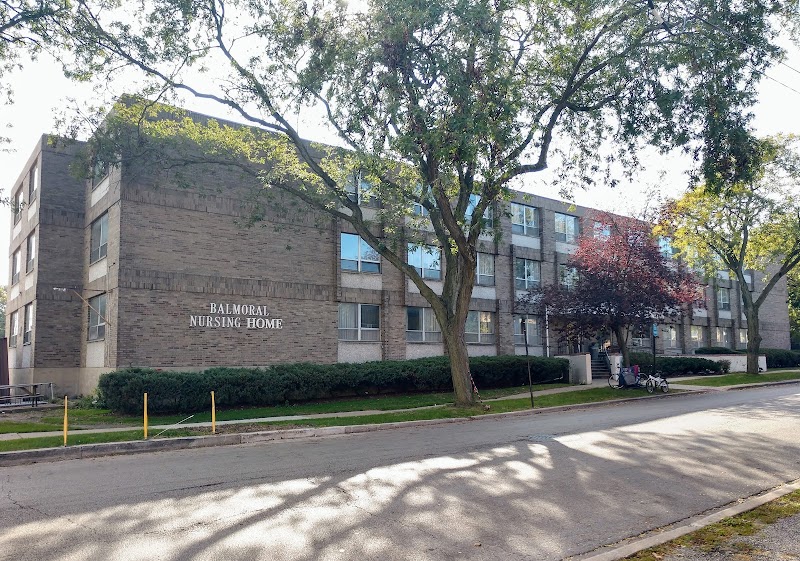
BALMORAL HOME

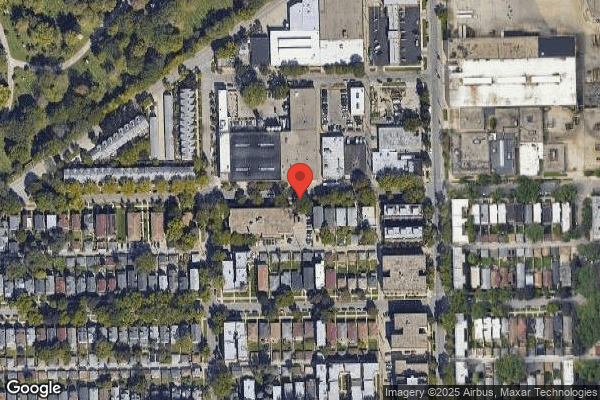
2055 WEST BALMORAL AVENUE, CHICAGO, IL 60625 (773) 561-8661
For profit - Corporation 213 Beds Independent Data: November 2025
Trust Grade
43/100
#333 of 665 in IL
Last Inspection: December 2024

Within standard 12-15 month inspection cycle. Federal law requires annual inspections.

Overview

Balmoral Home in Chicago has received a Trust Grade of D, which indicates it is below average and has some concerns. With a state rank of #333 out of 665 facilities in Illinois, it falls within the bottom half of nursing homes in the state, and it ranks #106 of 201 in Cook County. The facility is improving, having reduced its issues from 13 in 2024 to just 3 in 2025. Staffing is a significant weakness here, with a rating of only 1 out of 5 stars and a turnover rate of 48%, which is close to the state average. In terms of specific incidents, the facility experienced a serious issue where a resident sustained a traumatic brain injury due to inadequate supervision and a lack of fall prevention measures. Additionally, there were concerns about infection control, as staff failed to follow proper procedures while entering isolation rooms, potentially risking the health of all residents. Lastly, a resident was not properly assessed for safe self-administration of medications, which could affect others on the same floor. While the facility has some strengths, such as its good health inspection score, families should carefully consider these weaknesses in their decision-making process.

Trust Score
D
43/100
In Illinois
#333/665
Top 50%
Safety Record
Moderate
Needs review
Inspections
Getting Better
13 → 3 violations
Staff Stability
⚠ Watch
48% turnover. Above average. Higher turnover means staff may not know residents' routines.
Penalties
○ Average
$6,909 in fines. Higher than 53% of Illinois facilities. Some compliance issues.
Skilled Nurses
⚠ Watch
Each resident gets only 26 minutes of Registered Nurse (RN) attention daily — below average for Illinois. Fewer RN minutes means fewer trained eyes watching for problems.
Violations
⚠ Watch
24 deficiencies on record. Higher than average. Multiple issues found across inspections.
★★☆☆☆
2.0
Overall Rating
★☆☆☆☆
1.0
Staff Levels
★☆☆☆☆
1.0
Care Quality
★★★★☆
4.0
Inspection Score
Stable
2024: 13 issues
2025: 3 issues

The Good

  • Full Sprinkler Coverage · Fire safety systems throughout facility
  • No fines on record

Facility shows strength in fire safety.

The Bad

2-Star Overall Rating

Below Illinois average (2.5)

Below average - review inspection findings carefully

Staff Turnover: 48%

Near Illinois avg (46%)

Higher turnover may affect care consistency

Federal Fines: $6,909

Below median ($33,413)

Minor penalties assessed

The Ugly 24 deficiencies on record

1 actual harm
Apr 2025 2 deficiencies
CONCERN (D) 📢 Someone Reported This

A family member, employee, or ombudsman was alarmed enough to file a formal complaint

Potential for Harm - no one hurt, but risky conditions existed

Pressure Ulcer Prevention (Tag F0686)

Could have caused harm · This affected 1 resident

**NOTE- TERMS IN BRACKETS HAVE BEEN EDITED TO PROTECT CONFIDENTIALITY** Based on review of records, interviews and observations facility failed to follow preventive measures to address sacral pressure...

Read full inspector narrative →
**NOTE- TERMS IN BRACKETS HAVE BEEN EDITED TO PROTECT CONFIDENTIALITY** Based on review of records, interviews and observations facility failed to follow preventive measures to address sacral pressure ulcer care for 1(R2) out of 3 residents for a total of 3 residents reviewed for skin care. This failure resulted to one resident (R2) sustaining pressure ulcer deterioration. Findings include: R2 is [AGE] years old, initially admitted on [DATE]. R2's medical diagnosis includes Parkinson's disease and muscle weakness. R2 was seen on 04/08/2025 at 12:30 PM, in his room alert and verbally able to response within topic during conversation. R2 replied when asked if he has wounds, Yes, I have on my back. R2 stated that dressing was not change yesterday and today. But was changed a couple of weeks ago. R2 was seen laying on his back. When asked if staff are turning him (R2) on his side? R2 replied, No, they don't turn me on my side. They turn me when they change my dressing on my back. But not daily. R2's feet seen pushing on the footrest without heel protector. Per V6 (Nurse Practitioner Wound) clinical notes dated 03/12/2025, 03/21/2025 and 03/26/2025 R2's sacral pressure ulcer was deteriorating. V6 ordered to place R2 on side lying position every two (2) hours. And to turn and reposition every two (2) hours. R2's Treatment Administration Record (TAR) for March and April 2025 documents that multiple days for full eight (8) hours shift of turning and repositioning every two (2) hours were not signed as being performed. Both facility skin assessments and V6's sacral pressure ulcer assessment documents substantial increase in size. V6 assessment documents, from 0.25 square centimeters on 02/26/2025 to 0.50 square centimeters on 03/12/2025 an increase of 100%. Then further increase in size to 0.80 on 03/26/2025. R2's pressure ulcer was staged as 2 on 12/05/2025 by V16 (Nurse Practitioner Wound) later became stage 3 that indicates wound deterioration. Discrepancy of R2's March and April treatment administration records (TARs) were identified. TAR provided by facility on 04/08/2025 does not document signing of turning and repositioning as ordered by physician for the whole eight-hour shift on multiple days. TAR provided by facility on 04/09/2025 was modified by signing all days that were not signed including physician order for turning and repositioning. R2's wound plan of care document turning and repositioning as part of intervention for pressure ulcer prevention and improvement. On 04/09/2025 at 10:55 AM, V7 (Assistant Director of Nursing / Wound Coordinator) stated that included on R2's intervention to treat sacral pressure ulcer is to turn and reposition. And that a pillow is placed on his side to relieve pressure. V7 when asked about purpose of turning and repositioning said, It lift off prolonged pressure. V7 stated that resident who stays for a long time in the same position will get redness or stage one (1) pressure ulcer. V7 said, It is very important to reposition. On 04/09/2025 at 11:58 AM, V2 (Director of Nursing) V2 stated that R2's sacral pressure ulcer reopened on 11/19/2024. V2 stated that there are many factors that may cause worsening of pressure ulcers. Lack of turning and repositioning can cause worsening of pressure ulcer. V2 stated that she cannot explain the modification of R2's treatment administration record. And will take responsibility of documents discrepancies. On 04/09/2025 at 01:00 PM, R2's sacral pressure ulcer was seen with V7. V7 stated that V6 just did the dressing change with R1 sacral pressure ulcer. Pressure ulcer was seen about the size of a penny around half centimeter deep. Appearance of R2's sacral pressure ulcer consistent with stage 3 category. Pressure ulcer staging dated 05/12/2014 CMS attachment training reads and Section M on Minimum Data Set (MDS) assessment: Stage 2 is defined as partial thickness loss of dermis presenting as a shallow open ulcer with a red/pink wound bed, without slough. May also present as intact or open/ruptured blister. Stage 3 is defined as full thickness tissue loss. Subcutaneous fat may be visible, but bone, tendon or muscle are not exposed. Slough may be present but does not obscure the depth of tissue loss. May include undermining and tunneling. On 04/09/2025 at 01:10 PM, V6 (Wound Nurse Practitioner) stated that R2's sacral pressure ulcer decline, as it increased in size on 03/12/2025. V6 stated that R2 needs to be turn and repositioned every two (2) hours and needs to be clean and dry. V6 said, The importance of turning and repositioning to heal a pressure ulcer is like 80% of how to heal pressure ulcers. V6 stated when treating pressure ulcer, the problem is pressure. Therefore, it is important to relieve the pressure. V6 also stated that R2 needs low air loss mattress (LAL) because it helps with the moisture. And currently R2 uses Alternating Pressure (AP) mattress. Preventive measures for sacral pressure ulcer ordered by physician that were not established during review: - Reposition every 2 hours order date 12/01/2024. - Apply heel protector all the time order date 11/05/2024. - Low air loss (LAL) mattress order date 11/2024, R2 was using alternating pressure (AP) mattress. Prevention of Pressure Injury policy not dated reads: The purpose of this procedure is providing information regarding identification of pressure ulcer risk factors and interventions for specific risk factors. Under mobility / repositioning, reposition all residents with the risk of pressure injuries on an individualized schedule, as determined by the interdisciplinary care team. Choose a frequency for repositioning based on the resident's risk factors and current clinical practice guidelines.
CONCERN (D) 📢 Someone Reported This

A family member, employee, or ombudsman was alarmed enough to file a formal complaint

Potential for Harm - no one hurt, but risky conditions existed

Medical Records (Tag F0842)

Could have caused harm · This affected 1 resident

**NOTE- TERMS IN BRACKETS HAVE BEEN EDITED TO PROTECT CONFIDENTIALITY** Based on review or records and interview the facility failed to provide accurate treatment administration record for 1(R2) out o...

Read full inspector narrative →
**NOTE- TERMS IN BRACKETS HAVE BEEN EDITED TO PROTECT CONFIDENTIALITY** Based on review or records and interview the facility failed to provide accurate treatment administration record for 1(R2) out of 5 residents for a total of 5 residents reviewed. This failure resulted to inaccurately representing one (1) resident (R2) treatment of pressure ulcer care in the facility. Findings include: R2 is [AGE] years old, initially admitted in the facility on 03/01/2010. R2 medical diagnosis includes Parkinson's disease, bipolar disorder and muscle weakness. On 04/08/2025 at 12:30 PM, R2 was seen in his room alert and verbally able to response within topic during conversation. R2 replied when asked if he has wounds, Yes, I have on my back. R2 stated that dressing was not change yesterday and today. But was changed a couple of weeks ago. R2 was seen laying on his back. When asked if staff are turning him (R2) on his side? R2 replied, No, they don't turn me on my side. They turn me when they change my dressing on my back. But not daily. R2's feet seen pushing on the footrest without heel protector. At the nurse station with V13 (Licensed Practical Nurse) a copy of R2's treatment administration record (TAR) for the month of March and April 2025 a copy was provided. At 01:05 PM went back to nurse station, V2 (Director of Nursing) was requested to provide a copy of R2's physician order sheets included in the chart binder of R2. V2 was informed that earlier a copy of R2's TAR was received from V13. V2 then provided a copy of R2's physician order sheet. At 04/08/2025 at 02:31 PM, an email was sent to V1 (Administrator) and V3 (Assistant Administrator) requesting resident records that includes R2's TAR for the month of March and April 2025. The following day 04/09/2025 at 09:29 AM, facility provided R2's TAR for the month of March and April 2025. Comparing R2's TAR for the month of March and April 2025 provided on 04/08/2025 from R2's TAR for the month of March and April 2025 provided the following day 04/09/2025. Multiple discrepancies were noted as to documentation on treatment services provided. Multiple treatment orders were not signed as being performed including application of abdominal binder, application of heel protector, repositioning of R2 every 2 hours on the original document provided on 04/08/2025. Document provided by facility the following day 04/09/2025, all areas that were not signed was filed up and signed. On 04/09/2025 at 11:58 AM, V2 (Director of Nursing) was made aware R2's two different copies of treatment administration record (TAR) for March and April 2025. After seeing the two (2) documents stated, I can see that many days in the TAR were not signed. I will not say who signed those blank on the TAR. But I will take responsibility. At 02:25 PM, V1 (Administrator) stated that this incident on discrepancies of R2's record will be reviewed and investigated. Per V6 (Nurse Practitioner for Wound) clinical notes dated 03/12/2025, 03/21/2025 and 03/26/2025, document that R2's sacral pressure ulcer was deteriorating. Charting and Documentation policy dated 09/01/2024 reads: Information documented in the resident medical record includes treatment and services performed. Documentation in the medical record will be objective (not opinionated or speculative, complete, and accurate.
Mar 2025 1 deficiency
CONCERN (D) 📢 Someone Reported This

A family member, employee, or ombudsman was alarmed enough to file a formal complaint

Potential for Harm - no one hurt, but risky conditions existed

Accident Prevention (Tag F0689)

Could have caused harm · This affected 1 resident

**NOTE- TERMS IN BRACKETS HAVE BEEN EDITED TO PROTECT CONFIDENTIALITY** Based on observation, interview and record review, the facility failed to supervise and monitor a cognitively impaired resident ...

Read full inspector narrative →
**NOTE- TERMS IN BRACKETS HAVE BEEN EDITED TO PROTECT CONFIDENTIALITY** Based on observation, interview and record review, the facility failed to supervise and monitor a cognitively impaired resident with known behaviors of ingesting non-edible, toxic items from obtaining those items. This failure affects one of three residents (R2) reviewed for supervision in a total sample of three residents. Findings include: 03/08/2025, 9:53 AM, R2 was sitting on a chair next to her bed. R2's overbed table was next to her with her personal items within reach. A 4 oz (ounce) baby powder bottle and liquid soap in a clear cup on were her overbed table. 03/08/2025, 11:03 AM, with V2 (Assistant Administrator) present, R2's overbed table observed with baby powder. V5 (Certified Nursing Assistant) entered the room. R2 was questioned who gave you the powder. R2 pointed to V5 and stated that young lady. R2 states that she got the liquid soap from someone at the nurse's station but cannot recall who. 03/08/2025, 10:51 AM, via telephone, V6 (Certified Nursing Assistant) states that she has worked for the facility for three years. V6 reports that she usually works the morning shifts and usually works on the second floor. V6 states that she is familiar with R2. V6 continues to report that R2 needs reminders to take a shower. We make sure she showers. She likes to hold food, but you can't just take away the old food, when she is around, because she is a fighter. V6 states you need to make sure you don't give her baby powder and lotion because she thinks they are condiments and consume them. V6 says it is salt and pepper. 03/08/2025, 11:06 AM, V5 (Certified Nursing Assistant) states that R2 requires minimal assist. Staff provides set up, and gets her the things she needs. She asks for soap. Normally, staff don't give her baby powder. She can do it herself, we just don't give her powder. V5 states that she was changing R1 this morning and R1 had a lot of items on her overbed table. V5 stated I borrowed R2's table. V5 states that the reason R2 cannot have the baby powder within reach is because R2 will probably apply too much powder on herself. V5 states that she denies ever seeing R2 put powder on her food. V5 states I was not made aware that she can put powder on her food. It would be safer for her not to have any powder if that is the case. V5 states I was not aware that she would eat it. I just thought she would sprinkle too much powder on her body. It was a mistake and not intentionally done. 03/08/2025, 12:06 PM, V4 (Director of Nursing) states that it is not safe for an individual to consume soap, lotion, and/or baby powder because it is not to be eaten. V4 states that if she knew R2 had a history of ingesting these certain items, staff should not provide any of those items, unless supervision is provided. V4 states that it is important to not give lotion, liquid soap, or baby powder to the resident without supervision because if there is a history, the resident might take it again and God knows what might happen. V4 stated she might send the resident to the emergency room to check if they are safe to come back. V4 states these items might have a toxic effect or the resident might be allergic. R2's current face sheet documents R2 is a [AGE] year-old individual admitted to the facility on [DATE], and has diagnoses not limited to: paranoid schizophrenia, anxiety disorder, extrapyramidal and movement disorder, unspecified. R2's MDS/Minimum Data Set, dated [DATE], documents that R2 has a BIMS/Brief Interview for Mental Status score of 08/15, indicating that R2 has moderate cognitive impairment. R2 presents with inattention and disorganized thinking behavior, fluctuates (comes and goes, changes in severity). R2's current care plan documents in part, R2 has alteration in thought process related to: diagnosis : schizoaffective disorder -paranoid type as evidenced by: Pt. (patient) noted with visual and auditory hallucination. On 8/24/23, R2 was observed sprinkling baby powder on her potato chips. On 9/3/23, Rt (resident) seen by a staff drinking a thick liquid substance from a cup. When asked, resident said it was milk but upon checking staff noted it was body lotion. Staff was able to retrieve cup from resident & discarded it. R2 displays socially inappropriate and maladaptive behavior a mental illness diagnosis of Schizophrenia. Per ADON (assistant director of nursing), resident has been observed washing her hair and body with toilet water. Staff will monitor the resident when she is has possession of cups and is ingesting proper liquids. R2's psychiatric progress note dated 02/11/2025, 9:33 PM, documents in part behavior is manageable. Resident has regular habit of putting stuff on her forehead. Resident has history of pica (Compulsively swallowing non-food items) but the behavior does not show recently. Facility document dated 01/24, titled policy on resident rights, respect and dignity documents in part, a resident has the right to receive services in a facility environment that is safe, clean, and comfortable with adequate space for all activities.
Dec 2024 10 deficiencies
CONCERN (D)

Potential for Harm - no one hurt, but risky conditions existed

Deficiency F0645 (Tag F0645)

Could have caused harm · This affected 1 resident

**NOTE- TERMS IN BRACKETS HAVE BEEN EDITED TO PROTECT CONFIDENTIALITY** Based on interview and record review the facility failed to refer one resident (R126) for rescreening to the state agency for Pr...

Read full inspector narrative →
**NOTE- TERMS IN BRACKETS HAVE BEEN EDITED TO PROTECT CONFIDENTIALITY** Based on interview and record review the facility failed to refer one resident (R126) for rescreening to the state agency for Preadmission Screening and Resident Review (PASRR). This deficient practice affected one resident (R126) in a total sample size of 57 residents. Findings include: R126's admission date to the facility is 10/11/24. R126's PASRR (Preadmission Screening and Resident Review) level 1 outcome dated 08/29/24 documents in part, No level II required - No SMI (serious mental illness). R126's diagnoses on 10/11/24 include but are not limited to bipolar disorder current episode manic without psychotic features, schizophrenia, essential hypertension. R126's Minimum Data Set (MDS) dated [DATE] has a Brief Interview for Mental Status (BIMS) score 14 which indicates R126's cognition is intact. On 12/03/24 at 11:19am V10 (Assistant Administrator/AA) stated that level 2 PASRR's are done when the resident has a mental diagnosis. V10 stated that a diagnosis of schizophrenia and bipolar should be included on the level 1 PASRR which would trigger for a level 2 PASRR to be done. V10 stated that PASRR's are done to make sure that residents are placed in the appropriate facilities and that it is a requirement to do the PASRR. V10 stated that if the serious mental illness diagnosis is not on the PASRR from the hospital then the facility should redo the level 1 PASRR immediately and include the diagnoses. Facility's policy dated 12/2023 titled Pre-admission Screening and Resident Review documents in part, In accordance with Federal and State of Illinois regulatory standards and recommended practices, this organization requires each resident to be screened for Level 1 prior to or shortly thereafter admission. The facility will expect Maximus to properly complete Level 2 if a PASRR condition (SMI) exists .Policy: It is the policy of this facility to: 1. Comply with Federal, State and appointed screening agency in standards addressing the PASRR assessment/screening process.
CONCERN (D)

Potential for Harm - no one hurt, but risky conditions existed

Respiratory Care (Tag F0695)

Could have caused harm · This affected 1 resident

**NOTE- TERMS IN BRACKETS HAVE BEEN EDITED TO PROTECT CONFIDENTIALITY** Based on observation, interview and record review, the facility failed to label and date oxygen equipment (oxygen tubing and neb...

Read full inspector narrative →
**NOTE- TERMS IN BRACKETS HAVE BEEN EDITED TO PROTECT CONFIDENTIALITY** Based on observation, interview and record review, the facility failed to label and date oxygen equipment (oxygen tubing and nebulizer mask per the facility's policy. These failures affected two residents (R54 and R126) reviewed for oxygen equipment, in a total sample of 57 residents. Findings include: R54's diagnoses include but are not limited to heart failure, type 2 diabetes mellitus without complications, chronic kidney disease stage 3, essential hypertension, atrial fibrillation, acute respiratory failure, anxiety disorder, chronic obstructive pulmonary disease, morbid obesity. R54's Minimum Data Set (MDS) dated [DATE] has a Brief Interview for Mental Status (BIMS) score of 8 which indicates R54's cognition is moderately impaired. R54's physician order dated 05/10/24 documents in part, change oxygen tubing and humidifier weekly or as needed. R54's care plan dated 03/04/23 documents in part, CHF: the resident has congestive heart failure .Give oxygen as ordered by the physician. R126's diagnoses include but are not limited to atrial fibrillation, chronic diastolic congestive heart failure, chronic obstructive pulmonary disease, bipolar disorder current episode manic without psychotic features, schizophrenia, muscle weakness, acute kidney failure. R126's Minimum Data Set (MDS) dated [DATE] has a Brief Interview for Mental Status (BIMS) score 14 which indicates R126's cognition is intact. R126's physician orders dated 10/31/24 documents in part, change nebulization cup and tubing weekly or as needed. On 12/01/24 at 10:28am observed R126's nebulizer mask sitting on nightstand undated. On 12/01/24 at 10:53am V17 (Licensed Practical Nurse/LPN) stated that there is no date on R126's nebulizer mask but it should have a date on it. V17 discarded nebulizer mask into trash can. On 12/01/24 at 11:10am observed R54 with nasal canula undated. On 12/01/24 at 11:11am V13 (LPN) stated that R54 has no date on nasal cannula tubing. V13 stated that oxygen tubing is changed weekly on Sundays by the night shift and that the tubing should have a date on it. On 12/03/24 at 09:42am V2 (Director of Nursing/DON) stated that oxygen tubing should be dated and changed weekly and/or as needed. V2 stated that oxygen tubing is dated to prevent infection from long term use. Facility's undated policy titled Oxygen Administration documents in part, Purpose: The purpose of this procedure is to provide guidelines for safe oxygen administration .Steps in the procedure: 11. O2 (oxygen) equipment should be changed and dated weekly.
CONCERN (D)

Potential for Harm - no one hurt, but risky conditions existed

Infection Control (Tag F0880)

Could have caused harm · This affected 1 resident

Based on observation, interview, and record review the facility failed to ensure that medication that fell on the floor was not administered to a resident (R55). This failure affected one resident (R5...

Read full inspector narrative →
Based on observation, interview, and record review the facility failed to ensure that medication that fell on the floor was not administered to a resident (R55). This failure affected one resident (R55) in the sample of 57 residents. Findings include: On 12/01/24 at 12:34 pm, Surveyor observed V12 (Licensed Practical Nurse, LPN) administer medication to R55 during the first floor noon medication pass. Surveyor observed V12 drop R55's Divalproex Sodium DR (Delayed Release) 500 mg (Milligram)1 tablet on the floor next to R55's wheelchair, then pick up R55's Divalproex Sodium DR (Delayed Release) 500 mg (Milligram)1 tablet from the floor next to R55's wheelchair and then administer R55's Divalproex Sodium DR (Delayed Release) 500 mg (Milligram)1 tablet to R55 orally. On 12/01/23 at 12:52 pm, Surveyor asked V12 regarding administering medications that have falling on the floor to a resident and V12 stated that if a medication falls on the floor the nurse should discard the medication and give the resident another pill. When V12 was asked regarding the importance of discarding medications that fall onto the floor and V12 stated, I (V12) gave it to her (R55) because I (V12) did not want her (R55) to curse me out. If a medication is given to a resident that has fallen on the floor that can be infection control. It (referring to the medication) can have germs on it. On 12/03.24 at 8:48 am, Surveyor asked V2 (Director of Nursing, DON) regarding the facility's expectation for administering medications that have fallen onto the floor and V2 stated that If a nurse drop a residents medication on the floor the nurse should through the medication out due to infection control. V2 also stated that residents should not receive medications that have been dropped on the floor due to the medication containing germs. R55's Brief Interview for Mental Status (BIMS) dated 10/08/24 shows that R55 does not have a BIMS score indicated. However, during this survey, R55 was able to answer questions appropriately. R55's Physician Order Sheet (POS) shows that R55 has an order for Divalproex Sodium DR (Delayed Release) 500 mg (Milligram)1 tablet by mouth three times a day. The facility's undated document titled The Licensed Practical Nurse (LPN) documents, in part: Summary: The LPN is responsible for providing direct nursing care to the residents, and to supervise the day-to-day nursing activities performed by nursing assistants. Such supervision must be in accordance with current federal, state, and local standards, guidelines, and regulations that govern our facility, and as may be required by the Director of Nursing to ensure that the highest degree of quality care is maintained at all times . Administer clinical care according to the standard of care and in accordance with local, state, federal and facility policies, and procedures. The facility's undated policy titled Infection Prevention and Control Program documents, in part: Purpose: To ensure the facility established and maintains an infection Control Program designed to provide a safe, sanitary, and comfortable environment and to help prevent the development and transmission of disease and infection in accordance with Federal and State requirements. Policy: The facility must establish an Infection Prevention and Control Program under which it 4. Infection Prevention and Control Program standards apply to all facility employees, contracted staff, consultants, volunteers . Program and Procedures: F. Preventing, identifying, report, investigating, and controlling infections and communicable diseases-based on the facility assessment.
CONCERN (D)

Potential for Harm - no one hurt, but risky conditions existed

Safe Environment (Tag F0921)

Could have caused harm · This affected 1 resident

**NOTE- TERMS IN BRACKETS HAVE BEEN EDITED TO PROTECT CONFIDENTIALITY** Based on observation, interview and record review the facility failed to provide a comfortable environment to one resident (R162...

Read full inspector narrative →
**NOTE- TERMS IN BRACKETS HAVE BEEN EDITED TO PROTECT CONFIDENTIALITY** Based on observation, interview and record review the facility failed to provide a comfortable environment to one resident (R162). This failure affected one resident in a total sample size of 57 residents. Findings include: On 12/01/24 at 10:58am, surveyor entered R162's room and felt cold from a decrease in temperature. On 12/01/24 at 11:00am, R162 stated that he that he had been complaining of the cold temperature in his room since Wednesday 11/27/24. On 12/01/24 at 11:11am, V13 (Licensed Practical Nurse/LPN) stated that R162's room is as cold as the weather outside. V13 stated that a room that is too cold is an immediate need. On 12/01/24 at 11:56am, V5 (Maintenance Director) stated that no one had informed him that R162's room was cold. V5 checked R126 room with hand thermometer. Hand thermometer showed temperature 61 degrees Fahrenheit. V5 stated that R126's room temperature should be at least 68 degrees Fahrenheit. V5 stated that R126's room is cold due to a crack in the window. On 12/02/24 at 09:11am, V5 used handheld thermometer to check R126's room temperature which registered at 68 degrees Fahrenheit. V5 stated that he placed tape over crack in the window to prevent the breeze from coming into the room. R162 has diagnoses of presence of right artificial hip joint, type 2 diabetes mellitus without complications, hyperlipidemia, muscle wasting and atrophy not elsewhere classified multiple sites, difficulty in walking, unilateral primary osteoarthritis right hip. R162's Minimum Data Set (MDS) dated [DATE] has a Brief Interview for Mental Status (BIMS) score of 15, which indicates R162's cognition is intact. Facility's policy dated 10/2024 titled Cold Weather documents in part, Policy: For the safety and comfort of the residents, and staff the cold weather policy will be followed whenever extreme outdoor temperatures, power failure or heating plant malfunctions cause facility temperatures and humidity to rise beyond acceptable health and comfort levels .Procedure: Building manager will monitor the facility's main heating plant and individual room units to ensure that all are working at peak performance .When an uncomfortable building temperature is perceived by staff, resident or visitors, the building manager will take temperature readings at various locations of the building making sure to cover all residents and staff areas. Adjustments will be made to make all residents as comfortable as possibly .If temperatures of 65 degrees F (Fahrenheit) or lower are found readings will be taken every 2 hours. Temperatures will be documented on the Facility temperature form. The cold weather emergency plan will be followed to ensure the comfort and safety of all residents. Facility's policy dated 01/05/24 titled Policy on Resident Rights, Respect an Dignity documents in part, A resident has the right to receive services in a facility environment that is safe, clean, and comfortable with adequate space for all activities. Facility's policy dated 04/2014 titled Quality of Life - Homelike Environment documents in part, Residents are provided with a safe, clean, comfortable and homelike environment and encourage to use their personal belongings to the extent possible .Policy Interpretation and Implementation .2. The facility staff and management shall maximize, to the extent possible, the characteristics of the facility that reflect a personalized, homelike setting. These characteristics include g. comfortable temperatures.
CONCERN (E)

Potential for Harm - no one hurt, but risky conditions existed

Deficiency F0554 (Tag F0554)

Could have caused harm · This affected multiple residents

Based on observation, interview, and record review the facility failed to assess a resident for safe self-administration of medications. This failure affected one resident (R148) and has the potential...

Read full inspector narrative →
Based on observation, interview, and record review the facility failed to assess a resident for safe self-administration of medications. This failure affected one resident (R148) and has the potential to affect all 56-residents residing on the second floor. Findings Include: The (12/03/2024 email correspondence with V10 (Assistant Administrator documented that there were 56 residents on the second floor. R148's admission diagnoses include but not limited to dermatitis, atrial fibrillation, congestive heart failure, and dementia. R148's Brief Interview of Mental Status (BIMS) score is 11 which indicates R148 has moderate cognitive impairment. On 12/1/24 at 10:30 am, observation of Zinc oxide 20% ointment in a long white tube on R148's nightstand. On 12/2/24 at 1:10 pm observation of Zinc oxide 20% ointment and triamcinolone acetonide 0.5% ointment in long white tubes on R148's nightstand. On 12/3/24 at 12:25 pm, observation of triamcinolone acetonide 0.5% ointment on R148's nightstand in a container with toothpaste. On 12/3/24 at 12:30 pm, surveyor inquired to V14 RN (Registered Nurse) if R148's triamcinolone acetonide ointment should be at the bedside. V14 stated, It should not be at the bedside. It should be in the treatment cart. It should not be at the bedside because he (R148) could eat it or think its toothpaste. On 12/3/24 at 1:10 pm, V2 DON (Director of Nursing) stated that an assessment has to be done for self-administration of medication. There should also be doctors order for self-administration. Medications should not be left at the bedside without an assessment and a doctor's order to self-administer. On 12/3/24 at 3:16 pm, surveyor requested R148's assessment to self-administer medications. At 3:51 pm, V2 (DON) replied via email, No assessment for self -administration of medication for R148. R148's (12/3/24) active physician orders documents in part, Zinc Oxide crème twice daily to groin and buttock, DX (Diagnosis) Dermatitis. Triamcinolone Acetonide 0.5% ointment apply small amount topically to affected areas (groin, perineal) twice daily as needed for rashes. R148's care plan documents in part, Focus: Altered thought process related to dx (diagnosis) of Dementia. Focus: Cognitive Loss/Disorientations/Impaired Judgment. The resident demonstrates cognitive impairment related to a diagnosis of dementia. Symptoms are manifested by impaired decision making, poor logic and poor agility to understand cause and effect. Facility's policy (undated) and titled, Self-Administration of Medication documents in part, Policy: Self-administered medications will be encouraged f it is desired by the resident, safe for the resident and other resident of the facility. Ordered by the attending physician . Facility's policy (undated) and titled, Medication Administration documents in part, Policy: 5. The medication is to remain in the container until administration time. Facility job description titled License Practical Nurse documents in part, Essential Duties and Responsibilities: Carry out medical providers orders according to the order and in accordance with local, state, federal, and facility policies and procedures. Facility job description titled Registered Nurse documents in part, Essential Duties and Responsibilities: Carry out medical providers orders according to the order and in accordance with local, state, federal, and facility policies and procedures.
CONCERN (E)

Potential for Harm - no one hurt, but risky conditions existed

Deficiency F0658 (Tag F0658)

Could have caused harm · This affected multiple residents

Based on observation, interview, and record review the facility failed to ensure that medications were signed out when administered for four residents (R8, R43, R81, and R97). This failure affected fo...

Read full inspector narrative →
Based on observation, interview, and record review the facility failed to ensure that medications were signed out when administered for four residents (R8, R43, R81, and R97). This failure affected four residents in the sample of 57 residents. Findings include: On 12/02/24 at 8:58 am, Surveyor requested to observe medication pass on the first floor Team 2 cart with V18 (Licensed Practical Nurse, LPN) and V18 stated that V18 completed the 9:00 am medication pass. Surveyor and V18 reviewed R8, R43, R81, and R97's Medication Administration Record (MAR) and observed R8, R43, R81 and R97's medications not signed out for the 9:00 am medication pass. V18 stated, I (V18) gave them, but I (V18) did not get a chance to sign them out. I (V18) was going to sign them in a few minutes. R8's MAR presented by the facility on 12/02/24 shows the following medications for R8's were not signed after being administered by V18 for the 9:00 am medication pass on 12/02/24: Anastrozole 1 mg tablet by mouth Aspirin Enteric Coated (EC) 81 mg tablet by mouth Daily Vite tablet by mouth Docusate Sodium 100 mg capsule by mouth Vitamin D 1000IU (units) tablet by mouth Oyster Shell 500 with Vitamin D 200 mg by mouth Quetiapine Fumarate 100 mg by mouth Vitamin C 500 mg tablet by mouth R43's MAR presented by the facility on 12/02/24 shows the following medications for R43's were not signed after being administered by V18 for the 9:00 am medication pass on 12/02/24: Amantadine 100 mg (milligram) tablet by mouth Carbidopa-Levodopa 25 -100 mg tablet by mouth Eliquis 5 mg tablet by mouth Entacapone 200 mg tablet by mouth Lamotrigine 25 mg tablet by mouth Levetiracetam 100 mg tablet by mouth Potassium Chloride 10 % liquid by mouth Tamsulosin 0.4 mg capsule by mouth Valproic Acid 250 mg/5ml (milliliter) by mouth R81's MAR presented by the facility on 12/02/24 shows the following medications for R81's were not signed after being administered by V18 for the 9:00 am medication pass on 12/02/24: Citalopram 10 am tablet by mouth Quetiapine Fumarate 100 mg by mouth Quetiapine Fumarate 50 mg by mouth Tradjenta 5 mg tablet by mouth Vitamin D3 25 mcg tablet by mouth R97's MAR presented by the facility on 12/02/24 shows the following medications for R97's were not signed after being administered by V18 for the 9:00 am medication pass on 12/02/24: Aripiprazole 15 mg tablet by mouth Aspirin 81 mg tablet by mouth Bethanechol 25 mg tablet by mouth Brimonidine 0.2% eye drop ophthalmic Docusate Sodium 100 mg by mouth Famotidine 40 mg tablet by mouth Farxiga 10 mg tablet by mouth Flovent 110 mg inhaler by inhalation Gabapentin 300 mg capsule by mouth Hydroxyzine 25 mg capsule by mouth Polyethylene Glycol 3350 powder by mouth Potassium Chloride Extended Release (ER) 10 meq (milliequivalents) by mouth Dry Eye Relief eye drops ophthalmic solution Topiramate 25 mg by mouth Vitamin D3 25 mcg (micrograms) by mouth On 12/02/24 at 10:01 am, Surveyor asked V18 regarding the facility's policy for medication administration and V18 stated, Medications should be signed out when given. When V18 was asked regarding the importance of signing out medications when given V18 stated, If medications are not signed out when given they can be misconstrued as not given and another nurse can administer the medications again. On 12/03/24 at 8:47 am, V2 (Director of Nursing, DON) was asked regarding the facility's policy for medication administration and V2 stated, Medication should be signed out immediately after the medication is given. If the nurse gives the medication and does not sign out medication the medication can be double dosed. The facility's undated policy titled Medication Administration documents, in part: Policy: 4. Nursing personnel administer and record all medications. The facility's undated document titled The Licensed Practical Nurse (LPN) documents, in part: Summary: The LPN is responsible for providing direct nursing care to the residents, and to supervise the day-to-day nursing activities performed by nursing assistants. Such supervision must be in accordance with current federal, state, and local standards, guidelines, and regulations that govern our facility, and as may be required by the Director of Nursing to ensure that the highest degree of quality care is maintained at all times . Complete the required documentation and evaluation by the local, state, federal and facility policies. R8's Brief Interview for Mental Status (BIMS) dated 10/28/24 shows that R8 has a BIMS score of 15 which indicates that R8 is cognitively intact. R8's Face sheet shows that R8 has diagnosis which include but not limited to schizoaffective disorder, malignant neoplasm, metabolic syndrome, and hypothyroidism. R43's Brief Interview for Mental Status (BIMS) dated 10/20/24 shows that R43 has a BIMS score of 15 which indicates that R43 is cognitively intact. R43's Face sheet shows that R43 has diagnosis which include but not limited to schizoaffective disorder, Parkinson's, epilepsy, and hypothyroidism. R81's Brief Interview for Mental Status (BIMS) dated 10/21/24 shows that R81 has a BIMS score of 15 which indicates that R81 is cognitively intact. R81's Face sheet shows that R81 has diagnosis which include but not limited to paranoid schizophrenia, major depression, and generalized anxiety. R97's Brief Interview for Mental Status (BIMS) dated 10/08/24 shows that R97 has a BIMS score of 15 which indicates that R97 is cognitively intact. R97's Face sheet shows that R97 has diagnosis which include but not limited to Parkinson's disease without dyskinesia, major depressives disorder, chronic obstructive pulmonary disease, and schizoaffective disorder bipolar type.
CONCERN (E)

Potential for Harm - no one hurt, but risky conditions existed

Accident Prevention (Tag F0689)

Could have caused harm · This affected multiple residents

Findings Include: R148's admission diagnoses include but not limited to osteoarthritis, atrial fibrillation, congestive heart failure, and dementia. R148's Brief Interview of Mental Status (BIMS) sco...

Read full inspector narrative →
Findings Include: R148's admission diagnoses include but not limited to osteoarthritis, atrial fibrillation, congestive heart failure, and dementia. R148's Brief Interview of Mental Status (BIMS) score is 11 which indicates R148 has moderate cognitive impairment. On 12/1/24 at 10:30 am, observed a razor in R148's room lying on the nightstand. R148 stated that he uses the razor to shave his head. On 12/3/24 at 12:20 pm, V14 RN (Registered Nurse) stated that R148 should not have a razor in his (R148) room. It is considered a contraband because it is a sharp. After the staff use the razor, they should dispose it for safety. On 12/3/24 1:10 pm, V2 DON (Director of Nursing) stated that razors should not be at a resident's bedside. Razors should be discarded in the sharp's container for safety because someone can get injured. R148's care plan documents in part, Focus: Altered thought process related to dx (diagnosis) of Dementia. Focus: Cognitive Loss/Disorientations/Impaired Judgment. The resident demonstrates cognitive impairment related to a diagnosis of dementia. Symptoms are manifested by impaired decision making, poor logic and poor ability to understand cause and effect. Based on observation, interview, and record review the facility failed to ensure that a resident (R120) smoke at a designated smoking area; and failed to ensure that environment was free from hazards (razors) for three residents (R36, R116 and R148). These failures have the potential to affect all 47 residents on the first floor, and all 56 residents on the second floor at the facility. Findings include: The (12/03/2024 email correspondence with V10 (Assistant Administrator documented that there were 47 residents on the first floor. On 12/01/24 at 10:40 am, Surveyor observed R116 in R116's room holding 3 shaving razors in R116's right hand. R116 stated that R116 was given the 3 razors from staff 3 days ago to shave R116's head. R116 stated that R116 receives razors from staff to shave R116's head and face. When R116 was asked regarding where does R116 store the razors in R116's hand R116 stated in R116's room. On 12/01/24 at 11:29 am, V12 (Licensed Practical Nurse, LPN) was asked regarding residents with razors and V12 stated that residents cannot have razors due to safety. V12 stated that a resident who does not know how to use the razor can get the razor, cut themselves and bleed. When V12 was asked regarding who monitors the residents that shave themselves and V12 stated that V12 was a agency nurse working at the facility and that V12 did not know. On 12/03/24 at 8:49 am, Surveyor questioned V2 (Director of Nursing DON) regarding residents with shaving razors and V2 stated that residents cannot have razors in their possession due to safety. When V2 was asked regarding who was responsible for monitoring the residents who shave themselves with razors and V2 stated that it is all the nursing staff responsibility to monitor residents who are able to shave themselves with a razor. R116's Brief Interview for Mental Status (BIMS) dated 10/29/24 shows that R116 has a BIMS score of 15 which indicates that R116 is cognitively intact. The facility's undated policy titled Hazard Policy: Proper Disposal of Sharps documents, in part: Purpose: To establish procedures for the safe handling and disposal of sharps, including razors, needles, and other sharp objects, to minimize risk of injury and ensure compliance with local, state, and federal regulations . Policy Statement: All sharps must be disposed of in accordance with established guidelines to ensure the safety f residents, staff, and visitors. Under no circumstances should sharps be discarded in regular trash or recycling bins. On 12/01/24 at 10:52 am, Surveyor observed R120 in R120's bathroom with a lighter and cigarette smoking a cigarette. When R120 saw this Surveyor at R120's bathroom door R120 immediately turned on the water from the bathroom sink in R120's bathroom and put the cigarette out in R120's bathroom sink. This Surveyor brought this observation to V12 (Licensed Practical Nurse, LPN). Surveyor and V12 went back to R120's bathroom where R120 was still sitting and observed R120 still in R120's bathroom smoking another cigarette in R120's bathroom. R120 then immediately placed the cigarette under the running water in R120's bathroom sink, putting out the cigarette in R120's hand. When V12 was asked regarding residents smoking in the residents room V12 stated that residents cannot smoke in the resident due to the resident risking the safety of the other residents and the potential to start a fire. On 12/01/24 at 11:15 am, Surveyor asked V8 (Social Service Director) regarding residents smoking in the residents rooms and V8 stated that safe smokers are allowed to have smoking materials such as lighters and cigarettes in the residents room but the resident should not be smoking in the residents room even if the resident is assessed as a safe smoker. When V8 was asked regarding what could happen if a resident smokes in the residents room and V8 stated, There is a potential for a fire or the resident to burn themselves. When V8 was asked regarding who is responsible for monitoring the residents who smoke and V8 stated, It is all the staff responsibility. R120's face sheet shows that R120 has a diagnosis of schizoaffective disorder, hypothyroidism, and major depressive disorder. R120's Brief Interview for Mental Status (BIMS) dated 9/26/24 shows that R120 has a BIMS score of 15 which indicates that R120 is cognitively intact. R120's progress note dated 12/01/24 and authored by V8 documents in part: Per nursing report, R120 was smoking inside his (R120) room on 12/0124. Smoking materials were confiscated and staff-initiated cigar management as a consequence . R120 is unable to handle own smoking materials at this time. R120's Smoking Risk Review dated 12/01/24 documents, in part: 12. May not be capable of handling/carrying any smoking materials and requires supervision when smoking. The facility undated document titled Facility Smoking Safety Policy documents, in part: Policy Objective: To provide a safe and healthy living environment with respect for the health and well-being needs of each resident, staff member and visitor. It is also the objective of this policy to communicate to each resident that they are responsible for following each rule and on-going compliance with this policy. Guidelines 1. Smoking is only allowed in designated areas established by management. If indoor smoking is prohibited by state or local law the interior of the facility will remain smoke-free at all times. The designated area(s) will be outside in accordance with state/local standards. The organization has the right to enforce a policy prohibiting residents from keeping any smoking materials in his/her possession for health, safety, and security reasons . 3. Smokers will be evaluated to determine their ability to comply with safety rules and their ability to carry smoking materials. Residents requiring supervision shall receive this monitoring consistent with their assessment and plan of care. R120's care plan dated 12/01/24 documents, in part: Focus: Smoking management/noncompliance. The resident was smoking in a day room on 2/13/21. 11/8/21, 9/8/23 smoking in a washroom. 2/1/24 smoking in room. Date Initiated: 02/15/2021. Revision on: 12/01/2024. Intervention: 12/1/24 smoking materials were confiscated and staff-initiated cigar management as a consequence (resident is scheduled to d/c (discharge) from the facility on 12/6/24). SW (social worker) met with the resident 1:1 (one to one) to address the above. He (R120) is unable to handle own smoking materials at this time. Nursing staff and front desk staff were informed of the above. Patient is currently monitored for compliance. Date Initiated: 12/01/2024. Findings include: The (12/03/2024 email correspondence with V10 (Assistant Administrator documented that there were 56 residents on the second floor. On 12/01/24 at 11:09am on the second floor, there was a razor on R36's bed side table. This observation was pointed out to V5 (Maintenance Director). V5 stated there is a razor on his (R36) bedside table. On 12/01/24 at 11:15 AM, this observation was also pointed out to V6 (Director of Clinical Special Projects). V6 stated the resident is not allowed to have a razor in their room for safety. The razor should not be in here because the resident can use the razor to cut themselves and other residents. On 12/02/2024 at 9:40am, V2 (Director of Nursing) stated there should be no razor inside the resident's room because it is a safety issue for the resident, staff, and other residents. The resident may use the razor to cut themselves, other residents, or staff. R36's admission Record documented that R36's diagnoses (include but not limited to) schizoaffective disorder and type 2 diabetes mellitus. R36's (09/17/2024) Minimum Data Set documented, in part Section C. Cognitive Patterns. C0500. BIMS (Brief Interview for Mental Status) Summary Score: no entry. C0700. Short-Term memory Ok: 1 memory problem. C0800. Long-Term Memory Ok: 1. Memory Problem. C1000. Cognitive Skills for Daily Decision Making: 2 - Moderately impaired - decisions poor, cues/supervision required. The (undated) Hazard Policy: Proper Disposal of sharps documented, in part Purpose: To Establish procedures for the safe handling and disposal of sharps, including razors, needles, and other sharp objects to minimize risk of injury and ensure compliance with local, state, and federal regulations. Scope: this policy applies to all staff, residents, and visitors at the facility. Definitions. Sharps: items capable of puncturing or cutting skin, such as needles, scalpels, broken glass, and razors. Policy Statement: All sharps must be disposed of in accordance with established guidelines to ensure the safety if residents, staff, and visitors. Procedures: 2. Disposal of Razors and other sharps. Disposable Razors: After use, razors must be placed directly into an approved sharp container. Residents who are alert and oriented may use disposable razors under supervision or independently as appropriate. After use, they should return the razor to staff for proper disposal in a sharp container. Staff will verify that the razor is disposed of safely and according to policy.
CONCERN (E)

Potential for Harm - no one hurt, but risky conditions existed

Pharmacy Services (Tag F0755)

Could have caused harm · This affected multiple residents

Based on observation, interview, and record review, the facility failed to follow policy of reconciling controlled substances at the end of each shift. This failure has a potential to affect all 4 res...

Read full inspector narrative →
Based on observation, interview, and record review, the facility failed to follow policy of reconciling controlled substances at the end of each shift. This failure has a potential to affect all 4 residents receiving controlled substances on the 1st floor. Findings include: Facility presented list of residents taking controlled medications on first floor which totaled 4 residents. On 12/1/24 at 11:40 am, during facility rounds with V12 Agency Licensed Practical Nurse(LPN) document called Controlled Substance Check Form did not have signatures of a narcotic shift to shift count for 12/1/2024. V12 stated she did not count narcotics with the night nurse at the start of her shift. 12/03/24 at 01:40 PM The Director Of Nursing (DON) V2 stated that the Nurses need to count narcotic medications between incoming and outgoing nurses at the end of each shift. V2 also stated if the nurses did not do the narcotic shift to shift count they will all be in trouble and they will have to investigate any discrepancies. Facility presented an undated policy titled Controlled Substances which documents: 1. Controlled medication are counted at the end of each shift. The nurse coming on duty and the nurse going off duty determine the count together. 2. Policies and Procedures for monitoring controlled medications to prevent loss, diversion or accidental exposure are periodically reviewed and updated by the director of nursing services and the consultant pharmacist.
CONCERN (E)

Potential for Harm - no one hurt, but risky conditions existed

Deficiency F0761 (Tag F0761)

Could have caused harm · This affected multiple residents

**NOTE- TERMS IN BRACKETS HAVE BEEN EDITED TO PROTECT CONFIDENTIALITY** Findings include: On [DATE] at 11:40 am, surveyor observed medication refrigerator on 1st floor was not locked and easily access...

Read full inspector narrative →
**NOTE- TERMS IN BRACKETS HAVE BEEN EDITED TO PROTECT CONFIDENTIALITY** Findings include: On [DATE] at 11:40 am, surveyor observed medication refrigerator on 1st floor was not locked and easily accessible to other staff and residents. Observed the following R159's controlled medications in unlocked refrigerator stored inside the bottom drawer not in a separate locked container: Morphine Sulfate 0.25 millimeter (ml) bottle, Lorazepam 0.25 millimeter (ml). An unopened Symptom Kit containing: Ativan and Hydromorphone. Interviewed V12 Licensed Practical Nurse (LPN) on [DATE] at 11:40 am, V12 LPN stated that she did not have the key to the unlocked refrigerator and did not want to lock the refrigerator to prevent inability to access the controlled medications if needed and further stated that confused patients could walk in the nursing station and access the refrigerator. Facility Controlled Medication Policy states Controlled substances are stored in the medication room in a locked container, separate from the containers for any non-controlled medications. Access to controlled medications remains locked at all times and access is recorded. Based on observation, interview and record review, the facility failed to ensure medications were stored at proper temperatures in two of three medication refrigerators reviewed for medication storage; failed to secure Schedule II controlled drugs and other controlled drugs subject to abuse in a separately locked compartment separate from non- controlled drugs; and failed to ensure medications including controlled drugs of two of two residents (R159 and R262) that expired are disposed timely. These failures have the potential to affect 47 residents residing on first floor and 56 residents residing on third floor of the facility. Findings include: The ([DATE] email correspondence with V10 (Assistant Administrator documented that there were 47 residents on the first floor and 56 residents on the 3rd floor. On 12-1-2024, at 11:10 AM, during rounds with V12, Licensed Practical Nurse (LPN) on the 1st floor medication refrigerator was noted with frost in freezer area of the refrigerator and temperature was 42 degrees Fahrenheit. V12 confirmed temperature to be 42 degrees Fahrenheit. On 12-1-2024, at 11:15 AM, V12 LPN stated this is her first first time working 1st floor because V12 work from an agency, and V12 wasn't for sure of the correct refrigerator temperature range. On 12-2-24 at 11:58 am during rounds with V7 LPN on the 3rd floor, medications refrigerator was observed with thick white frost in the freezer area of the refrigerator. V7 stated the refrigerator get defrosted weekly by the night nurse. Refrigerator temperature noted to be 42 degrees. V7 confirmed temperature to be 42 degrees Fahrenheit and stated that V7 will have this refrigerator defrosted today. On 12-02-24 12:58 PM, medication refrigerator on the 1st floor was noted to be at 48 degrees Fahrenheit. V18 (LPN) confirmed temperature to be 48 degrees Fahrenheit. On 12-02-24 at 12:26 PM. V2 DON stated the refrigerator freezer for medication get defrosted whenever necessary. Facility presented undated policy with the title: Medical Refrigerator Management and Defrosting Protocol/Policy. Temperature Monitoring: Medical refrigerators should be monitored regularly (minimum of once per shift) to ensure they maintain the temperature range of 36-46-degree Fahrenheit; Temperature logs must be maintained, and any deviations outside of the acceptable range should be reported immediately. Defrosting Procedures: Frequency of Defrosting: Defrosting must be performed when ice accumulation reaches ½ inch (1.27cm) on the cooling coils; If the refrigerator's cooling performance decreases (e.g., temperature fluctuations, higher- than usual compressor running time)., defrosting should be carried out immediately, regardless of ice buildup, Defrosting should also be performed on a scheduled basis at least once every three months to prevent excessive buildup and as needed. On 12-1-2024, at 11:54 AM, observed the 1st floor medication refrigerator unlocked and easily accessible to all other residents and staff. The following controlled medications for R159 were inside the medication refrigerator: 1 bottle of 0.25 ml of Morphine Sulfate, Lorazepam 0.25ml- PRN - 1bottle- unopen and an unopened box symptom relief kit with R159 name on the label. V12 LPN stated that R159 already expired, and the controlled medications for expired residents are supposed to be given to V2, Director of Nursing (DON). V12 stated for the regular medications the nurses will return the medications to the pharmacy. On 12-1-2024, at 12:16 PM, the 3rd floor medication refrigerator was observed to be unlocked and accessible to other residents and staff. The following controlled medications for R262 were inside the medication refrigerator symptom kit which contained Ativan, hydromorphone. Facility presented undated policy with the title: Controlled Substances; Policy Interpretation and Implementation which documents: Discontinued medications must be destroyed or returned to the issuing pharmacy in accordance with established policies.
MINOR (C)

Minor Issue - procedural, no safety impact

Staffing Information (Tag F0732)

Minor procedural issue · This affected most or all residents

Based on observation, interview, and record review, the facility failed to ensure the Daily Nursing Staffing was posted daily and failed to ensure the Daily Nursing Staffing was completed appropriatel...

Read full inspector narrative →
Based on observation, interview, and record review, the facility failed to ensure the Daily Nursing Staffing was posted daily and failed to ensure the Daily Nursing Staffing was completed appropriately. These failures have the potential to affect all 159 residents residing at the facility. Findings include: The (12/01/2024) Facility daily census was 159. On 12/01/2024 at 12:00pm by the reception area with V9 (Scheduler). This surveyor requested V9 to provide the Daily Staffing Posting for 12/01/2024. V9 looked around the reception area and stated it is not here. V9 inquired if this surveyor was looking for the Daily Staffing Schedule. This surveyor requested to see the Daily Staffing Schedule. On 12/01/24 at 12:05 PM by the first-floor nurse's station, V9 pulled a document from a clipboard and showed this surveyor the Daily Staffing Schedule for 12/01/2024. The form did not indicate the current number of residents and there were no hours for Registered Nurses, Licensed Practice Nurses and CNAs for each shift. This surveyor inquired for the total number of hours for registered nurse, licensed practice nurse and CNAs for each shift. V9 stated I have been here for 2 years, and nobody told me I need to put the total hours of the nurses and CNAs in the Daily Staffing Schedule. (V1 - Administrator) must have the document you are asking for. V9 also stated the Daily Staffing Schedule has a space for Total Census but it is not filled out. On 12/01/24 12:12 PM, V1 (Administrator), pointing to the Daily Staffing Schedule, stated the Daily Staffing Schedule is the Daily Staffing Posting. Nobody told us that we need to put the total number of nursing hours in the Daily Staffing Schedule. The hours (pointing to the shifts 7:00am - 3:30pm, 3:30pm - 12MN (midnight), and 12MN - 8:30am) are already written and that is already the nursing hours. On 12/02/2024 at 9:35am, V2 (Director of Nursing) stated the Daily Staffing Posting includes the total nursing hours on each shift and should be posted daily. That is the regulations. This surveyor requested V2 to show this surveyor the Daily Staffing posting. On 12/02/2024 at 9:37am, there was a Daily Staffing that was posted by the glass door between the reception area and the first-floor nurse's station. The Daily Staffing did not indicate the RN hours, LPN hours and CNA hours for the evening shift and the night shift. This observation was pointed out to V2 (Director of Nursing). V2 stated the daily staffing is not completed appropriately; there is no total nursing hours for the evening shift and the night shift. The (undated) Facility Nursing Home Staffing Policy documented, in part Purpose: To ensure transparency and compliance with federal and state regulations by maintaining and posting accurate daily staffing information, including licensed nurses and Certified Nursing Assistants (CNAs) in the building. Policy Statement: the facility is committed to providing appropriate staffing to meet the needs of residents and will publicly post current staffing levels daily, in a visible and accessible location within the facility and required by applicable laws and regulations. Procedure: 2. Posting Requirements: Location: the staffing information will be posted at the main entrance or another highly visible area with the facility. Content: the posting will include: Date and shift (morning, afternoon, night). Number of Licensed Practical Nurses (LPNs) and Registered Nurses (RNs) on duty. Number of Certified Nursing Assistants (CNAs) on duty. Total number of residents in the building. Format: the information will be presented in a clear, readable format and updated at the beginning of each shift. The (Rev. 211; Issued: 02-03-23; Effective: 10-21-22; Implementation: 10-24-22) State Operations Manual documented, in part §483.35(g) Nurse Staffing Information. §483.35(g)(1) Data requirements. The facility must post the following information on a daily basis: (i) Facility name. (ii) The current date. (iii) The total number and the actual hours worked by the following categories of licensed and unlicensed nursing staff directly responsible for resident care per shift: (A) Registered nurses. (B) Licensed practical nurses or licensed vocational nurses (as defined under State law). (C) Certified nurse aides. (iv) Resident census.
Feb 2024 1 deficiency 1 Harm
SERIOUS (G) 📢 Someone Reported This

A family member, employee, or ombudsman was alarmed enough to file a formal complaint

Actual Harm - a resident was hurt due to facility failures

Accident Prevention (Tag F0689)

A resident was harmed · This affected 1 resident

**NOTE- TERMS IN BRACKETS HAVE BEEN EDITED TO PROTECT CONFIDENTIALITY** Based on interviews and record reviews the facility failed to follow their fall policy to study fall causations, provide correct...

Read full inspector narrative →
**NOTE- TERMS IN BRACKETS HAVE BEEN EDITED TO PROTECT CONFIDENTIALITY** Based on interviews and record reviews the facility failed to follow their fall policy to study fall causations, provide corrective actions to prevent reoccurrences, failed to provide adequate supervision and failed to develop specific fall interventions for 1 [R1] of 3 residents reviewed for falls. This failure resulted in R1 sustaining traumatic subarachnoid hemorrhage. Findings Include: R1's clinical record documents in part; R1 is a [AGE] year-old with the medical diagnosis of traumatic subarachnoid hemorrhage with loss of consciousness of unspecified duration, subsequent encounter, dementia, unspecified severity, with other behavioral disturbance, malignant neoplasm of prostate, secondary malignant neoplasm of bone, muscle weakness (generalized), unsteadiness on feet, abnormalities of gait and mobility, cognitive communication deficit, acute kidney failure, altered mental status, mild neurocognitive disorder due to known physiological condition with behavioral disturbance, anemia, protein-calorie malnutrition, osteoarthritis of knee, retention of urine, and osteoarthritis of hip. Minimum data set [MDS] Brief Interview Mental Status Score Indicates R1 is moderately impaired. R1's care plan indicated R1 had falls on the following dates: - 12/07/2023: Unwitnessed fall: R1 observed at his bed side with laceration on his right side of the head noted with laceration of 2x 0.3x 0.1cm (centimeters), received sutures at hospital. Intervention: Implement fall prevention measures, encourage the use of mobility aids, and collaborate with physical therapy for strengthening exercise. Clean and dress the wound appropriately, monitor for signs of infection, and administer prescribed medications. -01/08/2024 15:07 Resident was observed naked sitting on the floor by his bed side. Intervention: Provide regular mobility assistance to the resident to prevent independent attempts at transferring. - 01/08/2024 19:13 R1 was observed by staff lying on the floor. Resident was lying at the entrance of his room on his left side. R1's x-ray showing bleeding at the arachnoid. Intervention: Physical therapy and occupational therapy referral. - 01/21/2024 R1 was observed sitting on the floor. Resident Verbalized: Resident stated I worked all day and as I was walking home, I got tired and just sat on the floor. Intervention: Implement interventions to manage and cope with dementia-related behaviors. R1's fall assessment dated [DATE] indicated: R1 is a high fall risk due to past falls, impaired transfers, can not walk unassisted, and impaired mental status. Scored 75.0 indicates R1 is a high fall risk. R1's facility reported final report dated 1/12/24 documents in part: On 1/8/24 at 6:50 PM, R1 was observed by staff lying on his left side on the floor near the doorway. During investigation, staff were interviewed, all claimed R1 was confused and disoriented and hard to redirect. R1's CT scan revealed small subarachnoid bleeding on the left fissure. Based on the information and interviewed, R1 is lacking safety awareness due to progression of disease process. Interviews: On 2/17/24 at 12:52 PM, V4 [Licensed Practical Nurse] stated, I am familiar with R1. He has cancer that has spread to the bones and goes to cancer treatments. R1 can state his needs at the moment, but he has dementia with aggressive behaviors at times and impulsive. R1 needs continuous monitoring, supervision and re-direction. I was R1 nurse on 12/7/23 when he had a fall. I was the end of the hallway completed blood sugar checks and staff told me R1 was on the floor. I observed R1 next to his bed on the floor with no clothes on. During the body assessment I noted a laceration above his eyebrow. R1 was sent to the hospital and received sutures. On 1/8/24, R1 was re-admitted back to facility from having stomach pains. The ambulance transporters placed R1 into bed, I completed his body assessment and noticed R1 was very confused, trying to remove his clothing and kept trying to get up from bed. I called V3 [Director of Nursing] and asked if R1 could be moved closer to the nursing station, V3 told me she would move R1 closer. I was at the nursing station completing R1's admission paperwork when I heard R1's roommate yelled out for help. R1 had a fall and was only back in the facility for an hour. I observed R1 lying on the floor next to his bed without any clothes on. I completed body assessment and R1 was placed back into bed. I notified V3, physician and state guardian of the fall. R1 fall interventions is to keep his room free of clutter and move R1 closer to the nursing station. I cannot remember if the bed was in low position, there was no floor mats on the floor next to R1's bed. After his falls on 1/8/24, when R1 returned to the facility on 1/14/24, I would put R1 in his wheelchair and push him with me from room to room to complete my medication pass. To ensure he did not fall, while I was down the hall. R1 needs one to one monitoring to prevent falls. On 2/17/24 at 1:23 PM, V3 [Director of Nursing] stated, R1 has cancer to the bones, he is not easy redirected, R1 like to be naked and takes his clothes off and is very aggressive. R1 has been in and out the hospital. 12/7/23, R1 trying to get out of bed, and fell trying to get to wheelchair, impulsive behavior. The intervention was to implement fall prevention measures, encourage the use of mobility aids, and collaborate with physical therapy for strengthening exercise. On 01/08/2024 at 15:07 R1 was observed naked sitting on the floor by his bed side. Intervention was to provide regular mobility assistance to the resident to prevent independent attempts at transferring. On 01/08/2024 at 19:13 R1 was observed by staff lying on the floor. Resident was lying at the entrance of his room on his left side. R1's x-ray showing bleeding at the arachnoid. The intervention was physical therapy and occupational therapy referral. On 01/21/2024, R1 was observed sitting on the floor. The intervention was to implement interventions to manage and cope with dementia-related behaviors. After every fall there should be a nursing intervention in place specific to the resident to prevent another potential fall. Our minimum data set coordinator [MDS] places fall interventions in the care plan. The nursing team discus our options and MDS coordinator places in the care plan. R1 interventions are not specific as they should have been. Some specific care plans would be low bed, call light in reach, or place floor mats next to the bed. I do not know why R1 do not have those interventions in his care plan or specific interventions. The nursing staff should know what basic fall intervention are to implement. Some nurses take R1 with them during their medication pass. There is no reason why the nurse should not take the R1 with them while passing medications, its part of the nurse job, if the CNAs are busy. On 2/17/24 at 3:10 PM, V5 [Social Service Director] V5 stated, R1 is declined significantly since admission due to spreading cancer, very confused restless and compulsive. R1 need continuous monitoring and cues. R1 has state guardian as of January 2024. There are times when R1 behavior and cognition goes up and down not all the time sometimes when he needs 1:1 sitting. On 2/17/24 at 6:00 PM, V6 [Agency Licensed Practical Nurse] stated, R1 was alert he tell you the basic things, like bathroom, and hungry at times. R1 was very confused on 1/8/24. I received report from V4 that R1 had a fall around 3PM, and he was moved to another room closer to the nursing station. R1 need very close monitoring and supervision. When I checked on R1, he was in bed sleeping. V8 [Certified Nurse Assistant] told me he took R1 his food tray and R1 did not eat any of his food. V8 and I went to R1's room to warmed up his food, and positioned R1 in a sitting up position so he could eat dinner. V8 went to help another resident, and I went down the hall to look for a wheelchair. On my back down the hallway, near his room I observed R1 lying on the floor in front of his bedroom door in the hallway. I completed a body assessment, check R1's vital signs, completed range of motion. I did not see any apparent injuries. I called R1's physician I received an order to send R1 back to the hospital, because he had two falls upon with in hours of R1 being re-admitted back to the hospital. V8 or I could not stay with R1 continuously, we have to care and tend to other residents on the floor. R1 has another fall on 01/21/2024. Nursing staff observed R1 on the floor. R1 said he was tired after getting off the floor then sat down. I completed head to toe assessment, no apparent injury. V9 [R1's Facility Physician] order x-rays they were negative for fracture. I was taking care of other residents and R1 got out of bed. R1 need to have one to one monitoring. On 2/17/24 at 6:35PM, V8 [Certified Nurse Assistant] stated, R1 is confused and needs a lot of monitoring. R1 was sleeping for a while and did not wake up to eat dinner. V6 and I went to R1's room and woke him up to position up in bed so he can eat. I warmed up his dinner and R1 started to eat. I left out R 1's room to assist another resident. I heard the V6 call out for assistance. I observed R1 lying on the floor outside his doorway. R1 told me he was trying to go watch the football game. I kept monitoring R1, but R1 got up so fast when I was down the hall. On 2/18/24 at 10:01 AM, V9 [R1's Facility Physician] stated, I was notified on 1/8/24 that R1 was re-admitted back to the facility and had fallen twice with in a few hours, I gave an order to send R1 back to the hospital for further evaluation. R1 medically and cognitively declined when his cancer had spread to the bone and possible brain. The nursing staff should take into consideration that R1 needs close monitoring and supervision to help prevent falls. R1 fall could have been prevent only if he had one to one supervision, the facility is not capable to provide one to one supervision all the time. Administration maybe consider R1 needs a facility that is capable to provide very close monitoring. On 2/18/24 at 10:15 AM, V1 [Administrator] stated, V3 completed the fall investigations, and (State Survey Agency) report. I read over the report, I am familiar with R1 and his falls. R1 had a declined secondary to cancer now to the bones. There were times R1 was one to one and staff stayed in the room, there is no order for one to one or any intervention. The nursing staff are all aware that R1 is a high fall risk and need close monitoring, the staff has done their best. The hospital should have sent him back to the facility unstable. Policy: Documents in part: Fall [No Date] -To ensure that all incidents that occur with residents are identified, reported, investigated and care plans reviewed, to provide appropriate medical interventions with residents involved in fall incidents as deemed necessary by the health care providers, to study fall causations and to provide corrective actions to prevent reoccurrence when possible. -Resident's care plans will be reviewed and updated as necessary by the interdisciplinary
Jan 2024 1 deficiency
CONCERN (E)

Potential for Harm - no one hurt, but risky conditions existed

Deficiency F0761 (Tag F0761)

Could have caused harm · This affected multiple residents

**NOTE- TERMS IN BRACKETS HAVE BEEN EDITED TO PROTECT CONFIDENTIALITY** Based on observations, interviews and records review, the facility failed to properly label, store and discard expired medicatio...

Read full inspector narrative →
**NOTE- TERMS IN BRACKETS HAVE BEEN EDITED TO PROTECT CONFIDENTIALITY** Based on observations, interviews and records review, the facility failed to properly label, store and discard expired medications in a medication cart that serves 21 residents on the second floor. This deficiency has the potential to affect R12, R18, R76, R37, and 21 residents receiving medications from the second floor, team two medication cart, in a sample of 30 residents reviewed. Findings include: On 01/09/2024 at 9:46am, during review of medication cart on the second-floor team two, with V11 (Registered Nurse-RN), surveyor and V11 observed following expired medications on the cart as follows: R37 Latanoprost 0.005 % eye drops -No opened or expiration date on the medication. R12 Lantus 100 units /ml (milliliter) insulin vial - Opened date 11/29/2023. Expiration date noted on the medication bottle-12/27/2023 Humalog 100 units/ml insulin vial - Opened date 11/27/2023. Expiration date: 12/27/2023. R18 Humalog 100 units/ml insulin vial - Opened vial, no date when opened or when medication will expire. R76 Humalog 100 units/ml insulin vial - Opened date 11/29/2023. Expiration date: 12/27/2023. House Stock medications: Vitamin E 180mg (milligrams) (400iu) bottle -expiration date-11/23 Sodium Bicarbonate 10gr (grams) (650mg). there was no cap covering the bottle, medications observed exposed. V11 said that insulin, after it is opened is good for 28 days, and after 28 days it should be discarded because it might no longer be effective, and residents blood sugar levels might not be properly controlled given the expired insulin, and this can have adverse effects on the residents who receive the expired insulin. V11 stated there were 21 residents receiving medications from the second-floor team two cart. V11 further said that all medications should be stored in the medication cart with the cap on to prevent contamination and to preserve medication potency and prevent the risk of the medication getting mixed with other medications. R76 current face sheet documents R76 is a [AGE] year-old individual admitted to the facility on [DATE], and medical diagnosis include but not limited to: Diabetes Mellitus, Paranoid Schizophrenia. R76 Physician Order Sheet dated 11/09/21 documents: -Humalog Subcutaneously 100U/ML insulin three times a day per sliding scale before meals: Blood sugar below 180=0 units, 181-220=2 units, 221-260=4 units, 261-300 units=6 units, 301-350=8 units, 351-400 =10 units. R18 current face sheet documents R18 is a [AGE] year-old individual admitted to the facility on [DATE], medical diagnosis includes but not limited to: Diabetes Mellitus, Heart failure, Schizophrenia. R18 Physician Order Sheet dated 12/06/23 documents: -Humalog 100U/ML Insulin per sliding scale three times a day per: 0-200 =0units, 201-250=3 units, 251-300=5 units, 301-350=7 units, 351-400=10 units Blood glucose greater than 400 =15 units and call MD (Medical Doctor). R12 current face sheet documents R12 is a [AGE] year-old individual admitted to the facility on [DATE], medical diagnosis includes but not limited to: Type 1 Diabetes Mellitus without complications, Unspecified Glaucoma, Paranoid Schizophrenia. R12 Physician Order Sheet dated 02/11/19 documents: -Humalog 100U/ML vile (Insulin Lispro). Inject 10 units subcutaneously twice a day before meals. Rotated site. DX (diagnosis): Diabetes Mellitus. R37's current face sheet documents R37 is a [AGE] year-old individual admitted to the facility on [DATE]. Medical Diagnosis include but not limited to Type 2 Diabetes Mellitus without complication, Unspecified Glaucoma, Muscle Weakness. R37's current POS dated 12/29/20 documents: Latanoprost 0.005% eye drops (for Xalatan 0.005%Eye DR) Instill 1 drop into each wye daily DX: Glaucoma. On 1/14/2023 at 11:09 V2 (Director of Nursing) said if medications are expired, they should be discarded because it is not good practice to administer expired medication. V2 further said when medication is expired, it will not be therapeutic for the resident and can have adverse effects on the residents. V2 said insulin should be labeled with the date it was opened and the date it will expire, and once insulin is opened, it is only good for 28 days, and should be discarded after 28 days. The facility's Medication Administration Policy titled: Expired Medications, no date, documents: Medications nearing expiration will be flagged, and appropriate measures will be taken to avoid administration of expired drugs. Expired medications will be clearly marked with a visible label indicating their expiration date. -Nursing staff will be trained to identify and report any expired medications promptly. -Expired medications will be disposed of following local and federal regulations for pharmaceutical waste disposal. The facility's Policy, titled: Insulin Medication and expired Insulin Management, no date, documents: -Regular checks of insulin expiration dates will be conducted by designated healthcare staff. -Expired insulin must not be used for the resident administration. -Expired insulin will be promptly removed from the storage area and properly disposed of following established waste disposal guidelines.
Jan 2024 1 deficiency
CONCERN (D) 📢 Someone Reported This

A family member, employee, or ombudsman was alarmed enough to file a formal complaint

Potential for Harm - no one hurt, but risky conditions existed

Deficiency F0697 (Tag F0697)

Could have caused harm · This affected 1 resident

**NOTE- TERMS IN BRACKETS HAVE BEEN EDITED TO PROTECT CONFIDENTIALITY** Based on review of records and interviews the facility failed to follow pain management policy related to documentation of pain,...

Read full inspector narrative →
**NOTE- TERMS IN BRACKETS HAVE BEEN EDITED TO PROTECT CONFIDENTIALITY** Based on review of records and interviews the facility failed to follow pain management policy related to documentation of pain, assessment of pain, and following physician order in giving pain medication for 1 out of 4 residents (R2) reviewed for pain management. Findings include: R2 was [AGE] years old, with diagnosis of intervertebral disc disorders with radiculopathy, lumbar region, arthritis, low back pain. R2 was initially admitted on [DATE]. Per resident record on 10/14/2023 at 2:07 PM, R2 was discharged against medical advice. R2's handwritten notes read as follows: due to arthritis, back and neck pain, laminectomy surgery (10/3/2023) leg pain management. R2 has incision on her lower back. To give Hydrocodone - Acetaminophen (Norco) 10 - 325 MG (milligrams)every 4 hours or round the clock. On 12/19/2023 per V3 (Director of Nursing) this document is used by nurses during admission getting instructions from the hospital. Before arriving in the facility, hospital record monitoring pain of R2 dated 10/13/2023 were documented as follows: - At 2:46 AM pain intensity of 8 out of 10, - At 4:07 AM pain intensity of 10 out of 10, - At 5:00 AM pain intensity of 8 out of 10, - At 5:07 AM pain intensity of 8 out of 10, - At 7:57 AM pain intensity of 8 out of 10. Based on hospital documentation, R2 is experiencing pain consistently. R2 has the following orders by the physician related to pain: - Hydrocodone - Acetaminophen (Norco) 10 - 325 MG every 4 hours - Acetaminophen (Tylenol) 325 MG every 6 hours - Gabapentin 300 MG 3 times a day - Monitor pain every shift and record. R2's MAR (medication administration record) document as follows: - Norco medication was discontinued and never recorded as given. - Tylenol 325 MG was recorded as given only one time at 6:00 AM on 10/14/2023 not every 6 hours as per ordered by the physician. - Pain was monitored only one time for the duration of R1's stay, and not every shift as ordered by physician. R2's progress notes did not have any documentation related to pain. On 12/15/2023 at 1:21 PM, V3 (Director of Nurses) stated that pain assessment should be done every shift. And pain medication should be given as per physician orders. No documentation means it was not done or the nurse forgot. Pain management policy dated 2/28/2022, reads: It is the policy of this Facility to screen all residents for pain; identify those are experiencing pain; and assess and develop an effective individualized pain management care plan. Documentation of the effectiveness of the pain management program can be found on the Medication Administration Record (MAR) or the Nurses/Progress Notes.
May 2023 1 deficiency
CONCERN (D) 📢 Someone Reported This

A family member, employee, or ombudsman was alarmed enough to file a formal complaint

Potential for Harm - no one hurt, but risky conditions existed

Free from Abuse/Neglect (Tag F0600)

Could have caused harm · This affected 1 resident

**NOTE- TERMS IN BRACKETS HAVE BEEN EDITED TO PROTECT CONFIDENTIALITY** Based on observations, interviews, and review of records, the facility failed to protect the resident's right to be free from ph...

Read full inspector narrative →
**NOTE- TERMS IN BRACKETS HAVE BEEN EDITED TO PROTECT CONFIDENTIALITY** Based on observations, interviews, and review of records, the facility failed to protect the resident's right to be free from physical abuse and failed to follow abuse policy. Failures includes a resident (R3) that was physically hit by another resident R1. Resident (R4) slapped another resident (R3) on the face. And failed to separate 1 resident (R5) who alleged that another resident (R7) physically abused him by pushing him to his drawer. These failures resulted to 1 resident (R1) hit by another resident, 1 resident (R3) slapped on the face by another resident, and 1 resident (R5) allegedly pushed by another resident on a drawer but was no separated after reported to a facility staff. Findings include: R1 is [AGE] years old, was initially admitted in the facility on 02/16/2023, R1's cognition is intact with brief interview for mental status dated 02/23/2023 of 15. R1's medical diagnosis includes bipolar disorder. Per R1's progress notes, R1 was discharged against medical advice on 04/28/2023. R3 is [AGE] years old, was initially admitted in the facility on 10/26/2020, R3's cognition is intact with brief interview for mental status dated 03/06/2023 of 15. R3's medical diagnosis includes major depression and anxiety disorder. Per R3's plan of care, R3 disclosed that she was physically abused by an ex-boyfriend (who choked R3). R4 is [AGE] years old, initially admitted in the facility on 12/14/2017, R4's cognition is moderately impaired with brief interview for mental status dated 03/14/2023 of 12. R4's medical diagnosis includes schizophrenia. R5 is [AGE] years old, initially admitted in the facility on 12/17/2021. R5's cognition is intact with brief interview for mental status dated 02/24/2023 of 15. R3's medical diagnosis includes schizoaffective disorder, amputation of lower extremities. Per facility reports there were multiple abuse investigation related to R1, R3, R4, R5, and R6. Reports are as follows: - Investigation dated 04/16/2023 documents while R3 was having conversation with V19 (Front Desk Receptionist) upon hearing R1 voice who entered the lobby. - Per investigation report, R3 immediately swung at R1 with her right hand. Per V19's signed document, R1 pushed R3 into the corner and R8 who was present held R1's back. R5 ran out of the door. R8's signed document reads that he witnessed R3 slap R1 across the face. R8's cognition is intact with brief interview of mental status score dated 04/07/2023 of 15. On 05/17/2023 at 09:19 AM, V3 (Social Service Director) stated, Regarding R3 hitting R1, it was reported to me by V7 (Director of Nursing) and V19 (Front Desk Receptionist), it happened on a weekend. R8 was also present, and it was captured by camera. R3 was seen hitting R1 near this area (motioning on her chest and lower neck area). There was no provocation that happened before hand. R3 did not say anything that made her hit R1. Per progress notes dated 04/17/2023 by V3 it was documented that on 04/16/2023 R1 was suddenly hit by R3. And that video surveillance footage was reviewed and confirmed that R3 was primary aggressor. V10 (Registered Nurse) on his progress notes dated 04/16/2023 documents R3 swung at R1. - Investigation dated 04/12/2023 document that R4 slapped R3 on the side of the face. - On 05/16/2023 at 01:25 PM R4 stated, R3 kept calling me her friend but we never been friends. I was engaged with R6, and we (R4 and R6) are planning to get married. R3 knew about the arrangement but kept taunting me saying, you got a good man, I wish I had him. One time, R3 kept telling me that our marriage was off. I told R3 to leave me alone but R3 kept telling me. I hit R3 on the face (slapping motion). My hands were open not close, I did not even hit R3 with my fist. Yes, I told few of the staffs about what R3 was doing. Even during election for resident council, R3 was telling other residents that I assaulted her. Yes, I was re-elected as council president. We (R4 and R6) got married and plan to be discharge in this facility. Am I in trouble? I know I did something wrong when I hit R3. - - At 03:10 PM, R6 said in Spanish using his phone with an app that translate Spanish into English, No I did not get married, and I am single. I do not entertain crazy people. R6's cognition is intact with brief interview for mental status dated 05/10/2023 of 13. - - On 05/16/2023 at 01:42 PM. R3 said, R4 is my friend, one day R4 pulled me over and told me that she is going to get married to R6. And I think that did not happened. Then when I saw R4, I remember R4 was wearing a robe, I told R4, sorry things did not work out. R4 then became furious and came at me. R4 said, I curse you! I curse you! I curse you! You are the devil! Then R4 assaulted me, hits me so hard (performing a slapping motion on the right side of her face.) R4 slapped me on my ear that I think it bled. At first, I want to retaliate to R4 because I knew taekwondo, but I stopped myself. You know what I will just get a pole and tip R4's wig. - - On 05/17/2023 at 09:41 AM. V3 (Social Service Director) stated, Initially, R4 was connected with R6, and they kept their relationship private. R4 made known to R3, which initially R3 congratulated. R6 denied that they that he has relationship with R4. Because R3 kept telling R4 about her relationship with R6. R4 slapped R3 on her face. We knew about this situation and did counseling to R4. We trusted R4 that she would communicate to us right away but instead she (R4) slapped R3. - V3 (Social Service Director) progress notes are as follows: Dated 04/11/2023, it was documented that negative comments and instigation between R3 and R4 happened on 04/10/2023. R3 was commenting/questioning R4's relationship with R6 verbal exchange was noted. And that nursing staff intervention happened due to the incident. Per nursing report: R4 was being targeted by another female resident (R3) on 04/10/2023 making negative comments. Dated 04/13/2023, it was documented that R3 and R4 had verbal and physical altercation on 04/12/2023. R4 was the aggressor. Dated 04/14/2023, it documents that R3 stated that her (R3's) ear was bleeding as a result of the R4 slapping R3 on 04/12/2023. - - V4 (Social Worker) progress notes are as follows: Dated 04/11/2023 that was strike out on 04/17/2023 after incident that R4 slapped R3 on the face. It was documented that nurse on duty (NOD) informed V4 that there was a heated argument between R3 and R4 regarding R6. And that heated argument between R3 and R4 could have turned physical. R4 reported that R3 is bullying her (R4) making R4 very angry and aggressive. - V18 (Licensed Practical Nurse) progress notes dated 04/14/2023 documents that R3 reported that she had an ear bleeding. During V18 assessment not bleeding was found. - V20 (Licensed Practical Nurse) progress notes dated 04/12/2023 documents, R3 went to Nurse's Station and said that R4 struck her in the lobby. R3 said, I said hello to R4 and R4 started screaming and smacked the side of my face. I just want her (R4) out of the building. - Investigation dated 05/16/2023 R5 alleged that his roommate R7 pushed him R5 against the drawer. - On 05/16/2023 at 12:20 PM, V13 was asked where is R5? V13 replies that R5 may have gone out on pass because R5 is allowed to go out on his own. At 03:20 PM, V4 (Social Worker) and R5 was seen inside the same room where R7 was seen earlier. R5 was sitting on his wheelchair, R5 has amputation of both of his legs, smelling with alcohol, arguing with V4 verbally aggressive. V4 left and R5 said, I am not drunk! I took a drink a little bit, but I am not drunk. I am upset of my roommate, he (R7) hit me 6 months ago and also hit me today. I told V5 about it but she did not do anything. R5 does not respond to question when asked. And continue to be verbally aggressive. V5 was asked and denied that R5 told her R7 hit him. V4 then went to the Nurse's Station and informed V5 that R5 was having problem with breathing. R5 was left alone and was holding the rails on the wall from his wheelchair that made him fall on the floor. V6 (Registered Nurse) went to R5 and took vital signs. R5 was helped by V5 and V6 backed to his wheelchair. V5 said that R5 was intoxicated with alcohol drinks. V6 also said she can smell alcohol from R5. V6 said that since R5 goes out on pass he has access to buy alcoholic drinks. - V4 (Social Worker) progress notes are as follows: Dated 04/28/2023 documents that R5 have ½ pint of alcohol and might be drunk. Dated 05/16/2023 documents that R5 told V4 that R7 pushed him against his drawer. - On 05/17/2023 at 09:53 AM. V3 (Social Service Director) said, R5 had incident of alcohol intoxication, and this is the second one in one month. On May 13 R5's privilege was reinstated. But this problem is twice on one month. Yesterday, I spoke to R5 before you came. R5 admitted that he was taking alcohol. And asked me if I will suspend his out on pass privilege? I said yes then R5 became upset. R5 was involuntary discharge yesterday. R5 mentioned to me he does not want his roommate. - On 05/17/2023 at 10:09 AM. V4 (Social Worker) said, Yes, R5 informed me between 10 to 11 AM about the incident with his roommate (R7). R5 said that they did not get along because his R7 can be aggressive. R5 said that R7 was physically aggressive towards him, pushing him towards the dresser. If it is true, pushing another person towards the drawer is abuse. V4 was asked why R5 and R7 was not separated and still on the same room after allegation of abuse? V4 said, I cannot say to that because I am not in-charge of changing rooms. I looked to my supervisor (V3) but was not able to find her. I did not tell the nurse or anyone because I was looking for my supervisor. R7 was also aggressive with V18 (Licensed Practical Nurse) that was when I knew who R7 was. I was asking staff trying to find R7, then I saw R7 at the Nurse's Station being aggressive to V18. I agree, not separating R5 from R7 will be a problem waiting to happen. On 05/18/2023 at 10:04 AM. V1 (Administrator) said, I understand that it is abuse when a person slaps another person, but you have to understand we did what is right. We reported it, we investigated it. We are trying out best. I agree if someone slaps me on the face, I will feel bad. As to R5 we should have separated him from R7. I guess we are just busy during that time. Abuse policy dated 05/16/2023 as reviewed, in part reads: Abuse is defined as the willful infliction of injury with resulting physical harm, pain or mental anguish. Physical abuse includes hitting, slapping, pinching, kicking, and controlling behavior through corporal punishment. Resident who allegedly abused another resident will be removed from contact with other residents during course of the investigation. The accused resident's condition shall be immediately evaluated to determine the most suitable therapy, care approaches, and placement, considering his or her safety, as well as the safety of other residents and employees of the facility.
Mar 2023 6 deficiencies
CONCERN (D)

Potential for Harm - no one hurt, but risky conditions existed

Quality of Care (Tag F0684)

Could have caused harm · This affected 1 resident

**NOTE- TERMS IN BRACKETS HAVE BEEN EDITED TO PROTECT CONFIDENTIALITY** Failures resulted in two deficient practice statements. A. Based on observation, interview, and record review, the facility fail...

Read full inspector narrative →
**NOTE- TERMS IN BRACKETS HAVE BEEN EDITED TO PROTECT CONFIDENTIALITY** Failures resulted in two deficient practice statements. A. Based on observation, interview, and record review, the facility failed to follow their Aspiration Precautions policy and follow speech therapy recommendations for 2 (R12 and R66) of 29 residents reviewed for improper nursing care. B. Based on observation, interview, and record review, the facility failed to follow policy and procedure on glucometer cleaning to prevent cross contamination for 2 (R110, R143) of 3 residents observed for blood glucose monitoring during medication administration. The facility also failed to follow its Enhanced Barrier Precautions policy for one resident (R122) by not sanitizing hands prior to and after entering resident's room. Findings include: A.1. R66's diagnoses include but not limited to abnormal posture, gastro-esophageal reflux disease, and dysphagia. R66's Physician Orders include orders for STRICT ASPIRATION PRECAUTIONS and FEED SLOW, NO STRAWS. R66's Nutritional Risk Review assessment dated [DATE] documents in part that R66 requires extensive assistance with eating and requires one-person physical assist. R66's comprehensive care plan includes a focus initiated on 04/01/2022 that documents in part: SWALLOWING PROBLEMS - MODERATE - SEVERE ORAL DYSPHAGIA: [R66] demonstrates some risk to potentially choke or aspirate food or liquids. One of the interventions initiated on 06/18/2019 documents in part: Follow Speech Therapist recommendations: Sit at 90-degree angle, no straw, small bites and sips, alternate solids & liquids, slow rate of food presentation. On 03/08/2023 at 09:43 AM, surveyor observed R66 lying in bed in semi-Fowler's position (approximately 30-degrees). R66 was slumped down in bed on [R66's] right side. R66 was holding a 6-ounce cup with a straw. R66 took a sip and started coughing. No staff was observed at bedside. On 03/08/2023 at 09:45 AM, V14 (Activity Aide) was pushing a snack cart and passing out juices and coffee to residents. V14 stated [V14] gave R66 a cup of coffee for after breakfast refreshment. On 03/08/2023 at 09:55 AM, surveyor also observed a large pink jug with a straw on top of a dresser across R66's foot of the bed. Surveyor asked if the pink jug belonged to R66. [R66] nodded 'yes.' On 03/08/2023 at 09:56 AM, V15 (Agency Certified Nurse Aide) stated it was [V15's] first day taking care of R66. V15 stated [V15] did not know if R66 is allowed to drink with straws. V15 stated [V15] needed to ask the facility's Certified Nurse Aide who usually takes care of R66 or the nurse in charge of R66. On 03/08/2023 at 10:06 AM, surveyor overheard V16 (Nurse) arranging for a swallow evaluation appointment for R66. V16 stated R66 has a diagnosis of dysphagia, and the physician wants a re-evaluation to see if R66 can safely transition to a different diet. When asked whether R66 can use a straw for drinking, V16 stated R66 can use a straw. V16 grabbed the paper chart to verify orders but was distracted and did not see the order for NO STRAWS. On 03/09/2023 at 10:29 AM, V33 (Speech Pathologist) stated this morning was the first time V33 evaluated R66. V33 stated R66 requires one-to-one feeding assist which is the level of assist needed during mealtimes and liquid intake as well. V33 stated R66 can feed self but should not be left alone with food or drinks due to cognitive or functional reasons. V33 stated staff should remain with R66 throughout the entire time. When asked regarding R66's 'NO STRAWS' order, V33 stated that was the order at the time prior to [V33's] evaluation. After evaluation, V33 stated R66 can use a straw but with one-to-one supervision. V33 also stated that staff should sit R66 in the upright position, approximately 90 degrees. V33 stated if R66 is not at upright position, then R66 can cough or choke because food is not going down by natural gravity. V33 stated the biggest thing is the potential for aspiration. When informed of surveyor's observations on 03/08/2023 at 09:43 AM, V33 stated [R66] should have been upright with staff watching [R66] drink the coffee. Facility's Aspiration Precautions policy dated 01/01/2020 documents in part: Aspiration is a common problem among the residents who have difficulty swallowing or dysphagia. Aspiration means a food or fluids that should go into the stomach go into the lungs instead. When such material goes into the lungs it can cause Aspiration Pneumonia .Signs of aspiration include cough before or after swallowing. Interventions to minimize the risk of aspiration include elevation of the head of the bed and special swallowing and feeding strategies. A.2. On 03/07/23 at 11:00 AM R12 was observed lying in bed in a low fowler's position in a low bed with a low air loss mattress and floor mats. On 03/08/23 at 11:49 AM R12 was observed in bed in a semi-Fowler's position leaning to the right side with a meal tray on the overbed table containing juice, a straw, pepper steak, vegetables and rice. R12 stated, I don't want to eat that. I want some cottage cheese and can you let my head down. Surveyor responded, I will go get your nurse. Surveyor exited room to let R12's nurse know R12's request. On 03/08/23 at 11:51 AM V25 (Agency Licensed Practical Nurse) was asked by the surveyor to assist R12. V25 stated, I will go in there and check on R12. V25 entered R12's room with V26 (Agency Certified Nurse Assistant). V26 lowered the head of R12's bed then exited R12's room and returned with cottage cheese in a small white styrofoam cup. R12 was observed eating cottage cheese from a small white styrofoam cup while lying in a low fowler's position. R12 was observe to cough while consuming the cottage cheese. On 03/08/23 at 11:58 AM surveyor requested that V25 (Agency Licensed Practical Nurse) observe R12's positioning in the bed. V25 stated, V26 (Agency Certified Nurse Assistant) let R12's head of the bed down. R12's head is at least 35-40 degrees. I guess there is a potential for aspiration, but it all depends. We can always adjust R12's head up. V25 entered R12's room and elevated the head of the bed then stated, R12's head of the bed is upright, almost at a 90-degree angle but not a complete 90-degrees. On 03/08/23 at 12:04 PM surveyor asked V3 (Director of Nursing) to observe R12's position in bed. V3 stated, R12 is almost at a 90-degree angle, at about 70-80-degrees. It is a possibility for aspiration. On 03/08/23 at 02:17 PM V26 (Agency Certified Nurse Assistant) stated, Initially when I entered R12's room R12 was leaning toward the wall. I straightened R12 in bed. I was not sure if R12 was a feeder. R12 said that she (R12) could feed herself and did not want to be fed. I did let R12's head of the bed down and I took R12 the cottage cheese. R12 does not like sitting up. On 03/09/23 at 09:37 V1 (Administrator) stated, We do not have a current speech evaluation for R12. On 03/09/23 at 10:27 V33 (Contracted Speech Language Pathologist) stated, I do not see R12. We have been here since January 2021. R12 has never been seen by speech and the facility have never sent a referral or anything. If a resident is not positioned in the upright position as much as they can be, they can cough and choke. The goal is to decrease any potential of aspiration. Nutritional Risk Review (Dietary) dated 01/23/23 documents in part: readmission: [DATE] Appetite is good to variable but needs assistance with meals. At risk of malnutrition d/t recent hospitalization, Monitor weight and intake. Care Plan documents in part: Swallowing problems/Dysphagia. R12 has a history of Dysphagia (per Hospital ST/Speech Therapist Bedside Swallow Eval/Evaluation -11/28/16) and at risk to potentially choke or aspirate food or liquids. 10/29/20 Resident should be positioned prior to oral intake. Resident was referred to ST (Speech Therapy) during this assessment period of 10/30/2020 d/t coughing while taking her medications. 04/01/21 Added to Feeder. Intervention: Follow Speech therapist recommendations (as ordered) such as: Sit at 90 degree angle, no straw, small bits and sips, alternate solids & liquids, slow rate of food presentation *Instruct and remind resident to eat in an upright position, to eat slowly, and to chew each bite thoroughly. *Sit at 90-degree angle, no straw, small bits and sips, alternate solids and liquids, slow rate food presentation. Date initiated 10/24/18. Facility Aspiration Precautions policy (undated) documents in part: Aspiration is a common problem among the residents who have difficulty swallowing or dysphagia. Signs of aspiration: cough before or after swallowing. Procedure: 2. After an assessment of the aspiration is completed a plan of care is developed to minimize the risk of aspiration, interventions that may include in the plan include but are not limited to: elevation of the head of the bed. B.1. On 3/08/2023 at 10:50 AM, medication administration observation conducted with V16 (Registered Nurse). At 10:58 AM, after V16 checked R1's blood glucose with a glucometer device. V16 disinfected glucometer device with a bleach wipe and left it wrapped around with the same bleach wipe. At 11:01 AM, V16 removed the bleach wipe that was wrapped around the glucometer device and took a piece of dry tissue paper to wipe the visibly wet glucometer device. At 11:03 AM, V16 checked R110's blood glucose with the same glucometer device and right after, V16 disinfected the device with a bleach wipe and left it wrapped around the same bleach wipe and placed it inside a clear cup. At 11:14 AM, V16 entered R143's room to check R143's blood glucose with the same glucometer device. V16 removed the bleach wipe that was wrapped around the glucometer device. Surveyor observed that the device was still visibly wet. V16 took a piece of dry tissue paper on the medication cart and wiped the wet glucometer device. On 3/09/23 at 9:40 AM, during interview V2 (Director of Nursing) stated that nurses should be disinfecting the glucometer device with a bleach wipe in between each resident's use. V2 stated that the purpose of disinfecting is to kill the bacteria and to prevent cross contaminations with the residents. V2 stated that the correct way of disinfecting the glucometer device is to clean with one wipe then throw away and then cover and wrap the device with a new wipe for 3 minutes, and then air dry for 1 minute before using with the resident. V2 stated that the wet device should be air dried and is not supposed to be wiped with a dry tissue paper. The facility's bleach wipe directions for use indicates that a 30 second contact time is required to kill the bacteria and viruses except a 1 minute contact time is required to kill Candida albicans and Trichophyton interdigitale, and a 3 minute contact time is required to kill Clostridium difficile spores. Reapply as necessary to ensure that the surface remains visibly wet for the entire contact time. Allow surface to air dry and discard used wipe. Facility Glucometer Infection Control Policy, revised on 1/1/2021, reads in part: OBJECTIVE: To prevent the spread of blood borne pathogen from patient to patient or patient to health care worker while performing blood glucose monitoring. POLICY: 4. While wearing gloves, the blood glucose monitor will be thoroughly cleaned and disinfected after each use with Bleach wipes. 5. The glucometer must be kept visibly wet for 3 minutes. Se additional wipes if needed to assure continuous 3 minutes wet contact time. 6. The blood glucose monitor will be placed to air dry on the nursing cart. B.2. On 03/07/23 at 11:56 AM, surveyor observed signage for Enhanced Barrier Precautions posted on R122's bedroom door. On 03/07/23 at 12:02 PM, surveyor observed V14 (Activity Aide) deliver R122's lunch tray in R122's room without doing hand hygiene before entering R122's room. Surveyor did not observe V14 washing hands in a sink or using hand sanitizer. On 03/07/23 at 12:03 PM, surveyor observed V14 leave R122's room without performing hand hygiene. Surveyor did not observe V14 washing hands in a sink or using hand sanitizer. On 03/07/23 at 3:27 PM, V14 stated that V14 helps the nursing staff pass out resident meal trays and that V14 follows the directions on the signs posted on the resident's door regarding precautions. V14 stated, I put on PPE or do whatever the sign says to do. V14 stated that V14 follows the precautions posted outside a resident's room even if I'm only going in to drop off a meal tray. On 03/08/23 at 10:39 AM, V19 (Registered Nurse) stated that if a staff member was to enter into a resident's room with a Enhanced Barrier Precaution sign on the door and was providing direct care that staff would need to put on full PPE but if the staff is only going into the room (non-contact) the staff would only need to do hand sanitizing before entering the room and after leaving the room. V19 stated that the purpose of the hand sanitizer is to prevent cross contamination between the residents. On 03/08/23 at 4:53 PM, V3 (Director of Nursing) stated that the purpose of the Enhanced Barrier Precautions is to prevent cross contamination between residents and that all residents with wounds, or urinary catheters, feeding tubes or is receiving intravenous fluids are put on Enhanced Barrier Precautions. V3 stated that if a resident in on Enhanced Barrier Precautions then staff needs to do hand hygiene by either washing hands or using hand sanitizer before entering the resident's room and after leaving the resident's room. V3 stated that if the staff is providing direct care, then the staff would need to wear gloves and a gown. V3 stated that if a staff member is delivering a tray to a resident on Enhanced Barrier Precautions then the staff would need to perform hand hygiene before going into the room and after coming out of the room. R122's admission Record documented R122's diagnoses include but are not limited to cognitive communication deficit, mild neurocognitive disorder, feeding difficulties, gastrostomy status, respiratory failure, asthma, diaphragm hernia, pulmonary embolism, schizoaffective disorder - bipolar type, amnesia, hypertension, need for assistance with personal care, osteoarthritis, muscle weakness, unsteadiness on feet, lack of coordination, stiffness of unspecified joint, and abnormal posture. R122's MDS (Minimum Data Set) signed on 02/07/23 BIMS (Brief Interview for Mental Status) score is 04 indicating severe cognitive impairment. R122's Physician Orders dated 02/28/23 document in part, tube feedings at 60 ml per hour for 21 hours or a total of 1260 ml per day. R122's Physician Orders dated 03/01/23 documents, On enhanced barrier precautions. R122's care plan initiated 03/07/23 documents in part R122 is on enhanced barrier precaution due to J-Tube placement and staff are to clean their hands including before entering and leaving the room. Facility Enhanced Barrier Precaution (EBP) policy dated 11/02/22 documents in part that EBP indicated for residents with indwelling medical devices which include but are not limited to feeding tubes and hand hygiene required every time. Enhanced Barrier Precaution sign from a government agency documents in part, everyone must clean their hands, including before entering and when leaving the room.
CONCERN (D)

Potential for Harm - no one hurt, but risky conditions existed

Pressure Ulcer Prevention (Tag F0686)

Could have caused harm · This affected 1 resident

2. On 3/7/23 Surveyor observed R11 on a low air loss mattress overlay device dial set at 140. On 3/7/23 at 12:50 PM, V31 (Registered Nurse) stated, The setting depends on the weight of the resident. M...

Read full inspector narrative →
2. On 3/7/23 Surveyor observed R11 on a low air loss mattress overlay device dial set at 140. On 3/7/23 at 12:50 PM, V31 (Registered Nurse) stated, The setting depends on the weight of the resident. Maintenance sets up the mattress. They ask the nurse what the resident's weight is. On 3/7/23 at 2:25PM, V17 (Licensed Practical Nurse) stated, It's an overlay; it serves as a low air loss mattress. It's set to 140. The purpose is to give comfort and avoid pressure ulcers. I'm not familiar with how it should be set. Maintenance sets it. On 3/8/23 Surveyor observed R11's low air loss mattress overlay device dial set at 140. R11's diagnoses include but are not limited to nondisplaced fracture of sixth cervical vertebra; Parkinson's disease; malignant neoplasm of prostate; pressure ulcer of sacral region, stage 4 (history); anemia, polyarthritis. Record review of R11's weights note R11's weight on 2/10/2023 at 11:08 was 208.4 pounds. R11's POS (Physician Order Summary) includes May use gel/air mattress. R11 is care planed for skin integrity. R11 has potential for skin tear/pressure related ulcer related to immobility, incontinent in both bowel and bladder, and need for assistance in turning self while in bed, with goal for R11 not to develop any skin ulcer. Interventions include apply and provide needs (e.g. pressure relieving mattress, pillows) to protect the skin while in bed, initiated 8/2019. MDS (Minimum Data Set) dated 1/20/23 documents R11 needs extensive assistance with two-person physical assist with bed mobility; is at risk of developing pressure ulcers/injuries; skin and ulcer/injury treatments include pressure reducing device for bed. Braden Scale for predicting pressure sore risk, dated 1/28/23, indicates R11 has a score of 11 meaning high risk. Based on observation, interview, and record review, the facility failed to ensure low air loss mattress devices were properly working and on the correct setting for 2 (R11, R146) of 2 residents identified as at risk for developing pressure ulcers in a sample of 29 residents reviewed for skin preventative measures. Findings include: 1. On 3/07/23 at 2:15 PM, R146 was lying in bed alert but confused. R146's low air loss mattress was deflated, and the device was unplugged. At 2:17 PM, surveyor entered R146's room with V31 (Registered Nurse) and stated R146 had pressure ulcers on R146's sacrum that were healed and should have the low air loss mattress for preventative measures. V31 stated that the low air loss mattress machine should be on when R146 is in bed. At 2:20 PM, during interview V31 stated that bedridden residents who are at risk for developing pressure ulcers should have the low air loss mattress to prevent them from developing pressure ulcers. V31 stated that the correct setting should be based on the resident's weight and should be turned on when the resident is in bed. V31 stated that if the settings are incorrect and if the machine is off, it would not help the resident in preventing pressure ulcer development. On 3/09/23 at 9:40 AM, during interview V2 (Director of Nursing) stated that residents who are at risk for developing pressure ulcers should have the low air loss mattress for prevention. V2 stated that the low air loss mattress should be on at all times and on the correct setting to benefit the resident while in bed. V2 stated that if it's not on the correct setting and if it's not properly working, It could put more pressure on the resident which is not good. V2 stated the setting should depend on the resident's weight. R146's clinical records show an admission date of 1/16/23 with listed diagnoses not limited to Alzheimer's Disease, Diabetes Mellitus, and Hypertension. R146's admission Minimum Data Set (MDS) with assessment reference date (ARD) of 2/7/23 shows R146 is cognitively impaired and is totally dependent with one staff assistance on bed mobility. It also shows that R146 is at risk for developing pressure ulcers/injuries. R146's skin care plan reads in part, The resident has potential for impairment to skin integrity r/t noted with redness on buttocks upon re-admission. Facility Pressure Ulcer Prevention Protocol policy (no date) reads in part: Procedures: 1. All residents will be assessed to determine their risk factor(s) for pressure ulcer development, upon admission and at least quarterly thereafter. 2. All beds in the facility will have pressure reducing mattresses unless pressure relieving mattresses are required according to the resident's needs. 4. Residents who are assessed as being at High Risk will have a plan of care that will include: C. Use of Pressure Reducing Devices, such as pressure reducing mattresses, mattress overlays, w/c cushioning devices, if needed. Facility Low Air Loss Mattress policy, dated 1/1/20, reads in part: Procedure: 6. At any time of a loss power, the resident will be removed from the low air loss mattress, or the mattress will be plugged into an emergency power source. 7. Follow the manufacturer's installation guideline and refer servicing to the Technical Customer Service.
CONCERN (D)

Potential for Harm - no one hurt, but risky conditions existed

Deficiency F0688 (Tag F0688)

Could have caused harm · This affected 1 resident

Based on observation, interview and record review, the facility failed to ensure adaptive devices were applied to residents' hands to prevent further contracture or deformities. This failure applies t...

Read full inspector narrative →
Based on observation, interview and record review, the facility failed to ensure adaptive devices were applied to residents' hands to prevent further contracture or deformities. This failure applies to 2 (R22, R35) residents out of 4 residents reviewed for limited range of motion in the final sample of 29 residents. Findings include: 1. On 3/7/23 10:59 AM R22 was observed lying on bed, head of bed elevated. R22 was observed with bed on lowest position and floor pads. R22 was observed alert but non-verbal, able to nod head. Surveyor observed R22's left hand contracted, fist closed with no adaptive device or splint. At 12:06 pm R22 was observed lying on bed, left hand fist closed with no adaptive device. Observed staff assisting R22 at lunchtime. On 3/8/23 at 12:18pm V23 (Restorative Nurse/Registered Nurse/RN) was interviewed and stated that she has been working in the facility for 2 years. V23 stated that residents are assessed for adaptive or assistive device upon admission, readmission, quarterly and significant changes. R22's electronic health record was reviewed with V23 and stated that R22 requires total assistance with activities of daily living. V23 stated that R22 uses a mechanical lift for transfer. V23 stated that R22 is currently on restorative programs for Passive Range of Motion (PROM) exercises. V23 stated that adaptive devices are applied and monitored by nursing staff on the floor. At 12:37pm V3 (Director of Nursing/DON) was interviewed and stated that adaptive devices should have an order in the Physician Order Sheet (POS) and reflected in Treatment Administration Record (TAR). V3 stated that the nurse on duty would inform assigned Certified Nurse Assistant (CNA) if there is any adaptive device ordered for resident. V3 stated that staff is expected to do rounding every 2 hours and as needed to check resident and adaptive devices are in place. V3 stated that R22 has on order of hand roll/cushion for left hand and should be applied at all times except care. Surveyor informed V3 that hand roll/cushion was not found during surveyor rounding on two occasions. V3 stated that she (V3) educated staff on how to apply the hand roll after lunchtime on 3/7/23. V3 stated that the potential effect of not applying hand roll to resident can cause progression of contractures/further deformities. Review of R22's health record documented that R22's admission date was on 1/1/21 with diagnoses not limited to cerebrovascular disease; hemiplegia and hemiparesis following unspecified cerebrovascular disease; chronic obstructive pulmonary disease; dysphagia; schizoaffective disorder, bipolar type; and unspecified convulsions. R22's POS for 3/2023 documented in part: Wear hand cushion on left hand at all times except during care with order date of 11/18/21. R22's care plan documented in part: Wear hand cushion on left hand at all times except during care, date initiated 11/18/21; revision date 3/9/23. Facility Splinting policy (no date) documented in part: Purpose - To prevent contractures or decreased tone and to protect joint alignment. II. A physician's order will be obtained for the use of a splint. III. A care plan must be completed with splinting schedule, application and/or positioning instructions and precautions for nursing staff as applicable. 2. On 03/08/23 at 11:03 AM, surveyor observed R135 with bilateral hand contractures. R135 was not wearing any hand splints. R135 stated, My hands hurt me. On 03/08/23 at 11:07 AM, V20 (Certified Nursing Assistant) stated that V20 had just finished bathing and changing R135. Surveyor asked V20 if R135 wears hand splints and V20 responded She doesn't wear hand splints. On 03/08/23 at 11:29 AM, V21 (Certified Occupational Therapist) stated that R135 wears hand splints in the form of a carrot splint for 1 or 2 hours three times per day. V21 stated that V21 works with R135 Monday-Friday and puts the hand splints on R135 during these daily sessions Monday-Friday. V21 stated that the staff is responsible for putting on and taking off the hand splints when V21 is not working with R135. V21 stated R135 should have a physician order for the hand splints so that the staff knows that R135 needs them and how often R135 should be wearing them. V21 stated that there are no therapy staff working at the facility on the weekends and that the nursing staff would know they needed to put R135's hand splints on based on the POS. V21 stated that the purpose of the hand splints is to preserve R135's finger movements, to prevent muscle and joint stiffness and more contractures. V21 stated that R135 already has contractures in R135's hands and that the hand splints are trying to prevent the contractures from getting worse. On 03/08/23 at 11:41 AM, after reviewing R135's POS in R135' medical chart V19 (Registered Nurse) stated, No, she does not have an order for hand splints. V19 stated that usually the nurses go by the treatment records instead of checking the physician order sheets for splint orders. On 03/08/23 at 11:42 AM, after reviewing R135's Treatment Administration Record for March 2023 V19 stated No, she does not have a treatment order for hand splints. V19 stated that usually the therapy staff put on R135's hand splints Monday - Friday and that the nursing staff would put the hand splints on the weekends and other times during the day on Monday-Friday. V19 stated that if the hand splints are not listed in the treatment record or physician order sheets then the nursing staff would not know that they had to put the hand splints on R135. V19 reviewed R135's previous physician order sheets from January and February and verbalized that bilateral hand splints were ordered on 01/04/23. V19 noted that someone discontinued the order to apply bilateral hand splints on the February 2023 Physician Orders however it was not signed or date. V19 stated, I don't know who or why someone did that. It was a mistake. V19 provided surveyor with copies of R135's Physician Orders for January 2023, February 2023, and March 2023 as well as copies of R135's Treatment Orders for January 2023, February 2023 and March 2023. On 03/09/23 at 11:49 AM, V27 (Restorative Aide/Staffing Coordinator) stated that the Occupational Therapist is the only one applying R135's hand splint and that the therapist would also put on R135's hand splints on the weekends. V27 stated that if therapy is not at the facility on the weekend, then no one would be providing the hand splints to R135. On 03/09/23 at 11:53 AM, V27 provided surveyor with altered Physician Order sheet from January 2023 with the new addition dated 01/31/23 which documented, Bilateral carrot inflatable brace applied during Occupational Therapy treatment. This is in comparison to the Physician Order Sheet from January 2023 provided to surveyor on 03/08/23 by V19 directly from R135's paper medical chart. R135's admission Record documented R135's diagnoses include but are not limited to cerebral infarction, muscle weakness, abnormal posture, need for assistance with personal care, dysphagia, hyperosmolality and hypernatremia, tachycardia, acute renal failure, anemia, atrial fibrillation, morbid (severe) obesity, glaucoma, type 2 diabetes mellitus, hyperlipidemia, hypertensive heart disease without heart failure, acquires absence of other right toes. R135's MDS (Minimum Data Set) signed on 02/07/23 BIMS (Brief Interview for Mental Status) score is 15 indicating intact cognitive response. R135's Physician Orders dated 02/28/23 does not document treatment orders to apply bilateral hand splints. R135's Treatment Administration Record dated 03/2023 does not document treatment order to apply bilateral hand splints. R135's Physician Orders dated 01/04/23 documents in part, to apply bilateral hand splints. R135's Occupational Therapy Evaluation and Plan of Care dated 01/31/23 documents in part, R135 has severely impaired fine motor skills due to bilateral hand contractures and splint/orthotics recommended. R135's Care Plan dated 04/06/22, revised on 04/13/22 documents in part R135 with limited range of motion on both hands/fingers related to diagnosis of Cerebrovascular Accident and R135 wears left hand splint and carrot to right hand for 1 hour 2-3 times per day per Occupational Therapist recommendation.
CONCERN (D)

Potential for Harm - no one hurt, but risky conditions existed

Accident Prevention (Tag F0689)

Could have caused harm · This affected 1 resident

**NOTE- TERMS IN BRACKETS HAVE BEEN EDITED TO PROTECT CONFIDENTIALITY** Based on observation, interview and record review, the facility failed to follow smoking safety policy to provide a safe and hea...

Read full inspector narrative →
**NOTE- TERMS IN BRACKETS HAVE BEEN EDITED TO PROTECT CONFIDENTIALITY** Based on observation, interview and record review, the facility failed to follow smoking safety policy to provide a safe and healthy living environment with respect for the health and well-being needs of each resident, staff member and visitor. This failure applies to 1 (R85) resident who is on supervised smoking out of 5 residents reviewed for smoking in the final sample of 29 residents. Findings include: On 3/7/23 11:38 AM R85 was observed sitting in a high back wheelchair by his bedside tray table in his room. Surveyor observed a pack of cigarettes on the bedside tray table. R85 is alert and verbally responsive. R85 stated he is a smoker, and he keeps his own cigarettes and lighter. Survey team observed R85 in the 1st floor dining room in a wheelchair holding a pack of cigarettes in his right hand. On 3/8/23 at 12:05pm V22 (Social Service Director) was interviewed and stated that she has been working in the facility for 15 years. V22 stated that smoking assessment is being done upon admission and annually or as needed. V22 stated that if resident is non-compliant with smoking policy such as selling cigarettes to other residents, smoking in the building, smoking in non-designated areas, resident will be placed on smoking program or supervised smoking meaning that every time resident smokes will be supervised by staff. V22 stated that resident on smoking program or supervised smoking is not allowed to carry cigarettes and/or lighter. R85's electronic health record was reviewed with V22. V22 stated that R85 had an extensive/multiple history of non-compliance with smoking policy. V22 stated that R85's last noncompliance with smoking policy was on January 10, 2023. V22 stated that R85 is on smoking program or supervised smoking. V22 stated that R85 is not allowed to carry cigarettes and/or lighter. V22 was made aware by surveyor that a pack of cigarettes was observed at R85's tray table in his room. V22 was also informed that another survey team observed R85 holding a pack of cigarettes in his (R85) hand. R85's health record was reviewed and documented that R85's admission date was on 2/9/16 with diagnoses not limited to Alzheimer's disease, chronic obstructive pulmonary disease, anemia, schizoaffective disorder, arthropathy, convulsions, major depressive disorder, and diabetes mellitus type 2. Review of R85's smoking risk review assessment dated [DATE] documented in part: May not be capable of handling/carrying any smoking materials and requires supervision when smoking. Review of R85's psychosocial note dated 2/13/23 documented in part: Resident is also closely monitored for compliance with the smoking policy and he is unable to handle own smoking materials at this time. Resident continues to receive 1 cigarette per smoking break. Review of R85's care plan with revision date of 3/9/23 documented in part: The resident was noted with smoking non-compliance. Goal with target date of 5/24/23: The resident will comply with all rules and policies regulating smoking. The resident will demonstrate compliance with safe smoking policies as evidenced by not smoking in unauthorized areas. On 1/9/23 smoking materials were confiscated, and staff addressed smoking non-compliance. Facility Smoking Safety policy (no date) documented in part: To provide a safe and healthy living environment with respect for the health and well-being needs of each resident, staff member and visitor. 1. Smoking is only allowed in designated areas established by management. The designated area(s) will be outside in accordance with state / local standards. Supervised smoking rules: 1. The resident on supervised smoking are NOT permitted to have ANY smoking materials in their possession at any time. 3. Persons on supervised smoking may ONLY smoke with staff supervision at designated times. 5. Nursing staff/front desk staff and designated smoking monitoring staff is being informed on the ongoing basis of updated list of residents who are considered unsafe smokers.
CONCERN (D)

Potential for Harm - no one hurt, but risky conditions existed

Food Safety (Tag F0812)

Could have caused harm · This affected 1 resident

Based on observation, interview and record review the facility failed to ensure food trays were distributed in a sanitary manner to prevent contamination for 1 (R130) resident being served food on the...

Read full inspector narrative →
Based on observation, interview and record review the facility failed to ensure food trays were distributed in a sanitary manner to prevent contamination for 1 (R130) resident being served food on the first floor in a sample of 29. Findings Include: On 03/07/23 at 11:27 AM dietary staff were observed on the first floor with the steam table in hallway in front of the men's shower room serving food trays. On 03/07/23 at 11:34 AM V11 (Activity Aide) placed a used plate cover on the overbed table next to two pitchers of red juice. On 03/07/23 at 11:36 AM V9 (Agency Certified Nurse Assistant) removed the used plate cover that was placed on the overbed table by V11 (Activity Aide), placed the plate cover over R130's food then proceeded down the hallway and delivered the food tray to R130's room. V9 returned to the steam table. Surveyor asked V9 did she (V9) realize that the plate cover that she (V9) used to cover R130's plate was already used to cover and deliver a food tray to another resident. V9 stated, No I did not realize that the plate cover had already been used. There is a potential for cross contamination. On 03/07/23 at 12:23 PM V11 (Activity Aide) stated, I have worked here for 2 years. Surveyor asked V11 (Activity Aide) where are the used plate covers placed after serving the resident meal. V11 stated, I usually put the plate covers on the table or cart with the dirty trays after we serve. The plate cover that I put on the overbed table next to the pitchers of juice was a used one. A used plate cover can potentially contaminate the food on the next tray. On 03/09/23 at 10:43 AM V10 (Dietary Supervisor) stated, I have worked here for 19 years. The first-floor trays are served from the steam table in the hallway. Dietary staff serve the food, and the Certified Nurse Assistants pass the food to the resident. The plate cover lid is left with the resident when they are eating. The lid should be considered dirty and should be placed on the bottom of the cart somewhere where it is considered dirty. The dirty lid should not have been placed on the overbed table next to the juice, it should have been separate. By placing the plate cover over the other resident food there is a potential for infection and contamination. We will do an in service right away. Facility Policy and Procedures undated document in part: Purpose: These procedures will help prevent infection and contamination during tray service. 1. During meal service staff will deliver the tray to the resident's room and the plate cover should be left in the room. 2. If tray set up is needed the plate cover will be removed and will be left on the table side of the resident. 3. Soiled tray with cover will be removed from the room only during dirty trays collection.
MINOR (C)

Minor Issue - procedural, no safety impact

Comprehensive Care Plan (Tag F0656)

Minor procedural issue · This affected most or all residents

**NOTE- TERMS IN BRACKETS HAVE BEEN EDITED TO PROTECT CONFIDENTIALITY** Based on interview and record review, the facility failed to develop and implement a comprehensive person-centered care plan tha...

Read full inspector narrative →
**NOTE- TERMS IN BRACKETS HAVE BEEN EDITED TO PROTECT CONFIDENTIALITY** Based on interview and record review, the facility failed to develop and implement a comprehensive person-centered care plan that includes measurable objectives or goals and interventions to meet the residents' needs for 6 (R90, R103, R52, R22, R85, R134) residents reviewed for advance directives. This has the potential to affect all 142 residents per the census on [DATE]. Findings include: On [DATE] at 2:38 PM R90's health record reviewed and documented that R90's admission date was on [DATE] with diagnoses not limited to asthma, schizophrenia, post-traumatic stress disorder, and bipolar disorder. R90's Physician Order Sheet (POS) for 3/2023 documented in part: Advance Directive - FULL CODE. R90's Practitioner Order Life-Sustaining Treatment (POLST) form completed on [DATE] documented in part: Attempt resuscitation/CPR, Full Treatment. No existing care plan was found both on paper or in the electronic health record At 2:17 PM R103's POS for 3/2023 documented in part: Advance Directive - FULL CODE. POLST form completed on [DATE] documented in part: Attempt resuscitation/CPR, Full Treatment. No existing care plan for advance directives was found both on paper and in the electronic health record. At 2:58 PM R52's health record was reviewed and documented that R52's admission date was on [DATE] with diagnoses not limited to chronic obstructive pulmonary disease, diabetes mellitus type 2, hypertension, seizures, hyperlipidemia, and schizoaffective disorder. R52's POS for 3/2023 documented in part: Advance Directive - FULL CODE. R52's POLST form completed on [DATE] documented in part: Attempt resuscitation/CPR, Full Treatment. No care plan was noted both on paper or in the electronic health record. On [DATE] at 11:40 AM R22's health record showed R22's admission date was on [DATE] with diagnoses not limited to cerebrovascular disease; hemiplegia and hemiparesis following unspecified cerebrovascular disease; chronic obstructive pulmonary disease; dysphagia; schizoaffective disorder, bipolar type; and unspecified convulsions. R22's POS for 3/2023 documented in part: Advance directives: DNR. R22's POLST form completed on [DATE] documented in part: Do not attempt resuscitation/DNR, comfort-focused treatment. Surveyor was unable to find care plan for advance directives both on paper chart and in the electronic health record. At 11:50 AM R85's health record documented that R85's admission date was on [DATE] with diagnoses not limited to Alzheimer's disease, chronic obstructive pulmonary disease, anemia, schizoaffective disorder, arthropathy, convulsions, major depressive disorder, and diabetes mellitus type 2. R85's POS for 3/2023 documented in part: Advance directives - FULL CODE. No care plan was found for advance directives both on paper and in the electronic health record. At 11:58 AM R134's health record documented that R134's admission date was on [DATE] with diagnoses not limited to chronic obstructive pulmonary disease, convulsions, type 2 diabetes mellitus, hypercholesterolemia, benign prostatic hyperplasia, spinal stenosis, schizoaffective disorder, hypertension, and polyosteoarthritis. R134's POS for 3/2023 documented in part: Advance directives - FULL CODE. Surveyor was unable to find existing care plan for Advance directives both on paper and in the electronic health record. At 12:05 PM V22 (Social Service Director) was interviewed and stated that she has been working in the facility for 15 years. V22 stated that currently there are 3 Social Services (SS) in the facility. V22 stated that SS is responsible in doing care plan for residents that focuses on cognition, communication, mood, psychosocial needs, behavior and discharge planning. V22 stated that the care plan for every resident can be found in electronic health record. V22 stated that care plans are being printed by Interdisciplinary Team and kept in resident's chart. V22 stated that the nurse will get an order for the code status of each resident and will be reflected in the Physician Order Sheet (POS) under Advance directives. V22 stated that Advance directives are being reviewed on a regular basis - quarterly, annually and with significant changes during care plan meeting or as needed. V22 stated that they are not doing care plan for code status or Advance directives. V22 stated that advance directives or code status is only included in SS notes and POS. V22 is not aware that Advance directives should have a care plan. Electronic health record reviewed with V22 for R90, R103, R52, R22, R85, R134 with no care plan found for advance directives. At 12:37 PM V3 (Director of Nursing/DON) was interviewed and stated that Interdisciplinary Team is responsible in doing the care plan for each resident. V3 stated I think Advance directives care plan is being done by Social Services. Surveyor informed V3 that Social Service Director is not aware that advance directives care plan should be done. V3 stated, I will ask our care plan coordinator. At 3:05pm V32 (Registered Nurse/RN/MDS/Minimum Data Set/CP/Care Plan Coordinator) was interviewed and stated that upon admission resident should have a baseline care plan. V32 stated that comprehensive care plan is completed within 14 days of admission and reviewed every quarter or as needed. V32 stated that care plan should be individualized and completed by Interdisciplinary Team (IDT). V32 stated that Advance directives care plan are not done for all residents. (V32) further stated there are no existing care plan for Advance directives. V32 stated that she started doing care plan as of today ([DATE]) for residents with DNR code status. V32 stated that the purpose of care plan is to identify problems/concerns of resident, establish goals and add necessary interventions to address the problems. V32 stated that care plan serves as a communication tool and a guide for staff on how to take care the resident. V32 stated that the potential effect of not having a care plan is that staff will not have a guidance to address the problem and to carry out interventions. Review of facility's census dated [DATE] indicated 144 residents with 2 bed holds, total census was 142 residents. Facility Care Plan policy, dated [DATE], documented in part: A written, individualized plan of care will be completed by the Interdisciplinary Care Team within (14) days of admission and revised every (90) days or more frequently if a change of status and/or condition warrants an interim review and update. 1. To promote high quality care. 2. To identify areas of concern and to establish guidelines for effective prevention/treatment of same through identifying problems, setting goals, and agreeing on approaches to reach the goals. 3. To provide an avenue for discussion/teaching resident and family members regarding goals and interventions being utilized for achieving residents' well being. 4. To provide guidelines for documentation necessary to indicate care being offered to each resident. 6. To promote compliance with facility policy and procedures, state and federal requirements.
Feb 2023 1 deficiency
CONCERN (F) 📢 Someone Reported This

A family member, employee, or ombudsman was alarmed enough to file a formal complaint

Potential for Harm - no one hurt, but risky conditions existed

Infection Control (Tag F0880)

Could have caused harm · This affected most or all residents

Based on observation, interview and record review, the facility failed to follow their policy on infection control by staff (a) failing to remove gloves while walking in various places in the facility...

Read full inspector narrative →
Based on observation, interview and record review, the facility failed to follow their policy on infection control by staff (a) failing to remove gloves while walking in various places in the facility, and (b) failing to wear proper PPE (Personal Protective Equipment) while entering contact/droplet isolation COVID-19 positive room. These failures have the potential of affecting all 147 residents residing in the facility. Findings include: On 2/4/2023 at 9:52am, V8 (Licensed practical Nurse/LPN) was observed entering R2 and R3's room, which was marked as an isolation room with droplet and contact/isolation precautions and red zone sign posted on the door. V8 was observed to go into the room and did not wear a gown or gloves while inside R2 and R3's room. V8 said I should have worn a gown and gloves when I got into the room and taken them off before I left the room to prevent the spread of Covid, because R2 and R3 are on isolation for being Covid-19 positive. V8 said V8 was an agency nurse and did not know the residents well. V8 said if V8 does not wear proper personal protective equipment (PPE) in Covid 19 positive rooms, V8 can expose everyone else to Covid-19. V8 said that V8 did not know how many residents Covid-19 were positive in the unit today. On 2/4/2023 at 10:30am, V1 (Director of Nursing) said gloves should not be worn working throughout the unit because of infection control. V1 stated, Whenever you touch something and then touch another thing, you are transferring germs from one place to another, cross contamination, and that is why no one should be walking in the units/facility wearing gloves. V1 further stated that nurses should be compliant with wearing PPE (Personal Protective Equipment) whenever they go inside Covid positive rooms, and staff should sanitize hands, wear PPE, then when staff leave the resident room, they should take off the PPE before leaving the room because the PPE is considered contaminated any time a staff member goes into a COVID-19 positive room. V1 said if they go in isolation rooms without proper PPE, there is a possibility of bringing the virus out and spreading it to other residents and staff. Facility Do's and Don'ts for Wearing Gloves in the Healthcare Environment policy, dated November 22, 2022, documents: Don't wear gloves in the hall. Facility COVID-19 Facility Response Policies, dated November 7, 2022, documents: If a resident is suspected or confirmed to have COVID-19, HCP (Health Care Personnel) must wear an N(95) respirator, eye protection, gown and gloves.
Understanding Severity Codes (click to expand)
Life-Threatening (Immediate Jeopardy)
J - Isolated K - Pattern L - Widespread
Actual Harm
G - Isolated H - Pattern I - Widespread
Potential for Harm
D - Isolated E - Pattern F - Widespread
No Harm (Minor)
A - Isolated B - Pattern C - Widespread

Questions to Ask on Your Visit

  • "Can I speak with families of current residents?"
  • "What's your RN coverage like on weekends and overnight?"

Our Honest Assessment

Strengths
  • • Licensed and certified facility. Meets minimum state requirements.
Concerns
  • • 24 deficiencies on record, including 1 serious (caused harm) violation. Ask about corrective actions taken.
  • • Grade D (43/100). Below average facility with significant concerns.
Bottom line: Trust Score of 43/100 indicates significant concerns. Thoroughly evaluate alternatives.

About This Facility

What is Balmoral Home's CMS Rating?

CMS assigns BALMORAL HOME an overall rating of 2 out of 5 stars, which is considered below average nationally. Within Illinois, this rating places the facility higher than 0% of the state's 100 nursing homes. A rating at this level reflects concerns identified through health inspections, staffing assessments, or quality measures that families should carefully consider.

How is Balmoral Home Staffed?

CMS rates BALMORAL HOME's staffing level at 1 out of 5 stars, which is much below average compared to other nursing homes. Staff turnover is 48%, compared to the Illinois average of 46%.

What Have Inspectors Found at Balmoral Home?

State health inspectors documented 24 deficiencies at BALMORAL HOME during 2023 to 2025. These included: 1 that caused actual resident harm, 21 with potential for harm, and 2 minor or isolated issues. Deficiencies causing actual harm indicate documented cases where residents experienced negative health consequences.

Who Owns and Operates Balmoral Home?

BALMORAL HOME is owned by a for-profit company. For-profit facilities operate as businesses with obligations to shareholders or private owners. The facility operates independently rather than as part of a larger chain. With 213 certified beds and approximately 168 residents (about 79% occupancy), it is a large facility located in CHICAGO, Illinois.

How Does Balmoral Home Compare to Other Illinois Nursing Homes?

Compared to the 100 nursing homes in Illinois, BALMORAL HOME's overall rating (2 stars) is below the state average of 2.5, staff turnover (48%) is near the state average of 46%, and health inspection rating (4 stars) is above the national benchmark.

What Should Families Ask When Visiting Balmoral Home?

Based on this facility's data, families visiting should ask: "Can you walk me through typical staffing levels on day, evening, and night shifts?" "Can I visit during a mealtime to observe dining assistance and food quality?" "How do you handle medical emergencies, and what is your hospital transfer rate?" "Can I speak with family members of current residents about their experience?" These questions are particularly relevant given the below-average staffing rating.

Is Balmoral Home Safe?

Based on CMS inspection data, BALMORAL HOME has a clean safety record: no substantiated abuse findings (meaning no confirmed cases of resident harm), no Immediate Jeopardy citations (the most serious violation level indicating risk of serious injury or death), and is not on the Special Focus Facility watch list (a federal program monitoring the lowest-performing 1% of nursing homes). The facility has a 2-star overall rating and ranks #100 of 100 nursing homes in Illinois. While no facility is perfect, families should still ask about staff-to-resident ratios and recent inspection results during their visit.

Do Nurses at Balmoral Home Stick Around?

BALMORAL HOME has a staff turnover rate of 48%, which is about average for Illinois nursing homes (state average: 46%). Moderate turnover is common in nursing homes, but families should still ask about staff tenure and how the facility maintains care continuity when employees leave.

Was Balmoral Home Ever Fined?

BALMORAL HOME has been fined $6,909 across 1 penalty action. This is below the Illinois average of $33,148. While any fine indicates a compliance issue, fines under $50,000 are relatively common and typically reflect isolated problems that were subsequently corrected. Families should ask what specific issues led to these fines and confirm they've been resolved.

Is Balmoral Home on Any Federal Watch List?

BALMORAL HOME is not on any federal watch list. The most significant is the Special Focus Facility (SFF) program, which identifies the bottom 1% of nursing homes nationally based on persistent, serious quality problems. Not being on this list means the facility has avoided the pattern of deficiencies that triggers enhanced federal oversight. This is a positive indicator, though families should still review the facility's inspection history directly.