Belhaven Nursing & Rehab Center
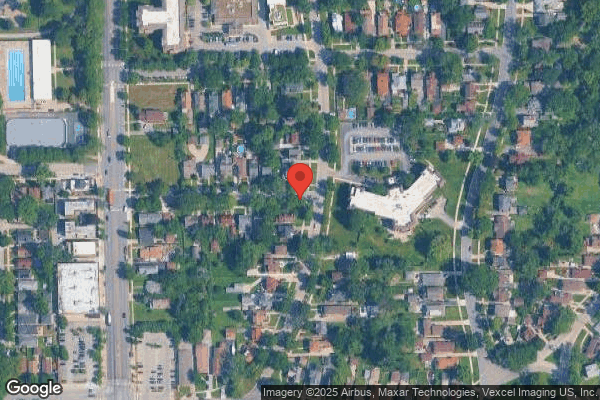
11401 SOUTH OAKLEY AVENUE, CHICAGO, IL 60643 (773) 233-6311
For profit - Individual 221 Beds INFINITY HEALTHCARE CONSULTING Data: November 2025
Trust Grade
0/100
#479 of 665 in IL
Last Inspection: October 2024

Within standard 12-15 month inspection cycle. Federal law requires annual inspections.

Overview

Belhaven Nursing & Rehab Center has received a Trust Grade of F, indicating significant concerns about the quality of care, as it falls in the lowest category. It ranks #479 out of 665 facilities in Illinois, placing it in the bottom half of nursing homes in the state, and #156 out of 201 in Cook County, meaning there are only a handful of better local options. While the facility is showing improvement, reducing issues from 29 in 2024 to 17 in 2025, it still faces serious problems, including a concerning $413,912 in fines, which is higher than 85% of facilities in Illinois. Staffing is a relative strength with a lower turnover rate of 39%, compared to the state average of 46%, but the facility has less RN coverage than 95% of state facilities, meaning residents may not receive the best medical oversight. Specific incidents include one resident whose pressure ulcer worsened due to inadequate treatment, and instances of physical altercations between residents that resulted in injuries, highlighting both serious care lapses and the need for better supervision.
Trust Score
F
0/100
In Illinois
#479/665
Bottom 28%
Safety Record
High Risk
Review needed
Inspections
Getting Better
29 → 17 violations
Staff Stability
○ Average
39% turnover. Near Illinois's 48% average. Typical for the industry.
Penalties
✓ Good
$413,912 in fines. Lower than most Illinois facilities. Relatively clean record.
Skilled Nurses
⚠ Watch
Each resident gets only 13 minutes of Registered Nurse (RN) attention daily — below average for Illinois. Fewer RN minutes means fewer trained eyes watching for problems.
Violations
⚠ Watch
86 deficiencies on record. Higher than average. Multiple issues found across inspections.
★☆☆☆☆
1.0
Overall Rating
★☆☆☆☆
1.0
Staff Levels
★★☆☆☆
2.0
Care Quality
★☆☆☆☆
1.0
Inspection Score
Stable
2024: 29 issues
2025: 17 issues

The Good

  • Full Sprinkler Coverage · Fire safety systems throughout facility
  • No fines on record
  • Staff turnover below average (39%)

    9 points below Illinois average of 48%

Facility shows strength in fire safety.

The Bad

1-Star Overall Rating

Below Illinois average (2.5)

Significant quality concerns identified by CMS

Staff Turnover: 39%

Near Illinois avg (46%)

Typical for the industry

Federal Fines: $413,912

Well above median ($33,413)

Significant penalties indicating serious issues

Chain: INFINITY HEALTHCARE CONSULTING

Part of a multi-facility chain

Ask about local staffing decisions and management

The Ugly 86 deficiencies on record

12 actual harm
Aug 2025 2 deficiencies
CONCERN (D) 📢 Someone Reported This

A family member, employee, or ombudsman was alarmed enough to file a formal complaint

Potential for Harm - no one hurt, but risky conditions existed

Deficiency F0760 (Tag F0760)

Could have caused harm · This affected 1 resident

**NOTE- TERMS IN BRACKETS HAVE BEEN EDITED TO PROTECT CONFIDENTIALITY** Based on observations, interviews and record reviews, facility failed to administer resident's medications according to physicia...

Read full inspector narrative →
**NOTE- TERMS IN BRACKETS HAVE BEEN EDITED TO PROTECT CONFIDENTIALITY** Based on observations, interviews and record reviews, facility failed to administer resident's medications according to physician orders and instructions. This failure affected one out of three residents reviewed for medication administration and has the potential to affect all 26 residents on the second - floor unit receiving medications from the split medication cart. Findings include:On 8/25/2025 at 10:00 AM, Review of the facility's provided census (dated 8/25/2025), showed that 199 residents live within the facility (26 residents on the second-floor unit receiving medications from medication cart titled the split cart). On 8/25/2025 during review of R1's EMAR, (printed on 8/25/2025 at 3:29 PM), observed empty spaces (8/11/2025 at 9 AM, 8/15/2025 at 6 PM, 9 PM and 8/17/2025 at 5 PM, 6 PM and 9 PM) without a checkmark code or any other code documenting if the medications were held, refused, or administered. The undocumented medications included all R1's seizure medications, blood pressure and blood thinning medications, vitamins and supplements, antidepressant, and medication for ulcer prevention. R1's admission record documents in part, R1 was admitted to the facility on [DATE] from an acute care hospital. R1's diagnosis included but are not limited to Spastic Hemiplegic Cerebral Palsy, Lennox-Gastaut Syndrome, Other Seizures, Diabetes Mellitus, Cerebral Infarction, Essential (Primary) Hypertension, Hemiplegia affecting left nondominant side, Bipolar disorder, Major Depressive Disorder, Other Lack of Coordination and Chronic Obstructive Pulmonary Disease. R1's , Brief Interview for Mental Status (BIMS) dated 8/8/2025, documents R1 has a BIMS score of 15, which indicates that R1 is cognitively intact.Reviewed R1, for medication administration and found concern for R1's seizure and other medications administration. The nursing staff, not administering R1's seizure medication and other prescribed medication as prescribed. On 8/25/2025 at 12:40 PM , during the facility's tour of second floor, V3 (Registered Nurse/RN) stated, that the current 2nd floor census is 71 residents, and the unit has three medication carts. V3 stated that each medication cart serves specific residents.On 8/25/2025 at 12:50 PM, observed R1 in the dining room, sitting by the table, dressed well in a white t-shirt and sweatpants, clean, with appropriate behavior, and wearing a face mask. Observed R1 having a rollator walker with bags with R1's belongings inside, hanging on the handle of the rollator. R1 was observed walking independently in the hallways using the rollator walker. On 8/25/2025 at 1 PM, R1, when passed nursing station, pointed out V4 (Licensed Practical Nurse/LPN) to the surveyor and stated that V4 is one of the nurses that did not gave R1 medications for seizures and R1's other medications. R1 stated, that there is another nurse, that skipped R1's seizure medications in the evenings, R1 just could not remember the other nurse's name. R1 said, that R1 did receive all the medications today and stated, that the staff administers medication as the staff pleases, when it is convenient and not on time as ordered. R1 stated, that R1 did not receives R1's seizure medication in the morning but did not remember the exact date of occurrence. R1 also said that V4 (LPN), would not give the medication to R1 and would not explain the reason. R1 stated that V4 was sitting at the nurse's station and ignore R1. R1 stated, that the same situation happened before with the evening nursing staff, sometimes this month, but R1 could not recall the exact date. R1 stated that R1 normally takes the seizure medication twice a day at 9 AM and around 5-6 PM. R1 was concerned and stated, that it is very important to take R1's seizure medications as per physician order, to prevent R1 from having seizures and when missed, there could be a probability that R1 could start having seizures again. On 8/25/2025 at 1:15 PM, observed V4 (LPN), sitting at the second-floor nurse's station, charting on computer. V4 stated that V4 start medication pass around 8 AM. On 8/26/025 at 8:30 AM, observed medication pass on the second-floor unit with V15 (Registered Nurse/RN). Observed V15 preparing R1's medications with no concerns. V15 used proper infection control and administered all R1's medications included but not limited to seizure medications. Observed V15 passed R1's morning medications that consisted of Amlodipine 5mg tablet daily; Lipitor 20mg daily; Keppra 1000mg twice a day; Lisinopril 10mg daily; Phenobarbital 100 mg twice a day; Pregabalin 200mg twice a day; Vitamin B1 100mg daily, Folic Acid 1mg daily, Aspirin 81mg daily and Famotidine 20mg daily. On 8/26/2025 at 09:05 AM, observed V3 (RN) at the nurse's station on the second-floor documenting. V3, stated, that V3 already administered all R2's medication this morning around 8:20 AM. Observed V3 pulling all R2's medications from the medication cart assigned to R2's hallway. V3 stated, that the medications administered to R2 this morning, included but not limited to Candesartan , Tamsulosin, Docusate Sodium, Folic Acid, Multivitamin with Minerals, Albuterol inhaler, Advair Diskus Inhalation Aerosol, Fluticasone Nasal spray and inhaler, Tiotropium Bromide inhalation capsule. Observed R2's medications, including inhalers in a plastic bag with R2's name on it, and inside each medication was properly dated and labeled with pharmacy labels that showed R2's information. V3 stated that if a medication would not be administered for any reason, such as resident refusal, it should be documented in EMAR with a code specific to the reason for not administrating the medication. The EMAR block should not be left blank, because did other nurse would not know a medication was administered.On 8/26/2025 at 10:47 am, V2 (Director of Nursing/DON) stated, that medications, should be administrated to residents exactly as ordered by the physician. V2 also stated, that the nurses should follow facility's medication administration policy and call doctor if medication was not given. V2 stated, that when medication is administered, the task should be documented in the electronic medication administration record (EMAR) by the nurse. The given mediation would show a checkmark code in the appropriate medication administration box. V2 also stated, that if resident refused to take medication, there would be a code number 2 in the administration box and that the different codes for omitting medications are displayed on each page of EMAR. On 8/26/2025 at 10:51 AM, V2 (DON) investigated the EMAR and affirmed that R1's seizure medications were not documented as administered, refused, or omitted for other reason, by the nurses on 8/11/2025, 8/15/2025 and on 8/17/2025. V2 could see in the nurse's notes any documentation stating the reason why medications were not given. V2 affirmed that R1's seizure medications were not administered on three different dates and shift times. V2 stated that the nurses should be documenting all medication administration opportunities and affirmed that V13 (LPN) and V4 (LPN) were the nurses, caring for R1 on the dates mentioned. V2 stated, that the consequences of not administering seizure and other prescribed medications as ordered, could cause R1 to have a high probability of having a seizure and could otherwise cause potential harm to the resident. On 8/26/2025 at 11:30 AM, V13 (LPN), via phone conversation, while V2 present, stated, that R1 received all medications, and that V13 did not document the administration of the medications to R1. V13 stated the understanding, that missing documentation of administering medications, shows in audits as medications not administered and with no documented reason why held. On 8/26/2025 at 11:40 AM, V2 (DON), stated that V13 (LPN), and V4 (LPN) should be charting medication administration. V2 also stated, that V2 is familiar with R1 and stated that R1's behavior changes quickly and is known to have manipulative tendencies. V2 affirmed the understanding, that missing documentation of administering medications, shows in audits as medications not administered. On 8/26/2025 AT 1:00 PM, V14 (Registered Pharmacist, Director of Clinical services consultant ) stated, that the consequences of omitting or missing a dose of a seizure medications is that depending on individual's health status and severity of seizure disorder, the resident could potentially have seizures. V14 stated that , R1 has seizure medications ordered as prevention of seizures.On 8/26/2025 at 4PM, V4 (LPN) said, that V4 was taking care of R1 and that V4 remembers R1 refusing all medications on 8/11/25. V4 said, that the refusal should be documented in EMAR with a code of 2 and thinks that V4 documented the refusal in the EMAR. V4 also said, that if there are empty spaces in the EMAR under all medications, that V4 probably forgot to document the medication refusal in the computer and said . because there was so much going on . V4 affirmed the understanding, that missing documentation of administering medications, shows in audits as medications not administered. On 8/26/2025 at 4:30 PM, V2 stated, that there are three medication carts serving on the second-floor unit. The medication carts are named The East Medication Cart, The [NAME] Medication Cart and The Split Medication Cart. The Split medication cart served 26 residents. V2 stated, that each cart has medications stocked specifically only for those residents that the cart serves, and the carts would not be containing other resident's medications. R1's Physician's order summary report, (8/8/2025) showed in part, active orders from 7/21/2025 for medications included but not limited to: Amlodipine Besylate oral tablet 5mg, give 1 tablet by mouth once a day for hypertension (HTN); Aspirin tablet 81mg, give 1 tablet by mouth once a day for HTN; Atorvastatin Calcium oral tablet 20mg, give one tablet by mouth once a day for HTN; Famotidine oral tablet 20mg, give one tablet by mouth once a day for ulcer; Folic Acid oral tablet 1mg, give one tablet by mouth once a day for supplement; Levetiracetam oral tablet 1000mg, give 1 tablet by mouth twice a day for seizure; Lisinopril oral tablet 10mg, give one tablet by mouth once a day for HTN; Phenobarbital oral tablet 100mg, give 100mg by mouth twice a day for seizures; Pregabalin oral capsule 200mg, give 200 mg by mouth two times a day for seizures; Thiamine HCL oral Tablet 100mg, give one tablet by mouth once a day for supplement; and Trazodone HCl oral tablet 150mg, give one tablet by mouth once a day for antidepressant.R1's electronic medication administration record (EMAR), documents, in part, on 8/11/2025 empty spaces under 9am medications including but not limited to: Amlodipine Besylate oral tablet 5mg, Aspirin tablet 81mg, Atorvastatin Calcium oral tablet 20mg, Famotidine oral tablet 20mg, Folic Acid oral tablet 1mg, Levetiracetam oral tablet 1000mg, Lisinopril oral tablet 10mg, Phenobarbital oral tablet 100mg, Pregabalin oral capsule 200mg, Thiamine HCL oral Tablet 100mg, and Trazodone HCl oral tablet 150mg. Observed empty spaces under 8/15/2025 at 6 PM for Pregabalin 200mg and Trazodone 150mg for 9 PM. Observed empty spaces under 8/17/2025 Levetiracetam 1000mg and Phenobarbital 100mg for 5 PM, Pregabalin 200mg for 6 PM and Trazodone 150mg for 9 PM. The empty spaces were without a checkmark code or any other code documenting if R1's medications were held, refused, or administered. On 8/25/2025 reviewed facility's Daily Staffing Schedule for the month of August 2025, and observed that on 8/11/2025 during AM shift, V4 (Licensed Practical Nurse/LPN) was working on the second-floor unit and took care of R1. Observed on 8/15/2025 during PM and Night shift, and on 8/17/2025 during PM shift, V13 (LPN) was caring for R1.R1's care plan (7/21/2025) documents, in part that R1 is at risk for seizure activity, R1s seizure activity should be controlled with medication and to administer medication as directed and follow pharmaceutical recommendations.R1's progress notes, showed a medical professional note (8/13/2025) that documents in part, R1 denies new seizure activity, but stated that if not taking R1's seizure medication, R1 could experience potential seizure. Progress notes documents in part, that R1 has past medical medication history includes Levetiracetam for seizures, phenobarbital and pregabalin for seizures. Progress notes also documents in part, that R1's treatment plan is to continue all seizures medications and that R1 was advised to be consistent with medications adherence ,because it is a very important prevention of seizures. In the patient summary of the progress notes the seizure management states in part, that the key recommendation is strict adherence to all R1's seizure medications, because it is necessary to prevent seizures recurrence.8/25/2025 Facility's policy titled Resident Rights, (Undated), documents in part, .At a minimum, Federal law specifies that nursing homes must protect and promote the following rights of each resident.Get proper Medical Care. 8/25/2025 Facility's policy titled, 2.6: Ordering medications (electronic), (December 2018), documents, in part,.refill orders are initiated within the electronic medical record system as follows: Reorder medication three days in advance of need to assure an adequate supply is on hand.8/25/2025 Facility's policy titled, 5.1: Drug Administration-General Guidelines, (Undated), documents in part, . Medications are administrated as prescribed, in accordance with good nursing principles and practices.The licensed nurse is aware of an indication for the resident receiving medication.2. Medications are administered in accordance with written orders of the attending physician.routine medications are administered according to the established medication administration schedule for the facility.9. The resident's MAR is initialed by the person administering a medication, in the space provided under the date, and on the line for that specific medication dose administration.11. If a dose of regularly scheduled medication is withheld, refused, . the space provided on the front of the MAR for that dosage administration is initialed and circled. An explanatory note is entered on the reverse side of the record provided.If two consecutive doses of a medication are withheld or refused, the physician is notified.8/25/2025 Facility's document titled, Job Description Administrator (Revised date August 21,2023), documents, in part, .Monitor each departments activities, communicate policies, .monitor operations of all departments.8/25/2025 Facility's document titled, Job Description Licensed Practical Nurse (Undated), documents, in part,.B. Role Responsibilities - Charting and Documentation.5. Charts nurses' notes in an informative and descriptive manner that reflects the care provided to the resident, as well as the resident's response to the care.C. Role Responsibilities-Drug Administration: 1. Prepares and administers medications as ordered by the physician.5. Orders prescribed medications, supplies, and equipment as necessary.8/25/2025 Facility's document titled, Job Description Registered Nurse, (Undated), documents, in part,.B. Role Responsibilities - Charting and Documentation.5. Charts nurses' notes in an informative and descriptive manner that reflects the care provided to the resident, as well as the resident's response to the care.C. Role Responsibilities-Drug Administration: 1. Prepares and administers medications as ordered by the physician.5. Orders prescribed medications, supplies, and equipment as necessary.8/25/2025 Facility's document titled, Job Description Director of Nursing, (Undated), documents, in part, .Under the supervision of the Administrator, the Director of Nursing has the authority, responsibility, and accountability for the functions, activities, and training of the nursing services staff.The DON is responsible for the overall management of resident care 24 hours a day, seven(7) days per week.B. Role Responsibilities - Administrative Duties.2. Supervise, evaluates, counsels, and disciplines inter-departmental personnel.
CONCERN (F) 📢 Someone Reported This

A family member, employee, or ombudsman was alarmed enough to file a formal complaint

Potential for Harm - no one hurt, but risky conditions existed

Deficiency F0809 (Tag F0809)

Could have caused harm · This affected most or all residents

Based on observation, interview, and record review, the facility failed to ensure that residents were provided meals and snacks at appropriate times, in accordance with 42 CFRS483.60(f)(1) Each reside...

Read full inspector narrative →
Based on observation, interview, and record review, the facility failed to ensure that residents were provided meals and snacks at appropriate times, in accordance with 42 CFRS483.60(f)(1) Each resident must receive and the facility must provide at least three meals daily, at regular times comparable to normal mealtimes in the community or in accordance with resident needs, preferences, requests, and plan of care. These failures have the potential to affect all 199 residents who receive oral meals from the facility's kitchen. Findings Include:On 08/25/2025 at 09:45 AM Surveyor was provided with facility census listing 199 residents residing in the facility.On 08/25/2025 at 1:00pm surveyor observed the Dining Rooms on the 2nd floor that revealed:Food Carts had been brought to the 2nd Floor Dining so staff could start the lunch meal service. Residents had been sitting at the tables waiting for food trays to be passed out. Only some residents received food trays because staff was waiting for the rest of the meals to be sent up from the kitchen.On 08/25/2025 at 1:00pm V16(Certified Nursing Assistant/CNA) said since the new company has taken over kitchen duties food has been sent up the units late. V16(CNA) said she thinks they are short staffed in the kitchen, but it has been an issue with getting meals on the units so they can start at scheduled meals times.On 8/25/2025 at 1:05pm R5 stated the food comes late all the time and they are not doing anything about it. R5 said he has voiced his concerns to staff and during resident council meetings but it hasn't improved the fact that lunch is always served lateOn 08/25/2025 at 1:20pm surveyor observed the 1st Floor Dining room that revealed:Residents sitting at tables eating lunch and being assisted by staff. Surveyor observed cheese pizza, veggies, tots, cup of pineapples being served as stated on the monthly food menu.On 08/25/2025 at 1:25pm V12(Central Supplies) said lunch has been coming late to the 1st Floor Unit, it's supposed to come at 12:00pm and at 12:50pm they were still waiting for food trays. V12(Central Supplies) said she normally assist on the 3rd Floor Dining Room and she's not even sure they received their meals yet.On 08/25/2025 at 1:40pm V10(Restorative Aid) said for the last two weeks she has noticed that food is coming up late from the kitchen. V10(Restorative Aid) said it's mainly lunch that comes is the problem, that they might be short staffed in the kitchen so they run behind getting food out on-time.On 08/26/2025 at 8:50am surveyor observed the kitchen with V9(Dietary Director), walk-in fridge was 39 degrees Fahrenheit, freezer 9 degrees Fahrenheit, dry goods items stored and labeled within expiration dates. No signs of trash on the floor or evidence of pest. No concerns with cleanliness or issues with the kitchen being dirty.On 08/26/2025 at 9:00am V9(Dietary Director) said the goal is to have food up to the units so the dietary aids could begin meal services as scheduled. V9(Dietary Director) said breakfast should begin at 8:00am, lunch 12:00pm, and dinner at 5:00pm per the mealtimes schedule posted. V9(Dietary Director) said he only started two weeks ago and is aware that the kitchen has been running behind schedule and sending food out late to the units. V9(Dietary Director) said he's trying to address the issues voiced by residents and is in the process of hiring more kitchen staff. On 08/26/2025 at 11:00am V5(Assistant Director of Nursing/ADON) said she is aware of resident concerns about meals being sent out late from the kitchen, V5(ADON) said the kitchen is run by an independent vendor and they have voiced their concerns to corporate and upper management about the issues they facility is having with the kitchen. V5(Assistant Director of Nursing/ADON) on multiply occasions she has spoken to residents about how late food trays are getting to the units and something needs to be done about the issue. V5(ADON) said it's out of their control since the new vendor has taken control of kitchen duties.On 08/26/2025 at 12:55pm surveyor observed 1st Floor Dining Room, no food trays available. Residents sitting at tables waiting for scheduled meal service to begin.On 08/26/2025 between 8am and 4pm V1(Administrator/ADMIN) and V2(Director of Nursing/DON) said they are aware of the situation with the kitchen sending out food trays late for scheduled meal services. They said concerns have been addressed with V9(Dietary Director) and stated the independent vendor is working to hire more kitchen staff to address the matter of food preparation being delayed and sent out late to the units.Surveyor reviewed Belhaven Meal Times for breakfast, lunch, and Dinner times.The Vendor Policy and Procedure Meal Service Schedule (no date) reads in part:Meals will be served according to a planned schedule that allows no more than 14 hours between dinner the previous evening and breakfast the next day. 1. Procedure: Post meal service schedule in main kitchen and all service areas.A. Posting in kitchen should include service times for all service areas. B. Postings in service areas should include time for that service area only.
Aug 2025 2 deficiencies
CONCERN (D) 📢 Someone Reported This

A family member, employee, or ombudsman was alarmed enough to file a formal complaint

Potential for Harm - no one hurt, but risky conditions existed

Quality of Care (Tag F0684)

Could have caused harm · This affected 1 resident

**NOTE- TERMS IN BRACKETS HAVE BEEN EDITED TO PROTECT CONFIDENTIALITY** Based on observation, interview, and record review, the facility failed to implement resident-directed care consistent with the ...

Read full inspector narrative →
**NOTE- TERMS IN BRACKETS HAVE BEEN EDITED TO PROTECT CONFIDENTIALITY** Based on observation, interview, and record review, the facility failed to implement resident-directed care consistent with the resident's comprehensive assessment, professional standards of practice by a.) provide feeding assistance to two (R9, R10) residents b.) help a resident maintain their dignity during mealtime for one resident (R10) in a total sample of 10 residents. This failure places the resident at risk for more than minimal harm.Findings include:On 08/13/2025 at 12:49 PM, R10 sitting on a wheelchair, in the dining area, wearing a towel on his chest, falling asleep. R10 has a plate with pureed food covered with clear plastic in front of him on the table. Staffing seen passing out meal trays. On 08/13/2025 at 12:53 PM, R10 still positioned the same, falling asleep. One staff next to him, uncovered (plastic cover) the plate of pureed food and walked away with three other staff to pass out meal trays. R10 lifts his head a little, attempts to eat by himself, head is tilted to left side, with his right hand, grabbing food with spoon. R10 appears sleepy/drowsy, chin down, holding up spoon in the air and falling asleep. No staff providing feeding assistance to R10.On 08/13/2025 at 12:57 PM, R10 dropping food on the towel and eating with right hand, slowly. Some pureed food noted on his beard/chin area. Eating the small bowl of apple sauce with his mouth, without using a utensil. R10 grabbed spoon and filled with pureed food and place it in the mouth. With head down, falling asleep, appears with food still in his mouth. On 08/13/2025 at 1:01 PM, R10 falling asleep, no staff encouraging or standing next to R10. On 08/13/2025 at 1:02PM, R10's head tilting to his left again and forward. On 08/13/2025 at 1:03 PM, R10 picked up white bowl with a little bit of apple sauce and grabbed with mouth. On 08/13/2025 at 1:05 PM, R10 noted falling asleep, chin to chest. On 08/13/2025 at 1:07 PM, this surveyor questioned R10 how he was doing, R10 easily arousable, stated I need help with my food as saliva noted coming out of his mouth. On 08/13/2025 at 1:10 PM, R9 tilted towards his left side, eating with right hand, regular round spoon, eating dessert off from the plastic bowl, not able to use left hand. Approximately two spoonsful of turkey on the floor next to R9's bed, an assistive device plate noted. An empty cup of what appears like red color liquid (possibly juice) noted. No staff assisting resident eat his meal.On 08/14/2025 at 12:04 PM, R9 able to wheel himself, in the hallway. awake and responsive. Has a reclining wheelchair. On 08/14/2025 at 12:36 PM R10 sitting in front of the table, wearing glasses, wearing a hospital gown over his shirt. No lunch in front of him yet. R10's beard appears unclean, noted with light brown color particles (appears as dry food). On 08/14/2025 at 12:41 PM R10's head down, leaning forward. Staff member placed a lunch tray on the table in front of R10. R10 began to eat with his right hand using a spoon. R10 grabbed a spoonful of the pureed food, and some of the pureed landed on his left side of his mouth. R10 grabbed the chocolate pudding in a small bowl, lifted it up to his mouth and dropped some on his left finger/hand. No magic cup noted on R10's meal tray. No staff providing feeding assistance to R10. On 08/142025 at 1:01 PM V14 (Certified Nursing Assistant) observed another resident put some food on R10's finished plate. V14 removed the plate and asked the server if she had more pureed. On 08/14/2025 at 1:02 PM V14 placed a new plate with pureed food in front of R10 and walked away. R10 began slowly eating with his right hand. R10's head is titled to the left a bit. On 08/14/2025 at 1:06 PM eating more, slowly, chin beard filled with food particles. No staff assisting R10 noted. On 08/14/2025 at 1:10 PM, R10 is still eating, filling mouth with pureed food. Despite having more food still in his mouth.On 08/14/2025 1:11 PM, R10 grabbed food with his hand. V5 (Licensed Practical Nurse) placed a chair next R10 and walked away towards nurse's station. On 08/14/2025 at 1:12PM, V5 walked back to R10, noted with paper towel in her hand and told R10 let me help you. V5 fed him and cued him to take his time. On 08/14/2025 at 1:15 PM, V5 stated that she initiated to assist R10 because V5 saw R10 eat with his hand, and R10 looked like he was struggling. V5 stated I asked the CNA to get me a towel so I can clean him off or something and continue to feed him. V5 stated that it is important to help the residents if they have food stains around their mouths for dignity reasons.On 08/14/2025 at 3:06 PM V2 (Director of Nursing) stated that a resident who needs assistance should not sit there with food particles on their face. V2 stated you would want to wipe their face. R9's face sheet documents R9 is a [AGE] year-old individual with diagnoses not limited to: chronic obstructive pulmonary disease, unspecified, schizophrenia, unspecified, dystonia, unspecified, anxiety disorder, unspecified, essential (primary) hypertension, epilepsy, unspecified.R9's MDS/Minimum Data Set, dated [DATE] documents that R9's cognitive skills for daily decision making are moderately impaired- decisions poor; cues/supervision required. R9's MDS/Minimum Data Set section GG dated 08/05/2025 documents in part R9 requires substantial/maximal assistance (helper does more than half the effort) for eating. R9's active physician order dated 08/09/2024 documents in part 1:1 feeder. R10's face sheet documents R10 is a [AGE] year-old individual with diagnoses not limited to: hemiplegia and hemiparesis following cerebral infarction affecting left non-dominant side, muscle wasting and atrophy, unspecified lack of coordination, need for assistance with personal care, vascular dementia, dysphagia following cerebral infarction.R10's MDS/Minimum Data Set section GG dated 07/16/2025 documents in part R10 requires partial/moderate assistance (helper does less than half the effort) for eating. R10's care plan documents in part R10 is at risk for weight loss, pain, fatigue and other complications r/t (related to) protein-calorie malnutrition. Assist with ADL's (assistance of daily living) as needed and allow time to maintain independence.R10's care plan documents in part R10 has a self-care deficit and requires assistance with ADLs to maintain highest possible level of functioning as evidenced by the following limitations and potential contributing factors: impaired cognitive status with diagnosis of dementia, weakness. Interventions document in part R10 usually requires extensive assistance and 1 person support for eating.R10's restorative nursing evaluation dated 7/16/2025 11:10 am documents in part R10 has an active diagnosis of hemiplegia. pmHX (past medical history): CVA (Cerebrovascular Accident) w/left sided hemiplegia, requires extensive assist with most ADLs and transfers, able to stand pivot during transfers. Needs feeding assist w/meals on mechanical soft diet DX (diagnosis): Dysphagia.Facility document not dated titled activities of daily living documents in part residents are given routine daily care by a CNA (certified nursing assistant) or a nurse to promote hygiene, provide comfort and provide a homelike environment. Assistant the resident in personal care such as bathing, showering, dressing, eating, hair care, oral care, nail care, appropriate skin care (as indicated and as per care plan) as well as encouraging participating in physical, social, and reactional activities. Do all required ADL (activities of daily living) documentation as required per policy and regulations.
CONCERN (D) 📢 Someone Reported This

A family member, employee, or ombudsman was alarmed enough to file a formal complaint

Potential for Harm - no one hurt, but risky conditions existed

Deficiency F0808 (Tag F0808)

Could have caused harm · This affected 1 resident

**NOTE- TERMS IN BRACKETS HAVE BEEN EDITED TO PROTECT CONFIDENTIALITY** Based on observation, interview, and record review the facility failed to a.) ensure drinks consumed are in the appropriate form...

Read full inspector narrative →
**NOTE- TERMS IN BRACKETS HAVE BEEN EDITED TO PROTECT CONFIDENTIALITY** Based on observation, interview, and record review the facility failed to a.) ensure drinks consumed are in the appropriate form as ordered by the physician for one resident (R10) b.) provide the appropriate nutrient content as ordered by the physician order for two (R8, R9) out of ten residents reviewed for dietary services. This failure places the resident at risk for more than minimal harm.Findings include:On 08/13/2025 at 12:24 PM R8 stated I'm supposed to get two cheeseburgers as he is showing his diet slip to a staff member. V12 (Dietary Aide) nodded her head no, they didn't make another one. then she looked at surveyor and said give me a minute.On 08/13/2025 at 12:39 PM, R8 standing at the nurse's station, stated that he did not receive another cheeseburger. R8 stated sometimes they do give me my double portions but not today or yesterday. R8's MDS/Minimum Data Set, dated [DATE] documents that R8 has a BIMS/Brief Interview for Mental Status score of 15/15, indicating that R8 has intact cognition. R8's active physician order dated 05/23/2025 documents in part double portions diet, Regular texture, Thin Liquids consistency. for double portion. On 08/14/2025 12:44 PM, R9's lunch tray placed in front of R9, no double portion protein noted on his plate (one scoop of chopped chicken, rice, carrots), and on R9's tray also chocolate pudding in a small bowel, and a cup of juice noted.R9's active physician order/dietary order dated 05/22/2025 documents in part general diet mechanical soft texture, thin liquids consistency, double portion protein for nutrition. On 08/14/2025 at 12:41 PM R10's head down, leaning forward. Staff member placed a lunch tray on the table in front of R10. No magic cup noted on R10's meal tray.On 08/14/2025 at 12:48 PM, R10 eating slowly trying to get some of the pureed food. R10 grabbed a cup off his lunch tray and drank the thin liquid juice. No acute distress noted. On 08/14/2025 at 12:53 PM V14 (Certified Nursing Assistant) stated I am not the one who gave him his tray as V14 grabbed R10's liquid thin juice and provided R10 with thickened liquid apple juice. V14 stated not sure if it is fruit punch juice but it is thin liquid. R10's active physician diet order dated 05/22/2025 documents in part NAS = no salt packet on tray diet, pureed texture, nectar consistency. magic cup with lunch and dinner for diet.On 08/14/2025 at 3:06 PM V2 (Director of Nursing) V2 stated that it is important to follow diet orders because number one goal is always safety. Someone might be on a cardiac or renal, or pureed, mechanical soft diet based on their diagnosis and assessments. V2 stated that if there is an order for a resident to have double portion meal, then they should receive double portion. V2 stated it means what they can tolerate. V2 stated that if a resident who has an order for thickened liquids drinks thin liquids, it can place the resident at risk for aspiration. V2 stated that some complication of aspirating is aspiration pneumonia, choking. V2 stated that if a resident is given thin liquids instead of thickened liquids that is an example of not following diet orders. V2 stated that residents are honored their right to be treated with dignity and respect during mealtimes you would want to make sure they receive their appropriate meal trays.
Jul 2025 1 deficiency
CONCERN (D) 📢 Someone Reported This

A family member, employee, or ombudsman was alarmed enough to file a formal complaint

Potential for Harm - no one hurt, but risky conditions existed

Quality of Care (Tag F0684)

Could have caused harm · This affected 1 resident

**NOTE- TERMS IN BRACKETS HAVE BEEN EDITED TO PROTECT CONFIDENTIALITY** Based on interview and record review, the facility failed to follow a physician order and monitor a resident's vital signs for o...

Read full inspector narrative →
**NOTE- TERMS IN BRACKETS HAVE BEEN EDITED TO PROTECT CONFIDENTIALITY** Based on interview and record review, the facility failed to follow a physician order and monitor a resident's vital signs for one (R1) out of four residents reviewed for quality of care in a total sample of four. This failure places residents at risk to be provided with inappropriate care and services to meet the resident's physical, mental and/or psychosocial needs. This failure places the resident at risk for more than minimal harm. Findings include: On 07/01/2025, at 12:56 PM, R1 stated that he saw V10 (Nurse Practitioner) about three weeks ago. R1 stated that he informed V10 that R1 has been having a lot of migraines which R1 stated that he never had in his life. R1 stated, I'll be sitting there and physically feel that my blood pressure is high. R1 stated that V10 ordered a medication which has been helping R1. R1 stated that the staff do not check his blood pressure daily. R1 stated that the nurse did not check R1's blood pressure today nor any vital signs. On 07/01/2025, at 11:49 AM, V6 (Registered Nurse) stated that R1 has an order for vital signs daily but no option of recording them. V6 stated that she did monitor R1's vital signs today and wrote them on a piece of paper which V6 threw out in the garbage and does not have the paper anymore. V6 stated that R1 does have a diagnosis of hypertension on his face sheet. V6 stated that R1's last blood pressure recorded in R1's blood pressure log is 138/77 mmHg (millimeters of mercury) dated 6/13/2025. V6 stated that symptoms of high blood pressure a person may experience is dizziness, lightheaded, sweating, pain, headache, flushing, chest discomfort, swelling to extremities. V6 stated that R1's vital signs should have been documented in R1's electronic medical record. R1's current face sheet documents R1 is a [AGE] year-old individual admitted to the facility on [DATE] and has diagnoses not limited to: hypertension, chronic obstructive pulmonary disease, asthma. R1's Minimum Data Set (MDS) Section C, dated 05/14/2025, documents R1 has a Brief Interview for Mental Status (BIMS) of 15 out of 15, indicating R1 is cognitively intact. R1's active physician order sheet/POS documents the following order: vital signs daily every day shift for monitoring. This order is active since dated 01/25/2025. R1's blood pressure log from April 2025 to June 2025. No blood pressure logged from April 2025 to May 2025. For June 2025 only one blood pressure reading (138/77 mmhHg) logged in the blood pressure log dated 6/13/2025. R1's nurse's note dated 6/24/2025, at 7:41 PM, documents in part R1's blood pressure read 143/78 mmHg. No other blood pressure readings noted from April 2025 to June 2025. R1's provider note dated 6/25/2025, 7:35 AM, documents in part cardiology medical necessity: f/u (follow up) consult for cardiac med reconcile, titrating cardiac meds, lab follow up, following volume status, adjusting diuretics as needed, monitoring hemodynamics/symptoms during and post physical therapy, and increased risk for cardiac re-admission. Plan: Essential HTN (hypertension) - No antihypertensive medications on file -- SBP (systolic blood pressure) less than 140 -- Low salt diet advised R1's physician progress note dated 5/20/2025, 4:25 PM, documents in part R1 has a PMHx (past medical history) of COPD (chronic obstructive pulmonary disease), HTN (hypertension). Patient (R1) is drowsy, oriented, calm. Patient reports headaches are improved with Candesartan. He also reports improvements in back pain with medication, he believes this is due to relief of tension and anxiety from headaches. Plan: HEADACHES/MIGRAINES: Candesartan and monitor HTN: Monitor off antihypertensives. Call doctor/nurse practitioner with SBP>170. Facility document dated 06/18/23, titled guidelines for physician orders documents in part It is the policy of the facility to follow the orders of the physician. All physician orders received pertaining to the resident will be implemented and followed throughout the course of the resident's stay in the facility as the orders are received.
May 2025 1 deficiency
CONCERN (E) 📢 Someone Reported This

A family member, employee, or ombudsman was alarmed enough to file a formal complaint

Potential for Harm - no one hurt, but risky conditions existed

Deficiency F0919 (Tag F0919)

Could have caused harm · This affected multiple residents

Based on observations, interview and record review, the facility failed to ensure that the resident's call light system was working properly. This failure has the potential to affect 64 residents that...

Read full inspector narrative →
Based on observations, interview and record review, the facility failed to ensure that the resident's call light system was working properly. This failure has the potential to affect 64 residents that reside on the second floor. Findings include: On 5/13/2025 at 12:05 PM during investigation, Surveyor heard a constant beeping sound on the second floor near the nurse's station. V17 (RN/ Registered Nurse) said that the beeping sound was the call light system and that she (V17) was unable to determine if or when a resident was calling for help because the call light system was malfunctioning. On 5/13/2025 at 12:10 PM, V14 (Housekeeping Staff) said that he was not aware of any call light system issues and was unable to disarm the call alarm. On 5/13/2025 at 12:11 PM V18 (CNA/ Certified Nurse Assistant) said, From the beeping, I can't tell which room activated their call light. I would have to walk around to find out who needs help because the light outside of the patient room don't always light up when they call. It's important for the call lights to work properly because the patient may need help, be on the floor, or could be in distress. On 5/19/2025 at 12:15 PM, Surveyor noted constant beeping sound again on the second floor near the nurse's station. V15 (Maintenance Director) said, I didn't know that the call light system was malfunctioning. The nurses know that if the call system is not working properly, they need to put on a work order. If a call alarm is constantly going off, it's possible that a resident's call can be ignored if they call. Facility Census dated 5/13/2025 documents 64 residents on the second floor. Facility policy titled Call Lights documents, it is the policy if the facility to have a system in place to allow the staff to respond promptly to a resident's call for assistance and to ensure that the call system is in proper working order.
May 2025 1 deficiency
CONCERN (E) 📢 Someone Reported This

A family member, employee, or ombudsman was alarmed enough to file a formal complaint

Potential for Harm - no one hurt, but risky conditions existed

Safe Environment (Tag F0584)

Could have caused harm · This affected multiple residents

Based on observation, interviews, and record reviews the facility failed to maintain a safe, comfortable home like environment,[A] failed to maintain room temperatures for four [R4, R5, R6, R7] of sev...

Read full inspector narrative →
Based on observation, interviews, and record reviews the facility failed to maintain a safe, comfortable home like environment,[A] failed to maintain room temperatures for four [R4, R5, R6, R7] of seven [R1, R2, R3] residents reviewed for heating. Findings include, R1's clinical record indicates in part: R1 was admitted with the following medical diagnosis of paraplegia, essential hypertension, opioid abuse, anxiety disorder, colostomy, abnormal posture, malaise, and limitations of activities due to disability. R1's minimum data set [MDS] section [C] indicates R1 is cognitively intact. R1's care plan documents in part: R1 presents with moderate to extreme anxiety related to: worry regarding medical symptoms and conditions mood distress, anger, fear, and paranoia. This problem is manifested by verbal expressions of distress and frequent complaints. R1 displays manipulative behavior which is disruptive, insensitive, and disrespectful to staff and peers. This behavior is related to anger and depression symptoms are manifest by frequent threats to call state survey agency officials, ombudsman, attorneys, placing unjustified calls to police, threaten to report staff. R1's symptoms are manifest by threatening or acting in a verbally or physically aggressive behavior manner. On 5/3/25 at 10:10 AM observed R1 lying on an ambulance stretcher alert and oriented x3. R1 stated, I am on my way to the emergency department to get my suprapubic catheter changed out. Sometimes at night my room gets a little cool, but the nursing staff gives my extra blankets. Then there are times my room is very hot, and I have asked V5 [Director of Maintenance] to turn the heat off in my room. But lately the temperature in my room is good. On 5/3/25 at 11:00 AM, R4 and R5 both said the heat in their room have not been working for two weeks. R5 ask surveyor to turn the switch on the wall in an up position. R5 said the switch normally turns on the heat. Surveyor pushed the switch upwards and a few seconds later R4, R5 and surveyor hear a popping noise. Observed on the floor in front of the heating unit four colored wires, blue, red, black and white. R4 and R5 both said the wires was pulled out when staff was moving the beds around. R5 stated, I told serval nurses about those wires hanging out. On 5/3/24 at 11:22 AM, R6 and R7 said they were both cold and the heat would not turn on. Surveyor and V5 [Maintenance Director] obtained temperature in the following rooms: R1's room temperature was 74 degrees Fahrenheit [F]. R2's room temperature was 72F. R3's room temperature was 72F. R4 and R5's room temperature was 70F. V5 stated, The heating unit is not working. The room temperatures should be 72 to 82 degrees. R6 and R7's room temperature was 65F. On 5/3/25 at 11:45 AM, V5 [Maintenance Director] stated, I was not made aware that R4 and R5's room's heating unit wires were laying outside the unit the heating unit is not working. On 5/3/25 at 11:50AM, V5 stated, I was not made aware that R6 and R7's heating unit was not turning on. The heating until motor needs to be replace, it is not coming on. On 5/3/25 at 3:45 PM, V5 and surveyor went to R4, R5, R6, and R7's rooms the heating units were working, and the room temperature was 72F. V5 stated, R4 and R5 heating unit was not working, I repaired the wires, and the heating unit is now functioning properly. R6 and R7's motor in the heating unit was working, I replaced the motor and now the heat is working. On 5/3/25 at 2:40 PM, V1 [Administrator] stated, I have not received any concerns regarding the facility not being warm. Last week the residents and staff complained the facility was too hot. V5 adjusted the heat according to the weather and building temperatures. All residents should not go without heat in their rooms. They all should be comfortable in a homelike environment. The residents room temperature should be between 72 to 82 degrees. Policy documented in part: Resident Rights Ombudsman: Your facility must be safe, clean, comfortable, and homelike.
Apr 2025 1 deficiency
CONCERN (D) 📢 Someone Reported This

A family member, employee, or ombudsman was alarmed enough to file a formal complaint

Potential for Harm - no one hurt, but risky conditions existed

Quality of Care (Tag F0684)

Could have caused harm · This affected 1 resident

Based on interview and record review the facility failed to ensure that resident's medications are administered as ordered by the physician. This failure affected three residents (R1, R2 and R3) of th...

Read full inspector narrative →
Based on interview and record review the facility failed to ensure that resident's medications are administered as ordered by the physician. This failure affected three residents (R1, R2 and R3) of three residents reviewed for quality of care. Findings include: On 04/10/2025 at 12:30pm V2(DON/Director of Nursing) presented R1's, R2's and R3's MARs (medication administration records) to the surveyor, which were reviewed. There were missing entries of nurses' signatures/initials or codes on the MARs for April 2025(4/1/2025 to 4/30/2025). R1's diagnosis includes but are not limited to metabolic encephalopathy, unspecified severe protein-calorie malnutrition, vitamin d deficiency, unspecified, bradycardia, unspecified, weakness, unspecified intellectual disabilities, essential (primary) hypertension, unspecified dementia, unspecified severity, without behavioral disturbance, psychotic disturbance, mood disturbance, and anxiety, dysphagia, oral phase, aphasia, type 2 diabetes mellitus with hyperosmolarity without nonketotic hyperglycemic-hyperosmolar coma, altered mental status, unspecified, resistance to vancomycin, acute respiratory failure, unspecified whether with hypoxia or hypercapnia, epilepsy, unspecified, not intractable, without status epilepticus, unspecified kidney failure, methicillin resistant staphylococcus aureus infection, unspecified site, extended spectrum beta lactamase resistance. R1 's Brief Interview for Mental Status (BIMS) dated 3/10/2025 documents that R1C0700. Sort-term Memory OK 1. Memory Problem. C0800. Long-Term Memory OK 1. Memory Problem. C1000. Cognitive Skills for Daily Decision Making 3. Severely Impaired. A. Acute Onset Mental Status Change. B. Inattention-2. Behavior present fluctuates (comes and goes, changes in severity). D. Altered Level of Consciousness-2. Behavior present fluctuates (comes and goes, changes in severity). There were missing entries of nurses' signatures/initials or codes on R1's medication administration record for the following medications, dates, and times: On 04/09/2025 at 0600 Insulin Glargine Solution 100 unit/ml(milliliters)-Inject 6 unit subcutaneously two times a day. On 04/01/2025 at 1400 Glucerna 1.2 at 50 ml/hour-Give via G-tube one time a day. On 04/09/2025 at 0600 Aspirin Tablet Chewable 81mg-give 1 tablet via G-tube one time a day. On 04/09/2025 at 0600 Donepezil HCL tablet 10mg-give 1 tablet via G-tube one time a day. On 04/09/2025 at 0600 Ergocalciferol oral tablet 50 mcg(micrograms)-give 50 mcg via G-tube one time a day. On 04/09/2025 at 0600 Famotidine oral tablet 20 mg-Give 1 tablet via G-tube one time a day. On 04/09/2025 at 0600 Midodrine HCL Oral tablet 10mg-Give 1 tablet via G-tube every eight hours. R2's diagnosis includes but are not limited to paraplegia, unspecified, bed confinement status, pressure ulcer of left buttock, pressure ulcer of right buttock, non-pressure chronic ulcer of unspecified thigh with unspecified severity, anemia, unspecified, accidental discharge from unspecified firearms or gun, subsequent encounter, osteomyelitis, unspecified, thrombocytosis, unspecified. R2's Brief Interview for Mental Status (BIMS) dated 1/13/2025 documents that R2 has a BIMS score of 15, indicating R2's cognition is intact. There were missing entries of nurses' signatures/initials or codes on R2's medication administration record for the following medications, dates, and times: On 04/07/2025 at 0600 Enoxaparin sodium injection solution prefilled syringe 40mg/0.4ml-Inject 40mg subcutaneously one time a day. On 04/03/2025 at 1700 Ascorbic Acid tablet 500mg-Give 1 tablet by mouth two times a day. On 04/04/2025 at 1700 Ascorbic Acid tablet 500mg-Give 1 tablet by mouth two times a day. On 04/07/2025 at 1700 Ascorbic Acid tablet 500mg-Give 1 tablet by mouth two times a day. On 04/03/2025 at 1700 Famotidine oral tablet 20mg-Give 20mg by mouth two times a day. On 04/04/2025 at 1700 Famotidine oral tablet 20mg-Give 20mg by mouth two times a day. On 04/07/2025 at 1700 Famotidine oral tablet 20mg-Give 20mg by mouth two times a day. On 04/03/2025 at 1700 Juven -Mix 1 packet with 8 ounces of water, drink by mouth twice daily. On 04/04/2025 at 1700 Juven -Mix 1 packet with 8 ounces of water, drink by mouth twice daily. On 04/07/2025 at 1700 Juven -Mix 1 packet with 8 ounces of water, drink by mouth twice daily. On 04/03/2025 at 1700 Prostat SF- 30ml by mouth two times a day. On 04/04/2025 at 1700 Prostat SF- 30ml by mouth two times a day. On 04/07/2025 at 1700 Prostat SF- 30ml by mouth two times a day. On 04/03/2025 at 1700 Baclofen tablet-give 5mg by mouth three times a day. On 04/04/2025 at 1700 Baclofen tablet-give 5mg by mouth three times a day. On 04/07/2025 at 1700 Baclofen tablet-give 5mg by mouth three times a day. R3's diagnosis includes but are not limited to other seizures, type 2 diabetes mellitus without complications, hidradenitis suppurativa, essential (primary) hypertension, hyperlipidemia, unspecified, overactive bladder, anemia, unspecified, pressure ulcer of sacral region, stage 4, presence of automatic (implantable) cardiac defibrillator, unsteadiness on feet, repeated falls. R3's Brief Interview for Mental Status (BIMS) dated 1/14/2025 documents that R3 has a BIMS score of 13 which indicates that R3's cognition is intact. There were missing entries of nurses' signatures/initials or codes on R3's medication administration record for the following medications, dates, and times: On 04/03/2025 at 2100 Atorvastatin Calcium tablet 40mg-Give 1 tablet by mouth at bedtime. On 04/04/2025 at 2100 Atorvastatin Calcium tablet 40mg-Give 1 tablet by mouth at bedtime. On 04/03/2025 at 1700 FeroSul oral tablet 325mg (Ferrous Sulfate)-give 1 tablet by mouth two times a day. On 04/03/2025 at 1700-Glycolax powder-give 17 grams by mouth two times a day. On 04/07/2025 at 0600 Heparin Sodium Injection solution 5000 unit/ml-inject 5000 unit subcutaneously every 12 hours. On 04/03/2025 at 1800 Heparin Sodium Injection solution 5000 unit/ml-inject 5000 unit subcutaneously every 12 hours. On 04/03/2025 at 2100 Keppra oral tablet 1000mg-give 1 tablet by mouth every 12 hours. On 04/04/2025 at 2100 Keppra oral tablet 1000mg-give 1 tablet by mouth every 12 hours. On 04/03/2025 at 1700 Prostat SF 30ml by mouth two times a day. On 04/03/2025 at 1700 Vimpat oral tablet 100mg-give 1 tablet by mouth two times a day. On 04/08/2025 at 1300 Gabapentin Capsule 300mg-give 1 capsule by mouth three times a day. On 04/03/2025 at 1700 Gabapentin Capsule 300mg-give 1 capsule by mouth three times a day. On 04/10/2025 at 12:42pm V2(DON/Director of Nursing) stated the nurses are responsible for administering medications to the residents and documenting on the medication administration record after the medication is administered to the resident. V2 stated in my professional opinion, if a scheduled medication for resident has missing initials on the medication administration record for a specific date and time the medication was to be administered, this would indicate the medication was not administered to the resident. V2 stated if it is not documented, then it was not done. V2 stated it is my expectation that nurses should document on a progress note when a medication is unable to be given to a resident for any reason. Reviewed the Facility's undated Policy titled Drug Administration-General Guidelines which documents, in part, 7. Only licensed or legally authorized personnel who prepare medication may administer it. This individual records the administration on the resident's MAR (medication administration record) at the time the medication was given. At the end of each medication pass, the person administering the medications reviews the MAR to ascertain that all necessary doses were administered, and all administered doses were documented. In no case should the individual who administered the medications report off-duty without first recording the administration of any medications. 9. The resident's MAR is initialed by the person administering a medication, in the space provided under the date, and on the line for that specific medication dose administration. 11. If a dose of a regularly scheduled medication is withheld, refused, or given at other time than the scheduled time, the space provided on the front of the MAR for that dosage administration is initialed and circled. Reviewed facility's Registered Nurse Job Description, undated, which documents, in part, underneath B. Role Responsibilities-Charting and Documentation: Performs routine charting duties as required and in accordance with established charting and documentation policies & procedures. Reviewed facility's Licensed Practical Nurse Job Description, undated, which documents, in part, underneath B. Role Responsibilities-Charting and Documentation: Performs routine charting duties as required and in accordance with established charting and documentation policies & procedures.
Mar 2025 1 deficiency
CONCERN (D) 📢 Someone Reported This

A family member, employee, or ombudsman was alarmed enough to file a formal complaint

Potential for Harm - no one hurt, but risky conditions existed

Pressure Ulcer Prevention (Tag F0686)

Could have caused harm · This affected 1 resident

**NOTE- TERMS IN BRACKETS HAVE BEEN EDITED TO PROTECT CONFIDENTIALITY** Based on interviews, and record review, the facility failed to provide necessary treatment and services to promote healing of ex...

Read full inspector narrative →
**NOTE- TERMS IN BRACKETS HAVE BEEN EDITED TO PROTECT CONFIDENTIALITY** Based on interviews, and record review, the facility failed to provide necessary treatment and services to promote healing of existing wounds for one (R1) of three residents reviewed. This failure has the potential for R1's wounds to get worse. Findings include: R1 is a [AGE] year-old individual admitted to the facility on [DATE]. R1 discharged to a nearby hospital on [DATE]. R1's medical diagnosis includes but not limited to: paraplegia, unspecified, colostomy, type 2 diabetes mellitus without complications status, other mechanical complication of cystostomy catheter, subsequent encounter, chronic obstructive pulmonary disease, unspecified. R1's progress notes dated 2/25/2025, further document R1 has multiple sacral wounds and hospital records dated 1/25/2025 document R1 has Fournier's gangrene extending from the perianal region, large right sacral ulcer and necrotizing fasciitis involving gluteal fat. MDS (Minimum Data Set) section C dated 03/04/ 2025, documents R1's Brief Interview for Mental Status (BIMS) as 15/15, indicating R1 has intact cognitive functional abilities. R1 requires partial to moderate assistance with activities of daily living. On 03/15/2025, at 1:53 PM, V5 (Wound care Nurse-RN) stated when there is a new admission, the nurse completing the skin assessment should note where all the wounds are and describe them. Then the nurse should get orders for wound treatment and immediately start treatment to prevent the wounds from getting worse, which can lead to sepsis, and death. V5 stated R1's admission notes and skin assessment completed on 2/25/2025, document R1 has pressure ulcers and needed provider orders for wound care. On 03/15/2025, at 3:24 PM, V8 (Licensed Practical Nurse-LPN) stated she admitted R1 into the facility and R1 did not have any paperwork from the hospital. V8 stated when a resident comes from the hospital as a new admission without any paperwork, the admitting nurse completes assessments and calls the physician for orders. V8 stated the wound care team take care of residents' wounds in the facility and if the wound care team is not available, the nurse takes care of the wound treatments. V8 stated she called R1's physician on 2/26/2025 and got orders for the wound care team to evaluate R1's wounds. V8 stated she documented on the POS (Physician Order Sheet) and nurse progress notes, but she did not complete any treatments. On 03/15/2025, 5:08 PM, V9 (Wound Care coordinator) via phone stated she did not get a chance to assess R1's wounds because V9 was not at facility the next morning after R1 was admitted to the facility. V9 stated residents with wounds are supposed to be seen right away to prevent a delay in care. If V9 is not in the building, the nurses are supposed to assess and follow up with the wound Nurse Practitioner (NP) for orders and treatment plan. V9 stated the nurses should have cleaned R1's wounds with normal saline and apply dry dressings until V9 can come back to the facility. The nurse should have contacted the wound care NP. V9 stated if there is a delay in wound care, it can lead to wound infection, sepsis, and death. On 03/15/2025, at 4:18 PM V2 (Director of Nursing-DON) stated R1 was admitted to the facility on [DATE], at 11:20 PM. V8 (Licensed Practical Nurse-LPN) got admitting orders from the physician on 2/26/2025, for the wound care team to assess and treat R1's wounds. V2 stated R1 was not seen by V9 (Wound Care Coordinator) on 2/26/2025, because V9 was out of the facility on a wound care treatment training at another facility. The nurses were supposed to take care of resident's wounds on that day. V2 stated she believes when V8 called the doctor for R1's admitting orders for wound care, the physician gave orders to contact the wound care team to evaluate the wounds. V2 is confident that the doctor gave orders to cleanse the wounds with normal saline and apply dry dressings until R1 was assessed by the wound care team. But V8 forgot to put those orders in. V2 stated anytime a resident is admitted with wounds, the physician gives standing orders to clean the wounds with normal saline and apply dry dressings until the resident is seen by the wound care team. V2 said was important for R1's wound treatments to be administered to promote healing and to prevent decline of the wounds which can lead to worsening of the wounds. On 3/15/2025, at 4:54 PM, V10 (Licensed Practical Nurse-LPN) stated on 2/27/2025, during the night shift, R1 kept coming out of his room and stating to V10 that the facility was not taking good care of him. R1 stated he needed to go to the hospital to get medical attention for his colostomy and wounds. R1 stated he had not seen R1's wounds. R1 insisted on leaving, therefore V10 called the ambulance and R1 was transferred to the hospital. Policy titled Guidelines for Physician Orders-(Following Physician Orders) dated 6/18/23 documents: -At the time of admission, the facility must have physician orders for the resident's immediate care. Policy titled Treatment/Services to Prevent/Heal Pressure and Non-Pressure wounds, no date, documents: -A resident with pressure ulcers or non-pressure wounds receive necessary treatment and services, consistent with professional standards of practice to promote healing, prevent infection and prevent new wounds from developing.
Mar 2025 4 deficiencies 1 Harm
SERIOUS (G) 📢 Someone Reported This

A family member, employee, or ombudsman was alarmed enough to file a formal complaint

Actual Harm - a resident was hurt due to facility failures

Pressure Ulcer Prevention (Tag F0686)

A resident was harmed · This affected 1 resident

**NOTE- TERMS IN BRACKETS HAVE BEEN EDITED TO PROTECT CONFIDENTIALITY** Based on interview and record review, the facility failed to ensure that one resident (R1) with a pressure ulcer, received the n...

Read full inspector narrative →
**NOTE- TERMS IN BRACKETS HAVE BEEN EDITED TO PROTECT CONFIDENTIALITY** Based on interview and record review, the facility failed to ensure that one resident (R1) with a pressure ulcer, received the necessary treatment and services to promote wound healing and prevention of new wounds. This failure resulted in R1's wound worsening and requiring hospitalization for wound infection. Findings include: R1's medical diagnoses include but are not limited to hemiplegia and hemiparesis following cerebral infarction, type 2 diabetes mellitus without complications, aphasia, cognitive communication deficit, essential hypertension, pressure ulcer of sacral region. R1's Minimum Data Set (MDS) dated [DATE] has a Cognitive Skills for Daily Decision Making scored as moderately impaired. R1's care plan dated 01/07/25 documents in part, R1 has an alteration in skin integrity and is at risk for additional and/or worsening of skin integrity issues .turn and reposition resident from side to side as ordered .monitor for signs and symptoms of infection and report to MD (medical doctor) as indicated .administer wound care treatments per MD orders. R1's physician order with a start date of 06/27/24 documents in part, Turn and reposition from side to side every 1-2 hours every shift for wound prevention. R1's treatment administration record dated 01/2025 and 02/2025 for the turn and reposition order show multiple dates of no documentation. R1's physician order start date 01/16/25 and end date 01/25/25 documents in part, Sacrum 1. Cleanse with 0.125% Dakins solution. 2. Apply Collagen, Calcium Alginate to base of the wound. 3. Secure with superabsorbent. 4. Change daily and PRN (as needed) every day shift. R1's treatment administration record for 01/2025 shows no documentation for 01/20/25 and 01/21/25. On 03/04/25 at 12:22pm V8 (Director of Nursing/DON) stated that legally if it's not documented then it's not done. V8 stated that her expectations for staff is to document everything that they do. R1's wound assessment documentation dated 01/31/25 measure 5.5 centimeters length by 4 centimeters width by 2 centimeters depth, odor not present. R1's wounds assessment documentation dated 02/25/25 measures 8 centimeters length by 9.5 centimeters width by 4.2 centimeters depth, odor strong, which shows R1's wound had gotten larger. R1's wound culture results collected on 02/25/25 were positive for many white blood cells, gram negative rods, gram positive rods, proteus mirabilis and Escherichia coli. R1's emergency room report dated 02/25/25 documents in part, CT (Computed tomography) pelvis with contrast final result .osteomyelitis at the S5 and proximal coccygeal levels .Exam is a large approximately 10-centimeter sacral decubitus wound that goes down to muscle, base of this has gray muscular tissue, has foul odor, concern for infection .Case request operating room: Debridement sacral wound. On 03/03/25 at 12:17pm V2 (Licensed Practical Nurse/LPN) stated that she would change R1's wound if it became soiled. V2 stated that the treatment cart was located on a different floor, so if she had to change R1's wound dressing, she would improvise with whatever dressings that she had. V2 stated that she noticed R1's wound had an odor and was infected a week prior to R1 being sent to the hospital on [DATE]. On 03/03/25 at 2:41pm V6 (Wound Care Coordinator) stated that R1's wound had declined. V6 stated that if R1 needed a PRN (as needed) dressing change, the same supplies should be used that are used for R1's routine dressing change. V6 stated that R1 developed a new wound on her anterior lower leg. V6 stated that she thinks R1's new wound was developed due to R1's leg rubbing against the heel protectors. R1's Nurse Practitioner's (NP) progress note dated 02/25/25 documents in part, Wound specific history of a chronic stage 4 pressure ulcer to sacrum which has been refractory to many different topical treatments, wound vac, and recently failed skin sub due to frequent fecal contamination .Wound cultures obtained x2 over the last week were rejected by lab, staff states this is due to lab not having staff to pick up samples causing delay in testing .Seen today for reassessment of sacral wound. Wound cultures retaken today .contacted ID (infectious disease) NP directly to discuss patient case, ID NP agreed with recommendations for starting broad spectrum IV (intravenous) antibiotic therapy for likely OM (osteomyelitis) of sacral wound. On 03/04/25 at 11:09am V7 (Wound Care Nurse Practitioner/WCNP) stated that R1's wound had gotten worse over the past month. V7 stated that she suspected that R1's wound was a Kennedy ulcer and to rule out Kennedy ulcer, an infection workup needed to be done. V7 stated that she did multiple wound cultures on R1's wound but they were rejected by the lab due to staffing issues. V7 stated that she did consult with the infectious disease NP because she thought R1 may have osteomyelitis. V7 stated that R1 developed a new wound on her left anterior lower leg. Facility's policy titled Treatment/Services to Prevent/Heal Pressure and Non-Pressure wounds dated 11/2/23 documents in part, Policy: It is the policy of the facility to ensure it identifies and provides needed care and services that are resident centered, in accordance with the resident's preferences, goals for care and professional standards of practice that will meet each resident's physical, mental, and psychosocial needs .Procedure: 1. The facility will ensure that based on the comprehensive assessment of a resident: 1b. A resident with pressure ulcers or non-pressure wounds receive necessary treatment and services, consistent with professional standards of practice, to promote healing, prevent infection and prevent new wounds from developing .5. Interventions will be implemented in the resident's plan of care to prevent deterioration and promote healing of the pressure and non-pressure wound. Facility's undated job description for Licensed Practical Nurse documents in part, A. Role Responsibilities - Administrative Duties: 1. Directs the day to day functions of the nursing assistants in accordance with current rules, regulations, and guidelines that govern the long-term care facility. 2. Ensures that all nursing personnel assigned to you comply with the written policies ad procedures established by the facility .B. Role Responsibilities - Charting and Documentation: 11. Performs routine charting duties as required and in accordance with established charting and documentation policies and procedures. 12. Signs and dates all entries made in the resident's medical record .Role Responsibilities - Nursing Care: 7. Reviews the resident's chart for specific treatments, medication orders, diets as necessary .15. Administers professional services such as catheterization, tube feedings, suction, applying and changing dressing/bandages. Facility's undated job description for Certified Nursing Assistant documents in part, A. Role Responsibilities - Care: Position resident in correct and in proper body alignment.
CONCERN (D) 📢 Someone Reported This

A family member, employee, or ombudsman was alarmed enough to file a formal complaint

Potential for Harm - no one hurt, but risky conditions existed

Deficiency F0558 (Tag F0558)

Could have caused harm · This affected 1 resident

**NOTE- TERMS IN BRACKETS HAVE BEEN EDITED TO PROTECT CONFIDENTIALITY** Based on observations, interviews, and record reviews, the facility failed to respond to call lights used for staff assistance f...

Read full inspector narrative →
**NOTE- TERMS IN BRACKETS HAVE BEEN EDITED TO PROTECT CONFIDENTIALITY** Based on observations, interviews, and record reviews, the facility failed to respond to call lights used for staff assistance for 2 dependent residents (R5 and R6). This failure affected two of five residents reviewed for call light assistance. Findings include: R5's admission diagnoses include but not limited to Chronic Obstructive Pulmonary Disease, Hypertension, unsteadiness on feet, and weakness. R5's Minimal Data Set (MDS), dated [DATE], documents in part, Brief Interview of Mental Status (BIMS) score is 15. R5 is cognitively intact. R5's functional abilities for mobility requires a wheelchair. R5's self-care for toileting hygiene and shower/bath is coded as dependent. (Helper does all of the effort. Resident does none of the effort to complete the activity. Or the assistance of 2 or more helpers is required for the resident to complete the activity.) R6's admission diagnoses include but not limited to osteoarthritis left hip, congestive heart failure, spinal stenosis lumbar region, hypertension, and glaucoma. R6's (MDS), dated [DATE], documents in part, Brief Interview of Mental Status (BIMS) score is 12. R6 has moderate cognitive impairment. R6's functional abilities for mobility requires a wheelchair. R6's self-care for toileting hygiene and shower/bath is coded as dependent. (Helper does all of the effort. Resident does none of the effort to complete the activity. Or the assistance of 2 or more helpers is required for the resident to complete the activity.) On 3/3/25 at 11:40 am, R6's call light was on for over 10 minutes with staff noted at the nurse's station sitting down. R6 stated that she needs something for pain and her light has been on for a while, she guesses the staff is busy. On 3/4/25 at 11:32 am, R5's call light on in room. The call light was lit up and beeping at the nurse's station. There was three staff members at the nurse's station. At 11:45 am, R5's call light was still on. R5 stated to surveyor that she needs to be cleaned. Surveyor inquired to staff at the nurse's station about the call light and beeping. V9 CNA (Certified Nursing Assistant) stated that another CNA has that room. Surveyor inquired to V9 CNA if the CNA is not available, and a call light is on what is the protocol? V9 stated we are to answer all call lights. On 3/4/25 at 12:30 V8 (DON/Director of Nurses) stated that Call lights should be answered within 10-15 minutes and any one can answer call lights. All staff is expected to answer the call light even if not assigned to the room. Facility policy titled Call Lights dated 7/11, documents in part, Purpose: 1. To respond promptly to resident's call for assistance. Procedure: Answer all call lights promptly whether or not the staff person is assigned to the resident. Facility's job descriptions titled Certified Nursing Assistant dated 4/1/23, documents in part, Essential Job functions Responds to/answer resident call lights promptly.
CONCERN (D) 📢 Someone Reported This

A family member, employee, or ombudsman was alarmed enough to file a formal complaint

Potential for Harm - no one hurt, but risky conditions existed

Quality of Care (Tag F0684)

Could have caused harm · This affected 1 resident

Based on observation, interview, and record review the facility failed to follow their policy for scheduled medication administration time frame. This failure affected one resident (R2) reviewed for m...

Read full inspector narrative →
Based on observation, interview, and record review the facility failed to follow their policy for scheduled medication administration time frame. This failure affected one resident (R2) reviewed for medication administration. Findings include: R2's admission diagnoses include but not limited to paraplegia, hypertension, anxiety, contracture, colostomy, and anxiety. R2's (2/7/25) Brief Interview for Mental Status score is 15. R2 is cognitively intact. R2's Functional status for mobility requires a wheelchair. Selfcare toileting hygiene, shower/bathe, toilet transfer requires substantial maximal assistance. On 3/3/25 at 11:20 am, during the initial tour on the 1st floor observed V2 LPN (License Practical Nurse) in hallway by R2's room with the medication cart. V2 stated that R2 just got his 9:00 am medications around 10:50 am. R2's Medication Administration Audit Report for February 2025 indicates that on multiple days through out the month, medications were given outside of the scheduled time on all shifts. Medications were given more than the time frame of one hour before or one hour after. The March audit report documents in part, on 3/3/25 that the 9:00 am scheduled medications of ergocalciferol capsule, ascorbic acid, zinc, amlodipine, pantoprazole, and baclofen documented given at 12:46 pm. Baclofen is scheduled four times a day, 9:00 am, 1:00 pm, 5:00 pm, and 9:00 pm. On 3/3/25 at 11:40 am, R2 stated that his scheduled medications are always late on all shifts. R2's Order Summary Report Active Orders as of 3/3/25 reviewed. No new orders for schedule change for baclofen noted. R2's (1/7/25) care plan documents in part, R2 is a risk for elevated blood pressures related to hypertension. Interventions: Medications as ordered. On 3/4/25 at 12:30 V8 (DON-Director of Nursing) stated that staff should follow the scheduled medication policy and administer in a timely manner. Medication is expected to be given an hour before or an hour after scheduled time. The nurse should call the doctor to get an order for a late administration of the medications. Facility's (undated) policy titled 5.1: Drug Administration-General Guidelines documents in part, 3. Accurately dispense medications to residents: a. Allow one (1) hour before to one (1) hour after scheduled time to administer medications . 4. Follow good clinical practices for administration of medications: b. Sign out medications as soon as they are given . Facility's job description titled Licensed Practical Nurse undated, documents in part, Essential Job Functions: C. Role Responsibilities- Drug Administration: 1. Prepares and administers medications as ordered by the physicians. Facility's job description titled Registered Nurse undated, documents in part, Essential Job Functions: C. Role Responsibilities- Drug Administration: 1. Prepares and administers medications as ordered by the physicians.
CONCERN (D) 📢 Someone Reported This

A family member, employee, or ombudsman was alarmed enough to file a formal complaint

Potential for Harm - no one hurt, but risky conditions existed

Deficiency F0919 (Tag F0919)

Could have caused harm · This affected 1 resident

**NOTE- TERMS IN BRACKETS HAVE BEEN EDITED TO PROTECT CONFIDENTIALITY** Based on observation, interview, and record review, the facility failed to provide a functioning call device for a dependent res...

Read full inspector narrative →
**NOTE- TERMS IN BRACKETS HAVE BEEN EDITED TO PROTECT CONFIDENTIALITY** Based on observation, interview, and record review, the facility failed to provide a functioning call device for a dependent resident requiring assistance from staff. This failure affected 1 resident (R6) reviewed for resident call system. Findings include: R6's admission diagnoses include but not limited to osteoarthritis left hip, congestive heart failure, spinal stenosis lumbar region, hypertension, and glaucoma. R6's Minimal Data Set (MDS), dated [DATE], documents in part, Brief Interview of Mental Status (BIMS) score is 12. R6 has moderate cognitive impairment. R6's functional abilities for mobility requires a wheelchair. R6's self-care for toileting hygiene and shower/bath is coded as dependent. (Helper does all of the effort. Resident does none of the effort to complete the activity. Or the assistance of 2 or more helpers is required for the resident to complete the activity.) On 3/3/25 at 11:40 am, surveyor noted R6's call light on in room. At 11:50 am, surveyor noted that the call light board at the nurse's station did not light up and R6's call light was still on. Surveyor inquired to V3 CNA (Certified Nursing Assistant) how do you know if the call light is on, V3 stated if I'm in the hallway I can see the light on. If I'm at the nurse's station I can see the light on from the call light board. Surveyor asked V3 if there is a light on from the call light board at this present time. V3 stated, No light is on from the call light board. Surveyor asked V3 to look down the hallway of R6's room to see if a call light is on. V3 stated that the call light is on in the hallway and it should show up on the call light board at all times when the call light is on. V3 stated that the call light board is important when the call light is on because something could happen to the resident and the staff needs to know. On 3/3/25 at 11:55 am, V3 (CNA) notified V14 (Maintenance Director) about R6's call light not lighting up at the nurse's station. V14 went into R6's room and pulled the call light and saw the call light on in the hallway. V14 turned the call light off and walked out of the room and said that the call light is working. V14 was going down another hallway away from the nurse's station. Surveyor inquired to V14 if V3 had reported R6's call light was not working on the call light board. V14 stated he is doing something else. V14 then walked to the call light board at the nurse's station and looked at it. On 3/4/25 at 12:30 pm, V8 DON (Director of Nursing) stated that a call light box is at every nurse's station where the call light should light up and makes a beeping noise. If it does not work staff is expected to call Maintenance immediately. Facility policy titled Call Lights dated 7/11, documents in part, Purpose: 2. To assure call system is in proper working order. Procedure: 7. Check all call lights daily and report any defective call lights to the nurse immediately. 8. Log defective call lights with exact location, in the Maintance log. Facility's job descriptions titled Certified Nursing Assistant dated 4/1/23, documents in part, Essential Job functions Responds to/answer resident call lights promptly. Reports all accidents/incidents, safety violations, hazardous conditions, or defective equipment according to facility policies. Facility's job description titled Maintenance Staff dated 1/24/25, documents in part, Role Responsibilities- Job Knowledge/ Duties: 1. Maintains and repairs, according to established procedures all electrical .and other facility furnishing, fixtures and equipment. 2. Performs all inspections, documentations, and other duties required of you under the facility's preventive maintenance plan.
Feb 2025 1 deficiency
CONCERN (D) 📢 Someone Reported This

A family member, employee, or ombudsman was alarmed enough to file a formal complaint

Potential for Harm - no one hurt, but risky conditions existed

Free from Abuse/Neglect (Tag F0600)

Could have caused harm · This affected 1 resident

Based on interview and record review, the facility failed to ensure that a resident is free from physical assault from another resident. This failure affected one resident (R2) who was physically assa...

Read full inspector narrative →
Based on interview and record review, the facility failed to ensure that a resident is free from physical assault from another resident. This failure affected one resident (R2) who was physically assaulted by another resident (R1) with a history of physical aggression toward others. Findings include: R1's diagnoses include but are not limited to Dementia with Behavioral Disturbance, Schizophrenia, Strange and Inexplicable Behavior, and Bipolar Disorder. Record of BIMS (Basic Interview for Mental Status) score states 99(Severe Cognitive Impairment unable to assess). R2's diagnoses include but are not limited to Depression, Hallucinations, and Delusional Disorders. BIMS score is 12 out of 15(Mild Cognitive Impairment). On 2/19/25 at 11:30am, the surveyor observed R1 to be non-verbal and unable to respond to questions. On 2/19/24 at 10:45am, R2 was observed and asked about what happened. R2 was reluctant to say what happened. R2 stated that she (R2) is okay and does not want to get anyone in trouble. On 2/19/25 at 10am, V1(Administrator) presented the facility's incident report dated 2/5/2025, that was sent to the state agency. This report states in part that R1 made contact with R2 in the dining room while enjoying activities with the aide. The report further stated The aide in the dining room immediately intervened and separated R1 from R2. R1 could not be interviewed as he is nonverbal with a diagnosis of dementia. R2 was given body assessment with no injury or pain noted. R2 received well-being checks and reported that she has not experienced any adverse effects and she continues to feel safe in the facility. The police took no further action as it relates to the incident. Both residents' families and physician were notified of the outcome. R1's care plan dated 5/1/24 states in part: Problems are manifested by Physically abusive behavior when agitated. R1's care plan documents that R1 hit other residents and staff several times in the past as listed below: 04/28/24 - R1 made physical contact with a female resident 11/4/24 - R1 made physical contact with a female peer 11/20/24 - R1 made physical contact with a male staff. 12/8/24 - R1 made physical contact with a female resident. 12/23/24 - R1 was displaying physical aggression toward staff. 02/5/25 - R1 made physical contact with a female resident. R1's progress notes dated 2/5/25 at 3:16pm written by V8 (LPN/Licensed Practical Nurse) states in part: Resident walked into the dining room during activities and walked up to another resident sitting at the table and hit her. The aide who was in the dining room immediately separated both residents, placed the resident on 1-1 monitoring. MD (Medical Doctor) notified, ordered to send to the hospital. Guardian made aware. R2's Progress Notes dated 2/5/25 at 12:30pm written by V11(LPN) states: Resident was sitting at the dining room table when the resident in room xxx walked up from behind her and began to hit her in her back. The staff was in the dining room and the residents were immediately separated. Resident was taken to her room to be assessed. On 2/25/25 at 9:22am, V11(LPN) stated that the CNA(V9) reported to her(V11) that R1 hit R2. On 2/25/25 at 9:31am, V9(CNA) stated that she(V9) reported to the nurse when she(V9) saw R1 touch R2 on the back and she(V9) removed R1 from R2. On 2/19/25 at 11:40am, V1(Administrator) was interviewed about the definition of physical abuse. V1 stated that physical abuse is the infliction of injury on a resident such as hitting, or slapping. Facility's Abuse Policy dated 2011 states in part: this facility affirms the right of our residents to be free from abuse, neglect, misappropriation of resident property, corporal punishment, and involuntary seclusion. The purpose of this policy is to assure that the facility is doing all that is within its control to prevent occurrences of mistreatment, neglect, or abuse of our residents. This policy also states Abuse is any physical or mental injury or sexual assault inflicted upon a resident other than by accidental means. Physical abuse is defined as the infliction of injury on a resident that occurs other than by accidental means and that requires medical attention. Physical abuse includes hidden, slapping, pinching, kicking, and controlling behavior through corporal punishment.
Jan 2025 1 deficiency
CONCERN (E) 📢 Someone Reported This

A family member, employee, or ombudsman was alarmed enough to file a formal complaint

Potential for Harm - no one hurt, but risky conditions existed

Quality of Care (Tag F0684)

Could have caused harm · This affected multiple residents

**NOTE- TERMS IN BRACKETS HAVE BEEN EDITED TO PROTECT CONFIDENTIALITY** Based on observation, interview, and record review, the facility failed to a.) provide adequate supervision and monitoring for r...

Read full inspector narrative →
**NOTE- TERMS IN BRACKETS HAVE BEEN EDITED TO PROTECT CONFIDENTIALITY** Based on observation, interview, and record review, the facility failed to a.) provide adequate supervision and monitoring for residents, b.) ensure medications were administered as ordered by the residents' physician, c.) ensure medications were given when the Medication Administration Record was signed, d.) notify physician of residents not receiving medications, e.) ensure medications were locked and secured while unattended, f.) provide sufficient nursing coverage to ensure adequate resident care and support, and g.) provide care and services that meet professional standards. These failures have the potential to affect 125 residents residing in the facility. Findings include: On 01/22/2025, at 8:56 AM, surveyor located on the second floor of the facility with V6 (Licensed Practical Nurse/LPN). V6 states she started her shift today at 7:00 AM and is currently the only nurse working on the second floor. V6 states management is aware, and she is awaiting another nurse to arrive to assist with resident care. V6 states she just began her medication administration pass and has administered medications to one resident so far. At 9:12 AM, R2 located by the nurses' station next to the medication cart receiving his morning medications from V6. V6 states R2 does not have his Benztropine medication inside the medication cart. V6 observed reordering Benztropine medication from the pharmacy. V6 states the director of nursing/DON should also be notified to see if R2s' Benztropine medication is available inside the automated medication dispenser/AMD. V6 states the AMD is a new system that has been implemented recently and the nurses do not have passwords to have access to the AMD. On 01/22/2025, at 9:19 AM, V4 (LPN/Restorative Nurse) observed arriving on the second floor and administering medications to residents. V4 states she is not the nurse scheduled to work and is helping out until the scheduled nurse arrives to work. On 01/22/2025, at 9:35 AM, several residents ambulating via wheelchair are located inside of the second-floor dining room. No staff members are located inside of the dining room monitoring the residents. On 01/22/2025, at 9:36 AM, surveyor makes V3 (Assistant Director of Nursing/ADON) aware that residents are inside of the dining room without any staff members monitoring them. V3 states there is supposed to be someone inside of the dining room monitoring the residents and states she will follow up on this matter. On 01/22/2025, at 9:38 AM, V7 (Certified Nursing Assistant/CNA) observed walking inside of the second-floor dining room to monitor residents. V7 states she was not aware that she was supposed to be monitoring the residents because she was not aware of the schedule. V7 states if residents are not properly monitored, then they can potentially fall, injure themselves, have a seizure, or get into a physical altercation with one another. Record review of the CNA assignment sheet dated 01/22/2025, documents that V7 is responsible for monitoring the dining room from 9:30 AM-10:00 AM. On 01/22/2025, at 9:44 AM, V5 (LPN) located on the second floor administering medications to residents. V5 states he was scheduled to work at the facility at 7:00 AM. V5 states he was coming from his other job and running behind to work at the facility. Facility timecard dated 01/22/2025, documents that V5 arrived to work in the facility at 9:15 AM. Facility timecard dated 01/22/2025, documents that V6 (LPN) arrived to work in the facility at 7:30 AM. Facility nursing schedule dated 01/22/2025 documents that the facility scheduled three nurses to work on the second floor of the facility from 7:00 AM-3:30 PM and there was one nurse call-off. On 01/22/2025, at 9:52 AM, R3 located at the medication cart receiving his morning medications from V5 (LPN). V5 informs R3 that his Escitalopram medication is not available inside the medication cart. R3 then states it has been 5 days since he received his Escitalopram medication. Surveyor observed on R3s' electronic health record/EHR that his Escitalopram medication was last ordered from the pharmacy on 01/16/2025. R3 states he last received his Escitalopram medication on 01/16/2025. R3's POS/physician order sheet documents the following order: Escitalopram Oxalate Tablet 20 MG- Give 1 tablet by mouth one time a day for depression. R3s' MDS/Minimum Data Set, dated [DATE], documents that R3 has a BIMS/Brief Interview for Mental Status of 15/15, indicating that R3 is cognitively intact. There is no documentation prior to 01/22/25, to show that R3s' physician was notified that R3s' Escitalopram medication was not available and not administered to R3. R3s' medication administration record/MAR documents that R3s' Escitalopram medication was administered to him on 01/17/25, 01/18/25, 01/19/25, 01/20/25, and 01/21/25. On 01/22/2025, at 10:00 AM, V9 (CNA) and V10 (CNA) observed on the second-floor hallway with a cell phone showing each other videos. V9 then sees surveyor and states she's sorry and knows she's not supposed to be on her phone. V9 and V10 states they are scheduled today to work on the second floor caring for the residents. On 01/22/2025, at 10:10 AM, V2 (Director of Nursing/DON) states she has been working at the facility for one month now. V2 states the facility has an automated medication dispenser/AMD located on the first floor of the facility inside the medication storage room. V2 states she has access to the AMD and the staff nurses do not yet have access to the AMD. V2 states if resident medications are not available for administration, then she expects for the staff nurses to inform her. V2 states V5 (LPN) recently informed her today that R3 does not have his Escitalopram medication inside the medication cart. V2 states since she has been working at the facility, she has not been made aware that residents have run out of their medications and they are not available in the facility for administration. V2 states surveyors' inquires is the first time she is being made aware that R3 has not had his Escitalopram medication for the past 5 days. V2 states if she is made aware of residents' medication not being available, then she is able to follow up with the pharmacy to inquire about the medication and to see if it is available in the AMD. V2 states the physician should also be notified that a residents' medication is not available for administration. V2 states as of now, V5 (LPN) is the only nurse who has made her aware that R3 and R4 did not have their medications inside of the medications cart for administration. On 01/22/2025, 10:30 AM, V6 (LPN) states approximately one hour ago, she informed V2 (DON) that R2s' Benztropine medication was not available for administration today. V6 states V2 told her that V2 would follow up on this matter. During record review of R2s' electronic MAR/eMAR on 01/22/2025, at 1:07 PM, R2s' MAR documents that V6 administered R2s' Benztropine medication to him on 01/22/2025. On 01/22/2025, at 2:56 PM, V6 (LPN) states she did not administer R2s' Benztropine medication to him today and only reordered it from the pharmacy. V6 states she made the nurse practitioner/NP aware already and R2s' Benztropine medication should arrive to the facility this evening. On 01/22/2025, at 10:41 AM, V8 (LPN) located on the first floor of the facility with a medication cart and performing medication administration for residents. Two residents sitting in wheelchairs located at the medication cart with V8. V8 observed preparing resident medications while her phone is on top of the medication cart and V8 is actively on a video phone call with an unknown male caller. V8 then sees surveyor and abruptly ends the video call. V8 states she was on the phone with her adult son and is aware that she is not supposed to be on the phone while administering medications. V8 states a video call could violate HIPAA privacy laws for residents living in the facility. V8 also states she could make a medication error and residents can experience adverse reactions if she is distracted by a video call while preparing residents' medications. On 01/22/2025, at 2:15 PM, surveyor located on the first floor of the facility and observes a medication cart unlocked and unattended. Surveyor is able to open medication cart and gain access to residents' medications. Surveyor makes V12 aware of an unlocked medication cart. V12 (LPN) states she is responsible for the medication cart that is unlocked and unattended and only left the cart temporarily. V12 states if a medication cart is left unlocked and unattended, then residents can gain access and have adverse reactions and possibly overdose. On 01/22/2025, at 2:35 PM, surveyor located on the second floor of the facility. V13 (CNA) observed entering the nurses' station and washing her hands. V12 then yells out loudly in front of multiple staff and residents I'm not about to do this s***, she is over there flicking blood, I will walk right out of this place! On 01/22/2025, at 2:45 PM, R1 states V11 (LPN) did not administer his inhaler medication (identified as Ventolin) to him some time last week. R1 states this is his rescue inhaler and he should not have to ask the nurses for this medication. R1 states he has an order for his Ventolin to be left at the bedside and to be able to self-administer it when he needs it in an emergency. R1s' POS documents the following order: Ventolin HFA Inhalation Aerosol Solution 108 (90 Base) MCG/ACT (Albuterol Sulfate)- 2 puff inhale orally every 6 hours as needed for sob (shortness of breath), wheezing unsupervised self-administration ok to leave at bedside. On 01/22/2025, at 2:58 PM, surveyor located at the medication cart with R1 and V6 (LPN). V6 states R1 is not able to self-administer his Ventolin medication and it is kept inside the medication cart for the nurses to administer to R1. Surveyor makes V6 aware of R1s' Ventolin order and V6 reads R1s' Ventolin medication label and states according to the label, R1 is able to self-administer his Ventolin medication. V6 then places R1s' Ventolin medication back inside of the medication cart and states It's 3:00 PM, I'm tired, y'all been at me all day! On 01/22/2025 at approximately 3:30 PM, surveyor makes V2 (DON) aware of the need to speak to V11 (LPN) regarding allegations. On 01/22/2025, at 3:52 PM, surveyor located alone inside the first-floor social services office conducting investigations. V11 (LPN) then enters the room and immediately began yelling to surveyor that he heard surveyor wanted to speak to him about R1 and yells I gave R1 his inhaler medication all the time. V11 continues standing while yelling at surveyor. Surveyor politely asks V11 to have a seat in order to have a formal introduction and interview. V11 then yells to surveyor that he has to get out on the floor to work. Surveyor asks V11 again to have a seat for a formal interview. V11 then sits down in a chair and surveyor makes an introduction and begin to ask V11 a question. Before surveyor finishes the questions V11 interrupts and begin yelling that he's been working at the facility ten years and has never given R1 anyone else's medication. Surveyor asks V11 to allow surveyor to finish asking the question before V11 interrupts so that V11 can hear the entire question. V11 yells to surveyor, Well go ahead then. Surveyor begins to ask another question and V11 interrupts surveyors' question again yelling, I'm tired of people lying. V11 became very rude, loud, and irate. Surveyor is unable to finish interviewing V11 due to his behavior and ends the interview with V11. Surveyor asks V11 to leave the office and inform V2 (DON). Surveyor makes V1 (Administrator) and V2 (DON) aware of V11s' behavior towards surveyor and the potential to exhibit these same behaviors towards residents. Facility census dated 01/22/2025, documents that a total of 57 residents reside on the first floor of the facility. Facility census dated 01/22/2025, documents that a total of 68 residents reside on the second floor of the facility. Facility policy dated 05/17/2023, titled, Standard Supervision and Monitoring documents in part, The facility recognizes supervision and guidance to the resident is an essential part of nursing care in which standard approaches are successful in meeting the residents' physical and psychosocial needs. Facility document undated, titled HIPAA and HiTECH Privacy documents in part, Information about residents and employees is privileged and must be kept in strict confidence. All resident information should be kept in secure areas so that others do not have access. Facility document undated, titled Use of Personal Cell Phones and Other Personal Electronic Devices documents in part, To avoid disruptions, cell phones and watch devices should either be set to vibrate, low volume, or turned off completely.the use of device should be kept away from residents and family members. Further, video or pictures should never be taken of residents. There is zero tolerance for privacy violations. Facility policy undated titled, Drug Administration- General Guidelines documents in part, 2. Medications are administered in accordance with written orders of the attending physician. 3. Residents are allowed to self-administer medications when specifically authorized by the attending physician. 7. Only the licensed or legally authorized personnel who prepare medication may administer it. This individual records the administration on the residents' MAR at the time the medication is given. In no case should the individual who administered the medications report off-duty without first recording the administrations. 11. If a dose of regularly scheduled medication is withheld, refused, or given at other times than the scheduled time, .an explanatory note is entered. If two consecutive doses of a medication are withheld or refused, the physician is notified.
Jan 2025 2 deficiencies 2 Harm
SERIOUS (G) 📢 Someone Reported This

A family member, employee, or ombudsman was alarmed enough to file a formal complaint

Actual Harm - a resident was hurt due to facility failures

Free from Abuse/Neglect (Tag F0600)

A resident was harmed · This affected 1 resident

**NOTE- TERMS IN BRACKETS HAVE BEEN EDITED TO PROTECT CONFIDENTIALITY** Based on interview and record review, the facility failed to follow their policy on abuse to protect residents' rights to be fre...

Read full inspector narrative →
**NOTE- TERMS IN BRACKETS HAVE BEEN EDITED TO PROTECT CONFIDENTIALITY** Based on interview and record review, the facility failed to follow their policy on abuse to protect residents' rights to be free from physical abuse. This failure resulted in: 1-R2 and R3 engaging in a verbal altercation that resulted in R2 pushing R3 causing R3 to fall while in the dining room. 2-R5 hitting R4, resulting in R4 sustaining a swollen lip and R4 was sent to the hospital. Findings Include: On 12/31/24, at 10:34 AM, R3 stated yes, R2 pushed R3 from the wheelchair in the dining room and R3 fell on R3's buttocks. On 12/31/24, at 10:54 AM, R2 stated that R2 has been in this facility for 3 years and R2 has a sitting spot in the dining room. R2 stated that R2 cannot remember the incident on 11/19/24 between R2 and R3, but R2 was sent to [NAME] Park Hospital for eight days. R2 stated that R2 served R2's time in the hospital, and R2 is not ready to talk to the surveyor about the incident again. On 12/31/24, at 10:39 AM, R5 stated that R5 does not want to talk about the incident of 11/10/24. R5 later stated that R5 was having a verbal altercation with R4 over a jacket in the dining room, and R5 hit R4 in the face. R5 stated that R5 was wrong for hitting R4. 12/31/24, at 11:30 AM, R4 stated that R5 punched R4 in the face during a verbal altercation with R5 over a jacket in the dining room, and R4 stated that R4 did not hit R5 with R4's cane. R4 stated that R4 does not have any contact with R5 since the incident, and R4 is safe in this facility. On 12/31/24, at 10:48 AM, V11 (Certified Nursing Assistant/CNA) stated that V11 has been in the facility for fifteen years and that pushing is a form of physical abuse. V11 stated that V11 was preparing breakfast trays ready for residents in the dining room when V11 observed R2 pushed R3 from R3's wheelchair and R3 fell on the floor. 12/31/24, at 1:09 PM, V13 (Licensed Practical Nurse/LPN) stated that V13 has been in this facility for one year and half, and that V13 is familiar with R2, R3, R4, and R5. V13 stated that physical, mental, sexual, verbal, and financial are types of abuse, and that the administrator is the abuse coordinator. V13 stated that around breakfast time on 11/19/24, V13 heard commotion between R2 and R3 in the dining room, and V13 observed R3 sitting on the floor in front of R3's wheelchair. V13 stated that R2 stated that R2 pushed/flipped R3 out of R3's wheelchair because R3 was sitting at R2's preferred seat. V13 separated R2 and R3, and the physician was notified with order to send R2 and R3 to the hospital for evaluation. V13 stated that R2 and R3's family members were notified. V13 stated that around 2:00 PM on 11/10/24, V13 heard commotion between R4 and R5 in the dining room. V13 observed R4 and R5 punching each other, and V13 separated R4 and R5 to provide one-on-one monitoring. V13 stated that the physician was notified, with order to send R4 and R5 out to the hospital for evaluation, and R4 and R5 families were notified. V13 stated that there was no staff in the dining room during the incident, but staff should be in the dining room to monitor resident for safety. On 01/02/25, at 11:37 AM, V2 (Director of Nursing) stated that V2 has been in the facility for about one month, and that the administrator is the abuse coordinator. V2 stated that, now that the administrator is on vacation, V2 is the abuse coordinator. V2 stated that the facility has zero tolerance for abuse, and when there is a resident to resident, or staff to resident abuse, V2 will investigate immediately. V2 stated that V2 is not sure how often the abuse in-service is done, but V2 stated that in-service on abuse is done after an abuse allegation. V2 stated that V2 has not joined the facility when the incidents between R2 and R3, and R4 and R5 occurred. V2 stated that pushing, and punching are forms of physical abuse. V2 stated that it is V2's expectation that staff will visually provide supervision to resident while in a common area like the dining room to prevent incidents that can lead to fall or physical contact. V10 (CNA), V12 (Housekeeper), and V14 (Social Service Director) all stated that pushing, and punching are forms of physical abuse, and they will report abuse immediately to the administrator- the abuse coordinator. R2, R3, R4, and R5's section GG (Functional Abilities) shows that R2, R3, R4, and R5 require supervision. Progress note dated 11/10/24, documents in part: R4 was assessed by staff on duty, and R4 was observed with a laceration to the bottom lip, order to send R4 to the hospital. On 11/19/24, documents in part: Resident (R3) verbalized some distress, nurse received MD (Medical Director) order for R3 to be sent to the hospital for an evaluation. R2's care plan revision dated 11/19/24, R2 was reported with socially inappropriate aggression towards peer in his wheelchair. R5's care plan revision dated 12/31/24, R5 exhibited violent behavior towards peer, and R5 becomes easily agitated at least twice weekly. Witness statement dated 11/10/24, documents in part; Upon entering the dining room both residents (R4 and R5) were engaging in a physical altercation. On 11/19/24, documents in part: I didn't see what happened but observed R3 sitting on the floor and R2 standing over R3. Abuse Policy dated 01/2019 documents in part: It is the policy of this facility to prohibit and prevent resident abuse. R3's Police report dated 11/19/24 documents in part. Battery Simple R4's hospital record dated 11/10/24 documents in part; Diagnoses: Assault, Swollen lip.
SERIOUS (G) 📢 Someone Reported This

A family member, employee, or ombudsman was alarmed enough to file a formal complaint

Actual Harm - a resident was hurt due to facility failures

Accident Prevention (Tag F0689)

A resident was harmed · This affected 1 resident

Based on interview and record review, the facility failed to provide appropriate supervision to four (R2, R3, R4, and R5) residents while in the dining room out of four residents reviewed for supervis...

Read full inspector narrative →
Based on interview and record review, the facility failed to provide appropriate supervision to four (R2, R3, R4, and R5) residents while in the dining room out of four residents reviewed for supervision. This failure resulted in 1-R2 and R3 engaging in a verbal altercation that resulted in R2 pushing R3 causing R3 to fall. 2-R5 hitting R4, resulting in R4 sustaining a swollen lip and R4 was sent to the hospital. Findings Include: On 12/31/24, at 10:34 AM, R3 stated yes, R2 pushed R3 from the wheelchair in the dining room and R3 fell on R3's buttocks. On 12/31/24, at 10:54 AM, R2 stated that R2 has been in this facility for 3 years and R2 has a sitting spot in the dining room. R2 stated that R2 cannot remember the incident on 11/19/24 between R2 and R3. R2 stated that R2 was sent to a local hospital for eight days and that R2 served R2's time in the hospital, and R2 is not ready to talk to the surveyor about the incident again. On 12/31/24, at 10:39 AM, R5 stated R5 does not want to talk about the incident of 11/10/24. R5 later stated that R5 was having a verbal altercation with R4, and R5 hit R4 in the face. R5 stated that R5 was wrong for hitting R4. 12/31/24, at 11:30 AM, R4 stated that R5 punched R4 in the face during a verbal altercation with R5 over a jacket in the dining room, and R4 stated that R4 did not hit R5 with R4's cane. R4 stated that R4 has not have any contact with R5 since the incident, and R4 is safe in this facility. On 12/31/24, at 10:48 AM, V11 (Certified Nursing Assistant/CNA) stated that V11 has been in the facility for fifteen years and that pushing is a form of physical abuse. V11 stated that on 11/19/24 when V11 was preparing breakfast trays ready for residents in the dining room, V11 observed R2 pushed R3 from R3's wheelchair and R3 fell on the floor. 12/31/24, at 1:09 PM, V13 (Licensed Practical Nurse/LPN) stated that there was no staff in the dining room during the incident, and V13 stated that staff should be in the dining room to monitor resident for safety. On 01/02/25, at 11:06 AM, V14 (Social Service Director) stated that all residents in the facility should be supervised, and there should be visual supervision of residents when in the dining room to prevent resident from physical altercation, fighting, falling and to watch out for triggers. On 01/02/25, at 11:37 AM, V2 (Director of Nursing) stated that it is V2's expectation that staff will visually provide supervision to resident while in a common area like the dining room to prevent incidents that can lead to fall or physical contact. V9 (CNA), V14 (Social Service Director), V18 (CNA), and V19 (CNA) stated that staff should provide visual supervision for residents when in the dining room for safety, to prevent resident from falling and fighting. R2, R3, R4, and R5's section GG (Functional Abilities) shows that R2, R3, R4, and R5 require supervision. Abuse Policy dated 01/2019 documents in part: It is the policy of this facility to prohibit and prevent resident abuse. Facility Policy titled Standard Supervision and Monitoring dated 5/17/23 documents in part. Purpose: This guideline emphasizes a proactive intervention promoting enhanced physical and psychosocial well-being. Procedure: A staff member that has been assigned to care for the resident will visualize the resident during mealtimes.
Oct 2024 14 deficiencies
CONCERN (D)

Potential for Harm - no one hurt, but risky conditions existed

Deficiency F0578 (Tag F0578)

Could have caused harm · This affected 1 resident

**NOTE- TERMS IN BRACKETS HAVE BEEN EDITED TO PROTECT CONFIDENTIALITY** Based on observation, interview, and record review the facility failed to obtain and document the code status in the resident's ...

Read full inspector narrative →
**NOTE- TERMS IN BRACKETS HAVE BEEN EDITED TO PROTECT CONFIDENTIALITY** Based on observation, interview, and record review the facility failed to obtain and document the code status in the resident's electronic medical record which affected two residents (R9 and R41) reviewed for advanced directive in the sample of 74 residents. Findings include: R9's admission record documents in part, paraplegia, chronic kidney disease stage 2, urinary tract infection, and hypertension. R9's Minimum Data Set (MDS), dated [DATE] documents in part, Brief Interview for Mental Status (BIMS) score of 15 which indicates that R9 is cognitively intact. R9's Physician Order Summary (POS) active orders as of 10/30/2024, documents that no physician order for advance directives (Full code or DNR status) for R9. R9's admission Record Form for Advance Directive section is blank. R41's admission Record documents in part, epilepsy, encephalopathy, diabetes, respiratory failure, pulmonary embolism, asthma, heart failure, and hypertension. R41's Minimum Data Set (MDS), dated [DATE], documents in part, a Brief Interview for Mental Status (BIMS) score of 15 which indicates that R41 is cognitively intact. R41's Physician Order Summary (POS) active orders as of 10/30/24, documents that no physician order for advance directives (Full code or DNR status) for R41. R41's admission Record Form for Advance Directive section is blank. On 10/30/24 at 11:20 am, V29 ADON (Assistant Director of Nursing) stated that advance directives should be on the resident's profile. There should be a doctor's order for an advance directive. The nurse is supposed to get the order. On 10/30/24 at 12:30 pm, V2 DON (Director of Nursing) stated that every resident should have an advance directive in the computer on their profile. Surveyor inquired to V2 if there should be a doctor's order for an advance directive? V2 stated, I don't get an order if the resident is a full code. Facility policy dated 6/24/24 and titled Guidelines for Resident's Right-Advance Directive(s), documents in part, At all times-the resident's wishes for advance directives (s) must match the physician's order . Facility Job description titled Licensed Practical Nurse, documents in part, The licensed Practical Nurse provides direct nursing care to the resident and supervises the day-to-day nursing activities performed by nursing assistants. The person holding this position is delegated the administrative authority. Responsibility, and accountability for carrying out the assigned duties and responsibilities in accordance with current existing federal and state regulations and established company policies and procedures to ensure that the highest degree of quality care is maintained at all times.
CONCERN (D)

Potential for Harm - no one hurt, but risky conditions existed

Safe Environment (Tag F0584)

Could have caused harm · This affected 1 resident

**NOTE- TERMS IN BRACKETS HAVE BEEN EDITED TO PROTECT CONFIDENTIALITY** Based on observation, interviews and record review, the facility failed to ensure that one resident's (R115) privacy curtain in ...

Read full inspector narrative →
**NOTE- TERMS IN BRACKETS HAVE BEEN EDITED TO PROTECT CONFIDENTIALITY** Based on observation, interviews and record review, the facility failed to ensure that one resident's (R115) privacy curtain in his room was clean and free of a brown substance. This failure has affected one of five residents reviewed for nursing care. Findings include: R115 is [AGE] year old with diagnosis including but not limited to: Unspecified dementia, altered mental status, weakness, chronic obstructive pulmonary disease and asthma. On 10/28/2024 11:05 AM, Surveyor observed R115's privacy curtain with large amounts of a brown substance on it. On 10/28/2024 11:10 AM, V10 (Housekeeping) went with Surveyor to R115's room to observe R115's curtain. At that time, V10 said that R115's curtain appeared to have feces on it and that he (V10) would change the curtain. Surveyor asked who was responsible for changing the resident's curtains. On 10/28/2024 11:10 AM, V10 said, Housekeeping is responsible for changing the curtains, but I did not work this past weekend and this unit (third floor) is not my regular floor to work. On 10/28/2024 at 11:25 AM, R115 said, My curtain is nasty. Somebody needs to change it now. Surveyor inquired about the expectations regarding housekeeping. On 10/29/2024 at 1:50 PM, V1 (Administrator) said that it was her (V1) expectations that the residents curtains and linen are cleaned regularly to maintain a comfortable environment for the residents. Facility policy titled Housekeeping Job description documents, the housekeeper is responsible for cleaning resident's rooms and other interior and exterior facility areas and assisting in maintaining a clean an attractive environment for the residents. Facility policy titled General Cleaning Policy documents, to provide a clean, attractive and safe environment for residents.
CONCERN (D)

Potential for Harm - no one hurt, but risky conditions existed

ADL Care (Tag F0677)

Could have caused harm · This affected 1 resident

Based on observation, interview and record review the facility failed to provide Activity of Daily Living (ADL) care to one resident seeking assistance with care (R109) in a total sample size of 74 re...

Read full inspector narrative →
Based on observation, interview and record review the facility failed to provide Activity of Daily Living (ADL) care to one resident seeking assistance with care (R109) in a total sample size of 74 resident. On 10/28/24 at 10:40am observed V33 (Certified Nursing Assistant/CNA) leaving R109's room with bag of soiled linen from R109's roommate. On 10/28/24 at 10:41am R109 observed laying in bed on R109's left side with incontinence brief exposed. R109 observed with stool draining from side of incontinence brief. On 10/28/24 at 10:41am R109 stated that he informed V33 (CNA) that he needed to be cleaned. R109 stated that his call light has been on for assistance to clean him. R109 stated that he has had two bowel movements in the incontinence brief and has been waiting to be cleaned since the first bowel movement was made. On 10/28/24 at 11:06am observed call light to R109's room remained on. Observed call light system at facility's second floor nurse's station with call light to R109's room documented time of eighty-four minutes. On 10/28/24 at 11:25am V33 stated that R109 did inform her that he needed to be cleaned and she informed R109 that she would inform the CNA assigned to him. On 10/28/24 at 11:30am V32 (Restorative Aide) stated that all residents need to be cleaned and that she is working her way down the hallway to clean R109. V32 stated that R109 only wants to be cleaned so that he can go outside to smoke. On 10/28/24 at 11:38am R109 observed with same incontinent brief with stool. Facility's call light system has documented time of one hundred sixteen minutes for R109. On 10/28/24 at 11:40am V32 observed entering R109's room to assist R109 with ADL care. On 10/28/24 at 12:13pm V26 (Licensed Practical Nurse/LPN) stated that the numbers on the call light system next to the resident's room number is the number of minutes the call light has been on. V26 stated that everybody is supposed to answer call lights. On 10/30/24 at 11:23am V29 (Assistant Director of Nursing/ADON) stated that call lights should be answered right away and that anybody could answer call lights. V29 stated that a call light on for 116 minutes is not acceptable. V29 stated that staff should check on residents frequently and clean residents when residents are soiled. V29 stated that staff should deviate from routine to assist a resident in need. R109's care plan dated 08/17/24 documents in part, I (R109) have incontinence episodes .I'm not appropriate for a structured restorative toileting program and I will be toileted by nursing staff every 2 hours and PRN (as needed) Facility's undated policy titled Activities of Daily Living documents in part, Residents are given routine daily care and HS (hour of sleep) care by a CNA or a Nurse to promote hygiene, provide comfort and provide a homelike environment. ADL care is provided throughout the day, evening and night as care planned and/or as needed. ADL care is coordinated between the resident and the care givers with emphasis on resident preference as much as possible. Facility's policy titled Residents' Rights documents in part Your rights to dignity and respect .Your facility must treat you with dignity and respect and must care for you in a manner that promotes your quality of life. Facility's policy titled Call Lights dated 07/11 documents in part, Purpose: 1. To respond promptly to resident's call for assistance .Procedure: 2. Answer all call lights promptly whether or not the staff person is assigned to the resident .4. Never make the resident feel you are too busy to give assistance; offer further assistance before you leave the room. Facility's job description for certified nursing assistant documents in part, C. Role Responsibilities - Personal Nursing Care: .13. Keeps incontinent residents clean and dry.
CONCERN (D)

Potential for Harm - no one hurt, but risky conditions existed

Pressure Ulcer Prevention (Tag F0686)

Could have caused harm · This affected 1 resident

Based on observation, interview, and record review, the facility failed to implement pressure ulcer prevention interventions for residents at risk for pressure ulcers. This failure has the potential t...

Read full inspector narrative →
Based on observation, interview, and record review, the facility failed to implement pressure ulcer prevention interventions for residents at risk for pressure ulcers. This failure has the potential to affect two residents (R39 and R118), reviewed for wheelchair cushions as a pressure ulcer prevention intervention, in a total sample of 74 residents. Findings include: On 10/28/24 at 10:25am during observation of residents in the third-floor dining room, R39 and R118 were observed in the dining room sitting in the wheelchair without pressure relieving cushion devices as indicated in the facility's policy. V28(CNA/Certified Nurse Assistant) was with the residents at the time and stated that she(V28) would call Restorative. Again at 11:45am, both residents were still in the wheelchairs without cushions. At this time, V22(Memory Care Director) was notified. V22 stated We will get cushions from Restorative department. On 10/28/24 at 3:19pm, V2(Director of Nursing) stated They should have cushions in the wheelchair to prevent pressure ulcers. On 10/30/24 at 10:40am, V29(ADON/Assistant Director of Nursing) stated: We started the in-service for everyone yesterday and we will continue today. I'm teaching them that residents in wheelchair should have cushion. At this time, V29 presented the In-service Report with signatures of nursing staff. This document dated 10/29/24 states in part: Pressure Ulcer Prevention- Remember to remind residents to roll from side to side, Pressure relief cushions on wheelchairs, check and change residents frequently. R39's POS (Physician Order Sheet) dated 10/17/24 states Wheelchair Cushion. Pressure Ulcer Risk Assessments for both residents (R39 and R118) show that both residents are at risk for pressure ulcers. The risk assessment dates are as stated below for each resident: R39 -10/15/24 - Score of 12(High Risk) R118 - 10/16/24 -Score of 14(Moderate Risk). Care plans for both residents show that both residents are at risk for pressure ulcers due to multiple comorbidities. The care plan dates are as stated below for each resident: R39 dated 9/22/24 shows that R39 already developed a sacral pressure ulcer. Intervention states to provide pressure reducing relieving mattress and wheelchair cushion as needed. R118 dated 4/19/24 states that resident is at increased risk for alteration in skin integrity. Intervention states to follow facility's wound care protocol. Facility's policy titled Guidelines for prevention and treatment of pressure injuries. Purpose: It is the intent of the facility to recognize the following information and to act on it in such a way as to practice evidence-based recommendations for the prevention and treatment of pressure injuries to the residents who reside in the facility. #4, under Positioning and Mobilization states: Consider the use of pressure reducing devices as indicated by assessment.
CONCERN (D) 📢 Someone Reported This

A family member, employee, or ombudsman was alarmed enough to file a formal complaint

Potential for Harm - no one hurt, but risky conditions existed

Accident Prevention (Tag F0689)

Could have caused harm · This affected 1 resident

**NOTE- TERMS IN BRACKETS HAVE BEEN EDITED TO PROTECT CONFIDENTIALITY** Based on observation, interview, and record review, the facility failed to provide the fall prevention interventions as stated i...

Read full inspector narrative →
**NOTE- TERMS IN BRACKETS HAVE BEEN EDITED TO PROTECT CONFIDENTIALITY** Based on observation, interview, and record review, the facility failed to provide the fall prevention interventions as stated in the care plans for residents with Dementia who are also at risk for falls. This failure has the potential to affect two residents, R132 and R215, reviewed for proper footwear as a fall prevention intervention, in a total sample of 74 residents. Findings include: On 10/28/24 at 10:25am during observation on the third floor, the following were observed: R132 was observed in the day room with red/white socks that are smooth on the bottom. R215 was observed in the day room with white socks that are smooth on the bottom. The surveyor inquired about R132 and R215, from V24(CNA/Certified Nurse Assistant) in the dayroom/dining room. V24 gave the names of the residents and stated, We will change the socks for them. On 10/28/24 at 11:45am, the two residents still did not have the appropriate footwear. At this time, V22(Memory Care Director) was notified. V22 stated They are supposed to wear non-skid socks. We will do it now. On 10/28/24 at 3:19pm, V2(Director of Nursing) stated All residents at risk for falls need to wear nonskid socks if they don't have shoes on. On 10/30/24 at 10:40am, V29(ADON/Assistant Director of Nursing) stated: We started the in-service for everyone yesterday and we will continue today. Residents need to wear proper footwear to prevent falls. At this time, V29 presented the In-service Report with signatures of nursing staff. This document dated 10/29/24 states in part: Fall Prevention - Make sure all residents have proper footwear nonskid socks, shows was strings tied etc. R132's records reviewed are as follows: Fall Risk assessment dated [DATE] states that R132 is at risk for falls. Care plan dated 12/7/23 states that R132 is at risk for falls. Intervention states to ensure resident is wearing appropriate footwear that provides stability and good traction when ambulating or mobilizing in wheelchair or during transfers. Basic Interview for Mental Status (BIMS) Score is 99 out of 15(Resident unable to complete the interview). R215's records reviewed are as follows: Fall Risk assessment dated [DATE] states that R215 is at risk for falls. Care plan dated 10/29/24 states that R215 is at risk for falls. Intervention states to ensure resident is wearing appropriate footwear that provides stability and good traction when ambulating or mobilizing in wheelchair or during transfers. BIMS Score is 99 out of 15(Resident unable to complete the interview). Facility's Incident/Accident/Falls Policy states in #15: Based on the results of the incident accident fall, the residents care plan will be addressed to ensure that any needed points of focus have measurable goals with appropriate interventions in place. #16 they say CNA information sheet will be updated as indicated to reflect the plan of care.
CONCERN (D)

Potential for Harm - no one hurt, but risky conditions existed

Incontinence Care (Tag F0690)

Could have caused harm · This affected 1 resident

**NOTE- TERMS IN BRACKETS HAVE BEEN EDITED TO PROTECT CONFIDENTIALITY** Based on observation, interview, and record review the facility failed to ensure that the urinary drainage bag was hanging below...

Read full inspector narrative →
**NOTE- TERMS IN BRACKETS HAVE BEEN EDITED TO PROTECT CONFIDENTIALITY** Based on observation, interview, and record review the facility failed to ensure that the urinary drainage bag was hanging below the bladder. This failure affected one resident (R9) reviewed in a sample of 74. Findings include: R9's admission record documents in part, Paraplegia, Chronic Kidney Disease Stage 2, Urinary Tract Infection, and hypertension. R9's Minimum Data Set (MDS), dated [DATE] documents in part, Section C. Brief Interview for Mental Status (BIMS) score of 15 which indicates that R9 is cognitively intact. Section H. Bladder and Bowel- Appliances A. Indwelling catheter. On 10/28/24 at 10:00 am, R9 in room in bed laying on his right side with the indwelling catheter lying in bed next to R9. 10/28/24 at 10:15 am, V4 LPN (License Practical Nurse) stated that the catheter (Indwelling) should not be on the bed next to the resident it should be hanging to drain with gravity. On 10/30/24 at 11:20 am, V29 ADON (Assistant Director of Nursing) stated, The catheter (indwelling) should be flowing to gravity below the resident's waist hanging on the bottom rail of the bed. It is not acceptable for the indwelling catheter to be in the bed with the resident, because they could roll over on the bag or the urine could flow back up the tubing to cause an infection. On 10/30/24 at 12:30 pm, V2 DON (Director of Nursing) stated, The catheter (indwelling) bag should be below the bladder hanging on the bed. It should be hanging because there is a risk of back flow, and the resident can get a UTI (Urinary Tract Infection). Facility policy titled Guidelines for Indwelling Catheter Care dated 10/16/24, documents in part, Points to remember related to indwelling catheter care: 1. Always keep the urinary drainage bag below the level of the bladder in the body . Facility Job description titled Licensed Practical Nurse, documents in part, Essential Job Functions: A. Role Responsibilities 1. Directs the day-to day functions of the nursing assistants in accordance with current rules, regulations, and guidelines that govern the long-term care facility. 2. Ensures that all nursing personal assigned to you comply with the written policies and procedures established by this facility. Facility Job description titled CNA (Certified Nursing Assistant) documents in part, D. Role Responsibility- Special Nursing Care: 3. Provides daily indwelling catheter care.
CONCERN (D)

Potential for Harm - no one hurt, but risky conditions existed

Respiratory Care (Tag F0695)

Could have caused harm · This affected 1 resident

**NOTE- TERMS IN BRACKETS HAVE BEEN EDITED TO PROTECT CONFIDENTIALITY** Based on observation, interview, and record review the facility failed to ensure that the nebulizer mask was contained and faile...

Read full inspector narrative →
**NOTE- TERMS IN BRACKETS HAVE BEEN EDITED TO PROTECT CONFIDENTIALITY** Based on observation, interview, and record review the facility failed to ensure that the nebulizer mask was contained and failed to post oxygen signage outside of the resident's room. These failures affected one resident (R159) reviewed for respiratory care in the total sample of 74 residents. Findings Include: R159's history documents in part, COPD, (Chronic Obstructive Pulmonary Disease) chronic respiratory failure, and shortness of breath. R159's Minimum Data Set (MDS), dated [DATE] documents in part, Section C. Brief Interview for Mental Status (BIMS) score of 15 which indicates that R159 is cognitively intact. Section J. Health Conditions: C. Shortness of Breath or trouble breathing when lying flat. On 10/28/24 at 11:40 am, observed R159 in room sitting in chair receiving oxygen through a nasal cannula at 3 liters and nebulizer mask laying on the bedside table face down uncontained. No oxygen in use sign noted on R159's door. On 10/30/2024 at 1:00 pm, R159 nebulizer mask laying on the oxygen machine face down uncontained. No oxygen in use sign noted on R159's door. R159's Active Orders as of 10/30/24 documents in part, Oxygen at 3 liters/minute per nasal cannula every shift for shortness of breath related to Chronic Obstructive Pulmonary Disease (COPD) . Albuterol Sulfate Nebulization Solution . inhale orally via nebulizer every 6 hours as needed for shortness of breath related to COPD. R159's care plan dated 8/26/24 documents in part, Focus: Diagnosis chronic respiratory failure problems manifested by shortness of breath and oxygen dependent. On 10/30/2024 at 11:20 V29 ADON (Assistant Director of Nursing) stated that the Nebulizer mask should be in a bag for preventive measure from infection and dirt. There should be a sign on the door for oxygen in use. On 10/30/2024 at 12:30 pm, V2 DON (Director of Nursing) stated that the nebulizer mask should be put in a bag, to keep it clean and prevent exposure to dusk. A resident that is on oxygen should have an oxygen sign outside the door. Facility policy titled, Oxygen Administration undated, documents in part, Procedures: Tubing, humidifier bottles and filters will be changed, cleaned, and maintained no less that weekly and PRN (As Needed) . Oxygen signage will be on the door frame inside and outside the room.
CONCERN (E)

Potential for Harm - no one hurt, but risky conditions existed

Pharmacy Services (Tag F0755)

Could have caused harm · This affected multiple residents

Based on observations, interviews, and record review, the facility failed to ensure incoming and outgoing nurses counted the controlled medications/substances during shift change. This failure affecte...

Read full inspector narrative →
Based on observations, interviews, and record review, the facility failed to ensure incoming and outgoing nurses counted the controlled medications/substances during shift change. This failure affected 7 (R15, R41, R66, R82, R152, R158 and R164) residents taking controlled medications on 1-West and 5 (R16, R56, R135, R144, and R314) residents taking controlled medications on 2-East. Findings include: On 10/28/24 at 12:11pm during the medication storage and labeling task with V3 (Licensed Practice Nurse) of the 1-West medication cart, V3 stated 1 [NAME] includes rooms from 101 and 117. On 10/28/2024 at 12:26pm, observed the 1-West Shift Change Accountability Record for Controlled Substances has missing signatures. This was pointed out to V3. V3 stated the accountability form has missing signatures. On 10/28/2024 at 12:30pm, the controlled substance count for R15, R41, R66, R82, R152, R158 and R164 was completed with V3. V3 stated we have 7 residents taking controlled substances in 1 West. On 10/29/2024 at 10:21am during the medication storage and labeling task with V20 (Registered Nurse) of the 2-East Medication cart, the Shift Change Accountability Record for Controlled Substances had missing signatures. This was pointed out to V20. V20 stated the accountability form has missing signatures. On 10/29/2024 at 10:26am, the controlled substance count for R16, R56, R135, R144, and R314 was completed with V20. V20 stated we have 5 residents taking controlled substances in 2 East. On 10/29/2024 at 2:44pm, V2 (Director of Nursing) stated once the nurses counted the controlled medications, the nurses are expected to sign off on the shift change accountability sheet to indicate they have counted the controlled substances. R15's (Active Order as Of: 10/28/2024) Order Summary Report documented, in part Diagnoses: (include but not limited to) seizure, bipolar disorder, and repeated falls. Order Summary: Clonazepam 1mg 1 tablet by mouth two times a day. Start date: 10/09/24. R16's (Active Order as Of: 10/29/2024) Order Summary Report documented, in part Diagnoses: (include but not limited to) epilepsy. Order Summary: Lacosamide 50mg1 tablet by mouth two times a day. Start date: 11/14/2020. R41's (Active Order as Of: 10/28/2024) Order Summary Report documented, in part Diagnoses: (include but not limited to) Type II diabetes mellitus, convulsions, and post traumatic disorder. Order Summary: Clonazepam table 0.5mg give 1 tablet by mouth two times a day for seizure. Start Date: 10/22/24. R56's (Active Order as Of: 10/29/2024) Order Summary Report documented, in part Diagnoses: (include but not limited to) depression. Order Summary: Tramadol 50 mg 1 tablet by mouth. Start date: 04/12/24. R66's (Active Order as Of: 10/28/2024) Order Summary Report documented, in part Diagnoses: (include but not limited to) encounter for surgical aftercare, seizure, and muscle weakness. Order Summary: Clonazepam 1 mg via g-tube three times a day. Start date: 09/05/24. R82's (Active Order as Of: 10/28/2024) Order Summary Report documented, in part Diagnoses: (include but not limited to) aneurysm of lower extremity and acute osteomyelitis of right ankle. Order Summary: Tramadol 25mg by mouth every 6 hours for moderate to severe pain. Start date: 10/07/24. R135's (Active Order as Of: 10/29/2024) Order Summary Report documented, in part Diagnoses: (include but not limited to) bipolar disorder and osteoarthritis. Order Summary: Zolpidem 5mg 1 tablet by mouth at bedtime. Start date: 09/10/2024. R144's (Active Order as Of: 10/29/2024) Order Summary Report documented, in part Diagnoses: (include but not limited to) epilepsy and insomnia. Order Summary: Clobazam 10mg 1 film by mouth two times a day. Start date: 03/11/24. R152's (Active Order as Of: 10/28/2024) Order Summary Report documented, in part Diagnoses: (include but not limited to) multiple fractures of pelvis and open wound of external genital organ. Order Summary: Norco tablet 5/325mg give 1 tablet by mouth every 12 hours as needed for moderate pain. Start date: 10/22/24. R158's (Active Order as Of: 10/28/2024) Order Summary Report documented, in part Diagnoses: (include but not limited to) fracture of the right ilium. Order Summary: Tramadol 50mg give 1 tablet by mouth every 6 hours as needed for moderate and severe pain. Start date: 08/28/2024. R164's (Active Order as Of: 10/28/2024) Order Summary Report documented, in part Diagnoses: (include but not limited to) gout and repeated falls and history of falling. Order Summary: Norco 5-325mg give 1 tablet by mouth every 8 hours as needed for pain. Start Date: 10/08/24. R314's (Active Order as Of: 10/29/2024) Order Summary Report documented, in part Diagnoses: (include but not limited to) pain in right foot and pain in right shoulder. Order Summary: Tramadol 5omg 1 tablet by mouth every 6 hours as needed for pain. Start date: 10/06/24. The (10/2024) 1-West Shift Change accountability record for controlled substances has no entry on Day: 24, Shift: 2nd, Nurses initials On; Day: 24, Shift: 2nd, Nurses initials Off; Day: 24, Shift: 3rd, Nurses initials Off; Day: 27, Shift: 1st, Nurses initials On; Day: 27, Shift: 2nd, Nurses initials Off. The (10/2024) 2nd floor East Shift change accountability Record for Controlled Substances has no entry on Day: 24, shift 1st, Nurses initial On; Day: 24, Shift: 2nd, Nurses initials Off. The (undated) Licensed Practical Nurse Job Description documented, in part Position Summary: the licensed practical nurse provides direct care to the residents, and supervises the day-to-day nursing activities performed by nursing assistants. The person holding this position is delegated the administrative authority, responsibility, and accountability for carrying out the assigned duties and responsibilities in accordance with current existing federal and state regulations and established company policies and procedures to ensure that the highest degree of quality care is maintained at all times. C. Role Responsibilities-Drug Administration: 6. Ensures that narcotic records are accurate for your shift. The (undated) Guidelines for Controlled Substance Medication - an Overview documented, in part Controlled Substance Medications is defined as medication included in the Drug enforcement Administration classification as controlled substance and subject to special handling, storage, disposal and record keeping in the facility in accordance with federal and state laws and regulations. Shift to shift Controlled substance/medication counting: At each shift change, a physical inventory of controlled substances/medications will be conducted by 2 licensed nurses. This will be documented on the Shift Change Accountability Record for Controlled Substances Form. The 2 nurses will sign the Shift Change Accountability Record for controlled Substances Form acknowledging that the actual count of controlled substances and count sheets matches the quantity documented.
CONCERN (E)

Potential for Harm - no one hurt, but risky conditions existed

Deficiency F0757 (Tag F0757)

Could have caused harm · This affected multiple residents

**NOTE- TERMS IN BRACKETS HAVE BEEN EDITED TO PROTECT CONFIDENTIALITY** Based on observation, interviews and record review the facility failed to ensure that four residents (R55, R104, R116 and R118) ...

Read full inspector narrative →
**NOTE- TERMS IN BRACKETS HAVE BEEN EDITED TO PROTECT CONFIDENTIALITY** Based on observation, interviews and record review the facility failed to ensure that four residents (R55, R104, R116 and R118) had psychotropic consents signed prior to administering antipsychotic medication. This failure has the potential to affect 85 other residents who have orders for psychotropic medication. Findings include: R55 is [AGE] year old with diagnosis including but not limited to: Alzheimer's disease, dementia without behavioral disturbance, major depressive disorder, impulsiveness, and delusional disorders. R55's MDS (Minimal Data Set), Cognitive Patterns assessment dated [DATE] documents severe cognitive impairment. R104 is [AGE] year old with diagnosis including but not limited to: Unspecified Dementia, schizophrenia, strange and inexplicable behavior, and unspecified symptoms and signs involving cognitive functions and awareness. R104's MDS (Minimal Data Set), Cognitive Patterns assessment dated [DATE] documents severe cognitive impairment. R116 is [AGE] year old with diagnosis including but not limited to: Alzheimer's disease, unspecified dementia without behavior disturbances, delusional disorders, unspecified psychosis, and impulsiveness. R116's MDS (Minimal Data Set), Cognitive Patterns assessment dated [DATE] documents severe cognitive impairment. R118 is [AGE] year old with diagnosis including to: Unspecified asthma, epileptic seizures related to external causes and generalized abdominal pain. R118's MDS (Minimal Data Set), Cognitive Patterns assessment dated [DATE] documents severe cognitive impairment. On 10/30/2024 at 10:10 AM, during investigation, Surveyor noted orders for psychotropic medication for residents R55, R104, R116 and R118. Surveyor inquired about psychotropic consents for R55, R104, R116 and R118. On 10/30/2024 at 12:05 PM, V2 (DON/ Director of Nursing), said that there were no additional psychotropic medication consents for R55, R104, R116 or R118. Surveyor inquired about the check marks on the MAR (Medication Administration Record). On 10/30/2024 at 12:05 PM, V2 (DON) stated that the checks on the MAR indicates that the medication was administered. Surveyor inquired about the expectations regarding psychotropic consents. On 10/30/2024 at 12:05 PM, V2 (DON) stated that she (V2) expected for psychotropic consents to be obtained before administering a medication. On 10/30/2024 at 12:08 PM, V29 (ADON/ Assistant Director of Nursing) said, Psychotropic medication cannot be administered without consent. Some psychotropic medication can be considered a chemical restraint and we need consent for those. The consents should be obtained with the order and not after administering the medication. There are also side effects to the medication such as sedative effects which is why consents are needed. R55's Physician Order sheet documents the following active orders: Quetiapine (antipsychotic) 100 MG (Milligrams) daily ordered on 12/07/2022; and Paroxetine Hydrochloride 20 MG daily ordered on 03/21/2022. R55's Psychotropic Medication Consents for Seroquel (Quetiapine) and Paroxetine (antidepressant) were obtained on 10/10/2024. R55's Medication Administration Record for the period of 09/01/2024- 09/30/2024 documents the following: Quetiapine was administered to R55 on twenty- seven different days in September; Paroxetine was administered to R55 on twenty-nine different days in September. R55's Medication Administration Record for the period of 10/01/2024- 10/31/2024 documents the following: Quetiapine was administered to R55 on twenty- two different days in October; Paroxetine was administered to R55 on twenty-four different days in October. R104's Physician Order Sheet documents the following active orders: Hydroxyzine Pamoate (antihistamine) 25 MG twice daily; Risperdal (antipsychotic) 3 MG twice daily; and Trazadone Hydrochloride (antidepressant) 50 MG daily. R104's Psychotropic Medication Consents for Hydroxyzine Pamoate, Risperdal and Trazadone Hydrochloride were obtained on 10/30/2024. R104's Medication Administration Record for the period of 09/01/2024- 09/30/2024 documents the following: Hydroxyzine Pamoate was administered to R104 on twenty- eight different days in September; and Risperdal was administered to R104 on twenty-eight different days. R104's Medication Administration Record for the period of 10/01/2024- 10/31/2024 documents the following: Hydroxyzine Pamoate was administered to R104 on twenty- three different days in October; Risperdal was administered to R104 on twenty-three different days in October; and Trazadone was administered on twenty-two different days in October. R116's Physician Order Sheet documents the following active orders: Quetiapine 25 MG daily ordered on 01/20/2024; and Risperidone (Risperdal) 1 MG daily ordered on 01/20/2024. R116's Psychotropic Medication Consent for Risperidone was obtained on 10/10/2024. R116 has no consent or Quetiapine. R116's Medication Administration Record for the period of 09/01/2024- 09/30/2024 documents the following: Quetiapine was administered to R116 on twenty-six different days in September; and Risperidone was administered to R116 on twenty-six different days in September. R116's Medication Administration Record for the period of 10/01/2024- 10/31/2024 documents the following: Quetiapine was administered to R116 on twenty-two days in October; and Risperidone was administered to R116 on twenty-two days in October. R118's Physician Order Sheet documents the following active order: Risperidone 1 MG daily ordered on 09/10/2024. R118's Medication Administration Record for the period of 09/01/2024- 09/30/2024 documents the following: Risperidone was administered to R118 on eight different days in September. R118's Medication Administration Record for the period of 10/01/2024- 10/31/2024 documents the following: Risperidone was administered to R118 on twenty-four different days in October. R116 has no informed consent for Risperidone. Facility document titled List of Residents on Psychotropic Medicine, lists a total of 89 residents with psychotropic medication orders including R55, R104, R116 and R118. Facility policy titled Psychotropic Drug Usage documents, Informed consents will be initiated upon the start of the medication usage and upon any additional increase in dosage.
CONCERN (E)

Potential for Harm - no one hurt, but risky conditions existed

Deficiency F0761 (Tag F0761)

Could have caused harm · This affected multiple residents

Based on observation, interview and record review, the facility failed to ensure multidose medications have open and discard dates and failed to ensure a multidose medication of a discharged resident ...

Read full inspector narrative →
Based on observation, interview and record review, the facility failed to ensure multidose medications have open and discard dates and failed to ensure a multidose medication of a discharged resident was removed from the medication cart. These failures affected 4 (R14, R41, R154, and R165) residents reviewed for Medication Storage and Labeling in the total sample of 74 residents. Findings include: On 10/28/24 at 12:11pm during the medication storage and labeling task with V3 (LPN) of the 1-West medication cart, V3 stated 1 [NAME] includes rooms from 101 and 117. On 10/28/2024 at 12:15pm, V3 checked R41's Novolin N and Basaglar insulin pens, R154 Lantus insulin pen, and R165 Lispro insulin pen and stated the insulin pens are opened and have no open and discard dates. On 10/28/2024 at 12:16pm, V3 checked R14's Humulin R vial and stated the vial is opened and has no open and discard date. On 10/28/2024 at 3:48pm, inquiring if R165 was still admitted at the facility. V3 checked R165's electronic health record and stated he (R165) is no longer here at the facility. On 10/29/2024 at 2:46pm, V2 (Director of Nursing) stated the nurse who opened the insulin is expected to label the insulin with open and discard dates. Insulins are good for 28days upon opening. The importance of dating it so the nurse will know when to discard it. It will not be as effective after 28days. On 10/29/2024 at 2:48pm, V2 stated when the resident was discharged from the facility, the expectation is to send back some medication to the pharmacy. Insulin should be removed from the medication cart. On 10/29/2024 at 9:52am, inquiring about the CMS Medication Storage and Labeling pathway form provided to this surveyor as one of the policies requested by this surveyor, V2 (Director of Nursing) stated we follow the CMS policy. R14's (Active Order as Of: 10/29/2024) Order Summary Report documented, in part Diagnoses: (include but not limited to) Type 1 diabetes mellitus. Order Summary: Humulin R Injection solution inject as per sliding scale. Start Date: 09/19/24. R41's (Active Order as Of: 10/28/2024) Order Summary Report documented, in part Diagnoses: (include but not limited to) Type II diabetes mellitus. Order Summary: Lantus inject 10 units subcutaneously at bedtime. Start date: 10/21/2024. Novolin N inject 3 units subcutaneously two times a day. Start Date: 10/22/2024. R154's (Active Order as Of: 10/27/2024) Order Summary Report documented, in part Diagnoses: (include but not limited to) Type II diabetes mellitus. Order Summary: Insulin Glargine solution inject 10 units subcutaneously. Start Date: 09/20/24. R165's (Active Order as Of: 09/29/2024) Order Summary Report documented, in part Diagnoses: (include but not limited to) diabetes mellitus due to underlying condition. Order Summary: Insulin Glargine solution inject 20 units subcutaneously one time a day for diabetes. Start Date: 09/13/2024. R165's (undated) clinical census report documented that R165 was discharged on 9/30/2024. The (undated) Licensed Practical Nurse Job Description documented, in part Position Summary: the licensed practical nurse provides direct care to the residents, and supervises the day-to-day nursing activities performed by nursing assistants. The person holding this position is delegated the administrative authority, responsibility, and accountability for carrying out the assigned duties and responsibilities in accordance with current existing federal and state regulations and established company policies and procedures to ensure that the highest degree of quality care is maintained at all times. C. Role responsibilities-Drug Administration: 10. Disposes of drugs as required, and in accordance with established procedures. The (2/2017) CMS Medication Storage and Labeling pathway provided to the surveyor by V2 documented, in part Multi-dose vials which have been opened or accessed (needle punctured) should be dated and discarded within 28 days.
CONCERN (E)

Potential for Harm - no one hurt, but risky conditions existed

Safe Environment (Tag F0921)

Could have caused harm · This affected multiple residents

Based on observation, interview, and record review, the facility failed to ensure that the two wall heating unit vents in dining room and the hallway on the third floor are maintained in good repair a...

Read full inspector narrative →
Based on observation, interview, and record review, the facility failed to ensure that the two wall heating unit vents in dining room and the hallway on the third floor are maintained in good repair and in a sanitary manner. This failure has the potential to affect all 50 residents on the third floor. Findings include: On 10/28/24 at 10am after the entrance conference, V1(Administrator) presented the census that shows that the third floor has 50 residents. On 10/28/24 at 11am and at 12:45pm, on the third-floor dining room, the hallway heating unit vent and the 2 wall heating unit vents were observed to be without covers and filthy with some garbage items such as paper, straws, plastic cups, hairbrush, and medication cups. V22 (Memory Care Director) was shown these and V22 stated those items should not be inside the vent units, and that she(V22) would notify Maintenance. On 10/31/24 at 9:25am, V31(Maintenance Assistant) stated that he was just notified about the heating vents in the dining room and he's working on cleaning them out and getting the appropriate covers for them, and that there is no danger of the trash items in the heating units catching fire because the heat is from the boiler unit. V31 added that the heating vent in the hallway on the third floor stopped working a while ago when a resident urinated in it. V31 explained that he would work on fixing or replacing it. Facility's document Maintenance Staff job description says in #2: Performs all inspections, documentation, and other duties required of you under the facility's preventive maintenance plan. #3: Performs routine scheduled, preventive, and other maintenance of facility furnishings, fixtures, equipment, and grounds according to established procedures. #12: Ensures that equipment is properly maintained, cleaned, and prepared for use by the next shift and keep supervisor informed of supply and the equipment needs.
CONCERN (F)

Potential for Harm - no one hurt, but risky conditions existed

Food Safety (Tag F0812)

Could have caused harm · This affected most or all residents

Based on observation, interviews and record review the facility failed to accurately log dish machine temperatures and failed to ensure that that the dish machine was functioning properly. This failur...

Read full inspector narrative →
Based on observation, interviews and record review the facility failed to accurately log dish machine temperatures and failed to ensure that that the dish machine was functioning properly. This failure has the potential to affect 162 residents who receive meals from the facility kitchen. Findings include: On 10/28/2024 at 9:46AM, during kitchen tour, Surveyor observed V16 (Dietary Aide) operating the facility dishwasher. At that time, V16 placed a temperature strip on a dish to run through the dishwasher in order to test the temperature of the dishwasher. On 10/28/2024 at 9:46 AM, V16 removed the temperature stick from the dishwasher. At that time, Surveyor noted a white box on the temperature stick. Surveyor asked what the white box on the temperature stick indicated. On 10/28/2024 at 9:46 AM, V16 stated that if the white box on the strip does not turn black, that means that the dish washer is not getting hot enough and that the dishwasher should reach a temperature of 160 degrees F (Fahrenheit) to properly sanitize the resident's dishes. Surveyor asked how long the dishwasher has had issues. On 10/28/2024 at 9:46 AM, V16 stated the dishwasher had not reached the proper temperature for over a week and that she forgot to inform V15 (Dietary Manager). Surveyor inquired about the expectations regarding the dishwasher temperature and temperature log. On 10/30/2024 at 12:30 PM, V15 (Dietary Manager) said, My expectations is that my staff check the dishwasher daily, after each meal, to ensure that it is properly working to sanitize dishes for the residents. The dishwasher should reach a temp of 160 degrees F. If the strip does not reach 160 degrees, they (dietary staff) should stop using the dishwasher immediately and contact me. With the test strip, the sensor will turn black once a temp of 160 has been reached. If it does not turn black, that means that the machine has not reached the proper temperature for sanitation. It is absolutely not acceptable to color in the sensor with a black marker to indicate that the required temperature has been reached. Facility Dishwasher Temperature Log for the month of October of 2024 documents twenty- five times that the dishwasher temperature strip was colored in with a black marker. Facility Dishwasher Temperature Log documents that a temperature of 160 degrees F was not reached on 10/28/2024. Facility Diet Report documents a total of 162 residents that receive meals from the facility kitchen as of 10/29/2024. Facility policy titled Machine Dishwashing documents: Facility will clean and sanitize food service utensils, dishes and tableware; the Dietary Manager or designee will ensure that dish machine is in good repair; For High Temperature Dish machine, the final sanitizing rinse must be at least 180 degrees F; for sanitary rack, single-temperature machines the final sanitizing rinse must be at least 165 degrees F; It temperatures do not meet guidelines, report to the Food Service Manager.
CONCERN (F)

Potential for Harm - no one hurt, but risky conditions existed

Infection Control (Tag F0880)

Could have caused harm · This affected most or all residents

Findings include: On 10/28/24 at 11:13am, V32 (Certified Nursing Assistant/CNA) observed cleaning R148 with no PPE (Personal Protective Equipment) gown on. EBP (Enhance Barrier Precaution) sign on the...

Read full inspector narrative →
Findings include: On 10/28/24 at 11:13am, V32 (Certified Nursing Assistant/CNA) observed cleaning R148 with no PPE (Personal Protective Equipment) gown on. EBP (Enhance Barrier Precaution) sign on the door of R148's room. On 10/28/24 at 11:30am V32 stated PPE is only warn while caring for residents with infection. V32 stated that the main thing the facility wants staff to use when caring for residents if gloves and she had on two pair of gloves. On 10/28/24 V32 observed performing peri care to R109 with no PPE gown on. EBP (Enhance Barrier Precaution) sign on the door of R109's room. R109 has an active physician's order dated 09/24/2024 that documents in part, Maintain Enhanced Barrier Precautions every shift for infection control. R109's care plan dated 08/06/2024 documents in part, Risk for infection post-Surgical .Initiate appropriate isolation precautions. R148's care plan dated 08/20/24 documents in part, I am on enhanced barrier precautions for wounds or skin openings requiring a dressing .Enhanced precautions will be maintained and I will not exhibit signs of active infection thru next review .Follow Enhanced precaution guidelines when providing care and coming in direct contact with potentially infected material or devices that put me at risk. On 10/29/24 at 10:50am V6 (Infection Preventionist/IP) stated that the expectation of the facility is for the staff to wear PPE when caring for a resident on EBP precautions. V6 stated that if staff don't wear PPE when caring for a resident on EBP precautions the staff could possibly infect the residents. On 10/29/24 at 12:18pm unbagged soiled linen observed coming out of the laundry chute in the laundry room and unbagged soiled linen observed on the floor of the laundry room. On 10/29/24 at 12:18 V30 (Laundry Aide) stated that soiled linen should be in a tied bag before linen is sent down the laundry chute. V30 stated that soiled linen should not be on the floor of the laundry room and that he was in the middle of sorting the linen. On 10/30/24 at 11:23am V29 (Assistant Director of Nursing/ADON) stated that staff should wear PPE when caring for a resident on EBP. V29 stated that soiled linen should be placed in a bag and tied before being placed in the soiled utility area. On 10/29/24 at 11:57am V31 Maintenance Assistant stated that he was unsure if the facility had done the required Legionella water testing. V13 stated that he contacted the company that does the water testing and is waiting to hear back from the company. On 10/29/24 at 2:45pm V1 Administrator stated that the facility's water testing for Legionella had not been done since 03/2022. Facility's undated policy titled Water Management Program documents in part, CMS expects Medicare certified healthcare facilities to have water management policies and procedures to reduce the risk of growth and spread of Legionella and other opportunistic pathogens in building water supplies .Conduct a facility risk assessment to identify where Legionella and other opportunistic waterborne pathogens(Pseudomonas, Acinetobacter, Burkholderia, Stenotrophomonas, nontuberculous mycobateria, and fungi) could grow and spread in the facility water system .Policy .Facility will implement and practice a Water Management Program to reduce the building's risk for growing and spreading Legionella associated with the building's water system and devices according to local, State, Federal, and CDC Guidelines. Facility's undated job description for Laundry Aide documents in part, Role Responsibilities - Infection Control .4. Complies with all established infection control and standard precaution practices when performing laundry procedures. Facility's policy titled Enhanced Standard Precautions documents in part, Purpose: to prevent the spread of infection within the facility through the use of Enhanced standard precautions with residents when appropriate .IX. Gowns .A. a gown should be donned (put on) prior to entering the room or resident's area when substantial contact with the resident or environmental surfaces is expected. Based on observations, interviews, and record review, the facility failed to ensure a resident (R57) on enhanced barrier precaution (EBP) has an EBP sign posted by the resident's room, failed to ensure residents (R32, R57, R94, and R100) on enhanced barrier precautions have readily available PPE (personal protective equipment) for the staff, failed to ensure staff don appropriate PPE when performing ADL (Activities of Daily Living) care for 2 resident (R109 and R148, failed to ensure soiled linens coming out of laundry chute and soiled linens on laundry room floor were contained, and failed to monitor measures to prevent the growth of Legionella and other opportunistic waterborne pathogens in building water systems that is based on nationally accepted standards. These failures affected 6 (R32, R57, R94, R100, R109, and R148) residents and have the potential to affect all the residents at the facility. Findings include: The (10/28/2024) List of Residents on Enhanced Barrier Precautions on 2nd floor include R32, R57, R94, and R100. On 10/28/24 at 10:48 AM, there was no EBP (enhanced barrier precaution) sign posted by R57's room and no PPE bin on site. On 10/28/24 at 10:55 AM, V12 (Social Service Director) stated he (R57) already has a g-tube. This surveyor requested V12 to check for an EBP sign and PPE bin. V12 stated there is no EBP sign and the is no PPE bin by his (R57) door. On 10/28/24 at 11:05AM, V6 (Infection Preventionist/LPN) stated he (R57) did not have sign. He should have a sign posted. The purpose of placing resident on EBP is to reduce the transmission of MDROs (multi drug resistant organism). We placed residents on EBP if they have wounds, catheter, central line, or g-tube. There should be available PPEs like gown and gloves. PPE should be readily available to staff. This surveyor inquired for the location of the PPEs. V6 stated PPEs are located in the clean utility room of each floor. This surveyor inquired if PPEs were located in the clean utility room, were PPEs readily available for staff. V6 paused and then stated placing the PPE in the clean utility is not making it readily available for staff. It will take time to get the PPE in the clean utility room. I am going to provide the EBP rooms with PPE bins. On 10/28/24 at 11:13 AM, this surveyor and V6 did a visual check of the 2nd floor East wing and counted 3 residents (R32, R94 and R100) with EBP sign posted on the door and with no PPE bin available. On 10/29/2024 at 2:52pm, V2 (Director of Nursing) stated there should be a signage by the resident's door for residents on EBP. The purpose of posting an EBP sign is to make the staff aware that the resident is on the precaution, so they know what PPE to wear. As for the PPEs, these should be accessible for the staff. R32's (Active Order as Of: 10/29/2024) Order Summary Report documented, in part Diagnoses: (include but not limited to) dependence on renal dialysis. Order Summary: Maintain enhanced Barrier Precautions every shift for infection control. Order Date: 07/23/2024. R32's (07/29/2024) Minimum Data Set documented, in part Section C. Cognitive Patterns. C0500. BIMS (Brief Interview for Mental Status) Summary Score: 14. Indicating R32's mental status as cognitively intact. R32's (07/30/2024) careplan documented, in part Focus: I am on enhanced barrier precautions for left AV (arteriovenous) fistula, dialysis access. Goal: Enhanced precautions will be maintained, and I will not exhibit signs of active infection. Interventions: Follow Enhanced Precaution Guidelines when providing care and coming in direct contact with potentially infected material or devices that put me (R32) at risk. Direct Activities include dressing, bathing/showering, transferring, providing hygiene, changing linens, changing briefs, assisting with toileting and incontinence care. Device use: any skin opening requiring a dressing. R57's (Active Order as Of: 10/29/2024) Order Summary Report documented, in part Diagnoses: (include but not limited to) gastrostomy. Order Summary: Maintain enhanced Barrier Precautions every shift for infection control. Order Date: 10/26/2024. R57's (10/24/2024) Minimum Data Set documented, in part Section K. - Swallowing/Nutritional status. K0520. Nutritional approaches. B. Feeding tube. 3. While a resident. R57's (07/30/2024) careplan documented, in part Focus: I am on enhanced barrier precautions for Feeding tube. Goal: Enhanced precautions will be maintained, and I will not exhibit signs of active infection. Interventions: Follow Enhanced Precaution Guidelines when providing care and coming in direct contact with potentially infected material or devices that put me (R32) at risk. Direct Activities include dressing, bathing/showering, transferring, providing hygiene, changing linens, changing briefs, assisting with toileting and incontinence care. Device use: Feeding tube, any skin opening requiring a dressing. R94's (Active Order as Of: 10/29/2024) Order Summary Report documented, in part Diagnoses: (include but not limited to) gastrostomy status. Order Summary: Maintain enhanced Barrier Precautions every shift for infection control. Order Date: 07/23/2024. R94's (10/04/2024) Minimum Data Set documented, in part Section C. Cognitive Patterns. C0500. BIMS (Brief Interview for Mental Status) Summary Score: 14. Indicating R94's mental status as cognitively intact. Section K- Swallowing/Nutritional Status. K0520. Nutritional Approaches. B. Feeding tube. 3. While a resident. R94's (07/30/2024) careplan documented, in part Focus: I am on enhanced barrier precautions for left AV (arteriovenous) fistula, dialysis access. Goal: Enhanced precautions will be maintained, and I will not exhibit signs of active infection. Interventions: Follow Enhanced Precaution Guidelines when providing care and coming in direct contact with potentially infected material or devices that put me (R32) at risk. Direct Activities include dressing, bathing/showering, transferring, providing hygiene, changing linens, changing briefs, assisting with toileting and incontinence care. Device use: feeding tube, or any skin opening requiring a dressing. R100's ((Active Order as Of: 10/29/2024) Order Summary Report documented, in part Diagnoses: (include but not limited to) neuromuscular dysfunction of bladder and encounter for fitting and adjustment of urinary device. Order Summary: Maintain enhanced Barrier Precautions every shift for infection control. Order Date: 10/24/2024. R100's (07/23/2024) Minimum Data Set documented, in part Section C. Cognitive Patterns. C0500. BIMS (Brief Interview for Mental Status) Summary Score: 13. Indicating R100's mental status as cognitively intact. Section GG. G0170. Mobility. R100's (07/09/2024) careplan documented, in part Focus: I am on enhanced barrier precautions for (Foley Catheter), indwelling Devices. Goal: Enhanced precautions will be maintained, and I will not exhibit signs of active infection. Interventions: Follow Enhanced Precaution Guidelines when providing care and coming in direct contact with potentially infected material or devices that put me (R32) at risk. Direct Activities include dressing, bathing/showering, transferring, providing hygiene, changing linens, changing briefs, assisting with toileting and incontinence care. Device use: Catheter. The (undated) EBP (enhanced barrier precaution) sign documented, in part Provider and staff must also: wear gloves and a gown for the following high-contact resident care activities: device care or use: urinary catheter, feeding tube. Wound care: any skin opening requiring a dressing. The (undated) 2nd Floor Plan indicated that the clean utility room, in which the PPEs were stored, was located on the opposite wing of where R32, R57, R94, and R100 were residing. The (7/29/24) Inservice report documented, in part Residents identified on EBP. Signage posted on the door. The (10/30/2024) email correspondence with V1 (Administrator) documented, in part our expectations are also that the IP (infection preventionist) Nurse to place bins in front of the enhanced barriers rooms of each resident to ensure that when staff need to utilize the PPE they are immediately available next to the required rooms. The (undated) Licensed Practical Nurse Job Description documented, in part Position Summary: the licensed practical nurse provides direct care to the residents, and supervises the day-to-day nursing activities performed by nursing assistants. The person holding this position is delegated the administrative authority, responsibility, and accountability for carrying out the assigned duties and responsibilities in accordance with current existing federal and state regulations and established company policies and procedures to ensure that the highest degree of quality care is maintained at all times. C. Royal responsibilities-Drug Administration: 6. Ensures that narcotic records are accurate for your shift. 10. Disposes of drugs and narcotics as required, and in accordance with established procedures. I. Role responsibilities-infection control and sanitation: 6. Ensures that an adequate supply of personal protective equipment is on hand and are readily available to personnel who perform procedures that involve exposure to blood or body fluids. The (undated) enhanced standard precautions documented, in part Purpose: to prevent the spread of infection within the facility through the use of enhanced standard precautions with resident when appropriate. Policy: it is the policy of this facility to use less stringent/ flexible enhanced standard precautions in addition to standard precautions for residents known or suspected to have colonization with epidemiologically significant organisms such as CRE (carbapenem resistant enterobacteriaceae) or candida Auris and whose secretions/excretions are contained. VII. Resident placement. A. Residents who are colonized with epidemiologically significant MDRO may remain on enhanced standard precautions for the duration of his/her stay in the facility as determined by the interdisciplinary team. VIII. Gloves and hand hygiene. E. Gloves should be worn when entering the room and while providing care for the resident. IX. Gowns. A. A gown should be donned prior to entering the room or residence area when substantial contact with the resident or environmental services is expected.
CONCERN (F)

Potential for Harm - no one hurt, but risky conditions existed

Deficiency F0883 (Tag F0883)

Could have caused harm · This affected most or all residents

Based on interview and record review, the facility failed to follow policies and procedures for immunization of residents against pneumococcal disease in accordance with national standards of practice...

Read full inspector narrative →
Based on interview and record review, the facility failed to follow policies and procedures for immunization of residents against pneumococcal disease in accordance with national standards of practice. The facility failed to vaccinate eligible residents with the pneumococcal vaccine. The facility failed to document the refusal and/or the benefits and side effects in the resident's electronic medical records. This deficient practice affected 9 residents (R40, R46, R55, R74, R104, R118, R132, R148 and R159) sampled in a total sample size of 74 and has the potential to affect all eligible residents that reside at the facility. Findings include: Review of records for R40, R46, R55, R74, R104, R118, R132, R148 and R159 from their dates of admission up to 10/30/24 have no findings of documentation of pneumococcal vaccine offering or education of the vaccine. Review of physician orders for R40, R46, R55, R74, R104, R118, R132, R148 and R159 from admission to 10/30/24 show no orders of pneumococcal vaccination. Immunization records for R40 R46, R55, R74, R104, R118, R132, R148 and R159 has no current pneumococcal vaccination listed. On 10/29/24 at 10:50am V6 (Infection Preventionist/IP) stated that facility uses a mobile vaccination clinic that only comes to the facility once a year and the mobile vaccination clinic is scheduled to come to the facility in November 2024. V6 stated that she is aware that the pneumococcal vaccination can be given at any time of the year but has not developed a plan to have the residents vaccinated if needed. On 10/30/24 at 11:09am V6 stated she was unable to produce a list of residents that the facility had given the pneumococcal vaccine to. V6 stated that the facility has not given the pneumococcal vaccine to a resident that she is aware of. On 10/30/24 at 11:23am, V29 (Assistant Director of Nursing/ADON) stated that the expectation of the facility is that pneumococcal vaccines are offered for new residents on admission if the resident has not already received the vaccine and the resident is eligible to receive it. V29 stated that vaccination education, administration and/or refusal of vaccination should be documented in the resident's electronic medical record (EMR). Facility's undated policy titled Guidelines For Pneumococcal Vaccination documents in part, 'Purpose: It is the intent of the facility to minimize the risk of residents acquiring, transmitting and/or experiencing complications from Pneumococcal pneumonia .The facility will obtain a standing order, (or an order which repeats annually on the orders sheet), from each resident's attending physician and/or the facility's Medical Director for the administration of the Pneumococcal vaccine. This will be obtained on admission unless the resident has already received the Pneumococcal vaccine per the resident's medical records .Upon admission to the facility the resident and/or their representative will be given information stating the risks and benefits of the Pneumococcal pneumonia vaccine.
Oct 2024 3 deficiencies 1 Harm
SERIOUS (G) 📢 Someone Reported This

A family member, employee, or ombudsman was alarmed enough to file a formal complaint

Actual Harm - a resident was hurt due to facility failures

Accident Prevention (Tag F0689)

A resident was harmed · This affected 1 resident

**NOTE- TERMS IN BRACKETS HAVE BEEN EDITED TO PROTECT CONFIDENTIALITY** Based on observation, interview, and record review the facility failed to ensure that the medications were safely locked up in t...

Read full inspector narrative →
**NOTE- TERMS IN BRACKETS HAVE BEEN EDITED TO PROTECT CONFIDENTIALITY** Based on observation, interview, and record review the facility failed to ensure that the medications were safely locked up in the treatment cart when not in use to prevent tampering and accidental hazard; failed to ensure that resident medications were not left at bed side for two residents (R9 and R10); failed to ensure that adequate supervision is offered to one resident (R2) in the sample reviewed for falls. This failure affected R9 and R10 whose medications were left at bedside without physician order, and R2 who had a fall resulting in a laceration to the head. This has the potential to affect all 163 residents residing in the facility. Findings include: On 10/15/24 at 10:17am, R8's bed noted to be placed in high position and not in good working condition. R8 stated I (R8) cannot get out of the bed; I do not want to fall. When this observation was shown to V5, V5 stated the bed control is broken and I will have to let the maintenance department know because R8 can fall off of the bed. V5 did not know when the bed had been broken, the beds are not supposed to be this high. Broken beds are to be reported to maintenance for repair. V5 stated I am just seeing this now as you are speaking about it. On 10/15/24 at 10:23am, R9 noted in bed and noted on the over bed side table a medication cup with one pill capsule, which V5 LPN (Licensed Practical Nurse) identified as Gabapentin 400mg. V5 stated the night shift nurse is supposed to give that at 6am this morning. V5 stated that the nurse must have left it there. The surveyor asked V5 what the facility policy and professional standard regarding medication administration is. V5 stated that the nurse should have made sure the medication was swallowed and no medication should be left at the resident's bed side unless on self-administration of medication program. At 10:25am V5 stated I know what the medication is, it is for neuropathic pain. At 10:30am, on R10's bed side dresser two medication cups noted with medications, a total of five tablets. V7 LPN (Licensed Practical Nurse) assigned to R10 stated I (V7) did not give this type of medication this morning. And I (V7) don't know what the medications are. The surveyor then asked for V2 DON (Director of Nurses) to be called to the floor. At 10:35am, V2 identified three tablets of the medications to be Flexeril and the remaining two as Gabapentin. V7 stated the night nurse must have left them there because she did not give R10 any medication that look like this. R10's order summary report showed that R10 has a physician order with a starting date 10/07/24 for Cyclobenzaprine HCL (Flexeril) oral tablet 10mg give 1tablet by mouth one time a day for pain and Gabapentin capsule 300mg (milligram) give 1 capsule by mouth one time a day for pain. Each medication was scheduled to be administered one time a day at 9:00pm (2100). R10's MAR (Medication Administration Record) showed documentation that this medication was administered at the scheduled time. At 10:42am, R13 observed in bed, and a blood draw (collection) needle noted visible to the hallway on the over the bed table. V23 CNA (Certified Nurse Aide) who was present in the room at the time of observation stated that the nurse must have left it there (referring to the blood draw). At 10:45am, when shown to V7 (LPN). V7 stated I (V7) did not put it there and I (V7) don't even know what it is and who left it there. R12 stated one of the nurses must have left it there it's for my IV (Intravenous) site. Pointing to the right arm. At 10:48am, V2 stated the facility staff both the CNAs and the Nurses are to make rounds at least every couple of hours at least 2hrs and the rounds includes getting these things (blood draw inserting collection set) out of the resident rooms. It is safety issues. If seen it should be removed. On 10/23/24 at 4:10pm, V2 (Director Of Nursing) presented a copy of Department of health and Human Services Center for Medicare and Medicaid Services print out on Medication Storage and Labeling task that documented that medication and biologicals should be secured (locked) in storage locations that includes but not limited to medication carts. And a Daily Rounds sheet that indicated that med carts should be locked. V2 stated the facility does not have a medication storage policy but this print out guidelines are what the facility follows. R2's medical record showed that R2 was originally admitted to the facility on [DATE] and the latest admission date is documented as 09/22/24. Listed diagnosis include but not limited to Fracture of unspecified part of neck of left femur, initial encounter for closed fracture, weakness, unsteadiness, need for assistance with personal care, Wernicke's encephalopathy, encounter for surgical after care following surgery on digestive system, unspecified dementia unspecified severity without behavioral disturbance, psychotic disturbance, mood disturbance and anxiety. R2 had un-witnessed fall on 09/13/24 with injuries that includes a Fracture of unspecified part of neck of left femur. R2 returned to the facility on [DATE] and had an unwitnessed fall on 09/26/24 with injury, laceration to the head. R2 was sent to the local emergency room for fall and laceration to the head. On 10/25/24 at 11:20am, R2 observed in the dining room on a wheelchair. R2 was unable to recall what happened on both fall incidents of 09/13/24 and 09/9/26/24. R2's Medical Record Progress noted date 09/26/24 timed 3:02pm (15:02) showed V16 documentation describing what happened to R2. V16 documented that she was summoned to (R2's) room, observed R2 on the floor lying on the left side, small laceration noted to the left side of the head with small amount of bleeding noted. Area cleaned with normal saline (NSS) and dressing applied and bleeding stopped. On 10/15/24 at 3:16pm, V14 CNA (Certified Nurses Aide) stated that she was the CNA for R2 on the day of the fall of 09/13/24. V14 stated that R2 was walking with the rolling walker in the hallway, and she (V14) noted R2 slumped to the floor before she (V14) could get to R2. On 10/16/24 at 11:39am, V16 stated that I (V16) was on duty when the CNA (referring to V17) called me at around 3pm. V16 stated that I (V16) was going to make my last round at the end of the shift when the (V17) called me to come and see R2 because R2 was on the floor. When I got there R2 was on the floormat. R2 bed was in a low position because R2 was on fall precaution. I (V16) and other CNA got R2 up into bed, full assessment was done, there was a skin tear on the left side of the head, and it was bleeding, I (V16) applied pressure dressing with 4x4 did the vitals and neuro checks was done. We (referring to staff) got R2 comfortable, and I (V16) called the doctor and the family. R2 was sent to the hospital. When asked who found the resident on the floor. V16 stated V17 the 3pm to 11pm CNA found R2 when she was making her shift change rounds. V16 stated that the staff did not know when R2 fell, and I (V16) was at the nurse's station when I was called. On 10/16/24 at 11:57am, V18 (CNA) stated that yes, I was the morning shift CNA (Certified Nurses Aides), I had left the floor when R2 was found on the floor. When asked about R2 during the morning shift, V18 stated that I (V18) can't give you accurate description on how R2 was before the fall, I (V18) cannot recall anything before they said R2 fell. The surveyor asked whether R2 needs help/ supervision with ADLs (Activities of Daily Living), V18 replied I (V18) don't know. ADLs is very wide and I cannot recall. The surveyor asked again what care they rendered to R2 (referring to the day of incident. V18 stated I don't know, I cannot recall. The surveyor asked V18 where R2 was when you left the floor. V18 stated I (V18) don't know. V18 then walk away from the surveyor. On 10/16/24 at 3:30pm to 3:40pm, V22 (Physician) stated that he (V22) is familiar with R2. V22 stated that R2 had fall incidents, R2 was sent to the hospital, had fracture and had surgery. V22 stated that R2 has Dementia and if they have dementia, they are not going to call for help they just get up and go because they don't have good minds. And we cannot restrain them. They need assistance to walk. The nursing home does not have the staff capacity to supervise them. They cannot use restrain; in the hospital we are allowed to restrain. The surveyor asked V22 about the second fall incident,V22 stated Yes, I'm aware. The surveyor asked V22 in your professional opinion and clinical opinion whether the level of supervision in the facility was appropriate for R2. V22 stated that is why I (V22) said they should follow their policy. They (facility) has a policy and they need to follow the policy. I (V22) think they follow it. There is no video. I (V22) don't think anyone can answer that question. On 10/17/24 at 1:14pm, V1 (Administrator) stated that the nursing staff are expected to know the residents' needs as they care for them (residents). Provide services and care according to their plan of care. The staff are to make rounds every two-hour paying attention to the ADLs (Activities of Daily Living) and individual needs. V2 (Director Of Nursing) stated that no sharp objects should be left at the bedside and medication are not to be left in the resident room without an order to do so. The facility Self-Administration of Medications by Residents with no date documented that the policy will be encouraged if it is desired by resident, safe for he resident and other residents of the facility, ordered by the attending physician and approved by the interdisciplinary team. Listed procedure includes but not limited to a physician order is obtained to self-administer medications. The facility policy on Medication Administration dated 07/11 documented that the purpose of this policy is to administer all medication safely and appropriately to aid residents to overcome illness, relieve illness, relieve, and prevent symptoms, and help in diagnosis. Listed procedure includes but not limited to place needles and syringes in sharps container and remain with the resident to ensure that the medication is swallowed. The facility policy on Guidelines Standard Supervision and monitoring dated 5/17/23 documented that the purpose of this policy is to emphasizes a proactive intervention promoting enhance physical and psychosocial well-being. The facility recognizes supervision and guidance to the resident is essential part of nursing care in which standard approaches are successful in meeting the resident's physical and psychosocial needs. The facility presented a copy of Department of health and Human Services Center for Medicare and Medicaid Services print out on Medication Storage and Labeling The facility policy on Incident/Accident Facility Responsibility presented with no date documented that all documentation is to be kept in the investigation of incident binder in the DON's office divided into reportable versus nonreportable incident. The facility Accident Incident Reporting Policy version 080317 documented that the purpose of this policy is to ensure that accidents and incidents that occur with residents are identified, reported, investigated, and resolved. To provide a database to study the causes of accidents/incidents and to aid in implementing corrective actions to prevent reoccurrence when possible.
CONCERN (D) 📢 Someone Reported This

A family member, employee, or ombudsman was alarmed enough to file a formal complaint

Potential for Harm - no one hurt, but risky conditions existed

Report Alleged Abuse (Tag F0609)

Could have caused harm · This affected 1 resident

**NOTE- TERMS IN BRACKETS HAVE BEEN EDITED TO PROTECT CONFIDENTIALITY** Based on interview and record review the facility failed to report to IDPH (Illinois Department of Public Health) within require...

Read full inspector narrative →
**NOTE- TERMS IN BRACKETS HAVE BEEN EDITED TO PROTECT CONFIDENTIALITY** Based on interview and record review the facility failed to report to IDPH (Illinois Department of Public Health) within required time unwitnessed fall incident with injury for one resident (R2) reviewed for falls in the sample. This failure affected R2 who had unwitnessed fall resulting in a laceration to the head and was sent to a local emergency room. This has the potential to affect all 163 residents residing in the facility. Finding include: R2's emergency report dated 9/26/24 showed documentation that R2's reason for visit was fall and laceration. R2's medical record showed that R2 was admitted originally to the facility on [DATE] and latest admission date documented as 09/22/24 listed diagnosis including but not limited to Fracture of unspecified part of neck of left femur, initial encounter for closed fracture, weakness, unsteadiness, need for assistance with personal care, Wernicke's encephalopathy, encounter for surgical after care following surgery on digestive system, unspecified dementia unspecified severity without behavioral disturbance, psychotic disturbance, mood disturbance and anxiety. R2 had an unwitnessed fall on 09/13/24 with injuries that included a Fracture of unspecified part of neck of left femur. R2 returned to the facility on [DATE] and had an unwitnessed fall on 09/26/24 with injury laceration to the head. This was not reported to IDPH (Illinois Department of Public Health). On 10/16/24 at 12:25pm, V1 (Administrator) stated that this incident of fall on 09/26/24 was not reported because R1 did not get any suture to repair the laceration. V1 stated the facility policy is to report any un-witness fall injury within 24 hours of the incident. V1 stated the facility knows it was a fall so there was no investigation or report made. V1 stated right now, V2 (DON) is a new hire since 10/07/24 and was not aware of what happened on 09/26/24. On 10/23/24 as at 4:00pm The facility could not present any documentation showing that the incident was reported to IDPH. No root cause evaluation documentation was presented. V2 stated that she (V2) has checked the files in her office and was unable to find any report documentation showing that the incident was reported to IDPH. The facility policy on Incident/Accident Facility Responsibility presented with no date documented that all documentation is to be kept in the investigation of incident binder in the DON's office divided into reportable versus nonreportable incident. The facility Accident Incident Reporting Policy version 080317 documented that the purpose of this policy is to ensure that accidents and incidents that occur with residents are identified, reported, investigated, and resolved. To provide a database to study the causes of accidents/incidents and to provide assistance in implementing corrective actions to prevent reoccurrence when possible.
CONCERN (E) 📢 Someone Reported This

A family member, employee, or ombudsman was alarmed enough to file a formal complaint

Potential for Harm - no one hurt, but risky conditions existed

Deficiency F0558 (Tag F0558)

Could have caused harm · This affected multiple residents

Based on observation, interview, and record review the facility failed to ensure that call lights are within reach for 7 of 7 residents reviewed for call lights in the sample. This failure affected R5...

Read full inspector narrative →
Based on observation, interview, and record review the facility failed to ensure that call lights are within reach for 7 of 7 residents reviewed for call lights in the sample. This failure affected R5, R7, R8, R9, R12, R13, and R14 whose call lights were not within reach while in bed. Findings include: On 10/15/24 at 10:12am, R5 did not have a call light. When shown to V4 CNA (Certified Nurse's Aide) and was asked about the facility policy for call light placement. V4 stated that R5 never has a call light. At 10:15am, R6 noted in bed with call light not within reach. V5 LPN (Licensed Practical Nurse) stated the call light should be placed within the resident reach. At 10:17am, R7 noted in bed with call light noted not within reach. During the same rounds observation R8 was observed in bed and call light not within reach. At 10:23am, R9's call light noted not within reach and was asking the surveyor to help in adjusting it. V5 stated the call light should be placed within reach attached to linen. At 10:40am, R12 noted on the bed with call light not within reach. At 10:42am, R13 observed in bed with call light not within reach. At 10:48am, when V2 DON (Director of Nurses) was made aware of this observation, V2 stated the call light should be placed where the residents can easily reach for it. V2 stated the facility staff both the CNAs and the Nurses are to make rounds at least every couple of hours, at least 2hrs and the rounds includes getting these things (sharp objects) out of the resident rooms. It is safety issues. If seen it should be removed. 10:50am R14 noted in bed watching T.V with call light noted under the bed. V8 (CNA) stated that the call light should not be under the bed maybe R14 does not want it on the bed. V8 then turn to R14 and ask do you really need the call light. R5's MDS (Minimum Data Set) dated 10/03/24 scored R5's BIMS (Brief Interview for Mental Status) as 15. R7's MDS (Minimum Data Set) dated 09/13/24 scored R7's BIMS (Brief Interview for Mental Status) as 11. R8's MDS (Minimum Data Set) dated 09/10/24 scored R8's BIMS (Brief Interview for Mental Status) as 15. R9's MDS (Minimum Data Set) dated 10/07/24 scored R9's BIMS (Brief Interview for Mental Status) as 11. R12's MDS (Minimum Data Set) dated 08/13/24 scored R12's BIMS (Brief Interview for Mental Status) as 15. R13's MDS (Minimum Data Set) dated 10/04/24 scored R13's BIMS (Brief Interview for Mental Status) as 15. R14's MDS (Minimum Data Set) dated 10/02/24 scored R14's BIMS (Brief Interview for Mental Status) as 14. The facility Call light policy dated 07/11 documented that the purpose of the policy includes but not limited to respond promptly to resident's call for assistance. Listed procedure includes but not limited to be sure call lights are always placed within the resident reach, never on the floor or bedside stand and log defective call lights with exact location in the maintenance log.
Sept 2024 3 deficiencies 2 Harm
SERIOUS (G) 📢 Someone Reported This

A family member, employee, or ombudsman was alarmed enough to file a formal complaint

Actual Harm - a resident was hurt due to facility failures

Pressure Ulcer Prevention (Tag F0686)

A resident was harmed · This affected 1 resident

**NOTE- TERMS IN BRACKETS HAVE BEEN EDITED TO PROTECT CONFIDENTIALITY** Based on observation, interviews and record review the facility failed to follow Medical Doctor's orders for PRN (as needed) wou...

Read full inspector narrative →
**NOTE- TERMS IN BRACKETS HAVE BEEN EDITED TO PROTECT CONFIDENTIALITY** Based on observation, interviews and record review the facility failed to follow Medical Doctor's orders for PRN (as needed) wound dressing change and wheel chair cushion to prevent the worsening of a wound for one patient (R1) who has a facility acquired stage four pressure wound. This failure has resulted in R1's facility acquired DTI (deep tissue injury) to progress to a Stage 4 pressure wound. And the facility failed to follow Medical Doctor's orders for PRN wound dressing change for one patient (R6) with a stage 4 pressure wound observed to be saturated with feces. This failure could result in worsening of R6's wound. Findings include: R1 is [AGE] year old with diagnosis including but not limited to: Unspecified osteoarthritis, unsteadiness n feet, cognitive communication deficit, Hemiplegia and Hemiparesis following cerebral infarction. R6 is [AGE] year old with diagnosis including but not limited to: Hidradenitis suppurativa, overactive bladder, repeated falls and hereditary and idiopathic neuropathy. R6's BIMS (Brief interview of mental status) score is 13, indicating cognitively intact. During investigation on 09/23/2024 at 10:15 AM, Surveyor observed R1's incontinent brief being changed by V9 CNA (Certified Nurse Assistant). At that time, Surveyor observed a saturated wound dressing removed from R1's sacrum. R1's dressing appeared wet and had yellowish and brownish bodily fluid on it. On 09/23/2024 at 10:15 AM, V9 CNA (Certified Nurse Assistant) stated that R1's wound dressing was dirty. On 09/23/2024 at 10:21 AM V6 LPN (Licensed Practical Nurse) said, R1 has a PRN (as needed) wound care treatment order. Any nurse can change R1's wound, not just the wound care nurse. I did not know that R1's dressing needed to be changed. On 09/23/2024 at 12:41 PM, R1 was observed sitting in the first floor dining room her wheelchair. At that time, R1 did not have a donut cushion in her wheel chair. On 09/24/24 at 6:15 AM, R6 was observed lying in bed and Surveyor noted a strong odor of feces in R6's room. At that time, Both V14 (CNA) and V13 (CNA) went into R6's room to get him (R6) cleaned for a Doctor's appointment. On 09/24/24 at 6:25 AM, after gathering incontinent supplies, V14 (CNA) pulled R6's bed sheet back. At that time, a brown, thick liquid substance was observed on R6's bed sheet and on R6's perineal (Private) area. On 09/24/24 at 6:25 AM, V14 (CNA) said, He (R6) had a large bowel movement. At that time, V13 and V14 proceeded to roll R6 on his side to clean him. On 09/24/24 at 6:25 AM, R6's brief, bed pad and bed linen was saturated with a brown, thick, liquid substance. At that time, R6's sacral wound appeared to be the size of a football and was also filled with a brown, thick, liquid substance. Surveyor inquired about the brown substance adhered to R6's wound. On 09/24/24 at 6:25 AM, V13 said that the brown substance observed on R6 was feces. Surveyor inquired about R6's wound care orders. On 09/24/24 at 6:36 AM V3 (WCC/ Wound Care Coordinator) said, R6 has PRN wound care orders. R6's wound should never be full of feces. This could worsen the wound. I come in early in the morning to start my wound care treatments, but I am not here to do treatments 24 hours a day. On 09/24/24 at 6:40 AM V5 (LPN/ Licensed Practical Nurse) said, I am R6's assigned nurse. I did not know that his wound dressing needed to be replaced or that he had a bowel movement. Surveyor inquired about R1' wound. On 09/25/2024 at 12:04 PM, V3 (WCC) said, R1's wound is facility acquired. From her (R1) initial wound assessment to now, her wound has worsened. If the wounds are changed and if the wound is clean, that promotes the healing of the wound. I am currently the only wound care nurse in the building and I do the daily dressing changes, but sometimes the wounds require more frequent dressing changes depending on how they are draining or if they become saturated with urine or feces. R1 has PRN (as needed) wound care orders that the assigned nurse is to follow when I am not available. Surveyor inquired about the possible contributing factors of R1's wound decline. On 09/25/2024 at 12:04 PM, V3 (WCC) said, R1's wound may have worsened for multiple reasons. Apart from the wound care, turning and repositioning to offload the wound is important. I created a get up schedule for R1. She (R1) is scheduled to get out of bed on Mondays, Wednesdays and Fridays and up in her wheelchair. She (R1) has an order for a donut cushion since April of 2024 and I informed the previous Restorative Director about the donut cushion. I have not seen a donut cushion for R1 as of today. Restorative orders all cushions. On 09/25/2024 at 12:30 PM, R1 was observed sitting in her wheel chair in the first floor dining room. At that time, there was no donut cushion observed in R1's wheel chair. On 09/25/2024 at 1:15 PM, V6 (LPN) said, I see that R1 has an order for a donut cushion but I was not aware of that order. I believe the restorative department orders the wheelchair cushions. Surveyor inquired about PRN wound care orders. On 9/25/2024 at 1:30 PM, V19 (WCC) said, The PRN dressing change is for times when the dressing may become soiled in between regular dressing changes. Surveyor asked if a wound that is not cleaned, with saturated dressing or covered with feces would heal properly. On 9/25/2024 at 2:20 PM, V19 (WCC) said, If a wound is not cleaned as needed, the healing process could be impeded. It all depends on the length of time the wound was not cleaned and the number of occurrences. Surveyor inquired about the difference between DTI (Deep tissue injury) and a stage 4 wound. On 9/30/2024 at 2:20 PM, V19 (WCC) said, A DTI is a deep tissue injury, technically an injury with intact skin. A stage 4 wound is the deepest level of pressure wounds, with an open area on the skin. Surveyor inquired about the donut cushion for wheelchairs. On 9/30/2024 at 2:20 PM, V19 (WCC) said, The donut cushion is like an inner tube with no middle and can help to offload the wound area. A standard wheelchair cushion is square and foam. On 9/25/2024 at 1:40 PM, V2 (DON/ Director of Nursing) said, Restorative usually orders the supplies. I didn't know that R1 had an order for a donut cushion. The difference between the regular cushion and the donut cushion is that the donut cushion has a hole in it in order to relieve pressure from her (R1) sacral area while she is up in a chair. Surveyor inquired about the purpose of PRN (as needed) wound care orders. On 9/25/2024 at 1:40 PM, V2 (DON) said, My expectations are that the wound dressings are changed per doctors' order and as needed. If the CNA (Certified Nurse Assistant) notices that a dressing is removed or is soiled, they should let the assigned nurse know so that the wound dressing can be changed. The floor nurses are responsible for PRN wound treatments and keeping the integrity of the wound for healing. The purpose of PRN (as needed) wound orders is to minimize the risk of the wound deteriorating and or becoming infected. Nurses should be checking the integrity of the wound each shift. It is not only the wound care nurse's responsibility to keep the wound clean and dry. R1's Section M of MDS (Minimal Data Set) dated 07/12/2024 documents: R1 has one or more unhealed pressure injuries; R1 is at risk for developing pressure injuries; R1 requires a pressure reducing device for wheelchair; R1 requires pressure ulcer care; R1 requires nonsurgical dressing. R1's Section GG of MDS dated [DATE] documents, R1 requires maximal assistance with personal hygiene. R1's facility wound care evaluation dated 09/25/2023 documents a facility- acquired suspected DTI (deep tissue injury) to the sacrum region with the following measurements: 6.6 cm (centimeters) in length; 7.1 cm in width; and 0.2 cm in depth. R1's wound care report dated 09/27/2023 documents an Unstageable DTI (deep tissue injury) to the sacrum region with the following measurements: 6.5 cm in length; 7 cm in width; and 0.2 cm in depth. R1's wound care report dated 04/09/2024 documents a Stage Four Pressure Wound to the sacrum region with the following measurements: 5.5 cm in length; 5 cm in width; and 2.8 cm in depth. R1's Weekly Wound Evaluation dated 09/19/2024 documents a Facility- Acquired Stage Four Pressure Wound to the sacrum region with the following measurements: 6.8 cm in length; 5.4 cm in width; and 1.6 cm in depth. R1's Order Summary Report dated 09/23/2024 documents, apply Metronidazole powder as needed to sacrum for wound care; cleanse sacrum with NSS (normal saline solution), pat dry and cover with dry dressing. R1's Order Summary Report dated 09/23/2024 documents, donut cushion while up in wheel chair for sacral wound. R6's facility wound care evaluation dated 09/14/2024 documents, R6 has a stage four sacral wound with the following measurement: 22.5 cm in length; 17.0 cm in width, and 1.8 cm in depth. R6's Section GG of MDS dated [DATE] documents, R6 is dependent on staff for personal hygiene. R6's Order Summary report dated 09/25/2024 documents the following active order: Cleanse sacrum with nss (normal saline solution) Dakin's ¼ solution, dry and apply calcium alginate and cover with dry dressing as needed for wound care. R6's care plan dated 09/17/2024 documents, R6 has a self-care deficit and requires assistance with ADLs (Activities of daily living) to maintain the highest possible level of functioning; R6 has an alteration in skin integrity and is at risk for additional and/ or worsening of skin integrity issues related to Hidradenitis Suppurative, diabetes, comorbidities and sacral wound to sacrum. R6's care plan dated 09/17/2024 documents the following interventions: R6's skin to be checked during routine care on a daily basis. Facility policy titled Treatment/ Services to prevent/ Heal Pressure and Non-Pressure wounds documents, the facility will ensure that based on the comprehensive assessment of a resident: a resident with pressure ulcers or non-pressure wounds receive necessary treatment and services, consistent with professional standards of practice, to promote healing, prevent infection and prevent new wounds from developing; Interventions will be implemented in each resident's plan of care to prevent and prevent healing of the pressure and non-pressure wound. Facility policy titled Physician Orders documents, it is the policy of the facility to follow the orders of the Physician.
SERIOUS (G) 📢 Someone Reported This

A family member, employee, or ombudsman was alarmed enough to file a formal complaint

Actual Harm - a resident was hurt due to facility failures

Deficiency F0697 (Tag F0697)

A resident was harmed · This affected 1 resident

**NOTE- TERMS IN BRACKETS HAVE BEEN EDITED TO PROTECT CONFIDENTIALITY** Based on observation, interviews and record review the facility failed to ensure that one patient's (R6) pain was managed with p...

Read full inspector narrative →
**NOTE- TERMS IN BRACKETS HAVE BEEN EDITED TO PROTECT CONFIDENTIALITY** Based on observation, interviews and record review the facility failed to ensure that one patient's (R6) pain was managed with prescribed medication every four hours as ordered. This failure has resulted in R6 experiencing pain of 10 on a scale of 1-10 during wound care and ADLs (Activities of daily living). Findings include: R6 is [AGE] year old with diagnosis including but not limited to: Hidradenitis suppurativa, overactive bladder, repeated falls and hereditary and idiopathic neuropathy. R6's BIMS (Brief interview of mental status) score is 13, indicating cognitively intact. On 09/24/24 at 6:15 AM, R6 was observed lying in bed and Surveyor noted a strong odor of feces in R6's room. At that time, Both V14 (CNA/Certified Nurse Assistant) and V13 (CNA) went into R6's room to get him (R6) cleaned for a Doctor's appointment. On 09/24/24 at 6:25 AM, V13 and V14 proceeded to roll R6 on his side to clean him. At that time, R6's sacral wound appeared to be the size of a football and was also filled with a brown, thick, liquid substance. On 09/24/24 at 6:25 AM R6 yelled out, Oh! It hurts. Surveyor asked if R6 was ok. On 09/24/24 at 6:25 AM, R6 reported a pain level of 10 on a scale of 1-10. Surveyor left the room to go and get the wound care nurse and R6's assigned nurse for medication. On 09/24/2024 at 6:31 AM, V15 LPN (Licensed Practical Nurse) said that he (V15) was the assigned nurse for R6 and that R6 had run out of prescribed pain medication (Norco). At that time, V15 said that R6 was already given a Tylenol at 6:00 AM and that He (R6) missed his scheduled Norco for 2 AM and 6 AM. R5 is supposed to get the Norco every four hours. Surveyor inquired about the difference between Norco and Tylenol. On 09/24/2024 at 6:31 AM, V15 LPN said, Well the Norco is much stronger, but all R6 only has available is the Tylenol right now. I am waiting for R6's Norco order to be refilled. At that time, V13 CNA and V14 CNA, proceeded to turn and clean R6 again to clean him (R6). On 09/24/2024 at 6:31 AM, R6 yelled out again. On 09/24/2024 at 6:31 AM, V3 (WCC/ Wound Care Coordinator) said, R6 needs pain medication. I've never seen him in this much pain. At that time, V13 and V14 continued to render incontinent care as R6 grimaced and moaned. On 09/25/2024 at 12:04 PM, V3 (WCC) said, R6 was definitely in pain on yesterday (09/24/2024) and I have never seen him (R6) like that before. He is usually in good spirits and smiling. I can tell that R6 was uncomfortable. Surveyor inquired about the expectations regarding medication availability for residents. On 9/25/2024 at 1:40 PM V2 (DON/ Director of Nursing) said, When the nurse get down to about 5 tablets of a controlled medication such as Norco, the medication is supposed to be ordered at that time. When the nurse is proactive with re-ordering the prescribed medication, this can ensure that the medication does not run out and is available for the resident when needed. Surveyor inquired about pain management and wound care. On 9/25/2024 at 1:30 PM at 1:40 PM, V2 (DON) said, Pain should be managed before the wound care is performed. If the alternative medication was not effective, the doctor should be notified. In order to meet the resident's needs. The resident must be comfortable. Surveyor inquired about R6's MAR (Medication Administration Record). On 9/25/2024 at 1:40 PM, V2 (DON) said, When a medication is administered, it will reflect on the MAR as a checkmark and the Nurse's initial. If there is no checkmark, the medication was not administered for whatever reason indicated. Surveyor inquired about R6's pain. 09/25/2024 at 4:00 PM, R6 said, Sometimes when I pass gas, I have a bowel movement and I have to wait over an hour to be cleaned. I just try to stay still and not move because the pain shoots back up to a 10 when I move. It makes me feel terrible. On 09/27/2024 at 2:50 PM, V10 (NP/Nurse Practitioner) said, I specialize in pain management and physical therapy. At that time, Surveyor inquired about the purpose of R6's schedule Norco for every four hours. On 09/27/2024 at 2:50 PM, V10 (NP) said, The Norco is necessary for severe pain management. It could help with pain from wounds. Surveyor asked if Norco would be more effective than Tylenol. On 09/27/2024 at 2:50 PM, V10 (NP) said, The Norco would be more effective than Tylenol during wound care. Pain is subjective. If a patient reports a pain level of 10 on a 1-10 pain scale, I (V20) can't argue with that. R6's care plan dated documents, R6 is at increased risk for alteration in pain / discomfort related to recent surgery, chronic disease process and skin or tissue impairment; Interventions include administration of analgesic medication as ordered per pan of care. R6's Order Summary Report documents the following active order: Hydrocodone-Acetaminophen (Norco) oral tablet 10-325 MG; give one tablet by mouth every four hours for pain. R6's Nursing Progress Note dated 09/24/2024 and written by V15 (LPN) documents, Hydrocodone- Acetaminophen (Norco) not available for resident. R6's Medication Administration Record for period of 09/01/2024- 09/30/2024 documents five missed doses of R6's scheduled Norco on 09/24/2024 for the following times: 0200, 0600, 1000, 1400, 1800 and 2200. Facility policy titled Guidelines for Pain Management documents the following: It is the intent of the facility to promote resident independency, comfort, and to preserve resident dignity in an ongoing effort to promote the highest level of quality for their lives; to maintain and effective pain management plan to provide residents the mean to receive necessary comfort, exercise greater independence, and therefore enhance their overall welfare an well-being. Facility policy titled Guidelines for Pain Management documents the following methods to achieve goals of pain management: Monitor the efficacy of any medications being used for pain management and control; preventing and minimizing anticipated pain when possible.
CONCERN (E) 📢 Someone Reported This

A family member, employee, or ombudsman was alarmed enough to file a formal complaint

Potential for Harm - no one hurt, but risky conditions existed

ADL Care (Tag F0677)

Could have caused harm · This affected multiple residents

**NOTE- TERMS IN BRACKETS HAVE BEEN EDITED TO PROTECT CONFIDENTIALITY** Based on observation, interviews and record review the facility failed to ensure that four patients (R2, R5, R6 and R8) were pro...

Read full inspector narrative →
**NOTE- TERMS IN BRACKETS HAVE BEEN EDITED TO PROTECT CONFIDENTIALITY** Based on observation, interviews and record review the facility failed to ensure that four patients (R2, R5, R6 and R8) were provided with incontinent care. This failure resulted in these four residents being soiled with urine and/ or feces for extended periods during the overnight shift. Findings include: R2 is [AGE] year old with diagnosis including but not limited to: Unilateral primary osteoarthritis, need for assistance with personal care, bilateral primary osteoarthritis of hip and weakness. R5 is [AGE] year old with diagnosis including but not limited to: Limitation of activities due to disability, muscle weakness, other reduced mobility, hemiplegia and hemiparesis following unspecified cerebrovascular disease, and unspecified lack of coordination R5's BIMS (Brief interview of mental status) score is 13, indicating cognitively intact. R6 is [AGE] year old with diagnosis including but not limited to: Hidradenitis suppurativa, overactive bladder, repeated falls and hereditary and idiopathic neuropathy. R6's BIMS (Brief interview of mental status) score is 13, indicating cognitively intact. R8 is [AGE] year old with diagnosis including but not limited to: Cognitive communication impairment, bipolar disorder, unspecified psychosis, personality disorder and unspecified fracture of upper end of left femur. During investigation on 09/24/2024 at 5:15 AM, V12 (CNA/ Certified Nursing Assistant) was observed changing R2's brief and bed linen. At that time, R2's brief, bed pad and linen was saturated and brownish in color with a brown ring. On 09/24/2024 at 5:15 AM, V12 said, There was no linen so I couldn't change R2's brief until I got some linen. At that time, V17 (LPN/ Licensed Practice Nurse) was made aware and came to R2's room to make observations. Surveyor asked about the importance of timely incontinent care. On 09/24/2024 at 5:17 AM, V12 said If a resident is wet for a long period of time, the skin can breakdown and wounds can form. On 09/24/2024 at 5:40 AM, R5 was observed in bed with a saturated bed linen, bed pad and brief. Surveyor also observed a brown ring on R5's bed linen and bed pad. At that time, R5 said, I'm wet. I'v been waiting to be changed. On 09/24/2024 at 6:00 AM, V13 (CNA/ Certified Nurse Assistant) said, There was an assignment change around 2 AM. I was not assigned to R5 initially, so I didn't know that his bed was wet with urine. Surveyor asked if V13 had rounded on R5. On 09/24/2024 at 6:00 AM V13 (CNA) stated that the last time that she (V13) rounded on R5 was around 2:00 AM. Surveyor asked about the importance of rounding every 2 hours. On 09/24/2024 at 6:00 AM V13 (CNA) said, It's important to make sure that the residents are ok, clean and dry. The skin could break down, leading to bed sores. On 09/24/24 at 6:15 AM, R6 was observed lying in bed. At that time, Both V14 (CNA) and V13 (CNA) went into R6's room to get him (R6) cleaned for a Doctor's appointment. On 09/24/24 at 6:25 AM, V13 and V14 proceeded to roll R6 on his side to clean him. At that time, R6's sacral wound appeared to be the size of a football and was also filled with a brown, thick, liquid substance. R6's brief, bed pad and bed linen was also saturated with feces. R6's bed pad and linen was observed with a brown ring. Surveyor inquired about the brown substance adhered to R6's wound. On 09/24/24 at 6:25 AM, V13 said that the brown substance observed on R6 was feces. On 09/24/24 at 6:43 AM, R8 was observed in bed with saturated pants. At that time, R8's room smelled like urine and V20 (CNA) entered to render care. Surveyor asked if R8's pants were wet with urine. On 09/24/24 at 6:43 AM, V20 (CNA) said, R8 urinated in her pants, but sometimes don't like to be cleaned. I am going to clean her now. Surveyor inquired about the expectations regarding incontinent care. On 9/25/2024 at 1:40 PM, V2 (DON/ Director of Nursing) said, It is expected that no resident is left with urine or feces for a long period of time. They (residents) are to be cleaned and try as soon as possible to prevent skin breakdown and to promote comfort and integrity for our residents. Surveyor asked what a dark [NAME] on a resident's bed sheet indicates. On 9/25/2024 at 1:40 PM, V2 (DON) said, a dark ring on a resident's sheet means that the sheet had been wet for quite a while. R2 Section GG of MDS (Minimum Data Set) dated 07/10/2024 documents, R2 requires maximal assistance with personal hygiene. R5 Section GG of MDS (Minimum Data Set) dated 07/23/2024 documents, R5 requires maximal assistance with personal hygiene. R5's Care Plan dated 03/16/2023 documents, R5 has incontinent episodes; Goal is to remain clean, dry and odor free. R6's Care Plan dated 09/17/2024 documents, R6 have a 'Self Care Deficit' and requires assistance with ADLs (Activities of Daily Living) to maintain the highest possible level of functioning. R6's Care Plan dated 09/17/2024 documents the following interventions: Provide assistance with all ADLs as required per dependence needs. R8's Section GG of MDS (Minimum Data Set) dated 09/05/2024 documents, R8 requires maximal assistance with personal hygiene. Facility policy titled Activities of Daily Living documents, Residents are given routine daily care and bedtime car by a CNA or Nurse to promote hygiene, provide comfort and provide a homelike environment. ADL care is provided throughout the day, evening and night as care planned and/ or as needed.
Aug 2024 1 deficiency
CONCERN (D) 📢 Someone Reported This

A family member, employee, or ombudsman was alarmed enough to file a formal complaint

Potential for Harm - no one hurt, but risky conditions existed

Quality of Care (Tag F0684)

Could have caused harm · This affected 1 resident

Based on interview and record review the facility failed to ensure that resident's medications are administered as ordered by the physician. This failure affected three residents (R1, R2, and R3) out ...

Read full inspector narrative →
Based on interview and record review the facility failed to ensure that resident's medications are administered as ordered by the physician. This failure affected three residents (R1, R2, and R3) out of the three resident reviewed for quality of care and administration of prescribed medications. Findings include: On 08/28/2024 at 2:30pm V1 (Administrator) presented R1's, R2's, and R3's August 2024 MAR (medication administration record) to the surveyor, which were reviewed. There were missing entries of nurses' signatures/initials or codes on the MAR for August 2024(08/1/2024 to 08/31/2024) for R1, R2 and R3. R1's diagnosis includes but are not limited to chronic obstructive pulmonary disease, unspecified, other asthma, essential (primary) hypertension, benign prostatic hyperplasia with lower urinary tract symptoms, other retention of urine, unspecified cystostomy status, gross hematuria, constipation, unspecified, homelessness unspecified, gastro-esophageal reflux disease without esophagitis, and hyperlipidemia. R1's Brief Interview for Mental Status (BIMS) dated 8/20/2024 documents R1 has a BIMS score of 15, indicating R1's cognition is intact. There were missing entries of nurses' signatures/initials or codes on R1's August 2024 medication administration record for the following medications, dates, and times: On 08/14/2024 at 2100 Fluticasone-Salmeterol Aerosol Powder Breath Activated 500-50 mcg/dose-1 inhalation orally every 12 hours. On 08/17/2024 at 0600 Famotidine Oral Tablet 40mg(milligrams)-Give 40mg by mouth one time a day. On 08/19/2024 at 2100 Fluticasone-Salmeterol Aerosol Powder Breath Activated 500-50 mcg(micrograms)/dose-1 inhalation orally every 12 hours. On 08/19/2024 at 1700 Polyethylene Glycol Powder-Give 17 grams by mouth two times a day. On 08/19/2024 at 1700 Docusate Sodium Capsule 100mg-Give 1 capsule by mouth two times a day. On 08/26/2024 at 1700 Docusate Sodium Capsule 100mg-Give 1 capsule by mouth two times a day. R2's diagnosis includes but are not limited to unspecified sequelae of cerebral infarction, personal history of transient ischemic attack (tia), and cerebral infarction without residual deficits, personal history of other malignant neoplasm of bronchus and lung, history of falling, weakness, unsteadiness on feet, unspecified abnormalities of gait and mobility, unspecified fall, subsequent encounter. R2's Brief Interview for Mental Status (BIMS) dated 8/20/2024 documents R2 has a BIMS score of 09, indicating R2's cognition is moderately impaired. There were missing entries of nurses' signatures/initials or codes on R2's August 2024 medication administration record for the following medications, dates, and times: On 08/17/2024 at 0600 Famotidine Oral Tablet 40mg-Give 40mg by mouth one time a day. On 08/19/2024 at 0900 Colace Oral Capsule 100mg-Give 100mg by mouth one time a day. On 08/19/2024 at 0900 Hydrochlorothiazide Oral tablet 12.5mg-Give 12.5mg by mouth one time a day. On 08/19/2024 at 1700 Atorvastatin Calcium Oral Tablet 10mg-Give 10mg by mouth in the evening. On 08/19/2024 at 0900 Clopidogrel Bisulfate Oral Tablet 75mg-Give 75mg by mouth one time a day. R3's diagnosis includes but are not limited to unspecified fracture of right ilium, subsequent encounter for fracture with routine healing, pathological fracture, left tibia, subsequent encounter for fracture with routine healing, unspecified fracture of the lower end of unspecified radius, subsequent encounter for closed fracture with routine healing, presence of other bone and tendon implants, assault by unspecified firearm discharge, sequela, unspecified atrial flutter, major laceration of liver, sequela, major laceration of unspecified kidney, sequela, pain, unspecified, benign prostatic hyperplasia without lower urinary tract symptoms, essential (primary) hypertension, insomnia, unspecified, depression, unspecified, constipation, unspecified, and flatulence. R3's Brief Interview for Mental Status (BIMS) dated 8/27/2024 documents R3 has a BIMS score of 15, indicating R3's cognition is intact. There were missing entries of nurses' signatures/initials or codes on R3's August 2024 medication administration record for the following medications, dates, and times: On 08/17/2024 at 2100 Melatonin Tablet 3mg-Give 1 tablet by mouth at bedtime. On 08/17/2024 at 2000 Carvedilol Tablet 6.25mg-Give 1 tablet by mouth every 12 hours. On 08/19/2024 at 0900 Amlodipine Besylate 10mg-Give 1 tablet by mouth one time a day. On 08/19/2024 at 2000 Docusate Sodium Capsule 100mg-Give 1 capsule by mouth at bedtime. On 08/19/2024 at 2100 Melatonin Tablet 3mg-Give 1 tablet by mouth at bedtime. On 08/19/2024 at 0800 Carvedilol Tablet 6.25mg-Give 1 tablet by mouth every 12 hours. On 08/19/2024 at 2000 Carvedilol Tablet 6.25mg-Give 1 tablet by mouth every 12 hours. On 08/19/2024 at 0900 Cyclobenzaprine HCL Tablet 5mg-Give 1 tablet by mouth three times a day. On 08/19/2024 at 1300 Cyclobenzaprine HCL Tablet 5mg-Give 1 tablet by mouth three times a day. On 08/19/2024 at 1700 Cyclobenzaprine HCL Tablet 5mg-Give 1 tablet by mouth three times a day. On 08/19/2024 at 0900 Gabapentin Capsule 300mg-Give 1 capsule by mouth three times a day. On 08/19/2024 at 1300 Gabapentin Capsule 300mg-Give 1 capsule by mouth three times a day. On 08/19/2024 at 1700 Gabapentin Capsule 300mg-Give 1 capsule by mouth three times a day. On 08/19/2024 at 0900 Polyethylene Glycol Powder-Give 17 grams by mouth one time a day. On 08/19/2024 at 0900 Sertraline HCL tablet 25mg-Give 1 tablet by mouth one time a day. On 08/19/2024 at 0900 Tamsulosin HCL Capsule 0.4mg-Give 1 capsule by mouth one time a day. On 08/19/2024 at 0900 Apixaban Starter Pack Oral Tablet Therapy Pack 5mg-Give 1 tablet by mouth every 12 hours. On 08/19/2024 at 2100 Apixaban Starter Pack Oral Tablet Therapy Pack 5mg-Give 1 tablet by mouth every 12 hours. On 08/26/2024 at 2000 Carvedilol Tablet 6.25mg-Give 1 tablet by mouth every 12 hours. On 08/26/2024 at 1700 Gabapentin Capsule 300mg-Give 1 capsule by mouth three times a day. On 08/26/2024 at 2100 Apixaban Starter Pack Oral Tablet Therapy Pack 5mg-Give 1 tablet by mouth every 12 hours. On 08/26/2024 at 2000 Docusate Sodium Capsule 100mg-Give 1 capsule by mouth at bedtime. On 08/26/2024 at 2100 Melatonin Tablet 3mg-Give 1 tablet by mouth at bedtime. On 08/28/2024 at 0900 Amlodipine Besylate 10mg-Give 1 tablet by mouth one time a day. On 08/28/2024 at 0800 Carvedilol Tablet 6.25mg-Give 1 tablet by mouth every 12 hours On 08/28/2024 at 1300 Cyclobenzaprine HCL Tablet 5mg-Give 1 tablet by mouth three times a day. On 08/28/2024 at 1300 Gabapentin Capsule 300mg-Give 1 capsule by mouth three times a day. On 8/29/2024 at 12:00PM V9(LPN/Licensed Practical Nurse) stated the nurses (registered nurses and licensed practical nurses) are responsible for administering prescribed medications to the residents. V9 stated on the electronic medication administration record the nurse administering the medication to the resident must click in the box for the date and time the medication was administered to the resident. V9 stated by clicking the box this indicates which nurse administers the medication because clicking places the nurse's initials into the box. V9 stated there is a code that can be used on the electronic medication administration when a resident in hospitalized or the resident refuses the medication, or the resident is out of the facility on pass. V9 stated in my professional opinion there should not be any blank spaces on the medication administration record for a scheduled medication being administered to a resident on a specific date and time. V9 stated with best practice standards in mind a box left blank with no documentation of a nurse's initials on the medication administration record, or a code would indicate that the medication was not administered to the resident. On 8/29/2024 at 12:31pm V11(LPN/Licensed Practical Nurse) stated the nurses are responsible for administering prescribed medications to the residents. V11 stated the nurses use electric medication administration records. V11 stated on the electronic medication administration record the nurses click in the box for the scheduled medication that was administered to the resident. V11 stated the nurse will know the medication was administered to the resident because after clicking on the box for a particular medication, the box will be green in color. V11 stated if it is time for the resident to receive the medication the box will be yellow in color, and if the medication is overdue and has not been administered to the resident the box will be red. V11 stated the nurse is responsible for charting that the medication was administered to the resident after the medication is given to the resident. V11 stated for the electronic medication administration record the nurse clicks in the box for a particular medication given at a scheduled time. V11 stated if a resident refuses a medication or is out of the facility during medication pass, there are codes the nurses can use on the medication administration record for those situations. V11 stated I also put in a note describing why the scheduled medication was not administered to the resident. V11 stated in my professional opinion there should not be any blank spaces on the resident's medication administration record for a resident's scheduled medication on a specific date and time. V11 stated with best practice standards in mind, a box left blank on a resident's medication administration record with no nurse's initials, or a code would indicate that the medication was not administered to the resident. On 08/29/2024 at 12:43pm V1(Administrator) stated it is my expectation that the nurses properly document on the medication administration record after a medication is administered to a resident. On 8/29/2024 at 1:22pm V3(DON/Director of Nursing) stated the licensed nurses are responsible for administering medications to the residents. V3 stated the medication must be signed out on the medication administration record by the nurse after the medication has been administered to the resident. V3 stated when the nurse documents on the electronic medication administration record that a medication is administered to the resident, the nurse should click in the box after administering a scheduled medication on the specific date and time, this will place the nurse's initials in the box on the medication administration record. V3 stated if a resident does not receive a particular medication as scheduled the nurse has codes to use on the medication administration record indicating why the medication was not administered. V3 stated in my professional opinion there should not be any blank spaces on the medication administration record for a scheduled medication to be administered to the resident on a specific date and time. V3 stated with best practice standards in mind, a box left blank on a resident's medication administration record for a scheduled medication would indicate the medication was not administered to the resident. Reviewed the facility's undated policy titled Drug Administration General Guidelines which documents in part, underneath Procedure: 7. Only the licensed or legally authorized personnel who prepare medication may administer it. This individual records the administration on the resident's MAR at the time the medication is given. At the end of each medication pass, the person administering the medication reviews the MAR to ascertain that all necessary doses were administered, and all administered doses were documented. 9. The resident's MAR is initialed by the person administering a medication, in the space provided under the date, and on the line for that specific medication dose administration. 11. If a dose of regularly scheduled medication is withheld, refused, or given at other time than the scheduled time, the space provided on the front of the MAR for that dosage administration is initialed and circled. Reviewed the facility's Registered Nurse job description which documents in part, underneath B. Role Responsibilities-Charting and Documentation: performs routine charting duties as required and in accordance with established charting and documentation policies and procedures. Reviewed the facility's Licensed Practical Nurse job description which documents in part, underneath B. Role Responsibilities-Charting and Documentation: performs routine charting duties as required and in accordance with established charting and documentation policies and procedures.
Jul 2024 1 deficiency
CONCERN (D) 📢 Someone Reported This

A family member, employee, or ombudsman was alarmed enough to file a formal complaint

Potential for Harm - no one hurt, but risky conditions existed

Quality of Care (Tag F0684)

Could have caused harm · This affected 1 resident

The facility failed to follow provider orders and change the wound treatment plan for one resident (R4) out of a total sample of three residents (R4, R10, R11) for review. Findings include: 7/11/2024 ...

Read full inspector narrative →
The facility failed to follow provider orders and change the wound treatment plan for one resident (R4) out of a total sample of three residents (R4, R10, R11) for review. Findings include: 7/11/2024 at 2:45PM V7 (wound care nurse) states, after wound rounding with the doctor all orders should be carried out the same day. I (V7) do them no later than the next day. We are expected to change or update all orders in PCC (point click care-charting system). The doctor gives us verbal orders and I write them down and put orders in the system. On 6/18/2024 V20 (wound doctor) did change and gave me a verbal order for R4. I don't remember why I didn't carry the order out. I don't think it's a big issue if the orders are not changed immediately because there is an old order in place. On 7/10/2024 at 1:23PM V15 (Wound coordinator) states, we monitor wounds through weekly wound evaluations and that's usually when the doctors come around. Treatment record should be signed out when treatment is completed and orders should be carried out the same day and if it's not signed out or orders are not carried out, means it is not done and is a delay in care. On 6/18/2024 V7 rounded with V20 and new orders were given. I carried out the new orders for 6/18/2024 on 6/21/2024 myself. Reviewed R4s care plan, progress notes, physician orders and hospital and admission notes. Reviewed R14's wound evaluation and management summary notes dated 6/18/2024 new treatment order documented under the Dressing Treatment Plan. Reviewed Treatment administration record for 6/2024-7/2024 no documentation or orders placed in EMR(Electronic Medical Record)/PCC for a new treatment order that is documented in the wound evaluation and management summary notes dated 6/18/2024.Treatment order for given 6/18/2024 was implemented and carried out by V15 on 6/21/2024. Reviewed R10's care plan, progress notes, physician orders, MDS (minimum data set) and Treatment administration record. Reviewed R10's wound evaluation and management summary notes dated 6/4/2024, 6/11/2024, 6/18/2024. Reviewed R11's care plan, progress notes, physician orders, MDS and Treatment administration record. Reviewed R11's wound evaluation and management summary notes dated 6/4/2024, 6/11/2024, 6/18/2024. Facility policy date 1/14/11 titled Physician Medication Orders documents in part, 3. Verbal orders must be recorded immediately in the resident's chart by the person receiving the order and must include the date of the order. Orders must be recorded on the Physicians order sheets in the resident chart.
May 2024 1 deficiency
CONCERN (D) 📢 Someone Reported This

A family member, employee, or ombudsman was alarmed enough to file a formal complaint

Potential for Harm - no one hurt, but risky conditions existed

Deficiency F0604 (Tag F0604)

Could have caused harm · This affected 1 resident

**NOTE- TERMS IN BRACKETS HAVE BEEN EDITED TO PROTECT CONFIDENTIALITY** Based on observation, interview, and record review, the facility failed to ensure residents were free from physical restraints i...

Read full inspector narrative →
**NOTE- TERMS IN BRACKETS HAVE BEEN EDITED TO PROTECT CONFIDENTIALITY** Based on observation, interview, and record review, the facility failed to ensure residents were free from physical restraints imposed for three of three residents (R8, R9, R10) reviewed for restraints, resulting in the restriction of mobility and a potential for decline in physical functioning and psychosocial wellbeing. Findings Include: 5/23/2024 at 2:00 PM, R8, R9, R10 observed sitting in wheelchairs at Dining Room table; back wheels of each resident's wheelchair positioned up against the wall behind them, table positioned up against the armrests of resident's wheelchairs restricting residents' movements. R8, R9, and R10 were observed attempting to stand up multiple times. No meal or activity was in progress. R10 was eventually able to position legs over side of wheelchair allowing her to stand up and move from behind table. 5/23/2024 at 2:15 PM, V3 (Activity Aide) said, all three residents (R8, R9, R10) are fallers. V3 added, I don't know who put them there, but that's where they always sit. 5/23/2024 at 2:20 PM, V24 (CNA-Certified Nursing Assistant) said regarding R8, R9, and R10, they like to get up a lot. They are at risk for falls. We try to keep them where they can't move unless we can do a 1:1s (supervision). 5/23/2024 at 4:38 PM V2 (DON-Director of Nursing) V2 said all three residents (R8, R9, R10) are fall risks. V2 said we do not have restraints; this is a restraint free facility. That should have never happened (using wheelchairs and table in such a manner to restrict residents' movements). 5/24/2024 at 12:00, V8 (LPN -Licensed Practical Nurse) said, they (R8, R9, R10) are fall risks, 100%. They should be out of bed to high visibility area. All of them are shaky. They need 1:1, but there's not enough staff for that. V8 said restraints not used; That's not a right (using wheelchairs and table in such a manner to restrict residents' movements), that's a restraint. 5/24/2024 at 1:21 PM, V11 (LPN-Licensed Practical Nurse) said, R8 is a high fall risk. He should use his wheelchair; his balance is off. I tell him to use his feet to self-propel in his wheelchair. The facility does not use restraints. I attended two in-services given today by V7 (LPN -Licensed Practical Nurse); residents behind the table and they couldn't get up and move freely. It would have been considered a restraint. 5/24/2024 at 2:01 PM, V4 (LPN-Licensed Nurse) said, they (R8, R9, R10) usually sit there. There was no particular reason that they should be sitting there. They are high fall risks. They should have not been positioned up against the wall, you're trying to keep them in and it's sort of a restraint. They (staff) should have checked on them, they should have intervened right away. We are a restraint free facility. R8's medical record (Face Sheet, MDS-Minimum Data Set of 4/29/2024) documents R8 is a moderately cognitively impaired [AGE] year-old admitted to the facility on [DATE] with diagnoses including but not limited to: Hypercapnia, Syncope and Collapse, Dementia, Major Depressive Disorder, and History of Falling. R9's medical record (Face Sheet, MDS-Minimum Data Set of 4/15/2024) documents R9 is a severely cognitively impaired [AGE] year-old admitted to the facility on [DATE] with diagnoses including but not limited to: Alzheimer's disease, Atrial Flutter, Hypertension, and Strange and Inexplicable Behavior. R10's medical record (Face Sheet, MDS-Minimum Data Set of 5/3/2024) documents R10 is a moderately cognitively impaired [AGE] year-old admitted to the facility on [DATE] with diagnoses including but not limited to Aphasia, Abnormalities of Gait and Mobility, Weakness, Dementia, and Altered Mental Status. 5/23/2024 In-Service Report (conducted by V7 LPN -Licensed Practical Nurse) documents: This is a restraint free facility! No restraints/objects can be used to keep a person in the proper position, place and prevent movement in this facility. Abuse Prevention Program Facility Policy (undated) documents in part. The facility affirms the rights of our residents to be free from abuse, neglect, misappropriation of resident property, corporal punishment, and involuntary seclusion. This facility therefore prohibits mistreatment, neglect or abuse of its residents, and has attempted to establish a resident sensitive and resident secure environment. The purpose of this policy is to assure that the facility is doing all that is within its control to prevent occurrences of mistreatment, neglect or abuse of our residents. Abuse is the willful infliction of injury, unreasonable confinement, intimidation or punishment. Physical Restraints/Seclusion policy (undated) documents: It is the policy of the facility to use physical restraint only as a last resort and only after every alternative to a physical restraint (based on assessment) that seemed to have the potential for being used successfully, has been tried, and has failed. The use of a physical restraint and/or device is to enable and promote functioning at the highest practicable physical, mental or psychological well-being. It will be used only after the resident has been assessed and it has been determined by the IDT that the restraint to be used is the least restrictive.
Mar 2024 2 deficiencies 2 Harm
SERIOUS (G) 📢 Someone Reported This

A family member, employee, or ombudsman was alarmed enough to file a formal complaint

Actual Harm - a resident was hurt due to facility failures

Free from Abuse/Neglect (Tag F0600)

A resident was harmed · This affected 1 resident

**NOTE- TERMS IN BRACKETS HAVE BEEN EDITED TO PROTECT CONFIDENTIALITY** Based on observation, interview and record review, the facility failed to ensure that residents were free of abuse/physical assa...

Read full inspector narrative →
**NOTE- TERMS IN BRACKETS HAVE BEEN EDITED TO PROTECT CONFIDENTIALITY** Based on observation, interview and record review, the facility failed to ensure that residents were free of abuse/physical assault. This affected two (R1, R3) of three residents reviewed for physical abuse with injuries. R4 hit R3 and R3 sustained injuries to the forehead and lips. As a result, R3 was sent to the hospital. And R2 physically attacked R1, R1 sustained injuries to the head and face and was hospitalized for 2 days. Findings include: 1. R4's records show the following: Face sheet shows diagnoses which include but are not limited to Homicidal and Suicidal Ideation, and Bipolar Disorder with Manic Episode. MDS (Minimum Date Set) dated 3/8/24, Section E(Behavior) shows that R4 has verbal behavioral symptoms directed toward others. MDS section C (BIMS-Basic Interview for Mental Status) shows a score of 15(Cognitively Intact). POS (Physician Order Sheet) dated 9/8/23 shows order for Divalproex Sodium Oral Tablet Delayed Release 500 MG; Give 750 mg by mouth two times a day for mood disorder. MAR (Medication Administration Records) shows missing entries for R4's mood stabilizer medication (Divalproex 750 mg) on the following dates: 2/5/24 at 5pm, 2/6/24 at 5pm and 3/6/24 at 5pm. There were no entries for Behavior Monitoring on the evening shifts on the dates listed above. Care plan dated 2/22/24 states in part: Active Socially Inappropriate Behavior: Resident displays socially inappropriate and maladaptive behavior related to: A history of dysfunctional behavior, anger, agitated depression., Communicating anxiety & restlessness. 9/13/23 - Resident threatened to shoot his nurse with a 9mm gun. 2/6/2024 - Resident was reported yelling at staff and refusing redirection. 2/22/24-Resident became agitated with staff. Care plan dated 9/18/23 states in part: Displays conflictual, difficult behavior with other persons related to: A difficult time adjusting to life in the long-term care facility., History of substance abuse, General intolerance, and limited ability to deal with frustration. R4's progress notes dated 3/8/24 at 7:28am written by V14 states in part: Resident came out of room and stated his roommate tried to hit him and he hit his roommate a few times. Administrator/DON/MD/Police notified. Resident then left the facility. On 3/18/24 at 1:20pm, R3 was observed in the hallway propelling self in the wheelchair. The surveyor asked R3 about the incident with his former roommate. R3 stated He hit me on the head and busted my lips. It was a lot of pain, and I went to the hospital. But now I'm okay. R3 again verbalized that he(R3) feels safe at the facility. On 3/20/24 at 1:54pm, V21(Nurse Practitioner) was interviewed about resident-to-resident assault for a resident with a history of aggressive behavior who has refused or missed medications a few times. V21 stated in part: The nurse needs to notify the doctor or Nurse Practitioner if the resident is refusing medications. We generally get the state guardian or POA involved and the psychiatric Doctor, if a resident is refusing to take their medication and becoming aggressive, and the POA is not cooperative about injections, then, we'll send the patient to the hospital or maybe find another place that can better assist with their needs. When we send them out to the hospital, the hospital has a little more autonomy to administer chemical restraints to help the patient calm down and we can revise the plan to get another facility that will better serve the patient. Meanwhile, the patient can be monitored frequently and every 2 hours rounding to keep them and others safe. On 3/21/24 at 11:40am, V2(Director of Nursing) was asked if the MAR could be left blank without any entries to show if the resident refused the medication or if the medication was administered and the nurse forgot to sign. V2 stated that there should be no missing entries on the MAR because there is a code to enter if the resident refused the medication or if the resident is out of the facility. V2 added, Nurses have to initial the MAR for Behavior Monitoring for residents with behaviors. Sometimes, they (nurses) leave the MAR blank if the resident is out of the building, but it should not be left blank. I will in-service the nurses. On 3/21/24 at 11:45am, V1 (Administrator) stated I could not get any interview from (R4) because he(R4) left AMA (against medical advice). V1 had earlier presented the facility's initial and final incident investigation report that states in part: During the investigation, it was determined that R4 did make contact with R3. R4 and R3 misunderstood each other leading to the contact. R3 was noted with swelling to his face and was sent out to the hospital for evaluation. R3 returned with a nasal fracture of indeterminate age, only receiving pain medication with no new orders. R4 who is alert and oriented times 3 decided to discharge from the facility. The police took no further action. R3's records show the following: Face sheet shows diagnoses which include but are not limited to Hemiplegia and Hemiparesis, Cerebral Infarction, Bipolar Disorder, Generalized Muscle Weakness. Care plan dated 12/14/23 states in part that R3 is weak due to history of fracture of bi -lateral lower extremities. BIMS score dated 2/1/24 is 14(Cognitively Intact). R3's progress notes dated 3/8/24 at 4:50am written by V14 (LPN, Licensed Practical Nurse) states in part: Resident came out of room and stated his roommate was verbally and physically abusive to him, noted swelling to left forehead and busted lip, ice applied to forehead and lip cleaned. Administrator notified, police notified/MD (Medical Doctor) and family notified. Order given to send resident to the hospital for evaluation. 2. On 3/18/24 at 11:20am, V1(Administrator) presented the facility's report of incident submitted to the state agency on 3/10/24. Both the initial and final reports were reviewed. This report states that the facility investigated the allegation that R2 made contact with R1, and that R2 has Dementia and was not aware of the incident. R1 was sent to the hospital for evaluation and determined to have subdural hematoma. On 3/18/24 at 11:45am, R1 was observed in the hallway and later in the room. R1 was asked if his former roommate hit him on the face some time ago. R1 responded and nodded Yes. R1 was asked if he(R1) is still feeling any pain on the nose and the head from the assault, and R1 nodded No. On 3/18/24 at 12:44pm, V1 stated that she(V1) completed the final investigation on the incident where R2 allegedly assaulted R1, and it was not witnessed by any staff. V1 explained that staff were not sure whether it happened on 11-7 shift(night) or 7-3 shift(morning). V1 added (R2) was sent to the hospital and refused to come back here. R1's records show the following: Face sheet shows diagnosis which include but are not limited to Hemiplegia, and History of Accidental Discharge from Firearms/Gun. MDS section C (BIMS-Basic Interview for Mental Status) shows a score of 99 (unable to participate in the assessment due to being non-verbal). Progress notes dated 3/10/24 at 3:30pm written by V11(LPN/ Licensed Practical Nurse) states in part: Resident accused roommate of attacking him in his sleep. Incident went unwitnessed. Resident noted to have scratches on front of face. Progress notes dated 3/14/24 at 11:00am written by V18(Nurse Practitioner) states in part: Chief Complaint/Reason for this Visit: Abrasions on face, forehead hematoma HPI Relating to this Visit / Consultation / Evaluation: 41 y/o male s/p (status post) hospitalization for facial abrasions, forehead hematoma following altercation with peer, readmitted to LTC (long term care) facility. Care plan dated 10/30/23 states in part: Self-Care Deficit with impaired Dressing and Grooming abilities and would benefit from participation in a Dressing/Grooming Restorative Nursing Program as evidenced by the following risk factors and potential contributing Diagnosis: Diabetes Mellitus, General Weakness and/or fatigue, Hemiparesis, Impaired Communication, Impaired ROM and/or Loss of Functional Movement, Right hemiplegia. R2's records show the following: Face sheet shows diagnosis which include but are not limited to Dementia, Schizophrenia, Seizures, Cerebral Infarction, Opioid Abuse, and Strange and Inexplicable Behavior. MDS section C (BIMS-Basic Interview for Mental Status) shows a score of 10(Moderate Cognitive impairment). POS (Physician Order Sheet) dated 10/03/23 states Behavior Monitoring (verbal aggression, hitting, pushing). Document interventions attempted every shift for behavior monitoring. MDS (Minimum Date Set) dated 1/19/24, Section E(Behavior) shows that R2 has Psychosis, Hallucinations, and physical behavioral symptoms directed toward others. Recorded history of physical aggression towards others: Progress notes dated 9/21/23 at 1:51pm written by V16(RN) and at 8:07pm written by V17(LPN) both show that R2 was physically aggressive toward another resident and was sent to the hospital for evaluation. Progress notes dated 2/25/24 at 3:44pm written by V11(LPN) - Resident noted to go inside peer's room and punch her in the arm while sitting in her wheelchair. Housekeeper witnessed him walking away from resident with fist in air, while resident was screaming he just punched me! Resident was redirected to bedroom where he was put on 1:1 with a CNA (Certified Nurse Assistant) until ambulance picked him up. Care plan dated 2/7/24 states in part: History of aggressive, inappropriate, attention-seeking and/or maladaptive behavior, but has demonstrated stability during the admission screening process & is therefore considered appropriate for admission. The history includes Conflicts/altercations with others, Verbal, or physical aggression, Acting impulsively, erratically. The resident has a diagnosis of: Strange & Inexplicable behavior. 5/27/2023 - Resident was physically aggressive towards staff. 01/18/24 - Resident made physical contact with his roommate. 01/19/24 - Resident is making frequent attempts to enter his peer's room when behaviors are being redirected, he is becoming verbally and physically aggressive toward staff. Care plan dated 10/20/23 and revised on 2/25/24 states that R2 had inappropriate physical contact with another resident on 9/21/23, 1/3/24, 1/18/24 and 2/25/24. The assigned nurse for 11-7, V15, (LPN-Licensed Practical Nurse) and the assigned nurse for 7-3 shift on 3/10/24 (V11/LPN) both stated that they did not know when the incident happened. On 3/19/24 at 11am, V15 stated I worked the 11-7 shift, and when I gave medication to (R1) at 5:30am, I did not see any injury on his face. I did not know when it happened. His roommate(R2) was walking up and down the hall all night and did not sleep. My shift ended at 7:30am and I left around 7:45am. I did not assess him(R1) because I was not aware of any incident or injury. I heard about it the next day when I came to work. On 3/19/24 at 11:20am, V11(LPN) stated When I came in on 7-3 shift, the 11-7 nurse(V15) was gone, so I did not receive any shift report of what happened on night shift. Later, the CNA (Certified Nurse Assistant) called me to see (R1) in his room, I went and saw the bruises on his face and nose. Usually, (R1) follows direction and understands what you ask him to do, but he(R1) cannot speak, he only nods to say yes or no. I used sign language and asked when and how it happened, he signed that it was his roommate that hit him and it happened before now, so I believe it happened on the night shift, or during change of shift. I immediately called the Doctor, Administrator, DON (Director of Nursing), and the daughter. I spoke with the daughter on phone and asked her to inform the brothers, who usually come on Sundays to take him out. The Nurse Practitioner answered for the doctor and ordered to send him out to the hospital. V11 explained that R1 uses a wheelchair and needs some assistance while R2 walks around without assistance. Hospital Records dated 3/12/24 written by V19(Hospital Physician Assistant) and reviewed by V20(Hospital Physician) states in part: [AGE] year-old male presents after he was attacked by a roommate in the middle of the night. Facility's undated Abuse Prevention Policy states in part: It is the right of our residents to be free from abuse, neglect, misappropriation of resident property, corporal punishment, and involuntary seclusion. Facility's undated policy on Behavior Monitoring states in part: Long term residents that have new behaviors will be referred to social services by using a social service referral form and then the social service director will initiate a target behavior monitoring log for 30 days. Facility's policy with latest revision 9/25/13 titled Abuse Prevention Program states in part: It is the policy of this facility to prevent resident abuse, neglect, mistreatments, and misappropriation of resident's property. #4 states: Physical Abuse: Hitting, slapping, pinching, kicking etc. It also includes controlling behavior through corporal punishment. #1 - Abuse is the willful infliction of injury, unreasonable confinement, intimidation, punishment with resulting physical harm or pain or mental anguish or deprivation by an individual .#2 - Physical Abuse is defined as hitting, slapping, pinching, kicking etc. It's also includes controlling behavior through corporal punishment.
SERIOUS (G) 📢 Someone Reported This

A family member, employee, or ombudsman was alarmed enough to file a formal complaint

Actual Harm - a resident was hurt due to facility failures

Accident Prevention (Tag F0689)

A resident was harmed · This affected 1 resident

**NOTE- TERMS IN BRACKETS HAVE BEEN EDITED TO PROTECT CONFIDENTIALITY** Based on interview and record review, the facility failed to: adequately supervise and monitor a resident(R2) who has a history ...

Read full inspector narrative →
**NOTE- TERMS IN BRACKETS HAVE BEEN EDITED TO PROTECT CONFIDENTIALITY** Based on interview and record review, the facility failed to: adequately supervise and monitor a resident(R2) who has a history of physically assaulting other residents, and failed to provide the appropriate intervention when R2 refused to sleep and paced the hall all night on 2 consecutive days; and failed to supervise R1 who has weakness due to paralysis. As a result, R2 physically attacked R1, and R1 sustained injuries to the head and face and was hospitalized for 2 days. Findings include: On 3/18/24 at 11:20am, V1(Administrator) presented the facility's report of incident submitted to the state agency on 3/10/24. Both the initial and final reports were reviewed. This report states that the facility investigated the allegation that R2 made contact with R1, and that R2 has Dementia and was not aware of the incident. R1 was sent to the hospital for evaluation and determined to have a subdural hematoma. On 3/18/24 at 11:45am, R1 was observed in the hallway and later in the room. R1 was asked if his former roommate hit him on the face some time ago. R1 responded and nodded Yes. R1 was asked if he(R1) is still feeling any pain on the nose and the head from the assault, and R1 nodded No. On 3/18/24 at 12:44pm, V1 stated that she(V1) completed the final investigation on the incident where R2 allegedly assaulted R1, and it was not witnessed by any staff. V1 explained that staff were not sure whether it happened on 11-7 shift(night) or 7-3 shift(morning). V1 added (R2) was sent to the hospital and refused to come back here. R1's records show the following: Face sheet shows diagnosis which include but are not limited to Hemiplegia, and History of Accidental Discharge from Firearms/Gun. MDS section C (BIMS-Basic Interview for Mental Status) shows a score of 99 (unable to participate in the assessment due to being non-verbal). Progress notes dated 3/10/24 at 3:30pm written by V11(LPN/ Licensed Practical Nurse) states in part: Resident accused roommate of attacking him in his sleep. Incident went unwitnessed. Resident noted to have scratches on front of face. Progress notes dated 3/14/24 at 11:00am written by V18(Nurse Practitioner) states in part: Chief Complaint/Reason for this Visit: Abrasions on face, forehead hematoma HPI Relating to this Visit / Consultation / Evaluation: 41 y/o male s/p (status post) hospitalization for facial abrasions, forehead hematoma following altercation with peer, readmitted to LTC (long term care) facility. Care plan dated 10/30/23 states in part: Self-Care Deficit with impaired Dressing and Grooming abilities and would benefit from participation in a Dressing/Grooming Restorative Nursing Program as evidenced by the following risk factors and potential contributing Diagnosis: Diabetes Mellitus, General Weakness and/or fatigue, Hemiparesis, Impaired Communication, Impaired ROM and/or Loss of Functional Movement, Right hemiplegia. R2's records show the following: Face sheet shows diagnosis which include but are not limited to Dementia, Schizophrenia, Seizures, Cerebral Infarction, Opioid Abuse, and Strange and Inexplicable Behavior. MDS section C (BIMS-Basic Interview for Mental Status) shows a score of 10(Moderate Cognitive impairment). POS (Physician Order Sheet) dated 10/03/23 states Behavior Monitoring (verbal aggression, hitting, pushing). Document interventions attempted every shift for behavior monitoring. MDS (Minimum Date Set) dated 1/19/24, Section E(Behavior) shows that R2 has Psychosis, Hallucinations, and physical behavioral symptoms directed toward others. Recorded history of physical aggression towards others: Progress notes dated 9/21/23 at 1:51pm written by V16(RN) and at 8:07pm written by V17(LPN) both show that R2 was physically aggressive toward another resident and was sent to the hospital for evaluation. Progress notes dated 2/25/24 at 3:44pm written by V11(LPN) - Resident noted to go inside peer's room and punch her in the arm while sitting in her wheelchair. Housekeeper witnessed him walking away from resident with fist in air, while resident was screaming he just punched me! Resident was redirected to bedroom where he was put on 1:1 with a CNA (Certified Nurse Assistant) until ambulance picked him up. Care plan dated 2/7/24 states in part: History of aggressive, inappropriate, attention-seeking and/or maladaptive behavior, but has demonstrated stability during the admission screening process & is therefore considered appropriate for admission. The history includes Conflicts/altercations with others, Verbal, or physical aggression, Acting impulsively, erratically. The resident has a diagnosis of: Strange & Inexplicable behavior. 5/27/2023 - Resident was physically aggressive towards staff. 01/18/24 - Resident made physical contact with his roommate. 01/19/24 - Resident is making frequent attempts to enter his peer's room when behaviors are being redirected, he is becoming verbally and physically aggressive toward staff. Care plan dated 10/20/23 and revised on 2/25/24 states that R2 had inappropriate physical contact with another resident on 9/21/23, 1/3/24, 1/18/24 and 2/25/24. Care plan dated 4/20/23 intervention states in part: If behavioral symptoms are observed, record and document on behavioral tracking form. Report abnormalities to medical doctor. On 3/20/24 at 1:54pm, V21(Nurse Practitioner) was interviewed about the interventions to put in place for a resident with diagnosis of Dementia with Agitation, with history of hitting other residents, who has refused medications a few times, and refused to go to bed and pacing during the night. V21 stated The nurse needs to notify the doctor or Nurse Practitioner. We generally get the state guardian or POA involved and the psychiatric Doctor, if a resident is refusing to take their medication and becoming aggressive, and the POA is not cooperative about injections, then, we'll send the patient to the hospital or maybe find another place that can better assist with their needs. When we send them out to the hospital, the hospital has a little more autonomy to administer chemical restraints to help the patient calm down and we can revise the plan to get another facility that will better serve the patient. Meanwhile, the patient can be monitored frequently and every 2 hours rounding to keep them and others safe. The assigned nurse for 11pm-7am shift on 3/9/24, V15, (LPN-Licensed Practical Nurse) and the assigned nurse for 7am-3pm shift on 3/10/24 (V11/LPN) both stated that they did not know when the incident happened. On 3/19/24 at 11am, V15 stated I worked the 11-7 shift, and when I gave medication to (R1) at 5:30am, I did not see any injury on his face. I did not know when it happened. His roommate(R2) was walking up and down the hall all night and did not sleep. My shift ended at 7:30am and I left around 7:45am. I did not assess him(R1) because I was not aware of any incident or injury. I heard about it the next day when I came to work. R2's progress notes do not contain any documentation to show that R2 did not sleep all night on 3/9/24 and the previous night. Also, there is no documentation to show any intervention from staff regarding R2 not sleeping and pacing the hall all night on 2 consecutive days. On 3/19/24 at 11:20am, V11(LPN) stated When I came in on 7-3 shift, the 11-7 nurse(V15) was gone, so I did not receive any shift report of what happened on night shift. Later, the CNA (Certified Nurse Assistant) called me to see (R1) in his room, I went and saw the bruises on his face and nose. Usually, (R1) follows direction and understands what you ask him to do, but he(R1) cannot speak, he only nods to say yes or no. I used sign language and asked when and how it happened, he signed that it was his roommate that hit him and it happened before now, so I believe it happened on the night shift, or during change of shift. I immediately called the Doctor, Administrator, DON (Director of Nursing), and the daughter. I spoke with the daughter on phone and asked her to inform the brothers, who usually come on Sundays to take him out. The Nurse Practitioner answered for the doctor and ordered to send him out to the hospital. V11 explained that R1 uses a wheelchair and needs some assistance while R2 walks around without assistance. The Pay-Roll records show that V15(night nurse) clocked out at 7.30am and V11(day nurse clocked in at 8am). So, there was a 30-minute gap when there was no nurse for that side of the hall. On 3/21/24 at 9:32am, V22(CNA) stated (R2) was up all night, he would go into his room and come right back out. He was up all night the previous night also. I worked with the same nurse(V15) the previous night. The surveyor inquired from V22 if V22 notified the nurse that R2 did not sleep and was pacing, and if the nurse called the doctor to let them know that R2 has been up all night for 2 days in a row. V22 responded that the nurse(V15) was aware, and they both tried to redirect R2, but R2 refused redirection. On 3/21/24 at 10:08am, V2(Director of Nursing) was asked about the appropriate intervention when R2 had been pacing all night and refused to sleep 2 days in a row. V2 responded that the nurse should have called the doctor and should have documented it in the progress notes. V2 added The nurse did not inform me. I will in-service staff to let them know that such should be reported so the interdisciplinary team will do the appropriate intervention. Hospital Records dated 3/12/24 written by V19(Hospital Physician Assistant) and reviewed by V20(Hospital Physician) states in part: [AGE] year-old male presents after he was attacked by a roommate in the middle of the night. Facility's undated policy on Standard Supervision and Monitoring states in part, #2: A staff member that has been assigned to care for the resident will visualize the resident at the start and end of the shift, during mealtimes, and at a minimum every two hours in between. Facility's policy on Accident Incident Reporting Policy with revision date 08/03/17 states in #11: The occurrence is to be communicated shift to shift as part of the unit report until the resident is stabilized. Facility's undated policy on Behavior Monitoring states in part: Long term residents that have new behaviors will be referred to social services by using a social service referral form and then the social service director will initiate a target behavior monitoring log for 30 days.
Mar 2024 2 deficiencies 1 Harm
SERIOUS (G) 📢 Someone Reported This

A family member, employee, or ombudsman was alarmed enough to file a formal complaint

Actual Harm - a resident was hurt due to facility failures

Quality of Care (Tag F0684)

A resident was harmed · This affected 1 resident

**NOTE- TERMS IN BRACKETS HAVE BEEN EDITED TO PROTECT CONFIDENTIALITY** Based on interview and record review the facility failed to recognize, evaluate, and address weight loss; and the facility faile...

Read full inspector narrative →
**NOTE- TERMS IN BRACKETS HAVE BEEN EDITED TO PROTECT CONFIDENTIALITY** Based on interview and record review the facility failed to recognize, evaluate, and address weight loss; and the facility failed to consistently implement interventions, monitor the effectiveness of interventions and revise them as necessary. These failures resulted in 1 resident [R3] of 4 [R5, R6, R10] residents sent to the emergency department with a diagnosis severe sepsis related to health care aspiration pneumonia, dehydration, low blood oxygen, and significant weight loss [ >10% change over 6 months]. Findings Include: R3's clinical record indicates he is a [AGE] year old with the following medical diagnosis of dysphagia, oropharyngeal phase, hemiplegia and hemiparesis following cerebral infarction affecting left non-dominant side, chronic obstructive pulmonary disease, lack of coordination, weakness, unsteadiness, aphasia, cerebral infarction due to unspecified occlusion or stenosis, essential (primary) hypertension, need for assistance with personal care, limitation of activities due to disability, and personal history of covid-19. R3's minimum data set brief interview for mental status score [10] indicates R3 was mildly cognitively impaired dated 1/5/24. R3's weights documented in part: - R3 admission weight dated 1/8/2019 212 lbs.(pounds) -1/30/20-204.2 lbs. -2/10/21- 188.4 lbs. -1/20/22-172.6 lbs. -1/10/23-141.2 lbs. -7/10/23 -130.8 lbs. -8/11/23-128.0 lbs. -9/5/23-124.8 lbs. -10/1/23-119.6 lbs. -11/22/23-111.8 lbs. -12/12/23 112.2 lbs. -1/9/24 106.8 lbs. -1/29/24 101.6 lbs. Last six months from 7/10/23 to 1/29/24 R3 lost 29.2 lbs. [-22.32% significant weight loss] R3's progress notes indicates in part: V8 [Registered Nurse] Note: On 2/1/24 at 08:40 AM, R3 is alert, slow to respond. Blood pressure 100/62, respirations 16, temperature 96.7, SPO2 [blood oxygen] 89% room air, head of bed elevated, 2 Liter oxygen initiated via nasal cannula. Hydration initiated R3 pocketing fluid in his mouth, nebulizer treatment rendered. Physician notified, gave order to send R3 to hospital emergency room, family made aware. V17 [Nurse Practitioner] Note: On 2/1/24 at 10 AM, Staff concern R3 is lethargy, malnutrition, chest congestion, less responsive, and progressive per nurse, no other or new medical complaints or staff concerns at this time. R3's hospital record indicates in part: Dated 2/1/24. Admitting Diagnosis of sever sepsis related to health care aspiration pneumonia, and dehydration. Upon R3's arrival to emergency department, R3 was lethargic, hypoxic [low blood oxygen levels] a non-rebreather mask was placed, and tachycardic [elevated heart rate]. V10 [ Registered Dietitian] 1/15/2024 21:08 Weight Note. Note Text: Follow-up on weights. R3 with noted significant weight loss x 6 mos. 18.6# (14.2%). Current weight 106.8 BMI 16.7 undernourished. On no added salt [NAS] pureed diet with honey thick liquid [HTL]. Oral intake variable. Diet supplemented 3 x day. Limited assistance at mealtime. On weekly weights x 4 weeks per recommendation. No pressure injury noted. Per MD notes R3 has declined. Needs to remain on pureed honey thick liquids due to coughing with his oral intake related to dysphagia. Meds reviewed and noted. No recent lab to assess. Will continue to monitor. Recommendation: Fortified pudding. Continue weekly weights. [V10 noted R3 limited assistance at mealtime, coughing with meals, and weekly weights, recommended pudding that was already put in place on 10/11/23, no new intervention was put in place] V4[ Registered Dietitian 11/28/2023 16:53 Dietary Progress Note Note Text: WEIGHT WARNING: Value: 111.8 Vital Date: 2023-11-22 12:30:00.0 -7.5% change [ 10.4%, 13.0] -10.0% change [ 13.2%, 17.0] NUTRITION: RD Weight Review - follow up Previously reviewed R3 for significant weight loss for three months and recommended adding supplement TID. Supplement currently in place, as well as double portions at all meals and additional pudding and sandwich/snack of choice at HS. Res now at 111.8#, BMI 17.5 - additional 4.6lbs. weight loss x 1 month, now triggers for significant weight loss x 3 and 6 months, underweight per BMI. oral intakes at meals tend to be either at 26-50% or 76-100%. Would now recommend adding additional super cereal at bedtime due to further weight loss. V4[ Registered Dietitian 11/14/2023 22:36 Dietary Progress Note Note Text: WEIGHT WARNING: Value: 116.4 Vital Date: 2023-11-10 09:05:00.0 -7.5% change [ 9.1%, 11.6] -10.0% change [ 11.0%, 14.4] NUTRITION: RD [Registered Dietitian] Weight Review Past medical history: hemiplegia/hemiparesis, COPD, aphasia, chronic pain, hyperlipidemia, and hypertension. Weights: current weight 116.4#, BMI 18.2 - R3 is underweight, triggered for significant weight loss for 3 months. Diet: NAS, pureed, HTL, double portions at all meals, ½ cup pudding at all meals, sandwich/snack of choice at bedtime. R3's oral Intake: varied intakes noted per amount eaten task. Skin: no known areas of pressure. Review: R3 with poor appetite per chart review, varied intakes noted at meals recently. R3's weight loss likely due to decreased oral intakes, not meeting estimated current needs. R3 is underweight per BMI, weight continues to trend down. Would recommend adding additional supplement TID for added nutrition to promote weight gain. Continue to offer food preferences at meal, add resident to weekly weights. Will continue to closely monitor oral intake and weight changes and further make additional recommendations as needed. Plan: Continue to follow with registered dietician available for consult as needed. Supplement 3x a day, and weekly weights. V4[ Registered Dietitian -On 10/11/2023 21:46 Dietary Progress Note Note Text: WEIGHT WARNING: Value: 119.6 Vital Date: 2023-10-10 13:59:00.0 -7.5% change [ 8.6%, 11.2] NUTRITION: RD Weight Review Past medial history of hemiplegia/hemiparesis, COPD [chronic obstructive pulmonary disease], aphasia, chronic pain, hyperlipidemia, and hypertension. R3 Weights: current weight of 119.6 pounds and BMI 18.7 - R3 with significant weight loss for 3 months. Diet: NAS [No added salt, pureed, honey thick liquid [HTL], double portions at all meals, ½ cup pudding at all meals, supplement drink three times per day. R3's oral Intake: mostly at 26-50% or 76-100% per amount eaten task. [ R3 was not evaluated or assessed by a registered dietician from 3/23 to 9/23 a total of 7 months] -On 2/9/2023 08:07 Dietary Progress Note Note Text: NUTRITION: RD WEIGHT REVIEW Value: 135.4 Vital Date: 2023-02-08 17:24:00.0 -10.0% change [ 23.2%, 40.8] Weight loss reflecting significant changes x 180 days. Was seen by speech with diet downgrade. Meal portions modified. Records of amount eaten showing varied oral intake. Past medical history of hemiplegia and hemiparesis, chronic obstructive pulmonary disease, dysphagia, aphasia, and hypertension. On 2/27/24 at 9:41 AM, V29 [R3's Family Member] stated, I spoke with a nurse, four to five days prior to R3 being sent to the hospital, that R3 looks like he lost a lot of weight, and weak. I do not remember the day or time. I do not remember the nurse. After every feeding the staff were to clean out his mouth, to remove any left-over food. The hospital nurse told me that when R3 arrived at the hospital he had food in his mouth, staph infection in nose, bed sores, and pneumonia. The nursing staff should have been cleaning out his mouth. Nursing staff, dietician, speech therapist and the physician should have recognized R3 was losing weight and not swallowing his food before he got aspiration pneumonia and lost 100 pounds. The doctor at the hospital told me that R3's food was not going all the way into his stomach, some food was going into R3's lungs, which caused R3 to have aspiration pneumonia and sepsis. The doctor and speech therapist at the hospital told me that is why R3 lost weight, because he cannot swallow due to his dysphagia, and R3 needs a gastric feeding tube for his nutrition. The facility nurse, physician, or speech therapist never offered me or R3 a gastric feeding tube for his nutrition. No one at the facility notified me R3 was losing weight. At the hospital R3's weight was 100 pounds for a grown man. R3 used to weigh close to 200 pounds. The facility should have done something or offered us a gastric feeding tube for R3 before all the weight loss and decline in health, the facility let R3 slowly starve. On 2/27/24 at 11:25 AM, V3 [Speech Therapist] stated, I been working here for five months. There is only one speech therapist here at this facility. I first saw R3 on 8/30/23. R3 was evaluated because he had difficulty swallowing, dysphagia. Some of R3's symptoms were pocketing food in his mouth, some of his food was spilling out of his mouth instead of him swallowing the food, which makes R3 high risk of aspiration. R3 had a stroke and was diagnosed prior to his admission to the facility with dysphagia and oropharyngeal; which means R3 has difficulty initiating a swallow, unable to chew, and will hold food making R3 high risk of aspiration, weight loss, due to R3 not able to eat enough calories. The goal during speech therapy was for V3 to train the staff on feeding and 1 to 1 feeding assistance and aspiration precautions. Such as, R3 sitting up, feeding R3 slow, small bites, no straws, and to make sure R3's mouth was clear before giving him another bite of food. I trained staff verbally, whoever was working with him at the mealtime. I did not train all the certified nurse assistants or nurses; I did not have them sign a training in-service form. I worked with R3 three times per week and sat and fed R3 maybe one meal. R3 speech therapy ended on 10/27/23, due to insurance cut. At the time of discharge from speech therapy, R3 still actively had moderate dysphagia, needed one to one feeding assistance with every meal, cues, and close monitoring for aspiration. I was aware of R3's weight loss, I did not recommend a gastric feeding tube, or video swallow. I did not speak with the family to see if they wanted R3 to be treated more aggressive by getting a gastric feeding tube. I did not recommend a video swallow; the physician or dietitian could have made those recommendations as well. I thought the dietician and physician monitored R3's weight closely. Again, I have not seen R3 since 10/7/24. If R3 had further decline, he should have been referred for speech therapy again. On 2/27/24 at 11:45 AM, V4 [Former Registered Dietitian] stated, I covered the facility from October 2023 to November 2023, the facility did not have a registered dietician on site. Reviewing my documentation from October 2023, R3 had past history medical diagnosis of hemiplegia/hemiparesis, chronic obstructive pulmonary disease, and dysphagia. In October 2023 R3's weight was 119 pounds which was a significant weight loss in three months. R3's diet was no added salt, pureed, thick liquids, double portions at all meals, pudding, supplements three times per day. R3's food intakes varied, and was not adequate, which lead to R3's weight loss. R3 already had multiple supplements in place, but his weight continued to trend down with additional supplements. I did not recommend a video swallow or gastric tube, because I was only filling in two months. There was no dietician on site in this facility. I cannot recommend or down grade any one's diet, I am not a speech therapist. The speech therapist and physician should have been monitoring R3's weight and swallowing capabilities closely. A dietitian should have been monitoring R3 weekly with weekly weights, or at least monthly to assess R3's weight and intake. My last assessment I completed for R3 was in November 2023. I noted R3 lost three more pounds, R3 was underweight [BMI-18.2], poor appetite, and various amounts of meal intake. R3's weight loss was likely due to decrease oral intake, not meeting estimate current needs. R3's weight continued to trend down. I sent my recommendations to the director of nursing, but I did not recommend gastric feeding tube, or video swallow. The director of nursing was made aware of R3's weight loss, and she should have notified the physician. Any resident that is trending down with their weight should be monitored at minimum monthly. On 2/27/24 at 2:12 PM V10 [Registered Dietitian] stated, I started working here 1/1/24. R3 was noted with significant weight loss for six months of 18.6 pounds which is 14.2%. R3's last weight obtained was evaluated by me as 106.8 pounds which made R3 undernourished. R3's diet was no added salt, pureed foods with honey thick liquid. R3's intake was poor and varied. R3's diet was also supplemented with a shake three times per day. I recommended R3 on weekly weights for 4 weeks, R3 did not have any pressure ulcers. However, when I reviewed R3's clinical record the physician noted R3 has declined. I also noted R3 used to weigh 212 pounds upon his admission in 2019 and had a steady decline with his weight. Upon my assessment R3 could not swallow foods. In the physician documentation I did not see any aggressive recommendation, such as a gastric feeding tube. I did not make the recommendation of video swallow or feeding tube, the physician and speech therapist makes those type of recommendations, I just worked with R3 in January 2024. Due to R3's weight loss he should have been followed closely and he is high risk for aspiration. Weekly weights are done so the dietitian can intervene with new interventions to stop, the weight loss. The facility did not complete weekly weights as recommended starting on 11/14/23. I recommended weekly weight again on 1/15/24, R3 missed a total of 7 weights. From 11/14/23 to 1/29/24. Weekly weights help the dietitian accurately assess the resident weight and implement interventions right away to prevent further weight loss. My plan was to monitor R3's weekly weights for one month, then to recommend a gastric feeding tube. R3 needed to be monitored weekly. However, I could not consistently implement interventions, and monitor the effectiveness of current interventions for weight loss due to the fact there were no weekly weights completed for R3. On 2/27/24 at 1:02 PM, V8 [Registered Nurse] stated, I have been working here for sixteen years. R3 has been on my unit for a year or more. I worked on 1/31/24 double shift [7AM-3PM and 3PM-11PM] and 2/1/24 day shift [7am to 3PM]. R3 was alert and oriented x 1-2. During meals, R3 would have difficulty swallowing his food. R3 had weakness, and dysphagia from a past stroke. I would assist R3 with some of his meals every so often, to help out the certified nurse assistants [CNA] sometimes. R3 was a one to one feed assist, he needed to be in a sitting upright position, fed him slowly, and I had to check his mouth to make sure he swallowed the food. R3 often pocketed his food, I would remove the food, stop feeding and give him a supplement shake. On 1/31/24, I did not feed R3 any meals, and I did not receive any concerns from R3's CNA. R3 normally has a cough, that was not abnormal for him. R3 never ate all three meals, and when he ate it was usually less than 50% of the meal, that was his normal. On 2/1/24 upon the start of my shift, prior to the resident's breakfast, R3 appeared to be lethargic, unable to swallow his thicken liquid, just running out of his mouth, and I could hear chest congestion. R3's oxygen was low [89% room air] and I started oxygen 2 Liters per nasal cannula. I notified V17 [Nurse Practitioner], V17 gave an order to send R3 out to hospital for evaluation. V2 [Director of Nursing], and R3's family member was notified of the change in condition and transfer to hospital. On 2/27/24 at 1:56 PM, V9 [Certified Nurse Assistant-CNA] stated, I was R3's CNA on 2/1/24 day shift [7AM to 3PM]. Upon making rounds R3 was not looking good. R3 was weak, and tired. I called for the nurse to check on R3. The nurse told me to get R3 ready because he was going to the hospital. R3 did not have any breakfast. When I got R3 ready for the hospital, I did not check his mouth because I did not feed him anything. I worked with R3 for about a year. During that time R3 had a poor appetite, and lost weight. R3 would sometimes hold food in his mouth. I would tell R3 to spit out the food. R3 needed to be encouraged to swallow. On 2/28/24 at 10:16 AM, V22[ Licensed Practical Nurse] stated, I was very familiar with R3. I was R3's nurse on 1/31/24 second shift [3PM to 11 PM]. R3 is on aspiration precautions and ate dinner as normal, the CNA did not report any issues regarding R3. His [R3] vital signs were normal, R3 was able to swallow his medications without a problem. On 2/28/24 at 2:28 PM, V30 [Registered Nurse] stated, I am familiar with R3. I was R3's nurse on 1/30/24 night shift [11PM to 7AM]. R3 was not scheduled for medication at 6AM medication pass, he usually sleeps at night. R3 did not have any change of condition during my shift, nor did he eat or drink throughout the night. On 2/28/24 at 10:26 AM, V27 [Certified Nurse Assistant] stated, I was R3's Certified Nurse Assistant that worked with R3 on 1/31/24 on second shift [3PM to 11PM]. R3 is a one-to-one feed assist, the bed was in low position, and R3 was sitting up in bed while I feed him dinner. R3 was not coughing during his meal. He ate less than 50% of his dinner, which is usual. No, I did not check his mouth after eating, because he did not eat enough dinner, there was no food in his mouth. On 2/27/24 at 2:37 PM, V7 [Assistant Director of Nursing] stated, I been working here for two years. R3 is on my nursing unit that I manage. R3 is alert and oriented. R3 noted a decline in his health for about a year, he is much slower to respond and weight loss. V2 and I record the weights from the restorative aide into each resident's chart. I did notice R3 was having some weight loss, but V2 [Director of Nursing] and the dietitian were overseeing the weight loss. If there was any weight loss, V2 or I would notify the physician, and family. I do not recall notifying the physician or family regarding R3's weight loss, because the physician was here reviewing R3's chart. R3 was noted to be pocketing his food on and off since last year, and his diet was downgraded. R3 at times was not able to swallow his food, coughing and pocketing his food. Some signs of aspiration are fever, coughing, pocketing food and lung congestion. On 2/1/24, R3 had signs of aspiration and was sent to the hospital. On 2/27/24, at 1:31 PM, V2 [Director of Nursing] stated, I been working here since 7/22. There were times last year the facility did not have an on-site registered dietician. The registered dietician would review the resident's charts and email me recommendations. The floor nurse or I would notify the physician of the recommendations. The restorative aide would obtain the facility resident's weights, V7 [Assistant Director of Nursing] and I would enter the weights in each resident chart. I entered R3's weights on 9/5/2023 [124.8 Lbs.], 10/10/2023 [ 119.6 Lbs.], 11/10/2023 [116.4 Lbs.], 12/12/23 [112.2lbs.], 1/9/24 [106.8lbs.], and 1/29/24 [101.6lbs.]. During the times I entered R3's weights there was a total of 23.2 pounds weight loss in four months. Every time there was a weight loss, I did not notify the physician. The dietician and physician should have been looking at the resident's chart and weights. As nurses we report what we see. I could not make recommendations; it is out of my nursing scope. It is the physician's responsibility to address the weight loss. I have not received any concerns from R3's family regarding weight loss concerns. Weights were given to the dietician, to also address weight loss. R3 did not have a video swallow, nor was R3 or R3's family member offered a gastric feeding tube. I did not make R3's family aware of R3's weight loss, nor did I see documentation that R3's family member was made aware. On 2/28/24 at 4:10 PM, V17 [R3's Nurse Practitioner] stated, R3 was admitted to the hospital with a diagnosis of aspiration pneumonia. That is when food goes down into the lungs instead of the stomach. I was not made aware of R3's weight loss, poor intake, coughing while eating, and holding food in his mouth. Once those issues presented, R3 should have been sent to the hospital for a complete a video swallow and evaluation. Then R3 and R3's family should have been offered a gastric feeding tube. R3 should have been offered a gastric feeding months ago. R3's aspiration pneumonia, and significant weight loss was avoidable. If I was made aware I would have sent R3 to the hospital immediately for a video swallow and offered a gastric tube. Policy documents in part- Change of Condition Policy dated 7/23/13. -Ensure the resident's attending physician and representative is notified of changes in the resident's condition and or status. -Notify the physician when there is a significant change in the resident physical, mental or psychosocial status -Notify the physician deemed necessary or appropriate in the best interest of the resident -Notify the physician when there is a significant change of condition is a decline and impacts more than one area of the resident's health status - Any change in the resident condition will be reported to the MD and the Director of Nursing for further interventions. Weight Protocol Policy dated 3/19/14. -Ensure that all residents are weighed and any resident who is nutritionally at risk as a result of weight loss, decrease or poor appetite. -All weekly weights will be brought to the meeting and discussed with a new intervention recommended. -Weekly weights will be completed 2 days prior to the meeting.
CONCERN (D) 📢 Someone Reported This

A family member, employee, or ombudsman was alarmed enough to file a formal complaint

Potential for Harm - no one hurt, but risky conditions existed

Deficiency F0776 (Tag F0776)

Could have caused harm · This affected 1 resident

**NOTE- TERMS IN BRACKETS HAVE BEEN EDITED TO PROTECT CONFIDENTIALITY** Based on interview and record review, the facility failed to ensure radiological services were provided, as indicated by the phy...

Read full inspector narrative →
**NOTE- TERMS IN BRACKETS HAVE BEEN EDITED TO PROTECT CONFIDENTIALITY** Based on interview and record review, the facility failed to ensure radiological services were provided, as indicated by the physician's order, to a resident who sustained a fall with injury for 1 resident(R2) of 6 (R1, R4, R7, R8, R9) residents reviewed for falls. This failure resulted in R2 sustaining a Right Femur Fracture eight days prior to receiving an x-ray that indicated R1 had a questionable right sub capital fracture, was sent to the hospital for further evaluation and treatment and was admitted with a confirmed right sub capital fracture. Findings Include: R2 was readmitted to the facility on [DATE] with diagnosis not limited to Fracture of Unspecified Part of Neck of Right Femur, Subsequent Encounter for Closed Fracture with Routine Healing, Transient Cerebral Ischemic Attack, Pneumonia, Acute Respiratory Failure with Hypoxia, Chronic Systolic (Congestive) Heart Failure, Primary Osteoarthritis, History of Falling, Dementia, Ataxia, Lack of Coordination, Muscle Wasting and Atrophy, Cognitive Communication Deficit, Weakness, Unsteadiness on Feet and Abnormalities of Gait and Mobility. Progress note dated 01/11/24, 22:24, documents in part: Nursing Progress Note Text: Informed by CNA (Certified Nurse Assistant) resident complaining of pain in right hip. Resident states pain comes and goes. MD (Medical Doctor) notified with new orders. Progress note dated 01/12/24, 00:06, documents in part: Nursing Progress Note Text: CNA V23 (Certified Nurse Assistant) on duty reports to nurse V18 (Licensed Practical Nurse), resident called out into the corridor and R2 observed on the floor when she (V23) got there. R2 was noted soiled with urine at the door of the rest room in her (R2) room. Resident State, I can walk, I just slid to the floor. Resident assessed for any injury or pain. No injury or pain noted at this time. MD (Medical Doctor) stated resident may go to the hospital if any injury surfaces later. Progress note dated 01/22/24, 15:27, documents in part: Nursing Progress Note Text: resident sent to (hospital) for further evaluation needs CT (Computed Tomography) scan from previous fall. Progress note dated 01/23/24, 09:15, document in part: Nursing Progress Note Text: Contacted Hospital and resident was admitted with Dx. (Diagnosis) Right Femur Fracture. Progress note dated 01/26/24, 11:35, documents in part: Social Service Note Text: Progress Note Resident readmitted back to the facility on [DATE] from (Hospital) due to a fall. Initial Report dated 01/23/24 documents in part: R2 complained of pain to her right hip. Notification was made to the MD with orders for x-ray. X-ray results suggest questionable right sub capital fracture. The resident was sent to the ED (Emergency Department) for further evaluation and treatment. Facility called hospital for resident update and was informed the resident is admitted with right femur fracture. The resident uses a wheelchair for her mode of transportation. R2's roommate reports R2 got out of the bed and attempted to go to the restroom unassisted and fell at the bathroom door. R2 was seen sitting on her buttocks, denied pain and had no facial grimacing or visible signs of injury. R2 later complained of pain to her pelvic area. Orders for x-ray. X-ray results revealed a questionable right sub capital fracture. R2 was sent to the ED for further evaluation and treatment and was admitted with a confirmed right sub capital fracture. Fall Risk Review dated 01/12/24 documents in part: R2 Ambulate with assist. Elimination: Incontinent. Fall Risk score of 10. (A score of 10 or above represents High Risk.) Care Plan document in part: R2 is at risk for falls as evidenced by the following risk factors and potential contributing Diagnosis: Decreased strength and endurance, General Weakness and DX (Diagnosis) of fall. Physical Therapy Notes indicate R2 received Physical Therapy on 01/11/24, 01/12/24, 01/16/24, 01/17/24, 01/18/24, 01/19/24 and 01/22/24. Radiology Results Report document in part: Examination Date 01/19/24, Reported Date 01/20/24. Procedure: Hips Bilat (Bilateral) W (with)/Pelvis. Findings: Questionable right sub capital fracture. Hospital Record dated 01/22/24 documents in part: Presented to the ED (Emergency Department) with complaints of fall 2 days ago. Associated symptoms include pain/pressure pelvic region. X-ray bilateral hips shows acute impacted fracture of the right sub capital femoral neck. XR (X-ray) 2 views Bilateral with AP (Anterior Posterior) Pelvis result date: 01/22/24 Bilateral hip x-ray: Indication: Bilateral hip pain post fall 2 days ago. There is acute impacted fracture of the right sub capital femoral neck with buckling of the insular cortex. Principle problem: Closed displaced fracture of right femoral neck. Now admitted for closed displaced fracture of the right femoral neck. On 02/27/24 at 01:58 PM, R2 was observed sitting in a wheelchair at the bedside. R2 stated I had a fall some time ago. I tried to go to the bathroom without any help. R2 denied any pain at this present time. On 02/28/24 at 02:27 PM per telephone interview V38 (R2's Family Member) stated I did not know anything about any other falls. The first time R2 fell she was trying to get out the bed. I went to the hospital the time in January because 2 weeks later after the fall R2 complained of pain and they sent her to the hospital. I am not aware of any other falls after that one in January. On 02/28/24 at 05:12 AM per telephone interview V18 (Licensed Practical Nurse) stated the day that R2 fell it was close to 04:00 am. R2 was trying to get out of the bed and go to the restroom. R2 slipped and fell. R2 does not call for assistance. R2 is not ambulatory, she is wheelchair bound. R2 was sitting at the foot of the bed near the restroom on the first floor. R2 was not complaining of any injuries and was her regular self. R2 denied any pain. The doctor was notified and said if R2 showed any signs of pain to send her to the hospital. The fall protocol is to go assess the resident, get them comfortable, try to find out the nature of the fall and do the incident report. I worked with R2 after the fall. I think the following day R2 complained to another nurse, and she was scheduling the x-ray. I was told that she had a fractured femur. V23 was R2's Certified Nurse Assistant. R2 will use the bathroom but she is also incontinent. On 02/28/24 at 03:34 PM V21 (Licensed Practical Nurse) stated I worked that following evening after R2 fall. R2 complained of pain when the certified nurse aide was putting her to bed. I can't remember which hip. I called the doctor and asked if I could get an order to do a bilateral x-ray and the doctor gave me the order. The x-ray supplier said someone was coming out and they never did. A technician was here on 01/19/24 doing an x-ray for another resident, I checked to see if R2's x-ray was done and saw that R2 did not have any x-ray results. I asked could the technician do R2's x-ray and I was here when R2's x-ray was done. I did not let the director of nursing know about the x-ray order or that they had not done the x ray. Sometimes there is a turnaround time before the technician comes. The x-ray was ordered on Thursday 01/11/24 and I worked Friday 01/12/24, Saturday 01/13/24 and Sunday 01/14/24. The technician was supposed to come Sunday 01/14/24, that is when we had the bad snowstorm. I was off Monday 01/15/24, Tuesday 01/16/24 and came back and worked Wednesday 01/17/24, Thursday 01/18/24 and 01/19/24. I called the lab to find out what was going on. When asked was there a requisition or written order for R2's x-ray, V21 responded, we just call the lab to let them know that we have new orders and that's it. R2 did not have any additional falls. On 02/28/24 at 01:40 PM per telephone interview V23 (Certified Nurse Assistant) stated I was working with R2 when she had the fall. When I came back from break around 04:00 AM, I found R2 sitting on the floor in front of the bathroom door in her room. R2 denied pain. I saw R2 right before I went on break, the cover was not on R2, I put the cover back on R2 because she was not wet, and I left out the room. R2 was sleeping. My break is 30 minutes. R2 did not have any falls after that. On 02/27/24 at 12:38 PM V1 (Administrator) stated we talked to R2's roommate (R11), and R11 said that R2 would always get up and sit on the side of the bed, that is how R2 fell. On 02/28/24 at 09:49 AM V2 (Director of Nursing/Fall Coordinator) stated It was the morning of 01/11/24 that R2's fall occurred on the night shift. V18 (Licensed Practical Nurse) reported it to me (V2) after midnight when R2 had a fall either in or by her bathroom. R2's roommate (R11) said R2 tried to go to the bathroom. Several days later R2 complained of pain. They sent R2 out and R2 had a fracture. We had no knowledge of R2's injury. When I did the staff interviews, they said R2 did not have any other incidents. R2 complained of pain and V20 (Licensed Practical Nurse) told me (V2) that she (V20) was sending R2 out for complaints of pain from a previous fall. The day that I was made aware that R2 had a significant injury is when I reported it to IDPH (Illinois Department of Public Health). I don't know where R2's fracture came from but R2 had a fall on 01/11/24. During further investigation staff had no knowledge of any other fall that R2 had and no other falls when R2 was in the room. On the day that R2 complained of pain there was an x-ray done. R2 went out to the hospital on [DATE] based on the results of the x-ray. The hospital reported that R2 had a fracture. On 02/28/24 at 09:10 AM R11 refused to be interviewed at this time and stated, not now my food is here. On 02/28/24 at 03:04 PM when attempting to interview R11 concerning R2's fall R11 said, I can't get involved in nothing like that. On 02/28/24 at 02:19 PM V2 (Director of Nursing/Fall Coordinator) stated I don't know where the hospital got the information that R2 fell 2 days before going to the hospital. I did not tell V20 (Licensed Practical Nurse) to send R2 out to the hospital. I found out about R2's fracture on 01/23/24. R2's x-ray was done on 01/19/24 then was read, reviewed, and reported on 01/20/24. When the x-ray was reviewed that is when R2 was sent out to the hospital. On 02/28/24 at 03:55 PM V2 (Director of Nursing/Fall Coordinator) stated I was not made aware of an order for R2 to have an x-ray on 01/11/24. If the doctor gave an order for R2 to have an x-ray V21 (Licensed Practical Nurse) should have called the x-ray company to let them know that there was an order for R2's x-ray. If they could not come out to do the x-ray V21 should have called the physician back and let the doctor know so that further instructions or additional orders could be given. V21 (Licensed Practical Nurse) never reported to me because I would have looked to see if V21 put it on the 24-hour report or endorsed it to the oncoming nurse. Surveyor asked V2 was that a delay in treatment since the x-ray was not done the day that it was ordered V2 responded I can't say that would it be a delay in treatment. I can't say if V20 called the physician but hypothetically it can be considered a delay in treatment. V7 (Assistant Director of Nursing) said R2 had an x-ray, and the result was a questionable fracture. I reported it as soon as I had knowledge. The Nurse Practitioner gave an order to send R2 to the hospital. V2 said, I could not find an order to send R2 to the hospital. V20 (Licensed Practical Nurse) was R2's nurse on this particular day and V7 (Assistant Director of Nursing) was the one that reviewed R2 x-ray. V2 showed the surveyor a text message sent to her phone by V18 (Licensed Practical Nurse) 01/11/24 and stated R2 had the fall on 01/11/24. V18 (Licensed Practical Nurse) progress note is a late entry. We don't have a policy for delay of treatment. On 02/27/24 at 12:00 PM V6 (Physical Therapist) stated R2 is currently receiving PT (Physical Therapy) that started on 01/27/24 when R2 was readmitted with the right hip fracture. R2 was receiving PT from 11/10/23 - 01/22/24. On 02/27/24 at 12:50 PM V7 (Assistant Director of Nursing) stated I was documenting the fact that R2's Xray was completed. The nurse had not marked it as reviewed. On 02/28/24 at 03:10 PM V30 (Registered Nurse) stated if there are any abnormal labs or an abnormal x-ray, we have to notify the doctor. On 02/28/24 at 12:56 PM per telephone interview V17 (Nurse Practitioner) stated I saw R2 a couple of time after she came back from the hospital. If R2 fell on [DATE] or 01/12/24 and if there is no other falls or trauma, most likely the fracture occurred during the fall. I hardly encounter someone not having pain from a fracture. There will most likely be pain. On 02/28/24 at 09:34 AM after checking her (V20 Licensed Practical Nurse) documentation in the computer V20 stated I did not know anything about R2's fall. On 01/22/24 I was told by my director of nursing to send R2 to the hospital for a previous fall. R2 has a history of falls and did not complain of pain. On 03/01/24 at 12:26 surveyor received an email from V2 (Director of Nursing/Fall Coordinator) documenting: The nurse put the order in on 01/12/24 however, she did not put the order in correctly to go through to the x-ray company as is connected electronically, therefore the x-ray did not receive the order. Document titled Professional Service Agreement Diagnostic Services document in part: Company maintains and/or makes available facilities and/or medical services necessary for Diagnostic procedures including but not limited to X-rays to be provided to company's inpatients and outpatients. Policy: Titled Change in Resident's Condition or Status revised 07/23/13 document in part: 8. Any changes in the resident condition will be reported to the MD (Medical Doctor) and the DON (Director of Nursing) for further evaluation. Policy: Titled Guidelines for Physician Orders - (Following Physician Orders) dated 06/18/23 document in part: It is the policy of the facility to follow the orders of the physician. 2. As assessments are completed, orders will be received from the physician to address significant findings of the assessment. 4. All physician orders received pertaining to the resident will be implemented and followed throughout the course of the resident's stay in the facility as the orders are received. Policy: Titled Accident Incident Reporting Policy dated 08/03/17 document in part: Any actions/communications are to be documented in the resident's medical record.
Jan 2024 2 deficiencies
CONCERN (D) 📢 Someone Reported This

A family member, employee, or ombudsman was alarmed enough to file a formal complaint

Potential for Harm - no one hurt, but risky conditions existed

Free from Abuse/Neglect (Tag F0600)

Could have caused harm · This affected 1 resident

Based on interview and record review, the facility failed to ensure that a resident (R7) remained free from abuse, in a sample of three residents reviewed. This failure resulted in R7 being verbally a...

Read full inspector narrative →
Based on interview and record review, the facility failed to ensure that a resident (R7) remained free from abuse, in a sample of three residents reviewed. This failure resulted in R7 being verbally abused by R6. Findings include: R6's current face sheet documents R6's medical diagnosis to include but not limited to violent behavior, bipolar disorder, current episode manic severe with psychotic features, malignant neoplasm of bladder, unspecified. R6's MDS (Minimum Data Set) dated 12/15/2023 document R6 BIMS score of 15/15, indicating R6 has intact cognation. R7's current face sheet documents R7's medical diagnosis to include but not limited to: Aphasia following unspecified cerebrovascular disease, hemiplegia and hemiparesis following unspecified cerebrovascular disease affecting unspecified side, dementia in other diseases classified elsewhere, without behavioral disturbance, psychotic disturbance, mood disturbance, and anxiety. R7's Brief Interview for Mental Status (BIMS), dated 1/5/2024 documents R7 has a BIMS score of 12/15, indicating R7 has moderate cognitive impairment. On 1/16/2024 at 1:00pm, R7 was observed on the first-floor unit in the hallway seated in her wheelchair. R7 said R6 found her in the dining room and started calling her racist names and other sorts of names except a child of God, including calling R7 nigger. R7 said R6 started swinging at her, and R7 was scared and angry by the way R6 was treating her, and it made R7 feel like she was living in hell. R7 said she did not swing or hit R6 because she (R7) has left side paralysis and cannot defend herself. R7 said she rolled out of the dining room to get away from R6 and went outside to smoke. Facility Reported Incident (FRI) report dated 10/23/2023 documents R7 reported R6 got into R7's face and called R7 a bitch and further documents during facility abuse investigation, R6 was asked by V1(Administrator) if she called R7 a bitch, R6 stated she may have. On 1/16/2023 at 12:25pm, R6 stated that she has bipolar and gets into people's faces and has had confrontations with her peers because they do not like her. R6 declined to say if she had a confrontation with R7. On 1/16/2024 at 1:50pm, V1 said that R6 is an aggressive resident and gets into it with other residents frequently, and calls other residents racist names, gets into residents faces and stuff. On 01/17/2024 at 11:25am V16 (Licensed Practical Nurse-LPN) stated she works night shift 11pm-7am full-time and every other weekend since 9/20/2023. V16 stated on 10/23/2023 at 5:30 am she was passing medication down the hall and was in front of R6's room door. V16 reports, V6 left her room and walked down the hall into the dining room. V16 said a couple minutes later, R6 came out of dining room yelling she hit me she hit me . V16 stated she walked down the dining room area to see what was going on, and R7 came out the dining room yelling she (R6) is lying on me and she called out my name and started yelling racist slurs at me calling me a nigger . V16 said, she separated R6 and R7 and was unaware what happened in the dining room. V16 stated R6 preceded down the hall and went into her room and closed the door. V16 reports R6 has a history of calling other residents racial slurs, and this is a form verbal abuse. Abuse policy titled ABUSE PREVENTION PROGRAM, dated 09/25/2013 documents: -It is the policy of this facility to prevent resident abuse, neglect, mistreatment, and misappropriation of resident property. -The facility desires to prevent abuse, and misappropriation by establishing a resident sensitive and resident-secure environment. This will be accomplished by a comprehensive quality management approach.
CONCERN (D) 📢 Someone Reported This

A family member, employee, or ombudsman was alarmed enough to file a formal complaint

Potential for Harm - no one hurt, but risky conditions existed

Pressure Ulcer Prevention (Tag F0686)

Could have caused harm · This affected 1 resident

Based on observations, interviews, and record reviews, the facility failed to ensure the proper amount of fabric layers were used for one resident (R1) using a low air loss mattress out of three depen...

Read full inspector narrative →
Based on observations, interviews, and record reviews, the facility failed to ensure the proper amount of fabric layers were used for one resident (R1) using a low air loss mattress out of three dependent residents with current pressure ulcers in a sample of three reviewed for pressure ulcer care. Findings include: R1's current face sheet documents R1's diagnoses to include but not limited to: hemiplegia and hemiparesis following cerebral infarction affecting left non-dominant side, type 2 diabetes mellitus without complications, aphasia, unsteadiness on feet, weakness, cellulitis, unspecified, hypertensive heart disease without heart failure, unsteadiness on feet, unspecified osteoarthritis, unspecified site. Brief Interview for mental status (BIMS) dated 1/1/24: R1 does not score on the BIMS and documents R1 has memory problems, Cognitive Skills for Daily Decision Making is severely impaired, and R1 requires total care with feeding, dressing, and positioning. On 1/16/2024 at 11:55am, V5(Certified Nursing Assistant -CNA) and surveyors observed R1 laying on an air mattress that was covered with a folded bed sheet, one pad, and R1 was observed to be wearing an adult blue incontinence pad that was slightly soaked in urine. V5 said that the night staff put the folded bed sheet and pad on the air mattress on R1's bed, and R1 is only supposed to have either an incontinence pad, a bed sheet (not folded) or pad because per low air mattress protocol, having more than one layer on the bed defeats the purpose of pressure relieving to help the pressure ulcers to heal. V5 stated R1's wounds can get worse or never heal because of the many layers on her (R1) air mattress. On 1/16/2023 at 12:15pm, V6 (Wound Nurse-LPN) and surveyors observed R1 laying on an air loss mattress and on the mattress was a folded bed sheet, with a pad on top of it, and R1 was also wearing a blue incontinence pad. V6 said R1 should not be laying on all these layers because she is on an air mattress, and it defeats the purpose of the air mattress which is used to relieve pressure to promote pressure wound prevention and healing. V4 said all these layers on the mattress can make the pressure ulcers/wounds worse, and R1's sacrum wound was acquired in the facility. On 01/17/2024 at 2:05pm, V6 said R1's sacral wound was found on 9/24/2023 and assessed on 9/25/2023 and it was suspected to be a Deep Tissue Injury (DTI). V6 said treatment was started right away, the wound is improving and R1 is still receiving treatment as ordered. On 1/18/2024 at 10:37am V2(Director of Nursing) said that V21(R1's family member) wanted R1 to be on multiple layers on her bed. Surveyor asked V2 if multiple layers of bedding can affect R1's skin integrity and if the multiple layers can contribute to skin breakdown. V2 said V21 is R1's POA (Power of Attorney) and she dictates R1's treatments and care. On 01/17/2024 at 9:41am, V1(Administrator)stated that V21 (R1's family member) requests for multiple layers on R1's air loss mattress were care planed a while ago when V21 requested it. Review of care plan documents the care plan was updated on 1/16/2024 after surveyor observed and discussed with facility staff multiple layers on R1's air loss mattress. On 1/16/2023, before discussing multiple layers on R1's air mattress with facility staff, the multiple layers were not care planned when surveyor first reviewed the care plan. Current care plan regarding V21's request for multiple layers was updated on 1/16/2024, after surveyor observed multiple layers on R1's air loss mattress. Review of R1's care plan documents care plan was updated 1/16/2024 after surveyor had reviewed R1's care plan. V5 said R1 needed to be repositioned at least every two hours to relieve pressure on the wounds, so that the wounds can heal. GUIDELINES FOR LOW AIR LOSS MATTRESS USE, Dated 7/18/2023 documents: -A single none-fitted sheet may need to be utilized on the mattress for assistance in positioning and repositioning the resident. Thin knit of jersey material flat sheets may be used to make the low air loss mattress bed. Fitted are not recommended. Quilted reusable pads and incontinent briefs tend to block the airflow and trap moisture. -Physician Order Sheet (POS) dated 9/26/2023 documents: -Air Mattress
Dec 2023 4 deficiencies 1 Harm
SERIOUS (G) 📢 Someone Reported This

A family member, employee, or ombudsman was alarmed enough to file a formal complaint

Actual Harm - a resident was hurt due to facility failures

Free from Abuse/Neglect (Tag F0600)

A resident was harmed · This affected 1 resident

**NOTE- TERMS IN BRACKETS HAVE BEEN EDITED TO PROTECT CONFIDENTIALITY** Based on observation, interview and record review the facility failed to ensure that Nurses documented weekly skin checks in the...

Read full inspector narrative →
**NOTE- TERMS IN BRACKETS HAVE BEEN EDITED TO PROTECT CONFIDENTIALITY** Based on observation, interview and record review the facility failed to ensure that Nurses documented weekly skin checks in the EMR (Electronic Medical Records), failed to ensure that shower/skin checks included skin integrity impairments, failed to document skin integrity impairments upon re-admission, failed to ensure accurate skin integrity impairment/ interventions were on the care plan, failed to timely notify the Physician of resident change in condition, and failed to ensure treatment orders were obtained for one of three residents (R2) reviewed for change in condition. These failures resulted in R2 sustaining lower extremity redness, edema, and pain for several days. On (11/3/23) a family member requested R2 be sent to the ER (Emergency Room) for evaluation and R2 was subsequently diagnosed with cellulitis, soft tissue infection, hypoglycemia, and pneumonia. Findings include: On 11/7/23, IDPH (Illinois Department of Public Health) received allegations that R2's leg wounds were not properly treated at the facility and are infected; and that R2 sits in soiled diapers all day. R2 was diagnosed with low glucose and pneumonia. R2's diagnoses include dementia, and (11/10/23) local infection of the skin/subcutaneous tissue. R2's progress notes state (11/3/23) Daughter at bedside requesting resident be sent to ER (Emergency Room) for evaluation. Doctor notified with orders to send to ER. (11/10/23) Admit from hospital. Admitting diagnoses: hypoglycemia, soft tissue infection, and right lower lobe pneumonia. Skin intact. Doctor notified of re-admission; orders verified. R2's hospital (11/3/23) history & physical states patient presented from skilled nursing facility due to concerns for altered mental status. Family states patient has been acting more tired and lethargic over the past few days. Family also stated he noticed increased redness, discoloration and swelling to the patient's legs over the past 2 months but has been worse over the past few days. Per patient, she states she's been having increasing lower extremity pain and redness over the past few days. On ED (Emergency Department) arrival, patient was hypoglycemic with a blood glucose of 39. Patient was noted to have evidence of pneumonia on chest x-ray. Given patient's presence of lower extremity swelling and redness, lower extremity dopplers were obtained which were negative for acute deep vein thrombosis. CT (Computed Tomography) of bilateral lower extremity demonstrating findings suspicious for cellulitis in left lower extremity. Also notable for fluid identified between the muscle bellies and bilateral thighs and calf muscles with no gas identified, suggestive of findings of necrotizing fasciitis (flesh eating disease which occurs when bacteria enter the body through a break in the skin) of the left thigh and calf. R2's (11/11/23) facility history & physical states patient was sent to the hospital with change in mental condition and lethargy. Patient was evaluated in the ER with chest x-ray showing small bilateral pleural effusion and focal consolidation. Patient was treated for cellulitis in lower extremities. Please refer to nursing notes for full skin assessment [R2's November 2023 Nursing Progress notes exclude skin assessments post 11/10/23 entry]. On 11/28/23, R2's most current weekly skin assessment was requested by surveyor. The facility provided R2's weekly skin check dated 9/28/23 (2 months prior) and November 2023 showers/skin checks which were documented 11/3, 11/6, 11/10, 11/13, 11/17, 11/20, 11/24, and 11/27 however skin integrity impairments (re: swelling, discoloration and/or cellulitis) are excluded. R2's (November 2023) POS (Physician Order Sheets) exclude treatment orders (post 11/10/23 admission). R2's (November 2023) TAR (Treatment Administration Record) includes (10/24/23) orders to wrap bilateral legs with ace bandages (for swelling) however the order was discontinued 11/4/23. [Dressings to absorb exudate and/or topical medication to prevent further infection and/or heal skin are excluded]. R2's (9/25/23) BIMS (Brief Interview Mental Status) determined a score of 6 (severe impairment). R2's (9/25/23) functional status affirms (2 persons) physical assist is required for bed mobility, personal hygiene, and toilet use. On 11/28/23 at 2:40pm, V14 (Certified Nursing Assistant) removed R2's incontinence brief (as requested) which was dry however multiple small pink scars (from prior skin integrity impairment) were noted on R2's buttocks. Surveyor inquired if R2 was currently experiencing a burning sensation or pain on the groin or buttocks R2 affirmed she was not. R2's bilateral lower extremities (below the knee) exhibited hyperpigmentation with shriveled skin and scattered pink scarring (from prior skin integrity impairment and subsiding edema). On 11/30/23 at approximately 11:30am, surveyor inquired why R2's weekly skin assessment (provided by the facility) was from September and not current. V1 (Administrator) affirmed it was R2's most current weekly skin assessment documented in the EMR (Electronic Medical Record). R2's (9/18/23) care plan states resident is at risk for alteration in skin integrity related to impaired cognition, incontinence, mobility status and dementia. Resident requires assistance with ADL's (Activities of Daily Living) as evidenced by dementia, weakness, and communication deficit. Observe for any skin integrity issues and report to medical doctor. [R2's comprehensive care plan excludes actual skin integrity impairments]. On 11/30/23 at 12:07pm, surveyor inquired why R2 was transferred to the hospital on [DATE]. V9 (Assistant Director of Nursing) replied, Altered mental status. She (R2) did get admitted with pneumonia and I believe it was for altered mental status. Surveyor inquired about the required frequency for resident skin assessments. V9 stated, They (Nurses) should be doing weekly checks. They (CNAs) should be doing care and if they notice anything they should notify the Nurse right away so she can get orders. They (Nurses/CNAs) should be marking that (skin integrity impairments) on the shower sheets as well, whether its new or old it should be marked. Surveyor inquired about the requirements for resident re-admission. V9 responded, On admission the skin assessment should be done by the admitting Nurse, the Wound Care Nurse would then see the resident. They (Nurses) should complete the body assessment on them (residents) and do a reconciliation for the medications with the doctor. Surveyor inquired if R2 was prescribed ace wraps to the lower extremities upon (11/10/23) re-admission. V9 replied, I have to double check on that cause I'm not sure if there was an order for that or not, or if wound care was continuing with that order. If it was an active order, they should have continued doing them. Surveyor inquired what cellulitis is. V9 stated, Its inflammation, it's edema we normally treat it with antibiotics. Surveyor inquired about treating the skin. V9 responded, At the nursing home, it (cellulitis) would be treated by wound care if its open, and they wrap the legs. On 12/4/23 at 9:26am, surveyor inquired about the required frequency for resident skin assessments. V19 (Wound Care Coordinator) stated, It should be weekly. Surveyor inquired who's responsible for the weekly skin assessments. V19 responded, The Nurses. When they (residents) get their showers, the Nurse will go in and check the skin, it's in the computer it will pop up on the date that its due or they will note it on the shower sheet. On admission or re-admission, the floor nurse does the initial skin assessment. The next day we (Wound Care Nurses) come in, we assess the resident and call the doctor to get orders if they have any issues with their skin. Surveyor inquired if V19 was aware that R2 was re-admitted (11/10/23) with cellulitis. V19 replied, No, her skin is intact since I've been here. Never no skin issues, as far as any open areas. I've been here since July of 2022. Surveyor inquired how cellulitis presents. V19 stated, Red and warm, sometimes it could weep. Surveyor inquired about standard treatments for cellulitis. V19 responded, Antibiotics. If it was external sometimes, we could use an antibiotic ointment. On 12/4/23 at 1:55pm, surveyor inquired about staff requirements for resident change in condition. V20 (Medical Director) stated, If the resident has a change in condition, it would be notifying the patients family, POA (Power of Attorney) or whoever is in charge of that person and of course they would be notifying the Physician of the change in condition. Surveyor inquired how cellulitis presents. V20 responded, cellulitis can be very subtle like a macule (flat, distinct, discolored area of skin) with erythema (redness) or papules, (firm lumps on the skin less than 1cm-centimeter), nodules (firm lumps on the skin greater than 1cm) or edema (swelling (caused by too much fluid trapped in the body's tissue) with blisters on the skin. Surveyor inquired about standard treatments for cellulitis. V20 replied, if it's a local cellulitis, it would be a local topical antibiotic [R2's diagnoses include local skin infection]. We would also order wound care nurse or the wound care team to see the patient. Surveyor inquired about potential harm to a resident with untreated cellulitis, edema and tenderness. V20 stated, A local cellulitis can become generalized and can spread. The (5/20/23) guidelines for preventive skin care states residents will have the results of their Weekly Skin Assessments used as an indicator as to their specific preventive skin care needs. Appropriate skin care is provided by staff each shift and/or as necessary. Should a caregiver notice any alteration in a resident's skin to include a scratch, skin tear, redness, rash any broken skin or any other unusual observation this will be reported immediately to the Charge Nurse for assessment and appropriate follow-up to include physician notification as indicated. The abuse prevention policy (revised 01/2019) states in part; neglect/mistreatment means the failure to provide, or willful withholding of, adequate medical care, that is necessary to avoid physical harm, or mental anguish of a resident.
CONCERN (D) 📢 Someone Reported This

A family member, employee, or ombudsman was alarmed enough to file a formal complaint

Potential for Harm - no one hurt, but risky conditions existed

ADL Care (Tag F0677)

Could have caused harm · This affected 1 resident

Based on observation, interview and record review the facility failed to follow policy/procedures and failed to ensure that ADL (Activities of Daily Living) care was provided to three of four dependen...

Read full inspector narrative →
Based on observation, interview and record review the facility failed to follow policy/procedures and failed to ensure that ADL (Activities of Daily Living) care was provided to three of four dependent residents (R1, R3, R4) reviewed for ADL care. Findings include: 1. On 11/1/23, IDPH (Illinois Department of Public Health) received allegations that the facility is not assisting R1 with toileting. R1 is wearing soiled diapers and clothing. The facility lacks staff on the weekends. R1's diagnoses include multiple sclerosis, end stage renal disease, dependence on renal dialysis, malaise, and need for assistance with personal care. R1's (11/7/23) BIMS (Brief Interview Mental Status) determined a score of 15 (cognitively intact). R1's (11/7/23) functional assessment affirms resident is dependent on staff for toileting hygiene and requires maximal assistance for shower/bath and dressing. R1's (4/17/23) care plan states resident has a self-care deficit and requires assistance with ADL's as evidenced by range of motion deficits and generalized weakness. Resident usually requires extensive assistance and 1 person support for toileting and bathing. Intervention: Provide assistance with all ADL's as required per my dependence needs. On 11/28/23 at 2:12pm, surveyor inquired if R1 is incontinent. R1 stated, I wear pull ups. Surveyor inquired if R1 was currently wet/soiled. R1 responded, I think I am. Surveyor inquired when R1's pull up was last checked and/or changed. V11 (CNA/Certified Nursing Assistant) replied, That would have to be this morning about 9am (roughly 5 hours prior). Surveyor requested to inspect R1's pull up at this time. V11 assisted R1 to stand and a large dried brown ring was noted on the fitted sheet (beneath R1's buttocks). A foul odor was immediately noted. Surveyor inquired about the appearance of R1's sheet. V11 replied, I see a black mark, a little circle area on one of the sheets that need to be changed. Feces was subsequently observed on the floor. R1's pull up was completely saturated with urine and feces. R1's showers are scheduled every Tuesday and Saturday (twice weekly) per the shower schedule. R1's (November 2023) showers/skin checks affirm showers were provided on 11/7, 11/14, 11/21, 11/26, and 11/28. R1's 11/4, 11/11, 11/18, and 11/25 (Saturday) scheduled showers were not documented. 2. On 11/17/23, IDPH received allegations that R4 is receiving poor hygiene care and is not provided (2) showers weekly. R4's diagnoses include anoxic brain damage, generalized muscle weakness, and reduced mobility. R4's (9/13/23) BIMS affirms resident was unable to complete the interview. Disorganized thinking was noted. R4's (9/13/23) functional assessment affirms (2 persons) physical assist is required for toilet use and personal hygiene. R4's (3/16/23) care plan states resident has a self-care deficit and requires assistance with ADL's as evidenced by cognitive status, impaired communication, and general weakness. On 11/28/23 at 3:00pm, V17 (Family) removed R4's socks and a lot of thick, scaly skin appeared on R4's sheet. Thick scaly skin was subsequently observed on R4's feet and lower legs. Surveyor inquired about the appearance of R4's feet and legs. V15 (CNA) responded, Well, they're very dry. I see they need washing, cleaning, and lotion. Surveyor requested to inspect R4's incontinence brief. V15 opened R4's brief however an additional brief was present. V15 stated, It look like 2 briefs; this one looks like a little bit wet. Surveyor inquired about concerns with R4's brief. V15 replied, It's 2 briefs, looks like a dirty diaper. Surveyor inquired about the appearance of R4's buttocks. V16 (LPN/Licensed Practical Nurse) stated, It might be some chaffing or something like that. Surveyor inquired if the skin on the groin and/or buttocks was sore. R4 stated, Yeah, kinda it's back here and touched both buttocks. Surveyor inquired about R4's showers. V16 (LPN) stated, They on a regular schedule and affirmed they are scheduled every Sunday and Thursday. R4's (November 2023) shower sheets were requested on 11/29/23, surveyor received the following shower sheets; 11/2, 11/10, 11/16, and 11/23 therefore R4 received only (1) shower weekly. R4's Sunday scheduled showers were not documented. 3. R3's diagnoses include absence of right upper limb and weakness. R3's (11/14/23) BIMS determined a score of 15 (cognitively intact). R3's (11/14/23) functional assessment affirms (2 persons) physical assist is required for personal hygiene. R3's (2/15/23) care plan states resident has a self-care deficit with impaired grooming abilities, requires extensive assist with grooming. The Restorative Aide and/or Certified Nursing Assistant will provide grooming assistance 6-7 days weekly. On 11/27/23 at 2:58pm, R3 was noted to be unshaven, and his beard was long. Surveyor inquired when R3 was last showered and/or shaved. R3 stated, A couple of days ago however facility documentation affirms R3 was last showered 7 days prior to inquiry. R3's showers are scheduled every Monday and Thursday (twice weekly) per the shower schedule. R3s (November 2023) showers/skin checks affirm showers were documented 11/6 (refused), 11/13, 11/16 (refused), 11/20, and 11/27. R3's 11/2, 11/9, and 11/23 Thursday scheduled showers were not documented. The (7/15/10) activities of daily living policy states residents are given routine daily care and HS (hour of sleep) care by a CNA or a Nurse to promote hygiene, provide comfort and provide a homelike environment. ADL care of the resident includes assisting the resident in personal care such as bathing, dressing eating and encouraging participation in physical, social, and recreational activities. [incontinence, nail, and skin care are excluded].
CONCERN (D) 📢 Someone Reported This

A family member, employee, or ombudsman was alarmed enough to file a formal complaint

Potential for Harm - no one hurt, but risky conditions existed

Quality of Care (Tag F0684)

Could have caused harm · This affected 1 resident

Based on observation, interview and record review the facility failed to follow physician orders, failed to ensure that medications were administered as ordered, failed to notify the physician regardi...

Read full inspector narrative →
Based on observation, interview and record review the facility failed to follow physician orders, failed to ensure that medications were administered as ordered, failed to notify the physician regarding late medication administration, failed to document medication administration at the correct time for two of seven residents (R5, R6) in the sample, and the facility failed to ensure (R5's) blood sugar was obtained as scheduled (before meal). Findings include: 1. On 11/27/23, IDPH (Illinois Department of Public Health) received allegations that a resident was not receiving medications as ordered and not receiving medications in a timely manner. R5's diagnoses include type II diabetes mellitus. R5's (11/13/23) POS (Physician Order Sheets) include Humalog (Insulin) per sliding scale (if blood sugar is 150 or above) with meals. R5's (November 2023) MAR (Medication Administration Record) includes blood sugar checks and sliding scale Humalog scheduled for 7am, 11am, and 5pm administration. On 11/27/23 at 2:46pm, V4 (LPN/Licensed Practical Nurse) was observed accessing the EMAR (Electronic Medication Administration Record) on the medication cart. Surveyor inquired if V4 was passing medications. V4 stated, I just checked a glucose on a patient (R5). Surveyor inquired if R5 had a change in condition that required a blood glucose check at this time. V4 responded, It was for 11am. Surveyor requested R5's current blood sugar. V4 accessed the EMAR and affirmed it was 314. [the EMAR affirms R5's blood sugar was documented at 2:38pm therefore 3.5 hours late]. Surveyor inquired why R5's blood sugar was not obtained at 11am as scheduled. V4 replied, This is my first time working this side and I'm not familiar with the patients. Surveyor inquired if the other Nurse (also assigned to the unit) assisted her today. V4 stated, Was she (Nurse) helping me? No. R5's MAR (Medication Administration Record) affirms on (11/27/23) Humalog (8 units) was administered for a 314-blood sugar however it was documented at 11am [R5's 314 blood sugar was obtained at 2:38pm]. On (11/15/23) at 11am 9 (see nurse note) and NA (not applicable) blood sugar were documented however nothing regarding R5's blood sugar is documented in the nursing notes. On (11/15/23) at 5pm, nothing was documented (the entry is blank). On 11/20/23 and 11/26/23 at 11am 13 (outside parameter) and NA blood sugars were documented however nothing regarding R5's blood sugar was documented in the nursing notes. R5's (11/27/23) progress notes exclude physician notification of elevated blood sugar and/or authorization to administer Humalog late. 2. R6's diagnoses include hypertension and gastrostomy. R6's POS includes (11/16/23) Diltiazem (antihypertensive) 90mg (milligrams) four times daily and (10/26/22) Metoclopramide (antiemetic) 25mg four times daily. R6's MAR affirms Diltiazem and Metoclopramide (Reglan) are scheduled for 6am, 12pm, 6pm and midnight administration. On 11/27/23 at 2:50pm, R6's name was noted to be highlighted red on the EMAR. Surveyor inquired what the red highlight indicates on the EMAR. V4 (LPN) stated, That it's past due. Surveyor inquired which of R6's medications were not administered and what time they were scheduled. V4 responded, Her Reglan and her hypertension (referring to Diltiazem) is scheduled for 12:00 (roughly 3 hours prior). Surveyor inquired why R6's medications were not administered as ordered. V4 replied, I was helping with the feeding and helping with the trays and getting water for them (residents) cause there was only 3 CNAs (Certified Nursing Assistants). R6's MAR affirms the 11/27/23 (12pm) Diltiazem and Metoclopramide were documented at 12pm however they were administered roughly 3 hours later. Nothing is documented for (6pm) Diltiazem on 11/21/23 and 11/26/23 (the entries are blank). Nothing is documented for (6pm) Metoclopramide on 11/14/23, 11/15/23 and 11/21/23 (the entries are blank). On 11/28/23 at 11:50am, surveyor inquired about the regulatory requirement for medication administration. V9 (Assistant Director of Nursing) stated, They (staff) have a 2-hour window so if it's scheduled at nine, they (staff) should be giving it at 8am up to 10am, an hour before and an hour after. Surveyor inquired about the procedures for late medication administration. V9 responded, If the medication is given late, they (Nurses) should be notifying the physician, letting them know the medication is late and then once they get an order, they should carry out the order. That should be documented in the progress note and they (Nurses) should be putting the orders in as well on the EMAR. Surveyor inquired what a blank entry on the MAR indicates. V9 replied, That could be it wasn't given; it wasn't signed out. The (undated) medication administration policy states accurately dispense medications to residents. Allow one hour before to one hour after scheduled time to administer medication. Follow physician orders as needed when administering medications. Follow good clinical practices for administration of medications. Sign out medications as soon as they are given. Document if the medication is refused and the reason.
CONCERN (E) 📢 Someone Reported This

A family member, employee, or ombudsman was alarmed enough to file a formal complaint

Potential for Harm - no one hurt, but risky conditions existed

Deficiency F0725 (Tag F0725)

Could have caused harm · This affected multiple residents

Based on observation, interview and record review the facility failed to ensure that sufficient nursing staff were available to meet the needs for three of four dependent residents (R1, R3, R4) review...

Read full inspector narrative →
Based on observation, interview and record review the facility failed to ensure that sufficient nursing staff were available to meet the needs for three of four dependent residents (R1, R3, R4) reviewed for ADL (Activities of Daily Living) care, failed to ensure (R5's) blood sugar was obtained as scheduled, and failed to ensure (R5, R6) medications were administered as ordered. These failures have the potential to affect a total of 106 residents residing on 1st & 3rd floor. Findings include: The (11/27/23) census includes 52 (1st floor) residents and 54 (3rd floor) residents. On 11/1/23, 11/7/23, 11/8/23 and 11/17/23 IDPH (Illinois Department of Public Health) received allegations regarding lack of facility staff on the weekends. On 11/27/23 at 2:42pm, surveyor inquired about the (1st floor) CNA (Certified Nursing Assistant) staffing. V3 (LPN/Licensed Practical Nurse) stated, My shift starts at 3pm. They (facility) normally have 4 sometimes 5 on my shift and affirmed there are 2 Nurses scheduled. Surveyor inquired about the facility weekend staffing. V3 responded, On weekend, most of the time we are fine however elaboration was not provided. On 11/27/23 at 2:46pm, V4 (LPN) was observed (on 1st floor) accessing the EMAR (Electronic Medication Administration Record) on the medication cart. Surveyor inquired if V4 was passing medications. V4 stated, I just checked a glucose on a patient (R5). Surveyor inquired if R5 had a change in condition that required a blood glucose check at this time. V4 responded, It was for 11am. Surveyor requested R5's current blood sugar. V4 accessed the EMAR and affirmed it was 314. [the EMAR affirms R5's blood sugar was documented at 2:38pm therefore 3.5 hours late]. Surveyor inquired why R5's blood sugar was not obtained at 11am as scheduled. V4 replied, This is my first time working this side and I'm not familiar with the patients. Surveyor inquired if the other Nurse (assigned to 1st floor) assisted her today. V4 stated, Was she helping me? No. On 11/27/23 at 2:50pm, R6's name was noted to be highlighted red on the EMAR. Surveyor inquired what the red highlight indicates on the EMAR. V4 stated, That its past due. Surveyor inquired which of R6's medications were not administered and what time they were scheduled. V4 responded, Her Reglan and her hypertension (referring to Diltiazem) is scheduled for 12:00 (roughly 3 hours prior). Surveyor inquired why R6's medications were not administered as ordered. V4 replied, I was helping with the feeding and helping with the trays and getting water for them (residents) cause there was only 3 CNAs. Surveyor inquired why there were only 3 CNA's present (on 1st floor) if 5 CNAs were scheduled (per 11/27/23 daily staffing schedule). V4 stated, Do people call off? Yes, it does happen. Surveyor inquired what the facility implements when staff call off. V4 responded, They (staff) supposed to call the staff that's off to ask them to come and help, and they will pull from restorative. Surveyor inquired if restorative staff were pulled to work (1st floor) floor today. V4 reviewed the 11/27/23 schedule and affirmed they were not. [V4's 11/27/23 timecard excludes a punch entry time therefore unable to ascertain arrival time]. R3 resides on 1st floor. R3's (2/15/23) care plan states resident has a self-care deficit with impaired grooming abilities, requires extensive assist with grooming. The Restorative Aide and/or Certified Nursing Assistant will provide grooming assistance 6-7 days weekly. On 11/27/23 at 2:58pm, R3 was noted to be unshaven, and his beard was long. Surveyor inquired when R3 was last showered and/or shaved. R3 stated, A couple of days ago however facility shower/skin checks affirm R3 was last showered 7 days - prior to inquiry. Surveyor inquired about facility staffing. R3 responded, I think a lot of the staff don't do their job, they just be on they cell phone or the computer. A lot of em (staff) don't come to work sometime. It's short of staff every day, some people call and say they not coming to work or something like that. R3's showers are scheduled every Monday and Thursday (twice weekly) per the shower schedule. R3s (November 2023) showers/skin checks affirm the 11/2, 11/9, and 11/23 Thursday scheduled showers are not documented. On 11/27/23 at 3:21pm, surveyor observed V6 (CNA) enter the 1st floor unit and remove her coat. Surveyor inquired why V6 arrived late. V6 stated, Traffic, I'm coming from way East. [The CNA shift starts at 2:30pm. [V6's 11/27/23 timecard affirms punch entry time was 3:15pm therefore arrived 45 minutes late]. On 11/27/23 at 3:23pm, surveyor inquired when V7 (CNA) arrived today. V7 responded, 2:30. [V7s 11/27/23 timecard punch entry time was 2:45pm therefore arrived 15 minutes late]. On 11/27/23 at 3:25pm, surveyor inquired about the 3pm-11pm (1st floor) CNA staffing. V8 (CNA) stated, We usually have like 4, I don't know if everybody's here yet. [V8's 11/27/23 timecard states miss punch therefore unable to ascertain arrival time]. On 11/28/23 at 11:50am, surveyor inquired about the regulatory requirement for medication administration. V9 (Assistant Director of Nursing) stated, They (staff) have a 2-hour window so if it's scheduled at nine, they should be giving it at 8am up to 10am, an hour before and an hour after. Surveyor inquired about the 11/27/23 (dayshift) staffing. V9 responded, We had some call offs due to; we have 2 staff members that are out sick and one of the CNAs call off. When were are short we have restorative to assist on the floors to assist the aides. We have four (restorative aides) sometimes they don't take a set they'll help with the meal set up and put them (residents) down after the meal or just start helping. Surveyor relayed that none of the restorative aides were on the 11/27/23 (1st floor) day shift schedule. V9 replied, If the nurses didn't put them on, I'm not sure. I didn't see the Nurses put that on the schedule. Surveyor inquired what the facility implements if scheduled staff call off or do not show up. V9 stated, If they (staff) call off, we try to call in other staff that are off or ask the staff that are here to stay. We'll also ask if they (staff) can come in early. On 11/28/23 at 2:05pm, staff were observed serving lunch to the (1st floor) residents. Surveyor inquired why staff were serving lunch after 2pm. V10 (Restorative Aide) stated, This is the time they just brought it. We don't have no jurisdiction when it comes. We try to get it out to them (residents) when it's hot. Surveyor inquired if V10 was one of the CNAs currently assigned to 1st floor. V10 affirmed, she was helping out and not assigned to a set of residents however the 11/28/23 CNA assignment sheet affirms V10 was assigned to residents residing in rooms 107-113. [V10's 11/28/23 timecard excludes a punch entry time therefore unable to ascertain arrival time]. On 11/28/23 at 2:08pm, surveyor inquired when (1st floor) lunch is supposed to be served. V11 (Central Supply/CNA) stated, Usually the food comes at 12:00 and we try to serve it by 12:30(pm). Surveyor inquired why lunch was being served after 2pm. V11 responded, I guess this is when they got it ready from downstairs, this is why lunch is late. Surveyor inquired about the current (1st floor) staffing. V11 replied, We got 5 aides and 2 nurses on the 1st floor. [V11's 11/28/23 timecard affirms punch entry time was 7:15am therefore arrived 45 minutes after the CNA shift started]. R1 resides on 1st floor. On 11/28/23 at 2:12pm, surveyor inquired if R1 is incontinent. R1 stated, I wear pull ups. Surveyor inquired if R1 was currently wet/soiled. R1 responded, I think I am. Surveyor inquired when R1's pull up was last checked and/or changed. V11 (Central Supply/CNA) replied, That would have to be this morning about 9am (roughly 5 hours prior). Surveyor inquired why R1 was not recently checked. V11 stated, Because there's been issues with me being on the floor. I'm supposed to be doing central supply and take them (residents) to appointments. I got pulled here around 7ish (7am). Surveyor inquired if V11 was currently assigned to a set of residents. V11 responded, No, not really. We only have 1 CNA on this floor that's supposed to be here, and they have me helping out. Each restorative (restorative aide) has a set. They pulled from restorative all 4 of them. Surveyor requested to inspect R1's pull up at this time. V11 assisted R1 to stand and a large dried brown ring was noted on the fitted sheet (beneath R1's buttocks). A foul odor was immediately noted. Surveyor inquired about the appearance of R1's sheet. V11 replied, I see a black mark, a little circle area on one of the sheets that need to be changed. Feces was subsequently observed on the floor. R1's brief was completely saturated with urine and feces. R1's showers are scheduled every Tuesday and Saturday per the shower schedule. R1's (November 2023) showers/skin checks affirm the 11/4, 11/11, 11/18, and 11/25 (Saturday) scheduled showers were not documented. On 11/28/23 at 2:35pm, surveyor inquired about the current (1st floor) day shift CNA staffing V12 (LPN) reviewed the schedule and affirmed that 2 are regular staff, 2 are restorative aides and 1 she does supply (referring to V11) however each staff was assigned to a set of residents. Surveyor inquired when the CNAs arrived today. V12 stated, the regular staff at 6:30 and when they realized we needed some help they sent all these staff (referring to restorative aides and central supply staff) they come about 7:00 or 7:30. [V12's 11/28/23 timecard affirms punch entry time was 8:30am therefore arrived 1.5 hours after the Nurse shift started]. On 11/28/23 at 2:40pm, surveyor inquired about the (1st floor) staffing. V14 (CNA) stated, We get 2 nurses and 4 CNAs but if somebody calls off it would be 3 (CNAs). If it's not 4 of us (CNAs) I have 14 residents roughly 10 are incontinent. If its 3 (CNAs) I have 18 sometimes 17 (residents). [V14's 11/28/23 timecard punch entry time was 8:00am therefore arrived 1.5 hours after the CNA shift started]. On 11/28/23 at 2:53pm, surveyor inquired about the (3rd floor) 3pm-11pm staffing. V13 (LPN) stated, Tonight it's gonna be 3 nurses and 4 CNAs. We have 51 residents on the floor right now. Surveyor inquired if this was adequate staffing considering the acuity of the residents (residing on the dementia unit). V13 responded, I would say it is, yes. On 11/28/23 at 2:55pm, surveyor inquired about the current (3rd floor) 7am-3pm staffing. V4 (LPN) stated, It was 3 Nurses and 4 CNAs. [V4's 11/28/23 timecard punch entry time was 8:30am therefore arrived 1.5 hours after the Nurse shift started]. R4 resides on the 3rd floor. On 11/28/23 at 3:00pm, V17 (Family) removed R4's socks and a lot of thick, scaly skin appeared on R4's sheet. Thick scaly skin was subsequently observed on R4's feet and lower legs. Surveyor inquired about the appearance of R4's feet and legs. V15 (CNA) responded, Well, they're very dry. I see they need washing, cleaning, and lotion. Surveyor requested to inspect R4's incontinence brief V15 opened R4's brief however an additional brief was present. V15 stated It looks like 2 briefs; this one looks like a little bit wet. Surveyor inquired about concerns with R4's brief. V15 replied, It's 2 briefs, looks like a dirty diaper. Surveyor inquired about the evening (3rd floor) staffing. V15 (CNA) stated, Most days up here, we been having 4 to 5 aides and 2-3 nurses. If we have 4 (CNAs) were have more residents 14 to 15 residents each, its according to the census. Surveyor subsequently inquired about R4's showers. V16 (LPN) stated, They on a regular schedule and affirmed they are scheduled every Sunday and Thursday. R4's (November 2023) shower/skin checks affirm the 11/5, 11/12, 11/19 and 11/26 (Sunday) scheduled showers were not documented. On 11/29/23 at 12:04pm, surveyor inquired why lunch was served after 2pm yesterday (11/28/23). V1 (Administrator) stated, We have the steam tables on the units. Instead of plating food upstairs like they (staff) usually do, they plated every meal downstairs because they had somebody call off. On 12/6/23 at 3:24pm, surveyor inquired about the facility staffing. V25 (Staffing Coordinator) stated, We are challenged with Nurses and CNAs, so for the most part they are doing double shifts. We offer a lot of overtime. Sometimes we do get call offs so I pull restorative aides, or we have escorts that can be on the floor. Surveyor inquired who's providing restorative care if the restorative aides get pulled to work the floor. V25 responded, The CNA's, everybody has to do it. Surveyor relayed concerns regarding multiple call offs/no call no shows documented on the (daily) staffing schedules therefore staff working double shifts are likely burnt out and inquired what's the facility's staffing plan (if not currently using Agency staff). V25 replied, From early November till now we are really challenged for staffing. What's the plan? I wish I could answer that. The (January 2020) Nursing Services policy/procedure states it is the policy of the facility to assure that there is sufficient qualified nursing staff available at all times to provide nursing and related services to meet the residents' needs. The facility will have sufficient nursing staff to assure resident safety and attain or maintain the highest practicable physical, mental, and psychosocial wellbeing of each resident, as determined by resident assessments and individual plans of care and considering the number, acuity, and diagnoses of the facility's resident population in accordance with the facility assessment. Providing care includes but is not limited to assessing evaluating, planning, and implementing resident care plans and responding to resident's needs.
Nov 2023 16 deficiencies
CONCERN (D)

Potential for Harm - no one hurt, but risky conditions existed

Deficiency F0558 (Tag F0558)

Could have caused harm · This affected 1 resident

Based on observations, interviews, and record reviews, the facility failed to follow their policy to ensure call lights are within reach for 1 resident (R373) out of three residents reviewed for call ...

Read full inspector narrative →
Based on observations, interviews, and record reviews, the facility failed to follow their policy to ensure call lights are within reach for 1 resident (R373) out of three residents reviewed for call lights in a sample of 36. Findings include: On 10/31/2023 at 11:17 AM, surveyor observed R373 laying in her bed. Surveyor observed R373's call light on the floor. R373 stated she cannot find or reach for the call light. On 11/01/2023 at 12:00 PM, surveyor observed R373's call light on the floor not within reach of the resident. On 11/02/2023 at 1:00 PM, surveyor observed R373's call light on the floor. R373 stated that she cannot get out of bed on her own. R373 stated that she cannot reach her call light. On 11/02/2023 at 1:05 PM, surveyor asked V22 (Licensed Practical Nurse) to come to R373's room. V22 stated R373 is totally dependent on staff for getting out of bed. V22 stated that R373 needs help transferring to the wheelchair. Surveyor asked V22 if she could locate R373's call light. V22 found R373's call light on the floor. V22 then picked up the call light and clipped it to R373's gown. On 11/02/2023 at 1:15 PM, V2 (Director of Nursing) stated that call lights are to be placed within reach of the resident. V2 stated call lights are for residents especially who are dependent to call someone to make their needs known. If their call lights are not within reach, resident are not able to call for help. R373's MDS Section C (10/24/2023) documents in part: BIMS score of 13. This means R373 is cognitively intact. R373's MDS Section GG (10/24/2023) documents in part: R373 is totally dependent when it comes to shower, bathing, dressing transferring to wheelchair. R373's Care Plan documents in part: Place call light within reach. Facility Call light policy (undated) documents in part: Position call light conveniently for the resident's use. Be sure call lights are placed within resident's reach at all times. Never on the floor or behind stand.
CONCERN (D)

Potential for Harm - no one hurt, but risky conditions existed

Deficiency F0578 (Tag F0578)

Could have caused harm · This affected 1 resident

**NOTE- TERMS IN BRACKETS HAVE BEEN EDITED TO PROTECT CONFIDENTIALITY** Based on interviews and record reviews, the facility failed to follow their Guidelines for Cardiopulmonary Resuscitation-CPR by ...

Read full inspector narrative →
**NOTE- TERMS IN BRACKETS HAVE BEEN EDITED TO PROTECT CONFIDENTIALITY** Based on interviews and record reviews, the facility failed to follow their Guidelines for Cardiopulmonary Resuscitation-CPR by not clarifying and updating a resident's (R66) advanced directive for 1 out of a total sample of 36 residents. Findings include: R66's face sheet documents in part medical diagnoses of cerebral infarction (stroke) and dementia. On [DATE] at 10:57 AM, R66 was oriented only to self. At 11:53 AM, surveyor reviewed R66's IDPH (Illinois Department of Public Health) Uniform Practitioner Order for Life-Sustaining Treatment (POLST) form dated [DATE] and signed by V32 (R66's Family Member/Durable Power of Attorney). It documents in part Do Not Attempt Resuscitation/DNR with Selective Treatment. At 11:56 AM, surveyor reviewed R66's physician order sheet (POS). It documents in part an order for Full Code (Attempt Resuscitation) dated [DATE]. At 11:57 AM, surveyor reviewed R66's comprehensive care plan. Advance Directives initiated on [DATE] documents in part Full Code. On [DATE] at 10:19 AM, V33 (Social Services) stated social service staff review residents' code status upon admission, readmission and as needed. If residents cannot make decisions for themselves, the staff will discuss code status with their family and representatives. Facility will complete a POLST form and abide by the resident's or representative's wishes. When asked about R66's code status, V33 stated R66 was Full Code. At 10:22 AM, V33 reviewed R66's forms on the electronic medical record. As of that time, the recent/active POLST was the one from [DATE] that documents in part DNR. V33 stated will have to go through documents to see when DNR was retracted. At 10:36 AM, V33 stated facility did not have a more recent POLST form for R66 that documents in part Full Code. Did not provide explanation when DNR expired. At 12:23 PM, surveyor reviewed R66's old POS. DNR ordered on [DATE] but it was discontinued on [DATE]. Reviewed progress notes from 10/2022 through 12/2022. No notes explaining as to why R66's code status changed to Full Code on [DATE]. No uploaded documents or hospital notes from 11/2022 explaining as to why R66's code status changed to Full Code. At 12:57 PM, during a telephone interview with V32, [V32] stated decision to switch R66 from DNR to Full Code only occurred two weeks ago after a family meeting. No decision was made to switch to Full Code back in [DATE]. No updated POLST with Full Code. Facility's Guidelines for Cardiopulmonary Resuscitation-CPR dated [DATE] documents in part: This guidance must come from the resident, or from the resident's Responsible Party/POA if the resident is not cognitively intact and able to make informed decisions for himself or herself. These attempts will be documented. The appropriate Advance Directive, POST Form, POLST Form, Living Will or documented oral instruction must be specifically adhered to and be in accordance and compliance with each individual state's requirements related to Advanced Directives and CPR. It is a Resident Right to execute an Advance Directive.
CONCERN (D)

Potential for Harm - no one hurt, but risky conditions existed

Deficiency F0658 (Tag F0658)

Could have caused harm · This affected 1 resident

Based on observation, interview and record review the facility failed to administer medications as ordered by the physician for 1 (R43) of 2 (R105) residents reviewed for providing care according to p...

Read full inspector narrative →
Based on observation, interview and record review the facility failed to administer medications as ordered by the physician for 1 (R43) of 2 (R105) residents reviewed for providing care according to professional standards during medication administration in a sample of 36. Findings Include: R43 has diagnosis not limited to Convulsions, Abnormal Levels Of Other Serum Enzymes, Vitamin D Deficiency, Anxiety Disorder, Folate Deficiency Anemia, Post-Traumatic Stress Disorder, Chronic, Anemia, Heart Failure, Epilepsy, Unspecified, Intractable, with Status Epilepticus, Acute Respiratory Failure, Type 2 Diabetes Mellitus, Schizophrenia, Major Depressive Disorder, Recurrent, Down Syndrome, Abnormalities Of Gait And Mobility, Dysphagia, Weakness, Lack of Coordination, Unsteadiness on Feet, Malaise, Morbid (Severe) Obesity, Metabolic Encephalopathy, Bipolar Disorder, Unspecified and Asthma. R43 MDS (Minimum Data Set) BIMS (Brief Interview for Mental Status) score is 15 indicating intact cognitive response. On 11/01/23 at 08:17 AM while preparing R43's medication V18 (Licensed Practical Nurse) asked the surveyor if there was a difference between Vitamin D and Vitamin D3. V18 placed R43 medications including: Clobazam 20 MG (milligrams) every 12 hours (10 mg was given), Lacosamide 200 MG every 12 hours (100 mg was given) in a medication cup and Polyethylene Glycol Powder (Polyethylene Glycol 1450) Give 17 gram every 24 hours as needed. (½ top full was given in 4 ounces of water). Vitamin D3 1.25 MG (50000 UT (units)) was also placed in the medication cup. During medication reconciliation surveyor observed a Dose Warning documenting: Vitamin D3 Oral Tablet 1.25 MG (50000 UT) Give 1 tablet by mouth one time a day for supplement. The daily dose of 1 tablet exceeds the usual dose of 0.1428 to 0.1429 tablet. The frequency of daily exceeds the usual frequency of every 7 days. On 11/01/23 at 08:47 AM Surveyor asked V18 (Licensed Practical Nurse) how she measured the Polyethylene Glycol Powder. V18 (Licensed Practical Nurse) responded I measured it to the first line of the top. Surveyor asked was it to the first line that the top screwed onto the bottle and V18 responded yes. V18 then looked at the top to find the measuring line in the top and observed that the 17 grams line was marked in the top. V18 (Licensed Practical Nurse) then stated give me the tag. It says 17 grams. I was supposed to fill it to the top of the line, and I gave half the dose. On 11/01/23 at 10:46 AM V16 (Nurse Practitioner) stated R43 has Vitamin D3 1.25 MG. The order says every day at 9am. For this particular medication R43's doctor prescribed it. R43 should be getting the Vitamin D one day a week. I know that you already saw that, and I will change it (the order). I will have to look up the potential side effects of receiving too much Vitamin D3. V16 looked in the computer then stated the side effects are weakness, dry mouth, nausea and vomiting. I will start the Vitamin D3 for next week and repeat R43 levels. I changed the order; the Vitamin D will start next week, and I want to check R43 levels. On 11/01/23 at 01:46 PM Surveyor asked V18 (Licensed Practical Nurse) about the Vitamin D3 medication order. V18 (Licensed Practical Nurse) stated the Vitamin D3 is signed for and was not given. We need to pay attention to what we are doing. The Vitamin D3 is only supposed to be given once a week. The Vitamin D3 was ordered on 10/12/23 and the Bingo card was dispensed on 10/13/23. Four pills were dispensed, and three pills were observed missing from the Bingo card. V18 stated based on the date dispensed the Vitamin D3 should have been given every Saturday and is not due until Saturday. R43 was supposed to get two tablets of the Clobazam 10 mg and two tablets of the Lacosamide 100 mg. Physician order dated 11/01/23 written by V16 (Nurse Practitioner) document in part: Vitamin D3 1.25 MG (50000 UT) give 1 tablet by mouth one time a day for supplement, start date 10/13/23, Discontinued end date 11/01/23 at 10:50 AM. Medication Administration Record dated 10/01/23 - 10/31/23 and 11/01/23 - 11/30/23 document in part: Vitamin D3 1.25 MG (50000 UT) give 1 tablet by mouth one time a day for supplement was documented as given daily from 10/14/23 - 11/01/23. Medication Bingo card document in part: Vitamin D3 Cap (Capsule) (50000 UNT (units)) Take 1 capsule by mouth once weekly with and order date of 10/12/23 and a dispensed date of 10/13/23 there were (4 capsules) with one capsule remaining in the Bingo card. Medication Administration Record dated 10/01/23 - 10/31/23 and 11/01/23 - 11/30/23 document in part: Clobazam 20 mg give 1 tablet by mouth every 12 hours for anti-seizure as given 10/29/23 - 11/01/23 at 08:00 AM and 08:00 PM. Controlled Drug Receipt/Record/Disposition Form document in part: date received 10/29/23 Clobazam tab 10 mg give 1 tablet by mouth every 12 hours. Number of doses 30. 11/01/23 number of doses remaining 24. During medication reconciliation it was noted that R43 has only been receiving Clobazam 10 mg instead of the ordered 20 mg every 12 hours from 10/29/23 - 11/01/23. Medication Administration Record dated 10/01/23 - 10/31/23 and 11/01/23 - 11/30/23 document in part: Lacosamide 200 mg give 1 tablet by mouth every 12 hours for seizure. as given 10/29/23 - 11/01/23 at 08:00 AM and 08:00 PM. Controlled Drug Receipt/Record/Disposition Form document in part: date received 10/29/23 Lacosamide tab 100 mg give 2 tablets by mouth Twice daily. Number of doses 30. On 11/01/23 number of doses remaining 24. During medication reconciliation it was noted that R43 has only been receiving Lacosamide 100 mg instead of the ordered 200 mg every 12 hours from 10/29/23 - 11/01/23. Medication Administration Record dated 10/01/23 - 10/31/23 and 11/01/23 - 11/30/23 document in part: Polyethylene Glycol Powder (Polyethylene Glycol 1450) Give 17 gram every 24 hours as needed. On 11/02/23 at 08:50 AM V2 (Director of Nursing) stated Vitamin D3 50000 units is usually given once a week. Based on the bingo card R43 Vitamin D was dispensed 10/13/23 and the first dose should have been given 10/13/23. The next dose should have been given 7 days later, on the 10/20/23 the third dose should have been given 10/27/23 and the last dose 11/03/23. Medication should be signed for when the medication is provided to the resident. When the nurse has the resident in front of them, they should read the medication, punch, and sign after it was given. The nurse sign's as they are punching the medication out of the Bingo card and if the resident refuses, they should record it on the MAR or progress notes. V18 (Licensed Practical Nurse) told me about the medication error later. I made sure that V18 notified the provider and monitored R43 to make sure there were no adverse reactions. The Polyethylene Glycol Powder bottle has a 17-gram top, and it should be poured in there to measure it. The medication should be poured, come to the top line of the medication top, and it should be a full top. We verify the resident orders on admission and readmission or when a new order is provided. If a medication is given incorrectly the physician should be notified. R43 Clobazam is used for seizures, an anticonvulsive and it is scheduled every 12 hours. The Clobazam order calls for 20 mg to be given and each tablet is 10 mg. R43 should receive 2 tablets every 12 hours and one tablet was being given to R43. The dosage from the pharmacy requisition does not match the order. The five rights of medication administration are right resident, right time, right dosage, right routes, and right medication. The nurse should have checked to make sure the order and the requisition matched. There is a potential that R43 has a seizure. Lacosamide is an anticonvulsant seizure medication. The dosage should have been given is 200 mg/2 tablets. According to what they signed out is the nurses were giving 100 mg instead of the 200 mg of Lacosamide and there is a potential that R43 could have seizures. Policy-Titled Physicians Orders (Following Physicians Orders) dated 04/10/20 document in part: Policy: It is the policy of the facility to follow the orders of the physician. Policy-Titled (Ten Rights For Administration of Medications undated document in part: 2. The right drug: verify each drug against the medication record (MAR) (Medication Administration Record) before administering. Verify in at least three ways, such as by the drug size, shape, color, or label. 3. The right dose and dosage form: verify against the MAR. 6. The right documentation: verify if medication is appropriate for this resident. Policy-Titled Medication Administration undated document in part: purpose: To administer all medications safely and appropriately to aid residents to overcome illness, relieve and prevent symptoms, and help in diagnosis. Procedure: 3. Review the resident's Medication Administration Record (MAR). Read each order entirely. 5. If there is any discrepancy between the MAR and the label, check physician orders before administering medication. 6. If the label is wrong, it is the responsibility of the nurse to apply a 'direction change' sticker to the medication label. 10. Read and follow any special instructions written on labels.
CONCERN (D)

Potential for Harm - no one hurt, but risky conditions existed

Pressure Ulcer Prevention (Tag F0686)

Could have caused harm · This affected 1 resident

Based on observations, interviews and record reviews, the facility failed to follow their policy and procedure on use of linen with an air loss mattress for 3 residents (R10, R87, and R104) of 8 resid...

Read full inspector narrative →
Based on observations, interviews and record reviews, the facility failed to follow their policy and procedure on use of linen with an air loss mattress for 3 residents (R10, R87, and R104) of 8 residents reviewed for pressure wound treatment services out of a total sample of 36. Findings include: On 10/31/23 at 12:09 PM, observed R87 lying on a low air loss mattress with multiple layers of linen underneath R87. R87 stated she has a wound on her backside, and that she was wearing a brief. On 10/31/23 at 12:15 PM, V9 (Certified Nursing Assistant) showed surveyor that R87 was lying on top of one flat sheet, one quilted reusable under pad, one material blanket and R87 was wearing an incontinent brief. V9 stated the blanket should not be there because it could make R87 hot. V9 stated R87 is allowed to have as many layers of linen underneath her as long as the sheet is a flat one and not a fitted sheet. V9 stated R87 has a pressure wound on her back/butt area. On 10/31/23 at 12:27 PM, observed R104 lying on a low air loss mattress. Observed R104 lying in bed on top of multiple layers of linen. On 10/31/23 at 12:50 PM, V3 (Assistant Director of Nursing) stated for residents using a low air loss mattress there should only be one single linen item used underneath the resident. For example, only a flat sheet or only a brief or only a quilted cloth under pad. V3 observed the linen under R104 and stated under R104 is a flat sheet, a double folded flat sheet, and R104 is wearing a brief. V3 stated there should only be one layer under R104 so R104 can get the full benefit of the air loss mattress. V3 stated the air loss mattress is supposed to relieve the pressure and redistribute the resident's weight. V3 stated if there is all this extra padding under the resident than that could prevent redistributing R104's weight. On 10/31/23 at 12:53 PM, V3 observed R87 lying in bed on top of a low air loss mattress. V3 looked under the bedding covering R87 and stated R87 is lying on top of four layers of linen bedding and that there should only be one layer because of R87's pressure wound. On 10/31/23 at 1:21 PM, R10 stated I have a wound on my butt. Observed R10 lying on low air loss mattress and appeared to be lying on top of multiple layers on linen. R10 stated I'm wearing a diaper. On 10/31/23 at 1:35 PM, V12 (Licensed Practical Nurse) observed bedding under R10. V12 stated R10 is wearing a brief and lying on top of a cloth mattress pad, and flat sheet. V12 stated with a resident using a low air loss mattress they are only allowed one layer underneath them. This would be the flat sheet or the cloth mattress pad or a brief but not all three items. V12 stated too many layers underneath the resident would defeat the purpose of the air loss mattress which is to prevent a lot of pressure to be concentrated in one area. V12 stated if there are too many layers underneath the resident then the air mattress cannot work properly. On 11/02/23 at 9:30 AM, V15 (Wound Care Coordinator, Registered Nurse) stated the low air loss mattress works by keeping the pressure off the wound because there are different cells in the mattress filled with air which alternate every 15 minutes, and that process relieves the pressure and prevents pressure from being concentrated in one area. V15 stated that one of the causes of the pressure ulcer is constant pressure in that one area. V15 stated that having too many layers of linen under a resident would make this process less effective and could worsen the wound. V15 stated R104 told V15 that R104 prefers layers placed under him (R104). V15 stated education has been provided to R104 but that V15 did not document this education in V15's wound notes. V15 stated, I don't have any proof that I provided education to him. V15 stated V15 does not know if this is care planned or not because V15 does not do the wound care plans. On 11/02/23 at 11:20 AM, V2 (Director of Nursing) stated a low air loss mattress can have only one layer underneath the resident and that the purpose of the air loss mattress is to assist with wound healing. V2 stated the problem is the air loss mattress will not perform to the full function if there is more than one layer underneath the resident and that could potentially prolong the healing time, or make the pressure wound worsen. V2 stated that for those residents that request multiple layers under them education is provided to them, and their care plans are updated indicating that they are non-complaint. V2 stated R104 is the only resident who requests to have extra bedding underneath him. R10 and R87 are compliant and do not request extra bedding. V2 stated it is because of the staff that R10 and R87 are non-complaint, and that staff may be using extra bedding because R10 is a heavy wetter. On 11/03/23 at 12:20 PM, V2 returned with R104's care plan and stated R104's preference for extra padding is documented under pain assessment. Surveyor noted that this care plan was added on 10/31/23 after surveyors observations were made. R10's diagnosis included but not limited to Parkinson's Disease with Dyskinesia, Pressure Ulcer Sacral Region Stage 4, Non-Pressure Chronic Ulcer of Left Ankle, Dysphagia, Carrier or Suspected Carrier of Methicillin Resistant Staphylococcus Aureus, Urinary Tract Infection Extended Spectrum Beta Lactamase (ESBL) Resistance, Protein Calorie Malnutrition, Unspecified Dementia, Disorder of Kidney and Ureter, Neurogenic Diabetes Insipidus. R10's Weekly Wound Evaluation dated 11/01/23 documents in part stage 4 pressure injury to sacrum and stage 3 pressure injury to left lateral knee. R87's diagnoses included not limited to Hemiplegia And Hemiparesis Following Cerebral Infarction Affecting Left Non Dominant Side, Cerebral Infarction, Unspecified Dementia, Type 2 Diabetes Mellitus, Aphasia, Unsteadiness On Feet, Cognitive Communication Deficit, Hypertension, Glaucoma, Lack Of Coordination, Weakness, Atherosclerotic Heart Disease, Hyperlipidemia, Metabolic Encephalopathy, Major Depressive Disorder, Hypertensive Heart Disease Without Heart Failure, Gastroesophageal Reflux Disease Without Esophagitis, Vitamin Deficiency, Osteoarthritis. R87's Order Summary Report dated 11/01/23 documents in part low loss air mattress ordered 09/26/23. R87's Weekly Wound Evaluation dated 10/26/23 documents in part stage 3 pressure injury to sacrum and diabetic wound to left planta lateral foot. R104's diagnosis include but not limited to Multiple Sclerosis, Malignant Neoplasm Of Unspecified Kidney, Cerebral Ischemia, Acute Transverse Myelitis In Demyelinating Disease Of Central Nervous System, Lack Of Coordination, Weakness, Reduced Mobility. R104's Order Summary Report dated 11/01/23 documents in part low loss air mattress ordered 07/13/22. R104s Weekly Wound Evaluation dated 10/26/23 documents in part stage 4 pressure injury to sacrum. Facility policy titled, Guidelines for Low Air Loss Mattress Use dated 07/18/23 documents in part, residents will be provided necessary incontinent care/products to be used without impeding the action of the air loss mattress properties, single non fitted sheet may need to be utilized, quilted reusable pads and incontinent briefs tend to block the airflow and trap moisture.
CONCERN (D)

Potential for Harm - no one hurt, but risky conditions existed

Incontinence Care (Tag F0690)

Could have caused harm · This affected 1 resident

Based on observations, interviews, and record reviews, the facility failed to follow their Urinary Catheters policy by not placing a resident's (R38) urinary drainage bag in a privacy bag for 1 of 3 r...

Read full inspector narrative →
Based on observations, interviews, and record reviews, the facility failed to follow their Urinary Catheters policy by not placing a resident's (R38) urinary drainage bag in a privacy bag for 1 of 3 residents reviewed for urinary catheters out of a total sample of 36 residents. Findings include: R38's face sheet documents in part a medical diagnosis of neuromuscular dysfunction of the bladder. R38's physician order sheets document in part that R38 has a suprapubic urinary catheter. On 10/31/2023 at 11:44 AM, V21 (Nurse) stated R38 has a suprapubic urinary catheter. V21 stated instructing the Certified Nurse Aides to put on a leg bag for R38 for privacy because R38 was sitting in dining room. At 12:34 PM, R38 was in the dining room for lunch. Urinary catheter tubing and drainage bag visible from across the dining room. Catheter drainage bag was not covered for dignity or privacy. There were 33 other residents in the dining room. On 11/01/2023 at 10:06 AM, R38 was sitting in the dining room. Urinary catheter tubing and drainage bag visible from across the dining room. There were 23 other residents in the dining room. R38's comprehensive care plan contains a focus for the suprapubic urinary catheter. Interventions does not document in part how staff are to maintain R38's dignity and privacy while catheter is in place. Facility's Urinary Catheters policy from Clinical Care Practice: Infection Prevention, Infection Prevention Manual version 050117 documents in part: The drainage bag is covered for dignity and privacy.
CONCERN (D)

Potential for Harm - no one hurt, but risky conditions existed

Deficiency F0694 (Tag F0694)

Could have caused harm · This affected 1 resident

**NOTE- TERMS IN BRACKETS HAVE BEEN EDITED TO PROTECT CONFIDENTIALITY** Based on observation, interviews, and record review the facility failed to follow their midline intravenous catheter and periphe...

Read full inspector narrative →
**NOTE- TERMS IN BRACKETS HAVE BEEN EDITED TO PROTECT CONFIDENTIALITY** Based on observation, interviews, and record review the facility failed to follow their midline intravenous catheter and peripherally inserted central catheter line policy for one [R92] of three [R10, R92, R159] residents to ensure their intravenous access was changed every seven days, in a sample of 36. R92's clinical record indicates but not limited to; R92 is a [AGE] year-old re-admitted back to the facility on [DATE] with medical diagnosis of infection and inflammation due to urinary catheter, bacteremia, and weakness. R92's physician orders: -10/14/23 IV-PICC [peripherally inserted central catheter line] right single lumen-change transparent dressing on admission then weekly and as needed [Dressing was to be changed on 10/14/23 then every 7 days] -10/14/23 -Micafungin Sodium intravenous Solution 100mg. Give one time per day for antifungal until 10/25/23. On 10/31/23 at 11:15 AM, surveyor and V19 [Licensed Practical Nurse] observed R92 right arm midline transparent dressing halfway lifted off [dressing was not sealed] dated 10/13/23. [Dressing was placed prior to admission] On 10/31/23 at 11:17 AM, V19 stated, I did not notice this morning that R92's midline dressing was half lifted. R92 was re-admitted back to the facility with the midline in place for intravenous treatment. The night nurse gave R92's medication, and the night nurses are responsible for changing the midline dressings. If the dressing is not change it can cause an infection. On 11/2/23 at 10:38 AM, V2 [Director of Nursing] stated, R92 was re-admitted back to the facility with a PICC line to treat a fungal infection. All mid and PICC line dressings are to be changed every seven days or as needed to prevent infection. If the dressing seal is broken and or it the dressing is not changed every seven days, it could potentially cause an infection. Policy documented in part: Peripherally inserted central catheter line policy [No date] -Initial PICC Dressings are changed 24-hours after placement -Transparent dressing are changed every 7days and sooner if the integrity of the dressing has been compromised
CONCERN (D)

Potential for Harm - no one hurt, but risky conditions existed

Respiratory Care (Tag F0695)

Could have caused harm · This affected 1 resident

Based on observations, interviews, and record reviews, the facility failed to follow their Oxygen Administration Guidelines by not following physician orders and changing oxygen tubing weekly for 1 (R...

Read full inspector narrative →
Based on observations, interviews, and record reviews, the facility failed to follow their Oxygen Administration Guidelines by not following physician orders and changing oxygen tubing weekly for 1 (R66) out of 2 residents reviewed for oxygen out of a total sample of 36 residents. Findings include: R66's face sheet documents in part medical diagnoses of chronic obstructive pulmonary disease, acute respiratory failure with hypoxia, other acute and subacute respiratory condition due to chemicals, gases, fumes and vapors, and dependence on supplemental oxygen. R66's physician order sheet documents in part an order for oxygen at three liters per minute via nasal cannula every shift for shortness of breath related to chronic obstructive pulmonary disease. R66's comprehensive care plan contains a focus initiated 7/25/2022 for R66's respiratory risk and need for oxygen three liters via nasal cannula. Intervention initiated 7/25/2022 documents in part to administer oxygen per physician order. On 10/31/2023 at 10:57 AM, R66 was receiving oxygen via nasal cannula. Oxygen concentrator was set at two liters per minute instead of three. The date on the nasal cannula was 10/22/2023 (time frame more than one week). On 11/01/2023 at 10:45 AM, V21 (Nurse) stated staff are to change oxygen tubing weekly. Facility's undated policy titled Oxygen Administration Guidelines documents in part: Review order for oxygen administration to include the delivery methods, flow rate, and duration of oxygen therapy. Apply oxygen device to oxygen tubing and attach end of tubing to humidified oxygen source adjusted to prescribed flow rate.
CONCERN (D)

Potential for Harm - no one hurt, but risky conditions existed

Medication Errors (Tag F0758)

Could have caused harm · This affected 1 resident

Based on observations, interviews, and record reviews, the facility failed to ensure that a resident (R15) was free from unnecessary anti-psychotic medications for 1 out of 5 residents reviewed for un...

Read full inspector narrative →
Based on observations, interviews, and record reviews, the facility failed to ensure that a resident (R15) was free from unnecessary anti-psychotic medications for 1 out of 5 residents reviewed for unnecessary medications out of a total sample of 36 residents. Findings include: R15's face sheet documents in part diagnoses of conversion disorder with seizures or convulsions, bipolar disorder, and major depressive disorder. R15's physician order sheets document in part an order for Haloperidol Tablet (anti-psychotic) 2 MG (milligram) by mouth every 24 hours as needed for psychotic disorder. Original order date was 6/13/2022. It was reordered on 10/19/2023. Reviewed R15's Psychotropic Medication Consent for Haloperidol PRN dated 6/13/2022. Consent documents in part a limitation of 14 days. Reviewed R15's October and November Medication Administration Records. Staff did not administer Haloperidol PRN. R15's Screening Assessment Aggression dated 7/31/2023 documents in part: Category is Minimal or Low Risk with a score of 4. In the comment section, it documents in part a moderate to low risk of aggression. R15's Screening Assessment Aggression dated 9/05/2023 documents in part: Category is Minimal or Low Risk with a score of 3. In the comment section, it documents in part a moderate to low risk of aggression. Reviewed R15's progress notes. No documentation regarding continued need for Haloperidol 2 mg every 24 hours PRN. No behaviors for R15 during observations periods on 10/31/2023 at 11:28 AM and 1:41 PM and on 11/01/2023 at around 10:06 AM when R15 was in the dining room. On 11/01/2023 at 10:02 AM, V38 (Certified Nurse Aide) stated R15 did not have any aggressive behaviors or psychosis last night or in the morning. At 10:15 AM, V17 (Nurse) stated [V17] took care of R15 last week and no behaviors then. V17 stated R15 yells a bit but staff can easily re-direct R15. V17 stated [V17] hasn't seen R15 have any behaviors that cannot be redirected. At 10:42 AM, V21 (Nurse) stated R15 hasn't had any behaviors recently. V21 stated It's been a while. V21 stated If you tend to [R15's] needs right away, [R15] is usually okay. [R15] yelled out a little bit today but [R15] just wanted to get up and put on pants. Once the aide did that for [R15], [R15] was fine. At 1:30 PM, V3 (Assistant Director of Nursing) stated R15 sees a psychiatrist outside of the facility. Requested notes from R15's recent psychiatric evaluation. V3 stated facility did not have them and needed to request it from R15's family members. On 11/02/2023 at 10:35 AM, V3 provided surveyor with a copy of R15's psychiatric evaluation from 4/04/2023. V3 stated the facility did not have any other documentation because they were waiting for R15's family to provide them. At the completion of the survey, facility did not provide documentation regarding continued need for Haloperidol PRN. No behavior charting or physician evaluation. R15's comprehensive care plan contains a focus initiated on 5/04/2022 which documents in part that R15 requires psychotropic medication to help manage and alleviate major depressive disorder, bipolar disorder, schizophrenia, and anxiety. R15 receives as ordered anxiolytic PRN, antidepressant, and anti-psychotic PRN. Intervention initiated on 5/04/2022 documents in part: Complete psychotropic evaluation and assessment consistent with protocol. Facility's Psychotropic Drug Usage policy version 11/17 documents in part: Residents who receive PRN psychotropic medications will be evaluated and if the medication is extended longer than 14 days, the rationale for continuation will be documented in the resident's medical record. Drugs ordered as needed (PRN) will be reevaluated within 14 days to determine if the drug could be discontinued or should be continued. a. The rationale for the continued need for the drug is documented in the medical record. b. In the event that the drug is an antipsychotic, the prescribing practitioner will assess the resident for continued need.
CONCERN (D)

Potential for Harm - no one hurt, but risky conditions existed

Unnecessary Medications (Tag F0759)

Could have caused harm · This affected 1 resident

Based on observation, interview and record review the facility failed to ensure a medication error rate of less than 5% for 1 (R43) of 2 (R43, R105) residents observed during medication administration...

Read full inspector narrative →
Based on observation, interview and record review the facility failed to ensure a medication error rate of less than 5% for 1 (R43) of 2 (R43, R105) residents observed during medication administration. Four errors were observed during 27 opportunities resulting in a 14.81% medication error rate. Findings Include: R43 has diagnosis not limited to Convulsions, Abnormal Levels Of Other Serum Enzymes, Vitamin D Deficiency, Anxiety Disorder, Folate Deficiency Anemia, Post-Traumatic Stress Disorder, Chronic, Anemia, Heart Failure, Epilepsy, Unspecified, Intractable, with Status Epilepticus, Acute Respiratory Failure, Type 2 Diabetes Mellitus, Schizophrenia, Major Depressive Disorder, Recurrent, Down Syndrome, Abnormalities Of Gait And Mobility, Dysphagia, Weakness, Lack of Coordination, Unsteadiness on Feet, Malaise, Morbid (Severe) Obesity, Metabolic Encephalopathy, Bipolar Disorder, Unspecified and Asthma. R43 MDS (Minimum Data Set) BIMS (Brief Interview for Mental Status) score is 15 indicating intact cognitive response. On 11/01/23 at 08:17 AM while preparing R43 medication V18 (Licensed Practical Nurse) asked the surveyor if there was a difference between Vitamin D and Vitamin D3. V18 then proceeded to prepare R43 medications. Surveyor asked V18 the number of pills that were in the medication cup and V18 responded 13. Before administering R43 medications V18 added the Acetaminophen to the medication cup. R43 medications included: Clobazam 20 MG (milligrams) every 12 hours (10 mg was given), Lacosamide 200 MG every 12 hours (100 mg was given) in a medication cup, Polyethylene Glycol Powder (Polyethylene Glycol 1450) Give 17 gram every 24 hours as needed (½ top full was given) in 4 ounces of water and Vitamin D3 1.25 MG (50000 UT (units)) was also placed in the medication cup. During medication reconciliation the surveyor observed a Dose Warning documenting: Vitamin D3 Oral Tablet 1.25 MG (50000 UT) Give 1 tablet by mouth one time a day for supplement. The daily dose of 1 tablet exceeds the usual dose of 0.1428 to 0.1429 tablet. The frequency of daily exceeds the usual frequency of every 7 days. On 11/01/23 at 08:47 AM, the surveyor asked V18 (Licensed Practical Nurse) how she measured the Polyethylene Glycol Powder. V18 (Licensed Practical Nurse) responded I measured it to the first line of the top. Surveyor asked was it to the first line that the top screwed onto the bottle and V18 responded yes. V18 then looked at the top to find the measuring line in the top and observed that the 17 grams was marked in the top. V18 (Licensed Practical Nurse) stated give me the tag. It says 17 grams. I was supposed to fill it to the top of the line, and I gave half the dose. On 11/01/23 at 10:46 AM V16 (Nurse Practitioner) stated R43 has Vitamin D3 1.25 MG. The order says every day at 9am. For this particular medication R43's doctor prescribed it. R43 should be getting the Vitamin D one day a week. I know that you already saw that, and I will change it (the order). I will have to look up the potential side effects of receiving too much Vitamin D3. V16 look in the computer then stated the side effects are weakness, dry mouth, nausea and vomiting. I will start the Vitamin D3 for next week and repeat R43 levels. I changed the order; the Vitamin D will start next week, and I want to check R43 levels. On 11/01/23 at 01:46 PM Surveyor asked V18 (Licensed Practical Nurse) about the Vitamin D3 medication order. V18 (Licensed Practical Nurse) stated the Vitamin D3 is signed for and was not given. We need to pay attention to what we are doing. The Vitamin D3 is only supposed to be given once a week. The Vitamin D3 was ordered on 10/12/23 and the Bingo card was dispensed on 10/13/23. Four pills were dispensed, and three pills were observed missing from the Bingo card. V18 stated based on the date dispensed the Vitamin D3 should have been given every Saturday and is not due until Saturday. R43 was supposed to get two tablets of the Clobazam 10 mg and two tablets of the Lacosamide 100 mg. On 11/02/23 at 08:50 AM V2 (Director of Nursing) stated Vitamin D3 50000 units is usually given once a week. Based on the bingo card R43 Vitamin D was dispensed 10/13/23 and the first dose should have been given 10/13/23. The next dose should have been given 7 days later, on the 10/20/23 the third dose should have been given 10/27/23 and the last dose 11/03/23. Medication should be signed for when the medication is provided to the resident. When the nurse has the resident in front of them, they should read the medication, punch, and sign after it was given. The nurses sign as they are punching the medication out of the Bingo card and if the resident refuses, they should record it on the MAR or progress notes. V18 (Licensed Practical Nurse) told me about the medication error later. I made sure that V18 notified the provider and monitored R43 to make sure there were no adverse reactions. The Polyethylene Glycol Powder bottle has a 17-gram top, and it should be poured in there to measure it. The medication should be poured, come to the top line of the medication top, and it should be a full top. We verify the resident orders on admission and readmission or when a new order is provided. If a medication is given incorrectly the physician should be notified. R43 Clobazam is used for seizures, an anticonvulsive and it is scheduled every 12 hours. The Clobazam order calls for 20 mg to be given and each tablet is 10 mg. R43 should receive 2 tablets every 12 hours and one tablet was being given to R43. The dosage from the pharmacy requisition does not match the order. The five rights of medication administration are right resident, right time, right dosage, right routes, and right medication. The nurse should have checked to make sure the order and the requisition matched. There is a potential that R43 has a seizure. Lacosamide is an anticonvulsant seizure medication. The dosage should have been given is 200 mg/2 tablets. According to what they signed out is the nurses were giving 100 mg instead of the 200 mg of Lacosamide and there is a potential that R43 could have seizures. Physician order dated 11/01/23 written by V16 (Nurse Practitioner) document in part: Vitamin D3 1.25 MG (50000 UT) give 1 tablet by mouth one time a day for supplement, start date 10/13/23, Discontinued end date 11/01/23 at 10:50 AM. Medication Administration Record dated 10/01/23 - 10/31/23 and 11/01/23 - 11/30/23 document in part: Vitamin D3 1.25 MG (50000 UT) give 1 tablet by mouth one time a day for supplement was documented as given daily from 10/14/23 - 11/01/23. Medication Bingo card document in part: Vitamin D3 Cap (Capsule) (50000 UNT (units)) Take 1 capsule by mouth once weekly with and order date of 10/12/23 and a dispensed date of 10/13/23 there were (4 capsules) with one capsule remaining in the Bingo card. Medication Administration Record dated 10/01/23 - 10/31/23 and 11/01/23 - 11/30/23 document in part: Clobazam 20 mg give 1 tablet by mouth every 12 hours for anti-seizure as given 10/29/23 - 11/01/23 at 08:00 AM and 08:00 PM. Controlled Drug Receipt/Record/Disposition Form document in part: date received 10/29/23 Clobazam tab 10 mg give 1 tablet by mouth every 12 hours. Number of doses 30. 11/01/23 number of doses remaining 24. During medication reconciliation it was noted that R43 has only been receiving Clobazam 10 mg instead of the ordered 20 mg every 12 hours from 10/29/23 - 11/01/23. Medication Administration Record dated 10/01/23 - 10/31/23 and 11/01/23 - 11/30/23 document in part: Lacosamide 200 mg give 1 tablet by mouth every 12 hours for seizure. as given 10/29/23 - 11/01/23 at 08:00 AM and 08:00 PM. Controlled Drug Receipt/Record/Disposition Form document in part: date received 10/29/23 Lacosamide tab 100 mg give 2 tablets by mouth Twice daily. Number of doses 30. 11/01/23 number of doses remaining 24. During medication reconciliation it was noted that R43 has only been receiving Lacosamide 100 mg instead of the ordered 200 mg every 12 hours from 10/29/23 - 11/01/23. Medication Administration Record dated 10/01/23 - 10/31/23 and 11/01/23 - 11/30/23 document in part: Polyethylene Glycol Powder (Polyethylene Glycol 1450) Give 17 gram every 24 hours as needed. Progress note dated 11/01/23 15:03 document in part: Nursing Progress Note Text: provided incorrect medication dosage, DR. (doctor) informed orders clarified and carried out. Progress note dated 11/01/23 14:47 document in part: Summary for Providers Situation: The Change in Condition/s reported on this Evaluation are/were: Other change in condition. A. Recommendations: monitor for 72 hours for seizure activity. Policy: Titled Medication Administration undated document in part: purpose: To administer all medications safely and appropriately to aid residents to overcome illness, relieve and prevent symptoms, and help in diagnosis. Procedure: 3. Review the resident's Medication Administration Record (MAR). Read each order entirely. 5. If there is any discrepancy between the MAR and the label, check physician orders before administering medication. 6. If the label is wrong, it is the responsibility of the nurse to apply a 'direction change' sticker to the medication label. 10. Read and follow any special instructions written on labels. Titled Physicians Orders (Following Physicians Orders) dated 04/10/20 document in part: Policy: It is the policy of the facility to follow the orders of the physician. Titled (Ten Rights For Administration of Medications undated document in part: 2. The right drug: verify each drug against the medication record (MAR) (Medication Administration Record) before administering. Verify in at least three ways, such as by the drug size, shape, color, or label. 3. The right dose and dosage form: verify against the MAR. 6. The right documentation: verify if medication is appropriate for this resident.
CONCERN (D)

Potential for Harm - no one hurt, but risky conditions existed

Deficiency F0760 (Tag F0760)

Could have caused harm · This affected 1 resident

Based on observation, interview, and record review the facility failed to ensure a resident was free from a significant medication error related to anticonvulsant medication administration for 1 (R43)...

Read full inspector narrative →
Based on observation, interview, and record review the facility failed to ensure a resident was free from a significant medication error related to anticonvulsant medication administration for 1 (R43) of 2 (R43, R105) residents reviewed for medication administration in a sample of 36. Findings Include: R43 has diagnosis not limited to Convulsions, Abnormal Levels Of Other Serum Enzymes, Vitamin D Deficiency, Anxiety Disorder, Folate Deficiency Anemia, Post-Traumatic Stress Disorder, Chronic, Anemia, Heart Failure, Epilepsy, Unspecified, Intractable, with Status Epilepticus, Acute Respiratory Failure, Type 2 Diabetes Mellitus, Schizophrenia, Major Depressive Disorder, Recurrent, Down Syndrome, Abnormalities Of Gait And Mobility, Dysphagia, Weakness, Lack of Coordination, Unsteadiness on Feet, Malaise, Morbid (Severe) Obesity, Metabolic Encephalopathy, Bipolar Disorder, Unspecified and Asthma. R43 MDS (Minimum Data Set) BIMS (Brief Interview for Mental Status) score is 15 indicating intact cognitive response. On 11/01/23 at 08:17 AM while preparing R43's medication, the surveyor asked V18 (Licensed Practical Nurse) the number of pills that were in the medication cup and V18 responded 13. R43's medications included: Clobazam 20 MG (milligrams) every 12 hours (10 mg was given), Lacosamide 200 MG every 12 hours (100 mg was given) in a medication cup. On 11/01/23 at 01:46 PM V18 (Licensed Practical Nurse) was asked by the surveyor to provide a copy of the Bingo cards and Controlled Drug Receipt/Record/Disposition Form for R43 Clobazam 10 mg and Lacosamide 100 mg. When asked how much of the Clobazam and Lacosamide should have been given V18 stated R43 was supposed to get two tablets of the Clobazam 10 mg and two tablets of the Lacosamide 100 mg. On 11/02/23 at 08:50 AM V2 (Director of Nursing) stated When the nurse has the resident in front of them, they should read the medication, punch, and sign after it was given. The nurses sign as they are punching the medication out of the Bingo card and if the resident refuses, they should record it on the MAR (Medication Administration Record) or progress notes. V18 (Licensed Practical Nurse) told me about the medication error later. I made sure that V18 notified the provider and monitored the R43 to make sure there were no adverse reactions. We verify the resident orders on admission and readmission or when a new order is provided. If a medication is given incorrectly the physician should be notified. R43 Clobazam is used for seizures, an anticonvulsive and it is scheduled every 12 hours. The Clobazam order calls for 20 mg to be given and each tablet is 10 mg. R43 should receive 2 tablets every 12 hours and one tablet was being given to R43. The dosage from the pharmacy requisition does not match the order. The five rights of medication administration are right resident, right time, right dosage, right routes, and right medication. The nurse should have checked to make sure the order and the requisition matched. There is a potential that R43 has a seizure. Lacosamide is an anticonvulsant seizure medication. The dosage that should have been given is 200 mg/2 tablets. According to what they signed out, the nurses were giving 100 mg instead of the 200 mg of Lacosamide and there is a potential that R43 could have seizures. Medication Administration Record dated 10/01/23 - 10/31/23 and 11/01/23 - 11/30/23 document in part: Clobazam 20 mg give 1 tablet by mouth every 12 hours for anti-seizure as given 10/29/23 - 11/01/23 at 08:00 AM and 08:00 PM. Controlled Drug Receipt/Record/Disposition Form document in part: date received 10/29/23 Clobazam tab 10 mg give 1 tablet by mouth every 12 hours. Number of doses 30. 11/01/23 number of doses remaining 24. During medication reconciliation it was noted that R43 has only been receiving Clobazam 10 mg instead of the ordered 20 mg every 12 hours from 10/29/23 - 11/01/23. Medication Administration Record dated 10/01/23 - 10/31/23 and 11/01/23 - 11/30/23 document in part: Lacosamide 200 mg give 1 tablet by mouth every 12 hours for seizure. as given 10/29/23 - 11/01/23 at 08:00 AM and 08:00 PM. Controlled Drug Receipt/Record/Disposition Form document in part: date received 10/29/23 Lacosamide tab 100 mg give 2 tablets by mouth Twice daily. Number of doses 30. 11/01/23 number of doses remaining 24. During medication reconciliation it was noted that R43 has only been receiving Lacosamide 100 mg instead of the ordered 200 mg every 12 hours from 10/29/23 - 11/01/23. Progress note dated 11/01/23 15:03 document in part: Nursing Progress Note Text: provided incorrect medication dosage, DR. (doctor) informed orders clarified and carried out. Progress note dated 11/01/23 14:47 document in part: Summary for Providers Situation: The Change in Condition/s reported on this Evaluation are/were: Other change in condition. A. Recommendations: monitor for 72 hours for seizure activity. Policy: Titled Medication Administration undated document in part: purpose: To administer all medications safely and appropriately to aid residents to overcome illness, relieve and prevent symptoms, and help in diagnosis. Procedure: 3. Review the resident's Medication Administration Record (MAR). Read each order entirely. 5. If there is any discrepancy between the MAR and the label, check physician orders before administering medication. 6. If the label is wrong, it is the responsibility of the nurse to apply a 'direction change' sticker to the medication label. 10. Read and follow any special instructions written on labels. Titled Physicians Orders (Following Physicians Orders) dated 04/10/20 document in part: Policy: It is the policy of the facility to follow the orders of the physician. Titled (Ten Rights For Administration of Medications undated document in part: 2. The right drug: verify each drug against the medication record (MAR) (Medication Administration Record) before administering. Verify in at least three ways, such as by the drug size, shape, color, or label. 3. The right dose and dosage form: verify against the MAR. 6. The right documentation: verify if medication is appropriate for this resident.
CONCERN (F)

Potential for Harm - no one hurt, but risky conditions existed

Resident Rights (Tag F0550)

Could have caused harm · This affected most or all residents

Based on observations, interviews, and record reviews, the facility failed to ensure food trays and beverages were covered during transportation to residents' rooms to prevent contamination; failed to...

Read full inspector narrative →
Based on observations, interviews, and record reviews, the facility failed to ensure food trays and beverages were covered during transportation to residents' rooms to prevent contamination; failed to wear beard covering's in the kitchen and while serving food; failed to store knives under sanitary conditions; failed to maintain cookware condition to avoid chemicals contaminating the food; and failed to air dry the blender after staff washed it in the three-compartment sink. These failures have the potential to affect all 171 residents that receive nutrition from the kitchen. Findings include: On 10/31/2023 at 9:33 AM, surveyor conducted the initial kitchen tour with V7 (Food Service Director). Observed V41 (Dietary Aide) with a beard that was not well-trimmed. V41's hairs on chin were longer than hairs on jawline. V41 was not wearing a beard cover. V41 walked in and out of the refrigerator, freezer, food storage room, and food prep areas. At 9:46 AM, surveyor observed the kitchen's knives holder with dust and yellow, sticky residue. V7 stated facility tries to clean the knives holder at least once a week. At 9:56 AM, surveyor observed kitchen pans hanging above one of the food preparation stations. A small and large pan had black stains in the outer rims with silver, scratched centers. A medium pan with black coating had multiple silver scratch marks to the center. At 9:58 AM, V7 stated the pans used to have complete, black, non-stick coating. At 12:15 PM, V41 served lunch via steam table on the third-floor dining room. V41 was not wearing a beard cover. On 11/01/2023 at 11:01 AM, V40 (Cook) prepared purees. After blending the spinach, V41 washed the blender in the three-compartment sink at 11:07 AM. At 11:09 AM, V41 placed the wet blender upside down on the food prep counter. Blender dripped on the counter. At 11:12 AM, V40 scooped chicken macaroni and cheese into the wet blender and blended it. V40 did not wait for the blender to air dry. Facility's Employee Health and Personal Hygiene policy dated 04/2017 documents in part: Hair restraints must be worn at all times. Beards should be well-trimmed and covered with an appropriate hair restraint. Facility's Equipment Cleaning & Sanitizing policy dated 04/2017 documents in part: The facility will follow and maintain acceptable parameters of cleaning and sanitizing food service equipment to prevent or reduce the risk of food borne illness. Food preparation tables, kitchen wares and equipment with food contact surfaces will be washed, rinsed and sanitized after each use, at any time contamination may have occurred and/or when the task has been changed. Surfaces of equipment that does not come in contact with food will be free of dust, dirt, food particles, grease and other debris.
CONCERN (F) 📢 Someone Reported This

A family member, employee, or ombudsman was alarmed enough to file a formal complaint

Potential for Harm - no one hurt, but risky conditions existed

Deficiency F0727 (Tag F0727)

Could have caused harm · This affected most or all residents

**NOTE- TERMS IN BRACKETS HAVE BEEN EDITED TO PROTECT CONFIDENTIALITY** Based on interview and record review the facility failed to ensure a Registered Nurse was on duty 8 consecutive hours 7 days a w...

Read full inspector narrative →
**NOTE- TERMS IN BRACKETS HAVE BEEN EDITED TO PROTECT CONFIDENTIALITY** Based on interview and record review the facility failed to ensure a Registered Nurse was on duty 8 consecutive hours 7 days a week. This has the potential to affect 175 of 175 residents residing in the facility. Findings include: The survey team was presented with the staffing schedule from August 2023 - November 2023. During review of the staffing schedule, it was noted that the schedule did not indicate a Registered Nurse assigned to a nursing unit for 8 consecutive hours a day on 08/02/23, 08/04/23, 08/12/23, 08/13/23, 08/18/23, 08/21/23, 08/24/23, 08/25/23, 08/26/23, 08/27/23, 08/28/23, 08/30/23, 09/01/23, 09/04/23, 09/08/23, 09/09/23, 09/10/23, 09/11/23, 09/15/23, 09/18/23, 10/07/23, 10/08/23, 10/16/23, 10/21/23, 10/22/23, 10/25/23, 10/27/23 and 10/30/23. On 11/02/23 at 08:39 AM V24 (Staffing Coordinator) stated We staff the facility based on the acuity of care. On 11/02/23 the surveyor was presented with a list of four Registered Nurses that are employed by the facility including V2 (Director of Nursing), V3 (Assistant Director of Nursing), V6 (Registered Nurse) and V26 (Restorative Nurse). On 11/02/23 at 11:40 AM V2 (Director of Nursing) stated we do not have any nurse waiver and we have not used agency since September of 2022. The surveyor showed V2 the list of the four Registered Nurse names that was presented to the surveyor and V2 stated these are the only four Registered Nurses that are on staff in the facility. I work Monday - Friday and I am on call 24 hours a day. I am not assigned to a floor. V26 (Restorative Nurse) has been in training as the Restorative Nurse. Prior to that V26 was assigned to the floor. Both me and V3 (Assistant Director of Nursing) work the floor but are not assigned to a floor. V6 (Registered Nurse) works on the second floor and V26 floats. Document titled Facility Assessment dated 08/18/23 was reviewed and does not address the need for a Registered Nurse working 8 consecutive hours seven days a week. Facility census was obtained from the facility roster on the day of entry to the facility on [DATE]. Policy: Titled Staffing Strategies During Shortage last reviewed 12/21 was reviewed and does not address the need for a Registered Nurse working 8 consecutive hours seven days a week.
CONCERN (F)

Potential for Harm - no one hurt, but risky conditions existed

Food Safety (Tag F0812)

Could have caused harm · This affected most or all residents

Based on observations, interviews, and record reviews, the facility failed to ensure food trays and beverages were covered during transportation to residents' rooms to prevent contamination; failed to...

Read full inspector narrative →
Based on observations, interviews, and record reviews, the facility failed to ensure food trays and beverages were covered during transportation to residents' rooms to prevent contamination; failed to wear beard covering in the kitchen and while serving food; failed to store knives under sanitary conditions; failed to maintain cookware condition to avoid chemicals contaminating the food; and failed to air dry the blender after staff washed it in the three-compartment sink. These failures have the potential to affect all 171 residents that receive nutrition from the kitchen. Findings include: On 10/31/2023 at 9:33 AM, surveyor conducted the initial kitchen tour with V7 (Food Service Director). Observed V41 (Dietary Aide) with a beard that was not well-trimmed. V41's hairs on chin were longer than hairs on jawline. V41 was not wearing a beard cover. V41 walked in and out of the refrigerator, freezer, food storage room, and food prep areas. At 9:46 AM, surveyor observed the kitchen's knives holder with dust and yellow, sticky residue. V7 stated facility tries to clean the knives holder at least once a week. At 9:56 AM, surveyor observed kitchen pans hanging above one of the food preparation stations. A small and large pan had black stains in the outer rims with silver, scratched centers. A medium pan with black coating had multiple silver scratch marks to the center. At 9:58 AM, V7 stated the pans used to have complete, black, non-stick coating. At 12:15 PM, V41 served lunch via steam table on the third-floor dining room. V41 was not wearing a beard cover. On 11/01/2023 at 11:01 AM, V40 (Cook) prepared purees. After blending the spinach, V41 washed the blender in the three-compartment sink at 11:07 AM. At 11:09 AM, V41 placed the wet blender upside down on the food prep counter. Blender dripped on the counter. At 11:12 AM, V40 scooped chicken macaroni and cheese into the wet blender and blended it. V40 did not wait for the blender to air dry. Facility's Employee Health and Personal Hygiene policy dated 04/2017 documents in part: Hair restraints must be worn at all times. Beards should be well-trimmed and covered with an appropriate hair restraint. Facility's Equipment Cleaning & Sanitizing policy dated 04/2017 documents in part: The facility will follow and maintain acceptable parameters of cleaning and sanitizing food service equipment to prevent or reduce the risk of food borne illness. Food preparation tables, kitchen wares and equipment with food contact surfaces will be washed, rinsed and sanitized after each use, at any time contamination may have occurred and/or when the task has been changed. Surfaces of equipment that does not come in contact with food will be free of dust, dirt, food particles, grease and other debris. On 10/31/23 at 09:02 AM a food transportation cart located on the first floor was observed uncovered with Styrofoam plates containing eggs, toast and cups of orange juice that were uncovered. Staff was observed distributing the uncovered food to the residents on the first floor. On 10/31/23 at 02:46 PM V7 (Food Service Director) stated the residents' food is plated on the floors in the dining room. If the food is transported down the hallway the cart should have a cover. The food should be covered with plastic wrap or a cover. They do have the cart covered when they come down the hallway and they take the cover off. V7 was informed by the surveyor that an orange drink, Styrofoam plates with toast and eggs were observed on the first floor on an uncovered cart with the food and beverages uncovered. V7 stated if the staff were going to transport the food to the residents' room the cart should have been covered for infection control. On 11/02/23 at 08:50 AM V2 (Director of Nursing) stated There should have been a cover over the food cart. The food is usually covered for the residents that don't want to eat in the dining room. I saw the uncovered food also when I took you all (surveyors) to the MDS (Minimum Data Set) office. The uncovered food has a potential of getting cold and the food can be contaminated. Policy: Titled Serving/Tray Line - Safety and Palatability revised 10/25/23 document in part: 11. All food that is transported from the kitchen to other areas for service will be handled in a safe manner, covered to prevent contamination, and in closed food carts.
CONCERN (F)

Potential for Harm - no one hurt, but risky conditions existed

Garbage Disposal (Tag F0814)

Could have caused harm · This affected most or all residents

Based on observations, interviews, and record reviews, the facility failed to follow their Garbage and Refuse policy by not disposing garbage in a sanitary manner. This has the potential to affect all...

Read full inspector narrative →
Based on observations, interviews, and record reviews, the facility failed to follow their Garbage and Refuse policy by not disposing garbage in a sanitary manner. This has the potential to affect all 175 residents. Findings include: On 11/01/2023 at 10:59 AM, there were two large, transparent bags filled with food waste and opened milk cartons on the floor near the entrances to the kitchen. At 11:20 AM, V13 (Dietary Aide) showed surveyor how kitchen staff dispose of the garbage and refuse from the kitchen to the dumpster. When we exited the kitchen, the two large, transparent, garbage bags remained on the floor near the kitchen entrances. V7 (Food Service Manager) and V13 passed by the garbage bags and did not address them. When we returned from the outside dumpsters, the garbage bags were a few feet closer to the exit to the dumpsters. There were white liquid streaks from the original spots to the garbage bags' new spots. V13 stated the garbage bags came from the kitchen. V13 returned to the kitchen without picking the garbage off the floor. Facility's Garbage and Refuse policy dated 9/22/2023 documents in part: All garbage and refuse will be stored and disposed of daily in a sanitary manner.
CONCERN (F)

Potential for Harm - no one hurt, but risky conditions existed

Infection Control (Tag F0880)

Could have caused harm · This affected most or all residents

Based on observation, interview and record review the facility failed to follow their policy to ensure proper infection control protocols are followed such as performing hand hygiene while distributin...

Read full inspector narrative →
Based on observation, interview and record review the facility failed to follow their policy to ensure proper infection control protocols are followed such as performing hand hygiene while distributing food trays to 4 (R56, R66, R156, R473) residents and ensuring food trays on a food cart were covered to prevent contamination. The facility also failed to follow their policy to develop an infection prevention surveillance plan to decrease the risk of infection for the population served. This failure affects all 171 residents in the facility. Findings include: On 11/01/2023 at 11:13 PM, V14 (Infection Prevention Nurse) stated that they track residents with infection and the antibiotics prescribed. Surveyor asked V14 if they do an infection prevention surveillance plan. V14 replied that the facility currently does not do one. Surveyor showed V14 the Surveillance Plan policy, Infection Prevention Plan forms, and the Surveillance Plan form that are required to be filled out. V14 states she has never seen this policy or the forms. On 11/02/2023 at 1:37 PM, surveyor showed V2 (Director of Nursing) the Surveillance Plan policy, Infection Prevention Plan forms, and the Surveillance Plan form that are required to be filled out. V2 stated that she has not seen these forms until about a month ago. V2 stated that the purpose of a surveillance plan is to find risk factors among the highly susceptible residents and develop interventions to prevent them from developing infections. V2 stated that they currently do not have a plan, but they will be starting in a month. Surveyor asked V2 who put the forms and policy in the infection prevention binder. V2 replied stating that she has no idea. Facility's Infection Prevention Plan (undated) documents in part: Purpose: To develop and maintain a written plan for Infection Prevention including an assessment of risk, services provided, the population served, strategies to decrease risk, and a surveillance plan. A current written Infection prevention plan will be completed and implemented; the Plan will be updated at least annually and more often as needed. The Infection Prevention Plan will be reviewed annually and more often as indicated. Reviewed Facility's Infection Prevention Plan form and Surveillance Plan form. No completed forms documented. On 10/31/23 at 09:02 AM a food transportation cart located on the first floor was observed uncovered with Styrofoam plates containing eggs, toast and cups of orange juice that were uncovered. Staff was observed distributing the uncovered food to the residents on the first floor. On 10/31/23 at 12:20 PM During Dining observation V5 (Certified Nurse Assistant) was observed serving R156 a meal tray then returned to the steam table and retrieved R56's meal tray without performing hand hygiene. V5 served R56's meal tray then returned to the steam table and retrieved R473 meal tray without performing hand hygiene. On 10/31/23 at 12:22 PM V5 (Certified Nurse Assistant) was observed moving 2 empty water cups that were on the table in front of R473, set up R473's food, touched R473 right arm then returned to the steam table and retrieved R6's meal tray without performing hand hygiene. V5 sat down next to R66 and began feeding R66. On 10/31/23 at 01:38 PM V5 (Certified Nurse Assistant) stated I am supposed to do hand hygiene between residents when passing the food. I did hand hygiene once or twice. Surveyor told V5 that V5 was observed touching empty water cups and physically touching the residents without performing hand hygiene. V5 responded yes ma'am I did. I am not going to lie. There is a potential for cross contamination and germs. On 10/31/23 at 02:46 PM V7 (Food Service Director) stated Hand hygiene should be done between each resident when serving food for infection control. On 11/02/23 at 08:50 AM V2 (Director of Nursing) stated There should have been a cover over the food cart. The food is usually covered for the residents that don't want to eat in the dining room. I saw the uncovered food also when I took you all (surveyors) to the MDS (Minimum Data Set) office. The uncovered food has a potential of getting cold and the food can be contaminated. When serving the residents in the dining room hand hygiene should be done between each resident. Hand hygiene is important to minimize and prevent the spread of organisms. Policy: Titled Handwashing revised 04/17/document in part: The facility will practice safe food handling and avoid cross contamination through proper and adequate hand washing techniques. Employees are required to wash hands.
CONCERN (F)

Potential for Harm - no one hurt, but risky conditions existed

Deficiency F0925 (Tag F0925)

Could have caused harm · This affected most or all residents

Based on observations, interviews, and record reviews, the facility failed to have an effective pest control program. This has the potential to affect all 171 residents residing at the facility. Findi...

Read full inspector narrative →
Based on observations, interviews, and record reviews, the facility failed to have an effective pest control program. This has the potential to affect all 171 residents residing at the facility. Findings include: On 10/31/2023 at 12:15 PM, lunch service was ongoing on the third-floor dining room. R1, R4, R96, R124, R133, and R140 sat at the same table towards the back of the dining room. At 12:34 PM, R133 stated shooo and swatted at a flying insect. R96 also swatted [R96's] hand over [R96's] food to deter the flying insect. Surveyor observed two flying insects hovering around the residents' table. At 12:55 PM, R124 ate lunch in their bedroom. A flying insect hoovered over R124's lunch tray. V43 (R124's Family Member) asked how can the facility get rid of them? I see them from time to time when I visit. At 1:03 PM, surveyor observed a flying insect at the nurses' station on the third floor. On 11/01/2023 at 10:19 AM, surveyor interviewed V33 (Social Services). During interview, V33 swatted at a flying insect. V33 stated gnats do appear sometimes. At 11:01 AM, V40 (Cook) prepared the pureed food. Surveyor observed a flying insect in the kitchen. On 11/02/2023 at 11:07 AM, V42 (Housekeeper) stated [V42] sees a fly or gnat every now and then. Facility's undated Pest Control Policy documents in part: Policy: Keep facility free of insects and rodents. Purpose: To reduce any activity from entering the facility.
Oct 2023 5 deficiencies
CONCERN (D) 📢 Someone Reported This

A family member, employee, or ombudsman was alarmed enough to file a formal complaint

Potential for Harm - no one hurt, but risky conditions existed

Deficiency F0558 (Tag F0558)

Could have caused harm · This affected 1 resident

Based on observation, interview, and record review, the facility failed to provide a shower chair to accommodate a resident's need due to physical limitations. This affected one resident (R4) out of 2...

Read full inspector narrative →
Based on observation, interview, and record review, the facility failed to provide a shower chair to accommodate a resident's need due to physical limitations. This affected one resident (R4) out of 2 residents reviewed for accommodation of needs. As a result, R4 did not receive showers as scheduled. Findings include: On 9/25/23 during this investigation, the surveyor interviewed R4 regarding getting showers. R4 stated that she had not had a shower for a while because the CNA (Certified Nurse Assistant) refused to give the shower. On 9/25/23 at 11:30am, V3(LPN/Licensed Practical Nurse) was interviewed about R4 not getting showers. V3 stated that the only shower chair that R4 could use was broken since last week and she informed maintenance about the broken shower chair. V3 added that since last week, she(V3) has not seen the shower chair. The surveyor went with V3 to observe the two shower rooms on the first floor, and there was no large shower chair available for R4 to shower; V3 added I will call Maintenance to see if the shower chair has been repaired or if they are going to replace the shower chair. On 9/25/23 at 11:55am, V4(CNA) was interviewed regarding showers. V4 stated that R4 did not get a shower last week Wednesday because the shower chair was broken and there was no other shower chair that fits R4. V4 stated that she (V4) was not sure if R4 got the shower scheduled for last Saturday because the large shower chair is still not available. Facility's policy on Physical Plant Monthly Inspection states in part: Inspect all shower chairs to ensure they are safe and operational. Facility's policy on Accommodation of Needs states in part: The resident has the resident's right to receive care and services with reasonable accommodation of needs and preferences except when the health or safety of the resident could be jeopardized. Upon admission, and as close to admission as possible, as an on-going process, the facility will make every effort to individualize the physical environment for each resident which is essential in creating a home-like environment.
CONCERN (D) 📢 Someone Reported This

A family member, employee, or ombudsman was alarmed enough to file a formal complaint

Potential for Harm - no one hurt, but risky conditions existed

ADL Care (Tag F0677)

Could have caused harm · This affected 1 resident

Based on observation, interview, and record review, the facility failed to ensure that residents who depend on staff's assistance for their ADL (Activities of Daily Living) care receive showers. This ...

Read full inspector narrative →
Based on observation, interview, and record review, the facility failed to ensure that residents who depend on staff's assistance for their ADL (Activities of Daily Living) care receive showers. This affected two residents (R4 and R8) out of 3 residents reviewed for ADL care. Findings include: On 9/25/23 during this investigation, the surveyor interviewed R4 regarding getting showers. R4 stated that she had not had a shower for a while because the CNA (Certified Nurse Assistant) refused to give the shower. On 9/25/23 at 11:30am, V3(LPN/Licensed Practical Nurse) was interviewed about R4 not getting showers. V3 stated that the only shower chair that R4 could use was broken since last week and she informed maintenance about the broken shower chair. V3 stated that since last week, she(V3) has not seen the shower chair. The surveyor went to the shower room with V3 to observe the shower room and there was no large shower chair available; V3 added I will call Maintenance to see if the shower chair has been repaired or if they are going to replace the shower chair. On 9/25/23 at 11:55am, V4(CNA) was interviewed and stated that R4 did not get a shower last Wednesday because the shower chair was broken. V4 stated that she(V4) was not sure if R4 got the shower scheduled for Saturday because the shower chair is still not available. On 9/25/23 at 1:30pm, another resident R8 complained to the surveyor that he had not had a shower since March of this year when he was admitted to the facility, and that staff has been wiping his body with wash cloth because they don't have time to give showers. R8 requested the surveyor to help ensure that he gets a shower. On 9/26/23 at 10:45am, V2(Director of Nursing) was notified of the shower situation with R4 and R8. V2 stated that she would ensure that both residents get showers. On 9/26/23 at 12:20pm, V2 informed the surveyor that R4 got a shower and that R8 would soon get a shower. At this time, V2 presented the shower records and care plans for both R4 and R8. Both were reviewed without concerns. R4's care plan dated 8/8/23 and R8's care plan dated 3/30/23 show that both residents have self-care deficit and require assistance with showers and bathing. A review of the shower schedule for first floor shows that R4 and R8 are scheduled for showers twice a week. R4's MDS (Minimum Data Set) dated 8/1/23 shows a BIMS (Basic Interview for Mental Status) score of 15(cognitively intact.) R8's BIMS score dated 9/5/23 also shows a score of 15(Cognitively intact). Facility's document CNA Job Description with revision date 4/1/23 states The Certified Nursing Assistant provides each resident with routine daily nursing care and services in accordance with the resident's assessment and care plan with a passionate focus on customer service . Assists residents with daily bathing functions, hair and nail hygiene needs, dental and mouth care. Facility's policy and Procedure titled Activities of Daily Living Care dated 7/15/23 states in part: ADL care of the residents includes assisting the resident in personal care such as bathing, dressing, eating, and encouraging participation in physical, social, and recreational activities.
CONCERN (D) 📢 Someone Reported This

A family member, employee, or ombudsman was alarmed enough to file a formal complaint

Potential for Harm - no one hurt, but risky conditions existed

Quality of Care (Tag F0684)

Could have caused harm · This affected 1 resident

Based on interview and record review, the facility failed to administer medications as ordered by the physician and failed to document the reasons for not administering medications as ordered. This fa...

Read full inspector narrative →
Based on interview and record review, the facility failed to administer medications as ordered by the physician and failed to document the reasons for not administering medications as ordered. This failure affected one resident (R14) of two residents reviewed for medication administration and documentation of medications not given. Findings include: On 10/2/23 at 11:02am, V2(Director of Nursing) presented the MAR (Medication Administration Records) and POS (Physician Order Sheets) for R14 for September 2023. The physician orders and missed doses (without chart codes for explanation of why the doses were not given) are as dated below: 9/15/23 - Heparin Sodium Injection 1 ml(milliliters) subcutaneous every 12 hours missed at 9pm from 9/18/23-9/20/23. 9/15/23 - Trazodone HCL 50 mg(milligrams) oral tablet at bedtime missed at 9pm from 9/18/23/-9/20/23. 9/16/23 - Renal Multivitamin Oral Tablet daily missed at 9am on 9/19/23. 9/16/23 - Allopurinol Oral Tablet 100mg in the morning missed at 9am on 9/19/23. 9/20/23 - Furosemide 80 mg tablet 2 times daily missed at 9pm on 9/2/23 and 9/7/23. On 10/2/23 at 1:45pm, V2 stated that the expectation is for nurses to document the chart code in the MAR and also document in the progress notes to explain why the medication was not given. V2 stated she(V2) would do an in-service to educate nurses to ensure that all nurses document properly on the MAR and don't just leave the MAR blank without any explanation of why the medication was not given. On 10/4/23 at 10:01am, V22(LPN/Licensed Practical Nurse) stated that MAR should not be left blank, and she(V22) usually writes the chart codes to show if the resident refused or if the resident is out of the facility. On 10/4/23 at 9:52am, V3(LPN) stated that she(V3) usually use the chart code on the MAR to indicate if a resident refused the medication or if the resident is out of the building, and that if the resident comes back to the building, depending on what type of medication, the resident can still take the medication. Facility's undated policy titled Drug Administration -General Guidelines states in part: medications are administered as prescribed in accordance with good nursing principles and practices and only by persons legally authorized to do so. #11 states: If a dose of regularly scheduled medication is withheld, refused, or given at another time than the scheduled time, the space provided on the front of the MAR for that dosage administration is initialed and circled. An explanatory note is entered on the reverse side of the record provided for documentation. If two consecutive doses of a medication are withheld or refused, the physician is notified.
CONCERN (D) 📢 Someone Reported This

A family member, employee, or ombudsman was alarmed enough to file a formal complaint

Potential for Harm - no one hurt, but risky conditions existed

Deficiency F0917 (Tag F0917)

Could have caused harm · This affected 1 resident

**NOTE- TERMS IN BRACKETS HAVE BEEN EDITED TO PROTECT CONFIDENTIALITY** Based on observation, interview, and record review, the facility failed to provide dressers for residents to keep personal cloth...

Read full inspector narrative →
**NOTE- TERMS IN BRACKETS HAVE BEEN EDITED TO PROTECT CONFIDENTIALITY** Based on observation, interview, and record review, the facility failed to provide dressers for residents to keep personal clothing items. This failure affects two residents (R5 and R6), reviewed for availability of bedroom furniture. Findings include: During this investigation on 9/25/23 between 10:00am and 1:00pm, R5(in room [ROOM NUMBER]) and R6(in room [ROOM NUMBER]) were observed without a dresser in the room. R5's television set (TV) was observed on the floor while the roommate's TV was on the dresser. R6's bed was observed with several clothes on the bed, however, R6 was non-verbal and did not respond to the surveyor's questions regarding not having a dresser. R4(R5's roommate) stated that the dresser was broken a long time ago and it was not fixed and was later removed and not replaced. On 9/25/23 at 11:50am, V4(CNA/Certified Nurse Assistant), was interviewed regarding why R6 does not have a dresser. V4 stated that R6 has been in the room for almost a week, and she(V4) has not seen any dresser there for R6. V3(LPN/Licensed Practical Nurse) stated that R5's TV has been on the floor for a few weeks because there was no dresser for R5. On 9/26/23 at 10:20am, V1(Administrator) was notified that R5 and R6 have no dressers in their rooms. V1 stated that she(V1) would ask Maintenance staff. On 9/26/23 at 11:15am, V10(Maintenance Staff) stated that he(V10) is working on getting dressers for both rooms. Facility's Maintenance Job Description dated 4/16/2020 states in part: #8 -Essential Job Functions: Makes daily rounds to assure that maintenance personnel are performing required duties and assure that appropriate maintenance procedures have been to meet the needs of the facility. #10: Completes carpentry and other building repairs within the scope of expertise.
CONCERN (E) 📢 Someone Reported This

A family member, employee, or ombudsman was alarmed enough to file a formal complaint

Potential for Harm - no one hurt, but risky conditions existed

Safe Environment (Tag F0921)

Could have caused harm · This affected multiple residents

Based on observation, interview, and record review, the facility failed to ensure that the two community shower rooms on the first floor and the only available shower room on the third floor were in a...

Read full inspector narrative →
Based on observation, interview, and record review, the facility failed to ensure that the two community shower rooms on the first floor and the only available shower room on the third floor were in a functional and sanitary condition. This failure has the potential to affect all 56 residents on the first floor and all 58 residents on the third floor of the facility. Findings include: On 9/25/23 at 9:50am during the entrance conference with V1(Administrator), the facility census shows that there are 56 residents on the first floor and 58 residents on the third floor. On 9/25/23 at 11:35am during observation of residents on the first floor with V3(LPN/Licensed Practical Nurse), the two shower rooms were observed to have soiled diapers on the floor, soiled wet washcloths and towels on the floor, and unpleasant odor. V3 stated that the housekeeper would be notified to come and clean the two shower rooms. On 9/25/23 at 12:20pm on the third floor, V6(LPN) stated that the east wing shower room was under repairs and that only the west shower room is available for use. V6 accompanied the surveyor to the west shower room and the following were observed: No water coming out of the first two shower stalls; V6 stated this has been going on for a while; shower knob was missing in the first shower stall; the floor of the third stall was completely covered with dried filthy blackish color substance. On 9/26/23 at 11:15am, V10(Maintenance Staff) stated that he(V10) was not aware that there was no water in the whole shower room, and he was not sure what happened, but now, the water is running. Regarding the floor of the third stall that was covered with the blackish substance, V10 stated that it looks like sewer back-up, and that housekeeping was working on cleaning it. On 9/25/23 at 1:25pm, V1(Administrator) stated that the facility currently does not have a Housekeeping Director, and that they are in the process of hiring someone. V1 explained that she would ensure that the housekeeper cleans the shower rooms. Facility's Job Description for Housekeeper states in part: The Housekeeper is responsible for cleaning resident rooms and other exterior facility areas and assisting in maintaining a clean and attractive environment for the residents. #9 states: Cleans and sanitizes resident bathrooms and common bath areas.
Jun 2023 2 deficiencies
CONCERN (D) 📢 Someone Reported This

A family member, employee, or ombudsman was alarmed enough to file a formal complaint

Potential for Harm - no one hurt, but risky conditions existed

Deficiency F0573 (Tag F0573)

Could have caused harm · This affected 1 resident

**NOTE- TERMS IN BRACKETS HAVE BEEN EDITED TO PROTECT CONFIDENTIALITY** Based on interview and record review the facility failed to provide requested medical records for one resident (R3) out of three...

Read full inspector narrative →
**NOTE- TERMS IN BRACKETS HAVE BEEN EDITED TO PROTECT CONFIDENTIALITY** Based on interview and record review the facility failed to provide requested medical records for one resident (R3) out of three residents reviewed for medical records request. Findings include: R3 has a diagnosis which includes but not limited to: Encounter for other orthopedic aftercare, displaced spiral fracture of shaft of right femur subsequent encounter for closed fracture with routine healing. paraplegia unspecified, hereditary, and idiopathic neuropathy unspecified, emphysema, hyperlipidemia, anemia, immobility syndrome (paraplegic) other reduced mobility and weakness. R3's Minimum Data Set (MDS) dated [DATE] shows that R3 had a Brief Interview for Mental Status score of 15 which indicates that R3 is cognitively intact. On 06/15/23 at 10:42 am, V12 (R3's Law Office) stated, V12 represents R3's attorney office. V12 stated, V12 made multiple phone calls, left multiple voicemail's and, sent multiple emails to the facility requesting R3's medical records since September of 2022. V12 stated, V12 finally received R3's medical records request from V4 (Medical Records/Receptionist) on June 09, 2023, via email. On 06/20/23 at 11:21 am, V4 (Medical Records Coordinator) stated, V4 has been the facility's Medical Records coordinator since the end of March 2023. V4 stated, prior to V4 taking over the medical records position at the facility in March 2023, there was no staff in the medical records department for one to two weeks. V4 stated, regarding R3's medical records request in April 2023; V12 was informed to complete a medical records request for R3's medical records. V4 also explained, V12 was sent a request for R3's medical records again at the end of April 2023 due to V12 calling, V4 requesting R3's medical records again. V4 also stated, V4 did not have access to the residents medical records for the first three weeks of V4 having the medical records position. V4 stated, V1 (Administrator) was aware that V4 did not have access to the facility's emails or residents medical records files in the facility's electronic medical records in order to process medical records request until May 2023. V4 stated, V4 received V12's medical records request form again, along with V12's payment for R3's medical record on June 8, 2023. V4 then explained, when a residents medical record request form and payment for the medical records request is obtained, the medical record request is processed within 24- 48-hours of the completed request. On 06/21/23 at 11:52 am, V1 (Administrator) stated, V1 oversee's the medical records coordinator at the facility. V1 stated, V4 is currently responsible for processing residents medical records request at the facility since April 2023. V1 stated, there was a gap of time that no staff was in the medical records department at the facility and V1 was processing medical request from March 2023 through April 2023. V1 denied any knowledge of V12 requesting R3's medical records since September 2022. V1 stated, V1 was employed by the facility since February 2023. V1 stated, when a medical records request form and payment is received, it is the policy of the facility to provide the medicals record request immediately within 24-to-48-hour timeframe. The facility's document dated September 21, 2022, from V12 shows an email from V12 requesting R3's medical records from the facility. The facility's document dated June 9, 2023, from V4 shows that V4 sent V12, R3's medical records via email on June 9, 2023. On 06/21/23 and 06/22/23 Surveyor requested documents from V1 documenting when payment for R3's medical records was requested by and received by V12, and the facility was not able to produce. The facility's policy titled Residents Rights for People in Long-term Care Facilities documents, in part: Participate in your own care: You have the right to all information about your medical condition and treatment in a language that you understand. You also have the right to see your medical records within 24 hours of your request.
CONCERN (F) 📢 Someone Reported This

A family member, employee, or ombudsman was alarmed enough to file a formal complaint

Potential for Harm - no one hurt, but risky conditions existed

Deficiency F0727 (Tag F0727)

Could have caused harm · This affected most or all residents

**NOTE- TERMS IN BRACKETS HAVE BEEN EDITED TO PROTECT CONFIDENTIALITY** Based on interview and record review the facility failed to provide daily Registered Nurse (RN) coverage. This failure has the p...

Read full inspector narrative →
**NOTE- TERMS IN BRACKETS HAVE BEEN EDITED TO PROTECT CONFIDENTIALITY** Based on interview and record review the facility failed to provide daily Registered Nurse (RN) coverage. This failure has the potential to affect all 163 residents residing in the facility. Findings include: On 06/15/2023 V2 (Director of Nursing, DON) presented facility census of 163. On 06/21/23 at 10:39 am, V3 (Staffing Coordinator) stated, V3 has been the facility's staffing coordinator since February 2023. V3 stated, V3 is responsible for scheduling the Certified Nursing Assistants (CNA's), restorative aides and the nurses at the facility. V3 stated, on the 7:00 am to 3:00 pm day shift and the 3:00 pm to 11:00 pm evening shift, V3 schedules four CNA ' s on the first and second floor units at the facility and five CNA's on the third floor at the facility. V3 also stated, on the 11:00 pm to 7:00 am overnight shift, V3 schedules three CNA's on the first, second and third floor units. V3 explained, on the 7:00 am to 3:00 pm day shift, and the 3:00 pm to 11:00 pm evening shift, V3 schedules two nurses for each floor (first, second and third floor). V3 also explained that RN's are scheduled at least one shift per day for eight hours including weekends and holidays. V3 stated, the facility does not use agency staffing and if V3 does not have a RN to be scheduled for at least eight hours a day seven days a week V3 informs V2 (Director of Nursing, DON) and V13 (Assistant Director of Nursing, ADON, RN) and V2 and V3 have to cover the shift. On 06/21/22 at 10:45 am Surveyor reviewed the facility's daily schedules with V3 and observed no RN scheduled in the facility for eight hours a day on June 17, 2023, and June 18, 2023. V3 stated, on June 16, 2023, V3 informed V1 (Administrator), V2 and V3 that there was no RN scheduled for June 17, 2023, and June 18, 2023. V3 stated, The importance of having a RN scheduled for eight hours per day in the facility is because there are certain things that a Licensed Practical Nurse, (LPN) cannot do with a resident that a RN can do. On 06/21/23 at 11:12 am, V2 (Director of Nursing, DON) stated, the facility does not currently have a contract with agency staff at this time. V2 also stated, on June 17, 2023, and June 18, 2023, there was no RN scheduled in the facility and V2 was in communication with the facility's staff and available by phone. R1's face sheet documents R1 was admitted to the facility 09/02/2020 with a diagnosis which includes but not limited to Other seizures, other lack of coordination, Bipolar disorder current episode manic without psychotic features severe, difficulty in walking not elsewhere classified, unspecified abnormalities of gait and mobility, essential primary hypertension, unsteadiness on feet, weakness, muscle weakness generalized, other abnormalities of gait mobility, abnormal posture, other fracture of left femur sequela, history of falling, personal history of COVID 19, unspecified intellectual disabilities, and acute respiratory failure with hypoxia. R2's face sheet documents that R2 was admitted to the facility with a diagnosis which includes but not limited to: Idiopathic aseptic necrosis of left toes, disorder of bone density and structure unspecified, chronic obstructive pulmonary disease, other specified arthritis unspecified site, peripheral vascular disease unspecified, type 2 diabetes mellitus, hyperlipidemia unspecified, and essential primary hypertension. R3 has a diagnosis which includes but not limited to: Encounter for other orthopedic aftercare, displaced spiral fracture of shaft of right femur subsequent encounter for closed fracture with routine healing. paraplegia unspecified, hereditary, and idiopathic neuropathy unspecified, emphysema, hyperlipidemia, anemia, immobility syndrome (paraplegic) other reduced mobility and weakness. R1's Minimum Data Set (MDS) dated [DATE] shows that R1 had a Brief Interview for Mental Status score of 13 which indicates that R1 had some cognitive impairments. R2's Minimum Data Set (MDS) dated [DATE] shows that R2 had a Brief Interview for Mental Status score of 11 which indicates that R2 had some cognitive impairments. R3's Minimum Data Set (MDS) dated [DATE] shows that R3 had a Brief Interview for Mental Status score of 15 which indicates that R3 is cognitively intact. The facility's undated and untitled document with a list of a RN ' s show that the facility currently has five RN's on staff not including V2 (DON). The facility's Daily Staffing Schedule dated June 17, 2023, and June 18, 2023, shows no RN was scheduled for eight hours a day. The facility's document dated 08/18/2017 and titled The Facility Assessment Tool documents, in part: Purpose: The purpose of the assessment is to determine what resources are necessary to care for the residents competently during both day-to-day operation and emergencies . Synthesize and Use the Assessment Findings . b. Do we need to make any changes in staffing? . How do we determine if we have sufficient staffing? . Review expectations for minimum staffing requirements at the federal and state level. Federal law requires nursing homes to have sufficient staff to meet the needs of residents, to use the services of a registered nurse for at least 8 (eight) consecutive hours a day, 7 (seven) days a week. The facility's job description titled Staffing Coordinator documents, in part: Position Summary: The Staffing Coordinator is responsible for maintaining adequate nursing staff for the facility. The person holding this position is delegated the responsibility for carrying out the assigned duties and responsibilities in accordance with current existing federal and state regulations and established company policies and procedures. Essential Job Functions: 1. Assists in recruiting, selection, and training of potential employees and ensures all staffing needs are met. 2. Coordinates, monitors, and adjusts schedules for the nursing department as required, including daily, weekly, and monthly, also covering vacations and holidays . 10. Maintains nursing schedules as appropriate. The facility's job description titled Director of Nursing (DON) documents, in part: Position Summary: Under the supervision of the Administrator, the Director of Nursing has the authority, responsibility, and accountability for the function, activities, and training of the nursing services staff, in addition to the supervision of the Therapy Department and its' functions within the facility . The DON is responsible for the overall management of resident care 24 hours a day,
May 2023 1 deficiency
CONCERN (D) 📢 Someone Reported This

A family member, employee, or ombudsman was alarmed enough to file a formal complaint

Potential for Harm - no one hurt, but risky conditions existed

Deficiency F0558 (Tag F0558)

Could have caused harm · This affected 1 resident

**NOTE- TERMS IN BRACKETS HAVE BEEN EDITED TO PROTECT CONFIDENTIALITY** Based on observations, interviews and record review, the facility failed to follow their call lights policy by failing to place ...

Read full inspector narrative →
**NOTE- TERMS IN BRACKETS HAVE BEEN EDITED TO PROTECT CONFIDENTIALITY** Based on observations, interviews and record review, the facility failed to follow their call lights policy by failing to place the call light within reach for one (R1) resident in a sample of four residents reviewed for accommodation of needs. Findings include: R1 is a [AGE] year-old individual initially admitted to the facility on [DATE] and readmitted on [DATE]. Her medical diagnosis includes but is not limited to: encounter for other orthopedic aftercare, displaced oblique fracture of shaft of left tibia, initial encounter for closed fracture, other fracture of upper and lower end of left fibula, initial encounter for closed fracture, other lack of coordination, torus fracture of lower end of unspecified fibula, initial encounter for closed fracture. R1's Section G of the MDS (Minimum Data Set), assistance with Activities of Daily Living (ADL) dated 4/4/2023 documents R1 needs extensive assistance, two persons assist in bed mobility, transfer, walk in room, walk in corridor, locomotion, dressing, toilet use, personal hygiene and R1 is documented on mobility devices as using a walker/ wheelchair (Manual or electric.) R1's MDS section C-Cognitive patterns document her BIMS (Brief interview for mental status) as 99/15, meaning R1 has severe cognitive functions. On 5/6/2023 at 9:44 am, R1 was observed in bed eating breakfast, with head of bed elevated and bedside table cross R1's bed. R1's call light was observed pined/hooked next to R1's head on the bed sheet. R1 said I fell in the bathroom over there trying to go to the bathroom. R1 did not answer when asked if she tried to use the call light on the day R1 fell to let staff know she wanted to go to the bathroom. R1 was asked to pull the call light to call the nurses. R1 tried to reach for the call light but could not see or reach the call light string. R1 said I cannot reach the call light. On 5/6/2023 at 9:48am, surveyor and V3(Licensed Practical Nurse) observed R1's call light pinned/attached to the bed sheet near R1's bed. V3 asked R1 to reach for the call light. R1 said I don't know where it is. I cannot reach it. V3 tried to direct R1 to the call light string but R1 was unable to reach the call light. V3 said she cannot reach the call light. I will pin it next to her. V3 said call light is supposed to be within reach so that R1 can call staff if she needs staff assistance. On 5/6/2023 at 12:06pm, V4 (Director of Nursing-DON/Falls Coordinator) said the Call light should be within resident reach because a resident might need to pull it for help, and for emergencies, therefore residents being able to reach their call light is very important. On 5/06/2023 at 1:22pm, V1 (Administrator) said the call light should be within reach so that resident can call for assistance, if they cannot reach the call light, there is potential resident needs could be delayed, residents can fall trying to get up if they cannot reach the call light. On 5/6/2023 at 2:45pm, V8 (Assistant director of Nursing) said call lights should be placed near a residents reach so that if they need staff attention, they can reach the call light and pull it. V8 said a resident might be in need for help and if they cannot reach the call light, they might not get the help they need, and this can delay help and put a resident in danger depending on their need for help. R1's care plan under Fall interventions dated 08/19/2023, revised on 10/03/1022 documents: -Place R1's call light within reach and encourage to use for assistance as needed. Facility policy tilled: CALL LIGHTS, no date, documents: -Always place call light in an accessible location to where the resident is located in the room. Tell the resident where it is. Be sure they know how to use it.
Feb 2023 4 deficiencies 1 Harm
SERIOUS (G) 📢 Someone Reported This

A family member, employee, or ombudsman was alarmed enough to file a formal complaint

Actual Harm - a resident was hurt due to facility failures

Accident Prevention (Tag F0689)

A resident was harmed · This affected 1 resident

**NOTE- TERMS IN BRACKETS HAVE BEEN EDITED TO PROTECT CONFIDENTIALITY** R12 is a [AGE] year-old male who has a diagnosis of but not limited to Covid-19, Type 2 Diabetes Mellitus with Ketoacidosis with...

Read full inspector narrative →
**NOTE- TERMS IN BRACKETS HAVE BEEN EDITED TO PROTECT CONFIDENTIALITY** R12 is a [AGE] year-old male who has a diagnosis of but not limited to Covid-19, Type 2 Diabetes Mellitus with Ketoacidosis without coma, Chronic Obstructive Pulmonary Disease, Gout, Hyperkalemia, Hypertension and Altered Mental Status. R12 has a Brief Interview of Mental Status score of 15 that indicates cognitively intact. Incidents By Incident Type for January 2023 that documents that R12 had 3 falls on 1/15/2023, 1/18/2023, 1/26/2023. R12's local hospital record dated 1/15/2023 when R12 was sent to the hospital for a fall. R12 had no injuries and was sent back to the facility. R12's MDS (Minimum Data Set) section G dated 1/08/2023 for bed mobility documents that R12 needs extensive assistant and is a two plus person assist. R12's care plan dated 1/02/2023 documents new interventions added after each fall such as mattress changed to air mattress (initiated 1/19/2023), routine items within reach, frequent rounds related to poor safety awareness and keep bed in lowest position, educated family member to communicate with nursing when implementing a device for comfort to prevent undesirable events (1/19/2023), bed mobility positioning devices and staff to anticipate and meet my needs. Surveyor reviewed R12's Order Summary Report that list orders for floor mats and side rails as of 1/26/2023. R12's Restorative Nursing Review dated 01/02/23 indicates ability to sit up unassisted (poor) and ability to maintain sitting balance (full) Recommendations for Restorative Nursing Programming: he has reduced movement/activity, has gout in both hands/fingers making it difficult to turn/reposition self in bed. AROM and/or AAROM Restorative Nursing Program: To preform 10 reps x2 sets to all extremities 6-7 days/week with focus on flexibility/extension as tolerated w/verbal cues from staff. On 2/14/2023 at 1:10pm R12 stated that his last fall was sometime last month and that he had sat up in his bed and was trying to lay back down when he slid out of the bed onto the floor. R12 stated that there were no floor mats. On 2/14/2023 at 1:30pm surveyor observed R12 in the bed with no floor mats on either side of the bed and no side rails. On 2/15/2023 at about 10:46am surveyor observed R12 in the bed with no floor mats down on either side of the bed and no side rails. On 2/15/2023 at 1:15pm surveyor observed R12 in the bed with no floor mats down on either side of the bed and no side rails. Surveyor inquired about the other two falls that occurred in January 2023. R12 stated he wanted to sit up for a little while and went to lay back down, legs were hanging over the side and he slide out of the bed on both occasions. On 2/16/2023 surveyor reviewed R12's side rail assessment dated [DATE] by V9 (Restorative Nurse) that documents based upon the above review findings: The resident will not use side rails at this time. This was the only side rail assessment that had been completed as of 2/16/2023. On 2/16/2023 at 2:10pm V2 (DON) stated that nurses are to follow the doctors order and Interventions that are put into place which would include bed in lowest position, non-skid mat to the wheelchair, resident room moved closer to the nurse's station, fall mats, bed bolster, scoop mattress, midline in the bed, respond to call light more frequently, gotten them up when they are awake, more frequent rounds. V2 stated, side rails are not recommended for fall prevention, but we use them for bed mobility. Undated job description titled Registered Nurse states, in part, carries out restorative programs, monitors assigned personnel to ensure that they are following established safety regulations in the use of equipment and supplies, and operates all equipment and use all supplies in a safe manner and according to established procedures. Undated job description titled Certified Nursing Assistant states, in part, performs restorative and rehabilitative procedures as instructed, follows established safety precautions in the performance of all duties and operates all equipment and use all supplies in a safe manner and according to established procedures. Based on observation, interview and record review, the facility failed to monitor (R2) who is cognitively impaired and recently had a hip surgery from a fall; failed to provide individualized fall prevention interventions for two residents (R2 and R12) according to the care plan; and failed to supervise a resident (R12) who had repeated falls. As a result of this facility failure, (R2) fell and sustained a right hip fracture which required surgery. Findings include: R2's Face Sheet shows R2 was originally admitted to the facility on [DATE] and readmitted on [DATE]. R2's diagnoses include but are not limited to Dementia, Osteoarthritis, Abnormalities of gait and mobility, and Muscle weakness. R2's records reviewed include but are not limited to the following: BIMS (Brief Interview for Mental Status) score dated 10/1/2020 could not be determined due to severely impaired cognition. Fall Risk Evaluation dated 1/19/23 shows a score of 8 (at risk for falls). MDS (Minimum Data Set) section G with effective date 10/1/2020 shows that R2 needs extensive assistance with two persons for bed mobility, transfer, personal hygiene and toilet use. Mobility Devices records a wheelchair. Care Plan dated 1/19/23 states that R2 is at high risk for falls related to medical diagnoses; Intervention states in part to provide a safe environment and bed mobility position devices. However, there was no bed mobility position device observed on R2's bed on 2/14/23. A bed wedge was put in place after the surveyor prompted staff on 2/15/23. On 2/14/23 at 11:25am, R2 was observed in bed. R2's room is one from last room at the end of the hall farthest from the nursing station. Inquired from V12 (LPN/Licensed Practical Nurse) about the fall prevention interventions for R2 and why R2's room is so far away from the nursing station. V12 responded, R2 was previously on the second floor and was recently moved to the third floor. Again on 2/15/23 at 12:45pm, R2 was observed in the same room almost at the end of the hallway far away from the nursing station and not within view of staff. Nursing progress notes dated 1/19/23 at 12:40pm written by V19 (LPN/Licensed Practical Nurse) states in part: Writer was called to the dining room by staff. Resident was observed lying on her back. Writer was told resident slide out her wheelchair. Body assessment completed no visible injury noted. Resident complained of pain to the right leg, PRN Tylenol 500mg was given for pain. Stat X-Ray ordered for the right hip, knee, and leg. 72-hour neurological check initiated. On 2/15/23 at 10:50am, V19 was interviewed regarding R2's fall and if it was okay to wait till the next day after the fall to get X-Ray on the resident. V19 corroborated the above progress notes and stated: On that day, I was called to the dining room, and I saw (R2) already on the floor by the wheelchair. I don't remember the CNA (Certified Nurse Assistant) in the dining room at that time. I did body assessment and gave her pain medication. I called for the X-Ray on the day of the fall, but when I got back to work the next day and found that the X-Ray was not done, I told the ADON (Assistant Director of Nursing/V51) about it. I also called the (X-Ray company) and the (X-Ray company) said they could not come because they were backed up. So, the resident was sent to the hospital per doctor's order the next day. On 2/16/23 at 2:02pm, V51 (ADON/Assistant Director of Nursing) was interviewed regarding R2's fall of 1/19/23 and why R2 was not sent to the hospital on the very day R2 fell. V51 responded, when she (V51) was told that the Stat X-Ray was not done on that day (1/19/23), the doctor was called and R2 was sent to the hospital. V51 explained that at the hospital, they found that R2 had a fracture of the hip. V51 was also interviewed about the current fall prevention interventions for R2 after returning to the facility from the hospital with a healing hip fracture. V51 stated, I know that the resident should be closer to the nursing station to be monitored frequently, but that was the room available after she came back from the hospital. We will find a room closer to the nursing station. On 2/17/23 at 2:36pm, V51 stated that R2 has been moved to a room closer to the nursing station. Hospital Records dated 1/21/23 shows X-ray of Femur results: Right Femur and Right Hip X-Rays: Indication: Right hip pain status post fall. There is an acute comminuted and impacted intertrochanteric fracture of proximal right femur with mild varus angulation. Physician progress notes dated 1/26/23 written by V20 (Medical Doctor/MD) states in part: The patient is an [AGE] year-old female, long-term resident of the facility. She had a fall in the facility when she landed to her right side sustained right hip pain and the patient was sent to the hospital. She was found to have right hip intertrochanteric fracture and underwent right hip open reduction internal fixation with intermedullary nailing. On 2/17/23 at 2:20pm, V54 (Medical Director) was interviewed regarding R2's fall injury and the delay in getting X-Ray after R2 complained of pain in the hip. V54 stated, if the X-Ray company did not show up after a few hours, the nurse should let me know and then we can send the resident to the hospital. Inquired from V54 if it was okay for the resident to wait till the next day before being sent to the hospital, V54 responded, No, that should not wait till the next day. Communication needs to exist between the nurse, the lab and the doctor. V54 was asked about fall prevention interventions for a resident who was sent to the hospital due to a fractured hip and returned to the facility. V54 stated, Interventions need to be in place to prevent another fall. We want to make sure the resident is close to the nursing station so they can see if the resident is trying to get up. Facility's Fall Prevention and Management Program version 080317 states in part: The purpose of our Fall Prevention and Management Program is to: Provide appropriate interventions to prevent falls. Through an interdisciplinary approach, this facility will provide fall prevention assessment, implement interventions to prevent falls as much as possible, and manage pos-fall treatment. #3B states: Implement individualized approaches/interventions based upon resident risk.
CONCERN (D) 📢 Someone Reported This

A family member, employee, or ombudsman was alarmed enough to file a formal complaint

Potential for Harm - no one hurt, but risky conditions existed

Safe Environment (Tag F0584)

Could have caused harm · This affected 1 resident

Based on observation, interview, and record review, the facility failed to provide housekeeping services necessary to maintain a sanitary and comfortable environment. This failure affected one residen...

Read full inspector narrative →
Based on observation, interview, and record review, the facility failed to provide housekeeping services necessary to maintain a sanitary and comfortable environment. This failure affected one resident (R21) of two residents reviewed for homelike sanitary and comfortable environment. Findings include: On 2/14/23 at 11am, V2(Director of Nursing) stated that a resident's family member (V7) wanted to speak with the surveyor. On 2/14/23 at 12:15pm, V7 told the surveyor that the bathroom for R16 and R21 was filthy with a sticky floor, no toilet rolls, no paper towels in the paper towel dispenser, and that there was no soap in the soap dispenser for handwashing the last time. V7 added Although my brother doesn't get up to use the bathroom, but his roommate walks to the bathroom and should not have to deal with a situation where the bathroom is filthy and there are no bathroom supplies. The surveyor went to the room in question and found R16's and R21's bathroom as described. On 2/14/23 at 12:15pm, V6(Ombudsman) stated that she(V6) saw this bathroom after she got a complaint about the filthy bathroom. V6 added It was filthy, the floor was sticky to your shoes, I saw visible dirt on the floor especially close to the base boards. This is not the first time I got this kind of complaint. On 2/14/23 at 1:15pm, V8 (Housekeeper) was interviewed regarding this. V8 stated that he (V8) is assigned to the floor to clean the bathroom, but he (V8) was not aware that the situation has been there for a few days. V8 pointed at the toilet roll and soap dispenser and stated that he (V8) just mopped the floor, put toilet roll and paper towels and put soap in the soap dispenser. On 2/14/23 at 12pm, R21 was interviewed regarding the bathroom situation. R21's BIMS (Basic Interview for Mental Status) score dated 1/5/23 shows a score of 12 out of 15 (mild cognitive impairment). R21 stated No toilet roll, no soap here, that's not right. Inquired from R21 how R21 managed without toilet roll and soap; R21 pointed to the sink faucet and stated that he used just water. R16 could not be interviewed due to severe cognitive impairment. Facility's undated policy titled General Cleaning Policies and Procedures states in #9: Clean and refill soap dispenser; Inspect soap dispenser to ensure that there is an adequate supply of soap. #10 states: Clean and refill the paper towel and toilet paper dispenser.
CONCERN (D) 📢 Someone Reported This

A family member, employee, or ombudsman was alarmed enough to file a formal complaint

Potential for Harm - no one hurt, but risky conditions existed

Quality of Care (Tag F0684)

Could have caused harm · This affected 1 resident

**NOTE- TERMS IN BRACKETS HAVE BEEN EDITED TO PROTECT CONFIDENTIALITY** Based on interview and record review, the facility failed to obtain a physician's order for one resident (R3) on G-tube feeding;...

Read full inspector narrative →
**NOTE- TERMS IN BRACKETS HAVE BEEN EDITED TO PROTECT CONFIDENTIALITY** Based on interview and record review, the facility failed to obtain a physician's order for one resident (R3) on G-tube feeding; failed to ensure that requested physician orders for blood work and follow-up appointments were carried out for one resident (R5); and failed to ensure that medication orders were properly transcribed and clarified with a physician after a transfer from another facility for one resident (R6). Findings include: R5's admission Record documents diagnoses including, but not limited to cerebral infarction, neoplasm of unspecified behavior of brain and metabolic encephalopathy. R5's 2/9/23 BIMS (Brief Interview for Mental Status) determined a score of 15, indicating that R5's cognition is intact. On 02/14/2023 at 12:56 PM, V33 (Hospital Nurse Navigator) stated, R5 had missed appointments on the following dates: 12/14/22, 12/16/22, 12/29/22, 1/11/23 and 1/12/23. V33 also mentioned, When they weren't able to get him (R5) here for labs, my alternate form for maintaining his (R5) level of care was for them (facility) to do the lab work and send us the results but they never did that. On the 29th of December, I had provided verbal orders for blood work in addition to faxing over the orders, and those (results) were never sent. When the surveyor inquired what type of disruptions or delays in medical care R5 sustained, V33 replied, It's important because he (R5) is on oral chemotherapy and has a diagnosed malignancy. He (R5) missed appointments for MRIs for his (R5) brain and spine and that delays the physician from being able to determine his (R5) course of treatment. We need to monitor his blood counts closely to prevent infections. He's (R5) admitted to (Hospital) right now with an infection. On 02/15/23 at 3:38 PM, the surveyor attempted to interview R5 over the phone while R5 was at the hospital, but R5 seemed confused and was not answering questions appropriately. When the surveyor asked if R5 missed any appointments at the cancer center, R5 replied, They said I have cancer? On 02/15/23 at 1:58 PM, V31 (Transportation Scheduler/CNA) provided the surveyor with the Single Trip Form used by the facility to schedule transportation for appointments. There were no trip forms for the dates of 12/14/22, 12/16/22 or 12/29/22 as mentioned by V33. V31 was unable to find an appointment request for the dates of 12/14 or 12/16. However, for the date of 12/29, a fax was found by the surveyor in R5's electronic medical record that was sent by V33 documenting, in part, Patient was not brought to our clinic as scheduled on 12/29. When the surveyor showed V31 this fax, V31 stated, No, I never seen this. That's why I never got the 29th. This is my first time seeing this. V31 added that typically when a resident returns from an appointment, the escort will provide V31 with any follow up requests that were given to the resident at the appointment. V31 denied being aware of any appointments scheduled for R5 on 12/14, 12/16 or 12/29. V31 also provided the surveyor the list of weekly appointments that V31 scheduled from December 2022-February 2023. V31 stated she (V31) writes herself notes on this list as to what the reason was when a resident missed an appointment. R5's 1/5/23 After Visit Summary documented that on 1/11/23, R5 was scheduled for an MRI (Magnetic Resonance Imaging) of the lumbar spine. V31's note for R5's appointment on 1/11/23 states, Refused. No other notes were written for any other of R5's appointment dates. During this interview, V31 also stated, It's the nurse's or escort's responsibility to make sure that (appointment) slip gets in my mailbox. V31 added that sometimes the nurses will put the appointment on the homepage in the electronic medical record so V31 will know about an appointment from there. The surveyor inquired if it's possible that a resident can miss an appointment due to the appointment not being entered on the homepage or if the appointment request is not placed in V31's mailbox. V31 replied, It is possible. R5's lab results were reviewed and revealed that R5 had blood work done on 12/26/22 and that R5 refused the lab draw on 1/4/23. No labs were drawn on 12/29/22 or 12/30/22. The fax from V33 dated 12/29/23 that was scanned into the electronic medical record under the Documents tab documents, in part, Per today's conversation with (V16 RN/Registered Nurse), we will need STAT (urgent) labs drawn from patient by 9 am Friday, 12/30/22 in order to safely monitor his blood counts while on Cotellic. This fax also listed the following upcoming appointments that V33 wanted to ensure that transportation was set up for: 1/5/23, 1/11/23, and 1/12/23. On 02/16/23 at 2:58 PM, V2 (DON/Director of Nursing) stated that sometimes an outside entity will fax over orders that come to the main fax which is in the front office at the reception desk. V2 added, when those orders are faxed over, the receptionist will call the unit for someone to come get the fax or V2 will deliver the fax to the nurse. Regarding verbal orders, V2 stated, It's expected that if it's a phone call, then they (nurses) need to make a note of it in (the electronic medical record). If it's not that nurse's patient, then they'll relay that information to the nurse that has that resident. If it is that nurse's resident, then they can put the verbal order in. On 02/16/23 at 3:39 PM, the surveyor presented V2 (DON/Director of Nursing) with the 12/29/22 fax from V33 requesting STAT lab work dated. V2 replied, I've never seen this before. The expectation is that they (nurses) should relay these labs. R6's admission Record documents an admission date of 12/15/22 and a discharge date of 1/20/23, along with diagnoses including but not limited to primary open-angle glaucoma, right eye, mild stage. R6's 01/20/23 BIMS determined a score of 14, indicating that R6's cognition was intact. R6's Pharmacy Discharge Record dated 12/14/23, from the facility R6 resided in prior to arrival to the current facility, documents, in part, an order with a start date of 12/7/23 for Dorzolamide HCl Ophthalmic Solution 2%-Directions: Instill 1 drop in right eye two times a day for ophthalmic agent. R6's Order Summary Report from the current facility documents, in part, an order dated 12/15/22 for Dorzolamide HCl Solution 2% Instill 1 drop in left eye two times a day for prophylaxis. Another order was placed on 12/17/22 for Dorzolamide Hcl Solution 2% Instill 1 drop in left eye two times a day related to primary open-angle glaucoma, right eye, mild stage. During this investigation, (2/14/23-2/21/23) attempts to reach R6 for interview were unsuccessful. On 02/15/23 at 1:10 PM, V3 (LPN/Licensed Practical Nurse) stated, I know there was two (eye drops). One was for the right eye; one was for the left. The surveyor inquired if R6 ever told V3 which eye the eye drops should go in. V3 replied, She (R6) would tell me. I (V3) only gave her (R6) one eye drop. I (V3) can't remember in which eye. The surveyor asked, how do you ensure that the eye drops are given in the correct eye? V3 answered, I would always check the order. The surveyor inquired what should be done if a resident is telling you that the eye drops are supposed to go in the right eye instead of the left eye. V3 replied, I'd call the doctor to ensure that it's the right order or go through the physician notes to see if there was anything there. On 02/16/23 at 2:58 PM, V2 (DON/Director of Nursing) stated that with any admission, whether from the hospital or another long-term care facility, the admitting nurse is expected to call the physician and verify the orders from the record that they arrive with to see if the physician wants to continue or discontinue the previous orders. On 02/16/23 at 4:05 PM, V43 (LPN), whose name was on the order created for the Dorzolamide eye drop on 12/15/23 stated, I (V43) don't really recall the patient. That could've been an error with putting the order into this POS (Physician Order Sheet) system. The surveyor inquired if a resident is voicing their concern about receiving an eye drop in the incorrect eye, what should be done. V43 replied, I would look into it. I would call and get clarification on it (the order) from the physician. I would also make the comparison with the two (physician orders from the previous facility with the current medications). On 02/16/23 at 3:05 PM, the surveyor presented the previous facility's Pharmacy Discharge Record to V2 (DON/Director of Nursing) who verified that the eye drop orders from the previous facility were both for the right eye. V2 added, Hypothetically, if I (V2) was the nurse and the patient told me, 'Hey I take this in this eye, I (V2) would stop and say, 'Let me go back and clarify this.' This lady (R6) was alert and oriented from what I (V2) remember. The 4/10/15 facility Physician Orders (Following Physician Orders) policy documents, in part, It is the policy of the facility to follow the orders of the physician. At the time of admission, the facility must have physician orders for the resident's immediate care .Procedure: .3. Orders that accompany the resident on admission will be clarified by the physician through action of the nurse who will contact the physician for clarification upon the resident's admission. The undated Policy and Procedure: Verbal Orders/Admission/readmission Orders documents, in part, Purpose: To ensure that all verbal orders provided to the facility either by the physician or physician extender is accurately documented and transcribed in the resident's medical record. Safety is the overriding principle in accepting verbal or telephone orders. Verbal and telephone orders have a higher potential for errors as these orders can be misheard, misinterpreted and/or mis-transcribed. Policy: .Question the authorized prescriber if there is any uncertainty regarding the order. After transcription of orders, . When the medication is received from the pharmacy, check to make sure that it is the correct medication. Compare the medication received with order documented on the MAR (Medication Administration Record), Recheck your transcription word for word to make sure it was transcribed correctly. The undated Illinois Department of Aging Resident's Rights for People in Long-term Care Facilities booklet documents, in part, .Your facility must make reasonable arrangements to meet your needs and choices. The Licensed Practical Nurse Job Description documents, in part, .B. Role Responsibilities-Charting and Documentation: .4. Transcribes physician orders to resident charts, cardex, and medication cards, treatment/care plans, as required. The Registered Nurse Job Description documents, in part, .B. Role Responsibilities-Charting and Documentation: .4. Transcribes physician orders to resident charts, cardex, and medication cards, treatment/care plans, as required. R3's face sheet documents that R3 was admitted to the facility on [DATE] with a diagnosis which includes but not limited to: Cerebral infarction unspecified, hemiplegia and hemiparesis following cerebral infarction affecting right dominant side, hemiplegia and hemiparesis following cerebral infarction affecting left dominant side, aphasia following cerebral infarction, type 2 diabetes mellitus with other specified complication, essential (primary) hypertension, unspecified atrial fibrillation, non ST elevation (NSTEMI) Myocardial infarction, anemia unspecified, osteomyelitis unspecified, unspecified severe protein calorie malnutrition, pressure ulcer of sacral region unspecified stage, gastrostomy status, enterocolitis due to clostridium difficile not specified as recurrent, and encounter for palliative care. R3's Brief Interview of Mental Status (BIMS) dated 12/07/22 documents R3's BIMS score of 00 indicating that R3 was severely cognitively impaired. On 02/15/23 at 10:55 am, V2 (Director if Nursing, DON) was interviewed regarding R3's care and G tube feedings. V2 stated, R3 was admitted to the facility as a hospice resident who was nonverbal upon R3's admission to the facility. Surveyor and V2 reviewed R3's G tube feeding order on R3's Physician Order Sheet (POS) and V2 acknowledge that R3 did not receive a G tube feeding until 12/02/22. When V2 was asked regarding R3's G Tube feeding orders upon admission to the facility on [DATE], V2 stated, V2 recalled R3 having a G tube feeding and V2 denied any knowledge of why R3 did not receive G tube feeding orders upon admission to the facility on [DATE]. V2 stated, I (V2) am not sure why R3 did not receive G tube feedings until 12/02/22. Residents with G tubes should have orders obtained for their G tube feedings upon admission by the admitting nurse. G tube orders should be started per the physicians order and the Dietician should be immediately notified with the residents G tube feeding orders verified by the Dietician. G tube feeding orders should also be placed on the Medication Administration Record (MAR) as they are administered. When V2 was asked what could happen if a resident does not receive their G tube feeding for 24-48 hours, V2 stated, They (referring to the resident) can have weight loss and many other things can occur depending on the patients status. On 02/15/23 at 1:42 pm, V5 (Licensed Practical Nurse, LPN) was interviewed regarding R3's G tube feeding and care at the facility. V5 stated, V5 was the admitting nurse for R3's admission to the facility on [DATE]. V5 stated, R3 had a G tube in place upon admission to the facility on [DATE]. V5 was asked regarding R3's G tube feedings. V5 stated, I (V5) cannot recall what R3's G tube feeding orders were upon admission, but I (V5) do remember that the facility did not have R3's G tube feeding in the facility. I (V5) put medication orders in place for R3 upon admission, but I (V5) forgot to put R3's orders for G tube feedings in place upon admission because we (referring to the facility) did not have R3's particular feeding. V5 was asked what did R3 get for G tube feedings on upon admission on [DATE] and 12/01/22. V5 stated, I (V5) did not follow through with R3's G tube orders upon R3's admission to the facility because I (V5) did not have the feeding to hang. I (V5) don't know what R3 received for G tube feeding the next day because I (V5) was not R3's nurse the next day (referring to 12/01/22). When V5 was asked when was R3's G tube feedings were started after R3's admission on [DATE] to the facility, V5 stated, I (V5) do not know. V5 was asked if V5 contacted the physician and Dietician regarding R3's G tube feedings upon admission on [DATE]. V5 stated, I (V5) called R3's physician but we did not have R3's G tube feeding in the facility. I (V5) do not remember calling the Dietician for R3's G tube feeding orders. V5 was asked what could happen if a resident does not receive their G tube feeding for 24-48 hours. V5 stated, The resident could lose nutrition, weight loss, and wound healing can be affected. On 02/16/23 at 10:31 am, V34 (Dietician) was interviewed regarding R3's G tube feedings and stated, I (V34) assess residents with G tubes upon admission to the facility. V34 stated I (V34) recall assessing R3's G tube feeding at the facility on 12/02/22. V34 stated, I (V34) am always available to take calls from the facility regarding residents G tube feedings and that I (V34) do not recall being called regarding R3's G tube feeding upon R3 admission to the facility on [DATE]. V34 explained, I (V34) was not contacted to assess R3's G tube feeding until 12/02/22. V34 stated, if the facility does not carry the G tube feeding that the resident is admitted from the hospital with then I (V34) recommend an equivalent G tube feeding for the resident. V34 also explained, if I (V34) am not available then the residents physician should be called for G tube orders. V34 was asked regarding V34's professional opinion what could happen if a resident does not receive their G tube feeding for 24-48 hours. V34 stated, They (referring to the resident) can go hungry. You (referring to the surveyor) have to ask nursing what could happen. I (V34) can not speculate. R3's Physician Order Sheet (POS) dated start date 12/02/22 documents, in part R3 received Enteral Feed Order Jevity 1.5 via G tube at 20 ml/hr for 16 hours, goes up 7 am take down at 11 pm. R3's Medication Administration Record (MAR) dated 12/01/22 through 12/31/22 documents that R3 received Enteral Feed Order Enteral Feed Order Jevity 1.5 via G tube at 20 ml/hr for 16 hours, goes up 7 am take down at 11 pm starting 12/02/22. R3's Hospice care orders dated 11/27/2022 documents, in part R3's order for Jevity 1.5 via G tube at 20 ml/hr for 16 hours, goes up 7 am take down at 11 pm. R3's progress notes dated 11/30/22 authored by V5 (LPN) documents in part that R3 was admitted to the facility with a G tube in place. Facility's undated document titled Physicians Orders (Following Physicians Orders) documents, in part: Policy: It is the policy of the facility to follow the orders of the physician. At the time of admission, the facility must have physicians orders for a resident's immediate care. The facility will have orders to provide essential care to the resident, consistent with the residents mental and physical status upon admission. Procedure: 1. The facility must have orders from the physician upon admission for: a. Dietary . c. Routine care to maintain or improve the residents functional abilities until staff can conduct a comprehensive assessment and develop and interdisciplinary care plan. 2. As assessments are completed, orders will be received from the physician to address significant findings of the assessments. 3. Orders that accompany the resident on admission will be clarified by the physician through action of the nurse who will contact the physician for clarification upon the resident's admission. Facility's undated Job Description titled Licensed Practical Nurse documents, in part: Position Summary: The Licensed Practical Nurse provides direct nursing care to the residents and supervises day-to-day nursing activities performed by nursing assistants. The person holding this position is delegated the administrative authority, responsibility, and accountability for carrying out the assigned duties and responsibilities in accordance with current existing federal and state regulations and established company policies and procedures to ensure that the highest degree of quality care is maintained at all times. Essential Job Functions: A. Role Responsibilities- Charting and Documentation: 1. Completes and files required record keeping forms/charts upon the residents admission, transfer and/or discharge . 3. Receives telephone orders from physicians and record on the Physicians' Orders Form . 4. Transcribes physicians orders to residents chart, cardex and medication cards, treatment/care plans, as required . 5. Charts nurses' notes in an informative and descriptive manner that reflects the care provided to the resident, as well as the resident's response to the care . 7. Records new/changed diet orders and forwards information to the Dietary Department. 8. Reports all discrepancies noted concerning physicians orders, diet change, charting error, etc. to the Nurse Supervisor.
CONCERN (E) 📢 Someone Reported This

A family member, employee, or ombudsman was alarmed enough to file a formal complaint

Potential for Harm - no one hurt, but risky conditions existed

Safe Environment (Tag F0921)

Could have caused harm · This affected multiple residents

On 2/14/23 at 10:30 am, surveyor observed first floor dining room with dried food and crumbs on floor and base of tables dirty with dust, stains, and dried food. On 2/14/23 at 11:00 am on the third fl...

Read full inspector narrative →
On 2/14/23 at 10:30 am, surveyor observed first floor dining room with dried food and crumbs on floor and base of tables dirty with dust, stains, and dried food. On 2/14/23 at 11:00 am on the third floor in the dining room, surveyor observed base of the tables dirty with dust and dried food particles. On 2/15/23 at 11:30 am on the first floor in the dining room, surveyor observed floors dirty with dried food and base of table dirty with dust and dried food particles. On 2/14/23 at 2:10 pm, V13 (Janitor) stated that the dining room is cleaned after the resident's finish eating. V13 stated that in the dining room, V13 cleans the top of the table, counter tops, sweeps, and mops the floors. V13 stated, I (V13) do not clean the base of the tables. On 2/15/23 at 11:35 am, V26 (Housekeeping Director) Surveyor inquired about the cleaning of the dining room and base boards. V26 stated, the janitor goes into the dining rooms after each meal and cleans up. The surveyor inquired about the base of the tables and who is responsibile for cleaning the base of the tables. V26 stated, the base of the tables is supposed to be cleaned by the janitor. Surveyor on the third floor in the dining room with V26. Surveyor asked if the base of the tables look like it has been cleaned? V26 stated, No, but those tables have rust on them. Facility Policy titled, General Cleaning Policies and Procedures Dining Room documents in part, Purpose: To provide a clean, orderly and attractive dining room for residents, visitors and staff that enhance the image of the facility. 5. Damp Dust: f. Damp dust the furnishings/furniture telephones, chairs, tables, being sure to include the legs/frames/edge/underside of the tables and chairs. Facility's Job Description document titled Housekeeper, Documented in part, Position Summary: Under the direction of the Director of Housekeeping, the Housekeeper is responsible for cleaning resident rooms and other interior and exterior facility areas and assisting in maintaining a clean an attractive environment for the residents. The person holding this position is delegated the responsibility for carrying out the assigned duties and responsibilities in accordance with current existing federal and state regulations and established company policies and procedures. A. Role Responsibility-Job Knowledge/Duties: 8. Cleans residents dining areas at the completion of meal service and adheres to weekly cleaning schedule of the dining area. Based on observation, interview, and record review, the facility failed to: provide a sanitary environment free of urine odor and failed to ensure the dining room floors and tables were cleaned in-between meals. This failure has the potential to affect all 29 residents on the east wing of the second floor, and all residents on the first and third floors who eat in the dining room. Findings include: On 2/14/23 at 12:45pm and 2/16/23 at 10:25am, the surveyor smelled a strong obnoxious odor on the east wing of the second floor. On 2/16/23 at 10:30am, V40(RN/Registered Nurse) was notified. V40 went down the hallway and stated that she found the room where the odor was coming from. V40 stated that the housekeeper would be notified to come and clean the room. On 2/16/23 at 11:25am, V26 (Housekeeping Director) stated, it was found that the urine odor was from the mattress of one of the residents, and that the housekeeper took care of it. Facility's Job Description for Housekeeper states in part: The Housekeeper is responsible for cleaning resident rooms and other exterior facility areas and assisting in maintaining a clean and attractive environment for the residents. #9 states: Cleans and sanitizes resident bathrooms and common bath areas.
Dec 2022 8 deficiencies 1 Harm
SERIOUS (G) 📢 Someone Reported This

A family member, employee, or ombudsman was alarmed enough to file a formal complaint

Actual Harm - a resident was hurt due to facility failures

Accident Prevention (Tag F0689)

A resident was harmed · This affected 1 resident

**NOTE- TERMS IN BRACKETS HAVE BEEN EDITED TO PROTECT CONFIDENTIALITY** On [DATE] at 11:45 AM Surveyor observed a free- standing oxygen tank at the bedside in R146's room. V16 (Licensed Practical Nurs...

Read full inspector narrative →
**NOTE- TERMS IN BRACKETS HAVE BEEN EDITED TO PROTECT CONFIDENTIALITY** On [DATE] at 11:45 AM Surveyor observed a free- standing oxygen tank at the bedside in R146's room. V16 (Licensed Practical Nurse) was interviewed and asked if she (V16) saw anything out of order. V16 stated, The oxygen tank is not supposed to sit outside of a stand. It could be hazardous if the tank falls over. It could possibly cause an explosion. R146's ([DATE]) order details documented, in part O2, 4L/ NC (nasal cannula)/ concentrator . R146's ([DATE]) quarterly MDS (Minimum data sheet) indicates that R146 is receiving supplemental oxygen. R 146's ([DATE]) care plan reads in part, Administer O2 PRN (as needed) for SOB (shortness of breath). Facility's policy named; Oxygen Therapy (revised 5/2012) reads in part: Oxygen tank must be safely secured in an oxygen tank stand. Never lay tank on its side or have it standing freely at the bedside. Based on observation, interview and record review, the facility failed to follow their practice for falls and send a resident out to the hospital for further evaluation after the resident had an unwitnessed fall. This failure resulted in R313 being evaluated 19 hours later and was subsequently diagnosed with a subdural hematoma. The facility failed to secure the crash cart oxygen tank in a secured oxygen holder at the nurse's station on the first floor and in (R146's) room. This failure has the potential to affect all residents on the first floor. Findings Include: R313 is the subject of this investigation. R313 was sent out to hospital on [DATE] and expired in the hospital on [DATE]. On [DATE] the facility reported incident that was sent to the state agency was reviewed. The final report dated [DATE] documents, in part, Conclusion: Resident (R313) has a BIMS (Brief Interview of Mental Status) of 7 and could not state what occurred. Staff reports, resident (R313) had a fall, resident (R313) was observed on the floor near his (R313) bed. R313's admission diagnoses include but not limited to Dementia, Cognitive Communication Deficit, Muscle Wasting and Atrophy, Abnormalities of Gait and Mobility, Anemia, Psychotic Disturbance, Anxiety and Psychosis. R313's ([DATE]) Minimum Data Set (MDS), documents, in part, that R313's Brief Interview for Mental Status (BIMS) score of 7 which indicates R313's has severe cognitive impairment. Functional Status for Bed Mobility and toilet use 3/2 coding (extensive assistance/one-person physical assist). R313 transferred to local hospital on [DATE] at 10:47pm by EMS (Emergency Medical Service) unresponsive. R313's Local fire department run sheet, dated [DATE] at approximately 10:20pm documents in part, Dispatch to the scene of the [AGE] year-old male who is found unresponsive and not breathing by a staff member at the nursing home he (R313) resides in. Per staff they were doing their night rounds and found him (R313) unresponsive. They called 911, upon our arrival patient (R313) found lying in bed breathing at 1 (Breaths) per minute however unresponsive. Primary assessment was completed, however secondary assessment findings were bruises to his chest, upper abdominal area, small bruises to left side neck and right hand. The history of the bruises is unknown, Patient (R313) vitals were within normal range. CSS (Canadian Stroke Scale) was incomplete due to unresponsive. Patient (R313) also had signs of incontinence. Patient (R313) remained unchanged during transport and able to protect own airway. Patient (R313) transferred to local trauma hospital without incident. Progress notes dated ([DATE]) at 3:39 am Late Entry documents Type: General Note: Upon doing rounds the resident (R313) noted on the floor on his (R313) knees in praying position on the side of his (R313) bed. Resident was head to toe assessed and placed back in bed. V/S (Vital Signs) are bp (blood pressure)145/82 t (temperature)96.3 rr (respiration) 16 hr (Heart rate) 71 sao2(spo2, oxygen saturation) 98. Abrasion noted on left knee. Site cleaned and treated with bacitracin. The resident was given prn (as needed) pain medicine. Md (Medical Doctor) called, a new order for 72 hr (hour)neuro checks and close monitoring put in place and carried out. Progress notes [DATE] at 11:31 pm documents Type: Nursing Progress Notes: During rounds resident (R313) was observed unresponsive by CNA (Certified Nursing Assistant), CNA notified writer and writer went and assessed resident. The writer performed sternum stimulation and resident had no reaction. Writer checked vitals: BP (Blood Pressure)-173/83, P (Pulse)-83, T (temperature)-97.2, BS (Blood Sugar)-407, O2 (Oxygen)98. Due to not being responsive resident was sent out via 911 emergency. Resident (R313) taken to local hospital for evaluation and treatment. R313's ([DATE]) Fall Report (no date or time) documents, in part, Incident Location: Residents room, Nursing Description: Upon doing rounds resident visually noted kneeling on the floor, beside his bed, in praying position with call light within reach. Resident Description: Resident stated, I want to get up. Injuries observed at time of Incident: swelling to left Knee. R313's mental status indicated Alert with periods of (blank space). Predisposing Physiological Factors indicated Confused, Incontinent, Impaired Memory. (Report prepared by V29, Registered Nurse). R313's ([DATE]) Fall Risk Review documented, in part, Conclusion: Total Score 10. (A score of 10 or above represents High Risk. R313's ([DATE]) emergency room report documents, in part, diagnoses but not limited to Subdural hematoma. CT (Computed tomography) of head result indicated Large right holohemisphere acute on chronic or hyperacute subdural hematoma with marked mass effect, midline shift, herniation as described. CT of chest documents in part, Left posterior rib Fracture, possible nondisplaced fracture of the superior endplate of T12 (part of the thoracic spine). Hemoglobin and Hematocrit (H/H) 5.4 and 17.7, (Normal hemoglobin level 13.0-17.0, Normal hematocrit level 39.0-51.0), a clinical indication of bleeding out. R313 was intubated (assistant breathing) and admitted to Neuro Critical Care Unit (NCCU). R313's ([DATE]) hospital discharge summary documents, in part, presenting to hospital after being found unresponsive. He (R313) was intubated for airway protection. Stat CTH (CT of Head) demonstrated a 3.9 cm (Centimeter) mixed density R (right) SDH (Subdural Hematoma) with 2.2 cm MLS (Midline Shift). Neurosurgery team was consulted, no surgical intervention offered given futility (Any treatment that, within a reasonable degree of medical certainty, is seen to be without benefit to the patient). Called to bedside for absence of respirations. Time of Death 3:00 PM. R313 ([DATE]) death certificate stated cause of death was subdural hemorrhage. On [DATE] at 10:29 am V22 LPN (License Practical Nurse) stated that R313 had an unwitnessed fall on the previous shift and neuro checks were initiated because of the fall. V22 stated that V35 (Certified Nursing Assistant, CNA) was making rounds in R313's room and noticed R313 not responding to anything, like R313 was asleep. V22 stated that V35 called V22 into R313's room and V22 performed a sternal rub on R313 with no response to tactile stimuli. V22 stated that R313 was unresponsive, a rapid response was called and 911. V22 stated that the Physician, (V31) DON (Director of Nursing), and family were notified of change in condition. On [DATE] at 11:30 am V29 (Registered Nurse) stated that the V30 CNA (Certified Nursing Assistant) said that R313 was in the room on the floor [DATE]. V29 stated, they did do not remember who the CNA was. V29 stated that V29 went into the room and saw R313 on the floor in a kneeling position. V29 stated a head-to-toe assessment was done and V29 saw an abrasion on R313's knee. V29 stated that R313 had no other bruises anywhere on R313's body. V29 stated that R313 did not tell V29 that R313 had fallen or is in any pain. Surveyor inquired if R313 told V29 that R313 hit R313's knee? V29 stated R313 did not tell V29 that R313 hit R313's knee. V29 stated that V29 saw the abrasion on R313's knee. Surveyor inquired if R313 did not tell you (V29) R313 hit R313's knee could R313 not tell V29 that R313 hit R313's head? V29 stated, No, R313 would have told me if he (R313) hit his head. V29 stated that V31 (Physician) was called, and orders was given to do neuro checks. V29 stated that since R313 was in a kneeling position, and it was unwitnessed the facility treats the incident as a fall. Surveyor inquired whether R313 should have been sent out to hospital for an evaluation because of an unwitnessed fall and R313's being cognitively impaired? V29 stated, No R313 was fine. On [DATE] at 1:23pm V2 (DON) stated that she (V2) received a call from V22 that R313 was unresponsive and had fallen earlier on the night shift. V2 stated that she was not notified of R313's fall until the change in condition, which was several shifts later. V2 stated that she should have been notified of the initial fall. V22 stated that an unwitnessed fall should have been sent out especially a resident who is cognitively impaired. V2 stated that R313 cannot articulate if he (R313) did or did not hit his (R313) head. V2 stated that sometimes the doctor makes decisions on what the nurse articulate to them. V2 stated, a reasonable nurse would have sent R313 to the hospital for an unwitnessed fall and if I (V2) was notified of the initial fall, I (V2) would have had R313 sent out to the hospital for evaluation. On [DATE] at 3:40pm, V30 (CNA) stated that R313's call light was on and V30 went into the room to answer the call light. V30 stated that R313 was on his (R313) knees on the floor between bed A and bed B. V30 stated she waited for V29 to come into the room before V30 moved R313 back to bed. V29 came into the room and R313 was put back to bed. V30 stated that R313 was hesitant and nervous to be moved back to bed. V30 stated R313 said, Oh my knee, when moved back to bed. V30 stated that R313 was very confused. V30 stated that after R313 was put back to bed V30 left out of the room. On [DATE] at 5:20pm V31 (Physician) stated that R313 had a fall then got worse and was sent out to hospital. V31 stated that if a resident is stable, they can watch and do neuro checks in the facility. V31 stated that neuro checks are done to assess for change in condition. Surveyor inquired, if there is a bleed in the head will there be a change in the pupils? V31 stated, yes there will be a change in the pupils if there is a bleed in the head. V31 stated that he did not recall if V31 told the nurse to send R313 out to the hospital. On [DATE] at 1:35 pm V35 (CNA) stated that on [DATE], V35 went to put R313 to bed. R313 was sitting on the chair in R313's room. V35 stated that R313 was not looking good. V35 stated that R313 was too sleepy and would not wake up, so V35 went to get (V22). V22 came into the room and R313 was sent out to the hospital. V35 stated that V35 didn't know what happened after V22 went into the room because V35 never went back into the room. V35 just saw R313 leaving out to go to the hospital. On [DATE] at 2:30 pm V31 stated that a subdural Hematoma is usually related to an injury such as a fall. V31 stated that R313's Cat Scan said acute on chronic subdural hematoma. V31 stated that it is a possibility that a new bleed could start with an injury. Surveyor inquired of V31, if R313, who has a severe cognitive impairment, should have been sent out to hospital for an evaluation? V31 stated, Yes R313 probably should have been sent out, I (V31) do not remember if I (V31) told the nurse to send out R313. R313's ([DATE]) Neuro Check Flowsheet documents, in part, Perl (pupils equal and reactive to light), Pupil response left and right B (Brisk, reacts quickly) size (4), which indicates normal response. Last neuros check documented was [DATE] at 3:00 pm. All neuro checks documented indicated a normal assessment. R131 ([DATE]) Care Plan documented, in part, (R313) is at risk for falls as evidenced by the following risk factors and potential contributing Diagnosis: Cognitive Impairment, Communication Deficits, decrease strength and endurance. On [DATE] R313 had a fall. On [DATE] R313 had a fall. On [DATE] R313 had a fall. R313's ([DATE]) Physician order set documents in part, may cleanse left knee abrasion with normal saline, pat dry and apply bacitracin ointment. Initiate neuro check per protocol. Facility Registered Nurse Job Description undated documents, in part, Position Summary: The Registered Nurse provides direct nursing care to the residents. The person holding this position is delegated the administrative authority, responsibility, and accountability for carrying out the assigned duties and responsibilities in accordance with current existing federal and state regulations and established company policies and procedures to ensure that the highest degree of quality care is maintained at all times. E. Role Responsibilities- Nursing Care: 8. Implement and maintains establish nursing objectives and standards. Facility Licensed Practical Nurse Job Description undated documents in part, Position Summary: The Licensed Practical Nurse provides direct nursing care to the residents. The person holding this position is delegated the administrative authority, responsibility, and accountability for carrying out the assigned duties and responsibilities in accordance with current existing federal and state regulations and established company policies and procedures to ensure that the highest degree of quality care is maintained at all times. E. Role Responsibilities- Nursing Care: 8. Implement and maintains establish nursing objectives and standards. Facility Certified Nursing Assistant Job Description undated documents in part, provides each of your assigned residents with routine daily nursing care and services in accordance with the resident's assessment and care plan, and as may be directed by your supervisors. The person holding this position is delegated the administrative authority, responsibility, and accountability for carrying out the assigned duties and responsibilities in accordance with current existing federal and state regulations and established company policies and procedures. Nursing Care Role Responsibility: 27. and ensure that residents who are unable to call for help are checked frequently. Facility's Policy ([DATE]) titled, Incident, Accident, Falls Policy, documents, in part, Procedure: The nurse will notify the resident's attending physician/ Nurse Practitioner, DON, Administrator and the resident's responsible party.
CONCERN (D)

Potential for Harm - no one hurt, but risky conditions existed

Quality of Care (Tag F0684)

Could have caused harm · This affected 1 resident

**NOTE- TERMS IN BRACKETS HAVE BEEN EDITED TO PROTECT CONFIDENTIALITY** Based on observation, interview, and record review, the facility failed to have a doctor's order for one resident (R146) who had...

Read full inspector narrative →
**NOTE- TERMS IN BRACKETS HAVE BEEN EDITED TO PROTECT CONFIDENTIALITY** Based on observation, interview, and record review, the facility failed to have a doctor's order for one resident (R146) who had a C-Pap (continuous positive airway pressure) machine at the bedside. This has the potential to affect three residents that use a C-pap machine currently. Findings include: On 12/05/22 at 12:10 PM, surveyor observed a resident (R146) sitting in the dining room with continuous oxygen delivered via nasal cannula. Surveyor asked R146 how he was doing, and he replied, I would be doing better if I had my new C pap machine. There was a recall on my machine, and I have been begging for a new one. I cannot live without my machine because I lose oxygen in my sleep. I told management about it since May. I still use the machine that I brought from home because I cannot sleep without it. During floor rounds at 12:30 PM, a C pap machine was observed at the bedside of R146. Resident stated that he had brought the C- pap machine from home. R146 is a [AGE] year old male originally admitted to the facility on [DATE] with diagnosis that include and are not limited to: Chronic obstructive pulmonary disease, Chronic respiratory failure with hypoxia, Morbid (severe) obesity, Obstructive sleep apnea, and Dyspnea. According to Minimum data set (MDS), dated [DATE], R146's BIMS score (Brief Interview for Mental Status) was 15/15, indicating that resident is cognitively intact. On 12/5/22, V19 (Registered Nurse/ Assistant Director of Nursing) was interviewed and stated, I was not aware that he (R146) needed a new C-pap. I will call the Doctor and obtain an order. Upon chart review of R146, it was noted that no Physician's order was placed for the C-pap machine. Also, no respiratory evaluation was noted in the chart. R146's (9/2/22) care plan reads in part: Focus- [NAME] is at risk for diminished or intermittent periods of absence breathing R/T (related to) sleep apnea . Interventions- Monitor for C- pap usage. Facility policy titled, BIPAP/ CPAP (Bi-level positive airway pressure/ Continuous positive airway pressure) reads in part, M.D. order required for use settings . Verify Physician's order .
CONCERN (E)

Potential for Harm - no one hurt, but risky conditions existed

Infection Control (Tag F0880)

Could have caused harm · This affected multiple residents

On 12/05/22 at 12:32 PM observed lunch tray pass in the third-floor dining room. Surveyor observed staff person passing lunch trays, staff person did not use alcohol-based hand sanitizer or wash their...

Read full inspector narrative →
On 12/05/22 at 12:32 PM observed lunch tray pass in the third-floor dining room. Surveyor observed staff person passing lunch trays, staff person did not use alcohol-based hand sanitizer or wash their hands between passing lunch trays to R16 and R73. On 12/05/2022 at 12:35pm V7 (CNA/Certified Nursing Assistant) stated I did not use hand sanitizer between passing each residents meal tray. V7 stated I should sanitize my hands before and after I pass each meal tray. On 12/08/2022 at 1:39pm V2 (DON/Director of Nursing) stated the importance of staff doing hand hygiene while serving meal trays to residents is to make sure staff are not transmitting germs. V2 stated the staff are to sanitize their hands with alcohol-based hand sanitizer in between each resident's meal tray being passed. Based on observation, interview and record review, the facility failed to ensure that staff perform hand hygiene during dining in an effort to prevent the spread of infectious microorganisms. These failures affected four residents (R16, R34, R88 and R73) and had the potential to affect 59 residents on the second floor and 54 residents on the third floor. Findings include: On 12/05/22 at 12:12 pm, Surveyor observed the second-floor dining room with one hand sanitizer pump at the east doorway that was empty. On 12/05/22 at 12:28 pm, V32 (Certified Nursing Assistant, CNA) was observed entering the second-floor dining area and removing R34's lunch tray from the steam table; to serve R34 with R34's lunch tray without performing hand hygiene. Surveyor then observed V32 walk from serving R34's lunch tray back to the steam table in the second-floor dining room and remove R88's lunch tray from the steam table; and serve R88 with R88's lunch tray without performing hand hygiene. On 12/05/22 at 12:30 pm, V32 was interviewed regarding hand hygiene and infection control during passing trays. V32 was asked what the facility's policy for passing dinning trays was, V32 stated, I (V32) am supposed to wash my hands before I (V32) come in here (referring to the dining room), but there is no hand sanitizer in the pump so I (V32) couldn't do it (referring to V32 not performing hand hygiene during dining.) Facility undated document titled Hand Hygiene Program documented, in part: Purpose: to outline the correct procedure when performing hand hygiene. Policy: Staff will perform hand hygiene at the appropriate times using the appropriate technique to prevent the spread of infection via health care workers hands. I. Hand hygiene should be performed if there has been any contact with a resident, residents' environment.
CONCERN (E)

Potential for Harm - no one hurt, but risky conditions existed

Deficiency F0924 (Tag F0924)

Could have caused harm · This affected multiple residents

Based on observation, interview, and record review, the facility failed to ensure that the handrail on the 2nd floor is firmly secured to the wall. This failure has the potential to affect all 59 resi...

Read full inspector narrative →
Based on observation, interview, and record review, the facility failed to ensure that the handrail on the 2nd floor is firmly secured to the wall. This failure has the potential to affect all 59 residents on the second floor. Findings include: The 12/05/2022 resident census on thesecond floor was 59. On 12/05/22 at 11:07 AM, the handrail on the second-floor west unit, between the soiled utility room and bathroom, was moving; not secured to the wall. On 12/05/22 at 11:53 AM, surveyor inquired about maintenance's responsibility with handrails on the hallway. V13 (Maintenance Director) stated, To make sure they (handrails) are secured to the wall. The importance of keeping the handrails secured to the wall is for safety reason. In the event there is fire, residents using a cane, can hold on to the handrail for support to prevent falls; to give resident balance when they are walking on the hallway. On 12/05/22 at 11:57 AM, this surveyor pointed out to V13 the handrail on the second-floor west unit between the soiled utility room and the regular bathroom. V13 checked the handrail and stated, The wall bracket that holds the handrail is secured but the handrail itself is not secured to the wall bracket. V13 checked the handrail again and showed this surveyor the long screw on the wall bracket that was attached to the handrail and stated, The previous maintenance used the wrong screw to hold the handrail. On 12/07/2022 at 11:46AM, surveyor inquired about handrails on the hallway. V2 (Director of Nursing) stated, They should be secured to the wall; resident should be able to use the handrail to ambulate or pull themselves up. This surveyor inquired about handrails that are not secured to the wall. V2 stated, If not secured, the staff supposedly put it in the Maintenance Log or tell Maintenance directly. Handrail should be secured to the wall to prevent injury. There should be no loose screws and no nails. On 12/07/2022 at 12:08PM, the handrail on second floor west unit between the soiled utility room and bathroom was still moving, not firmly secured to the wall. This surveyor pointed this out to V8 (Registered Nurse). V8 checked the handrail and stated, It is not secured to the wall. Surveyor inquired about the importance of securing the handrail on the wall. V8 stated, For resident's safety. For them to get up and to maneuver. If it is not secured to the wall, they (residents) are going to fall. We have geriatric (old), psych and dementia residents in second floor. The (undated) Maintenance Request Log for the 2nd floor reviewed with no documentation of the handrail not secured on the wall on 2 West. The (undated) Maintenance Assistant Job Description documented, in part Position Summary: The Maintenance Assistant helps maintain buildings and grounds in a safe and comfortable environment. Must ensure that quality maintenance services are provide on a daily basis and safeguard the health, safety, and welfare of all residents and staff. Essential Job Functions: A. role Responsibilities - Job knowledge/Duties: 1. Maintains and repairs, according to established procedures . hallway rails .
CONCERN (F)

Potential for Harm - no one hurt, but risky conditions existed

Abuse Prevention Policies (Tag F0607)

Could have caused harm · This affected most or all residents

Based on interview and record review, the facility failed to follow their policy for conducting healthcare worker background checks on all staff. This failure has the potential to affect all 163 resid...

Read full inspector narrative →
Based on interview and record review, the facility failed to follow their policy for conducting healthcare worker background checks on all staff. This failure has the potential to affect all 163 residents currently in the facility. Findings include: On 12/07/22 at 11:30 am, Surveyor and V18 (Human Resources Specialist) conducted a review of the facility's Background checks with the following background checks observed missing: Review of V2's (Director of Nursing, DON) personnel file on 12-07-2022 revealed no fingerprints or background check included/conducted. Review of V3's (Registered Nurse, RN) personnel file on 12-07-2022 revealed no fingerprints or background check included/conducted. Review of V5's (Licensed Practical Nurse, LPN) personnel file on 12-07-2022 revealed no fingerprints or background check included/conducted. Review of V6's (Certified Nursing Assistant, CNA) personnel file on 12-07-2022 revealed no fingerprints or background check included/conducted. Review of V10's (Wound Care Coordinator, Licensed Practical Nurse, LPN) personnel file on 12-07-2022 revealed no fingerprints or background check included/conducted. Review of V11's (CNA) personnel file on 12-07-2022 revealed no fingerprints or background check included/conducted. Review of V12's (LPN) personnel file on 12-07-2022 revealed no fingerprints or background check included/conducted. On 12/07/2022 at 11:45 am, Surveyor interviewed V18 regarding the facility's background checks and V18 stated, I (V18) don't have them. I (V18) don't know what they (referring to the last facility's Human Resource Specialist) was doing before I (V18) got here. When V18 was asked regarding the importance of conducting background checks for the facility's employees V18 stated, I (V18) know that they (referring to conducting background checks) should be done. On 12/08/2022 at 1:35 pm, V2 (Administrator) stated, I (V1) was not aware that background checks were not being conducted properly. V18 (Human Resources) is responsible for conducting background checks. I (V1) know they are important to ensure we are not hiring staff with criminal backgrounds and for the safety of the residents. Facility's undated Job Description titled Human Resource Specialist documents, in part: Position Summary: The Human Resources Specialist is responsible for HR administration at the facility, including payroll, new hire orientation, benefits, recruiting etc. The person holding this position is delegated the responsibility for carrying out the assigned duties and responsibilities in accordance with current existing federal and state regulations and established company policies and procedures. Essential Job Functions: . 5. Verifies and maintains license certifications, criminal background checks, nurse aide registry checks and recertification. Facility's policy dated revised 01/2019 and titled Abuse Prevention Program documents, in part: Check the Illinois Health Care Worker Registry on any individual being hired for prior reports of abuse, . fingerprint results.
CONCERN (F)

Potential for Harm - no one hurt, but risky conditions existed

Food Safety (Tag F0812)

Could have caused harm · This affected most or all residents

Based on observation, interview and record review the facility failed to ensure expired food was discarded on or before the expiration date in the walk-in refrigerator. This failure has the potential ...

Read full inspector narrative →
Based on observation, interview and record review the facility failed to ensure expired food was discarded on or before the expiration date in the walk-in refrigerator. This failure has the potential to affect 160 residents in the facility who are receiving an oral diet. The findings include: On 12/05/22 at 09:22 AM surveyor observed a box of 24, 4-ounce cups of yogurt with an expiration date of December 3, 2022, in the walk-in refrigerator. On 12/06/2022 at 10:21 AM V4 (Food Service Director) stated the purpose of removing expired foods from the refrigerator is that the food is out of code, and we (dietary staff) cannot use expired products in this facility. On 12/07/2022 Reviewed facility's policy titled Category: Food Safety and Sanitation First In and First Out (FIFO), developed: April 2017 documents in part, 3. Stocks must be used before their expiration dates. Stocks not used by the expiration dates will be discarded.
CONCERN (F)

Potential for Harm - no one hurt, but risky conditions existed

Deficiency F0888 (Tag F0888)

Could have caused harm · This affected most or all residents

Based on interview and record review, the facility failed to follow their policy to ensure that all facility employees have received a dose of a single-dose Covid-19 vaccine or all doses of a multiple...

Read full inspector narrative →
Based on interview and record review, the facility failed to follow their policy to ensure that all facility employees have received a dose of a single-dose Covid-19 vaccine or all doses of a multiple-dose Covid-19 vaccine series which has the potential to affect all 163 residents in the facility. Findings include: The (12/05/2022) facility census was 163. The (undated) Covid-19 Staff Vaccination Status for Providers documented that there was 1 partially unvaccinated staff. The (undated) Staff Matrix for Covid-19 vaccination documented that V33 (Certified Nursing Assistant) received one dose of Pfizer Covid-19 Vaccine on 10/05/2022. On 12/07/2022 at 3:38pm, surveyor inquired about V33. V18 (Human Resources Manager) stated, The policy at the time she (V33) was hired on 10/14/22 was that if she (V33) has had her (V33) first vaccination and planned to get the second dose, that it was 'Okay' to hire her (V33). This was stated to me by Corporate around early to mid-November. Then Corporate stated again, going forward, that before we bring anybody in, we have to make sure they have the 1st and 2nd doses prior to hire. We are having a clinic tomorrow, so she (V33) is getting her (V33) second dose tomorrow. This surveyor inquired if the facility was in compliance with 100% with Covid-19 Staff Vaccination. V18 check the Staff Matrix for V33's first dose. First dose was received on 10/05/2022. V18 stated, We are not one hundred percent. She (V33) is not fully vaccinated, and she (V33) has no exemption. On 12/08/2022 at 10:24am, V33 (Certified Nursing Assistant) stated, I (V33) was hired at the facility on October 14, 2022. The facility told me to submit my (V33) Covid 19 immunization card. I (V33) was told I (V33) could get my 2nd dose of vaccine within 3 weeks upon hire. My (V33) orientation started on October 14. The orientation was for 3 days. I (V33) started working on the floor on first shift, 6:30am -2:30pm, I (V33) don't remember exactly the date, but it was the week after orientation. Safe to say I (V33) started working on the floor on October 24. I (V33) change residents, give showers, make sure they are fully dressed. Wipe them, make sure they are dry. I (V33) am getting the second dose of the Covid Vaccine today. V33's (10/01/2022 to 12/08/2022) Timecard Report documented V33 reporting to the facility starting 10/22/2022. The (undated) Certified Nursing Assistant Job Description documented, in part Position Summary: The certified Nursing Assistant . provides each assigned resident with the routine daily nursing care and services in accordance with the resident's assessment and care plan . The person holding this position is delegated . accountability for carrying out the assigned duties and responsibilities in accordance with current existing federal and state regulations and established company policies and procedures. The (03/19/2021) CDC (Centers for Disease Control and Prevention) Morbidity and Mortality Weekly Report (MMWR) https://www.cdc.gov/mmwr/volumes/70/wr/mm7011e2.htm documented, in part The recommended interval between doses is 21 days for Pfizer-BioNTech and 28 days for Moderna. The (Last Revised: 11/23/2021) Human Resources Department Mandatory COVID-19 Vaccination Policy documented, in part Policy: All facility employees, licensed practitioners, students, trainees, volunteers, vendors, contracted or agency staff are required to have or obtain a vaccination as a term and condition of employment or to work within a facility unless an exemption has been approved by Human Resources. All active employees . shall be required to report their vaccine status and to provide approved documentation as proof of receipt of the vaccine Procedure: All facility employees Staff are required to prove proof of vaccination and/or completed and approved exemption . New or incoming facility employees . or trainees will be required to provide a proof of vaccination and or apply and obtain an approval for an exemption prior to hire date. FACILITY EMPLOYEES . TRAINEES .All facility employees, who provide any care, treatment . must be vaccinated with the two-step vaccination . by January 5th, 2022.
CONCERN (F)

Potential for Harm - no one hurt, but risky conditions existed

Deficiency F0925 (Tag F0925)

Could have caused harm · This affected most or all residents

Based on observation, interview and record review, the facility failed to maintain an effective pest control program to ensure that the facility is free of roaches. This failure has the potential to a...

Read full inspector narrative →
Based on observation, interview and record review, the facility failed to maintain an effective pest control program to ensure that the facility is free of roaches. This failure has the potential to affect all 163 residents in the facility. Findings include: On 12/06/22 at 10:54 AM observed a brown German cockroach crawling from underneath a white trash can located in the kitchen adjacent to the three-compartment sink, the brown German cockroach crawled out into the middle of the kitchen floor. On 12/06/2022 at 10:56 AM surveyor pointed out the brown German cockroach crawling on the kitchen floor to V4 (Food Service Director) and V4 stomped on the brown German cockroach. On 12/06/2022 at 11:00 AM V4 (Food Service Director) stated the pest control company comes out to the facility twice a month and as often as we call them when the staff sites pests. V4 stated I will make a call to the pest control company today. On 12/07/2022 at 3:23 PM V13 (Maintenance Director) stated the pest control company comes to the facility every two weeks and if I (V13) need for the pest company to come out. V13 stated when staff notify me (V13) they have seen a pest, I call the pest control company to come out to the facility. V13 stated the pest control company was at the facility yesterday. On 12/07/2022 at 3:27 PM, surveyor inquired about the purpose of preventing German cockroaches from being in the facility. V13 (Maintenance Director) stated, We want our residents to have a clean and safe environment. The facility's (undated) policy titled Pest Control Policy, which documented in part, Policy: Keep facility free of insects and rodents. Purpose: To reduce any activity from entering the facility.
Understanding Severity Codes (click to expand)
Life-Threatening (Immediate Jeopardy)
J - Isolated K - Pattern L - Widespread
Actual Harm
G - Isolated H - Pattern I - Widespread
Potential for Harm
D - Isolated E - Pattern F - Widespread
No Harm (Minor)
A - Isolated B - Pattern C - Widespread

Questions to Ask on Your Visit

  • "What safeguards are in place to prevent abuse and neglect?"
  • "Can I speak with families of current residents?"
  • "What's your RN coverage like on weekends and overnight?"

Our Honest Assessment

Strengths
  • • 39% turnover. Below Illinois's 48% average. Good staff retention means consistent care.
Concerns
  • • Multiple safety concerns identified: Federal abuse finding, 12 harm violation(s), $413,912 in fines, Payment denial on record. Review inspection reports carefully.
  • • 86 deficiencies on record, including 12 serious (caused harm) violations. Ask about corrective actions taken.
  • • $413,912 in fines. Extremely high, among the most fined facilities in Illinois. Major compliance failures.
  • • Grade F (0/100). Below average facility with significant concerns.
Bottom line: This facility has a substantiated abuse finding. Extreme caution advised. Explore alternatives.

About This Facility

What is Belhaven Nursing & Rehab Center's CMS Rating?

CMS assigns Belhaven Nursing & Rehab Center an overall rating of 1 out of 5 stars, which is considered much below average nationally. Within Illinois, this rating places the facility higher than 0% of the state's 100 nursing homes. A rating at this level reflects concerns identified through health inspections, staffing assessments, or quality measures that families should carefully consider.
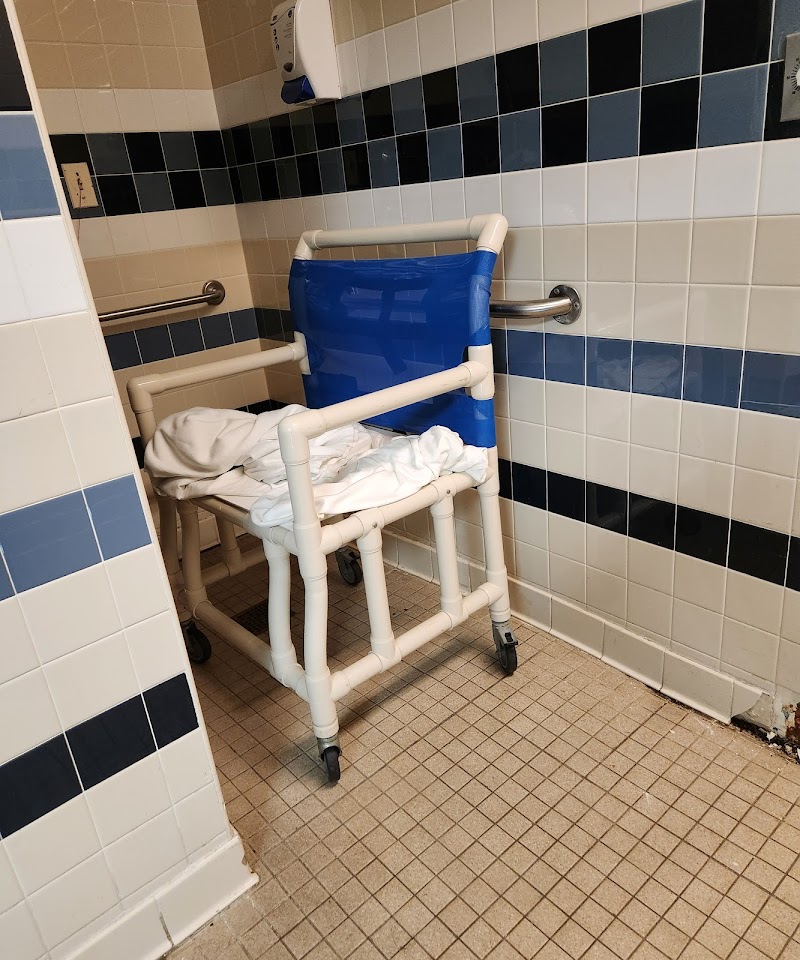
How is Belhaven Nursing & Rehab Center Staffed?
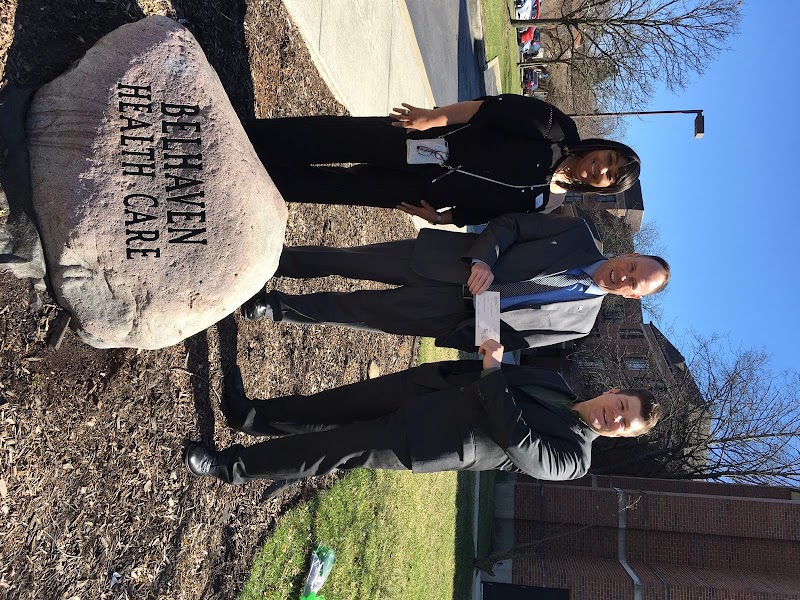
CMS rates Belhaven Nursing & Rehab Center's staffing level at 1 out of 5 stars, which is much below average compared to other nursing homes. Staff turnover is 39%, compared to the Illinois average of 46%. This relatively stable workforce can support continuity of care. RN turnover specifically is 62%, which is notably high. RNs provide skilled clinical oversight, so turnover in this role can affect medical care quality.

What Have Inspectors Found at Belhaven Nursing & Rehab Center?

State health inspectors documented 86 deficiencies at Belhaven Nursing & Rehab Center during 2022 to 2025. These included: 12 that caused actual resident harm and 74 with potential for harm. Deficiencies causing actual harm indicate documented cases where residents experienced negative health consequences.

Who Owns and Operates Belhaven Nursing & Rehab Center?

Belhaven Nursing & Rehab Center is owned by a for-profit company. For-profit facilities operate as businesses with obligations to shareholders or private owners. The facility is operated by INFINITY HEALTHCARE CONSULTING, a chain that manages multiple nursing homes. With 221 certified beds and approximately 173 residents (about 78% occupancy), it is a large facility located in CHICAGO, Illinois.

How Does Belhaven Nursing & Rehab Center Compare to Other Illinois Nursing Homes?

Compared to the 100 nursing homes in Illinois, Belhaven Nursing & Rehab Center's overall rating (1 stars) is below the state average of 2.5, staff turnover (39%) is near the state average of 46%, and health inspection rating (1 stars) is much below the national benchmark.

What Should Families Ask When Visiting Belhaven Nursing & Rehab Center?

Based on this facility's data, families visiting should ask: "What safeguards and monitoring systems are in place to protect residents from abuse or neglect?" "Can you walk me through typical staffing levels on day, evening, and night shifts?" "Can I visit during a mealtime to observe dining assistance and food quality?" "How do you handle medical emergencies, and what is your hospital transfer rate?" These questions are particularly relevant given the substantiated abuse finding on record and the below-average staffing rating.

Is Belhaven Nursing & Rehab Center Safe?

Based on CMS inspection data, Belhaven Nursing & Rehab Center has documented safety concerns. The facility has 1 substantiated abuse finding (meaning confirmed case of resident harm by staff or other residents). The facility has a 1-star overall rating and ranks #100 of 100 nursing homes in Illinois. Families considering this facility should ask detailed questions about what corrective actions have been taken since these incidents.

Do Nurses at Belhaven Nursing & Rehab Center Stick Around?

Belhaven Nursing & Rehab Center has a staff turnover rate of 39%, which is about average for Illinois nursing homes (state average: 46%). Moderate turnover is common in nursing homes, but families should still ask about staff tenure and how the facility maintains care continuity when employees leave.

Was Belhaven Nursing & Rehab Center Ever Fined?

Belhaven Nursing & Rehab Center has been fined $413,912 across 9 penalty actions. This is 11.1x the Illinois average of $37,218. Fines at this level are uncommon and typically indicate a pattern of serious deficiencies, repeated violations, or failure to correct problems promptly. CMS reserves penalties of this magnitude for facilities that pose significant, documented risk to resident health or safety. Families should request specific documentation of what issues led to these fines and what systemic changes have been implemented.

Is Belhaven Nursing & Rehab Center on Any Federal Watch List?

Belhaven Nursing & Rehab Center is not on any federal watch list. The most significant is the Special Focus Facility (SFF) program, which identifies the bottom 1% of nursing homes nationally based on persistent, serious quality problems. Not being on this list means the facility has avoided the pattern of deficiencies that triggers enhanced federal oversight. This is a positive indicator, though families should still review the facility's inspection history directly.