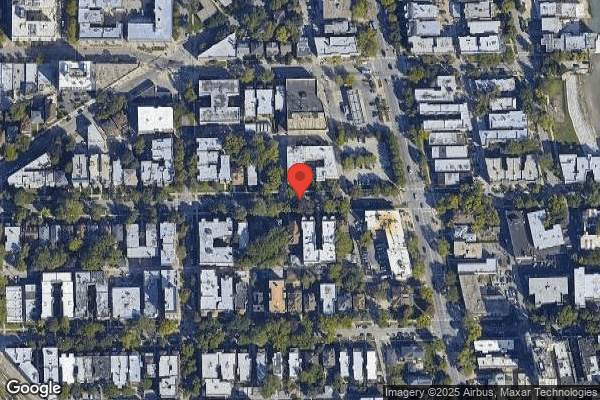
BIRCHWOOD PLAZA

1426 WEST BIRCHWOOD, CHICAGO, IL 60626 (773) 274-4405
For profit - Corporation 200 Beds MARQUIS HEALTH SERVICES Data: November 2025
Trust Grade
70/100
#120 of 665 in IL
Last Inspection: April 2025

Within standard 12-15 month inspection cycle. Federal law requires annual inspections.

Overview

Birchwood Plaza has received a Trust Grade of B, indicating it is a good choice for families, as it falls within the solid range of performance. Ranked #120 out of 665 facilities in Illinois, it stands in the top half, and #40 out of 201 in Cook County, meaning there are only a few local homes that perform better. The facility is improving, having reduced its issues from 11 in 2024 to 8 in 2025. Staffing is a weak point with a rating of 2 out of 5, but a turnover rate of 24% is good compared to the state average of 46%. There have been no fines, which is a positive sign, and it has average RN coverage, ensuring some oversight in resident care. However, there are notable concerns from recent inspections. A serious finding involved a resident requiring two-person assistance for transfers but being moved by only one staff member, which poses a risk for falls. There were also issues with food safety practices, such as not labeling food items properly and failing to discard expired items, which could affect all residents. Lastly, sanitation practices were found lacking, with uncovered dumpsters potentially attracting pests, which is a significant concern for overall hygiene. Overall, while there are strengths in safety and care, these weaknesses need addressing to enhance resident well-being.

Trust Score
B
70/100
In Illinois
#120/665
Top 18%
Safety Record
Moderate
Needs review
Inspections
Getting Better
11 → 8 violations
Staff Stability
✓ Good
24% annual turnover. Excellent stability, 24 points below Illinois's 48% average. Staff who stay learn residents' needs.
Penalties
✓ Good
No fines on record. Clean compliance history, better than most Illinois facilities.
Skilled Nurses
✓ Good
Each resident gets 42 minutes of Registered Nurse (RN) attention daily — more than average for Illinois. RNs are trained to catch health problems early.
Violations
⚠ Watch
28 deficiencies on record. Higher than average. Multiple issues found across inspections.
★★★★☆
4.0
Overall Rating
★★☆☆☆
2.0
Staff Levels
★★★☆☆
3.0
Care Quality
★★★★☆
4.0
Inspection Score
Stable
2024: 11 issues
2025: 8 issues

The Good

  • Low Staff Turnover (24%) · Staff stability means consistent care
  • Full Sprinkler Coverage · Fire safety systems throughout facility
  • No fines on record
  • Staff turnover is low (24%)

    24 points below Illinois average of 48%

Facility shows strength in staff retention, fire safety.

The Bad

Chain: MARQUIS HEALTH SERVICES

Part of a multi-facility chain

Ask about local staffing decisions and management

The Ugly 28 deficiencies on record

1 actual harm
Apr 2025 8 deficiencies
CONCERN (D)

Potential for Harm - no one hurt, but risky conditions existed

PASARR Coordination (Tag F0644)

Could have caused harm · This affected 1 resident

**NOTE- TERMS IN BRACKETS HAVE BEEN EDITED TO PROTECT CONFIDENTIALITY** Findings include: On 3/31/25 at 1:00 PM, R76's records were reviewed for PASARR 2 screening related to her MDS indicator of No P...

Read full inspector narrative →
**NOTE- TERMS IN BRACKETS HAVE BEEN EDITED TO PROTECT CONFIDENTIALITY** Findings include: On 3/31/25 at 1:00 PM, R76's records were reviewed for PASARR 2 screening related to her MDS indicator of No PASARR with diagnosis. The PASARR 1 dated 8/8/2023 documented that resident did not require a PASARR 2 screen. On 8/14/2023 new diagnosis of schizoaffective disorder was listed on R76's Diagnosis information list sheet, no PASARR 2 screening was found in R76's chart. R76's face sheet dated April 2, 2025, shows R76 was admitted to the facility on [DATE] with multiple diagnosis: Schizoaffective disorder, multiple sclerosis, peripheral vascular disease, severe protein calorie malnutrition, dementia, quadriplegia, adult failure to thrive, acute embolism. R76's MDS (Minimum Data Set) dated February 3, 2025, shows R76 has a score of 3 which means R76 has severe cognitive impairment. On 04/01/25 at 03:11 PM, V28 (Receptionist) stated she is the person in the facility responsible for completing PASARR screening for residents and that R76 should have had a PASARR 2 completed after the new diagnosis was listed. V28 stated that the nurses should have informed her that there was a new diagnosis added on 8/14/23, and she was not sure why it wasn't completed since then .V28 stated she would complete the PASARR 2 screening request when she comes on duty the following morning. On 4/2/2025 at 9:00am, V28 presented a form with Maximus PASARR Pro-1 screen on it she stated the request for PASARR 2 has been submitted and will be done as soon as possible. Based on observations, interviews and records review, the facility failed to coordinate assessments with the pre-admission screening and resident review (PASARR) program and failed to refer level II residents and residents with possible serious mental disorder and/or intellectual/developmental disability, for level II resident review upon a significant change in a mental status assessment. These failures affected three residents (R22, R34, R76) and have the potential to affect additional 34 residents with diagnosis of mental disorder and/or intellectual/developmental disability in the whole facility in a sample of 75. Findings include: On 3/31/2025 at 2PM, Review of facility's admission Record, shows R22 admission Date to facility on 3/27/2012, with diagnosis included but not limited to: Unspecified Dementia (Unspecified Severity), Major Depressive Disorder (Recurrent), bipolar disorder (Unspecified), Hemiplegia and Hemiparesis following nontraumatic intracerebral Hemorrhage. On 04/01/25 at 12:55 PM, facility presented a copy of most recent Preadmission and Resident Review (PASARR) form for R22., dated 3/24/2024. Review of the document shows in part, mental health diagnosis of Major Depressive Disorder and Dementia. No other mental health diagnosis is observed on the form. No bipolar disorder diagnosis is listed on the PASARR form. R22's PASARR also shows in part, that no Level II is required after review of the assessment. Detailed Record review of Illinois Preadmission Screening and Resident Review (PASARR) Level I Form for R22 dated 3/25/2024, shows that Level I screen does not show presence of serious mental illness or an intellectual/developmental disability (IDD). Page two of the PASARR form also shows that no more screening is needed unless presence of serious mental illness or IDD or a significant change in treatment needs arises. Last page of the form shows in part name and date of completion by V28, on 3/25/2024. On 4/2/2025 at 2:30 PM, admission record review for R34, dated 11/21/2022, shows in part diagnosis including but not limited to: Alzheimer's Disease; Lack of Coordination; Major Depressive Disorder; Dementia, Psychotic Disturbance, Mood Disturbance and Anxiety, Schizoaffective Disorder (Bipolar Type) and Paranoid Personality Disorder. On 4/2/25 at 2:30 PM, R34's Current Order Summary Report Review dated 4/2/2025, shows in part, active orders for following: Anti-depressant Medication use and Anti-psychotic Medication use; Psychiatrist consult as needed, and Psychologist consult as needed. Pharmacy portion of the same order summary report shows in part current medications included but not limited to: Mirtazapine Tablet 15mg at bedtime for Major Depressive Disorder; Olanzapine 2.5mg at bedtime for schizoaffective disorder (Bipolar Type); Valproate Sodium Oral Solution 250mg/5ml every 12 hours for bipolar disorder. On 4/3/2025 at 1:15 PM, Received a copy of PASARR Level I screen documentation for residents R34, and R22 from V18 and. Also received a List of all residents with mental health diagnosis or intellectual/developmental disability in the facility, that totaled 37 residents. R22, R34 and R76 were included on the list. On 4/3/2025 at 1:15 PM, during phone interview, V28 stated that the reason for updated request for PASARR Level 1 screening dated 4/2/2025 for R22 and R34, was due to the initial PASARR Level 1 screenings (dated 3/25/2024 for R 22 and 3/27/24 for R34) were missing initial mental health diagnoses of Bipolar and Schizophrenia Disorder.
CONCERN (D)

Potential for Harm - no one hurt, but risky conditions existed

Deficiency F0645 (Tag F0645)

Could have caused harm · This affected 1 resident

Based on interview and record review, the facility failed to ensure a resident's psych diagnoses were included in the pre-admission screening. This failure affected 1 (R109) resident reviewed for accu...

Read full inspector narrative →
Based on interview and record review, the facility failed to ensure a resident's psych diagnoses were included in the pre-admission screening. This failure affected 1 (R109) resident reviewed for accuracy of pre-admission screening in the total sample of 75 residents. Findings include: R109's (printed 03/31/2025) Diagnosis Report documented that R109's diagnoses: (include but not limited to) schizoaffective disorder and schizophrenia with onset date of 05/24/2022. R109's (5/24/2022) Psychotropic consent documented, in part Risperdal 0.5mg twice daily. Supporting Diagnosis: Schizophrenia. R109's (Active Order as Of: 04/03/2025) Order Summary Report documented, in part Anti-psychotic episodic medication Use: monitor and observe. Active: 02/25/2023. Behavior monitoring related to psychotic disorder with delusions due to known physiological condition, schizophrenia, schizoaffective disorder. RISPERIDONE 0.5 MG TABLET Give 1 tablet orally two times a day related to SCHIZOPHRENIA. Active. 02/25/2023. R109's (Minimum Data Set documented, in part Section C. Cognitive Patterns. C0500. BIMS (Brief Interview for Mental Status) Summary Score: 12. Indicating R109's mental status as moderately impaired. Section I - Active Diagnoses. Psychiatric/Mood Disorder. I6000. Schizophrenia. R109 's (03/28/2024) Notice of PASARR (Pre-admission Screening And Resident Review) Level I Screen Outcome documented, in part PASARR level I Determination: No level II required - NO SMI/ID/RC (serious mental illness/intellectual disability/reasonable condition). Diagnoses. Major depression. Level I Attestation and Signature. Name: (V28 -Receptionist/Office Manager). Of note, schizophrenia and schizoaffective disorder were not included as one of R109's diagnoses. On 04/02/2025 at 1:59pm, V28 (Receptionist/Office Manager) stated we sat through the webinar before the Maximus started. When I do the PASARR, I know I have to put in the psyche diagnoses of the resident like schizophrenia and schizoaffective disorder. I have no answer to why I did not include the psych diagnoses of (R109). If the schizoaffective disorder and schizophrenia diagnoses were not included in the pre-admission screening, the determination of need will be affected. It would come out as not needing a PASARR level II screening. On 04/02/2025 at 1:33pm, V18 (Associate Administrator) stated (V28) is in charge of doing the PASARR. She is sending it to Maximus via the Assessment Pro. She is non-clinical. She does not know the behavior of our residents and their medications. It should be the nurse and the social service department guiding her on what medications, diagnoses, and behavior of the residents to put in the PASARR. The PASARR screening of (R109) was not accurately completed because the diagnoses of schizophrenia and schizoaffective disorder were not included. R109's (04/01/2025) Notice of PASARR level I Screen Outcome documented, in part Determination: Refer for Level II Onsite. Suspected or confirmed PASARR condition(s): Mental Health Disability. Your health care professional and Maximus completed PASARR level I screen for you. This screen shows that you need a face to face level II evaluation. The purpose of this evaluation is to decide whether a nursing facility is able to meet your needs. Diagnoses: Schizophrenia and Schizoaffective disorder and Major depression. The (undated) Preadmission and resident review documented, in part The purpose of a PASARR level II assessment is to determine if the person has a condition which qualifies under the PASARR program and if so, make sure that a nursing facility is necessary of if help can be received in the community.
CONCERN (D)

Potential for Harm - no one hurt, but risky conditions existed

ADL Care (Tag F0677)

Could have caused harm · This affected 1 resident

**NOTE- TERMS IN BRACKETS HAVE BEEN EDITED TO PROTECT CONFIDENTIALITY** On 3/31/25 at 11:10am and again at 11:45am, during observation of residents on the first floor, R44 was observed awake in bed wi...

Read full inspector narrative →
**NOTE- TERMS IN BRACKETS HAVE BEEN EDITED TO PROTECT CONFIDENTIALITY** On 3/31/25 at 11:10am and again at 11:45am, during observation of residents on the first floor, R44 was observed awake in bed with visible accumulated creamy brown substance on the teeth. The surveyor asked R44 about the last time staff assisted her(R44) with mouth care, and R44 stated that it's been a long time. V32(CNA/Certified Nurse Assistant) stated that she has not done mouth care for R44, but she would come back to do it. R44's care plan dated 9/15/23 states that R44 has a self-care deficit and requires assistance with ADLs (Activities of Daily Living). BIMS (Basic Interview for Mental Status) score dated 2/26/25 shows a score of 11(Mild Cognitive Impairment). Face sheet shows diagnoses which include but are not limited to Right Hand Contracture, Right Knee Contracture and Osteoporosis. Facility's Policy titled Patients Care All Shifts states in part: Teeth and/dentures must be kept clean with daily oral hygiene. Based on observation, interview and record review, the facility failed to provide timely oral care for a dependent resident (R44) and failed to provide personal hygiene shaving care for a female, dependent resident (R56) which affected 2 residents (R44, R56) in the total sample of 75 residents when reviewed for activities of daily living (ADL) care. Findings include: On 3/31/25 at 11:14 am, R56 is observed laying in bed and noted with mustache hair that is dark gray hair on upper sides of lips. R56 is observed with gray and white hair chin hair, about 1/2-3/4 inch in length, on underside of R56's chin. When asked if R56 is comfortable with the lengthy facial hair, R56 stated, I (R56) would prefer not to have it. When asked if R56 has been offered during ADL care by the CNA to shave the facial hair, R56 stated no. R56 stated, I would take care of it at home, but I am not at home and need help. R56's admission Record documents, in part, diagnoses of chronic obstructive pulmonary disease, chronic respiratory failure with hypoxia, type 2 diabetes mellitus, shortness of breath, hypertension, obesity, hyperlipidemia, encephalopathy, major depressive disorder, anxiety disorder, and hidradenitis suppurativa. R56's Minimum Data Set (MDS), dated [DATE], documents, in part, a Brief Interview of Mental Status (BIMS) score of 11 which indicates that R56 has moderate cognitive impairment. R56's Functional Abilities for Personal hygiene: The ability to maintain personal hygiene, including combing hair, shaving, applying makeup, washing/drying face and hands is scored as Substantial/maximal assistance-Helper does more than half the effort. R56's Care Plan, initiated on 9/20/22 and revised on 12/20/22, documents, in part, a focus of Self-care deficit, require assist with ADLs r/t (related to) weakness with an intervention of Personal Hygiene: (R56) requires extensive staff assist with personal hygiene and oral care. R56's ADL charting from 3/4/25 to 4/2/25 for Personal Hygiene documents, in part, that R56 had no resident refusals documented for personal hygiene care. On 4/2/25 at 1:47 pm, V2 (Director of Nursing, DON) stated that ADL (activities of daily living) care is provided by CNAs so residents look and feel good. V2 stated that ADL care provided by CNAs is done daily for all residents and includes washing their faces, combing hair, and shaving facial hair. V2 stated, Shaving is included and offered with the grooming from CNAs. When asked does shaving facial hair apply to female residents as well, V2 stated, Yes. The same for females. They don't want no facial hairs for a mustache or a beard and that female elderly residents can have lengthy facial hair that grows on sides of mustache and under the chin (as surveyor observed V2 demonstrating by pointing to the areas on V2's face). V2 stated that if a resident refuses to be shaved, the CNA will try at a later time. V2 stated that if the resident refuses again, it will be documented as a refusal, and the nurse will notify the resident's family member and the resident's physician. Facility policy dated 2014 and titled Shaving the Resident documents, in part, Purpose: 1. To keep the resident well groomed. 2. To refresh the resident. Equipment: 1. Electric shaver (if owned by resident). 2. If no electric shaver, then the following: A. Basin of warm water. B. Foam lather (shaving cream). C. Disposable razor. D. Face towel. E. Mirror. F. Tissues. G. After-Shave lotion. Procedure: 1. Explain nature of treatment to resident at the level of understanding. 2. Raise head of bed, If not contraindicated. 3. Place towel under chin. 4. Wet face and lather generously. 5. Hold skin taut and shave in the direction of hairs. Start under the sideburns and work downwards over the cheeks toward the chin. Work upward from the neck under the chin. 6. Use short film strokes and rinse razor frequently. 7. Use caution when shaving around lips and nose as these are very sensitive areas. 8. After beard is removed, wash face well with soap and water, dry well, apply after-shave lotion if desired. 9. Use new disposable razor for each resident. 10. Throw disposable razor in the sharps container. Facility policy dated November 2018 and titled Residents' Rights for People in Long-Term Care Facilities documents, in part, Your rights to dignity and respect: . Your facility must treat you with dignity and respect and must care for you in a manner that promotes your quality of life. Facility Job description (undated) and titled Certified Nursing Assistant Job Description documents, in part, General Purpose: To perform non-professional direct patient care duties under the supervision of nursing personnel and to assist in maintaining a positive physical, social and psychological environment for the residents . Essential Job Functions (With or Without Reasonable Accommodation): A. Personal Care Functions: Duties: Assist residents with daily bath, dressing, grooming . D. Resident's Rights Functions: Duties: Maintain resident confidentiality; treat residents with kindness, dignity and respect; know and comply with Resident's Rights rules.
CONCERN (D)

Potential for Harm - no one hurt, but risky conditions existed

Tube Feeding (Tag F0693)

Could have caused harm · This affected 1 resident

**NOTE- TERMS IN BRACKETS HAVE BEEN EDITED TO PROTECT CONFIDENTIALITY** Based on observation, interview, and record review, the facility failed to ensure that a resident ordered for Enteral g-tube (ga...

Read full inspector narrative →
**NOTE- TERMS IN BRACKETS HAVE BEEN EDITED TO PROTECT CONFIDENTIALITY** Based on observation, interview, and record review, the facility failed to ensure that a resident ordered for Enteral g-tube (gastrostomy tube) feeding received the correct amount of Enteral feeding. This failure affected one resident (R76) out of one resident reviewed for Enteral/G-tube feeding in a sample of 75 residents. Findings include: On 3/31/25 at 10:35 AM, R76 was observed laying in her bed resting. R76 is alert and talkative, denies pain or discomfort when asked on interview. R76's Enteral g-tube feeding bottle was observed with a date of 3/31/25 but the Enteral g-tube feeding machine was off and not connected to the resident at that time. R76's Enteral g-tube bottle was observed by this surveyor with 1/3 of the Enteral g-tube feeding amount gone from the bottle. On 3/31/25 at 10:40 AM, V12(Licensed Practical Nurse, LPN) stated she did not turn the g-tube feeding off and doesn't know who turned it off or how long it was off. On 04/01/25 at 11:00 AM, V12(LPN) stated she is the nurse in charge of R76 and that she started her shift this am at 7:00am. V12 stated she has not turned g-tube feeding off since the start of her shift, and that the night nurse hung the Enteral g-tube feeding at 6am before she came on shift. This surveyor observed Jevity 1.2 Enteral g-tube feeding bottle dated and labeled with 4/1 at 6am and R76's name. V12 came into the room and observed the Enteral g-tube feeding and stated 100ml (milliliters) has infused at this time. She stated 4 hours have passed and R76 should have received at least 280 milliliters of feeding by now. V12 stated if R76 doesn't receive her appropriate amount of feeding, R76 can lose weight or get a disease if she doesn't receive her total volume. R76's face sheet dated April 2, 2025, shows R76 was admitted to the facility on [DATE] with multiple diagnosis: Schizoaffective disorder, multiple sclerosis, peripheral vascular disease, severe protein calorie malnutrition, dementia, quadriplegia, adult failure to thrive, acute embolism. R76's MDS (Minimum Data Set) dated February 3, 2025, shows R76 has a score of 3 which means R76 is severe cognitive impairment and that R76 receives her nutrition from feeding tube. R76's Physician Order Summary Report dated 8/9/23 documents that R76 is NPO which means (Nothing by mouth), and Enteral Feed Order dated 11/18/24 documents Jevity 1.5 via g-tube at 70 ml/hr for 20 hours (on at 4pm off at 12pm). R76's Care plan dated 3/23/25 states Jevity 1.5 at 70 ml/hr over 20 hours, [ staff to provide total assistance with tube feeding and water flushes]. On 04/02/25 at 02:12 PM, V2 (Director of Nursing) stated her expectations of the nurse who is administering Enteral g-tube feeding to a resident is that they make sure feeding is running according to physicians' orders start and stop time, that the resident is laying in upright position to decrease risk for aspiration. When asked if a resident is scheduled to receive 70ml Enteral g-tube feeding hourly and four hours have past how much Enteral g-tube feeding do you expect the resident to have received, V2 stated she would expect the g-tube feeding to have infused 280ml of g-tube feeding and if the resident receives 100 ml within 4 hours the resident has not received their adequate amount of caloric intake; they should have received according to how the dietician calculates the calorie intake for each patient. Facility policy dated January 2023 and titled Tube Feeding documents, in part, To maintain proper nutrition and hydration. To prevent complications from tube feeding. Procedure: Fill in information on label (i.e. residents name, start time, and rate) .When a Physician orders a tube feeding to run either continuous or over 24 hours, the Consulting Dietician will assess the resident's nutritional needs. Once the calorie and protein needs are calculated, the total amount of formula required will be divided between each shift allowing time for the feeding to be off for care. Facility job description dated 9/2001, titled Job duties RN/LPN, Nursing care functions and Drug and Treatment functions: Prepare and administer medication and treatments as ordered by the physician.
CONCERN (D)

Potential for Harm - no one hurt, but risky conditions existed

Infection Control (Tag F0880)

Could have caused harm · This affected 1 resident

**NOTE- TERMS IN BRACKETS HAVE BEEN EDITED TO PROTECT CONFIDENTIALITY** Based on observation, interview and record review, the facility failed to ensure that staff perform hand hygiene during resident...

Read full inspector narrative →
**NOTE- TERMS IN BRACKETS HAVE BEEN EDITED TO PROTECT CONFIDENTIALITY** Based on observation, interview and record review, the facility failed to ensure that staff perform hand hygiene during resident dining service prior to feeding a resident, in between feeding separate residents, and after staff touching their personal body then feeding a resident to prevent and/or contain the possible spread of infectious microorganisms. These failures affected R28, R43 and R77 in the total sample of 75 when reviewed for infection control. Findings include: On 3/31/25 at 12:00 pm, V13 (Certified Nursing Assistant, CNA) observed sitting on the stool chair feeding R77 in the dining room. V13 is observed sitting positioned next to R77 (who is sitting on V13's right side) and also next to R43 (who is sitting on V13's left side). R43 is observed feeding R43's self while sitting in R43's reclining wheelchair. V13 observed stopping from feeding R77, and V13 reaches over to R43's tray then touches and moves R43's blue coffee cup which was in contact with the remainder of R43's brown bread crusts that were on the lunch meal tray. V13 stated to R43, It's (brown bread crusts) mushy. V13 does not perform hand hygiene, turns back to R77 and continues to feed R77. On 3/31/25 at 12:02 pm, V11 (CNA) is observed in front of R43's reclining wheelchair in the dining room and is in a seated position feeding R28. V11 stands and does not perform hand hygiene. V11 is observed walking up to R43 who has R43's lunch meal tray on a table over R43's lap, and V11 observed lifting up R43's white meal plate from the tray and then sits the food plate back down on R43's tray. On 3/31/25 at 12:04 pm, V11 observed touching R43's spoon which is in the bowl of mushroom soup on R43's lunch tray. V11 does not perform hand hygiene and walks back to R28, sits down and feeds R28 again. R43 observed touching the same spoon in the mushroom soup bowl and stirring R43's soup. R43's admission Record documents, in part, diagnoses of severe protein-calorie malnutrition, dementia, dysphagia oropharyngeal phase, osteoarthritis, shortness of breath, chronic obstructive pulmonary disease, asthma, iron deficiency anemia, type 2 diabetes mellitus, chronic kidney disease stage 3A, diaphragmatic hernia, hypertension, bipolar disorder, malignant neoplasm of colon, difficulty in walking, unsteadiness on feet, and irritable bowel syndrome. R43's Minimum Data Set (MDS), dated [DATE], documents, in part, a Brief Interview for Mental Status (BIMS) score of 10 which indicates that R43 has moderate cognitive impairment. R43's Functional Abilities for Eating: The ability to use suitable utensils to bring food and/or liquid to the mouth and swallow food and/or liquid once the meal is placed before the resident is scored as Partial/moderate assistance-Helper does less than half the effort. R43's Care Plan, date initiated 11/11/22, documents, in part, a focus of (R43) the potential for weight changes with an intervention of Assist with meals (Feed/Set-Up) as needed (initiated 11/11/22). R43's Care Plan, dated 9/12/22, documents, in part, a focus of (R43) is at risk for COVID-19 Infection. Nursing Home Residency with an intervention of Staff to perform hand hygiene before and after each encounter with resident and others (initiated 9/12/22). R77's admission Record documents, in part, diagnoses of hemiplegia and hemiparesis following cerebral infarction affecting left non-dominant side, dementia, moderate protein-calorie nutrition, dysphagia oropharyngeal phase, polyosteoarthritis, kyphsois, chronic obstructive pulmonary disease, acute and chronic respiratory failure with hypoxia, pulmonary embolism, hypertension, cardiac murmur, anemia, irritable bowel syndrome, nuclear cataract bilateral, lack of coordination, difficulty in walking, and unsteadiness on feet. R77's MDS, dated [DATE], documents, in part, a BIMS score of 5 which indicates that R77 has severe cognitive impairment. R77's Functional Abilities for Eating: The ability to use suitable utensils to bring food and/or liquid to the mouth and swallow food and/or liquid once the meal is placed before the resident is scored as Dependent-Helper does all of the effort. Resident does none of the effort to complete the activity. R77's Care Plan, dated 6/6/24, documents, in part, a focus of Self-care deficit, require assist with ADLs with an intervention of Eating: (R77) is a feeder and requires substantial/max staff assist to eat (revision on 3/18/25). R77's Care Plan, dated 6/5/24, documents, in part, a focus of (R77) is at risk for COVID-19 Infection. Nursing Home Residency with an intervention of Staff to perform hand hygiene before and after each encounter with resident and others (initiated 6/5/24). On 4/2/25 at 1:47 pm, when asked within the process of CNAs feeding residents, when is hand hygiene to be performed, and V2 (Director of Nursing, DON) stated, Before they (CNAs) touch anything. They start giving food to one resident and do it before giving food to another resident. When asked the purpose of hand hygiene by staff while passing meal trays and feeding residents, V2 stated, Infection control. When asked why a staff member who is feeding one resident must perform hand hygiene before touching another resident's meal tray or feeding another resident, V2 stated, You don't know what a resident has (infection). V2 stated that if a CNA touches another resident's tray or food items then goes to feed another resident without performing hand hygiene, the CNA's hands could be contaminated. And they are handling food items on trays. V2 said that this CNA could transmit unknown bacteria to other residents. Facility policy (undated) titled Subject: Infection Control Standard Precautions documents, in part, Standard Precautions will be used in the care of all residents regardless of their diagnosis or presumed infection status. Standard Precautions apply to blood, body fluids, secretions, and excretions regardless of whether or not they contain visible blood, nonintact skin, and mucous membranes. Procedure Implementation: 1. Handwashing: a. Wash hands after touching . contaminated items, whether or not gloves are worn. b. Wash hands immediately after gloves are removed, between resident contacts and when otherwise indicated to avoid transfer of microorganisms to other residents or environments. c. Use a plan (nonantimicrobial) soap for handwashing. Facility policy dated 2014 and titled Hand Hygiene documents, in part, The purpose is to provide guidelines for the proper hand washing to prevent the spread of infection to other personnel, residents and visitors. Compliance Guidelines: All facility personnel must wash their hands for at least 20 seconds under the following conditions: . 2. Between resident contacts . Additional Considerations: . Antiseptic solution may be applied to hands after proper hand washing. If sinks are not readily available, a waterless antiseptic may be used between tasks normally requiring hand washing unless hands are visibly soiled. Hands should be washed with soap and water as soon as possible. Facility Job description (undated) and titled Certified Nursing Assistant Job Description documents, in part, General Purpose: To perform non-professional direct patient care duties under the supervision of nursing personnel and to assist in maintaining a positive physical, social and psychological environment for the residents . Essential Job Functions (With or Without Reasonable Accommodation): . C. Food Service Functions: Duties: Prepare residents for meal and snacks. Findings include: On 3/31/25 at 11:47 AM, R28 was observed in dining room sitting in recliner high back chair resting, R28 a bedside table was next to R28 in preparation for lunchtime set up by staff. On 3/31/25 at 11:47am, V11(Certified Nursing Assistant) was observed in dining room sitting next to R28, V11 did not sanitize her hands prior to cutting food and feeding R28, V11 then opened the milk carton and placed her finger inside the carton to pull open the box to pour the milk into the cup then began to feed R28 her soup. At 11:56am, V11 stood up to go get a straw, she touched the chair handles after placing the straw in the drink and she gave the drink to R28 without any hand sanitizer utilized. At 12:06pm, V11 was observed touching her face, touching her ear on left side, and touching the chair handles without utilizing hand sanitizer. At 12:08pm, V11 stood up again to check another resident then began to rub her legs while still feeding R28 no hand sanitizer utilized. At 12:12pm, V11 was observed rubbing her left eye while she was still feeding R28, and no hand sanitizer was utilized. R28's face sheet dated April 2, 2025, shows R28 was admitted to the facility on [DATE] with multiple diagnoses including Dementia, spinal stenosis, adult failure to thrive, diabetes mellitus, major depressive disorder, hypertension, anxiety. R28's MDS (Minimum Data Set) dated January 3, 2025, shows R28 has a score of 3 which means R28 is severe cognitive impairment and Selfcare performance is scored at a 2 for eating which means R28 requires Substantial/maximal assistance with eating [staff does more than half the effort for feeding R28]. 04/02/25 at 02:08 PM, V2 (Director of Nursing) stated my expectations for the nurses prior to feeding a resident is to perform hand hygiene either wash their hands with soap and water or use hand sanitizer , to decrease risk for contaminating food.V2 stated that she expects staff to perform hand hygiene if they get up from feeding a resident to assist another resident and if they touch their face or any body parts, or clothing to prevent infection to decrease risk for transmitting infection from their clothing or body parts to resident.
CONCERN (E)

Potential for Harm - no one hurt, but risky conditions existed

Resident Rights (Tag F0550)

Could have caused harm · This affected multiple residents

**NOTE- TERMS IN BRACKETS HAVE BEEN EDITED TO PROTECT CONFIDENTIALITY** Based on observation, interview and record review, the facility failed to ensure that staff are feeding residents from a seated ...

Read full inspector narrative →
**NOTE- TERMS IN BRACKETS HAVE BEEN EDITED TO PROTECT CONFIDENTIALITY** Based on observation, interview and record review, the facility failed to ensure that staff are feeding residents from a seated position during dining service which affected R7, R62, R73, and R77 in the total sample of 75 when reviewed for resident rights. Findings include: On 3/31/25 at 11:41 am, V13 (Certified Nursing Assistant, CNA) observed positioning R77 upright in R77's reclining wheelchair and provided R77 the lunch meal tray on top of the table over R77's lap. V13 opened up R77's plate cover to reveal a puree diet, set up food items close to R77 and utensils within reach. R77 began slowly touching a bowl on R77's tray. On 3/31/25 at 11:47 am, R77 is observed trying to eat the puree diet meal tray in front of R77 without R77 actively spooning food into R77's mouth. On 3/31/25 at 11:53 a.m., V13 (CNA) was observed standing next to R77, looking down at R77 in the reclining wheelchair. While in a standing position, V13 took R77's utensil and fed R77 three bites of food from R77's lunch meal tray. V13 then sat down on a stool chair next to R77. On 3/31/25 at 11:57 a.m., V13 was observed standing up from the stool chair and walking out of the dining room. On 3/31/25 at 11:58 am, V13 walks back into the dining room holding a plastic clear cup of water. V13 walks up to R77, and while in a standing position, feeds R77 one bite of food from the lunch meal tray. On 3/31/25 at 12:09 pm, V14 (CNA) observed in a standing position next to R7 who is seated in R7's wheelchair at the table. V14 observed feeding R7 food from the white bowl from R7's meal tray. On 3/31/25 at 12:14 pm, V12 (Licensed Practical Nurse, LPN) was observed in a standing position next to R73, who was sitting in a high-back wheelchair at the table. While standing, V12 was observed feeding R73 five bites of diced fruit from the white bowl and then sitting down in a chair next to R73. On 3/31/25 at 12:16 pm, V2 (Director of Nursing, DON) was observed in a standing position next to R62, who was sitting in a reclining wheelchair. While standing, V2 observed feeding R62 the lunch meal tray of liquids with a spoon. R62's diet card clearly posted on R62's lunch meal tray indicates clear liquid diet. R7's admission Record documents, in part, diagnoses of vascular dementia, reduced mobility, chronic obstructive pulmonary disease, chronic ischemic heart disease, diastolic (congestive) heart failure, chronic kidney disease stage 3A, venous insuffiency (chronic, peripheral), iron deficiency anemia, schizoaffective disorder, generalized anxiety disorder, cataract, hearing loss, lack of coordination, difficulty in walking, and abnormal posture. R7's Minimum Data Set (MDS), dated [DATE], documents, in part, a Brief Interview for Mental Status (BIMS) score of 5 which indicates that R7 has severe cognitive impairment. R7's Functional Abilities for Eating: The ability to use suitable utensils to bring food and/or liquid to the mouth and swallow food and/or liquid once the meal is placed before the resident is scored as Partial/moderate assistance-Helper does less than half the effort. R7's Care Plan, date initiated 12/23/23, documents, in part, a focus of (R7) may be at risk for weight loss related to mental status changes, confusion and disorientation. (R7) receives a Regular diet NAS (no added salt) regular Thin and requires partial moderate assistance with meals. R62's admission Record documents, in part, diagnoses of dementia, dysphagia oropharyngeal phase, anorexia, abnormal weight loss, moderate protein-calorie malnutrition, absolute glaucoma, chronic respiratory failure with hypoxia, chronic obstructive pulmonary disease, presence of cardiac implant and grafts, atrial fibrillation, pulmonary hypertension, iron deficiency anemia, hypertension, hyperlipidemia, major depressive disorder, cognitive communication deficit, osteoarthritis, adhesive capsulitis of right shoulder, abnormal posture, and lack of coordination. R62's MDS, dated [DATE], documents, in part, a BIMS score of 9 which indicates that R62 has moderate cognitive impairment. R62's Functional Abilities for Eating: The ability to use suitable utensils to bring food and/or liquid to the mouth and swallow food and/or liquid once the meal is placed before the resident is scored as Substantial/maximal assistance-Helper does more than half the effort. R62's Care Plan, date initiated 11/1/24 and revised on 2/21/25, documents, in part, a focus of (R62) may be at risk for weight loss related to diagnoses of mild cognitive impairment resulting in mental status changes, confusion and disorientation, poor PO (oral) intake and diuretic use daily . and requires extensive assistance with meals. Appetite is poor to fair. R73's admission Record documents, in part, diagnoses of multiple sclerosis, dysphagia oropharyngeal phase, severe protein-calorie malnutrition, arterial fibromuscular dysplasia, metabolic encephalopathy, chronic obstructive pulmonary disease, iron deficiency anemia, lack of coordination, aphasia, peripheral vascular disease, hyperlipidemia, major depressive disorder, and cramp and spasm. R73's MDS, dated [DATE], documents, in part, a BIMS score of 13 which indicates that R73 is cognitively intact. R73's Functional Abilities for Eating: The ability to use suitable utensils to bring food and/or liquid to the mouth and swallow food and/or liquid once the meal is placed before the resident is scored as Dependent-Helper does all of the effort. Resident does none of the effort to complete the activity. R73's Care Plan, dated 11/5/24, documents, in part, a focus of Self-care deficit, require assist with ADLs with an intervention of Eating: (R73) is a feeder and requires partial staff assist to eat. Able to feed self when up in chair - staff assist to complete meals (revision on 1/3/25). R77's admission Record documents, in part, diagnoses of hemiplegia and hemiparesis following cerebral infarction affecting left non-dominant side, dementia, moderate protein-calorie nutrition, dysphagia oropharyngeal phase, polyosteoarthritis, kyphsois, chronic obstructive pulmonary disease, acute and chronic respiratory failure with hypoxia, pulmonary embolism, hypertension, cardiac murmur, anemia, irritable bowel syndrome, nuclear cataract bilateral, lack of coordination, difficulty in walking, and unsteadiness on feet. R77's Minimum Data Set (MDS), dated [DATE], documents, in part, a Brief Interview for Mental Status (BIMS) score of 5 which indicates that R77 has severe cognitive impairment. R77's Functional Abilities for Eating: The ability to use suitable utensils to bring food and/or liquid to the mouth and swallow food and/or liquid once the meal is placed before the resident is scored as Dependent-Helper does all of the effort. Resident does none of the effort to complete the activity. R77's Care Plan, dated 6/6/24, documents, in part, a focus of Self-care deficit, require assist with ADLs with an intervention of Eating: (R77) is a feeder and requires substantial/max staff assist to eat (revision on 3/18/25). On 4/2/25 at 1:47 pm, when asked the process of nursing staff feeding a resident, V2 (DON) stated that for residents who need physical assistance, who have a short attention spans or who have a puree or mechanical soft diet, the nursing staff will feed the residents. V2 stated that all staff will prepare the meal trays by cutting large food items and preparing the resident's tray. When asked for specifics about the procedure for nursing staff feeding a resident, V2 stated that the nursing staff would place chest protector on the resident's chest to protect the clothes from spillage. V2 stated, The staff needs to be sitting down to feed a resident. When asked the purpose of a nursing staff member sitting down to feed a resident, V2 stated, If you are sitting, then it's not authoritative to the resident by standing over them. You need to be sitting to feed each resident. It's a dignity issue. This surveyor informed V2 of this surveyor's observations during the lunch meal on 3/31/25, which included V2 standing while feeding a resident. V2 acknowledges that V2 was standing while feeding R62 and that V2 should have retrieved the stool chair to sit while feeding R62. On 4/3/25 at 1:05 pm, V2 stated that R62 was ordered and was receiving a clear liquid diet on 3/31/25 due to preparation for a colonoscopy procedure on 4/2/25. Facility policy dated January 2023 and titled Feeding Policy documents, in part, Purpose: To provide adequate nourishment for the resident . Procedure: . 3. Sit beside the resident and him/her put the clothing protector in place. 4. Feed the resident slowly, offering a variety of food. Fill the fork or spoon no more than half full. Make sure that the resident chews and swallow the food before giving more. Facility policy dated November 2018 and titled Residents' Rights for People in Long-Term Care Facilities documents, in part, Your rights to dignity and respect: . Your facility must treat you with dignity and respect and must care for you in a manner that promotes your quality of life. Facility Job description (undated) and titled Certified Nursing Assistant Job Description documents, in part, General Purpose: To perform non-professional direct patient care duties under the supervision of nursing personnel and to assist in maintaining a positive physical, social and psychological environment for the residents . Essential Job Functions (With or Without Reasonable Accommodation): . C. Food Service Functions: Duties: Prepare residents for meal and snacks; identify food arrangement and assist in feeding residents as needed . D. Resident's Rights Functions: Duties: Maintain resident confidentiality; treat residents with kindness, dignity and respect; know and comply with Resident's Rights rules.
CONCERN (E)

Potential for Harm - no one hurt, but risky conditions existed

Accident Prevention (Tag F0689)

Could have caused harm · This affected multiple residents

Based on observation, interview, and record review, the facility failed to provide fall prevention interventions for residents who are at risk for falls and failed to ensure that residents at risk for...

Read full inspector narrative →
Based on observation, interview, and record review, the facility failed to provide fall prevention interventions for residents who are at risk for falls and failed to ensure that residents at risk for falls do not have repeated falls. These failures affected 3 residents (R23, R43, and R58) who had repeated falls, and have the potential to affect one resident (R34), reviewed for falls and fall prevention interventions, in a total sample of 75 residents. Findings include: On 4/2/25 R23 was observed sitting at the edge of the bed with no staff nearby in the hallway. R23 had a wound dressing on the right foot and dark blue sock with smooth bottom on the left foot. The surveyor asked R23 if he(R23) needed some help. R23 stated that he's trying to exercise his legs. The surveyor called V23(RN/Registered Nurse) to assist R23. V23 stated I will get the CNA (Certified Nurse Assistant) to give him non-skid socks. Inquired from V23 if it was okay for R23 to not have proper footwear while awake and trying to exercise at the bedside, considering the fact that R23 has had several falls in the past. V23 stated that she would ensure that R23 wears a non-skid sock when not wearing his shoes to prevent R23 from falling. R23's care plan and progress notes show that R23 had repeated falls as dated below: 7/30/24; 9/4/24; 9/29/24; 10/18/24; 11/30/24; and 2/20/25. R23's records reviewed are as follows: Fall Risk Evaluation dated 3/26/25 shows that R23 is at risk for falls. Face sheet shows diagnoses which include but are not limited to History of Falls and Glaucoma. Care plan dated 10/14/22 states that R23 is at risk for falls related to poor safety awareness. Intervention states to provide proper well-maintained footwear. Basic Interview for Mental Status (BIMS) Score is 12 out of 15(Mild Cognitive Impairment). MDS (Minimum Data Status) dated 2/27/25 states that R23 uses wheelchair and walker. On 4/2/25 at 12:15pm, R43 was observed in the wheelchair in the hallway across from R43's room. R43's care plan shows that R43 had repeated falls as follows: R43's care plan and progress notes show that R43 had repeated falls as dated below: 9/23/23; 10/6/24; 10/12/24; 12/29/24; 2/13/25. R43's records reviewed are as follows: Fall Risk Evaluation dated 2/14/25 shows that R43 is at risk for falls. Face sheet shows diagnoses which include but are not limited to Difficulty Walking, Dementia, and Right Hip Pain. Care plan dated 10/14/22 states that R43 is at risk for falls related to poor safety awareness. Intervention states to provide proper well-maintained footwear. BIMS Score is 11 out of 15(Mild Cognitive Impairment). MDS section GG dated 3/25/25 states that R43 uses wheelchair and walker. On 4/1/25 at 10:40am, R58 was observed walking with a walker towards the dining room. R58's care plan and progress notes show that R58 had repeated falls as dated below: 11/7/24; 12/14/24; and 1/30/25. R58's records reviewed are as follows: Fall Risk Evaluation dated 3/10/25 shows that R58 is at risk for falls. Face sheet shows diagnoses which include but are not limited to Lack of Coordination, Weakness, Dementia, and Abnormal Posture. Care plan dated 1/30/24 states that R58 is at risk for falls related to poor safety awareness. Intervention states to provide proper well-maintained footwear. BIMS Score is 3 out of 15(Severe Cognitive Impairment). MDS section GG dated 3/15/25 states that R58 uses walker. On 4/2/25 at 2:10pm, V2(Director of Nursing) stated that the Restorative Nurse was not available. V2 stated all residents at risk for falls need to wear non-skid socks. V2 added that the facility has made efforts to reduce the fall incidents and still making progress and still doing in-services for staff about fall prevention interventions. Facility's Fall Precautions/Safety Interventions Policy states in part: Safety interventions tools may be implemented to provide safety to the residents and to prevent falls. Safety intervention tools include interventions such as low bed, bed/chair alarms, non-slip materials. Implementation/recommendations for special equipment such as low bed, mats or mattress on floor, nonskid socks, bed, and chair alarms. Facility's Patient Care Policy dated 2/2020 states in part: slippers or shoes and socks must be worn. If patient is ambulatory and wearing slippers, then the slippers must be of the nonskid type. Findings include: On 04/01/25 at 10:42AM, observed R34 in the second-floor activity room, sitting in the wheelchair during activity in progress. R34 was not wearing any shoes and was wearing gray sweat pants set and white socks with gray tips. No Non-skid bottom protection observed at this time. On 04/01/25 at 10:45AM V10 (Rehabilitation Aide), stated that R34 does not like to wear shoes and that he prefers socks. V10 also stated that during transfers and ambulation of residents, the expectation is for the residents to always wear shoes or at least non-skid socks to prevent them from falling. V10 affirmed that R34 was wearing white socks with gray tips and that those socks are not the nonskid socks. V10 also stated, that R34 is high risks for falls, and he must ambulate with help from the aides and should be wearing shoes or nonskid socks. On 04/01/25 at 3:15PM V7 (Nursing Supervisor), stated that the expectation is to make sure all high fall risk residents are wearing shoes or non-skid socks during ambulation, transfers and when in the wheelchair to prevent falls or injury. The Nursing Aides should be always using gait belts for transfers and ambulation of residents. admission record review for R34 dated 11/21/2022, shows in part diagnosis including but not limited to: Weakness, Long term use of Anticoagulants, Abnormalities of Gait and Mobility, Chronic embolism and Thrombosis of Unspecified Deep Veins of Lower Extremity (Bilateral), Hypertensive Heart Disease without Heart Failure, Chronic Kidney Disease, Anemia, Other Specified Spondylopathies of Lumbar Region, Alzheimer's Disease, Lack of Coordination, Major Depressive Disorder, , Dementia, Psychotic Disturbance, Mood Disturbance and Anxiety, Schizoaffective Disorder, Bipolar Type, Paranoid Personality Disorder. R34's Current Order summary report dated 11/21/2022 review shows in part orders for following: Activities without contraindications as tolerated, Anti-Coagulant Medication Use, Anti-depressant Medication use, Anti-psychotic Medication use, may use bed alarm for safety, Psychiatrist consult as needed, Psychologist consult as needed. Pharmacy portion of the same order summary report shows in part current medications included but not limited to: Metoprolol Tablets 12.5 milligrams (mg) by mouth twice a day for Hypertensive Heart Disease; Ferrous Sulfate 325mg three times a day for supplement; Mirtazapine Tablet 15mg at bedtime for Major Depressive Disorder; Olanzapine 2.5mg at bedtime for schizoaffective disorder (Bipolar Type); Valproate Sodium Oral Solution 250mg/5ml every 12 hours for bipolar disorder. Review of R34's Plan of care dated 11/21/2022 shows in part that R34 is at risk for falls due to cognitive and functional impairments. The Plan of care also shows in part, that staff should always ensure that resident wears non-skid footwear, with intervention initiation date of 10/11/2023. Review of R34's Minimal Data Sheet (MDS), section GG, dated 3/6/2025, shows in part that resident is dependent in toileting hygiene and shower/bath ability. MDS also shows in part that R34 needs substantial/maximal assistance in lower body dressing and putting on/taking off footwear, and personal hygiene. R34's MDS further states that R34 needs supervision or touching assistance with most of functional abilities included, but not limited to sit to stand and sit to lying positioning, rolling left and right, toilet transfer and walking. Review of facility's Fall Precautions/Safety Intervention policy dated 12/2023, shows in part, that fall risk assessment and functional Ability Assessment should be completed upon admission, readmission, quarterly and if significant change or decline in condition occurs. The policy also shows in part, that safety intervention Tools include, but are not limited to non-slip materials. Policy further shows the implementation/recommendations for special equipment fall prevention aids which include but are not limited to non-skid socks.
MINOR (B)

Minor Issue - procedural, no safety impact

Deficiency F0912 (Tag F0912)

Minor procedural issue · This affected multiple residents

Based on interviews, and record reviews, the facility failed to provide the required square footage of 80 square feet per resident for multiple resident bedrooms for 19 (111, 113, 114, 115, 116, 118, ...

Read full inspector narrative →
Based on interviews, and record reviews, the facility failed to provide the required square footage of 80 square feet per resident for multiple resident bedrooms for 19 (111, 113, 114, 115, 116, 118, 121, 122, 210, 211, 212, 214, 215, 217, 311, 313, 315, 317, 325) rooms out of 86 rooms in the facility. This failure affected 29 (R5, R14, R18, R27, R44, R46, R49, R53, R54, R58, R59, R60, R64, R72, R78, R80, R82, R83, R89, R103, R106, R110, R116, R123, R125, R126, R130, R133, R134) residents in the total sample of 75 residents. Findings include: On 03/31/2024 at 9:51am, during the entrance conference with V3 (Administrative Consultant). V3 stated we have a waiver for our room sizes. We do this waiver every year. On 04/01/2025 at 10:55am, V18 (Associate Administrator) we have rooms that have less than the required square footage for each resident. Each room has 2 certified beds. We ensure all the required furnishing and equipment for these residents are met, and these are included in our plan of correction. We did not make any repairs or construction since the last annual survey. The (04/02/2025) email correspondence with V18 documented, in part The facility has an annual Waiver for Resident bedrooms that do not measure 80 square feet per resident in multiple residents bedrooms. The (04/16/2024) Waiver of 42 CFR 483.90. Physical Environment documented, in part The State Department of Public Health reviewed your facility's request for a waiver of the federal requirement for a resident's room must afford 80square feet per bed in multi-patient rooms. CMS is granting a waiver of the federal requirement at 42 CFR483.30. The waiver is granted for rooms: 111, 113, 114, 115, 116, 118, 121, 122, 210, 211, 212, 214, 215, 217, 311, 313, 315, 317, 325 and is subject to annual review. The (undated) Policy Resident Room Waivers documented, in part The facility complies with the IDPH and CMS federal requirements for the waiver of the resident room sizes. The facility has an annual waiver for resident bedrooms that do not measure 80square feet per bed in multi-patient rooms. The rooms identified is (sic) listed below: 111, 113, 114, 115, 116, 118, 121, 122, 210, 211, 212, 214, 215, 217, 311, 313, 315, 317, 325, and 210.
Dec 2024 2 deficiencies
CONCERN (E) 📢 Someone Reported This

A family member, employee, or ombudsman was alarmed enough to file a formal complaint

Potential for Harm - no one hurt, but risky conditions existed

Accident Prevention (Tag F0689)

Could have caused harm · This affected multiple residents

Based on observation, interview, and record review the facility failed to ensure that medication cart, treatment cart with residents' medication was not left un-attended and unlocked when not in the v...

Read full inspector narrative →
Based on observation, interview, and record review the facility failed to ensure that medication cart, treatment cart with residents' medication was not left un-attended and unlocked when not in the visual proximity of the nurse and not in use to prevent tampering and accidental hazard. This failure has the potential to affect all the 40 residents residing on the 1st floor of the facility. Findings include: On 12/24/24, at 10:30 AM, on the 1st floor, the medication cart was noted in the hallway without a nurse present and not within the nurse vicinity. V6 LPN (Licensed Practical Nurse) who oversaw the medication cart stated that I just went to pick up something. When asked about facility policy on medication storage /medication cart storage. V6 stated that the medication cart must be locked when not in use or where the nurse can see it. At 10:40 AM, the treatment cart was noted unattended to and unlocked with resident treatment medication noted in the cart in the hallway. When V2 DON (Director of Nurse's) who was coming out of the elevator was shown the cart and was asked about the facility policy/protocol on medication storage and cart storage. V2 stated those are treatment meds (Medications) it should be locked when not in use. Medication carts should be locked when not within the visual distance to the nurse. The facility policy titled Administration Procedures for All Medication presented with revised date November 2011, documents under security that all medication storage area that include carts are always locked unless in use and under the direct observation of the medication nurse.
CONCERN (E) 📢 Someone Reported This

A family member, employee, or ombudsman was alarmed enough to file a formal complaint

Potential for Harm - no one hurt, but risky conditions existed

Food Safety (Tag F0812)

Could have caused harm · This affected multiple residents

**NOTE- TERMS IN BRACKETS HAVE BEEN EDITED TO PROTECT CONFIDENTIALITY** Based on observation, interview, and record review the facility failed to prevent co-mingling of dented food cans with undented ...

Read full inspector narrative →
**NOTE- TERMS IN BRACKETS HAVE BEEN EDITED TO PROTECT CONFIDENTIALITY** Based on observation, interview, and record review the facility failed to prevent co-mingling of dented food cans with undented ones; failed to ensure that the ice machine is in a clean condition and failed to label, discard left-over food items, and prepared food items according to their food labeling policy and procedure. This failure has the potential to affect all 145-residents eating from the facility kitchen. Findings include: On 12/24/24, at 10:10 AM, during kitchen observation with V1 (Administrator) and V5 (Dietary Manager) the following were observed: In the dry storage room [ROOM NUMBER] LBS banana pudding can and 6.5 LBS diced peaches were observed dented and co-mingled with un-dented cans. V5 stated that I don't usually put them together (stored) but it a is a small dent and it's nothing. V1 who was present at the time stated, they should be removed. In the 2nd dry storage area, a white bucket labelled breadcrumbs noted with no open date and no used by date. In the walk-in freezer, seven (7) individual packed beef paddies with no open date or used by date and not in manufacturers container noted in a bowl. V5 stated it was just a mistake from the dietary staff that it was not labelled. A tray of sliced meat that was identified as Pastrami noted with a preparation date 12/04/24, and no used by date noted which is over 13-days over the seven days allowed. V5 stated that it should be labelled with prep date, but it has a storage life of 9 months like a Frankfurters (high beef). Ice Machine observed in the kitchen area when wiped from inside with a white paper tissue showed blackish and brownish color particle/substances inside the machine. The outside has splashes of whitish substance all over ice machine. V5 stated it should be cleaned once a month, but I can see what you are saying. V5 could not provide a cleaning log and was unable to show the last time it was cleaned. In the refrigerator a large white bowl of puree chicken with open preparation date 12/19/24, and no used by date. Baked salmon fish open date 12/16/24, which is one day over the seven-day allowed. Pureed sweet potatoes with open date 12/08/24, an no used date, which was nine days over the seven days allowed. At 12:50 PM, V5 stated that the new label been use by the kitchen staff is confusing the staff. V5 stated I will have to (educate) staff that all the food that has been prepared and kept in the fridge must be labelled with the date it was prepared and the use by date. V5 stated this is done so that it will not be used after seven days to prevent food borne illness. V11 (Administrative Consultant) who was present at the time stated that this needs to be corrected by V5 through in-services. The facility policy on Storage of Dry Food with no date presented documented that the purpose of the policy is to prevent foodborne illness. Listed procedures includes but not limited to dented cans will be stored separately for pick up. The facility policy titled Food Labelling documented in part that all cooked food items stored in the refrigerator should be labeled with the name of the food item, the date it was prepared and the time of day it was placed into refrigerator. cooked food items should be discarded within seven (7) days. The facility policy for Cleaning of Ice Machine documented that ice machine is to be thoroughly cleaned once a month.
Mar 2024 9 deficiencies
CONCERN (D)

Potential for Harm - no one hurt, but risky conditions existed

Resident Rights (Tag F0550)

Could have caused harm · This affected 1 resident

Based on observation, interview and record review the facility failed to ensure a resident was treated with respect and dignity by not passing out meals to residents sitting together at the same time ...

Read full inspector narrative →
Based on observation, interview and record review the facility failed to ensure a resident was treated with respect and dignity by not passing out meals to residents sitting together at the same time affecting 1 (R134) of a total sample of 31 residents reviewed for dining services. Findings include: On 03/06/24 at 11:53 AM, surveyors arrived on the 3rd floor dining room with meal service already in progress. Observed R134 sitting at a table with R6, R71, R102. R6, R71, R102 had meal trays in front of them and were all actively eating. R134 did not have a tray. R134 did not have any food or drink in front of him. Observed R134 watching R6, R71 and R102 eating their lunch. On 03/06/24 at 11:56 AM, R134 stated R134 is waiting for R134's tray. On 03/06/24 at 11:58 AM, V10 (Assistant Director of Nursing) stated residents sitting at the same table should be fed at the same time so all the residents are eating together and so that one resident without food does not have to sit and watch the other residents eating their food. On 03/06/24 at 12:01 PM, V11 (Certified Nursing Assistant) stated today the trays arrived on the unit at 11:45 AM. On 03/06/24 at 12:03 PM, R134 stated I won't be hungry soon when I get my lunch. On 03/06/24 at 12:04 PM, V12 (Rehab Certified Nursing Assistant) stated the staff checked all of the food carts on the unit and R134's tray was not on any of them so V12 called down to the kitchen for a tray. On 03/06/24 at 12:05 PM, observed R134 receive R134's lunch tray. R134 started eating right away. By this time R102 was done eating and had left the table. R6 and R71 had consumed most of their meals. On 03/06/24 at 12:08 PM, V12 stated the staff always makes sure everyone sitting at the same table is served their meals at the same time. V12 stated they do not want a resident sitting without any food watching other residents eating in front of them. V12 stated that could make that resident feel ignored and bad watching other eat food if they do not have any. On 03/07/24 at 9:44 AM, V3 (Director of Nursing, Registered Nurse) stated it is the responsibility of all the health care staff to pass out trays. V3 stated people sitting at the same table should receive their meals at the same time so the other resident is not waiting and watching the other people eating. On 03/07/24 at 12:33 PM, V18 (Registered Dietitian) stated via phone interview that hopefully residents sitting at the same table are receiving trays at the same time. V18 stated V18 thinks that it a dignity issue if someone sitting in front of you is eating and you are not eating. R134's diagnosis which includes but not limited to Unspecified Dementia, Dysphagia, Chronic Kidney Disease, Anemia, Malignant Neoplasm of Prostate. R134's Order Summary Report dated 03/06/24 documents in part General diet, pureed texture, regular/thin consistency related to dysphagia, oropharyngeal phase ordered 01/05/24. R134's MDS (Minimum Data Set) from 01/12/24 BIMS (Brief Interview for Mental Status) was 07 out of 15 indicating severe cognitive impairment. Facility provided policy titled, Meal Tray Service Policy dated 10/2017 which documents in part meal tray service to residents dining on the unit arrives in multiple carts at approximately the same time so meals can be served simultaneously as is possible. Facility provided document titled Illinois Long-Term Care Ombudsman Program Residents' Rights for People in Long-Term Care Facilities which documents in part your facility must treat you with dignity and respect.
CONCERN (D)

Potential for Harm - no one hurt, but risky conditions existed

PASARR Coordination (Tag F0644)

Could have caused harm · This affected 1 resident

**NOTE- TERMS IN BRACKETS HAVE BEEN EDITED TO PROTECT CONFIDENTIALITY** Based on interview and record reviews the facility failed to refer one (R44) resident with newly evident or possible serious men...

Read full inspector narrative →
**NOTE- TERMS IN BRACKETS HAVE BEEN EDITED TO PROTECT CONFIDENTIALITY** Based on interview and record reviews the facility failed to refer one (R44) resident with newly evident or possible serious mental disorder to the appropriate state-designated authority in a total sample of 31 residents reviewed. Findings include: On 03/07/2024 at 12:19PM, V2 (Associate Administrator) states the hospital is responsible for completing the Level 1 Pre-admission Screening and Resident Review (PASARR) prior to a resident's admission to the facility. V2 states the facility ensures the resident has a Level 1 PASARR prior to admission because this ensures the facility receives payment. V2 states without the Level 1 screening, the facility cannot receive payment. V2 states if a resident has a mental health diagnosis upon admission, then the resident should have a Level 2 PASARR screening. V2 states she was not aware that the facility was responsible for referring residents for a Level 2 screening if a resident develops a mental health diagnosis after being admitted to the facility. R44's Face sheet documents that R44 is an [AGE] year-old female admitted to the facility on [DATE] who has diagnoses not limited to: schizoaffective disorder (07/07/2023), dementia with anxiety, (07/07/2023), major depressive disorder (11/09/2021). Record reviewed documents that R44 has an initial Level 1 Pre-admission Screening and Resident Review/PASARR dated 09/27/2021. There is no documentation to show that R44 was screened for a Level 2 PASARR. On 03/07/2024 at 3:13PM, V2 (Associate Administrator) states the facility does not have a PASARR policy.
CONCERN (D)

Potential for Harm - no one hurt, but risky conditions existed

Respiratory Care (Tag F0695)

Could have caused harm · This affected 1 resident

Based on observation, interviews and records review, the facility failed to change oxygen tubing and humidifier bottle weekly according to facility policy and failed to obtain a physicians order to co...

Read full inspector narrative →
Based on observation, interviews and records review, the facility failed to change oxygen tubing and humidifier bottle weekly according to facility policy and failed to obtain a physicians order to continuously administer oxygen to one (R42) resident of six reviewed for oxygen in a sample of 31. Findings include: On 3/5/24 at approximately 11:50 AM, surveyor observed oxygen tubing/nasal cannula and humidifier bottle being used by R42. 2/22 (12 days prior to 3/5) was written on the humidifier bottle, there was no date on the nasal canula. On 3/5/24 at 12:00 PM, V16 (Registered Nurse) stated the oxygen tubing and humidifier bottle should be changed weekly. V16 stated it did not look like R42's oxygen tubing/nasal cannula and humidifier bottle had been changed within the week according to the date, 2/22, written on the bottle. V16 stated the tubing and bottle should be changed weekly for infection control. Since the nasal cannula is in the nose, if it is not changed appropriately, it is possible for the resident to breath in and catch something. On 3/7/24 at 11:36 AM, V3 (Director of Nursing) stated the nasal cannula tubing and humidifier bottle should be labeled with the date it was changed. The bottle and tubing should be changed once a week, every Wednesday. Nursing standard is to label both the tubing and bottle. They are labeled in order to monitor infection control for both the tubing and the bottle. The humidifier bottle observed on 3/5 that was labeled 2/22 means the tubing and bottle were changed on 2/22. The tubing and bottle were outdated and not changed when they should have been, weekly. There is potential risk to the resident for infection. On 3/7/24 at 11:47 AM, V2 (Associate Administrator) stated the 11PM-7AM, night shift, changes the oxygen humidifier bottle and tubing every Wednesday. On 3/8/24 at 10:10 AM, V3 (Director of Nursing) stated to place a resident on oxygen therapy there should be a diagnosis, symptoms, shortness of breath, clinical assessment, COPD (Chronic Obstructive Pulmonary Disease), Asthma, difficulty breathing. You need a doctor's order to administer oxygen. R42's order for oxygen therapy was placed 3/5/24 at 15:27 (the day surveyor entered facility and questioned staff about oxygen setup labeling and dating). I'm not seeing a discontinued order for oxygen therapy. Since I've been here, 1/12/24, R42 has been on oxygen, on a daily basis. If the resident is showing shortness of breath, then the nurse on duty should update the doctor and receive an order for oxygen therapy. There should be a physician order for continuous oxygen therapy. V3 stated the order for oxygen administration is in the paper chart. Nurses have been charting on electronic medical record for a year. They (facility) merged paper with electronic medical record September 2022. Nurses are currently using electronic medical record. R42 diagnoses include but are not limited to chronic obstructive pulmonary disease, asthma, iron deficiency anemia, type 2 diabetes mellitus, shortness of breath. R42 POS (Physician Order Summary) printed 3/7/2024 documents in part: Oxygen - change tubing, humidifier, cannula every night shift every Wed (Wednesday), order date 3/5/2024 (the day surveyor entered facility and questioned staff about oxygen setup labeling and dating). Oxygen at 1-2L/NC (liters/nasal cannula), order date 3/5/2024. R42 care plan dated 11/11/2022 documents in part: R42 is at risk for SOB (shortness of breath)/respiratory distress related to COPD (chronic obstructive pulmonary disease)/Asthma and history of pneumonia. Resident has an order for O2 see TAR/POS for current orders. Per care plan interventions include OXYGEN SETTINGS: O2 2-3l/min via nasal. R42 Physician's Order Sheet from paper chart, 6/16/22, documents O2 (oxygen) Saturday, check every shift, start 6/16/22. Facility Oxygen Therapy Policy, 6/2023, documents in part: Oxygen Therapy is used when there is evidence of respiratory distress. Oxygen is administered according to the doctors orders. Nasal tubing/mask and humidifier must be changed weekly or as needed. [NAME] date of the replacement on the humidifier bottle.
CONCERN (D)

Potential for Harm - no one hurt, but risky conditions existed

Deficiency F0761 (Tag F0761)

Could have caused harm · This affected 1 resident

Based on observation, interview and review of records, facility failed to ensure expired medications are discarded from the medication cart for 2 (R57, R42) out of three residents reviewed for expired...

Read full inspector narrative →
Based on observation, interview and review of records, facility failed to ensure expired medications are discarded from the medication cart for 2 (R57, R42) out of three residents reviewed for expired medications in a sample of 31. Findings include: On 03/05/24 at 12:32 PM surveyor checked through 3rd floor medication cart #1 and medication cart #2. On 3rd floor cart #2, surveyor observed R42's Flutcasone metered does inhaler with the dates, O: 1/21/2024, X: 3/3/2024. Surveyor asked V16 (Registered Nurse) was does O and X mean. V16 stated O mean opened and X mean expired. Surveyor asked for a copy for R42's metered dose medication label packet. After making a copy, surveyor observed V16 putting the medication back into the cart. Surveyor also observed R57's Anoro Ellipta Aerosol Powder opened but not dated on the packet. On 03/07/2024 at 11:30 AM, V2 (Director of Nursing) stated that once an inhalation medication is opened is should be dated. After Anoro Ellipta metered dose inhaler is opened, that medication is good for 6 weeks. V2 stated that medications are not effective after their expired date. V2 stated that medications should be discarded after expired date. Facility's Administration Procedure for All Medications policy (Undated) documents in part: Check expiration date on package/container before administering any medication. When opening a multidose container, place the date on the container.
CONCERN (D)

Potential for Harm - no one hurt, but risky conditions existed

Deficiency F0813 (Tag F0813)

Could have caused harm · This affected 1 resident

Based on observation, interview and record review the facility failed to date food items and discard expired food items in resident personal refrigerator for 1 (R118) resident reviewed in the sample o...

Read full inspector narrative →
Based on observation, interview and record review the facility failed to date food items and discard expired food items in resident personal refrigerator for 1 (R118) resident reviewed in the sample of 7 for safe personal food storage. Findings include: On 03/05/24 at 12:33 PM, observed personal refrigerator in R118's room. R118 gave surveyor permission to look inside R118's refrigerator. Surveyor observed an opened 16-ounce container of Creamy Caesar Dressing with 25% left in the bottle dated with best by date 08/16/23. R118 said, I just had some of that the other day and it was okay. Observed numerous packages of different types of cheese (American, Swiss) in various zip lock bags not dated or labeled. On 03/05/24 at 12:45 PM, V6 (Registered Nurse) stated food in resident's personal refrigerators should be dated by the Certified Nursing Assistant and thrown out after three days. V6 stated the expiration dates listed a food product is followed and any expired items are thrown out so that the resident does not get sick by consuming the expired item. On 03/05/24 at 12:50 PM, V6 observed in R118's personal refrigerator opened 16-ounce container of Creamy Caesar Dressing and stated it had expired and should be thrown out. V6 observed various packages of cheeses inside R118's personal refrigerator and stated the bags of cheese should each be dated because you cannot tell how long the item has been in there unless it is dated. On 03/07/24 at 9:13 AM, V3 (Director of Nursing, Registered Nurse) stated food items in resident personal refrigerators should be dated and the nurses would go by the labeled date to know when a food item needed to be thrown out. V3 stated if an item is not dated the staff would not know when to throw it out unless the resident is alert and orientated and could tell them. V3 stated the facility does not want residents to potentially get sick by eating an expired food item. R118's diagnosis which includes but not limited to Multiple Sclerosis, Spinal Stenosis, Anxiety Disorder. R118's Physician Orders dated 03/06/24 documents in part General diet, regular texture, regular/thin consistency ordered 06/07/23. R8's MDS (Minimum Data Set) from 12/06/23 BIMS (Brief Interview for Mental Status) was 15 out of 15 indicating intact cognition. Facility provided policy titled, Resident Personal Refrigerators dated 10/22 documents in part, 11-7 nursing staff will check refrigerators at least weekly for expired foods to be discarded.
CONCERN (D)

Potential for Harm - no one hurt, but risky conditions existed

Infection Control (Tag F0880)

Could have caused harm · This affected 1 resident

Based on observation, interviews and records review, the facility failed to maintain infection prevention protocols for one (R110) resident on contact precautions by not wearing proper personal protec...

Read full inspector narrative →
Based on observation, interviews and records review, the facility failed to maintain infection prevention protocols for one (R110) resident on contact precautions by not wearing proper personal protective equipment to render care. Findings include: On 3/5/24 at 11:30 AM, V15 (Registered Nurse) stated R110 is on transmission-based precaution for ESBL (extended spectrum beta lactamase) urine. 3/5/24 at 12:50 PM, observed a sign reading Contact Precautions on R110's door. Observed V20 enter R110's room with no PPE (Personal Protective Equipment) gown on. On 3/5/24 at 1:00 PM, V20 (Certified Nursing Assistant) stated V20 repositioned and checked R110's adult brief. V20 stated of course V20 had to touch R110 to complete those tasks. V20 stated R110 is on precaution and V20 is supposed to put on gloves and gown to go into R110's room. V20 stated V20 did not put on a gown because V20 did not have contact with fluids. I just repositioned and checked R110's brief. V20 stated the purpose for PPE is to protect self from infection. Without wearing the proper PPE there is a chance/possibility to pass on infection to other residents. On 3/7/24 at 11:36 AM, V3 (Director of Nursing) stated if the yellow contact precaution sign is posted on the resident's door, then the resident is on contact precaution. Staff have to hand sanitize and wear their PPE (Personal Protective Equipment). For contact precaution, staff should wear gloves and gown when they go inside the room. If the staff person is not wearing the proper PPE and is in contact with the resident, then there is risk for infection to other residents that the staff person encounters. If the staff person repositioned the resident and checked the residents brief, then that is contact, and the staff person should have on a gown. For residents on contact precaution, we place a bin outside the room with appropriate PPE. We have an adequate amount of PPE in the building for staff. We can get PPE from [NAME] County. We have extra PPE supplies inside the medication room. Central supply replenishes PPE at the end of each shift and as needed. R110 diagnoses include but are not limited to extended spectrum beta lactamase (ESBL) resistance, acquired absence of left leg above knee, blindness right eye category 3, low vision left eye category 1, senile degeneration of brain. R110 Physician Order Summary, printed 3/7/2024, documents in part: Transmission-based precautions with appropriate PPE every shift, start date 2/22/2024. R110 care plan, provided by facility 3/7/24, not dated, documents in part: R110 readmitted with dx (diagnosis) of ESBL urine. Placed on contact isolation, all services and care rendered inside a private room, with intervention, maintain contact isolation precautions as ordered to prevent spread of infection. Facility Contact Precautions signage documents in part: Everyone must: Put on gown before room entry. Facility policy Isolation - Categories of Transmission-Based Precautions, 11/2017, documents in part: Contact Precautions - Wear a disposable gown upon entering the Contact Precautions room or cubicle, if contact with blood or bodily secretions is possible.
CONCERN (F)

Potential for Harm - no one hurt, but risky conditions existed

Food Safety (Tag F0812)

Could have caused harm · This affected most or all residents

Based on observations, interviews, and record reviews, the facility failed to ensure food items were labeled, discard expired food items, label dry storage items with a delivery date to ensure first-i...

Read full inspector narrative →
Based on observations, interviews, and record reviews, the facility failed to ensure food items were labeled, discard expired food items, label dry storage items with a delivery date to ensure first-in-first-out policy is followed and store scoops outside of food bins. These failures have the potential to affect all 142 residents receiving food prepared in the facility's kitchen. Findings include: On 03/05/24 at 9:32 AM, started initial kitchen tour with V4 (Dietary Aide) because V5 (Food Service Supervisor) was not in the building yet. V4 stated everything in the walk-in refrigerator should be labeled and dated with a prepared date and use by date. V4 stated prepared food items should be discarded after seven days. On 03/05/24 at 9:50 AM, V5 (Food Service Supervisor) arrived in the kitchen and stated all items in the refrigerator need to be labeled and dated so that the staff knows when to discard what has been prepared. Items need to be used within seven days with day one being the date the food was prepared. On 03/05/24 between 9:36 AM - 10:12 AM, observed the following items in the walk-in refrigerator the without labels or dates: 1.) One large pan of sliced bologna not labeled or dated. 2.) One large pan of sliced turkey or chicken not labeled or dated. 3.) A plastic container filled with unidentifiable substance which was not labeled or dated. The substance appeared old. V4 stated I don't know what that it. I wouldn't eat it. It looks like it's spoiled. I don't know how long it's been in there because there is no date on it. 4.) Large metal bowl filled with what appeared to be shredded mozzarella cheese not labeled or dated. V4 stated this item should be labeled and dated. I don't know how long it has been in here. 5.) Two plates of salad wrapped in between two plastic plates not labeled or dated. V4 stated the items should be labeled and dated so the staff knows if it can still be used or not. 6.) Metal container filled with cooked waxed beans, carrots and broccoli with no label or date. 7.) Metal container with cooked shredded chicken not labeled or dated. 8.) Metal sheet pan containing chicken covered in tomato sauce or BBQ sauce. V5 stated I don't know how long it's been in here since there is no date on it. 9.) Large container of what appeared to be beef stew. V5 stated this was made last night. V5 stated there is no label or date on it and who ever put it in here should have labeled and dated it. On 03/05/24 at 9:43 AM, observed a large container of pureed sweet potatoes labeled with prepared date of 02/24/24. The item was not labeled with a use by date. V4 stated items are good for seven days with day one being the preparation date. V4 stated V4 would not serve the pureed sweet potatoes to the residents because it has expired from its shelf life and should be thrown out. On 03/05/24 at 9:53 AM, V5 viewed the pureed sweet potatoes labeled with prepared date of 02/24/24 and stated the pureed sweet potatoes should have been discarded because it is over the seven-day period. On 03/05/24 at 10:27 AM, during tour through dry storage area observed that none of the number ten cans were labeled with any delivery date. V5 stated V5 is in charge of receiving all the deliveries and storing them on the shelves. V5 stated V5 does not label any delivered items with a date. V5 stated when a new delivery of an item arrives V5 rotates the old items to the front and the newer items to the back to use first-in-first-out. V5 stated the cooks come into the dry storage room to pull items to use and V5 expects them to pull products toward the front to be used first. On 03/05/24 at 10:35 AM, observed line of number ten cans of red kidney beans on one storage rack and two number ten cans of red kidney beans on a separate storage rack away from the other red kidney bean cans. V5 stated the red kidney beans on this shelf (pointing to the line of cans) just came in so the other ones should be used first. Surveyor asked V5 how the cooks would know which can use if they are not labeled with a delivery date. V5 stated V5 would have to tell them which ones to use. On 03/05/24 at 10:40 AM, observed storage containers of bin foods. The following bins had product inside but were not dated: rice, matzo meal, black beans. On 03/05/24 at 10:44 AM, observed flour bin dated 04/27/23. V5 stated this is not the correct date and removed the label from the container. Surveyor asked V5 to open the lid and saw that there was a ceramic bowl stored inside the flour bin. V5 stated that the bowl being used as a scoop should not be stored inside the container. On 03/06/24, V5 provided list of residents and diet orders. Two residents receive nothing by mouth (NPO) per the report. On 03/07/24 at 9:13 AM, V3 (Director of Nursing, Registered Nurse) stated there are two residents at the facility who are NPO. Facility provided kitchen policy titled; Discarding of Food dated June 2022 which documents in part all prepared food items will be discarded within 7 days from day of preparation. Facility provided kitchen policy titled Food Labeling dated May 2019 which documents in part all cooked food items stored in the refrigerator should be labeled with the name of the food item, the date it was prepared and cooked food items should be discarded within 7 days. Facility provided kitchen policy titled Policy for Receiving and Storage of Food Items dated 7/2016 which documents in part once a food item (without a printed expiration date) is removed from the original box or packaging, the item is then to be labeled with the date of delivery. Newer items are to be stored underneath or behind older items to ensure a rotation of stock. Facility provided kitchen policy titled Storage of Dry Food undated which documents in part the purpose is to prevent foodborne illness and food items will be used from the inventory as first-in, first-out and scoops will not be stored in food bins.
CONCERN (F)

Potential for Harm - no one hurt, but risky conditions existed

Garbage Disposal (Tag F0814)

Could have caused harm · This affected most or all residents

Based on observation, interview and record review, the facility failed to ensure dumpster was covered to prevent the harborage and feeding of pests, insects, and rodents. This deficient sanitation pra...

Read full inspector narrative →
Based on observation, interview and record review, the facility failed to ensure dumpster was covered to prevent the harborage and feeding of pests, insects, and rodents. This deficient sanitation practice has the potential to affect all 144 residents who reside in the facility. Findings include: On 03/05/24 at 11:05 AM, during observation of the outside garbage dumpster with V5 (Food Service Supervisor) observed large dumpster with 2 of the 6 lids wide open with garbage bags bulging out of the opened lids. V5 stated the lids should always be closed to prevent garbage from blowing out and to prevent rodents from getting inside. V5 stated this is important because we don't want rodents near the building. V5 trying to close the lid of the dumpster but it would not fully close all the way because the dumpster was too full of garbage. On 03/06/24 at approximately 9:30 AM, three surveyors observed a dead rodent in the facility driveway close to the side of the building by the side entrance. On 03/06/24 at 12:58 PM, V14 (Housekeeping/Laundry Supervisor) stated V14 tells the housekeeping staff to close the lids to the dumpster because V14 does not want rats to get inside and/or garbage to fly out of the dumpster. On 03/06/24 at 1:02 PM, looking out the stairwell window in between the 2-3rd floor observed with V14 the back alley overlooking the facility dumpster in full view. Observed one of the dumpster lids wide open. V14 verbalized that the dumpster lid was open and stated, it should be closed. On 03/07/24 at 1:17 PM, V29 (General Manager of Pest Control Company) via phone interview stated the facility has a contract with the pest control company to provide preventative measurements for general invaders such as ants, roaches, mice related to the interior and rats and mice for the exterior area. V29 stated preventative measures the facility can do to keep pest control activity down is to make sure that when staff put garbage in the dumpster, they are not overfilling the dumpster and to make sure the lid of the dumpster is closed all the way. V29 stated that keeping the lid to the dumpster closed is important because the rats go to the path of least resistance. V29 stated if there is a dumpster with the lid closed, and another dumpster down the alley with the lid open then rats will go to the dumpster with the open lid. V29 stated dumpsters are the rodent's restaurant and that access to open dumpsters would continue to attract rodents to the area. On 03/06/24 at 4:10 PM, V1 (Administrator) stated the facility does not have a policy about garbage disposal or how to depose of garbage and refuse.
MINOR (B)

Minor Issue - procedural, no safety impact

Deficiency F0912 (Tag F0912)

Minor procedural issue · This affected multiple residents

Based on observations, interview and record review, the facility failed to provide the required 80 square feet per bed for 19 resident's rooms out 86 rooms in the facility. This failure has the potent...

Read full inspector narrative →
Based on observations, interview and record review, the facility failed to provide the required 80 square feet per bed for 19 resident's rooms out 86 rooms in the facility. This failure has the potential to affect 26 (R138, R16, R111, R41, R52, R130, R342, R86, R139, R12, R91, R72, R119, R114, R51, R44, R129, R127, R90, R88, R134, R61, R126, R109, R58, R24) residents in a sample of 144 residents. Findings include: On 03/05/24-03/08/24 during the facility tour on the first, second and third floors, observations were made of room sizes. On 3/6/2024 at 12:33pm, V1 (Administrator) said there are 19 rooms that do not measure 80 square feet per resident. V1 stated the furniture in those rooms is arranged to make sure there is space for the residents and some of the considerations the administrative team does is to consider the residents who will occupy these rooms to make sure they can be comfortable in these rooms because the bed sizes are smaller, and ambulatory status of the residents is considered. V1 stated no resident, or their family members have complained about the room size, and V1 submits a waiver every year. On 03/06/2024 at 1:14pm, V2 (Associate Administrator) stated no construction or modification has been made to the 19 rooms at this time, and the facility is an old building with no additional space to increase the rooms sizes. V2 further stated, the rooms are in different places within the building, therefore modification of those rooms is not possible. V2 stated administrative team always considers who to put in these rooms to make sure the residents are comfortable. V2 said for example, if one resident has a wheelchair in these rooms, then the other resident sharing the room cannot have a wheelchair but can have a walker. R88, R90, R127, R119, R114, R72 were interviewed. None of them voiced any concerns regarding their room sizes. All said they were happy with their rooms. Reviewed facility's room chart with 19 rooms listed including the medical equipment, furnishings, space for nursing activities, infection control issues and resident's satisfactory response.
Sept 2023 1 deficiency 1 Harm
SERIOUS (G) 📢 Someone Reported This

A family member, employee, or ombudsman was alarmed enough to file a formal complaint

Actual Harm - a resident was hurt due to facility failures

Accident Prevention (Tag F0689)

A resident was harmed · This affected 1 resident

**NOTE- TERMS IN BRACKETS HAVE BEEN EDITED TO PROTECT CONFIDENTIALITY** Based on interview and record review the facility failed to properly transfer a resident (R2) who is totally dependent on staff ...

Read full inspector narrative →
**NOTE- TERMS IN BRACKETS HAVE BEEN EDITED TO PROTECT CONFIDENTIALITY** Based on interview and record review the facility failed to properly transfer a resident (R2) who is totally dependent on staff for transfers; and failed to ensure that R2 was free from injuries of unknown origin for one of four residents (R2) reviewed for Injury of Unknown Origin on the sample list of four. These failures resulted in R2 sustaining a left tibia comminuted fracture involving the tibia with multiple fracture clefts, pain and swelling to the left leg. Finding include: R2's face sheet shows that R2 has a diagnosis which includes but not limited to: Nondisplaced comminuted fracture of shaft of the left tibia subsequent encounter for closed fracture with routine healing. R2's Minimum Data Set, dated [DATE] shows that R2 requires Total dependence two-person assistance for transfers. R2's Brief Interview for Mental Status (BIMS) shows that R2 has memory problems. On 09/25/23 at 12:23 PM, R2 was observed in bed awake and alert not able to communicate needs. V4 (Certified Nursing Assistant) was observed feeding/assisting R2 with R2's lunch meal. R2's feet was observed in a heel protector with swelling observed to R2's left foot, and no discoloration noted. V4 stated, R2 was not getting out of bed on 09/25/23 due to the unit with COVID 19 positive residents. When V4 was asked regarding R2's transfer status from the bed to the wheelchair V4 stated, V4 transfers R2 and does not need help with transferring R2 and R2 was not getting out of bed on 09/25/23. On 09/25/23 at 12:30 PM, V9 (Licensed Practical Nurse, LPN) R2's nurse was asked regarding R2's transfer status. V9 stated, I'm (V9) not sure about that. It (referring to the residents on the second-floor unit transfer status) on the daily assignment sheet but they (referring to the CNA's) know their job. On 09/26/23 at 10:31 AM, V8 (Certified Nursing Assistant, CNA) stated, V8 works with R2 as the facility frequently and was R2's CNA on 09/06/23 and 09/07/23. V8 stated, on 09/07/23 V8 was about to clean R2's lower perineal area and lower extremities when V8 observed R2 with swelling to the left leg from the knee to the ankle are while V8 was providing care to R2 in bed after breakfast. V8 stated, V8 got R2's upper body area dressed in a blouse but did not get R2's lower area dressed. V8 stated, when V8 touched R2's left leg, R2 screamed. V8 stated, V8 then went to get V11 (Licensed Practical Nurse, LPN) and V11 assessed R2's left leg and dialed 911 to send R2 to the local hospital. V8 stated, R2 did not return to the facility when V8 left on 09/07/23. V8 was asked regarding how does V8 transfer R2's from the bed to the wheelchair. V8 stated, on 09/26/23 V8 transferred R2 from the bed to the wheelchair by picking R2 up from R2's bed and carrying R2 to R2's wheelchair. V8 stated, I (V8) carry her (R2) because she is not big. I (V8) sit R2 on the side of the bed and place R2's wheelchair next to R2's bed and carry R2 to from R2's bed to R2's wheelchair. V8 stated that R2 does not assist with R2's transfer and that V8 carry's R2 when transferring R2 from bed to wheelchair and from the wheelchair to the bed. V8 also stated, on 09/06/23 V8 carried R2 from R2's wheelchair back to R2's bed after breakfast to provide incontinence care to R2 and carried R2 from R2's bed back to R2's wheelchair so R2 could go back to the dining room for activities after V8 provided incontinence care to R2 after lunch. V8 stated, R2 remained in the dining room after V8 shift was over on 09/06/23 for the 3:00 pm - 11:00 pm to place R2 back to bed. V8 also explained, if a resident is new to V8, V8 will ask the charge nurse or another CNA how to transfer the resident. On 09/26/23 at 11:20 AM, V10 (Restorative Nurse, Registered Nurse, RN,) stated that all residents are assessed by therapy department upon admission and that therapy department at the facility recommends the residents transfer status. V10 stated, residents transfer status is verbally told to the nurses and the nurses share the information regarding the residents transfer status with the CNA's verbally. V10 stated, the residents transfer status is also placed in the residents electronic medical record in the special instructions task bar section on the residents profile. V10 stated, R2 required moderate assistance of one person for transfer prior to R2's injury in 09/07/23. V10 explained, staff should never carry a resident to transfer a resident from bed to the wheelchair or from the wheelchair to the bed. V10 also explained, carrying a resident when transferring a resident is not safe for the patient or staff and can cause injury to the staff and the resident. On 09/26/23 at 2:20 PM, V11 (Licensed Practical Nurse, LPN) stated, V11 was R2's nurse on 09/07/23 . V11 stated, on 09/07/23 in the morning after breakfast, V11 was passing medication to the residents and V8 (CNA) notified V11 that R2's left leg was different from R2's right leg. V11 explained, R2 was still in bed when V11 assessed R2's left leg swollen from the knee to the toe area with a purplish discoloration. V11 stated, R2 complained of pain to R2's left leg and V11 called V2 (Director of Nursing DON). V11 stated, V2 stated that R2's left leg appeared fractured and V2 dialed 911 to send R2 to the local hospital. V11 stated, R2 did not return to the facility on [DATE] during V11's shift. V11 stated, V11 was not R2's nurse on 09/06/23 and V11 did not receive in report any changes with R2's condition or that R2 had an injury to R2's leg on 09/07/23. On 09/26/23 at 2:56 PM, V12 (R2's Nurse Practitioner) stated, V12 is R2's nurse practitioner. V12 stated, V12 recall the facility calling V12 regarding R2's left leg having discoloration and swelling. V12 stated, V12 gave orders to send R2 to the local hospital emergency room (ER) for an evaluation. V12 stated, R2 sustained a comminuted fracture to R2's left leg. V12 also explained, R2 had an orthopedic evaluation and was not a candidate for surgery for R2's leg due to R2's co-morbidities. When V12 was asked regarding how R2's injury occurred, V12 stated, the facility denied that R2 sustained a fall and that it was difficult for V12 to state how R2's left leg fracture occurred. V12 stated, R2 is a resident with dead weight, fragile bones and R2's injury was probably from an improper transfer from staff. V12 was asked regarding staff transferring a resident by carrying a resident from the bed to the wheelchair. V12 stated, staff should have a mechanical lift device especially for the elderly like R2 otherwise the staff is subjecting the resident to trauma or a fall and placing everyone at a risk for an injury if the staff is carrying a resident during transfer. On 09/27/23 at 11:10 AM, V2 (Director of Nursing, DON) stated, on 09/07/23 V2 was called to R2's room to assess R2's left leg and observed R2's left leg with swelling from the knee to the toes with discoloration to R2's left foot toes. V2 stated, V2 called V12 (R2's Nurse Practitioner) and was given orders to send R2 to the local hospital for an evaluation. V2 stated, R2 was diagnosis with a left leg fracture and sent back to the facility in a post mold cast to R2's left foot area. V2 stated, R2 was given orders for R2 to follow up with orthopedic surgeon and that R2 was seen by the orthopedic physician who said R2 was not a candidate for surgery and removed R2's post mold cast due to concerns for R2 acquiring skin breakdown to R2's foot/leg area from the post mold cast. V2 was asked regarding how R2 obtained the injury to R2's left leg. V2 stated, V2 did not know. V2 explained, V2 interviewed all the staff and staff denied R2 falling. V2 was asked regarding resident transfers at the facility. V2 stated, the therapist and the restorative nurse work together to determine a residents transfer status. V2 stated that the CNA's are made aware of a residents transfer status in the residents electronic medical record Plan of Care (POC) section under the task label. V2 stated that the facility uses two types of transfers for residents. V2 stated, the CNA's transfer the residents with a gait belt assist transfer. V2 explained, the resident must be able to stand and ambulate when the CNA's are doing a gait belt transfer. V2 then stated, with a gait belt with assistance transfer when the staff places the gait belt around the resident in case the resident loses balance the staff can ease the resident to the chair or floor. V2 then explained, staff also use a mechanical lift device transfer with two staff members to transfer the resident. V2 stated, staff should not carry a resident from the bed to wheelchair for a transfer because the staff can hurt themselves and staff can cause injury to the resident. The facility's daily staffing from August 06, 2023, and August 07, 2023, shows that V8 was working in facility. The facility's document dated 09/10/23 and titled Incident Investigation Interview Statement Employer Profile authored by V8 (CNA) documents, in part: I (V8) usually pick her (R2) up to get her (R2) out of bed because she (R2) is so light. The facility's undated policy titled General patient transfer techniques documents, in part: General Rules of Patient Transfer: 2. Get equipment you need . 5. Get the people help you need. R2's Transfer Self Performance reviewed with concerns for facility following R2's as a total dependence transfer status. R2's medical record profile shows that R2 transfer status is two person (Mechanical Lift) 2 person assist. R2's Fall Risk Evaluation dated 07/31/23 and 09/08/23 reviewed. R2's Care Plan dated 02/13/23 shows that R2's Focus: Self-Care deficit require assist with ADL (Activities of Daily Living) . Intervention: Transfer: R2 requires extensive to total 2 staff assist to move between surfaces. R2's Minimum Data Set, dated [DATE] shows that R2 requires Total dependence two-person assistance for transfers. R2's Brief Interview for Mental Status shows that R2 has memory problems. R2's progress note dated 09/07/23 authored by V11 (LPN) shows that CNA notified V11 that R2's left knee all the way to the left foot was swollen and also noted R2's left eye was swollen. 911 was called and R2 was sent to the local hospital for evaluation. R2's incident report dated 09/07/23 authored by V2 (DON) shows that V2 noted R2 with swelling from the left knee down to the foot and R2's foot purplish in color upon touching the left knee the resident is grimacing. The facility's Initial Reportable incident to the local state agency dated 09/07/23 at 9:21 pm, shows that R2 sustained a left Tibia comminuted fracture involving tibia with multiple fracture clefts. The facility's Final Reportable incident to the local state agency dated 09/11/23 at 4:11 pm, shows that R2 sustained a left tibia comminuted fracture involving tibia with multiple fracture clefts and returned to the facility on [DATE] with a post mold cast of left leg and is to follow up with orthopedic physician. R2's local hospital record dated 09/07/23 shows diagnosis of closed fracture of proximal end of left tibia, unspecified fracture morphology initial encounter. R2's Radiology report dated 9/7/23 documents: Findings:: Left tibia and fibula: Comminuted fracture involving the tibia is identified with multiple fracture clefts. There is predominantly transverse fracture cleft involving the proximal tibial metaphysis however there is another vertically oriented fracture cleft along the lateral tibial diaphyseal cortex.
Jun 2023 8 deficiencies
CONCERN (D)

Potential for Harm - no one hurt, but risky conditions existed

Deficiency F0578 (Tag F0578)

Could have caused harm · This affected 1 resident

Based on interviews, and record reviews the facility failed to ensure or establish mechanisms for documenting and communicating to interdisciplinary team regarding code status. This failure has the po...

Read full inspector narrative →
Based on interviews, and record reviews the facility failed to ensure or establish mechanisms for documenting and communicating to interdisciplinary team regarding code status. This failure has the potential to affect one (R99) of one resident reviewed for advance directive in a sample of 26. The findings include: R99 admission date was on 11/5/22 with diagnoses not limited to Alcoholic cirrhosis of liver without ascites; Venous insufficiency; Peripheral vascular disease; Essential hypertension; Type 2 diabetes mellitus; Iron deficiency anemia; Osteoarthritis; Gastro-esophageal reflux disease; Hyperlipidemia; Vitamin B deficiency; Dysphagia, oropharyngeal phase; Major depressive disorder; Insomnia. On 6/1/23 at 10:27 am V32 (Social Service Coordinator) was interviewed and stated she is working in the facility 3 times per week. V32 stated that there is a social worker consultant working remotely who is available anytime when there is any social service concerns or issues. V32 stated that she is responsible in completing resident's minimum data set (MDS) assessments and care plans including advance directive. V32 stated that she (V32) is also helping with discharge planning. R99 electronic health record (EHR) was reviewed with V32 and stated that R99 code status is DNR. V32 stated that R99 care plan documented R99 is full code. V32 stated that she (V32) was not aware that code status was changed. V32 stated it looks like the care plan was not updated; I will update the care plan right now. V32 stated that it is an issue if code status order is not consistent with resident's plan of care and potentially can create confusion to staff providing care. V32 stated care plan is reviewed quarterly or as much as I can. At 10:37 V3 (Director of Nursing - DON) was interviewed and stated that social service is responsible with residents' advance directives. V3 stated that residents' code status should be ordered and consistent in residents' health record to avoid confusion. V3 stated that code status should be reviewed periodically. Reviewed R99 order summary report has an order of DNR (Do not Resuscitate) with order date of 11/5/22. R99 care plan date initiated 9/1/22 documented in part: R99's currently FULL CODE post review of the POLST form and advance directives. Goal: Mr. Harrison's existing advance directives will be honored through the next review. Interventions: o Complete / update Advanced Directives document o The EMR chart will reflect the FULL CODE status. R99 minimum data set (MDS) with assessment reference date (ARD) of 4/4/23 indicated that R99 has impaired cognition. R99 needed extensive assistance with bed mobility, dressing, eating. R99 required total assistance with transfer, toilet use and personal hygiene. R99 is always incontinent of bowel and bladder. Surveyor requested for advance directive policy and facility provided policy for uniform DNR order form dated 11/2012 was reviewed.
CONCERN (D)

Potential for Harm - no one hurt, but risky conditions existed

Respiratory Care (Tag F0695)

Could have caused harm · This affected 1 resident

Based on observations, interviews, and record reviews the facility failed to follow policy for oxygen therapy to ensure that oxygen nasal tubing and humidifier be changed weekly and when oxygen tubing...

Read full inspector narrative →
Based on observations, interviews, and record reviews the facility failed to follow policy for oxygen therapy to ensure that oxygen nasal tubing and humidifier be changed weekly and when oxygen tubing is not in active use be stored in plastic bag. These failures have the potential to affect one (R118) of one resident reviewed for respiratory care in a sample of 26. The findings include: R118 admission date was on 12/28/22 with diagnoses not limited to Malignant neoplasm of unspecified part of unspecified bronchus or lung; Chronic obstructive pulmonary disease; Unspecified asthma; Secondary malignant neoplasm of bone; Atherosclerotic heart disease; Cardiomyopathy; Chronic kidney disease, stage 3B; Hypertensive heart disease with heart failure; Chronic pulmonary embolism; Heart failure; Essential hypertension; Spinal stenosis, lumbar and cervical region; Alcohol abuse; Nicotine dependence. On 5/31/23 10:29 AM Observed R118 lying on bed, on moderate high back rest, alert and verbally responsive. Observed oxygen concentrator machine was going on at 2L/min. Observed oxygen nasal tubing on the floor. R118 stated that recently he (R118) has been using oxygen most of the time, but he (R118) was just taking a break from oxygen, and he (R118) removed the oxygen tubing. Observed oxygen tubing and humidifier bottle was dated 5/23/23. V19 (Registered Nurse) was requested in R118's room and stated that recently R118 has been using oxygen due to his medical condition - lung cancer. V19 stated that R118 is under hospice care. V19 confirmed that oxygen tubing was on the floor. V19 stated she (V19) will discard the oxygen tubing on the floor as it is contaminated and will provide a new oxygen tubing. V19 stated that resident at times would remove his (R118) oxygen tubing when he (R118) wanted to smoke downstairs. V19 stated that oxygen tubing and humidifier bottle was dated 5/23/23. V19 stated that oxygen tubing and humidifier bottle should be changed weekly and as needed. V19 stated that she (V19) will replace oxygen tubing and humidifier bottle. On 6/1/23 at 10:37 am V3 (Director of Nursing - DON) was interviewed and stated she has been working in the facility for a month. V3 stated that oxygen therapy should be ordered by physician including the liter flow and method of oxygen administration. V3 stated that oxygen tubing and humidifier should be changed weekly and as needed. V3 stated that if oxygen is not in active use, oxygen tubing must be stored in a plastic bag to prevent contamination. V3 stated that it is a facility protocol not to use a contaminated oxygen tubing and humidifier bottle. Reviewed R118 order summary report dated 5/31/23 documented in part: Oxygen -Change Tubing, Humidifier, Cannula every night shift every Wednesday and as needed. Oxygen - Care every shift and as needed. Oxygen at 2L-4L per NC (nasal cannula) as needed for comfort, SOB (shortness of breath). R118 Minimum data set (MDS) with assessment reference date (ARD) of 5/14/23 documented that R118 is cognitively intact. R118 needed extensive assistance with bed mobility, transfer, dressing, toilet use and personal hygiene. Facility's policy for oxygen therapy (undated) documented in part: 6. Nasal tubing and humidifier must be changed weekly or as needed. [NAME] date of replacement. 7. When tubing is not in active use, it is stored in plastic bag.
CONCERN (D)

Potential for Harm - no one hurt, but risky conditions existed

Deficiency F0808 (Tag F0808)

Could have caused harm · This affected 1 resident

Based on observations, interviews, and record reviews the facility failed to follow policy for residents on aspiration precautions to ensure that prescribed type of liquid consistency must be followed...

Read full inspector narrative →
Based on observations, interviews, and record reviews the facility failed to follow policy for residents on aspiration precautions to ensure that prescribed type of liquid consistency must be followed. This failure has the potential to affect one (R99) of six residents reviewed for nutrition in a sample of 26. The findings include: R99 admission date was on 11/5/22 with diagnoses not limited to Alcoholic cirrhosis of liver without ascites; Venous insufficiency; Peripheral vascular disease; Essential hypertension; Type 2 diabetes mellitus; Iron deficiency anemia; Osteoarthritis; Gastro-esophageal reflux disease; Hyperlipidemia; Vitamin B deficiency; Dysphagia, oropharyngeal phase; Major depressive disorder; Insomnia. On 5/31/23 at 11:46 am V21 (Certified Nurse Assistant - CNA) was observed assisting R99 at lunch meal in R99's room. V21 placed a clothing protector to R99. Observed R99 head of bed was elevated. Observed lunch tray with pureed food consisting of pasta, green peas, mushroom soup, and dessert. Observed with thickened coffee and thickened water in a cup. Observed a carton of 2% milk not thickened in lunch tray. R99 meal ticket indicated pureed, nectar thick liquid. Observed R99 ate 100% of the food served. Observed R99 able to hold a cup. Observed R99 drank 100% of thickened water and coffee. Observed V21 poured 2% milk not thickened in the cup without thickener powder. Observed R99 with coughing episodes after drinking almost a cup of 2% milk not thickened. V21 stated that there were remaining thickened liquids in the cup so V21 decided not to add thickener powder in the cup with 2% milk. V21 poured the remaining 2% milk in the cup and stated that he (V21) will ask for a thickener powder to add in the milk. Observed V27 (Nursing Supervisor) assisted V21 with thickener powder added to milk in the cup. Observed R99 ate 100% of the food and drank 100% of fluids assisted by V21. On 6/01/23 at 10:37 am V3 (Director of Nursing - DON) was interviewed and stated she has been working in the facility for a month. V3 stated that resident's diet including food texture and liquid consistency should be ordered by physician and followed by staff. V3 stated that if CNA observed any coughing episodes during mealtime, feeding should be stopped, and CNA is expected to inform the nurse on duty. V3 stated that resident would be monitored, and physician would be notified accordingly. V3 stated that thickener powder mixed with any liquids will be automatically dissolved. V3 stated that any additional liquid poured should have a thickener powder added according to the liquid consistency ordered by physician. V3 stated that coughing could be observed or expected when staff is not following the correct liquid consistency as ordered. V3 stated that depending on how much liquid was taken by resident then potentially can lead to aspiration pneumonia that is why resident should be monitored and physician should be informed. At 11:07 am V33 (Speech Therapist - ST) was interviewed via phone. V33 stated that she (V33) saw R99 over 6 months. R99 was discharged from speech therapy on 9/28/22 with diet recommendation of pureed, thin liquids. Surveyor informed V33 that current diet order for R99 is pureed, nectar thick liquid (NTL) as of 5/5/23 per R99's electronic health record (EHR). V33 stated that nurses can downgrade the diet as ordered by physician without speech therapy (ST) evaluation. V33 stated ST evaluation or treatment is needed for upgrading resident's diet. V33 stated that staff should follow the ordered liquid consistency. V33 stated that if R99 is on NTL then all liquids provided by staff should be thickened according to nectar consistency. V33 stated that depending on the resident and how much liquid was taken by resident could be a risk of aspiration if liquid consistency was not followed according to physician order. Reviewed R99 order summary report with order date of 5/5/23 documented in part: General diet, Pureed texture, Nectar/Mildly Thick consistency. R99 with diagnosis of Dysphagia, oropharyngeal phase. R99 care plan with revision date of 5/30/23 documented in part: Diet: pureed, NTL. Multiple supplements provided. Eats well at meals. Provide tray and spoon-fed R99 with strict aspiration precaution. R99 minimum data set (MDS) with assessment reference date (ARD) of 4/4/23 indicated that R99 has impaired cognition. R99 needed extensive assistance with bed mobility, dressing, eating. R99 required total assistance with transfer, toilet use and personal hygiene. R99 is always incontinent of bowel and bladder. Facility's policy for residents on aspiration precautions dated 12/2017 documented in part: 1. Prescribed type of diet and consistency of liquids must be followed. 6. Monitor for clinical signs of aspiration (coughing, elevated temperature, throat clearing).
CONCERN (D)

Potential for Harm - no one hurt, but risky conditions existed

Deficiency F0810 (Tag F0810)

Could have caused harm · This affected 1 resident

**NOTE- TERMS IN BRACKETS HAVE BEEN EDITED TO PROTECT CONFIDENTIALITY** Based on observations, interviews, and record review the facility failed to provide adaptive feeding equipment for 1 (R104) of 6...

Read full inspector narrative →
**NOTE- TERMS IN BRACKETS HAVE BEEN EDITED TO PROTECT CONFIDENTIALITY** Based on observations, interviews, and record review the facility failed to provide adaptive feeding equipment for 1 (R104) of 6 residents reviewed for adaptive equipment usage in a total sample of 130. Findings include: On 05/30/23 at 11:39 AM, surveyor observed R104 feeding self in unit dining room with left hand, right hand was in a splint. R104 observed eating from a regular plate, not a divided plate, or a partition plate. There was no plate guard on the regular plate. Observed food spilling from R104's plate onto R104's tray. R104's meal ticket had Plate Guard written on it. On 05/31/23 at 11:53 AM, V23 (Occupational Therapist) stated R104 can feed self with left hand but does not have use of R104's right hand. V23 stated the nursing staff had referred R104 to V23 because they noticed R104 was having a harder time feeding himself. V23 stated R104 was observed to be having trouble getting enough food onto the spoon and keeping the food on the spoon during the feeding process. V23 stated a plate guard was recommended by V23 so that R104 could use the plate guard barrier to help R104 keep R104's food on the spoon when feeding himself and prevent the food from sliding off R104's plate when R104 was feeding himself. V23 stated that the recommendation for use of a plate guard was for R104 to receive a plate guard with every meal. On 05/31/23 at 12:10 PM, V5 (Food Service Supervisor) stated there is a list of residents who require adaptive feeding equipment such as plate guard or three compartment plate and that the specific adaptive equipment needed is put on by the kitchen staff during tray line. V5 stated if a resident requires use of adaptive equipment this would be written on the resident's meal ticket. V5 stated R104 name is on the adaptive feeding equipment list and that R104 uses a plate guard and partition plate during meals and the words plate guard are written on R104's meal ticket. R104 provided copy of R104's meal ticket and list of residents requiring adaptive feeding equipment. R104 was admitted to the facility on [DATE] with diagnosis which includes but not limited to: Cerebral Infarction due to Occlusion or Stenosis of Left Middle Cerebral Artery, Hemiplegia and Hemiparesis following Cerebral Infarction Affecting Right Dominant Side, Dysphagia, Contracture of Right Hand and Right Elbow, Unspecified Dementia. R104's MDS (Minimum Data Set) dated 04/03/23 BIMS (Brief Interview for Mental Status) score is 00 indicating severe cognitive impairment. R104's restorative care plan dated 02/16/23 documents in part, R104 has decline in ability to feed self-due to decreased mobility with cognitive impairment and weakness and may use hi-sided partition plate and plate guard to provide easy access to food. R104's Activities of Daily Living (ADL) care plan dated 01/03/23 documents in part R014 requires assist with ADLs related to weakness, hemiplegia and hemiparesis following cerebral infarction affecting right dominant side, contracture right hand and right elbow and may use hi-sided partition plate and plate guard to provide easy access to food. R104's meal ticket provided to the surveyor on 05/31/23 documents in part Plate Guard. Facility provided document titled, Special Eating Utensils dated 05/30/23 which documents in part R104's name, room number and device used as plate guard and partition plate. Facility provided document titled, Supplemental Therapy Documentation dated 04/03/23 completed by V23, which documents in part R104 was referred to OT for adaptive equipment, upon assessment R104 showed inconsistency in ability in scooping food, and R104 to benefit from use of plate guard and partitioned plate to enable ease and efficiency with scooping, self-feeding. Policy: Titled Adaptive Equipment Policy undated, documents in part, suggestive equipment if needed to include plate guard, divided plate and the procedure includes OT assessment and make recommendations and the program will be carried by the CNA on the floor or the rehab aide for every meal(s).
CONCERN (E)

Potential for Harm - no one hurt, but risky conditions existed

Resident Rights (Tag F0550)

Could have caused harm · This affected multiple residents

Based on observations, interview, and record review, the facility failed to ensure residents (R15, R47, R50, R55) were treated with dignity and serve meals at the same time for 4 of 14 residents revie...

Read full inspector narrative →
Based on observations, interview, and record review, the facility failed to ensure residents (R15, R47, R50, R55) were treated with dignity and serve meals at the same time for 4 of 14 residents reviewed for the dining task. Findings include: On 05/30/2023 at 11:45 AM, multiple staff were passing out the lunch trays for the second floor. R15, R47, R50 and R55 were sitting in the same table for lunch. R50 had a lunch tray while R15, R47, and R55 did not. R15, who was sitting to R50's left side, reached for R50's coffee on the lunch tray and drank it without asking permission. At 11:48 AM, V6 (Nurse) dropped off R55's lunch tray. R15 and R47 did not receive their lunch trays. At 11:55 AM, R15 and R47 remained without lunch trays. R47 tried to get staff's attention by saying Hey and trying to make eye contact with staff. R47 extended right arm out to V9 (Activity Aide) when [V9] passed by but did not get V9's attention. At 11:56 AM, R47 stated loudly I'm hungry. V9 heard and stated you're hungry? Let me look for your tray. Shortly after, V10 (Certified Nurse Aide) brought R47's lunch tray. At 11:57 AM, V9 brought R15's lunch tray. On 05/31/2023 at 12:19 PM, V6 stated facility staff should serve the meal trays all together at the same time as much as possible. Facility's Meal Tray Service Policy dated 10/2017 documents in part: Meal Tray Service to residents dining on the unit, arrives in multiple carts, at approximately the same time. So meals can be served simultaneously as is possible.
CONCERN (E)

Potential for Harm - no one hurt, but risky conditions existed

Deficiency F0761 (Tag F0761)

Could have caused harm · This affected multiple residents

Based on observations, interviews, and record reviews the facility failed to a.) discard expired medications from medication cart for three (R72, R88, R112) residents and b.) ensure that medications a...

Read full inspector narrative →
Based on observations, interviews, and record reviews the facility failed to a.) discard expired medications from medication cart for three (R72, R88, R112) residents and b.) ensure that medications are properly labeled for one (R133) resident. These failures have the potential to affect four (R72, R88, R112, R133) residents to facilitate consideration of precautions and safe administration of medications reviewed for medication storage and labeling in 2 of 4 medication carts inspected in a sample of 62 residents. The findings include: On 5/31/23 at 2:56 pm V20 (Registered Nurse - RN) stated that she has been working in the facility for 10 years. Surveyor inspected 1st floor medication cart with V20. Observed R72 Humalog insulin multi dose vial labeled with date opened 4/30/23; expired 5/28/23. Observed R88 Azelastine Nasal spray labeled with open date 3/30/23; expiration / discard date was not labeled. V20 stated nasal spray should be discarded in 30 days after opening. Observed R112 Glargine insulin pen labeled Expired date: 5/25/23, open date was not labeled. Observed R133 Glargine insulin pen with no label for open and expiration / discard date. Observed R133 Humalog insulin pen with no label for open date and expiration / discard date. V20 stated it was written but it was erased, V20 was unable to identify or read the open / discard date. All insulins with sticker label indicating discard in 28 days after opening. All medications were observed inside the medication cart. V20 stated that medications beyond discard date or expiration date should not be given to residents. V20 stated that she (V20) will discard all expired medications in the sharp container box. On 6/1/23 at 10:37am V3 (Director of Nursing - DON) was interviewed and stated she has been working in the facility for a month. V3 stated that medication should be labeled and stored properly. V3 stated that most of the insulins should be discarded in 28 days after opening. V3 stated that nasal spray medication should be labeled with open date and should be discarded after a month of opening the medication. V3 stated that she (V3) is not sure if there is a potential effect to resident if medication was given beyond discard date. V3 stated that it is a protocol of the facility not to give medications if outdated or beyond discard date. Surveyor requested facility policy for medication labeling and storage. Reviewed R72 health record and documented admission date of 9/11/21. R72 order summary report dated 6/1/23 documented in part: Humalog 100 units/vial Inject as per sliding scale: if 70 - 180 = 0 Unit; 181 - 200 = 2 Units; 201 - 250 = 4 Units; 251 - 300 = 6 Units; 301 - 350 = 8 Units; 351 - 400 = 10 Units Above 400 = 12 units and call MD/NP (Medical Doctor/Nurse Practitioner), subcutaneously before meals related to Type 2 diabetes mellitus. R88 health record documented admission date of 10/4/22. R88 order summary report dated 6/1/23 documented in part: Azelastine SPR 0.1% 2 spray in each nostril two times a day for stuffy nose / nasal congestion. R112 health record documented admission date of 2/25/23. R112 order summary report dated 6/1/23 documented in part: Basaglar Kwik Pen Solution Pen-injector 100 UNIT/ML (Insulin Glargine) Inject 10 unit subcutaneously at bedtime related to Type 2 diabetes mellitus. R133 health record documented admission date of 5/6/23. R133 order summary report dated 6/1/23 documented in part: Humalog Kwik Pen Subcutaneous Solution Pen-injector 100 UNIT/ML (Insulin Lispro) Inject 10 unit subcutaneously one time a day for DM (diabetes mellitus). Humalog Kwik Pen Subcutaneous Solution Pen-injector 100 UNIT/ML (Insulin Lispro) Inject 5 unit subcutaneously two times a day for DM (diabetes mellitus) give pre-lunch and predinner. Humalog Kwik Pen Subcutaneous Solution Pen-injector 100 UNIT/ML (Insulin Lispro) Inject as per sliding scale: if 0 -70 = 0 If BS (blood sugar) less than 70, have a snack and recheck blood sugar again after 15 minutes; 71 -149 = 0; 150 - 199 = 1; 200 - 249 = 2; 250 - 299 = 3; 300 - 349 = 4; 350 - 400 = 5. If BS (blood sugar) 401 and above, call MD, subcutaneously three times a day for DM. Insulin Glargine Solution 100 UNIT/ML Inject 35 unit subcutaneously one time a day for diabetes. Facility's policy for storage of medications dated 11/2017 documented in part: 8. Medications must be labeled accordingly. On 6/2/23 at 10:16 am Surveyor followed up facility policy for medication labeling, V2 stated we don't have it, policy is not available. Facility was not able to provide medication labeling policy.
CONCERN (F)

Potential for Harm - no one hurt, but risky conditions existed

Food Safety (Tag F0812)

Could have caused harm · This affected most or all residents

Based on observations, interviews, and record reviews the facility failed to follow their policy and procedure for food and supply storage to ensure foods in the main cooler were discarded after the e...

Read full inspector narrative →
Based on observations, interviews, and record reviews the facility failed to follow their policy and procedure for food and supply storage to ensure foods in the main cooler were discarded after the expiration dates. This failure has the potential to affect 128 residents in the facility who are receiving oral diet. Findings Include: On 5/30/23 at 9:42 AM, during the initial kitchen tour with V5 (Food Service Supervisor), the following were found in the main cooler: cooked rice dated 5/22 with used by date of 5/28 and salmon patties with cooked date labeled as 5/22 with no used by date. V5 stated that these foods need to be discarded because they are passed the 7 days. V5 stated facility store leftover foods, prepared foods, dairies, vegetables, and meat in the main cooler. V5 stated that cooked foods are kept in main cooler for 7 days and then should be discarded. V5 stated that facility use the first in and first out method, which means that whatever is in first it should be used first. V5 stated that all expired foods and dairies are discarded and should not be served to the residents because they could get sick by eating expired foods especially the elderly. V5 further stated that residents could get food poisoning. Facility policy titled, FOOD STORAGE not dated reads in part: Prepared food should be labeled and stored in the refrigerator for use within 72 hours. The facility's roster documents 130 residents in the facility with 2 residents who are NPO (Nothing By Mouth).
MINOR (B)

Minor Issue - procedural, no safety impact

Deficiency F0912 (Tag F0912)

Minor procedural issue · This affected multiple residents

Based on observations, interview and record review, the facility failed to provide the required 80 square feet per bed for 20 resident's rooms out 196 rooms in the facility. This failure has the poten...

Read full inspector narrative →
Based on observations, interview and record review, the facility failed to provide the required 80 square feet per bed for 20 resident's rooms out 196 rooms in the facility. This failure has the potential to affect 20 [R14, R18, R23, R24, R29, R58, R63, R66, R73, R93, R96, R98, R103, R105, R115, R123, R128, R130, R284, R285] residents in a sample of 62 residents. Findings include, On 5/30/23-6/2/23 during the facility tour on the first, second and third floors, observations were made of room sizes. On 5/30/23 at 10:10 AM, V2 [Assisted Administrator] stated, There are 19 rooms that do not measure 80 square feet per resident. Administration team always monitor the rooms to ensure there is space for each resident personal items and adaptive equipment. The 21 residents or family members have not complained about their room space. I submit a waiver every year. On 5/30/23 at 11:23 AM, V26 [Maintenance] stated, No construction or modification has been made to the 20 rooms at this time. This is an old building and there is no additional space to increase those rooms in size. R18, R285, R23, R63 was interviewed, no one voiced any concerns regarding the room size. All said they was happy with their rooms. Reviewed facility's room chart with 20 rooms listed including the medical equipment, furnishings, space for nursing activities, infection control issues and resident's satisfactory response
Understanding Severity Codes (click to expand)
Life-Threatening (Immediate Jeopardy)
J - Isolated K - Pattern L - Widespread
Actual Harm
G - Isolated H - Pattern I - Widespread
Potential for Harm
D - Isolated E - Pattern F - Widespread
No Harm (Minor)
A - Isolated B - Pattern C - Widespread

Questions to Ask on Your Visit

  • "Can I speak with families of current residents?"
  • "What's your RN coverage like on weekends and overnight?"

Our Honest Assessment

Strengths
  • • No fines on record. Clean compliance history, better than most Illinois facilities.
  • • 24% annual turnover. Excellent stability, 24 points below Illinois's 48% average. Staff who stay learn residents' needs.
Concerns
  • • 28 deficiencies on record, including 1 serious (caused harm) violation. Ask about corrective actions taken.
Bottom line: Mixed indicators with Trust Score of 70/100. Visit in person and ask pointed questions.

About This Facility

What is Birchwood Plaza's CMS Rating?

CMS assigns BIRCHWOOD PLAZA an overall rating of 4 out of 5 stars, which is considered above average nationally. Within Illinois, this rating places the facility higher than 99% of the state's 100 nursing homes. This rating reflects solid performance across the metrics CMS uses to evaluate nursing home quality.

How is Birchwood Plaza Staffed?

CMS rates BIRCHWOOD PLAZA's staffing level at 2 out of 5 stars, which is below average compared to other nursing homes. Staff turnover is 24%, compared to the Illinois average of 46%. This relatively stable workforce can support continuity of care.

What Have Inspectors Found at Birchwood Plaza?

State health inspectors documented 28 deficiencies at BIRCHWOOD PLAZA during 2023 to 2025. These included: 1 that caused actual resident harm, 24 with potential for harm, and 3 minor or isolated issues. Deficiencies causing actual harm indicate documented cases where residents experienced negative health consequences.

Who Owns and Operates Birchwood Plaza?

BIRCHWOOD PLAZA is owned by a for-profit company. For-profit facilities operate as businesses with obligations to shareholders or private owners. The facility is operated by MARQUIS HEALTH SERVICES, a chain that manages multiple nursing homes. With 200 certified beds and approximately 148 residents (about 74% occupancy), it is a large facility located in CHICAGO, Illinois.

How Does Birchwood Plaza Compare to Other Illinois Nursing Homes?

Compared to the 100 nursing homes in Illinois, BIRCHWOOD PLAZA's overall rating (4 stars) is above the state average of 2.5, staff turnover (24%) is significantly lower than the state average of 46%, and health inspection rating (4 stars) is above the national benchmark.

What Should Families Ask When Visiting Birchwood Plaza?

Based on this facility's data, families visiting should ask: "Can you walk me through typical staffing levels on day, evening, and night shifts?" "Can I visit during a mealtime to observe dining assistance and food quality?" "How do you handle medical emergencies, and what is your hospital transfer rate?" "Can I speak with family members of current residents about their experience?" These questions are particularly relevant given the below-average staffing rating.

Is Birchwood Plaza Safe?

Based on CMS inspection data, BIRCHWOOD PLAZA has a clean safety record: no substantiated abuse findings (meaning no confirmed cases of resident harm), no Immediate Jeopardy citations (the most serious violation level indicating risk of serious injury or death), and is not on the Special Focus Facility watch list (a federal program monitoring the lowest-performing 1% of nursing homes). The facility has a 4-star overall rating and ranks #1 of 100 nursing homes in Illinois. While no facility is perfect, families should still ask about staff-to-resident ratios and recent inspection results during their visit.

Do Nurses at Birchwood Plaza Stick Around?

Staff at BIRCHWOOD PLAZA tend to stick around. With a turnover rate of 24%, the facility is 22 percentage points below the Illinois average of 46%. Low turnover is a positive sign. It means caregivers have time to learn each resident's needs, medications, and personal preferences. Consistent staff also notice subtle changes in a resident's condition more quickly.

Was Birchwood Plaza Ever Fined?

BIRCHWOOD PLAZA has no federal fines on record. CMS issues fines when nursing homes fail to meet care standards or don't correct problems found during inspections. The absence of fines suggests the facility has either maintained compliance or corrected any issues before penalties were assessed. This is a positive indicator, though families should still review recent inspection reports for the full picture.

Is Birchwood Plaza on Any Federal Watch List?

BIRCHWOOD PLAZA is not on any federal watch list. The most significant is the Special Focus Facility (SFF) program, which identifies the bottom 1% of nursing homes nationally based on persistent, serious quality problems. Not being on this list means the facility has avoided the pattern of deficiencies that triggers enhanced federal oversight. This is a positive indicator, though families should still review the facility's inspection history directly.