CONTINENTAL NURSING & REHAB CENTER
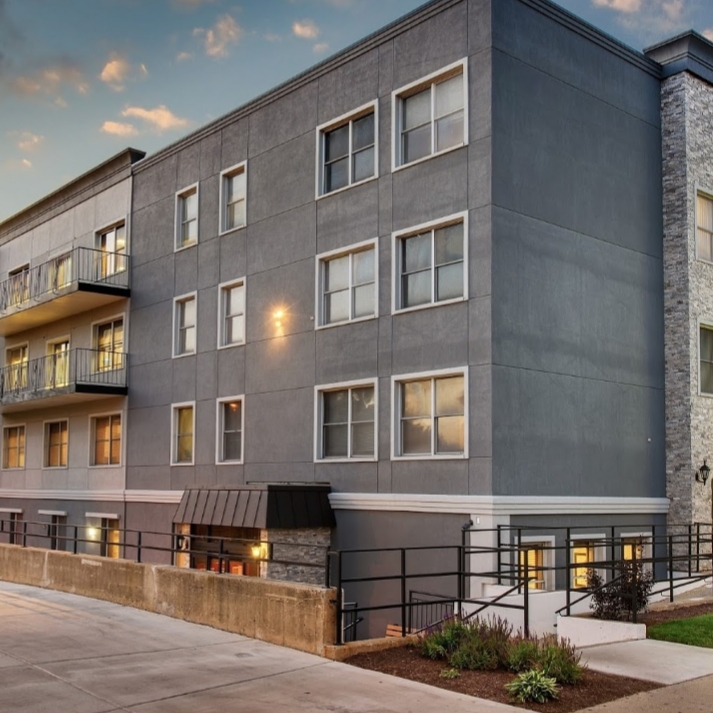
5336 NORTH WESTERN AVENUE, CHICAGO, IL 60625 (773) 271-5600
For profit - Corporation 208 Beds INFINITY HEALTHCARE CONSULTING Data: November 2025 2 Immediate Jeopardy citations
Trust Grade
0/100
#495 of 665 in IL
Last Inspection: May 2025

Inspected within the last 6 months. Data reflects current conditions.

Overview

Continental Nursing & Rehab Center has received a Trust Grade of F, indicating significant concerns about the quality of care provided. Ranking #495 out of 665 facilities in Illinois places them in the bottom half, and #163 out of 201 in Cook County means only a few local options are worse. The facility has a troubling trend; while the number of issues decreased from 37 in 2024 to 36 in 2025, there are still many critical and serious deficiencies. Staffing is somewhat of a strength, with a 3/5 star rating and a turnover rate of 26%, significantly lower than the state average, which suggests that staff members are relatively stable. However, the facility has incurred $406,475 in fines, which is concerning and indicates compliance issues. There have been serious incidents, such as a resident being allowed out on a community pass without proper authorization, leading to hospitalization, and another resident was physically assaulted, resulting in a head injury that required staples. Overall, while there are some positive aspects, the numerous critical incidents and poor trust grade raise significant red flags for families considering this nursing home.

Trust Score
F
0/100
In Illinois
#495/665
Bottom 26%
Safety Record
High Risk
Review needed
Inspections
Getting Better
37 → 36 violations
Staff Stability
✓ Good
26% annual turnover. Excellent stability, 22 points below Illinois's 48% average. Staff who stay learn residents' needs.
Penalties
✓ Good
$406,475 in fines. Lower than most Illinois facilities. Relatively clean record.
Skilled Nurses
✓ Good
Each resident gets 43 minutes of Registered Nurse (RN) attention daily — more than average for Illinois. RNs are trained to catch health problems early.
Violations
⚠ Watch
96 deficiencies on record. Higher than average. Multiple issues found across inspections.
★☆☆☆☆
1.0
Overall Rating
★★★☆☆
3.0
Staff Levels
★★☆☆☆
2.0
Care Quality
★☆☆☆☆
1.0
Inspection Score
Stable
2024: 37 issues
2025: 36 issues

The Good

  • Low Staff Turnover (26%) · Staff stability means consistent care
  • Full Sprinkler Coverage · Fire safety systems throughout facility
  • No fines on record
  • Staff turnover is low (26%)

    22 points below Illinois average of 48%

Facility shows strength in staff retention, fire safety.

The Bad

1-Star Overall Rating

Below Illinois average (2.5)

Significant quality concerns identified by CMS

Federal Fines: $406,475

Well above median ($33,413)

Significant penalties indicating serious issues

Chain: INFINITY HEALTHCARE CONSULTING

Part of a multi-facility chain

Ask about local staffing decisions and management

The Ugly 96 deficiencies on record

2 life-threatening 9 actual harm
Sept 2025 1 deficiency
CONCERN (D) 📢 Someone Reported This

A family member, employee, or ombudsman was alarmed enough to file a formal complaint

Potential for Harm - no one hurt, but risky conditions existed

Report Alleged Abuse (Tag F0609)

Could have caused harm · This affected 1 resident

**NOTE- TERMS IN BRACKETS HAVE BEEN EDITED TO PROTECT CONFIDENTIALITY** Based on observations, interviews and review of records the facility failed to report allegations of sexual abuse for 1 (R2) out...

Read full inspector narrative →
**NOTE- TERMS IN BRACKETS HAVE BEEN EDITED TO PROTECT CONFIDENTIALITY** Based on observations, interviews and review of records the facility failed to report allegations of sexual abuse for 1 (R2) out of 3 residents reviewed for the right of every resident to be free from all forms of abuse. These failures affected 1 resident (R2) who alleged multiple times to facility staff about sexual abuse but was not included in the report. Findings include: R2 is [AGE] years old, initially admitted on [DATE]. R2's diagnosis includes schizoaffective, bipolar disorder, seizure, and cerebral palsy. On 09/16/2025 at 10:03 AM, R2 was seen sitting on her wheelchair at the hallway near dining room. R2 said to V5 (Licensed Practical Nurse) in a loud voice almost screaming, She molested me, so I hit her. V5 was on his medication cart said, I don't need this right now. V4 (Social Service Director) then came to talk to R2. R2 again in a loud voice repeated, I was molested by her, so I hit her. On 09/16/2025 at 10:15 AM, R2 was asked by writer what happened? R2 stated, This morning CNA took a towel, she is patting me on my v. R2 was asked what is v? R2 replied, my vagina. R1 stated that she told her three times. On 09/16/2025 at 10:35 AM, R2 still in the hallway with V3 (MDS Coordinator). R2 stated I don't want to be wiped down there. So, I hit her with my fist V3 stated to R1 that they will send her to the hospital for checkup when something like this happens. R2 replied, So, it's okay for them to do that? On 09/16/2025 at 10:42 AM, V6 (Certified Nursing Assistant) stated that she takes care with R2 and immediately placed her on wheelchair after breakfast. V6 stated that she was helped by V7 another CNA/Certified Nursing Assistant. V6 stated that R2's diaper was soaked wet and her clothes. When they took out the diaper, and want to clean R2 with water, soap and clean towel. R2 refused saying that she needs to be clean only when she had bowel movement. V6 stated that she tried to explain to R2 that it is not good for her skin and may cause infection. By that time, R2's mood got worst started shouting. V7 went to the nurse station called V5 (Licensed Practical Nurse). V6 stated that she stayed with R2. V6 denies touching perineum area of R2. On 09/16/2025 at 10:59 AM, R2 stated that she has been abused in the past but there was nothing she can do about it. R2 stated that she was sexually abused in another nursing home. R2 stated that she does not want to be touch or put a finger on her vagina by anyone. On 09/16/2025 at 11:33 PM, V5 stated that R2 has a baseline on her mood and behavior. R2 will say that another nursing home. V5 said, She (R2) will tell me in the past she was molested. V5 stated that he spoke to V6 and V7 that R2 said she was molested. V5 stated when he went inside the room, R2 said they rape her. V5 said, It was when I went in the room the first time, she (R2) said I rape her. And said they tried to change me. V5 stated that R2 has mental illness and will sometimes say those things. On 09/17/2025 at 10:49 AM, V1 (Administrator) stated that V5 (Licensed Practical Nurse) came to her yesterday (09/16/20250 informing her that R2 complaints that V6 and V7 were rough on her leg. V1 stated that V5 did not mention about any allegation which was sexual in nature. V1 said, I was not told that resident alleged sexual abuse. Nobody told me. V1 was made aware about R2's sexual abuse allegations to facility staff directly seen and heard by writer. Per V1 inappropriate behavior covers everything. R2's clinical notes and facility report of the incident dated 09/16/2025 does not document any sexual abuse allegation that R2 made. Per R2's clinical notes by V5 (Licensed Practical Nurse) dated 09/16/2025, R2 was transferred to the hospital due to her verbal and aggressive behavior. R2 was alleging inappropriate behavior by staff. Per facility's initial report dated 09/16/2025: Under Brief Description of Incident: R2 alleged inappropriate behavior from a staff members V6 (Certified Nursing Assistant) and V7 (Certified Nursing Assistant). Both V6 and V7 witness to each other deny any inappropriate behavior; however, per policy they were suspended pending investigation. Per Abuse Policy of facility dated 01/2029: Under policy, this policy will not tolerate abuse against any resident by anyone. This policy will outline the process of reporting. For purpose of this policy, and to assist staff members in recognizing abuse, definition of sexual abuse includes but not limited to, sexual harassment, sexual coercion, or sexual assault. Under procedure, any alleged abuse to any resident must be reported to the Administrator. Person(s) observing incident of resident abuse or suspecting resident abuse must immediately report incidents to the Charge Nurse who will immediately report the allegation to the Administrator, regardless of time lapse since the incident occurred. The following information should be reported to the Charge Nurse who will immediately report to Administrator: - The name of resident(s) involved- The date and time that the incident occurred- Where the incident took place- The name(s) of all individuals suspected of committing the incident, if known- The name(s) of any witnesses to the incident- The type of abuse that was allegedly committed (i.e., verbal, physical, sexual, etc) or reasonable suspicion of a crime against a resident.- Other information that may be requested by the Charge Nurse. Upon receiving reports of physical or sexual abuse, the Charge Nurse will immediately examine the resident. Findings of the examination must be recorded in a separate Incident Report and the resident's medical record.
Aug 2025 1 deficiency
CONCERN (E) 📢 Someone Reported This

A family member, employee, or ombudsman was alarmed enough to file a formal complaint

Potential for Harm - no one hurt, but risky conditions existed

Accident Prevention (Tag F0689)

Could have caused harm · This affected multiple residents

Based on observation, interview, and record review the facility failed to follow their policy to ensure a safe and healthy living environment for the 59 residents residing on the third floor.Findings ...

Read full inspector narrative →
Based on observation, interview, and record review the facility failed to follow their policy to ensure a safe and healthy living environment for the 59 residents residing on the third floor.Findings include:8/21/25 at 12:36 PM, Survey team smelled cigarette smoke inside a resident room. Survey team had recently left the room less than five minutes prior. R1 had just gone into the room from talking to surveyors in the hallway and did not smell of cigarette smoke. 8/21/25 at 12:38 PM, while observing R11s room, survey team observed cigarette butts on the floor next to R11s bed. 8/26/25 at 11:48 AM, V9 (Assistant Director of Nursing) stated smoking is not allowed in the building. I have been here four months. I have not witnessed residents smoking in the facility. No staff has notified me of seeing residents smoking. If a resident is caught smoking, they would be put on pass restriction, we notify the physician, family, social service, Administrator, Interdisciplinary team. Incase smoke is smelled in the room; we check where the smell is coming from. Two staff, including social service search resident pockets and room for cigarettes and lighter, any smoking material. R11 allowed us to search his pockets and room. No smoking material was found. If staff witness smoking in the facility, they immediately notify management so smoking materials are taken away and we educate the resident. 8/26/25 at 1:33 PM, V15 (Social Service Director) stated smoking is not allowed in the building. It creates an unsafe atmosphere. It's an Illinois law that prohibits smoking in and 15 feet from the doorway of a public building. We have oxygen in the building. Smoking in the facility is not allowed to keep residents and staff safe. R11 is a smoker. We observed old cigarette butts under R11s bed, at least two. R11 claimed they did not smoke in the building, that the butts must have fallen from their pockets. If staff catch a resident actively smoking inside the building, they should make supervisor, Administrator, Social Service aware and call a code for help. 8/26/25 at 2:10 PM, Observed R11 in the hallway headed to the front area of the facility in his wheelchair. R11 said R11 does smoke. R11 said R11 used to smoke inside the facility until the facility told R11 not to.R11 care plan reads in part: R11 is a smoker and have been non-compliant with smoking policy and use of substances while a resident of the facility. R11 violated the smoking agreement by being found and witnessed to smoke marijuana at facility premises on multiple occasions.Facility Smoking Safety Policy, 10/5/2015, reads in part: Policy Objective, To provide a safe and healthy living environment with respect for the health and well-being needs of each resident, staff member and visitor. It is also the objective of this policy to communicate to each resident that they are responsible for following each rule and on-going compliance with this policy. Guidelines, 1. Smoking is only allowed in designated areas established by management. If indoor smoking is prohibited by state or local law the interior of the facility will remain smoke-free at all times. The designated area(s) will be outside in accordance with state/local standards.
Jul 2025 1 deficiency 1 Harm
SERIOUS (G) 📢 Someone Reported This

A family member, employee, or ombudsman was alarmed enough to file a formal complaint

Actual Harm - a resident was hurt due to facility failures

Free from Abuse/Neglect (Tag F0600)

A resident was harmed · This affected 1 resident

**NOTE- TERMS IN BRACKETS HAVE BEEN EDITED TO PROTECT CONFIDENTIALITY** Based on observation, interview and record review the facility failed to ensure the resident the right to free of abuse for one ...

Read full inspector narrative →
**NOTE- TERMS IN BRACKETS HAVE BEEN EDITED TO PROTECT CONFIDENTIALITY** Based on observation, interview and record review the facility failed to ensure the resident the right to free of abuse for one (R2) of three residents included in a sample of 8 who was physically assaulted by R1, resulting in R2 sustaining a laceration to the top of head requiring 8 staples. Findings include: R1 is a [AGE] year old male with a diagnosis including Pulmonary Disease , Diabetes 2 , Heart Failure and Low Back Pain. R1 was first admitted to the facility on [DATE] and was discharged from the facility on 7/1/25. R1 has a BIMS ( Brief Interview Of Mental Status ) Score of 15/15 . R1 is care planned for including abuse potential resulting from 6/30/25 incident where R1 and R2 got into an argument with no physical contact, and on 7/1/25 where there was an altercation between R1 and R2 with physical injury to R2 . R1 was first admitted to the facility on [DATE]. R2 is a [AGE] year old male with a diagnosis including Parkinsons Disease , Dementia , Bi Polar Disorder and Repeated Falls . R2 was first admitted to the facility on [DATE] R2's BIMS ( Brief Interview Of Mental Status ) score of 15/15. R2 is care planned for abuse potential based on 6/30/25 and 7/1/25 incident. On 7/3/25 at 9AM R2's head was observed with V2 (DON). A 3.2 CM (centimeter) laceration with 8 staples was observed on top of head. On 7/2/25 at 10:45AM R2 stated, I was out smoking and R1 came up and sprayed me. I fell down and hit my head on the metal side of bench. I couldn't see. There was 15-people out there when this happened. I got 8 staples at the hospital. I don't know where he got the [NAME] from. We also had an altercation in the dining room that happened the night before on 6/30/25. The nurse stopped the altercation right away in the dining room the day before the smoking patio incident. R1 accused me of wearing his shoes. I never touched his shoes. I found them under his bed. I am ok and feel safe now since the incident. I don't see R1 here and heard he isn't coming back. On 7/2/25 at 10:54AM V1 (Administrator) stated, I am the abuse prevention coordinator. R1 and R2 got in altercation in the dining room on 6/30/25. They had an argument and were separated. V5 (Nurse) was there. On 6/30/25, R2 was moved to another room upon agreement of R2. We increased monitoring of both residents. Yesterday (7/1/25) there was a code gray called. I went out to smoking patio. I saw R2 was by edge of patio. R1 was on the bench 5 feet away. R2 had blood on head. R1 had no injury and was sitting on bench. I called the nurse to take care of R2. Nurses applied first aid while I stayed there with R1. R1 said he was having trouble breathing because he has COPD. Am ambulance was called for both of them per doctors order. R1 was presented with an IVD (Involuntary Transfer or Discharge) for emergency discharge. I went to the hospital to have R1 sign Notice of Involuntary Transfer or Discharge and Opportunity for Hearing. He requested his belongings. I went back to facility and got those belongings. I brought the belongings the same day. R2 was just readmitted to facility. R2 has stitches on his head. R1 sprayed [NAME] and pushed R2. R1 went out on pass on 7/1/25 and I think that is how he got the [NAME]. On 7/2/25 at 1:10PM V8 (RN) stated, I was on floor Code gray (Fight) was called on patio. Everybody rushed out. R2 was bleeding on head we assisted him. First aid was given, 911 called. Both were alert and oriented. R1 stated he couldn't breath, we gave oxygen. 911 arrived. On 7/2/25 at 1:13PM V9 (LPN) stated, I went to patio after a code gray was called out on patio. I cleaned out the cut approximately 1.5 inches. We put a steri strip on it and covered with clean gauze. I am not aware that he was sprayed with [NAME]. I didn't treat his eyes. I helped the other nurse tend to the cut on top of R2's head. On 7/2/25 at 1:30PM V10 (Physician) stated, yes I was the doctor that the facility contacted on the R1, R2 incident. R2's injury to the top of the head is consistent with hitting the head on a metal part of the bench after being pushed. I am not aware of the [NAME] being sprayed into R2's eyes by R1. I saw R2 yesterday after he came back from the hospital and he didn't complain of any eye discomfort. His eyes were clear and had no visible sign of injury. On 7/3/25 at 1:0PM R9 stated, I was out on smoking patio on 7/1/25 when R1 started an argument with R2 . R1 stood up and got in R2's face . R2 went to push R1 back away and R1 then sprayed R2 with [NAME] in the face. R2 covered his eyes and fell hitting his head on the bench. The staff came to the area and cleared everyone out. That is all I know. R2 hospital record dated 7/1/25 shows diagnosis of laceration of scalp , initial encounter. Facility policy titled Abuse Prevention Program Revised 3/1/21 shows It is the policy of this facility to prohibit and prevent resident abuse, neglect, exploitation, mistreatment, and misappropriation of resident property and a crime against a resident in the facility.
Jun 2025 1 deficiency
CONCERN (D) 📢 Someone Reported This

A family member, employee, or ombudsman was alarmed enough to file a formal complaint

Potential for Harm - no one hurt, but risky conditions existed

Pharmacy Services (Tag F0755)

Could have caused harm · This affected 1 resident

**NOTE- TERMS IN BRACKETS HAVE BEEN EDITED TO PROTECT CONFIDENTIALITY** Based on interview and record review, the facility failed to administer intravenous (IV) antibiotic medication as ordered by Phy...

Read full inspector narrative →
**NOTE- TERMS IN BRACKETS HAVE BEEN EDITED TO PROTECT CONFIDENTIALITY** Based on interview and record review, the facility failed to administer intravenous (IV) antibiotic medication as ordered by Physician for one (R3) resident with diagnosis of Osteomyelitis. This failure affected one (R3) of three residents reviewed for pharmaceutical services. The findings include: R3's admission record showed admit date on 6/12/2025 with diagnoses not limited to Osteomyelitis, Paraplegia, Depression, Bipolar disorder, Anxiety disorder, Essential (primary) hypertension, Neuromuscular dysfunction of bladder, Neurogenic bowel, Contact with and (suspected) exposure to other viral communicable diseases. MDS (Minimum Data Set) dated 6/19/2025 showed R3's cognition was intact. On 6/25/25 at 11:58AM Observed R3 sitting up on bed, alert and oriented x 3, verbally responsive, appears comfortable, with multiple wounds on both lower legs. He said he was admitted to the facility on [DATE] between 4-5pm for IV antibiotic treatment due to wound infection on sacral area. R3 stated he was on IV Meropenem 3 times per day and IV Vancomycin 3 times per day. He said he was supposed to get IV Vancomycin on the day he came to the facility on 6/12/25 and the following day 6/13/25 but he did not get it, and he missed a total of 4 doses. R3 said IV Vancomycin was started on 6/14/25 and he completed IV antibiotic treatment on 6/20/25. On 6/26/25 at 11:40 AM, V2 (DON / Director of Nursing) stated he has been in the facility for about nine years. He said R3 should continue the IV ABT (antibiotic) Vancomycin as ordered by the physician upon admission. V2 stated it is important to administer the medication, the potential effect is that the cycle will be incomplete and the ABT (antiboitic treatment) may not treat the infection as prescribed by the physician. V2 stated that the IV Vancomycin was available in the (automated medication and supply management system) and it should have been administered or a call to the pharmacy could have taken place for a STAT (emergency) order to be delivered. V2 said per MAR (Medication Administration Record) Vancomycin IV was not administered on 6/12/25 and 6/13/25, it was started on 6/14/25. R3's hospital records (summary of discharge medications) dated 6/12/25 showed order not limited to: Vancomycin 1gm inject into the vein every 8 hours for 7 days. End of treatment 6/17/25. Schedule: 12AM, 8AM, and 4PM. Last dose given on 6/12/25 at 10:37AM. R3's order summary report dated 6/25/25 showed order not limited to: Vancomycin HCl Intravenous Solution Reconstituted 1 GM (gram) (Vancomycin HCl) Use 1000 mg (milligrams) intravenously every 8 hours for antibiotic for 7 Days 1000mg into vein every 8 hours. Order date 6/13/25. R3's MAR (Medication Administration Record) showed Vancomycin HCl Intravenous Solution Reconstituted 1 GM (Vancomycin HCl) Use 1000 mg intravenously every 8 hours for antibiotic for 7 Days 1000 mg into vein every 8 hours. Schedule time at 6AM, 2PM and 10PM. IV Vancomycin was signed as given or started on 6/14/25 and was completed on 6/20/25. R3's Nursing Progress Note by V6 (Licensed Practical Nurse / LPN) dated 6/12/2025 showed in part: R3 admitted to facility in stable condition with Contact Isolation, wound all over his body and big wound in the sacral area. R3 came with a PICC line one lumen in the right arm for IV antibiotic. R3's progress notes reviewed and did not reflect that IV Vancomycin was given on 6/12/25 and 6/13/25. R3's care plan dated 6/13/25 showed in part: IV meds (medications). R3 has PICC (peripherally inserted central catheter) line on right arm related to wound infection. Administer medication as ordered. Facility's pharmacy delivery schedule and cut off times information (an automated medication and supply management system) showed in part: STAT as requested 2-4 hour turn around. Facility's list of medications available in the cubex showed but not limited to: Vancomycin 1gm, Vancomycin 500mg, Vancomycin 750mg, Vancomycin 125mg, Meropenem 500mg. Facility's Drug Administration - general guidelines policy (undated) showed in part: Medications are administered as prescribed, in accordance with good nursing principles and practices and only by personas legally authorized to do so. Medications are prepared, administered, and recorded only licensed nursing, medical, pharmacy or other personnel authorized by state laws and regulations. Medications are administered in accordance with written orders of the attending physician. The resident's MAR is initialed by the person administering a medication, in the space provided under the date, and on the line for that specific medication dose administration. Facility's physician order policy (undated) showed in part: It is the policy of the facility to follow the orders of the physician.
Jun 2025 2 deficiencies
CONCERN (D) 📢 Someone Reported This

A family member, employee, or ombudsman was alarmed enough to file a formal complaint

Potential for Harm - no one hurt, but risky conditions existed

Pharmacy Services (Tag F0755)

Could have caused harm · This affected 1 resident

**NOTE- TERMS IN BRACKETS HAVE BEEN EDITED TO PROTECT CONFIDENTIALITY** Based on observation, interviews and review of record the facility failed to re-ordered medication on a timely manner for 1 out ...

Read full inspector narrative →
**NOTE- TERMS IN BRACKETS HAVE BEEN EDITED TO PROTECT CONFIDENTIALITY** Based on observation, interviews and review of record the facility failed to re-ordered medication on a timely manner for 1 out of 3 residents (R2) reviewed for pharmaceutical services. This practice is not in accordance with their policy and may affect 1 resident (R2) in ensuring pharmaceutical supplies are available to meet the needs of resident. Findings include: R2 is [AGE] years old, initially admitted on [DATE], with medical diagnosis of diabetes mellitus, multiple sclerosis and cerebral infarct. On 06/17/2025, at 10:52 AM, R2 was seen in her room alert and verbally able to express her thoughts well. R2 stated that she does not receive all her medications including eye drops and medication for diabetes. At the nurse's station with V5 (Registered Nurse) all of the medication for R2 in the medication cart was reviewed. After review, there were three (3) medicines that are not available: Glipizide (for diabetes), Metformin (for diabetes) and Trazodone (antidepressant). V5 stated that she just re-ordered Glipizide and Metformin medicines today to the pharmacy. V5 stated that when medication in the bingo card reaches dark colored area it needs to be re-ordered. V5 showed the bingo card that dark blue color once it reaches eight (8) medicines left. V5 re-stated that it needs to be re-ordered to the pharmacy once eight (8) medication left. On 06/17/2025, at 10:50 AM, V2 (Assistant Director of Nursing) stated that nursing staff need to re-order medication on time to ensure medications are available to meet their needs. V2 stated that dark blue area on the bingo card is an indicator that medicine needs to be re-ordered. R2's medication administration record (MAR) on blood sugar monitoring document that R2 have elevated results in certain days. Ordering Medications Policy without a date reads that medications are ordered from the pharmacy on a timely basis. And instructs facility staff to requests for a refill to the pharmacy 72 hours prior to the last dose.
CONCERN (F) 📢 Someone Reported This

A family member, employee, or ombudsman was alarmed enough to file a formal complaint

Potential for Harm - no one hurt, but risky conditions existed

Safe Environment (Tag F0921)

Could have caused harm · This affected most or all residents

**NOTE- TERMS IN BRACKETS HAVE BEEN EDITED TO PROTECT CONFIDENTIALITY** Based on observation, interview, and review of records, the facility failed to ensure that smoking was done in required designat...

Read full inspector narrative →
**NOTE- TERMS IN BRACKETS HAVE BEEN EDITED TO PROTECT CONFIDENTIALITY** Based on observation, interview, and review of records, the facility failed to ensure that smoking was done in required designated area. These practices are not in accordance with their policy and State laws and can affect all 144 residents living in the facility as it pertains to their safety and comfort related to smoking effects. Findings include: On 06/17/2025, at 11:18 AM, R3 stated that residents are smoking inside their rooms, common restrooms, shower rooms and other areas not designated for smoking. R3 stated that it is a continuing problem that affects other residents when inhaling cigarettes strong odor. Inside another resident's room, R5 stated that he smelled strong cigarettes odor upon entering the common restroom on the floor. R6 who was outside of R5's room, stated that it is a continuing problem that needs to be addressed. R3 accompanied writer to the common restroom and showed the writer the wall filed with cigarettes marking. When R3 opened the door, a strong odor of cigarettes was smelled. Just outside of the restroom was a crash cart with an oxygen tank attached to the cart. R3 stated that residents are affected by other smoking and he is experiencing breathing problems due to inhaling cigarette smoke. At the nurse station, V3 (Certified Nursing Assistant) was requested to go to the restroom. Upon opening V3 stated Yes, I can smell cigarettes. V3 Went back to the nurse's station and informed V4 (Licensed Practical Nurse) who went to the restroom. Upon opening the door of the restroom, V4 stated, You are right, someone smokes in here. V4 stated that he will notify his supervisor and an investigation will be done about the incident. V2 (Assistant Director of Nursing) who was at the nurse's station was notified. V2 went to the restroom, opened the door, with a strong cigarette odor. V3 pointed to V2 and observed the wall filled with cigarettes marks. After seeing the cigarettes marks on the wall ,V2 said, It is there, I cannot deny that. V3 pointed to V2 and observed an oxygen tank near the restroom. V2 stated, Yes, they should not smoke near oxygen tank. Residents are not allowed to smoke inside the restroom. V1 (Administrator) was made aware about residents smoking in the restroom with an oxygen tank located near the restroom. V1 stated that residents are not allowed to smoke in the restroom and they (residents) are only allowed to smoke in designated areas. Facility Smoking Safety Policy dated 10/05/2015, notes the facility must provide a safe and healthy living environment with respect for the health and well-being needs of each resident, staff members, and visitors. It is also the objective of this policy to communicate to each resident that they are responsible for following each rule and on-going compliance with this policy. Smoking is only allowed in designated areas established by management. If indoor smoking is prohibited by State or local law, the interior of the facility will remain smoke-free at all times. The designated area(s) will be outside in accordance with State/local standards. Public Act [PHONE NUMBER] and Smoke Free Illinois Act both prohibits indoor smoking or similar acts. Smoke Free Illinois Act dated 01/01/2008 reads: The General Assembly finds that tobacco smoke is a harmful and dangerous carcinogen to human beings and a hazard to public health. Secondhand tobacco smoke causes at least 65,000 deaths each year from heart disease and lung cancer according to the National Cancer Institute. Secondhand tobacco smoke causes heart disease, stroke, cancer, sudden infant death syndrome, low birthweight in infants, asthma and exacerbation of asthma, bronchitis and pneumonia in children and adults. Secondhand tobacco smoke is the third leading cause of preventable death in the United States. Illinois workers exposed to secondhand tobacco smoke are at increased risk of premature death. An estimated 2,900 Illinois citizens die each year from exposure to secondhand tobacco smoke. Also finds that the United States Surgeon General's 2006 report has determined that there is no risk-free level of exposure to secondhand smoke; the scientific evidence that secondhand smoke causes serious diseases, including lung cancer, heart disease, and respiratory illnesses such as bronchitis and asthma, is massive and conclusive; separating smokers from nonsmokers, cleaning the air, and ventilating buildings cannot eliminate secondhand smoke exposure; smoke-free workplace policies are effective in reducing secondhand smoke exposure; and smoke-free workplace policies do not have an adverse economic impact on the hospitality industry. Further finds that the Environmental Protection Agency has determined that secondhand smoke cannot be reduced to safe levels in businesses by high rates of ventilation. Air cleaners, which are capable only of filtering the particulate matter and odors in smoke, do not eliminate the known toxins in secondhand smoke. The American Society of Heating, Refrigerating and Air-Conditioning Engineers (ASHRAE) bases its ventilation standards on totally smoke-free environments because it cannot determine a safe level of exposure to secondhand smoke, which contains cancer-causing chemicals, and ASHRAE acknowledges that technology does not exist that can remove chemicals that cause cancer from the air. A June 30, 2005, ASHRAE position document on secondhand smoke concludes that, at present, the only means of eliminating health risks associated with indoor exposure is to eliminate all smoking activity indoors. (Source: P.A. 95-17, eff. 1-1-08.) Healthcare Facility means an office or institution providing care or treatment of diseases, whether physical, mental, or emotional, or other medical, physiological, or psychological conditions, including, but not limited to, hospitals, rehabilitation hospitals, weight control clinics, nursing homes, homes for the aging or chronically ill, laboratories, and offices of surgeons, chiropractors, physical therapists, physicians, dentists, and all specialists within these professions. Healthcare facility includes all waiting rooms, hallways, private rooms, semiprivate rooms, and wards within healthcare facilities. The act prohibits smoking including a minimum distance of 15 feet from entrances, exits, windows that open, and ventilation intakes that serve an enclosed area where smoking is prohibited.
Jun 2025 1 deficiency
CONCERN (D) 📢 Someone Reported This

A family member, employee, or ombudsman was alarmed enough to file a formal complaint

Potential for Harm - no one hurt, but risky conditions existed

Accident Prevention (Tag F0689)

Could have caused harm · This affected 1 resident

**NOTE- TERMS IN BRACKETS HAVE BEEN EDITED TO PROTECT CONFIDENTIALITY** Based on interview and record review, the facility failed to follow the facility policy for smoking safety and failed to ensure ...

Read full inspector narrative →
**NOTE- TERMS IN BRACKETS HAVE BEEN EDITED TO PROTECT CONFIDENTIALITY** Based on interview and record review, the facility failed to follow the facility policy for smoking safety and failed to ensure that residents are not smoking inside a shared residents' room near oxygen equipment where oxygen is in use which affected 5 residents (R2, R7, R8, R9 and R10) of 12 residents reviewed for odors from smoking within the facility. This failure resulted in R10, who uses nasal cannula oxygen from an oxygen tank, experiencing psychosocial harm from sharing a room with R4 who was found on 5/31/25 by staff with a lit, half smoked cigarette in their shared room with visible smoke in the air and on 6/1/25 when R10 smelled cigarette smoke in their shared room, alerted staff, and staff confiscated a box of 14 cigarettes from R4's dresser drawer. Subsequently, R10 was transferred to a different room on the floor. Findings include: On 6/4/25 at 11:00 AM, R10 observed laying in bed with oxygen infusing at 3 liters/minute (L/min) via nasal cannula from an oxygen tank positioned upright in a holder on the side of R10's bed. R10 stated that R10 was admitted from another long-term care facility on 5/30/25 wearing the nasal cannula oxygen and that R10 wears continuous oxygen due to respiratory failure. R10 stated that R10 was admitted to the room at the end of the hallway where R10 resided with R4, R5 and R6. R10 stated that R10 witnessed R4 and R5 smoking in their shared room and also smelled smoke coming from their shared bathroom. R10 stated, Yes, I saw them smoking. I can smell it. I am a non-smoker. R10 stated that R10 cannot be around people smoking due to being on oxygen. R10 stated, That's why they (staff) moved me out of the room, but it was the next day (6/1/25). R10 stated that being close to R4 who was smoking cigarettes and R10 who uses continuous oxygen, R10 stated, I felt terrible. It was definitely hard on me. It's dangerous. They could have blew me up. R10 stated that staff didn't move me when I told them (5/31/25) and that the staff moved R10 away from R4 on 6/1/25 after R4 did it (smoked in their room) again. R10's admission Record documents, in part, diagnoses of hemiplegia and hemiparesis following cerebral infarction affecting left non-dominant side, sequala of cerebral infarction, polyosteoarthritis, atherosclerotic heart disease of native coronary artery without angina pectoris, paroxysmal atrial fibrillation, peripheral vascular disease, chronic systolic (congestive) heart failure, ischemic cardiomyopathy, hyperlipidemia, occlusion and stenosis of bilateral carotid arteries, chronic kidney disease stage 3, chronic obstructive pulmonary disease, type 2 diabetes mellitus, Chron's disease, and intestinal obstruction. R10's Census List documents, in part, that on 5/30/25 at 3:30 PM, R10 was active status as actual admission to the shared room with R4, R5 and R6. R10's Room Change to a different room on the same floor was effective on 6/1/25 at 12:00 PM. In R10's Progress Notes, dated 5/30/25 at 4:46 PM, V21 (LPN) documents, in part, Writer received a new resident from (another long term care facility) via stretcher, escorted by 3 EMT (emergency medical technician) staff, the resident is A/Ox3 (alert and oriented times three), able to express (R10's) needs . MD (medical diagnoses): acute respiratory failure with hypoxia . oxygen 98% (saturation percentage) via nasal cannula 2L (liters). Medication was confirmed by NP (V29, Nurse Practitioner). In reviewing R10's Order Summary Reports, an order (dated active on 5/31/25 and discontinued on 6/4/25) is noted to apply oxygen per nasal cannula whenever needed (PRN) and check for oxygen saturation every shift; and an order (dated active on 6/4/25) is noted to apply oxygen 3 L/min PRN and check for oxygen saturation every shift, as needed for shortness of breath. R10's Smoking Evaluation, dated 6/2/25, documents, in part, that R10 does not use smoking, tobacco or nicotine products. On 6/3/25 at 11:28 AM, R4 observed in room in R4's assigned bed which is closest to the outer wall with windows. R4 stated that R4 is a smoker and that R4 now has to go outside to smoke during the scheduled smoking breaks on the smoking outdoor patio. R4 stated that the facility staff provide R4 with cigarettes and the staff will light the cigarette on the patio. R4 stated that R4 used to go out by R4's self with no staff when R4 had a green pass. R4 stated that R4 doesn't know how R4 lost the green pass privileges but is currently on red pass. R4 stated that a nurse or CNA will take R4 out to smoke, usually in the morning around 8 am, and later in the evening, besides smoking during the 3 designated smoke breaks. When asked if R4 smokes inside R4's shared room, there was a long pause from R4 as R4 is looking at this surveyor. This surveyor then asked the question again, and R4 stated, Yes, I do. I'm not gonna lie. I know I'm not supposed to. R4 stated that when R4 does smoke cigarettes inside the shared room, R4 will blow the exhaled cigarette smoke out of the open window. R4 stated that R4 uses a water cup to put out the cigarette to stop from continuing to burn. R4 pointed to the ½ filled water cup (clear, plastic) observed in the room on R4's table, and R4 stated Safety first with the water. When asked if any other residents have smoked with R4 in the shared room with R4, R4 stated, Yes, but (R4) is not gonna name any names. R4 stated that R4 also smokes inside the shared bathroom because, it's safe in there. R4's admission Record documents, in part, diagnoses of nicotine dependence, chronic obstructive pulmonary disease, hypertensive heart disease without heart failure, type 2 diabetes mellitus, glaucoma, hyperlipidemia, hypertension, schizoaffective disorder bipolar type, pure hyperglyceridemia, weakness, need for assistance with personal care, abnormalities of gait and mobility, unsteadiness on feet, major depressive disorder recurrent, violent behavior, and schizophrenia. R4's Census List documents, in part, that on 4/15/25 at 4:04 PM, R4 was active status as actual admission to R4's current shared room, and R4 has not been moved to a different room since admission. In R4's Smoking Evaluation, on 4/18/25, V4 (Social Services Director, SSD) documents, in part, that R4 uses smoking, tobacco, and nicotine products and that R4 does not have a desire to stop smoking. In R4's Smoking Evaluation, on 5/2/25, V4 documents, in part, that R4 engaged in unsafe smoking behaviors. No Smoking Evaluation is noted for R4 on 5/31/25 or 6/1/25. In R4's Community Survival Skills Assessments, dated 5/2/25, V4 documents, in part, that R4's green pass was revoked for a 14 day restriction, and on 5/16/25, V4 documents, in part that R4's green pass in reinstated. In R4's Community Survival Skills Assessments, dated 5/28/25, V9 (Psychiatric Rehabilitation Services Coordinator, PRSC) documents, in part, that R4 violated the facility's smoking policy and that R4's pass level was changed from green to red for the next 14 days. R4's Order Summary Report documents, in part, an active physician order for RED pass for 14 days dated 5/29/25. R4's Resident Behavior Contract, signed by R4 and dated 5/28/25, documents, in part, that R4 agrees to allow staff to check/search R4's room for contraband, such as hidden cigarettes, lighters, or matches, at the staff's discretion; that R4 agrees to only smoke in the designated area at the designated times; and that R4 will immediately turn over all smoking materials if so requested. R4's Care Plan, date initiated on 5/2/25 and revision date on 6/2/25, documents, in part, a focus of R4 expressing the desire to smoke with R4 demonstrating non-compliance with safe smoking regulations evidenced by smoking in resident rooms, bathrooms and other non-designated areas with an intervention of remind the resident that staff will be observing & supervising smoking-related behavior. Non-compliance is to be documented in the medical record (initiated 5/28/25). On 6/3/25 at 1:40 PM, during the scheduled outdoor smoking break outside on the smoking patio, V6 (Activity Aide) observed with the locked cart containing the cigarettes for residents and holding the lighter to light resident cigarettes. R4 observed sitting smoking a gray colored cigarette. V6 stated that V6 provided R4 and other attending residents with one gray cigarette and lit the cigarette for R4. Upon R4 finishing smoking the gray cigarette, R4 lifts up R4's left pant leg and retrieves a ½ smoked, white colored cigarette from inside R4's sock. V6 observed watching R4, and R4 asks V6 to light this second (1/2 smoked, white) cigarette. V6 walks up to R4 and says that V6 cannot light it, asking where R4 got this cigarette, saying You (R4) are only supposed to smoke one cigarette. R4 observed turning sideways towards R14 (another resident sitting next to R4 who is currently smoking a lit gray cigarette). R4 then observed lowering the ½ smoked, white cigarette with R4 bending head down towards R14's lit cigarette, inhales and ignites this cigarette in contact with R14's cigarette. Surveyor asked both R4 and R14 if they had a lighter in their possession, and both denied it. R4 stated that R4 lit that cigarette that R4 took out of R4's ankle sock, and R4 said, I (R4) put it up to (R14's) cigarette to light it. Am I in trouble? This surveyor then walked back over to V6 and asked about residents lighting another residence cigarette using a pre lit cigarette, and she said that sometimes he does that, is that not allowed? On 6/3/25 at 2:30 PM, V10 (LPN) observed at nurse's station on R4 and R10's floor and stated that R4 is currently on a red pass for only supervised smoking. V10 stated, Residents cannot smoke in their room. It's a fire hazard. This surveyor informed V10 about this surveyor's observation of seeing R4 on the smoking patio removing a 1/2 smoked, white cigarette from R4's ankle sock, and V10 stated that V10 will call and notify social services staff. On 6/3/25 at 2:37 PM, V10 and this surveyor walked down to R4's shared room (with the red and white oxygen in use sign posted on the door), and R4 is observed in the bathroom. V10 knocked on the bathroom door, and R4 opened the bathroom door. V10 asked R4 if R4 had any smoking materials like a cigarette or a lighter on R4's person and explaining to R4 that R4 is on a red pass and hopes that R4 does not have a lighter on R4's person. R4 stated that R4 did not have any lighter on R4's person, but stated, I (R4) got one (a lighter). R4 observed walking out of the bathroom and over to R4's dresser drawers where R4 opens the top drawer and removes a blue, small sized gas lighter but R4 states that the lighter fluid chamber is empty. R4 stated, I used up my fluid. R4 hands this blue lighter to V10 with V10 saying that it's not allowed for R4 to have this in R4's possession. In R4's electronic health record (EHR), on 5/31/25 at 12:56 PM, V8's (Registered Nurse, RN) authored progress note is stricken out for incomplete documentation with a line through the documentation; however, this surveyor is able to read V8's following nurse's note: The resident (R4) was found to have smoked in a shared room occupied by four residents, including a newly admitted resident on oxygen therapy (R10). No active smoking was observed at the time, but there was a strong smell of cigarette smoke, and a used cigarette was found with (R4), with cigarette smoke visible in his space. The resident (R4) denied smoking in the room. (R4) was educated on the facility's no-smoking policy in the room and the serious safety hazard posed by smoking near oxygen equipment and other residents. The social worker (V25) was notified of the incident and plans to speak with the resident regarding safety concerns. Ongoing care continues. On 6/4/25 at 2:29 PM, V8 (RN) stated that R4 is irrational when talking to R4, is hyperverbal and is a smoker. V8 stated that on 5/31/25, R10 told V8 about other residents smoking in R10's shared room. V8 stated that when V8 entered R4, R5, R6 and R10's room on 5/31/25, V8 observed R4 with a smoked cigarette but did not see R4 lighting the smoked cigarette or smoking the cigarette. V8 initially stated that their room was smoky, but then changed R8's statement saying that V8 was only documenting R10's verbal account of what R10 reported. V8 stated that R10 was using nasal cannula oxygen on 5/31/25. V8 stated that R5 and R6 (R4 and R10's fellow roommates) were in the room at the time, and R4, R5 and R6 all denied smoking cigarettes in the shared room. When asked if V8 smelled cigarette smoke upon entering their shared room, V8 stated that V8 uses a face mask, and V8 again repeating that R10 said that it was a strong smoke smell in the room. V8 stated that V8 the partially used, white cigarette in R4's space, on the bedside table with R4 laying on R4's bed. V8 stated that V8 notified V25 (PRSC) of this incident with R4 and confiscating the used cigarette, and that V25 will speak to R4. On 6/10/25 at 2:46 PM, V25 (PRSC) stated that V25 works Tuesdays through Saturdays in the facility. When asked on 5/31/25, which was a Saturday, was it reported to V25 that there was an alleged smoking incident in the facility with R4, V25 asked which residents were residing in that shared room at that time, and this surveyor informed V25 that it was R4, R5, R6 and R10. V25 stated, I (V25) may have been (notified), but I didn't go. I was busy. When asked did V25 follow up with the allegation of R4 smoking in the shared room before the end of V25's shift on 5/31/25, V25 stated, Nope. I didn't. If it would have been at the end of my shift, then nope. V25 stated that V25 has smelled cigarette smoke wafting down that hallway, and when V25 smells it, V25 will go investigate the smell. In R4's EHR, on 6/1/25 at 8:06 PM, V7's (LPN) authored progress note is stricken out for incomplete chart with a line through the documentation; however, this surveyor is able to read V7's following behavior note, Resident (R4) awake/responsive verbally, alert/oriented X4 on stable condition. Compliant with meds but have behavioral issues. At 5pm resident (R4) caught smoking in the room. Cigarettes were confiscated but could not find the lighter. When nurse caught the residents one of them were flushing the toilet. When nurse ask residents if staff could see their pockets they strongly refused. Administrator, DON (Director of Nursing), and Primary MD (medical doctor) made aware. Unfortunately, Social Worker could not be reach. Will continue to monitor. On 6/9/25 at 2:07 PM, V26 (Certified Nursing Assistant, CNA) stated that on 6/1/25, while working the evening shift, I (V26) caught them (3 residents) smoking and let them (nurses) know. V26 stated that V26 caught smell of smoke (coming from R4, R5, R6 and R10's room). I opened their divider. I saw smoke in the air, and they had it (cigarette) lit. It was resting on windowsill. They were all together behind the curtain. V26 stated that it was R4's side of the room, and V26 identified the 2 remaining residents by their ethnicity, not names. V26 stated that R4 was standing next to the lit cigarette on the windowsill and that smoke was coming from the lit cigarette which was wafting out towards the open window. V26 stated that V26 told R4 to put out the cigarette and that R4 did. V26 stated that immediately informed V10 (RN) who informed R4's assigned nurse, V7 (LPN). On 6/4/25 at 1:26 PM, V7 (LPN) stated that on 6/1/25, R10 reported that smoking was happening in R10's shared room with R4, R5 and R6 present. V7 stated that R10 was wearing and using 2 L/min oxygen via nasal cannula from an oxygen tank at R10's bedside. V7 stated, At that time, I didn't smell smoke. I don't know what happened. V7 stated that R4 was the resident who was seen flushing the toilet upon entering the room. V7 stated that V7 questioned R4 and R5 about smoking in the shared room, and they denied it. V7 stated that R4 and R5 refused searches of their persons. V7 stated that V7 confiscated 14 cigarettes in a box that V7 observed in R4's dresser drawer (which was open that V7 could see into). V7 stated that V7 did not search the remainder of R4's room or R5's side of their shared room because V7 knows that V7 has to have 2 staff members present to conduct a room search for paraphernalia. V7 stated that V10 (RN) who was the other nurse on the floor was on break and that social services staff is not in the facility on Sundays. V7 stated that V7 did not perform a room search for R4 and R5 later on 6/1/25. V7 stated that V7 stated that R10 said that R10 was bed bound, was on oxygen and was asking to move to a different room, and V7 informed R10 that V7 has to check with V1 (Administrator) first. V7 stated, I move (R10) right away. (R10) was thanking us. V7 stated that V7 struck out V7's original documentation in R4's EHR due to V7 not actually witnessing the act of R4 smoking the cigarette. V7 stated that it's a dangerous risk to smoke cigarettes near an oxygen source, and that it is a fire hazard that can blow up the room. On 6/3/25 at 11:26 AM, R5 observed walking with a cane and standing near doorway in R5's shared room (with R4 and R5). R5 wrote R5's name on surveyor's paper with no clear verbalization noted when R5 attempts to speak. R5 denied ever smoking in R5's shared room on 5/31/25 or 6/1/25 by nodding no, and R5 nodded yes to being a smoker. When asked if other residents have smoking inside R5's room, R5 pointed to R4's curtain, which is closed, with R4 behind the curtain. R5's admission Record, documents, in part, diagnoses of hemiplegia and hemiparesis following cerebral infarction affecting right dominant side, encounter for prophylactic measures, hypertension, type 2 diabetes mellitus with hyperglycemia, hyperlipidemia, aphasia following cerebral infarction, tobacco use, abnormalities of gait and mobility, weakness, and need for assistance with personal care. On 6/3/25 at 12:00 PM, R2 stated that R2 is a nonsmoker and keeps R2's door closed to prevent smelling the cigarette smoke in the hallway that is coming from R4's shared room. R2 stated that R4 was caught smoking in R4's shared room on 5/31/25 and 6/1/25 by staff. R2 stated that R2 smelled the cigarette smoke coming from the room and reported it to staff. R2 stated that R2 witnessed the staff addressing R4's smoking incidents on 5/31/25 and 6/1/25, and R10 being moved out of the shared room on 6/1/25, after the smoking incident. R2 stated, I (R2) heard the whole thing on Saturday and Sunday. (R10) had oxygen and (R10) had to be moved. It's an open secret that (R4) does it (smoke inside the room). R2's admission Record, documents, in part, diagnoses type 2 diabetes mellitus, obstructive and reflux uropathy, schizoaffective disorder, hypertension, abnormalities of gait and mobility, suicidal ideations, delusional disorder, polyosteoarthritis, peptic ulcer, and nasal congestion. R2's MDS, dated [DATE], documents, in part, that R2's BIMS score is a 10 which indicates that R2 has moderate cognitive impairment. R2's Smoking Evaluation, dated 12/20/24, documents, in part, that R2 does not use smoking, tobacco or nicotine products. On 6/3/25 at 11:46 AM, R7, R8 and R9's shared room door observed closed and is the neighboring room (same side) to R4, R5 and R6's room. Upon opening R7, R8 and R9's room, R7 stated that the door is closed so R7 does no smell the cigarette smoke coming from the hallway. R7 stated that R7 is a non-smoker. R7's admission Record, documents, in part, diagnoses of end stage renal disease, heart failure, type 2 diabetes mellitus, schizophrenia, anemia, asthma, hypertension, hyperlipidemia, cardiomegaly, vitamin D, chronic duodenal ulcer without hemorrhage or perforation, unsteadiness on feet, difficulty in walking, weakness, need for assistance with personal care, chronic kidney disease stage 4, acute pulmonary edema, and pleural effusion. R7's MDS, dated [DATE], documents, in part, that R7's BIMS score is a 15 which indicates that R7 is cognitively intact. R7's Smoking Evaluation, dated 1/11/25, documents, in part, that R7 does not use smoking, tobacco or nicotine products. On 6/3/25 at 11:49 AM, R8 that R8 is not a smoker and that R8 smells smoke from the hallway and from blowing in their room when the window is open. R8 stated that R8 cannot be near secondhand smoke. R8 stated that the facility staff caught R4 smoking inside R4's room last weekend and that during this last same weekend (5/30/25 to 6/1/25), the cigarette smoke was coming into R7, R8 and R9's room via their open window. R8 stated that the window is on R9's side of the room, and R9 likes to have the fresh air breeze come in their room from outside. R8 stated that R8 has reported smelling cigarette smoke coming from R4's room to multiple staff and that R8 told R4 to stop smoking in R4's room with R4 telling R8 to mind my own business. On 6/3/25 at 2:36 PM, R8 stated that R4 has no respect that (R4) keeps smoking in (R4's) room. With the way the wind blows, the smoke comes directly into our room. R8's admission Record, documents, in part, diagnoses cerebral infarction, asthma, transient cerebral ischemic attack, hypertensive heart disease without heart failure, bipolar disorder, hyperlipidemia, prediabetes, Parkinson's disease without dyskinesia, and chronic pancreatitis. R8's MDS, dated [DATE], documents, in part, that R8's BIMS score is a 15 which indicates that R8 is cognitively intact. R8's Smoking Evaluation, dated 5/17/25, documents, in part, that R8 does not use smoking, tobacco or nicotine products. On 6/3/25 at 11:51 AM, R9 observed laying in a bariatric bed positioned closest to the wall with the windows. R9's two windows are open approximately 6 inches with a breeze from outside felt blowing through. R9 stated that R9 sometimes smells the cigarette smoke coming from the outside air into the room. R9 stated that R9 is a non-smoker. R9 stated that R9 has not witnessed any resident smoking, but R9 is bedbound and doesn't go out of the room. R9 stated that smelling the cigarette smoke coming blowing in from the open window has increased R9's coughing, and R9 has asthma and has had to use R9's inhaler more often. R9 stated that R9 chokes on the smoke. R9 stated that R9 told the CNA but could not provide the name. On 6/5/25 at 11:11 AM, R9 stated that R9 administers a short-acting inhaler, Albuterol, when R9 feels short of breath due to coughing. R9 stated that R9 has R9's own Albuterol inhaler at R9's bedside to use and shows this surveyor the Albuterol inhaler held in a red key chain device. R9 stated that R9 did not tell the nursing staff when R9 has administers the extra doses of Albuterol to R9's self, and if I (R9) have to wait for them (nurses) to bring me the inhaler (Albuterol), I would be here choking. R9's admission Record, documents, in part, diagnoses of asthma, type 2 diabetes mellitus, personal history of other venous thrombosis and embolism, morbid (severe) obesity due to excess calories, anemia, body mass index (BMI) 70 or greater, adult, neuralgia and neuritis, and constipation. R9's MDS, dated [DATE], documents, in part, that R9's BIMS score is a 15 which indicates that R9 is cognitively intact. R9's Smoking Evaluation, dated 3/17/25, documents, in part, that R9 does not use smoking, tobacco or nicotine products. R9's May and June 2025 Medication Administration Record indicate R9's Albuterol Sulfate HFA (Hydrofluoroalkane) Inhalation Aerosol Solution 108 (90 Base) MCG/ACT (micrograms per actuation), 2 puffs inhale orally every 4 hours as needed for asthma. Upon R9's EHR review, no self-administration assessment was noted for R9. On 6/9/25 at 11:54 AM, this surveyor requested from V1 the medication self-administration assessment for R9 and was not provided with one by end of the survey. On 6/4/25 at 11:18 AM and on 6/5/25 at 11:08 AM, R2 and R7, R8 and R9's rooms observed with the doors closed. On R7, R8 and R9's door, a handwritten sign is posted indicating to close the door behind whoever is entering or leaving the room. On 6/3/25 at 11:44 AM, R6's privacy curtains are closed all the way, separating R6 from the shared room open space. R6 stated that R6 is a nonsmoker; can't smell anything due to having a chronic plugged up nose; and keeps R6's privacy curtains closed at all time. R6 stated that there is a sign on the door that oxygen is in use and that no one can be smoking when there's oxygen in use. R6 stating that would be dangerous. R6's admission Record documents, in part, diagnoses of hyperlipidemia, bipolar disorder, hypertension, acquired absence of left and right toes, regular astigmatism bilateral, right eye secondary cataract, insomnia, right eye injury of conjunctiva and corneal abrasion, weakness, need for assistance with personal care, conjunctival hyperemia right eye, unsteadiness on feet, bipolar disorder, optic atrophy, myopia bilateral and presbyopia. On 6/4/25 at 3:12 PM, V4 (SSD) stated that V4 oversees the social services staff (V9 and V25) which is responsible for the assessing residents for safe smoking practices. V4 stated that community pass privileges are coded as red, yellow and green, and safe smokers are able to have a green pass to go outside (after nurse signs each daily pass) between 8 am and 8 PM to smoke. V4 stated that no residents are permitted to hold and possess their own smoking materials (cigarettes and lighters) in the facility, even the safe smokers on a green pass. V4 stated that a resident on a green pass will retrieve the cigarette and a lighter from the receptionist and will walk outside to a designated area at least 15 feet away from the door. V4 stated that residents who are on a red pass are deemed unsafe to smoke unsupervised and smoke during the designated smoke breaks on the patio or are taken outside with staff supervision to smoke in between scheduled smoke breaks. V4 stated that for R4's 5/2/25 smoking assessment, V4 stated that R4 did not follow the smoking safety rules and had smoked inside the facility. V4 stated that R4 had a red pass for 14 days until 5/16/25 when R4 obtained green pass privileges again (in conjunction with a physician's order). V4 stated that on 5/28/25, R4 was observed retrieving R4's cigarette and lighter from the receptionist, and as R4 was walking out the front door, R4 lit the cigarette and was not in the designated area at least 15 feet from the front door. V4 stated that R4 then went back to red pass status for breaking the facility smoking policy. On 6/5/25 at 3:58 PM, V2 (Director of Nursing, DON) stated that whenever there is an allegation of residents smoking inside the facility, the staff must check and investigate it. V2 stated, We want people to be safe. V2 stated that residents can't be smoking in the facility near oxygen and that it is a fire hazard. V2 stated that on 6/1/25, V7 (LPN) informed V1 and V2 of the allegation of R4 smoking in the shared room with R10, and that R10 was moved to a different room for safety since R10 was using oxygen. On 6/9/25 at 2:57 PM, V1 (Administrator) stated that R10 was a newer admission to the facility and was admitted with oxygen therapy. V1 stated that on 6/1/25, V7 notified V1 of a concern from R10 of R4 smoking; that V7 did not see R4 smoking; that V7 confiscated cigarettes from R4's room; and that R10 was not happy in this shared room with R4. V1 stated that V1 instructed V7 to move R10 to a different room and to search R4 and room for additional smoking materials. V1 stated, We don't want smoking on or around oxygen. We are taking every precaution to make sure everyone is safe. Nurse (V7) did mention (R10) is on oxygen, then I said to please move (R10) away from the situation. V1 stated that if smoking occurs near oxygen, a fire can start which could burn R10's face (since R10 wears nasal cannula oxygen), and adding, Oxygen can explode. When asked if V1 was notified on 5/31/25 of R10's allegation of R4 smoking in their shared room with V8 confiscating a partially smoked cigarette, V1 stated, No, I found out about on Monday (6/2/25). V1 stated that V2 (DON) met with V7 and V8 on 6/2/25 about being careful with documenting in the resident's medical record, ensuring that the nurse knows for sure that smoking occurred with actual proof of smoking. V1 stated that for proper follow up protocol, nurses are to document clinical information, and social services staff is to document on behaviors such as smoking inside the facility. V1 stated that there are no social services staff working on-site in the facility on Sundays. On 6/10/25 at 12:19 PM, V27 (Medical Director) confirmed that V27 is the medical director for the facility. When asked about V27's expectations staff to ensure safe smoking practices so residents are not smoking within the facility, V27 stated that residents receive information on day one of being admitted to the facility about smoking inside the facility being prohibited. When asked what effects could happen if a resident is smoking in the same room with another resident who is using oxygen, V27 stated, So that is a concern then. That's why the resident (R10) was removed, but it is a big concern with this smoking and oxygen. They don't mix well, we all know. V27 stated that smoking cigarettes in close proximity to an oxygen source is a combustible hazard. Facility Smokers List dated 6/3/25 documents, in part, that R4 and R5 are current smokers. Facility policy titled Facility Smoking Safety Policy dated 10/5/2015 documents, in part, Policy Objective: to provide a safe and healthy living environment with respect for the health and well-being needs of each resident, staff member and visitor. It is also the objective of this policy to communicate to each resident that they are responsible for following each rule and ongoing compliance with this policy. Guidelines: 1. Smoking is only allowed in designated areas established by management . The designated area(s) will be outside in accordance with state/local standards. The organization has the right to enforce a policy prohibiting residents from keeping any smoking materials in his/her possession for health, safety and security reasons . 3. Smokers will be evaluated to determine their ability to comply with safety rules and their ability to carry smoking materials. Residents requiring supervision shall receive this monitoring consistent with their assessment and plan care . 5. Individuals who are non-compliant, potentially dangerous, exercise poor judgment and show a lack of concern for the welfare of others will be counseled accordingly. The facility maintains the right to limit and restrict access to smoking products, matches and lighters for persons deemed unsafe. Smoking privileges will be revoked if there is a pattern of persistent, careless and hazardous behavior. 6. Oxygen use is prohibited in smoking areas for the safety of all parties (reference NFPA 101, 2000 ed., 19.7.4.). No resident may smoke near/around oxygen. 7. It is against facility policy to give away, sell, share and trade smoking materials or light another resident's cigarette . 9. All persons interested in retaining smoking privileges must follow the guidelines set forth in this policy. The following behaviors and or conditions will be considered when assessing residents. Independent privileges will not be granted if any of these behaviors are displayed. These behaviors will jeopardize and cause revocation of the person's independent privileges: 1. Smoking in any non-designated area, such as resident rooms, bathrooms, hallways, elevators, stairways and/or smoke-free courtyard . 4. poor safety awareness . making smoking dangerous f[TRUNCATED]
May 2025 12 deficiencies 1 Harm
SERIOUS (G)

Actual Harm - a resident was hurt due to facility failures

Deficiency F0790 (Tag F0790)

A resident was harmed · This affected 1 resident

Based on observation, interview, and record review the facility failed to follow their dental policy to meet the need for dental services and to address negative dental findings immediately for one [R...

Read full inspector narrative →
Based on observation, interview, and record review the facility failed to follow their dental policy to meet the need for dental services and to address negative dental findings immediately for one [R61] resident out of a sample of 28 reviewed for dental services. This failure resulted in a delay of a recommended dental procedure resulting in ongoing dental pain. Findings include: R61 medical diagnosis not limited to; paraplegia, type II diabetic, absence of right leg below the knee, need for assistance with personal care, and open left foot wound. R61 's Dental Consults [Facility Dentist] Recommendations documented in part: 10/18/23: R61 root tips in all four quadrants to be extracted referral made. 11/8/23: R61 still waiting for extractions. Facility needs to make arrangements for transportation. 12/12/23: Facility states R61 missed two appointments for extraction, due to blood thinner was not discontinued. 4/9/24: Several referrals have been made for extractions. He has been to V42 [Dentist] office and was recommended 11 extractions. Arrangements for transportation need to be made. These teeth are difficult to do in facility. 9/16/24: R61 still need extractions, will update referral. On 5/28/25 at 12:09 PM, V39 [Ombudsman] stated, I been communicating with V1 [Administrator] and V2 [Director of Nursing] regarding R61's tooth ache since last year around September 2024, nothing has been done. R61 has seen the facility's dentist, and he recommended several teeth extractions, this has been going on for a long time and still is not resolved. On 5/28/25 at 1PM, R61 stated, I been having a toothache for over a year. The facility's dentist told me I needed some extractions, but he was unable to pull my teeth here in the facility. I have been asking for an appointment, and nothing has been done. The physician ordered me pain medication for my tooth ache and body pains as well. On 5/29/25 at 1:14 PM, V40 [Licensed Practical Nurse] stated, R61 has been complaining about his toothache since last year around September. I remember the facility dentist assessed him last year and recommended a tooth extraction but could not be done here at the facility. R61 complains of his toothache all the time. R61 receives scheduled pain medication of Morphine Sulfate 15mg (milligrams) every eight hours, and Tylenol Extra Strength 500mg every eight hours for his toothache and body pains. I am not sure why R61 has not been to a dentist, I do not schedule appointments. On 5/29/25 at 2:30 PM, V41 [Appointment Scheduler/Escort/Certified Nurse Assistant] stated, I went back in my books to September 2024 to present, and R61 has not seen a dentist. I was made aware on 5/28/25, that R61 needed a dental appointment. I been calling around to a few places, but none of the offices accepts R61's health insurance. I called R61's health insurance company, but I have not gotten anywhere with them. I will let the director of nursing know. On 5/29/25 at 11:27 AM, V2 [Director of Nursing] stated, The nursing staff placed in an order for dental consult on 5/28/25. I cannot remember if I was made aware of R61's tooth ache before 5/28/25. We will work on getting R61 a dental appointment. On 5/30/25 12:46 PM, V1 [Administrator] stated, I started working here on 4/22/24. I do not recall if V39 told me if R61 need to see a dentist. The facility dentist has seen him, several times since last year. Policy document in part: Guidelines For Dental Services: [6/18/23] It is the policy of the facility to provide medically related social services to attain or maintain the highest practicable physical, mental, and psychosocial well-being of each resident. This includes meeting any need for dental, denture care to include routine as well as emergency indicated services. Assessments of dental will be conducted upon admission, quarterly, annually, and significant change that affects the oral cavity. Negative findings will be immediately addressed.
CONCERN (D)

Potential for Harm - no one hurt, but risky conditions existed

Deficiency F0554 (Tag F0554)

Could have caused harm · This affected 1 resident

**NOTE- TERMS IN BRACKETS HAVE BEEN EDITED TO PROTECT CONFIDENTIALITY** Based on observations, interviews, and record reviews the facility failed to obtain a physician order and to determine if self-a...

Read full inspector narrative →
**NOTE- TERMS IN BRACKETS HAVE BEEN EDITED TO PROTECT CONFIDENTIALITY** Based on observations, interviews, and record reviews the facility failed to obtain a physician order and to determine if self-administration of medication was appropriate for one (R117) out of one resident observed for safety on the total sample of 28. Findings Include: R117's Minimum Data Set (MDS) dated [DATE], Brief Interview Score (12) indicates R117 is moderately cognitively intact. R117's Face sheet shows he is [AGE] years old, admitted to the facility on [DATE] with diagnosis not limited to Guillain-Barre syndrome, disorder of the autonomic nervous system, sixth nerve palsy right eye, pain in right knee, and pain in left knee. On [DATE] at 11:35 AM, R117 up in bed, working on the computer, surveyor and V6 (Registered Nurse/RN) observed a bottle of 15 Milliliter/ml of Opcon-A eye drop, a tube of expired 15 Gram/gm of Pevisone topical cream (written in foreign language), a bottle of vitamin B-12, 5000 microgram/mcg containing thirty-two pink with speckles lozenges, and he stated that he ordered the medications online few weeks ago. He takes one tablet of Vitamin B-12 daily, since last year, he has been taking the eye drops and the topical cream as needed for his eye and skin allergy. Surveyor showed R117 the expiration date of 3/2025 on the Pevisone, he stated he knows, he ordered it long time ago online. V6 (Registered Nurse) stated that there is no order to keep the medications at bed side or to self-administer the medication, (R117) can overdose on the medication, V6 will remove the medications, and follow up with the physician. On [DATE] at 3:37 PM, V2 (Director of Nursing/DON) stated, for resident to keep medication at bed side for self-administration, there should be a medication self-administration safety assessment and a physician order for safety and to prevent an overdose. R117's clinical records had no documentation showing physician order to keep medication at bed side, safe to administer his own medication, and a review of his clinical records do not show a self-administration of medication assessment was completed. R117's laboratory test for Vitamin B12 level dated [DATE], result shows out of range, greater than 2000 picograms/ml (Pg/ml) while the normal reference range is 211-911pg/ml. The facility policy titled, Bedside Storage of Medications dated 5/2024, reads in part: The physician must specify in writing on the resident's chart that the resident may self-medicate. A written order for the bedside storage of medication is placed in the resident's medical record.
CONCERN (D)

Potential for Harm - no one hurt, but risky conditions existed

Deficiency F0578 (Tag F0578)

Could have caused harm · This affected 1 resident

**NOTE- TERMS IN BRACKETS HAVE BEEN EDITED TO PROTECT CONFIDENTIALITY** Based on interviews and record reviews, the facility failed to follow their policy and procedure by not obtaining a physician's ...

Read full inspector narrative →
**NOTE- TERMS IN BRACKETS HAVE BEEN EDITED TO PROTECT CONFIDENTIALITY** Based on interviews and record reviews, the facility failed to follow their policy and procedure by not obtaining a physician's order for code status and develop a comprehensive person-centered care plan for one (R114) reviewed for advance directives on the total sample of 28. Findings Include: R114's face sheet shows an initial admission date of 11/12/24 and the advance directive section was blank. R114's minimum data set (MDS) dated [DATE] shows R114 is cognitively intact with BIMS (Brief Interview for Mental Status) of 114. R114's order summary report printed on 5/28/25 shows no physician order for R114's code status. R114's comprehensive care plan does not address R114's advance directive/code status. On 5/28/25 at 12:42 PM, V27 (Social Service Director) stated that upon admission, the resident or representative is asked for code status preference and is reviewed quarterly and with every significant change. The POLST (Physician Orders for Life-Sustaining Treatment) form is completed for DNR (Do Not Resuscitate) and Full Code statuses and should be uploaded in the resident's electronic medical records. V27 stated that residents' code status should be in the physician orders, should show on the residents' face sheets and should be in their care plans. The facility's Guidelines for Resident's Rights - Advance Directive(s) dated 6/24/24 documents in part: At all times- the resident's wishes for advance directives(s) must match the physician orders which must match the resident's care plan. A facility-wide Advance Directive Audit should be completed at least quarterly and as indicated.
CONCERN (D)

Potential for Harm - no one hurt, but risky conditions existed

Assessment Accuracy (Tag F0641)

Could have caused harm · This affected 1 resident

Based on interviews and record reviews, the facility failed to follow their policy and ensure the accuracy of three (R70, R81, R112) residents' MDS (Minimum Data Set) assessments for 3 of 28 residents...

Read full inspector narrative →
Based on interviews and record reviews, the facility failed to follow their policy and ensure the accuracy of three (R70, R81, R112) residents' MDS (Minimum Data Set) assessments for 3 of 28 residents reviewed for assessments. Findings include: 1. R70's 5/08/2025 Quarterly MDS assessment documents in part oxygen therapy, suctioning, tracheostomy care, and invasive mechanical ventilator use. V18 (Nurse) completed this section of the MDS (section O) on 5/06/2025. V19 (MDS Coordinator) verified R70's 5/08/2025 Quarterly MDS assessment completion on 5/13/2025. R70's admission Record and Order Summary Report do not document diagnoses or contain orders for oxygen therapy, suctioning, tracheostomy care, or ventilator use. Reviewed R70's progress notes during the 14-day look back period from the MDS Assessment Reference Date (ARD). No mention of oxygen, tracheostomy, or ventilator use. On 5/27/2025 at 12:39 PM, V10 (Nurse) stated no oxygen, tracheostomy or vent use for R70. On 5/27/2025 at 2:49 PM, R70 stated never been on ventilator while in the facility or had a tracheostomy stoma. R70 was not on oxygen and no observation of tracheostomy stoma or scar. 2. R81's 2/17/2025 Quarterly MDS assessment documents in part trunk restraint use. V18 (Nurse) completed this section of the MDS (section P). V37 (Nurse) verified R81's 2/17/2025 Quarterly MDS assessment completion on 3/03/2025. On 5/27/2025 at 10:57 AM, R81 did not have any restraints and did not recall facility ever using physical restraints on R81. R81's active and discontinued orders did not contain trunk restraint orders. On 5/27/2025 at 1:02 PM, V20 (Nurse) stated working with R81 at least twice a week. V20 does not recall R81 previously being on restraints and later describing R81 as a nice and cooperative resident. On 5/27/2025 at 3:06 PM, V38 (Certified Nurse Aide) stated working with R81 at least four times a week. V38 did not recall R81 having restraints in the past. Reviewed R81's progress notes during the 7-day look back period from the MDS ARD. No mention of trunk or physical restraints. On 5/27/2025 at 3:14 PM, V2 (Director of Nursing) stated facility has not used any physical restraints in 2025 and none for R81. 3. R112's 4/25/2025 Quarterly MDS assessment documents in part external and indwelling catheter use. V19 completed this section of the MDS (section H) on 5/21/2025. V19 verified R112's 4/25/2025 Quarterly MDS assessment completion on 5/21/2025. On 5/27/2025 at 10:05 AM, R112 stated indwelling urinary catheter was discontinued after a March procedure. R112's 3/22/2025 9:15 PM progress note documents in part that it was removed at the hospital after a transurethral resection of the prostate (TURP) surgery on 3/20/2025. Following progress notes during the 7-day look back period from the MDS ARD do not document that an indwelling catheter was re-inserted. On 5/28/2025 at 9:35 AM, V19 (MDS Coordinator) stated being head of the MDS Department. V19 stated after reviewing R81 and R112's MDS during date of the survey, the facility noted miscoding/errors in the assessment. V19 stated R81 never had a restraint and R112's indwelling urinary catheter was discontinued in March 2025. During the time of interview, V19 was not aware that facility coded/assessed R70 for oxygen therapy use, suctioning use, tracheostomy, and ventilator use. V19 stated R70 never had a tracheostomy or used a vent. V19 stated that was also an inaccurate assessment. V19 stated during the residents' review periods, the nurses are to review everything including the residents' diagnoses, physician orders, medication administration records, treatment administration records, and progress notes. V19 stated the MDS nurse must verify the accuracy of all the assessments charted prior to submitting a completed MDS. V19 stated they must follow the RAI (Resident Assessment Instrument) Manual. Facility's undated Minimum Data Set (MDS) Completion Policy documents in part: The purpose of this policy is to ensure the accurate and timely completion of the Minimum Data Set (MDS) assessments in accordance with federal and state regulations. Proper MDS documentation is essential for quality resident care, reimbursement, and compliance with regulatory requirements. It is the Policy of [Facility] to follow the instructions and guidelines set forth in the RAI manual for MDS data collection and MDS completion. All entries must be complete, accurate, and supported by clinical documentation. Data must reflect the resident's actual condition over the designated observation period. Section H, O, and P of CMS's (Centers for Medicare & Medicaid Services) RAI Version 3.0 Manual document in part to examine the residents and review their medical records during the assessment period.
CONCERN (D)

Potential for Harm - no one hurt, but risky conditions existed

Deficiency F0658 (Tag F0658)

Could have caused harm · This affected 1 resident

Based on observations, interviews, and record reviews the facility failed to follow professional standards of care for one (R117) resident out of a sample of 28 reviewed for medication administration....

Read full inspector narrative →
Based on observations, interviews, and record reviews the facility failed to follow professional standards of care for one (R117) resident out of a sample of 28 reviewed for medication administration. Findings Include: R117's Physician Order Sheet (POS) with active orders as of 5/27/25 shows Gabapentin oral capsule 300mg (milligrams), give 1 capsule by mouth three times a day for nerve pain, start date 4/19/25. On 5/27/25 at 11:35 AM, R117 was up in bed working on the computer, surveyor and V6 (Registered Nurse/RN) observed a medication bottle containing thirty-four yellow oblong capsules on R117's bed side table, and V6 acknowledged the capsules as being Gabapentin 300 milligram/mg that had been administered to him. R117 stated that he told the nurses he does not want the medication, and V6 stated that the nurses should have monitored him to ensure he swallowed the medication to achieve well-being. On 5/27/25 at 3:37 PM, V2 (Director of Nursing/DON) stated that it is his expectation that nurses will monitor resident during medication administration to ensure medication is swallowed so the resident will achieve the benefit of the medication. On 5/28/25 at 10:03 AM, V22 (RN) stated that he has been in the facility for eight years, he has been administering Gabapentin 300mg to R117 and he never told V22 that he does not want the medication. V22 stated that nurses should stay with resident to ensure the medication is swallowed so that resident can achieve the purpose for which the medication is prescribed. Gabapentin is for nerve pain so having thirty-four capsules at bed side may keep him in pain. R117's Medication Administration Record (MAR) from 5/1/25 to 5/27/25 shows that nurses have been signing Gabapentin oral capsule 300mg as given. The facility policy titled: Medication Administration, documents read in part: Remain with the resident to ensure that the medication is swallowed.
CONCERN (D)

Potential for Harm - no one hurt, but risky conditions existed

Quality of Care (Tag F0684)

Could have caused harm · This affected 1 resident

**NOTE- TERMS IN BRACKETS HAVE BEEN EDITED TO PROTECT CONFIDENTIALITY** Based on observations, interviews, and record reviews, the facility failed to coordinate services for a resident (R81) with diag...

Read full inspector narrative →
**NOTE- TERMS IN BRACKETS HAVE BEEN EDITED TO PROTECT CONFIDENTIALITY** Based on observations, interviews, and record reviews, the facility failed to coordinate services for a resident (R81) with diagnoses of chronic liver disease and Hepatitis C and failed to follow physician order and policy and procedure to ensure peripherally inserted central catheter (PICC) line dressing was changed weekly for R246. These failures affected 2 out of a total sample of 28 residents reviewed for quality of care. Findings include: 1. R81's admission Record documents in part diagnoses of hepatomegaly (enlarged liver) and viral Hepatitis C. R81's initial admission date was 1/25/2021. V28's (Physician) 5/22/2025 3:36 AM progress note for R81 documents in part: Hepatitis C - Chronic liver disease requiring careful monitoring of liver function and viral load. Plan: Monitor liver enzymes and viral load regularly. Coordinate with hepatology [doctor that specializes in treating liver diseases/conditions] for continued care and treatment recommendations. Continue to assess liver function and ensure that any therapies or medications the patient is on do not exacerbate liver damage. Provide education regarding potential complications, including medication interactions and liver health. Reviewed previous six months (December 2024 to current) of provider progress notes for R81. Multiple progress notes from V28 and V34 (Physician) document in part hepatology consult and to monitor liver enzymes, Hepatitis C viral load, and Hepatitis C genotype as part of R81's plan of care for Hepatitis C diagnosis. On 5/27/2025 at 1:07 PM, V20 (Nurse) reviewed R81's listed providers on the electronic medical record. V20 stated none were hepatologist. V20 did not know when the last time R81 saw a specialist for [R81's] diagnoses of Hepatitis C or hepatomegaly. V20 also did not know when the last time the facility checked R81's liver function or viral load. V20 stated no lab results in R81's electronic medical records. R81's discontinued lab orders document in part that the last liver and hepatitis panel orders were from 2021. On 5/27/2025 at 3:16 PM, V2 (Director of Nursing) reviewed R81's provider list and stated there was no doctor listed that specialized in monitoring R81's chronic liver disease. V2 did not know if R81 saw anyone in the community for Hepatitis C monitoring or when R81 last had labs drawn to monitor liver enzymes and viral load. Surveyor requested R81's last doctor visit to a hepatologist and R81's last labs pertaining to Hepatitis C monitoring. None received at the completion of the survey. On 5/28/2025 at 10:38 AM, V20 stated the facility did not order any recent liver function labs or specialist consult for R81 until date of the survey. V20 stated the facility put new orders for liver panel, Hepatitis C, and hepatic function profile on 5/27/2025. Per Order Summary Report, facility also added new orders for hematologist, hepatology, and gastroenterology consult for R81's hepatomegaly and Hepatitis C on 5/27/2025 and 5/28/2025. Facility's undated Resident Rights policy document in part: Accommodation of Needs - You have the right to receive services with reasonable accommodations to individual needs and interests. 2. On 5/27/25 at 10:38 AM, R246 was noted lying in bed alert and able to verbalize needs. R246 was noted with left upper arm PICC line with a transparent dressing dated 5/14/25. R246 stated he does not remember when the last time was [R246's] PICC line dressing was changed. On 5/27/25 at 3:36 PM, V2 (Director of Nursing) stated that PICC line dressing is changed weekly to keep the site clean and prevent infection or contamination. V2 stated PICC line dressing is dated when it was changed. R246 face sheet shows R246's initial admission date of 5/15/25. R246's Minimum Data Set, dated [DATE] shows R246 is cognitively intact. R246's order summary report shows an order for PICC Left Arm change transparent dressing on admission, then weekly and PRN [as needed] thereafter every day shift every Tue for Infection (ordered 5/20/25). The facility's CATHETER INSERTION AND CARE policy and procedure dated 7/2016 documents in part: Central venous catheter dressings will be changed at specific intervals, or when needed, to prevent catheter-related infections that are associated with contaminated, loosened, soiled, or wet dressings. Change transparent semi-permeable membrane (TSM) dressings at least every 5-7 days and PRN (when wet, soiled, or not intact).
CONCERN (D)

Potential for Harm - no one hurt, but risky conditions existed

Accident Prevention (Tag F0689)

Could have caused harm · This affected 1 resident

**NOTE- TERMS IN BRACKETS HAVE BEEN EDITED TO PROTECT CONFIDENTIALITY** Based on observation, interview and record review, the facility failed to ensure fire hazard equipment was not located in a resi...

Read full inspector narrative →
**NOTE- TERMS IN BRACKETS HAVE BEEN EDITED TO PROTECT CONFIDENTIALITY** Based on observation, interview and record review, the facility failed to ensure fire hazard equipment was not located in a resident's room for one (R7) of one residents reviewed for accidents and hazards in a sample of 28 residents. Findings Include: R7's clinical records show an admission date of 2/11/25. R7's Minimum Data Set, dated [DATE] shows R7 is cognitively intact. On 5/27/25 at 10:48 AM, surveyor entered R7's room and noted two countertop microwaves at bedside. R7 stated [R7] uses them to warm up his food. On 5/27/25 at 12:59 PM, V1 (Administrator) stated residents cannot have microwave in their rooms because it is not safe and it's a fire hazard. V1 stated there's microwave available in the break room that the nurse can use to heat up residents' food. V1 stated will remove R7's microwaves from [R7's] room immediately. The facility's admission Agreement page 9 of 14 dated 11/24/23 documents in part: In an effort to make the Facility more homelike, residents may be allowed by Facility to bring in items such as dressers, chairs, pictures, mementos, and other personal items as regulations, space, sanitation, safety considerations, and similar matters allow. Regulations may specifically prohibit some items, such as rugs, hot plates, microwaves, and heating pads. Items in question should first be discussed with and approved by the Director of Nursing or the Administrator prior bringing them into the Facility.
CONCERN (E) 📢 Someone Reported This

A family member, employee, or ombudsman was alarmed enough to file a formal complaint

Potential for Harm - no one hurt, but risky conditions existed

Pharmacy Services (Tag F0755)

Could have caused harm · This affected multiple residents

**NOTE- TERMS IN BRACKETS HAVE BEEN EDITED TO PROTECT CONFIDENTIALITY** Based on observation, interview, and record review the facility failed to ensure on multiple occasions medications were administ...

Read full inspector narrative →
**NOTE- TERMS IN BRACKETS HAVE BEEN EDITED TO PROTECT CONFIDENTIALITY** Based on observation, interview, and record review the facility failed to ensure on multiple occasions medications were administered as scheduled per physician orders for one (R109) of four residents reviewed for medication administration. Findings Include: On 5/27/25 at 10:29 AM, R109 stated he does not get his Amlodipine on time on certain days. R109 stated for five days in the last twenty days, R109 did not receive his Amlodipine as scheduled in the morning. R109 remembers not getting it on time yesterday, Sunday, and other days but R109 does not remember exact days. R109 stated Amlodipine is ordered once a day to take in the morning. R109 stated some days the nurses don't give the medication to him until evening time. On 5/27/25 at 9:25 AM, V10 (Licensed Practical Nurse) stated that R109's Amlodipine is scheduled to be administered at 9:00 AM and nurses have two hours before and two hours after the scheduled time to administer medications to residents. V10 stated medications should be administered according to the doctors' orders. On 5/27/25 at 3:19 PM, a phone interview conducted with V26 (Licensed Practical Nurse) and stated [V26] does not remember if he gave R109's Amlodipine yesterday or not. V26 stated, Probably I offered it to [R109] and maybe he refused. I forgot to document. I don't remember if I gave the Amlodipine to him or not. If I administer the medication I would document as given in the MAR [Medication Administration Record]. Usually, I would put see progress notes if the resident refuses or does not take it. Sometimes [R109] has moods that he does not take his medications. If they refuse medications I would call the doctor. I would also document. V26 stated that the standard nursing practice is that if it's not documented, that means it did not happen. On 5/27/25 at 3:36 PM, V2 (Director of Nursing) stated that medication administration is done one hour before and one after the scheduled administration times. V2 stated that if the nurses give the medications late or if resident refused, they must call the doctor. V2 stated that after a resident takes their medications, the Nurses are documenting the time they administered the medications in the EMAR (Electronic Medication Administration). R109's face sheet included diagnoses but not limited to Essential Hypertension and Atherosclerotic Heart Disease. Minimum Data Set (MDS) dated [DATE] shows R109 is cognitively intact with BIMS (Brief Interview for Mental Status) of 15. R109's Medication Admin Audit Report reviewed from 5/1/25 to 5/27/25 and it revealed R109's physician's order for Amlodipine 5 mg tablet to be given one time a day for Hypertension to be administered at 9:00 AM (Hold if systolic blood pressure is less than 110, diastolic blood pressure less than 60, and heart rate less than 60 beats per minute). This audit report revealed on 5/1/25 R109's Amlodipine was administered at 9:30 PM, on 5/2/25 it was administered at 12:51 PM, on 5/5/25 it was administered at 12:26 PM, on 5/6/25 it was administered at 11:24 AM, on 5/10/25 it was administered at 10:40 AM, on 5/16/25 it was administered at 11:56 AM, on 5/18/25 it was administered at 2:13 PM, on 5/19/25 there was no documentation it was administered, and on 5/26/25 it was administered at 1:09 PM. Review of R109's progress notes from 5/1/25 to 5/16/25 do not show any documentation the reason why R109's Amlodipine was administered late and if R109's physician was notified. Facility provided surveyor R109's progress notes for 5/18/25, 5/19/25, and 5/26/25 documented on 5/27/25 as late entries for R109's Amlodipine being refused. R109's May vitals summary revealed no morning shift blood pressure and heart rate readings on 5/18/25 and 5/19/25. No readings of systolic blood pressure (BP) below 110, diastolic BP of below 60, and heart rate of below 60 beats per minutes. The facility's MEDICATION ADMINISTRATION policy (no date) documents in part: Review the resident's Medication Administration Record (MAR). Read each order entirely. The facility's PHYSICIAN ORDERS--(FOLLOWING PHYSICIAN ORDERS) (no date) documents in part: It is the policy of the facility to follow the orders of the physician. The facility will have orders to provide essential care to the resident, consistent with the resident's mental and physical status upon admission.
CONCERN (E)

Potential for Harm - no one hurt, but risky conditions existed

Deficiency F0761 (Tag F0761)

Could have caused harm · This affected multiple residents

Based on observation, interview and record review, the facility (a) failed to properly discard multi-dose insulin pen on expiration date and to properly store unopened insulin pen for 1 resident (R10)...

Read full inspector narrative →
Based on observation, interview and record review, the facility (a) failed to properly discard multi-dose insulin pen on expiration date and to properly store unopened insulin pen for 1 resident (R10), (b) failed to label and date opened multi-dose inhalers for 2 residents (R121, R95), and (c) failed to discard house stock medication on expiration date from two of three medication carts inspected for medication storage and labeling. This failure had the potential to affect all 28 residents receiving medications from third floor medication cart one. Findings Include: On 5/27/25 at 9:29 AM, third floor team one medication cart was inspected with V10 (Licensed Practical Nurse) and found R121's opened Trelegy Ellipta inhaler without the date opened written on the label (label reads to discard 6 weeks), R10's opened Fiasp Flextouch (insulin aspart) with date opened 4/28/25 written on the label, R10's unopened Fiasp insulin pen with refrigerate until opened written on the label, and a bottle of house stock Zinc 50 mg medication with best by date 4/25 written on the label. V10 stated insulin and inhalers are dated upon opening. V10 stated insulins are discarded after 28 days of opening and unopened insulin vials and pens should be stored inside the refrigerator. V10 further stated that expired medications should be discarded and not be stored inside the medication cart. On 5/27/25 at 11:40 AM, second floor 2-East medication cart was inspected with V12 (Licensed Practical Nurse) and found R95's Breo Ellipta inhaler without the date opened written on the label (label reads to discard 6 weeks). On 5/27/25 at 3:36 PM, V2 (Director of Nursing) stated that insulin pens and vials are dated upon opening and should be discarded after the 28 days. The last day would be the 28th day. V2 stated unopened insulin pens and vials should be refrigerated when they receive from pharmacy. V2 stated that inhalers should also be dated upon opening so nurses would know when to discard it. V2 further stated that all expired medications should not be stored inside the medication cart to prevent giving them to the resident. The facility's 3.1: MEDICATION STORAGE IN THE FACILITY policy and procedures dated 5/24 documents in part: Medications and biologicals are stored safety, securely, and properly following the manufacture or supplier recommendations. Outdated, contaminated, or deteriorated drugs and those in containers, which are cracked, soiled or without secure closures will be immediately withdrawn from stock by the facility. They will be disposed of according to drug disposal procedures, and reordered from the pharmacy if a current order exists. The facility's Insulin Reference Chart (no date) documents in part: 28 days expiration for opened Fiasp insulin. The facility's EXPIRATION GUIDELINES FOR INHALATION PRODUCTS (7/2013) documents in part: Once these products are opened, they must be used within a specific timeframe to avoid reduced potency and, potentially, reduced efficacy.
CONCERN (E) 📢 Someone Reported This

A family member, employee, or ombudsman was alarmed enough to file a formal complaint

Potential for Harm - no one hurt, but risky conditions existed

Deficiency F0800 (Tag F0800)

Could have caused harm · This affected multiple residents

Based on observation, interview, and record review the facility failed to follow standardized pureed recipe during food preparation. This failure has the potential to affect eight residents (R11, R27,...

Read full inspector narrative →
Based on observation, interview, and record review the facility failed to follow standardized pureed recipe during food preparation. This failure has the potential to affect eight residents (R11, R27, R53, R65, R72, R99, R102, R115) receiving pureed diets prepared in the facility's kitchen. Findings Include: On 05/28/25 at 11:10 AM, during pureed preparation observation V15 (Cook) stated he follows a recipe so that he know how to prepare the pureed food. V15 pointed to a recipe titled Pureed Beef Lasagna located in a binder near the prep area. V15 stated the consistency of the pureed should be smooth with no lumps and the consistency should be in between nectar and honey consistency. On 05/28/25 at 11:15 AM, V15 stated he needed to prepare eleven portions of pureed lasagna and was going to do the process in two batches. V15 measured out 5-eight ounce portions of beef lasagna into an industrial blender and then added a large unmeasured amount of water into the same blender. V15 stated he does not measure out the water, he just fills up the blender container halfway with water. V15 turned on the blender to puree the lasagna and the consistency was very watery and thin. V15 stated he needed to add food thickener because the consistency was too thin. On 05/28/25 at 11:22 AM, V15 measured out 6-eight ounce portions of beef lasagna into the industrial blender and then added large unmeasured amount of water into the same blender. The amount of water added into the blender completely covered the beef lasagna and the container was more than half filled. V15 turned on the blender to puree the lasagna and the consistency was very watery and thin. V15 added multiple scoops of food thickener to make the pureed lasagna less thin. On 05/28/25 at 11:38 AM, V29 (Regional Director of Kitchen Operations) stated the recipes should be followed by the cook when preparing food. V29 stated when preparing pureed food, the smallest amount of liquid should be added so that the nutrition in the pureed food does not get watered down. V29 stated if too much water or liquid is added then the residents may not receive the required amount of nutrition and/or full serving of protein. On 05/28/25 at 3:15 PM, V31 (Registered Dietitian) stated the pureed diets are designed to provide a certain amount of calories, protein and fat based on serving size so if the resident is not getting the correct portion size they would not be receiving adequate nutrition. V31 stated it is important for the pureed recipes to be followed because if too much liquid is added it would dilute the amount of calories and protein the resident would receive and this means they would not be meeting their nutritional needs. Facility job description for position title [NAME] undated, documents in part responsibilities included but not limited to prepared food for therapeutic diets in accordance with planned menus and prepares food in accordance with standardized recipes and special diet orders. Facility provided copy of physician order sheets for R11, R27, R53, R65, R72, R99, R102, R115 which document in part pureed diet texture as part of diet order. Facility provided copy of Menu Extensions dated 05/28/25 which documents in part for pureed diets to receive pureed skillet lasagna 8 ounces with extra sauce. Facility provided copy of recipe titled Beef Lasagna, Pureed which documents in part, gradually add liquid starting with the smallest amount and add more liquid only if needed. For 10 portions add total of 2.5 cups liquid and add liquid slowly and only entire amount if needed. Facility provided policy titled Standardized Recipes undated which documents in part, a standardized recipe shall be used for the preparation of each menu item and standardized recipes are followed throughout the production process. Facility provided policy titled, Characteristics and Procedure for Consistency Modified Food undated which document in part, liquid and thickeners should be added a little at a time to achieve the above characteristics. It should not be necessary to add liquid after adding thickener or thickener after adding liquid as this dilutes the nutrient density of the finished product.
CONCERN (E)

Potential for Harm - no one hurt, but risky conditions existed

Menu Adequacy (Tag F0803)

Could have caused harm · This affected multiple residents

Based on observation, interview, and record review the facility failed to follow standardized pureed recipe during food preparation. This failure has the potential to affect eight residents (R11, R27,...

Read full inspector narrative →
Based on observation, interview, and record review the facility failed to follow standardized pureed recipe during food preparation. This failure has the potential to affect eight residents (R11, R27, R53, R65, R72, R99, R102, R115) receiving pureed diets prepared in the facility's kitchen based on list of residents receiving pureed diets dated 05/27/25. Findings Include: On 05/28/25 at 11:10 AM, during pureed preparation observation V15 (Cook) stated he follows a recipe so that he know how to prepare the pureed food. V15 pointed to a recipe titled Pureed Beef Lasagna located in a binder near the prep area. V15 stated the consistency of the pureed should be smooth with no lumps and the consistency should be in between nectar and honey consistency. On 05/28/25 at 11:15 AM, V15 stated he needed to prepare eleven portions of pureed lasagna and was going to do the process in two batches. V15 measured out 5-eight ounce portions of beef lasagna into an industrial blender and then added a large unmeasured amount of water into the same blender. V15 stated he does not measure out the water, he just fills up the blender container halfway with water. V15 turned on the blender to puree the lasagna and the consistency was very watery and thin. V15 stated he needed to add food thickener because the consistency was too thin. On 05/28/25 at 11:22 AM, V15 measured out 6-eight ounce portions of beef lasagna into the industrial blender and then added large unmeasured amount of water into the same blender. The amount of water added into the blender completely covered the beef lasagna and the container was more than half filled. V15 turned on the blender to puree the lasagna and the consistency was very watery and thin. V15 added multiple scoops of food thickener to make the pureed lasagna less thin. On 05/28/25 at 11:38 AM, V29 (Regional Director of Kitchen Operations) stated the recipes should be followed by the cook when preparing food. V29 stated when preparing pureed food, the smallest amount of liquid should be added so that the nutrition in the pureed food does not get watered down. V29 stated if too much water or liquid is added then the residents may not receive the required amount of nutrition and/or full serving of protein. On 05/28/25 at 3:15 PM, V31 (Registered Dietitian) stated the pureed diets are designed to provide a certain amount of calories, protein and fat based on serving size so if the resident is not getting the correct portion size they would not be receiving adequate nutrition. V31 stated it is important for the pureed recipes to be followed because if too much liquid is added it would dilute the amount of calories and protein the resident would receive and this means they would not be meeting their nutritional needs. Facility job description for position title [NAME] undated, documents in part responsibilities included but not limited to prepared food for therapeutic diets in accordance with planned menus and prepares food in accordance with standardized recipes and special diet orders. Facility provided copy of physician order sheets for R11, R27, R53, R65, R72, R99, R102, R115 which document in part pureed diet texture as part of diet order. Facility provided copy of Menu Extensions dated 05/28/25 which documents in part for pureed diets to receive pureed skillet lasagna 8 ounces with extra sauce. Facility provided copy of recipe titled Beef Lasagna, Pureed which documents in part, gradually add liquid starting with the smallest amount and add more liquid only if needed. For 10 portions add total of 2.5 cups liquid and add liquid slowly and only entire amount if needed. Facility provided policy titled Standardized Recipes undated which documents in part, a standardized recipe shall be used for the preparation of each menu item and standardized recipes are followed throughout the production process. Facility provided policy titled, Characteristics and Procedure for Consistency Modified Food undated which document in part, liquid and thickeners should be added a little at a time to achieve the above characteristics. It should not be necessary to add liquid after adding thickener or thickener after adding liquid as this dilutes the nutrient density of the finished product.
CONCERN (F)

Potential for Harm - no one hurt, but risky conditions existed

Food Safety (Tag F0812)

Could have caused harm · This affected most or all residents

Based on observations, interviews, and record reviews, the facility failed to a.) maintain sanitary kitchen conditions, b.) ensure proper working order of freezer, c.) ensure food items were properly ...

Read full inspector narrative →
Based on observations, interviews, and record reviews, the facility failed to a.) maintain sanitary kitchen conditions, b.) ensure proper working order of freezer, c.) ensure food items were properly labeled and dated, d.) maintain cleanliness of kitchen equipment. These failures have the potential to affect all 139 residents who receive food prepared in the kitchen. Findings include: On 05/27/25 at 9:28 AM, during initial kitchen tour observed a large amount of garbage and debris on the floor in tray line and food preparation area. Used discarded hairnets, empty plastic cups and particles of food were seen on the floor, the floor tiles had a greasy residue quality to them, the wall behind the oven had yellow/brown color splattered on the wall tile, and the oven had yellow colored food substance dried along the side of the oven. A large mop bucket filled with dirty gray colored water with a dirty looking mop head was observed. Next to the hand sink there was a very large gallon trash barrel with wheels. The lid of the trash barrel was propped open from all the garbage inside and had a used, empty 1-gallon mayonnaise balancing on the outside top of the lid. The lid on the large trash can could not be closed. A large collection of black flies were seen flying around the trash can and even more appeared when the lid of the trash can was moved. On the other side of the hand sink a large, uncovered cardboard box on top of a smaller closed garbage can was filled with kitchen trash. There was also another uncovered cardboard box underneath the hand sink on the floor overfilled with garbage. Next to the walk-in refrigerator there were other uncovered, cardboard boxes and on top was a large empty egg carton with a pile of cooked eggs on top of it falling toward the floor. The freezer door was partially opened. On 05/27/25 at 9:30 AM, V15 (Cook) stated when he came to work this morning the trash was like that, and it should have been emptied last night by the evening shift. V15 stated he dumped the scrambled eggs on top of the empty egg carton because there was no where else to put it. V15 stated the garbage cans should not be overfilled and the lid of the garbage can should be able to shut tightly to keep out pests and bugs. V15 stated the garbage smells which attracts gnats and fruit flies. V15 stated he could see the black flies flying all around the trash bin. V15 stated that dirty mop water is from last night and it was like that when V15 came to work this morning. V15 stated the floor has not been swept or mopped yet today. On 05/27/25 at 9:43 AM, V15 observed partially opened freezer door. V15 attempted to close the freezer door but when he pressed against the door it sprung back open and would not fully close. Inside the freezer observed standing water on the floor tiles, and water that had dripped from under the fans to form a pile of dripped ice on a box of food. Portable thermometer located inside the freezer read 25 degrees F (Fahrenheit). Inside freezer observed the following products: 1.) Fully defrosted 64-ounce bag of a vegetable blend full of water inside the bag and the vegetables were discolored. 2.) Defrosted two unopened 10-pound bags of pork loin. Able to easily press fingers into the pork loin. 3.) Fully defrosted Frozen Supplement Treat with liquid that had dripped and leaked out of the containers into the storage box. 4.) Fully defrosted liquid oral supplement shakes. V15 stated all the products in the freezer should be frozen solid. V15 stated the temperature inside the freezer should be zero degrees F or less. V15 stated the freezer door should be closed tightly to keep the cold air inside. V15 stated there must be something wrong with the freezer because it is not working correctly. V15 stated all the food inside the freezer is compromised and could potentially be in the temperature danger zone which could lead to food borne illness if served to the residents. On 05/27/25 at 9:52 AM, V15 stated all food items stored in the refrigerator should be labeled with an open or prepared date and a use by date. The following items were observed in the refrigerator: 1.) Opened package of hotdogs not labeled or dated. 2.) Large pan of hamburger patties covered in plastic wrap not labeled or dated. 3.) Cooked spinach labeled with a prepared date of 05/21/25. 4.) Green pepper wrapped in plastic wrap dated 05/14/25. [NAME] pepper skin was very soft and mushy. 5.) Two opened packages of sliced American Cheese wrapped in plastic but not labeled or dated. On 05/27/25 at 10:07 AM, the table mounted can opener on the prep table was dirty with an accumulation of thick pink and black residue on the inside and outside of the spike of the can opener and inside the holding bracket for the can opener. V15 stated that can opener looks dirty, and it should be washed daily after each use to prevent cross contamination. V15 stated since the can opener is not clean all the bacteria and dirt on the spike of the can opener gets pushed into the can of the product he is opening. V17 (Dietary Aide/Pot Washer) stated no one told her that the can opener needed to be cleaned and she has never washed it before. On 05/27/25 at 10:12 AM, V16 (Maintenance Director) stated there is something wrong with the door locking mechanism on the freezer door which is why the freezer door is not shutting all the way. V16 stated no one told him there was a problem with the freezer. V16 stated the temperature inside the freezer is too high which is causing everything to defrost which is why the drain pan is overflowing with too much water and then leaking onto the food racks. On 05/27/25 at 10:38 AM, V14 (Dietary Manager) stated all items in the freezer should be frozen solid and yesterday there was no problem with the freezer, items were frozen solid. V14 stated no one told her anything about the freezer not working properly today and that the kitchen staff document the temperature of the freezer twice a day. V14 stated they will have to pull all the food out of the freezer and discard defrosted product. V14 stated the garbage was not thrown out yesterday because the trash bag was too heavy for the staff to pick up and that all garbage should be in a trash bag and the lid of the trash can should be closed, not propped open with garbage because this is unsanitary. V14 stated that dirty mop bucket is from last night and the staff should be sweeping and mopping the floor three times per day with clean soapy water, not dirty water. V14 stated all items in the refrigerator need to be labeled with a prepared/opened date and a use by date. V14 stated this is important for accuracy so the staff knows when to discard a food product, so it is not served to the residents. On 05/27/25 at 4:04 PM, V29 (Regional Director of Kitchen Operations) stated bacteria starts to grow once frozen items are defrosted and defrosted food needs to be used within three days. V29 stated she cannot tell when the freezer started not functioning properly or how long the items have been defrosted so she is going to have to throw out the items inside the freezer because it has the potential to cause food-borne illness. On 05/27/25, facility provided list of diet orders for all residents in the facility. The diet order list indicates there are two residents receiving nothing by mouth (NPO). Facility provided policy titled Freezer and Refrigerators undated which documents in part. This facility will ensure safe refrigerator and freezer maintenance, temperatures and sanitation and will observe food expiration guidelines. Acceptable temperature should be 35 degrees to 41 degrees F for refrigerators and less than 0 degrees for freezers. Facility provided copy of policy titled Sanitation revised 08/01/23 which documents in part, the food service area shall be maintained in a clean and sanitary manner, all kitchen areas shall be kept clean, free from litter and rubbish and protected from rodents, roaches, flies and other insects. Facility provided copy of policy titled, Garbage and Rubbish Disposal undated which documents in part, all garbage and rubbish containing food wastes shall be kept in containers, all containers shall be provided with tight-fitting lids or covers and such containers must be kept covered when stored or not in continuous use and all garbage and rubbish shall be disposed of daily. Facility provided copy of policy titled Basic Cleaning Equipment undated which documents in part, basic cleaning equipment will be maintained in a clean and sanitary condition after every use to ensure food safety and the food service manager will be in charge of a visual inspection of all equipment. Facility provided policy titled Labeling and Dating reviewed date 07/30/23 which document in part, leftovers and opened foods shall be clearly labeled with date food item is to be discarded and food items to be labeled and dated include items prepared in house and food items that are opened and stored for later use. Facility provided policy titled Can Opener undated which documents in part can opener will be cleaned after each use.
May 2025 1 deficiency
CONCERN (D) 📢 Someone Reported This

A family member, employee, or ombudsman was alarmed enough to file a formal complaint

Potential for Harm - no one hurt, but risky conditions existed

Pharmacy Services (Tag F0755)

Could have caused harm · This affected 1 resident

Based on observations, interviews, and record reviews, facility failed to follow their policy to ensure residents received medications according to the physician order for 3 residents (R1, R2, R6) out...

Read full inspector narrative →
Based on observations, interviews, and record reviews, facility failed to follow their policy to ensure residents received medications according to the physician order for 3 residents (R1, R2, R6) out of of 3 residents reviewed for medication administration in a total sample of 6. Findings include: On 5/6/2025, at 11:00 AM, surveyor observed R2 in her bedroom. R2 stated that sometimes the nurses take forever to administer medications. R2 stated that today she received her medications. R2 stated that she is not sure when. On 05/06/2025, at 11: 05 AM, surveyor asked V3 to show him the medication administration report for the 3rd floor residents. R1, R2, and R6's medication administration report (MAR) was marked red. Surveyor asked V3 what does it mean when residents' reports are marked 'Red'. V3 stated that if the medication administration report is 'red' that means the nurse has not documented that the medications were given. V3 stated that he is not sure if V4 (Registered Nurse) has administered all her medications yet. On 05/06/2025, at 11:14 AM, R1 stated that he has not received his morning medications yet. On 05/06/2025, at 11: 15 AM, R6 stated that he has not received his scheduled morning medications yet. On 05/06/2025, surveyor observed V4 (Registered Nurse) administering medications to residents on the 3rd floor. R1 received scheduled 9:00 AM medications at 11:47 AM. R6 received scheduled 9:00 AM medications at 11:50 AM: On 05/06/2025, at 11:47 AM, R1 received Vitamin D 1000 MG, cetirizine 5 MG (milligrams) oral and Arginaid 1 Unit packet. On 05/06/2025, at 11:50 AM, R6 received Bupropion 150 MG oral tablet, Enoxaparin Injection, and Topermate 50 MG oral tablet. On 05/06/2025, at 12:00 PM, V4 (Registered Nurse) stated that she knows she administered some medications two hours late today. V4 stated that the expected time to administer medications is within one hour prior and after of the scheduled time. V4 stated it was because she had to escort R2 outside and she got delayed to administering her medications. On 05/07/2025, at 2:55 PM, V2 (Director of Nursing) stated that the expectation is for nurses to administer medications either, one hour prior and/or one after the scheduled time. V2 stated that nurses are to document immediately after administering medications. V2 stated that if it is not documented then the task was not done. R1, R2 and R6's Minimum Data Sheet Section C (4/10/2025) documents in part: R1, R2 and R6's Brief Interview of Mental Status (BIMS) is 15, which means all three residents are cognitively intact. R6's Medication Audit Report (5/6/2025) documents in part: Enoxaparin Sodium Injection Solution Prefilled syringe. Inject 0.4 ML (milliliters) subcutaneously two times a day for DVT (deep vein thrombosis) prophylaxis. Scheduled time: 5/6/2025, at 9:00 AM. Administration time: 05/06/2025, at 11:43 AM. Bupropion oral tablet 150 MG. Give 1 tab one time a day for Depression. Scheduled time: 5/6/2025, at 9:00 AM. Administration time: 05/06/2025, at 11:43 AM. R2's Medication Audit Report (5/6/2025) documents in part: Depakote oral tablet 250 MG give two times a day for epilepsy. Scheduled time: 5/6/2025, at 9:00 AM. Administration time: 05/06/2025, at 11:56 AM. Clozapine 200 MG tablet, give two times a day for schizophrenia. Scheduled time: 5/6/2025, at 9:00 AM. Administration time: 05/06/2025 at 11:56 AM. Facility Drug Administration Guidelines (undated) documents in part: Medications are administered within 120 minutes of scheduled time, except before or after meal orders. The individual who administered the medication, records the administration on the resident's MAR at the time the medication was given. At the end of each medication pass, the person administering the medication reviews the MAR to ascertain that all necessary doses were administered, and all administered doses were documented.
Apr 2025 1 deficiency
CONCERN (D) 📢 Someone Reported This

A family member, employee, or ombudsman was alarmed enough to file a formal complaint

Potential for Harm - no one hurt, but risky conditions existed

Deficiency F0658 (Tag F0658)

Could have caused harm · This affected 1 resident

**NOTE- TERMS IN BRACKETS HAVE BEEN EDITED TO PROTECT CONFIDENTIALITY** Based on interview and record review, the facility failed to accurately document the dosage of one (R6) resident's antibiotic or...

Read full inspector narrative →
**NOTE- TERMS IN BRACKETS HAVE BEEN EDITED TO PROTECT CONFIDENTIALITY** Based on interview and record review, the facility failed to accurately document the dosage of one (R6) resident's antibiotic order. This failure has the potential to affect one (R6) resident out of six residents reviewed for professional standards. Findings include: R6's diagnoses include but are not limited to cerebral palsy; hydrocephalus; epilepsy; drug-induced systemic lupus; urinary tract infection; anxiety; and psychosis. R6's Minimum Data Set (MDS), dated [DATE], documents, in part, a Brief Interview of Mental Status (BIMS) score of 09 which indicates that R6's cognition is moderately impaired. R6's Order Summary Report, dated 4/9/25, documents, in part, Meropenem Intravenous Solution Reconstituted (Meropenem) Use 1 mg (milligram) intravenously three times a day for UTI (urinary tract infection) until 03/13/2025 23:59. R6's progress note, per dated 3/6/25 at 6:21 pm, documents, in part, Relayed the lab result urine culture to NP (nurse practitioner), per NP ordered Meropenem IV 1 mg (milligram) every 8 hours for 7 days and midline IV access, ordered verify and carried out, resident remains alert and oriented, we are till monitor. R6's Medication Administration record, dated March 2024, shows the antibiotic Meropenem 1 mg (milligram) given on 3/06/2025 at 10:00pm when 1 G (gram) Meropenem should have been given. R6's progress note, dated 3/06/25 at 10:35pm, document, in part, The system has identified a possible drug allergy for the following order: Meropenem Intravenous Solution Reconstituted 1 GM (Meropenem). Use 1 gram intravenously three times a day for UTI for 7 Days Infuse 1g Intravenously Three times a day for 7 Days. On 4/8/25 at 11:32am, V14 (Licensed Practical Nurse/LPN) said, I (V14) made a mistake. I meant to write 1 G (gram) of Meropenem. The nurse practioner told me 1 G. On 4/8/25 at 12:16pm, V2 (Director of Nursing/DON), said, Yeah (V14) wrote the dosage of the antibiotic wrong. It (antibiotic) doesn't even come in that amount. (R6) did receive the right dosage, it was just documented wrong. Yes, I (V2) expect orders to be taken correctly because if it's not it can have a negative outcome. On 4/8/25 at 1:15pm, V11 (Pharmacist) said, 1 mg of Meropenem would not be possible. Let me check my dispensing. Everything that was sent to the facility was 1 G bags of Meropenem. (R6) received the correct dose. Facility policy titled, Guidelines For Physician Orders- (Following Physician Orders), dated 6/18/23, documents, in part, . It is the policy of the facility to follow the orders of the physician . As assessments are completed, orders will be received from the physician to address significant findings of the assessments . All physician orders received pertaining to the resident will be implemented and followed throughout the course of the resident's stay in the facility as the orders are received. Facility policy titled, IDT (interdisciplinary team) Care Planning Policy and Procedure (Person-Centered Plan of Care), revised date 6/2020, documents, in part, Each resident will have a comprehensive assessment completed that will assist in the development of an individualized (Person-Centered) plan of care that will include goals and interventions aimed to improve or maintain the residents' highest level of function . medications and diagnosis . Review . medications .
Mar 2025 6 deficiencies
CONCERN (D) 📢 Someone Reported This

A family member, employee, or ombudsman was alarmed enough to file a formal complaint

Potential for Harm - no one hurt, but risky conditions existed

Grievances (Tag F0585)

Could have caused harm · This affected 1 resident

**NOTE- TERMS IN BRACKETS HAVE BEEN EDITED TO PROTECT CONFIDENTIALITY** Based on interviews and record review the facility failed to follow their grievance policy. The facility [A] failed to immediate...

Read full inspector narrative →
**NOTE- TERMS IN BRACKETS HAVE BEEN EDITED TO PROTECT CONFIDENTIALITY** Based on interviews and record review the facility failed to follow their grievance policy. The facility [A] failed to immediately report all alleged lost or stolen items [B] failed to report missing items to administrator. The facility also failed to follow resident rights [C] failed to keep resident property from being lost or stolen. These failures affected one [R3] resident out of five reviewed for resident rights. Findings include, R3's clinical record indicates in part; R3 is a seventy-two-year-old admitted with limited to amenia, history of venous thrombosis, obesity, essential hypertension, lymphedema, delusional, schizophrenia, chronic ulcer, acute embolism right femoral vein. Minimum data set [MDS] Brief Interview Mental Status Score [13] Indicates R3 is cognitively intact. R3's care plan indicates in part: 3/12/25 R3 has shown a preference of wearing one outfit despites staff education and encouragement. R3's Progress Notes: 3/12/2025 18:00 V17 [Social Service Director] Note Note Text: Met with R3 to educate on the importance of maintain ADL's and grooming. R3 has stated a preference to wear certain clothing despite being provided with multiple clothing items from V17. 3/5/2025 16:51V17 [Social Service Director] Note Note Text: Met with R3 and provided with clothing. V17 also educated R3 on placing clothing in bag with name during laundering services to ensure items are returned, receptive to information. 1/31/2025 11:45 V33 [Social Service] Note Note Text: Met with R3 to discuss how she (R3) is doing since entering the facility. Resident said she is ok but needs some clothing. V33 informed certified nurse assistant who is locating some clothing items for her. R3 said she has no issues at this time and is content to be here. Resident's [NAME] Team members came to see here as well. Alert and orientation X4. Mood: Friendly and Cooperative. Affect: Denies delusions and hallucinations currently. Will follow-up as need. On 3/25/25 at 11:36AM, R3 stated, The staff members and other residents are stealing. I have not saw any staff steal, but I just think they are stealing. The residents only get thirty dollars out of their social security for the month, so they must be stealing my items. March 6th, I received my Free Ride transportation pass and I place it in my red bag. The next morning the Free Ride pass, and six singles were missing out of my red bag. I told V33 [Social Worker], but V33 didn't really say anything about my missing card or six dollars. I called my [NAME] social worker and she applied for me another free ride card. She called me and said reported my new free ride card arrived at her office. She is going to keep the card until I am discharged from this facility into my own apartment. Soon after I was admitted , I sent my clothes down to the laundry for washing, but my pink zip up hoodie, and gray jogging pants did not come back to me. I told V17 [Social Service Director] that my hoodie and pants were missing from laundry. A few minutes later, V17 gave me two pairs of pants and two tops that was not new and not my size. V17 told me they came from the free clothes rack. I told V17 I want my own clothes and want my pink zip up hoodie and gray jogging pants with a cuff at the ankle replaced. V17 told me it was nothing wrong with the clothing she gave me. V17 gave me some one's old clothes, that was too big for me, and the clothes were stained up. I never was offered reimbursement, nor did I receive a hoodie and gray jogging pants. I do not want to wear other people used clothes. V17 suggested that I can go to Target with staff, and I could purchase my own clothing to my preference. Staff did take a few residents to Target, but I must stay with staff, and I was rushed through the store, unable to find me hoodie nor jogging pants. I told V17 I did not know why I had to buy new items when the laundry department lost my clothes or gave them to another resident. Now I am afraid to have my clothes washed, because I do not believe my clothes will return back to me. On 3/26/25 at 2:00 PM V17 [Social Service Director] stated, A month or so ago, R3 made me aware she was missing some clothing items, a pink zip up hoodie and gray jogging pant. I went to R3's room, there was dirty clothes in bags. I went to the free rack, and I picked her out some clothing items and placed her name on the items. I noticed R3 never worn the clothes. I did not ask R3 why she hasn't worn any of the clothing items. I did not offer R3 to replace the missing items, because I picked out clothing items from the free clothes rack. The clothes I gave R3 were not new. I did not complete a concern form regarding R3's missing clothing items, because I gave her clothes from the free rack. I eye balled the clothes and looked like the clothing items wound fit R3. I did not remember if I reported to V1 [Administrator] that R3 was missing clothes, I cannot remember, I did not feel well today and cannot think straight. When a resident report any concern and or missing items, I was supposed to complete a concern form. R3 was taken to the store with staff, so R3 could by herself another hoodie and jogging pants, I am not sure if she purchases any clothing items. On 3/26/25 at 2:35 PM, V33 [Social Worker] stated, On 1/31/25, R3 told me she need some clothes. I do not remember if she told me they were missing. I do remember one of the certified nurse assistants went to the laundry department and gave her some clothes from the free rack. I do not remember if R3 told me she was missing six dollars. R3 did tell me her free ride pass card was missing. R3 called her [NAME] case worker and she ordered R3 another card. R3's card was mailed to R3's [NAME] case worker. The case worker will keep until R3 is discharge to community living. 3/26/25 at 3:10 PM, V1 [Administrator] stated, The facility concern policy protocol is if a resident has a concern the form is completed, and the team will come up with a plan to resolve the concern. Once the concern form is completed, I sign the form and its is placed in the concern binder. Once V17 [Social Service Director] or any staff is made aware of missing items or concerns I expect the concern form to be completed so the appropriate department head can resolve the issues. If the concern form is not completed, then it's a chance that I would not know of the concern. If R3 was missing clothing items that was sent to laundry, the facility is responsible to replace the items to R3's satisfaction. I would replace the items or if the resident prefers the cash value. I will speak to R3 and resolve the missing clothing concern today. I was not made aware R3 was missing six dollars, I will resolve the missing six dollars today as well. Policy documented in part: Grievances, Complaints, Missing Property Taking any required immediate action to prevent further potential violations of any resident right while the violation is being investigated. Immediately reporting all alleged violations involving neglect, abuse, including injuries of unknown source and or misappropriation of resident property by anyone furnishings services on behalf of the provider to the administrator of he provider. Working with the administrator to ensure that appropriate corrective action is taken. Resident Rights You have the right to keep and wear your own clothing. You have the right to expect your facility to have a safe place where you can keep your valuables. Your facility must try to keep your property from being lost or stolen.
CONCERN (D) 📢 Someone Reported This

A family member, employee, or ombudsman was alarmed enough to file a formal complaint

Potential for Harm - no one hurt, but risky conditions existed

Safe Environment (Tag F0921)

Could have caused harm · This affected 1 resident

**NOTE- TERMS IN BRACKETS HAVE BEEN EDITED TO PROTECT CONFIDENTIALITY** Based on observation, interview and record review, the facility failed to provide safe and sanitary environment for one resident...

Read full inspector narrative →
**NOTE- TERMS IN BRACKETS HAVE BEEN EDITED TO PROTECT CONFIDENTIALITY** Based on observation, interview and record review, the facility failed to provide safe and sanitary environment for one resident (R12) reviewed for Physical Environment. Findings include: On 03/25/25 at 10:08 AM, observed R12 lying in bed with a soft cast on her right hand/arm and a black eye. R12 stated she has been at the facility for approximately two weeks and has been in the same room the entire time. Observed sink in R12's bathroom with a garbage can underneath the sink filled approximately 25% with water. When surveyor turned on the cold water there was a steady stream of water dripping from the pipe under the sink and into the garbage bucket. No water was observed on the floor in the bathroom. On 03/25/25 at 10:10 AM, R12 stated her bathroom sink leaks and has been like that since she was admitted to the facility. R12 stated they keep a garbage can underneath to catch the water and dump out the water when it fills up. R12 stated she uses the bathroom sink to wash her face and brush her teeth but that she has to be careful that the garbage can is not knocked out of the way. R12 stated one time when she had a roommate, the roommate had moved the garbage can, so the water was leaking all over the floor and R12 almost slipped on the water. R12 stated she recently had a fall at home from slipping on water and that is how I broke my wrist! On 03/25/25 at 11:15 AM. V20 (Maintenance Director) observed the garbage bucket underneath R12's bathroom sink containing water. Surveyor turned on the cold faucet and observed with V20 a constant stream of water falling from the sink pipes into the garbage bucket. V20 stated he was not aware that R12's sink was leaking and that R12's sink needed to be fixed. On 03/25/25 at 11:20 AM, V21 (Certified Nursing Assistant) viewed R12's leaking bathroom sink and stated I'm aware that her sink was leaking. It has been like that even before R12 was admitted into this room. I told the Maintenance Director (V20) about it almost one month ago. I saw him write it down on his clip board. He said he'd take care of it. On 03/26/25 at 9:44 AM, V29 (Licensed Practical Nurse) stated if a resident's bathroom sink was leaking, she would report this right away so it would be fixed because if the water was leaking onto the floor there is a potential that the resident could slip on the water and get hurt. On 03/25/25 at 10:08 AM, observed empty bed next to R12's bed. The plastic covering of the mattress on the empty bed appeared to be spotted with black areas of mold-like substance with multiple ripped areas and holes in the plastic. Also, observed on R12's ceiling what appeared to be water damage with circular spots of black and brown substance along the outline of a pipe. On 03/25/25 at 10:15 AM, R12 stated she thinks there is mold in her room which is aggravating her allergies. R12 stated she has watery eyes; her nose is constantly stuffed up and she has headaches on and off. R12 says that she noticed that the mattress she was sleeping on was full of black stuff on it. R12 said, to me it looked like mold or mildew, so I asked for them to give me a different mattress. R12 stated they did give her a different mattress, but instead of removing the moldy mattress from her room they just put it in the bed next to her. R12 said, that is not hygienic and it's triggering my allergies. R12 stated she also noticed spots of mildew and/or mold on her ceiling. R12 said, I don't know what that is from, but it shouldn't be there. R12 stated she sits in her bed and looks up at the ceiling at the mildew. R12 said, I don't want to see it and I wouldn't have any of this in my house and I don't want it in my room and I shouldn't have to breath in those mold spores into my lungs. On 03/25/25 at 10:45 AM, V19 (Housekeeping Director) observed the mattress in R12's room next her bed and said, I would throw this away because of the holes, scratches, and ripped plastic. I don't know if that is mold or mildew. I don't know what that is, but it should not be there and this mattress will be discarded because it is damaged. On 03/25/25 at 11:09 AM, V20 (Maintenance Director) observed water stains and black spots on the ceiling in R12's room and stated there was a flood upstairs and those spots are dirty water. V20 stated he would not know if the black circle spots were mildew or mold. V20 stated that is something the painter can paint over to cover it up. On 03/25/25 at 11:33 AM, V22 (Paint Contractor) stated he works for an outside contractor and is currently working at the facility painting. V22 looked at the ceiling in R12's room. V22 said, I'm guessing that those spots are mold because you can see where there was a water leak. V22 stated the building had a leak on the roof approximately one year ago and that is probably what cause the water leak in the ceiling. V22 stated he'd use special paint on that area to kill the mold first. V22 stated he would not just put regular paint over that area because the mold will still stay there and may continue to grow. V22 stated the mold needs to be killed which is why he'd treat the area with the special paint. On 03/27/25 at 12:43 PM, V4 (Regional Director of Operations) stated mattresses should it be clean and in good condition; there should be no ripped area or holes in the mattress. V4 stated if there was a mattress that was ripped or had holes or had stains on it then that mattress should be discarded and not put into use. V4 stated the ceiling tiles should be clean and intact and no discoloration or anything that appears like it could be mold or mildew. V4 stated the sinks in the resident bathroom should be in good working condition with no drips or leaks. V4 stated maintenance should be notified if a sink is leaking and take care of that issue right away. V4 stated if there was a garbage can under a sink catching water from a leaking pipe and that garbage can was moved it would cause the water to go on the floor which could potentially cause a resident to fall. V4 stated the facility should be providing a safe, homelike environment for the residents and everything should be in working order. R12 admitted to the facility on [DATE] and has a diagnosis of but not limited to Seizures, Type 2 Diabetes Mellitus Without Complications, Osteoarthritis, Anemia, Essential (Primary) Hypertension, Difficulty In Walking, Weakness, Need For Assistance With Personal Care, Allergic Rhinitis. R12's Brief Mental Status Interview (BIMS) dated 03/13/25 documents score of 15/15 indicating intact cognition. R12's Fall Risk assessment dated [DATE] documents in part R12 is at high fall risk with history of falls within the last three months. R12's Fall Risk Care Plan documents in part, I (R12) would like staff to provide me (R12) with a safe environment with floors free from spills and/or clutter. Facility provided job description titled Maintenance Director which documents in part under essential duties/responsibilities to ensure residents' rooms are clean, safe, comfortable, and maintained in an attractive manner and recognize, remove and/or report potential hazards. Facility provided document titled, Illinois Long-Term Care Residents' Rights for People in Long-Term Care Facilities which documents in part, your facility must be safe, clean, comfortable, and homelike.
CONCERN (E) 📢 Someone Reported This

A family member, employee, or ombudsman was alarmed enough to file a formal complaint

Potential for Harm - no one hurt, but risky conditions existed

Deficiency F0804 (Tag F0804)

Could have caused harm · This affected multiple residents

**NOTE- TERMS IN BRACKETS HAVE BEEN EDITED TO PROTECT CONFIDENTIALITY** On 3/25/25 At 11:24am Observed R7 lying in bed, on moderate high back rest, alert and oriented x 3, verbally responsive. She sta...

Read full inspector narrative →
**NOTE- TERMS IN BRACKETS HAVE BEEN EDITED TO PROTECT CONFIDENTIALITY** On 3/25/25 At 11:24am Observed R7 lying in bed, on moderate high back rest, alert and oriented x 3, verbally responsive. She stated food temperature is terrible, she was served with cold food instead of being warm / hot. R7's admission record showed initial admit date on 4/18/2024 with diagnoses not limited to Quadriplegia, Epilepsy, Iron deficiency anemia, Chronic respiratory failure with hypoxia, Essential (primary) hypertension. MDS (Minimum Data Set) dated 2/11/2025 showed R7's cognition was intact and needed total assistance with eating. R7's order summary report dated 3/26/25 showed order not limited to General diet, Regular texture, Thin Liquids consistency. Resident Council Meeting Minutes dated 02/26/25 documents in part, residents noted that meals and coffee are not consistently served hot. Facility provided policy titled, Resident Satisfaction dated 04/2017 which documents in part, the facility will serve foods that are palatable, attractive and at proper temperature to ensure resident satisfaction. Facility provided document titled, Illinois Long-Term Care Residents' Rights for People in Long-Term Care Facilities which documents in part, you have a right to make your own choices and your facility must treat you with dignity and respect and must care for you in a manner that promotes your quality of life, and your facility must be safe, clean, comfortable, and homelike. Based on observation, interview, and record review the facility failed to provide food at an appetizing temperature for four (R4, R7, R12, R13) of four residents reviewed for Dietary Services. Findings include: On 03/25/25 at 10:10 AM, R12 stated the food served to her is horrible. R12 stated the food is always cold and served on disposable plates. R12 stated she received oatmeal, scrambled eggs, sausage links and a sliced of white bread today for breakfast. R12 stated, I did not eat it because the food was cold which made it unappealing. At 2:15 PM, R12 stated when she received her lunch tray the potatoes and peas were cold. R12 stated, I cannot eat this and I'm going to call my friend to bring me something I can eat. On 03/25/25 at 11:45 AM, R13 stated the food at the facility is terrible. R13 stated it has no taste or flavor. R13 stated the food is served on disposable plates and the hot food is always cold. R13 said, the food is not palatable. At 2:18 PM, R13 tasted her lunch food and stated the hotdog was cold and the mashed potatoes and peas were lukewarm. On 03/25/25 at 1:48 PM, R4 stated the food served to him at the facility is horrible. R4 stated the food is so bad that he is having to order out for his meals because the food is served cold and is such poor quality it is inedible. R4 stated the food is always served to him cold. R4 stated there is no microwave on the unit available to him all the time to reheat his food. R4 stated they say there is a microwave in the activity room, but someone is not always in there and he is not allowed to go into that room by himself, so to him that is not a real option. R4 stated the food is always cold and he is not going to eat cold food. R4 stated he has gone down and told the kitchen staff that the food is cold, but they said nothing. At 2:05 PM, when R4 was served his lunch tray felt the food with his fingers and stated, I won't eat this. It looks terrible and feels cold. On 03/25/25 at 12:10 PM, surveyor observed lunch tray line in progress. R24 (Cook) was plating food onto non-disposable and disposable plates. Did not observed a heating palate system being used. Once plated the food was covered with an insulated dome lid. On 03/25/25 at 2:06 PM, a test tray was conducted using a digital thermometer after the last tray was passed out. V26 (Dietary Manager) is the one who tested the temperatures of the food served and read the results out loud. The temperatures were as follows: Country Fried Steak (100 degrees F), Mashed Potatoes (108 degrees F), Peas (99 degrees F), Vanilla Pudding (65 degrees F), Pureed Country Fried Steak (102 degrees F), Pureed Peas (96 degrees F). Surveyor tasted all the food items on the test tray. All the food tasted cold, and bland. The food was not appealing or palatable. On 03/25/25 at 11:20 AM, V21 (Certified Nursing Assistant) she receives a lot of complaint from the residents about the food service. V21 stated the residents complain about the quality of the food, the hot food is cold, food portions are small, and the timing of the meals is very sporadic. V21 stated the food on the 2nd floor is served on disposable plates. V21 stated the kitchen used to serve the food on hard plastic plates and used a heated palate system which helped to keep the food warm during delivery. V21 stated she is not sure why the heated pallet system is not being used anymore. At 2:12 PM, V21 stated there used to be a microwave on the unit but they removed it so, now if the resident complains about cold hot food V21 is supposed to call down to the kitchen but the kitchen never answers the phone because they are short staffed. On 03/26/25 at 10:13 AM, V30 (Certified Nursing Assistant) stated if residents complain about the hot food being cold there is not a microwave on the unit anymore so if the resident wants their food reheated the staff have to take it back down to the kitchen because they have a microwave down there. On 03/27/25 at 9:16 AM, V38 (Dietary Aide) stated the 2nd floor gets food served on disposable plates. V38 stated the kitchen used to use a heated pallet system but stopped about one year ago because of staffing issues in the kitchen. V38 stated using the heated pallet system creates more pieces of equipment which need to be washed after every meal and we don't have enough staff to wash all of those pieces. On 03/27/25 at 12:06 PM, V26 (Dietary Manager) stated the kitchen is short staffed which impacts the residents in that some of the residents are being served food on disposable plates. V26 stated for the trays left over from the night before there is not enough staff for the morning dietary staff to wash all those dishes before the breakfast tray line starts. V26 stated so when the kitchen runs out of regular plates, they must use the disposable plates, and this usually impacts the 2nd floor because that is the last unit served at every meal. V26 stated she is not sure if the facility has ever used a heated plate system. She has only been working at the facility since October 2024. V26 stated that system requires more pieces to run through the dishwasher each meal and is more labor intensive. V26 stated the kitchen does not have enough staff to use the heated plate system right now even if they had it. V26 stated if the kitchen was fully staffed, V26 would be able to use the heated [NAME] system, and this would improve the food temperatures. The hot food received by the residents would be hotter because the system helps to keep the food warm during delivery. On 03/27/25 at 10:53 AM, via phone interview V39 (Registered Dietitian) stated food temperatures at point of service for cold food should be 40 degrees or less, and for hot food the temperature should be 140 degrees or above. V39 stated the hot food should be hot and cold food should be cold. V39 stated if a resident was to receive cold hot food this would not be appealing to the residents, and they may not want to eat which could negatively impact their intake which could lead to weight loss and a nutrient deficit. Reviewed with V39 test tray temperature results from 03/25/25 and V39 stated those temperature are below what they should be. V39 stated serving food on disposable plates could contribute to the loss in temperature and if the kitchen used a heated pellet system with an insulated cover this could help to retain heat of the hot food. V39 stated it is not appropriate for staff to use disposable plates instead of regular plates (non-disposable) when serving food to residents because of low staffing and disposable plates are not providing a homelike environment for the residents. R4's diagnosis includes but not limited to Type 2 Diabetes Mellitus with Hyperglycemia, Chronic Diastolic (Congestive) Heart Failure. R4's Brief Mental Status Interview (BIMS) dated 02/18/25 documents score of 15/15 indicating intact cognition. R12 diagnosis includes but not limited to Seizures, Type 2 Diabetes Mellitus Without Complications, Osteoarthritis, Anemia, Difficulty In Walking, Weakness, Need For Assistance With Personal Care. R12's BIMS dated 03/13/25 documents score of 15/15 indicating intact cognition. R13 diagnosis includes but not limited to Type 2 Diabetes Mellitus Without Complications. Morbid (Severe) Obesity Due to Excess Calories, Unspecified Asthma, Chronic Obstructive Pulmonary Disease, Weakness, Need for Assistance with Personal Care, Encounter For Attention To Colostomy, Chronic Pain, R13's BIMS dated 01/29/25 documents score of 13/15 indicating intact cognition.
CONCERN (F) 📢 Someone Reported This

A family member, employee, or ombudsman was alarmed enough to file a formal complaint

Potential for Harm - no one hurt, but risky conditions existed

Deficiency F0802 (Tag F0802)

Could have caused harm · This affected most or all residents

**NOTE- TERMS IN BRACKETS HAVE BEEN EDITED TO PROTECT CONFIDENTIALITY** On 03/25/25 at 10:10 AM, R12 stated the food is always cold and her meals are served on disposable plates. R12 stated she did no...

Read full inspector narrative →
**NOTE- TERMS IN BRACKETS HAVE BEEN EDITED TO PROTECT CONFIDENTIALITY** On 03/25/25 at 10:10 AM, R12 stated the food is always cold and her meals are served on disposable plates. R12 stated she did not eat breakfast today because the food was cold which made it unappealing. On 03/25/25 at 11:45 AM, R13 stated her food is served on disposable plates and the hot food is always cold. R13 stated the meals have been coming up later and later which is very frustrating. R13 stated they do not receive the meals at the times they should according to the posted meal delivery schedule. R13 stated lately the breakfast has been served between 9:30-10:30 AM, lunch between 2:30-3:00 PM and dinner between 6:30-7:30 PM. On 03/25/25 at 1:50 PM, R4 stated the past few weeks the breakfast trays come so late that it is almost lunch time by the time he receives breakfast. R4 stated it is almost 2:00 PM right now and he has still haven't received his lunch yet. R4 stated he is not getting his dinner until after 6:30 PM. On 03/25/25 at 11:20 AM, V21 (Certified Nursing Assistant) stated lately the meals have been coming up very late and she thinks it is because they are having staffing issues in the kitchen. V21 stated the food for 2nd floor residents are served on disposable plates. V21 stated the kitchen used to serve the food on non-disposable plates and used a heated pallet system which helped to keep the food warm during delivery. V21 stated she is not sure why the heated pallet system is not being used anymore. At 2:12 PM, V21 stated if the resident complains about cold hot food, we are supposed to call down to the kitchen but the kitchen never answers the phone because they are short staffed. On 03/27/25 at 9:16 AM, V38 (Dietary Aide) stated when she comes into the kitchen in the morning there are dirty plates leftover from dinner the night before left in the dish room. V38 stated the kitchen is short employees which is why the dirty plates were not washed the night before. V38 stated the dietary staff in the morning do not have time to wash the dirty dinner plates before the breakfast tray line starts, which is the reason the kitchen does not have enough regular plates for everyone and why they have to use disposable plates for the 2nd floor. V38 stated there should be three dietary aides working on the morning shift but there is only two dietary aides working. V38 stated this means during the breakfast and lunch tray line the tray line has to stop when it is time for V38 to deliver the meal carts to the unit and wait until she returns before restarting the tray line. V38 stated this slows down the whole delivery process. V38 stated the kitchen used to use a heated pallet system but stopped about one year ago because of staffing issues. V38 stated using the heated pallet system creates more pieces of equipment which need to be washed after every meal and we don't have enough staff to wash all of those pieces. On 03/27/25 at 10:53 PM, during phone interview V39 (Registered Dietitian) stated the meal schedule is decided by the kitchen and should be followed. V39 stated the meal schedule lets the residents on the unit know when they can expect to receive their meals. V39 stated if there is problem with the kitchen staffing in terms of low employment than a meal may be served late one meal but if the problem is consistent meaning it is happening for multiple meals and/or days than there should be an intervention put in place to address the problem. V39 stated it is not appropriate for staff to use disposable plates instead of regular plates because of low staffing and disposable plates are not providing a homelike environment for the residents. R4's diagnosis includes but not limited to Type 2 Diabetes Mellitus with Hyperglycemia, Chronic Diastolic (Congestive) Heart Failure. R4's Brief Mental Status Interview (BIMS) dated 02/18/25 documents score of 15/15 indicating intact cognition. R12's diagnosis includes but not limited to Seizures, Type 2 Diabetes Mellitus Without Complications, Osteoarthritis, Anemia, Difficulty In Walking, Weakness, Need For Assistance With Personal Care. R12's BIMS dated 03/13/25 documents score of 15/15 indicating intact cognition. R13's diagnosis incudes but not limited to Type 2 Diabetes Mellitus Without Complications. Morbid (Severe) Obesity Due to Excess Calories, Unspecified Asthma, Chronic Obstructive Pulmonary Disease, Weakness, Need for Assistance With Personal Care, Encounter For Attention To Colostomy, Chronic Pain, R13's BIMS dated 01/29/25 documents score of 13/15 indicating intact cognition. Facility provided document titled, Illinois Long-Term Care Residents' Rights for People in Long-Term Care Facilities which documents in part, you have a right to make your own choices and your facility must treat you with dignity and respect and must care for you in a manner that promotes your quality of life, and your facility must be safe, clean, comfortable, and homelike. Based on observation, interview and record review the facility failed to ensure sufficient dietary staff to carry out the functions of the food and nutrition service by not following posted mealtime schedule resulting in residents receiving their meals late for six (R4, R6, R7, R12, R13 and R17) residents reviewed for Dietary Services. These failures have the potential to affect all 141 residents receiving oral diets from the facility's kitchen. The findings include: On 3/25/25 At 11:24am Observed R7 lying in bed, on moderate high back rest, alert and oriented x 3, verbally responsive. She stated dinner tray was very late several times in the past few weeks. R7 said dinner is usually served around 5pm, but these couple of weeks dinner tray were served past 7pm. She said dietary is short staff, so meal tray is served so late. R7's admission record showed initial admit date on 4/18/2024 with diagnoses not limited to Quadriplegia, Epilepsy, Iron deficiency anemia, Chronic respiratory failure with hypoxia, Essential (primary) hypertension. MDS (Minimum Data Set) dated 2/11/2025 showed R7's cognition was intact and needed total assistance with eating. R7's order summary report dated 3/26/25 showed order not limited to General diet, Regular texture, Thin Liquids consistency. On 3/25/25 At 11:50am R6 observed up on wheelchair, alert and oriented x 3, verbally responsive. He stated food is okay but at times tray comes late. R6 said usually dinner is around 5pm. He said couple of times these past few weeks, dinner tray has been arriving around 7pm, does not know why it was late. R6 stated he is a bit hungry when dinner is arriving late. R6's admission record showed initial admit date on 3/23/2021 with diagnoses not limited to Hydrocephalus, Essential (primary) hypertension, Type 2 diabetes mellitus. MDS dated [DATE] showed R6's cognition was intact. R6's order summary report dated 3/26/25 showed order not limited to Low Potassium diet, Regular texture, Thin Liquids consistency. On 3/25/25 at 1:35pm 1st lunch meal tray served to resident in 3rd floor dining room. Meal tray with country fried steak, mashed potatoes, green peas, vanilla pudding, juice, coffee. On 3/25/25 at 2:04pm last lunch meal tray served to 3rd floor resident's room. On 3/26/25 at 9:38am Breakfast meal cart was delivered on 3rd floor dining room. On 3/26/25 at 9:40am 1st breakfast meal tray was provided by staff to resident in the 3rd floor dining room. On 3/26/25 at 9:50am Observed R17 sitting up on chair in the dining room, breakfast meal tray served by staff. Meal tray with bacon, scrambled egg, oatmeal, sliced bread, juice and coffee. R17 stated meal is late most of the time. He said they are short staff in the kitchen. R17 said it bothers him when the meal tray is late because he is a bit hungry. He said breakfast is usually around 8-8:30am but there are times that meal tray comes around 10am. He said dinner is usually around 5:30pm - 6pm but at times tray comes out around 7pm. He said meal tray will be delivered on time depending on the staff in the kitchen. R17's admission record showed initial admit date on 01/25/2024 with diagnoses not limited to Atherosclerotic heart disease, Personal history of transient ischemic attack and cerebral infarction. MDS dated [DATE] showed R17's cognition was intact. R17's order summary report dated 3/26/25 showed order not limited to General diet, Regular texture, Thin Liquids consistency. On 3/26/25 at 10:04am V32 (LPN / Licensed Practical Nurse) said there are times that dinner is served late around 7pm. She stated resident would be frustrated and complaining regarding meal tray arriving so late. On 3/26/25 at 10:08am V31 (Certified Nursing Assistant / CNA) stated usual breakfast time at 8am - 8:30am but at times breakfast cart coming to the unit past 9:30am. She said she overheard residents complaining about the late meal trays. On 3/26/25 at 10:22am last breakfast meal tray was distributed to 3rd floor resident' room. On 3/26/25 At 1:33pm V49 (Memory Care Cirector) stated usual breakfast meal served to resident is between 8:30am to 9am but on occasion, breakfast served to 2nd floor residents was after 9:30am. V49 said usual lunch time is around 12:30pm - 1:30pm but on occasion lunch tray is served after 1:30pm. She said late meal trays served is due to down staff in the kitchen. On 3/26/25 at 1:40pm, V44 (Registered Nurse / RN) said dinnertime is usually between 5pm to 6pm but at times it is served late around 7pm depending on the staffing in the kitchen. He said resident would be complaining of the late meal. On 3/27/25 at 12:06pm, V26 (Dietary Manager) stated the meal trays are arriving late because we are short staffed in the kitchen. V26 stated they should have three dietary aides, and one cook working on the (6AM-2PM) and on the (12PM-8PM). She said since they are short staff, they are having days where there is only one cook and two dietary aides on each shift, instead of three dietary aides so they are missing a total of two dietary aides per day. V26 stated because they are short staffed in the kitchen it causes the meal trays to be delayed with delivery to the units. She said the other ways the kitchen staffing shortage is impacting the residents is that some of the residents are being served food on Styrofoam (disposable) plates. V26 stated for the trays left over from the night before there is not enough staff for the morning dietary staff to wash all those dishes before the breakfast tray line starts. V26 said the other way the kitchen staffing shortage is impacting the residents is some of the menu items are changed because the food cannot be prepared from scratch because that takes longer for the staff to prepare. She said for example, on Tuesday the recipe says to make the Country Fried Steak from scratch, but they ordered a frozen pre-prepared Country Fried Steak. V26 said, on Tuesday the menu calls for Bread Pudding to be made from scratch but because of staffing they did not have time to prepare this, so they served the residents vanilla pudding. V26 stated because the kitchen is not fully staffed the kitchen cannot effectively deliver and the complete all the dietary functions the kitchen is expected to do. V26 said Breakfast per the posted schedule should be served between 8:00 AM-9:15 AM and the latest time the breakfast trays have left the kitchen is 9:30 AM. She said lunch per the posted schedule should be served between 12:00 -1:15 PM and the latest time the lunch carts leave the kitchen is by 1:30PM. V26 said dinner per the posted schedule should be served between 5:00-6:15 PM and the latest time the dinner trays leave the kitchen is 6:30 PM. She said once the trays are delivered to the unit it is the nursing responsibility to distribute the trays to the residents, that means some of the residents may not be receiving their trays until later, more like 7:00 PM. V26 stated she has received complaints from the residents directly about the food being served late. She said some of the residents are getting upset because their mealtimes are not being served on time. V26 stated she told the residents that the meals were late because of staffing problems in the kitchen. On 3/27/25 at 1:45pm Lunch meal cart arrived on 2nd floor dining room. Observed V27 (CNA) and V50 (CNA) providing beverages (coffee, juice) on meal trays. On 3/27/25 At 1:47pm 1st meal lunch tray was served to resident in the 2nd floor dining room. On 3/27/25 at 1:56pm last meal tray was served to 2nd floor resident's room. On 3/27/24 at 2:09pm V4 (Regional Director of Operations / RDO) stated no policy regarding Dietary staff / personnel. Facility's Resident list report dated 3/25/25 showed total of 142 residents. Facility's NPO (nothing by mouth) list showed 1 resident. Facility's mealtime schedule showed in part: Breakfast: 8:00am - 9:30am. Lunch: 12:00pm - 1:15pm. Dinner: 5:00pm - 6:15pm. HS (Bedtime) snack: 7:30pm. Facility's dietary staff timecard dated 3/17/25 showed only 2 dietary aides and on 3/18/25 showed 4 dietary aides and 1 cook worked in the kitchen. Facility's assessment tool dated 3/17/25 showed in part: Staffing plan = 5 dietary aides and 2 cooks. Facility's meal frequency policy dated 4/2017 documented in part: Meals will be provided at regular times comparable to normal mealtimes in the community or in accordance with resident needs, requests and plan of care.
CONCERN (F) 📢 Someone Reported This

A family member, employee, or ombudsman was alarmed enough to file a formal complaint

Potential for Harm - no one hurt, but risky conditions existed

Menu Adequacy (Tag F0803)

Could have caused harm · This affected most or all residents

Based on observation, interview, and record review the facility failed to serve adequate food portions as documented on the recipes and spreadsheets. This failure has the potential to affect all 141 r...

Read full inspector narrative →
Based on observation, interview, and record review the facility failed to serve adequate food portions as documented on the recipes and spreadsheets. This failure has the potential to affect all 141 residents receiving food prepared in the facility's kitchen. Findings Include: On 03/25/25 at 12:10 PM, surveyor entered kitchen and observed lunch tray line in progress. V23 (Cook) stated the residents were receiving Country Fried Steak, Mashed Potatoes, Peas, and Vanilla Pudding for lunch today. Observed V24 (Cook) using the following serving utensils to serve food on the tray line including #10 scoop for Mashed Potatoes, #16 scoop for Pureed Country Fried Steak, #20 scoop for Ground Country Fried Steak. The Vanilla Pudding had already been pre-portioned into bowls. Portions of Mashed Potatoes, Pureed Country Fried Steak, Ground Country Fried Steak and Vanilla Pudding appeared smaller than standard portion size. On 03/25/25 at 12:25 PM, V25 (Dietary Aide) stated she is the one who portioned out the Vanilla Pudding for dessert and she used the #12 scoop. On 03/25/25 at 12:32 PM, V24 stated he follows the recipes when preparing the food for a meal and on the recipe, it lists the portion size to be served at the meal. V24 stated it is important to serve the correct portion size to make sure the residents are receiving the right amount of food at their meals. Surveyor asked V24 to show survey recipes for ground Country Fried Steak and Pureed Country Fried Steak in the recipe binder. V24 looked through the recipe binder and then stated those recipes were not available to him today. Surveyor did not observe any posted spreadsheet for the meal in the kitchen. V24 stated for the pureed food portions they are repetitive so V24 knows what serving utensils should be used because those do not change. On 03/25/25 at 12:45 PM, V26 (Dietary Manager) stated V25 (Dietary Aide) used the wrong scoop to portion out the vanilla pudding and this was a mistake. V26 stated V25 should have used a #8 scoop (1/2 cup) to portion out the vanilla pudding, not the #12 scoop (1/3 cup). V26 showed surveyor recipes for items served at lunch and the recipes listed the following portions to be served. 1.) Mashed Potatoes recipe documents to use #8 scoop (1/2 cup). Surveyor observed #10 scoop (3/8 cup) being used. 2.) Pureed Country Fried Steak recipe documents to use #8 scoop (1/2 cup). Surveyor observed #16 scoop being used (1/4 cup). 3.) Ground Country Fried Steak recipe documents to use #8 scoop (1/2 cup). Surveyor observed #20 scoop being used (3 1/3 Tablespoons). On 03/25/25 at 1:04 PM, V26 stated all the residents at lunch did not receive the correct portions based on the recipes which means the residents did not receiving enough food to give enough nutritional value and this could cause the residents to lose weight. On 03/27/25 at 10:53 AM, via phone interview V39 (Registered Dietitian) stated the menus follow the national standards regarding calories, protein, and vitamins/minerals. V39 stated the menus and recipes should be followed. V39 stated it is important for the kitchen staff to follow the portion sizes listed on the menus/recipes and use the correct serving utensil to ensure the residents get enough nutrients. V39 stated the scoop size should be followed based on what is listed on the spreadsheets and recipes. V39 stated if the kitchen staff is using the wrong serving utensils, then the residents may get less nutrition than they are supposed to be receiving and overtime this has the potential to cause weight loss, protein deficit and impaired wound healing process if a resident has a pressure wound. Reviewed with V39 observations from 03/25/25 wherein a #16 scoop (1/4 cup) was being used to serve the pureed Country Fried Steak instead of the #8 scoop (1/2 cup) as documented on the spreadsheet and a #20 scoop (3 1/3 Tablespoon) was being used to serve ground Country Fried Stead instead of #8 scoop (1/2 cup). V39 stated that is a problem because that means the residents were not being served enough protein, which has the potential to mean they did not receive an adequate amount of protein to meet their needs. Reviewed with V39 other observations from 03/25/25 wherein a #10 scoop (3/8 cup) was being used to serve mashed potatoes to all the residents instead of #8 scoop (1/2 cup) as documented on the spreadsheet and using #12 scoop (1/3 cup) to serve the vanilla pudding instead of a #8 scoop (1/2 cup). V39 stated the problem with the residents receiving less mashed potatoes than they should is that they will get less vegetable and get less nutrients out of the food. V39 stated the smaller dessert portion could decrease resident's satisfaction with the meal and contribute to overall less calories served. V39 stated the overall problem with food portions being less than what they should be is the overall calorie intake will be less than what should be provided .and this could cause weight loss. V39 stated it is the dietary manager to make sure the recipes and menus are followed. V39 stated recipes and menus should be accessible to the cooks and stored in a binder, so it is easy for the cooks to find the recipes. Facility provided list of resident's diet orders based on census on 03/25/25. There is one resident who receive nothing by mouth (NPO). Facility provided document titled, Diet Spreadsheet Week 1 Day 5 dated 03/25/25 which documents in part, #8 dip portion size for Mashed Potatoes, #8 dip portion size for Ground Country Fried Steak, #8 dip portion size for Pureed Country Fried Steak and #8 dip for Bread Pudding with Vanilla Sauce. Facility provided document titled Job Description for Dietary Director dated 01/29/24 which documents in part the Dietary Director is held accountable for the decision making and directing the overall operation of the Dietary Department in accordance with current federal, state, and local standards, guidelines and regulations governing our facility to assure that quality nutritional services are provided on a daily basis. Facility provided document titled Job Description for [NAME] undated which documents in part, prepares meals in accordance with planned menus, serves food in accordance with established portion control procedures, and prepares food in accordance with standardized recipes and special diet orders. Facility policy titled, Portion Control dated 01/2025 documents in part, residents will receive the correct portions of food through adherence to planned menus and standardized recipes and utilization of proper serving utensils, dietary staff will serve portions to residents based on planned menus that list the portion size for each food item, food items are prepared using standardized recipes, proper serving utensils (i.e. scoops ladles or spoons) are used to assure accurate portions are served. Facility provided policy titled Portion Sizes dated 04/2017 which documents in part, prior to serving foods, the food service employee will check to ensure proper serving utensils are being used. Facility provided policy titled Menu Requirements dated 06/2020 which documents in part, menus will be planned in accordance with the Illinois Administrative Code Section 300.2050 and menus are planned using established national guidelines to assure menu meets nutritional needs.
CONCERN (F) 📢 Someone Reported This

A family member, employee, or ombudsman was alarmed enough to file a formal complaint

Potential for Harm - no one hurt, but risky conditions existed

Deficiency F0809 (Tag F0809)

Could have caused harm · This affected most or all residents

**NOTE- TERMS IN BRACKETS HAVE BEEN EDITED TO PROTECT CONFIDENTIALITY** On 03/25/25 during initial tour on units observed mealtime schedule posted outside the elevators which documented in part, Break...

Read full inspector narrative →
**NOTE- TERMS IN BRACKETS HAVE BEEN EDITED TO PROTECT CONFIDENTIALITY** On 03/25/25 during initial tour on units observed mealtime schedule posted outside the elevators which documented in part, Breakfast 8:00-9:15 AM, Lunch 12:00-1:15 PM, Dinner 5:00-6:15 PM and HS (Evening) Snack at 7:30 PM. On 03/25/25 at 11:45 AM, R13 stated the meals have been coming up later and later which is very frustrating because the kitchen never sticks to a set schedule. R13 stated they do not receive the meals at the times they should according to the posted meal delivery schedule. R13 stated lately the breakfast has been served between 9:30-10:30 AM, lunch between 2:30-3:00 PM and dinner between 6:30-7:30 PM. On 03/25/25 at 1:50 PM, R4 stated the past few weeks the breakfast trays come so late that it is almost lunch time by the time he receives breakfast. R4 stated it is almost 2:00 PM right now and he has still haven't received his lunch yet. R4 stated he is not getting his dinner until after 6:30 PM. R4 stated he has to wait a long time between dinner and when breakfast is served, and no snacks are offered to him after the dinner meal is served. On 03/25/25 at 2:10 PM, R12 said, I'm still waiting for my lunch. It hasn't arrived yet and I'm hungry and that is the norm here. R12 stated the kitchen does not follow any type of meal schedule and the meals come at all different times which she does not like. R12 stated it would be better if they kept to a schedule so she would know when she was going to eat. On 03/25/25 at 2:18 PM, observed a Certified Nursing Assistant deliver R13's lunch tray. R13 stated she is hungry and should not have to wait this long to receive her lunch meal. On 03/26/25 at 10:00 AM, observed a Certified Nursing Assistant deliver R12's breakfast tray to her. R12 stated, see what I mean? This just came. It should be coming around 8:30-9:00 AM, not 10:00 AM. R12 stated, I'm hungry. R12 stated last night she got dinner delivered to her at 7:00 PM and she has not eaten anything then. R12 stated none of the staff offered her an evening snack after dinner. R12 stated her dinner should be delivered to her around 6:00 PM, 7:00 PM is too late. R12 stated the mealtimes are extremely erratic. On 03/26/25 at 10:06 AM, R13 stated she just received her breakfast today at 10:00 AM. R13 stated last night she did not receive her dinner until 7:00 PM. On 03/25/25 at 11:20 AM, V21 (Certified Nursing Assistant) stated she receives complaint from the residents that the timing of the meals are very sporadic. V21 stated lately the meals have been coming up very late and the late meal delivery time is a problem. V21 stated breakfast is delivered to the unit between 9:30-10:00 AM, lunch anywhere between 1:30-2:45 PM and the residents tell her dinner is served as late as 7:00 PM. V21 stated her shift is over at 3:00 PM so the problem with the units getting their lunch trays delivered late is it does not leave her much time to feed those residents she is assigned that require 1:1 feeding. On 03/26/25 at 4:49 PM, V43 (Certified Nursing Assistant) stated he works the 3-11 shift and that the kitchen sends up some Peanut Butter & Jelly Sandwiches are night after dinner is served. V43 stated he does not know exactly how many sandwiches are sent up. V44 (Registered Nurse) stated that there are 57 residents on the unit. Surveyor asked if the kitchen sends enough Peanut Butter & Jelly Sandwiches for each resident to be given/offered an evening snack and V43 stated no, not for 57 residents. On 03/27/25 at 10:53 PM, during phone interview V39 (Registered Dietitian) stated the meal schedule is decided by the kitchen and should be followed. V39 stated the meal schedule lets the residents on the unit know when they can expect to receive their meals. V39 stated the potential problem with serving meals late is that it could affect the resident because residents could get angry because they are expecting the meal to be served at the posted time, the resident could become extremely hungry, and this may cause them to eat snacks if available to them in their room instead of eating the nutritious meal served by the kitchen. Surveyor reviewed observed meal delivery times on the 2nd and 3rd floor during unit observations on 03/25/25, 03/26/25 and 03/27/25 and V39 stated, those are too late. V39 stated the hours between dinner and breakfast must not exceed more than 14 hours. V39 stated if dinner is served at 7:00 PM, then breakfast should not be served later than 9:00 PM. V39 stated the exception would be if a substantial/nutrient dense snack is provided sometime after dinner and the snack would have to be provided to every resident, including those residents on pureed diets. V39 stated if there are 57 residents on a unit, then the kitchen would have to provide a substantial/nutrient dense snack to all 57 residents if they were serving meals outside the 14-hour time frame. V39 stated the snack should be the equivalent of a meal tray. V39 stated a Peanut Butter & Jelly Sandwich and juice would not be adequate, it should include some kind of dairy source. R4's diagnosis includes but not limited to Type 2 Diabetes Mellitus with Hyperglycemia, Chronic Diastolic (Congestive) Heart Failure. R4's Brief Mental Status Interview (BIMS) dated 02/18/25 documents score of 15/15 indicating intact cognition. R12 diagnosis includes but not limited to Seizures, Type 2 Diabetes Mellitus Without Complications, Osteoarthritis, Anemia, Difficulty In Walking, Weakness, Need For Assistance With Personal Care. R12's BIMS dated 03/13/25 documents score of 15/15 indicating intact cognition. R13 diagnosis incudes but not limited to Type 2 Diabetes Mellitus Without Complications. Morbid (Severe) Obesity Due To Excess Calories, Unspecified Asthma, Chronic Obstructive Pulmonary Disease, Weakness, Need For Assistance With Personal Care, Encounter For Attention To Colostomy, Chronic Pain, R13's BIMS dated 01/29/25 documents score of 13/15 indicating intact cognition. Facility provided document titled, Illinois Long-Term Care Residents' Rights for People in Long-Term Care Facilities which documents in part, you have a right to make your own choices and your facility must treat you with dignity and respect and must care for you in a manner that promotes your quality of life, and you have the right to choose activities and schedules. Based on observation, interview and record review the facility failed to provide meals as per posted mealtime schedule and to ensure there are no more than 14 hours between the evening meal and breakfast the following day with a substantial or nourishing bedtime snack available/offered to everyone for six (R4, R6, R7, R12, R13 and R17) residents reviewed for Dietary services. These failures have the potential to affect all 141 residents receiving oral diets from the facility's kitchen. The findings include: On 3/25/25 At 11:24am Observed R7 lying in bed, on moderate high back rest, Alert and oriented x 3, verbally responsive. She stated dinner tray was very late several times in the past few weeks. R7 said dinner is usually served around 5pm, but these couple of weeks dinner tray were served past 7pm. On 3/25/25 At 11:50AM R6 observed up on wheelchair, alert and oriented x 3, verbally responsive. He said at times, meal tray comes late. R6 said usually dinner is around 5pm. He said couple of times these past few weeks, dinner tray has been arriving around 7pm. R6 said he is a bit hungry when dinner is arriving late. On 3/25/25 at 1:35pm 1st lunch meal tray was served to resident in 3rd floor dining room. Meal tray with country fried steak, mashed potatoes, green peas, vanilla pudding, juice, coffee. On 3/25/25 at 2:04pm last lunch meal tray was served to 3rd floor resident's room. On 3/26/25 at 9:38am Breakfast meal cart was delivered on 3rd floor dining room. On 3/26/25 at 9:40am 1st breakfast meal tray was distributed to resident in 3rd floor dining room. Meal tray with bacon, scrambled egg, slice bread, oatmeal, coffee. On 3/26/25 at 9:50am Observed R17 sitting up on chair in the dining room, alert and oriented x 3, verbally responsive. Observed breakfast meal tray was served by staff to R17. Meal tray with bacon, scrambled egg, oatmeal, sliced bread, juice and coffee. R17 stated meal is late most of the time. He said it bothers him when the meal tray is late because he is a bit hungry. R17 said breakfast is usually around 8-8:30am but there are times that meal tray comes around 10am. He said dinner is usually around 5:30pm - 6pm but at times tray comes out around 7pm. On 3/26/25 at 10:04am V32 (LPN / LICENSED PRACTICAL NURSE) said there are times that dinner is served late around 7pm. V32 said resident would be frustrated and complaining regarding meal tray arriving so late. On 3/26/25 at 10:08am V31 (CNA / Certified Nursing Assistant) stated usual breakfast time at 8am - 8:30am but at times breakfast cart coming to the unit past 9:30am. She said she overheard residents complaining about the late meal trays. On 3/26/25 at 10:22am last breakfast meal tray was distributed to 3rd floor resident' room. On 3/26/25 At 1:33pm V49 (Memory Care Director) stated usual breakfast meal served to resident is between 8:30am to 9am but on occasion breakfast was served to 2nd floor residents was after 9:30am. V49 said usual lunch time is around 12:30pm - 1:30pm but on occasion lunch tray is served after 1:30pm. On 3/26/25 at 1:40pm, V44 (REGISTERED NURSE / RN) stated dinnertime is usually between 5pm to 6pm but at times it is served late around 7pm depending on the staffing in the kitchen. He said resident would be complaining of the late meal. On 3/26/25 At 2:30pm V45 ([NAME] OFFEH - CNA) stated dinner tray comes around 7pm occasionally. He said residents have been complaining and frustrated about late mealtime. On 3/27/25 at 12:06 PM, V26 (Dietary Manager) stated the meal trays are arriving late because we are short staffed in the kitchen. V26 stated we should have three dietary aides, and one cook working on the (6AM-2PM) and on the (12PM-8PM). Since we are short staff, we are having days where there is only one cook and two dietary aides on each shift, instead of three dietary aides so we are missing a total of two dietary aides per day. V26 stated because they are short staffed in the kitchen it causes the meal trays to be delayed with delivery to the units. She said Breakfast per the posted schedule should be served between 8:00 AM-9:15 AM. The latest time the breakfast trays have left the kitchen is 9:30 AM. Lunch per the posted schedule should be served between 12:00 -1:15 PM. The latest time the lunch carts leave the kitchen is by 1:30PM. Dinner per the posted schedule should be served between 5:00-6:15 PM. The latest time the dinner trays leave the kitchen is 6:30 PM. Once the trays are delivered to the unit it is the nursing responsibility to distribute the trays to the residents. That means some of the residents may not be receiving their trays until later, more like 7:00 PM. V26 stated she has received complaints from the residents directly about the food being served late. V26 stated some of the residents are getting upset because their mealtimes are not being served on time. V26 stated they are sending up the unit ten PB&J sandwiches after dinner for the evening snack. No pureed sandwiches are sent to the units. V26 stated the number of sandwiches being sent up to each unit is not enough for every resident to receive one. On 3/27/25 at 1:39PM V50 (CNA) stated has been working in the facility for 5 years and regularly assigned on the 2nd floor. Stated most of the time lunch cart arrived late on the floor around 2pm and on occasion lunch meal tray will be served almost 3pm. She said residents are complaining about a late meal tray and they are getting frustrated. At 1:43pm V27 (CNA) stated most of the time lunch tray is coming late around 2pm. On 3/27/25 at 1:45pm Lunch meal cart arrived on 2nd floor. Observed V27 (CNA) and V50 (CNA) providing beverages in a cup (coffee, juice) on meal trays. On 3/27/25 At 1:47pm 1st meal lunch tray was served to 2nd floor resident in the dining room. On 3/27/25 at 1:56pm last meal tray was served to 2nd floor resident's room. Facility's Resident list report dated 3/25/25 showed total of 142 residents. Facility's NPO (nothing by mouth) list showed 1 resident. Facility's mealtime schedule showed in part: Breakfast: 8:00am - 9:30am. Lunch: 12:00pm - 1:15pm. Dinner: 5:00pm - 6:15pm. HS (Bedtime) snack: 7:30pm. Facility's meal frequency policy dated 4/2017 documented in part: Meals will be provided at regular times comparable to normal mealtimes in the community or in accordance with resident needs, requests and plan of care. There will no more than 14 hours between a substantial evening meal and breakfast the following day unless a nourishing snack is served at bedtime. In this case, up to 16 hours between evening meal and breakfast the following day is allowed if a resident group agreed to this meal span.
Mar 2025 3 deficiencies
CONCERN (D) 📢 Someone Reported This

A family member, employee, or ombudsman was alarmed enough to file a formal complaint

Potential for Harm - no one hurt, but risky conditions existed

Deficiency F0558 (Tag F0558)

Could have caused harm · This affected 1 resident

**NOTE- TERMS IN BRACKETS HAVE BEEN EDITED TO PROTECT CONFIDENTIALITY** Based on observations, interviews, and review of records, the facility failed to accommodate resident rights per facility policy...

Read full inspector narrative →
**NOTE- TERMS IN BRACKETS HAVE BEEN EDITED TO PROTECT CONFIDENTIALITY** Based on observations, interviews, and review of records, the facility failed to accommodate resident rights per facility policy pertaining to basic needs for clothing for one out of one resident (R12) for a total sample of 3 residents reviewed for resident rights. Findings include: R12 is [AGE] years old, initially admitted on [DATE]. R12 cognition is intact during conversation. R12 has a BIMS (Brief Interview of Mental Status) scored 13 dated 02/13/2025. On 03/5/2025, at 12:43 PM, R12 stated that she was not allowed to go to the store. R12 that is a big problem to her. R12 said, I don't have any clothes with me. V12 said that her clothes were lost in the facility. She asked to go to the store and was told by V10 (Activity Director) that she could go. But until now she was not able to go. V12 said, I do not tell them anymore because nothing happens. R12 was wearing brown jacket, light blue shirt, and gray sweatpants. Two housekeeping staff went inside the room to deliver clothes for R12. One of the housekeeping staff stated there were no clothes for R12 included in delivery. At 1:13 PM, V23 (Licensed Practical Nurse) was informed and went to R12's room. V23 went to the closet in the room. There were only two partitions. V23 stated that those two areas belong to R12's roommates, R15 and R16. V23 was asked where will R12's put her clothes. V23 repeated that the closet space is for R15 and R16. V23 searched R12's area for clothing but cannot find any clothes. V23 stated that she did not know that R12 wears the same clothes from last night and does not have any clothes to wear. V23 stated that there are donations clothes on the first floor. On 03/05/2025, at 1:30 PM, V10 (Activity Director) stated that facility has weekly outings to different places. Sometimes they go to the place R12 stated, the grocery store across street or gas station. V10 stated that R12 asked him to go to department store. But transportation is needed to organize it. V10 stated that activity staff can take one or more residents. But R12 was not able to go to the department store. V10 stated that R12 told her last week and he told R12 that he will talk to transportation. V10 stated that usually transportation goes to medical appointments as a priority. On 03/05/2025, at 2:23 PM, V12 (Director of Social Service) stated that R12 has a yellow pass, this means somebody needs to accompany R12 when she goes out of the facility. V12 stated that R12 was homeless and hops from place to place. V12 stated that R12 told her she does not have any clothing. V12 said, She (R12) told me I do not have any clothing and she needs more underwear. V12 stated that R12 is under the [NAME] Program. [NAME] staff took her to the store. If she wants to go to the store, she can tell the activity director (V10) to inform the CNA (Certified Nursing Assistant). V12 was informed that R12 does not have any clothes in her room. R12's room has a closet or cabinet for R15 and R16 but not R12. R12 does not have a place to put her clothes. At 2:49 PM, V12 went to R12's room and saw the closet with only 2 areas for clothes. V12 stated that she will inform maintenance to place another closet for R12. V12 then went to ground / first floor laundry area. In the laundry area V24 (Housekeeping Staff) who first refused to help, eventually helped and checked all bags with soiled clothes in a big hamper. After checking, V24 stated that there was no bag for R12. On 03/07/2025, at 12:20 PM, V12 stated that after searching no clothes were found for R12. Housekeeping did a deep dive or deep search but no clothes for R12 were found. On 03/06/2025, at 10:42 AM, V1 (Administrator) stated that cabinets for clothing for each resident is not something the facility is required to give but just provide. admission Packet reads: Personal property. The resident has the right to retain and use personal possessions, including some furnishings, and appropriate clothing, as space permits, unless to do so would infringe upon the rights or health and safety of other residents. Resident Rights policy not dated reads: Accommodation of needs, resident have the rights to receive services with reasonable accommodation to individual needs and interest.
CONCERN (D) 📢 Someone Reported This

A family member, employee, or ombudsman was alarmed enough to file a formal complaint

Potential for Harm - no one hurt, but risky conditions existed

Comprehensive Care Plan (Tag F0656)

Could have caused harm · This affected 1 resident

**NOTE- TERMS IN BRACKETS HAVE BEEN EDITED TO PROTECT CONFIDENTIALITY** Based on interviews and review of records the facility failed to provide resident with a person-centered plan of care related to...

Read full inspector narrative →
**NOTE- TERMS IN BRACKETS HAVE BEEN EDITED TO PROTECT CONFIDENTIALITY** Based on interviews and review of records the facility failed to provide resident with a person-centered plan of care related to trachea infection and behavioral concern on suctioning of tracheostomy and care plan meeting for 1 out of 3 residents (R11) reviewed for interdisciplinary team care plan. Findings include: R11 is [AGE] years old, initially admitted in the facility on 10/31/2023. R11 medical diagnosis includes quadriplegia, seizure, respiratory failure with hypoxia, uses tracheostomy. R1 cognition is intact with brief interview of mental status of 15 dated 02/11/2025. On 03/05/2025, at 10:49 AM, R11 stated she got infected with MRSA in the tracheostomy at the end of January or the first week of February. R11 said, I got an antibiotic for MRSA. I was on a IV (intravenous) antibiotic. On 03/06/2025, at 10:02 AM, V2 (Director of Nursing) stated that possible cause of the trachea infection was due to R11 asking to be suctioned all the time. Even without secretions, R11 will ask to be suctioned. R11 will call 911 if the request will not be granted. There was clinical note that R11's mother called 911 because of suctioning. On 03/07/2025, at 10:23 AM, V2 (Director of Nursing) reviewed R11's full care plan. V2 was asked if trachea infections and over suctioning were addressed in R11's plan of care. V2 said, I cannot find it here on the care plan. On 03/07/2025, at 11:09 AM, V25 (Respiratory Therapist) stated that she saw R11 two weeks ago. V25 stated that R11 always refused suctioning of the tracheostomy. There was not a lot of secretions. When a tracheostomy has too much suctioning too aggressively it may lead to infection, trauma, or bleeding to any patient. V25 stated that staff always told her that R11 would always ask them to be suctioned every few minutes. V25 said, Too much suctioning when not indicated will result in what I just stated (infection, trauma, or bleeding). I always tell the staff when teaching assessment use your clinical judgment is necessary. Hospital records documents that on 12/17/2024 and 01/25/2025, R11's trachea was infected (tracheitis). R11's care plan does not address tracheal infection or R11's behavior on suctioning. There are no notes documented of a care plan meeting between facility, R11 and family or representative addressing identified concerns related to tracheostomy care. IDT (Interdisciplinary Team) Care Planning Policy and Procedure (Person-Centered Plan of Care) policy and procedure dated 06/2020 reads: Each resident will have a comprehensive assessment completed that will assist in the development of an individualized (Person-Centered) plan of care that will include goals and interventions aimed to improve or maintain residents' highest level of functioning, prevent decline, decrease risk of complications of medical conditions, medications, and diagnostic, decrease risk of injury. The facility must have evidence that the resident was afforded the opportunity to participate in care planning. It is the policy of the facility to assist residents to participate (Example: helping residents, families, surrogates, or representatives understand the assessment and care planning process; when feasible, holding care plan meetings at the time of day when resident is functioning best, planning enough time for information exchanges and decision making and encouraging residents to attend).
CONCERN (D) 📢 Someone Reported This

A family member, employee, or ombudsman was alarmed enough to file a formal complaint

Potential for Harm - no one hurt, but risky conditions existed

Deficiency F0917 (Tag F0917)

Could have caused harm · This affected 1 resident

**NOTE- TERMS IN BRACKETS HAVE BEEN EDITED TO PROTECT CONFIDENTIALITY** Based on observations, interviews and review of record, the facility failed provide an individual closet space for 1 out of 1 re...

Read full inspector narrative →
**NOTE- TERMS IN BRACKETS HAVE BEEN EDITED TO PROTECT CONFIDENTIALITY** Based on observations, interviews and review of record, the facility failed provide an individual closet space for 1 out of 1 resident (R12) for a total sample of 3 residents reviewed for functional furniture to address residents' needs. Findings include: R12 is [AGE] years old, initially admitted on [DATE]. R12's cognition is intact during conversation. R12 has a BIMS (Brief Interview of Mental Status) scored 13 dated 02/13/2025. R12 is alert. On 03/5/2025, at 12:43 PM, R12 stated that she was not allowed to go to the store and that is a big problem to her. R12 said, I don't have no clothes with me. V12 said that her clothes were lost in the facility and she asked to go to the store. R12 was told by V10 (Activity Director) she could go. But until now she was not able to go. V12 said, I do not tell them anymore because nothing happens. R12 was wearing brown jacket, light blue shirt, and gray sweatpants. Two housekeeping staff went inside the room to deliver clothes for R16. One of the housekeeping staff stated there were no clothes for R12 included in the delivery. At 1:13 PM, V23 (Licensed Practical Nurse) went to R12's room. V23 went to the closet in the room. There were only two partitions. V23 stated that those two areas belong to R12's roommates, R15 and R16. V23 was asked where will R12's put her clothes. V23 repeated that the closet space is for R15 and R16. V23 searched R12's area for clothing but could not find any clothes. V23 stated that she did not know that R12 wore the same clothes from last night and does not have any clothes to wear. V23 stated that there are donation clothes on the first floor. On 03/05/2025, at 2:23 PM, V12 (Director of Social Service) was informed that R12 does not have any clothes in her room and the room has a closet or cabinet for R15 and R16 but not R12. R12 does not have a place to put her clothes. On 03/06/2025, at 10:42 AM, V1 (Administrator) stated that cabinet for clothing for each resident is not something facility require to give but just provide. admission Packet reads: Personal property. The resident has the right to retain and use personal possessions, including some furnishings, and appropriate clothing, as space permits, unless to do so would infringe upon the rights or health and safety of other residents.
Feb 2025 3 deficiencies 1 Harm
SERIOUS (G) 📢 Someone Reported This

A family member, employee, or ombudsman was alarmed enough to file a formal complaint

Actual Harm - a resident was hurt due to facility failures

Free from Abuse/Neglect (Tag F0600)

A resident was harmed · This affected 1 resident

**NOTE- TERMS IN BRACKETS HAVE BEEN EDITED TO PROTECT CONFIDENTIALITY** Based on observations, interviews, and records review the facility failed to protect the rights of a resident to be free of resi...

Read full inspector narrative →
**NOTE- TERMS IN BRACKETS HAVE BEEN EDITED TO PROTECT CONFIDENTIALITY** Based on observations, interviews, and records review the facility failed to protect the rights of a resident to be free of resident to resident abuse for one (R5) out of three residents reviewed for abuse. These failures were not in accordance with abuse policy of facility and resulted to one resident (R5) with cognitive impairment sustaining injuries in two separate incidents with (R6 and R9). R5 sustained scratches and abrasion on the neck on 01/13/2025 and right eye swelling and redness on 11/18/2024 which resulted in R5 being sent to the hospital. Findings include: On 02/11/2025 at 11:10 AM, R5 was initially seen in his room sleeping. R5 was unable to respond by calling his name multiple times. On 02/14/2025 at 09:44 AM, R5 was with V19 (Certified Nursing Assistant) was seen doing bedside care. R5 was on his bed awake but does not respond when his first name was called. R5 stares to the wall without reaction to any conversation. V19 stated that R5 does not talk and only respond to his name. V19 stated that R5 can walk if he wants to, and that R5 declines because he is now on hospice. V19 said, He does not understand and only respond to his name. R5 is [AGE] years old, initially admitted in facility on 12/28/2020. R5 medical diagnosis includes dementia / Alzheimer's disease, cognition deficit, brain disorder, behavioral disturbance. R5 has severe impairment on his cognition. Per brief interview of mental status (BIMS) dated 02/07/2025, R5 never or rarely understood. On 02/11/2025 at 11:16 AM, R6 was seen at dining room sitting on his wheelchair near the window with view overlooking the street. R6 is alert and able to express his thoughts within topic during conversation. R6 stated that he knows R5 and remember very well the incident or conflict that happened between him (R6) and R5. R6 stated that R5 was blocking the way so he punched R5 on his face. R6 said, I punch him in his face. I just hit him twice both in his face. R6 stated that he told R5 four (4) times to move but R5 did not move. R6 stated that R5 did not hit him back because R5 cannot fight. R6 said, R5 is an old timer, you know what I mean, he (R5) lost his memories. R6 was asked instead of hitting R5, why not inform the staff to move R5 if he was blocking the way? R6 replied, But I did, they were busy talking. I asked the nurse, but he won't stop it. I have to do what I have to do. On 02/14/2025 at 09:50 AM, R6 was seen at dining room same place near the window. R6 was able to make conversation with staff. R6 then wheeled himself moving his wheelchair to the hallway. On 02/18/2025 at 11:21 AM, R6 was seen at dining room same location. R6 stated that incident between him and R5 happened in the dining room. R6 said, I asked him many times, three (3) times to move. But he refused to move. So, I punched him on the face. R6 is [AGE] years old, initially admitted in facility on 03/23/2021. R6 medical diagnosis includes hypertension. R6 has intact cognition, per brief interview of mental status (BIMS) dated 01/13/2025, R6 scored 14. Documentation between R6 and R5 incident dated 01/13/2025 are as follows: V4 (Registered Nurse) clinical notes dated 01/13/2025 documents: It was reported by the Certified Nursing Assistant on duty that during her rounds, R5 and R6 had interaction. R5 sustained scratches on left side of the neck and face. Upon assessment of R5 abrasion noted on left side of the neck and face. V8 (Certified Nursing Assistant) written confidential witness statement dated 01/15/2025 reads: I saw them arguing and I separated them. On 02/18/2025 at 10:02 AM, V8 stated that while she was passing trays for dinner. She (V8) heard something on the dining room. V8 said, Shout, shout, shout. V8 stated that when she went to dining room, she saw R5 and R6 fighting. R6 was waving his hands on the air. R6 was on his wheelchair and R5 standing because he walks everywhere in the hallway and room to room. V8 stated that R5 needs to be monitored because R5 walks around. V8 stated that there was no staff in the dining room because they were passing trays, and she (V8) was on the hallway passing trays when she heard commotion in the dining room. It happened between 05:45 PM to 6:00 PM during dinner time. V8 stated that after separating R5 and R6, R5 has scratches and abrasions. V8 stated that she was going to tell the nurse (V4) but was not able to see or find him. V8 stated that she looked for V4 but nowhere to be found. V8 said, Maybe he (V4) was on a break. When V9 (Registered Nurse) came in for the next shift (from 7:00 PM to 7:00 AM), and during endorsement with V4, V8 stated that V9 inquired about R5's scratches during endorsement with V4, and that was the time she (V8) informed V4 and V9 what happened in the dining room. Per V8 during incident V4 was her nurse working from 7:00 AM to 7:00 PM, then V9 came in to work from 7:00 PM to 7:00 AM. V9 (Registered Nurse) written confidential witness statement dated 1/15/2025 reads: I saw R5 had a superficial scratch. I assessed him and started to evaluate what happened. I didn't see what happened, but I treated the scratch, and everything was fine. Signed by V1 (Administrator) only, signature of witness left blank. On 02/18/2025 at 10:33 AM, V9 stated that she came to work for 7:00 PM to 7:00 AM shift. Upon making her rounds at the beginning of her shift, R5 was seen with scratch and bruise on his neck. V9 said, I know it was fresh because it was a bit bleeding. V9 stated that because R5 was confused and cannot tell what happened, she (V9) asked around all CNA (Certified Nursing Assistant). Called V4 (Registered Nurse) and asked him about R5's neck abrasion. V4 came, stated he does not see anything. V8 (Certified Nursing Assistant) informed them about the incident that happened in the dining room between R5 and R6. V4 then made a report about the incident. Clinical Notes by V4 dated 01/13/2025 (late entry) documents: V8 reported to him (V4) that R5 and R6 had interaction, and that V8 noticed scratches on R5's left side of neck and face. Injury site was cleaned with normal saline and dried. On 02/18/2025 at 10:48 AM, V4 stated that he was on break at the time of the incident. When I came back from break, I was informed by V8 and V9 about the incident contact between R5 and R6. On 02/19/2025 at 10:44 AM, V4 clarified that it was V9 who informed him that something happened with R5 and R6. When he (V4) came to the floor, V8 told him that something happened to R5 and R6. That R6 made physical contact to R5. R6 touched R5 but V8 was not sure if it was done on purpose. Another incident that happened on 11/18/2024. In this incident, R5 was also the victim and sustained swelling and redness into his right eye when another resident R9 hit R5's face. V10 (Registered Nurse) clinical notes dated 11/18/2024, documents that on the hallway R5 bumps into R9. R9 then proceeded to tap R5's face. R5 was observed with slight swelling, redness in right eye area. Ice pack was applied, and neuro check was initiated to R5. R5 was transferred to the hospital for medical intervention including CT scan. Per hospital records, R5 was considered a victim of assault. V10 (Registered Nurse) written confidential witness statement dated 11/18/2024 reads: I observed from the nurse station the resident (R5) moved towards another resident (R9) and got tapped in the face. Resident was separated and moved away. Signed by V1 (Administrator) only, signature of witness left blank. On 02/14/2025 at 11:41 AM, V10 stated that R9 was sitting on wheelchair near the nurse station. Because R5 likes to wander, he accidentally bump to R9. R9 tapped face of R5 that resulted to slight redness. Then she (V10) applied ice pack to R5's right eye area. V10 was asked to elaborate more on R5's right eye after R9's tapped. V10 stated there were redness, erythema and swelling with skin irritation. V10 stated a soft tap will not result to redness or swelling. Yes, it needs to be force enough. V10 stated that R5 is not very much alert and wanders a lot. R5 is not able to make conversation, uses jumbles speech or incoherent speech. V10 stated that if what happened to R5, happened to any of his family or friends she will really feel bad. And would not want that to happened to any of her family members. V10 stated that she does not want resident that does not work well with other residents on the same floor. V10 stated that R5 likes to get up at times. And the incident happened around breakfast time. Nursing staff were busy, and she was busy with her computer. R5 may have been getting out for breakfast. Clinical notes of V11 (Registered Nurse) dated 11/18/2024, documents that she asked R9 why did he did that? R9 replied, Shut up you b***h! I wanna spill this coffee on your face. On 02/18/2025 at 02:50 PM, R9 was seen in front of nurse station sitting on his wheelchair. R9 was alert and able to express his thoughts within topic during conversation. R9 agreed to go to his room for an interview. When asked about R5, R9 a bit evasive with the question. R9 replied, R5 cannot talk to me, he is mad. He is here for murder. R9 was asked if he can elaborate more about his statement. R9 a bit uncomfortable, stated he cannot elaborate or cannot remember about the incident. R9 is [AGE] years old, initially admitted in the facility on 03/21/2011 with medical diagnosis that includes dementia, schizoaffective disorder, cognitive communication deficit. R9 assessment dated [DATE], documents that R9 has intact cognition to slight impairment with BIMS (Brief Interview of Mental Status) score of 13. And that R9 is non-ambulatory and uses motorize wheelchair per functional abilities assessment with the same date. On 02/19/2025 at 09:21 AM, V1 (Administrator) stated that on the incident dated 11/18/2025, R5 has dementia that likes to wander around. R9 tapped R5's face and staff immediately remove R5 and R9. V1 was asked how R9 able to tap R5's face? V1 stated that R9 cannot walk but can stand. R5 on the other hand cannot understand. V1 said, What happened was not intentional. It happened to two dementia residents. V1 was asked about the incident dated 01/13/2025. V1 stated that there was a concern between two individuals (R5 and R6). V1 stated that after investigation there was no proof that superficial scratch was done by R6. V1 said, I think R5 done it to himself. V1 was asked what did R6 said about the incident? V1 took written statement of R6 and read: He said R5 was in his way, and he asked him to move. V1 was asked how did she first learn about the incident? Who was the facility staff who contacted her? V1 replied that the person contacted her was V9 (Registered Nurse). V1 was made aware that V9 was not in the facility during the incident because she started working 7:00 PM. V1 then stated that V8 (Certified Nursing Assistant) was the only staff that saw what happened. And V8 did not see that scratches was done by R6. V1 was made aware that R6 stated that he punched R5 on the face because he told R5 to move multiple times but R5 did not move. Abuse policy dated 03/01/2021 reads: Policy It is the policy of this facility to prohibit and prevent resident abuse, neglect, exploitation, mistreatment, and misappropriation of resident property and a crime against a resident in the facility. This facility will not tolerate resident abuse or mistreatment or crimes against a resident by anyone, including staff members, other residents, consultants, volunteers, and staff of other agencies, family members, legal guardians, friends, or other individuals. For the purposes of this policy, and to assist staff members in recognizing abuse, the following definitions shall pertain: Abuse: The willful infliction of injury, unreasonable confinement, intimidation, or punishment with resulting physical harm or pain or mental anguish or deprivation by an individual, including a caretaker, of goods or services that are necessary to attain or maintain physical, mental psychosocial well-being. Willful, as used in this definition of abuse, means the individual must have acted deliberately, not that the individual must have intended to inflict injury or harm. Identification of Allegations/ Internal Reporting Requirements The nursing staff is additionally responsible for reporting on a facility Incident Report the appearance of bruises, lacerations, or other abnormalities as they occur. Upon report of such occurrences, the Nursing Supervisor is responsible for assessing the resident, reviewing the documentation, and reporting to the Administrator or in the absence of the Administrator, the Director of Nursing.
CONCERN (D) 📢 Someone Reported This

A family member, employee, or ombudsman was alarmed enough to file a formal complaint

Potential for Harm - no one hurt, but risky conditions existed

Investigate Abuse (Tag F0610)

Could have caused harm · This affected 1 resident

**NOTE- TERMS IN BRACKETS HAVE BEEN EDITED TO PROTECT CONFIDENTIALITY** Based on observations, interviews, and review of records the facility failed to follow it's policy on investigating incidents of...

Read full inspector narrative →
**NOTE- TERMS IN BRACKETS HAVE BEEN EDITED TO PROTECT CONFIDENTIALITY** Based on observations, interviews, and review of records the facility failed to follow it's policy on investigating incidents of abuse for 1 out of 3 residents (R5) reviewed for the right of every resident to be free from abuse. Findings include: On 02/11/2025 at 11:10 AM, R5 was initially seen in his room sleeping. R5 was unable to respond by calling his name multiple times. On 02/14/2025 at 09:44 AM, R5 was with V19 (Certified Nursing Assistant) was seen doing bedside care. R5 was on his bed awake but does not respond when his first name was called. R5 stares to the wall without reaction to any conversation. V19 stated that R5 does not talk and only respond to his name. V19 stated that R5 can walk if he wants to. And that R5 declines because he is now on hospice. V19 said, He does not understand and only respond to his name. R5 is [AGE] years old, initially admitted in facility on 12/28/2020. R5 medical diagnosis includes dementia / Alzheimer's disease, cognitive cognition deficit, brain disorder, behavioral disturbance. R5 has severe impairment on his cognition. Per brief interview of mental status (BIMS) dated 02/07/2025, R5 never or rarely understood. On 02/11/2025 at 11:16 AM, R6 was seen at dining room sitting on his wheelchair near the window with view overlooking the street. R6 is alert and able to express his thoughts within topic during conversation. R6 stated that he knows R5 and remember very well the incident or conflict that happened between him (R6) and R5. R6 stated that R5 was blocking the way so he punched R5 on his face. R6 said, I punch him in his face. I just hit him twice both in his face. R6 stated that he told R5 four (4) times to move but R5 did not move. R6 stated that R5 did not hit him back because R5 cannot fight. R6 said, R5 is an old timer, you know what I mean, he (R5) lost his memories. R6 was asked instead of hitting R5, why not inform the staff to move R5 if he was blocking the way? R6 replied, But I did, they were busy talking. I asked the nurse, but he won't stop it. I have to do what I have to do. On 02/14/2025 at 09:50 AM, R6 was seen at dining room same place near the window. R6 was able to make conversation with staff. R6 then wheeled himself moving his wheelchair to the hallway. On 02/18/2025 at 11:21 AM, R6 was seen at dining room same location. R6 stated that incident between him and R5 happened in the dining room. R6 said, I asked him many times, three (3) times to move. But he refused to move. So, I punched him on the face. R6 is [AGE] years old, initially admitted in facility on 03/23/2021. R6 medical diagnosis includes hypertension. R6 has intact cognition, per brief interview of mental status (BIMS) dated 01/13/2025, R6 scored 14. Reportable Incident between R6 and R5 dated 01/13/2025 documents as follows: V4 (Registered Nurse) clinical notes dated 01/13/2025 documents: It was reported by the Certified Nursing Assistant on duty that during her rounds, R5 and R6 had interaction. R5 sustained scratches on left side of the neck and face. Upon assessment of R5 abrasion noted on left side of the neck and face. V8 (Certified Nursing Assistant) written confidential witness statement dated 01/15/2025 reads: I saw them arguing and I separated them. On 02/18/2025 at 10:02 AM, V8 stated when she went to dining room, she saw R5 and R6 fighting. R6 was waving his hands on the air. R6 was on his wheelchair. V8 stated that after separating R5 and R6, R5 has scratches and abrasions. V9 (Registered Nurse) written confidential witness statement dated 1/15/2025 reads: I saw R5 had a superficial scratch. I assessed him and started to evaluate what happened. I didn't see what happened, but I treated the scratch, and everything was fine. Signed by V1 (Administrator) only, signature of witness left blank. On 02/18/2025 at 10:33 AM, V9 stated that she came to work for 7:00 PM to 7:00 AM shift. Upon making her rounds at the beginning of her shift, R5 was seen with scratch and bruise on his neck. V9 said, I know it was fresh because it was a bit bleeding. V9 stated that because R5 was confused and cannot tell what happened. She (V9) asked around all CNA (Certified Nursing Assistant). Called V4 (Registered Nurse) and asked him about R5's neck abrasion. V4 came, stated he does not see anything. V8 (Certified Nursing Assistant) informed them about the incident that happened in the dining room between R5 and R6. V4 then made a report about the incident. Clinical Notes by V4 dated 01/13/2025 (late entry) documents: V8 reported to him (V4) that R5 and R6 had interaction. And V8 noticed scratches on R5's left side of neck and face. Injury site was cleaned with normal saline and dried. On 02/18/2025 at 10:48 AM, V4 stated that he was on break at the time of the incident. When I came back from break, I was informed by V8 and V9 about the incident contact between R5 and R6. On 02/19/2025 at 10:44 AM, V4 clarified that it was V9 who informed him that something happened with R5 and R6. When he came to the floor, V8 told him that something happened to R5 and R6. That R6 made physical contact to R5. R6 touched R5 but V8 was not sure if it was done on purpose. Another incident that happened on 11/18/2024. In this incident, R5 was also the victim and sustained swelling and redness into his right eye when another resident R9 hit R5's face. V10 (Registered Nurse) clinical notes dated 11/18/2024, documents that on the hallway R5 bumps into R9. R9 then proceeded to tap R5's face. R5 was observed with slight swelling, redness in right eye area. Ice pack was applied, and neuro check was initiated to R5. R5 was transferred to the hospital for medical intervention including CT scan. Per hospital records, R5 was considered a victim of assault. V10 (Registered Nurse) written confidential witness statement dated 11/18/2024 reads: I observed from the nurse station the resident (R5) moved towards another resident (R9) and got tapped in the face. Resident was separated and moved away. Signed by V1 (Administrator) only, signature of witness left blank. On 02/14/2025 at 11:41 AM, V10 stated that R9 was sitting on wheelchair near the nurse station. Because R5 likes to wander, he accidentally bump to R9. R9 tapped face of R5 that resulted to slight redness. Then she (V10) applied ice pack to R5's right eye area. V10 was asked to elaborate more on R5's right eye after R9's tapped. V10 stated there were redness, erythema and swelling with skin irritation. V10 stated a soft tap will not result to redness or swelling. Yes, it needs to be force enough. V10 stated that R5 is not very much alert and wanders a lot. R5 is not able to make conversation, uses jumbles speech or incoherent speech. V10 stated that if what happened to R5, happened to any of his family or friends she will really feel bad. And would not want that to happened to any of her family members. V10 stated that she does not want resident that does not work well with other residents on the same floor. V10 stated that R5 likes to get up at times. And the incident happened around breakfast time. Nursing staff were busy, and she was busy with her computer. R5 may have been getting out for breakfast. Clinical notes of V11 (Registered Nurse) dated 11/18/2024, documents that she asked R9 why did he did that? R9 replied, Shut up you b***h! I wanna spill this coffee on your face. On 02/18/2025 at 02:50 PM, R9 was seen in front of nurse station sitting on his wheelchair. R9 was alert and able to express his thoughts within topic during conversation. R9 agreed to go to his room for an interview. When asked about R5, R9 a bit evasive with the question. R9 replied, R5 cannot talk to me, he is mad. He is here for murder. R9 was asked if he can elaborate more about his statement. R9 a bit uncomfortable, stated he cannot elaborate or cannot remember about the incident. R9 is [AGE] years old, initially admitted in the facility on 03/21/2011 with medical diagnosis that includes dementia, schizoaffective disorder, cognitive communication deficit. R9 assessment dated [DATE], documents that R9 has intact cognition to slight impairment with BIMS (Brief Interview of Mental Status) score of 13. And that R9 is non-ambulatory and uses motorize wheelchair per functional abilities assessment with the same date. On 02/19/2025 at 09:21 AM, V1 was given a copy of the final report submitted to State agency dated 11/18/2024 that documents: Under immediate action taken: There are no injuries. Body check completed with no concerns. V1 was asked why was it documented that there were no injuries when R5's right eye sustained swelling and redness due to the incident with R9? And in fact, it was witnessed by two (2) nursing staff V10 (Registered Nurse) and V20 (Registered Nurse) present at the nurse station. V1 replied, They did not tell me that there was an injury. I mean the staff when they give the report said there was no injury. V1 was informed that on R5's progress notes it was documented that R5 sustained redness, swelling on his right eye. Then R5 was transferred to the hospital for CT scan to rule out further injuries. V1 did not comment. V1 was asked about the incident dated 01/13/2025. V1 stated that there was a concern between two individuals (R5 and R6). V1 stated that after investigation there was no proof that superficial scratch was done by R6. V1 said, I think R5 done it to himself. V1 was asked what did R6 said about the incident? V1 took written statement of R6 and read: He said R5 was in his way, and he asked him to move. V1 was asked how did she first learn about the incident? Who was the facility staff who contacted her? V1 replied that the person contacted her was V9 (Registered Nurse). V1 was made aware that V9 was not in the facility during the incident because she started working 7:00 PM. V1 then stated that V8 (Certified Nursing Assistant) was the only staff that saw what happened. And V8 did not see that scratches was done by R6. V1 was made aware that R6 stated that he punched R5 on the face because he told R5 to move multiple times but R5 did not move. V1 said, Is that what he told you. V1 stated that documents that were sent to State agency were final report of the incident and verification of date and time. Both final reports (11/18/2024 and 01/13/2025) were reviewed by V1 compared to abuse policy on final report requirements. The following discrepancies were identified: Both reports does not specify the place or location of the incident. Although in both incidents R5 sustained injuries. Final report dated 11/18/2024 documents there are no injuries or report of injuries. Final report dated 01/13/2025 documents body check showed no injuries to resident. Conclusion of investigation were not based on known facts. Final report dated 11/18/2024 documents R9 remains in the hospital. R5 remains comfortable and has no complaints. Non-emergency police made no further follow up. Upon return from the hospital, R9 will be evaluated for further interventions. Final report dated 01/13/2025 documents R6 stated he asked R5 to move, and he got frustrated. R6 did not touch R5. Staff statements did not uncover any evidence of abuse. Resident at baseline. Residents deny emotional distress. Police did not make any further contact on this report. All written witness statements were not signed by any of the witnesses. Only V1's signature were on the documents. The following staff have no signature on written statement reflecting their names: V10 (Registered Nurse), V20 (Registered Nurse), V22 (Certified Nursing Assistant), V11 (Registered Nurse), V9 (Registered Nurse), V23 (Certified Nursing Assistant), V24 (Registered Nurse), V17 (Certified Nursing Assistant), V25 (Certified Nursing Assistant). Police reports were not attached to both reports. When R6 was made as a witness in an incident (between R5 and R9) that R6 was not involved. R6 was able to sign. When R6 was made as a witness in an incident that R6 was involved (R6 alleged perpetrator). R6 was not able to sign, only V1's signature present. V1 stated, I see what you mean. V1 stated that she was busy during that time. And you have to understand it is not only me that review this information. Abuse policy dated 03/01/2021 reads: Policy It is the policy of this facility to prohibit and prevent resident abuse, neglect, exploitation, mistreatment, and misappropriation of resident property and a crime against a resident in the facility. Investigation All incidents, allegations or suspicion of abuse, neglect, exploitation, misappropriation of property, or a crime against a resident will be documented. Procedure Any alleged violations involving mistreatment, abuse, neglect, exploration, misappropriation of resident property, any injuries of an unknown origin, or reasonable suspicion of a crime against a resident MUST be reported to the Administrator or Director of Nursing. The Administrator is the Abuse Coordinator of the facility. Additionally, the person(s) observing an incident of resident abuse or suspecting resident abuse must IMMEDIATELY report such incidents to the Charge Nurse who will immediately report the allegation to the Administrator, regardless of the time lapse since the incident occurred. The charge nurse will immediately report the incident to the Administrator or to the DON during the Administrator's absence. Reporting procedures will be followed as outlined in the policy. The following information should be reported to the Charge Nurse: 1. The name of the resident(s) involved. 2. The date and time that the incident occurred. 3. Where the incident took place. 4. The name(s) of all individuals suspected of committing the incident, if known. 5. The name(s) of any witnesses to the incident. 6. The type of abuse that was allegedly committed (i.e., verbal, physical, sexual, etc.) or the reasonable suspicion of a crime against a resident. 7. Other information that may be requested by the Charge Nurse. Identification of Allegations/ Internal Reporting Requirements The nursing staff is additionally responsible for reporting on a facility Incident Report the appearance of bruises, lacerations, or other abnormalities as they occur. Upon report of such occurrences, the Nursing Supervisor is responsible for assessing the resident, reviewing the documentation, and reporting to the Administrator or in the absence of the Administrator, the Director of Nursing. Abuse allegations involving one resident upon another resident will be reported to IDPH. The investigator will submit a final report of the conclusion of the investigation in writing within 5 working days of the incident. The final investigation report shall contain the following: Name, Age, Diagnosis and mental status of the resident allegedly abused, neglected, or exploited. The original allegation (note day, time, location, the specific allegation, by whom, witnesses to the occurrence, circumstances surrounding the occurrence and any noted injuries. Facts determined during the process of the investigation, review of medical record and interview of witnesses. Conclusion of the investigation based on known facts. If there is a police report, attached the police report. If the allegation is determined to be valid and the perpetrator is an employee, include on a separate sheet the employee's name, address, phone number, title, date of hire, copies of previous disciplinary actions, and status (still working, suspended, or terminated) Attach a summary of all interviews conducted, with the names, addresses, phone, numbers, and willingness to testify of all witnesses. Any incident or allegation involving abuse, neglect, exploitation, misappropriation of resident property, or a crime against a resident will result in an abuse investigation. The investigative team will follow the investigation procedures outlined in this policy. The investigator shall do as much as possible to protect the identities of any employee and residents involved in the investigation. After a conclusion based on the facts of the investigation is determined, internal reports, interviews, and witness statements shall be released only with the permission of the administrator or facility attorney. Even if the investigation is not complete, the Administrator will cooperate with any Department of Public Health investigation in the matter. The person in charge of the investigation will update the administrator or in the absence of the Administrator the DON during the progress of the investigation. The Administrator or in the absence of the Administrator the DON will keep the resident or resident representative informed of the progress of the investigation. If the Administrator was absent from the facility during an abuse, neglect, exploitation, misappropriation, or crime report and/or investigation then the Administrator shall be informed of the report and status of the investigation upon his/her return to the facility. The Charge Nurse must complete an incident report and obtain a written, signed, and dated statement from the person reporting the incident. If a resident is unable to sign, the statement will be witnessed. A completed copy of the incident report and written statements from the witnesses, if any, will be provided to the Administrator (in the absence of the Administrator, the DON) within twenty-four (24) hours of the occurrence of such incident. The final investigation report will be completed within five (5) working days of the reported incident. The final report shall include facts determined during the process of the investigation, review of medical records, personnel files, and interview of witnesses. All residents that are near the alleged incident and in the facility will be interviewed for concerns relating to abuse during the abuse investigation. The final investigation shall also include a conclusion of the investigation based on known facts. The Administrator or in the absence of the Administrator the DON will review the report. The Administrator or in the absence of the Administrator the DON is then responsible for forwarding a final written report of the results of the investigation and of any corrective action taken to the Department of Public Health within five working days of the reported incident.
CONCERN (D) 📢 Someone Reported This

A family member, employee, or ombudsman was alarmed enough to file a formal complaint

Potential for Harm - no one hurt, but risky conditions existed

Respiratory Care (Tag F0695)

Could have caused harm · This affected 1 resident

**NOTE- TERMS IN BRACKETS HAVE BEEN EDITED TO PROTECT CONFIDENTIALITY** Based on observation, interview and record review, the facility failed to label and date oxygen equipment (oxygen tubing and neb...

Read full inspector narrative →
**NOTE- TERMS IN BRACKETS HAVE BEEN EDITED TO PROTECT CONFIDENTIALITY** Based on observation, interview and record review, the facility failed to label and date oxygen equipment (oxygen tubing and nebulizer trach mask) and failed to properly contain oxygen equipment (nebulizer trach mask) per the facility policy. These failures affected one resident (R3) reviewed of oxygen care. Findings include: R3's face sheet shows that R3 has diagnoses which includes but not limited to quadriplegia, recurrent dislocation of right and left hip, asthma, epilepsy, tracheostomy, chronic respiratory failure with hypoxia, chronic embolism, and thrombosis. R3's Brief Interview for Mental Status (BIMS) dated 11/4/24 documents in part a BIMS score of 15. R3 is cognitively intact. On 2/10/25 at 1:35 pm, observation of R3's trach nebulizer mask lying in a grey basin with wound care cleaner and antifungal powder uncontained and not dated. Oxygen tubing not dated. On 2/11/25 at 10:36 am, observation of R3's trach nebulizer mask lying in a grey basin with wound care cleaner and antifungal powder uncontained and not dated. Oxygen tubing not dated. On 2/11/25 at 10:38 am, surveyor had V4 RN (Registered Nurse) to come into R3's room and inquired about the location of the trach mask and tubing. V4 stated, It should be in a bag and dated because of infection control issues. V4 stated the oxygen equipment should be changed weekly and dated. On 2/11/25 at 11:01 am, V2 DON (Director of Nursing) stated that oxygen tubing and mask are changed weekly on Sunday nights and as needed. The mask and tubing should be dated and contained in a zip lock bag when not used. Putting it in a bag is part of infection control. It needs to be covered to prevent dusk or dirt. On 2/11/25 at 11:35 am, V13 Infection Prevention Nurse stated that oxygen equipment should be contained if not used so it does not get dirty. If it gets dirty an cause an infection. On 2/18/25 at 2:45 pm, V15 RN stated, The trach mask should be changed once a week, and it should be dated. The mask should be in a bag when not in use, because we don't know who is touching the mask or coming in contact with the mask when not covered. Facilities Policy undated and titled, Oxygen Administration documents in part, 4. Tubing, humidifier, bottles, and filters will be changed, cleaned, and maintained no less then weekly and PRN (As Needed). Each will be labeled with date time and initiates by staff completing this service to equipment. Facilities job descriptions titled and Registered Nurse documents in part, Position Summary: The Registered Nurse provides direct nursing care to the residents, and supervises the day-to day nursing activities .The person holding this position is delegated the administrative authority, responsibility and accountability for carrying out the assigned duties and responsibilities in accordance with current existing federal and state regulations and established company policies and procedures to ensure that the highest degree and quality care is maintained at all times. Facilities job description titled Licensed Practical Nurse documents in part, Essential Job Functions: 6. Ensure that all nursing service personnel comply with the procedures set forth in the Nursing Service Procedure [NAME].
Jan 2025 2 deficiencies 1 Harm
SERIOUS (G) 📢 Someone Reported This

A family member, employee, or ombudsman was alarmed enough to file a formal complaint

Actual Harm - a resident was hurt due to facility failures

Free from Abuse/Neglect (Tag F0600)

A resident was harmed · This affected 1 resident

**NOTE- TERMS IN BRACKETS HAVE BEEN EDITED TO PROTECT CONFIDENTIALITY** Based on interview and record review, the facility failed to prevent and protect one resident (R8) from resident-to-resident phy...

Read full inspector narrative →
**NOTE- TERMS IN BRACKETS HAVE BEEN EDITED TO PROTECT CONFIDENTIALITY** Based on interview and record review, the facility failed to prevent and protect one resident (R8) from resident-to-resident physical abuse by (R9) for two of three residents reviewed for physical abuse. This failure resulted in R8 being beaten with a walking cane while in the facility and sustaining a left hip fracture. Findings include: On 01/19/2025, at 1:40 PM, V12 (Licensed Practical Nurse/LPN) states he was the nurse assigned to care for R8 when R8 was sent out to the hospital. V12 states on 01/16/2025, R8 was involved in a verbal and physical altercation with his roommate (identified as R9). V12 states he was at the nurses' station someone informed him that R8 and R9 were in an altercation. V12 states he did not witness the altercation but was informed that the aggressor was R9. V12 states R8 told him that R9 used R9s' walking cane to strike R8, which is why R8 was sent out to the hospital. V12 states R8s' other roommate (identified as R3) witnessed the altercation between R8 and R9 and brought it to V12s' attention. V12 states he documented the altercation in the electronic health records and informed V1 (Administrator) of what happened. V12 states he also notified R8 and R9s' doctors and received orders to send both residents out to the hospital. V12 states R8 complained of pain to his left hip, and he administered pain medications to R8 while R8 waited for the ambulance to arrive. Nursing progress note dated 01/16/2025, written by V12 documents in part 6:40 PM, there was an alleged altercation between R8 and R9. Investigation initiated. R8 stated that he had complained to his roommate that the room was cool. R8 wanted to have R9 close the window but R9 refused and chose to come on his side to turn off the heater. That is when R8 and R9 got into a verbal altercation. R9 used his cane on R8s' left leg. A head to toe assessment was completed. R8 complained of pain on the left hip to lower extremity. Pain medication was given to R8. R8's skin intact, vitals were stable, the ADON (Assistant Director of Nursing) was notified and the administrator was made aware. Physician order for R8 to be sent to hospital for medical evaluation and no family member listed as a contact. Nursing progress note dated 01/16/2025, documents in part 6:40 PM there was an alleged altercation between R9 and R8. R9 stated R8 wanted the window closed and feels comfortable stating the room is cold. R9 then switched off the heater that was close to R8 which led to shouting and screaming against each other and knocking down R8's food. Staff did a head to toe assessment. R8 had no skin openings or cuts. Staff notified the physician. The psychiatrist ordered R9 to the hospital. The ADON and the administrator were made aware. On 01/19/2025, at 2:11 PM, V13 (LPN) states he did not witness the altercation that occurred between R8 and R9. V13 states R8 and R9s' altercation took place on the previous shift prior to his scheduled shift. V13 states he was the oncoming nurse on 01/16/2025, and was informed by V12 during shift change about R8 and R9s' altercation. V13 states he was given report by V12 that R8 was complaining of leg pain and awaiting the arrival of the ambulance. V13 states he was also informed by V12 that R9 struck R8 with a walking cane. V13 states later in his shift, he followed up and called the hospital to check the status of both R8 and R9. V13 states a hospital nurse informed him that R8 was admitted to the hospital with a femoral fracture. Nursing progress note dated 01/17/2025, written by V13 documents Followed up on R8 status at the hospital. Per floor nurse RN, R8 is admitted to the hospital with a diagnosis of Left Femoral Fracture. Unable to reach Primary care at this time. Will follow up to notify. ADON made aware. R8 is self-responsible. Nursing progress note dated 01/17/2025, written by V13 documents Writer called hospital to follow up on R9. R9 is admitted . admitting diagnosis is bipolar disorder and insomnia. On 01/19/2025, at 2:20 PM, V1 (Administrator) states she has been working at the facility since April 2024 and she is the abuse coordinator. V1 states she is currently working on and investigating the facility reported incident involving R8 and R9. V1 states R8 and R9 were roommates and allegedly something happened. R8 was sent to the hospital for medical evaluation and R9 was sent to the hospital for agitation. V1 states she submitted an initial report to the state agency on 01/16/2025, and is still in the process of investigating the incident. V1 states she has not spoken to any of the other residents residing in the room with R8 and R9. V1 states she has not received a definitive report of R8s's hip being fractured. V1 states R8 and R9 are still hospitalized and has not returned to the facility. V1 states she plans to contact the hospital liaison for more information regarding R8. On 01/19/2025, at 3:55 PM, R3 states he witnessed the altercation between R8 and R9. R3 states he resides in the same room as R8 and R9 and walked in on the altercation. R3 states R8 wanted the window closed in their room. R9 opened the window instead and then R8 began yelling at R9 to close the window. R3 states R8 uses a wheelchair to ambulate. R3 states when he walked in his room, he observed R9 beating R8 with R9s' walking cane. R3 states R8 was lying on the floor bleeding from the head while R9 beat R8 with a cane. R3 states he broke the fight up and informed the nurse (identified as V12) of the altercation between R8 and R9. R3 then goes to R9s' bed and points to a cane hanging on R9s' bed. R3 states to surveyor that the cane is the same cane that R9 used to beat R8 with. Surveyor observes a cane with a grey, rubber, hook handle with a single metal pole frame. R3 states no one has inquired about the altercation between R8 and R9 other than surveyor. R3 states this is not the first time that R8 and R9 have gotten into a physical altercation. R3 states approximately one month ago, R8 and R9 were involved in another physical altercation and R3 reported this to a CNA/Certified Nursing Assistant staff member. R3 states the altercations between R8 and R9 have been getting worse. Upon reviewing medical records for R8, R8 reported to hospital staff that he was in a physical altercation with another resident and was hit in the left thigh with a cane. R8 also reported to hospital staff that he fell and hit his head with no loss of consciousness. R3s' MDS/Minimum Data Set, dated [DATE] documents that R3 has a BIMS of 15/15, indicating that R3 is cognitively intact. R8s' Facesheet documents that R8 has diagnoses not limited to: Osteoarthritis of hip, epilepsy, abnormalities of gait and mobility, unsteadiness on feet, vitamin D deficiency, weakness, and myocardial infarction. R8's MDS/Minimum Data Set, dated [DATE] documents that R8 has a BIMS of 12/15, indicating that R8 is cognitively intact. R8 requires partial/moderate assistance with ADL/Activities of Daily Living care and ambulates via wheelchair. R8s' Trauma Screening dated 01/17/25 documents that R8 had an alleged disagreement with his peer. R9s' Facesheet documents that R9 has diagnoses not limited to: Cardiomyopathy, major depressive disorder, insomnia, essential hypertension, weakness, abnormalities of gait and mobility. R9's MDS/Minimum Data Set, dated [DATE] documents that R9 has a BIMS of 13/15, indicating that R9 is cognitively intact. R9 requires supervision with ADL/Activities of Daily Living care. R9s' Trauma Screening dated 01/17/2025 documents that R9 had an alleged occurrence with his peer. Facility initial reported incident dated 01/16/2025 documents that R8 and R9 had a disagreement and were separated. Ombudsman Residents' Rights for People in Long-Term Care Facilities dated 11/2028 documents in part, You must not be abused, neglected, or exploited by anyone - financially, physically, verbally, mentally, or sexually. Facility policy dated 03/01/2021 titled Abuse Prevention Program documents in part, It is the policy of this facility to prohibit and prevent resident abuse, neglect, exploitation, mistreatment, and misappropriation of resident property and a crime against a resident in the facility.
CONCERN (E) 📢 Someone Reported This

A family member, employee, or ombudsman was alarmed enough to file a formal complaint

Potential for Harm - no one hurt, but risky conditions existed

Accident Prevention (Tag F0689)

Could have caused harm · This affected multiple residents

Based on observation, interview, and record review, the facility failed to provide supervision and monitoring of residents to prevent residents from smoking in the facility and ensure residents practi...

Read full inspector narrative →
Based on observation, interview, and record review, the facility failed to provide supervision and monitoring of residents to prevent residents from smoking in the facility and ensure residents practice safe smoking in the designated area for two (R2 and R4) residents and has the potential to affect (R5, R6, and R7) residents reviewed for smoking safety on the sample list of nine. Findings include: On 01/18/2025, at 1:23 PM, R1 states R2 has been smoking in the facility unauthorized. R1 states he has never seen R2 smoking cigarettes in the facility, but he can smell cigarette smoke coming from R2s' room. R1 states a CNA/Certified Nursing Assistant staff member (identified as V14) also smelled smoke in the third-floor shower room while R2 was the only person inside the shower room. R1 states he reports his suspicion of R2 smoking in the facility to all the staff members, but they tell R1 they don't see it happening. R1 states there are several residents who are prescribed oxygen in the facility and the smoking affects them. On 01/18/2025, at 1:54 PM, surveyor enters R2s' room to conduct an interview, R2 observed exiting his bathroom located inside of his room with room/air freshener in his left hand. R2 observed with right sided weakness and impaired speech and is not interviewable. Surveyor then enter R2s' bathroom and smell a strong smell of tobacco/cigarette smoke. On 01/18/2025, at 2:00 PM, R3 (R2s' roommate) states he sees R2 smoking in the bathroom and also smells smoke in their shared bathroom. R3 states the reason R2 had the air freshener in his hand was because R2 wanted to cover up the smell of smoke. R3 states he informed a staff member of R2 smoking inside of the bathroom about 2 hours ago. On 01/18/2025, at separate times, surveyor takes V2 (Social Worker), V3 (Activity Aide), V4 (Director of Housekeeping), V5 (CNA), V6 (RN), and V7 (RN) inside of R2s' bathroom. All staff members verbalize to surveyor that they also smell the scent of cigarettes/smoke inside of R2s' bathroom. On 01/18/2025, at 2:58 PM, V2 (Social Worker) states to surveyor that R1 did make her aware of allegations of a resident inside of R2s' room who was smoking. V2 states she informed R1 that she would check on that later due to her being busy with helping another resident to be transferred out of the facility. On 01/18/2025. at 4:02 PM, V2 and surveyor located inside of R2s' room. Upon asking R2 to search his person, R2 shakes his head no and does not comply. V2 searches R2s' nightstand and finds cigarette ashes inside of R2s' second drawer. V2 then educates R2 that he is not supposed to smoke in the facility especially around residents with oxygen because of safety reasons. On 01/18/2025, at 3:28 PM, during tour of the smoking patio, surveyor observes two activity aides (V8 and V9) standing next to the patio door by the smoking cart. V8 observed talking on her cell phone at that time. There were no staff members outside on the patio monitoring residents while they smoked. R4 observed lighting his own cigarettes with a lighter and discarding his cigarette butts on the floor. V8 states it is too cold to go outside with the residents, so they monitor the residents from inside of the glass patio door. On 01/18/2025, at 3:30 PM, V9 (Activity Aide) states none of the residents are allowed to light their own cigarettes with a lighter. Surveyor makes V9 aware that surveyor observed R4 on the smoking patio lighting his own cigarette. V9 states some of the residents hide their lighters and staff are not aware that residents have lighters in their possession. V9 states cigarette butts should be discarded in a designated bin, but residents are not compliant with this and throw the cigarette butts on the ground. V9 states there is potential for a fire to start, and residents can burn themselves if residents light their own cigarettes and are not properly monitored while smoking. On 01/19/2025, at 10:43 AM, V11 (Social Services Director) states if staff smells smoke in the facility, the protocol is as follows: inform direct supervisors and the administrator, conduct a search of the residents' room, ask the resident to search his person, notify the doctor, and await any further orders/instructions from the doctor. V11 states the facility cannot force a resident to be compliant with searching their person. V11 states sometimes the doctor may send the resident to the hospital. V11 states smoking in the facility is prohibited and can cause safety issues especially with residents who are prescribed oxygen. V11 states the facility follows its' smoking policy and procedures to ensure everyones' safety in the facility. V11 states residents' safety can be compromised if a resident is caught smoking in the facility. V11 states a fire or explosion can happen if residents smoke near residents with oxygen. On 01/19/2025, at 3:42 PM, V14 (CNA) states about one week ago, he entered the third-floor shower room and smelled cigarette smoke while R2 was located inside the shower room. V14 states he re-enforced education to R2 that R2 was not allowed to smoke in the facility. V14 states he did not witness R2 smoking but still educated him on the importance of not smoking while in the facility. V14 states he informed the nurse on duty that day but cannot remember who the nurse was. Facility document lists a total of 22 residents are prescribed oxygen in the facility. According to the list of residents who are prescribed oxygen, there is a total of 4 residents (R4, R5, R6, and R7) who reside on the same floor as R2, who are prescribed oxygen. Facility document titled Smokers List lists R2 as a resident who smokes in the facility. Facility policy dated 05/28/2024 titled Guidelines for smoking documents in part, Policy: There will be no smoking permitted inside the facility. Smoking will be allowed for residents, staff, and visitors in designated areas only. All residents' smoking material will be kept by the facility in a secure location. 4. All smoking remnants will be discarded into appropriate/approved receptacles by staff or under staff supervision. 5. Upon admission, the resident/representative will be educated on the provision of smoking materials to be managed only by facility staff. The resident will be educated as to safe smoking practices. 8. Residents/Representatives will be required to sign a smoking Behavior Contract. 9. All residents will be under supervision while smoking. Smoking monitors will hold lighters for ignition of cigarettes. Monitors will supervise or perform the extinguishing of cigarettes (based on resident ability) into a proper approved container. 10. Smoking materials will be kept in a safe/secure location within the facility under staff control. 11. Residents will have no smoking materials in their possession.
Jan 2025 1 deficiency
CONCERN (E) 📢 Someone Reported This

A family member, employee, or ombudsman was alarmed enough to file a formal complaint

Potential for Harm - no one hurt, but risky conditions existed

Deficiency F0761 (Tag F0761)

Could have caused harm · This affected multiple residents

Based upon observation, interview, and record review the facility failed to follow policy procedures and failed to ensure the (3rd floor) medication cart was locked or attended by authorized staff. Th...

Read full inspector narrative →
Based upon observation, interview, and record review the facility failed to follow policy procedures and failed to ensure the (3rd floor) medication cart was locked or attended by authorized staff. These failures have the potential to affect 48 (3rd floor) residents. Findings include: The 1/5/25 facility census includes 48 (3rd floor) residents. On 1/6/25 at 12:52pm, surveyor arrived on 3rd floor (via elevator) with V3 (Housekeeping) and entered the unit. Upon arrival, there were no staff present in the (3rd floor) hallway and/or Nursing station (except V3, who had just arrived) and the medication cart was noted to be unlocked and unattended. Surveyor inquired if staff were present at the Nursing station (where the unlocked medication cart was located) V3 stated No. Surveyor subsequently inquired if V3 could open drawer of the medication cart, V3 was hesitant to do so however was able to open the drawer. Surveyor inquired if the medication cart was locked at this time V3 responded It not locked. On 1/6/25 at 12:54pm, V4 (Licensed Practical Nurse) approached the (3rd floor) medication cart and immediately locked it. Surveyor inquired why the medication cart was left unlocked and unattended by authorized staff V4 stated It's locked. Surveyor advised that V3 opened the medication cart drawer (prior to V4's arrival) V4 responded I did not remember but I'm pretty sure I locked it but if its open I'm sorry. The (May 2024) Medication Storage policy states medications and biologicals are stored safely, securely, and properly following the manufacture or supplier recommendations. The medication supply is accessible only to licensed nursing personnel, pharmacy personnel, or staff members lawfully authorized to administer medications. Medication rooms, carts, and medication supplies are locked or attended by person with authorized access: a.) Licensed Nurses, b.) Consultant Pharmacist, c.) Pharmacist Technician, d.) Individual lawfully authorized to administer drugs, e.) Consultant Nurses.
Dec 2024 2 deficiencies
CONCERN (D) 📢 Someone Reported This

A family member, employee, or ombudsman was alarmed enough to file a formal complaint

Potential for Harm - no one hurt, but risky conditions existed

Free from Abuse/Neglect (Tag F0600)

Could have caused harm · This affected 1 resident

Based on interview and record review, the facility failed to prevent resident to resident abuse. This failure resulted in R3 and R4 engaging in a verbal altercation that led to R3 hitting R4 while in ...

Read full inspector narrative →
Based on interview and record review, the facility failed to prevent resident to resident abuse. This failure resulted in R3 and R4 engaging in a verbal altercation that led to R3 hitting R4 while in the hallway. Findings Include: On 12/10/24 at 11:36 AM, R3 stated that R4 was cursing R3 in the hallway few weeks ago, and R3 used R3's foot to hit R4's jaw while R4 was sitting in wheelchair. On 12/11/24 at 10:04 AM, R4 received alert in bed, appeared weak. R4 stated that R4 was up in wheelchair in the hallway arguing with R3, and R3 hit R4 on the cheek. R4 stated that R4 did not hit R3. On 12/11/24 at 11:30 AM, V18 (CNA) stated that V18 worked 3PM-11PM shift with R3 and R4 on the date of the incident (11/01/24). V18 stated that V18 heard R3 and R4 arguing around 4 PM, and the argument turned to R3 fighting with R4, and R3 hit R4. V18 stated that hitting is a form of physical abuse. On 12/11/24 at 12:34 AM, V19 (Director of Social Services) stated that V19 heard that R3 and R4 were pushing and hitting each other in the hallway and staff immediately separated R3 and R4. V19 stated that hitting is a form of physical abuse. On 12/11/24 at 2:32 PM, V2 (Assistant Director of Nursing/ADON) stated that it was reported to V2 that there was an altercation turned to physical between R3 and R4, and R3 was separated from R4. V2 stated that the physician was notified with order to send R3 and R4 out to the hospital, and the family were notified. On 12/11/24 at 2:56 AM, V22 (CNA) stated that V22 was working on the date of the incident between R3 and R4. V22 stated that R4 was up in wheelchair, very verbally aggressive with R3, and the verbal aggression turned to R3 and R4 physically boxing each other. V22 separated R3 and R4, and R4 stated that R3 hit R4's cheek. On 12/11/24 at 3:11 PM, V1 (Administrator) stated that there was physical contact between R3 and R4, and staff separated R3 and R4 immediately. V1 stated that the physician was notified, R3 and R4 were sent out to the hospital and readmitted back to the facility into a separate room to avoid proximity. Progress note dated 11/01/24 documents in part: Resident (R3) engaged in physical aggression with fellow resident on the floor throwing punched at each other. A review of R3's care plan revision dated 12/09/24, R3 can be verbally aggressive and combative when redirected. Abuse Policy dated 01/2019 documents in part: It is the policy of this facility to prohibit and prevent resident abuse. Facility policy titled Your Rights and Protection as a Nursing Home Resident, documents in part: Be free from abuse and neglect. Witness statement dated 11/1/24 documents in part: There was argument between two clients (R3 and R4) around 4 pm and which escalated to fighting where both were exchanging of blows.
CONCERN (D) 📢 Someone Reported This

A family member, employee, or ombudsman was alarmed enough to file a formal complaint

Potential for Harm - no one hurt, but risky conditions existed

Deficiency F0603 (Tag F0603)

Could have caused harm · This affected 1 resident

**NOTE- TERMS IN BRACKETS HAVE BEEN EDITED TO PROTECT CONFIDENTIALITY** Based on interview and record review, the facility failed to follow their abuse policy by involuntarily holding a resident in th...

Read full inspector narrative →
**NOTE- TERMS IN BRACKETS HAVE BEEN EDITED TO PROTECT CONFIDENTIALITY** Based on interview and record review, the facility failed to follow their abuse policy by involuntarily holding a resident in their room by blocking or holding the door closed with the use of a garbage bag. This failure affected 1 (R2) of 6 residents reviewed. Findings Include: R2 is a [AGE] year-old male. R2's Minimum Data Set (MDS) dated [DATE] shows R2 is severely cognitively impaired and has a diagnosis of Unspecified Dementia, with other behavioral disturbance, other disorders of brain, Alzheimer's disease, Cognitive communication deficit, Type 2 diabetes mellitus, Essential hypertension, other abnormalities of gait and mobility, and need for assistance with personal care. On 12/10/24 at 11:54 AM, R2 was observed pacing in R2's room. R2 appeared to be confused. Surveyor asked R2 if staff has blocked R2's door with a bag and if staff has been physically abusive to R2? R2 was unable to remember, R2's cognition is severely impaired. On 12/11/24 at V11 (CNA) stated that V11 was only in this facility for six months before V11 was fired by V1. V11 stated that V11 worked 11PM-7AM shift with R2 on the date of the incident (10/31/24), and V11 noticed R2 pacing around, then V11 assisted R2 back to R2's room and placed a bag around R2's door so R2 will not be pacing in the hallway. V11 stated that V11 did not place the bag by R2's door to restrain R2, and V11 did not handle R2 inappropriately. On 12/11/24 at 12:34 AM, V19 (Director of Social Services) stated that all staff should report both witnessed and unwitnessed abuse immediately to V1. V19 stated that placing a bag by the door of R2 is involuntary seclusion, and it is not allowed or tolerated. V19 stated that V19 heard of a staff blocking R2's door with a plastic bag so R2 cannot get out of R2's room. V19 stated that after a thorough investigation by V1, V11 was terminated for blocking R2's door with a plastic bag. On 12/11/24 at 1:12 PM, R7 stated that R7 was walking in the hallway at night on the day of the incident (10/31/24) when R7 noticed that R2's door was tied with a plastic garbage bag preventing R2 from coming out of R2's room throughout the night. R7 stated that R7 reported the incident and V1 fired V11 for doing such a terrible thing. On 12/11/24 at 2:32 PM, V2 (Assistant Director of Nursing/ADON) stated that staff reported that V11 blocked R2's door with a plastic bag preventing R2 from pacing at night shift. V2 stated that blocking R2's door is involuntary seclusion and V11 was fired after thorough investigation. On 12/11/24 at 3;11 PM, V1 (Administrator) stated that blocking R2's door by V11 is involuntary seclusion and V11 was fired for blocking R2's door. Reviewed R2's Face Sheet, POS, Care Plan, and Section C of MDS. There was no documentation or order to support the need to hold or separate R2 as a protective measure to others or as a means to prevent R2 from moving about the facility freely. Progress note dated 10/31/24 documents in part: It was alleged that a facility staff (V11) was inappropriate with (R2) resident. A review of R2's care plan revision dated 10/4/24, Resident (R2) demonstrates pacing behavior, staff to make rounds/room checks to minimize chance of unauthorized leave. Abuse Policy dated 01/2019 documents in part: It is the policy of this facility to prohibit and prevent resident abuse. Facility policy titled Your Rights and Protection as a Nursing Home Resident, documents in part: Be free from abuse and neglect. Be treated with dignity and respect. Witness statement dated 11/5/24 documents in part: Sometimes early in the morning when I (R7) was walking around, I (R7) saw resident (R2) door tied.
Nov 2024 1 deficiency
CONCERN (D) 📢 Someone Reported This

A family member, employee, or ombudsman was alarmed enough to file a formal complaint

Potential for Harm - no one hurt, but risky conditions existed

Accident Prevention (Tag F0689)

Could have caused harm · This affected 1 resident

**NOTE- TERMS IN BRACKETS HAVE BEEN EDITED TO PROTECT CONFIDENTIALITY** Based on review of records and interviews the facility failed to develop and implement a baseline care plan for falls upon admis...

Read full inspector narrative →
**NOTE- TERMS IN BRACKETS HAVE BEEN EDITED TO PROTECT CONFIDENTIALITY** Based on review of records and interviews the facility failed to develop and implement a baseline care plan for falls upon admission and follow their incidents/accidents/falls policy to provide interventions for prevention of falls for 1 out of 3 residents (R6) with multiple falls. These failures affected 1 resident (R6) who had multiple falls in the facility without proper interventions and/or preventive measures. Findings include: R6 is [AGE] years old, initially admitted in the facility on 8/27/2024 with diagnosis that includes vascular dementia, cerebral infarction, and hemiplegia and hemiparesis. R6 cognition was moderately impaired with brief interview for mental status (BIMS) dated 10/4/2024 scored 8. R6's assessment on functional abilities dated 10/4/2024 documents that R6 has an impairment on both sides of his lower extremities. Progress notes of R6 related to fall: V19 (Registered Nurse) initial admission notes dated 8/28/2024, documents: Report from the hospital that R6 had history of multiple falls at home with multiple wounds related to the fall prior to being admitted and 1 episode of fall in the hospital. V20 (Registered Nurse) notes dated 8/30/2024 three (3) days after admission in the facility, documents: R6 was observed ambulating in the unit holding to wheelchair, redirected by staff with poor results. Wife visited the resident who told the staff that R6 told her he fell yesterday on the dining room. V21 (Licensed Practical Nurse) notes dated 8/31/2024, documents: R6 was noted on the floor, sitting position next to the bed. V19 notes dated 9/4/2024, documents: R6 was observed kneeling on the floor. Per R6's Fall Risk assessment, R6 was consistently assessed as high risk for falls. Fall Risk Review of R6 are as follows: 8/28/2024 (admission), 8/30/2024 (due to incident of fall), 8/31/2024 (due to incident of fall), 9/3/2024 (re-admission), 9/5/2024 (due to incident of fall). Review of R6 full care plan: Although R6 had multiple falls prior to and after admission in the facility. And R6 assessed as high risk for falls. R6's fall concerns were not address by the facility for lack of care plan from 8/27/2024 to 9/4/2024. By this time, R6 had three (3) incidents related to fall (8/30/2024, 8/31/2024, and 9/4/2024) per progress notes. R6's care plan documents, Focus: Falls: I am at risk for falls. Date initiated: 9/4/2024. On 11/06/2024 at 11:06 AM, V14 (Restorative Nurse / Licensed Practical Nurse) stated that R6 uses wheelchair for locomotion but non-ambulatory. Upon review of R6's full care plan, V14 stated, I only do care plan based on the assessment due date. V14 was asked, how about baseline care plan? When does it needs to be done? V14 stated I am not sure, but R6 had a lot of falls prior to admission at home and also in the hospital. And every time a resident falls, I need to do a care plan. I think baseline care need to be done during admission assessment by the nurse on the floor. V14 was asked would it help to prevent R6 from falling on 9/4/2024 if there were interventions on the falls prior to that date? V14 said, It may help. On 11/7/2024 at 10:40 AM, V22 (MDS Coordinator / Registered Nurse) stated the baseline care plan is done upon admission during the first 24 hours. And the purpose of baseline care plan is to create an interim plan of care on what they see at a glance upon admission. Fall care plan is to identify those that are at risk for fall. Even if they are high or low risk for fall, still need to do the care plan. We want to prevent falls no matter who it is. Care plan is needed for prevention of fall. It is important because it assist on how to prevent falls that could affect the resident. Under facility policy on IDT (Interdisciplinary Team) Care Planning Policy and Procedure (Person-Centered Plan of Care) dated 6/2020, reads: Each resident will have a comprehensive assessment completed that will assist in the development of an individualized (Person-Centered) plan of care that will include goals and interventions aimed to improve or maintain the residents' highest level of function, prevent decline, decrease risk of complications of medical conditions. New admission / readmission resident will have baseline care plan initiated by nursing with actual and potential problems identified and the comprehensive care plan will continue to be developed with the completion of the MDS (Minimum Data Set) Assessment process within the RAI (Resident Assessment Instrument) rules and regulations. Under CFR (Code of Federal Regulation) and RAI rules and regulation, baseline care plan must be developed within 48 hours of a resident's admission. Under facility policy on Incidents/Accidents/Falls policy not dated, reads: Under procedure, all falls will have a site investigation by appropriate staff in an effort to define the root cause of the fall. This will help provide information to enable staff to roll out interventions to prevent another similar occurrence. Note: Each fall needs a new intervention rolled out. Based on the results of the incident/accident/fall, the resident's care plan will be addressed to ensure that any needed points of focus have measurable goals with appropriate interventions in place.
Oct 2024 2 deficiencies 1 Harm
SERIOUS (G) 📢 Someone Reported This

A family member, employee, or ombudsman was alarmed enough to file a formal complaint

Actual Harm - a resident was hurt due to facility failures

Free from Abuse/Neglect (Tag F0600)

A resident was harmed · This affected 1 resident

**NOTE- TERMS IN BRACKETS HAVE BEEN EDITED TO PROTECT CONFIDENTIALITY** Based on interview and record review the facility failed to ensure that one resident (R2) was free from staff to resident mental...

Read full inspector narrative →
**NOTE- TERMS IN BRACKETS HAVE BEEN EDITED TO PROTECT CONFIDENTIALITY** Based on interview and record review the facility failed to ensure that one resident (R2) was free from staff to resident mental abuse. This failure affected one resident (R2) in a total sample of three reviewed for abuse. This failure resulted in (R2) experiencing mental anguish. Findings include: On 10/22/24 at 11:28am R2 stated on 10/11/24 V12 (Psych tech) came to her room and threatened to have R2's green pass privileges removed if R2's family member continued to call the facility with complaints. On 10/23/24 at 10:30am R2 stated, The facility threatening to take my pass away made me feel threatened and abused. All me and my family did was advocate for them not picking me up. The mental abuse here is terrible. I don't feel safe here. V12 eyeballs me now but he doesn't say anything to me. On 10/22/24 at 12:15pm V12 stated that he only informed R2 that V13 (social service coordinator/SSC) wanted to speak with R2 regarding pass privileges. On 10/23/24 at 11:03am V12 read aloud V12's witness statement, Early a message was relayed to me that by the actions of her (R2's) sister calling the facility calling on her behalf saying there's no transportation for her, by the actions could get her pass took. On 10/22/24 at 12:40pm V13 stated that she never requested R2 to come to speak with her. V13's witness statement documents in part, R2 came to front office to discuss possible green pass issues. Resident was agitated with the news .she (R2) felt he (V12) disrespected her (R2) by letting her know I (V13) would have to speak with her about her pass. R1's witness statement documents in part, I (R1) heard V12 say to R2 your green pass is in jeopardy. On 10/23/24 at 1:46pm V2 (Assistant Director of Nursing/ADON) stated that on 10/11/24 R2 came to his office and told him that she (R2) was threatened to have her green pass privileges removed by V12 and V13. V2 stated that R2 informed him that she did not feel safe with V12 and V13. V2 stated that he asked R2 to calm down and have a seat in his office. V2 stated that he spoke to R2's roommate who witnessed V12 make the statement regarding the pass. V2 stated that R2's roommate R1 stated that V12 told R2 that her green pass was in jeopardy. V2 stated, A threat to take something away from someone is verbal abuse. On 10/23/24 at 2:58pm V1(Administrator) stated, Threatening to remove someone's privileges could be a form of abuse but in this situation, I don't believe that it was. Out of all the residents that reside here, I've completed the most abuse allegations for R2. R2's care plan dated 10/16/24 titled Abuse, Neglect, Trauma Factors documents in part, The resident will be treated with respect, dignity and reside in the facility free of mistreatment. R2's medical diagnoses include chronic obstructive pulmonary disease, unspecified sequela of cerebral infarction, anxiety disorder, grastro-esophageal reflux disease without esophagitis, major depressive disorder, post-traumatic stress disorder. R2's Minimum Data Set (MDS) dated [DATE] has a brief interview for mental status (BIMS) score of 14 which indicates R2's cognition is intact. R2's active physician order dated 8/12/24 documents, Resident may go out on green pass. Facility's job description titled Psychiatric Technician documents in part, Essential Position Functions .Intervenes with clients in a manner that offers dignity and support. Facility's policy revised 3/1/21 titled Abuse Prevention Program documents in part, It is the policy of this facility to prohibit and prevent resident abuse, neglect, exploitation, mistreatment, and misappropriation of resident property and a crime against a resident in the facility. Facility's undated policy titled Your Rights and Protection as a Nursing Home Resident documents in part, You have the right to be free from abuse and neglect: You have the right to be free from verbal, sexual, physical, and mental abuse.
CONCERN (D) 📢 Someone Reported This

A family member, employee, or ombudsman was alarmed enough to file a formal complaint

Potential for Harm - no one hurt, but risky conditions existed

Deficiency F0558 (Tag F0558)

Could have caused harm · This affected 1 resident

Based on observation, interview, and record review, the facility failed to provide accommodations for a resident to easily get to the bathroom in the resident's room. This failure affects two resident...

Read full inspector narrative →
Based on observation, interview, and record review, the facility failed to provide accommodations for a resident to easily get to the bathroom in the resident's room. This failure affects two residents (R1, R3) of the three residents reviewed for accommodations of needs. Findings include: R1's diagnosis include but are not limited to type 2 diabetes mellitus without complications, morbid (severe) obesity due to excess calories, acute pulmonary edema, unspecified asthma, uncomplicated, chronic respiratory failure with hypoxia, heart failure, unspecified, weakness, unsteadiness on feet, cellulitis of left lower limb, acute embolism and thrombosis of unspecified veins of right upper extremity, idiopathic gout, essential (primary) hypertension, hyperlipidemia, unspecified, hypothyroidism, unspecified, body mass index [bmi] 70 or greater, adult. R1's Brief Interview for Mental Status (BIMS) dated 10/09/2024 documents R1 has a BIMS score of 15 which indicates R1's cognition is intact. On 10/22/2024 at 11:47am observed a wide sized wheelchair in R1's room. On 10/22/2024 at 11:48am interviewed R1's roommate, R2. R2 stated R1 cannot get her wheelchair into the bathroom door in this room. On 10/23/2024 at 10:51am V5(Wound Care Nurse) stated I am familiar with R1. V5 stated R1 has a thirty-inch high back bariatric wheelchair that she is currently using in the facility. On 10/23/2024 at 11:52am V7(CNA/Certified Nursing Assistant) stated I am familiar with R1. V7 stated R1 uses a larger sized wheelchair. V7 stated R1's wheelchair is too big to go into the bathroom in R1's room. V7 stated R1 cannot use the bathroom in her room by herself, R1 cannot get into the bathroom in her room with the wheelchair she has. On 10/23/2024 at 12:50pm V16(RN/Registered Nurse) stated I am familiar with R1. V16 stated R1's wheelchair is too big to fit through the doorway of the bathroom in R1's room. On 10/23/2024 at 1:47pm V2(ADON/Assistant Director of Nursing) stated I am familiar with R1. V2 stated R1 is about five hundred pounds and does use a wheelchair. V2 stated it is my expectation that R1 can move around her room easily with the wheelchair. V2 stated I think accommodations should be made for a resident who wants to independently use the toilet and the resident's wheelchair is too large to fit through the bathroom door in the resident's room. On 10/23/2024 at 2:58pm V1(Administrator) stated it is my expectation that a resident's room is set up so that the resident can get around the room easily. V1 was questioned if the resident's wheelchair is too wide to fit through the bathroom door in the resident's room, should accommodations be made for the resident to use the bathroom if the resident wanted to, V1 stated we have a duty to provide a wheelchair that fits the resident's girth. On 10/23/2024 at 10:32am V6(Maintenance Director) stated the bariatric wheelchair does not fit into the resident's room bathroom. V6 stated the bathroom doors in all the resident's rooms in the facility measure the same size. V6 stated I do not know what bathroom a resident with a bariatric chair would go to use the toilet in the facility, the resident would have to use a bedside commode in their room. V6 stated I do not know what bathroom a resident with the bariatric wheelchair would go to if the resident wanted to wash their face or brush their teeth in the sink, since the bariatric wheelchair does not fit into the bathroom in the resident's room. V6 stated this is not considered a homelike environment for the resident if he/she cannot get into the bathroom in his/her room. V6 stated if a resident who is in a bariatric wheelchair that cannot fit through the bathroom door in the resident's room and the resident is trying to use the bathroom independently this could pose a safety risk for that resident. On 10/23/2024 at 10:30am went into R1's room accompanied by V6(Maintenance Director) to measure the width of R1's bariatric wheelchair, R1's Bariatric wheelchair had been removed from R1's room. On 10/23/2024 at 10:32am R2, R1's roommate stated the staff came into the room yesterday and removed R1's wheelchair. On 10/23/2024 at 10:34am went into R3's room accompanied by V6(Maintenance Director) to measure the width of R3's bariatric wheelchair. Observed V6 use a tape measure to measure the width of R3's wheelchair from the right arm pad to the left arm pad, V6 stated it is 39 inches from the right arm pad to the left arm pad. Observed V6 measure the bathroom door width in R3's room, V6 stated the width of the bathroom door is 33 inches wide. Observed V6 rolling R3's bariatric wheelchair up to the bathroom door in R3's room, the wheelchair did not fit through the door in R3's room. Reviewed the facility's policy titled Guidelines to ensure reasonable accommodation of needs dated 6/20/23, which documents in part, 1. Upon admission, and as close to admission as possible-as an ongoing process, the facility will make every effort to individualize the physical environment for each resident-which is essential in creating a HOMELIKE environment. 2. The common areas which the resident may utilize, as well as the resident's room and their bathroom will have accommodations specific to the resident to accommodate any limitations of the resident. The objective is to support and maintain the independence of each resident as much as possible.
Oct 2024 6 deficiencies
CONCERN (D) 📢 Someone Reported This

A family member, employee, or ombudsman was alarmed enough to file a formal complaint

Potential for Harm - no one hurt, but risky conditions existed

Resident Rights (Tag F0550)

Could have caused harm · This affected 1 resident

Based on interview, and record review the facility failed make arrangements for one [R7] of eight residents reviewed to attend religious services of their choice. Findings Include, R7's clinical reco...

Read full inspector narrative →
Based on interview, and record review the facility failed make arrangements for one [R7] of eight residents reviewed to attend religious services of their choice. Findings Include, R7's clinical record indicates in part; R7's medical diagnosis includes but not limited to cerebral infarction with hemiplegia/hemiparesis affecting left dominant side, type II diabetes, atherosclerotic heart disease, dementia, systemic lupus, nephrotic syndrome, anemia, chronic kidney disease, essential hypertension, thyrotoxicosis, atrial fibrillation. Dysphagia, need assistance with personal care, weakness, anxiety disorder, and bipolar disorder. R7's minimum data set brief interview mental status dated 8/7/24 indicate R7 is cognitively intact. R7's 2/11/22 [Latest Quarterly Activity Evaluation Completed] documents in part. R7 is oriented x2-3 and is able to make needs and wants known although, speech is sometimes hard to understand. R7 is non-ambulatory and is assisted by a wheelchair. R7 enjoys talking to staff and peers, participating in arm and mind strengthening work outs, listening to calm instrumental music, having an opened discussion conversation about books, magazines, and short stories. R7 enjoys being read too and discussing what was just read, watching TV to see the news and maintain informed and last but not least, participating in religious services which she is highly interested in. Resident actually joins the ministries group that comes every Wednesday, and she joins and adds feedback to the group. So, her overall participation is stable, but we must try to maintain the resident active. Therefore, resident has met her goal this quarter, but we will be keeping the same goal to allow the resident to remain active and demonstrate enhanced involvement by engaging in arts & crafts, table games, exercise, Resident Council, and religious services at least 3 days a week until the next review date. R7's Progress note documented in part: V11 [Social Service Director] 9/25/2024 15:12 Social Service Note, Social services contacted R7's church to see if a representative is able to transport R7 to church services .i.e. church van. Church said they would follow up with facility. V9 [ Social Service Assistant] 9/25/2024 15:57 Social Service Note Note Text: RESIDENT REPORT: Social Service spoke with the church member/secretary from R7's church in regard to R7 having another church member come to the facility and sign her out on pass for service on Sundays. Church member/secretary took all the pertinent information to see if any of the church members will be willing to come sign R7 out. Church member/secretary did say that R7 does attend the afternoon service and usually arrives to church by about 11 AM. They will let us know if they find someone. Will continue to monitor. V9 [Social Service Assistant] note: 10/7/2024 17:19 Note Text: RESIDENT REPORT: Called R7's Church to follow up and see if any members were willing to assist with getting resident to Sunday service. They reported they have not found anyone as of yet. R7 also stated that she wanted her green pass back and was re-educated that her most recent doctors order states that she is only eligible for yellow pass. R7 was educated that any previously dated orders are void at this time. will continue to monitor. On 10/9/24 at 11:10 AM, R7 stated, I was going to my church that I attended every Sunday for over twenty years, and I am an active church member. Prior to September, I had a green pass [independent]. I would call the transportation service bus for people with disabilities, the fee is $3.75 for transportation. I would call a get transported from the facility to my church every Sunday. In September, I was out on my green pass [Independent Pass] crossing the street. Then I heard V3 [Director of Nursing] yelling my name, 'R7 get out of the street'. I was in my wheelchair crossing the street. I am in good mind; I know how to cross the street. After that the director of nursing [V3] and social service V9 [Social Service Coordinator] told me that I was on yellow community pass [Supervision] that I needed someone to out with me. I have not been to church for five weeks. V3 told me that I could not use the transportation bus without an escort, friend, or family member with me. I have the right to go to church. Now I cannot use my money to pay for my own way to church service. If I used the transportation bus and I can pay for it, the bus would pick me up here and drop me off at the church door, I would not be in the street. Last Friday, V9 [Social Service Assistant] took me to the court building for me to pick up papers using the facility's van. I don't understand why they cannot use the van to take me to church sometimes. On 10/9/24 at 2:00 PM, V11 [Social Service Director] stated, I was walking to the store with V3, and V12, when we saw R7 in the street, going down the street the against traffic like she was a car. All of us started yelling R7's name to get out of the street as we all ran to assist R7. She [R7] was not happy she started yelling at us, said she was an adult and in her right mind and knows what she is doing, and she doesn't have to stay on the sidewalk. The team had a meeting and decided R7's pass would be yellow, which means R7 needs someone to be with her outside. I explained to R7 the reason why her community pass was changed to yellow. R7 said she understood, but she was not happy. R7 is very persistent, I called her church to see if anyone would be able to pick R7 up for church on Sundays and no one gotten back in touch with the social service staff. Now that R7 is on the yellow pass which means, R7 needs an escort when she leaves the facility. R7 in the past paid for her bus transportation to and from church services, but I do not trust the transportation because the driver should come to the door and pick up R7 instead the drivers drop the resident's off at the corner. The bus service is for handicap individual in wheelchairs and suppose to pick them up and drop them off safely for a discounted price. I have not come up with a plan or made any arrangements for R7 to attend church. I need to revisit this situation. On 10/9/24 at 2:30 PM, V9 [ Social Service Assistant] stated, I called R7's church to transportation assistance from the church. I have not made any arrangements or set up an escort for R7 to attend church services. The facility has escorts for resident medical appointment during the week, but not on the weekend. The transportation bus would come and take R7, but she needs supervision. R7 has missed about five Sundays. I make sure R7 gets to her court appointments, I took R7 downtown Chicago, to the court building to see someone and to pick up paperwork, using the facility's van. I don't believe the appropriate staff works on the weekend to drive the van to take R7 to church. On 10/10/24 at 11:45 AM, V3 [Director of Nursing] stated, On 9/22/24, R7 filed a concern regarding church services [signed by V3, and not resolved]. The social service department was waiting to hear back from the church to see if someone there would pick R7 up for services. No one has gotten back with the facility. I explained to R7 that she was on yellow pass and need supervision. R7 did get her pass taken away because she was in the street and following safety rules. The bus service is supposed to pick up R7 up at the door of the facility and drop her off at the location, but sometimes the driver drops the residents off at the corner. I have not come up with a plan or agreement to make any arrangements with R7 to attend her church. I will come up with a plan with the interdisciplinary team. The facility does have a van, but it does not work all the time. The van worked last Friday (10/4/24) and R7 was able to go to her court appointment, but sometimes the van does not work. The facility van can not be a resolution to R7 going to church, because the van does not always work. Policy documents in part: Illinois Ombudsman Program Resident Rights You have freedom of religion: At your request, the facility must make arrangements for you to attend religious services of your choice as long as you agree to pay any cost. The Facility may not force you to follow any religious beliefs or practices and cannot require you to attend any religious services.
CONCERN (D) 📢 Someone Reported This

A family member, employee, or ombudsman was alarmed enough to file a formal complaint

Potential for Harm - no one hurt, but risky conditions existed

Free from Abuse/Neglect (Tag F0600)

Could have caused harm · This affected 1 resident

Based on interview and record review the facility failed to protect the resident's right to be free from physical abuse (R2) by another resident that has documented aggressive behavior (R4) for two (R...

Read full inspector narrative →
Based on interview and record review the facility failed to protect the resident's right to be free from physical abuse (R2) by another resident that has documented aggressive behavior (R4) for two (R2,R4) of four residents reviewed for abuse. Findings Include: R2 has diagnosis not limited to Abnormalities of Gait and Mobility, Cognitive Communication Deficit, Essential (Primary) Hypertension, Benign Prostatic Hyperplasia with Lower Urinary Tract Symptoms, Schizoaffective Disorder, Bipolar Type, Obstructive and Reflux Uropathy, Type 2 Diabetes Mellitus, Suicidal Ideations, Delusional Disorders, Polyosteoarthritis, Atherosclerotic Heart Disease of Native Coronary Artery, Peptic Ulcer and Contact with and (Suspected) Exposure to other Viral Communicable Diseases. R2's MDS (Minimum Data Set) BIMS (Brief Interview for Mental Status) score is 15 indicating intact cognitive response. R2's Physical Aggression Received dated 09/29/24 document in part: This writer was sitting at the nurse's station when hollering could be heard coming from the dining room. When walking into the dining room the two residents' (R2, R4) were seen near each other and one said he (R2) was hit in the back of the head. Resident (R2) said he was sitting in the dining room when the other resident (R4) wheeled up behind him and hit him on the back of his head. The resident says his head did not hurt but it felt like a light bang. Immediate Action Taken: R2 directed to go into his room. PRN (as needed) pain medication offered but declined. Order for 72-hour neuro checks with monitoring and PRN pain medication if needed. R2/R4 Initial Reportable dated 09/29/24 document in part: Today R2 reports that R4 made contact while passing in the dining room. Staff were present and immediately separated them. R2/R4 Final Reportable dated 10/03/24 document in part: Conclusion: There have been no further incidents. Residents are being closely monitored. Residents have been redirected with appropriate responses. There is no substantiated evidence of abuse. R2's Care Plan document in part: Focus: Abuse, Neglect, Exploitation, Trauma My comprehensive assessment reveals a hx (history) of suspected abuse, neglect, exploitation, past trauma and/or other factors that may increase my susceptibility to abuse/neglect. The resident demonstrates: Diagnosis of Mental Illness, Inadequate coping skills, Difficulty in adjustment & generalized mood distress. Symptoms may be manifested by behavioral symptoms. Goals: The resident will be treated w (with)/ respect, dignity & reside in the facility free of mistreatment (i.e., abuse/neglect) (on-going). Interventions: Assure the resident that he/she is in a safe & secure environment with caring professionals. Progress note dated 09/29/24 14:58 document in part: Social Service Note Text: Resident Report: Resident (R2) reported to have been hit by a peer (R4) twice in the 3rd floor dining room. Resident (R2) and peer (R4) were separated and assessed for injuries. Progress note dated 09/29/24 15:28 document in part: Nursing Progress Note Text: Resident (R2) had an altercation with another resident (R4) in the hallway. Both were arguing back and forth, and the two were separated for their safety. This resident (R2) was then hit on the back of his head after the other resident (R4) followed him (R2) into the dining room. The two were separated again and one was put in his room. NP (Nurse Practitioner) notified to continue to monitor and start neuro check for 72 hours. R4 has diagnosis not limited to Iron Deficiency Anemia, Gastro-Esophageal Reflux Disease, Polyneuropathy, Peripheral Vascular Disease, Type 2 Diabetes Mellitus, Mild Protein-Calorie Malnutrition, Enterocolitis due to Clostridium Difficile, Unilateral Primary Osteoarthritis, Left Knee, Acquired Absence of Right Leg Below Knee, Difficulty in Walking, Abnormalities of Gait and Mobility, Weakness, Need for Assistance with Personal Care, Cognitive Communication Deficit, Bipolar Disorder and Encounter for Orthopedic Aftercare Following Surgical Amputation. R4's MDS (Minimum Data Set) BIMS (Brief Interview for Mental Status) score is 13 indicating intact cognitive response. R4 Physical Aggression Received dated 09/29/24 document in part: Writer got a report that resident (R4) attacked another resident (R2) in the dining room area. Resident (R4) said the other resident (R2) triggered him (R4) to react the way he did. Notes: Resident keeps redirecting resident at intervals to deescalate situation. Predisposing Physiological Factors: Mental status change. R4 Physical Aggression Initiated dated 09/29/24 document in part: Writer got a report that resident (R4) attacked another resident (R2) in the dining room area. Resident (R4) said the other resident (R2) triggered him (R4) to react the way he did. R4's Care Plan document in part: Focus: Aggression, R4 has displayed aggressive, inappropriate, attention-seeking and/or maladaptive behavior. Reviewed: 09/16/2024 Resident continues verbal and physical aggression towards staff date initiate 09/10/24. Interventions: Intervene when any inappropriate behavior is observed. Communicate assertively that the resident must exercise control over impulses and behavior (Social Skills training) date initiated 09/10/24. Progress Notes dated 09/29/24 14:57 document in part: Social Service Note Text: Resident Report: Resident (R4) reported to have hit a peer twice in the 3rd floor dining room. Resident (R4) and peer (R2) were separated and assessed for injuries; resident (R4) began to be rude towards staff. Resident (R4) continued with heightened behaviors towards staff. Resident (R4) recommended to be petitioned out for psychiatric evaluation. Progress note dated 09/29/24 15:30 document in part: Social Service Note Text: Resident Report: Resident (R4) called his mother to complain about staff following recent incident. Progress note dated 09/29/24 16:02 document in part: Nurses Note Text: Resident (R4) was reported to have threatened and attacked another resident (R2) in the dining room area. Writer redirected resident to his room. Progress note dated 10/01/24 16:41 document in part: Social Service Note Text: PRSC (Psychiatric Rehabilitation Services Coordinator) met with resident (R4) for wellness check. Resident (R4) discussed disagreement with peer (R2) on 09/29/24, stating that he (R4) was provoked by peer (R2) in the hallway. Resident (R4) stated that peer (R2) was making racial slurs to resident and that I (R4) just had enough. Progress note dated 10/04/24 13:22 document in part: Social Service Note Text: R4 has a dx of bipolar disorder. Resident (R4) is exhibiting agitation, verbal and physical aggression, as well as erratic, threatening, decompensating, unpredictable behaviors. Resident (R4) is verbalizing threats toward others. Progress note dated 10/04/24 18:36 document in part: Nurses Note Text: The resident (R4) was observed this morning having verbal, physical agitation and aggressive towards peers and staff. The writer called the resident (R4) doctor (psychiatrist) and Haloperidol PRN (as needed) Q6H (every 6 hours) was ordered. Two hours after administering the PRN the resident (R4) continued to be agitated and behavior worsening. The psychiatrist ordered the writer to send the resident (R4) to hospital for further evaluation. On 10/08/24 at 02:24 PM R2 stated R4 punched me in the back of the head a week ago on a Sunday. I was sitting in the lunchroom and R4 said I got another resident out of here. This was after they told him to go to his room and asked R4 to leave but R4 came back 3 times because they were ignoring him. The incident with R4 there were residents in the dining room. The certified nurse assistant saw R4 punch me in the back of the head and said I saw R4 hit you. On 10/09/24 at 10:14 AM V10 (Licensed Practical Nurse) stated On 09/29/24 it was my weekend to work. R2 had an altercation with R4. I don't know what was going on when R4 became aggressive, but R4 has a habit of it. I was made aware that R4 hit R2 when R4 and R2 were in the dining room. R2 said R4 hit him (R2) on the back of his head. It was an activity aide or certified nurse assistant that made me aware. That's when I went into the dining room, and they were separated. R4 has a habit of being aggressive with resident and staff. I am not sure what time, but it was in the afternoon between 1-3 pm. The doctor said to administer the prn (as needed) medication to R4, monitor both of the residents and start neuro checks on R2 since R2 was hit in the back of the head. I did documentation for R2 in the Risk Management Note. R2 said the hit felt like a light bang. On 10/09/24 at 02:31 PM V30 (Activity Aide) stated When I got off the elevator R4 was screaming at the certified nurse assistant and the nurse. The nurse was trying to redirect R4, but he was upset because R2 said something to him. On 10/09/24 at 03:17 PM V9 (Social Services Assistant) stated Recently R2 had a disagreement with R4. I did not witness it personally. During the disagreement R2 and R4 had to be separated and staff monitored. During the disagreement there was a lot of yelling and getting close to each other proximately wise. R4 was petitioned out because of his aggressive behavior. V34 (Activity Aide) was there during the initial intervention. On 10/09/24 at 03:39 PM V34 (Activity Aide) stated I witnessed an altercation between R2 and R4. We were doing activities, R4 was having one of those days and R2 was walking pass R4. R4 thought R2 was talking to him, and they started exchanging words. We separated them and I had to get them to calm down. V10 (Licensed Practical Nurse) and I got them to calm down. R4 grabbed R2's arm and as we separated them R4 left out. R2 was sitting in the dining room, R4 rolled up and hit R2 in the back of his (R2) head with his hand. R4 was yelling at me and V10. I do know what happened after that. On 10/10/24 10:20 AM V35 (Social Services Assistant) stated I was told that R2 and R4 had some type of disagreement. R2 and R4, I believe there was an unsubstantiated claim that R4 struck R2. Racial slurs and derogatory remarks were exchanged. R4 was petitioned out. My role if I am present is to intervene and separate the residents. I report to the clinical director and if she is not present the director of nursing or assistant director of nursing. On 10/10/24 at 10:30 AM V11 (Social Service Director) stated R2 and R4, I was not here that day. I believe that both of them were the aggressors, and both should have been separated prn medications should have been given and the physician/family should have been notified. If R4 struck R2 in the back of the head that is abuse. This has been an ongoing situation. On 10/10/24 at 11:52 AM V3 (Director of Nursing) stated R2 has a habit of calling people racial slurs and I think R4 hit him. The abuse was unsubstantiated. Physical contact it can be considered abuse. Policy: Titled Abuse Prevention Program revised 03/01/21 document I part: It is the policy of this facility to prohibit and prevent resident abuse, neglect, exploitation, mistreatment, and misappropriation of resident property and a crime against a resident in the facility. V. Identification of Allegations/Internal Reporting Requirements: Supervisors shall immediately inform the Administrator or in the absence of the Administrator, the DON (Director of Nursing) of all reports of incidents, allegations or suspicion of potential abuse, neglect, exploitation, mistreatment, and misappropriation of property or a crime against a resident. Upon learning of the report, the Administrator or in the absence of the Administrator, the DON shall initiate an incident investigation. If you suspect abuse: Separate the alleged perpetrator and assure all residents safety. Any incident or allegation involving abuse, neglect, exploitation, misappropriation of resident property or a crime against a resident will result in an abuse investigation. Once the Administrator or in the absence of the Administrator the DON determines that there is an allegation or a reasonable cause for suspecting abuse, neglect, exploitation, misappropriation of property, or a crime against a resident the Administrator or appointed investigator will investigate the allegation and obtain a copy of any documentation relative to the incident. The investigative team will follow the investigation procedure outlined in this policy. After a conclusion based on the facts of the investigation is determined, internal reports, interviews, and witness statements shall be released only with the permission of the administrator. The charge nurse must complete an incident report and obtain written, signed and dated statement from the person reporting the incident. The final report shall include facts determined during the process of the investigation, review of medical records, personnel files, and interview of witnesses. All residents that are near the alleged incident and in the facility will be interviewed for concerns related to abuse during the abuse investigation. The final investigation shall also include a conclusion of the investigation based on known facts. Titled Abuse Prevention Program Abuse and Crime Reporting revised 01/19 document in part: This facility will not tolerate resident abuse or mistreatment or crimes against a resident by anyone, including staff members, other residents, consultant, volunteers, and staff of other agencies, family members, legal guardians, friends, or other individuals. 1. Abuse: The willful infliction of injury, unreasonable confinement, intimidation, or punishment with resulting physical harm or pain or mental anguish. Willful, as use in this definition of abuse, means the individual must have acted deliberately, not that the individual must have intended to inflict injury or harm. 2. Verbal Abuse: Any use of oral, written, or gestured language includes disparaging and derogatory terms to residents or their families within hearing distance, to describe residents, regardless of their age, ability to comprehend or disability. 4. Physical Abuse: Hitting, slapping, pinching, kicking etc.
CONCERN (D) 📢 Someone Reported This

A family member, employee, or ombudsman was alarmed enough to file a formal complaint

Potential for Harm - no one hurt, but risky conditions existed

Investigate Abuse (Tag F0610)

Could have caused harm · This affected 1 resident

Based on record review and interview, the facility failed to thoroughly investigate an allegation of physical abuse for one (R2) of four residents who were reviewed for abuse. Findings Include: R2 has...

Read full inspector narrative →
Based on record review and interview, the facility failed to thoroughly investigate an allegation of physical abuse for one (R2) of four residents who were reviewed for abuse. Findings Include: R2 has diagnosis not limited to Abnormalities of Gait and Mobility, Cognitive Communication Deficit, Essential (Primary) Hypertension, Benign Prostatic Hyperplasia with Lower Urinary Tract Symptoms, Schizoaffective Disorder, Bipolar Type, Obstructive and Reflux Uropathy, Type 2 Diabetes Mellitus, Suicidal Ideations, Delusional Disorders, Polyosteoarthritis, Atherosclerotic Heart Disease of Native Coronary Artery, Peptic Ulcer and Contact with and (Suspected) Exposure to other Viral Communicable Diseases. R2's MDS (Minimum Data Set) BIMS (Brief Interview for Mental Status) score is 15 indicating intact cognitive response. R2's Physical Aggression Received dated 09/29/24 document in part: This writer was sitting at the nurse's station when hollering could be heard coming from the dining room. When walking into the dining room the two residents' (R2, R4) were seen near each other and one said he (R2) was hit in the back of the head. Resident (R2) said he was sitting in the dining room when the other resident (R4) wheeled up behind him and hit him on the back of his head. The resident says his head did not hurt but it felt like a light bang. Immediate Action Taken: R2 directed to go into his room. PRN (as needed) pain medication offered but declined. Order for 72-hour neuro checks with monitoring and PRN pain medication if needed. R2/R4 Initial Reportable dated 09/29/24 document in part: Today R2 reports that R4 made contact while passing in the dining room. Staff were present and immediately separated them. R2/R4 Final Reportable dated 10/03/24 document in part: Conclusion: There have been no further incidents. Residents are being closely monitored. Residents have been redirected with appropriate responses. There is no substantiated evidence of abuse. R2's Care Plan document in part: Focus: Abuse, Neglect, Exploitation, Trauma My comprehensive assessment reveals a hx (history) of suspected abuse, neglect, exploitation, past trauma and/or other factors that may increase my susceptibility to abuse/neglect. The resident demonstrates: Diagnosis of Mental Illness, Inadequate coping skills, Difficulty in adjustment & generalized mood distress. Symptoms may be manifested by behavioral symptoms. Goals: The resident will be treated w (with)/ respect, dignity & reside in the facility free of mistreatment (i.e., abuse/neglect) (on-going). Interventions: Assure the resident that he/she is in a safe & secure environment with caring professionals. Progress note dated 09/29/24 14:58 document in part: Social Service Note Text: Resident Report: Resident (R2) reported to have been hit by a peer (R4) twice in the 3rd floor dining room. Resident (R2) and peer (R4) were separated and assessed for injuries. Progress note dated 09/29/24 15:28 document in part: Nursing Progress Note Text: Resident (R2) had an altercation with another resident (R4) in the hallway. Both were arguing back and forth, and the two were separated for their safety. This resident (R2) was then hit on the back of his head after the other resident (R4) followed him (R2) into the dining room. The two were separated again and one was put in his room. NP (Nurse Practitioner) notified to continue to monitor and start neuro check for 72 hours. R4 has diagnosis not limited to Iron Deficiency Anemia, Gastro-Esophageal Reflux Disease, Polyneuropathy, Peripheral Vascular Disease, Type 2 Diabetes Mellitus, Mild Protein-Calorie Malnutrition, Enterocolitis due to Clostridium Difficile, Unilateral Primary Osteoarthritis, Left Knee, Acquired Absence of Right Leg Below Knee, Difficulty in Walking, Abnormalities of Gait and Mobility, Weakness, Need for Assistance with Personal Care, Cognitive Communication Deficit, Bipolar Disorder and Encounter for Orthopedic Aftercare Following Surgical Amputation. R4's MDS (Minimum Data Set) BIMS (Brief Interview for Mental Status) score is 13 indicating intact cognitive response. R4 Physical Aggression Received dated 09/29/24 document in part: Writer got a report that resident (R4) attacked another resident (R2) in the dining room area. Resident (R4) said the other resident (R2) triggered him (R4) to react the way he did. Notes: Resident keeps redirecting resident at intervals to deescalate situation. Predisposing Physiological Factors: Mental status change. R4 Physical Aggression Initiated dated 09/29/24 document in part: Writer got a report that resident (R4) attacked another resident (R2) in the dining room area. Resident (R4) said the other resident (R2) triggered him (R4) to react the way he did. R4's Care Plan document in part: Focus: Aggression, R4 has displayed aggressive, inappropriate, attention-seeking and/or maladaptive behavior. Reviewed: 09/16/2024 Resident continues verbal and physical aggression towards staff date initiate 09/10/24. Interventions: Intervene when any inappropriate behavior is observed. Communicate assertively that the resident must exercise control over impulses and behavior (Social Skills training) date initiated 09/10/24. Progress Notes dated 09/29/24 14:57 document in part: Social Service Note Text: Resident Report: Resident (R4) reported to have hit a peer twice in the 3rd floor dining room. Resident (R4) and peer (R2) were separated and assessed for injuries; resident (R4) began to be rude towards staff. Resident (R4) continued with heightened behaviors towards staff. Resident (R4) recommended to be petitioned out for psychiatric evaluation. Progress note dated 09/29/24 15:30 document in part: Social Service Note Text: Resident Report: Resident (R4) called his mother to complain about staff following recent incident. Progress note dated 09/29/24 16:02 document in part: Nurses Note Text: Resident (R4) was reported to have threatened and attacked another resident (R2) in the dining room area. Writer redirected resident to his room. Progress note dated 10/01/24 16:41 document in part: Social Service Note Text: PRSC (Psychiatric Rehabilitation Services Coordinator) met with resident (R4) for wellness check. Resident (R4) discussed disagreement with peer (R2) on 09/29/24, stating that he (R4) was provoked by peer (R2) in the hallway. Resident (R4) stated that peer (R2) was making racial slurs to resident and that I (R4) just had enough. Progress note dated 10/04/24 13:22 document in part: Social Service Note Text: R4 has a dx of bipolar disorder. Resident (R4) is exhibiting agitation, verbal and physical aggression, as well as erratic, threatening, decompensating, unpredictable behaviors. Resident (R4) is verbalizing threats toward others. Progress note dated 10/04/24 18:36 document in part: Nurses Note Text: The resident (R4) was observed this morning having verbal, physical agitation and aggressive towards peers and staff. The writer called the resident (R4) doctor (psychiatrist) and Haloperidol PRN (as needed) Q6H (every 6 hours) was ordered. Two hours after administering the PRN the resident (R4) continued to be agitated and behavior worsening. The psychiatrist ordered the writer to send the resident (R4) to hospital for further evaluation. On 10/08/24 at 02:24 PM R2 stated R4 punched me in the back of the head a week ago on a Sunday. I was sitting in the lunchroom and R4 said I got another resident out of here. This was after they told him to go to his room and asked R4 to leave but R4 came back 3 times because they were ignoring him. The incident with R4 there were residents in the dining room. The certified nurse assistant saw R4 punch me in the back of the head and said I saw R4 hit you. On 10/09/24 at 10:14 AM V10 (Licensed Practical Nurse) stated On 09/29/24 it was my weekend to work. R2 had an altercation with R4. I don't know what was going on when R4 became aggressive, but R4 has a habit of it. I was made aware that R4 hit R2 when R4 and R2 were in the dining room. R2 said R4 hit him (R2) on the back of his head. It was an activity aide or certified nurse assistant that made me aware. That's when I went into the dining room, and they were separated. R4 has a habit of being aggressive with resident and staff. I am not sure what time, but it was in the afternoon between 1-3 pm. The doctor said to administer the prn (as needed) medication to R4, monitor both of the residents and start neuro checks on R2 since R2 was hit in the back of the head. I did not get interviewed by the Director of Nursing or the Administrator. I did documentation for R2 in the Risk Management Note. R2 said the hit felt like a light bang. On 10/09/24 at 02:31 PM V30 (Activity Aide) stated When I got off the elevator R4 was screaming at the certified nurse assistant and the nurse. The nurse was trying to redirect R4, but he was upset because R2 said something to him. On 10/09/24 at 11:55 AM V31 (Registered Nurse) stated They never came to interview me for R2 or R4 and I never signed a statement. On 10/09/24 at 03:17 PM V9 (Social Services Assistant) stated Recently R2 had a disagreement with R4. I did not witness it personally. During the disagreement R2 and R4 had to be separated and staff monitored. During the disagreement there was a lot of yelling and getting close to each other proximately wise. R4 was petitioned out because of his aggressive behavior. V34 (Activity Aide) was there during the initial intervention. On 10/09/24 at 03:39 PM V34 (Activity Aide) stated I have witnessed an altercation between R2 and R4. We were doing activities, R4 was having one of those days and R2 was walking pass R4. R4 thought R2 was talking to him, and they started exchanging words. We separated them and I had to get them to calm down. V10 (Licensed Practical Nurse) and I got them to calm down. R4 grabbed R2's arm and as we separated them R4 left out. R2 was sitting in the dining room, R4 rolled up and hit R2 in the back of his (R2) head with his hand. R4 was yelling at me and V10. I do know what happened after that. I wrote a report on a piece of paper and gave it to V9 (Social Services Assistant). No one ever came to interview me. On 10/09/24 at 03:53 PM surveyor asked V2 (Regional Director of Operations) was there any additional documentation for R2 and R4 Reportable. V2 stated that's the only one. On 10/10/24 10:20 AM V35 (Social Services Assistant) stated I was told that R2 and R4 had some type of disagreement. R2 and R4, I believe there was an unsubstantiated claim that R4 struck R2. Racial slurs and derogatory remarks were exchanged. R4 was petitioned out. My role if I am present is to intervene and separate the residents. I report to the clinical director and if she is not present the director of nursing or assistant director of nursing. On 10/10/24 at 10:30 AM V11 (Social Service Director) stated R2 and R4, I was not here that day. I believe that both of them were the aggressors, and both should have been separated prn medications should have been given and the physician/family should have been notified. I am not aware of any physical contact between R2 and R4, none of the staff reported there was physical contact. I did not interview V34 (Activity Aide). If R4 struck R2 in the back of the head that is abuse. This has been an ongoing situation. On 10/10/24 at 11:52 AM V3 (Director of Nursing) stated We usually interview everyone on the floor and get statements and the staff sign the statements. R2 has a habit of calling people racial slurs and I think R4 hit him. The abuse was unsubstantiated. Physical contact it can be considered abuse. There was not a thorough investigation done for the allegation of abuse for R2 and R4. There was no certified nurse assistant or resident interview and V34 (Activity Aide) was not interviewed so it is not a thorough investigation. I have to agree we need the interviews. Policy: Titled Abuse Prevention Program revised 03/01/21 document I part: It is the policy of this facility to prohibit and prevent resident abuse, neglect, exploitation, mistreatment, and misappropriation of resident property and a crime against a resident in the facility. V. Identification of Allegations/Internal Reporting Requirements: Supervisors shall immediately inform the Administrator or in the absence of the Administrator, the DON (Director of Nursing) of all reports of incidents, allegations or suspicion of potential abuse, neglect, exploitation, mistreatment, and misappropriation of property or a crime against a resident. Upon learning of the report, the Administrator or in the absence of the Administrator, the DON shall initiate an incident investigation. If you suspect abuse: Separate the alleged perpetrator and assure all residents safety. Any incident or allegation involving abuse, neglect, exploitation, misappropriation of resident property or a crime against a resident will result in an abuse investigation. Once the Administrator or in the absence of the Administrator the DON determines that there is an allegation or a reasonable cause for suspecting abuse, neglect, exploitation, misappropriation of property, or a crime against a resident the Administrator or appointed investigator will investigate the allegation and obtain a copy of any documentation relative to the incident. The investigative team will follow the investigation procedure outlined in this policy. After a conclusion based on the facts of the investigation is determined, internal reports, interviews, and witness statements shall be released only with the permission of the administrator. The charge nurse must complete an incident report and obtain written, signed and dated statement from the person reporting the incident. The final report shall include facts determined during the process of the investigation, review of medical records, personnel files, and interview of witnesses. All residents that are near the alleged incident and in the facility will be interviewed for concerns related to abuse during the abuse investigation. The final investigation shall also include a conclusion of the investigation based on known facts. Titled Abuse Prevention Program Abuse and Crime Reporting revised 01/19 document in part: This facility will not tolerate resident abuse or mistreatment or crimes against a resident by anyone, including staff members, other residents, consultant, volunteers, and staff of other agencies, family members, legal guardians, friends, or other individuals.
CONCERN (D) 📢 Someone Reported This

A family member, employee, or ombudsman was alarmed enough to file a formal complaint

Potential for Harm - no one hurt, but risky conditions existed

Deficiency F0692 (Tag F0692)

Could have caused harm · This affected 1 resident

Based on observation, interview, and record review the facility failed to provide double portions as listed on the resident's meal ticket for 1 (R2) of 3 residents reviewed for nutrition. Findings Inc...

Read full inspector narrative →
Based on observation, interview, and record review the facility failed to provide double portions as listed on the resident's meal ticket for 1 (R2) of 3 residents reviewed for nutrition. Findings Include: R2 has diagnosis not limited to Abnormalities of Gait and Mobility, Cognitive Communication Deficit, Essential (Primary) Hypertension, Benign Prostatic Hyperplasia with Lower Urinary Tract Symptoms, Schizoaffective Disorder, Bipolar Type, Obstructive and Reflux Uropathy, Type 2 Diabetes Mellitus, Suicidal Ideations, Delusional Disorders, Polyosteoarthritis, Atherosclerotic Heart Disease of Native Coronary Artery, Peptic Ulcer and Contact with and (Suspected) Exposure to other Viral Communicable Diseases. R2's MDS (Minimum Data Set) BIMS (Brief Interview for Mental Status) score is 15 indicating intact cognitive response. Wednesday 10/09/24 menu document in part: Lunch Breaded Pork Chop 3 ounces., Baked Sweet Potatoes with butter and brown sugar 1 potato, Mixed Vegetables 4 ounces, Peanut Butter Pie and 8-ounce beverage. R2's Lunch meal ticket that was observed on his meal tray on 10/09/24 document in part: Diet: CCHO (Controlled Carbohydrate) (LCS) (Low calorie sweetener) Texture: Regular, Liquid: Thin. Notes No fats, No sugar, No Muffin, No fish. Double Portion. R2's Order Summary: dated 06/17/24 document in part: Low Concentrated Sweets Diet Regular texture, Thin Liquids consistency. R2's Care plan document in part: Resident has the following medical &/or mental health conditions/behaviors which may compromise his/her nutritional status in the future: Diet Rx: (medical prescription) LCS, Regular Texture, Thin Liquids. On 10/09/24 at 10:54 AM R2 stated I might get a piece of chicken but that is not an adequate amount of food because I supposed to get double portions. On 10/09/24 at 12:52 PM the third-floor food carts arrived on the floor. Surveyor asked V28 (Certified Nurse Assistant) to locate R2's lunch tray on the food cart to check the contents. V28 located R2's lunch tray removed the cover then stated, there is one pork chop, corn and sweet potatoes on the tray. V28 put a cup of coffee and a cup of juice on the lunch tray, handed the lunch tray to V32 (Certified Nurse Assistant) then asked could she (V32) deliver the tray to R2. V32 proceeded to R2's room and placed the lunch tray on R2's overbed table. Surveyor asked R2 to remove the cover to observe the contents. R2 removed the cover then said see there is only on pork chop and there should be 2, some corn and sweet potatoes. That's not enough food. Surveyor asked could the meal ticket be taken from the tray and R2 responded, yes. On 10/09/24 at 01:13 PM V18 (Cook) stated the dietary aide read the meal ticket and whatever they tell me that is what I plate. Surveyor showed V18 R2's meal ticket then asked what was the meaning of double portion that was printed on the meal ticket. V18 responded that means 2 meats, 2 servings of potatoes and 2 servings of corn. We ran out of pork chops and that is why double portions was not given. On 10/09/24 at 01:21 PM V22 (Registered Dietitian) stated I work in this facility once a week. If there is double portion printed on the resident meal ticket, they get double of everything being served. R2 should have gotten 2 pork chops, 2 servings of the sweet potatoes and 2 servings of the corn. Usually, the double portion is the resident's preference. If they eat well that would be and extra and they are supposed to get a little more protein, carbohydrate and vegetable serving. R2 should have gotten the double portion. On 10/09/24 at 03:02 PM V16 (Interim Dietary Manager/Consultant) stated R2 is on a low sugar concentration diet with double portion. A resident receiving double portions would receive 2 meats, 2 servings of vegetables and 2 servings of carbohydrates depend on food preferences. There is a dietary aide reading the meal ticket and the cook plates the food. R2 should have received 2 pork chops, 2 servings of corn and 2 servings of sweet potatoes. The ticket should have been read off as double. The double portions should be ordered in Point Click Care and the dietitian will check the resident and make recommendation to the nurse. The nurse calls the doctor for the order. Based on seeing double portions on R2's meal ticket that is what he is supposed to be receiving. I will try to make it a point with all meals and make the nurse aware to put it in Point Click Care double portions with all meals. They will get an order from the physician for approval. On 10/10/24 at 11:52 AM V3 (Director of Nursing) stated If a resident has had double portion on the meal ticket, they should receive double portions. Policy: Titled Menu & Nutritional Adequacy Policy: Portion Control developed 09/26/23 document in part: Residents will receive the correct portions of food through adherence to planned menus and standardized recipes and utilization of proper serving utensils. Procedure: 1. Dietary staff will serve portions to residents based on planned menus that list the portion size for each food item. 4. In an individual requests small or double portions, the request should be communicated to the physician, documented in the medical record, sent to the Dietary Department as a diet order, and documented on the resident's tray card.
CONCERN (D) 📢 Someone Reported This

A family member, employee, or ombudsman was alarmed enough to file a formal complaint

Potential for Harm - no one hurt, but risky conditions existed

Deficiency F0825 (Tag F0825)

Could have caused harm · This affected 1 resident

Based on interviews and record reviews, the facility failed to follow physician's orders for therapy evaluation and treatment for one (R3) out of five residents reviewed for therapy services. Finding...

Read full inspector narrative →
Based on interviews and record reviews, the facility failed to follow physician's orders for therapy evaluation and treatment for one (R3) out of five residents reviewed for therapy services. Findings include: R3's admission Record and Order Summary Report document in part diagnoses of spinal stenosis (narrowing of the spaces inside the bones which can put pressure on the spinal cord), radiculopathy (pinched nerve), morbid obesity, osteoarthritis (degenerative joint disease), and muscle wasting and atrophy. R3's care plan contains a focus for spinal stenosis. Intervention includes PT (Physical Therapy)/OT (Occupational Therapy) eval and treatment as indicated (date initiated 5/28/2024). R3's care plan documents in part that R3 requires extensive to total assistance with most activities of daily living affecting all extremities (last revised 6/07/2024). It also documents in part that R3 has a self-care deficit with impaired dressing and grooming abilities (last revised 6/07/2024). R3's Order Summary Report documents in part an active order for PT, OT, ST (Speech Therapy) screen on admit, readmit, and/or as needed. May evaluate and treat if appropriate (order date 5/24/2024). On 10/08/2024 at 11:48 AM, R3 was alert and oriented to person, place, and date. R3 stated facility was not currently providing physical therapy to R3. Facility informed R3 that insurance will not pay for additional services. R3 stated wanting more sessions. On 10/08/2024 at 2:25 PM, V8 (Therapy Manager/Occupation Therapist) stated R3 received therapy services in the past but was not under current treatment. V8 was not aware that R3 wanted more therapy services. V8 stated staff did not inform therapy department about any needs for a re-evaluation for R3. On 10/09/2024 at 11:30 AM, surveyor reviewed R3's Initial Visit History and Physical Note dated 9/25/2024 by V23 (Pain Clinic Physician). It documents in part that the plan was for physical therapy to evaluate and treat two times per week. On 10/09/2024 at 12:56 PM, V13 (Physical Therapist) stated being the regular Physical Therapist for the facility. V13 discharged R3 from physical therapy on 9/16/2024. V13 stated therapy did not re-evaluate R3 and was not on V13's caseload for treatment. Surveyor showed V13 R3's Initial Visit History and Physical Note dated 9/25/2024. V13 stated never receiving a copy of the paperwork. V13 stated therapy department has not seen R3 after 9/25/2024. V13 stated the pain clinic notes were orders and worth an evaluation right away or at least within a week the latest. V13 stated staff should have given the therapy department a copy of the document or the nurse should have informed the therapy department of the order. During a telephone interview on 10/09/2024 at 2:26 PM, V20 (Nurse that took care of R3 on 9/25/2024) stated R3 did not come back from the pain clinic appointment with any orders. V20 did not mention the physical therapy order. On 10/10/2024 at 11:44 AM, V3 (Director of Nursing) stated pain clinic plan were orders and staff should have followed through with getting physical therapy for R3. Facility's undated Physician Orders - (Following Physician Orders) policy documents in part: It is the policy of the facility to follow the orders of the physician. Facility's Therapy Evaluation/Treatment Procedures policy (dated 2/2013) documents in part: If the need for skilled PT/OT/ST services is identified, an evaluation order will be requested from the physician. Upon receipt of the order, the evaluation will be completed by the therapist with the report and recommendations placed in the medical chart and submitted to the physician.
CONCERN (F) 📢 Someone Reported This

A family member, employee, or ombudsman was alarmed enough to file a formal complaint

Potential for Harm - no one hurt, but risky conditions existed

Food Safety (Tag F0812)

Could have caused harm · This affected most or all residents

Based on observation, interview and record review the facility failed to ensure the kitchen equipment and preparation area was clean, follow cleaning schedule for the kitchen and equipment and label/ ...

Read full inspector narrative →
Based on observation, interview and record review the facility failed to ensure the kitchen equipment and preparation area was clean, follow cleaning schedule for the kitchen and equipment and label/ date stored food, and discard expired food. These deficient practices have the potential to affect all 139 residents receiving food prepared in the facility's kitchen. Findings include: On 10/9/24 at 9:28 AM, V18 [Cook] stated, We do not have a dietary manager, I am a cook, but I am not in charge, please speak to V15 [Cook], I think he is in charge of the kitchen. On 10/9/24 at 9:30AM, V15 stated, I am not in charge of the kitchen, I am just a cook. The administrator is over the kitchen. I only been working her for seven months; I do not know who is in charge. The dietary manager left a couple months ago. Surveyor and V15 observed on the clean dish racks, a bag, coffee cup, paper cutter, resident's meal tickets, and 3-tier metal file organizer, on the rack above the clean plant lids and coffee cups. On the clean plate lids, and coffee cups, noted small paper pieces all over the clean dishes. V15 stated, I will have V17 [Dietary Aide] remove her purse. The office if full of stuff, and the paper cutter cannot fit on desk in the office. I will remove the office supplies off the clean dish rack. It could potentially cause an illness by cross contamination. On 10/9/24 at 9:31 AM, V17 stated, That is my purse on the rack. When I started working here, I was told it was okay to place my personal items on this rack. On 10/9/24 at 9:33 AM, V3 [Director of Nursing] and V16 [Interim Dietary Manager Consultant] walked into the kitchen. V16 told the surveyor she is the interim dietary manager along with the administrator. The administrator is out of town. V3 stated, The dietary manager left a couple weeks ago. V3, V16 and surveyor toured the kitchen and observed the following: Steam table metal pan#1 had dark black colored liquid substance with a dark thick line going around the circumference of the pan, metal pan #2 with light brown liquid with green spots on top, with brown, white noodles like substance at the bottom of the pan, metal pan #3 with yellow liquid with multi- colored substance in the pan and thick dark color going around the circumference of all the pans. V16 stated, The steam table metal are used to keep the food warm while preparing the food trays. The dietary staff recently completed serving breakfast, but I see noodles and other food partials in the pan that was not served for breakfast. The metal pans have not been cleaned. This could potentially cause a food born illness from food contamination. V3, V16 and surveyor observed the meat slicer on the counter with a red substance dried on the side of the blade with red and black substance in the blade. V16 stated, They cooked ham for breakfast, but I am not sure what the black thick substance is. The meat slice needs a deep cleaning. The meat slicer, all food preparations equipment must be sanitized and cleaned after every use, if not it could potentially cause cross food contamination and lead to a food born illness. V3, V16, and surveyor observed on all the counter tops in the kitchen large amounts of different colored crumbs, black, white, brown, red, and green, all on equipment and behind seasonings with the lids open, the stove was covered with half burnt corn, white, black crumbs, with thick black sticky substance all over the stove top, sides, back, down the front of the stove. The over door handles were covered with white power substance, black thick sticky substance. When surveyor opened oven door, there was thick black substance on the inside of the oven and puddles of black thick substance covering the bottom of the oven. Two garbage cans in the kitchen area were filled with garbage without a lid. Food crumbs and a couple of toasted slices of bread on the floor underneath the sink compartment. V16 stated, The stove and the oven need to be clean, and the black grease needs to be removed, the food crumbs and the black thick grease on the stove and oven could potentially cause a grease fire or food born illness. I will have V18 clean the stove and oven now. The floor needs sweeping, and mop as often as needed. The garbage cans should always be covered to prevent the potential spread of food born illness. There should be sanitation buckets placed throughout the kitchen to assist with cleaning and to prevent cross contamination. V16 and surveyor observed the walk-in cooler with two half-filled gallons of whole white milk with the expiration date of 10/6/24, a metal cart with raw thawed pork chops on metal trays with red substance on the tray uncovered with not date. V16 stated, The pork chop are thawed with a little blood on the tray, the pork chops should have been covered and dated, to prevent a potential food born illness. The expired milk should have been discarded on or before 10/6/24, the expired milk could potentially cause a food born illness. On 10/9/24 at 10:02AM, V18 [Cook] stated, I am the only cook with three dietary aides working. Either I can clean the kitchen or start cooking the resident's lunch, I cannot do both. The kitchen is not cleaned because we do not have a pan washer. The pan washer cleans up the counter tops, steam table pans, stove and the oven. I used the steam table pan this morning for breakfast to keep the breakfast food warm. I did not have time to wash the pans out. The clean food does directly sit in the warming pans. I am doing the best that I can do. There was not any sanitation bucket prepared today. On 10/9/ 24 at 10:15 AM, V3 [Director of Nursing] stated, I know there was another cook, that was hired and should be starting soon. All staff have a locker they should use for their personal items, not to store in the kitchen or nursing areas. Policy documents in part: Food Safety and Sanitation dated 4/2017. Foods in the refrigerator will be covered, labeled, and dated. Foods will be used by its used by date or discarded. Cleaning Procedures Food service equipment shall be washed, rinsed, and sanitized to reduce the risk of foodborne illness. Sanitizing solution buckets will be made to reduce the risk of foodborne illness via cross-contamination. Oven The oven should be cleaned weekly. To remove the racks and scrub, scrape off burnt o food from inside and outside the unit. Steam Tables Remove the food containers from the steam table after each meal service, remove the metal container with water, brush all surfaces with a cleaning solution, remove all lime water and clean the area after each use. Food Slicer Remove meat carriage, remove blade wash thoroughly, rinse and sanitize. Air dry parts Garbage Cans Keep lids on the garbage cans when not in use. All sweepings solid or liquid waste will be removed in a manner to avoid creating a menace to health.
Aug 2024 1 deficiency
CONCERN (D) 📢 Someone Reported This

A family member, employee, or ombudsman was alarmed enough to file a formal complaint

Potential for Harm - no one hurt, but risky conditions existed

Deficiency F0571 (Tag F0571)

Could have caused harm · This affected 1 resident

Based on interviews and record reviews, the facility failed to follow their policy and ensure a complete and accurate accounting of a resident's (R1) funds and ensure that R1 was not charged for servi...

Read full inspector narrative →
Based on interviews and record reviews, the facility failed to follow their policy and ensure a complete and accurate accounting of a resident's (R1) funds and ensure that R1 was not charged for services that were already covered under Medicaid for one out of three residents reviewed for personal funds. Findings include: R1's admission Record and Clinical Census document in part that R1 has Medicaid. R1 discharged from the facility on 8/26/2024. R1's Resident Statement Landscape documents in part Care Cost Auto [Withdrawal] of $757 on 7/03/2024. There was also a charge of $199.36 for Insurance Premiums on 7/11/2024. On 8/29/2024 at 10:55 AM, V1 (Administrator) stated R1 inquired about Trust Fund account sometime last week prior to discharge. V1 sent an email to V6 (Acting Business Office Manager) and V9 (Accounts Receivable) to review R1's account but has not heard back from V9 yet. Surveyor reviewed the e-mail thread between V1, V6 and V9. On 8/23/2024 V1 sent an e-mail to V6 regarding R1's trust fund account dispute. E-mail documents in part: Last month [R1] received $42.00. [R1] says we still owe [R1] $198. Can you please give [R1] all that is owed [As Soon As Possible]? [R1] will be leaving to the community soon. Can you explain what [R1] is owed? V6 forwarded the inquiry to R1's account to V9 at 9:40 AM. On 8/29/2024 at 9:42 AM, V6 followed-up to see if V9 had a chance to review R1's account. During a telephone interview with V6 on 8/29/2024 at 12:06 PM, V6 stated R1 has a set monthly income from Social Security. The Care Cost Auto [Withdrawal] is the amount that goes to the facility minus the $60 that R1 gets to keep (Personal Needs Allowance, PNA). V6 stated the Care Cost Auto [Withdrawal] is the same unless the resident has a dental premium which R1 had. V6 stated the dental premium comes out of the facility's portion and the Care Cost Auto [Withdrawal] is adjusted to cover it. V6 stated there was an income discrepancy in July because facility charged R1 the full $757 for the Care Cost Auto [Withdrawal] but also charged $199.36 for the dental premium. V6 stated the dental premium came out of R1's personal funds instead of the facility's portion. V6 stated the facility must credit back $199.36 to R1. V6 also stated that after further review, facility owes R1 $30 from January when the PNA increased from $30 to $60. V6 stated the total owed to R1 is $230.45 which includes the credited dental premium, January's discrepancy, and the left over $1.09 on the account at time of discharge. When asked if facility provided a Resident Statement Landscape report to R1 at time of discharge, V6 stated last reviewing the account with R1 last month. V6 stated requesting the credit of $199.36 on 8/29/2024 - time of the survey. Check Request form documents in part date of request as 8/29/2024. Payment of $199.36 - July Dental. Facility's October 2023 Trust Fund Policy documents in part: Policy: Resident fund are maintained in accordance with the State guidelines. The management of the funds of the residents is the responsibility of the Administrator and the Business Office Manager. This policy has been established to assure compliance with maintaining a complete and accurate accounting of resident funds. Trust Fund Reconciliation: A reconciliation of all resident accounts recorded in the resident trust system to the bank statements must be completed monthly. [Business Office Manager] consultant will perform regular audits to verify the accuracy and completeness of facility's trust fund records. When a resident is discharged , provide a report to the resident/responsible party, and refund the personal funds to the proper person. Facility's Job Description for a Business Office Manager (last revised 3/28/2024) documents in part: The Business Office Manager oversees all business functions and personnel including but not limited to accounts receivable, accounts payable, resident trust funds and other assigned duties. The position ensures the financial systems are accurate, efficient, and in accordance with professional accounting practices and governmental regulations, while providing superior customer service to residents, employees and visitors. Role responsibilities include to Resolve statement disputes as needed/requested from responsible parties within 24 [hours] and Demonstrate responsibility for the day-to-day activity in resident trust accounts.
Aug 2024 5 deficiencies 1 Harm
SERIOUS (G) 📢 Someone Reported This

A family member, employee, or ombudsman was alarmed enough to file a formal complaint

Actual Harm - a resident was hurt due to facility failures

Pressure Ulcer Prevention (Tag F0686)

A resident was harmed · This affected 1 resident

**NOTE- TERMS IN BRACKETS HAVE BEEN EDITED TO PROTECT CONFIDENTIALITY** Based on observation, interviews, and record reviews the facility failed to follow their wound prevention policy to ensure one [...

Read full inspector narrative →
**NOTE- TERMS IN BRACKETS HAVE BEEN EDITED TO PROTECT CONFIDENTIALITY** Based on observation, interviews, and record reviews the facility failed to follow their wound prevention policy to ensure one [R9] of three residents did not develop pressure wounds. This failure resulted in R9 developing a stage three pressure ulcer to R9's left hip. Findings Include: R9 clinical record indicates in part: R9 is a [AGE] year-old, with the following medical diagnosis includes but not limited to need for assistance with personal care, dementia, essential (primary) hypertension, weakness, legal blindness, cognitive communication deficit, and unsteadiness on feet. R9's Minimum Data Set (MDS) section [C] dated 7/2/24 score of [6] indicates R9 is moderately impaired. R9s' MDS section [GG] indicates R9 is total dependent for all his activities of daily living such eating, oral hygiene, shower, bathing, upper and lower body dressing, putting on and off footwear, personal hygiene, rolling left and right, toileting, sit to stand, and transfers. R9's care plan documents in part: 7/14/24: R9 is incontinent of bladder and bowel. R9 will be cleaned, dry and odor free daily. Administer appropriate cleansing and peri care after each incontinent episode. Initiated on 4/21/23 [ Revised on 7/10/24]: Precautions for prevention of pressure ulcers are good pericare, and drying of the skin, apply protective barrier cream, reposition R9 frequently when in bed, or wheelchair, off load heels, pressure reducing relieving mattress and wheelchair cushion. On 8/13/24 at 11:22 AM, V41 [R9's Family Member] waved surveyor into the R9's room. Entering R9's room, noted strong offensive odors. R9 was resting in bed lying on his left side. V41 stated, Please help me, R9 smells like feces and urine, I need someone to check him to see if R9 needs changing. On 8/13/24 at 11:30 AM, V41 and R9 gave surveyor permission to observe incontinence care. V9 [Registered Nurse] detached R9's under brief, surveyor, V9, and V41 observed and half of the under brief was inside R9's buttock crease with three rings [circles] yellow and red tinge in color, dried and wet stool in the under brief, outside the brief and on the pad. V41 requested for nursing administration to see the condition of R9's under brief. V3 [Assistant Director of Nursing] entered R9 room and observed R9's under brief half of the under brief was inside R9's buttock crease with three rings [circles] yellow and red tinge in color, dried and wet stool in the under brief, outside the brief and on the pad. On 8/13/24 at 11:45 AM, V20 [Certified Nurse Assistant] came in the room and stated to surveyor, V41, V9 and V3 I am R9's certified nurse assistant. I have not checked his under brief today. I was not able to provide ADL care to R9. I started work today at 7AM. I have a heavy assignment and cannot provide care timely. I will clean R9 up now. V20 and V9 turned R9 onto his right side and removed the under brief and noted an open red area with yellowish drainage on his left hip. The incontinent pad was removed, there was dried dark brown substance with several yellow circle on the fitted sheet. V20 stated, There is feces and urine underneath the incontinence pad, whoever changed R9 last only replace the incontinence pad and did not change the linen. R9's Wound Evaluation dated 8/13/24 indicate in part: In-house facility acquired pressure injury wound noted on 8/13/24. Wound measurements were 0.5 x 0.6 x 0.2cm [centimeters]. Current wound status -R9 likes to lay on left side, offloaded with pillows. R9 complained of pain when cleansing the wound. On 8/14/24 at 9:44 AM, V45 [Wound Care Nurse] and surveyor observed R9's wound assessment and treatment. V45 stated, R9 has a facility acquired stage three pressure ulcer on his left hip that measures 0.5 x 0.6 x 0.2cm [centimeters]. I'm placing on a medihoney treatment with dressing. I will initiate wound care interventions of air loss mattress, and off load with pillows. If a resident does not receive incontinent care timely, and reposition, the resident could potentially develop pressure ulcers, skin issues and infection. On 8/15/24 at 10:13 AM V2 [Director of Nursing] stated, Recently the second and fourth floor decreased from four certified nurse assistants to three, due to the facility low census. The decision comes from corporate during our staffing meeting. Corporate look at the numbers and use a staffing grid for the facility. On the second floor there are approximately [14] residents, and [16] residents on the fourth floor that need mechanical lift transfers, extensive assistance with ADL (activies of daily living) care, incontinent care, bed mobility, and transfers. I received complaints from staff regarding the heavy workload, I asked the staff to give the facility a chance to make their assignments better. V1 (Administrator) was made aware last week there were ADL concerns and staffing concerns. I expect that all staff including nurses to assist the certified nurse assistants with provided ADL incontinent care to meet the needs of all the residents. If a resident is not provided incontinent care and repositioning at least every two hours, it could potentially cause skin issues and pressure ulcers. Policy document in part: Guidelines for Prevention/Treatment of Pressure Injuries The facility will ensure a resident received care, consistent with the profession standards of practice: to prevent pressure ulcers and does not develop pressure ulcers. Pressure injuries can interfere with the resident's functions and recovery, especially if complicated by pain and or infection. Pressure injury can occur as a result of prolonged pressure.
CONCERN (D) 📢 Someone Reported This

A family member, employee, or ombudsman was alarmed enough to file a formal complaint

Potential for Harm - no one hurt, but risky conditions existed

Deficiency F0658 (Tag F0658)

Could have caused harm · This affected 1 resident

**NOTE- TERMS IN BRACKETS HAVE BEEN EDITED TO PROTECT CONFIDENTIALITY** Based on observation, interview and record review, the facility failed to ensure the physician medication orders were followed a...

Read full inspector narrative →
**NOTE- TERMS IN BRACKETS HAVE BEEN EDITED TO PROTECT CONFIDENTIALITY** Based on observation, interview and record review, the facility failed to ensure the physician medication orders were followed as written and medications were administered as ordered by the physician for 1 (R1) of 3 residents reviewed for physician orders. Findings Include: R1 was admitted to the facility on [DATE] with diagnosis not limited to Anxiety Disorder, Encephalopathy, Insomnia, Nutritional Anemia, Anorexia, Hyperosmolality and Hypernatremia, Disease of Esophagus, , Gastro-Esophageal Reflux Disease, Major Depressive Disorder, Attention-Deficit Hyperactivity Disorder, Epilepsy, Vitamin D Deficiency, Gastrostomy Status, Adult Failure to Thrive, Esophageal Obstruction, Disorders of Electrolyte and Fluid Balance, Severe Protein-Calorie Malnutrition, Cellulitis of Abdominal Wall and Conversion Disorder with Seizures or Convulsions. R1's MDS (Minimum Data Set) BIMS (Brief Interview for Mental Status) score is 13 indicating intact cognitive response. Physician Orders: document in part: Flush enteral tube with 30 ML (Milliliters) H2O (water) before and after medications every day and night shift. Start date: 7/10/24. Care Plan document in part: G-(gastric) Tube| Feeding Tube I am receiving a tube feeding & it has been determined to be medically necessary and at risk for complications: Progress note dated 07/05/24 16:40 document in part: Nursing Progress Note Text: Resident notified writer that she threw up. Upon interviewing resident, she states my throat feels somehow tight. Writer call NP (Nurse Practitioner) and order was given and carried out to send resident to hospital. While waiting for ambulance resident took her medication whole. Progress note dated 07/06/24 07:16 document in part: Nursing Progress Note Text: resident is being admitted to hospital for evaluation of complaint of throat. NOD (nurse on duty) spoke to nurse and was told resident (R1) is admitted . Progress note dated 07/06/24 14:34 document in part: Nursing Progress Note Text: Writer spoke to Nurse resident is admitted for abdominal pain and esophagitis. Progress note dated 07/09/24 21:31 document in part: Nursing Progress Note Text: Resident came back from hospital with the complaints of worsening dysphagia procedure done to repeat (esophageal dilation). The resident notified the nurse that she can take whole pills. Progress note dated 07/10/24 13:44 document in part: Dietary Progress Note Text: Writer met with rt (resident) in her room with SLP (Speech Language Pathologist) for evaluation of best diet and preferences s/p (status post) hospital readmission. R1 said that she (R1) wants a mechanical soft diet until her MD (Medical Doctor) from hospital tells her she can be upgraded. She (R1) asked to keep receiving the bolus of Jevity 1.5 TID (Three times a day) PRN (as needed) because she said she's still having some issues with swallowing and that helps her feel full. Progress note dated 07/27/24 04:35 document in part: Behavior Note Text: At about 4:30 am resident came to the nursing station to inform staff that she had a seizure. Resident asked for her medications and staff administered. Progress note dated 07/28/24 08:01 document in part: Behavior Charting Describe Behavior/Mood: Took her medications. Progress note dated 08/02/24 14:43 document in part: Nursing Progress Note Text: The resident requested to be sent out to hospital dt (due to) pain in her throat she stated, I am unable to swallow except liquid. Np paged and gave order to send her (R1) out, Progress note dated 08/3/24 17:00 document in part: Nursing Progress Note Text: Resident back to the facility, resident is to be on full liquid diet per nurse-to-nurse report, medication to continue via tube feeding. Progress note dated 08/07/24 08:28 document in part: General Progress Note Text: Post Procedure Follow up 72 Hr (hour) Charting Resident took her medications. Pain medication given per request of the resident. Progress note dated 08/07/24 12:33 document in part: Physician Progress Note Text: Follow up visit for acute and chronic medical conditions with pmh (past medical history) dysphagia 2/2 severe benign esophageal stenosis s/p dilation from 11/02-11/09/23. Pt (patient) was admitted at hospital for esophageal stenosis. From 12/21-12/23/23, pt was admitted at hospital for EGD (esophagogastroduodenoscopy) with stent placement, and the pre-existing stent was removed. From 12/27-01/03/23, From 07/05-07/09/24, pt was admitted at hospital for worsening dysphagia 2/2 EGD dilation done. Pt seen today for a follow up visit for acute and chronic medical conditions. G tube intact- able to eat intermittently. Medications reviewed in PCC (point click care) A&P (assessment and plan): Dysphagia 2/2 severe benign esophageal stenosis s/p (status post) multiple dilation, -from 11/02-11/09/23, pt was admitted at hospital for esophageal stenosis due to n/v (nausea/vomiting) -from 12/21-12/23/23, pt was admitted at hospital for EGD with stent placement/unsuccessful -from 07/05-07/09/24, pt was admitted at hospital for worsening dysphagia 2/2 EGD dilation done -continue feedings, flushes, and medications via g-tube or PO (by mouth). Progress note dated 08/08/24 19:14 document in part: Nursing Progress Note Text: All due medication administered as ordered. On 08/13/24 at 10:30 AM R1 stated I go out there to the nurse station to get my medication. On 08/13/24 at 12:09 PM V5 (Licensed Practical Nurse) stated I take care of R1 and give her medication. R1 take all of the medications orally and only does the bolus feeding. I give R1 medications and R1 takes them in front of me. On 08/13/24 at 12:17 PM R1 approached the nurse station and asked V5 (Licensed Practical Nurse) for her medications. The nurse prepared the medications and administered them orally in front of the surveyor. V5 was observed administering Metoclopramide HCl 5 MG (Milligram) Give 1 tablet via G-Tube, Gabapentin Oral Capsule 300 MG, and Methylphenidate HCl Oral Tablet 20 MG Give 1 tablet via G-Tube which were all observed being administered orally. V5 (licensed Practical Nurse) stated all of R1 medications are being given orally. R1 said that she wanted her medications orally and does not want it through her g tube. R1 insisted that she can take the medication orally. We called the doctor, and the doctor said it is ok to give the medication orally if that is what R1 wants. Once we got the order the old order should be changed. R1 is alert and oriented x 3-4. R1 has a total of nine medications that are ordered to be given via g-tube that are being administered orally consisting of Aspirin 81 MG via G-Tube, Lansoprazole Oral Suspension 3MG/ML (milliliter)10 ml via G-Tube, Levothyroxine Sodium Tablet 50 MCG (microgram) via G-Tube, Melatonin Oral Tablet 3 MG via G-Tube, Trazodone HCl Oral Tablet 100 MG Give 2 tablet via G-Tube, Carbamazepine Oral Suspension 100 MG/5ML Give 12.5 ml via G-Tube, Methylphenidate HCl Oral Tablet 20 MG Give 1 tablet via G-Tube, Senna Plus Oral Tablet 8.6-50 MG Give 1 tablet via G-Tube and Metoclopramide HCl Oral Tablet 5 MG Give 1 tablet via G-Tube. Progress note dated 08/14/24 08:00 document in part: Nursing Progress Note Text: Np (Nurse Practitioner) notified resident requested to take her medication by mouth. per Np since resident is on general diet mechanical soft texture with thin liquid consistency can take her medication by mouth if resident request. Order carried out. On 08/14/24 at 12:17 PM Per telephone interview V26 (Nurse Practitioner) stated I don't know who put the medication order in for R1 because they also put the medication route. I am following the order and R1 has an esophageal dilation almost weekly. The hospital would know better if R1 can swallow. The medication that is ordered po (by mouth) should be given by mouth and the medication that is ordered via g-(gastric) tube should be given via the g-tube. On 08/14/24 at 08:59 AM V16 (Registered Nurse) stated R1 got all of her morning medications. They were all oral medications. The liquid medications were given orally. On 08/14/24 at 09:06 AM R1 stated they do not put my medications in the g-tube anymore. They give me all my medications orally. On 08/14/24 12:41 PM V34 (Registered Dietitian) stated R1 has a g-tube with bolus feedings. I was aware that R1 received g-tube and po medications. The medication that are ordered po should be taken by mouth and those that are ordered via g-tube should be given via g-tube. R1 had a speech evaluation and requested going on a mechanical soft diet. When it comes to safety R1 can swallow. I see that R1 wants to go on a liquid diet, but no one has told me that. The Dietary manager can't just change R1's diet. R1 need to tell the nurse that she is having problems swallowing. I need to understand why R1 want to go on a liquid diet. I was not notified that she wanted to be on a liquid diet, and I should have been informed that R1 requested something like that. R1 has a narrowing of the esophagus. I am going to recommend giving all R1's medication through the g-tube per doctor recommendations. On 08/14/24 at 01:52 PM Per telephone interview V36 (Licensed Practical Nurse) stated When I worked the second floor R1 came to me when I was packing her medication for her out on pass. R1 takes her medication by mouth. We don't give medication through R1's g-tube. Before R1 took her medication through the g-tube. I follow the physician order and whatever I see on the EMAR (Electronic Medication Administration Record) that is what I follow. R1 normally come to the nurse station to get her medication. R1 doesn't take her medication through the g-tube and R1 does not take her medication in her room. R1 want her medication given at the nurse station. All of R1's medications are ordered orally. An order should be written to change the medication route. On 08/15/24 at 07:52 AM V35 (Registered Nurse) stated I work on the second floor overnight. The care that I provide for R1 is medication administration. I used to do the g-tube care, but R1 does her own g-tube care now. When I give R1 her medications I give them orally. I used to cut the Trazadone in half because it is a large pill but now, she can take it whole. R1 said that she can take her medications orally. When giving medications we go by the physician order and the MAR (Medication Administration Record). On 08/15/24 08:53 AM V2 (Director of Nursing) stated R1 normally takes her medications by mouth and sometimes she wants them by g-tube. R1 go back and forth and as far as I know right now R1 is taking her medications by mouth. The nurse should follow the doctor order when administering medication. If the nurse is giving medications that are ordered for g-tube administration orally the order should read g- tube/p.o. (by mouth) according to how R1 wants the medication. The order should have been changed for each medication to read p.o. or g-tube. Policy: Titled Guideline for Physician Orders - (Following Physician Orders) dated 06/18/23 document in part: Policy: It is the policy of the facility to follow the orders of the physician. The facility will have orders to provide essential care to the resident, consistent with the resident's mental and physical status upon admission. 4. All physician orders received pertaining to the resident will be implemented and followed throughout the course of the resident's stay in the facility as the orders are received. Titled Drug Administration - General Guidelines undated document in part: Policy: Medications are administered as prescribed, in accordance with good nursing principles and practices an only by persons legally authorized to do so. The licensed nurse is aware of an indication for the resident receiving medication, usual dose, parameters and routes, contraindications, allergies, precautions, and side effects. Procedure: 2. Medications are administered in accordance with written orders of the attending physician. 5. All current medications and dosage schedules are listed on the resident's medication administration record. 17. All medications will be given PO (by oral route) unless otherwise stated. Titled Ten 'Rights' for Administration of Medication undated document in part: 5. The right route: verify against the MAR (Medication Administration Record). Titled Medication Administration undated document in part: Purpose: To administer all medications safely and appropriately to aid residents to overcome illness, relieve and prevent symptoms, and help in diagnosis. Procedure: 3. Review the resident's Medication Administration Record (MAR). Read each order entirely. Titled Resident Rights undated document in part: You must be informed of and may participate in planning your care and treatment and any changes in your care and treatment.
CONCERN (D) 📢 Someone Reported This

A family member, employee, or ombudsman was alarmed enough to file a formal complaint

Potential for Harm - no one hurt, but risky conditions existed

ADL Care (Tag F0677)

Could have caused harm · This affected 1 resident

**NOTE- TERMS IN BRACKETS HAVE BEEN EDITED TO PROTECT CONFIDENTIALITY** Based on observations, interviews and record reviews, the facility failed to provide timely incontinence care and assistance wit...

Read full inspector narrative →
**NOTE- TERMS IN BRACKETS HAVE BEEN EDITED TO PROTECT CONFIDENTIALITY** Based on observations, interviews and record reviews, the facility failed to provide timely incontinence care and assistance with turning and repositioning for one [R9] resident who requires assistance with activities of daily living in a total sample of 15 residents. Findings include: R9 clinical record indicates in part: R9 is a [AGE] year-old, with the following medical diagnosis includes but not limited to need for assistance with personal care, dementia, essential (primary) hypertension, weakness, legal blindness, cognitive communication deficit, and unsteadiness on feet. R9's Minimum Data Set (MDS) section [C] dated 7/2/24 score of [6] indicates R9 is moderately impaired. R9s' MDS section [GG] indicates R9 is total dependent for all of his activities of daily living such eating, oral hygiene, shower, bathing, upper and lower body dressing, putting on and off footwear, personal hygiene, rolling left and right, toileting, sit to stand, and transfers. R9's care plan dated 7/14/24: R9 is incontinent of bladder and bowel. R9 will be cleaned, dry and odor free daily. Administer appropriate cleansing and peri care after each incontinent episode. During the facility tour from 9AM to 11 AM, noted the fourth floor there was offensive odors, and residents in bed and not dressed. On 8/13/24 at 11:22 AM, V41 [R9's Family Member] waved surveyor into the R9's room. Entering R9's room, noted strong offensive odors. R9 was resting in bed lying on his left side. V41 stated, Please help me, R9 smells like feces and urine, I need someone to check him to see if R9 needs changing. Surveyor went into the hallway and asked V9 [Registered Nurse] for assistance. V9 stated, I am R9's nurse and I can check to see if R9 needs to be changed. On 8/13/24 at 11:30 AM, V41 and R9 gave surveyor permission to observe incontinence care. V9 detached R9's under brief, surveyor, V9, and V41 observed and half of the under brief was inside R9's buttock crease with three rings [circles] yellow and red tinge in color, dried and wet stool in the under brief, outside the brief and on the pad. V41 requested for nursing administration to see the condition of R9's under brief. V3 [Assistant Director of Nursing] entered R9 room and observed R9's under brief half of the under brief was inside R9's buttock crease with three rings [circles] yellow and red tinge in color, dried and wet stool in the under brief, outside the brief and on the pad. V3 stated, V9, go get the certified nurse assistant assigned to this room. On 8/13/24 at 11:45 AM, V20 [Certified Nurse Assistant] came in the room and stated to surveyor, V41, V9 and V3 I am R9's certified nurse assistant. I have not checked his under brief today. I was not able to provide ADL care to R9. I started work today at 7AM. When I came to the floor, I made rounds on all my residents to make sure they were all breathing, and safe. I did not check the residents under briefs, I did not have time. During my rounding I saw most of my residents soiled with feces that was out of the under brief on top of the bedding. I have a heavy assignment and cannot provide care timely; it takes a while cleaning up total dependent residents. I will clean R9 up now. On 8/13/24 at 11:52 AM, surveyor, V3 [Assistant Director of Nursing], V9 [Registered Nurse], and V41 [R9's Family Member] observed V20 provided incontinent care to R9. V20 and V9 turned R9 onto his right side and removed the under brief and noted an open red area with yellowish drainage on his left hip. The incontinent pad was removed, there was dried dark brown substance with several yellow circle on the fitted sheet. V20 stated, There is feces and urine underneath the incontinence pad, who ever changed R9 last only replace the incontinence pad and did not change the linen. On 8/13/24 at 2:18 PM, V20 stated, When I came into work this morning most of all my residents were wet and need assistance. I started from top and worked my way down the hallway. During me providing incontinent care, I had to stop and pass breakfast meal trays, feed some residents, then picked up the breakfast trays for the kitchen staff. Then, I was able to continue providing care from the start of my shift that I did not have time to complete earlier before breakfast. After lunch, some residents that I already changed this morning, now need to change again. They must wait a while, so I can clean the residents that was not touched from the start of my shift this morning. The work assignment is heavy, I work fast as I possibly can to provide care for all my assigned residents, but the acuity of most of the residents on the fourth floor are total care, and some are obese. We used to have four certified nurse assistants, but for the last few weeks there has been three. We have around 14 to 15 residents assigned. Today I have 15 residents, 6 are total care, 2 are 1 to 1 feed assist, and 4 showers are due today. On 8/14/24 at 12:38 PM, V27 [Staffing Coordinator/Certified Nurse Assistant] stated, I been the staff coordinator for two years. The nurses work twelve hour shifts 7AM to 7:30 PM, 7PM to 7:30 AM and Certified Nurse Assistants work eight hour shifts 7AM to 3PM, 3PM to 11PM, 11PM to 7AM. The second floor has a memory care unit on the west side, alert residents that need total care on the east side with two nurses both shifts, three certified nurse assistants on first and second shift, two nurse assistance on third shift. The third-floor staffing is the same as the second floor, but the residents on the third floor are alert and mostly take care of themselves. The fourth floor consist of mix residents that can take care of themselves with residents that need total care. The second and fourth floors are the floors with most total care. Approximately three weeks ago, due the low census of the facility, we can no longer staff four certified nurse assistants on the second and fourth floor, per corporate. On 8/15/24 at 9:50 AM, V3 [Assistant Director of Nursing] stated, The second and fourth floor use to be staffed with four certified nurse assistants. Due to low census, we use a staffing grid that tells us how many nurses and certified nurse assistants are allowed. None of the staff have complained to me about their assignments being to heavy, and not able to provide timely care. On 8/15/24 at 10:13 AM V2 [Director of Nursing] stated, Recently the second and fourth floor decreased from four certified nurse assistants to three, due to the facility low census. The decision comes from corporate during our staffing meeting. Corporate look at the numbers and use a staffing grid for the facility. On the second floor there are approximately [14] residents, and [16] residents on the fourth floor that need mechanical lift transfers, extensive assistance with ADL care, incontinent care, bed mobility, and transfers. I received complaints from staff regarding the heavy workload, I asked the staff to give the facility a chance to make their assignments better. V1 was made aware last week there were ADL concerns and staffing concerns. I expect that all staff including nurses to assist the certified nurse assistants with provided ADL incontinent care to meet the needs of all the residents. If a resident is not provided incontinent care and repositioning at least every two hours, it could potentially cause skin issues and pressure ulcers. On 8/14/24 at 12:26 PM, V1 [Administrator] stated, The facility does not use agency staff, we have enough staff. The 'People Per Day Staffing Grid', started approximately on 7/23/24, from our corporate team members. The staffing grid is based on the census for that day dictates how many certified nurse assistants and nurses we can staff. The staffing grid has not been working out, based on the complaints from staff workload and residents' complaints about long wait times to receive care. I was cited for lack of staffing recently. The grid is not based on resident acuity. I am putting together a list of level of care to give corporate, so we can staff more certified nurse assistants soon. I did not submit the level of acuity at the time the staffing grid of giving to me. Policy documents in part: Assessment Tool dated 7/12/24. The department heads will review the schedule of their line staff and will make schedules to make sure that there is adequate coverage to provide care. If needed to hire more staff, the facility does so. Staffing dated 12/2021 Identify staffing needs and number of staff provided safe work environment and resident care.
CONCERN (E) 📢 Someone Reported This

A family member, employee, or ombudsman was alarmed enough to file a formal complaint

Potential for Harm - no one hurt, but risky conditions existed

Deficiency F0725 (Tag F0725)

Could have caused harm · This affected multiple residents

Based on observations, interviews and record reviews, the facility failed to have adequate staffing to ensure one [R9] resident's ADL (Activities of Daily Living) needs are met in a timely manner. The...

Read full inspector narrative →
Based on observations, interviews and record reviews, the facility failed to have adequate staffing to ensure one [R9] resident's ADL (Activities of Daily Living) needs are met in a timely manner. The facility's short staffing has the potential to affect all 44 residents residing on the 4th floor. Findings Include: During the facility tour from 9AM to 11 AM, noted the fourth floor there was offensive odors, and residents in bed and not dressed. On 8/13/24 at 11:22 AM, V41 [R9's Family Member] waved surveyor into the R9's room. Entering R9's room, noted strong offensive odors. R9 was resting in bed lying on his left side. V41 stated, Please help me, R9 smells like feces and urine, I need someone to check him to see if R9 needs changing. Surveyor went into the hallway and asked V9 [Registered Nurse] for assistance. V9 stated, I am R9's nurse and I can check to see if R9 needs to be changed. On 8/13/24 at 11:30 AM, V41 and R9 gave surveyor permission to observe incontinence care. V9 detached R9's under brief, surveyor, V9, and V41 observed and half of the under brief was inside R9's buttock crease with three rings [circles] yellow and red tinge in color, dried and wet stool in the under brief, outside the brief and on the pad. V41 requested for nursing administration to see the condition of R9's under brief. V3 [Assistant Director of Nursing] entered R9 room and observed R9's under brief half of the under brief was inside R9's buttock crease with three rings [circles] yellow and red tinge in color, dried and wet stool in the under brief, outside the brief and on the pad. V3 stated, V9, go get the certified nurse assistant assigned to this room. On 8/13/24 at 11:45 AM, V20 [Certified Nurse Assistant] came in the room and stated to surveyor, V41, V9 and V3 I am R9's certified nurse assistant. I have not checked his under brief today. I was not able to provide ADL care to R9. I started work today at 7AM. When I came to the floor, I made rounds on all my residents to make sure they were all breathing, and safe. I did not check the residents under briefs, I did not have time. During my rounding I saw most of my residents soiled with feces that was out of the under brief on top of the bedding. I have a heavy assignment and cannot provide care timely; it takes a while cleaning up total dependent residents. I will clean R9 up now. On 8/13/24 at 11:52 AM, surveyor, V3 [Assistant Director of Nursing], V9[Registered Nurse], and V41 [R9's Family Member] observed V20 provided incontinent care to R9. V20 and V9 turned R9 onto his right side and removed the under brief and noted an open red area with yellowish drainage on his left hip. The incontinent pad was removed, there was dried dark brown substance with several yellow circle on the fitted sheet. V20 stated, There is feces and urine underneath the incontinence pad, whoever changed R9 last only replace the incontinence pad and did not change the linen. On 8/13/24 at 2:18 PM, V20 stated, When I came into work this morning most of all my residents were wet and need assistance. I started from top and worked my way down the hallway. During me providing incontinent care, I had to stop and pass breakfast meal trays, feed some residents, then picked up the breakfast trays for the kitchen staff. Then, I was able to continue providing care from the start of my shift that I did not have time to complete earlier before breakfast. After lunch, some residents that I already changed this morning, now need to change again. They must wait a while, so I can clean the residents that was not touched from the start of my shift this morning. The work assignment is heavy, I work fast as I possibly can to provide care for all my assigned residents, but the acuity of most of the residents on the fourth floor are total care, and some are obese. We used to have four certified nurse assistants, but for the last few weeks there has been three. We have around 14 to 15 residents assigned. Today I have 15 residents, 6 are total care, 2 are 1 to 1 feed assist, and 4 showers are due today. On 8/14/24 at 12:38 PM, V27 [Staffing Coordinator/Certified Nurse Assistant] stated, I been the staff coordinator for two years. The nurses work twelve hour shifts 7AM to 7:30 PM, 7PM to 7:30 AM and Certified Nurse Assistants work eight hour shifts 7AM to 3PM, 3PM to 11PM, 11PM to 7AM. The second floor has a memory care unit on the west side, alert residents that need total care on the east side with two nurses both shifts, three certified nurse assistants on first and second shift, two nurse assistance on third shift. The third-floor staffing is the same as the second floor, but the residents on the third floor are alert and mostly take care of themselves. The fourth floor consist of mix residents that can take care of themselves with residents that need total care. The second and fourth floors are the floors with most total care. Approximately three weeks ago, due the low census of the facility, we can no longer staff four certified nurse assistants on the second and fourth floor, per corporate. On 8/15/24 at 9:50 AM, V3 [Assistant Director of Nursing] stated, The second and fourth floor use to be staffed with four certified nurse assistants. Due to low census, we use a staffing grid that tells us how many nurses and certified nurse assistants are allowed. None of the staff have complained to me about their assignments being too heavy, and not able to provide timely care. On 8/15/24 at 10:13 AM V2 [Director of Nursing] stated, Recently the second and fourth floor decreased from four certified nurse assistants to three, due to the facility low census. The decision comes from corporate during our staffing meeting. Corporate look at the numbers and use a staffing grid for the facility. On the second floor there are approximately [14] residents, and [16] residents on the fourth floor that need mechanical lift transfers, extensive assistance with ADL care, incontinent care, bed mobility, and transfers. I received complaints from staff regarding the heavy workload, I asked the staff to give the facility a chance to make their assignments better. V1 was made aware last week there were ADL concerns and staffing concerns. I expect that all staff including nurses to assist the certified nurse assistants with provided ADL incontinent care to meet the needs of all the residents. If a resident is not provided incontinent care and repositioning at least every two hours, it could potentially cause skin issues and pressure ulcers. On 8/14/24 at 12:26 PM, V1 [Administrator] stated, The facility does not use agency staff, we have enough staff. The 'People Per Day Staffing Grid', started approximately on 7/23/24, from our corporate team members. The staffing grid is based on the census for that day dictates how many certified nurse assistants and nurses we can staff. The staffing grid has not been working out, based on the complaints from staff workload and residents' complaints about long wait times to receive care. I was cited for lack of staffing recently. The grid is not based on resident acuity. I am putting together a list of level of care to give corporate, so we can staff more certified nurse assistants soon. I did not submit the level of acuity at the time the staffing grid of giving to me. Policy documents in part: Assessment Tool dated 7/12/24. The department heads will review the schedule of their line staff and will make schedules to make sure that there is adequate coverage to provide care. If needed to hire more staff, the facility does so. Staffing dated 12/2021 Identify staffing needs and number of staff provided safe work environment and resident care.
CONCERN (F) 📢 Someone Reported This

A family member, employee, or ombudsman was alarmed enough to file a formal complaint

Potential for Harm - no one hurt, but risky conditions existed

Food Safety (Tag F0812)

Could have caused harm · This affected most or all residents

Based on observations, interviews, and record reviews, the facility failed to properly store potentially hazardous food, ensure that the walk-in freezer remained securely closed, maintain a clean walk...

Read full inspector narrative →
Based on observations, interviews, and record reviews, the facility failed to properly store potentially hazardous food, ensure that the walk-in freezer remained securely closed, maintain a clean walk-in freezer and oven, cover prepared food, and serve milk that was not spoiled. This has the potential to affect all residents that receive their nutritional needs from the kitchen. Findings include: On 8/13/2024 at 10:00 AM, surveyor conducted an initial kitchen tour with V4 (Dietary Director). In the walk-in refrigerator there was a silver pan of unsealed, thawed chicken. There was a torn piece of foil on top of the pan with the date of 8/6. The pan was sitting on top of more thawed chicken in a plastic wrap. V4 stated facility was not serving chicken as the main dish for lunch but facility has a resident that consumes mostly chicken. V4 grabbed the pan and placed it on a metal shelf next to a pan of unsealed, sliced turkey. It had a plastic wrap that was pealed back. Date on the clear, plastic wrap was 8/10. At 10:05 AM, surveyor and V4 went to the walk-in freezer. Walk-in freezer was not fully closed (handle was not latched onto lock). There was ice build-up on the floor next to the doorway. There were boxes of bread stacked onto the right side of the freezer that were warped and caved in. At 10:15 AM, surveyor reviewed facility's Week at a Glance - Week 2 sheet. Facility was not serving chicken as the main dish until Thursday. During a follow-up kitchen observation on 8/14/2024 at 11:05 AM, there were three trays of cooked porkchops on top of the oven that were uncovered. Two trays laid vertically with the third tray laid horizontally on top of the other trays. The bottom of the tray touched some of the porkchops underneath. Inside the oven there were black residue on the walls. There were yellow/orange residue streaks on the front side of the oven. Additionally, there was a tray of beef patties that were left uncovered on top of the stove (stove was off). At 11:19 AM, V23 (Cook) started plating the lunch meal at the warming table. There was a black, flying insect observed in the kitchen. The trays of porkchops and beef patties remained uncovered in their listed spots above. On 8/13/2024 at 11:56 AM, R4 stated facility served spoiled milk Monday of last week. R4 stated milk was curdled and had to spit it out immediately. R4 stated facility has served spoiled milk at least twice now. On 8/13/2024 at 12:48 PM, V10 (Certified Nurse Assistant) stated So normally they serve spoiled milk here. I usually pour the milk into a cup and taste it myself before I serve it to my patients. There's been too many times so that's just what I do now. V10 stated last week V10 was setting up a tray for R9. V10 poured the milk in a cup and tasted it. There was a strong sour taste to it. V10 stated working for the facility for the past four to five months. In that time, there has been at least three times in the past few months that facility has served spoiled milk. On 8/14/2024 at 10:51 AM, V21 (Nurse) stated there were issues with spoiled milk last week. V21 stated there were also issues with the milk during breakfast that day. V21 stated the Best By date was for 8/14/2024 but the milk was cloudy on top and had a little bit of clusters. V21 stated you can tell it was expired. On 8/14/2024 at 10:57 AM, V10 stated there was spoiled milk for breakfast. V10 stated serving milk to R14 when R14 and V10 observed the milk to have curdling. V10 stated the expiration date on the milk was for some time next week but the milk was already spoiled. On 8/14/2024 at 11:59 AM, R14 stated facility has served spoiled milk for two days in a row now. R14 had spoiled milk that morning and yesterday. On 8/15/2024 at 10:02 AM, V2 (Director of Nursing) stated when hearing about the spoiled milk during previous weeks, V2 intercepted one of the containers. The milk was not expired per the expiration date on the cartons, but the milk was already spoiled. V2 stated I will admit that it was definitely spoiled. [V4] said [V4] got rid of some of the milk. I don't know how much. I know I told [V4] everything with that date to throw it away because you don't know. V2 stated If one thing is spoiled, [V4] needs to reach out to the vendor and throw it all away. No reason to keep them. [V4] needs to take them out of circulation. Facility's Dating and Labeling policy, developed 4/2021, documents in part: Facility shall follow safe handling and storage of PHF (Potentially Hazardous Food) / TCS (Time/Temperature Control for Safety) foods. PHF/TCS foods will be stored, dated and labeling in the refrigerator held at 41 [Fahrenheit] for 7 days. The count begins on the day that the food was prepared or a commercial container was opened. Facility's Cold Food Storage policy, developed 4/2017, documents in part: Foods will be kept in clean, undamaged wrappers or packages. Cover, label and date all food items removed from their original containers. Facility's General Preparation and Cooking Practices policy, developed 4/2022, documents in part: Facility will follow sanitary practices in food preparation and cooking to keep food safe. Identification of potential hazards in the food preparation process and adhering to critical control points can reduce the risk of food contamination and thereby prevent foodborne illness.
Aug 2024 6 deficiencies
CONCERN (D) 📢 Someone Reported This

A family member, employee, or ombudsman was alarmed enough to file a formal complaint

Potential for Harm - no one hurt, but risky conditions existed

ADL Care (Tag F0677)

Could have caused harm · This affected 1 resident

**NOTE- TERMS IN BRACKETS HAVE BEEN EDITED TO PROTECT CONFIDENTIALITY** Based on observation, interview and record review, the facility failed to ensure Activities of Daily Living (ADL) care was provi...

Read full inspector narrative →
**NOTE- TERMS IN BRACKETS HAVE BEEN EDITED TO PROTECT CONFIDENTIALITY** Based on observation, interview and record review, the facility failed to ensure Activities of Daily Living (ADL) care was provided for dependent residents who required assistance with bladder and bowel incontinence for two residents (R8, R9) reviewed for ADL care. Findings include: On 08/06/24 at 10:05 AM, observed V10 (Certified Nursing Assistant) enter R8's room and asked R8 if R8 needed to be changed. R8 stated R8 was wet. On 08/06/24 at 10:08 AM, R8 stated R8 is dependent on the staff for most things including toileting care. R8 stated the staff changed R8's brief early this morning around 5:00 AM and that this is the first time someone has asked R8 since then if R8 needed to be changed. R8 stated R8 knows when R8 is wet or soiled. R8 stated R8 was not wet in the morning at 7:00 AM but that V10 did not ask R8 if R8 was wet at that time. R8 stated R8 has been wet since 8:00 AM. R8 stated R8 does not like sitting in a wet diaper. R8 stated I don't say anything because I know they are busy, and I don't want to hear them tell me you have to wait or we are short staffed. So, I don't ask for them to change me. But if they ask me then I'll tell them I'm wet or soiled. R8 stated, this is typical and I'm used to it. R8 stated there is less staff now to get the help R8 needs so R8 has to wait a long time to get the care R8 needs. On 08/06/24, at 10:23 AM, V10 stated R8 has not been changed since the (11-7) shift. V10 stated V10 checked in on R8 when V10 came on shift at 7:00 AM. V10 stated V10 has not been in to check on R8 since then. V10 stated V10 cannot change R8 now because V10 needs another Certified Nursing Assistant (CNA) to help because R8 is a two-person assist. V10 stated the other CNA is too busy providing care to her dependent residents to help V10 right now. V10 stated R8 will have to wait because V10 cannot change R8 on her own. On 08/06/24 at 10:45 AM, V10 stated V10 is going to change R8 now. Surveyor observed V10 and V14 (Certified Nursing Assistant) enter R8's room to provide incontinent care. At 10:48 AM, V10 showed surveyor R8's brief which was saturated with urine from front to back and the color of the urine was a darker yellow. V10 stated, she was wet and needed to be changed. R8's is a [AGE] year old female admitted to the facility on [DATE] with diagnoses including but not limited to: Spinal Stenosis, Radiculopathy, Morbid (Severe) Obesity With Alveolar Hypoventilation, Chronic Kidney Disease, Type 2 Diabetes Mellitus With Unspecified Complications, Hypertension, Malignant Neoplasm Of Nipple And Areola, Right Female Breast, Pulmonary Hypertension, Osteoarthritis Of Knee, Primary Osteoarthritis, Hyperlipidemia, Obstructive Sleep Apnea (Adult), Hypothyroidism, Major Depressive Disorder, Muscle Wasting And Atrophy, Chronic Obstructive Pulmonary Disease, Pneumonia, Opioid Dependence With Unspecified Opioid-Induced Disorder, Anxiety Disorder, Glaucoma, Lymphedema, Gastro-Esophageal Reflux Disease Without Esophagitis. R8's MDS (Minimum Data Set) dated 05/31/24 documents in part: R8's BIMS (Brief Interview for Mental Status) 15/15 indicating intact cognition. R8 frequently has urinary and bowel incontinence. R8 is dependent on staff for toileting hygiene and requires substantial/maximal assistance with chair/bed to chair mobility and toilet transfer. R8's care plan dated 06/07/24 documents in part, R8 is incontinent of bladder and bowel with goal to keep R8 clean, dry and odor free daily through next review. Interventions include to administer appropriate cleansing and per-care after each incontinence episode and teach the resident to ask for toileting assistance. R8's care plan indicates R8 is at risk for falls as evidenced by decrease strength and endurance, Diabetes Mellitus, general weakness and fluctuations in ability to ambulate due to chronic disease conditions. Interventions include but not limited to for staff to anticipate and meet (my) needs dated 06/07/24. On 08/06/24 at 10:50 AM, R9 stated the quality of care here has decreased in the past 2 weeks. R9 stated the care R9 receives now is much worse than it used to be. R9 stated now, when R9 pushes R9's call light it could take the day shift up to 30 minutes to respond and the night shift up to 1 hour to respond. V9 stated before someone would respond within 10 minutes to my call light day or night shift. V9 said, this impacts me because I'm not getting the care I need. V9 stated for example, V9 has a female external catheter which needs to be emptied by the staff because R9 cannot do it. R9 stated if R9 notices the collection container is filling up with urine R9 uses R9's call light to alert the staff it needs to be emptied but since they do not respond to the call light the urine in the collection container will overflow, causing the urine to spill all over the place including in R9's floor and bed which R9 does not like. R9 said, I want my bed to stay clean. If they responded to my call light when I called them the mess could have been avoided. It is not sanitary and is upsetting to me when this happens. R9's MDS (Minimum Data Set) dated 07/18/24 documents in part: R9's BIMS (Brief Interview for Mental Status) 15/15 indicating intact cognition. R9 uses appliances use of ostomy. Frequently urinary incontinence. R9 is dependent on staff for toileting hygiene and dependent for all mobility and transfers. R9 has physician order for female external catheter suction settings 80 mmHg prn dated 07/09/24. R9's care plan dated 06/12/23 documents in part, R9 is incontinent of bladder and bowel: colostomy use. Facility provided policy titled, Activity of Daily Living undated documents in part, residents are given routine daily care and HS care by a CNA or a nurse to promote hygiene, provide comfort and provides a homelike environment. Facility provided policy titled, Incontinence Care undated documents in part, it is the policy of the facility to ensure that residents receive as much assistance as needed for cleansing the peritoneum and buttocks after an incontinent episode or with routine daily care. Frequency depends on bladder diary results and/or routine minimal every two hour checks as well as care planning.
CONCERN (D) 📢 Someone Reported This

A family member, employee, or ombudsman was alarmed enough to file a formal complaint

Potential for Harm - no one hurt, but risky conditions existed

Tube Feeding (Tag F0693)

Could have caused harm · This affected 1 resident

**NOTE- TERMS IN BRACKETS HAVE BEEN EDITED TO PROTECT CONFIDENTIALITY** Based on observation, interview, and record review the facility failed to follow physician order for G-tube (Gastrostomy) feedin...

Read full inspector narrative →
**NOTE- TERMS IN BRACKETS HAVE BEEN EDITED TO PROTECT CONFIDENTIALITY** Based on observation, interview, and record review the facility failed to follow physician order for G-tube (Gastrostomy) feeding, flushing, and dressing change for 2 (R5 and R6) of 3 residents reviewed for enteral feeding. The findings include: R5's face sheet showed initial admission date on 11/9/23 with diagnoses not limited to Encephalopathy, Chronic obstructive pulmonary disease, Unspecified severe protein-calorie malnutrition, Unspecified sequelae of cerebral infarction, Anxiety disorder, Gastro-esophageal reflux disease, Epilepsy, Insomnia, Nutritional anemia, Major depressive disorder, Post-traumatic stress disorder, Vitamin d deficiency, Gastrostomy status, Conversion disorder with seizures or convulsions, Cellulitis of abdominal wall, Borderline personality disorder, Patient's noncompliance with other medical treatment and regimen due to unspecified reason, Emotional lability, Poisoning by unspecified drugs, medicaments and biological substances intentional self-harm, Bell's palsy, Esophageal obstruction, Primary osteoarthritis right ankle and foot, Age-related osteoporosis without current pathological fracture, Anorexia, Hemiplegia and hemiparesis following cerebral infarction affecting left non-dominant side, Other specified disease of esophagus, Hyperlipidemia, Personal history of non-suicidal self-harm, Attention-deficit hyperactivity disorder, Hypothyroidism, Wedge compression fracture of unspecified lumbar vertebra. R6's face sheet showed initial admission date on 4/14/23 with diagnoses not limited to Metabolic encephalopathy, Type 2 diabetes mellitus with unspecified complications, Unspecified severe protein-calorie malnutrition, Peripheral vascular disease, Major depressive disorder, Mild cognitive impairment of uncertain or unknown etiology, Primary insomnia, Acquired absence of right leg above knee, Gastro-esophageal reflux disease without esophagitis, Hypoglycemia, Encounter for attention to gastrostomy, Altered mental status, Essential (primary) hypertension, Contact with and (suspected) exposure to other viral communicable diseases, Hematuria, Urinary tract infection, Iron deficiency anemia secondary to blood loss (chronic), Other chronic pancreatitis, Dehiscence of amputation stump, Encounter for orthopedic aftercare following surgical amputation, Other psychoactive substance use with intoxication. On 8/6/24 at 10:35am Observed R6 lying in bed alert and verbally responsive. Requested V20 (Licensed Practical Nurse / LPN) to R6's room and observed G-tube site with no dressing in place. On 8/7/24 at 10am Observed R5 up and about, alert, and oriented x 4, verbally responsive, said she has been cleaning her G-tube site every day, has been giving her own g-tube feeding and flushing. She said, I cleanse the site with normal saline and apply gauze. Observed normal saline and gauze at bedside. She said staff could check on it, but they are not checking her G-tube site. At 10:20am Requested V29 (LPN) to R5's room. R5 showed G-tube site with pink foam dressing and has no date. R5 said she placed the pink foam dressing yesterday when she had an appointment in the hospital. R5 stated that she is giving her own g-tube feeding twice a day. Stated she is flushing her tube feeding with 50ml (milliliters) water at least 3x (times) a day, flushing 20ml water before and after feeding and showed the piston syringe she is using when flushing kept at bedside. At 10:25am V29 (LPN) stated R5 has been giving her own G-tube feeding, flushing, and dressing change. V29 said enteral feeding is given to R5 and she administered it to herself. Reviewed R5's electronic health record with V29 and stated there is no order that R5 can self-administer G-tube feeding and flushing. V29 said there is no order that she can change her own g-tube dressing. There was no assessment found that she can self-administer tube feeding and flushing or change her own G-tube dressing. On 8/8/24 At 10:25am V2 (Director of Nursing / DON) stated has been working in the facility since November 2023. Stated nurses are expected to provide appropriate G-tube care, make sure the site should be cleaned, dressing in place as ordered, good hand hygiene, give feeding and flushing as ordered. V2 said the purpose for dressing changed is to keep infection free and keep g-tube patent. V2 stated G-tube feeding and flushing should be given by nurses as ordered to prevent infection and complications as it is done right. She said if resident is self-administering g-tube feeding, flushing, and dressing change could potentially result to complications such as infection. Resident should be educated and returned demo that resident is performing correctly and should be documented. She said there should be an order that resident can self-administer G-tube feeding, flushing, and dressing change. MDS (Minimum Data Set) dated 7/16/2024 showed R5's cognition was intact. She needed Substantial / maximal assistance with eating, upper and lower body dressing and personal hygiene and toilet transfer; Supervision / touching assistance with oral and toileting hygiene, chair / bed transfer; Dependent with shower / bathe self. R5 POS (Physician Order Sheet) dated 8/7/24 showed order not limited to Cleanse G-tube site with NSS (normal saline solution) and cover with dry dressing daily. Bolus Jevity 1.5 237ML (milliliters) Four Times Daily. Flush G-tube with 200 CC (cubic centimeters) H2O (water) four times a day. Flush enteral tube with 30 ML H2O before and after medications. R5's order did not indicate that she can self-administer G-tube feeding, flushing and change dressing on G-tube site. R5 care plan dated 2/8/2024 documented in part: G-TUBE| FEEDING TUBE: Infuse feeding as ordered on the POS. Flush the tube with water flushes each shift and before and after giving medications as ordered. Apply and change a tube feeding dressing per MD orders. MDS dated [DATE] showed R6's cognition was severely impaired. She needed substantial / maximal assistance with eating, oral, toileting and personal hygiene, upper and lower body dressing, chair / bed and toilet transfer; Dependent with shower / bathe self. R6 POS dated 8/7/24 showed order not limited to: Cleanse G-tube site with NSS and cover with dry dressing daily. R6 care plan dated 10/12/23 documented in part: Tube feeding: Apply and change a tube feeding dressing per MD orders. Facility's policy and procedure for enteral tube care and feeding dated 11/1/11 documented in part: Verify physician orders. Follow physician's order to either leave site open to air or apply dressing. Administer water for flushes as ordered. Facility's guidelines for enteral feeding policy dated 7/3/23 documented in part: To provide guidance to qualified licensed clinical staff in hanging and maintaining and managing and administering Tube / feedings and enteral nutrition. The nurse will review the order for: type of formula, rate and advancement instructions, all associated orders.
CONCERN (E) 📢 Someone Reported This

A family member, employee, or ombudsman was alarmed enough to file a formal complaint

Potential for Harm - no one hurt, but risky conditions existed

Menu Adequacy (Tag F0803)

Could have caused harm · This affected multiple residents

**NOTE- TERMS IN BRACKETS HAVE BEEN EDITED TO PROTECT CONFIDENTIALITY** Based on observation, interview, and record review the facility failed to ensure the diet spreadsheet was followed for 4 (R19, R...

Read full inspector narrative →
**NOTE- TERMS IN BRACKETS HAVE BEEN EDITED TO PROTECT CONFIDENTIALITY** Based on observation, interview, and record review the facility failed to ensure the diet spreadsheet was followed for 4 (R19, R20, R21, R22) out of 4 residents who were receiving mechanical and pureed diets. This failure has the potential to affect all 29 residents receiving mechanical and pureed diets in the facility's kitchen. Findings Include: On 8/7/24 at 9:50 AM, Surveyor observed menu posted in the kitchen. Lunch menu showed Herbed Pork Roast, [NAME] Pilaf, Steamed Broccoli, Cinnamon Scalloped Peaches, Dinner Roll/Margarine, and Beverage. At approximately 10:02 AM, V15 (Cook) was preparing mashed potato using powdered mix from a package. Surveyor asked V15 if that will be served that day to the residents for lunch or dinner. V15 answered that it will be served for lunch that day for residents who are on mechanical and pureed diets. On 8/7/24 at 12:28 PM, lunch observation conducted on 2nd floor west wing. No signage for substitute on the menu posted on 2nd floor west wing. Lunch menu showed Herbed Pork Roast, [NAME] Pilaf, Steamed Broccoli, Cinnamon Scalloped Peaches, Dinner Roll/Margarine, and Beverage. At 12:34 PM, R19 was sitting in a wheelchair alert but confused in the hallway eating lunch. Meal ticket shows mechanical soft. On R19's tray was a scoop of mashed potato, chopped steamed broccoli, dinner roll, chopped meat, and slices of canned peaches. At 12:36 PM, R20 was sitting in a wheelchair alert but confused in the hallway eating lunch. Meal ticket shows mechanical soft. On her tray was a scoop of mashed potato, chopped steamed broccoli, dinner roll, chopped meat, and slices of canned peaches. At 12:41 PM, R21 was eating in her room being assisted by V39 (Certified Nursing Assistant) with pureed mashed potato, pureed green vegetables, pureed meat, and apple sauce on R21's tray. At 12:43 PM, R22 was eating lunch in R22's room alert and able to verbalize needs. R22's lunch tray had chopped steamed broccoli, chopped meat, dinner roll, slices of peaches, and 2 scoops of mashed potato. R22 stated R22 likes rice and would prefer rice over the mashed potato. At 1:18 PM, interviewed V35 (Dietary Aide) and stated that V35 prepared the desserts for lunch. V35 stated that residents on mechanical soft diet received sliced canned peaches and residents on pureed diets received apple sauce. When Surveyor asked V35 if V35 followed the diet spreadsheet when preparing the desserts. V35 answered, I don't know where that is. At 1:22 PM, interviewed V15 (Cook). Surveyor asked V15 what V15 uses as guidelines to prepare the residents' food. V15 stated, The book will tell you what they are supposed to be getting. We must follow the recipe and the instructions there. V15 showed Surveyor the Diet Spreadsheet for Day 4 - Wednesday and it showed that Mechanical Soft Diets should have received rice pilaf with gravy and chopped cinnamon scalloped peaches. Pureed diets should have received pureed rice pilaf and pureed cinnamon scalloped peaches. V15 stated that mashed potato was served for residents on mechanical and pureed diets instead of the rice pilaf because that was the instruction V15 received from V4 (Dietary Director). V15 stated that according to V4, the consistency of the rice is different from the mashed potato. On 8/8/24 at 9:27 AM, a phone interview conducted with V37 (Registered Dietitian). V37 stated that the diet spreadsheet is supposed to be followed and it is very important to follow the therapeutic diet. V37 stated that kitchen staff should be familiar with the different texture. If it says chopped, then they should not be serving slices of peaches. If they are on regular mechanical or pureed diet, they should be receiving the same item on the menu but different texture. V37 stated that it is important to follow the menus to make sure the residents receive foods that are nutritionally complete. R19's physician orders with active orders as of 8/7/24 shows General diet Mechanical Soft texture, Thin Liquids consistency ordered on 2/22/24. R19's Minimum Data Set (MDS) dated [DATE] shows R19 is cognitively impaired. R20's physician orders with active orders as of 8/7/24 shows Low Concentrated Sweets diet Mechanical Soft texture, Thin Liquids consistency, Super Cereal at Breakfast ordered on 2/24/23. R20's MDS dated [DATE] shows R20 is cognitively impaired. R21's physician orders with active orders as of 8/7/24 shows General diet Pureed texture, Honey consistency, Mechanical oft on Request ordered on 7/17/24. R21's MDS dated [DATE] shows R21 is cognitively impaired. R22's physician orders with active orders as of 8/7/24 shows Low Concentrated Sweets diet Mechanical Soft, chopped meat texture, Thin Liquids consistency, ordered on 11/10/22. R22's MDS dated [DATE] shows R22 is moderately impaired with cognition. The facility's policy titled; MENU & NUTRITIONAL ADEQUACY dated 4/2017 reads in part: The facility will follow a weekly cycle menu planned at least one week in advance. [NAME] are planned using established national guidelines to assure menu meets nutritional needs.
CONCERN (F) 📢 Someone Reported This

A family member, employee, or ombudsman was alarmed enough to file a formal complaint

Potential for Harm - no one hurt, but risky conditions existed

Deficiency F0725 (Tag F0725)

Could have caused harm · This affected most or all residents

**NOTE- TERMS IN BRACKETS HAVE BEEN EDITED TO PROTECT CONFIDENTIALITY** Based on observation, interview and record review, the facility failed to provide adequate staffing to ensure two resident's (R8...

Read full inspector narrative →
**NOTE- TERMS IN BRACKETS HAVE BEEN EDITED TO PROTECT CONFIDENTIALITY** Based on observation, interview and record review, the facility failed to provide adequate staffing to ensure two resident's (R8, R9) ADL (Activities of Daily Living) needs were met in a timely manner. The facility's short staffing has the potential to affect all 137 residents residing in the facility as of the census dated 08/06/24. Findings include: On 08/06/24 at 10:05 AM, observed V10 (Certified Nursing Assistant) enter R8's room and ask R8 if R8 needed to be changed. R8 stated R8 was wet. On 08/06/24 at 10:08 AM, R8 stated R8 is dependent on the staff for most things including toileting care. R8 stated the staff changed R8's brief early this morning around 5:00 AM. R8 stated R8 is wet and has been wet since 8:00 AM. R8 stated R8 does not like sitting in a wet diaper. R8 stated I don't say anything because I know they are busy, and I don't want to hear them tell me You have to wait or we are short staffed. R8 stated, this is typical and I'm used to it. R8 stated there is less staff now to get the help R8 needs so R8 has to wait a long time to get help. On 08/06/24, at 10:23 AM, V10 stated R8 has not been changed since the (11-7) shift. V10 stated V10 checked in on R8 when V10 came on shift at 7:00 AM but did not change R8 had that time. V10 stated V10 has not been in to check on R8 since 7:00 AM. V10 stated V10 cannot change R8 now because V10 needs another Certified Nursing Assistant (CNA) to help because R8 is a two-person assist. V10 stated the other CNA is too busy providing care to her dependent residents to help V10 right now. V10 stated R8 will have to wait because V10 cannot change R8 on her own. On 08/06/24 at 10:45 AM, surveyor observed V10 and V14 (Certified Nursing Assistant) enter R8's room to provide incontinent care. At 10:48 AM, V10 showed surveyor R8's brief which was saturated with urine from front to back and the color of the urine was a dark yellow. V10 stated, she was wet and needed to be changed. On 08/06/24 at 10:50 AM, R9 stated the quality of care here has decreased in the past two weeks. R9 stated the care R9 receives now is much worse than it used to be. R9 stated now, when R9 pushes R9's call light it could take the day shift up to 30 minutes to respond and the night shift up to 1 hour to respond. V9 stated before someone would respond within 10 minutes to my call light day or night shift. V9 said, this impacts me because I'm not getting the care I need. V9 stated for example, V9 has a female external catheter which needs to be emptied by the staff because R9 cannot do it. R9 stated if R9 notices the collection container is filling up with urine R9 uses R9's call light to alert the staff it needs to be emptied but since they do not respond to the call light the urine in the collection container will overflow, causing the urine to spill all over the place including in R9's floor and bed which R9 does not like. R9 said, I want my bed to stay clean. If they responded to my call light when I called them the mess could have been avoided. It is not sanitary and is upsetting to me when this happens. On 08/06/24 at 9:53 AM, V10 (Certified Nursing Assistant) stated V10 works the (7-3) shift on the 2nd floor and is taking care of 15 residents today. V10 stated of these 15 residents eight of them require total care. V10 stated V10 is now responsible for taking care of more residents with less staff because of recent staffing changes made. V10 stated we used to work with four CNAs on the (7-3) shift on the 2nd floor but 1-2 weeks ago they decreased that number to three CNAs. V10 stated because this unit involves the memory unit, we have a lot of feeders and there are also a lot of residents that require two person transfers so it can be difficult working with only three CNAs. On 08/06/24 at 10:20 AM, V14 (Certified Nursing Assistant) stated V14 is taking care of 19 residents today and of these 19 residents six require total care. V14 stated they used to have four CNAs working on this unit, but they recently decreased the staffing to three CNAs on the (7-3) shift). V14 stated three CNAs is not enough staff. V14 stated we need more help and the residents get upset because they are having to wait longer time to get the help they want. V14 stated V14 cannot get done what V14 needs to do with the way they have the staffing set up now. On 08/07/24 at 12:15 PM, V36 (Certified Nursing Assistant) stated today V36 is taking care of 11 residents and 7 of the 11 require total care. V36 stated V36 works both the (7-3) and (3-11) shift. V36 stated on the 3rd floor the (7-3) shift usually has three CNAs working, the (3-11 shift) only has two CNAs working most of the time. V36 stated occasionally, they give us three CNAs to work with on (3-11) shift but that is rare. V36 stated if there are three CNAs working a shift then V36 can provide the care needed to the resident in a timely manner but if there are only two CNAs it's not good. V36 stated V36 always responds to the call lights but V36 may not be able to provide the care the resident is requesting right away due to the lack of staff. V36 stated it takes me longer to do things because we have less staff. V36 stated for example not all my residents listed on the shower list for that day may get done if we only have two CNAs. V36 stated the CNAs can work more efficiently and respond quicker if they are working with three CNAs. On Sunday, 08/04/24 V36 stated V36 worked a double that day (7AM-11PM) and for the (3-11) shift there were only two CNAs working the unit. On 08/07/24 at 12:23 PM, V26 (Registered Nurse) stated V26 works the 7A-7P shift and on the (7-3) shift there are three CNAs working the 3rd floor unit, but on the (3-11) shift there are two CNAs covering the unit 90% of the time. V26 stated administration made a change in the staff schedule a couple of weeks ago and they decreased the number of CNA staff covering the shifts. V26 stated administration told us they were doing this because of the staff/resident ratio and it was no longer cost effective to have 3-4 CNAs working each shift. V26 stated because of the change in staffing the workload is more now. V26 stated call lights are answered but they take longer for the staff to respond to provide care requested. On 8/06/24 at 2:34 PM, V18 (Staffing Coordinator) stated V18 is responsible for the nursing scheduling including RN/Licensed Practical Nurses and CNAs. V18 stated it is V18's responsibility to make sure the building is adequately staffed with nurses and CNAs. V18 stated when putting together the daily staffing schedule V18 follows the following general guidelines for CNA scheduling: 2nd, 3rd and 4th floors for (7-3) and (3-11) shift should each have three CNAs per floor and the (11-7) shift should have two CNAs per floor. V18 stated total CNA staff for the day by shift as follows: (7-3) shift = 9 CNAs, (3-11) shift = 9 CNAs, and (11-7) shift = 6 CNAs. V18 stated changes were made to the staffing schedule about two weeks ago. V18 stated there use to be four CNAs working on each unit on the (7-3) and (3-11 shift) and three CNAs (11-7) shift. V18 state the staffing ratios were adjusted because the census was low per administration. V18 stated the facility does not use any agency CNA or nursing staff as of 02/2024. V18 stated if a resident calls out V18 can call the regular staff to pick up hours. V18 said, you can always find someone to pick up extra hours. On 08/08/24 at 9:10 AM, V18 stated the nurses' clock in using a face recognition program. If they are not on the time clock, then they did not work. V18 provided Daily Nursing and CNA Schedule for 08/04/24 which documented two CNAs working on the 3rd floor for the (3-11 shift). V18 stated there should have been three CNAs to cover the 3rd floor but there was one CNA who called out and because the CNA called out late they had to run the shift with two CNAs instead of three CNAs. V18 stated there was no time to find someone. V18 stated on 08/04/24 there was a total of 9 CNAs on the (7-3) shift, 8 CNAs on the (3-11) shift and 6 CNAs on the (11-7) shift. On 8/08/24 at 10:23 AM, V1 (Administrator) stated adjustments were made to the staffing because the facility census had decreased. V1 stated before the facility census went down staffing was based on 11-12 CNAs per shift (7-3 and 3-11) and 9 CNAs for the (11-7) shift. Looking at V1's computer V1 stated the following census data: May census dated 05/22/24 was 137; June census dated 06/22/24 was 136, July census dated 07/22/24 was 135, and the current census dated 08/06/24 is 137. V1 stated as of 07/24/24 the facility is staffing 9 CNAs per shift for (7-3 and 3-11) and 6 CNAs for the (11-7) shift. V1 stated staffing adjustments should not impact the residents because the residents should still receive the same level of care. V1 stated on Sunday, 08/04/24 the census was 137 and the facility had 3 CNAs for 2nd, 3rd, and 4th (7-3) for a total of 9 CNAs (7-3). V1 stated for evenings there were 3 CNAs for 2nd floor, 2 CNAs for 3rd floor, and 3 CNAs for the 4th floor for a total of 8 CNAs (3-11 shift) and for the night shift there were 2 CNAs on each floor a total of 6 CNAs (11-7). V1 stated the weekends are a little bit less and we have our workers work every other weekend. V1 stated the residents do not require less care over the weekends, but we are still meeting the staffing requirements because it is based on our weekly average total. V1 stated so we can run a little less staff on the weekend but because we have more staff during the week the weekly average comes out okay. V1 stated V1 still believes the residents are receiving good care whether it is on the weekend or during the week. R8's is a [AGE] year old female admitted to the facility on [DATE] with diagnoses including but not limited to: Spinal Stenosis, Radiculopathy, Morbid (Severe) Obesity With Alveolar Hypoventilation, Chronic Kidney Disease, Type 2 Diabetes Mellitus With Unspecified Complications, Hypertension, Malignant Neoplasm Of Nipple And Areola, Right Female Breast, Pulmonary Hypertension, Osteoarthritis Of Knee, Primary Osteoarthritis, Hyperlipidemia, Obstructive Sleep Apnea (Adult), Hypothyroidism, Major Depressive Disorder, Muscle Wasting And Atrophy, Chronic Obstructive Pulmonary Disease, Pneumonia, Opioid Dependence With Unspecified Opioid-Induced Disorder, Anxiety Disorder, Glaucoma, Lymphedema, Gastro-Esophageal Reflux Disease Without Esophagitis. R8's MDS (Minimum Data Set) dated 05/31/24 documents in part: R8's BIMS (Brief Interview for Mental Status) 15/15 indicating intact cognition. R8 frequently has urinary and bowel incontinence. R8 is dependent on staff for toileting hygiene and requires substantial/maximal assistance with chair/bed to chair mobility and toilet transfer. R8's care plan dated 06/07/24 documents in part, R8 is incontinent of bladder and bowel with goal to keep R8 clean, dry and odor free daily through next review. Interventions include to administer appropriate cleansing and per-care after each incontinence episode and teach the resident to ask for toileting assistance. R9's is a [AGE] year old female admitted to the facility on [DATE] with diagnoses including but not limited to: Morbid (Severe) Obesity Due To Excess Calories, Asthma Chronic Obstructive Pulmonary Disease, Chronic Pain, Anemia, Edema, Enterocolitis Due To Clostridium Difficile, Not Specified As Recurrent, Weakness, Need For Assistance With Personal Care, Vitamin D Deficiency, Primary Insomnia, Encounter For Attention To Colostomy, Anxiety Disorder, Hypertension, Contact With And (Suspected) Exposure To Other Viral Communicable Diseases, Unsteadiness On Feet, Depressive Disorder, Single Episode, Moderate, Influenza Due To Identified Novel Influenza A Virus With Other Manifestations, Cardiomegaly, Body Mass Index [BMI] 70 Or Greater, Adult, Necrotizing Fasciitis. R9's MDS (Minimum Data Set) dated 07/18/24 documents in part: R9's BIMS (Brief Interview for Mental Status) 15/15 indicating intact cognition. R9 uses appliances use of ostomy. Frequently urinary incontinence. R9 is dependent on staff for toileting hygiene and dependent for all mobility and transfers. R9 has physician order for female external catheter suction settings 80 mmHg (millimeters of mecury)prn (as needed) dated 07/09/24. R9's care plan dated 06/12/23 documents in part, R9 is incontinent of bladder and bowel: colostomy use. Facility's census report dated 05/01/24 showed census of 139 residents. Facility's census report dated 06/01/24 showed census of 138 residents. Facility's census report dated 07/01/24 showed census of 135 residents. Facility's census report dated 08/06/24 showed total census of 137 residents. Facility provided timecards for CNAs worked on 08/04/24. Facility provided policy titled, Activity of Daily Living undated documents in part, residents are given routine daily care and HS (evening) care by a CNA or a nurse to promote hygiene, provide comfort and provides a homelike environment. Facility provided policy titled, Incontinence Care undated documents in part, it is the policy of the facility to ensure that residents receive as much assistance as needed for cleansing the peritoneum and buttocks after an incontinent episode or with routine daily care. Frequency depends on bladder diary results and/or routine minimal every two hour checks as well as care planning.
CONCERN (F) 📢 Someone Reported This

A family member, employee, or ombudsman was alarmed enough to file a formal complaint

Potential for Harm - no one hurt, but risky conditions existed

Deficiency F0802 (Tag F0802)

Could have caused harm · This affected most or all residents

**NOTE- TERMS IN BRACKETS HAVE BEEN EDITED TO PROTECT CONFIDENTIALITY** Based on observation, interview and record review, the facility failed to provide sufficient dietary staffing resulting in meals...

Read full inspector narrative →
**NOTE- TERMS IN BRACKETS HAVE BEEN EDITED TO PROTECT CONFIDENTIALITY** Based on observation, interview and record review, the facility failed to provide sufficient dietary staffing resulting in meals being delivered late, outside of posted meal schedule. These failures have the potential to affect all 135 residents receiving food prepared in the facility's kitchen. Findings include: On 08/06/24 at 11:33 AM, V4 (Dietary Director) stated, we are in the process of hiring. We are short two evening Dietary Aides. V4 stated the kitchen has been short staffed for approximately 1 month. V4 stated full staff means one [NAME] and two Dietary Aides for the morning shift (6AM-2PM) and one [NAME] and two Dietary Aides for evening shift (12PM-8PM). V4 stated the mealtimes are: breakfast 7:15-7:45 AM, lunch 11:30-12:15 PM, and dinner 4:40-5:30 PM and each unit has a specific time frame for delivery within those time frames. V4 stated there have been no changes in the meal delivery schedule since V4 has been working at the facility five months ago. V4 stated there has been no issues with delivering meals late to the unit for breakfast and lunch, maybe sometimes with dinner due to lack of evening staffing. On 08/06/24 at 10:10 AM, R8 stated lately the meals have been late. R8 stated one day R8 did not get breakfast until 10:00 AM and that is too long for R8 to have to wait. R8 said, I was hungry because they serve us dinner around 5:30 PM. I do get an evening snack, but I was still hungry. I take insulin. R8 stated this past Sunday R8 was sent to the emergency room around 9:00-9:30 AM and breakfast had not been served yet and when R8 returned to the facility around 2:00 PM lunch had not even been served yet. R8 stated, I knew this because I saw the staff passing the lunch trays after I had returned. R8 stated last Thursday or Friday dinner was not served until 7:00 PM. R8 stated we are having issues with all three meals being late at different times and days. R8 stated, I don't know why this is happening. No one tells us the meals are going to be late, so we don't know anything. We just have to wait, and I get hungry. R8's is a [AGE] year old female admitted to the facility on [DATE] with diagnoses including but not limited to: Spinal Stenosis, Radiculopathy, Morbid (Severe) Obesity With Alveolar Hypoventilation, Chronic Kidney Disease, Type 2 Diabetes Mellitus With Unspecified Complications, Hypertension, Malignant Neoplasm Of Nipple And Areola, Right Female Breast, Pulmonary Hypertension, Osteoarthritis Of Knee, Primary Osteoarthritis, Hyperlipidemia, Obstructive Sleep Apnea (Adult), Hypothyroidism, Major Depressive Disorder, Muscle Wasting And Atrophy, Chronic Obstructive Pulmonary Disease, Pneumonia, Opioid Dependence With Unspecified Opioid-Induced Disorder, Anxiety Disorder, Glaucoma, Lymphedema, Gastro-Esophageal Reflux Disease Without Esophagitis. R8's MDS (Minimum Data Set) dated 05/31/24 BIMS (Brief Interview for Mental Status) 15/15 indicating intact cognition. On 08/06/24 at 10:55 AM, R9 stated the mealtime deliveries are late often. R9 stated R9 used to get breakfast by 8:00 AM, but it is getting later and later and recently R9 not received breakfast until 10:00 AM. R9 stated lunch used to be delivered by 12:00 PM, but now R9 is getting lunch between 1:00-1:30 PM and this past Sunday, 08/04/24 R9 did not get lunch until 3:00 PM. R9 stated dinner used to be served at 5:00 PM, now it is not coming up until 7:00-7:30 PM. R9 stated the residents were told that it was because of the lack of staff in the kitchen. R9 stated no one communicated to the residents that the meals were going to be late, and they should not have to wait that long. R9 stated, I get hungry. R9's is a [AGE] year old female admitted to the facility on [DATE] with diagnoses including but not limited to: Morbid (Severe) Obesity Due To Excess Calories, Asthma Chronic Obstructive Pulmonary Disease, Chronic Pain, Anemia, Edema, Enterocolitis Due To Clostridium Difficile, Not Specified As Recurrent, Weakness, Need For Assistance With Personal Care, Vitamin D Deficiency, Primary Insomnia, Encounter For Attention To Colostomy, Anxiety Disorder, Hypertension, Contact With And (Suspected) Exposure To Other Viral Communicable Diseases, Unsteadiness On Feet, Depressive Disorder, Single Episode, Moderate, Influenza Due To Identified Novel Influenza A Virus With Other Manifestations, Cardiomegaly, Body Mass Index [BMI] 70 Or Greater, Adult, Necrotizing Fasciitis. R9's MDS (Minimum Data Set) dated 07/18/24 documents in part: R9's BIMS (Brief Interview for Mental Status) 15/15 indicating intact cognition. On 08/06/24 at 10:30 AM, V14 (Certified Nursing Assistant) stated the meals have been coming late. V14 stated for example on Sunday, 08/04/24 the lunch was very late. V14 stated V14 ends V14's shift at 3:00 PM and at 2:30 PM when the lunch was still not delivered to the unit V14 went down to the kitchen. V14 stated the kitchen staff told V14 that they were short staffed. V14 asked the kitchen how much longer and they told V14 that they had not even started the 3rd floor yet, so V14 knew that meant it was going to be awhile because the 2nd floor is the last floor to be served. V14 told the kitchen V14 needed three trays which they provided and V14 was able to feed V14's residents before V14 left at 3:10 PM. V14 stated when V14 was leaving the unit the 2nd floor lunch trays were just arriving on the unit. V14 stated that's not an isolated case. Sometimes breakfast is not served until 9:30 AM when it is supposed to be delivered around 7:45-8:00 AM. This makes the residents upset because they are hungry and ready to eat. There is no extra food stored on the unit. No extra snacks. On 08/07/24 at 12:07 PM, V36 (Certified Nursing Assistant) stated recently there have been a lot of issues with the meals being delivered late because a lot of the kitchen staff quit so the kitchen does not have enough staff. V36 stated the kitchen staff are doing their best, they just do not have the staff they need to prepare the meals. V36 stated the residents are usually set up in the unit dining room based on their scheduled mealtime so when the meal is 1 to 1.5 hours late the residents become upset and agitated and start to yell where is my food? and I want my food! V36 stated there is no food stored on the unit so V36 cannot offer the residents anything to eat while they are waiting. V36 stated on Sunday, 08/04/24 the kitchen was exceptionally late delivering all three meals. V36 stated breakfast arrived around 9:00-9:30 AM, lunch was delivered between 2:00-2:30 PM, and dinner was not delivered until 7:00-7:30 PM and the residents were very upset about their meals being delivered to them so late. On 08/07/24 at 12:23 PM, V26 (Registered Nurse) stated lately the meals are routinely late. V26 stated V26 feels the impact on the unit from the meals being late. V26 stated the late meal deliveries are upsetting to the residents because they are hungry and expecting to eat when they usually eat. V26 stated V26 also cannot give out certain medications such as insulin without food and some blood pressure medications V26 prefers to give on a full stomach so the resident does not get lightheaded if they take it on an empty stomach. On 08/07/24 at 5:22 PM, observed dinner tray line in progress with one cook, one Dietary Aide (V40) and one Certified Nursing Assistant(V13) working on the tray line. Timecards dated 07/28/24 documented one [NAME] and two Dietary Aides working the morning shift and one [NAME] and one Dietary Aide working the evening shift. Timecards dated 08/04/24 documented the morning [NAME] working from 5:17 AM to 10:03 AM and the evening cook working 1:55 PM to 8:01 PM, one Dietary Aide working the morning shift (5:56 AM - 3:00 PM) and one Dietary Aide working the evening shift (2:30 PM-7:00 PM). There was no [NAME] on site between 10:04 AM-1:55 PM and leaving only one Dietary Aide working between 10:04 AM-2:30 PM. Kitchen Document titled Meal Times which documented in part, Breakfast (4th Floor 7:15 AM, 3rd Floor 7:30 AM, 2nd Floor 7:45 AM); Lunch (4th Floor 11:30 AM, 3rd Floor 11:45 AM, 2nd Floor 12:15 PM); Dinner (4th Floor 4:40 PM, 3rd Floor 5:15 PM, 2nd Floor 5:30 PM).
CONCERN (F) 📢 Someone Reported This

A family member, employee, or ombudsman was alarmed enough to file a formal complaint

Potential for Harm - no one hurt, but risky conditions existed

Deficiency F0804 (Tag F0804)

Could have caused harm · This affected most or all residents

Based on observation, interview, and record review the facility failed to ensure food was served at a palatable temperature and appetizing taste. This deficient practice has the potential to affect al...

Read full inspector narrative →
Based on observation, interview, and record review the facility failed to ensure food was served at a palatable temperature and appetizing taste. This deficient practice has the potential to affect all 135 residents receiving food prepared in the facility's kitchen. Findings include: On 8/6/24 at 10:48 AM, R11 stated that the food in the facility is not good. R11 stated, Sometimes the meat is not cooked, and the veggies are hard. Like the eggs it's runny. Sometimes I ask for substitute I don't get it. Sometimes I don't get what's on the menu. I have been complaining about food a lot of times. They are not addressing it. On 8/6/24 at 10:54 AM, Surveyor asked R12 about the food in the facility and stated, The food be cold. Whatever it says on the menu they be lying, and they don't give it to us. Sometimes the food is not cooked. When we go down to the kitchen to complain they ignore us. On 8/6/24 at 11:09 AM, R10 stated R10 has concerns with the food in the facility. R10 stated, Sometimes I don't get the food on the menu. They are giving us too much red meat. I'm not a picky eater but sometimes the food is not cooked and hard to chew. Sometimes it's cold. On 8/6/24 at 10:43 AM, V17 (Activity Aide) stated that residents' menu is posted on the wall every day. V17 stated, In the morning I tell the residents what they are having for lunch and dinner. I tell them the substitutes also. Substitutes everyday are grilled cheese, cheeseburger, deli sandwich, hotdog. I have the meal ticket and checks what they want to eat, and kitchen should be provided. They have told me that the food is not good, and they don't get their substitutes. Sometimes they say it's cold and the tastes is not good. On 8/7/24 at 12:15 PM, V10 (Certified Nursing Assistant) stated that almost all residents complain about the food in the facility. That it's always late and it's always cold. On 8/6/24 at 12:05 PM, Survey team observed tray line in the kitchen already in progress. The following items were being served with utensils used. V4 (Dietary Director) took temperatures of the food using a digital thermometer. The pureed spinach = 130 degrees Fahrenheit (F). At 12:13 PM, V15 (Cook) stated V15 has been a cook at the facility for five months. V15 stated, I follow the recipes post in the binder. I check the temperature of the food when it comes out of the oven and when I put the food on the tray line. In the 5 months I've been working here we haven't used any hot plates. We always serve the food on these plastic plates and cover them with a dome lid. At 12:20 PM, Survey team member requested a test tray. At 12:34 PM, food cart containing test tray arrived on 2nd floor West. At 1:05 PM, V4 took temperatures of the food using the same digital thermometer V4 used in the kitchen to test the temperature of the food on the tray line. Temperatures were as followed: Chicken Thigh 104 degrees F, Chopped Spinach 101.8 degrees F, Red Potato 92 degrees F. Survey team member tasted each of the items. Chicken and spinach tasted cold. Red potato was not cooked. Unable to pass fork into the potato. The taste of the potato was crunchy and cold. V4 stated the potato should be soft, not crunchy. V4 stated the potato should not have been served since it was not cooked all the way. V4 stated the kitchen has hot plates but they are not using them because of the lack of staffing. The hot plates would add extra work to the dish room because of the extra items and since they are short 2 PM shift Dietary Aides, they don't use them. On 8/6/24 at 12:23 PM, R11 was eating lunch in the 3rd floor dining room. R11 received a dinner roll, spinach, half red potato, roast chicken, and white cake. R11 stated that the red potato was pretty hard and R11 won't eat it. On 8/6/24 at 12:28 PM, R12 was eating lunch in the 3rd floor dining room. R12 received roast chicken, spinach, dinner roll, mashed potato, and white cake. R12 stated the chicken does not taste good. R12 stated the chicken did not look cooked and R12 would not eat the mashed potato and the chicken. On 8/6/24 at 12:34 PM, R10 was eating lunch in the dining room. Stated the food taste okay this time. Lunch tray consisted of lactose free milk, white cake, roasted chicken spinach, dinner roll, and half of red potato. R10 stated that the red potato is not cooked. On 8/8/24 at 9:27 AM, a phone interview conducted with V37 (Registered Dietitian). V37 stated that the resident should not in under any circumstance they be receiving undercooked food especially for residents who are immunocompromised. Foods should be held in the temperature safe zone. The internal needs to be on the safe zone. It needs to be held in the safe temperature. V37 stated, We don't want to serve cold food. They should be using plate warmers. I did not see any plate warmers in the facility being used. They should be using plate warmers. The residents might not enjoy the food if the food is cold. Foods being served should be appetizing. Undercooked food is plain dangerous. V37 stated that when kitchen staff are done with the food and it's ready to be served, they need to check the temperature and that it's being held in the safe zone temperature. It needs to kept hot enough, so bacteria do not grow. It needs to be above 140 degrees F for hot food in the tray line. If the food is undercooked, it could cause food-borne illnesses. This is a at risk population who are elderly in long term care facility. It could be potentially dangerous for the residents. If it's not warm enough that could potentially affect their intake. V37 stated that V37 did not see the facility using plate warmers, but they used to use the plate warmers. V37 that V37 recommended the plate warmers to be used. On 8/7/24, facility provided list of diet orders for all residents in the facility printed 8/7/24 at 2:20 PM from the facility electronic health system. Diet order lists indicated there are two residents who receive nothing by mouth (NPO). Per Facility Census dated 8/6/24, there are 137 total number of residents. The facility's policy titled; TAKING TEMPERATURES: WHY & HOW? dated 4/14/24 reads in part: There are many ways to prevent foodborne illness, but one important way is to make sure food is cooked, stored, and held at the proper temperature. Hot Holding Foods - 135 degrees of higher The facility's policy titled; FOOD SAFETY & SANITATION dated 4/2023 reads in part: Cook/Diet Aide will take temperature of food items to assure that the food is cooked outside of the danger zone and food temps are being held below 41F and above 135F when on steamtable If food is not meeting the correct temperature, but is within the 2 hours window, staff are to reheat the food to 165F and check the temperature again to assure that it is meeting the correct temperature. If the food was below 135F and past the 2 hour window, staff will discard of the item immediately. The facility's policy titled; MENU & NUTRIONAL ADEQUACY dated 42017 reads in part: The facility will serve foods that are palatable. Attractive and at proper temperature to ensure resident satisfaction. Facility's resident council meeting dated 5/29/24 documents temperature of the food was brought up as a concern.
Jun 2024 1 deficiency 1 Harm
SERIOUS (G) 📢 Someone Reported This

A family member, employee, or ombudsman was alarmed enough to file a formal complaint

Actual Harm - a resident was hurt due to facility failures

Accident Prevention (Tag F0689)

A resident was harmed · This affected 1 resident

**NOTE- TERMS IN BRACKETS HAVE BEEN EDITED TO PROTECT CONFIDENTIALITY** Based on interviews and records review, the facility failed to supervise one (R1) resident while on outside physician appointmen...

Read full inspector narrative →
**NOTE- TERMS IN BRACKETS HAVE BEEN EDITED TO PROTECT CONFIDENTIALITY** Based on interviews and records review, the facility failed to supervise one (R1) resident while on outside physician appointment of three residents reviewed for supervision. This failure resulted in R1 missing for approximately six hours. Findings include: R1's current face sheet documents R1 is a [AGE] year-old individual with medical diagnosis that include but not limited to: Wernicke's encephalopathy, unspecified dementia, unspecified severity, with other behavioral disturbance, other amnesia, other lack of coordination needs for assistance with personal care, cognitive communication deficit, dementia in other diseases classified elsewhere, moderate, with mood/ psychotic disturbance. R1's MDS (minimum data set) section c-cognitive functions dated 4/20/2024 documents R1's BIMS (Brief Interview for Mental Status as 6/15, indicating R1 indicating R1 has severe cognitive impairment. R1's MDS Section GG- Section GG - Functional Abilities and Goals document R1 needs substantial/maximal assistance with oral hygiene, shower/bathing self, lower/upper body dressing, putting on/off footwear, personal hygiene, rolling left and right, sit to lying, sit to stand, and R1 needs supervision or touching assistance with eating, walking 10, 50, 100 feet. On 06/20/2024 at 2:44pm, V16 (Physician) stated R1 should not have been left alone while R1 was out of the facility for an outside physician appointment because R1 has diagnosis such as Wernicke's encephalopathy, Dementia which causes memory loss. V16 stated the only time R1 could have been left alone is when R1 was in the examination room with the physician and nurses. during R1's appointment. On 5/18/2024 at 1:33pm, R1 was observed laying in his bed watching TV. R1 was able to answer some questions but was confused at times. R1 stated he has an appointment Last week Monday, and they left me(R1) there, and I (R1) was scared. R1 stated he does not remember what the appointment was for does not remember where he went or how he got back to the facility on 6/10/2024. R1 was observed wearing a wander guard on his right-hand wrist. On 06/18/2024 at 4:21pm, V1(Administrator) stated R1 went out on appointment with (V5) Escort on 6/10/2024, R1 attended the appointment, and V5 was in the lobby of the hospital where R1 had an appointment and V5 had to use the rest room. V1 stated V5 asked the security guard to watch R1 while V5 used the washroom and when V5 come back from the washroom, V5 found R1 had walked off. V1 said V5 asked the security guard what happened, and the security guard told V5 that it was not the security guard's job to watch R1. V1 stated she found out R1 had disappeared at about 11:30am. V1 stated V5 then called V4(Memory Care Coordinator/Transportation Trainer) to let V4 know R1 had disappeared and V4 went to the hospital to help V5 look for R1. V1 stated the hospital is located about14 miles from the facility. V1 stated V4 notified the police and the security at the hospital so that they could assist in looking for R1. V1 stated she(V1) received a call from the police at approximately 3pm on 6/10/2024 letting her know R1 was located 10 miles away from the hospital where R1 had gone for him appointment escorted by V5. V1 stated V5 should have gone to the bathroom while R1 was in his appointment, because it would have been safer because R1 was in the hands of medical personnel. V1 said V5 was given a write up and a suspension for leaving R1 with the security guard, who was not responsible for R1. V1 stated R1 needed an escort because he is not capable of taking care of himself and it is the responsibility of the facility to make sure R1 was safe during his outing to the appointment. V1 further stated during the period R1 was lost, he could have gotten hurt, lost, and not found, and there could have been many other negative outcomes related to R1 getting lost. V1 stated her expectation was that V5 should have always remained with R1 during the outing to the appointment. V1 said V5 was suspended for three days for leaving R1 alone and R1 getting lost after walking away alone from the hospital. On 06/20/2024 at 12:05pm, V5 (Escort) stated on 6/10/2024, V5 escorted R1 to an outside physician appointment and left the facility about 9:30am via taxi, and the appointment was completed at about 11:45am. V5 stated there was a security guard by washroom and there was a seat, so V5 asked the security guard to keep an eye on R1 as V5 went to the restroom. V5 stated the security guard agreed, so V5 went to the bathroom, and when V5 come back from the bathroom, V5 did not see R1. V5 asked the security guard where R1 was, the security guard told V5 that it was not his job to watch R1. V5 stated V5 called facility front desk and spoke to V17 (Transportation) who was at the reception and informed V17 that R1 was lost, and to let V1 and V2 know. V5 stated V17 called V5 back and stated V4(Memory Care Coordinator/Transportation Trainer) would go to the hospital and assist V5 in looking for R1, and other management staff were also on the way. V5 stated the hospital security cameras showed R1 had walked outside the facility through the main door and was heading on the East side of the building. V5 stated she does not know the exact time R1 was found, but it was after 4:00pm. V5 stated she is not supposed to leave a resident without supervision, but V5 stated she had to go to the bathroom really badly, so she(V5) asked the security guard to watch R1. V5 stated the security guard was not responsible for R1, but she (V5) couldn't pee (sic) on herself, therefore V5 left R1 with the security guard. V5 stated she had been told never to leave a resident while escorting the resident to an appointment, but V5 stated she could not pee (sic) on herself, so she asked the hospital security guard to watch R1. V5 stated she was trained/in-services on safety and how to take care of the resident while out on escort about three months ago. V5 stated R1 could been hit by a car, R1 might not have been found, or R1 could have consumed something he is not supposed to, which could have affected R1 heath. On 06/20/2024 at 11:26am, V2 (Director of Nursing-DON) stated R1 went to an outside appointment with V5 (Escort) because he has dementia and confusion and R1 needs supervision because of his mental status. V2 stated she received a call from V4 who informed V2 that V5 had told her that R1 had wandered away from V5. V2 stated she informed V1 and V1 told all management staff to go to the hospital where R1 had the appointment and start looking for R1. V2 stated she went to the hospital and was driving around the building trying to see if she could locate R1. V2 further stated that V7(Housekeeping supervisor) informed V2 that the campus/hospital security had looked at the cameras and R1 was observed on the cameras walking out the exit doors. V2 stated she kept driving around looking for R1 until she received a call from one of the facility's search team (V2 cannot remember who) informing V2 that R1 had been located at R1's old address. V2 stated she drove to the police station to see R1 and stay with R1 and brought R1 something to eat. V2 stated V2 and R1 waited for transportation from the facility. together to come pick R1 up. V2 stated R1 told V2 that (R1) was going home and told V2 that he took the bus. V2 stated R1's family no longer lives in address R1 went to. V2 stated V5 was supposed to always stay with R1 because R1 is confused and the purpose of V5 accompanying R1 to outside appointment was to watch R1 and keep him safe. V2 stated R1 could have been lost and not found, R1 could have been hurt by someone, or R1 could have walked into traffic and got hit by a car. V2 stated so many bad things could have happened to R1 when R1 was left unaccompanied. On 05/20/2024 at 10:40am, V4 (Memory Care Coordinator/Transportation Trainer) said residents who have low cognitive abilities with diagnosis of diseases such as Dementia , Alzheimer's, residents at risk for elopement, residents who wander and residents who are on yellow and red community pass need an escort when leaving the facility so that the escort can assist the residents and keep them safe while out of the facility. V4 stated the escort cannot leave the resident alone, and if the escort needs to use the restroom, the escort can only leave the resident when the resident is in the care of doctors/nursers during the appointment. V4 stated the escort cannot leave a resident with a security guard at a community hospital because it is not the responsibility of the security guard at an outside facility to watch facility residents. V4 said she would not expect an escort to leave a resident with an outside security guard because that is neglect. V4 stated she was off on 6/10/2024 when R1 was left with a security guard by V5 (Escort) during an outside appointment. V4 sated she received a call from the facility front desk letting her know V5 just called the facility stating R1 was not in V5's view at a community hospital. V4 stated she called V1(Administrator) and V2 (Director of Nursing-DON) and told them that V5 did not know where R1 was. V4 stated she was off duty and was eight minutes away from the community hospital, so she went to the hospital to help V5 look for R1. V4 stated when she got the hospital, she called 911 to report R1 was missing. On 06/20/2024 at 12:32pm, V8 (Director of Social Services) said R1 disappeared during R1's outside the facility medical appointment. V8 said she heard V5 (Escort) had gone to the bathroom and left R1 with the hospital security guard, and when V5 come back, R1 was gone. V8 stated it is not the responsibility of the hospital security guard to keep R1 safe because R1 is not the hospital's resident. V8 further stated it would have been different if V5 had left R1 with someone providing care for the R1 such as the doctors, nurses, Certified Nursing Assistants -CNAs or anyone who was involved with R1's appointment at that time, because that person would have been responsible for R1's safety. V8 stated if a person has memory loss, diagnosis such as Dementia, Alzheimer's, extreme behaviors such and promiscuous related to mental health issues, they will need an escort while going out of the facility for outside services. V8 stated social services does the Community Survival Assessment to determine the eligibility for community access and assess if the resident is are independent, supervision or is restricted for community pass privileges, even when going to appointments. V8 stated the Community Survival Assessment is completed quarterly, and if a resident is on supervision or restricted pass, they cannot leave the facility without being accompanied by a family member of a staff member for safety and to ensure the resident is provided with the support they need such as monitoring their baseline and making sure the resident can function while out in the community. V8 stated R1 should not have been left alone because of his diagnosis. V8 stated R1 could have wondered into traffic and got hurt, could have been harmed or harmed someone else. V8 stated it was not acceptable for V5 to leave R1 alone unattended while outside the facility. On 06/20/2024 at 2:09pm, V9 (Psychiatric Rehabilitation Services Coordinator) said she has worked with R1 for a short period of time and completed R1's Community Survival Skills Assessment after R1 had disappeared at the hospital during his appointment on 6/10/2024. V9 stated R1 wears a wander guard because R1 had diagnosis of dementia, Wernicke's encephalopathy, depression and, and R1 is confused at sometimes to time and place and is often looking for his family. V9 stated R1 should be supervised at all times when out in the community because R1 can get lost, and R1 if R1 walks around the block he would not know where he is, and R1 can wander to unsafe areas. V9 further stated that R1 is not aware he lives in a long-term care facility and does not remember the address of the facility and does not know he(R1) is in a long-term care facility. V9 stated R1 is on a yellow pass, which means R1 cannot leave the building alone because R1 always needs supervision. V9 stated the community survival skills assessments documents the resident's recommendation for being in the community and notifies the nursing staff the level of care a resident need while out in the community. On 06/20/2024 at 2:52pm, V17 (transportation) stated on 6/10/2024 at 11:45am, V5 (Escort) called V17 while V17 was at the reception filling in for the receptionist and V5 stated she (V5) did not know where R1 had gone to after R1's appointment at the hospital. V17 stated V5 told V17 that she (V5) had asked the security guard at the hospital to watch R1 as V5 went to the bathroom, but when V5 come back, R1 was not there. V17 stated she called V2 and V4 and let them know that V5 had called V17 stating R1 was missing. V17 stated she volunteered to go assist in looking for R1 and V17 called the hospital while en-route to the hospital and spoke to a nurse (No Name) who stated they would notify the campus police that R1 was missing from the hospital. V17 stated after a while the nurse called V17 back and stated the campus/hospital security were looking for R1. V17 stated she drove around the hospital looking for R1 and could not find him, therefore V17 come back to the facility and found all the department heads in a meeting discussing R1 missing, and there after the department heads left to go look for R1 at the hospital. V17 stated approximately 5:55pm V17 was informed R1 had been found, but she does not remember who informed her. V17 stated when transporting a resident to appointments, the resident cannot be left alone because they can wonder off, they can get hurt, and when R1 was lost, there was a lot of construction going on in the hospital and R1 could have fallen in one of the open holes and got hurt. V17 stated R1 has a wander guard for a safety, but it only works when R1 is in the facility, and the wander guard does not work outside of the facility. V17 stated for residents with memory loss, the staff must always keep them within eyesight for safety, especially while outside the facility. R1's nursing progress notes dated 06/10/2024 documents: -R1 went to R1's regular appointment at a nearby hospital and was accompanied by an escort (V5). -R1 wandered off his scheduled doctor's appointment. R1's facility summary dated 6/10/2024 documents: -R1 left facility with V5 for appointment at a community hospital at 9:30am -V5 asked the hospital security guard to watch R1 and V5 went to the bathroom. At 11:30am, V5 come out of the bathroom and R1 had walked off. The hospital security guard told V1 that he (Security guard) was not responsible for R1. -At 3:30pm, police called the facility and stated R1 was found 10 miles from the hospital. -At 5:30pm, V2 picked up R1 from the police station and took R1 back to the facility. R1's Physician order Sheet (POS) documents: 10/31/2022 -Wander guard- Check for placement and functioning every day and night shift 3/6/2024-Appointment on the June 10th Monday 9.30am {arrived by 9.15 am} (liver center) 6/22/2023-Yellow Pass-May have community pass with supervision. Policy titled Physician Visits for Medical Specialties Outside of the facility dated 06/16/12 documents: -The scheduler makes transportation and escort arrangements as necessary. Policy titled Missing Resident/Elopement dated 4/5/2023 documents: -It is the policy of the facility to provide a safe and secure environment for all residents. Purpose: -To ensure the safety and security of all residents -to educate and maintain staff awareness of the importance of resident safety and security. R1's Community Survival Skills assessment dated [DATE] and 9/27/2023 documents: -R1 is currently assessed as appropriate for YELLOW PASS privileges d/t (due to) dx (Diagnosis) of dementia and medical dx. -R1 incapable of caring for self independently in the community and requires accompaniment at all times.
Apr 2024 1 deficiency
CONCERN (D) 📢 Someone Reported This

A family member, employee, or ombudsman was alarmed enough to file a formal complaint

Potential for Harm - no one hurt, but risky conditions existed

Employment Screening (Tag F0606)

Could have caused harm · This affected 1 resident

Based on interview and record review, the facility failed to complete pre-employment screening of a potential employee for one of three (V6 Certified Nursing Assistant) reviewed for health care worker...

Read full inspector narrative →
Based on interview and record review, the facility failed to complete pre-employment screening of a potential employee for one of three (V6 Certified Nursing Assistant) reviewed for health care worker background checks. Findings include: On 4/18/2024 11:56 AM, V3 (Human Resources) said, regarding V6 (Certified Nursing Assistant), I think there was a missed communication. She initially applied around the end of January 2024. I ran her background check; she looked good on paper. We wanted to hire her. I sent her an email regarding her onboarding. I set up an orientation date, she never completing onboarding, never showed up for orientation. V3 said, she (V6) came in again the beginning of March. She filled out a new application on 3/19/24. She returned the next day, I had someone at the front desk call someone to interview her. They called V4 (Scheduler). instead of interviewing her, they discussed a schedule. Per V4, V6 told V4 she completed the onboarding. I found out that she was on the floor, I told (V4) to remove her from the floor. I ran the background check a second time; she was clean. After I ran the background check and found out what happened, I reached out to Corporate. We decided not to keep her but pay her for the day. We disciplined V4. Moving forward, V4 should not be giving out schedules without communicating with me as it relates to new hires. On 4/18/2024 at 10:20 AM, V4 (Scheduler) said, that day, I can't remember the date, someone paged me from the front desk. They said she (V6-Certified Nursing Assistant) needed a schedule. I came down to see her. I asked her about the application, she said she submitted one, someone interviewed her, and she did the online onboarding. So, I came with a copy of the schedule, she said she was full time. When we hire them, we do floor orientation with a preceptor. I asked her when she wanted to start orientation and she said the next day. She came back the next day for orientation. She was on the floor with someone (preceptor). She was on the second floor. I thought that she was hired, I found out later that she had not been hired. V3 (Human Resources) asked me who told you to put her on the schedule? I replied, I did not know that she was not hired. I told her (V3) someone paged me from the front desk and told me someone needed a schedule. I was written up for not following thru, I thought when V6 said she was here for a schedule that she had been hired. On 4/19/2024 at 8:06 AM, V6 (Certified Nursing Assistant) said she was allowed to work without a background check being completed; said she knew that she needed to complete onboarding before she could start orientation. On 4/19/2024 at 12:27 PM via telephone, V5 (Certified Nursing Assistant) said, she was assigned to work with V6, but didn't remember the date. V5 said we did rounds together, I told V6 about the residents. She assisted me with patient care; she did not do any direct care alone. On 3/20/2024 Daily Nursing and CNA Schedule documents V6 was on orientation and scheduled to work (with another CNA) the 3-11 shift on the 2nd Floor. V6's Application for Employment was completed on 3/19/2024. V6's Personnel Folder documents a state of Illinois Healthcare Worker Background Check was completed on 3/19/2024. OIG (Office of Inspector General), Find an Inmate, In Custody, Wanted Fugitives, National Sex Offender, Healthcare Worker searches were completed on 3/26/2024. Employee Background Checks (undated) documents in part: The facility conducts background checks, including the HHS-OIG List of Excluded Individuals/Entities (LEIE), on applicants considered for employment .All offers of employment and continued employment are contingent on the facility's determination that the results of a background check are satisfactory. Abuse Prevention Program policy (revised 3/26/2012) documents in part, Procedure 1.Pre-employment Screening of Potential Employees Prior to a new employee starting a working schedule: Initiate a reference check from previous employer(s), in accordance with the facility policy. Check the Illinois Health Care Worker Registry on any individual being hired for prior reports of abuse, previous fingerprint results, and the six offender Website links on the Registry: and Initiate an Illinois State Police livescan fingerprint check of any unlicensed individual being hired without a previous fingerprint check.
Apr 2024 7 deficiencies
CONCERN (D)

Potential for Harm - no one hurt, but risky conditions existed

Safe Environment (Tag F0584)

Could have caused harm · This affected 1 resident

**NOTE- TERMS IN BRACKETS HAVE BEEN EDITED TO PROTECT CONFIDENTIALITY** Based on observation, interview and record review, the facility failed to maintain a sanitary and homelike environment for one (...

Read full inspector narrative →
**NOTE- TERMS IN BRACKETS HAVE BEEN EDITED TO PROTECT CONFIDENTIALITY** Based on observation, interview and record review, the facility failed to maintain a sanitary and homelike environment for one (R118) out of 33 residents reviewed for environment in the sample of 33 residents. Findings include: On 04/02/24 at 11:28AM, R118 lying in bed, asleep, in the corner of the room nearest to his bed, were multiple green and pink linen pads on the floor, bundled up. R118's Physician Order Sheet dated 04/03/2024 documents: Enhanced Barrier Precautions: Wounds. R118's current face sheet documents R118 is a [AGE] year-old individual admitted to the facility on [DATE], medical diagnosis includes but not limited to: Paraplegia, Anemia, Pressure Ulcer of Sacral Region. R118's Minimum Data Set (01/10/2024) documented, in part Cognitive Patterns: BIMS (Brief Interview for Mental Status) Summary Score: 13 out of 15 Indicating R118's mental status as cognitively intact. On 04/02/2024 at 11:36AM V3 (Certified Nursing Assistant/CNA) stated that she has been working for the facility for six years. V3 stated that she is the assigned CNA for 118's room. V3 stated that she provided morning care to R118's roommate except him since R118 is sleeping. V3 stated that she usually just makes R118's bed. V3 stated that R118 is mostly independent. V3 stated that linens are not supposed to be on the floor due to infection control. V3 stated that CNAs are responsible to check to see if linen is on the floor and pick it up. V3 stated that R118 throws the linen pads on the floor because he has a wound and dressing on it that he does not want to get soiled. V3 states that R118 removes the pad when he feels that it is soiled. V3 stated that if the linen pads are on the floor, she picks them up. On 04/03/2024 at 12:24 PM R118's bed's fitted sheet had three brown stains, there were three urinals on the floor next to the bed. One urinal still had approximately 150ml (milliliters) of urine. On 04/03/2024 at 12:24 PM R118 stated that he has contractions on his legs and is paraplegic. R118 stated that he manages to do a lot of things independent. R118 stated that he does not like soiled linen under his wounds. R118 stated that there is no where he can put the dirty linen pads other than on the floor. On 04/04/24 At 11:38 AM- V2 (Director of Nursing) stated that clean or soiled linen should not be on the floor due to cross contamination and for infection control. V2 stated that CNAs should be picking up the linen off the floor. V2 stated that CNAs are oriented on ADL (activities of daily living) care when they are newly hired and as needed. Facility policy titled Activities of Daily Living (Routine Care) not dated documents in part: Assisting in maintenance of belongings and the immediate environment of the resident. Facility policy titled Infection Control/Isolation Guidelines not dated documents in part: Objective: To prevent unprotected exposure of residents, visitors, and staff to potentially infectious microorganisms or diseases and to decrease the spread of in-house or community acquired infections .The risk of disease transmission from laundry is negligible when it is handled, transported, and laundered in a safe manner per policy and regulation . Contain contaminated/soiled items in a bag and transport to the appropriate location for soiled linen.
CONCERN (D)

Potential for Harm - no one hurt, but risky conditions existed

Deficiency F0660 (Tag F0660)

Could have caused harm · This affected 1 resident

**NOTE- TERMS IN BRACKETS HAVE BEEN EDITED TO PROTECT CONFIDENTIALITY** Based on interview and record review the facility failed to develop and/or implement a discharge care plan for one (R45) residen...

Read full inspector narrative →
**NOTE- TERMS IN BRACKETS HAVE BEEN EDITED TO PROTECT CONFIDENTIALITY** Based on interview and record review the facility failed to develop and/or implement a discharge care plan for one (R45) resident who had expressed a desire to discharge from the facility of 3 reviewed for discharge in the total sample of 33 residents. Findings include: On 04/02/24 10:59 AM, observed R45 sitting up in his bed, in no respiratory distress. R45 states that he has been in the facility for a while now, R45 states that he wants to discharge, and that social services staff change frequently. R45 states that he has informed different social workers that R45 is interested in leaving the facility. R45 states that he would like to move to Puerto Rico eventually, but he is interested in leaving from the facility, but he is not allowed to. Observed R45 standing and walking around R45's room with a cane. R45 states that he uses oxygen therapy as needed. R45's Minimum Data Set, dated [DATE] documented, in part : BIMS (Brief Interview for Mental Status) Summary Score: 12/15. Indicating R45's mental status as cognitively intact. R45's current face sheet documents R45 is a [AGE] year-old individual admitted to the facility on [DATE], medical diagnosis includes but not limited to: Chronic Obstructive Pulmonary Disease, Thoracic Aortic Aneurysm, Essential Hypertension, Anemia, Weakness. On 4/02/24, reviewed R45's Care Plans. On 4/02/24, requested from facility R45's a copy of R45's discharge care plan but did not receive it. On 04/04/24 at 12:37 PM V25 (PRSC/Psychiatric Rehabilitative Service Coordinator) states that she started working in the facility on February 1 and recently returned from being out on leave since February 23. V25 states that a power of attorney of healthcare form is a form that residents complete to assign someone to make decision regarding medical care if the resident is unable to do so. V25 states that currently R45 can make medical decisions for himself. V25 states that R45 has not been referred to the state agency program who assess residents to transition to the community. V25 states that she can refer R45 to the state agency program for community housing placement. On 04/04/24 At 11:38 AM V2 (Director of Nursing) states she began working for the facility on the week of thanksgiving started working here. V2 states that since she has been working in the facility, there has been a turnover and changes of social workers. V2 states that about three social services staff have left and there are new social services staff. V2 states that she thinks that R45 has been working with V25. On 4/4/24 at 3:40 PM V27 (Social Services Coordinator) states that social services handle discharges. On 4/4/24 at 3:56 PM V28 (Registered Nurse/MDS coordinator) stated that she has been working for the facility for about 4 years. V28 states that originally, staff thought R45 was going to go home with R45's daughter, but R45's daughter changed her mind. V28 stated that the facility must advocate for the resident. V28 stated that she is responsible to update the care plan nursing part. V28 stated that she has recommended to R45 another facility where there is more Spanish population. V28 stated that she does not remember when the exact conversation occurred. R45's Power of Attorney for Healthcare form dated 05/22/2023 indicates in part I authorize my agent to: Make decisions for me starting now and continue after I am no longer able to make them for myself. While I am still able to make my own decisions, I can still do so if I want to. R45's social service note dated 5/19/2023 1:12pm, documents in part: R45 would like to go to Puerto Rico but would like to discharge next week to one of his close friend's houses until he is able to purchase his flight tickets. R45's social service note dated 05/24/2023 11:58 am, documents in part: R45 stated he would like to discharge sometime next month at the end of the month in hopes to be using less oxygen and not needing walking assistance. R45's progress note dated 02/12/2024 08:34 am, indicates R45 was angry because of the decision that his daughter/POA (power of attorney for healthcare) does not want R45 to be discharged to Puerto Rico. On 4/3/24, requested Discharge Care Plan Policy. Facility failed to provide Discharge Care Plan Policy.
CONCERN (D)

Potential for Harm - no one hurt, but risky conditions existed

Respiratory Care (Tag F0695)

Could have caused harm · This affected 1 resident

**NOTE- TERMS IN BRACKETS HAVE BEEN EDITED TO PROTECT CONFIDENTIALITY** Based on observation, interviews and records review, the facility failed to follow its oxygen tubing policy by failing to date t...

Read full inspector narrative →
**NOTE- TERMS IN BRACKETS HAVE BEEN EDITED TO PROTECT CONFIDENTIALITY** Based on observation, interviews and records review, the facility failed to follow its oxygen tubing policy by failing to date the tubing for one (R59) of three residents reviewed for oxygen in a sample of 33. Findings include: On 4/1/2024 at 11:34am, R59 was observed in his room siting on his bed and was alert and oriented to person, place, time, and was observed wearing his nasal cannula on his nose, with his oxygen running at 5LPM (liters per minute) V59's nasal cannula tubing was not labeled with date when it was changed. V59 stated he also uses his C-Pap machine when he sleeps even during the day. R59's current face sheet document R1's medical conditions to include but not limited to acute and chronic respiratory failure with hypoxia, acute on chronic systolic (congestive) heart failure, acute pulmonary edema, obstructive sleep apnea, and R59's Brief Interview for Mental Status (BIMS), dated [DATE], documents R59's BIMS as 15/15, indicating he has intact cognitive function. On 04/02/2024 at 12:13am, with V4 (Restorative Director) observed R59's oxygen tubing not labeled with a date when tubing was changed. V4 stated the oxygen tubing should be labeled with date when it was changed because when not labeled, the nurses will not know when to change the tubing, and if the tubing is not changed on time, bacteria can grow, and it can cause R59 to develop respiratory infections, and the tubing can get clogged and not deliver the oxygen levels R59 needs. On 4/4/2023 at 11:36am, V2 (Director of Nursing-DON) stated oxygen tubing should be labeled and dated and should be changed every seven days to prevent bacteria growth can cause residents to develop respiratory infections. R59's Physician Order Sheet dated 3/28/2024 documents: - Oxygen at 5 L/Min per Nasal Cannula as needed for Shortness of Breath maintain O2 sats above (92) -Change Oxygen tubing and bottle weekly on Sunday. Policy titled Oxygen Administration, no date, documents: -Tubing, humidifiers bottles will be changed cleaned and maintained no less than weekly and PRN (As Needed)
CONCERN (D)

Potential for Harm - no one hurt, but risky conditions existed

Infection Control (Tag F0880)

Could have caused harm · This affected 1 resident

**NOTE- TERMS IN BRACKETS HAVE BEEN EDITED TO PROTECT CONFIDENTIALITY** Based on observation, interview and record review, the facility failed to prevent a resident from eating other resident's unfini...

Read full inspector narrative →
**NOTE- TERMS IN BRACKETS HAVE BEEN EDITED TO PROTECT CONFIDENTIALITY** Based on observation, interview and record review, the facility failed to prevent a resident from eating other resident's unfinished food during meal time for one resident (R139) out of five residents reviewed for infection control in a sample of 33. Findings include: R139's current face sheet documents R139 is a [AGE] year-old individual with medical diagnosis includes but not limited to: type 2 diabetes mellitus without complications, narcissistic personality disorder, schizoaffective disorder, bipolar type, liver disease, unspecified. R139's MDS (Minimum Data Set) section C-Cognitive functions document R139's BIMS (Brief Interview for Mental Status) dated 2/7/2024 documents R139's BIMS as 13/15, indicating R139 has intact cognition. On 04/01/2024 at 11:55am, V3 (Certified Nursing Assistant -CNA) was observed talking to R139 and taking the empty food tray from him. V3 stated the food tray was not for R139, and R139 ate his breakfast earlier, and V3 does not know what was on the tray that R139 was eating from, which was for another resident who did not want to eat breakfast this morning. V3 said residents should not eat from other residents' trays because the trays could be contaminated and V3 has seen residents put sputum in their trays after they eat from them or when residents don't want the food. V3 further said the food was cold and can cause bacteria growth, leading to infections. V3 stated residents sharing food is an infection control issue. On 04/01/2024 at 11:57am, R139 was observed in the dining room eating from a tray on the table, R139 stated that another resident (no name provided) gave R139 the food to eat. R139 stated he was hungry and the (other) resident did not want his food because it was cold, therefore, he (R139) took the tray and ate the food which included sausages, French toast, fruit and cold cereal. R139 said he is always hungry and is always looking for something to eat. R139 stated he has lost eight pounds since he come to the facility. On 4/4/2023 at 11:36am, V2 (Director of Nursing-DON) said residents should not eating off of other residents' trays because of infection, food allergies and individual resident's diet prescribed, and residents can choke or develop allergy reactions if they eat foods not meant for them because the resident can be allergic to another resident's food. Facility policy titled: Behavior Management Program, no date, documents: -Each resident of the facility identified as exhibiting problematic behavior will be observed in a manner to identify the casual factor, if possible, of the behavior as well as seek approaches/interventions appropriate for the same. -It is the policy of this facility to assess those residents exhibiting problematic behavior. Facility Policy Titled: Guidelines for Infection Prevention and Control, No Date, documents: -The Infection Prevention and Control Program is designated to provide a safe, sanitary, and comfortable environment and to help prevent the development and transmission of communicable diseases and infections.
CONCERN (E)

Potential for Harm - no one hurt, but risky conditions existed

Deficiency F0761 (Tag F0761)

Could have caused harm · This affected multiple residents

Based on observation, interview and record review, the facility failed to lock one medication cart while unattended, label unsealed medications, and discard expired medications in four out of six cart...

Read full inspector narrative →
Based on observation, interview and record review, the facility failed to lock one medication cart while unattended, label unsealed medications, and discard expired medications in four out of six carts reviewed for medication labeling and storage. These failures have the potential to affect ninety-one residents receiving medication from the third and fourth floors medication carts. Findings include: On 04/02/2024 at 9:44am, surveyor observed V17 (Registered Nurse) leave medication cart open while taking R71 his medications. After V17 gave R71 medications, (V17) proceeded down the east end of hall leaving cart unlocked to go borrow a blood pressure cuff from V18. On 04/02/2024 at 9:45am surveyor observed V17 leave medication cart unattended and unlocked on the west hall of the unit. On 04/02/2024 at 9:46am V17 (Registered Nurse) states, keeping the medication cart locked is important. It's a safety issue. Medication can come up missing or residents can get in the cart which, is not safe. On 04/02/2024 at 10:20am V18 (Registered Nurse) states, it is very important to keep the medication carts locked. This keeps residents from getting into the cart and possibly overdosing. It is also a safety and HIPAA (Health Insurance Portability and Accountability Act) compliance issue. If we have expired nasal spray or eye drop, we are suppose to send it back to pharmacy. The insulin is only good for twenty-eight days, we should document the open date and expired date within twenty-eight days from that initial open date. On 04/02/2024 11:30am V19 (Licensed Practical Nurse) states eye drop, and nasal spray are only good for thirty days from the date of opening.They should be labeled with initial opening date and discard date. On 04/02/2024 at 9:49AM observed fourth floor west cart with expired medication: Bisacodyl 5 mg (milligrams) expired 2/2024 house stock medication Fluticasone Propionate Nasal Suspension 50 MCG/ACT (Fluticasone Propionate Nasal) medication active on physician order sheet dated 12/1/2023 for R136. On 04/02/2024 at 10:20AM observed fourth floor east cart with expired medications: Fluticasone Propionate Nasal Suspension 50 MCG/ACT (Fluticasone Propionate (Nasal)) expired 2/29/2024 and not labeled. Zofran Injection 2ml (milliliters), expired 2/28/2024 and not labeled. Atropine Solution 1%, expired 3/6/2024 medication active on physician order sheet dated 3/06/2024 for R137. Prednisolone acetate 1% eye drop, expired 2/29/2024 medication active on physician order sheet dated 2/28/2024 for R137. Dorzolamide HCL-Timolol Mal Ophthalmic solution 2-0.5% eye drop, expired 3/4/2023 medication active on physician order sheet dated 3/19/2024 for R8. On 04/02/24 at 10:00 AM observed unit four medication storage room one medication refrigerator in storage room with lock and medication. Following medication in fridge listed below: Tubersol 0.5/0.1ml PPD, expired 12/11/2023 house stock medication. Humulin Insulin injection, expired 11/18/2023 medication active on physician order sheet dated 11/18/2023 for R121. Vyzulta 0.024% eye drop, expired 8/28/2023 medication active on physician order sheet dated 8/28/2023 for R114. On 04/02/24 at 11:00 AM observed unit three medication storage room, Two refrigerators in storage room one medication refrigerator with lock and other for resident use. Following medication in refrigerator listed below: Olanzapine 10mg Injection not labeled. Dronabinol capsule 5mg, expired 6/24/2023 resident deceased no longer in facility. Ketorolac injection 30mg, expired 3/2024 and not labeled. Lantus Injection expired 2/28/2024 medication active on physician order sheet dated 2/28/2024 for R137. On 04/02/2024 at 11:20AM observed third floor east cart with expired medication: Bisacodyl laxative 5 mg, expired 2/2024 house stock medication Prednisone Acetate 1%-Suspension, expired 2/27/2024 medication active on physician order sheet dated 3/23/2023 for R80. Brimonidine sol 0.2% eye drop with no open date expired date more than 30 days, medication active on physician order sheet dated 3/2/2024 for R45. Brimonidine-Timolol sol 0.2-0.5% eye drop with no open date expired date more than 30 days, medication active on physician order sheet dated 1/12/2024 for R30. On 04/04/2024 at 11:22am V2 (Director of Nursing) states staff should discard medication if expired and replaced with non-expired medication. Every time insulin is opened, they should be labeled with date, time, and initials. The date of discard should be on insulin as well. Any multi-dose vials should also have and open and discard date. Expired tuberculin (PPD) medication should be discarded and re-ordered by pharmacy. If resident take expired medication, it may not be effective and potentially cause harm to resident or may not work. Eye drop and nasal spray should have an open and discard date labeled on it, some are for 28- or 30-day use. If insulin is sealed and not in use, they should be kept refrigerated to keep potency of medication. The staff should make sure carts are locked and safe because anyone can go in the cart. If the resident is confused, they can possibly go in the cart and take the medication. Facility non-dated policy titled Medication Storage in the Facility documents in part, 3. Medication rooms, carts, and medication supplies are locked or attended by person with authorized access, licensed nurses, consultant pharmacy, pharmacy technician, individual lawfully authorized to administer drugs, and consultant nurses. Section 14. document in part, outdated, contaminated, or deteriorated drugs and those in containers, which are cracked, soiled or without secure closures will be immediately withdrawn from stock. They will be disposed of according to drug disposal procedures, and reordered from the pharmacy if a current order exists. Facility non-dated manufacturer recommendations for insulin use titled United Rx Long-term Care Pharmacy Insulin Expiration Dates document in part, Glargine (lantus) insulin should be refrigerated until dispense and stable for twenty-eight days once in use. Humulin R should be refrigerated until dispensed and stable for twenty-eight days once in use at room temperature. Facility manufacturer recommendations for eye drop dated May/2021 titled United Rx Long-term Care Pharmacy document in part, dorzolamide/timolol unused individual containers can be stored in open foil pouch up to fifteen days. On 4/2/24 at 11:00 AM, reviewed 3rd floor Westside medication cart with V21. Observed: -one bottle of Bisacodyl stimulant laxative with expiration date 2/24 -one bottle of One-Daily multivitamin with best by date 3/24 -one bottle each of Latanoprost ophthalmic 0.005%, not sealed, not labeled with open or discard date for R28 and R29 -Lantus Injection 100u/ml, sealed, not refrigerated, for R63 -Humalog kwikpen 100u/ml, not sealed, not labeled with open or discard date for R59 -Basaglar kwikpen, not sealed, not labeled with open or discard date for R72 On 4/2/24 at 11:30 AM, reviewed 3rd floor medication room and refrigerator. Observed: -one bottle of B-Complex Dietary Supplement with expiration date 1/24 on a shelf with other house stock medications According to R28 POS (Physician Order Summary), 4/4/24, R28 has active order, Latanoprost ophthalmic solution 0.005%. According to R29 POS (Physician Order Summary), 4/4/24, R29 has active order, Latanoprost ophthalmic solution 0.005%. According to R63 POS (Physician Order Summary), 4/4/24, R63 has active order, Insulin Glargine subcutaneous solution. According to R59 POS (Physician Order Summary), 4/4/24, R59 has active order, Humalog injection solution. According to R72 POS (Physician Order Summary), 4/4/24, R72 has active order, Insulin Glargine subcutaneous solution. On 4/2/24 at 10:45 AM, V21 (Licensed Practical Nurse) stated there should not be expired medications in the medication carts. If the medication is expired, it could be less effective. If a resident is given an expired medication, the resident may not receive the labeled dose of the medication. When an insulin and eyedrop is unsealed, it is supposed to be labeled with the date it was opened and the date it will expire per facility policy. If it is not labeled, then we don't know when it was opened and when to discard it. It should be discarded after 30 days after unsealing/opening. If an insulin is sealed, it should be kept in the refrigerator to keep the medication fresh and effective. On 4/4/24 at 11:22 AM, V2 (Director of Nursing) stated expired medications should be discarded and replaced with non-expired medications. Administering expired medications could potentially cause harm to the resident or the dosage may not be the same so the medication may not work. Insulins should be labeled every time they are opened. Insulin multi-vials and pens should be labeled with the date it was opened, shift nurse initials, and the date to be discarded. Eye drops and nasal sprays should be labeled with the open and discard dates. Medications in the refrigerator that are expired should be discarded and replaced. There should be no expired medications in the medication carts, medication rooms or refrigerators. Insulins that are sealed should be stored in the refrigerator to keep the potency of the insulin. Long Term Care Pharmacy Insulin Expiration Dates, no date, documents in part: Glargine (Lantus), refrigerate until dispensed, stable for 28 days once in use. Lispro (Humalog), refrigerate until dispensed, stable for 28 days once pen/vial in-use. Glargine (Basaglar), refrigerate until dispensed, stable for 28 days once in use. Long Term Care Pharmacy Medications with Shortened Expiration Dates, May 2021, documents in part: Latanoprost Ophthalmic solution, store unopened bottles under refrigeration. Once a bottle is opened for use, it may be stored at room temperature for 6 weeks. Facility policy Medication Storage in the Facility, no date, documents in part: 11. Medications requiring refrigeration or temperatures between 36 degrees Fahrenheit, and 46 degrees Fahrenheit are kept in a refrigerator. 14. Outdated, contaminated, or deteriorated drugs and those in containers, which are cracked, soiled or without secure closures will be immediately withdrawn from stock.
CONCERN (F)

Potential for Harm - no one hurt, but risky conditions existed

Deficiency F0804 (Tag F0804)

Could have caused harm · This affected most or all residents

Based on observation, interview, and record review the facility failed to provide food prepared by methods that conserve palatability, and at a safe and appetizing temperature. This failure affects 13...

Read full inspector narrative →
Based on observation, interview, and record review the facility failed to provide food prepared by methods that conserve palatability, and at a safe and appetizing temperature. This failure affects 139 residents who receive food from facility kitchen. Findings include: On 04/02/24 at 11:59AM, R111 states the food is cold when it is served to the residents. R111 states staff tells her that they do not have a microwave to heat the food up and she has to eat her meals cold. On 04/03/2024 at 10:51AM, surveyor located inside of the kitchen observing the tray line service. V11 (Cook) observed preparing resident food and plating resident meals for lunch service. V11 observed preparing baked chicken, spaghetti pasta, spaghetti meat sauce, and mixed vegetables. Surveyor did not observe V11 perform temperature reading checks of resident food prepared in the kitchen by V11. After V11 plated five resident meal trays and placed them on the meal cart for transportation to residents, V11 was asked about temperature readings for the resident's lunch meal that V11 prepared. V11 did not perform temperature reading checks for the resident's meal prepared by V11 on 04/03/2024. V11 then grabbed a thermometer and begin checking the temperatures of the resident's food prepared by V11. There was no documentation to show that resident food temperatures were taken prior to surveyor making V11 aware of food temperatures. V11 then documented food temperatures for the first time on designated form dated 04/03/2024. On 04/03/2024 at 11:40AM, informed V6 (Director of Dietary) that resident food temperatures had not been taken prior to surveyor making V11 (Cook) aware. V6 states resident food temperatures should be taken prior to serving to the residents to ensure safe and correct temperatures are reached. V6 states V11 is responsible for making sure resident's food reach the correct temperatures to be safe for residents to eat. V6 states if residents are served food that does reach the correct temperatures, then residents can get a food borne illness and become sick. V6 states internal food temperatures should be cooked to 160 degrees and above to ensure residents do not get sick from a food borne illness. On 04/03/2024 at 11:57AM, the five resident meal trays previously plated by V11 prior to V11 checking food temperatures, were still located on the meal cart for transportation to residents. These meal trays were not checked for temperature readings. On 04/03/2024 at 11:59AM, informed V6 (Director of Dietary) that the five meal trays previously plated by V11 were not checked for temperature readings and still located on the meal cart for transportation to residents. V6 states the five resident meal trays should not be on the meal cart and are not safe for residents to eat since the temperatures were not taken. Facility policy dated 04/2021 titled General Preparation and Cooking Practices documents in part, Policy: Facility will follow sanitary practices in food preparation and cooking to keep food safe. Identification of potential hazards in the food preparation process and adhering to critical control points can reduce the risk of food contamination and thereby prevent foodborne illness. Procedure: 4. Foods that has become unsafe must be thrown out. The following situations may render foods to be unsafe: c. when it has exceeded the time and temperature requirements designed to keep food safe. Facility policy dated 04/2017 titled Food Temperature Resident Service documents in part, Procedure:1. Hot foods will be held at a minimum of 135 degrees Fahrenheit during tray assembly. 2. Food temperature being held in the steam table will be documented by the Food Service manager or designee. 4. Hot foods will be served to the resident at a temperature palatable and acceptable to the resident, general practice should not be less than 125 degrees Fahrenheit.
CONCERN (F)

Potential for Harm - no one hurt, but risky conditions existed

Food Safety (Tag F0812)

Could have caused harm · This affected most or all residents

Based on observation, interview, and record review the facility failed to follow proper sanitation and food storage practices by food not properly labeled, food not properly stored, equipment used for...

Read full inspector narrative →
Based on observation, interview, and record review the facility failed to follow proper sanitation and food storage practices by food not properly labeled, food not properly stored, equipment used for food preparation not adequately sanitized. These deficient practices have the potential to affect all 139 residents receiving food prepared in the facility kitchen. Findings include: On 04/02/2024 at 9:49 AM during initial kitchen tour with V6 (Director of Dietary), the following food items were found in the walk-in cooler: 1. 1 box of open bacon with a receive date of 03/28/2024, no expiration or use by date. 2. 1 pan covered with aluminum foil with cooked chicken inside, no food identification label, no expiration or use by date. 3. 1 package of ham meat placed inside of a white tub container, no food identification label, no receive date. 4. 1 box of open lettuce, no expiration or use by date. 5. 3 packages of open cheese slices wrapped in plastic wrap, no food identification label, no expiration or use by date. 6. 1 box of open tomatoes, no expiration or use by date. 7. 1 box of onions dated 03/01/2024 labeled with a shelf life of 10 days. 8. 1 container of egg salad dated 03/20/2024 with a use by date of 03/22/2024. 9. 1 container of egg salad dated 03/28/2024 with a use by date of 03/31/2024. On 04/02/2024 at 10:06AM, inside the dry food storage room with V6 observed: 1 bulk container of bread crumbs dated 02/25/2024 with a labeled shelf life of 20 days. 1 bulk container of sugar dated 01/29/2024 with a labeled shelf life of 30 days. 1 bulk container of flour dated 02/26/2024 with a labeled shelf life of 10 days. 1 bulk container of thickener dated 02/26/2024 with a labeled shelf life of 20 days. 1 bulk container of oatmeal dated 02/24/2024 with a labeled shelf life of 20 days. On 04/02/2024 at 10:16AM, V6 states the food items located in the walk-in cooler should have been labeled and dated. V6 states all food items that reached the expiration or use by date should have been discarded instead of being stored in the walk-in cooler for resident use. V6 states the above items stored in the bulk containers should have been discarded because the shelf life has already been exceeded. On 04/02/2024 at 10:19AM, V7 (Dietary Aide) was operating the dishwasher and washing dishes using the dishwasher, the dishwasher temperature gauges as follows: Power scrapper- 140 degrees Fahrenheit Power wash- 135 degrees Fahrenheit Rinse- 140 degrees Fahrenheit Final Rinse 175 degrees Fahrenheit The manufacturer's recommended temperature gauge levels labeled on the dishwasher gauges documents the following: Power scrapper- 110-140 degrees Fahrenheit Power wash- 150-165 degrees Fahrenheit Rinse- 160-190 degrees Fahrenheit Final Rinse 180-200 degrees Fahrenheit V7 read the manufacturer's recommended temperature gauge levels labeled on the dishwasher gauges and V7 states the wash temperature gauge should be between 150-165 degrees Fahrenheit. V7 states the rinse temperature gauge should be between 160-190 degrees Fahrenheit. V7 states the final rinse temperature gauge should be between 180-200 degrees Fahrenheit. V7 states the dishwasher is not reaching the correct temperatures. V7 states the dishwasher is not reaching the correct temperatures because the facility needs salt to dispense in the dishwasher. V7 point to an empty bottle labeled solid salt next to the dishwasher and states the facility ran out of salt. V7 states the salt helps the temperature of the dishwasher to increase. V7 states the facility has not had any salt for the dishwasher for approximately 2 days. V7 states he did not inform anyone that the facility did not have anymore salt for the dishwasher. On 04/02/2024 at 10:31AM, V6 (Director of Dietary) states the facility only has one dishwasher and it is a high temperature dishwasher. V6 also located at the dishwasher and V6 observed the dishwasher's temperature gauges during the dishwashing process and states if the dishwasher does not reach the correct temperatures, then the resident dishes are not cleaned properly and there is a potential for cross contamination since the residents eat their meals on the dishes. On 04/02/2024 at 10:40AM, V7 states the facility uses quaternary solution to sanitize dishes washed in the three-compartment sink. On 04/02/2024 at 10:41AM, observed V7 grab a white bucket on a utility cart shelf next to the three-compartment sink. The white bucket was visibly soiled with dark colored debris on the outside and inside of the bucket. V7 grabbed a bottle of dishwashing detergent and poured it inside the white bucket. V7 then turned on the faucet to the three-compartment sink and added water to the white bucket. The wash compartment sink was filled with dishes. V7 then took the white bucket filled with detergent and water and then poured it into the rinse compartment of the sink. V7 grabbed a yellow sponge and began washing a pan in the rinse compartment of the sink. V7 states this is the procedure that he follows when washing the dishes which is why the white bucket is kept next to the three-compartment sink. V7 then tested the quaternary solution in the designated sanitize compartment of the three-compartment sink. V7 used test strips to test the quaternary solution. V7 immersed the yellow test strip in the solution for approximately 20 seconds and test strip did not turn in color, the test strip remained yellow in color. Asked V7 what is the correct ppm (parts per million) reading for the test strip he immersed in the quaternary solution. V7 states if the test strip turns green then it is good. V7 holds the strip up and states he thinks it turned green or blue. V7 states he thinks the ppm reading for the strip he immersed is 175ppm. Asked V7 how can he be certain that the correct reading for the test strip is 175ppm. V7 states he guesses the ppm readings. V7 points to a document above the three compartment sink and states he then writes the ppm reading on the paper to record the ppm reading. The document dated 04/01/2024 with two yellow test strips attached to the paper, documented ppm readings of 200ppm for dates 04/01/2024 and 04/02/2024. The sanitizing solution test strip package the following: 0 ppm color shade is red in color. 100 ppm color shade is orange in color. 200 ppm color shade is olive green in color. 300 ppm color shade is light green in color. 400 ppm color shade is dark green in color. A sign posted above the three-compartment sink was labeled Procedures for 3 compartment Sinks and Sanitizer Test Procedures. V7 did not follow the procedures posted above the three compartment sink for operating the 3 compartment sink and testing the sanitizing solution. On 04/02/2024 at 10:50AM, V6 (Director of Dietary) states she watched V7 operate the three compartment sink and V7 did not perform the procedures correctly. V6 states the white bucket V7 used was not clean and V7 should not have used the white bucket to wash any of the dishes. V6 states this could cause cross contamination. Facility's census dated 04/01/2024 documents a total of 141 residents residing in the facility. Facility document provided by facility on 04/03/2024 documents that a total of two residents residing in the facility are NPO/nothing by mouth. Facility document dated 04/2021, titled Pots and Pans Washing documents in part, 2. Prepare the three-compartment sink with one sink- detergent, one sink-rinse, and one sink sanitizer. 4. Allow soapy water to drain before submerging in rinse water. 5. Submerge items in the rinse sink of hot water. 6. Remove items from the rinse sink and submerge in the sanitizing solution. Facility document dated 04/2021, titled Use of 3 Compartment Sink documents in part, 2. Food service employees are trained on the use of the 3-compartment sink according to manufacturer's specifications and instructions. Facility document dated 04/2021, titled Dating and Labeling documents in part, 1. PHF (Potentially Hazardous Food)/TCS (Time/temperature control for safety) foods will be stored, dated and labeled in the refrigerator held at 41 degrees Fahrenheit for 7 days. 2. Commercially processed foods that has a use-by-date that is less than seven days from the date the container was opened, will be marked with this use-by-date. 4. All items not in their original containers must be labeled. 5. Food labels should include the common name of the food or a statement that clearly and accurately identifies it. Facility document dated 04/2021, titled Machine Dishwashing documents in part, 2. For High Temperature Dishmachine. The final sanitizing rinse must be at 180 degrees Fahrenheit.
Mar 2024 2 deficiencies
CONCERN (D) 📢 Someone Reported This

A family member, employee, or ombudsman was alarmed enough to file a formal complaint

Potential for Harm - no one hurt, but risky conditions existed

Deficiency F0761 (Tag F0761)

Could have caused harm · This affected 1 resident

Based on observation, interview, and record review the facility failed to ensure that medications were not left at the resident's bedside without physician order for one (R4) of 16 residents reviewed ...

Read full inspector narrative →
Based on observation, interview, and record review the facility failed to ensure that medications were not left at the resident's bedside without physician order for one (R4) of 16 residents reviewed for safety. Findings include: On 03/11/24 at 10:43am, R4 was observed in bed in the room, and on R4's over the bed table was noted a plastic medication administration cup with two pink tablets. R4 stated those are given to me by my nurse. R4 stated they are Benadryl pills for itching and I (R4) will use them later. Albuterol sulfate HFA inhaler with no name and not in the manufacturer's box and Budesonide and Formoterol fumarate Dihydrate inhaler was also noted in a wash basin on top of the side table drawer. This observation was brought to V9's attention, was shown the medications and asked about the facility policy/protocol for medication storage and standard of profession in medication administration. V9 stated I gave the Benadryl to R4 thinking R4 had taken them. V9 stated that R4 is not on any self-medication program. At 10:53am, after checking R4's electronic medical record MAR (medication administration record) and POS (physician order sheet), V9 stated I can only see R4 getting Budesonide and not Albuterol because there is no order for it. V9 stated we (referring to Licensed Nurses) are not supposed to leave any medication at the bed side and only medication ordered by the physician should be administered. At 11:52am, interview conducted with V2 DON (Director of Nurses) about the expectation of licensed nurses on medication pass and storage. V2 stated medications are to be stored in a locked cart and not left at the resident bedside unless there is an order for that. V2 stated R4 should have an order to keep the inhalers at the bed side. V2 stated that there is no order for the Albuterol, only order for budesonide. V2 stated all the medication should be labeled with resident's name on them or on the plastic container from the pharmacy. At 1:20pm, V3 ADON (Assistant Director of Nurses) stated that medications are not to be stored in the residents' room or in an unlocked medication cart. The facility Medication Storage in the Facility Presented documented that medications and biological are stored safely, securely, and properly following the manufacturer or supplier recommendations. The medication supply is accessible only to licensed nursing personnel, pharmacy personnel, or staff members lawfully authorized to administer medications.
CONCERN (E) 📢 Someone Reported This

A family member, employee, or ombudsman was alarmed enough to file a formal complaint

Potential for Harm - no one hurt, but risky conditions existed

Accident Prevention (Tag F0689)

Could have caused harm · This affected multiple residents

Based on observation, interview, and record review the facility failed to provide adequate supervision for five of six residents (R3, R11, R12, R13, and R14) in the sample reviewed for supervision and...

Read full inspector narrative →
Based on observation, interview, and record review the facility failed to provide adequate supervision for five of six residents (R3, R11, R12, R13, and R14) in the sample reviewed for supervision and falls. This failure affected R3, R11, R12, R13, and R14 who were observed in the dining room without visual staff supervision. Findings include: On 03/11/24 at 11:05am, R3, R11, R12, R13, and R14 were observed in the dining room without any visual staff supervision and no activity going on. R3 was observed trying to hold on to the dining table and move into the regular chair in front of the wheelchair. R3 was observed to be unable to move freely and was about to fall. R11 observed in wheelchair struggling to get some documents from the floor including social security card and nearly falling off the wheelchair. The surveyor then called on V12 CNA (Certified Nurse Aide) who was sitting at the nurse's station desk to come into the dining room and assist these residents. V12 stated that she is supposed to sit in the dining room watching the residents, but she was busy charting on the computer. V12 stated R3 should not be transferring self without supervision and staff present because R3 might fall. V12 stated R3 is a fall risk and cannot stand by self. R11 stated that there is no one in the dining room to help that was why I called you (referring to the surveyor to help me pick them up (referring to the personal documents). At 11:18am, V5 (Schedular/CNA) stated that one of activity aides monitor the residents while in the dining area during activities. Then after they (CNAs) take turn to watch them (referring to monitoring and supervising the residents). At 11:24am, V8 LPN (Licensed Practical Nurse) stated the activity aides monitor the residents while in the dining area during activities and after the CNAs take turns to watch them (referring to monitoring and supervising the residents). Review of R3's medical record showed documentation that R3 had four recorded falls in February, on 02/22/24, 02/24/24, 02/26/24 and 02/29/24. R3's plan of care documented that R3 requires extensive assistance and one staff in transfer. R3's care plan documented to place R3 in the chair while out of bed within view of staff to allow for closer supervision and safety. This plan of care was not followed.
Jan 2024 2 deficiencies 1 IJ
CRITICAL (J) 📢 Someone Reported This

A family member, employee, or ombudsman was alarmed enough to file a formal complaint

Immediate Jeopardy (IJ) - the most serious Medicare violation

Quality of Care (Tag F0684)

Someone could have died · This affected 1 resident

**NOTE- TERMS IN BRACKETS HAVE BEEN EDITED TO PROTECT CONFIDENTIALITY** Based on interview and record review the facility failed to follow their change of condition policy and assess one resident [R2]...

Read full inspector narrative →
**NOTE- TERMS IN BRACKETS HAVE BEEN EDITED TO PROTECT CONFIDENTIALITY** Based on interview and record review the facility failed to follow their change of condition policy and assess one resident [R2] with an acute change in condition and failed to call 911 when the resident's condition worsened. This failure resulted in R2 experiencing an acute change in condition, and a delay in receiving a higher level of care. This was identified as an Immediate Jeopardy which began on [DATE]. On [DATE] at 10:09 AM, the administrator was notified of the immediate jeopardy. The immediate jeopardy was removed on [DATE]. However, the deficiency remains at the second level of harm until the facility determine the effectiveness of the implementation of the removal plan. Findings include, R2's clinical record indicates but not limited to; R2 was a [AGE] year-old with medical diagnosis of asthma, cerebral infarction, type 2 diabetes, dysphagia, oropharyngeal phase, dementia, unsteadiness on feet, dependence on renal dialysis, essential (primary) hypertension, bipolar disorder, anemia, insomnia, acute myocardial infarction, and weakness. R2's Emergency Department History and Physical Note dated [DATE] at 2:14AM, documents in part: R2 presents to the emergency room from nursing home for three days of hiccoughs as well as appearing lethargic and having oxygen desaturations. Final Disposition: R2 full admission to ACU [Acute Care Unit. Diagnosis: Acute respiratory failure with hypoxemia [low blood oxygen levels], AMS [Altered Mental Status], Hiccups [involuntary spasms of the diaphragm], SIRS [Systemic inflammatory response syndrome- life threatening medical emergency], Elevated lactic acid [decrease oxygen delivery]. R2's EMS (emergency medical systems) report documents in part: Narrative: RN (registered nurse) reported patient having prolonged hiccups, lethargic, hypotension (not baseline) and oxygen saturation being low Vitals in transit, patient oxygen levels rapidly declining. R2's progress notes document in part: Nursing Progress Note, Effective Date: [DATE] 21:30:00, Department: Nursing, Created By: V7 [Registered Nurse], Created Date: [DATE] 00:36:49 [DATE] 21:30-Nursing Progress Note: Note Text: NOD [nurse on duty V7] observed that the patient is lethargic but arousable @ times, continuous hiccup. Assessed right away, Vital signs taken & recorded, T [temperature]98.4 , P [pulse] 100, R [respirations] 18 , B/P [blood pressure] 102/84 , O2 sat.[oxygen saturation] ranging from 82 % to 90 % , Oxygen @ 4 L [liters] / nasal cannula administered ,increased to 96 % with O2 [oxygen] , on close monitoring , color is not good , skin slightly moist Referred to V22 [R2's Physician] with tel. (telephone) order to send the patient out to hospital for ER evaluation ,order carried out right away . All paper works were made, DON [V2] notified, message left to R2's family member [V11], facility's contracted ambulance company called with an ETA [estimate time of arrival] of 2-3 hours, report given to ER [emergency room] nurse. Nursing Progress Note, Effective Date: [DATE] 21:45:00, Department: Nursing, Position: Registered Nurse, Created By: V7 [Registered Nurse], Created Date: [DATE] 17:58:29 Late Entry: Note Text, Note Text: @ 2145 hrs.[hours], writer [V7] checked on patient [R2}, A/O x 2-3, verbally responsive, on continuous pulse oximeter @ bedside saturating @ 96-98 percent with oxygen. Denies any chest pain nor chest discomfort. & 2200 hrs. vital signs as follows T 98.0 tympanic P 83, R20, B/P 113/69 Right arm lying, O2 saturation of 97 percent. Offered a carton of Nepro & he took 90 percent. @ this time patient is stable & able to sleep fairly. @ 2300 hrs. patient O2 Saturation remains 97 percent, PR 80, RR 20 B/P 110/71. (RA) lying, @ 2430 hrs. patient is awake & able to move his upper & lower extremities within normal limits. [R2's change of condition was on [DATE]. R2 expired on [DATE]. V7's progress note was entered 4-days later ([DATE])] [DATE] 06:37 V7's Nursing Progress Note: Note Text: NOD [V7] called Hospital & the patient [R2] is being admitted with an admitting diagnosis of acute respiratory failure with hypoxemia [ low oxygen] and elevated troponin per nurse. R2's SBAR [Situation, background, assessment and recommendation] dated [DATE], documented by V7 [Registered Nurse] documents in part: -Change of condition symptoms: lethargy, continuous hiccup and desaturation, since this started it has stayed the same. -Mental status: Altered level of consciousness -Code Status: Full Code On [DATE] at 9:59 AM, V11 [R2's Family Member] stated, On [DATE] at 6:30 PM, I received a call from the hospital acute care unit nurse. She said R2 arrived on [DATE] around 1:30 AM, in respiratory failure, and low blood pressure. I was informed R2 arrived at the emergency department very sick. I stayed at the hospital with him, and on [DATE], R2 passed away. I left the hospital and went to the nursing facility for answers. I spoke with V1 [Administrator] and V2 [Director of Nursing], they told me on [DATE] around 9:30 PM, the nurse noted R2 with low oxygen levels, started on oxygen, R2 was stable and sent to the hospital emergency department. V1 and V2 said V22 [R2's Physician] gave an order to send R2 to that specific hospital emergency room and the nurse[V7] and ambulance service company followed the physician order. I expressed to V1 and V2, they made no common sense to me. If R2 was stable, then why did the physician give the order to send a stable resident to the hospital emergency department. From the nursing home facility which is located on the north side of Chicago and transported R2 to a south side of Chicago hospital which was 19 miles away from each other, bypassing several closer hospitals that was terrible. R2 arrived at the hospital over 4 hours later in respiratory failure. V1 and V2 seems not to understand, a delay in transport means a delay in R2 receiving medical treatment, just maybe R2 would still be alive, all V7 had to do, was call 911. On [DATE] at 12:36 PM, V7 [Registered Nurse] stated, I have been a registered nurse for twelve years. I am familiar with R2. Some of R2's medical diagnosis was asthma, high blood pressure and on renal dialysis due to kidney failure. I was R2's nurse on [DATE]. Around 8:30 PM, I noted R2 was lethargic but arousable sometimes, like he was sleeping and hard to wake him up, and R2 would not stay woke for long. R2 had continuous hiccups sound like making gasping air sounds. R2's oxygen level was around 80 to 83% on room air, I started oxygen at 4 liters per nasal cannula and R2's oxygen level increased to 96%. However, R2's skin was gray in color, wet and sweaty. At 9:15PM, I called V22 [R2's Facility Physician] and received an order to send R2 to the hospital for an emergency room evaluation. I completed all R2's needed paperwork and then I phoned V2 [Director of Nursing], V11 [R2's Family Member] there was no answer, so I left a voice mail. Next, I phoned the facility's contracted ambulance company around 9:20 PM, for R2's transport to the emergency room. The ambulance company told me there would be a two-to-three-hour estimate time of arrival. I phoned the hospital emergency department and gave report to the registered nurse. I did not call V22 or V2 to notify them that transport was not available for at least two-to three hours. I monitored R2 closely to make sure he was okay. [Surveyor asked V7 why she [V7] noted R2's vital signs and monitoring noted in the chart four days later (dated [DATE] at 17:58), and how did she remember the exact times and vital signs readings that was documented in R2's chart] V7 stated, I did not place the note in on [DATE], I completed the note on [DATE]. Surveyor explained the late entry was shown effective date was [DATE] at 21:45 [9:45 PM], but the note create date was [DATE] at 17:58 [5:58PM]. V7 stated, Oh Wow, I did not know you could see the note was typed on [DATE], this is too much. I don't know why I placed the note in four days later, you need to ask V2 [Director of Nursing] why I placed in the note four days later and where I got the vital signs from, I have nothing else to say. On [DATE] at 11:06 AM, V7 [Register Nurse] stated, I observed R2 with a change in condition around 8:30PM. R2 was making continuous hiccups sounds, skin was looking greyish and moist, heart rate was elevated, oxygen saturation levels were between 82-90%. R2 was not stable, he was in respiratory distress, that's why I administered [R2] 3 liters of oxygen per nasal canal and completed a change in condition assessment. R2's oxygen level went up to 96% while on 3 Liters of oxygen, he looked better, but his hiccup sounds continued. I received the physician order to send R2 out the hospital emergency department around 9:15 PM and called the ambulance company right away for transport. I don't why the ambulance report sheet documents I called at 10:26 PM, I'm pretty sure I called right away, I don't remember the time I called. The ambulance company told me it would be a 2-to-3-hours estimate time of arrival. I did not notify the physician [V22] or director of nursing [V2] of the estimated time of arrival from the ambulance, because I felt that R2 was okay to wait 2 to 3 hours to be transported. I monitored R2 closely, about every hour. My late entry progress effective date of [DATE] at 21:45:00 [9:45 PM], was placed in R2 clinical record on [DATE] 17:58:29, the oxygen saturation levels were charted, I forgot to put the amount of oxygen R2 was receiving. R2 was receiving 3 Liters of oxygen. When any resident has a change of condition it is up to the individual nurse how often the resident is monitored. I had to check on my other residents as well and I was busy providing care to other residents. On [DATE] at 1:27 PM V24 [Basic Emergency Medical Technician (BEMT)] stated, Upon arrival to facility V7 gave me report on R2 and said R2's oxygen had dropped down to 92% and administered oxygen per nasal cannula, and R2 had excessive hiccups for a few days. Upon my assessment R2 was in bed sitting up, R2 was lethargic, incoherent, unable to speak clearly, increase in heart rate and wheezing in bilateral lungs. V7 told me that was R2's base line orientation and vital signs, but the oxygen was new. V7 did not tell me in report that R2's oxygen earlier had dropped to 82%. If I would have received that information in report, I would have called our advance life support, if they were too far out the I would have called 911 and stayed with R2 until 911 arrived. V23 [Basic Emergency Medical Technician (BEMT)] and I are not trained to provide advanced life support. R2 needed to be placed on a cardiac monitor, and intravenous line accessed. Once a person oxygen drops down that low, they are in respiratory distress even if the oxygen came back up with supplemental oxygen. On [DATE] at 1:01 PM, V23 [Basic Emergency Medical Technician (BEMT)] stated, V24 [Basic Emergency Medical Technician] and I arrived at the facility. R2 was alert and oriented x1-2, V7 said R2's normal orientation was x2-3, he had a decrease in alertness. R2 was trying to communicate but was not coherent. R2 was receiving 2-3 liters of oxygen per nasal cannula upon our arrival. R2's blood pressure was reading low, and V7 said R2 usually have a low blood pressure and that was his baseline. Due to V7 telling V24 and I that R2 was at his baseline, we felt comfortable transporting R2. V24 and I are BEMT, meaning we provide basic support, such as oxygen, and to monitor the residents' basic vital signs. On [DATE] at 11:32 AM, V12 [ Contracted Ambulance Company-Assistant General Manager] stated, According to R2's Patient Care Report dated [DATE]. The facility staff nurse phone dispatch on [DATE] at 22:26 [10:26 PM] and requested ambulance service to a specific emergency room department per physician order. Facility nurse was made aware there would be a two-to-three hour wait for transport. The ambulance arrived at the facility on [DATE] at 00:25 [12:25 AM]. The ambulance crew was in direct contact with the resident at 00:30 [12:30 AM. The ambulance left the facility at 01:02 AM. R2 arrived at the hospital emergency room at 1:38 AM. [V22 gave physician order to send R2 to the hospital at 9:15 PM, V7 phoned the Contract ambulance company at 10:26 PM, noted a one-hour delay to call for ambulance transport. At 1:38 AM, R2 arrived at the hospital 4-hours later diagnosed with acute respiratory failure.] On [DATE] at 12:22 PM V26 [Register Nurse (In house Contracted Dialysis Unit)] stated, I am very familiar with R2. He [R2] receive dialysis five times per week, Monday thru Friday. On [DATE] was on a Saturday, R2 did not receive dialysis on that day. R2 last day he received dialysis was on [DATE], and he tolerated dialysis well, and all vital signs were stable before and after dialysis. According to R2 clinical dialysis record, there is no documentation that R2 has ever needed oxygen during dialysis treatments. Vital signs such as blood pressure, heart rate, respirations, oxygen saturations, and temperature are monitored before, during treatment every fifteen minutes and after dialysis treatment. All of R2's vital signs were stable on the last day he received dialysis [DATE]. On [DATE] at 1:43 PM, V2 [Director of Nursing] stated, On [DATE] R2's family member V11 came into the facility yelling, crying, and very upset that R2 had expired. I calmed her and we sat down in the conference room to talk. V11 was upset that R2 was transported so far away from the facility bypassing several other near hospitals. I explained nurses follow the physician orders and send the resident where the physician request the resident to be sent unless it is a 911 situation. When any resident is at their baseline that means they are at their normal status, they are stable. R2 was not on oxygen according to his chart. On [DATE] R2 was given 4Liters of oxygen because he was noted with a low oxygen level. Once R2 received oxygen, is became stable. No, it was not R2's baseline to receive oxygen, but I asked V7 twice, was R2 stable and she told me yes. I have not spoken to V22, I do not know why he did not order the mobile services, since R2 was stable. If R2 had a change in condition, then V7 knew to call 911. I am not sure why V7 said to ask me why she [V7] placed in a progress note on [DATE], with times and vital signs for [DATE]. I did not tell V7 to place in a progress note four days later after the event, nurses have 72-hours to place in a late entry. V7 should have documented at the times she [V7] assessed and monitored R2 with the times and vital signs readings. V7 did not notify me that there was a three hour wait before the ambulance could transport R2. On [DATE] at 2:52 PM, [Telephone Interview] V2 stated, On [DATE], V7 called me after all measures was in place. V7 told me R2's assessment, and after applying the oxygen R2 was stable, so I did not recommend V7 to call 911. During an acute change of condition, R2's vital signs should've been taken a few times within each hour, even if he [R2] became stable, to ensure R2 remained stable. R2'S vital signs should have been documented soon as possible in the resident's progress notes. [Surveyor read the policy to V2-The change of condition policy reads in part; a significant change in condition is a decline, that will not normally resolve itself without interventions by staff or clinical interventions and during medical emergencies such as unstable vital signs, or respiratory distress 911 will be notified for transport.] V2 stated, I understand the policy, however, once R2 was receiving 4 liters of oxygen he became stable, and V7 should not have phoned 911. The change of condition policy was not followed in terms of calling 911, that was because R2 became stable, there was no reason to call 911. The ambulance company said it was going to be a 2 to 3hour wait, but V7 knew to call 911 if R2 was not stable. On [DATE] at 12:23 PM, V22 [R2's Facility Physician] stated, Baseline means any resident is at their highest level of functioning, residents are stable at their baseline. On [DATE], V7 phoned me and said R2's oxygen level dropped a little like 91 to 92%, V7 administered oxygen, and R2 was now stable. I gave an order to send R2 to a specific hospital emergency room because that is the hospital where R2's primary care physician is on staff, and I told V7, if R2's condition changes to call 911. I did not order the facility's mobile services, because due to R2's medical history with asthma, I felt he needed to assess by a physician sooner than later. Some residents with low oxygen levels may require intubation. [Surveyor read V7's progress note dated [DATE] at 21:30 to V22.] V22 stated, Oh my goodness, V7 absolutely did not tell me that R2 was lethargic, continues hiccups, elevated heart rate, oxygen saturation in the 80's, skin color was not good, and skin was moist. I would have called 911 myself. I would have told V7 to call 911 for immediate care, treatment, and transport. V7 did not notify me that the ambulance service was going to be two-to-three hours getting to the facility. V7 should have called 911 for R2, he was not stable. I am so sorry that R2 expired. V7 did not tell me all the information stated in her [V7] progress note ([DATE] at 21:30), V7 should have called 911. On [DATE] at 11:18 AM, V1 [Administrator] stated, On [DATE] V11[ R2's Family Member] came into the facility very upset. Requesting information regarding the ambulance run sheet. I called V12 [Contracted Ambulance Company-Assistant General Manager] and went over the details. V12 emailed me a copy of the report. Corporate told me I could not give V11 a copy, she had to obtain her own copy from the ambulance company. I don't understand what the problem is, the ambulance sheet stated, that R2 was stable on the first sentence, that says it all. Facility Policy: Change in Resident's Condition or Status [No Date]. Document in part: -A significant change in condition is a decline that will not normally resolve itself without intervention by staff or clinical interventions -The Nurse will notify the resident's attending physician when there is a significant change in the resident's physical, mental or psychological status. Except: In medical emergencies, notifications will be made within 24-hours of a change occurring in the resident's condition or status. During medical emergencies such as unstable vital signs, respiratory distress, uncontrolled bleeding, and unresponsiveness 911 will be notified for transport to the hospital. Facility Registered Nurse Job Description: documents in part: -The registered nurse provides direct nursing care to the residents, carrying out the assigned duties and responsibilities in accordance with current existing federal and state regulations -Chart nurse notes in an informative and descriptive manner that reflects the care provided to the resident -Notifies the resident attending physician when there is a change in the resident's condition -Must be able to relate information concerning resident's condition The immediate Jeopardy that began on [DATE] was removed on [DATE] when the facility took the following actions to remove the immediacy: All residents are at risk for a change in condition were assessed for an acute change in condition. V2 and V27 initiated education on [DATE]. All licensed and registered nurses will be in-serviced on the following topics: When a resident experiences an acute change in condition, the nurse will assess the resident utilizing the SBAR per policy and procedure & If resident is observed with an unstable or worsening vital sign and/or shows respiratory distress, 911 will be notified immediately. Newly hired nurses will be in-serviced prior to working on the floor. Agency nurses will not be permitted to work until they have completed such in-services. A QAPI meeting was held by V1 [Administrator] for the IDT and the medical director on [DATE]th, 2024, to discuss the points of the POC (plan of correction). Audit tools were created on [DATE] to monitor that licensed and registered nurse properly assess residents during an acute change in condition per policy and procedure and if resident is observed with unstable or worsening vital sign and/or respiratory distress, 911 will be notified immediately. Beginning [DATE] audit tools to monitor that will be reviewed 3 times a week for 2 weeks, then beginning [DATE] for 2 times a week for 2 weeks, then beginning [DATE] monthly for 3 months. QAPI committee which meets monthly will review for compliance and determine that compliance has been met. Any concerns will have been addressed. However, any patterns will be identified. If indicated, an Action Plan will be written by the QAPI Committee. Any Action Plan will be monitored weekly by the V1 [Administrator] until resolved.
CONCERN (E) 📢 Someone Reported This

A family member, employee, or ombudsman was alarmed enough to file a formal complaint

Potential for Harm - no one hurt, but risky conditions existed

Safe Environment (Tag F0584)

Could have caused harm · This affected multiple residents

**NOTE- TERMS IN BRACKETS HAVE BEEN EDITED TO PROTECT CONFIDENTIALITY** Based on observation and interview, the facility failed to ensure housekeeping services were provided to maintain a clean and sa...

Read full inspector narrative →
**NOTE- TERMS IN BRACKETS HAVE BEEN EDITED TO PROTECT CONFIDENTIALITY** Based on observation and interview, the facility failed to ensure housekeeping services were provided to maintain a clean and sanitary environment related to offensive odors, unclean floors, and walls in resident rooms. This failure affects R1, R4, R5, R6, R7, R8, R9, R10 and R11 and has the potential to affect all 44 residents residing on the third floor. Findings Include, During the survey dates of 1/2/24 and 1/3/24, surveyor noted offensive odor on the third floor, hallway floors, bedrooms floors, walls, and resident's personal bathrooms floors, and walls, bed side tables were not clean, swept, or mopped. On 1/2/24 at 12:02 PM, R1 stated, I lived on the third floor then moved to the second floor. The third floor always smelled terrible. Now when I go up to the third floor to play bingo, the odor is so offensive. It smells like urine and feces during bingo. On 1/2/24 at 11:57 AM, R4 stated, I been living on the third floor for a while. There is an odor on this floor, because I think more men live on this floor and they are not clean. There is a housekeeper on this floor everyday, but she is usually busy, so I mop my own floor using my own soap, wet a bath towel and slide it under my feet back and forth to clean my floor. I take out my own garbage everyday to help out the housekeeper. I can walk, so I really don't mind cleaning up my room. I have not reported, my floor does not get mopped, I do not want any trouble, I just clean the floor myself. On 1/2/24 at 12:05 PM, R5 stated, I been living on this smelly third floor, with this disgusting odor. Look at my floor and walls, it is very dirty. The last time my floor was mopped was on Thanksgiving. I went to V5 [Floor Tech] on Thanksgiving and asked her to mop my floor she was busy, but she gave me a mop but was made with a towel at the bottom of a stick. I mopped my own floor, that was the last time it was mopped. Sometimes the housekeepers will sweep the floor, but not every day. On 1/3/23 at 12:40 PM, surveyor and V4 [Director of Housekeeping] observed R6 eating in his room, with a strong foul odor. R6 stated, I am okay eating in here, I am used to the smell. On 1/3/24 at 10:45 AM, V4 [ Director of Housekeeping] stated, I been working here a little over a year. I have three housekeepers, one on each floor and one floor tech every day. Housekeepers are responsible to complete one deep cleans a room each day. On a normal regular day, the resident's rooms are swept, mopped, dusted, wipe down tables, clean bathroom entitles dust the light fixtures, pipes, clean the sink, and toilet. The floor techs clean hallways, dining rooms, in the hallways clean side rails, entitles sweeping and mopping the hallway floors daily. Floor techs use the scrub machine to brush the nursing hallway floors every other day. The house keepers take out the garbage in the resident's room, nursing station daily. The housekeeping staff uses a wet floor mop which is a mop pad that attaches to a stick. We keep about 30 pads in a bucket with water and sanitizer. The third-floor smells because there are a few residents that constantly urinating on the floors, and smear feces on the floors and walls on the third floor. The housekeepers are doing their jobs, it is the residents causing the odors. The housekeeper should not give the wet floor mop to any resident because the resident could fall or use wet floor mop stick as a weapon. I have not received any reports that the housekeepers or floor techs give residents mops to clean their rooms. I have a deep cleaning schedule for each nursing floor. On 1/1/24, 301[empty room], R9, R10, and R11's rooms were deep cleaned. On 1/3/24 at 11:24 AM, V5 [Floor Tech] I been working here for two years. There is one floor tech working per day. I clean offices, conference room, hallways, break room and activity room. Then I take the garbage out on all floors. I worked on Thanksgiving. I cannot give a resident a mop, but some residents have asked me for the mop, but I refused to give it to them. The third-floor smells because the residents don't take showers or change their clothes. I go to the third the floor and clean because of the smell. The residents take off the wet under briefs and through on the floor makes the floors smell and rub poop on the floor and walls. R8 urinate all day on the floors, R7 urinate all day on the floors and smear poop on the bathroom wall all the time. R10 throws poop outside his window, the poop falls on the window and window ledge. There is one housekeeper on each floor, it is hard to keep cleaning up all the urine and poop, along with the normal cleaning and deep cleaning. On 1/3/24 at 11:43 AM, V6 [Personal Laundry] stated, I been working here for 28 years that 14 years I been working in the laundry department. I wash the resident's personal laundry. The residents drop the laundry down the chute. I each floor laundry bags are colored coded. Each bag has their room number with their bed number. Once the laundry is completed, I hang up each resident laundry and take back to each room and hang up their laundry in their closet. I work hard washing the clothes for all the nursing floors. On 1/3/24 at 12:50 PM, surveyor and V4 made rounds on the third floor, got off the elevator. There was a strong foul odor. V4 stated, I smell the strong odor. Surveyor and V4 observed unoccupied room [ROOM NUMBER], the bedroom floor had crumbs, dark blacken areas on the floor, brown and black spots on the walls and baseboard, the bathroom had spotted towels inside the bathtub, the toilet seat and inside the toilet bowl was stained with different color spots. R9's floor was sticky with different colored spills, plastic garbage bags along the walls with dust and dirty spots on the bags. R9's bed side table was sticky, and spills were on the table and on the base of the table. R9 stated, My room was not cleaned on 1/1/24. R10 and R11's rooms had a foul odor of feces and urine. R10 and R11's room floors were dirty with spots, stains, and was sticky, the walls were spotted with stains of different colors. The bathroom walls, sink and toilet were stained with yellow and black spots. V4 stated, 301[empty room], R9, R10, and R11's rooms were not deep cleaned at all. The floors, walls and bathrooms are dirty and need to be cleaned. Moving forward ill ask V1 [Administrator] for two housekeepers on the third floor. 1/4/24 at 1:10 PM, V2 [Director of Nursing] stated, I was not aware of some residents on the third floor that urinated frequently on the floors. I was notified of R10 throwing feces out of his bedroom window and smearing poop on the walls. I start working here November 2023. Starting today, I will make sure R7, R8, and R10's physicians, are made aware and medical work ups are completed to rule out medical problems, psychiatrist eval, family notification, update care plans and interventions will be put in place. The odor on the third floor, urine and feces smears is unsanitary and could potentially cause infections for all the residents living on the third floor. Policy: Environmental Service Evaluation [No date]-document in part: General Cleanliness/Odors -The facility will be free of those odors which can be eliminated or prevented by proper and timely cleaning. -Any odor emanating from the floors, furniture, equipment, walls, draperies, or plumbing fixtures -Odors emanating from a resident must be controlled -Floors will be properly maintained to avoid sticky conditions
Jan 2024 1 deficiency
CONCERN (D) 📢 Someone Reported This

A family member, employee, or ombudsman was alarmed enough to file a formal complaint

Potential for Harm - no one hurt, but risky conditions existed

Medical Records (Tag F0842)

Could have caused harm · This affected 1 resident

Based on observation, interview, and record review, the facility failed to ensure nursing staff properly documented on the medication administration record. This failure affected one resident (R1) in ...

Read full inspector narrative →
Based on observation, interview, and record review, the facility failed to ensure nursing staff properly documented on the medication administration record. This failure affected one resident (R1) in the sample of 3 residents reviewed for improper nursing care. Findings include: R1's diagnosis includes, but are not limited to, encephalopathy, unspecified, chronic obstructive pulmonary disease, unspecified, unspecified severe protein-calorie malnutrition, unspecified sequelae of cerebral infarction, anxiety disorder, unspecified, gastro-esophageal reflux disease without esophagitis, epilepsy, unspecified, not intractable, without status epilepticus, insomnia, unspecified, nutritional anemia, unspecified, major depressive disorder, single episode, unspecified, difficulty in walking, not elsewhere classified, unsteadiness on feet, need for assistance with personal care, weakness, post-traumatic stress disorder, unspecified, vitamin d deficiency, unspecified, adult failure to thrive, gastrostomy status, borderline personality disorder, patient's noncompliance with medical treatment and regimen, poisoning by unspecified drugs, medicaments and biological substances, intentional self-harm, sequela, bell's palsy, emotional lability, esophageal obstruction, other disorders of electrolyte and fluid balance, not elsewhere classified, primary osteoarthritis, right ankle and foot, anorexia, hyperosmolality and hypernatremia, hemiplegia and hemiparesis following cerebral infarction affecting left non-dominant side, other specified disease of esophagus, hyperlipidemia, unspecified, hypokalemia, attention-deficit hyperactivity disorder, unspecified type, hypothyroidism, unspecified, personal history of nonsuicidal self-harm and wedge compression fracture of unspecified lumbar vertebra, subsequent encounter for fracture with routine healing. R1's Brief Interview for Mental Status dated 12/15/2023 documents R1 has a BIMS score of 11, which indicates R1's cognition is moderately impaired. On 1/16/2024 at 2:00 pm R1's December (12/1/2023-12/31/2023) and January (1/1/2024-1/31/2024) MARs (Medication Administration Records) were reviewed. Observed missing entries of nurses' signatures or codes on the MARs for December 2023 for the following medications (R1 was in the hospital during that time, the medication record did not code the resident was out, instead facility left blank spots): On 12/13/2023 0600 Metoclopramide HCL (hydrochloride) Oral Tablet 5 MG (milligrams)-Give 1 tablet via G-tube (gastrostomy tube) three times a day. On 12/13/2023 0600 Gabapentin Oral Solution 300 Mg(milligrams)/6ml(milliliters)-Give 12 ml(milliliters) via G-tube three times a day. On 12/13/2023 0600 Synthroid Oral Tablet 50 MCG (micrograms) -Give 1 tablet via G-tube one time a day. On 12/13/2023 0600 Methylphenidate HCL (hydrochloride) Oral Tablet 20 Mg-Give 1 tablet via G-tube in the morning. On 12/13/2023 0600 Omeprazole Oral Suspension-Give 20mg via G-tube in the morning. On 12/28/2023, 12/29/2023 and 12/30/2023 0900 Fluoxetine HCL Oral Capsule 40 Mg-Give 1 capsule via G-tube one time a day. On 12/28/2023, 12/29/2023 and 12/30/2023 2100 Melatonin Oral Tablet 3 Mg-Give 1 tablet via G-tube at bedtime. On 12/28/2023, 12/29/2023 and 12/30/2023 0900 Pantoprazole Sodium Oral Packet 40 Mg-Give 1 packet via G-tube in the morning. On 12/28/2023, 12/29/2023 and 12/30/2023 0900 Breo Ellipta Inhalation Aerosol Powder Breath Activated 100-25 MCG/ACT (asthma control test)-1 puff inhale orally one time a day. On 12/29/2023 and 12/30/2023 0600 Polyethylene Glycol Powder-Give 17 gram via G-tube two times a day-Dissolve 1 capful (17 Grams) in 4-8oz(ounces) of water. On 12/28/2023 ,12/29/2023 and 12/30/2023 1800 Polyethylene Glycol Powder-Give 17 gram via G-tube two times a day-Dissolve 1 capful (17 Grams) in 4-8oz(ounces) of water. On 12/28/2023, 12/29/2023 and 12/30/2023 0900 Senna-Docusate Sodium Oral Tablet 8.6-50 Mg-Give 1 tablet via G-tube two times a day. On 12/28/2023, 12/29/2023 and 12/30/2023 2100 Senna-Docusate Sodium Oral Tablet 8.6-50 Mg-Give 1 tablet via G-tube two times a day. On 12/29/2023 and 12/30/2023 0600 Gabapentin Oral Solution 300 Mg/6 ml via G-tube three times a day. On 12/28/2023, 12/29/2023, and 12/30/2023 1400 Gabapentin Oral Solution 300 Mg/6 ml via G-tube three times a day. On 12/28/2023, 12/29/2023, and 12/30/2023 2200 Gabapentin Oral Solution 300 Mg/6 ml via G-tube three times a day. On 12/29/2023 and 12/30/2023 0600 Synthroid Oral Tablet 75 MCG (micrograms) -Give 1 tablet via G-tube one time a day. On 12/28/2023, 12/29/2023 and 12/30/2023 2100 Trazodone HCL Oral Tablet 100 Mg-Give 1 tablet via G-tube at bedtime. On 12/28/2023, 12/29/2023 and 12/30/2023 0900 Carbamazepine Oral Suspension 100 Mg/5 ml-Give 12.5 ml via G-tube two times a day. On 12/28/2023, 12/29/2023 and 12/30/2023 1800 Carbamazepine Oral Suspension 100 Mg/5 ml-Give 12.5 ml via G-tube two times a day. On 12/28/2023, 12/29/2023 and 12/30/2023 0900 Metoclopramide HCL Oral Tablet 5 Mg-Give 1 tablet via G-tube before meals. On 12/28/2023, 12/29/2023 and 12/30/2023 1100 Metoclopramide HCL Oral Tablet 5 Mg-Give 1 tablet via G-tube before meals. On 12/28/2023, 12/29/2023 and 12/30/2023 1600 Metoclopramide HCL Oral Tablet 5 Mg-Give 1 tablet via G-tube before meals. On 12/28/2023, 12/29/2023 and 12/30/2023 0900 Methylphenidate HCL Oral Tablet 20 Mg-Give 1 tablet via G-tube in the morning. On 12/28/2023, 12/29/2023 and 12/30/2023 0900 Atorvastatin Calcium Oral Tablet 10 Mg-Give 1 tablet via G-tube one time a day. On 12/28/2023, 12/29/2023 and 12/30/2023 1700 Methylphenidate HCL Oral Tablet 10 Mg-Give 1 tablet via G-tube in the evening. On 1/18/2024 at 10:50 am V2 (DON/Director of Nursing) stated the nurse on the unit is responsible for administering the medications to the residents. V2 stated if the nurse did not sign the medication record for a specific day for a resident's scheduled medication, the medication was not administered to the resident. V2 stated the space on the medication administration record for a specific date and time a scheduled medication should have been administered to the resident should not be blank, the nurse administering the medication should have used a code to indicate why the medication was not administered to the resident. V2 stated there are codes to be used on the medication administration record when a medication is not administered to a resident. V2 stated my expectation is that the nurses use the codes when a resident is not administered a scheduled dose of medication. Reviewed facility's Policy dated 06/2011, revised 06/07/15 and titled Medication Administration Procedure which documents, in part, 17. Return to medication cart and document medication administration with initials with the Save function in the EMAR (electronic medication administration record). 18. Document the appropriate code in the EMAR if medication is not administered as ordered and record reason for the omission of the administration. Reviewed facility's Job Description for Registered Nurse undated, which documents in part, underneath Role Responsibilities-Charting and Documentation: 11. Perform routine charting duties as required and in accordance with established charting and documentation policies and procedures. Reviewed facility's Job Description for Licensed Practical Nurse undated, which documents in part, underneath Role Responsibilities-Charting and Documentation: 11. Perform routine charting duties as required and in accordance with established charting and documentation policies and procedures.
Dec 2023 4 deficiencies 1 Harm
SERIOUS (G) 📢 Someone Reported This

A family member, employee, or ombudsman was alarmed enough to file a formal complaint

Actual Harm - a resident was hurt due to facility failures

Deficiency F0697 (Tag F0697)

A resident was harmed · This affected 1 resident

**NOTE- TERMS IN BRACKETS HAVE BEEN EDITED TO PROTECT CONFIDENTIALITY** Based on observation, interview and record review, the facility failed to manage R2's pain by not following physician orders to ...

Read full inspector narrative →
**NOTE- TERMS IN BRACKETS HAVE BEEN EDITED TO PROTECT CONFIDENTIALITY** Based on observation, interview and record review, the facility failed to manage R2's pain by not following physician orders to schedule a consultation at the pain clinic. This failure resulted in R2 experiencing dental pain rated as 10 out of 10 on a numerical rating pain scale, resulting in the pain radiating and R2 experiencing headache. Findings include: R2's Face Sheet documents resident is a [AGE] year-old with diagnoses including but not limited to: paraplegia, type 2 diabetes mellitus with unspecified complications, local infection of the skin and subcutaneous tissue, neuromuscular dysfunction of bladder, gastro-esophageal reflux disease without esophagitis, anxiety due to known physiological condition, acute kidney failure. MDS section C (09/04/2023) documents that R2 has a BIMS score of 15, indicating that R2's cognition is intact. Care plan (dated 08/23/2023) documents that R2 is at increased risk for alteration in pain/discomfort related to skin or tissue impairment, other generalized pain, wound chronic disease process, neuropathic pain, circulatory impairment, musculoskeletal impairment, chronic physical or psychosocial disability. On 11/28/2023 at 10:30am, R2 stated, I am not getting my pain medication. I was admitted to the facility in August, and since August I have not been receiving the Oxycodone. I have pain that is severe. My pain is 10/10 due to my teeth, and when I ask for the Oxycodone, they tell me that the doctor did not write the script for the Oxycodone, and the only thing they offer me for pain management is Tylenol. The Tylenol brings down my pain from 10/10 to 9/10. I asked the doctor on many occasions for the pain medication, and he did not write the script since August. I have been telling the doctor that I am in a lot of pain due to my teeth, and since I am not getting the pain medication, the pain radiates to my head, resulting in headaches. The pain is so bad, that I get headaches from not getting the Oxycodone. I kept asking the nurses for the Oxycodone, and the nurses reached out to the physician and either the physician does not call back or ignores the request for the pain medication. I was ignored by my physician many times when I requested the Oxycodone. Since August, I have been ignored and my pain has not been managed and it got to the point that I am experiencing headaches from the severe pain. I have not been referred to the pain clinic. During medication administration on 11/28/2023 at 11:02, surveyor observed R2 complaining of pain on a scale of 10/10. Surveyor observed V3 (licensed practical nurse) administering Tylenol to R2 for pain management of 10/10. On 11/28/2023 at 11:03am, V3 (licensed practical nurse) stated, R2 has been complaining of severe pain and the only medication I can give R2 is Tylenol. R2 has an active order for Oxycodone since 08/21/2023, but the doctor did not write the script. I called the doctor's office on several occasions, and I did not receive a call back. When I saw the doctor during rounds, I informed the doctor that R2 is having severe pain and the pharmacy will not fill the Oxycodone without a script. The physician did not want to write the script despite me asking several times. I am not sure why the doctor did not write the script, but I asked several times and R2 asked the doctor several times as well. R2 complains of pain due to his teeth and eventually causing headaches. R2 states that the pain is 10/10 and I can only give him Tylenol because that is the only pain medication that I can give R2 without a script for the Oxycodone. On 11/28/2023 at 11:20am, V4 (assistant director of nursing) stated, R2 has a PRN order for Oxycodone and R2 has not been receiving this medication. The Oxycodone was ordered on 08/21/2023, and the doctor did not write a script for it and that is why R2 is not receiving the medication. If a resident has an active order for the PRN Oxycodone, the resident must have an active script from the physician which the pharmacy needs. R2 does not have an active script for the prn Oxycodone. Nobody informed me that R2 needs a script for the pain medication. I was not aware that R2 is experiencing severe pain and that he is not receiving the Oxycodone because the physician did not write a script for it. I was not aware that R2 was not receiving the Oxycodone since his admission in August, and I was not aware that R2 needed a script. If I knew, I would have taken care of this matter immediately. I was also not aware that V3 (licensed practical nurse) attempted to call the doctor's office to obtain the script and that V3 did not receive a call back. The doctor may not have written a script for the Oxycodone because the doctor may want R2 to go to see a pain specialist. R2 has not been seen by a pain specialist since he admitted . On 11/28/2023 at 1:22pm, V6 (social services coordinator) stated, When R2 was first admitted , he complained about not receiving his pain medication. R2 was specifically complaining of tooth pain and mentioned that R2 is not receiving his pain medication. On 11/28/2023 at 2:52pm, V7 (R2's physician) stated, Oxycodone is a controlled medication and we have to get a pain specialist to see the resident and write the script for this medication. Oxycodone is a medication that is controlled and should be ordered by the pain specialist. Oxycodone is a scheduled C2 class of medications, and it has to be prescribed by a pain specialist due to the opioid overdose pandemic. R2 should have been scheduled to see the pain specialist, so that R2 could receive the Oxycodone, but he was not scheduled. This medication is very addictive, and a pain specialist should write this script. On 11/30/2023 at 12:55pm, V11 (transportation) stated, I did not schedule R2 for a pain consultation. The order must not have been on our dashboard. For the physician order to appear on the dashboard, the nurse must write a note on the dashboard, and I will see it and schedule the resident for the appointment. R2 was never scheduled for the pain consultation because I did not see the order. The order for R2's pain consultation was placed on 09/09/2023, but I made a mistake and overlooked the order, and R2 was never scheduled. R2's Order (dated 08/21/2023) states: Oxycodone-Acetaminophen Oral Tablet 5-325 MG (Oxycodone with Acetaminophen) (milligrams) *Controlled Drug*. Give 0.5 tablet by mouth every 6 hours as needed for pain. Review of R2's Medication Administration Record (08/21/2023 to 11/28/2023) indicated that R2 did not receive a single dose of Oxycodone-Acetaminophen Oral Tablet 5-325 MG. R2's Physician Order (dated 09/09/2023) states: Refer for pain consult. R2's Progress Note (dated 10/3/2023) documents, The writer was informed that he complain of headache staff gave the pt. Tylenol 2 tabs and staff page the np (nurse practitioner), the operator pick up number and promised to call back to the writer, which never happened. Endorsed to the incoming nurse. R2's Progress Note (dated 10/16/2023) documents, Resident has been complaining of Dental pain, appointment scheduled for today 10/16/23 at (dental office) at 1030. Resident declined to go, stating he was up all night unable to sleep and does not feel up to an appointment at his time. Transportation notified; she will reschedule the dental appointment. Progress Note (dated 11/28/2023) documents, The resident was seen today at the bedside by (Physician), and these following orders were given Lantus 15 units HS (evening), Pain consultation with (pain clinic physician), and Cardiology consult with (cardiac physician). Orders were carried out. Guidelines for Pain Management (09/01/2023) states: It is the intent of the facility to promote resident independency, comfort, and to preserve resident dignity in an ongoing effort to promote the highest level of quality for their lives. One aspect of this commitment is to maintain an effective pain management plan to provide residents the means to receive necessary comfort, exercise greater independence, and therefore enhance their overall welfare and well-being.
CONCERN (D) 📢 Someone Reported This

A family member, employee, or ombudsman was alarmed enough to file a formal complaint

Potential for Harm - no one hurt, but risky conditions existed

Transfer Requirements (Tag F0622)

Could have caused harm · This affected 1 resident

**NOTE- TERMS IN BRACKETS HAVE BEEN EDITED TO PROTECT CONFIDENTIALITY** Based on interview and record review, the facility failed to ensure continuity of care after discharge for one resident (R4) by ...

Read full inspector narrative →
**NOTE- TERMS IN BRACKETS HAVE BEEN EDITED TO PROTECT CONFIDENTIALITY** Based on interview and record review, the facility failed to ensure continuity of care after discharge for one resident (R4) by not setting up home health services. Findings include: According to R4 face sheet printed 11/30/23, R4 is [AGE] years old with diagnoses not limited to multiple sclerosis, type 2 diabetes mellitus, peripheral vascular disease, hyperlipidemia, cellulitis, muscle weakness, abnormalities of gait and mobility. MDS, 10/14/23, Brief Interview for Mental Status scores R4 at 15 indicating cognitively intact. MDS, 10/14/23 indicates R4 required partial/moderate assistance with toileting hygiene, showering/bathing, upper and lower body dressing, putting on/taking off footwear, personal hygiene. R4 required setup or clean-up assistance with eating, oral hygiene. On 11/29/23 at 1:25 PM, V6 (Social Service Coordinator) stated R4 was discharged to V14's home. R4 told me R4 would be discharging home with V14 and gave me V14 contact information. The first time I talked to V14 was 9/25/23 about discharge. V14 gave me V14 email. I arranged transportation to (V14's home). Originally R4 was supposed to leave on 10/6/23 but transportation would not go that far. On 10/6 I called, and transportation said they would not take R4 that far. R4 left/discharged on 10/14/23. I imagine I would have called to notify V14 that transportation was verified and when R4 would be leaving the facility. I did not document that I called or emailed V14 to notify of R4 discharge date . On 10/12 we were waiting for R4 insurance transportation dispatch to get back to us if they would take R4 to (V14's home). On Friday the 13th, I left R4's discharge summary with the night nurse and told her that we are waiting on the provider to finalize details on when R4 would be picked up. Nothing concrete was finalized before I left the faciity on Friday. This was not a safe discharge. The receiving party should have been notified when the resident was coming. I should have documented that I spoke with V14. V14 requested home health. The discharge was rushed, and we needed more time to arrange it. The facility did not set up home health. It is not procedure to discharge a resident without the needed services in place. R4 was not mentally unstable. For a safe discharge, R4 needed home health. R4 required home health services due to Multiple Sclerosis diagnosis. R4 had a motorized chair. R4 was not getting infusions at discharge. A home health order was written by someone else, local medical group. We don't have the complete discharge summary. The nurse that discharged R4 did not make a copy of it before sending it with R4. On 11/29/23 at 6:29 PM, V14 (R4's daughter) said I will not say that no one called me, but I did not physically talk to anyone from the facility stating when R4 would be discharged . No one physically spoke with me to tell me when R4 would be dropped off. I was not home when R4 was dropped off. R4 arrived at approximately 9:30PM-10PM. Transportation and R4 was calling me to tell me they were in front of my house. The last conversation I had with V6, I stated R4 could not be discharged without home health because there is no one to care for R4, to provide the care that R4 needs. The facility took R4 to a doctor's appointment to be approved for home health care. The facility sent paperwork, list of medications, the POA (Power of Attorney) information, end of summary from doctor's appointment stating R4 was approved for home health. Based on conversation with V6, I found out R4 was found outside of the facility, they could not find R4 in the neighborhood, they found R4 lethargic, not answering questions, dehydrated. R4's pass privilege dropped to needing supervision. Prior to the Nursing Home, R4 had own apartment and receiving nurse care with bathing, dressing. R4 was receiving meals on wheels. R4 is currently with V13, the POA. R4 had no medications when R4 arrived on Saturday. On Monday I called the facility and talked to a nurse that said R4's medications were in the facility and said I can come pick them up. R4 had other belongings that were sent. Home health services were not solidified by the facility. I have not spoken to V13 since R4 has been with V13, so I don't know if R4 is receiving home health now, but it was not confirmed with me before arriving. Someone should have talked to me before sending R4. On 11/30/23 at 3:03 PM, V13 (R4's sister) said I heard I am still R4's POA (Power of Attorney). The facility did not make me aware R4 was discharging from the facility. I did not know R4 was going to (V14's home). The facility did not talk to me about discharge. From V14's residence, R4 was taken to a hospital in Peoria. The hospital called me and said there was nothing wrong with R4 and the hospital sent R4 to a shelter. The shelter called me and said R4 is not shelter material and sent R4 back to the hospital. The person at the shelter said R4 was living out of the garbage. I went to get R4 from the hospital. R4 is with me now. R4 did not have medications or clothes. I set up home health on my own for R4. R4 can walk really slow with a walker. V14 has R4's wheelchair and will not release R4's things. According to R4 Physician Order Summary, printed 11/30/23, R4 has a physician order reading in part: OK to discharge to community accompanied by daughter when ready for pick-up with all medications, order date 10/1/2023. R4 has medication orders not limited to atorvastatin at bedtime related to hyperlipidemia, dalfampridine two times daily related to multiple sclerosis and muscle weakness, insulin glargine at bedtime related to diabetes mellitus, insulin lispro three times daily related to diabetes mellitus, metformin two times daily related to diabetes mellitus. R4 Discharge Summary Progress Note, 10/14/23 at 16:32, does not indicate V13 or V14 was notified that R4 was being discharged from the facility. Facility policy Resident Rights; Admission, Transfer and Discharge Rights, no date, documents in part: A facility must provide you sufficient preparation and orientation to ensure a safe transfer or discharge. Facility admission Agreement, updated 11/30/23, documents in part: A Social Services Director attempts to identify the social and emotional needs of each resident and to intervene where feasible. Services may be arranged to attempt to meet residents needs, either through staff at the facility or by referral to appropriate agencies or professionals. Social Services assistance may include admission and discharge coordination, maintaining contact with the family. Facility Transfer and Discharge Policy and Procedure, 1/1/17, documents in part: The facility will provide provisions for continuity of care and in non-emergency situations a care plan meeting will be held with the appropriate parties to determine a relocation plan. Explain discharge procedure and reason to resident and give the original State Transfer & Discharge/Bedhold form notice as required attach the facility copy to the transfer form. Include resident representatives. Include instructions for post discharge care and explain to the resident and/or representative.
CONCERN (D) 📢 Someone Reported This

A family member, employee, or ombudsman was alarmed enough to file a formal complaint

Potential for Harm - no one hurt, but risky conditions existed

Transfer Notice (Tag F0623)

Could have caused harm · This affected 1 resident

**NOTE- TERMS IN BRACKETS HAVE BEEN EDITED TO PROTECT CONFIDENTIALITY** Based on interview and record review, the facility failed to ensure that the appropriate discharge information, discharge date a...

Read full inspector narrative →
**NOTE- TERMS IN BRACKETS HAVE BEEN EDITED TO PROTECT CONFIDENTIALITY** Based on interview and record review, the facility failed to ensure that the appropriate discharge information, discharge date and time, for one resident (R4) was communicated to the receiving resident representative or Power of Attorney. Findings include: According to R4 face sheet printed 11/30/23, R4 is [AGE] years old with diagnoses not limited to multiple sclerosis, type 2 diabetes mellitus, peripheral vascular disease, hyperlipidemia, cellulitis, muscle weakness, abnormalities of gait and mobility. MDS, 10/14/23, Brief Interview for Mental Status scores R4 at 15 indicating cognitively intact. MDS, 10/14/23 indicates R4 required partial/moderate assistance with toileting hygiene, showering/bathing, upper and lower body dressing, putting on/taking off footwear, personal hygiene. R4 required setup or clean-up assistance with eating, oral hygiene. On 11/29/23 at 1:25 PM, V6 (Social Service Coordinator) stated R4 was discharged to V14's home in Peoria, IL. R4 told me R4 would be discharging home with V14 and gave me V14 contact information. The first time I talked to V14 was 9/25/23 about discharge. V14 gave me V14 email. I arranged transportation to (V14's home). Originally R4 was supposed to leave on 10/6/23 but transportation would not go that far. On 10/6 I called, and transportation said they would not take R4 that far. R4 left/discharged on 10/14/23. I imagine I would have called to notify V14 that transportation was verified and when R4 would be leaving the facility. I did not document that I called or emailed V14 to notify of R4 discharge date . On 10/12 we were waiting for R4 insurance transportation dispatch to get back to us if they would take R4 to Peoria. On Friday the 13th, I left R4's discharge summary with the night nurse and told her that we are waiting on the provider to finalize details on when R4 would be picked up. Nothing concrete was finalized before I left the faciity on Friday. This was not a safe discharge. The receiving party should have been notified when the resident was coming. I should have documented that I spoke with V14. V14 requested home health. The discharge was rushed, and we needed more time to arrange it. The facility did not set up home health. It is not procedure to discharge a resident without the needed services in place. R4 was not mentally unstable. For a safe discharge, R4 needed home health. R4 required home health services due to Multiple Sclerosis diagnosis. R4 had a motorized chair. R4 was not getting infusions at discharge. A home health order was written by someone else, local medical group. We don't have the complete discharge summary. The nurse that discharged R4 did not make a copy of it before sending it with R4. On 11/29/23 at 6:29 PM, V14 (R4's daughter) said I will not say that no one called me, but I did not physically talk to anyone from the facility stating when R4 would be discharged . No one physically spoke with me to tell me when R4 would be dropped off. I was not home when R4 was dropped off. R4 arrived at approximately 9:30PM-10PM. Transportation and R4 was calling me to tell me they were in front of my house. The last conversation I had with V6, I stated R4 could not be discharged without home health because there is no one to care for R4, to provide the care that R4 needs. The facility took R4 to a doctor's appointment to be approved for home health care. The facility sent paperwork, list of medications, the POA (Power of Attorney) information, end of summary from doctor's appointment stating R4 was approved for home health. Based on conversation with V6, I found out R4 was found outside of the facility, they could not find R4 in the neighborhood, they found R4 lethargic, not answering questions, dehydrated. R4's pass privilege dropped to needing supervision. Prior to the Nursing Home, R4 had own apartment and receiving nurse care with bathing, dressing. R4 was receiving meals on wheels. R4 is currently with V13, the POA. R4 had no medications when R4 arrived on Saturday. On Monday I called the facility and talked to a nurse that said R4's medications were in the facility and said I can come pick them up. R4 had other belongings that were sent. Home health services were not solidified by the facility. I have not spoken to V13 since R4 has been with V13, so I don't know if R4 is receiving home health now, but it was not confirmed with me before arriving. Someone should have talked to me before sending R4. On 11/30/23 at 3:03 PM, V13 (R4's sister) said I heard I am still R4's POA (Power of Attorney). The facility did not make me aware R4 was discharging from the facility. I did not know R4 was going to (V14's home). The facility did not talk to me about discharge. From V14's residence, R4 was taken to a hospital in Peoria. The hospital called me and said there was nothing wrong with R4 and the hospital sent R4 to a shelter. The shelter called me and said R4 is not shelter material and sent R4 back to the hospital. The person at the shelter said R4 was living out of the garbage. I went to get R4 from the hospital. R4 is with me now. R4 did not have medications or clothes. I set up home health on my own for R4. R4 can walk really slow with a walker. V14 has R4's wheelchair and will not release R4's things. According to R4 Physician Order Summary, printed 11/30/23, R4 has a physician order reading in part: OK to discharge to community accompanied by daughter when ready for pick-up with all medications, order date 10/1/2023. R4 has medication orders not limited to atorvastatin at bedtime related to hyperlipidemia, dalfampridine two times daily related to multiple sclerosis and muscle weakness, insulin glargine at bedtime related to diabetes mellitus, insulin lispro three times daily related to diabetes mellitus, metformin two times daily related to diabetes mellitus. R4 Discharge Summary Progress Note, 10/14/23 at 16:32, does not indicate V13 or V14 was notified that R4 was being discharged from the facility. Facility policy Resident Rights; Admission, Transfer and Discharge Rights, no date, documents in part: A facility must provide you sufficient preparation and orientation to ensure a safe transfer or discharge. Facility admission Agreement, updated 11/30/23, documents in part: A Social Services Director attempts to identify the social and emotional needs of each resident and to intervene where feasible. Services may be arranged to attempt to meet residents needs, either through staff at the facility or by referral to appropriate agencies or professionals. Social Services assistance may include admission and discharge coordination, maintaining contact with the family. Facility Transfer and Discharge Policy and Procedure, 1/1/17, documents in part: The facility will provide provisions for continuity of care and in non-emergency situations a care plan meeting will be held with the appropriate parties to determine a relocation plan. Explain discharge procedure and reason to resident and give the original State Transfer & Discharge/Bedhold form notice as required attach the facility copy to the transfer form. Include resident representatives. Include instructions for post discharge care and explain to the resident and/or representative.
CONCERN (D) 📢 Someone Reported This

A family member, employee, or ombudsman was alarmed enough to file a formal complaint

Potential for Harm - no one hurt, but risky conditions existed

Deficiency F0624 (Tag F0624)

Could have caused harm · This affected 1 resident

**NOTE- TERMS IN BRACKETS HAVE BEEN EDITED TO PROTECT CONFIDENTIALITY** Based on interview and record review, the facility failed to ensure a safe and orderly discharge from the facility for one resid...

Read full inspector narrative →
**NOTE- TERMS IN BRACKETS HAVE BEEN EDITED TO PROTECT CONFIDENTIALITY** Based on interview and record review, the facility failed to ensure a safe and orderly discharge from the facility for one resident (R4). Findings include: According to R4 face sheet printed 11/30/23, R4 is [AGE] years old with diagnoses not limited to multiple sclerosis, type 2 diabetes mellitus, peripheral vascular disease, hyperlipidemia, cellulitis, muscle weakness, abnormalities of gait and mobility. MDS, 10/14/23, Brief Interview for Mental Status scores R4 at 15 indicating cognitively intact. MDS, 10/14/23 indicates R4 required partial/moderate assistance with toileting hygiene, showering/bathing, upper and lower body dressing, putting on/taking off footwear, personal hygiene. R4 required setup or clean-up assistance with eating, oral hygiene. On 11/29/23 at 1:25 PM, V6 (Social Service Coordinator) stated R4 was discharged to V14's home in Peoria, IL. R4 told me R4 would be discharging home with V14 and gave me V14 contact information. The first time I talked to V14 was 9/25/23 about discharge. V14 gave me V14 email. I arranged transportation to (V14's home). Originally R4 was supposed to leave on 10/6/23 but transportation would not go that far. On 10/6 I called, and transportation said they would not take R4 that far. R4 left/discharged on 10/14/23. I imagine I would have called to notify V14 that transportation was verified and when R4 would be leaving the facility. I did not document that I called or emailed V14 to notify of R4 discharge date . On 10/12 we were waiting for R4 insurance transportation dispatch to get back to us if they would take R4 to Peoria. On Friday the 13th, I left R4's discharge summary with the night nurse and told her that we are waiting on the provider to finalize details on when R4 would be picked up. Nothing concrete was finalized before I left the faciity on Friday. This was not a safe discharge. The receiving party should have been notified when the resident was coming. I should have documented that I spoke with V14. V14 requested home health. The discharge was rushed, and we needed more time to arrange it. The facility did not set up home health. It is not procedure to discharge a resident without the needed services in place. R4 was not mentally unstable. For a safe discharge, R4 needed home health. R4 required home health services due to Multiple Sclerosis diagnosis. R4 had a motorized chair. R4 was not getting infusions at discharge. A home health order was written by someone else, local medical group. We don't have the complete discharge summary. The nurse that discharged R4 did not make a copy of it before sending it with R4. On 11/29/23 at 6:29 PM, V14 (R4's daughter) said I will not say that no one called me, but I did not physically talk to anyone from the facility stating when R4 would be discharged . No one physically spoke with me to tell me when R4 would be dropped off. I was not home when R4 was dropped off. R4 arrived at approximately 9:30PM-10PM. Transportation and R4 was calling me to tell me they were in front of my house. The last conversation I had with V6, I stated R4 could not be discharged without home health because there is no one to care for R4, to provide the care that R4 needs. The facility took R4 to a doctor's appointment to be approved for home health care. The facility sent paperwork, list of medications, the POA (Power of Attorney) information, end of summary from doctor's appointment stating R4 was approved for home health. Based on conversation with V6, I found out R4 was found outside of the facility, they could not find R4 in the neighborhood, they found R4 lethargic, not answering questions, dehydrated. R4's pass privilege dropped to needing supervision. Prior to the Nursing Home, R4 had own apartment and receiving nurse care with bathing, dressing. R4 was receiving meals on wheels. R4 is currently with V13, the POA. R4 had no medications when R4 arrived on Saturday. On Monday I called the facility and talked to a nurse that said R4's medications were in the facility and said I can come pick them up. R4 had other belongings that were sent. Home health services were not solidified by the facility. I have not spoken to V13 since R4 has been with V13, so I don't know if R4 is receiving home health now, but it was not confirmed with me before arriving. Someone should have talked to me before sending R4. On 11/30/23 at 3:03 PM, V13 (R4's sister) said I heard I am still R4's POA (Power of Attorney). The facility did not make me aware R4 was discharging from the facility. I did not know R4 was going to (V14's home). The facility did not talk to me about discharge. From V14's residence, R4 was taken to a hospital in Peoria. The hospital called me and said there was nothing wrong with R4 and the hospital sent R4 to a shelter. The shelter called me and said R4 is not shelter material and sent R4 back to the hospital. The person at the shelter said R4 was living out of the garbage. I went to get R4 from the hospital. R4 is with me now. R4 did not have medications or clothes. I set up home health on my own for R4. R4 can walk really slow with a walker. V14 has R4's wheelchair and will not release R4's things. According to R4 Physician Order Summary, printed 11/30/23, R4 has a physician order reading in part: OK to discharge to community accompanied by daughter when ready for pick-up with all medications, order date 10/1/2023. R4 has medication orders not limited to atorvastatin at bedtime related to hyperlipidemia, dalfampridine two times daily related to multiple sclerosis and muscle weakness, insulin glargine at bedtime related to diabetes mellitus, insulin lispro three times daily related to diabetes mellitus, metformin two times daily related to diabetes mellitus. R4 Discharge Summary Progress Note, 10/14/23 at 16:32, does not indicate V13 or V14 was notified that R4 was being discharged from the facility. Facility policy Resident Rights; Admission, Transfer and Discharge Rights, no date, documents in part: A facility must provide you sufficient preparation and orientation to ensure a safe transfer or discharge. Facility admission Agreement, updated 11/30/23, documents in part: A Social Services Director attempts to identify the social and emotional needs of each resident and to intervene where feasible. Services may be arranged to attempt to meet residents needs, either through staff at the facility or by referral to appropriate agencies or professionals. Social Services assistance may include admission and discharge coordination, maintaining contact with the family. Facility Transfer and Discharge Policy and Procedure, 1/1/17, documents in part: The facility will provide provisions for continuity of care and in non-emergency situations a care plan meeting will be held with the appropriate parties to determine a relocation plan. Explain discharge procedure and reason to resident and give the original State Transfer & Discharge/Bedhold form notice as required attach the facility copy to the transfer form. Include resident representatives. Include instructions for post discharge care and explain to the resident and/or representative.
Oct 2023 3 deficiencies
CONCERN (D) 📢 Someone Reported This

A family member, employee, or ombudsman was alarmed enough to file a formal complaint

Potential for Harm - no one hurt, but risky conditions existed

Accident Prevention (Tag F0689)

Could have caused harm · This affected 1 resident

**NOTE- TERMS IN BRACKETS HAVE BEEN EDITED TO PROTECT CONFIDENTIALITY** Based on observation, interview and record review, the facility failed to monitor and supervise residents; failed to implement p...

Read full inspector narrative →
**NOTE- TERMS IN BRACKETS HAVE BEEN EDITED TO PROTECT CONFIDENTIALITY** Based on observation, interview and record review, the facility failed to monitor and supervise residents; failed to implement post fall, fall prevention interventions and update a resident's care plan; failed to implement their policy to immediately report a resident found on the floor and assess a resident found on the floor for 2 of 3 residents (R2 and R4) reviewed for accidents and hazards on the sample list of four. These failures resulted in R2 falling and sustaining a left eyebrow laceration requiring repair at a local emergency room. Findings include: 1. R2 is [AGE] years old, initially admitted on [DATE] with medical diagnoses of dementia, major depressive disorder, anxiety disorder, bipolar disorder, and repeated falls. R2's Brief Interview of Mental Status (BIMS) dated 06/19/2023 scored 0. Per R2's MDS (Minimum Data Set) means that R2 is rarely or never understood. On 10/10/2023 at 11:43 AM, R2 was seen sleeping in her bed with upper side rails up and guards on bilateral sides. R2's bed height was positioned about 3-4 feet from the floor. R2 had a scar on the top of her left eyebrow about 2 to 3 centimeters long. V3 (Registered Nurse) stated that she was the nurse taking care of R2 on 09/05/2023. That was when R2 was sent to the hospital due to laceration of her left eyebrow. V3 stated V6 (Psychiatric Technician) that told her about the laceration on R2's left eyebrow. V3 said that she (V3) saw R2 with V6 going out of R4's room and at that time R2 already had a laceration on her left eyebrow. R2 was sent to the hospital requiring sutures to the laceration on left eyebrow. As to the incident that happened on 09/12/2023, V3 stated that she was informed by a certified nursing assistant that R2 had a bump on her right forehead about 1 to 2 centimeter or a quarter. V3 went inside R2's room and pointed on the right temple area and said that the bump she saw was on that area (pointing to R2's right temple area). V3 also confirmed that the scar on R2's left upper eyebrow was due to the laceration that happened on 09/05/2023 incident. R2's Progress notes dated as follows document: Notes by V22 (Registered Nurse) dated 02/06/2023, document: R2 fell at the side of her bed butt first. Notes by V19 (Licensed Practical Nurse) dated 02/12/2023, document: R2 was noted on the hallway floor. Notes by V21 (Licensed Practical Nurse) dated 04/06/2023, document: R2 was noted sitting on her buttocks on the floor outside her room with her back against the wall. R2 unable to tell staff what happened. Notes dated 04/07/2023 to 04/08/2023 documents that on 72-hours close monitoring related to fall. Notes by V3 (Registered Nurse) dated 09/05/2023, documents: R2 was seen walking out of the room with laceration to left eyebrow. Facility staff (V6 Psych Tech) stated, R2 was seen in the co-resident room on the floor. Notes by V23 (Registered Nurse) document: R2 needs medical intervention in the hospital with 3 sutures to the laceration at the left eyebrow. Notes by V3 (Registered Nurse) dated 09/12/2023, document: She (V3) was informed by Certified Nurse Assistant (V16) that R2 has bump on her right side of her forehead. V24 (Nurse Practitioner) gave an order to send R2 to the hospital emergency room for further evaluation. Notes by V3 dated 09/13/2023, documents: R2 came back in the facility from hospital. R2 was noted with a small bump to the right side of the forehead, has swelling to her left eyebrow with yellow discoloration around the outer side of the left eye and upper left check. Notes by V21 (Licensed Practical Nurse) dated 09/15/2023, documents: R2 is on 72-hours close monitoring related to fall on 09/12/2023. On 10/11/2023 at 10:37 AM, V8 (Restorative Nurse / Fall Nurse / Licensed Practical Nurse) stated that for each fall, the IDT (interdisciplinary team) will complete an investigation then discuss fall prevention interventions on the care plan. V8 stated that R2's most recent fall was on 09/05/2023, and after that R2 did not fall. V8 was asked about the incident that happened on 09/12/2023 when R2 sustained bump to the right side of the forehead, with swelling to her left eyebrow with yellow discoloration around the outer side of the left eye and upper left check. V8 stated that it was not a fall because staff did not see R2 fall or on the floor. While reviewing R2's care plan at this time, V8 stated R2's care plan for falls did not include updates for R2's falls that occurred on 02/06/2023, 04/06/2023 and 09/12/2023. V8 stated, if the facility would have revised/implemented post fall interventions after R2's incident on 04/06/2023, it may have helped in preventing R2's fall on 09/05/2023. After a while V8 came back and stated that R2's incident on 04/06/2023 was not considered a fall. On 10/13/2023 at 02:54 PM, V25 (Nurse Practitioner/Behavioral Care) stated that R2 was taking a lot of antipsychotic medication before. And those manifestation may be due to side effects of medication. R2 is leaning on her side when walking or tardive dyskinesia. If R2 walks by herself most likely she will get off balance. There was a time when R2 was mostly on the bed. V25 stated when R2 ambulates, R2 is not stable. 2. On 10/11/2023 at 01:52 PM, there was a loud scream that was heard while in R2's room coming from R4's room across the hallway. V12 (Certified Nursing Assistant) was standing between a partially open door and R4 can be visually seen inside the room sitting on the floor. There were odors of bowel movement and urine coming from inside R4's room into the hallway. R4 was struggling with both of her arms moving backwards and pushing herself in a motion to stand up but failed multiple times still screaming for help. V12 that was on the door blocking the entrance of the room stated, I was waiting for her (R4) to get up and was about to change her. She was like that when I found her. She has this behavior; I don't think she fell. V12 was asked how she knows that R4 did not when she found R4 in that position, V12 did not answer. V12 then stated that she did not inform the nurse at that time. V13 (Licensed Practical Nurse) was at the Nurse's Station just beside R4's room. V13 was notified about R4's situation and V13 said, She (R4) is always like that, she crawls out of bed. V13 was asked without assessing the resident, how does V13 know that R4 just crawled out of the bed and R4 was found in a sitting position struggling to get up not in a crawling position. V13 then stated, That's a good question. V13 stated, R4 does not ambulate and has weakness while standing up. Then V13 said, I think I need to assess R4. V13 went to R4's room, where R4 was already on bed with V12 on the bedside. R4 was asked by V13 if she fell, R4 answered, Yes. R4 was asked if she hit her head? R4 also answered, Yes. R4 then stated that she had a fall last night. V13 said that R4 is alert and oriented to person, time, and place. R4's MDS (Minimum Data Set) assessment dated [DATE], documents R4 does not walk and is dependent on staff assistance to transfer from a sit to stand position. The facility's undated Incidents / Accidents / Falls policy reads: It is the policy of the facility to ensure that any incidents/accidents including falls are reported immediately to the nurse or appropriate person designated to be in charge. If a resident is involved in an incident / accident an immediate assessment of the resident will be completed by a nurse. First aid will be provided as necessary. Whether or not the resident can be moved or repositioned will be determined by the assessing nurse. Based on the result of the incident / accident / fall, the resident's care plan will be addressed to ensure that any needed points of focus have measurable goals with appropriate interventions in place.
CONCERN (D) 📢 Someone Reported This

A family member, employee, or ombudsman was alarmed enough to file a formal complaint

Potential for Harm - no one hurt, but risky conditions existed

Deficiency F0697 (Tag F0697)

Could have caused harm · This affected 1 resident

**NOTE- TERMS IN BRACKETS HAVE BEEN EDITED TO PROTECT CONFIDENTIALITY** Based on observation, interview, and record review, the facility failed to appropriately assess for pain and failed to monitor t...

Read full inspector narrative →
**NOTE- TERMS IN BRACKETS HAVE BEEN EDITED TO PROTECT CONFIDENTIALITY** Based on observation, interview, and record review, the facility failed to appropriately assess for pain and failed to monitor the effectiveness after pain medication administration. These failures apply to 1 of 3 residents (R3) reviewed for pain management on the sample list of four. Findings include: R3 is [AGE] years old, initially admitted on [DATE] in the facility. R3 has a BIMS (brief interview for mental status) dated 07/18/2023 score of 12 which means R3's cognition is intact. R3's medical diagnoses include fracture of left femur. On 10/10/2023 at 12:38 PM, V4 (Registered Nurse) and V5 (Licensed Practical Nurse) at the Nurse's Station. V4 stated that R3 always asked for his Norco (Hydrocodone / APAP (Acetaminophen) 5-325 MG) narcotic medication that is supposed to be given every 8 hours only when needed. V4 showed R3's Norco (Hydrocodone / APAP 5-325 MG) Controlled Drug Receipt/Disposition Form from 9/22/2023 to 10/10/2023. On the record, R3 was receiving Norco every day from 9/22/2023 to 10/10/2023. V4 stated that R3 is getting the medicine every day. V4 said that R3 may have pain but always asks for this medication (Norco). R3's Norco (Hydrocodone / APAP 5-325 MG) Controlled Drug Receipt/Disposition Form from 9/22/2023 to 10/10/2023, documents medication was removed for R3 every day almost every 8 hours. R3's MAR (Medication Administration Record) from 9/22/2023 to 10/10/2023 documents that for September 2023, only day 23, 26, 29 and 30 were recorded that Norco was administered. R3's MAR for October 2023, documents that only day 3, 6, and 10 were recorded that Norco was administered. After eating his lunch in the dining room, R3 stated that his pain is constant but now it is getting better with Norco medicine. And that he has pain is on his right shoulder, left hip and stomach. Norco helps and there are times that he took Tylenol because Norco is not available, and it helps a little bit. R3 said that he cannot stand the pain during therapy. R3 said he used wheelchair, but he can walk if he can tolerate pain. On 10/11/2023 at 10:11 AM. V10 (MDS Coordinator) stated that R3 has pain due to left femur fracture. And because it is getting colder, more likely that R3 will experience pain. When giving pain medication nurses should assess if there is pain, assess for effectiveness of medication and document on the MAR (medication administration record). By recording pain medication administration, a pain assessment, and the effectiveness of the pain medication, it will help in managing R3's pain. If not done it will not show the whole picture of R3's pain. Facility policy on management of pain not dated reads: Our mission is to facilitate resident independence, promote resident comfort and preserve resident dignity. The purpose of this policy is to accomplish that mission through an effective pain management program, providing our residents the means to receive necessary comfort, exercise greater independence, and enhance dignity and life involvement. Under pain monitoring, Document on the back of the MAR (medication administration record) / pain flow sheet the effectiveness of pain medication. Effectiveness should be measured 1-2 hours after administration.
CONCERN (D) 📢 Someone Reported This

A family member, employee, or ombudsman was alarmed enough to file a formal complaint

Potential for Harm - no one hurt, but risky conditions existed

Medical Records (Tag F0842)

Could have caused harm · This affected 1 resident

**NOTE- TERMS IN BRACKETS HAVE BEEN EDITED TO PROTECT CONFIDENTIALITY** Based on interview and record review, the facility failed to ensure a psychotropic consent form was filled out with the correct ...

Read full inspector narrative →
**NOTE- TERMS IN BRACKETS HAVE BEEN EDITED TO PROTECT CONFIDENTIALITY** Based on interview and record review, the facility failed to ensure a psychotropic consent form was filled out with the correct diagnosis and classification related to the prescribed antipsychotic medication was documented on the consent form for 1 of 3 residents (R1) reviewed for unnecessary medications on the sample list of four. Findings include: R1 is [AGE] years old, initially admitted on [DATE]. R1's medical diagnoses include dementia, schizophrenia, depressive disorder, and anxiety disorder. On 10/11/2023 at 1:52 PM, V13 (Licensed Practical Nurse) said that his task is to make sure that psychotropic medication is being reviewed by the pharmacy and recommendation is relayed to the psychiatric doctor or his nurse practitioner. V13 presented the following documentation: - R1's psychotropic and sedative/hypnotic review by the pharmacy for July, August, and September 2023. It documents that R1 was receiving Loxapine Succinate capsule 10 MG which was categorized as antipsychotic. And Trazodone Hydrochloride 50 MG which is an antidepressant. - Notes of V25 (Nurse Practitioner/Behavioral Care) documents that R1 to continues to receive Loxapine for Schizophrenia. - Psychotropic Medication Consent Form of R1 for Loxapine Succinate capsule 25 MG at bedtime documents R1 takes Loxapine with a diagnosis of Major Depressive Disorder and is categorized as antidepressant on the form, instead of and Anti-psychotic. The form differentiates different classifications of medications (Anti-anxiety, Antipsychotic, Hypnotic, other mood stabilizers) with each category listing benefits and side effects of their respective classification. - Physician's order for R1 documents Loxapine Succinate Capsule was ordered for diagnosis of major depression. On 10/12/2023 at 11:57 AM. V14 (Assistant Director of Nursing / Psychotropic Nurse) stated that the purpose of Psychotropic Medication Consent is to make sure that resident, family, or representative agree to receive psychotropic medication before administering the medication. When a consent was signed for antidepressant although the medication is antipsychotic there is a problem because an antidepressant has different side effects from antipsychotic. If the consent is labeled inaccurately for a different medication classification, then the person receiving the medicine may not agree to the psychotropic medication being administered. On 10/13/2023 at 02:54 PM. V25 (Nurse Practitioner/Behavioral Care) stated the best thing to do is to educate the staff who get the consent because the same staff are also giving education as to the psychotropic medication to be used. V25 stated that based on his notes R1 order for Loxapine is for schizophrenia, and it is an antipsychotic medication. Policy and Procedure on Psychotropic Drugs Usage not dated, reads: Factors that may contribute to or are responsible for changes in a resident's behavior will be identified by the facility. Such factors may include but are not limited to psychosocial and/or environmental stressors, medical conditions, etc. Based on a comprehensive assessment and only if necessary to treat specific condition, the resident may be ordered a psychotropic drug. Any resident receiving psychotropic medications will have a signed informed consent for the use of the medication. The signed informed consent will include the medication name with dose and frequency. The behavioral management will be included on the consent along with the potential side effects of the psychotropic medication used. Informed consents will be initiated upon start of the medication usage and upon any additional increase in dosage.
Aug 2023 2 deficiencies
CONCERN (D) 📢 Someone Reported This

A family member, employee, or ombudsman was alarmed enough to file a formal complaint

Potential for Harm - no one hurt, but risky conditions existed

Accident Prevention (Tag F0689)

Could have caused harm · This affected 1 resident

**NOTE- TERMS IN BRACKETS HAVE BEEN EDITED TO PROTECT CONFIDENTIALITY** Based on observation, interview and record review the facility failed to ensure the resident received adequate supervision to pr...

Read full inspector narrative →
**NOTE- TERMS IN BRACKETS HAVE BEEN EDITED TO PROTECT CONFIDENTIALITY** Based on observation, interview and record review the facility failed to ensure the resident received adequate supervision to prevent accidents in 1 of 3 residents (R6) reviewed for falls on the sample list of 14. Findings include: R6 is a [AGE] year-old female with a diagnosis including End Stage Renal Disease, Hemiplegia and Hemiparesis Right Dominant Side, Dementia, Psychotic Disorder, Respiratory Disorder and Seizures. R6 was admitted to the facility on [DATE]. R6 has had two falls since admission, one on 5/16/23 and one fall on 7/29/23. Facility incident report dated 7/29/23 states on 7/29/23 R6 was found in her room on the floor on her right side. R6 had an open area to her right brow area. There was no loss of consciousness, first aid was applied and 911 was called. R6 was transferred to the hospital. It was concluded that R6 fell from bed. R6 was unable to explain what happened. Review of hospital record dated 7/29/23 shows CT scan complete with no acute hemorrhage or masses noted. R6 was diagnosed with a soft tissue injury above the right eye and a urinary tract infection. On 8/22/23 at 10AM R6 was observed in her bed with a scab above right eye. On 8/22/23 at 10:05 AM R6 was observed being wheeled into her room after receiving dialysis. V8 (CNA) stood behind R6's wheelchair. R6 stood up and pivoted, then sitting in bed. Review of Minimum Data Set, dated [DATE] section G shows two-person physical assist for transfer. On 8/22/23 at 11:10AM V8 (CNA) stated R6 has shown improvement and that is why I do not use gait belt and another person for transfer. R6 does not require two-person physical assist at this time. Facility policy titled Transfer Belts/Gait belts states including: 1. A standard gait belt provided as needed during resident care. 2. A gait belt is used as indicated for safety by the person qualified to transfer the Resident. 3. Gait belt should be placed over resident's waist over clothing. 4. The resident is transferred by grasping the secured gait belt to provide stability and balance during movement. 5. Once resident has been moved and safely repositioned, the gait belt is removed from the resident.
CONCERN (D) 📢 Someone Reported This

A family member, employee, or ombudsman was alarmed enough to file a formal complaint

Potential for Harm - no one hurt, but risky conditions existed

Safe Environment (Tag F0921)

Could have caused harm · This affected 1 resident

**NOTE- TERMS IN BRACKETS HAVE BEEN EDITED TO PROTECT CONFIDENTIALITY** Based on observation and interview the facility failed to provide a sanitary environment for two of 12 residents (R4, R9) on the...

Read full inspector narrative →
**NOTE- TERMS IN BRACKETS HAVE BEEN EDITED TO PROTECT CONFIDENTIALITY** Based on observation and interview the facility failed to provide a sanitary environment for two of 12 residents (R4, R9) on the sample list of 14. Findings include: On 8/21/23 at 10AM, room [ROOM NUMBER] was observed with floor heavily soiled from liquid spills food and unidentifiable debris on entire floor surface. On 8/22/23 at 10:30AM, room [ROOM NUMBER] was observed with floor heavily soiled from liquid spills, food and unidentifiable debris on entire floor surface. The bathroom was observed with urine on the floor. The floor was also littered with debris of trash and brown unidentifiable substance. On 8/23/23 at 10:25AM R9 stated the floor is a mess. Last night I tripped and dumped my food tray all over the floor. On 8/23/23 at 1:10PM V14 (Housekeeping Supervisor) stated I only have one housekeeper per floor. The housekeeper starts at one end and goes to the other end of the floor. We do the best we can. Housekeeping policy was requested but not provided.
Jun 2023 10 deficiencies
CONCERN (D)

Potential for Harm - no one hurt, but risky conditions existed

Deficiency F0558 (Tag F0558)

Could have caused harm · This affected 1 resident

Findings include: R56's admission Record documented that R56's diagnoses include but not limited to quadriplegia, cerebral palsy and need for assistance with personal care. On 06/26/23 at 12:11 PM, ...

Read full inspector narrative →
Findings include: R56's admission Record documented that R56's diagnoses include but not limited to quadriplegia, cerebral palsy and need for assistance with personal care. On 06/26/23 at 12:11 PM, R56's call device string was behind R56's headboard, not within reach of R56. This observation was pointed out to V11 (LPN). R56 stated, someone forgot to clip it on my (R56)'s gown. V11 stated, she (R56) can't reach it. V11 then clipped R56's call device string to R56's gown. V11 stated, the call light should be available for her (R56) so she (R56) can get help during emergency or with anything she (R56) needs. R56 was then observed activating the call device. V12 (CNA) responded in 12 seconds and stated, I (V12) saw the light and I (V12) came to see what she (R56) needs. R56 stated, I (R56) pull it to communicate to the staff. On 06/27/2023 at 2:44pm, V2 (Director of Nursing) stated, call light should be within reach of the resident. On 06/28/2023 at 1:43pm, V2 stated, the purpose of the call light is to ensure assistance is provided in a timely manner. R56's admission Record documented that R56's diagnoses includes but not limited to need for assistance with personal care. R56's (04/17/2023) Minimum Data Set documented, in part Section C. Cognitive Patterns. C0500. BIMS (Brief Interview for Mental Status) Summary Score: 12. Indicating R56's mental status as moderately impaired. Section G. I. Toilet use: 3/3 coding Extensive Assistance/Two + persons physical assist. J. Personal hygiene: 3/2 coding extensive assistance/One person physical assist. R56's (10/20/2022) Care plan documented, in part Focus: at risk for fall. Goal: will have fall intervention in place. Interventions: Place call light within reach. The (01/01/2020) Use of Call Light documented, in part PROCEDURE PURPOSE: To respond promptly to resident's call for assistance. Procedure details: 8 When providing care to residents be sure to position the call light conveniently for the resident to use. Tell the resident where the call light is and show him/her how to use the call light. 11. Be sure call lights are placed on the bed at all time, never on the floor or bedside stand. Based on observation, interview and record review the facility failed to ensure the call light device was within reach of the 2 residents (R56 and R80). This failure affected 2 residents out of the sample of 51. Findings include: R80 has a diagnosis of but not limited to Metabolic Encephalopathy, Type 2 Diabetes Mellitus, Dehiscence of Amputation Stump, and Hypertension. R80's Brief Interview of Mental Status is 6 that indicates severely impaired. On 6/26/2023 at 12:43pm surveyor observed R80's call light hanging from wall not within reach of R80. Surveyor asked R80 if she could reach her call light. R80 stated, she could not reach the call light. R80 stated, she yells to get the attention of whoever is walking by when she needs something. On 6/26/2023 at 12:45pm V25 (CNA) stated, R80's call light should be close to R80. On 6/27/2023 at 2:36pm V2 (DON) stated, the call light should be within reach of the resident. R80's care plan focus on Falls dated 4/26/2023 documents I would like staff to provide me with a safe environment with a working and reachable call light.
CONCERN (D)

Potential for Harm - no one hurt, but risky conditions existed

Safe Environment (Tag F0584)

Could have caused harm · This affected 1 resident

**NOTE- TERMS IN BRACKETS HAVE BEEN EDITED TO PROTECT CONFIDENTIALITY** Based on observation, interview, and record review the facility failed to ensure one resident's room (R123) provides a homelike ...

Read full inspector narrative →
**NOTE- TERMS IN BRACKETS HAVE BEEN EDITED TO PROTECT CONFIDENTIALITY** Based on observation, interview, and record review the facility failed to ensure one resident's room (R123) provides a homelike environment free of odors. This failure affected one resident out of a sample of 51. Findings include: R123 has a diagnosis of but not limited to Morbid Obesity, Chronic Obstructive Pulmonary Disease, Edema, Colostomy, Depression and Necrotizing Fasciitis. R123's Brief Interview of Mental Status is 6 that indicates severely impaired, but R123 answered all questions appropriately. On 6/26/2023 at 11:15am surveyor observed a clear canister for the suction machine with a white kind of substance caked on the inside of the cannister on the bedside table in R123's room. Surveyor also noticed a strong odor inside of R123's room. On 6/26/2023 at 11:16am R123 stated that the staff only changes the cannister every two months and it is only emptied and never cleaned out. R123 stated that it is depressing to have her room smell of urine. On 6/26/2023 at 11:20am V26 (Restorative Nurse/LPN) [NAME], Restorative LPN stated that the cannister is a suction container and we (V26 and V27 {Restorative CNA)) smell urine in R123's room and we should not be smelling urine. On 6/26/2023 at 11:39am V26 stated that Nurse Practitioner will put the order in today for the cannister to be cleaned and changed. I think it should be changed as need but I am not sure. On 6/27/2023 at 2:36pm V2 (DON) stated that canister should be cleaned after each use and changed daily. On 6/27/2023 at about 1:15pm surveyor did not observe a smell of urine in R123's room. R123 stated that the room smells better since they have been changing the canister. Physician Order Summary with an active date of 06/29/2023 documents an order dated 6/26/2023 at 11:57am that states please change the canister lining and tubing BID (twice a day)/q12hr (every 12 hours) and as needed. Care plan focus alterations in skin related to Purewick (Incontinence containment) with a date initiated and revision date of 6/26/2023 documents an intervention of change drainage canister per facility protocol and PRN (as needed). Undated Job description for Registered Nurses states, in part, monitors nursing care to ensure that all residents are treated fairly, and with kindness, dignity and respect. Undated Job description for Certified Nursing Assistant states, in part, aids residents with bowel and bladder functions, and ensures that all residents are treated fairly, with kindness, dignity and respect.
CONCERN (D)

Potential for Harm - no one hurt, but risky conditions existed

Quality of Care (Tag F0684)

Could have caused harm · This affected 1 resident

Based on observation, interview, and record review the facility failed to ensure staff primed a new insulin pen to give the right initial dose of insulin during administration and failed to ensure sta...

Read full inspector narrative →
Based on observation, interview, and record review the facility failed to ensure staff primed a new insulin pen to give the right initial dose of insulin during administration and failed to ensure staff administer dose of insulin per physician's order. These failures affected one resident (R80) reviewed for quality of care in a total sample of 51 residents. Findings include: R80's admission Record documented that R80's diagnoses include but not limited to Metabolic encephalopathy, Type 2 Diabetes Mellitus, hypoglycemia, gastro-esophageal reflux disease, severe protein-calorie malnutrition and encounter for attention to gastrostomy. R80's (Active Order as of: 06/28/2023) Order Summary Report documented, in part Insulin Aspart Injection Solution 100 unit/ml inject 7 units subcutaneously with meals. Novolog Injection Solutionminject as per sliding scale. For Blood sugar > (greater than) 400 = 10 units. R80's (05/30/2023) Minimum Data Set documented, in part Section C. Cognitive Patterns. C0500. BIMS (Brief Interview for Mental Status) Summary Score: 06. Indicating R80's mental status as severely impaired. R80's (06/26/2023) care plan documented, in part Focus: hyper/hypoglycemia. Goal: will maintain blood sugar within prescribed limits. Intervention: monitor blood sugar as ordered and cover as ordered per sliding scale. On 06/27/2023 at 10:40am, V19 (Licensed Practice Nurse) took R80's blood sugar. The result was 409. On 06/27/2023 at 10:45am, V19 (Licensed Practice Nurse) took R80's Novolog pen from the medication cart and set the pen to the unit to be administered to R80. V19 stated, she (R80) has an order for 5 units scheduled and 10 units as sliding scale. V19 showed this surveyor R80's insulin pen. The insulin pen was set to 15 units, however, the insulin pen was empty. This surveyor pointed out this observation to V19. V19 then primed the insulin three times and stated it's empty, I (V19) need to check the medication storage room if she (R80) has extra pen. On 06/27/2023 at 10:50am, V19 opened a new insulin pen with R80's identifier, set the insulin pen to 15 (units) and placed the needle on the pen, without priming the new insulin pen. V19 showed the insulin pen to this surveyor. The insulin pen was set to 15 units. On 06/27/2023 at 11:11am, V19 administered insulin on R80's left arm. On 06/27/2023 at 11:16am, surveyor inquired if V19 primed R80's new insulin pen. V19 stated, I (V19) forgot to prime it. V19 further stated, the importance of priming the new insulin pen is to ensure there is no air in the barrel and to ensure the right dose is given. On 06/28/2023 at 1:47pm, V2 (Director of Nursing) stated, expectation is to prime the new insulin pen which is usually 2 units. The purpose is to remove the air in the barrel of the insulin pen, to ensure the proper amount of insulin is given. Without priming, the initial dose will be less than what is being ordered by the physician. Staff are expected to follow the physician's order. The (12/2018) Insulin Pen Injection Administration documented, in part Purpose: The appropriate and safe administration of insulin will aid in the management of Diabetes Mellitus by the control of blood sugar levels. Procedure: 8. To prime: turn the dose selector to 2 units. Hold pen with needle pointing up and tap the cartridge gently to move air bubble to the top. Press the button all the way in. A drop of insulin should appear at the tip of the needle. 9. Selecting the dose: turn the dose selector to the number of units needed to inject. The device will not allow you to select a dose greater than the number of units left in the pen.
CONCERN (D)

Potential for Harm - no one hurt, but risky conditions existed

Tube Feeding (Tag F0693)

Could have caused harm · This affected 1 resident

Based on observation, interview, and record review, the facility failed to ensure g-tube placement was checked prior to flushing the g-tube and prior to administration of medication via a g-tube. This...

Read full inspector narrative →
Based on observation, interview, and record review, the facility failed to ensure g-tube placement was checked prior to flushing the g-tube and prior to administration of medication via a g-tube. This failure affected 1 of 4 (R80) residents reviewed for administration of medications in a total sample of 51 residents. Findings include: R80's admission Record documented that R80's diagnoses include but not limited to Metabolic encephalopathy, Type 2 Diabetes Mellitus, hypoglycemia, gastro-esophageal reflux disease, severe protein-calorie malnutrition and encounter for attention to gastrostomy. R80's (05/30/2023) Minimum Data Set documented, in part Section C. Cognitive Patterns. C0500. BIMS (Brief Interview for Mental Status) Summary Score: 06. Indicating R80's mental status as severely impaired. Section K. Swallowing/Nutritional Status. K0510. Nutritional Approaches. B. Feeding tube: while a resident. On 06/27/2023 at 11:13am, V19 (Licensed Practice Nurse) flushed R80 g-tube and administered Sodium Chloride 1 gram without checking for the placement of R80's g-tube. On 06/27/2023 at 11:17am, surveyor inquired if V19 checked for R80's g-tube placement prior to flushing the g-tube and prior to administering R80's Sodium Chloride. V19 stated, I (V19) did not check the placement. V19 also stated, the importance of checking the g-tube placement is to ensure the g-tube (tip) is in the right place, the stomach. On 06/28/2023 at 1:48pm, V2 (Director of Nursing) stated, the expectation is to check the placement of the g-tube prior to giving the medication to ensure the g-tube is still in place, to ensure the nurse is putting the medication into the stomach, because it could be in the lungs or anywhere in the body other than the stomach. R80's (06/27/2023-06/27/2023) Medication Admin (Administration) Audit Report documented, in part Sodium Chloride tablet 1 GM (gram) give 1 tablet via g-tube three times a day for hyponatremia. R80's (04/26/2023) care plan documented, in part Focus: receiving a tube feeding. Goal: will tolerate the tube feeding. Interventions: the feeding tube will be utilized in compliance with current clinical standards of practice and services provided to prevent complications to the extent possible for the resident. Assess/Check for gastric residual volume. The (undated) Policy and Procedure Enteral Tube Medication Administration documented, in part Purpose: To describe the method for administering medications through an enteral tube. Procedure: 9. Verify tube placement and flush tube with 30cc (cubic centimeter) water.
CONCERN (D)

Potential for Harm - no one hurt, but risky conditions existed

Respiratory Care (Tag F0695)

Could have caused harm · This affected 1 resident

Findings include: R111 has an admission diagnosis of but not limited to cardiomyopathy, presence of heart assist device, atrial fibrillation, heart failure, cerebral infarction, pulmonary edema, cardi...

Read full inspector narrative →
Findings include: R111 has an admission diagnosis of but not limited to cardiomyopathy, presence of heart assist device, atrial fibrillation, heart failure, cerebral infarction, pulmonary edema, cardiomegaly, and acute respiratory failure. R111's Brief Interview of Mental Status (BIMS) dated 5/17/23 score is 15. On 6/26/23 at 11:30 am, R111 was lying in bed receiving oxygen through an oxygen nasal tube at 2 liters. R111's oxygen tubing was undated. R111's Physician Order Set (POS) dated 11/9/22 documents in part, Change Oxygen tubing and bottle weekly on Sunday, every night shift. R111's care plan dated 11/9/22 documents in part, Resident displays complications with gas exchange d/t (due to) hypoxia and receives oxygen 2 lpm, (2 liters per minute). R107 has an admission diagnosis of but not limited to encephalopathy, diabetes, seizures, depression, bipolar disorder, and thrombocytopenia. R107's Brief Interview of Mental Status (BIMS) dated 4/20/23 score is 10. R107's POS dated 3/28/23 documents in part, Oxygen at 2 liter a minute per Nasal Cannula. R107's care plan documents in part, Resident (R107) displays complications with gas exchange d/t (due/to) Hypoxemia, SOB (Short of Breath) and receives oxygen. On 6/26/23 at 12:45 pm, R107 lying in bed receiving oxygen through an oxygen nasal tube at 2 liters. R107's oxygen tubing was undated. On 6/27/23 at 2:30 pm V21 RN (Registered Nurse) stated, oxygen tubing is changed weekly. When the tubing is changed it should be labeled with the date it was changed. Surveyor asked V21 if a date was on R107's oxygen tubing. R107 stated, I do not see a date on the tubing. Based on observation, interview and record review the facility failed to ensure that oxygen tubing is labeled when it is changed for 3 residents (R107, R111, R123). This failure has the potential to affect 3 residents (R107, R111, R123) out of a sample of 51 residents. Findings include: R123 has a diagnosis of but not limited to Morbid Obesity, Chronic Obstructive Pulmonary Disease, Edema, Colostomy, Depression and Necrotizing Fasciitis. R123's Brief Interview of Mental Status is 6 that indicates severely impaired but answers all questions appropriately. Physician Order Summary with an active date of 06/29/2023 documents to change oxygen tubing and bottle weekly on Sunday every night shift. On 6/26/2023 at 11:02am surveyor observed R123's oxygen tubing with no date. R123 stated, the tubing had been changed on Saturday (June 24th). On 6/26/2023 at 11:17am R123 stated, she (R123) asked staff to change her oxygen tubing and that it is not changed weekly. On 6/29/2023 via email V2 (DON) stated, oxygen tubing should be changed weekly and PRN (as needed) and should be labeled with the date it was changed. Undated policy titled Oxygen states, in part, tubing will be changed no less than weekly, and PRN and each will be labeled with date, time and initialed by staff completing this service to equipment.
CONCERN (D)

Potential for Harm - no one hurt, but risky conditions existed

Unnecessary Medications (Tag F0759)

Could have caused harm · This affected 1 resident

Based on observation, interview, and record review, the facility failed to ensure a medication administration error rate of less than 5% for 3 out of 4 (R26, R80, and R110) residents reviewed for medi...

Read full inspector narrative →
Based on observation, interview, and record review, the facility failed to ensure a medication administration error rate of less than 5% for 3 out of 4 (R26, R80, and R110) residents reviewed for medication administration. There were 25 opportunities and 5 errors resulting in 20% medication administration error rate. Findings include: R26's (Active Order as of 06/28/2023) Order Summary Report documented that R26's diagnoses include but not limited to chronic obstructive pulmonary disease and rheumatoid arthritis. On 06/27/2023 at 9:11am, V17 (Licensed Practice Nurse) dispensed R26's medications including Vit D3 (cholecalciferol) 10mcg (400IU). Error 1. On 06/27/2023 at 9:23am, V17 (Licensed Practice Nurse) administered R26's medications including Vit D3 (cholecalciferol) 10mcg (400IU). This is an error. R26's (Active as of: 06/28/2023) Order Summary Report documented in part Cholecalciferol Tablet 1000unit give 1 tablet by mouth one time a day. Order Date: 05/22/2023. R110's (Active Order as of: 06/28/2023) Order Summary Report documented that R110's diagnoses include but not limited to hypothyroidism, thyrotoxicosis, protein-calorie malnutrition On 06/27/2023 at 9:40am, V17 dispensed R110's medications including Vit D3 (cholecalciferol) 10mcg (400IU). Error 2. On 06/27/2023 at 9:51am, V17 administered R110's medications including Vit D3 (cholecalciferol) 10mcg (400IU). This is an error. R110's (Active order as of: 06/28/2023) Order Summary Report documented, in part Cholecalciferol Tablet 1000unit Give 1 tablet by mouth one time a day. Order Date: 08/01/2022. On 06/27/2023 at 10:29am, V19 (Licensed Practice Nurse) was observed on the end hallway of the 2 East unit of the facility. V19 stated, I (V19) still have one resident to do med pass. R80's admission Record documented that R80's diagnoses include but not limited to Metabolic encephalopathy, Type 2 Diabetes Mellitus, hypoglycemia, gastro-esophageal reflux disease, severe protein-calorie malnutrition and encounter for attention to gastrostomy. Error 3. On 06/27/2023 at 11:13am, V19 flushed R80 g-tube and administered the Sodium Chloride 1 gram. This is an error. R80's (06/27/2023-06/27/2023) Medication Admin (Administration) Audit Report documented, in part Sodium Chloride tablet 1 GM (gram) give 1 tablet via g-tube three times a day for hyponatremia. Schedule Date. 06/27/202223 09:00(am). Administration time. 06/27/2023 10:22(am). Doc'd (documented) Time. 11:18(am). This medication was administered more than one hour after the scheduled administration time. On 06/27/2023 at 10:40am, V19 (Licensed Practice Nurse) took R80's blood sugar. The result was 409. On 06/27/2023 at 10:45am, V19 stated, she (R80) has an order for scheduled 5units of insulin (Novolog) and 10 units (Novolog) as sliding scale for blood sugar of 409. On 06/27/2023 at 10:50am, V19 opened a new insulin pen with R80's identifier, set the pen to 15 (units) and placed the needle on the pen and showed the insulin pen to this surveyor. The insulin pen was set to 15 units of insulin. On 06/27/2023 at 11:11am, V19 administered the following: Error 4. Novolog 10 units per sliding scale for BS of 429. This is an error. R80's (06/27/2023-06/27/2023) Medication Admin (Administration) Audit Report documented, in part Novolog Injection Solution (insulin Aspart) inject per sliding scale: For blood sugar >400= 10 units. Schedule Date. 06/27/2023 09:00(am). Administration Time. 06/27/2023 10:48(am). Administered more than 1 hour after the scheduled time. Error 5. And Novolog 5 units at 11am. This is an error. R80's (Active Order as of: 06/28/2023) Order Summary Report documented, in part Insulin Aspart Injection Solution 1000unit/ml inject 7 units subcutaneously with meals. On 06/28/2023 at 1:45pm, V2 (Director of Nursing) stated, staff are expected to give the medication 1 hour before or one hour after the scheduled time. If the medication is to be given twice daily, and given early or late, it alters the gap between the next dose and the previous dose. It may be too long or too early for the next scheduled dose. On 06/28/2023 at 1:47pm, V2 (Director of Nursing) stated, staff are expected to follow the physician's order. On 06/28/2023 at 1:52pm, V2 (Director of Nursing) stated, the expectation is to follow the 5 rights of medication administration. It should be with the right resident, right dosage, right medication, right time and right route. There is also the right to refuse and right documentation. The (undated) Medication Administration documented, in part Purpose: To ensure that resident medications are administered in a timely manner and documentation is completed to substantiate administration. Policy: Unless otherwise specified by the physician, medications will be administered within 60 minutes before or after the facility's dosing schedule, except before or after meal orders and non-routine time ordered medications. 2. Medication administration pass may begin sixty minutes before the scheduled times of administration but may not exceed sixty minutes after the scheduled time of administration. The (undated) Medication Administration documented, in part Purpose: To administer all medications safely and appropriately to aid residents to overcome illness, relieve and prevent symptoms, and help in diagnosis. Procedure: 3. Review the resident's Medication Administration Record (MAR). Read each order entirely. The (undated) Tips for Safe Medication Administration documented, in part 3. Accurately dispense medications to residents. a. Allow one (1) hour before to one (1) hour after schedule time of medication to administer medication. j.iii. Follow physician orders as needed when administering medications. The (undated) Physician Orders (Following Physician Orders) documented, in part Policy: It is the policy of the facility to follow the orders of the physician. At the time of admission the facility must have physician orders for the resident's immediate care. Procedure: 1. The facility must have orders from the physician upon admission for: b. Drugs.
CONCERN (D)

Potential for Harm - no one hurt, but risky conditions existed

Deficiency F0813 (Tag F0813)

Could have caused harm · This affected 1 resident

Based on observation, interview and record review the facility failed to maintain safe refrigerated food storage (refrigerator not defrosted) for one resident (R51); and failed to properly log refrige...

Read full inspector narrative →
Based on observation, interview and record review the facility failed to maintain safe refrigerated food storage (refrigerator not defrosted) for one resident (R51); and failed to properly log refrigerator temperatures for three residents (R29, R51, and R104,). These failures have the potential to affect all 51 residents in the sample. Findings include: R104's face sheet documents that R104 has diagnosis which include but are not limited to: Vitamin D, dysphagia oral phase, gastro-esophageal reflux disease without esophagitis, and calculus of gallbladder without cholecystitis without obstruction. R104's Brief Interview for Mental Status (BIMS) dated 04/27/23 Section C C0500 documents that R104 has a BIMS score of 00 which indicates that R104 has some cognitive impairments. On 06/26/23 at 11:31 am, Surveyor observed R104's refrigerator without a temperature thermometer and without a temperature log sheet. Surveyor observed R104's refrigerator with spilled food stored inside R104's refrigerator that was both dried and moist in consistency and adhered to the bottom of R104's refrigerator and refrigerator door. R104 stated, That refrigerator needs to be clean. All the food in it needs to be thrown away. When R104 was asked how often staff at the facility checks and clean R104's refrigerator R104 stated, I (R104) don't know. R29's face sheet documents that R29 has diagnosis which include but are not limited to: Gastritis, gastro-esophageal reflux disease without esophagitis, weight loss and calculus of bile duct without cholangitis or cholecystitis. R29's Brief Interview for Mental Status (BIMS) dated 06/09/23 Section C C0500 documents that R29 has a BIMS score of 07 which indicates that R29 has some cognitive impairments. On 06/26/23 at 11:42 am, Surveyor observed R29 in bed asleep and R29's refrigerator without a refrigerator thermometer and without a temperature log sheet. R51's face sheet documents that R51 has diagnosis which include but are not limited to: dysphagia oropharyngeal phase, gastro-esophageal reflux disease without esophagitis and vitamin D deficiency. R51's Brief Interview for Mental Status (BIMS) dated 05/02/23 Section C C0500 documents that R51 has a BIMS score of 04 which indicates that R51 has some cognitive impairments. On 06/26/23 at 11:50 am, Surveyor observed R51's refrigerator log sheet was observed with a temperature of 39 degrees Fahrenheit (F) recorded for 06/26/23; a temperature of 39 degrees Fahrenheit (F) recorded for 06/27/23; a temperature of 39 degrees Fahrenheit (F) recorded for 06/28/23; a temperature of 39 degrees Fahrenheit (F) recorded for 06/29/23; and a temperature of 39 degrees Fahrenheit (F) recorded for 06/30/23. Surveyor observed R51's room refrigerator with a thick layer of ice buildup, adhered to the refrigerator's solid wall surface, coming in contact with R51's food items that were stored in R51's refrigerator. R51's refrigerator temperature thermometer with a temperature of 40 degrees (F). R51 stated, They (referring to the facility's staff) don't clean my (R51's) refrigerator. I (R51) do. I (R51) have never seen them (referring to staff) defrost my refrigerator. On 06/27/23 at 2:11 pm, V20 (Housekeeping Director) stated, the housekeeping department is not responsible for checking the temperature logs of the residents personal refrigerators. V20 stated, the housekeeping department is only responsible for cleaning and defrosting the residents personal refrigerators and that the nursing department is responsible for monitoring the temperature logs on the residents personal refrigerators. V20 also explained, the facility has Guardian Angel rounds and that the managers report to housekeeping staff what residents refrigerators need cleaning. When V20 was asked regarding the importance of monitoring the residents refrigerator temperatures, defrosting the residents refrigerators, and cleaning the residents refrigerators and V20 stated, So the residents do not get sick from expired food, so food does not get contaminated, so the refrigerator door can shut and so that the residents food does not go bad. On 06/27/23 at 2:15 pm, V2 (Director of Nursing, DON) stated, housekeeping department is responsible for checking the residents personal refrigerators and log sheets. V2 explained that the nursing department is responsible for checking the medication room refrigerators and medication refrigerator temperature log sheets. V2 stated, the housekeeping department should be checking and cleaning the residents personal refrigerators daily for cleanliness, expired foods, the refrigerator temperatures, and for defrosting. V2 explained that the Guardian Angel Rounds conducted by the management staff are to spot check the residents rooms and to notify housekeeping of rooms in need of immediate cleaning. R51's Temperature log sheet dated June 2023, observed on 06/26/23 shows that R51's temperature logs was prefilled and competed for June 27, 2023, June 28, 2023, June 29, 2023, June 30, 2023. The facility's document dated 11/28/2016 and titled Food Brought into the Facility by Friends/Family/Others (Outside Sources) for Residents Policy documents, in part: Policy: . Foods or beverages brought in from the outside will be monitored by nursing staff for spoilage, contaminated and safety. Procedure: .4. Facility staff will monitor residents rooms, resident personal refrigerators, unit pantries as well as facility refrigerators and freezers for food and beverages disposal need for safety. 6. All refrigerators in use in the facility have an internal thermometer to monitor temperature. All refrigerators have their internal temps recorded daily. The facility's document dated 09/18/00 presented by V20 (Housekeeping Director) documents, in part Policy: It is the policy of Continental Nursing and Rehabilitation Center that resident refrigeration will be cleaned as needed. Procedure: 1. Housekeeper will: a. Inspect resident refrigerators for cleanliness .2. If cleaning is needed, the housekeeper will: a. Empty the refrigerator. b. use soap and water to thoroughly clean the refrigerator. c. Replace contents when cleaning is finished. The facility's undated job description titled Housekeeper documents in part. Position Summary: Under the direction of the Director of Housekeeping, the Housekeeper is responsible for clang residents rooms and other interior and exterior facility areas and assisting in maintaining a clean and attractive environment for the residents . Essential Job Functions: Role Responsibilities - Job Knowledge /Duties . 4. Cleans and straightens (including vacuuming, wiping, moping, polishing, etc.) rooms, offices, and common areas; polish and remove items; ensure resident's room are safe, comfortable, and maintained in an attractive manner . 6. Cleans and sanitizes areas of responsibility according to facility policy and procedure . C. Role Responsibilities Safety: . 4. Recognizes, removes, an/or reports potential hazards.
CONCERN (E)

Potential for Harm - no one hurt, but risky conditions existed

Pressure Ulcer Prevention (Tag F0686)

Could have caused harm · This affected multiple residents

**NOTE- TERMS IN BRACKETS HAVE BEEN EDITED TO PROTECT CONFIDENTIALITY** Based on observation, interview, and record review, the facility failed to ensure the Low Air Loss Mattresses were set based on ...

Read full inspector narrative →
**NOTE- TERMS IN BRACKETS HAVE BEEN EDITED TO PROTECT CONFIDENTIALITY** Based on observation, interview, and record review, the facility failed to ensure the Low Air Loss Mattresses were set based on the residents' weight and failed to ensure the Low Air Loss Mattresses were layered with linens per facility policy. These failures affected 4 (R9, R107, R117, and R123) residents reviewed for pressure ulcer/injury prevention and treatment in a sample of 51 residents. Findings include: R107 has an admission diagnosis of but not limited to encephalopathy, diabetes, seizures, depression, bipolar disorder, and thrombocytopenia. R107's Minimum Data Set (MDS), dated [DATE] documents, in part, Brief Interview of Mental Status (BIMS) score is 10. Functional status for Activities of Daily Living (ADL) for Bed Mobility -how resident moves to and from lying position, turns side to side, and positions body while in bed or alternate sleep furniture is documented, in part, for Self- Performance coded as 3, requires extensive assistance and for support is coded as 3, requires two-person physical assist. On 6/26/23 at 12:30pm, R107 was lying on a low air loss mattress with multiple layers between R107 and the low air loss mattress. The layers observed under R107 consisted of a flat sheet, a flat sheet folded multiple times for a draw sheet that was positioned under R107's lower back and buttock, and an incontinent pad. R107's Clinical Evaluation with Braden Scale dated 4/4/23 documents, in part, that R107's Braden Scale for predicting Pressure Sore Risk score is a 13, indicating R107 is moderate risk. R107's care plan dated 6/28/23, documents, in part, focus: R107 is at increased risk for alteration in skin integrity related to impaired cognition, incontinence of bladder and bowel, and impaired mobility status . with an intervention of air mattress on bed, pressure reducing/relieving mattress. R117 has an admission diagnosis of but not limited to diabetes, emphysema, multiple myeloma, malignant neoplasm, pulmonary embolism, and benign prostatic hyperplasia. R117's Minimum Data Set (MDS), dated [DATE] documents in part, Brief Interview for Mental Status (BIMS) score is 11. Functional status for Activities of Daily Living (ADL) for Bed Mobility -how resident moves to and from lying position, turns side to side, and positions body while in bed or alternate sleep furniture is documented, in part, for Self- Performance coded as 3, requires extensive assistance and for support is coded as 3, requires two-person physical assist. On 6/26/23 at 12:45 pm, R117 was lying on a low air loss mattress with multiple layers between R117 and the low air loss mattress. The layers observed under R117 consisted of a flat sheet, a flat sheet folded multiple times for a draw sheet that was positioned under R107's lower back and buttock, and an incontinent pad. R117's Clinical Evaluation with Braden Scale dated 5/1/23 documents, in part, that R117's Braden Scale for predicting Pressure Sore Risk score is a 13, indicating R117 is moderate risk. R117's care plan dated 6/28/23 documents, in part, focus: R117 have an alteration in skin integrity and is at risk for additional and /or worsening of skin integrity issues related to incontinence of bladder and bowel, and impaired mobility status . with an interventions of air mattress on bed, pressure reducing/relieving mattress. On 6/27/23 at 2:30 pm V21 RN (Registered Nurse) stated, settings on an air mattress is based on the resident's weight. V21 stated, there should only be a flat sheet on an air mattress, and multiple layers defeat the purpose of the air mattress. On 6/28/23 at 10:39 am, V8 (Wound Care Nurse) stated, one sheet and an incontinent brief will be acceptable layering for an air loss mattress. V8 stated, multiple layers on an air mattress will not be effective, and multiple layers will block the air flow. The purpose of the air mattress is to reduce pressure and to maintain ideal temperature for skin integrity. Facility policy (undated) titled Pressure Injury Prevention, documented in part, Policy: It is the policy of this facility to implement measures to protect the resident's skin integrity and prevent skin breakdown whenever possible. Procedure:5. Support surfaces including pressure reduction and pressure relief devices will be used as appropriate; devices may include gel, static air, foam, or alternating air. Minimize Skin Exposure to Moisture: Do not over pad. Skin Care do's and don'ts: Don't place multiple layers of sheets and under pads beneath residents . less is best. Findings include: R9's admission Record documented that R9's diagnoses include but not limited to paraplegia, and pressure ulcer of sacral region stage 4. R9's (05/12/2023) Minimum Data Set documented, in part Section C. Cognitive Patterns. C0500. BIMS (Brief Interview for Mental Status) Summary Score: 04. Indicating R9's mental status as severely impaired. Section M. Skin Conditions. M0100. Determination of Pressure Ulcer/Injury Risk. A. Resident has a pressure ulcer/injury. M1200. Skin and Ulcer/ Injury Treatments. B. Pressure reducing device for bed. R9's (Active Order As Of: 06/28/2023) Order Summary Report documented, in part Low air loss mattress. On 06/26/23 at 10:52 AM, R9 was lying on a low air loss mattress, setting was between 200lbs - 240lbs. On 06/26/23 at 10:58 AM, V5 (Registered Nurse) checked the setting of R9's Low air loss mattress per this surveyor's request and stated it's between 200 -240 lbs. So, it is at 220lbs. On 06/26/23 at 11:02 AM, V5 stated, the setting of the Low air loss mattress is based on the resident's weight. On 06/26/23 at 11:04 AM, V5 checked R9's weight in the electronic health record and stated, he (R9) weighs 135lbs so this (pointing to the pressure knob of the low air loss mattress) needs to be set at 135lbs. V5 was observed setting R9's Low air loss mattress between 120-160lbs and stated this determines how much pressure to put on the resident. If set at 220lbs, it is providing too much pressure to the skin of the resident. It would do adverse effect to the skin and opposed to what it is supposed to do. It can cause wound or delay wound healing. Since he (R9) already has wound, it delays wound healing. On 06/26/23 at 11:08 AM, V8 (Wound Care Nurse/Coordinator) stated, the purpose of the low air loss mattress is to reduce the pressure on the skin. Setting is according to the resident's weight. Setting R9's low air loss mattress between 120-160 is the range where I (V8) will put it. I (V8) will not purposely set it on 200lbs. There is no way to know what will happen to the skin of the resident if set too high. It depends on the comorbidity of the resident. Using low air loss mattress is one aspect towards wound healing or wound prevention which is pressure relief. R9's (06/22/2023) Weekly Wound Evaluation documented, in part Right Ischial. B. Pressure Injury (Pre-Admission). VI. 2. Current Preventative Interventions. A. Pressure Redistribution Mattress. R9's (06/22/2023) Weekly Wound Evaluation documented, in part Left Ischial. B. Pressure Injury (Pre-Admission). VI. 2. Current Preventative Interventions. A. Pressure Redistribution Mattress. R9's (printed date: 06/28/2023) Weight and Vitals documented that R9 weighed 135lbs on 04/05/2023. R9's (02/13/2023) Care Plan documented, in part Focus: have an alteration in skin integrity. Goal: wound will show improvement. Interventions: Air mattress on bed. The (undated) Med-Aire Essential 8 Alternating Pressure & Low Air Loss Mattress System documented, in part Intended use. The med-Aire Essential 14508 control unit and mattress are intended to help reduce the incidence of pressure ulcers while optimizing patient comfort. Pressure Adjust Knob adjustable by patient's weight. Turn the Pressure Adjust Knob to set a comfortable pressure level by using the weight scale as a guide. Findings include: R123 has a diagnosis of but not limited to Morbid Obesity, Chronic Obstructive Pulmonary Disease, Edema, Colostomy, Depression and Necrotizing Fasciitis. R123's Brief Interview of Mental Status is 6 that indicates severely impaired, but R123 answered all questions appropriately. On 6/26/2023 at 11:02am surveyor observed R123 with a flat sheet, an additional flat sheet folded in half and a incontinence brief on the low air loss mattress. On 6/27/2023 at 3:08pm V8 (Wound Care Nurse) stated, too much layering blocks the air flow and the mattress is made to control the temperature of the mattress and optimal temperature is going to help with wound healing.
CONCERN (E)

Potential for Harm - no one hurt, but risky conditions existed

Pharmacy Services (Tag F0755)

Could have caused harm · This affected multiple residents

Based on observation, interview and record review, the facility failed to ensure incoming and outgoing nurses counted the controlled medications during shift change. This failure has the potential to ...

Read full inspector narrative →
Based on observation, interview and record review, the facility failed to ensure incoming and outgoing nurses counted the controlled medications during shift change. This failure has the potential to affect all 20 residents on the 4E unit of the facility. Findings include: The (06/25/2023) Daily Census documented that there were 20 residents at 4East. On 06/27/2023 at 2:05pm, during the Medication Storage and Labeling Task with V21 (Registered Nurse), the (06/2023) 4-East Narcotic Count Verification had missing signatures on shift 7pm - 7am Nurses In/Signature and Nurse Out/Signature on days 4, 8, 15, 17, and 22; and on shift 7am-7pm Nurses In/Signature and Nurse Out/Signature on day 12. This observation was pointed out to V21. V21 stated, the incoming nurse should count the controlled medications with the outgoing nurse. Both nurses have to sign; the outgoing nurse has to sign out and the incoming nurse has to sign in to make sure an accurate number of narcotics and to make sure no controlled medication is missing. On 06/28/2023 at 1:50pm, V2 (Director of Nursing) stated, controlled medications should be counted by the incoming nurse and out-going nurse during shift change to ensure there is no diversion of medication. The (06/2023) 4-East Narcotic Count Verification had missing signatures on shift 7pm - 7am Nurses In/Signature and Nurse Out/Signature on days 4, 8, 15, 17, and 22; and on shift 7am-7pm Nurses In/Signature and Nurse Out/Signature on day 12. The (undated) Controlled Substances documented, in part Policy: Medications classified by the FDA (Food and Drug Administration) as controlled substances have high abuse potential and may be subject to special handling, storage, and record keeping. Procedure: 4.b.2. Both nurses will count the number of packages of controlled substances that are being reconciled during the shift/shift count and document on the Shift Controlled Substance Count Sheet. 3. Both nurses will count the Controlled Substances count sheets and verify the accuracy of the number of remaining count sheets. Both nurses will sign the Shift/Shift Controlled Substance Count sheet acknowledging that the actual count of controlled substances and count sheet matches the quantity documented.
CONCERN (E)

Potential for Harm - no one hurt, but risky conditions existed

Deficiency F0761 (Tag F0761)

Could have caused harm · This affected multiple residents

Based on observation, interview and record review the facility failed to ensure 4 East medication cart was free of loose pills which has the potential to affect all 20 residents in 4East and failed to...

Read full inspector narrative →
Based on observation, interview and record review the facility failed to ensure 4 East medication cart was free of loose pills which has the potential to affect all 20 residents in 4East and failed to ensure staff food item was not stored at the 4th floor's medication storage room refrigerator which has the potential to affect all 44 residents residing in 4th floor. Findings include: On 06/27/2023 at 2:04pm, during the medication storage and labeling task with V21 (Registered Nurse), there were loose pills in the medication cart labeled 4E. V21 counted the loose pills, per this surveyor's request and stated there were 35 loose pills in the cart. On 06/27/2023 at 2:11pm, there was a bottle of coke inside the medication storage refrigerator. This observation was pointed out to V21. V21 stated, the staff kept it there. It is not expected for staff to keep the bottle of coke in the resident's medication refrigerator. It is only for the resident's medication. On 06/28/2023 at 1:57pm, V2 (Director of Nursing) stated, the medication cart should be cleaned by the nurse at the end of each shift, to keep things organized. On 06/28/2023 at 2:01pm, V2 (Director of Nursing) stated, I (V2) don't expect staff to keep their (staff) food in the medication storage because we don't want them to mix in the resident medication refrigerator. We don't know where it comes from, and we don't know what's in there. The (undated) Medication Storage in the Facility documented, in part Policy: Medications and biological are stored safely, and properly following the manufacture or supplier recommendations. The medication supply is accessible only to licensed personnel, pharmacy personnel, or staff members lawfully authorized to administer medications. 13. Other foods (e.g. employee lunches) should not be stored in this refrigerator. 19. Medication and treatment carts are a property of the pharmacy; the facility is required to keep the carts clean and damage free.
Jun 2023 1 deficiency 1 IJ
CRITICAL (J) 📢 Someone Reported This

A family member, employee, or ombudsman was alarmed enough to file a formal complaint

Immediate Jeopardy (IJ) - the most serious Medicare violation

Accident Prevention (Tag F0689)

Someone could have died · This affected 1 resident

**NOTE- TERMS IN BRACKETS HAVE BEEN EDITED TO PROTECT CONFIDENTIALITY** Based on observations, interviews and records review, the facility failed to (a) ensure resident safety by allowing a medically ...

Read full inspector narrative →
**NOTE- TERMS IN BRACKETS HAVE BEEN EDITED TO PROTECT CONFIDENTIALITY** Based on observations, interviews and records review, the facility failed to (a) ensure resident safety by allowing a medically compromised resident (R1) out on a community pass without a medical provider authorization/order, (b) notify the police of missing resident (R1), and (c) thoroughly investigate the location of R1 after R1 did not return to the facility. Resident (R1) of 3 residents reviewed for community pass supervision. This failure resulted in R1 being hospitalized in the intensive care unit (ICU). According to medical records dated [DATE], R1 remained in a coma for 14 days. R1's family made the decision to discontinue life support for R1 and R1 expired 2 days later. Facility observed to have secured front door entry/exit-electronically controlled by front desk staff. This was identified as an Immediate Jeopardy which began on [DATE]. On [DATE] the administrator (V1) was notified of the immediate jeopardy. The immediacy was removed on [DATE]. However, the deficiency remains at the second level of harm until the facility determine the effectiveness of the implementation of the removal plan. Findings Include: Face sheet dated [DATE], documents that R1 is a [AGE] year-old female with diagnoses not limited to: Bipolar disorder, End-Stage Renal Disease (ESRD), dependence on renal dialysis, cognitive communication deficit, opioid dependence, unspecified atrial flutter, anemia, cardiomegaly, unsteadiness on feet, weakness, and anxiety disorder. R1's MDS (Minimum Data Set) dated [DATE], documents that R1 has a BIMS (Brief Interview for Mental Status) of 12/15 indicating that R1 is alert and oriented x2 and moderately cognitively impaired. R1's Activities of Daily Living (ADL) Assistance documents that R1 requires extensive assistance with bed mobility and transfer, requiring two+ persons' physical assist. R1's ADL Assistance also documents that R1 requires extensive assistance with locomotion on/off the unit, dressing, toilet use, and personal hygiene, requiring one-person physical assist. R1 is frequently incontinent of bowel and bladder. R1's MDS dated [DATE] documents that walking activity for R1 did not occur. R1 is not steady, only able to stabilize with staff assistance with moving from a seated to standing position, moving on and off the toilet, and surface-to-surface transfer (transfer between bed and chair or wheelchair). The activity of walking 10 feet, car transfer, and going up/down a curb was not attempted due to R1's medical condition or safety concerns. R1 utilized a manual wheelchair and required substantial/maximal assistance with wheeling 50 feet with two turns and wheeling 150 feet. R1 has a history of recent hospitalizations within recent months since being admitted to the facility. R1's admitting diagnoses while hospitalized includes, but not limited to chest pain, shortness of breath, fluid volume overload, and hypertensive urgency. R1 is power of attorney (POA) for herself and makes her own decisions. R1's Physician order sheet (POS) documents Hemodialysis 5 times per week on MON-TUE-WED-THUR-FRI Venous Access Site: Left Chest Perma Cath Venous Access Site care and dressing change during dialysis days and as needed (per dialysis). R1's physician order sheet (POS) does not document a physician order for R1's community pass. On [DATE] at 2:23pm during a telephone interview, V5 (R1's family member #1) stated I received a call from the facility/nurse on [DATE] informing me that R1 went out on pass and did not return. R1 could not walk and was on dialysis. The facility asked me if I knew where R1 was. V5 stated that he was annoyed that the facility allowed R1 out on pass. V5 stated that R1 had a drug abuse problem and that he was trying his best to get R1 back on the right track. V5 stated that he commented to the nurse I did not even know that R1 had left the facility at all. V5 stated The facility/nurse told me that R1 left with my family member (V8-/R1' family member #2) but I spoke with V8 and V8 informed me that he did not pick R1 up from the facility. V8 told me that R1 left with an old friend (identified as R1's friend/V10) who also has a history of drug abuse. I received a call from Hospital C the next day on [DATE]. Hospital C informed me that R1 had a heart attack, needed cardiopulmonary resuscitation (CPR), and was in the intensive care unit (ICU) in a coma, on life support, unable to breathe on her own and in a vegetative state. V5 stated, after 2 weeks, our family made the decision to pull the plug and take R1 off life support on [DATE]. R1 expired on [DATE]. Death certificate documents R1's date of death [DATE]. Cause of death: Non-Traumatic Respiratory Failure, Non-Traumatic Anoxic Brain Injury, and Cardiac Arrest. R1's care plan dated [DATE] states in part, Obtain a physician's order for outside pass privilege. R1's care plan documents that R1 is care planned for: refusing to attend dialysis, risk for cardiac distress, substance abuse, impaired decision making, signs/symptoms of delirium, requiring psychotropic medication, impaired mobility, risk for falls, and risk for abuse. On [DATE] at 2:17pm during a telephone interview, V3 (R1's Physician) stated that he cannot recall if R1 had an order to go out on pass. V3 stated that he could not give surveyor information that he did not know and referred surveyor to speak with V4 (R1's Nurse Practitioner) instead since V4 visited/assessed R1 more often than he did. On [DATE] at 2:51pm during a telephone interview, V4 stated Yes, I am the one who visits/assess R1 at the facility. R1 has end-stage renal disease and requires dialysis. R1 also has a history of heroin abuse and frequently asks for pain medication. I was not made aware that R1 had gone out on pass. I don't know who gave R1 a pass to go out in the community. V3 and I did not give any orders for R1 to go out on pass. We were not informed that R1 had left the facility against medical advice (AMA). I never knew R1 had a community pass. I visit the facility every week on Wednesdays and was not informed of R1 being out of the facility until I visited the facility the following Wednesday on [DATE]. That is when I was made aware that R1 went out on [DATE] and never returned to this day. On [DATE] at 3:13pm during a telephone interview, V8 (R1's family member #2) stated I spoke to R1 on the phone that day and R1 told me that a photo ID was needed to provide it to the facility to take R1 out on pass. I spoke with V10 (R1's friend) on the phone on [DATE] after V10 picked R1 up from the facility. V10 told me that he picked up R1 from the facility on [DATE] and did not provide any form of identification to the facility. V10 is an old roommate of R1. An attempt to contact V10 via telephone was made on [DATE] at 3:20pm. Surveyor left voicemail with contact information, awaiting call back. On [DATE] at 1:58pm, V7 (Dementia Care Coordinator) stated I've been in this role as the Dementia Care Coordinator since [DATE]. I work alongside social services and help in that area. [NAME] passes are guided by physician recommendations, and the doctor let us know if it is reasonable for the resident to go out into the community. If a doctor approves a resident to go out on pass, then either the nurse or the doctor will put the order in the physician order sheet (POS). This is how everyone knows if a resident can go out on pass or not. Before a resident goes out on pass, the protocol is for the resident to obtain the pass from the nurse, then take the pass down to the receptionist to show them, then that resident can leave the facility. I assessed R1 for a yellow supervised community pass. R1 was in a wheelchair and on dialysis and the yellow pass was for R1's safety. A yellow pass indicates that a resident is allowed out on community pass with either a loved one or a friend. R1 was not allowed out overnight. If residents show up before 8pm the same day or by the final in/outs rounding at about 6pm, then it is okay for the residents to be back at the facility by 8pm the same day. V7 stated Overall, R1 was alert and oriented X2. R1 could not recall the facility address, phone number, or who to contact in case of an emergency. This is why R1 was assessed for a yellow pass. When a resident does not return from out on pass, the protocol is for the nurse on duty (NOD) to reach out to the doctor, Director of Nursing (DON), and the family to alert them. As of today, I do not know where R1 is located. V7 stated V5 (R1's family member #1) came to the facility to pick up R1's medical records and belongings at the beginning of this month. V5 did not state where R1 was located at that time. V5 only requested R1's medical records and R1's belongings. V5 picked up R1's belongings but not R1's medical records because V5 needed to fill out a form first. I have R1's medical records in my possession and available for V5. When someone comes to pick up a resident to take them out on pass, they check in with the receptionist, they state who they are to the resident and based on the resident's pass level, we allow the resident to get a pass from the nurse, and the resident can leave the facility. The nurses are the ones who gives out the community passes to the residents and the residents are required to show the pass to the receptionist prior to leaving the facility. Before a resident leave, they or the person picking them up, must sign out on the sign-out sheet kept at the receptionist desk. The person picking the resident up usually state who they are to the resident. To my knowledge, it was R1's brother-in-law who signed R1 out of the facility on [DATE] but I was not here that day on [DATE]. There is no identification or contact information for R1's brother-in-law. On [DATE] at approximately 3:45pm, Surveyor verified with V7, a copy of R1's community pass dated [DATE], titled Release of Responsibility for out on Pass Green. V7 stated I was here that day on [DATE] and that is my signature, I signed R1's community pass that day on [DATE], but I was not in the building when R1 left the facility, I left before R1 on [DATE]. Surveyor verified with V1 (Administrator) that V7 was on duty at the time that R1 left the facility. Surveyor asks V7 to read the name of the person who signed R1 out, which was signed on R1's community pass on [DATE]. V7 stated I am not sure of what the name reads for the person who picked R1 up that day on [DATE]. On [DATE] at approximately 3:45pm, V2 (Director of Nursing/DON) stated The nurses and the social workers are allowed to give out the community passes. As of today, I do not know where R1 is located. On [DATE] at 9:36am, V2 stated There must be a physician order for all residents, for all levels of the community passes, including red, yellow, and green. If a resident has a Red pass, they cannot go out into the community. A Green pass indicates that a resident can go out in the community unsupervised and come back by curfew time to maintain pass privileges. A Yellow pass indicates that a resident can go out in the community with supervision, they are expected back at curfew time unless they call and say they are running late. If a resident wants to go out on an overnight pass, then we require a 24-hour notice. To my knowledge, this was the first time that R1 has ever went out on pass into the community. The physician should be notified of a resident's AMA status within 12 hours or by the next day. At least, by that next morning, someone should have informed R1's physician that R1 had went out on pass and never returned. Due to a previous knee injury, R1 ambulates via wheelchair and does not walk. V2 stated that V7 (Dementia Care Coordinator) was authorized to give R1 a community pass because V7 works in the social services department. I am not sure if V7 asked R1's physician for an order for R1 to go out on pass but V7 knows that she must obtain an order for R1 to go out and that has always been V7's process prior to letting residents out on pass. We do keep a list of residents who are on Green passes at the front desk in the receptionist office. This list is reviewed and updated on a weekly basis. On [DATE] at approximately 3:45pm, V1 (Administrator) stated Once R1 did not return to the facility, R1 was considered to have left against medical advice (AMA). We do not have video footage of R1 leaving the facility that day. Our camera footage only lasts 7 days. As of today, I do not know where R1 is located. Per AMA policy dated [DATE], Titled Unplanned Discharge documents in part, The MD, NP or Nurse will: Advise resident of the risks to their health and well-being if they choose to leave with an unstable medical condition. Obtain and witness resident's signature on AMA form. Provide referrals for medical, psychiatric, or other services as needed. On [DATE] at 4:07pm, V6 (Social Services Director) stated I was informed that R1 did not return to the facility when I came into work the morning of [DATE]. I was informed by V7 that R1's brother-in-law picked R1 up on [DATE]. On [DATE], I called Hospital A, Hospital B, Hospital C, and Hospital D to see if R1 was located at their facility. All hospitals stated that R1 was not located at any of the hospitals. I did not document that I called any of the hospitals and I do not remember who I spoke with at any of the hospitals that I called. We do not ask for identification of the person picking up the residents to go out on pass. On [DATE] at 4:13pm during a telephone interview, V9 (Former Receptionist) stated The residents are required to have a pass before they leave the facility. I no longer work there but I would usually keep a list of the residents who are on a green pass taped to the desk located at the receptionist desk. This would make the list easy to check if staff needed to know who is allowed out independently. On [DATE], R1 came to the receptionist desk and showed me a green community pass. R1 was not listed on my list that I kept at the receptionist desk, so I called up to the 2nd floor (2 East) and spoke to R1's nurse. R1 was upset that I was doing this and kept asking What's the problem? I cannot remember the name of the nurse, but I told the nurse that R1 had a green community pass, and I asked the nurse was it okay for R1 to go out on pass. The nurse told me If R1 has a pass, then let R1 go out. I did not feel that I had the right to question the nurse, so I let R1 leave the facility. I was thinking to myself, why would they let R1 leave knowing R1's condition of having a drug problem. Before R1 left, I saw the man who picked R1 up to take R1 out on pass. I do not remember his name, but the man was a short man about 5'2 or 5'3 tall, he was Hispanic, he had black hair, he was wearing glasses and a baseball cap. I asked the man who he was, but the man never spoke a word. R1 became upset again by this and spoke for him saying that the man was R1's brother-in-law and that he was taking her out for a Mother's Day meal. I asked the man to sign R1 out and he did. R1 then said, come on, let's go and they both left the facility. V5 called the facility saying R1 died because of you guys, R1 was not supposed to go out with that man. V5 would call wanting to speak to someone in administration. Often, administration was in meetings so I told V5 that I would take a name and number and have someone from administration to give a call back. The nurse on duty assigned to care for R1 on [DATE] from 7am-7:30pm has been identified as V18/Agency Licensed Practical Nurse. An attempt to contact V18 via telephone was made on [DATE]. Surveyor left voicemail with contact information, awaiting call back. R1 ambulates via wheelchair. Facility is unaware of R1's mode of transportation once leaving the facility, which is located on a busy street with heavy traffic. Per R1's medical record dated [DATE], R1 was found on the floor in a bathroom at an unknown residence and transported to a community hospital approximately 6 miles from the facility. R1 was transported to the community hospital on [DATE], the same day that R1 did not return to the facility. On [DATE] at approximately 5:30pm, V1 (Administrator) stated When R1 did not return to the facility, we did not contact the local police to inform them of this. Per R1's medical record review, shows that R1 was medically compromised or vulnerable while residing at the facility: R1 was admitted to the facility on [DATE] and re-admitted to the facility on [DATE]. R1 has a history of recent hospitalizations within the recent months. R1's hospitalization records documents that R1 was hospitalized at Hospital A from [DATE]-[DATE] for chest pain, shortness of breath, deep vein thrombosis (DVT), abnormal electrocardiography (EKG), acute chronic congestive heart failure, hypertensive urgency, and End-Stage Renal Disease (ESRD) on hemodialysis. R1's hospitalization records documents that R1 was hospitalized at Hospital A from [DATE]-[DATE] for hypertensive emergency, End-Stage Renal Disease (ESRD) on hemodialysis, hyperkalemia, and right upper extremity abscess with new medication for antibiotics and antihypertensives. R1's hospitalization records documents that R1 was hospitalized at Hospital A from [DATE]-[DATE] for chest pain, shortness of breath, elevated brain natriuretic peptide (BNP) level, End-Stage Renal Disease (ESRD) on hemodialysis, hypertension, anemia, and pulmonary congestion. R1's hospitalization records documents that R1 was hospitalized at Hospital B on [DATE] for right arm arteriovenous (AV) graft excision and repair of brachial artery, shortness of breath, and mild volume overload. R1's hospitalization records documents that R1 was hospitalized at Hospital A from [DATE]-[DATE] for chest pain, pulmonary edema, shortness of breath, hypertensive urgency, hyperkalemia, End-Stage Renal Disease (ESRD) on hemodialysis, and anemia. On [DATE], staff/ V9 (Former Receptionist) allowed, R1 to leave the facility on a yellow community pass and due to return to the facility by 8pm on [DATE] and R1 failed to return the facility to date. On [DATE] at 3:50pm, V9 allowed R1 to go out on a community pass with an unidentified male who presented as R1's brother-in-law and R1 never returned to the facility. Per V1 (Administrator), local police were never called and R1 was considered to have left the facility (AMA) on [DATE] which contradicts the facility's AMA policy. R1s' community survival skills assessment dated [DATE] and signed by V7 (Dementia Care Coordinator), documents that R1 is unable to be out in the community w/o supervision or an escort d/t R1 physical and mental disabilities. R1 must be accompanied at all times by staff or a family member. Release of Responsibility for Community Pass (dated [DATE]) documents, R1 was released out on community pass on [DATE] to go out to eat with R1's brother-in-law. However, R1 did not return to the facility. Pass indicates that R1 was released on a Green pass, which indicates that a resident may go out on community pass independently. Facility policy dated 11/2014 titled Outside Community Pass Privileges Policy documents in part, Green Pass- Resident who may go out in the community independently and return within curfew hours. Yellow Pass-Resident who may go out in the community with a co-resident or responsible party and return within the designated time limit- residents will be given 2-hour yellow pass initially. Concern logs reviewed for the past 3 months and documents a concern dated [DATE] for R1 going out into the community unauthorized. Facility policy, undated, titled Physician orders, documents in part, It is the policy of the facility to follow the orders of the physician. Social Service Progress Note written by V6 (Social Services Director) dated [DATE] at 4:40pm, documents On [DATE], R1 was requesting to go out on pass with her brother-in-law. R1 stated that she was going to have Mother's Day dinner. Educated that R1 will need to have her family member signed her out. Also spoke to R1 about her safety while in the community and what is expected from her. At around 3:50 pm, her family member signed her out and she left in stable conditions. Progress note written by V2 (DON) dated [DATE] at 4:38pm documents Spoke to R1's son in reference to his mother not returning to the facility from pass with brother in law. Son stated he was called on Friday night by the nurse on duty asking if he had seen her because she did not return to facility after being signed out by brother-in-law. Son states that he informed staff that he will call his brother and uncle to see if the resident is with them. Son reported to writer that when he called the family he was told they saw R1 earlier and she was going to the Humboldt Park area. Multiple calls were made to her cell number, but no answer. MD was notified of the resident's failure to return for out on pass. Social Service Progress Note written by V7 (Dementia Care Coordinator) dated [DATE] at 1:45pm documents Hard copy of the State ID arrived; writer gave the R1 hard copy; R1 thanked writer & asked if R1 may now go out on an out into the community. Writer explained just because R1 had an ID now didn't mean R1 could go out into the community. Writer reminded R1 that the GREEN PASS / YELLOW PASS policy was discussed with her son & R1 - both present & both agreed to understand the policy. R1 asked for a clarification; writer clarified her that since R1 is her own responsible party & does not have a current POA over her health & based on her hx. attending MD recommended her to not be out in the community by herself but that R1 was able to go out into the community w/a responsibly party as long as they signed her in & out upon departure / arrival. Resident then agreed to not go out on her own & wait until R1 has a family member come take her out to go shopping, for a stroll & bring her right back. Resident left w/no additional questions / concerns. The survey team on site at the facility on [DATE] to review the facility's abatement plan. The facility has taken the following action concerning the IJ component: [DATE] Submission of this abatement for Continental Nursing and Rehabilitation Center is not a legal admission that a deficiency exists or that this immediate jeopardy was correctly cited. In addition, preparation and submission of this abatement does not constitute an admission or agreement of any kind by the facility of the truth of any facts set forth in this allegation by the surveyor's agency. 1. The facility has taken the following actions concerning the alleged deficiency identified in the immediate jeopardy: a. R1 is no longer a resident at the facility. 2. How other residents having the potential to be affected by the same deficient practice will be identified and what corrective action(s) will be taken. a. Beginning on [DATE], residents that are medically compromised (Yellow) will be reviewed to ensure a medical provider authorization has been given for a community pass. Will be completed [DATE]. There is a total number of 125 medically compromised residents that have been assessed for a yellow pass. b. The facility will follow the Unplanned Discharge Policy and Procedure c. Beginning on [DATE], the facility will review community risk assessments for residents that are medically compromised (yellow). Will be completed [DATE]. d. On [DATE], the resident pass tracking log has been revised to include a check box which verifies if the resident has a green or yellow pass. And a note that if the resident does not return from pass, the floor nurse will be notified and will follow the Unplanned Discharge Policy and Procedure. Will be completed [DATE]. e. On [DATE] the Resident Community Pass Approval form has been updated to include the following i. Resident contact information in case of emergency. ii. Whom resident was escorted by (Name/relationship/contact number iii. Resident status iv. Medical condition review at time of pass v. Any medication needed at time of pass Will be completed [DATE] 3. The following measures have been taken by the facility to ensure that proper practices continue: a. Beginning on [DATE], the Administrator will educate social services and receptionists on the Unplanned Discharge Policy and Procedure and the facility pass policy and procedure. Will be completed [DATE]. Any newly hired the social services, and receptionists will be educated at orientation. b. Beginning on [DATE], per the pass policy, the receptionists will receive a daily updated pass list that has the type of pass granted per the assessment and physician order. Will be completed [DATE]. Any newly hired receptionists will be educated at orientation. c. Beginning on [DATE], the Administrator will educate the nursing staff (to include weekend and agency) on the Unplanned Discharge Policy and Procedure and the facility pass policy and procedure. Will be completed [DATE]. Any newly hired the nursing staff (to include weekend and agency) will be educated at orientation. d. Beginning on [DATE], the Administrator will educate the nurses, social services and receptionists on the Resident Community Pass Approval form that has been revised to include resident contact information in case of emergency, whom resident was escorted by, resident status, medical condition review at time of pass and any medication needed at time of pass. Will be completed [DATE]. Any newly hired the nurses, social services, and receptionists will be educated at orientation. e. Beginning on [DATE], the Administrator will educate the nurses, social services, and receptionists on the revised resident pass tracking log to include a check box which verifies if the resident has a green or yellow pass. And a note that if the resident does not return from pass, the floor nurse will be notified and will follow the Unplanned Discharge Policy and Procedure. Will be completed [DATE]. Any newly hired the nurses, social services, and receptionists will be educated at orientation. 4. The Administrator or designees will monitor continued compliance via the following Quality Improvement programs: a. Beginning on [DATE], upon a resident request for pass, the Administrator, or designee, will ensure that an order has been given from the physician and the Resident Community Pass Approval has been completed. The facility will continue the QA for 90 days and then discuss at the QA/QI meeting. b. Beginning on [DATE], daily the administrator or designee will ensure the update pass list is at the reception area for guidance. The facility will continue the QA for 90 days and then discuss at the QA/QI meeting. Beginning on [DATE], upon a resident failing to return from pass, the Administrator, or designee will follow the Unplanned Discharge Policy and Procedure. The facility will continue the QA for 90 days and then discuss at the QA/QI meeting. c. The results of the monitoring completed under this POC are submitted to the QA/QI Committee for review and follow-up.
Mar 2023 1 deficiency
CONCERN (D) 📢 Someone Reported This

A family member, employee, or ombudsman was alarmed enough to file a formal complaint

Potential for Harm - no one hurt, but risky conditions existed

Accident Prevention (Tag F0689)

Could have caused harm · This affected 1 resident

**NOTE- TERMS IN BRACKETS HAVE BEEN EDITED TO PROTECT CONFIDENTIALITY** Based on interview and record review the facility failed to follow their elopement policy for one resident (R1) out of three res...

Read full inspector narrative →
**NOTE- TERMS IN BRACKETS HAVE BEEN EDITED TO PROTECT CONFIDENTIALITY** Based on interview and record review the facility failed to follow their elopement policy for one resident (R1) out of three residents reviewed for supervision. This failure resulted with R1 exiting the front door of the facility without permission and staff did not search the surrounding vicinity to look for R1. Subsequently R1 was located by the police and was returned to the facility. Findings include: Facility incident report date of alleged incident documents: On 3/25/23 around 5:25 PM R1 was aggressive and decided to leave the facility unsupervised. Receptionist did code 99/elopement and staff immediately responded. Police officer came and brought R1 back to the facility. Dated reported to IDPH: 3/28/23. R1's 3/14/2023 15:51 Nursing Progress Note Text reads: Resident is a [AGE] year old male, came from {local} hospital via wheelchair accompanied by {transportation} staff member to unit, was admitted at hospital due to acute psychosis. Resident is alert and oriented x3. R1's 3/15/2023 07:35 Nursing Progress Note Text reads: readmission follow up chart. Received in wheelchair, pacing back and forth in hallway and down to front lobby, no complaint of pain or any discomfort, refused scheduled medication. Needs met, vital signs within normal limits. will continue to monitor. R1's 3/24/2023 19:32 Nursing Progress Note Text reads: Resident went out in front of the facility and refused to return to building. resident stated that the only way he would do anything was if he was to speak with the police department. CPD (Chicago Police Department) was called and resident stated that he wanted to go to {local} hospital. CPD called ambulance and ambulance transported resident to hospital. Nurse remained with resident until he was transported to hospital. MD paged to notify awaiting call back. Will endorse for PM nurse to follow up. R1's 3/24/2023 23:45 Nursing Progress Note Text reads: Resident returned to the unit via a stretcher accompanied by two ambulance staff. Noted in stable condition. No changes in current medications orders. Denied any pain and refused vital signs upon arrival. Will continue to monitor for behavior. R1's 3/25/2023 19:15 Nursing Progress Note reads: While attending to the complaint and answering the other resident's family concern regarding the situation, code 99 was called, notified of resident's exit of the building. R1's 3/26/2023 19:05 Nursing Progress Note Text reads: Resident came back at 6pm escorted by 4 police officers. Resident in stable condition. On 3/28/23 at 12:10 pm V6 (Licensed Practical Nurse) stated he got to work at 7am on 3/25/23 and R1 was on the unit and R1 in good mood. V6 stated around diner time R1 started becoming aggressive towards staff on the third floor, and V6 had to redirect R1 to calm down. V6 stated after little while V6 heard the facility front door alarm system go off and the receptionist (V10) called code 99. V6 stated he immediately ran downstairs, went outside the front door of the building to the curb but did not see R1. V6 stated he went back inside the facility, called the police and told them that R1 left the facility unsupervised. V6 stated code 99 means a resident has eloped. V6 stated he only went to the front of the building looking for R1 and did not search the immediate vicinity or go around the back of the building to look for R1. On 3/28/23 at 12:45 pm V10 (front desk Receptionist) stated on 3/25/23 R1 came down in his wheelchair then he suddenly pushed through the first door which set off the building alarm. V10 stated V10 called R1 by his name, but he ignored her then he proceeded through the second set of front doors which at the point V10 immediately called code 99. V10 stated code 99 means a resident has eloped and/or left the facility without permission. V10 stated V6 came downstairs, and V10 told him that R1 just went out the front door. V10 stated V10 saw V6 go outside and stand in front of the building. V10 stated after V6 stood outside for a couple of minutes in the front he came back inside the facility and called the police. V10 stated V10 did not see V6 go around the outside of the building or to surrounding vicinities. On 3/28/23 at 1:15pm V8 (Registered Nurse) stated prior to R1 eloping on 3/25/23 he was acting out. V8 stated R1 had just come back from the hospital the other day for acting out. V8 stated they were monitoring R1 and changed his room so he could be with a resident that he got along with better. V8 stated V8 was working on the floor with V6 then heard the building alarm and code 99 called over the intercom. V8 stated V8 saw V6 run downstairs to see who had left. V8 stated V6 told her that R1 left out the front door but did not see him so he called the police. On 3/28/23 at 2:00 pm V9 (Director of Nursing) stated staff reported to her on 3/25/23 that R1 went downstairs and out the front door without permission. V9 stated his nurse (V6) went outside the front door to go after R1 however the nurse did not go far enough and search the surrounding vicinity. V9 stated V6 did call 911 and the police were able to locate R1. V9 stated since the incident V9 had to re-inservice V6 on the facility elopement policy. V9 stated V6 should have searched the surrounding vicinity to look for R1 after he had eloped. Facility inservice sheet dated 3/28/23 documents: discussed Elopement - resident's safety, procedure, search in and out of facility, surrounding areas. Code 99. Facility policy and procedure regarding missing residents and elopement documents: It is the policy of this facility that all residents are provided adequate supervision to meet each resident's nursing and personal care needs. In the event a resident is discovered missing, the following procedures shall be followed. Should search of the inside and outside of the facility prove to be unsuccessful in locating the resident, the immediately vicinity surrounding the facility shall be searched with interview of any potential witnesses conducted
Dec 2022 2 deficiencies 1 Harm
SERIOUS (G) 📢 Someone Reported This

A family member, employee, or ombudsman was alarmed enough to file a formal complaint

Actual Harm - a resident was hurt due to facility failures

Accident Prevention (Tag F0689)

A resident was harmed · This affected 1 resident

**NOTE- TERMS IN BRACKETS HAVE BEEN EDITED TO PROTECT CONFIDENTIALITY** Based on record review and interview, the facility failed to ensure the resident received adequate supervision and assistance to...

Read full inspector narrative →
**NOTE- TERMS IN BRACKETS HAVE BEEN EDITED TO PROTECT CONFIDENTIALITY** Based on record review and interview, the facility failed to ensure the resident received adequate supervision and assistance to prevent accidents. This failure affected 1 (R1) of three residents reviewed for adequate supervision resulting in Left hip fracture that required surgical repair. Findings include: R1 is a [AGE] year-old female with a diagnosis including Displaced Intertrochanteric Fracture of Left Femur, Hemiplegia and Hemiparesis Affecting Left Dominant Side, Vascular Dementia, Type II Diabetes, and Absence of left leg above the knee. R1 has a BIMS (Brief Interview of Mental Status) score of 15/15. 11/16/2022 Minimum Data Set shows R1 is a two plus persons for transfer from bed, chair, and wheelchair. R1 Fall Risk Review Dated 11/8/22 shows high risk for falls. On 12/9/22 at 1PM, R1 stated I fell in the shower. I was assisted by V7 (CNA) from my bed to the shower stall. I was rinsing off in my shower chair. I sent the CNA (V7) to my room to make my bed. She left out of the shower room. As I went to rinse myself, I grabbed the rail on the wall. My hand slipped from the soap on my hand. I started to fall, and my shower chair tipped. I fell on my left leg which is partially amputated. I heard a loud crack. I was by myself in the shower room. I could not reach the nurse call cord. I was in severe pain. About 5 minutes later V7 came back and found me on the floor. I was brought back to my room. I got an Xray in the nursing home. They sent me to the hospital the next night. I had to get surgery. I have stitches in my leg now. On 12/10/22 at 11:25AM, V7 (CNA) stated I am a certified nurse's aide. I take care of R1. I gave her a shower once. On the Friday of the incident, I picked up the shower activity for R1. R1 requires extensive assistance with showers. R1 is totally dependent. You must put R1 in the chair and do everything for her. I told her I had not given her a shower before and asked her how it is done for her by the other CNAs. R1 only had one foot and I was wanting to give her a bed bath. R1 wanted a shower. I took her to shower room. The shower room is identified as room [ROOM NUMBER]. R1 was put in a shower chair in her room. I held her from around her trunk and put her in the shower chair next to her bed. It was a one-person transfer. I brought her into the shower. We finished the shower. I needed to grab more towels because there was water on the floor. I had towels in the shower room but not in the shower stall. I left the shower stall to get the towels. I was on the other side of curtain. R1 was still rinsing. By the time I got back to her she was sitting on the floor in a water puddle. R1 said she was just trying to grab the soap and she slid from the chair. She didn't really need the soap because she was done but she tried getting the bar. I did leave her alone in the shower stall by herself before the shower started. R1 asked me to make her bed and to go do it. I left her in the chair in the shower stall and went to go make her bed. I returned and gave her the shower. I am aware that I shouldn't have left R1 unattended in the shower stall by herself. Above interview shows R1 was not transferred to shower chair according to 11/16/22 MDS, two plus persons for transfer from bed, chair, and wheelchair. On 12/9/22 at 11:55AM V4 (Physician) stated I am R1's doctor. R1 is a 1 person assist with showers. I talked to V7 (CNA) who was the CNA responsible. V7 told me that she had full visual control of R1. V7 turned to get a towel and at the same time R1 went to grab soap on ledge. R1 slid from the chair to fall in sitting position. Portable Xray showed an Acute intertrochanteric hip fracture. R1 was sent to the hospital for surgery of internal fixation of the hip. She is now back in the facility recovering. On 12/10/22 at 10:53AM, V8 (MDS Coordinator) stated R1 requires extensive assistance when taking a shower because of her diagnosis. There is supposed to be a staff with R1 at all times during shower. Hospital record dated 11/5/22 shows R1 sustained a closed displaced intertrochanteric fracture of left femur from a fall at nursing home. Facility Reported Incident dated 11/5/22 included statement, Investigation was conducted as per nursing staff, she was assisting resident in the shower room and as she turned to get towel to assist resident with drying her, resident appeared to slide from the shower chair and landed on her butt. As per CNA, resident was trying to reach for the soap dispenser that is on the wall and that is how she slid from the shower chair. Facility Policy Titled Fall Prevention and Management includes statement. This facility is committed to safety and maximizing each resident's physical, mental, and psychosocial well-being. The purpose of our Fall Prevention and Management Program is to: Provide our residents with an interdisciplinary approach to assess risk of falls. Provide appropriate interventions to prevent falls. Ensure that in the event a fall occurs, the fall will be investigated, appropriate emergency treatment will be provided, and additional interventions will be implemented to prevent another fall from occurring as much as possible.
CONCERN (D) 📢 Someone Reported This

A family member, employee, or ombudsman was alarmed enough to file a formal complaint

Potential for Harm - no one hurt, but risky conditions existed

ADL Care (Tag F0677)

Could have caused harm · This affected 1 resident

**NOTE- TERMS IN BRACKETS HAVE BEEN EDITED TO PROTECT CONFIDENTIALITY** Based on interview and record review, the facility failed to ensure the necessary services to maintain good personal hygiene are...

Read full inspector narrative →
**NOTE- TERMS IN BRACKETS HAVE BEEN EDITED TO PROTECT CONFIDENTIALITY** Based on interview and record review, the facility failed to ensure the necessary services to maintain good personal hygiene are provided. This failure affected 1 (R2) of 3 residents reviewed for personal hygiene. Findings include: R2 is a [AGE] year old female with a diagnosis including Idiopathic Peripheral Atomic Neuropathy, Chronic Respiratory Failure, Chronic Respiratory Disease and Need For Assistance With Personal Care. R2 has a BIMS (Brief Interview of Mental Status) score of 15/15. R2 is care planned for including ADLs (Dated 9/6/22) having self care deficit. Requires extensive assistance. On 12/9/22 at 11:25AM, R2 stated I am supposed to get showers 2 times a week. I get my shower on Sundays but never on Wednesdays when I am supposed to. I told the staff, but nothing changed. I am only getting one shower per week. I am not clean because I am not getting my scheduled showers. On 12/9/22 at 10:55AM, V3 (CNA) stated I give showers to R2 on Sundays. R2 is supposed to be given showers on Wednesday per schedule. I am not here at that time to give her shower. When a shower is given to a resident it is documented and kept in a binder at the nurses' station. Review of 2nd floor shower schedule shows R2 is to get offered a shower on Wednesdays and Sundays. Review of R2 document titled CNA Shower Review for October, November and December shows R2 is only offered/receiving showers on Sundays. R2 is not offered/receiving showers on Wednesdays. Review of Policy titled Bathing includes statement Procedure 21. Document (Shower) in ADL or PCC.
Understanding Severity Codes (click to expand)
Life-Threatening (Immediate Jeopardy)
J - Isolated K - Pattern L - Widespread
Actual Harm
G - Isolated H - Pattern I - Widespread
Potential for Harm
D - Isolated E - Pattern F - Widespread
No Harm (Minor)
A - Isolated B - Pattern C - Widespread

Questions to Ask on Your Visit

  • "What changes have you made since the serious inspection findings?"
  • "What safeguards are in place to prevent abuse and neglect?"
  • "Can I speak with families of current residents?"
  • "What's your RN coverage like on weekends and overnight?"

Our Honest Assessment

Strengths
  • • 26% annual turnover. Excellent stability, 22 points below Illinois's 48% average. Staff who stay learn residents' needs.
Concerns
  • • Multiple safety concerns identified: Federal abuse finding, 2 life-threatening violation(s), 9 harm violation(s), $406,475 in fines. Review inspection reports carefully.
  • • 96 deficiencies on record, including 2 critical (life-threatening) violations. These warrant careful review before choosing this facility.
  • • $406,475 in fines. Extremely high, among the most fined facilities in Illinois. Major compliance failures.
  • • Grade F (0/100). Below average facility with significant concerns.
Bottom line: This facility has a substantiated abuse finding. Extreme caution advised. Explore alternatives.

About This Facility

What is Continental Nursing & Rehab Center's CMS Rating?

CMS assigns CONTINENTAL NURSING & REHAB CENTER an overall rating of 1 out of 5 stars, which is considered much below average nationally. Within Illinois, this rating places the facility higher than 0% of the state's 100 nursing homes. A rating at this level reflects concerns identified through health inspections, staffing assessments, or quality measures that families should carefully consider.
How is Continental Nursing & Rehab Center Staffed?

CMS rates CONTINENTAL NURSING & REHAB CENTER's staffing level at 3 out of 5 stars, which is average compared to other nursing homes. Staff turnover is 26%, compared to the Illinois average of 46%. This relatively stable workforce can support continuity of care.

What Have Inspectors Found at Continental Nursing & Rehab Center?

State health inspectors documented 96 deficiencies at CONTINENTAL NURSING & REHAB CENTER during 2022 to 2025. These included: 2 Immediate Jeopardy (the most serious level, indicating potential for serious harm or death), 9 that caused actual resident harm, and 85 with potential for harm. Immediate Jeopardy findings are rare and represent the most serious regulatory concerns. They require immediate corrective action.
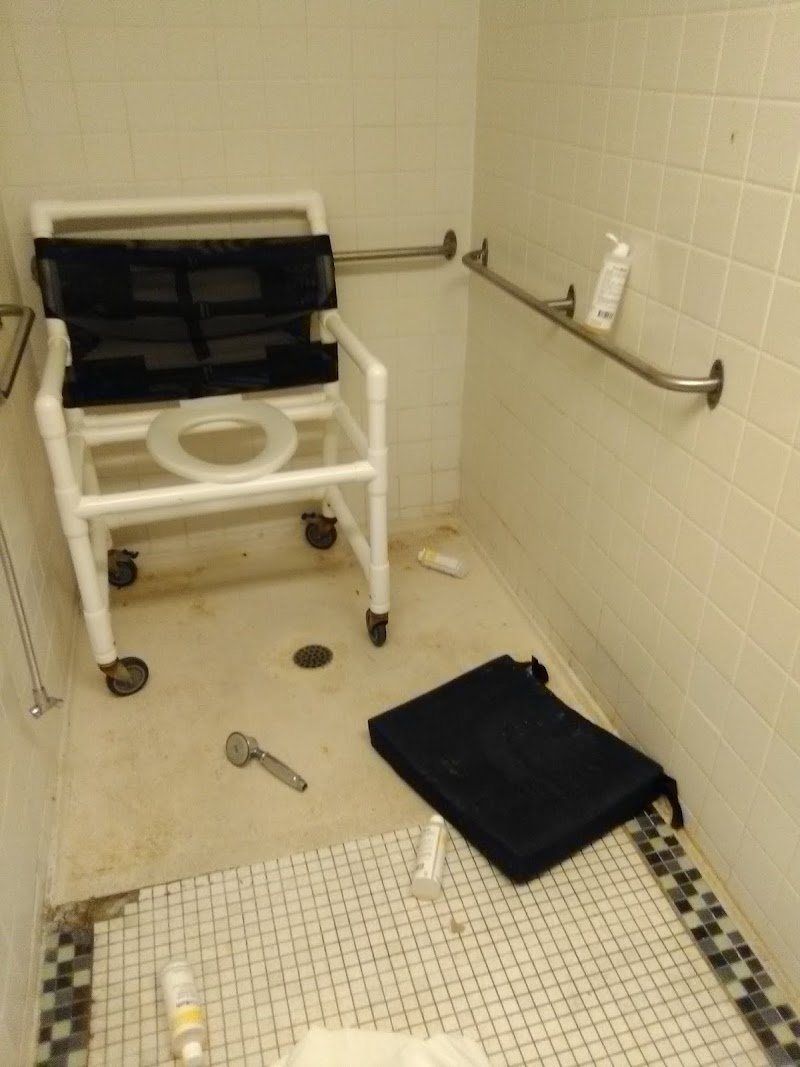
Who Owns and Operates Continental Nursing & Rehab Center?

CONTINENTAL NURSING & REHAB CENTER is owned by a for-profit company. For-profit facilities operate as businesses with obligations to shareholders or private owners. The facility is operated by INFINITY HEALTHCARE CONSULTING, a chain that manages multiple nursing homes. With 208 certified beds and approximately 141 residents (about 68% occupancy), it is a large facility located in CHICAGO, Illinois.
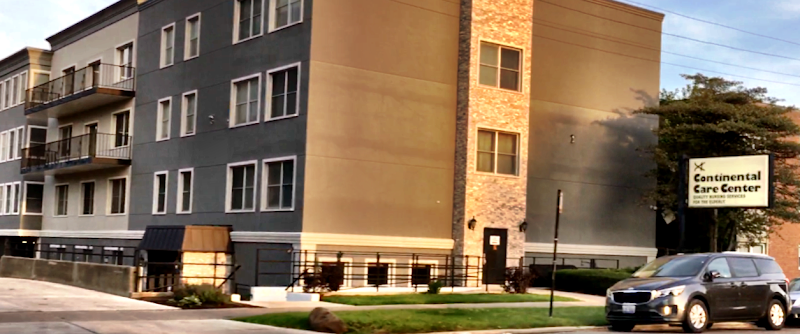
How Does Continental Nursing & Rehab Center Compare to Other Illinois Nursing Homes?

Compared to the 100 nursing homes in Illinois, CONTINENTAL NURSING & REHAB CENTER's overall rating (1 stars) is below the state average of 2.5, staff turnover (26%) is significantly lower than the state average of 46%, and health inspection rating (1 stars) is much below the national benchmark.

What Should Families Ask When Visiting Continental Nursing & Rehab Center?

Based on this facility's data, families visiting should ask: "What changes have been made since the serious inspection findings, and how are you preventing similar issues?" "What safeguards and monitoring systems are in place to protect residents from abuse or neglect?" "Can I visit during a mealtime to observe dining assistance and food quality?" "How do you handle medical emergencies, and what is your hospital transfer rate?" These questions are particularly relevant given the facility's Immediate Jeopardy citations and the substantiated abuse finding on record.

Is Continental Nursing & Rehab Center Safe?

Based on CMS inspection data, CONTINENTAL NURSING & REHAB CENTER has documented safety concerns. The facility has 1 substantiated abuse finding (meaning confirmed case of resident harm by staff or other residents). Inspectors have issued 2 Immediate Jeopardy citations (the most serious violation level indicating risk of serious injury or death). The facility has a 1-star overall rating and ranks #100 of 100 nursing homes in Illinois. Families considering this facility should ask detailed questions about what corrective actions have been taken since these incidents.

Do Nurses at Continental Nursing & Rehab Center Stick Around?

Staff at CONTINENTAL NURSING & REHAB CENTER tend to stick around. With a turnover rate of 26%, the facility is 20 percentage points below the Illinois average of 46%. Low turnover is a positive sign. It means caregivers have time to learn each resident's needs, medications, and personal preferences. Consistent staff also notice subtle changes in a resident's condition more quickly. Registered Nurse turnover is also low at 19%, meaning experienced RNs are available to handle complex medical needs.

Was Continental Nursing & Rehab Center Ever Fined?

CONTINENTAL NURSING & REHAB CENTER has been fined $406,475 across 39 penalty actions. This is 10.9x the Illinois average of $37,144. Fines at this level are uncommon and typically indicate a pattern of serious deficiencies, repeated violations, or failure to correct problems promptly. CMS reserves penalties of this magnitude for facilities that pose significant, documented risk to resident health or safety. Families should request specific documentation of what issues led to these fines and what systemic changes have been implemented.

Is Continental Nursing & Rehab Center on Any Federal Watch List?

CONTINENTAL NURSING & REHAB CENTER is not on any federal watch list. The most significant is the Special Focus Facility (SFF) program, which identifies the bottom 1% of nursing homes nationally based on persistent, serious quality problems. Not being on this list means the facility has avoided the pattern of deficiencies that triggers enhanced federal oversight. This is a positive indicator, though families should still review the facility's inspection history directly.