ELEVATE CARE WINDSOR PARK
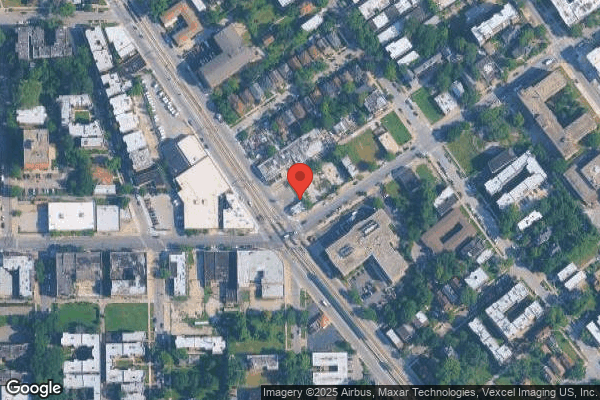
2649 EAST 75TH ST, CHICAGO, IL 60649 (773) 356-9300
For profit - Limited Liability company 240 Beds ELEVATE CARE Data: November 2025
Trust Grade
0/100
#512 of 665 in IL
Last Inspection: March 2025

Within standard 12-15 month inspection cycle. Federal law requires annual inspections.

Overview

Elevate Care Windsor Park has received a Trust Grade of F, indicating significant concerns about the quality of care provided. It ranks #512 out of 665 facilities in Illinois, placing it in the bottom half, and #170 out of 201 in Cook County, meaning there are better local options available. While the facility is reportedly improving, with issues decreasing from 23 in 2024 to 19 in 2025, it still has a troubling history. Staffing is rated poorly, with a turnover rate of 48%, which is similar to the state average, and there is concerningly less RN coverage than 90% of Illinois facilities, potentially impacting the quality of care. Notably, recent inspections found serious incidents, including a failure to provide required wound care for a resident, leading to worsening conditions, and missed doses of crucial anticonvulsant medication for other residents, which resulted in seizure episodes. While there are some signs of improvement, the facility's overall performance raises red flags for families considering care for their loved ones.

Trust Score
F
0/100
In Illinois
#512/665
Bottom 24%
Safety Record
High Risk
Review needed
Inspections
Getting Better
23 → 19 violations
Staff Stability
⚠ Watch
48% turnover. Above average. Higher turnover means staff may not know residents' routines.
Penalties
○ Average
$105,420 in fines. Higher than 70% of Illinois facilities. Some compliance issues.
Skilled Nurses
⚠ Watch
Each resident gets only 17 minutes of Registered Nurse (RN) attention daily — below average for Illinois. Fewer RN minutes means fewer trained eyes watching for problems.
Violations
⚠ Watch
85 deficiencies on record. Higher than average. Multiple issues found across inspections.
★☆☆☆☆
1.0
Overall Rating
★☆☆☆☆
1.0
Staff Levels
★☆☆☆☆
1.0
Care Quality
★☆☆☆☆
1.0
Inspection Score
Stable
2024: 23 issues
2025: 19 issues

The Good

  • Full Sprinkler Coverage · Fire safety systems throughout facility
  • No fines on record

Facility shows strength in fire safety.

The Bad

1-Star Overall Rating

Below Illinois average (2.5)

Significant quality concerns identified by CMS

Staff Turnover: 48%

Near Illinois avg (46%)

Higher turnover may affect care consistency

Federal Fines: $105,420

Well above median ($33,413)

Significant penalties indicating serious issues

Chain: ELEVATE CARE

Part of a multi-facility chain

Ask about local staffing decisions and management

The Ugly 85 deficiencies on record

10 actual harm
Jul 2025 2 deficiencies
CONCERN (D) 📢 Someone Reported This

A family member, employee, or ombudsman was alarmed enough to file a formal complaint

Potential for Harm - no one hurt, but risky conditions existed

Deficiency F0657 (Tag F0657)

Could have caused harm · This affected 1 resident

Based on interview, and record review the facility failed to update a resident's (R1) care plan intervention post resident fall. This failure affected 1 of 3 residents reviewed for falls.Findings incl...

Read full inspector narrative →
Based on interview, and record review the facility failed to update a resident's (R1) care plan intervention post resident fall. This failure affected 1 of 3 residents reviewed for falls.Findings include: R1 has a diagnosis which includes but not limited to repeated falls and spinal stenosis. R1 has a Brief Interview for Mental Status (BIMS) dated 06/05/25 without a score of 10 which indicates that R1 has some cognitive impairments. During this survey R1 was able to answer surveyor questions appropriately. R1's progress note dated 06/11/25 at 7:40 pm, authored by V12 (Agency Licensed Practical Nurse/LPN) that documents, in part: Situation: Resident transferred to the local hospital per MD's (Medical Doctors) request following fall. No observable injuries noted per SN (Skilled Nurse) at this time other than redness on areas directly impacted from fall (sacral, right buttocks, lower central back.) Background: Resident fell in the hallway coming from dining area from standing position while pushing wheelchair to her room. Fall was unwitnessed. R1's progress note dated 06/11/25 at 6:59 pm, authored by V12 (Agency LPN) that documents, in part: Situation: The Change in Condition/s (CIC) reported on this CIC Evaluation are/were: Falls. R1's care plan dated 02/04/25 documents, in part: R1 is at risk for falls confusion gait/balance problems and incontinence but does not show interventions for R1's fall on 06/11/25. R1's hospital record dated 07/10/25 documents, in part: Care Coordination Update: . Per chart review fall on 07/10 and 06/11. The facility's document dated 02/01/25 to 07/23/25 and titled Incident by Incident Type shows that the facility was aware of R1 sustaining a fall on 03/27/25 and 07/10/25 at the facility. On 07/23/25 at 11:29 am, R1 stated that she has had four falls at the facility. R1 stated that R1's last fall was about two weeks ago when R1 was in the bathroom, standing at the bathroom sink washing her face and body. R1 explained that staff was in the bathroom when R1 fell but was not able to catch R1 before she fell. R1 further explained that R1 has been with and without staff when R1 has fallen at the facility. R1 was able to recall that R1 had a fall in June 2025 at the facility however R1 was not able to recall the exact dates of R1's falls at the facility. On 07/24/25 at 10:25 am Surveyor requested V12 (Agency LPN) contact information and was informed that V12 was an agency nurse, and that the facility was unable to obtain V12's contact information. On 07/24/25 at 11:47 am, V14 (Registered Nurse/RN, Restorative Nurse) stated that V2 (Director of Nursing/DON) and V14 collaborate to oversee the falls program at the facility. V14 explained that V14 conducts a fall investigation for a resident that sustains a fall at the facility as soon as the fall is reported. V14 further explained that after every fall, V14 will also update the residents care plan with a fall intervention(s). V14 stated that the residents fall is investigated, and a fall intervention is put into place for the resident to prevent the resident from having a fall reoccur. V14 also stated that if a resident's care plan is not updated with a fall intervention after the resident has sustained a fall, the resident can have a fall again and can become injured. V14 explained that she is familiar with R1 at the facility. When V14 was asked regarding R1's fall investigation post R1's fall on 06/11/25 and V14 stated, To be honest, I only knew about two falls that she (R1) had. Today I learned there was a third fall when I was looking through the progress notes and saw she had a fall. On 07/24/25 at 11:51 am, V2 (DON) stated that V2 and V14 (RN, Restorative Nurse) collaborate to oversee the falls program at the facility. V2 explained that V2 coordinates with V14 to make sure that after a resident sustains a fall the resident's physician and family has been notified as well as a risk management assessment has been conducted for residents who may have sustained an injury or suspected injury during a fall, so that V2 can report the injury or suspected injury to the local state agency. V2 further explained that V14 collects and reviews the fall investigation report, and V2 will discuss the appropriateness of the intervention that is put into place by V14 after a resident sustains a fall. V2 stated that a fall investigation is conducted, and a fall intervention is put into place after a resident sustains a fall in order to make sure the facility is preventing the resident from having another fall and/or to prevent the resident from sustaining an injury. When V2 was asked regarding R1's fall on 06/11/25, V2 stated that V2 was only aware of R1 having two falls at the facility. V2 then stated, R1's fall on 06/11/25 was a V12 (Agency Nurse LPN) that did not notify me or V14 regarding R1's fall. She (referring to V12) was a substandard nurse and is not able to return to the facility. The facility policy dated 11/21/17 titled Fall Prevention Program documents, in part: Purpose: To assure the safety of all residents in the facility, when possible. The program will include measures which determine the individual needs of each resident by assessing the risk of falls and implementation of appropriate interventions to provide necessary supervision and assistive devices are utilized as necessary . Guidelines: The Fall Prevention Program includes the following components: . Care plan incorporates: Identification of all risk/issue. Address each fall. Intervention are changed with each fall, as appropriate . Accident/Incident Reports involving falls will be reviewed by the Interdisciplinary Team to ensure appropriate care and services were provided and determined possible safety interventions . Nursing personnel will be informed of residents who are at risk of falling. The fall risk interventions will be identified on the care plan. The facility policy dated 11/17/17 and titled Comprehensive Care Plan documents, in part: Purpose: To develop a comprehensive care plan that directs the care team and incorporates the residents' goals, preferences, and services that are to be furnished to attain or maintain the resident's highest practicable physical, mental, and psychosocial well-being. Guidelines: . Reviewed and revised by the interdisciplinary team after each assessment, including both the comprehensive and quarterly review assessments . the care plan should be revised on an ongoing basis to reflect changes in the resident and the care that the resident is receiving.
CONCERN (D) 📢 Someone Reported This

A family member, employee, or ombudsman was alarmed enough to file a formal complaint

Potential for Harm - no one hurt, but risky conditions existed

Accident Prevention (Tag F0689)

Could have caused harm · This affected 1 resident

Based on interview, and record review the facility failed to investigate a resident (R1's) fall. This failure affected 1 of 3 residents reviewed for fall accidents/incidents.Findings include: R1 has a...

Read full inspector narrative →
Based on interview, and record review the facility failed to investigate a resident (R1's) fall. This failure affected 1 of 3 residents reviewed for fall accidents/incidents.Findings include: R1 has a diagnosis which includes but not limited to repeated falls and spinal stenosis. R1 has a Brief Interview for Mental Status (BIMS) dated 06/05/25 without a score of 10 which indicates that R1 has some cognitive impairments. During this survey R1 was able to answer Surveyors questions appropriately. R1's progress note dated 06/11/25 at 7:40 pm, authored by V12 (Agency Licensed Practical Nurse/LPN) that documents, in part: Situation: Resident transferred to the local hospital per MD's (Medical Doctors) request following fall. No observable injuries noted per SN (Skilled Nurse) at this time other than redness on areas directly impacted from fall (sacral, right buttocks, lower central back.) Background: Resident fell in the hallway coming from dining area from standing position while pushing wheelchair to her room. Fall was unwitnessed. R1's progress note dated 06/11/25 at 6:59 pm, authored by V12 (Agency LPN) that documents, in part: Situation: The Change in Condition/s (CIC) reported on this CIC Evaluation are/were: Falls.On 07/23/25 at 11:29 am, R1 stated that she has had four falls at the facility. R1 stated that R1's last fall was about two weeks ago when R1 was in the bathroom, standing at the bathroom sink washing her face and body. R1 explained that staff was in the bathroom when R1 fell but was not able to catch R1 before she fell. R1 further explained that R1 has been with and without staff when R1 has fallen at the facility. R1 was able to recall that R1 had a fall in June 2025 at the facility however R1 was not able to recall the exact dates of R1's falls at the facility.On 07/24/25 at 11:47 am, V14 (Registered Nurse/RN, Restorative Nurse) stated that V2 (Director of Nursing/DON) and V14 collaborate to oversee the falls program at the facility. V14 explained that V14 conducts a fall investigation for a resident that sustains a fall at the facility as soon as the fall is reported. V14 further explained that after every fall, V14 will also update the residents care plan with a fall intervention(s). V14 stated that the residents fall is investigated, and a fall intervention is put into place for the resident to prevent the resident from having a fall reoccur. V14 also stated that if a resident's care plan is not updated with a fall intervention after the resident has sustained a fall, the resident can have a fall again and can become injured. V14 explained that she is familiar with R1 at the facility. When V14 was asked regarding R1's fall investigation post R1's fall on 06/11/25 and V14 stated, To be honest, I only knew about two falls that she (R1) had. Today I learned there was a third fall when I was looking through the progress notes and saw she had a fall.On 07/24/25 at 11:51 am, V2 (DON) stated that V2 and V14 (RN, Restorative Nurse) collaborate to oversee the falls program at the facility. V2 explained that V2 coordinates with V14 to make sure that after a resident sustains a fall the resident's physician and family has been notified as well as a risk management assessment has been conducted for residents who may have sustained an injury or suspected injury during a fall, so that V2 can report the injury or suspected injury to the local state agency. V2 further explained that V14 collects and reviews the fall investigation report, and V2 will discuss the appropriateness of the intervention that is put into place by V14 after a resident sustains a fall. V2 stated that a fall investigation is conducted, and a fall intervention is put into place after a resident sustains a fall in order to make sure the facility is preventing the resident from having another fall and/or to prevent the resident from sustaining an injury. When V2 was asked regarding R1's fall on 06/11/25, V2 stated that V2 was only aware of R1 having two falls at the facility. V2 then stated, R1's fall on 06/11/25 was a V12 (Agency LPN) that did not notify me or V14 regarding R1's fall. She (referring to V12) was a substandard nurse and is not able to return to the facility. The facility policy dated 11/21/17 titled Fall Prevention Program documents, in part: Purpose: To assure the safety of all residents in the facility, when possible. The program will include measures which determine the individual needs of each resident by assessing the risk of falls and implementation of appropriate interventions to provide necessary supervision and assistive devices are utilized as necessary .Standards: A fall Risk Assessment will be performed at least quarterly and with each significant change in mental or functional condition and after an fall incident . Accident/Incident Reports involving falls will be reviewed by the Interdisciplinary Team to ensure appropriate care and services were provided and determined possible safety interventions . Nursing personnel will be informed of residents who are at risk of falling. The fall risk interventions will be identified on the care plan.
Jun 2025 2 deficiencies 1 Harm
SERIOUS (G) 📢 Someone Reported This

A family member, employee, or ombudsman was alarmed enough to file a formal complaint

Actual Harm - a resident was hurt due to facility failures

Pressure Ulcer Prevention (Tag F0686)

A resident was harmed · This affected 1 resident

**NOTE- TERMS IN BRACKETS HAVE BEEN EDITED TO PROTECT CONFIDENTIALITY** Based on observation, interview and record review, the facility failed to provide wound care treatment and change wound dressing...

Read full inspector narrative →
**NOTE- TERMS IN BRACKETS HAVE BEEN EDITED TO PROTECT CONFIDENTIALITY** Based on observation, interview and record review, the facility failed to provide wound care treatment and change wound dressing as ordered by physician to one (R1) resident identified as a high risk for development of pressure ulcer. This failure affected one (R1) out of three residents reviewed for improper nursing care. As a result of this failure, R1 had worsening/deterioration and infection of pressure ulcer. The findings include: R1's admission record showed admission date of 5/12/2025 with diagnoses not limited to Hemiplegia and hemiparesis following cerebral infarction affecting left dominant side, Essential (primary) hypertension, Aphasia following cerebral infarction, Dysphagia following cerebral infarction, Acute respiratory failure with hypoxia, Pneumonitis due to inhalation of food and vomit, Encounter for attention to gastrostomy, Pressure ulcer of sacral region unstageable. R1's MDS (Minimum Data Set) dated 5/20/2025 showed R1 was rarely or never understood. R1 needed total assistance or dependent with oral, toileting and personal hygiene, shower/bathe self, upper and lower body dressing, chair/bed and toilet transfer. Always incontinent of bowel and bladder. MDS showed unstageable pressure ulcer that was present upon admission. R1's risk assessment/Braden Score was assessed on 5/14/25, 5/26/25, 6/2/25 and 6/11/25 and documented as 12 (high risk for acquiring pressure wounds). On 6/22/25 at 11:18AM Wound care observation conducted with V4 (Wound Care Director, Registered Nurse/RN) assisted by V8 (Restorative Aide, Certified Nursing Assistant/CNA). R1 was observed lying in bed, alert but nonverbal with enteral feeding infusing. R1 observed with wound dressing to sacral area dated 6/18/25, soaked with yellowish and some pinkish discharges. V4 stated wound dressing was dated 6/18/25 and the wound treatment order is daily. V4 said R1 has an unstageable pressure ulcer to sacrum extending to the buttocks. Observed wound bed pinkish with yellowish slough. V4 cleansed the wound with normal saline and pat dry with gauze. V4 applied skin prep on surrounding wound area. V4 applied Gentamycin ointment to wound bed then Santyl ointment to slough area and metronidazole cream to surrounding area prevent contamination per V4 then covered with dry gauze and foam dressing and dated 6/22/25. On 6/22/25 at 11:54AM V24 (Inhouse Nurse Practitioner/NP) stated she is following R1 and aware of the sacral wound and the wound care team is following/evaluating it. V24 stated there was a concern of wound infection so a wound culture was taken, and the result came out yesterday and read as positive for Proteus Mirabilis, A. Baumanii, CRE (Carbapenem-resistant Enterobacteriaceae). V24 stated R1 is currently on antibiotic treatment for wound infection. V24 said as a standard nursing practice, the wound dressing is dated when the dressing is changed to know when it was done or for communication purposes. She stated if the wound treatment or dressing is not changed as ordered it could potentially cause infection or wound deterioration. On 6/22/25 At 1:03pm V4 (Wound Care Director, RN) stated she has been working in the facility for almost a year. She stated the Wound MD (medical doctor) or NP is coming to facility weekly to follow up/evaluate resident's wound/pressure ulcer. V4 said wound treatments should be done and dressing should be changed as ordered by physician. She said the dressing is dated on the day of the treatment to know when it was done. V4 stated it is the facility's policy that the wound dressing should be dated. She said all treatment orders should be done and sign in the TAR (treatment administration record) once treatment was provided. V4 said nursing standard of practice when it was not signed, it was not done. She said when wound treatment was not done or dressing was not changed as ordered, potentially it can lead to decline or worsening of wound or infection. R1's EHR (electronic heath record) reviewed with V4 and stated R1's was admitted with unstageable pressure ulcer to sacrum, measured 2 x 1.3cm x unknown depth. V4 said on 5/27/25 sacrum pressure wound extended to the right buttock. On 6/17/25 wound assessment: Unstageable to sacrum extending to the right buttock, measurement: 8 x 8 cm x unknown. V4 said wound has worsened or declined due to increase of wound size. She said wound treatment order is Santyl and gentamicin to necrotic tissue, metronidazole cream for contamination and zinc to peri area then cover with dry dressing daily. V4 said sacral wound was observed getting bigger in size and ordered for wound culture. She said wound culture result dated 6/21/25 showed light growth proteus mirabilis and light growth CRE. V4 said R1 is on oral antibiotic for wound infection. V4 stated R1 has an order for moisture barrier cream with zinc to protect skin and prevent further breakout. On 6/22/25 At 2:54PM V2 (Director of Nursing/DON) stated he has been working in the facility for over a year now. He said staff is expected to do wound treatment and changed dressing as ordered. He said wound dressings should be dated on the day that it was done. V2 said moisture barrier cream with zinc oxide if it is ordered for the resident, should be done and signed in TAR (Treatment Administration Record). V2 said the standard nursing practice, if it was not signed or documented, then it was not done. He stated the purpose of moisture barrier cream is to prevent skin breakdown. V2 said he is aware of R1's wound culture. The result was received yesterday and showed CRE. He said R1 is currently on antibiotic for wound infection. V2 said if dressing was not changed or treatment was done as ordered, it could potentially lead to worsening/deterioration of the wound or infection. On 6/23/25 at 10:44AM V26 (Wound Doctor) was interviewed via phone and stated he has been a Wound MD for 30 years and servicing the facility for over a year. He said he comes to the facility once a week to see/evaluate resident's wounds/pressure ulcers. V26 said wound treatment should be done and dressing should be changed as ordered. If the staff is not providing wound care or treatment or if the dressing not changed as ordered, it could lead to worsening of wound or infection. V26 said moisture barrier cream with zinc is to prevent skin breakdown. He said he is following R1 and aware of sacral wound culture result with current order of antibiotic for wound infection. Skin/Wound Notes dated 5/27/2025 showed in part: R1's sacral wound now extends to right buttock. R1's May and June 2025 TAR (Treatment Administration Record) showed treatment order not limited to: Moisture Barrier with Zinc 10% Apply to buttocks topically every shift for Skin Care. Treatment order was not signed as treatment was provided on the following dates: 5/13/25 to 5/27/25, 5/30/25, 6/7/28 to 6/9/25, 6/12/25 and 6/16/25 to 6/21/25. V24's (NP) notes dated 6/21/2025 documented in part: R1 was seen by a wound care team, concerned about infection. Culture was collected and started on doxycycline. V26 (Wound Doctor) notes dated 5/15/25 showed in part: R1 with unstageable pressure on sacral measured 2.5 x 1.5 x 0.1cm. V26's notes dated 6/19/25 showed Unstageable pressure on sacral measured 9 x 7 x 0.3cm. Recommended: Doxycycline for wound infection. R1's wound assessment report dated 5/13/25 showed in part: Sacrum - Unstageable pressure. Size: 2 x 1.3 cm x unknown depth. Wound assessment dated [DATE] showed in part: Sacrum extending to right buttock. Size: 8 x 8 cm x unknown depth. R1's laboratory final result dated 6/21/25 showed in part: culture, wound: 1. Proteus mirabilis. 2. Ac. Baumanii - CRE. Isolation precautions may be required. R1's POS (Physician Order Sheet) dated 6/22/25 showed active order not limited to: -Doxycycline Hyclate Oral Tablet 100 MG (Doxycycline Hyclate) Give 1 tablet via G-Tube every 12 hours for Wound infection for 10 Days. Date ordered: 6/21/25. -Ciprofloxacin HCl Tablet 500 MG Give 1 tablet by mouth every 12 hours for Wound Infection for 7 Days. Date ordered 6/21/25. -Gentamicin Sulfate External Ointment 0.1 % (Gentamicin Sulfate (Topical) Apply to sacrum to R buttocks topically every day shift for wound care cleanse with NS, apply zinc oxide on peri-wound, apply Gentamicin to wound bed, calcium alginate cover with a foam dressing AND apply to sacrum to R buttocks topically as needed for wound care. Date ordered 6/12/25. -Santyl External Ointment 250 UNIT/GM (Collagenase) Apply to sacrum to R buttocks topically every day shift for unstageable pressure injury Cleanse with normal saline. Pat dry with gauze. Skin Prep to periwound. Apply treatment and cover with foam dressing. AND apply to sacrum to R buttocks topically as needed for wound care. Date ordered: 6/12/25. -Moisture Barrier with Zinc 10% Apply to buttocks topically every shift for Skin Care. Date ordered 5/12/25. Care plan dated 5/14/25 showed in part: R1 has Pressure Injury to Sacrum, is at risk for delayed wound healing, and is at risk for further alteration in skin integrity related to: Cerebral Vascular Accident, History of Pressure Ulcers, Hypertension, Immobility, Incontinence of Bowel, and Incontinence of Urine. Care plan interventions included but not limited to: Moisture barrier cream/ointment after each incontinent episode. Treatment as ordered by provider. Facility's pressure injury and skin condition assessment policy dated 1/17/18 showed in part: Dressings which are applied to pressure ulcers, wounds shall include the date of the licensed nurse who performed the procedure. Dressing will be checked daily for placement, cleanliness and signs and symptoms of infection. Physician ordered treatments shall be initialed by the staff on the electronic treatment administration record after each administration.
CONCERN (E) 📢 Someone Reported This

A family member, employee, or ombudsman was alarmed enough to file a formal complaint

Potential for Harm - no one hurt, but risky conditions existed

Infection Control (Tag F0880)

Could have caused harm · This affected multiple residents

Based on observation, interview and record review, the facility failed to (a) implement transmission-based precautions, (b) ensure staff wear proper PPE (Personal Protective Equipment), (c) post preca...

Read full inspector narrative →
Based on observation, interview and record review, the facility failed to (a) implement transmission-based precautions, (b) ensure staff wear proper PPE (Personal Protective Equipment), (c) post precaution sign to alert staff for instructions prior to entering the room, and (d) provide PPE supplies accessible to staff for 1 (R1) of 3 residents reviewed for improper nursing care. These failures have the potential to cross contaminate 15 residents assigned to V7 (Certified Nursing Assistant/CNA). The findings include: R1's admission record showed admit date on 5/12/2025 with diagnoses not limited to Hemiplegia and hemiparesis following cerebral infarction affecting left dominant side, Essential (primary) hypertension, Aphasia following cerebral infarction, Dysphagia following cerebral infarction, Acute respiratory failure with hypoxia, Pneumonitis due to inhalation of food and vomit, Encounter for attention to gastrostomy, Pressure ulcer of sacral region unstageable. R1's MDS (Minimum Data Set) dated 5/20/2025 showed R1 was rarely or never understood. She needed total assistance or dependent with oral, toileting and personal hygiene, shower/bathe self, upper and lower body dressing, chair / bed and toilet transfer. Always incontinent of bowel and bladder. MDS showed unstageable pressure ulcer that was present upon admission. On 6/22/25 at 10:25AM observed R1's room with no door signage for TBP (Transmission Based Precautions), no isolation set up or PPE supplies by room entrance. Observed R1 resting on bed on moderate high back, alert, nonverbal, making incoherent sounds. R1 with enteral feeding infusing (brand name enteral feeding) 1.5 at 55ml/hr. R1's POS (Physician Order Sheet) dated 6/22/25 reviewed with no order for transmission-based precautions or contact isolation. Enhanced Barrier Precautions every shift for Wounds/G-tube start date 5/13/25 was listed on the POS sheet. On 6/22/25 At 10:35AM observed V10 (Licensed Practical Nurse/LPN) entered R1's room and not wearing proper PPE. V10 wore gloves but no gown. On 6/22/25 AT 10:53am observed V7 (CNA) entered R1's room without wearing proper PPE. V7 was wearing gloves and not wearing a gown. V7 changed R1's incontinence brief and stated dressing on buttocks area is clean and intact. Observed V7 turned and repositioned R1 in bed. On 6/22/25 At 11:54AM V24 (Inhouse Nurse Practitioner/NP) stated she is following R1, aware of the sacral wound, culture was taken, and result came out yesterday. V24 read wound culture result as positive for Proteus Mirabilis, A. Baumanii, CRE (Carbapenem-resistant Enterobacteriaceae), isolation precautions maybe required. V24 said R1 is currently on antibiotic treatment for wound infection. On 6/22/25 At 2:35PM V9 (Infection Preventionist/IP/LPN) stated if resident tested positive, including wound culture, and if recommended in the result for isolation precautions then it should be implemented. V9 said anyone that has an organism that could contact on the surface including CRE should be placed on contact isolation precautions. She stated if the resident is sharing a room, then room transfer should occur as soon as the result is known, and transmission-based precautions will be implemented. V9 stated PPE supplies should be available by room entrance, signage by the door should be posted to communicate with the staff of the precautions and the proper PPE to use. V9 said she is aware of R1's wound culture result that came out yesterday as CRE. She said contact isolation precautions was required but she was not available yesterday. V9 said R1 has a roommate and room transfer should have been done yesterday but it did not occur. She said the nurse on the floor should have an isolation set up such as door signage and PPE supplies by room entrance to communicate with staff what to do and proper PPE to wear before entering the room. V9 said R1 should be on contact precautions, staff going inside R1's room should wear proper PPE such as gloves and gown, so organism does not transfer to staff clothing or skin to prevent spread of infection or cross contamination. She said if staff assigned to care for R1 and was not wearing proper PPE, could possibly lead to cross contamination with other residents that she is assigned to. On 6/22/25 At 2:54PM V2 (Director of Nursing/DON) stated he is aware of R1's wound culture, and the result was received yesterday and showed CRE. He said R1 has a roommate and should have been transferred to a single room as soon as the result was known. V2 said contract isolation precautions should have been implemented such as door signage posted by the door to communicate with staff regarding proper PPE to use before entering R1's room. He said PPE supplies should be available by R1's room entrance, there should be no excuse for it. He said wearing of proper PPE is important to prevent cross contamination and spread of infection. V2 said R1 should have been on contact isolation precautions and staff entering her room should wear proper PPE such gown and gloves. R1's laboratory result dated 6/21/25 showed in part: culture, wound: 1. Proteus mirabilis. 2. Ac. Baumanii - CRE. Isolation precautions may be required. Facility's census dated 6/22/25 showed 15 residents assigned to V7 (CNA). Facility's Infection Precaution Guidelines dated 5/15/23 showed in part: It is the policy of this facility to, when necessary, prevent the transmission of infection within the facility through the use of isolation precautions. The Transmission-Based Precautions will be employed for known or suspected infections for which the route of transmission/prevention is known. Use Contact precautions for residents known or suspected to be infected with microorganisms that can be easily transmitted by direct or indirect contact, such as handling environmental surfaces or resident-care items. Precaution signs will be utilized to alert staff and visitors to see the nurse for instructions prior to entering the room. Facility's contact precautions signage showed in part: Providers and staff must put on gloves before room entry. Put on gown before room entry.
May 2025 1 deficiency
CONCERN (D) 📢 Someone Reported This

A family member, employee, or ombudsman was alarmed enough to file a formal complaint

Potential for Harm - no one hurt, but risky conditions existed

Free from Abuse/Neglect (Tag F0600)

Could have caused harm · This affected 1 resident

Based on interview and record review the facility failed to keep two residents (R2 and R5) free from abuse of three reviewed for abuse in a total sample of nine residents. Findings include: On 5/2/25 ...

Read full inspector narrative →
Based on interview and record review the facility failed to keep two residents (R2 and R5) free from abuse of three reviewed for abuse in a total sample of nine residents. Findings include: On 5/2/25 at 1:30 PM, R2 said R5 hit her in the head with an open milk carton and milk went everywhere. R2 said R5 and her popped each other. R2 was smoking a cigarette outside. R5 said R2 needs to do something with her hair and kept calling R2 big girl. R5 wouldn't leave R2 alone. R2 pushed R5's face, I muffed him. R5 threw an open milk carton in R2's face. R2 said there was no staff outside. V11 (Psychosocial Aide/Social Service Assistant) came outside after everything happened. R2 said R5 talks about her almost every day. R2 said they talk about her weight, hair, and how crazy she is. On 5/6/25 at 10:00 AM, V2 (Director of Nursing) stated the incident with R2 and R5 happened on the patio during smoking break. The police were not notified of the altercation between R2 and R5. R2 was sent out to the hospital. On 5/6/25 at 10:30 AM, R5 said the incident with R2 was during a smoke break. R5 and R2 were on the back patio. R5 said the staff was not outside with them. The staff was at the door on the inside of the building. R5 said R2 was asking everybody for a cigarette. R5 told R2 to stop asking for cigarettes. R2 was being annoying by asking the same people for cigarettes. R5 and R2 exchanged a couple words. R2 got up and hit R5 in the face. R5 hit R2 back in the face. Staff separated us and told us to stay apart, and only one of us should be on the patio to smoke at a time. We speak to each other now; everything is cool now. We apologized to each other. I feel safe. The police were not called. I did not go out to the hospital. They looked me over to see if I was injured. On 5/7/25, at 1:05 PM, V11 (Psychosocial Aide/Social Service Assistant) stated R2 and R5's altercation was during the early smoke time/break. I was outside monitoring. I heard verbal aggression between R2 and R5. They were calling each other B****. R5 said R2 was all up in his space. R2 said she can be wherever she wants. I separated them outside and monitored them. I did not observe physical aggression. R2 has good days and bad days. She has the tendency to invade people's space, but I don't think she means any harm. I have witnessed R2 being verbally aggressive to staff. R5 has no behaviors and is liked by the residents and staff. R2's face sheet list diagnoses that include but are not limited to schizophrenia, major depressive disorder. R2's BIMS (Brief Interview for Mental Status) is 15 indicating intact cognition. R2's Abuse Risk Review, 4/21/2025, indicates R2 has risk factor for aggression/combativeness. According to care plan, R2 displays disrespectful, combative, verbally aggressive behavior towards staff and peers manifested by agitation and a pattern of situational and/or ineffective coping mechanisms. R5's face sheet list diagnoses that include but are not limited to chronic obstructive pulmonary disease, end stage renal disease. R5's BIMS (Brief Interview for Mental Status) is 15 indicating intact cognition. R5's Abuse Risk Review, 4/21/2025, indicates R5 has risk factor for aggression/combativeness. According to care plan, R5 displays disrespectful, combative, verbally aggressive behavior towards staff and peers manifested by agitation and a pattern of situational and/or ineffective coping mechanisms. Final Report Incident Description, dated 4/21/2025, documents in part: R1, now R5, reported that he and a co-resident R2, were involved in a physical altercation. R5 stated R2 became upset and hit him with an open hand. R5 stated he threw his carton of milk at R2. Based on the investigation, it was determined that R2 initiated the physical contact with R5. V11 (Psychosocial Aide/Social Service Assistant) witness statement reads in part: I observed R2 hit R5 and immediately intervened. Facility policy, Abuse Prevention and Reporting-Illinois, 10/24/22, documents in part: This facility affirms the right of our residents to be free from abuse, neglect, exploitation, misappropriation of property, deprivation of goods and services by staff or mistreatment. This facility therefore prohibits abuse, neglect, exploitation, misappropriation of property, and mistreatment of residents.
Mar 2025 14 deficiencies 4 Harm
SERIOUS (G)

Actual Harm - a resident was hurt due to facility failures

Quality of Care (Tag F0684)

A resident was harmed · This affected 1 resident

**NOTE- TERMS IN BRACKETS HAVE BEEN EDITED TO PROTECT CONFIDENTIALITY** Based on observation, interviews and record review, the facility failed to make prescribed anticonvulsant medication (Dilantin/ ...

Read full inspector narrative →
**NOTE- TERMS IN BRACKETS HAVE BEEN EDITED TO PROTECT CONFIDENTIALITY** Based on observation, interviews and record review, the facility failed to make prescribed anticonvulsant medication (Dilantin/ Phenytoin) available for one a resident (R444), who is diagnosed with seizure disorder, had sub- therapeutic (low levels) of Dilantin in his blood according to lab-work, and missed a dose of his anticonvulsant medication; the facility failed to administer medication for one resident (R15) who has seizure disorder. This failure has affected R444, who had two episodes of seizures within five minutes of each other and resulted in R15 having sub- therapeutic levels Dilantin medication in the blood. Findings include: R444 is a [AGE] year old with diagnosis including but not limited to: Conversion disorder with seizures or convulsions, personal history of transient ischemic attack, congestive heart failure, hypertensive heart and chronic kidney disease with heart failure. R444's BIMS (Brief Interview of Mental Status) score as of 2/25/25 is 15, which indicates cognitively intact. On 3/3/25 at 11:53 AM, R444 was observed in hallway and complained of not having his seizure medication on 3/1/25, which resulted in two seizures on 3/2/25 in the morning. R444 said, they (facility) ran out of my seizure medication and I went without a dose on that night (3/1/25). The next morning, I had the seizures. I can't go without my medication. I'm epileptic. On 3/4/2025 at 12:11 PM, Surveyor observed emergency medication supply in the first-floor medication room with V14 (LPN). At that time, V14 accessed the emergency medication supply computer and affirmed that six doses of Dilantin 100 MG were noted in the emergency medication supply. On 3/4/2025 at 12:11 PM, V14 stated if medications are not available, the nurses are to call the pharmacy to pull from the emergency supply. If emergency supply is not available, the nurse should tell the pharmacy to send the medication STAT (as soon as possible). On 3/4/2025 at 1:34 PM, V20 (Nurse Supervisor) said, If the therapeutic levels are low, I would advocate for increased dose or one time dose. The therapeutic levels are to keep a resident from having seizures or reduce seizures. It indicates the effectiveness of a medication in the body. On 3/4/2025 at 1:34 PM, V20 (Nurse Supervisor) said that medication should be reordered once there are five tablets left on the dispensing card. This is to give them enough time to get the medication and not run out. We have an emergency medication dispenser that all nurses are aware of. Agency nurses have to get access to emergency medication from a staff nurse, but all nurses are able to get medication from the emergency box. On 3/6/25 at 11:01 AM, V45 (MD/Medical Doctor) said, The labs indicate the amount of medication that is in the blood. For the therapeutic range of Dilantin, as long as it is within 10-20 ug/ml (microgram per milliliter), the resident is at decreased risk for seizure. With a sub-therapeutic Dilantin level and a missed dose, that could be the reason for a seizure. The dosage needed to be increased. Surveyor inquired about the adverse effects of continued low levels of Dilantin in the blood and a missed dose of Dilantin, V45 (MD) said that the resident could end up having more seizures. On 3/6/25 at 11:01 AM, V45 (MD) said that a complication from seizures is possible aspiration which could result in death. On 3/6/25 at 3:10 PM, V44 (LPN/ Licensed Practical Nurse) said, R444 was out of his medication (Dilantin) on 3/1/25 and the pharmacy was out delivering R444's medication on that day. Surveyor inquired about the emergency medication dispenser, V44 (LPN) said that she (V44) does not have access to the emergency medication dispenser and don't believe that any nurse in the facility on 3/1/25 had access to the emergency medication dispenser. MAR (Medication Administration Record) for the period of 3/1/25- 3/31/25 documents, R444's anticonvulsant medication N/A (not available) per V44 (LPN). Progress note dated 3/2/25 documents, R444 experienced two mild seizures. The first one occurred approximately at 06:42 and it lasted for one minute. The second seizure occurred two minutes after the first lasting for one more minute. R444's Care plan dated 2/18/25 documents, R444 has seizure disorder; give medication as ordered. R444's Order Recap report documents, Dilantin Oral capsule; give two tablets by mouth two times a day for seizure activity starting 2/19/25 and ending 3/4/25. R444's Laboratory Report dated 2/19/25, documents Phenytoin (Dilantin) level as 2.4 L (Low) with a reference range of 10-20 ug/ml (microgram per milliliter). R444's progress note dated 2/21/25 documents, Phenytoin level 2.4. New order to repeat level in one week. R444's progress note dated 2/26/25 documents, Medical Doctor contacted regarding abnormal labs, no new orders given at this time. R444's Laboratory Report dated 2/27/25, documents Phenytoin (Dilantin) level as 3.8 L (Low) with a reference range of 10-20 ug/ml (microgram per milliliter). R444's Medication Administration Record for 3/2025 documents, Dilantin NA (Not Available) for R444 on 3/1/25 at 1800 (6:00 PM). R444's progress note dated 3/2/25 documents, R444 experienced two mild seizures. The first seizure occurred approximately at 6:42 AM and lasted for one minute. The second seizure occurred two minutes after the first and lasted for one minutes. Facility policy titled Medication Administration documents, medications are administered as prescribed in accordance with good nursing principles and practices; the facility has sufficient staff and medication distribution system to ensure safe administration of medications without unnecessary interruptions; if a medication with a current, active order cannot be located after further investigation, the pharmacy is contacted or medication removed from the night box/ emergency kit. Findings include: On 3/3/25 at 12:47 PM R15 was observed lying in bed resting, R 15's dresser next to bedside was observed to have a bottle of Liquid suspension Phenytoin sitting on dresser with R15's name on it. R15 stated she was unaware who placed the Phenytoin on her dresser, and she thought she was no longer receiving Phenytoin medication. R15's face sheet dated March 4, 2025, shows R15 was admitted to the facility on [DATE] with multiple diagnoses including Convulsions, schizophrenia, hypertension, dementia, insomnia, glaucoma (left eye), rheumatoid arthritis, major depressive disorder, cognitive communication deficit . R15's MDS (Minimum Data Set) dated December 6, 2024, shows R15 has a score of 13 which means R15 is cognitively intact. R15's care plan dated July 30,2024 shows R15 has potential for injury from seizure activity. Intervention/Tasks: staff will administer [R15's] anti-seizure medication as ordered. R15's Physician Order Sheet with order dated for June 3,2024 that states Dilantin Oral Suspension 125 MG/ML (Phenytoin) give 5 ml by mouth two times a day for seizures. On 03/03/25 at 12:52 PM V 21 Licensed Practical Nurse (LPN ) stated that she is the nurse for R15 and that R15 is not allowed to self-administer her own medication because she does not have an order to self-administer medication. V21 stated there are a lot of resident's who wander on this unit and there is a high risk for a resident to wander into anymore and take the Phenytoin medication that was sitting on the dresser.V21 stated that R15 has an active order to receive Phenytoin suspension twice a day and that she did not administer Phenytoin suspension per physicians orders today because she was unable to locate the medication in the cart and was going to contact pharmacy. V21 was given the Phenytoin suspension bottle that was on top of R15's dresser by the surveyor and V21 confirmed the Phenytoin suspension medication was prescribed for R15. R15's Medication Administration Record dated for March 4,2025 displays that Phenytoin 5ml medication dose was not administered by V21 on March 3, 2025, documentation charted by V21 at 10:00 am states NA (Not Available). R15's Phenytoin (Dilantin) level results dated for (2/18/25 is 3.7L, 2/25/25 is 4.4L, 3/4/25 is less than 1.8L). Laboratory report dated 3/4/25 states Phenytoin( Dilantin) level therapeutic reference range is (10-20). V21 documented in Progress note dated for 3/3/25 at 14:55 pm Dilantin medication made available at facility.NP aware next dose to be giving at schedule time. V43 Nurse Practitioner (NP) documented a progress note dated 3/4/25 at 18:59pm that states Results viewed for 3/4/25 by V43.See PCC (Point Click Care) for new orders for extra Dilantin. Okay for nurse to clear results and confirm orders. R15's prescription sheet for Phenytoin(Dilantin) dated for 3/5/25 with V43 as prescriber states Dilantin (Phenytoin) give 5ml by mouth one time only for low phenytoin level less than 1.7 until 3/4/25 23:59 pm, give extra 5mg tonight and **DAW** give 2.5ml by mouth two times a day for low phenytoin level less than 1.7 until 3/6/25 23;59pm, give an extra 2.5 ml with the already scheduled 5 ml at 10am and 5pm.
SERIOUS (G)

Actual Harm - a resident was hurt due to facility failures

Deficiency F0688 (Tag F0688)

A resident was harmed · This affected 1 resident

**NOTE- TERMS IN BRACKETS HAVE BEEN EDITED TO PROTECT CONFIDENTIALITY** On 3/4/25 at 10:15 AM, R85 complained that he stays in bed all day, and no staff has helped him with exercising his right leg an...

Read full inspector narrative →
**NOTE- TERMS IN BRACKETS HAVE BEEN EDITED TO PROTECT CONFIDENTIALITY** On 3/4/25 at 10:15 AM, R85 complained that he stays in bed all day, and no staff has helped him with exercising his right leg and left arm for a while. R85 added that he(R85) understands that Restorative staff might not want to do exercise for his right arm because of the dressing on the right shoulder area, but that he(R85) wants the other leg and arm to be exercised so he will not get weaker and weaker by staying in bed. R85 explained that once when they (Restorative staff) came, he(R85) was getting ready to go for dialysis, and they (Restorative staff) never came back. R85 wants the restorative staff to come at a time different from his scheduled Dialysis time. R85 explained that he goes for Dialysis on Mondays, Wednesdays, and Fridays. On 3/4/25 at 2:20pm, V13(Restorative Director) stated that R85 was discharged from Therapy to Restorative Care about 2 weeks ago. V13 explained that she(V13) went to do restorative for R85 up to 3 times in the past 2 weeks. Inquired from V13 about the records of the restorative care she(V13) provided to R85 so far, V13 stated that she did not document it, but she follows the care plan and no records available. On 3/04/25 at 10:15 AM, R85 complained that he stays in bed all day, and no staff has helped him with exercising his right leg and left arm for a while. R85 added that he(R85) understands that Restorative staff might not want to do exercise for his right arm because of the dressing on the right shoulder area, but that he(R85) wants the other leg and arm to be exercised so he will not get weaker and weaker by staying in bed. R85 explained that once when they (Restorative staff) came, he(R85) was getting ready to go for dialysis, and they (Restorative staff) never came back. R85 wants the restorative staff to come at a time different from his scheduled Dialysis time. R85 explained that he goes for Dialysis on Mondays, Wednesdays, and Fridays. On 3/4/25 at 2:20pm, V13(Restorative Director) stated that R85 was discharged from Therapy to Restorative Care about 2 weeks ago. V13 explained that she(V13) went to do restorative for R85 up to 3 times in the past 2 weeks. Inquired from V13 about the records of the restorative care she(V13) provided to R85 so far, V13 stated that she did not document it, but she follows the care plan and no records available. R85's Physical Therapy Discharge Summary shows that R85 was discharged from therapy on 2/14/2025(almost 3 weeks ago). Care plan dated 7/16/24 states R85 would benefit from a PROM/AROM (Passive/Active Range of Motion) program due to the risk for developing contractures and would benefit from AROM (Active Range of Motion) program due to Weakness and Impaired Mobility. Facility's policy on Restorative Nursing Program dated 1/4/19 states in part: Each resident involved in a restorative program will have an individualized program with individualized goals and measurable objectives documented on the plan of care. Documentation of the interventions and the resident's response will be completed with each implementation. Care plan dated 7/16/24 states R85 would benefit from a PROM/AROM (Passive/Active Range of Motion) program due to the risk for developing contractures and would benefit from AROM (Active Range of Motion) program due to Weakness and Impaired Mobility. Facility's policy on Restorative Nursing Program dated 1/4/19 states in part: Each resident involved in a restorative program will have an individualized program with individualized goals and measurable objectives documented on the plan of care. Documentation of the interventions and the resident's response will be completed with each implementation. Based on interviews and record review, the facility failed to provide restorative services for four physically impaired residents: R445, R59, R88 and R85. This failure has affected four of four residents reviewed for restorative services and has resulted in R445 becoming visibly emotional while expressing her fear of deteriorating in bed. Findings include: R445 is a [AGE] year old with diagnosis including but not limited to: multiple sclerosis, secondary malignant neoplasm of brain, neuromuscular dysfunction of bladder and adult failure to thrive. R445's BIMS (Brief Interview of Mental Status) score is 15, which indicates cognitively intact. R59 is [AGE] year old with diagnosis including but not limited to: rheumatoid arthritis, functional quadriplegia, presence of unspecified artificial hip, contracture of muscle to right upper arm and left upper arm, contracture to muscle of right lower leg and left lower leg. R59's Care Plan documents, R59 has no cognitive impairment and/ or impaired thought process and functions at an independent level in decision making. R88 is [AGE] year old with diagnosis including but not limited to: Parkinsonism, depression, long term use of anticoagulants and essential hypertension. During investigation on 3/3/25 at 11:40 AM, R445 said that she sometimes get uncomfortable lying on her tailbone and that she is not repositioned correctly. Surveyor inquired about rehabilitation services such as therapy or restorative services. On 3/3/25 at 11:40 AM, R445 said I have not received any therapy or restorative services since being admitted to this facility about two weeks ago. I am capable of moving a little bit, but I feel like the more I lay here in bed, he more disabled I am becoming. I hate that I have to lay here and wait for help when I need to move. It becomes depressing. At that time, Surveyor noted R445 becoming tearful and emotional. Surveyor inquired about the facility's restorative program. On 3/3/25 at 11:59 AM, V13 (Restorative Director) said that upon admission to the facility, every resident is assessed by restorative and receives restorative services if they do not receive physical therapy, in order to maintain their current level of function and ROM (range of motion). V13 said, After a resident is assessed and it is determined that the resident would benefit from restorative services, the resident is then added to the restorative list (caseload). Their services should start no later than three to four days after their admission to the facility. It should not take two weeks for a resident to begin their restorative programs. Surveyor requested the restorative program schedule. On 3/3/25 at 11:59 AM, V13 (Restorative Director) said that there is no restorative schedule that the restorative team follows. On 3/3/25 at 11:59 AM, V13 said that she (V13) was not sure why R445 was not added to the restorative list and that the list is usually updated twice per month. On 3/4/25 at 9:45 AM, V22 (Restorative Nurse) said, We are supposed to see everyone on the restorative list daily for 15 minutes per day. If the restorative techs aren't working the floors as CNAs (Certified Nurse Assistants) due to call offs, they work the restorative program. There is no restorative schedule of days and times that residents receive services. On 3/4/25 at 12:00 PM, V25 said The restorative caseload list includes residents on restorative programs and what programs they are on. A resident can be on Active ROM (A) or Passive ROM (P) exercises that are done with a restorative aide. The restorative list is a way to make sure no resident is overlooked. On 3/5/25 at 10:35 AM, V3 (DON/ Director of Nursing) said that the purpose of the restorative staff is to exercise with patients at risk for contractures and deterioration. The goal is to maintain range of motion (ROM), functioning and to prevent further contraction. On 3/5/25 at 10:43 AM, V28 (Restorative Aide) said that she (V28) is the only restorative aide for the first floor and that when there is downtime from doing resident's weights or working the floor as a CNA, then she (V28) will do restorative exercises with some of the residents on her list. Surveyor inquired about R445 and R88 restorative services. On 03/05/25 at 10:20 AM, V28 (Restorative Aide) said that she (V28) had not worked with R445 as of yet and does restorative exercises with R88 when she (V28) is able to. On 03/05/25 at 10:20 AM, V28 said that there was no restorative schedule that she (V28) is aware of and that she (V28) does whatever she can in the time that she has. On 03/05/25 at 11:25 AM, R59 said that her last time exercising with staff was about one week ago. On 03/05/25 at 11:25 AM, V29 (Restorative Aide) said that she (V29) had not performed PROM (Passive Range of Motion) exercises on R59 in about a week because R59 seemed to be in pain when she exercises. On 03/05/25 at 11:26 AM, R59 that she has pain in her limbs sometimes because she never moves them, but has never said that she didn't want to exercise due to pain. Surveyor inquired about the purpose of bedbound and immobile residents receiving restorative services when there is no therapy in place. On 3/6/25 at 11:05 AM, V45 (MD/Medical Doctor) said that restorative services is important to restore the resident's condition and prevent further contractures. R455's Section GG- Functional Abilities assessment dated [DATE] documents, R445 needs partial assistance from another person to complete upper and lower extremity (arms and legs) range of motion. R445's Care Plan dated 2/21/25 documents, R445 would benefit from a PROM (Passive Range of Motion) program due to risk for developing contracture related to Multiple Sclerosis and general weakness; R445 will retain current ROM ability to the affected areas; Provide PROM exercises to the affected extremities as indicated. Facility's document titled Restorative Caseload excludes R445 as a resident receiving restorative services. R59's Section GG- Functional Abilities assessment dated [DATE] documents, R59 needs partial assistance from another person to complete upper and lower extremity (arms and legs) range of motion. R59's Care Plan documents, R59 presents with a functional deficit in bed mobility related to contractures and rheumatoid arthritis; R59 would benefit from a PROM program due to contractures; provide PROM exercises to the affected extremities as indicated. Facility's document titled Restorative Caseload includes R59 as a resident to receive passive ROM (range of motion) exercises. R88's Section GG- Functional Abilities assessment dated [DATE] documents, R88 needs partial assistance from another person to complete upper and lower extremity (arms and legs) range of motion. R88's Care Plan documents, R59 presents with a functional deficit in bed mobility related to contractures and rheumatoid arthritis; R88 would benefit from a PROM program due to the risk of developing contractures/ actual contractures provide PROM exercises to the affected extremities as indicated. Facility's document titled Restorative Caseload includes R88 as a resident to receive passive ROM (range of motion) exercises. Facility policy titled Restorative Nursing Program documents, Purpose: to promote each resident's ability to maintain or regain the highest degree of independence as safely as possible.
SERIOUS (G)

Actual Harm - a resident was hurt due to facility failures

Respiratory Care (Tag F0695)

A resident was harmed · This affected 1 resident

**NOTE- TERMS IN BRACKETS HAVE BEEN EDITED TO PROTECT CONFIDENTIALITY** Findings include: R544's diagnosis includes, but are not limited to, chronic obstructive pulmonary disease, unspecified, chronic...

Read full inspector narrative →
**NOTE- TERMS IN BRACKETS HAVE BEEN EDITED TO PROTECT CONFIDENTIALITY** Findings include: R544's diagnosis includes, but are not limited to, chronic obstructive pulmonary disease, unspecified, chronic respiratory failure with hypoxia, parkinsonism, unspecified, and essential (primary) hypertension. R544 has a Brief Interview for Mental Status (BIMS) dated 01/20/2025 which documents that R544 has a BIMS score of 15, indicating R544's cognition is intact. R544's Physician Order Summary Report dated 03/04/2025 documents, in part, Oxygen at 4 LPM (liters per minute) per nasal cannula continuously-monitor every shift. On 03/03/2025 at 11:39am observed R544 with oxygen concentrator machine, nasal cannula in nostrils, oxygen tubing was not dated with a date indicating when the tubing was changed. R544 stated staff change my oxygen tubing once a week and I haven't seen the staff place a label on the tubing. On 03/05/2025 at 11:05am V30(LPN/Licensed Practical Nurse) stated the oxygen tubing for those resident's requiring oxygen is changed weekly and as needed. V30 stated the nurse is responsible for changing the oxygen tubing. V30 stated the oxygen tubing and water canister should be dated with the date the change occurred. V30 stated the reason for changing the oxygen tubing and canister and dating the items is so that the resident does not have the canister and tubing for a longer than usual time and to prevent infection from occurring. On 03/05/2025 at 2:00pm V3(DON/Director of Nursing) stated the oxygen tubing is to be changed every Wednesday by the night shift nurse. V3 stated the oxygen tubing is not dated because the tubing does not have a place for the nurses to write the date. V3 stated a date is placed on the water canister when changed. V3 stated the oxygen tubing and water canister are changed to prevent bacteria and mold from growing. The facility's policy dated 12/1/2021 and titled Care and Cleaning of Respiratory Equipment documents in part, underneath Procedure: VII. Labeling A. All disposable respiratory equipment is labeled with date when placed in use. Based on observation, interviews and record review, the facility failed to provide continuous supplementary oxygen to one resident (R19); failed to provide the correct concentration of oxygen for R73; and failed to ensure that oxygen tubing for one resident (R544) was dated. This failure has resulted in R19 having an oxygen saturation of 89% and has the potential to affect 30 Residents using oxygen in the facility. Findings include: R19 is [AGE] year old with diagnosis including but not limited to: Chronic obstructive pulmonary disease, malignant neoplasm of unspecified bronchus or lung, secondary malignant neoplasm of brain and chronic kidney disease. During investigation on 3/3/25 at 11:15 AM, R19 yelled out, I can't breathe. At that time, Surveyor entered R19's room and noted a nasal cannula hanging from R19's ear but not placed into his nostril. On 3/3/25 at 11:15 AM, Surveyor went to inform V11 (LPN/ Licensed Practical Nurse) that R19 needed help ASAP (as soon as possible). On 3/3/25 at 11:16 AM V11 (LPN) measured R19's oxygen saturation with an oxygen monitoring device and the device documented 89 % oxygen on room air (without supplementary oxygen). At that time, V11 reapplied R19's nasal cannula to his (R19's) nose and observed his oxygen level increase on the oxygen monitoring device. Surveyor asked how long R19's nasal cannula was misplaced. On 3/3/25 at 11:20 AM V11 (LPN) said that she (V11) was not sure how long R19's oxygen tubing was misplaced Surveyor asked what the purpose of a continuous oxygen order, V11 (LPN) said that continuous oxygen orders are ordered for people who are not able to get enough oxygen alone (without supplementary oxygen). On 3/3/25 at 11:25 AM, R19 said, My oxygen been off of my face for a while now. I tried to call for help cause it was hard for me to breathe. Surveyor inquired about possible adverse reactions to a resident having low oxygen levels below 90%. On 3/6/25 at 11:03 AM, V45 (MD/Medical Doctor) said that a resident with low oxygen and no supplementary oxygen could continue to desaturate (oxygen levels decline) and can possibly result in respiratory failure. R19's Order listing report documents the following active oxygen order: Oxygen at 3 LPM (Liters per minute) per nasal cannula/ mask continuously, monitor every shift. R19's Care Plan report documents, R19 has altered respiratory status/ difficulty breathing related to COPD (Chronic obstructive pulmonary disease); monitor for signs and symptoms of respiratory distress. Facility Oxygen list documents thirty residents with active oxygen orders in the facility. Facility policy titled Oxygen Delivery System documents, it is the policy of this facility that oxygen will be delivered to the resident based upon physician's orders. Facility policy titled Oxygen Therapy documents, to deliver oxygen in conditions in which insufficient oxygen is carried by the blood to the tissues. Indications for oxygen use via nasal cannula include: reverse the effects and symptoms of hypoxia; it is the policy of this facility that oxygen shall be used in a safe and effective manner in accordance with applicable rules and regulations and the standard of care; keep resident as comfortable as possible. Findings include: R73's Face Sheet dated March 4, 2025 documents a diagnosis of including but not limited to Chronic Obstructive Pulmonary Disease, Long Term Use of Inhaled Steroids, Anemia, Unspecified Severe Protein-Calorie malnutrition, Bilateral Primary Osteoarthritis of Knee, Chronic Respiratory Failure with Hypoxia, Personal History of COVID-19, Repeated Falls. R73's Physician Order Sheet documents an order for Oxygen at 2 Liters per minute dated 7/20/2023. On 03/03/25 at 11:24 AM, R73 had 2 oxygen concentrator machines one on both sides R73's of bed. One of the Oxygen concentrators had a mask attached without a date. R73's oxygen concentrator was set to deliver 4 Liters per minute. R73 had an oxygen tank sitting on the floor at the head of his bed without a holder. On 03/04/25 at 01:34pm, V2, Director of Nursing (DON) stated that the resident's oxygen concentrator is set between 3 and 4 liters. V2, DON stated that he is not sure what R 73's oxygen concentrator should be set on 2, 3, or 4 liters. V2, DON asked R73 if he adjusts his oxygen and R73 stated NO. Facility's Policy document named Oxygen Delivery System documents It is the policy of the facility that oxygen will be delivered to the resident based upon physician's orders. Facility's Policy document named Oxygen Therapy documents the following: PURPOSE: To deliver oxygen in conditions in which insufficient oxygen is carried by the blood to the tissues. Indications for oxygen use via nasal cannula include: -Reverse the effects and symptoms of hypoxia. Policy: It is the policy of this facility that oxygen shall be used in a safe and effective manner in accordance with applicable rules and regulation and the standard of care. Procedure: Keep resident as comfortable as possible.
SERIOUS (G)

Actual Harm - a resident was hurt due to facility failures

Medication Errors (Tag F0758)

A resident was harmed · This affected 1 resident

Based on observation, interview and record review, the failed to ensure residents are free from unnecessary psychotropic medication use; failed to ensure that gradual dose reductions were completed. T...

Read full inspector narrative →
Based on observation, interview and record review, the failed to ensure residents are free from unnecessary psychotropic medication use; failed to ensure that gradual dose reductions were completed. This failure caused harm to R58, causing R58 to exhibit symptoms of sedation. On 3/3/2025 at 10:37 AM, R58 was observed in semi-Fowlers position resting in bed. Resident was difficult to arouse by voice and appeared lethargic. When being interviewed, R58's voice was unclear when speaking and was falling asleep mid conversation. Record review of R58's minimum data set (dated 12/19/2024) documents in part that R58 has clear speech, is able to make self understood, able to express ideas and wants; has a brief interview of mental status summary score of 10, indicating R58 has cognitive impairment; has no hallucinations, delusions, physical/verbal or other behaviors towards others, has not rejected care; does not have any serious mental illness (SMI). Record review of R58's admission record documents in part a diagnosis of unspecified dementia without behavioral disturbance. Record review of R58's care plan identifies that R58 displays socially inappropriate behaviors, attention seeking behaviors and maladaptive behaviors related to R58's diagnosis of dementia with symptom manifestation including agitation, combative behaviors, verbally aggressive behaviors, crawling on the floor, and falsely accusing others of wrong doing; identifies R58 utilizes psychotropic medications with a goal of .free of drug related complications including .cognitive/behavioral impairment with interventions including, monitoring for fatigue, pacing/wandering, disrobing, inappropriate response to verbal communication, aggression towards others, Et Cetera and document per facility protocol. The plan of care does not identify other non-pharmacological interventions that were ineffective prior to administration of the psychotropic medications. Non-pharmacological interventions initiated prior to psychotropic medication use were requested on 3/5/2025 from V3 (Director of Nursing) and not received by the end of the survey. No symptoms of psychosis or other serious mental illness were noted within the care plan. Record review of R58's physician orders documents in part that R58 has an active order (dated 9/17/2023) for QUEtiapine Fumarate (Seroquel) (Antipsychotic Medication) 25 mg tablet, give 0.5 tablet (total dose=12.5 mg) by mouth at bedtime for dementia with behavioral disturbance. Additionally, R58 has an active order for Sertraline 25 (Antidepressant Medication) mg tablet, give 1 tablet by mouth one time per day for hypersexuality. Record review of Black Box Warning attached to R58's physician order documents in part, .Warning: Increased mortality in elderly patients with dementia-related psychosis (,) Elderly patients with dementia-related psychosis treated with antipsychotic drugs are at an increased risk of death. Quetiapine is not approved for the treatment of patients with dementia-related psychosis . Record review of R58's behavioral charting documents does not document any abnormal or targeted behaviors (as identified within the plan of care or related to psychiatric diagnosis) from 10/2025-3/2025. On 3/4/2025 at 1:42 PM, V20 affirmed that V20 oversees the psychotropic medication use within the facility. V20 reviewed R58's physician orders and diagnosis and affirmed that R58 is receiving QUEtiapine for dementia and Sertraline for hypersexuality. V20 denied ever witnessing any psychotic behavior by R58 or any behaviors. V20 reviewed the black box warning attached to R58's order and affirmed that R58 is at increased risk of death. V20 was unaware why the medications what target behaviors were being addressed by the medication. V20 affirmed that R58 has clear speech and is usually pretty alert. V20 affirmed that antipsychotic medication use can cause sedation. On 3/5/2025 at 10:50 AM, V34 (Nurse Practitioner) affirmed that V34 is the psychiatric provider for R58 and is the prescriber for the R58's psychotropic medications. V34 explained that R58 is taking QUEtiapine for dementia with behaviors and Sertraline for hypersexuality. V34 stated that QUEtiapine is the standard of care for dementia with behavioral disturbances. V34 described R58's behaviors related to dementia as aggressive and resistive to staff. They (the facility) have to give the medication so R58 allows them to care for (R58) so she doesn't refuse. (R58) is also very sexual in the past and has a history of sticking objects in her privates. Surveyor read the black box warning to V34 and V34 affirmed that it can place residents at risk for cardiac events. Surveyor asked what V34's rationale is for treating R58 with QUEtiapine when it is not approved for dementia, and V34 responded, We don't really have much to treat dementia. There is one medication Rexulti that has been approved for dementia related aggression. V34 stated that V34 did not prescribe Rexulti (approved medication) because it's too new. V34 affirmed that R58 does not have any hallucinations, delusions or other signs of psychosis and is R58 is utilizing these medications to treat aggressive and hypersexual behaviors. V34 was unaware of the last time R58 had any behaviors. V34 stated that the psychotropic medication can have sedative effects and that is why it is typically given at night. On 3/5/2025 at 11:43 AM, R58 was observed resting in bed with respirations even and unlabored in bed. Surveyor attempted to arouse resident via voice and was unsuccessful. R49 (R58's Roommate) observed surveyor trying to wake R58 and R49 stated, Good luck! (R58) is always like that, knocked out. They (the staff) always have a hard time waking her up. R58's Minimum Data Set (dated 12/23/2024) documents in part that R58 has a Brief Interview of Mental Status Score (BIMS) of 15, indicating that R58 is cognitively intact. On 3/5/2025 at 12:27 PM, V31 (Pharmacy Consultant) affirmed that V31 is a pharmacist and is the consultant pharmacist for the facility. V31 explained that dementia with behaviors is absolutely not an appropriate diagnosis that warrants Seroquel (QUEtiapine) use. Using Seroquel (QUEtiapine) for aggression caused by dementia or hypersexual behavior is not appropriate. V31 stated that V31 recommended the QUEtiapine and Sertraline to be discontinued 9/17/2024 but was denied by the provider. V31 affirmed that R58 is due for GDR requests this month. V31 stated QUEtiapine is known for being very sedative and can have other side effects like abnormal involuntary movements. Facility policy titled, Psychotropic Medication- Gradual Dose Reduction (dated 2/1/18) documents in part, .Purpose: To ensure that residents are not given psychotropic drugs unless drug therapy is necessary to treat a specific or suspected condition as per current standards of practice and are prescribed at the lowest therapeutic dose to treat such conditions .
CONCERN (D)

Potential for Harm - no one hurt, but risky conditions existed

Deficiency F0552 (Tag F0552)

Could have caused harm · This affected 1 resident

Based on interview and record review, the facility failed to obtain informed consent for psychotropic medication. This failure affects 1 resident (R58) in a sample of 65. Findings include: Record rev...

Read full inspector narrative →
Based on interview and record review, the facility failed to obtain informed consent for psychotropic medication. This failure affects 1 resident (R58) in a sample of 65. Findings include: Record review of R58's physician orders documents in part that R58 has an active order for QUEtiapine Fumarate (Seroquel) 25 mg tablet, give 0.5 tablet (total dose=12.5 mg) by mouth at bedtime for dementia with behavioral disturbance. This order began on 9/17/2023. Record review of R58's informed consent for psychotropic medication use (dated 1/11/2024) documents in part that R58 is consenting to take Seroquel 25 mg q hs (at bedtime). Diagnosis, benefits, targeted behaviors and alternatives to this medication are not noted on the consent as reviewed with the resident. No other psychotropic medication consent forms for R58 were provided during the survey. On 3/05/2025 at 1:39 PM, V20 (Nursing Supervisor, Licensed Practical Nurse) affirmed that V20 oversees the psychotropic medication program in the facility. V20 reviewed R58's physician order and affirmed that the total dosage for QUEtiapine fumarate is 12.5 mg. V20 reviewed the consent for R58's QUEtiapine (dated 1/11/2024) and affirmed that the dosage listed on the consent form states Seroquel (QUEtiapine fumarate) 25 mg. V20 stated, the dose of the order should be matching on the consent form. V20 did not know why the consent was not obtained timely when the order was began, stating that was before my time at the facility. V20 affirmed that residents must have informed consent for psychotropic medication prior to medication administration. On 3/5/2025 at 1:56 PM, V3 (Director of Nursing) affirmed that all residents should have informed consent before psychotropic medication is administered. V3 stated that the correct dose should be listed on the consent form. V3 explained that obtaining consent is important because residents need to be aware of the risks and benefits of the psychotropic medication. Record review of facility policy titled Psychotropic Medication- Gradual Dose Reduction (dated 2/1/18) documents in part . Guidelines: Informed consent shall be obtained as follows: a) Psychotropic medication shall not be administered without the informed consent of the resident or the authorized resident representative .
CONCERN (D)

Potential for Harm - no one hurt, but risky conditions existed

Deficiency F0761 (Tag F0761)

Could have caused harm · This affected 1 resident

Based on observation, interview and record review, the facility failed to store a bottle of lorazepam in accordance to manufacturer's instructions. This failure affects 1 resident (R32) in a sample of...

Read full inspector narrative →
Based on observation, interview and record review, the facility failed to store a bottle of lorazepam in accordance to manufacturer's instructions. This failure affects 1 resident (R32) in a sample of 65. Findings include: Record review of R32's physician orders documents in an order for Lorazepam 2mg/mL concentrate that was discontinued on 12/20/2024. On 3/4/2025 at 12:18 PM, observed V42 (Licensed Practical Nurse) withdraw R32's bottle of lorazepam from the team 1 medication cart narcotics drawer. On the bottle of the lorazepam, a sticker was observed indicating that the medication should be stored in the refrigerator. V42 observed the sticker and affirmed that the bottle of lorazepam should have been stored in the fridge. Record review of manufacturers' instructions for Lorazepam Oral Concentrate documents in part, .PROTECT FROM LIGHT STORE AT 2 (degrees) to 8 (degrees) C (Celsius) (36 (degrees) to 46 (degrees) F (Fahrenheit)) . Record review of facility policy titled, STORAGE OF MEDICATIONS (dated 5/1/2018) documents in part, Policy Medications and biologicals are stored safely, securely and properly following manufacturer's recommendations or those of the supplier . C. Medications requiring refrigeration are kept in a refrigerator at temperatures between 2 (degrees Celsius) (36 degrees Fahrenheit) and 8 (degrees Celsius) (46 degrees Fahrenheit) . Controlled substances that require refrigeration are stored within a lock box within the refrigerator or locked refrigerator at or near the nurses' station or in a refrigerator within a locked medication room per IL Administrative Code Section 300.1640 d) Labeling and Storage of Medication .
CONCERN (E)

Potential for Harm - no one hurt, but risky conditions existed

Deficiency F0657 (Tag F0657)

Could have caused harm · This affected multiple residents

Based on observation, interview and record review, the facility failed to conduct care plan conferences, allowing residents/their families exercise the right to participate in the development/implemen...

Read full inspector narrative →
Based on observation, interview and record review, the facility failed to conduct care plan conferences, allowing residents/their families exercise the right to participate in the development/implementation of their plan of care; failed to follow their comprehensive care planning policy. These failure affects 4 residents (R9, R58, R163, and R48). Findings include: Record review of R9's Minimum Data Set (dated 1/2/2025) documents in part a brief interview of mental status (BIMS) summary score of 12, indicating mild cognitive impairment. On 3/3/2025 at 10:27 AM, R9 stated wishes to discharge from the facility but did not know what R9's plan for discharge was within R9's care plan. R9 denied being asked to participate in the development of R9's plan of care, denied that R9's plan of care was reviewed with R9 and denied ever being invited to a care plan conference to discuss R9's plan of care. R9 affirmed that if there was a meeting about R9's plan of care, R9 would want to attend. Record review of Interdisciplinary Team Meeting (Care Plan Conference) (dated 6/18/2024) documents in part that a care plan was held. R9's family member, a social service staff member, a registered nurse, wound care nurse, and guest services attended the meeting. The document does not indicate that R9 was invited to the care plan meeting and does not indicate that a member of dietary services or a certified nursing assistant was in attendance. Other listed disciplines that were not in attendance include therapy, activities and business office. No other documentation of care plan conferences for R9 were provided during the survey. Record review of R58's Minimum Data Set (dated 12/19/2024) documents in part a brief interview of mental status (BIMS) summary score of 10, indicating moderate cognitive impairment. On 3/3/2025 at 10:37 AM, R58 was observed lying in bed and lethargic. When asked if R58's care plan was ever reviewed/developed with R58, R58 shook R58's head no. Record review of R163's Minimum Data Set (dated 12/13/2024) documents in part a brief interview of mental status (BIMS) summary score of 14, indicating R163 is cognitively intact. On 3/3/2025 at 11:23 AM, R163 was observed lying in bed. R163 denied ever having R163's plan of care reviewed with staff. R163 denied ever attending any care plan conferences. R163 affirmed that if there was a meeting about R163's plan of care, R163 would want to attend. Record review of R48's Minimum Data Set (dated 12/5/2024) documents in part a brief interview of mental status (BIMS) summary score of 13, indicating R48 is cognitively intact. On 3/3/2025 at 11:20 PM, R48 was observed lying in bed watching TV. R48 denied ever being invited to a care plan conference. R48 asked, What is that (care plan conference)? Are they supposed to be doing that? R48 denied ever being asked to participate in the development and implementation of R48's care plan. R48 affirmed that if there was a meeting about R48's plan of care, R48 would want to go. On 3/4/2025 at 10:41 AM, R58, R163, and R48's care plan meeting documentation was requested from V1 (Administrator) and V3 (Director of Nursing). No documentation of care plan meetings or participation in the development of the resident's plan of care was received for R58, R163 or R48 during the survey. On 3/5/2025 at 1:24 PM, V32 (Guest Relations) affirmed that V32 is responsible for setting up care plan meetings with families and the residents. V32 stated that care plan meetings are held quarterly for residents. Surveyor requested documentation of care plan conferences for R58, R163 or R48 and V32 affirmed that the facility did not have any documentation of the meetings. R9's care plan meeting documentation was reviewed with V32 and V3 (Director of Nursing) and V3 denied that the facility had any documentation that the R9 had a care plan meeting within the last quarter. V3 explained that around 1/13/2025, that facility identified that care plan conferences were not being completed according to the policy. V3 denied that the deficient practice was reported to the QAA committee for review. When asked how the facility corrected the deficient practice once it was identified, V32 responded, we started doing them correctly from that day (1/13/2025) forward. V32 and V3 denied any other corrective action was taken. No further documentation was produced in response to correct the facility's deficient practice. Record review of facility policy titled Comprehensive Care Plan (dated 11/17/17) documents in part, .The resident and/or resident representative shall be invited to the review the plan of care with the interdisciplinary team either in person, via telephone or video conference (if available) at least quarterly .
CONCERN (E)

Potential for Harm - no one hurt, but risky conditions existed

ADL Care (Tag F0677)

Could have caused harm · This affected multiple residents

**NOTE- TERMS IN BRACKETS HAVE BEEN EDITED TO PROTECT CONFIDENTIALITY** Based on observation, interview and record review, the facility failed to provide assistance with grooming. These failures affec...

Read full inspector narrative →
**NOTE- TERMS IN BRACKETS HAVE BEEN EDITED TO PROTECT CONFIDENTIALITY** Based on observation, interview and record review, the facility failed to provide assistance with grooming. These failures affected 1 (R46) of 3 residents (R46, R73, R148,) reviewed for ADLs (activities of daily living) in a sample of 65. Findings Include: On 3/3/2025 at 12:04 pm, R46's fingernails were long and contained brown matter under all 10 fingernails. R46 stated that she did not like her nails long and wanted her nails trimmed. R46's Face Sheet dated March 4, 2025, shows R46 was admitted to the facility admitted to the facility on [DATE] with multiple diagnosis including but not limited to Encephalopathy, Dementia without Behavioral Disturbance, Psychotic Disturbance, Mood Disturbance, and anxiety, Altered Mental Status, Long Term Use of Anticoagulants, Hyperlipidemia, Essential Hypertension, Anemia, Contusion of Left Wrist, Syncope and Collapse, and Unspecified Psychosis Not Due TO Substance Or Known Physiological Condition. R46's Minimum Data Set (MDS) dated [DATE], shows R46 has a Brief Interview for Mental Status score of 10 which means R46 has moderate cognitive impairment, requiring supervision or touching assistance with most ADLs. R46's Care Plan dated 9/24/24 shows R46 requires has an ADL Self-Care Performance Deficit related to dementia which requires assistance with R46 has an ADL Self Care Performance Deficit related to Dementia. Per (V1) Administrator, Facility's ADL Self Performance Deficit policy falls under the Facility's Restorative Policy because the ADL policy consists of many sections. The Facility's ADL policy documents the following: Purpose: To promote each resident's ability to maintain or regain the highest degree of independence as safely as possible. Includes, but is not limited to, programs in walking/mobility, dressing and grooming, eating and swallowing, transferring, bed mobility, communication, splint or brace assistance, amputation care and continence programs. A functional maintenance program may include range of motion provided during routine daily care such as dressing, grooming/hygiene, eating, transfers, and bathing, etc.
CONCERN (E)

Potential for Harm - no one hurt, but risky conditions existed

Pressure Ulcer Prevention (Tag F0686)

Could have caused harm · This affected multiple residents

On 3/03/2025 at 11:10 AM, R148 was observed lying in bed. Observed R148's low air loss mattress set to approximately 350 lbs. V33 (Wound Care Nurse, Licensed Practical nurse) observed R148's mattress ...

Read full inspector narrative →
On 3/03/2025 at 11:10 AM, R148 was observed lying in bed. Observed R148's low air loss mattress set to approximately 350 lbs. V33 (Wound Care Nurse, Licensed Practical nurse) observed R148's mattress and stated, That is not right. It is set to 350 pounds, which (R148) is clearly not. V33 checked paperwork on the wound care cart and stated, (R148)'s last weight was 128 pounds. It should be set to the proper weight. V33 affirmed that if the weight is not set correctly, it will not alleviate pressure as intended. Record review of R148's electronic health record documents in part on 2/18/2025, R148 weighed 128 pounds (last current weight). Record review of R148's care plan documents in part that (R148) is at risk for alteration for skin integrity, and Interventions . Low air loss mattress in place with appropriate settings and functioning properly. Date initiated: 3/3/2025 Based on Observation, interview, and record review, the facility failed to ensure that residents' Low Air Loss Mattresses (LALM) for pressure ulcer prevention are set at the correct weight settings. This failure affected five residents (R38, R40, R113, R148, R170) out of nine residents reviewed for pressure ulcer prevention and treatment in a sample of 33 residents. Findings include: Facility presented a list of 33 residents on low air loss mattress with the corresponding weight taken on 3/3/2025. R40's Face sheet dated March 4, 2025, documents that R40 was admitted to facility on November 19,2024 with diagnosis including Pressure Ulcer of Sacral region Stage 4, Pressure Ulcer of Right Hip Stage 4, Non- Pressure Chronic Ulcer of Right Heel and Midfoot with Unspecified Severity, Pressure Ulcer of Head Stage 3. R40's MDS (Minimum Data Set) dated February 21,2025, shows R40 has a score of 3 which means R40 is has severe cognitive impairment. R40's care plan dated August 2,2024 shows that R40 has a Pressure injury to left ear, sacrum, right hip, left hip and left thigh back, is at risk for delayed wound healing. Interventions/Tasks: Staff to ensure Low air loss mattress in place with appropriate settings and functioning properly. On 3/3/25 at time 12:37pm, R40 was observed in bed, low air loss mattress setting was observed by surveyor at around 80 pounds, the air loss mattress was located at foot of bed. V21 Licensed Practical Nurse was called to the room of R40 to observe the Low air loss mattress setting. On 3/3/25 at 12:40pm V21 stated the setting on air loss mattress is currently set between 40-50 pounds while R40 is lying in bed. V21 stated she would check her weight in the system and adjust low air loss mattress according to weight. On 3/04/25 at 1:26 PM V21 assessed the low air loss mattress for R40, V21 stated that setting currently reads between 60-70 pounds, V21 stated V27 Registered Nurse (Wound care Coordinator) informed her on 3/3/25 to inform the staff not to touch the dial on low air loss mattress. R40's current weight in Point Click Care (PCC) weight system is 90.4 pounds dated 2/18/24. On 3/5/25 at 10:39 AM Interview with V27 Registered nurse (Wound care Coordinator) V27 referenced the weights of the residents on low air loss mattresses from Air mattress list dated March 3,2025. V27 stated Low Air loss mattress settings are check daily by nursing staff. V27 stated R40's weight was taken on 3/3/25 and documented on 94 pounds, V27 stated the current setting on the low air loss mattress is 75 pounds. On 03/05/25 at 10:41 V27 reviewed the low air loss mattress settings for residents R38, R40, R113 and R170 with surveyor present. R38's Face sheet dated March 5, 2025, documents that R38 was admitted to facility on March 15,2024 with diagnosis including Dementia, chronic kidney disease, anemia, hypertension, heart failure, maxillary fracture. R38's care plan dated October 9,2024 shows R38 is at risk for further skin impairment and delayed wound healing. Interventions/Tasks: Staff to ensure Low air loss mattress in place with appropriate settings and functioning properly. R38's weight on air mattress list is 86.9 but the setting on the bed is zero, R38 was not in the bed at time of observation. V27 stated that the air mattress setting could be at or below the resident's weight even if patient is out of bed. R113's Face sheet dated March 5, 2025, documents that R113 was admitted to facility on November 27,2024 with diagnosis including Pressure Ulcer of Sacral region stage 2, pressure ulcer of right buttock, stage 2, adult failure to thrive, Alzheimer's disease, Parkinson's disease, anemia, chronic diastolic heart failure, severe protein calorie malnutrition, osteoarthritis. R113's care plan dated March 4,2025 shows R113 is at risk for alteration in skin integrity. Interventions/Tasks: Staff to ensure Low air loss mattress in place with appropriate settings and functioning properly. On 03/05/25 at 10:42 AM R113's weight on air mattress list was 106.7 the setting on the low air loss mattress at foot of the bed for R113 was 90 pounds, R113 was in the bed at time of observation. R170's Face sheet dated March 5, 2025, documents that R170 was admitted to facility on May 23,2024 with diagnosis including Dementia, Alzheimer, hypertension, hypothyroidism, anxiety. R170's physician order sheet dated October 25,2024 shows R170 has an order for Low Air Loss Mattress in use. Staff to check for proper functioning and settings. 03/05/25 10:44 AM R170's weight on air mattress list was 130.9, the setting on the low air loss mattress was 120 pounds, R170 was in the bed at time of observation. The Manufacturer guideline for air loss mattress on weight setting is described as follows: To increase or decrease airflow for a softer or firmer mattress setting the numbers denote suggested setting based on patient weight. V27 provided an In-Service sheet with Topic: Air Mattress/Heel Protectors dated 9/11/2024 description states: All Air mattresses are set to the patient's weight and the settings should not be changed.
CONCERN (E)

Potential for Harm - no one hurt, but risky conditions existed

Deficiency F0813 (Tag F0813)

Could have caused harm · This affected multiple residents

**NOTE- TERMS IN BRACKETS HAVE BEEN EDITED TO PROTECT CONFIDENTIALITY** Based on observations, interviews, and record review, the facility failed to ensure the personal refrigerator temperatures were ...

Read full inspector narrative →
**NOTE- TERMS IN BRACKETS HAVE BEEN EDITED TO PROTECT CONFIDENTIALITY** Based on observations, interviews, and record review, the facility failed to ensure the personal refrigerator temperatures were monitored daily, failed to ensure expired food items were discarded, and failed to ensure personal refrigerator has temperature log form in an effort to prevent foodborne illnesses. These failures affected 5 (R7, R71, R77, R124, and R145) residents reviewed for personal refrigerator in a total sample of 65 residents. Findings include: On 03/03/2025 at 12:09pm with V10 (Licensed Practice Nurse-LPN) inside R7's room. There was a personal refrigerator by R7's bedside. V10 was requested to check for the temperature log. V10 looked on the sides of R7's refrigerator and stated there is no temp log. There should be a log and we should be checking the refrigerator temperature every night. On 03/03/2025 at 11:50 AM with V7 (Certified Nursing Assistant). R71's personal refrigerator Fridge/Freezer log was from 12/2024. This surveyor requested V7 to check the food items inside R71's personal refrigerator. V7 opened the refrigerator and stated there are expired food items inside. She (R71) got Trix Banana Strawberry Bash with use by date: 12[DATE] and fruit cup use by date: 10/19/2024. On 03/03/2025 at 11:19 AM, there was a personal refrigerator inside R77's room. The last entry on the 12/2024 Fridge/Freezer log was on 12/18/2024. Inside the refrigerator were cartons of whole milk with best by dates 2/19/25 and 2/26/25. V8 (ADON) stated those are expired milk and the temperature log was from 12/2024. The housekeeping and maintenance departments are in charge of cleaning the refrigerator and monitoring the refrigerator temperature daily. The log is from December of 2024 meaning the temperature is not being checked. I do know that the administrator instructed the maintenance and housekeeping to monitor and log the temperature. If he (R77) ingested the milk he might get bacteria and the symptoms could be diarrhea and other foodborne illness. He could have GI (gastrointestinal) issue. The purpose of monitoring the temperature is if the temperature is too high, food items in the refrigerator can get bad and should be discarded. On 03/03/2025 at 12:19 PM, R124's personal refrigerator Fridge/Freezer log was from 12/2024. On 03/03/2025 at 12:23 PM, this observation was pointed out to V10. V10 checked the refrigerator and stated there are food inside the ref and the last entry on the Fridge/Freezer log was on 12/20/2024. On 03/03/2025 at 11:41 AM, inside R145's room with V8. R145's Fridge/Freezer log was from 12/2024. Inside the refrigerator, the thermometer registered at 60F. V8 stated the same problem. The date on the temp log is from December 2024. The temperature is registering at 60F, and it should be within 38F to 41F. It is out of range. If the temperature is higher than the range, the food will likely become spoiled. On 03/04/2025 at 12:47pm, (Infection Preventionist/LPN) stated the temperature of personal refrigerator in the resident's room should be checked daily and there should be a temperature log by the refrigerator. The department in charge of checking the temperature of the personal refrigerator is the Maintenance department. The purpose of checking the temperature of the personal refrigerator is to ensure the refrigerated food is at a correct temperature, to ensure it is safe for consumption. The importance of the log is to track the temperature. The temperature of the refrigerator should be at 38F - 40F to keep food safe for consumption. R7's (01/31/2025) Minimum Data Set documented, in part Section C. Cognitive Patterns. C0500. BIMS (Brief Interview for Mental Status) Summary Score: 15. Indicating R7's mental status as cognitively intact. R71's (01/02/2025) Minimum Data Set documented, in part Section C. Cognitive Patterns. C0500. BIMS (Brief Interview for Mental Status) Summary Score: 15. Indicating R71's mental status as cognitively intact. R71's (12/2024) Fridge/Freezer Log last entry was on 12/18/24. R77's (02/26/2025) Minimum Data Set documented, in part Section C. Cognitive Patterns. C0500. BIMS (Brief Interview for Mental Status) Summary Score: 15. Indicating R77's mental status as cognitively intact. R77's (12/2024) Fridge/Freezer log last entry was on 12/22/24; with missing temperatures on 12/19/24, 12/20/24, and 12/21/24. R124's (02/04/2025) Minimum Data Set documented, in part Section C. Cognitive Patterns. C0500. BIMS (Brief Interview for Mental Status) Summary Score: 15. Indicating R124's mental status as cognitively intact. R124's (12/2024) Fridge/Freezer log last entry was on 12/20/24. R145's (12/26/2024) Minimum Data Set documented, in part Section C. Cognitive Patterns. C0500. BIMS (Brief Interview for Mental Status) Summary Score: 15. Indicating R145's mental status as cognitively intact. R145 [NAME] Burns (09/25/2024) Smoking Safety risk Observation documented, in part may independently be able to handle smoking materials. R145's (12/2024) Fridge/Freezer log last entry was on 12/19/24; with missing entry on 12/20/24 and 12/21/24. The 12/22/24 temp was entered as 50(F). The (undated) Refrigerators in Resident Rooms documented, in part Guideline: In keeping with the home-like environment for residents, some residents will request to have a refrigerator in the room. Resident and/or responsible party will agree to allow periodic safety checks by staff and allow staff to discard outdated food per safety guidelines. Procedure: 2. Each refrigerator shall have a temperature log with daily entry. The refrigerator temperature will be maintained at or below 41F. If the temperature is not maintained at 41F or below, the food will be discarded. 3. Housekeeper will enter the temperature once daily. Any temperatures not in range will be immediately reported to the Housekeeping Supervisor or Nursing Supervisor and Maintenance.
CONCERN (E)

Potential for Harm - no one hurt, but risky conditions existed

Deficiency F0919 (Tag F0919)

Could have caused harm · This affected multiple residents

Based on observation, interview, and record review, the facility failed to ensure that residents' call lights are functional and in good working order. This failure has the potential to affect 4 resid...

Read full inspector narrative →
Based on observation, interview, and record review, the facility failed to ensure that residents' call lights are functional and in good working order. This failure has the potential to affect 4 residents, R32, R97, R645, and R646, reviewed for functioning call lights, in a total sample of 65 residents. Findings include: On 3/03/25 11:50 AM, R32 was observed in bed and stated that no staff responded to his call light for the past few days, and he sometimes had to yell out if he sees someone in the hallway. The surveyor asked R32 to push the call button and the call light was not functional. V19(CNA/Certified Nurse Assistant) tried the call light, and the light still did not come on. V19 stated that she (V19) would notify Maintenance. On 3/03/25 11:58 AM, R645's and R646's bathroom call light was observed to be non-functional. V19(CNA) went into the bathroom and pulled the light and stated that it was not working. V11(LPN/Licensed Practical Nurse) was notified. The surveyor asked V11 about Maintenance logbook at the nursing station; V11 stated that they do not use a logbook and that she would call V15(Maintenance Director). On 3/03/25 12:20 PM, the call light situations were still the same. V15(Maintenance Director) was interviewed and stated that the staff are supposed to call Maintenance directly using a mobile communication system, and that he(V15) was not aware of the call light issues. Care Plans for all 3 residents state that all 3 residents should be encouraged to use call lights for assistance as dated below: R32 - 4/24/24 R645 - 3/5/25 R646 - 3/3/25. Facility's policy on call lights dated 11/28/2012 with latest revision date 2/2/2018 states in part: To respond to residents' requests and needs in a timely and courteous manner. Residents' call lights will be answered in a timely manner. #1: All Residents that have the ability to use a call light shall have the nurse call light system available at all times and within easy accessibility to the residents at the bedside or other reasonable accessible location. #3: Bathroom call lights should be viewed as emergencies and immediate attention will be given. #5: Hand bells will be provided for alert dependent residents when positioned out of reach of permanent call light when needed. #6: Call bell system defects will be reported promptly to the maintenance department for servicing. Check room frequently until system is repaired. On 3/3/25 at 12: 20pm R97 stated he must yell out loudly towards the hallway if he needs staff assistance. R97 stated it's quicker than trying to ring the call light. R97 stated he must pull call light out of wall to have staff come and assist him, and when he pushes the call light button it doesn't work. R97 stated he must wrap the cord around his hand and pull it out the wall to have the call light turn on and ring. R97 stated he is visually impaired in left eye and sometimes unable to see where call light is located. Call light was observed on the floor, and was not in operative functioning status when button was pushed, light did not turn on. R97 was observed wrapping call light around his hand and pulling cord from wall and then call light turned on, that is when staff came to room. 3/3/25 at 12:29pm V 21 Licensed Practical Nurse (LPN) came to room of R97 to check the call light, V21 pushed the call light and stated the call light isn't ringing. V21 stated that R97 should not have to pull the call light out of the wall for the call light to ring, pulling the call light out of the wall could result in injury of a resident. V21 stated she would page maintenance to come and check the call light. 03/05/25 01:59 PM V15 Maintenance director, V15 stated that he could not recall if he was informed the call light for R97 was not functioning. V15 stated that he would have to check the maintenance log, maintenance log is where staff writes facility issues down that need to be repaired. V15 stated if the call light isn't working, he then checks to see what the issue is and then determines what needs to be fixed. V15 stated he would check the maintenance log and get back to the surveyor with an answer. On 3/5/25 at 2:19pm, V15 returned and stated on Monday 3/3/25 the call light concern was placed in the maintenance log. V15 stated someone was called out to repair the call light on 3/5/25 and stated call light system needs to be repaired because it is an old system. V15 stated he tested the call light with a new one call light device and discovered the system is faulty and malfunctioning. V15 stated we will work on it to get the call lights repaired. The Facility policy dated 2/2/2018 Titled Call Light documents in part : Purpose: To respond to residents' requests and needs in a timely and courteous manner. 1. All residents have the ability to use a call light shall have the nurse call light system available at all times and within easy accessibility to the resident at the bedside or other reasonable accessible location . 6. Call bell system defects will be reported promptly to the Maintenance department for servicing. Check room frequently until system is repaired.
CONCERN (F)

Potential for Harm - no one hurt, but risky conditions existed

Food Safety (Tag F0812)

Could have caused harm · This affected most or all residents

Based on observation, interview, and record review the facility failed to ensure foods in the refrigerator and freezer were labeled with a date indicating when the item was placed into the refrigerato...

Read full inspector narrative →
Based on observation, interview, and record review the facility failed to ensure foods in the refrigerator and freezer were labeled with a date indicating when the item was placed into the refrigerator/freezer and labeled with a use by date. These failures have the potential to affect all 194 residents in the facility who are receiving an oral diet. The findings include: On 03/03/2025 at 9:35am Walk-in Freezer #1 observation accompanied by V4(Director of Food Service). Observed four boxes of wild berry magic cup desserts which contained 48(4 fluid oz) cups in each box, the four boxes were not dated with a date the item was stored in the freezer, nor dated with a use by date. On 03/03/2025 at 9:45am Walk-in refrigerator observation accompanied by V4. Observed a package of yellow pasteurized process American cheese slices, not dated with a date the cheese was placed into the refrigerator, nor dated with a use by date. On 03/05/2025 at 11:45am V4 (Director of Food Service) stated all kitchen staff are responsible for labeling food items placed into the freezers and refrigerators with a date indicating when it was placed into the freezer or refrigerator and a use by date. V4 stated that it is my expectation that all kitchen staff are following these food labeling practices. V4 stated the purpose of labeling the food containers in the freezers and the refrigerators is so staff can monitor what and when food are put into these areas and know when those food items should be removed from the areas. V4 stated if a food item is not labeled with a date or checked for a use by date the resident can get sick. Reviewed the facility's policy labeled Food Storage (Dry, Refrigerated, and Frozen), which lacks the facility's letterhead and documents in part, a. All food items will be labeled. The label must include the name of the food and the date by which it sold be sold, consumed, or discarded. Reviewed the facility's undated Food Service Director Job Description which documents in part, The primary purpose of the Food Service Director is to plan, organize, develop and direct the overall operation of the Food Service Department in accordance with current, federal, state, and local standards, guidelines, and regulations, and regulations governing our facility. Essential duties and responsibilities: supervise the receiving and storage of food.
CONCERN (F)

Potential for Harm - no one hurt, but risky conditions existed

Garbage Disposal (Tag F0814)

Could have caused harm · This affected most or all residents

Based on observation, interview and record review, the facility failed to ensure the outside trash dumpsters were not missing lids to cover the tops of the trash dumpsters. This failure has the potent...

Read full inspector narrative →
Based on observation, interview and record review, the facility failed to ensure the outside trash dumpsters were not missing lids to cover the tops of the trash dumpsters. This failure has the potential to affect all 199 residents residing at the facility. Findings include: The (3/03/2025) facility census was 199 residents. On 03/04/2025 at 10:04am V38 (Dietary Aide) escorted surveyor to the outside dumpsters located behind the facility. The facility has 2 green colored outside trash dumpsters. Each dumpster has a black plastic lid divided into three parts covering the top of the trash dumpster. Observed the first part of the black plastic lid missing on both trash dumpsters. On 3/4/2025 at 10:08am V38(Dietary Aide) stated the trash disposal company comes to empty the outside dumpsters two to three times a week. V38 stated the lids are required so that the trash will not fly out of the trash dumpsters and to prevent animals from getting into the trash dumpsters. V38 stated I do not know who is responsible for maintaining the outside trash dumpsters. On 03/04/2025 at 10:10am V4(Director of Food Service) stated the housekeeping department is responsible for maintaining the outside trash dumpsters. On 03/05/2025 at 11:53am V18(Director of Environmental Services) stated yes, my department is responsible for the outside trash dumpsters. V18 stated I see that the outside trash dumpsters have lids missing. V18 stated I let the disposal service know about the missing lids, but this was a while ago. V18 stated with missing lids on the trash dumpsters, the trash can blow onto the ground and liter the ground and pests can have access to the trash dumpsters. Review of the facility's undated policy titled Garbage and Rubbish Disposal documents in part, 8. Outdoor trash receptacles will be kept covered and the surrounding area kept free of litter.
CONCERN (F)

Potential for Harm - no one hurt, but risky conditions existed

Infection Control (Tag F0880)

Could have caused harm · This affected most or all residents

**NOTE- TERMS IN BRACKETS HAVE BEEN EDITED TO PROTECT CONFIDENTIALITY** Based on observations, interviews, and record review, the facility failed to ensure a clean linen cart was not stored inside the...

Read full inspector narrative →
**NOTE- TERMS IN BRACKETS HAVE BEEN EDITED TO PROTECT CONFIDENTIALITY** Based on observations, interviews, and record review, the facility failed to ensure a clean linen cart was not stored inside the restroom of a resident on Enhanced Barrier Precautions (EBP) and failed to ensure the plastic bag used for containment of soiled linen were securely tied prior to conveyance via a chute. These failures affected 2 (R7 and R89) reviewed for infection control and have the potential to affect all the residents residing at the facility. Findings include: #1 The (undated) Enhanced Barrier Precaution List include R89. On 03/04/2025 at 1:06pm, V26 (Infection Preventionist/LPN) stated residents on EBP are residents with indwelling cath, wound, trache, on dialysis, with colonized MDRO (multidrug-resistant organisms) and XDRO (extensively drug-resistant organisms). On 03/03/2025 at 11:25 AM, V8 (Assistant Director of Nursing) stated the orange sticker by the resident name identifier on the doorframe means the resident is on EBP (Enhanced Barrier Precautions). On 03/03/2025 at 12:03 PM, there was an EBP sign posted by R7 and R89's door and PPE bin by the door. R89's name identifier has an orange sticker next to it. R7's name with red star. [NAME] orange sticker. On 03/03/2025 at 12:06 PM, there was an uncovered clean linen cart inside R7's and R89's restroom with washclothes, fitted sheets, and adult diapers. On 03/03/2025 at 12:09pm, this observation was pointed out to V10 (Licensed Practice Nurse). V10 stated there is an uncovered clean cart inside the bathroom. The clean cart should not be inside the restroom of the resident because the cart and the linens become dirty at that point. On 03/03/2025 at 12:16 PM, V9 (Certified Nursing Assistant) stated I did not put the clean cart inside the restroom. Our policy is there should be no clean linen cart inside the residents' room or in the restroom for the safety of the residents and to prevent contamination. Putting the clean linen cart in the restroom contaminates the linens. I have my own cart out in the hallway. V9 and this surveyor went out of R7 and R89's room and showed this surveyor her cart. On top of the cart was a paper with V9 names. On 03/04/2025 at 12:54pm, V26 (Infection Preventionist/LPN) stated clean linen carts should be in the hallways, covered to prevent cross contamination. Once it enters the room of the resident, it is contaminated. Once a CNA goes to the contaminated cart and distributes the linens from that cart, other residents will be potentially affected, too. R7's (01/31/2025) Minimum Data Set documented, in part Section C. Cognitive Patterns. C0500. BIMS (Brief Interview for Mental Status) Summary Score: 15. Indicating R7's mental status as cognitively intact. R89's admission Record documented that R89's diagnoses (include but not limited to) end stage renal disease and dependence on renal dialysis. Order summary: enhanced barrier precautions every shift for dialysis access. Order date: 07/09/24. R89's (01/03/2025) Minimum Data Set documented, in part Section C. Cognitive Patterns. C0500. BIMS (Brief Interview for Mental Status) Summary Score: 12. indicating R89's mental status as moderately impaired. Section O. Special Treatment, Procedures, And Programs. J1. Dialysis. B. while a resident. R89's (01/16/2025) care plan documented, in part Enhanced Barrier Precaution: Resident requires EBP r/t (related to) dialysis access. Place soiled linens in bags. Bag linens and close bag tightly before taking to laundry. #2 On 03/04/2024 at 10:24am, while this surveyor was interviewing V18 (EVS Director) at the Laundry Department's soiled linen/chute area, a bag of soiled linen came down from the chute to the hamper that was used to catch bag of soiled linens from the chute. As the plastic bag landed on the hamper, a collection of soiled linen came out of the bag and landed on the floor. This was pointed out to V18 (EVS -environmental services Director) stated the plastic bag busted open when it went down the chute. This surveyor and V18 checked the plastic bags in the hamper and observed 2 plastic bags, with soiled linens, not tied. These were pointed out to V18. V18 stated I don't know why the bags are not tied. The bags sometimes come down like that. On 03/05/2025 at 1:30pm, inside the soiled linen/chute room of the laundry department, there was a towel in the hamper that was not contained, and a plastic bag of soiled linen not tied. V41 (Laundry Aide) stated the soiled linen bag came from the chute that way and the towel is not contained in a plastic bag when it dropped in the hamper. On 03/05/2025 at 1:36pm, this observation was pointed out to V3 (Director of Nursing) stated the towel probably came out of the bag during transport through the chute and the tie on the plastic bag came undone. This surveyor inquired if the plastic bag was securely tied, can the towel come out of the plastic bag and the tie come undone. V3 stated I (V3) see what you are saying. I need to reeducate my staff about tying the plastic bag securely. On 03/04/2025 at 12:55pm, V26 stated once the care is done, the soiled linens should be placed inside of a plastic bag, tied, and dropped in the chute. The importance of putting it in a bag is to prevent carrying the soiled linens loosely and contaminate the providers clothes and other object that touched the linen. The staff are expected to tie the plastic bag because as it travels down the chute everything that is in the plastic bag should still be contained, and not burst open when it landed in the laundry area. The air in the laundry area could be contaminated. It has the potential to affect all the residents because we provide Iinens to all the residents. On 03/5/2025 at 11:50am, V3 (Director of Nursing) stated the soiled linen should be in a plastic bag, securely tied to prevent the spread of infection. The plastic bag should be tied so it can be transported via the chute securely. To prevent the spread of infection. So, the soiled linen is still contained when the staff dropped them in the chute. The (03/06/2025) email correspondence with V3 documented, in part Kindly state your staff expectation before dropping soiled linen via chute. (V3 responded) Staffs expectations was (sic) to have the bag tied before dropping it off in the chute. My observation yesterday was the bag was tied, but probably did pop open during travel time from the floors to the laundry room. This is also not infection control problem or should be. We can in-service staffs and teach them on to use zip lock ties if needs be, but my observations were, it was tied and probably got loosed during travel time from the floor to the laundry. The (03/06/2025) email correspondence with V3 documented, in part Kindly state your staff expectation before dropping soiled linen via chute. (V3 responded) In addition, laundry staffs are not waiting by the chute with their face or mouth open to the collection bin in the hope dirty linen would be coming down. Also, bags can break with impact or there may be spike in the chute that may be damaging the bags. I will recommend for cooperate (corporate) to change our vendors in the hope for more durable bags. The durability of the bag should be also questioned. The (11/28/12) Linen Handling Principles - Nursing documented, in part Purpose: To ensure proper handling of soiled and clean linen and personal laundry to prevent the spread of microorganism. Guidelines: 1. Clean linen shall be stored is such a manner to prevent contamination. Linen shall be maintained in the linen room or in enclosed or covered carts. 5. Soiled linen containers shall be constructed of impervious material, or the container shall be lined with a plastic bag of sufficient strength to prevent tears and splits. 6. Soiled linens shall not be placed directly on the floor. 7. Heavily soiled articles will be placed in a plastic bag, securely tied, in the resident room, the bag shall be taken to the soiled utility room.
Dec 2024 1 deficiency 1 Harm
SERIOUS (G) 📢 Someone Reported This

A family member, employee, or ombudsman was alarmed enough to file a formal complaint

Actual Harm - a resident was hurt due to facility failures

Accident Prevention (Tag F0689)

A resident was harmed · This affected 1 resident

Based on interview and record review, the facility failed to implement their fall prevention policy to ensure the safety of a resident by failing to assess for the risk for falls and implement appropr...

Read full inspector narrative →
Based on interview and record review, the facility failed to implement their fall prevention policy to ensure the safety of a resident by failing to assess for the risk for falls and implement appropriate fall prevention interventions. The facility also failed to provide supervision and assistive devices to utilize as necessary for one of three residents (R1) reviewed for falls. These failures resulted in R1 falling, requiring transport to the local emergency department where R1 was diagnosed with a closed fracture of the neck of the left femur, requiring surgical repair. Findings include: R1's clinical record indicates R1's medical diagnoses including epilepsy, history of falling, essential hypertension, dementia, psychotic disorder with delusions, elevated prostate, disorder of the kidney and ureter, and schizophrenia. R1's Minimum Date Set [MDS] section [C] dated 11/25/24 indicates R1 is severely cognitively impaired. R1's fall assessment indicates R1 is a high fall risk. R1's Lab: 11/25/24 phenytoin level = 23.2 [high level] the range is [10-20] valproic acid level = 35.4 [low] the range is [50-100] R1 hospital document dated 11/25 indicates in part: R1 admitting diagnosis of mechanical fall, closed fracture of neck of left femur. R1's concise hospital course: R1 arrived to the emergency department from the facility due to a mechanical fall on 11/25/2024. Per nursing home staff R1 was in dining room when he got up to stand and walk. He then fell landing on his left side. R1 begin endorsing severe pain with movement of the left foot leg after the fall on 11/25/24. X-rays were obtained of R1's bilateral hips, legs and knees and showed an acute left femoral neck fracture. Additional work up revealed supratherapeutic phenytoin level likely cause gait instability resulting in mechanical fall and urinary tract infection. Workup was negative for metabolic sources of encephalopathy, cardiogenic and neurogenic causes of syncope. Hip fracture treated with hemiarthroplasty on 11/27/24. R1's urinary tract infection was treated with intravenous antibiotics. R1's supratherapeutic phenytoin treated with the discontinue of medication and was replaced with Keppra (anti-convulsant). R1's hospital course complicated by post op hematoma of prostate posterior left hip. Orthopedic surgery recommended no reoperation in setting of risk of additional bleeding. R1's care plan documents the following: 9/2/24- R1 is to be up and in close proximity of staff attending to him d/t (due to) his impulsiveness to get up and wander around aimlessly. R1 is ambulatory but at times his gait can get unsteady. Labs were also ordered to rule out any abnormalities. 11/25/24- Staff were re-educated on the importance of being within close proximity of R1 due to his impulsiveness to get up and wander around aimlessly. R1 is ambulatory with supervision, touching assist but at times gait can be unsteady due to multiple contributing factors. Labs were previously ordered on this day. Findings were abnormal valproic acid level as well as abnormal phenytoin level which could have possibly contributed to the R1's unsteady gait. R1 was also sent out to hospital for x-ray of left hip due to complaints of pain. Staff will follow post-discharge medication regimen upon return to facility. R1 was also referred to therapy for gait/balance re-training. Fall mat on right side of bed also implemented to decrease chance of further injury. R1 also with 1:1 supervision as precautionary measure due to R1's impulsiveness to get up and walk unassisted. R1's progress note documented in part: 11/25/2024 17:12 V8 [Nurse Practitioner] Progress Notes Note Text: labs viewed for 11/25/24. Okay for nurse to clear labs. New orders to hold Phenytoin/Dilantin and increase in dosage for Divalproex BID. Plus, one-time extra dose of divalproex for low level. Nurse to confirm orders in PCC. 11/25/2024 21:36 Nurses Notes V7 [Licensed Practical Nurse] Note Text: R1 in the dining room with staff, patient attempted to stand and lost balance, falling on the left side. Assessed the patient, during assessment the patient expressed verbal pain to the left side. Staff stated R1 did not lose consciousness or hit his head. V8 [Nurse Practitioner] notified and received stat orders for pain management and to send the patient to the hospital. V3 [R1's Family Member] notified, voiced concerns, requesting a call from management. R1 left facility via ambulance. Interviews: On 12/7/24 at 10:20 AM, V3 [R1's Family Member] stated, On 11/25/24, the nursing staff called me and told me he was in the dining room, tried to stand up but lost his balance and fell on his left side. The first question I asked was how R1's phenytoin was and valproic acid levels. The nurse told me the phenytoin was 23.2 which is high and valproic acid level was 35.4 which was low. R1 was sent to the hospital because he complained of pain in his left hip. During R1's visit in the emergency department, the physician told me that R1's phenytoin level was like 32 which is high and valproic acid was low would make R1 weak, unbalance, unstable and disorientated that contributed to R1's fall, which led to a fracture left hip. Normally R1 was able to go from sit to stand and ambulate without any assistance or assistive devices. The nurse knew his level was high and she continued to give him the medication anyways, because his level in the hospital was much higher. The nursing staff know when his levels are not right, he will fall. The same situation happened in September; R1 fell but did not hurt himself. The director of nursing told me the nursing staff is aware that when R1's levels are not therapeutic, R1 is at a very high risk to fall and to monitor him closely. On 12/7/24 at 10:50 AM, R1 was resting in bed low to the floor, with a mat on the floor, call light in reach with a staff member at bedside. V9 [Certified Nurse Assistant] stated, I been sitting with R1, providing one to one assistance and monitoring. R1 has been resting and receiving pain medication as needed. On 12/7/24 at 1:40 PM V6 [Certified Nurse Assistant] stated, I was R1's certified nurse assistant on 11/25/24. I witnessed R1's fall. After dinner around 8:45 PM, R1 was in the dining room sitting in a chair, when he tried to stand up, lost his balance and fell. R1 was not in a wheelchair. I got the nurse [V7 Licensed Practical Nurse] to assess him. R1 did not complain of pain until we tried to put him in the bed. I was not made aware R1's seizure medication was abnormal, and he gait would be unsteady. After dinner other nursing certified aides was walking in and out the dining room toileting residents and assisting them to bed. I was not monitoring R1 continuous. When I entered back in the dining room, I saw the fall. On 12/8/24 at 9:05 AM V7 [Licensed Practical Nurse] stated, I been working here for thirteen years. I been taking care of R1 since his admission several years ago. I am familiar with R1. I was R1's nurse on 11/25/24. The start of my shift I noticed R1 was more confused and was not acting like himself. I know he usually act like this when his antiseizure medication levels are out of range. I notified V8 [Nurse Practitioner], and received an order for a phenytoin, and valproic acid level. I placed in the lab order and notified the lab. I continued with my morning medication pass. The lab came and took R1's blood, later R1 received all his medications. I worked a double shift on 11/25, later around 5 PM, I received his lab results. R1's phenytoin level was 23.2 [high level] the range is [10-20], valproic acid level was 35.4 [low] the range is [50-100]. I notified V8 and received an order to hold R1's evening dose of phenytoin and to increase R1's Depakote. After dinner around 9PM, R1 was sitting in the dining room when V6 observed him try to stand up from the chair, lost his balance and fell before she could reach him. I was in another resident's room when I heard R1 fall, I ran right in to assist. There was other residents and nursing staff going in and out the dining room taking residents to their room to change them and helping them to bed. I know when R1's phenytoin and Depakote levels are not in the correct range it makes R1 wobbly and more confused, which I noticed at the start of my shift. When R1 fell, I assessed him, and the nursing staff and I assisted R1, and he did not complain of pain. When we tried to help him in bed, R1 complained of pain in his left leg. I phoned V8 and received an order to send R1 to the hospital. I'm not sure if I told V6 to monitor R1 closely because his blood levels were abnormal. It was around dinner time, and everyone was busy. On 12/7/24 at 11:10 AM V10 [Licensed Practical Nurse] stated, I am R1's nurse today and familiar with R1. Since his fall he been in bed resting with a one-to-one sitter. V8 monitors R1 blood levels for his seizure medications. I know that when R1's seizure medication is high or low it makes R1 gait unsteady and needs close monitoring. On 12/7/24 at 2:10 PM, V5 [Director of Restorative/Registered Nurse] stated, I assist with fall investigations and develop an individualized care plan related to each fall, to prevent another fall from occurring. Prior to R1's fall he was able to go from sitting position to standing up alone without any assistance. R1 ambulated with a steady gait without any assistance from staff nor any assistive devices. On 9/2/24 R1 had a fall, when labs findings were abnormally low valproic acid level, which could have contributed to R1's fall. When valproic acid levels are low, that causes the resident to become weak and to have an unsteady gait. The interventions for 9/2/24 fall was for R1 to be up and in close proximity of staff attending to him due his impulsiveness to get up and wander around aimlessly. On 11/25/24, R1 was in the dining room after dinner around 8:30 PM, R1 went to stand up, lost his balance and fell. Interventions: staff was re-educated on importance of being within close proximity of R1 due to his impulsiveness. R1 is ambulatory but needs supervision, and at times his gait can be unstable due to his valproic acid levels and phenytoin levels were abnormal which could contribute to R1's fall. Now R1 is one -to one monitoring with low bed with mats. The nursing staff was made aware of R1's fall interventions for 9/2/24. R1 has been a resident here for some years. It's known that when his antiseizure medication levels are abnormal, R1 is at high risk to fall. R1's nurse should have monitored R1 closely and had him near her at the nursing station and provided R1 with a wheelchair due to his unsteady gait. On 12/7/24 at 3:38 PM V4 [Assistant Director of Nursing] stated, I reviewed R1's fall care plan. I seen R1 fell on 9/2/24 due to his seizure medication not being in therapeutic range. Whenever anyone's Depakote or phenytoin levels are not in therapeutic range it causes weakness, and unsteadiness. R1's plan of care indicates when R1's levels are not normal to monitor R1 closely. After dining the certified nurse assistances are taking residents out of the dining room, providing incontinent care can assisting residents to bed. R1's fall was avoidable, once V7 was made aware of R1's abnormal labs, V7 should have told R1's certified nurse assistant [V6], to monitor R1 very close. While the certified nurse assistants were busy providing care, V7 should've had R1 at the nursing station with her for close monitoring. Since R1's return, he has a sitter in his room to provide one to one monitoring. On 12/9/24 at 12:22 PM, V8 [Nurse Practitioner] stated, R1 is normally able to ambulate without assistance or the use of any assistive devices. The nurse [V7] made me aware that R1 was unsteady, and he was more confused than usual. I ordered Depakote and phenytoin levels. I reviewed R1's labs and ordered to hold R1's phenytoin for the next three days until 11/27/27 at 3PM. Re-start phenytoin on 11/27 at 5PM dose. I increase R1's Depakote dose I received a phone call that R1 had tried to stand up, lost his balance and fell on his left side. R1 became guarded on his left leg. I ordered state x-rays for R1, but the x-ray company could not come out. So, then I gave the order to sent R1 to the hospital for further evaluation. Policy documents in part: Fall prevention program dated 11/28/12 to assure the safety of all residents in the facility when possible. The program would include measures which determine the individual needs of each resident by assessing the risk of falls and implementing of appropriate interventions to provide necessary supervision and assistive devices are utilized as necessary. The fall prevention program uses and implements of professional standards of practice, and communication with direct care staff members, save the interventions will be implemented for each residence identified at risk, direct care staff will be orientated and trained in the fall prevention program. Licensed Practical Nurse job description: Direct the day-to-day functions of the nursing assistants. Provide leadership to nursing personnel assigned to your unit and ship. Monitor your assigned personnel to ensure they are following established safety regulations.
Nov 2024 1 deficiency
CONCERN (F) 📢 Someone Reported This

A family member, employee, or ombudsman was alarmed enough to file a formal complaint

Potential for Harm - no one hurt, but risky conditions existed

Safe Environment (Tag F0921)

Could have caused harm · This affected most or all residents

**NOTE- TERMS IN BRACKETS HAVE BEEN EDITED TO PROTECT CONFIDENTIALITY** Based on observation, interview and record review the facility failed to provide residents with a home-like environment, clean a...

Read full inspector narrative →
**NOTE- TERMS IN BRACKETS HAVE BEEN EDITED TO PROTECT CONFIDENTIALITY** Based on observation, interview and record review the facility failed to provide residents with a home-like environment, clean and sanitary shower rooms. This failure has the potential to affect 195 residents residing in the facility. Findings include: On 11/8/2024 at 11:36am, V3 (LPN) stated, generally residents get showers 2 times a week or more if requested or if we see the resident needs an additional shower. There are 2 shower rooms on each floor and all the shower rooms are being used by residents. I have not heard shower rooms are not functioning. CNAs give showers and stand by assistance is given to residents that needs minimum assistance, more assistance is given to cognitive residents. On 11/8/024 at 11:39am, surveyor observed first floor SPA (shower) room with wet used towels on the floor, first shower stall with open bottle of soap on the floor, broken floor tiles, shower bed sitting in middle of the floor, middle shower stall with no shower fixture, water gauge station with missing tile, third shower with used sheet and gown on the floor, shower holder broken and shower hose without holder. Shower hoses hung on shower handrail due to no shower hose/head holder. On 11/8/2024 at 11:46am, R3 observed entering 1st floor shower room and unable to maneuver around shower bed in the walkway of shower. R3 stated he would come back. On 11/8/2024 at 11:49am, (across from 1st floor dining room) in shower room, pipe above tub leaking water when shower hose turned on. Tub room with dirt and debris in tub. Portable commode chair and 2 chairs with worn and tattered, upholstery and wheelchair parts in wheelchair. On 11/8/2024 at 12:08pm, V4 (Restorative Nurse RN) stated residents get showers 2 times a week and when needed. CNAs give showers. Housekeeping keeps unit and resident rooms clean and clean showers every day. There are 2 shower rooms on each floor, and each have 3 shower stalls. If there is something broken, we call maintenance or put in computer so it can get repaired. Maintenance will do repair and if they cannot do the repair, they will call someone to come out and do the repair. We can put in via computer and can call on walkie talkies about broken equipment. There are four rooms on each floor that have their own bathroom with shower. On 11/8/2024 at12:12pm, SPA/shower room across from R8's room surveyor observed 1st shower stall without shower hose holder, wet, soiled used towels and open bottles of body soap, 2nd stall water dripping from pipe above shower, and 3rd stall with soiled wet towels on floor and hanging on handrails, loose guard rails cover and tile missing around shower faucet. Used and open soap bottles on floor, debris, clutter, shower bed and commode sitting in the middle of walkway. Soiled wet and used linen on shower floor. Sign on one entrance of SPA room with out of order sign, but no out of order sign on other entrance of SPA room. On 12/8/2024 at 12:26 pm, V5 (CNA Restorative Aide) stated, residents get showers 2x a week but can get more. There are 2 shower rooms on each floor. All 2nd floor residents use the shower rooms on this floor, but if there is a problem with showers on this floor, we will take the resident to another floor. If there is broken equipment or something is broken in the shower, we put in computer or call maintenance to get fixed. On 11/8/2024 at 12:37pm, 2nd floor SPA/shower room stall 1 shower does not work, small amount of water dripping through hose, stall 2 missing hose, stall 3 shower head water sputters while running, adult opened used wipes sitting on handrail, missing tile, needle box holder with used razors hanging out of box, and accessible to resident. Tub room with dirt and equipment on the floor, shower head gushing water out pipe over shower, shower head not working. Debris and dirt on floors. On 11/8/2024 at 12:53pm, surveyor observation of SPA room across R9's room. Observed stall 1 with ripped and soiled with debris on curtain, stall 2 with soiled curtain with debris on curtain, stall 3 ripped and soiled with debris, dirty floor with clutter. On 11/8/2024 at 12:54pm, V7 (CNA) stated, rooms are cleaned every day, shower is cleaned after a resident takes a shower then shower is cleaned. On 11/8/2024 at 1:05pm, V8 (Housekeeper) stated, rooms are cleaned every day and shower rooms are cleaned in the morning and sometimes after a shower. On 11/8/2024 at 1:18pm, V9 (Restorative Aide) stated, there are 2 shower rooms on each floor with 3 stalls. There is a set schedule for resident showers. Residents get showers 2x a week and PRN (when necessary). Residents that have a shower in their room have shared their shower with another resident. Residents can get a bed bath if requested. Resident rooms and shower rooms are cleaned daily by housekeeping. On 11/8/2024 at approximately 1:30pm, V10 (Director Environmental Services) stated, shower rooms are cleaned every day and sometime the housekeeper will go back during the day to check. If there is anything that is broken or needs to be fixed, maintenance is notified. On 11/8/2024 at 1:42pm, V11 (Maintenance Director) stated, staff will call to let me know if something is broken or will put through the computer. Surveyor asked V11 how long it takes for equipment to get fixed. V11 stated, it depends on the problem and if we have the part. If we have the part, we fix if not we order the part if we do not have the part. Surveyor asked V11 what the meaning of the sign is posted Temporarily Out of Service on some of the shower doors. V11 stated, all shower rooms are functioning, but we still need to replace the tile behind the shower valves, caulk and reseal. The residents are taking showers in all six of the shower room, that sign does not mean the shower cannot be used, residents are using the showers. You can see the floors are wet and linen is on the floor. On 11/8/2024 at 1:48pm, surveyor and V11 tour of facility shower rooms. Third floor shower room, 1st stall no shower head, hose hanging. V11 stated, will put in tile and repair shower valve, need to replace the tile. Stall 2 no shower holder, stall 3 no hose or shower head. Two of three showers working. V11 stated, staff let us know by word of mouth or put in a work order through the computer if there is a problem with showers we will fix. Surveyor observed debris and clutter in room, shower torn, dirty and stained curtains. Toilets handrail missing. V11 stated, I did not know handrail was broken. V11 stated, once a month we do equipment rounds. Surveyor asked, if checking shower rooms was included in monthly rounds. V11 stated, no. They let us know if something is broken and we take care of it. Surveyor asked, V11 if residents should use the shower rooms with all broken tile chips, debris, ripped and tattered shower curtains. V11 stated, residents can still come in and shower. Observed soiled towels, sheets and clothes and shoes in shower room and equipment sitting in the middle of the floor. 3 East shower room observed with missing grout, dirty floor, debris and clutter, soiled and stained shower curtains. V11 stated, I do not think anyone uses the tub room, the water is off for this tub. 2nd floor across from dining room, stall 1 shower does not work, V11 stated, need new shower head, stall 2 tile broken and V11 stated, will repair it, stall 3 water sputtering out of shower head. V11 stated, tile has been broken for a long time. 2 East shower room shower pipe gushing water and air vent broken, V11 stated, will replace. One of Three shower hoses working. 2 [NAME] shower room One of three showers working. 1 East shower room [ROOM NUMBER] of 3 showers working, missing handrail. Shower curtains soiled and stained, shower room cluttered with equipment and debris on floor. 1 [NAME] shower room with soiled and stained shower curtains, bottles of used soap on floor, used soiled towels and linen on floor. On 11/8/2024 at 2:31pm, tour with V1 (Administrator) and V2 DON (Director of Nursing). V2 stated, shower rooms are still being used. V1 stated, showers need to have shower hooks, the person that purchased the shower hose and heads did not get holders. Shower curtains are changed by housekeeping. Housekeeping is responsible for cleaning shower rooms and CNAs clean shower room between the residents. CNAs are to make sure towels, soap, linen is taken out then housekeeping come in and mop showers and change shower curtains. We use computer system to notify maintenance of broken equipment or can call on walkie talkie. Each nursing station has a walkie talkie. V1 stated, company consultant does walk through with maintenance, housekeeping director. Maintenance and housekeeping director do daily walk through as well. I (V1) am responsible to make sure they are doing what they are supposed to do. On 11/9/2024 at 10:37am, 1st floor shower rooms still with dirty linen and debris. Tub room remains dirty. On 11/9/2024 at 10:44am, V16 (CNA) stated, there are two shower rooms on each floor with 3 stalls in each room. All the shower rooms are working. V16 stated, CNAs clean up the shower room after the resident leaves and housekeeping cleans shower room every day. I throw towels down the chute; soiled diapers go in the soiled utility room. I clean up after myself. That is what is supposed to do, but I cannot speak for anyone else. On 11/9/2024 at 11:00am, 2 East shower stalls with soiled and stained shower curtains. 2 [NAME] shower room dirty and used wash cloth on floor. On 11/9/2024 at 11:13am, 3rd floor V18 (LPN) stated, housekeeping cleans the showers once a day. If the showers are not working, we take the residents downstairs. The shower room is supposed to be cleaned after each resident. We take a plastic bag in with us and put dirty linen and towels in the plastic bag and throw down the chute. On 11/9/2024 at 11:17am, V19 (CNA) stated, showers are scheduled and if a resident refuses a shower, I tell the nurse and the nurse will talk to the resident to try and get them to take a shower. CNAs clean up and it is listed on the special assignment. Housekeeping cleans the resident showers every day and will clean mirrors and mop every day. When I am done with giving resident shower, I put everything in a plastic bag and put down the chute. We (CNAs) clean up the shower after the resident. Facility Assessment Tool for Elevate Care Windsor Park 2023-2024 states (in part): Requirement nursing facilities will conduct, document, and annually review a facility-wide assessment includes resources the facility needs to care for their residents. Purpose to determine what resources are necessary to care for residents competently during both day-to-day operations. Make decisions to provide services to the residents in your facility. Part 2: Services and Care We Offer Based on our Resident Needs, activities of daily living bathing and showers, Infection Prevention and control, prevention of infection. Physical environment and building/plant needs: 3.8 physical resources, processes to ensure adequate supplies and to ensure equipment is maintained to protect and promote the health and safety of residents. Physical equipment, bathroom safety bars, bathing tubs. Director of Environmental Services Job Description Summary states (in part): The primary purpose of the Director of Environmental Services is to plan, organize, develop, and direct the overall operation of the Housekeeping Department, to assure that our facility is maintained in a clean, safe, and comfortable manner. Meet with housekeeping personnel on a regularly scheduled basis and solicit advice from inter-department supervisors concerning the operation of the housekeeping department; assist in identifying and correcting problem areas, and/or the improvement of services. Assist in standardizing the methods in which housekeeping tasks will be performed. Make daily rounds to assure that housekeeping personnel are performing required duties and to assure that appropriate housekeeping procedures are being rendered to meet the needs of the facility. Ensure that the facility is maintained in a clean and safe manner for resident comfort and convenience by assuring that necessary equipment and supplies are maintained and operable to perform necessary duties and services. Maintenance Director Job Description Summary states (in part): The primary purpose of the Maintenance Director is to plan, organize, develop, and direct the overall operation of the Maintenance Department in accordance with current, federal, state and local standards, guidelines, and regulations governing our facility, and as may be directed by the Administrator, to assure that our facility is maintained in a safe and comfortable manner. Repair facility/resident property as necessary. In the event of inability to repair coordinate with outside vendors to make repair or replace. Also ensure that services provided by outside vendors are properly completed/supervised in accordance with contracts/work orders. Keep abreast of economic conditions/situations and recommend to the Administrator adjustments in maintenance services that assure the continued ability to provide a clean, safe and comfortable environment. Ensure that supplies, equipment, etc., are maintained to provide safe and comfortable environment. Promptly report equipment or facility damage to the Administrator. Place orders for equipment and supplies as necessary or as may be required. Facility Policy (Dated 7/01/13) Title: Preventative Maintenance: Nursing Unit Policy states (in part): All non-medical equipment located on the nursing unit outside of the resident rooms will have preventive maintenance on either a monthly or annual basis as scheduled. A. Any repairs will be documented and given to the Environmental Supervisor. The facility will complete noted repairs. Non-Medical Equipment Includes: Electrical outlets in nursing station, shower rooms, medication room, utility rooms, dining room, and corridors. Shower chairs.
Jul 2024 3 deficiencies
CONCERN (D) 📢 Someone Reported This

A family member, employee, or ombudsman was alarmed enough to file a formal complaint

Potential for Harm - no one hurt, but risky conditions existed

Pressure Ulcer Prevention (Tag F0686)

Could have caused harm · This affected 1 resident

Based on observation, interview and record review, the facility failed to ensure low air loss mattress was set appropriately for one (R7) resident reviewed for pressure ulcer/injury treatment in the t...

Read full inspector narrative →
Based on observation, interview and record review, the facility failed to ensure low air loss mattress was set appropriately for one (R7) resident reviewed for pressure ulcer/injury treatment in the total sample of 11 residents. Findings include: On 07/08/2024 at 12:54pm, R7 was lying on a low air loss mattress, setting at 280 lbs (pounds), pulse, static off. On 07/08/2024 at 12:59pm, requested V7 (Certified Nursing Assistant) to check R7's setting of low air loss mattress and stated setting is at 280 lbs. On 07/08/2024 at 1:02pm, requested V3 (Agency RN) to check the setting of R7's low air loss mattress. V3 stated setting of low air loss mattress is at 280 lbs, pulse. On 07/08/2024 at 2:01pm, V10 (Wound Care Nurse) stated preventive measure for pressure ulcer or pressure injury are repositioning, supplement, low air loss mattress, pillow like equipment, and suspension boots. On 07/08/2024 at 2:02pm, V10 stated the setting of the low air loss mattress depends on the resident's weight. If the setting did not indicate the weight of the resident, we could set the low air loss mattress to the closest weight as possible. If a resident weighs 180-190 lbs and there is no weight setting for 180 lbs, I (V10) would set the low air loss mattress to nearest weight setting. On 07/08/2024 at 2:04pm, V10 stated the purpose of setting the low air loss mattress according to the resident's body weight is to prevent further deterioration or prevent them to get new wound. If set higher than the resident's weight, the mattress will be firmer and hence cause more pressure to the resident skin. On 07/08/2024 at 2:14pm inside R7's room with V10 (wound care nurse/LPN), V10 checked the setting of R7's low air loss mattress and stated her (R7) low air loss mattress weight setting is at 280 lbs. If a resident weighs between180lbs-190lbs, setting should be at 210lbs because it is the closest weight setting for the resident. R7's low air loss mattress weight setting is wrong because it is high, makes the mattress firmer. R7's admission Record documented that R7's diagnoses (include but not limited to) pressure ulcer of sacral region, stage 3. R7's weight summary documented that R7 weighed 186.6 lbs on 6/5/2024 and 182.2lbs on 07/10/2024. R7's (05/01/2024) Minimum Data Set documented, in part Section C0500. BIMS (Brief Interview for mental status) Summary Score: 12. Indicating R7's mental status as moderately impaired. Section M. Skin Condition. M0100. Determination of Pressure Ulcer/Injury Risk: A. Resident has a pressure ulcer/injury. M1200. Skin and Ulcer/Injury Treatments: B. Pressure reducing device for bed. The (undated) pressure injury prevention documented, in part Definition: a pressure injury is defined as any lesion caused by unrelieved pressure that results in damage to underlying tissue. Pressure injuries usually occur over Bony prominences and are staged to classify the degree of tissue damage observed. Skin care and early treatment. Pressure Relieving/Reduction Mattresses. All residents assessed to be at risk for skin breakdown should be placed on a pressure redistributing bed or mattress. This can range from alternating pressure mattress, low air loss. It is important to check that the low air loss mattress is set to the appropriate resident's weight and functioning properly.
CONCERN (E) 📢 Someone Reported This

A family member, employee, or ombudsman was alarmed enough to file a formal complaint

Potential for Harm - no one hurt, but risky conditions existed

Infection Control (Tag F0880)

Could have caused harm · This affected multiple residents

Based on observation, interview and record review, the facility failed to implement their Enhanced Barrier Precaution (EBP) policy and procedures by failing to place a resident with a pressure wound o...

Read full inspector narrative →
Based on observation, interview and record review, the facility failed to implement their Enhanced Barrier Precaution (EBP) policy and procedures by failing to place a resident with a pressure wound on EBP to prevent the potential spread of multidrug resistant organisms. This failure affects one resident (R5) and the potential to affect three additional residents (R9, R10, R11) on the sample list of 11. Findings include: The (07/08/2024) list of residents seen by V4 (Occupational Therapist) after seeing R5 include R9, R10 and R11. On 07/08/2024 at 11:46am, R5 stated I (R5) have a wound on my butt. This surveyor double checked R5's doorway. There was no EBP sign posted or Personal Protective Equipment (PPE) available outside of R5's room. On 07/08/2024 at 11:50am, V4 (Occupational Therapy) brought a rolling walker inside R5's room. V4 was wearing a mask, placed the rolling walker by R5's doorway and donned gloves. V4 walked towards R5, opened R5's milk carton, raised R5's bedside table, and repositioned R5 on bed. V4 removed V4's gloves and donned another pair of gloves. V4 then adjusted R5's table, touched food items on R5's bed side table, touched R5's spoon and stated Let's see how you do. V4 touched R5's small container for desserts and asked R5 You want me to take them (referring to R5's food tray) away? V4 brought out R5's food tray. On 07/08/2024 at 11:59am, V4 stated she (R5) had few pieces of chicken left on the plate. I (V4) set the cake on her (R5) table. She (R5) just got here, and I (V4) want to do the evaluation if she (R5) can feed herself. On 07/08/2024 at 12:04pm, surveyor requested V3 (Agency Registered Nurse) to check R5's room for EBP sign and PPE bin. V3 stated there is no EBP sign and no PPE bin. Resident on EBP are residents who have IV (intravenous) lines, urinary catheters, gastrostomy (g-tubes), dialysis, chemotherapy, and wounds. The purpose of placing residents on EBP is to avoid introducing infection to residents or staff. That is something new that we implemented. On 07/08/2024 at 12:05pm, inquired about R5's wound. V4 stated I (V4) am not aware she (R5) has wounds. She (R5) said that her (R5) butt is sore. I (V4) did not see the EBP sign and there is no PPE bin. Did I (V4) miss to see them? V4 did a double look on R5's doorway and stated there were no EBP sign or PPE bin. On 07/08/2024 at 2:07pm, V10 (Wound Care Nurse/LPN) stated we do have a policy for residents on enhanced barrier precautions. EBP is for residents with wounds, tracheostomies, urinary catheters, dialysis and g-tubes. The staff need to put on a gown and gloves to keep the contamination down, because residents have wounds, and we don't want any transfer or exchange of germs from residents to staff and staff to residents. On 07/08/2024 at 2:17pm by R5's doorway, V10 (Wound Care Nurse/LPN) stated I (V10) don't see an EBP (Enhanced Barrier Precautions) sign posted by her (R5) door. There is no PPE bin or PPE organizer by her (R5) door. She (R5) has a wound; she (R5) should be on EBP. On 07/08/2024 at 2:39pm, V11 (Infection Preventionist/LPN) stated I (V11) have 38 residents on EBP with urinary catheters, tracheostomies, g-tubes, chronic wounds, wounds and some with history of Multi-Drug Resistant Organisms (MDRO). The policy is, when they (residents) are getting care from staff, staff are supposed to wear a gown and gloves when providing high contact direct patient care like transferring a resident, providing perineal care, g-tube care, hanging g-tube feeding, suctioning, urinary catheter care, and wound care. Staff are expected to wear a gown and gloves when scooting up or repositioning a resident on EBP. An EBP sign, taken from the Center for Disease Control (CDC) website should be posted and the PPE bin should be accessible to provide those entering the EBP rooms with gowns and gloves upon entry to the residents rooms. The importance of putting the EBP sign is to direct the staff to use PPE for each resident assigned to them who are on EBP. The purpose of having a PPE bin outside the room is to have PPE accessible to staff. On 07/08/2024 at 2:47pm outside of R5's room. Surveyor informed V11 that R5 has a wound. V11 stated she (R5) is a new admission last Friday (07/05/2024) and I (V11) already left the facility. The process is once I (V11) ran the report, I (V11) go check the resident if they have anything that requires EBP. Once I (V11) am aware, then that is the time to put the sign and PPE bin. This surveyor inquired if staff has to wait for V11 to work the next business day to post the EBP sign and provide PPE bin to R5. V11 stated there should be an EBP sign posted and PPE bin available upon R5's admission. On 07/10/2024 at 1:22pm, V2 (Director of Nursing) stated the policy is any resident who has a urinary catheter, IV, dialysis, colostomy or wound should be on EBP. For any high contact care to residents, staff are expected to wear gloves and gown. If a staff has to reposition a resident, the staff need to wear gown and gloves. It is expected to have an EBP sign posted by the door and PPE bin or organizer by the door of the resident. The purpose of the EBP sign is to notify the staff that the resident is on enhanced barrier precautions. The purpose of the PPE bin is to have accessible PPE for staff to wear. We should have inserviced the nurses that when staff noticed a resident qualifies to be on EBP, to implement the EBP upon admission. The purpose of EBP is to prevent the spread of infection. R5's census list documented that R5 was readmitted at the facility on 07/05/2024. R5's admission Record documented that R5's diagnoses (include but not limited to) pressure ulcer of sacral region, stage 3. R5's (On or After 07/09/2024) Medication Review Report documented, in part Enhanced Barrier Precautions r/t (related to) wound. Order Date: 07/08/2024. Start Date: 07/08/2024. Sacrum: Cleanse with NSS (normal saline solution) or wound cleanser. Apply Honey gel to wound bed and cover with hydrocolloid dressing every day shift every Tue(sday), Thu(rsday), Sat(urday) and PRN (as needed). Order Date: 07/06/2024. Start Date: 07/06/2024. Of note, enhanced barrier precaution was ordered 3 days after R5's admission. R5's (Assessment Date: 07/06/2024) Wound Assessment Details Report documented, in part Date Identified: 07/05/2024. Wound Sacrum. Present on admission. General. Exudate (wound drainage). Type: serosanguineous (a clear, blood-tinged drainage). R5's (07/05/2024 18:28 (6:28pm) documented, in part Admission. dressing observed to sacrum(.) removed noted open area cleanse and dressing applied. The (undated) Enhanced Barrier Precautions by floor did not include R5. The (07/11/2024) email correspondence with V2 (Director of Nursing) documented, in part Resident condition/s that warrant/s EBP. EBP isolation and reasons are listed below and not limited to: Wounds. The (07/11/2024) email correspondence with V2 documented, in part we do not have EBP care plan for (R5). The (01/15/2024) enhanced barrier precautions (EBP) document, Purpose: To minimize the risk of acquiring, transmitting, or complications resulting from Multidrug Resistant Organism (MDRO) colonization among residents in this setting. Equipment needed: gowns, gloves, and Room Notification signage. Guidelines: Staff will require the use of personal protective equipment (PPE) for high risk activities such as any situation where expected contact of blood, bodily fluids, skin breakdown, or mucous membranes will be encountered. Persons expected to encounter this circumstance are to don PPE (gown and gloves) in accordance with the activity that will be encountered when caring for the resident.
CONCERN (F) 📢 Someone Reported This

A family member, employee, or ombudsman was alarmed enough to file a formal complaint

Potential for Harm - no one hurt, but risky conditions existed

Safe Environment (Tag F0921)

Could have caused harm · This affected most or all residents

Based on observation, interview and record review the facility failed to ensure the availability of adequate clean bed linen due to inadequate supply of new bed linens and laundry equipment malfunctio...

Read full inspector narrative →
Based on observation, interview and record review the facility failed to ensure the availability of adequate clean bed linen due to inadequate supply of new bed linens and laundry equipment malfunction. This has the potential to affect all 197 residents who reside in the facility. Findings include: On 7/9/24 10 AM the 3rd floor was observed with no bed linens on 2 clean linen carts located in the corridor. 3rd floor clean linen room was observed with no sheets stocked on shelves. On 7/9/24 10:20AM the 2nd floor was observed with no linens on 3 clean linen carts. The 2nd floor clean linen room had no sheets. On 7/9/24 10:30AM the 1st floor was observed with no linens on 2 clean linen carts. On 7/9/24 at 11:44AM the basement supply storage room used to store new bed linens was observed with no new bed linen. On 7/9/24 at 11:50AM the laundry machine room was observed with 3 washing machines. One washing machine was not functioning and there were no clean bed sheets observed in the laundry area. On 7/9/24 10:15AM V17 (3rd floor CNA) stated we usually have linens on floor however they didn't bring them up yet. On 7/9/24 V19 (2nd floor CNA) stated they are not bringing up the linens, I am out of linens. On 7/9/24 at 10:52AM V18 (Housekeeping Manager) stated we do not have any new linens in stock. We ordered linens but they have not yet arrived. We are washing linens and then we bring them up to the floors. At this time there is a washer down and we cant get them up to the floors in a timely manner. On 7/10/24 at 11:17AM V28 (Laundry Aide) stated since the washing machine went out about 5 days ago I cannot wash the soiled sheets and get them on the floors on time. There are no new sheets in stock to be able to get sheets up on the floors. I don't know how long the facility has not had new stock of linens. On 7/10/24 at 11:24AM V1 (Administrator) stated we ordered a large amount of sheets and they have not yet been delivered. There are no new sheets in the facility at this time. The staff are throwing sheets out and we have had issues with keeping adequate sheets stocked in the facility. One of the washing machines went out over the weekend. The laundry staff could not wash the linens and get them up on the floor. We did not have new linens in stock at the time to get on the floors. The service company got the machine going today. Today all three machines are functioning. The facility's Midnight Census Report for all units on 7/8/24 documents 197 residents reside in the facility. Facility policy titled Preventative Maintenance Laundry states including: Washers and dryers have preventive maintenance functions performed by the laundry and maintenance staff based upon recommendations of the manufacturer. Checklist is completed by staff, signed, and dated. The Environmental supervisor will review the checklist, then sign and file the checklist. Any repairs necessary will be documented and given to the Environmental Supervisor. A report is made to the Safety Committee at the scheduled meeting. Repairs that require capital expenditure will be documented by the maintenance staff or maintenance supervisor and discussed with the Administrator. Staff follows the maintenance schedule for clothing washers and dryers as established by the Environmental Supervisor. Facility policy titled Linen Handling Principles - Nursing includes the following: 13. Laundry personnel shall be responsible for assuring adequate amounts of clean linen and personal clothing are available on each nursing unit.
Jun 2024 1 deficiency
CONCERN (E) 📢 Someone Reported This

A family member, employee, or ombudsman was alarmed enough to file a formal complaint

Potential for Harm - no one hurt, but risky conditions existed

Deficiency F0919 (Tag F0919)

Could have caused harm · This affected multiple residents

**NOTE- TERMS IN BRACKETS HAVE BEEN EDITED TO PROTECT CONFIDENTIALITY** Based on observation, interview, and record review the facility failed to ensure the nurse call system was properly working for ...

Read full inspector narrative →
**NOTE- TERMS IN BRACKETS HAVE BEEN EDITED TO PROTECT CONFIDENTIALITY** Based on observation, interview, and record review the facility failed to ensure the nurse call system was properly working for four of eight residents (R5, R6, R7, R8) reviewed for call lights on the sample list of eight. Findings include: R5 is [AGE] year old with diagnosis including but not limited to: Limitation of activities due to disability, Abnormalities of gait and mobility, dementia, pain in left shoulder, repeated falls and hypertension. R5's Functional Abilities and Goals section of MDS (Minimum Data Set) documents the following: R5 requires substantial/maximal assistance with toileting, dressing, eating, personal hygiene and transferring. R6 is [AGE] year old with diagnosis including but not limited to: Acquired absence of right leg below knee, Peripheral vascular disease, pain in right foot, chronic obstructive pulmonary disease and hypertension. R6's Functional Abilities and Goals section of MDS (Minimum Data Set) documents the following: R6 requires substantial/maximal assistance with dressing and transfers. R6 has a BIMS (Brief Interview of Mental Status) score of 14, which indicates cognitively intact. R7 is [AGE] year old with diagnosis including but not limited to: History of falling, other abnormalities of gait and mobility, other lack of coordination, altered mental status and hypertension. R7's Functional Abilities and Goals section of MDS (Minimum Data Set) documents the following: R7 requires moderate assistance with personal hygiene, dressing and transferring. R8 is [AGE] year old with diagnosis including but not limited to: Unspecified convulsions, cerebral infarction, hypertension, hemiplegia and hemiparesis following cerebral infarction affecting left non-dominant side. R8's Functional Abilities and Goals section of MDS (Minimum Data Set) documents the following: R8 requires substantial/maximal assistance with toileting, hygiene and dressing; R8 is totally dependent on staff for transferring. R8 has a BIMS (Brief Interview of Mental Status) score of 15, which indicates cognitively intact. On 6/12/2024, during investigation, R5 was observed sitting in bed crying out for help. On 6/12/2024 at 11:58 AM, Surveyor asked R5 where her call device was. On 6/12/2024 at 11:59 AM, R5 activated her call device. Surveyor stayed in the room with R5 and waited for assistance. On 6/12/2024 at 12:19 PM, V3 (Restorative/ Fall Nurse) was observed walking in the hallway and Surveyor asked V3 for assistance for R5. At this time, R5's call light was still activated, but the light outside of R5's bedroom door was not illuminated. On 6/12/2024 at 12:20 PM V3 entered R5's room and noted the red light near R5's bed. At this time, V3 said, The red light near R5's bed means that the call light was activated, but I just left the nurses' station and the light was not on at the nurses' station. The light outside of the room is not on neither. I am going to call maintenance now and I will get R5's nurse. On 6/12/2024 at 12:22 PM, V3 (Restorative/ Fall Nurse) said, It is important for the residents to be able to call for help at all times. It could be an emergency situation. On 6/12/2024 at 12:30 PM, R6 was observed sitting in her room calling out for help. At this time, R6 said, I pushed my call light a while ago and been waiting for help. I need pain medication and water. Can you go and get my nurse for me? R6's call light was not illuminated outside of her room, but the red light near R6's bed was illuminated. At this time, R8 said, I need pain medication too. Can you go and get my nurse for me? At this time, R7 also said R7 needed assistance from the nurse. On 6/12/2024 at 12:31 PM, R8 said, I don't like using the call light because no one never answers it. On 6/13/2024 at 12:35 PM, V13 (Maintenance Director) entered R6's room to inspect the call device. V13 said, the call light system needs some updating. The lights outside the bedrooms and the lights at the nurses' station won't light up if the bathroom call light had been accidentally bumped. When I inactivate the bathroom call light, then the bedroom call light works properly. Facility policy titled Call Light documents, Resident call lights will be answered in a timely manner; Call bell system defects will be reported promptly to the Maintenance department for servicing. Check room frequently until system is repaired.
Apr 2024 1 deficiency
CONCERN (D) 📢 Someone Reported This

A family member, employee, or ombudsman was alarmed enough to file a formal complaint

Potential for Harm - no one hurt, but risky conditions existed

Report Alleged Abuse (Tag F0609)

Could have caused harm · This affected 1 resident

**NOTE- TERMS IN BRACKETS HAVE BEEN EDITED TO PROTECT CONFIDENTIALITY** Based on interviews and records review, the facility failed to investigate, and report alleged mental abuse for one (R1) of thre...

Read full inspector narrative →
**NOTE- TERMS IN BRACKETS HAVE BEEN EDITED TO PROTECT CONFIDENTIALITY** Based on interviews and records review, the facility failed to investigate, and report alleged mental abuse for one (R1) of three residents reviewed. Findings include: R1's current face sheet documents R1 is a [AGE] year-old individual with medical diagnosis that include but not limited to; pain in left shoulder, chronic obstructive pulmonary disease with (acute) exacerbation, other lack of coordination, hyperlipidemia, unspecified, type 2 diabetes mellitus without complications. R's MDS (Minimum Data Set) section C-Cognitive function dated 2/2/24 documents R1's BIMS(Brief Interview for Mental Status as 15/15, meaning R1 has intact cognitive function, and R1's section D-Behavior, documents R1 has bad feelings about self. On 4/7/2024 at 10:10am, R1 said V8 (Restorative aide/CNA) was mean to her when V8 come to answer R1's call light and R1 asked her for help cleaning the back of her body because she cannot reach it. R1 said V8 told R1 that R1's CNA (Certified Nursing assistant[no name provided]) was in another room taking care of a resident and when R1 asked V8 to help, V8 told her to wait for R1's CNA and further stated to R1 in a mean way do you want me to go pull her out of the other resident's room and bring her to you? You are not the only resident here R1 stated she then cursed at V8. R1 stated she felt demeaned and also felt that staff (V8, V9, V11) were ganging against her, and not listening to what she had to say. On 4/7/2024 at 11:10am, V7(Administrator) said she recalls the incidence between R1 and V8 (Restorative Aide/CNA), and it was R1 who cursed at V8 when V8 went to answer her call light and R1 said she wanted her regular CNA. V7 stated V8 offered to assist R1 but R1 cursed V8 and told V8 to get out of her room. V7 said it was R1 who cursed at staff not staff cursing at R1, and that is why it was not reportable, and was put in the concerns log, and she (V7) did not investigate further or report to IDPH (Illinois Department of Public Health). On 04/07/2024 at 1:05pm, V7 stated she was informed by V9(Assistant Director of Nursing-ADON) that R1 was upset, and V9 asked V7 to go and speak with R1. V7 stated she went to R1's room and asked her what was going on, and R1 did not want to talk. V7 asked R1 if it was OK for her to call V10(R1's family member) and R1 agreed. V7 said R1 was put on speaker with V7 and V10, and R1 was upset and yelling, and crying saying that V10 does not come visit. V7 stated she felt the call was not helping therefore ended the call because R1 was physically upset. V7 said R1 was verbally abusive to staff because V10 and other family members were not coming to visit R1. V7 said she tried to set up a call with the daughter to set a care plan meeting, but R1's daughter has not responded to calls. Facility policy titled Abuse Prevention Program Facility Procedures, no date, documents: -V111. Internal Investigations 1. All incidence will be documented, whether or not abuse, neglect, exploitation, mistreatment or misappropriation of resident property occurred was alleged or suspected. 7. Final Investigation Report. The investigator will report the conclusions of the investigation in writing to the administrator or designee within five working days of the reported incidence. The final investigation report will contain the following: Name, age, diagnosis, and mental status of the resident allegedly abused, neglected, exploited, mistreated, of from whom property was misappropriated. The Original allegation (note day, time, location, the specific allegation, by whom, witnesses to the occurrence, circumstances surrounding the occurrence and any noted injuries. Facts determined during the process of the investigation, review of medical record and interview of witnesses. Conclusion of the investigation based on known facts
Jan 2024 16 deficiencies
CONCERN (D)

Potential for Harm - no one hurt, but risky conditions existed

Resident Rights (Tag F0550)

Could have caused harm · This affected 1 resident

Based on observation, interview, and review of records the facility failed to follow their policy on feeding and assisting residents to eat. Failures include facility staff was standing and not giving...

Read full inspector narrative →
Based on observation, interview, and review of records the facility failed to follow their policy on feeding and assisting residents to eat. Failures include facility staff was standing and not giving attention to 3 out of 3 residents (R2, R101, R16) during mealtime. These failures affects 3 residents (R2, R101, R16) socializing experience during mealtime. Findings include: On 01/16/2024 at 12:19 PM, at the dining room, three (3) residents were located on the same table. R2 being fed with V37 (Certified Nursing Assistant), R101 fed by V10 (Certified Nursing Assistant, and R16 fed by V39 (Certified Nursing Assistant). V37, V10 and V39 were standing and focused on talking to each other while feeding the residents. R2 was coughing and refusing food. R2 was transferred to his room instructed by V24 (Registered Nurse/Unit Manager) because of discomfort and was not able to tolerate the feeding. R101 was observed to be coughing while being fed. V39 said that they are use to feeding the resident while standing, but admitted that it is a good idea to feed residents while sitting because it is on the eye level position and a since R16 needs to be monitored for aspiration. On 01/17/2024 at 10:46 AM, V40 (Restorative Director/ Registered Nurse) stated that R2 needs extensive assistance with feeding. R101 needs extensive assist with feeding and is a feeder with risk for aspiration. R16 needs also he is extensive assist and a feeder. V40 said that feeder means somebody needs to assist that resident during mealtime. If someone does not assist the resident will not be able to eat. V40 states that proper way to feed the resident is to make sure that they are positioned upright first and you are to sit facing the resident with the tray close to you on a table. V40 said, Yes, it must be eye level. And never stand up and feed the resident. Because you (referring to the staff feeding the resident) are supposed to interact with resident. And giving them your time while you feed them (resident). R2 has a BIMS (brief interview of mental status) dated of 11/9/2023 was not done because resident rarely or never understood. R101 has a BIMS score of 9 dated 10/19/2023 that means R101 has cognitive impairment. And R16 has a BIMS score of 9 dated 12/26/2023 that means R101 has cognitive impairment. R2, R101, and R16 need assistance on eating per MDS (minimum data set). Feeding and Assisting Residents to Eat policy not dated, reads: The purpose is to assist the resident to obtain nutrient and hydration. And to provide a socializing experience for resident. Under procedure, staff that feeds the resident will assist resident to comfortable position, 60 to 90 degrees. Rationale is for nursing personnel assisting should be position / seated at eye level with the resident to provide a relaxed and comfortable environment, and to avoid a standing over image.
CONCERN (D)

Potential for Harm - no one hurt, but risky conditions existed

Deficiency F0558 (Tag F0558)

Could have caused harm · This affected 1 resident

Based on observation, interview, and record review, the facility failed to follow their policy to ensure that call light was within easy accessibility to resident at the bedside and failed to monitor ...

Read full inspector narrative →
Based on observation, interview, and record review, the facility failed to follow their policy to ensure that call light was within easy accessibility to resident at the bedside and failed to monitor defective and/or non-functioning call light. These failures affect 2 (R114 and R531) residents to call for assistance and receive care in a sample of 35. The findings include: 1. R114's health record documented admission date of 9/25/20 with diagnoses not limited to Cerebral infarction due to unspecified occlusion or stenosis of left middle cerebral artery, Hemiplegia and hemiparesis following other cerebrovascular disease affecting right dominant side, Other pulmonary embolism without acute cor pulmonale, Aphasia following cerebral infarction, Wrist drop right wrist, Hyperlipidemia, Repeated falls, Essential (primary) hypertension, Schizophrenia, Cerebrovascular disease, Subsequent non-st elevation (nstemi) myocardial infarction, Contracture right hand. On 1/16/24 at 11:03 am, R114 observed lying in bed, alert and responsive with splint on right hand. Observed call light on the floor under the bed of R114's roommate. V7 (Certified Nursing Assistant / CNA) requested in R114's room and confirmed that call light was on the floor. Observed V7 moved R114's roommate bed to pick up the call light and clipped near R114. V7 stated that call light should always be within reach so resident can call for help or assistance if needed. On 1/17/23 at 3:23 pm, V2 (Director of Nursing / DON) stated that the purpose of call light is to address resident's needs, to make staff aware if resident needs any assistance. Stated that call light should always be in reach for all residents. V2 said that if call light is not within reach, resident is unable to inform staff if assistance or help is needed. MDS (Minimum Data Set) dated 12/19/23 showed R114's cognition was intact. R114 needed set up/clean-up assistance with eating; Supervision or touching assistance with oral hygiene; Partial/moderate assistance with toileting hygiene, chair/bed transfer and toilet transfer; Substantial/maximal assistance with shower/bathe self, upper and lower body dressing, and personal hygiene. MDS showed R114 was occasionally incontinent of bladder and always continent of bowel. Care plan dated 6/22/23 documented in part: R114 has a communication problem related to diagnosis of Aphasia following cerebral infarction. Care plan interventions included but not limited to call light in reach. Facility's call light policy dated 2/2/18 documented in part: - To respond to residents' request and needs in a timely and courteous manner. - All residents that have the ability to use a call light shall have the nurse call light system available at all times and within easy accessibility to the resident at the bedside or other reasonable accessible location. - Call bell system defects will be reported promptly to the maintenance department for servicing. Check room frequently until system is repaired. 2. On 01/16/2024 at 11:04 AM, R531 was seen with a microphone-like equipment on the right side of the bed. On that devise a cable/cord was seen attached to the wall where call light is located. V7 (Certified Nursing Assistant) came inside the room and stated that you need to blow on it and will light up like a regular call light. R531 tried it multiple times and it did not work. V7 said that R531 need to have a call light working because R531 is total assist. V35 (Registered Nurse) was informed and went and check R531. V35 said that there is a missing mouthpiece on the tip of the call light. R531 said she was not able to use the call light last night, and that she thought it functions as a microphone. On 01/17/2024 at 03:48 PM, V2 (Director of Nursing) stated that R531 has blow call light, and that by blowing it will light up like regular call light. And that it was not working and was change into a call light with a pad for easier use. V2 stated that R531 needs a lot of assistance and that a call light is needed. And the call light should be monitored if functioning to make sure resident that needs help can call.
CONCERN (D)

Potential for Harm - no one hurt, but risky conditions existed

Deficiency F0578 (Tag F0578)

Could have caused harm · This affected 1 resident

**NOTE- TERMS IN BRACKETS HAVE BEEN EDITED TO PROTECT CONFIDENTIALITY** Based on interview and record review the facility failed to obtain a Physician's order with the code status for 1 (R24) of 6 res...

Read full inspector narrative →
**NOTE- TERMS IN BRACKETS HAVE BEEN EDITED TO PROTECT CONFIDENTIALITY** Based on interview and record review the facility failed to obtain a Physician's order with the code status for 1 (R24) of 6 residents reviewed for Advance Directives in a sample of 35. Findings Include: R24 was admitted to the facility on [DATE] with diagnosis not limited to Peripheral Vascular Disease, Seizures, Essential (Primary) Hypertension, Polyneuropathy, Major Depressive Disorder, Anemia, Gastritis, Gastro-Esophageal Reflux Disease, Symptomatic Epilepsy and Epileptic Syndromes with Complex Partial Seizures, Generalized Epilepsy and Epileptic Syndromes, Altered Mental Status, Extended Spectrum Beta Lactamase (ESBL) Resistance. Review of R24 Physician orders, Progress Notes and Care Plan has no orders or documentation for Advance Directives. On [DATE] at 11:39 AM, R24 was observed sitting in a wheelchair in his room in no distress. On [DATE] at 10:11 AM, V11 (Social Service Director) stated Advance Directives are uploaded in PCC (Point Click Care) and a POLST (Physician Order Life Sustaining Treatment) binder is on every floor. The resident code status needs to have an order and be care planned. The purpose of the Advance Directives is to identify the residents code status, of full code or DNR (Do Not Resuscitate), so that, everyone can know the resident's wishes. If the resident does not have a POLST form, they are considered a full code. I am not sure if the full code needs to be care planned. The full code should be documented under the social service assessment. On [DATE] at 10:37 AM, V11 (Social Service Director) stated every resident should have a code status order. When you pull it up their code status should identify if a full code or DNR. The nurse put in the order for the code status. On [DATE] at 03:53 PM, V2 (Director of Nursing) stated the nurses are responsible for putting the Advance Directive orders in. If the order is not entered and something were to happen, they would treat the resident as a full code. Every resident should have an order for the code status. We also have a DNR (Do Not Resuscitate) book at each nurse station. If there is no code status order and the resident has a POLST Form for DNR the staff would potentially code (CPR) (Cardiopulmonary Resuscitation) someone that should not be coded. Policy: Titled Advance Directives revised [DATE] document in part: Purpose: To ensure that all residents and/or resident representatives are informed concerning the right to accept or refuse medical or surgical treatment and, at the resident's option, formulate an advance directive. Guidelines: 7. A resident who has not been declared legally incompetent or found by their attending physician to be capable of making a decision may exercise the right to participate in decision making concerning their health care and medical treatment. 9. A written physician's order is required in response to the resident's Advance Directive(s). Physician's orders shall be specific and address each Advance Directive.
CONCERN (D)

Potential for Harm - no one hurt, but risky conditions existed

Quality of Care (Tag F0684)

Could have caused harm · This affected 1 resident

Based on interview and record review, the facility failed to obtain a resident's blood glucose as ordered, this failure affected 1 resident (R42) in a sample of 35 residents. On 1/16/24 at 11:55 AM, R...

Read full inspector narrative →
Based on interview and record review, the facility failed to obtain a resident's blood glucose as ordered, this failure affected 1 resident (R42) in a sample of 35 residents. On 1/16/24 at 11:55 AM, R42 was sitting on R42's wheelchair in R42's room. R42 was alert and able to verbalize needs. R42 stated that R42 receives insulin injections, but the staff has not checked R42's blood glucose since Friday. R42 stated that R42 is diabetic, and no one checked R42's blood glucose this morning either. At 12:01 PM, Surveyor checked R42's electronic health record (EHR) with V5 (Registered Nurse/3rd Floor Unit Manager). R42's current physician order sheet (POS) shows an order for blood glucose monitoring two times a day scheduled at 9:00 AM and 6:00 PM. R42's blood glucose results show R42's blood glucose was last taken on 12/12/23 at 4:40 PM with a result of 331 mg/dl. At 12:12 PM, V15 (Agency Licensed Practical Nurse) stated that V15 is assigned to R42 and did not check R42's blood glucose this morning. Surveyor and V15 checked R42's medication administration record (MAR) in R42's EHR and no blood glucose readings were found from 12/13/23 to 1/16/24. On 1/17/24 at 8:47 AM, V2 (Director of Nursing) stated that residents with a diagnosis of diabetes and is receiving diabetic medications should have orders for blood glucose monitoring. V2 stated that blood glucose checks should be done by the nurses per physician's order and the results should be documented in the MAR. V2 stated that if it's not documented that means it's not done. V2 stated that R42's blood glucose monitoring order was twice a day scheduled at 9:00 AM and 6:00 PM but was updated on 1/16/24 to 6:00 AM and 6:00 PM. R42's clinical records show an admission date of 2/4/22 with listed diagnoses not limited to type 2 diabetes with diabetic neuropathy, peripheral vascular disease, and hyperlipidemia. R42's physician order sheet (POS) printed on 1/16/24 at 8:07 PM shows R42 has an order for blood glucose monitoring two times a day ordered on 11/22/23 and was revised on 1/16/24. R42's Blood Sugar summary printed on 1/16/24 at 8:04 PM shows no blood glucose reading results from 12/13/23 to 1/15/24. R42's December and January MARs show no documented blood glucose reading results until 1/16/24. The facility's policy titled; Diabetic Interventions with no date reads in part: It is appropriate at the time of admission to request an order for finger stick blood sugar on Diabetic residents who exhibit sign/symptoms of Hypoglycemia/Insulin reactions to determine the blood sugar level. Finger-stick blood sugar monitoring may be performed when a change in status is observed and hypo or hyperglycemia is suspected.
CONCERN (D) 📢 Someone Reported This

A family member, employee, or ombudsman was alarmed enough to file a formal complaint

Potential for Harm - no one hurt, but risky conditions existed

Pressure Ulcer Prevention (Tag F0686)

Could have caused harm · This affected 1 resident

**NOTE- TERMS IN BRACKETS HAVE BEEN EDITED TO PROTECT CONFIDENTIALITY** Based on observation, interview and record review, the facility failed to follow their policy to ensure that intervention was do...

Read full inspector narrative →
**NOTE- TERMS IN BRACKETS HAVE BEEN EDITED TO PROTECT CONFIDENTIALITY** Based on observation, interview and record review, the facility failed to follow their policy to ensure that intervention was documented or initialed in the electronic treatment administration record (ETAR) for 1 (R94) resident with presence of pressure ulcer in a sample of 35. The findings include: R94's health record showed initial admission date of 9/18/19 with diagnoses not limited to Type 2 diabetes mellitus, Major depressive disorder, Pressure ulcer of sacral region stage 4, Heart failure, Dysphagia, Hyperlipidemia, Atherosclerotic heart disease of native coronary artery without angina pectoris, Peripheral vascular disease, Hypothyroidism, Essential (primary) hypertension. On 1/16/24 at 11:09 am, R94 Observed lying in bed on moderate high back rest, alert and verbally responsive, stated that she has a wound on her buttocks. Observed with wound vaccum and air mattress in place. On 1/17/23 at 2:38 pm, V18 (Wound Care Nurse, Licensed Practical Nurse/LPN) stated that wound care team is doing treatment for the residents. Stated that after treatment is completed, ETAR (electronic treatment administration record) needs to be signed or initialed to show that treatment was done. V18 stated that if ETAR was not signed, it showed that treatment was not done and potentially could lead to worsening of wound or infection. Reviewed R94 EHR (electronic health record) with V18 and stated that R94 has Stage IV pressure ulcer on sacrum that was present on admission. Stated that current treatment is wound vac and changed 3x per week and as needed. V18 stated that latest wound measurement: 2.3 x 3.0 x 4.0 cm (centimeter) with 4cm undermining at 9-3 o'clock. Stated that R94 is being followed by wound MD (medical doctor) every week. On 1/18/24 At 10:20 am, R94 observed lying on the left side. Wound observation conducted with V18 (Wound Nurse), V28 (Certified Nursing Assistant / CNA) and V29 (Wound MD/Medical Doctor). Observed R94 with sacral wound, no signs, and symptoms of infection. Wound bed appeared pink to red 100%, no excoriation or maceration on surrounding area. V29 identified sacral wound as Chronic Stage IV pressure ulcer measuring 2.3 x 3 x 4cm with 2cm undermining at 8-9 o'clock. Stated that wound size is shrinking, wound is improving with no signs and symptoms of infection. V29 stated that there are several factors that contributed to R94's chronic stage IV pressure ulcer on sacrum such as impaired mobility, incontinence, noncompliance, DM (Diabetes Mellitus), CHF (Congestive Heart Failure), adult failure to thrive. V29 stated that suprapubic catheter was recommended before but R94 refused. V29 stated that if there was a missed treatment could potentially delay wound healing and risk for infection. At 11:02 am, V2 (Director of Nursing / DON) stated that nurses are expected to sign ETAR after providing treatment to show that it was done. Stated that standard practice in nursing, if it was not documented, it was not done. V2 stated that wound could potentially decline or delay the wound healing if treatment was missed or was not done. R94 POS (physician order sheet) with active order not limited to: - Sacrum- cleanse wound dakin's solution, pat dry. Apply dakin's moistened gauze to wound bed and cover with dry dressing as needed for soiling, saturation and/ or malfunctioning of wound vac as needed. - Sacrum- cleanse with dakin's solution, pat dry. Apply skin prep to peri-wound. Apply wound vac at -125 continuous 3x per week. change as needed for soiling and/or saturation every day shift every Tue, Thu, Sat. MDS (Minimum Data Set) dated 12/18/23 showed R94's cognition was intact. R94 needed set up/clean up assistance with eating; Supervision/touching assistance with oral hygiene; Substantial/maximal assistance with toileting hygiene, shower/bathe self, upper and lower body dressing, and personal hygiene; Total assistance/dependent with chair/bed and toilet transfer. MDS showed R94 was frequently incontinent of bowel and bladder. MDS showed R94 had Stage IV pressure ulcer that was present upon admission. Care plan dated 9/18/19 documented in part: R94 has stage 4 sacral pressure ulcer. Care plan interventions included but not limited to administer treatments as ordered and monitor for effectiveness. R94's Treatment Administration Record (TAR) showed no initial or signature that treatment was provided on 11/4/23, 11/27/23, 12/14/23 and 12/28/24. R94's Braden assessment dated [DATE] scored 14 (Moderate Risk) to develop pressure ulcer or injury. R94's wound assessment dated [DATE] documented in part: Sacrum - Stage IV pressure ulcer present on admission. Measurement: 2.3 x 3.0 x 4.0 cm with 4 cm undermining at 9 to 3 o'clock. V29 (Wound MD) notes dated 1/18/24 documented in part: The wound is currently classified as a category/Stage IV wound with etiology of pressure ulcer and is located on the sacrum. The wound measures 2.3cm length x 3 cm width x 4 cm depth. There is fat layer (subcutaneous tissue) exposed. There is a medium amount of serosanguinous drainage noted. There is large (67-100%) granulation within the wound bed. There is no necrotic tissue within the wound bed. The periwound skin appearance exhibited: Ecchymosis. The periwound skin appearance did not exhibit: callus, crepitus, excoriation, induration, rash, scarring, dry / scaly maceration, blanche, cyanosis, staining, mottled, pallor, rubor, erythema. Facility's skin condition assessment and monitoring - pressure and non-pressure policy dated 6/8/18 documented in part: - To establish guidelines for assessing, monitoring, and documenting the presence of skin breakdown, pressure injuries and assuring interventions are implemented. - Physician ordered treatments shall be initialed by the staff on the electronic treatment administration record after each administration.
CONCERN (D)

Potential for Harm - no one hurt, but risky conditions existed

Deficiency F0688 (Tag F0688)

Could have caused harm · This affected 1 resident

**NOTE- TERMS IN BRACKETS HAVE BEEN EDITED TO PROTECT CONFIDENTIALITY** Based on observation, interview and record review the facility a.) failed to provide services to treat and prevent a decline of ...

Read full inspector narrative →
**NOTE- TERMS IN BRACKETS HAVE BEEN EDITED TO PROTECT CONFIDENTIALITY** Based on observation, interview and record review the facility a.) failed to provide services to treat and prevent a decline of Range of Motion (ROM) for a resident with contractures to the left hand, b.) failed to assess a resident with contractures and c.) failed to implement a care plan to address the resident contractures. This deficient practice was identified for 2 (R70, R172) of 2 residents reviewed for ROM in a sample of 35. Findings Include: 1. R172 was admitted to the facility on [DATE] with diagnosis not limited to Adult Failure to Thrive, Single Subsegmental Pulmonary Embolism Without Acute Cor Pulmonale, Hemiplegia and Hemiparesis Following Cerebral Infarction Affecting Left Dominant Side, Essential (Primary) Hypertension, Paraplegia, Hyperlipidemia, Emphysema, Long Term (Current) use of Anticoagulants, Abnormalities of Gait and Mobility, Weakness and Lack of Coordination. R172's Progress note dated 01/17/24 19:40 document in part: Nurse Practitioner Progress Notes Text: History of Present Illness: - Impaired Mobility PMHx: (Past medical history) CVA (Cerebral vascular) with left hemiparesis, paraplegia. Musculoskeletal: Contracture left hand. Gait and station: bed bound. Hemiparesis- assist with ADL (Activities of Daily Living). R172's Progress note dated 01/18/24 12:12 document in part: Physiatry Progress Note Text: Service Date: 01/15/24 Chief Complaint: Impairment of ADLs and mobility 2/2 deconditioning with muscle weakness and difficulty with functional mobility. HPI (History of Present Illness) (from initial evaluation): with past CVA with left-sided weakness, who was transferred to the hospital because he was getting progressively weak, deconditioned, unable to care for himself. Comprehensive Neuro: Inspection: L hand contracture noted. Muscle strength: Left upper and left lower extremities 2/5 with notable contracture. R172's Care Plan document in part: Would benefit from PROM/AAROM/AROM (Passive Range of Motion/Assisted Active Range of Motion/Active Range of Motion) program due to he/she is at risk for developing contractures/has actual contractures. Date Initiated: 01/17/24. Interventions: Hand: Abduction-Adduction; Flexion-Extension of fingers; Finger-Thumb Opposition; Flexion-Extension of Thumb Date Initiated: 01/17/24. Observe for any signs of contractures during daily care. Date Initiated: 01/17/24. Use hand rolls as appropriate. Date Initiated: 01/17/24. R172's Restorative Nursing Program Observation dated 01/17/24 document in part: 8. PROM Care Planning Focus: Would benefit from a PROM/AAROM/AROM program due to he/she is at risk for developing contractures/has actual contractures. Desired Outcome: Will not develop any new contractures. Intervention: Use hand rolls as appropriate. Intervention: Observe for any signs of contractures during daily care. Intervention: Hand: Abduction-Adduction; Flexion-Extension of fingers; Finger-Thumb Opposition; Flexion-Extension of Thumb. R172's Restorative Contracture Observation dated 01/17/24 document in part: Current Range of Motion Status: C. The resident has limitations in range of motion as noted. Left Extremities D. Left Hand Severe contracture of specified joint. Displays less than 50% of normal range. Longevity/Stability of contractures. Resident was admitted with upper and lower extremity contractures. Left hand and elbow and left knee. On 01/16/24 at 11:30 AM, R172 was observed lying in bed with the left hand contracted and no splint or hand roll in use. R172 stated they don't do anything for me, but I don't know any of the staff names. They just put a piece of cloth to hold in my left hand, but it did not help. 2. R70 was admitted to the facility on [DATE] with a readmission date of 07/07/23 with diagnosis not limited to Long Term (Current) Use of Insulin, Pain in Right Foot, Elevated [NAME] Blood Cell Count, Gangrene, Essential (Primary) Hypertension, Constipation, Hyperlipidemia, Acute Osteomyelitis, Right Ankle and Foot, Long Term (Current) use of Anticoagulants, Contracture, Left Hand, Lack of Coordination, Weakness, Peripheral Vascular Disease, Type 2 Diabetes Mellitus with Foot Ulcer, Longstanding Persistent Atrial Fibrillation, Acquired Absence of Right Great Toe, Atrial Fibrillation, Soft Tissue Disorders, Hemiplegia and Hemiparesis Following Cerebral Infarction Affecting Left Non-Dominant Side, Peripheral Vascular Angioplasty Status with Implants and Grafts, other Abnormalities of Gait and Mobility and Supraventricular Tachycardia. R70's Restorative Contracture Observation 10/06/23 documented in part: Current Range of Motion Status: B. This resident's range of motion is currently within functional limits and is at high risk for developing contractures. Will monitor quarterly. R70's Restorative Contracture Observation 01/17/23 documented in part: Current Range of Motion Status: The resident has limitations in range of motion. Range of Motion (Rom) Evaluation Scale: D. Left Hand Severe contracture of specified joint. Displays less than 50% of normal range. Longevity/Stability of Contractures: Resident was admitted to facility with upper and lower extremity contractures. Splint/Orthosis: A. Resident has splint/orthosis. Yes. Resident does have a personal left resting hand splint in drawer that staff was unaware of. R70's Care Plan document in part: R70 would benefit from a PROM program due to she has actual contractures related to left-sided hemi s/p (status Post) CVA (Cerebral Vascular Accident). Date Initiated: 01/17/24. Interventions: Provide PROM exercises to the affected extremities as indicated. 10 reps each exercise x's 3 sets. Date Initiated: 01/17/24. Hand: Abduction-Adduction; Flexion-Extension of fingers; Finger-Thumb Opposition; Flexion-Extension of Thumb Date Initiated: 01/17/24. Use hand rolls as appropriate. Date Initiated: 01/17/24. On 01/16/24 11:56 AM, R70 was observed laying in bed with a contracture to the left hand. Surveyor asked R70 does she have a splint for the left hand and R70 responded yes, it is in the drawer over there. When asked by the surveyor when was the last time that she had it on R70 responded about 2 months ago. On 01/17/24 at 10:56 AM, V12 (Restorative Nurse) stated R172 is in the restorative program and is being seen 3-5 times a week for passive range of motion and bed mobility. On 01/17/24 at 11:40 AM, V12 (Restorative Nurse) stated R172 receives bed mobility 15 minutes 4-6 days a week and dressing 3-5 days a week. R172 does not have any splints or contractures. I can't recall R172 having any contractures. R172 does have limitations on the right side. Me or my assistant assess the residents for contractures. R70 is an extensive assist with bed mobility, dressing, transferring is non ambulatory but has pretty good trunk control. On 01/17/24 at 11:49 AM, V12 (Restorative Nurse) asked V27 (Certified Nurse Assistant) about R172's left hand. V27 responded R172 can open his left hand up a little. V12 (Restorative Nurse) instructed V27 (Certified Nurse Assistant) to bring her (V12) a left-hand splint out of the closet. V12 (Restorative Nurse) stated R172 requires a left-hand splint. I have to call the Nurse Practitioner to let her know R172 is having a little pain and trouble opening his left hand so that we can splint the left hand. The Nurse Practitioner usually puts the order in. On 01/17/24 at 11:51 AM, V12 (Restorative Nurse) went into the dining room to apply R172's left hand splint. On 01/17/24 at 11:55 AM, V12 (Restorative Nurse) entered R70's room with the surveyor and R70 was observed lying in bed with no left-hand splint in place. V12 asked R70 can I see your left hand. R70 said its sore, V12 asked for how long R70 responded since I had the stroke. The splint is in the drawer. V12 responded I see it located in the bottom drawer; you came here with it, let me get an order. R70 said it's been a while, V12 responded I never saw the splint. On 01/17/24 at 11:58 AM, V27 (Certified Nurse Assistant) asked about the left-hand splint that she (V27) had just given R172 and V12 responded give R172 the hand roll. The purpose of the splint and hand roll is to prevent contractures or further contractures. Hand rolls can also be used for palm protection to prevent moisture and injury from the residents' nails. The surveyor asked V12 when does restorative assess the resident, V12 responded on admission and they are reassessed every 3 months unless they have a noticeable change. R172 was admitted [DATE] and if R172 left hand has been like that it means that R172 was admitted like that. When I did the assessment, it was determined that R172 has the left-hand contracture. R70 was admitted [DATE], R70's last assessment was on 12/20/23 indicating upper extremity impairment on one side but it does not say what side, upper body dressing and bed mobility. On 01/17/24 at 03:53 PM, V2 (Director of Nursing) stated the purpose of the splint is to decrease or prevent further contractures, (minimize and prevent). The restorative assessment is done on admission and if there were a change. The staff is responsible for assessing and reporting to restorative when they notice a change. On 01/18/24 at 08:49 AM, V2 (Director of Nursing) stated R70 does not have an initial restorative assessment. Policy: Titled Restorative Nursing Program revised 01/04/19 document in part: Purpose: To promote each resident's ability to maintain or regain the highest degree of independence as safely as possible> Includes, but not limited to, programs in walking/mobility, dressing and grooming, splint, or brace assistance. Guidelines: Each resident will be screened for restorative nursing upon admission, annually, quarterly, and with any significant change in function. Appropriateness for a restorative program will be determined by the interdisciplinary team as needed. Each resident involved in a restorative program will have an individualized program with individualized goals and measurable objectives documented on the plan of care. Documentation of the interventions and the resident's response will completed with each implementation. Each resident's progress will be evaluated periodically by the licensed nurse. To determine a restorative need for a new admission: Identify residents who currently have splints/braces or previous range of motion programs or those that have an actual or potential limitations with ROM and/or pain. Develop an individualized program based on the resident's restorative needs and include the restorative program in the care plan.
CONCERN (D)

Potential for Harm - no one hurt, but risky conditions existed

Respiratory Care (Tag F0695)

Could have caused harm · This affected 1 resident

Based on observation, interview, and record review, the facility failed to follow their policies and procedures to ensure a resident received the correct oxygen flow rate as ordered by the physician a...

Read full inspector narrative →
Based on observation, interview, and record review, the facility failed to follow their policies and procedures to ensure a resident received the correct oxygen flow rate as ordered by the physician and to ensure oxygen tubing was properly labeled when it was changed for 1 (R65) of 2 residents receiving oxygen therapy in a sample of 35 residents reviewed for respiratory care. Findings Include: On 1/16/24 at 12:38 PM, R65 was sitting in R65's geriatric chair alert and awake but unable to answer surveyor's questions. R65 was noted receiving oxygen (O2) via nasal cannula that was set to 4 liters per minute (LPM). R65's O2 tubing was also noted with no date labeled when it was last changed. On 1/18/24 at 9:54 AM, V2 (Director of Nursing) stated that a resident's oxygen should be administered per physician's order. V2 stated that the nurses are responsible in monitoring and making sure that the resident is receiving the correct oxygen order. V2 also stated that O2 tubing should be changed weekly and should be labeled with the date when it was last changed. R65's clinical records show an initial admission date of 1/15/23 with listed diagnoses not limited to End Staged Renal Disease and Other Asthma. R65's physician orders with active orders as of 1/16/24 shows an order that reads: O2 at 3L via NC continuous ordered on 11/23/2023. R65's comprehensive care plan initiated on 11/23/23 shows R65 has oxygen therapy as ordered related to asthma with one intervention that reads, oxygen as ordered / see pos and mar for orders and changes to orders. The facility's policy titled; Oxygen Administration dated 10/2010 reads in part: Purpose The purpose of this procedure is to provide guidelines for safe oxygen administration Preparation 1. Verify that there is a physician's order for this procedure. Review the physician's orders or facility protocol for oxygen administration. 2. Review the resident's care plan to assess for any special needs of the resident. The facility's policy titled; Oxygen & Respiratory Equipment-Changing/Cleaning dated 1/2019 reads in part: Procedure: 4. Nasal Cannula a. Nasal cannulas are to be changed once a week and PRN. c. A clean plastic bag with a zip loc or draw string, etc. will be provided to store the cannula when it is not in use. It will be dated with the date the tubing was changed
CONCERN (D)

Potential for Harm - no one hurt, but risky conditions existed

Deficiency F0813 (Tag F0813)

Could have caused harm · This affected 1 resident

Based on observation, interview and record review the facility failed to follow facility policy for personal refrigerators by not labeling food items with a date and discarding expired food items from...

Read full inspector narrative →
Based on observation, interview and record review the facility failed to follow facility policy for personal refrigerators by not labeling food items with a date and discarding expired food items from resident's personal refrigerators for 1 (R45) resident reviewed in the sample of 7 for safe personal food storage. Findings include: On 01/16/24 at 11:36 AM, observed a personal refrigerator in R45's room. Inside the refrigerator there were a lot of food items not labeled with dates or use by dates. Items included a biscuit, roll and piece of fried chicken in a plastic bag, a piece of cherry cake in a plastic pie box, large piece of cake partially covered in aluminum foil, soup in a reusable plastic container, a takeout container with crackers and strong smell of fish inside surrounded by liquid, and a large piece of apple pie with three black fuzzy circles covering it. None of the items were labeled or dated. On 01/16/24 at 11:40 AM, R45 stated that her family brings her in food and puts it into the refrigerator. R45 does not remember the last time family put food inside the refrigerator. R45 stated R45 sees someone come in to check the temperature of the refrigerator but stated they do not go through the items. R45 stated that no one told R45 that the items in the refrigerator should be dated. On 01/16/24 at 11:44 AM, V5 (Registered Nurse) stated items in resident's personal refrigerators should be thrown out after seven days. Surveyor showed V5 all of the items in R45's personal refrigerator including the apple pie with black fuzzy spots on it and V5 stated V5 was not going to say what that substance on the apple pie was but that the apple pie was old and V5 would not give it to a resident to eat. V5 stated all of the items in R45's refrigerator needed to be thrown out because none of the items were dated so the staff has no way of knowing how long the items have been inside the refrigerator. V5 stated the staff needs to coordinate with R45's family who is bringing in the food, so they know to date the items they are bringing in. On 01/16/24 at 11:50 AM, V5 stated R45 does not have the cognition to know what foods have expired or are too old to eat. Facility policy titled; Refrigerators in Resident Rooms dated 2020 documents in part: a.) all food in the refrigerator will be labeled with the common names and use by date. b.) all food will be monitored when daily temperature check is performed. Any food item past its use by date will be discarded by staff or resident. c.) the resident and/or the resident's responsible part will be educated on food safety. d.) leftover food will be discarded after three days.
CONCERN (E)

Potential for Harm - no one hurt, but risky conditions existed

Comprehensive Care Plan (Tag F0656)

Could have caused harm · This affected multiple residents

Based on interview and record review, the facility failed to follow their policy to develop a comprehensive person-centered care plan that directs the care team, consistent with the resident rights, t...

Read full inspector narrative →
Based on interview and record review, the facility failed to follow their policy to develop a comprehensive person-centered care plan that directs the care team, consistent with the resident rights, that includes measurable objectives and timeframes to meet a resident's medical, nursing, and mental and psychosocial needs. This failure affects 7 (R20, R45, R61, R91, R125, R129, R136) residents reviewed for comprehensive care plan in a sample of 35. The findings include: R61's health record documented admission date of 7/6/23 with diagnoses not limited to Type 2 diabetes mellitus with hyperglycemia, Epilepsy, Diverticulosis of intestine, Aphasia following cerebral infarction, Unspecified dementia, Anxiety, Depression, Benign prostatic hyperplasia without lower urinary tract symptoms, Personal history of other venous thrombosis and embolism, Complex regional pain syndrome, Malignant neoplasm of prostate, Essential (primary) hypertension, Hyperlipidemia, Heart failure. On 1/16/24 at 2:34 pm, R61's POS (Physician order sheet) included active order not limited to FULL CODE. No care plan found in R61's electronic health record (EHR). R136 health record documented admission date of 9/4/23 with diagnoses not limited to Unspecified protein-calorie malnutrition, Cerebral infarction, Hemiplegia and hemiparesis following nontraumatic subarachnoid hemorrhage affecting left non-dominant side, Cardiomegaly, Type 2 diabetes mellitus without complications, Essential (primary) hypertension, Atelectasis, Anemia, Hyperlipidemia, Alzheimer's disease, Gastrostomy status, Encounter for attention to gastrostomy, Insomnia, Dysphagia oropharyngeal phase, Depression, Other specified arthritis, Heart failure, Parkinson's disease without dyskinesia, Unspecified dementia, Pleural effusion. At 2:53 pm, R136 POS included active order not limited to: Do Not Attempt Resuscitation/DNR/DNI (Do not intubate), order dated 12/7/23. Admit to hospice, order dated 12/8/23. No care plan for code status and hospice found in R136's Electronic Medical Record (EHR). On 1/17/24 at 10:12 am, V11 (SSD / Social Service Director) stated that code status needs to have an order, DNR (Do Not Resuscitate) status needs to be care planned. Stated that the purpose of Advance Directives or code status is to identify if resident is a full code or DNR so IDT (interdisciplinary team) would know the wishes of the resident if they want to be resuscitated or not. V11 Stated that advance directives or code status care plan is under SS (social service) care plan. Stated that all CP (care plans) are electronic and can be viewed by IDT. Reviewed R61 and R136 care plans provided by facility with no care plan found for Hospice care and Advance Directives. On 1/18/24 at 9:43 am, V30 (MDS/CP Coordinator, Licensed Practical Nurse/LPN) and V31 (MDS/CP Coordinator, Registered Nurse/RN) stated that care plan formulates the plan of care of the resident from the problem, has measurable goals and appropriate interventions for the residents. Stated that care plan should be patient-centered and individualized. V30 and V31 stated that purpose of care plan is to identify issues / problems and goals of the resident and appropriate interventions so staff or IDT would know how to care for the resident. Stated that care plan is included in resident's EHR (electronic health record) and can be viewed by IDT. V30 and V31 stated that if care plan is not available, the IDT or staff does not have a guide on how to care the resident. V30 stated that R136 is DNR and care plan was found in EHR dated 1/17/24. On 1/8/24 at 10:05 am, Facility provided R136's advance directive/code status and Hospice care plan with created date of 1/17/24. Facility's comprehensive care plan policy dated 11/17/17 documented in part: - To develop a comprehensive care plan that directs the care team. - The facility will develop and implement a comprehensive person-centered care plan for each resident, consistent with the resident rights, that includes measurable objectives and timeframes to meet a resident's medical, nursing, and mental and psychosocial needs that are identified in the comprehensive assessment. R45 has a diagnosis including but not limited to Type 2 Diabetes Mellitus without Complications, Unspecified Dementia. R45's Order Summary Report dated 01/16/24 documents in part, full code status ordered on 08/18/22. Per review of R45's electronic health record (EHR) R45 does not have a care plan for advance directives. R125 has diagnosis including but not limited to Alzheimer's Disease, Unspecified Dementia, Schizophrenia, Anxiety, Major Depressive Disorder, Adult Failure to Thrive. R125's Order Summary Report dated 01/16/24 documents in part, full code status ordered on 06/04/21. Per review of R125's EHR R125 does not have a care plan for advance directives. Facility policy titled Advance Directives dated 11/28/12 documents in part, for the purposes of this policy and procedure Advanced Directives means a written instrument, such as a life prolonging procedure declaration, and Advanced Directive(s) shall be included in the resident's plan of care. R129, R91, and R20 were reviewed for nutrition due to possible weight loss. Per resident record R129 and R20 does not have significant weight loss. And R91 has weight loss after readmission from the hospital dated 10/7/2023. After readmission R91 maintain his weights within normal limits. On 01/18/2024 at 11:05 AM, V36 (Registered Dietitian) stated that R129, R91, and R20 needed to be monitored and care planed due to possible nutritional concerns. But she (V36) does not do the care plan for the facility. Upon review of R129, R91, and R20 plan of care. Full care plan does not include nutrition for R129, R91, and R20. On 01/18/2024 at 12:27 PM, V38 (Minimum Data Set Coordinator) stated that there is no nutrition at all included in the care plan. And that nutrition is important and that it should been included. V38 said, to be honest we have a lot of residents that have comorbidities and need attention to weight loss that needs to be care planned.
CONCERN (E)

Potential for Harm - no one hurt, but risky conditions existed

Deficiency F0761 (Tag F0761)

Could have caused harm · This affected multiple residents

**NOTE- TERMS IN BRACKETS HAVE BEEN EDITED TO PROTECT CONFIDENTIALITY** On 01/16/24 at 11:40 AM, surveyor entered R182's room and observed Albuterol HFA 90 MCG INH-[NAME] (8.50 GM) on R182's bed side ...

Read full inspector narrative →
**NOTE- TERMS IN BRACKETS HAVE BEEN EDITED TO PROTECT CONFIDENTIALITY** On 01/16/24 at 11:40 AM, surveyor entered R182's room and observed Albuterol HFA 90 MCG INH-[NAME] (8.50 GM) on R182's bed side table. R182 stated a nurse gave it to me some days ago when the nurse observed R182 has shortness of breath. R182 could not remember the name of the nurse or the exact day, but R182 knew it was over 2 days ago. At 11:43 AM, R182 triggered the call light, and V13 (License Practical Nurse) entered the room to answer the call light. V13 picked up the inhaler (Albuterol HFA 90 MCG INH-[NAME] (8.50 GM)) V13 stated the previous nurse must have given the inhaler to R182 and left the inhaler on R182's bed side table because R182 cannot use the inhaler without assistance. V13 stated the inhaler medication should not have been left at the bed side but should have been returned into the medication cart after administering to R182. On 01/16/24 at 2:56 PM, V41 (Infection Preventionist/Registered Nurse) stated the inhaler medication should not be kept at the bed side because another resident can walk into R182's room and use the medication. On 01/17/24 12:00 PM, V2 (Director of Nursing/DON) stated nurses should administer medication as ordered, nurses should observe the Five Rights of medication administration, and nurses should not leave medication at the bed side without proper assessment and doctor's order. So, after administration, the inhaler should have been returned into the medication cart for proper storage. R182's Minimum Data Set (MDS) dated [DATE] shows R182 is cognitively intact. R182's Physician Order Sheet (POS) with active orders as of 01/16/24 shows an order for Albuterol HFA 90 MCG INH-[NAME] (8.50 GM), 2 puff inhale orally every 4 hours as needed for Shortness of Breath. R182's clinical records had no documentation showing R182 is safe to administer R182 's own medications. A review of R182's clinical records do not show a self-administration of medication assessment was completed. Based on observations, interviews and record reviews, the facility failed to follow their policy and procedure for medication storage and labeling to ensure medication was secured in a locked storage area for 1 (R182) resident and failed to properly date opened multi-dose inhalers and insulins for 6 residents (R144, R104, R123, R18, R76, R48) from two of four medication carts inspected for medication storage and labeling. Findings Include: On 1/16/24 at 10:17 AM, 2nd floor medication cart 2 was inspected with V33 (Licensed Practical Nurse). The following were noted: - R144's opened Tiotropium 18MCG inhaler without the date opened written on the label. - R104's opened Symbicort inhaler without the date opened written on the label. - R123's two opened Lispro insulin pen without the date opened written on the label. - R18's opened Basaglar insulin pen without the date opened written on the label. - R76's opened Lantus insulin vial without the date opened written on the label. V33 stated that all inhalers and insulins should be dated when opened. At 10:36 AM, 2nd floor medication cart 1 was inspected with V34 (Licensed Practical Nurse). The following was noted: - R48's opened Budesonide-Formoterol inhaler without the date opened written on the label. On 1/18/24 at 9:54 AM, interviewed V2 (Director of Nursing) and stated that insulin vials, insulin pens, and inhalers should be dated when opened. V2 stated that insulin medications should be discarded 28 days or per manufacturer's guidelines after opening. R144's physician order sheet (POS) with active orders as of 1/16/24 shows an order for Triotropium Bromide one inhalation inhale orally one time a day. R104's POS with active orders as of 1/16/24 shows an order for Budesonide/Formoterol inhalation two puff inhale orally two times a day. R123's POS with active orders as of 1/16/24 shows an order for Lispro injection insulin sliding scale. R18's POS with active orders as of 1/16/24 shows an order for Basaglar kwikpen insulin injection 44 units subcutaneously one time a day. R76's POS with active orders as of 1/16/24 shows an order for Lantus insulin injection 22 units subcutaneously one time a day. R48's POS with active orders as of 1/16/24 shows an order for Budesonide/Formoterol inhalation two puffs inhale orally two times a day. The facility's policy titled; Medication Storage dated 7/2/19 reads in part: Guidelines: 3.2 Facility should ensure that all medications and biologicals, including treatment items, are securely stored in a locked cabinet/cart or locked medication room that is inaccessible by residents and visitors. 5. Once any medication or biological package is opened, Facility should follow manufacturer/supplier guidelines with respect to expiration dates for opened medications. Facility staff should record the date opened on the medication container when the medication has shortened expiration date once opened. The facility's pharmaceutical guidelines for all insulin pens and vials shows that these medications should be dated when opened and should be discarded in accordance with the manufacturer's recommendations. The facility's pharmaceutical guidelines for budesonide/formoterol shows that this medication should be dated after opening and discard 3 months after opening or when dose counter reads zero, whichever comes first. It also shows that tiotropium bromide should be discarded 3 months after first use or when the locking mechanism is engaged.
CONCERN (E)

Potential for Harm - no one hurt, but risky conditions existed

Menu Adequacy (Tag F0803)

Could have caused harm · This affected multiple residents

Based on observation, interview, and record review the facility failed to follow the pureed menu spreadsheets for five residents (R16, R21, R77, R87, R101) out of 8 residents receiving pureed diets in...

Read full inspector narrative →
Based on observation, interview, and record review the facility failed to follow the pureed menu spreadsheets for five residents (R16, R21, R77, R87, R101) out of 8 residents receiving pureed diets in a total sample of 35 residents. Findings include: On 01/16/23 during lunch round observations observed residents on pureed diets receiving pureed spaghetti w/meat sauce, pureed green vegetable (broccoli), applesauce, beverage. No pureed garlic bread was served. Items listed on the Diet Spreadsheet provided by V3 (Dietary Manager) listed the following items on fall/winter 23-24 week, 4 day 24 - Tuesday: pureed spaghetti w/meat sauce, pureed broccoli, pureed fruit crisp, pureed garlic bread, beverage. On 01/17/23 at 10:44 AM, during pureed meal preparation observations V19 (Dietary Cook) stated V19 follows the spreadsheets so V19 knows what food must be prepared. V19 stated V19 was the cook on duty 01/16/24. V19 reviewed the spreadsheets from 01/16/24 and stated, no, I didn't make the pureed garlic bread yesterday. I forgot. On 01/17/24 during tray line observations resident on pureed diets received pureed white chicken chili, pureed green beans, pureed cake, and pureed corn bread. Items listed on the Diet Spreadsheet provided by V3 (Dietary Manager) listed the following items on fall/winter 23-24-week 4, day 25 - Wednesday: pureed white chicken chili, tomato juice, pureed Texas Sheet Cake, pureed cornbread, beverage. On 01/17/24 at 2:45 AM, V3 stated the cooks follow the spreadsheets and menus so they know what to make. V3 stated if a substitution needs to be made V3 would contact the Registered Dietitian (RD) to get approval and then post a sign on the nursing units to let the residents and staff know about the substitution. V3 stated the kitchen did not serve tomato juice because the residents do not like it. V3 stated a substitution slip was not posted and the RD was not contacted. V3 stated V3 has not notified the menu company to let them know about resident dislikes of the tomato juice so that they could update and adjust the spreadsheets and menus. V3 does not know why the pureed diet did not receive pureed garlic bread or why applesauce was substituted for pureed fruit crisp 01/16/24 at lunch. On 01/18/24 at 11:05 AM, V36 (Registered Dietitian) stated menus are created to ensure nutritional adequacy to make sure residents receive adequate amounts of Vitamin C, Vitamin D, enough fruits and vegetables, protein, and calories. V36 stated that other factors which go into creating a menu include variety of items to reduce redundancy, to make sure residents are not receiving the same thing every day as this could potentially have a negative effect on their meal intake. V36 stated the spreadsheets and recipes are created based off the menus and that the cook should be following them to make sure the residents are receiving diets that are nutritionally adequate. V36 stated residents may be on a pureed diet due to swallowing issues, dysphagia, preference, and/or missing teeth and that being on a pureed diet places residents at a higher nutritional risk for decreased oral intake, and potential weight loss. V36 stated residents receiving a pureed diet should receive the same food as residents on regular diets except in pureed form assuming the food item can be pureed. V36 stated the cook cannot approve any food substitution and if they are missing an item, they would need to reach out to a manager. V36 stated V36 was not called this week about any missing items or substitutions. V36 reviewed the spreadsheet for lunch on 01/16/24 and stated residents on pureed diets should have received pureed spaghetti w/meat sauce, pureed broccoli, pureed fruit crisp and pureed garlic bread. V36 stated V36 should not have received applesauce they should have received pureed fruit crisp because that is what is on the menu and they should be following the menu for nutritional adequacy and variety. Applesauce is something residents usually associate with taking their medications. V36 stated if they did not receive the pureed garlic bread this could have an effect on the overall caloric intake of their diet. V36 reviewed the spreadsheet for lunch on 01/17/24 and stated residents on pureed diets should have received pureed white chicken chili, tomato juice, pureed Texas sheet cake and pureed corn bread. V36 stated if the residents received pureed green beans this is possibly an okay substitution, but tomato juice is higher in Vit C, and more calorically dense so that could throw off the nutritional adequacy of the diet for the day. Reviewed Resident Council Meeting minutes from 1/31/23 to 12/29/23. There was no documentation indicating resident request to remove tomato juice from the menu. Facility recipes for fall/winter 23-24, day 24-lunch provided by V3 and included recipes for pureed fruit crisp and pureed garlic bread. Facility recipes for fall/winter 23-24, day 25-lunch provided by V3 and included recipe for tomato juice. Job description for [NAME] undated documents essential job functions in part includes to prepares and cook various items according to menus. Kitchen policy titled Set Menus dated 09/01/21 documents in part, menus will be served as written, unless a substitution is provided, and a Registered Dietitian approves the menus.
CONCERN (E)

Potential for Harm - no one hurt, but risky conditions existed

Deficiency F0883 (Tag F0883)

Could have caused harm · This affected multiple residents

Based on record review and interview the facility failed to follow policy on documenting influenza and pneumococcal vaccination on residents record for 5 out of 10 residents (R531, R233, R24, R182, an...

Read full inspector narrative →
Based on record review and interview the facility failed to follow policy on documenting influenza and pneumococcal vaccination on residents record for 5 out of 10 residents (R531, R233, R24, R182, and R181) reviewed for vaccination / immunization. Findings include: On 1/16/2024 five (5) residents were at randomly selected for Pneumococcal and Influenza vaccination / immunization review. Under immunization on their electronic health record, five (5) residents selected has the following recorded immunization: - R531 does not have any immunization recorded. - R233 influenza was recorded as completed. No other immunization was recorded. - R24 influenza was recorded as refused. No other immunization was recorded. - R182 influenza was recorded as refused. No other immunization was recorded. - R181 influenza was recorded as refused. No other immunization was recorded. On 01/17/2024 at 01:08 PM, V41 (Infection Control Preventionist / Registered Nurse) stated that all immunizations including influenza and pneumococcal vaccinations should be recorded in the immunization tab in resident's electronic health record. Five (5) residents were reviewed together with V41, R531, R233, R24, R182, and R181. After review, V41 stated that it does not show complete immunization with the five (5) residents. And that she (V41) cannot say if they got their vaccination but will check their medical records and update their information. V41 stated, For now if you asked for documentation, I cannot give it. But I will check and update their information. After request for a copy of all five (5) residents R531, R233, R24, R182, and R181. R531 immunization record was updated to influenza refused. Influenza and Pneumococcal Immunizations policy dated 4/22/2022, reads: To minimize the risk of resident acquiring, transmitting, or experience complications from influenza and pneumococcal pneumonia. Under influenza immunizations, on admission, each resident's representative will be provided education regarding the benefits and potential side effects of immunization. Both influenza and pneumococcal mandates that resident's medical record includes documentation that indicates, at a minimum, the following: - That the resident or resident's representative was provided education regarding the benefits and potential side effects of influenza immunization; and - That the resident either received or did not receive the influenza immunization due to medical contraindication or refusal. - That resident either received or did not receive the pneumococcal immunization due to medical contraindications or refusal.
CONCERN (E)

Potential for Harm - no one hurt, but risky conditions existed

Deficiency F0887 (Tag F0887)

Could have caused harm · This affected multiple residents

Based on review of records and interviews the facility failed to show documentation of 5 out of 10 residents (R531, R233, R24, R182, and R181) Covid-19 vaccination status. Failed to provide staff docu...

Read full inspector narrative →
Based on review of records and interviews the facility failed to show documentation of 5 out of 10 residents (R531, R233, R24, R182, and R181) Covid-19 vaccination status. Failed to provide staff documentation that Covid-19 was screened and offered and failed to provide Covid-19 vaccination policy for both residents and staff. This also affects 5 residents (R531, R233, R24, R182, and R181) determination of Covid-19 vaccination and to avail the benefit of Covid-19 vaccine. Findings include: On 1/16/2024 five (5) residents were at randomly selected for Covid-19 vaccination / immunization review. Under immunization on their electronic health record, five (5) residents selected has the following recorded immunization: - R531 does not have Covid-19 record. - R233 does not have Covid-19 record. - R24 does not have Covid-19 record. - R182 does not have Covid-19 record. - R181 does not have Covid-19 record. On 01/17/2024 at 01:08 PM, V41 (Infection Control Preventionist / Registered Nurse) stated that all immunizations including Covid-19 vaccinations should be recorded in the immunization tab in resident's electronic health record. Five (5) residents were reviewed together with V41, R531, R233, R24, R182, and R181. After review, V41 stated that all five (5) residents do not show Covid-19 immunizations. And that she (V41) cannot say if they got their vaccination but will check their medical records and update their information. V41 stated, For now if you asked for documentation, I cannot give it. But I will check and update their information. V41 was asked to present Covid-19 vaccination policy for residents and staff because it was not found in the binder. V41 stated, I do not have Covid-19 vaccination policy for staff and residents if you ask me right now, I cannot give it to you. V41 was asked if facility has record of documentation of screening, education, offering of Covid-19 vaccination to staff. Or staff Covid-19 vaccination status. V41 said, We do in-service with our staff regarding Covid-19 vaccination, but I do not have a screener or paper work to show you that Covid-19 has been offered to staff. I understand the importance of knowing their (staff) vaccination status because they are in contact with the resident. Or they take care of residents. Per V41, facility had a Covid-19 outbreak last November 2023.
CONCERN (F)

Potential for Harm - no one hurt, but risky conditions existed

Food Safety (Tag F0812)

Could have caused harm · This affected most or all residents

Based on observations, interviews, and record reviews, the facility failed to a.) ensure food items were properly labeled, dated, and stored, b.) kitchen staff wearing hair/beard coverings These failu...

Read full inspector narrative →
Based on observations, interviews, and record reviews, the facility failed to a.) ensure food items were properly labeled, dated, and stored, b.) kitchen staff wearing hair/beard coverings These failures have the potential to affect all 181 residents receiving food prepared in the facility's kitchen. Findings include: On 01/16/24 at 9:24 AM, V3 (Dietary Manager) stated all food items in the walk-in refrigerator should be labeled with a delivery date, open date and use by date. V3 pointed to a posted sign outside the walk-in refrigerator which listed expiration dates by the products. On 01/16/24 at 9:32 AM, during initial kitchen tour observed opened one gallon of Thousand Island Dressing in the walk-in refrigerator labeled with delivery date 10/31/23 and opened date 11/07/23. V3 unscrewed the bottle of Thousand Island Dressing which showed that the seal of the dressing had been broken and the product had been used. At 9:34 AM, V3 stated you cannot tell the use-by-date, it must have rubbed off. V3 stated the use-by-date for this item would be 30 days from the opened date. V3 stated, I'm going to have to toss it because it's over 30 days from the opened date, it has expired. V3 stated V3 would not serve that product to the resident because there is a potential for salmonella poisoning. On 01/16/24 at 9:46 AM, observed in prep area the following spices: 1.) Opened 12 ounces (by weight) large plastic container of ground basil with manufacturer label printed best by date 08/19/23. Ground basil was labeled with opened date 10/26/22 and use by date 10/26/23. 2.) Opened 10 ounces (by weight) large plastic container of poultry seasoning labeled with open date 11/22/22 and use by date 11/22/23. 3.) Opened 2 ounces (by weight) large plastic container of whole bay leaves labeled with opened date 10/02/22 and use by date 10/02/23. On 01/16/24 at 9:48 AM, surveyor asked V3 how long opened spices were good for and V3 referred to posted signage and stated opened spices should be thrown out after 1 year. V3 stated these spices were expired and should not be used. On 01/16/24 at 9:55 AM, observed V4 (Dietary Aide) working in the dish machine area handling cleaned items wearing a hair net covering his head but with no type of covering over his beard. V3 told V4 that V4 should be wearing a beard protector and took V4 to V3's office. Observed V3 pull a beard protector out of a large container of other beard protectors. V3 provided V4 with a beard protector which V4 put on. On 01/16/24 at 9:57 AM, V4 stated V4 usually wears a beard covering but forgot to put it on today. On 01/16/24 at 9:58 AM, V3 stated the kitchen has a supply of beard coverings and V4 should have put a beard covering on when V4 came back from V4's break. V3 stated all employees with facial hair need to wear a beard covering, in addition to their hairnets so that their hair does not fall into the food being served to the residents. Kitchen policy titled, Safe Storage of Food dated 09/01/2021 documents in part all foods will be stored wrapped or in covered containers, labeled and dated. Kitchen signage titled Expiration Dates undated documents in part foods that expire 30 days after opening salad dressing, and foods that expire one year after opening opened spices. Kitchen policy titled Cleaning and Sanitizing and Proper Hair Restraints dated 09/01/2021 documents in part that employees must wear a hair restraint. Kitchen policy titled QRT Staff Attire dated 09/01/2021 documents in part all staff members will have their hair confined to a hair net or cap.
CONCERN (F)

Potential for Harm - no one hurt, but risky conditions existed

Garbage Disposal (Tag F0814)

Could have caused harm · This affected most or all residents

Based on observation, interview and record review, the facility failed to ensure dumpster was covered to prevent the harborage and feeding of pests, insects, and rodents. This deficient sanitation pra...

Read full inspector narrative →
Based on observation, interview and record review, the facility failed to ensure dumpster was covered to prevent the harborage and feeding of pests, insects, and rodents. This deficient sanitation practice has the potential to affect all 185 residents who reside in the facility. Findings include: On 01/16/24 at 11:00 AM, a member of the survey team observed dumpsters with opened lids. On 01/17/24 at 11:17 AM, with V3 (Dietary Manager) and V21 (Housekeeper) observed two large dumpsters outside the building. One dumpster was overflowing with trash bags and the lids were not fully closed because they were propped open with the trash bags. The second dumpster had 2 of the 3 lids wide opened. Debris could be seen on the ground outside the dumpster including disposable plastic gloves. V3 stated the kitchen and the housekeeping staff both use the dumpsters. V21 stated the dumpster lids are supposed to be closed to keep debris inside and keep pests from getting inside the dumpster. V21 usually stated the dumpster lids are closed and that there is usually not that much trash in the dumpsters that you cannot close the lids. On 01/18/24 at 10:03 AM, V25 (Housekeeping Manager/District Manager) stated there are dumpsters outside the building which is where the facility stores their trash. V25 stated the housekeeping staff responsible for trash removal is the Floor Tech and that person should be closing the lids to the dumpsters after bringing out the trash. V25 stated the lids should be kept closed to keep rodents out and said, there are a lot of rodents in the area and we want to keep them away from the facility. Kitchen policy titled, Dispose of Garbage and Refuse undated documents in part, all garbage and refuse will be collected and disposed of in a safe and efficient manner, the Dining Services Director coordinates with the Director of Maintenance to ensure that the area surrounding the exterior dumpster area is maintained in a manner free of rubbish or other debris, and appropriate lids are provided for all containers. Housekeeping's Floor Care Check List undated documents in part to sweep around the dumpster area and patrol ground/parking lot for debris. Job Description for Floorcare Technician dated 11/2019 documents in part, the floorcare technician is responsible for collecting trash and for the proper disposal of trash in an outside barrel container.
CONCERN (F)

Potential for Harm - no one hurt, but risky conditions existed

Infection Control (Tag F0880)

Could have caused harm · This affected most or all residents

Based on observation, interviews, and review of records the facility failed to ensure all policies related to infection control were reviewed in a timely manner. And failed to follow policy on handlin...

Read full inspector narrative →
Based on observation, interviews, and review of records the facility failed to ensure all policies related to infection control were reviewed in a timely manner. And failed to follow policy on handling clean linen to avoid contamination. These failures have the potential to affect all 185 residents using linens and ensuring that facility policies and procedures are updated to address present infection related concerns. Findings include: On 1/16/2024 Infection Control policies and procedures were reviewed. The following policies and/or procedures are out of date: - Infection Prevention and Control Program effective date 11/28/2012 with revision date of 11/28/2017. Reviewed and approved date left blank. - Antibiotic / Antimicrobial Stewardship Program effective date 11/28/2017 without revision date. Reviewed and approved date is without a date. - Influenza and Pneumococcal Immunizations effective date 11/28/2012 with revision date 4/21/2022. Reviewed and approved date is without a date. - Outbreak Investigation and Reporting - Infection Control effective date 11/28/2012 with revision date of 2/15/2018. Reviewed and approved date is without a date. - Infection Control - Determining PPE (Personal Protective Equipment) needs effective date 10/30/2017 without revision date. Reviewed and approved date is without a date. - Linen Handling Principles - Nursing effective date 11/28/2012 with revision date of 1/11/2018. Reviewed and approved date is without a date. On 01/17/2024 at 01:08 PM, V41 (Infection Control Preventionist / Registered Nurse) stated that it is the corporate who makes sure that policies are updated. And a copy is provided to the facility. V41 said, I will let them know to bring their policy up to date. On 01/17/2024 at 01:51 PM, at the laundry room V42 (Laundry Assistant/Agency) At the dryer area where there was a large plastic linen bin. V42 took what she called bath blanket and folded it while standing. The blanket was long that the other end was touching the floor about one-fourth to one-third of the blanket. V42's attention was called but kept on folding while the blanket was still touching the floor. V42 stated, This linen is long that is why it touched the floor. This is called a bath blanket. I know it should not touch the floor. V42 then placed the folded bath blanket on top of other blankets that were cleaned. On 01/18/2024 at 10:00 AM, V45 (Housekeeping Director/agency) stated there is a stainless-steel table for staff to fold clean linens. And that no linen should ever touch on the floor. Facility policy for linen handling principles dated 1/11/2018, reads: To ensure proper handling of soiled and clean linen and personal laundry to prevent the spread of microorganisms. Clean linen shall be stored in such a manner to prevent contamination. Facility policy on Sanitizing Linen Carts with no date, reads: Under handling clean linen in the laundry, linen that comes out of the dryers must be folded as soon as possible to avoid wrinkling and creasing. Once linen is folded, it must be stacked on shelves. Do not allow linens to drag on floor when folding.
Nov 2023 5 deficiencies
CONCERN (D) 📢 Someone Reported This

A family member, employee, or ombudsman was alarmed enough to file a formal complaint

Potential for Harm - no one hurt, but risky conditions existed

Safe Environment (Tag F0584)

Could have caused harm · This affected 1 resident

**NOTE- TERMS IN BRACKETS HAVE BEEN EDITED TO PROTECT CONFIDENTIALITY** Based on observation, interview, and record review, the facility failed to ensure that resident room TV's are in good working co...

Read full inspector narrative →
**NOTE- TERMS IN BRACKETS HAVE BEEN EDITED TO PROTECT CONFIDENTIALITY** Based on observation, interview, and record review, the facility failed to ensure that resident room TV's are in good working condition for two residents (R1 and R15) in the sample reviewed for homelike environment. Findings include: R1's medical record showed that R1 was admitted to the facility on [DATE] with diagnosis that includes but not limited to unspecified Dementia, Unspecified severity without behavioral disturbances, Psychotic disturbances, Mood disturbances, Chronic fatigue, Osteoarthritis of knee, and Other Specified Glaucoma. R15's medical record admission record showed that R15 was admitted to the facility on [DATE] with diagnosis that includes but not limited to Aphasia following Unspecified Cerebrovascular Disease, Hemiplegia and Hemiparesis following Cerebral Infraction Affecting Right Dominant side, other lack of coordination, Dysphagia oral phase, Type 2 Diabetes Mellitus without complications and weakness. On 11/15/23 at 10:00 am, R1's TV was noted to be off in the room and not plugged to the electric socket. R1 was observed in the dining room with peers doing activities. On 11/15/23 at 11:32 pm, V10 (Maintenance Manager) stated that he makes environmental rounds several times daily. V10 stated, I'm new, just employed in August and as of now working to repair so many things but was not aware about R1 and R18's TV not in working condition. When asked how V10 knows what concerns needed to be attended to for repairs, V10 stated the concerns are logged into the TELS. V10 was unable to show the surveyor the logs on the facility computer, V10 stated I don't really know how to log into the system now, V10 stated that V1 (Administrator) may be able to get (Log-in) into the TELS. On 11/15/23 at 3:50 pm, the ombudsman stated R15 has been complaining about the TV not functioning well and the facility has failed to repair it despite several complaints. At 4:00 pm, R15's TV was still not in a good working condition. At 4:03 pm, V10 stated I did not know the TV was not in good condition. R15 through gesture, signed that it is very lonely in the room while in bed not to have TV working. At 4:05 pm, After V10 changed R15's TV with another TV, R15 gestured with kisses sign to the surveyor and the ombudsman thanking them with smiles. On 11/15/23 at 4:06 pm, R1 was noted in bed, R1 stated that (R1) wants the TV turned on, V10 was asked to plug R1's TV in and after plugging it in, R1's TV was not in good condition and there was no remote control to change the TV channels. On 11/15/23 at 4:08 pm, V16 (Family) member who was present visiting R1 stated in part that R1's TV has been an issue that was not dealt with, and this was mentioned to the staff repeatedly. The facility job description for the Maintenance Director presented indicated in part that the purpose of the maintenance director is to plan, organize, develop, and direct the overall operation of the maintenance department in accordance with current, federal, state, and local standards, guidelines and regulations governing the facility as may be directed by the Administrator to assure the facility is maintained in a safe and comfortable manner. Listed essential duties and responsibility includes but not limited to repair of facility /resident property as necessary.
CONCERN (D) 📢 Someone Reported This

A family member, employee, or ombudsman was alarmed enough to file a formal complaint

Potential for Harm - no one hurt, but risky conditions existed

Accident Prevention (Tag F0689)

Could have caused harm · This affected 1 resident

Based on observation, interview, and record review the facility failed to ensure that the resident environment remained free of accidental hazards by not leaving sharp items, disposable shaving razor ...

Read full inspector narrative →
Based on observation, interview, and record review the facility failed to ensure that the resident environment remained free of accidental hazards by not leaving sharp items, disposable shaving razor that could harm the residents. This failure affected R3 who had a disposable shaving razor stored on the over bed side table visible to the hallway unsupervised and has the potential to affect all 69 residents residing on the 3rd floor of the facility. Findings include: On 11/15/23 V3 ADON (Assistant Director of Nurses) identified the 3rd floor as a floor residing residents that have diagnosis of either Dementia or Alzheimer's. On 11/15/23 at 9:59 am, R3 was noted sitting in bed in the room. One used disposable shaving razor noted on the over bed side table visible from the hallway. At 10:01 am, when shown to V15 CNA (Certified Nurse Aide), V15 picked up the used disposable shaving razor and disposed it in the regular garbage container in R3's room. The surveyor then asked about the facility policy/protocol on sharps disposal and infection control. V15 stated, I'm sorry, it should not be placed on the side table (referring to the over bed table), it should go on the wall disposable container because it is used. And for safety of the resident and others because any of them can pick it up and injure themselves. On 11/15/23 at 11:13 am, V3 ADON (Assistant Director of Nurses) stated the shaving razors are kept in the clean utility room on each floor and once used should be disposed in the sharp containers in the resident rooms on the wall. The facility sharps disposal policy presented with revised date August 2008 documented in part under highlights that the facility shall discard contaminated sharps into designated containers. The policy indicated that whoever uses contaminated sharps will discard them immediately or as soon as feasible into designated container. Contaminated sharps will be discarded into listed containers that that includes but not limited to closable containers and impermeable, and cable of maintaining impermeability through final waste disposal.
CONCERN (D) 📢 Someone Reported This

A family member, employee, or ombudsman was alarmed enough to file a formal complaint

Potential for Harm - no one hurt, but risky conditions existed

Deficiency F0761 (Tag F0761)

Could have caused harm · This affected 1 resident

Based on observation, interview, and record review the facility failed to ensure that inhaler medication was stored in a locked medication cart when not in use and not in visual proximity of the nurse...

Read full inspector narrative →
Based on observation, interview, and record review the facility failed to ensure that inhaler medication was stored in a locked medication cart when not in use and not in visual proximity of the nurse for two residents (R8 and R18) in the sample reviewed for medication storage. Findings include: 1. 11/15/23 at 10:25 am, R8 was observed in bed and two inhaler vials were noted on the table with no pharmacy label, no name, not in manufacturers container. 1st inhaler Symbicort 160/4.5 (busonide160mcg/formoterol fumarate dihydrate 4.5 inhalation Aerosol). 2nd inhaler Symbicort 80/4.5 (busonide80mcg/formoterol fumarate dihydrate 4.5 inhalation Aerosol). R8 stated the inhalers are for (R8). When shown to V5 RN (Registered Nurse) who identified self as the third-floor manager, V5 stated, I (V5) will have to ask the nurse about it. V5 identified V6 (LPN). -At 10:27 am, V5 and V6 after checking R8's physician orders stated R8 has no order for R8 to keep any medication at the bedside and was not on a self-administration program. -At 10:37 am, V6 LPN (Licensed Practical Nurse) stated she gave (administered) the inhaler medication to R8 this morning and when the surveyor asked to be shown inhaler that V6 administered. V6 searched all the medication cart drawers without finding R8 inhaler medication. V6 stated, I believe I gave it this morning. The surveyor asked what the facility protocol/policy on medication storage at the bed side is. V6 stated the resident must have a physician order for any medication to be stored at the bedside. V6 then stated that maybe R8 got them from the last hospital admission and the admitting nurse did not take them from R8. On 11/15/23 at 11:10 am, V3 ADON (Assistant Director of Nurses) stated that per facility protocol, before medication is left at the resident bedside, there should be assessment done, Doctors order and the medication should be in a labelled bag with the resident name and direction on how it should be used. V3 stated no used medication should be left at the bedside without the nurse present if it is not ordered. It should be locked in the medication cart. On 11/15/23 R8's plan of care presented and reviewed did not address R8 keeping medication at bedside or any self-administration program. -R8's electronic physician order showed no order for the two inhalers found at R8's bedside. -R8's medical record progress note showed V5's documentation created on 11/15/23 at 10:48:35am, that indicated in part that facility pharmacy was contacted and Symbicort 160/4.5 order should be retransmitted due to orders not in R8's profile and not active. 2. 11/20/23 at 11:34 am, R18 noted in bed and on the over bed side table visible to the hallway noted a vial of medication. Ipratropium bromide 0.5mg albuterol sulfate 3mg. Nebulizer mask delivery and medication chamber with clear liquid attached to the oxygen tank concentrator. V14 (Wound Care Nurse) who was present at the time of observation stated after use, the tubing should be contained in a plastic bag. On 11/20/23 at 11:35 am, V5 (Unit Manager) stated the resident is using the medicine and has the right to use their medicine. V5 then turned to R18 telling R18 that you know you are to put the mask and the cup back into the plastic bag to which R18 stated, I don't know nothing. When shown the vial of Ipratropium Bromide 0.5 mg Albuterol Sulfate 3mg V5 read it, then picked up the vial at the bedside and stated that the medicine is in the cup (referring to medication chamber) already looking at the clear liquid in the medication chamber. V5 stated no medication should be left at the bedside without physician order. On 11/20/23 at 11:41 am, V6 LPN(Licensed Practical Nurse) assigned to R18 stated, R18 has no order to self-administer any of the medication. I have already given R18 medications for this morning and don't know how R18 got the one at the bedside. R18's new treatment is scheduled for 9am, 1pm, 5pm and 9pm. V6 stated, I (V6) am just trying to sign out all the medication now I did not sign them at the time I gave them. When asked about the Professional Standard regarding medication administration, V6 stated, Medication administered should be signed at the time it is given. Review of the electronic MAR showed R17, R18, R19, R20, R21, R22, and R23's scheduled AM medications not signed out and V6 stating they all got their medications. On 11/20/23 at 12:00 pmV5 stated I don't know what to expect from the nurses and I don't know anything about the facility policies or protocol or professional standard and walk away. Facility Medication Storage policy with revision date 7/2/19 presented documented in part that the purpose of the policy includes but not limited to ensuring proper storage, labelling and expiration dates of medications, biologicals. Listed guidelines for bedside medication storage includes but not limited to facility should store bedside medications or biologicals in a locked compartment within resident's room, facility should not administer /provide bedside medications or biologicals without a physician/prescriber order and approval by the Interdisciplinary care team and facility administration. Facility should ensure that only facility representatives and appropriate resident maintains the keys, access cards, electronic codes, or combinations which opens the locked compartment. Facility Self-Administration policy presented with effective date 6/29/23 documented that the purpose of the policy includes but not limited to a resident may only administer medications after the IDT has determined which medications may be safely administered. Procedure listed includes but not limited to if resident requests self-administration of respiratory inhalant's only, complete the self- administration Evaluation of Respiratory Inhalants form. A physician's order also will be obtained and recorded in the chart. The order will include which specific medications can be kept at the bedside.
CONCERN (E) 📢 Someone Reported This

A family member, employee, or ombudsman was alarmed enough to file a formal complaint

Potential for Harm - no one hurt, but risky conditions existed

Deficiency F0558 (Tag F0558)

Could have caused harm · This affected multiple residents

Based on observation, interview, and record review the facility failed to ensure that call lights are within reach for 9 residents (R2, R3, R4, R5, R6, R10, R11, R12, and R13) reviewed for call lights...

Read full inspector narrative →
Based on observation, interview, and record review the facility failed to ensure that call lights are within reach for 9 residents (R2, R3, R4, R5, R6, R10, R11, R12, and R13) reviewed for call lights in the sample. Findings include: On 11/15/23 at 9:55 am, R2 and R3 were observed in bed with call light not within reach noted under the bed. At 10:02 am, V15 CNA (Certified Nurse Aide) stated the call light should be placed where the resident can reach it attached to the bed. At 10:03 am, R10's call light noted on the floor not placed within the reach of the resident. At 10:08 am, R5 noted in bed with call light not within reach and was behind the bed headboard on the floor. R5 stated I want water, they don't care. When asked to use call light she stated, they don't care. At 10:09 am, R6 noted in bed with call light not placed within reach. It was on the floor under wheelchair extending to under the bed. R6 stated the call light should be on the pillow but I can't find it. At 10:10 am, R4 noted in bed with call light on the floor and not within reach. On 11/15/23 at 10:15 am, V4 LPN (Licensed Practical Nurse) stated that the call light should be attached to the resident when they are in bed. At 10:18 am, R11 noted in bed with call light not within reach; on the floor under the bed. At 10:19 am, R12 observed in bed with call light noted on the floor under the bed. At 10:22 am, R13 noted in bed asking the surveyor to give R13 the call light string so R13 can reach it easily. Call light noted on the floor. On 11/15/23 at 11:15 am, V3 ADON (Assistant Director of Nurses) stated that the call light should be within reach of the resident. R2's MDS (Minimum Data Set) dated 10/02/23 scored R2's BIMS (Brief Interview for Mental Status) as 07. R3's MDS (Minimum Data Set) dated 9/23/23 scored R3's BIMS (Brief Interview for Mental Status) as 10. R4's MDS (Minimum Data Set) dated 11/07/23 scored R4's BIMS (Brief Interview for Mental Status) as 10. R5's MDS (Minimum Data Set) dated 10/05/23 scored R5's BIMS (Brief Interview for Mental Status) as 07. R6's MDS (Minimum Data Set) dated 10/26/23 scored R6's BIMS (Brief Interview for Mental Status) as 10. R10's MDS (Minimum Data Set) dated 8/21/23 scored R10's BIMS (Brief Interview for Mental Status) as 10. R11's MDS (Minimum Data Set) dated 10/24/ 23 scored R11's BIMS (Brief Interview for Mental Status) as blank. R12's MDS (Minimum Data Set) scored 9/08/23 R12's BIMS (Brief Interview for Mental Status) as 09. R13's MDS (Minimum Data Set) scored R10/03/23 R13's BIMS (Brief Interview for Mental Status) as 13. Facility call Light policy with effective date 11/28/12 and revision date of 2/2/18 documented in part that the purpose of the policy is to respond to residents' request and needs in a timely and courteous manner.
CONCERN (E) 📢 Someone Reported This

A family member, employee, or ombudsman was alarmed enough to file a formal complaint

Potential for Harm - no one hurt, but risky conditions existed

Food Safety (Tag F0812)

Could have caused harm · This affected multiple residents

Based on observation, interview and record review the facility failed to ensure that beverages were served in sanitary way to prevent contamination and prevent the spread of food borne illnesses. This...

Read full inspector narrative →
Based on observation, interview and record review the facility failed to ensure that beverages were served in sanitary way to prevent contamination and prevent the spread of food borne illnesses. This failure has the potential to affect all 69 residents on the 3rd floor of the facility. Findings include: On 11/20/23 at 12:14 pm, on the 3rd floor of the facility, V24 CNA was observed pouring beverage into plastic cups and serving it on the lunch tray of the residents with fingers dipped into the plastic cup. When approached and asked about sanitary way of serving beverage or sanitary way of picking up the clean cup. V24 stated, Sorry I know I should pick it up around the cup without dipping my fingers into the cup. On 11/20/23 at 4:10 pm, V19 (Dietary Manager) stated that the cups for serving beverages and juice should be handled by staff on the sides and the coffee mugs by the handle. It is unsanitary to dip hand/fingers in the cups. At 4:13 pm V19 stated that this can cause cross-contamination of germs and that can make the resident sick. Facility Food Safety Requirements Guidance with effective date 11/28/17 documented in part under purpose that it is the practice of this facility to provide safe and sanitary, handling of all foods including those brought to residents by family and other visitors. Guidelines listed includes the CMS (Center for Medicaid and Medicare Services) clarification terms related to sanitary conditions and prevention of foodborne illness that includes definition of Cross -Contamination that refers to transfer of harmful substances or disease-causing microorganisms to food by hands. Food borne illness refers to illness caused by ingestions of contaminated food or beverages.
Oct 2023 2 deficiencies 1 Harm
SERIOUS (G) 📢 Someone Reported This

A family member, employee, or ombudsman was alarmed enough to file a formal complaint

Actual Harm - a resident was hurt due to facility failures

Deficiency F0624 (Tag F0624)

A resident was harmed · This affected 1 resident

**NOTE- TERMS IN BRACKETS HAVE BEEN EDITED TO PROTECT CONFIDENTIALITY** Based on interviews and record reviews the facility failed to follow their discharge policy to ensure R1 was safely discharged h...

Read full inspector narrative →
**NOTE- TERMS IN BRACKETS HAVE BEEN EDITED TO PROTECT CONFIDENTIALITY** Based on interviews and record reviews the facility failed to follow their discharge policy to ensure R1 was safely discharged home with the necessary durable medical equipment [DME] in a sample of 6 residents. This failure resulted in R1 with an increase in pain to the surgical right hip, and emotional distress leaving R1 feeling upset, afraid, sometimes crying scared that R1 was going to fall and hurt herself. Findings included: R1's clinical record document in part: R1 is an [AGE] year-old admitted on [DATE] and discharged on 9/16/23, with the medical diagnosis of displaced fracture of base of neck of right femur encounter for closed fracture with routine healing, history of falling, Alzheimer disease, dementia, syncope and collapse, kidney failure, long term use of anticoagulant, abnormalities of gait and mobility, weakness, and lack of coordination. R1's minimum data set [MDS] Brief Interview Mental Status Score Indicates R10 is mildly cognitively impaired. R1's discharge summary documents in part dated 9/14/23: - Sitting to lying need moderate assistance -Chair to bed to chair transfer, need moderate assistance -Can not walk 10 feet independently, need moderate assistance -Weight bearing status -weight bearing as tolerated -No prior equipment used before hip fracture R1's progress notes document in part: -9/12/2023 14:35 Physiatry Progress Note Text: SERVICE DATE: 9/11/2023. PHYSICAL MEDICINE AND REHABILITATION PROGRESS NOTE CHIEF COMPLAINT: [R1] Impairment of ADLs and mobility 2/2 R hip fracture with muscle weakness and difficulty with functional mobility. R1 is an [AGE] year-old female with history of Alzheimer s disease with dementia, hypertension, who was admitted to the nursing home after a fall at home. The history was obtained by chart review. Reports from her family, as she has dementia, and she is a poor historian. The patient [R1] was recently transferred to a Memory Care facility from her assisted. living facility due to behavioral disturbances from her Alzheimer s dementia. After the fall x-ray of hip showed R femoral neck fracture. The patient [R1] was surgically treated and stabilized. The patient was transferred to this facility for subacute rehab to optimize functional status. I was asked to see the patient [R1]to optimize rehab. Assessment: ADL and mobility dysfunction, gait abnormality, pain management, right hip fracture, Alzheimer, dementia, fall risk. plan: pain: Norco 5 mg 1 tablet q.4h PRN. Tylenol for breakthrough. Wean opioids as tolerated. Continue to monitor for Fall risk: Continue fall precautions, Right hip fracture: continue to monitor for signs of increased pain, Alzheimer s dementia: Continue Aricept, and Behavioral medications, redirection. rehabilitation nursing, acute Interventions as warranted. Monitor closely for medication side effects and safety. R1's progress note documents: 9/15/2023 15:00 Social Service [V7-Social Service Assistant] Note Text: R1 will discharge back to the community on tomorrow 09/16/23 to live with V3 [R1's family member] in the community. Nursing staff has obtained an order of discharge to the community with medications and DME has been obtained from the physician and referrals faxed for Home Health and Home Health (another home health agency) and DME (medical equipment) to company on the resident's behalf. The resident's transportation will be arranged by V3 for the transition home and Nursing staff will assist in packing all of her belongings. All medications will go with the resident and V3 will be educated on all medications and upcoming appointments. All appropriate IDT [Interdisciplinary team] members have been informed of the discharge. R1's note documents: 9/15/2023 17:09 Nurses Notes [V9-Unit manager/Registered Nurse] text: V3 in facility met with Social Services staff [V7] and this writer. Discussed discharge plans again he wants home-health care and DME equipment now. V3 wanted a guarantee that resident DME and Home-health will be in place prior to discharge. Social Services staff [V7] informed V3 the referral was faxed out on the resident behalf. Other option discussed that resident can be discharged pending DME and home-health to begin. V3 agreed' s for resident to stay until 9/16/2023. On 10/5/23 at 9:47 AM, V3 [R1's Family Member] stated, R1 lived at home on her own, until R1's memory and cognition started to decrease. R1 then was moved to live in assisted living facility, but three days later the facility said R1 was not appropriate for assistant living due to R1's dementia, R1 was moved to their memory care facility. R1 fell and broke her hip at that facility. After her hospital stay R1 was transferred to the current facility for therapy. Around 9/12/23, someone notified my sibling that R1 was cut from the insurance. My sibling told me that she told the person, R1 could not return back to assisted living facility, because R1 did not meet the criteria, R1 could not walk nor transfer on her own, and there was a decrease in R1's memory. Also, because R1 fell and broke her hip on the memory care unit, R1 will not be going back to that facility, R1 will be going home. I was notified by V7 [Social Service Assistant] on 9/14/23 that R1's insurance company notified the facility on 9/12/23, that R1 will be cut from the insurance company and the last day covered day was on 9/14/23. On 9/15/23 I met with V7 and V9 [Unit Manager/Registered Nurse]. I explained to V7, V9 and therapy staff that R1 was in the memory care unit at her previous facility, but fell and fractured her hip, and R1 would not be returning to any facility, R1 would be going home. Also, R1 does not have any durable medical equipment [DME] at home because during that time R1 was walking. Therapy staff told me that R1 would need a wheelchair, and bed side commode at home for R1's safety. I requested to V7 and V9 that R1's DME (wheelchair and bed side commode) would need to be delivered prior to R1's discharge home. V7 ensured me that R1 will have the needed equipment before R1 is discharged . V7 told me she faxed over the information to the home health agency and medical equipment company. V7 gave me another option to pay $333.00 per day until Monday or Tuesday to wait for medical equipment to be delivered to the facility. I explained the family did not have over a thousand dollars to pay all those days. V7 then said that the equipment should be delivered to the house on 9/16/23, and I can pick R1 up on 9/16/23. I explained to V7 and V9 that I was not comfortable taking R1 home without the equipment delivered before R1 came home, and I felt, that the facility was made aware R1 was being cut on 9/12/23 and the DME should have been ordered earlier to ensure delivery before R1 was discharged home. V7 explained to me she was not a social worker and the social worker for the facility is on vacation and that she [V7] was doing the best she could do. Then I spoke to V2 [Director of Nursing] and I explained everything to her, she told me it was the family's responsibility to follow up with the discharge planner with the needs of R1. I picked up R1 on Saturday (9/16/23) the nurse told me no equipment was delivered to the facility and I informed the nurse that no equipment was delivered to R1's home. On the discharge paperwork the DME company was listed. On that following Monday (9/18/23), I called the DME company and spoke with the manager [V4]. She told me that they did not receive any fax from the facility regarding R1 and could not release any DME to me without the physician order. On 9/18/23 I received a phone call from V7, and she asked me if the DME was delivered. I told V7, no it was not delivered. V7 told me I have the phone number and for me to follow up with the DME company because the order was faxed. I have not received any more follow up calls from the facility. I have been R1's main caretaker, and by her not having the recommended DME (wheelchair and bed side commode), from 9/16/23 to 9/20/23, she was crying in pain, and scared to move with my assistance, afraid she was going to fall. I tried to give the facility a couple of days to correct the situation, since V7 was made aware that the DME was not delivered. However, on 9/21/23, I went and purchased a wheelchair and a bed side commode out of my own money. On 10/5/23 at 10:15 AM, R1 stated, I did not have my wheelchair, I was upset, afraid, sometimes cried, scared that I was going to fall and hurt myself. Trying to get around without a wheelchair, made my hip hurt really bad. On 10/4/23 at 10:56 AM, V4 [Operational Manager] stated, I'm in charge of this company, and this company supplies durable medical equipment to people in the community. The process is for me to receive the required physician order and insurance information from the facility. Then the medical equipment would be delivered to the person's home, or the facility requested. I work with the facility in question; however, I have no information on record for R1. No one from the facility requested any equipment for R1. On 10/4/243 at 2:40 PM, V10 [Therapy Director] stated, R1 is alert and oriented X2-3 and confused sometimes. I explained to V3 that R1 needed a wheelchair and a bed side commode for safe mobility and transfers along with 24-hour care. V3 told me that R1 would be going home upon discharge, and R1 did not have any equipment at home. Social service is responsible to order needed equipment at home. R1's last day of therapy was on 9/14/23. On 10/4/23 at 1:37 PM, V7 [Social Service Assistant] stated, I've been working here for 15 years as a social service assistant. I am not a social worker. I assess cognition, talk with the residents, follow up on behaviors, write care plans, and code the minimum data sets [MDS]. I have nothing to do with discharge planning. My director of social services [V8] completes the discharge planning. I wrote the social service discharge note for R1 dated 9/15/23 at 15:00, only because V8 was off work on vacation. R1 was a pleasant lady, alert, and oriented x1-2 with periods of confusion and needed extensive assistance. V8 had set up arrangements already for R1 and gave me the DME [Durable Medical Equipment] phone number to fax the order to, and I faxed the information on 9/15/23. On 9/18/23, I phoned V3 [R1's family member] to follow up. V3 told me the equipment was not there and he has spoken to the company to see if they will provide the equipment for R1. I did not call the DME company, because V3 said he had the number and already faxed the company. I did not follow back up with V3 to see if the equipment was delivered. On 10/4/23 at 2:10 PM, V8 [Social Service Director] stated, I was off work on vacation from 9/13/23 thru 9/24/23 and returned back on 9/25/23. While I was gone, V7 [Social Service Assistant] was covering the facility. I provided V7 with a discharge calendar and instructions. R1 was here for therapy with her personal insurance. R1's insurance company only gave the facility a 48- hours-notice, when the insurance will stop paying for services. R1's insurance company gave me a 48-hour notice on 9/12/23 via email. I called the first contact on R1's face sheet to notify the family. R1's daughter told me R1 was going back to assisted living facility, so that's why I did not order any DME equipment. I did not document in R1 electronic chart I just wrote it in on the Notice of Medicare Non-Coverage form. The next day on 9/13/23, I was off work on vacation. However, I left the referral and physician order with V7, all she had to do was fax the orders to the home health agency and DME company. I prepared the documents just in case R1 was going home. V7 could've sent the wheelchair here at the facility home with R1. That is what I do, if the DME is not going to be delivered on time. On 10/5/23 at 10:15 AM, V2 [Director of Nursing] stated, R1 is alert x2-3 with periods of confusion. R1 needs extensive assist for transfers. I was informed from V8 that R1 was going back to assisted living facility and R1 had a house but could not live there. V9 spoke with V3 [R1's family member] on 9/15/23 and told V3 there was no guarantee the DME (wheelchair and bed side commode) would be delivered on Saturday (9/16/23). Due to R1 being an insurance cut, that if R1 was not discharged by 9/16/23, then V3 would be responsible to pay $333.00 per day. V3 made the decision to take R1 home on 9/16/23. V7 told me she faxed over the order to the home health agency and DME company. V7 and V9 took over the discharge process with V3, because V8 was on vacation. The insurance cut occurred on 9/12/23, and V8 started her vacation on 9/13/23. V7, V9 nor I called the assistant living facility for a transfer in care. V9 intervened and assisted V3 from that point. When V8 received the insurance cut on 9/12/23, V8 should've had a clear understanding where R1 was going, to have the DME delivered timely. If a resident is discharged without the needed DME, the discharge could potentially be unsafe for the resident. On 10/5/23 at 10:45 AM, V9 [Unit Manager/Registered Nurse] stated, I started working here around 9/12/23. V7 came to me for a care plan for a discharge meeting with V3. V8 was out of town so I spoke with the family. During the care plan discharge meeting, V3 was made aware that R1 was cut by her insurance and need to be discharged by 9/16/23 or the family would need to pay $333.00 per day. V3 wanted R1 to be discharged home because the family did not have the $333.00 per day to pay. I told V3 that DME would not be there by 9/16/23, however V3 insisted for R1 to be discharged . The physician was made aware and gave the discharge order for R1 to go home on 9/16/23. V7 faxed over the information for home health and DME. I not sure what happened after that. On 10/5/23 at 11:20 AM, V1 [Administrator] stated, I've been an administrator since 1999. I have been working here since this April 2023. This facility has 240 beds. I have one social worker [V8] and one social worker assistant [V7]. V8 was on vacation from 9/13/23 thru 9/24/23 and returned on 9/25/23. V7 is not a social worker, but she was covering V8, we do not have any other social worker to cover. V8 was issued Notice of Medicare Non-Coverage was ending for R1 on 9/12/23. R1 was to leave on 9/14/23. V3 told the V8 that R1 was going back to assisted living facility. The last minute, on 9/15/23 V3 told the V7 that he wanted to take R1 home and needed DME delivered to the house by 9/16/23. V3 understood that the equipment will probably not deliver by 9/16/23 and he could have paid $333.00 per day for R1 to stay until the following Tuesday to ensure the equipment would be at the home. V3 did not want to cover the cost, so he took R1 home on 9/16/23. I was not aware that R1 never received her DME equipment/supplies. V8 doesn't work on the weekend anyways. All this happened on a weekend, not sure why a social worker needed to be involved on a Saturday. If V8 was not on vacation, she still would not have been in the facility on that Saturday anyways. If a resident is discharged without the necessary DME, potentially it can cause nothing, or a fall, increase in pain or an injury. Policy document in part: Notice of Transfer and discharge date d 5/8/23. -Discharge from the facility will include review of all necessary items to maintain the individuals highest practical well- being. This includes necessary DME or equipment.
CONCERN (F) 📢 Someone Reported This

A family member, employee, or ombudsman was alarmed enough to file a formal complaint

Potential for Harm - no one hurt, but risky conditions existed

Social Worker (Tag F0850)

Could have caused harm · This affected most or all residents

**NOTE- TERMS IN BRACKETS HAVE BEEN EDITED TO PROTECT CONFIDENTIALITY** Based on interviews and record reviews the facility failed to provide on-site social worker coverage on a full-time basis for 12...

Read full inspector narrative →
**NOTE- TERMS IN BRACKETS HAVE BEEN EDITED TO PROTECT CONFIDENTIALITY** Based on interviews and record reviews the facility failed to provide on-site social worker coverage on a full-time basis for 12 days, resulted in [R1] to discharge home without the durable medical equipment needed for safe mobility. This failure has the potential to affect all 195 residing in the facility. Findings include: R1's clinical record document in part: R1 is an [AGE] year-old admitted on [DATE] and discharged on 9/16/23, with the medical diagnosis of displaced fracture of base of neck of right femur encounter for closed fracture with routine healing, history of falling, Alzheimer disease, dementia, syncope and collapse, kidney failure, long term use of anticoagulant, abnormalities of gait and mobility, weakness, and lack of coordination. R1's minimum data set [MDS] Brief Interview Mental Status Score Indicates R10 is mildly cognitively impaired. On 10/5/23 at 9:47 AM, V3 [R1's Family Member] stated, R1 lived at home on her own, until R1's memory and cognition started to decrease. R1 then was moved to live in assisted living facility, but three days later the facility said R1 was not appropriate for assistant living due to R1's dementia, R1 was moved to their memory care facility. R1 fell and broke her hip at that facility. After her hospital stay R1 was transferred to the current facility for therapy. Around 9/12/23, someone notified my sibling that R1 was cut from the insurance. My sibling told me that she told the person, R1 could not return back to assisted living facility, because R1 did not meet the criteria, R1 could not walk nor transfer on her own, and there was a decrease in R1's memory. Also, because R1 fell and broke her hip on the memory care unit, R1 will not be going back to that facility, R1 will be going home. I was notified by V7 [Social Service Assistant] on 9/14/23 that R1's insurance company notified the facility on 9/12/23, that R1 will be cut from the insurance company and the last day covered day was on 9/14/23. On 9/15/23 I met with V7 and V9 [Unit Manager/Registered Nurse]. I explained to V7, V9 and therapy staff that R1 was in the memory care unit at her previous facility, but fell and fractured her hip, and R1 would not be returning to any facility, R1 would be going home. Also, R1 did not have any durable medical equipment [DME] at home because during that time R1 was walking. Therapy staff told me that R1 would need a wheelchair, and bed side commode at home for R1's safety. I requested to V7 and V9 that R1's DME would need to be delivered prior to R1's discharge home. V7 ensured me that R1 will have the needed equipment before R1 is discharged . V7 told me she faxed over the information to the home health agency and medical equipment company. V7 gave me another option to pay $333.00 per day until Monday or Tuesday to wait for medical equipment to be delivered to the facility. I explained the family did not have over a thousand dollars to pay all those days. V7 then said that the equipment should be delivered to the house on 9/16/23, and I can pick R1 up on 9/16/23. I explained to V7 and V9 that I was not comfortable taking R1 home without the equipment delivered before R1 came home, and I felt, that the facility was made aware R1 was being cut on 9/12/23 and the DME should have been ordered earlier to ensure delivery before R1 was discharged home. V7 explained to me she was not a social worker and the social worker for the facility is on vacation and that she [V7] was doing the best she could do. Then I spoke to V2 [Director of Nursing] and I explained everything to her, she told me it was the family's responsibility to follow up with the discharge planner with the needs of R1. I picked up R1 on Saturday (9/16/23) the nurse told me no equipment was delivered to the facility and I informed the nurse that no equipment was delivered to R1's home. On the discharge paperwork the DME company was listed. On that following Monday (9/18/23), I called the DME company and spoke with the manager [V4]. She told me that they did not receive any fax from the facility regarding R1 and could not release any DME to me without the physician order. On 9/18/23 I received a phone call from V7, and she asked me if the DME was delivered. I told V7, no it was not delivered. V7 told me I have the phone number and for me to follow up with the DME company because the order was faxed. I have not received any more follow up calls from the facility. I have been R1's main caretaker, and by her not having the recommended DME, from 9/16/23 to 9/20/23, she was crying in pain, and scared to move with my assistance, afraid she was going to fall. I tried to give the facility a couple of days to correct the situation, since V7 was made aware that the DME was not delivered. However, on 9/21/23, I went and purchased a wheelchair and a bed side commode out of my own money. On 10/5/23 at 10:15 AM, R1 stated, I did not have my wheelchair, I was upset, afraid, sometimes cried, scared that I was going to fall and hurt myself. Trying to get around without a wheelchair, made my hip hurt really bad. On 10/4/23 at 10:56 AM, V4 [Operational Manager] stated, I'm in charge of this company, and this company supplies durable medical equipment to people in the community. The process is for me to receive the required physician order and insurance information from the facility. Then the medical equipment would be delivered to the person's home, or the facility requested. I work with the facility in question; however, I have no information on record for R1. No one from the facility requested any equipment for R1. On 10/4/243 at 2:40 PM, V10 [Therapy Director] stated, R1 is alert and oriented X2-3 and confused sometimes. I explained to V3 that R1 needed a wheelchair and a bed side commode for safe mobility and transfers along with 24-hour care. V3 told me that R1 would be going home upon discharge, and R1 did not have any equipment at home. Social service is responsible to order needed equipment at home. R1's last day of therapy was on 9/14/23. On 10/4/23 at 1:37 PM, V7 [Social Service Assistant] stated, I been working here for 15 years as a social service assistant. I am not a social worker. I assess cognition, talk with the residents, follow up on behaviors, write care plans, and code the minimum data sets [MDS]. I have nothing to do with discharge planning. My director of social services [V8] completes the discharge planning. I wrote the social service discharge note for R1 dated 9/15/23 at 15:00, only because V8 was off work on vacation. R1 was a pleasant lady, alert, and oriented x1-2 with periods of confusion and needed extensive assistance. V8 had set up arrangements already for R1 and gave me the DME [Durable Medical Equipment] phone number to fax the order to, and I faxed the information on 9/15/23. On 9/18/23, I phoned V3 [R1's family member] to follow up. V3 told me the equipment was not there and he has spoken to the company to see if they will provide the equipment for R1. I did not call the DME company, because V3 said he had the number and already faxed the company. I did not follow back up with V3 to see if the equipment was delivered. On 10/4/23 at 2:10 PM, V8 [Social Service Director] stated, I was off work on vacation from 9/13/23 thru 9/24/23 and returned back on 9/25/23. While I was gone, V7 [Social Service Assistant] was covering the facility. I provided V7 with a discharge calendar and instructions. R1 was here for therapy with her personal insurance. R1's insurance company only gave the facility a 48- hours-notice, when the insurance will stop paying for services. R1 insurance company gave me a 48-hour notice on 9/12/23 via email. I called the first contact on R1's face sheet to notify the family. R1's daughter told me R1 was going back to assisted living facility, so that's why I did not order any DME equipment. I did not document in R1 electronic chart I just wrote it in on the Notice of Medicare Non-Coverage form. The next day on 9/13/23, I was off work on vacation. However, I left the referral and physician order with V7, all she had to do was fax the orders to the home health agency and DME company. I prepared the documents just in case R1 was going home. V7 could've sent the wheelchair here at the facility home with R1. That is what I do, if the DME is not going to be delivered on time. On 10/5/23 at 10:15 AM, V2 [Director of Nursing] stated, R1 is alert x2-3 with periods of confusion. R1 needs extensive assist for transfers. I was informed from V8 that R1 was going back to assisted living facility and R1 had a house but could not live there. V9 spoked with V3 [R1's family member] on 9/15/23 and told V3 there was no guarantee the DME would be delivered on Saturday (9/16/23). Due to R1 being an insurance cut, that if R1 was not discharged by 9/16/23, then V3 would be responsible to pay $333.00 per day. V3 made the decision to take R1 home on 9/16/23. V7 told me she faxed over the order to the home health agency and DME company. V7 and V9 took over the discharge process with V3, because V8 was on vacation. The insurance cut occurred on 9/12/23, and V8 started her vacation on 9/13/23. V7, V9 nor I called the assistant living facility for a transfer in care. V9 intervened and assisted V3 from that point. When V8 received the insurance cut on 9/12/23, V8 should've had a clear understanding where R1 was going, to have the DME delivered timely. If a resident is discharged without the needed DME, the discharge could potentially be unsafe for the resident. On 10/5/23 at 10:45 AM, V9 [ Unit Manager/Registered Nurse] stated, I started working here around 9/12/23. V7 came to me for a care plan for a discharge meeting with V3. V8 was out of town so I spoke with the family. During the care plan discharge meeting, V3 was made aware that R1 was cut by her insurance and need to be discharged by 9/16/23 or the family would need to pay $333.00 per day. V3 wanted R1 to be discharged home because the family did not have the $333.00 per day to pay. I told V3 that DME would not be there by 9/16/23, however V3 insisted for R1 to be discharged . The physician was made aware and gave the discharge order for R1 to go home on 9/16/23. V7 faxed over the information for home health and DME. I not sure what happened after that. On 10/5/23 at 11:20 AM, V1 [Administrator] stated, I've been an administrator since 1999. I've been working here since this April 2023. This facility has 240 beds. I have one social worker [V8] and one social worker assistant [V7]. V8 was on vacation from 9/13/23 thru 9/24/23 and returned on 9/25/23. V7 is not a social worker, but she was covering V8, we do not have any other social worker to cover. V8 was issued Notice of Medicare Non-Coverage was ending for R1 on 9/12/23. R1 was to leave on 9/14/23. V3 told the V8 that R1 was going back to assisted living facility. The last minute, on 9/15/23 V3 told the V7 that he wanted to take R1 home and needed DME delivered to the house by 9/16/23. V3 understood that the equipment will probably not deliver by 9/16/23 and he could have paid $333.00 per day for R1 to stay until the following Tuesday to ensure the equipment would be at the home. V3 did not want to cover the cost, so he took R1 home on 9/16/23. I was not aware that R1 never received her DME equipment/supplies. V8 doesn't work on the weekend anyways. All this happened on a weekend, not sure why a social worker needed to be involved on a Saturday. If V8 was not on vacation, she still would not have been in the facility on that Saturday anyways. If a resident is discharged without the necessary DME, potentially it can cause nothing, or a fall, increase in pain or an injury. Policy document in part: Notice of Transfer and discharge date d 5/8/23. -Discharge from the facility will include review of all necessary items to maintain the individuals highest practical well- being. This includes necessary DME or equipment.
Jul 2023 4 deficiencies
CONCERN (D) 📢 Someone Reported This

A family member, employee, or ombudsman was alarmed enough to file a formal complaint

Potential for Harm - no one hurt, but risky conditions existed

Deficiency F0760 (Tag F0760)

Could have caused harm · This affected 1 resident

Based on record review and interview, the facility failed to ensure that three of three residents (R2, R3, R4) reviewed for medication administration remained free of significant medication errors. Fi...

Read full inspector narrative →
Based on record review and interview, the facility failed to ensure that three of three residents (R2, R3, R4) reviewed for medication administration remained free of significant medication errors. Findings include: On 7/13/23, IDPH (Illinois Department of Public Health) received allegation that the facility did not administer cholesterol medication as ordered to a resident. R2's (6/20/23) BIMS (Brief Interview Mental Status) determined a score of 15 (cognitively intact). On 7/18/23 at 1:08 pm, surveyor inquired if R2 receives medication as prescribed. R2 stated One time I didn't get the cholesterol med but I'm getting it now. R2's physician orders include (1/12/23) Atorvastatin Calcium 20mg (milligrams) at bedtime related to hyperlipidemia and (3/29/23) Hydroxyzine 10mg twice daily. R2's MAR (Medication Administration Record) affirms Atorvastatin and Hydroxyzine were not documented as administered on 7/4/23. On 7/18/23 at 2:14 pm, surveyor inquired if R2's Atorvastatin and/or Hydroxyzine were documented on (7/4/23) V8 (Licensed Practical Nurse) reviewed R2's (July 2023) MAR and stated For the 4th it's not, um nothing is there. You have to put a code in if the med is unavailable, they're (resident) not there (in facility) or other. Then you would have to document (in the progress note) the patient is out on pass or something else. __ R3's (5/5/23) BIMS determined a score of 15. R3's (11/28/22) POS includes Atorvastatin Calcium 40mg at bedtime related to hyperlipidemia. On 7/19/23 at 1:14pm, surveyor inquired if prescribed medication is available, R3 responded Yeah however R3's Atorvastatin was also not documented as administered on the (7/4/23) MAR. __ R4's (7/3/23) BIMS determined a score of 15. R4's (8/30/21) POS includes Enoxaprin (anticoagulant) 40mg daily. On 7/18/23 at 1:45 pm, surveyor inquired about medication administration at the facility. R4 stated They have everything, even ordered a spray for my seasonal allergies and a new one so don't run out however R4's Enoxaprin was not documented as administered on the (7/13/23) MAR. On 7/20/23 at 9:53 am, surveyor inquired about requirements for medication administration V2 (Director of Nursing) stated You sign the medication. Surveyor advised the R2, R3 and R4's (July 2023) MARS affirm that medications were not documented on 7/4/23 and/or 7/13/23. V2 responded We had a storm on the 13th (7/13/23) and the Internet was down so some of it is documented on paper, for the 4th, I can't attest to. At 11:07 am, V2 presented additional MARS for R2, R3 and R4 which affirms aforementioned medications were not documented as administered. The medication administration policy (revised February 2015) states the individual administering the medication must initial the resident's MAR on the appropriate line after giving each medication and before administering the next ones.
CONCERN (D) 📢 Someone Reported This

A family member, employee, or ombudsman was alarmed enough to file a formal complaint

Potential for Harm - no one hurt, but risky conditions existed

Room Equipment (Tag F0908)

Could have caused harm · This affected 1 resident

Based on observation, interview and record review the facility failed to maintain wheelchairs for three of three residents (R2, R3, R4) reviewed for safe/operational equipment. Findings include: R2's ...

Read full inspector narrative →
Based on observation, interview and record review the facility failed to maintain wheelchairs for three of three residents (R2, R3, R4) reviewed for safe/operational equipment. Findings include: R2's (6/20/23) BIMS (Brief Interview Mental Status) determined a score of 15 (cognitively intact). R2's (6/20/23) functional assessment affirms (2 person) physical assist is required for transfers. On 7/18/23 at 10:56 am, surveyor inquired about concerns with R2's wheelchair, V3 (Family) stated The leg on her (R2) wheelchair is not working, it's not attaching properly. Surveyor inquired if the facility was made aware of R2's broken wheelchair, V3 responded I left message with a (unknown) staff. On 7/18/23 at 1:08 pm, surveyor inquired about wheelchair concerns, R2 stated My wheelchair. One of the legs got misplaced and they put another one on there, something is wrong with it cause the leg won't stay on there. On 7/18/23 at 1:23 pm, surveyor inquired about R2's wheelchair V4 (CNA/Certified Nursing Assistant) attempted to place the left leg on R2's wheelchair and stated This one is broke looks like it's bent. I don't know if she has another one. On 7/18/23 at 1:31 pm, V5 (Unit Manager) inspected the left leg on R2's wheelchair and stated Someone must have bent it and affirmed she would notify maintenance. __ R3's (5/5/23) BIMS determined a score of 15. R3's (5/5/23) functional assessment affirms (2 person) physical assist is required for transfers. On 7/18/23 at 1:14 pm, surveyor inquired about wheelchair concerns, R3 stated This right here (pointing to the right armrest) the armrest is bent, it doesn't go down anymore and it scrapes on the wheel. Let me show you. R3 proceeded to lower the right arm rest and attempted to place it in the hole receptacle, however the armrest appeared bent, she was unable to engage the armrest to secure it in place. R3 then pushed the wheelchair forward and it sounded like the wheel was rubbing on something. On 7/18/23 at 1:28 pm, surveyor inquired about R3's wheelchair V4 (CNA) attempted to secure the right armrest in the receptacle to no avail and stated The screw is not in (pointing to the right armrest), this screw is in (pointing to the left armrest). V5 (Unit Manager) subsequently inspected R3's wheelchair and stated this one (referring to right armrest) should just click, this should just fasten straight to it however she was also unable to fasten the right armrest to the wheelchair and secure it in place. __ R4's (7/3/23) BIMS determined a score of 15. R4's (7/3/23) functional assessment affirms (1 person) physical assist is required for transfer. On 7/18/23 at 1:45 pm, surveyor inquired about equipment concerns, R4 stated On my wheelchair the right brake is broke and I've told people that this doesn't work. It's a problem because I only have 1 regular leg (left leg amputee) and get myself in and out of bed. I already almost fell because it moved when I went to slide over to the bed. Surveyor inquired who was told about the broken wheelchair R4 responded The maintenance man. R4's wheelchair was inspected the right brake was engaged however barely touching the wheel therefore allowing it to move. On 7/20/23 at 10:55 am, V1 (Administrator) presented (4/30/23-7/18/23) work orders and affirmed the staff enter maintenance requests electronically in the system. The work orders include only 11 requests (in the past 2.5 months) and excludes broken wheelchairs. On 7/24/23 at 12:26 pm, surveyor inquired about maintenance requests V12 (Maintenance Director) stated We have the (electronic) system in place but a lot of times my repairs come as word of mouth when passing through the hallway and I just jump right to it and get it done. Sometimes it may get missed putting it into the system because I took care of it. Surveyor inquired if maintenance concerns were recently reported, V12 responded Yeah, it was kinda a word-of-mouth thing like fix a wheelchair brake or fix a light or something and denied he was made aware of R4's wheelchair brake concerns. The (undated) preventive maintenance policy states it is the policy of facility that in order to provide a safe environment for residents, employees and visitors, a preventive maintenance program has been implemented to promote maintenance of equipment in a state of good repair and condition. Routine inspections promote safety throughout the facility, and aid in keeping equipment in good working order.
CONCERN (F) 📢 Someone Reported This

A family member, employee, or ombudsman was alarmed enough to file a formal complaint

Potential for Harm - no one hurt, but risky conditions existed

Deficiency F0558 (Tag F0558)

Could have caused harm · This affected most or all residents

Based on observation, interview and record review the facility failed to ensure that daily linen PAR (Periodic Automatic Replacement) logs are documented, failed to document accurate totals on the mon...

Read full inspector narrative →
Based on observation, interview and record review the facility failed to ensure that daily linen PAR (Periodic Automatic Replacement) logs are documented, failed to document accurate totals on the monthly linen inventory, and failed to ensure that sufficient linens and/or gowns were available for three of three residents (R2, R3, R3) reviewed for accommodation of needs. This failure has the potential to affect all 201 residents residing in the facility. Findings include: On 7/13/23, IDPH (Illinois Department of Public Health) received allegations that the facility lacks sufficient towels and gowns. The (7/18/23) census includes 201 residents. R2's (6/20/23) BIMS (Brief Interview Mental Status) determined a score of 15 (cognitively intact). On 7/18/23 at 1:08 PM, surveyor inquired about linen availability at the facility R2 stated They don't have it, the gown I have on is from yesterday. Surveyor inquired about other concerns R2 responded We need the towels, the blankets we need all of that. I know it's not enough gowns and not enough towels. R3's (5/5/23) BIMS determined a score of 15. On 7/18/23 at 1:14 PM, R3 was sitting on the bed however only 2 top sheets and a bath blanket were present (mattress was exposed). Surveyor inquired about linen availability at the facility R3 stated They don't have enough gowns and towels. Surveyor inquired about the sheets R3 responded I'm waiting, they (staff) haven't brought any up yet. I need a blanket on my bed and a sheet (fitted sheet) to cover and they don't have any towels. Sometimes they only get like 2 or 3 gowns and they got way more people that need them. R4's (7/3/23) BIMS determined a score of 15. On 7/18/23 at 1:45 PM, 2 flat sheets and a blanket were on R4's bed (mattress was exposed). Surveyor inquired about linen availability at the facility R4 stated I pushed the button and asked for a gown and a pad they don't have them. Last week for 3 days I just slept in a t-shirt because there was no gown to put on. On 7/18/23 at 1:34 PM, the (2nd floor) linen storage was inspected with V4 (CNA/Certified Nursing Assistant) the following was observed: (unfolded) sheets and an (unfolded) bath blanket were on the top shelf. A total of 7 flat sheets (one of which was torn), 2 pads, 1 (torn) bath blanket, 2 towels and 1 washcloth were available. The (2nd floor) linen carts were subsequently inspected. The following was observed on V4's linen cart: 4 blankets, 4 gowns, 2 pads, 2 flat sheets, 1 fitted sheet, 2 towels and 2 washcloths (one of which was torn). On 7/18/23 at 1:58 PM, surveyor inquired about linen availability at the facility. V6 (CNA) stated During the daytime we do get linen, gowns and stuff but we probably don't have enough. They just changed laundry with the people (affirming the laundry company was recently changed) and we used to have a nice little bit of linen. Beforehand we had enough but with the switch over we didn't have enough towels and gowns and stuff. Surveyor inquired why the linen in the linen closet was unfolded V6 responded When the linen comes up its folded. Surveyor inquired why there are torn sheets and towels in circulation V6 replied When they (staff) don't have enough towels, they cut the towels up. If you have 10 people you need 2 towels per person that's 20. Surveyor inquired how many residents V6 was currently assigned to V6 stated I got 12 or 13. When the linen come up, they (staff) will separate the linens for all the people (referring to staff) there's like 6 or 7 of us. Surveyor inspected V6's (2nd floor) linen cart (which she was sharing with a co-worker) the following was available: 2 gowns, 2 pillowcases, 5 pads, 2 washcloths, 2 torn towels (washcloth size), 2 towels, 20 flat sheets, 3 bath blankets, and 7 fitted sheets. An additional (2nd floor) linen cart was inspected with V6 there were 7 flat sheets, 6 fitted sheets and 1 gown available V6 stated That's the cart from last night. Surveyor inquired how many linen carts are on 2nd floor, V6 responded It used to be like 7 carts up here however surveyor observed only 5 (one of which was completely empty). On 7/18/23 at 2:07 PM, surveyor inquired if the facility provides an adequate amount of linen to each unit V7 (CNA) stated Not all the time, were short on linen. They're short on towels for the resident's that we have. I had 2 showers today, luckily they had their own towels (from home) so I could do them. Surveyor inquired if there's a shortage of gowns V7 responded That too. Surveyor inspected V7's (2nd floor) linen cart (which she was sharing with a co-worker) the following was available: 4 pillowcases, 1 gown, 1 washcloth, 4 pads, 6 flat sheets, 1 fitted sheet and 2 bath blankets. On 7/18/23 at 2:31 PM, the laundry room was inspected with V9 (Laundry Staff). The following clean linens were available: 43 pads, 14 washcloths, 24 towels, 30 gowns, 68 bath blankets, 8 blankets, 7 bedspreads, 73 flat sheets and 63 fitted sheets. Most of the linen appeared old and discolored. Surveyor inquired about the appearance of the linens, V9 stated Some of them are like dingy. There was a pile of unfolded linens on the folding table which includes 34 torn towels (hand towel size) and 13 torn towels (washcloth size). Surveyor inquired about the torn towels V9 responded As you can see its more ripped towels than there is washcloths. When they (staff) run out of face towels they cut up the big towels to take care of the patients with. Surveyor requested the facility required linen PAR levels, V9 replied We are supposed to have 60 pads, 40 towels, 30 gowns, 20 face towels, 12 bath blanket, 8 big blanket, 60 flat sheets and 17 fitted for each floor. V9 presented a blank log with PAR levels which affirms the following are required for each linen closet 120 washcloths, 60 bath towels, 40 fitted sheets, 40 flat sheets, 40 pillowcases, 40 blankets, 12 bedspreads and 40 gowns (pads are excluded). The (April-July 2023) linen PAR logs (in the binder) were inspected the following dates: 4/1, 4/8, 5/8, 5/12, 5/23, 6/10, 6/21, and 6/29 were inclusive however only 7 am and/or 11:30 am entries were documented (3 PM, 8 PM and 10:30 PM entries are blank). Surveyor inquired about the missing linen PAR logs, V10 (Laundry Supervisor) affirmed they should be in the binder. Surveyor inquired how frequent linen PAR logs are documented, V10 stated It should be daily. On 7/19/23 at 3:30 PM, V1 (Administrator) affirmed that 3 sets of linen are required for each resident residing in a long-term care facility and presented (6/20/23) monthly linen inventory log which excludes required PAR levels for each item. The following items: pads, draw sheets, bath blankets, spreads, and bibs totals are blank. The totals documented for several items are incorrect, higher than the actual amount (i.e.: pillowcases total = 322 however 253 is the actual total). The storage count affirms that 0 fitted sheets, pillows, washcloths, gowns, pads, draw sheets, bath blankets, blankets, spreads and bibs were available at that time. The (undated) laundry policy and procedure state each unit must have a designated closet or shelving unit for storage of clean linen. Complete linen pars must be on these shelves at the beginning of each shift.
CONCERN (F) 📢 Someone Reported This

A family member, employee, or ombudsman was alarmed enough to file a formal complaint

Potential for Harm - no one hurt, but risky conditions existed

Infection Control (Tag F0880)

Could have caused harm · This affected most or all residents

**NOTE- TERMS IN BRACKETS HAVE BEEN EDITED TO PROTECT CONFIDENTIALITY** Based on observation, interview and record review, the facility failed to ensure that food, drinks, fan and/or personal belongin...

Read full inspector narrative →
**NOTE- TERMS IN BRACKETS HAVE BEEN EDITED TO PROTECT CONFIDENTIALITY** Based on observation, interview and record review, the facility failed to ensure that food, drinks, fan and/or personal belongings were not on the laundry folding table, failed to ensure that the laundry fan (in use) was clean, failed to implement handwashing prior to touching clean linens, and failed to store linens properly to maintain infection control measures. These failures have the potential to affect 201 residents. Findings include: The (7/18/23) census includes 201 residents. On 7/18/23 at 1:34 pm, surveyor requested to inspect V4's (Certified Nursing Assistant) linen cart V4 opened the closed door of room [ROOM NUMBER] (where residents reside) entered the bathroom then removed the clean linen cart and placed it in the hallway. Surveyor inquired why a clean linen cart was in the resident's bathroom V4 responded I don't know who pushed it in there however V4 had located the clean linen cart immediately (which was behind a closed door). On 7/18/23 at 2:31 pm, the laundry room was inspected with V9 (Laundry Staff). A box fan was observed (on the folding table) with thick lint (adhered to the sides) blowing while the fan was on. Five binders, a purse, cell phone, sunglasses, chips, soda, a styrofoam cup and styrofoam food container were also observed on the folding table. Surveyor inquired what was on the folding table V9 stated My cup and my food, I was just charging my phone and I didn't have nowhere for my lunch. V9's cell phone rang she picked up the phone and placed it back on the table then proceeded to touch the clean linens. The new linen (not in circulation) storage was subsequently inspected, one pack of pillowcases had a dried brown substance adhered to the top of the bag surveyor inquired what was on the pillowcase bag V9 stated It's leakage and affirmed the leakage was coming from the ceiling. The infection prevention and control guideline states written standards, practices, and procedures for the infection prevention and control program include: a system for linen handling to prevent the spread of infection to include handling, storing, processing and transporting linens.
Jun 2023 1 deficiency
CONCERN (D) 📢 Someone Reported This

A family member, employee, or ombudsman was alarmed enough to file a formal complaint

Potential for Harm - no one hurt, but risky conditions existed

Deficiency F0569 (Tag F0569)

Could have caused harm · This affected 1 resident

Based on interview and record review, the facility failed to convey resident's funds, to the resident, within 30 days of discharge for one of three residents (R3) reviewed for conveyance of funds. Fin...

Read full inspector narrative →
Based on interview and record review, the facility failed to convey resident's funds, to the resident, within 30 days of discharge for one of three residents (R3) reviewed for conveyance of funds. Findings include: On 6/21/2023 1:49 PM, V1 (Administrator) said, V8 (R3's guardian) contacted me around 4/24/2023, stating she (V8) had requested R3's funds back in December or January. We (the facility) switched from (previous company) to (present company) on 1/1/23. We did not have trust fund check for that R3's account, I explained to V8, R3's funds were with the previous company. I was in contact, via email, with V9 (Regional Director of Business Office Services). On 6/22/2023 at 1:55 PM, V9 (Regional Director of Business Office Services) said, V6 (Former Business Office Manager) closed R3's trust fund account but did not print a check. Additionally, V9 said R3's check should have been printed and sent to the resident within 30 days of discharge from the facility. On 6/22/2023 12:34 PM, V6 (Former Business Office Manager) said, I most likely closed his (R3) account after he left the building. I issued and mailed the check. On 4/24/2023 at 3:20 PM, V6's email to V1 documents in part, It (R3's Trust Fund Account) was closed but an actual check was never issued. R3's medical record (Face Sheet) documents R3 was discharged from the facility on 1/20/2023. A copy of check to made out to V8 (R3's guardian) in care of R3, is dated 6/14/2023, 145 days after R3 was discharged from the facility.
Mar 2023 2 deficiencies
CONCERN (D) 📢 Someone Reported This

A family member, employee, or ombudsman was alarmed enough to file a formal complaint

Potential for Harm - no one hurt, but risky conditions existed

Deficiency F0554 (Tag F0554)

Could have caused harm · This affected 1 resident

**NOTE- TERMS IN BRACKETS HAVE BEEN EDITED TO PROTECT CONFIDENTIALITY** Based on observation, interview and record review the facility failed to assess one resident (R8) in the sample for knowledge an...

Read full inspector narrative →
**NOTE- TERMS IN BRACKETS HAVE BEEN EDITED TO PROTECT CONFIDENTIALITY** Based on observation, interview and record review the facility failed to assess one resident (R8) in the sample for knowledge and ability to self-administer medication safely and accurately before permitting R8 to do so without supervision. This failure affected R8 whose inhaler medication was left on the bedside table and has the potential to affect all 64 residents residing on the 3rd floor of the facility. Finding include: R8's medical record face sheet showed that R8 was admitted [DATE] to the facility with diagnosis that includes but not limited to Chronic Obstructive Pulmonary disease, Unspecified dementia unspecified severity without behavioral Disturbances, Acute Respiratory distress, and Acute Atopic Conjunctivitis. R8's facility assessing tool use in assess residents dated February 9,2023 showed that BIMS (Brief Interview for mental Status) scored 13. On 02/27/23 at 10:50am, R8 observed in bed sitting up with two inhalers noted on top of the bedside table with no name and not in the manufacturer's package. R8 stated, I (R8) use them (referring to inhalers), and the nurse gave it to me. At 10:51am, the medication was shown to V4 ADON (Assistant Director of Nurses) who was present on the floor at the time. V4 identified the medication with surveyor as Albuterol Sulfate HFA inhalant. V4 stated, No medication should be left at bedside unless it is ordered to be kept at bed side. At 10:55am, V4 showed the two albuterol inhalers to V7 LPN (Licensed Practical Nurse) assigned to R8. The surveyor asked V7 whether R8 has a physician order to keep the medication at bedside and was in self-administration program. V7 stated, (R8) did not have order to keep the inhalers at bedside and R8 is not in a self-administration program. V7 stated, the inhaler is a PRN (as needed) medication. V4 stated, I (V4) will get an order right away. Both V4 and V7 could not present any documentation showing that R8 was educated and assessed for self-administration of the medication. The facility policy titled General Dose Preparation and Medication Administration documented that the facility staff should comply with facility policy, applicable law and the State Operation Manual when administering medications. Listed procedures includes but not limited to facility staff should not leave medications unattended. The facility Self-Administration of Medications Procedure presented with no date documented that the purpose of the policy is to provide procedures for determining if the resident can safely self-administer and store medications in their room. The responsible staff listed are the licensed nurses. Listed procedure includes but not limited to residents who request to self-administer drugs will be assessed at the time of admission or thereafter to determine if the practice is safe, based on the result of the Resident Assessment-Self administration of Medications tool. The facility policy on Storage and Expiration of Medication and Biologicals, syringes and Needles presented with revision date 10/31/16 documented that the facility should ensure that medications and biologicals are stored in an orderly manner in cabinets, drawers, cart, refrigerators/freezers of sufficient size to prevent crowding. Facility should not administer/provide bedside medications or biologicals without a physician/prescriber order and approval by the Interdisciplinary Care Team and Facility administration.
CONCERN (F) 📢 Someone Reported This

A family member, employee, or ombudsman was alarmed enough to file a formal complaint

Potential for Harm - no one hurt, but risky conditions existed

Report Alleged Abuse (Tag F0609)

Could have caused harm · This affected most or all residents

**NOTE- TERMS IN BRACKETS HAVE BEEN EDITED TO PROTECT CONFIDENTIALITY** Based on interview and record review the facility failed to report a fall incident to the state reporting agency for one residen...

Read full inspector narrative →
**NOTE- TERMS IN BRACKETS HAVE BEEN EDITED TO PROTECT CONFIDENTIALITY** Based on interview and record review the facility failed to report a fall incident to the state reporting agency for one resident out of three residents (R1) reviewed for reportable incident. This failure has the potential to affect all residents residing in the facility. Findings include: R1 has a diagnosis of but not limited to Dementia with Behavioral Disturbance, Hypertension, Chest Pain, Cerebral Infarction, Hemiplegia and Hemiparesis affecting Left Non-Dominant Side, Localized Edema, Weakness, Chronic Kidney Disease and Abnormal Posture. R1 has a Brief Interview of Mental Status score of 8 that suggest moderately impaired. On 2/27/2023 at approximately 9:15am surveyor requested all IDPH reportable incidents for January and February 2023 from V2 (DON). On 2/27/2023 at 10:00am surveyor reviewed all IDPH reportable incidents from January and February 2023 and there was not a reportable incident for a fall with injury that occurred on 2/04/2023 for R1. On 2/27/2023 at 10:30am V2 stated, we (administration) were instructed that we do not have to do a reportable for a fall that does not require sutures, or a repair of something (fracture). V2 stated, we don't do reportable for swelling, bruising or hematomas and that there is no reportable for R1. V2 stated, To clarify that injuries that required repair (surgery or sutures) or changes of a bodily systems are not required to be reported to IDPH. On 3/01/2023 at 11:05am V1 (Administrator) stated, we have 24 hours to report a fall with injury to IDPH and if it is a serious injury or death, we have to report within four hours. V1 stated that a fall with an injury, it depends, because the resident has the right to fall. From my understanding it (referring to R1's fall on 2/4/2023) should have been reported to IDPH within 24 hours. V1 stated, the expectations of the staff are if a fall or abuse occurs, they are to notify the immediate supervisor, unit manager and me (V1) the abuse coordinator. It should be reported as soon as possible. Review of Fall Incident List for January 2023 and February 2023 documents R1 had a fall on 2/04/2023. Review of R1's local hospital records dated 2/04/2023 documents Diagnosis: Facial Injury, Closed head injury, Periorbital hematoma left, Fall at nursing home, Trauma, Closed fracture of cervical vertebra, Swelling of right upper extremity and Bradycardia on ECG (Electrocardiogram). History of Present Illness documents, in part, [NAME] J Unknown R1 is an [AGE] year-old female with a history of dementia and CVA who presents via EMS from her nursing home. Per EMS, nursing home staff witnessed her sitting on the bed and when they saw her again, she was on the floor. Per nursing home, patient is not ambulatory but usually alert and oriented to person. She has a reported history of hallucinations as well as behavioral issues including hitting, scratching, biting, and kicking, all of which she was doing on arrival to the trauma bay. Hematoma left eye present upon arrival. Hospital records do not indicate that R1 was bleeding from her head and that R1's right arm was fractured. R1's Imaging results dated 2/4/2023 documents, in part, CT Head without IV contrast findings: No evidence of intracranial hemorrhage, No intracranial mass or evidence of mass-effect. Left Frontal scalp hemorrhagic contusion, no evidence of intracranial hemorrhage or calvarial fracture, no acute maxillofacial fracture, no acute fracture, or traumatic subluxation in the cervical spine. No evidence of acute arterial injury within the neck. Left Frontal scalp hematoma measuring 3.3 x 2.6 cm and surrounding soft tissue contusion. Abuse Prevention and Reporting policy with a revision date of 10/24/2022 states, in part, filing accurate and timely investigative reports, any allegation of any incident that results in serious bodily injury will be reported to the Department of Public Health immediately, but not more than two hours after the allegation of abuse, any incident that does not involve abuse and does not result in serious bodily injury shall be reported within 24 hours and if classified as an injury of unknown source, the person gathering facts will document the injury, the location and time it was observed, any treatment given and notification of the resident's physician, responsible party. The Department of Public Health will be notified.
Feb 2023 1 deficiency
CONCERN (F) 📢 Someone Reported This

A family member, employee, or ombudsman was alarmed enough to file a formal complaint

Potential for Harm - no one hurt, but risky conditions existed

Infection Control (Tag F0880)

Could have caused harm · This affected most or all residents

Based on observation, interview and record review the facility failed to ensure that staff wear N95 masks as directed, failed to ensure that (R4) wore a mask when outside the room, failed to ensure th...

Read full inspector narrative →
Based on observation, interview and record review the facility failed to ensure that staff wear N95 masks as directed, failed to ensure that (R4) wore a mask when outside the room, failed to ensure that staff don required PPE (Personal Protective Equipment) prior to entering isolation rooms, and failed to ensure that PPE was readily available for one of four residents (R2) in the sample in an effort to prevent the spread of infectious microorganisms including Covid 19. These failures have the potential to affect 180 residents. Findings include: On 1/11/23, IDPH (Illinois Department of Public Health) received allegations that the facility is not following guidelines to prevent the spread of Covid 19 infection. The 2/5/23 census includes 180 residents. On 2/6/23 at 2:09 pm, surveyor inquired if any Covid positive residents are currently in the building V3 (Infection Preventionist) stated There's one Covid positive person in the building. We informed staff that he (R2) has Covid and that he (R2) has droplet & contact isolation precautions. Surveyor inquired about the required PPE for Covid 19 infection. V3 responded, We use a N95 mask, gown, gloves and face shield when going into the patient's room. Surveyor inquired about staff in-services. V3 replied, We had the PPE in-service to educate them (staff) on the PPE what they are to wear going into the Covid + rooms. We've also had in-services on handwashing and the signs on the door and what they mean (referring to contact and droplet isolation signs). Surveyor inquired if staff and residents are following the current guidance of wearing a mask in the building. V3 stated, Sometimes the residents don't follow wearing a mask, most of them do but some of them don't. Surveyor inquired if the facility has adequate PPE in the facility. V3 responded, Yes, we do. R2's (2/2/23) care plan states resident has Covid 19 infection. Contact/Droplet isolation precautions. Isolation measures per CDC (Centers for Disease Control) guidelines. On 2/6/23 at 2:41 pm, the following signs were observed posted on R2's door: stop report to Nurse before entering. Contact Precautions everyone must: clean their hands including before entering and when leaving the room. Providers and staff must also: put on gloves before room entry. Discard gloves before room exit. Put on gown before room entry. Discard gown before room exit. Droplet Precautions everyone must: clean their hands, before entering and when leaving the room. Make sure eyes, nose and mouth are fully covered before room entry. The (1/15/23-1/17/23) in-service records affirm V5 (LPN/Licensed Practical Nurse) attended use of PPE training. On 2/6/23 at 2:43 pm, V5 (LPN) affirmed that she was assigned to R2. R2 resides on 1st floor. V5 stated, He (R2) is on isolation for Covid for 10 days, on the 12th he's coming off. Surveyor inquired about required PPE when caring for Covid positive residents. V5 responded, we have shields and a N95 when we enter the room. We also have gowns and of course gloves. Surveyor inquired what type of mask V5 was currently wearing. V5 stated, I have a surgical mask on, I can put the N95 on now. The (1/5/23) in-service records affirm V6 (RN/Registered Nurse) attended PPE training. On 2/6/23 at 2:47 pm, V6 (RN) was obserrved (on 1st floor) wearing an N95 mask atop of a surgical mask. Surveyor inquired if an N95 should be worn directly on the face. V6 stated, Yes. R4's (12/30/22) BIMS (Brief Interview Mental Status) determined a score of 15 (cognition intact). R4's (5/6/22) care plan includes potential for psychosocial well-being risk related to Covid 19 precautions and social distancing. Educate the resident on CDC Covid 19 precautions and recommendation for social distancing. Provide protective mask. Encourage, remind and assist resident to wear protective mask, at all times and when socializing. On 2/7/23 at approximately 10:30 am, surveyor requested to speak with R4 in the (1st floor) conference room. V2 (Director of Nursing) stated, We'll send him down. [R4 resides on 2nd floor]. On 2/7/23 at 10:36 am, R4 entered the (1st floor) conference room (without a mask). Surveyor inquired about concerns with staff and/or residents not following the Covid 19 guidelines R4 stated, I'm a hard head type of soul, I get told all the time put on your mask. The (1/5/23) in-service records affirm V9 (CNA/Certified Nursing Assistant) attended PPE and handwashing training. On 2/7/23 at 12:35 pm, V9 (CNA) affirmed she was assigned to R2. Surveyor inquired about R2's isolation. V9 stated, He (R2) has Covid, so anyone who would go in need to have PPE and wash hands before and after you go in and out the room. Surveyor inquired about the required PPE for Covid 19 infection. V9 responded, Gown, gloves, mask, and shield. Surveyor inquired what type of mask is required. V9 replied, N95. Surveyor inquired if staff are required to wear N95 masks if residents are Covid positive on the unit. V9 stated, All staff are wearing N95, yeah especially when entering the room. Surveyor inquired what PPE was available in the bin (outside R2's room). V9 responded, Everything is in here then proceeded to open each drawer. V9 affirmed, There were N95 masks in here, they (staff) took them all, I'll let them (staff) know that they need to get some more. There's no gloves in here either but there's a box of gloves (inside the room) inside the door [only gowns and face shields were in the bin]. Surveyor requested to see the box of gloves (inside R2's room). V9 opened R2's door and stated, The box is empty. V9 subsequently approached the Nurse's station and requested N95 masks and gloves for R2's PPE bin. On 2/7/23 at approximately 12:45 pm, V9 (CNA) donned a gown, removed a lunch tray from the cart and proceeded to enter R2's room (without eye protection and/or gloves). V9 stated, It's either or with the face shield cause I'm not having direct contact. So, I'm just gonna go in and out. V9 entered R2's room, placed the lunch tray on the table (directly in front of R2) and removed a breakfast tray from the room. V9 then placed R2's breakfast tray on the cart (in the hallway). While standing in the hallway, V9 reached for the alcohol dispenser on the wall. V6 (RN) immediately instructed (V9) to wash your hands! V9 subsequently entered R2's bathroom to wash her hands. V6 then entered R2's room (without wearing gloves, gown and/or face shield) placed a box of gloves in the room, then entered R2's bathroom (after V9 left) and washed her (V6) hands. Surveyor inquired why V6 was not wearing the required PPE prior to entering R2's room. V6 stated, I was bringing the gloves to her (V9). Well, that's the only reason I went in there. Surveyor inquired if V6 washed her hands (in R2's bathroom). V6 responded, Yes. Surveyor inquired if eye protection is required prior to entering R2's room. V6 replied, It is, it is. The (3/4/2020) facility guidelines for Covid 19 states education will be provided to staff and visitors using signage and screening questions prior to entry. In addition to this education, staff will be re-directed on infection control procedures (ie: hand hygiene, donning/doffing PPE). Make PPE, including facemasks, eye protection, gowns and gloves available immediately outside of the resident room. For resident with known or suspected Covid 19: staff wear gloves, isolation gown, eye protection and a respirator if available. A face mask is an acceptable alternative if a respirator is not available. When Covid 19 is identified in the facility, staff wear all recommended PPE for the care of residents on the unit.
Jan 2023 24 deficiencies 2 Harm
SERIOUS (G)

Actual Harm - a resident was hurt due to facility failures

Pressure Ulcer Prevention (Tag F0686)

A resident was harmed · This affected 1 resident

**NOTE- TERMS IN BRACKETS HAVE BEEN EDITED TO PROTECT CONFIDENTIALITY** Based on observations, interviews and review of records the facility failed to follow treatment per physician orders of a sacral...

Read full inspector narrative →
**NOTE- TERMS IN BRACKETS HAVE BEEN EDITED TO PROTECT CONFIDENTIALITY** Based on observations, interviews and review of records the facility failed to follow treatment per physician orders of a sacral pressure ulcers for 2 residents (R31 and R35) out of 35 residents reviewed for pressure ulcer treatment and prevention. These failures resulted in worsening of sacral pressure ulcer for R31 and R35 and opening of new wound for R31. Findings include: 1. R31 is [AGE] years old, initially admitted on [DATE]. R31's brief interview for mental status dated 12/21/2022 is 12 that means R31 cognition borders from being intact and moderately impaired. R31 medical diagnosis includes pressure ulcer stage 4, sepsis and Osteomyelitis of Vertebra, Sacral and Sacrococcygeal Region. Review of R31's sacral treatment orders dated 9/15/2022 to present are as follows: Cleanse sacrum with normal saline or wound cleanser. Protect peri wound with skin prep, then apply calcium alginate and cover with dry dressing. On 01/11/2023 at 11:17 AM. With V29 (Wound Care Coordinator) said, Yes, R31 and R35 wounds worsened a little bit. However, V29 was unable to answer questions about resident pressure ulcers. V29 then said that she will print R31 and R35 orders. V29 then left the conference room and did not come back after multiple requests (V29 and surveyor spoke in the confrerence room). After review of R31's and R35's TAR for December 2022 and January 2023, multiple dates of treatment were initialed by V29 (Wound Coordinator) that was not present during review on 1/10/2023. R31's Treatment Administration Record for December 2022 reads that 17 days was not signed as treatment was performed. On 1/11/2023 at 11:46 AM, V29 came back and said that she signed treatment administration record (TAR) that was not previously signed for both residents (R31 and R35) for December 2022 and January 2023. V29 modified R31 and R35's TAR's after the surveyor asked for them to be printed and already saw the missing treatments. At 3:50 PM. V2 (Director of Nursing) was informed about modification of V29 putting her initial to treatment administration record today for dates that are in the past that extend up to December 2022 for both R31 and R35. V2 said, Yes, I was informed about that, and we will do something about it. But as to not documenting treatment or signing treatment, in nursing what is not documented is not done. Pressure ulcers has been identified as a problem and that we need to improve in that area. R31's sacral pressure injury wound assessments worsen and increased in size as to facility and physician assessment by V41 (Wound Doctor). Facility Wound Assessment of R31's sacral pressure injury are as follows: Pressure injury assessment dated [DATE] has a measurement of 4.3 by 4.4 centimeters (length by width) depth was documented as unapplicable. Total area of the pressure injury was 14.6 cm2 (square centimeter). Pressure injury assessment dated [DATE] has a measurement of 5.1 by 5.5 by 0.5 centimeters (length by width by width). Total area of the pressure injury was 23.2 cm2 (square centimeter). Pressure injury assessment dated [DATE] has a measurement of 6.1 by 5.6 by 0.7 centimeters (length by width by width). Total area of the pressure injury was 23.2 cm2 (square centimeter). V41 (Wound Doctor) assessment for R31 sacral wound are as follows: Pressure injury assessment dated [DATE] has a measurement of 4.3 by 4.4 by 0.5 centimeter (length by width by width). Total area of the pressure injury was 14.86 cm2 (square centimeter). Pressure injury assessment dated [DATE] has a measurement of 5.1 by 5.5 by 0.5 centimeter (length by width by width). Total area of the pressure injury was 22.03 cm2 (square centimeter). Pressure injury assessment dated [DATE] has a measurement of 6.2 by 6.9 by 1 centimeter (length by width by width). Total area of the pressure injury was 26.829 cm2 (square centimeter). Pressure injury assessment dated [DATE] has a measurement of 6.2 by 6.9 by 1 centimeter (length by width by width). Total area of the pressure injury was 33.599 cm2 (square centimeter). R31's sacral pressure injury wound assessments worsen and increased in size as to facility and physician assessment by V41 (Wound Doctor). Facility assessment dated [DATE] to 12/27/2022 increased in size, from 14.6 cm2 (square centimeter) to 23.2 cm2 (square centimeter). And V41 (Wound Doctor) assessment dated [DATE] to 1/5/2023 increased in size, from 14.86 cm2 (square centimeter) to 33.599 cm2 (square centimeter) more than doubled. R31's wound worsened and increased in size on the December 2022 TAR, where treatment on the TAR (Treatment Administration Record) was not signed as being performed as ordered by physician. On 1/11/2023 at 02:22 PM. R31 was seen with V29 inside the room. R31 was alert and verbally able to express his thoughts. V29 with the use of cotton tip and paper measuring tape measured R31's pressure injury. V29 said, These are the measurement of R31's pressure ulcer, 8 centimeter in length, 10 centimeter in width and 1.5 centimeter in depth (after placing the cotton tip at the bed of the pressure injury). Then V29 pushed the cotton tip inside R29's pressure ulcer at the upper right area. V29 then said, Yes, there is an undermining from 12 o'clock to 2 o'clock. Sacral pressure injury appears to be red, swollen, with drainage, also showing white color bone-like appearance around 2 by 2 centimeters length and width. Surveyor noticed a new wound in the left buttock with serosanguinous fluid in moderate amount. V29 then said, Yes, this is a new wound. I will measure it. Then V29 said, This is the measurements of R31's new pressure ulcer, 0.8 by 1.5 centimeters that length by width. 2. R35 is [AGE] years old, with medical diagnosis of Cerebral Infarction initially admitted on [DATE]. R35's brief interview for mental status dated 12/13/2022 was 12 that means R35 cognition borders from being intact and moderately impaired. R35 was seen on 1/10/2023 at 11:21 AM inside dining room alert and able to verbalize thoughts during conversation. R35 said that she has wound in her buttocks area. When asked if treatment was being done to her wound. R35 said, No, I don't remember if anyone did something on my wound. On 1/10/2023 review of R35's treatment on her sacral wound are as follows: R35 has physician order dated 12/13/2022 until 1/5/2023 for hydrocolloid dressing after cleansing with normal saline. This order was changed on 1/5/2023 for bordered foam dressing after cleansing with normal saline that still active currently. R35's treatment administration record (TAR) which document every time treatment is perform per physician was not signed as being performed from 1/5/2023 to 1/10/2023. R35's sacral pressure injury wound assessments worsen and increased in size as to facility and physician assessment by V41 (Wound Doctor). Facility Wound Assessment of R35's sacral pressure injury are as follows: Pressure injury assessment dated [DATE] has a measurement of 2.2 by 3.4 centimeters (length by width) depth was documented as unapplicable. Total area of the pressure injury was 4.5 cm2 (square centimeter). Pressure injury assessment dated [DATE] has a measurement of 2.5 by 3.1 by 0.2 centimeters (length by width by width). Total area of the pressure injury was 4.8 cm2 (square centimeter). Pressure injury assessment dated [DATE] has a measurement of 3.0 by 6.3 by 0.2 centimeters (length by width by width). Total area of the pressure injury was 7.1 cm2 (square centimeter). V41 (Wound Doctor) assessment for R35 sacral wound are as follows: Pressure injury assessment dated [DATE] has a measurement of 2.2 by 3.5 by 1 centimeter (length by width by width). Total area of the pressure injury was 6.048 cm2 (square centimeter). Pressure injury assessment dated [DATE] has a measurement of 2.6 by 3.1 by 0.2 centimeter (length by width by width). Total area of the pressure injury was 6.33 cm2 (square centimeter). Pressure injury assessment dated [DATE] has a measurement of 5.0 by 8.0 by 0.2 centimeter (length by width by width). Total area of the pressure injury was 31.416 cm2 (square centimeter). R35's sacral pressure injury wound assessments worsened and increased in size as to facility and physician assessment by V41 (Wound Doctor). Facility assessment dated [DATE] to 1/10/2023 increased in size, from 4.5 cm2 (square centimeter) to 7.1 cm2 (square centimeter). And V41 (Wound Doctor) assessment dated [DATE] to 1/12/2023 increased in size, from 6.048 cm2 (square centimeter) to 31.416 cm2 (square centimeter) more than 5 times increased in size. Per treatment administration record (TAR) physician order for treatment of sacral pressure injury dated 01/05/2023 to clean sacral pressure injury and cover with bordered foam dressing was not signed as treatment was being performed from 01/05/2023 to 01/10/2023 the same time pressure ulcer worsened. On 1/11/2023 at 02:38 PM. R35 was seen with V29 inside the room. R35 was alert and verbally able to express his thoughts. V29 with the use of cotton tip and paper measuring tape measured R35's pressure injury. V29 said, R35's wound has 5 centimeters length and 8.2 centimeters width. I put wound depth at 0.2 centimeter. R35 pressure injury appears to be red, swollen, with serosanguinous drainage. On 01/12/23 at 10:25 AM. V29 (Wound Coordinator) stated that both R31 and R35 sacral pressure sores increased in size. V29 further stated that part of the reason was incontinence, and it should be care planned. V29 denies doing the care plan, stated that R31's care plan does not include that she (R31) has pressure ulcer. V29 again admitted on signing treatments that was not signed. V29 stated that she modified orders, and signed treatment administration records because she was behind on her work. admitted on signing treatments that was not signed for both R31 and R35. Skin Protection Guideline Policy dated 7/7/2021 in part, reads: The purpose is to provide evidenced based practice standards for the care and treatment of skin. To ensure residents that admit and reside at the facility are evaluated and provided individualized interventions to prevent, reduced and treat skin breakdown. Policy does not include pressure ulcer documentation. After multiple requests for Wound pressure ulcer policy including procedure documentation or how to properly document treatments. On 01/12/2023 at 6:02 PM. V16 (Nurse Consultant / Registered Nurse) said that facility does not have policy specific to proper documentation of wound treatment. V16 further said that issues regarding wound documentation including treatment documentation was identified as a problem and would help if they have the policy.
SERIOUS (G)

Actual Harm - a resident was hurt due to facility failures

Accident Prevention (Tag F0689)

A resident was harmed · This affected 1 resident

**NOTE- TERMS IN BRACKETS HAVE BEEN EDITED TO PROTECT CONFIDENTIALITY** Based on observation, interview, and record review, the facility failed to provide adequate supervision for 2 (R3, R151) residen...

Read full inspector narrative →
**NOTE- TERMS IN BRACKETS HAVE BEEN EDITED TO PROTECT CONFIDENTIALITY** Based on observation, interview, and record review, the facility failed to provide adequate supervision for 2 (R3, R151) residents out of a total sample of 35 residents. This failure resulted in R3 sustaining a left forearm fracture. Findings include: 1. On 01/11/2023 at 09:38 AM, surveyor entered R3's room for an interview. R3 was alert and oriented to person, place, time, and situation. R3 stated [R3] fell sometime in the evening during late summer. R3 reported sustaining a left arm fracture from the fall. R3 stated V32 (CNA, Certified Nurse Aide) was providing incontinence care. R3 stated V32 positioned [R3] on left side facing the window. V32 left R3 and went to the bathroom to run the water in the sink and wait for it to get warm. R3 stated V32 told [R3] not to move but [R3] was having a hard time staying in place due to having a large, loose bowel movement and being too close to the edge of the bed. R3 stated while V32 was coming back from the bathroom, R3 slipped out of the bed and fell on the floor. R3 stated [R3] could not hold onto anything because [R3] doesn't have bedrails and was too close to the edge of the bed. R3 stated [R3] can lift left arm but right arm is weaker. Observed R3 lift left arm to shoulder height vs right arm which [R3] cannot lift as high. At 12:15 PM, surveyor reviewed facility's IDPH (Illinois Department of Public Health Incident Report Form for 08/26/2022 incident. It documents in part that R3 experienced a fall while in bed. R3 complained of left forearm pain. Left forearm and wrist x-ray resulted in possible acute fracture. R3 sent to the hospital for further evaluation. Facility's radiology report documents in part an x-ray of left forearm with examination date of 08/27/2022. Findings document in part: There is acute fracture in the middle third of the radius with moderate displacement and angulation. R3's hospital paperwork from 08/27/2022 hospital admission documents in part an x-ray of left forearm. Findings: There is an oblique minimally comminuted mildly displaced fracture of the mid shaft of the radius. Chronic deformity of the distal radius and ulna are seen with a suspected superimposed acute fracture involving the distal ulnar metaphysis. Soft tissue swelling is seen. At 12:26 PM, surveyor reviewed R3's progress notes. V30's (Nurse) progress note dated 08/26/2022 8:49 PM documents in part: When asked how did [R3] fall from bed resident stated that [R3] tried to grab on to side of bed to hold [R3] to side while waiting for CNA and rolled to floor, resident denied hitting head or face. At 12:30 PM, surveyor reviewed R3's Quarterly MDS (Minimum Data Set) assessment dated [DATE]. It documents in part that R3 requires extensive assistance with two plus persons physical assist for bed mobility and toilet use. At 01:30 PM, surveyor conducted a follow-up interview with R3. R3 stated it was only one CNA, V32, assisting [R3] with incontinence care. R3 was laying on left side. R3 had right arm across chest and was laying on left arm. R3 was not holding onto anything. R3 stated [R3] was having a hard time staying in place on [R3's] side. R3 stated [R3] was positioned too close to the edge of the bed. R3 stated V32 already placed [R3] on [R3's] left side but R3 continued to have a bowel movement so V32 went to the bathroom to get the water going. R3 stated V32 told [R3] not to move and to stay in place but [R3] could not. R3 stated [R3] called V32 to let [V32] know R3 was falling. V32 was on the way back to R3 but V32 was too late because R3 fell. On 01/12/2023 at 09:55 AM, surveyor interviewed V31 (Restorative Nurse). V31 stated R3 requires extensive assistance with bed mobility. V31 stated R3 has about 65% functional strength in arms. Turning from side to side would require 75% effort from staff for positioning. V31 stated with bed mobility, R3 does about 15-30% of the work. V31 stated a CNA is not supposed to walk away from R3 while performing incontinence care and while R3 is laying on one side. Facility's Fall Evaluation Safety Guideline policy effective 11/28/2017 documents in part: The intent of this guideline is the ensure this facility provides an environment that is free from hazards over which the facility has control and provides appropriate supervision to each resident as identified through the following process: i. Identification of hazards and risks ii. Evaluation iii. Implementation iv. Monitoring v. Analysis 2. R151 has diagnosis not limited to History of Falls, Cerebral Infarction, Type 2 Diabetes Mellitus, Encephalopathy, Heart Failure, Chronic Kidney Disease, Abnormalities of gait and Mobility, Dysphasia, Weakness, Lack of Coordination, Cognitive Communication Deficit, Conversion Disorder with Seizures or Convulsions, Dementia, Hyperlipidemia, Essential (Primary) Hypertension and Atherosclerotic Heart. MDS (Minimum Data Set) Section C Cognitive Patterns document in part: Cognitive Skills for Daily Decision Making 3. Severely impaired - never/rarely made decisions. Care Plan The resident has a communication problem and has unclear speech/is primarily non-verbal however, is sometimes understood and sometimes understands AEB (As Evidenced By) making appropriate sounds/gestures and nodding his (R151) head appropriately. Date Initiated: 09/27/22. Anticipate and meet the resident's needs. Ask yes/no questions in order to determine the resident's needs. Date Initiated: 09/27/2022. The resident displays cognitive impairment with impaired thought processes as r/t (related to) DX: (Diagnosis) Dementia. Date Initiated: 09/27/22. BED MOBILITY: Bed Mobility - Resident has a self-care deficit in bed mobility related to (decrease ability to position or re-position self in bed, turn from side to side, push self-up in bed, moves from lying to sitting position. R151 requires (specify) assist for bed mobility Date Initiated: 10/07/22. The resident displays behavior of resistance to care, symptoms are manifested by agitation, refusing medication, refusing care, combative and physically aggressive towards staff i.e. (Example) (yelling, swinging and hitting staff during care provision, smearing feces). Date Initiated: 09/27/22. Use the buddy system when providing care and give clear explanation of all care activities prior to and as they occur during each contact to promote comfort during care. Date Initiated: 09/27/22. R151 is at risk for falls r/t confusion and non-compliance with staff. Actual Fall: 01.10.23 Date Initiated: 09/27/22. On 01/10/23 at 12:05 PM, during the facility tour R151 room door was observed closed. Surveyor knocked on R151 door and heard R151 moan. Surveyor opened the door and observed R151 on the floor lying on the left side next to the mattress on the floor. Surveyor informed staff that R151 was on the floor. On 01/10/23 at 12:15 PM, V14 (Restorative Tech) exited R151 room and stated R151 has behaviors and do not listen. The aide was trying to get R151 up earlier. R151 was slightly aggressive, and I encourage the staff to walk away and come back later. R151 is up in the wheelchair now. On 01/10/23 at 12:19 PM, R151 was observed up in the wheelchair On 01/10/23 at 12:40 PM, V16 (Registered Nurse) stated I think we are going to send R151 out. The Nurse Practitioner was observed in hall with stethoscope to R151 chest. V15 (Registered Nurse) stated we are sending R151 out for an unwitnessed fall and change in condition. R151 is not swallowing and pocketing food. R151 will be evaluated for that as well. On 01/11/22 at 11:06 AM, V19 (Certified Nurse Assistant) stated I have worked here for 5 months. V19 stated I have not work with R151 that much. R151 like to grab and can get combative. R151 is a fall risk, and we constantly try to monitor R151, sometime the entire eight-hour shift. R151 will get out of the bed at times and onto the floor. R151 is alert and can communicate his (R151) needs. When I did my first rounds R151 trunk was on the mattress but the lower body from the hips was on the floor, and I assisted R151 back onto the mattress. Thirty minutes later R151 whole body was completely on the floor beside the mattress. I put R151 back on the mattress and notified the nurse. The third time about 20 - 30 minutes later R151 upper tarsal was on the mattress and R151 lower body from the hips was on the floor. I assisted R151 back onto the mattress. R151 has behaviors of getting off of the mattress and onto the floor himself. I had already been in R151 room to put R151 back on the mattress. Periodically I was going back to check on R151. I was going to get R151 up, but it would be after lunch. R151 was partially dressed because when I was doing patient care R151 could not stand up because R151 was weak. If I would have put R151 up in the wheelchair R151 would not have been able to sit up. R151 mattress has been on the floor since I have been working on this floor. R151 is normally talkative, busy and is normally up in the wheelchair. It's been a change in R151 mental status. On 01/11/23 at 11:28 AM, V15 (Registered Nurse) stated I was not made aware that R151 was on the floor prior to being notified that R151 was observed on the floor. R151 was a little weaker but the pocketing of the food was new for me. R151 was not up in the wheelchair because V19 (Certified Nurse Assistant) said that R151 was sleeping. We usually get R151 up. V19 (Certified Nurse Assistant) let me know that she V19 (Certified Nurse Assistant) had checked on R151 three times. When I observed R151 on the floor, R151 head was facing what would be considered the foot of the bed. R151 had no injuries. R151 require assistance. It is considered a fall when a resident body touches the floor, a change in plane. If there is an unwitnessed fall the resident is assessed, ask them what happen, notify the doctor/family, and carry out the doctor orders. R151 said that he (R151) rolled out of the bed. R151 is alert and oriented x 1-2. On 01/12/23 at 10:17 AM, V31 (Restorative Director) stated I was made aware of R151 fall when R151 was getting ready to be sent out to the hospital. R151 was being sent out because R151 was found on the floor. To my knowledge this was R151 first fall. I am not aware of a fall on 11/13/22. I should have been informed of the fall so that I could have figured out interventions like moving R151 close to the nurse station, getting R151 up in the dining room, activities, and close monitoring. R151 room is still down the hallway. I would be the one to update the care plan. R151 should have had the interventions on the care plan updated. R151 has behaviors and may have gotten down and crawled. I am not certain if it was a fall. A fall is a change in plane, maybe from a higher level to a lower level. I was not aware that R151 mattress was on the floor. On 01/12/23 at 10:31 AM, R151 was observed lying in a low bed with a matt on the floor next to the bed. 01/12/23 at 09:06 AM, V2 (Director of Nursing) stated The incident with R151, we have R151 in the lowest position and the mat is on the floor. R151 is a high fall risk and R151 is able to move his (R151) extremities. The aide will go in and reposition R151. A fall is a change in plane. R151 has known documented behaviors. The Certified Nurse Assistant finding F151 off the matt one time adjust but the second time R151 should have been gotten up. R151 would have been brought to the common area or by the nurse station. That was a lack of understanding for the aide. My expectation, if a resident is a fall risk, I would get R151 up and speak to restorative or the nurse. After finding R151 off of the matt the second time I would have gotten R151 up. Progress note dated 01/10/23 12:30, document in part: *Fall Note Text: Writer called to room due to patient noted on the floor on the side of the bed. Patient asked by writer what happened, patient stated I rolled on the floor. Writer asked patient did he fall, resident replied no I rolled. Patient assisted in chair and placed in the dining room for lunch. During mealtime patient noted pocketing food and spitting up fluids. NP (Nurse Practitioner) made aware, and patient assessed by NP, new orders received to send resident out to Hospital for change in condition and also for further evaluation due to patient noted on the floor. Progress note dated 01/11/23 14:32 document in part: *Health Status Note (nurses note) Note Text: Patient A/O X's 1. Patient returned from hospital via ambulance 01/10/23 @ 4pm. Record review document R151 prior hospitalization for a fall occurred on 11/13/22 due to a fall. Policy: Titled Fall Evaluation Guideline effective date 11/28/17 document in part: Purpose: to consistently identify and evaluate residents at risk for falls. To prevent and reduce injuries related to falls. Falling is an unintentional change in position coming to rest on the ground floor or onto the next lower surface. Falls include any fall regardless which setting it may have occurred. The intent of this guideline is the ensure this facility provides an environment that is free from hazards over which the facility has control and provides appropriate supervision to each resident as identified through the following process: I. Identification of hazards and risks, II. Evaluation, III. Implementation, IV. Monitoring, V. Analysis. A fall evaluation is used to identify individuals who have predicting factors for falls. This evaluation is completed upon admission, quarterly, annually and with a significant change in condition. Fall prevention is achieved through an IDT (Interdisciplinary Team) approach of managing predicting factors and implementing appropriate interventions to reduce risk for falls. Involve Interdisciplinary team on: Need for supervision, Development, and implementation of interventions to reduce accidents. Fall Management: Develop and implement interventions, Ongoing evaluation of effectiveness of interventions. Residents who are evaluated as being at risk for falls will be identified and individualized fall precautions will be developed for each resident. Purpose: 3. To prevent or reduce injuries related to falls. 6. Individualize interventions for each resident. Guidelines for Evaluation May include Procedure: 2. If the evaluation finds the resident at risk, implement resident specific interventions/precautions. 3. Initiate, review and revise the fall care pan as appropriate, with new or discontinued interventions. 4. The Interdisciplinary team (IDT) will evaluate the resident's fall risk in conjunction with the care plan to develop, review and revise at a minimum quarterly with increased frequency as needed to reduce resident falls. 8. All residents identified as at risk for falls will be reviewed for individualized interventions.
CONCERN (D)

Potential for Harm - no one hurt, but risky conditions existed

Deficiency F0583 (Tag F0583)

Could have caused harm · This affected 1 resident

Based on observation, interview and record review the facility failed to protect private health information for 2 of 2 residents (R54, R135) by leaving confidential medical information unattended in a...

Read full inspector narrative →
Based on observation, interview and record review the facility failed to protect private health information for 2 of 2 residents (R54, R135) by leaving confidential medical information unattended in an area accessible to the public on 1 medication cart during medication administration. Findings Include: R135 has diagnosis not limited to Cerebral Infarction, Aphasia, Lack of Coordination, and Schizophrenia. R135 MDS (Minimum Data Set) Section C Cognitive Patterns BIMS (Brief Interview For Mental Status) score of 10 indicating moderately impaired. On 01/11/23 at 09:14 AM, V17 (Licensed Practical Nurse) was observed standing in front of the medication cart. V17 stated I am going to check R135 blood pressure. V17 retrieved the blood pressure monitor then entered R135 room leaving R135 Electronic Medical Record open on the computer screen. At 09:16 AM, V17 returned to the medication cart. R54 has diagnosis not limited to Essential (Primary) Hypertension, Convulsions, Anxiety Disorder, Major Depressive Disorder, Ataxic Gait and Muscle Weakness. R54 MDS (Minimum Data Set) Section C Cognitive Patterns BIMS (Brief Interview For Mental Status) score of 15 indicating intact cognition. On 01/11/23 at 09:41 AM, V17 (Licensed Practical Nurse) retrieved the blood pressure monitor then entered R54 room leaving R54 Electronic Medical Record open on the computer screen. V17 returned to the medication cart at 09:43 AM. Surveyor asked V17 what is the policy concerning the resident's information on the computer screen when passing medications? V17 responded the screen should be closed. On 01/12/23 at 09:06 AM, V2 (Director of Nursing) stated Nursing 101, the nurses know to blacken their computer screen when they walk away. That's HIPPA (Health Insurance Portability and Accountability Act) privacy, someone can view a resident chart with personal information. Facility Policy was requested, and surveyor was provided with a document Titled Villa Financial Services HIPAA ((Health Insurance Portability and Accountability Act) undated document in part: Protected health Information (PHI) - Individually identifiable health information maintained or transmitted by a Covered Entity in any form or medium, including information transmitted orally, or in written or electronic form.
CONCERN (D)

Potential for Harm - no one hurt, but risky conditions existed

Deficiency F0638 (Tag F0638)

Could have caused harm · This affected 1 resident

**NOTE- TERMS IN BRACKETS HAVE BEEN EDITED TO PROTECT CONFIDENTIALITY** Based on interview and record review, the facility failed to complete the quarterly Minimum Data Set (MDS) assessment using the ...

Read full inspector narrative →
**NOTE- TERMS IN BRACKETS HAVE BEEN EDITED TO PROTECT CONFIDENTIALITY** Based on interview and record review, the facility failed to complete the quarterly Minimum Data Set (MDS) assessment using the CMS-specified Resident Assessment Instrument (RAI) process within the regulatory timeframe for 1 of 1 resident (R44) reviewed for quarterly resident assessment in a sample of 35. Findings include: On 1/12/23 at 10:21 AM, R44's electronic health record (EHR) reviewed. R44 was admitted on [DATE]. R44's Quarterly MDS assessment with assessment reference date (ARD) of 8/16/22 was completed on 9/7/22. At 10:29 AM, interviewed V43 (MDS Coordinator) and stated that Quarterly MDS assessment's ARD is set every 3 months and should be completed within 14 days from the ARD. V43 stated that timing completion of the MDS assessments are based on the RAI manual. The facility's RAI Version 3.0 Manual dated October 2018 page 2-17 titled RAI OBRA-required Assessment Summary indicates that Quarterly (Non-Comprehensive) MDS assessment should be completed no later than 14 days from the ARD.
CONCERN (D)

Potential for Harm - no one hurt, but risky conditions existed

Deficiency F0657 (Tag F0657)

Could have caused harm · This affected 1 resident

Based on interview and record review the facility failed to ensure a resident's care plan was revised after a fall related to implementing a new intervention to prevent falls, for 1 of 2 residents (R1...

Read full inspector narrative →
Based on interview and record review the facility failed to ensure a resident's care plan was revised after a fall related to implementing a new intervention to prevent falls, for 1 of 2 residents (R151) reviewed for care plans in a sample of 35. Findings include: R151 has diagnosis not limited to History of Falls, Cerebral Infarction, Type 2 Diabetes Mellitus, Encephalopathy, Heart Failure, Chronic Kidney Disease, Abnormalities of gait and Mobility, Dysphasia, Weakness, Lack of Coordination, Cognitive Communication Deficit, Conversion Disorder with Seizures or Convulsions, Dementia, Hyperlipidemia, Essential (Primary) Hypertension and Atherosclerotic Heart. MDS (Minimum Data Set) Section C Cognitive Patterns document in part: Cognitive Skills for Daily Decision Making 3. Severely impaired - never/rarely made decisions. Care Plan: The resident has a communication problem and has unclear speech/is primarily non-verbal however, is sometimes understood and sometimes understands. AEB (As Evidenced By) making appropriate sounds/gestures and nodding his (R151) head appropriately. Date Initiated: 09/27/22. Anticipate and meet the resident's needs. Ask yes/no questions in order to determine the resident's needs. Date Initiated: 09/27/2022. The resident displays cognitive impairment with impaired thought processes as r/t (related to) DX: (Diagnosis) Dementia. Date Initiated: 09/27/22. BED MOBILITY: Bed Mobility - Resident has a self-care deficit in bed mobility related to (decrease ability to position or re-position self in bed, turn from side to side, push self-up in bed, moves from lying to sitting position. R151 requires (specify) assist for bed mobility Date Initiated: 10/07/22. The resident displays behavior of resistance to care, symptoms are manifested by agitation, refusing medication, refusing care, combative and physically aggressive towards staff i.e. (Example) (yelling, swinging and hitting staff during care provision, smearing feces). Date Initiated: 09/27/22. Use the buddy system when providing care and give clear explanation of all care activities prior to and as they occur during each contact to promote comfort during care. Date Initiated: 09/27/22. R151 is at risk for falls r/t confusion and non-compliance with staff. Actual Fall: 01.10.23 Date Initiated: 09/27/22. On 01/12/23 at 10:17 AM, V31 (Restorative Director) stated To my knowledge this was R151 first fall. I am not aware of a fall on 11/13/22. I should have been informed of the fall so that I could have figured out interventions like moving R151 close to the nurse station, getting R151 up in the dining room, activities, and close monitoring. R151 room is still down the hallway. I would be the one to update the care plan. R151 should have had the interventions on the care plan updated. R151 has behaviors and may have gotten down and crawled. I am not certain if it was a fall. A fall is a change in plane, maybe from a higher level to a lower level. Policy: Titled Care plan Standard Guideline effective date 11/28/17 document in part: the resident care plan will incorporate risk factors identified in preadmission assessment, hospital records and admission evaluations, with changes in condition, reviewed and updated quarterly. 2. The interdisciplinary team will continue develop a resident/client centered care plan that includes problem, need, or strength statements, measurable goal statements and resident/client specific interventions. 4. Interventions should be specific to reflect specific goal. The intervention should be individualized to the resident. 6. The care plan is to be revised to reflect the current status of the resident. 7. The care plan will be reviewed throughout the resident's stay upon admission, quarterly and with change in condition. The facility must develop and implement a comprehensive person-centered care plan for each resident, consistent with resident rights, that includes measurable objectives and timeframes.
CONCERN (D)

Potential for Harm - no one hurt, but risky conditions existed

ADL Care (Tag F0677)

Could have caused harm · This affected 1 resident

Based on observation, interview and record review, the facility failed to provide ADL (Activities of Daily Living) assistance in a timely manner for 1 dependent resident (R301) in a total sample of 35...

Read full inspector narrative →
Based on observation, interview and record review, the facility failed to provide ADL (Activities of Daily Living) assistance in a timely manner for 1 dependent resident (R301) in a total sample of 35 residents. Findings include: R301's face sheet documents in part primary diagnosis of left arm fracture. On 01/10/2023 at 11:33 AM, surveyor entered R301's room for interview. R301 mistook surveyor for staff and asked surveyor for a cup of water and help with brushing/cleaning [R301's] teeth and mouth. Surveyor informed R301's job description and conducted the interview. R301 is alert and oriented to person, place, time, and situation. R301 stated [R301] had a fall at home resulting in left arm fracture. Observed R301 in a left arm sling. R301 stated [R301] has been calling to have someone help get [R301] a cup of water and assist with oral hygiene. Surveyor noted red light on for R301's call light. No audible ring/bell heard. Call light system's light above R301's door was not on. R301 stated [R301] has been waiting since 11:00 AM for someone to assist [R301]. R301 stated a full show on television passed and staff has not come in to check on R301. R301 stated I don't know what's taking them so long. No staff answered R301's call light or entered [R301's] room at the conclusion of the interview at 11:43 AM. At 11:55 AM, surveyor observed V13 (Occupational Therapist) in R301's room. V13 stated R301 asked for a cup of water and assistance with oral hygiene. V13 proceeded towards nurses' station to retrieve cup of water for R301. At 11:58 AM, V13 returned with the cup of water and proceed with therapy session and assisting R301 with oral hygiene. R301's care plan documents in part: [R301] has ADL self-care performance deficit related to dementia and left humerus fracture as evidenced by requiring extensive assistance with ADLs. Focus was initiated on 01/07/2023. Interventions initiated 01/07/2023 include physical assist with bathing, bed mobility, and dressing. Facility's Activities of Daily Living (ADLs) policy, effective 05/07/2020, documents in part: Purpose: Based on the comprehensive assessment of a resident and consistent with the resident's needs and choices, our facility provides necessary care and services to ensure that a resident's abilities in activities of daily living do not diminish unless circumstances of the individual's clinical condition demonstrate that such diminution was unavoidable. Under Guideline, it documents in part: In accordance with the comprehensive assessment, together with respect for individual resident needs and choices our facility provides care and services for the following activities: Hygiene: bathing, dressing, grooming and oral care.
CONCERN (D)

Potential for Harm - no one hurt, but risky conditions existed

Incontinence Care (Tag F0690)

Could have caused harm · This affected 1 resident

Based on observation, interview and record review, the facility failed to follow facility's protocol to: (a) properly secure the urinary catheter to eliminate dislodgement or irritation for 1 resident...

Read full inspector narrative →
Based on observation, interview and record review, the facility failed to follow facility's protocol to: (a) properly secure the urinary catheter to eliminate dislodgement or irritation for 1 resident (R158); (b) ensure drainage collection device will have a dignified intervention ensuring elimination is covered for 2 residents (R158, R34); and (c) ensure that catheter should remain below bladder level at all times for 1 resident (R34) of 2 residents reviewed for catheter care in a sample of 35. Findings include: On 1/10/23 at 10:58 am, R158 was observed with indwelling catheter draining yellow colored urine. R158's indwelling catheter was not secured and also drainage collection device had no privacy bag. At 11:06 am R34 was observed with indwelling catheter draining yellow colored urine. Observed drainage collection device kept on bed with no privacy bag. At 11:10 am, Surveyor requested the assistance of V40 (Licensed Practical Nurse) in R34's room and confirmed that indwelling drainage collection device was on bed and has no privacy bag. V40 stated that indwelling drainage collection device should be below the bladder otherwise it will back up. LPN stated I will fix it. On 1/11/23 at 3:23 pm, V2 (Director of Nursing) stated, indwelling catheter drainage collection bag should always be below the bladder to prevent backflow. V2 stated that indwelling catheter should be secured at all times to prevent pulling. V2 also stated that privacy bag for indwelling drainage collection device should be provided. Facility's protocol for urinary indwelling catheter management guideline effective date 11/28/17 documented in part: Ensuring the catheter is secured to eliminate dislodgement or irritation resulting from tension or pulling on the tubing. Drainage collection devices will have a dignified intervention ensuring elimination is covered. Catheter should remain below bladder level at all times during cares, ambulation and / or mobility. Regardless of valve mechanics to prevent urine backflow, clinical standards require below bladder level placement.
CONCERN (D)

Potential for Harm - no one hurt, but risky conditions existed

Deficiency F0692 (Tag F0692)

Could have caused harm · This affected 1 resident

**NOTE- TERMS IN BRACKETS HAVE BEEN EDITED TO PROTECT CONFIDENTIALITY** Based on interview and record review, the facility failed to identify discrepancy and develop personalized interventions for 1 r...

Read full inspector narrative →
**NOTE- TERMS IN BRACKETS HAVE BEEN EDITED TO PROTECT CONFIDENTIALITY** Based on interview and record review, the facility failed to identify discrepancy and develop personalized interventions for 1 resident (R155) and follow through with recommended nutritional supplements for 1 resident (R28) out of 2 residents reviewed for significant weight loss in a total sample of 35. Findings include: 1. On 1/10/23 at 11:34 AM, reviewed R155's electronic health record (EHR). R155 was admitted on [DATE] with listed diagnosis not limited to Carcinoma in situ of urinary organ. R155's weight records show the following: 10/8/22 - 150 pounds (lbs.), 11/4/22 - 150 lbs., 12/4/22 - 133 lbs., and 1/5/23 - 140 lbs. This shows R155 had a significant weight loss of more than 10% from November to December. R155's EHR shows R155 was not seen by V20 (Registered Dietician) from 10/12/22 to 1/09/23, and R155's comprehensive care plan shows no indication R155's significant weight loss was addressed. On 1/11/23 at 2:00 PM, an interview conducted with V20 (Registered Dietician). V20 stated that R155 did have some significant weight loss recently and was just started with supplements the other day. V20 stated that V20 is responsible in seeing residents with significant weight loss or gain. V20 stated V20 should've have seen R155 in December when R155 had the significant weight loss. V20 stated there was no nutritional interventions to address R155's significant weight loss in December. V20 stated, I'd questioned the 133 pounds weight. I don't know if I asked them to get a re-weigh last month. (R155) has a diagnosis of carcinoma and added the high calorie supplement the other day. V20 also stated that R155 did not have nutritional care plan. V20 stated, I have been helping the facility with care plans. I initiated (R155) care plan yesterday. The facility's policy titled; Nutritional Status Management revised on 4/2/18 reads in part: Purpose: It is the practice, in accordance with advanced directives to provide interventions to maintain, improve and respond to nutritional needs. Measures will be taken to maintain acceptable parameters of nutritional status, such as usual body weight or desirable body weight range and electrolyte balances, unless the residents clinical condition demonstrates that this is not possible or resident preferences indicate otherwise. The interdisciplinary team together with the resident and/or resident representative will identify, evaluate risk factors and individualize interventions to meet the nutritional needs of the residents and determine through monitoring of health status the effectiveness. 2. On 01/11/2023 at 11:16 AM, surveyor reviewed R28's weights since the last survey. From 06/24/2022 (135.5 pounds) to 12/05/2022 (121.3 pounds), R28 experienced a 10.48% significant weight loss. R28 remained 121.3 pounds on 01/01/2023. At 11:22 AM, surveyor reviewed R28's progress notes. V20's (Dietician) progress note, dated 12/05/2022 11:06 AM, for R28 documents in part: add [high calorie] nutritional supplement 60 milliliters twice a day. At 11:24 AM, surveyor reviewed R28's physician's order sheets. No active or orders for [high calorie] nutritional supplement 60 milliliters twice a day. At 2:14 PM, V20 stated [V20] added the [high calorie] nutritional supplement twice a day. V20 stated facility process recently changed and [V20] is supposed to put dietary recommendation orders in for the residents. V20 stated [V20] has been putting orders in for the past two months. When surveyor asked if R28 currently has [high calorie] nutritional supplement on order, V20 stated could not find it in the orders. When asked if V20 was on any current dietary supplements, V20 stated R28 was not on any. Facility's Order Entry by Dieticians, effective 03/12/2018, documents in part: Purpose: To streamline the process of order entry for diets and / or nutrition supplemental orders. Trained licensed or registered dieticians may complete physician ordered diets and nutritional supplement orders into [Electronic Medical Record] including physician clarification orders. These orders will require confirmation by a licensed nurse prior to the order processing. Responsible Party: Dietician & Nursing. Guideline: The practice of this facility is to ensure the following process is followed: Nursing and / or dietician receives an order for diet type or nutritional supplement. The Dietician completes the new or revised order entry and saves in [Electronic Medical Record]. Dietician verbally informs nursing of new orders to be confirmed. Nursing confirms the orders entered by the dietician and order becomes active.
CONCERN (D)

Potential for Harm - no one hurt, but risky conditions existed

Unnecessary Medications (Tag F0759)

Could have caused harm · This affected 1 resident

Based on observation, interview and record review the facility failed to a). ensure the medication error rate was less than 5%, by making 3 errors out of 27 opportunities with an error rate of 11.11 a...

Read full inspector narrative →
Based on observation, interview and record review the facility failed to a). ensure the medication error rate was less than 5%, by making 3 errors out of 27 opportunities with an error rate of 11.11 and b). failed to ensure expired medications were not administered to R135. This deficient practice has the potential to affect 2 of 4 residents (R68, R135) reviewed during medication administration in a sample of 35. Findings Include: R68 has diagnosis not limited to Cerebral Infarction, Diabetes Mellitus with Diabetic Mononeuropathy, Type 2 Diabetes Mellitus, Chronic Obstructive Pulmonary Disease, Cognitive Communication Deficit, Major Depression, Essential (Primary) Hypertension and Peripheral Vascular Disease. R68 MDS (Minimum Data Set) Section C Cognitive Patterns BIMS (Brief Interview For Mental Status) score of 11 indicating moderately impaired. R68 Physician Orders document in part: Symbicort Inhalation Aerosol 160-4.5 MCG/ACT (Microgram/activated clotting time) (Budesonide-Formoterol Fumarate Dihydrate) 2 puff Twice a day and Proventil HFA (Hydrofluoroalkane) Inhalation Aerosol Solution 108 (90 Base) MCG/ACT (Albuterol Sulfate) 2 puff every 4 hours. On 01/11/23 at 08:56 AM, V10 (Licensed Practical Nurse) entered R68 room to administer medications. Oral medications were taken by the resident then V10 handed R68 the Symbicort Inhalation Aerosol 160-4.5 MCG/ACT inhaler and instructed R68 to take 2 puffs of the inhaler. R68 took the puff quickly then handed the inhaler back to V10. V10 then asked R68 had she (R68) taken 2 puffs of the inhaler. R68 responded yes. V10 stated that got pass me. V10 instructed R68 to rinse her (R68) mouth then handed R68 the Proventil HFA Inhalation Aerosol Solution 108 (90 Base) MCG/ACT inhaler and instructed R68 to take 2 puffs of the inhaler. R68 took 2 quick puffs from the inhaler and handed it back to V10. V10 stated there should be 2 minutes between each puff and 2 minutes between each inhaler. R135 has diagnosis not limited to Cerebral Infarction, Aphasia, Lack of Coordination, and Schizophrenia. R135 MDS (Minimum Data Set) Section C Cognitive Patterns BIMS (Brief Interview For Mental Status) score of 10 indicating moderately impaired. R135 Physician orders document in part: Pyridoxine HCl (Hydrochloric acid) Tablet 50 MG Daily. On 01/11/23 at 09:16 AM V17 (Licensed Practical Nurse) returned to the medication cart and prepared R135 medication for administration. V17 retrieved a pill bottle labeled Pyridoxine HCl Tablet 50 MG (Milligram) with an expiration date of 12/22 and poured one pill into a medication cup. V17 then entered R135 and administered the oral medications. On 01/11/23 at 9:41 AM, V17 (Licensed Practical Nurse) was asked by the surveyor to retrieve the bottle of Pyridoxine HCl Tablet 50 MG with the observed expiration date of 12/22. The surveyor asked V17 what the policy is for checking the medications before giving medications. V17 responded I should check the expiration date. On 01/12/23 at 09:06 AM, V2 (Director of Nursing) stated expired medications should be taken off of the medication cart. We go by the expiration date and if the medication is used beyond the expiration date it can cause an adverse reaction. Inhaler instruction leaflet document in part: 8 Breathe in (Inhale) deeply and slowly through your mouth. Press down firmly and fully on the top of the counter on the Inhalation Aerosol inhaler to release the medication. 9. Continue to breathe in (Inhale) and hold your breath for about 10 seconds, or for as long as is comfortable. Before you breath out (Exhale) release your finger from the top of the counter. Policy: Titled General Dose Preparation and Medication Administration revised 01/01/13 document in part: 4. Prior to administration of medication, facility staff should take all measures required by facility policy and applicable law, including but not limited to the following: 4.1.3 Check the expiration date on the medication. 5.7 Provide the resident with the necessary instructions (e.g., (example) using an inhaler). 5.8 Follow manufacturer medication administration guidelines. 16. Facility should destroy or return all discontinued, outdated/expired, or deteriorated medications or biologicals. Titled Storage and Expiration of Medications, Biologicals, Syringes and Needles revised 10/31/16 document in part: This policy 5.3 sets for the procedures relating to the storage and expiration dates of medications, biologicals, syringes and needles 4. Facility should ensure that medications and biologicals that (1) have an expired date on the label; (2) have been retained longer than recommended by manufacturer or supplier guidelines, are stored separate from other medications until destroyed or returned to the pharmacy or supplier. 5.2 Medications with a manufacturer's expiration date expressed in month and year will expire on the last day of the month.
CONCERN (D)

Potential for Harm - no one hurt, but risky conditions existed

Deficiency F0761 (Tag F0761)

Could have caused harm · This affected 1 resident

Based on observation, interview and record review the facility failed to a). ensure expired medications were not stored in the medication room/cart and was not available or administered to residents a...

Read full inspector narrative →
Based on observation, interview and record review the facility failed to a). ensure expired medications were not stored in the medication room/cart and was not available or administered to residents and b). ensure food items were not stored in the medication cart. This deficient practice has the potential to effect 2 of 2 residents (R135, R166) and all residents receiving medications from the second-floor team 1 medication cart. Findings Include: 1. R135 has diagnosis not limited to Cerebral Infarction, Aphasia, Lack of Coordination, and Schizophrenia. R135 MDS (Minimum Data Set) Section C Cognitive Patterns BIMS (Brief Interview For Mental Status) score of 10 indicating moderately impaired. R135 Physician orders document in part: Pyridoxine HCl (Hydrochloric acid) Tablet 50 MG Daily. On 01/11/23 at 9:16 AM, V17 (Licensed Practical Nurse) returned to the medication cart and prepared R135 medication for administration. V17 retrieved a pill bottle labeled Pyridoxine HCl Tablet 50 MG (Milligram) with an expiration date of 12/22 and poured one pill into a medication cup. V17 then entered R135 and administered the oral medications. On 01/11/23 at 9:41 AM, V17 (Licensed Practical Nurse) was asked by the surveyor to retrieve the bottle of Pyridoxine HCl Tablet 50 MG with the observed expiration date of 12/22. The surveyor asked V17 what the policy is for checking the medications before giving medications. V17 responded I should check the expiration date. On 01/12/23 at 9:06 AM, V2 (Director of Nursing) stated expired medications should be taken off of the medication cart. We go by the expiration date and if the medication is used beyond the expiration date it can cause an adverse reaction. 2. R166 has diagnosis not limited to Sleep Apnea, Morbid obesity, Fistula, Dysphasia and Primary (Essential) Hypertension. On 01/12/23 at 9:45 AM, the first-floor medication room was checked with V10 (Licensed Practical Nurse). IVPB (Intravenous Piggy-Back) labeled R166 Ampicillin 2 gm (Gram)/100 ml (Milliliter) every 4 hours, dispensed 12/30/22 Expiration date 01/11/22 was observed on a cart near the medication room door. V10 stated expired medications are wasted. 3. On 01/12/23 at 10:10 AM, the second-floor team 1 medication cart was checked with V37 (Agency Licensed Practical Nurse). A croissant roll in a plastic bag was observed in the second draw on the right-hand side of the medication cart. V37 stated the croissant roll should not be in the medication cart. It can cause cross contamination. Policy: Titled General Dose Preparation and Medication Administration revised 01/01/13 document in part: 4. Prior to administration of medication, facility staff should take all measures required by facility policy and applicable law, including but not limited to the following: 4.1.3 Check the expiration date on the medication. 5.6 Observe each resident's privacy and rights. 5.7 Provide the resident with the necessary instructions (e.g., (example) using an inhaler). 5.8 Follow manufacturer medication administration guidelines. 16. Facility should destroy or return all discontinued, outdated/expired, or deteriorated medications or biologicals. Titled Storage and Expiration of Medications, Biologicals, Syringes and Needles revised 10/31/16 document in part: This policy 5.3 sets for the procedures relating to the storage and expiration dates of medications, biologicals, syringes and needles. 3.6 Facility should ensure that food is not stored in the refrigerator, freezer, or general storage areas where medications and biologicals are stored. 4. Facility should ensure that medications and biologicals that (1) have an expired date on the label; (2) have been retained longer than recommended by manufacturer or supplier guidelines, are stored separate from other medications until destroyed or returned to the pharmacy or supplier. 5.2 Medications with a manufacturer's expiration date expressed in month and year will expire on the last day of the month.
CONCERN (D)

Potential for Harm - no one hurt, but risky conditions existed

Deficiency F0806 (Tag F0806)

Could have caused harm · This affected 1 resident

Based on observation, interview, and record review, the facility failed to follow a resident's (R175) food preferences for double portions for 1 out of a total sample of 35 residents. Findings include...

Read full inspector narrative →
Based on observation, interview, and record review, the facility failed to follow a resident's (R175) food preferences for double portions for 1 out of a total sample of 35 residents. Findings include: R175's face sheet documents in part diagnosis of mild protein-calorie malnutrition. On 01/10/2023 at 11:29 AM, surveyor entered R175's room for an interview. R175 was alert and oriented to person, place, and year. R175 stated sometimes the facility does not provide enough food. At 12:19 PM, surveyor reviewed R175's physician order sheet. It documents in part that R175 should have a No Added Salt (NAS) diet *Regular texture, *Thin consistency, Double Portion at all meals. Order date was 06/07/2022. At 12:33 PM, surveyor observed R175 eating lunch. R175 received one slice of beef, one portion of sweet potatoes, and one portion of Brussel sprouts. The diet card on R175's tray documents in part: Regular. No other instructions on the card. At 1:58 PM, V6 (Dietary Manager) stated if a resident is prescribed a double portion, they should have gotten doubled beef, sweet potato, and veggie portions. On 01/11/2023 at 2:18 PM, V20 (Dietician) stated R175 is to receive double portions for meals per R175's request. R175 informed V20 that [R175] was still feeling hungry after meals and expressed wanting bigger portions. R175's comprehensive care plan, initiated 12/12/2022, documents in part that R175 has a nutritional problem or potential nutritional problem related to therapeutic diet, slow weight loss, and variable oral intake at times. Interventions initiated 12/12/2022 document in part to provide and serve diet as ordered. Facility's Resident Rights policy, effective 11/28/2017, documents in part: The right to the reasonable accommodation of your needs so long as it doesn't endanger the health or safety of you or other residents. Surveyor reviewed facility's Facility Assessment Tool last updated 12/01/2022. Under Part 2: Services and Care We Offer Based on our Residents' Needs, it documents in part nutritional services including Individualized dietary requirements, Liberal diets, and Specialized diets.
CONCERN (D)

Potential for Harm - no one hurt, but risky conditions existed

Medical Records (Tag F0842)

Could have caused harm · This affected 1 resident

**NOTE- TERMS IN BRACKETS HAVE BEEN EDITED TO PROTECT CONFIDENTIALITY** Based on observations, inteview and record review, the facility failed to maintain accurate residents record related to pressure...

Read full inspector narrative →
**NOTE- TERMS IN BRACKETS HAVE BEEN EDITED TO PROTECT CONFIDENTIALITY** Based on observations, inteview and record review, the facility failed to maintain accurate residents record related to pressure ulcer documentation of 2 residents (R31 and R35) out of 35 residents in the sample reviewed for resident records. Findings include: R31 is [AGE] years old, initially admitted on [DATE]. R31's brief interview for mental status dated 12/21/2022 was 12 that means R31 cognition borders from being intact and moderately impaired. R31 medical diagnosis includes pressure ulcer stage 4, sepsis and Osteomyelitis of Vertebra, Sacral and Sacrococcygeal Region. After review of R31's TAR for December 2022 and January 2023, multiple dates of treatment were initialed by V29 (Wound Coordinator) that was not present during review on 1/10/2023. Treatment Administration Record for December 2022 reads that 17 days was not signed as treatment was performed. On 1/11/2023 at 1:55 PM, V42 (Nurse Consultant) was informed of treatment administration record (TAR) signing past dates that were not signed by V29. V42 said, Treatment must be signed on the day that was performed. I will look into this matter. At 3:50 PM V2 (Director of Nursing) was informed about modification by V29 putting her initial to treatment administration record (TAR) today (1/11/2023) for dates that are in the past for both R31 and R35. V2 said, Yes, I was informed about that, and we will do something about it. But as to not documenting treatment or signing treatment. In nursing what is not documented is not done. Pressure ulcers has been identified as a problem and that we need to improve in that area. R31's sacral pressure injury wound assessments worsen and increased in size as to facility and physician assessment by V41 (Wound Doctor). Facility assessment dated [DATE] to 12/27/2022 increased in size, from 14.6 cm2 (square centimeter) to 23.2 cm2 (square centimeter). And V41 (Wound Doctor) assessment dated [DATE] to 1/5/2023 increased in size, from 14.86 cm2 (square centimeter) to 33.599 cm2 (square centimeter) more than doubled. R31's wound worsened and increased in size on the December 2022, where treatment on the TAR (Treatment Administration Record) was not signed as being performed as ordered by physician. R35 is [AGE] years old, with medical diagnosis of Cerebral Infarction initially admitted on [DATE]. R35's brief interview for mental status dated 12/13/2022 was 12 that means R35 cognition borders from being intact and moderately impaired. R35 was seen on 1/10/2023 at 11:21 AM inside dining room alert and able to verbalize thoughts during conversation. R35 was said that she has wound in her buttocks area. When asked if treatment was being done to her wound. R35 said, No, I don't remember anyone did something on my wound. Review of R35's treatment order dated 12/13/2022 until 1/5/2023 read as follows: Cleanse sacrum with normal saline, use skin prep to peri wound then apply Hydrocolloid dressing. Sacral pressure injury treatment order was changed on 1/5/2023 that read as follows: Cleanse sacrum with normal saline or wound cleanser, use skin prep to peri wound then apply bordered foam. On 1/11/2023 treatment administration record (TAR) was seen signed by V29 (Wound Coordinator) as wound treatment being performed for January 2023 that was not signed when it was reviewed yesterday 1/10/2023. R35's sacral pressure injury wound assessments worsened and increased in size as to facility and physician assessment by V41 (Wound Doctor). Facility assessment dated [DATE] to 1/10/2023 increased in size, from 4.5 cm2 (square centimeter) to 7.1 cm2 (square centimeter). And V41 (Wound Doctor) assessment dated [DATE] to 1/12/2023 increased in size, from 6.048 cm2 (square centimeter) to 31.416 cm2 (square centimeter) more than 5 times increased in size. Per treatment administration record (TAR) physician order for treatment of sacral pressure injury dated 01/05/2023 to clean sacral pressure injury and cover with bordered foam dressing was not signed as treatment was being performed from 01/05/2023 to 01/10/2023 the same time pressure ulcer worsened. On 1/11/2023 at 2:22 PM. Both R31 and R35 sacral pressure ulcers were seen and both ulcers have increased in size compared to their most current assessments. Discrepancies of residents (R31 and R35) records: Treatment Administration Record (TAR) for R31 are as follows: December 2022 TAR reviewed on 1/10/2023, day 2, 4, 5, 6, 10, 18, 20, 21, 22, 23, 24, 26, 27, 28, 29, 30 and 31 was not signed as treatment was performed per physician's order. December 2022 TAR reviewed on 1/11/2023, day 18, 20, 21, 22, 23, 24, 26, 27, 28, 29, 30 and 31 was not signed as treatment was performed per physician's order is now signed. Treatment Administration Record (TAR) for R35 are as follows: January 2023 TAR reviewed on 1/10/2023, day 5, 6, 7, 8, 9 and 10 was not signed as treatment was performed per physician's order. January 2023 TAR reviewed on 1/11/2023, day 5, 6, 7, 8, 9 and 10 was not signed as treatment was performed per physician's order is now signed. Per R35's Order Audit Report modified treatment order dated 12/13/2022 that was already discontinued on 1/5/2023. R35's document reads created date 1/7/2023 after it was discontinued. Created date 1/7/2023 was after the discontinued date 1/5/2023. Resulted to treatment order reflecting on treatment administration record (TAR) that was not there before (1/10/2023). Audit report for treatment administration record (TAR) for both R31 and R35 were requested to multiple staff in the facility verbally and through email but none was presented. On 01/12/23 at 10:25 AM. V29 (Wound Coordinator) stated that both R31 and R35 sacral pressure sores increased in size. V29 further stated that part of the reason was incontinence, and it should be care planned. V29 denies doing the care plan, stated that R31's care plan does not include that she (R31) has pressure ulcer. V29 again admitted on signing treatments that was not signed. V29 stated that she modified orders, and signed treatment administration records because she was behind on her work. admitted on signing treatments that was not signed for both R31 and R35.
CONCERN (D)

Potential for Harm - no one hurt, but risky conditions existed

Deficiency F0887 (Tag F0887)

Could have caused harm · This affected 1 resident

**NOTE- TERMS IN BRACKETS HAVE BEEN EDITED TO PROTECT CONFIDENTIALITY** Based on interview and record review, the facility failed to follow their policy on offering, educating and documenting Covid-19...

Read full inspector narrative →
**NOTE- TERMS IN BRACKETS HAVE BEEN EDITED TO PROTECT CONFIDENTIALITY** Based on interview and record review, the facility failed to follow their policy on offering, educating and documenting Covid-19 vaccination for 3 of 5 residents (R92, R557 and R551) about the benefits and risks of Covid-19 vaccines. Findings include: The following residents were reviewed for Covid-19 vaccination: R92 was [AGE] years old, initially admitted on [DATE]. Immunization Record of R92 has no record for for Covid-19 vaccination. Facility submitted document that reads Covid-19 was overdue. R557 was [AGE] years old, initially admitted on [DATE]. Immunization Record of R557 has no record for Covid-19 vaccination. Facility submitted document that reads that R557 received only 1 Covid-19 vaccine and 2nd dose was overdue. R551 was [AGE] years old, initially admitted on [DATE]. Immunization Record of R551 has no record for Covid-19 vaccination. Facility submitted document that reads R551 Covid-19 vaccination was overdue. On 01/11/23 at 01:14 PM, with V3 (Infection Preventionist) said, No, I don't have education charted in residents record for those 3 vaccines Flu, Pneumonia and Covid. Some residents are still undecided, we usually document it with in resident record. I understand that education need to be given for resident to have informed decision. We usually offer vaccines upon admission. Policy for Covid-19 Vaccine for Residents and Staff dated 5/17/2021, in part reads: The facility guidance supports the offering, educating, and documenting of the Covid-19 vaccine. This includes: Offering the Covid-19 vaccine unless it is medically contraindicated, or the resident has already been immunized. Educating of the potential benefits and side effects associated with the Covid-19 vaccine for informed decision making. Documentation to reflect our vaccine education, and whether the resident elected to receive the vaccine.
CONCERN (D)

Potential for Harm - no one hurt, but risky conditions existed

Deficiency F0919 (Tag F0919)

Could have caused harm · This affected 1 resident

Based on observation, interview and record review, the facility failed to ensure a residents' bathroom and room call lights were functioning to call staff for assistance when needed for 3 (R301, R75, ...

Read full inspector narrative →
Based on observation, interview and record review, the facility failed to ensure a residents' bathroom and room call lights were functioning to call staff for assistance when needed for 3 (R301, R75, R98) out of a total sample of 35 residents. Findings include: On 01/10/2023 at 11:33 AM, surveyor entered R301's room for interview. R301 mistook surveyor for staff and asked surveyor for a cup of water and help with brushing/cleaning [R301's] teeth and mouth. Surveyor informed R301's job description and conducted the interview. R301 is alert and oriented to person, place, time, and situation. R301 stated [R301] has been calling to have someone help get [R301] a cup of water and assist with oral hygiene. Surveyor noted R301's red light was on for the call light system in the room. However, surveyor did not hear a ring, buzz or bell related to call light system. Call light system's light above R301's door was not on. R301 stated [R301] has been waiting since 11:00 AM for someone to assist [R301]. R301 stated a full show on television passed and staff has not come in to check on R301. R301 stated I don't know what's taking them so long. No staff answered R301's call light or entered [R301's] room at the conclusion of the interview at 11:43 AM. At 11:44 AM, surveyor conducted observations at the nurses' station. No audible ring, buzz or bell related to R301's call light. Surveyor inspected the main panel for the call light system at the nurses' station. R301's room was not lit up on the panel. At 11:50 AM, V38 (Nurse) stated [V38] was not aware of any issues with the residents' call light system. At 11:55 AM, surveyor observed V13 (Occupational Therapist) in R301's room. V13 stated R301 asked for a cup of water and assistance with oral hygiene. V13 proceeded towards nurses' station to retrieve cup of water for R301. At 11:58 AM, V13 stated [V13] was in the room because it was time for R301 therapy session V13 was not aware that R301's call light was on. V13 stated the light in the room is on but not outside R301's door. On 01/10/23 at 11:50 AM, during facility tour R75 and R98 were observed sitting in the dining room. Surveyor entered the room occupied by R75 and R98 to test the call lights. Upon pressing each call light button, the red light on the wall between each bed nor the light located outside of the resident's door illuminated and the audible bell did not ring. On 01/10/23 at 12:45 PM, informed V16 (Registered Nurse)that the call light in R75 and R98 room was not functioning. V16 entered R75 and R98 room with the surveyor and pressed the buttons for the call light. V16 asked the surveyor is the light on outside of the resident's door and the surveyor responded no. V16 then entered the resident's bathroom to test the call light which was not functioning. V16 then placed a call to maintenance and stated, maintenance will fix the call light. On 01/12/23 at 08:59 AM V16 (Registered Nurse) stated the call light in R75 and R98 room was not working, and I called maintenance to fix it. If the call light is not working, we will not know if the resident calls us or needed us. If the call light is not working, we are to notify someone to fix the call light right away, supply the resident with a bell and do frequent rounds. Policy: Titled Answering the Call Light revised 11/10 document in part: 7. Report all defective call lights to the nurse supervisor promptly.
CONCERN (E)

Potential for Harm - no one hurt, but risky conditions existed

Deficiency F0558 (Tag F0558)

Could have caused harm · This affected multiple residents

Based on observations, interviews and record reviews facility failed to follow their call light policy to ensure call lights are placed within reach for 4 residents (R12, R34, R130, R39) reviewed for ...

Read full inspector narrative →
Based on observations, interviews and record reviews facility failed to follow their call light policy to ensure call lights are placed within reach for 4 residents (R12, R34, R130, R39) reviewed for call lights in a final sample of 35. Findings include: On 1/10/23 at 10:52 am R12 was observed lying in bed, R12 was alert and verbally responsive. Observed call light hanging on the overhead bed. R12 stated, she knows how to use the call light but unable to reach the call light. At 11:06 am R34 was observed lying in bed, call light was observed on the floor. R34 stated I know how to use the call light, but I don't know where it is. At 11:16 am R130 was observed lying on bed, call light was clipped on the tie of overhead light. R130 was observed unable to reach the call light. At 11:29 am R39 was observed lying on his back on bed. Call light was observed on the floor. R39 stated I don't know where my call light at. On 1/10/23 at 10:55 am Surveyor requested the assistance of V21 (Certified Nursing Assistant) in R12's room and confirmed that R12's call light is not within reach. V21 stated that call light should be clipped on resident's gown or should be placed within reach. V21 stated that if call light is not within reach, resident is not able to call for help. V21 further stated it was my fault, I got busy attending another resident. On 1/11/23 at 3:23 pm V2 (Director of Nursing) stated, call light should always be within reach to resident when in the room so they will be able to call staff for assistance. V2 stated that resident should be rounded on at least every two hours. If a staff members goes into a resident room and sees the call light on the floor or not within reach, staff should pick it up and place it within reach, either if the resident is in bed or in the chair. Facility's policy for resident rights effective date 11/28/17 documented in part: Call light in reach for room and bathroom and the correct type for resident use. Facility's policy for answering call light revised November 2010 documented in part: 5. When the resident is in bed or confined to a chair be sure the call light is within easy reach of the resident.
CONCERN (E)

Potential for Harm - no one hurt, but risky conditions existed

Comprehensive Assessments (Tag F0636)

Could have caused harm · This affected multiple residents

Based on interview and record reviews, the facility failed to complete the comprehensive Minimum Data Set (MDS) assessments using the CMS-specified Resident Assessment Instrument (RAI) process within ...

Read full inspector narrative →
Based on interview and record reviews, the facility failed to complete the comprehensive Minimum Data Set (MDS) assessments using the CMS-specified Resident Assessment Instrument (RAI) process within the regulatory timeframes for 4 of 4 residents (R178, R201, R202, R352) reviewed for comprehensive resident assessments in a sample of 35. Findings include: On 1/12/23 at 10:21 AM, record reviews of the following electronic clinical records revealed: - R178's initial admission date of 8/11/22. R178's admission MDS assessment with assessment reference date (ARD) of 8/18/22 completed on 9/20/22. - R202's initial admission date of 8/12/22. R202's admission MDS assessment with ARD of 8/18/22 was completed on 9/4/22. - R352's initial admission date of 6/8/22. R352's admission MDS assessment with ARD of 6/17/22 was completed on 6/30/22. - R201's initial admission date of 10/14/22. R201's admission MDS assessment with ARD of 10/21/22 was completed on 11/30/22. At 10:29 AM, interviewed V43 (MDS Coordinator) and stated that comprehensive MDS assessments should be completed within 14 days of admission. V43 stated that the comprehensive assessments are the admission, annual, and significant change. V43 stated that timing completion of the MDS assessments are based on the RAI manual. The facility's RAI Version 3.0 Manual dated October 2018 page 2-16 titled RAI OBRA-required Assessment Summary indicates that admission (Comprehensive) MDS assessment should be completed no later than the 14th calendar day of the resident's admission date.
CONCERN (E)

Potential for Harm - no one hurt, but risky conditions existed

Comprehensive Care Plan (Tag F0656)

Could have caused harm · This affected multiple residents

**NOTE- TERMS IN BRACKETS HAVE BEEN EDITED TO PROTECT CONFIDENTIALITY** 6. On 01/12/23 at 11:12 AM Record review of R91's physician order sheet documented in part: HEPARIN 5,000 *** UNIT/ML VIAL{1 ML}...

Read full inspector narrative →
**NOTE- TERMS IN BRACKETS HAVE BEEN EDITED TO PROTECT CONFIDENTIALITY** 6. On 01/12/23 at 11:12 AM Record review of R91's physician order sheet documented in part: HEPARIN 5,000 *** UNIT/ML VIAL{1 ML} Inject 5000 unit subcutaneously every 12 hours for clotting prevention. Electronic record review of R91's comprehensive care plan does not address anticoagulant medication use. 7. On 01/10/23 at 12:33 PM, surveyor observed R175 eating lunch which included a slice of beef, sweet potatoes, Brussel sprouts, chocolate cake, dinner roll, and lemonade. R175 stated [R175] does not have teeth so it was hard for [R175] to eat the beef. R175 stated I'm trying my best but it's hard without teeth so I have to take it slowly. At 12:52 PM, R175 stated [R175] does not have teeth or dentures. R175 stated [R175] did not see dentist last year. R175 requested assistance with dental appointment to obtain dentures. On 01/11/2023 at 1:39 PM, surveyor reviewed R175's comprehensive care plan. No focus for R175's missing teeth or difficulties chewing food. Based on observations, interviews and records reviews, the facility failed to develop and implement a comprehensive person-centered care plan that includes measurable objectives and timeframes to meet the resident's needs for 7 (R175, R91, R31, R68, R160, R193, R155) out of 35 residents reviewed for comprehensive care plans in a sample of 35. Findings include: 1. On 1/11/23 at 11:49 AM, noted R160 sitting comfortably in bed, alert and able to verbalize needs. R160 was using oxygen at 2 liters per minute (LPM) via nasal cannula (NC). R160 stated R160 uses the oxygen for breathing problems. R160's clinical records reviewed and show an admission date of 10/29/22 with listed diagnosis not limited to heart failure. R160's physician order sheet (POS) reads, O2 at 2LPM via nasal cannula PRN SOB ordered on 11/17/22. A review of R160's comprehensive care plan does not address R160's heart failure, breathing problems, and use of oxygen. 2. At 11:53 AM, R193's oxygen (O2) was turned off and O2 tubing was placed on top of R193's bed not inside a clear plastic bag. R193 stated, I use the oxygen at night for shortness of breath. R193's progress note dated 1/6/23 at 5:16 PM documents R193 had shortness of breath during therapy and a supplemental oxygen at 2 liters via nasal cannula was ordered. A review of R193's comprehensive care plan does not address R193's shortness of breath and use of oxygen. 3. On 1/11/23 at 10:17 AM, observed R68's enteral feeding was clamped. R68 stated that R68 has started to eat by mouth. R68's clinical records reviewed and show an admission date of 9/29/22 with listed diagnosis not limited to unspecified severe protein-calorie malnutrition and cerebral infarction. R68's POS reads, *Regular diet, *Mechanical soft texture, *Thin consistency DOUBLE PORTION, small bites, multiple swallows ordered on 10/13/22. A review of R68's comprehensive care plan does not address R69's therapeutic diet and nutritional needs. 4. R155's clinical records reviewed and show an admission date of 10/7/22 with listed diagnosis not limited to Carcinoma in situ of urinary organ. R155's POS shows an order for a therapeutic diet that reads, *No Added Salt (NAS) diet, *Regular texture, *Thin consistency ordered on 10/8/22. R155's weight records show the following: 10/8/22 - 150 pounds (lbs.), 11/4/22 - 150 lbs., 12/4/22 - 133 lbs., and 1/5/23 - 140 lbs. This shows R155 had a significant weight loss of more than 10% from November to December. A review of R155's comprehensive care plan does not address R155's carcinoma and the nutritional care plan addressing R155's significant weight loss and therapeutic diet was not initiated until 1/10/23. 5. R31 was [AGE] years old, initially admitted on [DATE]. R31's brief interview for mental status dated 12/21/2022 was 12 that means R31 cognition borders from being intact and moderately impaired. Per R31's notes dated 08/01/2022 by V39 (Physician), R31 was receiving intravenous antibiotic for sacral wound or urinary tract infection (UTI). And R31 was sent out to hospital for sepsis of the same infection. R31 medical diagnosis includes pressure ulcer stage 4, sepsis and Osteomyelitis of Vertebra, Sacral and Sacrococcygeal Region. During review of R31's care plan it does not include R31's stage 4 pressure ulcer. On 1/11/23 At 2:00 PM, an interview conducted with V20 (Registered Dietician). V20 stated that R155 did not have nutritional care plan. V20 stated, I have been helping the facility with care plans. I initiated (R155) care plan yesterday. V20 also stated that R68 does not have a comprehensive care plan in regard to R68's nutrition. V20 stated that V20 had to let the facility know that the care plans were not being done. V20 stated that the care plans list out residents' issues, goals, and interventions to prevent or help with their concerns. V20 stated that if care plans are not initiated and implemented, other staff taking care of the residents would not know what care and services the residents need. On 1/12/23 at 10:29 AM, an interview conducted with V43 (MDS Coordinator). V43 stated that V43 is responsible in initiating and revising the nursing care plans. V43 stated that care plans should be individualized and should include the needs and services of the residents. V43 stated that comprehensive care plan should be initiated within 7 days of admission and revised every quarter unless there is a significant change. V43 stated that for any acute changes with the residents, care plans should be initiated within 24 hours. Facility's policy titled; Careplan Standard Guideline dated 11/28/2017 reads in part: Comprehensive Care plan The facility must develop and implement a comprehensive person-centered care plan for each resident, consistent with resident rights, that includes measurable objectives and timeframes to meet a resident's medical, nursing and mental and psychosocial needs that are identified in the comprehensive assessment. The comprehensive care plan must describe the following: * Services that are to be furnished to attain or maintain the resident's highest practicable physical, mental and psychosocial well-being; * Any services that would otherwise be required but are not provided due to the resident's exercise of rights, including the right to refuse treatment; * Any specialized services or specialized rehabilitative serves the nursing facility will provide as a result of PASARR recommendations.
CONCERN (E)

Potential for Harm - no one hurt, but risky conditions existed

Respiratory Care (Tag F0695)

Could have caused harm · This affected multiple residents

Based on observation and interview, the facility failed to properly label oxygen tubing and humidifier bottles for five residents (R161, R6, R39, R160, R193) reviewed for respiratory care in a sample ...

Read full inspector narrative →
Based on observation and interview, the facility failed to properly label oxygen tubing and humidifier bottles for five residents (R161, R6, R39, R160, R193) reviewed for respiratory care in a sample of 35. Findings include: 1. On 1/10/23 at 11:20 am, R161 observed lying on bed with oxygen inhalation via nasal cannula at 2L/min. Observed humidifier bottle and oxygen tubing not dated. 2. At 11:23 am, R6 observed sitting on the side of the bed, observed with oxygen via nasal cannula at 2L/min. Oxygen tubing and humidifier bottle observed with no date or not labeled. 3. At 11:29 am, R39 observed with oxygen via nasal cannula at 2L/min, humidifier bottle water level almost empty and undated. Observed R39's oxygen tubing with no date. At 11:37am Surveyor requested the assistance of V4 (Licensed Practical Nurse) in R39's room. V4 confirmed that R39's humidifier bottle water level is very low and stated I will change the humidifier bottle now. V4 also confirmed that R39's oxygen tubing and humidifier bottle were not dated. V4 stated that oxygen tubing and humidifier bottle is changed weekly and as needed and should be dated. On 1/11/23 at 3:23 pm, Interviewed V2 (Director of Nursing) and stated that oxygen tubing and humidifier bottle should be changed weekly and as needed and should be dated after changing. V2 stated that water level in the humidifier bottle should be checked and water level should not be very low. V2 stated that if oxygen tubing is not dated and the water level in the humidifier bottle is very low that can cause some problem. On 1/12/23 at 9:34 am, Facility was asked for oxygen policy several times but unable to provide. V2 stated facility has no policy for dating and labeling of oxygen tubing and humidifier bottle. 4. On 1/11/23 at 11:49 AM, noted R160 sitting comfortably in bed, alert and able to verbalize needs. R160 was using oxygen at 2 liters per minute (LPM) via nasal cannula (NC). R160 stated R160 uses the oxygen for breathing problems. R160's oxygen tubing and humidifier bottle were not dated. R160's clinical records reviewed and show an admission date of 10/29/22 with listed diagnosis not limited to heart failure. R160's physician order sheet (POS) reads, O2 at 2LPM via nasal cannula PRN SOB ordered on 11/17/22. A review of R160's comprehensive care plan does not address R160's heart failure, breathing problems, and use of oxygen. 5. At 11:53 AM, R193's oxygen (O2) was turned off and O2 tubing was placed on top of R193's bed not inside a clear plastic bag. R193 stated, I use the oxygen at night for shortness of breath. R193's O2 tubing, and humidifier bottle were not dated. R193's progress note dated 1/6/23 at 5:16 PM documents R193 had shortness of breath during therapy and a supplemental oxygen at 2 liters via nasal cannula was ordered. A review of R193's comprehensive care plan does not address R193's shortness of breath and use of oxygen.
CONCERN (E)

Potential for Harm - no one hurt, but risky conditions existed

Infection Control (Tag F0880)

Could have caused harm · This affected multiple residents

Based on observation, interview and record review, the facility failed to follow their policy on hand hygiene and failed to use gown and gloves when bathing 1 resident (R80). These failures have the p...

Read full inspector narrative →
Based on observation, interview and record review, the facility failed to follow their policy on hand hygiene and failed to use gown and gloves when bathing 1 resident (R80). These failures have the potential to affect all 51 residents residing on the 1st floor. Finding includes: On 01/10/23 at 11:07 AM, V6 (Certified Nursing Assistant) was observed entering multiple rooms without hand hygiene delivering pitcher and straw touching high touch area. On 01/10/23 at 11:32 AM, V6 went inside room of R80 then performed sponge bath without performing hand hygiene and using gown and gloves. Multiple rooms that V6 entered have posters on the door that reads enhanced ENHANCE BARRIER PRECAUTIONS, EVERYONE MUST: Clean their hands, including before entering and when leaving the room. PROVIDER AND STAFF MUST ALSO: wear gloves and a gown for the following high-contact resident care activities that includes bathing. V6 said, I was just transferred on this side of the floor which is not familiar to her. Yes, now I see that there is that poster. I will do hand hygiene and wear gown and gloves next time. On 01/10/23 at 11:43 AM, V2 (Director of Nursing) stated, Staff need to perform hand hygiene based on the poster when entering and leaving the room. And need to use gown and gloves when performing care printed in the poster. At 12:15 V2 said, We had multiple residents infected with CRAB infection. And now it was reduced and there are few left on multiple floors. Hand Hygiene policy dated 11/28/2017, in part reads: Purpose is to cleanse hands to prevent the spread of potentially deadly infections: To provide a clean and healthy environment for residents, staff and visitors. To reduce the risk to the healthcare provider of colonization or infections acquired from a resident.
CONCERN (E)

Potential for Harm - no one hurt, but risky conditions existed

Deficiency F0883 (Tag F0883)

Could have caused harm · This affected multiple residents

**NOTE- TERMS IN BRACKETS HAVE BEEN EDITED TO PROTECT CONFIDENTIALITY** Based on interview and record review, the facility failed to follow their policy on offering, educating and documenting influenz...

Read full inspector narrative →
**NOTE- TERMS IN BRACKETS HAVE BEEN EDITED TO PROTECT CONFIDENTIALITY** Based on interview and record review, the facility failed to follow their policy on offering, educating and documenting influenza and pneumococcal vaccine for 5 of 5 residents (R58, R92, R100, R557 and R551). Findings include: The following residents were reviewed for influenza and pneumococcal vaccination: R58 was [AGE] years old, initially admitted on [DATE]. Immunization Record of R58 reads: Influenza vaccine refused no information about who and when educated about the benefits and risk of influenza vaccine. No record for pneumococcal vaccine. Facility submitted document that reads both influenza and pneumococcal were overdue. R92 was [AGE] years old, initially admitted on [DATE]. Immunization Record of R92 has no record for both influenza and pneumococcal vaccines. Facility submitted document that reads influenza vaccine was overdue. But no information about when R92 received pneumococcal vaccine. R100 was [AGE] years old, initially admitted on [DATE]. Immunization Record of R100 has no record for influenza and pneumococcal vaccines. R557 was [AGE] years old, initially admitted on [DATE]. Immunization Record of R557 has no record for both influenza and pneumococcal vaccines. Facility submitted document that reads both influenza and pneumococcal were overdue. R551 was [AGE] years old, initially admitted on [DATE]. Immunization Record of R551 has no record for both influenza and pneumococcal vaccines. Facility submitted document that reads influenza was overdue, and pneumococcal vaccine was received on 8/11/2016. On 01/11/23 at 1:14 PM. With V3 (Infection Preventionist) said, No, I don't have education charted in residents record for those 3 vaccines Flu, Pneumonia and Covid. Some residents are still undecided, we usually document it within the resident's record. I understand that education need to be given for resident to have informed decision. We usually offer vaccines upon admission. Resident Immunizations and Vaccinations policy for Influenza and Pneumovax Vaccine Program dated 2015, in part reads: Upon admission, follow the standing protocol to determine eligibility to receive the vaccine. If resident is eligible, order the vaccine and provide education. Document in the resident's medical record and on the immunization record. Chart education provided.
CONCERN (F)

Potential for Harm - no one hurt, but risky conditions existed

Deficiency F0801 (Tag F0801)

Could have caused harm · This affected most or all residents

**NOTE- TERMS IN BRACKETS HAVE BEEN EDITED TO PROTECT CONFIDENTIALITY** Based on interview and record review, the facility (A) Failed to ensure the Dietary [NAME] [V26] is certified with Food Handler-...

Read full inspector narrative →
**NOTE- TERMS IN BRACKETS HAVE BEEN EDITED TO PROTECT CONFIDENTIALITY** Based on interview and record review, the facility (A) Failed to ensure the Dietary [NAME] [V26] is certified with Food Handler- Sanitation Service certification (B) failed to ensure 5 dietary aides [V24, V25, V27, V28 and V33] are certified with Food Handler-Sanitation Service certificates. These failures have the potential to affect all 188 residents receiving an oral diet in the facility. The facility's [NAME] sheet documents 192 residents with 4 being NPO [Nothing by Mouth]. Finding Include, On 1/10/23 at 9:30 AM, 1:00PM, and 2:20 PM surveyor requested all dietary staff certifications. On 1/10/23 at 3:00 PM, surveyor observed V24 [Dietary Aide] Food Handler Certificate of Completion dated 01/11/2023, V25[Dietary Aide] Food Handler Certificate of Completion dated 01/11/2023, V27 [Dietary Aide] Food Handler Certificate of Completion dated 01/11/2023, V28 [Dietary Aide] Food Handler Certificate of Completion dated 01/11/2023, V33 [Dietary Aide] Food Handler Certificate of Completion dated 01/10/2023, and V26[Dietary Cook] Food Handler/Sanitation Certificate of Completion dated 01/10/2023. On 1/11/23 at 9:00 AM, and 11:30 AM, surveyor requested V24, V25, V26, V27, V28, and V33's Food Handler/Sanitation certifications prior to the survey dates of 1/10/23 and 1/11/23. On 1/11/23 at 12:15 PM, V5 [Dietary Director] stated, I do not have V24, V25, V26, V27, V28, or V33's Food Handler-Sanitation certifications prior to the 1/10/23 and 1/11/23 dates in my files. I instructed them to complete their certifications on 1/10/23 and 1/11/23 once I realized I did not have their certifications. I do not have any idea what happened to their files. I can not prove or know when the last time V24, V25, V26, V27, V28, or V33 was certified for Food Handler/Sanitation certification. It is a regulation requirement that all dietary aides and cooks have their Food Handler/Sanitation Certification and to keep a current certification while working in the kitchen. On 1/11/23 at 1:20 PM, V34 [Director of Human Resources] stated, I worked here for 20 years. The dietary staff use to be hired through this facility. Around 2022, the dietary staff was transitioned to a contracted company, at that time, I no longer have their employee files or monitor their trainings or certifications. On 1/11/23 at 1:30 PM, V1 [Administrator] stated, The dietary staff is contracted and V5 should have the employee's files. I will contact the contract company for the dietary staff information. On 1/12/23 at 10:10 AM, V1 stated, I phoned the dietary contracted company and spoke with the regional director. I was told that the dietary manager here in our facility V5, is responsible to track and log the dietary employee files and monitor the certifications, training, and expiration dates. V5 or V34 do not have any record or files for V24, V25, V26, V27, V28, or V33. I can not prove that V24, V25, V26, V27, V28, or V33 was Certified in Food Handler/Sanitation prior to 1/10/23 and 1/11/23. Policy: Documents in part Training and Education -All Employees will be provided education and training upon hire and on going to ensure that they have the appropriate competencies and skill sets to carry out the functions of the food and nutrition services -The Dining Service Director will ensue that all employees complete the required training -The Dining Services Director will maintain records of the training -Evidence of education will be retained on file
CONCERN (F)

Potential for Harm - no one hurt, but risky conditions existed

Food Safety (Tag F0812)

Could have caused harm · This affected most or all residents

**NOTE- TERMS IN BRACKETS HAVE BEEN EDITED TO PROTECT CONFIDENTIALITY** Based on observation, interview and record review, the facility (A) failed to label and date stored food (B) failed to cover, an...

Read full inspector narrative →
**NOTE- TERMS IN BRACKETS HAVE BEEN EDITED TO PROTECT CONFIDENTIALITY** Based on observation, interview and record review, the facility (A) failed to label and date stored food (B) failed to cover, and label opened stored food (C) failed to cover the desserts being transported (D) failed to ensure dietary staff properly used personal protective equipment. These failures have the potential to cause food borne illness to all 188 residents receiving an oral diet in the facility. The facility's [NAME] sheet documents 192 residents with 4 being NPO [Nothing by Mouth]. Findings Include: On 1/10/23 at 9:27 AM, during the initial kitchen tour with V5 [Dietary Manager], the walk-in cooler (refrigerator). Observed a cart with 2-large sheets of cooked brownies, and cheese slices (25 slices) uncovered, and undated. Molded lemons (+3) in an open box with approximately 30 lemons, the box was open with no label or date on the box. In the walk-in freezer observed an open box of link sausage and a box of patties sausage in another box. Both boxes were open with the sausage exposed uncovered, without a label date open or expiration. A box on open lasagna sheets opened exposed and uncovered without any label, open, or expiration date. A bag of diced ham and a bag of veggie burgers was opened and not label with open or expiration date. On 1/10/23 at 9:46 AM, V5 stated, All open food in the refrigerator or freezer should be dated with an open and expiration date. All cooked food items placed in the refrigerator should be labeled and dated. If foods are not coved, labeled, dated with an open and expiration date, it could potentially cause contamination, or a food borne illness. On 01/10/23 at 10:00 AM, observed the Assistant Dietary Manger [V22] in the food preparation areas with her surgical face mask wrapped around her neck. On 01/10/23 at 10:02 AM, V22 [Assistant Dietary Manager] stated, I have a hard time wearing my mask, because I have asthma, and can't breathe. I can take breaks to catch my breath outside or in the office as needed. I forgot my mask was not on. On 1/10/23 at 10:05 AM, V5 [Dietary Manager] stated, All dietary employees should wear a surgical mask and hair nets at all times. If not, it could potentially cause spread of infection and food contamination. On 1/11/23 at 1:10 PM, V20 [Registered Dietician] stated, I been working here for 8 years through a contract. I work here at this facility 64 hours per month, I am not full time. Cooked food placed in the refrigerator must be covered with date and expiration label. My expectation is that all food in the refrigerator or freezer should be labeled with an open and expiration date on the food items. If not, that practice could cause infections, cross contaminations or food borne illness. All staff in the dietary department should have a surgical mask in place at all times to prevent the spread of infection and contamination to the residents. Policy: Documented in part -Manual Food and Nutrition Services All foods will be stored wrapped or in covered containers, labeled and dated and arranged in a manner to prevent cross contamination -Infection Control Policy Prevent and control outbreaks and cross-contamination using transmission based and standard precautions Proper use of Protective Personal Equipment such as, masks, gloves, and gowns Masks are to be used as necessary to control the spread of infection
CONCERN (F)

Potential for Harm - no one hurt, but risky conditions existed

Garbage Disposal (Tag F0814)

Could have caused harm · This affected most or all residents

Based on observation, interviews, and record review the facility (A) failed to dispose of kitchen garbage properly in a contained dumpsters (B) failed to keep the dumpster area clean free of debris, t...

Read full inspector narrative →
Based on observation, interviews, and record review the facility (A) failed to dispose of kitchen garbage properly in a contained dumpsters (B) failed to keep the dumpster area clean free of debris, the garbage area was not maintained in a sanitary condition to prevent harborage and feeding of pest. These failures could affect all 192 residents that reside in the facility. Findings include, On 1/10/23 at 9:39 AM, During the initial kitchen tour, observed the outside dumpster area where kitchen garbage is disposed noted the large dumpsters uncovered with lids. All around the dumpsters were food garbage packages, papers, Styrofoam plates, food bones, surgical face masks, gloves, cigarettes butts, old broken food carts, broken up wood pallets, and foul odors. Also observed squirrels, running around eating at the debris. On 1/10/23 at 10:15 AM, V5 [Dietary Manager] stated, I do not know why there is not any lids to cover the dumpsters. I am not sure why the city garbage truck has not picked up the wood pallets or the broken food carts. This could potentially cause rodents in to hang around the door and come in. On 1/12/23 at 8:28 AM, V23 [Director of Environmental Services] stated, I worked here in this facility for over a year. The garbage and the dumpster area are a shared responsibility between housekeeping staff and kitchen staff. There is no cleaning schedule or logbook kept regarding a cleaning schedule. An on-going problem with the dietary staff not closing the lids on the dumpsters after placing garbage in dumpsters. With the lid to the dumpsters being left open, it causes squirrels, raccoons, rodents to tear open the bags and causes a big mess all around the dumpsters. The food carts have been there since last week, waiting to be picked up by the garbage dumpster company. There are broken wood pallets that normally picked up by a man that cashes them in for money. The man usually comes around weekly as well. Policy: Documents in part -Dispose of Garbage and Refuse -All garbage and refuse will be collected and disposed of I a safe and efficient manner -The Dining Services Director coordinates with the Director of Maintenance to ensure that the area surrounding the exterior dumpster area is maintained in a manner free of rubbish or other debris -Garbage and refuse is removed from the kitchen area routinely during the day and at the end of the work day
CONCERN (F)

Potential for Harm - no one hurt, but risky conditions existed

Deficiency F0865 (Tag F0865)

Could have caused harm · This affected most or all residents

Based on interview and record review, the facility failed to follow their policy and procedure to implement and maintain a comprehensive Quality Assurance and Performance Improvement (QAPI) program an...

Read full inspector narrative →
Based on interview and record review, the facility failed to follow their policy and procedure to implement and maintain a comprehensive Quality Assurance and Performance Improvement (QAPI) program and plan, disclose records upon request, and have governance and leadership oversight which had the potential to affect all 192 residents resided in the facility. Findings include: On 1/10/23 at 9:41 AM, during the entrance conference with V1 (Administrator) and V2 (Director of Nursing), surveyor requested to provide within four hours of entrance the facility's Quality Assessment and Assurance (QAA) committee information and the Quality Assurance and Performance Improvement (QAPI) Plan, but none were provided. On 1/11/23 at 1:14 PM, V1 provided a copy of the facility's QAPI policy and the QAA committee list. V1 stated (V1) just started as the administrator on the 1st of this month. V1 stated that V1 is still looking for the previous QAPI meeting minutes. At 3:00 PM, surveyor followed-up with V1 regarding the QAPI meeting minutes. V1 stated that still unable to locate the previous QAPI meeting minutes. On 1/12/23 at 10:12 AM, an interview conducted with V1. V1 stated that V1 was unable to find the previous QAPI meeting minutes and does not know what were discussed from the previous QAPI meetings. V1 stated that facility should be conducting QAPI meeting every 1st Friday of the month. V1 stated that the QAA committee members are the medical director, nurse practitioners, V2 (Director of Nursing), nurse managers, Pharmacy representative, and the rest of the department heads. V1 stated that floor nurses and Certified Nursing Assistants (CNAs) are not invited in the meeting. V1 further stated that a QAPI meeting was scheduled this week but since surveyors walked in for the facility's annual survey, the QAPI meeting was re-scheduled. Surveyor requested from V1 to provide a copy of the facility's identified current and ongoing issues, their action plans, and audit tools for compliance that will be discussed in the meeting. V1 stated, I don't have those. V1 stated that facility just finished their plan of correction regarding falls and care plans from their past deficiencies. The facility's policy titled; Quality Assurance & Performance Improvement Plan dated January 14, 2022, reads in part: 1. Purpose of the QAPI Plan Our facility's written QAPI plan provides guidance for our overall quality improvement program. Quality assurance performance improvement principles will drive the decision making within our facility. Decisions will be made to promote excellence in quality of care, quality of life, resident choice, person directed care, and resident transitions. Focus areas will include all systems that affect resident and family satisfaction, quality of care and services provided, and all areas that affect the quality of life for persons living and working in our facility. 3. Describe How Your QAPI Plan Will Address Key Issues Our organization provides services across the continuum of care. These services have an impact on the clinical care and quality of life for residents living in our community. All departments and services will be involved in QAPI activities and the organization's efforts to continuously improve services.
Dec 2022 2 deficiencies 1 Harm
SERIOUS (G) 📢 Someone Reported This

A family member, employee, or ombudsman was alarmed enough to file a formal complaint

Actual Harm - a resident was hurt due to facility failures

Accident Prevention (Tag F0689)

A resident was harmed · This affected 1 resident

**NOTE- TERMS IN BRACKETS HAVE BEEN EDITED TO PROTECT CONFIDENTIALITY** Based on interview and record review, the facility failed to develop and implement a plan of care and supervision to prevent fal...

Read full inspector narrative →
**NOTE- TERMS IN BRACKETS HAVE BEEN EDITED TO PROTECT CONFIDENTIALITY** Based on interview and record review, the facility failed to develop and implement a plan of care and supervision to prevent falls for a resident that was assessed as a high risk for falls. This failure resulted in 1 of 3 residents (R1) reviewed for falls, falling while left unattended and sustaining a fractured hip requiring an ORIF (Open Reduction Internal Fixation) for right hip fracture. Findings Include: R1 was admitted to the facility on [DATE] with diagnosis not limited to Osteoarthritis, Abnormalities of Gait and Mobility, Weakness, Heart Failure, Essential (Primary) Hypertension, Major Depressive Disorder, Transient Alteration of Awareness, Displaced Fracture of Base of Neck of Right Femur, Subsequent Encounter For Closed Fracture with Routine Healing, Seizures, Pain in Right Hip, End Stage Renal Disease, Cognitive Communication Deficit and Lack of Coordination. R1 MDS (Minimum Data Set) Section C Cognition BIMS (Brief Interview for Mental Status) score of 11 indicating moderately impaired. On 12/20/22 at 01:18 PM, V7 (Nurse Practitioner) stated R1 used a wheelchair, was very weak prior to the fall and was not eating. R1 has Dialysis on Monday - Wednesday - Friday. R1 need to be seated and taken to places. R1 was ambulating by herself, that was on a Monday. R1 did not normally ambulate by herself and cannot ambulate by herself because R1 is too weak. The facility made me aware R1 was in the hallway. R1 is never in the hallway by herself, R1 is always in the room. R1 needs supervisor. We cannot control the residents; they are told to wait for the help, but people do what they do. If R1 had waited for help to go wherever she (R1) wanted to go the fall could have been avoided. On 12/20/22 at 2:21 PM, V23 (Certified Nurse Assistant) stated R1 requires cueing. On 12/20/22 at 2:33 PM, R1 was observed lying in bed with a dressing to right hip. R1 stated I fell trying to sit in my wheelchair. I was pushing the wheelchair walking down the hallway when I started feeling dizzy and felt myself falling. I tried to sit in the wheelchair, but I fell and broke my leg. I had to have surgery. I was supposed to have someone with me. The person that was with me was doing so many other things. I was trying to go to my dialysis. On 12/21/22 at 10:20 AM, V9 (Certified Nurse Assistant/Dialysis Transporter) stated R1 go to Dialysis on Monday - Wednesday - Friday. I let the residents know that I will be back to get them. I have to escort the residents to dialysis. The staff would get R1 up in the wheelchair. R1 uses the big brown recliner but before the fall R1 was in a wheelchair. I went to R1 room and told R1 that I will be right back. The next thing I know they said R1 would be going to the hospital. When R1 fell R1 was in the hallway kind of the middle of the hall. I pushed R1 there because I was going to get another resident at that time. R1 could self-propel the wheelchair. R1 got up and start walking, pushing her (R1) wheelchair. Therapy said R1 was not supposed to ambulate on her (R1) own. I have no knowledge of R1 having any other falls. When I went back to R1 she said she fell. I can take ambulatory residents and residents in the wheelchair to dialysis at the same time. Now we use a mechanical lift to transfer R1 and the dialysis chair. On 12/21/22 at 11:14 AM, V13 (Restorative Nurse) stated Prior to R1 fall R1 was supervision with ADL (Activities of Daily Living) care and transfers. The aides would give R1 the wash basin and clothes. I am not sure if R1 was walking long distances or able to transfer self. Based on the MDS (Minimum Data Set) for Locomotion dated 11/11/22, R1 was able to walk with supervision, it only occurred once or twice with one-person physical assist. Outside of the room basically R1 had someone to walk with and assist with walking and that occurred only once or twice that someone assisted R1 in the corridor. R1 was transported in a wheelchair. On 11/05/22 the Fall Risk assessment is a 6, anything 5 or above is considered a high fall risk. The Interventions are basically monitoring unless a resident has a fall, and we would not put anything in place besides monitoring. On 11/28/22 I am not sure if R1 medications changed and there is a diagnosis of depression that raised R1 fall score 11. All residents are considered a fall risk and should have at least one or two interventions to ensure the call light in reach and if they walk with an assistive device make sure it is within reach. Other interventions are the bed in lowest position and bed brakes are locked. All of the interventions are dated after R1's fall. R1 should have had more fall interventions on the care plan prior to the fall. She should have at least had those interventions on the care plan. The only intervention on R1 care plan prior to the fall was to anticipate the resident's needs. On 12/21/22 at 11:58 AM, V14 (Certified Nurse Assistant) stated R1 was able to ambulate prior to fall. The day R1 fell R1 was sitting outside her (R1) door waiting for V9 (Certified Nurse Assistant/Dialysis Transporter) to come pick her (R1) up for dialysis. R1 was in the hallway by her (R1) door by herself. The residents said that R1 is on the floor, and we ran to see what was going on. On 12/22/22 at 8:25 AM, V18 (Certified Nurse Assistant) stated I was one of the care givers on the floor the day R1 fell. R1 was trying to walk herself to dialysis when V9 (Certified Nurse Assistant/Dialysis Transporter) usually take R1 down to dialysis. I saw R1 on the floor and went to assist R1 up in the wheelchair. On 12/22/22 at 9:24 AM, V20 (Occupational Therapist) stated R1 decision making is poor and has a memory deficit. Therapy never approved R1 to walk and never issued a walker. R1 walk with staff only and use a wheelchair. R1 endurance is poor, cardiopulmonary endurance, shortness of breath and is unable to walk. Because of R1 endurance R1 was given a wheelchair. We do not tell residents to use a wheelchair to ambulate. R1 had Right knee pain and poor safety awareness. On 12/22/22 at 9:31 AM, V21 (Physical Therapy Assistant) stated We never instructed R1 to use a wheelchair to ambulate. R1 has a history of falling prior to admission and should always be supervised when up. On 12/22/22 at 9:58 AM, V5 (Support to the Director of Nursing) stated I do not know why R1 care plan is like that, to anticipate resident needs. For the Fall risk anything above a 5 is a high fall risk. A care plan is needed in order to know how to care for the resident. If it is not documented, it is not done. On 12/22/22 at 10:35 AM (Director of Nursing) stated I was informed R1 fell and started a fall investigation. R1 told to me she (R1) was ambulating behind the wheelchair and fell. R1 complained of pain and was sent out that is when we found about the fracture. I believe R1 transporting was with assistance and R1 was told she (R1) was not supposed to be ambulating. R1 was transported in a wheelchair. When a resident is admitted they have to be evaluated. When I saw R1, she (R1) was always in a wheelchair or dialysis chair. `R1 fall care plan was initiated on 11/06/22. The only one intervention I see on the care plan dated 11/06/22 is anticipate and meet the resident needs. The Fall assessment dated 11/22 has a score of 6. Total score of 5 or above is a high fall risk. If we have an evaluation and they are a high fall risk anticipate and meet the resident needs is not considered resident centered for R1 personal needs. Initial Reportable dated 12/02/22 document in part: upon rounding was noted on floor in hallway. Resident complained of right leg pain. Resident sent to the emergency room for further evaluation. Resident admitted to hospital with diagnosis of right lower leg fracture with post ORIF (Open Reduction Internal Fixation). Final Reportable dated 12/09/22 document in part: Resident experienced fall after ambulating with wheelchair up in hallway against therapy recommendations. Fall Statement dated 11/28/22 document in part: I V9 (Certified Nurse Assistant/Dialysis Transporter) spoke with resident to let her (R1) know I will be back to transport her (R1) dialysis. Notes dated 11/28/22 document in part: Resident stated she was walking behind her wheelchair on her way to dialysis and fell. Resident was informed the dialysis aide was coming to transfer her to dialysis but felt she was strong enough to walk herself using the wheelchair as support. Focus: Care Plan document in part: R1 is at risk for falls d/t (Due/to) unsteady gait as evidenced by requiring extensive assist x's 1 staff for transfers. Actual Fall: 11.28.22 Date Initiated: 11/06/22. Goal: The resident will be free of minor injury through the review date. Date Initiated: 11/06/22. Intervention: W/C (Wheelchair) brakes locked when sitting in w/c Date Initiated: 12/15/22 All staff o -Bed in low position when in bed Date Initiated: 12/15/22 All staff o -Ensure bed brakes are locked Date Initiated: 12/15/22 All staff o Anticipate and meet the resident's needs. Date Initiated: 11/06/22 All staff o Ensure the resident's call light is within reach and encourage the resident to use it for assistance as needed. The resident needs prompt response to all requests for assistance. Date Initiated: 12/15/22 o Resident is currently receiving therapy and was informed to allow staff to assist in transferring. Resident was informed the dialysis aide was coming to transfer her to dialysis but felt she was strong enough to walk her self-using w/c as support. Resident was sent out to the hospital for further evaluation of rt. leg. Upon return resident will be educated to allow staff to transfer her and assist when needed. Resident to continue to work with Therapy and follow plan of care. 11.28.22 Date Initiated: 11/28/22. Care Plan document in part: The resident has an alteration in musculoskeletal status r/t (Related /to) fracture Date Initiated: 12/02/22. MDS (Minimum Data Set) Section G Functional Status dated 11/11/22 document in part: Mobility Devices Z. None of the above were used. B Transfer- Limited assistance, one-person physical assist. D. Walk in corridor- Activity occurred only once or twice, one-person physical assist. Progress note dated 11/28/22 12:40 PM document in part: *Fall Note Text: Resident noted laying on floor in hallway on right side of body alert and oriented times 4. Resident stated she (R1) was pushing her (R1) wheelchair heading to dialysis and she (R1) fell. Resident complains of pain and decreased movement to right leg. Resident noted with edema to right lower extremity. New orders given to send resident to hospital for evaluation. Progress note dated 11/28/22 12:49 PM, document in part: Transfer Note: R1 Most Recent admission: [DATE] 23:07 Manual Wheelchair. Ambulates with assistive device, Falls Progress note dated 11/28/22 1:00 PM (13:00) document in part: *Fall Risk Evaluation: This evaluation is being completed related to: post fall evaluation. Fall Risk Score is: 11 Fall risk scored above 5, resident is at a HIGH risk for falls. Progress note dated 11/28/22 4:18 PM (16:18) document in part: Fall in her room, injured R (Right) leg. HPI History/Physical): Pt (Patient) seen today for a fall follow up, pt. reports she (R1) injured her R leg, has significant amt (amount) of pain. Pt sent to ER (Emergency Room). Progress note dated 12/01/22 3:20 PM (15:20) document in part: *Health Status Note: Writer spoke with nurse on unit regarding follow up with resident. Nurse state resident is post ORIF (Open Reduction Internal Fixation) for right lower leg fracture. Progress note dated 12/02/22 9:31 PM (21:31), document in part: *admission Summary: Resident has dressing noted to right hip with staples in place. Progress note dated 12/05/22 10:19 document in part: CHIEF COMPLAINT: Impairment of ADLs (Activities of Daily Living) and mobility 2/2 seizure disorder with muscle weakness and difficulty with functional mobility. The patient returned back to the facility. R1 had a dressing on her right hip with staples. She underwent ORIF for RLE (Right Lower Extremity) fracture. PHYSICAL EXAMINATION: 2. Neuromuscular weakness. 3. Gait Abnormality. 6. Fall risks. Progress note dated 12/06/22 12:43 PM, document in part: readmission after hospitalization for unwitnessed fall. Pt reported severe pain all over upon arrival to ER, diagnosed with R (Right) femoral fracture. Pt had Ortho surgery to repair completed on 11/30., stabilized and transferred. Progress note dated 12/08/22 11:42 AM, document in part: R1 had a dressing on her right hip with staples. R1 underwent ORIF for RLE fracture. Interval History: The patient was seen and examined today. Sitting up in wheelchair, non-ambulatory. Following her (R1) right hip precautions per nursing staff. Fall Risk Evaluation dated 11/05/22 document in part: 2. Resident have generalized weakness and limited/poor mobility. 8. Resident is receiving Anti-Epileptic. 10. Resident receiving 9 or more meds. Fall risk score: 6. Fall Risk Evaluation dated 11/28/22 document in part: 2. Resident have generalized weakness and limited/poor mobility. 7. Resident have symptomatic depression. 8. Resident is receiving Anti-Epileptic. 9. Resident receiving Benzodiazepines. 10. Resident receiving 9 or more meds. Fall risk score: 11. Hospital Records dated 11/28/22 document in part: Principal/Secondary Diagnosis: Fall, Femoral Head Fracture. Procedure(s) Performed 11/30/22 - right cephalomedullary nail. Chief Complaint: unwitnessed fall, Right femoral head fracture. History of present illness: Presents with acute right femoral following unwitnessed fall. R1 attempted to walk unassisted with her (R1) wheelchair. R1 reported chest pain and dyspnea that began that day. X-ray femur 2 Views. Findings: Pelvis: There is a fracture at the base of the femoral head. The fracture is associated with apex lateral angulation between the proximal femur and femoral shaft. Impression: Acute right femoral basicervical fracture. Policy: Titled Notification of Changes Guideline effective date 11/28/17 document in part: Nurses and other care staff are educated to identify changes in a resident's status and define changes that require notification of the resident and/or their representative, and the resident's physician, to ensure best outcomes of care for the resident. Objective The intent of the guidelines is to provide appropriate and timely information about changes relevant to a resident's condition or change in room or roommate to the parties who will make decisions about care, treatment, and preferences to address the changes. 6. Update the resident's care plan, transcribe, and implement provider's orders. 7. Communicate the changes to the rest of the care team and inform the supervisor. Titled Fall Evaluation Guideline effective date 11/28/17 document in part: Purpose: to consistently identify and evaluate residents at risk for falls. To prevent and reduce injuries related to falls. Falling is an unintentional change in position coming to rest on the ground floor or onto the next lower surface. Falls include any fall regardless which setting it may have occurred. The intent of this guideline is the ensure this facility provides an environment that is free from hazards over which the facility has control and provides appropriate supervision to each resident as identified through the following process: I. Identification of hazards and risks, II. Evaluation, III. Implementation, IV. Monitoring, V. Analysis. A fall evaluation is used to identify individuals who have predicting factors for falls. This evaluation is completed upon admission, quarterly, annually and with a significant change in condition. Fall prevention is achieved through an IDT (Interdisciplinary Team) approach of managing predicting factors and implementing appropriate interventions to reduce risk for falls. Involve Interdisciplinary team on: Need for supervision, Development, and implementation of interventions to reduce accidents. Fall Management: Develop and implement interventions, Ongoing evaluation of effectiveness of interventions. Residents who are evaluated as being at risk for falls will be identified and individualized fall precautions will be developed for each resident. Purpose: 3. To prevent or reduce injuries related to falls. 6. Individualize interventions for each resident. Guidelines for Evaluation May include Procedure: 2. If the evaluation finds the resident at risk, implement resident specific interventions/precautions. 3. Initiate, review and revise the fall care pan as appropriate, with new or discontinued interventions. 4. The Interdisciplinary team (IDT) will evaluate the resident's fall risk in conjunction with the care plan to develop, review and revise at a minimum quarterly with increased frequency as needed to reduce resident falls. 8. All residents identified as at risk for falls will be reviewed for individualized interventions. Titled Care plan Standard Guideline dated 11/28/17 document in part: the resident care plan will incorporate risk factors identified in preadmission assessment, hospital records and admission evaluations, with changes in condition, reviewed and updated quarterly. 2. The interdisciplinary team will continue develop a resident/client centered care plan that includes problem, need, or strength statements, measurable goal statements and resident/client specific interventions. 4. Interventions should be specific to reflect specific goal. The intervention should be individualized to the resident. 6. The care plan is to be revised to reflect the current status of the resident. 7. The care plan will be reviewed throughout the resident's stay upon admission, quarterly and with change in condition. The facility must develop and implement a comprehensive person-centered care plan for each resident, consistent with resident rights, that includes measurable objectives and timeframes.
CONCERN (D) 📢 Someone Reported This

A family member, employee, or ombudsman was alarmed enough to file a formal complaint

Potential for Harm - no one hurt, but risky conditions existed

Comprehensive Care Plan (Tag F0656)

Could have caused harm · This affected 1 resident

**NOTE- TERMS IN BRACKETS HAVE BEEN EDITED TO PROTECT CONFIDENTIALITY** Based on interview and record review, the facility failed to initiate a care plan for a resident that had a wound for 1 of 4 res...

Read full inspector narrative →
**NOTE- TERMS IN BRACKETS HAVE BEEN EDITED TO PROTECT CONFIDENTIALITY** Based on interview and record review, the facility failed to initiate a care plan for a resident that had a wound for 1 of 4 residents (R2) reviewed for care plans. Findings Include: R2 was admitted to the facility on [DATE] with diagnosis not limited to Generalized Edema, Heart Failure, Essential (Primary) Hypertension, Gout, Dementia, Abnormalities of Gait and Mobility. R2 MDS (Minimum Data Set) Section C Cognition BIMS (Brief Interview for Mental Status) score of 09 indicating moderately impaired. R2 was discharged from the facility on 06/28/22. On 12/20/22 at 12:31 PM V6 (Wound Care/Licensed Practical Nurse) stated I got a call from the nurse that R2's toe was bleeding. I cleaned the wound and called the doctor. If pictures were not taken there is a paper evaluation that is the same as the skin wound evaluation. On 12/20/22 at 3:15 PM, V8 (Licensed Practical Nurse) stated R2 had a wound to the great toe and wound care was taking over that. The wound was open, and the toenail came off. It would bleed when the treatment was done and there was not a lot of blood. On 12/20/22 at 3:24 PM, V6 (Wound Care/Licensed Practical Nurse) stated I first saw R2's toe on 02/24/22 and the toenail was partially off. There was a small amount of blood and serosanguinous drainage. On 12/21/22 at 10:06 AM, V2 (Director of Nursing) stated R2's toenail came off. Care plan of what was followed up because R2 had something arterial in nature. Certain department will follow up with care plan. On 12/21/22 at 11:47 AM, V6 (Wound Care/Licensed Practical Nurse) stated I was told that R2 toe was bleeding and when I saw it the top half of the toenail was off. Eventually the rest of the nail was off. The first treatment was betadine and once the wound care doctor came, he changed it to honey. On 12/21/22 at 12:24 PM, V15 (Nurse Practitioner) stated R2 had a sore of the left great toe and we thought R2 had bumped it. The left toenail started to turn colors and it fell off and we initiated wound care. R2 had venous insufficiency and they classified it as an arterial wound from arterial insufficiency. On 12/22/22 at 08:05 AM, V17 (Wound Care Doctor) stated R2 had arterial insufficiency to the left great toe that measured 1.5 x 2.5 in March 2022. The area was mixed with necrotic tissue and granulation that was being treated with honey and a dry dressing. In June 2022 the area measured 2.6 x 2.4 with all granulation and had improved. On 12/22/22 at 9:58 AM, V5 (Support to the Director of Nursing) stated I cannot produce a care plan for R2. There is no wound care plan. We were redoing the wound care, care plans . A care plan is needed in order to know how to care for the resident. If it is not documented, it is not done. R2's Skin & Wound Evaluation Dated: 03/23/22 document in part: A. Describe 1. Type: 14. Open Lesion 22. Location: Left Foot, 1st Digit (Hallux) 23. Acquired: 1. In-House Acquired 24. How long has the wound been present? (Wound age when first assessed, after that it is auto calculated): 1. New B. Wound Measurements 1. Area 1.4 cm2 (Centimeters) 2. Length 1.2 cm 3. Width 1.5 cm C. Wound Bed 2. Granulation 2a. % Granulation 1. 100% of wound filled 6. Other 1. Bleeding D. Exudate 1. Amount 2. Light 2. Type 4. Serosanguineous 3. Odor noted after cleansing 1. None E. Peri wound 1. Edges: 1. Attached: Edge appears flush with wound bed or as a sloping edge 2. Surrounding Tissue: 14. Normal in color 3. Induration 1. None present 4. Edema 1. No swelling or edema 6. Peri wound Temperature: 2. Normal G. Orders 1. Healable 1.Dressing appearance: 1. Intact 2. Cleansing Solution 5. Normal Saline 4. Primary Dressing: 1. Antimicrobial 5. Secondary Dressing: 3. Dry 1. Progress: 3. Stable. There was no care plan to indicate the R2 had a wound or had interventions in place related to the assessment. Policy: Titled Skin Protection Guideline effective date 07/07/21, document in part: Purpose: To provide evidenced based practice standards for the care and treatment of skin. Planning: An individualized plan of care will be developed based on known predicting factors for skin breakdown. The plan of care will be individualized: 4. With new or modified interventions. Interventions: Interventions for prevention, removing and reducing predicting factors and treatment for skin may include: Specified through clinical evaluation and determination. If skin concern or change is observed: The plan of care will be modified based upon root cause analysis investigation findings for additional prevention and healing approaches. Titled Notification of Changes Guideline effective date 11/28/17 document in part: Nurses and other care staff are educated to identify changes in a resident's status and define changes that require notification of the resident and/or their representative, and the resident's physician, to ensure best outcomes of care for the resident. Objective The intent of the guidelines is to provide appropriate and timely information about changes relevant to a resident's condition or change in room or roommate to the parties who will make decisions about care, treatment, and preferences to address the changes. 6. Update the resident's care plan, transcribe, and implement provider's orders. 7. Communicate the changes to the rest of the care team and inform the supervisor. Titled Fall Evaluation Guideline effective date 11/28/17 document in part: Purpose: to consistently identify and evaluate residents at risk for falls. To prevent and reduce injuries related to falls. Falling is an unintentional change in position coming to rest on the ground floor or onto the next lower surface. Falls include any fall regardless which setting it may have occurred. The intent of this guideline is the ensure this facility provides an environment that is free from hazards over which the facility has control and provides appropriate supervision to each resident as identified through the following process: I. Identification of hazards and risks, II. Evaluation, III. Implementation, IV. Monitoring, V. Analysis. A fall evaluation is used to identify individuals who have predicting factors for falls. This evaluation is completed upon admission, quarterly, annually and with a significant change in condition. Fall prevention is achieved through an IDT (Interdisciplinary Team) approach of managing predicting factors and implementing appropriate interventions to reduce risk for falls. Involve Interdisciplinary team on: Need for supervision, Development, and implementation of interventions to reduce accidents. Fall Management: Develop and implement interventions, Ongoing evaluation of effectiveness of interventions. Residents who are evaluated as being at risk for falls will be identified and individualized fall precautions will be developed for each resident. Purpose: 3. To prevent or reduce injuries related to falls. 6. Individualize interventions for each resident. Guidelines for Evaluation May include Procedure: 2. If the evaluation finds the resident at risk, implement resident specific interventions/precautions. 3. Initiate, review and revise the fall care pan as appropriate, with new or discontinued interventions. 4. The Interdisciplinary team (IDT) will evaluate the resident's fall risk in conjunction with the care plan to develop, review and revise at a minimum quarterly with increased frequency as needed to reduce resident falls. 8. All residents identified as at risk for falls will be reviewed for individualized interventions. Titled Care plan Standard Guideline dated 11/28/17 document in part: the resident care plan will incorporate risk factors identified in preadmission assessment, hospital records and admission evaluations, with changes in condition, reviewed and updated quarterly. 2. The interdisciplinary team will continue develop a resident/client centered care plan that includes problem, need, or strength statements, measurable goal statements and resident/client specific interventions. 4. Interventions should be specific to reflect specific goal. The intervention should be individualized to the resident. 6. The care plan is to be revised to reflect the current status of the resident. 7. The care plan will be reviewed throughout the resident's stay upon admission, quarterly and with change in condition. The facility must develop and implement a comprehensive person-centered care plan for each resident, consistent with resident rights, that includes measurable objectives and timeframes.
Nov 2022 2 deficiencies
CONCERN (E) 📢 Someone Reported This

A family member, employee, or ombudsman was alarmed enough to file a formal complaint

Potential for Harm - no one hurt, but risky conditions existed

Deficiency F0658 (Tag F0658)

Could have caused harm · This affected multiple residents

Based on observation, interview and record review, the facility failed to ensure that medications were administered to one resident (R1) according to professional standards of quality. This failure af...

Read full inspector narrative →
Based on observation, interview and record review, the facility failed to ensure that medications were administered to one resident (R1) according to professional standards of quality. This failure affected R1 and has the potential to affect all the residents receiving medications from the Team 3 medication cart on the 2nd floor. Findings include: On 11/15/22 at 12:30 PM, the surveyor observed V5 (LPN/Licensed Practical Nurse) prepare scheduled 1 pm medications for R1. V5 stated that R1 is due for Tylenol and proceeded to remove from the first drawer of the medication cart an unlabeled 30-ml (milliliter) plastic medication cup containing 14 oblong, white tablets containing the inscription M2A4 57344 on them. V5 stated, Our supplier didn't have the regular size bottle, so we got two big bulks, so that's how they end up being here. The surveyor inquired how V5 knows that the tablets are 500 mg Tylenol tablets. V5 replied, Because I know the color and the shape and the number on it. V5 proceeded to pour 2 tablets into another 30 ml medication cup and at 12:34 PM, V5 administered the tablets to R1. On 11/16/22 at 12:24 PM, V2 (DON/Director of Nursing) stated, They (nurses) know they shouldn't do that. They should get it from the bottle. You can go to another cart to get it if you're out on your cart. The surveyor inquired if medications can be stored in a medication cup that is unlabeled or undated. V2 replied, Absolutely not. V2 added, You have to ensure that it's the right medication, right dose. R1's admission Record documents diagnoses including but not limited to hemiplegia and hemiparesis following cerebral infarction affecting right dominant side, vascular dementia, pain in the left shoulder and pain in the right shoulder. R1's 8/31/22 BIMS (Brief Interview for Mental Status) determined a score of 10, indicating R1's cognition is moderately impaired. The 01/2022 LTC (Long Term Care) Facility's Pharmacy Services and Procedures Manual, 6.0 General Dose Preparation and Medication Administration documents, in part, .Procedure: 1. Facility staff should comply with Facility policy, Applicable Law and State Operations Manual when administering medications .3.3 Facility staff should not administer a medication if the medication or prescription label is missing or illegible .3.7 Facility staff should verify that the medication name and dose are correct when compared to the medication administration record. The 1/2/2015 Licensed Practical Nurse Job Description documents, in part, Position Summary: . Under the supervision of the Unit Manager/ADON (Assistant Director of Nursing)/DON, the LPN assumes responsibility and accountability for a group of residents/patients for a shift of duty. Nursing care is provided through assessment, implementations, and evaluation of the plan of care. The LPN adheres to the standards of care for the area, manages the environment to maintain resident/patient safety, and supervises the resident/patient care activity performance by nursing assistants and helpers. Follows all the facility policies and procedures. Performs duties as defined by the State Nurse Practice Act. Follows where applicable JCAHO (Joint Commission on Accreditation of Healthcare Organizations).
CONCERN (E) 📢 Someone Reported This

A family member, employee, or ombudsman was alarmed enough to file a formal complaint

Potential for Harm - no one hurt, but risky conditions existed

Deficiency F0761 (Tag F0761)

Could have caused harm · This affected multiple residents

Based on observation, interview and record review, the facility failed to ensure that a medication was properly stored in its original packaging. This failure affected one resident (R1) and has the po...

Read full inspector narrative →
Based on observation, interview and record review, the facility failed to ensure that a medication was properly stored in its original packaging. This failure affected one resident (R1) and has the potential to affect all the residents receiving medications from the Team 3 medication cart on the 2nd floor. Findings include: On 11/15/22 at 12:30 PM, the surveyor observed V5 (LPN/Licensed Practical Nurse) prepare scheduled 1pm medications for R1. V5 stated that R1 is due for Tylenol and proceeded to remove from the first drawer of the medication cart an unlabeled 30-ml (milliliter) plastic medication cup containing 14 oblong, white tablets containing the inscription M2A4 57344 on them. V5 stated, Our supplier didn't have the regular size bottle, so we got two big bulks, so that's how they end up being here. On 11/16/22 at 12:24 PM, V2 (DON/Director of Nursing) stated, They (nurses) know they shouldn't do that. They should get it from the bottle. You can go to another cart to get it if you're out on your cart. The surveyor inquired if medications can be stored in a medication cup that is unlabeled or undated. V2 replied, Absolutely not. V2 added, You have to ensure that it's the right medication, right dose. R1's admission Record documents diagnoses including but not limited to hemiplegia and hemiparesis following cerebral infarction affecting right dominant side, vascular dementia, pain in the left shoulder and pain in the right shoulder. R1's 8/31/22 BIMS (Brief Interview for Mental Status) determined a score of 10, indicating R1's cognition is moderately impaired. The 01/22 LTC (Long Term Care) Facility's Pharmacy Services and Procedures Manual, 5.3 Storage and Expiration Dating of Medications, Biologicals documents, in part, This Policy 5.3 sets forth the procedures relating to the storage and expiration dates of medications, biologicals, syringes and needles. Procedure: . 9. Facility should ensure that the medications and biologicals for each resident are stored in the containers in which they were originally received. Facility should ensure that no transfers between containers are performed by non-Pharmacy personnel.
Understanding Severity Codes (click to expand)
Life-Threatening (Immediate Jeopardy)
J - Isolated K - Pattern L - Widespread
Actual Harm
G - Isolated H - Pattern I - Widespread
Potential for Harm
D - Isolated E - Pattern F - Widespread
No Harm (Minor)
A - Isolated B - Pattern C - Widespread

Questions to Ask on Your Visit

  • "Can I speak with families of current residents?"
  • "What's your RN coverage like on weekends and overnight?"

Our Honest Assessment

Strengths
  • • Licensed and certified facility. Meets minimum state requirements.
Concerns
  • • Multiple safety concerns identified: 10 harm violation(s), $105,420 in fines, Payment denial on record. Review inspection reports carefully.
  • • 85 deficiencies on record, including 10 serious (caused harm) violations. Ask about corrective actions taken.
  • • $105,420 in fines. Extremely high, among the most fined facilities in Illinois. Major compliance failures.
  • • Grade F (0/100). Below average facility with significant concerns.
Bottom line: Trust Score of 0/100 indicates significant concerns. Thoroughly evaluate alternatives.

About This Facility

What is Elevate Care Windsor Park's CMS Rating?

CMS assigns ELEVATE CARE WINDSOR PARK an overall rating of 1 out of 5 stars, which is considered much below average nationally. Within Illinois, this rating places the facility higher than 0% of the state's 100 nursing homes. A rating at this level reflects concerns identified through health inspections, staffing assessments, or quality measures that families should carefully consider.
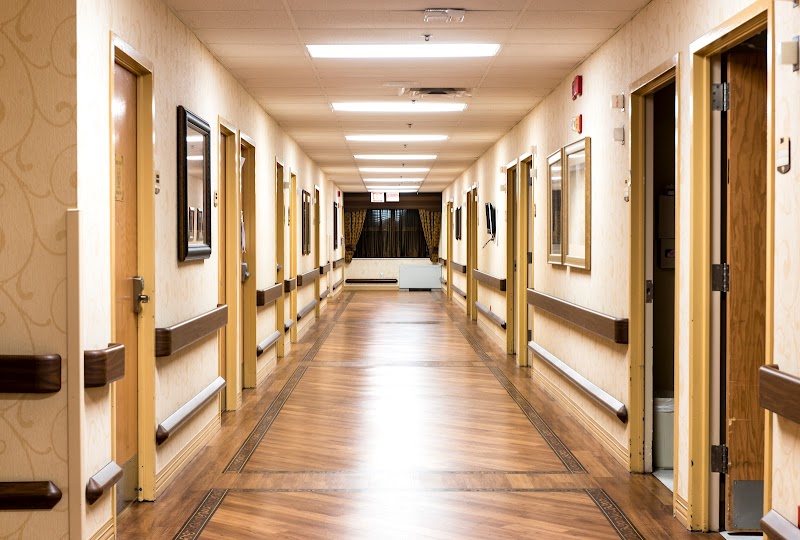
How is Elevate Care Windsor Park Staffed?

CMS rates ELEVATE CARE WINDSOR PARK's staffing level at 1 out of 5 stars, which is much below average compared to other nursing homes. Staff turnover is 48%, compared to the Illinois average of 46%. RN turnover specifically is 65%, which is notably high. RNs provide skilled clinical oversight, so turnover in this role can affect medical care quality.

What Have Inspectors Found at Elevate Care Windsor Park?

State health inspectors documented 85 deficiencies at ELEVATE CARE WINDSOR PARK during 2022 to 2025. These included: 10 that caused actual resident harm and 75 with potential for harm. Deficiencies causing actual harm indicate documented cases where residents experienced negative health consequences.

Who Owns and Operates Elevate Care Windsor Park?

ELEVATE CARE WINDSOR PARK is owned by a for-profit company. For-profit facilities operate as businesses with obligations to shareholders or private owners. The facility is operated by ELEVATE CARE, a chain that manages multiple nursing homes. With 240 certified beds and approximately 198 residents (about 82% occupancy), it is a large facility located in CHICAGO, Illinois.
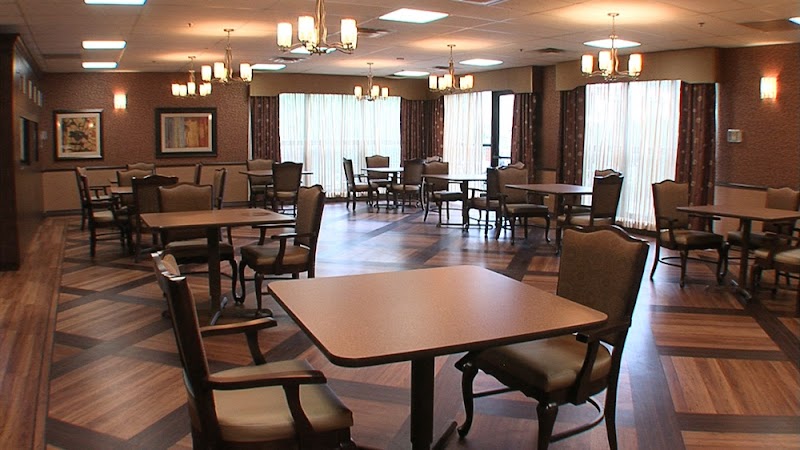
How Does Elevate Care Windsor Park Compare to Other Illinois Nursing Homes?

Compared to the 100 nursing homes in Illinois, ELEVATE CARE WINDSOR PARK's overall rating (1 stars) is below the state average of 2.5, staff turnover (48%) is near the state average of 46%, and health inspection rating (1 stars) is much below the national benchmark.

What Should Families Ask When Visiting Elevate Care Windsor Park?

Based on this facility's data, families visiting should ask: "Can you walk me through typical staffing levels on day, evening, and night shifts?" "Can I visit during a mealtime to observe dining assistance and food quality?" "How do you handle medical emergencies, and what is your hospital transfer rate?" "Can I speak with family members of current residents about their experience?" These questions are particularly relevant given the below-average staffing rating.

Is Elevate Care Windsor Park Safe?

Based on CMS inspection data, ELEVATE CARE WINDSOR PARK has a clean safety record: no substantiated abuse findings (meaning no confirmed cases of resident harm), no Immediate Jeopardy citations (the most serious violation level indicating risk of serious injury or death), and is not on the Special Focus Facility watch list (a federal program monitoring the lowest-performing 1% of nursing homes). The facility has a 1-star overall rating and ranks #100 of 100 nursing homes in Illinois. While no facility is perfect, families should still ask about staff-to-resident ratios and recent inspection results during their visit.

Do Nurses at Elevate Care Windsor Park Stick Around?

ELEVATE CARE WINDSOR PARK has a staff turnover rate of 48%, which is about average for Illinois nursing homes (state average: 46%). Moderate turnover is common in nursing homes, but families should still ask about staff tenure and how the facility maintains care continuity when employees leave.

Was Elevate Care Windsor Park Ever Fined?

ELEVATE CARE WINDSOR PARK has been fined $105,420 across 3 penalty actions. This is 3.1x the Illinois average of $34,133. Fines at this level are uncommon and typically indicate a pattern of serious deficiencies, repeated violations, or failure to correct problems promptly. CMS reserves penalties of this magnitude for facilities that pose significant, documented risk to resident health or safety. Families should request specific documentation of what issues led to these fines and what systemic changes have been implemented.

Is Elevate Care Windsor Park on Any Federal Watch List?

ELEVATE CARE WINDSOR PARK is not on any federal watch list. The most significant is the Special Focus Facility (SFF) program, which identifies the bottom 1% of nursing homes nationally based on persistent, serious quality problems. Not being on this list means the facility has avoided the pattern of deficiencies that triggers enhanced federal oversight. This is a positive indicator, though families should still review the facility's inspection history directly.