KENWOOD VLGE NRSG AND RHB CTR
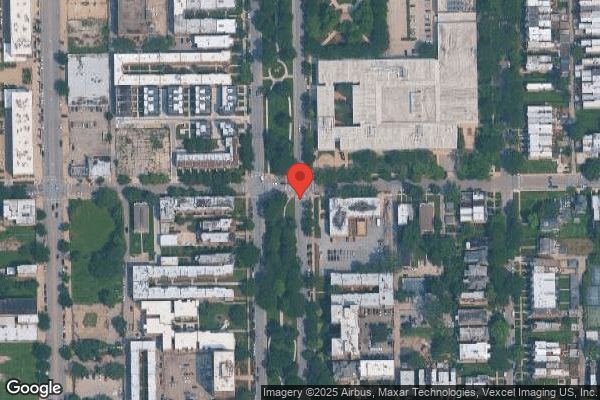

4505 SOUTH DREXEL, CHICAGO, IL 60653 (773) 285-0550
For profit - Limited Liability company 155 Beds Independent Data: November 2025
Trust Grade
0/100
#558 of 665 in IL
Last Inspection: January 2025

Within standard 12-15 month inspection cycle. Federal law requires annual inspections.

Overview

Kenwood Village Nursing and Rehabilitation Center has received a Trust Grade of F, indicating significant concerns about the quality of care provided. It ranks #558 out of 665 nursing homes in Illinois, placing it in the bottom half of facilities in the state, and #176 out of 201 in Cook County, meaning there are only a few local options that rank lower. The situation appears to be worsening, with reported issues increasing from 3 in 2024 to 24 in 2025. Staffing is a weak point, rated 1 out of 5 stars, and there is concerning RN coverage, being lower than 84% of Illinois facilities, which may impact the level of care residents receive. Notable incidents include a resident being hospitalized due to malnutrition and dehydration after dietary recommendations were not followed, and another resident suffered physical abuse from other residents, resulting in facial injuries. While there are some positive aspects regarding quality measures, the overall picture suggests families should approach this facility with caution.

Trust Score
F
0/100
In Illinois
#558/665
Bottom 17%
Safety Record
High Risk
Review needed
Inspections
Getting Worse
3 → 24 violations
Staff Stability
⚠ Watch
52% turnover. Above average. Higher turnover means staff may not know residents' routines.
Penalties
○ Average
$195,987 in fines. Higher than 55% of Illinois facilities. Some compliance issues.
Skilled Nurses
⚠ Watch
Each resident gets only 21 minutes of Registered Nurse (RN) attention daily — below average for Illinois. Fewer RN minutes means fewer trained eyes watching for problems.
Violations
⚠ Watch
73 deficiencies on record. Higher than average. Multiple issues found across inspections.
★☆☆☆☆
1.0
Overall Rating
★☆☆☆☆
1.0
Staff Levels
★★★★☆
4.0
Care Quality
★☆☆☆☆
1.0
Inspection Score
Stable
2024: 3 issues
2025: 24 issues

The Good

  • 4-Star Quality Measures · Strong clinical quality outcomes
  • Full Sprinkler Coverage · Fire safety systems throughout facility
  • No fines on record

Facility shows strength in quality measures, fire safety.

The Bad

1-Star Overall Rating

Below Illinois average (2.5)

Significant quality concerns identified by CMS

Staff Turnover: 52%

Near Illinois avg (46%)

Higher turnover may affect care consistency

Federal Fines: $195,987

Well above median ($33,413)

Significant penalties indicating serious issues

The Ugly 73 deficiencies on record

9 actual harm
Jul 2025 2 deficiencies 1 Harm
SERIOUS (G) 📢 Someone Reported This

A family member, employee, or ombudsman was alarmed enough to file a formal complaint

Actual Harm - a resident was hurt due to facility failures

Deficiency F0692 (Tag F0692)

A resident was harmed · This affected 1 resident

**NOTE- TERMS IN BRACKETS HAVE BEEN EDITED TO PROTECT CONFIDENTIALITY** Based on interviews and record reviews the facility failed to evaluate and address a resident's continued poor appetite for adeq...

Read full inspector narrative →
**NOTE- TERMS IN BRACKETS HAVE BEEN EDITED TO PROTECT CONFIDENTIALITY** Based on interviews and record reviews the facility failed to evaluate and address a resident's continued poor appetite for adequate nutrition and hydration, failed to follow the dietary's recommendation, and failed to consistently implement interventions, monitor the effectiveness of interventions and revising them as necessary for one (R1) out of four residents reviewed for nutritional services. These failures resulted in R1 being hospitalized due to hypovolemic shock, malnutrition, and dehydration.Findings Include:R1's clinical records revealed R1 was admitted in the facility on 6/23/25 and was discharged home on 7/9/25. R1's listed diagnoses include but not limited to cerebral infarction, chronic obstructive pulmonary disease, chronic respiratory failure with hypoxia, unspecified severe protein-calorie malnutrition, dysphagia pharyngoesophageal phase, and major depressive disorder. R1's Minimum Data Set, dated [DATE] shows a BIMS (Brief Interview for Mental Status) score of 14, which indicates R1 was cognitively intact, and was total dependent on staff's assistance for her activities of daily living (including eating). R1's weight record shows 88.3 pounds on 6/23/25. No other weights recorded for the entire stay of R1 in the facility. R1's physician orders reads in part: General diet (ordered on 6/24/25) and House Supplement 1 carton three times a day (ordered on 6/25/25).R1's progress notes dated 6/26/25 to 7/9/25 revealed no documentation of any follow-up notification to V20 (R1's Physician) or V10 (Registered Dietitian/RD) about R1's consuming 25% or less of her meals. R1's vitals report revealed R1's amount eaten for breakfast, lunch, and dinner (25% or less):6/24/25: 1-25% for dinner6/26/25: 1-25% for dinner6/29/25: 1-25% for dinner7/2/25: None eaten for breakfast7/3/25: 1-25% for breakfast and lunch7/5/25: 1-25% for breakfast and lunch7/6/25: 1-25% for breakfast and lunch7/7/25: 1-25% for breakfast and lunch7/8/25: 1-25% for breakfast and lunchR1's progress notes dated 6/25/25 at 11:41 AM documented by V10 reads in part: RD new admission referral for this 78 y/o female. admitted [DATE]. DX/PMH [Diagnoses/Primary Medical History] including but not limited to cerebral infarction, COPD, T2DM, chronic respiratory failure with hypoxia, severe protein-calorie malnutrition, MDD, dysphagia, glaucoma, anxiety DO, bilateral primary osteoarthritis of knee, hypertensive heart disease without HF, rheumatoid arthritis, spinal stenosis, radiculopathy, retention of urine, GERD, pain in left hip, central retinal vein occlusion, brachial plexus DO, Vitamin D deficiency. Reviewed orders. NKA per EMR. Diet: general. Per progress notes, no teeth observed, no dentures, noted decreased vision in both eyes. Per EMR, PO intake 6/23-6/25 was variable 26-100% of meals, with 1 meal 1-25%. Weight on 6/23 was 88.3 [pounds], Ht: 64 (per hospital records), BMI 15.2-underweight. Wt [Weight] stability/gain beneficial d/t [due to] underweight status. Skin intact per wound report. Per progress notes, two healed/closed pressures ulcers on the left and right ankle. No edema noted. No GI problems. No recent labs. Estimated needs using IBW (55kg): 1650-1925kcals/day (30-35kcals/kg), 55g protein/day (1.0g protein/kg), 1650-1925mL/day (1ml/kcal). Recommend SLP [Speech Language Pathologist] referral for appropriate diet consistency d/t no teeth and house supplement/med pass 1 carton TID [three times a day] to promote wt stability/gain, Refer to RD as needed.R1's progress notes dated 7/4/25 at 5:32 PM documented by V34 (Licensed Practical Nurse) reads in part: R1 had inadequate meal intake and consumed 750cc fluids. Total assist with ADL's provided by staff and all care provided in resident room.R1's hospital records (7/11/25 to 7/14/25) documented in part: [R1] recently completed 2 week stay at [Nursing Home Facility Name] for respite care, [V33 (R1's Daughter)] is primary caregiver. On return home patient [R1] was noted by daughter [V33] to be altered with slurred speech. admitted with AMS [Altered Mental Status], hypotension and elevated lactic acid thought initially to be due to urosepsis however urine culture grew mixed flora. Therefore, shock due entirely to hypovolemia. Stroke workup negative for acute stroke. [R1] (90 pounds) received 7L [liters] of IV [Intravenous] fluids for resuscitation guided by lactic acid levels and bedside IVC ultrasound without signs of volume overload. Hypovolemic shock is determined to be from lack of PO [by mouth] intake of food and water during stay at nursing home for respite care. [R1] report she did not receive food or water during her time at nursing home.On 7/23/25 at 10:56 AM, V11 (Licensed Practical Nurse) stated she was one of the regular nurses who took care of R1 in the facility. V11 stated R1 barely talked, total dependent, and was on general diet changed to mechanical soft because R1 was pocketing her food. V11 stated R1 ate at least 50% of her meals but there were days R1 ate less. V11 stated she did not inform V20 (R1's Physician) because R1 had poor appetite since the first day R1 was admitted in the facility. V11 stated that R1 was not on calorie count, R1 was on one-on-one feeding and not on any supplements. V11 stated she provides the residents water during medication pass. On 7/23/25 at 11:03 AM, V12 (Restorative Aide) stated, R1 came as total assist. R1 was on Geriatric chair. R1's arms and legs were already contracted when she came. V12 stated that R1 was a picky eater and sometimes R1 would refuse to eat. V12 stated that she told the nurse but can't remember who the nurse. When R1 refuses, V12 stated they would offer substitute soup or a sandwich and would eat a little bit of that. On 7/23/25 at 11:32 AM, V13 (Certified Nursing Assistant) stated, If residents don't eat, I don't offer them alternatives. Kitchen staff come around with what food options they can have the day before. They give them what they ordered. I took care of R1. She would eat her meals at least half. Sometimes she would have just a couple of bites. She was a picky eater. I tried to give her a little more of what she likes. She was not offered substitute because I think she can only eat certain foods. I didn't tell the nurse about R1 because she's been having poor appetite since she came here to us. On 7/24/25 at 1:05 PM, V4 (Certified Nursing Assistant/CNA) stated she was of the CNAs that regularly took care of R1. V4 stated some days R1 would eat 50% and other days R1 would eat very little. V4 stated, If [R1] would not eat I tell the nurse and they give her a supplement. She [R1] was not offered alternatives just milk shakes. I offer water in the beginning of my shift and in between meals and when they asked. [R1] was offered water, and she can talk and can tell you if she's hungry or thirsty.On 7/24/25 at 1:41 PM, V7 (Agency Registered Nurse) stated that R1 had poor appetite. V7 stated that sometimes R1 would not eat. Sometimes R1 would eat just a little bit. On 7/24/25 at 9:07 AM, a phone interview was conducted with V10 (Registered Dietitian). V10 stated that on 6/25/25, she recommended speech referral to evaluate R1 for difficulty chewing because R1 had no teeth and no dentures. R1 also had poor appetite and underweight. V10 stated having no teeth could contribute to R1's poor appetite. V10 stated she recommended house supplement three times a day. V10 stated she was not notified of R1's continued poor appetite and was eating less than 25% most of her meals. V10 stated she would have ordered additional supplements, calorie count, and weekly weights. V10 stated she recommended speech therapy to work on R1's appropriate diet texture and consistency. V10 stated that with the right diet, R1 would have better appetite that matches her needs, weight stability and no weight loss. V10 stated R1 was not provided speech therapy services because V10 can't find any reports from speech. V10 further stated that if residents do not like the food and refuse to eat, staff should offer alternatives and substitutes, and it should always be available with each meal. V10 stated that having dehydration and acute malnutrition with shock could not happen in just two days. It could happen after a week of not drinking and not eating enough. On 7/24/25 at 9:29 AM, V17 (Director of Rehab) stated that speech therapy [ST] sees residents with cognition issues and dysphagia, and for dietary referrals for diet texture and consistency. ST works on what is appropriate for the resident. They work on mastication, rate of chewing, if there is food left over in the mouth if they are pocketing. V17 stated that she did not receive any referral about R1. V17 stated that if she sees any referral or if she was notified, ST would evaluate the resident within 24-48 hours. V17 stated R1 was not screened or evaluated by speech therapy. V17 stated she has no documentation about speech services provided for R1. V17 stated R1 was only provided skilled occupational therapy during R1's stay at the facility.On 7/24/25 at 10:34 AM, V34 (Licensed Practical Nurse) stated that she took care of R1 on 7/4/25. Breakfast, lunch, and dinner R1 only ate about 50-60%. R1's good with her fluids. R1 did not want to eat. The CNAs are supposed to inform the nurses if the resident did not eat or did not want to eat. If it's a pattern nurses could contact the dietitian and the doctor. V34 stated she did not inform V20 of R1's poor appetite because R1 was already seen by V10.On 7/24/25 at 2:52 PM, a phone interview was conducted with V35 (R1's Hospital Physician). V35 stated, R1 was admitted in the hospital on 7/11/25 and was discharged on 7/14/25. [V33] brought her [R1] in after getting her [R1] back from the nursing home the day before. She [R1] was not as alert and not answering questions as typically did. She [R1] had severe electrolytes imbalance, had kidney injury with elevated lactic acid level which indicated she [R1] was in shock. Initially we thought it was UTI [Urinary Tract Infection], but nothing came back with infection. She [R1] did not have UTI. She [R1] was dehydrated based on her labs and required large amount of fluids compared to her body weight to correct her kidney injury and electrolytes. She [R1] was able to eat and back to her normal mental status after we gave her the fluids. She [R1] told us that she was not given foods and fluids at the nursing facility. She weighed 90 pounds when she came in the hospital. That was documented on the 11th before she [R1] received the fluids. She [R1] required 7 liters of fluids total during her hospitalization. That amount of fluid was indicative that she [R1] was not provided enough hydration and nutrition for a longer period of time. That can't happen it just two days. To be hypovolemic, severely dehydrated and with acute malnutrition with shock to happen it could take longer than 2 days. It's a matter of days but not 2 days. If she [R1] was seen by speech therapy at the nursing home that would help identify what's an appropriate diet and fluids for her. On 7/25/25 at 10:55 AM, a phone interview was conducted with V20 (R1's Physician). V20 stated that he expects nursing to contact and notify him if his residents are not eating or having poor appetite. V20 stated he was not made aware of R1's poor appetite or eating less than 25% some of her meals in the nursing home. V20 stated that the nursing staff at the facility are pretty good of notifying him about his residents' change in condition. V20 stated dehydration and malnutrition with shock do not happen in the span of 2 days and it could result from 3 or more days of not eating or drinking. The facility's Hydration policy dated 2005 documents in part: the physician will manage fluid and electrolyte imbalance, and associated risks, appropriately and in a timely manner. The physician will help monitor the development, progression, or resolution of fluid and electrolyte imbalance in at-risk individuals. Adjust treatments on specific information relevant to that individual.The facility's Passing Meal Trays policy (no date) documents in part: Nursing will offer alternates to residents who refuse their food or request a substitute. Nursing will advise dietary of such requests.The facility's DIETARY SERVICES policy (no date) documents in part: It is the policy of this facility to provide a quality dietetic service using high standards of sanitation that meet the daily nutritional needs of the residents. Each resident's nutrition and hydration status is assessed and monitored. Residents shall be observed to determine acceptance of the diet. Should residents refuse foods served, or eat less than 50% of the total meal, appropriate substitutes of similar nutritive value will be offered.
CONCERN (D) 📢 Someone Reported This

A family member, employee, or ombudsman was alarmed enough to file a formal complaint

Potential for Harm - no one hurt, but risky conditions existed

Deficiency F0655 (Tag F0655)

Could have caused harm · This affected 1 resident

**NOTE- TERMS IN BRACKETS HAVE BEEN EDITED TO PROTECT CONFIDENTIALITY** Based on record reviews and interviews, the facility failed to follow their policy and procedure to develop a baseline care plan...

Read full inspector narrative →
**NOTE- TERMS IN BRACKETS HAVE BEEN EDITED TO PROTECT CONFIDENTIALITY** Based on record reviews and interviews, the facility failed to follow their policy and procedure to develop a baseline care plan that included individualized information to ensure that the resident's immediate care needs are met and maintained for 1 (R1) out of 4 residents reviewed for baseline care plans.Findings Include:R1's clinical records revealed R1 was admitted in the facility on 6/23/25 and was discharged home on 7/9/25. R1's listed diagnoses include but not limited to cerebral infarction, chronic obstructive pulmonary disease, chronic respiratory failure with hypoxia, unspecified severe protein-calorie malnutrition, dysphagia pharyngoesophageal phase, and major depressive disorder. R1's Minimum Data Set, dated [DATE] shows a BIMS (Brief Interview for Mental Status) score of 14, which indicates R1 was cognitively intact, and was total dependent on staff's assistance for her activities of daily living. R1's care plan does not address at risk for skin breakdown. On 7/24/25 at 10:01 AM, V2 (Director of Nursing) stated that skin preventative measure should be individualized, and it should be part of the resident's care plan. V2 stated that it's important to address at risk for skin breakdown with interventions in the care plan to prevent skin breakdown or if they have wounds to prevent it from worsening. V2 stated that the purpose of the care plan is to guide the staff on how to take care of the resident. V2 stated the care plan should address any current problems and needs of the residents and should be completed 21 days from admission. V2 stated baseline care plan should be completed within 48 hours from admission and it's in the electronic chart of the resident. Surveyor and V2 reviewed R1's electronic chart and V2 confirmed that R1's baseline care plan was not completed. V2 stated that the baseline care plan should address if the resident is at risk for skin breakdown. V2 stated that according to R1's assessment dated [DATE], R1 was at mild risk in developing skin breakdown due to immobility. The facility's Care Plans - Preliminary dated Augusts 2006 documents in part: A preliminary plan of care to meet the resident's immediate needs shall be developed for each resident within twenty-four (24) hours if admission.
Mar 2025 1 deficiency
CONCERN (F) 📢 Someone Reported This

A family member, employee, or ombudsman was alarmed enough to file a formal complaint

Potential for Harm - no one hurt, but risky conditions existed

Deficiency F0925 (Tag F0925)

Could have caused harm · This affected most or all residents

**NOTE- TERMS IN BRACKETS HAVE BEEN EDITED TO PROTECT CONFIDENTIALITY** Based on observations, interview, and record review it was determined that the facility failed to provide an effective pest cont...

Read full inspector narrative →
**NOTE- TERMS IN BRACKETS HAVE BEEN EDITED TO PROTECT CONFIDENTIALITY** Based on observations, interview, and record review it was determined that the facility failed to provide an effective pest control program. This failure has the potential to affect 201 residents residing in the facility. Findings Include: On 03/26/25 at 09:35 V6 (R3's Family Member) stated The facility has mice and R3 has seen the mice in her room. The mice sometimes get caught in the bathroom and in the roommate's clothing. A mouse was in R3's bed. R3 saw a mouse the day before yesterday. On 03/26/25 at 10:42 AM Per telephone interview V5 (Anonymous) stated R2 has been in the facility since December. R2 was sent to the hospital and when R2 returned he (R2) was in a room on the third floor. The bed that R2 was in had mouse dropping on the bed frame. R2 was in the room, it was dark and when I turned on the light a mouse ran across the floor. On 03/26/25 at 10:10 AM V1 (Administrator) stated the pest control company were coming out weekly and I upped it to twice a week. There is work being done on the building to make a better sealing of the building. We do have an issue with mice, I have not seen any, but staff have seen them. On 03/26/25 at 11:46 AM R5 was observed sitting on the bed eating lunch. A white cardboard sticky mouse trap and a black corner mouse trap were observed near the corner of the room under the corner of the radiator. R5 stated I saw a mouse this morning. It was a medium size mouse in the corner by the mouse trap. I have been here a week and saw a mouse twice the day before yesterday. I told my roommate but didn't tell anyone else. On 03/26/25 at 11:50 AM V7 (Certified Nurse Assistant) stated I saw a mouse this morning when I was getting the resident in room [ROOM NUMBER] ready for his appointment. I think it shot out of the bathroom. I see them (mice) often. On 03/26/25 at 11:53 AM R4 was observed sitting in a chair in the dining room eating ice cream. Surveyor asked R4 had he seen any mice. R4 began laughing and said are you serious, today on the right side of my bed. He (the mouse) has come to see me plenty of times like we are family. I had my bookbag on the floor and it went in my bag. I talked to the certified nurse assistant and licensed practical nurse. I have seen the mice every day. It was one in the dining room today and I have seen dropping in my bed this morning, on the radiator and floor. On 03/26/25 at 11:59 AM V8 (Licensed Practical Nurse) stated I have worked here since March 12th. I saw mice two Fridays ago in orientation. I was charting and one came out at the nurse station. On 03/26/25 at 12:09 PM R3 was observed lying in bed with an electric wheelchair at the bedside. R3 stated I just saw a mouse; it came out of the bathroom and went under my bag with my dirty clothes. I see the mice all the time, but it supposed to be worst on the third floor. About 2-3 weeks ago a mouse was in my bed when I was eating a Vienna sausage. There are mouse droppings on the radiator. I see mice every day. The peppermint that they are using is not doing any good. On 03/26/25 at 12:21 PM V9 (Licensed Practical Nurse) stated some of the residents have complained about seeing mice but I have not seen them. R6 has complained and said she has seen mice. On 03/26/25 at 12:28 PM V10 (Certified Nurse Assistant) stated I have not seen any mice but R3 has complained of seeing mice. On 03/26/25 at 12:30 PM R6 was observed sitting at the bedside eating lunch. R6 stated I have seen a mouse run across here (the room) today. It is about 2 or 3 of them (mice) that be up in here. The mice run down the radiator under the bedside stand and into the hallway. On 03/27/24 at 08:57 AM V12 (Social Service Director) stated Residents have complained to me about mice. R4 complained about mouse droppings in his room. On 03/27/25 at 09:29 AM During the facility tour with V13 (Operations Director) surveyor and V13 entered R4's room. R4 stated yesterday I saw the mouse a couple of times. The mouse came over this morning before breakfast near the black trap. The mice are kind of aggressive and I don't want them to bite me. Yesterday pest control moved the white trap over here and took the poison out of the black corner mouse trap and threw it in the garbage. Surveyor asked R5 had he seen the mouse this morning and R5 responded, yes. Using a flashlight surveyor showed V13 the mouse droppings on the radiator and near R4's bed once R4 moved the bedside table. Surveyor asked V13 if he could see the mouse droppings and V13 responded, I see the mouse droppings. On 03/27/25 at 09:37 AM the surveyor and V13 (Operations Director) entered R3's room. R3 stated I saw the mice yesterday. R7 stated, I saw a mouse this morning on the side of the bed. Using a flashlight the surveyor walked towards the window in R3/R7 room and observed mouse droppings in the corner near the radiator. The surveyor asked V13 if he (V13) saw the mouse droppings and V13 responded, yes. On 03/27/25 at 09:52 AM V16 (Environmental Services Director) stated when I went in R3's room it was cluttered and looked like someone spilled something on the floor. When asked by the surveyor if he (V16) saw any mouse droppings. V16 responded I saw mouse droppings on the floor on the side by the window. On 03/27/25 at 10:14 AM V13 (Operations Director) stated based on the Pest Control Service Report: on 01/20/25 two mice were on the glue board. On 02/06/25 twenty roaches and six mice. On 02/21/25 four mice were found. On 02/26/25 two mice. Based on the tour it is apparent that we have mice. It can be quite overwhelming to the residents. On 03/27/25 at 11:47 AM Per telephone interview V15 (P.M. Nurse Supervisor/Licensed Practical Nurse) stated I do see mice in the medication room and patient rooms. Family and residents have complained, and I let the administrator know. On 03/27/25 at 12:00 PM V2 (Director of Nursing) stated I have had a complaint of mice from R2's family member and I notified the administrator. On 03/27/25 at 02:04 PM V1 (Administrator) stated We have mice, and it could be the same one running from one place to another. The pest control company is killing them, but more are coming in. We are trying to seal the building. After the first real cold, the mice came running in. I am working on it until I get it fixed. I am trying to maintain it, that is why we went to pest control coming out twice a week and getting the building sealed. It is not for a lack of trying; we are setting traps. I brought some peppermint stuff; we are doing everything that we can and are still combating it. We can't stop it; we can only try to control it. It is not like we are ignoring it. I am not denying there is an issue. I didn't have the most effective pest control, so we are still adding to it. Pest Control Service Report dated 03/19/25 document in part: Observation: Bait Eaten-Rodents. Pest Type: Mice. Zone Name: Facility (Interior). Location: Laundry Room, Basement Level. Service Agreement dated 03/10/25, signed 03/18/25 document in part: Description of Services: Pests for which evidence was found during inspection: Mice. Third Floor Maintenance Request has entries dated 01/05/25 document all over mice running room to room. Dated 01/19/25 saw mice in rooms 307, 309 and 315. R2's Resident Grievance/Complaint Form dated 03/17/25 document in part: Family member said when visiting Saturday 03/15/25 observed R2 in bed. Mouse droppings found in room on floor. R4's Resident Grievance/Complaint Form dated 03/24/25 document in part: R4 doesn't like mouse droppings in his room. First Floor Pest Sighting Log document in part: 01/02/25 Pest: Mice, Area: Office/Reception. 02/18/25 Pest: Mice, Area: Office/Reception. 03/13/25 Pest: Rodent, Area: Kitchen Café. Policy: Titled Pest Control dated 12/19 document in part: Objective: 1. Our facility shall maintain an effective pest control program. Procedure: 1. This facility maintains an on-going pest control program to ensure that the building is kept free of insects and rodents. Titled Resident Rights Guideline revised 10/23 document in part: Safe Environment: The right to a safe, clean, comfortable, and home-like environment.
Mar 2025 3 deficiencies 2 Harm
SERIOUS (G) 📢 Someone Reported This

A family member, employee, or ombudsman was alarmed enough to file a formal complaint

Actual Harm - a resident was hurt due to facility failures

Free from Abuse/Neglect (Tag F0600)

A resident was harmed · This affected 1 resident

**NOTE- TERMS IN BRACKETS HAVE BEEN EDITED TO PROTECT CONFIDENTIALITY** Based on interview and record review, the facility failed to ensure that one resident (R2) was free from abuse from two resident...

Read full inspector narrative →
**NOTE- TERMS IN BRACKETS HAVE BEEN EDITED TO PROTECT CONFIDENTIALITY** Based on interview and record review, the facility failed to ensure that one resident (R2) was free from abuse from two residents (R1 and R8) in a sample of 6 residents reviewed for abuse. These failures resulted in R1, an ambulatory resident, physically punching R2, a wheelchair resident, in the face causing a facial skin tear, periorbital contusion and nasal fracture, and R8, an ambulatory resident, physically hitting R2 in the back of the head. Findings include: On 2/24/25 at 12:52 pm, R2 was observed in R2's room in R2's wheelchair propelling self in room. When asked about an incident with another resident that occurred in the facility on 2/10/25, R2 stated, He (R1) came up to me (R2) and hit me. R2 stated that R2 was downstairs in the cafeteria (dining room) in the basement in R2's wheelchair, and I (R2) was just sitting. He (R1) hit me. R2 stated, It broke my nose. I felt it (pain) all the way to the back of my neck. When asked did R1 hit R2 in the face with an open hand or a closed hand (fisted hand), and R2 showed this surveyor a fisted hand. This surveyor observed faded bruise under R2's left eye as R2 is pointing to the area where R1 punched R2. When asked how many times did R1 hit you in the face with fisted hand, R2 stated, Twice. R2 stated, I couldn't move. I couldn't do anything. R2 couldn't remember if there was another resident in the dining room at the time. When asked did R2 see any facility staff before R1 hit you on 2/10/25 in the basement dining room, R2 stated, No, I didn't see anyone. When asked does R2 feel safe in the facility, R2 stated, I am okay. R2 stated that R2 moves R2's self freely in the wheelchair on the floor and down to the basement. R2's Face Sheet documents, in part, diagnoses of Parkinson's disease without dyskinesia, schizophrenia, adult failure to thrive, asthma, heart failure, hypertension, anemia, muscle wasting and atrophy, abnormalities of gait and mobility, lack of coordination, mild neurocognitive disorder due to known physiological condition without behavioral disturbance and major depressive disorder. R2's Minimum Data Set (MDS), dated [DATE], documents, in part, that R2 has a Brief Interview for Mental Status (BIMS) score of 8 which indicates that R2 has moderate cognitive impairment; no behavioral symptoms or indicators of psychosis (hallucinations or delusions); and R2 mobility device is a wheelchair. R2's Emergency Hospital Records, dated 2/10/25, documents, in part, that R2 was seen in the hospital for: Victim of assault and battery, head injury and contusion of periorbital region. R2's hospital CT (Computerized Tomography) scan of the maxillofacial region (2/10/25 at 6:51 pm) results documents, in part, that R2's head injury with left orbit swelling has findings of: There is an acute minimally displaced left nasal bone fracture with adjacent soft tissue swelling. There is deviation of the nasal septum towards the left. R1's Face Sheet documents, in part, diagnoses of paranoid schizophrenia, conduct disorder-aggressive behavior, unspecified psychosis, schizoaffective disorder (bipolar type), chronic obstructive pulmonary disease, type 2 diabetes mellitus with diabetic mononeuropathy, anemia, epilepsy, hyperlipidemia, dysphagia, and hypertension. R1's MDS, dated [DATE], documents, in part, a Staff Assessment for Mental Status is documented, in part, of short-term memory problems, and R1's Cognitive Skills for Daily Decision Making as 2 which indicates moderately impaired - decisions poor; cues/supervision required. R1's Resident Census documents, in part, that R1 is on hospital leave as of 2/10/25 and was unable to be interviewed by this surveyor. On 2/26/25 at 10:46 am, R6 stated that that remembers the incident between R1 and R2 on 2/10/25 in the basement dining room. R6 stated, He (R1) hit her (R2). I (R6) was behind them. When asked who else was there in the basement dining room that day, R6 stated, Vending machine guy (V6, Vending Machine Driver/Stocker, Contract Vendor). R6 stated that R2 was sitting at the table in R2's wheelchair close to the vending machines, and that R1 was arguing with R2. R6 stated, He (R1) stands up and he (R1) hit her (R2). When asked if it was with a closed fists or open hand, R6 put up R6's closed hand in a fist to show this surveyor. R6 stated that no one else, facility staff or residents, were in the basement dining room on 2/10/25 when R1 hit R2. R6's Face Sheet documents, in part, diagnoses of hyperlipidemia, paranoid schizophrenia, asthma, and hypertension. R6's MDS, dated [DATE] and 11/13/24, document, in part, a BIMS score of 14 which indicates that R6 is cognitively intact. On 2/25/25 at 12:37 pm, V6 (Vending Machine Driver/Stocker, Contract Vendor) stated that V6 was restocking vending machine items in the facility on 2/10/25 in the basement dining room. When asked about the incident that occurred on 2/10/25 in basement dining room, V6 stated, A fight broke out. I (V6) don't pay much attention when I am stocking. I'm there to do my job. When asked if V6 heard or seen anything, V6 stated, A man (R1) was standing and throwing punches at a lady (R2). V6 stated, I (V6) heard and saw them arguing. When asked what argument was about, V6 stated, I saw they (R1 and R2) were pushing and trying to get into a box. When asked what box, V6 stated, I (V6) have a box (extra) that I put aside when I am restocking and use if for garbage. I will take it out when I am done. When asked did this extra box have food items in it, V6 stated, No, it was empty. V6 stated that his body was turned towards the vending machines (south wall) in the dining room, but the table that R2 was sitting at was right in front of the vending machines. V6 stated that V6 continued stocking and when V6 heard yelling, V6 turned around from stocking the vending machines and observed (R1) punching (R2). V6 stated that R1 was standing and that R2 was in the wheelchair. V6 stated, I knew that was trouble, so I ran out the door to call for help, and there was a lady (V5, Laundry Aide), by the elevator, who came in. When asked what did V6 tell V5, V6 stated, I told her (V5) what happened. The man (R1) was punching her (R2). On 2/24/25 at 3:04 pm, V5 (Laundry Aide) stated that on 2/10/25, V5 did not observed the incident with R1 and R2 in the basement dining room. V5 stated, I (V5) didn't see anything. I was at the elevator. In the basement to take stuff (clean laundry) upstairs. The vending machine man (V6) came out and asked for help. I ran in there (inside the basement dining room). I seen them. 2 residents (R1 and R2). They were separated already. (V6) said they (R1, R2) was fighting. I went to go get help. When asked what did V6 say to V5, V5 stated that V6 said, I need help. V5 stated that V6 saw V5 by the elevator in the basement hallway and that V6 ran into the last door (end of hallway) to dining room. When asked what did V5 see upon entering inside the basement dining room, V5 stated, There are residents. One man (R1) standing by the door (last door) and the lady (R2) in a wheelchair over by the table. I never saw a thing. I went to go get help. When asked was there anyone else in the basement dining room, V5 stated, It happened so fast. I (V5) just went back out to holler for help and he (V7, Maintenance Operations Director) came and got (R2). V5 stated that V7's office is in the basement and that V7 took over with the residents in the basement dining room. On 2/25/25 at 10:58 am, V7 (Maintenance Operations Director) stated that V7's office is in the basement on the east side of the building, and on 2/10/25, V5 alerted V7 that there was an altercation between a female and male resident in the basement dining room. V7 stated that V7 walked to the basement dining room and observed R2 wheeling out of the basement dining room with an injury to (R2's) face. When asked to elaborate, V7 stated that V7 saw a dark bruise under (R2's) eye and that R2 was not saying anything. V7 stated that V7 wheeled from the basement hallway into the elevator to bring R2 to V1's office on the main floor. V7 stated that V7 and V37 (Plant Operations Manager) then took elevator to R1 and R2's floor, where R1 was standing, and escorted R1 to R1's room. On 2/24/25 at 2:22 pm, V3 (Licensed Practical Nurse, LPN), stated that V3 has worked in the facility for about 6 years and is assigned to R1 and R2's floor. V3 stated that R1 and R2's floor has a combination of skilled care residents and residents with severe mental illness. When asked to tell this surveyor about R1, V3 stated, He's (R1) somebody that you cannot come close to, or he will knock you out. Doesn't matter who you are. He's not (V3 pauses) . how can I explain it. He's crazy. He don't have anything here (pointing to V3's head making a looping circle). He will knock anyone out. It doesn't matter who you are. He will fight you. He will throw food at you. V3 stated that V3 would come close to R1 when V3 would attempt to give R1 medications, and then R1 would swing at V3 where V3 would have to stand back and curse at V3. When asked where would R1 spend time, V3 stated that R1 walks around independently, is alert and oriented times 2 (person, place), and He (R1) would come from his room to the day room, then back to his room. Sometimes he would want to go to the other side, the other hallway. When asked why wouldn't V3 want R1 to walk down the other hallway, V3 stated, (R1) may smack at peers. They (other residents) may accidentally cross him or get to close to his face, and he will smack you. He will hit you. V3 stated that V3 has witnessed R1 pulls back with a closed fist and says, 'I will kick you're a**' to another staff member. V3 stated that R1 would eat in the dining room on R1's floor, but on 2/10/25, He (R1) went to basement. I (V3) didn't see him (leaving floor). You know (I am) busy with my head down. I would have stopped him. He would fight. You don't know who he would pick to hit. Don't get in his face. V3 stated that V3 couldn't remember the time on 2/10/25 when V3 was notified of R1 and R2's incident in the basement. V3 stated, They (staff) called me (V3) and said that he (R1) hit her (R2). I was like 'Oh now. When did he go down?' They (R1, R2) are in basement. He's not to go to the basement if someone isn't watching. (saff) should be going with him. V3 stated that V3 took the elevator downstairs to the basement and neither R1 or R2 are there. V3 stated that on the main floor, V3 observed R2 in R2's wheelchair receiving first aide care from V2 (Director of Nursing, DON) and V36 (Former Employee, Wound Care Nurse) under R2's left eye. V3 stated that upon V3's assessment of R2 back in R2's room on 2/10/25, V3 stated, She (R2) was upset from being hit. She didn't explain it to me. She just said he (R1) hit her. (R2) couldn't tell me what happened. I know that man (R1), and I asked her, 'Did you provoke him (R1)? You can't get in his face' And she (R2) said, 'He hit me.' That man (R1) is just like a time bomb. (R1's) very easy to provoke. When asked to tell me any further details about the 2/10/25 incident between R1 and R2, V3 stated, Since no one saw them (R1, R2), I (V3) don't know. I wasn't there. V3 stated that R2 is alert, oriented times two (person, place), propels R2's self in wheelchair and is a one person assist with bathing. V3 stated, She (R2) goes around every floor. The basement was like her house and can navigate by R2's self. When asked when R2 is frequently going down to the basement, who is monitoring R2, and V3 stated, Nobody. After that, they lock it (basement dining room). There is supposed to be someone there. When asked prior to this incident with R1/R2 on 2/10/25, was the dining room in basement open, and V3 stated, Yes it was always open. All day. But not now. Not since this second incident. She (R2) got beat up again by another man (R7). On 2/10/25 at 4:53 pm, V3 (LPN) documented, in part, in R2's Progress Notes, Received resident (R2) on first floor from administration. Informed of the altercation between (R2) and another resident (R1). Upon assessment, the resident was noted with a small skin tear under her left eye with minimal discoloration. First aid and pain medication administered. R2's Care Plan (Problem Start date of 4/15/2023) documents, in part, the problem of Category: Psychosocial Well-Being (Abuse/Neglect) Resident (R2) is at risk for abuse due to impaired cognition, communication, and verbal and physical aggression. (R2) was the target of aggression on 1/6/25, 2/10/25 with a goal of Resident will be free of abuse/neglect daily through next review. R1's Care Plan (Problem Start date of 11/20/2024) documents, in part, the problem of Category: Behavior Symptoms: (R1) has physically aggressive behavioral symptoms towards others (e.g. (for example), hitting, kicking, pushing, scratching, abusing others sexually). (R1) was sexually inappropriate with female staff 11/19/2024. (R1) on 2/5/25 exhibited verbally aggressive threatening behavior toward staff with a goal of (R1) will not harm others secondary to physically abusive behavior. R1's Approaches (Interventions) for this specific care plan for R1 includes: Offer one step verbal direction for tasks. Allow for extra time to process the information with approach start date of 11/20/24; When resident becomes physically abusive, keep distance between resident and others (e.g., staff, other residents, visitors with approach start date of 11/20/24; and When resident becomes physically abusive, move to a quiet, calm environment with approach start date of 11/20/24. On 2/25/25 at 9:57 am, V1 (Administrator) stated that V1 is the abuse coordinator for the facility and is responsible for monitoring residents for abuse, facility staff training, and coordinating the facility's abuse prohibition program. V1 stated that V1 has been educating facility staff for a few months and explaining to them that we are worried about our high traffic areas especially near the elevators and any common areas. When asked V1 how are the facility staff to prevent resident to resident abuse, V1 stated, Monitoring any pre abuse type thing. Resident may say to another resident, 'Hey move.' And staff will say, 'Let me help you.' As example of that, if 25 people are trying to get in one elevator. Listening for signs of people (residents) agitated or frustrated. What's the purpose of monitoring residents in communal areas, V1 stated, Make sure resident was safe. When asked how was V1 informed on 2/10/25 about R1/R2 incident, V1 stated that V1 remembers being in V1's office and that V7 brought R2 up to V1's office. V1 stated, I asked maintenance (V7), where is he (R1)? Make sure someone is monitoring (R1). V1 stated that this was around noon on 2/10/25. V1 stated that V2 (DON) was informed to come to assess R2 in R2's wheelchair where V2 rendered R2's first aide. V1 stated that V1 observed R2's face with a break in the skin under the left eye, and R2 saying, He (R1) hit me (R2). V1 stated, That's the only thing I am getting from her. He hit me. V1 stated that V1 called the police department and arrived in the facility after R1 and R2 had been transferred to separate hospitals. When asked how is the facility staff monitoring residents in the basement dining room, V1 stated, Managers watching and directing them (residents). The dining room didn't have someone in there (2/10/25). Now there is more (staff). We lock it to make open certain times. Why do you want staff supervising in the basement dining room when residents are there, V1 stated, Frankly, in the location that it occurred and no one in there to possibly see if it is escalating into something. Does 'something' mean resident being physical volatile, I would say that. This surveyor had made several requests with V1 on 2/24/25 the video camera footage from the basement dining room from 2/10/25 for R1 and R2's incident, and V1 confirmed during this interview with this surveyor that V1 can only go 10 days back to review the video footage. When asked for the detailed description of V1's viewing of the video camera footage review from 2/10/25 incident in the basement dining room, V1 stated, I saw that (R2) and (R1) were in there. There was another person (R6). The guy (V6) was doing the vending machine. He (V6) had boxes. It was a low profile box. (R2) rolled up and picked up the box. (R1) got up and got the box and looked in it. Maybe thinking it was chips. (R2) moved the box close to (R2). R2 was in wheelchair at the table that was right next to the vending machine. V1 stated, (R1) walked up to the box. (R2) lifted the box up by her head. (R1) walked away. (R2) put the box on the table. V1 stated, A few minutes later, he (R1) got up and said something to her (R2) first. Then he was hitting her. V1 stated that R1 was originally sitting in a regular chair near the basement dining room door on the south side of the room: walked up to R2's table to look in the box; R1 yelling something at R2; R1 then walked back to the chair near the door and waited 1 and a half minutes before walking back to R2 hitting R2 in the face. When asked how many times did R1 strike R2, V1 stated, A couple. When asked the conclusion of V1's abuse investigation for the incident on 2/10/25 between R1 and R2, V1 stated, Conclusion is that he (R1) hit her (R2) and injured her. He hit her. It's abuse. He mistreated her. When asked about an incident that occurred between R2 and R7 in the basement dining room on 1/6/25, V1 stated that R7 is no longer a resident in the facility and that the incident was witnessed by facility staff (V38, Activities Aide). V1 stated that both R2 and R7 were wheeling in their respective wheelchairs out of the basement dining room door with V38 in the room picking up activity's items from the tables when R7 began hitting R2 with R2's backpack. V1 stated that the State Agency investigated this facility reported incident on a prior survey and that physical abuse towards R2 from R7 was substantiated. V1 stated, (R2) is victim of abuse. Both times (1/6/25 and 2/10/25), yes. 2) On 3/3/25 at 9:29 am, V1 stated, Something happened over the weekend. (R2) got hit again. V1 stated that R8 walked by R2 in the hallway on their floor and just hit her (R2). V1 stated that R8 was sent out to the hospital, and R2 has been moved to a different floor. On 3/3/25 at 10:13 am, this surveyor re-interviewed R2 on R2's new floor. When asked about the incident with R8 on 3/1/25 on the floor, R2 stated, She (R8) hit me (R2). When asked where did R8 hit R2, R2 stated, Back of my head. R2 stated that R2 came out of R2's room in wheelchair and in hallway is where R8 hit R2 on 3/1/25. R2 stated that R2 feels safe in the facility and likes R2's new room and floor. On 3/3/25 at 10:42 am, when asked about the incident between R2 and R8 on 3/1/25, V29 (Certified Nursing Assistant, CNA) stated, Yes, I (V29) witnessed it. I was sitting in dining room. (R8) walked past her (R2) and hit her (R2). I said, Don't that. Why would you hit this woman (R2). She (R2) didn't do anything? And she (R8) ignored me. (V30, Agency Registered Nurse, RN) asked her (R8) too. (R8) said, 'It was an accident.' I (V29) said, 'No, you (R8) purposely hit her (R2).' (V30) asked (R8), 'Would you want someone to hit you? Then why did you hit her (R2)?' She (R8) said, 'It was an accident'. On 3/3/25 at 10:17 am, V30 (Agency RN) stated that on 3/1/25 around 9:45 to 10:00 am, V30 was sitting at the nurse's station desk charting, and V29 (CNA) alerted V30 that R8 hit R2 in the back of the head. V30 stated that V30 did not observe it, but V29 did. V30 stated that V30 kept R2 and R8 separated, and R8 told V30, It was an accident. V30 assessed R2 with no injuries, and V30 transferred R8 out to the hospital for a psychiatric evaluation. V30 informed V1 and V37 (Plant Operations Manager) who was on duty. In R2's Progress Notes, dated 3/1/25 at 10:19 am, V30 (RN) documented, in part, While charting at Nurses station Writer (V30) was informed by Nurses aide (V29) that resident above (R2) was hit in back of head while sitting in wheelchair in the hallway. Both residents (R2, R8) separated. Writer and MOD (manager on duty, V37) asked Resident (R2) what happened? Resident (R2) unable to verbalize what happened. In R8's Progress Notes, dated 3/1/25 at 10:09 am, While charting at Nurses station Writer was informed by Nurses aide that resident above (R8) hit another resident (R2) in back of head while walking pass her in the hallway. Both residents separated. Writer and MOD (V37) asked Resident (R8) what happened? Resident (R8) stated It was a (an) accident. Writer and MOD spoke with Resident informing her that behavior is unacceptable, resident verbalized understanding. On 3/3/25 at 12:36 pm, V1 and this surveyor together viewed the video camera footage in V1's office from 3/1/25 of the camera view from R2 and R8's floor dining room on north side of building facing down the hallway towards south side of the building. On 3/1/25 at 9:46:19 am, V29 (CNA) is observed in the dining room sitting watching down the hallway, and R8 walks freely out of her room; walks down the hallway to the alcohol based hand sanitizer (ABHS) dispenser on the wall near the nurse's station; pumps it 22 times to get ABHS and then walks back into R8's room. On 3/1/25 at 9:47 am, R2 is observed wheeling out of her room in R2's wheelchair and is staying on the side of the hallway (east side) and wheels past R8's room. R8 next walks out of R8's room and with an open hand, R8 hits R2 on the back of R2's head while in the wheelchair with R2's head jerking forward. V29 points to R8 who continues walking towards the nurse's station. R8's Face Sheet documents, in part, diagnoses of fibromyalgia, personality disorder (unspecified), asthma, anxiety disorder, psychotic disorder with delusions due to known physiological condition, major depressive disorder, hypertension, venous insufficiency, constipation and obesity. R8's MDS, dated [DATE], documents, in part, a BIMS score of 15 which indicates that R8 is cognitively intact. Facility policy (undated) titled Abuse Prevention Policy documents, in part, The facility affirms the right of our residents to be free from abuse, neglect, exploitation, misappropriation of property, deprivation of goods and services by staff or mistreatment. This facility therefore prohibits abuse, neglect, exploitation, misappropriation of property, and mistreatment of residents. In order to do so, the facility has attempted to establish a resident sensitive and resident secure environment. The purpose of this policy is to assure that the facility is doing all that is within its control to prevent occurrences of abuse, neglect, exploitation, misappropriation of property, deprivation of goods and services by staff and mistreatment of residents . This facility is committed to protecting our residents from abuse, neglect, exploitation, misappropriation of property and mistreatment by anyone including, but not limited to, facility staff, other residents. Facility policy with a revision date of 10/2024 and titled Resident Rights Guideline documents, in part, . Guideline: Our residents have certain rights and protection under Federal law that help ensure appropriate care and services are provided . Our facility will treat each resident with respect and dignity and care for each resident in a manner an (and) in an environment that promotes maintenance or enhancement of his or her quality of life, recognizing each resident's individuality . Freedom from Abuse, Neglect, Misappropriation of Property and Exploitation: The right to be free from verbal, sexual, physical, and mental abuse, involuntary seclusion, exploitation, and misappropriation of your property by anyone.
SERIOUS (G) 📢 Someone Reported This

A family member, employee, or ombudsman was alarmed enough to file a formal complaint

Actual Harm - a resident was hurt due to facility failures

Accident Prevention (Tag F0689)

A resident was harmed · This affected 1 resident

**NOTE- TERMS IN BRACKETS HAVE BEEN EDITED TO PROTECT CONFIDENTIALITY** Based on interview and record review, the facility failed to provide facility staff supervision of a resident (R1) in the baseme...

Read full inspector narrative →
**NOTE- TERMS IN BRACKETS HAVE BEEN EDITED TO PROTECT CONFIDENTIALITY** Based on interview and record review, the facility failed to provide facility staff supervision of a resident (R1) in the basement dining room in a sample of 6 residents reviewed for improper nursing care. This failure resulted in R2, a wheelchair resident, being punched in the face two times by R1, an ambulatory resident with verbal and physical aggressive behaviors, causing R2 to sustain a facial skin tear, periorbital contusion and nasal fracture. Findings include: On 2/24/25 at 12:52 pm, R2 was observed in R2's room in R2's wheelchair propelling self in room. When asked about an incident with another resident that occurred in the facility on 2/10/25, R2 stated, He (R1) came up to me (R2) and hit me. R2 stated that R2 was downstairs in the cafeteria (dining room) in the basement in R2's wheelchair, and I (R2) was just sitting. He (R1) hit me. R2 stated, It broke my nose. I felt it (pain) all the way to the back of my neck. When asked did R1 hit R2 in the face with an open hand or a closed hand (fisted hand), and R2 showed this surveyor a fisted hand. This surveyor observed faded bruise under R2's left eye as R2 is pointing to the area where R1 punched R2. When asked how many times did R1 hit you in the face with fisted hand, R2 stated, Twice. R2 stated, I couldn't move. I couldn't do anything. R2 couldn't remember if there was another resident in the dining room at the time. When asked did R2 see any facility staff before R1 hit you on 2/10/25 in the basement dining room, R2 stated, No, I didn't see anyone. When asked does R2 feel safe in the facility, R2 stated, I am okay. R2 stated that R2 moves R2's self freely in the wheelchair on the floor and down to the basement. R2's Face Sheet documents, in part, diagnoses of Parkinson's disease without dyskinesia, schizophrenia, adult failure to thrive, asthma, heart failure, hypertension, anemia, muscle wasting and atrophy, abnormalities of gait and mobility, lack of coordination, mild neurocognitive disorder due to known physiological condition without behavioral disturbance and major depressive disorder. R2's Minimum Data Set (MDS), dated [DATE], documents, in part, that R2 has a Brief Interview for Mental Status (BIMS) score of 8 which indicates that R2 has moderate cognitive impairment; no behavioral symptoms or indicators of psychosis (hallucinations or delusions); and R2 mobility device is a wheelchair. R2's Emergency Hospital Records, dated 2/10/25, documents, in part, that R2 was see in the hospital for: Victim of assault and battery, head injury and contusion of periorbital region. R2's hospital CT (Computerized Tomography) scan of the maxillofacial region (2/10/25 at 6:51 pm) results documents, in part, that R2's head injury with left orbit swelling has findings of: There is an acute minimally displaced left nasal bone fracture with adjacent soft tissue swelling. There is deviation of the nasal septum towards the left. R1's Face Sheet documents, in part, diagnoses of paranoid schizophrenia, conduct disorder-aggressive behavior, unspecified psychosis, schizoaffective disorder (bipolar type), chronic obstructive pulmonary disease, type 2 diabetes mellitus with diabetic mononeuropathy, anemia, epilepsy, hyperlipidemia, dysphagia, and hypertension. R1's MDS, dated [DATE], documents, in part, a Staff Assessment for Mental Status is documented, in part, of short-term memory problems, and R1's Cognitive Skills for Daily Decision Making as 2 which indicates moderately impaired - decisions poor; cues/supervision required. R1's Resident Census documents, in part, that R1 is on hospital leave as of 2/10/25 and was unable to be interviewed by this surveyor. On 2/26/25 at 10:46 am, R6 stated that that remembers the incident between R1 and R2 on 2/10/25 in the basement dining room. R6 stated, He (R1) hit her (R2). I (R6) was behind them. When asked who else was there in the basement dining room that day, R6 stated, Vending machine guy (V6, Vending Machine Driver/Stocker, Contract Vendor). R6 stated that R2 was sitting at the table in R2's wheelchair close to the vending machines, and that R1 is arguing with R2. R6 stated, He (R1) stands up and he (R1) hit her (R2). When asked if it was with a closed fists or open hand, R6 put up R6's closed hand in a fist to show this surveyor. R6 stated that no one else, facility staff or residents, were in the basement dining room on 2/10/25 when R1 hit R2. R6's Face Sheet documents, in part, diagnoses of hyperlipidemia, paranoid schizophrenia, asthma, and hypertension. R6's MDS, dated [DATE] and 11/13/24, document, in part, a BIMS score of 14 which indicates that R6 is cognitively intact. On 2/25/25 at 12:37 pm, V6 (Vending Machine Driver/Stocker, Contract Vendor) stated that V6 was restocking vending machine items in the facility on 2/10/25 in the basement dining room. When asked about the incident that occurred on 2/10/25 in basement dining room, V6 stated, A fight broke out. I (V6) don't pay much attention when I am stocking. I'm there to do my job. When asked if V6 hear or see anything, V6 stated, A man (R1) was standing and throwing punches at a lady (R2). V6 stated, I (V6) heard and saw them arguing. When asked what argument was about, V6 stated, I saw they (R1 and R2) were pushing and trying to get into a box. When asked what box, V6 stated, I (V6) have a box (extra) that I put aside when I am restocking and use if for garbage. I will take it out when I am done. When asked did this extra box have food items in it, V6 stated, No, it was empty. V6 stated that his body was turned towards the vending machines (south wall) in the dining room, but the table that R2 was sitting at was right in front of the vending machines. V6 stated that V6 continued stocking and when V6 heard yelling, V6 turned around from stocking the vending machines and observed (R1) punching (R2). V6 stated that R1 was standing and that R2 was in the wheelchair. V6 stated, I knew that was trouble, so I ran out the door to call for help, and there was a lady (V5, Laundry Aide), by the elevator, who came in. When asked what did V6 tell V5, V6 stated, I told her (V5) what happened. The man (R1) was punching her (R2). On 2/24/25 at 3:04 pm, V5 (Laundry Aide) stated that on 2/10/25, V5 did not observed the incident with R1 and R2 in the basement dining room. V5 stated, I (V5) didn't see anything. I was at the elevator. In the basement to take stuff (clean laundry) upstairs. The vending machine man (V6) came out and asked for help. I ran in there (inside the basement dining room). I see them. 2 residents (R1 and R2). They were separate already. (V6) said they (R1, R2) was fighting. I went to go get help. When asked what did V6 say to V5, V5 stated that V6 said, I need help. V5 stated that V6 saw V5 by the elevator in the basement hallway and that V6 ran into the last door (end of hallway) to dining room. When asked what did V5 see upon entering inside the basement dining room, V5 stated, There are residents. One man (R1) standing by the door (last door) and the lady (R2) in a wheelchair over by the table. I never saw a thing. I went to go get help. When asked was there anyone else in the basement dining room, V5 stated, It happened so fast. I (V5) just went back out to holler for help and he (V7, Maintenance Operations Director) came and got (R2). V5 stated that V7's office is in the basement and that V7 took over with the residents in the basement dining room. On 2/25/25 at 10:58 am, V7 (Maintenance Operations Director) stated that V7's office is in the basement on the east side of the building, and on 2/10/25, V5 alerted V7 that there was an altercation between a female and male resident in the basement dining room. V7 stated that V7 walked to the basement dining room and observes R2 wheeling out of the basement dining room with an injury to (R2's) face. When asked to elaborate, V7 stated that V7 sees a dark bruise under (R2's) eye and that R2 was not saying anything. V7 stated that V7 wheeled from the basement hallway into the elevator to bring R2 to V1's office on the main floor. V7 stated that V7 and V37 (Plant Operations Manager) then took elevator to R1 and R2's floor, where R1 was standing, and escorted R1 to R1's room. On 2/24/25 at 2:22 pm, V3 (Licensed Practical Nurse, LPN), stated that V3 has worked in the facility for about 6 years and is assigned to R1 and R2's floor. V3 stated that R1 and R2's floor has a combination of skilled care residents and residents with severe mental illness. When asked to tell this surveyor about R1, V3 stated, He's (R1) somebody that you cannot come close to, or he will knock you out. Doesn't matter who you are. He's not (V3 pauses) . how can I explain it. He's crazy. He don't have anything here (pointing to V3's head making a looping circle). He will knock anyone out. It doesn't matter who you are. He will fight you. He will throw food at you. V3 stated that R1 would come close to R1 when V3 would attempt to give R1 medications, and then R1 would swing at V3 where V3 would have to stand back and curse at V3. When asked where would R1 spend time, V3 stated that R1 walks around independently, is alert and oriented times 2 (person, place), and He (R1) would come from his room to the day room. Then back to his room. Sometimes he would want to go to other side, the other hallway. When asked why wouldn't V3 want R1 to walk down the other hallway, V3 stated, (R1) may smack at peers. They (other residents) may accidentally cross him or get to close to his face, and he will smack you. He will hit you. V3 stated that V3 has witnessed R1 pulls back with a closed fist and says, 'I will kick you're a**' to another staff member. V3 stated that R1 would eat in the dining room on R1's floor, but on 2/10/25, He (R1) went to basement. I (V3) didn't see him (leaving floor). You know (I am) busy with my head down. I would have stopped him. He would fight. You don't know who he would pick to hit. Don't get in his face. V3 stated that V3 couldn't remember the time on 2/10/25 when V3 was notified of R1 and R2's incident in the basement. V3 stated, They (staff) called me (V3) and said that he (R1) hit her (R2). I was like 'Oh now. When did he go down?' They (R1, R2) are in basement. He's not to go to the basement if not someone watching. Someone (staff) should be going with him. V3 stated that V3 took the elevator downstairs to the basement and neither R1 or R2 are there. V3 stated that on the main floor, V3 observed R2 in R2's wheelchair receiving first aide care from V2 (Director of Nursing, DON) and V36 (Former Employee, Wound Care Nurse) under R2's left eye. V3 stated that upon V3's assessment of R2 back in R2's room on 2/10/25, V3 stated, She (R2) was upset from being hit. She didn't explain it to me. She just said he (R1) hit her. (R2) couldn't tell me what happened. I know that man (R1), and I asked her, 'Did you provoke him (R1)? You can't get in his face' And she (R2) said, 'He hit me.' That man (R1) is just like a time bomb. (R1's) very easy to provoke. When asked to tell me any further details about the 2/10/25 incident between R1 and R2, V3 stated, Since no one see them (R1, R2), I (V3) don't know. I wasn't there. V3 stated that R2 is alert, oriented times two (person, place), propels R2's self in wheelchair and is a one person assist with bathing. V3 stated, She (R2) go around every floor. The basement was like her house and can navigate by R2's self. When asked when R2 is frequently going down to the basement, who is monitoring R2, and V3 stated, Nobody. After that, they lock it (basement dining room). There is supposed to be someone there. When asked prior to this incident with R1/R2 on 2/10/25, was the dining room in basement open, and V3 stated, Yes it was always open. All day. But not now. On 2/10/25 at 4:53 pm, V3 (LPN) documented, in part, in R2's Progress Notes, Received resident (R2) on first floor from administration. Informed of the altercation between (R2) and another resident (R1). Upon assessment, the resident was noted with a small skin tear under her left eye with minimal discoloration. First aid and pain medication administered. On 2/25/25 at 9:57 am, V1 (Administrator) stated that V1 has been educating facility staff for a few months and explaining to them that we are worried about our high traffic areas especially near the elevators and any common areas. When asked V1 how are the facility staff to prevent resident to resident abuse, V1 stated, Monitoring any pre abuse type thing. Resident may say to another resident, 'Hey move.' And staff will say, 'Let me help you.' As example of that, if 25 people are trying to get in one elevator. Listening for signs of people (residents) agitated or frustrated. What's the purpose of monitoring residents in communal areas, V1 stated, Make sure resident was safe. When asked how was V1 informed on 2/10/25 about R1/R2 incident, V1 stated that V1 remembers being in V1's office and that V7 brought R2 up to V1's office. V1 stated, I asked maintenance (V7), where is he (R1)? Make sure someone is monitoring (R1). V1 stated that this was around noon on 2/10/25. V1 stated that V2 (DON) was informed to come to assess R2 in R2's wheelchair where V2 rendered R2's first aide. V1 stated that V1 observed R2's face with a break in the skin under the left eye, and R2 saying, He (R1) hit me (R2). V1 stated, That's the only thing I am getting from her. He hit me. V1 stated that V1 called the police department and arrived in the facility after R1 and R2 had been transferred to separate hospitals. When asked how is the facility staff monitoring residents in the basement dining room, V1 stated, Managers watching and directing them (residents). The dining room didn't have someone in there (2/10/25). Now there is more (staff). We lock it to make open certain times. Why do you want staff supervising in the basement dining room when residents are there, V1 stated, Frankly, in the location that it occurred and no one in there to possibly see if it is escalating into something. Does 'something' mean resident being physical volatile, I would say that. This surveyor had made several requests with V1 on 2/24/25 the video camera footage from the basement dining room from 2/10/25 for R1 and R2's incident, and V1 confirmed during this interview with this surveyor that V1 can only go 10 days back to review the video footage. When asked for the detailed description of V1's viewing of the video camera footage review from 2/10/25 incident in the basement dining room, V1 stated, I saw that (R2) and (R1) were in there. There was another person (R6). The guy (V6) was doing the vending machine. He (V6) had boxes. It was a low profile box. (R2) rolled up and picked up the box. (R1) got up and got the box and looked in it. Maybe thinking it was chips. (R2) moved the box close to (R2). R2 was in wheelchair at the table that was right next to the vending machine. V1 stated, (R1) walked up to the box. (R2) lifted the box up by her head. (R1) walked away. (R2) put the box on the table. V1 stated, A few minutes later, he (R1) got up and said something to her (R2) first. Then he was hitting her. V1 stated that R1 was originally sitting in a regular chair near the basement dining room door on the south side of the room: walked up to R2's table to look in the box; R1 yelling something at R2; R1 then walked back to the chair near the door and waited 1 and a half minutes before walking back to R2 hitting R2 in the face. When asked how many times did R1 strike R2, V1 stated, A couple. When asked the conclusion of V1's abuse investigation for the incident on 2/10/25 between R1 and R2, V1 stated, Conclusion is that he (R1) hit her (R2) and injured her. He hit her. It's abuse. He mistreated her. R1's Care Plan (Problem Start date of 11/20/2024) documents, in part, the problem of Category: Behavior Symptoms: (R1) has physically aggressive behavioral symptoms towards others (e.g. (for example), hitting, kicking, pushing, scratching, abusing others sexually). (R1) was sexually inappropriate with female staff 11/19/2024. (R1) on 2/5/25 exhibited verbally aggressive threatening behavior toward staff with a goal of (R1) will not harm others secondary to physically abusive behavior. R1's Approaches (Interventions) for this specific care plan for R1 includes: Offer one step verbal direction for tasks. Allow for extra time to process the information with approach start date of 11/20/24; When resident becomes physically abusive, keep distance between resident and others (e.g., staff, other residents, visitors with approach start date of 11/20/24; and When resident becomes physically abusive, move to a quiet, calm environment with approach start date of 11/20/24. R1's Care Plan (Problem Start date of 11/20/2024) documents, in part, the problem of (R1) has verbal behavioral symptoms directed towards others (e.g., threatening others, screaming at others, cursing at others) with a goal of (R1) will not threaten, scream at, or curse at other residents, visitors, and/or staff. R1's Approaches (Interventions) for this specific care plan for R1 includes: Maintain a calm environment and approach to the resident with approach start date of 11/20/24; Refocus conversation when resident becomes verbally abusive with approach start date of 11/20/24; and When resident becomes verbally abusive, STOP and try the task later. Do not force the resident to do the task with approach start date of 11/20/24. On 2/25/25 at 1:21 pm, V9 (Psychiatric Rehabilitation Services Assistant, PRSA) stated that V9 is familiar with R1 and has V9's office on R1's floor. V9 stated that V9 is responsible for documentation of resident behaviors, counseling residents and updating the resident care plans. V9 stated that R1 is oriented to self and people, but has confusion; is independent in walking; becomes verbally aggressive and needs frequent redirection. V9 stated that when R1 is going downstairs to activities in the basement, staff will be monitoring him. When asked why is facility staff to be monitoring R1 in the basement, V9 stated, Because of his (R1's) aggression. We don't want him to go somewhere where something can happen. When asked about how does V9 know about R1's recent behaviors, V9 stated that V9 will receive information about R1's behaviors from the IDT (interdisciplinary) meeting (morning meeting) and by observing R1's behaviors. V9 stated that V9 will update R1's care plan when a quarterly assessment is due or when there is a behavior. This surveyor then read R1's current social services care plan to V9, which included R1 being sexually inappropriate with staff. V9 stated, Huh, (R1)? I think that must have been an error or wrong resident. When reading R1's care plan about being physically aggressive, V9 stated, What? I saw him making verbal threats. I saw him agitated but not swing at anyone. V9 stated that on 2/5/25, R1 was agitated that day with verbal outbursts, not receptive to redirection, despite asking R1 to come sit down in the dining room on the floor. V9 stated that R1 was pacing, going in and out of resident rooms, and trying to take residents' personal belongings. V9 stated that V9 tries to redirect R1 to a common area to watch him better. V9 stated that V9 tries not to agitate R1 by being to close to R1 but has to watch him to make sure he (R1) does not leave the floor without staff present. On 2/25/25 at 2:55 pm, V4 (Social Services Director, SSD) stated that R1 has displayed repeated verbally and physically aggressive behavior in the facility. V4 stated that facility staff are to be monitoring R1 when R1 is off of the floor because of (R1's) impulse behavior and it consistently happened. On 2/26/25 at 10:58 am, V2 (DON) stated that R1 is alert, ambulatory, can be combative and hostile with staff, aggressive with staff, can go in and out uninvited to other resident rooms and is hard to redirect. V2 stated that R1 did physically strike a staff member (V25, LPN). V2 stated that R1 likes food and likes coffee which helps with R1's redirection. This surveyor read to V2 a time-line from R1's Progress Notes from 10/28/24 (facility initial admission) to 2/10/25 (emergency discharge to hospital) with R1's behaviors documented, in part, of repeated verbal and physical aggression to staff; verbal aggression towards other residents; spitting at other residents; trying to steal food from residents in dining room; pacing; balling up fists with R1 threatening the lives of staff; screaming at other residents where staff needed to evacuate the floor dining room for safety; R1 throwing food trays in dining room; and R1 throwing items from the nurse's station and medication cart at the staff. This surveyor observed V2's face with eyes wide open, and V2 stating, I (V2) hadn't heard that. I wasn't aware of that. V2 stated, I absolutely was aware of his (R1's) behaviors towards staff. When asked about facility staff supervision for R1 in a communal place, like in the basement dining room, V2 stated, It's situational. If we see a behavior coming. Facility policy with revision date of 1/30/2025 and titled Safety and Supervision Guideline documents, in part, Purpose: Our facility strives to make the environment as free from accident hazards as possible. Resident safety and supervision and assistance to prevent accidents are facility-wide priorities. Facility-Oriented Approach to Safety: 1. Our facility-oriented approach to safety addressed risks for groups of residents . Resident-Oriented Approach to Safety: 1. Our resident-oriented approach to safety addresses safety and accident hazards for individual residents. 2. Staff shall use various sources to identify risk factors for residents, including the information obtained from the medical history, physical exam, observation of the resident and the MDS. 3. The interdisciplinary care team shall analyze information obtained from assessments and observations to identify any specific accident hazards or risks for that resident. The care team shall target interventions to reduce the potential for accidents . Systems Approach to Safety: 1. The facility-oriented and resident-oriented approaches to safety are used together to implement a systems approach to safety, which considers the hazards identified in the environment and individual resident risk factors, and then adjusts interventions accordingly. 2. Resident supervision is a core component of the systems approach to safety. Facility policy (undated) titled Abuse Prevention Policy documents, in part, . Procedures: . IV. Establishing a Resident Sensitive Environment: . Staff Supervision: Supervisors will monitor the ability of the staff to meet the needs of residents, including that assigned staff have knowledge of individual resident care needs. Situations such as inappropriate language, insensitive handling, or impersonal care will be corrected as they occur.
CONCERN (D) 📢 Someone Reported This

A family member, employee, or ombudsman was alarmed enough to file a formal complaint

Potential for Harm - no one hurt, but risky conditions existed

Deficiency F0740 (Tag F0740)

Could have caused harm · This affected 1 resident

**NOTE- TERMS IN BRACKETS HAVE BEEN EDITED TO PROTECT CONFIDENTIALITY** Based on interview and record review, the facility failed to revise and review a resident's behavioral health care plan that has...

Read full inspector narrative →
**NOTE- TERMS IN BRACKETS HAVE BEEN EDITED TO PROTECT CONFIDENTIALITY** Based on interview and record review, the facility failed to revise and review a resident's behavioral health care plan that has not been effective and develop individualized interventions which affected one resident (R1) out of three residents (R1, R2, R6) reviewed for quality of care. Findings include: On 2/24/25 at 12:52 pm, R2 observed in R2's room in R2's wheelchair propelling self in room. When asked about an incident with another resident that occurred in the facility on 2/10/25, R2 stated, He (R1) came up to me (R2) and hit me. R2 stated that R2 was downstairs in the cafeteria (dining room) in the basement in R2's wheelchair, and I (R2) was just sitting. He (R1) hit me. R2 stated, It broke my nose. I felt it (pain) all the way to the back of my neck. When asked did R1 hit R2 in the face with an open hand or a closed hand (fisted hand), and R2 showed this surveyor a fisted hand. This surveyor observed faded bruise under R2's left eye as R2 is pointing to the area where R1 punched R2. When asked how many times did R1 hit you in the face with fisted hand, R2 stated, Twice. R2 stated, I couldn't move. I couldn't do anything. R2 couldn't remember if there was another resident in the dining room at the time. When asked did R2 see any facility staff before R1 hit you on 2/10/25 in the basement dining room, R2 stated, No, I didn't see anyone. When asked does R2 feel safe in the facility, R2 stated, I am okay. R2 stated that R2 moves R2's self freely in the wheelchair on the floor and down to the basement. R2's Face Sheet documents, in part, diagnoses of Parkinson's disease without dyskinesia, schizophrenia, adult failure to thrive, asthma, heart failure, hypertension, anemia, muscle wasting and atrophy, abnormalities of gait and mobility, lack of coordination, mild neurocognitive disorder due to known physiological condition without behavioral disturbance and major depressive disorder. R2's Minimum Data Set (MDS), dated [DATE], documents, in part, that R2 has a Brief Interview for Mental Status (BIMS) score of 8 which indicates that R2 has moderate cognitive impairment; no behavioral symptoms or indicators of psychosis (hallucinations or delusions); and R2 mobility device is a wheelchair. R2's Emergency Hospital Records, dated 2/10/25, documents, in part, that R2 was see in the hospital for: Victim of assault and battery, head injury and contusion of periorbital region. R2's hospital CT (Computerized Tomography) scan of the maxillofacial region (2/10/25 at 6:51 pm) results documents, in part, that R2's head injury with left orbit swelling has findings of: There is an acute minimally displaced left nasal bone fracture with adjacent soft tissue swelling. There is deviation of the nasal septum towards the left. R1's Face Sheet documents, in part, diagnoses of paranoid schizophrenia, conduct disorder-aggressive behavior, unspecified psychosis, schizoaffective disorder (bipolar type), chronic obstructive pulmonary disease, type 2 diabetes mellitus with diabetic mononeuropathy, anemia, epilepsy, hyperlipidemia, dysphagia, and hypertension. R1's MDS, dated [DATE], documents, in part, a Staff Assessment for Mental Status is documented, in part, of short-term memory problems, and R1's Cognitive Skills for Daily Decision Making as 2 which indicates moderately impaired - decisions poor; cues/supervision required. R1's Resident Census documents, in part, that R1 is on hospital leave as of 2/10/25 and was unable to be interviewed by this surveyor. On 2/26/25 at 10:46 am, R6 stated that that remembers the incident between R1 and R2 on 2/10/25 in the basement dining room. R6 stated, He (R1) hit her (R2). I (R6) was behind them. When asked who else was there in the basement dining room that day, R6 stated, Vending machine guy (V6, Vending Machine Driver/Stocker, Contract Vendor). R6 stated that R2 was sitting at the table in R2's wheelchair close to the vending machines, and that R1 is arguing with R2. R6 stated, He (R1) stands up and he (R1) hit her (R2). When asked if it was with a closed fists or open hand, R6 put up R6's closed hand in a fist to show this surveyor. R6 stated that no one else, facility staff or residents, were in the basement dining room on 2/10/25 when R1 hit R2. R6's Face Sheet documents, in part, diagnoses of hyperlipidemia, paranoid schizophrenia, asthma, and hypertension. R6's MDS, dated [DATE] and 11/13/24, document, in part, a BIMS score of 14 which indicates that R6 is cognitively intact. On 2/24/25 at 2:22 pm, V3 (Licensed Practical Nurse, LPN), stated that V3 has worked in the facility for about 6 years and is assigned to R1 and R2's floor. V3 stated that R1 and R2's floor has a combination of skilled care residents and residents with severe mental illness. When asked to tell this surveyor about R1, V3 stated, He's (R1) somebody that you cannot come close to, or he will knock you out. Doesn't matter who you are. He's not (V3 pauses) . how can I explain it. He's crazy. He don't have anything here (pointing to V3's head making a looping circle). He will knock anyone out. It doesn't matter who you are. He will fight you. He will throw food at you. V3 stated that R1 would come close to R1 when V3 would attempt to give R1 medications, and then R1 would swing at V3 where V3 would have to stand back and curse at V3. When asked where would R1 spend time, V3 stated that R1 walks around independently, is alert and oriented times 2 (person, place), and He (R1) would come from his room to the day room. Then back to his room. Sometimes he would want to go to other side, the other hallway. When asked why wouldn't V3 want R1 to walk down the other hallway, V3 stated, (R1) may smack at peers. They (other residents) may accidentally cross him or get to close to his face, and he will smack you. He will hit you. V3 stated that V3 has witnessed R1 pulls back with a closed fist and says, 'I will kick you're a**' to another staff member. V3 stated that R1 would eat in the dining room on R1's floor, but on 2/10/25, He (R1) went to basement. I (V3) didn't see him (leaving floor). You know (I am) busy with my head down. I would have stopped him. He would fight. You don't know who he would pick to hit. Don't get in his face. V3 stated that V3 couldn't remember the time on 2/10/25 when V3 was notified of R1 and R2's incident in the basement. V3 stated, They (staff) called me (V3) and said that he (R1) hit her (R2). I was like 'Oh now. When did he go down?' They (R1, R2) are in basement. He's not to go to the basement if not someone watching. Someone (staff) should be going with him. V3 stated that V3 took the elevator downstairs to the basement and neither R1 or R2 are there. V3 stated that on the main floor, V3 observed R2 in R2's wheelchair receiving first aide care from V2 (Director of Nursing, DON) and V36 (Former Employee, Wound Care Nurse) under R2's left eye. V3 stated that upon V3's assessment of R2 back in R2's room on 2/10/25, V3 stated, She (R2) was upset from being hit. She didn't explain it to me. She just said he (R1) hit her. (R2) couldn't tell me what happened. I know that man (R1), and I asked her, 'Did you provoke him (R1)? You can't get in his face' And she (R2) said, 'He hit me.' That man (R1) is just like a time bomb. (R1's) very easy to provoke. When asked to tell me any further details about the 2/10/25 incident between R1 and R2, V3 stated, Since no one see them (R1, R2), I (V3) don't know. I wasn't there. V3 stated that R2 is alert, oriented times two (person, place), propels R2's self in wheelchair and is a one person assist with bathing. V3 stated, She (R2) go around every floor. The basement was like her house and can navigate by R2's self. When asked when R2 is frequently going down to the basement, who is monitoring R2, and V3 stated, Nobody. After that, they lock it (basement dining room). There is supposed to be someone there. When asked prior to this incident with R1/R2 on 2/10/25, was the dining room in basement open, and V3 stated, Yes it was always open. All day. But not now. On 2/10/25 at 4:53 pm, V3 (LPN) documented, in part, in R2's Progress Notes, Received resident (R2) on first floor from administration. Informed of the altercation between (R2) and another resident (R1). Upon assessment, the resident was noted with a small skin tear under her left eye with minimal discoloration. First aid and pain medication administered. R1's Care Plan (Problem Start date of 11/20/2024) documents, in part, the problem of Category: Behavior Symptoms: (R1) has physically aggressive behavioral symptoms towards others (e.g. (for example), hitting, kicking, pushing, scratching, abusing others sexually). (R1) was sexually inappropriate with female staff 11/19/2024. (R1) on 2/5/25 exhibited verbally aggressive threatening behavior toward staff with a goal of (R1) will not harm others secondary to physically abusive behavior. R1's Approaches (Interventions) for this specific care plan for R1 includes: Offer one step verbal direction for tasks. Allow for extra time to process the information with approach start date of 11/20/24; When resident becomes physically abusive, keep distance between resident and others (e.g., staff, other residents, visitors with approach start date of 11/20/24; and When resident becomes physically abusive, move to a quiet, calm environment with approach start date of 11/20/24. R1's Care Plan (Problem Start date of 11/20/2024) documents, in part, the problem of (R1) has verbal behavioral symptoms directed towards others (e.g., threatening others, screaming at others, cursing at others) with a goal of (R1) will not threaten, scream at, or curse at other residents, visitors, and/or staff. R1's Approaches (Interventions) for this specific care plan for R1 includes: Maintain a calm environment and approach to the resident with approach start date of 11/20/24; Refocus conversation when resident becomes verbally abusive with approach start date of 11/20/24; and When resident becomes verbally abusive, STOP and try the task later. Do not force the resident to do the task with approach start date of 11/20/24. On 2/25/25 at 1:21 pm, V9 (Psychiatric Rehabilitation Services Assistant, PRSA) stated that V9 is familiar with R1 and has V9's office on R1's floor. V9 stated that V9 is responsible for documentation of resident behaviors, counseling residents and updating the care plan. V9 stated that R1 is oriented to self and people, but has confusion; is independent in walking; becomes verbally aggressive and needs frequent redirection. V9 stated that when R1 is going downstairs to activities in the basement, staff will be monitoring him. When asked why is facility staff to be monitoring R1 in the basement, V9 stated, Because of his (R1's) aggression. We don't want him to go somewhere where something can happen. When asked about how does V9 know about R1's recent behaviors, V9 stated that V9 will receive information about R1's behaviors from the IDT (interdisciplinary) meeting (morning meeting) and by observing R1's behaviors. V9 stated that V9 will update R1's care plan when a quarterly assessment is due or when there is a behavior. This surveyor then read R1's current social services care plan to V9, which included R1 being sexually inappropriate with staff. V9 stated, Huh, (R1)? I think that must have been an error or wrong resident. When reading R1's care plan about being physically aggressive, V9 stated, What? I saw him making verbal threats. I saw him agitated but not swing at anyone. V9 stated that on 2/5/25, R1 was agitated that day with verbal outbursts, not receptive to redirection, despite asking R1 to come sit down in the dining room on the floor. V9 stated that R1 was pacing, going in and out of resident rooms, and trying to take residents' personal belongings. V9 stated that V9 tries to redirect R1 to a common area to watch him better. V9 stated that V9 tries not to agitate R1 by being to close to R1 but has to watch him to make sure he does not leave the floor. In R1's Progress Notes (2/5/24 at 4:26 pm), V9 documented, in part, that V9 observed R1 walking around the unit (the floor) all day exhibiting agitation and demanding behavior, going in and out of other residents' rooms, taking their belongings; R1 using profanity towards staff threatening them if R1 does not get his $25 dollars; and R1 was not easily redirected or receptive to guidance or redirection. In R1's Progress Notes (2/6/25 at 12:10 pm and 2/7/25 at 12:20 pm), V9 documented, in part, that R1 continues to exhibit agitation and demanding behavior pounding on Social Services door; not receptive to redirection and becomes agitated when offered; makes threats telling staff what R1 will do to them; continues using profanity towards staff threatening to hurt them. On 2/25/25 at 2:55 pm, V4 (Social Services Director, SSD) stated that V4's general responsibilities include making sure that the social services team members (V9, PRSA, and V20, PRSC, Psychiatric Rehabilitation Service Coordinator) are following up with any resident behavior in the facility. V4 stated that when a resident displays a behavior, the staff look for what triggered the resident, identify that, remove the resident from the location and calmly talk to the residents. If that is not working, give the resident a few minutes then come back. V4 stated that when behaviors are increasing or escalating with redirection and a whenever needed (PRN) psychotropic medication is not effective, then a resident is sent out to the hospital for psychiatric evaluation. V4 stated that triggers for R1 were that R1 was impulsive. When asked how is the facility staff managing R1 with diagnoses of paranoid schizophrenia, conduct disorder of aggressive behavior and schizoaffective bipolar, V4 stated that R1 is rounded on by staff frequently and that when R1 would want to go to activities, the PRSA (V9) would escort R1 downstairs for close monitoring. When this surveyor reviewed with V4 the current social service care plan for R1 with the only approaches (interventions) on 11/20/24 for verbal and physical aggressive behaviors, V4 stated, There should have been more added in the approach. V4 stated that the staff must add different things (approaches) to see that we are trying all these interventions if they just are not working. V4 stated that when social services staff is following up with R1's behaviors, I would update the care plan. On 2/26/25 at 10:58 am, V2 (DON) stated that R1 is alert, ambulatory, can be combative and hostile with staff, aggressive with staff, can go in and out uninvited to other resident rooms and is hard to redirect. V2 stated that R1 did physically strike a staff member (V25, LPN). V2 stated that R1 likes food and likes coffee which helps with R1's redirection. V2 stated that R1 was being seen by V32 (Psychiatrist) and V33 (Psychiatry Nurse Practitioner, NP) and was sent out to the hospital multiple times since admission to facility via involuntary petitions for psychiatric evaluations. V2 stated that R1's psychotropic medications were changed with each re-hospitalization. V2 stated that V2 phoned V31 (R1's Family Member, Healthcare Power of Attorney) on 2/10/25 with all information about the emergency discharge to the hospital due to R1 striking another resident, R2, and the facility will not being able to accept R1 back to the facility. V2 stated that V31 requested to speak with V1, since V31 told V2 that this was above (V2's) head and V2 alerted V1 to this request. V2 stated that this decision for R1's emergency discharge on [DATE] was made by V1 and V32. This surveyor read to V2 a time-line from R1's Progress Notes from 10/28/24 (facility initial admission) to 2/10/25 (emergency discharge to hospital) with R1's behaviors documented, in part, of repeated verbal and physical aggression to staff; verbal aggression towards other residents; spitting at other residents; trying to steal food from residents in dining room; pacing; balling up fists with R1 threatening the lives of staff; screaming at other residents where staff needed to evacuate the floor dining room for safety; R1 throwing food trays in dining room; and R1 throwing items from the nurse's station and medication cart at the staff. This surveyor observed V2's face with eyes open in aghast, and V2 stating, I (V2) hadn't heard that. I wasn't aware of that. V2 stated, I absolutely was aware of his (R1's) behaviors towards staff. When asked about facility staff supervision for R1 in a communal place, like in the basement dining room, V2 stated, It's situational. If we see a behavior coming. When asked does V2 update resident care plans, V2 stated, No, I (V2) don't do care plans. It's the MDS Coordinator. On 3/4/25 at 3:02 pm, V35 (Former Employee, MDS Coordinator) stated that V35's last day of employment at the facility was 1/31/25. V35 stated that as a MDS Coordinator at the facility, V35 was responsible for reviewing documentation from the hospital, doing MDS assessments and completing and updating resident care plans. V35 stated that V35 and V26 (Remote/Float MDS Coordinator) did these responsibilities. V35 stated that V35 remembers R1 and did not complete R1's care plan or update R1's care plan. When asked if a resident, like R1, displays behaviors and is sent out to the hospital for evaluation, how is V35 able to find out what recent behaviors occurred to update the care plan, and V35 stated, The IDT team. When asked if V35 would be included in the IDT team, V35 stated, Yes. I did not update a care plan on (R1). On 2/27/25 at 12:25 pm, when asked does V26 complete or update a resident's care plan for this facility, V26 (Remote/Float MDS Coordinator, RN) stated, Not solely. It is an IDT team effort. Each department has their care plan they are responsible for. When asked does V26 update or add approaches/interventions when the existing approaches are not effective, V26 stated, Not particularly, no. I mostly do the care plan on admission. On 2/26/25 at 2:44 pm, V24 (Assistant DON/Psychotropic Nurse) stated that V24 is responsible for ensuring that resident psychotropic medication consents are completed for residents taking psychotropic medications. V24 stated that psychotropic medications are care planned for residents to show that medications have been tried and are effective with a goal to decrease agitation through the next review. When asked the purpose of care planning for differing psychotropic medications being used for behavioral health management, V24 stated, To show something else was implemented. V24 stated that with each of R1's re-hospitalizations for behavioral management, R1's psychotropic medications were changed or adjusted per hospital physician orders. R1's Complete Care Plan (all disciplines, 11 pages) provided to this surveyor on 2/24/25 was reviewed and does not contain a problem, goal or approach related to R1's psychotropic medication use from admission [DATE]) to discharge (2/10/25). Facility policy dated 10/1/2023 and titled Managing Behavior Guideline documents, in part, Purpose: This policy is designated to provide guidance for managing challenging behaviors in residents while ensuring their dignity, safety, and well-being. Behavioral interventions aim to prevent and de-escalate situations without resorting to restraint or punitive measures. These guidelines help staff address the needs of residents with dementia, cognitive impairments, mental health conditions, or other behavioral challenges in a person-centered and respectful manner. This facility is committed to providing a safe and therapeutic environment for all residents. Behavioral interventions will be individualized, evidence-based, and focused on identifying and addressing the underlying causes of behaviors . Responsible Party: IDT (Interdisciplinary Team). Assessment: . Ongoing Monitoring: Staff will monitor and document residents' behaviors regularly to identify patterns, triggers, and effectiveness of interventions . Care planning: Behavioral Care Plan Development: If a resident exhibit challenging behaviors, an individualized behavioral care plan will be developed. This plan will be based on the resident's history, preferences, and identified triggers, and will include specific interventions aimed at reducing the behavior . Documentation and Report: . Review and Evaluation: The interdisciplinary team will regularly review the effectiveness of behavioral interventions and revise the care plan as necessary. Facility policy dated August 2006 and titled Care Planning-Interdisciplinary Team documents, in part, Policy Statement: Our facility's Care Planning/Interdisciplinary Team is responsible for the development of an individualized comprehensive care plan for each resident. Facility policy with revision date of 1/30/2025 and titled Safety and Supervision Guideline documents, in part, Purpose: Our facility strives to make the environment as free from accident hazards as possible. Resident safety and supervision and assistance to prevent accidents are facility-wide priorities. Facility-Oriented Approach to Safety: 1. Our facility-oriented approach to safety addressed risks for groups of residents . Resident-Oriented Approach to Safety: 1. Our resident-oriented approach to safety addresses safety and accident hazards for individual residents. 2. Staff shall use various sources to identify risk factors for residents, including the information obtained from the medical history, physical exam, observation of the resident and the MDS. 3. The interdisciplinary care team shall analyze information obtained from assessments and observations to identify any specific accident hazards or risks for that resident. The care team shall target interventions to reduce the potential for accidents . Systems Approach to Safety: 1. The facility-oriented and resident-oriented approaches to safety are used together to implement a systems approach to safety, which considers the hazards identified in the environment and individual resident risk factors, and then adjusts interventions accordingly. 2. Resident supervision is a core component of the systems approach to safety.
Jan 2025 18 deficiencies
CONCERN (D)

Potential for Harm - no one hurt, but risky conditions existed

Deficiency F0558 (Tag F0558)

Could have caused harm · This affected 1 resident

Based on observation, interview and record review the facility failed to ensure call device was within reach for one resident (R74). This failure had the potential to affect the 58 residents in the sa...

Read full inspector narrative →
Based on observation, interview and record review the facility failed to ensure call device was within reach for one resident (R74). This failure had the potential to affect the 58 residents in the sample. Findings include: R74 has a diagnosis of but not limited to Fracture of Shaft of Left Ulna, Dementia, Abnormalities of Gait and Mobility, Muscle Wasting and Atrophy. R74's has a Brief Interview of Mental Status score of 10, which indicates that R74 is cognitively impaired. R74's care plan focus for falls dated 11/20/2024 documents, in part, keep call light in reach at all times. On 1/27/2025 at 11:26am surveyor observed R74's call light on the floor behind the bed. R74 said, There it is on the floor, and I cannot reach it (call light). On 1/27/2025 at 11:28am V8 (Central Supply) stated it's (R74's call light) right here, as he picked it up off the floor, and stated it should be attached to her bed and close to the resident. On 1/27/2054 at 11:58am V6 (Registered Nurse) stated call lights should be within reach of the resident and clipped to the bed. On 1/29/2025 at 1:15pm V2 (Assistant Director of Nursing) stated residents call light device should be within reach so that they (resident) can reach staff if they need something. Call light policy dated 8/2024 documents, in part, to respond to resident's request and needs. Undated job description for Certified Nursing Assistant documents, in part, ensure that all residents have access to call lights throughout each shift.
CONCERN (D)

Potential for Harm - no one hurt, but risky conditions existed

Deficiency F0578 (Tag F0578)

Could have caused harm · This affected 1 resident

**NOTE- TERMS IN BRACKETS HAVE BEEN EDITED TO PROTECT CONFIDENTIALITY** Based on observation, interview, and record review the facility failed to obtain a doctor's order for an advance directive which...

Read full inspector narrative →
**NOTE- TERMS IN BRACKETS HAVE BEEN EDITED TO PROTECT CONFIDENTIALITY** Based on observation, interview, and record review the facility failed to obtain a doctor's order for an advance directive which affected one resident (R58) reviewed for advanced directive in the sample of 58 residents. Findings include: R58's admission record documents in part, Atherosclerotic heart disease, chronic kidney disease, end stage renal disease, dependence on renal dialysis, and bilateral below the knee amputations. R58's Minimum Data Set (MDS), dated [DATE] documents in part, Brief Interview for Mental Status (BIMS) score of 14 which indicates that R58 is cognitively intact. R58's Physician Order Report as of [DATE] to [DATE], documents that no physician order for advance directives (Full code or Do Not Resuscitate) status for R58. R58's admission Record Form for Advance Directive section documents in part, There are no Advance Directives selected for this resident. On [DATE] at 10:56 am, V2 ADON (Assistant Director of Nursing) stated, There should be a doctor's order for an advance directive. The nurse is supposed to get the order. An advance directive should be gotten on admission. Surveyor inquired to V2, how is the staff to know the advance directive status of a resident? V2 stated that there is an advance directive book on the crash carts. Surveyor checked the advance directive book on the crash cart on the first floor where R58 resides and there was no advance directive in the book for R58. Facility's policy (undated) and titled Advance Directives documents in part, Standards: 22. A written physician's order is required in response to the resident's advanced directive regarding CPR (Cardiopulmonary Resuscitation) . 25. Each medical record binder will be labeled in such a manner to quickly identify Advance Directive (s). Facility's job description titled Registered Nurse RN and License Practical Nurse LPN (revised [DATE]) Summary: The LPN is responsible for providing direct nursing care to the residents, and to supervise the day-to-day nursing activity performed by nursing assistants. Such supervision must be in accordance with current federal, state, and local standards, guidelines, and regulations that govern our facility, and as may be required by the Director of Nursing to ensure that the highest degree of quality care is maintained at all times.
CONCERN (D)

Potential for Harm - no one hurt, but risky conditions existed

Deficiency F0583 (Tag F0583)

Could have caused harm · This affected 1 resident

Based on observation, interview and record review, the facility failed to ensure electronic health records were kept in a private manner. This failure has the potential to affect 2 residents (R63 and ...

Read full inspector narrative →
Based on observation, interview and record review, the facility failed to ensure electronic health records were kept in a private manner. This failure has the potential to affect 2 residents (R63 and R44) in a sample of 58 residents reviewed for confidentiality of records. Findings include: On 1/28/25 at 10:35am, with V16 (Registered Nurse), during observation of the nursing cart on the 3rd floor, surveyor observed V16 walk away from the nursing cart to the nursing station near the end of the hall. Surveyor noted R63's medication administration record (part of the electronic medical record) open on the attached laptop. Surveyor did not observe any other staff present near the nursing cart. Upon V16's return to the nursing cart, surveyor asked V16 why R63's electronic medical record was left open and unattended, and V16 replied, Ugh. I (V16) should have closed down the record. When asked the purpose of not leaving the electronic medical record open and unattended, V16 replied, HIPAA (Health Insurance Portability and Accountability Act of 1996). On 1/28/25 at 10:49am, with V7 (Licensed Practical Nurse), during observation of the nursing cart on the 2nd floor, V7 said, Let me go grab my I.D. (identification badge) before we start. Surveyor observed V7 walk away from the nursing cart and go into a room leaving R44's medication administration record (part of the electronic medical record) open on the attached laptop. Surveyor did not observe any other staff present near the nursing cart. Upon V7's return to the nursing cart, surveyor asked V7 why R44's electronic medical record was left open and unattended, and V7 replied, Sorry. I (V7) forgot. It's been a morning. I (V7) should have closed it. On 1/29/25 at 12:54pm, V2 (Assistant Director of Nursing) affirmed that the facility's expectation is that the electronic medical record should not be left open and unattended. V2 said that the reason for that is HIPAA (Health Insurance Portability and Accountability Act of 1996). Facility provided document titled, Management of personal health record content, undated, documents, in part, Designated record set-A group of records a HIPAA-covered healthcare provider maintains that includes medical records and billing records about individuals. The covered entity maintains and uses the designated record set, in whole or in part, to make decisions about individuals . Electronic health record- A specifically designed system that collects individually identifiable health information from multiple sources and supports healthcare users with available, complete, and accurate data, practitioner reminders and alerts, clinical decision support systems, links to bodies of medical knowledge, and other aids . It must meet accepted standards as defined by the Centers for Medicare & Medicaid Services' Conditions of Participation, federal regulations, state laws, standards of accrediting agencies, as well as the policies of the healthcare provider . Facility policy titled, Resident Rights Guidelines, undated, documents, in part, . Privacy and Confidentiality .
CONCERN (D)

Potential for Harm - no one hurt, but risky conditions existed

Safe Environment (Tag F0584)

Could have caused harm · This affected 1 resident

Based on observation, interview, and record review, the facility failed to ensure the closet drawers were not missing in effort to provide a homelike environment. This failure affected 4(R75, R80, R7,...

Read full inspector narrative →
Based on observation, interview, and record review, the facility failed to ensure the closet drawers were not missing in effort to provide a homelike environment. This failure affected 4(R75, R80, R7, and R1) residents reviewed for homelike environment in the total sample of 58 residents. Findings include: On 1/27/2025 at 10:25am observed R7's closet with a missing bottom drawer. In the same room observed R1's closet with a missing bottom drawer. On 1/27/2025 at 10:26am observed R7's clothing in a plastic bin, with more clothing stacked on top of the plastic bin in front of R7's missing bottom drawer. On 1/27/2025 at 10:27am, R7 stated I would like to put my clothes in the closet drawers instead of having the clothes in bins sitting on the floor. On 1/28/2025 at 9:19am observed both R75 and R80's closets with missing bottom drawers. On 1/28/2025 at 9:20am, R75 stated the missing drawers on the closet have been missing since I have been a resident at this facility, and I have been here for about five years. R7 has a Brief Interview for Mental Status (BIMS) dated 12/03/2024 which documents that R7 has a BIMS score of 15, indicating R7's cognition is intact. R1 has a Brief Interview for Mental Status (BIMS) dated 12/13/2024 which documents that R1 has a BIMS score of 15, indicating R1's cognition is intact. R75 has a Brief Interview for Mental Status (BIMS) dated 12/10/2024 which documents that R75 has a BIMS score of 07, indicating R75's cognition is severely impaired. R80 has a Brief Interview for Mental Status (BIMS) dated 12/27/2024 which documents that R80 has a BIMS score of 10, indicating R80's cognition is moderately impaired. On 1/29/2025 at 10:56am V4(Maintenance Director) met with surveyor in R80 and R75's room, V4 observed the bottom drawers missing from both R75's and R80's closets. On 1/29/2025 at 10:57am surveyor informed V4(Maintenance Director) of the closets in R7's and R1's room with missing bottom drawers. On 1/29/2025 at 11:00am V4(Maintenance Director) stated I have not been notified by staff that the drawers located at the bottom of the closet were missing in R80, R75, R7 and R1's rooms. V4 stated it would be up to the owners to replace the missing drawers because these are custom made drawers. V4 stated if I had been notified, I would have taken an inventory of all the missing bottom drawers on the closets and let the owners know. V4 stated this does not represent a homelike environment for the residents. On 1/29/2025 at 11:25am reviewed the Maintenance Request Forms for the third floor from 7/2024 to 1/2025, there were no requests regarding the missing closet drawers needing placement. On 1/29/2025 reviewed the Maintenance Director's job description with a revision date of 10/11/2019 which documents in part, repair facility/resident property as necessary. On 1/29/2025 reviewed the undated Maintenance Assistant's job description which documents in part, Complete the following duties in accordance with schedule presented by supervisor: 1. Monitor, inspect and repair all facility equipment. This includes, but is not limited to, wheelchairs, beds, chairs, all facility furnishings, Geri-chairs, etc. On 1/29/2025 reviewed the facility's undated Resident Rights Guidelines policy which documents in part, the right to a safe, clean, comfortable, and homelike environment that allows independence as possible.
CONCERN (D)

Potential for Harm - no one hurt, but risky conditions existed

PASARR Coordination (Tag F0644)

Could have caused harm · This affected 1 resident

Based on observation interview and record review, the facility failed to complete a new pre-admission screening and resident review (PASSR) when a new mental health diagnosis is identified. This failu...

Read full inspector narrative →
Based on observation interview and record review, the facility failed to complete a new pre-admission screening and resident review (PASSR) when a new mental health diagnosis is identified. This failure affects 1 resident (R69) out of a sample of 58. Findings include: R69's has an admission date of 7/24/2019 and has a diagnosis of Schizophrenia with a diagnosis date 4/18/2022. R69 has a Brief Interview of Mental Status score of 15. R69's Minimum Data Sheet section D (Mood) dated 12/20/2024 documents a severity score of 10. On 1/29/2025 at about 10:30am surveyor reviewed R69's Obra-I Initial Screen dated 7/24/2019 that documents No reasonable basis for suspecting DD (Developmental Disability) or MI (Mental Illness). R69's Physician Order Report dated does not document any medications for Schizophrenia. On 1/29/2025 at 12:08pm V30 (Administrative Assistant/Office Manager) stated I request the PASRR when the resident is coming from the hospital, and I don't know who processes another PASRR request when there is a change of condition. On 1/30/2025 at 11:38am via email V1 (Administrator) stated I only have the old system one (PASRR) and I do not believe one (a new screening) was done at that time (3/18/2022). On 1/30/2024 at 12:05pm via email V1 stated no, it (new PASRR) is not in the system and I reached out to our social service company consultant and he states he does not see it (new PASRR) either. V1 stated we will complete another one today. On 1/30/2025 at 1:43pm via phone V11 (Social Service Director-SSD) stated the purpose of PASRR screening is to see if a resident is appropriate for a skilled nursing home and yes, a new PASRR screening should be requested because the resident now has a mental illness diagnosis, and we need to make sure they are still appropriate for the skilled nursing home. V11 also stated she was not here when R69 was received the new diagnosis of Schizophrenia (4/18/2022) and can't speak to if a new PASRR was requested when the new diagnosis was given, and it can be assumed that it was not done because the PASRR could not be found. Undated Facility policy titled Pre-admission screening and Resident Review PASRR documents, in part, Facility staff, as indicated, will provide information to help Maximus complete Level 2 interview/screen and comply with Federal, State and the appointed agency, Maximus, in standards addressing PASRR assessment/screening process.
CONCERN (D)

Potential for Harm - no one hurt, but risky conditions existed

Quality of Care (Tag F0684)

Could have caused harm · This affected 1 resident

**NOTE- TERMS IN BRACKETS HAVE BEEN EDITED TO PROTECT CONFIDENTIALITY** Based on observation, interview, and record review, facility failed to provide the necessary treatment to promote healing and fa...

Read full inspector narrative →
**NOTE- TERMS IN BRACKETS HAVE BEEN EDITED TO PROTECT CONFIDENTIALITY** Based on observation, interview, and record review, facility failed to provide the necessary treatment to promote healing and failed to assess accurate site to a resident with a skin impairment. These failures affected 1 (R105) of 1 resident reviewed for wound care. Findings Include: R105 has a medical diagnosis of but not limited to hemiplegia and hemiparesis following cerebral infarction, affecting right dominant side, Congestive Heart Failure, Aphasia and Osteoarthritis. The Minimum Data Set (MDS) dated [DATE] shows R105's cognition is impaired, with a four out of fifteen points required on the Brief Interview for Mental Status (BIMS). R105 Physician Order Sheet dated 1/22/2025 documents right posterior thigh: Cleanse with Normal Saline Solution, skin prep to peri wound, apply hydrocolloid dressing. On 01/28/25 at 10:28 am, with V13, Registered Nurse (RN), observed R105's wound to the left upper proximal posterior thigh without a dressing which appears red, moist, and non-blanchable. V13 confirmed there was no dressing or wound to the right thigh and the wound is located on the left thigh without a dressing. On 1/28/2025 at 11:28 am, V15, Wound Care Nurse, stated that V15 documented R105's wound care order inaccurately to the right thigh instead of the left thigh. V15 stated that the wound is on R105's left upper posterior thigh and the doctor also documented the wound on the left side in the progress notes. Record review of physician order sheet documents wound care to right thigh. V15 stated that she has corrected the order and presented an updated physician orders for R105 which documents left posterior thigh: Cleanse with Normal Saline Solution, skin prep to peri wound, apply hydrocolloid dressing. On 1/28/2025 at 11:58 am, surveyor and V15 Wound Care Nurse (WCN), observed no dressing to the left proximal posterior thigh before V15 attempted to perform wound care. V15, Wound Care Nurse (WCN), verified the wound is on the left side and not on the documented right side. V15 stated that the dressing might have fallen off during care and the protocol is for staff to notify the nurse or the wound care nurse to apply a new dressing. V15 stated nobody informed her that R105's dressing fell off. Wound Management Detail Report dated 1/22/25 documents wound type is a laceration, wound location Right thigh, Right posterior thigh, and wound measurement 2cm x 1.8cm. Pressure/Skin Breakdown-Clinical Protocol dated January 2017 documents the following: In addition, the nurse shall assess and document/report the following: I. a. Full assessment of skin condition including but not limited to location, stage or partial/full thickness, length, width and depth, presence of exudates or necrotic tissue b. Pain assessment c. Resident's mobility status d. D. Current treatments, including support surfaces e. All active diagnosis II. The physician will authorize pertinent orders related to wound treatments, including pressure redistribution surfaces, wound cleansing and debridement approaches, dressings (occlusive, absorptive, etc.) and application of topical agents.
CONCERN (D)

Potential for Harm - no one hurt, but risky conditions existed

Pressure Ulcer Prevention (Tag F0686)

Could have caused harm · This affected 1 resident

Based on observation, interview, and record review, the facility failed to ensure the low air loss mattress was not layered with multiple linens for 1 resident (R78). This failure affected 1 resident ...

Read full inspector narrative →
Based on observation, interview, and record review, the facility failed to ensure the low air loss mattress was not layered with multiple linens for 1 resident (R78). This failure affected 1 resident reviewed for pressure ulcer/injury prevention and treatment in a sample size of 58. R78 has a diagnosis of but not limited to Sequelae of Infarction, Schizophrenia, Dementia, Palliative Care, and Cellulitis. R78 has a Brief Interview of Mental Status Score of 7, which indicates that R78 is cognitively impaired. R78's order from hospice company dated 12/24/2024 documents, in part, new air mattress and air mattress for hospital bed. R78's care plan focus Pressure Ulcer/Injury dated 7/24/2023 documents, in part, use low air loss mattress in bed. R78's Minimum Data Sheet section GG dated 11/26/2024 documents, in part, Functional Limitation in Range of Motion: for upper and lower extremities: impairment, and dependent (Helper does all the effort) for all self-care and mobility performance. R78's Braden scale dated 11/27/2024 documents a score of 12 that indicates high risk and documents intervention: pressure reducing device for bed. Surveyor reviewed manufacturer's guide for low air loss mattress that did not document how many layers should be between the mattress and the resident's skin. On 1/27/2025 at 10:14am surveyor observed R78 laying on a flat sheet, a sheet folded in half with an incontinence brief on. On 1/27/2025 at 10:22am V6 (Registered Nurse) stated a resident should have 1 layer between the skin and the mattress and should not have multiple layers on a low air loss mattress because it doesn't allow the mattress to function properly to prevent further breakdown. On 1/29/2025 at 1:15pm V2 (Assistant Director of Nursing) stated the low air loss mattress should only have one layer (pad, flat sheet) with the incontinence brief and the purpose to allow the air mattress to distribute the air and allow the pressure relieving coils to work effectively.
CONCERN (D)

Potential for Harm - no one hurt, but risky conditions existed

Deficiency F0688 (Tag F0688)

Could have caused harm · This affected 1 resident

Based on observation, interview and record review, the facility failed to ensure that an adaptive device (splint/palm grip) was in place of a contracted hand which affected one resident (R61) in the t...

Read full inspector narrative →
Based on observation, interview and record review, the facility failed to ensure that an adaptive device (splint/palm grip) was in place of a contracted hand which affected one resident (R61) in the total sample of 58 residents when reviewed for limited mobility. Findings include: On 1/27/25 at 10:25am, R61 was observed lying in bed on her (R61) left side, with both right and left hands clenched tightly in a fist shape. Surveyor did not observe a hand assistive device (splint/palm grip) on R61's left or right hand. On 1/27/25 at 10:25am, surveyor inquired about R61's right and left hands and R61 replied, Sometimes my hands hurt but the nurses are good at cutting my nails which helps. I (R61) don't think I'm (R61) supposed to have something for my hands to help. On 1/28/25 at 11:46am, R61 was observed lying in bed on her (R61) back, with both right and left hands clenched tightly in a fist shape. Surveyor did not observe a hand assistive device (splint/palm grip) on R61's left or right hand. R61's Face Sheet documents, in part, diagnoses of hemiplegia and hemiparesis following cerebral infarction affecting left non-dominant side; unspecified osteoarthritis; and contracture of muscle, multiple sites. R61's Brief Interview for Mental Status (BIMS) score, dated 11/14/24, documents a score of 15 which indicates that R61 is cognitively intact. R61's Physician Order Report, dated 12/29/24 through 1/29/25, documents, in part, Splints/Carrots: Clean and dry left hand apply carrot remove for discomfort1 meals, activities, and bedtime . Order for the use of carrot splint; assistance with contracture prevention and mobility, Clean and dry left hand. Apply carrot . PROM (PASSIVE RANGE OF MOTION) TO LEFT UPPER/LOWER EXTREMITIES .6-7 days week as tolerated . R61's Care Plan, reviewed/revised date 11/18/24, documents, in part, Problem: (R61) has a splint/carrot to left hand r/t contracture and requires a restorative splint/brace program. Goal: (R61) will apply and remove splint/carrot with staff supervision/assistance 6-7 days per week through next review. On 1/28/25 at 12:49pm, V17 (Restorative Nurse/Licensed Practical Nurse/LPN) said, (R61) should have the carrot device on when she is not getting care. Since I've (V17) been here she (R61) has only refused it (carrot device) twice . It's (carrot device) used to prevent contracting of the hands. Surveyor requested documentation from V17 for the dates and times of the application of R61's carrot device and was never provided the documentation. On 1/29/25 at 12:54pm, V2 (Assistant Director of Nursing) said, The carrot (carrot device/splint/palm grip) is for hand contracture management. Prevent worsening of it (contractures). Facility policy titled, Application of Splints, dated November 2014, documents, in part, . To properly apply a splint for support, comfort, or aid in contractures prevention . Note time the splint was applied, and time splint is to be removed per physician order. Contact nursing supervisor for any difficulties or refusals. Facility presented document Policy: Adaptive devices will be used as ordered by the physician/NP (nurse practitioner) to prevent deformities or further contractures, undated, that documents, in part, Residents will be evaluated for the use of a splint based on their assessed deformity or contracture. A Physician's order will be obtained for any needed splint. Splints will be applied per physician's/NP orders. Facility policy titled, Resident Rights Guidelines, undated, documents, in part, . All residents have the right to equal access to quality care regardless of a diagnosis, severity of a condition, or payment source . the right to reside and receive services in the facility with reasonable accommodation of resident needs .review, develop and/or implement reasonable accommodation of resident needs .
CONCERN (D)

Potential for Harm - no one hurt, but risky conditions existed

Deficiency F0813 (Tag F0813)

Could have caused harm · This affected 1 resident

**NOTE- TERMS IN BRACKETS HAVE BEEN EDITED TO PROTECT CONFIDENTIALITY** Based on observation, interview and record review, the facility failed to properly log refrigerator temperatures for 2 residents...

Read full inspector narrative →
**NOTE- TERMS IN BRACKETS HAVE BEEN EDITED TO PROTECT CONFIDENTIALITY** Based on observation, interview and record review, the facility failed to properly log refrigerator temperatures for 2 residents' (R7 and R16) with personal refrigerators in their rooms. This failure has the potential to affect all 58 residents in the sample. Findings include: On 01/27/2025 10:20am observed a black and gray colored personal refrigerator sitting on the floor in R7's room. Observed the January 2025 personal refrigerator temperature log, which was located on a dresser, laying underneath the television. Observed missing documentation of a temperature for the following days: 1/14/25, 1/15/25, 1/16/25, 1/17/25, 1/18/25, 1/20/25, 1/21/25. 1/22/25, 1/23/25, 1/24/25, 1/25/25, and 1/26/25. Observed the inside of R7's personal refrigerator, the thermometer reading was 40 degrees Fahrenheit, the refrigerator contained food items. On 1/29/2025 at 12:52pm V2(ADON/Assistant Director of Nursing) stated anybody who goes into the resident's room can check the temperature in a resident's personal refrigerator. V2 stated the temperatures in resident's personal refrigerators must be checked daily. V2 stated this is done to make sure the refrigerator is operating properly, and the resident's food does not spoil. V2 stated the resident could have an upset stomach if the resident eats spoiled food. Reviewed the Daily Refrigerator Check log which documents in part, 11-7 nurse will check refrigerator temperature daily at start of shift. On 1/29/2025 reviewed the facility's undated policy titled Refrigerator in Resident's room [ROOM NUMBER]. Check and monitor internal temperatures. Refrigerator's temperature should be 41 degrees F(Fahrenheit) or below, freezer's temperature should be 0 degrees F(Fahrenheit) or below. Report immediately if temperature is not within acceptable range. Surveyor observed R16's Daily Refrigerator Check, dated January 2025, with missing initials and temperature checks on 1/15/25, 1/25/25, 1/25/25 and 1/26/25. On 1/27/25 at 10:20am, R16 said, The staff clean my fridge. I (R16) wouldn't say they (staff) check it (refrigerator) every day, but they (staff) check it often. R16's Face Sheet documents, diagnosis that include but not are not limited to depression, obesity, chronic kidney disease and atrial fibrillation. R16's Brief Interview for Mental Status (BIMS) score, dated 1/09/25, documents a score of 15 which indicates that R16 is cognitively intact.
CONCERN (D)

Potential for Harm - no one hurt, but risky conditions existed

Deficiency F0883 (Tag F0883)

Could have caused harm · This affected 1 resident

**NOTE- TERMS IN BRACKETS HAVE BEEN EDITED TO PROTECT CONFIDENTIALITY** Based on interview and record review, the facility failed to ensure that residents received the education addressing the benefit...

Read full inspector narrative →
**NOTE- TERMS IN BRACKETS HAVE BEEN EDITED TO PROTECT CONFIDENTIALITY** Based on interview and record review, the facility failed to ensure that residents received the education addressing the benefits and risk or had the opportunity to receive the Influenza and Pneumonia vaccines. This failure affected three residents (R50,58, R119) out of five residents reviewed for immunizations. Findings include: On 1/29/2025 at 1:45pm, R50 stated the facility did not offer the Pneumococcal vaccine to R50, nor did the facility provide R50 with education on the benefits or risk of the vaccine. The Minimum Data Set (MDS) dated [DATE] shows R50's cognition was intact with a twelve out of fifteen points required on the Brief Interview for Mental Status (BIMS). On 1/29/2025 at 1:00 pm, V3 (Infection Preventionist) was interviewed and stated that R50 was offered the Pneumococcal vaccine and declined to have the vaccine administered. A copy of the Informed Consent was requested and V3 stated that there was no copy of informed consent available. The Informed Consent for Vaccination explains the risks and benefits of the Influenza and Pneumococcal Vaccines and asks whether the resident agrees or declines the vaccines. Review of R50's medical records excludes any informed consent nor any education was provided to R50 regarding Pneumococcal vaccine. In Review of R58's medical records, it did not display that any Informed Consents were available in chart, or any education was provided to R58 regarding Influenza vaccine. On 1/29/2025 at 1:00 pm V3 stated that she received verbal declination from R58 but could not provide a copy of the informed consent form. On 1/29/2025 at 1:45pm, R119 stated the facility did not offer the Pneumococcal or Influenza vaccine to R119, nor did the facility provide R119 with the benefits or risk of the vaccine. R119 stated that he does want to receive both vaccines. The Minimum Data Set (MDS) dated [DATE] shows R119's cognition is with some impairment, with a ten out of fifteen points required on the Brief Interview for Mental Status (BIMS). Facility's undated (was there a date?) policy titled 'Influenza and Pneumococcal Immunizations' documents in part: Each resident, or when appropriate their resident representative, will be educated regarding the benefits and potential side effects of both Influenza and Pneumococcal immunizations and will be provided the opportunity to accept or refuse them. The facility will document both the education provided and the resident's decision, or when appropriate that of the resident representative, to accept or refuse the offered immunizations that will be maintained in the resident's clinical record. The facility will assure that an on-going process exists to educate and provide new residents or their representatives with the opportunity to accept or refuse both the Pneumococcal and Influenza immunizations. The facility will maintain additional documentation for those residents accepting offered immunizations including: Date(s) the immunizations were provided: Vaccine agent type(s) Vial Lot Number Injection site (s) Post-vaccination monitoring of adverse effects
CONCERN (E)

Potential for Harm - no one hurt, but risky conditions existed

Accident Prevention (Tag F0689)

Could have caused harm · This affected multiple residents

Based upon observation, interview, and record review the facility failed to ensure that the 2nd and 3rd floor medication carts were locked while unattended. This failure has the potential to affect 99...

Read full inspector narrative →
Based upon observation, interview, and record review the facility failed to ensure that the 2nd and 3rd floor medication carts were locked while unattended. This failure has the potential to affect 99 residents (51 residents on the 2nd floor and 48 residents on the 3rd floor). Findings include: The (1/27/25) census includes 51 (2nd floor) residents. On 1/28/25 at 10:49am, with V7 (Licensed Practical Nurse), during observation of the nursing medication cart on the 2nd floor, V7 and surveyor walked away from the nursing medication cart to observe the medication fridge behind the nursing station. Surveyor did not observe V7 lock and secure the nursing medication cart after leaving the nursing medication cart unattended. Surveyor inquired why the medication cart was left unlocked and unattended V7 replied, I forgot to lock it. It should be locked. I'm really nervous. On 1/29/25 at 12:54pm, V2 (Assistant Director of Nursing) affirmed that the facility's expectation is that medications carts should be locked when unattended. When asked the purpose for locking the medication carts when unattended, V2 replied, To prevent someone from taking the medication. Facility policy titled, Medication Administration Policy, dated 8/2024, documents, in part, . The cart will be locked when direct visual access is not possible . Facility policy titled, Storage of Medications, dated 10/25/2014, documents, in part, Medications and biologicals are stored safely, securely, and properly, following manufacturer's recommendations or those of the supplier. The medication supply is accessible only by licensed nursing personnel, pharmacy personnel, or staff members lawfully authorized to administer medications . Medication rooms, carts, emergency kits/boxes, and medication supplies are locked when not attended by persons with authorized access . On 1/28/2025 at 9:05am observed V16(RN/Registered Nurse) at third floor B medication cart preparing a resident's medication, once V16 finished preparing the resident's medication, V16 walked away from the medication cart and into the resident's room, leaving the medication cart out of her(V16's) visual sight. V16 left the bottom drawer of the medication cart open and did not lock the third floor B medication cart. On 1/28/2025 at 9:09am V16(RN/Registered Nurse) stated I am not supposed to leave the medication cart unlocked and the drawer to the medication cart opened. V16 stated leaving the medication cart open and unlocked leaves the residents' medications accessible to other residents and to other staff. V16 stated a resident taking another resident's medication can cause harm to the resident who gets ahold of the medications. On 1/29/2025 at 12:52pm V2(ADON/Assistant Director of Nursing) stated the medication cart must be locked at all times when the nurse walks away from the medication cart and does not have a visual eye on the medication cart. V2 stated the medication cart being locked prevents anyone who is not supposed to be in the medication cart from going to get medications from out of the medication cart.
CONCERN (E)

Potential for Harm - no one hurt, but risky conditions existed

Respiratory Care (Tag F0695)

Could have caused harm · This affected multiple residents

R51 has a diagnosis of but not limited to Hemiplegia and Hemiparesis following Cerebral Infarction Left non-dominant side, Hypertensive Heart and Chronic Obstructive Pulmonary Disease, Type 2 diabetes...

Read full inspector narrative →
R51 has a diagnosis of but not limited to Hemiplegia and Hemiparesis following Cerebral Infarction Left non-dominant side, Hypertensive Heart and Chronic Obstructive Pulmonary Disease, Type 2 diabetes mellitus with hypoglycemia without coma, Peripheral vascular disease, and Stage 5 Chronic Kidney Disease. R51's has a Brief Mental Status score of 12. R51's Physician Order Report dated 12/28/2024-01/28/2025 documents, in part, Oxygen: Nasal Cannula 3 liters/min as needed. R51's care plan focus for oxygen dated 12/19/2022 documents, in part, R51 requires the use of oxygen via NC (nasal cannula) as needed and administer oxygen as needed. On 1/27/2025 at 10:26am surveyor observed R51's oxygen tubing and humidifier bottle without a date and the nasal canula laid across the bed uncontained. On 1/27/2025 at 10:27am V6 (Registered Nurse) said, oxygen tubing and humidifier bottle should be changed weekly and as needed and the date should be included on the tubing and humidifier bottle and nasal canula should be contained or stored in a plastic bag when not in use. On 01/29/25 at 1:15pm V? (Assistant Director of Nursing) stated, it (nasal canula) should be put away in a bag, preferably plastic, to prevent issues with infection control. Respiratory Therapy (Prevention of Infection) with a revised date of August 2008 documents, in part, keep the oxygen cannulae and tubing used PRN (as needed) in a plastic bag when not in use. Based on observations, interviews, and record review, the facility failed to properly label and date oxygen equipment (humidifier bottled, and nasal cannula) and failed to properly contain oxygen equipment (Continuous Positive Airway Pressure CPAP mask, and nasal cannula) per the facility's policy. These failures affected four residents (R15, R51, R70 and R99) reviewed for respiratory care in a sample of 58 residents. Findings include: R99's diagnoses include but not limited to COPD (Chronic Obstructive Pulmonary Disease), hypertensive heart disease, heart failure, diabetes, chronic kidney disease, obstructive sleep apnea and dependence on supplemental oxygen. R99's Brief Interview for Mental Status (BIMS) dated 10/23/24 shows R99 has a BIMS score of 15, which indicates R99 is cognitively intact. On 1/27/25 at 12:40 pm, surveyor observed R99's nasal cannula tubing with old dirty tape on the tubing not dated. R99 stated that the tubing had not been changed in over a month. R99's Physician Order Report as of 12/28/24 to 1/28/25 documents in part, Oxygen: Change tubing and mask weekly and PRN (As Needed). On 1/29/25 at 10:56 am, V2 ADON (Assistant Director of Nursing) Stated that oxygen tubing should be changed weekly and dated for infection control issues. R99's (4/24/23) care plan documents in part, Problem: R99 requires oxygen therapy to relieve hypoxia related to COPD. Approach: Change Oxygen tubing weekly or as ordered. Facility's policy titled Departmental (Respiratory Therapy) Prevention of Infection dated revised 8/08, documents in part, Infection Control Considerations Related to Oxygen Administration: 7. Change the oxygen cannula and tubing every 7 days or as needed. 8. Keep the oxygen cannula and tubing used PRN in a plastic bag when not in use. On 1/27/25 at 10:04 am, surveyor observed R15's nasal cannula laying on the oxygen concentrator next to R15's bed, not contained and not labeled with a date to specify when the nasal cannula tubing is due to be changed. Also observed was R15's CPAP (continuous positive airway pressure) mask laying on R15's bedside dresser, not contained. R15's Face Sheet documents, in part, diagnoses chronic obstructive pulmonary disease, obstructive sleep apnea, and heart failure. R15's Brief Interview for Mental Status (BIMS) score, dated 11/21/24, documents a score of 15 which indicates that R15 is cognitively intact. R15's Care Plan, dated 6/6/23 documents, in part, (R15) has shortness of breath (dyspnea) when lying flat R/T (related to) COPD (chronic obstructive pulmonary disease) . R15's Physician Order Report, dated 12/29/24 through 1/29/25, documents, in part, Order for portable 02 (oxygen), 2L (liters)-4L NC (nasal cannula) at all times to keep Sp02 (oxygen saturations) >94%; once a day 9:00am . Oxygen: Change tubing and mask weekly and PRN (as needed). (label) Before Meals on Sun; 07:00 PM - 07:00 AM . On 1/27/25 at 10:13am, surveyor observed R70's nasal cannula, in use, with no date labeled on the nasal cannula to specify when the nasal cannula tubing is due to be changed. R70's Face Sheet documents, in part, diagnoses of chronic obstructive pulmonary disease. R70's Brief Interview for Mental Status (BIMS) score, dated 1/17/25, documents a score of 15 which indicates that R70 is cognitively intact. R70's Care Plan, dated 3/21/23 documents, in part, (R70) is at risk for SOB/respiratory distress related to respiratory disease (COPD) . Monitor oxygen saturation via pulse oximetry as ordered per the physician and PRN (as needed) . R70's Physician Order Report, dated 12/29/24 through 1/29/25, documents, in part, 02 @ 2L per N/C as needed for SOB (shortness of breath) Every Shift - PRN . Oxygen: Change tubing and nasal cannula weekly and PRN. {label) Once A Day on Tue; 07:00 AM - 07:00 PM . On 1/29/25 at 12:54pm, V2 (Assistant Director of Nursing) affirmed that the facility's expectation is that the nasal cannula tubing should be changed weekly and labeled with a date and contained in a bag when not in use. V2 said that the purpose of containing the respiratory equipment in a bag when not is use for infection control.
CONCERN (E)

Potential for Harm - no one hurt, but risky conditions existed

Pharmacy Services (Tag F0755)

Could have caused harm · This affected multiple residents

Based on observation, interview, and record review the facility failed to ensure two licensed personnel conducted a physical inventory of controlled substances on the 3rd floor at each change of shift...

Read full inspector narrative →
Based on observation, interview, and record review the facility failed to ensure two licensed personnel conducted a physical inventory of controlled substances on the 3rd floor at each change of shift. This failure has the potential to affect all 48 residents on the 3rd floor. Findings include: The (1/27/25) census includes 48 (3rd floor) residents. On 1/28/25 at 10:35am, with V16 (Registered Nurse/RN), during observation of the medication cart on the 3rd floor, reviewed the Shift Change Accountability Record For Controlled Substances, dated January 2025, the following was observed: The 1/3/25 2nd shift had 1 licensed personnel's initials not 2 licensed personnel's initials. The 1/17/25 1st shift had 1 licensed personnel's initials not 2 licensed personnel's initials. The 1/18/25 2nd shift had 1 licensed personnel's initials not 2 licensed personnel's initials. The 1/24/25 2nd shift had 1 licensed personnel's initials not 2 licensed personnel's initials. The 1/27/25 2nd shift had 1 licensed personnel's initials not 2 licensed personnel's initials. When this surveyor inquired about the missing initials on the Shift Change Accountability Record For Controlled Substances, V16 (Registered Nurse/RN) replied, This is my first day. I (V16) don't know. The narcotics should be counted every shift by 2 nurses. On 1/29/25 at 12:54pm, V2 (Assistant Director of Nursing) affirmed that the facility's expectation is that the narcotic count should be done at the beginning and end of every shift. V2 said, It's (narcotic count) a hand off that is done and signed off by 2 nurses. It (Shift Change Accountability Record For Controlled Substances) is to be signed by the 2 nurses right away. Facility's policy titled, Controlled Substance Storage, undated, documents, in part, . controlled substances are subject to special handling, storage, disposal and recordkeeping in the facility in accordance with federal, state, and other applicable laws and regulations . A controlled substance accountability record . At each shift change, or when keys are transferred, a physical inventory of all controlled substances, including refrigerated items is conducted by two licensed nurses and is documented (See Form 14: SHIFT VERIFICATION OF CONTROLLED SUBSTANCES COUNT) .
CONCERN (E)

Potential for Harm - no one hurt, but risky conditions existed

Deficiency F0761 (Tag F0761)

Could have caused harm · This affected multiple residents

**NOTE- TERMS IN BRACKETS HAVE BEEN EDITED TO PROTECT CONFIDENTIALITY** Based on observation, interview, and record review the facility failed to discard an expired opened multi dose vial. This failur...

Read full inspector narrative →
**NOTE- TERMS IN BRACKETS HAVE BEEN EDITED TO PROTECT CONFIDENTIALITY** Based on observation, interview, and record review the facility failed to discard an expired opened multi dose vial. This failure has the potential to affect all 48 residents on the 3rd floor reviewed for labeling and storage of drugs and biologicals. Findings include: The ([DATE]) census includes 48 (3rd floor) residents. On [DATE] at 10:35am, with V16 (Registered Nurse/RN), observation of the medication refrigerator on the third floor, a house stock vial of Tuberculin PPD was opened with an open date of [DATE] and a discard date of [DATE]. The house stock vial of Tuberculin PPD is more than 30 days passed the open date. The tuberculin label states once opened discard after 30 days. When asked about the opened date on the house stock vial of Tuberculin PPD, V16 replied, It (tuberculin vial) should have been thrown out. It's (tuberculin vial) considered expired. On [DATE] at 12:54pm, V2 (Assistant Director of Nursing) said, I (V2) need to look at the policy for the details on multi dose medications and supplies. They (multi dose mediations and supplies) need to be dated once opened. Certain things expire within 30 days or so of the date it was opened. When asked the potential affects for not labeling multi dose medications and supplies with an open date and not discarding after the expiration date, V2 replied, An adverse effect can occur. Facility policy titled, Medication Administration Policy, dated 8/2024, documents, in part, . multi-dose vials . shall be labeled by the nurse who prepared the drug with the following: . open date . Expiration date . Facility policy titled, Storage of Medications, dated [DATE], documents, in part, Medications and biologicals are stored safely, securely, and properly, following manufacturer's recommendations or those of the supplier. The medication supply is accessible only by licensed nursing personnel, pharmacy personnel, or staff members lawfully authorized to administer medications . Certain medications or package types, such as . multiple dose injectable vials, . blood sugar testing solutions and strips, once opened, require an expiration date shorter than the manufacturer's expiration date to insure medication purity and potency.
CONCERN (E)

Potential for Harm - no one hurt, but risky conditions existed

Laboratory Services (Tag F0770)

Could have caused harm · This affected multiple residents

**NOTE- TERMS IN BRACKETS HAVE BEEN EDITED TO PROTECT CONFIDENTIALITY** Based on observation, interview, and record review the facility failed to ensure the container of the multi blood glucose test s...

Read full inspector narrative →
**NOTE- TERMS IN BRACKETS HAVE BEEN EDITED TO PROTECT CONFIDENTIALITY** Based on observation, interview, and record review the facility failed to ensure the container of the multi blood glucose test strips were labeled with the open date. These failures have the potential to affect 4 residents (R4, R34, R60 and R80) who receive blood glucose monitoring tests on the third floor. Findings include: Facility presented document titled, Diabetic List, undated, that documents 4 residents (R4, R34, R60 and R80) that receive blood glucose monitoring using multi blood glucose test strips. On [DATE] at 10:35am, with V16 (Registered Nurse/RN), during observation of the medication cart on the 3rd floor, an opened container of the multi blood glucose test strips with no open date labeled was observed in the medication cart. When asked if there should be an open date on the container of the multi blood glucose test strips, V16 stated, I (V16) think the open date is in a binder at the nurse's station. V16 and surveyor went to the nurse's station and V16 was unable to locate a binder with the open date for the multi blood glucose strips container. V16 said, This is my first day, shouldn't you (surveyor) be auditing other staff. When asked the purpose of labeling multi blood glucose strips containers, V16 replied, Because they expire after a certain amount days once opened. I (V16) have to check how long. If they're (glucose strips) expired the reading may not be right. On [DATE] at 12:54pm, V2 (Assistant Director of Nursing) said, I (V2) need to look at the policy for the details on multi dose medications and supplies. They (multi dose mediations and supplies) need to be dated once opened. Certain things expire within 30 days or so of the date it was opened. When asked the potential affects for not labeling multi dose medications and supplies with an open date and not discarding after the expiration date, V2 replied, An adverse effect can occur. The insert in the multi blood glucose test strips titled, (Company Name) Test Strips, revised date 12/23, documents, in part, IMPORTANT: Please read this insert and your (Company Name) User Instructor Manual before testing . When you first open the vial, write the date on the vial label. Use the test strips within 3 months of first opening the vial . Results that fall outside the range may be caused by: . The test strip vial was open for more than 3 months . Facility policy titled, Storage of Medications, dated [DATE], documents, in part, Medications and biologicals are stored safely, securely, and properly, following manufacturer's recommendations or those of the supplier. The medication supply is accessible only by licensed nursing personnel, pharmacy personnel, or staff members lawfully authorized to administer medications . Certain medications or package types, such as . multiple dose injectable vials, . blood sugar testing solutions and strips, once opened, require an expiration date shorter than the manufacturer's expiration date to insure medication purity and potency.
CONCERN (E)

Potential for Harm - no one hurt, but risky conditions existed

Infection Control (Tag F0880)

Could have caused harm · This affected multiple residents

**NOTE- TERMS IN BRACKETS HAVE BEEN EDITED TO PROTECT CONFIDENTIALITY** R6 has a diagnosis of but not limited to Malignant Neoplasm of Prostate, Type 2 Diabetes Mellitus, Schizoaffective Disorder and ...

Read full inspector narrative →
**NOTE- TERMS IN BRACKETS HAVE BEEN EDITED TO PROTECT CONFIDENTIALITY** R6 has a diagnosis of but not limited to Malignant Neoplasm of Prostate, Type 2 Diabetes Mellitus, Schizoaffective Disorder and Bipolar Disorder. R6 has a Brief Interview of Mental Status Score of 7, which indicates that R6 has impaired cognition. R6's Physician Order Report for 12/29/2024-01/29/2025 documents, in part, Enhance Barrier Precautions related to Indwelling Foley Catheter. On 1/27/2025 at 11:58am surveyor observed R6, R36 and R77 door with an Enhanced Barrier Precaution sign on it but there was no PPE (Personal Protective Equipment) bin outside of the door. On 1/27/2025 at 12:13pm V7 (Licensed Practical Nurse) stated PPE bins should be on the outside of the resident's room if they are on Enhanced Barrier Precautions. On 1/29/2025 at 11:22am surveyor observed R6, R36 and R77 door with an Enhanced Barrier Precaution sign on it but there was no PPE (Personal Protective Equipment) bin outside of the door. On 1/29/2025 at 11:23am V29 (Agency Registered Nurse) stated there should be PPE bins with gowns, gloves and mask in them and the purpose in donning PPE is to protect the resident and yourself to prevent infection control issues. On 1/29/2025 at 1:15pm V2 (Assistant Director of Nursing) stated PPE bins should be at least in between resident's rooms and accessible to staff and visitors. On 1/27/2025 at 11:15am observed R106 sitting in the 3rd floor hallway in wheelchair with urinary catheter drainage bag underneath the wheelchair laying on the floor. On 1/27/2025 at 11:17am observed housekeeping staff person pushing R106 in the wheelchair down the middle of the 3rd floor hallway into the 3rd floor dining room; the urinary catheter drainage bag was dragging the floor. On 1/27/2025 at 11:24am V9(CNA/Certified Nursing Assistant) stated the urinary catheter drainage bag should not be touching the floor. Observed V9 place gloves on her(V9) hands and hang the urinary catheter drainage bag on the left side of R106's wheelchair, below R106's waist. On 1/29/2025 at 12:53pm V2(ADON/Assistant Director of Nursing) stated the urinary catheter drainage bag for a resident in a wheelchair should be located below the waist of the resident. V2 stated the urinary drainage bag should not be located on the floor underneath the resident's wheelchair. V2 stated the urinary drainage bag being on the floor and dragging on the floor is an infection control issue. On 1/29/2025 reviewed the facility's policy dated 2001 Med-pass Inc. Revised September 2005, titled Catheter Care, Urinary, which documents in part, 11. Be sure the catheter tubing and drainage bag are kept off the floor. R106's diagnosis includes, but are not limited to, presence of urogenital implants, Osteomyelitis, unspecified, Extended spectrum beta lactamase (ESBL) resistance, Urinary tract infection, Paraplegia, complete, and Major depressive disorder, recurrent, unspecified. R106 has a Brief Interview for Mental Status (BIMS) dated 01/07/2025 which documents R106 has a BIMS score of 07, indicating R106's cognition is severely impaired. Reviewed R106's Physician Order Report: 12/29/2024-01/29/2025 which documents in part, Catheter: change urinary drainage bag as needed. Reviewed R106's Care Plan which documents in part, Problem: R106 requires a suprapubic catheter related to neurogenic bladder. Goal: R106 will have suprapubic catheter care managed appropriately as evidenced by not exhibiting obstruction, signs of infection, dislodgement of catheter, bowel perforation, or trauma secondary to catheter manipulation. Approach: Do not allow tubing or any part of the drainage system to touch the floor. Based on observation and record review facility failed to 1. ensure proper hand hygiene in between resident care when passing meal trays; 2. [NAME] Personal Protective Equipment when providing care to residents on Contact Precautions; 3. Failed to ensure Personal Protective Equipment and garbage cans are available and accessible and failed to prevent the urinary catheter drainage bag from touching the floor. These failures affected 8 residents (R6, R27, R36, R58, R77, R88, R95, R106) in a sample of 58 residents reviewed. Findings Include: R27 has a medical diagnosis of but not limited to Enterocolitis due to Clostridium difficile, Essential (primary) hypertension, Anemi, Iron, Hypothyroidism, Weakness, Peripheral Vascular Disease, Unspecified Dementia, The Minimum Data Set (MDS) dated [DATE] shows R27's cognition is impaired, with a seven out of fifteen points required on the Brief Interview for Mental Status (BIMS). R27 Physician Order Sheet documents Strict Contact Isolation related to Clostridium-Difficile: all services will be provided in the room. R58 has a medical diagnosis of but not limited to Osteomyelitis, lower leg-Right Lower Extremity, Gangrene, not classified-Left Pinky/Right second finger, Hypertension, Type 2 Diabetes Mellitus, and Chronic Kidney Disease. The Minimum Data Set (MDS) dated [DATE] shows R58's cognition is coherent, with a fourteen out of fifteen points required on the Brief Interview for Mental Status (BIMS). R58's Physician Order Sheet documents Isolation Type: Contact Isolation for Methicillin-resistant Staphylococcus aureus (MRSA) of the Wound. On 01/27/25 at 12:26 PM, V5, Agency Certified Nursing Assistant (CNA), was observed passing meal trays to R112 and then proceeded to deliver meal trays to the room of R95 without performing hand hygiene. On 01/27/25 at 12:29pm, V5, Agency CNA, then entered R95's room without donning gowns and gloves nor performing hand hygiene. V5 then proceeded to the next room and delivered meal tray to R27. The rooms of R27 and R58 have contact precautions signs on their doors. On 01/27/25 at 12:35 PM V5, Agency CNA was observed passing meal trays to R88's room. V5, Agency CNA was observed moving mattress pads away from the floor by R88's bed without use of gloves. V5 exited the room without washing her hands and proceeded to deliver meal tray to R88. On 01/27/25 at 12:26pm, V5, Agency CNA, then entered R95's room without donning gowns and gloves nor performing hand hygiene. V5 then proceeded to the next room and delivered meal tray to R27. The rooms of R27 and R58 have contact precautions signs on their doors. On 01/27/2025 at 1:43pm observed Personal Protective Equipment (PPE) bins outside of R27 and R58's rooms without PPE supplies including disposable gloves, surgical masks, biohazard garbage bags. Also, there were no garbage bins to dispose of used PPE when exiting the rooms inside R27 and R58's rooms. On 1/29/2025 at 2:13 pm, V3, Infection Preventionist (IP) stated when passing meal trays to residents on contact precautions, staff should practice hand hygiene by washing their hands before and after care and should don a gown and gloves between residents on contact isolation. V3, (IP) stated PPE is doffed and discarded in garbage bins lined with red bags before exiting the resident's room. V3, IP stated that PPE from resident's rooms on transmission-based precautions such as contact, or droplet is discarded in red biohazard trash bins. V3, (IP) stated that the reason R58's room didn't have a red biohazard bin is because staff did not move the garbage bin with R58 when his room was changed recently. Record review of Infection Control Policy undated documents the facility maintains protocols and preventions to prevent transmission of infectious agents using two tiers of precautions: a. Standard Precaution b. Transmission Based Precautions i. Contact Precautions ii. Droplet Precaution iii. Combination of Precautions iv. Facility does not have the capacity to maintain Airborne Precautions The facility provides personnel protective equipment (PPE) which refer to barriers used alone or in combination to protect mucous membranes, airways, skin, and clothing from contact with infectious agents. PPE used is based upon the nature of the interaction with the resident and/or the likely mode of transmission. During times when PPE is not sufficient in supply the facility will utile CDC guidance for Optimizing PPE. Types of PPE include: a. gloves b. gowns c. masks d. Eye Protection Goggles and /or Face Shields. Hand Hygiene is utilized to reduce the spread of germs to residents and the risk of the Health Care Provider's colonization of infection by germs acquired from a resident. The facility utilizes hand hygiene via handwashing and alcohol-based hand sanitizers. Record Review of facilities Handwashing/Hand Hygiene Policy documents the following. Facility staff should perform handwashing using antimicrobial or non-antimicrobial soap under the following conditions: A. When hands are visibly soiled (e.g., blood, body fluids) B. After known or suspected exposure of Clostridium Difficile or Norovirus during an outbreak. (ABHR is not appropriate to use under these circumstances). C. Blowing your nose, coughing, or sneezing. D. Before eating. E. After using the restroom. F. If exposure to Bacillus Anthracis is suspected or proven.
CONCERN (E)

Potential for Harm - no one hurt, but risky conditions existed

Deficiency F0924 (Tag F0924)

Could have caused harm · This affected multiple residents

Based on observation, interview, and record review, the facility failed to ensure the handrail was firmly secured to the wall. This failure has the potential to affect all 51 residents on the second f...

Read full inspector narrative →
Based on observation, interview, and record review, the facility failed to ensure the handrail was firmly secured to the wall. This failure has the potential to affect all 51 residents on the second floor. Findings include: The (1/27/25) census includes 51 (2nd floor) residents. On 1/27/25 at 10:42am, surveyor observed the handrail on the second floor was cracked and not securely fixed to the wall. Surveyor inquired about the handrail to V17 (Licensed Practical Nurse/LPN/Restorative Nurse) and V17 replied Oh yeah, there's a crack in it. On 1/29/25 at 11:06am, surveyor pointed out the cracked, unsecured handrail on the second floor to V4 (Maintenance Director). V4 grabbed the one corner of the handrail where the crack was the hand corner of the handrail cracked off. V4 said, I (V4) will get this fixed right away. I (V4) was not aware of this. On 1/29/25 at 12:40pm, V4 (Maintenance Director) said, The handrail and hand corner have been replaced. On 1/29/25 at 12:54pm, V2 (Assistant Director of Nursing) said, The handrails are used for residents when they walk. The handrails should be secured. If they (handrails) are not secured, and if weight is put on it (handrail), it can cause a fall. Facility policy titled, Resident Rights Guidelines, undated, documents, in part, . All residents have the right to equal access to quality care regardless of a diagnosis, severity of a condition, or payment source . the right to a safe, clean comfortable and homelike environment that allows independence as possible . the right to reside and receive services in the facility with reasonable accommodation of resident needs .review, develop and/or implement reasonable accommodation of resident needs . Facility's job description titled, Maintenance Director, revised date 10/11/2019, documents, in part, . Repair facility/resident property as necessary . Facility's job description titled, Maintenance Assistant, undated, documents, in part, . help ensure the facility environment, grounds and equipment is maintained in good, safe operating order .
CONCERN (F)

Potential for Harm - no one hurt, but risky conditions existed

Food Safety (Tag F0812)

Could have caused harm · This affected most or all residents

Based on observation, interview, and record review the facility failed to discard expired foods, failed to ensure the freezers/refrigerators was monitored and maintained at the appropriate safe temper...

Read full inspector narrative →
Based on observation, interview, and record review the facility failed to discard expired foods, failed to ensure the freezers/refrigerators was monitored and maintained at the appropriate safe temperatures, failed to ensure an accurate documentation on the dishwasher temperatures log, failed to ensure the dishwasher was working properly. These failures affected all residents in the facility receiving an oral diet from dietary services. Findings include: On 1/27/25 at 9:29 am, during the initial tour of the kitchen observed a stand-up freezer with no thermometer inside of the freezer. Observed a second freezer with a thermometer gauge inside the freezer reading 37 degrees Fahrenheit. Food items inside of the freezer not frozen were French fries, garlic bread, and fish patties. In a stand-up refrigerator there were 3 pales of cottage cheese with a use by date of 1/6/25. A walk-in refrigerator outside gauge was not working and the inside thermometer read 43 degrees Fahrenheit, which also had a pale of cottage cheese with a use by date of 12/30/24. V20 (Dietary Aide) was washing dishes in the dish washer machine. Surveyor requested a test strip to be ran and the test strip that was ran came back grey which indicated 10 ppm (parts per million) for sanitation. V20 ran three more strips, that all came back the color grey 10 ppm. V20 stated, I don't know why it's doing this. It's not working. On 1/27/25 at 9:45 am, V19 Dietary Manager stated that the freezer never had a thermometer inside we go by the thermometer outside. V19 asked the surveyor should there be a thermometer inside of the freezer? V19 stated that the stand-up freezer temperature should be in the negative range and the refrigerator temperatures should be 39 degrees or below. V19 saw the expired cottage cheese and said, This should not be in here. All expired foods should have been discarded. the gauge on the walk-in fridge has not worked since I been working in the facility. The dishwasher machine is not working, and I will call to have someone come out to service the machine. When the dishwasher machine does not work, we have to use paper and plastic for utensils and plates. Surveyor inquired to V19 about the dishwasher log missing data on daily checks. V19 stated, I had been off and don't know why it was not completed. The staff know they are to complete the log. Facility's ((1/28/25) client list report for active diets in the facility documents 127 residents who receive oral diets. On 1/29/25 V1 Administrator stated residents who receives oral diet in the facility is 124. Facility's Dish Machine log for wash and rinse temperatures were reviewed with missing documentation on 1/1/25 for breakfast and lunch, 1/19/25 for dinner, 1/21/25 for dinner, 1/22/25 lunch, and 1/23/25 for dinner, 1/26/25 for dinner. On 1/29/25 at 11:40 am, V19 gave the surveyor a service report dated 1/28/25 for the dishwasher machine being serviced. The serviced report documented in part, replace sanitizer squeeze tube. Sanitizing at 50 ppm, turned up to 100 ppm. Facility's policy titled Refrigerator and Freezer Temperatures documents in part, Procedures: 1. Dining services will be responsible for taking temperatures on all kitchen and nourishment room refrigerators and freezers, and recording temperatures on the temperature report logs daily during each shift. 2. Each refrigerator and freezer unit in the main kitchen is checked at department opening and before any food product is used for the day. The employee ensures that all cold storage units are 41 degrees Fahrenheitor or below for refrigeration or 0 degrees Fahrenheit or below for freezers. Facility's policy titled Labeling and Dating Foods documents in part, Refrigerator stores: Potentially hazardous foods that contain a sell by date, use by date or expiration date such as cottage cheese, milk, soft cheese, noncured deli meats, egg products will be labeled with the date it is opened and with a discard date of Best Used By or Expiration Date or Use By Date or recommended maximum storage whichever is first. Facility's policy titled Dishwashing Machine Operation documents in part, Guidelines: The Dining service staff shall maintain the operation of the dishwashing machine according to established procedure and manufacturer guidelines posted or contained in this guideline to ensure effective cleaning and sanitizing of all tableware and equipment used in the preparation and service of food. Procedure: 2. If a chemical sanitizer is used, check the concentration using the correct test tape for the type of sanitizer in use. If not at the correct hot water temperature or the proper chemical sanitizing concentration, do not proceed to wash dishes . Facility's job description titled Dietary Aide documents in part, Summary: The Dietary Aide is responsible for providing assistance in all food functions as directed/instructed and in accordance with established food policies and procedures. Essential Duties and Responsibilities: Ensure that the department is maintained in a clean and safe manner by assuring that necessary equipment and supplies are maintained. Dietary Aide must also ensure the facility's standards on infection control precautions are being followed when performing daily tasks. Facility's job description title Dietary Manager documents in part, Summary: The primary purpose of the Dietary Manager is to assist the Dietitian in planning, organizing, developing and directing the overall operation of the Dietary Department in accordance with current federal, state, and local standards, guidelines and regulation governing and facility, and as may be directed by the administrator, to assure the quality nutritional services are provided on a daily basis and that the Dietary Department is maintained in a clean safe and sanitary manner. Review and check competence of dietary personal .
Nov 2024 1 deficiency
CONCERN (F) 📢 Someone Reported This

A family member, employee, or ombudsman was alarmed enough to file a formal complaint

Potential for Harm - no one hurt, but risky conditions existed

Staffing Information (Tag F0732)

Could have caused harm · This affected most or all residents

Based on observation, interview and record review, the facility failed to post the daily nursing staffing. This failure has the potential to affect all 109 residents residing in the facility. Findings...

Read full inspector narrative →
Based on observation, interview and record review, the facility failed to post the daily nursing staffing. This failure has the potential to affect all 109 residents residing in the facility. Findings include: On 11/12/24 V1 (Administrator) present facility's census of 109 residents. On 11/12/24 at 9:30 am, upon entrance to the facility, the facility's daily staff posting was not observed posted in the lobby of the facility. On 11/12/24 at 11:40 am, received the daily staff posting sheet from V11 (Staffing Coordinator). The sheet did not include the resident's census and the nursing staff hours. On 11/12/24 at 9:50 am V1 (Administrator) stated that the daily staffing sheet should be posted in the front, but it is not there. I don't believe it has been there, but we are working on it. On 11/13/24 at 12:40 pm, V1 (Administrator) stated that. The scheduler brought me some posting and it was not right with the information that is required to be on it. What she gave you yesterday was wrong it did not have the census and hours. The reason for having the staffing posting in the lobby is because it is required and visible for residents and visitors. Stated census is 109 today. On 11/13/24 at 12:00 pm, V11 Staffing coordinator stated the staffing posting is supposed to be in the lobby and be visible. V11 stated that it should be visible for people could know the census and the coverage we have in the building. On the weekend I leave it with the receptionist in a binder. The census and total hours should be on the sheet. On 11/13/24 at 2:22 pm, V24 Receptionist stated, I been here for 3 months. I was not familiar with the staffing daily sheet being posted in the lobby. I did not know what you were talking about when you came in yesterday and asked about the staffing sheet. That was the first time I saw it when they posted it yesterday. I will be responsible for making sure it is posted daily. Facility's (8/2008) Policy titled, Posting Direct Care Daily Staffing Numbers documents in part, Policy Interpretation and Implementation: At the beginning of each shift facility shall post the nurse staffing data as required by state and federal regulations. The information should be in clear and readable format, The information should be posted in a prominent place accessible to residents and visitors. The (Rev. 208; Issued:10-21-22; Effective: 10-21-22; Implementation:10-24-22) State Operations Manual documented, in part. §483.35(g) Nurse Staffing Information. §483.35(g)(1) Data requirements. The facility must post the following information on a daily basis: (i) Facility name. (ii) The current date. (iii) The total number and the actual hours worked by the following categories of licensed and unlicensed nursing staff directly responsible for resident care per shift: (A) Registered nurses. (B) Licensed practical nurses or licensed vocational nurses (as defined under State law). (C) Certified nurse aides. (iv) Resident census. §483.35(g)(2) Posting requirements. (i) The facility must post the nurse staffing data specified in paragraph (g)(1) of this section on a daily basis at the beginning of each shift. (ii) Data must be posted as follows: (A) Clear and readable format. (B) In a prominent place readily accessible to residents and visitors. GUIDANCE §483.35(g) The facility ' s staffing data document may be a form or spreadsheet, as long as all the required information is displayed clearly and in a visible place.
Feb 2024 1 deficiency
CONCERN (F) 📢 Someone Reported This

A family member, employee, or ombudsman was alarmed enough to file a formal complaint

Potential for Harm - no one hurt, but risky conditions existed

Menu Adequacy (Tag F0803)

Could have caused harm · This affected most or all residents

**NOTE- TERMS IN BRACKETS HAVE BEEN EDITED TO PROTECT CONFIDENTIALITY** Based on observation, interview, and record review, the facility failed to ensure the breakfast menu was followed. This failure ...

Read full inspector narrative →
**NOTE- TERMS IN BRACKETS HAVE BEEN EDITED TO PROTECT CONFIDENTIALITY** Based on observation, interview, and record review, the facility failed to ensure the breakfast menu was followed. This failure affected 100 residents in the facility who were receiving an oral diet. Findings Include: On 2/4/24 at approximately 7:55 AM, first floor breakfast food cart was inspected. Surveyor noted no seasonal fruit on the residents' trays. Noted R3's tray consisted of a toast, scrambled egg, chopped up meat, coffee, and juice. R3's meal ticket shows double portion, NCS (No Concentrated Sweet)/NAS (No Added Salt) mechanical soft diet. R4's tray consisted of cereal, two sausages, one boiled egg, coffee, and juice. R4's meal ticket shows low fat diet regular. At 8:12 AM, R5 was just finished eating breakfast in the 2nd floor dining room. R5 stated R5 got two sausages, orange juice, coffee, toast, a boiled egg, jelly, and sugar. R5 stated that sometimes R5 does not get what's on the menu like today, R5 did not get the cereal R5 wanted. At 8:21 AM, R3 was in bed eating breakfast. R3 stated that R3 gets breakfast whatever the facility gives R3. R3 stated R3 did not get the cereal and did not get any fruit for breakfast. At 8:25 AM, R4 was sitting up in R4's room just finished eating breakfast. R4 stated that R4 gets what R4 orders from the menu if the facility has it, but sometimes they don't have it. R4 stated R4 did not get any fruit for breakfast. At 9:30 AM, V1 (Administrator) provided a copy of the facility's menu. The facility's menu dated 2/4/24 documents in part to serve for breakfast a choice of cereal, eggs any style, sausage links, cinnamon French toast, maple syrup, margarine, juice of choice, seasonal fruit, coffee/tea, 2% milk. At 9:49 AM, V6 (Culinary Manager) stated that the cooks have a set of spreadsheets to follow when cooking the meals, and that each day the facility has variety of menus. V6 stated that whatever is listed on the menu for that day, it should be followed. V6 stated that the residents should be getting seasonal fruit and the choice of cereal every day. V6 stated that the menu consists of a balanced diet and V18 (Registered Dietitian) approves the menu. At 10:12 AM, V8 (Cook) stated that for breakfast this morning residents were served with a choice of egg, sausage, and a toast. V8 stated that all residents should also have gotten the cereal. V8 stated that the seasonal fruit was not served to the residents for breakfast because the facility does not have seasonal fruit. At 10:15 AM, V6 (Culinary Manager) stated that seasonal fruit is on the menu but were not served this morning for breakfast because that facility does not have seasonal fruit. V6 stated, I have to double check on that because it's usually watermelon, but watermelon is not in season at this time. At 10:57 AM, V2 (Director of Nursing) provided a copy of the facility's diet order report dated 2/4/24, and it shows that there is one resident who is NPO (Nothing by Mouth). At 11:30 AM, V9 (Certified Nursing Assistant) stated that 2nd floor residents did not get any fruit for breakfast this morning. At 11:31 AM V10 (Certified Nursing Assistant) stated 1st floor residents did not get any fruit for breakfast this morning. On 2/5/24 at 8:42 AM, a phone interview conducted with V18 (Registered Dietician). V18 stated that V6 and V18 approve the facility's menus. V18 stated that when preparing the food for the residents, kitchen staff must follow the spreadsheet each meal, and follow regular sanitation. V18 stated, They must follow the residents' diet. They have a backup procedure if they run out of ingredients. V18 stated that it's very important for the kitchen staff to follow what's on the menu especially for residents who have special diets that they are getting the correct diet. V18 stated that when the menu says seasonal fruit, it means that the facility can provide any variety of fruit what they can order from the supplier. R3's Minimum Data Set (MDS) dated [DATE] shows R3 is cognitively impaired. R3's physician order sheet (POS) reads in part: mechanical soft diet, double portion with all meals. R4's MDS dated [DATE] shows R4 is cognitively intact. R4's POS reads in part: low fat diet, regular. R5's MDS dated [DATE] shows R5 is cognitively intact. R5's POS reads in part: low fat/low cholesterol regular diet. The facility's policy titled; MENU PLANNING dated 6/23 documents in part: It is the Policy of [Corporate Name] that nutritious menus be planned in advance, followed, and changes posted. Per facility census, there are 101 total number of residents with 1 resident on NPO (Nothing by Mouth).
Jan 2024 1 deficiency
CONCERN (D) 📢 Someone Reported This

A family member, employee, or ombudsman was alarmed enough to file a formal complaint

Potential for Harm - no one hurt, but risky conditions existed

Deficiency F0557 (Tag F0557)

Could have caused harm · This affected 1 resident

**NOTE- TERMS IN BRACKETS HAVE BEEN EDITED TO PROTECT CONFIDENTIALITY** Based on interview and record review the facility failed to ensure a resident's personal belongings were recorded on admission a...

Read full inspector narrative →
**NOTE- TERMS IN BRACKETS HAVE BEEN EDITED TO PROTECT CONFIDENTIALITY** Based on interview and record review the facility failed to ensure a resident's personal belongings were recorded on admission and failed to provide proper storage and access to personal items. This failure affected one resident(R2) out of four residents reviewed personal property. Findings include: R2 is [AGE] year-old admitted to facility on 10/15/2023 and discharged from facility on 11/14/2024 according to electronic medical records. R2 had diagnosis including but not limited to: Chronic Obstructive Pulmonary Disorder, Hypertension, Anxiety disorder, Depression and Unspecified Lack of coordination. R2 's BIMS (Brief Interview for Mental Status) score is 15, which indicates cognitively intact. On 01/02/2024 during investigation, Surveyor inquired about R2 ' s belongings. On 01/02/2024 at 9:30 AM V1 (Administrator) said, R2 no longer resides here at the facility. She was discharged to another facility. I saved R2's belongings and had been corresponding with V16 (Ombudsman) via email about R2's items. I told V16 that I would keep R2's belongings until she (R2) was able to retrieve them. The other nursing home refused to accept R2's items because she (R2) was only there short-term. All R2's items were moved from her room to the basement after she was discharged . V5 (Housekeeping Director) had noted drain cockroaches in her items prior to moving her items from her room. We were able to salvage as much as R2's items as possible and when she (R2) came to the facility to get her things, her DVD (Digital Video Disc) player and a bag of clothes were given to her. I informed the Ombudsman that R2's belongings were infested with bugs and had to be thrown out. 01/02/2024 at 1:30 PM, V5 (Housekeeping Director), said R2 had cockroaches in her bags and boxes. The stuff that was salvageable was given to her and everything else was thrown out. On 01/02/2024 at 2:02 PM, V2 (Social Service Director) said, I was made aware by maintenance that R2's clothes were infested with bugs. The bags were inspected, and the clothes were disposed of because the facility that she moved to did not want to take the clothes. R2 did come and take some personal items that were saved for her. On 01/03/2024 at 2:50 PM, Surveyor contacted R2 via telephone. R2 said, I am now in a Supportive Living facility. I have been here for about a week, but prior to that, I was at another nursing home for therapy after my surgery. I have not received all of my property as of today. I have nothing and it's just not right. I took a taxi to the facility on [DATE] to retrieve my property and they brought me one bag of clothes and walker which was not mine. I was told that I had boxes in storage and that no one was available with the key for storage. I waited there for hours before I eventually just left because the staff acted like I was not even there as I waited in the lobby for my things. They never mentioned that my items had been thrown out. I came back today (01/02/2024) and was told by V5 (Housekeeping Director) and V2 (Social Service Director) that there was nothing in storage. V16 (Ombudsman) is aware of my missing property and did nothing about it. I was told that my items were infested with bugs, but I never had bugs in my items when I first came there. My property was checked when I first got there but I never received a copy of my inventory list. If my property was infested with bugs, it is the facility that had an infestation problem, and it is not my fault. Surveyor asked R2 what items she (R2) was still missing from her belongings. On 01/03/2024 at 2:55 PM R2 said, I had a compact stereo system, 13 DVDs, winter clothing, a really nice robe, gowns, socks, shoes, sewing materials from my late aunt which cannot be replaced, a box with personal paperwork, perfumes, a black pouch with valuable classical musical, a lap top, fire stick, shirts and dresses, a clock, detergent, blankets, a quilt, creams and soaps, and a bag with miscellaneous items such as hair ties and two rings. Now I have nothing. R2 said, V16 (The Ombudsman) is aware of my belongings being thrown out too. This is why V16 was trying to assist me with getting my things. Surveyor requested R2' s inventory list and R2 's admission packet. On 01/03/2024 at 3:30 PM V1 (Administrator) said, Every patient admitted to the facility should have an inventory done of their items so that we will know what personal items are brought into the facility. I will check for R2's inventory list. On 01/04/2024 at 12:45 PM, V1 said, We don 't have R2's inventory list. I don't believe that R2 had an inventory list completed upon admission. R2 came here with some boxes that were sealed and labeled. The facility did not go through her items. Facility unable to provide a copy of R2's signed admission packet or R2's Inventory list. V1's (Administrator's) email correspondence to with V16 (Ombudsman) dated December 6th documents, V1 informing V16 that the only items that were able to be saved of R2 's were a DVD player, a bag of clothes and a walker. Facility policy titled Personal Property documents, A representative of the facility will inventory the resident ' s person possessions upon admission; Residents are permitted to retain and use personal possessions.
Dec 2023 13 deficiencies
CONCERN (D)

Potential for Harm - no one hurt, but risky conditions existed

Deficiency F0557 (Tag F0557)

Could have caused harm · This affected 1 resident

Based on observations, interview and records review, the facility failed to follow their policy on dignity by failing to provide privacy bag for indwelling urinary catheter for one (R6) of two residen...

Read full inspector narrative →
Based on observations, interview and records review, the facility failed to follow their policy on dignity by failing to provide privacy bag for indwelling urinary catheter for one (R6) of two residents reviewed in a sample of 21. Findings include: R6's current physician order sheet documents R6's medical diagnosis includes but not limited to: Pressure ulcers Left/light buttocks, Quadriplegia, neuromuscular dysfunction of bladder. R6's MDS (Minimum Data Set) section C-Cognitive Patterns dated 10/04/2023 documents R6 has a BIMS (Brief Interview for Metal Status) scare of 15/15, indicating R6 has intact cognation. On 12/05/2023 at 12:24pm, R6 was observed lying in bed with his indwelling catheter hanging on the side of the bed on the bed frame, below the bladder. R6's catheter was observed draining yellow/amber urine. The catheter bag did not have a dignity cover and was facing R6's exit door, visible to anyone passing near R6's room and it was visible to residents sharing the room with R6. R6 said his urinary bag used to have a cover, but he does not know why it was taken out, and why his bag is not covered. On 12/05/203 at 12:30pm, V19 (Licensed Practical Nurse) said urinary catheters should be covered with a dignity bag to prevent other residents sharing the room with R6 from seeing it/contents. V19 said R6 wants his bag to be left on the side facing the doorway, therefore it should be covered to prevent people/residents passing near R6's room from seeing the contents n the urinary bag. V19 said it is a dignity issue. R6's care plan 09/09/2023 documents: R6 requires a suprapubic catheter R/T (related to) Neurogenic dysfunction of the bladder. R6's current Physician Order Sheet documents: 11/29/2023-Catheter: Supra Public Catheter DX(Diagnosis) Neurogenic Bladder size 22 FR(Foley) 30ML Balloon. Facility policy titled Catheter care, urinary, dated 2005 documents: Provide policy.
CONCERN (D)

Potential for Harm - no one hurt, but risky conditions existed

ADL Care (Tag F0677)

Could have caused harm · This affected 1 resident

Based on observation, interview, and record review, the facility failed to provide grooming care for three (R23, R31, R47) dependent residents reviewed for Activities of Daily Living/ADL care. Finding...

Read full inspector narrative →
Based on observation, interview, and record review, the facility failed to provide grooming care for three (R23, R31, R47) dependent residents reviewed for Activities of Daily Living/ADL care. Findings include: 1.) On 12/05/2023 at 11:15AM, R31 was observed inside of her room lying in bed in a supine position. R31 observed with gray facial hair growing on her neck and chin. R31 states it's been about three weeks since she has gotten her facial hair shaven. 2.) On 12/05/2023 at 12:35PM, R47 observed inside of her room lying in bed in a supine position with head of bed at 90 degrees. R47 was observed with gray facial hair growing on her neck and chin. R47 states she does not remember when her facial hair was last shaven. 3.) On 12/05/2023 at 12:50PM, R23 observed inside of her room lying in bed in a supine position reading a book. R23 was observed with her hair on her head disheveled and uncombed. R23 also observed with gray facial hair growing on her neck and chin. R23 states it has been a couple of months since someone has combed her hair or shaved her facial hair. On 12/06/2023 at 9:52AM, R23 observed with the hair on her head disheveled and uncombed, with gray facial hair growing on her neck and chin. V11 (Certified Nursing Assistant/CNA) and surveyor located inside of R23's room. V11 states she is assigned to care for R23 and has not had the opportunity to provide grooming care for R23 yet. V11 states it is the responsibility of the CNAs to comb the resident's hair and shave their facial hair if needed. V11 states she observes that R23 hair is disheveled and has facial hair growing. V11 states that R23's hair appears to not have been combed in approximately two weeks. On 12/07/2023 at 1:52PM, V3 (Director of Nursing) states she expects her staff to perform ADL care for the residents as needed. V3 states ADL care includes shaving the grooming and shaving the residents. V3 states staff should provide shaving of resident's facial hair when staff sees that it is visibly growing on the resident's facial area. V3 states if it is not the resident's choice to keep their facial hair, then the staff should ensure that the female residents are groomed and shaven. Facility policy dated 02/2023, titled Activities of Daily Living (ADL) documents in part, .together with respect for individual resident needs and choices, our facility provides care and services for the following activities: Hygiene: bathing dressing, grooming and oral care.
CONCERN (D)

Potential for Harm - no one hurt, but risky conditions existed

Pressure Ulcer Prevention (Tag F0686)

Could have caused harm · This affected 1 resident

2.) R3's current face sheet documents R53's medical diagnosis includes but not limited to reduced mobility, lack of coordination, paraplegia, dementia. 12/05/23 012:11 PM, R53 was observed lying in b...

Read full inspector narrative →
2.) R3's current face sheet documents R53's medical diagnosis includes but not limited to reduced mobility, lack of coordination, paraplegia, dementia. 12/05/23 012:11 PM, R53 was observed lying in bed on an air mattress. His air mattress was observed to be set at 275 lbs. R53 said he had a lot of wounds, but they are healed. On 12/05/2023 at 1:07pm, V17 said the purpose of R53's low air mattress is to distribute his weight evenly to prevent pressure ulcers. V17 said the air mattress's weigh should be set at R5's current weight. V17 said if the weight is set higher than R53's weight, the air mattress will be too firm and is potential for increasing the pressure on R53's body, which can lead to pressure ulcers. Review of R53's current weight sheet document R53 is 236.4lb R53's care plan dated 10/08/2023 documents R53 is at risk for pressure ulcers related to immobility, incontinence, and history of pressure injury (PI). R53's physician Order Sheet dated 09/01/2023 documents: Low air mattress. Special Instructions: Check settings (q) every shift as per manufacture's recommendations. R3's MDS (Minimum Data Set) section C (cognitive patterns) dated 10/16/2023 documents R53 has a BIMS (Brief Interview for Mental Status) Score of 15/15, meaning R15 has intact cognation. Based on observation, interview and record review the facility failed to ensure low air loss mattress devices were in the correct settings for two (R32 and R53) residents using a low air loss mattress. Finding include: 1.) On 12/5/23 at 12:32 PM, observed R32 lying on a low air loss mattress. R32's low air loss mattress unit was set to 315 pounds. On 12/5/23 at 4:08 PM, V5 (Licensed Practical Nurse) stated R32's low air loss mattress is set to 315 pounds. R32 does not look to weigh 315 pounds at all. The low air loss mattress should be set to within the resident's weight range. R32's mattress was not set anywhere near R32's weight range. The purpose of the low air loss mattress is to prevent pressure ulcers and to reduce the pressure on wounds or boney prominences. If the low air loss mattress is not correctly set, then it is ineffective. On 12/5/23 at 4:15 PM, V3 (Director of Nursing) stated wound care staff sets the low air loss mattresses. The low air loss mattress should be set according to the resident's weight. If the floor nurse notices that the mattress is not set correctly then they can correct the setting. Wound care is in the facility daily and is supposed to check the settings on the low air loss mattress units daily. The purpose of the low air loss mattress is to help prevent wounds and to relieve pressure. If the mattress is not set correctly then it is not doing the intended purpose. On 12/5/23 at 4:21 PM, V17 (Wound Care Director) stated I have worked at the facility since 11/17/23. Wound care staff oversees setting the low air loss mattress units. The settings on the units are checked daily. The purpose of the low air loss mattress is pressure ulcer prevention and to aid in the pressure ulcer healing process. The low air loss mattress unit is supposed to be set at the resident's weight or at the lowest setting closest to their weight. If the unit is set too high, it can cause pressure and can lead to pressure ulcers. R32's Physician Order Summary indicates an order for low air loss mattress, start date 11/16/23. According to electronic medical record R32 weighed 87.4 pounds on 11/2/23. R32's care plan indicates R32 is at risk for pressure ulcers related to incontinence, immobility. readmitted 11/1 with actual PI (pressure injury). Interventions not limited to use pressure reduction mattress when resident is in bed. Low air loss mattress manufacturer information documents in part: The 10 adjustable comfort settings allow pressure to be customized to patient's weight.
CONCERN (D)

Potential for Harm - no one hurt, but risky conditions existed

Tube Feeding (Tag F0693)

Could have caused harm · This affected 1 resident

Based on observation, interviews, and review of records the facility failed to follow enteral tube medication administration policy related to proper tube placement prior to administering medication v...

Read full inspector narrative →
Based on observation, interviews, and review of records the facility failed to follow enteral tube medication administration policy related to proper tube placement prior to administering medication via gastronomy tube. These failures apply to 1 resident (R47) out of 7 residents observed during medication administration review. Findings include: On 12/6/2023 at 8:20 AM, V7 (Licensed Practical Nurse) was preparing medication for R47 via gastronomy tube. V7 prepared six medication tablets that were crushed and individually in a medicine cup. Medication tablets are as follows: Acidophilus Extra Strength one tablet; Amlodipine 10 MG one tablet; Glipizide 5 MG one tablet; Multivitamins with Minerals one tablet; Vitamin D3 5000 IU one tablet; Carvedilol 12.5 MG one tablet. Prior to administering medication via gastronomy tube, V7 did not check placement of gastronomy tube. During medication administration, R47 was observed coughing. After administering all six medications, V7 stated that she forgot to check for patency or placement prior to medication administration. And that it is important to prevent aspiration. On 12/07/2023 at 09:22 AM. V2 (Director of Nursing) stated that nursing staff are expected check patency or placement before medication administration via G (gastronomy) tube. By infusing air to check patency to avoid aspiration. Policy for Enteral Tube Medication Administration, not dated, it reads: The facility assures the safe and effective administration of enteral formulas and medications via enteral tubes. Under procedure, with gloves on, check for proper tube placement using air and auscultation only.
CONCERN (D)

Potential for Harm - no one hurt, but risky conditions existed

Unnecessary Medications (Tag F0759)

Could have caused harm · This affected 1 resident

Based on observation, interview and review of records, the facility failed to administer the right dose of medication as ordered. There were 26 opportunities with 3 errors resulting to 11.54% (percent...

Read full inspector narrative →
Based on observation, interview and review of records, the facility failed to administer the right dose of medication as ordered. There were 26 opportunities with 3 errors resulting to 11.54% (percent) error rate. These failures applies to 2 residents (R104 and R57) out of 7 residents observed for medication administration. Finding includes: On 12/05/2023 at 10:07 AM, with V5 (Licensed Practical Nurse / Agency) the following medications were administered to R104 by mouth: Eliquis 5 MG, one tablet; Multivitamins one tablet; Geri-kot 8.6 MG one tablet; Tylenol 325 MG one tablet; Metoprolol Succinate 25 MG one tablet; and Amlodipine 5 MG one tablet. During review of medication physician orders of R104. The following medications have discrepancies with physician orders: Geri-kot 8.6 MG 1 tablet was given. Physician order reads: Sennosides - Docusate 8.6 - 50 MG give 2 tablets. And Tylenol 325 MG one tablet was given. Physician order reads: Acetaminophen (Tylenol) 325 MG two tablets. On 12/06/2023 at 07:48 AM, with V6 ((Licensed Practical Nurse / Agency) the following medications were administered to R57 by mouth: Metformin Hydrochloride 1000 MG one tablet; Lisinopril 5 MG one tablet, Xarelto 20 MG one tablet; Januvia 25 MG one tablet; Vitamin B1 100 MG one tablet; Folic Acid 400 MCG one tablet; and Metoprolol Succinate 100 MG one tablet. The following medication has discrepancy with physician order: Folic Acid 400 MCG was given. Physician order reads: Folic Acid 1 MG (1000 MCG equivalent). On 12/07/2023 at 09:22 AM, with V2 (Director of Nursing) stated that nursing staff are expected to follow five rights of residents during medication administration. Five rights are as follows: Right patient; right dose; right time; right medication; and right route as it is on the MAR (medication administration record) and physician orders. Medication Administration Policy not dated, reads: Medication are administered as prescribed in accordance with good nursing principles and practices. Under procedures residents have five rights are as follows: Right resident, right drug, right dose, right route, and right time, are applied for each medication being administered. A triple check of these 5 rights is recommended at the three steps process of preparation of a medication for administration: (1) when the medication is selected, (2) when the dose is removed from the container, and finally (3) just after the dose is prepared and the medication put away.
CONCERN (D)

Potential for Harm - no one hurt, but risky conditions existed

Menu Adequacy (Tag F0803)

Could have caused harm · This affected 1 resident

Based on observation, interview and record review the facility failed to follow the recommended menu for three residents (R67, R68 and R112) that receive a puree diet. Findings include: On 12/6/23 at ...

Read full inspector narrative →
Based on observation, interview and record review the facility failed to follow the recommended menu for three residents (R67, R68 and R112) that receive a puree diet. Findings include: On 12/6/23 at 11:20 AM, Surveyors observed V20 (Dietary Director) prepare the puree meal, ground pork, rice, broccoli. After plating the ground pork, rice, and broccoli, V20 wrapped each plate with plastic wrap and placed them in the oven. V20 then began the tray line for the regular diet plates. V20 did not puree bread as puree bread was listed on the menu/spreadsheet. On 12/7/23 at 11:50 AM, V25 (Cook) stated I prepare the puree meals. The puree meals get the same as the regular diet. They get puree bread if it is on the regular diet. I don't know if the menu is cleared by the dietitian. Not sure if the puree residents would get the nutrients if they don't get the same as the regular diet. On 12/7/23 at 2:50 PM, V26 (Registered Dietitian) stated the purpose of the spreadsheet shows the kitchen what food items they should be giving the resident, regular and therapeutic diets. It is important to provide appropriate portions for resident. Portion control is important to provide appropriate total protein, calories for the day based on the diet ordered for proper weight maintenance and general health. Menus, spreadsheets, and recipes come from/signed off by the vendors dietitian. Whatever is on the spreadsheet should be provide to the resident, all diets including puree unless of an allergy. Puree should be getting the same as regular diet. They should get the puree bread if regular diet is getting bread. There should be a recipe on how to puree and what liquid or thickener to use. If it is on the spreadsheet puree should get it. If not getting what's on the spreadsheet or not getting the full amount of calories, a potential problem could be weight loss. The menu has nutritional analysis that tells calories. If not getting what the menus states, they could be getting less calories. If it says puree bread on the spreadsheet, they should be getting it. On 12/7/23, facility provided a list of residents receiving puree diet that includes R67, R68 and R112. R67 physician order summary indicates a diet order of NAS (no added salt), Pureed with nectar thicken liquids, start date 8/20/23. R68 physician order summary indicates a diet order of NAS (no added salt), Pureed texture, thin liquids, start date 10/9/23. R112 physician order summary indicates a diet order of Pureed diet with nectar thick liquids, start date 12/4/23. Facility Daily Spreadsheet Week 4 Wednesday indicates for lunch, general puree receives puree bread (1 slice = #16 scoop) Facility policy Puree Food Preparation, revised 12/5/17, documents in part: Use pureed standardized recipes as a guideline.
CONCERN (D)

Potential for Harm - no one hurt, but risky conditions existed

Infection Control (Tag F0880)

Could have caused harm · This affected 1 resident

Based on observation, interview, and review of records the facility failed to follow the policy of infection control aseptic techniques by stacking five medication cups containing medication that were...

Read full inspector narrative →
Based on observation, interview, and review of records the facility failed to follow the policy of infection control aseptic techniques by stacking five medication cups containing medication that were exposed to high touch areas and then administered the medication via a gastronomy tube. The facility also failed to follow Enhanced Barrier Precautions by not wearing required personal protective equipment during medication administration via gastronomy tube. These failures apply to 1 resident (R47) out of 7 residents observed during medication administration review. Findings include: On 12/6/2023 at 8:20 AM, with V7 (Licensed Practical Nurse) preparing medication for R47 via gastronomy tube. V7 prepared six medication tablets that were crushed and individually in a medicine cup. Medication tablets are as follows: Acidophilus Extra Strength one tablet; Amlodipine 10 MG one tablet; Glipizide 5 MG one tablet; Multivitamins with Minerals one tablet; Vitamin D3 5000 IU one tablet; Carvedilol 12.5 MG one tablet. All six medication cups are placed on top of medication carts which has high touched area surface. Then placed each medication cup by stacking them on top of each other. Touching each medication to the bottom of medication cup that was place on the surface of the medication cart high touched areas. Went to the bedside of R47 and administered each medicine via gastronomy tube. During medication administration via gastronomy tube, V7 did not wear a gown. Before entering the room, a poster on the door, that reads: Providers and staff must also: Wear gloves and a gown for the following high-contact resident care activities. Including device care or use that includes feeding tube. On 12/06/2023 at 11:45 AM, V12 (Infection Preventionist / Registered Nurse) stated that medication cups that are exposed to high touched areas should not touch medications like stacking them one on top of another. Nurses can use paper towel or tray during medication administration. Enhance barrier precaution includes feeding tubes because it is a portal that infection may enter. Gloves and gowns need to be worn as proper PPE (personal protective equipment). On 12/07/2023 at 09:22 AM, V2 (Director of Nursing) stated facility does have policy specific to enhanced base precaution. And follow guidelines from CDC (Centers for Disease Control and Prevention). CDC release a guidance dated June 2021, that reads: Consideration for Use of Enhanced Barrier Precautions in Skilled Nursing Facilities. Enhanced Barrier Precautions (EBP) is an approach of targeted gown and glove use during high contact resident care activities, designed to reduce transmission of S. aureus and MDROs. Infection Control Policy of facility, which is not dated, reads: It is the policy of this facility to maintain an infection control program designed to provide a safe, sanitary, and comfortable environment and to prevent or eliminate, when possible, the development and transmission of disease and infection. To establish methods and criteria, necessary within the facility and its operation, to prevent and control infections and communicable disease. Each departmental policy and procedure specific infection control measures, sanitation, and aseptic techniques as they relate to the responsibilities and function of particular department. A request was made for policy related to infection control during medication administration via enteral feeding or general aseptic technique policy. V2 stated the facility does not have those policies.
CONCERN (D)

Potential for Harm - no one hurt, but risky conditions existed

Deficiency F0883 (Tag F0883)

Could have caused harm · This affected 1 resident

**NOTE- TERMS IN BRACKETS HAVE BEEN EDITED TO PROTECT CONFIDENTIALITY** Based on interview and record review the facility failed to offer pneumonia vaccines to eligible residents residing in the facil...

Read full inspector narrative →
**NOTE- TERMS IN BRACKETS HAVE BEEN EDITED TO PROTECT CONFIDENTIALITY** Based on interview and record review the facility failed to offer pneumonia vaccines to eligible residents residing in the facility. This failure affects four of five residents (R25, R31, R40, R47) reviewed for pneumonia vaccines in the sample of 21. Findings include: 1.) R25's Face sheet documents that R25 was admitted to the facility on [DATE] and is currently [AGE] years of age. R25's immunization record provided by the facility does not document that a pneumonia vaccine was administered to R25. Facility is unable to provide documentation to show the pneumonia vaccine was offered to R25 prior to 12/05/2023. Facility is also unable to provide documentation that shows the resident/resident's representative was provided education on the risks and benefits of the pneumonia vaccines. 2.) R31's Face sheet documents that R31 was admitted to the facility on [DATE] and is currently [AGE] years of age. R31's immunization record provided by the facility does not document that a pneumonia vaccine was administered to R31. Facility is unable to provide documentation to show the pneumonia vaccine was offered to R31 prior to 12/05/2023. Facility is also unable to provide documentation that shows the resident/resident's representative was provided education on the risks and benefits of the pneumonia vaccines. 3.) R40's Face sheet documents that R40 was admitted to the facility on [DATE] and is currently [AGE] years of age. R40's immunization record provided by the facility does not document that a pneumonia vaccine was administered to R40. Facility is unable to provide documentation to show the pneumonia vaccine was offered to R40 prior to 12/05/2023. Facility is also unable to provide documentation that shows the resident/resident's representative was provided education on the risks and benefits of the pneumonia vaccines. 4.) R47's Face sheet documents that R47 was admitted to the facility on [DATE] and is currently [AGE] years of age. R47 has diagnoses not limited to chronic obstructive pulmonary disease, diabetes mellitus, and hypertensive chronic kidney disease. R47's immunization record provided by the facility does not document that a pneumonia vaccine was administered to R47. Facility is unable to provide documentation to show the pneumonia vaccine was offered to R47 prior to 12/05/2023. Facility is also unable to provide documentation that shows the resident/resident's representative was provided education on the risks and benefits of the pneumonia vaccines. Per CDC, adults ages 19 through [AGE] years of age are recommended to receive a pneumonia vaccination if they have conditions or risk factors that includes but not limited to: chronic liver disease, chronic heart disease, diabetes mellitus, chronic lung disease, chronic renal failure. On 12/07/2023 at 12:12 PM, V12 (Infection Preventionist/RN), stated resident's vaccination status is assessed on admission and annually. V12 states she has been working at the facility since 11/06/2023. V12 stated she ran the pneumococcal immunization report from 12/2022 to 12/2023 and no residents showed up on the report. V12 states If it's not documented then it wasn't done. V12 states there is no written documentation to show that the resident and/or the resident representatives were given education regarding the side effect and benefits of the vaccination. V12 states residents are educated verbally about the vaccinations. V12 states she is unable to gain access to resident's vaccination history and is currently unaware of the resident's pneumonia vaccination status. Facility policy dated 11/2016, titled Influenza and Pneumococcal Immunizations documents in part, Policy: To assure that each resident receives education regarding the benefits and potential side effects before being offered influenza and pneumococcal immunizations and securing their informed consent for administration of these immunizations. 1. Each resident, or when appropriate their resident representative, will be educated regarding the benefits and potential side effects of both influenza and pneumococcal immunizations and will be provided the opportunity to accept or refuse them. 2. While all residents will be offered these immunizations, residents excluded from the immunization process will be those for whom the immunizations are medically contraindicated or those who have already been immunized during the standard of practice time periods: Influenza- Annually from October 1 through March 31. Pneumococcal- Five (5) years. 3. The facility will document both the education provided and the resident's decision, or when appropriate that of the resident representative, to accept or refuse the offered immunizations that will be maintained in the resident's clinical record. 4. The facility will maintain additional documentation for those residents accepting offered immunizations including: Date(s) the immunizations were provided; vaccine agent type(s); vial lot numbers; injection site(s); post-vaccination monitoring of adverse effects. 5. The facility will assure that an on-going process exists to educate and provide new residents or their representatives with the opportunity to accept or refuse both the pneumococcal and influenza immunizations, the latter of which will be offered during the annual influenza season.
CONCERN (D)

Potential for Harm - no one hurt, but risky conditions existed

Deficiency F0914 (Tag F0914)

Could have caused harm · This affected 1 resident

Based observations, interviews, and review of records the facility failed to provide privacy curtain for a resident that has daily treatment order on perennial area for 1 out of 1 resident (R77) for a...

Read full inspector narrative →
Based observations, interviews, and review of records the facility failed to provide privacy curtain for a resident that has daily treatment order on perennial area for 1 out of 1 resident (R77) for a total sample 21 residents. This failure affects 1 resident (R77) privacy during scheduled treatment. Findings include: On 12/05/2023 at 09:50 AM, R77 informed survey team members that for a long time he does not have privacy curtain. In R77's room there are four beds all with privacy curtain, except R77's bed. On 12/06/2023 at 9:31 AM, V10 (Maintenance Director) stated that R77's privacy curtain was just taken out yesterday (12/05/2023). And that it will place back later today. At 12:01 PM, R77 stated that he has no privacy curtain for a long time. R77 said that he was admitted in the facility two years ago, and after a few days a CNA (Certified Nursing Assistant) accidentally pulled the curtain that caved in. Since then, he (R77) does not have privacy curtain. Above R77's bed on the ceiling the rails that hold the curtain was missing. On 12/07/2023 at 10:11 AM, there was still no privacy curtain. R77 stated that it affects him because every day they do dressing on my private area/abscess on my groin and I am exposed, people can see me. On 12/07/2023 at 11:34 AM, V1 (Administrator) was informed that R77 has no privacy curtain for 2 years. And that it bothers R77 during treatment being exposed to other people. V1 stated that his roommate can close their respective curtains while R77 is doing treatment. But I agree, no one can prevent R77 roommates if they want to get out of bed and R77 will be exposed. R77 is cognitively intact with BIMS (Brief Interview for Mental Status) of 15. R77 has a daily (once a day) treatment schedule for his right groin. V1 stated that facility does not have a specific policy for privacy curtain.
CONCERN (E)

Potential for Harm - no one hurt, but risky conditions existed

Deficiency F0761 (Tag F0761)

Could have caused harm · This affected multiple residents

Based on observations, interviews, and review of records the facility failed to follow storage of medications policy for 1 out of 3 medication carts for a total of 3 medication carts reviewed. These f...

Read full inspector narrative →
Based on observations, interviews, and review of records the facility failed to follow storage of medications policy for 1 out of 3 medication carts for a total of 3 medication carts reviewed. These failures includes opened vial of insulin that are expired, and house stock medications that are not kept with cover. Failures have the potential to affect 16 residents that are on the same floor that may receive insulin and medications that are not in the right container exposed to environment. Findings include: On 12/05/2023 at 10:53 AM, with V5 (Licensed Practical Nurse / Agency) medication cart was seen with a vial of Novolog Aspart with sticker with written marker that reads: Date vial open 11/4/2023, Date vial expires 12/2/2023. V5 then took the vial and discarded in the sharp container attached to the medication cart. V5 stated that since the insulin was expired on December 2 it should not be in the medication cart. On the topmost drawer white round tablets around 20 to 30 tablets with treatment tape on top not fully covered with marker written that reads Melatonin. Medication cup inside were tablets crushed and marker written R112's name and room number. On 12/05/2023 at 11:48 AM, with V5 checking R58's blood sugar. After doing the procedure, blood sugar registered result shows 348. V5 said, that per sliding scale R58 needs to be given 10 units of insulin Novolog Aspart. V5 went to medication cart and stated that she cannot find any Novolog Aspart insulin. And said that the insulin vial that was expired was the only Novolog Aspart insulin on the cart. Medication room was also checked and does not have Novolog Aspart insulin. V5 called other nurses and informed V2 (Director of Nursing) who stated that she will inform pharmacy. At 1:08 PM, V5 was able to procure insulin vial of R58 was administered the medication. On 12/07/2023 at 2:15 PM, V2 (Director of Nursing) stated that facility has a system of discarding expired medications. And medication cart needs to be free from expired medications. Storage of Medications policy not dated, reads: Certain medications or package types, such as IV solutions, multiple dose injectable vials, ophthalmic, nitroglycerin tablets, blood sugar testing solutions and strips, once opened, require an expiration date shorter than the manufacturer's expiration date to insure medication purity and potency. Insulin have 28 days refrigerated or unrefrigerated after 1st use. All medication dispensed by the pharmacy are stored in the container with the pharmacy label. Medications and biologicals are stored safely, securely, and properly, following manufacturer's recommendations or those of the supplier. All expired medications will be removed from the active supply and destroyed in the facility, regardless of amount remaining. The medication will be destroyed in the usual manner.
CONCERN (F)

Potential for Harm - no one hurt, but risky conditions existed

Food Safety (Tag F0812)

Could have caused harm · This affected most or all residents

Based on observation, interview and record review the facility failed to a) store and label food items in accordance with professional standards for food service safety and b) follow proper sanitation...

Read full inspector narrative →
Based on observation, interview and record review the facility failed to a) store and label food items in accordance with professional standards for food service safety and b) follow proper sanitation for cleaning dishes. This failure has the potential to affect 99 residents that eat food from the kitchen. Findings include: On 12/5/23 at 9:45 AM, surveyors conducted kitchen observation with V20 (Dietary Director). Observations in the walk-in refrigerator: -six hotdogs, a few dozen chicken nuggets and four cooked hamburgers, each in separate silver metal trays, not labeled and not dated -an open container of mandarin oranges dated 11/29/23. V20 stated We keep canned fruit for seven days after opening. -an open gallon container of sweet relish not labeled and not dated -a container of mild giardiniera with the lid not securely closed -a plastic bag of cooked ground ham labeled 11/6/23 and not securely closed -an open bag of a dozen dinner rolls not labeled and not dated and not securely sealed -an open bag of cooked diced turkey ham labeled 11/6/23 We keep these 14 days after opening. -an open package of turkey salami lunch meat not labeled and not dated -an open package of a dozen hotdogs not labeled and not dated -seven containers of yogurt with real fruit with manufacturer expiration date 11/27/23 -approximately two dozen red bell peppers with fuzzy green mold looking substance on them -approximately half a dozen green bell peppers with fuzzy green mold looking substance on them -a loaf of white bread with package ripped, exposed to air, not securely closed -a package of garlic bread with at least eight pieces with fuzzy green mold looking substance on them -green onions in a ripped package, exposed to air, not securely closed -a one gallon container of classic coleslaw with manufacturer use by date of 10/23/23 -two open 1.4 Liter bottles of lemon juice with best by date of 10/14/23 Observations in the dry storage area: -box of thickened coffee with use by date of 9/22/23 -a box of 10 bags of marshmallows with expiration date 3/28/23 -eight 1.36 Liter cartons of thickened lemon-flavored water with best if used by date 9/13/23 -four cans of canned mushrooms with manufacturer expiration date of 9/30/23 -a bin of cold cereal labeled open date: 8/29/23 and use by date: in three months Observations in reach-in freezer: -an open bag of cookie dough not labeled and not dated and not securely sealed Observations in reach-in refrigerator: -two white foam hinged lid containers of green salad not labeled and not dated. V20 stated These were prepared for residents. -plastic container of tomato soup not labeled and not dated -one 1.36 Liter carton of thickened lemon-flavored water with best if used by date 9/13/23 -one container of yogurt with real fruit with manufacturer expiration date 11/27/23 On 12/6/23 at 9:30 AM, Observed multiple cycles of the facility dishwasher function with V20 (Dietary Director) and V21 (Dietary Aide). During functioning/running, the dishwasher gauge measuring the dishwasher temperature read 90 degrees Fahrenheit. There was only one gauge. The strip to test the sanitizer solution strength in the dishwasher indicated 100 ppm (parts per million). V20 (Dietary Director) stated the dishwasher is a low temperature machine. The reading should read at least 120 degrees Fahrenheit. It is not reaching the temperature. V21 (Dietary Aide) stated I run the dishwasher when I'm here. As the dishwasher runs longer the dishwasher builds up the heat to the correct temperature. The dishes are not getting cleaned if the dishwasher is not reaching the temperature minimum. On 12/6/23 approximately 9:45 AM, surveyors noted plates with food residue on them after coming out of the dishwasher. Surveyors also noted at least five plates with food residue on them in the rack of clean plates (post dishwashing). On the prepared food tray carts that were set up and ready to go to the units, observed at least one cup with food residue on it. V20 stated they are the trays being prepared for lunch time. On 12/6/23 at 11:20 AM, Observed V20 (Dietary Director) prepare the puree meal, ground pork, rice, broccoli. After pureeing each dish in the blender, V20 placed the blender components in the three compartment sink to be washed for the next dish. V20 dipped the blender components in the sanitizer sink and took them out immediately. The blender components were in the sanitizer sink for less than ten seconds. V20 did not allow the blender components to air dry. V20 dried each component with a dish cloth and immediately proceeded to puree the next dish of the puree meal. The Quaternary Ammonia Quat strip to test the sanitizer solution strength in the third compartment of the sink indicated 300-400 ppm (parts per million). V20 (Dietary Director) stated there is sanitizer in the third compartment of the sink. Items do not have to be left in the sanitizer for any certain amount of time, just a few seconds. The test strip is supposed to read between 100 through 400 ppm (parts per million). On 12/7/23 at 11:50 AM, V25 (Cook) stated there should not be expired foods in the kitchen. We can't use outdated foods. If expired food is served to residents, they would get sick. I check for expired foods before cooking. Excess/not used foods should be wrapped, labeled, and dated with the date it was opened only. No discard date needs to be labeled. A cheese we would date with the opened and discard date. We don't label with the discard date. Food is placed in a sealed package, so it is known that the package is open. The package needs to be closed to keep from drying out. Cooked foods are disposed of in one to three days. There is no policy of when to discard. I don't know when it should be discarded. Food should be thrown away when it looks bad and smells. I do not label the uncooked meat with the discard date. Depending on the item we keep it passed the manufacturer expire, use by date. If food has mold on it, it is discarded. Facility policy Leftover Policy, not dated, documents in part: Leftover food will be properly wrapped/covered, labeled and dated. Leftover foods may be stored at 41 degrees Fahrenheit in the refrigerator for up to 3 days (72 hours) and then must be discarded. According to dishwasher manufacturer operating procedures poster, posted on wall over dishwasher, the water temperature should be minimum 120 degrees Fahrenheit optimum 140 degrees Fahrenheit. According to 3 compartment sink manufacturer poster, posted on the wall over the 3 compartment sink, immerse utensils in sanitizer sink for a full minute. Remove utensils from sanitizer sink, invert to drain. Let them air dry, do not wipe. Facility policy Pot and Pan Cleaning, not dated, documents in part: Sanitize by immersing in 180-degree germicidal water for 30 seconds. Air dry on drain board. Facility policy Dishwashing and Sanitation, 6/2023, documents in part: Wash water temperature should be set at 160 degrees for hot sanitation (or 140 degrees for chemical sanitation). Rinse water temperature should be set at 180 degrees for hot sanitation (or 135 degrees for chemical sanitation). Items should be sanitized for 30 seconds in 170-degree water. If chemical sanitation is used, sanitize for 60 seconds. Items should be allowed to air dry. Towels should not be used to dry items as it may cause re-contamination of newly sanitized items. Facility policy Culinary Services Inventory, Purchasing and Storage Policies, not dated, documents in part: Storage stability of food products assumes a significant role in preventing spoilage and changes in texture, flavor and color. Each category of food, whether canned, dried, fresh, or frozen, requires special handling and astute observation to ensure that changes in quality attributes do not occur. All products should be clearly dated as they are removed from the original container to maintain (FIFO) first in first out rotation.
CONCERN (F)

Potential for Harm - no one hurt, but risky conditions existed

Garbage Disposal (Tag F0814)

Could have caused harm · This affected most or all residents

Based on observation, interview and record review the facility failed to properly contain waste in dumpsters and failed to ensure dumpster lids were securely closed. Findings include: On 12/6/23 at 10...

Read full inspector narrative →
Based on observation, interview and record review the facility failed to properly contain waste in dumpsters and failed to ensure dumpster lids were securely closed. Findings include: On 12/6/23 at 10:10 AM, Surveyors observed two garbage dumpsters labeled with facility name and address, and one recycling dumpster labeled with facility name and address. Surveyors observed one of the facility's garbage dumpsters overfilled with trash bags and the dumpster lid was not closed. On 12/7/23 at 9:05 AM, V10 (Operations Director) stated I oversee the dumpsters. All facility staff have access to put trash in the dumpsters, mainly EVS (Environmental Services) and Dietary put trash in the dumpsters. The dumpster lids should be closed at all times. The dumpsters should not be overflowing at any time. There is a chance for rodent issues. There is no chance for the rodents to enter the facility because the facility is sealed. Facility policy Garbage Disposal, not dated, documents in part: keep dumpster closed at all times.
MINOR (C)

Minor Issue - procedural, no safety impact

Deficiency F0838 (Tag F0838)

Minor procedural issue · This affected most or all residents

Based on interview and record review, the facility failed to update the Facility Assessment on an annual basis. This failure has the potential to affect all 101 residents residing in the facility. Fin...

Read full inspector narrative →
Based on interview and record review, the facility failed to update the Facility Assessment on an annual basis. This failure has the potential to affect all 101 residents residing in the facility. Findings include: The Facility Assessment Tool dated 12/04/2023 was provided to surveyor on 12/06/2023 by V2 (Assistant Administrator). On 12/07/2023, surveyor asked V1 (Administrator) to provide surveyor with the Facility Assessment Tool last updated prior to 12/04/2023. On 12/07/2023 at 10:48AM, V1 (Administrator) provided surveyor with a Facility Assessment Tool dated 10/31/2022. On 12/07/2023 at 11:09AM, V1 stated she began working at the facility on 10/30/2023 and was unable to find a Facility Assessment Tool that was updated within the required annual timeframe. V1 stated she updated the Facility Assessment Tool when she got the chance, which was on 12/04/2023. V1 states that the Facility Assessment Tool should be updated annually. The Facility Census dated 12/05/2023, documents that 101 Residents reside in the Facility. The Facility Assessment Tool, dated 10/31/2022, documents in part, The facility must review and update that assessment, as necessary, and at least annually.
Nov 2023 2 deficiencies
CONCERN (F) 📢 Someone Reported This

A family member, employee, or ombudsman was alarmed enough to file a formal complaint

Potential for Harm - no one hurt, but risky conditions existed

Food Safety (Tag F0812)

Could have caused harm · This affected most or all residents

Based on observations, interviews, and record reviews, the facility failed follow their policy on hand washing by staff not washing hands after handling dirty dishes and before handling clean dishes. ...

Read full inspector narrative →
Based on observations, interviews, and record reviews, the facility failed follow their policy on hand washing by staff not washing hands after handling dirty dishes and before handling clean dishes. These failures have the potential to affect all 103 residents receiving food prepared in the facility's kitchen. Findings include: On 11/21/23, at 12:06 PM, observed V16 (Dietary Aide) working in the dish room breaking down dirty resident lunch trays scraping food debris from the trays into the garbage, soaking dishes and silverware and then using a water hose to rinse off the items after they were placed in a rack before pushing the rack into the dish machine to be washed. At 12:08 PM, observed V16 move to the clean side of the dish machine and pull out the rack containing cleaned dome lids and plates. V16 did not perform any type of hand hygiene in between handling dirty and cleaned plateware. On 11/21/23 at 12:09 PM, observed V15 (Dietary Aide) breaking down dirty resident lunch trays by scraping food into the garbage can. At 12:11 PM, observed V15 go to the clean side of the dish machine without performing any hand hygiene and removed the clean trays and dishes from the dish machine and then place them on an open cart to dry. On 11/21/23 at 12:18 PM, V13 (Food Service Manager) stated V15 and V16 should wash their hands in between touching dirty plateware and equipment items to prevent cross contamination. V18 stated the dish machine disinfects the items so if the staff does not wash their hands after touching dirty items and then touches the cleaned, disinfected items they run the risk of contaminating those items which could make the residents sick. On 11/21/23 at 3:01 PM, V21 (Infection Preventionist/Registered Nurse) stated if the kitchen staff is not washing hands appropriately this could cause a food borne illness related to cross contamination. V21 stated staff should be washing hands is visibly soiled, in between dirty/clean activities and donning/doffing gloves. Facility Census worksheet dated 11/21/2023 documents there were 105 residents residing in the facility on 11/21/2023. On 11/21/23 at 4:30 PM, V13 provided surveyor with a list of residents and their diet orders. V13 stated there are 2 residents who receive nothing by mouth (NPO). V13 also provided copy of kitchen policies titled Dishwashing and Sanitizing and Hand Washing. Kitchen policy titled, Hand Washing undated documents in part hand washing removes dirt and germs from hands that can spread to food and dishes and wash your hands before you handle clean dishes and wash your hands after handling dirty dishes. Kitchen policy titled, Dishwashing and Sanitizing undated documents in part proper dishwashing and sanitizing are necessary in the prevention of food borne diseases.
CONCERN (F) 📢 Someone Reported This

A family member, employee, or ombudsman was alarmed enough to file a formal complaint

Potential for Harm - no one hurt, but risky conditions existed

Deficiency F0925 (Tag F0925)

Could have caused harm · This affected most or all residents

Based on observations interviews and records review, the facility failed to maintain an effective pest control program so that the facility is free of pests and rodents. This failure has the potential...

Read full inspector narrative →
Based on observations interviews and records review, the facility failed to maintain an effective pest control program so that the facility is free of pests and rodents. This failure has the potential to affect all 105 residents residing in the facility. Findings include: On 11/21/2023 at 1:47pm, during tour of R1's room with V12(Housekeeping) and V5(Operations Director), observed large amounts of mice droppings in R1's bottom draw of her side table and all around the perimeter of R1's room including behind R1's bed. V5 stated if the pest control plan was working, he would not expect to see this large amount of mice droppings in the room. V5 said mice also like to eat the wooden drawers in resident room, and that's why the facility will replace the drawers. V12 pulled papers behind a drawer in R1's room. The paper was observed with edges chewed off. V12 said the mice ate(chewed) the papers and the mice will use the paper to make their nest. On 11/21/2023 at 2:13pm, during tour of R4 and R5's room, surveyor and V12 observed large amounts of mice droppings all around the perimeter of the room, after V12 moved R4's and R5's side table and TV stand. V12 said if there is that many mice droppings, there could be an infestation in the facility. V12 said mice can be infected with diseases which can then be passed on to residents and cause residents to get sick. On 11/21/2023, R1, R4, R5, R6, R7, and R8 said they have all seen mice and mice droppings in their rooms. On 11/21/2023, at 10:41am V5 (Operations Director) said in early September 2023, he in-serviced staff after mice were reported in the facility on the 2nd floor nursing station in the beginning of September 2023. V5 said staff were leaving the dock overhead door not properly closed after throwing out trash, the mice would squeeze in there and come up the units. V5 said he also in-serviced staff on throwing out trash and put bait traps in every room. V5 said the pest control company comes once a week for regular routine pest control, and the facility has been using the current pest control company since 2002. V5 said he needs to speak to the V1(Administrator) to look at possibility of contracting a new pest company and compare the services they would offer compared to the existing pest control company to see if the facility can get faster results to eradicate the mice/pests' infestation in the facility and provide a sustainable pest control program to the mice issues in the facility. V5 said the mice/pests in the facility makes an unsafe environment for the residents because can lead to bites, infection control, and can cause diseases to the residents from the rodents. 11/21/2023 at 10:10am, V4 (R1's Insurance Case Manager) said she saw a live mouse in R1's room on 10/25/23 during visit. V4 spoke with an agency nurse (Unknown) who said there is a mice nest in the facility and that she had seen the pest control company come to the facility once. V4 further stated R1 told her that seeing mice in the facility is part of their (Residents) daily life and that they really come out at nighttime. On 11/21/2023 at 3:05pm, V1(Administrator) said clutter in resident rooms is also contributing to the mice problem. Facility Census worksheet dated 11/21/2023 documents there were 105 residents residing in the facility on 11/21/2023. Facility pest control records document: On 09/16/2023, 09/25/2023, 09/27/2023, 11/01/2023, 11/17/2023 pest control provider come to the facility and there were active mice on the premises. Facility Policy Titled Guideline for Pest Control, dated 11/1/2023 documents: Purpose: The facility maintains an effective pest control program to maintain free of pests and rodents. Facility wide pest control strategies are developed emphasizing kitchens, dining rooms, laundries dining rooms, laundries, central supply, garbage storage areas, resident areas, and other areas prone to pest infestations.
Sept 2023 4 deficiencies
CONCERN (D) 📢 Someone Reported This

A family member, employee, or ombudsman was alarmed enough to file a formal complaint

Potential for Harm - no one hurt, but risky conditions existed

Report Alleged Abuse (Tag F0609)

Could have caused harm · This affected 1 resident

Based on interview and record review the facility failed to report an allegation of physical abuse to the local state agency. This failure affected one resident (R4) out of four residents reviewed for...

Read full inspector narrative →
Based on interview and record review the facility failed to report an allegation of physical abuse to the local state agency. This failure affected one resident (R4) out of four residents reviewed for physical abuse. Findings include: R4 has a diagnosis which includes but not limited to bipolar, anxiety, depression, and borderline personality disorder. R4's Brief Interview for Mental Status (BIMS) Dated 07/03/23 shows that R4 has a BIMS of 15 which indicates that R4 is cognitively intact. On 09/05/23 at 11:18 am, V25 (Regional Director of Admissions) stated, V25 received a call at the facility from the V35 (R4's hospital social worker) stating R4 was alleging abuse at the facility on 08/15/23. V25 stated, V25 informed V35 that V25 did not feel comfortable receiving the call and that V25 would let V1 (Administrator) take the call. V25 stated, V25 gave V25's work phone to V1 to speak to V35 regarding R4's allegation of abuse at the facility and that V25 stepped out of V1's office while V1 spoke with V35 regarding R4's allegation of abuse. On 09/05/23 at 12:10 pm, R4 stated around two weeks ago at 9:35 pm, R4 was assaulted by V33 (Agency Registered Nurse/RN) in the facility. R4 stated, V33 came into R4's room to give R4, R4's medication and R4 asked V33 if V33 was going to give R4's roommate her medication and V33 told R4 that it was none of R4's business. R4 stated, V33 left R4's room, R4 slammed R4's door behind V33 and V33 opened R4's room door and elbowed R4 in R4's throat. R4 stated, R4 called the second-floor nursing station with R4's cellular phone and reported the event to V17 (Licensed Practical Nurse/LPN/Nurse Supervisor). R4 stated, at 2:47 am, R4 was told by an unknown staff member that R4 was going to the local hospital for a psychiatric evaluation assessment. R4 stated, R4 asked V17 why was R4 going to the local hospital when V33 hit R4. R4 stated, R4 did not get a response from V17. On 09/05/23 at 2:16 pm, V16 (Agency RN) stated, V16 recalls R4's incident on 08/15/23 at the facility but denied witnessing V33 (Agency RN) elbowing R4 in R4's throat. V16 stated, V16 was told by V17 (LPN/Nurse Supervisor) to inform R4 that R4 was going to the local hospital for a psychiatrist assessment. V16 stated, while V16 was informing R4 that R4 was going to the local hospital for a psychiatrist assessment R4 stated V33 hit R4. V16 stated, V17 was in the room with V16 when R4 was stating, V33 hit R4 and V16 was aware of R4's allegation of abuse. V16 stated, V16 did not report the allegation to V1 because V16 thought V17 was addressing the incident. On 09/05/23 at 3:23 pm, V17 (LPN/Nurse Supervisor) stated, V17 recalls R4's incident on 08/15/23. V17 stated, R4 became verbally and physically aggressive towards V33 and V17 called R4's physician who gave orders for R4 to go to the local hospital for a psychiatric evaluation. V17 denied hearing R4 state that V33 hit R4. On 09/06/23 at 12:30 pm, V1 (Administrator) stated, V1 has been the abuse coordinator at the facility for the past 2 years at the facility. V1 denied any knowledge of R4 with concerns for physical abuse at the facility. V1 stated, V1 recalls V25 (Regional Director of Admissions) bringing V1, V25's work phone to speak with V35 on 08/16/23. V1 stated, V1 could not recall the conversation with V35. V1 denied any knowledge of recalling V35 calling to report R4's allegation of abuse at the facility. V1 stated, V1 recalls R4's incident at the facility on 08/15/23 when R4 was transferred to the local hospital for a psychiatric evaluation and assessment, however V1 denied any knowledge of R4 with allegations of abuse from R4's incident on 08/15/23. V1 stated, if V1 receives any allegations of abuse, V1 investigates the abuse and reports the abuse allegation to the local State Agency entities immediately within two hours at the latest. V1 stated, V1 in-services the facility staff regarding reporting abuse to V1 immediately. V1 stated, agency staff is in-serviced regarding abuse before the agency staff starts a shift at the facility. On 09/06/23 at 12:52 pm, V2 (Director of Nursing/DON) stated, V2 recalls receiving a call from V17 (LPN/ Nurse Supervisor) on 08/15/23 regarding R4 being difficult and R4 slamming R4's room door hitting V33's (Agency RN) arm. V2 denied any knowledge of R4 alleging abuse at the facility or speaking with V33 regarding the incident on 08/15/23. V2 explained, when R4 was ready to return to the facility V2 did not receive report from the local hospital or review R4's local hospital paperwork. V2 stated, V3 is the manager of the second-floor unit where R4 resides and V3 was responsible for reviewing R4's local hospital paperwork upon return to the facility. On 09/06/23 at 1:09 pm V3 (Assistant Director of Nursing/ADON) denied any knowledge of R4 with allegation of abuse at the facility. V3 stated, V3 was not in the facility on the day of R4's incident with V33. V3 stated, upon return of R4 to the facility V3 did not review R4's hospital records that stated, R4 stated, R4 was hit by an agency nurse at the facility. V3 stated, it is V3's responsibility to review the resident's hospital records upon return to the facility on the second floor. V3 stated, I (V3) did not read it (referring to R4's hospital records upon return to the facility). R4's progress note dated 08/15/23 at 9:36 pm authored by V33 (Agency RN) shows V33 stated, R4 was verbally abusive to V33 and R4 stated to V33, I'm (R4) going to tell the DON (Director of Nursing) you hit me (R4). R4's hospital record dated 08/16/23 shows R4 stated, I (R4) got into a fight with an agency nurse at the nursing home. The facility's document dated 10/24/22 and titled Illinois Abuse Prevention Policy documents in part: Physical abuse is the infliction of injury on a resident that occurs other than by accidental means and that requires medical attention. Physical abuse includes hitting, slapping, pinching, kicking, and controlling behavior through corporal punishment . An employee's obligation under the law for reporting a suspected crime to the facility, the state survey agency and local law enforcement; the time frames for reporting; and managements obligation to prohibit retaliation against anyone who makes a report.
CONCERN (D) 📢 Someone Reported This

A family member, employee, or ombudsman was alarmed enough to file a formal complaint

Potential for Harm - no one hurt, but risky conditions existed

Accident Prevention (Tag F0689)

Could have caused harm · This affected 1 resident

**NOTE- TERMS IN BRACKETS HAVE BEEN EDITED TO PROTECT CONFIDENTIALITY** Based on interview, and record review, the facility failed to adequately supervise a resident and failed to implement individual...

Read full inspector narrative →
**NOTE- TERMS IN BRACKETS HAVE BEEN EDITED TO PROTECT CONFIDENTIALITY** Based on interview, and record review, the facility failed to adequately supervise a resident and failed to implement individualized fall prevention interventions for a resident operating a motorized wheelchair to avoid a fall for one resident (R4) who was identified at risk for falls. This failure affected one resident (R4) out of 4 residents reviewed for fall injury prevention interventions. Findings include: R3's has a diagnosis which includes but is not limited to abnormalities of gait and mobility, other lack of coordination, bipolar and major depressive disorder. R3's Brief Interview for Mental Status (BIMS) Dated [DATE] shows that R3 has a BIMS of 15 which indicates that R3 is cognitively intact. On [DATE] at 11:28 am, R3 was observed in awake and alert in R3's room sitting in a manual wheelchair. R3 stated, R3 has resided at the facility for a few months. R3 stated, R3 does not recall having a fall from R3's wheelchair while at the facility. R3 stated, R3 recalls having a fall while at R3's last facility. R3 stated, R3 has not had R3's motorized wheelchair since R3 has been at the facility. On [DATE] at 1:36 pm, V27 (Licensed Practical Nurse/LPN) stated, R3 was given a motorized wheelchair when R3 came to the facility. V27 stated, V27 recalls R3 having a fall from R3's motorized wheelchair when R3 was trying to transfer R3 from the motorized wheelchair to R3's bed without assistance when R3 first came to the facility. V27 stated, V27 cannot recall what happed to the motorized wheelchair that R3 had and does not recall the last time V27 recalls seeing R3 in a motorized wheelchair. On [DATE] at 1:40 pm, V21 (Restorative Aide) stated, R3 had a motorized wheelchair at the facility that did not belong to R3 and that the motorized wheelchair belongs to another resident. V21 stated, R3 said R3's left R3's motorized wheelchair at R3's assisted living facility prior to coming to the facility. V21 does not recall R3 having a fall from the motorized wheelchair trying to transfer into R3's bed at the facility. On [DATE] at 2:49 pm, V23 (Social Service Director) stated, R3 was given a motorized wheelchair that belonged to another resident that discharged from the facility. V23 stated, the battery died in the motorized wheelchair that was given to R3 and then R3 started using a manual wheelchair. V23 denied knowledge regarding R3 falling from the motorized at the facility. On [DATE] at 1:45 pm, V31 (LPN/Restorative Nurse) stated, V31 has worked at the facility for about three months and V31 was not working at the facility at the time of R3's fall and has not seen R3 with a motorized wheelchair. V31 stated, R3 requested a motorized wheelchair and V31 was informed by V23 that R3 had a motorized wheelchair somewhere else. On [DATE] at 2:51 pm, V2 (Director of Nursing/DON) stated, R3 was allowed to use a motorized wheelchair that was given to R3 at the facility. V2 stated, V2 is not sure who gave R3 the motorized wheelchair or what happened to the motorized wheelchair given to R3 and V2 thinks that R3's motorized wheelchair was not working properly so R3 stopped using the motorized wheelchair. V2 stated, R3 was not assessed by the physical therapy department to use the motorized wheelchair. V2 also stated, R3 had a fall in July transferring when R3 was trying to transfer without assistance from the motorized wheelchair to R3's bed, and R3 did not sustain any injuries. V2 also explained, if a resident is in a motorized wheelchair that the resident has not been screened to operate, there is a potential for safety issues where the resident can fall and break something, injury themselves, or injuring others. V2 stated, it is a collaborative effort from everyone (Physical Therapy and Nursing) to ensure a resident is able to operate a motorized wheelchair and the therapy department is responsible for completing the motorized wheelchair assessment for a resident to operate a motorized wheelchair. On [DATE] at 10:39 am, V34 (Physical Therapist/PT) stated, R3 was receiving physical therapy services in [DATE]. V34 stated, V34 remembers R3 having a manual wheelchair when R3 was receiving therapy services and then R3 began using a motorized wheelchair at the facility that V34 saw R3 operate several times. V34 stated, V34 does not know where R3's motorized wheelchair came from. V34 stated, V34 did not question where R3 received a motorized wheelchair from and V34 did not screen or recommend R3 for a motorized wheelchair usage. V34 stated, if a resident is given a motorized wheelchair at the facility that is not from a vendor V34 is responsible for screening the resident to operate the motorized wheelchair safely. V34 stated, if a resident is operating a motorized wheelchair that the resident has not been assessed for the resident may not operate the wheelchair correctly and can bump into things injuring themselves or others. V34 stated, a resident operating a motorized wheelchair they have not been assessed to use, the resident can sustain a fall and injury themselves. V34 also stated, V34 was not aware that R3 sustained a fall on [DATE] from the motorized wheelchair that R3 was operating. V34 stated, R3's therapy session was focused on therapeutic activity and exercises and that R3 was not being seen by therapy for transfers or operation of a motorized wheelchair. On [DATE] at 12:19 pm, V30 (Agency LPN) stated, V30 recalled being R3's nurse on [DATE] when R3 had a fall from R3's motorized wheelchair trying to transfer from the motorized wheelchair without assistance to the bed and fell. V30 stated, R3 did not ask for assistance from staff. V30 stated, R3 explained that R3 was coming out of R3's bathroom and was trying to get back into R3's bed. V30 stated, the mechanical lift would not go down to the floor and V30 had to dial 911 to get R3 off the floor. V30 denied R3 being observed with injuries and V30 also denied R3 having a manual wheelchair in R3's room at the time of the fall. When V30 was asked when was the last time V30 saw R3 prior to the fall, V30 stated, V30 could not remember, and it was sometime early morning. V30 explained, V30 was told in report that R3 was not a fall risk resident. V30 also explained, R3's motorized wheelchair was gifted to R3 by the facility. R3's Fall Event dated [DATE] authored by V30 (Agency LPN) shows R3 had a fall on [DATE] and sent to the local hospital for an evaluation. R3's Fall assessment dated [DATE] shows that R3 had a fall risk assessment of 16 which indicates that R3 is high risk for falls and R3'S fall risk assessment dated [DATE] shows that R3 has a score of 14 indicating that R3 is high risk for falls. R3's MDS section G and GG dated [DATE] shows R3 requires extensive assistance with transfer from staff. R3's Fall care plan dated [DATE] documents in part R3 is at risk for falls related to poor posture, poor trunk control, DJD (degenerative joint disease), fibromyalgia, anemia, and dementia. R3's progress note authored by V30 (Agency LPN) documents, in part: R3 observed on the floor on R3's right side in room by R3 bedside. R3 stated, she fell out of R3's motorized wheelchair coming out of the bathroom trying to transfer R3 in the bed. R3's hospital record dated [DATE] shows that R3 was sent to the local hospital on [DATE] with chief complaint fall ground level. R3's Brief Interview for Mental Status (BIMS) Dated [DATE] shows that R3 has a BIMS of 15 which indicates that R3 is cognitively intact. The facility's documented dated start [DATE], end [DATE] and titled All Falls for Facility documents, in part that R3 had a fall on [DATE] at 4:08 am. The facility's undated policy titled Safety Policy documents, in part: Policy to ensure that all equipment and employee work practices are conducive to safe working conditions for employees and a safe living environment for each resident. Procedural Guidelines: 2. Each resident shall be observed to identify potential risk and receive adequate supervision and assistance, including devices, to prevent accidents.
CONCERN (E) 📢 Someone Reported This

A family member, employee, or ombudsman was alarmed enough to file a formal complaint

Potential for Harm - no one hurt, but risky conditions existed

Safe Environment (Tag F0584)

Could have caused harm · This affected multiple residents

Based on observations, interviews, and record reviews, the facility failed to provide a home like environment for 6 (R5, R6, R7, R8, R9, and R10) residents reviewed for safe, clean, comfortable, and h...

Read full inspector narrative →
Based on observations, interviews, and record reviews, the facility failed to provide a home like environment for 6 (R5, R6, R7, R8, R9, and R10) residents reviewed for safe, clean, comfortable, and home like environment in a total sample of 11 residents. Findings include: On 09/05/2023 at 11:15am, R5 and R6 were both lying on beds with no sheets and no pillows. R5's mattress was torn. On 09/05/2023 at 11:20am, V8 (Certified Nursing Assistant/CNA) stated I stripped all the dirty linens and sheets, and I wiped the bed down and disinfected it. I am waiting for the linens to come up so I can make the beds. I stripped the bed right after breakfast at 8:30am. When the linen cart came up, there was not enough linens and sheets to change all the soiled linens. I talked to V9 (Environmental Services Director), and he said he is going to give me some. The linens and sheets were soiled that's why I stripped them this morning. On 09/05/2023 at 11:27am, R5 stated, I have no idea who stripped my bed. What difference does it make? I don't remember when the last time I had pillows. On 9/05/2023 at 11:28am, R6 stated, I don't know who stripped the bed sheets. On 09/05/2023 at 11:29am, these observations were pointed out to V7 (Agency Licensed Practical Nurse/LPN). V7 stated R5's bed has no bed sheets, and the bed is ripped and torn and R6's bed has no sheets. The CNAs work hard, and they can only work with what they have. There is always a shortage of linens and sheets at the facility. On 09/05/2023 at 11:35am, surveyor requested V3 (Assistant Director of Nursing) to check R5's and R6's beds. V3 stated R5's mattress is torn. There's no pillows and no bed sheets for both residents. They stripped all the beds and in the process of changing the sheets. Linens are not coming on time. The machine should wash the linens. Normally, when the CNAs strip the bedlinens, there should be a replacement. Of course, if sheets are available, beds should not be bare right now. If the CNAs stripped them, linens should be replaced immediately. Linens and bed sheets should be available as CNAs stripped the bed sheets. On 09/05/2023 at 11:39am, V3 checked R7's and R8's beds. R7 and R8 were both lying on beds with no sheets and no linens. V3 stated, same problem I see with R7 and R8, no bed sheets and no linens. On 09/05/2023 at 11:40am, V3 checked room R9's and R10's beds. R9 and R10 were both lying on beds with no sheets and no linens. V3 stated, the same problem with R9 and R10, no bed sheets and no linens. On 09/05/2023 at 11:41am, V3 checked the 3rd floor linen cart. The linen cart had an area of about 5 feet x 3 feet x 1.5 feet (Height x Width x Depth). The linen cart had no bed sheets and no linens. The linen cart contained only a few gowns, chucks, and towels. V3 stated, we only have few gowns, chucks, and towels in the linen cart. The beds are bare and no available sheets to replace them right now is not providing a home like environment to the residents. On 09/05/2023 at 1:15pm, inside the laundry room's folding area surveyor observed V14 (Laundry Aide) folding linens. V14 stated, I brought the linen carts up on the floors at 9am. I have not brought the sheets and linens after that. The carts that we have is not big enough to bring sheets and linens for 42-45 residents. The CNAs are supposed to come down here to get the linens if they don't have enough for the residents. They also don't let us know that they need more linens. On 09/06/2023 at 2:58pm, V2 (Director of Nursing) stated, the beds should be made up and done by 10am, and the bedding should be on the bed. It is not expected for the residents to be lying on the bed without the sheets or linens because it is a dignity issue. It can also cause sore and shearing. It is not expected to use a mattress with holes, it is a safety issue. If it is broken, then it is not used according to the manufacturers' intended use. Psychologically, it can also cause stress to residents; worry about when it is going to be fixed. If the mattress is torn it should be replaced because it is already damage. It is a dignity issue if a resident is using a torn mattress. R5's diagnoses include but not limited to Cerebral ischemia, Type 2 diabetes mellitus, Essential (primary) hypertension, Gastro-esophageal reflux disease without esophagitis, and Pure hypercholesterolemia. R5's (08/21/2023) Minimum Data Set documented, in part Section C. Cognitive Patterns. C0500. BIMS (Brief Interview for Mental Status) Summary Score: 08. Indicating R5's mental status as moderately impaired. R6's diagnoses include but not limited to Cerebral ischemia, intervertebral disc degeneration, lumbar region, Essential (primary) hypertension, and Disorder of adrenal gland, and 2cm nodule I adrenal gland. R6's (07/10/2023) Minimum Data Set documented, in part Section C. Cognitive Patterns. C0500. BIMS (Brief Interview for Mental Status) Summary Score: 04. Indicating R6's mental status as severely impaired. R7's diagnoses include but not limited to Hemiplegia and hemiparesis following cerebral infarction affecting left non-dominant side, myocardial infarction, asthma, Iron deficiency anemia, Essential (primary) hypertension, Atherosclerotic heart disease of native coronary artery with angina pectoris. R7's (06/26/2023) Minimum Data Set documented, in part Section C. Cognitive Patterns. C0500. BIMS (Brief Interview for Mental Status) Summary Score: 15. Indicating R7's mental status as cognitively intact. R8's diagnoses include but not limited to Type 2 diabetes mellitus without complications, Unspecified dementia, Unspecified convulsions, Essential (primary) hypertension, long term (current) use of aspirin. R8's (07/17/2023) Minimum Data Set documented, in part Section C. Cognitive Patterns. C0500. BIMS (Brief Interview for Mental Status) Summary Score: 10. Indicating R8's mental status as moderately impaired. R9's diagnoses include but not limited to Chronic obstructive pulmonary disease, Dependence on renal dialysis, Essential (primary) hypertension, Human immunodeficiency virus, and Heart failure. R9's (07/07/2023) Minimum Data Set documented, in part Section C. Cognitive Patterns. C0500. BIMS (Brief Interview for Mental Status) Summary Score: 15. Indicating R9's mental status as cognitively intact. R10's diagnoses include but not limited to Chronic obstructive pulmonary disease, fracture of left femur, subsequent encounter for closed fracture with routine healing, Essential (primary) hypertension, and Unilateral osteoarthritis. R10's (07/13/2023) Minimum Data Set documented, in part Section C. Cognitive Patterns. C0500. BIMS (Brief Interview for Mental Status) Summary Score: 15. Indicating R10's mental status as cognitively intact. The (09/07/2023) email correspondence by this surveyor with V22 (Business Manager/Assistant Administrator) documented, facility did not have policy on home like environment in reference to bed linens and sheets. The (undated) Resident Rights documented, in part Policy Statement. Employees shall treat all residents with kindness, respect, and dignity. Policy Interpretation and Implementation. 1. Federal and state laws guarantee certain rights to all residents of the is facility. 3. Our facility will make every effort to assist each resident in exercising his/her rights to assure that the resident is always treated with respect, kindness, and dignity. The (undated) Environment of Care Policy documented, in part Policy: It is the policy of this facility to provide an environment of care for the resident, which is safe, functional, effective and as near a home-like environment as possible. The (undated) Residents' Rights for people in Long-Term Care Facilities documented, in part Your right to dignity and respect. Your facility must treat you with dignity and respect and must care for you in a manner that promotes quality of life. Your rights to safety. Your facility must be safe, clean, comfortable, and homelike.
CONCERN (F) 📢 Someone Reported This

A family member, employee, or ombudsman was alarmed enough to file a formal complaint

Potential for Harm - no one hurt, but risky conditions existed

Deficiency F0925 (Tag F0925)

Could have caused harm · This affected most or all residents

Based on observations, interviews, and record reviews, the facility failed to ensure the 3-lid outside dumpster was closed at all times and failed to ensure the 3-lid outside dumpster was not overflow...

Read full inspector narrative →
Based on observations, interviews, and record reviews, the facility failed to ensure the 3-lid outside dumpster was closed at all times and failed to ensure the 3-lid outside dumpster was not overflowing with trash in an effort to prevent pest and rodent migration. These failures have the potential to affect all residents residing at the facility. Findings include: On 09/05/2023 at 12:44pm, surveyor observed 2 lids of the 3-lid dumpster open; one end of the dumpster had an overflowing pile of trash. These observations were pointed out to V9 (Environmental Service Director). V9 attempted to close the lid with the overflowing pile of trash to no avail. V9 opened the middle lid and stated this is not even full. I (V9) don't know why staff keep on throwing trash on this side of the dumpster (referring to the part of the dumpster with overflowing pile of trash). The lids should not be left open so rodents like squirrel and mice will not go into the dumpster. On 09/05/2023 at 12:51pm, there was a translucent garbage bag tied to the fence of the facility. The garbage bag was open with trash. This was also pointed out to V9. V9 stated, staff had barbecue yesterday for the holiday. They should have thrown this away as soon as they are done to prevent attracting rodents. The (08/09/2023 - 08/28/2023) First Floor Pest Control Sighting Log documented, in part Pest Problem. Water bug and mice. The (06/08/23 - 06/28/23) Second Floor Pest Control Sighting Log documented, in part Pest problem: Mice, water bugs and roach. The 06/08/2023 - 08/28/2023) Third Floor Pest Control Sighting Log documented, in part Pest Problem: Mice, lice, some type of bugs, spiders/roaches. The (10/11/2019) Maintenance Director job description documented, in part Summary: The primary purpose of the Maintenance Director is to plan, organize, develop, and direct the overall operation of the Maintenance Department in accordance with current, federal, state and local standards, guidelines, and regulations governing our facility, and as may be directed by the Administrator to assure that our facility is maintained in a safe and comfortable manner. The (undated) Garbage Disposal documented, in part Policy: Dispose of garbage and refuse properly. Purpose: To prevent odors, minimize breeding places for insects and rodents, and keep service area clean. Procedure: 1. Keep dumpster closed at all times. 2. Keep area around dumpster and the dumpster clean and free of debris. 3. Use garbage cans that are leak proof, nonabsorbent and have tight fitting lids. The (undated) Residents' Rights for people in Long-Term Care Facilities documented, in part Your rights to safety. Your facility must be safe, clean. The (undated) Maintenance Policy documented, in part Policy: It is the policy of this facility to provide a safe, accessible, effective and efficient environment of care that is consistent with its mission, services and law and regulations. Policy specifications: To ensure that the building (interior and exterior), grounds, and equipment are maintained in a sage operable manner. Standards: 4. The facility environment of care management plan is implemented and addressed: a. Safety. 5. Preventative Maintenance Programs shall include periodic inspection, general maintenance procedures and repair or replacement of at least the following: g. Interior and exterior finishes of the building. 13. Department is responsible for the proper maintenance and grooming of all facility grounds. The grounds shall be aesthetically pleasing, kept free of hazards, rubbish. 22. Facility grounds will be maintained in a safe and attractive manner.
Aug 2023 2 deficiencies 2 Harm
SERIOUS (G) 📢 Someone Reported This

A family member, employee, or ombudsman was alarmed enough to file a formal complaint

Actual Harm - a resident was hurt due to facility failures

Quality of Care (Tag F0684)

A resident was harmed · This affected 1 resident

Based on observation, interview and record review, the facility failed to provide the necessary care to prevent frequent multiple hospitalizations of a resident. This failure affected one resident (R1...

Read full inspector narrative →
Based on observation, interview and record review, the facility failed to provide the necessary care to prevent frequent multiple hospitalizations of a resident. This failure affected one resident (R1), reviewed for quality of care. The facility also failed to follow physician orders for the administration of resident's medications, failed to administer the gastrostomy tube (G-Tube) water flush as ordered, and failed to provide care of a G-Tube. This failure has the potential to affect three residents (R3, R4 and R5) reviewed for gastrostomy tube care. R1 was hospitalized eleven times in the past 8 months with diagnoses which included but were not limited to Hypernatremia, Dehydration, G-Tube malfunction, and Sepsis related to bleeding from G-tube site. Findings include: 1.) R1 has diagnoses which include but are not limited to: Dementia, Cerebral Infarction, Pressure Ulcers, Aphasia, Dysphagia, Protein calorie malnutrition, and gastrostomy tube. On 8/7/23 at 2pm, V2(Director of Nursing) presented the Census report that shows the hospital visit dates of R1 as follows, with the following admitting diagnoses: 1/1/23 - 1/7/23 - Unspecified Fever 1/9/23 - 1/19/23 - G-Tube Malfunction 2/8/23 - 2/14/23 - Hyperkalemia (Elevated Potassium level) 2/17/23 - 2/23/23 - Unwitnessed Fall 3/8/23 - 3/22/23 - Abdominal Pain, Sepsis, UTI, and Pneumonia. 3/28/23 - 4/5/23 - Sepsis related to Bleeding from G-tube site. 5/16/23 - 5/27/23 - Low Hemoglobin 6/4/23 - 6/6/23 - Low Hemoglobin 6/19/23 - 7/7/23 - Shortness of Breath, Labored Breathing 7/14/23 - 7/31/23 - Hypernatremia (Elevated Sodium Level) 8/6/23 - 8/9/23 - Gastrostomy Tube Complication/Failure to Thrive R1's hospital records as dated below documented the following: 1/7/23: Hospital Course - Hypernatremia - (R1) arrived at the hospital with Sodium level of 157, likely severely dehydrated. 2/17/23: Discharge Summary written by V12(Hospital Attending Physician)- Principal/Secondary Diagnosis includes Lactic Acidosis from volume depletion/infection; Chronic Aspiration from G-Tube feeding. 3/8/23: Discharge Summary written by V36(Hospital Physician) - Chief Complaint was Tachycardia. On arrival, tachycardia was in the 160s. Patient had problems with Hypernatremia (Sodium was 166), (normal range is 135-145); Chronic Aspiration, Pressure Wounds. Hospital Course and Therapy states in part: After review, it was determined that the most likely cause of her tachycardia was Dehydration and losses. Recurrent Aspiration Pneumonia with acute respiratory failure. 3/28/23: Principal/Secondary Diagnosis - Hypotension, Dehydration, Sepsis. History of Present Illness states in part: She was also treated with IV (intravenous) fluids and free water flushes with resolution of her lactic acidosis and hypernatremia. Hospital course was complicated by bleeding around G-Tube site for which GI (Gastro-Intestinal Doctor) was consulted. 6/19/23: R1's hospital Records dated 6/19/23 written by V12(Hospital Attending Physician) states in part: G-Tube noted to be kinked and unkempt, replaced in the ED (Emergency Department). (R1) has had 9 hospital admissions since January of 2023 and that there is a concern about Neglect in the nursing home. Hospital Discharge Summary notes states in part Likely hypovolemic in the setting of missed tube-feeds due to G-Tube dysfunction. Initial sodium 169, received Normal Saline 1150 ml in ED. This Hospital Discharge Summary also states that R1 has AKI (Acute Kidney Injury) on chronic kidney disease stage 3, and that Starvation Ketosis is now resolved. On 6/21/23 at 2:01pm, V34(Hospital Medical Social Worker) documented that on 6/19/23, the nursing home neglected to care for R1 and sent R1 to the emergency room for Hypernatremia (Elevated Sodium levels). V34 added that R1's G-Tube was clogged and kinked and was likely not flushed for approximately one week, contributing to malnourishment. On 7/17/23 at 12:22pm, V35(Hospital Care Coordinator) documented that the nursing home neglected to provide care for R1. R1's Nutrition Care Plan dated 7/13/23 states that R1 is dependent on tube feeding due to dysphagia and CVA (Cerebrovascular Accident) and R1 is at risk for malnutrition. Goal states that R1 will receive adequate nutrition and hydration as evidenced by stable weight and absence of signs and symptoms of dehydration. R1's progress notes dated 7/14/23 at 6:25pm written by V23 (Licensed Practical Nurse/LPN) states that R1's sodium level was 162 (normal range is 135-145). Progress notes dated 1/9/23 at 7:30pm written by V30(LPN) states that R1 was sent to the hospital for G-Tube Malfunction. Progress notes dated 3/28/23 at 8:07am written by V10(RN) states: Resident admitted to the (hospital), Admitting Diagnosis: Sepsis related to Bleeding from G-tube site. On 8/9/23 at 11:48am, V20(Nurse Practitioner) was interviewed regarding the possible cause of Dehydration for R1. V20 stated that if a resident who is dependent on G-Tube does not get enough water flush, it could cause dehydration. V20 added that the nurses should follow the facility's policy on how to administer water flushes into resident's G-Tube. On 8/9/23 at 1:18pm, V24(Registered Dietitian) was interviewed regarding R1's diagnosis of Hypernatremia and Dehydration. V24 stated It's hard for me to say why the resident is dehydrated without observing staff there every shift. The water flush was previously 150 ml every 8 hours. Now, I increased the water flush to 150 ml five times a day. The previous feeding recommendation and water flush recommended were supposed to meet her estimated nutrient needs. On 8/10/23 at 12:10pm, V22(LPN) was interviewed regarding R1's last hospital visit of 8/6/23. V22 stated I sent her(R1) to the hospital because the G-Tube got disconnected. On 8/16/23 at 8:58am, V34(Hospital Social Worker) was interviewed. V34 stated in part: I've had (R1) as a patient 3-4 times in the past few months. She's had up to 15 admissions in this hospital since January of this year. Several doctors have documented that the admissions were due to neglect at the nursing home because the reason for admission were issues like the G-Tube is kinked, G-Tube is coming out, Dehydration, Hypernatremia, and other issues that are due to neglect. In the last 2 admissions, there was Hypernatremia and dehydration. I don't know what's going on at the nursing home, but it doesn't sound good to me. 2.) R3 has diagnosis which include but are not limited to: Gastrostomy Status, Vascular Dementia, Cerebral Infarction, and Protein calorie malnutrition. On 8/7/23 at 12:12pm with V11(LPN), R3 was observed in bed with G-Tube Stoma site having dried crust around the stoma. V11 stated that she(V11) would ensure to clean the G-Tube stoma and apply a gauze to absorb any further secretion or leakage. R3's POS (Physician Order Sheets) dated 6/11/23 states in part: Check enteral feeding stoma every shift. R3's care plan dated 8/4/23 states that R3 is dependent on tube feeding for total nutrition and hydration support due to history of CVA (Cerebrovascular Accident). 3.) R4 has diagnoses which include but are not limited to: Gastrostomy, Diabetes, and Cerebral Infarction. On 8/7/23 at 12:20pm, R4 was observed in the room with V10(LPN). R4's G-Tube stoma was observed with some brownish sticky secretion. There was no Enteral Syringe at the bedside to flush the G-Tube. The surveyor inquired from V10 if R4's G tube has been flushed. V10 stated I didn't flush it this morning. I didn't see a piston syringe. I gave the medication by mouth. She can swallow her medication, but I will flush it now. V10 later brought a 60 ml (Milliliter) Enteral piston /syringe, filled the syringe half-way with water and pushed the water through the G-Tube. V10 did not flush the tube by gravity according to facility's policy. V10 also stated I will clean the secretion on stoma. R4's POS dated 11/22/22 states: Cleanse Enteral feeding site with Normal Saline, change dressing as needed. POS dated 7/19/23 states to flush with 200ml distilled water every shift. R4's POS shows that all medications were supposed to be given by G tube. R4's Nutritional Care Plan dated 4/23/23 states that R4 is dependent on tube feeding and oral diet for adequate nutrition and hydration due to poor oral intake, swallowing difficulty, related to CVA (Cerebrovascular Accident). Intervention states to follow swallowing strategies when feeding resident to ensure safe swallowing, cleanse G-tube site as needed. 4.) R5's diagnoses include but are not limited to the Dysphagia, Cerebral Ischemia, and Aphasia. On 8/7/23 at 12:27pm, R5 was observed in the room with V10(LPN). There was no enteral piston/syringe to flush R5's G-Tube. The surveyor inquired from V10 if V10 flushed R5's G-tube during medication pass in the morning. V10 explained that she(V10) did not flush R5's G-Tube in the morning because R5 received all medication by mouth because he can swallow his medications. V10 later brought a new piston/syringe, filled the syringe half-full of water and pushed the water through R5's G-Tube. V10 did not flush the tube by gravity according to facility's policy. R5's POS shows that some of the medications are to be given by G-Tube while others were ordered for oral administration. On 8/8/23 at 1:15pm, V2(Director of Nursing) was interviewed regarding R5's medications administration route. V2 stated Usually, if the resident has a G-Tube, the medications are given by G-Tube, especially if the resident has a diagnosis of Dysphagia, like (R5). Maybe the nurse that put in the order for oral administration did not know. If the Doctor's Order says the medications should be given by G tube, the nurse should not give the medications by mouth. The resident's diet order is for pleasure feeding and medications are ordered to be given by G-Tube. Inquired from V2 about the process for G-Tube water flush for residents; V2 stated that water flush should be by gravity, and the nurse should not push the water into the G-Tube. V2 explained that if the nurse pushes the water through the G-tube, that there will be too much gas going into the resident's G-tube which will cause abdominal discomfort. V2 stated I will in-service the nurses about G-Tube. Facility's Policy on Enteral Tube Medication Administration with effective date of 10/25/2014 states in part: #11: Remove plunger from the 60 ML catheter tipped syringe and connect syringe to clamped tubing. #12: Put 15-30 ml off water and syringe and flush tubing using gravity flow. #13: Pour dissolved dilute medication in syringe and unclamp tubing, allowing medication to flow by gravity. #14: Flush with 5-10ml warm water between each medication. Pinch tubing below the syringe tip when each volume of liquid clears the syringe to avoid excessive air from entering the stomach. This can cause discomfort or emesis. #Hc: Do not force-flush the tube or use a rigid object in an attempt to clear the tube. If clog is persistent, contact the MD (Medical Doctor) if the above technique fails. Facility's policy on nutrition and hydration with latest revision date of August 2008, states in part: When apparently well-nourished individuals develop in adequate dietary intake of protein or calories, offer support with eating. Ensure that interventions to prevent malnutrition are compatible with the individuals wishes and advance directives. Ensure that the resident's intake of fluid is sufficient. Facility's policy titled Medication Administration states: Medications administered as prescribed in accordance with good nursing principles and practices, and only by persons legally authorized to do so. #4 under Five Rights of Medication Administration states: Right Resident, Right Drug, Right Dose, Right Route, and Right Time, applied for each medication being administered. Under Administration, #2 states: Medications are administered in accordance with written orders of the prescriber.
SERIOUS (G) 📢 Someone Reported This

A family member, employee, or ombudsman was alarmed enough to file a formal complaint

Actual Harm - a resident was hurt due to facility failures

Deficiency F0692 (Tag F0692)

A resident was harmed · This affected 1 resident

Based on interview and record review, the facility failed to provide adequate nutrition and hydration to a resident with gastrostomy tube (G-Tube) feeding. This failure affected one resident (R1), rev...

Read full inspector narrative →
Based on interview and record review, the facility failed to provide adequate nutrition and hydration to a resident with gastrostomy tube (G-Tube) feeding. This failure affected one resident (R1), reviewed for weight loss and dehydration. As a result, R1 consistently had significant weight loss since initial admission to the facility and was hospitalized for dehydration and Hypernatremia. Findings include: On 8/7/23 at 11am, V2(Director of Nursing) presented the weight records of R1 in pounds as dated below: 1/9/23 - 115.8; 2/15/23 - 113.8; 2; 2/27/23 - 106.2; 3/4/23 - 106.2; 5/3/23 - 96.3; May and June records showed 96.6 pounds while 7/11/23 weight was 86.2 pounds. R1 weighed 115.8 pounds on 1/9/23 and weighed 86.2 pounds on 7/11/23, which means that R1 lost an average of 29.6 pounds between January to July of 2023. R1 has diagnoses which include but are not limited to: Dementia, Cerebral Infarction, Pressure Ulcers, Aphasia, Dysphagia, Protein calorie malnutrition, and gastrostomy tube. R1's MDS (Minimum Data Status dated 7/12/23, Section K (Weight Loss) shows the following: R1 is 62 inches tall and weighs 86 pounds and had lost 5 percent or more in the last month or 10 percent or more in the last 6 months, while not on physician-prescribed weight loss regimen. R1's progress notes dated 7/14/23 at 6:25pm written by V23(Licensed Practical Nurse/LPN) states that R1 had a critically elevated sodium level of 162(normal range is 131-145). R1's laboratory report dated 6/19/23 upon arrival at the hospital was critically high at 169. R1's hospital records dated 3/8/23: Discharge Summary written by V36(Hospital Physician) - Chief Complaint was Tachycardia. On arrival, tachycardia was in the 160s. Patient had problems with Hypernatremia (Sodium was 166), (normal range is 135-145); Chronic Aspiration, Pressure Wounds. Hospital Course and Therapy states in part: After review, it was determined that the most likely cause of her tachycardia was Dehydration and losses. Recurrent Aspiration Pneumonia with acute respiratory failure. R1's hospital Records dated 6/19/23 written by V12(Hospital Attending Physician) states in part: G-Tube noted to be kinked and unkempt, replaced in the ED (Emergency Department). This hospital records also documented that there has been concerns in the past about Neglect in the nursing home. V12 documented that R1's secondary diagnoses include Hypernatremia (elevated sodium levels) and that R1 is malnourished. Hospital Discharge Summary notes states in part Likely hypovolemic in the setting of missed tube-feeds due to G-Tube dysfunction. Initial sodium 169, received Normal Saline 1150 ml in ED. This Hospital Discharge Summary also states that R1 has AKI (Acute Kidney Injury) on chronic kidney disease stage 3, and that Starvation Ketosis is now resolved. R1's Nutrition Care Plan dated 7/13/23 states that R1 is dependent on tube feeding due to dysphagia and CVA (Cerebrovascular Accident) and R1 is at risk for malnutrition. Goal states that R1 will receive adequate nutrition and hydration as evidenced by stable weight and absence of signs and symptoms of dehydration. Progress notes dated 1/9/23 at 7:30pm written by V30(LPN) states that R1 was sent to the hospital for G-Tube Malfunction. Progress notes dated 3/28/23 at 8:07am written by V10(RN) states: Resident admitted to the (hospital), Admitting Diagnosis: Sepsis related to Bleeding from G-tube site. On 8/10/23 at 12:10pm, V22(LPN) was interviewed regarding R1's last hospital visit of 8/6/23. V22 stated I sent her(R1) to the hospital because the G-Tube got disconnected. On 8/9/23 at 11:48am, V20(Nurse Practitioner) was interviewed regarding the possible cause of Dehydration for R1. V20 stated that if a resident who is dependent on G-Tube does not get enough water flush, it could cause dehydration. On 8/9/23 at 1:18pm, V24(Registered Dietitian) was interviewed regarding R1's diagnosis of Hypernatremia. V24 stated It's hard for me to say why the resident is dehydrated without observing staff there every shift. The water flush was previously 150 ml every 8 hours. Now, I increased the water flush to 150 ml five times a day. The previous feeding recommendation and water flush recommended were supposed to meet her estimated nutrient needs. V24 also stated that R1 has been having significant weight loss. On 8/16/23 at 8:58am, V34(Hospital Social Worker) was interviewed. V34 stated in part I've had (R1) as a patient 3-4 times in the past few months. She's had up to about 15 admissions in this hospital since January of this year. Several doctors have documented that the admissions were due to neglect at the nursing home because the reason for admission were issues like the G-Tube is kinked, G-Tube is coming out, Dehydration, Hypernatremia, and other issues that are due to neglect. In the last 2 admissions, there was Hypernatremia and dehydration. I don't know what's going on at the nursing home, but it doesn't sound good to me. Facility's policy on nutrition and hydration with latest revision date of August 2008, states in part: When apparently well-nourished individuals develop inadequate dietary intake of protein or calories, offer support with eating. Ensure that interventions to prevent malnutrition are compatible with the individuals wishes and advance directives. Ensure that the resident's intake of fluid is sufficient.
May 2023 8 deficiencies 1 Harm
SERIOUS (G) 📢 Someone Reported This

A family member, employee, or ombudsman was alarmed enough to file a formal complaint

Actual Harm - a resident was hurt due to facility failures

Accident Prevention (Tag F0689)

A resident was harmed · This affected 1 resident

Based upon observation, interview, and record review the facility failed to ensure that all nursing staff were aware of resident fall prevention interventions and failed to implement fall prevention i...

Read full inspector narrative →
Based upon observation, interview, and record review the facility failed to ensure that all nursing staff were aware of resident fall prevention interventions and failed to implement fall prevention interventions for one of four residents (R2) reviewed for falls. These failures resulted in R2's fall (5/8/23) resulting in forehead knot and bruising. Findings include: R2's diagnoses include Alzheimer's disease, hemiplegia and hemiparesis affecting left side. R2's (4/21/23) BIMS (Brief Interview Mental Status) determined a score of 13 (cognitively intact). R2's (4/21/23) functional assessment affirms (2 persons) physical assist is required for bed mobility, transfers, and toilet use. R2's (7/22/22) fall risk evaluation determined a score of 18 (high risk). R2's care plan includes (1/26/23) history of falling related to poor balance and gait as a result of Cerebrovascular Accident with left hemiparesis and Alzheimer's type dementia with poor safety awareness. (5/11/23) Resident had a fall and is at risk for future falls. Ensure resident is placed in the middle of the bed before, during and after ADL care. Keep call light within reach at all times. R2's (5/8/23) incident report states while am care was being rendered in bed by CNA (Certified Nursing Assistant), resident let go the side bed and fell to the floor. Bruising to left frontal forehead and small knot noted. If witnessed list by whom: V13 (CNA). Therefore only 1 staff was present (R2 requires 2 persons assist). On (5/8/23) V13 wrote the following statement I turned resident on his right side to continue patient care, he rolled out of the bed and fell on the floor. I pulled the call light and call for help, then 2 CNAs came. On 5/22/23 at 12:48pm, surveyor inquired about R2's (5/8/23) fall. V14 (Licensed Practical Nurse) stated, The CNA came to me and told me that during patient care the resident rolled out of bed onto the floor. I saw him on the floor on the side of his bed. I saw I think a raised area on his left forehead. We sent him out because of the raised area and the nurse didn't see the fall. Surveyor inquired about R2's fall prevention interventions. V14 responded, He has mats on the floor and bed to the lowest position. We don't have side rails. On 5/17/23 at 11:49am, R2 was observed lying in bed sideways. R2's right shoulder was near the edge of the bed and his left foot near the opposite edge of the bed. R2's call light was on the floor. Surveyor inquired if R2 was able to walk. R2 responded, I can barely stand up. I'm so weak. R2's left side appeared to be flaccid while attempting to move therefore unable to reposition himself. Surveyor inquired about R2's (5/8/23) fall. R2 stated, I was in the bed rolling over and I fell out the bed and affirmed one CNA was present. On 5/17/23 at 11:53am, V8 (Licensed Practical Nurse) affirmed she was currently assigned to R2. Surveyor inquired about R2's fall prevention interventions. V8 stated, We make sure we keep the bed low, and the call light is in place, and we always monitor him. Surveyor inquired how R2 is always monitored by staff while lying in bed and his room is farthest from the nurse's station. V8 responded, The CNA will go, and the Nurse will go monitor. V8 subsequently entered R2's room (as requested) surveyor inquired about the location of R2's call light. V8 replied, This call light was here before then placed it on R2's bed near R2's left shoulder [R2's left arm is flaccid]. Surveyor inquired where the call light was located prior to placement. V8 stated, On the floor. Surveyor inquired about R2's positioning in the bed. V8 responded, His position, he's not use and affirmed she was at a loss for the correct word. Surveyor inquired if R2 appears comfortable. V8 replied, No, he doesn't look comfortable. Surveyor inquired if floor mats were adjacent to R2's bed. V8 stated, There's no floor mat at this time. I'm going to get help so I can move him. Surveyor inquired if R2's bed has side rails. V8 responded, No side rail. On 5/17/23 at 12:20pm (27 minutes later), R2's call light was observed on the floor. V10 (Agency Certified Nursing Assistant) subsequently entered R2's room. Surveyor inquired why R2's call light was on the floor (again). V10 stated, It looked like it was a clip but uh, it's broken then placed it on R2's bed (near R2's left shoulder) therefore inaccessible. On 5/25/23 at 11:25am, surveyor inquired about potential harm to a resident that falls. V21 (Medical Director) stated, It depends on the fall. Generally speaking, one can have injury including a possible fracture, skin laceration or if they hit their head, they can get hematoma. The falls clinical protocol (revised August 2008) states as part of the initial assessment, the physician will help identify individuals with a history of falls and risk factors for subsequent falling. Based on the preceding assessment, the staff and physician will identify pertinent interventions to try to prevent subsequent falls and to address risks of serious consequences of falling.
CONCERN (D) 📢 Someone Reported This

A family member, employee, or ombudsman was alarmed enough to file a formal complaint

Potential for Harm - no one hurt, but risky conditions existed

Deficiency F0558 (Tag F0558)

Could have caused harm · This affected 1 resident

Based on observation, interview, and record review the facility failed to ensure that the call light was within reach and accessible for one of eight residents (R2) in the sample. Findings include: ...

Read full inspector narrative →
Based on observation, interview, and record review the facility failed to ensure that the call light was within reach and accessible for one of eight residents (R2) in the sample. Findings include: R2's diagnoses include hemiplegia and hemiparesis affecting left side. R2's 4/21/23 BIMS (Brief Interview Mental Status) determined a score of 13 (cognitively intact). R2's 4/21/23 functional assessment affirms (2 persons) physical assist is required for transfers and toilet use. On 5/17/23 at 11:49am, R2 was observed lying in bed and the call light was on the floor. Surveyor inquired if R2 was able to walk R2 responded I can barely stand up I'm so weak. On 5/17/23 at 11:53am, V8 (Licensed Practical Nurse) entered R2's room (as requested) surveyor inquired about the location of R2's call light. V8 replied, This call light was here before then placed it on R2's bed near R2's left shoulder [R2's left arm is flaccid]. Surveyor inquired where the call light was located prior to placement. V8 stated, On the floor. On 5/17/23 at 12:20pm, R2 was observed lying in bed and the call light was on the floor. V10 (Certified Nursing Assistant) subsequently entered R2's room, surveyor inquired why R2's call light was on the floor. V10 stated, It looked like it was a clip but uh, it's broken then placed it on R2's bed near R2's left shoulder therefore inaccessible. R2 resides on the 2nd floor. On 5/22/23, the May 2023 (2nd floor) maintenance request log was reviewed with V15 (Maintenance Director) R2's call light was excluded. The call light policy (revised August 2008) states call lights must be accessible to residents from their bed. Report all defective call lights to the maintenance department promptly.
CONCERN (D) 📢 Someone Reported This

A family member, employee, or ombudsman was alarmed enough to file a formal complaint

Potential for Harm - no one hurt, but risky conditions existed

ADL Care (Tag F0677)

Could have caused harm · This affected 1 resident

Based upon observation, interview, and record review the facility failed to provide ADL (Activities of Daily Living) care to two of eight dependent residents (R2, R5) in the sample. Findings include:...

Read full inspector narrative →
Based upon observation, interview, and record review the facility failed to provide ADL (Activities of Daily Living) care to two of eight dependent residents (R2, R5) in the sample. Findings include: 1. R2's diagnoses include hemiplegia and hemiparesis affecting left side. R2's 4/21/23 functional assessment affirms 2 persons physical assist is required for bed mobility and toilet use. 1-person physical assist is required for eating. R2's 4/21/23 BIMS (Brief Interview Mental Status) determined a score of 13 (cognitively intact). R2's 5/11/23 care plan states resident had a fall ensure resident is placed in the middle of the bed before, during and after ADL care. Provide toileting assistance every 2 hours and as needed. On 5/17/23 at 11:49am, R2 was observed lying in bed sideways. Surveyor inquired if R2 was able to walk. R2 responded, I can barely stand up I'm so weak. R2's lunch was (untouched) on the bedside table, surveyor inquired if R2 was hungry. R2 stated, I can't feed myself. R2 attempted to reposition himself however his left side was flaccid therefore unable to do so. R2's incontinence brief was exposed and saturated with urine, a dry yellow discoloration was also noted on the sheet beneath R2's buttocks. On 5/17/23 at 11:53am, surveyor inquired about R2's positioning in the bed. V8 (Licensed Practical Nurse) responded, His position, he's not use and affirmed she was at a loss for the correct word. Surveyor inquired if R2 appears comfortable. V8 replied, No, he doesn't look comfortable and affirmed I'm going to get help so I can move him. On 5/17/23 at 11:56am, surveyor inquired when R2's incontinence brief was last changed. V10 (Agency Certified Nursing Assistant) stated, It was way earlier. I was gonna finish him after I did the trays. Surveyor inquired what time R2's brief was changed. V10 responded, It was like around 8:00 [4 hours ago]. Surveyor inquired about the required frequency for checking and/or changing incontinent residents. V10 replied, Every 2 hours. On 5/17/23 at 12:12pm, V10 was observed waiting for the elevator. Surveyor inquired if R2's brief was changed. V10 stated, No and advised she was waiting for R2 to eat lunch (R2 requires assistance). On 5/17/23 at 12:20pm, R2 was observed (in bed) struggling to feed himself, there was food all over his chin and on the bed. V10 changed R2's brief at this time however left his face soiled while changing him. 2. R5's diagnoses include quadriplegia. R5's 4/4/23 functional assessment affirms 1-person physical assist is required for personal hygiene. R5's 4/4/23 BIMS determined a score of 15 (cognitively intact). On 5/17/23 at 1:03pm, R5's nails were long with black debris beneath them. Surveyor inquired about ADL (shower/bath, nail care, feeding assistance) concerns at the facility. R5 stated, I get baths all the time, I prefer a shower. This weekend we had one CNA (V7) on the floor who refused to do it because I complained about her. My roommates have to feed me sometimes. R5's (May 2023) shower/baths were documented twice a week however nail care is excluded. The (undated) ADL policy states the facility will provide care and services for the following ADL's: bathing, grooming and toileting. The (undated) incontinence care policy states incontinent residents are changed every two hours and more frequently if needed.
CONCERN (D) 📢 Someone Reported This

A family member, employee, or ombudsman was alarmed enough to file a formal complaint

Potential for Harm - no one hurt, but risky conditions existed

Deficiency F0688 (Tag F0688)

Could have caused harm · This affected 1 resident

Based upon record review and interview the facility failed to provide restorative care to three of three dependent residents (R2, R3, R5) reviewed for therapy services. Findings include: 1. R2's diag...

Read full inspector narrative →
Based upon record review and interview the facility failed to provide restorative care to three of three dependent residents (R2, R3, R5) reviewed for therapy services. Findings include: 1. R2's diagnoses include Alzheimer's disease, hemiplegia and hemiparesis affecting left side. R2's 4/21/23 functional assessment affirms 2 persons physical assist is required for bed mobility and toilet use. R2's 1/26/23 care plan states resident has needs related to hemiplegia/hemiparesis. Refer to restorative nursing program as appropriate however goals and approaches for staff to follow are excluded. On 5/17/23 at 11:49am, R2 was observed lying in bed sideways. Surveyor inquired if R2 was able to walk. R2 responded, I can barely stand up I'm so weak. R2's lunch was untouched on the bedside table, surveyor inquired if R2 was hungry. R2 stated I can't feed myself. R2 attempted to reposition himself however his left side was flaccid therefore unable to do so. On 5/24/23 at 10:02am, surveyor inquired if a restorative nurse is currently employed by the facility V19 (Restorative CNA/Certified Nursing Assistant) stated Not that I know of but they supposedly looking for one. We haven't had one since maybe December. Surveyor inquired where restorative care is documented. V19 responded It's under our POC (Electronic - Plan of Care) and it will say restorative. Surveyor inquired if V19 gets pulled from restorative care duties to work the floor instead. V19 nodded her head yes and replied Um hum, I just do the CNA work and put like the splints on and stuff. When I do my whole set, then I'll go do my restorative work. Surveyor inquired how many residents require restorative services. V19 stated On 2nd floor I would say there's like no more than 20 and on 1st floor there's like 4 or 5 (roughly 25 residents) that I have because we split the assignment, she (V20 Restorative CNA) has half the 1st floor and the 3rd floor. We usually have 3 restorative CNAs but not now. Surveyor inquired how staff know which residents require restorative care if V19 is off. V19 responded I don't know cause I'm not here. In general, I work like 5 days a week. Surveyor inquired about R2's restorative care. V19 stated He requires like to move his arms stretch his legs and like rotate his legs like outward. Use a grabber and I massage his hands sometimes. I do him 20 minutes like 15 reps. Surveyor inquired about R2's current restorative orders. V19 accessed the POC and stated He got discharged I believe. I don't believe he gets restorative anymore which is contrary to V19's statement. R2's 5/1/23-5/23/23 POC restorative nursing documentation affirms ROM (Range of Motion) was provided on 5/12, 5/15, 5/16, 5/17 and 5/21. All additional dates state No restorative nursing data recorded. 2. R3's diagnoses include anoxic brain damage. R3's (5/9/23) functional assessment affirms (1 person) physical assist is required for bed mobility. R3's (2/14/23) OT (Occupational Therapy) discharge summary states refer to Restorative Nursing Program. General strengthening and continue to work on orientation to temporal concepts. R3's (2/14 23) care plan excludes restorative care. On 5/24/23 at approximately 10:15am, surveyor inquired about R3's restorative care V19 responded We take steps with him for 15 minutes. He's able to walk he just like got unsteady gait. Surveyor inquired about R3's current restorative orders V19 accessed the POC and stated He get ROM (Range of Motion) and dressing & grooming however walking was excluded. R3's (5/1/23-5/23/23) POC restorative nursing documentation affirms ROM, dressing and grooming was provided on 5/4, 5/6, 5/7, 5/10, 5/21 and 5/23. All additional dates state No restorative nursing data recorded. 3. R5's diagnoses include quadriplegia. R5's (4/4/23) functional assessment affirms (2 persons) physical assist is required for bed mobility, transfers and toilet use. (1 person) physical assist is required for personal hygiene and eating. R5's (1/4/23) care plan states resident requires staff assistance to perform and complete ADL's (Activities of Daily Living). Resident is in restorative nursing program however goals and approaches are excluded. R5's (5/8/23) OT discharge summary includes discharge recommendations: Restorative Nursing Program passive range of motion for bilateral shoulders. R5's (4/4/23) BIMS (Brief Interview Mental Status) determined a score of 15 (cognitively intact). On 5/17/23 at 1:03pm, surveyor inquired about concerns at the facility R5 stated, Were supposed to be getting restorative (therapy) but they're always getting pulled to work the floor. So, it's not being done half the time we don't get our restorative. There's no restorative Nurse and 2 restorative aides. On 5/24/23 at 10:31am, surveyor inquired if the facility has adequate (restorative) staff V20 stated It's just 2 of us, normally it be 4 but it's 2 for now. Surveyor inquired if R20 gets pulled to work the floor. V20 responded Yeah, we get pulled to the floor get a whole assignment and work as a CNA basically. I do the POC's on my set, whoever I touch I chart them. V20 affirmed that she was pulled today from restorative to work as a CNA on 1st floor. Surveyor inquired who's providing restorative care to the 3rd floor residents today V20 replied Nobody actually because I'm on the 1st floor. Surveyor inquired how often V20 gets pulled to work the floor V20 stated Every other day probably. Surveyor inquired about R5's restorative care V19 stated He should be getting internal and external on his arms and legs. It should be every day but when we get pulled to the floor on different floors, we can't do that. Surveyor inquired how staff know which residents require restorative care when V20 is off V20 replied I do not know, I guess they have to ask the Administrator. R5's (5/1/23-5/23/23) POC restorative nursing documentation affirms ROM was provided on 5/16. All additional dates state No restorative nursing data recorded. The (3/16) restorative programming policy states the restorative coordinator will assess all residents' ADL abilities upon admission, quarterly and with change in condition to identify any programs that will assist the resident in improving or maintaining their functional abilities. Each resident in a restorative program will have a care plan with identified goals and approaches for staff to follow. The restorative department will monitor the completion of documentation.
CONCERN (E) 📢 Someone Reported This

A family member, employee, or ombudsman was alarmed enough to file a formal complaint

Potential for Harm - no one hurt, but risky conditions existed

Pressure Ulcer Prevention (Tag F0686)

Could have caused harm · This affected multiple residents

Based upon record review and interview the facility failed to ensure V18 (Wound Care Nurse) was accurately documenting (R5) treatment administration 7 days a week (when not working 7 days weekly), fai...

Read full inspector narrative →
Based upon record review and interview the facility failed to ensure V18 (Wound Care Nurse) was accurately documenting (R5) treatment administration 7 days a week (when not working 7 days weekly), failed to ensure that (R1) skin assessments were not documented (while out of the facility), failed to ensure (R5) dressings were re-applied as ordered, and failed to document skin assessments and/or turn/repositioning as ordered four of four residents (R1, R2, R3, R5) reviewed for pressure ulcer. Findings include: 1. R5's diagnoses include quadriplegia and pressure ulcer. R5's 4/4/23 functional assessment affirms 2 persons physical assist is required for bed mobility. R5's 4/4/23 BIMS (Brief Interview Mental Status) determined a score of 15 (cognitively intact). On 5/17/23 at 1:03pm, surveyor inquired about concerns at the facility. R5 stated, I got a sore on by butt. I'm supposed to get dressings like every other day and as needed but when they fall off, they don't put it on right away sometimes till like the next day. One time, I went all weekend without it being on there. There's only one (1) wound care nurse, she's off every other weekend and most of em (Floor Nurses) won't do it (dressing change) they're supposed to. R5's (4/12/23) physician orders include right/left ischium treatment orders daily and PRN (as needed) if loose and soiled. R5's May 2023 TAR (Treatment Administration Record) includes the following: Daily skin assessment - endorsed by V18 (Wound Care Coordinator) daily. Daily treatment orders to the left ischium and left toes - endorsed by V18 daily. On 5/23/23 at 11:13am, V9 (Assistant Director of Nursing/ ADON) affirmed that the facility has only one (1) wound care nurse and the floor nurses are responsible for wound care when V18 (Wound Care Coordinator) is off. Surveyor inquired when V18 works at the facility. V9 stated, She works like uh 5 days a week. Surveyor inquired how many staff endorsed R5's (May 2023) TAR. V9 responded, It's only one person (V18) here. Surveyor inquired about concerns with R5's (May 2023) skin assessments and wound treatments endorsed by V18 (7 days a week). V9 replied, I don't know, she (V18) sometimes works 7 days a week which was incongruent with prior statement. Surveyor requested V18's May 2023 time sheets at this time however they were not received during this survey. 2. R1 was transferred to the hospital on 4/12/23 and did not return to the facility. R1's 2/24/23 functional assessment affirms 2 persons physical assist is required for bed mobility. R1's March/April 2023 TAR includes the following physician orders: skin assessment weekly on Monday and Thursday however the 4/17, 4/20, 4/24 and 4/27 entries were endorsed by V18 (when R1 was not in the facility). Turn and reposition every 2 hours every shift and PRN however nothing is documented. On 5/23/23 at 11:04am, surveyor inquired about concerns with R1's skin assessment documentation (after 4/12/23) when R1 was in the hospital. V9 (ADON) stated, She went to the hospital 4/12? I see it was signed after. Surveyor inquired if staff are allowed to document assessments when the resident is not in the building. V9 responded, I guess no, it's not allowed. Surveyor inquired about concerns with R1's March/April 2023 turn/reposition documentation. V9 replied, I can see that it is not signed. 3. R2's diagnoses include Alzheimer's disease, hemiplegia and hemiparesis affecting left side. R2's 4/21/23 functional assessment affirms 2 persons physical assist is required for bed mobility. R2's 4/21/23 BIMS (Brief Interview Mental Status) determined a score of 13 (cognitively intact). On 5/17/23 at 11:49am, R2 was observed lying in bed sideways on his back. Surveyor inquired if R2 was able to walk. R2 responded, I can barely stand up I'm so weak. Surveyor inquired if staff turn/reposition R2 every 2 hours. R2 replied No. R2's May 2023 TAR includes the following physician orders: turn and reposition every 2 hours and PRN however on 5/10 and 5/11 nothing is documented. On 5/12 (days) is blank. On 5/13 (nights) is blank. On 5/15 (days & evenings) is blank. 4. R3's diagnoses include anoxic brain damage. R3's 5/9/23 functional assessment affirms 1-person physical assist is required for bed mobility. R3's May 2023 TAR includes the following physician orders: skin assessment weekly on Sunday, Wednesday, Saturday however nothing is documented. On 5/23/23 at 11:10am, surveyor inquired about concerns with R3's May 2023 skin assessments. V9 stated, I can see it wasn't signed. The January 2017 prevention of pressure wounds policy states identify risk factors for pressure injury development. Change position at least every two hours or more frequently if needed.
CONCERN (E) 📢 Someone Reported This

A family member, employee, or ombudsman was alarmed enough to file a formal complaint

Potential for Harm - no one hurt, but risky conditions existed

Deficiency F0760 (Tag F0760)

Could have caused harm · This affected multiple residents

Based upon record review and interview the facility failed to ensure that prescribed medications are administered as ordered and/or within regulatory requirements, failed to ensure that staff document...

Read full inspector narrative →
Based upon record review and interview the facility failed to ensure that prescribed medications are administered as ordered and/or within regulatory requirements, failed to ensure that staff document medication administration immediately after administration and failed to ensure that the facility remains free from significant medication errors for four of four residents (R2, R4, R5, R8) reviewed for medication administration. Findings include: 1.) R2's diagnoses include Alzheimer's disease, hypertension, embolism/thrombosis of deep veins, hemiplegia and hemiparesis. R2's (4/21/23) BIMS (Brief Interview Mental Status) determined a score of 13 (cognitively intact). On 5/17/23 at 11:49am, R2 advised he was unsure if the facility administers his medications as ordered however no additional information was provided. R2's (May 2023) physician orders include but not limited to Metoprolol Succinate (Antihypertensive) 25mg daily, Baclofen (Skeletal Muscle Relaxant) 10mg daily, and Enoxaparin (Anticoagulant) 40mg daily. R2's (May 2023) MAR (Medication Administration Record) affirms on 5/15/23 none of the prescribed medications were documented. 2.) R4's diagnoses include obesity and bipolar disorder. R4's (4/26/23) BIMS determined a score of 15 (cognitively intact). On 5/17/23 at 12:29pm, surveyor inquired about medication administration concerns at the facility. R4 stated I get it as late as 1am, it's supposed to be 9pm. I haven't seen hydrocortisone (Corticosteroid) cream for 3 days I ask for it and they don't have it. I have a horrible rash, the dermatologist said it was an allergic reaction. [R4 had red raised areas and scabs all over her arms legs and torso]. I'm supposed to get Zolpidem (Antidepressant) at 9pm, I've been getting it at 10:30 or 11pm a lot of nights because there's only 1 Nurse. On 5/17/23 at 12:43pm, surveyor inquired about R4's hydrocortisone cream. V8 (Licensed Practical Nurse) removed an unlabeled box from the medication cart, proceeded to write R4's name on the box and stated, I gave her the last one on the tube this morning. Surveyor inquired why V8 administered R4's hydrocortisone (scheduled for 6am administration) after 7am (therefore not within regulatory requirements). V8 responded, She will come and ask for it. If she wants to take a shower, she won't take it then (6am). Surveyor inquired why R4's hydrocortisone was scheduled for 6am if she showers in the morning. V8 replied I wasn't the one who scheduled the med. Surveyor inspected R4's MAR which affirms hydrocortisone was not received (as scheduled) 5/13/23 through 5/16/23 (4 days) the MAR is either blank or circled (not given). Surveyor inquired about R4's hydrocortisone administration. V8 stated, Some of them has not been given then placed her pen on R4's MAR to document on a blank area (days prior) surveyor instructed V8 to remove her pen from the document and provide a copy of R4's MAR. R4's Zolpidem 10mg at bedtime is also not documented as ordered on 5/11/23, 5/13/23 and 5/16/23 (the MAR is blank). 3.) R5's (4/4/23) BIMS determined a score of 15. On 5/17/23 at 1:03pm, surveyor inquired about medication administration concerns at the facility R5 stated When there's only one nurse at night, the meds are late or not given. R5's MAR affirms Baclofen (Muscle Relaxant) 5mg was not documented (6:00am) as ordered on 5/11/23, 5/12/23, 5/13/23. [The night shift Nurses pass 6am medications]. 4.) R8's (3/10/23) BIMS determined a score of 15. On 5/17/23 at 1:20pm, surveyor inquired about medication administration concerns at the facility. R8 stated Sometimes they give me my meds at like 5am, I'm supposed to get sleeping meds at like 9pm. Why would I want that then? When there's only one Nurse at night, the Nurse says that they are only assigned to the other hall and affirmed the Nurse is not administering medications to the entire unit. R8's (May 2023) MAR affirms Lyrica (Anticonvulsant) 50mg was not documented (5:00pm) as ordered on 5/1/23, 5/5/23, 5/13/23 and 5/14/23. The medication administration policy (revised March 2022) states medications shall be administered one hour before/after the medication schedule unless specifically ordered otherwise. Medications shall be recorded on the MAR promptly after each administration by the individual who administered the drug.
CONCERN (F) 📢 Someone Reported This

A family member, employee, or ombudsman was alarmed enough to file a formal complaint

Potential for Harm - no one hurt, but risky conditions existed

Deficiency F0725 (Tag F0725)

Could have caused harm · This affected most or all residents

Based upon observation, interview, and record review the facility failed to follow the staffing policy and failed to ensure that sufficient nursing staff were available to meet the needs for six of ni...

Read full inspector narrative →
Based upon observation, interview, and record review the facility failed to follow the staffing policy and failed to ensure that sufficient nursing staff were available to meet the needs for six of nine dependent residents (R1, R2, R3, R4, R5, R8) in the sample. These failures have the potential to affect 125 residents. Findings include: The (5/16/23) census includes 125 residents. The (undated) resident census and conditions of residents (received 5/25/23) states assist of 1 or 2 staff are required as follows: bathing: 110 (residents), dressing: 121, transferring: 118, toilet use: 117, eating: 119. 1.) On 5/17/23 at 11:49am, R2 was observed lying in bed sideways and the call light was on the floor. Surveyor inquired if R2 was able to walk R2 responded I can barely stand up. I'm so weak. R2's lunch was (untouched) on the bedside table, surveyor inquired if R2 was hungry. R2 stated I can't feed myself. R2's left side appeared to be flaccid while attempting to move therefore unable to reposition himself. R2's incontinence brief was exposed and saturated with urine, a dry yellow discoloration was also noted on the sheet beneath R2's buttocks. Surveyor inquired about R2's (5/8/23) fall. R2 stated I was in the bed rolling over and I fell out the bed. On 5/17/23 at 11:53am, V8 (Licensed Practical Nurse/LPN) affirmed she was assigned to R2. Surveyor inquired about R2's fall prevention interventions. V8 stated We make sure we keep the bed low, and the call light is in place, and we always monitor him. Surveyor inquired how R2 is always monitored by staff while lying in bed and his room is farthest from the Nurse station V8 responded The CNA (Certified Nursing Assistant) will go, and the Nurse will go monitor. V8 subsequently entered R2's room (as requested) surveyor inquired about the location of R2's call light. V8 replied This call light was here before then placed it on R2's bed. Surveyor inquired where the call light was located prior to placement. V8 stated On the floor. Surveyor inquired about R2's positioning in the bed. V8 responded His position, he's not use and affirmed she was at a loss for the correct word. Surveyor inquired if R2 appears comfortable. V8 replied No, he doesn't look comfortable. Surveyor inquired if floor mats were adjacent R2's bed. V8 stated There's no floor mat at this time. I'm going to get help so I can move him. Surveyor inquired if R2's bed has side rails. V8 responded No side rail. Surveyor inquired about the current (2nd floor) staffing. V8 replied We have 2 Nurses and 2 CNAs. It's usually 4 (CNAs). On 5/17/23 at 11:56am, surveyor inquired when R2's incontinence brief was last changed. V10 (Agency Certified Nursing Assistant) stated It was way earlier. I was gonna finish him after I did the trays. Surveyor inquired what time R2's brief was changed. V10 responded It was like around 8:00 [4 hours ago]. Surveyor inquired about the required frequency for checking and/or changing incontinent residents. V10 replied Every 2 hours. On 5/17/23 at 12:00pm, surveyor inquired about the current (2nd floor) staffing. V9 (Assistant Director of Nursing) stated Staffing is pretty adequate right now. We have 2 Nurses and 2 CNAs. Surveyor advised that V8 stated there's usually 4 CNAs assigned. V9 responded Most of the time we have 3 but sometimes 2. On 5/17/23 at 12:12pm, V10 was observed waiting for the elevator. Surveyor inquired if R2's brief was changed. V10 stated No and advised she was waiting for R2 to eat lunch (R2 requires assistance). Surveyor inquired how many residents V10 was currently assigned to. V10 affirmed she was assigned to roughly 25 residents and only 5 of them care for themselves. Surveyor inquired if the (2nd floor) was adequately staffed. V10 responded Coming in as an agency CNA to have about 25 is just a bit much. On 5/17/23 at 12:20pm, R2 was observed (in bed) struggling to feed himself, there was food all over his chin and on the bed. V10 changed R2's brief at this time however privacy was not provided (the curtain was not pulled completely around the bed), and 3 other residents were in the room. Surveyor inquired why R2's call light was on the floor (again). V10 stated It looked like it was a clip but uh, it's broken. 2.) On 5/17/23 at 12:29pm, surveyor inquired about medication administration concerns at the facility. R4 stated I get it as late as 1am, it's supposed to be 9pm. I haven't seen hydrocortisone cream for 3 days. I ask for it and they don't have it. I have a horrible rash. I'm supposed to get Zolpidem at 9pm. I've been getting it at 10:30 or 11pm a lot of nights because there's only 1 Nurse. On 5/17/23 at 12:43pm, surveyor inspected R4's MAR (Medication Administration Record) which affirms hydrocortisone was not received (as scheduled) 5/13/23 through 5/16/23 (4 days). Surveyor inquired about R4's hydrocortisone administration. V8 (LPN) stated Some of them has not been given. 3.) On 5/17/23 at 1:03pm, surveyor inquired about concerns at the facility. R5 stated I got a sore on by butt. I'm supposed to get dressings like every other day and as needed but when they fall off, they don't put it on right away sometimes till like the next day. One time, I went all weekend without it being on there. There's only 1 wound care nurse. She's off every other weekend and most of em (Floor Nurses) won't do it (dressing change). They're supposed to. [On 5/23/23 at 11:13am, V9 (ADON/Assistant Director of Nursing) affirmed the facility has only one (1) wound care Nurse employed at the facility]. I get baths all the time, I prefer a shower. This weekend we had one CNA on the floor (V7) who refused to do it (bath/shower) because I complained about her. [R5's nails were long with black debris beneath them]. My roommates have to feed me sometimes [R8 affirmed that he feeds R5]. We're supposed to be getting restorative (therapy) but they're always getting pulled to work the floor. So, it's not being done half the time. We don't get our restorative. There's no restorative nurse and 2 restorative aides. [R5's (May 2023) electronic medical records affirm Range of Motion is not documented daily as warranted]. 4.) On 5/17/23 at 1:20pm, surveyor inquired about concerns at the facility. R8 stated Sometimes they give me my meds at like 5am. I'm supposed to get sleeping meds at like 9pm. Why would I want that then? When there's only one nurse at night. The nurse says that they are only assigned to the other hall and affirmed the nurse is not administering medications to the entire unit. [R8's MAR (Medication Administration Record] affirms Lyrica (Anticonvulsant) 50mg was not documented (5:00pm) as ordered on 5/1/23, 5/5/23, 5/13/23 and 5/14/23]. On 5/17/23 at 1:38pm, surveyor inquired about the current (3rd floor) staffing. V11 (Nurse Supervisor) stated No one's here and affirmed she was working as a floor nurse today with V12 (LPN). Surveyor inquired how many days a week V11 works as a floor nurse. V11 responded On a good week 2, on a bad week 3 maybe 4 days. On 5/17/23 at 1:46pm, surveyor requested to review V12's MAR binder. V11 advised that it was locked in the medication room, and she did not have the key to unlock the door. Surveyor inquired where V12 was currently located. V11 advised he went downstairs to get ice. V12 returned to 3rd floor, opened the medication room door, placed the binder on desk and advised he needed to use the bathroom prior to speaking with surveyor (as requested). Surveyor requested a copy of R8's (May 2023) MAR. V12 removed R8's MAR from the binder and printed it however page 1 was excluded. Surveyor requested page 1 of R8's MAR. V12 responded I'm gonna have to get it printed out. I don't have it here. I got page 2, 3 and 4. [R8's requested MAR (page 1) was never received during this survey]. Surveyor requested the codes for the MAR (if resident refused, resident was out of the building, medication was unavailable, etc.) V12 stated We used to have that we don't have that no more. V11 replied, We just circle it and then chart that they refused therefore medications are likely not documented as warranted. On 5/22/23 at 11:05am, surveyor inquired about the (3pm-11pm) Saturday (5/13/23) staffing. V3 (LPN) stated, I was the only Nurse on the (3rd) floor. It was supposed to be 2 Nurses, so I had to pass meds to all the patients. We had 2 CNAs we have sometimes three. In the last 2 weeks I worked myself on the floor like 3 times, the only nurse on the floor. I have 50 or 51 (residents). On 5/22/23 at 12:55pm, surveyor inquired about the 2nd floor (day shift) staffing. V14 (LPN) stated, we have 3 CNAs basically, sometime two. That's a skilled unit so I think 4 are better. 5.) R1 was discharged prior to this investigation. R1's (2/24/23) BIMS (Brief Interview Mental Status) determined a score of 11 (moderate impairment). R1's (2/24/23) functional assessment affirms (2 persons) physical assist is required for all ADL's (Activities of Daily Living). R1's (2/20/23) fall risk assessment determined a score of 13 (high risk). R1's (2/17/23) care plan states resident is at risk for falling. Keep personal items and frequently used items within reach. R1's (3/15/23) incident report states resident was observed in her room on the floor in a prone position. Open area to the forehead was noted. (R1) stated she was trying to pick up her laundry from the floor and fell out of the wheelchair. (R1) returned from the hospital with 10 sutures to forehead. On 5/23/23 at 10:13am, surveyor inquired about R1's (3/15/23) fall. V17 (LPN) responded It was brought to my attention by the housekeeper that she fell, and the patient was on the floor. The patient stated she was reaching for her soiled linen, and she fell out the chair. Surveyor inquired why there was soiled linen on R1's floor if R1 requires 2 persons assist for all ADL's V17 responded I'm not sure. 6.) On 5/24/23 at 10:02am, surveyor inquired if a restorative Nurse is currently employed by the facility. V19 (Restorative CNA) stated Not that I know of but they supposedly looking for one. We haven't had one since maybe December. Surveyor inquired if V19 gets pulled from restorative care duties to work the floor instead. V19 nodded her head yes. Surveyor inquired how many residents require restorative services. V19 stated On 2nd floor I would say there's like no more than 20 and on 1st floor there's like 4 or 5 (roughly 25 residents) that I have because we split the assignment. She V20 (Restorative CNA) has half the 1st floor and the 3rd floor. We usually have 3 restorative CNAs but not now. Surveyor inquired how staff know which residents require restorative care if V19 is off V19 responded I don't know cause I'm not here. In general, I work like 5 days a week. R3 resides on 2nd floor. R3's diagnoses include anoxic brain damage. R3's (5/9/23) functional assessment affirms (1 person) physical assist is required for bed mobility. R3's (2/14/23) OT (Occupational Therapy) discharge summary states refer to restorative nursing program. General strengthening and continue to work on orientation to temporal concepts. R3's (2/14 23) comprehensive care plan excludes restorative care therefore interventions are excluded. On 5/24/23 at approximately 10:15am, surveyor inquired about R3's restorative care. V19 (Restorative CNA) responded We take steps with him for 15 minutes. He's able to walk. He just like got unsteady gait. Surveyor inquired about R3's current restorative orders. V19 accessed the POC and stated He gets ROM (Range of Motion) and dressing & grooming [walking was excluded]. R3's (5/1/23-5/23/23) POC restorative nursing documentation affirms ROM, dressing and grooming was provided on 5/4, 5/6, 5/7, 5/10, 5/21 and 5/23. All additional dates state No restorative nursing data recorded. On 5/24/23 at 10:31am, surveyor inquired if the facility has adequate restorative staffing. V20 stated It's just 2 of us, normally it be 4 but it's 2 for now. Surveyor inquired if R20 gets pulled to work the floor. V20 responded Yeah, we get pulled to the floor get a whole assignment and work as a CNA basically. I do the POC's (Plan of Care) on my set, whoever I touch I chart them. V20 affirmed that she was pulled from restorative to work as a CNA on 1st floor today. Surveyor inquired who's providing restorative care to the 3rd floor residents today. V20 replied Nobody actually because I'm on the 1st floor. Surveyor inquired how often V20 gets pulled to work the floor. V20 stated Every other day probably. Surveyor inquired about R5's restorative care V19 stated He should be getting internal and external on his arms and legs. It should be every day but when we get pulled to the floor on different floors, we can't do that. Surveyor inquired how staff know which residents require restorative care when V20 is off. V20 replied I do not know. I guess they have to ask the Administrator. On 5/25/23 at 9:53am, surveyor inquired about facility staffing. V22 (Staffing Coordinator) stated, the 2nd and 3rd floor typically it would be 3 CNAs/Certified Nursing Assistants (days/evenings) and it's 2 CNAs on nights. The first floor varies on the census if its 10 or less residents then it will be 1 CNA if its more residents or they need more care then it's 2 CNAs. For the 2nd and 3rd floor it's 2 Nurses and on the first floor its 1 Nurse for all 3 shifts. Surveyor inquired about the Saturday (4/22/23) staffing (1 call off on day shift, 4 call offs on evenings, 2 call offs on night shift). V22 replied From what I'm gathering for the 7-3 shift, a CNA called off. On 3-11 it was down we had 3 from Agency called off and 1 staff call off, it left 3 CNAs [therefore 1 CNA for each floor]. On 11p-7a, 2 CNAs from the agency called off it left 4 aides. Surveyor inquired about Saturday 5/6/23 (7a-3p) staffing on 1st floor. V22 stated It was one CNA scheduled I don't know if they pulled the restorative to work the floor, but she was working that day. [The 5/16/23 census includes 22 1st floor residents]. The (November 2017) staffing policy states our facility maintains adequate staffing on each shift to ensure that our residents' needs, and services are met. Licensed registered nursing and licensed nursing staff are available to provide and monitor the delivery of resident care services. When facility drops below minimal staffing levels call all department heads to augment staff shortage, call contracted Agency to fill staff shortage with Administrator approval.
CONCERN (F) 📢 Someone Reported This

A family member, employee, or ombudsman was alarmed enough to file a formal complaint

Potential for Harm - no one hurt, but risky conditions existed

Deficiency F0727 (Tag F0727)

Could have caused harm · This affected most or all residents

Based upon record review and interview the facility failed to provide the services of a Registered Nurse for at least 8 consecutive hours a day, 7 days a week. This failure has the potential to affect...

Read full inspector narrative →
Based upon record review and interview the facility failed to provide the services of a Registered Nurse for at least 8 consecutive hours a day, 7 days a week. This failure has the potential to affect 125 residents. Findings include: The (5/16/23) census includes 125 residents. The facility daily staff schedule excludes Registered Nurse/RN coverage on the following dates: 4/22/23, 4/29/23, 4/30/23 and 5/13/23. On 5/25/23 at 9:53am, surveyor inquired about the regulatory requirement for RN coverage. V22 (Staffing Coordinator) responded, RN coverage is supposed to be here every day. Some do 8 hours. Some do 12. Surveyor inquired about the Saturday (4/22/23) RN coverage. V22 reviewed the schedule and replied, The RN that was scheduled for that day called off, I don't know if the NOD (Nurse on Duty) scheduled that day was an RN or not and affirmed RN was not on the schedule. Surveyor inquired about the Saturday (4/29/23) RN coverage. V22 stated, For the Nurses that were scheduled it's not an RN, and it's not showing who the NOD was. Surveyor inquired about the Sunday (4/30/29) RN coverage. V22 responded, From the schedule that I'm looking at it's not an RN scheduled. Surveyor inquired about the Saturday (5/13/23) RN coverage. V22 replied From the looks of the schedule it looks like no RN on the schedule. No additional staffing information was provided during this survey. The (November 2017) staffing policy states licensed registered nursing and licensed nursing staff are available to provide and monitor the delivery of resident care services. When facility drops below minimal staffing levels call all department heads to augment staff shortage. [Required RN coverage is excluded].
Mar 2023 1 deficiency
CONCERN (D) 📢 Someone Reported This

A family member, employee, or ombudsman was alarmed enough to file a formal complaint

Potential for Harm - no one hurt, but risky conditions existed

Abuse Prevention Policies (Tag F0607)

Could have caused harm · This affected 1 resident

Based on interview and record review, the facility failed to follow their Abuse Policy by failing to complete pre-admission screening of potential residents for six of six residents (R1, R2, R5, R7, R...

Read full inspector narrative →
Based on interview and record review, the facility failed to follow their Abuse Policy by failing to complete pre-admission screening of potential residents for six of six residents (R1, R2, R5, R7, R13, and R14) reviewed for background checks. Findings include: On 03/10/2023 at 8:55 AM, V8 (ISP-Illinois State Police) said, the date at the top of the CHIRP (Criminal History Information Response Process) is the date the request was initiated. On 03/10/2023 at 12:57 PM, V6 (Marketing Director) said, background checks should be completed withing 24-48 hours of admission. Facility's Admit/Discharge Report 10/01/2022-03/08/2023 following admission dates: -R1 01/17/2023 -R2 02/01/2023 -R5 3/20/2023 -R7 02/28/2023 -R13 01/31/2023 -R14 02/10/2023 CHIRPS for R1 and R5 were initiated on 03/09/2023, the same day the surveyor requested them. No CHIRP for R7 was presented. CHIRPS for R2, R13, and R14 were initiated on 03/10/2023, the same day the surveyor requested them. Abuse Prevention Program (10.2022) documents in part, I Pre-admission Screening of Potential Residents. The facility shall check the criminal history background on any resident seeking admission to the facility in order to identify previous criminal convictions. This facility will request a Criminal History Background Check withing 24 hours after admission of a new resident.
Dec 2022 2 deficiencies
CONCERN (F) 📢 Someone Reported This

A family member, employee, or ombudsman was alarmed enough to file a formal complaint

Potential for Harm - no one hurt, but risky conditions existed

Deficiency F0727 (Tag F0727)

Could have caused harm · This affected most or all residents

Based on interview and record review, the facility failed to provide the services of a registered nurse at least 8 hours a day, seven days a week. This failure has the potential to affect all 117 resi...

Read full inspector narrative →
Based on interview and record review, the facility failed to provide the services of a registered nurse at least 8 hours a day, seven days a week. This failure has the potential to affect all 117 residents residing in the facility. Findings include: Facility timecard report reviewed for the past 2 weeks and documents that there was not an RN who worked in the facility on 12/24/2022 and 12/25/2022. On 12/29/2022 at 12:25pm, V15 (Registered Nurse/Assistant Director of Nurses) stated There is an RN scheduled in the building at all times. Since I've been working here, there has not been a time that there was not an RN in the building. If an RN is not in the building, then I would have to stand in and work as an RN on the floor. I have never been notified that there was not an RN in the building. There has to be an RN in the building at all times because an RN has a broader knowledge of health care and has undergone more training than an LPN (Licensed Practical Nurse). RN's can provide more care because they have a greater skill set than an LPN. An RN is in the facility to supervise an LPN. On 12/29/2022 at 12:59pm, V16 (RN), stated I recently obtained my RN license in November 2022. I am a supervisor and I usually work on the weekends and get called in on an ''as needed'' basis. I did not work on this past holiday weekend because I had already worked 5 days last week already. Are we getting in trouble for not working on the weekend? Facility document dated 01/16, titled Staffing Management documents in part Procedure 3. Each department head is responsible for assuring there are adequate numbers of personnel scheduled and on duty to provide the care or services needed on the day and time frame set on the schedule.
CONCERN (F) 📢 Someone Reported This

A family member, employee, or ombudsman was alarmed enough to file a formal complaint

Potential for Harm - no one hurt, but risky conditions existed

Safe Environment (Tag F0921)

Could have caused harm · This affected most or all residents

Based on observation, interview, and record review, the facility failed to ensure compliance with A) local city's heat ordinance to maintain facility temperatures of 68 degrees Fahrenheit or above and...

Read full inspector narrative →
Based on observation, interview, and record review, the facility failed to ensure compliance with A) local city's heat ordinance to maintain facility temperatures of 68 degrees Fahrenheit or above and failed to provide comfortable room temperatures for residents during extreme cold weather days. This failure affected residents(R2, R3 and R5 thru R37)whose room temperatures were below 68 degrees Fahrenheit and R4 whose room temperature was uncomfortable at 70.5F. B) The facility failed to follow its policy and document hourly temperature logs during extreme cold weather days. This has the potential to affect all 117 residents in the building. Findings include: On 12/24/2022 at 1:00pm, V3 (Receptionist) observed covered with a blanket around V3's waist. V3 stated I'm cold but it's getting better. On 12/24/2022 at 1:42pm, V4 (Housekeeping Director) stated There has been heat in the building, but I came in today because some of the residents complained about being cold and that the heat wasn't working. When I came in today, I gave every resident in the building an extra blanket so they wouldn't be cold. On 12/24/2022 at 1:51pm V5 (Maintenance Assistant #1) stated I was called in today because there was a complaint from the residents that they were cold. The heat has been turned on here in the facility since October 2022. When I came in the facility today, I checked the temperatures, and the temperature was holding at 72 degrees. I understand that some of the residents were cold but the temperature in the building is not endangering to the residents and it meets compliance levels. Our policy states that the temperature should be 71 to 81 degrees in the facility. The residents who complained of being cold, I put plastic around their AC (air conditioner) units to keep the breeze out and this actually helps. There is also a heater on the 3rd floor because the 3rd floor, it's harder to get the heat to rise to the higher floor which is the 3rd floor. On 12/24/2022 at 2:08pm, V5 stated We check resident room temperatures daily except for when I am scheduled off and not in the facility. For the days that I am not here in the facility, the nurse will call me if there is a problem, and I will direct them on what to do or I will come in the facility if needed. On 12/24/2022 at 3:15pm V1 (Administrator) stated I received a call from V6 (Licensed Practical Nurse/LPN) and V6 informed me that some of the residents were complaining of being cold. I then called maintenance and the housekeeping director to inform them, and we all decided to meet at the facility to look into the concerns of why the residents were complaining of being cold. When we arrived, V5 covered some of the AC units with plastic and checked the temperatures in the resident rooms. We started our winterization way back in October when the heat was turned over. On 12/24/2022 at 3:44pm, V6 (LPN) stated I started my shift at 7:15am and I'm working on the 2nd floor today. When I first got in, some of the residents complained of being cold so that when I called V1 to inform him that the residents were complaining that it was cold. On 12/24/2022 at 2:23pm, R7 stated It was cold in here earlier but I'm getting warmer now. On 12/24/2022 at 2:35pm, R2 observed sitting on the bed in R2s' room with a gray coat on. On 12/27/2022 at 5:40pm, R4 stated It was freezing cold in here this past weekend. V5 (Maintenance Assistant #1) came and put plastic over the air conditioner in my room but there is still a draft in my room because they are stapling the plastic instead of using tape to seal the air out. Facility's Resident room temperature log dated December 23, 2022 documents R4's room temp= 70.5 degrees Fahrenheit. On 12/27/2022 at 6:11pm, R3 stated It was cold in here the last couple of days. At first, I was thinking that the facility did not pay the heating bill. On 12/27/2022 at 3:47pm, V5 (Maintenance Assistant #1) stated I start my shift at 9am and end at 5:30pm. My assistant V9 (Maintenance Assistant #2) usually takes the temperatures for resident rooms because V9 arrives at the facility before me. On 12/24/2022 my 1st temperature reading was taken at 11:30am. It usually takes me about 40 minutes to perform temperatures for the whole building. I start from the 1st floor to the 3rd floor. If a reading is not within range, then I will investigate the cause and almost all of the time, the cause is that the windows are cracked, or the foam seal piece is missing from around the AC unit. Then I cover the entire AC unit with plastic, I only cover the AC units for those residents complaining of being cold. This is because some residents will remove it themselves if they get too hot. The last temperature reading is checked before we leave at the end of our shift. I also make sure the resident's windows are not left open because sometimes the direct patient care staff will leave it open. I find myself closing the windows almost every day. I remind the direct patient care staff to avoid opening the windows, but they state that they open it due to needing ventilation when providing resident care, so I just remind them to close it afterwards. We write the outside temperatures at the top of the temperature log; I check the outside temperature through my cell phone. Since 12/24/2022, R4 complained of being cold and I realized that R4s' room had not had the foam seal around the AC unit so I covered it with plastic then stapled it shut to prevent it from coming off. When the temperature drops to under 50 degrees Fahrenheit, then we start our weatherization we go into resident rooms and ask them how they feel prior to putting plastic over the AC units. We try to keep the temperature at 71 degrees Fahrenheit and above for residents to tolerate. Night temperatures are not done but when we come in the morning and notice a change in temperature that's when we investigate it. Resident temperatures were not performed on 12/25/2022 due to it being a holiday and I was scheduled off, but I remained on call in case any staff or residents complained of cold temperatures. According to accuweather.com, the temperature range on 12/23/2022 was -9 degrees Fahrenheit (Lowest) to -1 degrees Fahrenheit (Highest). According to accuweather.com, the temperature range on 12/24/2022 was 13 degrees Fahrenheit (Highest) to -1 degrees Fahrenheit (Lowest). According to accuweather.com, the temperature range on 12/25/2022 was 14 degrees Fahrenheit (Highest) to 2 degrees Fahrenheit (Lowest). During record review of the facility temperature logs from 12/22/2022 to current, facility temperature logs dated 12/23/2022 documents low/cold temperatures in residents(R2, R3 and R5 thru R37) rooms. Facility Resident(R2 thru R27) Room temps log for December 23, 2022 documents for following temps: Temperatures recorded in degrees Fahrenheit: R2=66.1 F R5 and R37=61.1 R26=61.4 R6=65.1 R27=68.4 R8=66.9 R29=67.0 R28 and R30=67.3 R31, R32, R33 and R34=65.6 R11 and R12=67.9 R35 and R36=66.7 R3=67.9 R9 and R10=68.1 R13 and R14=67.9 R4=70.50 R15 and R16 =66.0 R17 and R18=67.9 R19 and R20=67.9 R21 and R22=67.5 R25=67.6 R26=64.4 There are no temperature logs for resident rooms for 12/25/2022. Per V1 (Administrator) Facility Weatherization is as follows: 1. Monitoring System when we implement our Weatherization Policy: Room Temperature checks are done daily and then hourly (Temperature Logs) if temperatures drop. AC Units are shut off and a barrier is installed to block vents. Windows and AC Units are covered with Plastic. Windows are checked for openings. Curtains are pulled closed. Doors leading outdoors are closed. Additional Blankets provided. Residents are checked for comfort. Residents are checked for proper attire. The Severe Weather/Inclement Weather Policy and procedures are followed. 2. The Date the Weatherization policy was implemented: Tuesday, December 20, 2022. In preparation for the Inclement weather. 3. The date the heat was turned over: 10/10/22 4. Residents vulnerable to the cold: Residents that are unable to provide their own ADL care Local City Heat Ordinance reviewed and ordinance documents in part, The Heat Ordinance applies from September 15 until June 1. This period is often referred to as the heat season. The indoor temperature is required to be at least 68 degrees Fahrenheit from 8:30am to 10:30pm and at least 66 degrees Fahrenheit from 10:30pm to 8:30am for the entire heating season. Facility Policy, undated, documents in part Procedure I. Emergency Loss of Heat or Extreme Cold 4. Residents may be relocated to warmer areas of the facility as indicated by hourly temperature logs. 6. The Administrator and/or their designees will be informed of hourly sample temperatures.
Dec 2022 1 deficiency
CONCERN (D) 📢 Someone Reported This

A family member, employee, or ombudsman was alarmed enough to file a formal complaint

Potential for Harm - no one hurt, but risky conditions existed

Free from Abuse/Neglect (Tag F0600)

Could have caused harm · This affected 1 resident

Based on interview and record review, the facility failed to ensure that residents are free from abuse, for one of three residents (R2) reviewed for abuse. Findings include: R2's medical record (Face...

Read full inspector narrative →
Based on interview and record review, the facility failed to ensure that residents are free from abuse, for one of three residents (R2) reviewed for abuse. Findings include: R2's medical record (Face Sheet, MDS-Minimum Data Set) notes R2 is cognitively intact with diagnoses including but not limited to: Gout, Type 2 Diabetes Mellitus, Obesity, and Hyperlipidemia. R2's care plan states R2 is at risk for abuse due to being new to the facility and having impaired mobility and decision-making skills. R3's medical record (Face Sheet, MDS-Minimum Data Set) notes R3 is cognitively intact with diagnoses including but not limited to: Malignant neoplasm of pharynx (cancerous throat tumor), Chronic Obstructive Pulmonary Disease, and Cerebral Ischemia (insufficient blood flow to the brain). On 12.16.2022 at 9:42 AM, R2 said R3 hit R2 three months ago. On 12.21.22 at 10:10 AM, R3 said R2 was saying things about a peer that aggravated me; I hit R2. On 12.21.2022 at 9:51 AM, V5 (Social Service Director) said R2 and R3 were involved in spat; R3 admitted to hitting R2. Progress note dated 09.12.2022 notes R2 was the target of aggressive/combative behavior of a peer. Progress note dated 09.12.2022 notes R3 was the aggressor during a peer-to-peer event. R3 displayed aggressive combative behavior toward another peer. Facility's final incident investigation, dated 9.16.2002, notes (R3) became physically aggressive towards R2. Interviews revealed that R3 was angry about personal issues and projected their feelings onto the personal space of R2. Facility's Abuse Prevention Policy (dated February 2017) notes abuse means any physical, mental, or sexual assault inflicted upon a resident other than by accidental means. Abuse is the willful infliction of injury. The term willful in the definition of abuse means the individual must have acted deliberately. Physical abuse is the infliction of injury on a resident that occurs other than by accidental means and that requires medical attention.
Nov 2022 1 deficiency 1 Harm
SERIOUS (G) 📢 Someone Reported This

A family member, employee, or ombudsman was alarmed enough to file a formal complaint

Actual Harm - a resident was hurt due to facility failures

Free from Abuse/Neglect (Tag F0600)

A resident was harmed · This affected 1 resident

Based on interview and record review, the facility failed to prevent a resident from being physically abused by facility staff. This failure resulted in one resident (R1) obtaining an injury to the he...

Read full inspector narrative →
Based on interview and record review, the facility failed to prevent a resident from being physically abused by facility staff. This failure resulted in one resident (R1) obtaining an injury to the head, requiring hospitalization. This failure affects one of three residents reviewed for physical abuse in total sample of three residents. Findings include: R1 's diagnoses are but not limited to stroke, left side body paralysis, seizures, high blood pressure, osteoarthritis, high cholesterol, depression, delusional disorders, and neuromuscular dysfunction of bladder. R1's BIMS (Brief Interview for Mental Status) dated 09/13/2022, notes R1 is alert. R1 requires assistance from two staff members. R1's care plan notes that R1 is at risk for abuse due to R1's impaired mobility. Progress notes dated 11/04/2022, notes R1 states that a CNA (Certified Nursing Assistant) that was assigned to R1 allegedly exhibited inappropriate behavior during ADL (Activities of Daily Living) care. A head-to-toe assessment noted right side of forehead raised. On 11/12/2022 at 12:45PM, V1 (Administrator) stated, There was an allegation from R1 when the shift was ending. I was told by R1 that V2 hit R1. I was talking to R1. R1 stated V2 was not doing what R1 wanted V2 to do. R1 was offended that V2 asked R1 if R1 could walk. R1 then started talking about R1's medical experience for years. I asked R1 if V2 hit R1 and R1 said V2 was doing this and that. I asked what R1 was doing. I tried to determine if V2 hit R1. R1 had an issue with how the V2 turned R1. R1 stated V2 had an attitude and R1 called V2 a b*****. R1 did not tell me that R1 was abused. Everything is in my report. On 11/12/2022 at 2:35PM, R2 stated, V2 had pulled the curtain and I could not see. But I could still hear it. V2 hit R1 in the head. V2 spit in R1's face. R1 and V2 were doing a lot of talking. V2 stated to R1 that the family should not have put R1 in a nursing home. On 11/12/2022 at 2:36PM, R1 stated, I have never seen V2 before. I was looking at V2. I am a survivor of a stroke. V2 had on a pink and yellow top. V2 came to my bed. I told V2 I have 14 years of school. V2 stated to R1, that is why your family put your bony a** here. Then V2 spit on me. V2 pulled the curtain and V2 punched me in my skill. I asked the facility to send me to the hospital because I felt V2's knuckle on my skull. It happened at 4:04AM. It was the 11:00PM to 7:00AM shift. The police officer stated that the officer forgot to take pictures and that is why the officer came back to the facility. The officer stated they picked V2 up and arrested V2. V2 is in jail. On 11/15/2022 at 3:55PM, V5 (Nurse Practitioner) stated, There was a swollen area on the right side of R1's head. R1 told me that a staff member hit R1. I just noticed bruising. On 11/15/2022 at 4:10PM, V2 stated, I don't know anything about that. I am still going to work, and I am going to report that facility to the state for neglect. They wrongfully fired me. Do not call my motherf****** phone again. On 11/16/2022 at 12:24PM, V4 (Licensed Practical Nurse) stated, I do not remember what side of R1's face was injured, but I left a note. That day I was not the nurse assigned to R1. I do not know if R1's nurse was on break. The lady that was drawing R1's blood came to the nurse's station and stated that R1 needed to see a nurse right away. I went in the room to see if R1 was alright. R1 stated R1 wanted to report V2 that worked overnight to me. R1 said that they were arguing. R1 threw a cup at V2 and V2 hit and spit in R1's face. Initially, R1's face was flat but then it was raised. To me it did not look like R1 was hit on the face. It was a little bit raised. I reported it to the administrator. V2 was removed out of the building. Ambulance report dated 11/04/2022, notes crew dispatched to nursing home for R1. R1 victim of assault and battery. R1 stated eight hours ago, V2 punched R1 in the head. R1 has a very small contusion on forehead. Medical records dated 11/04/2022, notes R1 presents to the hospital with assault. R1 was reportedly assaulted by agency aide this morning and was repeatedly punched in the head. R1 had small area of swelling with TTP (Thrombotic Thrombocytopenia Purpura-rare disorder of blood coagulation) without overlying skin changes to the right forehead. R1 is a victim of assault. Police Victim Information Notice dated 11/04/2022, notes aggravated battery towards R1. Final facility investigation dated, 11/08/2022, notes R1 reported that a staff member was rough with R1 during care. R1 stated V2 spoke to R1 in a discourteous manner, which escalated the care experience. This resulted in V2 hitting R1, according to R1. R1 was assessed from head to toe. Staff observed a small, raised area to the forehead. Abuse policy, undated, notes abuse means any physical, mental, or sexual assault inflicted upon a resident other than by accidental means. Abuse is the willful infliction of injury. The term willful in the definition of abuse means the individual must have acted deliberately. Physical abuse is the infliction of injury on a resident that occurs other than by accidental means and that requires medical attention.
Nov 2022 12 deficiencies 2 Harm
SERIOUS (G)

Actual Harm - a resident was hurt due to facility failures

Pressure Ulcer Prevention (Tag F0686)

A resident was harmed · This affected 1 resident

Deficiency Text Not Available

Read full inspector narrative →
Deficiency Text Not Available
SERIOUS (G)

Actual Harm - a resident was hurt due to facility failures

Deficiency F0692 (Tag F0692)

A resident was harmed · This affected 1 resident

Based on observation, interview and record review the facility failed to address significant, unplanned weight loss, and failed follow Registered Dietitian's recommendation to start oral nutritional s...

Read full inspector narrative →
Based on observation, interview and record review the facility failed to address significant, unplanned weight loss, and failed follow Registered Dietitian's recommendation to start oral nutritional supplements. The facility also failed notify the physician of a significant, unplanned weight loss. This resulted in a continued weight loss including a significant weight loss (>5% change over a span of 1 month and >7.5% change over a span of 3-month period) for 1 (R63) of 7 residents reviewed for nutrition for a total of 25 residents in the final sample. Findings include: On 11/01/22 at 11:19 AM, surveyor observed R63 sitting in chair at bedside with lunch tray on the table in front of him. R63 had consumed approximately 1-2 bites of rice, 100% strawberry dessert, and 100% of juice. R63 stated, I don't like it. It looks like cat food. The food is not all bad, sometimes I eat it. It depends on what they are serving. R63 refused surveyor's offer to obtain menu alternative. Surveyor did not observe any supplement on tray or observed at supplement at bedside. On 11/01/22 at 3:18 PM, V8 (Food Service Director) stated that the kitchen does not give out any oral nutritional supplements and R63 is not receiving any extra food or snacks between meals from the kitchen. V8 stated if a resident has a physician order for a supplement, then the nurses would give it out on the unit. On 11/01/22 at 3:25 PM, V7 (Licensed Practical Nurse) stated the nurses would give out a nutrition supplement if there is a physician order for a supplement. V7 stated that if a resident had an order for a supplement, it would be listed on the paper Medication Administration Record (MAR). Surveyor asked V7 to review the paper MAR for R63 to see if R63 has been receiving an oral nutritional supplement. After reading through all R63's paper MARs V7 stated, no. On 11/02/22 at 9:27 AM, V6 (Certified Nursing Assistant) stated that R63 only consumed one hardboiled egg, juice, and coffee this morning and that R63 is not a big breakfast eater. V6 stated that R63 will eat less on days he (R63) is served scrambled eggs because he (R63) thinks they are powdered eggs. On 11/02/22 at 10:03 AM, surveyor requested for staff to obtain R63's current weight. V33 (Restorative Aide) and V34 (Restorative Aide) weighed R63 using the mechanical lift scale in R63's room. V33 and V34 stated that this is the way R63 is usually weighed. V33 and V34 read the weight of R63 when he (R63) was fully up in the air, not touching the mattress and not rocking back and forth. When the surveyor asked how much R63 weighed V33 looked at the mechanical lift's digital scale and stated, 119.2 pounds. Surveyor viewed the mechanical lift's digital scale and confirmed the reading of 119.2 pounds. R63 stated, I used to weigh 127 pounds a couple of months ago and closer to 150 pounds when I first came into this place. Now my legs look like they are getting skinnier. On 11/02/22 at 10:33 AM, V17 (Licensed Practical Nurse) reviewed paper MARs and stated that R63 is not getting any type of supplement because there is not any order for it in the MARs. On 11/02/22 at 11:50 AM, V6 showed surveyor R63's lunch tray once R63 was finished eating. R63 consumed 100% spaghetti with meat sauce, 0% spinach, 0% bread, 0% dessert. On 11/02/22 at 1:30 PM, V17 stated that if V16 (Registered Dietitian) has a recommendation for a resident to be started on a supplement then V16 gives nursing a recommendation form and V17 would then call the physician to get the order approved. V17 stated that the physicians are very responsive and always approve V16's recommendations. V17 stated that once the supplement is approved by the physician the nurse would enter the order into the electronic medical record (EMR) and manually add the information to the paper MARs, so the nurses know to give out the supplement. V17 stated that the facility uses a (name brand) commercial oral supplement and that this supplement is in stock. Surveyor observed a carton of (name brand) commercial oral supplement on the 1st floor medication cart. On 11/02/22 at 1:55 PM, surveyor spoke with V16 (Registered Dietitian) over the phone. V16 stated that she (V16) is a consultant Registered Dietitian and one of her responsibilities is to complete high risk nutrition assessments include any weight loss changes 5% or more over 1-month period, 7.5% change or more over 3-month period, 10% change or more over 6-month period. V16 stated that she (V16) checks residents weights every visit for significant changes and addresses any weight triggers or concerns within the month they are identified. V16 stated that the EMR generates a weight report which flags residents who have had a significant weight loss and that she (V16) also manually checks the weight data to make sure it is accurate. V16 stated that all of her (V16) nutrition assessment/documentation is included in the progress note section of the EMR. V16 stated that she (V16) generates a consultant report at the end of every visit she (V16) makes to the facility which includes a list of residents seen, concerns and recommendations which are listed on separate recommendation forms. V16 stated that she (V16) emails this report and nutrition recommendation forms to V1, V2, and V8. V16 stated that the information on the nutrition recommendation form includes the resident's name, what her (V16) recommendation is and the rationale for the recommendation. V16 stated she (V16) also participates in a NARS (Nutrition At Risk & Skin) meeting monthly which is when residents who have lost weight would be discussed with the interdisciplinary team and to discuss nutrition recommendations submitted to make sure they were followed through on and that the physician was notified. On 11/02/22 at 2:30 PM, surveyor continued interview over the phone and asked V16 to review R63's weight data in the EMR and why the 22.8-pound weight loss which occurred from 08/2022 to 09/2022 was not addressed. V16 stated that typically when she (V16) sees a weight jump like that she (V16) would request for the resident to be reweighed to check the accuracy of the weight and that this request would be included on her (V16)'s consultant reports. V16 stated that it does not look like a reweight was obtained during the month of September. Surveyor asked V16 to view her(V16) September consultant reports and recommendation forms to see if she (V16) requested a reweight for R63. After reviewing her (V16) September 2022 reports V16 stated, I don't see it on the three reports I submitted in the month of September. V16 stated that she (V16) assessed R63 on 10/13/22 for unplanned weight loss and noted BMI (Body Mass Index) at that time was 19.2 which is below the desired BMI range for older adults which is between (23-27). V16 stated that she (V16) attributed R63's weight loss to poor appetite and that he (R63) was barely eating and consistently consuming <50% of meals. V16 stated that functional decline could also have contributed to some of the weight loss. V16 stated that she (V16) had recommended to start oral supplements on 10/13/22 to supplement R63's poor intake and help prevent further weight loss. V16 stated that she (V16) submitted this recommendation to V1 and V2 on 10/13/22. V16 provided a copy of this recommendation to surveyor. V16 stated there was no NARS meeting in the month of October and therefore her (V16) recommendations were not followed up with or discussed as a team. V16 stated that without the use of oral nutrition supplements R63 is at high risk for continued weight loss. Surveyor shared with V16 R63's current weight obtained 11/02/22 of 119.2 pounds and V16 stated that this amount of weight loss was very concerning and indicates another significant weight change. V16 stated R63 meets criteria for malnutrition based on the amount of weight loss, evidence of continued weight loss, low BMI and poor intake. V16 stated that the CNAs are documenting that R63 is consuming between 25-50% of meals. Surveyor asked V16 if she (V16) has ever conducted meal rounds observations with R63 or seen him (R63) eat a meal since R63 has been at the facility and V16 replied, no, I haven't done a meal round observation since he's been there and now that he's lost weight it would be appropriate to consider. Surveyor asked V16 if she (V16) has every met with R63 to review his (R63)'s food preferences and V16 stated, no because that is V8's responsibility. V16 stated that if R63 had received the nutrition supplement she (V16) had recommended it would have helped to prevent some of the weight loss which has occurred. Surveyor discussed R63's physician order for daily weight monitoring for CHF/Abnormal Weight Loss with V16 and V16 stated that if the weights were done the results would be entered into EMR system and that she (V16) does not see that the daily weights were being completed. V16 stated there is no separate weight binder. On 11/02/22 at 3:11 PM, V2 (Director of Nursing) stated that V16 sends her (V16)'s nutrition recommendations via email and then V2 prints them off and gives them to the nurses to follow through on by calling the physician. V2 stated that the order is carried out right away and that the physicians follow V16's recommendations because V16 is the nutrition expert. V2 stated that once the physician approves the recommendation nursing enters it into the EMR and the paper MAR. V2 stated that all weights are completed by the restorative department including initials, reweights, readmissions, weekly and daily if ordered. On 11/02/22 at 3:30 PM, V10 (Restorative Director) stated that all weights are entered into EMR system and that the weight sheet forms used by the restorative aides to enter the weights on are shredded as soon as they are entered into the EMR system and because of this V10 stated there are no weight data sheets available to review. V10 stated none of the residents are on daily weights right now and that if any of the residents had orders for daily weights, they would be entered into the EMR system, and that there is no separate weight binder(s). On 11/03/22 at 10:21 AM, V2 stated that she (V2) was aware of R63's weight loss based on 119.2-pound weight obtained on 11/02/22. V2 stated that restorative reported this to nursing who will then contact V8 and V16 for recommendations. V2 stated it is the nurse's duty to call the doctor and that the nurse will then write a progress note in the EMR indicating that the doctor was notified about the weight loss. On 11/03/22 at 1:46 PM, surveyor spoke with V35 (Attending Physician) over the phone. V35 stated that he was not aware that R63 had lost weight and that he (V35) has not received a recent phone call and does not recall being notified of any weight loss from 08/2022-09/2022. V35 stated, maybe he is not eating well. V35 stated that R63 is probably losing weight due to a combination of dementia, acute cholecystitis requiring a drainage tube and poor intake. V35 stated R63 does not have a diagnosis of cancer. V35 stated R63 had a diagnosis of abnormal weight loss upon admission to the facility. Surveyor told V35 R63's current weight of 119.2 pounds compared to initial weight of 148 pounds upon initial admission in July 2022. V35 stated due to the weight loss identified a nutritional replacement with use of oral supplement would be recommended, calorie counts to see what R63 is actually eating and that R63 may need a tube feeding placement due to having lost so much weight. V35 stated that he (V35) was not aware that the Registered Dietitian had made a recommendation to start oral supplements last month. V35 stated that since there is no order for an oral supplement in the EMR system then either the facility did not call him (V35) or the call was not relayed however V35 stated that the nurse typically would enter a progress note into the EMR to indicate that the physician was called, and message was left with a call back requested. V35 stated that he (V35) does not see a nursing progress note indicating he (V35) was called and stated, there is your answer. V35 stated resident does have a diagnosis of heart failure but has not been on diuretics since admission to the facility. V35 stated that there is an order for R63 to have daily weights due to heart failure upon admission and this recommendation likely came from the hospital. V35 stated that if the daily weights were being done at the facility R63's weight loss would have been identified earlier. On 11/03/22 at 2:05 PM, R63 stated that he (R63) does not know why he (R63) he is losing weight. R63 stated, I can feel it, look at my arms they are skinny. R63 stated that he (R63) has not been offered a supplement since he's been at the facility, but he stated, I'd take it if they gave it to me. On 11/04/22 at 8:22 AM, via email correspondence surveyor requested percentage meal intake documentation for all meals for R63 from 8/1/22 - present. V1 (Administrator) responded via email at 10:56 AM that, Unfortunately, there was no in-take recorded for (R63). R63 has diagnosis not limited to Dementia, Heart Failure, Cholecystitis, Cerebrovascular Disease, Dysphagia, Abnormal Weight Loss, Unspecified Toxic Encephalopathy. R63 MDS (Minimum Data Set) dated 08/01/22 BIMS (Brief Interview for Mental Status) score is 13 indicating intact cognition. R63's Active Orders printed on 11/01/22 documents in part, daily weights (CHF/Abnormal Weight Loss) once a day at 9:00 AM ordered 07/27/22, diet: NAS, low cholesterol/low fat, regular with thin liquids three time a day ordered 10/03/22. R63's care plan dated 08/02/22 documents in part, R63 is at high (risk) for malnutrition related to diagnosis and conditions that affect nutritional status, and at risk for excess fluid volume related to left sided CHF and weigh daily, report to physician if greater than 2 pound weight gain per week. R63's Dietary progress note dated 08/08/22 at 01:12 PM completed by V16 (Registered Dietitian) documents in part, PO intake are between 25-50% for most meals, requires extensive assistance from staff during meals, open area to sacrum, BMI 22.7 is below normal weight range for advanced age, weight gain/stability is desirable for resident, will monitor weight trends. Weight used to complete this assessment was 149.6 pounds. R63's Dietary progress note dated 10/13/22 at 05:02 PM completed by V16 documents in part, weight (10/8) 127.8 pounds, BMI 19.4 is below normal weight range for advanced age, weight is stable from last month follows a period of unplanned/significant weight loss possibly related to functional declines, weight gain is desired for resident related to high risk for malnutrition and recommend adding liquid oral supplement 4 ounces twice a day to support weight gain, will monitor weight trends. Facility document titled, Weight Variance Report 05/03/22-11/03/22 for R63 documents weight as follows: (07/27/22 at 10:24 AM weight 148.4, BMI 22.56), (08/03/22 at 12:28 PM weight 149, BMI 22.65), (08/08/22 at 2:49 AM weight 149.6, BMI 22.74), (08/17/22 at 12:29 PM weight 148.2, BMI 22.53), (09/02/22 at 10:43 AM weight 126.2, BMI 19.19, -22 weight loss, -14.8% weight change in 16 days), (10/03/22 at 9:45 AM weight 127.8, BMI 19.43), (10/08/22 at 10:34 AM weight 127.9, BMI 19.43), (11/2/22 at 10:44 AM weight 119.2, BMI 18.12, -8 pound loss, -6.7% change in 25 days). V16 provided document titled, Dietary Recommendations for Physician Approval dated 10/13/22 documents in part, recommend adding (commercial liquid oral supplement) 4 ounces twice a day to support weight gain for R63. The form is not signed by R63's physician (V35). Facility document titled, Medications Flowsheet from 10/1/22-10/31/22 for R63 documents daily weight (CHF/Abnormal Weight Loss) once a day dated 07/27/22 with no entry weights documented for the month of October 2022. Facility job description titled, Consultant Dietitian Job Description undated, documents in part, providing clinical nutrition expertise on a consultation basis including nutrition assessment, maintain compliance with state and federal regulations, provide nutrition assessment not limited to significant changes, weight changes, and submit a written report to facility after each visit: directly to the administrator and the Dietary Manager and Director of Nursing for specific actions to be taken. Facility job description titled, Licensed Practical Nurse and Registered Nurse dated 10/11/2019 documents in part, receive and transcribe telephone order from physicians and record on the Physician's Order Form. Facility policy titled, Weight Assessment and Intervention dated August 2008 documents in part, the nursing staff and the Dietitian will cooperate to prevent, monitor, and intervene for undesirable weight loss, weights will be recorded in the clinical record of the resident, any weight change of greater than or less than 5 pounds within 30 days will be retaken for confirmation, if weight is verified and triggers a significant weight change the physician will be notified, negative trends will be assessed and addressed by the Dietitian, significant weight changes are defined as: more or less than 5% within 30 days, 7.5% or less within 90 days, and more or less than 10% within 6 months, liquid nutritional supplements may be considered if resident calorie intake remains inadequate to stabilize or increase weight, the resident's physician and resident's family/responsible party should be notified of any significant weight loss. Facility policy titled, Weight Maintenance undated documents in part, the facility to monitor the nutritional status of all residents including all significant weight change, an Evaluation of Significant and Insidious Weight Change Observation will be completed anytime there is a noted significant weight fluctuation, in the case of a significant weight change notify the physician and responsible party, the Dietitian will make recommendations and the director of nursing will refer all recommendations to the appropriate department for action and ensure physicians are informed of significant weight fluctuations or concerns regarding a change in the resident's nutritional status.
CONCERN (D)

Potential for Harm - no one hurt, but risky conditions existed

Deficiency F0554 (Tag F0554)

Could have caused harm · This affected 1 resident

Based on observation, interviews, and record review the facility failed to follow their policy to care plan a resident to self-administer an inhaler. Resident verbalized taking the medication more tha...

Read full inspector narrative →
Based on observation, interviews, and record review the facility failed to follow their policy to care plan a resident to self-administer an inhaler. Resident verbalized taking the medication more than what was ordered by physician. Failures include 1 out of 1 resident (R71) reviewed for self-administration of medication for a total of 25 residents in the final sample. Findings include: R71's medical diagnosis of Chronic Obstructive Pulmonary Disease (COPD) exacerbation on 8/2/2022. R71 brief Interview for mental status (BIMS) score dated 9/8/2022 was 15 that means R71 cognition is intact. On 11/03/2022 at 11:56 AM R71 was seen sitting at the edge of the bed with nasal cannula attached in his nares. R71 was alert and able to express his thoughts well. On the bedside table was an inhaler Albuterol Sulfate bluish gray colored. R71 was asked if he is using the inhaler. R71 said, I do it myself. I have been using that inhaler every day. Like 8 to 9 times a day even more. Anytime I need it, I used it. On 11/03/2022 at 12:15 PM V3 (Assistant Director of Nursing) stated that R71 is using his inhaler by himself, and it is left on his bedside. V3 said, I think he has an assessment, order and care plan for that, but I will check it. On 11/03/2022 at 12:47 PM V29 (Regional Consultant) said, R71 needs to be assessed, care planned and have a physician order before R71 or any resident can self-administer medication. Yes, care plan is needed for R71 because he is self-administering his inhaler. Since R71 is alert and oriented he needs to be educated or health teaching on the proper use of his inhaler. I understand that there are potential side effect or adverse effect when his inhaler is being used more than what is ordered. We will do health teaching for him. R71's care plan recognizes that resident has COPD with recent hypoxia and pneumonia diagnosis. After review on R71's most recent full care plan, self-administration of respiratory inhaler medication was not addressed. R71's physician order reads: R71's physician order for Albuterol Sulfate is to take the inhaler every 4 hours as needed. For maximum of 6 dose a day. Facility policy on Self-Administration of Drugs not dated in part reads: The care planning team will assess the resident's mental, physical, and visual ability to determine if the resident capable of self-administration of drugs or medications. Drugs and medications will be stored in a safe and secure place designated by the Director of Nursing services. Quarterly reviews during care plan conference will include a re-evaluation of the resident's continued ability to safely self-administer their medication or drugs.
CONCERN (D) 📢 Someone Reported This

A family member, employee, or ombudsman was alarmed enough to file a formal complaint

Potential for Harm - no one hurt, but risky conditions existed

Deficiency F0558 (Tag F0558)

Could have caused harm · This affected 1 resident

Based on observations, interviews and record reviews, the facility failed to follow a resident's (R86) preferences for getting out of bed for 1 out of a total sample of 25 residents. Findings include:...

Read full inspector narrative →
Based on observations, interviews and record reviews, the facility failed to follow a resident's (R86) preferences for getting out of bed for 1 out of a total sample of 25 residents. Findings include: On 11/01/2022 at 10:58 AM, R86 was lying in bed. R86 stated [R86] wanted to get up out of bed and into a chair. R86 stated [R86] wants to start getting up out of bed daily. R86 pressed the call button. On 11/01/2022 at 11:02 AM, V4 (Certified Nurse Assistant/CNA) answered R86's call light. R86 told V4 that [R86] wanted to get up out of bed every day. Surveyor conducted observations on 11/01/2022 at 11:16 AM, 11:34 AM, 11:51 AM, and 12:31 PM. R86 was in bed during listed observations. On 11/01/2022 at 12:37 PM, R86 remained in bed. R86 stated staff did not return to get [R86] out of bed. R86 stated staff did not inform [R86] as to why they were not getting [R86] up. R86 informed surveyor [R86] wanted to get up out of bed and sit in a chair. On 11/01/2022 at 12:48 PM, R86's call light was on. At 12:49 PM, V4 answered R86's call light. R86 told V4 that [R86] wanted to start getting up out of bed every day. V4, instead, elevated R86's head of the bed. V5 (CNA) entered the room. R86 told V5 that [R86] wanted to start getting up out of bed every day. V5 stated R86 could not get up every day. V5 stated it depends when the facility decides when the CNAs can get R86 up. V5 stated they had to follow the Get-Up Schedule. V5 stated today was not R86's day to get up. V5 stated R86 can get up some days but not every day. On 11/02/2022 at 10:18 AM, R86 was lying in bed. R86 stated staff did not get [R86] out of bed yesterday. R86 stated [R86] wanted to get up today but staff did not help. On 11/01/2022 at 10:19 AM, V11 (CNA) entered the room while surveyor was speaking with R86. R86 told V11 that [R86] wanted to get up and into a chair. V11 told R86, [R86] could not get up. V11 stated I think [R86's] get up days are Tuesday and Thursdays but [R86] don't have a chair so [R86] can't get up. Surveyor asked V11 if the facility had a Get Up List. Surveyor and V11 went to the nurses' station. V11 showed surveyor the list. R86 was not on the Get Up List. No scheduled days for R86 to get up. On 11/03/2022 at 09:52 AM, V10 (Restorative Nurse) stated the residents can get up as many times as they want to. The facility has a Get Up List as a guideline so that residents are up at least twice a week, but residents can get up when they want to. V10 stated staff are told that if residents want to get up, the staff should assist them out of bed. Requested policies for getting residents out of bed and following resident preferences from V1 (Administrator) on 11/02/2022 at 11:19 AM and 11/03/2022 at 9:30 AM and 11:47 AM. Did not receive them by the end of the survey. Facility's contract between the residents and the facility documents in part on page 4: Facility agrees to exercise reasonable care toward Resident as Resident's condition may require. It also documents in part on page 20: Every resident shall be permitted to participate in the planning of his total care and medical treatment to the extent that his condition permits.
CONCERN (D) 📢 Someone Reported This

A family member, employee, or ombudsman was alarmed enough to file a formal complaint

Potential for Harm - no one hurt, but risky conditions existed

ADL Care (Tag F0677)

Could have caused harm · This affected 1 resident

Based on observations, interviews and record reviews, the facility failed to provide transfer assistance and repositioning to a dependent resident (R86) for 1 out of a total sample of 25 residents. Fi...

Read full inspector narrative →
Based on observations, interviews and record reviews, the facility failed to provide transfer assistance and repositioning to a dependent resident (R86) for 1 out of a total sample of 25 residents. Findings include: R86 is a resident of the facility with diagnoses including but not limited to hemiplegia and hemiparesis following cerebral infarction affecting left non-dominant side, Parkinson's disease, bilateral primary osteoarthritis of knee and weakness. R86's Quarterly MDS (Minimum Data Set) dated 09/05/2022 documents in part that R86 requires extensive assistance with two plus persons physical assist for bed mobility and transfers. On 11/01/2022 at 10:58 AM, R86 was lying in bed on backside. R86 stated [R86] wanted to get up out of bed and into a chair. R86 stated [R86] needs staff assistance and mechanical lift for transfer. R86 stated the last time [R86] was out of bed has been a while. R86 stated staff did not get [R86] out of bed last week. R86 stated [R86] wants to start getting up out of bed daily. R86 pressed the call button. On 11/01/2022 at 11:02 AM, V4 (Certified Nurse Assistant/CNA) answered R86's call light. R86 told V4 that [R86] wanted to get up out of bed every day. Conducted addition observations at 11:16 AM and 11:34 AM. R86 remained in bed and laying on backside. On 11/01/2022 at 11:51 AM, R86 remained in bed laying on backside. R86 stated staff did not come back to assist [R86] out of bed or reposition [R86]. R86 stated [R86] cannot reposition self without staff assistance. R86 stated bottom was getting sore. On 11/01/2022 at 12:31 PM, R86 remained in bed laying on backside. On 11/01/2022 at 12:37 PM, R86 remained in bed laying on backside. R86 stated staff did not return to assist [R86] out of bed. R86 stated staff did not inform [R86] as to why they were not getting [R86] up. R86 informed surveyor [R86] wanted to get up out of bed and sit in a chair. On 11/01/2022 at 12:46 PM, R86 remained in bed laying on backside. At 12:48 PM, R86's call light was on. On 11/01/2022 at 12:49 PM, V4 answered R86's call light. R86 told V4 that [R86] wanted to start getting up out of bed every day. V5 (CNA) entered the room. R86 told V5 that [R86] wanted to start getting up out of bed every day. V5 stated it depends when the facility decides when the CNAs can get R86 up. V5 stated today was not R86's day to get up. Neither CNA repositioned R86 off [R86's] backside. On 11/01/2022 at 2:13 PM, R86 remained in bed laying on backside. R86 stated staff did not come in to get [R86] out of bed or reposition [R86]. R86 stated staff do not regularly turn [R86] from side to side. On 11/02/2022 at 10:18 AM, R86 was lying in bed on backside. R86 stated staff did not assist R86 to get up out of bed yesterday. R86 stated [R86] wanted to get up today but staff did not help. On 11/02/2022 at 10:19 AM, V11 (CNA) entered the room while surveyor was speaking with R86. R86 told V11 that [R86] wanted to get up and into a chair. V11 told R86, [R86] could not get up. V11 stated I think [R86's] get up days are Tuesday and Thursdays but [R86] don't have a chair so [R86] can't get up. Surveyor asked V11 if the facility had a Get Up List. Surveyor and V11 went to the nurses' station. V11 showed surveyor the list. R86 was not on the Get Up List. No scheduled days for R86 to get up. On 11/02/2022 at 10:32 AM, R86 stated that [R86's] bottom was sore. On 11/03/2022 at 09:52 AM, V10 (Restorative Nurse) stated there was no reason that R86 could not get up out of bed. V10 stated staff are told that if residents want to get up, the staff should assist them out of bed. R86's comprehensive care plan documents in part: [R86] is limited in ability to perform ADLs [Activities of Daily Living] due to Dx [diagnosis] of CVA [Cerebrovascular Accident]. [R86] requires extensive assist x1-2 person. Facility's Activities of Daily Living policy, last revised 10/2020, documents in part: A program of activities of daily living is provided to prevent disability and return or maintain residents at their maximal level of functioning based on their diagnosis. A program of assistance and instructions in ADL skills is care planned and implemented. Requested policies for getting residents out of bed from V1 (Administrator) on 11/02/2022 at 11:19 AM and 11/03/2022 at 9:30 AM and 11:47 AM. Did not receive it by the end of the survey. Facility's contract between the residents and the facility documents in part on page 4: Facility agrees to exercise reasonable care toward Resident as Resident's condition may require. It also documents in part on page 20: Every resident shall be permitted to participate in the planning of his total care and medical treatment to the extent that his condition permits.
CONCERN (D)

Potential for Harm - no one hurt, but risky conditions existed

Deficiency F0688 (Tag F0688)

Could have caused harm · This affected 1 resident

**NOTE- TERMS IN BRACKETS HAVE BEEN EDITED TO PROTECT CONFIDENTIALITY** Based on observations, interviews and record reviews, the facility failed to apply a resident's (R41) ordered splints/orthotics ...

Read full inspector narrative →
**NOTE- TERMS IN BRACKETS HAVE BEEN EDITED TO PROTECT CONFIDENTIALITY** Based on observations, interviews and record reviews, the facility failed to apply a resident's (R41) ordered splints/orthotics for 1 of 3 residents reviewed for splints/orthotics in a total sample of 25 residents. Findings include: R41 is a resident of the facility with diagnoses including but not limited to hemiplegia and hemiparesis following unspecified cerebrovascular disease affecting right dominant side. R41's Annual MDS (Minimum Data Set) assessment dated [DATE] documents in part that R41 is cognitively intact and has impairment on one side for functional limitation in range of motion. On 11/01/2022 at 11:21 AM, surveyor entered R41's room for an interview. Observed R41's right hand contracted. R41 stated [R41] has a splint for the right hand but staff have not placed it on yet. R41 pointed to a blue, soft splint on the bottom shelf of [R41's] television stand. No other splint or orthotic to right upper or lower extremities. On 11/01/2022 at 02:14 PM, R41's right hand splint was not on. On 11/01/2022 at 02:19 PM, surveyor reviewed R41's physician order sheet. It documents in part: Right Elbow Splint to be work upon arising and remove before lunch ordered 09/27/2019. rt [Right] leg/foot afo [ankle foot orthotic] to wear when resident is up in [R41's] chair as tolerated q [every] day ordered 01/04/2017. Splints Special Instructions: May have AFO splint to right arm 6-7 days a week per wearing schedule ordered 10/08/2020. On 11/02/2022 at 10:15 AM, R41's right hand splint was not on. Hand splint remains in the bottom shelf of [R41's] television stand. R41 stated staff did not help put R41's right hand splint on yesterday. R41 stated [R41] can't apply it without assistance. R41 did not have splints to the right upper extremity or AFO to the right lower extremity. On 11/02/2022 at 11:28 AM, R41 was not in the room, but hand splint remained in the same place. On 11/02/2022 at 12:10 PM, R41 was sitting up in the wheelchair eating lunch. No splint to right upper extremity and no AFO to right lower extremity. R41 stated [R41] wants hand splint on but staff did not offer to put it on. On 11/02/2022 at t 01:02 PM, R41 did not have splint to right upper extremity and no AFO to right lower extremity. R41 stated did not have an elbow splint and did not have a right lower extremity AFO. On 11/02/2022 at 01:59 PM, V10 (Restorative Nurse) stated R41 is supposed to have a hand splint on the right hand daily. Surveyor asked about R41's right elbow splint and right lower extremity AFO. V10 stated since I've been here, I haven't seen it. V10 started at the facility in February 2022. V10 stated if the splints and orthotics are ordered and part of R41's care plan, [R41] should have them. V10 stated if residents are not wearing their splints consistently, their condition can worsen. R41's comprehensive care plan documents in part: R41 has a AFO to wear right leg related to right hemiplegia and requires a restorative splint/brace program. [R41] has weakness and it assist with balance. R41 has a splint to right arm related to contracture, hemiplegia and requires a restorative splint/brace program. Hemiplegia and hemiparesis following unspecified cerebrovascular disease affecting right dominant side. Facility's Splint Policy last revised 10/2021 documents in part: Adaptive devices will be used as ordered by the physician/NP [Nurse Practitioner] to prevent deformities or further contractures.
CONCERN (D)

Potential for Harm - no one hurt, but risky conditions existed

Accident Prevention (Tag F0689)

Could have caused harm · This affected 1 resident

**NOTE- TERMS IN BRACKETS HAVE BEEN EDITED TO PROTECT CONFIDENTIALITY** Based on observation, interview, and record review the facility failed to provide a functioning walker, failed to assess for fal...

Read full inspector narrative →
**NOTE- TERMS IN BRACKETS HAVE BEEN EDITED TO PROTECT CONFIDENTIALITY** Based on observation, interview, and record review the facility failed to provide a functioning walker, failed to assess for fall risk and failed to care plan a resident for fall. These failures affected 1 out of 3 residents (R31) reviewed for accidents and hazards in a total of 25 residents in the final sample. Findings include: R31's medical diagnosis of Polyneuropathy. Minimum Data Set assessment dated [DATE], under Brief Interview for Mental Status documents that R31 has a score of 15. Indicating that R31 cognition is intact. Under functional status on the same assessment. R31 needs assistance during ambulation, bed mobility and transfers. On 11/01/2022 at 12:02 PM R31 was seen in her room with her walker in front of her. [NAME] has 4 wheels, 2 wheels in front and 2 wheels at the back. [NAME] also has a platform at the center where R31 can sit. R31 said, I have been requesting for a new walker since I first came here but nothing was given. Look at this. It does not have a brake. Unlike the right handle there was no brake was seen on the left handle. Only a cable was hanging. R31 then said, And it does not lock too! R31 move the right handle break downwards but all wheels are still moving when pushed. R31 then said while pushing the platform down, See, if I sat down on that and it keeps moving. It does not feel safe. On 11/02/2022 at 10:09 AM. V10 (Restorative Manager) said, R31 has (name of walker) walker. A kind of walker that one with a sit and they can sit on it. 2 wheels on the front and 2 wheels on the back. Handles have breaks and locks through the handle. I personally have not inspected the walker. But if the walker does not break or lock then R31 is at risk for fall. I mean it is prone to incidents and accident. R31 ambulates with assistance because she is using walker. R31 is one-person limited assistance means that a resident can do the task but not safely without assistance. R31 came with the (walker) but was not assessed. So, we need to assess her walker. Outside vendor provide for rental to residents. And we should provide a proper walker, I mean a walker that is working properly. After review of R31's initial fall risk assessment initiated but was all blank. V10 then said, It should have been done because fall risk assessment is important to determine if a resident is at risk for falls. For me, R31 is at risk for fall. Although R31 is aware of her surroundings and oriented. Because of R31's physical limitations using walker and needing assistance. R31 is a fall risk. After review of R31's full care plan, fall was not included in the plan of care. Facility policy on equipment - general use for all residents not dated in part reads: Our facility shall provide routine equipment for the general use of the resident population. Wheelchairs, walkers, crutches, canes, etc., are maintained by our facility for the general use of all residents.
CONCERN (D)

Potential for Harm - no one hurt, but risky conditions existed

Deficiency F0808 (Tag F0808)

Could have caused harm · This affected 1 resident

Based on observation, interview, and record review the facility failed to provide food in the appropriate form as prescribed by the physician's diet order for 1 resident (R110) out of 7 residents revi...

Read full inspector narrative →
Based on observation, interview, and record review the facility failed to provide food in the appropriate form as prescribed by the physician's diet order for 1 resident (R110) out of 7 residents reviewed for nutrition for a total of 25 residents in the final sample. Finding include: On 11/01/22 at 11:00 AM, surveyor observed R110 sitting at the side of R110's bed looking at his (R110)'s lunch tray located on the side table next to the bed. R110's diet order on meal ticket read mechanical soft, NAS (No Added Salt). R110 was provided on this lunch tray the following items: ground fish, rice, black beans, strawberry dessert with whipped topping, and juice. R110 stated that he (R110) won't eat this food, look at it! and what is this? as R110 made a pointing gesture toward the ground fish on his (R110)'s lunch tray. Staff reported that they were already aware of R110 refusing his (R110)'s lunch tray and stated that a menu alternative from the kitchen had already been ordered for R110. At 11:20 AM, surveyor returned to R110's room and observed R110 eating a regular cheeseburger. Surveyor observed that the meat inside the burger was a formed patty not a ground or chopped up consistency. On 11/02/22 at 8:45 AM, V8 (Food Service Director) stated that the kitchen follows the physician generated diet order and cannot give a resident a different diet texture unless requested by the Speech Language Pathologist which they do when they are working with a resident on trials for potential upgrade. V8 stated that it is important for the kitchen to provide the diet consistency based on what the physician has ordered for that particular resident because the kitchen does not know specifics about the resident's swallowing and/or chewing function. V8 stated that a resident on an altered diet consistency could be on that diet for swallowing precautions because they are at risk for choking or aspirating. V8 stated the nursing staff calls down to the kitchen to request a menu alternative and that the kitchen staff then looks up the resident's diet and makes adjustments as needed based on the food requested and that resident's diet order. V8 stated that she (V8) was aware that R110 was complaining about the ground food received on 11/01/22 at lunch and that a menu alternative was requested. V8 did not know that a regular cheeseburger was provided by the kitchen and delivered to R110. V8 stated that R110 should not have received a regular cheeseburger from the kitchen because R110 is on a mechanical soft diet. V8 stated the kitchen should have sent up ground meat covered in cheese on a hamburger bun, not a regular beef patty. On 11/02/22 at 9:25 AM, V6 (Certified Nursing Assistant) stated yesterday (11/01/22) she (V6) was not the CNA who gave R110 the menu alternative tray with the cheeseburger on it, but she (V6) stated that she (V6) was the CNA who picked up the tray after R110 was done eating. V6 stated R110 consumed 100% of the regular cheeseburger. On 11/02/22 at 9:30 AM, R110 stated, yes, I ate the regular cheeseburger and there is nothing like a regular cheeseburger to eat. On 11/02/22 at 9:36 AM, V14 (Speech Language Pathologist) stated that R110 is currently on her (V14)'s case load. V14 said that R110 has oral dysphagia and that R110 was initially admitted on a pureed diet consistency. V14 stated that R110's diet was upgraded to mechanical soft diet and continues to be his (R110) current diet consistency. V14 stated she (V14) has been working with R110 on trials of regular consistency food items however that staff should continue to give R110 ground food until R110's diet is upgraded and approved by R110's physician. V14 stated that she (V14) will likely upgrade R110's diet consistency at the end of the week but that the kitchen needs to continue to follow the physician's diet order until the diet is upgraded to follow protocol. V14 stated that she (V14) has never done trials with a cheeseburger or regular hamburger with R110. V14 stated that the kitchen should not have given R110 a regular cheeseburger but instead should have given ground meat, covered with cheese on a hamburger bun. On 11/03/22 at 10:21 AM, V2 (Director of Nursing) stated that the kitchen should already know R110's diet and therefore should have sent up the correct diet consistency when a menu alternative was requested. V2 stated that R110 should not have received a regular cheeseburger because he (R110) is on a mechanical soft diet and that the hamburger patty should have been ground up. V2 stated giving R110 the wrong diet consistency is a choking hazard and could put R110 at risk for aspiration. R110 has diagnosis not limited to Chronic Obstructive Pulmonary Disease, Barrett's Esophagus, Dysphagia, Adult Failure to Thrive, Peptic Ulcer Disease. R110's MDS (Minimum Data Set) dated 10/17/22 BIMS (Brief Interview for Mental Status) score is 12 indicating moderately impaired cognition. R110's Active Orders printed on 11/01/22 documents in part, diet: low fat diet, mechanical soft with thin liquids as of 10/20/22. R110's Care Plan dated 10/19/22 documents in part R110 requires a mechanically altered diet as evidenced by NAS, mechanical soft with thin liquids. R110's Meal Ticket provided by V8 on 11/02/22 documents NAS, Mech Soft as diet at the top of the meal tickets. R110's paper Medication Administration Records dated from 10/1/22-10/31/22 document in part pureed diet with nectar thick liquids discontinued 10/13/22, and mechanical soft with thin liquids ordered as of 10/13/22. Facility Daily Spreadsheet for Week 2 Tuesday lunch lists the following food items to be served on mechanical soft diet: ground Cajun fish + 1 ounce broth, 1 mayo packet, Cajun rice w/gravy, soft black beans, sliced strawberries with whipped topping. R110's Speech Therapy Evaluation and Plan of Treatment dated 10/13/22 as the start of care documents in part, recommendation for mechanical soft textures with thin liquids and treatment diagnosis oropharyngeal dysphagia. R110's Speech Therapy Progress Report dated 10/20/22-10/26/22 document in part, mechanical soft/thin is most appropriate on 10/13/22, 10/19/22 and 10/26/22. Facility policy titled, Therapeutic Diets dated April 2007 documents in part, therapeutic diets shall be prescribed by the Attending Physician, mechanically altered diets will be considered therapeutic diets, the Food Services Manager will ensure that each resident receives his or her diet as ordered, and residents on therapeutic diets will not receive modifications that are not part of the diet. Facility policy titled, Food Substitution undated, documents in part, resident may be offered a planned substitute entrée if desired, resident refusing 50% or more of food served will be offered a substitute of equal nutritive value and staff will be responsible for notifying the Dietary Department regarding substitution. Facility job description titled, Dietary Manager dated 10/11/19 documents in part, essential duties and responsibilities include to review therapeutic diet to assure compliance with the physician's orders. Facility job description titled, Dietary Aide dated 10/11/19 documents in part, prepare and serve meals in accordance with planned menus, recipes, and special diet orders, prepare and serve residents substitute foods for residents who refuse foods served. Facility job description titled, Cook dated 10/11/19 documents in part, assist in planning special diet menus as prescribed by the attending physician.
CONCERN (E)

Potential for Harm - no one hurt, but risky conditions existed

Pharmacy Services (Tag F0755)

Could have caused harm · This affected multiple residents

Based on observations, interviews, and record review the facility failed to maintain accurate records of usage and accountability, for 5 residents (R15, R26, R50, R93, and R214) receiving controlled s...

Read full inspector narrative →
Based on observations, interviews, and record review the facility failed to maintain accurate records of usage and accountability, for 5 residents (R15, R26, R50, R93, and R214) receiving controlled substances on 2 of 5 medication carts reviewed for medication storage and labeling. Findings include, On 11/1/22 at 9:45 AM, during the narcotic reconciliation count with V25 (Licensed Practical Nurse) observed on the third-floor cart #1, Controlled Substance Check Form with missing signatures every day on two controlled substances check form sheets. R26, R50, R93, and R214 receives controlled substances from cart #1. V7 stated, There are two Controlled Substance Check Forms one for 8hr shifts and the other for 12-hour shifts. I'm not sure why they are both missing a lot of signatures. On 11/1/22 at 10:00 AM, during the narcotic reconciliation count with V26 (Licensed Practical Nurse) observed on the third-floor cart #2, Controlled Substance Check Form with missing signatures every day on two controlled substances check form sheets. R15 receives controlled substances from cart #2. V26 stated, I count with the nurses at the start and end of my shift and sign the form. I cannot answer why the other nurses do not sign the form. On 11/2/22 at 10:30 AM V2 (Director of Nursing) stated, Any nurse that administer a control substance, the medication audit count needs to be completed at the beginning of each shift with the nurse leaving and the nurse starting their shift to ensure an accurate record is always kept. There are two, Controlled Substance Check Forms one for 8-hours shifts and 12-hour shifts. The forms are confusing, and I see there are a lot of missing signatures in or out each day. It is important to keep count and an accurate record, if not; it can potentially cause a medication error. Policy-Documents in part -Controlled of Medications Controlled schedule II drugs must be counted at the end of each shift. The nurse coming on duty and the nurse going off duty must make the count.
CONCERN (E)

Potential for Harm - no one hurt, but risky conditions existed

Deficiency F0761 (Tag F0761)

Could have caused harm · This affected multiple residents

**NOTE- TERMS IN BRACKETS HAVE BEEN EDITED TO PROTECT CONFIDENTIALITY** Based on observation, interview and record review the facility failed to label individual resident's insulin [NAME] with an open...

Read full inspector narrative →
**NOTE- TERMS IN BRACKETS HAVE BEEN EDITED TO PROTECT CONFIDENTIALITY** Based on observation, interview and record review the facility failed to label individual resident's insulin [NAME] with an open date, failed follow their policy to discard expired insulin and house stock medications, and failed follow pharmaceutical storage instructions to refrigerate unopened insulin in 2 of 5 medication carts reviewed for medication storage and labeling for 4 residents (R15, R57, R82, R213) in a sample of 43 residents. Findings include: On 11/1/22 at 10:45 AM, V25 (Licensed Practical Nurse) and surveyor inventoried the third-floor medication cart #1. Medications not labeled with an open date: R15's Humalog Insulin 100 units/ml R15's Lantus Insulin 100 units/ml R57's Lispro-Insulin 100 units/ml R82's Novolog Mix 70/30 Insulin 100units/ml R213's Lantus 100 units/ml-unopened in the cart with a Refrigerate label on vail. On 11/1/22 at 10:55 AM, V25 stated, Once the insulin is opened, we put an open and expiration date on the insulin vial. The insulin should be stored in the refrigerator until opened. On 11/1/22 at 11:05 AM, V26 (Licensed Practical Nurse) and surveyor inventoried the third- floor medication cart #2. Expired Medications: R42's Novolog 100 units/ml with an expiration date of 9/27/22. Multiple vitamins with iron expiration date of 10/22. Aspirin 325mg with expiration date of 8/22. On 11/1/22 at 11:15 AM, V26 stated, Expired medication should have been removed off the medication cart. On 11/2/22 at 10:30 AM, V2 (Director of Nursing) stated, All insulins should be stored in the refrigerator until opened. Once the insulin is opened the vail is dated at that time. Expired medication should be discarded, we send it back to the pharmacy. House stock medications should have been removed off the medication cart prior to the expiration date and discarded. Expired medication has the potential that it will not be as potent or effective, which can cause harm to the resident. Policy: Documents in part -Storage of Medications dated (8/16) No discontinued, outdated, or deteriorated drugs or biologicals are available for use in this facility. All such drugs are destroyed Medications requiring refrigeration must be stored in the refrigerator -Insulin Administration Procedure Insulin Storage Recommendations 28 days Insulin [NAME] not in use should be stored in the refrigerator Date insulin [NAME] when opened. Loss of potency may occur when the bottle has been in use more than 28 days.
CONCERN (E)

Potential for Harm - no one hurt, but risky conditions existed

Infection Control (Tag F0880)

Could have caused harm · This affected multiple residents

**NOTE- TERMS IN BRACKETS HAVE BEEN EDITED TO PROTECT CONFIDENTIALITY** Based on observations, interviews, and record review the facility failed to date and store respiratory supplies per facility's p...

Read full inspector narrative →
**NOTE- TERMS IN BRACKETS HAVE BEEN EDITED TO PROTECT CONFIDENTIALITY** Based on observations, interviews, and record review the facility failed to date and store respiratory supplies per facility's policy for 6 (R7, R63, R71, R94, R100, and R163) of 6 residents reviewed and failed to ensure a urinary catheter storage bag was stored properly for 1 (R14) out of 1 resident reviewed for infection control and prevention. These failures have the potential to affect 7 residents (R7, R14, R63, R71, R94, R100, and R163) in minimizing risk of infections for a total of 25 residents in the final sample. Finding include: 1. On 11/01/22 at 11:19 AM, surveyor observed R63 sitting in chair at bedside with nasal cannula in R63's nose and oxygen being administered via oxygen concentrator. R63's oxygen tubing attached to nasal cannula was observed laying on the floor. Oxygen tubing was not dated. Humidification container filled with water was not dated. Surveyor did not observe a storage bag near oxygen concentrator or near R63. On 11/01/22 at 11:52 AM, surveyor asked V7 (Licensed Practical Nurse) if she (V7) saw a date on R63's oxygen tubing or humidification bottle. V7 stated, no. V7 stated the oxygen tubing should be dated. V7 stated she (V7) did not know how often the tubing should be changed. V7 stated, I'll have to check the policy and procedure about that. Surveyor asked V7 if it was appropriate for the oxygen tubing to be on the floor. V7 stated, I'll have to check the policy and procedure about that. R63 has diagnosis not limited to Dementia, Heart Failure, Cholecystitis, Cerebrovascular Disease, Dysphagia, Abnormal Weight Loss, Unspecified Toxic Encephalopathy. R63 MDS dated [DATE] BIMS score is 13 indicating intact cognition. R63's Active Orders printed on 11/01/22 documents in part, oxygen via nasal cannula 2 liters/minute continuous. 2. On 11/01/22 at 11:48 AM, surveyor observed a nebulizer machine on top of the side table next to R7's bed. One of the drawers of R7's side table was slightly open with oxygen tubing protruding from the drawer, falling to the floor and collecting in a pile on the floor next to R7's bed. R7's face mask was observed in a plastic bag labeled with R7's name in the drawer of the side table attached to the tubing. There was no date on the oxygen tubing or face mask. On 11/01/22 at 11:54 AM, V7 stated that R7 receives a nebulizer treatment daily in the early morning, but not on her (V7)'s shift. V7 observed the oxygen tubing laying in a pile on the floor next to the side table and bed. V7 stated that the oxygen tubing should be in a bag similar to how the face mask was bagged and labeled with R7's name and that the tubing and face mask should be dated. Surveyor asked V7 if it was appropriate for the oxygen tubing to be on the floor and V7 stated, I'll need to check the policy. R7 has diagnosis not limited to Chronic Bronchitis, Multiple Bilateral Lung Nodule, Chronic combined systolic (congestive) and diastolic (congestive) heart failure, Cognitive Communication Disorder, Cerebral Infarction, Type 2 Diabetes Mellitus, Hypertension, Gastro-Esophageal Reflux Disease, Atherosclerotic Heart Disease, Schizophrenia. R7's MDS (Minimum Data Set) dated 10/18/22 BIMS (Brief Interview for Mental Status) score is 15 indicating intact cognition. R7's Active Orders printed on 11/01/22 documents in part, ipratropium-albuterol solution for nebulization 3 ml every 6 hours at 12 AM, 6AM, 12 PM, 6 PM. R7's Care Plan dated 10/14/22 documents in part R7 is at risk for shortness of breath, while lying flat placing resident at risk for death secondary to Chronic Bronchitis and at risk for decreased cardiac output due to Congestive Heart Failure. 3. On 11/01/22 at 12:16 PM, observed R163 sitting in bed at bedside with nasal cannula in R163's nose while oxygen was being administered via oxygen concentrator. Oxygen tubing was dated 10/29/22. Oxygen tubing was laying on the floor. Surveyor did not observe storage bag near oxygen concentrator or near R163. On 11/01/22 at 12:46 PM, V2 (Director of Nursing) observed R163's oxygen tubing laying on the floor and stated that the tubing should not be on the floor for infection control reasons. R163 has diagnosis not limited to Chronic Obstructive Pulmonary Disease, Hemiplegia and Hemiparesis following unspecified cerebrovascular disease affecting left non-dominant side, Vascular Dementia, Hypertension, Unspecified Severe Protein-Calorie Malnutrition, Adult Failure to Thrive, Abnormal Weight Loss, Cachexia, Hyperlipidemia, Peripheral Vascular Disease, Chronic Kidney Disease. R163's MDS dated [DATE] BIMS score is 06 indicating severely impaired cognition. R163's Active Orders printed on 11/01/22 documents in part nebulizer: change tubing and face mask weekly and PRN (label) on Sunday, oxygen: change tuning and face mask weekly and PRN (label) on Sunday. R163's Care Plan dated 10/30/22 documents in part, R163 has a diagnosis of COPD/asthma/chronic lung disease and at risk for shortness of breath while lying flat placing resident at risk for death, easily fatigued, periods of confusion related to oxygenation and approach includes to administer oxygen as ordered. Facility policy titled, Equipment Change Schedule Policy dated 10/2020 documents in part, the facility shall have a schedule for changing disposable equipment and nasal cannula changed on admission and weekly (Monday) and PRN. Facility policy titled, Departmental (Respiratory Therapy) - Prevention of Infection dated August 2017 documents in part, the purpose is to guide prevention of infection associated with respiratory therapy tasks and equipment, change the oxygen cannula and tubing every seven (7) days, or as needed, keep the oxygen cannula and tubing in a plastic bag when not in use, for nebulizers store the circuit in plastic bag marked with date and resident's name between uses. 7. On 11/1/22 at 11:41 AM, observed R14 resting in bed, with his urinary catheter bag hooked onto the garage can with the opening tip laying on the floor. On 11/1/22 at 11:43 AM, R14 stated, I been having this urinary catheter for a while now. I cannot get up and walk around, the nurse must help me out of bed into my wheelchair. I am not sure who placed my urinary catheter on my garbage can, I cannot reach over there. On 11/1/22 at 11:52 AM, V25 (Licensed Practical Nurse) and surveyor entered R14's room. V25 stated, Oh my goodness, I was just in here (R14's room). I did not see the urinary catheter on the garbage can. The urinary bag on the garbage can, could cause a urinary infection. R14's medical record read in part: Catheter care every shift. Catheter Care Foley: Change Foley catheter for blockage and/or leaking as needed. Catheter: Type Size 18FR Balloon size 10cc. Specify Reason: Obstructive and reflux uropathy nephrostomy site dressing as needed every shift. Minimum date set-brief interview mental score of 13-indicates R14 is cognitively intact. On 11/3/22 at 10:30 AM, V2 (Director of Nursing) stated, The urinary catheter bag is always lower than body level and if resident is in the bed. The urinary catheter is placed in a privacy bag. The privacy bag provides privacy and helps with infection prevention. No urinary catheter bag should be hooked onto a garbage can, that could potentially cause a urinary infection. Policy: Documents in part Foley Catheter Care -Urinary care will be provided to aid in the prevention of infection by removing contaminates 4. R71's medical diagnosis of Chronic Obstructive Pulmonary Disease (COPD) exacerbation on 8/2/2022. R71 brief Interview for mental status (BIMS) score dated 9/8/2022 was 15 that means R71 cognition is intact. On 11/01/2022 at 11:45 AM. R71 was seen alert and able to express his thoughts well during conversation. R71 was seen with nasal cannula connected to his nares. Nasal cannula had discoloration and was not clear and was not dated. R71 said that he cannot remember, when was nasal cannula his wearing was changed. Concentrator was also full of dirt on the top surface. R71 said, I did not notice that I guess they need to clean it. Urinal was also seen inside garbage receptacle. 5. R100's medical diagnosis of Emphysema, Hypoxemia, Respiratory Failure with Hypoxia, Chronic pulmonary blastomycosis. R100 currently has an order for an upper respiratory antibiotic. Per R100's Physician Order Sheet, R100 currently has an order for Azithromycin antibiotic. R100 brief interview of mental status (BIMS) score dated 8/17/2022 was 15 that means R100's cognition is intact. On 11/01/2022 at 11:50 AM R100 was alert and able to express his thoughts well. R1 said, I cannot remember when, was the last time my oxygen tubing was changed. R1 nasal cannula tubing had a date written 10/23/2022. R100's tubing looked discolored compared to newly opened pack of nasal cannula tubing. 6. R94's primary medical diagnosis of chronic obstructive pulmonary disease (COPD). R94's brief interview for mental status score dated 10/4/2022 was 15 that means R94 cognition is intact. On 11/01/2022 at 12: 23 PM R94 was seen on his bed, alert and able to express his thoughts well. At the bedside R94 had a concentrator for oxygen with nasal cannula tubing attached and was wrapped the concentrator. No label date was seen on the tubing and looked discolored. R97 said, Yes, I still use when I need oxygen. I do not know when they change those tubing. On 11/03/2022 at 10:10 AM. V2 (Director of Nursing) said, Nasal cannula and nebulizer treatment pipe or mask must be stored on a plastic bag like a zip lock and must be dated. Nasal Cannula needs to be changed weekly every Sunday. Not Sunday but Monday. The effect of improper storage or in the floor is contamination or lead to infection. R100 currently takes antibiotic for upper respiratory infection. He does not have Tuberculosis but an ongoing infection. And when nasal cannula not being stored properly will cause or contribute for his infection.
CONCERN (F)

Potential for Harm - no one hurt, but risky conditions existed

Food Safety (Tag F0812)

Could have caused harm · This affected most or all residents

**NOTE- TERMS IN BRACKETS HAVE BEEN EDITED TO PROTECT CONFIDENTIALITY** Based on observations, interviews ,and record review the facility failed to maintain a clean environment in multiple areas. The ...

Read full inspector narrative →
**NOTE- TERMS IN BRACKETS HAVE BEEN EDITED TO PROTECT CONFIDENTIALITY** Based on observations, interviews ,and record review the facility failed to maintain a clean environment in multiple areas. The dry storage room was seen with dirt and dropping like particles. The dishwashing room and food preparation area large fans have dirt and accumulation of particles. Multiple kind of breads were not dated when received. The facility also failed to take food temperature before placing on the plate for consumption. These failures have the potential to affect 112 residents in the facility who are receiving oral diet. Findings include: On 11/01/2022 at 10:17 AM with V8 (Dietary Manager) during initial kitchen review the following was observed: Inside walk-in refrigerator on the shelves with multiple breads (10 raisin bread, 5 rolls, 10 wheats, salty rolls) not dated. V8 stated that facility follows first in first out (FIFO) policy and there should have to be a date on those bread to determine which to use first. Inside dry storage room at the back of the shelves was small particles that looks like droppings near a mouse trap. Also, dirt in multiple areas at the back of the shelves were found. V8 said, I do not have any record when the last deep cleaning was done. But dietary staff should clean daily. Near food preparation area, between reach-in stove and deep [NAME] equipment sides were completely covered with thick dry oil build-up and dirt. V8 said that she was not aware that areas were not cleaned by staff. But said that to maintain food cleanliness it must be cleaned as soon as possible. In the dishwashing room, there was a large fan that was running on a high speed. On the fan's blade protector was all covered with dust and dirt. Strong air current was circulating inside dishwashing room. V8 said, Yes, this fan needs to be clean up. Those dirt on the fan can blow on the dishes and contaminate dishes and utensils already clean by dishwashing machine. I will make sure they will clean it up. Near the food preparation area was a larger fan than in the dishwashing room with a lot of dirt on the blade protector. V8 stated we will clean it up before using. Opposite side of the room at corner near the ceiling a similar size fan to the fan at the dishwashing room was running on a high speed. On the blade guard of the fan was dirt and dust. On 11/02/2022 at 10:51 AM with V8 (Dietary Manager) and V9 (Cook) during food preparation the following was observed: the large fan on the corner near the ceiling was still running and still full of dirt and dust. Part of entrée for lunch were Spinach and Mostaccioli on individual trays. After the first tray of spinach and Mostaccioli was placed on the plates on the trays. Another tray of Spinach and Mostaccioli was distributed on the plates on the trays without checking the temperatures. After tray line was done. V8 stated that V9 should have checked the temperature after another trays of spinach and Mostaccioli was placed and served, and the temperatures are checked on all foods to make sure that the right temperature was achieve before serving. Still the same areas that was found yesterday (11/1/2022) was not cleaned. Between reach-in stove and Deep [NAME] dry oil build up and dirt, Fans in the dishwashing room, both fans at the food preparation area were still the same. V8 stated I reached out to maintenance but was told that the oil between reach-in stove and Deep [NAME] are years of buildup and cannot be cleaned by facility's cleaning equipment. And the fan's blade protector needs to be removed and cannot be done by facility's equipment. So, I was told that facility will schedule outside cleaning service to come in the facility and clean those areas and equipment. V8 was requested to provide documentation or updates that facility was doing steps to resolve identified problems in the kitchen. V8 agreed and said to communicate progress the next day. On 11/3/2022 at 10:19 AM. V1 (Administrator) was also informed on areas that needed cleaning. And that V8 stated to communicate update. V1 stated that he will give update. But none was provided by V8 and V1. Facility policy for cleaning schedule not dated in part reads: To maintain a clean working department, the food service department will have a cleaning schedule identifying cleaning tasks, staff to complete the work and day work is to be completed. V8 stated that facility does not have policy for deep cleaning. And she will coordinate with housekeeping to make a new schedule. Facility policy for First In - First Out not dated in part reads: New supplies are placed on the shelf behind the supplies on hand. Products with the earliest expiration date are stored on the front of products with later dates so that the older food is used first. Facility policy for used by date not dated in part reads: Use by dates for non-potentially hazardous food items, such as bread are to be used as a guideline for freshness per the manufacturers statement for maximum freshness. Facility policy for food temperatures not dated in part reads: Foods will be served to the residents at a temperature that is palatable, attractive and prepared in a safe manner to prevent food borne illness. A food temperature log will be kept for each meal and each food item. Per Facility Census there are 113 total number of residents with 1 resident on NPO.
Understanding Severity Codes (click to expand)
Life-Threatening (Immediate Jeopardy)
J - Isolated K - Pattern L - Widespread
Actual Harm
G - Isolated H - Pattern I - Widespread
Potential for Harm
D - Isolated E - Pattern F - Widespread
No Harm (Minor)
A - Isolated B - Pattern C - Widespread

Questions to Ask on Your Visit

  • "What safeguards are in place to prevent abuse and neglect?"
  • "Can I speak with families of current residents?"
  • "What's your RN coverage like on weekends and overnight?"

Our Honest Assessment

Strengths
  • • Licensed and certified facility. Meets minimum state requirements.
Concerns
  • • Multiple safety concerns identified: Federal abuse finding, 9 harm violation(s), $195,987 in fines, Payment denial on record. Review inspection reports carefully.
  • • 73 deficiencies on record, including 9 serious (caused harm) violations. Ask about corrective actions taken.
  • • $195,987 in fines. Extremely high, among the most fined facilities in Illinois. Major compliance failures.
  • • Grade F (0/100). Below average facility with significant concerns.
Bottom line: This facility has a substantiated abuse finding. Extreme caution advised. Explore alternatives.

About This Facility

What is Kenwood Vlge Nrsg And Rhb Ctr's CMS Rating?

CMS assigns KENWOOD VLGE NRSG AND RHB CTR an overall rating of 1 out of 5 stars, which is considered much below average nationally. Within Illinois, this rating places the facility higher than 0% of the state's 100 nursing homes. A rating at this level reflects concerns identified through health inspections, staffing assessments, or quality measures that families should carefully consider.
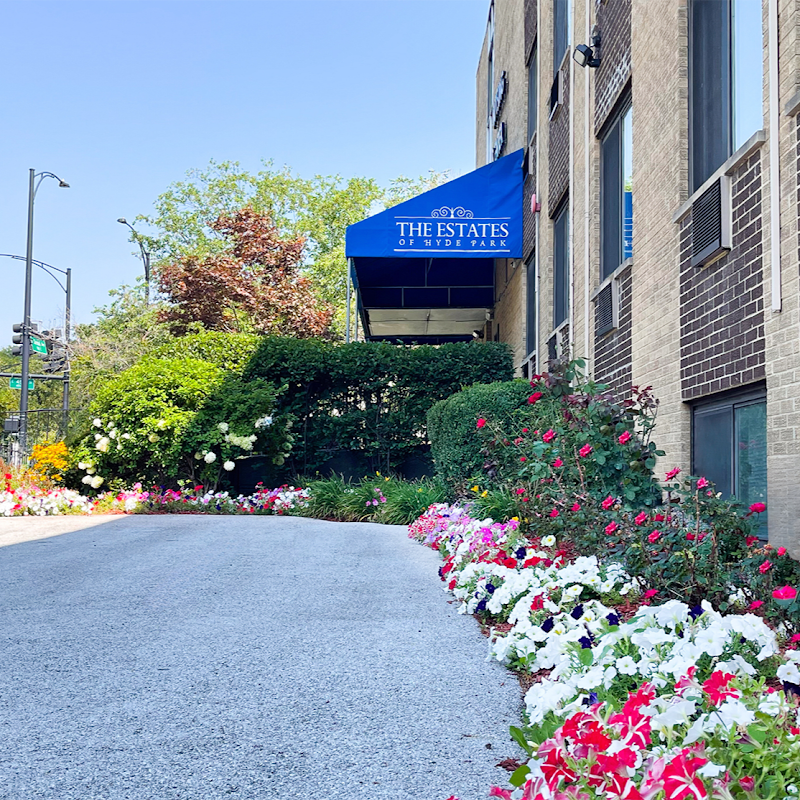
How is Kenwood Vlge Nrsg And Rhb Ctr Staffed?

CMS rates KENWOOD VLGE NRSG AND RHB CTR's staffing level at 1 out of 5 stars, which is much below average compared to other nursing homes. Staff turnover is 52%, compared to the Illinois average of 46%. RN turnover specifically is 80%, which is notably high. RNs provide skilled clinical oversight, so turnover in this role can affect medical care quality.

What Have Inspectors Found at Kenwood Vlge Nrsg And Rhb Ctr?

State health inspectors documented 73 deficiencies at KENWOOD VLGE NRSG AND RHB CTR during 2022 to 2025. These included: 9 that caused actual resident harm, 63 with potential for harm, and 1 minor or isolated issues. Deficiencies causing actual harm indicate documented cases where residents experienced negative health consequences.
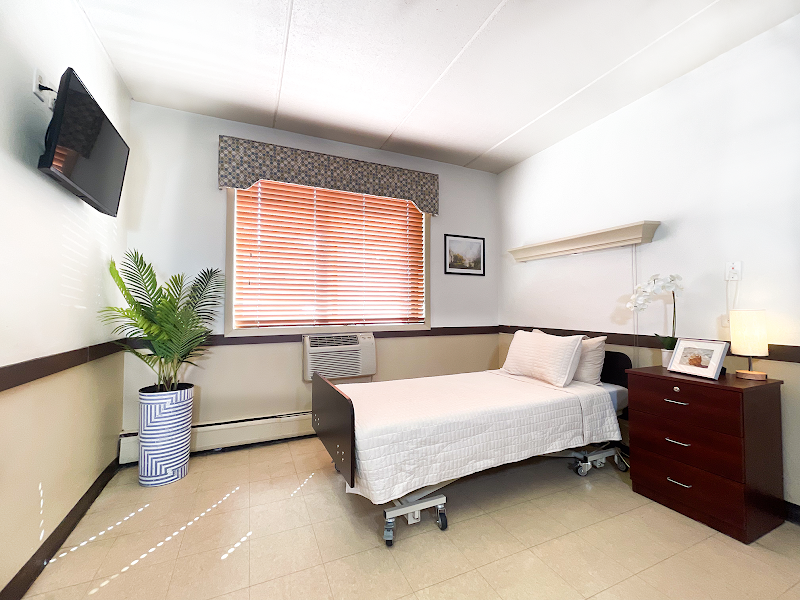
Who Owns and Operates Kenwood Vlge Nrsg And Rhb Ctr?

KENWOOD VLGE NRSG AND RHB CTR is owned by a for-profit company. For-profit facilities operate as businesses with obligations to shareholders or private owners. The facility operates independently rather than as part of a larger chain. With 155 certified beds and approximately 129 residents (about 83% occupancy), it is a mid-sized facility located in CHICAGO, Illinois.
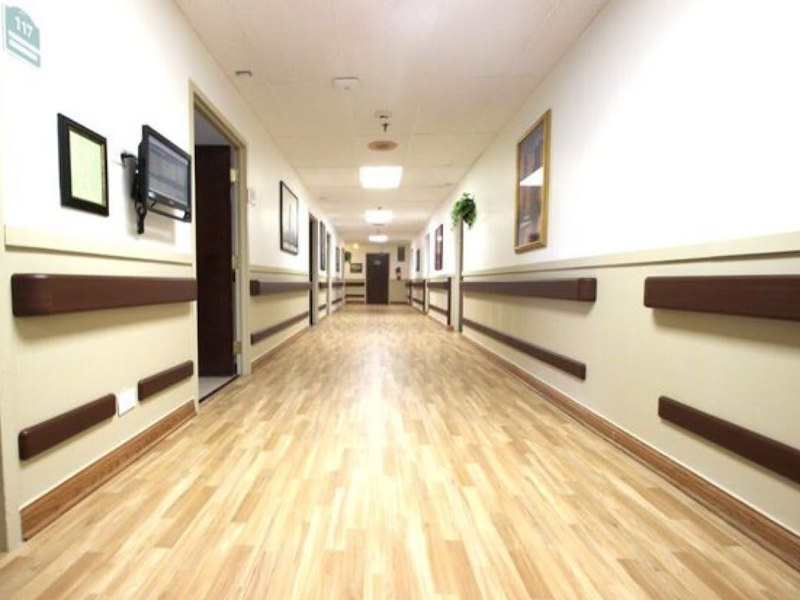
How Does Kenwood Vlge Nrsg And Rhb Ctr Compare to Other Illinois Nursing Homes?

Compared to the 100 nursing homes in Illinois, KENWOOD VLGE NRSG AND RHB CTR's overall rating (1 stars) is below the state average of 2.5, staff turnover (52%) is near the state average of 46%, and health inspection rating (1 stars) is much below the national benchmark.

What Should Families Ask When Visiting Kenwood Vlge Nrsg And Rhb Ctr?

Based on this facility's data, families visiting should ask: "What safeguards and monitoring systems are in place to protect residents from abuse or neglect?" "Can you walk me through typical staffing levels on day, evening, and night shifts?" "Can I visit during a mealtime to observe dining assistance and food quality?" "How do you handle medical emergencies, and what is your hospital transfer rate?" These questions are particularly relevant given the substantiated abuse finding on record and the below-average staffing rating.

Is Kenwood Vlge Nrsg And Rhb Ctr Safe?

Based on CMS inspection data, KENWOOD VLGE NRSG AND RHB CTR has documented safety concerns. The facility has 1 substantiated abuse finding (meaning confirmed case of resident harm by staff or other residents). The facility has a 1-star overall rating and ranks #100 of 100 nursing homes in Illinois. Families considering this facility should ask detailed questions about what corrective actions have been taken since these incidents.

Do Nurses at Kenwood Vlge Nrsg And Rhb Ctr Stick Around?

KENWOOD VLGE NRSG AND RHB CTR has a staff turnover rate of 52%, which is 6 percentage points above the Illinois average of 46%. Moderate turnover is common in nursing homes, but families should still ask about staff tenure and how the facility maintains care continuity when employees leave.

Was Kenwood Vlge Nrsg And Rhb Ctr Ever Fined?

KENWOOD VLGE NRSG AND RHB CTR has been fined $195,987 across 2 penalty actions. This is 5.6x the Illinois average of $35,039. Fines at this level are uncommon and typically indicate a pattern of serious deficiencies, repeated violations, or failure to correct problems promptly. CMS reserves penalties of this magnitude for facilities that pose significant, documented risk to resident health or safety. Families should request specific documentation of what issues led to these fines and what systemic changes have been implemented.

Is Kenwood Vlge Nrsg And Rhb Ctr on Any Federal Watch List?

KENWOOD VLGE NRSG AND RHB CTR is not on any federal watch list. The most significant is the Special Focus Facility (SFF) program, which identifies the bottom 1% of nursing homes nationally based on persistent, serious quality problems. Not being on this list means the facility has avoided the pattern of deficiencies that triggers enhanced federal oversight. This is a positive indicator, though families should still review the facility's inspection history directly.