LITTLE SISTERS OF THE POOR
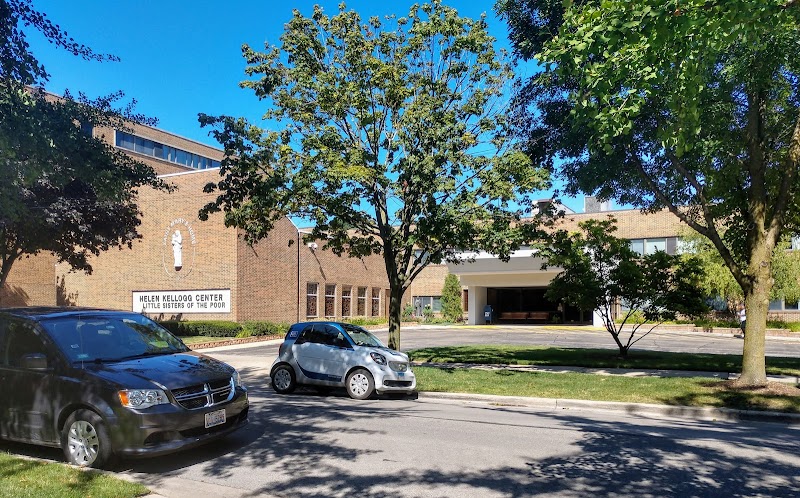
2325 NORTH LAKEWOOD AVENUE, CHICAGO, IL 60614 (773) 935-9600
Non profit - Corporation 76 Beds Independent Data: November 2025
Trust Grade
73/100
#55 of 665 in IL
Last Inspection: March 2025

Within standard 12-15 month inspection cycle. Federal law requires annual inspections.

Overview

Little Sisters of the Poor in Chicago has received a Trust Grade of B, indicating it is a good choice among nursing homes. It ranks #55 out of 665 facilities in Illinois, placing it in the top half, and #17 out of 201 in Cook County, meaning only a few local options are better. However, the facility's performance is worsening, with issues increasing from 4 in 2024 to 8 in 2025. Staffing is a strength with a perfect rating of 5/5 stars and a turnover rate of 40%, which is lower than the state average, suggesting that staff are familiar with the residents. On the downside, the facility has incurred $14,015 in fines, which is average but still raises concerns about compliance, and there have been serious incidents, such as a resident suffering an injury during a transfer and failures in food safety practices that could potentially affect all residents.

Trust Score
B
73/100
In Illinois
#55/665
Top 8%
Safety Record
Moderate
Needs review
Inspections
Getting Worse
4 → 8 violations
Staff Stability
○ Average
40% turnover. Near Illinois's 48% average. Typical for the industry.
Penalties
⚠ Watch
$14,015 in fines. Higher than 95% of Illinois facilities. Major compliance failures.
Skilled Nurses
✓ Good
Each resident gets 52 minutes of Registered Nurse (RN) attention daily — more than average for Illinois. RNs are trained to catch health problems early.
Violations
⚠ Watch
21 deficiencies on record. Higher than average. Multiple issues found across inspections.
★★★★★
5.0
Overall Rating
★★★★★
5.0
Staff Levels
★★★★★
5.0
Care Quality
★★★★☆
4.0
Inspection Score
Stable
2024: 4 issues
2025: 8 issues

The Good

  • 5-Star Staffing Rating · Excellent nurse staffing levels
  • 5-Star Quality Measures · Strong clinical quality outcomes
  • Full Sprinkler Coverage · Fire safety systems throughout facility
  • No fines on record
  • Staff turnover below average (40%)

    8 points below Illinois average of 48%

Facility shows strength in staffing levels, quality measures, fire safety.

The Bad

Staff Turnover: 40%

Near Illinois avg (46%)

Typical for the industry

Federal Fines: $14,015

Below median ($33,413)

Minor penalties assessed

The Ugly 21 deficiencies on record

1 actual harm
May 2025 1 deficiency 1 Harm
SERIOUS (G) 📢 Someone Reported This

A family member, employee, or ombudsman was alarmed enough to file a formal complaint

Actual Harm - a resident was hurt due to facility failures

Accident Prevention (Tag F0689)

A resident was harmed · This affected 1 resident

**NOTE- TERMS IN BRACKETS HAVE BEEN EDITED TO PROTECT CONFIDENTIALITY** Based on interview and record review the facility failed to properly transfer a resident (R1) using a mechanical lift during bed...

Read full inspector narrative →
**NOTE- TERMS IN BRACKETS HAVE BEEN EDITED TO PROTECT CONFIDENTIALITY** Based on interview and record review the facility failed to properly transfer a resident (R1) using a mechanical lift during bedside care. This failure affected one resident (R1) causing R1 to sustain a fracture of the distal shaft of the fifth metatarsal and pain in left hand fifth metatarsal. Findings include: R1 has a diagnosis which includes but are not limited to unspecified abnormalities of gait and mobility and paralytic gait. R1 has a Brief Interview of Mental Status (BIMS) dated 03/17/25 documents that R1 has a BIMS score of 08 which indicates that R1 has some cognitive impairments. R1's Initial/Final Report to the surveying state agency dated 01/15/25 at 8:05 am documents in part: Date, Time, location of Injury: 01/12/2025, 3:50 pm, Residents bedroom. Based on the initial and final investigation, review of the medical record, and interview of witnesses during the event, the following are the known facts at this time on 1/12/2025 at 3:50 pm, nurse informed by CNA (Certified Nursing Assistant) that when transferring from the bed to chair, resident was trying to grab armrests of wheelchair when her left fifth small finger was bent against the armrest. During the investigation, CNA stated that she was transferring the resident from bed to wheelchair with the help of another CNA when they noticed left fifth small finger was bent against the armrest. When asked if she's ok, resident held her hand up and pointed to her left fifth small finger stating, dolor meaning pain in Spanish. Nurse on duty immediately notify physician and POA (Power of Attorney). Order to apply ice to the affected area and give Tylenol PRN (as needed). On 1/14/25 resident verbalized increased pain to the area. Upon assessment, nurse on duty notice slight swelling to left hand. Area around the fifth small finger was warm and sensitive to touch. Physician was notified with an order for X-ray of left hand in X-ray result later revealed fracture of the 5th metatarsal. Nurse immediately notified MD (Medical Doctor) with order given to, buddy tape of injured finger and second finger together, OT (Occupational Therapy) evaluation and treatment, then repeat X-ray in three weeks. The facility's document dated 01/12/25 authored by V11 (Registered Nurse/RN) shows R1's Incident Description and documents, in part: Was informed by CNA (Certified Nursing Assistant) that when transferring from bed to chair, resident was trying to grab armrest of wheelchair when her left fifth small finger was bent against the armrest. On 04/28/25 at 11:45 am, R1 stated that she had an injury to her finger however, R1 does not recall what happened in detailed and could not explain to surveyor how the injury occurred on 01/12/25. R1's hand was observed without bruising or swelling and R1 denied pain to R1's left hand fifth finger at this time. On 04/28/25 at 1:11 pm, V6 (CNA) stated that V6 was assigned to R1 on 01/12/25 the day of R1's injury to her left hand fifth finger. V6 explained that she and V7 (CNA) was performing a pivot transfer with R1 without a gait belt or mechanical lift. V6 explained that she and V7 was positioned on each side of R1 while V7 was holding onto the back of R1's pants, V6 was holding underneath R1's right arm and R1 was holding onto R1's wheelchair. V6 then explained that she thinks R1 snapped her left hand fifth finger while R1 was holding onto R1's wheelchair. V6 further explained that once she and V7 transferred R1 to her wheelchair, R1 was holding her left hand 5th finger and showing V6 her (R1) fifth finger with facial grimaces. V6 then informed R1's nurse that R1 was holding her (R1's) 5th finger and grimacing. V6 denied that she observed swelling, bruising or obvious deformities to R1's left hand fifth finger. V6 explained that R1 is a (mechanical lift) transfer and that R1 uses a wheelchair for ambulation. V6 then explained that V6 and V7 did not use a gait belt or a mechanical lift because V6 felt that R1 could stand and transfer without it. V6 explained during R1's transfer, V6 last saw R1's hand holding onto R1's wheelchair armrest during R1's transfer from bed to chair and that V6 assumed that R1's left hand fifth finger must have gotten caught on R1's wheelchair during V6 and V7's transfer of R1 from bed to chair. On 04/28/25 at 1:30 pm, V7 (CNA) stated that V6 and V7 was transferring R1 from bed to chair around 3:30 pm, on 01/12/25. V7 explain that R1 lay down for a nap around 1:30 pm, every day and staff will get R1 out of bed again around 3:30 pm, daily. V7 further explained that she and V6 (CNA) was transferring R1 from R1's bed to R1's wheelchair after R1's had taken a nap. V7 stated that R1 is (mechanical lift) however she and V6 did not use a gait belt or mechanical lift to transfer R1 that day. V7 stated that she stood behind R1 holding R1's pants and V6 stood to the right side of R1 holding R1's arms. V7 then explained during the transfer that R1 went to grab R1's chair to stand and when V7 and V6 pivoted R1 to her wheelchair, R1 held onto to her wheelchair with both hands facing her wheelchair before she released her left hand to place it onto the right side of the armrest. V7 stated after R1 sat down R1 was holding R1's fifth finger speaking in Spanish and V7 figured R1 was complaining of pain because of how R1 was holding R1's fifth finger and was speaking while showing V7 and V6 her (R1's) finger. V7 stated that she looked at R1's finger and did not see any redness or injuries and then she took R1 to V11 (Agency RN) to inform V11 of R1's injury. V7 stated that she does not recall the next time she cared for R1 after that day. On 04/29/25 at 10:25 am, V11 (Agency RN) stated that V11 is agency nurse who frequently has worked at the facility for over one year and that V11 is familiar with R1. V11 stated that she recalls R1's injury on 01/12/25. V11 explained that on the evening shift a little after 3:00 pm, two CNAs informed V11 that R1 sustained an injury to R1's finger during a transfer. V11 explained that V6 (CNA) and V7 (CNA) stated that R1 tried to grab hold of R1's armrest on R1's wheelchair and that R1's left hand fifth finger got caught on the armrest of R1's wheelchair and injured R1's finger. V11 stated that she assessed R1's finger in the hallway and that R1's finger looked okay. V11 then explained that R1 was complaining of pain to R1's left hand fifth finger. V11 stated that she then phoned V15 (R1's Physician) and informed V15 of R1's injury. V11 stated that V15 ordered an ice pack and for R1 to be given Tylenol for pain. V11 stated that she administered R1 Tylenol and rechecked the effectiveness of the Tylenol that was administered to R1 around 7:00 pm. V11 then stated that R1 denied pain to R1's fifth finger and that R1's finger was a little pink but not swollen at that time. V11 stated that V11 did not assess R1's finger anymore during V11's shift that day and did not work with R1 for a few days after that. V11 stated that she was told that the physician ordered an X-ray of R1's fifth finger a few days after R1's injury when R1's finger began to bruise and swell. On 04/29/25 at 12:00 pm, V2 (Director of Nursing/DON) stated that V2 is currently the DON and Restorative Nurse for the facility. V2 stated that she recalled being called on 01/12/25 regarding R1 having an injury to R1's finger when R1's was being transferred. V2 stated that she spoke with V6 (CNA) and V7 (CNA) and that V6 and V7 stated that R1 was holding the arm rest of her wheelchair during a transfer when R1's finger got caught on armrest of her wheelchair. V2 explained that V17 (Facility's Previous Restorative Nurse) who no longer works at the facility since February 14, 2025, informed staff that R1 had two transfer statuses and that R1 could transfer manually with two staff if R1 was able to stand and that R1 required a mechanical lift with two staff if R1 is shaking to much from R1's Parkinson's. V2 then explained, if a resident is dependent for transfers or requires maximum assistance for transfers, the resident should be transferred with a mechanical lift. V2 further explained that if a resident is not dependent for transfers and staff are transferring the resident without a mechanical lift that the staff (CNAs) should be transferring a resident using a gait belt. V2 then explained that the CNAs should reference the resident care plan task and the POC (Plan of Care) for the resident's transfer status. V2 stated that physical therapy determines the residents initial transfer status and that the restorative nurse then maintains the residents transfer status or refer the resident back to therapy if the resident declines. V2 also explained that the resident's transfer status is on the resident's care plan. V2 stated that R1 transfer status is a mechanical lift and that V2 thinks the staff was previously confused regarding what R1's transfer status at the time of R1's injury on 01/12/25. V2 stated that if staff do not know a resident's transfer status or does not transfer the resident according to the resident plan of care transfer status the staff and/or resident can suffer an injury. V2 further explain that the facility received R1's initial X-ray report around 3:00 am on 01/14/25 that documented that R1's left hand was negative for fracture. V2 then explained that around noon the next day the facility received a second radiology report that stated that R1 had a fracture to the left fifth finger. V2 stated that she called the X-ray company and the X-ray company explained that the results initially were no fracture before the physician reviewed the X-ray and the X-ray physician stated that R1 sustained a fracture of the left hand fifth finger. V2 stated that the X-ray company stated they tried calling the facility regarding the updated X-ray results and was not able to speak with a staff member. V2 denied any nurses stating that they received a call from X-ray company with fracture results. V2 stated after receiving R1's X-ray results that R1 had a fracture of the left fifth metatarsal, R1's left hand was placed in a splint until repeat X-ray shows that R1's left hand fifth finger fracture was healed. On 04/30/25 at 9:40 am, V15 (R1's Physician) stated that V15 is the physician for R1 and last saw R1 about one month ago at the facility. V15 recalls R1 having an incident injuring R1's finger a few months ago. V15 stated that staff informed V15 that R1 bumped R1's finger on a railing during a transfer and that R1's finger was swollen. V15 explained that V15 ordered ice to be applied and for R1 to be medicated for pain due to R1's injury to the left-hand finger. V15 further explained that he visits the facility on Tuesdays and Thursdays and informed staff that V15 would examine R1 on the next Tuesday or Thursday's visit to the facility. V15 stated that he assessed R1's left hand fifth finger a few days after the injury occurred and ordered and X-ray. V15 stated that R1's X-ray revealed R1 had a fractured finger and R1 was placed in a splint until the injury healed on its own. V15 stated that R1 requires maximum assistance's during transfers due R1's Parkinson's disease. V15 stated if R1 is care planned to use a mechanical lift such as (name of mechanical lift) staff should be using the mechanical lift during transfers. V15 also stated that in V15's professional opinion staff should be using mechanical lifts according to the resident's care plan for the safety of the staff and the resident. V15 then stated if a resident is care planned to use a mechanical lift and staff does not use the mechanical lift the resident can have a fall or sustain an injury. R1's Care Plan dated initiated 08/03/22 documents, in part: ADL (Activities of Daily Living) R1 is self-care performance deficit due to muscle stiffness, abnormalities of gait and poor coordination related to Parkinson disease. Transfer: R1 requires (name of mechanical lift) and extensive assist of two CNAs nursing staff with functional transfers to from bed and wheelchair. Explain task to our one prior to starting tasks and get her cooperation. Make sure the straps for the back and legs are applied correctly and secured. With extensive assistance of two nursing staff transfer R1 from bed and wheelchair. R1's Minimum Data Set (MDS) dated [DATE] shows that R1 is dependent for (name of mechanical lift) and chair/bed-to-chair transfer. R1's progress note dated 01/12/25 at 3:50 pm, authored by V11 (RN) documents in part: CNAs (Certified Nursing Assistant) and form nurse on duty resident sustained injury to small finger of left hand on transfer from bed to chair. On assessment it was void of redness or swelling and she was able to move the finger but with pain displaying facial grimaces, and in her native language saying dolor meaning pain. Vital signs taken were normal limits. R1's progress note dated 01/18/25 at 3:07 pm, authored by V5 (RN) documents, in part: resident wearing immobilizer to left hand for 5th and 4th fingers. Ice applied to help with pain and swelling. Patient requires assistance with ADL's (Activities of Daily Living). Resident is a two person assist with (mechanical lift) transfer. Resident on skilled OT (Occupational Therapy) or self-care, caregiver education, therapeutic activity, therapeutic exercise, neuromuscular re-education, wheelchair management and splint/orthotic management. R1's progress note dated 01/18/25 at 6:36 am, authored by V11 (RN) documents, in part: left hand owner gutter splint to be on at all times except for hygiene until healed. Splint in place at this time resident did not remove during the night. No swelling or color change noted at this time period no complaint of pain. R1's Radiology Results Report dated 01/14/25 AT 13:10 pm, documents, in part: Left Hand: examination reveals mild soft tissue swelling with oblique fracture of the distal shaft of the 5th metatarsal with no significant displacement . Impression: Left hand fracture of the left 5th metatarsal. The facility's policy dated 08/2017 and titled Transfer and Lifting documents, in part: Purpose: To ensure the safety of both staff and residents . 5. The designated method of lifting and transferring of a resident is indicated in a residents care plan and (name of documentation system). The facility's policy dated 08/2017 and titled Mechanical Lift, Use of documents, in part: Policy 1. The facility wasn't to ensure that the residents are cared for safely while maintaining a safe work environment for employees. 2. Nursing staff member will assess each resident prior to transferring them to determine the safest way to accomplish the transfer . Purpose To ensure that all nursing staff members use safe handling and moving techniques on all residents during transfers with the mechanical lifts. Use of Mechanical Lift 1. A mechanical lift can be used to transfer a resident who cannot transfer independently. The facility's undated job description titled Certified Nursing Assistant document, in part: Job Description: Summary/Objective: The Certified Nursing Assistant performs routine resident care duties delegated by the registered nurse or licensed practical nurse who supervises the individual for the direct care of a resident. The certified nursing assistant students with their personal needs and caring including mobility in accordance with comprehensive assessment and plan of care . Essential functions: . 3. Observe and report to nurse any changes or observations in residence behavior and physical status and adapt to these changes providing the safest care. Follow instructions and report back when necessary. Seek guidance using the proper channels of communication . 8. Recognize and respond appropriately to unsafe environmental conditions and to emergency situations. 9. Use proper body mechanics. Demonstrate appropriate techniques and walking, use of lifts, transferring, positioning, and transporting residents. Consistent use of gait belt according to the home's policy/ procedure guidelines . Restorative Services: . 14. Display ability to perform restorative services including Apply/ use assistive devices for ambulation, eating, and dressing; maintenance of range of motion, proper turning, positioning, transferring, bowel and bladder training, care, and use of prosthetic devices . Miscellaneous: . 20. Follow all safety, security, exposure control and hazardous waste policies and procedures.
Mar 2025 7 deficiencies
CONCERN (D)

Potential for Harm - no one hurt, but risky conditions existed

Deficiency F0578 (Tag F0578)

Could have caused harm · This affected 1 resident

**NOTE- TERMS IN BRACKETS HAVE BEEN EDITED TO PROTECT CONFIDENTIALITY** Based on interview and record review, the facility failed to clearly document the code status for one (R35) of 5 residents revie...

Read full inspector narrative →
**NOTE- TERMS IN BRACKETS HAVE BEEN EDITED TO PROTECT CONFIDENTIALITY** Based on interview and record review, the facility failed to clearly document the code status for one (R35) of 5 residents reviewed for advance directives in a total sample of 12. Findings include: Record review of R35's physician orders in the electronic medical record revealed R35 had three active advance directive orders, one order for full code dated [DATE], one order for CPR (cardiopulmonary resuscitation) dated [DATE] and one order for DNR (do not resuscitate) dated [DATE]. When reviewing R35's electronic record, writer clicked a hyper link reading (Advance Directives). The writer was taken to three documents, one being a IDPH Uniform Practitioner Order for Life-Sustaining Treatment (POLST) Form, dated [DATE], and designating Do Not Attempt Resuscitation/DNR. No form designating full code was observed. On [DATE] at 1:28 PM, V2 (Director of Nursing) stated there are two code status, DNR (do not resuscitate) or CPR (cardiopulmonary resuscitation)/full code. Writer showed V2 two active orders in R35's electronic record, one order for CPR and one order for DNR. V2 stated R35 has active orders for both CPR and DNR in R35's electronic record. There are two conflicting orders in the record. There should not be two conflicting orders in the record. In the event of a code, the nurse would locate the code status in the electronic record near the top of the page where the residents' picture is. V2 referenced/pointed to the top of R35's electronic record that read Code status: (Advance Directives (hyperlink)) CPR near R35's picture. V2 stated I don't know if this is accurate information at this time. I have to find out if R35 is CPR or DNR. At this time, we don't know. There is no document found in the electronic record to support CPR, only DNR. If the nurse looks at the top portion of the electronic chart it says CPR and the nurse will do CPR. The advance directive is the wishes of the resident of what they want to happen if they go into a code. At this time, I don't know what the residents or POA's (power of attorney) wishes are as far as code status. On [DATE] at 2:55 PM, V4 (Registered Nurse) stated if a resident is coding, I look at the electronic medical record at the top. The code status is dependent on the wants of the family. Therefore, staff have to follow the correct code status of what the family wants. That is contradictory if there is an order for CPR and an order for DNR. There should not be contradictory orders. I will not know which one to follow if there are contradictory orders. On [DATE] at 3:30 PM, V2 (Director of Nursing) presented writer with a IDPH Uniform Practitioner Order for Life-Sustaining Treatment (POLST) Form, dated [DATE], and designating CPR: Attempt cardiopulmonary resuscitation (CPR). V2 stated the form was found in the miscellaneous section of R35's electronic record and someone had placed it in the wrong place. Someone did not remove the DNR form and did not discontinue the DNR order. On [DATE] at 3:50 PM, V3 (Social Service Director/Admissions) stated currently R35 is a full code. CPR and DNR are not the same thing. CPR means they want to be resuscitated. DNR means do not resuscitate. There should only be one active order. Facility policy Advance Directives, 8/2017, documents in part: It will ensure that resident's wishes will be respected in the event that illness or injury prevents them from communicating. Document on admission, that advance directives exist and place a copy of the advance directives in the resident medical record. As advance directives are completed or modified, a current copy is kept within the medical/nursing chart.
CONCERN (D)

Potential for Harm - no one hurt, but risky conditions existed

MDS Data Transmission (Tag F0640)

Could have caused harm · This affected 1 resident

**NOTE- TERMS IN BRACKETS HAVE BEEN EDITED TO PROTECT CONFIDENTIALITY** Based on review of records and interview the facility failed to follow resident assessment instrument (RAI) related to discharge...

Read full inspector narrative →
**NOTE- TERMS IN BRACKETS HAVE BEEN EDITED TO PROTECT CONFIDENTIALITY** Based on review of records and interview the facility failed to follow resident assessment instrument (RAI) related to discharge assessment within the required timeframe after discharge for one (R39) out of four residents for a total sample of 12 residents. This failure resulted failure of completion and/or submission that causes errors on report. Findings include: R39 was initially admitted on [DATE] and was discharged on [DATE]. Per R39's record there was no discharge assessment done after [DATE]. Per record latest assessment of R39 was done on [DATE]. No other assessment was done after [DATE]. On [DATE] at 1:07 PM, V11 (MDS (Minimum Data Set) coordinator/Registered Nurse) states that she has worked for the facility for over 10 years as the MDS coordinator. This surveyor asked V11 when she completes the MDS discharge assessment. V11 states that it depends, in several cases, the residents first came from the community as Medicare A and B, and they discharged back to the community. We have 14 days to complete the assessment. V11 states that R39 was in the facility for a couple of months and then she was sent to the hospital. She died in the hospital. V11 states at this point we don't do anything. V11 states that R39's chart is closed, and she cannot open the MDS assessment. State Operations Manual Appendix PP - Guidance to Surveyors for Long Term Care Facilities dated [DATE], documents in part 483.20(f)(1) Encoding data. Within 7 days after a facility completes a resident's assessment, a facility must encode the following information for each resident in the facility: i. admission assessment. ii. Annual assessment updates. iii. Significant change in status assessments. iv. Quarterly review assessments. v. A subset of items upon a resident's transfer, reentry, discharge, and death. vi. Background (face-sheet) information if there is no admission assessment.
CONCERN (E)

Potential for Harm - no one hurt, but risky conditions existed

PASARR Coordination (Tag F0644)

Could have caused harm · This affected multiple residents

**NOTE- TERMS IN BRACKETS HAVE BEEN EDITED TO PROTECT CONFIDENTIALITY** Based on interview and record review, the facility failed to refer four (R1, R23, R30, R35) out of twelve residents with newly e...

Read full inspector narrative →
**NOTE- TERMS IN BRACKETS HAVE BEEN EDITED TO PROTECT CONFIDENTIALITY** Based on interview and record review, the facility failed to refer four (R1, R23, R30, R35) out of twelve residents with newly evident or possible serious mental illness to the appropriate state-designated authority for review. Findings include: On 03/06/2025, at 3:50 PM, V3 (Social Services Director) states all residents require a level I PASARR to determine if the nursing home is the correct setting for the resident to live in. V3 states she is responsible for making sure Level 1 Pre-admission Screening and Resident Review (PASARR) are in the residents' records. V3 states she is responsible for all PASARR screenings in the facility. V3 states when the new screening agency requirements were implemented approximately 2 years ago, V3 states she entered the residents' information into the new system. V3 states she is responsible for putting in demographics such as the residents' social security number, their diagnoses, their date of birth , and their name. V3 states she is not sure if she entered residents' diagnoses into the new system. V3 states she remembers ensuring that residents' names were on the screening agency census report and is not aware that the facility should be updating the residents' PASARR information as needed to ensure accuracy of diagnoses. V3 states if a resident has a diagnosis of a severe mental illness, then the diagnosis should be entered into the screening agency system for the resident. V3 states the information she enters the screening agency website will determine rather or not a PASARR level II is generated for the resident. V3 states if resident information is entered incorrectly, then there is a possibility that an incorrect PASARR screening could be generated for the resident. V3 states now that she is aware, she will update all the residents' information in the PASARR screening system to ensure an accurate PASARR screening is completed for the residents. 1.) R1s' Face sheet documents that R1 is a [AGE] year-old female admitted to the facility on [DATE], with diagnoses not limited to: major depressive disorder, generalized anxiety, and bipolar disorder. Record review documents that R1 has an initial OBRA Level I Pre-admission Screening and Resident Review/PASARR dated 03/25/2002. There is no documentation to show that R1 was screened for a Level II PASARR. 2.) R30s' Face sheet documents that R30 is a [AGE] year-old female admitted to the facility on [DATE] with diagnoses not limited to: major depressive disorder, anxiety disorder, psychotic disturbance, and unspecified psychosis. Record review documents that R30 has an initial OBRA Level I Pre-admission Screening and Resident Review/PASARR dated 11/12/2020. There is no documentation to show that R30 was screened for a Level II PASARR. Facility policy dated 08/31/2024, titled Request for Criminal History Record and Screenings documents in part, Procedure: The Social Service department will initiate a PASRR screening through . its designee responsible for the screening required. 4.) According to R35's face sheet provided by facility, R35 has diagnoses that include but are not limited to anxiety disorder, schizoaffective disorder, benign prostatic hyperplasia. R35's initial admission date is 9/15/2022. Facility provided R35's Notice of PASRR Level 1 Screen Outcome, review date 9/2/2022 that read in part: PASRR Level 1 Determination: Refer for Level II Onsite, Suspected or confirmed PASRR Condition(s): (MH) Mental Health Disability and (ID) Intellectual Disability. Reviewed Interagency Certification of Screening Results, dated 9/12/2022. Document has no indication that it is a PASARR level 2. Facility is not able to provide a Notice of PASARR level 2 Screen Outcome for R35. On 3/6/25 at 3:50 PM, V3 (Social Service Director/Admissions) stated I've been doing PASARR (pre-admission screening and resident review) since it first started, approximately two years ago. I have to make sure I go into Maximus to see if the resident needs a PASARR level 2. I put in residents' demographics, chart information, mental illnesses into the Maximus system. I've never had an incorrect PASARR. The purpose of PASARR is to make sure the resident is nursing home appropriate. If the nursing home is the correct setting. The system asks for medical chart and medications. I don't remember if it asks for diagnoses. I am the only one that inputs information. Residents that have SMI (severe mental illness) should be referred for a PASARR level 2. They are referred through Maximus. All the information I put in (demographics, chart info, medications taken) lets Maximus know if to come out for a PASARR level 2. According to R35's PASARR level 1 outcome, R35 had a mental disability and they had to come out and see R35. Residents get a PASARR level 1 first. Dependent on what I input, determines if the resident requires a PASARR level 2. Personally, I feel bipolar, and major depressive disorder are not a SMI. Psychosis and schizophrenia are SMI. I have to go by the screening agency. 3.) R23's Face sheet documents that R23 was admitted to the facility on [DATE]. R23 has a diagnosis of bipolar disorder, current episode manic severe with psychotic features with onset date 11/11/2020. Record reviewed documents that R23 has an initial Level 1 Pre-admission Screening and Resident Review/PASARR dated 05/18/2017, documents in part based upon all information and data available to me for this person there is a reasonable basis for suspecting DD (developmental disability), or MI (mental illness) and the noted response is no. There is no documentation to show that R23 was screened for a Level 2 PASARR. On 03/06/25, 4:11 PM, V3 (Social Service Director/Admissions) states that the diagnosis of bipolar disorder, current episode manic severe with psychotic features is a mental illness. V3 states I don't think I updated the diagnosis in maximus or assessment pro. V3 continues to state I wasn't here in 2020.
CONCERN (E)

Potential for Harm - no one hurt, but risky conditions existed

Deficiency F0658 (Tag F0658)

Could have caused harm · This affected multiple residents

**NOTE- TERMS IN BRACKETS HAVE BEEN EDITED TO PROTECT CONFIDENTIALITY** Based on observation, interview and record review, the facility failed to adhere to nursing standards of practice by preparing/p...

Read full inspector narrative →
**NOTE- TERMS IN BRACKETS HAVE BEEN EDITED TO PROTECT CONFIDENTIALITY** Based on observation, interview and record review, the facility failed to adhere to nursing standards of practice by preparing/pre-cupping medications and documenting in advance of administration for four (R5, R15, R19, R20) of 5 residents reviewed for medications in a total sample of 12. Findings include: On [DATE] at 8:50 AM, reviewed second floor medication room with V5 (Registered Nurse) observed: - three medication cups with medications in them and a name printed on the cup - one medication cup with crushed medications and apple sauce in it and a name printed on the cup 1.) R5's physician order summary provided by facility reads in part: diltiazem HCL oral tablet 120mg three times a day for hypertension, hydralazine HCL oral tablet 25 mg three times a day for hypertension, Lasix oral tablet 20mg in the morning for hypertension, losartan potassium oral tablet 100mg one time a day for hypertension, metoprolol tartrate oral tablet 50mg two times a day for hypertension. 2.) R15's physician order summary provided by facility reads in part: lisinopril oral tablet 40mg in the morning for hypertension. R15's Medication Administration Audit Report provided by facility indicates R15's morning medications on [DATE] were administered at 8:04 AM and documented at 8:06 AM by V5 (Registered Nurse) 3.) R19's physician order summary provided by facility reads in part: amlodipine besylate oral tablet 2.5mg one time a day for hypertension, carvedilol oral tablet 6.25mg two times a day for hypertension. R19's Medication Administration Audit Report provided by facility indicates R19's morning medications were administered at 7:34 AM and 7:35 AM. This was documented at 7:35 AM by V5 (Registered Nurse) 4.) R20's physician order summary provided by facility reads in part: amlodipine besylate oral tablet 5mg one time a day for hypertension, hydrochlorothiazide oral tablet 6.25mg in the morning for hypertension, losartan potassium oral tablet 100mg in the morning for hypertension. On [DATE] at 9:04 AM, V5 (Registered Nurse) stated medications are not supposed to be prepared/pre-cupped early. Writer asked V5 to identify the residents named on the cups and identify each tablet and/or capsule in the medication cups. V5 verbalized the four resident names written on the cups. V5 stated V5 cannot tell what medications are in the cups. V5 stated the four residents whose names are on the cups had not received their medications. V5 stated V5 had already documented in the electronic medical record that R15 and R19 whose names were written on two of the cups, received their medications even though they had not. V5 stated you have to make sure the resident takes the medication before documenting it. On [DATE] at 1:28 PM, V2 (Director of Nursing) stated on the second floor, some residents go to the medication room and for some residents the nurse goes to their room. When the resident is in front of the nurse, the nurse opens the residents' chart, looks at what medication they are taking, confirms the right medication, right dose, right time, and right resident, all the rights of medication administration. At that time, the nurse takes the medications from the bingo cards or the bottles. The nurse checks that the medication is not expired as well. No nurse is supposed to pre-pour the medications. That's nursing 101. That's room/risk for medication error. Nurses should not be pre-pouring medications. The medications are clicked/signed out on the MAR (medication administration record) as soon as it is administered to the resident. The nurse should make sure the resident took the medication before documenting/signing that they took it. It should not be sign-out until the medication is given to the resident and is swallowed. It should not be signed out prior to. What if the resident refused the medications, it was entered into the system incorrectly. On [DATE] at 2:55 PM, V4 (Registered Nurse) stated we are not supposed to pre-cup medications before administration. You can make a mistake and the resident may refuse. Pertaining to blood pressure medication, the blood pressure may be too low to give the medication and now you don't know which pill the blood pressure pill is to pull out. Some pills look alike. According to bulletin, Pre-pouring Medications: A Risky Approach, from the Institute for Safe Medication Practices Canada, found at https://ismpcanada.ca/bulletin/pre-pouring-medications-a-risky-approach/, Pre-pouring is a behavior that puts patients at risk and is not recommended for the following reasons: often involves removal of the medication from packaging that identifies the medication and/or the intended recipient.
CONCERN (E)

Potential for Harm - no one hurt, but risky conditions existed

Deficiency F0761 (Tag F0761)

Could have caused harm · This affected multiple residents

**NOTE- TERMS IN BRACKETS HAVE BEEN EDITED TO PROTECT CONFIDENTIALITY** Based on observation, interview and record review, the facility failed to ensure expired medications were not available to admin...

Read full inspector narrative →
**NOTE- TERMS IN BRACKETS HAVE BEEN EDITED TO PROTECT CONFIDENTIALITY** Based on observation, interview and record review, the facility failed to ensure expired medications were not available to administer to residents. This failure has the potential to affect all residents that receive medications from the first-floor medication cart and the second-floor medication room. Findings include: On 3/4/25 at 10:00 AM, reviewed first floor medication cart with V4 (Registered Nurse) observed: - geri-lanta antacid/antigas with expiration date 02/25 - calcium 600mg with expiration date 02/25 - folic acid 400mcg with expiration date 02/25 - centrum silver with expiration date 02/24 On 3/5/25 at 8:50 AM, reviewed second floor medication room with V5 (Registered Nurse) observed: - vitamin C 500mg with best by date 02/25 - five bottles of Glucerna with expiration date [DATE] On 3/4/25 at 10:26 AM, V4 (Registered Nurse) stated there should not be expired medications in the medication cart or medication room. It is believed that expired medications have lost their potency. The expired medication will not be effective, it will not do what it is supposed to do and that will not help the resident. The resident will not get the maximal effect. On 3/5/25 at 9:04 AM, V5 (Registered Nurse) stated there should not be expired medications and meal supplements in the medication cart or medication room. If expired medications were given to the residents, it could be harmful, cause a stomachache or some adverse reaction. On 3/6/25 at 1:28 PM, V2 (Director of Nursing) stated there should not be expired medications in the medication carts or in the medication rooms. There should not be expired supplements in the medication carts or medication rooms. There should not be expired medications because it may be a hazard to the residents, there may be side effects. The medication may not be as effective as it is supposed to be. There is a reason there is an expiration date and it should be followed. Facility policy Medication Storage and Administration, 8/2022, reads in part: The facility shall store all drugs and biologicals in a safe, secure, and orderly manner. No expired or discontinued medications shall be stored with stock, house, routine, or PRN medications that are readily available for administration.
CONCERN (E)

Potential for Harm - no one hurt, but risky conditions existed

Deficiency F0883 (Tag F0883)

Could have caused harm · This affected multiple residents

**NOTE- TERMS IN BRACKETS HAVE BEEN EDITED TO PROTECT CONFIDENTIALITY** Based on interview and record review, the facility failed to have an appropriate policy and procedure to ensure residents are of...

Read full inspector narrative →
**NOTE- TERMS IN BRACKETS HAVE BEEN EDITED TO PROTECT CONFIDENTIALITY** Based on interview and record review, the facility failed to have an appropriate policy and procedure to ensure residents are offered a pneumococcal immunization. The facility also failed to offer and provide pneumococcal vaccination for 5 residents (R6, R23, R31, R32 and R40) out of 5 in a sample of 12. Findings include: On 03/06/2025 at 9:29 AM, V2 (Director of Nursing) states that she is the infection preventionist nurse and manages residents' immunization records. V2 states that she keeps the resident's immunization record in their electronic medical record (EMR) under immunization tab and she also uploads the consents in their EMR. V2 reports that every year they do the flu and Covid-19 vaccines. Right now, they are working on getting the Pneumococcal vaccine clinic set up. V2 states that when there is a new admission, their immunization record is checked and if they need a recommended vaccine, the facility offers it. V2 states that it is documented in the resident EMR if the resident refuses. V2 states that the pneumococcal vaccine is good enough up until 5 years. V2 states that they must have a certain amount of number of residents who are interested in the Pneumococcal vaccine. V2 states that the resident council that just happened on Monday. V2 spoke about it with the residents, and many were interested. V2 states that they are waiting to pick a date when the clinic will come to administer the pneumococcal vaccines. R31's pneumococcal vaccine (Prevnar 13) dated 08/12/2015. There is no documentation noted that R31 was offered a pneumococcal vaccine since then. R32 received pneumococcal vaccine (Prevnar 13) on 1/13/2022. There is no documentation noted that R32 was offered a pneumococcal vaccine since then. R23 received pneumococcal vaccine (Prevnar 13) on 10/08/2019. There is no documentation noted that R23 was offered a pneumococcal vaccine since then. R40 does not have pneumococcal vaccine on record and no documentation noted that R40 was offered a pneumococcal vaccine. R6 refused the influenza and Covid-19 but there is no documentation that R6 refused or was offered pneumococcal vaccine. Facility document dated 08/2017, titled vaccine, pneumococcal documents in part the pneumovax is made available to all residents of the home. It will be administered to all residents who wish it unless there is a history of it already being given within five (5) years and if resident was <[AGE] years of age at the time of vaccination, or if medically contraindicated. Purpose to protect residents from pneumococcal infection. Centers for Disease Control and Prevention website documents in part Adult Immunization Schedule by age [AGE] years or older who have: Not previously received a dose of PCV13, PCV15, PCV20, or PCV21 or whose previous vaccination history is unknown: 1 dose PCV15 or 1 dose PCV20 or 1 dose PCV21. If PCV15 is used, administer 1 dose PPSV23 at least 1 year after the PCV15 dose (may use minimum interval of 8 weeks for adults with an immunocompromising condition, * cochlear implant, or cerebrospinal fluid leak). Previously received only PCV7: follow the recommendation above. Previously received only PCV13: 1 dose PCV20 or 1 dose PCV21 at least 1 year after the last PCV13 dose.
CONCERN (F)

Potential for Harm - no one hurt, but risky conditions existed

Food Safety (Tag F0812)

Could have caused harm · This affected most or all residents

Based on observation, interview, and record review, the facility failed to follow proper sanitation and food storage practices as evidenced by a.) food not properly labeled, b.) food not properly stor...

Read full inspector narrative →
Based on observation, interview, and record review, the facility failed to follow proper sanitation and food storage practices as evidenced by a.) food not properly labeled, b.) food not properly stored, c.) equipment used for food preparation not properly sanitized, and d.) dishwasher temperatures not reaching at least 160 degrees Fahrenheit during the wash cycle. These deficient practices have the potential to affect all 43 residents receiving food prepared in the facility kitchen. Findings include: On 03/04/2025 at 9:39 AM during initial kitchen tour with V7 (Dietary Manager), the following food items were found in the dairy walk-in cooler: 1. 1 package of opened cream cheese wrapped in clear plastic wrap, no open date, no expiration date or use by date labeled on cream cheese. The following food items were found in the prep walk-in cooler: 1. 7 containers of pureed fruit cups individually wrapped in clear plastic wrap, no preparation date, or use by date labeled on fruit cups. 2. 1 round sheet cake labeled with an expiration date of 03/01/2025. 3. 1 box of lettuce and tomatoes with a use by date of 03/02/2025. The following food items were found in the bread walk-in cooler: 1. 2 packages of six grain bread with an expiration date of 02/11/2025. Upon entering the vegetable cooler with V7, surveyor smells a strong, foul, rotten, odor. V7 makes surveyor aware that V7 smells the foul odor also. The following food items were found in the vegetable walk-in cooler: 1. Multiple packages of radishes with a receive date of 01/28/2025. 2. Multiple packages of shredded carrots that are mushy and slimy, with a receive date of 02/11/2025. 3. 3 clear packages of spinach that is wilted and discolored and has a dark and light green color, with a receive date of 02/11/2025. 4. 1 box of whole cucumbers with a white and green furry substance growing on the cucumbers. 5. 1 box of multiple heads of lettuce wrapped in clear plastic that is wet and discolored with a dark green color, with a receive date of 02/11/25. 6. Multiple bags of red seedless grapes with a white and green furry substance growing on the grapes. 7. 1 box of multiple bulbs of garlic and multiple ginger roots with a green furry substance growing on the garlic and ginger. 8. 1 box of multiple heads of cauliflower wrapped in clear plastic that is wet and discolored with a black color, with a receive date of 12/31/2024. On 03/04/2025 at 10:26 AM the following items were found in the dry storage area: 1.Multiple boxes of food items sitting on the floor. At 10:28 AM, dry, bulk storage containers labeled oatmeal, flour, and sugar observed without a date on the bulk storage containers. On 03/04/2025 at 10:30 AM, V7 states all opened food items stored in the walk-in coolers should have an open date, use by date, or expiration date labeled on the food items. V7 states the facility recently had a delivery, which is why the boxes/food items were left sitting on the floor. V7 states food items stored in the dry storage room should be stored on a shelf at least 6 inches off of the floor. V7 states the dry, bulk containers should be labeled with a use by date on them. V7 states all expired food items found in the walk-in coolers should not be stored in the walk-in coolers available and intended for resident use. V7 states produce items should be discarded after at least 14 days after the receive date. V7 states the green and white furry substance growing on the food items appear to be mold. V7 states molded food items are inedible and should be discarded immediately. V7 states if residents consume expired or molded food items, the residents could acquire a food borne illness and become sick due to bacteria. On 03/04/2025 at 10:35 AM, during tour of the dish washing area with V7 (Dietary Manager), surveyor requested V9 (Dishwasher) to test the temperature of the cleaning cycle with V7 present. V9 places a testing strip on a blue plastic bowl and put it inside the dishwasher and ran the cycle. As the dishwasher cycle ran, the wash temperature gauge was observed at 140 degrees Fahrenheit, and the rinse temperature gauge was observed at 185 degrees Fahrenheit. Once the dishwasher cycle completed, the testing strip remained white in color and did not turn black in color. V7 states if the dishwasher reaches the correct temperature, then the testing strip will turn black in color to indicate that the dishware has been sanitized properly. V7 states the dishwasher is a high temperature dishwasher and the dishwasher temperature should reach at least 160 degrees Fahrenheit. V9 then places another testing strip on the blue plastic bowl and ran the dishwasher cycle again. The second testing strip does not turn black and remained white color. V7 is made aware that both test strips did not turn black and remained white in color. V7 states she is not sure why the test strips are not turning black in color because the facility recently received the new dishwasher approximately 3-4 months ago. On 03/04/2025 at 10:44 AM, V9 tests the dishwasher temperature two more times, and a fourth testing strip does not turn black, indicating the correct dishwasher temperatures were not reached. V9 and V7 states the test strips are not turning black because the test strips are not being placed on metal dishware prior to running and testing the dishwasher. V7 states if the correct temperatures are not reached for the dishwasher, then dishware will not be sanitized properly, and residents could potentially get food poisoning. On 03/04/2025 at 11:03 AM, V9 (Dishwasher), V7 (Dietary Manager), and surveyor located next to the three-compartment sink inside of the kitchen. V9 states the facility uses quaternary solution to sanitize dishes washed in the three-compartment sink. V9 observed testing the quaternary solution in the designated sanitize compartment of the three-compartment sink. V9 observed using test strips to test the quaternary solution. V9 observed immersing the test strip in the solution for approximately 5 seconds and test strip turns blue in color. V9 places the test strip next to the test strip package to compare the colors. V9 states the blue color does not show on the package. V9 observed immersing another test strip in the solution for approximately 3 seconds and test strip remains yellow in color. Surveyor asks V9 what the correct ppm is reading for the test strip he immersed in the quaternary solution. V9 states the test strip reading is 200 ppm and matches the green color on the package. Surveyor asks V9 how long he should immerse the test strip in the solution in the sanitize compartment of the sink. V9 states he usually does not keep count of how long he immerses the test strip. V9 states he does not believe he immersed the test strip long enough in the sanitize solution in the three-compartment sink. On 03/05/2025 at 11:18 AM, surveyor located in the kitchen and requested V10 (Dishwasher) to test the temperature of the cleaning cycle with V7 present. V10 places a testing strip on a white glass bowl and put it inside the dishwasher and ran the cycle. As the dishwasher cycle ran, the wash temperature gauge was observed at 140 degrees Fahrenheit, and the rinse temperature gauge was observed at 190 degrees Fahrenheit. Once the dishwasher cycle completed, the testing strip remained white in color and did not turn black in color. V10 states he usually tests the dishwasher temperature using a metal piece of dishware and the strip turns black in color. V10 then places a test strip on a metal bowl and put it inside the dishwasher and ran the cycle. As the dishwasher cycle ran, the wash temperature gauge was observed at 140 degrees Fahrenheit, and the rinse temperature gauge was observed at 190 degrees Fahrenheit. Once the dishwasher cycle completed, the testing strip remained white in color and did not turn black in color. On 03/05/2025 at 11:40 AM, surveyor observes V8 (Cook) preparing and cooking food in the kitchen without a hair net on his head. V7 (Dietary Manager) is made aware and states anyone located in the kitchen should have on a hair net because it is a requirement. Facility policy dated 2017, titled Dishwashing Machine Operation documents in part, Paper thermometers are used to determine correct rinse temperature of the dishwashing machine. Facility policy undated, titled, Manual Sanitizing in Three-Compartment Sink documents in part, In determining the correct concentration of the sanitizing solution and the length of immersion time, manufacturer's instructions are followed. Facility policy dated 2017 titled, Refrigerated Food documents in part, Foods are labeled with the date received and if not opened, are discarded by the manufacturer's expiration date. If opened, the cold food item is labeled with the date opened and the date by which to discard or use by. Facility policy undated, titled, Labeling and dating foods documents in part, Packaged or containerized bulk food may be removed from the original package and stored in an ingredient bin labeled with the common name of the food, the date the item was opened and the date by which the item should be discarded or used by. Facility policy dated 03/05/2025 titled, Hair Restraints documents in part, Hairnets will be worn at all times in the kitchen.
Feb 2024 4 deficiencies
CONCERN (D)

Potential for Harm - no one hurt, but risky conditions existed

Respiratory Care (Tag F0695)

Could have caused harm · This affected 1 resident

Based on observation, interview and record review, the facility failed to date oxygen tubing per resident's physician order. This failure affected one resident (R24) reviewed for oxygen equipment, in ...

Read full inspector narrative →
Based on observation, interview and record review, the facility failed to date oxygen tubing per resident's physician order. This failure affected one resident (R24) reviewed for oxygen equipment, in a total sample of 30 residents. Findings include: On 02/05/2024 at 11:41 am, surveyor observed R24 sitting in the chair in R24's room, awake and alert. R24 was observed with oxygen concentrator machine set at 3 ½ liters oxygen. The nasal cannula was observed placed in R24's nares, nasal cannula was connected to oxygen tubing and tubing was connected to the oxygen concentrator machine, the tubing was not dated. When R24 was asked regarding R24's oxygen tubing, R24 stated, I have been on oxygen for a while and the staff changes the tubing once a month. On 02/07/2024 at 10:30 am V2(DON/Director of Nursing) stated the nurses are responsible for changing the oxygen tubing. V2 stated the oxygen tubing should be changed every Sunday, at least weekly on the 11pm to 7am shift. V2 stated the nurses should label the oxygen tubing with a date which would indicate when the oxygen tubing was changed. V2 stated the oxygen tubing is labeled for infection control purposes and as a reminder for the nursing staff to change the oxygen tubing every seven days. R24's Face Sheet documents that R24 has the following diagnosis that include, but are not limited to, type 2 diabetes mellitus with diabetic neuropathy, unspecified, chronic obstructive pulmonary disease, unspecified, essential (primary) hypertension, myocardial infarction, pure hypercholesterolemia, unspecified, personal history of transient ischemic attack , and cerebral infarction without residual deficits, atherosclerotic heart disease of native coronary artery without angina pectoris, cervicalgia, simple chronic bronchitis and unspecified asthma, uncomplicated. R24's Brief Interview for Mental Status (BIMS) dated 01/08/2024 documents that R24 has a BIMS score of 15, which indicates that R24's cognition is intact. R24's MDS (Minimum Data Set) Section O. dated 01/08/2024 documents, in part, 00100.Special Treatments, Procedures, and Programs, Respiratory Treatments C1. Oxygen Therapy 2. While a resident. R24's Physician Order Summary Report dated 02/07/2024 documents, in part, Titrate Oxygen 2-5L(liters)/min(minute) via N/C (nasal cannula) to maintain O2(oxygen) above 90% every shift for COPD (Chronic Obstructive Pulmonary Disease). R24's Physician Order Summary Report dated 02/07/2024 documents, in part, change oxygen tubing and nebulizer tubing/mask, mark with date at bedtime every Sunday, every evening shift, mark date on the tubing. Surveyor requested a facility policy regarding Oxygen Therapy and Administration from V2(DON). V2 was unable to provide surveyor a facility policy regarding Oxygen Therapy and Administration.
CONCERN (D)

Potential for Harm - no one hurt, but risky conditions existed

Unnecessary Medications (Tag F0759)

Could have caused harm · This affected 1 resident

Based on observations, interviews, and record reviews, the facility failed to ensure a medication administration error rate of <5% for 2 (R16 and R31) residents of 6 residents reviewed for medicati...

Read full inspector narrative →
Based on observations, interviews, and record reviews, the facility failed to ensure a medication administration error rate of <5% for 2 (R16 and R31) residents of 6 residents reviewed for medication administration. There were 28 opportunities and 2 errors resulting in 7.14% medication administration error rate. Findings include: 1.) On 02/06/2024 at 9:09am, during the medication administration task with V3 (Registered Nurse), observed V3 dispensed O** D**** Multivitamins with mineral 1 tablet for R31. On 02/06/2024 at 9:45am, this surveyor requested V3 to check the container of the O** D*** and stated it is multivitamins with minerals. The color is light orange. This is an error. R31's (Active order as of: 02/06/2024) documented, in part Multivitamin Oral Tablet give 1 tablet by mouth one time a day. R31's (Active order as of: 02/06/2024) Order Summary Report documented, in part Diagnoses: (include but not limited to) cerebral infarction, age-related cognitive decline. Order Summary: Multivitamin Oral Tablet 1 tablet by mouth. R31's (Schedule date: 02/06/2024 - 02/06/2024) Medication Admin (administration) Audit Report documented, in part Multivitamin Oral Tablet give 1 tablet one time a day. Schedule date: 02/06/2024. Administration Time: 02/06/2024 10:49 (am). R31's (11/13/2023) Minimum Data Set documented, in part Section C. Cognitive Patterns. C0500. BIMS (Brief Interview for Mental Status) Summary Score: 04. Indicating R31's mental status as severely impaired. 2.) On 02/06/2024 at 9:58am, V3 dispensed and crushed R16's Metoprolol 25mg ER (extended release) tablet. R16's (02/2024) MAR (Medication Administration Record) documented, in part Metoprolol Succinate Oral Capsule ER (Extended Release) 24 Hour Sprinkle 25 MG (Metoprolol Succinate). Start Date: 05/26/2023. This is an error. R16 was given crushed Metoprolol 25mg ER 1 tablet. R16's (Active order as of: 02/06/2024) Order Summary Report documented, in part Diagnoses: (include but not limited to) essential primary hypertension. Medication may be crushed and/or opened unless contraindicated. Order Date: 11/12/2018. Metoprolol Succinate Oral Capsule ER (Extended Release) 24 Hour sprinkle 25 mg. Order Date: 05/25/2023. R16's (Schedule date: 02/06/2024 - 02/06/2024) Medication Admin (administration) Audit Report documented, in part Metoprolol Succinate Oral Capsule ER 24 Hour Sprinkle 25MG. Schedule date: 02/06/2024. Administration Time: 10:00(am). R16's (11/28/2023) Minimum Data Set documented, in part Section C. Cognitive Patterns. C0500. BIMS (Brief Interview for Mental Status) Summary Score: 05. Indicating R16's mental status as severely impaired. On 02/07/2024 at 1:04pm, V2 (Director of Nursing) stated the expectation for the nurse is to follow the 5 rights of medication administration: right patient, route, dose, strength, and time. The form of the medication whether capsule or table is included in the right dose or right strength. On 02/07/2024 at 1:07pm, V2 we (facility) cannot crush Extended-Release medication in tablet form. If the medication needs to be crushed, nurse should have called the doctor and inform the doctor that the resident could not take the medication whole. The doctor will give the recommendation and change the order to what the resident can take crushed. On 02/07/2024 at 1:10pm, V2 stated extended-release medication is coated and takes time to dissolve and gives resident longer coverage. If the nurse crushed extended-release medication, it defeats the purpose of making the medication extended release and it makes the resident not covered longer. Crushed medication works faster, and it will not cover the resident in 24 hours. The potency of the medication will be shorter in duration. On 02/07/2024 at 1:14pm, V2 stated the nurse expectation is to give the medication according to the doctor's order. The (undated) Staff Nurse Licensed Practical Nurse job description documented, in part Summary/Objective: The LPN (Licensed Practical Nurse) is responsible for the provision and supervision of medical and personal care services in assigned area to assure resident attain or maintain the highest practicable physical, mental, and psychosocial well-being in accordance with the comprehensive assessment and plan of care in conjunction with the Unit Supervisor. Essential Functions: 5. Administer and document prescribed medication/treatments accurately and timely and in compliance with policies and procedures. The (undated) Staff Nurse Registered Nurse job description documented, in part Summary/Objective: The RN (Registered Nurse) is responsible for the provision and supervision of medical and personal care services in assigned area to assure resident attain or maintain the highest practicable physical, mental, and psychosocial well-being in accordance with the comprehensive assessment and plan of care. Essential Functions: 5. Administer and document prescribed medication/treatments accurately and timely and in compliance with policies and procedures. The (08/2017) Medication, Administration documented, in part Policy: All medications are administered by licensed nurses. A physician order that includes dosage, route, duration, and other required consideration for administration of medication. It is the responsibility of the nursing professional to be to be aware of the classification, action, correct dosage, and side effects of a medication before administration. Purpose: To aid Residents to overcome illness, relieve and prevent symptoms, and help in diagnosis.
CONCERN (D)

Potential for Harm - no one hurt, but risky conditions existed

Deficiency F0813 (Tag F0813)

Could have caused harm · This affected 1 resident

2.) R7's diagnosis includes but are not limited to type 2 diabetes mellitus with hyperglycemia, major depressive disorder, recurrent, unspecified, chronic obstructive pulmonary disease, unspecified, u...

Read full inspector narrative →
2.) R7's diagnosis includes but are not limited to type 2 diabetes mellitus with hyperglycemia, major depressive disorder, recurrent, unspecified, chronic obstructive pulmonary disease, unspecified, unspecified dementia, unspecified severity, without behavioral disturbance, psychotic disturbance, mood disturbance, and anxiety, nondisplaced fracture of head of unspecified radius, initial encounter for closed fracture, anemia, unspecified, gastro-esophageal reflux disease without esophagitis, atherosclerotic heart disease of native coronary artery without angina pectoris, unspecified urinary incontinence, other specified glaucoma, essential (primary) hypertension, heart failure, unspecified, hyperlipidemia, unspecified, and unspecified atrial fibrillation. R7's Brief Interview for Mental Status (BIMS) dated 12/20/2023 Section C -C0500 documents that R7 has a BIMS score of 06 which indicates that R7's cognition is severely impaired. On 02/05/2024 at 11:06 am observed R7 with a white colored refrigerator on top of a stand in R7's room, with food items stored inside. Surveyor observed a temperature log titled Refrigerator Temperature Record affixed on the front of R7's refrigerator with missing documentation of a temperature for the following dates: 1/8/24, 1/13/24, 1/14/24, 1/16/24, 1/17/24, 1/20/24, 1/25/24, 1/30/24 and 1/31/24. On 02/08/2024 at 1:18 pm V1(Administrator) stated the certified nursing assistants are responsible for maintaining the temperature logs for resident's personal refrigerators. V1 stated the temperatures are checked once a day for resident's personal refrigerators. V1 stated the purpose of checking the temperatures in the resident's personal refrigerators is to make sure the refrigerator is working properly and to prevent illness to the residents from contaminated or expired foods. Based on observations, interviews and record reviews, the facility failed to check and document the temperature of residents' personal refrigerators daily. This failure affected 2 (R7 and R8) residents reviewed for personal food in the total sample of 30 residents. Findings include: 1.) On 02/05/24 at 10:45 AM, there was a personal refrigerator inside R8's room. There were ice cream bars and concentrated juice inside the refrigerator. R8's personal refrigerator temperature log has missing entries. On 02/05/24 at 10:55 AM, these observations were pointed out to V3 (Registered Nurse). V3 stated there are 2 ice cream bars and 2 concentrated apple juice in (R8)'s refrigerator. I (V3) don't know who checks the temperature of the resident's personal refrigerator. Looking at (R8) temperature log, V3 stated there is a lot of temperatures missing for January. On 02/07/2024 at 1:19pm, V2 (Director of Nursing) stated the 3-11 pm shift CNA is supposed to check the temperature of the resident's refrigerator. The importance of checking the refrigerator temperature is to make sure residents have safe food inside the refrigerator. Temperature should be kept between 36F-41F. R8's (Active order as of: 02/06/2024) Order Summary Report documented, in part Diagnoses: (include but not limited to) type 2 Diabetes Mellitus. R8's (11/20/2023) Minimum Data Set documented, in part Section C. Cognitive Patterns. C0500. BIMS (Brief Interview for Mental Status) Summary Score: 15. Indicating R8's mental status as cognitively intact. R8's (Year: 2024) Refrigerator Temperature Record had missing entries on days 1/5/24, 1/6/24, 1/8/24, 1/10/24, 1/13/24, 1/14/24, 1/15/24, 1/16/24,1/17/24, 1/18/24, 1/22/24, 1/23/24, 1/25/24, 1/26/24, 1/27/24, 1/28/24, 1/29/24, 1/30/24, and 1/31/24. The (08/23/23) Personal Refrigerators policy and procedure documented, in part Residents who desire to have a personal refrigerator in their rooms, and who are able to maintain the refrigerator and its contents in a sanitary and safe condition, are welcome to have on brought to the home and placed in their room. Purpose. The purpose of this policy is to help promote a home like environment and to support residents' independence both in choices and daily functioning. Procedure: 4. Facility will provide a thermometer to check temp every day. A daily temperature log will be kept. Temperature will be maintained for food at 40°. 6. The evening shift Certified Nursing Assistant assigned to the resident will monitor the refrigerator to assure that the resident (with or without the help of family/friends) is maintain it in a clean and sanitary condition and is following safety requirements.
CONCERN (F)

Potential for Harm - no one hurt, but risky conditions existed

Food Safety (Tag F0812)

Could have caused harm · This affected most or all residents

Based on observation, interview and record review the facility failed to discard food items that were beyond their use by dates. This failure has the potential to affect all 42 residents that receive ...

Read full inspector narrative →
Based on observation, interview and record review the facility failed to discard food items that were beyond their use by dates. This failure has the potential to affect all 42 residents that receive oral nutrition residing in the facility. Finding include: On 2/5/2024 at 9:20am surveyor observed 3 unopened 1/2 gallons of buttermilk with a yellow sticker dated 11/03/2023 and an unopened one gallon of 2% milk with a use by date of 1/16/2024. On 2/05/2024 at 9:28am V8 (Dietary Manager) stated that it (the milk) should have been thrown out. On 2/05/2024 at 9:30am surveyor observed 2 aluminum pans of cooked Lasagna with a date of 1/18/2024 in the freezer. On 2/5/2024 at 9:35am V8 stated that it was donated on that date, but it should have been discarded by now. On 2/5/2024 at about 9:45am surveyor observed 5 unopened and 1 open box of Chocolate frosting mix with a date of 7/4/2022. On 2/5/2024 at 9:50am V8 stated these items should have been tossed a while ago. Reception and use of Food Items with a review date of 1/2015 documents, in part, documents commercially packaged goods will be used or discarded by the expiration date and used within 3 months of a sell by or best by date and commercially produced dry goods will not be dated more than 9 months beyond the receiving date.
Jan 2023 9 deficiencies
CONCERN (D)

Potential for Harm - no one hurt, but risky conditions existed

Free from Abuse/Neglect (Tag F0600)

Could have caused harm · This affected 1 resident

Based on interview and record review, the facility failed to follow its abuse policy by not providing necessary care inservices, resulting in a female resident physically assaulting another male resid...

Read full inspector narrative →
Based on interview and record review, the facility failed to follow its abuse policy by not providing necessary care inservices, resulting in a female resident physically assaulting another male resident for two (R3 and R29) out of four residents reviewed for physical abuse. Findings include: On 01/03/23 at 01:35 PM, surveyor observed R29 in R29's room. R29 stated he (R29) was kicked and punched by R3. R29 stated that R3 resides down the hall. R29 stated, Multiple times she (R3) hits me (R29). On 01/03/23 at 01:40 PM, V1 (Administrator) stated that she (V1) is aware of the abuse altercation between R3 and R29. She (V1) stated R3 hit R29 first. On 01/05/23 at 10:00 AM, V2 (Director of Nursing) stated that she (V2) is aware of the abuse from R3 hitting R29 first. V2 stated, This is not the first time this has happened. R3's care plan is not updated. We told the family but no interventions were put in place or at least it is not documented. On 01/05/2023 at 10:00 AM, V3 (Director of Social Services) stated V3 was standing by the reception desk on the day of the incident and heard a loud commotion. V3 stated, R29 stated 'She (R3) hit me (R29) and I (R29) hit her (R3) back.' The abuse was witnessed by the CNAs. R3 hit R29 first on 12/2/2022. This is not the first time this incident. The first incident happened before I (V3) started here. I (V3) just know there was a history of them not liking each other. There were no interventions put in place. If there are no interventions put in place, then the incident could happen again and escalate to a worse situation. I am not sure if this incident was reported to IDPH. R3's care plan documents in part: R3 has a tendency of hitting one particular resident on occasion without provocation. R3 will make false statements that the resident hit her (R3) to legitimize her (R3) hit towards him. Interventions: Daughter is aware of R3 hitting a resident. Daughter has a tendency to believe R3 when she (R3) says the other resident hit her (R3) but is aware that R3 has poor memory/impulse control. Progress note by V3 (12/2/2022) documents in part: This writer was standing by the receptionist desk when a loud argument began. This writer went to see what was going on and this writer was told by two witnesses who are CNAs, who informed this writer that they witnessed R3 hit a fellow resident and the resident hit her back. Reviewed R3 and R29's progress notes from 12/1/2022 to 1/3/2023. No documentation was found of interventions to separate the two residents. Facility's Incident Report (12/2/2022) documents in part: R3 alleged that R29 gave her (R3) a look first. R3 then admits that she (R3) did a circular motion with her arms towards R29 and hit him (R29). Interventions: keep both residents apart from each other and to monitor their whereabouts often. Facility's abuse policy (11/2016) documents in part: Every resident of our Home is entitled to respectful and courteous treatment. The facility will not tolerate rude, threatening or abusive behavior toward any resident or any other mistreatment of a resident. No resident, regardless of age, ability to comprehend, disability or comatose status is immune from abuse, neglect, and mistreatment. All residents must be protected from abuse, neglect, and mistreatment. All of the following are examples of possible abuse: Any observation of a staff member, resident, family member, or other individual hitting, striking or otherwise injuring a resident.
CONCERN (D)

Potential for Harm - no one hurt, but risky conditions existed

Report Alleged Abuse (Tag F0609)

Could have caused harm · This affected 1 resident

Based on interview and record review, failed to follow their Abuse policy by failing to report to Illinois Department of Public Health an incident between two residents (R3 and R29) in a sample of 4 r...

Read full inspector narrative →
Based on interview and record review, failed to follow their Abuse policy by failing to report to Illinois Department of Public Health an incident between two residents (R3 and R29) in a sample of 4 residents reviewed for abuse. Findings include: On 01/03/23 at 01:35 PM, surveyor observed R29 residing in R29's room. R29 stated he (R29) was kicked and punched by R3. R29 stated that R3 resides down the hall. R29 stated, Multiple times she (R3) hits me (R29). On 01/03/23 at 01:40 PM, V1 (Administrator) stated that she (V1) is aware of the abuse altercation between R3 and R29. She (V1) stated R3 hit R29 first. She (V1) stated that she (V1) did not report the abuse incident to Illinois Department of Public Health. On 01/05/2023 at 10:00 AM, V3 (Director of Social Services) stated on the date of the incident, V3 was standing by the reception desk and heard a loud commotion. V3 stated, R29 stated 'She (R3) hit me (R29) and I (R29) hit her (R3) back.' The abuse was witnessed by the CNAs. R3 hit R29 first on 12/2/2022. This is not the first time this incident occurred. The first incident happened before I (V3) started here. I (V3) just know there was a history of them not liking each other. There were no interventions put in place. If there are no interventions put in place, then the incident could happen again and escalate to a worse situation. I am not sure if this incident was reported to IDPH. Progress note by V3 (dated 12/2/2022) documents in part: This writer was standing by the receptionist desk when a loud argument began. This writer went to see what was going on and this writer was told by two witnesses who are CNAs, who informed this writer that they witnessed R3 hit a fellow resident and the resident hit her (R29) back. Facility's Incident Report (12/2/2022) documents in part: R3 alleges that R29 gave her (R3) a look first. R3 then admits that she (R3) did a circular motion with her arms towards R29 and hit him (R29). Interventions: keep both residents apart from each other and to monitor their whereabouts often. Facility's abuse policy (11/2016) documents in part: As soon as possible, but within no more than two hours in the case of serious bodily injury, or within twenty-four hours for all other situations of suspected abuse, neglect or mistreatment, the state's Department of Public Health shall be notified of the suspected abuse, neglect or mistreatment. The results of the investigation shall be described in a written report which shall be provided to the State survey agency. The report shall be provided within five working days of the incident.
CONCERN (D)

Potential for Harm - no one hurt, but risky conditions existed

Comprehensive Care Plan (Tag F0656)

Could have caused harm · This affected 1 resident

**NOTE- TERMS IN BRACKETS HAVE BEEN EDITED TO PROTECT CONFIDENTIALITY** On 1/04/23 at 11:20 AM, R42's electronic health record (EHR) was reviewed. R42's physician order sheet, face sheet, and comprehe...

Read full inspector narrative →
**NOTE- TERMS IN BRACKETS HAVE BEEN EDITED TO PROTECT CONFIDENTIALITY** On 1/04/23 at 11:20 AM, R42's electronic health record (EHR) was reviewed. R42's physician order sheet, face sheet, and comprehensive care plan do not document code status for R42. R42's POLST form shows R42 is DNR. Based on interview and record review the facility failed to ensure a comprehensive care plan was in place for the Advance Directives for 3 (R39, R40, R42) of 3 residents reviewed for code status in a sample of 13. Findings include: On 01/05/23 during the record review of Advance directives it was noted by the surveyor that (R39, R40, R42) had no documented care plan for Advance Directives or code status. R39 was admitted to the facility on [DATE]. On 01/05/23 during review of R39 there was no Advance Directive Care Plan. R39's POLST (Physician Orders for Life Sustaining Treatment) Form dated 09/14/22 documents in part: Do Not Attempt Resuscitation/DNR. Selective Treatment. R40 was admitted to the facility on [DATE]. On 01/05/23 during review of R40 there was no Advance Directive Care Plan. R39's POLST (Physician Orders for Life Sustaining Treatment) Form dated 11/06/20 documents in part: Do Not Attempt Resuscitation/DNR. Selective Treatment. R42 was admitted to the facility on [DATE]. On 01/05/23 during the review of R42's Advance Directives it was noted that there was no Physician order for a code status or code status documented on R42's Face Sheet. POLST (Physician Orders for Life Sustaining Treatment) Form dated 12/09/22 documents in part: Do Not Attempt Resuscitation/DNR. Comfort-Focused Treatment. On 01/05/23 at 09:10 AM V3 (Director of Social Service) stated I make sure the advance directives are correct, ask the residents if they are a full code or DNR (Do Not Resuscitate), get the POLST (Physician Order for Life Sustaining Treatment) form and fill it out. The family is involved, we get the doctor to sign the POLST form and we upload it in the resident medical record. After I am done the doctor signs the POLST form and the nurse puts it in the chart as a DNR or full code. I am responsible for whatever the code status is, I put it in the care plan. We discuss the Advance Directives with the resident every quarter during the care plan meeting to see if they want to remain a DNR or full code. On 01/05/23 at 10:42 AM V14 (Registered Nurse) stated V14 looked in the computer and stated R7 does not have a code status. V14 stated, I do not see a code status order, care plan or a code status on R7's face sheet. On 01/05/23 at 11:07 AM V15 (Licensed Practical Nurse) stated R12's POLST form has Do Not Attempt Resuscitation. One other place to look for the code status is the care plan under social services. R12 care plan is DNR. On 01/05/23 at 11:51 AM V2 (Director of Nursing) stated The care plan should be initiated within 24 hours of admission. The code status should be entered in the care plan immediately. On 01/05/23 at 12:15 PM V2 (Director of Nursing) stated The code status for the residents should match on the face sheet, physician orders, POLST form and Care plan. Facility Care Plan policy dated 05/06 documents in part: Every Resident has a comprehensive care plan as part of their medical record. Purpose: to develop quantifiable objectives for the highest level of functioning the Resident may be able to attain. 1. The comprehensive care plan includes measurable objectives and timetables to meet the Resident's medical, nursing, mental and psychosocial needs as identified in the comprehensive assessment. 2. The care plan is initiated within 48 (forty-eight) hours of admission and is written within seven (7) days after the completion of the Resident assessment; it reflects intermediate steps for each outcome objective. The care plan is updated following the admitting MDS (Minimum Data Set).
CONCERN (D)

Potential for Harm - no one hurt, but risky conditions existed

Deficiency F0685 (Tag F0685)

Could have caused harm · This affected 1 resident

Based on observation, interview and record review, the facility failed to provide assistive device to maintain hearing abilities for 1 (R5) of 1 resident who has hearing impairment in a sample of 13 r...

Read full inspector narrative →
Based on observation, interview and record review, the facility failed to provide assistive device to maintain hearing abilities for 1 (R5) of 1 resident who has hearing impairment in a sample of 13 residents reviewed for hearing. Findings include: On 1/03/23 at 11:09 AM, R5 was sitting on a wheelchair alert and verbally responsive. Surveyor attempted to interview R5. R5 stated, What? What are you saying? I can't hear you. Surveyor observed R5 with no hearing aids or any type of assistive device for hearing. On 1/03/23 at 11:10 AM, during interview V6 (Certified Nursing Assistant/CNA) stated that V6 is in charge of R5. V6 stated R5 is still able to verbalize needs but is very hard of hearing. V6 stated R5 has no hearing aids. V6 stated, R5 has no hearing aids. I haven't seen (R5) with hearing aids. Sometimes (R5) doesn't understand when I talk so I use hand gestures. On 1/03/23 at 11:22 AM during interview V7 (Licensed Practical Nurse) stated that R5 is hard of hearing and should have hearing aids to communicate. V7 stated, R5 should have 2 hearing aids. She's (R5) had them for a while. The hearing aids are kept in (R5's) room. The CNAs take them out at night and put them on her (R5) in the morning. They are kept in (R5's) room at night. V7 stated that R5 has not been seen by an audiologist recently. On 1/03/23 at 11:30 AM, surveyor entered R5's room with V6 (CNA). V6 checked R5's room and looked through R5's drawers but no hearing aids were found. V6 stated, I don't think she's (R5) got hearing aids. On 1/04/23 at 9:23 AM, during interview V10 (Certified Nursing Assistant) stated R5 is hard of hearing and never had hearing aids. V10 stated, I think (R5) refused hearing aids a long time ago. R5's electronic health record (EHR) shows an initial admission date of 5/4/2015. R5's audiology consultation progress notes dated 2/8/16 indicates R5 has moderate hearing loss recommending hearing aids. R5's progress note dated 3/11/16 at 3:09 PM documents R5 not wearing R5's hearing aids because they were too loud. This progress note does not document any education provided to R5 and no indication of a follow up with the audiology. R5 was last seen by an audiologist on 2/8/16 and no follow up after that. R5's Minimum Data Set (MDS) with an assessment reference date of 12/12/22 shows R5 has moderate difficulty with hearing, and able to sometimes understand others. R5's comprehensive care plan does not document any refusals in wearing assistive devices for hearing. R5's current physician order sheet (POS) reads in part, Schedule hearing aid evaluation and obtain a hearing aid if needed. Facility's Audiology services policy dated 10/2017 reads in part: Audiology services will be provided upon request.
CONCERN (D)

Potential for Harm - no one hurt, but risky conditions existed

Unnecessary Medications (Tag F0759)

Could have caused harm · This affected 1 resident

Based on observation, interview and record review the facility failed to ensure a medication error rate less than 5% for 3 of 9 residents (R10, R38, R18) in the sample reviewed. There were 25 opportun...

Read full inspector narrative →
Based on observation, interview and record review the facility failed to ensure a medication error rate less than 5% for 3 of 9 residents (R10, R38, R18) in the sample reviewed. There were 25 opportunities and 3 errors resulting in a 12% medication error rate. Findings include: On 01/03/23 at 11:57 AM Medication pass observation was conducted with V11 (Registered Nurse). V11 was observed preparing Humalog KwikPen Solution Pen-injector for R10. V11 was observed immediately setting the dose dial to 15 units as ordered without priming the insulin pen. V11 was observed injecting the Humalog insulin pen to R10's right lower side of abdomen. On 01/03/23 at 12:28 PM V11 was observed preparing Ventolin HFA inhaler for R38. V11 was observed giving instructions to R38 and administered the first puff of Ventolin inhaler. V11 shook the inhaler for about 3 to 5 seconds and administered the 2nd puff of Ventolin inhaler to R38 without waiting for at least 1 minute between puffs. On 01/03/23 at 12:50 PM V11 was observed preparing Ventolin HFA inhaler for R18. V11 was observed giving instructions to R18 and administered the first puff of Ventolin inhaler. V11 shook the inhaler for about 3 to 5 seconds and administered the 2nd puff of Ventolin inhaler to R38 without waiting for at least 1 minute between puffs. On 01/04/23 at 1:20 PM V2 (Director of Nursing) was interviewed and stated that nurses should follow the 6 rights (right resident, medication, dose, time, route, documentation) in giving medications. V2 stated that pen insulin should be primed before administering the dose ordered. V2 stated that the potential effect of not priming the pen insulin prior to administration could result to a lesser dose delivered to the resident. V2 stated that in administering inhalers, the nurse should follow the doctor's order and nurses need to wait for at least a minute in between puffs. V2 stated that medication might not be properly absorbed into the lungs if the nurse is not waiting for at least a minute between puffs. Record review of R10's physician order sheet reads in part: HumaLOG KwikPen Solution Pen-injector 100 UNIT/ML (Insulin Lispro (1 Unit Dial) Inject 15 unit subcutaneously with meals for Type 2 DM. Record review of R38's physician order sheet reads in part: Ventolin HFA Aerosol Solution 108 (90 Base) MCG/ACT (Albuterol Sulfate HFA) 2 inhalation inhale orally every 6 hours. Record review of R18's physician order sheet reads in part: Ventolin HFA Aerosol Solution 108 (90 Base) MCG/ACT (Albuterol Sulfate HFA) 2 puff inhale orally every 6 hours. Facility's policy for insulin injection, subcutaneous - pen device revised date 6/2019 reads in part: 11. Turn dose dial to two (2). Tap gently on the pen device then fully push delivery button as far as it will go. You should see the insulin the chamber or a drop on the needed. If you do not, you may repeat up to six (6) times. After the air shot the dial should return to zero (0). Facility's policy for Inhalers - Oral dated 5/2006 reads in part: Albuterol inhaler - 1 minute between puff (minimum timeframe between each puff).
CONCERN (E)

Potential for Harm - no one hurt, but risky conditions existed

Deficiency F0578 (Tag F0578)

Could have caused harm · This affected multiple residents

**NOTE- TERMS IN BRACKETS HAVE BEEN EDITED TO PROTECT CONFIDENTIALITY** On [DATE] at 11:20 AM, R42's electronic health record (EHR) was reviewed. Review of R42's physician order sheet, face sheet, and...

Read full inspector narrative →
**NOTE- TERMS IN BRACKETS HAVE BEEN EDITED TO PROTECT CONFIDENTIALITY** On [DATE] at 11:20 AM, R42's electronic health record (EHR) was reviewed. Review of R42's physician order sheet, face sheet, and comprehensive care plan do not document code status for R42. R42's POLST form shows R42 is DNR. Based on interview and record review the facility failed to obtain a Physician order and update the resident record with the correct code status for 4 of 4 (R7, R12, R33, R42) residents in a sample of 13. Findings include: 1. R7 was admitted to the facility on [DATE] with diagnoses not limited to Atrial Fibrillation, Major Depressive Disorder, Spinal Stenosis, Rheumatoid Arthritis, Hypothyroidism, Mild Cognitive Impairment, Essential (Primary) Hypertension, Venous Insufficiency and Rhabdomyolysis. R7's MDS (Minimum Data Set) Section C Cognitive Pattern BIMS (Brief Interview for Mental Status) score of 15 indicates intact cognition. Order Summary Report dated [DATE] has no documented Physician order for a Code Status. Order Summary Report dated [DATE] Order Status: Discontinued document in part: DNR (Do Not Resuscitate) order date [DATE] order discontinued [DATE], DNR order date [DATE] order discontinued [DATE], DNR order date [DATE] order discontinued [DATE] and DNR order date [DATE] order discontinued [DATE]. Care Plan documents in part: Focus: Code Status: R7 and Family request DNR order to be in effect. Date initiated [DATE]. Interventions: Discuss with resident or annually quarterly during care plan meeting to ensure wishes are to be continued. Date initiated [DATE]. On [DATE] at 10:35 AM during the review or R7's Advance Directives it was noted that there was no Physician order or code status on R7's Face Sheet. POLST (Physician Order for Life Sustaining Treatment) Form dated [DATE] documents in part: Do Not Attempt Resuscitation/DNR. Limited additional interventions. Only use medical treatment antibiotics, IV (Intravenous) Fluids and cardiac monitor as indicated. Treatment Plan: Provide Basic Medical Treatments. 2. R12 was admitted to the facility on [DATE]. On [DATE] during review of physician orders it was noted that R12 had no physician order for the code status. Order Listing Report dated [DATE] document in part: DNR, revision date [DATE]. R12's POLST (Physician Orders for Life Sustaining Treatment) Form dated [DATE] documents in part: Do Not Attempt Resuscitation/DNR. Care Plan documents in part: Focus: R12 and/or family request DNR order to be in effect. Date initiated [DATE]. 3. R33 was admitted to the facility on [DATE]. On [DATE] during the review of R33's Advance Directives it was noted that there was no Physician order for a code status or code status documented on R33's Face Sheet. On [DATE] DNR was entered on R33's face for the Advance Directive by V2 (Director of Nursing). Order Listing Report dated [DATE] documents in part: DNR, revision date [DATE]. R33's POLST (Physician Order for Life Sustaining Treatment) Form dated [DATE] document in part: Do Not Attempt Resuscitation/DNR. Comfort-Focused Treatment. Care Plan documents in part: Focus: Code Status: reads in part: R33 and POA (Power of Attorney) request DNR with comfort-focused treatment order to be in effect. Date initiated [DATE]. 4. R42 was admitted to the facility on [DATE]. On [DATE] during the review of R42's Advance Directives it was noted that there was no Physician order for a code status or code status documented on R42's Face Sheet. POLST (Physician Order for Life Sustaining Treatment) Form dated [DATE] documents in part: Do Not Attempt Resuscitation/DNR. Comfort-Focused Treatment. On [DATE] at 09:10 AM V3 (Director of Social Service) stated I make sure the advance directives are correct, ask the residents if they are a full code or DNR (Do Not Resuscitate), get the POLST (Physician Order for Life Sustaining Treatment) form and fill it out. The family is involved, we get the doctor to sign the POLST form and we upload it in the resident medical record. After I am done the doctor signs the POLST form and the nurse puts in the chart as a DNR or full code. It is somewhere that they can type the code status in there. When the resident's medical record is opened in the computer it should have DNR or full code where it has code status. I think nursing enters the code status. We scan the POLST form into the medical records. I am responsible for whatever the code status is, I put it in the care plan. If there is a green piece of tape on the resident door that mean they are a full code. We discuss the Advance Directives with the resident every quarter during the care plan meeting to see if they want to remain a DNR or full code. If there is no order and there is a POLST form the staff should get the order. There was a binder on the floor with the POLST forms, but I don't think it is anymore. R42 is from our apartments for short term rehab. The nurses wanted me ask R42 if she (R42) wanted to be a full code or DNR and R42 chose to be a DNR. Since R42 chose to be a DNR it should be in the care plan. R42's POLST form was uploaded into the computer and there is no order for the code status. On [DATE] at 10:42 AM V14 (Registered Nurse) looked in the computer and stated R7 does not have a code status. I do not see a code status order, care plan or a code status on R7's face sheet. If there is no order for the code status and the resident has a POLST (Physician Order for Life Sustaining Treatment) form for DNR, if CPR (Cardiopulmonary Resuscitation) is started it would be started in error. The code status should be entered in the physician orders. On [DATE] at 11:03 AM R7 was asked by the surveyor what were her (R7) wishes for the Advance Directive and R7 responded DNR (Do Not Resuscitate). On [DATE] at 11:07 AM V15 (Licensed Practical Nurse) stated R12's code status is DNR (Do Not Resuscitate). There should be an order for the code status because everything that is done for the resident needs a physician order. Surveyor and V15 proceeded down the hallway to R12's room. Upon standing in front of R12's door surveyor asked V15 how she (V15) would respond if entering R12's room R12 was found unresponsive. V15 responded The green tape on R12's door would make R12 a full code and I would have to start CPR according to the green piece of tape. The green piece of tape should be removed because R12 is a DNR. V15 proceeded to remove the green piece of tape from the R12's door frame. V15 looked at the nurses station and nurse office to fine the first-floor binder titled Names and Numbers and Social Facts Good to Know containing the resident POLST forms and was unable to locate the binder. On [DATE] at 11:51 AM V2 (Director of Nursing) stated The code status order should be put in the Physician orders immediately, as long as the POLST (Physician Order for Life Sustaining Treatment) form is signed by the doctor. The POLST form is uploaded into the medical records under the miscellaneous tab. The admitting nurse puts the order in the computer for the code status. If we do not have an order for the code status the resident have to be a full code. The resident and physician sign the POLST form. The code status should be entered in the care plan immediately. Entering the code status on the face sheet is a little tricky depending on who enters the code status in PCC (Point Click Care). If the code status is entered in as an order you have to go under advance directives for it to show on the face sheet. There is no order for R7's code status on the physician order sheet and the code status is not showing on the face sheet. If a resident is found unresponsive, we would look at the residents' door and see if there is a green sticker there. If the resident is a full code, there would be a green sticker. If there is an immediate situation we rely on the green sticker on door or run and go check the order. R7 was admitted to the hospital and when R7 came back someone did not put the code status order in. When a resident is admitted to the facility part of the nurse's responsibility is to contact the doctor for clarification of orders and get a code status order. If the resident does not have the green sticker on the door, you cannot start CPR (Cardiopulmonary Resuscitation). We use the green sticker, face sheet or order for the code status. If we do not have the order or don't know the code status, we do CPR. If there was a green piece of tape on R12's door I would start CPR and I would have started CPR in error because R12 is a DNR (Do Not Resuscitate). On [DATE] at 12:15 PM V2 (Director of Nursing) stated The code status for the residents should match the face sheet, physician orders, POLST form and Care plan. If the code status does not match there is a potential for confusion and staff doing CPR when they are not supposed to or not doing CPR when they are supposed to CPR. FacilityCardiopulmonary Resuscitation CPR policy (revised 06/17) documents in part: If there is a written advance directive to resuscitate, if the Resident has no advance directive, or if the Resident does not have a valid Do Not Resuscitate order, the Resident will be administered cardiopulmonary resuscitation (CPR) when a sudden episode of unconsciousness with no pulse, no heartbeat, or no respiration occurs. Procedure: 1. Upon admission, the Home's staff shall verify the presence of advance directives or the Resident's wishes with regard to CPR; this may be done while conducting the admission assessment. While awaiting a physician's order to withhold CPR, the Home's staff will immediately document discussions with the resident and/or representative, including the Resident's wishes regarding CPR. At a minimum, verbal declination of CPR by a Resident, or if applicable by the Resident's representative, will be witnessed by two staff members. While a physician's order is pending the Home's staff will honor the documented verbal wishes of the Resident or the Resident's representative regarding CPR. 2. Resident's preferences/choices regarding CPR are documented in their advance directives (unless they decline to execute an advance directive). Those choices are reflected also in the physician's orders. Each resident's choice regarding CPR is also readily available in a hard-copy binder in each Resident's care area, where the face sheet of each resident who has elected resuscitation is clearly marked with a green sticker indicating that choice, and the face sheets of those who have decided against resuscitation do not have the green CPR sticker. The entrance to the private room of each resident who has chosen resuscitation is also clearly marked with a green sticker. Facility Do Not Resuscitate policy dated 07/05 documents in part: 1. The home will not use cardiopulmonary resuscitation and related emergency measures to maintain life functions on a resident when there is a Do Not Resuscitate Order in effect. 2. Do Not Resuscitate Order (DNR) is a written order to nursing staff not to resuscitate from cardiac or respiratory arrest when the Resident is in the last phases of dying, or when resuscitation would result in severe pain or damage from the aggressive invasion of the Resident's bodily person. Purpose 1. To respect the wishes of a Resident. Procedure: 1. Do not resuscitate orders must be signed by the resident's attending physician on the physician's order sheet maintained in the Resident's medical record. 4. Do not resuscitate orders (DNR) will remain in effect until the Resident (or surrogate) provides the Home with a signed and dated request to end the DNR order. 5. The interdisciplinary care planning team will review advance directives with the Resident during quarterly care planning sessions to determine if the Resident wishes to make changes to such directives.
CONCERN (E)

Potential for Harm - no one hurt, but risky conditions existed

Deficiency F0678 (Tag F0678)

Could have caused harm · This affected multiple residents

**NOTE- TERMS IN BRACKETS HAVE BEEN EDITED TO PROTECT CONFIDENTIALITY** Based on interview and record review the facility failed to a.) ensure staff obtained a physician order for the code status for ...

Read full inspector narrative →
**NOTE- TERMS IN BRACKETS HAVE BEEN EDITED TO PROTECT CONFIDENTIALITY** Based on interview and record review the facility failed to a.) ensure staff obtained a physician order for the code status for 5 (R7, R12, R33, R37, R42) residents, and b.) ensure staff knew how to confirm the residents' code status in an emergency. Findings include: On [DATE] at 10:35 AM during the review of R7's Advance Directives it was noted that there was no Physician order for a code status or code status documented on R7's Face Sheet. POLST (Physician Orders for Life Sustaining Treatment) Form dated [DATE] documents in part: Do Not Attempt Resuscitation/DNR. Limited additional interventions. Only use medical treatment antibiotics, IV (Intravenous) Fluids and cardiac monitor as indicated. Treatment Plan: Provide Basic Medical Treatments. Review of health records read as follows: R7 was admitted to the facility on [DATE], Order Summary Report dated [DATE] has no documented Physician order for a Code Status. Order Summary Report dated [DATE] Order Status: Discontinued documents in part: DNR (Do Not Resuscitate) order date [DATE] order discontinued [DATE], DNR order date [DATE] order discontinued [DATE], DNR order date [DATE] order discontinued [DATE] and DNR order date [DATE] order discontinued [DATE]. Care Plan documents in part: Focus: Code Status: R7 and Family request DNR order to be in effect. Date initiated [DATE]. Interventions: Discuss with resident or annually quarterly during care plan meeting to ensure wishes are to be continued. Date initiated [DATE]. R12 was admitted to the facility on [DATE]. On [DATE] during review of physician orders it was noted that R12 had no physician order for the code status. Order Listing Report dated [DATE] documents in part: DNR, revision date [DATE]. R12's POLST (Physician Orders for Life Sustaining Treatment) Form dated [DATE] documents in part: Do Not Attempt Resuscitation/DNR. Care Plan documents in part: Focus: R12 and/or family request DNR order to be in effect. Date initiated [DATE]. R33 was admitted to the facility on [DATE]. On [DATE] during the review of R33's Advance Directives it was noted that there was no Physician order for a code status or code status documented on R33's Face Sheet. On [DATE] DNR was entered on R33's face for the Advance Directive by V2 (Director of Nursing). Order Listing Report dated [DATE] documents in part: DNR, revision date [DATE]. R33's POLST (Physician Orders for Life Sustaining Treatment) Form dated [DATE] documents in part: Do Not Attempt Resuscitation/DNR. Comfort-Focused Treatment. Care Plan documents in part: Focus: Code Status: reads in part: R33 and POA (Power of Attorney) request DNR with comfort-focused treatment order to be in effect. Date initiated [DATE]. R37 was admitted to the facility on [DATE]. On [DATE] during the review of R37's Advance Directives it was noted that there was a conflicting code status. Physician order documents in part: DNR code status order date [DATE], DNR code status documented on R37's Face Sheet, POLST (Physician Orders for Life Sustaining Treatment) Form dated [DATE] document in part: Attempt Resuscitation/CPR (Cardiopulmonary Resuscitation) and Care Plan document in part: R37 requests FULL CODE order to be in effect. Date initiated [DATE]. R42 was admitted to the facility on [DATE]. On [DATE] during the review of R42's Advance Directives it was noted that there was no Physician order for a code status or code status documented on R42's Face Sheet. POLST (Physician Orders for Life Sustaining Treatment) Form dated [DATE] documents in part: Do Not Attempt Resuscitation/DNR. Comfort-Focused Treatment. On [DATE] at 09:10 AM V3 (Director of Social Service) stated I make sure the advance directives are correct, ask the residents if they are a full code or DNR (Do Not Resuscitate), get the POLST (Physician Order for Life Sustaining Treatment) form and fill it out. The family is involved, we get the doctor to sign the POLST form and we upload it in the resident medical record. I think nursing enters the code status. If there is a green piece of tape on the resident door that mean they are a full code. If there is no order and there is a POLST form the staff should get the order. There was a binder on the floor with the POLST forms, but I don't think it is there anymore. The nurses wanted me to ask R42 if she (R42) wanted to be a full code or DNR and R42 chose to be a DNR. R42's POLST form was uploaded into the computer and there no order for the code status. On [DATE] at 10:42 AM survey asked V14 (Registered Nurse) how she (V14) would respond if she (V14) were to enter a resident room and found them unresponsive. V14 stated I would not leave the resident and press the call light for staff to come. I would start CPR if there was a green piece of tape on the door. There is red on the door if the resident is a DNR (Do Not Resuscitate). V14 looked in the computer and stated R7 does not have a code status. I do not see a code status order, care plan or a code status on R42's face sheet. If there is no order for the code status and the resident has a POLST (Physician Order for Life Sustaining Treatment) form for DNR, if CPR (Cardiopulmonary Resuscitation) is started it would be started in error. The code status should be entered in the physician orders. V14 presented the surveyor with a Binder located in the second floor Nurse office titled Names and Numbers and Social Facts Good to Know containing the resident POLST forms. On [DATE] at 11:07 AM V15 (Licensed Practical Nurse) stated R12's code status is DNR (Do Not Resuscitate). Surveyor asked V15 how she (V15) would respond if she (V15) were to enter a resident's room and found the resident unresponsive. V15 stated I would look at the door because everyone that is a full code has a green piece of tape. If there is a green piece of tape I would start CPR (Cardiopulmonary Resuscitation). The POLST (Physician Order for Life Sustaining Treatment) form is located in the computer under the miscellaneous tab. R12's POLST form has Do Not Attempt Resuscitation. One other place to look for the code status is the care plan under social services. R12's care plan is DNR. There should be an order for the code status because everything that is done for the resident needs a physician order. Surveyor and V15 proceeded down the hallway to R12's room. Upon standing in front of R12's door surveyor asked V15 how she (V15) would respond if entering R12's room R12 was found unresponsive. V15 responded The green tape on R12's door would make R12 a full code and I would have to start CPR according to the green piece of tape. The green piece of tape should be removed because R12 is a DNR. V15 proceeded to remove the green piece of tape from R12's door frame. V15 looked at the nurses' station and nurses' office to find the first-floor binder titled Names and Numbers and Social Facts Good to Know containing the resident POLST forms and was unable to locate the binder. On [DATE] at 11:51 AM V2 (Director of Nursing) stated The code status order should be put in the Physician orders immediately, as long as the POLST (Physician Order for Life Sustaining Treatment) form is signed by the doctor. The admitting nurse puts the order in the computer for the code status. If we do not have an order for the code status the residents have to be a full code. The resident and physician sign the POLST form. There is no order for R7's code status on the Physician Order Sheet and the code status is not showing on the face sheet. If a resident is found unresponsive, we would look at the resident's door and see if there is a green sticker there. If the resident is a full code, there would be a green sticker. If there is an immediate situation we rely on the green sticker on door or run and go check the order. R7 was admitted to the hospital and when R7 came back someone did not put the code status order in. When a resident is admitted to the facility part of the nurse's responsibility is to contact the doctor for clarification of orders and get a code status order. If the resident does not have the green sticker on the door, you cannot start CPR (Cardiopulmonary Resuscitation). We use the green sticker, face sheet or order for the code status. If we do not have the order or don't know the code status, we do CPR. If there was a green piece of tape on R12's door I would start CPR and I would have started CPR in error because R12 is a DNR (Do Not Resuscitate). On [DATE] at 12:15 PM V2 (Director of Nursing) stated The code status for the residents should match on the face sheet, physician orders, POLST form and care plan. If the code status does not match there is a potential for confusion and staff doing CPR when they are not supposed to or not doing CPR when they are supposed to do CPR. Facility Cardiopulmonary Resuscitation CPR policy (revised 06/17) documents in part: If there is a written advance directive to resuscitate, if the Resident has no advance directive, or if the Resident does not have a valid Do Not Resuscitate order, the Resident will be administered cardiopulmonary resuscitation (CPR) when a sudden episode of unconsciousness with no pulse, no heartbeat, or no respiration occurs. Procedure: 1. Upon admission, the Home's staff shall verify the presence of advance directives or the Resident's wishes with regard to CPR; this may be done while conducting the admission assessment. 2. Resident's preferences/choices regarding CPR are documented in their advance directives (unless they decline to execute an advance directive). Those choices are reflected also in the physician's orders. Each resident's choice regarding CPR is also readily available in a hard-copy binder in each Resident's care area, where the face sheet of each resident who has elected resuscitation is clearly marked with a green sticker indicating that choice, and the face sheets of those who have decided against resuscitation do not have the green CPR sticker. The entrance to the private room of each resident who has chosen resuscitation is also clearly marked with a green sticker. Facility Do Not Resuscitate policy (dated 07/05) documents in part: 1. The home will not use cardiopulmonary resuscitation and related emergency measures to maintain life functions on a resident when there is a Do Not Resuscitate Order in effect. 2. Do Not Resuscitate Order (DNR) is a written order to nursing staff not to resuscitate from cardiac or respiratory arrest when the Resident is in the last phases of dying, or when resuscitation would result in severe pain or damage from the aggressive invasion of the Resident's bodily person. Purpose 1. To respect the wishes of a Resident. Procedure: 1. Do not resuscitate orders must be signed by the resident's attending physician on the physician's order sheet maintained in the Resident's medical record. 4. Do not resuscitate orders (DNR) will remain in effect until the Resident (or surrogate) provides the Home with a signed and dated request to end the DNR order.
CONCERN (E)

Potential for Harm - no one hurt, but risky conditions existed

Deficiency F0761 (Tag F0761)

Could have caused harm · This affected multiple residents

Based on observation, interview and record review, the facility failed to (a) properly discard multi-dose inhaler 30 days of opening for 1 resident (R27); and (b) properly store medications in the ref...

Read full inspector narrative →
Based on observation, interview and record review, the facility failed to (a) properly discard multi-dose inhaler 30 days of opening for 1 resident (R27); and (b) properly store medications in the refrigerator separate from food items and supplement drinks that can potentially affect 18 residents (R37, R42, R10, R39, R19, R22, R32, R9, R24, R18, R30, R35, R40, R27, R7, R38, R4, R11) inspected for medication storage and labeling. Findings include: On 01/03/23 at 12:34 PM 2nd floor medication cart was inspected with V11 (Registered Nurse/RN) and found R27's Advair multi-dose inhaler was observed to had been opened on 12/3/22 with an expiration date of 1/2/23. This medication was still in medication cart (1/3/23). V11 stated that the Advair inhaler was already ordered from the pharmacy and awaiting delivery. At 12:40 PM 2nd floor medication room inspected with V11 (RN). A white refrigerator was observed with the following items: applesauce, chocolate pudding, supplemental dietary drinks, juices (cranberry, apple, orange), 2 bottles of beer (V11 stated those are for residents). The following medications were also inside the white refrigerator including insulins (Lantus pen and Humalog pen for R10; Lantus vial and Insulin lispro pen for R27); Trulicity injections for R10, Probiotic capsules for R19; and open box of stool softener suppositories. V11 stated that suppositories are house stock. On 01/04/23 at 1:20PM during interview V2 (Director of Nursing) stated that the 2nd floor refrigerator in unit station/medication room is for medications that should be refrigerated and is intended for all residents residing on the 2nd floor. V2 stated that medications kept in fridge should be separate from food items. V2 further stated that it is ideal to separate food and medications and temperature should be maintained. V2 stated that expired medication should not be kept in the medication cart and should be returned to pharmacy. Facility's daily census printed on 01/03/23 indicated 18 residents residing on the 2nd floor. Facility Medication Storage and Administration policy (revision date 8/29/20) reads in part: 5. All expired medications either prescribed or house supply shall be removed immediately upon discovery and placed in the appropriate holding receptacle for pick up and destruction by the DON / Designee. 10. Medications requiring refrigeration must be stored in a refrigerator located in the drug room at the nurses' station or other secured location. Medications must be stored separately from food and must be labeled accordingly.
CONCERN (F)

Potential for Harm - no one hurt, but risky conditions existed

Food Safety (Tag F0812)

Could have caused harm · This affected most or all residents

Based on observation, interview, and record review, the facility failed to follow their policy on food storage to ensure food items in the coolers were discarded within the recommended dates after the...

Read full inspector narrative →
Based on observation, interview, and record review, the facility failed to follow their policy on food storage to ensure food items in the coolers were discarded within the recommended dates after the best by dates, to maintain freshness and prevention of apparent signs of spoilage for fruits and vegetables, and to date food items after being opened. These failures have the potential to affect all 41 residents residing in the facility who are receiving oral diets. Findings include: On 1/03/23 at approximately 9:36 AM, an initial kitchen tour was conducted with V5 (Dietary Manager). The following were observed: Cooler 4 with a temperature of 39 degrees Fahrenheit (F): An opened pineapple juice bottle with no label when it was opened. An opened half and half creamer with no label when it was opened. A container of large curd cottage cheese with best by date of 12/19/22. V5 stated that food items should be dated after opening. V5 also stated that facility does not discard food items on the best by dates. V5 stated, We go by days beyond the best by because it's what's recommended. Cooler 1 with a temperature of 38 degrees F: A large container of cabbage with date labeled 10/26. The leaves were very limp with greyish black discoloration. A large container with date labeled 12/13 with spots, mushy and wrinkled skins. A large container of kale with date labeled 12/20. The leaves were very limp with greyish black discoloration. A small container of pears with date labeled 12/20, rotten and very mushy with brown spots and holes. V5 stated, Those need to be thrown out. A large container of butter lettuce with date labeled 12/27. The leaves were very limp. A large container of cauliflower with date labeled 12/6 with mold. V5 stated, It's trash. V5 stated that the dates on the containers specify when the vegetables came in. Cooler 2 with a temperature of 38 degrees F: A box of artisan rolls with best by dates of 12/23/22. A large pack of flour tortillas with best by date of 12/2/22. 2 boxes of bagels with best by dates of 12/16/22. On 1/03/23 at 11:21 AM, a survey team member conducted an interview with R7. R7 stated, I am only eating a whole lot of mashed potatoes and fresh fruit that is not fresh, so I don't eat them. At 1:03 PM, a survey team member conducted an interview with R4. R4 stated that the fruits and vegetables from the kitchen appear to be rotten. On 1/04/23 at 1:51 PM, a follow up interview was conducted with R7. R7 stated that sometimes the breads that the facility give are old, stale, hard to chew, and comes really dry. On 1/05/23 at 10:43 AM, a phone interview was conducted with V13 (Registered Dietitian). V13 stated that V13 does not inspect the facility's coolers. V13 stated that vegetables typically can be stored up to 7 days. V13 stated that best by dates mean that that's the date where that product would be at the best quality until that date. Facility Food Storage Policy dated 1/2017 reads in part: Cold Storage Foods that will be stored for more than 24 hours must be labeled with a discard date. Refrigerated commercially prepared food that are dated with best by or sell by or pull by dates, have be used or discarded within 7 days of additional storage - unless otherwise specified by the manufacturer .Fresh produce, whether fruit or vegetable, also have a shelf life that is dependent upon quality characteristics of freshness and apparent signs of spoilage. Foods such as refrigerated baked goods and fresh produce must be sorted and evaluated for freshness and acceptability upon removing from storage, prior preparation. Donated Bakery and Bread Items - Local bakery items such as bread and cake should be used or frozen within 3 days of the best by date. Refrigerate bread, cakes, sweet rolls, muffins, coffee cakes. Commercially prepared bakery items can be used or frozen within 5 days for bread/cakes.
Understanding Severity Codes (click to expand)
Life-Threatening (Immediate Jeopardy)
J - Isolated K - Pattern L - Widespread
Actual Harm
G - Isolated H - Pattern I - Widespread
Potential for Harm
D - Isolated E - Pattern F - Widespread
No Harm (Minor)
A - Isolated B - Pattern C - Widespread

Questions to Ask on Your Visit

  • "Can I speak with families of current residents?"
  • "What's your RN coverage like on weekends and overnight?"

Our Honest Assessment

Strengths
  • • 40% turnover. Below Illinois's 48% average. Good staff retention means consistent care.
Concerns
  • • 21 deficiencies on record, including 1 serious (caused harm) violation. Ask about corrective actions taken.
  • • $14,015 in fines. Above average for Illinois. Some compliance problems on record.
Bottom line: Mixed indicators with Trust Score of 73/100. Visit in person and ask pointed questions.

About This Facility

What is Little Sisters Of The Poor's CMS Rating?

CMS assigns LITTLE SISTERS OF THE POOR an overall rating of 5 out of 5 stars, which is considered much above average nationally. Within Illinois, this rating places the facility higher than 99% of the state's 100 nursing homes. This rating reflects solid performance across the metrics CMS uses to evaluate nursing home quality.
How is Little Sisters Of The Poor Staffed?

CMS rates LITTLE SISTERS OF THE POOR's staffing level at 5 out of 5 stars, which is much above average compared to other nursing homes. Staff turnover is 40%, compared to the Illinois average of 46%. This relatively stable workforce can support continuity of care.

What Have Inspectors Found at Little Sisters Of The Poor?

State health inspectors documented 21 deficiencies at LITTLE SISTERS OF THE POOR during 2023 to 2025. These included: 1 that caused actual resident harm and 20 with potential for harm. Deficiencies causing actual harm indicate documented cases where residents experienced negative health consequences.
Who Owns and Operates Little Sisters Of The Poor?

LITTLE SISTERS OF THE POOR is owned by a non-profit organization. Non-profit facilities reinvest revenue into operations rather than distributing to shareholders. The facility operates independently rather than as part of a larger chain. With 76 certified beds and approximately 45 residents (about 59% occupancy), it is a smaller facility located in CHICAGO, Illinois.
How Does Little Sisters Of The Poor Compare to Other Illinois Nursing Homes?

Compared to the 100 nursing homes in Illinois, LITTLE SISTERS OF THE POOR's overall rating (5 stars) is above the state average of 2.5, staff turnover (40%) is near the state average of 46%, and health inspection rating (4 stars) is above the national benchmark.

What Should Families Ask When Visiting Little Sisters Of The Poor?

Based on this facility's data, families visiting should ask: "Can I visit during a mealtime to observe dining assistance and food quality?" "How do you handle medical emergencies, and what is your hospital transfer rate?" "Can I speak with family members of current residents about their experience?"

Is Little Sisters Of The Poor Safe?

Based on CMS inspection data, LITTLE SISTERS OF THE POOR has a clean safety record: no substantiated abuse findings (meaning no confirmed cases of resident harm), no Immediate Jeopardy citations (the most serious violation level indicating risk of serious injury or death), and is not on the Special Focus Facility watch list (a federal program monitoring the lowest-performing 1% of nursing homes). The facility has a 5-star overall rating and ranks #1 of 100 nursing homes in Illinois. While no facility is perfect, families should still ask about staff-to-resident ratios and recent inspection results during their visit.

Do Nurses at Little Sisters Of The Poor Stick Around?

LITTLE SISTERS OF THE POOR has a staff turnover rate of 40%, which is about average for Illinois nursing homes (state average: 46%). Moderate turnover is common in nursing homes, but families should still ask about staff tenure and how the facility maintains care continuity when employees leave.

Was Little Sisters Of The Poor Ever Fined?

LITTLE SISTERS OF THE POOR has been fined $14,015 across 1 penalty action. This is below the Illinois average of $33,219. While any fine indicates a compliance issue, fines under $50,000 are relatively common and typically reflect isolated problems that were subsequently corrected. Families should ask what specific issues led to these fines and confirm they've been resolved.

Is Little Sisters Of The Poor on Any Federal Watch List?

LITTLE SISTERS OF THE POOR is not on any federal watch list. The most significant is the Special Focus Facility (SFF) program, which identifies the bottom 1% of nursing homes nationally based on persistent, serious quality problems. Not being on this list means the facility has avoided the pattern of deficiencies that triggers enhanced federal oversight. This is a positive indicator, though families should still review the facility's inspection history directly.