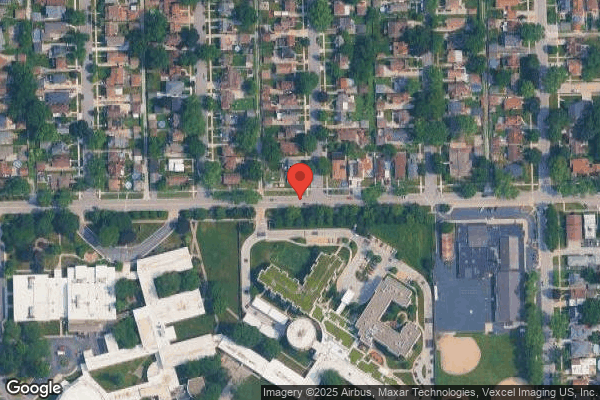
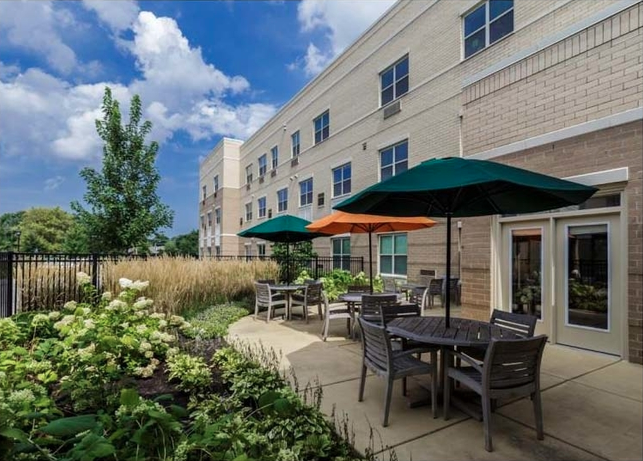



MERCY CIRCLE

3659 WEST 99TH STREET, CHICAGO, IL 60655 (773) 253-3600
Non profit - Church related 23 Beds Independent Data: November 2025
Trust Grade
85/100
#63 of 665 in IL
Last Inspection: February 2025

Within standard 12-15 month inspection cycle. Federal law requires annual inspections.

Overview

Mercy Circle in Chicago has received a Trust Grade of B+, indicating it is above average and recommended for families looking for care. Ranked #63 out of 665 facilities in Illinois, it falls in the top half of the state, while its county rank of #20 out of 201 shows it's one of the better options in Cook County. The facility is stable, maintaining the same number of issues over the past two years, but it has room for improvement, with 16 total issues identified. Staffing is a strong point, as it boasts a perfect 5-star rating and has more registered nurse coverage than 94% of Illinois facilities, although turnover is at 47%, which is average for the state. However, there have been concerning incidents, including kitchen staff not wearing hair restraints and not following infection control practices, which could potentially affect resident safety. Overall, while Mercy Circle offers excellent care in many respects, families should consider these weaknesses when making their decision.

Trust Score
B+
85/100
In Illinois
#63/665
Top 9%
Safety Record
Low Risk
No red flags
Inspections
Holding Steady
4 → 4 violations
Staff Stability
⚠ Watch
47% turnover. Above average. Higher turnover means staff may not know residents' routines.
Penalties
✓ Good
No fines on record. Clean compliance history, better than most Illinois facilities.
Skilled Nurses
✓ Good
Each resident gets 99 minutes of Registered Nurse (RN) attention daily — more than 97% of Illinois nursing homes. RNs are the most trained staff who catch health problems before they become serious.
Violations
⚠ Watch
16 deficiencies on record. Higher than average. Multiple issues found across inspections.
★★★★★
5.0
Overall Rating
★★★★★
5.0
Staff Levels
★★★★☆
4.0
Care Quality
★★★★★
5.0
Inspection Score
Stable
2024: 4 issues
2025: 4 issues

The Good

  • 5-Star Staffing Rating · Excellent nurse staffing levels
  • 4-Star Quality Measures · Strong clinical quality outcomes
  • Full Sprinkler Coverage · Fire safety systems throughout facility
  • No fines on record

Facility shows strength in staffing levels, quality measures, fire safety.

The Bad

Staff Turnover: 47%

Near Illinois avg (46%)

Higher turnover may affect care consistency

The Ugly 16 deficiencies on record

Sept 2025 3 deficiencies
CONCERN (D) 📢 Someone Reported This

A family member, employee, or ombudsman was alarmed enough to file a formal complaint

Potential for Harm - no one hurt, but risky conditions existed

Deficiency F0605 (Tag F0605)

Could have caused harm · This affected 1 resident

**NOTE- TERMS IN BRACKETS HAVE BEEN EDITED TO PROTECT CONFIDENTIALITY** Based on interviews and record review, the facility failed to ensure that one resident (R1) had an informed signed consent prior...

Read full inspector narrative →
**NOTE- TERMS IN BRACKETS HAVE BEEN EDITED TO PROTECT CONFIDENTIALITY** Based on interviews and record review, the facility failed to ensure that one resident (R1) had an informed signed consent prior to administering a psychotropic medication. Findings include:R1 is an [AGE] year old with diagnosis including but not limited to: Alzheimer's disease, Delirium due to known physical condition, unspecified lack of coordination, difficulty in walking and essential hypertension. R1 has a BIMS (Brief Interview of Mental Status) score of 7, which indicates severe cognitive impairment. On 9/17/25 at 12:57 pm, R1 was observed sitting in his room with his daughter. At that time, V9 (R1's Family) said the following, They (facility) were giving my father Trazadone and I asked that they discontinue the Trazadone because once, I came here and he (R1) was very lethargic and looked like a zombie. When I asked what he had, I was told that he had Melatonin and Trazadone for sleep the previous night. Melatonin alone is just fine for my father to sleep. He is [AGE] years old. Why would they give my father both medications to sleep? I never consented for Trazadone and I am his POA (Power of Attorney).On 9/17/25 at 4:15 pm, V6 (Nurse Manager) stated the following, We do not have any psychotropic consents for R1.The purpose of doing the informed consent is to let them know if there are any adverse effects to the medication and to get signed consent to give the medication.On 9/18/25 at 12:40 pm, V7 (Registered Nurse) stated the following, R1 has dementia and is here for rehabilitation. His daughter (V9) is here almost daily and oversees his care. She had concerns about his sleeping medication (Melatonin) and stated that she did not want it scheduled. She (V9) also wanted the Trazodone discontinued and complained that she didn't like the way that her father looked when she visited. I don't give any psychotropic medication without consent from either the patient or the family.R1's MAR (Medication Administration Record) for the period of 8/1/25- 8/31/25 documents both Melatonin 3 mg (milligrams) and Trazadone 50 mg administered to R1 on 8/6/25. R1's Order Report documents the following orders that started on 8/6/24 and ended on 8/9/25: Melatonin 3 mg and Trazadone 50 mg.Facility policy titled Psychotropic medication use documents the following: Facility should comply with the Centers for Medicare and Medicaid Services (CMS) State Operations Manual Appendix PP, and all other Applicable Laws relating to the use of psychopharmacologic medications including gradual dose reductions; Facility staff should inform the resident and/or resident representative of the initiation, reason for use, and the risks associated with the use of psychotropic medications, per facility policy or applicable state regulations.
CONCERN (D) 📢 Someone Reported This

A family member, employee, or ombudsman was alarmed enough to file a formal complaint

Potential for Harm - no one hurt, but risky conditions existed

Comprehensive Care Plan (Tag F0656)

Could have caused harm · This affected 1 resident

**NOTE- TERMS IN BRACKETS HAVE BEEN EDITED TO PROTECT CONFIDENTIALITY** Based on interview and record review, the facility failed to implement and revise the resident-centered care plan for a resident...

Read full inspector narrative →
**NOTE- TERMS IN BRACKETS HAVE BEEN EDITED TO PROTECT CONFIDENTIALITY** Based on interview and record review, the facility failed to implement and revise the resident-centered care plan for a resident with a diagnosis of urinary tract infection and hernia which affected one resident (R1) in the sample of 20 residents reviewed for care plan revision. Findings include:R1's admission Record documents, in part, diagnoses of urinary tract infection (UTI), Delirium, Benign Prostatic Hyperplasia with lower urinary tract symptoms Muscle weakness, difficulty in walking, chronic kidney disease stage 3, Essential hypertension, Unspecified Glaucoma, Alzheimer's, Anxiety, Malignant neoplasm of splenic.R1's Minimum Data Set (MDS), dated [DATE], documents, in part, a Staff Assessment for Cognitive Skills for Daily Decision Making is coded at 7 which is severe cognitive impairment. R1's Care Plan Report dated 8/5/2025 has no documentation stating care of UTI or hernia was observed in chart. On 9/18/25 at 10:56am, V6 ( MDS coordinator/Nurse) stated all diagnosis are care planned to ensure that staff is aware of plan of care for each resident, and if a resident is admitted with a diagnosis of infection such as urinary tract infection this diagnosis should be care planned to ensure staff will be able to plan the care of the resident and monitor sign and symptoms and monitor for adverse reactions and be able to perform appropriate assessments. I reviewed R1's admission paperwork, med list and diagnosis, but I do not read the information under the main diagnosis sheet, and if a resident was still being treated for UTI it is the nurse's responsibility to clarify that in nurse-to-nurse report prior to the resident transferring over to the facility. It is part of my responsibility to have care planned the diagnosis of UTI and Hernia. Hernia should be a focus on a care plan because the nurses can assess for size and monitor for pain and be able to report off to the physician for any changes to site.Facility job description undated and titled (Registered Nurse) documents, in part, . Position Summary: Responsible for the independent supervision of the delivery of care to a group of residents on a nursing unit. Assesses residents' needs, develops care plans, administers nursing care, evaluates nursing care, and supervises CNA and other personnel in the delivery of nursing care; Develops and implements Plan of Care for each resident.Facility policy titled Baseline Care Plan dated November 1, 2019, documents, in part, Purpose Statement: The community must develop and implement a baseline care plan for each resident that includes the instructions needed to provide effective and person-centered care of the resident. The community must provide the resident and representative a summary of the baseline care plan in a language and conveyed in a manner the resident and or representative can understand.2). The baseline /admission care plan will include information for the provision of effective person- centered care and will include the minimum healthcare information necessary to properly care for each resident immediately upon admission.
CONCERN (D) 📢 Someone Reported This

A family member, employee, or ombudsman was alarmed enough to file a formal complaint

Potential for Harm - no one hurt, but risky conditions existed

ADL Care (Tag F0677)

Could have caused harm · This affected 1 resident

**NOTE- TERMS IN BRACKETS HAVE BEEN EDITED TO PROTECT CONFIDENTIALITY** Based on observation, interview and record review, the facility failed to provide showers to a resident. This failure affected o...

Read full inspector narrative →
**NOTE- TERMS IN BRACKETS HAVE BEEN EDITED TO PROTECT CONFIDENTIALITY** Based on observation, interview and record review, the facility failed to provide showers to a resident. This failure affected one resident (R1) reviewed for ADLs (activities of daily living) in a sample size of 20 residents. The findings include:On 9/17/25 at 12:52 PM, R1's white board in room displayed the dates that he was assigned to receive showers from facility staff, the dates listed were every Sunday and every Wednesday. R1 was eating his lunch at time of observation, his hair presented as oily and food debris were observed on his clothing.On 9/17/2025 at 12:57 PM, V9 (family member of R1) was in the room with R1 and stated that the facility has only provided R1 a shower once since admission and she knows this because she is always at the facility or has a caregiver present as a companion for R1 when she is not available.On 9/17/2025 at 1:24 PM, V8 (Certified Nursing assistant, CNA) entered the room of R1 to collect the food tray of R1, V8 stated he did not give R1 a shower. V8 stated I gave R1 a bed bath because I did not have any assistance from team members and the last time I gave R1 a shower was about two weeks ago. V8 stated he could not remember which team members he asked for assistance from, but V8 stated I was too busy to provide R1 a shower because I was assigned to provide a shower to another resident. V8 stated he informed his nurse that a bed bath was given.On 9/17/2025 at 1:27pm, V7 ( Registered nurse) stated she was the nurse assigned to R1 and that V8 informed her that R1 refused his shower, I did not get a chance to go and speak to R1 because V8 had informed me after he provided R1 with the bedbath.V7 stated the staff is aware to come and get the nurse when a resident refuses care so the nurse has the opportunity to speak with the resident to assess the reason for refusal of care and try and encourage the resident to receive treatment. If the resident continues to refuse showers the responsible power of authority (POA) is notified, and documentation is placed in the chart regarding the refusal. V7 provided copies of R1's shower review sheets and stated that the 7 sheets provided were the only shower review sheets available for R1.On 9/17/25 at 1:50 pm, V6 (MDS Nurse) stated the following, Our showers are documented via shower sheet at the nurse's station. We have demented residents who will refuse showers at times. We will attempt to shower the resident and it is documented on the shower sheet. The nurse and the CNA will document on the shower sheet. On 9/18/2025 at 2:45 PM, V2 (Director of Nursing) stated the following the nurse is responsible to ensure that residents showers are completed. The nurse is the direct supervisor of the certified nursing assistants and supervises the day-to-day care provided to the residents on the units each shift and if a resident refuses a shower a call should be placed to the POA because the POA must be made aware that the resident is declining showers to give the POA an opportunity to try and encourage the resident to shower, the refusal behavior should also be care planned in chart, so all staff are aware. I was made aware that R1 refuses showers by one of the staff members and I have never spoke with V9 to inform her that R1 has been refusing staff assistance to have showers taken, I signed R1's bed bath sheet one day but I cannot remember the day.R1's face sheet dated September 17,2025 states that R1 admitted to facility on 8/5/2025 with diagnosis of Urinary tract infection, Delirium, Benign Prostatic Hyperplasia with lower urinary tract symptoms, muscle weakness, difficulty in walking, chronic kidney disease #3, essential hypertension, unspecified glaucoma, Alzheimer's, anxiety, malignant neoplasm of splenic. R1's MDS (Minimum Data Set) dated August 12, 2025, shows R1 has a score of 7 which means R1 has severe cognitive impairment; Functional abilities score is 1 which means R1 is dependent on staff to provide all care for shower/bath; Transfer to tub/shower staff provides more than half of the effort for task to be completed.R1's care plan dated and revised on August 13,2024 shows R1 has a self-care performance deficit requires assistance with personal hygiene and ADLs including brushing teeth, washing/drying face, and hands, combing hair, cutting nails, shaving etc. due to Dementia, Impaired balance, and Fatigue. Intervention/Task: staff will provide [R1] with sponge bath when a full bath or shower cannot be tolerated.On 9/17/2025 reviewed R1's Shower/laundry/AD cleaning schedule, documents that R1 is scheduled to have showers on Sundays and Wednesdays.Skin monitoring: Comprehensive CNA shower review, there were seven sheets to review with listed dates:8/6/25 bed bath completed, 8/31/25 shower completed, 9/3/25 bed bath completed, 9/12/25 refused, asked three times in front of daughter too, refused nurse too, 9/14/25 bed bath, decline shower offered bed bath,9/15/25 bed bath, given bed bath, refused shower,9/17/25 Declined shower, no new skin areas observed, bed bath offered this was signed by V8 and V7.Since admission on [DATE] R1 was scheduled to receive 13 showers and only received one shower per document. Dates of scheduled showers that were to be given are listed below:8/10/25: No document provided,8/13/25: No document provided,8/17/25: No document provided,8/20/25: No document provided,8/24/25: No documents provided,8/27/25: No documents provided,9/7/25: No document provided,9/10/25: No document provided. V7 stated that there were no documented showers for dates listed.On 9/18/2025 at 2:30 PM, V1 stated the facility does not have a specific policy for Activity of daily living or showers.Job description titled Certified Nursing Assistant, documents in part; Essential Functions: (c) Attends to the individual needs of residents, which may include assistance with grooming, bathing, oral hygiene, feeding, incontinent care, toileting, transferring, communicating or other needs in keeping with the individuals care requirements.Job description titled Registered Nurse, documents in part; Position Responsibilities: Supervise CNA.Job description titled Licensed Practical Nurse, documents in part; Position Responsibilities: Supervise CNA.
Feb 2025 1 deficiency
CONCERN (D)

Potential for Harm - no one hurt, but risky conditions existed

Respiratory Care (Tag F0695)

Could have caused harm · This affected 1 resident

Based on observation and interview, the facility failed to have signage posted identifying a resident who has oxygen in use in the resident's room to prevent a possible hazard. This affected one resid...

Read full inspector narrative →
Based on observation and interview, the facility failed to have signage posted identifying a resident who has oxygen in use in the resident's room to prevent a possible hazard. This affected one resident (R12) in a total sample of 21 residents. Findings include: On 02/03/2025 at 10:45am surveyor observed an oxygen tank, contained in a stand, sitting on the floor in R12's room. No Oxygen in Use sign posted on the outside of R12's door indicating that oxygen was in use in R12's room. On 02/03/2025 at 11:45am V1(Director of Nursing) stated, yes, there should be a sign on the door indicating that oxygen is in use in R12's room. On 02/05/2025 at 10:30am V1(Director of Nursing) stated the nursing staff are responsible for placing the Oxygen in Use sign on the resident's room door if the resident requires and receives an order for oxygen. V1 stated the sign is to be placed on front of the resident's door or there is a magnetic sign the staff can place on the door frame. V1 stated if the resident or family smokes in a room with oxygen; this can be a fire hazard. R12's diagnosis includes, but are not limited to, chronic obstructive pulmonary disease, unspecified, atherosclerotic heart disease of native coronary artery without angina pectoris, acute combined systolic (congestive) and diastolic (congestive) heart failure, and type 2 diabetes mellitus without complications. R12 has a Brief Interview for Mental Status (BIMS) dated 12/04/2024 which documents R12 has a BIMS score of 15, indicating R12's cognition is intact. R12's most current Order Summary Report documents in part, O2(oxygen) 2L(liters) via nasal cannula prn (as needed). R12's care plan documents in part, Focus: R12 has COPD (Chronic Obstructive Pulmonary Disease). Goal: R12 will display optimal breathing patterns daily through review date. Intervention: Oxygen Settings: O2(oxygen) via NC9nasal cannula) @(at) 2L(liters). On 02/05/2025 reviewed the facility's policy dated May 2008 and titled Oxygen Administration, which documents in part, Underneath Supplies that may be required for this procedure: l) Oxygen in use, no smoking sign as required.
Jan 2024 4 deficiencies
CONCERN (D)

Potential for Harm - no one hurt, but risky conditions existed

Pharmacy Services (Tag F0755)

Could have caused harm · This affected 1 resident

Based on observation, interview and record review, the facility failed to follow their policies and procedures to ensure a resident received their medications according to the physician's order for 1 ...

Read full inspector narrative →
Based on observation, interview and record review, the facility failed to follow their policies and procedures to ensure a resident received their medications according to the physician's order for 1 (R20) out of 3 residents reviewed for pharmaceutical services in a sample of 12. Findings Include: On 1/23/24 at 11:30 AM, during record review surveyor observed V20 has order for antibiotic starting from 1/18/24 to 1/22/24 for Zithromax 250 MG tablet, to give 2 tablets on the first day, then 1 tablet daily for 4 days was administered until 1/23/24. On 1/23/24 at 11:50 AM, R20 stated, R20 has received medications this morning. On 1/24/24 at 9:50 AM, V12 (Registered Nurse) stated V12 discontinued the medication (Zithromax 250mg tablet) this morning (1/24/24). V12 stated the medication was signed off in the medication administration record yesterday (1/23/24). On 01/24/24 at 10:50 AM, V2 (Director of Nursing) stated that the medication (Zithromax 250 MG Tablet) was administered on 1/23/24, V2 agreed the medication should have been discontinued after the dose of 1/22/24. Nursing note dated 1/23/24 written by V19, reads in part: R20 is on Z-PAK (Zithromax) for infiltrates. R20 Physician Order Sheet (POS) with active orders as of 1/23/24 shows an order for Zithromax Z-Pak Oral Tablet (Azithromycin) Give 1 tablet by mouth one time a day for infiltrates Z-PAK as directed. Medication Administration Record (MAR) shows Zithromax tablet was administered on 1/23/24. Pharmacy prescription shows give Z-PAK as directed (take 2 tablets first day, then 1 tab daily for 4 days, start date 1/18/24. Administrative Orders sheet shows Zithromax 250 MG tablet was discontinued on 1/24/24 instead of 1/22/24. The facility policy for Medication Administration dated 5/2008 reads in part: Medications must be administered in a timely manner and in accordance with the attending physicians written/verbal orders.
CONCERN (D)

Potential for Harm - no one hurt, but risky conditions existed

Deficiency F0761 (Tag F0761)

Could have caused harm · This affected 1 resident

Based on observation, interview and record review, the facility failed to (a) properly date opened multi-dose eyedrops for 1 (R9) resident and (b) ensure that medication was stored properly in the cor...

Read full inspector narrative →
Based on observation, interview and record review, the facility failed to (a) properly date opened multi-dose eyedrops for 1 (R9) resident and (b) ensure that medication was stored properly in the correct medication packaging and for the right resident for 2 (R2 and R9) residents. These failures could potentially affect 2 (R2 and R9) residents from one of one medication carts inspected for medication storage and labeling. The findings include: R2's health record documented admission date 12/8/23 with diagnoses not limited to Acute and chronic respiratory failure with hypoxia, Chronic right heart failure, Chronic lymphocytic leukemia of b-cell type not having achieved remission, Unspecified atrial fibrillation, Essential (primary) hypertension, Malignant neoplasm of unspecified kidney, Chronic kidney disease, Other pulmonary embolism with acute cor pulmonale, Dyspnea, Other allergic rhinitis. R9's health record documented admission date 11/15/23 with diagnoses not limited to Periprosthetic fracture around internal prosthetic right hip joint, Mild persistent asthma, Dementia in other diseases classified elsewhere, Shortness of breath, Cardiac murmur, Gastro-esophageal reflux disease without esophagitis, Dry eye syndrome of bilateral lacrimal glands, Other seasonal allergic rhinitis, Cough, Hypothyroidism. On 01/23/24 at 10:38 am, Medication cart inspected with V10 (Licensed Practical Nurse) and found the following: - R9's Olopatadine HCl Ophthalmic Solution 0.2 % multi-dose eye drops without the date opened written. - R2's clear plastic bag with pharmacy labeled Fluticasone nasal spray and inside the clear plastic bag was R9's Olopatidine multi-dose eye drops. V10 confirmed that R9's Olopatadine HCl Ophthalmic Solution 0.2 % multi-dose eye drops with no open date written and was kept in R2's plastic bag with pharmacy labelled Fluticasone spray. V10 stated that R9's eye drops should not be in R2's plastic bag because it is a different medication and different resident. V10 stated that eyedrops should have a date written when it was opened. On 1/24/24 at 10:54 am, V4 (RN/Registered Nurse manager) stated that all medications should have an open date written once opened to know when it was opened and when it is supposed to be discarded or disposed. V4 stated that medication should be kept in proper pharmacy packaging with correct medication and right resident to avoid confusion and potential medication error. At 11:14 am, V2 (DON/Director of Nursing) stated that all medications should have an open date written after opening to know the date when it was opened to guide when to dispose the medication. Stated that medication should be kept in proper packaging with correct resident and medication to avoid confusion and potential administering medication to wrong resident. R2 order summary report dated 1/23/24 with active order not limited to: - Fluticasone Propionate Nasal Suspension 50 MCG/ACT (Fluticasone Propionate (Nasal) 2 sprays in both nostrils every 24 hours as needed for nasal. R9 order summary report dated 1/23/24 with active order not limited to: - Olopatadine HCL ophthalmic solution 0.2% Instill 1 drop in both eyes in the morning related to Other Seasonal Allergic Rhinits. Facility's medication storage policy dated 8/2022 documented in part: - Proper med storage is a standard of practice. The pharmacy fills medications using specially packaged administration systems designed to assist facilities in reducing medication error. - Medication dating: Eye Drops - eye medication bottles / tubes with accelerated expiration dates must be dated / initialed upon opening. - Medications should be stored separately according to route of administration. Further separate routes in medication carts (e.g. oral, injectables, liquids, eyes, ears, nose, inhalers).
CONCERN (F)

Potential for Harm - no one hurt, but risky conditions existed

Food Safety (Tag F0812)

Could have caused harm · This affected most or all residents

Based on observations, interviews, and record reviews the facility failed to ensure kitchen staff wearing hair restraint while in the kitchen and failed to ensure frozen meats were stored six inches a...

Read full inspector narrative →
Based on observations, interviews, and record reviews the facility failed to ensure kitchen staff wearing hair restraint while in the kitchen and failed to ensure frozen meats were stored six inches above the floor in the freezer. These failures have the potential to affect 22 residents in the facility who are receiving oral diet. Findings Include: On 1/23/24 at around 9:36 AM, during the initial tour in the kitchen, V15 (Utility Worker) was observed handling the dishes in the dishwashing machine area. V15 had short length hair on V15's head and was not wearing any hair restraint. At 9:49 AM, the main freezer was inspected with V14 (Director of Dining) and observed a frozen packed beef brisket and a frozen packed beef eye round on the floor under the shelving unit. V14 stated that foods should not be stored on the floor. V14 placed both packages of meat back at the bottom of the shelf in the freezer. At 9:56 AM, V14 stated that anyone who enters the kitchen especially kitchen staff should wear hair net or hair restraint to keep any loose hair falling off on to the food. On 1/24/24 at 10:11 AM, V13 (Chef Manager) stated that foods in the dry storage, in the cooler, and in the freezer should be stored six inches off the ground. V13 stated that if the food is left on the floor, it needs to be thrown out. V13 stated that there are no residents in the facility that are NPO (Nothing by Mouth). The facility's roster documents 22 residents in the facility. The facility's policy titled; UNIFORM DRESS CODE dated 1/17 reads in part: PROCEDURES: Wear the approved hair restraints when on duty. The facility's policy titled; FOOD AND SUPPLY STORAGE dated 1/18 reads in part: FROZEN STORAGE Store food items _ above the floor, consistent with local food protection codes* *6 above floor is the federal guideline.
CONCERN (F)

Potential for Harm - no one hurt, but risky conditions existed

Infection Control (Tag F0880)

Could have caused harm · This affected most or all residents

Based on observation, interview and record review, the facility failed to follow their policies and procedures to ensure proper infection control guideline practices are followed related to Personal P...

Read full inspector narrative →
Based on observation, interview and record review, the facility failed to follow their policies and procedures to ensure proper infection control guideline practices are followed related to Personal Protective Equipment (PPE) was not worn prior to entering a contact/droplet isolation room for 1 (R20) out 4 residents reviewed for transmission-based precautions in sample of 12. This failure has the potential to affect all 22 residents residing in the facility. Findings Include: On 01/23/24 at 10:42 AM, surveyor noticed R20's door was closed with droplet/contact isolation sign for staff and visitor was posted on the front of R20's door. Surveyor observed V9 R20's son entered R20's droplet/contact isolation (Covid-19) room with surgical mask but without the proper Personal Protective Equipment (PPE) gown, gloves, N95 mask, and face shield. Surveyor called V8 (Certified Nursing Assistant) and asked V8 if it is proper for V9 to enter R20's room without PPE. V8 stated it is not proper for V9 to enter R20's room (Covid-19) without the PPE, V9 can be infected and pass it to others. V8 then told V9 to come out of R20's room for V9 to wear the PPE. V9 came out of R20's room to put on the gown, gloves, N95 mask, and a face shield by the door of R20's room. V9 stated I know it is wrong not to wear the PPE, but I come here to visit R20 every day, and I don't put on the stuff (PPE) by the door. I know I should have put on the PPE. On 01/24/24 at 9:40 AM, V2 (Director of Nursing/Infection Preventionist) stated that staff and visitors should not enter isolation room without donning the appropriate PPE (gown, gloves, N95 mask and a face shield). Because V9 entered R20's room without donning the proper PPE, V9 is vulnerable to infecting others. V2 did Covid-19 test for the residents on 1/23/24, surveyor noticed additional 3 residents positive for Covid-19. Surveyor also noticed no staff redirected V9 from entering R20's room until the surveyor called V8. V2 stated V1 and V2 have written a letter to be sent to family members on the importance of adhering to infection prevention control policy. V2 has stopped the communal dining and other communal activities. The facility policy on Infection and Control Manual Coronavirus (COVID-19) Transmission Based Precaution (TBP) and Visitation dated 5/15/23 reads in part: Before visiting residents, who are on TBP, visitors should be made aware of the potential risk of visiting and precautions necessary to visit the resident. Resident should adhere to the core principles of infection prevention. Recommended PPE: N95 filters or higher, gown, gloves, and eye protection (i.e., goggles or a face shield that covers the front and sides of the face. The facility Daily Census dated 1/23/24 has active 22 residents of which 7 are positive for Covid-19 and additional 3 residents at the end of 1/23/24.
Mar 2023 8 deficiencies
CONCERN (D)

Potential for Harm - no one hurt, but risky conditions existed

Deficiency F0655 (Tag F0655)

Could have caused harm · This affected 1 resident

Based on record reviews and interviews, the facility failed to follow their policy and procedure to develop a baseline care plan that included individualized information to provide effective, person-c...

Read full inspector narrative →
Based on record reviews and interviews, the facility failed to follow their policy and procedure to develop a baseline care plan that included individualized information to provide effective, person-centered care for 3 (R2, R15, R18) of 12 residents in a sample of 12 reviewed for baseline care plans. The Findings Include: R2's clinical records show an admission date of 3/1/23 with listed diagnoses not limited to fracture of lower end of left femur, hypoxemia, hypertension, and major depressive disorder. R2's physician order sheet (POS) shows R2 is receiving psychotropic medications, oxygen therapy, skin treatment, and on mechanically altered diet. R2's baseline care plan was not completed. R15's clinical records show an admission date of 2/17/23 with listed diagnoses not limited to acute respiratory failure with hypoxia, dependence on renal dialysis, heart failure, and diabetes mellitus type 2, and end-staged renal disease. R15's POS shows R18 is receiving outpatient dialysis, on diuretic, and on therapeutic diet. R15's baseline care plan was not completed. R18's clinical records show an admission date of 2/26/23 with listed diagnoses not limited to left humerus displaced fracture, left shoulder girdle fracture, chronic obstructive pulmonary disease, history falling, and major depressive disorder. R18's POS shows R18 is receiving as needed psychotropic and narcotic medications, and on skilled therapy services. R18's baseline care plan was completed and signed on 3/29/23. On 3/30/23 at 9:15 AM, V16 (MDS/Care Plan Coordinator) stated that baseline care plan should be completed and signed within 48 hours of the resident's admission. V16 stated that each area in the baseline care plan template is completed and signed by V16. At 11:59 AM, V2 (Director of Nursing) provided paper copies of R2, R15, and R18's Baseline Care Plan MC showing the timed stamps when they were signed as completed. V2 stated R2 and R15's baseline care plans were not completed and still in progress. V2 stated that R18 baseline care plan was completed and signed late on 3/29/23. The facility's policy titled; Baseline Care Plan dated 11/1/19 reads in part: 1. A baseline/admission care plan will be developed within 48 hours of the resident's admission. 2. The baseline/admission care plan will include information for the provision of effective person-centered care and will include the minimum healthcare information necessary to properly care for each resident immediately upon admission. 3. The baseline/admission care plan will address the initial goals of the resident based on admission orders, physician orders, dietary orders, therapy services, social services, and PASARR recommendations, if applicable.
CONCERN (D)

Potential for Harm - no one hurt, but risky conditions existed

Accident Prevention (Tag F0689)

Could have caused harm · This affected 1 resident

**NOTE- TERMS IN BRACKETS HAVE BEEN EDITED TO PROTECT CONFIDENTIALITY** Based on interviews and record reviews, the facility failed to follow policy and procedures for Fall Prevention and fall occurre...

Read full inspector narrative →
**NOTE- TERMS IN BRACKETS HAVE BEEN EDITED TO PROTECT CONFIDENTIALITY** Based on interviews and record reviews, the facility failed to follow policy and procedures for Fall Prevention and fall occurrence by not completing a fall risk assessment to determine fall risk factors and target interventions to reduce risks on a quarterly basis and after a new occurrence of a fall for one resident (R11) out of a total sample of 12 residents. This has the potential to an increased risk of repeated fall occurrence because of lack of appropriate interventions to prevent such occurrence. As a result of this failure , R11 fell on the floor unwitnessed on 3/27/23. The findings include: On 3/28/23 at 12:51 PM R11 stated I fell yesterday on the floor between my bed and recliner chair. R11 stated she (R11) fell around after lunch time and before supper time. R11 stated she (R11) called for help by activating her (R11) call light. R11 stated she (R11) was assisted by 4 staff. R11 stated she (R11) did not have any injury. R11 stated she (R11) was not hurt. R11 stated I don't know why I fell. R11 Electronic Health Record (EHR) admission date was on 6/25/22 with diagnosis not limited to Unspecified Sequelae of Cerebral Infarction, Parkinson's disease, Rheumatoid Arthritis, Chronic Kidney Disease, Essential Hypertension. R11 Minimum Data Set (MDS) dated [DATE] indicated that R11 was cognitively intact. R11 required limited assistance with bed mobility, transfer, and toilet use. R11 was always incontinent of bowel and bladder. R11 progress notes dated 3/27/23 documented in part: Resident called out from room for help after falling to floor trying to transfer from wheelchair to her recliner. Does not know exactly how she fell but said it happened while transferring top recliner. Claims wheels were locked and she was not too far away from chair. Reported striking cheek on rolling bedside table. Reports mild discomfort to right cheek and hip, denies need for pain medication at this time. Full body assessment performed, no noted trauma to cheek, hip or other part of body, vitals: 151/69 79 94%. Notified PCP with no new orders. Resident notified POA (Power of Attorney). Will monitor frequently for change in status or need for pain intervention. R11 care plan date initiated on 6/23/22 and revision date of 6/23/23 documented in part: R11 is at risk for falls r/t (related to) history of falls, and fall prior to admission. She has a dx (diagnosis) of Syncope, and is receiving antidepressant medication. On 3/30/23 at 10:34 PM V2 (Director of Nursing - DON) was interviewed and stated that she (V2) has been working in the facility for 4 years. V2 stated that whenever there is a fall incident Inter Disciplinary Team (IDT) would do a fall meeting and discuss the fall incident. V2 stated Root Cause Analysis (RCA) and interventions will be discussed as well and will be communicated with staff and therapy if appropriate. V2 stated that Resident Fall assessment should be done upon admission, quarterly, Significant Change in condition and after a fall. V2 stated that care plan will be reviewed and interventions would be updated after a fall. At 10:40 AM V10 (Registered Nurse - Unit manager) was interviewed and stated that one of her (V10) responsibilities is Fall program. V10 stated that whenever there is a fall incident, manager will be informed by staff. V10 stated fall incident will then be discussed in the morning huddle. V10 stated that RCA, interventions will also be discussed by IDT. V10 stated that R11 had a fall incident on 3/27/23. V10 stated that R11 was trying to transfer from bed to recliner chair in the evening. V10 stated there were no injuries. V10 stated that the purpose of fall risk assessment is to identify the predisposing factors that might be a potential problem of falling. R11 EHR reviewed with V2 and V10 and both (V2, V10) stated that the last fall risk assessment done for R11 was on 12/10/22. V2 and V10 stated there should be a fall risk assessment completed on 3/10/23 for quarterly review to determine fall risk factors and target interventions to reduce risks. V2 and V10 also stated that there was no fall risk assessment completed after a fall on 3/27/23 in R11 EHR. Reviewed R11 fall scale assessment dated [DATE] documented in part: Category: High risk for falling. Reviewed facility's policy for fall prevention and fall occurrence dated May, 2018 documented in part: Purpose - To establish a procedure for the prevention and reduction of falls by the assessment analysis of the individual risk factors and fall history. Process / Procedure - 1. A Fall Risk Assessment will be completed at the following intervals: a) Upon admission b) Quarterly c) With a new occurrence of a fall d) Significant change in condition.
CONCERN (D)

Potential for Harm - no one hurt, but risky conditions existed

Respiratory Care (Tag F0695)

Could have caused harm · This affected 1 resident

**NOTE- TERMS IN BRACKETS HAVE BEEN EDITED TO PROTECT CONFIDENTIALITY** Based on observations, interviews, and record reviews, the facility failed to ensure a resident received the correct oxygen flow...

Read full inspector narrative →
**NOTE- TERMS IN BRACKETS HAVE BEEN EDITED TO PROTECT CONFIDENTIALITY** Based on observations, interviews, and record reviews, the facility failed to ensure a resident received the correct oxygen flow rate as ordered by the physician and to ensure a person-centered comprehensive care plan was implemented to address oxygen use for 1 (R2) of 2 residents receiving supplemental oxygen in a sample of 12 reviewed for respiratory care. The Findings Include: R2's clinical records show R2 has a diagnosis of Hypoxemia. R2's Minimum Data Set (MDS) dated [DATE] shows R2 is cognitively intact, is receiving oxygen, and requires extensive two staff assist with bed mobility and transfer. R2's physician order sheet (POS) shows Oxygen per via Nasal Cannula at 1 Liters per Min Continuous Humidified ordered on 3/1/23. R2's comprehensive care plan does not address the use of oxygen. On 3/28/23 at 1:26 PM, R2's resting in bed alert and able to verbalize needs. R2 was receiving oxygen (O2) that was set to 2 liters per minute (LPM) via nasal cannula. R2 stated R2 is receiving the oxygen to help R2 breath easily. On 3/29/2023 at 9:43 AM, R2's resting in bed and was receiving oxygen that was set to 1.5LPM. At 9:54 AM, surveyor asked V9 (Licensed Practical Nurse) to check R2's oxygen order in R2's electronic health record (EHR). V9 confirmed that R2's oxygen flow rate order was 1LPM continuously via nasal cannula. V9 stated that R2 should be getting 1LPM of oxygen continuously and nursing should be monitoring the correct flow rate. V9 stated that R2's oxygen is for R2's diagnosis of Hypoxemia. V9 stated that the nurses have to follow and adjust the flow rate based on the doctor's orders. On 3/30/23 at 9:15 AM, V16 (MDS/Care Plan Coordinator) stated that a resident's comprehensive care plan should address the resident's diagnoses. V16 stated that the purpose of the care plan is to address the needs of the resident for safety and to take care of any problems that the resident is having. V26 stated that if the need of the resident is not addressed in the care plan it could cause harm to the resident. V16 stated that if a resident is receiving supplemental oxygen, it should be part of the intervention in the care plan related to their diagnosis. At 10:21 AM, V2 (Director of Nursing) stated that there is a doctor's order for residents receiving supplemental oxygen therapy. V2 stated that nurses have to follow doctors order for oxygen administration. V2 stated that the nurses should monitor the resident if the oxygen is therapeutic for them and if needs to be increased or decreased, then notify the doctor. V2 stated that the nurses should be monitoring the resident oxygen at least every shift that's in the right setting. The facility's policy titled; Oxygen Administration dated 11/1/19 reads in part: Purpose: To provide guidelines for safe oxygen administration. General Guidelines: 1. Verify that there is a physician's order in place for this procedure or community protocol. The facility's policy titled; Care Planning Resident/Elder Directed dated 5/2008 reads in part: Purpose: To provide care centered on the needs and desires of the resident/elder.
CONCERN (F)

Potential for Harm - no one hurt, but risky conditions existed

Food Safety (Tag F0812)

Could have caused harm · This affected most or all residents

**NOTE- TERMS IN BRACKETS HAVE BEEN EDITED TO PROTECT CONFIDENTIALITY** Based on observation, interview and record review the facility: 1. failed to properly store and label open items; 2. failed to ...

Read full inspector narrative →
**NOTE- TERMS IN BRACKETS HAVE BEEN EDITED TO PROTECT CONFIDENTIALITY** Based on observation, interview and record review the facility: 1. failed to properly store and label open items; 2. failed to discard open items by labeled use by dates; and 3. failed to ensure food is prepared and served [NAME] sanitary manner by failing to don personal protective equipment (PPE) properly; These failures have the potential to affect 23 residents who receive meals from the facility kitchen. 1. On 3/28/2023 at 11:13 am, during the initial tour of the kitchen, inside the ICE CREAM FREEZER, there were 5 tubs of opened ice cream with different flavors that are not labelled with date it was opened and use by date. V3, Kitchen Manager, stated, This kitchen serves the Assisted Living, Supportive Living and Skilled Unit of the facility. The icer cream buckets are not dated, I will throw them all away. Facility provided a document titled Mercy Circle Always Available Menu which affirms that Assorted Ice Creams are being offered and served to residents in the skilled unit. 2. Inside the UNDER COUNTER REFRIGERATOR, there were 2 cartons of liquid eggs with USE BY DATE of 3/27/2023. V3 stated that it is the cooks who check the refrigerators for expired foods. V3 then took the expired cartons of liquid eggs and threw them in the garbage container. 3. On 3/28/2023 at 11:14 AM V7, Cook, while preparing Monte [NAME], was wearing surgical mask but not covering the nose. On 3/28/2023 at 11:21 AM, during the 3rd floor dining room observation, V5, Server, while preparing the food on the steam table, was wearing her surgical mask under her chin, not covering the mouth and nose. V4, Director of Dining Services, motioned for V5 to place her (V5) surgical mask properly. V5 then proceeded to put her mask on properly with the nose and mouth covered. 3/29/2023 11:16 AM, V4, Director of Dining Services stated, Any opened food should have an open date and use by date. Both myself, V4 and V3, Kitchen Manager, check for expired foods in the storage freezers and refrigerators. Facility presented policy with subject Food and Supply Storage under Procedures document in part: Cover, label and date unused portions and open packages. Use the [NAME] orange label, Medvantage label or Ecolab Prep N Print label; complete all sections on the label. Products are good through the close of business on the date noted on the label Date and rotate items; first in, first out (FIFO). Discard food past the use-by or expiration date.
CONCERN (F)

Potential for Harm - no one hurt, but risky conditions existed

Infection Control (Tag F0880)

Could have caused harm · This affected most or all residents

Based on interview and record review the facility failed to follow Water Safety Plan to send water sample annually to rule out Legionella (a bacteria that can cause a serious type of pneumonia (lung i...

Read full inspector narrative →
Based on interview and record review the facility failed to follow Water Safety Plan to send water sample annually to rule out Legionella (a bacteria that can cause a serious type of pneumonia (lung infection) called Legionnaires' disease) and other opportunistic waterborne pathogens (e.g. Pseudomonas, Acinetobacter) could grow and spread. These deficient practices has the potential to affect all 23 residents in the facility. Findings include: On 03/29/2023 at 10:12 AM. V2 (Director of Nursing / Infection Preventionist) stated that facility is aware that water should be monitored to prevent Legionella infection or Legionnaires' disease. And the staff that is assigned to monitor water being used by residents is V17 (Director of Plant Operations). On 03/29/2023 at 10:20 AM. V17 (Director of Plant Operation) said, Yes, facility submits water sample to an outside vendor lab yearly. But I am new to this position, I started 15 months ago, and I think the last time facility submitted water sample to test for Legionella was 2019. I know it is important to make sure that water is free from Legionella. V17 submitted water report dated 03/08/2019. Per Water Safety Plan dated 2019 water sampling for Legionella frequency should be done annually with a minimum of ten (10) samples. On 03/30/2023 at 11:11 AM. V17 stated, I will check on the lab that handle checking water sample for legionnaire because I think there are specific days that they accept samples. I will also work on the details like checking water temperature. I know this is a concern, and it is important to check that water being used by residents. To reduce cases of Legionnaires' disease in health care facilities, the Centers for Medicare & Medicaid Services (CMS) announced that Medicare certified healthcare facilities must develop and maintain water management policies and procedures to reduce the risk of growth and spread of Legionella and other opportunistic pathogens in building water systems. The directive has an immediate effective date. (https://www.ashrae.org/about/news/2017/cms-issues-directive-requiring-medicare-certified-healthcare-facilities-to-implement-and-maintain-legionella-prevention-policies) Legionella, the bacterium that causes Legionnaires' disease, .Legionella can pose a health risk when it gets into building water systems. Legionella first must grow (increase in numbers). Then it has to spread through small water droplets (aerosolization) that people can breathe in. (https://www.cdc.gov/legionella/wmp/overview/growth-and-spread.html) Seven key elements of a Legionella water management program are to: Establish a water management program team, describe the building water systems using text and flow diagrams; identify areas where Legionella could grow and spread; decide where control measures should be applied and how to monitor them; establish ways to intervene when control limits are not met; make sure the program is running as designed (verification) and is effective (validation) and document and communicate all the activities. (https://www.cdc.gov/legionella/wmp/overview.html)
CONCERN (F)

Potential for Harm - no one hurt, but risky conditions existed

Deficiency F0886 (Tag F0886)

Could have caused harm · This affected most or all residents

Based on observation, interviews, and review of records, the failed to follow policy on testing residents immediately after a single new case (V11) of COVID-19. These failure has the potential to affe...

Read full inspector narrative →
Based on observation, interviews, and review of records, the failed to follow policy on testing residents immediately after a single new case (V11) of COVID-19. These failure has the potential to affect all 23 residents in preventing the risk of Covid-19 infection Findings include: On 03/28/2023 at 09:37 AM. During entrance conference, V2 (Director of Nursing (DON) / Infection Control Preventionist) stated that facility does not have resident positive of Covid-19. At 11:15 AM, at the floor V2 approached writer and said, I know I said in the conference room that we (facility) do not have Covid-19 positive resident. But today after testing 1 resident was positive (R1). One of the staff who worked 2 weeks ago tested positive. Then we decided to test the whole floor because we only have small number of residents. R1 was seen with V18 (R1's Power Of Attorney/POA) at the bedside. V18 said, I am here every day and takes care of R1. I am R1's power of attorney. Few days ago, R1 had a cold-like symptoms and a mild sore throat. V18 was seen with face shield, gown, and mask but her gloves was on the floor. V18 was asked if she was informed to wear gloves since she is performing direct care to R1. V18 took the gloves on the floor and wear the same gloves on both of her hands. At 02:44 PM, V2, DON, identified V11 (Licensed Practical Nurse) as the staff that tested positive for Covid-19. V2 said, Last time V11 worked on the floor was Wednesday (03/22/2023). And yes, V11 did have direct care with all residents every time she (V11) worked on the floor being a nurse. V2 came back and presented facility nursing staff schedule that reads, V11 worked on 03/18/2023 (Saturday), 03/19/2023 (Sunday), 03/20/2023 (Monday) and 03/21/2023 (Tuesday) evening shift between 2:00 PM to 10:00 PM. V2 said, I was mistaken, V11 last worked in the facility on Tuesday, March 21, 2023. V11 notified us that she (V11) was positive with Covid-19 infection on Friday (03/24/2023). We tested staff during weekend, Saturday and Sunday and residents were tested today (03/28/2023), which is 4 days after learning that V11 tested positive. V2 was asked why residents were tested 4 days after and not sooner because R1 turned out positive and may have exposed other persons on the floor. V2 kept silent for few minutes, and when asked again. V2 said, I am thinking. And did not answer the question. When asked why since V18 (R1's POA) who comes in the facility every day has seen R1 with cold-like symptoms, why was there no testing done with R1 until today (03/28/2023)? V2 said, Nursing staff on the floor did not observe R1 with cold-like symptoms. V2 confirmed that when facility tested all residents after 4 days of knowing that V11 had COVID-19 infection, R1 tested positive for COVID-19. V2 said, Yes R1 was positive, and it is considered an outbreak if a single staff is positive of Covid-19. V2 submitted list of staff positive of Covid-19 that includes 6 staff including V11: V20 (Therapist/Agency) on 02/26/2023 V21 (Reception Staff) on 03/01/2023 V22 (Nurse) on 03/06/2023 V23 (Human Resource Staff) on 03/13/2023 V15 (Reception Staff) 03/14/2023. V11 (Licensed Practical Nurse) 3/24/2023 V2 also submitted list of 6 residents including R1 that are Covid-19 positive date range from 01/03/2023 to 03/28/2023. Per facility policy for Infection Prevention and Control Coronavirus (Covid-19) provided by V2 dated as reviewed on 03/08/2023, in part reads: Under Outbreak Management, a single case of SARS-CoV-2 infection in any HCP (Healthcare Personnel) or resident should be treated as potential outbreak. A single new case of SARS-CoV-2 infection in any HCP or resident should be evaluated to determine if others in the facility could be exposed. Perform testing for all residents and HCP identified as close contacts or on the affected unit(s) if using a broad-based approach, regardless of vaccination status. Testing is recommended immediately (but not earlier that 24-hours after exposure, and if negative, again after the first negative test and, if negative, again 48 hours after the second negative test. This will typically be at day 1 (where day of exposure is day 0), day 3 and day 5.
CONCERN (F)

Potential for Harm - no one hurt, but risky conditions existed

Deficiency F0888 (Tag F0888)

Could have caused harm · This affected most or all residents

Based on observations, interviews, and review of records, the facility failed to track and secure documentation of vaccination status of a contracted direct care staff (V17) who has been granted exemp...

Read full inspector narrative →
Based on observations, interviews, and review of records, the facility failed to track and secure documentation of vaccination status of a contracted direct care staff (V17) who has been granted exemption from the COVID-19 vaccination (V17). This failure has the potential to affect all 23 residents residing in the facility in preventing the spread of COVID-19 infections. Findings include: On 03/28/2023 at 09:37 AM. During entrance conference, V2 (Director of Nursing / Infection Control Preventionist) stated that facility does not have resident positive of Covid-19. At 11:15 AM, at the floor V2 approached writer and said, I know I said in the conference room that we (facility) does not have Covid-19 positive resident. But today after testing 1 resident was positive (R1). One of the staff who worked 2 weeks ago tested positive. Then we decided to test the whole floor because we only have small number of residents. On 03/28/2023 at 09:355 AM. V17 (Hospice Nurse / Agency) was seen with R1. V2 later confirmed V17 was providing direct care with R1 since R1 was admitted to hospice. R1's order for hospice was dated 12/12/2022. At 02:44 PM, V2 submitted facility staff matrix or log that documents vaccination status of all staff including contracted or agency staff working in the facility. V2 also submitted names of contractual companies that includes, companies providing services for rehab/therapy and dining. Hospice company and staff performing direct care was not included. And upon review of facility matrix or log hospice staff was also not include. On 03/29/2023 at 10:01 AM. V2 presented hospice company and staff that the facility utilizes to perform direct care to residents. Under the document ,V17 (Hospice Nurse), who performed direct care to R1 was exempted and did not receive vaccination for Covid-19. On 03/30/2023 at 02:00 PM. After request for testing of exempted employees including contractual staff or agency, V2 with V12 (Human Resource Director) said, Yes, V17 is included on agency staff that is not vaccinated due to exemption. V17 performs direct care and was not tested for Covid-19. V2 submitted list of staff positive of Covid-19 that includes 6 staff including V11: V20 (Therapist/Agency) on 02/26/2023 V21 (Reception Staff) on 03/01/2023 V22 (Nurse) on 03/06/2023 V23 (Human Resource Staff) on 03/13/2023 V15 (Reception Staff) 03/14/2023 V11 (Licensed Practical Nurse) 3/24/2023 V2 also submitted list of 6 residents including R1 that are Covid-19 positive, date range from 01/03/2023 to 03/28/2023. Covid-19 Staff Vaccination Matrix Instructions for Providers as provided by V2 does not contain information regarding vaccinationn status of V17. Instructions under Section 1 reads: Total number of staff: All staff that work in the facility. Staff includes facility employees (regardless of clinical responsibilities or resident contact), licensed practitioners, adult students, trainees, and care, treatment, or other services for the facility and/or its residents, under contract or arrangement. Covid-19 Prevention Policy dated 7/8/2021, in part reads: Non-employees include but are not limited to non-employed clinical staff, contractors, consultants, temporary staff, students, volunteers, and service partners. Each Health Ministry will identify a member of the leadership team for each non-employee group who will be accountable to ensuring that non-employees who are conducting business in the facility are fully vaccinated.
MINOR (C)

Minor Issue - procedural, no safety impact

Deficiency F0577 (Tag F0577)

Minor procedural issue · This affected most or all residents

Based on observation and record review, the facility failed to post the results of the most recent survey of the facility and failed to post a notice of the availability of the results of the most rec...

Read full inspector narrative →
Based on observation and record review, the facility failed to post the results of the most recent survey of the facility and failed to post a notice of the availability of the results of the most recent survey. Findings include: On 3/29/2023 at 11:00 AM, the survey binder at the Reception area was inspected. The binder contains survey results from 2019, 2018, 2017. The survey binder did not contain survey results from the last survey conducted on 5/27/2022 and 7/21/2022. On 3/29/2023 at 11:50 AM, V1, Executive Director, stated, We have the Survey Binder at the Reception Area and at the Third Floor Activity Room. Yes, this survey binder here at the Reception Area also needs to be updated with the most recent survey results. On 3/29/2023 at 2:00 pm, V9, Licensed Practical Nurse, stated that the Survey Binder which contains the results from the last survey is in the Activity Room for residents. V9 showed the Survey Binder which was on a table inside the Activity Room, at the back of the dining room. The Activity Room was not in a prominent and accessible area for residents and visitor. On 3/29/2023 at 2:00 PM, during general rounds , there was no posting of notice of the availability of the results of the most recent survey at the Reception Area where the Survey Binder is located. There was a posted notice of availability of survey results on the third floor Bulletin Board. On 3/29/2023 at 2:21 PM, V15, Receptionist stated the survey binder is usually there (pointing to a table across the Reception area). We have no posting saying it is there and that it is available. We do have a welcome letter for families which says that is is available because I have some family members ask for it, so I know they know about it.
Understanding Severity Codes (click to expand)
Life-Threatening (Immediate Jeopardy)
J - Isolated K - Pattern L - Widespread
Actual Harm
G - Isolated H - Pattern I - Widespread
Potential for Harm
D - Isolated E - Pattern F - Widespread
No Harm (Minor)
A - Isolated B - Pattern C - Widespread

Questions to Ask on Your Visit

  • "Can I speak with families of current residents?"
  • "What's your RN coverage like on weekends and overnight?"

Our Honest Assessment

Strengths
  • • Grade B+ (85/100). Above average facility, better than most options in Illinois.
  • • No major safety red flags. No abuse findings, life-threatening violations, or SFF status.
  • • No fines on record. Clean compliance history, better than most Illinois facilities.
Concerns
  • • 16 deficiencies on record. Higher than average. Multiple issues found across inspections.
Bottom line: Generally positive indicators. Standard due diligence and a personal visit recommended.

About This Facility

What is Mercy Circle's CMS Rating?

CMS assigns MERCY CIRCLE an overall rating of 5 out of 5 stars, which is considered much above average nationally. Within Illinois, this rating places the facility higher than 99% of the state's 100 nursing homes. This rating reflects solid performance across the metrics CMS uses to evaluate nursing home quality.

How is Mercy Circle Staffed?

CMS rates MERCY CIRCLE's staffing level at 5 out of 5 stars, which is much above average compared to other nursing homes. Staff turnover is 47%, compared to the Illinois average of 46%.

What Have Inspectors Found at Mercy Circle?

State health inspectors documented 16 deficiencies at MERCY CIRCLE during 2023 to 2025. These included: 15 with potential for harm and 1 minor or isolated issues.

Who Owns and Operates Mercy Circle?

MERCY CIRCLE is owned by a non-profit organization. Non-profit facilities reinvest revenue into operations rather than distributing to shareholders. The facility operates independently rather than as part of a larger chain. With 23 certified beds and approximately 21 residents (about 91% occupancy), it is a smaller facility located in CHICAGO, Illinois.

How Does Mercy Circle Compare to Other Illinois Nursing Homes?

Compared to the 100 nursing homes in Illinois, MERCY CIRCLE's overall rating (5 stars) is above the state average of 2.5, staff turnover (47%) is near the state average of 46%, and health inspection rating (5 stars) is much above the national benchmark.

What Should Families Ask When Visiting Mercy Circle?

Based on this facility's data, families visiting should ask: "Can I visit during a mealtime to observe dining assistance and food quality?" "How do you handle medical emergencies, and what is your hospital transfer rate?" "Can I speak with family members of current residents about their experience?"

Is Mercy Circle Safe?

Based on CMS inspection data, MERCY CIRCLE has a clean safety record: no substantiated abuse findings (meaning no confirmed cases of resident harm), no Immediate Jeopardy citations (the most serious violation level indicating risk of serious injury or death), and is not on the Special Focus Facility watch list (a federal program monitoring the lowest-performing 1% of nursing homes). The facility has a 5-star overall rating and ranks #1 of 100 nursing homes in Illinois. While no facility is perfect, families should still ask about staff-to-resident ratios and recent inspection results during their visit.

Do Nurses at Mercy Circle Stick Around?

MERCY CIRCLE has a staff turnover rate of 47%, which is about average for Illinois nursing homes (state average: 46%). Moderate turnover is common in nursing homes, but families should still ask about staff tenure and how the facility maintains care continuity when employees leave.

Was Mercy Circle Ever Fined?

MERCY CIRCLE has no federal fines on record. CMS issues fines when nursing homes fail to meet care standards or don't correct problems found during inspections. The absence of fines suggests the facility has either maintained compliance or corrected any issues before penalties were assessed. This is a positive indicator, though families should still review recent inspection reports for the full picture.

Is Mercy Circle on Any Federal Watch List?

MERCY CIRCLE is not on any federal watch list. The most significant is the Special Focus Facility (SFF) program, which identifies the bottom 1% of nursing homes nationally based on persistent, serious quality problems. Not being on this list means the facility has avoided the pattern of deficiencies that triggers enhanced federal oversight. This is a positive indicator, though families should still review the facility's inspection history directly.