PARK VIEW REHAB CENTER
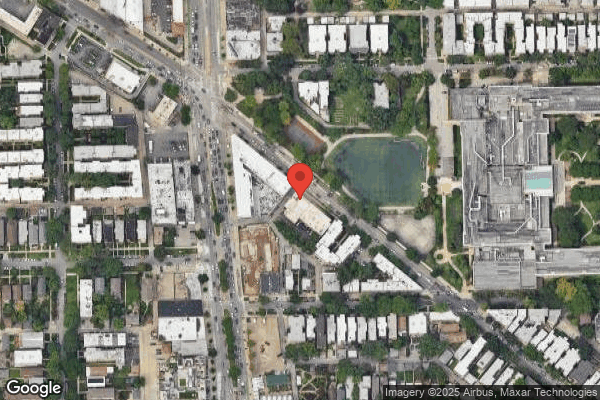
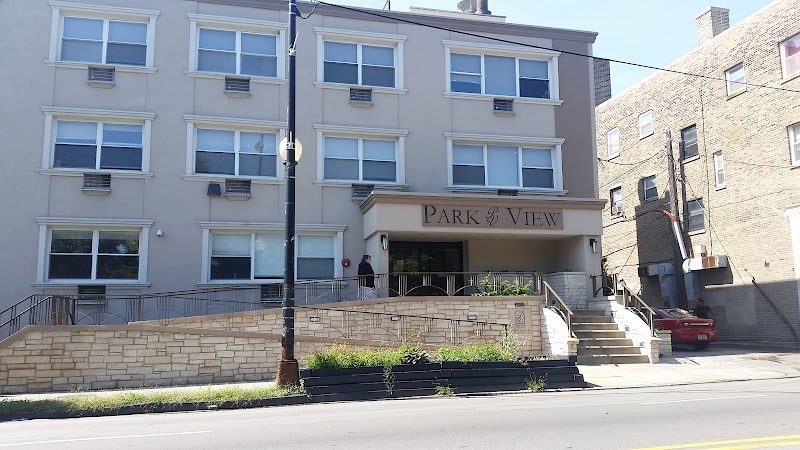
5888 NORTH RIDGE, CHICAGO, IL 60660 (773) 769-2626
For profit - Limited Liability company 128 Beds ICARE CONSULTING SERVICES Data: November 2025 1 Immediate Jeopardy citation
Trust Grade
0/100
#600 of 665 in IL
Last Inspection: August 2024

Within standard 12-15 month inspection cycle. Federal law requires annual inspections.

Overview

Park View Rehab Center has received a Trust Grade of F, indicating significant concerns about the quality of care provided. Ranked #600 out of 665 in Illinois and #183 out of 201 in Cook County, this facility is in the bottom half of local options. While the trend shows improvement, reducing issues from 20 in 2024 to 9 in 2025, the facility still faces serious challenges. Staffing has a 1-star rating, and despite a low turnover rate of 0%, the overall quality of care is poor, with concerning fines totaling $323,936, which is higher than 92% of other facilities in Illinois. Specific incidents include a resident eloping from the facility due to inadequate supervision, and multiple residents experiencing physical abuse from peers, leading to injuries requiring medical attention. Overall, while there are some strengths, such as low staff turnover, the numerous critical incidents and poor ratings highlight significant risks for potential residents.

Trust Score
F
0/100
In Illinois
#600/665
Bottom 10%
Safety Record
High Risk
Review needed
Inspections
Getting Better
20 → 9 violations
Staff Stability
○ Average
Turnover data not reported for this facility.
Penalties
✓ Good
$323,936 in fines. Lower than most Illinois facilities. Relatively clean record.
Skilled Nurses
⚠ Watch
Each resident gets only 22 minutes of Registered Nurse (RN) attention daily — below average for Illinois. Fewer RN minutes means fewer trained eyes watching for problems.
Violations
⚠ Watch
73 deficiencies on record. Higher than average. Multiple issues found across inspections.
★☆☆☆☆
1.0
Overall Rating
★☆☆☆☆
1.0
Staff Levels
★★★★☆
4.0
Care Quality
★☆☆☆☆
1.0
Inspection Score
Stable
2024: 20 issues
2025: 9 issues

The Good

  • 4-Star Quality Measures · Strong clinical quality outcomes
  • Full Sprinkler Coverage · Fire safety systems throughout facility
  • No fines on record

Facility shows strength in quality measures, fire safety.

The Bad

1-Star Overall Rating

Below Illinois average (2.5)

Significant quality concerns identified by CMS

Federal Fines: $323,936

Well above median ($33,413)

Significant penalties indicating serious issues

Chain: ICARE CONSULTING SERVICES

Part of a multi-facility chain

Ask about local staffing decisions and management

The Ugly 73 deficiencies on record

1 life-threatening 6 actual harm
Sept 2025 1 deficiency
CONCERN (D) 📢 Someone Reported This

A family member, employee, or ombudsman was alarmed enough to file a formal complaint

Potential for Harm - no one hurt, but risky conditions existed

Deficiency F0564 (Tag F0564)

Could have caused harm · This affected 1 resident

**NOTE- TERMS IN BRACKETS HAVE BEEN EDITED TO PROTECT CONFIDENTIALITY** F564Based on interview and record review, the facility failed to ensure residents had full and equal visitation privileges consi...

Read full inspector narrative →
**NOTE- TERMS IN BRACKETS HAVE BEEN EDITED TO PROTECT CONFIDENTIALITY** F564Based on interview and record review, the facility failed to ensure residents had full and equal visitation privileges consistent with resident preferences. This affected one resident (R1) in the sample reviewed for visitation privileges. Findings include:R1's Minimum Data Set (MDS), dated [DATE], shows R1 is cognitively intact. She was admitted to the facility on [DATE] with diagnoses including but not limited to adult failure to thrive, encounter for surgical aftercare following surgery on the digestive system, ileostomy status, morbid severe obesity due to excess calories, need for assistance with personal care, irritable bowel syndrome, and unspecified open wound, right thigh. On 9/18/25 at 9:02 AM, V3 (R1's Friend) stated she visited R1 in her room on Monday around 2:50 PM, and R3 (R1's Roommate) screamed at her to get out of the room because she thought she was a funeral director. V7 (Certified Nursing Assistant/CNA), V8 (Licensed Practical Nurse/LPN) and other staff came into the room and told her to leave the room, andV1 (Assistant Administrator) will get back to her, but she did not get back to her. She has not been in the facility since the incident to visit R1, and she does not know why the facility will not allow her to visit her best friend.On 9/18/25 at 9:20 AM, R1 was in her bed, and stated she has been in the facility for few months. A few days ago (9/15/25), V3 visited her, as she does once a week. R3 told her to leave because she does not like her, and R1 is angry that her right to receive her visitor was violated. V3 is her best friend, she helps to reload her link card, buy groceries, and do her laundry because she cannot get out of bed. V3 has not been in the facility since, but she wants her to visit because it is her right.On 9/18/25 at 9:26 AM, R3 stated she has been in the facility for twenty-six years. On Monday around 3pm, V3 came to visit R1, and she told her to leave the room because she is a funeral director, and she does not want her to give her funeral. V10 (Social Services Director) came to tell her she should voice her concerns to staff instead of yelling at R1's visitor, and she listened to him. R3 also stated V3 left the room, and she has not been back since to visit R1.On 9/18/25 at 12:57 PM, V7 (Certified Nursing Assitant/CNA) stated he has been in the facility for thirteen years. On Monday 9/15/25, almost at the end of the morning shift, a former resident, V3, came to visit R1. He heard R3 yelling. She told V3 to leave her room. V6, V7, and V8 (Licensed Practical Nurse/LPN) told V3 leave R1's room, and V3 left R1's room immediately. V7 also stated the facility allows visitors in the rooms, and it is the right of R1, and another resident to receive visitor. On 9/18/25 at 1:11 PM, via telephone, V8 (Licensed Practical Nurse/LPN) stated he has been in the facility for ten years. On 9/15/25, he heard R3 telling V3, who came to visit R1, to get out of her room. V2 (Assistant Director of Nursing/ADON), V8, V10 (Social Services Director), and other staff escorted V3 out of R1's room, but R1 was upset for sending her visitor out of her room. V8 also stated, We did not allow (V3) to go into (R1's) room, but (R1) has the right to see/receive her visitor in her room.: He is not sure if V3 went down to see V1 to talk about the incident.On 9/18/25 at 1:35 PM, V10 (Social Services Director) stated he has been in the facility over seven years. On Monday 9/15/25 at about 2:30 PM, he was informedR3 was upset, and she wanted V3, who was visiting R1, to leave the shared room. V3 left the room; he offered reality orientation that R1 is bed bound, she is allowed to have a visitor in her room. V10 also stated R1 has equal right to receive visitor, even when R3 did not accept V3 in the shared room. The facility should have made another alternative arrangement for R1 to see V3 instead of sending V3 away. On 9/18/25 at 2:21 PM, V1 (Assistant Administrator) stated she has been in the facility since August 25th, 2025. She did not tell V3 she would like to speak with her about the incident. She did not tell R1 to call V3 to continue with her visitation, and R1 has equal right as well to receive visitor in her room. V2 (Assistant Director of Nursing/ADON), V4 (Certified Nursing assistant/CNA), V5 (Registered Nurse/RN), V6 (LPN), and V9 (CNA) all stated R1 has equal right to receive her visitor. Progress Notes, dated 9/15/25, documents: Staff assisted visitor (V3) out of the (R1's) room.Policy on Residents Rights, dated January/2016, documents: To exercise his or her rights as a resident of the facility. Visitation Policy, undated, documents: (1) Therefore, the resident is permitted to have visitors as he/she permits.
Sept 2025 3 deficiencies
CONCERN (D) 📢 Someone Reported This

A family member, employee, or ombudsman was alarmed enough to file a formal complaint

Potential for Harm - no one hurt, but risky conditions existed

Deficiency F0558 (Tag F0558)

Could have caused harm · This affected 1 resident

Based on observations, interviews, and record reviews, the facility failed to provide hand splints for one resident (R31) out of a total sample of 25 residents.Findings include:R31's ‘admission Record...

Read full inspector narrative →
Based on observations, interviews, and record reviews, the facility failed to provide hand splints for one resident (R31) out of a total sample of 25 residents.Findings include:R31's ‘admission Record' documents a primary diagnosis of rheumatoid arthritis.On 9/09/2025 at 12:40 PM, R31 was sitting at the side of the bed. R31 was oriented to person, place, date, and situation. R31's left fingers were closed inward. R31 stated both hands had weakness, but it is worse on the left. R31 stated R31 is able to spread left fingers open with right hand. R31 stated the nurses and Certified Nurse Aides used to apply bilateral hand splints during the day, but not anymore. R31 stated the facility did a deep clean close to a year ago, and R31's hand splints disappeared. R31 suspected staff must have thrown them out by mistake. R31 informed staff, but they never replaced them. R31's ‘Order Summary Report' documents R31 may wear splint to bilateral upper extremities as tolerated and as needed for comfort (active since 10/10/2023).R31's ‘Care Plan Report' documents R31 has orthoses (brace/splint) related to rheumatoid arthritis (revised 4/14/2024). Intervention includes Educate on the importance of wearing splint/brace (revised 10/05/2023) and Monitor splint for cleanliness, need for refitting, repair or fit as needed (revised 10/05/2023).R31's 2025 progress notes prior to the survey did not mention hand splints or braces. No mention of hand braces or splints under the ADL (Activities of Daily Living) tasks in the electronic medical records. On 9/10/2025 at 9:10 AM, V5 (Nurse) stated V5 works with R31 on most days of the week. V5 stated V5 has been taking care of R31 since resident has been residing on the first floor. V5 stated R31 does not have any hand splints. V5 stated R31 had them years ago, but none this year. On 9/10/2025 at 10:03 AM, V7 (Restorative Nurse) stated the facility did not reorder the hand splints/braces until date of the survey. On 9/10/2025 at 10:29 AM, V9 (Certified Nurse Aide-CNA) stated V9 takes care of R31 for most days of the week, since R31 moved to the first floor. V9 stated R31 is not able to hold open the left fingers all the time. V9 stated left fingers are closing inward. V9 stated R31 hasn't had hand splints/braces for more than a year. On 9/10/2025 at 10:38 AM, V10 (Psychiatric Rehabilitation Services Coordinator) stated V10 has worked with R31 for less than half a year. When V10 does morning rounds, V10 hasn't seen R31 with hand splints. On 9/10/2025 at 11:45 AM, V2 (Director of Nursing) stated when making rounds, V2 hasn't seen hand splints/braces on R31. Facility's ‘Splints/Braces/Devices' policy (11/17) documents: Resident with the following conditions, but not limited to, may be eligible for evaluation: (a) weak or absent muscle strength. Nursing/Restorative will document the application of the splint/brace/device on the appropriate facility ADL form.
CONCERN (D) 📢 Someone Reported This

A family member, employee, or ombudsman was alarmed enough to file a formal complaint

Potential for Harm - no one hurt, but risky conditions existed

Deficiency F0658 (Tag F0658)

Could have caused harm · This affected 1 resident

Based on observation, interview, and record review, the facility failed to follow professional standards and administer medications in a timely manner for two (R11 and R31) out of a total sample of 10...

Read full inspector narrative →
Based on observation, interview, and record review, the facility failed to follow professional standards and administer medications in a timely manner for two (R11 and R31) out of a total sample of 10 residents reviewed for medication times.Findings include: 1.On 9/09/2025 at approximately 10:20 AM, V6 (Licensed Practical Nurse) prepared R11's morning medications. These included Hydroxyzine Pamoate (given for restless leg syndrome), Lamotrigine (antianxiety), Levetiracetam (anticonvulsant), Metoprolol Succinate Extended Release (for high blood pressure), and Potassium Chloride (for low potassium). At 10:32 AM, V6 stated V6 will not administer the Metoprolol because R11's blood pressure was low. R11 took the other morning medications at 10:32 AM. R11's ‘Medication Administration Record (MAR)' documents R11's morning medications are to be given at 9:00 AM. R11's ‘Medication Admin Audit Report' documents on 9/03/2025, R11's morning medications were also administered late. R11's received the 9:00 AM medications at 12:08 PM. On 9/04/2025, R11 received the morning medications at 10:57 AM. On 9/08/2025, R11 received the morning medications at 12:40 PM. 2.On 9/09/2025 at 12:44 PM, R31 stated there were incidents a week to two weeks ago in which a new nurse gave R31's evening medications late. R31 stated nurses usually give R31's evening medications an hour after dinner. R31 stated during the mentioned incidents, it was almost 11:00 PM, and R31 still hadn't received the evening medications. R31's current MAR documents R31 is to receive Haloperidol (for agitation) and Vitamin C (supplement) at 5:00 PM. R31 is also to receive Donepezil Hydrochloride (for dementia) at 9:00 PM.R31's ‘Medication Admin Audit Report' documents in August, R31 had Naproxen (for pain) and Vitamin C scheduled at 5:00 PM. On 8/06/2025, R31 received the medications at 7:03 PM. On 8/07/2025, R31 received the medications at 6:25 PM. On 8/09/2025, R31 received the medications around 8:28 PM. On 8/12/2025, R31 was no longer receiving Naproxen in the evening; however, R31 remained scheduled to receive Vitamin C at 5:00 PM. On this evening, R31 received it at 9:34 PM. There were multiple evenings afterwards in which staff administered it late (8/13/2025, 8/15/2025 - 8/17/2025, 8/20/2025, 8/21/2025, 8/23/2025 - 8/25/2025).R31's ‘Medication Admin Audit Report' also documents in August, R31 had Donepezil Hydrochloride and Haloperidol scheduled at 9:00 PM. On 08/07/2025, R31 received the medications at 10:22 PM. On 8/20/2025, R31 received them at 11:14 PM. R31's ‘Medication Admin Audit Report' documents on 8/26/2025, R31's 5:00 PM medications were now Vitamin C and Haloperidol. On this evening, R31 received them late at 8:01 PM. R31 also received them late on 8/27/2025 - 8/29/2025, 9/02/2025 - 9/04/2025, and 9/06/2025 with the latest one being at 8:45 PM on 8/29/2025. On 9/10/2025 at 11:23 AM, V2 (Director of Nursing) stated V24 (outside Social Worker) spoke with facility staff at the end of August to report R31 had complained about late or missing evening medications. V2 stated with some of the new nurses such as V13 and V25, it's possible medications were given late, since the residents were new to them. V2 stated all nurses were in-serviced on medication timeliness to make sure medications are administered within one hour before or one hour after the scheduled time. Facility's ‘Medication Administration Policy' (8/15) documents: Medications must be administered in accordance with a physician's order at his/her discretion, e.g., the right resident, right medication, right dosage, right route, and right time.
CONCERN (E) 📢 Someone Reported This

A family member, employee, or ombudsman was alarmed enough to file a formal complaint

Potential for Harm - no one hurt, but risky conditions existed

Unnecessary Medications (Tag F0759)

Could have caused harm · This affected multiple residents

Based on observation, interview, and record review, the facility failed to ensure a medication error rate of less than 5%. This affected five (R1, R11, R30, R107, R110) out of nine residents during me...

Read full inspector narrative →
Based on observation, interview, and record review, the facility failed to ensure a medication error rate of less than 5%. This affected five (R1, R11, R30, R107, R110) out of nine residents during medication administration task. The facility had six errors out of 25 opportunities, resulting in a 24% medication error rate.Findings include:1.R107's ‘Order Summary Report' and ‘Medication Administration Record' document in part: RisperDAL Oral Tablet (Risperidone) Give 1.25 mg by mouth in the morning related to UNSPECIFIED DEMENTIA, UNSPECIFIED SEVERITY, WITH OTHER BEHAVIORAL DISTURBANCE.On 9/09/2025 at 9:52 AM, V6 (Nurse) prepared R107's medications. V6 read R107's Medication Administration Record (MAR) on the laptop. V6 stated R107 was scheduled to receive Risperidone (Risperdal) 1.25 MG (Milligram) every morning. V6 pulled out two different unit-dose blister packs/bingo cards for R107's Risperidone. One blister pack read Risperidone Tab 3 MG take 1/2 tablet (1.5 MG) by mouth at bedtime. Each individual slot contained half tablets (1.5 MG dosing). The other blister pack read Risperidone tab 0.25 MG with instructions to take 1 tablet by mouth daily - give [with] 1 MG (total dose = 1.25 MG). V6 popped out two half tablets from the first blister pack (1.5 MG + 1.5 MG = 3 MG) and one 0.25 MG tablet from the other blister pack (totaling 3.25 MG of Risperidone). V6 popped the three tablets into the medicine cup with all the other morning medications for R107. V6 put away the rest of the medications and started cleaning up the medication cart. V6 stated V6 will administer the medications to R107. V6 was asked to review R107's orders and Risperidone blister packs. After reviewing the order, V6 removed a Risperidone 1/2 tablet (1.5 MG). The total in the cup was now 1.75 MG (1.5 MG + 0.25 MG). At a9:58 AM, V2 (Director of Nursing) was near the nurses' station. V2 motioned for V3 (Infection Preventionist) to assist. V3 instructed V6 to hold Risperidone until V2 and V6 obtained the correct dosage from the electronic medication dispensing system. 2.R11's ‘Order Summary Report' and ‘Medication Administration Record (MAR)' documents: Metoprolol Succinate ER Oral Tablet Extended Release 24 Hour 25 MG (Metoprolol Succinate) Give 25 mg by mouth one time a day for [Hypertension] related to ESSENTIAL (PRIMARY) HYPERTENSION. There were no parameters to hold the medication.R11's ‘Care Plan Report' documentsR11 is at risk for elevated blood pressure related to hypertension (last revised 1/22/2025). Interventions include to administer medications as ordered by the doctor (initiated 1/22/2025). On 9/09/2025 at 10:20 AM, V6 prepared R11's medications. One of the medications included Metoprolol Succinate ER (Extended Release) 25 MG (blood pressure medicine) and Lamotrigine 200 MG (given for anxiety). At 10:29 AM, V6 went into R11's room and checked R11's blood pressure via an electronic blood pressure machine to R11's right wrist. V2 (Director of Nursing), who was standing at the doorway, stated there was no parameters for the blood pressure medicine. V2 stated it was okay for V6 to administer the Metoprolol. R11's blood pressure was 98/63, with a heart rate of 85 beats per minute. At 10:32 AM, V6 stated V6 will not administer the Metoprolol to R11 because the blood pressure was low. V6 stated, It's for hypertension [high blood pressure] and I don't want [R11] to bottom out. V6 stated V6 will put in a progress note to read that it did not apply. R11 took the other morning medications at 10:32 AM. At 10:37 AM, V6 stated R11's morning medication pass was complete and proceeded to administer medications to other residents. V6 did not call to inform R11's physician about not administering Metoprolol.R11's MAR documents V6 charted ‘9' under the 9/09/2025 9:00 AM dose meaning Other / See Nurse Notes. R11's orders and MAR also document: LamoTRIgine Oral Tablet 200 MG (Lamotrigine) Give 1 tablet by mouth every 12 hours for antianxiety. The MAR documents it was due at 9:00 AM. V6 administered the medication at 10:32 AM. R11's progress note, dated 9/9/2025, 10:34 AM reads dna hypotension (low blood pressure). V6 stated ‘dna' stood for ‘did not apply.'On 9/09/2025 at 10:41 AM, V4 (Physician) stated no one called to inform V4 about R11's blood pressure or holding the morning dose of Metoprolol. V4 stated the nurses need to inform V4 when they are holding or not administering a medication because it is a complicated decision. V4 stated V4 will need to trend R11's blood pressures, heart rates, and symptoms in the last three to four days prior to deciding whether to hold the Metoprolol Succinate ER or change it. When asked about R107's Risperidone, V4 stated it ‘definitely' would not be good if the nurse increased the dosage and administered more than what was ordered. V4 stated R107 would have increased sedation and systemic slowing.3.R1's ‘Order Summary Report' documents Sucralfate Oral Suspension 1 GM (Gram)/10 ML (Sucralfate) Give 10 ml by mouth three times a day related to GASTROINTESTINAL HEMORRHAGE.R1's ‘Care Plan Report' documents R1 has gastritis and duodenitis (initiated 9/05/2025). Intervention initiated on 9/05/2025 documents in part to administer medications per physician orders. On 9/10/2025 at 12:03 PM, V13 (Nurse) prepared R1's noon medications. One of the medications was Sucralfate 100 MG / ML (milliliter) oral suspension. V13 stated the order was for 1 gram / 10 ML of Sucralfate. V13 held a medication cup in the air and poured the medication into the medicine cup. The medication when held in the air was at the 10 ML mark; however, when V13 placed the medicine cup on top of the medication cart, the medicine cup read 15 ML. At 12:10 PM, V13 went into the room and told R1 which medications V13 had prepared. V13 was asked to review Sucralfate medicine cup on a flat, stable surface. V13 took out 5 ML and administered 10 ML to R1. 3.On 9/10/2025 at 12:19 PM, V13 prepared medications for R110. V13 did not locate R110's blister pack for Hydroxyzine in the medication cart or medication room. V13 stated V13 administered the last pill from the blister pack in the morning. V13 reordered it from pharmacy via the electronic medical record. V13 then went to R110's room. V13 informed R110 the Hydroxyzine was not in the medicine cup, but V13 had reordered it from pharmacy. V13 informed R110 that pharmacy will deliver it in the evening and R110 will get it during the evening dose. V13 checked 9 in the MAR, and stated V13 will let the oncoming nurse know the medication was not there, but it was reordered. V13 stated R110's medication pass was complete and proceeded to prepare another resident's medications. V13 did not inform R110's physician the medication was not available. 4.R30's ‘Order Audit Report' documents: Simethicone Tablet 80 MG Give 2 tablet by mouth three times a day for bloating, give with meals.On 9/10/2025 at 12:32 PM, V13 prepared R30's noon medications. Reading off the MAR on the computer, V13 stated R30 was scheduled to get two Simethicone 80 mg chewable tablets. V13 stated it was a house stock medicine and pulled a bottle of Simethicone on the top right drawer of the medication cart. V13 stated there were two pills left in the bottle, which was exactly how many R30 needed. The bottle read Simethicone 125 MG tablets. V13 was notified of the dosage difference. V13 stated V13 did not notice the dosage difference. V13 searched the medication cart, medication room, and facility stock on the other floors. At 1:12 PM, V13 stated the facility did not have Simethicone 80 MG in the building. V13 stated V13 did administer two pills from the same bottle during morning administration. V13 stated V13did not know the dosage was different. On 9/10/2025 at 11:37 AM, V2 (Director of Nursing) stated the nurses are to administer medications based on the doctors' orders. V2 stated residents' rights with medications include the right patient, right medication, right dosage, right route, and right time. V2 stated nurses have one hour before and one hour after the scheduled time to administer the medications. V2 stated the nurses should reorder medications when they are running low so that there is ample medications and no issues with administration. V2 stated the pharmacy can deliver medications when needed as long as the nurses reorder them. V2 also stated if a nurse holds or does not administer a medication, the nurse is supposed to inform the physician. Facility's ‘Medication Administration Policy' (8/15) documents: Medications must be administered in accordance with a physician's order at his/her discretion, e.g., the right resident, right medication, right dosage, right route, and right time.
Aug 2025 1 deficiency
CONCERN (D) 📢 Someone Reported This

A family member, employee, or ombudsman was alarmed enough to file a formal complaint

Potential for Harm - no one hurt, but risky conditions existed

Report Alleged Abuse (Tag F0609)

Could have caused harm · This affected 1 resident

Based on interview and record review, the facility failed to report and investigate a misappropriation of property allegation for one (R2) of four residents reviewed for abuse in a sample of five. Fin...

Read full inspector narrative →
Based on interview and record review, the facility failed to report and investigate a misappropriation of property allegation for one (R2) of four residents reviewed for abuse in a sample of five. Findings include:On 08/24/2025 at 11:14 AM, R2 stated, I am the federal police. R2 stated he is missing a clock radio. R2 stated it was stolen, sold out in the street. R2 stated, I have no idea who stole it. R2 stated the police told R2 that they will recover it, but they didn't. R2 stated he informed the staff. R2 stated the police came here last week.On 08/24/2025 at 12:30 PM, R4 stated the police came to knock on R4's door and they asked R4 if any altercations or situations happened between R2 and R4. R4 stated he denied anything happened. R4 stated this happened last week, during the evening shift. On 08/24/2025 at 12:35 PM, V4 (Licensed Practical Nurse) stated R2 called the police last week because R2 was calling to complain about someone on the third floor. V4 stated the police officers went to the third floor, and they never asked V4 any questions, nor did they request R2's face sheet. V4 stated she went to R2 to ask R2 why R2 called the police, and R2 told V4 someone took something that belonged to R2 but did not voice any names or what item it was. V4 stated R2 did not make any sense, and the police just walked out. V4 stated this should have been documented in R2's electronic medication record for continuity of care. V4 stated V1 (Administrator) was not made aware. V4 stated V1 is the Abuse Coordinator. V4 stated she didn't think it was abuse related because the lack of details to R2's allegation. V4 stated she understands it should have been reported.On 08/24/2025 at 1:48 PM, V1 (Administrator) stated, All allegations of abuse must be reported to myself, who is the Abuse Coordinator immediately and verbally. Once it is reported to me, I have two hours to send the preliminary report to the State Agency, and I immediately get started on the investigation. If a resident alleges that someone took something from them, and called the police, that would be a possible allegation of abuse (misappropriation of property). V1 stated despite of a lack of details of an allegation made, staff must report it to V1. V1 stated it can be either a concern or possible allegation of abuse. V1 stated she was not made aware of any of the allegations, and she is just being made aware of this. V1 stated she was not made aware the police came to facility last week. V1 stated, I take everything seriously, and I don't downplay allegations due to (R2's) conditions. It should have been reported to me.R4's MDS/Minimum Data Set Section C, dated 06/11/2025, documents R4 has a BIMS/Brief Interview for Mental Status score of 15/15, indicating R4 is cognitively intact. R2's MDS/Minimum Data Set Section C, dated 07/24/2025, documents R2 has a BIMS/Brief Interview for Mental Status score of 15/15, indicating R2 is cognitively intact.No documentation regarding R2 calling the police and reporting an allegation of misappropriation of property noted in R2's electronic medical record. Facility document, not dated, documents: abuse prevention program facility procedures. Employees are required to report any incident, allegation or suspicion of potential abuse, neglect or misappropriation of property they observe, hear about, or suspect to the administrator or the person in charge of the facility acting on behalf of the administrator, or an immediate supervisor who must then immediately report it to the administrator.
Jun 2025 1 deficiency 1 Harm
SERIOUS (G) 📢 Someone Reported This

A family member, employee, or ombudsman was alarmed enough to file a formal complaint

Actual Harm - a resident was hurt due to facility failures

Free from Abuse/Neglect (Tag F0600)

A resident was harmed · This affected 1 resident

**NOTE- TERMS IN BRACKETS HAVE BEEN EDITED TO PROTECT CONFIDENTIALITY** Based on interview and record review, the facility failed to ensure four of ten residents (R2, R3, R7, and R9) were free from ab...

Read full inspector narrative →
**NOTE- TERMS IN BRACKETS HAVE BEEN EDITED TO PROTECT CONFIDENTIALITY** Based on interview and record review, the facility failed to ensure four of ten residents (R2, R3, R7, and R9) were free from abuse. This failure affected R2, R3, R7, and R9 who were physically hit, pushed, and punched by peers. As a result of this failure, R3 was hit, pushed, and punched, and sustained a laceration to the forehead requiring 8 stitches. Findings include: 1.R3's admission Record documented date of admission to the facility as 02/01/2024, with diagnoses that includes but not limited to Schizophrenia unspecified, bipolar disorder unspecified, depression unspecified, insomnia, obstructive sleep apnea (adult) (pediatric), history of falling, muscle weakness (Generalized), unsteadiness on feet, and other abnormalities of gait and mobility. R4's admission Record documented R4 was admitted to the facility on [DATE]; diagnoses includes but not limited to Depression unspecified, insomnia unspecified, unspecified psychosis not due to a substance or known physiological condition and asthma. R3 and R4 had a resident-resident physical attack that resulted into R3 being sent to the hospital due to fall injury from R4 hitting, slapping, and pushing R3. R3 fell on a transferring lifting device, causing a laceration to the forehead over the left eyebrow. On 05/14/25 at 11:49 am, R4 was observed on the 1st floor of the facility in the room preparing to go out on planned consultation. R4 stated, On 4/22/202, (R3) came to my room to steal my (snacks) and was going through my stuff. We (R3 and R4) were on the same floor. They (facility) moved me down here (1st floor) after I came back from the hospital. I pushed (R3) and hit her, because she was stealing from me; she came from her room to my room stealing. R4 stated when she pushed R3, R3 fell and hit her head on the (transfer lifting Device) in the hallway. (R3) started bleeding from the head, and I think they (staff) said she had some stiches from the hospital. At the time of physical contact, there was no staff around; I did not know I pushed her so hard. R3's medical record showed documentation R3 was sent to the hospital and returned to the facility with eight (8) stiches to the upper left eyebrow. On 05/14/25 at 2:44pm, R3 was observed in the room eating with redness noted on the left side of the forehead over the eyebrow, healing well, with no open wound or drainage. R3 was not willing to talk about the incident of 4/22/2025. According to R3's electronic health record (EHR), R3 was sent to the hospital on 4/22/25, and received 8 stiches to the forehead. On 05/14/25 at 12:49pm, V8, LPN (Licensed Practical Nurse/Wound care Nurse), stated, I am familiar with (R3) and (R4). I was not on the floor when it happened, but I was on the 3rd floor. The staff on the 2nd floor called me. I saw (R3) laying on the floor, with blood coming from upper left eye eyelid. They had already called the ambulance to pick up (R3). I applied pressure to the site and cleaned it. (R3) came back to the facility with 8 stitches. Hitting, pushing, or slapping another resident either by staff or peers, is a form of physical abuse. (V1, Administrator) V2, (Director of Nursing), Social Services, and the physician should be notified. On 05/14/25 at 2:58 pm, V1 (Administrator) stated, There was no witness to what happened. (V6, LPN/Licensed Practical Nurse), who was in charge at the time of 04/22/25 incident, no longer works at the facility. (R3) and (R4) were sent to the hospital for evaluation. Upon (R4's) return to the facility, (R4) was moved to the 1st floor. V1 acknowledged hitting, slapping, pushing, and any physical contact, is a form of physical abuse. V1 stated that was why the incident was treated as abuse. 2. On 05/21/25 at 12:58 PM, R2 was observed on the 1st floor of the facility ambulating around. R2 stated, (R1) came (wandered) into me room and hit me. I was in my room, and I did not do anything to (R1); he just came to my room and hit me. I have been in the hospital. Those hurt. On 05/14 /25 at 12:04pm, V10, LPN (Licensed Practical Nurse) stated, (R1) needs constant redirection, so (R1) has needs to be monitored. The last time I saw (R1), he was in the dining room, and I was at the nurse's station. We tend to monitor (R1) on a 1:1 (one to one staff monitoring). I did not see (R1) when he passed the nurse's station; I really don't know when (R1) passed by me. All I heard was some commotion down the east hallway. (R2) said (R1) came to his room and hit him. This behavior is part of why we monitor (R1) closely. (V11, Certified Nursing Assistant/ CNA) was assigned to both residents. At the time of incident, (V11) was on lunch break; I am not sure where she was, but I know (V11) was not on the floor. I was at the nurse's station, but I did not see the altercation. Both (R)1 and (R2) are in the hospital. The facility protocol for staff coverage when the staff assigned is not on the floor is we mainly monitor the dining room when the resident is in there. I helped in monitoring the floor, but I could not tell you how (R1) got past me. (R1) needs close monitoring. Yes, hitting, pushing, or slapping another resident either by staff or peers is a form of abuse, and it must be reported immediately to (V1, Administrator), who is the Abuse Coordinator. On 05/14/25 at 12:21pm, V11 CNA (Certified Nurse's Aide) stated, I am familiar with both (R1 and R2). I was not on the floor when they had the problem (Physical altercation). I was taking the lunch cart downstairs around 12ish (12:00pm or 1:00pm). When I was going off the floor, I did not know where the Nurse was, maybe in the nurse's medication room, so the nurse was not informed that I was going off the floor. When I left, there were other CNA's that can watch over my residents. When I got back to the floor, I saw management staff (V1 and V2) on the floor, and I was told both (R1 and R2) had a fight. Yes, hitting, pushing, or slapping another resident either by staff or peers is a form of physical abuse. 3.Facility Investigation Report of the incident of 05/09/25 documented R8 hit R7 in the back of the head while lining up to go for a smoke break with staff. V1 (Administrator) documented based on the known facts from medical record review and interviews the following conclusions have been determined about the original allegations, and checked abuse column. Police contacted event (#). Plan of care for R7 and R8 reviewed and updated. R7's admission Record showed admission date as 03/28/2022, with diagnoses that includes but not limited to Bipolar disorder, Paranoid schizophrenia and anxiety disorder. R8's admission Record showed admission date as 03/30/2025, with diagnoses that includes but not limited to Effusion right knee, Bacteremia, Cutaneous abscess of right upper limb, Type2 diabetes mellitus with foot ulcer, long term use of antibiotics and unsteady gait. On 05/21/25 at 10:05am, V5 (Certified Nurse's Aide) stated, On 05/09/25, we are getting ready for smoke break, and I was arranging the residents' wheelchairs against the wall in the hallway on the 1st floor. I heard a commotion behind, as I turned around and it was (R7) and (R8). (R7) said (R8) hit him in the back of his head. I immediately removed (R8) to other side in the hallway at the nurse's station. I told (V1, Administrator) about what happened. (R8) said (R7) was repositioning his wheelchair, and the wheelchair touched his foot. It is not appropriate for a resident to physically hit another resident. Yes, hitting, pushing, slapping, kicking, touching like pinching another resident is a form of physical abuse. On 05/21/25 at 10:55am, R7 was in the room in a wheelchair. R7 stated what he can remember about the incident of 05/09/2025 is (R8) hit me touching his head, I'm okay now. It hurts (referring to when it happened). On 05/21/25 at 11:16 am, R8 stated R7 wheeled the wheelchair into his leg, and it hurt him, and he felt pain on his leg. R8 stated he should not have hit R7, and let the facility staff handle it, but he reacted out of pain from the leg wound. V8 (Wound Care Nurse), who was present at the time of interview, stated R8 has a diabetic wound on the lower extremities. On 05/21/25 at 12:37 pm, V17, NP (Nurse Practitioner), stated, Many of these residents are confused and they have mental issues; they don't always know what they are doing, so it is difficult to say it is an abuse. When asked what abuse is and to give example of physical abuse and whether hitting, pushing, slapping another resident is a form of abuse, V17 did not answer. 4. R10's Progress note showed V9's, LPN (Licensed Practical nurse), documentation, dated 05/12/2025 timed 10:56am, indicating R10 was physically aggressive toward staff, throwing water on staff landing on other residents that was sitting by R10. R10 was screaming, yelling, and talking to self, and was not redirectable. Physician notified and gave order to send R9 to the hospital for psych (psychiatric) evaluation. While R10 was waiting to be sent out, R10 was placed on one-to-one monitoring. On the same day at 2:58pm, V9 documented R10 physically attacked R9, who was the roommate. On 05/15/25 at 1:43 pm, V16, PRSC (Psychiatrist Rehabilitation Service Coordinator), stated, On the day of the incident on 05/12/25, (R9) was responding to internal stimuli (hearing voices, was noted pacing in the hallway and talking to himself). (R10) was placed on 1:1 for behavior monitoring for throwing water on peers in the dining room and staff, and was uncontrollable. While we were in his room, the roommate, (R9), came into the room to pick up his books from his bed, and as (R9) was bending over to pick up the books, (R10) jumped up and hit (R9) and shuffled (R9). (R9) fell and laid on his bed. This happened around 1:30 pm. (R9) did not know he was not to come into the room. I called for help, and (R9) was immediately removed from the room to the nurse's station. (R10) was then moved to the Social Services office until he was taken by ambulance to the hospital. (R9) did not know he was not to come to the room. (R10) has not returned to the facility. On 05/22/25 at 12:37 pm, V20, PRSD (Psychiatrist Rehabilitation Services Director), stated Abuse is a harm toward resident, and it can be verbal, physical, mental, financial, misusing of resident property, and can also be isolating a resident. Physical abuse can be hitting, pushing, slapping, kicking, touching like pinching another resident is a form of physical abuse. A resident is assigned one to one supervision because the resident is having behavior problem, and by being on one to one, is to make sure the resident has no contact with anyone else (other resident) to cause them harm and to protect them from others harming them. In case of (R9) and (R10), (R10) was acting out; he should have been separated from the roommate, because there is a potential for harm. (R10) should have been in a separate space like the patio or another space before been transported transporting to the hospital. The facility policy on Abuse Prevention Program documented residents have the right to be free from abuse, neglect, exploitation, misappropriation of property or mistreatment. Physical abuse is infliction of injury on a resident that occurs other than accidental means and that requires medical attention. Physical abuse includes but not limited to hitting, slapping pinching, and kicking. The policy under protection of residents documented that residents who allegedly mistreat another resident will be removed from contact with other resident during the cause of the investigation. The facility policy on Behavior Management for Agitated Behavior, presented with no date, documented targeted behavior includes agitated behavior, which represents danger to self and others, due to Alzheimer's disease with anxiety, dementia, mental illness or other illnesses. Interventions listed includes but not limited to removing the resident from problem area and separate from others when necessary. Approaches to use when encountering a potential violent resident includes but not limited to moving other residents out of the area.
Apr 2025 1 deficiency
CONCERN (D) 📢 Someone Reported This

A family member, employee, or ombudsman was alarmed enough to file a formal complaint

Potential for Harm - no one hurt, but risky conditions existed

Free from Abuse/Neglect (Tag F0600)

Could have caused harm · This affected 1 resident

**NOTE- TERMS IN BRACKETS HAVE BEEN EDITED TO PROTECT CONFIDENTIALITY** Based on interview and record review, the facility failed to ensure the resident has the right to be free of abuse in 3 of 5 res...

Read full inspector narrative →
**NOTE- TERMS IN BRACKETS HAVE BEEN EDITED TO PROTECT CONFIDENTIALITY** Based on interview and record review, the facility failed to ensure the resident has the right to be free of abuse in 3 of 5 residents (R1, R2 and R4) included in the sample reviewed for abuse. Findings include: 1. R1 is a [AGE] year old female with a diagnosis including Paranoid Schizophrenia, Diabetes 1, and Traumatic Amputation of right lower leg. R1 has a BIMS (Brief Interview for Mental Status) score of 15/15. R2 was first admitted to the facility on [DATE]. R2 is care planned for including moderate to intense anger, conflicts, difficult behavior with other persons. R2 is a [AGE] year old female with a diagnosis including Schizoaffective Disorder, Violent Behavior, Suicidal Ideations, Fibromyalgia and metabolic encephalopathy. R2 was first admitted to the facility on [DATE]. R2 has a BIMS (Brief Interview Of Mental Status ) Score of 15/15. Facility abuse investigation report, dated 2/21/25, shows R1 reported to administration she and R2 engaged in a physical altercation while on the elevator. Both residents have different versions of what transpired to cause the altercation. R1 alleges R2 entered the elevator and pushed her wheelchair. R1 states she told R2 not to touch her chair and they began exchanging words. R2 struck her. R2 alleges when she entered the elevator, R1 was staring at her she yelled out of frustration, and R1 started swinging her arms. Staff present on the unit at the time of the incident report hearing raised voices between the residents immediately intervening, but unable to separate the residents before the physical altercation ensued. Both residents were assessed. R2 was observed with scratches on her chest and shoulder. R1 was observed with two scratches to her right cheek. Both residents were treated by the nurse on duty. They both denied being in pain and stated they were fine and felt safe in the facility. The residents physicians were made aware of this allegation. R2 was sent to the hospital per physician orders for evaluation; she remains out of the facility. R1 is receiving counseling and is being closely monitored. There have been no further incidents. The residents care plan has been reviewed and updated as appropriate. The clients needs are being met. All appropriate parties have been notified. Check all that were completed or in progress at the time of report submission. The allegation of abuse was substantiated by facility. On 4/7/25 at 9:50AM, R1 stated, Yes, I was on the elevator, and (R2) pushed me with her elbow and scratched my face. I pushed her back. I got a small scratch on my face. I didn't go to the hospital or anything; I was fine. I went to the administrator and reported it. They did investigation. I haven't had any issues since. I am safe. On 4/7/25 at 10:10AM, R2 stated, Yes, on the elevator; I bumped into (R1). She then pushed me back so I slapped her. I got scratches on me. The staff broke it up and they sent me to the hospital; I don't know why. Nothing happened at the hospital, and I was sent back. I have not had any issues since with (R1). I am safe here. On 4/7/25 at 12:46AM, V4 (Licensed Practical Nurse/LPN) stated, On the day of the incident, the elevator was going down, and the door opened. Both (R1) and (R2) were swinging arms and striking each other. I entered the elevator and stopped both of them. (R1) was removed from the elevator and (R2) continued going down on the elevator. The Administrator was notified. I assessed both residents who both had small scratches on them. (R1) was later moved from the 2nd floor to the 1st floor. There has been no further incidents between (R1) and (R2). On 4/7/25 at 11:40AM, V1 (Administrator/Abuse Prevention Coordinator) stated, There was an altercation between (R1) and (R2) . An investigation was initiated and the abuse prevention policy/protocol was followed. Both residents received scratches. Abuse to both (R1) and (R2) was substantiated. R1's 2/21/25 progress note states, Writer was told by staff that resident had physical altercation with a peer inside elevator, writer ask resident what happened she stated the peer was pushing her wheelchair she told her to stop, peer put her hand on her and she have to defend herself by fighting back, complete body assessment done found 2 scratches on resident right side face, Resident denies any pain and discomfort, no LOC (loss of consciousness), V/S (vital signs) T (temperature) 97.2, R (respirations) 20, P (pulse) 88, BP (blood pressure) 139/76, emergency contact on file state guardian (8xx-xxx-xxxx) called left massage on voicemail, doctor and psychiatrist made aware with order to send resident to hospital for evaluation, Resident insist she not going to hospital that she is fine, that she not in any distress, DON (Director of Nursing), administrator made aware, doctor and psychiatrist notified. Stated to document resident refused to go to hospital. Resident was instructed not to go to 2nd floor anymore, she verbalizes understanding. R2's 2/21/25 progress note states, Resident had a physical altercation in the elevator with peer. Resident and peer were noted swinging hands at each other in the elevator on the second floor. Staff separated both residents. Resident was transferred to the second floor. On assessment, resident is noted with scratches on the right upper back and right anterior upper arm. She is alert and oriented x3. Breathing is easy and non-labored. Pupils are equally round and reactive to light and accommodation. No change in LOC from baseline. Resident is able to move all extremities without pain. Cleanse with ns, pat dry and apply bacitracin oint. VS: bp=127/82, pr=73, res=18, temp=97.8, SPO2=97% RA. Notified resident's daughter . Notified Dr. and he ordered to send resident to hospital for Eval. Chicago police notified. Two policemen came to, identification (#) obtained report, simple battery as prescribed with case (#). 2. R4 is a [AGE] year old female with a diagnosis including Schizoaffective Disorder , Psychosis and Chronic Kidney Disease. R4 was first admitted to the facility on [DATE]. R4 has a BIMS (Brief Interview for Mental Status ) score of 14/15. R5 is a [AGE] year old female with a diagnosis including Schizoaffective Disorder BiPolar Type, Bipolar Disorder, Dementia and Psychosis. R5 was first admitted to the facility on [DATE]. R5 BIMS (Brief Interview for Mental Status) score is unscoreable. R5 is care planned for including behavioral symptoms related to Severe mental illness. Facility Abuse Prevention Investigation, dated 2/21/25, shows on 2/17/25, it was reported to administration (R5) struck another resident (R4) without provocation. (R4) was interviewed by administration and reports she entered the dining room and sat at the table (R5) suddenly got up from her table and walked over to her swinging arms striking her in the head. Staff immediately intervened and separated the residents. Both residents were assessed by the nurse on duty there were no injuries, redness bruising, or swelling. Neither resident complained of pain. Nursing manager attempted to interview (R5), but she refused to answer any questions and became agitated with staff. The residents physicians were made aware of this allegation. (R5) was sent to the hospital per physician orders for evaluation she remains out of the facility. The residents care plan has been reviewed and updated as appropriate. The clients needs are being met. All appropriate parties have been notified. On 4/7/25 at 1:43PM, R4 stated, One day, I was in dining room when this crazy resident came at me with her arms flailing around. She hit me in the head lightly. It didn't hurt and it wasn't a big deal. The staff stopped it right away and it wasn't that big of a deal. They moved her to the third floor. I don't see her now. I am safe here in the facility. On 4/16/25 at 1:02PM, V5 (Housekeeping) stated, I was cleaning in hallway and when I went to look I saw (R4) get hit in the head. I yelled for the nurse and the CNA. We went to intervene. The CNA and Nurse separated both residents and put residents in their rooms. That is what I saw. I have been trained in abuse prevention. I attend regular inservices. On 4/16/25 at 12:20PM, V1 (Administrator/ Abuse Prevention Coordinator) stated, Abuse to (R4) by (R5) was substantiated. Facility Policy titled Abuse Prevention Policy states Residents have the right to be free from abuse, neglect, exploitation. misappropriation of property or mistreatment.
Feb 2025 1 deficiency
CONCERN (D) 📢 Someone Reported This

A family member, employee, or ombudsman was alarmed enough to file a formal complaint

Potential for Harm - no one hurt, but risky conditions existed

Pharmacy Services (Tag F0755)

Could have caused harm · This affected 1 resident

**NOTE- TERMS IN BRACKETS HAVE BEEN EDITED TO PROTECT CONFIDENTIALITY** Based on interview and record review, the facility failed to ensure medication was administered as scheduled per physician order...

Read full inspector narrative →
**NOTE- TERMS IN BRACKETS HAVE BEEN EDITED TO PROTECT CONFIDENTIALITY** Based on interview and record review, the facility failed to ensure medication was administered as scheduled per physician order to 1 (R1) out of 3 residents reviewed for medication administration. Findings Include: R1's face sheet shows included diagnoses but not limited to insomnia and anxiety disorder. R1's Minimum Data Set, dated [DATE], shows R1 is cognitively intact with BIMS (Brief Interview for Mental Status) of 15. R1's Medication Admin Audit Report, printed on 2/11/25 at 11:21 AM, shows ]on 1/27/25, R1 had ordered and scheduled medication Zolpidem Tartrate (Ambien) 10 mg by mouth at bedtime for Insomnia, Seroquel 200 mg 1 tablet by mouth, and Tamsulosin 0.4 mg 1 capsule by mouth all to be administered at 9:00 PM, but were documented administered at 10:35 PM, more than one hour past the scheduled administration time. This Medication Admin Audit Report also revealed R1 had ordered and scheduled medications of Gabapentin 400 mg 1 capsule by mouth three times a day, Hydralazine 25 mg 1 tablet by mouth three times a day, Amitriptyline 100 mg 1 tablet by mouth two times a day, Baclofen 10 mg 1 tablet by mouth two times a day, Hydroxyzine 50 mg 1 tablet by mouth three times a day, and Gabapentin 600 mg 1 tablet by mouth three times a day all scheduled to be administered at 5:00 PM, but were documented administered at 6:49 PM. A review of R1's electronic health records (EHR) does not show any documentation the physician was notified of the late medication administration for R1. On 2/11/25 at 10:09 AM, R1 stated a couple of weeks ago around 8:00 PM, R1 asked V9 (Licensed Practical Nurse) for Ambien (Hypnotic medication) that helps R1 sleep. R1 stated R1 has insomnia due to generalized pain. R1 stated V9 did not give R1 the Ambien, stating it was not available. R1 stated the next morning, R1 asked V6 (Licensed Practical Nurse/LPN) and V6 stated the Ambien was available. On 2/11/25 at 10:22 AM, V6 (Licensed Practical Nurse/LPN) stated R1 does not refuse medications and knows all his meds. V6 stated about three weeks ago, V6 came in the morning, and R1 told V6 that R1 didn't get the Ambien in the evening. V6 stated when V6 checked the narcotic box, R1's Ambien was available. On 2/11/25 at 12:31 PM, V3 (Director of Nursing) stated by mouth medications should be administered to residents one hour before or one hour after. V3 stated the nurses follow the doctor's orders and should follow the right patient, right medication, right route, right time, right dose, and right documentation. V3 stated the right time means it is administered one hour before and one hour after the scheduled order. V3 stated nurses are documenting in the electronic health records after they administer the medications to the resident. They would also document if it's not given or refused. V3 stated the doctor should be notified if medication is given late, and document in the resident's chart. On 2/11/25 at 3:15 PM, V9 (Licensed Practical Nurse) stated R1 would always ask for R1's sleeping medication around 7:00 PM, and V9 would give it to R1 because it's scheduled at 8:00 PM. V9 stated medications are administered one hour before and one after its scheduled time. V9 stated once V9 administers the medication, V9 will sign in the electronic medication administration record the time it was given to the resident. The facility's MEDICATION ADMINISTRATION POLICY, dated 8/15, documented: Medications must be administered in accordance with a physician's order at his/her discretion, e.g., the right resident, right medication, right dosage, right route, and right time.
Jan 2025 1 deficiency
CONCERN (D) 📢 Someone Reported This

A family member, employee, or ombudsman was alarmed enough to file a formal complaint

Potential for Harm - no one hurt, but risky conditions existed

Pharmacy Services (Tag F0755)

Could have caused harm · This affected 1 resident

**NOTE- TERMS IN BRACKETS HAVE BEEN EDITED TO PROTECT CONFIDENTIALITY** Based on observation, interview, and record review, the facility failed to ensure availability of anti-anxiety medication as ord...

Read full inspector narrative →
**NOTE- TERMS IN BRACKETS HAVE BEEN EDITED TO PROTECT CONFIDENTIALITY** Based on observation, interview, and record review, the facility failed to ensure availability of anti-anxiety medication as ordered by physician, andfailed to document medication ordered by physician as being administered as per policy. These failures involved 1 out of 1 resident (R1) for a total sample of 3 residents. Findings include: R1 is [AGE] years old, initially admitted in the facility on 05/08/2024. R1 diagnosis includes schizophrenia, paranoia, psychosis, anxiety, depressive disorder, and parkinsonism. R1's cognition has moderate impairment with BIMS (Brief Interview of Mental Status) of 12, dated 12/24/2024. Nursing notes, dated 12/09/2024 by V10 (Licensed Practical Nurse), documents R1 was very paranoid believing that other people are talking about him throughout the building. R1 thinks that a chair that was placed in hallway was used to spy on him. Physician was notified and gave order to transfer R1 to the hospital. Physician notes, dated 12/31/2024 by V11 (Medical Doctor), documents R1 was hospitalized due to acute psychosis and paranoia. R1 was petitioned by the facility due to increased psychotic, with paranoid delusions. R1 believes that others are talking about him throughout the building, that a chair was placed in the hallway used to spy on him, and that cameras were installed in his room. R1's medication administration record for November 2024 documents as follows: Medicines that were not initialed or signed as administered per physician's order on day 3, 10, 12, and 30 of November 2024 are as follows: - Comtan (Entacapone) 200 MG tablet for anti-parkinsonism. - Mirapex 0.5 MG tablet for anti-parkinsonism. - Sinemet 25 - 100 MG tablet for anti-parkinsonism. On 01/09/2025 at 11:22 AM, R1 was seen inside his room alert, and verbally able to express his thoughts within topic during conversation. During conversion, R1 had shuffling movement with his arms and hands, and took a bit of effort to verbalize. R1 was asked if he feels okay and safe. R1 replied, I think I should be okay. R1 was asked about facility staff treatment concerning him. R1 replied that other people's conversation affects his privacy. R1 gave an example regarding a female person, who told a male person that she did not get her tray. The male person replied to her that he (R1) was crazy. R1 stated the conversation was not directed to him, but he knows he was the topic of their conversation. R1 cannot identify the names of female and male involved in the conversation. R1 was asked if he has any concern with any of his medication. R1 said facility staff are not consistent with giving his medicine. R1 said sometimes they are not giving the right medicine, or they are not giving his medicine the same as the other days. On 01/09/2025 at 11:34 AM, V2 (Director of Nursing) and V4 (Licensed Practical Nurse) reviewed R1's medication. V4 checked all listed medication for R1 if it was available on the medication cart. During review, Hydroxyzine medicine, which is anti-anxiety medication, could not be found. After checking all areas inside medication cart, V4 stated she could not find the medicine. V2 stated she will check with the pharmacy regarding the status of the medicine. V4 then went inside medication room to check whether or not Hydroxyzine medication was available. After checking medication room, V4 stated the medicine is not available. V4 called the pharmacy to clarify availability. V6 (Licensed Practical Nurse) stated R1 may have another anti-anxiety medication. Upon checking R1's medication order, V6 stated R1 has Seroquel (anti-psychotic medicine). V6 was informed Seroquel is not anti-anxiety, but anti-psychotic. V6 stated he understood that both medicines are different. On 01/09/2025 at 11:55 AM, V3 (Psychiatric Rehab Services Director) stated, (R1) has paranoia and a delusional problem that makes him anxious and suspicious with others. (R1) went to the hospital for involuntary discharge on [DATE] due to his aggressive behavior. When (R1) hears other people taking, (R1) thinks they are taking about him because of his paranoia and delusions. On 01/09/2025 at 12:25, V2 (Director of Nursing) reviewed R1's November 2024 medication administration record (MAR) and noted multiple days were not initialed or signed as medication being administered. V2 stated nurses need to sign the MAR each time they give medicine. V2 stated, In nursing, we follow the principle if it wasn't documented it wasn't done. V2 stated R1 went to hospital because of his behavior, and anti-anxiety is important because of R1's diagnoses, including paranoia. V2 stated it is important to manage R1's behavior, and anti-anxiety medication is important to avoid recurrent behavioral problem. Medication Administration Policy, dated 08/2015, reads: Documentation of medication administration is recorded on the Medication Administration (MAR) and includes the date, time and initials of the licensed nurse who administered the medication. Per Food and Drug Administration information for Vistaril (hydroxyzine pamoate) it reads: INDICATIONS - For symptomatic relief of anxiety and tension associated with psychoneurosis and as an adjunct in organic disease states in which anxiety is manifested.
Aug 2024 13 deficiencies
CONCERN (D)

Potential for Harm - no one hurt, but risky conditions existed

Resident Rights (Tag F0550)

Could have caused harm · This affected 1 resident

Based on observation, interview, and record review, the facility failed to ensure a resident's urinary drainage bag was kept privately. Thais failure affects 1 resident (R59) in a sample of 58. Findin...

Read full inspector narrative →
Based on observation, interview, and record review, the facility failed to ensure a resident's urinary drainage bag was kept privately. Thais failure affects 1 resident (R59) in a sample of 58. Findings include: R59's admission record, documents the following diagnosis: paraplegia, flaccid neuropathic bladder, neuromuscular dysfunction of bladder, and obstructive and reflux uropathy. R59's Minimum Data Set (dated 6/20/2024) documents a Brief Interview of Mental Status summary score of 15, indicating R59 is cognitively intact, and R59 utilizes an indwelling urinary catheter. On 8/18/2024 at 10:32 AM, observed an exposed urinary drainage bag attached to the frame of R59's bed. R59 affirmed R59 wanted facility staff to keep R59's urinary drainage bag in a privacy bag. On 8/18/2024 at 10:40 AM, V11 (Certified Nursing Assistant) checked R59's bedframe and confirmed there was no privacy bag to put the urinary drainage bag in. V11 stated, sSmeone must have taken it off and not put it back on. V11 affirmed R59's urinary drainage bag should have been put into a privacy bag. On 8/20/2024 at 11:01 AM, V2 (Director of Nursing) affirmed residents with urinary drainage bags should be kept in a privacy bag to promote the resident's dignity. Record review of facility policy titled Dignity (dated 1/2015) documents, Policy: Each resident shall be cared for in a manner that promotes and enhances quality of life, dignity, respect and individuality . 11. Urinary catheter bags shall be covered.
CONCERN (D)

Potential for Harm - no one hurt, but risky conditions existed

Deficiency F0554 (Tag F0554)

Could have caused harm · This affected 1 resident

Based on observation, interview, and record review, the facility failed to assess a resident the ability to safely self-administer medication. This failure affects 1 (R83) resident reviewed for self-a...

Read full inspector narrative →
Based on observation, interview, and record review, the facility failed to assess a resident the ability to safely self-administer medication. This failure affects 1 (R83) resident reviewed for self-administration of medications in the total sample of 58 residents. Findings include: R83's (08/08/2023) Minimum Data Set documented, in part Section C0500. BIMS (Brief Interview for mental status) Summary Score: 15. Indicating R83's mental status as cognitively intact. R83's (Active Order As Of: 08/19/2024) Order Summary Report documented, Diagnoses: (include but not limited to) Chronic Obstructive Pulmonary Disease with exacerbation. Pharmacy. Order Summary. Advair HFA Inhalation Aerosol 115-21 MCG/ACT (Fluticasone-Salmeterol) 2 puff inhale orally two times a day for COPD (chronic obstructive pulmonary disease)/Asthma. Order Status. Active. Order Date. 06/14/2024. Start Date. 06/15/2024. There was no order to may self-administer this medication. R83's (Revision on: 08/19/2024) care plan documented, (R83) is at respiratory risk r/t (related to) asthma. Respiratory risks will be minimized with nursing and medical interventions. R83 was not care planned for self-administration of medication. On 08/18/2024 at 11:20 AM, R83 showed this surveyor the content of her (R83) drawer. Inside the drawer was R83's Fluticasone/Salmeterol inhaler. R83 stated, The first floor nurse gave it to me in case I need it. On 08/19/2024 at 9:45 AM, V3 (Assistant Director of Nursing) took the inhaler out of R83's drawer and stated, She is not supposed to have this (inhaler) in her room. She is not on self-administration of medication. She needs to be assessed for self-administration of medication and we (facility staff) need a doctor's order that she may self-administer this medication. On 08/19/2024 at 11:56 AM, V10 (Licensed Practice Nurse) checked for R83's Fluticasone/Salmeterol inhaler in the medication cart and stated, I don't have her (R83) inhaler in the cart. I remember she keeps some of her meds in her room. I usually ask her if she got the med, and she would say 'I got it'. We (facility) need to assess her if she can administer the medication, get order from the doctor to may keep the medication at bedside, and it has to be care planned that she may keep medication at bedside. On 08/19/2024 at 12:03 PM, V10 checked R83's electronic health record and stated, I don't think there is an order that she can keep the medication at bedside. On 08/19/2024 at 12:05 PM, V10 stated, There is careplan that she can keep the medication at bedside. It is initiated today (08/19/2024). On 08/20/2024 at 11:55 AM, V2 (Director of Nursing) stated, There should be an assessment to self-administer the medication, there should be a doctor's order, and absolutely care plan the self-administration of medication. The importance of assessing the resident about self-administration is to know if the resident is alert and oriented enough to understand why they are taking the medication and how to administer the medication. The doctor's order to self-administer the medication should be specific to a medication to be self-administered. The importance of care planning the self-administration of medication so staff will know what is going on, what is the plan of care for the resident. The (undated) Residents' Rights for People in Long-Term Care Facilities documented, As a long-term care resident, you are guaranteed certain rights, protections and privileges according to state and federal laws. Your rights to participate in your own care. You have the right to be in charge of taking your own medicine if your care plan team and your doctor say that you are able to do so. The (undated) Medication Administration Policy documented, Policy: II. Administration of Medications. Residents may self-administer medication if the interdisciplinary team has determined that this practice is safe. The (undated) Self-Administration of Medication Procedure documented, Purpose: Residents have the right to self-administer their medications if they have the cognitive, physical and visual ability and the interdisciplinary team has determined the practice is safe for the resident. Procedure: 1. Residents who request to self-administer drugs will be assessed at the time of admission or thereafter, to determine if the practice is safe. 2. The assessment results will be discussed with the attending physician and an order obtained to self-administer, if appropriate. 8. Drugs in the room should be written on the medication record as may keep at bedside and the expiration date. 12. A care plan indicates the resident's self-administering of medications.
CONCERN (D)

Potential for Harm - no one hurt, but risky conditions existed

Safe Environment (Tag F0584)

Could have caused harm · This affected 1 resident

Based on observation, interview, and record review, the facility failed to ensure a light fixture has no missing fluorescent tube light and cover; failed to ensure the encasement of the air conditioni...

Read full inspector narrative →
Based on observation, interview, and record review, the facility failed to ensure a light fixture has no missing fluorescent tube light and cover; failed to ensure the encasement of the air conditioning unit was appropriately sealed; and failed to ensure the dresser has no missing drawer/s in an effort to provide a homelike environment for 2 (R83 and R99) residents reviewed for homelike environment in the total sample of 58 residents. Findings include: 1. R83's (Active Order As Of: 08/19/2024) Order Summary Report documented Diagnoses of Chronic Obstructive Pulmonary Disease with exacerbation, chest pain and cerebral infarction. R83's (08/08/2023) Minimum Data Set documented, Section C0500. BIMS (Brief Interview for mental status) Summary Score: 15., indicating R83's mental status as cognitively intact. On 08/18/2024 at 11:19 AM, R83's light fixture was missing a fluorescent tube light and cover, and the air conditioning (AC) unit was mounted on a bigger encasement. There was a folded pillow on the right side of the AC unit. R83 stated, I informed (V3-Assistant Director of Nursing) about the missing light and cover about two weeks ago and they (facility) have not replaced them yet. The pillow on the AC has been there since I was moved to this room. They use the pillow to seal the hole on the AC unit. On 08/18/2024 at 11:28 AM, V3 (Assistant Director of Nursing) stated, We fill out the Maintenance Log if there are something that need to be fixed. If she said that she reported it to me a couple of weeks ago, she might have reported it to me, and forgot about it. The light fixture is missing a (tube) light, and has no cover. On 08/18/2024 at 12:00 PM, V14 (Maintenance Manager) stated, One of the CNAs informed me last Friday (08/16/24) that the cover on the light fixture was missing. I will buy and get it right away. On 08/18/2024 at 12:02 PM, this surveyor pointed out to V14 the folded pillow on R83's AC unit. V14 stated, I will buy something to seal the gap. I will buy them right away. V14 refused to answer whether or not hte facility was providing a home-like environment. On 08/20/2024 at 11:42 AM, V1 (Administrator) stated, The expectation is for the staff, who was made aware of the issue, to write down the issue in the Maintenance log. With a pillow on the AC and with missing light and cover on the light fixture, we are not providing a home-like environment to the resident. It is a residents' right that provide a home-like environment to them. The (01/2024 - 08/2024) Maintenance Log did not indicate problems with R83's light fixtures and air conditioning unit. The (undated) Maintenance Director Job Description documented, Job Summary: The maintenance director is responsible for the day-to-day activities of the maintenance department in accordance with current federal, state, and local standards, guidelines and regulations governing our facility and maintained in a clean, safe, and comfortable manner. Essential duties and responsibilities: 2. Maintains the building in good repair and free of hazards such as those caused by electrical, plumbing, heating and cooling systems, life safety, etc. The (undated) Residents' Rights for People in Long-Term Care Facilities documented, As a long-term care resident, you are guaranteed certain rights, protections and privileges according to state and federal laws. Your rights to safety. Your facility must be safe, clean comfortable and homelike. 2. R82 has a diagnoses of but not limited to Polyneuropathies, Acquired Absence of Left Leg Above Knee, Hypertension, Anxiety Disorder, Neuromuscular Dysfunction of Bladder, and Muscle Weakness. R82 has a Brief Interview of Mental Status score of 15. On 8/18/2024 at 11:59am surveyor observed R82's clothing dresser drawer (2nd from the top) missing. On 8/18/2024 at 12:02 PM, R82 stated it (the dresser drawer) broke a couple of days ago, and that he would like a complete functioning dresser, even though he may be moving out of the room in a couple of days. On 8/19/2024 at 12:41 PM, V14 (Maintenance Manager) said, No, it is not a home-like environment with a clothing dresser missing a drawer, and I will take it downstairs to the basement to fix. On 8/20/2024 at 10:36 AM, V16 (Licensed Practical Nurse-LPN) stated nothing had been reported to her about R82's dresser. On 8/20/2024 at 10:40 AM, surveyor reviewed Maintenance log for the first floor, and there was nothing reported R82's broken dresser drawer. On 8/20/2024 at 12:41 PM, V2 (Director of Nursing-DON) stated if there is damaged property in a residents room, it would not make it a home-like environment. Job description titled Maintenance Director documents, the maintenance director is responsible for the day-to-day activities of the Maintenance Department in accordance with current federal, state and local standards, guidelines and regulations governing our facility and maintained in a clean, safe and comfortable manner and maintains the building in good repair and free of hazards such as those caused by electrical. Resident Rights' for People in Long-Term facilities documents, Your rights to safety: your facility must be safe, clean, comfortable and homelike.
CONCERN (D)

Potential for Harm - no one hurt, but risky conditions existed

Assessment Accuracy (Tag F0641)

Could have caused harm · This affected 1 resident

Based on interview and record review, the facility failed to complete the MDS (Minimum Data Set) accurately. This failure affects 1 resident (R60) in the sample of 58. Findings include: Record review...

Read full inspector narrative →
Based on interview and record review, the facility failed to complete the MDS (Minimum Data Set) accurately. This failure affects 1 resident (R60) in the sample of 58. Findings include: Record review of R60's admission record documents the following diagnosis: schizophrenia, unspecified psychosis, and bipolar disorder. R60's MDS (Minimum Data Set), dated 7/3/2024, documents in section A1500 the resident is not currently considered by the state level II PASSR (Preadmission Screening and Resident Review) to have a serious mental illness and/or intellectual disability or a related condition. Record review of facility provided Notice of PASRR Level II Outcome for R60 (dated 9/02/2022) documents in part, .PASRR Determination Explanation You have a Level II PASRR Condition of Schizophrenia . On 8/19/2024 at 12:21 PM, V24 (MDS Nurse/Restorative Nurse, Licensed Practical Nurse) affirmed V24 completes MDS assessments for the residents. V24 stated A1500 should be coded as yes whenever a resident has a serious mental illness identified by the PASRR. On 8/20/2024 at 11:01 AM, V2 (Director of Nursing) stated MDS assessments are used to guide the plan of care for a resident and should be completed accurately. V2 affirmed if MDS are not completed correctly, the facility may not identify all the care the resident may need. Record review of CMS's RAI (Resident Assessment Instrument) Version 3.0 Manual (October 2023) Page A-32 titled, A1500: Preadmission Screening and Resident Review (PASRR) (cont.) documents in part the following, .Coding Instructions .Code 1, yes: if PASRR Level II screening determined that the resident has a serious mental illness and/or ID/DD related condition, and continue to A1510, Level II Preadmission Screening and Resident Review (PASRR) Conditions .
CONCERN (D)

Potential for Harm - no one hurt, but risky conditions existed

Deficiency F0658 (Tag F0658)

Could have caused harm · This affected 1 resident

Based on observation, interview, and record review, the facility failed to ensure medications were signed out when administered for two residents (R71 and R91). This failure affected two residents in ...

Read full inspector narrative →
Based on observation, interview, and record review, the facility failed to ensure medications were signed out when administered for two residents (R71 and R91). This failure affected two residents in the sample of 58. Findings include: 1. R71 has diagnoses which includes: fracture of other specified skull and facial bones, right side, sequela, depression, asthma, personal history of traumatic brain injury, muscle weakness, chronic pain, essential hypertension, gastro-esophageal reflux disease without esophagitis, neuralgia and neuritis, prediabetes, acquired absence of eye, and anxiety disorders. R71's Brief Interview for Mental Status (BIMS), dated 06/6/24, shows R71's has a BIMS of 12, which indicates R71 has some cognitive impairments. On 08/18/24 at 10:45 AM, R71 stated, I did not receive my medications today. Surveyor asked V15, Registered Nurse/RN regarding R71's medication, and V15 stated, I gave (R71) all of her morning medications except for (R71's) clonazepam. Upon review of R71's eMar (Electronic Medication Administration Record), the following morning medications were not signed as administered to R71: Colace Oral Capsule 100 MG (milligram) (Docusate Sodium) Give 1 capsule by mouth one time a day for Constipation. Lidocaine External Patch 4 % (Lidocaine) Apply to lower back topically one time a day for pain. Mirabegron ER (extended release) Oral Tablet Extended Release 24 Hour 50MG (Mirabegron) Give 50 mg by mouth in the morning for urinary antispasmodic. Multivitamin Oral Tablet (Multiple Vitamin) Give 1 tablet by mouth one time a day for supplement. Sertraline HCl (Hydrochloride) Oral Tablet 100 MG (Sertraline HCl) Give 1 tablet by mouth one time a day for antidepressant take with 50mg for total of 150mg. Sertraline HCl Oral Tablet 50 MG (Sertraline HCl) Give 1 tablet by mouth one time a day for depression take with 100 making a total of 150mg. Clonazepam Oral Tablet 0.5 MG (Clonazepam) Give 1 tablet by mouth two times a day for antianxiety. Gabapentin Oral Tablet 600 MG (Gabapentin) Give 600 mg by mouth two times a day for antianxiety. Pregabalin Oral Capsule 50 mg (Pregabalin) Give 1 capsule by mouth two times a day for antoanxiety (antianxiety). Prostat two times a day for Wound therapy Give prostat 30ml (milliliter)po bid. Vitamin C Oral Tablet 500 MG(Ascorbic Acid) Give 1 tablet by mouth two times a day for Supplement. On 08/18/24 at 10:46 AM, V15 stated, I forgot to sign them (referring to R71's morning medications) out. When V15 was asked regarding when medications should be signed out, V15 stated, Meds (Medications) should be signed out when you (referring to the nurse) give them. When V15 was asked regarding the importance of signing medications out when administered V15 stated, So I won't make a med error. 2. R91 has diagnoses which includes: chronic obstructive pulmonary disease, and schizophrenia. R91's Brief Interview for Mental Status (BIMS), dated 07/30/24, shows R91's does not have a BIMS score, and indicates R91's memory is ok. On 08/19/24 at 8:54 AM, Surveyor requested to observe R91's Breo Ellipta inhalation Aerosol Powder Breath Activated 100-25 mcg (microgram), and V16, Licensed Practical Nurse/LPN, stated, Oh, I already gave it to at 7:45 am this morning when I got here. V16 then stated, Oh I did not sign it out (referring to R91's Breo Ellipta inhalation Aerosol Powder Breath Activated 100-25 mcg medication). When V16 was asked regarding the importance of signing medications when medications are administered V16 stated, So they (referring to nurses) know when they (referring to medications) are given. It can be a double dose. On 08/20/24 at 2:21 PM, V2 (Director of Nursing/DON, Registered Nurse/RN) stated medications are administered according to the physicians order and signed out after as soon as the medication is administered. When V2 was asked regarding the importance of the nurse signing out a medication once the nurse administers the medication, V2 stated, To prove the resident took the medication and that the medication was administered. When V2 asked regarding if a medication is not signed out what could happen to the resident, V2 stated, It could be assumed that they (the resident) didn't receive it (the medication) and a double dose could occur. The facility's undated policy titled Medication Administration Policy documents: Policy: I. Level of Responsibility: Only a licensed nurse (RN, LPN (Licensed Practical Nurse) may : a.) prepare, b) administer, and/or record the administration of medications (prescriptions ointments are considered medications) . Medications should always be prepared, administered, and recorded by the same licensed nurse. Documentation of medications administration is recorded on the Medications Administration Record (MAR) or Treatment Record and includes the date, time, and initials of the licensed nurse who administered the medications. The facility's job description titled (RN, LPN, Charge Nurse) documents, Job summary: The primary purpose of your job position is to provide direct nursing care to the residents and to supervise the day-to-day nursing activities performed by the nursing assistants. Essential Duties and Responsibilities: 16. Prepare and administer medications and treatments as ordered by physicians.
CONCERN (D)

Potential for Harm - no one hurt, but risky conditions existed

Respiratory Care (Tag F0695)

Could have caused harm · This affected 1 resident

Based on observation, interview, and record review, the facility failed to date the humidifier bottle for one resident (R36), in a sample reviewed for respiratory care. Findings include: R36 has diagn...

Read full inspector narrative →
Based on observation, interview, and record review, the facility failed to date the humidifier bottle for one resident (R36), in a sample reviewed for respiratory care. Findings include: R36 has diagnoses which include Seizures, Constipation, Essential Hypertension, Morbid Obesity, Lymphedema, Congestive Heart Failure, and Schizoaffective Disorder. R36 has a physician order, dated 11/02/23, which documents, O2 (oxygen) by nasal canula (n/c) for comfort and on excertion every 1 hours as needed. R36's care plan, dated 05/13/24, documents, (R36) has chest pain .Give oxygen as ordered by the physician. R36's Minimum Data Set (MDS) has a Brief Interview for Mental Status (BIMS) score of 15, which indicates R36 's cognition is intact. On 08/18/24 at 10:45 AM, R36 was lying in bed, well-groomed, receiving oxygen by nasal cannula. R36's oxygen cannula connected to humidifier bottle. R36's humidifier bottle observed with no date. On 08/18/24 at 10:53 AM, V15, Registered Nurse (RN), stated, There is no date on (R36's) humidifier bottle, but there should be a date on the humidifier bottle. There should be a date on the humidifier bottle to know when it was changed. The humidifier bottle should be changed every 24hrs; I'm just guessing. Facility's policy titled Night Nurse's Responsibilities, dated 9/1,5 documents, Weekly on Sunday .Change and Date: Humidifier Bottle. Facility's policy titled Oxygen Therapy, dated 9/19, documents, Objective: To administer oxygen in conditions in which insufficient oxygen is carried by the blood to the tissues .Equipment: Humidifier bottles .Procedure: 3. Humidifier Bottles: Prefilled bottles will be changed and dated when empty. Other bottles will be changed and dated weekly and prn.
CONCERN (D)

Potential for Harm - no one hurt, but risky conditions existed

Menu Adequacy (Tag F0803)

Could have caused harm · This affected 1 resident

**NOTE- TERMS IN BRACKETS HAVE BEEN EDITED TO PROTECT CONFIDENTIALITY** Based on observation, interview, and record review, the facility failed to provide one resident (R100) the correct consistency d...

Read full inspector narrative →
**NOTE- TERMS IN BRACKETS HAVE BEEN EDITED TO PROTECT CONFIDENTIALITY** Based on observation, interview, and record review, the facility failed to provide one resident (R100) the correct consistency diet. This failure affected one resident in a total sample size of 58 reviewed for diets. Findings include: R100 has medical diagnoses which include Acute ischemic heart disease, Dysphagia, Spinal stenosis, Dementia, Seizures, History of falling, and chronic kidney disease. R100's physicians order dated 2/14/24 documents, No added salt diet, mechanical soft, ground meat texture, thin liquids consistency. R100's care, plan dated 08/10/24, documents in part, I (R100) demonstrate some or high risk to potentially choke, aspire foods or liquids. This problem is related to diagnosis of Dysphagia .Provide diet as ordered NAS (no added salt), mechanical soft diet .At risk for aspiration related to diagnosis of dysphagia .Diet as order: Mechanical soft, thin liquids. R100's Minimum Data Set (MDS), dated [DATE], documents R100 has a Cognitive Skill for Daily Decision Making score of 3, which indicated Severely impaired. On 08/18/24 at 12:05 PM, V18, Certified Nursing Assistant (CNA), was observed assisting R100 with meal. R100 requested a substitute meal. V18 returned to dining area with a turkey and cheese sandwich. V18 broke sandwich in half and gave the sandwich to R100. On 08/18/24 at 12:51 PM, V18 stated, (R100) is on a mechanical soft diet. I gave (R100) a turkey sandwich. I would consider the turkey sandwich mechanical soft because the bread is soft. I am always told to give (R100) a turkey sandwich when he doesn't eat what's on (R100's) tray. On 08/19/24 at 1:54 PM, V20, Dietary Manager, stated, (R100's) diet is no added salt, mechanical soft with thin liquids. For (R100), I would have to chop up the turkey meat on the turkey sandwich. Residents on mechanical soft diets usually have swallowing problems. If (R100) receives the wrong food consistency, then (R100) could probably choke if he (R100) has some swallowing difficulties. The facility has tickets with the resident's name and the ticket has the resident's diet. The activity person or the CNA comes down to the kitchen and asks for a sandwich and that's why (R100) received the sandwich. The CNA didn't say who the sandwich was for, so I just gave the sandwich. It's probably a good idea to ask the staff who the sandwich is for. On 08/20/24 at 2:14 PM, V2, Director of Nursing (DON), stated, A resident could possibly aspirate if the diet consistency is not followed. A turkey sandwich is not considered mechanical soft minced meat consistency. Facility's policy titled Food and Nutrition Services Diets and Diet orders, dated 2017, documents, Mechanical Soft Diet .Policy: Food will be provided in a form designed to meet individual needs .The texture of the food may be altered to mechanical soft consistency .Procedure: The texture may be altered by one of the following methods: Unless otherwise indicated, meat and meat substitutes will be mechanically ground.
CONCERN (D)

Potential for Harm - no one hurt, but risky conditions existed

Deficiency F0813 (Tag F0813)

Could have caused harm · This affected 1 resident

Based on observation, interview, and record review, the facility failed to ensure personal refrigerators were kept at safe temperatures. This failure affects 1 resident (R59) in a sample of 58. Findi...

Read full inspector narrative →
Based on observation, interview, and record review, the facility failed to ensure personal refrigerators were kept at safe temperatures. This failure affects 1 resident (R59) in a sample of 58. Findings include: Record review of R59's admission record, documents the following diagnosis: paraplegia, flaccid neuropathic bladder, stage 4 pressure ulcer of sacral region, stage 4 pressure ulcer of the left lower back, stage 4 pressure ulcer of right lower back, major depressive disorder, neuromuscular dysfunction of bladder, and obstructive and reflux uropathy. R59's Minimum Data Set (dated 6/20/2024) documents a brief interview of mental status summary score of 15, indicating R59's is cognitively intact. On 8/18/2024 at 11:29 AM, R59's personal refrigerator in R59's room contained multiple containers of leftover food and beverages. The thermometer inside the refrigerator was at 44 degrees Fahrenheit. V12 (Certified Nursing Assistant) confirmed the thermometer inside the refrigerator indicated 44 degrees Fahrenheit. On 8/18/2024 at 11:36 AM, V10 (Licensed Practical Nurse) affirmed 44 degrees Fahrenheit was too high of a temperature for a refrigerator. V10 stated temperatures that high could cause food to spoil. V10 was not sure who was responsible for monitoring the temperatures of the refrigerator to ensure food was being stored safely. Record Review of R59's DAILY TEMPERATURE MONITORING OF REFRIGERATION/FREEZER indicates no temperature monitoring was completed on 8/17/2024 and 8/18/2024. On 8/20/2024 at 11:04 AM, V2 (Director of Nursing) stated V2 was unsure which staff was supposed to be monitoring the temperatures of personal refrigerators, but staff should be monitoring the temperature at least daily. V2 affirmed if temperatures are not monitored, the refrigerator may be too warm which would cause food borne illness. Review of facility policy titled, FOOD BROUGHT IN BY FAMILY OR VISITORS PERSONAL REFRIGERATORS documents in part, Personal refrigerator temperatures are maintained at 41°F or below.
CONCERN (E)

Potential for Harm - no one hurt, but risky conditions existed

Deficiency F0657 (Tag F0657)

Could have caused harm · This affected multiple residents

Based on interview and record review, the facility failed to conduct care plan conferences timely and involve the resident in the development of their plan of care. This failure affects 4 residents (R...

Read full inspector narrative →
Based on interview and record review, the facility failed to conduct care plan conferences timely and involve the resident in the development of their plan of care. This failure affects 4 residents (R2, R27, R25, R59) in a sample of 58. Findings include: 1. R2's admission record documents in part the following diagnosis: schizoaffective disorder, bipolar type, acute combined systolic and diastolic heart failure, chronic obstructive pulmonary disease, and depression. R2's Minimum Data Set (dated 5/23/24) documents a Brief Interview for Mental Status (BIMS) summary score of 15, indicating R2 is cognitively intact. On 8/18/2024 at 10:58 AM, R2 stated R2 has not been invited to develop R2's plan of care or attend any care plan meeting regarding R2's care. R2 affirmed R2 would want to attend if there was any meeting about R2's care, and wants to be involved with R2's care. On 8/19/2024 at 12:21 PM, V24 (MDS Nurse/Restorative Nurse, Licensed Practical Nurse) could not recall having a care plan meeting for R2. On 8/19/24 at 1:36 PM, record review of R2's progress notes and care plan sign in sheet provided by V24 indicates R2's last care conference was held on 6/20/2023. 2. R27's admission record documents the following diagnosis: COVID-19, schizophrenia, major depressive disorder, anemia, and type 2 diabetes mellitus. R27's Minimum Data Set (dated 7/11/2024) documents a BIMS summary score of 12, indicating moderate cognitive impairment. On 8/18/2024 at 10:49 AM, R27 stated R27 has never meet with staff to discuss R27's plan of care and R27 has been here a long time. R27 affirmed if staff were developing R27's plan of care, R27 would want to be included and invited. On 8/19/2024 at 12:21 PM, V24 (MDS Nurse/Restorative Nurse, Licensed Practical Nurse) could not recall having a care plan meeting for R27. On 8/19/24 at 1:36 PM, record review of R27's progress notes provided by V24 indicates R27's last care conference was held on 3/22/2017. No care plan sign in sheet was presented. 3. Record review of R59's admission record, documents the following diagnosis: paraplegia, flaccid neuropathic bladder, stage 4 pressure ulcer of sacral region, stage 4 pressure ulcer of the left lower back, stage 4 pressure ulcer of right lower back, major depressive disorder, neuromuscular dysfunction of bladder, and obstructive and reflux uropathy. Record review of R59's Minimum Data Set (dated 6/20/2024) documents a BIMS summary score of 15, indicating R59 is cognitively intact. On 8/18/2024 at 10:32 AM, R59 explained R59 has been a resident of the facility for many years and the facility used to conduct care plan meetings to discuss R59's plan of care. R59 stated it has been a very long time, definitely over a year since R59's plan of care was discussed with R59. R59 affirmed R59 would like to be invited and attend any discussions regarding R59's plan of care. On 8/19/2024 at 12:21 PM, V24 (MDS Nurse/Restorative Nurse, Licensed Practical Nurse) affirmed V24 helps to arrange care plan meetings with the Social Services Department. V24 stated all records of care plan meetings are documented within the resident's progress notes and care plan meetings occur at least every 90 days and as needed. V24 could not recall having a care plan meeting for R59. V24 affirmed it is the resident's right to participate in their plan of care and to be invited/attend care plan meetings. On 8/19/24 at 1:36 PM, record review of R59's progress notes and care plan sign in sheet provided by V24 indicates R59's last care conference was held on 3/31/2023. 4. Record review of R27's admission record, documents in part the following diagnoses: schizophrenia, hypothyroidism, hyperlipidemia, and osteoarthritis of the left knee. Record review of R27's Minimum Data Set (dated 5/27/2024) documents a BIMS summary score of 15, indicating R27 is cognitively intact. On 8/20/2024 at 9:38 AM, R27 affirmed R27 had not been to a care plan meeting or invited to participate in developing R27's plan of care. R27 affirmed R27 would like to be included in plan of care meetings and developing R27's care plan. On 8/20/2024 at 11:01 AM, V2 (Director of Nursing) affirmed residents are supposed to have a care plan meeting to discuss their plan of care quarterly (every 90 days) and as needed. V2 stated it is the responsibility of V24 to invite residents and their family/responsible parties to the care plan meetings. V2 affirmed care plan meetings are important so residents are able to participate in developing their plan of care, seeing if the resident is meeting goals, or if changes need to be made to the resident's care plan based on their preferences. On 8/20/24 at 2:45 PM, record review of R27's progress notes provided by V2 indicates R27's last care conference was held on 3/22/2018. No care plan sign in sheet was produced. Record review of the facility provided job description (dated 2/2016) for Minimum Data Set/Care Plan Coordinator documents, .12. Notifies Resident and/or Family of care plan conferences at least seven (7) days in advance and maintains record of the notices. Record review of facility policy titled Care Plan Participation (dated 4/2014) documentsn part, Policy: The resident and/or family will be invited to participate in the care plan conference at least annually. Purpose: 1. The Resident Care Coordinator will notify the resident and/or legal representative at least seven (7) days in advance that the quarterly care conference is to be held. 2. The notification will either be by phone or letter. 3. The Resident Care Coordinator will maintain a record of notices that include conference: date, time, location, name of family member contacted, input from family member and resident when they are not able to attend, refusal to participate, date and signature of individual making contact.
CONCERN (E)

Potential for Harm - no one hurt, but risky conditions existed

Accident Prevention (Tag F0689)

Could have caused harm · This affected multiple residents

Based on observation, interview, and record review, the facility failed to ensure the resident's environment remained free of hazards for 1 resident (R82). This failure has the potential to affect all...

Read full inspector narrative →
Based on observation, interview, and record review, the facility failed to ensure the resident's environment remained free of hazards for 1 resident (R82). This failure has the potential to affect all residents residing on the first floor. Findings include: On 8/18/2024 at 12:10PM, an uncovered cable box receptacle was observed with wires and cable cord connectors exposed. On 8/18/2024, R82 stated the box has been uncovered since he has been in that room, and he has been there for 8 months. On 8/19/2024 at 12:41 PM, V14 (Maintenance Director) stated, The cable box is supposed to be covered. On 8/20/2024 at 10:36 AM V16 ((Licensed Practical Nurse-LPN) said, No, I was not aware of a cable box receptacle was uncovered and a resident can get electrocuted if it does not have a cover. V16 stated damaged furniture or missing cable box receptacles or outlet cover should be reported to Maintenance and included on the Maintenance Log, and nothing is reported for that room. On 8/20/2024 at 10:40 AM, the Maintenance Log for the first floor was reviewed, and there was nothing reported for the cable box (receptacle). On 8/21/2024 at 11:03 AM, via email, V1 (Administrator) stated, As part of our preventative maintenance program receptacle testing pertains electrical inspections - checking all receptacles and switches for cracks, condition of cover plates, and any signs of shorts and this includes cable boxes as well. Receptacle Testing for May 2024 documents, receptacle #4 in (room number) was replaced on 5/15/2024. Policy, with a revision date of 2/24, titled Supervision and Safety documents, our policy strives to make the environment as free from hazards as possible. Resident safety and supervision are facility-wide priorities. Job description titled Maintenance Director documents, The maintenance director is responsible for the day-to-day activities of the Maintenance Department in accordance with current federal, state and local standards, guidelines and regulations governing our facility and maintained in a clean, safe and comfortable manner and maintains the building in good repair and free of hazards such as those caused by electrical. Resident Rights' for People in Long-Term facilities documents, Your rights to safety: your facility must be safe, clean, comfortable and homelike.
CONCERN (E)

Potential for Harm - no one hurt, but risky conditions existed

Deficiency F0761 (Tag F0761)

Could have caused harm · This affected multiple residents

Based on observation, interview, and record review, the facility failed to discard expired medication from the medication cart, and failed to ensure medication cart was free of loose pills. These fail...

Read full inspector narrative →
Based on observation, interview, and record review, the facility failed to discard expired medication from the medication cart, and failed to ensure medication cart was free of loose pills. These failures have the potential to affect all 41 residents assigned to the 3rd floor medication cart. Findings include: On 08/19/24 at 11:16 AM, the 3rd floor medication cart had twenty-three loose pills in the medication drawers, Bisacodyl 5mg tablet bottle with expiration date unreadable and Ferrous Sulfate 325mg bottle with date unreadable. (V10) Licensed Practical Nurse (LPN) stated, The expiration dates on the pill bottles are faded. I cannot see them. It is important to know the expiration date because after the expiration date the medication is less effective. We (nurses) cannot pick pills from the bottom of the drawer; it is a medication error if we do. The pills are not clean. We won't be able to tell what each medication is if the medication is not in its original package. On 08/20/24 at 3:02 PM, V2, Director of Nursing (DON), stated, Expired medications should be removed from the medication carts. Medications become less potent after the expiration date which changes the dosage of the medication. Loose pills found in the medication cart should be discarded. The medications should be reordered to assure that the resident has enough pills for the month. If a medication is not in its original package, then the nurse may not be able to tell what the medication is or the strength of the medication. I could not find a medication storage policy, but I will continue to look for it. Facility's policy title Labeling/Dating Meds, dated 8/18, documents, Purpose: To ensure that medications are being used timely in accordance to manufacturer's recommendations .The following medications must be dated when first opened: .Multidose pills, Capsules, Creams, Ointments .Expiration date is manufacturer's date on bottle.
CONCERN (F)

Potential for Harm - no one hurt, but risky conditions existed

Food Safety (Tag F0812)

Could have caused harm · This affected most or all residents

Based on observation, interview, and record review, the facility failed to date prepared food items in the refrigerator, and failed to ensure Dietary staff wear hair covering. These failures have the ...

Read full inspector narrative →
Based on observation, interview, and record review, the facility failed to date prepared food items in the refrigerator, and failed to ensure Dietary staff wear hair covering. These failures have the potential to affect all 119 residents receiving an oral diet in the facility. On 8/18/24 at 9:30 AM in the walk-in refrigerator, surveyor observed 4 green leaf salads, 5 cold cut sandwiches wrapped in plastic wrap, and a bowel of egg salad covered with plastic wrap, not dated. On 8/19/24 at 11:00 AM, V26 (Cook) was pureeing food with mask hanging at the chin level, and hair above upper lip not covered. On 8/18/24 at 9:35 AM V25 (Cook) stated, The salads, sandwiches, and egg salad in the refrigerator should have been dated. The staff know that their supposed to date open and prepared items. The cook from last night did not put a date on those items. On 8/20/24 at 10:20 AM, V20 (Dietary Manager) stated food that is in the refrigerator should be labeled and dated with the date it was prepared. V20 stated everyone working in the Dietary Department should have a hair net on. All hair should be covered. On 8/18/24 at 3:00 PM, V27 (Dietary Aide) stated food items put in the refrigerated should be dated. Facility's (8/20/24) client list report for active diets in the facility is 119 residents who receive oral diets. Facility policy titled Refrigerated Food undated, documents, refrigerated food prepared in the healthcare community is labeled with the date to discard or to use by. Facility policy titled Hair Restraints/ Jewelry/Nail Polish undated, documents, Policy: food and nutrition services employees shall wear hair restrains and beard guards .Procedures: Hairnets will be worn at all times in the kitchen. Beards guards or masks will be worn as indicated. Facility job description titled Food Service Director documents, Responsibilities/ Accountabilities: 2. Adheres to all sanitary and food safety regulations governing handling and serving of food. Facility job description titled Cook documents, Responsibilities/ Accountabilities: 1. Handles and prepares food in accordance with sanitary regulations. Facility jog description titled Dietary Aide documents, Responsibilities/ Accountabilities: 2. Handles food and equipment according to sanitation policies and procedures.
CONCERN (F)

Potential for Harm - no one hurt, but risky conditions existed

Infection Control (Tag F0880)

Could have caused harm · This affected most or all residents

**NOTE- TERMS IN BRACKETS HAVE BEEN EDITED TO PROTECT CONFIDENTIALITY** Based on observation, interview, and record review, the facility failed to ensure enhanced barrier precautions (EBP) signs were ...

Read full inspector narrative →
**NOTE- TERMS IN BRACKETS HAVE BEEN EDITED TO PROTECT CONFIDENTIALITY** Based on observation, interview, and record review, the facility failed to ensure enhanced barrier precautions (EBP) signs were placed on the resident's door, failed to don appropriate personal protective equipment while caring for a resident on EBP, failed to change gloves after touching dirty surfaces while providing incontinence care to a resident on EBP, failed to perform hand hygiene after doffing gloves during wound care, and failed to ensure linen was handled in a manner that prevents contamination. These failures affects 6 residents (R59, R68, R98, R96, R48 and R33), in a sample of 58, and has the potential to affect all residents within the facility. Findings include: 1. On 8/19/2024 at 11:00 AM,V23 (Housekeeper) opened the door to the area containing the laundry chute. There was a bag of visibly soiled linen sitting on the ground, and a cart containing bagged and unbagged articles of clothing (shirts, pants) and linen. V23 was asked if clothing items/linen needed to be bagged before entering the chute, and V23 responded no. V23 explained the bag with linen was soiled with feces and needed to be separated from the other soiled laundry but V23 was getting to that bag of linen next.V23 donned gown/gloves and dragged the bag forward into the laundry area. V23 stated it was okay to drag it (the bag of soiled linen). After, V23 doffed V23's gloves into the trash can after touching the bag of soiled linen, and began to touch the clean linens, and the clean linen cart near the driers. After V23 began touching the clean linen and cart, V14 (Maintenance Manager) instructed V23 to wash V23's hands. V23 performed hand hygiene and stated, I should have washed my hands. On 8/20/2024 at 11:06 AM, V2 (Director of Nursing) affirmed hand hygiene should always be performed when doffing gloves to prevent contamination and infections. Record review of facility policy titled, Laundry Services documents, It is the policy of this facility that all linen is handled in a manner to prevent the spread of infection .2. Routine handling of soiled linen a. Soiled linen should be handled as little as possible and with minimum agitation to prevent cross contamination of the air and persons handling linen . c. Hand hygiene will be performed upon removal of personal protective equipment . 3. Transportation of Linen . c. If laundry chutes are used, linen should be bagged. 2. R59's admission record documents the following diagnosis: paraplegia, flaccid neuropathic bladder, stage 4 pressure ulcer of sacral region, stage 4 pressure ulcer of the left lower back, stage 4 pressure ulcer of right lower back, major depressive disorder, neuromuscular dysfunction of bladder, and obstructive and reflux uropathy. R59's Minimum Data Set (dated 6/20/2024) documents a Brief Interview of Mental Status summary score of 15, indicating R59 is cognitively intact. On 8/18/2024 at 11:06 AM, V9 (Registered Nurse) completed wound care for R59. V9 assisted R59 into a right side-lying position and doffed V9's gloves. V9 donned a new pair of gloves and did not complete hand hygiene. V9 then removed the prior dressing to R59's sacrum, and doffed V9's gloves into the trash can. V9 donned a new pair of gloves and did not complete hand hygiene. V9 carried out the wound care per physician order to R59's sacrum and doffed V9's gloves into the trash can. V9 donned a new pair of gloves and did not complete hand hygiene. V9 then removed the prior dressing to R59's left ischium, and doffed V9's gloves into the trash can. V9 donned a new pair of gloves and did not complete hand hygiene. V9 carried out the wound care per physician order to R59's left ischium and doffed V9's gloves into the trash can. V9 donned a new pair of gloves and did not complete hand hygiene. V9 then removed the prior dressing to R59's right ischium, and doffed V9's gloves into the trash can. V9 donned a new pair of gloves and did not complete hand hygiene. V9 carried out the wound care per physician order to R59's right ischium and doffed V9's gloves into the trash can. V9 collected V9's wound care supplies and exited R59's room, without performing hand hygiene. On 8/18/2024 at 11:19 AM, V9 affirmed when V9 doffed V9's gloves during wound care, V9 should have completed hand hygiene. On 8/20/2024 at 11:06 AM, V2 (Director of Nursing) affirmed hand hygiene should always be performed when doffing gloves to prevent contamination and infections. Record review of facility policy titled, HAND WASHING POLICY (dated 9/2014), documents, Policy: All facility staff will practice hand washing activities with an anti-microbial agent or water-less antiseptic agent in accordance to this policy. Standards: 1. Hand washing will be practiced as follows: . d. Immediately after glove removal. 6. R68 has diagnosis's that include Hyperlipidemia, Essential Hypertension, Type 2 Diabetes mellitus, Heart Failure, Bipolar Disorder, Chronic Obstructive Pulmonary Disease, Cerebral Infarction, and Dysphagia. R68's MDS, dated [DATE], has a Staff Assessment for [NAME] Status Cognitive Skills for Daily Decision Making score of 0, which indicates R68's decision making is independent. R68's care plan, dated 5/16/24, documents, (R68) is at a higher risk for infection secondary to feeding tube .Enhanced Barrier Precautions are to be maintained for duration of nursing home stay or until etiology has been discontinued .PPE(Gown and gloves with face shield if splashing likely) to be worn during high contact activities such as device care (catheter, feeding tube, trach, central line) high contact resident care (ADLs, transfer, linen change, toileting, incontinent care), wound care. On 08/18/24 at 10:51 AM, V15, Registered Nurse (RN), stated, (R68) is on Enhanced Barrier Precautions (EBP). (R68) has a gastrostomy tube (GT). They moved the PPE (personal protective equipment); it was here. I would unfortunately walk down the hall to a PPE bin and get PPE. On 08/18/24 at 11:02 AM, V3, Assistant Director of Nursing (ADON), stated, EBP is used when someone has a GT, Foley, IV (intravenous therapy), wounds or colostomy. There should be an EBP sign on the door. I want to say that (R68) had a room change and that's why (R68) doesn't have an EBP sign on the door, but that's not an excuse though. On 08/18/24 at 12:39 PM V19 Certified Nursing Assistant (CNA) was observed cleaning R68 without PPE gown on. V19 stated, PPE is used with an infection like covid. I was only told to use gowns for isolation residents, not residents with a GT. On 08/18/24 at 12:45 PM, V19 observed placing a PPE bin outside of R68's room. Facility's undated policy titled Enhanced Barrier Precautions documents, Purpose: Recommendation from CDC to protect residents from multidrug resistant organisms (MDRO's). Enhanced Barrier Precautions do not impose the same activity and room placement restrictions as contact precautions. Enhanced Barrier Precautions involve gown and glove use during high contact resident care activities for residents known to be colonized or infected with a MDRO as well as those at increased risk of acquiring MDRO .Examples include, but not limited to wounds, indwelling medical devices .Gloves and gowns required for high-contact activities only .Precautions are intended to be in place for duration of stay or until resolution of or discontinuation of the cause for the precaution .During Care: Gown and gloves for these resident care activities .ADL (activities of daily living) care/hygiene, changing linen, toileting/incontinent care, feeding tubes. 5. R98's diagnoses include stage 4 pressure ulcer, gout, benign prostatic hyperplasia, chronic obstructive pulmonary, acute kidney failure, respiratory failure, seizures, and depression. R98's Brief Interview of Mental Status (BIMS) score is 14. On 8/18/24 at 11:05 AM, R98's room did not display a EBP (Enhance Barrier Precaution) sign on the door. R98's Physician Order Sets (POS) documents, site: sacrum cleanse with ns (normal saline), pat dry apply lodoscorb packing strips daily and prn (as needed) then cover dry protective dressing. Moisture Barrier Cream/Ointment to buttocks and groin areas as needed. CNA (Certified Nursing Assistant) may apply. May keep at bedside. On 8/20/24 at 9:20 AM, V4, LPN (License Practical Nurse), stated residents who have a Foley, feeding tube, and wounds should have an EBP sign on their room door. If a resident is moved to another room than the sign should also move with them. V4 stated R98's room should have an EBP sign on the door because he (R98) gets dressing changes daily. R98's (5/11/24) care plan documents, Focus: R98 is at higher risk for infection secondary to wound care. Intervention: Enhance Barrier Precautions are to be maintained for duration of nursing home stay or until etiology has been discontinued. Facility policy (revised 12/23) titled Enhanced Barrier Precautions documents, Purpose: Recommendations from CDC (Center Disease Control) to protect residents from multidrug resistant organisms (MDROs) .EBP involve gown and glove use during high contact resident care activities for residents known to be colonized or infected with a MDRO as well as those at increased risk of acquiring MDRO. Examples include, but not limited to wounds, indwelling medical devices. 4. R48 has a diagnoses which includes: dysphagia, oropharyngeal phase, and gastrostomy status. R48's Brief Interview for Mental Status (BIMS), dated 07/31/24, shows R48's does not have a BIMS score, and indicates R48 has memory problems. On 08/18/24 at 10:34 AM, R48 was in bed awake and alert with Gastrostomy Tube (G-tube) in place, with no Enhanced Barrier Precaution (EBP) sign on R48's room door or Personal Protective Equipment (PPE) bin outside of R48's room door. On 08/18/24 at 11:02 AM, V3 (Assistant Director of Nursing ,ADON, Licensed Practical Nurse, LPN) stated, There should be a sign on the door for EBP and the PPE bin doesn't need to be directly outside the door. On 08/20/24 at 9:03 AM, V4 (Infection Preventionist/IP, Licensed Practical Nurse/LPN) stated residents with indwelling catheters, wound dressings, PICC (Peripherally Inserted Central Catheter) lines, and G-tubes require EBP and a sign on the residents door so that staff is aware of the residents EBP. When V4 was asked if a resident who requires EBP doesn't have a sign on the residents door to alert the staff regarding the residents EBP what could happen and V4 stated, They (referring to the staff) wouldn't know the resident was on EBP and they (referring to staff) can go in the residents room without proper PPE which could possibly increase infection amongst residents and staff. The facility's undated policy titled Enhanced Barrier Precautions documents, Purpose: Recommendation from CDC (Center for Disease Control) to protect resident from multidrug resistant organisms (MDROs) . Enhanced Barrier Precautions involve gown and glove use during high contact resident care activities for residents known to be colonized or infected with a MDRO as with a MDRO as well as those at increased risk of acquiring MDRO. 3. R96's (Active Order As Of: 08/19/2024) Order Summary Report documented, Diagnoses: (include but not limited to) muscle weakness, glaucoma, and unsteadiness on feet. R96's (07/25/2024) Minimum Data Set documented, Section C0500. BIMS (Brief Interview for mental status) Summary Score: 11. Indicating R96's mental status as moderately impaired. Section GG. Functional Abilities and Goals. GG0130. Self-Care. C. Toileting hygiene (the ability to maintain rabbinical hygiene, adjust clothes before and after voiding or having a bowel movement): 03 - partial/ moderate assistance. R96's (07/22/2024) care plan documented, at has an ADL self-care performance deficit. Will remain free of complications. Dressing/grooming - requires extensive assist from staff. Toilet use requires extensive assist from staff. R96's (05/11/2024) care plan, documented, at higher risk for infection secondary to wound care. Will be free from new infection. Enhanced barrier precautions are to be maintained for duration of nursing home stay or until etiology has been discontinued. PPE (gown and gloves) to be worn during high contact resident care (ADLs, transfer, linen change, toileting, incontinent (incontinence) care). THE (undated) ENHANCED BARRIER PRECAUTIONS sign posted by R96's room documented, PROVIDERS AND STAFF MUST ALSO: Wear gloves and a gown for the following high contact resident care activities. Dressing, changing linens, providing hygiene, changing linens or assisting with toileting. On 08/18/2024 at 10:42 AM, there was an EBP (Enhanced Barrier Precautions) sign posted by R96's room. Inside R96's room, V6 was wearing a mask and gloves; V6 was not wearing a gown. V6 was wiping the feces off R96 anus and buttocks with a wet wash cloth, dried R96 anus and buttock without changing her (V6) gloves. V6 turned R96 and removed R96 shirt without changing her gloves. V6 put grip socks on R96 and put new shirt on R96 without changing her gloves; put black jeans on R96 without changing her gloves; fixed and buttoned R96's shirt without changing her gloves. On 08/18/2024 at 10:51 AM, V6 was asked how many times V6 changed her gloves while providing patient care to R96. V6 stated, I didn't. I forgot to change my gloves. I am supposed to change my gloves after cleaning his butt to prevent passing some type of infection to another resident. On 08/18/2024 at 10:52 AM, V6 was aksed if V6 was supposed to wear a gown when providing patient care to R96. V6 stated, I thought they (facility) said if I do patient care to EBP resident, I don't need to wear a gown; and mask and gloves are all right. On 08/20/2024 at 12:03 PM, V2 (Director of Nursing) stated, The expectation is for the staff to follow the policy on EBP, which requires donning gown and gloves before entering the resident's room. The staff must don gown and gloves whenever the staff is giving or providing ADL care to a resident on Enhanced Barrier Precautions. Toileting, dressing, and grooming a resident requires the use of gown and gloves when giving ADL care to resident on EBP (Enhanced Barrier Precautions). The importance of donning the gown and gloves when providing care is to prevent the resident from getting something from the staff, like getting a nursing home acquired infection and to prevent staff from getting infection from the resident. On 08/20/2024 at 12:10 PM, V2 stated, The expectation, after wiping the feces off the resident, is for staff to remove the gloves and washed their hands and don a new pair of gloves, then continue the patient care. We (facility staff) want to prevent the spread of infection. Because if you touched something dirty like feces, the staff is transferring the germs on the clean clothes or clean surface if you don't wash your hands and change your gloves. The (undated) Certified Nursing Assistant Job Description documented, Purpose: To assist the charge nurse in providing nursing care to residents as assigned under the direct supervision of the Director Of Nursing. Services are to be in accordance with nursing standards, policy and procedure and practices of the facility and state requirements. Duties and responsibilities: Infection Control: Follow isolation precautions. The (undated) Glove Use-Nursing documented, Non-sterile. Policy: Non-sterile gloves shall be worn for procedures involving contact with mucous membranes. 5. Gloves used for contact shall be removed and discarded after contact with each person, fluid item, or surface. Hands shall be thoroughly washed immediately after gloves are removed. The (undated) Hand Washing Policy documented, Purpose: To remove dirt, organic material, and transient microorganism which are found on the hands and to reduce the potential of resident morbidity and mortality from nosocomial infection. Policy: All facility staff will practice hand washing activities with an antimicrobial agent or waterless antiseptic agent in accordance with this policy. Standards: 1. Hand washing will be practiced as follows: d. Immediately after glove removal. The (undated) Enhanced Barrier Precautions documented, Purpose: Recommendation from CDC (Center for Disease Control and Prevention) to protect residents from multi drug resistant Organism (MDROs). Enhanced Barrier Precautions involve gown and glove use during high contact resident care activities for residents at increased risk of acquiring MDRO. Gloves and gown required for high contact activities only. During care: Gown And Gloves for these resident care activities: ADL care/hygiene, changing linen, toileting/incontinent care.
Mar 2024 3 deficiencies 1 Harm
SERIOUS (G) 📢 Someone Reported This

A family member, employee, or ombudsman was alarmed enough to file a formal complaint

Actual Harm - a resident was hurt due to facility failures

Free from Abuse/Neglect (Tag F0600)

A resident was harmed · This affected 1 resident

**NOTE- TERMS IN BRACKETS HAVE BEEN EDITED TO PROTECT CONFIDENTIALITY** Based on interview and record review, the facility failed to follow its policy on abuse for one (R1) resident of three reviewed....

Read full inspector narrative →
**NOTE- TERMS IN BRACKETS HAVE BEEN EDITED TO PROTECT CONFIDENTIALITY** Based on interview and record review, the facility failed to follow its policy on abuse for one (R1) resident of three reviewed. This deficiency led to R1 being punched by R2 on the top of his head, and R1 suffered a laceration requiring/receiving two staples. Findings include: R1's current face sheet documents R1 is a [AGE] year-old individual, admitted to the facility on [DATE], and his medical diagnosis include but not limited to: chronic obstructive pulmonary disease, unspecified, aphasia, dysphagia, oropharyngeal phase, hemiplegia, unspecified affecting unspecified side. R1's MDS (Minimum Data Set) Section C - Cognitive Patterns-BIMS (Brief Interview for Mental Status), dated 2/21/24, documents R1's BIMS is 15/15, indicating R1 has intact cognation, and R1's MDS section E- behavior documents R1 does not exhibit behavioral issues. R2's current face sheet documents R2 is a [AGE] year old individual, admitted to the facility on [DATE], and his medical diagnosis include but not limited to disorganized schizophrenia, auditory hallucinations, anxiety disorder, unspecified, depression, unspecified. R2's MDS (Minimum Data Set), Section C-Cognitive Patterns, dated 02/05/2024, does not score R2's BIMS (Brief interview for Mental status). R2's MDS section E-Behavior documents R2's behaviors as hallucinations, delusions, and physical behavioral symptoms directed to others such as hitting, kicking, pushing, threatening others, screaming, and cursing at others, occurred one to three days. R1's Nursing Progress notes, dated 1/24/2024 14:20, documents V7(Registered Nurse-RN) was at the nurse's station at about 2:00pm doing her charting, when it was reported by another resident, (R9) that R1 had been punched in the head by R2. V7 immediately rushed to the resident's room and found him sitting in his wheelchair with minimal bleeding on the right side of his head. R1 was assessed, he was noticed to have a minor cut on the right side of his head, and was able to communicate with hand gestures that he was punched in the head while sitting in his chair. R1 was sent to community hospital for further assessment. R1's Nursing Progress Notes, dated 1/24/2024 at 22:11, documents, (R1) returned safely nearby hospital with 3 staples to top middle back of head, and said he has headache and Tylenol given, will monitor for effectiveness. R1's hospital records dated 1/24/2023 documents: -You (R1) were seen and evaluated here in the emergency department after you were punched in the head and suffered a laceration over the back your head. -Staples were placed. -Please follow up in 10 days to have the stables removed with your primary care doctor or here in the emergency department. Police report number, dated 01/24/2024, documents: -AGG(Aggressive) Battery. Name of victim- R1 R2's progress notes, dated 01/24/2024 at 15:09, R2 punched another resident(R1) in the head which lead to minimal bleeding. Facility reported Incident Report (FRI-Final), dated 1/30/2024, documents V7 reported to administration that R1 was observed bleeding from the back of his head, was assessed and was noted to have a laceration. R1 stated he was hit in the head by R1. Both R1 and R2 were sent to the nearby hospital, and R1 come back to the facility with two staples top mid back of the head. The FRI further documents based on the known factors from medical records and interviews, the following conclusions have been determined about the original allegations: Abuse. On 3/26/2024 at 10:36am, R1 stated R2 hit him on the top of his head as he was sitting in his room, and pointed to the top of his head, stating he bled when R2 hit him, and he was taken to the hospital and received two stitches. R1 stated he did not provoke R2 before R2 hit him, and R2 just walked in and hit him. R1 said he did not like it when R2 hit him, and he felt pain in his head. On 03/26/2024 at 10:47am, V7 (Registered Nurse) said she was the nurse on duty when R2 hit R1 unprovoked. V7 stated she was completing her charting at the nursing station, when R9 alerted her that R1 was bleeding on the head. V7 stated she rushed to R1's room and found R1 bleeding from a small laceration on the head, and R2 had punched R1 on the head with no provocation. V7 stated she assessed R1 and called V14 (Wound Care Nurse/LPN), who came and assessed R1 and put a dressing on R1's laceration on the head. V7 stated she then notified R1 and R2's providers and both residents were sent to nearby hospitals for further evaluations. V7 stated R1 received 2 staples on the head and returned to the facility. V7 stated R2 has a history of violence such as punching walls, and other residents feared him. V7 stated residents are not allowed to hit each other and hitting is a form of mental and physical abuse. On 3/27/2024 at 9:52am V14(Licensed practical Nurse-LPN/Wound Care) stated on the day R1 was punched by R2, V7 called him to the unit to assess R1, and V14 went to R1's room and found him bleeding from the right side of the top of his head. V14 stated he assessed R1, and saw R1 had a laceration on the scalp, therefore V14 cleaned the laceration with normal saline, applied pressure then wrapped it with gauze, and R1 was to the hospital for further evaluation and treatment. V14 stated residents are supposed to be kept safe in the facility and not be hit by peers or staff. V14 stated hitting is physical aggression/abuse and should not happen in the facility. On 03/27/2024 at 10:43am, V3(Director of Nursing) stated residents cannot hit each other because residents have to be free of injury, but sometimes residents might hit someone unwillingly because of their diagnosis, but resident had a right to be free of physical abuse. On 3/27/2024 at 12:38pm, V18 (Social Services Director) stated R1 has never shown physical aggression, and R1 stated he was sitting in his wheelchair in his room, R2 come from the back and hit him on the head with his hand. V18 said R1 told him he (R1) was upset about the incident. V18 stated residents are not supposed to hit each other because that is abuse, and it can affect the resident emotionally and physically. On 03/27/2024 at 1:18pm, R9 was observed in the hallway walking towards his room. R9 is alert and oriented to person, place, time, and situation. R9's BIMS score, dated 1/10/2024, documents R9's BIMS as 15/15, indicating R9's cognation is intact. R9 stated on the day R2 hit R1, he was in the room with R1 and R2 come to the room and hit R1 on the head with his (R2) knuckle, and R1 suffered a cut and was bleeding. R9 stated he went and informed V7(Registered Nurse) of what happened. On 03/27/2024 at 3:15pm, V1 (Administrator) stated she is the Abuse Coordinator and residents are not supposed to hit each other because hitting is a form of physical abuse, and it can lead to physical injury and the victim (resident) can be severely impacted mentally, and cognitively by being abused. Facility policy titled: ABUSE PREVENTION PROGRAM-POLICY, dated 1/20, documents: -The facility prohibits abuse, neglect, misappropriation of property, and exploitation of its residents, including verbal, mental, sexual, or physical abuse, corporal punishment, and involuntary seclusion. The facility has a no tolerance philosophy; persons found to have engaged in such conduct will be terminated. - Abuse means any physical or mental injury or sexual assault inflicted upon a resident other than by accidental means.
CONCERN (D) 📢 Someone Reported This

A family member, employee, or ombudsman was alarmed enough to file a formal complaint

Potential for Harm - no one hurt, but risky conditions existed

Deficiency F0604 (Tag F0604)

Could have caused harm · This affected 1 resident

Based on observation, interview, and record review, the facility failed to follow its policy on resident right to be free from any physical restraints for two (R10, R11) of three residents reviewed fo...

Read full inspector narrative →
Based on observation, interview, and record review, the facility failed to follow its policy on resident right to be free from any physical restraints for two (R10, R11) of three residents reviewed for restraints. Findings include: R11's MDS (Minimum Data Set) section GG (Functional Abilities and Goals), dated 2/26/2024, documents R11 is dependent with eating, he is substantial/maximal assist for Oral hygiene, Upper body dressing, personal hygiene; R11 is dependent for eating, toileting, showering/bathing, lower body dressing and putting on/off footwear. R11's MDS section C-Cognitive patterns is documented as not completed because R11 is rarely/never understood. R10's MDS (Minimum Data Set) section GG (Functional Abilities and Goals), dated 03/22/2024, documents R10 needs some help with self-care and indoor mobility. R10 is dependent on staff for eating, oral hygiene, toileting, showering/bathing, lower and upper dressing, personal hygiene and uses a manual wheelchair. R10's MDS section C-Cognitive patterns is documented as not completed because R10 is rarely/never understood. On 03/26/2024 from 11:15am to 12:25pm, R10 and R11 were observed sitting in the same position with their (specialized recliner) pushed into a table in the dining room. R10 and R11 would not be able to get out of that position because their chair was observed trapped by the table. On 03/26/2024 at 11:22pm, R10 and R11 were observed sitting on recliners pushed into the table, and it was observed R10 and R11 would not be able to get out of the recliner or push the table away to get out. Surveyor attempted to interview R10 and R11, both residents were not interviewable. On 03/26/2024 at 12:25pm, V9 (Certified Nursing Assistant-CNA) and surveyor observed R10 and R11 seating on (specialized recliner) pushed into a table in the dining room. V9 stated R0 and R11 stay by the table pushed into the table. V9 stated staff push R10 and R11 to the table to prevent them from trying to get up and falling, and both R10 and R11 are total dependent care residents for ADLs (Activities of Daily living). V9 stated staff would have to push the table or recliner seat away for R10 and R11 to get out of the recliner. V9 stated R10 and R11 are supposed to be turned around to face where the other residents are to attend group. V9 stated R10 and R11 have been in this position since morning after breakfast, and staff should have pushed them to face the other residents who were attending group. On 03/27/2024 at 10:43am, V3 (Director of Nursing) stated restrains are not allowed in the facility. V3 stated the residents might have been placed on (specialized wheelchairs) to prevent them from falling. V3 stated for a resident to be pushed against the table to prevent them from falling, and to use a (specialized recliner), there needs to be doctor's orders, and it should be care planned. V3 further stated residents should be able to get on/off their (specialized wheelchair) if they wanted or could, and should not be blocked in, because that would be a form of restraint. R10 and R11 do not have physician orders for their (specialized recliner) to be pushed into the table and are not care planned for it. Facility policy titled Physical Restrains, dated 12/14, documents: -Physical restrains are any manual, physical, or mechanical device or equipment attached to or adjustment to the resident's body that the resident cannot remove easily, and which restricts freedom of movement or normal access to one's body. -Care Plan must indicate the reason for the restraint and a plan for reduction -An informed consent must be obtained which includes the potential negative outcomes of the use of the restraint. -A physician order must be obtained.
CONCERN (E) 📢 Someone Reported This

A family member, employee, or ombudsman was alarmed enough to file a formal complaint

Potential for Harm - no one hurt, but risky conditions existed

Deficiency F0804 (Tag F0804)

Could have caused harm · This affected multiple residents

Based on observation, interview, and record review, the facility failed to provide residents with food and drinks that are palatable, attractive, and at a safe and appetizing temperature for two resid...

Read full inspector narrative →
Based on observation, interview, and record review, the facility failed to provide residents with food and drinks that are palatable, attractive, and at a safe and appetizing temperature for two residents (R8, R7) of three residents reviewed for cold food being served. This deficiency has the potential to affect all residents on unit two. Findings include: On 3/26/2024 at 10:13am, R8 stated, I don't have any concerns regarding my care, they clean me and get me up when I'm ready. The problem I have, the food is always cold here. I must order my own food from a restaurant at times. On 3/26/2024 at 11:10am R7 stated, I ask for an extra tray when I'm hungry, and they don't want to give it to me. The food here is always cold. On 3/26/2024 at 11:35am, V12 (Dietary Cook) was preparing the tray line for lunch, which consist of baked chicken, pasta, steamed carrots, with mac and cheese. Substitute noted on side tray consist of turkey sandwiches, chef salad, and salami sandwiches. V12 was using the ice water method to check and recalibrate facility provided thermometer. Temperature checked for each item on tray line: Chicken -165 Fahrenheit degrees, carrots 165-degree, mac and cheese 165- degree, pasta 165- degree. On 3/26/2024 at 11:36 am, V13 (Dietary Manager) stated, Tray line food should be at 165 degrees. Carts should be on units so food trays can be served between 11:00am -12:00pm. We start on unit two first, three, then unit one. We post the menu's every day at the nursing station with a list to add residents for substitute or the resident can request a substitute themselves. On 3/26/2024, lunch trays arrived on unit two at 11:50am; fifty minutes late from assigned time. On 3/26/2024 at 12:00pm, V13 was on unit two to check temperature on test tray, which showed chicken 100-degrees F, carrots 80-degrees F, mac and cheese 80-degrees F and pasta 90-degrees F. Staff took temperatures of food prior to serving, but not after the last meal served; there was no appropriate documentation of end of service temperatures. On 3/26/2024 at 12:02pm, V13 stated, All hot food should maintain at a 100-to-110-degree Fahrenheit, but I will check and go find out. 3/26/2024 at 12:07pm, V17 stated, Lunch is served around 12:15pm on this unit. Sometimes they come up late. Facility policy, dated 1/2024, titled Food Servicing Temperatures documents, Standards: 2. Hot food shall be kept at the appropriate temperature in the warming cabinets, steam tables or ovens.4. Prior to meal services, temperatures of both hot and cold foods are to be taken and recorded. Appropriate measures will be taken by the supervisor in charge to assure food is served at the proper temperature. Measures may include, additional heating, re-heating or additional cool, or if the integrity of the food is in question, discarding the item and replacing.5. Food transported on closed trays or carts which are used to retain food temperatures and delivered to resident areas.
Feb 2024 4 deficiencies 2 Harm
SERIOUS (G) 📢 Someone Reported This

A family member, employee, or ombudsman was alarmed enough to file a formal complaint

Actual Harm - a resident was hurt due to facility failures

Free from Abuse/Neglect (Tag F0600)

A resident was harmed · This affected 1 resident

Based on interview and record review, the facility failed to provide supervision, failed to ensure that staff intervene timely, and failed to prevent a physical altercation for two of four residents (...

Read full inspector narrative →
Based on interview and record review, the facility failed to provide supervision, failed to ensure that staff intervene timely, and failed to prevent a physical altercation for two of four residents (R3, R4) reviewed for abuse. These failures resulted in R4 sustaining a right eye abrasion. Findings include: The Preliminary Incident Investigation Report, dated 11/11/23, states Nurse reported R3 and R4 engaged in a physical altercation. R4's incident report, dated 11/11/23, states, writer heard a noise in the dining when passing medication. On reaching there resident and a co-resident were engaged in altercation. Resident alleged that co-resident hit him when dragging chair with him. Injuries observed at time of incident: right eye abrasion. No witnesses found. R4's progress notes, dated 11/11/23, state, writer heard a noise in the dining when passing medication. On reaching there resident and a co-resident were engaged in altercation. Writer separated both residents to prevent further physical aggression. Noted a little bleeding from residents right upper eye region. Order received from doctor to send resident to hospital. R4's diagnoses include vascular dementia, Parkinson's disease, slowness, poor responsiveness, and reduced mobility. R4's BIMS (Brief Interview for Mental Status), dated 12/22/23, determined a score of 9 (moderate impairment) inattention is continuously present. On 1/29/24 at 2:30 PM, surveyor attempted to interview R4; however he refused to respond. R3's progress note, dated 11/11/23, states resident alleged co-resident first hit him, and he had to hit him back. R3's diagnoses include schizophrenia, bipolar disorder. R3's BIMS (Brief Interview Mental Status), dated 11/9/23, determined a score of 15 (cognitively intact). On 1/29/24 at 2:09 PM, R3 stated, I was straightening up the dayroom chairs. I moved the chair next to his (R4) table, he snatched it and almost hit me in the chin. He grabbed the chair, dropped it, hit me with his right hand, and I hit him with my left hand. Consequences led to consequences he (R4) hit me (R3), and I (R3) hit him (R4). That was it. R3 affirmed they struck each other in the face. R3 affirmed staff intervened after the altercation occurred. On 2/1/24 at 11:54 AM, V1 (Administrator) stated, I received a call from the nurse on duty (V13/Registered Nurse) who told me the residents had a altercation in the dining room. He (V13) said he heard a commotion, and they were going back and forth about the TV. (R4) started maneuvering chairs and changed the station, (R3) got up to change the station and they made contact while trying to change the station at the same time. Surveyor inquired about R3 and R4's contact V1 responded They hit each others hand or so while trying to change the station back. The nurse (V13) was passing medication and the CNA (Certified Nursing Assistant) was rounding at the time. The expectation is to do frequent rounds on dining room and the units. On 2/1/24 at 10:04 AM, surveyor inquired about potential harm to a resident that is hit in the face V12 (Medical Director) stated, It could be local injuries, possible fracture, or bleeding. The (undated) abuse prevention program states: This facility affirms the right of our residents to be free from abuse. Establishing a resident sensitive environment will be accomplished by a comprehensive quality management approach involving staff supervision. On a regular basis, supervisors will monitor the ability of the staff to meet the needs or residents, staff understanding of individual resident care needs, and situations such as inappropriate language, insensitive handling or impersonal care will be corrected as they occur.
SERIOUS (G) 📢 Someone Reported This

A family member, employee, or ombudsman was alarmed enough to file a formal complaint

Actual Harm - a resident was hurt due to facility failures

Accident Prevention (Tag F0689)

A resident was harmed · This affected 1 resident

Based on observation, interview, and record review, the facility failed to implement care plan interventions, failed to repair equipment, and failed to ensure staff transfer residents safely for one o...

Read full inspector narrative →
Based on observation, interview, and record review, the facility failed to implement care plan interventions, failed to repair equipment, and failed to ensure staff transfer residents safely for one of four residents (R1) reviewed for incidents/accidents. These failures resulted in R1 sustaining a right lower leg laceration on 12/4/23, which required 11 staples to repair. Findings include: R1's diagnoses include dementia, cognitive communication deficit, weakness, and need for assistance with personal care. R1's BIMS (Brief Interview Mental Status), dated 12/22/23, states resident was unable to complete the interview. R1's cognitive skills for daily decision making are severely impaired. R1's functional assessment, dated 12/22/23, affirms substantial/maximal assistance is required for chair to bed transfer. R1's care plan states, dated 11/3/23, documents ADL (Activities of Daily Living) Self Care Performance Deficit, Intervention: resident requires assistance when transferring (10/3/23) Resident demonstrates cognitive impairment related to diagnosis of Alzheimer's disease symptoms are manifested by becoming agitated during care and resisting necessary assistance. Intervention: If the resident is agitated or becomes agitated during care, back off and try to calm the resident with soothing words. If the resident remains agitated tell him that you'll come back when he is feeling better. R1's progress notes, dated 12/4/23, state, Writer was informed by the CNA (Certified Nursing Assistant) that resident's right lower leg is bleeding. Noted laceration (around 2 inches in length) on the side of the right lower leg. Resident assisted back to bed. Nurse Practitioner notified ordered to send to hospital for wound stitching. CNA together with the other CNA said that they were trying to transfer the resident back to bed, but the resident was refusing and fighting back, his leg scraped the screw of the bed. 12/5/23 Received resident from emergency room. Right leg assessed and 11 staples present. R1's management incident investigation, dated 12/4/26 (typographical error), states: Does resident have a history of falls? Yes. Has resident been identified as a fall risk? Yes. Does resident display poor coordination/unsteady gait? Yes. Potential contributing factors: Alzheimer's disease/Dementia, foreign objects in pathway, resistive to care. Possible interventions for consideration according to classifications for falls, bruises, skin tears: Other: Bed with screw sticking out was fixed by maintenance. All beds in facility were checked for safety. Resident room was changed closer to nursing station as resident is also a fall risk. Assess for need of transfer aids was not selected. R1's initial skin assessment, dated 12/5/23, includes right lateral, lower leg surgical wound 5.2 x 0.2 x (not measurable) centimeters. Probable cause of the skin alteration: trauma. V10's 12/5/23 8:40 AM, typewritten Witness Statement includes the following: Was the resident resisting care when you were transferring the patient? Yes. How did you transfer the patient? Both of us hold (sic) the patient arms so he do not hit us because he was struggling. What happened? Resident appeared to bumped his leg (sic) on the screw of the bed when we were transferring the patient. V11's 12/5/23 11:25 A, typewritten Witness Statement includes the following: Was the resident resisting care when you were transferring the patient? Yes. How did you transfer the patient? Both of us hold (sic) the patient arms so he do not hit us because he was struggling. What happened? Resident appeared to bumped (sic) his leg on the screw of the bed when we were transferring the patient. On 1/29/24 at 2:35 PM, V6 (CNA) was observed assisting R1 with repositioning in bed after transfer from the wheelchair. R1 was clearly unable to reposition himself. V6 stated, I had (V7/Wound Care Nurse) help me; however, a gait belt was not observed in the room and/or on R1. R1 stated, I ain't doing good both my knees hurt and my neck. Surveyor inquired how R1 injured his leg R1 replied, I don't know nothing. He was bringing it off the bum, you could see he was standing there; however was unable to clarify what this meant. On 1/29/24 at 2:41 PM, V7 (Wound Care Nurse) stated, He's (R1) oriented times 2, he's confused and he's aggressive. Surveyor inquired how R1 is transferred. V7 responded 2 person assist. Surveyor inquired how R1 injured his leg. V7 replied, They (staff) just said that during transfer he got injured. He was sent to the hospital and came back with the staples. I think it was like 9 (staples). On 1/30/24 at 2:29 PM, V9 (Restorative Nurse) stated, He's (R1) times 1; he doesn't know where he is, or the date, the time, or the year. He's very non-compliant with care. He's very combative so we use 2 person with toileting, dressing, transfers, grooming. There's a care plan there that is ADL's that said he needs a lot of motivation and need assistance with transfer, dressing and grooming-- all the ADL's except for eating. If the resident is refusing, we talk to Social Service for him to be involved, and talk to the resident. If that doesn't work, the family can talk to him by phone, but the resident is confused so it might not be working for that one. So, I would say encouragement, but it takes a long time, but eventually he will do it. Surveyor inquired how R1 transfers from the wheelchair to bed. V9 stated, Extensive assist, 2 person. Also, it's much better for you to use a gait belt. On 1/30/24 at 3:15 PM, surveyor inquired if R1 can stand. V2 (Director of Nursing) replied, With assistance. Surveyor inquired how staff transfer R1 from the wheelchair to the bed or vice versa. V2 stated, So the CNAS when I saw him (R1), they (CNAs) actually have one person hold him and have the other one put him (R1) in the bed. One person was trying to guide him (R1) and the other person was trying to put him in the bed so he doesn't strike out. Surveyor inquired about R1's (12/4/23) incident which resulted in serious injury. V2 responded, The patient (R1) has a laceration on the right leg. According to the CNAs when they were transferring the patient (R1) he was aggressive, and his leg accidentally hit the screw on the side of the bed. It was a bolt on the bed that was loose, and it hit his leg. He was sent to the hospital and came back; unfortunately there was some staples there. Surveyor inquired what the CNAS should have done if R1 was aggressive. V2 replied, They should have at least try to calm him down first and wait till he's not aggressive to put him back to bed. I told the maintenance the same day, please check the bed, and he came right away. I looked at the bed and there's probably maybe an inch screw that was fixed. On 1/31/24 at 11:44 AM, V8 (Registered Nurse) stated, He's (R1) alert and oriented times 1 to himself only. He's usually in the wheelchair, needs 2 man assist from bed to wheelchair or wheelchair to bed. Surveyor inquired about R1's 12/4/23 incident. V8 responded, I heard a call light and went there to his room. I saw blood so I asked them (V10/CNA & V11/CNA) what happen, they said they were trying to transfer him and he was trying to fight. He wanted to stay up late. I think it was some bolt or something that scratched his leg. Surveyor inquired where R1 was located when V8 entered R1's room. V8 replied, He was actually on his bed at that time sitting. Surveyor inquired how staff transferred R1 to bed. V8 stated, I don't know if they (V10 & V11) used the (mechanical lift) that time or they transferred him (R1) with the belt. On 1/31/24 at 12:57 AM, surveyor inquired how V10 and V11's statements were verbatim if interviewed on separate occasions V2 (DON/Director of Nursing) affirmed V10 and V11 were interviewed via phone and signed typewritten statements (documented by V2). On 2/1/24 at 10:59 AM,V12 (Medical Director) stated, The patient should be calmed down before you do something, that's what it should be if that's what the care plan is telling you to do. If the patient is too aggressive, they (staff) need to call the physician. The Supervision and Safety policy, dated 3/15, states safety risks and environmental hazards are identified on an ongoing basis through employee training conducted upon hire, annually and as needed. The Fall Prevention policy , dated 2/28/14, states malfunctioning equipment will be immediately reported to maintenance for repair or removed from service. Transfer conveyances shall be used to transfer residents in accordance with the plan of care.
CONCERN (E) 📢 Someone Reported This

A family member, employee, or ombudsman was alarmed enough to file a formal complaint

Potential for Harm - no one hurt, but risky conditions existed

Deficiency F0657 (Tag F0657)

Could have caused harm · This affected multiple residents

Based upon interview and record review, the facility failed to ensure that care plans are individualized, and failed to review and/or revise comprehensive care plans with preventive interventions for ...

Read full inspector narrative →
Based upon interview and record review, the facility failed to ensure that care plans are individualized, and failed to review and/or revise comprehensive care plans with preventive interventions for four of four residents (R1, R2, R3, R4) reviewed for incidents/accidents. Findings include: 1. R1's functional assessment, dated 12/22/23, affirms substantial/maximal assistance is required for chair to bed transfer. R1's care plan, dated 11/2/23, includes ADL (Activities of Daily Living) Self Care Performance Deficit, Intervention: resident requires assistance when transferring. The Unusual Occurrence Report, dated 12/4/23, states, (R1) was transferred by 2 CNAS (Certified Nursing Assistants) from wheelchair to bed. (R1) was observed with blood on right lower leg. Nurse assessed (R1) immediately, laceration was observed on right lower leg. On 1/30/24 at 2:29 PM, V9 (Restorative Nurse) stated, I was aware that there was a screw on the bed that cause him to be injured, and affirmed he was made aware. Surveyor inquired how R1 transfers from the wheelchair to bed. V9 (Restorative Nurse) responded, Extensive assist, 2 person. Also, it's much better for you to use a gait belt. Surveyor inquired if 2 person assistance (required for transfers) is on R1's care plan interventions. V9 replied, It is there; however, subsequently reviewed R1's ADL care plan and affirmed, Transfer it says, but I didn't put 2 person assist. Surveyor inquired if Use a gait belt is on R1's care plan V9 stated, No, it's not there. 2. The preliminary incident investigation report, dated 10/23/23, states on 10/24/23 (R2) alleged she was inappropriately touched by a male staff member. R2's care plan, dated 1/19/24, states resident's comprehensive assessment reveals history of suspected abuse and/or neglect that may increase her susceptibility to abuse/neglect. R2's 10/23/23 abuse allegation and/or preventive interventions are excluded. On 2/1/24 at 11:54 AM, V1 (Administrator) stated, We review the care plan, the investigation, and implement interventions that are needed at that time. On 2/5/24 at 1:06 PM, V14 (Social Service Director) stated For an abuse allegation, we would interview the resident and ask them what transpired. We make sure they feel safe in the facility. I update the assessment and the resident care plan for each incident. Surveyor inquired if R2's care plan was reviewed and/or revised post (10/23/23) sexual abuse allegation V14 responded, No, I can't talk to her (R2). I can't engage with her, she made an allegation that I had stolen from her room. She's really delusional with hallucinations. After that incident I tried counseling her, and she told me I'm not allowed in her room. Surveyor inquired who was responsible for updating R2's abuse care plan. V14 replied, I'm responsible for the care plan, but I didn't talk to her. V14 reviewed the EMR (Electronic Medical Record) and affirmed R2's abuse care plan was last updated 1/29/24. Surveyor inquired if R2's (10/23/23) abuse allegation was added to the care plan on or about 1/29/24 and includes preventive interventions. V14 stated No. The specifics of what transpired and how we would prevent it moving forward is something I know I should have done. I do my due diligence with every resident. 3. The Preliminary Incident Investigation Report, dated 11/11/23, states Nurse reported R3 and R4 engaged in a physical altercation. R3's care plan, dated 2/24/22, states resident's comprehensive assessment reveals history of suspected abuse and/or neglect that may increase his susceptibility to abuse/neglect. Symptoms may be manifested by; behavioral symptoms, behavior that might be characterized as provoking, antagonizing, disrespectful, angry, insensitive and/or annoying. Preventive interventions on or about 11/11/23 are excluded. On 2/5/24 at 1:14PM, V14 stated, It was looked over and it was updated but there was no specifics with how to prevent it. Surveyor inquired why preventive interventions were not added to R3's care plan on or about 1/11/23. V14 responded, I didn't know I had to be that specific with the care plan. The date of the occurrence is in the care plan. On 2/5/24 at 1:18 PM, V14 stated, It (R4's care plan) was updated on 12/20/23, but he has the exact same interventions as (R3). Surveyor inquired why R3 and R4 have the exact same interventions if R4 was the aggressor and R3 was a victim. V14 responded, That's just what's the interventions that I picked from the library of care plans. The care plan policy, dated 4/14, states, All residents will have comprehensive assessments and an individualized plan of care developed to assist them in achieving and maintaining their optimal status. Approaches are written clearly to be understood by all. When a change occurs in a resident's condition the Care Plan Coordinator is notified by a member of the Interdisciplinary Team. The care plan is then reviewed and updated. The Care Plan Coordinator is responsible for coordinating each resident's care plan and for ensuring that the appropriate information is available to all staff.
CONCERN (F) 📢 Someone Reported This

A family member, employee, or ombudsman was alarmed enough to file a formal complaint

Potential for Harm - no one hurt, but risky conditions existed

Report Alleged Abuse (Tag F0609)

Could have caused harm · This affected most or all residents

Based on interview and record review, the facility failed to failed to define resident to resident contact, failed to conclude physical abuse was substantiated when residents intentionally struck each...

Read full inspector narrative →
Based on interview and record review, the facility failed to failed to define resident to resident contact, failed to conclude physical abuse was substantiated when residents intentionally struck each other, and failed to report resident injury to IDPH (Illinois Department of Public Health) for one of four residents (R4) reviewed for abuse. These failures have the potential to affect 126 residents residing in the facility. Findings include: The facility census, dated 1/28/24, includes 126 residents. The Preliminary Incident Investigation Report, dated 11/11/23, states Nurse reported R3 and R4 engaged in a physical altercation. The resident has been assessed there are no injuries. R3's incident report, dated 11/11/23, states resident and co-resident were engaged in altercation. Resident R3 alleged that co-resident hit him. R4's incident report, dated 11/11/23, states resident and co-resident were engaged in altercation. Resident (R4) alleged that co-resident hit him. Injuries observed at time of incident: right eye abrasion. R3's BIMS (Brief Interview Mental Status), dated 11/9/23, determined a score of 15 (cognitively intact). The Final Incident Investigation Report, dated 11/11/23, states upon investigation, The facility determined (R3) was watching television in the dining room. (R4) entered the room start maneuvering chairs and began changing the television station. (R3) walked to the television to switch the channel back to the news. Both residents were trying to change stations and made contact with one another in the process. Staff overhearing the commotion immediately intervened and separated the residents. (R3) received counseling services and remains on close monitoring. (R4) was aggressive, combative, unable to be redirected, and sent out for evaluation per his physician. Based on the known facts from medical record review and interviews, the following conclusions have been determined about the original allegation: Abuse is UNSUBSTANTIATED. On 1/29/24 at 2:09 PM, R3 stated, I was straightening up the dayroom chairs. I moved the chair next to his (R4) table, he snatched it and almost hit me in the chin. He grabbed the chair, dropped it, hit me with his right hand and I hit him with my left hand. Consequences led to consequences he (R4) hit me (R3), and I (R3) hit him (R4). That was it R3 affirmed they struck each other in the face. On 2/1/24 at 11:54 AM, V1 (Administrator) stated, I received a call from the nurse on duty (V13/Registered Nurse) who told me the residents had a altercation in the dining room. He (V13) said he heard a commotion, and they were going back and forth about the TV. (R4) started maneuvering chairs and changed the station, (R3) got up to change the station and they made contact while trying to change the station at the same time. Surveyor inquired about R3 and R4's contact. V1 responded They hit each others hand or so while trying to change the station back. The (undated) abuse prevention program states Public Health shall be informed that an occurrence of potential mistreatment has been reported and is being investigated. The written report should contain the following information: any obvious injuries or complaints of injury. The final abuse investigation report shall contain the following: conclusion of the investigation based on known facts.
Dec 2023 2 deficiencies
CONCERN (D) 📢 Someone Reported This

A family member, employee, or ombudsman was alarmed enough to file a formal complaint

Potential for Harm - no one hurt, but risky conditions existed

Free from Abuse/Neglect (Tag F0600)

Could have caused harm · This affected 1 resident

**NOTE- TERMS IN BRACKETS HAVE BEEN EDITED TO PROTECT CONFIDENTIALITY** Based on interview and record review, the facility failed to ensure R6 was free from verbal abuse, which affected one resident (...

Read full inspector narrative →
**NOTE- TERMS IN BRACKETS HAVE BEEN EDITED TO PROTECT CONFIDENTIALITY** Based on interview and record review, the facility failed to ensure R6 was free from verbal abuse, which affected one resident (R6) in the sample of four residents (R2, R4, R5 and R6) reviewed for verbal abuse. Findings include: Facility document, dated 9/27/23 and titled Preliminary Incident Investigation Report Form, V1 (Administrator) documents the facility has an allegation of verbal or mental abuse with the individual(s) allegedly committing the offense is (are): (V3) with the alleged victim: (R6). The date and time of the alleged incident is documented as 9/27/23 at 12:20 pm, and the allegation was reported to V1 at 12:30 pm on 9/27/23. Circumstances of alleged incident are documented as On 9/27/23 it was reported to administration (V3) made an inappropriate comment to (R6). (V3) has (been) sent home and removed from the schedule pending the outcome of this investigation. (R6) has been placed on behavior monitoring. The police have been contacted. (R6's) physician and contacts have been notified. The facility has begun an immediate investigation. Facility confirmation document indicates R6's Preliminary Incident Investigation Report Form (9/27/23) was submitted to the State Agency on 9/27/23 at 2:07 pm (via email format) for incident category of resident abuse of R6 by V3. Facility document titled Final Incident Investigation Report Form, V1 (Administrator) documents the facility has conducted and concluded an investigation. V1 documented in the facts obtained during investigation as: On 9/27/23 it was reported to administration (V3) made an inappropriate statement to (R6). (V3) was sent home pending the outcome of this investigation. Upon further investigation, the facility determined (R6) asked (V3) for tissue. (V3) informed (R6) (that) (V3) did not have any. (R6) began exhibiting aggressive behaviors, making outbursts, and following (V3) on the unit. (V3) states (R6) yelled in (V3's) face; saliva expelled from (R6's) mouth and made contact with (V3) in which (V3) told (R6) to get the hell out of (V3's) face. The facility attempted to interview (R6). (R6) was uncooperative and refused to discuss the matter. V1 documented in R6's final incident investigation report form, under the header, This founded allegation involved an employee. See attached listing of employee's name, address, phone number, title, date of hire . This employee is currently, with the box marked with an X for Termination. V3's name, address, phone number and titled of housekeeper is listed under termination. Facility confirmation document indicates R6's Final Incident Investigation Report Form was submitted to the State Agency on 10/4/23 at 11:33 pm (via electronic fax format) for incident category of resident abuse of R6 by V3. R6's admission Record documents diagnoses of schizoaffective disorder, bipolar disorder, recurrent depressive disorders, psychosis, anxiety disorder, restlessness and agitation, functional dyspepsia, and asthma. R6's Minimum Data Set (MDS), dated [DATE], documents a Brief Interview of Mental Status (BIMS) score of 15, indicating R6 is cognitively intact. On 11/28/23 at 11:15 am, R6 observed sitting in a chair in R6's room talking to self about listening to God. This surveyor attempted to interview R6; however, R6 refused to talk to this surveyor. On 11/28/23 at 3:23 pm, V7 (Registered Nurse, RN) stated R6 is alert, has delusions with hallucinations, and can be verbally agitated at times. V7 stated on 9/27/23 in the morning, V7 was R6's nurse and was on R6's floor passing medications when V3 (Former Housekeeper) came up to V7 saying R6 was in V3's face. V7 stated V7 had not seen or heard any interaction between R6 and V3, so V7 asked V3 what happened with R6. V7 stated V3 informed V7 that R6 was in the hallway talking to V3 while V3 was doing (V3's) job, and R6 was talking to V3 about death and not letting V3 do V3's job. V7 stated V3 didn't report anything further to V7 on 9/27/23, and wasn't alarmed with V3's statement about R6, since R6 talks frequently and loudly about God and death. On 11/30/23 at 12:32 pm, V9 (Social Services Director, SSD) stated, (R6) is delusional and is preoccupied with internal stimuli with sporadic verbal outburst of aggression. When this outburst occurs, staff talk calmly to (R6) and redirect (R6's) behavior. Staff can ask for (R6) to bring (R6's) voice down, return back to (R6's) room, and to respect the staff members boundaries. V9 was asked if R6 is in close contact to a staff member with verbal aggression, would V9 expect the staff member to speak to R6 using curse words. V9 stated, No curse words. That's inappropriate and unprofessional. That's abuse. You can't be reactive like that because residents say a lot of stuff. R6's Care Plan, initiated 7/1/21, documents a focus of (R6) demonstrates behavioral distress related to: Feeling powerless, out of control, being challenged by mental illness. Problems are manifested by: verbally abusive behavior when agitated, use of profanity, demeaning statements, verbal threats and yelling at others with intervention of intervene by speaking calmly and professionally in a soft tone of voice. Staff should avoid raising own voice, since this tends to make the resident more upset. This may cause the situation to escalate. On 12/5/23 at 1:11 pm, V1 (Administrator) stated V1 is the abuse coordinator for the facility, and all allegations of abuse are reported to V1. V1 stated V1 ensures the investigation process in started immediately, and if the alleged abuser is an employee, then the employee is taken off of the schedule and sent home pending the investigation. V1 stated V1 reports to the State Agency within 2 hours of the reported allegation, with the preliminary information report. V1 stated V1's priority is to make sure that the victim is safe and separated from the offender. V1 stated V1 will collect statements from witnesses, roommates, or staff to gather more information. V1 stated V1 will review the video camera footage in the communal areas of the facility. V1 stated after collecting and reviewing all investigative information, V1 will make a determination if abuse has occurred, and V1 will send this final report with the conclusion to the State Agency within 5 business days. V1 stated, On 9/27/23, (V3, Former Housekeeper) came to my office to inform Vme about (V3's) interaction with (R6) on (R6's) floor. (V3) was upset, saying (R6) was following (V3) around asking for tissue, and (V3) told (R6) (V3) did not have any tissue. (V3) continued to say (R6) was calling (V3) names, and (V3) wished (R6) 'would get the hell out of (V3's) face.' I then asked (V3) if (V3) said this to (R6), and (V3) informed me that (V3) said 'something like that.' V1 stated, V3 was flustered, and V3 was changing (V3's) story back and forth by saying, I (V3) didn't say anything to the resident (R6). I was talking to myself, not the resident (R6). V1 stated, V1 got Human Resources involved, and sent V3 home, pending an abuse investigation. V1 stated V3 was interviewed by V23 (Former Human Resources) on 9/27/23, and V3 wrote a statement. When this surveyor requested for V3's statement, V1 stated, I don't have it (V3's statement). V1 stated V1 talked to R6, and R6 was in a good mood, and said R6 didn't provide any details about V3. V1 stated V1 reviewed the video camera footage on 9/27/23 from R6's floor, and observed R6 in a conversation with V3 in the hallway, and R6 was not in V3's face. V1 stated V3 was observed on the video camera footage cleaning in the hallway with R6 behind V3 while V3 is cleaning, and R6 wasn't observed spitting or making angry gestures. Surveyor asked about a staff member speaking to a resident like V3 did, cursing at the resident, is this acceptable. V1 stated, It's not appropriate. V1 stated, All staff receive training on abuse and how to deal with resident behaviors. For the conclusion of R6's verbal abuse (9/27/23) allegation investigation, V1 stated, If (V3) would make a statement like that (to get the hell out of my face) to me (V1), (V3) was likely to make that statement again. V1 stated V3's termination of employment was based protocol and procedure. V1 stated verbal abuse is when staff makes a statement intentional to a resident that would cause emotional or mental harm to the resident. When asked if it is acceptable for a staff member to make a derogatory statement like, 'get the hell out of my face', in the vicinity of a resident, V1 stated, No, staff have to be professional and not engage in inappropriate conversation directed to or near the resident. On 12/5/23 at 3:16 pm, in a follow up interview with V1 (Administrator), this surveyor reviewed R6's final abuse investigation report with V1. V1 stated, (V3) reported (R6) was yelling at (V3) and that saliva was coming out of (R6's) mouth when (R6) was asking (V3) for tissue. V1 then read the statement: (V3) states (R6) yelled in (V3's) face; saliva expelled from (R6's) mouth and made contact with (V3) in which (V3) told (R6) to get the hell out of (V3's) face. V1 stated, this was V3's initial statement when V3 reported on 9/27/23 to V1. V1 stated V3 said R6 spitting in V3's face was not purposeful. When asked if V3's statements were made in the initial report to V1, V1 said, Yes. In the initial report, (V3) was making the statement. This surveyor requested again for V3's written statement for R6's verbal abuse investigation, and V1 stated V1 still has to find V3's written statement. On 12/6/23 at 12:04 pm, this surveyor made a final request for V3's written statement for R6's verbal abuse investigation, and V1 stated V1 could not find V3's written statement taken by V23 (Former Human Resources). On 12/6/23 at 12:55 pm, V23 (Former Human Resources) stated, On 9/27/23, (V3) came to (V23's) office and informed (V23) that (R6) was harassing and threatening V3, and (R6) had asked (V3) for some tissue, with (V3) telling (R6) that (V3) would get (R6) some. (V3) said (V3) was cleaning the hallway by the nurse's station on (R6's) floor, and that (R6) called (V3) a b**** and had (R6's) saliva on (V3's) face. V23 stated V23 instructed V3 to write down V3's statement to tell the situation, and V3 wrote it down on paper. V23 stated V23 then walked V3 into V1's office, and V3 was suspended pending the abuse investigation. Survyeor asked if V3 said anything to R6 on the floor. V23 said, (V3) did. (V3) said to (R6) to 'get the hell out of my face.' When asked what happened to V3's statement after V3 penned it, V23 stated, V23 gave it to V1. V23 stated it was V1's decision to terminate V3, which was based on what V3 said to R6. On 11/30/23 and 12/4/23, attempts were made to contact V3 (Former Housekeeper) with no success. Facility policy, dated January 2020, and titled Abuse Prevention-Program Policy, documents, Abuse Prevention Policy: Residents have the right to be free from abuse . or mistreatment . Purpose: The purpose of this policy and the Abuse Prevention Program is to describe the process for identification, assessment, and protection of residents from abuse . This will be accomplished by: . orienting and training employees on how to deal with stress and difficult situations . establishing an environment that promotes resident sensitivity, resident security and prevention of mistreatment . filing accurate and timely investigative reports. The facility prohibits abuse . of its residents, including verbal . abuse. The facility has a 'no tolerance' philosophy; persons found to have engaged in such conduct will be terminated . Verbal Abuse is the use of oral . language that willfully includes disparaging and derogatory terms to residents or families, or within their hearing distance, regardless of an individuals' age, ability to comprehend, or disability . Abuse Prevention Program Facility Procedures: Procedures for Prevention: . IV. Establishing a Resident Sensitive Environment: This facility desires to prevent abuse . by establishing sensitive and resident secure environment . V1. Internal Investigation of Abuse, Neglect or Misappropriation Allegations and Response: . 2. Any incident or allegation involving abuse, neglect or misappropriation will result in an abuse investigation . VII. External Reporting of Potential Abuse: . 2. Five-day Final Abuse Investigation Report: Within five working days after the report of the occurrence, a complete written report of the conclusion of the investigation, including steps the facility has taken in response to the allegation, will be sent to the Department of Public Health. Facility undated job description, titled Housekeeper, documents, Position Summary: The Housekeeper insures (ensures) that the center is maintained in a clean and sanitary condition at all times to provide care and welfare of the customers in a healthful environment . Responsibilities/Accountabilities: . 8. Puts Customer Service First: Ensures that customers and families receive the highest quality of service in a caring and compassionate atmosphere which recognizes the individuals' needs and rights . Job Skills: . 6. Ability to positively interact with personnel, customers, family members.
CONCERN (D) 📢 Someone Reported This

A family member, employee, or ombudsman was alarmed enough to file a formal complaint

Potential for Harm - no one hurt, but risky conditions existed

Report Alleged Abuse (Tag F0609)

Could have caused harm · This affected 1 resident

**NOTE- TERMS IN BRACKETS HAVE BEEN EDITED TO PROTECT CONFIDENTIALITY** Based on interview and record review, the facility failed to timely submit the final abuse investigation report to the State Age...

Read full inspector narrative →
**NOTE- TERMS IN BRACKETS HAVE BEEN EDITED TO PROTECT CONFIDENTIALITY** Based on interview and record review, the facility failed to timely submit the final abuse investigation report to the State Agency within 5 business day, which affected one resident (R6) in the sample of four residents (R2, R4, R5 and R6) reviewed for verbal abuse. Findings include: Facility document, dated 9/27/23, and titled Preliminary Incident Investigation Report Form, V1 (Administrator) documents the facility has an allegation of verbal or mental abuse with the individual(s) allegedly committing the offense is (are): (V3) with the alleged victim: (R6). The date and time of the alleged incident is documented as 9/27/23 at 12:20 pm, and the allegation was reported to V1 at 12:30 pm on 9/27/23. Circumstances of alleged incident are documented as, On 9/27/23 it was reported to administration (V3) made an inappropriate comment to (R6). (V3) has (been) sent home and removed from the schedule pending the outcome of this investigation. (R6) has been placed on behavior monitoring. The police have been contacted. (R6's) physician and contacts have been notified. The facility has begun an immediate investigation. Facility confirmation document indicates R6's Preliminary Incident Investigation Report Form (9/27/23) was submitted to the State Agency on 9/27/23 at 2:07 pm (via email format), for incident category of resident abuse of R6 by V3. Facility document titled Final Incident Investigation Report Form, V1 (Administrator) documents the facility has conducted and concluded an investigation. V1 documented in the facts obtained during investigation as: On 9/27/23 it was reported to administration (V3) made an inappropriate statement to (R6). (V3) was sent home pending the outcome of this investigation. Upon further investigation, the facility determined (R6) asked (V3) for tissue. (V3) informed (R6) (that) (V3) did not have any. (R6) began exhibiting aggressive behaviors, making outbursts, and following (V3) on the unit. (V3) states (R6) yelled in (V3's) face; saliva expelled from (R6's) mouth and made contact with (V3) in which (V3) told (R6) to get the hell out of (V3's) face. The facility attempted to interview (R6). (R6) was uncooperative and refused to discuss the matter. V1 documented in R6's final incident investigation report form, under the header, This founded allegation involved an employee. See attached listing of employee's name, address, phone number, title, date of hire . This employee is currently, with the box marked with an X for Termination. V3's name, address, phone number and titled of housekeeper is listed under termination. Facility confirmation document indicates R6's Final Incident Investigation Report Form was submitted to the State Agency on 10/4/23 at 11:33 pm (via electronic fax format), for incident category of resident abuse of R6 by V3. This final incident investigation report submission (10/4/23) is 6 business (working) days after the initial incident investigation report (9/27/23) was submitted to the State Agency. On 12/5/23 at 1:11 pm, V1 (Administrator) stated V1 is the abuse coordinator for the facility, and all allegations of abuse are reported to V1. V1 stated V1 ensures the investigation process in started immediately, and if the alleged abuser is an employee, then the employee is taken off of the schedule and sent home pending the investigation. V1 stated V1 reports to the State Agency within 2 hours of the reported allegation with the preliminary information report. V1 stated V1's priority is to make sure that the victim is safe and separated from the offender. V1 stated V1 will collect statements from witnesses, roommates, or staff to gather more information. V1 will review the video camera footage in the communal areas of the facility. V1 stated after collecting and reviewing all investigative information, V1 will make a determination if abuse has occurred, and V1 will send this final report with the conclusion to the State Agency within 5 business days. V1 stated when V1 sends the preliminary (initial) report to the State Agency, this day counts as the first business day. This surveyor and V1 reviewed R6's preliminary investigation report (submitted to State Agency on 9/27/23) and R6's final investigation report (submitted to state agency on 10/4/23), and counted the calendar working/business days as six days. V1 stated R6's final abuse investigation report was submitted greater than 5 working days. R6's admission Record documents diagnoses of schizoaffective disorder, bipolar disorder, recurrent depressive disorders, psychosis, anxiety disorder, restlessness and agitation, functional dyspepsia, and asthma. R6's Minimum Data Set (MDS), dated [DATE], documents a Brief Interview of Mental Status (BIMS) score of 15 indicating that R6 is cognitively intact. On 11/28/23 at 11:15 am, R6 observed sitting in a chair in R6's room talking to self about listening to God. This surveyor attempted to interview R6; however, R6 refused to talk to this surveyor. Facility policy ,dated January 2020, and titled Abuse Prevention-Program Policy, documents, Abuse Prevention Policy: Residents have the right to be free from abuse . or mistreatment . Purpose: The purpose of this policy and the Abuse Prevention Program is to describe the process for identification, assessment, and protection of residents from abuse . This will be accomplished by: . filing accurate and timely investigative reports . V1. Internal Investigation of Abuse, Neglect or Misappropriation Allegations and Response: . 2. Any incident or allegation involving abuse, neglect or misappropriation will result in an abuse investigation . VII. External Reporting of Potential Abuse: . 2. Five-day Final Abuse Investigation Report: Within five working days after the report of the occurrence, a complete written report of the conclusion of the investigation, including steps the facility has taken in response to the allegation, will be sent to the Department of Public Health. Facility undated job description, titled Administrator, documents, Position Summary: The Administrator is responsible for planning and is accountable for all activities and departments of the Center subject to rules and regulations promulgated by government agencies to ensure proper health care services to customers. The Administrator manages, directs, and coordinates all activities of the Center to assure the highest degree of quality care is consistently provided to customers. Responsibilities/Accountabilities: . 11. Oversees and guides department managers in the development and use of departmental policies and procedures . 19. Performs all other duties as requested . Job Skills: . 2. He/she must have working knowledge of government regulations impacting on nursing center.
Oct 2023 19 deficiencies 1 IJ
CRITICAL (J)

Immediate Jeopardy (IJ) - the most serious Medicare violation

Accident Prevention (Tag F0689)

Someone could have died · This affected 1 resident

**NOTE- TERMS IN BRACKETS HAVE BEEN EDITED TO PROTECT CONFIDENTIALITY** Based on interview and record review, the facility failed to adequately supervise a resident (R126). This failure resulted in R1...

Read full inspector narrative →
**NOTE- TERMS IN BRACKETS HAVE BEEN EDITED TO PROTECT CONFIDENTIALITY** Based on interview and record review, the facility failed to adequately supervise a resident (R126). This failure resulted in R126 eloping from the facility from the patio area. R126 has not returned to the facility. This was identified as an Immediate Jeopardy which began on 7/10/23, when R126 eloped from the facility under no staff supervision. On 10/6/23 at 3:32 PM, the Administrator was notified of the Immediate Jeopardy. The Immediate Jeopardy began on 7/10/23, and was removed on 10/12/23. However, the deficiency remains out of compliance at the second level of harm until the facility evaluates the effectiveness of the removal plan. Findings include: R126 was viewed as a closed record. R126's 10/5/23 facesheet documents R126 diagnoses not limited to: Type 2 diabetes mellitus, anemia, schizophrenia, history of falling, and depression. R126 has a BIMS (Brief Interview for Mental Status) score of 15, indicating R126 was cognitively intact. R126's care plan, initiated 3/9/23, documents: The resident demonstrates movement behavior that may be interpreted as wandering, pacing, or roaming related to the diagnosis of, (left blank,) and problems understanding the immediate environment. Symptoms are manifested by attempting to leave the facility without a responsible escort (elopement). The resident is a new admission and not familiar with his/her environment. Resident has a history of alcohol and drug abuse. Interventions included: Implement preventative intervention strategies: assess for potential elopement/unauthorized departure risk, post a picture of the resident at/near the front desk and/or nursing station in a discrete place identifying possible elopement risk. Notify staff of risk potential. R126's Community Survival Skills Assessment (SS), 7/5/23, documents: Recommendations: The resident does not appear to be capable of unsupervised outside pass privileges at this time. Comments: Residents Community Access Level is 2-patio only. No physician order was found on R126 's Physician Order Summary, 10/5/23, for Level two (patio only) unsupervised pass privilege. On 7/10/23, R126 was on the facility patio with no staff supervision, and eloped from the facility. Progress note, dated 7/10/23 at 4:20 PM, states at approximately 4:15 PM, R125 was noted to not be in the building. A missing person report was filed with CPD (Chicago Police Department) on 7/10/23. R126 had an elopement from the facility on 1/22, during a previous admission in the facility and did not return. R126 was then re-admitted to the facility on [DATE]. Progress note, dated 3/9/23 at 1:03 PM, states R126 is a former resident of the facility, with a history of elopement and drug abuse. Progress note, dated 1/11/22 at 4:38 PM, states R126 noted out of facility and cannot be found. Progress note, dated 1/11/22 at 5:41 PM, states Police Officer here to make a missing person report. On 10/05/23 at 11:22 AM, V13 (Psychiatric Rehab Services Director/PRSD) stated, (R126) eloped 7/10/23. (R126) was on the patio, and (R126) left the patio. (R126's) community access was level two, so (R126) could access the patio unsupervised to go out to smoke. (R126) could go to the patio, but not off grounds to smoke. Level two and three can go out to smoke outside of the smoke break times. There is no supervision because they are higher functioning. I called hospitals, nursing did a missing person report with CPD (Chicago Police Department). I called family. According to (V25, R126's family member), (R126) was seen by family in the community post elopement. Aside from calling hospitals, family, and notifying CPD, and notifying the Ombudsman, there is not more the facility can do. Residents are evaluated on components such as being cognitively aware, medication compliant, ADL (activities of daily living) compliance, free of aggressive behavior, need to know the facility address, phone number and neighborhood, ambulation, and previous elopement. A community skills assessment is completed every three months, and as needed. Factors we question are if there is a history of substance abuse and elopement. Increasing residents' community access levels is discussed/decided by committee/interdisciplinary team, nursing, therapy, and administration, social service. If there are no reservations, then we ask for the order from the physician. If there is a concern, we ask for the physician's input. There should be orders for level two and level three from the physician. V13 was asked to locate the physician order for R126's level two privilege. V13 confirmed there is no order for R126's level two privilege in the electronic charting. V13 stated, (R126) was a resident before and eloped that time as well, on 1/11/22. I spoke with administration about allowing (R126's) level two patio access, even though (R126) was an elopement risk. On 10/5/23 at 1:03PM, V25 (R126's family member) stated, (R126) is not living with me. I don't think (R126) has somewhere to live. I do not have a phone number for (R126). My kids give (R126) money when they see (R126). I think (R126) is on the street, homeless, and has no income. (R126) drinks alcohol heavily. On 10/5/23 at 4:00 PM, V1 (Administrator) stated, (R126) left the facility. (R126) went out on a designated smoke break, not sure which break, and did not return from smoke break. Smoke breaks are supervised by three to four staff members. Staff told me (R126) walked off. They did not tell me they saw (R126) walk off. No one tried to stop or encourage (R126) to return. There were two different admissions/occasions (R126) left the facility. A code was called to search for (R126). Staff searched inside and outside in the neighboring areas where staff think (R126) frequents. The Police and Physician were notified that (R126) left the facility. Family was contacted. The family told us that (R126) frequents a store on (street name). Family and (V27, Receptionist) saw (R126), not sure of the date. I notified the police of where family said (R126) was, and I believe they closed out the missing person report. (V27) asked (R126) to come back, and (R126) didn't. For safety and elopement risk, the resident is interviewed upon admission, a care plan meeting with Social Service, care plan coordinator, nursing, all disciplines, is held to discuss resident risks, behaviors. Assessments are conducted by social service for community survival, BIMS (Brief Interview for Mental Status) score, alert, and oriented status. The resident is monitored for behaviors. (R126) had no behaviors when (R126) came in at level one. After a time period, (R126) was assessed for level two. We discuss in morning meetings, the IDT (Interdisciplinary Team), nursing, Social Service, all disciplines if the resident is appropriate to move up from level one. (R126) was discussed and determined to be appropriate. According to regulations and facility policy, we have to assess residents when appropriate for increases, services have to be individualized and have to accommodate their needs. ( R126) was doing good, so we thought (R126) would be ok. With level two, residents do not have to have supervision to go to the patio. They have patio access and then come back to check in every hour. With level two, residents are not to go past the patio. If the resident is a level two and they are alert and oriented and can survive in the community on their own, then they may be given permission to go to other areas/places/store, access to the community. The Receptionist checks all residents in and out. The resident did not have to sign a pass/paper. Level twos let the front desk know they are going to the patio. The front desk checks them in when they come back in. Generally, they stop at the front desk and check back in. Level twos go out for one-hour increments at a time. The patio is not monitored, level twos can be out by themselves. The patio is a gated area, but it is not locked. My definition of elopement is a resident is not alert, oriented, does not have community skills to survive outside of the facility. (R126) did not elope; (R126) left. (R126) has left the facility before on a prior admission. When (R126) left 7/23, it was an authorized leave, so no it was not reported. (R126) left on (R126's) own accord to the community. On 10/5/23 at 4:50 PM, V27 (Receptionist) stated, I saw (R126) while I was on the bus. I don't remember when I saw (R126). I thought (R126) was out on pass. I did not know that (R126) left the facility. I saw (R126) about four times on (street name) and (street name) and at a store on (street name), before I knew (R126) left the facility. After seeing (R126) in the community about four times, I called ()V1 to ask if (R126) was out on pass. (V1) said, 'No (R126) is a runaway.' (V1) told me if I see (R126) again to call the police, because (R126) was a runaway. I have not seen (R126) recently. On 10/6/2023 at 9:45 AM, V1 (Administrator) stated she was mistaken in V1's previous interview. V1 stated, (R126) was on the patio when (R126) left. I am not sure what (R126) was doing on the patio, smoking, or getting some air. No one was monitoring (R126). (R126) was not outside with the smokers. (R126) was not on a designated smoke break. Staff did rounds, and (R126) wasn't seen. A code was initiated to search for (R126). Staff searched inside and outside of the building. V1 stated it was implemented recently that residents have to obtain a pass to go to the patio. This system was not in place in July. On 10/6/23 at 10:15 AM, V13 (PRSD) stated, (R126) had to have left the patio area around 2 PM. The gap between the monitored smoking breaks. On level two, patio only, the resident is not supposed to leave the patio area. The process is to notify nursing that they are going to the patio. They have to stop at the front desk to notify the receptionist that they are going out. The front desk will sign them out. They go out in hour increments. They can go out for an hour, then they come back in the building. They have to be in the building for an hour before they can go back outside. The front desk has a list of which residents is on which level. The receptionist has a list to sign of the residents that go out and what time they go out. When the resident comes back in the building, the receptionist signs the list that the resident is back in the building. The process was upgraded in September. The new process is that the residents would get a pass from their nurse with the nurse's signature, which specifies the time the resident left, and the place they are going/destination. For level two, going to the patio, for level three, where they are going in the community. The pass is given to the front desk receptionist. The receptionist then signs a list that indicates when the resident leaves the building, which is the same time that is written on the pass received from their charge nurse, to keep the resident from falsifying the pass. The level two and three can only leave the building without supervision with a signed pass from their charge nurse. Level two can stay out in hour increments, not monitored. The patio has two entrances from the ramp and street that are not locked. The back entrance is locked. (R126) eloped the facility on a previous admission in 1/2022. When (R126) was here in 2022, (R126) was in a wheelchair. The second time(R126) was higher functioning, alert, and oriented times three, BIMS (Brief Interview for Mental Status) 15, inquiring about level increase, due to wanting to smoke independently. It was discussed with Interdisciplinary team about the level increase, even though there was a history of unauthorized departure. Pass level increase was granted per administration, because we did not want to restrict rights, so (R126) was granted level two. On 10/6/23 at 12:50 PM, V13 (PRSD) stated, For high elopement risk residents, we do an assessment every three months or as needed, and there is a care plan to coordinate with that assessment that they are high risk for elopement. They are monitored with supervision. Staff is made aware, discussed with Interdisciplinary Team, it's charted in the resident's chart that they are high risk for elopement, it's care planned, and there is a Social Service binder at each nursing station and at the front desk with a list of elopement risk residents. On 10/6/23 at 1:08 PM, V21 (Wound Care nurse) stated, I was (R126's) nurse when (R126) left in July. That was the second time I'm aware that (R126) left the facility. Both discharges were not planned. The facility doesn't like to restrict resident rights. They monitor and when compliant residents get more privilege. (R126) was on level two; (R126) could only go to the patio, spend about 30 minutes to an hour, and then come back in. If the resident is independent, follow rules, is alert and oriented, they go to level three, and can go to the community. (R126's) room was on the third floor. I was not aware (R126) went outside to the patio. (R126) was supposed to let me know (R126) was going outside. The receptionist checks the residents that go out and come back in, checks them out and in. I don't know how much time passed before it was noticed that (R126) was not in the building. The receptionist told me (R126) was not in the building. A code was called to start checking the residents. We did not find (R126) in the building. I called (V25). (V25) told me (R126) might be around (street name). I drove up to (street name) to search. I did not see (R126). I called the police when I came back from the search. (R126) did not take belongings, medications, or anything at all. The facility was not able to provide sign in/out documents from the front desk/receptionist for 7/10/23. Facility Elopement Risk Assessment policy, 5/14, documents: 2. Risk factors that will be assess include the following: b. Pre-admission or history of elopement, i. Diagnosis of Alzheimer's, Dementia, Schizophrenia, Brain Injury. Facility Supervision and Safety policy, 3/15, documents: 4. Resident supervision is a core component to resident safety. 5. The type and frequency of supervision is determined by the individual resident assessment needs. Facility Community Access Standards policy, 9/13/23, documents: 2. Decisions regarding pass privileges, including, independent privileges or being accompanied by a responsible individual are determined by physician's orders, therapy/restorative for mobility and social services assessments. 8. Pass Privileges Levels, Level 2 Patio Only: (Restricted Pass) Resident allowed out to the patio independently with written pass from nursing or social services or floor monitors and signing out at the front desk ensuring that resident is medication compliant. Residents are allowed patio access one hour at a time starting after morning medication is distributed until 8pm. Residents' curfew is 8pm. 12. All residents who wish to access the community must have a doctor's order. Plan of Abatement: Elopement/Supervision *All rooms in facility all units were searched by Facility Staff immediately upon inability to locate resident at 4:15pm on July 10, 2023. *Visual head count done throughout facility to ensure all other residents were present on July 10, 2023. *Staff were immediately dispatched to walk the facility grounds in search for resident on July 10, 2023. *Responsible Family Member, Police, NP and Physician notified on July 10, 2023. * Family Member (Sister) reported seeing resident in her neighborhood on July 10, 2023. *On July 11, 2023 multiple hospitals were contacted in an effort to locate resident. *On October 6, 2023, the facility began re-educating the Staff on Elopement Precaution and Prevention. Focus of re-education: Elopement Policy Exit door alarm system testing. System alert response Elopement Risk binders Wanders/Exit Seekers supervision Pass Privileges System *Maintenance Director retested all door alarm systems to ensure proper functioning. Will continue to maintain testing log minimal weekly. *Activities, Nursing, and Social Services will supervise all patio outings for elopement risk residents. Staff will be staged at top of ramp on porch, at bottom of ramp at the entrance/exit gate, and physically on patio area for monitoring and elopement prevention. *Elopement assessment on all residents have been updated by Director of Nursing , Nurse Consultant, and Infection Preventionist Nurse, with help from other Nurse Managers. Future assessments will be completed on admission and updated minimally quarterly by Social Service Director. Assessments will be discussed during baseline and quarterly care conferences with IDT to ensure accuracy *Elopement Risk Binder was updated by Social Service Director (SSD) with list created from updated Elopement Risk Assessments. *Community Access Assessments were updated by SSD for all identified elopement risk residents. These were reviewed with IDT for accuracy. *As of October 10, 2023, facility is eliminating Level 2 program: Unsupervised patio access. Facility will have Level 1: Supervision with Staff and/or Family and Level 3: Independent Community Access. Pass Privilege policy was updated. *All residents have proper orders for community level access. *Regional Director reeducated upper management (Director of Nursing, Assistant Administrator, Administrator , Nurse Consultant, Social Service Director) on reporting to proper authorities (including Illinois Department of Public Health) any elopements. *All staff who are currently on vacation will be reeducated upon their return. *Any contractual staff will be in- serviced on the above policies and requirements. *All new hires will be educated during the orientation process. Administrator will be responsible for overall compliance to plan of correction in conjunction with Social Service Director by monitoring and updating elopement assessments and binders as needed, and Maintenance Director by reviewing the testing logs weekly and self-testing the system minimally weekly. Based on residents requiring community supervision while on the patio who are elopement risk, Activities, Nursing and Social Service will complete log of exit from and reentry to facility daily, upon each event. SSD will maintain these logs. The Quality Assurance Quality Improvement Team meets monthly. This event will also be brought to the next monthly QAQI meeting for discussion and re-evaluation of interventions. If further interventions are needed at that time, they will be implemented accordingly. The facility presented a removal plan on 10/6/23 at 7:33 PM that could not be accepted. The facility sent a revised plan on 10/10/23 at 3:07 PM that could not be accepted. The facility sent another revision on 10/10/23 at 4:20 PM. The facility's removal plan was accepted on 10/11/23 at 1:41 PM. The surveyor conducted additional interviews and record review on 10/12/23 to verify the plan was implemented. The Immediate Jeopardy was removed on 10/12/23, based on actions from the removal plan.
SERIOUS (G)

Actual Harm - a resident was hurt due to facility failures

Report Alleged Abuse (Tag F0609)

A resident was harmed · This affected 1 resident

**NOTE- TERMS IN BRACKETS HAVE BEEN EDITED TO PROTECT CONFIDENTIALITY** Based on interview and record review, the facility failed to report to IDPH (Illinois Department of Public Health) when a reside...

Read full inspector narrative →
**NOTE- TERMS IN BRACKETS HAVE BEEN EDITED TO PROTECT CONFIDENTIALITY** Based on interview and record review, the facility failed to report to IDPH (Illinois Department of Public Health) when a resident (R126) was known to have eloped from the facility. Findings include: R126 was viewed as a closed record. R126's 10/5/23 facesheet documents R126 diagnoses not limited to: Type 2 diabetes mellitus, anemia, schizophrenia, history of falling, and depression. R126 has a BIMS (Brief Interview for Mental Status) score of 15, indicating R126 was cognitively intact. R126's care plan, initiated 3/9/23, documents: The resident demonstrates movement behavior that may be interpreted as wandering, pacing, or roaming related to the diagnosis of, (left blank,) and problems understanding the immediate environment. Symptoms are manifested by attempting to leave the facility without a responsible escort (elopement). The resident is a new admission and not familiar with his/her environment. Resident has a history of alcohol and drug abuse. Interventions included: Implement preventative intervention strategies: assess for potential elopement/unauthorized departure risk, post a picture of the resident at/near the front desk and/or nursing station in a discrete place identifying possible elopement risk. Notify staff of risk potential. R126's Community Survival Skills Assessment (SS), dated 7/5/23, documents: Recommendations: The resident does not appear to be capable of unsupervised outside pass privileges at this time. Comments: Residents Community Access Level is 2-patio only. On 7/10/23, R126 was on the facility patio with no staff supervision and eloped from the facility. Progress note, dated 7/10/23 at 4:20 PM, states at approximately 4:15 PM, R125 was noted to not be in the building. A missing person report was filed with CPD (Chicago Police Department) on 7/10/23. R126 had an elopement from the facility 1/22 during a previous admission in the facility and did not return. R126 was then re-admitted to the facility on [DATE]. Progress noted, dated 3/9/23 at 1:03 PM, states R126 is a former resident of the facility, with a history of elopement and drug abuse. On 10/05/23 at 11:22 AM, V13 (Psychiatric Rehab Services Director/PRSD) stated, (R126) eloped 7/10/23. (R126) was on the patio and (R126) left the patio. (R126's) community access was level two, so (R126) could access the patio unsupervised to go out to smoke. (R126) could go to the patio, but not off grounds, to smoke. Level two and three can go out to smoke outside of the smoke break times. There is no supervision because they are higher functioning. I called hospitals; nursing did a missing person report with CPD (Chicago Police Department). I called family. According to (V25, R126's family member), (R126) was seen by family in the community post elopement. Aside from calling hospitals, family, and notifying CPD, and notifying the Ombudsman, there is nothing more the facility can do. Residents are evaluated on components such as being cognitively aware, medication compliant, ADL (activities of daily living) compliance, free of aggressive behavior, need to know the facility address, phone number and neighborhood, ambulation, and previous elopement. A community skills assessment is completed every three months and as needed. Factors we question are if there is a history of substance abuse and elopement. Increasing residents' community access levels is discussed/decided by committee/interdisciplinary team, nursing, therapy and administration, social service. If there are no reservations, then we ask for the order from the physician. If there is a concern, we ask for the physician's input. On 10/5/23 at 4:00 PM, V1 (Administrator) stated, (R126) left the facility. (R126) went out on a designated smoke break, not sure which break, and did not return from smoke break. Smoke breaks are supervised by three to four staff members. Staff told me (R126) walked off. They did not tell me they saw (R126) walk off. No one tried to stop or encourage (R126) to return. There were two different admissions/occasions (R126) left the facility. A code was called to search for (R126). Staff searched inside and outside in the neighboring areas where staff think (R126) frequents. The Police and Physician were notified that (R126) left the facility. Family was contacted. The family told us that (R126) frequents a store on (street name). Family and (V27, Receptionist) saw (R126), not sure of the date. I notified the police of where family said (R126) was, and I believe they closed out the missing person report. (V27) asked (R126) to come back, and (R126) didn't. Level twos go out for one-hour increments at a time. The patio is not monitored; level twos can be out by themselves. The patio is a gated area, but it is not locked. My definition of elopement is a resident is not alert, oriented, does not have community skills to survive outside of the facility. (R126) did not elope; (R126) left. (R126) has left the facility before on a prior admission. When (R126) left 7/23, it was an unauthorized leave, so no, it was not reported. (R126) left on (R126's) own accord to the community. On 10/5/23 at 4:50 PM, V27 (Receptionist) stated, I saw (R126) while I was on the bus. I don't remember when I saw (R126). I thought (R126) was out on pass. I did not know that R126 left the facility. I saw (R126) about four times on (street name) and (street name)) and at a store on (street name), before I knew (R126) left the facility. After seeing (R126) in the community about four times, I called (V1) to ask if (R126) was out on pass. (V1) said, 'No (R126) is a runaway.' (V1) told me if I see (R126) again to call the police, because (R126) was a runaway. I have not seen (R126) recently. On 10/6/2023 at 9:45 AM, V1 (Administrator) stated she was mistaken in V1's previous interview. V1 stated, (R126) was on the patio when (R126) left. I'm not sure what (R126) was doing on the patio, smoking, or getting some air. No one was monitoring (R126). (R126) was not outside with the smokers. (R126) was not on a designated smoke break. Staff did rounds, and (R126) wasn't seen. A code was initiated to search for (R126). Staff searched inside and outside of the building. V1 stated it was implemented recently that residents have to obtain a pass to go to the patio. This system was not in place in July. On 10/6/23 at 10:15 AM, V13 (PRSD) stated, (R126) had to have left the patio area around 2 PM. The gap between the monitored smoking breaks. On level two, patio only, the resident is not supposed to leave the patio area. On 10/6/23 at 1:08 PM, V21 (Wound Care nurse) stated, I was (R126's) nurse when (R126) left in July. That was the second time I'm aware that (R126) left the facility. Both discharges were not planned. The facility doesn't like to restrict resident rights. They monitor, and when compliant, residents get more privileges. (R126) was on level two; (R126) could only go to the patio, spend about 30 minutes to an hour, and then come back in. If the resident is independent, follow rules, is alert and oriented, they go to level three, and can go to the community. (R126's) room was on the third floor. I was not aware (R126) went outside to the patio. (R126) was supposed to let me know (R126) was going outside. The receptionist checks the residents that go out and come back in, checks them out and in. I don't know how much time passed before it was noticed that (R126) was not in the building. The receptionist told me (R126) was not in the building. A code was called to start checking the residents. We did not find (R126) in the building. I called (V25, R126's Family Member). (V25) told me (R126) might be around (street name). I drove up to (street name) to search. I did not see (R126). I called the police when I came back from the search. (R126) did not take belongings, medications, or anything at all. The facility was not able to provide sign in/out documents from the front desk/receptionist for 7/10/23. Facility Unusual Occurrence Report Form, 1/20, documents: Unusual occurrence is any unusual circumstances such as accidents, sudden illness, disease, unexplained absences, extraordinary resident charges, [NAME], or related administrative matters. Serious incident is any incident or accident that has, or is likely to have, a significant effect on the health, safety, or welfare of a resident or residents. Incidents and accidents resulting in injury requiring the services of physician, hospital, or police, or other service provider on an emergency basis and/or requiring the services of the coroner of fire department shall be reported to the Department of Public Health within 24 hours of the incident or accident. Notification shall also be made by a phone call to the Departments Regional Office or if the facility is unable to contact the Regional Office, via fax or the Departments toll-free complaint number. A narrative summary of each serious accident or incident occurrence shall be sent to the Department within seven days after the occurrence. Facility Elopement Risk Assessment policy, 5/14, documents: 2. Risk factors that will be assess include the following: b. Pre-admission or history of elopement, i. Diagnosis of Alzheimer's, Dementia, Schizophrenia, Brain Injury. Facility Supervision and Safety policy, 3/15, documents: 4. Resident supervision is a core component to resident safety. 5. The type and frequency of supervision is determined by the individual resident assessment needs. Facility Community Access Standards policy, 9/13/23, documents: 2. Decisions regarding pass privileges, including, independent privileges or being accompanied by a responsible individual are determined by physician's orders, therapy/restorative for mobility and social services assessments. 8. Pass Privileges Levels, Level 2 Patio Only: (Restricted Pass) Resident allowed out to the patio independently with written pass from nursing or social services or floor monitors and signing out at the front desk ensuring that resident is medication compliant. Residents are allowed patio access one hour at a time starting after morning medication is distributed until 8pm. Residents' curfew is 8pm. 12. All residents who wish to access the community must have a doctor's order.
CONCERN (D)

Potential for Harm - no one hurt, but risky conditions existed

Resident Rights (Tag F0550)

Could have caused harm · This affected 1 resident

Based on observation, interview, and record review, the facility failed to treat residents with dignity and respect during meal assistance for two (R97, R118) out of a total sample of 24 residents. F...

Read full inspector narrative →
Based on observation, interview, and record review, the facility failed to treat residents with dignity and respect during meal assistance for two (R97, R118) out of a total sample of 24 residents. Findings include: On 10/03/2023 at 12:19 PM, R97 was sitting in a wheelchair in the dining room. V7 (Activity Aide) provided total assistance to R97 during lunch meal. V7 stood over R97 throughout the meal assistance. On 10/04/2023 at 11:59 AM, R118 was sitting in a geriatric chair in the dining room. V9 (Certified Nurse Aide) provided total assistance to R118 during lunch meal. V9 stood over R118 throughout the meal assistance. On 10/06/2023 at 10:39 AM, V26 (Nurse) stated when staff provide total assistance during meals, staff should sit with the residents to show respect. V26 stated if staff are standing over the resident, it will make the resident feel rushed. Facility's Feeding and Assisting Residents to Eat, dated 6/2014, documents: Nursing personnel assisting should be positioned/seated at eye level with the resident to provide a relaxed and comfortable environment, and to avoid a 'standing over' image. Facility's Dignity policy, dated 1/2015, documents: Residents should be treated with dignity and respect at all times; even cognitively impaired residents.
CONCERN (D)

Potential for Harm - no one hurt, but risky conditions existed

Comprehensive Care Plan (Tag F0656)

Could have caused harm · This affected 1 resident

**NOTE- TERMS IN BRACKETS HAVE BEEN EDITED TO PROTECT CONFIDENTIALITY** Based on interview and record review, the facility failed to follow their policy and procedure to develop and implement a compre...

Read full inspector narrative →
**NOTE- TERMS IN BRACKETS HAVE BEEN EDITED TO PROTECT CONFIDENTIALITY** Based on interview and record review, the facility failed to follow their policy and procedure to develop and implement a comprehensive person-centered care plan that includes measurable objectives with timeframes and interventions to address current conditions and medications use, for 2 (R14, R107) out of 24 residents in a final sample of 24. The Findings Include: 1. R107's electronic medical records (EMR) show R107 was initially admitted on [DATE], and has diagnoses not limited to Bipolar Disorder, Dementia, Depression, and Anemia. R107's October Medication Administration Record (MAR) shows R107 is receiving antidepressant and antipsychotic medication daily. R107's physician order sheet (POS) shows an order of Citalopram 20mg by mouth in the morning for antidepressant ordered on 6/21/22 and Risperidone 0.5mg by mouth two times a day ordered on 7/18/22. R107's Annual Minimum Data Set (MDS) assessment's reference date (ARD) was set to 4/13/23. R107's comprehensive care plan does not address R107's psychotropic medications use. 2. R14's face sheet documents in part medical diagnoses of type 2 diabetes mellitus, urinary tract infection (UTI), and schizoaffective disorder. R14's physician order sheets (POS) document in part intravenous (IV) maintenance/care orders. POS also documents in part medication orders for an IV antibiotic daily, insulin three times a day, and an antipsychotic twice daily. R14's comprehensive care plan does not include focuses for UTI or diabetes. It also does not include focuses on IV antibiotic, insulin, or antipsychotic use. On 10/5/23 at 9:38 AM, V24 (MDS Coordinator) stated, The comprehensive care plan is initiated within 72 hours from admission and for annuals, it's based on the MDS calendar. The comprehensive care plan should be completed 7 days from the ARD of the MDS. V24 stated, It depends on what's going on. If the person has a new diagnosis. I put it in. If Dietary sees a change, they have to update the care plan. If someone has a new antibiotic therapy, we put it in the care plan as soon as possible. The care plan is to make sure that we facilitate the best care to the residents. Every care plan has a problem and goals and how to reach those goals to make sure we give the residents the best care. V24 stated all healthcare personnel that work with the resident have access to the care plan. V24 stated the care plan should be reflecting the care provided to the residents, reflecting what the doctors' orders are, and based on the resident's diagnoses. V24 stated all diagnoses of the residents should be care planned, their antibiotics, any skin alterations, and depending on what is happening with the resident. V24 stated high risk medications like psychotropics, insulin, and IV medications should be care planned. V24 stated the interdisciplinary team should look at the care plan quarterly and is revised appropriately. The facility's policy titled; CARE PLAN with no date reads: A. POLICY All residents will have comprehensive assessments and individualized plan of care developed to assist them in achieving and maintaining their optimal status. B. PROCEDURE: 1. The residents comprehensive care plan initiated upon admission within 24hours. 2. A comprehensive care plan is developed within 7 days of the completion of the comprehensive assessments and trigger legend (which is completed within 14 days of admission).
CONCERN (D)

Potential for Harm - no one hurt, but risky conditions existed

Deficiency F0659 (Tag F0659)

Could have caused harm · This affected 1 resident

Based on observation, interview, and record review, the facility failed to ensure a qualified staff member provide meal assistance to a resident with a diagnosis of dysphagia (swallowing disorder) for...

Read full inspector narrative →
Based on observation, interview, and record review, the facility failed to ensure a qualified staff member provide meal assistance to a resident with a diagnosis of dysphagia (swallowing disorder) for one (R97) out of a total sample of 24 residents. Findings include: R97's face sheet documents in part a medical diagnosis of dysphagia, oropharyngeal phase. R97's admission Minimum Data Set Assessment, dated 8/29/2023, documents during the assessment period, R97 exhibited the following behaviors: loss of liquids/solids from mouth when eating or drinking, holding food in mouth/cheeks or residual food in mouth after meals, coughing or choking during meals or when swallowing medications, and complaints of difficulty or pain when swallowing. On 10/03/2023 at 12:19 PM, R97 was sitting in a wheelchair in the dining room. V7 (Activity Aide) provided total assistance to R97 during the entire lunch meal. On 10/05/2023 at 11:02 AM, V14 (Speech Therapist) stated R97 is on a mechanical soft diet related to diagnosis of dysphagia due to swallowing issues. V14 stated the current recommendation for R97 is one on one feeding assistance and supervision. V14 stated CNAs (Certified Nurse Aides) should provide the feeding assistance. On 10/05/2023 at 11:33 AM, V15 (Human Resources Director) stated V7 does not have a CNA certification. On 10/05/2023 at 12:53 PM, V3 (Director of Nursing) stated only nurses or CNAs should be feeding residents with a diagnosis of dysphagia. Staff need to be certified with proper instruction. V3 stated if V7 does not have a CNA certification, V7 should not be feeding R97. Facility's Feeding and Assisting Residents to Eat policy, dated 6/2014, does not document which personnel should provide feeding assistance. Facility's Aspiration Precautions policy, dated 12/2014, does not document which personnel should provide feeding assistance to those with aspiration precautions.
CONCERN (D)

Potential for Harm - no one hurt, but risky conditions existed

ADL Care (Tag F0677)

Could have caused harm · This affected 1 resident

Based on observation, interview, and record review, the facility failed to provide meal setup assistance to a dependent resident for one (R14) out of a total sample of 24 residents. Findings include: ...

Read full inspector narrative →
Based on observation, interview, and record review, the facility failed to provide meal setup assistance to a dependent resident for one (R14) out of a total sample of 24 residents. Findings include: R14's face sheet documents a medical diagnosis of weakness. R14's Annual Minimum Data Set Assessment, dated 6/09/2023, documents R14 requires supervision and setup help during meals. R14's Functional Abilities and Goals Assessment-OBRA document, dated 9/28/2023, documents R14 requires partial/moderate assistance while eating. On 10/03/2023 at 12:30 PM, R14's lunch tray was set on the bedside drawer behind R14's view, and not within reach. At 12:33 PM, R14 stated R14 did not know that staff brought in the lunch tray. R14 asked where R14's bedside table was located. R14 asked surveyor to call someone to feed R14. At 12:43 PM, lunch tray remained on the bedside drawer. R14 stated, I need someone to feed me. Out in the hallway, V8 (Certified Nurse Aide, CNA) and V9 (CNA) were collecting finished lunch trays from residents' rooms and the dining room. At 12:53 PM, R14 was still waiting on staff to assist with lunch meal. Out in the hall, V8 rearranged linen carts, and V9 took the lunch trays down via the elevator. At 12:55 PM, R14 started calling from the room. CNAs can I eat my lunch? It's here. R14 called out multiple times from 12:55 PM through 12:58 PM. At 12:58 PM, V6 (CNA) entered R14's room. V6 left the room without setting up R14's tray or providing meal assistance. R14 did not receive meal assistance until V5 (Nurse) came in after V6 left the room. On 10/05/23 at 10:59 AM, V14 (Speech Therapist) stated R14 requires set up help during meals. V14 stated R14 requires staff assistance 25-50% of the time for meal supervision. Facility's Feeding and Assisting Residents to Eat policy, dated 6/2014, documents: Purpose: To assist the resident to obtain nutrients and hydration. Explain procedure to resident and bring tray to table or bedside.
CONCERN (D)

Potential for Harm - no one hurt, but risky conditions existed

Deficiency F0692 (Tag F0692)

Could have caused harm · This affected 1 resident

Based on observation, interview, and record review, the facility failed to follow through the physician's recommendations to address a resident's (R84) weight loss. This failure had the potential to a...

Read full inspector narrative →
Based on observation, interview, and record review, the facility failed to follow through the physician's recommendations to address a resident's (R84) weight loss. This failure had the potential to affect 1(R84) out of 1 resident reviewed for nutrition in a total sample of 24. The Findings Include: R84's electronic medical records (EMR) show R84 has listed diagnoses not limited to Paranoid Schizophrenia, Depressive Episodes, Gastroesophageal Reflux Disease Without Esophagitis, and Functional Dyspepsia. On 10/03/23 at 10:57 AM, R84 was lying in bed alert and able to verbalize needs. R84 stated R84 thinks R84 lost weight, and does not like the food in the facility. At 12:50 PM, R84 was eating lunch in R84's room. R84's main entrée consisted of chopped ham, mashed potatoes, and broccoli. R84 stated, I'm not going to eat that. I try not to eat pork. R84 only ate the mixed fruits. R84's weight records show the following: 9/1/2023 - 138.0 pounds (Lbs) 8/4/2023 - 140.0 Lbs 7/6/2023 - 146.0 Lbs 6/2/2023 - 148.0 Lbs 5/12/2023 - 150.0 Lbs 4/6/2023 - 143.0 Lbs 3/2/2023 - 147.0 Lbs R84's progress notes written by V22 (Physician Assistant) shows V22 seen and examined R84 on 8/9/23. V22's documents in part, A/P (Assessment and Plan): 5. WEIGHT LOSS: CHECK 3 DAY CALORIE COUNT, WEEKLY WEIGHTS, DIETITIAN CONSULT. R84's clinical records show no documentation that weekly weights, 3 days calorie count, and Dietitian consult were obtained. R84's progress notes show V23 (Registered Dietitian) did not see R84 until 10/3/23. On 10/4/23 at 10:42 AM, V23 stated, The Physician Assistant [V22] ordered on 8/24 a Dietitian consult, weekly weights, and 3 days calorie count, and none of that was communicated to me. V23 stated R84 appears to be gradually losing weight. V23 stated the staff did not report anything to V23 that R84 has been having poor appetite. V23 stated V23 saw R84 on 10/3/23 and increased R84's supplements to 120 milliliters (ml) three times a day. V23 stated if R84 can drink all the supplements, R84 would be getting 720 extra calories. The facility's policy titled; NUTRITIONAL INTERVENTION PROCEURE with no date reads: Purpose: To establish guideline for the Charge Nurse and the R.D. when the nutritional intervention is required. To assure the nutritional needs of the residents are met. Policy: It is the policy if the Nursing Department to routinely evaluate resident food and beverage consumption, and to notify the resident or their legal representative, dietary supervisor, dietitian, and physician of resident nutritional problems. Standards: 4. Residents are considered to be at nutritional risk if they have any of the following conditions: a. Food consumption of less than fifty (50%) Significant or severe weight loss by time interval: 1 month 5% or less, 3 months 7.5% or less, and 6 months 10% or less. 8. Residents with evidence of weight loss (see 4 b) shall be placed on a weekly weight measurements (generally for four (4) weeks).
CONCERN (D)

Potential for Harm - no one hurt, but risky conditions existed

Tube Feeding (Tag F0693)

Could have caused harm · This affected 1 resident

Based on observation, interview, and record review, the facility failed to ensure a resident received enteral nutrition feedings via G-tube per physician orders for one (R99) resident reviewed for tub...

Read full inspector narrative →
Based on observation, interview, and record review, the facility failed to ensure a resident received enteral nutrition feedings via G-tube per physician orders for one (R99) resident reviewed for tube feedings in a sample of 24 residents. Findings include: R99's physician order sheet/POS and medication administration record/MAR, documents: Jevity 1.5 @ 50cc/hr x 22hrs thru G-tube from 7AM to 5AM, with start dated of 08/27/2023. R99's care plan, dated 09/06/2023, documents, Infuse feeding as ordered on the POS. On 10/04/2023 at 11:10 AM, R99 was lying in bed in her room in a supine position, with head of bed elevated at 45 degrees. An enteral feeding pump was adjacent to R99's bed. Enteral feeding pump was turned off, there was no enteral tube feeding or tube feeding equipment. On 10/04/2023 at 11:14 AM, V5 (Registered Nurse/RN) was askedwhy R99's enteral feeding was not infusing. V5 stated R99's enteral feeding is scheduled to infuse at 12:00PM-8:00AM every day. V5 was asked to check R99's electronic medical record for R99's enteral feeding order. V5 stated R99's enteral feeding order documents R99's feeding should be infusing every day from 7AM-5AM. V5 stated she has been starting R99's enteral feeding at 12PM for about one month now, because that is what the orders used to be. V5 stated R99 could have potentially lost weight or other complications could have happened, since V5 did not follow the physician's enteral feeding orders for R99. Facility's policy, undated, titled Gastrostomy or Jejunostomy Feedings documents, Refer to MAR for orders for feeding amount frequency and water flushes before beginning. Facility's policy, undated, titled Physician Orders documents, 2. Any orders given by Physician are carried out.
CONCERN (D)

Potential for Harm - no one hurt, but risky conditions existed

Deficiency F0710 (Tag F0710)

Could have caused harm · This affected 1 resident

**NOTE- TERMS IN BRACKETS HAVE BEEN EDITED TO PROTECT CONFIDENTIALITY** Based on interview and record review, the facility failed to acquire authorization/order from a medical professional for R126 to...

Read full inspector narrative →
**NOTE- TERMS IN BRACKETS HAVE BEEN EDITED TO PROTECT CONFIDENTIALITY** Based on interview and record review, the facility failed to acquire authorization/order from a medical professional for R126 to be outside of the facility without staff supervision. Findings include: R126 was viewed as a closed record. R126's 10/5/23 facesheet documents R126 diagnoses not limited to: Type 2 diabetes mellitus, anemia, schizophrenia, history of falling, and depression. R126 has a BIMS (Brief Interview for Mental Status) score of 15, indicating R126 was cognitively intact. R126's Community Survival Skills Assessment (SS), 7/5/23, documents: Recommendations: The resident does not appear to be capable of unsupervised outside pass privileges at this time. Comments: Residents Community Access Level is 2-patio only. R126's care plan, initiated 3/9/23, documents: The resident expresses the desire to receive an outside, independent pass. The resident requires the support of a long-term care facility secondary to a substance abuse disorder, compromised mental health status. Community Access level 2-patio only. Interventions include obtain a physician's order for outside pass privilege. No physician order was found on R126 's Physician Order Summary, 10/5/23, for Level two (patio only) unsupervised pass privilege. On 7/10/23, R126 was on the facility patio with no staff supervision, and eloped from the facility. Progress note, dated 7/10/23 at 4:20 PM, states at approximately 4:15 PM, R125 was noted to not be in the building. A missing person report was filed with CPD (Chicago Police Department) on 7/10/23. R126 had an elopement from the facility on 1/22, during a previous admission in the facility, and did not return. R126 was then re-admitted to the facility on [DATE]. Progress noted, dated 3/9/23 at 1:03 PM, states R126 is a former resident of the facility with a history of elopement and drug abuse. On 10/05/23 at 11:22 AM, V13 (Psychiatric Rehab Services Director/PRSD) stated, (R126) eloped 7/10/23. (R126) was on the patio, and (R126) left the patio. (R126's) community access was level two, so (R126) could access the patio unsupervised to go out to smoke. (R126) could go to the patio, but not off grounds to smoke. Level two and three can go out to smoke outside of the smoke break times. There is no supervision because they are higher functioning. I called hospitals, nursing did a missing person report with CPD (Chicago Police Department). I called family. According to (V25, R126's family member), (R126) was seen by family in the community post elopement. Aside from calling hospitals, family, and notifying CPD, and notifying the Ombudsman, there is not more the facility can do. Residents are evaluated on components such as being cognitively aware, medication compliant, ADL (activities of daily living) compliance, free of aggressive behavior, need to know the facility address, phone number and neighborhood, ambulation, and previous elopement. A community skills assessment is completed every three months and as needed. Factors we question are if there is a history of substance abuse and elopement. Increasing residents' community access levels is discussed/decided by committee/interdisciplinary team, nursing, therapy and administration, social service. If there are no reservations, then we ask for the order from the physician. If there is a concern, we ask for the physician's input. There should be orders for level two and level three from the physician. V13 was asked to locate the physician order for R126's level two privilege. V13 confirmed there is no order for R126's level two privilege in electronic charting. V13 stated, (R126) was a resident before and eloped that time as well on 1/11/22. I spoke with administration about allowing (R126) level two patio access, even though (R126) was an elopement risk. On 10/11/23 at 9:40 AM, V29 (Nurse Practitioner) stated, I last saw (R126) in May. If they go out on pass, they ask for an order. There should be an assessment for privileges. There should be a collaboration between the facility and physician to upgrade the level. I cannot speak to the procedure of the facility. Facility Community Access Standards policy, 9/13/23, documents: 2. Decisions regarding pass privileges, including, independent privileges or being accompanied by a responsible individual are determined by physician's orders, therapy/restorative for mobility and social services assessments. 8. Pass Privileges Levels, Level 2 Patio Only: (Restricted Pass) Resident allowed out to the patio independently with written pass from nursing or social services or floor monitors and signing out at the front desk ensuring that resident is medication compliant. Residents are allowed patio access one hour at a time starting after morning medication is distributed until 8pm. Residents' curfew is 8pm. 12. All residents who wish to access the community must have a doctor's order. Facility Physician Orders policy, 1/23, documents: Changes in resident status/condition are assessed and physician notification is based on assessment findings and is to be documented in the medical record. Orders are to be transcribed into the electronic charting system.
CONCERN (D)

Potential for Harm - no one hurt, but risky conditions existed

Pharmacy Services (Tag F0755)

Could have caused harm · This affected 1 resident

Based on interview and record review, the facility failed to keep an accurate count of all narcotic medications for three (R9, R30, R116) residents reviewed for medications in a total sample of 24 res...

Read full inspector narrative →
Based on interview and record review, the facility failed to keep an accurate count of all narcotic medications for three (R9, R30, R116) residents reviewed for medications in a total sample of 24 residents. Findings include: On 10/03/2023 at 10:25AM, surveyor and V18 (Registered Nurse/RN) located on the 3rd floor of the facility performing a controlled substance count and record review. Surveyor observed the following: *A medication bingo card labeled (R30), Tramadol 50mg, observed there were 15 pills inside of the medication bingo card. R30's controlled drug receipt record documents a count of 16 pills. *A medication bingo card labeled (R30), Pregabalin 50mg; observed there were 25 pills inside of the medication bingo card. R30's controlled drug receipt record documents a count of 26 pills. *A medication bingo card labeled (R9), Tramadol 50mg; observed there were 14 pills inside of the medication bingo card. R9's controlled drug receipt record documents a count of 15 pills. *A medication pill bottle labeled (R116) Buprenorphine 8mg/2mg; surveyor observed there were 4 pills inside of the medication pill bottle. R116's name was not labeled on the controlled drug receipt record that documented Buprenorphine 8mg/2mg with a count of 5 pills. R116's name was also not labeled on the controlled drug receipt record that documented Zolpidem 10mg, with a count of 5 pills. V18 stated she administered the medications to R9, R30, and R116 this morning, and forgot to document she administered them. Facility policy, undated, titled Medication Administration Policy documents: When Class II medications are administered, the medication is- b. Accounted for on the resident's individual Control Substance Record by a licensed nurse after giving.
CONCERN (D)

Potential for Harm - no one hurt, but risky conditions existed

Medication Errors (Tag F0758)

Could have caused harm · This affected 1 resident

Based on interview and record review, the facility failed to obtain a consent for an antipsychotic medication prior to administering it to a resident (R14), and failed to ensure as needed (PRN) orders...

Read full inspector narrative →
Based on interview and record review, the facility failed to obtain a consent for an antipsychotic medication prior to administering it to a resident (R14), and failed to ensure as needed (PRN) orders for anti-psychotic drugs were limited to fourteen days for 1 (R107) out of 5 residents reviewed for unnecessary medications in a total sample of 24. The Findings Include: 1. R107's electronic medical records (EMR) show R107 has diagnoses not limited to Bipolar Disorder, Dementia, Depression, and Anemia. R107's Physician Order Sheet (POS) shows R107 had the following orders: Haloperidol Lactate Injection Solution 5 MG/ML (Haloperidol Lactate) Inject 5 mg intramuscularly every 6 hours as needed for psychosis and Haloperidol Oral Tablet 5 MG (Haloperidol) Give 1 tablet by mouth every 6 hours as needed for psychosis. These PRN antipsychotic medications were ordered on 7/11/23. R107's October Medication Administration Record (MAR) shows R107's PRN antipsychotic medications were discontinued on 10/3/23. R107's EMR do not document R107's PRN antipsychotic medications needed to be extended beyond 14 days, and no documentation of a rationale indicates the need for extension. On 10/4/23 at 10:18 AM, V3 (Director of Nursing) stated the facility's policy for PRN psychotropics is that they should be discontinued after 14 days. V3 stated, The nurses should be discontinuing those PRN psychotropics after 14 days. V3 stated unnecessary use of psychotropic medications can potentially put residents at risk for falling, can cause adverse reactions, and residents may become more restless and more confused. The facility's policy titled; Psychotropic Drug Therapy, with no date, reads: Psychotropic drug therapy will be used only when necessary to treat a specific condition. Residents are involved in a program to achieve the lowest possible dose necessary to control symptoms and/or to discontinue psychotropic medication unless clinically contraindicated. 2. R14's face sheet documents in part diagnoses of schizoaffective disorder, delusional disorders, violent behavior, Alzheimer's disease, dementia, and cognitive communication deficit. On 10/03/2023 at 11:17 AM, R14 was oriented to self and city. R14 was confused to time and situation. R14's physician order sheets document an order, dated 9/22/2023, for Risperidone 4 MG (milligram) tablet, with instructions to give one tablet by mouth every 12 hours for antipsychotics. R14's September and October Medication Administration Records document staff did administer Risperidone to R14. R14's consent to take Risperidone was requested. V3 (Director of Nursing) provided a consent, dated 9/27/2023, which R14 signed. However, further review of R14's Advanced Directives, shows R14 was under State Guardianship starting 9/13/2023. On 10/05/2023 at 3:25 PM, V3 stated V3 cannot find another consent. V3 stated staff are to obtain antipsychotic medication consents upon admission, readmission, medication dosage increase, and prior to administering them. Facility's Psychotropic Drug Therapy policy, dated 11/2014, documents in part: Psychotropic medication shall not be prescribed or administered without the informed consent of the resident, the resident's guardian, or other authorized representative.
CONCERN (D)

Potential for Harm - no one hurt, but risky conditions existed

Unnecessary Medications (Tag F0759)

Could have caused harm · This affected 1 resident

Based on observation, interview, and record review, the facility failed to ensure a medication error rate of less than 5% for two (R15, R32) of nine residents reviewed for medication administration re...

Read full inspector narrative →
Based on observation, interview, and record review, the facility failed to ensure a medication error rate of less than 5% for two (R15, R32) of nine residents reviewed for medication administration resulting in a 7.41% error rate. Findings Include: 1. R32's electronic medication administration record (eMAR) documents: Loratadine tablet 10mg- Give 1 tablet by mouth one time a day scheduled at 9:00AM. On 10/04/2023 at 8:47AM, surveyor observed this medication was not given during the 9:00AM medication administration pass with V19 (Registered Nurse/RN). 2. R15's electronic medication administration record (eMAR) documents: Risperdal Oral Solution- Give 4 ml by mouth every 12 hours scheduled at 9:00AM. On 10/04/2023 at 9:21AM, V19 had R15's eMAR deployed on the computer, and was beginning to prepare R15's medication for administration. V19 gave R30 her inhaler medication as R30 passed by in her wheelchair in the hall. On 10/04/2023 at 9:22AM, V19 grabbed a clear medication cup with a clear liquid inside from the medication cart and stated, I am about to give (R15) his medication. Surveyor asked V19 what medication is inside of the medication cup. V19 discarded the liquid medication prepareed R15's Risperdal medication. Liquid medication labeled Risperdal 1mg/ml (R113). V19 stated R15's scheduled Risperdal oral medication was not available for administration because it had run out. V19 stated she will borrow medication from R113 to administer it to R15, since it is the same medication and dosage. V19 stated she will order R15's Risperdal medication later. V19 stated she knows her actions are not the right protocol to follow, and stated she should match the correct medication to the correct resident according to the medication administration record/MAR, to prevent medication errors. Facility policy, undated, titled Medication Administration Policy documents: Medications must be administered in accordance with a physician's order at his/her discretion, eg., the right resident, right medication, right dosage, right route, and right time. Medications may not be pre-poured, e.g., only prepare and administer medications for one resident at a time. Medications supplied to one resident may not be administered to another resident.
CONCERN (E)

Potential for Harm - no one hurt, but risky conditions existed

Assessment Accuracy (Tag F0641)

Could have caused harm · This affected multiple residents

Based on interview and record review, the facility failed to ensure accurate Minimum Data Set (MDS) Assessments for nine out of a total of 123 residents at the facility. Findings include: On 10/05/20...

Read full inspector narrative →
Based on interview and record review, the facility failed to ensure accurate Minimum Data Set (MDS) Assessments for nine out of a total of 123 residents at the facility. Findings include: On 10/05/2023 at 9:50 AM, V24 (MDS Nurse) provided the survey team with the facility's Resident Matrix. It documents no resident with significant weight loss. On 10/05/2023 at 10:33 AM, V11 (Dietary Manager) stated, (V3, Director of Nursing) will notify (V11) if there are any residents with significant weight loss in the facility. (V11) will then reflect it on Section K-Swallowing/Nutrition Status of the resident's MDS Assessment. V11 stated there are currently no residents with significant weight loss. Surveyor reviewed R88's weights with V11. R88 weighed 200 lbs (pounds) on 5/02/2023 and 145 lbs on 7/20/2023. This was a severe weight loss of 27.5 %. V11 stated V1] was aware of the weight loss. When surveyor reviewed R88's 8/15/2023 Quarterly MDS, V11 marked no weight loss under Section K of the assessment. On 10/05/23 at 12:16 PM, V3 provided a list of residents with significant weight loss, which included R7, R9, R37, R43, R45, R51, R91, and R113. R88's name was not on the list. All nine residents were not triggered for significant weight loss in the Resident Matrix provided to the survey team. On 10/05/2023 at 12:53 PM, V3 stated the facility is supposed to look at any significant weight changes every month. V3 stated V11 is supposed to reflect the significant weight losses in the residents' MDS assessments. V3 stated the MDS assessments will then reflect it on the facility's Resident Matrix. Centers for Medicare and Medicaid Services' (CMS) Resident Assessment Instrument (RAI) Version 3.0 Manual document in part: Weight loss can result in debility and adversely affect health, safety, and quality of life. Weight loss may be an important indicator of a change in the resident's health status or environment. If significant weight loss is noted, the interdisciplinary team should review for possible causes of changed intake, changed caloric need, change in medication (e.g., diuretics), or changed fluid volume status. Weight should be monitored on a continuing basis; weight loss should be assessed and care planned at the time of detection and not delayed until the next MDS assessment.
CONCERN (E)

Potential for Harm - no one hurt, but risky conditions existed

Deficiency F0657 (Tag F0657)

Could have caused harm · This affected multiple residents

**NOTE- TERMS IN BRACKETS HAVE BEEN EDITED TO PROTECT CONFIDENTIALITY** Based on interview and record review, the facility failed to revise 4 (R15, R56, R88, R84) out of 24 residents' comprehensive ca...

Read full inspector narrative →
**NOTE- TERMS IN BRACKETS HAVE BEEN EDITED TO PROTECT CONFIDENTIALITY** Based on interview and record review, the facility failed to revise 4 (R15, R56, R88, R84) out of 24 residents' comprehensive care plan to address their current condition, needs, and services in a sample of 24. The Findings Include: 1. R15's electronic medical records (EMR) show an initial admission date of 8/3/06, with listed diagnoses not limited to Encephalopathy, Essential Hypertension, Unsteadiness on Feet, and Weakness. R15's Quarterly Minimum Data Set (MDS), dated [DATE], shows R15 received restorative programs of active range of motion (AROM) and dressing/grooming. R15's Restorative Nursing Review, dated 8/16/23, shows R15 to continue dressing/grooming and AROM restorative programs. R15's comprehensive care plan shows Restorative care plan was last revised on 9/15/20, and R15's dressing/grooming restorative program is not addressed in the care plan. 2. R84's electronic medical records (EMR) show an initial admission date of 5/28/20, with listed diagnoses not limited to Other Specified Depressive Episodes, Functional Dyspepsia, and Paranoid Schizophrenia. R84's recent Quarterly MDS assessment was dated on 7/6/23. R84's weight records show on 9/1/23, R84 weighed 138 pounds. R84's nutritional care plan shows it was last revised on 1/5/22. indicating R84's current weight was 160 pounds. 3. R56's face sheet documents in part medical diagnoses of pressure ulcers to the left buttock stage 4, and left hip stage 3. R56's Treatment Nurse Initial Skin Alteration Review (Wound Nurse) Assessment, dated 9/18/2023 at 11:45 AM, documents in part date of onset of 9/18/2023 for R56's left hip pressure ulcer. R56's comprehensive care plan contains a focus regarding R56's alteration in skin integrity. Focus was last revised on 9/18/2023. It did not include R56's left hip pressure ulcer. On 10/05/23 at 08:58 AM, V21 (Wound Care Nurse) stated R56's left hip pressure ulcer is a new development. V21 stated V24 (Minimum Data Set Nurse) should have included it in the care plan. 4. On 10/05/2023 at 10:33 AM, surveyor reviewed R88's weights with V11 (Dietary Manager). R88 weighed 200 lbs (pounds) on 5/02/2023, and 145 lbs on 7/20/2023. This was a severe weight loss of 27.5 %. V11 stated V11 was aware of the weight loss. V11 stated R88 should have a care plan for the severe weight loss. V11 stated it should include R88's food preferences and V23's (Registered Dietician) recommendations. R88's comprehensive care plan contains a focus regarding R88's weight, last revised on 5/10/2023. It did not reflect R88's severe weight loss. On 10/5/23 at 9:38 AM, V24 (MDS Coordinator) stated the resident's care plan should be revised when there have been changes with the resident's diagnoses, medication, or services. V24 stated, It depends on what's going on. If the person has a new diagnosis, I put it in. If Dietary sees a change, they have to update the care plan. If someone has a new antibiotic therapy, we put it in the care plan as soon as possible. The care plan is to make sure that we facilitate the best care to the residents. Every care plan has a problem and goals and how to reach those goals to make sure we give the residents the best care. V24 stated all healthcare personnel that work with the resident have access to the care plan. V24 stated the care plan should be reflecting the care provided to the residents, reflecting what the doctors' orders are, and based on the resident's diagnoses. V24 stated all diagnoses of the residents should be care planned, their antibiotics, any skin alterations, and depending on what is happening with the resident. V24 stated that high risk medications like psychotropics, insulin, and IV medications should be care planned. V24 stated the interdisciplinary team should look at the care plan quarterly and is revised appropriately. The facility's policy titled; CARE PLAN with no date reads: A. POLICY All residents will have comprehensive assessments and individualized plan of care developed to assist them in achieving and maintaining their optimal status. B. PROCEDURE: 8. Care conferences for review and revision of resident's care plan are scheduled at a conducive time for residents and their families b. When a change occurs in a resident's condition the Care Plan Coordinator is notified by a member of the Interdisciplinary Team. The care plan is then reviewed and updated.
CONCERN (E)

Potential for Harm - no one hurt, but risky conditions existed

Deficiency F0761 (Tag F0761)

Could have caused harm · This affected multiple residents

Based on observation, interview, and record review, the facility failed to ensure medications were locked and secured while unattended, and failed to refrigerate an unopened insulin pen and label liqu...

Read full inspector narrative →
Based on observation, interview, and record review, the facility failed to ensure medications were locked and secured while unattended, and failed to refrigerate an unopened insulin pen and label liquid medication that had been open in two of two medication storage rooms reviewed for medication labeling and storage. These failures have the potential to affect 45 residents residing in the facility (all residents on the third floor, and R21 on the first floor). Findings Include: On 10/04/2023 at 8:37AM, V19 (Registered Nurse/RN) was observed leaving medication cart (identified as 3rd floor medication cart) unlocked and unattended, with medication cart keys on top of the medication cart. V19 stated residents can potentially get access to the medications if the cart is left unlocked and unattended. V19 also stated it would be very dangerous to residents if they get access to the narcotics box with the keys that were left on top of the medication cart. On 10/04/2023 at 9:08AM, on the 3rd floor of the facility inside the medication storage room with V19 (RN), observed 2 liquid medication vials labeled Tuberculin Purified Protein Derivative (Mantoux) 5ml inside of the medication refrigerator. Liquid medication identified as Tuberculin Purified Protein Derivative (Mantoux) 5ml, observed opened and without an open date labeled on both vials. V19 states the liquid medications should have been labeled with an open date. On 10/04/2023 at 9:42AM, on the 1st floor of the facility inside the medication storage room with V20 (Restorative Nurse/LPN), observed an insulin pen labeled Lantus Injection Pen 100 Units/ml with R21's name- Refrigerate until open. R21's insulin was observed sealed and unopened in a plastic bin sitting on the counter inside the medication room. R21's insulin was not refrigerated. V20 stated R21's insulin pen should have been refrigerated until it was ready to be used, since it was sealed and unopened. Facility policy, undated, titled Medication Administration Policy documents:, (medication room, medication cart, and treatment cart) must be locked when not in use by authorized personnel. Medications labeled Refrigerate must be kept in refrigerator. Multi-use vials and house stock liquids must be dated when opened. Facility policy, undated, titled Labeling/Dating Meds documents: Insulins must be refrigerated until opened. Facility census, dated 10/03/2023, documents a total of 44 residents reside on the 3rd floor of the facility, and R21 resides on the 1st floor of the facility.
CONCERN (F)

Potential for Harm - no one hurt, but risky conditions existed

Deficiency F0725 (Tag F0725)

Could have caused harm · This affected most or all residents

Based on interview and record review, the facility failed to provide sufficient nursing staff on a 24-hour basis to care for resident's needs. This failure has the potential to affect 123 residents th...

Read full inspector narrative →
Based on interview and record review, the facility failed to provide sufficient nursing staff on a 24-hour basis to care for resident's needs. This failure has the potential to affect 123 residents that reside in the facility. Findings include: On 10/4/23 at 3:15 PM, V15 (Human Resource Director/Staffing Coordinator) stated V15 has been the Staffing Coordinator for two years. I do staffing for nurses and CNA's (Certified Nursing Assistants). The facility works eight-hour shifts. On the first and second shifts, first floor, I staff one nurse, one to two CNAs, third shift, I staff one nurse and one CNA. On the first and second shifts on the second floor, I staff one nurse and four to five CNAs, third shift I staff one nurse and three to four CNAs. On the first and second shifts on the third floor, I staff one nurse and two CNAs, third shift I staff one nurse and one to two CNAs. We do not use agency staff. We have enough staff to meet the needs of the residents. We may have an issue if there is a call-off. If there is a call-off, I ask staff to stay over or switch schedules. Usually that works. I'll offer bonuses to stay over a shift. We do not have a lot of turnover. The Director of Nursing and MDS (Minimum Data Set) Coordinator are RN's (Registered Nurse). According to RN staff regulation, I have an RN scheduled at least eight hours a day every day. We do not have nurse waivers. CNAs in training have a 30-day probationary period, then enrolled into CNA school, then have four months to become certified after training. Nurses and nurse aides have yearly competencies/return demonstrations on hand hygiene, donning/doffing PPE (personal protective equipment), dementia tests. We use (brand) computer-based competencies monthly. Re-education/in-services on abuse prevention 5 times/monthly. Regardless of the number of staff, the residents have to be taken care of, the care of the resident's won't change. We staff a minimum amount for the care of the residents so resident care needs are met. Without the minimum I don't feel that the care needs will not be met. On 10/4/23 at 4:00 PM, V3 (Director of Nursing) stated, We staff according to facility need, the needs of the resident. The facility is majority psychiatric. It is necessary for them to be taken care of. You have to encourage the psych population to do ADLs (activities of daily living). Social Service, Activities, they help to encourage residents to do ADLs. The majority CNAs are on the second floor, because of majority tube feeding and pressure sores are located on that floor. CNAS do bathing, dressing, grooming, repositioning, take weights, transfers, feedings. Only certified CNAs and nurses can do those tasks. If there is not enough CNAs and nurses, it can negatively affect or delay patient care. Facility census, 10/3/23, documents 123 residents in the facility. PBJ (Payroll Based Journal) Staffing Data Report, CASPER Report 1705D, FY Quarter 2 2023 (January 1 - March 31) indicates the facility reported excessively low weekend staffing during the second quarter of 2023. Review of staffing schedules indicate that on the following days: 2/11, 2/12, 2/26, 3/5, 3/12, 3/18, the facility was not at least minimally staffed with CNA's according to the facility's staffing plan in the Facility Assessment Tool and the staffing plan used by the Staffing Coordinator. The Facility Assessment Tool, 9/28/23, reads in part: Staffing plan - Based on your resident population and their needs for care and support, describe your general approach to staffing to ensure that you have sufficient staff to meet the needs of the residents at any given time. Plan - Total number of Licensed Nurses staffed per shift on average is three per shift, excluding treatment nurse. Total number of CNA's staffed per shift on average is six to nine CNA's on the 7AM to 3PM, six to eight CNA's on the 3PM to 11PM shift, and five to six CNAs on the 11PM to 7AM shift.
CONCERN (F)

Potential for Harm - no one hurt, but risky conditions existed

Food Safety (Tag F0812)

Could have caused harm · This affected most or all residents

Based on observation, interview, and record review, the facility failed to follow their policy and procedure on proper thawing of frozen meats and failed to ensure there was a functioning thermometer ...

Read full inspector narrative →
Based on observation, interview, and record review, the facility failed to follow their policy and procedure on proper thawing of frozen meats and failed to ensure there was a functioning thermometer to measure adequate temperature control in the freezer where frozen foods are stored. These failures have the potential to affect 122 residents in the facility who are receiving oral diet. The Findings Include: On 10/03/23 at 9:45 AM, during the initial tour in the kitchen, the main freezer's external thermometer read 18 degrees Fahrenheit (F). V10 (Dietary Cook) stated they don't use the outside thermometer to check the temperature in the freezer because it does not work. V10 stated they use the thermometers inside. Surveyor entered the freezer with V10, and noted that both thermometers were broken. The thermometers' lines were cracked in half. Also three rolls of frozen boneless ham, and a bag of frozen chopped ham in a silver container were thawing under potable running warm water. V10 stated the ham will be served that day for lunch. On 10/4/23 at 10:42 AM, V23 (Registered Dietitian) stated the freezer must have the right temperature for food and safety issues to prevent food borne illnesses. V23 stated the correct temperature in the freezer should be around zero. V23 also stated frozen meats should be thawed under cold water, or put in the cooler to be thawed as part of the cooking process. V23 stated it is unsafe to thaw frozen meat under warm water because the middle of the meat might stay frozen, while the outside is in the temperature danger zone. At 10:59 AM, V11 (Dietary Manager) stated, It's very important that the thermometer in the freezer is working properly to keep the temperature of the frozen foods, and to make sure that the freezer is working properly and in order. If the temperature is not working the food can spoil. The proper thawing of frozen meat is to put it in the pan, and put it in the refrigerator and let it thaw overnight. V11 stated, They are not supposed to thaw it under running warm water. It should be under cool water. Put it in a pan and put the water in the pan and let it sit under cool water. The facility's roster documents 123 residents in the facility, with 1 resident who is NPO (Nothing By Mouth). The facility's policy titled; STORAGE OF FROZEN FOODS, revised 2017, reads: POLICY: Frozen foods are maintained at a temperature level that keeps frozen foods solid. PROCEDURE: Air temperature inside the freezer is checked and recorded twice daily. The facility's policy titled; THAWING FOOD, revised 2017, reads: POLICY: Food that is Time/Temperature Control for Safety is only thawed by one of the following procedures. PROCEDURE: In a refrigerator that maintains the food temperature at 41 degrees Fahrenheit or less. A drip-proof pan is placed under thawing meat, poultry or any other food that may drip liquids during the thawing process. Under potable running water at a temperature of 70 degrees Fahrenheit or below with sufficient water velocity to agitate and float off loose articles.
CONCERN (F)

Potential for Harm - no one hurt, but risky conditions existed

Garbage Disposal (Tag F0814)

Could have caused harm · This affected most or all residents

Based on observation, interview, and record review, the facility failed to ensure garbage and refuse were disposed of properl,y by not closing the lids of the dumpsters outside the facility. This defi...

Read full inspector narrative →
Based on observation, interview, and record review, the facility failed to ensure garbage and refuse were disposed of properl,y by not closing the lids of the dumpsters outside the facility. This deficient sanitation practice has the potential to affect all 123 residents who reside in the facility. The Findings Include: On 10/3/23 at 10:09 AM, an observation of the outside garbage dumpster was conducted with V11 (Dietary Manager). The lid of the outside garbage dumpster fully opened. V11 stated, They leave it open because it's hard to close. At 10:14 AM, V12 (Maintenance Director) stated, The lids of the dumpster should be closed when not in used so no rodents get in there, and no debris would fly out. The lids should be closed for pest control, and if it's open the garbage would attract flies and rodents. It could cause pests in the building because all garbage from the building is being thrown there. If there are too many flies, the flies get in the building. On 10/4/23 at 10:59 AM, V11 stated the lids of the dumpster should be closed when not in use and that leaving the lids open is a hazard because rodents and bugs could be attracted to the garbage in the dumpster and get into the dumpster. V11 stated the rodents can start coming in inside the building as well. The facility's policy titled' WASTE MANAGEMENT, dated 1/23, reads: Purpose: To prevent the spread of infection Standards: 5. Maintenance and Housekeeping personnel shall assure the dumpster area is kept clean and all trash bags are inside the dumpster, and dumpster lids closed.
MINOR (C)

Minor Issue - procedural, no safety impact

Deficiency F0577 (Tag F0577)

Minor procedural issue · This affected most or all residents

Based on observation, interview, and record review, the facility failed to ensure survey results from 2023 and the applicable plan of corrections were accessible and readily available for review. This...

Read full inspector narrative →
Based on observation, interview, and record review, the facility failed to ensure survey results from 2023 and the applicable plan of corrections were accessible and readily available for review. This had the potential to affect all 123 residents who reside in the facility. Findings include: During Resident Council Meeting on 10/04/2023 at 10:04 AM, R121 stated didn't know where the Survey Result Binder was located. At 10:10 AM, surveyor noted Survey Result Binder on top of a ledge in the front lobby. The most recent survey result in the binder were from the facility's Annual Licensure and Certification from 9/28/2022. At 10:39 AM, surveyor reviewed facility's most recent Certification and Survey Provider Enhanced Reporting (CASPER) last updated 9/10/2023. Facility had complaint surveys dated 5/11/2023, 6/22/2023, 7/10/2023, and 8/23/2023. These surveys were not in the binder. On 10/05/2023 at 12:53 PM, V3 (Director of Nursing) stated V3 was not responsible for updating the Survey Result Binder. V3 guessed it was Administration. At 3:57 PM, V1 (Administrator) stated V1 didn't know who updates the Survey Result Binder, but will take it. Facility's Resident Rights policy, dated 2/2023, documents: Federal and state laws guarantee certain basic rights to all residents of this facility. These rights include the resident's right to: Examine survey results.
Jul 2023 2 deficiencies
CONCERN (E) 📢 Someone Reported This

A family member, employee, or ombudsman was alarmed enough to file a formal complaint

Potential for Harm - no one hurt, but risky conditions existed

Deficiency F0557 (Tag F0557)

Could have caused harm · This affected multiple residents

**NOTE- TERMS IN BRACKETS HAVE BEEN EDITED TO PROTECT CONFIDENTIALITY** Based on observation, interview, and record review, the facility failed to provide dignity for five (R1, R2, R3, R4, R5) residen...

Read full inspector narrative →
**NOTE- TERMS IN BRACKETS HAVE BEEN EDITED TO PROTECT CONFIDENTIALITY** Based on observation, interview, and record review, the facility failed to provide dignity for five (R1, R2, R3, R4, R5) residents in a sample of five residents reviewed for resident rights. Findings include: 1. R3's Face sheet documents R3 has diagnoses not limited to: Need for assistance with personal care, reduced mobility, history of falling, other seizures, cognitive communication deficit, and benign prostatic hyperplasia. R3's MDS/Minimum Data Set, dated [DATE], documents R3 has a BIMS (Brief Interview for Mental Status) score of 12/15, which indicates R3 is moderately cognitively impaired. R3 requires extensive assistance and two+ person physical assist with ADL/Activities of Daily Living care. R3 is incontinent of bowel and bladder. R3's care plan, dated 07/04/2023, documents R3 is care planned for incontinence, self-care deficit, risk for falls, seizure disorders, aphasia, and risk for impaired visual function. On 07/08/2023 at 9:11 AM, R3 was observed lying in bed inside of his room in a right lateral position. R3 observed with a gown and non-skid socks on, with a white blanket covering the mid-section of his body. R3 stated he did not know if a new incontinence brief was placed on him after the staff changed him. On 07/08/2023 at 9:20AM, V4 (Certified Nursing Assistant/CNA) was inside R3's room. V4 observed pulling back R3's covers and stated, (R3) does not have on any incontinence briefs. I don't think that the night staff uses them for the residents. 2. R4's Face sheet documents R4 has diagnoses not limited to: Benign prostatic hyperplasia, unspecified glaucoma, dry eye syndrome of bilateral lacrimal glands, and unsteadiness on feet. R4's MDS/Minimum Data Set, dated [DATE], documents R4 has a BIMS (Brief Interview for Mental Status) score of 15/15, which indicates R4 is cognitively intact. R4 requires extensive assistance and one to two+ person physical assist with ADL/Activities of Daily Living care. R4 is incontinent of bowel and bladder. R4's care plan, dated 05/31/2023, documents R4 is care planned for incontinence, self-care deficit, risk for falls, and impaired visual function.On 07/08/2023 at 9:17AM, R4 was observed lying in bed inside of his room in a left lateral position. R4's buttocks were exposed while R4 had a white blanket half-way covering the mid-section of his body. R4 had his eyes closed and was blinking continuously, without being able to open his eyes. R4 stated, The staff told me that they are out of diapers. R4 then asked surveyor to get a staff member to assist him with incontinence briefs. On 07/08/2023 at 9:28AM, V5 (CNA) was in R4's room, and observed R4's buttocks were exposed, and R4 did not have on any incontinence briefs. V5 stated, From time to time, the facility tells the staff not to put incontinence briefs on the residents. Sometimes the facility does not issue the incontinence briefs to the CNA staff to provide them to the residents. 3. R5's Face sheet documents R5 has diagnoses not limited to: Chronic Kidney Disease stage 3A, Nephrotic Syndrome, essential hypertension, and Hemiplegia and Hemiparesis following cerebral infarction R5's MDS/Minimum Data Set, dated [DATE], documents R5 has a BIMS (Brief Interview for Mental Status) score of 8/15, which indicates R5 is cognitively impaired. R5 requires extensive assistance and two+ person physical assist with ADL/Activities of Daily Living care. R5 is incontinent of bowel and bladder. R5's care plan dated 03/29/2023 documents that R5 is care planned for incontinence, self-care deficit, hemiplegia/hemiparesis, cognitive impairment, and potential for urinary retention. On 07/08/2023 at 9:59 AM, R5 was lying in bed inside of his room in a supine position. R5 had a urinary catheter bag hanging on the left side of his bed. R5's room door was open, and the catheter bag was visible from the hallway outside of R5's room. R5's urinary catheter bag was not concealed in a privacy bag. R5 is non-verbal and unable to provide surveyor with an interview. On 07/09/2023 at 9:24 AM, V13 (Assistant Director of Nursing/ADON) stated there should be dignity bag covers for the resident catheter bags. 4. R1's Face sheet documents R1 has diagnoses not limited to: Need for assistance with personal care, tremors, diffuse traumatic brain injury, other seizures, muscle spasms, ataxia, history of falling, and dystonia. R1's MDS/Minimum Data Set, dated [DATE], documents R1 has a BIMS (Brief Interview for Mental Status) score of 15/15, which indicates R1 is cognitively intact. R1 requires extensive assistance and two+ person physical assist with ADL/Activities of Daily Living care. R1 is incontinent of bowel and bladder. R1's care plan, dated 06/22/2023, documents R1 is care planned for incontinence, self-care deficit, risk for falls, history of suspected abuse, history of self-harm, and risk for seizure activity. On 07/08/2023 at 10:04 AM, R1 was lying in bed inside of his room in a supine position. R1 was without a gown or shirt on, and had a brown blanket covering his body. R1 had active tremors and involuntary muscle movements during interview. R1 stated he wears incontinence briefs usually. R1 stated, Right now, I do not have one on. The staff last changed my incontinence briefs yesterday. They did not check on me today, I'm still waiting for someone to come in and help me. On 07/08/2023 at 10:20AM, V6 (CNA) was in R1's room, and saw R1 covered in a blanket without any clothes on. V6 is informed by surveyor R1 stated he did not have on any incontinence briefs. V6 stated, I'm not sure if (R1) has on incontinence briefs or not, but I can check. I know that at night, the staff don't put them on the residents. 5. R2's Face sheet documents, in part, R2 has diagnoses not limited to: History of falling, morbid obesity, unsteadiness on feet, other muscle spasm, and pain in lower left and right legs. R2's MDS/Minimum Data Set, dated [DATE], documents R2 has a BIMS (Brief Interview for Mental Status) score of 15/15, which indicates R2 is cognitively intact. R2 requires extensive assistance and two+ person physical assist with ADL/Activities of Daily Living care. R2 is incontinent of bowel and bladder. R2's care plan, dated 06/16/2023, documents, in part, R2 is care planned for incontinence and self-care deficit. On 07/09/2023 at 6:54 AM, R2 was lying in bed in a high fowler's position. R2 had a gown on, with a blanket covering the lower and mid sections of her body. R2 stated, I don't have on a diaper right now because the staff said they run low at night, so they put pads under me instead. On 07/09/2023 at 6:59AM, V14 (CNA) stated, I just started working here about two weeks ago. I was told by the staff not to put diapers on the residents, and to just place a chuck pad underneath them. On 07/09/2023 at 9:24 AM, V13 (Assistant Director of Nursing/ADON) stated the expectation is for the staff to always treat the residents with dignity and make sure their needs are met. V13 stated, If the residents are in bed then, we tell the staff not to put diapers on the residents. Overnight, diapers are not placed on the residents. I believe it states that in our policy. V13 then stated, But I do not see where it states that in our policy. We informed our staff to not place a diaper on the residents unless they ask. If a resident wants to wear a diaper, but they are not provided to them, then that does not promote the resident's dignity. Facility's Policy, undated, titled Activities of Daily Living (ADLS) documents in part, To preserve ADL function, promote independence, and increase self-esteem and dignity. The Facility's Resident Rights Policy, undated, documents in part, Employees shall offer all residents privacy and treat all residents with respect, kindness, and dignity. 1. Federal and state laws guarantee certain basic rights to all residents of this facility. These rights include the resident's right to: ee. The right to an environment that preserves dignity and contributes to a positive self-image. Facility's document, undated, titled Residents' Rights for People in Long-Term Care Facilities documents in part You have a right to make your own choices. Your facility must treat you with dignity and respect and must care for you in a manner that promotes your quality of life.
CONCERN (E) 📢 Someone Reported This

A family member, employee, or ombudsman was alarmed enough to file a formal complaint

Potential for Harm - no one hurt, but risky conditions existed

Deficiency F0558 (Tag F0558)

Could have caused harm · This affected multiple residents

**NOTE- TERMS IN BRACKETS HAVE BEEN EDITED TO PROTECT CONFIDENTIALITY** Based on observation, interview, and record review, the facility failed to ensure call lights were kept within reach for four (R...

Read full inspector narrative →
**NOTE- TERMS IN BRACKETS HAVE BEEN EDITED TO PROTECT CONFIDENTIALITY** Based on observation, interview, and record review, the facility failed to ensure call lights were kept within reach for four (R1, R2, R3, R4) residents reviewed for call lights in a sample of five residents. Findings Include: 1. R2's Face sheet documents, in part, R2 has diagnoses not limited to: History of falling, morbid obesity, unsteadiness on feet, other muscle spasm, and pain in lower left and right legs. R2's MDS/Minimum Data Set, dated [DATE], documents R2 has a BIMS (Brief Interview for Mental Status) score of 15/15, which indicates R2 is cognitively intact. R2 requires extensive assistance and two+ person physical assist with ADL/Activities of Daily Living care. R2 is incontinent of bowel and bladder. R2's care plan, dated 06/16/2023, documents, in part, R2 is care planned for incontinence and self-care deficit. Facility Reported incident dated 06/09/2023 documents that R2 reported a staff member took R2's call light away. Facility's Grievance log, dated 06/12/2023, at 4:50PM documents R2 made a concern her call light is not answered in a timely manner. Grievance log documents, in part, R2 stated sometimes it takes staff a long time to answer the call light, and staff say they will return to R2's room at a certain time, but don't come back. On 07/08/2023 at 8:46 AM, R2 stated, At night a couple of weeks ago, I had issues with the staff answering my call light. I had to wait an hour and the CNA (Certified Nursing Assistant) told me it was because someone had called off. 2. R3's Face sheet documents R3 has diagnoses not limited to: Need for assistance with personal care, reduced mobility, history of falling, other seizures, cognitive communication deficit, and benign prostatic hyperplasia. R3's MDS/Minimum Data Set, dated [DATE], documents R3 has a BIMS (Brief Interview for Mental Status) score of 12/15, which indicates R3 is moderately cognitively impaired. R3 requires extensive assistance and two+ person physical assist with ADL/Activities of Daily Living care. R3 is incontinent of bowel and bladder. R3's care plan, dated 07/04/2023, documents R3 is care planned for incontinence, self-care deficit, risk for falls, seizure disorders, aphasia, and risk for impaired visual function. On 07/08/2023 at 9:11AM, R3 was lying in bed in his room in a right lateral position. R3's call light was not within reach of R3, and hanging over the nightstand adjacent to the side of R3's bed, approximately 3 feet away. R3 observed moving his left arm trying to reach for the call light. On 07/08/2023 at 9:20AM, V4 (Certified Nursing Assistant/CNA) was in R3's room and removed R3's call light cord from the nightstand. V4 stated, This is supposed to be connected to (R3's) gown. 3. R4's Face sheet documents R4 has diagnoses not limited to: Benign prostatic hyperplasia, unspecified glaucoma, dry eye syndrome of bilateral lacrimal glands, and unsteadiness on feet. R4's MDS/Minimum Data Set, dated [DATE], documents R4 has a BIMS/Brief Interview for Mental Status score of 15/15, which indicates R4 is cognitively intact. R4 requires extensive assistance and one to two+ person physical assist with ADL/Activities of Daily Living care. R4 is incontinent of bowel and bladder. R4's care plan, dated 05/31/2023, documents R4 is care planned for incontinence, self-care deficit, risk for falls, and impaired visual function. On 07/08/2023 at 9:17 AM, R4 was lying in bed in his room in a left lateral position. R4 had his eyes closed, and was blinking continuously without being able to open his eyes. R4's call light was clipped to the bed behind him. R4 stated, I can't reach my call light now, but I know where it's at, it's back there. R4 was nodding his head in a backwards motion, indicatiing the direction behind him. 4. R1's Face sheet documents R1 has diagnoses not limited to: Need for assistance with personal care, tremors, diffuse traumatic brain injury, other seizures, muscle spasms, ataxia, history of falling, and dystonia. R1's MDS/Minimum Data Set, dated [DATE], documents R1 has a BIMS (Brief Interview for Mental Status) score of 15/15, which indicates R1 is cognitively intact. R1 requires extensive assistance and two+ person physical assist with ADL/Activities of Daily Living care. R1 is incontinent of bowel and bladder. R1's care plan, dated 06/22/2023, documents R1 is care planned for incontinence, self-care deficit, risk for falls, history of suspected abuse, history of self-harm, and risk for seizure activity. On 07/08/2023 at 10:04 AM, R1 was lying in bed in his room in a supine position. R1's call light was not within reach of R1, and was hanging over the side of the bed. R1 had active tremors and involuntary muscle movements during interview. R1 stated, I cannot reach my call light. They did not check on me today, I'm still waiting for someone to come in and help me. On 07/08/2023 at 10:20AM, V6 (CNA) was in R1's room and observed R1's call light is not within reach. V6 then stated R1's call light is stuck on something. R1's call light cord was tangled underneath R1's bed mattress. V6 states R1's call light is supposed to be clipped to R1's bed, within his reach. On 07/09/2023 at 9:24AM, V13 (Assistant Director of Nursing) stated the expectations are for the residents to have their call lights placed within their reach at all times. Facility's document, undated, titled Residents' Rights for People in Long-Term Care Facilities documents in part You should receive the services and/or items included in the plan of care. The facility's Call Light policy, undated, documents in part Policy: All call lights will be answered within three to five minutes. Standards: 1. All residents shall have the nurse call light system available at all times and within easy accessibility to the resident at the bedside or other reasonable accessible location.
Jun 2023 2 deficiencies 1 Harm
SERIOUS (G) 📢 Someone Reported This

A family member, employee, or ombudsman was alarmed enough to file a formal complaint

Actual Harm - a resident was hurt due to facility failures

Free from Abuse/Neglect (Tag F0600)

A resident was harmed · This affected 1 resident

**NOTE- TERMS IN BRACKETS HAVE BEEN EDITED TO PROTECT CONFIDENTIALITY** Based on interview and record review, the facility failed to protect one resident (R2) from mental abuse in a sample of three re...

Read full inspector narrative →
**NOTE- TERMS IN BRACKETS HAVE BEEN EDITED TO PROTECT CONFIDENTIALITY** Based on interview and record review, the facility failed to protect one resident (R2) from mental abuse in a sample of three residents (R1, R2, R3) reviewed for abuse. This deficient practice resulted in R2 feeling belittled by staff. Findings include: R2's admission Record documented R2's diagnoses includes, but is not limited to morbid obesity and pain in right and left lower legs. R2's Census list documented R2 was admitted on [DATE]. R2's (06/10/2023) Minimum Data Set documented, in part Section C. Cognitive Patterns. C0500. BIMS (Brief Interview for Mental Status) Summary Score: 15. Indicating R2' mental status as cognitively intact. Section G. Functional Status. I. Toilet use- how resident uses the toilet, commode, bedpan, or urinal; transfer on/off toilet; cleanses self after elimination; changes pad; manages ostomy or catheter; and adjust clothes. 3/3 coding Extensive assistance/two + persons physical assist. On 06/20/2023 at 12:16pm, R2 stated, I need to wait for staff on the 11pm -7am shift to answer the call light. (V13 Certified Nursing Assistant), he is harsh. It is the tone of voice. When he answers the call light, he asks me What do you want? He was loud and harsh. He told me if you (R2) don't want to be here (referring to facility) you can transfer to another facility. He thinks I use the call light often, but I don't. He asked me why I did not let the evening shift change me, and I said, Because I don't have to pee at that time. R2 further stated, A few times, he took the call light from me. This surveyor inquired how R2 felt with the treatment R2 received from V13. R2 stated, He was saying he is better than I am. I feel like he did not want to provide care to me. He is kinda of abusive. R2 stated, A few days ago, the night shift nurse (V14 - Licensed Practice Nurse) asked me why I used the call light often. V14 said, I use it (referring to call light) like a toy. R7's admission Record documented, in part Diagnosis Information. Schizoaffective Disorder. R7's Census list documented R7 was admitted on [DATE] in a room adjacent to R2's room. R7's (06/16/2023) Minimum Data Set documented, in part Section C. Cognitive Patterns. C0500. BIMS (Brief Interview for Mental Status) Summary Score: 15. Indicating R7's mental status as cognitively intact. On 06/21/2023 at 1:30pm, R7 stated, I know (R2). She needs a lot of help. She uses the wheelchair. At night, I could hear her yelling 'help, help', for about half a minute. Then it would stop. Some of the staff are kinda of mean. I don't want to get on their bad side. For the most part they (staff) are doing their job, but they (staff) talk in a loud mean tone of voice. R10's admission Record documented R10 diagnoses include but not limited to Schizoaffective Disorder. R10's Census list documented R10 had a room change on 06/09/2023, to a room across from R2's room. R10's (06/07/2023) Minimum Data Set documented, in part Section C. Cognitive Patterns. C0500. BIMS (Brief Interview for Mental Status) Summary Score: 15. Indicating R10's mental status as cognitively intact. R2's (06/19/2023) Nursing Progress Note documented, in part At 0120 (1:20am), the resident called the light and the nurse answered the call light and ask the resident why are you calling the light frequently (sic)? Authored by V21 (Licensed Practice Nurse). On 06/21/2023 at 1:55pm, R10 stated, It is like every night. I could hear her (R2) screaming for help. This surveyor inquired how she (R10) knew it was (R2). R10 stated, She is the only one in that room who can scream loud like that. Her roommates (R4 and R11) can't talk loudly, they mumble. She calls for help when she gets wet. I don't think they (staff) want to change her. She uses the call light. I could hear the sound of the call light when it is on. When they come in her room, it is during the 11pm-7am shift. I heard the staff say 'what do you want?' And I heard her (R2) say 'I am wet'. I do hear the call light and the staff would come and ask her what she wants. It is insulting; they are supposed to do their job. I heard them talking about her in the hallway. I heard staff criticizing her.about how she uses the call light. They (staff) were saying 'She is not wet or anything. She always uses the call light for nothing.' On 06/22/2023 at 8:57am, V14 stated, We have abuse in service once to twice month, or several times a month. Surveyor inquired what training have you received related to abuse prevention, reporting abuse, and the facility's abuse policy and procedures? V14 stated,Types, neglect, verbal, isolation, sexual abuse. Misappropriation of resident's funds. Remove the person from the situation and take a statement, remove from alleged perpetrator to prevent further abuse. V14 stated, Sometimes I would answer the call light. I just ask her (R2) what she needs. Usually, she wants a diaper change, and I will get the assigned CNA (Certified Nursing Assistant). On 06/22/2023 at 9:07am, V14 (LPN) stated, I never told a resident they were toying with their call light. (R2) told me that she was never changed. I asked her what time she put the call light, on and what time did she ask. I don't remember what she said. I asked the CNA why she was not changed. The CNA just said 'she told you she was not changed?' I don't remember the name of the CNA. It was like 5 in the morning, but they did change her. There are always two CNAs in the room because of a lot accusation with several residents. I don't want them to be accused (of something). I had another CNA go with the assigned CNA. She complained to me about the staff removing the call light. I don't remember when. I am not usually there, so I will not know. If staff asked her what do you want? I will not know. 'Can I help you?' that is what I would say. Asking 'What do you want'; I don't think it is appropriate. I think it is more appropriate to say 'do you need something?' On 06/22/2023 at 9:30am, V13 (Certified Nursing Assistant) stated, She is getting me mixed up with somebody else that night. On this particular night, when she reported to the nurse that her call light was taken by staff, the staff who she was referring to was (V22 -CNA). On 06/22/2023 at 9:59am, V13 stated, The CNAs are normally pretty good, nice to her (R2), but sometimes it could get irritating with the constant thing. This surveyor inquired what V13 meant by irritating. V13 stated, I think sometimes it gets irritating, like the pressure of taking care of everybody, and maybe the CNAs come in with their personal problems. Survyeor asked, what training have you received related to abuse prevention, reporting abuse, and the facility's abuse policy and procedures? V13 stated, We always have abuse training; if anything happened, we have to report it. Types of abuse are mental abuse, physical, emotional, verbal, imposing with power, violence. On 06/22/2023 at 10:18am, V16 (PRSD - Psychiatric Rehabilitation Services Director) stated, I assessed her (R2) behavior. She is combative, argumentative, with poor listening skills. Unfortunately, she does not have any psyche (psychaitric) diagnosis at this time. She is displaying a lot of behaviors that warrants psych diagnosis, attention seeking. She is not displaying any patience. We had a care conference with her yesterday (06/21/2023). We (facility) told her things we can do to make her experience better. She said things never happened on other shifts, except for the night shift. The negative experience she's having, happened on the night shift. She feels in certain ways talked down to by the CNA. Every time she pulls her call light, the CNAs do answer. The amount of time she is pulling her call light is a large number. She (R2), pulling the call light, is a bit extreme. She is frequently pulling the call light. and it is documented in the charting. Surveyor inquired what is expected of staff when answering the call light? V16 stated, Staff should see what the resident needs. Surveyor inquired if it is expected of staff to ask the resident 'why are you pulling the call light frequently? V16 stated, No, but they can ask 'how can I help you? Surveyor inquired why V16 stated, No. V16 stated, Because the CNA still needs to address the resident with respect. So, the response 'how can I help' is better than 'what do you need? or 'what do you want?. This surveyor inquired if appropriate for staff to ask the resident why are you pulling the call light frequently? V16 stated, No, the staff is expected to respect the resident. It is a question, but it can be asked in a different way. It depends on how often the resident frequently pulling the call light. If pulling it every 5 minutes, that seems to be an issue. When the CNA is there, they can address the issue the first time when the call light was pulled. The resident is perceived pulling the call light every 2-3 minutes, that seems excessive, don't you think? When the CNA enters the room, the CNA can ask 'How may I help you?' or 'What assistance do you need?' Surveyor inquired if R2 has the capability of feeling insulted or disrespected. V16 stated, Anyone can feel insulted. It is subjective. It depends on her perspective. I can't say how someone is feeling if I am not there. I can't speak for someone on how they feel. This surveyor inquired if R2 felt being talked down to by the CNA, is it an affirmation R2 had a capability of feeling insulted or disrespected? V16 stated, Yes. On 06/22/2023 at 10:58am, surveyor asked V22 (CNA) what training have you received related to abuse prevention, reporting abuse, and the facility's abuse policy and procedures? V22 stated, We have abuse training 3-4 weeks ago. Types of abuse are physical, mental, financial. Report to the nurse. Try to stop abuse and inform the administrator immediately. On 06/22/2023 at 10:41am, at 11:32am, and at 2:33pm, surveyor called V21 to no avail. The (undated) facility floor plan indicated R2's room was adjacent to R7's room and across R10's room. The (undated) Facility provided Policy and Procedure titled Call Light documented, in part Purpose: to respond to residents request and needs in a timely and courteous manner. Policy: All call lights will be answered within 3 to 5 minutes. Standards: 1. All resident shall have the nurse call light system available at all times and within easy accessibility to the resident at the bedside or other reasonable accessible location. 2. All staff should assist in answering call lights. Staff members shall go to resident room to respond to call system and promptly cancel the call light when the room is entered. 4. Request shall be responded to in a courteous and professional manner. Procedure. 1. Answer light (signal) promptly. 2. Be courteous when entering room. 4. listen to resident's request. Do not make him feel that you are too busy to help. The (undated) Abuse Prevention Program - Policy documented, in part Residents have the right to be free from abuse, neglect, exploitation, misappropriation of property or mistreatment. Purpose: the purpose of this policy and the abuse prevention program is to describe the process for identification, assessment, and protection of residents from abuse, neglect, misappropriation of property, and exploitation. This will be accomplished by: immediately protecting residents involved in identified reports of possible abuse, neglect, exploitation, mistreatment, and misappropriation of property; implementing systems to promptly and aggressively investigate all reports and allegations of abuse, neglect, exploitation, misappropriation of property and mistreatment, and making the necessary changes to prevent future occurrences; Mental abuse includes, but is not limited to, humiliation, harassment, threats of punishment or deprivation, or offensive physical contact by a license, employee or agent. Mental abuse is also the use of verbal or nonverbal conduct which causes or has the potential to cause the resident experience humiliation, intimidation, fear, shame, agitation, or degradation. This includes but is not limited to harassing a resident; mocking, insulting, or ridiculing; yelling or hovering over a resident, the indent intimidate; threats of deprivation; and isolation.
CONCERN (F) 📢 Someone Reported This

A family member, employee, or ombudsman was alarmed enough to file a formal complaint

Potential for Harm - no one hurt, but risky conditions existed

Investigate Abuse (Tag F0610)

Could have caused harm · This affected most or all residents

Based on interview and record review, the facility failed to follow abuse policy by letting a known alleged perpetrator continue to work. This failure affected R2 and has the potential to affect all 1...

Read full inspector narrative →
Based on interview and record review, the facility failed to follow abuse policy by letting a known alleged perpetrator continue to work. This failure affected R2 and has the potential to affect all 123 residents residing in the facility. Findings include: The (06/19/2023) Facility Midnight census report documented there were 123 residents at the facility. R2's admission Record documented R2's diagnoses include but are not limited to morbid obesity and pain in right and left lower legs. R2's (06/10/2023) Minimum Data Set documented, in part Section C. Cognitive Patterns. C0500. BIMS (Brief Interview for Mental Status) Summary Score: 15. Indicating R2' mental status as cognitively intact. R2's (sent 06/20/2023) Initial Reportable documented, in part Time of Report: 2:15p (pm). Circumstance of alleged incident: On 06/20/2023 resident (R2) alleged CNA (V13) was rude to her (R2). (V13) has being taken off the schedule pending investigation. Check all that work completed or in progress at the time of report submission: the individual alleged to have committed the incident have been removed from resident contact and will remain so until a conclusion is reached concerning the allegation in order to prevent potential incidents while the investigation is in process. The (06/20/2023) CNA Assignment Sheet documented V13 worked the 11-7a (11pm-7am) shift. V13's (06/18/2023 - 07/01/2023) Time Card documented V13 worked on 06/20/2023, (time) in at 10:58p (pm) and (time) out 6:59a (am). On 06/21/2023 at 4:44pm, V4 (HR Director/Staffing Coordinator) stated the alleged perpetrator is suspended pending investigation. She (V1) told me, around close to 2pm yesterday (06/20/2023), to call him (V13) to let him know of the suspension. I told her (V1) I am going to do it. I ended up not calling him because I lost track of time. I did not call him yesterday. He came in yesterday (6/20/2023) to work. I informed him today (6/21/23) that he is suspended around 10:30am or 11:00am. On 06/21/2023 at 4:54pm, V1 (Assistant Administrator) stated, If mistreatment is chosen in the reportable, the policy is still to suspend the alleged perpetrator pending investigation. Suspension begins upon knowledge of the allegation because we (facility) want to ensure safety of the resident. We (facility) don't take allegation lightly. On 06/22/2023 at 9:30am, V13 (Certified Nursing Assistant) stated, I worked night shift last Tuesday on 06/20/2023. I received a call from on 06/21/2023 at 2:18pm saying that I am suspended pending investigation. The (undated) Abuse Prevention Program Facility Procedures documented, in part Procedures for Prevention. V. Protection of residents. Employees of this facility who have been accused of abuse, neglect or mistreatment will be removed from resident contact immediately until the results of the investigation have been reviewed by the administrator or designee. Employees accused of possible abuse, neglect or misappropriation of property shall not complete the shift as a direct care provider to residents. The (adopted 1/20) Abuse Prevention Program Preliminary Incident Investigation Report procedure documented, in part The individual alleged to have committed the incident (staff) have been removed from resident contact and will remain so until a conclusion is reached concerning the allegation in order to prevent potential incidents while the investigation is in process.
Mar 2023 4 deficiencies
CONCERN (D) 📢 Someone Reported This

A family member, employee, or ombudsman was alarmed enough to file a formal complaint

Potential for Harm - no one hurt, but risky conditions existed

Deficiency F0657 (Tag F0657)

Could have caused harm · This affected 1 resident

**NOTE- TERMS IN BRACKETS HAVE BEEN EDITED TO PROTECT CONFIDENTIALITY** Based on interview and record review, the facility failed to revise a resident's comprehensive care plan to reflect on-going dis...

Read full inspector narrative →
**NOTE- TERMS IN BRACKETS HAVE BEEN EDITED TO PROTECT CONFIDENTIALITY** Based on interview and record review, the facility failed to revise a resident's comprehensive care plan to reflect on-going discharge plans for one (R7) of three residents reviewed for care plan timing and revision. Findings include: On 3/13/2023 at 3:04 pm, V12 (PRSD/Psychiatric Rehab Services Director) stated the care plan has not been updated for R7 to reflect current discharge planning. V12 stated, The care plan submitted to you is the only care plan (R7) has at this facility. The care plan submitted to you documents the last discharge focus, goals and interventions for (R7). R7's care plan, dated 2/8/2023, documents, in part, Focus: Discharge Potential: According to R7's psychiatric discharge potential R7 is currently appropriate for long term care secondary to poor insight into illness, potential for alteration in thought process as well as some encouragement needed for ADL (activities of daily living) and self-care. Date Initiated;7/27/2018, Revision on 7/27/2018. Goal: R7 will maintain his current level of functioning AEB (as evidenced by) next quarter's review throughout the next scheduled review date. Date Initiated:07/27/2018, Revision: 01/21/2023. Interventions: Assess resident quarterly, annually and per significant change in condition. Date Initiated: 7/27/2018, Revision: 7/27/2018. Assess R7's potential for discharge on a quarterly basis. Date Initiated: 07/27/2018, Revision on 7/27/2018. Discuss alternative living sites as appropriate. Date initiated: 07/27/2018, Revision on 7/27/2018. Social Service note, dated 2/16/2023 at 8:04am, by V12 (PRSD/Psychiatric Rehab Services Director) documents, in part, (R7) is set to discharge on [DATE] at 10am. (R7) will be moving. (R7) will leave with the remainder of medication and all of belongings. Nursing is aware. Social services will continue to monitor and update the resident's progress. Nursing Progress Note, dated 2/16/2023 at 13:08pm, by V3 (LPN/Licensed Practical Nurse) documents, in part,(R7) discharged to community, accompanied by staff with all personal belongings and medication. All departments are aware of discharge. R7's only care plan review sign- in sheet from the electronic health records dated 7/27/2018. The sign-in sheet documents R7 was present for R7's care plan summary on 7/27/2018.
CONCERN (D) 📢 Someone Reported This

A family member, employee, or ombudsman was alarmed enough to file a formal complaint

Potential for Harm - no one hurt, but risky conditions existed

Deficiency F0661 (Tag F0661)

Could have caused harm · This affected 1 resident

**NOTE- TERMS IN BRACKETS HAVE BEEN EDITED TO PROTECT CONFIDENTIALITY** Based on interview and record review, the facility failed to develop a complete discharge summary which included the resident's ...

Read full inspector narrative →
**NOTE- TERMS IN BRACKETS HAVE BEEN EDITED TO PROTECT CONFIDENTIALITY** Based on interview and record review, the facility failed to develop a complete discharge summary which included the resident's diagnoses, course of illness, treatments, therapy, pertinent labs, and consultation results for one (R7) of three residents reviewed for discharge planning. Findings include: On 3/15/2023 at 2 pm, V2 (DON/Director of Nursing) stated, I don't know if (R7)) has a recapitulation of (R7's) stay here at the facility in (R7's) discharge summary. I would have to get another staff person to find a recapitulation of (R7's) stay at the facility in the discharge summary. On 3/15/2023 at 3:04 pm, V12 (PRSD/Psychiatric Rehab Services Director) stated, I put a note in (R7's) chart when (R7) was being discharged . There is a Discharge Instructions/Plan of Care form in the electronic medical record for (R7). This form is generated by the Social Services department and every discipline must complete their section on the form. V12 stated discharge planning is an on-going process. On 3/15/2023, reviewed R7's electronic health record titled Discharge Instructions/Plan of Care, dated 2/16/2023. The record did not document R7's diagnoses, course of illness, treatment, therapy, pertinent labs, and consultation results. On 3/15/2023, reviewed R7's electronic health record, titled Discharge Planning Review, dated 1/21/2023, which documents, in part, R7's admission date, age, marital status, admitted from(hospital), anticipated length of stay (30 to 90 days), and health is expected to(stabilize). B. Barriers to discharge and C. Discharge Plan 1. Discharge potential(poor) 2. Discharge status (3- Nursing facility required to help the resident attain or maintain highest practical health status). 3. Discharge Plan (2. Do not initiate discharge planning) 4. Discharge Potential and review evaluation/comments (resident has no discharge plan at this time). Social services will continue to monitor and update the resident's progress. Social Service note, dated 2/16/2023 at 8:04 am, by V12 (PRSD/Psychiatric Rehab Services Director) documents, in part, (R7) is set to discharge on [DATE] at 10am. (R7) will be moving. (R7) will leave with the remainder of medication and all of belongings. Nursing is aware. Social services will continue to monitor and update the resident's progress. Nursing Progress Note, dated 2/16/2023 at 13:08 pm, by V3(LPN/Licensed Practical Nurse) documents, in part, (R7) discharged to community, accompanied by staff with all personal belongings and medication. All departments are aware of discharge. R7's order summary, documents, in part, order date: 2/21/2023 13:06, order category: other, communication method: phone ordered by (V16, R7's primary physician) description: late entry for 2/16/2023. (R7) to be discharged to the community. On 3/14/2023, requested from V1 (administrator) policy regarding discharging residents into the community; did not receive the policy as of 3/16/2023.
CONCERN (D) 📢 Someone Reported This

A family member, employee, or ombudsman was alarmed enough to file a formal complaint

Potential for Harm - no one hurt, but risky conditions existed

Medical Records (Tag F0842)

Could have caused harm · This affected 1 resident

Based on interview and record review, the facility failed to ensure nursing staff properly documented on the medication administration record. This failure affected one resident (R7) of three resident...

Read full inspector narrative →
Based on interview and record review, the facility failed to ensure nursing staff properly documented on the medication administration record. This failure affected one resident (R7) of three residents reviewed for quality of care. Findings include: R7's diagnoses includes, but are not limited to: atherosclerotic heart disease of native coronary artery without angina pectoris, type 2 diabetes mellitus without complications, other seizures, essential (primary) hypertension, undifferentiated schizophrenia, major depressive disorder, recurrent, unspecified, hyperlipidemia, unspecified, tachycardia, unspecified, anemia, unspecified, personal history of covid-19 and extended spectrum beta lactamase (esbl) resistance. R7's Brief Interview for Mental Status (BIMS), dated 01/26/2023, documents R7 has a BIMS score of 15, which indicates R7 is cognitively intact. On 3/15/2023 at 10:30am, R7's January 2023 and February 2023 MARs (medication administration records) were reviewed, observed missing entries of nurses' signatures or codes on the MARs for January 2023(1/1/2023 to 1/31/2023) and February 2023(2/1/2023 to 2/28/2023) for the following medications: 1/1/2023 at 2100 Basaglar Kwik Pen Solution Pen-Injector 100 unit/ml(milliliters) (Insulin Glargine) Inject 48 units subcutaneously at bedtime. 1/7/2023 at 2100 Basaglar Kwik Pen Solution Pen-Injector 100 unit/ml (Insulin Glargine) Inject 48 units subcutaneously at bedtime. 1/7/2023 at 2100 Atorvastatin Calcium Tablet 20mg (milligrams) Give 1 tablet by mouth at bedtime. 1/7/2023 at 2100 Trazodone HCL tablet 150mg give 1 tablet by mouth at bedtime. 1/7/2023 at 1700 Carvedilol Oral tablet 25mg give 25mg by mouth two times a day. 1/7/2023 at 1700 Clozaril Tablet 100mg (Clozapine) give 1 tablet by mouth two times a day. 1/7/2023 at 2100 Colace Capsule 100mg (Docusate Sodium) Give 1 capsule by mouth two times a day. 1/7/2023 at 2100 Depakote Oral Tablet Delayed released 500mg (Divalproex Sodium) give 2 tablets by mouth two times a day. 1/7/2023 at 1700 Glipizide Tablet 10mg Give 10mg by mouth two times a day. 1/7/2023 at 1700 Metformin HCL tablet 1000mg give 10000mg by mouth two times a day. 1/7/2023 at 1600 Admelog Solostar Subcutaneous Solution Pen-Injector 100 unit/ml (Insulin Lispro) Inject as per sliding scale: If 150-200=8, 201-250=10, 251-300=12, 301-350=14, 351-400=16, subcutaneously before meals. 1/7/2023 at 1700 Hydralazine HCL Tablet 50mg Give 1 tablet by mouth three times a day. 2/4/2023 at 1700 Clozaril Tablet 100mg (Clozapine) give 1 tablet by mouth two times a day. 2/4/2023 at 2100 Colace Capsule 100mg (Docusate Sodium) Give 1 capsule by mouth two times a day. 2/4/2023 at 2100 Depakote Oral Tablet Delayed released 500mg (Divalproex Sodium) give 2 tablets by mouth two times a day. 2/4/2023 at 2100 Atorvastatin Calcium Tablet 20mg Give 1 tablet by mouth at bedtime. 2/4/2023 at 2100 Basaglar Kwik Pen Solution Pen-Injector 100 unit/ml (Insulin Glargine) Inject 48 units subcutaneously at bedtime. 2/4/2023 at 2100 Trazodone HCL tablet 150mg give 1 tablet by mouth at bedtime. 2/4/2023 at 1700 Carvedilol Oral tablet 25mg give 25mg by mouth two times a day. 2/16/2023 at 2100 Trazodone HCL tablet 150mg give 1 tablet by mouth at bedtime. 2/16/2023 at 1700 Carvedilol Oral tablet 25mg give 25mg by mouth two times a day. 2/4/2023 at 1700 Glipizide Tablet 10mg Give 10mg by mouth two times a day. 2/16/2023 at 1700 Glipizide Tablet 10mg Give 10mg by mouth two times a day. 2/4/2023 at 1700 Metformin HCL tablet 1000mg give 10000mg by mouth two times a day. 2/16/2023 at 1700 Metformin HCL tablet 1000mg give 10000mg by mouth two times a day. 2/4/2023 at 1600 Admelog Solostar Subcutaneous Solution Pen-Injector 100 unit/ml (Insulin Lispro) Inject as per sliding scale: If 150-200=8, 201-250=10, 251-300=12, 301-350=14, 351-400=16, subcutaneously before meals. 2/16/2023 at 1600 Admelog Solostar Subcutaneous Solution Pen-Injector 100 unit/ml (Insulin Lispro) Inject as per sliding scale: If 150-200=8, 201-250=10, 251-300=12, 301-350=14, 351-400=16, subcutaneously before meals. 2/4/2023 at 1700 Hydralazine HCL Tablet 50mg Give 1 tablet by mouth three times a day. 2/16/2023 at 1700 Hydralazine HCL Tablet 50mg Give 1 tablet by mouth three times a day. On 3/14/2023 at 11:44am, V3 (LPN/Licensed Practical Nurse) stated a blank space/missing documentation on the MAR (medication administration record) indicates the medication was not given by the nurse. V3 stated, There are codes we can use on the medication administration record if a resident is not administered their medication. There should not be any blank spaces on the medication administration record in my opinion. On 3/14/2023 at 12:04pm, V9 (LPN/Licensed Practical Nurse) stated a blank space on the MAR (medication administration record) indicates the medication was not given or that the medication has not been delivered from the pharmacy. V9 stated there should not be any blank spaces on the MAR; if the medication is not administered to the resident, there is a code the nurses can use to document on the MAR (medication administration record). On 3/14/2023 at 12:41pm, V10 (LPN\Licensed Practical Nurse) stated if there is a blank space on the MAR (medication administration record) it indicates the medication was not given to the resident. V10 stated if it is not documented, it was not done. V10 stated there should not be any blank spaces on the MAR. V10 stated the nurses should be using the codes listed on the MAR to indicate why a medication was not administered to a resident. On 3/15/2023 at 11:09am, V2 (DON/Director of Nursing) stated the nurse is responsible for documenting a medication that has been administered to a resident. On 3/15/2023 at 11:29am, V14 (Nurse Consultant) stated, A blank space on the MAR (medication administration record) indicates the nurse forgot to document, there should be a code in the box on the MAR that is blank indicating why the resident did not receive the medication. The nursing staff are to follow policy and procedures to ensure medications are being administered to the residents and documented on the MAR properly after administration of the medication. The Facility's Medication Administration Policy documents, in part, Policy: 1. Level of Responsibility- Documentation of medication administration is recorded on the Medication Administration Record (MAR) or Treatment Record and includes the date, time and initials of the licensed nurse who administered the medication. II. Administration of Medication: Medications must be administered in accordance with a physician's order e.g., the right resident, right medication, right dosage, right route, and right time. Registered Nurse Job Description/ Licensed Practical Nurse Job Description documents, in part, Essential Duties and Responsibilities: 40. Other duties as assigned that fall within scope of nursing practice.
CONCERN (E) 📢 Someone Reported This

A family member, employee, or ombudsman was alarmed enough to file a formal complaint

Potential for Harm - no one hurt, but risky conditions existed

Infection Control (Tag F0880)

Could have caused harm · This affected multiple residents

**NOTE- TERMS IN BRACKETS HAVE BEEN EDITED TO PROTECT CONFIDENTIALITY** Based on observation, interview, and record review, the facility failed to ensure clean linens are stored in enclosed or covered...

Read full inspector narrative →
**NOTE- TERMS IN BRACKETS HAVE BEEN EDITED TO PROTECT CONFIDENTIALITY** Based on observation, interview, and record review, the facility failed to ensure clean linens are stored in enclosed or covered carts to prevent contamination in 4 out of 4 carts on the second floor. This failure has the potential to afffect all 35 residents residing on the 2nd floor. Findings include: During facility rounds on 3/13/2023 at 12:00pm, a linen cart (#1) with a green cover outside room [ROOM NUMBER] was observed to be not fully covered with clean linens exposed. A 3-tier linen cart (#2) with tattered blue cover outside room [ROOM NUMBER] was observed placed directly beside the housekeeping cart. The 3-tier linen cart (#3) had very tattered mesh like covering with clean linens inside exposed and was touching the housekeeping cart right next to it. Another linen cart (#4) in front of closet #3 on the second floor was not fully covered and was directly beside a weighing scale chair on the left side directly touching the exposed linens. On the right sided of the linen cart was a wheelchair that was directly touching the exposed linens. On 3/14/2023 at 12:04pm, V9 (LPN/Licensed Practical Nurse) stated, Linen carts should be covered and clean linens should not be exposed because of cross contamination. Facility undated policy titled Linen Handling- Nursing documents in part Clean linen shall be stored in such a manner to prevent contamination. Linens shall be maintained in the linen room or enclosed or covered carts.
Feb 2023 2 deficiencies
CONCERN (D) 📢 Someone Reported This

A family member, employee, or ombudsman was alarmed enough to file a formal complaint

Potential for Harm - no one hurt, but risky conditions existed

Deficiency F0569 (Tag F0569)

Could have caused harm · This affected 1 resident

**NOTE- TERMS IN BRACKETS HAVE BEEN EDITED TO PROTECT CONFIDENTIALITY** Based on interview and record review, the facility failed to follow their policy on SSA/SSI (Social Security Administation/Socia...

Read full inspector narrative →
**NOTE- TERMS IN BRACKETS HAVE BEEN EDITED TO PROTECT CONFIDENTIALITY** Based on interview and record review, the facility failed to follow their policy on SSA/SSI (Social Security Administation/Social Security Income) by failing to send a refund check to SSA/Social Security Administration for 1(R6) resident of three residents reviewed for finance fund accounts management. Findings include: R6 is a [AGE] year-old male, admitted to the facility on [DATE], and discharged on 10/1/2022. R6's medical diagnosis includes but not limited to: Peripheral autonomic neuropathy, morbid obesity, low back pain, spinal stenosis, major depressive disorder, anxiety, Post Laminectomy Syndrome, anxiety, paraplegia, and weakness. R6's Brief Interview for Mental Status (BIMS), dated [DATE], documents R6's BIMS as 15/1, indicating fully cognitively intact. On 2/14/2023 at 2:21pm, V4 ( Social Services/Business office) said R6 was discharged on 10-1-22 at 9:30am. V4 said because R6 left on 10/1/2022, if R6 did not owe money to the facility for the month of October or for anything else, his (R6) social security check would be sent back to the financial company that manages resident trust funds. V4 said V4 will email the trust fund company and the facility Administrator, to get R6's funds spreadsheet. V4 said V4 and R6 called Social Security Administration (SSA) on 8/12/2022 to notify Social security R6 would be leaving the facility soon, and the facility would no longer the authorized payee for R6 . V4 said because R6 was still in the facility, SSA told V4 that call needs to be placed after R6 was discharged from the facility. V4 said V4 does not have documentation of the call. V4 said V4 did not fax over the Nursing Home Report to Social security after R6 was discharged to notify Social security R6 was no longer in the facility. V4 said the Nursing Home Report to SSA(Social Security Administration) should be sent no more than 14 days after a resident is discharged /leaves the facility or dies. V4 said it is important to notify SSA when a resident leaves so that the checks don't keep coming to the facility, and instead go to the resident. V4 said when SSA receives the nursing home report of a discharged resident , SSA sends a letter saying they received the Nursing Home Report, and thank the facility or sending the report. V4 said V4 did not receive the notification because V4 did not send the Nursing home report to SSA after R6 was discharged . On 2/14/2023 at 3:20pm, V1(Administrator) said once a resident leaves the facility, the business office is supposed to fax the Nursing Home Report to SSA(Social Security Administration). V1 said the forms lets SSA know when the resident was discharged so that SSA can stop sending resident money to the facility. V1 said R6's Nursing Home Report was not faxed to SSA when R6 left the facility. On 2/15/2023 at 11:50am, V1 said once a resident is discharged , the facility notifies the account receivable department so they can review the account, resolve the resident account, then the remaining money is sent back to Social security. V1 said the account receivable department finished auditing R6's account on 11/14/2022, and determined a refund check for R6 of $747 would be sent to Social Security. V1 said the accounts receivable has 30 days to review the account once a resident has been discharged from the facility. On 2/15/2023 at 9:45am, V1 said R6's financial account was closed on 10/6/2022, but R6's money is still in the facility account, and R6's money was not sent back to SSA. V1 said (R6's) remaining Social security money should have been sent back to SSA as soon as (R6) left the facility, within 30 days of discharge. V1 said that V1 was notified by a staff member(Does not remember by who or when) R6 had called the facility to let the facility know that R6 called Social security for his(R6) check, and SSA advised R6 that SSA was waiting for the facility to send R6's check to SSA so the check can be processed and sent to R6. On 2/15/2023 at 4:12pm, R6 said since leaving the facility on 10/1/2022, he (R6) has emailed the facility through V11(Social Services Director) several times to follow up on his (R6) social security check for the month of October, but all R6 is told is his check has been mailed back to Social Security Administration (SSA). R6 further stated he has called SSA several times last year and this year, but SSA has told R6 that they have not received R6's October check from the facility. R6 said he struggled a lot financially after being discharged after the facility failed to refund his $747. R6 said he had to ask for financial support from his (R6) family member to help with paying bills. R6 said to date, R6 has not received his SSI money for the month of October. Facility policy titled SSA/SSI or Private Pension Protocol, no date, documents: -If a payment of SSA/SSI or private pension is received after a resident is discharged , the AR staff is to return the payment to the remitter. -If the payment was direct deposited in the RFMS, the account must be closed and enter the discharge date or date of death to report the information to SSA or private pension. -Facility is to complete the nursing home Report to SSA form of a resident's discharge or death and fax to the local SSA office -Copy of the fax confirmation and form to be kept in the resident's business file -If the resident has an RFMS account, AR staff is to close the account and enter discharge date or date of death to report the information to SSA. R6's email to facility dated October 3rd, 2022, October 5th, 2022, October 19th, 2022, and January 18th, 2023, document R6's communication to V11, requesting for information about R6's Social Security check for $747:00 for October 2022. Facility check dated 1/10/2023 document check to Social Security Administration for 747:00 dollars Facility Patient refund Journal dated 1/10/23 document R6's account balance as 747:00 dollars State Operational Manual (SOM) documents: §483.10(f)(10)(v) Conveyance upon discharge, eviction, or death. Upon the discharge, eviction, or death of a resident with a personal fund deposited with the facility, the facility must convey within 30 days the resident's funds, and a final accounting of those funds, to the resident, or in the case of death, the individual or probate jurisdiction administering the resident's estate, in accordance with State law.
CONCERN (D) 📢 Someone Reported This

A family member, employee, or ombudsman was alarmed enough to file a formal complaint

Potential for Harm - no one hurt, but risky conditions existed

Deficiency F0657 (Tag F0657)

Could have caused harm · This affected 1 resident

Deficiency Text Not Available

Read full inspector narrative →
Deficiency Text Not Available
Sept 2022 13 deficiencies
CONCERN (D)

Potential for Harm - no one hurt, but risky conditions existed

Resident Rights (Tag F0550)

Could have caused harm · This affected 1 resident

Based on observation, interview, and record review, the facility failed to ensure the indwelling catheter drainage bag was covered. This failure affected 1 (R73) resident reviewed for dignity in the s...

Read full inspector narrative →
Based on observation, interview, and record review, the facility failed to ensure the indwelling catheter drainage bag was covered. This failure affected 1 (R73) resident reviewed for dignity in the sample of 64 residents. Findings include: R73's (Active Orders as of: 09/26/2022) Order Summary Report documented, in part Diagnoses: pressure ulcer of sacral region, Stage 4; Order Summary. Catheter: change urinary drainage bag monthly on 11-shift on the 15th and as needed. R73's (08/01/2022) Care plan documented, in part Focus: has indwelling foley catheter. Goals: will show no s/s (signs and symptoms) of urinary infection. Interventions: Check tubing for kinks. R73's (07/27/2022) Resident Assessment Instrument documented, in part Section C. BIMS (Brief Interview for Mental Status) Summary Score: 10., indicating R73's mental status was moderately impaired. Section G. A. Bed mobility - how resident moves to and from lying position, turns side to side, and positions body while in bed or alternate sleep furniture: 3/3 coding extensive assistance / Two+ persons physical assist. J. Personal hygiene how resident maintains personal hygiene, including shaving, washing/drying face and hands: 3/2 coding extensive assistance/One person physical assist. On 9/25/22 at 10:48 AM, R73's indwelling catheter drainage bag had no cover. On 9/25/22 at 10:52 AM, V8 (Registered Nurse), checked R73's indwelling catheter drainage bag, per surveyor's request, and stated , Not in privacy bag. It should be in privacy bag for privacy of the resident. On 9/27/2022 at 3:49 PM, V2 (Director of Nursing) stated, It is a facility thing to use a dignity bag for resident's privacy. So the peer will not know the resident uses catheter. The (undated) facility policy and procedure Dignity documented, in part Policy: Each resident shall be cared for in a manner that promotes and enhances quality of life, dignity, respect and individuality. 11. Urinary catheter bags shall be covered. The (02/08/2022) CNA (Certified Nursing Assistant) inservice titled Infection Control Inservice, documented, in part Foley drainage bag must use dignity bag for dignity.
CONCERN (D)

Potential for Harm - no one hurt, but risky conditions existed

Deficiency F0554 (Tag F0554)

Could have caused harm · This affected 1 resident

Based on observation, interview, and record review, the facility failed to assess one resident (R94) for the ability to safely self-administer medication. This failure affected R94 in the sample of 64...

Read full inspector narrative →
Based on observation, interview, and record review, the facility failed to assess one resident (R94) for the ability to safely self-administer medication. This failure affected R94 in the sample of 64 residents reviewed for self-administration of medications. Findings include: R94's admission Record documents diagnoses including, but not limited to: low back pain and chronic pain. R94's Order Summary Report and EMAR (Electronic Medical Record) did not contain a physician order or an interdisciplinary assessment for medication self-administration. R94's 08/09/22 BIMS (Brief Interview for Mental Status) determined a score of 15, indicating R94's cognition is intact. On 9/25/22 at 11:32 AM, the surveyor observed R94 take a generic medication bottle out of his (R94's) dresser and ingest two tablets. The medication bottle was labeled All Day Pain Relief, Naproxen Sodium 220 mg tablets. On 9/25/22 at 11:38 AM, this observation was brought to the attention of V5 (LPN/Licensed Practical Nurse) who stated, I'm not aware that he's self medicating. V5 stated R94 has not been assessed for self-administering medication. V5 added, We have to go and educate the patient that you can overdose yourself. At 11:48 AM, V5 removed the medication from R94's room with R94 present, and noted 1 tablet was left in the bottle. On 9/27/22 at 12:35 PM, V2 (DON/Director of Nursing) stated in order for a resident to be able to self-administer medications, We need to ask the physician because some residents can overuse their own medications. The surveyor inquired if an assessment is done on the resident. V2 replied, Yes, that's the way it's supposed to be. V2 added an assessment should be done determine if the resident understands what the medication is for. The 2/14 Medication Pass: Process and Procedure documents, in part, Policy: Medication will be administered in accordance with a physician's order .Self-Administration: must be alert, oriented and willing to self-medicate with or without supervision, must be able to verbalize understanding of meds and identify them by name, shape and/or color, must be able to verbalize basic usage of med, must have physician order, must receive training/education, must be stored in medication carts. The 07/2017 Bedside Storage of Medications policy documents, in part, Bedside medication storage is permitted for residents who are able to self-administer medications upon the written order of the prescriber and when it is deemed appropriate in the judgement of the facility's interdisciplinary resident assessment team.
CONCERN (D)

Potential for Harm - no one hurt, but risky conditions existed

Deficiency F0558 (Tag F0558)

Could have caused harm · This affected 1 resident

**NOTE- TERMS IN BRACKETS HAVE BEEN EDITED TO PROTECT CONFIDENTIALITY** Based on observation, interview, and record review, the facility failed to maintain call lights within a resident's reach to cal...

Read full inspector narrative →
**NOTE- TERMS IN BRACKETS HAVE BEEN EDITED TO PROTECT CONFIDENTIALITY** Based on observation, interview, and record review, the facility failed to maintain call lights within a resident's reach to call for staff assistance, which affected 2 residents (R49, R54) in the sample of 64 reviewed for accommodation of needs. Findings include: 1. R49's admission Record, documents, in part, R49's diagnoses include multiple sclerosis, contractures, and need for assistance with personal care. R49's Minimum Data Set (MDS), dated [DATE], documents, in part, R49's Brief Interview for Mental Status (BIMS) score is a 15 which indicates that R49 is cognitively intact. R49's Functional Status for Activities of Daily Living (ADL) Assistance for Self-Performance in Bed Mobility is a 3 for extensive assistance and for Support is a 3 for two + (plus) physical assist. R49's Care Plan, dated 10/25/18, documents, in part, a focus of (R49) is at risk for falls r/t (related to) balance problems, contracted (Right) lower extremity, weakness to lower extremities and diagnosis of Multiple Sclerosis with an intervention of Be sure (R49's) call light is within reach and encourage resident to use it for assistance as needed. (R49) needs prompt response to all requests for assistance. On 9/25/22 at 10:36 AM, R49 was observed laying in bed with the orange call light string hanging down from the wall call light switch to the floor, not within R49's reach. On 9/25/22 at 10:38 AM, V11 (Certified Nursing Assistant/CNA) entered R49's room briefly before exiting to find a wash basin for R49's incontinence care. While remaining in R49's room, this surveyor asked R49 if R49 needed to pull the call light, where would R49 find it, and R49 stated, I (R49) don't know where the string is at. 2. R54's admission Record, documents, in part, R54's diagnoses include cerebral infarction, abnormalities of gait and mobility, and weakness. R54's MDS, dated [DATE], documents, in part, R54's BIMS score is a 0, which indicates R54 has severe cognitive impairment. R54's Functional Status for ADL Assistance for Self-Performance in Bed Mobility is a 3 for extensive assistance and for Support is a 3 for two + physical assist. R54's Care Plan, dated 5/10/19, documents, in part, a focus of (R54) is at risk for falls r/t history of falls, cognitive impairment, unaware of safety needs, weakness to lower extremities, generalized weakness, and impulsive at times with an intervention of Be sure call light is within reach and encourage resident to use it for assistance as needed. Staff to respond to all requests for assistance. On 9/25/22 at 10:40 AM, R54 was observed laying in bed, with the orange call light string hanging down from the wall call light switch to the floor, not within R54's reach. On 9/25/22 at 1:15 PM, V11 (CNA) stated V11 checks for call light placement when performing rounds and keep the call light strings close to them (residents) on the bed. V11 stated call lights must be within a resident's reach. When asked should a call light string be expected to be hanging from wall switch down to floor, V11 stated, No. On 9/27/22 at 12:00 PM, V2 (Director of Nursing, DON) stated, Call light has to be close to where resident can reach it. Purpose is for assistance. To ask for staff assistance. Facility policy, dated April 2014 and titled Call Light, documents, in part, Purpose: To respond to residents' requests and needs in a timely and courteous manner . Standards: 1. All residents shall have the nurse call light system available at all times and within easy accessibility to the resident at the bed or other reasonable accessible location. Job description, undated and titled Certified Nursing Assistant Job Description, documents, in part, Purpose: To assist the Charge Nurse in providing nursing care to residents as assigned under the direct supervision of the Director of Nursing. Services are to be in accordance with nursing standards, policy and procedure and practices of the facility and state requirements. Duties/Responsibilities: . Provide necessary nursing care to all residents timely as required . Maintain call lights within residents' reach at all times in bed and chair . Turn/reposition residents at risk for pressure ulcers minimally every 2 hours . Pressure ulcer prevention (not all inclusive): toileting/check and change every 2 hours . turn/reposition every 2 hours . Infection Control: changing of gloves between residents, no glove wearing in halls, handwashing . Assist and perform ADL programs as assessed.
CONCERN (D)

Potential for Harm - no one hurt, but risky conditions existed

Accident Prevention (Tag F0689)

Could have caused harm · This affected 1 resident

Based on observation, interview, and record review, the facility failed to ensure Falling Star Program was implemented for a resident who is at risk for falls, affecting 1 (R53) resident reviewed for ...

Read full inspector narrative →
Based on observation, interview, and record review, the facility failed to ensure Falling Star Program was implemented for a resident who is at risk for falls, affecting 1 (R53) resident reviewed for fall prevention interventions in a total sample of 64 residents. Findings include: R53's (Active Orders As Of: 09/26/2022) documented R53's diagnoses include but not limited to: hemiplegia (paralysis of partial or total body function on one side of the body) and hemiparesis (one-sided weakness) and unsteadiness on feet. R53's (07/12/2022) Resident Assessment Instrument documented, in part Section C. BIMS (Brief Interview for Mental Status) Summary Score: 11. Indicating R53's mental status was moderately impaired. R53 (Goal revision date 08/17/2022) Care plan documented, in part Focus: At risk for falls. Goal: will be free from fall and will have a safe environment. Interventions: Resident is on the falling star program for frequent supervision 6-27-22 . Be sure call light is within reach and encourage him to use it for assistance as needed. On 09/25/2022 at 11:43 AM, there was a star next to R53 name by R53's entry way. R53's call light was behind the night stand, not within easy reach of R53. On 9/25/2022 at 11:44 AM, surveyor inquired about R53's call light. R53 stated, I don't know where it is. Surveyor pointed out to R53 the call light was behind the night stand. R53 stated, I can't reach it there (night stand). On 9/25/2022 at 11:46a AM by R53's entry way, surveyor inquired about the star next to R53's name. V6 (Infection Preventionist/RN/ADON) stated, The Star is a symbol designed for residents on a Falling Star Program. The Falling Star Program is for residents who meet the criteria. One specific criteria is 2 falls in a 30-day period. (R53) is on a Falling Star Program. Fall Prevention include: frequent monitoring, bed in lowest position, call light within reach, side rails to assist with repositioning and turning, and residents are placed on restorative program. On 9/25/2022 at 11:49 AM, inside R53's room, surveyor pointed out to V6 R53's call light behind the night stand, and inquired if R53 could reach the call light. V6 stated, No. If I were on his (R53) position, I (V6) would not be able to reach it either. On 9/27/2022 at 3:46 PM, V2 (Director of Nursing) stated call light should be place within reach of the residents so they can ask for help or if they need something. The (undated) Facility Policy and Procedure Call Light documented, in part Purpose: To respond to resident's requests and needs in a timely and courteous manner. Equipment: Functioning Nurse Call System. Policy: All call lights will be answered within 3 to 5 minutes. Standards: 1. All residents shall have the nurse call light system available at all times and within easy accessibility to the resident at the bedside or other reasonable accessible location. 3. Bathroom lights should be viewed as emergencies and immediate attention will be given. The (undated) facility policy and procedure Fall Prevention Program documented, in part Policy: It is the policy of this facility to have a Fall Prevention Program to assure the safety of all residents in the facility, when possible. The program will include measures which determine the individual needs of each resident by assessing the risk of falls and implementation of appropriate interventions to provide necessary supervision and assistive devices are utilized as necessary. STANDARD FALL/SAFETY PRECAUTIONS FOR ALL RESIDENTS: 8. Call lights are kept within reach and answered promptly.
CONCERN (D)

Potential for Harm - no one hurt, but risky conditions existed

Unnecessary Medications (Tag F0759)

Could have caused harm · This affected 1 resident

Based on observation, interview, and record review, the facility failed to ensure a medication error rate of <5% for two (R3 and R22) of four residents observed for medication administration. There...

Read full inspector narrative →
Based on observation, interview, and record review, the facility failed to ensure a medication error rate of <5% for two (R3 and R22) of four residents observed for medication administration. There were 28 opportunities and 10 errors resulting in a 35.71% medication error rate. Findings include: 1. R22's admission Record documented R22's diagnoses include but not limited to immobility syndrome (paraplegic), cerebral infarction, reduced mobility and weakness. R22's (Active Orders As Of: 09/26/2022) documented R22's medications: hydroxyzine HCl 25mg, Meclizine HCl 12.5mg, Metformin HCl tablet 1000mg, Oxybutynin Cl 5mg, Thiamine HCl tablet 100mg, and Vitamin C tablet 500mg were to be administered two times a day; Breo Ellipta and Zinc Tablet were to be given one time a day. R22's (Schedule for September 2022) Medication Administration Record documented R22's medications: hydroxyzine HCl 25mg, Meclizine HCl 12.5mg, Metformin HCl tablet 1000mg, Oxybutynin Cl 5mg, Thiamine HCl tablet 100mg, and Vitamin C tablet 500mg were to be administered at 0900 (9:00am) and at 1700 (5:00pm). On 9/25/2022 at 10:09 AM, there was a reddish color on the screen on the electronic record for R22. Surveyor inquired about the reddish color on the screen. V8 (Registered Nurse) stated, I have not passed (R22)'s meds. I (V8) know, it's kinda late already. I (V8) am the only nurse in 2nd floor. On 9/25/2022 at 10:22 AM, V8 dispensed R22's medications: Prostat 30ml, Abilify 10mg, Clopidogrel 75mg, Docusate liquid 100ml/10ml, FeSo4 (5/325mg), Hydroxyzine HCl 25mg, Meclizine 12.5mg, Metformin 1000mg., MVI + Minerals, Oxybutynin 5mg, Thiamine 100mg. Vit C 500mg. On 9/25/2022 at 10:24 AM, V8 administered R22's medication. On 9/26/2022 at 1:49 PM, surveyor inquired if R22 received the Breo Ellipta and Zinc tablet on 9/25/2022. V8 (Registered Nurse) stated, No, I was not able to give the Breo Elipta and Zinc Sulfate to (R22). They are not available until now. V8 then checked the medication cart for R22's Breo Ellipta and house stock Zinc tablet. Both were not in the medication cart. 2. On 9/26/2022 at 9:09 AM, on the 3rd floor, V20 (Licensed Practical Nurse/LPN) dispensed house stock Aspirin 81mg Enteric Coated for R3. On 9/26/2022 at 9:18 AM, V20 dispensed house stock Folic Acid 800mcg for R3. On 9/26/2022 at 9:22 AM, V20 affirmed he (V20) was prepared to give the medications to R3. V20 took the medication cap with R3's medications and walked towards R3's room. This surveyor requested V20 to check the medications prior to giving them to R3. On 9/26/2022 at 9:24 AM, V20 checked the order for R3's Aspirin, per this surveyor's request. V20's stated, It says here Aspirin chewable. I am giving him (R3) the chewable. V20 pulled out the bottle of Aspirin 81 and read the label on the container. V4 (Wound Care Nurse) was present during this inquiry, read the electronic record and checked the bottle of Aspirin and stated, This is not chewable. This is enteric coated. V4 then opened the lower drawer of the medication cart and gave V20 the bottle of Aspirin Chewable 81mg. This surveyor then inquired if V20 dispensed the correct medication. V20 stated, No, I dispensed enteric coated. It should be the chewable one. On 9/26/2022 at 9:30 AM, surveyor inquired if Folic Acid 1mg was the same as Folic Acid 800mcg. V20 stated, No. 1mg is equivalent to 1000mcg. V20 checked the bottle of the house stock Folic Acid and added, It says here 800mcg, I need 200mcg more. On 09/26/2022 at 10:05 AM, V6 (Infection Preventionist) stated, For the resident on Folic Acid 1mg every morning, we give our house stock of Folic Acid 800mcg. Before, Folic Acid was supplied by our Pharmacy. I don't know when the change was. According to our pharmacist, Folic Acid 800mcg is not the same as Folic Acid 1mg. On 9/27/2022 at 4:21 PM, V2 (Director of Nursing) stated, We should follow the order. That is our duty as a nurse to follow the doctor's order . R3's (schedule Date: 09/26/2022-09/26/2022) Medication Admin (Administration) Audit Report documented, in part Aspirin Tablet Chewable Give 81mg by mouth one time a day for inflammation. Folic Acid Tablet 1 MG Give 1 tablet by mouth one time a day for supplement. The (9/28/2022) email correspondence with V1 (Administrator) upon request of medication administration schedule policy documented, in part The general rule of medication administration for nursing applies which is medications may be given one hour before to one hour after the scheduled time. The (undated) Medication Administration Policy documented, in part II. Administration of Medications. Medications must be administered in accordance with a physician order at his/her discretion, e.g. right dosage . and right time.
CONCERN (E)

Potential for Harm - no one hurt, but risky conditions existed

ADL Care (Tag F0677)

Could have caused harm · This affected multiple residents

**NOTE- TERMS IN BRACKETS HAVE BEEN EDITED TO PROTECT CONFIDENTIALITY** Based on observation, interview, and record review, the facility failed to ensure that residents who depend on staff assistance ...

Read full inspector narrative →
**NOTE- TERMS IN BRACKETS HAVE BEEN EDITED TO PROTECT CONFIDENTIALITY** Based on observation, interview, and record review, the facility failed to ensure that residents who depend on staff assistance for their ADL (Activities of Daily Living) care and grooming receive shaving, nail care and incontinence care; and failed to provide a two person assist for bed mobility. These failures affected six residents, (R42, R43, R49, R54, R73 and R102) in the sample of 64 residents reviewed for ADL care and grooming. Findings include: 1. R43's MDS (Minimum Data Set), dated 9/05/22 section C for Cognitive Patterns, documented, in part, that the Brief Interview for Mental Status (BIMS) score is 12, indicating R43 has some cognitive impairments. R43's MDS, dated [DATE] section G for Functional Status, documents in part R43 requires extensive assistance for personal hygiene. R43's Care plan, dated 11/22/16, documents in part: Focus: R43 will complete activities of daily living (grooming/hygiene) with minimal assistance through next review. Interventions: . Staff will provide necessary material /equipment ( . razor, shaving cream) and make sure material are clean and functioning appropriately. R43's Care plan, revised on 7/24/22, documents in part: Focus: R43 has an ADL Self Care Performance Deficit related to confusion and disease process of Schizophrenia and unsteadiness of feet. Interventions: . Personal hygiene/oral care: R43 requires extensive help. Supervision from staff with personal hygiene and oral care. On 9/25/22 at 10:09 AM, R43 was observed standing at the 3rd floor unit nursing station ungroomed with long facial hair (beard and mustache). When R43 was asked regarding being shaved R43 stated, I (43) can't shave myself (R43). 2. R102's MDS, dated [DATE] section C for Cognitive Patterns, documented, in part, the Brief Interview for Mental Status (BIMS) score is 15, indicating R102 is cognitively intact. R102's MDS, dated [DATE] section G for Functional Status, documents in part R102 requires extensive assistance for personal hygiene. R102's Care plan, revised on 8/28/20, documents in part: Focus: R102 has an ADL Self Care Performance Deficit related to disease process diagnosis of Schizophrenia. On 9/25/22 at 10:16 AM, R102 was observed sitting in a chair in R102's room, ungroomed with a long beard and mustache. When R102 was asked regarding being shaved R102 stated, I (R102) want to be shaved. I am waiting on them (referring to staff) to do it. 3. R42's MDS, dated [DATE] section G for Functional Status, documents in part R42 requires one-person physical assist for personal hygiene. R42's Minimum Data Set (MDS), dated [DATE] section C for Cognitive Patterns, documented, in part, the Brief Interview for Mental Status (BIMS) score is 0, indicating R42 has memory problems and is cognitively impaired R42's Care plan, revised on 6/08/22, documents in part: Focus: R42 has a Self-Care Deficit related to Autistic Disorder and requires cueing with dressing and grooming . Interventions: . Shave with supervision. On 9/25/22 at 10:25 AM, R42 was observed sitting in R42's room with a long beard and mustache. When R42 was asked regarding being shaved R42 stated, I (R42) want to be shaved. I am waiting on them (referring to staff) to do it. On 9/27/22 AT 11:55 AM, V2 (Director of Nursing/DON) stated, Residents should receive ADL care and shaving as much as possible daily. V2 also stated if ADL care is not provided, the refusal should be documented. When V2 was asked regarding the importance of residents receiving ADL care and shaving V2 stated, Because it's a dignity issue for the residents. Findings include: 4. R73's (Active Orders as of: 09/26/2022) Order Summary Report documented, in part Diagnoses: pressure ulcer of sacral region, Stage 4; need for assistance with personal care. Air loss mattress. Catheter: change urinary drainage bad monthly on 11-7 shift on the 15th and as needed. R73's (09/21/2022) Braden Scale documented, in part Braden Score: 13. Braden Category: Moderate Risk. R73's (07/27/2022) Resident Assessment Instrument documented, in part Section C. BIMS (Brief Interview for Mental Status) Summary Score: 10. Indicating that R73's mental status was moderately impaired. Section G. A. Bed mobility - how resident moves to and from lying position, turns side to side, and positions body while in bed or alternate sleep furniture: 3/3 coding extensive assistance / Two+ persons physical assist. J. Personal hygiene how resident maintains personal hygiene, including shaving, washing/drying face and hands: 3/2 coding extensive assistance/One person physical assist. On 9/25/22 at 10:48 AM, R73's chin was noted with facial hair, and there was an accumulation of brownish matter noted under R73's long fingernails. On 9/25/22 at 10:58 AM, V8 (Registered Nurse) checked R73 face, per surveyor's request, and stated, She (R73) has a mustache. Nails with accumulation of dirt. It should be shaved for hygiene and for dignity. On 9/25/22 at 11:00 AM, V9 (Certified Nursing Assistant) checked R73's face, per surveyor's request, and stated, She (R73) has facial hair on the chin. I (V9) am not sure when the last she (R73) was shaved. There's dirt under her (R73)'s fingernails. It is a built up of dead skin cells. Whenever we give bath or shower, we should provide nail care. On 9/26/2022 at 2:16 PM, no facial hair noted on R73's chin. R73 was still noted with accumulation brownish matter under the fingernails . On 9/27/2022 at 4:02 PM, surveyor inquired about shaving of female resident's facial hair. V2 (Director of Nursing) stated, If resident is noted with facial hair, staff should ask the resident if okay to shave the facial hair, then shave the resident.' On 9/27/2022 at 4:03 PM, surveyor inquired about nail care. V2 stated, It is the same thing. Every time staff see the nails are dirty, staff need to clean them. The (undated) facility policy and procedure Shaving Male and Female Residents documented, in part Purpose: To provide cleanliness, comfort, and improved morale. Important information on Frequency and Method of Shaving. 4. Female residents will be assessed weekly and assistance provided in accordance with the resident's preference. 5. R49's admission Record, documents, in part, R49's diagnoses include multiple sclerosis, contractures, and need for assistance with personal care. R49's Minimum Data Set (MDS), dated [DATE], documents, in part, R49's Brief Interview for Mental Status (BIMS) score is a 15, which indicates R49 is cognitively intact. R49's Functional Status for Activities of Daily Living (ADL) Assistance for Self-Performance in Bed Mobility is coded a 3 for extensive assistance and for Support is a 3 for two + (plus) physical assist. R49's Bladder and Bowel Status for Urinary Continence is coded a 3 for always incontinent, and for Bowel Continence is coded a 3 for always incontinent. R49's Care Plan, dated 9/26/19, documents, in part, a focus of (R49) presents with a functional deficit in Bed Mobility related to generalized weakness, contracture of the L (left) hand, MS (Multiple Sclerosis), knee contracture and abnormal posture with an intervention of . Extensive assist of 2 persons to reposition self . in bed. On 9/25/22 at 10:36 AM, R49 was observed laying in bed. R49 stated, I need a new (incontinence brief). On 9/25/22 at 10:38 AM, V11 (Certified Nursing Assistant/CNA) and this surveyor entered R49's room, and V11 removed the positioning wedge from under R49's right contracted leg and lowered R49's head of the bed. V11 gathered linens and supplies for incontinence care. On 9/25/22 at 10:50 AM, V11 used incontinence pad under R49, and pulled R49 to the right side of the bed, and then turned R49 in bed to the left side. V11 pulled back R49's incontinence brief which was saturated with a large amount of urine and a small amount of dark brown bowel movement. Urine stain was observed the incontinence pad. V11 then cleansed and patted dry R49's perineum. On 9/25/22 at 10:54 AM, V11 walked around R49's bed and pulled R49 towards the left side of the bed using the incontinence pad, and turned R49 to right side. R49 was unable to assist in turning R49's body to the right side, and unable to reach the side rail with R49's left hand (contracted), and V11 stated, I know it's hard. V11 then partially log rolled R49 to position between supine and right sided, without R49 using a side rail, and began lifting up R49's buttocks to pull out the dirty incontinence brief and pad from under R49's body. V11 kept the bottom fitted sheet in place. On 9/25/22 at 10:56 AM, V11 exited R49's room to retrieve protective ointment. On 9/25/22 at 10:58 AM, V11 entered R49's room with the protective ointment, donned gloves and makes a roll of R49's new incontinence pad and brief. V11 then turned R49 to the left side. V11 partially tucked the new roll under R49, and walked around R49's bed. V11 next partially log rolled R49 to a position between supine and right sided, began lifting up R49's buttocks to pull through (3rd attempt successful) the new incontinence brief and pad from under R49. On 9/25/22 at 11:04 AM, V11 stated V11 needs help to move R49 up in the bed, and will be going to get (V9, CNA). V11 collected R49's dirty linens in a bag, doffed gloves, tied up the plastic linen bag, and exited out of R49's room. V11 walked down the hallway to the laundry [NAME], then walked further down the hall and looked into another resident's room where V9 was located, and was not available. V11 stated, As soon as I (V11) get help down here (V11's assigned residents), I will get (R49) pulled up. V11 then washed V11's hands in R49's bathroom sink for 9 seconds. 6. R54's MDS, dated [DATE], documents, in part, R54's BIMS score is a 0, which indicates =R54 has severe cognitive impairment. R54's Functional Status for Activities of Daily Living (ADL) Assistance for Self-Performance in Bed Mobility is coded a 3 for extensive assistance and for Support is a 3 for two + physical assist. R54's Bladder and Bowel Status for Urinary Continence is coded a 3 for always incontinent, and for Bowel Continence is coded a 3 for always incontinent. R54's Care Plan, dated 2/1/18, documents, in part, a focus of (R54) presents with a functional deficit in Bed Mobility related to generalized weakness . abnormal posture and unsteadiness of gait with an intervention of Provide hands on; Assist resident to move up in bed and turn side to side with 2 staff. R54's Care Plan, initiated 9/27/16, documents, in part, a focus of (R54) has an ADL Self Care Performance Deficit r/t (related to) Dementia and limited mobility with an intervention of Bed Mobility: (R54) requires extensive assistance to turn and reposition (1/27/17). On 9/25/22 at 11:35 AM, R54 was observed laying in bed with eyes closed. V11 entered R54's room, and V4 (Wound Care Nurse) followed V11. V4 offered to help V11 with care, as V11 was standing on R54's right side of bed, as V11 (gloves donned) started to open R54's front of the incontinence brief. V4 said, (R54's) heavy. V11 stated, I (V11) do it by myself. No one else be with me (V11) here every day. Yep, (R54's) wet. Let me (V11) change (R54). Urine was observed saturated in R54's front of incontinence brief. V11 then turned R54 to the left side of the bed using the incontinence pad by V11's self. R54 was not actively moving arms or legs, and not assisting at all in turning. Once V11 got R54 on the left side of R54's body, V4 came to the left side of bed, and held onto R54's right hip (as R54's turned to left side.) V11 pulled back R54's soiled incontinence pad and brief. R54's incontinence brief is saturated with urine on all of the brief, and the lower part of the incontinence pad is soaked with urine. V4 and V11 then rolled back R54 to a supine position. V4 exited the room. V11 prepared a new incontinence brief and pad and folded sheet roll, and cleansed R54's groin. V11 then turned R54 from side to side with R54's arms and legs not moving to provide incontinence care and brief/pad change. On 9/25/22 at 11:45 AM, V11 doffed gloves and exited R54's room. V11 performed no hand hygiene. V11 retrieved linens (including a fitted sheet) from the linen cart in the hallway and gloves at the nurse's station. V11 entered back into R54's room, donned gloves and removesdthe corners of R54's fitted sheet. V11 proceeds to turn R54 from side to side, with R54's arms and legs not moving, to change the fitted sheet. On 9/25/22 at 1:15 PM, V11 (CNA) stated V11 started V11's day shift at 7:00 AM, and does rounds on residents every hour. When asked about rounds performed 9/25/22 prior to this surveyor's observations of R49 and R54's care, V11 stated, I (V11) did rounds first when I (V11) came on for everyone. When asked if V11 checks for incontinence on dependent residents when V11 does rounds, V11 said, Yes. When asked when V11 did rounds on R49 at 7:00 AM, did V11 check R49 for incontinence, and V11 stated, I (V11) didn't get to all of them (dependent residents for incontinence check). V11 stated V11 did not perform an incontinence check or incontinence care with R49 prior to surveyor's incontinence check request (on 9/25/22 at 10:38 AM). When asked if V11 did rounds on R54 prior to this surveyor's incontinence check request (on 9/25/22 at 11:35 am), V11 stated V11 did do rounds at the same time (9/25/22 at 7:00 AM) for R54. Asked when V11 did rounds on R54 at 7:00 AM, did V11 check V11 for incontinence, V11 stated, No. V11 stated R49 and R54 are dependent residents and definitely need assistance from staff for incontinence care. V11 stated, Normally, I would do it (incontinence care) but not today. We usually have 3 to 4 CNAs, and there's only 2 of us, (V9) and (V11) on the second floor. V11 stated V11 had the front half of the 2nd floor resident assignment, and it wasn't until 8:00 to 9:00 AM today that they realized that there's just 2 CNAs. V11 added, They (R49, R54) can't do too much. They (R49, R54) can't roll (in bed) by themselves. On 9/27/22 at 12:43 PM, V12 (Restorative Nurse) stated V12 does quarterly (MDS) assessments for ADL function and assistance for bed mobility, where V12 looks to see if a resident can turn by he/she's self, or if a resident can assist with the side rails. Asked V12 if you have coded a resident on the ADL assessment as a 2 person assist for bed mobility, is it expected 2 staff members turn the resident in bed, and V12 stated, If the staff is itsy bitsy, and resident is 200 pounds, then 2 staff are need to help. Asked V12 if the resident is coded as a 2 person assist for bed mobility, and the resident is not assisting staff at all with turning (no extremity movements), then how many staff should help with bed mobility, and V12 stated, 2 CNAs. This surveyor asked V12 why 2 CNAs, and V12 stated, It could be dangerous. Both for the resident and the staff. On 9/27/22 at 12:00 PM, this surveyor asked V2 (Director of Nursing, DON) how CNA staff know the bed mobility assistance level of residents, and V2 stated, Staff know from restorative. V2 stated, A two-person assist should be a two person assist. Asked V2 when staff should be performing incontinence care, V2 stated, Every time a resident is incontinent. We don't want them to lay down in urine one to two hours. Rounds done and staff have to change the resident. It's care. V2 stated for dependent residents, Incontinence checks every two hours. CNAs know their residents. They can tell if wet. If not, they (residents) would know. Asked how a dependent resident, who may not be oriented or verbal, will be able to tell the staff of incontinence, and V2 stated CNA has to reposition and look at the brief. V2 stated rounds are being done by CNA staff every hour. V2 stated, I (V2) have given that instruction for years. Nurses are doing med pass, so CNA has to make rounds every hour. CNA is instructed by RN (nurse) to do rounds every hour. V2 stated the 2nd floor in the facility has a higher acuity of residents. CNA assignment sheet for day shift, 7:00 to 3:00 pm, and authored by V8 (RN) on 9/25/22), documents, in part, Do rounds every hour. Check residents every hour for incontinence. Job description, undated and titled Certified Nursing Assistant Job Description, documents, in part, Purpose: To assist the Charge Nurse in providing nursing care to residents as assigned under the direct supervision of the Director of Nursing. Services are to be in accordance with nursing standards, policy and procedure and practices of the facility and state requirements. Duties/Responsibilities: . Provide necessary nursing care to all residents timely as required . toileting/check and change every 2 hours . turn/reposition every 2 hours . Assist and perform ADL programs as assessed. Facility policy, dated September 2014 and titled Incontinence Care, documents, in part, Policy: Incontinent resident will be checked periodically every two hours and provided perineal and genital care after each episode. Care Plans will identify residents to be monitored. Purpose: To prevent excoriation and skin breakdown, discomfort and maintain dignity. Facility's undated job description document titled Certified Nursing Assistant documents, in part: Purpose to assist the Charge Nurse in providing nursing care to residents as assigned under the direct supervision of the Director of Nursing. Services are to be in accordance with nursing standards, policy and procedure and practices of the facility and state requirements. Duties/Responsibilities: . Provide necessary nursing care to all residents timely as required. Provide showers and shaves as scheduled and as needed . Assist and perform ADL programs as assessed. Facility's undated document titled Activities of Daily Living (ADL'S) documents, in part: Purpose: To preserve ADL function, promote independence, and increase self-esteem and dignity. Candidates: Resident identified as having a potential to improve their level of self-performance in activities of daily living. Residents who would benefit from repetitive training until skills are mastered . Grooming: Maintaining personal hygiene, including planning the task and gathering supplies, combing and/or styling hair, face, and hands, brushing teeth, shaving.
CONCERN (E)

Potential for Harm - no one hurt, but risky conditions existed

Pressure Ulcer Prevention (Tag F0686)

Could have caused harm · This affected multiple residents

**NOTE- TERMS IN BRACKETS HAVE BEEN EDITED TO PROTECT CONFIDENTIALITY** 5. R57's Minimum Data Set (MDS), dated [DATE], section G0600: Mobility Devices documents R57 uses a wheelchair for mobility. R5...

Read full inspector narrative →
**NOTE- TERMS IN BRACKETS HAVE BEEN EDITED TO PROTECT CONFIDENTIALITY** 5. R57's Minimum Data Set (MDS), dated [DATE], section G0600: Mobility Devices documents R57 uses a wheelchair for mobility. R57's Pressure Ulcer Risk Assessment tool, dated 06/29/22, documents, in part: R57's Pressure Ulcer Risk Score of 15 . 3. Activity : 2. Chairfast. On 09/25/22 at 10:20 AM, R57 was observed in R57's room sitting in a wheelchair without a pressure relieving pads/cushion in R57's wheelchair. When R57 was asked regarding having a wheelchair pressure relieving pad/cushion R57 stated, I (R57) would like a wheelchair cushion, but they (referring to staff) did not give me (R57) one. Sometimes it is uncomfortable to sit in this wheelchair. On 9/26/22 at 2:08 PM, V4 (Wound Care Nurse, LPN, Licensed Practical Nurse) stated, Mostly resident that have pressure ulcers get a wheelchair cushion. I (V4 ) am not the person responsible for the residents who get the wheelchair cushions. V12 (Restorative Nurse, Licensed Practical Nurse, LPN) is. V12 decides who gets a wheelchair cushion not me (V4). On 9/26/22 at 2:37 PM, V12 (Restorative Nurse, Licensed Practical Nurse)stated, If a resident tells me they want a wheelchair cushion, then I(V12) will give them (referring to the resident) one (referring to the wheelchair cushion). When V12 was asked regarding the importance of wheelchair pressure relieving pads/cushions V12 stated, Wheelchair cushions can cause some residents to slide and fall out of the wheelchair, so every resident do not get a pressure relieving pad/cushion. When V12 was asked regarding residents who can not ask for a pressure relieving pad/cushion, V12 stated, Then I (V12) assess them (referring to the residents who can not ask for a pressure relieving pad/cushion) and decide if I (V12) will give them (referring to the residents who cannot ask for a pressure relieving pad/cushion) one. On 9/27/22 at 11:55 AM, V2 (DON) was interviewed regarding pressure ulcer prevention with pressure reducing pads/cushions and stated, Everyone who has a wheelchair should have a wheelchair cushion. I (V2) made rounds with V4 and V12 and saw that a lot of the residents in a wheelchair did not have wheelchair cushions and placed an order for more wheelchair cushions for those residents who didn't have them, and I(V2) told them (referring to V4 and V12) that everyone (referring to the residents in wheelchairs) should have a wheelchair cushion. V2 also stated, (V12) orders the cushions, and the Wound Care Nurse is responsible for making sure everyone has a cushion. When V2 was asked the regarding the importance of resident in wheelchairs to have a pressure reducing pad/cushion in the wheelchair V2 stated, It (referring to pressure relieving cushions/pads) is important for prevention of skin breakdown to the residents. Facility's undated document titled Pressure Ulcer Prevention documents, in part Purpose: To prevent and treat pressure sores . 10. Use pressure reducing pads in chairs (all types) to protect bony prominence's for residents identified at risk. Findings include: 3. R73's (Active Orders as of: 09/26/2022) Order Summary Report documented, in part Diagnoses: pressure ulcer of sacral region, Stage 4. Order Summary. Air loss mattress. R73's (09/21/2022) Braden Scale documented, in part Braden Score: 13. Braden Category: Moderate Risk. R73's (effective date range: 09/01/2021-09/30/2022) Weight and Vitals Summary documented, in part Weight Summary. 09/02/2022. 160lbs. R73's (09/14/2022) Weekly Skin Alteration Review document, in part Site Description: left Medial buttock. C. Deepest Stage Known: 4. Stage 4. D. Type of Wound: 1. Pressure Injury. R73's (Goal revision on: 08/17/2022) Care plan documented, in part Focus: at risk for alteration in skin integrity. Goals: will not develop any skin integrity issue. Interventions: precautions for prevention of pressure ulcers will be completed. R73's (09/25/2022) Care plan documented, in part Focus: resident has an alteration in skin integrity aeb (as evidenced by) 5/4/22 left medium buttock . at risk for additional and/or worsening of skin integrity issues. Goals: wound will show improvement. Interventions: pressure reducing/relieving mattress. R73's (07/27/2022) Resident Assessment Instrument documented, in part Section C. BIMS (Brief Interview for Mental Status) Summary Score: 10. Indicating that R73's mental status was moderately impaired. Section G. A. Bed mobility - how resident moves to and from lying position, turns side to side, and positions body while in bed or alternate sleep furniture: 3/3 coding extensive assistance / Two+ persons physical assist. On 9/25/22 at 10:48 AM, R73 was lying on a low air loss mattress. Setting was at 310lbs normal pressure alternating. On 9/25/2022 at 10:50AM, V8 (Registered Nurse) checked the setting of R73's Low Air Loss Mattress, per surveyor's request and stated, It's at 310lbs, normal pressure alternating. On 9/26/2022 at 2:20 PM, surveyor inquired about R73's Low Air Loss Mattress. V4 (Wound Care Nurse) stated, (R73) has stage 4 pressure ulcer on the sacrum. (R73) is on Low Air Loss Mattress as treatment and prevention for pressure ulcer. On 9/26/2022 at 2:21 PM, surveyor inquired about the purpose of the Low Air Loss Mattress. V6 (Infection Preventionist/RN/ADON) stated, The purpose of the Low Air Loss Mattress is to distribute pressure intermittently thus avoiding sustained pressure on one location of the body. On 9/26/2022 at 2:22 PM, surveyor inquired about recommended setting of the Low Air Loss Mattress. V4 stated, Setting is based on the resident's weight. 4. Review of R22's (Active Orders as of: 09/26/2022) documented, in part Diagnoses: include but not limited to immobility syndrome (paraplegic), cerebral infarction, reduced mobility and weakness. Other: Air loss mattress. R22's (09/16/2022) Resident Assessment Instrument documented, in part Section C. BIMS (Brief Interview for Mental Status) Summary Score: 15. Indicating that R22's mental status was cognitively intact. Section G. A. Bed mobility - how resident moves to and from lying position, turns side to side, and positions body while in bed or alternate sleep furniture: 3/3 coding Extensive assistance/ two+ persons physical assist. R22's (Revision on: 09/23/2022) Care plan documented, in part Focus: The resident has an alteration in skin integrity and is at risk for additional and/or worsening of skin integrity. Goals: resident will be free of any additional skin integrity issue. Interventions: Pressure reducing/relieving mattress. On 09/25/22 at 10:25 AM, V8 (Registered Nurse) passed R22 medications. R22 was lying on a regular mattress. On 9/27/2022 at 10:41 AM, V18 (Registered Nurse) checked the type of mattress R22 was using, per surveyor's request, and stated, It is just a regular mattress. There is no pump. On 9/27/2022 at 10:42 AM, surveyor inquired if there was an order for a Low Air Loss Mattress, and R22 was using a regular mattress, was the staff following the doctor's order for Low Air Loss Mattress. V18 stated, No, we are not following the order if there's an order for Low Air Loss Mattress. On 9/27/2022 at 4:06 PM, V2 (Director of Nursing) stated, We should follow the physician order. It is a treatment protocol if a resident has a wound on the back area. Low Air Loss Mattress is also used as a preventative measure for pressure ulcer. The (undated) facility policy and procedure Low Air Loss Mattress documented, in part PURPOSE: Provide support and pressure relief to pressure ulcers/injuries when in bed, reduce the incidence of pressure ulcers/injuries while optimizing resident comfort, as well as pain management. PROCEDURE: Note: Low Air Loss Mattress may be used for residents who are at high risk for pressure ulcer/injury development, multiple stage II, stages III and above to trunk of the body. May apply either one pad/one sheet underneath residents. Set device according to resident's weight (if device appropriate). The (6/17) facility policy and procedure, Physician Orders, documented, in part These guidelines are to ensure that: 2. Any orders given by Physician are carried out. The (undated) facility policy and procedure Change in Condition Physician Notification Overview Guidelines, documented, in part Nursing documentation. B. All orders taken from the physician . to be carried out. Based on observation, interview, and record review, the facility failed to ensure that a physician ordered low air loss mattress was utilized, failed to maintain the proper weight setting for a low air loss mattress, and failed to ensure that a pressure reducing wheelchair cushion was utilized which affected 5 residents (R22, R49, R52, R57, R73) in a sample of 64 residents reviewed for pressure ulcers and prevention. Findings include: 1. R49's admission Record, documents, in part, R49's diagnoses include multiple sclerosis, contractures, pressure ulcer of left buttock stage 2, pressure ulcer of right ankle stage 4 and need for assistance with personal care. R49's Care Plan, dated 4/23/19, documents, in part, a focus of (R49) have an alteration in skin integrity and (R49) at risk for additional and/or worsening of skin integrity issues related to: Multiple Sclerosis, Bilateral upper/lower extremity contractures with interventions of Precautions for prevention of Pressure Ulcers will be completed (7/1/22) and Pressure reducing/relieving mattress (7/1/22). R49's Order Summary Statement documents, in part, the physician order on 6/22/22 as air loss mattress. R49's Minimum Data Set (MDS), dated [DATE], documents, in part, R49's Brief Interview for Mental Status (BIMS) score is a 15, which indicates R49 is cognitively intact. R49's Skin Conditions for Determination of Pressure Ulcer/Injury Risk is documented, in part, as Resident has a pressure ulcer/injury and is coded as Yes for risk of developing pressure ulcers/injuries. R49's Current Number of Unhealed Pressure Ulcers/Injuries at Each Stage is documented as the following: 1: Stage 4 (Full thickness tissue loss with exposed bone, tendon or muscle. Slough or eschar may be present on some parts of the wound bed. Often includes undermining and tunneling), 1: Unstageable - Slough and/or eschar, and 2: Unstageable - Deep tissue injury. R49's Skin and Ulcer/Injury Treatments are documented, in part, as pressure reducing device for bed. On 9/25/22 at 10:50 AM, R49 was observed in bed receiving incontinence care from V11 (Certified Nursing Assistant, CNA), and R49's bed had no low air loss mattress in place. R49's contracted right leg was observed with R49's right foot wedged near R49's buttocks due to the severe leg contracture. On 9/26/22 at 2:28 PM, R49 was observed laying in bed with no low air loss mattress in place. 2. R52's admission Record, documents, in part, R52's diagnoses include pressure ulcer of sacral region stage 4, pressure ulcer of left buttock stage 4, pressure ulcer of right buttock stage 3, reduced mobility and weakness. R52's MDS, dated [DATE], documents, in part, R54's BIMS score is a 15, which indicates that R52 is cognitively intact. R52's Skin Conditions for Determination of Pressure Ulcer/Injury Risk is documented, in part, as Resident has a pressure ulcer/injury and is coded as Yes for risk of developing pressure ulcers/injuries. R52's Current Number of Unhealed Pressure Ulcers/Injuries at Each Stage is documented as the following: 3: Stage 4 (Full thickness tissue loss with exposed bone, tendon or muscle. Slough or eschar may be present on some parts of the wound bed. Often includes undermining and tunneling. R52's Skin and Ulcer/Injury Treatments are documented, in part, as pressure reducing device for bed. R52's Care Plan, dated 7/31/17, documents, in part, a focus of (R52) is at increased risk alteration in skin integrity related to: . location: 3/6/22 coccyx, 3/6/22 left buttock, 8/31/22 right buttock with an intervention of Air loss mattress (3/31/22). R52's Order Summary Statement documents, in part, the physician order on 9/16/22 as air loss mattress. On 9/25/22 at 10:27 AM, R52 was observed laying in bed with a low air loss (LAL) mattress on top of the bed mattress. R52's LAL mattress is connected to a control pump at the foot of R52's bed. The pressure control dial on R52's LAL pump was set in between 185 pounds marker and 225 pounds marker, indicating R52's weight setting at 200 pounds. R52's Weights and Vitals document indicates R52's weight on 9/14/22 was 121 lbs (pounds). On 9/26/22 at 9:28 AM, R52's LAL mattress control pump observed with a green circle sticker with 121 lb (pound) on the pump with a corresponding weight setting on the dial. On 9/26/22 at 2:08 PM, V4 (Wound Care Nurse) V4 reset R52's weight setting on R52's LAL mattress this morning. V4 stated the LAL mattress control pressure setting is set depending on the (resident's) weight and V4 does rounds every morning to check for the accurate settings. On 9/27/22 at 12:00 PM, V2 (Director of Nursing, DON) stated a LAL mattress is part of the treatment plan for residents with pressure ulcers. When V2 if a resident has a physician order for a LAL mattress, should a LAL mattress be utilized, and V2 stated, If there's an order, we (facility) have to provide it then.
CONCERN (E)

Potential for Harm - no one hurt, but risky conditions existed

Deficiency F0725 (Tag F0725)

Could have caused harm · This affected multiple residents

**NOTE- TERMS IN BRACKETS HAVE BEEN EDITED TO PROTECT CONFIDENTIALITY** Findings include: 6. R43's MDS, dated [DATE], section C for Cognitive Patterns, documented, in part, the Brief Interview for Me...

Read full inspector narrative →
**NOTE- TERMS IN BRACKETS HAVE BEEN EDITED TO PROTECT CONFIDENTIALITY** Findings include: 6. R43's MDS, dated [DATE], section C for Cognitive Patterns, documented, in part, the Brief Interview for Mental Status (BIMS) score is 12, indicating R43 has some cognitive impairments. R43's MDS, dated [DATE] section G for Functional Status, documents in part R43 requires extensive assistance for personal hygiene. R43's Care plan, dated 11/22/16, documents in part: Focus: R43 will complete activities of daily living (grooming/hygiene) with minimal assistance through next review. Interventions: . Staff will provide necessary material /equipment ( . razor, shaving cream) and make sure material are clean and functioning appropriately. R43's Care plan, dated 7/24/22, documents in part: Focus: R43 has an ADL Self Care Performance Deficit related to confusion and disease process of Schizophrenia and unsteadiness of feet. Interventions: . Personal hygiene/oral care: R43 requires extensive help. Supervision from staff with personal hygiene and oral care. On 9/25/22 at 10:09 AM, R43 was observed standing at the 3rd floor unit nursing station ungroomed with long facial hair (beard and mustache). When R43 was asked regarding being shaved R43 stated, I (43) can't shave myself (R43). 7. R102's MDS, dated [DATE] section C for Cognitive Patterns, documented, in part, the Brief Interview for Mental Status (BIMS) score is 15, indicating R102 is cognitively intact. R102's MDS, dated [DATE] section G for Functional Status, documents in part R102 requires extensive assistance for personal hygiene. R102's Care plan, dated 8/28/20, documents in part: Focus: R102 has an ADL Self Care Performance Deficit related to disease process diagnosis of Schizophrenia. On 9/25/22 at 10:16 AM, R102 was observed sitting in a chair in R102's room, ungroomed with a long beard and mustache. When R102 was asked regarding being shaved R102 stated, I (R102) want to be shaved. I am waiting on them (referring to staff) to do it. 8. R42's Minimum Data Set (MDS), dated [DATE] section C for Cognitive Patterns, documented, in part, the Brief Interview for Mental Status (BIMS) score is 0, indicating R42 has memory problems and is cognitively impaired. R42's MDS, dated [DATE] section G for Functional Status, documents in part R42 requires one-person physical assist for personal hygiene. R42's Care plan, revised 6/08/22, documents in part: Focus: R42 has a Self-Care Deficit related to Autistic Disorder and requires cueing with dressing and grooming . Interventions: . Shave with supervision. On 9/25/22 at 10:25 AM, R42 was observed sitting in R42's room with a long beard and mustache. When R42 was asked regarding being shaved R42 stated, I (R42) want to be shaved. I am waiting on them (referring to staff) to do it. On 9/27/22 AT 11:55 AM, V2 (DON) stated, Residents should receive ADL care and shaving as much as possible daily. V2 also stated if ADL care is not provided, the refusal should be documented. When V2 was asked regarding the importance of residents receiving ADL care and shaving V2 stated, Because it's a dignity issues for the residents. Facility's undated job description document titled Certified Nursing Assistant documents, in part: Purpose to assist the Charge Nurse in providing nursing care to residents as assigned under the direct supervision of the Director of Nursing. Services are to be in accordance with nursing standards, policy and procedure and practices of the facility and state requirements. Duties/Responsibilities: . Provide necessary nursing care to all residents timely as required. Provide showers and shaves as scheduled and as needed . Assist and perform ADL programs as assessed. Facility's undated document titled Activities of Daily Living (ADL'S) documents, in part: Purpose: To preserve ADL function, promote independence, and increase self-esteem and dignity. Candidates: Resident identified as having a potential to improve their level of self-performance in activities of daily living. Residents who would benefit from repetitive training until skills are mastered . Grooming: Maintaining personal hygiene, including planning the task and gathering supplies, combing and/or styling hair, face, and hands, brushing teeth, shaving. Findings include: 4. R22's admission Record documented R22's diagnoses include but not limited to: immobility syndrome (paraplegic), cerebral infarction, reduced mobility, and weakness. R22's (Active Orders As Of: 09/26/2022) documented R22's medications: hydroxyzine HCl 25mg, Meclizine HCl 12.5mg, Metformin HCl tablet 1000mg, Oxybutynin Cl 5mg, Thiamine HCl tablet 100mg, and Vitamin C tablet 500mg were to be administered two times a day. R22's (Schedule for September 2022) Medication Administration Record documented R22's medications: hydroxyzine HCl 25mg, Meclizine HCl 12.5mg, Metformin HCl tablet 1000mg, Oxybutynin Cl 5mg, Thiamine HCl tablet 100mg, and Vitamin C tablet 500mg were to be administered at 0900 (9:00am) and at 1700 (5:00pm). R22's (09/16/2022) Resident Assessment Instrument documented, in part Section C. BIMS (Brief Interview for Mental Status) Summary Score: 15., indicating R22's mental status was cognitively intact. On 9/25/2022 at 10:09 AM, there was a reddish color on the screen on the electronic record for R22 . Surveyor inquired about the reddish color on the screen. V8 (Registered Nurse) stated, I have not passed (R22)'s meds. I (V8) know, it's kinda late already. I (V8) am the only nurse in 2nd floor and 2 CNAs working with me (V8). On 9/25/2022 at 10:24 AM, V8 administered R22's medication. R22's admission Record documented R22's diagnoses include but not limited to: immobility syndrome (paraplegic), cerebral infarction, reduced mobility, and weakness. R22's (Active Orders As Of: 09/26/2022) documented R22's medications: hydroxyzine HCl 25mg, Meclizine HCl 12.5mg, Metformin HCl tablet 1000mg, Oxybutynin Cl 5mg, Thiamine HCl tablet 100mg, and Vitamin C tablet 500mg were to be administered two times a day. R22's (Schedule for September 2022) Medication Administration Record documented R22's medications: hydroxyzine HCl 25mg, Meclizine HCl 12.5mg, Metformin HCl tablet 1000mg, Oxybutynin Cl 5mg, Thiamine HCl tablet 100mg, and Vitamin C tablet 500mg were to be administered at 0900 (9:00am) and at 1700 (5:00pm). R22's (09/16/2022) Resident Assessment Instrument documented, in part Section C. BIMS (Brief Interview for Mental Status) Summary Score: 15., indicating R22's mental status was cognitively intact. The (8/15) Facility Medication Administration Times documented BID (two time a day) schedule for med administration is at 9am and 5pm. The (09/28/2022) email correspondence with V1 (Administrator) upon request of medication administration schedule policy documented, in part The general rule of medication administration for nursing applies which is medications may be given one hour before to hour after the scheduled time. The (undated) Medication Administration Policy documented, in part II Administration of Medications. Medications must be administered in accordance with a physician's order at his/her discretion, e.g. the right dosage and the right time. 5. R73's (Active Orders as of: 09/26/2022) Order Summary Report documented, in part Diagnoses: pressure ulcer of sacral region, Stage 4; need for assistance with personal care. Air loss mattress. Catheter: change urinary drainage bad monthly on 11-7 shift on the 15th and as needed. R73's (09/21/2022) Braden Scale documented, in part Braden Score: 13. Braden Category: Moderate Risk. R73's (07/27/2022) Resident Assessment Instrument documented, in part Section C. BIMS (Brief Interview for Mental Status) Summary Score: 10. Indicating that R73's mental status was moderately impaired. Section G. A. Bed mobility - how resident moves to and from lying position, turns side to side, and positions body while in bed or alternate sleep furniture: 3/3 coding extensive assistance / Two+ persons physical assist. J. Personal hygiene how resident maintains personal hygiene, including shaving, washing/drying face and hands: 3/2 coding extensive assistance/One person physical assist. On 9/25/22 at 10:48 AM, R73's chin was noted with facial hair, and there was an accumulation of brownish matter noted under R73's long fingernails. On 9/25/22 at 10:58 AM, V8 (Registered Nurse) checked R73 face, and stated, She (R73) has a mustache. Nails with accumulation of dirt. It should be shaved for hygiene and for dignity. On 9/25/22 at 11:00 AM, V9 (Certified Nursing Assistant) checked R73's face, per surveyor's request, and stated, She (R73) has facial hair on the chin. I (V9) am not sure when the last she (R73) was shaved. There's dirt under her (R73)'s fingernails. It is a built up of dead skin cells. Whenever we give bath or shower, we should provide nail care. On 9/26/2022 at 2:16 PM, no facial hair was noted on R73's chin. R73 was still noted with accumulation brownish matter under the fingernails . On 9/27/2022 at 4:02 PM, V2 (Director of Nursing) stated, If resident is noted with facial hair, staff should ask the resident if okay to shave the facial hair, then shave the resident.' On 9/27/2022 at 4:03 PM, V2 stated, It is the same thing. Every time staff see the nails are dirty, staff need to clean them. The (undated) facility policy and procedure Shaving Male and Female Residents documented, in part Purpose: To provide cleanliness, comfort, and improved morale. Important information on Frequency and Method of Shaving. 4. Female residents will be assessed weekly and assistance provided in accordance with the resident's preference. Based on observation, interview, and record review, the facility failed to provide sufficient nursing staff to provide timely incontinence care, extensive assistance with activities of daily living (ADL) care, supervision per facility protocol, and timely medication administration which affected 7 residents (R9, R15, R17, R22, R24, R49, R54) and has the potential to affect all 37 residents on the 2nd floor. Findings include: On 9/25/22 at 9:07 AM, four surveyors from the State Agency walked into the facility's first set of automated glass doors, but the second set of automated glass doors were locked. Surveyors waved attention to V5 (Licensed Practical Nurse, LPN) who was stationed at the first-floor nurses' station. The second set of automated glass doors opened, and no receptionist was located at the desk when entering the facility. This surveyor introduced the State Agency team to V5, and the purpose of the visit, and asked V5 for the Administrator of the facility. V5 stated V1 (Administrator) was not in the building. Asked V5 who is in charge of the building at this time, and V5 said there is not a supervisor, and there is one nurse on each floor (1, 2, 3). On 9/25/22 at 9:31 AM, V9 (Certified Nursing Assistant, CNA) was asked what is V9's assignment for today's day shift (7:00 AM to 3:00 PM), and V9 stated that it's the front end. V8 (Registered Nurse, RN) was asked what the census of the 2nd floor is, and V8 stated 39 residents. V8 confirmed V8 is the nurse assigned and working on the 2nd floor for day shift. V11 (CNA) when asked about the total of CNA staff on the 2nd floor, V11 stated there's 2 CNAs only on the 2nd floor. Asked V11 what V11 assignment was for today's day shift, and V11 stated it's rooms 201 to 205 (which is on the front end of the hallway). On 9/25/22 at 9:33 AM, observed both V9 and V11 in the hallway, and asked V9 and V11 who is the CNA assigned to the back side rooms of the 2nd floor, if both V9 and V11 are working near the front side of the 2nd floor? V9 stated, I (V9) got the back end. I didn't know that (V11) had the front end. Asked what rooms will V9 be assigned to, and V9 stated 209-214. V9 and V11 both verified there are 2 CNA's working on the 2nd floor for day shift. 1. On 9/25/22 at 10:14 AM, R9, R15, R17 and R24 were observed in the dining room with no staff present. On 9/25/22 at 10:20 AM, R9, R15 and R24 remaining in dining room with no staff present. On 9/25/22 at 10:23 AM, R17 walking from R17's room with a walker into the dining room. No staff are observed present in the dining room. 2. R49's admission Record, documents, in part, R49's diagnoses include multiple sclerosis, contractures, and need for assistance with personal care. R49's Minimum Data Set (MDS), dated [DATE], documents, in part, R49's Brief Interview for Mental Status (BIMS) score is a 15, which indicates R49 is cognitively intact. R49's Functional Status for Activities of Daily Living (ADL) Assistance for Self-Performance in Bed Mobility is coded a 3 for extensive assistance and for Support is a 3 for two + (plus) physical assist. R49's Bladder and Bowel Status for Urinary Continence is coded a 3 for always incontinent, and for Bowel Continence is coded a 3 for always incontinent. R49's Care Plan, dated 9/26/19, documents, in part, a focus of (R49) presents with a functional deficit in Bed Mobility related to generalized weakness, contracture of the L (left) hand, MS (Multiple Sclerosis), knee contracture and abnormal posture with an intervention of . Extensive assist of 2 persons to reposition self . in bed. On 9/25/22 at 10:36 AM, R49 was observed laying in bed, and R49 stated, I need a new (incontinence brief). On 9/25/22 at 10:38 AM, V11 entered R49's room, and V11 removed the positioning wedge from under R49's right contracted leg, and lowered R49's head of the bed. V11 gathered linens and supplies for incontinence care. On 9/25/22 at 10:50 AM, V11 used incontinence pad under R49, and pulled R49 to the right side of the bed and turned R49 in bed to the left side. V11 pulled back R49's incontinence brief which was saturated with a large amount of urine and a small amount of dark brown bowel movement. Urine stain was observed the incontinence pad. V11 then cleansed and patted dry R49's perineum. On 9/25/22 at 10:54 AM, V11 walked around R49's bed, and pulled R49 towards the left side of the bed using the incontinence pad, and turned R49 to right side. R49 was unable to assist in turning R49's body to the right side, and unable to reach the side rail with R49's left hand (contracted), and V11 stated, I know it's hard. V11 then partially log rolled R49 to position between supine and right sided, without R49 using a side rail, and began lifting up R49's buttocks to pull out the dirty incontinence brief and pad from under R49's body. V11 kept the bottom fitted sheet in place. On 9/25/22 at 10:58 AM, V11 donned new gloves and made a roll of R49's new incontinence pad and brief. V11 then turned R49 to the left side by V11's self. V11 partially tucked the new roll under R49 and walked around R49's bed. V11 next partially log rolled R49 to position between supine and right sided, began lifting up R49's buttocks to pull through (3rd attempt successful) the new incontinence brief and pad from under R49. On 9/25/22 at 11:04 AM, V11 stated V11 needed help to move R49 up in the bed, and went to get (V9, CNA). V11 collected R49's dirty linens in a bag, doffed gloves, tied up the plastic linen bag, and exited out of R49's room. V11 walked down the hallway to the laundry [NAME], walked further down the hall and looked into another resident's room where V9 was located, and is not available. V11 then stated, As soon as I (V11) get help down here (V11's assigned residents), I will get (R49) pulled up. 3. R54's MDS, dated [DATE], documents, in part, R54's BIMS score is a 0, which indicates R54 has severe cognitive impairment. R54's Functional Status for Activities of Daily Living (ADL) Assistance for Self-Performance in Bed Mobility is coded a 3 for extensive assistance and for Support is a 3 for two + physical assist. R54's Bladder and Bowel Status for Urinary Continence is coded a 3 for always incontinent, and for Bowel Continence is coded a 3 for always incontinent. R54's Care Plan, dated 2/1/18, documents, in part, a focus of (R54) presents with a functional deficit in Bed Mobility related to generalized weakness . abnormal posture and unsteadiness of gait with an intervention of Provide hands on; Assist resident to move up in bed and turn side to side with 2 staff. R54's Care Plan, initiated 9/27/16, documents, in part, a focus of (R54) has an ADL Self Care Performance Deficit r/t (related to) Dementia and limited mobility with an intervention of Bed Mobility: (R54) requires extensive assistance to turn and reposition (1/27/17). On 9/25/22 at 11:35 AM, R54 was laying in bed with eyes closed. V11 entered R54's room, and V4 (Wound Care Nurse) followed V11. V4 offered to help V11 with care, as V11 was standing on R54's right side of bed, as V11 (gloves donned) started to open R54's front of the incontinence brief. V4 said, (R54's) heavy. V11 stated, I (V11) do it by myself. No one else be with me (V11) here every day. Yep, (R54's) wet. Let me (V11) change (R54). Urine observed saturated in R54's front of incontinence brief. V11 then turned R54 to the left side of the bed using the incontinence pad by V11's self. R54 was not actively moving arms or legs and not assisting at all in turning. Once V11 got R54 on the left side of R54's body, V4 came to the left side of bed, and held onto R54's right hip (as R54's turned to left side.) V11 pulled back R54's soiled incontinence pad and brief. R54's incontinence brief was saturated with urine on all of the brief, and the lower part of the incontinence pad is soaked with urine. V4 and V11 then rolled back R54 to a supine position. V4 exited the room. V11 prepared a new incontinence brief and pad, and folded sheet roll and cleansed R54's groin. V11 then turned R54 from side to side with R54's arms and legs not moving to provide incontinence care and brief/pad change. On 9/25/22 at 11:45 AM, V11 doffed gloves and exited R54's room. V11 retrieved linens (including a fitted sheet) from the linen cart in the hallway and gloves at the nurse's station. V11 entered back into R54's room and donned gloves. V11 next removed the corners of R54's fitted sheet. V11 proceeded to turn R54 from side to side with R54's arms and legs not moving to change the fitted sheet On 9/25/22 at 1:15 pm, V11 (CNA) stated V11 started V11's day shift at 7:00 AM, and does rounds on residents every hour. When asked about rounds performed 9/25/22 prior to this surveyor's observations of R49 and R54's care, V11 stated, I (V11) did rounds first when I (V11) came on for everyone. When asked if V11 checks for incontinence on dependent residents when V11 does rounds, and V11 said, Yes. When asked when V11 did rounds on R49 at 7:00 AM, did V11 check R49 for incontinence, and V11 stated, I (V11) didn't get to all of them (dependent residents for incontinence check). V11 stated V11 did not perform an incontinence check or incontinence care with R49 prior to surveyor's incontinence check request (on 9/25/22 at 10:38 AM). When asked if V11 did rounds on R54 prior to this surveyor's incontinence check request (on 9/25/22 at 11:35 AM), V11 stated V11 did do rounds at the same time (9/25/22 at 7:00 AM) for R54. Asked when V11 did rounds on R54 at 7:00 AM, did V11 check V11 for incontinence, V11 stated, No. Asked V11 about the ADL assistance level of both R49 and R54, seeing that V11 turned and cared for R49 and R54 by V11's self, V11 stated R49 and R54 are dependent residents and definitely need assistance from staff for incontinence care. V11 stated, Normally, I would do it (incontinence care) but not today. We usually have 3 to 4 CNAs, and there's only 2 of us, (V9) and (V11) on the second floor. V11 stated V11 had the front half of the 2nd floor resident assignment and it wasn't until 8:00 to 9:00 AM today that they realized that there's just 2 CNAs. V11 added, They (R49, R54) can't do too much. They (R49, R54) can't roll (in bed) by themselves. V11 (CNA) was asked about monitoring the multiple residents in dining room, V11 stated, We try to supervise them but since there's only two of us (CNA's). If we have a full staff, then we (CNA's) each stay in there (dining room) for one hour and put a check mark (on monitoring sheet). It's not being done today (on second floor). On 9/26/22 at 11:05 AM, V12 (Restorative Nurse) stated no restorative aide was working day shift on 9/25/22. On 9/27/22 at 12:43 PM, V12 (Restorative Nurse) stated V12 does quarterly (MDS) assessments for ADL function and assistance for bed mobility where V12 looks to see if a resident can turn by he/she's self, or if a resident can assist with the side rails. Asked V12 if you have coded a resident on the ADL assessment as a 2 person assist for bed mobility, is it expected that 2 staff members turn the resident in bed, and V12 stated, If the staff is itsy bitsy, and resident is 200 pounds, then 2 staff are need to help. Asked V12 if the resident is coded as a 2 person assist for bed mobility, and the resident is not assisting staff at all with turning (no extremity movements), then how many staff should help with bed mobility, and V12 stated, 2 CNAs. This surveyor asked V12 why 2 CNAs, and V12 stated, It could be dangerous. Both for the resident and the staff. On 9/27/22 at 12:00 AM, V2 (Director of Nursing, DON) was asked how CNA staff know the bed mobility assistance level of residents, and V2 stated, Staff know from restorative. V2 stated, A two-person assist should be a two person assist. Asked V2 when staff should be performing incontinence care, V2 stated, Every time a resident is incontinent. We don't want them to lay down in urine one to two hours. Rounds done and staff have to change the resident. It's care. V2 stated for dependent residents, Incontinence checks every two hours. CNAs know their residents. They can tell if wet. If not, they (residents) would know. Asked how a dependent resident, who may not be oriented or verbal, will be able to tell the staff of incontinence, and V2 stated CNA has to reposition and look at the brief. V2 stated rounds are being done by CNA staff every hour. V2 stated, I (V2) have given that instruction for years. Nurses are doing med pass, so CNA has to make rounds every hour. CNA is instructed by RN (nurse) to do rounds every hour. V2 stated the 2nd floor in the facility has a higher acuity of residents. V2 stated, Our policy is every two hours in the policy, but to prevent them (residents) from falling or getting up, we have to catch them (on rounds). V2 stated V2 has a weekly staffing meeting with V7 (Human Resources Director) and will make adjustments for the correct staffing pattern for 24 hours and 7 days a week. CNA assignment sheet for day shift, 7:00 to 3:00 PM, and authored by V8 (RN) on 9/25/22, documents, in part, Do rounds every hour. Check residents every hour for incontinence. Facility document, titled CNA Assignment Sheet, dated 9/25/22 for the 7:00 AM to 3:00 PM shift, documents V11 (CNA) is assigned to 18 residents in rooms 201 to 208, and V9 (CNA) is assigned to 19 residents in rooms 209 to 214. No CNA is assigned to dayroom (dining room). Facility document, titled Midnight Census Report printed on 9/25/22 at 9:39 AM, documents, in part, 37 residents are residing on the 2nd floor of the facility. Daily nursing staffing sheet for 9/25/22 for 2nd floor 7:00 AM to 3:00 PM documents 3 CNAs are scheduled. V1 (Administrator) was asked for the time in and out of work for the actual CNA staff who worked on 9/25/22 for the 7:00 AM to 3:00 PM shift. V1 emailed (on 9/27/22 at 4:06 PM) the time in and out for 5 CNAs which included V9 as 826AM (8:26 AM) - 1102PM (11:02 PM) and V11 as 652AM (6:52 AM) - 441PM (4:41 PM). On 9/26/22 at 9:16 AM, V9 (CNA) was observed sitting in the 2nd floor dining room with multiple residents present. V9 stated V9 is just monitoring the residents. When asked the importance of monitoring for residents in the dining room, V9 stated, In case there's trouble or for fall risk. Things of that nature. Facility document, titled CNA Assignment Sheet , dated 9/26/22 for the 7:00 AM to 3:00 PM shift, documents 4 CNAs (V9, V27, V31, V34) are assigned to the 2nd floor, divided with respective resident room assignments. The CNA assignment times for monitoring dayroom is documented as follows: V9 for 9:00 AM to 10:00 AM and 1:00 PM to 2:00 PM; V17 for 7:00 AM to 8:00 AM and 11:00 AM to 12:00 PM; V31 for 8:00 AM to 9:00 AM and 12:00 PM to 1:00 PM; and V34 for 10:00 AM to 11:00 AM and 2:00 PM to 3:00 PM. On 9/27/22 at 10:47 AM, V31 (CNA) was observed sitting in the 2nd floor dining room with multiple residents in the dining room. V31 stated, I (V31) am watching residents, so they don't get up and don't fall. If they need water, I (V31) will get it for them. Asked if several residents are in dining room, are staff required to be in the dining room, and V31 stated, Yes, staff must be here. Asked the purpose of this supervision, V31 stated, So they won't fall. Won't stand up out of their chair. If they drink too much, they could choke. Asked if V31 is supervising and monitoring residents in communal area, and V31 said, Yes. On 9/28/22 at 12:35 PM, when V2 (DON) was asked about 2 CNA's working on 9/25/22 for the day shift for the 2nd floor, V2 stated, I (V2) wasn't made aware of any call offs. We have a phone too for call ins. When asked about the discrepancy with 2 CNA's working the day shift on 9/25/22 on the 2nd floor, and 4 CNA's working the day shift on 9/26/22 on the 2nd floor, V2 stated, We would like to staff '1/4/2' (4 CNAs on 2nd floor for day shift), so we can give maximum care. With 3 CNAs, we are able to give the best care at all possible. When V2 was reminded V2 stated to this surveyor on 9/27/22 the 2nd floor has a high acuity of care for the residents and no constant monitoring was observed on 9/25/22 for multiple residents in the dining room, V2 was asked how was the best care provided to residents with 2 CNAs on the 2nd floor on 9/25/22. V2 stated, Everybody (department heads) showed up because you (state surveyors) showed up. V2 stated, Our staffing is correct 95% of the time. Occasionally when we don't have enough staff, all department heads come in to help. If I (V2) am informed of a missing CNA, I (V2) will call in someone to give help on the floors. When V2 was informed upon this state surveyor's entrance to the facility on 9/25/22 (approximately 9:00 AM), no supervisor or department head (excluding V4 (Wound Care Nurse)) was present on the floors, V2 stated, I (V2) didn't know someone called off that day. V2 stated department heads can supervise and provide support, and this should not have happened. V2 stated the facility does not staff differently for CNA coverage for the week versus the weekend. V2 stated, We need to know how many people (staff) are in the building to be able to figure staffing. V2 stated, I (V2) wish I would have come in sooner on 9/25/22. After multiple requests for a facility staffing policy on 9/26/22 and 9/27/22, the following Emergency Staffing Policy was presented, and the survey team was informed by V2 (DON) there is no facility staffing policy. Facility policy, dated May 2021, and titled Emergency Staffing Policy, documents, in part, Policy: To provide continuity of care, ensure at least minimal staffing pattern and ensure all services are provided according to regulations at all times. Facility Assessment Tool, dated 6/8/22, documents, in part, . Purpose: The purpose of the assessment is to determine what resources are necessary to care for residents competently during both day-to-day operations and emergencies. Use this assessment to make decisions about your direct care staff needs, as well as your capabilities to provide services to the residents in your facility. Using a competency-based approach focuses on ensuring that each resident is provided care that allows the resident to maintain or attain their highest practicable physical, mental, and psychosocial well-being . Section 2: Services and Care Offered Based on Residents' Needs: List the types of care that your resident population requires and that you provide for your resident population . Activities of daily living, mobility and fall/fall with injury prevention, bowel/bladder, skin integrity, mental health and behavior, medications, pain management . 3.2 Staffing plan: Based on your resident population and their needs for care and support, describe your general approach to staffing to ensure that you have sufficient staff to meet the needs of the residents. Staff: . CNA/Restorative Aides providing direct care. Plan: Total # of CNAs staffed per shift on average 6-9 CNAs 7AM to 3PM . the highest acuity of care clients residing on the second floor. Facility policy, dated September 2014 and titled Incontinence Care, documents, in part, Policy: Incontinent resident will be checked periodically every two hours and provided perineal and genital care after each episode. Care Plans will identify residents to be monitored. Purpose: To prevent excoriation and skin breakdown, discomfort and maintain dignity. Job description, undated and titled Certified Nursing Assistant Job Description, documents, in part, Purpose: To assist the Charge Nurse in providing nursing care to residents as assigned under the direct supervision of the Director of Nursing. Services are to be in accordance with nursing standards, policy and procedure and practices of the facility and state requirements. Duties/Responsibilities: . Provide necessary nursing care to all residents timely as required . Maintain call lights within residents' reach at all times in bed and chair . Turn/reposition residents at risk for pressure ulcers minimally every 2 hours . Pressure ulcer prevention (not all inclusive): toileting/check and change every 2 hours . turn/reposition every 2 hours . Infection Control: changing of gloves between residents, no glove wearing in halls, handwashing . Assist and perform ADL programs as assessed.
CONCERN (E)

Potential for Harm - no one hurt, but risky conditions existed

Deficiency F0761 (Tag F0761)

Could have caused harm · This affected multiple residents

Based on observation, interview, and record review, the facility failed to ensure expired generic and resident specific (R78) medications were not stored in the medication cart or medication refrigera...

Read full inspector narrative →
Based on observation, interview, and record review, the facility failed to ensure expired generic and resident specific (R78) medications were not stored in the medication cart or medication refrigerator, failed to ensure the cleanliness of the 1st floor medication cart, failed to properly label medications with the open date (R110), and failed to maintain the temperature log for the 1st floor medication refrigerator. These failures affected R78 and R110, and have the potential to affect all residents residing on the 1st and 2nd floors. Findings include: 1. On 9/26/22 at 2:04 PM, The surveyor observed the 1st floor medication cart with V23 (LPN/Licensed Practical Nurse). The cart serves all the residents on the 1st floor. A small glass container (approximately 3 ounces) with a yellow cap containing a white cream-like substance was observed in the top left drawer, with no resident label or date. V23 stated, I don't know what that is. In the top left drawer, a Lispro Insulin Kwikpen 100 unit/ml for R78 was observed with an open date of 08/10, and an expiration date of 09/11. V23 stated, It should have been discarded. The surveyor inquired what the risk is of having expired medication in the medication cart. V23 replied, Maybe (the resident) could have a reaction. In the second, third, and fourth drawers of the medication cart, where individual resident medication cards were stored, a total of 16 loose pills were observed. V23 stated the medication cart should be cleaned weekly by the 11pm-7am shift. In the bottom right drawer, a plastic cup was filled with 10 Bisacodyl suppositories, with an expiration date of 06/22. R78's admission Record lists diagnoses including but not limited to type 2 diabetes mellitus. R78's Physician Order Summary Report documents an active order for Humalog Solution Cartridge 100 unit/ml (Insulin Lispro) inject as per sliding scale subcutaneously before meals for DM (diabetes mellitus). 2. On 9/26/22 at 2:29 PM, the surveyor observed the Daily Temperature Monitoring of Refrigeration/Freezer sheet taped on the front of the 1st floor medication refrigerator in the medication storage room. The last day recorded was September 23rd. Per V23, the temperature should be checked daily by the 11p-7a shift. On 9/27/22 at 12:35 PM, V2 (DON/Director of Nursing) stated the expectation of the medication carts is, They should be cleaned daily at the end of their day. Expired medications should be thrown away because it could be given to the resident. I expect my nurses to know if they have expired medications on the cart. The 2/14 Medication Administration Policy documents, in part, II. Administration of Medications: Expired medication may not be administered to the resident. Return the medication to the pharmacy for a new supply. The 8/18 Labeling/Dating Meds policy documents, in part, Policy: To ensure that medications are being used timely in accordance with manufacturer's recommendations. The following medications MUST be dated when first opened: Multidose pills, capsules, creams, ointments: opened date, expiration date is manufacturer's date on bottle. The 07/17 Medication Storage in the Facility policy documents, in part, Medications and biologicals are stored safely, securely, and properly following the manufacturer or supplier recommendations .12. A thermometer must be kept in the refrigerator containing medications to allow proper temperature monitoring .15. Medication storage areas are kept clean . Findings include: 3. R110's (Active Orders As Of: 09/26/2022) Order Summary Report documented, in part Diagnoses: Dry eye syndrome of bilateral lacrimal glands. Pharmacy: Artificial Tears Solution 1% instill 2 drop (s) in both eyes every 4 hours as needed for ophthalmic agent OU (bilateral eyes). R110's (08/24/2022) Resident Assessment Instrument documented, in part Section C. BIMS (Brief Interview for Mental Status) Summary Score: 10., indicating R110's mental status was moderately impaired. On 9/26/2022 at 1:51 PM on 2nd floor, with V8 (Registered Nurse), there was an open vial of Artificial Tears. The packaging has R110's name, and was not labeled with open date. V8 stated, It is not labeled with open and discard dates. On 9/26/2022 at 2:08 PM, inside the 2nd floor medication storage room, the small refrigerator has 10 Bisacodyl suppositories, with expiration date of 06/22. V8 stated, These should be discarded. Residents may have adverse effect if administered. On 9/27/2022 at 3:54 PM, surveyor inquired if it is expected to stock expired medications in the storage room's small refrigerator. V2 (Director of Nursing) stated, No. These have to be discarded once expired. These could be given inappropriately to the residents which have harmful effects on the resident. On 09/27/2022 at 3:56 PM, surveyor inquired about labeling of Artificial Tears eye drops. V2 stated, It should be labeled with the date it was opened. The expectation is to discard it in 28 days. The (2/14) Medication Disposal Policy documented, in part It is the policy of this facility to dispose of medications in compliance with facility policy. Medication Disposal Guidelines: 1. Where available, take expired . medications to approved medication disposal site in the community. 2. If a medication disposal program is not available in the area, the . expired medications may be thrown away in the trash. The (8/18) facility policy and procedure LABELING/DATING MEDS documented, in part Purpose: to ensure that medications are being used timely in accordance to manufacturer's recommendations. The following medication MUST be dated when first opened: ALL Liquids . The (Revised 9/15/2022) NURSE INSERVICE documented, in part Medication Pass. All vials, eye gtts (drops) . must be dated and discard(ed) after 28days. Must have medication for everything.
CONCERN (E)

Potential for Harm - no one hurt, but risky conditions existed

Deficiency F0919 (Tag F0919)

Could have caused harm · This affected multiple residents

Based on observation, interview, and record review, the facility failed to ensure resident's bathroom call light systems were functional to allow residents to call for staff assistance. This failure a...

Read full inspector narrative →
Based on observation, interview, and record review, the facility failed to ensure resident's bathroom call light systems were functional to allow residents to call for staff assistance. This failure affected 4 residents (R62, R85, R87, and R97) reviewed for resident call system in the total sample of 64 residents. Findings include: R62's (07/08/2022) Resident Assessment Instrument documented, in part Section C. BIMS (Brief Interview for Mental Status) Summary Score: 11. Indicating R62's mental status is moderately impaired. R62's (Target date: 10/14/2022) Care plan documented, in part Focus: is at risk for falls r/t Psychoactive drug use, slow, unsteady gait, poor leg endurance and using a rolling walker to aide balance. Goals: will be free of falls through the review date. Interventions: needs a safe environment with: even floors free from spills and/or clutter; adequate, glare-free light; a working and reachable call light, the bed in low position at night personal items within reach. R85's admission Record documented R85's diagnoses include but not limited to: unsteadiness on feet, need for assistance with personal care, weakness, reduced mobility, personal history of (healed) traumatic fracture. R85's (08/04/2022) Resident Assessment Instrument documented, in part Section C. BIMS (Brief Interview for Mental Status) Summary Score: 15. Indicating R85's mental status is cognitively intact. R85's (Date Initiated: 03/29/2022) Care plan documented, in part Focus: At risk for falls R/T receiving psychotropic Goals: The resident will have a safe environment maintained. Interventions: Educated with the use of call light to ask for assistance especially with transfers 5-26-22. ENCOURAGE THIS RESIDENT TO CALL/WAIT FOR ASSISTANCE WITH ALLTRANSFERS. Encouraged and reminded with the use of call light to ask for assistance especially with transfers 5-30-22. R87's admission Record documented R87's diagnoses include but not limited to other irritable bowel syndrome, fracture of metatarsal bone right foot, and anxiety disorder. R87's (08/11/2022) Resident Assessment Instrument documented, in part Section C. BIMS (Brief Interview for Mental Status) Summary Score: 15., indicating R87's mental status was cognitively intact. R87's (Revision on: 05/17/2022) Care plan documented, in part Focus: at risk for falls. Goals: Resident will have a safe environment. Interventions: Be sure call light is within reach and encourage the resident to use it for assistance. R97's admission Record documented R97's diagnoses include but not limited to: weakness and extrapyramidal and movement disorder. R97's (09/16/2022) Resident Assessment Instrument documented, in part Section C. BIMS (Brief Interview for Mental Status) Summary Score: 06. Indicating R97's mental status is severely impaired. R97's (Target date: 11/15/2022) Care plan documented, in part Focus: is at risk for falls r/t receiving psychotropic medications, Impulsive behavior at times; will be using his wheelchair to walk, non-compliant with redirections, poor cognition , unaware of the safety needs. Goals: will not sustain serious injury through the next review. Interventions: Provide safe environment with floors free from spills, well-lit environment and call light. On 9/25/22 at 11:25 AM, surveyor activated R62's, R85's, R87's and R97's bathroom call light. The call light indicator located outside and above of R62's, R85's, R87's and R97's entry way was not lit. On 9/25/22 at 11:28 AM, V9 (Certified Nursing Assistant) activated R62's, R85's, R87's and R97's bathroom call light, per this surveyor's request. No light was appreciated on the overhead call light indicator. V4 (Wound Care Nurse) stated, It was working yesterday. On 9/25/22 at 11:38 AM, V10 (Maintenance Technician) activated the call light in R62, R85, R87, R97's bath room and looked outside the room if the overhead call light indicator was lit. The overhead call light indicator was not lit. V10 stated, It probably needs to be fixed. On 9/25/2022 at 11:39 AM, surveyor asked how residents would be able to let the staff know that help was needed in the bathroom if the call light was not working. V10 stated, Staff will not be able to know if resident needs help in the restroom since the call light is not working. On 09/27/2022 at 3:46 PM, V2 (Director of Nursing) stated call light should be placed within reach of the residents so they can ask for help or if they need something. All call lights should be functioning. How can that be helpful if the call light is not functioning? The (undated) Facility Policy and Procedure Call Light documented, in part Purpose: To respond to resident's requests and needs in a timely and courteous manner. Equipment: Functioning Nurse Call System. Policy: All call lights will be answered within 3 to 5 minutes. Standards: 1. All residents shall have the nurse call light system available at all times and within easy accessibility to the resident at the bedside or other reasonable accessible location. 3. Bathroom lights should be viewed as emergencies and immediate attention will be given.
CONCERN (F)

Potential for Harm - no one hurt, but risky conditions existed

Staffing Information (Tag F0732)

Could have caused harm · This affected most or all residents

Based on observation, interview, and record review, the facility failed to post the daily nursing staffing. This failure has the potential to affect all 120 residents residing in the facility. Finding...

Read full inspector narrative →
Based on observation, interview, and record review, the facility failed to post the daily nursing staffing. This failure has the potential to affect all 120 residents residing in the facility. Findings include: On 9/25/22, V5 (Licensed Practical Nurse, LPN) presented facility's census of 120 residents. On 9/25/2022 at 9:03 AM, upon entrance to the facility, no daily staffing was observed posted in the facility. On 9/26/2022 at 9:20 AM, upon entrance to the facility, no daily staffing was observed posted in the facility. On 9/26/2022 at 2:20 PM, V1 stated, It (referring to the daily staff posting) should be posted at the 1st floor nursing station wall. V1 then asked V28 (Receptionist) about the daily staff posting, and V28 stated, I (V28) did not do it today. V1 then stated to V28, Can you please post it? When surveyor asked V1 about the importance of displaying the daily staff posting in the facility every day, V1 stated, It tells what staffing is going on in the building. When V1 was asked where the daily staffing form should be posted, V1 pointed to an empty clear case on the far-left wall of the 1st floor nursing station prior to entering the dining room area. On 09/27/22 at 12:18 PM, V28 (Receptionist) stated it is V28 responsibility to post the facilities daily staffing every day. V28 stated, The expectation is for the daily staffing to be posted every day, but I (V28) sometimes post it every other day because I don't always get a chance to post it every day. When V28 was asked the importance of posting the facility's daily staffing every day, V28 stated, Because it has a breakdown of the staffing in the building of how many RN's (Registered Nurses), LPN's (Licensed Practical Nurses), and CNA's (Certified Nursing Assistants) for each shift for the day. On 9/27/22 at 12:30 PM, V28 presented this surveyor with an undated documented titled Daily Staffing Form and stated, This is the correct form that I (V28) fill out and is supposed to place in the casing every day regarding the facility staffing. The form I (V28) put out yesterday afternoon was because I (V28) thought that is what you (referring to the surveyor) was looking for. On 9/27/22 at 1:30 PM, surveyor requested the facilities staff posting policy, and V1 stated the facility does not have a Daily Staff Posting Policy. V1 stated, We only post the daily staffing form and we only have an Emergency Staffing Policy. On 9/27/2022 at 3:30 PM, surveyor observed an untitled document, dated 9/26/22, in the clear casing V1 stated was designated for the daily staff posting that did not list the facility's daily staffing. When surveyor asked V3 (Assistant Administrator) for a copy of the untitled document, dated 9/26/22, in the daily staff posting casing V3 stated, That is not the correct form for the daily staffing. We (referring to V1 and V28) are still working on getting the correct daily staffing form posting and I will get you a copy of that. Facility's undated document titled Emergency Staffing Policy documents, in part: Policy: To provide continuity of care, ensure at least minimal staffing pattern and ensure all services are provided according to regulations at all times.
CONCERN (F)

Potential for Harm - no one hurt, but risky conditions existed

Food Safety (Tag F0812)

Could have caused harm · This affected most or all residents

Based on observation, interview, and record review, the facility failed to label food items stored in the refrigerator and freezer, failed to discard food items by the shelf-life or use-by date, faile...

Read full inspector narrative →
Based on observation, interview, and record review, the facility failed to label food items stored in the refrigerator and freezer, failed to discard food items by the shelf-life or use-by date, failed to follow proper food storage practices to prevent foodborne illness, failed to prevent staff from storing personal belongings in the kitchen, failed to maintain a daily temperature log of hot food, and failed to ensure proper infection prevention practices were maintained to prevent cross-contamination. These failures have the potential to affect all 117 residents receiving an oral diet in the facility. Findings include: On 9/25/22 at 9:18 AM, the surveyor entered the kitchen for the initial tour. The surveyor observed four large barrels containing flour, rice, oatmeal, and sugar. The label on each read Date: 7/5/22, Shelf life: 8/5/22. Per V13 (Dietary Aide) when the stock was replenished last month, the label should have been updated. On 9/25/22 at 9:22 AM, inside the walk-in refrigerator, a foam plate covered with clear wrap containing meat loaf had a Shelf life date of 9/24. Per V14 (Cook), the meat loaf was for a resident who didn't eat chicken. V14 stated, I'll throw it away. A clear plastic container with hard boiled eggs had a date of 9/24/22. No Shelf life date was written. The surveyor asked V14 what the date means. V14 stated the eggs were probably made yesterday. V14 added the label should have two dates; one for the day it was made and one for the expiration or shelf-life date. A roll of packaged meat was observed on the bottom shelf on a pan with no label. V14 stated the meat is ground beef and it should have a label. On 9/25/22 at 9:32 AM, two black sweatshirts were noted hanging off the racks in the dry storage room. The surveyor inquired if personal belongings should be stored in the kitchen. V14 (Cook) responded, It should not be. They know it. On the second shelf of the wire rack, a box of gloves, a handful of surgical masks, printer paper, and three binders were noted next to a bag of potato chips and a box of individually wrapped muffins. On 9/25/22 at 9:44 AM, a packaged deli ham was observed with no label in the walk-in freezer. A tub of ice cream was observed on top of a box of beef patties. This observation was brought to the attention of V14, who pointed to the top right corner of the refrigerator where a metal pan was placed on the top rack and stated, The ice cream should be over there. V14 then instructed V15 (Dietary Aide) to move the ice cream. A box of French toast was observed with the bag open. The surveyor inquired if the bag should be left open. V14 responded, Not really. On 9/25/22 at 9:52 AM, in the dish washing area, a cell phone was observed placed in a square plastic container sitting on a rack. The cell phone charger was observed hanging inside a large bin where a coffee mug and soup bowl were stored. Per V15 (Dietary Aide), the large bin is used to store clean coffee mugs. The surveyor inquired if the cell phone and charger should be kept in the kitchen. V15 responded, It shouldn't be. On 9/26/22 at 9:33 AM, the Food Temperature Log sheet for the steam table, start of tray-line and ending of tray-line was reviewed with V19 (Dietary Manager). For the month September the following days were missing a log sheet: 3rd, 4th, 17th, and 18th. Additionally, the following days were missing the temperature check for dinner: 9th, 10th, 11th, 22nd, 23rd, 24th, and 25th. On 9/26/22 at 9:42 AM, the surveyor inquired if binders, gloves, and face masks should be stored on same shelf as food in the dry storage room. V19 stated, No it shouldn't be because it can cause cross-contamination even though it's closed food. The surveyor inquired if food stored in the freezer should be in a sealed bag or container. V19 stated there shouldn't be any open bags in the freezer because the food item can be more susceptible to freezer burn. Also, V19 added the food item can be contaminated if something drips on it if not properly sealed. On 9/26/2222 at 9:54 AM, the surveyor observed V13 (Dietary Aide) placing dirty cups and bowls onto a dish rack. When the washing cycle was completed for the items in the dishwasher, V13 used same gloves V13 touched the dirty dishes with to take out the dish rack with clean mugs. V13 stated, Normally we have another person for the drying. On 9/26/22 at 9:59 AM, V19 stated the dishwasher shouldn't touch the dirty dishes then the clean dishes with the same gloves, because that can cause contamination of the clean dishes. On 9/26/22 at 11:20 AM, the surveyor observed V14 knock two oven mitts onto the ground. V14 picked the mitts up and placed them on the table next to the steam table. V14 then used the mitts to transport the pureed food in metal pans off the stove and onto the steam table. The surveyor inquired if the mitts should be used after being dropped onto the floor. V14 responded, No. I didn't even pay attention. The 6/14 Food Storage policy documents, in part, Purpose: Protect food from contamination, to ensure wholesomeness, and to prevent the spread of infections and communicable disease. Standards: . 5. All stored food products will be covered, identified, and dated. Dating of potentially hazardous foods shall indicate the last day the item can be consumed . 7. Food storage areas shall be used for no other purpose(s). The undated Labeling and Dating Foods facility policy documents, in part, Policy: to decrease the risk of foodborne illness and to provide the highest quality, food is labeled with the date received, the date opened and the date by which the item should be discarded. The 2017 FOOD & NUTRITION SERVICES, SANITATION & FOOD SAFETY, USE OF GLOVES documents, in part, POLICY: Food and nutrition services employees will practice safe food handling to prevent food borne illness. Disposable gloves worn shall be single-use gloves used for one task. The 2018 Food Temperatures, Correct Use of the Thermometer policy documents, in part, Policy: To ensure food safety, food temperatures are taken and recorded. Food temperatures are taken and recorded on the temperature monitoring log which indicates the correct temperature for each item. The 2021 Infection Prevention and Control for Food Service policy documents, in part, Policy: The facility stores, prepares, distributes and serves food in a sanitary manner to prevent foodborne illness, cross-contamination and to assure infection control .Employees will follow personal hygiene practices such as: Keep spare clothes and other personal items (including mobile phones) away from food preparation and food storage areas .
CONCERN (F)

Potential for Harm - no one hurt, but risky conditions existed

Infection Control (Tag F0880)

Could have caused harm · This affected most or all residents

**NOTE- TERMS IN BRACKETS HAVE BEEN EDITED TO PROTECT CONFIDENTIALITY** Based on observation, intervie and record review, the facility failed to screen all visitors entering the facility for COVID-19 ...

Read full inspector narrative →
**NOTE- TERMS IN BRACKETS HAVE BEEN EDITED TO PROTECT CONFIDENTIALITY** Based on observation, intervie and record review, the facility failed to screen all visitors entering the facility for COVID-19 and failed to perform appropriate hand hygiene during dining and with a resident's incontinence care and activities of daily living (ADL) care to prevent the spread of microorganisms such as COVID-19 which affected 5 residents (R15, R26, R49, R54, R172) and had the potential to affect all 120 residents in the facility. Findings include: 1. On 9/25/22 at 9:07 AM, four surveyors from the State Agency walked into the facility's first set of automated glass doors, but the second set of automated glass doors were locked. Surveyors waved attention to V5 (Licensed Practical Nurse, LPN) who was stationed at the first-floor nurse's station. The second set of automated glass doors opened, and no receptionist was located at the desk when entering the facility. This surveyor introduced the State Agency team to V5 and the purpose of the visit, and asked V5 for the Administrator of the facility. V5 stated V1 (Administrator) was not in the building. Asked V5 who is in charge of the building at this time, and V5 said there is not a supervisor, and there is one nurse on each floor (1, 2, 3). V5 stated State Agency team could go to facility's conference room, which includes the door to the receptionist booth. On 9/25/22 at 9:13 AM, V16 (Certified Nursing Assistant/CNA, Activity Aide) came into the conference room to the receptionist booth and was asked where the receptionist is. V16 stated V17 (Activity Aide/Receptionist) is the receptionist. On 9/25/22 at 9:21 AM, V17 entered the conference room to the receptionist booth. V17 stated V17 is the Activity Aide who is responsible for conducting the smoking breaks outside for the residents. V17 did not provide or direct the 4 surveyors to complete a COVID-19 screening questionnaire or take temperature readings. 2. On 9/25/22 at 10:50 AM, V11 (Certified Nursing Assistant, CNA) was observed with gloved hands R49 washing R49's face, underarms and arms, changing R49's gown, performing incontinence care for R49's urine and stool soiled brief, and turning R49 in bed for clean incontinent pad placement and removal of the soiled incontinent brief and pad. On 9/25/22 at 11:04 AM, V11 collected R49's soiled linens in a plastic bag, doffed gloves, tied up the plastic bag, and exited out of R49's room. V11 performed no hand hygiene. V11 walked down the hallway to the laundry [NAME] and placed linen bag down [NAME]. V11 performed no hand hygiene. V11 next walked further down the hall and looked into another resident's room where V9 was located, and was not available. V11 performed no hand hygiene. V11 then washed V11's hands in R49's bathroom sink for 9 seconds. 3. On 9/25/22 at 11:35 AM, V11 was observed performing an incontinence check with gloved hands on R54, by opening R54's urine soiled incontinence brief and turning R54 from side to side in bed. On 9/25/22 at 11:45 AM, V11 doffed gloves and exited R54's room. V11 performed no hand hygiene. V11 retrieved linens (including a fitted sheet) from the linen cart in the hallway and gloves at the nurse's station. V11 performed no hand hygiene. V11 entered back into R54's room, donned gloves, and performed no hand hygiene. V11 next removed the corners of R54's fitted sheet. V11 proceeded to turn R54 from side to side to change R54's fitted sheet. 4. On 9/25/22 at 12:33 PM, V11 (CNA) removed R26's lunch tray from the meal cart in the hallway, and delivered it to R26 at a table in the dining room. V11 performed no hand hygiene. V11 went back to meal tray in the hallway and retrieved R15's tray and brought it to R15's table in the dining room. V11 began to set up R15's tray by removing lids and covers, and moving the silverware on the tray to open the napkin, which V11 placed on top of R15's chest. V11 sat down next to R15 in a chair to prepare to feed R15, and R15 requests a bib. V11 performs no hand hygiene. V11 left the dining room and went down the hallway to the linen cart and retrieved a towel. V11 returned to the dining room, without performing hand hygiene, and placed the towel over R15's chest. V11 performed no hand hygiene. V11 then took R172's lunch tray from an empty table, and moved it to another table where R172 was sitting and set up R172's meal tray for R172. On 9/25/22 at 1:15 PM, V11 was asked when V11 is to perform hand hygiene, and V11 stated, Constantly. V11 stated after V11 performs incontinence care on a resident, V11 will change gloves and wash her hands in their (resident) bathroom. V11 stated V11 performs hand hygiene before V11 walks into a resident's room, after care of resident, and when leaving the resident's room. Asked V11 when V11 performs hand hygiene while passing meal trays, V11 stated V11 uses the ABHS after each resident tray. When this surveyor informed V11 of lunch observation distribution, V11 stated, I (V11) was supposed to do it after each resident. When V11 the importance to perform hand hygiene in between each resident, V11 stated, You don't want to give a tray then it's contaminated and go give another tray to another resident. On 9/27/22 at 12:00 PM, V2 (Director of Nursing, DON) stated staff are to perform hand hygiene before entering a resident's room, after touching a resident, after care of a resident and when exiting a resident's room. V2 stated after staff members remove gloves, they must perform hand hygiene. V2 stated, Hand washing is part of the routine. When asked if hand hygiene during dining tray service, V2 stated, Before (staff) give tray, basically to use the ABHS before each tray. On 9/26/22 at 11:37 AM, V6 (Infection Preventionist) stated all staff are to perform hand hygiene prior to entering a resident's room and when they exit the room. V6 stated, Now if they (staff) are coming into contact with body fluids, or with care, they must use soap and water. When asked about the length of time for washing hands with soap and water, V6 stated hands should be washed for 40 seconds under the water. When asked about the purpose of hand hygiene, V6 stated, Each time because you don't know where staff's hands were before they came in. You don't know what's what. Gel (ABHS) when come into room to clean hands. Not to give anything to anyone at that moment. Clean hands before and after contact with resident. When asked if hand hygiene can prevent the spread of microorganisms, V6 stated, Anything, COVID. (Staff) must do in or out (of room) so it's not passed by staff. Facility screening document, titled Long-term Care Facility COVID-19 Employee/Visitor Screening Tool, documents, in part, Date. Time . Screener Initials . Note: Screener must ask all questions verbally and document the answers. 1. Are you experiencing any of the following symptoms? Fever (>99.9 degrees F) . Chills . Cough . Shortness of breath/difficulty breathing . Fatigue (new or unusual onset) . Muscle or body aches . Headache (new or unusual onset) . New loss of taste or smell . Sore throat . Congestion or runny nose . Nausea or vomiting . Diarrhea . Other symptoms (please list) Screener: Exclude anyone that answers yes to any of the symptom-based questions (or those with a temperature > (greater than) 99.9 degrees F (Fahrenheit). This screening tool documents, in part, that the screener documents the visitor or employee's temperature. Facility policy dated 8/14/22 and titled Coronavirus (COVID-19) Policy, documents, in part, Policy: This policy is to educate, prevent the spread, identify and treat the Coronavirus. Responsibility: All Staff and Visitors . General Preventions: Wash hands often with soap and water for at least 20 seconds . Respiratory germs prevention spread WITHIN your facility: . Encourage hand hygiene before entering and exiting residents' rooms . Visitor expectations: .Universal screening will take place at Reception Area upon arrival by Front Desk Personnel. This screening will include a written questionnaire and temperature check. Facility must deny access if any findings are positive . Core Principles of COVID-19 Infection Prevention: Screening of all who enter. Hand hygiene .Alcohol based hand rub preferred. Facility policy, dated September 2014 and titled Infection Control Policy, documents, in part, Purpose: To establish methods and criteria, necessary within the facility and its operation, to prevent and control infections and communicable diseases. Responsibility: All employees . Policy: It is the policy of this facility to maintain an infection control program designed to provide a safe, sanitary and comfortable environment, and to prevent to eliminate when possible the development and transmission of disease and infection. Standards: . 14. All facility personnel are required to routinely wash hands and use appropriate barrier precautions to prevent transmission of infections. 15. All facility personnel shall adhere to the Infection Control Program in the performance of their daily assignments . 18. Handwashing is essential. Alcohol based hand rubs/gels is the Gold Standard of Prevention. Facility policy, dated September 2014 and titled Hand Washing Policy, documents, in part, Purpose: To remove dirt, organic material, and transient microorganisms which are found on the hands and to reduce the potential of resident morbidity and mortality from nosocomial infection. Policy: All facility staff will practice hand washing activities with an anti-microbial agent or water-less antiseptic agent in accordance with this policy. Standards: 1. Hand washing will be practiced as follows: a. When hands are visibly soiled B. Before and after resident contact C. After contact with source of microorganisms (body fluids and substance .) d. Immediately after glove removal . h. After handling soiled linens i. Before handling food or food trays and after feeding a resident. Facility policy, dated September 2014 and titled Incontinence Care, documents, in part, Policy: Incontinent resident will be checked periodically every two hours and provided perineal and genital care after each episode. Care Plans will identify residents to be monitored . Procedure: . 2. Wash hands and put on non-sterile gloves . 10. Removes gloves and wash hands. Job description, undated and titled Certified Nursing Assistant Job Description, documents, in part, Purpose: To assist the Charge Nurse in providing nursing care to residents as assigned under the direct supervision of the Director of Nursing. Services are to be in accordance with nursing standards, policy and procedure and practices of the facility and state requirements. Duties/Responsibilities: . Provide necessary nursing care to all residents timely as required . Infection Control: changing of gloves between residents, no glove wearing in halls, handwashing.
Understanding Severity Codes (click to expand)
Life-Threatening (Immediate Jeopardy)
J - Isolated K - Pattern L - Widespread
Actual Harm
G - Isolated H - Pattern I - Widespread
Potential for Harm
D - Isolated E - Pattern F - Widespread
No Harm (Minor)
A - Isolated B - Pattern C - Widespread

Questions to Ask on Your Visit

  • "What changes have you made since the serious inspection findings?"
  • "What safeguards are in place to prevent abuse and neglect?"
  • "Can I speak with families of current residents?"
  • "What's your RN coverage like on weekends and overnight?"

Our Honest Assessment

Strengths
  • • Licensed and certified facility. Meets minimum state requirements.
Concerns
  • • Multiple safety concerns identified: Federal abuse finding, 1 life-threatening violation(s), 6 harm violation(s), $323,936 in fines, Payment denial on record. Review inspection reports carefully.
  • • 73 deficiencies on record, including 1 critical (life-threatening) violation. These warrant careful review before choosing this facility.
  • • $323,936 in fines. Extremely high, among the most fined facilities in Illinois. Major compliance failures.
  • • Grade F (0/100). Below average facility with significant concerns.
Bottom line: This facility has a substantiated abuse finding. Extreme caution advised. Explore alternatives.

About This Facility

What is Park View Rehab Center's CMS Rating?

CMS assigns PARK VIEW REHAB CENTER an overall rating of 1 out of 5 stars, which is considered much below average nationally. Within Illinois, this rating places the facility higher than 0% of the state's 100 nursing homes. A rating at this level reflects concerns identified through health inspections, staffing assessments, or quality measures that families should carefully consider.

How is Park View Rehab Center Staffed?

CMS rates PARK VIEW REHAB CENTER's staffing level at 1 out of 5 stars, which is much below average compared to other nursing homes.

What Have Inspectors Found at Park View Rehab Center?

State health inspectors documented 73 deficiencies at PARK VIEW REHAB CENTER during 2022 to 2025. These included: 1 Immediate Jeopardy (the most serious level, indicating potential for serious harm or death), 6 that caused actual resident harm, 65 with potential for harm, and 1 minor or isolated issues. Immediate Jeopardy findings are rare and represent the most serious regulatory concerns. They require immediate corrective action.

Who Owns and Operates Park View Rehab Center?

PARK VIEW REHAB CENTER is owned by a for-profit company. For-profit facilities operate as businesses with obligations to shareholders or private owners. The facility is operated by ICARE CONSULTING SERVICES, a chain that manages multiple nursing homes. With 128 certified beds and approximately 116 residents (about 91% occupancy), it is a mid-sized facility located in CHICAGO, Illinois.

How Does Park View Rehab Center Compare to Other Illinois Nursing Homes?

Compared to the 100 nursing homes in Illinois, PARK VIEW REHAB CENTER's overall rating (1 stars) is below the state average of 2.5 and health inspection rating (1 stars) is much below the national benchmark.

What Should Families Ask When Visiting Park View Rehab Center?

Based on this facility's data, families visiting should ask: "What changes have been made since the serious inspection findings, and how are you preventing similar issues?" "What safeguards and monitoring systems are in place to protect residents from abuse or neglect?" "Can you walk me through typical staffing levels on day, evening, and night shifts?" "Can I visit during a mealtime to observe dining assistance and food quality?" These questions are particularly relevant given the facility's Immediate Jeopardy citations, the substantiated abuse finding on record, and the below-average staffing rating.

Is Park View Rehab Center Safe?

Based on CMS inspection data, PARK VIEW REHAB CENTER has documented safety concerns. The facility has 1 substantiated abuse finding (meaning confirmed case of resident harm by staff or other residents). Inspectors have issued 1 Immediate Jeopardy citation (the most serious violation level indicating risk of serious injury or death). The facility has a 1-star overall rating and ranks #100 of 100 nursing homes in Illinois. Families considering this facility should ask detailed questions about what corrective actions have been taken since these incidents.

Do Nurses at Park View Rehab Center Stick Around?

PARK VIEW REHAB CENTER has not reported staff turnover data to CMS. Staff turnover matters because consistent caregivers learn residents' individual needs, medications, and preferences. When staff frequently change, this institutional knowledge is lost. Families should ask the facility directly about their staff retention rates and average employee tenure.

Was Park View Rehab Center Ever Fined?

PARK VIEW REHAB CENTER has been fined $323,936 across 6 penalty actions. This is 8.9x the Illinois average of $36,318. Fines at this level are uncommon and typically indicate a pattern of serious deficiencies, repeated violations, or failure to correct problems promptly. CMS reserves penalties of this magnitude for facilities that pose significant, documented risk to resident health or safety. Families should request specific documentation of what issues led to these fines and what systemic changes have been implemented.

Is Park View Rehab Center on Any Federal Watch List?

PARK VIEW REHAB CENTER is not on any federal watch list. The most significant is the Special Focus Facility (SFF) program, which identifies the bottom 1% of nursing homes nationally based on persistent, serious quality problems. Not being on this list means the facility has avoided the pattern of deficiencies that triggers enhanced federal oversight. This is a positive indicator, though families should still review the facility's inspection history directly.