PARKSHORE ESTATES NURSING & REHAB
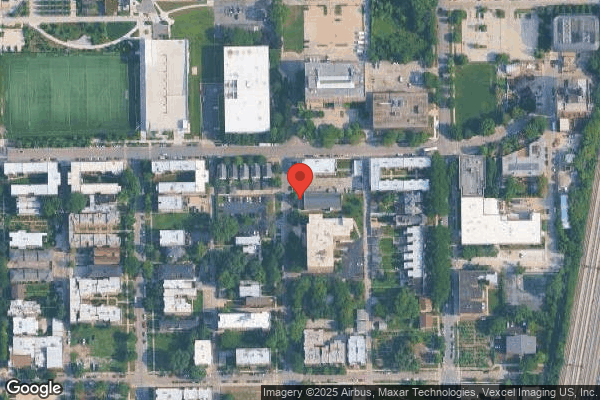
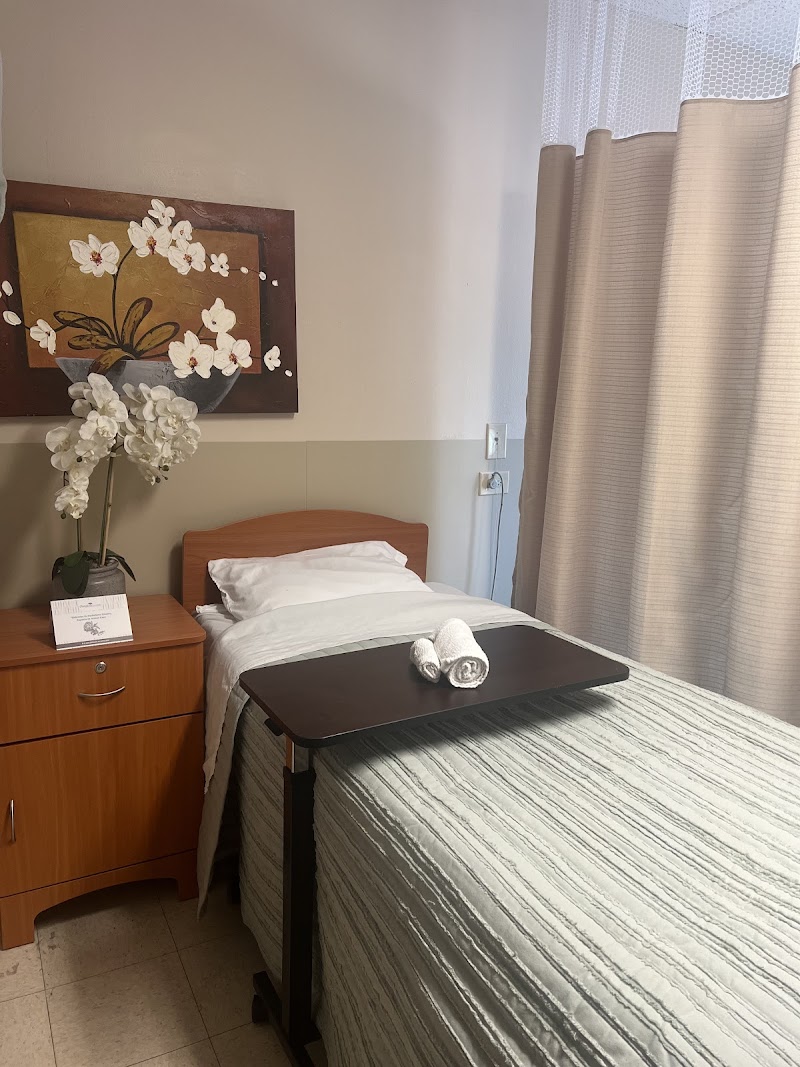
6125 SOUTH KENWOOD, CHICAGO, IL 60637 (773) 752-6000
For profit - Individual 318 Beds INFINITY HEALTHCARE CONSULTING Data: November 2025
Trust Grade
0/100
#602 of 665 in IL
Last Inspection: January 2025

Within standard 12-15 month inspection cycle. Federal law requires annual inspections.

Overview

Parkshore Estates Nursing & Rehab has received a Trust Grade of F, indicating significant concerns about the quality of care provided. They are ranked #602 out of 665 facilities in Illinois, placing them in the bottom half of nursing homes in the state, and #184 out of 201 in Cook County, meaning only a handful of local options are worse. While the facility is improving its trend, reducing issues from 25 in 2024 to 16 in 2025, it still has serious problems, including incidents where residents were not protected from abuse, resulting in physical harm. Staffing is a relative strength with a turnover rate of 37%, which is lower than the state average, but the overall staffing rating remains poor at 1 out of 5 stars. However, the facility has incurred average fines of $132,112, which raises concerns about repeated compliance issues, and there are serious lapses in care, such as failing to follow treatment plans for residents with Hepatitis C that led to severe health complications.

Trust Score
F
0/100
In Illinois
#602/665
Bottom 10%
Safety Record
High Risk
Review needed
Inspections
Getting Better
25 → 16 violations
Staff Stability
○ Average
37% turnover. Near Illinois's 48% average. Typical for the industry.
Penalties
○ Average
$132,112 in fines. Higher than 67% of Illinois facilities. Some compliance issues.
Skilled Nurses
⚠ Watch
Each resident gets only 22 minutes of Registered Nurse (RN) attention daily — below average for Illinois. Fewer RN minutes means fewer trained eyes watching for problems.
Violations
⚠ Watch
63 deficiencies on record. Higher than average. Multiple issues found across inspections.
★☆☆☆☆
1.0
Overall Rating
★☆☆☆☆
1.0
Staff Levels
★★☆☆☆
2.0
Care Quality
★★☆☆☆
2.0
Inspection Score
Stable
2024: 25 issues
2025: 16 issues

The Good

  • Full Sprinkler Coverage · Fire safety systems throughout facility
  • No fines on record
  • Staff turnover below average (37%)

    11 points below Illinois average of 48%

Facility shows strength in fire safety.

The Bad

1-Star Overall Rating

Below Illinois average (2.5)

Significant quality concerns identified by CMS

Staff Turnover: 37%

Near Illinois avg (46%)

Typical for the industry

Federal Fines: $132,112

Well above median ($33,413)

Significant penalties indicating serious issues

Chain: INFINITY HEALTHCARE CONSULTING

Part of a multi-facility chain

Ask about local staffing decisions and management

The Ugly 63 deficiencies on record

4 actual harm
Jun 2025 1 deficiency 1 Harm
SERIOUS (G) 📢 Someone Reported This

A family member, employee, or ombudsman was alarmed enough to file a formal complaint

Actual Harm - a resident was hurt due to facility failures

Free from Abuse/Neglect (Tag F0600)

A resident was harmed · This affected 1 resident

**NOTE- TERMS IN BRACKETS HAVE BEEN EDITED TO PROTECT CONFIDENTIALITY** Based on observation, interview, and record review, the facility failed to ensure residents remained free from abuse. This failu...

Read full inspector narrative →
**NOTE- TERMS IN BRACKETS HAVE BEEN EDITED TO PROTECT CONFIDENTIALITY** Based on observation, interview, and record review, the facility failed to ensure residents remained free from abuse. This failure affects two residents (R1, R2) reviewed for abuse. This failure lead to physical assault by R2, which resulted in R1 sustaining a laceration to the head. Findings include: R1 is a [AGE] year old with diagnosis including but not limited to: Transient Ischemic Attack (TIA), Cerebral Infarction without Residual Deficits, Osteoarthritis, Weakness, Chronic Obstructive Pulmonary Disease, Atherosclerotic Heart Disease, Schizophrenia, and bipolar disorder. R1's BIMS (Brief Interview of Mental Status) dated 4/18/2025 documents a score of 12, which indicates moderately impaired. R1's Abuse Care Plan documents, R1 will remain safe, will be treated with respect, dignity and reside in the facility free of mistreatment. R2 is a [AGE] year-old with a diagnosis including but not limited to: Type 2 Diabetes Mellitus without Complications, Unspecified Convulsions, Other Hypertrophic Cardiomyopathy, Essential Hypertension, Acquired Absence of Other Left Toe(S), Acquired Absence of Other Right Toe (S), Anemia Unspecified, Personal History of Other (Healed) Physical Injury and Trauma. R2's BIMS (Brief Interview of Mental Status) dated 6/16/2025 documents a score of 15, which indicates cognitively intact. During investigation on 6/25/2025 at 2:46 pm, R1 stated It was all on camera, he (R2) slammed me on the floor and made me hit my forehead. It really hurt, look at my head. I have stitches. R1 pulled his hair back from his forehead and stitches were noted to R1's right forehead. On 6/25/2025 at 11:57 am, V7 (NP/ Nurse Practitioner) stated the following, the expectation of resident safety during an altercation is de-escalation and separating the residents involved so that neither resident is able to physically harm the other. If a resident falls and hits their head during a physical altercation, the resident can sustain a skull fracture or intracranial hemorrhage. A head injury can lead to a resident's demise or a decline in the resident's health. On 6/25/2025 at 1:53 pm, V4 (DON/ Director of Nursing) stated the following, If there is a physical altercation between two residents, the expectation is that the residents are immediately separated to ensure the residents are safe in the environment. The aggressive resident is removed from the area and the residents are sent out to the hospital for an evaluation if needed. If a resident hits their head or if a resident sustains an injury, they are sent to the hospital for a further evaluation to make sure the resident didn't sustain a skull fracture or brain bleed. A head injury can lead to a resident's decline in resident's health. On 6/25/2025 at 3:19 pm, R2 stated the following, R1 was yelling and walking towards me, making threats and using profanity. R1 got close to me, so I grabbed his walker and shoved him. He fell and hit his head and begin to bleed. I didn't mean to shove him (R1) that hard. Initial Facility Report of Incident dated 6/17/2025 documents the following: it is alleged that R2 made contact with R1; R1 and R2 were immediately separated; MD (Medical Doctor) and Family notified; Police Report (#JJ298430); R2 placed on 1:1 supervision and sent out for psych evaluation; and R1 was sent to the Hospital. R1's Progress note dated 6/17/2025 at 22:11 documents in part, allegedly co-peer made contact with the resident(R1), residents (R1 and R2) were immediately separated, first aid rendered to open area noted to the right side of R1's head, and R1 was sent to the hospital for an evaluation. Chicago Police Report dated 6/17/2025 at 1900, RD Number JJ98430 documents, Simple Battery; Name of Victim/Complainant; R1 . Facility document titled, Statement, dated 6/17/2025 documents: R1's statement of the incident; I was trying to pass him (R2), and he bumped me, and my head hit the desk. V8 LPN's (Licensed Practical Nurse) statement of incident dated 6/17/2025 documents: the resident (R1) was walking out his room going toward the nursing station. R2 said something to R1 and R1 walked toward R2. V9 (CNA/Certified Nursing Assistant) got in the middle and pulled R1 to the side. After V9 (CNA) turned around, R2 got out of his wheelchair and pushed R1. V9's (CNA) statement of incident dated 6/17/2025 documents, V8 (LPN) stated that R1 and R2 were in a verbal interaction, and I (V9) tried to separate them but suddenly R2 pushed R1 away from him. R1's Hospital admission Record dated 6/17/2025 at 8:42 pm, documents: forehead laceration; needs wound check in 2 days and suture removal in 7 days. Facilities Policy titled, Abuse Prevention Program documents, It is the policy of this facility to prohibit and prevent resident abuse, neglect, exploitation, mistreatment, and misappropriation of resident property and a crime against a resident in the facility.
Jun 2025 1 deficiency
CONCERN (D) 📢 Someone Reported This

A family member, employee, or ombudsman was alarmed enough to file a formal complaint

Potential for Harm - no one hurt, but risky conditions existed

Report Alleged Abuse (Tag F0609)

Could have caused harm · This affected 1 resident

Based on interview and record review, the facility staff failed to report an allegation of abuse to the administrator for one of three residents (R1) in a total sample of four. Findings include: On 6...

Read full inspector narrative →
Based on interview and record review, the facility staff failed to report an allegation of abuse to the administrator for one of three residents (R1) in a total sample of four. Findings include: On 6.3.2025, at 1:17 PM, V1 (Administrator) said, the incident happened on 5.10.2025. Two residents R1 and R2 got into it. It wasn't initially a reportable incident because no resident was injured and there was no mental distress of either resident. He (V3) stated CNA-Certified Nursing Assistant) came in and hit him in the face. R1 did not reference R2. On 6.3.2025, at 1:32 PM, V3 (CNA-Certified Nursing Assistant) said, I did not hit R1. V3's written statement of 5.12.2025, documents in part, V3 observed R1 and R2 involved in an altercation, intervened by separating the residents; V3 reported the incident to the nurse. On 6.4.2025, at 12:17 PM, V10 (PRSC- Psychiatric Rehabilitation Services Coordinator), said it was towards the end of my shift (5.10.2025). They called me down to the 3rd floor, because there was an incident that was going on. By the time I got down there it was over. R1 couldn't tell me what happened. At first, he didn't want to talk to me. All he would tell me was that there was an altercation between him and R2. When I came back on Monday (5.12.2025), an investigation was in progress. I reported it to V12 (Social Service Director). We reported it to V1 on Monday. On 6.4.2025, at 12:38 PM, V11 (Psych Tech) said, I didn't report it (the altercation between R1 and R2) because it was over when I got up there. On 6.4.2025, at 1:24 PM, V12 (Social Service Director) said, I was told about the altercation between R1 and R2 on Monday (5.12.2025). I found out from V1 In the morning meeting (Administrator) that it was a reportable (incident) for behavior. It should be reported to the abuse coordinator. On 6.4.2025, at 2:19 PM, via telephone, V9 (CNA-Certified Nursing Assistant) said, I would let the charge nurse know about any abuse. V8 (RN-Registered Nurse) was the charge nurse that shift. She knew, she reported it (the incident) to V2 (DON-Director of Nursing). On 6.4.2025, at 3:05 PM, V2 (DON-Director of Nursing) said, R1 and R2 had a verbal altercation and V3 intervened. It wasn't reported to me that either of the residents hit each other. None of my staff reported anything to me about the alleged incident of 5.10.2025. I didn't find out about the incident until Monday or Tuesday. I was never told it was physical contact. Abuse is reported to the administrator immediately. He's the abuse coordinator. They don't have to report it (abuse) to me, they should report it to V1. On 6.4.2025, at 3:27 PM, V13 (Nurse Supervisor) said, honestly, I did not hear anything until V1 questioned me on 5.12.2025. V1 asked me if I heard about an incident involving V3 and R1. R1 stated that V3 allegedly punched R1 in the face. If a resident hits another I need to know immediately. If residents have a verbal altercation, staff should let me know immediately. I would immediately let V1 know. Facility incident report (initial of 5.10.2025) documents in part, V3 made contact with resident (R1). Addendum: It is alleged that residents (R1) and (R2) made contact with each other. Conclusion: V3 did not make contact with R1. V3 responded to a disagreement between R1 and R2. The allegation was not substantiated. Facility incident report (initial of 5.12.2025) documents part, V3 made contact with resident R1. Facsimile cover sheet documents both initial reports were faxed to the Illinois Department of Public Health on 5.12.2025 Abuse Prevention Program Policy and Procedure (Revised 3.26.12) documents in part: -V. Identification of Allegations/Internal Reporting Requirements Employees are required to immediately report any incident, allegation or suspicion of potential abuse, neglect, exploitation misappropriation of resident property, mistreatment, or a crime against a resident they observe, hear about, or suspect to the Administrator if available or an immediate supervisor who must immediately report it to the Administrator. In the absence of the Administrator, reporting can be made to the DON. Supervisors shall immediately inform the Administrator or in the absence of the Administrator, the DON of all reports of incidents, allegations or suspicion of potential abuse, neglect, exploitation, misappropriation of property, mistreatment, or crime against a resident. Procedure: Any alleged violations involving mistreatment, abuse, neglect, exploration (exploitation), misappropriation of resident property, any injuries of an unknown origin, or reasonable suspicion of a crime against a resident MUST be reported to the Administrator or Director of Nursing. The Administrator is the Abuse Coordinator of the facility. Additionally, the person(s) observing an incident of resident abuse or suspecting resident abuse must IMMEDIATELY report such incidents to the Charge Nurse who will immediately report the allegation to the Administrator, regardless of the time lapse since the incident occurred. The Charge Nurse will immediately report the incident to the Administrator or to the DON during the Administrator's absence. This report shall be made immediately, but no later than two hours after the allegation is made. If the events that (cause) the allegation involve abuse or resulted in serious bodily injury, or not less than 24 hours if the events that cause the allegation do not involve abuse and did not result in serious bodily injury.
Apr 2025 2 deficiencies
CONCERN (D) 📢 Someone Reported This

A family member, employee, or ombudsman was alarmed enough to file a formal complaint

Potential for Harm - no one hurt, but risky conditions existed

Safe Environment (Tag F0584)

Could have caused harm · This affected 1 resident

**NOTE- TERMS IN BRACKETS HAVE BEEN EDITED TO PROTECT CONFIDENTIALITY** Based on observation, interviews and record review, the facility failed to ensure that residents' rooms (R10, R11 and R12) were ...

Read full inspector narrative →
**NOTE- TERMS IN BRACKETS HAVE BEEN EDITED TO PROTECT CONFIDENTIALITY** Based on observation, interviews and record review, the facility failed to ensure that residents' rooms (R10, R11 and R12) were free from urine on the floor and urine odors. Findings include: R10 is a [AGE] year old with diagnosis including but not limited to: Encounter for attention to other artificial openings of urinary tract, personal history of malignant neoplasm of bladder, anxiety disorder, dementia and obstructive and reflux uropathy. R11 is a [AGE] year old with diagnosis including but not limited to: Essential hypertension, schizophrenia, weakness, bipolar disorder and unspecified fracture of right femur. R12 is [AGE] year old with diagnosis including but not limited to: overactive bladder, bilateral inguinal hernia, weakness, chronic obstructive pulmonary disease and bipolar. During investigation on 4/10/25 at 12:58 PM, Surveyor noted a strong odor of urine outside of residents (R10, R11 and R12) room. Surveyor observed R10 sitting in bed with urine leaking from his urostomy site and a puddle of yellow fluid on the floor next to his (R10's) bed. Surveyor inquired about the odor in the room. On 4/10/25 at 1:00 PM, V5 (LPN/ Licensed Practical Nurse) said, that she smelled a strong odor of urine in the room and would get housekeeping to clean the urine from the floor. On 4/14/25 at 12:32 PM, Surveyor noted a strong urine odor outside of R10's bedroom. R10 was observed sitting in his bed with a puddle of yellow fluid on the floor next to his (R10's) bed. On 4/14/25 at 12:36 PM, V15 (Registered Nurse) said that he would inform housekeeping of the urine on the floor near R10's bed. On 4/16/2025 at 10:37 AM, V13 (Housekeeping Director) said, The housekeepers' duties includes cleaning and mopping the residents' rooms daily. If there is urine on the floors, we are supposed to get it up. A CNA (Certified Nurse Assistant) or a Nurse should report to us if there is a urine spill in the floor. The nursing staff can also get the spill up if the housekeeper is on lunch and notify us to sanitize the area later. When asked about the importance of spills such of bodily fluids being cleaned immediately, V13 said, Urine on the floor could be a slip hazard and it poses infection control issues. It's important to maintain a nice, clean environment for the resident. We try our best to keep the urine odor down in that room but the residents have a habit of urinating on the floors. Surveyor inquired about possible interventions for a resident with behaviors of urinating on the floor. On 4/16/2025 at 11:30 AM, V3 (DON/ Director of Nursing) said, We could possibly make more frequent rounding, get the families involved and get the psychiatrist involved with the behaviors. On 4/16/2025 at 12:50 PM, V1 (Administrator) said, I do rounds at least three times daily and I smell the urine even after it is addressed. I see R1's brief soaked and he says that he doesn't need help. He (R10) makes it difficult to keep it clean. Facility Census Report dated 4/10/2025 documents R10, R11 and R12 as roommates. Facility document titled Housekeeper Job Description documents, under the direction of the Director of Housekeeping, the Housekeeper is responsible for cleaning resident rooms and other interior and exterior facility areas and assisting in maintaining a clean and attractive environment for the residents. Facility document titled Licensed Practical Nurse/ Registered Nurse Job Description documents, inspects the nursing service treatment areas daily to ensure that they are maintained in a clean and safe manner. Facility policy titled General Cleaning Policies and Procedures documents, to provide a clean, attractive and safe environment for residents, visitors and staff.
CONCERN (D) 📢 Someone Reported This

A family member, employee, or ombudsman was alarmed enough to file a formal complaint

Potential for Harm - no one hurt, but risky conditions existed

Deficiency F0691 (Tag F0691)

Could have caused harm · This affected 1 resident

**NOTE- TERMS IN BRACKETS HAVE BEEN EDITED TO PROTECT CONFIDENTIALITY** Based on observation, interviews and record review, the facility failed to ensure that urostomy supplies for one resident (R10) ...

Read full inspector narrative →
**NOTE- TERMS IN BRACKETS HAVE BEEN EDITED TO PROTECT CONFIDENTIALITY** Based on observation, interviews and record review, the facility failed to ensure that urostomy supplies for one resident (R10) were available. This failure resulted in R10's lower abdomen and bedroom floor being saturated with urine. Findings include: R10 is a [AGE] year old with diagnosis including but not limited to: Encounter for attention to other artificial openings of urinary tract, personal history of malignant neoplasm of bladder, anxiety disorder, dementia and obstructive and reflux uropathy. R10 has a BIMS (Brief Interview of Mental Status) score of 15, which indicates cognitively impaired. During investigation on 4/10/25 at 12:58 PM, Surveyor noted a strong odor of urine outside of resident's (R10, R11 and R12) room. Surveyor observed R10 sitting in bed with urine leaking from his urostomy site and a puddle of yellow fluid on the floor next to R10's bed. Surveyor requested a urostomy bag from R10's nurse (V5). On 4/10/25 at 1:00 PM, V5 (LPN/ Licensed Practical Nurse) entered R10's and said that R10 had not requested a urostomy bag from her. V7 (Nurse Supervisor) said that R10 had told him (V7) that he (R10) needed a new colostomy bag, but V7 had placed an order for the colostomy bags on that day (4/10/25). On 4/10/25 at 1:03 PM, V7 said that R10 was completely out of urostomy bags. On 4/14/25 at 12:32 PM, Surveyor noted a strong urine odor outside of R10's bedroom. R10 was observed sitting in his bed with his urostomy bag detached. On 4/14/25 at 12:36 PM, V15 (Registered Nurse) brought a colostomy bag to R10's room. R10 said, I can't use this bag. I've been waiting for weeks for the right bag. On 4/14/25 at 12:40 PM, V16 (LPN) said that she was R10's nurse and that she (V16) had asked nurse management to get urostomy bags for R10 from another facility earlier. Surveyor asked if R10 could use the colostomy bag. V16 said that R10 could not use the colostomy bag in place of the urostomy bag and that R10 was completely out of urostomy bags. On 4/14/2025 at 3:05 PM, V12 (Central Supplies) said, I place orders every Tuesday. The nurse tells me beforehand if they are running low on the urostomy bags. I was not made aware. V7 (Nurse Supervisor) told me on last week Thursday that we needed the bags, but we were trying to find the correct size. On 4/16/2025 at 12:50 PM, V1 (Administrator) said that R10 should not run out of urostomy bag or incontinent supplies. R10's Order Summary Report documents the following active orders: change suprapubic bag as needed every shift; empty urinary bag every shift and record output every shift; urostomy care as needed for infection control and hygiene; urostomy care every shift for maintenance. R10's Care Plan Report documents, potential for ulceration, infection and/or complications of the ostomy site; perform ostomy care daily and PRN (as needed) according to physician order; maintain the ostomy site to keep it clean and dry to prevent irritation; R10 has a self-care deficit and requires assistance with ADLs (activities of daily living). Facility document titled Licensed Practical Nurse/ Registered Nurse Job Description documents, ensures that an adequate stock level of medications, medical supplies, equipment, etc., is maintained on our unit/ shift at all times to meet the needs of the residents. Facility policy titled Urostomy documents, a urostomy patient has no voluntary control of urine, and a pouching system must be used and emptied regularly; a urostomy pouch should be changed every three to seven days. It is best to change it before it leaks; document procedure to include any pertinent findings; report to physician as indicated.
Mar 2025 1 deficiency
CONCERN (D) 📢 Someone Reported This

A family member, employee, or ombudsman was alarmed enough to file a formal complaint

Potential for Harm - no one hurt, but risky conditions existed

Deficiency F0808 (Tag F0808)

Could have caused harm · This affected 1 resident

Based on observation, interview, and record review the facility failed to provide a resident the physician ordered diabetic diet. This failure affected one resident (R2) out of 9 residents reviewed fo...

Read full inspector narrative →
Based on observation, interview, and record review the facility failed to provide a resident the physician ordered diabetic diet. This failure affected one resident (R2) out of 9 residents reviewed for therapeutic diets. Findings include: R2's admission diagnoses include but not limited to diabetes, asthma, pancreatitis, hypertension, thrombocytosis, and benign neoplasm of bronchus and lung. R2's (3/6/25) Brief Interview of Mental status (BIMS) score is 15. R2 is cognitively intact. On 3/17/25 at 10:50 am, stated, I am not getting a diabetic diet. On 3/17/25 at 11:52 am, Lunch observed in the first-floor dining room, R2's lunch tray observed with cabbage, corn beef, roll, large sugar cookie with green frosting and sugar sprinkles on the top and a slice of lemon meringue pie and yellow color drink. R2's lunch ticket documents Diet- CCHO (Controlled Carbohydrate Diet) LCS (Low Calorie Sweetener). Texture Regular, Liquid-thin Double protein at Breakfast and Lunch. R2's order summary report for active orders as of 3/17/25 documents in part, low concentrated sweets diet, Regular texture thin liquids consistency. On 3/17/24 at 12:20 pm, V11 (Dietary Director) stated that on special occasions and holidays everyone gets the same thing for lunch. Surveyor asked V11 if there should be an order from the doctor for altering therapeutic diets on special occasions? V11 did not answer the surveyor's question and stated it's in our policy that resident can get the same foods as the other residents on special occasions and holidays. Surveyor inquired to V11 if the cookie served for lunch, is a diabetic cookie? V11 stated that diabetics can get sugar cookies. On 3/17/25 at 2:29 pm, V1 (Administrator) stated, Lesson learned, we should have notified the doctor for residents on special diets regarding meals on special occasions. We will call the doctor now and get an order. On 3/18/25 at 1:00 pm, V2 (Director of Nursing) stated that staff is expected to follow the physicians order regarding diets. There should be an order from the doctor for residents to eat outside of their special diet on special occasions and holidays. On 3/19/25 at 12:45 pm, V28 (Dietitian) stated an order should be in for a resident on a therapeutic diet for holiday foods that's not in the ordered diet. R2's care plan dated 12/4/24 documents in part, R2 is presently within her ideal body weight (IBW) range. Resident has the following medical/mental health condition/behaviors which may compromise his/her nutritional status in the future: dm (diabetes mellitus) . Interventions: prepare/serve R2's nutritional diet as order. Prescribed diet is NCS (No Concentrated Sugars) . Care plan dated 12/18/24 R2 is at potential for complications of metabolic functioning as evidence by hyper/hypoglycemia due to DMll (Diabetes Mellitus Type 2). Interventions: Diet as ordered. Facility policy titled Meal of the Month undated documented in part, Purpose: To provide residents with input into at least one meal each month and for them to eat this meal without restrictions. Procedure: 4. Residents without physician approval shall follow their normal diet restrictions. Facility's job description titled Certified Nursing Assistant undated, documents in part, Role Responsibilities-Food Service: 2. Serves food trays and assist with feed as indicated. Facility's job description titled Dietary Aide undated, documents in part, Role Responsibilities- Job Knowledge/ Duties: 3. Assist in checking diet trays before distribution. 4. Assists in serving meals as necessary .9. Serves food in dining room as instructed. 12. Makes only authorized food substitutions. Facility's job description titled Dietary Manager Role Responsibilities- Job Knowledge/ Duties: 3. Assist in developing preliminary and comprehensive assessments of the dietary needs of each resident. 4. Assist in the developing a written dietary plan of care (preliminary and comprehensive) that identifies the dietary problems/needs of the resident and the goals to be accomplished for each dietary problem/need identified.
Jan 2025 11 deficiencies
CONCERN (D)

Potential for Harm - no one hurt, but risky conditions existed

Deficiency F0558 (Tag F0558)

Could have caused harm · This affected 1 resident

Based on observation, interview, and record review the facility failed to accommodate and follow a resident's preference to get up out of bed (R65) and a resident's preference (R194) for a shower for ...

Read full inspector narrative →
Based on observation, interview, and record review the facility failed to accommodate and follow a resident's preference to get up out of bed (R65) and a resident's preference (R194) for a shower for two residents (R65 & R194) of two residents reviewed for accommodation of needs and preferences on the total sample of 35. Findings include: F65's admission Record documents in part medical diagnoses including but not limited to end stage renal disease, weakness, and obesity. R65's Order Details document in part that R65 may use a geriatric chair daily as tolerated related to poor trunk control (ordered 7/22/2024). R65's comprehensive care plan documents in part that R65 is at risk for falls and requires ADL (Activities of Daily Living) assist for transfers and mobility related tasks (last revised 11/22/24). Interventions include for staff to respond promptly to all requests for assistance (initiated 07/12/22). Care plan also documents in part that R65 has a self-care deficit and require assistance with ADLs to maintain the highest possible level of functioning (last revised 11/22/24). R65 usually requires extensive assistance and two-person support for transfers (initiated 09/10/22). Intervention also includes to provide assistance with all ADLs as required per my dependence needs including transferring (initiated 09/10/22). On 01/28/25 at 11:46 AM, R65 was alert and oriented to person, place, and time. R65 was lying in bed. R65 stated staff only get R65 out of bed when it is shower time but R65 wants to be up out of bed every day. R65 stated that staff are not even offering to get R65 up every day. R65 stated facility should at least offer it but they don't even do that. On 01/28/25 at 1:18 PM, R65 stated facility didn't even offer to get R65 up for lunch. R65 reiterated that R65 wants to get up every day. R65 pulled the call light at 1:20 PM. At 1:21 PM, V21 (Staffing Coordinator) answered R65's call light. R65 requested for the CNAs (Certified Nurse Aides) to get R65 out of bed. V21 stated R65 had to wait until after the scheduled activities were done. V21 returned to the room at 1:23 PM. R65 stated I want to get up. V21 stared at R65 and stated are you sure you want to get up? Are you sure you want to get up today? You sure? R65 stated [R65] wanted to get up every day. On 01/28/25 at 02:36 PM, R65 remained in bed. R65 stated the CNA told R65 to wait until the next shift. On 01/29/25 at 09:38 AM, R65 stated the facility did not get R65 out of bed yesterday. Facility did not get R65 up into a geri-chair until this morning. R65 stated feeling better while sitting up in the geri-chair and feeling like mood and appetite is better while sitting up. R65 stated I feel like I can do more now. On 01/30/25 at 10:36 AM, V3 (Assistant Director of Nursing) stated staff should try to get R65 up every day. If R65 says [R65] wants to get up, staff should get R65 up. V3 stated there is no reason to ignore R65's request or preference. R194's admission Record documents in part diagnoses including but not limited to chronic systolic heart failure, dementia, weakness, obesity, muscle wasting and atrophy to left and right thigh, abnormalities of gait and mobility, and lack of coordination. R194's care plan documents in part that R194 has a self-care deficit with impaired dressing and grooming abilities and requires assistance with ADLs to maintain the highest possible level of functioning (last revised 06/25/24). R194 usually requires extensive assistance and one-person support for bathing and dressing (initiated 05/06/24). On 01/28/25 at 01:05 PM, V22 approached V6 (Nurse) at the nurses' station. V22 asked for staff to give R194 a shower because R194 was complaining of being itchy. V6 stated R194 is not due for a shower but usually gets one weekly on Thursdays. On 01/28/25 at 02:28 PM, R194 was lying in bed. R194 was very hard of hearing and surveyor communicated via text on laptop. R194 was oriented to person, city, and year. R194 stated [R194] wanted a shower and staff hasn't done it. R192 (R194's roommate) stated R194 has been asking for a shower since the morning but the CNAs haven't done it. On 01/29/25 at 09:16 AM, R194 was alert and oriented to person, city, and year. R194 stated staff didn't give [R194] a shower yesterday. R194 stated doesn't know why they won't give [R194] a shower since R194 needs one. R194 complained of itching and wanted a shower. R194 stated asking multiple staff but they haven't given R194 a shower. R194 stated the last shower was sometime last week. On 01/29/25 at 09:35 AM, V6 (Nurse) stated R194 did not get a shower yesterday. V6 stated the CNA gave R194 a bed bath instead. On 01/30/25 at 10:40 AM, V3 (Assistant Director of Nursing) stated at a minimum, residents get two showers a week. V3 stated that residents can also get a shower as needed. If a resident requests for a shower, they should get it. V3 stated staff should have given R194 a shower and not a bed bath. Facility's undated Activities of Daily Living (Routine Care) policy documents in part: Residents are given routine daily care and HS care by a C.N.A. or a Nurse to promote hygiene, provide comfort and provide a homelike environment. ADL care is provided throughout the day, evening, and night as care planned and/or as needed. ADL care is coordinated between the resident and the care givers with emphasis on resident preference as much as possible. Facility's undated Resident Rights policy document in part: The facility must care of you in a manner and environment that enhances or promotes your quality of life. The facility will treat you with dignity and respect in full recognition of your individuality. You may choose your won activities, schedules and health care and any other aspect significant to and affecting your life within the facility. You have the right to receive services with reasonable accommodations to individual needs and interests. You have the right to make choices about aspects of your life in the facility that are important to you.
CONCERN (D)

Potential for Harm - no one hurt, but risky conditions existed

Quality of Care (Tag F0684)

Could have caused harm · This affected 1 resident

**NOTE- TERMS IN BRACKETS HAVE BEEN EDITED TO PROTECT CONFIDENTIALITY** Based on observation, interview, and record review the facility failed to notify the physician when a residents blood pressure w...

Read full inspector narrative →
**NOTE- TERMS IN BRACKETS HAVE BEEN EDITED TO PROTECT CONFIDENTIALITY** Based on observation, interview, and record review the facility failed to notify the physician when a residents blood pressure was not within the ordered parameters for (R177), failed to follow their policy for positioning a resident when obtaining a blood pressure for (R138) and failed to place a dressing on R65's permacath. This failure affected 3 residents (R177, R138 and R65) reviewed for quality of care on the sample of 35. Finding Include: 1. R177 has diagnosis not limited to End Stage Renal Disease, Essential (Primary) Hypertension, Hypertensive Urgency, Chronic Obstructive Pulmonary Disease, Encephalopathy, Schizophrenia, Suicidal Ideations, and dependence on Renal Dialysis. On 01/28/25 at 12:34 PM V6 (Licensed Practical Nurse) entered R177's room and applied the wrist blood pressure monitor to her right wrist obtaining a blood pressure reading of 99/56 pulse 68. V6 exited R177 room and stated, I am going to hold the Hydralazine. V6 did not notify the physician as ordered for the systolic blood pressure <100 (99) and the diastolic blood pressure <60 (56). R177's Physician Order document BP (Blood Pressure) and Pulse Q (every) shift. Notify MD (Medical Doctor)/NP (Nurse Practitioner) if Systolic <100 or Diastolic <60. Refer to BP Medication Parameters. every shift for Monitoring BP -Start Date- 01/03/25 2300. Care Plan document in part: Focus: R177 has a diagnosis of Hypertension and Hypertensive Urgency. Interventions: Medications as ordered per Medical Doctor. See MAR (Medication Administration Record/POS (Physician Order Summary) and check for blood pressure parameters. 2. R138 has diagnosis not limited to Anemia, Gastro-Esophageal Reflux Disease, Essential (Primary) Hypertension, Hyperlipidemia, Type 2 Diabetes Mellitus and Weakness. R138 has a history of Elevated D-dimer, he will continue to be at risk for Cardiac distress. [NAME] is at risk for elevated blood pressure R/T HTN. Monitor blood pressure prior to administering if indicated. On 01/29/25 at 09:03 AM V6 (Licensed Practical Nurse) prepared R138 medication while standing at the medication cart near the nurse station. R138 was observed standing by the nurse station, V6 placed the blood pressure monitor on R138 wrist and obtained a reading of 151/93. On 01/29/25 at 09:26 AM Surveyor asked V6 (Licensed Practical Nurse) the reason for taking R138 blood pressure while he was standing at the nurse station. V6 responded, it does not say in a sitting or standing position to rule out orthostatic hypotension. On 01/30/25 at 10:15 AM V3 (Assistant Director of Nursing) stated Normally we have parameter for the blood pressure. If the blood pressure is not in the parameters, we will call the medical doctor and see if they want us to hold the medication. The proper position when taking a blood pressure is to have the resident sitting with the arm at heart level. The purpose is to make sure we are getting an accurate Blood Pressure reading. Policy: Titled Physician Orders undated document in part: it is the policy of the facility to follow the orders of the physician. The facility will have orders to provide essential care to the resident, consistent with the residence mental and physical status upon admission. Titled Blood Pressure Measurement undated document in part: Procedure Purpose: To obtain a measurement up of the amount of pressure blood exerts against the wall of an artery. To assess change in condition. To assess effectiveness of medication. Procedure details: 2. Position resident and recumbent (lying) or sitting position with arm relaxed on a flat surface at cardiac level. 3. R65's admission Record documents in part a diagnosis of end stage renal disease and personal history of malignant neoplasm of the kidney. R65 is on hospice. On 01/28/25 at 11:46 AM, R65 was alert and oriented to person, place, and time. R65 was lying in bed. Hospital gown was laying low revealing a permanent double lumen catheter (permacath) to R65's left upper chest. There was no dressing to the site. R65 stated R65 does not get dialysis. R65 stated they don't do nothing with this (referring to permacath). R65 stated I had a bandage there that got so filthy, so I tore it off. These nurses don't touch this. R65 did not recall when R65 removed the bandage but stated it was a while ago. Surveyor returned to R65's room multiple times including at 1:13 PM and 2:36 PM. Permacath remained open to air and without a dressing. On 01/29/25 at 10:37 AM, R65's permacath remained without a dressing. R65 laughed and stated, staff don't do nothing for me with it. On 01/29/25 at 10:40 AM, V5 (Nurse) stated R65 refused dialysis and is now on hospice. V5 stated nurses don't use R65's permacath. V5 stated I think the dressing is changed by the wound nurse or nurse if the wound nurse is not available. V5 was not sure how often the nurses changed the permacath. V5 stated I think daily. On 01/29/25 at 02:50 PM, V20 (Wound Nurse Coordinator) stated staff are not using R65's left upper chest permacath. V20 was not sure when it was last used since R65 refused dialysis. V20 stated R65's permacath is supposed to have a dressing to keep it from getting any germs or getting it infected. Discontinued orders document in part an order to remove R65's subclavian catheter on 07/05/24. Facility discontinued the order on 07/24/24. Orders dated 07/24/24 document in part to monitor right chest permacath for redness, bleeding, and discharge every shift and to change the right chest permacath dressing one time a day every Monday, Wednesday, and Friday. The facility discontinued the permacath dressing order on 01/28/25 when facility changed it to weekly dressing change every Friday. R65's progress note dated 07/24/24 3:31 PM documents in part that a hospice nurse inquired about when R65's permacath will be removed. V30 (Nurse) called R65's doctor and received instruction to have the doctor that inserted R65's permacath to remove it. No further progress note related to facility attempting to coordinate the removal of R65's permacath prior to the time of the survey. On 01/30/25 at 10:38 AM, V3 (Assistant Director of Nursing) stated staff do not use R65's left upper chest permacath. V3 stated staff are to observe it to make sure it's clean and covered to prevent possible infection. V3 stated it is a port and it's an entry point so infection can get in there. V3 was not sure what the plan was for R65's permacath. During a follow-up interview at 11:27 AM, V3 stated there was no ongoing plan until recently (time of the survey) to have it removed. Facility's Catheter Insertion and Care policy (last revised 07/16) documents in part: Central venous catheter dressings will be changed specific intervals, or when needed, to prevent catheter-related infections that are associated with contaminated, loosened, soiled, or wet dressings. Dressings must stay clean, dry, and intact. Policy did not include reassessment of need or removal of central venous cathethers.
CONCERN (D)

Potential for Harm - no one hurt, but risky conditions existed

Pressure Ulcer Prevention (Tag F0686)

Could have caused harm · This affected 1 resident

Based on observation, interview, and record review the failed to ensure a low air loss mattress was on the correct setting for one (R157) resident with a history of alterations in skin integrity in a ...

Read full inspector narrative →
Based on observation, interview, and record review the failed to ensure a low air loss mattress was on the correct setting for one (R157) resident with a history of alterations in skin integrity in a sample of 35. Finding Include: R157 has diagnosis not limited to Type 2 Diabetes Mellitus, Anemia, Peripheral Vascular Disease, Primary Osteoarthritis, Thrombocytosis, Spinal Stenosis, Lumbar Region with Neurogenic Claudication, Hyperlipidemia, Abnormal Weight Loss, Depression and Contracture other Specified Joint. R157's MDS (Minimum Data Set) BIMS (Brief Interview for Mental Status) score is 12 indicating moderate cognitive impairment. Care plan document in part: R157 has a self-care deficit: Impaired Bed Mobility and would benefit from participation in a Bed Mobility Restorative Nursing Program as evidenced by the following risk factors and potential contributing Diagnosis: Spinal Stenosis with neurogenic claudication, Intervertebral disc degeneration lumbar region, Muscle weakness, Reduced mobility, schizoaffective disorder. Focus: R157 has an alteration in skin integrity and is at risk for additional and/or worsening of skin integrity issues related to: Sacrum (resolved 12/27/24) Left buttock (resolved 01/09/25) Left Heel (resolved) 08/29/24 Left Foot (resolved 08/08/24). R157 is at increased risk for alteration in skin integrity related to: Incontinence of bowel, Impaired Mobility Status, Diabetes, Comorbidities. Interventions: Pressure reducing/relieving mattress and W/C (wheelchair) cushion as needed. Weekly Wound Evaluation document in part: Identified; 11/21/24 Sacrum Stage II (healed 12/27/24). Weekly Wound Evaluation document in part: Identified; 01/28/24 Left Buttock Stage II (healed 01/09/25). Weekly Wound Evaluation document in part: Identified; 11/25/24 Left Heel Stage III (healed 12/19/24). Braden Scale for Predicting Pressure Sore Risk dated 12/23/24 document in part: Score: 12 Category: High Risk. R157 weights dated 01/15/25 79.6 Lbs. (pounds) 12/18/24 84.0 Lbs., 11/13/24 82.0 Lbs., 10/16/24 85.2 Lbs., 09/18/24 88.0 Lbs., 08/20/24 84.0 Lbs. and 07/31/24 82.8 Lb. On 01/28/25 at 01:16 PM R157 was observed lying in bed contracted in a fetal position on a Low air loss mattress with the setting of 350. On 01/28/25 at 01:17 PM surveyor asked V4 (Registered Nurse) the settings on R157 low air loss mattress. V4 responded, it cycles every 20 minutes, and the pounds go up to 350. It alternates and right now it is set at 350. V4 checked the computer and stated R157 weighs 79.6 pounds. R157 does not have wounds anymore. I think they healed out a couple weeks ago to the sacrum and right heel. On 01/30/25 at 10:15 AM V3 (Assistant Director of Nursing) stated I have worked here since 11/24. The low air loss mattress goes according to the resident weight, and its alternating pressure button for the alternating pressure of the bed. If R157 low air loss mattress is set at 350 and R157 weigh 79.6 pounds the low air loss mattress would be too firm. There is a potential it can cause the skin to break down as well. Wound care checks the low air loss mattress settings. R157 has a history of wounds. R157 wounds are currently healed but there is a potential they can open back up because of the wrong low air loss mattress setting. In-Service dated 12/29/25 document in part: Topic: Air mattress. Air mattresses must be set on correct setting for weight. Policy: Titled Guidelines for low Air Loss Mattress Use dated 07/18/23 document in part: Purpose: To provide the features of a support system for the resident that provides a flow of air to assist in managing the heat and humidity (microclimate) of the skin. Low air loss mattresses will be utilized for residents with Stage III and Stage IV pressure ulcers and multiple Stage II pressure ulcers as indicated. Procedure: 4. The setting will be per manufacturer's recommendations. The weight of the resident is the major consideration for the settings. Titled Guidelines for Preventive Skin Care dated 05/20/23 document in part: It is the intent of the facility to provide residents with preventive skin care through careful washing, rinsing, and drying of their skin, to keep them clean, comfortable, well groomed, and free from pressure sores. All residents will be provided a pressure reducing mattress. Procedure: 5. Air mattress/gel mattress may be used for those residents identified as being high risk for potential skin breakdown.
CONCERN (D)

Potential for Harm - no one hurt, but risky conditions existed

Deficiency F0688 (Tag F0688)

Could have caused harm · This affected 1 resident

Based on observation, interview, and record review the facility failed to ensure anti-contracture devices were applied as ordered and ensure the care plan was updated to reflect the correct area of sp...

Read full inspector narrative →
Based on observation, interview, and record review the facility failed to ensure anti-contracture devices were applied as ordered and ensure the care plan was updated to reflect the correct area of splint application for one (R72) of four residents reviewed for limited range of motion in a sample of 35. Findings Include: R72 has diagnosis not limited to Psychosis, Epilepsy, Hemiplegia, Unspecified Affecting Right Dominant Side, Weakness, Cerebral Infarction, History of Falling, Personal History of Transient Ischemic Attack (Tia), Schizophrenia, Bipolar Disorder, Obesity, and Injury of Head. R72's MDS (Minimum Data Set) BIMS (Brief Interview for Mental Status) score is 12 indicating moderate cognitive impairment. Care Plan document in part: Focus: R72 is at risk for complications related to Cerebral Vascular Accident (Stroke) Hemiplegia affecting Right Dominant side. Focus: R72 is at risk for complications related to Monoarthritis. Intervention: Use supportive devices such as splints as recommended by therapy. Focus: I would benefit from a splint/brace due to mono arthritis to left wrist. Goal: Apply my Splint to left wrist, on in the a.m. after ADL (Activities of Daily Living) care and off in the PM, as ordered to help maintain my current ROM (Range of Motion) status and prevent any further deterioration. Apply splint after a.m. care for 4-6 as tolerated. Apply splint as ordered. I will be evaluated by the Restorative Nursing Department for placement into a Splint/Brace Restorative Nursing Program upon Admission, Quarterly and with a Significant Change in Status. May remove during ADL care self-performance. Staff will observe my splint/brace site for any skin irritation with routine daily care and as needed. The Restorative Aides and/or Unit Aide will document my program minutes within the Point of Care Module as indicated per the schedule. Order Summary Report dated 01/30/25 document in part: May wear splint to right hand, may remove for care. On 01/28/25 01:32 PM R72 was observed lying in bed with right hand contracted and no splint in use. R72 stated they stole my splint about 4 months ago. I need a sling. I can slightly move my arm. On 01/28/25 at 01:40 PM V4 (Registered Nurse) was notified that R72 does not have a splint in use. On 01/30/25 at 10:15 AM V3 (Assistant Director of Nursing) stated R72 has the splint on now. They put it on 01/29/25 to the right hand. It is supposed to be on the right hand not the left. Restorative updates the care plan. If the splint is not worn as ordered there is a potential to become more contracted and more weakness to the right hand. I did an education to make sure splints are in place. On 01/30/25 at 11:26 AM V23 (Restorative Nurse Consultant) stated we are looking for a restorative nurse. The purpose of the splint is to prevent further contracture. The splint should be applied as ordered. I recognized the care plan was incorrect, so I am going to clarify and fix it. The splint is entered in the care plan once the recommendation is made. It is entered in right away. In-Service dated 01/29/25 document in part: Topic Splint Guidelines. Summary: Splint guidelines are to be followed per protocol. Policy: Titled Range of Motion (ROM) and Splint Policy and Procedures dated 02/20/15 document in part: The Restorative Nurse and/or Nurse Designee will complete a ROM risk assessment for all residents that are admitted to the facility to determine if they have any ROM deficits and/or are at risk for development of a reduction in their current ROM status. Residents that have been assessed to have a reduction in their ROM will be places in appropriate ROM programing to increase ROM and/or to prevent further decrease in their ROM status. The Restorative Nurse and/or Nurse Designee will consult with the Skilled Therapy Department for residents that may benefit from a split application. Procedure for ROM: 1. The Restorative Nurse and/or Nurse Designee will complete the ROM/Loss of Function Movement risk assessment upon admission, quarterly, annually and upon determination of a significant change in status. 4. The Restorative Nurse and/or Nurse Designee will develop a ROM care plan to identify the problem, goals, and approaches to be utilized by the staff and resident. Procedure for Splints: 1. All residents will have a ROM/Loss of Function Movement Assessment completed with the admission process and then Quarterly, Annually and with a significant change in status. 2. Any resident that has a decrease in ROM and/or Loss of Functional Movement will be places into a ROM Restorative Program. 3. Once the resident has been evaluated by the Skilled Therapist and the facility has recommendations for the splint; the Restorative Nurse and the Skilled Therapist will select an appropriate splint and order per the current vendor. 5. The Restorative Nurse will write the order for the splint on the POS (Physician Order Sheet). 7. Once the splint arrives, the Restorative Department will update the care plan, will initiate the daily splint application tracking lo in Point of Care. Splints will be applied according to the Facility Splint schedule and will be designated for application on an AM or PM shift schedule and will be designated on the plan of care. Titled Baseline Care Plan Assessment/Comprehensive Care Plans revised 03/23/21 document in part: The Comprehensive Care Plan will further expand on the resident's risk, goals and interventions using the Person Centered plan of care approach for each resident that includes measurable objectives and timetables to meet the resident's medical, nursing, physical functioning, mental and psychosocial needs. As the resident remains in the nursing home, additional changes will be made to the comprehensive care plan based on the assessed needs of the resident. 9. The comprehensive care plans will be reviewed and updated every quarter at a minimum. Titled IDT (Interdisciplinary Team) Care Planning Policy and Procedure (Person-Centered Plan of Care) revised 06/20 document in part: Each resident will have a comprehensive assessment completed that will assist in the development of an individual (Person-Centered) plan of care that will include goals and interventions aimed to improve or maintain the residents highest level of function, prevent decline, decrease risk of complications of medical conditions and decrease risk of injury. 7. Residents care plans will be reviewed and updated as needed with readmissions, quarterly reassessments, annually and with changes in condition.
CONCERN (D)

Potential for Harm - no one hurt, but risky conditions existed

Deficiency F0692 (Tag F0692)

Could have caused harm · This affected 1 resident

**NOTE- TERMS IN BRACKETS HAVE BEEN EDITED TO PROTECT CONFIDENTIALITY** Based on observation, interview, and record review the facility failed to ensure expired dialysis nutritional supplements were n...

Read full inspector narrative →
**NOTE- TERMS IN BRACKETS HAVE BEEN EDITED TO PROTECT CONFIDENTIALITY** Based on observation, interview, and record review the facility failed to ensure expired dialysis nutritional supplements were not store and administered to two (R177, R183) of three residents reviewed for nutrition in a sample of 35. Findings Include: On [DATE] at 01:05 PM the second-floor medication room was reviewed with V5 (Registered Nurse). An opened box containing twenty 8-ounce cartons of Nova Source Renal 19% was observed on the counter with a use by date of [DATE]. V5 stated we use the Nova Source for dialysis residents, and this is the only box. There are 3 or 4 dialysis residents on the floor. On [DATE] at 01:15 PM surveyor asked V4 (Registered Nurse) are there any dialysis residents on the floor. V4 responded, R114, R177 and R183 are dialysis residents. Surveyor asked do they receive the Nova Source Renal 19%. V4 responded; they receive it every day unless they refuse. R177 and R183 received it but R114 did not want hers. Surveyor asked V4 to enter the medication room to observe the box of Nova Source Renal 19% on the counter. V4 looked at the use by date and stated, we should have discarded them and sent them back to central supply. R177 End Stage Renal Disease, Essential (Primary) Hypertension, Hypertensive Urgency, Chronic Obstructive Pulmonary Disease, Encephalopathy, Patient's Noncompliance with other Medical Treatment and Regimen, Epilepsy, Viral Hepatitis C, Hepatic Failure, Schizophrenia, Suicidal Ideations and Dependence on Renal Dialysis. Care Plan document in part: Focus: R177 nutritional status is compromised secondary to diagnosis of end stage renal disease with Hemodialysis, Chronic Obstructive Pulmonary Disease and Hepatic Failure. Interventions: Provide dietary supplements as ordered. On [DATE] at 01:37 PM an expired carton of dialysis nutritional supplement was observed at R177's bedside. Surveyor asked R177 has she drank the supplement. R177 responded, yes, I drank it. R177's Physician Order document in part: Nepro one time a day. Medication Administration Record indicate R177 received Nepro [DATE]. R183 has diagnosis not limited to Disorders of Plasma-Protein Metabolism, Chronic Diastolic (Congestive) Heart Failure, Non-St Elevation (Nstemi) Myocardial Infarction, End Stage Renal Disease, Dependence on Renal Dialysis, Anemia in Chronic Kidney Disease, Mild Protein-Calorie Malnutrition, Essential (Primary) Hypertension, Muscle Wasting and Atrophy, Muscle Wasting and Atrophy. R183 Physician Orders document in part: Nepro two times a day. Care Plan document in part: Focus: R183 at risk for weight loss. Interventions: Provide dietary supplements as ordered. Nepro twice a day, Medication Administration Record indicate R183 received Nepro [DATE]. On [DATE] at 10:15 AM V3 (Assistant Director of Nursing) stated Before giving Nepro, check the order to make sure it is the correct order and check the supplement to make sure it is not expired. We are doing an education. V4 (Licensed Practical Nurse) did tell me about the supplement, and I educated the staff to make sure they check the expiration dates. If an expired supplement is given there is a potential the resident can have side effects, emesis. In-Service dated [DATE] document in part: Topic: Medications Storage. Summary: Medications that are stored must not be expired and expiration date must be checked prior to administering. Policy: Titled Medication Storage in the Facility undated document in part: Medications and biologicals are stored safely, securely, and properly following the manufacturer or supplier recommendations.
CONCERN (D)

Potential for Harm - no one hurt, but risky conditions existed

Medication Errors (Tag F0758)

Could have caused harm · This affected 1 resident

**NOTE- TERMS IN BRACKETS HAVE BEEN EDITED TO PROTECT CONFIDENTIALITY** Based on interview and record review, the facility failed to evaluate for the appropriateness of antipsychotic medication and en...

Read full inspector narrative →
**NOTE- TERMS IN BRACKETS HAVE BEEN EDITED TO PROTECT CONFIDENTIALITY** Based on interview and record review, the facility failed to evaluate for the appropriateness of antipsychotic medication and ensure that as needed orders for anti-psychotic medications are limited to 14 days for one (R170) of six residents reviewed for unnecessary medications on the total sample of 35. Findings Include: R170's clinical records show an initial admission date of 10/16/24 with included diagnoses but not limited to Schizoaffective Disorder Bipolar type, Generalized Anxiety Disorder, and Major Depressive Disorder. R170's Minimum Data Set, dated [DATE] shows R170 has moderately impaired cognition. R170's physician orders with active orders as of 1/29/25 read in part: Haloperidol Lactate Injection Solution inject 5 mg intramuscularly every 6 hours as needed for agitation and Haloperidol 5 mg 1 tablet every 6 hours as needed (PRN) for agitation (ordered 12/27/24). R170's January Medication Administration Record (MAR) documented behavior monitoring revealed R170 did not exhibit any negative behaviors since 1/1/25 to 1/28/25. R170's progress notes dated 1/9/25 at 10:44 AM documented by V29 (R170's Nurse Practitioner) and progress notes dated 1/17/25 at 3:41 PM documented by V28 (R170's Physician) do not document the rationale and appropriateness for R170's antipsychotic PRN order to be extended beyond 14 days nor indicate the duration for the PRN order. On 1/30/25 at 10:34 AM, interviewed V8 (Psychotropic Registered Nurse) and stated, to address a resident's behavior, a non-pharmacological approach is initiated first before ordering psychotropic medication. V8 stated that psychotropic medications are ordered by the psychiatry physician or nurse practitioner and that they should be assessing the resident first before ordering any psychotropic medications. They need to assess the resident for appropriateness of the medication. V8 stated that any PRN psychotropic medication should be discontinued after 14 days if it's not being used and if resident is not exhibiting anymore behaviors. V8 stated that if extension beyond the 14 days is needed, the psychiatric physician or nurse practitioner should assess the resident first and document in the resident's chart the reason for extending the PRN psychotropic medication. The facility's Psychotropic Drugs Usage policy and procedure dated 11/17 documented in part: Psychotropic drug use is based upon the comprehensive assessment of the resident. Psychotropic medications are given as necessary to treat a specific condition that is diagnosed and documented. Residents who receive PRN psychotropic medications will be evaluated and if the medication is extended longer that 14 days, the rationale for continuation will be documented in the resident's medical record. Drugs ordered as needed (PRN) will be reevaluated within 14 days to determine if the drug could be discontinued or should be continued: a. The rationale for the continued need for the drug is documented in the medical record, b. In the even that the drug is an antipsychotic, the prescribing practitioner will assess the resident for continued need.
CONCERN (E)

Potential for Harm - no one hurt, but risky conditions existed

Infection Control (Tag F0880)

Could have caused harm · This affected multiple residents

**NOTE- TERMS IN BRACKETS HAVE BEEN EDITED TO PROTECT CONFIDENTIALITY** Based on observations, interviews, and record reviews, the facility failed to ensure a resident (R387) with surgical wound and p...

Read full inspector narrative →
**NOTE- TERMS IN BRACKETS HAVE BEEN EDITED TO PROTECT CONFIDENTIALITY** Based on observations, interviews, and record reviews, the facility failed to ensure a resident (R387) with surgical wound and peripherally inserted central catheter (PICC) line was placed on an Enhanced Barrier Precaution (EBP) and failed to disinfect blood equipment between use for three residents (R225, R226 & R138) for four of nine residents reviewed for infection control. Findings Include: 1. On 1/29/25 at 08:32 AM V6 (Licensed Practical Nurse) returned to the medication cart after exiting R225's room with signage posted indicating Enhanced Barrier Precautions. V6 placed the wrist blood pressure monitor on top of the medication cart after taking R225 blood pressure without disinfecting it. On 01/29/25 at 08:44 AM V6 (Licensed Practical Nurse) entered R226's room with signage posted indicating Enhanced Barrier Precautions. V6 placed the blood pressure monitor on R226 left wrist and obtained a blood pressure reading of 115/83. V6 administered R226 medication then exited the room placing the blood pressure monitor on top of the medication cart without disinfecting it. On 01/29/25 at 09:03 AM R138 was standing by the nurse station, V6 (Licensed Practical Nurse) placed the blood pressure monitor on R138 wrist and obtained a reading of 151/93. V6 removed the blood pressure monitor then placed it on top of the medication cart without disinfecting it. On 01/29/25 at 09:26 AM Surveyor asked V6 the procedure for cleaning reusable medical equipment. V6 responded, the blood pressure monitor should be cleaned between each resident for infection control. To prevent the transfer of infectious diseases we sanitize it with the disinfecting wipes between each resident. On 01/30/25 at 10:15 AM V3 (Assistant Director of Nursing) stated blood pressure monitors should be cleaned between residents with disinfecting wipe for Infection control to make sure we are not transferring germs. I did an education. In-Service dated 12/29/25 document in part: Topic: Cleaning of blood pressure cuff. Summary: Blood pressure cuff must be sanitized in between residents. In-Service dated 12/29/25 document in part: Topic: Enhanced Barrier Precautions. Summary: Enhanced Barrier Precautions guidelines should be followed. Policy: Titled Guidelines for Cleaning DME (Durable Medical Equipment) dated 11/28/22 document in part: It is the policy of the facility to ensure DME (Durable Medical Equipment) is clean and in good repair. Titled Blood Pressure Measurement undated document in part: Procedure Details: 2. Disinfect cuff and stethoscope before entering room. 14. Disinfect cuff and stethoscope upon exiting room. 2. On 1/28/25 at 12:39 PM, R387 was sitting on a wheelchair in the 4th floor dining room alert and able to verbalize needs. R387 was noted with right foot wound dressing and a peripherally inserted central catheter (PICC) line on [R387's] right upper arm. R387 stated that [R387] was admitted in the facility more than a week ago for right foot wound infection and has been receiving intravenous (IV) antibiotic. On 1/28/25 at 12:49 PM, Surveyor observed R387's room and door with no posted EBP signage and no isolation cart set up. On 1/29/25 at 3:05 PM, interviewed V16 (Infection Preventionist/Licensed Practical Nurse) and stated that residents with open wounds like surgical and ulcers, gastrostomy tubes, urinary catheters, any kind of IV lines, and dialysis lines should be placed on EBP. V16 stated that the purpose of the EBP is for prevention of transmitting any diseases to residents with open areas. The staff should be wearing gloves and gown during care. V16 stated that the resident on EBP should have an EBP signage posted on the door and an isolation cart should be set up outside the door. V16 stated that the purpose of the signage is to make people aware that someone in the room is on EBP and that they should wear proper protective personal equipment (PPE). V16 stated that if there is no signage, visitors and staff would not know if a resident is on EBP or not. V16 stated EBP should be in the resident's physician orders and care planned. V16 stated that [V16] just found out today that R387 is on isolation. R387's clinical records show R387 was admitted in the facility on 1/17/25 with included diagnoses but not limited to Sepsis and Type 2 Diabetes Mellitus. R387's Minimum Data Set, dated [DATE] shows R387 is cognitively intact. R387's progress notes dated 1/18/25 at 8:46 AM documented in part: R387 was admitted in the facility from acute hospital with diagnoses of Osteomyelitis, Hypertension, and Hyperlipidemia. R387's head to toe assessment was completed. PICC line noted to right arm. An open wound noted to right leg. R387' physician orders read in part: IV access/infusion site dressing change (ordered on 1/18/25). R387's physician orders read in part: Enhanced Barrier Precautions for IV (ordered on 1/28/25). R387's care plan reads in part: R387 has a PICC line on right arm and is at risk for infection (date initiated 1/20/25). R387 is on enhanced barrier precautions for wounds or skin opening requiring a dressing (date initiated on 1/29/25). The facility's INFECTION CONTROL/ISOLATION GUIDELINES dated 02/23 documented in part: To prevent unprotected exposure of residents, visitors and staff potentially infectious microorganisms or diseases and to decrease the spread of in-house or community acquired infections. Enhanced Barrier Precautions used for the following: 1. Wounds - regardless of MDRO status; 2. Indwelling medical devices regardless of MDRO [Multidrug-Resistant Organism] status (Examples: Central line/PICC line, urinary catheter, feeding tube, tracheostomy etc.). Enhance Barrier Precautions are use when specific, high contact resident care activities are performed (Examples: dressing, bathing/showering, transferring, providing hygiene, changing linens, changing briefs or assisting with toileting, device care or use, and wound care etc.). Post Enhanced Barrier Precautions sign (CDC) on the door (indication not to enter without checking at Nurses' station for instruction/education).
CONCERN (E)

Potential for Harm - no one hurt, but risky conditions existed

Deficiency F0883 (Tag F0883)

Could have caused harm · This affected multiple residents

Based on interview and record review, the facility failed to provide pneumonia vaccinations in a timely manner for (R21, R24, R54, R73, R486), offer the influenza vaccine to (R24), and obtain written ...

Read full inspector narrative →
Based on interview and record review, the facility failed to provide pneumonia vaccinations in a timely manner for (R21, R24, R54, R73, R486), offer the influenza vaccine to (R24), and obtain written consent prior to administering an influenza vaccine to (R486). These failures affected five out of five residents reviewed for immunizations on the total sample of 35. Findings include: On 1/29/25 at 10:48 AM, V16 (Infection Preventionist - Nurse) provided surveyor with a stack of pneumonia vaccine consents. There were multiple consents from 12/16/24 including those from R21, R24, R54, R73, and R486. V16 stated these residents did not receive their pneumonia vaccines yet. V16 stated V27 (Director of Nursing) was helping set up a pneumonia clinic in December but it did not follow-through when V27 took an early leave. V16 stated facility was also in the process of obtaining pneumonia consents from all eligible residents at the time but did not complete the whole building. V16 stated [V16] still has not evaluated the residents on the second floor for eligibility. Reviewed R21, R24, R54, R73, and R486's Pneumococcal Vaccine Consents and the corresponding orders to administer the vaccines. Residents consented to receive the pneumococcal polysaccharide vaccine 23 (PPSV23) on 12/16/24. On 01/30/25 at 09:45 AM, V16 stated R486 discharged from the facility prior to receiving the PPSV23. R486's admission Record documents in part a discharge date of 1/16/25. On 01/30/25 at 10:45 AM, V3 (Assistant Director of Nursing) stated if a resident wants the pneumonia vaccine, the facility must obtain consent and administer it. V3 stated if there are not enough residents to hold a vaccine clinic, the facility can call the pharmacy, have it delivered to the facility, and nursing staff can administer it. On 01/30/25 at 12:02 PM, surveyor went over the influenza vaccine consents with V16. V16 provided a copy of R24's Influenza (Flu) Vaccine Consent dated 03/15/24. R24 refused the vaccine at this date. V16 stated could not find a recent consent for this flu season. V16 stated the facility had a flu vaccine clinic in November 2024 but does not know if the facility offered the influenza vaccine to R24. Surveyor also reviewed R486's Vaccination Consent Form dated 09/11/24. Form documents in part that the facility's contracted flu vaccine company administered the flu vaccine to R486 on 9/11/24 (this corresponds to R486's electronic medical record under immunizations). R486's signature was not on the consent form. The Signature of patient to receive vaccine (or parent, guardian, or authorized representative) line is blank. V16 stated the consent was not signed and V16 could not find another consent form for the flu vaccine administered on 9/11/24. Facility's 6/10/23 Guidelines for Pneumococcal Vaccination documents in part: It is the intent of the facility to minimize the risk of residents acquiring, transmitting and/or experiencing complications from Pneumococcal pneumonia. This policy will assure that each resident and/or their representative/(POA) [Power of Attorney] is informed about the benefits and risks of immunization related to Pneumococcal pneumonia and that each resident has the opportunity to receive the vaccine unless medically contraindicated or refused or the resident has already been immunized with the vaccine. Facility's 6/19/23 Guidelines for Influenza Vaccine documents in part: It is the intent of this facility to minimize the risk of residents acquiring, transmitting or experiencing complications from influenza. This policy will ensure that each resident and/or their representative/(POA) is informed about the benefits and risks of immunization related to influenza immunization and has the opportunity to receive it, unless medically contraindicated, or refused-or the resident has already been immunized with the vaccine for the Flu season for the current year. The resident's (facility) medical record will contain documentation as to the information/education provided to the resident and/or their representative/(POA) regarding the risks and benefits of the immunization as well as the administration or refusal of the vaccine, or the medical contraindication to the vaccine. Prior to Administration of the Influenza Vaccine: 1) Verify that the consent was given by the resident and/or their Representative/(POA) for the vaccine to be administered to the resident. 2) Verify that the resident and/or their Representative/(POA) has documented education as to the risks and the benefits of the Influenza vaccine.
CONCERN (F)

Potential for Harm - no one hurt, but risky conditions existed

Food Safety (Tag F0812)

Could have caused harm · This affected most or all residents

Based on observation, interview and record review the facility failed to label and date stored food, failed to cover and label open food, failed to prepare food in a clean area, and failed to store, d...

Read full inspector narrative →
Based on observation, interview and record review the facility failed to label and date stored food, failed to cover and label open food, failed to prepare food in a clean area, and failed to store, date and label prepared foods properly. These failures have the potential to cause food borne illness to all residents receiving food prepared for the nursing skilled facility. Findings Include, On 1/28/25 at 9:11 AM, during initial kitchen tour with V10 [Dietary Cook], the following items were found in walk-in refrigerator: Open uncovered to environment chopped lettuce, no open nor expiration date. Pack of open turkey slices open and uncovered to environment, no open nor expiration date. V10 stated, The food is to be covered dated, with a label including an expiration date once the package is opened, and prepared food needs to be stored at the appropriate temperature to prevent cross contamination and possible food borne illness. On 1/28/25 at 9:33 AM, V11 [Dietary Manager], V10 and surveyor observed the following: Two garbage cans that was not in use was filled with garbage without lids in the food preparation area. Mop bucket with mop in dark, blackish water was in the dishwashing area and was not in use. Two food preparation tables with food items open being prepared had a garbage bag tied to the preparation tables open with garbage in the bag. Food preparation table noted a personal cell phone next to open food being prepared. On 1/28/25 at 10:05 AM, V11 [Dietary Manager] stated, All garbage cans should always have a lid on. Once the garbage is full of garbage, the staff need to take out the garbage. Garbage cans not covered could potentially cause cross contamination. The mop buckets when not in use should be emptied and cleaned out. The mop bucket filled with dirty black water should not have been left sitting in the kitchen, it could potentially cause contamination. The food preparation tables should never have garbage filled bags tied to the preparation table while food is being prepared, it could cause cross contamination and food borne illness. Dietary staff personal items like cell phones should not be on the food preparation area, could potentially cause cross contamination and food born illness. Policy documents in part: Food Safety and Sanitation dated 4/2022 Food must be used before their expiration dates. Stocks not used by the expiration dates will be discarded. Dating and Labeling Prepared foods will be stored, dated and labeled in the refrigerator held at 41 degrees Fahrenheit for seven days. All items not in their original containers must be labeled. Food labels should include the common name of the food. Cleaning Equipment and Storage The mop bucket and press will be rinsed and cleaned after each use. Employee Health and Personal Hygiene Person items including purses and coats must be placed in a designated area away from food preparation.
CONCERN (F)

Potential for Harm - no one hurt, but risky conditions existed

Garbage Disposal (Tag F0814)

Could have caused harm · This affected most or all residents

Based on observation, interview, and record review the facility failed to dispose of kitchen garbage properly in a contained dumpsters and failed to keep the dumpster area clean free of debris, the ga...

Read full inspector narrative →
Based on observation, interview, and record review the facility failed to dispose of kitchen garbage properly in a contained dumpsters and failed to keep the dumpster area clean free of debris, the garbage area was not maintained in a sanitary condition to prevent harborage and feeding of pest. These failures could affect all residents that reside in the facility. Findings include, On 1/28/25 at 9:39 AM, During the initial kitchen tour, observed the outside dumpster area where kitchen garbage is disposed noted the large dumpsters uncovered with lids. All around the dumpsters were food garbage packages, papers, Styrofoam plates, food bones, cigarettes butts, and foul odors. Also observed squirrels, running around eating at the debris. On 1/28/25 at 10:15 AM, V11 [Dietary Manager] stated, I do not know why there is not any lids to cover the dumpsters. When any of the dietary or housekeeping staff takes out the garbage the lids are to be closed. Dietary and housekeeping staff are responsible to clean the area around the dumpsters. If not, this could potentially cause rodents in to hang around the door and come in. On 1/29/25 at 8:28 AM, V17 [House Keeping] stated, The garbage and the dumpster area are a shared responsibility between housekeeping staff and kitchen staff. There is no cleaning schedule or logbook kept regarding a cleaning schedule. With the lid to the dumpsters being left open, it causes squirrels, raccoons, rodents to tear open the bags and causes a big mess all around the dumpsters. Policy: Documents in part -Dispose of Garbage and Refuse Keep dumpster and surrounding area clean and free of debris. If the dumpster becomes full contact the garbage service for removal. Empty garbage cans when they become full.
CONCERN (F)

Potential for Harm - no one hurt, but risky conditions existed

Deficiency F0925 (Tag F0925)

Could have caused harm · This affected most or all residents

Based on observation, interview, and record review, the facility failed to provide an effective pest control program. This has the potential to affect all the residents that reside in the facility. Fi...

Read full inspector narrative →
Based on observation, interview, and record review, the facility failed to provide an effective pest control program. This has the potential to affect all the residents that reside in the facility. Findings include: On 01/28/25 at 12:20 PM, R158 stated facility is infested with cockroaches and has mice running around. R158 stated asking family members to bring bug spray when they visit to spray R158's room. There was a sticky trap near R158's closet. There were two small bugs on it and multiple small, linear, black droppings on it. R158 stated the trap was recently put down. On 1/28/25 at 12:33 PM, R195 stated there was a mouse in the bedroom a couple of days ago. R195 stated the facility sprays for roaches so there isn't as much as before but R195 continues to see them occasionally. On 01/28/25 at 1:00 PM, R43 stated facility has mice and roaches. R43 saw them in previous room. On 1/28/25 at 1:09 PM, R67 stated sees bugs a lot and mice occasionally. R67 reported seeing them in the halls and on other floors too. R67 has also spotted them in the dining room. There's a sticky trap near R67's dresser near the top of the bed. There were five small, brown, and black bugs on it. On 01/28/25 at 1:19 PM, R65 stated seeing multiple roaches in the room. R65 stated killing a bunch of them but roaches still come from the walls. At 1:21 PM, observed a small, black, flying insect at R65's bedside. The second floor's Pest Control Sighting Log documents in part, roaches and mice in R114 and R183's bathroom on 01/28/25. It also documents in part, roaches in R72 and R227's bathroom on 01/28/25. On 01/29/25 at 09:24 AM, surveyor reviewed the third floor's Pest Control Logs at the nurses' station. On 12/03/24, there was a report of roaches in what is now R95's room. On 12/21/24, there was a report of mice and roaches in what is now R119 and R122's room. Requested a copy of this log but did not receive it at the end of the survey. The fourth floor's Pest Control Sighting Log documents in part mice sighting in what is now R387 and R388's room on 12/08/24 and 12/20/24. There were also mice sighting in what is now R24 and R110's room. The fifth floor's Pest Control Sighting Log documents in part roaches at the nurses' station on 01/27/25. It also documents in part mice in what is now R16 and R20's room on 01/20/25. Facility did not provide a copy of the sixth's floor Pest Control Sighting Log. On 01/30/25 at 9:57 AM, V17 (Housekeeping) stated residents complained about pests and rodents a couple of months ago. V17 also saw roaches a couple of times on the third floor around November 2024. V17 also saw a trapped mouse near the heating and ventilation unit in one of the rooms on the third floor. On 01/30/25 at 10:42 AM V3, (Assistant Director of Nursing) stated staff recently notified V3 that a resident on the third floor complained about roaches in their bedroom. V3 could not recall which resident. V3 stated pest control company comes to facility weekly. V3 stated pest and rodent problem is not as bad as before but is an ongoing problem for the facility. Facility's undated Pest Control Policy documents in part to Keep facility free of insects and rodents.
Dec 2024 1 deficiency
CONCERN (D) 📢 Someone Reported This

A family member, employee, or ombudsman was alarmed enough to file a formal complaint

Potential for Harm - no one hurt, but risky conditions existed

Accident Prevention (Tag F0689)

Could have caused harm · This affected 1 resident

**NOTE- TERMS IN BRACKETS HAVE BEEN EDITED TO PROTECT CONFIDENTIALITY** Based on observation, interviews and record review, the facility failed to ensure that a foot rest was placed on the wheelchair ...

Read full inspector narrative →
**NOTE- TERMS IN BRACKETS HAVE BEEN EDITED TO PROTECT CONFIDENTIALITY** Based on observation, interviews and record review, the facility failed to ensure that a foot rest was placed on the wheelchair of one resident (R8), who had a diagnosis of left- sided weakness. This failure resulted in R8's left foot dragging on the floor, causing R2 to fall out of his wheelchair while being propelled by an employee. Findings include: R8 is [AGE] year old with diagnosis including but not limited to: Hemiplegia and hemiparesis following cerebral infarction affecting left non-dominant side, cerebral infarction, diplopia, insomnia and essential hypertension. R8 has a BIMS (Brief Interview of Mental Status) score of 13, which indicates R8 is cognitively intact. On 12/23/2024, during investigation at 11:42 AM, R8 was observed sitting in his wheelchair on the third floor. At that time, R8 was slowly being pushed by V11 (CNA/ Certified Nurse Assistant). Surveyor noted R8's left foot on the floor, right before his foot was dragged underneath the wheel chair. R8 fell forward, out of his wheelchair. At the time of R8's fall, there were no foot rests visible on R8's wheelchair. On 12/23/2024, at 11:42 AM, V11 (CNA) said that R8's foot got stuck underneath the wheelchair while she (R11) was pushing him. Surveyor inquired about R8's foot rest. On 12/23/2024, at 11:45 AM, V4 (LPN/ Licensed Practical Nurse) said that R8 had just come back from the hospital and had not yet been assessed for a foot rest. Surveyor inquired about the purpose of the leg rests. At that time, V4 said that the purpose of the leg rest was to support R8's leg and to prevent falls. On 12/26/24, at 3:00 PM, V2 (DON/ Director of Nursing) said, If a resident has left sided weakness, I do expect for the resident to have a leg rest. It is a possibility for R8's leg to drag if he has left- sided weakness. Surveyor inquired about the proper way to push a resident in a wheelchair. At that time, V2 (DON) said, when a resident is being pushed in their wheelchair, the nurse or CNA should make sure that their limbs are aligned properly and off of the ground while being pushed. R8s Care plan dated 11/02/2022, documents, Atrophy (Lower left leg); R8 usually requires extensive assistance and one person support for locomotion on unit. R8s Care plan dated 11/01/2022, documents, R8 is at risk for falls as evidenced by muscle wasting and atrophy in lower extremities. R8's MDS (Minimal Data Set) section GG/ Functional Abilities dated 12/07/2024 documents, R8 utilizes a wheelchair and requires substantial/ maximal assistance. Facility policy titled Wheelchair Usage documents, therapy will be responsible to ensure the appropriate fit and additional appliance application to the chair.
Dec 2024 2 deficiencies
CONCERN (D) 📢 Someone Reported This

A family member, employee, or ombudsman was alarmed enough to file a formal complaint

Potential for Harm - no one hurt, but risky conditions existed

ADL Care (Tag F0677)

Could have caused harm · This affected 1 resident

**NOTE- TERMS IN BRACKETS HAVE BEEN EDITED TO PROTECT CONFIDENTIALITY** Based on observation, interview, and record review, the facility failed to provide a dependent resident with nail care for one o...

Read full inspector narrative →
**NOTE- TERMS IN BRACKETS HAVE BEEN EDITED TO PROTECT CONFIDENTIALITY** Based on observation, interview, and record review, the facility failed to provide a dependent resident with nail care for one of three residents (R2) reviewed for activities of daily living (ADL) in the sample of seven. Findings include: On 12/22/2024, at 12:40 PM, R2 was observed sitting in wheelchair at dining room table. R2 was awake and alert, singing along to music playing in the dining room. A surgical mask was covering R2's nose and eyes. At the surveyor's request, R2 showed surveyor his nails. R2's nails were long, with a thick build-up of black debris. R2 did not look at or comment about his nails. 12/22/2024, at 12:59 PM, V9 (Licensed Practical Nurse) examined R2's fingernails. V9 said R2's fingernails were long, dirty, and needed to be trimmed and cleaned. V9 said in general, residents' fingernails should be trimmed and cleaned as needed. V9 continued, he's (R2) is not a diabetic, so the CNA (Certified Nursing Assistant) can trim them. V9 said he would look into it. 12/22/2024, at 1:05 PM, V10 (CNA) said she is the CNA (Certified Nursing Assistant) assigned to care for R2. R2 was already up and sitting in the dining room when she started at 7:00 AM. V10 said she checked on R2 at that time but did not look at his nails. 12/22/2024, at 1:38 PM, V11 (ADON-Assistant Director of Nursing) said residents' nails should be clipped weekly, cleaned with ADL care, and staff should be looking at residents' hand before meals and during care. V11 described R2 as needing assistance with ADL care. R2's medical record (Face Sheet) documents R2 is a [AGE] year-old admitted to the facility on [DATE], with diagnoses including but not limited to: Essential (Primary) Hypertension, Hyperlipidemia, Obesity, and Vitamin D Deficiency. R2's MDS (Minimum Data Set, 12/9/2024, Sections C and GG) document R2's BIMS (Brief Interview for Mental Status) 12 or moderate cognitive impairment; Activities of Daily Living (Routine Care) policy (undated) documents in part, Policy: Residents are given routine daily care by a CNA or Nurse to promote hygiene, provide comfort and provide a homelike environment. ADL care is provided throughout the day, evening and night as care planned and/or as needed. ADL care of the resident includes: Assisting the resident in personal care such as bathing, showering, dressing, eating, hair care, oral care, nail care, appropriate skin care (as indicated and as per care plan).
CONCERN (F) 📢 Someone Reported This

A family member, employee, or ombudsman was alarmed enough to file a formal complaint

Potential for Harm - no one hurt, but risky conditions existed

Deficiency F0925 (Tag F0925)

Could have caused harm · This affected most or all residents

Based on observation, interview, and record review, the facility failed to provide a pest and rodent free environment. This deficient practice has the potential to affect all 229 residents who reside ...

Read full inspector narrative →
Based on observation, interview, and record review, the facility failed to provide a pest and rodent free environment. This deficient practice has the potential to affect all 229 residents who reside in the facility. Findings include: 12/21/2024, at 10:55 AM, R4 said she has mice (the size of hamsters) and roaches in her room. They come at night around 9:00 PM. 12/21/2024, at 11:29 AM, R3 said he saw mice in his room a couple of nights ago on the night shift. R3 said he reported the issue to the nurse. 11/19/2024 concern documents V5 (MDS Coordinator) reported to V6 (Housekeeping Director) mouse running around in a resident's room and starting to come out during the day. Used to only come out at night. Response/Resolution: room were treated with glue traps and bait. 11/20/2024 concern documents V5 (MDS Coordinator) reported to V6 (Housekeeping Director) mice running around in a resident's room. Response/Resolution: rooms were treated with glue traps and bait. 12/21/2024, at 12:46 AM, V6 (Housekeeping Director) said I have had complaints related to mice and roaches within the past three to four months; roaches in multiple rooms. I put down glue traps as well as reporting to exterminator. The exterminator comes to the facility on a weekly basis. The maintenance Director puts down bait for the roaches. V6 reviewed V5's concerns related to mice on another floor at the facility. V6 said those rooms were treated and there were no more sightings in past three-four weeks. 12/21/2204, at 2:00 PM, V7 (Maintenance Director) said I have not seen any mice for the past two-three months. I have seen roaches in common areas. 12/21/2024, at 3:18 PM with V7, R5 said she killed a roach in her room this morning and a visitor killed a mouse in her room last week. R5 said she reported mouse issue to V6 (Housekeeping Director). Closet inspected by surveyor with V7. Mouse trap in west corner of closet; mouse droppings noted near trap and throughout closet. Dead roach and droppings noted in east corner of closet. 12/21/2024, at 3:28 PM with V7, R6 and R7 said they have seen mice and roaches in their room. R7 said he saw mice two days ago near his bed but did not tell anyone because nothing is done. 12/21/2024, at 4:09 PM, V6 (Housekeeping Director) said R5 did not inform him of mice and roach issue in her room. I'm not saying she didn't report it, she didn't report it to me. 12/22/2024, at 9:36 AM, V5 (MDS Coordinator) reviewed concerns dated 11/19/204 and 11/20/2024. V5 said residents in rooms multiple resident rooms said they saw mice in their rooms. I filled out concern forms and took them to morning meeting. The issue was discussed, and concerns handed over to the appropriate department head, V6 (Housekeeping Director). I have never seen any mice in the facility, I have seen roaches and water bugs in the Utility Room on a residential floor. 12/22/2024, at 1:38 PM, V11 (ADON-Assistant Director of Nursing) she has not seen any roaches or mice in the facility; she has received complaints in the within the last two weeks. 12/22/2024, at 2:43 PM, V12 (Registered Nurse) said the residents do complain about mice and roaches. Pest Control Report (Undated) documents: Policy Keep facility free of insects and rodents. Purpose To reduce any activity from entering the facility. Procedure 1. Weekly treatment of the facility. 2. Check all floor logbooks for any concerns. 3. Treat 1-2 floors per week. 4. Weekly preventive maintenance on 5 resident rooms per floor and all common areas. 5. Follow up on all issues and concerns during next weekly visit. 10/4/2024, Pest Control Report documents in part: Treated six different rooms. Installed RTU's, glue boards, and applied suspend. 10/13/2024, Pest Control Report documents in part: Added 3 new mouse stations in the physical therapy area and will follow up on the next service. 10/20/2024, Pest Control Report documents in part: Sanitation is poor. I recommend cleaning floors thoroughly to help avoid pest presence. 10/25/2024, Pest Control Report documents in part: Treated rooms six different rooms. 10/27/2024, Pest Control Report documents in part: recommended fixing raised tile in kitchen heavy roach activity nesting underneath. 11/3/2024, Pest Control Report documents in part: installed temp traps in offices and rooms two rooms. 11/8/2024, Pest Control Report documents in part: mice are running under damaged concrete by electrical box. 11/24/2024, Pest Control Report documents in part: checked interior traps changed glue boards as needed. 11/29/2024, Pest Control Report documents in part: treated six residential rooms, all hallways, dining areas, kitchen. 12/6/2024, Pest Control Report documents in part: treated all units 6-3. Treated common areas. Installed glue boards and applied bait where needed. 12/13/2024, Pest Control Report documents in part: treated 14 resident rooms. 12/20/2024, Pest Control Report documents in part: treated 11 residential rooms, all common areas, laundry room, basement hallways, kitchen, and stairwells.
Oct 2024 3 deficiencies
CONCERN (D) 📢 Someone Reported This

A family member, employee, or ombudsman was alarmed enough to file a formal complaint

Potential for Harm - no one hurt, but risky conditions existed

ADL Care (Tag F0677)

Could have caused harm · This affected 1 resident

**NOTE- TERMS IN BRACKETS HAVE BEEN EDITED TO PROTECT CONFIDENTIALITY** Based on observation, interview, and record review, the facility failed to perform timely incontinence checks and care for one r...

Read full inspector narrative →
**NOTE- TERMS IN BRACKETS HAVE BEEN EDITED TO PROTECT CONFIDENTIALITY** Based on observation, interview, and record review, the facility failed to perform timely incontinence checks and care for one resident (R2) in the sample of three residents reviewed for activities of daily living (ADL). Findings include: R2's admission Record documents, diagnoses including dementia, pressure ulcer of sacral region stage 3, pressure ulcer of left heel stage 3, systolic (congestive) heart failure, anemia, essential hypertension, vitamin D deficiency, gastro-esophageal reflux disease, and atrial fibrillation. R2's Minimum Data Set (MDS), dated [DATE], documents, a Brief Interview for Mental Status (BIMS) score of 11 which indicates that R2 has moderate cognitive impairment. R2's Functional Abilities and Goals for Functional Limitation in Range of Motion for lower extremity is coded as impairment on both sides. R2's Toileting Hygiene for the ability to maintain personal hygiene after urinating or having a bowel movement is coded as 1: Dependent: Helper does all the effort. Resident does none of the effort to complete the activity. Or, the assistance of 2 or more helpers is required for the resident to complete the activity. R2's Mobility for bed mobility of rolling left and right defined as the ability to roll from lying on back to left and right side, and return to lying on back in the bed is also coded as 1: Dependent. R2's Care Plan (date initiated 5/1/24) documents, in part, a focus that R2 has self-care deficit and requires assistance with ADL's to maintain the highest possible level of functioning with interventions that R2 requiring extensive assistance with 2 person support for Bed Mobility (5/1/24), for toileting, that R2 is totally dependent on staff, and that R2 is non-ambulatory. On 10/7/24 at 11:31 am, R2 observed laying in bed with LAL (low air loss) mattress wearing a gown. R2 stated that R2 wears an incontinence brief and doesn't know when R2 has the urge to urinate. When asked if R2 gets R2's incontinence brief checked and changed every 2 hours by staff, R2 stated, No. This surveyor asked R2 for permission to request an incontinence check of R2's incontinence brief, and R2 agreed. R2 pulled the call light at 11:38 am which was answered at 11:41 am by V15 (Certified Nursing Assistant/CNA). This surveyor requested an incontinence check for R2 and was informed that R2's CNA (V10) is with another resident and will be here shortly. On 10/7/24 at 11:57 am, V10 (CNA) came to R2's room. V10 stated, I (V10) changed (incontinence brief) at 7:00 am. I changing and cleaning (R2) when starting at 7:00 am. V10 brings linens into R2's room, starts running warm water from the sink, and dons gloves. V10 lowers R2 head of bed and opened up R2's front of incontinence brief noted with yellow urine soaked in brief padding. V10 confirmed that R2 was incontinent when cleansing R2's pubic area, and V10 then said that the patch was coming off when wiping. After wiping R2's pubic area, V10 removed the cleansing towel and said to R2 you had a bowel movement. R2 stated, Oh, am I dirty? V10 next told R2 that V10 was going to turn R2 to the side while standing on the left side of the bed and wanting R2 to turn to the right side. R2 was asking if R2 can hold onto the privacy curtain next to the bed with no bed rail noted. V10 crossed R2's right leg over the left leg to try to turn R2 to the left side, and R2 said it hurt. V10 said that V10 will have to get another staff member to help with turning R2. On 10/7/24 at approximately 12:15 pm, V10 and V15 (CNA) observed cleaning R2's incontinence of yellow urine and brown, medium soft bowel movement. R2's right ischium bandage (patch) is off due to cleansing care. V15 is holding R2 rolled on left side of body with V10 removing the soiled incontinence brief with brown bowel movement noted on the plastic sides of the incontinence brief. V10 said that V10 will have to get the nurse to put on the new dressing and asked V15 to step out to get nurse. As V15 was getting ready to step out of R2's room, V5 (Wound Care Nurse, Licensed Practical Nurse, LPN) entered R2's room to perform R2's wound care treatment. On 10/9/24 at 1:51 pm, V2 (Director of Nursing, DON) stated that nursing staff perform rounds every 2 hours and as needed to assist with resident care needs. V2 stated that CNAs are to perform incontinence checks every 2 hours by physically checking the incontinence brief. Facility policy titled Guidelines for Incontinence Care and dated 9/21/23 documents, in part, Policy: It is the policy of the facility to ensure that residents receive as much assistance as needed for cleansing the perineum and buttocks after an incontinent episode or with routine daily care. Frequency depends on bladder diary results and/or routine minimal q (every) 2 hour checks as well as care planning. Facility undated policy titled Activities of Daily Living (Routine Care) documents, Policy: Residents are given routine daily care and HS (hour of sleep) care by a C.N.A. or a Nurse to promote hygiene, provide comfort and provide a homelike environment. ADL care is provided throughout the day, evening and night as care planned and/or as needed. ADL care is coordinated between the resident and the care givers with emphasis on resident preference as much as possible . ADL care of the resident includes: Assisting the resident in personal care such as bathing, showering, dressing, eating, hair care, oral care, nail care, appropriate skin care (as indicated and as per care plan).
CONCERN (D) 📢 Someone Reported This

A family member, employee, or ombudsman was alarmed enough to file a formal complaint

Potential for Harm - no one hurt, but risky conditions existed

Pressure Ulcer Prevention (Tag F0686)

Could have caused harm · This affected 1 resident

**NOTE- TERMS IN BRACKETS HAVE BEEN EDITED TO PROTECT CONFIDENTIALITY** Based on observation, interview, and record review, the facility failed to provide aseptic wound care treatments for pressure ul...

Read full inspector narrative →
**NOTE- TERMS IN BRACKETS HAVE BEEN EDITED TO PROTECT CONFIDENTIALITY** Based on observation, interview, and record review, the facility failed to provide aseptic wound care treatments for pressure ulcer wounds; failed to ensure that a resident with pressure ulcers was repositioned timely; and failed to ensure that a resident's low air loss mattress setting for weight were at the appropriate weight which affect one resident (R2) in the sample of three residents reviewed for improper nursing care. Findings include: R2's admission Record documents, diagnoses including dementia, pressure ulcer of sacral region stage 3, pressure ulcer of left heel stage 3, systolic (congestive) heart failure, anemia, essential hypertension, vitamin D deficiency, gastro-esophageal reflux disease, and atrial fibrillation. R2's Minimum Data Set (MDS), dated [DATE], documents, in part a Brief Interview for Mental Status (BIMS) score of 11 which indicates that R2 has moderate cognitive impairment. R2's Functional Abilities and Goals for Functional Limitation in Range of Motion for lower extremity is coded as impairment on both sides. R2's Mobility for bed mobility of rolling left and right defined as the ability to roll from lying on back to left and right side, and return to lying on back in the bed is also coded as 1: Dependent: Helper does all the effort. Resident does none of the effort to complete the activity. Or, the assistance of 2 or more helpers is required for the resident to complete the activity. R2's Skin Conditions documents, in part, that R2 is at risk of developing pressure ulcers and has one or more unhealed pressure ulcers. R2's unhealed pressure ulcers include one Stage 3, two Stage 4, and one deep tissue injury. R2's Skin and Ulcer Treatments include pressure reducing device for chair, pressure reducing device for bed, and pressure ulcer care. R2's Care Plan (date initiated 4/26/24) documents, in part, a focus that R2 has an alteration in skin integrity and is at risk for additional and/or worsening of skin integrity issues related to: Dementia, Anemia Weakness with interventions of low air mattress on bed (5/6/24), perform wound care treatments (4/26/24), and precautions for prevention of pressure ulcers like reposition resident frequently when in bed/chair/gerichair (4/26/24). R2's first facility weight, dated 4/29/24, is documented as 182 pounds. R2's most current weight, dated 10/9/24, is documented as 177.2 pounds. On 10/7/24 at 11:31 am, R2 observed laying in bed with a low air loss (LAL) mattress with the LAL pump hanging from the foot of the bed. R2's LAL mattress settings on the pump showed the weight setting on the dial past 400 pounds. When asked about R2's skin integrity, R2 stated, I (R2) have sores, and ache to my rear. R2 stated that R2's bandages are changed daily usually in the mornings. When asked about turning in bed, R2 stated, I (R2) need help to turn, and it's usually done with 2 staff members. When asked if CNAs are turning R2 to the side, then placing a pillow under your back to keep you propped to the side off of your sacral wound, R2 stated, No they are not. I wish I was. I got my sore on my rear. No extra pillows or wedges are observed in R2's room, open drawers or open closet. On 10/7/24 at 11:57 am, V10 Certified Nursing Assistant (CNA) responded outside R2's room. Prior to entering room, this surveyor asked what care has V10 provided to R2 since the beginning of V10's day shift, and V10 stated, I (V10) changed (incontinence brief) at 7:00 am. I changing and cleaning (R2) when starting at 7:00 am. V10 brings linens into R2's room, starts running warm water from the sink, and dons gloves. V10 lowers R2 head of bed and opened up R2's front of incontinence brief noted with yellow urine soaked in brief padding. V10 confirmed that R2 was incontinent when cleansing R2's pubic area, and V10 then said that the patch was coming off when wiping. After wiping R2's pubic area, V10 removed the cleansing towel and said to R2 you had a bowel movement. R2 stated, Oh, am I dirty? V10 next told R2 that V10 was going to turn R2 to the side while standing on the left side of the bed and wanting R2 to turn to the right side. R2 was asking if R2 can hold onto the privacy curtain next to the bed with no bed rail noted. V10 crossed R2's right leg over the left leg to try to turn R2 to the left side, and R2 said it hurt. V10 said that V10 will have to get another staff member to help with turning R2. On 10/7/24 at approximately 12:15 pm, V10 and V15 (CNA) observed cleaning R2's incontinence of yellow urine and brown, medium soft bowel movement. R2's right ischium dressing (patch) is off due to cleansing care. V15 is holding R2 rolled on left side of body with V10 removing the soiled incontinence brief with brown bowel movement noted on the plastic sides of the incontinence brief. V10 said that V10 will have to get the nurse to put on the new dressing and asked V15 to step out to get nurse. As V15 was getting ready to step out of R2's room, V5 (Wound Care Nurse, WCN, Licensed Practical Nurse, LPN) entered R2's room. On 10/7/24 at 12:20 pm, V5 (WCN, LPN) walks into R2's room wearing an isolation gown and holding onto clean treatment supplies of dressings (in packages), Sodium Hypochlorite bottle (quarter strength), garbage bag and opened gauze pads. V5 places the wound care supplies on R2's bedside table without wiping the table. V5 opens up the garbage bag and wraps the open garbage bag over the end of the bedside table so the rest of the garbage bag is hanging down. To secure the garbage bag, V5 uses the Sodium Hypochlorite bottle by setting it in the top, inside portion of the bag, where the Sodium Hypochlorite bottle is on top of the table holding the garbage bag in place. R2's water bottle is in the middle of the bedside table. V5 sets the other dressing supplies on the bedside table. On 10/7/24 at 12:22 pm, V5 observed with clean gloves on and asks V10 to hold up R2's right leg. V5 removes R2's right lateral lower leg dressing and places it into the clear plastic garbage bag that is hanging from the bedside table. V5 then removes gloves and puts on new gloves with no hand hygiene performed. V5 lifts up the Sodium Hypochlorite bottle and holds onto the top of the garbage liner with one gloved hand and uses the other gloved hand to remove the cap of the Sodium Hypochlorite bottle. V5 pours Sodium Hypochlorite solution on top of several gauzes that V5 is holding with a gloved hand and places the Sodium Hypochlorite bottle back on the inside top of the garbage bag to secure it with the other gloved hand and caps it. V5 then cleans R2's right lateral right leg wound with the Sodium Hypochlorite-soaked gauzes and discards them into the garbage bag. V5 changes to new gloves with no hand hygiene. V5 opens up by peeling back edges the coverings for the calcium alginate and foam dressings and explains to R2 that this is alginate and a foam dressing, which V5 places alginate on wound then covers with foam dressing. V5 stated that this wound was skin grafted. V5 removes gloves and places on new gloves without performing hand hygiene. V5 has V10 then hold up R2's left leg, and R2 says, Be careful, that's my bad leg. R2's left heel dressing is wrapped with dressing, so V5 takes V5's gloved hand and moves isolation gown to the side, reaches in V5's scrubs (clothing) pocket and retrieves a pair of scissors. V5 then cuts R2's outer wrapping dressing, removes the dressing, and places it into the clear plastic garbage bag that is hanging from the bedside table. V10 then removes V10's gloves and puts on new gloves with no hand hygiene performed. V5 lifts up the Sodium Hypochlorite bottle and holds onto the top of the garbage liner with one gloved hand and uses the other gloved hand to remove the cap of the Sodium Hypochlorite bottle which falls onto the floor (at 12:27 pm). V5 pours Sodium Hypochlorite solution on top of several gauzes that V5 is holding with a gloved hand and places the open Sodium Hypochlorite bottle back on the inside top of the garbage bag to secure it. V5 next cleans R2's left heel wound with the Sodium Hypochlorite soaked gauze and discards them into the garbage bag. V5 changes to new gloves with no hand hygiene. Skin graft noted over base of R2's left heel wound. V5 stated that it's a stage 3. V5 opens up by peeling back edges the coverings for the calcium alginate and foam dressings, and V5 places alginate on the left heel wound then covers with foam dressing. V5 wrapped left foot with wrap dressing. V5 removes gloves without performing hand hygiene. On 10/7/24 at 12:31 pm, V5 moves the bedside table to get past the table by touching sides of the table and does not perform hand hygiene. V5 dons new gloves. V5, V10 and V15 reposition R2 to the left side which shows no dressing/bandage to R2's right ischium wound. On 10/7/24 at 12:33 pm, V5 removes R2's sacrum dressing (separate wound from the right ischium wound). When asked about the staging of R2's sacral wound, V5 stated, Stage 3, both (sacrum and right ischium) are stage 3. V5 rolls up R2's soiled incontinence pad under R2's left hip, and then V5 changes gloves with no hand hygiene performed. V5 lifts up the open Sodium Hypochlorite bottle and holds onto the top of the garbage liner with one gloved hand and uses the other gloved hand to pour the Sodium Hypochlorite solution on top of several gauzes that V5 is holding with one gloved hand. V5 next places the open Sodium Hypochlorite bottle back on the inside top of the garbage bag to secure it with the other gloved hand. V5 separates the soaked gauzes then cleanses the sacral wound with some soaked Sodium Hypochlorite gauze, discards them in the garbage bag, and then with the same gloved hand, V5 uses the other soaked Sodium Hypochlorite gauzes to cleanse the right ischium wound and discards them into the garbage bag. V5 changes to new gloves with no hand hygiene. V5 next opens up by peeling back edges the coverings for the calcium alginate and a large heart foam dressing. V5 places the alginate on sacrum wound then covers with the heart foam dressing. V5 changes gloves with no hand hygiene. V5 then opens up by peeling back edges the coverings for the calcium alginate and square foam dressing. V5 places calcium alginate on right ischium wound then covers with foam dressing. V5 changes gloves with no hand hygiene. V5 stated that V5 will be stepping out and V15 and V10 can finish the ADL (activities of daily living) care for R2. On 10/9/24 at 9:57 am, V5 observed in R2's room performing R2's wound care treatment. At this time, R2's LAL mattress setting on the same weight setting of greater than 400 pounds. On 10/9/24 at 10:09 am, V5 (WCN, LPN) stated that V5 is the only wound care nurse in the facility, works 5 days a week and that staff nurses will perform the wound care treatments on the days that V5 is not working. V5 stated that R2 is being offloaded from size to side with pillows. V5 stated that R2 originally had a wedge to prop R2's body to the side for repositioning; however, R2 said that it was too much. V5 stated that staff are using pillows to keep R2 repositioned every 2 hours. When informed that this surveyor did not see any extra pillows in R2's room or on bed on 10/7/24, V5 acknowledged that there were no extra pillows being used with R2, and V5 asked V10 (CNA) to obtain some pillows for repositioning after this surveyor's observation on 10/7/24. When asked about R2's LAL mattress settings, V5 stated that V5 is responsible for checking the LAL mattress settings and functionality of the LAL mattresses. V5 stated, The right setting is according to (R2's) weight and that R2's weight fluctuates. V5 stated, In my opinion, some days (R2) looks smaller, and I come back and (R2) looks more swollen. V5 stated that V5 looks at the resident's weight in (electric health record system) and will change to what the weight is at that time. This surveyor informed V5 that on 10/7/24 and 10/9/24, this surveyor observed R2's weight setting on the LAL mattress pump as over 400 pounds. When asked if R2's current weight is over 400 pounds, V5 stated, No, not over 400. (R2's) current weight, I have not had a chance to look today. V5 stated that the LAL mattress' purpose is to prevent more pressure ulcers from forming; to keep blood circulation; more offloading of pressure points so it's not a hard service. V5 stated that the LAL mattress is filled with the amount of air that correlates to the weight of the resident on the LAL pump dial setting. When asked about R2's wound care treatments, V5 stated that all of R2's four pressure ulcer wounds (sacrum, right ischium, left heel and right lateral lower leg) had skin grafts recently placed on the wounds by V21 (Wound Physician). V5 stated that R2's four wounds are ordered for daily cleansing of Sodium Hypochlorite solution, applying calcium alginate, and to cover with foam dressing. When asked V5 about the process of performing wound care treatments, V5 stated that V5 washes hands prior to the wound care treatment and don gloves. V5 stated, I take off the dirty bandage, take off gloves, and put on new gloves and clean the wound. V5 stated that V5 will next get new gloves and explain to the resident what treatment V5 is using, place on the treatment and bandage, change gloves and do the next wound to do the same process for all wounds. When asked if changing gloves is the same as cleaning V5's hands (hand hygiene), V5 stated, Well, I feel like it. I just change gloves. When asked if changing gloves when going in between clean and dirty wounds/surfaces replaces hand hygiene, V5 stated, I am not sure how to answer it. I stay as clean as possible. I change gloves a lot. I don't know if it's okay to have sanitizer on hands. I am not sure if that's okay to bring it (sanitizer bottle) in the resident's room for wound care treatments. When asked the purpose of hand hygiene, V5 stated to prevent spread of infection. In R2's Weekly Wound Evaluations, all dated 10/3/24, V5 documents, in part, the following: R2's left heel pressure injury (stage 3: full thickness tissue loss and subcutaneous fat may be visible but bone, tendon or muscle are not exposed), sacrum (stage 3), right ischium (stage 3) and right lateral leg (stage 3) have current treatments of skin grafting, Sodium Hypochlorite solution for cleansing, calcium alginate, and nonadherent foam dressing ordered on 10/3/24 by V21, and the current preventative interventions are pressure redistribution mattress and specific turning/repositioning program. On 10/9/24 at 1:51 pm, V2 (Director of Nursing, DON) stated that CNAs are to perform incontinence checks every 2 hours by physically checking the incontinence brief. V2 stated that residents with pressure ulcers are to be repositioned in bed every hour, and it depends on the location of where the pressure ulcer is. V2 stated that if a resident has a wound on the sacrum, staff must reposition the resident from side to side and then to back. V2 stated that a pillow or wedge is to be used to position a resident on their side in the bed for offloading pressure off of the sacrum. V2 stated, Offloading pressure decreases wounds from developing. V2 stated that a LAL mattress is used to get some pressure relief of pressure and tension that comes from a regular firm mattress, like when you lay in one spot. V2 stated that the purpose of a LAL mattress is to basically elevate the residents' body with air to prevent further development of wounds. V2 stated that the wound nurse (V5) orders and sets up the LAL mattresses for residents with pressure ulcers. V2 stated that the LAL setting is based off the patient's weight. When asked if a resident's LAL mattress weight setting is set for over 200 pounds above the actual resident's weight, what could occur, and V2 stated, It would affect the purpose of the mattress. When asked the process of the nurse for changing wound dressings, V2 stated that the nurse will clean the surface where the treatment supplies will be placed or will use a treatment tray. V2 stated that the nurse will not use a bedside table for treatment supplies that has not been sanitized. V2 stated that there must be a clean (not sterile) surface because an uncleaned surface can contaminate the whole process of the wound care treatment. V2 stated that the nurse will perform hand hygiene in between cleaning a dirty wound and applying the clean dressing. V2 stated that the nurse must change only one wound dressing at a time. V2 stated, Definitely infection control to prevent the spread of microorganisms to another wound if one wound is infected and can be spread to another wound to make the wound bed even worse. V2 stated that nurse changing gloves does not replace the nurse performing hand hygiene. V2 stated, Each glove change should be with soap and water or hand sanitizer. Facility policy dated 10/9/23 and titled Guidelines for Prevention/Treatment of Pressure Injuries documents, Purpose: It is the intent of the facility to recognize the following information and to act on it in such a way as to practice evidence-based recommendations for the prevention/treatment of pressure injuries to the residents who reside in the facility. Objectives: In accordance with Federal Regulations-and based on resident assessment, the facility will ensure: 1. A resident receives care, consistent with professional standards of practice; to prevent pressure ulcers . 2. A resident with pressure ulcers receives necessary treatment and services, consistent with professional standards of practice, to promote healing, prevent infection and prevent new ulcers from developing . Terms and Definitions: Pressure ulcers/injuries-are also called decubitus ulcers, bed sores or pressure sores . A pressure injury is localized damage to the skin and/or underlying soft tissue, usually over a bony prominence or related to a medical or other device . Areas more vulnerable include heels, sacrum, ischial tuberosities, spine, parts of the body where pressure and sheer are exerted in the course of a resident's activities of daily living . 4. Positioning and Mobilization-Immobility can play a large role in the causing pressure injuries . Tissue closest to the bone may be the first tissue to undergo changes related to pressure . Turn and reposition resident who are 'at risk' for pressure injury often unless contraindicated. At least every 2 hours in recommended . Treatment of Pressure Injuries: It is imperative that each existing PU/PI (Pressure Ulcer/Pressure Injury) whether identified on admission or readmission or after admission or readmission have the factors that influence its development defined. This will allow appropriate interventions to be put into place to guard against further development of more areas or worsening of current area(s) . Infection Concerns Related to Pressure Injuries: Pressure injuries may progress or may be associated with complications-such as infections . Dressings and Treatments Related to Pressure Injuries: . Evidence-based practice suggests that PU/PI dressing protocols may use clean technique . Clean technique (also known as non-sterile technique) requires proper hand-hygiene and proper glove use. A clean field, using clean instruments and prevention of direct contamination of materials and supplies is also required. Facility policy dated 5/20/23 and titled Guidelines for Preventative Skin Care documents, in part, Guideline: It is the intent of the facility to provide residents with preventative skin care through care careful washing, rinsing and drying of their skin, to keep them clean, comfortable, well-groomed and free from pressure sores . Procedure: . 4. Residents identified as being at high risk for potential breakdown shall be turned and repositioned frequently to prevent redness that does not fade or blanche. 5. Air mattresses/gel mattresses may be used for those residents identified as being high risk for potential skin breakdown. 6. Positioning pillows and/or specialty devices may be used between two skin surfaces or to slightly elevate bony prominences/pressure areas off of the mattress. 'Offloading' must be provided as indicated to provide pressure relief . 17. Follow/implement care plan intervention as per each resident's person-centered care plan related to skin. Facility undated policy titled Infection Control: Hand Hygiene Guideline documents, in part, . III. Procedure: a. When hands are visibly soiled, exposure to spore forming organism has been suspected or proven . hands should be washed with a non-microbial or anti-microbial soap. i. Wet hands with warm water. ii. Applied generous amount of soap to hands and run hands together vigorously for at least 20 seconds, keeping in mind to cover surfaces of the hands and fingers. iii. Interlace fingers and rub palms and back of hands in a circular motion at least 5 times each. Keep the fingertips down to facilitate removal of microorganisms. iv. Rinse hands with warm water while keeping hands down and elbows up then dry thoroughly with a disposable towel. v. Use towel to turn off faucet and exit the area. vi. The duration of the entire procedure should be approximately 40-60 seconds, per evidenced based practice. b. When criteria above have not been met it is appropriate to use a waterless alcohol-based agent. i. Apply product to the palm of one hand and rub hands together. ii. Cover all surfaces of hands and fingers. iii. Continue to rub until dry, remembering to no fan your hands. iv. Allow hands to completely dry prior to applying gloves or interacting with a resident. Facility provided Operator's Manual for R2's LAL mattress, dated 3/28/19, documents, in part, for product functions, Patient weight settings are available along the knob perimeter as a guide, and the mattress control unit comes with an air cell mattress that provides low air loss.
CONCERN (E) 📢 Someone Reported This

A family member, employee, or ombudsman was alarmed enough to file a formal complaint

Potential for Harm - no one hurt, but risky conditions existed

Food Safety (Tag F0812)

Could have caused harm · This affected multiple residents

**NOTE- TERMS IN BRACKETS HAVE BEEN EDITED TO PROTECT CONFIDENTIALITY** Based on observation, interview, and record review, the facility failed to maintain hot foods on the service steam table for mea...

Read full inspector narrative →
**NOTE- TERMS IN BRACKETS HAVE BEEN EDITED TO PROTECT CONFIDENTIALITY** Based on observation, interview, and record review, the facility failed to maintain hot foods on the service steam table for meal tray assembly at 135 degrees Fahrenheit or higher and failed to serve hot foods to the residents at a temperature not less than 125 degrees F which affected R5 and has the potential to affect 60 residents residing on the floor utilizing the steam table. Findings include: On 10/7/24 at 1:35 pm, R5 stated, I (R5) eat in my room. When I get my food, it's cold. When asked if a CNA (Certified Nursing Assistant) then heats up R5's cold food from the meal tray, R5 stated, Yes, but they should not have to do that. They are not supposed to be serving food that's cold when it should be hot. R5's Order Summary Report documents, in part, R5's diet order of renal with dialysis diet indicating regular texture food, thin liquid consistency, no added salt and no concentrated sweets. R5's Minimum Data Set (MDS) dated [DATE] documents, in part, a Brief Interview of Mental Status (BIMS) score of 14 which indicates that R5 is cognitively intact. On 10/8/24 at 11:45 am, the steam table and empty meal trays on an uncovered portable cart were brought from the facility kitchen to the 2nd floor dining room. The steam table hot food items observed covered with plastic wrap and metal covers, and the electrical plug is observed wrapped up towards the bottom of the steam table. On 10/8/24 at 11:54 am, V13 (Dietary Aide) dons gloves and begins removing the metal lids and plastic wraps from the hot food items on the steam table. V13 did not plug in the steam table's cord into the electrical wall socket behind the steam table in the 2nd floor dining room. V13 performs temperatures of each hot food item by placing the tip of the food thermometer (analog dial) in the center of the hot foods in each tray, waiting 15 seconds, and then reading the food thermometer. This surveyor observed the food temperature readings as follows: Mashed Potatoes: 140 degrees F Broccoli: 170 degrees F Pureed Broccoli: 120 degrees F Sliced Turkey: 95 degrees F Pureed Turkey: 120 degrees F On 10/8/24 at 12:08 pm, V13 observed starting to prepare lunch meal plates as the CNA staff call out for diet meals from residents' meal tickets on the trays. CNA staff were observed serving residents sitting in the dining room first to eat their lunches. On 10/8/24 at 12:27 pm, V7 (CNA) observed placing residents' meal tickets on the stacked empty blue trays on the uncovered meal cart for the residents who will be served their lunch meals in their respective rooms. On 10/8/24 at 12:29 pm, V13 plates the lunch meal, hands the plate to V7 who places a cover over the plate (no hot plate under the plate), and V7 puts the covered plate on the empty tray. On 10/8/24 at 12:38 pm, V7 (CNA) stated that there were 6 empty trays left to be prepared before the meal cart will leave the dining room for resident room service. This surveyor then requested from V13 a test tray to be prepared for the meal cart for temperature testing after the last resident meal tray is served to residents eating in their rooms. On 10/8/24 at 12:40 pm, V6 (CNA) and V7 (CNA) push the lunch meal trays on the cart and the covered drink cups on a separate cart to the hallway on the 2nd floor to start passing resident meal trays into residents eating in their rooms. On 10/8/24 at 12:52 pm, the last resident meal tray was served from the cart by staff. V14 (Dietary Director) and surveyor are next to meal tray cart, and V14 moves the test tray up to a higher shelf and removes the cover lid off the regular diet meal. V14 performed temperatures using a digital food thermometer to obtain observed readings (after 15 seconds) of 89.4 degrees F for the sliced turkey, 116.2 degrees F for the broccoli, and 125.9 degrees for the mashed potatoes. When asked what temperature the hot foods should be upon service to the resident, V14 stated, At least 130 to 135 (degrees F) and that foods should be served at a temperature that is palatable to the resident. V14 stated that normally V14 obtains readings of 125 to 135 degrees for hot foods. When asked what temperature the hot foods should be when being held on the steam table for plate service, V14 stated, Over 135 degrees (F). When asked if the hot foods on the steam table have temperature readings of less than 135 degrees, what should the dietary staff do, and V14 stated, Reheat to the proper temperature. When asked if the hot foods are served at the below the proper temperatures and residents consume these food items, what could possibly occur, and V14 stated that residents could experience food borne illness. V14 stated that water is electrically heated in the wells of the steam table to create steam which helps keep the hot food items hot. V14 stated that dietary staff should plug it (steam table) in to maintain heat retention. On 10/8/24 at 2:24 pm, when asked is V14 expecting the first resident served on the 2nd floor to have the same temperature of hot food as the last resident served on the floor, V14 stated, That's not my decision. We have to follow the policy. Facility Census dated 10/7/24 documents, in part, that 60 residents reside on the 2nd floor in the facility. Facility policy titled Food Temperature Resident Service and dated April 2017 documents, in part, Policy: The facility will ensure foods are served in an attractive and at temperature that is palatable and acceptable to the resident. Procedure: 1. Hot foods will be held at a minimum of 135F during tray assembly . 2. Food temperature being held in the steam table will be documented by the Food Service manager or designee. Food that do not meet the above criteria for hot and cold foods will be quickly brought to the appropriate temperature . 4. Hot foods will be served to the resident at a temperature palatable and acceptable to the resident, general practice not be less than 125F. Facility policy titled Food Temperatures and dated April 2017 documents, in part, Policy: The facility will ensure foods are served in an attractive and palatable manner. Food temperatures will meet appropriate criteria for clocking in service to prevent the risk of food borne illness. Procedure: 1. Hot foods will be held at a minimum of 135F during tray assembly . 3. A food temperature log will be kept for each meal and each food item. The Food Service Manager or designee is responsible for documenting the food temperatures. Any food/s that do not meet the above criteria for hot and cold foods will be quickly brought to the appropriate temperature. 4. To maintain food temperature during meal service follow best practice guidelines. a. Use warmed plates and / or pallet systems when serving hot foods.
Aug 2024 1 deficiency
CONCERN (E) 📢 Someone Reported This

A family member, employee, or ombudsman was alarmed enough to file a formal complaint

Potential for Harm - no one hurt, but risky conditions existed

Deficiency F0808 (Tag F0808)

Could have caused harm · This affected multiple residents

Based on observation, interview, and record review, the facility failed to provide the diet prescribed by the physician to residents in the form to meet the needs of the residents. This failure affect...

Read full inspector narrative →
Based on observation, interview, and record review, the facility failed to provide the diet prescribed by the physician to residents in the form to meet the needs of the residents. This failure affects two residents (R3, R4) and has the potential to affect seven additional residents (R8, R9, R10, R11, R12, R13, R14) that have orders for a pureed diet at the facility. Findings include: On 8/19/24 at 12:05pm during meal observation at lunch time in the dining room on the third floor, the following were observed: R4 was observed with a whole banana on his plate with mashed potatoes, pureed ham/turkey, and a cup of juice. R4 drank the juice and ate less than 50 percent of the food, leaving the banana on the tray. There was no pureed banana on the trays of R4 and the other residents (R8, R11, and R14) who are supposed to be on pureed diet on the third floor. The surveyor asked V8 (Dietary Aide that was serving the food) about how many residents are on puree diet for the third floor; V8 responded 4 residents. The surveyor asked V6 (LPN/Licensed Practical Nurse) if R4 (supposed to be on pureed diet) was expected to be served a whole banana. V6 said no and V6 removed the banana from R4's tray. V6 later brought yogurt for R4. On 8/19/24 at 12:11pm, R3's tray was observed with mashed potatoes, pureed ham/turkey, and a cup of juice, without pureed banana as indicated in the Menu Spreadsheet. V10 (CNA/Certified Nurse Assistant) who was trying to assist R3 with feeding stated that was all the food R3 had on the tray. The Facility's Menu Spreadsheet shows that pureed diet for lunch for the day should be - Pureed Turkey and Swiss cheese sandwich, pureed seasoned fries, pureed banana, and beverage. Both R3's and R4's tray tickets show that they are supposed to be on a pureed diet. R3's Physician Order Sheet (POS) dated 8/2/24 states that R3 is on general diet pureed texture with thin liquids. R3 has diagnoses which include but are not limited to Dementia and Dysphagia (Difficulty Swallowing). R3's Care plan dated 6/8/24 states: Prepare/serve nutritional diet as ordered. R4's POS dated 8/9/24 states that R4 is on general diet pureed texture with thin liquids. R4's Care plan dated 8/19/24 states: Prepare/serve nutritional diet as ordered. Prescribed diet is: Pureed Thin Liquids consistency. R4 has diagnoses which include but are not limited to Dementia, Protein Calorie Malnutrition, and Dysphagia(Difficulty Swallowing). On 8/20/24 at 3:02pm, V11(Dietary Manager) was interviewed about why there was no pureed banana served to residents on pureed diet as indicated in the Diet Menu Spreadsheet. V11 stated We use a food processor to make the banana into puree for all the residents on pureed diet. Whole banana should not be given to a resident on puree diet. The CNAs need to be in-serviced to always check what they put on the tray. If he (R4) ate the banana, he could choke on it. The facility provided an undated list of residents who have orders for a pureed diet which includes R3, R4, R8-R14. Facility's policy titled Menu and Nutritional Adequacy dated April 2018 states: Facility will provide each resident a diet ordered by the physician that reflects the facility's standardized diets. Facility's policy titled Pureed Foods Preparation dated April 2018 states: To reduce the risk of aspiration, pureed foods will be served as ordered. Facility's policy titled Physician Orders states: It is the policy of the facility to follow the orders of the physician.
Jul 2024 2 deficiencies 1 Harm
SERIOUS (G) 📢 Someone Reported This

A family member, employee, or ombudsman was alarmed enough to file a formal complaint

Actual Harm - a resident was hurt due to facility failures

Free from Abuse/Neglect (Tag F0600)

A resident was harmed · This affected 1 resident

**NOTE- TERMS IN BRACKETS HAVE BEEN EDITED TO PROTECT CONFIDENTIALITY** Based on interview and record review the facility failed to ensure a resident was free of physical abuse for one (R3) resident i...

Read full inspector narrative →
**NOTE- TERMS IN BRACKETS HAVE BEEN EDITED TO PROTECT CONFIDENTIALITY** Based on interview and record review the facility failed to ensure a resident was free of physical abuse for one (R3) resident in a sample of three. This failure resulted in physical injury to R3's face requiring transfer to a hospital and R3 receiving three sutures to R3's face. Findings include: R3 is a [AGE] year old female with a diagnoses including Bipolar disorder, Schizoaffective disorder, Obesity, Auditory hallucinations and Depression. R3 has a BIMS (Brief Interview for Mental Status) score 15/15. R3 was first admitted to the facility on [DATE]. R3's care plan includes Abuse & or Neglect. Comprehensive assessment reveals a history of suspected abuse, neglect, exploitation, past trauma and/or other factors that may increase my susceptibility to abuse/neglect. The resident demonstrates: Diagnosis of Mental Illness. Date initiated 2/2/24. R4 is a [AGE] year old male with a diagnosis including Schizophrenia, Suicidal ideation's, Bipolar disorder, Anxiety disorder and Auditory hallucinations. R4 was first admitted to the facility on [DATE]. R4 has a BIMS (Brief Interview for Mental Status) score of 15/15. R4's care plan includes behavioral symptoms related to severe mental illness. R4 displays inappropriate behaviors towards staff. Date initiated 7/4/24. Red Pass. R4 present with inappropriate behaviors not able to be redirected by staff. R4 will continue with a Red pass for 30 days. 2nd offense. Date initiated 7/2/24. The following progress note review shows the following behaviors for R4. 7/3/24 social service note: It was reported to this writer that R4 displayed verbal aggression to staff. Writer educated resident on non-tolerance for behaviors and to respect staff at all times. Resident showed understanding and was receptive to education. Behavior tool form could be found in (electronic charting system). S.S (social services) will continue to document as needed. 7/4/24 progress note: It was brought to writer attention by CNA (certified nursing assistant) doing rounds that resident was in a female residents room while they were sleeping and refused to leave when asked by the CNA. Resident became agitated and began screaming. Writer asked resident to remain calm and attempted to redirect but resident began screaming at writer stating that he does not have to listen to anyone. Psychiatric tech was called and resident went to room where he remained for the rest of shift. Staff will continue to monitor. The facility final incident report dated 7/11/24 shows the following: After a thorough investigation, which included interviewing all possible witnesses, the following was concluded: Resident R4 and resident R3 were sitting together in the smoking patio along with other residents and the supervising Psychiactric Technician (V30). They were having a conversation. Both residents are alert and oriented. The conversation led to R4 becoming displeased and he made contact with the side of R3's face. Staff immediately separated them and placed them both on 1:1 monitoring. Both R4 and R3 were sent to the hospital for further evaluation. R3 returned to the facility after receiving treatment for right upper cheek laceration which included three sutures. R5 remains out of the facility and will not be returning to the facility. Police took no further actions. R3 received emotional support and well being checks from social services. She does not have any concerns and stated she feels safe and comfortable in the facility. R3 had no mental anguish or emotional distress. Care plan reviewed and updated. MD and family made aware of the outcome of the investigation. This serves as the final report. On 7/23/24 at 3:15PM V30 (Psychiatric technician) stated R3 and R4 were having an argument on the patio about R4 being with another female. I went up to them and told them to stop. I turned around and walked away. Shortly after I heard a commotion and looked in their direction. R4 hit R3 in the face with a closed fist. He then started choking her. I went over and stopped the fight. I alerted other staff immediately. On 7/23/24 at 2:30 PM V29 (Physician) stated the force that caused R3 to receive the injury to her face was caused by a forceful blow by a closed fist. This resulted in R3 receiving three sutures to her face. The following progress notes shows the description of incident. 7/11/24 progress note: Writer was made aware that resident got into an altercation with peer. Staff immediately intervened and separated the two. Resident was assessed with injury being present. Resident stated that she feels safe in the facility with 911 being called. MD, DON and sister was notified. Resident is alert and oriented. Resident able to voice all concerns with no complaints of pain at this time. Resident verbally agreed to understanding the bedhold policy. 7/12/24 progress note: Resident (R3) returned from hospital ambulating with steady gait alert and she denies any pain or discomfort at this time. Resident immediately assessed with 3 sutures to upper right cheek with minimal swelling to area with no redness or drainage seen. Resident has 2 small superficial scratches to the front of her neck with no bleeding or swelling to neck area. Writer received verbal report from ER doctor stating that all test with no fractures or dislocations seen. Writer observed in discharge documents that resident was + for trichomonas with her informing writer that she did have a light discharge with no itching involved. Writer informed np of return to facility with current finding's with new order's received and noted with resident aware of current medication order's. Writer spoke with resident sister informing her of return to facility and that resident is safe here in the facility. Resident is stable having lunch with no voiced concern's at this time. Hospital report dated 7/11/24 shows R3 sustained a 2 centimeter laceration to right upper cheek. Wound closed with three sutures. Facility policy titled Abuse Prevention Program revised 01/2019 states including: It is the policy of this facility to prohibit and prevent resident abuse, neglect, exploitation, mistreatment, and misappropriation of resident property and a crime against a resident in the facility.
CONCERN (E) 📢 Someone Reported This

A family member, employee, or ombudsman was alarmed enough to file a formal complaint

Potential for Harm - no one hurt, but risky conditions existed

Accident Prevention (Tag F0689)

Could have caused harm · This affected multiple residents

Based on observation, interview and record review, the facility failed to monitor residents on the outside patio of the facility for safety. This failure has the potential to affect 4 residents (R8, R...

Read full inspector narrative →
Based on observation, interview and record review, the facility failed to monitor residents on the outside patio of the facility for safety. This failure has the potential to affect 4 residents (R8, R16, R17, R18) who use wheelchairs and are at risk for falls and other unsafe conditions on the patio. Findings include: On 7/22/24 between 10:51am and 11:03am, the surveyor observed residents on the patio while trying to find R8. The surveyor observed R8, R16, R17, R18 and 21 other residents on the patio while some of the residents were smoking. There was no staff watching the residents on the patio. The surveyor spoke with a few residents who helped to identify R8, as R8 did not have the ability to respond to his name. No staff around to help the surveyor to identify residents by name. After about 8 minutes, V25 (Psychiatric Technician) came and helped to identify some residents. Inquired from V25 about the staff responsible for monitoring the residents on the patio while smoking. V25 stated that he (V25) was supposed to be inside to give out the smoking materials and another staff was supposed to be outside on the patio to watch the residents, but he (V25) was not sure who was scheduled to be there on the patio. On 7/23/24 at 1:50pm, V27 (Social Worker) stated There is usually 2 staff monitoring smoking. One staff is not enough. One staff will be by the cigarettes inside, and the other staff will be outside lighting the cigarettes for the residents and watching that everyone is safe. On 7/23/24 at 3:10pm, V3 (Assistant Director of Nursing) was interviewed about lack of supervision of residents on the patio the previous day. V3 stated that V34 (CNA/Certified Nurse Assistant) was supposed to be on the patio to watch R8 and other residents, especially R8 who recently fell on the patio. The surveyor inquired from V3 if there was any staff monitoring the residents on the patio on 6/9/24 when R8 fell on the patio, or was it a similar situation when staff was supposed to be watching residents on the patio and the staff did not show up? V3 responded that there were staff on the patio. On 7/22/24 at 12:30pm, V2 (Director of Nursing) presented the facility's investigation and report of R8's fall dated 6/9/24, that was sent to the State Agency. This report states in part: Based on staff statements and record review, it was determined that the resident slid out of his wheelchair on the patio, falling on the floor, and he sustained a laceration to his right forehead. Resident was sent to the hospital and returned with 3 sutures to his right eyebrow. R8's records reviewed include but are not limited to the following: Face sheet shows that admission diagnoses which include but are not limited to Schizoaffective Disorder, Convulsions, Major Depressive Disorder, Gastrostomy Status, Anemia, Dysphagia, and Cachexia. Fall Risk Review form dated 6/12/24 shows that R8 is at high risk for falls. MDS section C dated 6/11/24 BIMS (Basic Interview for Mental Status) score shows (severe cognitive impairment). Care plan dated 9/11/23 states that R8 is at risk for falls related to diagnoses. R16's records reviewed include but are not limited to the following: Face sheet shows diagnoses which include but are not limited to Acquired Absence of Left Leg Below Knee, Schizoaffective Disorder. Fall Risk Review form dated 5/15/24 shows that R16 is at risk for falls. MDS section C dated 5/16/24 BIMS score shows 10 (moderate cognitive impairment). Care plan dated 9/20/22 states that R16 is at risk for falls related to diagnoses. R17's records reviewed include but are not limited to the following: Face sheet shows diagnoses which include but are not limited to Schizophrenia, Auditory Hallucinations, Visual Hallucinations, Weakness, Depression, and Convulsions. Fall Risk Review form dated 5/29/24 shows that R17 is at risk for falls. MDS section C dated 5/30/24 BIMS score shows 11 (moderate cognitive impairment). Care plan dated 9/12/22 states that R17 is at risk for falls related to diagnoses. R18's records reviewed include but are not limited to the following: Face sheet shows diagnoses which include but are not limited to Cerebral Infarction, Spinal Stenosis, Seizures, Weakness, Bipolar Disorder, and Paranoid Personality Disorder, Fall Risk Review form dated 6/30/24 shows that R18 is at risk for falls. MDS section C dated 6/4/24 BIMS score shows 11 (moderate cognitive impairment). Care plan dated 6/3/24 states that R18 is at risk for falls related to diagnoses. Facility's policy on Standard Supervision and Monitoring states in part: The facility recognizes supervision and guidance to the resident is an essential part of nursing care in which standard approaches are successful in meeting the residents physical and psychosocial needs. Facility's policy titled Guidelines for Smoking states in #9: All residents will be under supervision while smoking. #9A: Residents must remain within eyesight of the smoking monitor no more than eight to ten feet away. Smoking monitors will hold lighters for ignition of cigarettes. #8D: Only trained staff can serve as smoking supervisors for yeah residents not being supervised by a responsible adult family member or adult friend.
Jun 2024 1 deficiency 1 Harm
SERIOUS (G) 📢 Someone Reported This

A family member, employee, or ombudsman was alarmed enough to file a formal complaint

Actual Harm - a resident was hurt due to facility failures

Quality of Care (Tag F0684)

A resident was harmed · This affected 1 resident

**NOTE- TERMS IN BRACKETS HAVE BEEN EDITED TO PROTECT CONFIDENTIALITY** Based on the interview and record review, the facility failed to ensure that provider orders were followed for three residents (...

Read full inspector narrative →
**NOTE- TERMS IN BRACKETS HAVE BEEN EDITED TO PROTECT CONFIDENTIALITY** Based on the interview and record review, the facility failed to ensure that provider orders were followed for three residents (R2, R3, R4) out of three residents reviewed for Hepatitis C treatment. This failure resulted in R2 not receiving treatment for Hepatitis C resulting in liver damage, hepatocellular carcinoma, and progression of R2's liver tumor giving strong evidence of carcinomatosis (cancer is spreading). Findings include: 1) On 6/11/24 at 12:27 PM, V9 (Physician) stated that R2 was admitted to the hospital on [DATE] and that V9 was supervising R2's care during R2's hospitalization. During R2's hospital admission, V9 stated that V9 had concerns that R2 was diagnosed with Hepatitis C that was not treated by the facility. V9 affirmed that R2 was diagnosed with hepatocellular carcinoma, which can be a complication of untreated Hepatitis C, and that the cancer had spread to other areas of R2's body. V9 stated that if the facility had treated (R2's) diagnosis of Hepatitis C, (R2's) cancer could have been prevented. Review of R2's hospital records from R2's 5/30 admission document in part that progression of the liver tumor gave strong evidence of carcinomatosis (spreading). Oncology was consulted and given R2's malnutrition and advanced disease state, oncology confirmed R2 was outside of the treatment window for cancer. A goal of care meeting was held for R2 on 6/5/24 at the hospital, and hospice care was elected. Facility's R2's records document in part the following diagnoses: Chronic obstructive pulmonary disease, human immunodeficiency virus, asthma, hepatic cell carcinoma, schizoaffective disorder, unspecified liver cirrhosis, type 2 diabetes mellitus, epilepsy, chronic kidney disease, unspecified psychosis, schizoaffective disorder. No diagnosis of hepatitis C was noted. Record review of R2's laboratory values indicate a positive Hepatitis C antigen on 10/13/23 and 2/28/24. No records of Hepatitis C viral load or Hepatitis C genealogy testing results were noted in R2's medical record. Record review of R2's progress notes indicate that V10 (Physician) ordered Hepatitis C genealogy and Hepatitis C viral load on 2/28/24, 4/9/24, and 5/10/24 and ordered for an infectious disease consult on 1/29/23. Record review of R2's physician orders indicate V11 (Nurse Practitioner) ordered referrals for an infectious disease consult on 10/16/23, 3/1/24, and 3/6/24 for R2's diagnosis of Hepatitis C. On 6/12/23 at 11:14 AM, V11 (Nurse Practitioner) stated that V11 was a provider for R2 during R2's stay at the facility. V11 confirmed that R2 had a diagnosis of Hepatitis C, gave orders for lab work and an infectious disease consult. V11 stated that V11 gave the order for infectious disease consultation multiple times and was not made aware by the facility that R2 did not get treatment by an infectious disease specialist. V11 affirmed that it is V11's expectation that orders given from a provider are followed. When surveyor asked V11 regarding what the potential outcomes of not treating Hepatitis C are, V11 replied that patients may get cancer or liver failure that could require a transplant. On 6/12/24 at 11:40 AM, V10 (Physician) stated that V10 was R2's primary care physician during R2's stay at the facility. V10 confirmed that R2 was diagnosed with Hepatitis C, as well as liver cancer, while at the facility and that orders were given for further laboratory testing as a standard of care for when R2 saw a specialist. V10 stated that Hepatitis C is a disease that V10 did not feel comfortable treating and R2 needed to see a specialist to treat it. V10 could not recall if R2 ever was seen by a specialist. When surveyor asked what harm can come from not treating Hepatitis C, V10 stated that a patient's liver can be damaged, resulting in cancers, cirrhosis, or liver failure. On 6/13/24 at 12:55 PM, V3 (Director of Nursing) confirmed that the facility had no documentation that R2 was seen by an infectious disease provider or that the Hepatitis C genealogy/viral load laboratory testing was completed. V3 stated that the nursing department monitors to ensure orders and treatments are carried out. V3 affirmed that the facility expectation is that orders by the provider are followed and carried out by the nursing department. 2. Record review of R3's admission record documents in part a diagnosis of chronic viral Hepatitis C. Record review of R3's MDS (Minimum Data Set) dated 6/5/24, documents in part a BIMS (Brief Interview of Mental Status) of 11, indicating moderate cognitive impairment and an active diagnosis of viral Hepatitis. Record review of R3's care plan dated 9/11/22 affirms that R3 has a diagnosis of Hepatitis C and is at risk for complications. Record review of progress notes dated 6/5/24 from R3's physician (V10) indicates a diagnosis of chronic viral Hepatitis C and orders given for laboratory testing for Hepatitis C genotype, Hepatitis C viral load. On 6/11/24 at 1:19 PM, R3 confirmed that R3 was aware of R3's Hepatitis C diagnosis. R3 affirmed that R3 had received treatment for Hepatitis C years ago but did not receive treatment recently. R3 stated that R3 was still positive for Hepatitis C and that R3's physician stated that R3's liver was getting very bad. R3 confirmed that would R3 like treatment for Hepatitis C diagnosis if R3 was eligible. On 6/12/24 at 11:30 AM, V10 (Physician) confirmed that V10 was R3's primary care physician. V10 confirmed that R3 has an active diagnosis of Hepatitis C. V10 affirmed that the facility was given orders for laboratory testing on 6/5/24 related to R3's diagnosis of Hepatitis C. V10 denied any knowledge of the laboratory testing not being completed by the facility. V10 stated that V10 expects any orders given to the facility to be carried out. V10 stated that if Hepatitis C is left untreated, it can lead to liver failure, cirrhosis, and cancer. On 6/13/24 at 12:55 PM, V3 (Director of Nursing) confirmed that the facility had no documentation that the Hepatitis C genealogy/viral load laboratory testing was completed for R3. V3 stated that the nursing department monitors to ensure orders and treatments are carried out. V3 affirmed that the facility expectation is that orders by the provider are followed and carried out by the nursing department. 3) Record review of R4's admission record documents in part a diagnosis of chronic viral Hepatitis C. Record review of R4's care plan dated 12/26/23 affirms that R4 has a diagnosis of Hepatitis C and R4's goal is to not develop any complications related to R4's Hepatitis C diagnosis. Record review of R4's MDS dated [DATE], documents in part a BIMS of 3, indicating severe cognitive impairment and an active diagnosis of viral Hepatitis. Record review of progress notes dated 5/17/24 and 5/25/24 from R4's physician (V10) indicates a diagnosis of chronic viral Hepatitis C. The following orders were given in response to the diagnosis: Hepatitis C genotype, Hepatitis C viral load On 6/11/24 at 1:19 PM, R4 denied any knowledge of R4 being diagnosed with Hepatitis C and denied any knowledge of being treated for Hepatitis C. On 6/12/24 at 11:30 AM, V10 (Physician) confirmed that V10 was R4's primary care physician. V10 confirmed that R4 has an active diagnosis of Hepatitis C. V10 affirmed that the facility was given orders for laboratory work on 5/25/24 and 5/17/24. V10 was not notified if the facility carried out V10's orders for R4. V10 stated that V10 expects any orders given to the facility to be carried out. V10 stated that if Hepatitis C is left untreated, it can lead to liver failure, cirrhosis, and cancer. On 6/13/24 at 12:55 PM, V3 (Director of Nursing) confirmed that the facility had no documentation that Hepatitis C genealogy/viral load laboratory testing was completed for R4. V3 stated that the nursing department monitors to ensure orders and treatments are carried out. V3 affirmed that the facility expectation is that orders by the provider are followed and carried out by the nursing department. Facility's undated document titled, Physician Orders- (Following physician orders) documents in part: It is the policy of the facility to follow the orders of the physician. Facility's undated document titled Job Description, Registered Nurse documents in part: E. Role Responsibilities- Nursing Care: 5. Request and arranges for diagnostic and therapeutic services, as ordered by the physician and in accordance with our established procedures. 17. Obtains sputum, urine and other specimens for lab test as ordered.
May 2024 1 deficiency
CONCERN (D) 📢 Someone Reported This

A family member, employee, or ombudsman was alarmed enough to file a formal complaint

Potential for Harm - no one hurt, but risky conditions existed

Accident Prevention (Tag F0689)

Could have caused harm · This affected 1 resident

**NOTE- TERMS IN BRACKETS HAVE BEEN EDITED TO PROTECT CONFIDENTIALITY** Based on observation, interviews and record review, the facility failed to supervise and monitor one resident (R1) of 4 resident...

Read full inspector narrative →
**NOTE- TERMS IN BRACKETS HAVE BEEN EDITED TO PROTECT CONFIDENTIALITY** Based on observation, interviews and record review, the facility failed to supervise and monitor one resident (R1) of 4 residents reviewed for supervision. This failure resulted in R1 eloping from the facility by climbing over the fence surrounding the smoking patio. Finding include: According to a face sheet, R1 is a [AGE] year-old resident admitted to the facility on [DATE]. According to progress notes, R1 eloped from the facility on 04/26/2024. R1's Face Sheet documents the following diagnoses including but not limited to: bipolar disorder, schizophrenia, alcoholic polyneuropathy, local infection of the skin and subcutaneous, cocaine abuse with intoxication, alcohol abuse, tobacco use, hyperlipidemia. R1's Minimum Date Set assignment dated 04/12/2024 indicated R1 has a Brief Interview for Mental Status (BIMS) score of 14, which indicates resident has intact cognitive response. R1's care plan dated 04/09/2024, indicated R1 has a history of substance abuse and has potential for complications such as recurrence of substance use, post-acute withdrawal symptoms, mood and/or behavior disturbance. R1's Nursing Progress Note dated 04/26/2024 authored by V2 (interim director of nursing) documents: Resident AWOL (Absent Without Official Leave), after several attempts this writer spoke with resident on the phone. He denies being in any stress. resident was educated regarding health risks. Stated he would be coming back. Md (medical doctor) and emergency contact were notified. R1's Nursing Progress Note dated 04/27/2024 authored by V2 (interim director of nursing) documents: Call placed to residents' cell. Resident does not plan on coming back to the facility. Police were called to conduct a wellbeing check. On 05/15/2024 at 11:05am V4 (maintenance director) stated, I have been the maintenance director here for 2 years. Recently, we have not had any residents attempting to escape from the facility by trying to escape from the exit doors. The smoking patio does not have door to escape by because the door on the fence is locked with a pad lock, so there is no escape route. The only way for a resident to escape from the smoking patio is by jumping the fence. I have heard stories that residents have tried to escape by jumping the fence in the past. A resident tried to escape from the facility a month ago. I heard that a resident did try to escape. The game room door is locked during meals, and to get to the smoking patio, you have to go through the game room door. The smoking patio is closed for meals and the game room doors are locked. The stairs well in the facility have alarms. If a resident will try to enter the stairwell, the alarm will sound. The exit doors have e-grass locks on the doors, and there is a 15 second delay on the doors, because it's still an emergency exit. The exit doors have a code on them and a e-grass pad lock with a 15 second delay, so the doors will open after 15 seconds, when a resident would attempt to open the exit door without a code. There is a security guard sitting on the first floor. The alarms are for everybody to respond to and once you heard the alarm going off, you have to respond, especially because the alarms are loud. The alarm system in the facility is tested every day. I test the alarm systems throughout the day. I am walking around the facility all day and I make sure that the alarm system works. On 05/15/2024 at 12:31pm V1 (administrator) stated, We had an incident with one particular resident eloping sometime in April. R1 eloped. R1 wanted to leave the facility on a community pass prior to eloping. R1 left the facility, unauthorized. R1 wanted to go on pass, but R1 was not eligible to go out on pass, because R1 was not at the facility long enough to be assessed for safety in the community. R1 left the facility. R1 did not sign out against medical advice. Staff responded by looking for R1. R1 has a cell phone. We called him a few times on his cell phone when he eloped, and he informed us that he is safe. R1 told the nurse that called him that he was with a friend and that he will be returning back to the facility, but he did not return back. From my understanding, R1 left through the back door through the smoking patio. I believe R1 climbed the fence on the smoking patio and left. R1 was not accounted for by his nurse on duty, that is how staff realized that R1 has eloped. R1 was not eligible to go out on pass unsupervised, and he left through the patio, I believe by climbing the fence. We called the police, and the police did a wellbeing check on R1. I did not report this elopement to the state agency. I normally don't report an elopement to the state agency. I report abuse to the state agency, but not resident elopement. R1 was not eligible for a pass because he has not been at the facility long enough to be assessed for a community pass. On 05/15/2024 at 1:10pm, V3 (smoking monitor/psych tech) stated, The smoking patio is opened daily starting at 9am after breakfast, and it stays open until 11:20am, around lunch time. The patio opens up after lunch and closes for dinner time. The smoking patio is closed during breakfast, lunch and dinner, so that the residents can eat. During the mealtimes, when the smoking patio is closed, the patio door stays unlocked, but the door to the game room is locked, so that the residents cannot go out into the smoking patio. The patio closes at 11:20am and the residents go to their floors to eat lunch. Today, I took my break at 12pm and I punched back in at 1pm. Between 11:20am and 12 pm today, I went upstairs to monitor the floors, which is what I normally do. When I left the game room/smoking patio area at 11:20am today, I locked the game room door, so that the residents can't access the smoking patio. When the door to the game room is open, the area has to be monitored by staff because the residents will go out into the outside smoking patio, and they need supervision. I worked on April 26, and that day the patio closed at 11:20 and I went upstairs to monitor the floors. My job is to monitor the game room/smoking patio and I go to monitor the resident floors during meals when the smoking patio is closed. The game room doors should be locked for meals. On 05/15/2024 at 1:37pm V2 (interim director of nursing) stated, I was working on 04/26/2024. Around 1pm, V5 (licensed practical nurse) came to me and told me that she is looking for R1 and she could not find him. V5 was looking for R1 because the psychiatrist was here, and the nurse could not find R1 in the facility. The nurse could not find R1 on the smoking patio either. At the time that V5 informed me that R1 was missing, I called a code pink (code for elopement) and we did a resident head count. V5 did not tell me what time V5 saw R1 last, and I did not ask V5 when she saw R1 last. R1 is safe to be in the community independently, but he has a history of drug abuse. R1 was trying to get an independent community pass and it was explained to him that by him being new to the facility, it would take a while to get that pass. To get an independent pass, the residents have to be here for a certain amount of time, and a lot of assessments have to be done as well in order to determine if a resident is safe in the community. R1 was admitted to the facility on [DATE] and eloped on 04/26/2024. I believe R1 came from the hospital and was being treated for wound infection. When a resident elopes, the administration has not been reporting resident elopements to the state agency. The only time that administration reported an elopement to the state agency is when a resident has altered mental status. At the time that R1 eloped, he did not have an independent community pass, but was alert and oriented. I spoke to R1 on the phone several times after R1 eloped, and R1 said that he was returning back to the facility. I offered to have R1 picked up by a facility staff member, but R1 refused and told me that he will be back. R1 was the responsible party for himself. R1 would have been eligible and qualified to sign an AMA form (against medical advice) to sign himself out of the facility. R1's cognition was intact and R1 was eligible to sign consents for himself and sign an AMA form at the time of the elopement. R1 was independent for activity of daily living (ADL) care and was only at the facility for wound care. I believe the facility policy for reporting resident elopement to the state survey agency is that we only have to report that a resident eloped when the resident's cognition is not intact, and the resident is not alert and oriented. On 05/16/2024 at 10:55am, V5 (licensed practical nurse) stated, On 04/26/2024, I arrived on the unit, and I did resident rounds. I started passing medication at 8:30am. I was passing the medication and the floor got a little busy. It got busy and I had to send a resident to the hospital, so it was busy. At 9am, residents start going downstairs to smoke. The last time that I saw R1 on the unit was when I was doing my rounds at 8am. I think it was close to 11am, the psychiatric nurse practitioner came to do rounds and I wanted the nurse practitioner to see R1, and R1 wasn't on the unit. I called downstairs to see if R1 was outside on the smoking patio. I called down to the security desk and the security went to check the game room and the outside patio. The security called me back and said that R1 was not there. I informed V2 (interim director of nursing) that R1 was missing, and a code 99 (code for missing resident) was called. We made rounds and we had to account for every resident on each unit, and R1 was not located. After that, I turned this over to V2, and V2 took over from that point. On 05/15/2024, surveyor was conducting an inspection of the facility alarm system on all exit doors of the facility with V4 (maintenance director). Surveyor noted that all exit doors were secured by a key code pad and e-grass locks. At 11:39am, surveyor (accompanied by V4) entered the game room, which leads to the smoking patio door to perform an inspection of the outside patio. Surveyor observed the door to the game room to be wide open and the door leading to the outside smoking patio unlocked, with no staff member present. Surveyor inspected the area, and returned to the game room at 11:58am, to find the door to the game room wide open and the door leading to the outside smoking patio unlocked, with no staff present to monitor and secure the area. Surveyor returned at 12:25pm and the game room door was observed to be wide open and patio door unlocked with no staff supervision. Surveyor inspected the area again at 12:45pm and observed the game room door wide open with no staff supervision of the game room/patio door. Surveyor tested the patio door each time and when surveyor opened the door leading to the outside smoking area, the alarm did not sound. Guidelines for Standard Supervision and Monitoring Policy (dated 05/17/2024) states: This guideline emphasizes a proactive intervention promoting enhanced physical and psychosocial well-being. The facility recognizes supervision and guidance to the resident is an essential part of nursing care in which standard approaches are successful in meeting the resident's physical and psychosocial needs. Unplanned Discharge (AMA/AWOL) Policy (undated) states: Discharge AWOL (Absent Without Official Leave) Residents who leave the facility with staff knowledge, without following proper procedure and/or without signing AMA will be considered AWOL. Policy and Procedure Regarding Missing Residents and Elopement (undated) states: It is the policy of this facility that all residents are provided adequate supervision to meet each resident's nursing and personal care needs. All residents will be assessed for behaviors or conditions that put them at risk of elopement. (5.) Until the resident is located the Administrator/designee will serve as a liaison between the law enforcement agency, the resident's representative, the physician, and the facility. (6.) Report to the State Department of Health if incident meets reportable criteria.
Mar 2024 12 deficiencies
CONCERN (D)

Potential for Harm - no one hurt, but risky conditions existed

Resident Rights (Tag F0550)

Could have caused harm · This affected 1 resident

Based on observation, interview, and record review the facility failed to ensure a resident's indwelling urinary catheter drainage bag was covered. This failure affects one resident (R467) reviewed fo...

Read full inspector narrative →
Based on observation, interview, and record review the facility failed to ensure a resident's indwelling urinary catheter drainage bag was covered. This failure affects one resident (R467) reviewed for dignity on the sample list of 63 residents. Findings Include: R467's admission record includes diagnoses of atherosclerotic heart disease, chronic obstructive pulmonary disease, chronic kidney disease, hypertension, coronary angioplasty, and anemia. R467's (3/8/24) Minimal Data Set documents, a Brief Interview for Mental Status (BIMS) score of 13 which indicates that R467 is cognitively intact. On 3/17/24 at 9:50 am surveyor observed R467's indwelling catheter drainage bag hanging on the lower right side of the bed visible from the hallway. The drainage bag was not covered with a privacy bag. On 3/19/24 at 10:58 am, V1 DON (Director of Nursing) stated that all catheter drainage bags should be covered to provide dignity to the resident. Facility policy (undated) titled, Dignity documents in part, Dignity Concerns: 9. Urinary drainage bags will be covered unless residents are in their rooms, at which time the bag will be placed so as not to be visible from the hall if at all possible. Facility (undated) policy titled Resident Rights Policy documented in part, Dignity: Each resident has the right to be treated with dignity and respect. Any interaction between a resident and a staff member, temporary staff member, volunteer, visitor, or any other persons must be conducted in such a way as to enhance the resident's self-esteem and self-worth while meeting the resident's needs. The facility Certified Nursing Assistant job description documents in part, Position Summary: .The person holding this position is delegated the administrative authority, responsibility, and accountability for carrying out the assigned duties and responsibilities in accordance with current existing federal and state regulations and established company policies and procedures. K. Role Responsibilities- Resident Care/Dignity: 2. Ensure that you treat all resident fairly, with kindness, dignity, and respect. 4. Ensures understanding of and compliance with all rules regarding resident's rights. The facility Licensed Practical Nurse and Registered Nurse job descriptions document, in part, Position Summary: .The person holding this position is delegated the administrative authority, responsibility, and accountability for carrying out the assigned duties and responsibilities in accordance with current existing federal and state regulations and established company policies and procedures to ensure that the highest degree of quality care is maintained at all times. K. Role Responsibilities- Resident Care/Dignity: 2. Ensure that you treat all resident fairly, with kindness, dignity, and respect. 4. Ensures understanding of and compliance with all rules regarding residents' rights.
CONCERN (D)

Potential for Harm - no one hurt, but risky conditions existed

Deficiency F0558 (Tag F0558)

Could have caused harm · This affected 1 resident

Based on observation, record review and interview the facility failed to ensure that the call light was within reach for 2 residents (R134 and R76) out of 63 residents reviewed for call lights. Findin...

Read full inspector narrative →
Based on observation, record review and interview the facility failed to ensure that the call light was within reach for 2 residents (R134 and R76) out of 63 residents reviewed for call lights. Findings include: 1. R134's diagnoses include hyperlipidemia, unspecified, schizophrenia, unspecified, essential (primary) hypertension, gastro-esophageal reflux disease without esophagitis, long term (current) use of anticoagulants, acquired absence of right leg below knee, acquired absence of left leg below knee, unspecified lack of coordination, muscle wasting and atrophy, not elsewhere classified, right thigh, muscle wasting and atrophy, not elsewhere classified, left thigh and weakness. R134's Brief Interview for Mental Status (BIMS) dated 12/27/2023 documents R134's BIMS score of 14, indicating R134's cognition is intact. On 3/17/2024 at 10:24am observed R134 sitting on the right-side edge of the bed. When R134 was asked where the call light was located, R134 was unable to locate the call light. At this time, R134's call light was on the left side of the resident's bed wrapped around the lower steel frame of the resident's bed, not within the resident's reach. On 3/17/2024 at 10:42am V5(CNA/Certified Nursing Assistant) stated that R134's call light string is twisted around the bed frame not within reach of the resident. V5 stated the call light string should be attached to R134's gown. V5 stated the purpose of the call light string is for the residents to call staff for their needs. On 3/19/2024 reviewed R134's MDS (Minimum Data Set) Section GG-Functional Abilities and Goals which documents in part, GG0115. Functional Limitation in Range of Motion 2. Impairment on both sides B. Lower extremity. GG0130. Self-Care: Toileting, Shower/bathe self, Personal hygiene all coded 02. Requiring Substantial/maximal assistance (helper does more than half the effort). GG0170. Mobility Q5. Does the resident use a wheelchair and/or scooter? 1. Yes RR5. Indicate what type of wheelchair or scooter used. 1. Manual. On 3/19/2024 reviewed R134's care plan which documents in part, Focus: I have a self-care deficit: Impaired Bed Mobility and would benefit from participation in a bed mobility restorative nursing program as evidenced by the following risk factors and potential contributing Diagnosis: Bilateral BKA (below-knee amputation). Intervention: Ensure that my call light is in reach at all times and encourage me to use the call light to call for assistance. 2. R76's diagnoses include other specified diseases of the digestive system, acute duodenal ulcer with hemorrhage, anemia, unspecified, chronic kidney disease, unspecified, end stage renal disease, alcohol abuse with intoxication, unspecified, hyperlipidemia, unspecified, encounter for attention to ileostomy, other hyperparathyroidism, inflammatory disease of prostate, unspecified, other obesity, schizophrenia, unspecified, atherosclerotic heart disease of native coronary artery without angina pectoris, heart failure, unspecified, weakness, diabetes mellitus due to underlying condition without complications, essential (primary) hypertension, unspecified cataract, vomiting, unspecified, acquired absence of kidney, cocaine abuse, long term (current) use of anticoagulants, carcinoma in situ of other specified sites, unspecified glaucoma, chronic gout, unspecified, and dependence on renal dialysis. . R76's Brief Interview for Mental Status (BIMS) dated 1/12/2024 documents R76's BIMS score of 12, indicating R76's cognition is moderately impaired. On 3/17/2024 at 10:35am observed R76 sitting in a reclining chair with the call light string located on the floor behind the reclining chair. On 3/17/2024 at 10:40am V5(CNA/Certified Nursing Assistant) stated that the call light string for R76 was located on the floor. V5 stated the call light cord should be hung on R76 so that R76 can pull the call light string when needed so that staff can come and assist. On 3/19/2024 reviewed R76's MDS (Minimum Data Set) Section GG-Functional Abilities and Goals which documents in part, GG0130. Self-Care: Toileting hygiene, Shower/bathe self, Personal hygiene all codes 02. Requiring Substantial/maximal assistance (helper does more than half the effort). GG0170. Mobility Q5. Does the resident use a wheelchair and/or scooter? 1. Yes RR5. Indicate what type of wheelchair or scooter used. 1. Manual. On 3/19/2024 reviewed R76's care plan which documents in part, Focus: R76 is at risk for falls and requires ADL (Activities of Daily Living) assist for transfers and mobility related tasks, incontinence of bladder, decreased strength and endurance. R76's DX (diagnoses) are Duodenal Ulcer, Anemia, ASHD (Atherosclerotic heart disease), CKD (chronic kidney disease), Ileostomy, glaucoma, and cataract. R76 is incontinent of bladder. Intervention: Be sure call light is within reach and encourage the resident to use it for assistance as needed. Staff to respond promptly to all requests for assistance. On 03/19/2024 at 2:57pm V3(DON/Director of Nursing) stated the call light cord should be located within reach of the resident. V3 stated the purpose of the call light is for the resident to be able to ask for assistance if needed. V3 stated every staff person is responsible for answering the resident's call light. On 3/19/2024 reviewed the Certified Nursing Assistant job description which documents in part, underneath H. Role Responsibilities-Safety: 4. Keep the nurses' call system within easy reach of the resident. On 3/19/2024 reviewed the facility's 07/11 policy and procedure titled Call Lights which documents in part, 10. Be sure call lights are placed within resident reach at all times, never on the floor or bedside stand.
CONCERN (D)

Potential for Harm - no one hurt, but risky conditions existed

PASARR Coordination (Tag F0644)

Could have caused harm · This affected 1 resident

**NOTE- TERMS IN BRACKETS HAVE BEEN EDITED TO PROTECT CONFIDENTIALITY** 2. R113's admission Record documents, in part, that R113 was admitted to the facility on [DATE] and current diagnoses include bu...

Read full inspector narrative →
**NOTE- TERMS IN BRACKETS HAVE BEEN EDITED TO PROTECT CONFIDENTIALITY** 2. R113's admission Record documents, in part, that R113 was admitted to the facility on [DATE] and current diagnoses include but are not limited to: bipolar disorder, schizoaffective disorder. R113's Minimum Data Set (MDS), dated [DATE], documents, in part, a Brief Interview of Mental Status (BIMS) score of 9 which indicates that R113's cognition is moderately impaired. R113's Care Plan, date initiated 2/20/24, documents, in part, Psychiatric illness/schizoaffective disorder .(R113), is an adult living with chronic psychiatric illness and determined to have ineffective coping modalities that include disorganized thought processes and mood patterns, delusions, hallucinations, difficulty meeting basic physiological /self-care needs, and having reduced insight and judgment r/t schizoaffective disorder. R113's OBRA (Omnibus Budget Reconciliation Act) -1 Initial Screen, dated 1/12/14 shows a level 1 screening completed but there is no documentation to show that R113 had a Level 2 Pre-admission Screening and Resident Review (PASRR) completed. On 3/19/24 at 11:20am, V20 (Social Services Director) stated the social services department ensures that the PASRR's are completed for the residents. V20 said that sometimes the PASRR's are done prior to arriving at the facility but if the PASRR is not completed then the social services department will request for a PASRR to be completed. V20 stated that if a level II PASRR is needed the state agency will request additional information from the social services department. V20 said that Level II PASRR's are needed for residents with mental illness. On 3/20/2024 at 11:20am V1 stated that V20 is the Psychiatric Rehabilitation Services Director. V1 (Administrator) provided document written, in part, There is not a policy in place for PASRR screening. The facility's undated job description titled, Psychiatric Rehabilitation Services Coordinator (PRSC), documents, in part, Coordinate the administration of a Comprehensive Functional Assessment by the Interdisciplinary Team according to OBRA (F 406) and IDPA Specialized Services Regulations. Based on interview and record review, the facility failed to ensure preadmission screening assessments were completed as needed for residents identified to have a mental illness. This failure affects 2 (R98 and R113) residents reviewed for pre-admission screening on the sample list of 63 residents. Findings include: 1. R98's admission Record documents R98's diagnoses include Schizoaffective Disorder (onset date: 03/02/2023) and Schizophrenia (onset date: 07/29/2017). R98's (Active Order as of: 03/20/2024) Order Summary report documented, in part Diagnoses: Schizophrenia, schizoaffective disorder bipolar. Order summary: QUEtiapine Fumarate Oral Tablet 200 MG (Quetiapine Fumarate) Give 1 tablet by mouth two times a day for Chronic schizophrenia. Order Date: 09/18/2023. Start Date: 09/19/2023. R98's (02/16/2017) Interagency Certification of Screening Results documented, in part Screening indicated nursing facility services are appropriate. Screening Certified by: Department On Aging. Based upon all information and data available to me for this person there is a reasonable basis for suspecting DD (development disability) or MI (mental Illness) Check mark on 'No On 03/19/2024 at 3:38pm, V34 (Assistant Psychiatric Rehabilitation Services Director) read R98's 2/16/2017's Interagency Certification of Screening Result and stated screening certified by Department on Aging. And 'No' for reasonable basis for suspecting DD (developmental disabilities) or MI (mental illness). On 03/19/2024 at 3:40pm, V34 read R98's admission Record as this surveyor pointed out the diagnoses of Schizophrenia with onset date of 07/29/2017 and schizoaffective disorder with onset date of 03/02/2023. V34 stated Schizophrenia and schizoaffective disorder are types of mental illnesses and with these information, he (R98) should have had a Preadmission Screening and Resident Review (PASRR) II done immediately as soon as we are made aware of it. If I (V34) am not mistaken, (V35 PRSC - Psychiatric Rehabilitation Services Coordinator) submitted one for him R98 yesterday through Assessment Pro. PASRR II should be done immediately the moment we are aware there is no PASRR II. On 03/20/2024 at 2:38pm, V1 (Administrator) stated I (V1) think the PASRR level II should be done upon identification of the mental illness. The (03/19/2024) email correspondence with V1 (Administrator) documented, in part We were unable to obtain the screen for (R98). We submitted a new screen. The (03/20/2024) email correspondence with V1 documented, in part A Level II PASRR is needed if the resident presents with mental health diagnosis.
CONCERN (D)

Potential for Harm - no one hurt, but risky conditions existed

Deficiency F0645 (Tag F0645)

Could have caused harm · This affected 1 resident

**NOTE- TERMS IN BRACKETS HAVE BEEN EDITED TO PROTECT CONFIDENTIALITY** Based on interview and record review, the facility failed to refer residents with possible serious mental disorders for Screenin...

Read full inspector narrative →
**NOTE- TERMS IN BRACKETS HAVE BEEN EDITED TO PROTECT CONFIDENTIALITY** Based on interview and record review, the facility failed to refer residents with possible serious mental disorders for Screening and Resident Review to the appropriate state-designated authority for further assessment as required. This failure affects two residents (R38, R78) reviewed for screening on the sample list of 63. Findings include: 1. R38's admission Record documents, in part, that R38 was admitted to the facility on [DATE] and current diagnoses include but are not limited to: bipolar disorder, major depressive disorder, schizoaffective disorder, anxiety disorder. R38's Minimum Data Set (MDS), dated [DATE], documents, in part, a Brief Interview of Mental Status (BIMS) score of 9 which indicates that R38's cognition is moderately impaired. R38's Care Plan, date initiated 12/3/2022, documents, in part, Psychiatric Illness/psychological services . (R38) has been screened and determined to have diagnoses that include schizoaffective disorder, major depressive disorder, anxiety disorder, psychosis, and bipolar disorder. R38's Care plan, date initiated 12/2/22, documents, in part, (R38) presents with signs and symptoms of persistent anger towards self and others related to: Psychotic symptoms (i.e , delusions, hallucinations, paranoia). Review of R38's health records do not show that an initial Level 1 Pre-admission Screening and Resident Review (PASRR) was completed for R38. 2. R78's admission Record documents, in part, that R78 was admitted to the facility on [DATE] and current diagnoses include but are not limited to: bipolar disorder with psychotic features, psychotic disorder with delusions, schizophrenia. R78's Minimum Data Set (MDS), dated [DATE], documents, in part, a Brief Interview of Mental Status (BIMS) score of 14 which indicates that R78's is cognitively intact. R78's Care Plan, date initiated 12/3/2022, documents, in part, (R78) is at risk for adverse effects of medication and requires psychotropic medication to help manage and alleviate Psychosis, Depression, behavior with depressive features, anxiety disorder. The medications prescribed: Antipsychotic and Antidepressant. Review of R78's health records do not show that an initial Level 1 PASRR was completed for R78. On 3/19/24 at 11:20am, V20 (Psychiatric Rehabilitation Services Director) stated that the social services department ensures that the PASRR's are completed for the residents. V20 said that sometimes the PASRR's are done prior to arriving at the facility but if the PASSR is not completed then the social services department will request for a PASRR to be completed. V20 stated that if a level II PASRR is needed the state agency will request additional information from the social services department. V20 said that Level II PASRR's are needed for residents with mental illness. On 3/20/2024 at 11:20am V1 (Administrator) stated that V20 is the Psychiatric Rehabilitation Services Director. The facility's job description undated and titled, Psychiatric Rehabilitation Services Coordinator (PRSC), documents, in part, Coordinate the administration of a Comprehensive Functional Assessment by the Interdisciplinary Team according to OBRA (Omnibus Reconciliation Act) (F 406) and IDPA Specialized Services Regulations. V1 provided document written, in part, There is not a policy in place for PASSR screening. V1 provided document written, in part, (R38), (R78), we do not have the PASARR for the following residents. Facility policy undated and title Resident Rights documents, in part, the resident's comfort, safety and overall welfare must be promoted, protected, and enhanced at all times. All staff will be educated on RESIDENT RIGHTS as part of their orientation.
CONCERN (D)

Potential for Harm - no one hurt, but risky conditions existed

Deficiency F0914 (Tag F0914)

Could have caused harm · This affected 1 resident

Based on observation, interview and record review the facility failed to ensure a privacy curtain to provide privacy as needed. This failure affects two residents (R68 and R155) reviewed for privacy o...

Read full inspector narrative →
Based on observation, interview and record review the facility failed to ensure a privacy curtain to provide privacy as needed. This failure affects two residents (R68 and R155) reviewed for privacy on the sample list of 63 residents. Findings include: R68's Brief Interview for Mental Status (BIMS) dated 02/15/24 documents that R68 has a BIMS score of 10 which indicates that R68 has some cognitive impairments. On 03/17/24 at 10:25 am, R68's room was observed without a privacy curtain. R68 stated that R68 has never had a privacy curtain since R68 has been a resident at the facility. R155's Brief Interview for Mental Status (BIMS) dated 12/19/23 documents that R155 has a BIMS score of 15 which indicates that R155 is cognitively intact. On 03/17/24 at 10:57 am, R155's room was observed without a privacy curtain track in the ceiling or a privacy curtain for R155. R155 stated that R155 has not had a privacy curtain since R155 has been at the facility. On 03/18/24 at 9:20 am, R68 and R155's room still did not have privacy curtains in place. On 03/18/24 at 9:27 am, Surveyor brought R68's missing privacy curtain observations to V21 (Housekeeping Director) and V21 stated, This room is missing a privacy curtain. I (V21) was doing an audit last week and forgot to put the curtain up. It is my (V21) fault, I (V21) didn't check it. When V21 was asked regarding the importance of residents having a privacy curtain V21 stated, So they (referring to the residents) have privacy, and everyone cannot see them while they are getting dressed. On 03/18/24 at 9:30 am, Surveyor brought R155's missing privacy curtain track and privacy curtain to V21 and V21 stated, If there is no track we (V21) cannot put a curtain up. That is V14 (Maintenance Director) responsibility. On 03/18/23 at 9:33 am, Surveyor brought R155's missing privacy curtain track and privacy curtain to V14 (Maintenance Director) and V14 stated, I (V14) did not know this room was missing a track (referring to the privacy curtain track). I (V14) will get it rectified. When V14 was asked regarding the importance of residents having a privacy curtain, V14 stated, To give them (referring to the residents) privacy. The facility's undated policy titled Resident Rights documents, in part: Policy: It is the policy of the facility to observe and implement Residents Rights as dictated by CMS (Center for Medicare and Medicaid Services). These rights and protections are mandated by Federal and state laws. These rights and protections are requirement in Medicare and/or Medicaid certified nursing homes. The facility's undated job description titled Maintenance Director documents, in part: Position Summary: The Maintenance Director is responsible for planning, organizing, developing, and directing the overall operation of the maintenance department in accordance with current federal, state, and local regulations and established company policies and procedures. Ensure the facility is well-maintained in a safe and comfortable manner. Essential Job Functions: A. Role Responsibilities Job Knowledge/Duties: 8. Makes daily rounds to assure that maintenance personnel are performing required duties and assure the appropriate maintenance procedures are being rendered to meet the needs of the facility.
CONCERN (E)

Potential for Harm - no one hurt, but risky conditions existed

Safe Environment (Tag F0584)

Could have caused harm · This affected multiple residents

Based on observation, interview and record review, the facility failed to provide a homelike environment for four residents (R45, R61, R77, R107) reviewed for homelike environment on the sample list o...

Read full inspector narrative →
Based on observation, interview and record review, the facility failed to provide a homelike environment for four residents (R45, R61, R77, R107) reviewed for homelike environment on the sample list of 63. Findings include: On 03/17/24 at 10:20 am, R45's room had a brown dried substance smeared on the wall across from R45's bed. R45 stated that the brown substance has been smeared on the wall across from R45's bed for months. R45 did not know what the brown substance was. R45's Brief Interview for Mental Status (BIMS) dated 01/04/24 documents that R45 has a BIMS score of 8 which indicates that R45 has some cognitive impairments. On 03/17/24 at 10:30 am, R61, R77 and R107's bathroom had a brown dried substance smeared on the bathroom wall and toilet area. On 03/18/24 at 9:21 am, the wall across from R45's bed still had the brown dried substance smeared on the wall across from R45's bed. On 03/18/24 at 9:22 am, R61, R77 and R107 bathroom continued to have the brown dried substance smeared on the bathroom wall and toilet area. On 03/28/24 at 9:27 am, V21 (Housekeeping Director) stated, I (V21) don't know what that it. V21 stated, It can be coffee or anything. We will have to take care of that. The residents' walls should be cleaned daily as needed. V21 stated, I (V21) don't want to state what I (V21) think it is. It looks like feces. They (referring to housekeeping staff) should be addressing the walls daily. When surveyor asked V21 regarding the importance of cleaning of residents' walls and bathrooms V21 stated, It is very important so that germs are not passed, and the residents have a good living environment. The facility's undated document titled Homelike Environment documents, in part: Policy: It is the policy of the facility to ensure that the environment provided by the facility is safe, sanitary functional and comfortable. The surroundings for the resident must also be homelike. The facility's job description titled Director of Housekeeping documents, in part: Position Summary: Under the direction of the Administrator, the Director of Housekeeping is responsible for the daily operations of the housekeeping department, including staffing supply ordering and supervision. The person holding this position is delegated the responsibility for carrying out the assigned duties and responsibilities in accordance with current existing federal and state regulations and established company policies and procedures. Essential Duties/Responsibilities: .B. 4. Ensures cleaning schedules are followed and coordinates daily housekeeping services with other departments.
CONCERN (E)

Potential for Harm - no one hurt, but risky conditions existed

Deficiency F0761 (Tag F0761)

Could have caused harm · This affected multiple residents

Based on observation, interview and record review the facility failed to ensure three of the three medication carts were kept clean and free from clutter. This deficient practice has the potential to ...

Read full inspector narrative →
Based on observation, interview and record review the facility failed to ensure three of the three medication carts were kept clean and free from clutter. This deficient practice has the potential to affect 51 residents on one floor and 25 residents on an additional floor who receive medications from the medication carts. Findings include: On 3/19 2024 at 10:16am inspected a 5th Floor medication cart with V15(LPN/Licensed Practical Nurse). The following was observed: V15 pulled 1 loose white tablet from the second drawer of this medication cart. On 3/19/2024 at 10:23am inspected an additional 5th Floor medication cart with V15(LPN/Licensed Practical Nurse). The following was observed: V15 pulled 1 loose blue tablet from the second drawer of this medication cart. On 3/19/2024 at 10:55am inspected the 3rd Floor medication cart with V31(LPN/Licensed Practical Nurse). The following was observed: V31 pulled 1 loose blue tablet, 1 loose pink tablet, 1 loose yellow tablet, 6 loose white tablets, 3 loose orange tablets, 1 loose tan tablet, 1 loose green/blue capsule, and 1 loose green tablet from the second drawer of this medication cart. On 3/19/2024 at 11:00am V31(LPN/Licensed Practical Nurse) stated the nurses are responsible for cleaning the medication carts. V31 stated any nurse can clean the medication cart. On 3/19/2024 at 2:57pm V3(DON/Director of Nursing) stated the nurses are responsible for cleaning the medication carts. V3 stated this task is not delegated to a specific shift of nurses. V3 stated it is every nurse's responsibility to keep the medication carts clean. On 03/19/2024 reviewed the Facility's undated document titled Medication Storage in The Facility which documents, in part: 15. Medication storage areas are kept clean, well lit, and free of clutter.
CONCERN (E)

Potential for Harm - no one hurt, but risky conditions existed

Infection Control (Tag F0880)

Could have caused harm · This affected multiple residents

**NOTE- TERMS IN BRACKETS HAVE BEEN EDITED TO PROTECT CONFIDENTIALITY** On 3/17/2024 at 12:08pm, this surveyor observed V17 (psychiatric technician) remove a lunch tray from the steamtable, walk to th...

Read full inspector narrative →
**NOTE- TERMS IN BRACKETS HAVE BEEN EDITED TO PROTECT CONFIDENTIALITY** On 3/17/2024 at 12:08pm, this surveyor observed V17 (psychiatric technician) remove a lunch tray from the steamtable, walk to the table R97 was sitting at and serve R97 the tray. V17 then walked back to the steamtable, did not perform hand hygiene, removed another lunch tray from the steamtable, walked to the table R145 was sitting at and served R145 the tray. After serving R145 the lunch tray, V17 went back to the steamtable, did not perform hand hygiene, removed another lunch tray from the steamtable, walked to the table R160 was sitting at and served R160 the tray. This surveyor observed V17 pass lunch trays to R97, R145, and R160 without performing hand hygiene between each resident. On 3/17/2024 at 12:42pm, V17 (psych tech) stated hand hygiene should be performed between each resident when serving the residents food trays. V17 said washing hands with soap and water can be used between each resident or staff can use hand sanitizer between 2 residents but before serving the third resident, soap and water should be used. V17 said that hand hygiene between each resident is to prevent germs from spreading and cross contamination. R97's admission Record documents, in part, diagnoses that include but are not limited to: major depressive disorder, schizoaffective disorder, conversion disorder with seizures, ataxic gait. R97's Minimum Data Set (MDS), dated [DATE], documents, in part, a Brief Interview of Mental Status (BIMS) score of 11 which indicates that R97's cognition is moderately impaired. R145's admission Record documents, in part, diagnoses that include but are not limited to: fractures of the ribs, alcohol abuse, fractures of the pelvis. R145's Minimum Data Set (MDS), dated [DATE], documents, in part, a Brief Interview of Mental Status (BIMS) score of 15 which indicates that R145 is cognitively intact. R160's admission Record documents, in part, diagnoses that include but are not limited to: schizophrenia, epilepsy, anxiety, muscle wasting and atrophy. R160's Minimum Data Set (MDS), dated [DATE], documents, in part, a Brief Interview of Mental Status (BIMS) score of 12 which indicates that R160's cognition is moderately impaired. On 3/19/2024 at 9:46am, V19 (Infection Preventionist) stated, during mealtime, employees are to use hand sanitizer between every resident. V19 said that performing hand hygiene between each resident prevents the spread of infection. On 3/19/2024 at 10:08am, V3 (Director of Nursing/DON) stated that when providing care to residents, employees need to wash their hands between each resident to prevent the spread of germs. Facility in-service, dated 3/18/24, documents, in part, Use hand sanitizer between every resident during mealtime. Facility policy dated 8/17/23 and title Guidelines for Infection Prevention and Control documents, in part, Ensure that standard and transmission-based precautions are followed in an effort to prevent the spread of infection. Being sure that hand-hygiene procedures in place in the facility are followed by staff involved in direct resident contact. Facility policy dated 2/2023 and title Infection Control/Isolation Guidelines documents, in part, Objective: To prevent unprotected exposure of residents, visitors and staff to potentially infectious microorganisms or diseases and to decrease the spread of in-house or community acquired infections. Standard Precautions are used in the care of all residents. Facility job description undated and titled Job Description Infection Preventionist, documents, in part, Assesses infection prevention problems and makes recommendations for corrective action. Monitors infection prevention practices for all departments and personnel. Facility job description undated and titled Job Description Director of Nursing, documents, in part, Demonstrates proper handwashing techniques and ensures all nursing personnel follow established hand-washing procedures. Ensures all personnel performing tasks that involve potential exposure to blood, body fluids, or hazardous chemicals participate in appropriate in-service training programs prior to performing such tasks. Based on observation, interview and record review the facility failed to conduct hand hygiene prior to passing meal trays and failed to ensure that Personal Protective Equipment was accessible for rooms requiring this equipment. These failures affected 5 residents (R97, R145, R160, R219 and R467) reviewed for infection control on the sample list of 63 residents. Findings include: On 3/17/24 at 10:00 am, observed a enhance barrier precaution sign posted on R467's door without accessible Personal Protective Equipment (PPE.) No PPE bin noted outside of R467's room. V23 (License Practical Nurse-LPN) outside R467's room passing medication. Surveyor inquired to V23 that R467 has an enhance barrier sign on the door where is the PPE. V23 stated that R467 has the enhance barrier sign posted because R476 has an indwelling catheter and wounds. Surveyor observed 2 PPE bins down the hallway from R476's room with no gowns in the bins. The bins were not stationed in front of a resident's rooms. On 3/18/24 at 3:36 pm, V19 (Infection Preventionist-IP) stated that if staff is doing any kind of care with a resident that is on enhance barrier precautions, the staff should wear a gown and gloves. Surveyor inquired to V19 about the PPE bins not being outside of the enhance barrier precautions rooms. V19 stated that the PPE supplies are originally at the nurse's station, but starting tomorrow the bins will be outside all enhance barrier precaution rooms. On 3/19/24 at 10:30 am, V31 LPN stated that PPE bins should be outside of the resident's rooms that are on isolation or enhance barrier precautions. Surveyor inquired to V31 if any PPE supplies are kept at the nurse's station and V31 stated, No, PPE is not kept at the nurse's station or behind the nurse's station. We (staff) have to get PPE supplies from the storeroom. On 3/19/24, at 10:45 am, Surveyor observed no PPE bin in the hallway of some 300 hall rooms with one enhance barrier precaution sign posted on the door of R314's room. On 3/19/24 at 10:58 am, V2 (Director of Nursing-DON) stated that PPE bins do not have to be outside of enhance barrier room as long as the PPE is accessible. Surveyor inquired to V2 If gowns are not in the bins is that accessible to the staff? V2 stated, gowns should be in the bins. R467's admission record includes diagnoses of atherosclerotic heart disease, chronic obstructive pulmonary disease, chronic kidney disease, hypertension, coronary angioplasty, and anemia. R467's (3/8/24) Minimal Data Set documents in part, a Brief Interview for Mental Status (BIMS) score is 13 which indicates that R467 is cognitively intact. R467's Physician Order Set (POS) from 2/28/24 to 3/18/24 does not have an order for enhanced barrier precautions. R219's admission record includes diagnoses of encephalopathy, viral hepatitis C, chronic kidney disease, cirrhosis of liver, malignant neoplasm of bladder, and hypertension. R219's Brief Interview of Mental Status (BIMS) score is blank. R219's Physician Order Set (POS) dated 3/13/24 documents in part, enhanced barrier precautions. Facility Infection Control/Isolation Guidelines (revised 2/23) documented in part, Enhance Barrier Precautions: Intended to prevent the transmission of multi-drug resistant organisms which are spread by directed= contact with the resident (hand or skin-to-skin contact that occurs when performing resident care activities which require touching the resident) or indirect contact with an intermediated object/person . A. Used for the following: 1. Wounds . 2. Indwelling medical devices (Examples . urinary catheter .) C. Enhance Barrier Precautions are used when specific, high, contact resident care activities are performed (Examples: dressing, bathing/showering, transferring, providing hygiene, changing linens, changing briefs, or assisting with toileting, device care or use and wound care.) The facility Certified Nursing Assistant job description documents in part, Position Summary: .The person holding this position is delegated the administrative authority, responsibility, and accountability for carrying out the assigned duties and responsibilities in accordance with current existing federal and state regulations and established company policies and procedures. I. Role Responsibilities- Infection Control and Sanitations: 11. Ensure that established infection control and standard precaution practices are maintained when performing nursing procedures. The facility Licensed Practical Nurse and Registered Nurse job description document in part, Position Summary: .The person holding this position is delegated the administrative authority, responsibility, and accountability for carrying out the assigned duties and responsibilities in accordance with current existing federal and state regulations and established company policies and procedures to ensure that the highest degree of quality care is maintained at all times. I Role Responsibilities- Infection Control and Sanitation: 6. Ensures that adequate supply of personal protective equipment is on hand and are readily available to personal who perform procedures that involve exposure to blood or body fluids. The facility Director of Nursing, DON job description documents in part, Position Summary: .The DON is responsible for the overall management of resident care 24 hours a day, seven days per week. The DON is delegated the regulations and established company policies and procedures. F. Role Responsibility- safety: 6. Ensure that nursing personnel follow established safety regulations in the use of equipment and supplies at all times.
CONCERN (F)

Potential for Harm - no one hurt, but risky conditions existed

Food Safety (Tag F0812)

Could have caused harm · This affected most or all residents

Based on observation, interview, and record review, the facility failed to ensure food items were labeled and dated; failed to ensure food items were 6 inches off the floor; failed to ensure food item...

Read full inspector narrative →
Based on observation, interview, and record review, the facility failed to ensure food items were labeled and dated; failed to ensure food items were 6 inches off the floor; failed to ensure food items which passed their shelf life, use-by-date and/or expiration date were discarded, and failed to ensure staff donned beard covers in an effort to prevent food borne illness. These failures have the potential to affect all 199 residents who receive food from the kitchen at the facility. Findings include: The (03/17/2024) facility census was 224. The (03/2024) G-tubes attached document upon the request of this surveyor for list of residents not taking oral nutrition at the facility documented that there were 5 residents in the list. On 03/17/2024 at 9:23am in the facility's kitchen, V6 (Dietary Manager) has a beard and was not wearing a beard restraint. V6 stated it's in my pocket. V6 took a hair restraint in his (V6) pocket and used the hair restraint to cover his beard. On 03/17/2024 at 9:25am, a box of thickened water was on the floor, keeping the door of the 'dry storage' room open; a box of opened Cocoa powder was also on the floor. V6 stated staff should not use a box of food items on the floor and should not keep the door open with a box of thickened water. On 03/17/2024 at 9:26am, V6 stated staff are expected to label all food items with delivery date and once opened, staff is to label the food item with the date it was opened and discard date. On 03/17/2024 at 9:27am inside the dry storage room, there were open containers of Parsley Flakes dated 5/28/19 and 9/6/19. V6 stated the parsley flakes are good for 3 years once opened. On 03/17/2024 at 9:31am, the bins of oatmeal, sugar, and flour were labeled '12/13/23 shelf life 90days'. This observation was pointed out to V6. V6 took his cellphone and calculated the shelf life of these food items. V6 stated shelf life was until 3/13/24. On 03/17/2024 at 9:32am, there was container of carrot cake mix labeled 1/10/2024 and UB (use by) date 2/10/24. V6 took the carrot cake mix and stated I (V6) will throw this away. On 03/17/2024 at 9:35am, there were 3 unlabeled food items and an open bag of broccoli not labeled and dated inside the walk in freezer. V6 stated these are eggrolls and broccoli. It does not make sense why we have to keep 3 eggrolls in the freezer. On 03/17/2024 at 9:43am, V12 (Dietary Aide) was in the kitchen, has a beard and was not wearing beard restraint. On 03/17/2024 at 9:44am, V13 (Activity Aide) went inside the Kitchen. V13 has a beard and was not wearing a beard restraint. V6 instructed V13 to wear beard restraint. V13 stated I (V13) came to get the beverage. On 03/19/2024 at 10:42am, V14 (Maintenance Director) and V32 (Corporate Maintenance Director) went inside the kitchen. Both staff have a beard, and neither donned beard restraints. On 03/19/2024 at 10:46am, V6 (Dietary Director) stated the expectation is for staff to have hair and beards covered while in the kitchen and that a mustache should be covered also. Hair that can be pulled should be covered. The purpose is to keep any hair to get into the food. To prevent any germs, that are in the beard, to get into the food. We don't want to transfer the germs to the food because it could make residents sick. On 03/19/2024 at 10:49am, V6 stated opened food items should be labeled with open date and use by date to prevent giving residents any expired items and to prevent cross contamination and we don't any resident to be sick. On 03/19/2024 at 10:51am, V6 stated there should be no food items on the floor. All food items should be 6 inches off the floor to prevent cross contamination of the food. If something got spilled, the floor could get wet and would contaminate the food. On 03/19/2024 at 10:54am, V6 stated the expectation is to discard food items passed their expiration date, shelf life and use by date. We don't want to give residents food items passed the expiration date, shelf life, and use by date because of the chance the food item could be contaminated. And not only for a safety stand point but also for the quality of food as well. On 03/19/2024 at 10:58am, V6 stated all opened container of food items should be dated with the date it was opened and with the use-by-date to prevent giving residents any expired food because of the possibility of food contamination and possibility of resident becoming sick. The (4/2017) Storage of refrigerated/frozen foods documented, in part Policy: The facility will follow safe handling and storage of refrigerated and frozen foods. Procedure: Foods in the refrigerator will be covered, labeled and dated. Foods will be used by its use-by-date, frozen or discarded. The (4/2017 Dating and labeling documented, in part Policy. The facility will follow safe handling and storage of PHF/TCS (Potentially Hazardous Food/Time - Temperature Control for Safety) foods. Procedure: All items not in their original containers will be labeled. Food labels should indicate the common name of the food or a statement that clearly and accurately identifies it. The (4/2017) First in first out (FIFO) documented, in part policy: the facility will follow safe food handling and storage practices. Procedure: Stock must be used before the expiration date. Items not used by the expiration date will be discarded. The (4/2017) Employee Health and personal hygiene documented, in part Policy. Food service employees shall maintain good personal hygiene and free from communicable illnesses and infection while working in the facility. Procedure: Hair restraints will be worn at all times. Beards should be well trimmed and covered with an appropriate hair restraint. The (4/2017) Storage of Dry foods/Supplies documented, in part Policy: the facility will follow safe handling and storage of dry foods and supplies. Procedure: Foods and goods shall be stored at a minimum of 6 (inches) off the floor and 18 from the ceiling and clear of ceiling sprinklers, sewer pipes and vents. Opened products will be labeled and stored in tightly covered containers. Dry foods stored in bins such as flour and sugar will be removed from the original packaging. Storage bins used will be kept clean, labeled and dated.
CONCERN (F)

Potential for Harm - no one hurt, but risky conditions existed

Garbage Disposal (Tag F0814)

Could have caused harm · This affected most or all residents

Based on observation, interview, and record review, the facility failed to ensure the dumpsters were kept closed and failed to ensure the ground surrounding the dumpster was free of trash in an effort...

Read full inspector narrative →
Based on observation, interview, and record review, the facility failed to ensure the dumpsters were kept closed and failed to ensure the ground surrounding the dumpster was free of trash in an effort to prevent pest and rodents migration to the facility. These failures have the potential to affect all 224 residents residing at the facility. Findings include: On 03/17/2024 at 9:45am, the 2 outside dumpsters were open. Trash was inside the dumpster. There was also a big bin with a dead rat inside. These were pointed out to V6 (Dietary Manager). V6 stated I (V6) don't know why the dumpsters are not closed. That is housekeeping. The dumpsters should be closed so we don't attract that thing (pointing to the dead rat in the big bin) going to the dumpster. On 03/17/2024 at 9:49am, V6 stated our garbage goes to the dumpsters as well; all facility garbages go there. The expectation is to keep the dumpsters closed when not in use because pest and rodents could smell the food and go to the dumpsters. The (03/19/2024) facility documented presented by V1 (Administrator) documented, in part There is not policy in place to reference the dumpster. The (03/19/2024) email correspondence with V6 with subject line dumpsters documented, in part All dumpsters should be closed and functioning properly to prevent attracting rodents to the facility. Rodents con (can) get in the facility and contaminate food. The (undated) Pest Control Policy documented, in part Purpose: To prevent or control insects and rodents from spreading disease. Standards: 16. Outside dumpsters shall be sufficient size that the lid can be tightly closed. The (03/17/2024) facility census was 224.
CONCERN (F)

Potential for Harm - no one hurt, but risky conditions existed

Deficiency F0882 (Tag F0882)

Could have caused harm · This affected most or all residents

Based upon interview and record review, the facility failed to ensure that the facility's designated Infection Preventionist staff member has completed the specialized training in infection prevention...

Read full inspector narrative →
Based upon interview and record review, the facility failed to ensure that the facility's designated Infection Preventionist staff member has completed the specialized training in infection prevention and control for the facility's infection prevention and control program (IPCP). This failure has the potential to affect all 224 residents who reside in the facility. Findings include: On (03/17/24) Long Term Care census was 224. On 3/17/24 at 10:36am, V19 (Infection Preventionist) stated that she (V19) has been the Infection Preventionist at the facility since October of 2023 but does not have her (V19) Infection Preventionist Certificate. V19 said that (V19) is the only Infection Preventionist at this facility. On 3/19/24, V3 (Director of Nursing) provided document written, in part (V19) is currently the Infection Prevention Nurse here at (facility) and currently in the process of obtaining her (V19) Infection control certification. Facility job description undated and titled Job Description Infection Preventionist, documents, in part, Qualifications: Completion of training on infection prevention. Certification in infection prevention. Memorandum from CMS to State Survey Agency Directors, dated 3/11/2019 and Reference: QSO-19-10-NH, documents, in part: Background: Healthcare-associated infections can result in considerable harm or death for residents in long-term care facilities . Growing concerns over infection control issues in facilities led to the revised requirements for participation. These requirements were phased in over a 3-year period . Effective November 28, 2019, the final requirement includes specialized training in infection prevention and control for the individual(s) responsible for the facility's IPCP. Specialized Training for Infection Prevention and Control: CMS and the Centers for Disease Control and Prevention (CDC) collaborated on the development of a free on-line training course in infection prevention and control for nursing home staff. The course includes information about the core activities of an infection prevention and control program, with a detailed explanation of recommended practices to prevent pathogen transmission and reduce healthcare-associated infections . in nursing homes . The course is approximately 19 hours long.
CONCERN (F)

Potential for Harm - no one hurt, but risky conditions existed

Deficiency F0925 (Tag F0925)

Could have caused harm · This affected most or all residents

Based on observation, interview and record review, the facility failed to maintain an effective pest control program to ensure that the facility is free of rodents. This failure has the potential to a...

Read full inspector narrative →
Based on observation, interview and record review, the facility failed to maintain an effective pest control program to ensure that the facility is free of rodents. This failure has the potential to affect all 224 residents at the facility. Findings include: The (03/17/2024) facility census was 224. On 03/17/2024 at 9:45am, the 2 outside dumpsters were open. There was trash inside the dumpsters. Besides the dumpsters was a big bin with a dead rat inside. These were pointed out to V6 (Dietary Manager). V6 stated I (V6) don't know why the dumpsters are not closed. That is housekeeping. The dumpsters should be closed so we don't attract that thing (pointing to the dead rat in the big bin) going to the dumpster. On 03/17/2024 at 9:49am, V6 stated the kitchen garbage goes to the dumpster as well as all facility garbages go there. The expectation is to keep the dumpsters closed when not in use because pest and rodents could smell the food and go to the dumpsters. On 03/19/2024 at 10:45am, there were black matters at the workstation inside the Kitchen's Dietary Manager's office. V6 checked the black matter and stated these are mouse droppings. On 03/19/2024 at 11:00am, V6 stated the rodents, if they get into the facility, could chew on food items, and contaminate the food items and residents could possibly become sick if served with contaminated food. The presence of mouse droppings in the Kitchen's Dietary Manager's office means there is an evidence a mouse was here. The (03/19/2024) facility documented presented by V1 (Administrator) documented, in part There is not (no) policy in place to reference the dumpster. The (03/19/2024) email correspondence with V6 with subject line dumpsters documented, in part All dumpsters should be closed and functioning properly to prevent attracting rodents to the facility. Rodents con (can) get in the facility and contaminate food. The (03/15/2024) Service Inspection Report documented, in part General Comments/Instructions. Pest are feeding on food left behind by patients in the units. The (undated) Pest Control Policy documented, in part Policy: to keep facility free of insects and rodents. Purpose: to reduce any activity from entering the facility.
Mar 2024 1 deficiency
CONCERN (E) 📢 Someone Reported This

A family member, employee, or ombudsman was alarmed enough to file a formal complaint

Potential for Harm - no one hurt, but risky conditions existed

Pressure Ulcer Prevention (Tag F0686)

Could have caused harm · This affected multiple residents

**NOTE- TERMS IN BRACKETS HAVE BEEN EDITED TO PROTECT CONFIDENTIALITY** Based on observation, interview, and record review, the facility failed to provide pressure reducing devices for wheelchairs as ...

Read full inspector narrative →
**NOTE- TERMS IN BRACKETS HAVE BEEN EDITED TO PROTECT CONFIDENTIALITY** Based on observation, interview, and record review, the facility failed to provide pressure reducing devices for wheelchairs as stated in the assessments for residents at risk for pressure ulcers. This failure affected five residents (R3, R4, R5, R6 and R7) of 6 residents, reviewed for pressure ulcer prevention interventions. Findings include: On 3/11/24 at 11:20am, during observation of residents on the third floor, with V5(CNA/Certified Nurse Assistant), R3, R4, R5, R6 and R7 were observed in the dining room sitting in the wheelchair without the cushion to reduce pressure on the buttocks. V5 stated I will call restorative to let them know. At this time, V7(Wound Care Nurse) came to the day room and stated If the residents who don't move around don't have cushion in the wheelchair, they could have pressure ulcers. Again, on 3/12/24 at 12:15pm, with V5 watching the residents in the dining room, all 5 residents were observed in the wheelchairs without any pressure reducing devices. V5 stated I informed Restorative yesterday, but maybe the nigh shift who got them up forgot to put the cushions. At this time, V2(Director of Nursing) was notified. V2 stated If the nurse had told me yesterday, I could have made sure they have cushions. I will call the restorative nurse right now. On 3/13/24 at 9:58am, V2 stated We did in-service for staff about making sure that residents have cushions in the wheelchair to prevent pressure ulcers. R3's records show the following: Pressure Ulcer Risk assessment dated [DATE] shows that R3 is at risk for pressure ulcer. MDS (Minimum Data Status) section M dated 11/15/23 states that R3 should have a Pressure reducing device for chair and bed. MDS section C dated 2/8/24 BIMS (Basic Interview for Mental Status) shows that R3 has severe cognitive impairment and could not be assessed. Care plan dated 10/31/23 shows risk for alteration in skin integrity. R4's records show the following: Pressure Ulcer Risk assessment dated [DATE] shows risk for pressure ulcer. MDS section M dated 1/26/24 says to use pressure reducing device for chair and bed. MDS section C dated 1/28/24 BIMS score shows 12(mild cognitive impairment). Care plan dated 11/18/22 shows risk for alteration in skin integrity. R5's records show the following: Pressure Ulcer Risk assessment dated [DATE] shows moderate risk for pressure ulcer. MDS section M dated 11/28/23 says to use pressure reducing device for chair and bed. MDS section C shows that R3 has severe cognitive impairment and could not be assessed. Care plan dated 7/26/23 shows risk for alteration in skin integrity. R6's records show the following: Pressure Ulcer Risk assessment dated [DATE] shows risk for pressure ulcer. MDS section M dated 10/20/23 says to use pressure reducing device for chair and bed. MDS section C dated 1/16/24 shows a score of 12(mild cognitive impairment). Care plan dated 1/16/24 shows risk for alteration in skin integrity. R7's records show the following: Pressure Ulcer Risk assessment dated [DATE] shows risk for pressure ulcer. MDS section M dated 2/16/24 says to use pressure reducing device for chair and bed. MDS section C 2/16/24 shows a score of 9(moderate cognitive impairment). Care plan dated 5/18/23 shows risk for alteration in skin integrity. On 3/12/24 at 11:01am, V6(Nurse Manager) was interviewed. V6 stated If the resident is in the wheelchair, we have to put a cushion for pressure ulcer prevention. Facility's Guidelines for Prevention Treatment of Pressure Injuries dated 2019 states in part, under Objectives: in accordance with federal regulations and based on resident assessment, the facility will ensure that a resident receives care consistent with professional standards of practice, to prevent pressure ulcers, and does not develop pressure ulcers unless the individual's clinical condition demonstrates that they were unavoidable. Preventing pressure injuries is a challenge to caregivers in the long-term care industry. The epidemiology of pressure injuries varies by clinical setting. Every effort should be made to prevent a pressure injury.
Jan 2024 1 deficiency
CONCERN (F) 📢 Someone Reported This

A family member, employee, or ombudsman was alarmed enough to file a formal complaint

Potential for Harm - no one hurt, but risky conditions existed

Deficiency F0925 (Tag F0925)

Could have caused harm · This affected most or all residents

Based on observation, interview, and record review, the facility failed to maintain an effective pest control program so the the facility is free of rodents on 3 of 4 (2nd , 3rd and 4th) resident floo...

Read full inspector narrative →
Based on observation, interview, and record review, the facility failed to maintain an effective pest control program so the the facility is free of rodents on 3 of 4 (2nd , 3rd and 4th) resident floors and in the Dietary area (1st floor). This affects all residents in the facility. Findings include: On 1/16/24 at 11 AM to 1PM, mouse droppings were observed on the floor, in corners, and under room bedside cabinets and heat registers in R8's room, R9's room, R11's room, R12's room, R13's room, R14's room, R5's room, R15's room, R16's room, and R7's room . The food service 1st floor dry food storage room was observed with mouse droppings in corners and under shelving on floor. On 1/16/24 at 10:16AM, R4 stated, Yes, I see mice all the time in my room. On 1/16/24 at 10:18AM, R5 stated, I see one small mouse regularly at night. He comes into my room and runs across the floor to under the heater on the wall. On 1/16/24 at 10:25AM, R6 stated, There are mice in my room all the time. On 1/16/14 at 11AM, R7 stated, Yes I see mice. On 1/16/24 at 11:05AM, R8 stated, I see mice. There were 4 in here last night. On 1/16/24 at 11:10AM, R9 stated, Yes there are mice here. On 1/16/24 at 11:11AM, R10 stated, I see mice all the time here in our room. On 1/16/24 at 11:32AM, V1 (Administrator) stated, There are mice in facility. We have 2 pest control companies that are working on it. We have better results with the new company . This is ongoing at this time. Since it is so cold, we are having a hard time keeping the mice out of facility. On 1/16/24 at 1:20PM, V5 (Laundry Aide) stated, There are mice in the hallway and in the laundry area. I see them while working. There are pest control people coming in and putting traps on the floor. On 1/16/24 at 9:55AM, V7 (Housekeeping Supervisor ) stated, Yes there are mice in the facility. We currently have two pest control companies coming to the facility to address the situation. On 1/16/24 at 10:56AM, V6 (Licensed Practical Nurse/LPN ) stated, I haven't seen any mice, but the residents have been reporting mice in their rooms. Facility policy titled Pest Control Policy states Policy Keep facility free of insects and rodents.
Dec 2023 1 deficiency
CONCERN (D) 📢 Someone Reported This

A family member, employee, or ombudsman was alarmed enough to file a formal complaint

Potential for Harm - no one hurt, but risky conditions existed

Free from Abuse/Neglect (Tag F0600)

Could have caused harm · This affected 1 resident

Based on interview and record review, the facility failed to ensure staff to resident mental and verbal abuse did not occur for one of four residents (R4) reviewed for abuse. Findings include: Facili...

Read full inspector narrative →
Based on interview and record review, the facility failed to ensure staff to resident mental and verbal abuse did not occur for one of four residents (R4) reviewed for abuse. Findings include: Facility's incident report (11.27.2023) documents: It was alleged that (R4) was spoken to inappropriately by (V7, Former Licensed Practical Nurse). During the investigation, it was determined that (R4) and (R12) engaged in a verbal exchange of words. When the verbal exchange occurred with (R4) and (R12), (V7) intervened and according to (R4) made an inappropriate statement towards (R4). On 12/2/2023 at 1:13 PM, V6 (APRSD-Assistant Psychiatric Rehabilitation Services Director) said, (R4) was arguing with (V7, Former- LPN-Licensed Practical Nurse). I spoke with (R4); I did not get a chance to speak with the nurse. (R4) told me she got into an argument with the nurse, because she was recording staff. (R4) did not tell me why she was recording staff. (R4's) mother came in and showed me the recording. I saw (R4) yelling at staff, he (V7) did not call her any names, there were inappropriate words exchanged between the two (V7 and R4). (V7) was yelling at (R4), like taunting her. (V7) said to (R4) said 'That's why you're here in this building, you're here because you don't know how to behave'. (V7's) response to (R4) was not appropriate, not at all, not at all. In our line of work, that's abuse. I did not view the entire video, I let (V4, Assistant Administrator/Psychiatric Rehabilitation Services Director) know about it. On 12/2/2023 at 1:34 PM, V4 (Assistant Administrator/PRSD-Psychiatric Rehabilitation Services Director) said, (R4) told (V6, APRSD-Assistant Psychiatric Rehabilitation Services Director) (V7, Former- LPN-Licensed Practical Nurse) spoke inappropriately towards her (R4). (V3, R4's Family Member) showed me a recording, (V3) said to me 'This is what a staff member did.' I saw (V7) was inappropriate, the tone was not appropriate. (V7) was very, very loud on the recording, He (V7) told her (R4) to shut up. He said 'that's why your mom left you here.' When I was watching the video, I was crying, and the way he was talking to her. R4 was not available for interview. Facility's Abuse Prevention Program policy (revised 1.2019) documents: It is the policy of this facility to prohibit and prevent resident abuse, neglect, exploitation, mistreatment, and misappropriation of resident property and a crime against a resident in the facility. The facility will not tolerate resident abuse or mistreatment or crimes against a resident by anyone, including staff members, other residents, consultants, volunteers, and staff of other agencies, family members, legal guardians, friends, or other individuals, ability to comprehend or disability. 2. Verbal Abuse: Any use of oral, written, or gestured language that includes disparaging and derogatory terms to residents to their families, or within their hearing distance, to describe residents, regardless of their age. 6. Mental Abuse: Including, but not limited to, humiliation, harassment, threats of punishment, or withholding of treatment or services.
Nov 2023 2 deficiencies
CONCERN (D) 📢 Someone Reported This

A family member, employee, or ombudsman was alarmed enough to file a formal complaint

Potential for Harm - no one hurt, but risky conditions existed

Safe Environment (Tag F0584)

Could have caused harm · This affected 1 resident

**NOTE- TERMS IN BRACKETS HAVE BEEN EDITED TO PROTECT CONFIDENTIALITY** Based on observation, interview, and record review, the facility failed to ensure that two resident (R2 and R5's) room was free ...

Read full inspector narrative →
**NOTE- TERMS IN BRACKETS HAVE BEEN EDITED TO PROTECT CONFIDENTIALITY** Based on observation, interview, and record review, the facility failed to ensure that two resident (R2 and R5's) room was free of odor, and without feces on the floor and waste basket. Findings include: R2 is [AGE] year old with diagnosis including but not limited to: Weakness, Unspecified osteoarthritis, Unspecified fracture of right femur sequela, Schizophrenia, and Hypertension. R2 has a BIMS (Brief Interview for Mental Status) score of 14, which indicates cognitively intact. R5 is [AGE] year old with diagnosis including but not limited to: Dementia, Anxiety disorder, Type 2 Diabetes Mellitus, Chronic Ischemic heart disease and Age-related nuclear cataract. R5 has a BIMS (Brief Interview for Mental Status) score of 12, which indicates moderately impaired. R2 and R5 share a room in the facility. On 11/21/23 at 10:35 AM, R2 was observed in hallway sitting in a wheelchair outside of his bedroom. Surveyor noted the smell of feces near R2's bedroom. On 11/21/23 at 10:42 AM, V9 (Certified Nursing Assistant/CNA) and V2 (Nurse Manager) went into R2's room to investigate odor. At that time, there was a brief filled with a solid brown substance in R2's bedside waste basket. There also was noted a brown substance and liquid substance on the floor near R2's bed. On 11/21/23 at 10:42 AM, V9 (CNA) said, That is BM (bowel movement/ feces) on the floor and in the garbage. The liquid looks like urine. On 11/21/23 at 10:42 AM, V2 (Nurse Manager) said, This is where the odor is coming from. At that time, V6 (Housekeeper) was called into R2's room for assistance. On 11/21/23 at 10:45 AM, V6 said, That's feces on the floor. I will clean the garbage and floor now. On 11/21/23 at 10:47 AM, V2 (Nurse Manger) said, Feces in a resident's room can be a hazard to the residents if it's not removed. On 11/21/23 at 12:15 PM, V4 (Housekeeping Director) said, It is expected that resident's rooms are clean and without soiled briefs in the trash can or feces on the floor. My staff have no problem cleaning up feces if we see it. Ideally, the care staff (CNAs) would remove the feces and we are supposed to sanitize the area, but we have no problem removing the feces if we see it. Facility policy titled General Cleaning Policies and Procedures documents, Purpose: to provide a clean, attractive and safe environment for residents, visitors and staff; Clean and reline the waste containers.
CONCERN (E) 📢 Someone Reported This

A family member, employee, or ombudsman was alarmed enough to file a formal complaint

Potential for Harm - no one hurt, but risky conditions existed

Safe Environment (Tag F0921)

Could have caused harm · This affected multiple residents

Based on observation, interview, and record review the facility failed to ensure that a shared shower room on the third floor was free of feces on the floor. This failure has the potential to affect a...

Read full inspector narrative →
Based on observation, interview, and record review the facility failed to ensure that a shared shower room on the third floor was free of feces on the floor. This failure has the potential to affect all 61 residents that utilize the third floor shower room. Findings include: On 11/21/23 during floor rounds on 3rd floor, there was a strong odor of feces. On 11/21/23 at 10:50 AM, V9 (CNA/ Certified Nurse Assistant) opened the 3rd floor shower room. There were 4 lumps of brown substance on the floor in the shower room. On 11/21/23 at 10:51 AM, V2 said, That is BM (bowel movement). I will have housekeeping clean it up now. At that time, V2 (Nurse Manger) said, Feces in the shower room is not sanitary. It should never be left there. On 11/21/23 at 10:55 AM, V2 (Nursing Manager) said, There are two shower rooms on the 3rd floor, but maintenance is working on one of the shower rooms right now. Everyone on the 3rd floor uses the shower rooms. The bedbound residents are showered on the shower bed and the wheelchair residents use the shower chair. On 11/21/23 at 12:15 PM, V4 (Housekeeping Director) said, It is expected that the shower rooms do not have feces on the floor. My staff have no problem cleaning up feces if we see it. Ideally, the care staff (CNAs) would remove the feces and we are supposed to sanitize the area, but we have no problem removing the feces if we see it. Front Desk Census for 11/21/23 documents a total of 61 residents on the third floor. Resident Council minutes, dated 10/26/23, documents, Concern: a resident has asked how often the shower rooms are cleaned. Facility policy titled General Cleaning Policies and Procedures documents, Purpose: to provide a clean, attractive and safe environment for residents, visitors and staff.
Oct 2023 4 deficiencies
CONCERN (D) 📢 Someone Reported This

A family member, employee, or ombudsman was alarmed enough to file a formal complaint

Potential for Harm - no one hurt, but risky conditions existed

Quality of Care (Tag F0684)

Could have caused harm · This affected 1 resident

**NOTE- TERMS IN BRACKETS HAVE BEEN EDITED TO PROTECT CONFIDENTIALITY** Based on observation, interview, and record review, the facility: failed to obtain a physician order for oxygen administration u...

Read full inspector narrative →
**NOTE- TERMS IN BRACKETS HAVE BEEN EDITED TO PROTECT CONFIDENTIALITY** Based on observation, interview, and record review, the facility: failed to obtain a physician order for oxygen administration upon admission for a resident with a diagnosis of Respiratory Failure; failed to ensure that a physician order is obtained before administering oxygen; failed to replace the humidifier bottle when empty; and failed to check pulse oximetry reading per policy. These failures affected one resident (R4) of two residents reviewed for oxygen administration. Findings include: R4's care plan, dated 9/20/23, states: Diagnosis Chronic Respiratory Failure. Problems manifested by: Drop in blood oxygenation (hypoxia). Displays complications with gas exchange and receives oxygen. Goal states: Will have adequate gas exchange without increased airway resistance though next review. Intervention states: Administer Oxygen as ordered per MD (Medical Doctor). On 10/23/23 at 10:50 AM, during observation of residents on the third floor, R4 was observed in the day room with oxygen concentrator and an empty/dry humidifier bottle. V15(Licensed Practical Nurse/LPN) stated the resident only has orders for oxygen PRN (As Needed). V15 later came to the Dayroom and removed the oxygen cannula from the resident, and took the oxygen tank away to change the humidifier bottle, leaving R4 without oxygen for about ten minutes. V15 refused to put the pulse oximeter on R4. At this time, another nurse, (V14/LPN), checked the oxygen saturation for R4, and the reading was 88%(percent), right after V15 brought a portable oxygen tank for R4. On 10/23/23 at 11:32 AM, V3 (Director of Nursing) stated the humidifier bottle should not be empty and dry, and 88% oxygen saturation is not acceptable. V3 was asked for the physician order for oxygen R4. V3 stated there was no order for oxygen in the physician order sheet, and she (V3) would call the doctor to obtain an order. V3 later presented the POS (Physician Order Sheet), dated 10/23/23, that says: Oxygen at 3 Liters per minute per nasal cannula as needed for shortness of breath related to acute and chronic respiratory failure, with hypoxia or hypercapnia. Maintain oxygen saturations above 95%. Another order, dated 10/24/23, States: Record O2 Sat Every Shift Related to Acute and Chronic Respiratory Failure, Unspecified with Hypoxia or Hypercapnia. On 10/24/23 at 11:29 AM, V4 (Assistant Director of Nursing) presented R4's record of Oxygen Saturation Summary, face sheet, and care plan. These records show R4 had Oxygen saturation checks only 7 times since R4 was admitted on [DATE] (35 days). V4 stated, I obtained the Oxygen order from the doctor yesterday, but I will call again today to let him know that the resident had an oxygen saturation of 88% when he was left without oxygen for about ten minutes. Progress notes, dated 10/23/23 at 11:20 AM written by V15, states: While away from unit, writer received report that resident's oxygen saturation was 88% on room air. This writer immediately completed a brief assessment. Facility's undated policy titled Oxygen Administration Guidelines states in #3a: Evaluate resident's respiratory status including evaluation for signs and symptoms of hypoxia. Residents requiring oxygen therapy routine or as needed will have a pulse oximetry reading once per shift at a minimum.
CONCERN (D) 📢 Someone Reported This

A family member, employee, or ombudsman was alarmed enough to file a formal complaint

Potential for Harm - no one hurt, but risky conditions existed

Deficiency F0697 (Tag F0697)

Could have caused harm · This affected 1 resident

**NOTE- TERMS IN BRACKETS HAVE BEEN EDITED TO PROTECT CONFIDENTIALITY** Based on observation, interview, and record review, the facility failed to ensure that one resident's (R1) scheduled pain medica...

Read full inspector narrative →
**NOTE- TERMS IN BRACKETS HAVE BEEN EDITED TO PROTECT CONFIDENTIALITY** Based on observation, interview, and record review, the facility failed to ensure that one resident's (R1) scheduled pain medication was entered into the resident's orders to manage pain. This failure has affected one of eight residents reviewed for pain management. Findings include: R1 is [AGE] year old with diagnosis including, but not limited to: Displaced comminuted fracture of shaft of right femur, end stage renal disease, dependence on renal dialysis and hypertension. R1 has a past medical history including, but not limited to: osteoarthritis and polycystic kidney disease. R1 has a BIMS (Brief Interview for Mental Status) score of 14, which indicates cognitively intact. R1's admitting Hospital records, dated 9/26/23, documents, start taking these medications: acetaminophen (Tylenol) 235 mg tablet, take 2 tablets by mouth four times daily. R1's Ambulatory Progress note, dated 10/17/23, documents, this patient is here today to follow up after presenting to the emergency room for evaluation of right knee pain. Work up revealed distal femoral fracture. Past Medical History: Osteoarthritis, Polycystic kidney disease. Current Outpatient medications: Acetaminophen (Tylenol) 325 mg tablet, Take 2 tablets by mouth four times daily. R1's Physician Order Sheet documents, Acetaminophen tablet 650 MG, give one tablet by mouth every 6 hours as needed (PRN). R1's Medication Administration Record documents, Acetaminophen tablet 650 MG administered 12 times in a 24 day period (October 1st, 2023 - October 24th, 2023). On 10/23/23 during investigation, R1 was observed in bed in her room. On 10/23/23 at 10:00 AM, R1 said, When I ask for pain medication, it takes a long time before I get medication. I have a broken leg, osteoarthritis and polycystic kidney disease. At home I take pain medication around the clock. Some days I only get pain medication once a day here. I was on a scheduled (daily) Oxycodone when I first came here but I was weaned off. I now have Tylenol but it's only when I ask for it. On 10/23/23 at 10:15 AM, V6, Licensed Practical Nurse (LPN), said, (R1) is A/O x4 (Alert and Oriented to person, place, time and situation). (R1's) right leg is in a cast. She (R1) sustained a mechanical fall at home which resulted in a femur fracture. (R1) does not have any scheduled pain medication at this time but she has PRN (As needed) pain medication that she can request every 6 hours. On 10/24/23 during investigation, R1 was observed in bed in her room. On 10/24/23 at 11:30 AM, (R1) said I have pain in my back. The pain is 7 on a 1-10 scale. I think I had pain medication earlier but I am not sure. On 10/24/23 at 11:45 AM, V18, Licensed Practical Nurse (LPN), said, I believe I gave (R1) pain medication this morning. She only has PRN (as needed) pain medication, not scheduled. (R1) would have to request pain medication if she is in pain. When a patient is admitted here from the hospital, we do an initial assessment for pain. For their medication, we call the Medical Doctor and conduct a medication reconciliation. We then enter the medication orders (including pain medication) into the EMAR (electronic medication record). V18 said, Our Nurse manager or ADON (Assistant Director of Nursing) will usually overlook the admissions for quality assurance to make sure that nothing was missed. If a medication order is missed (not entered into EMAR) that means that the patient will not get the medication and it could affect the patients therapeutic ranges. On 10/24/23 at 1:58 PM, V5 (Nurse Supervisor) said, For new admissions, it is the ADON that usually goes over the documents to ensure accuracy. If he is not available, then I would go over the admission documents. On 10/24/23 at 1:58 PM, V5 said, If a patient is not receiving their scheduled pain medication as schedule, they (residents) could experience uncontrolled pain. R1's Medication Administration Record documents, no pain medication administered on 10/24/23. Facility policy titled Guidelines for Pain Management documents, Methods to achieve goals of pain management: Preventing and minimizing anticipated pain when possible; any orders received from the physician to include medication, labs, x-rays, or other, will be implemented and carried out; pain medication is usually more successful for attaining pain relief if given routinely, not PRN (as needed).
CONCERN (D) 📢 Someone Reported This

A family member, employee, or ombudsman was alarmed enough to file a formal complaint

Potential for Harm - no one hurt, but risky conditions existed

Deficiency F0919 (Tag F0919)

Could have caused harm · This affected 1 resident

Based on observation, interview, and record review, the facility failed to ensure that residents' call light system is maintained, functional and adequately equipped to allow residents to call for sta...

Read full inspector narrative →
Based on observation, interview, and record review, the facility failed to ensure that residents' call light system is maintained, functional and adequately equipped to allow residents to call for staff assistance. This failure affected one resident (R5) of three residents, reviewed for functional resident call system. Findings include: On 10/23/23 at 10:55 AM, R5 asked the surveyor for help while at the edge of the bed and almost about to fall. The surveyor asked R5 to use the call light, but R5 stated the call light has not functioned for a while. The surveyor pulled the call light, and it was observed to be non-functional; R5 could not reach the call light to call staff for assistance. Surveyor went to the nursing station and called V13(CNA/Certified Nursing Assistant). V13 helped R5 to get in the wheelchair. V22(CNA) later stated she(V22) would call maintenance, and V22 recorded the non-functioning call light in the maintenance log. On 10/23/23 at 2:29 PM, V12 (Maintenance Director) was interviewed regarding R5's call light. V12 stated he was notified about the call light issue, and he fixed it by replacing the light bulb. V12 stated he usually goes round daily to check the maintenance log to fix what needs to be fixed. Facility's policy, dated 07/11 on Call Lights, states under Purpose: To assure call system is in proper working order. #7: Check all call lights daily and report any defective call lights to the nurse immediately. #8: Log defective call lights with exact location in the maintenance log. #9: If a call light is not functional, give the residents another means to call for assistance (i.e., call bell).
CONCERN (F) 📢 Someone Reported This

A family member, employee, or ombudsman was alarmed enough to file a formal complaint

Potential for Harm - no one hurt, but risky conditions existed

Deficiency F0800 (Tag F0800)

Could have caused harm · This affected most or all residents

**NOTE- TERMS IN BRACKETS HAVE BEEN EDITED TO PROTECT CONFIDENTIALITY** Based on observation, interview, and record review, the facility failed to ensure that dietary orders were followed for four res...

Read full inspector narrative →
**NOTE- TERMS IN BRACKETS HAVE BEEN EDITED TO PROTECT CONFIDENTIALITY** Based on observation, interview, and record review, the facility failed to ensure that dietary orders were followed for four residents (R1, R6, R7, and R8). This failure has the potential to affect all 226 residents that receive meals/ nutrition from the facility. Findings include: R1 is [AGE] year old with diagnosis including, but not limited to: Displaced comminuted fracture of shaft of right femur, end stage renal disease, dependence on renal dialysis and hypertension. R1 has a past medical history including, but not limited to: osteoarthritis and polycystic kidney disease. R6 is [AGE] year old with diagnosis including, but not limited to: Anemia, Hyperlipidemia, Dysphagia, Gastro-Esophageal reflux disease, and Hypertension. R7 is [AGE] year old with diagnosis including, but not limited to: Anemia, End Stage Renal Disease, Dependence on Renal Dialysis, and Type 2 Diabetes Mellitus. R8 is [AGE] year old with diagnosis including, but not limited to: Anemia, Muscle wasting and atrophy, Muscle weakness, Other specified disorders of bone density and structure, and Muscle weakness. On 10/23/23 at 10:00 AM, R1 said, I hardly get protein and my albumin has been low. The nutritionist knows that my albumin is low and prescribed me extra meat for protein. So, I am supposed to get a double- portion of protein with my meals. The only meat that I get is processed bologna and hot dogs. Most meals have no protein/meat. I do not take any other supplements. On 10/23/23 at 12:20 PM, R1 was observed in her room having lunch. Surveyor observed one piece of breaded fish, mixed vegetables, and pasta. R1 said, I was supposed to get two pieces of fish. It's mostly bread anyway. On 10/23/23 at 12:10 PM, V10 (Dietary aide) said, We follow the orders that is printed on each resident's meal ticket. That is how we know what to give them. On 10/24/23 at 11:45 AM, V18 LPN (Licensed Practical Nurse) said, The dietary orders comes from the Nephrologist (for renal patients) and for non-renal patients, the dietary recommendations comes from the Dietician. After the dietary orders are received and entered by a nurse, a meal ticket is created and it is followed by dietary staff. On 10/24/23 at 12:00 PM, residents were observed during lunch period in dining room. At that time, surveyor observed V20, CNA (Certified Nurse Assistant), calling off meal tickets, as V17 (Dietary Aide) prepared the lunch plates according to what is called off by V20. On 10/24/23 at between 12:00 PM and 12:10 PM, V20 called off the meal tickets for R1, R6, R7, and R8 As Regular. V17 then prepared regular lunch plates for R1, R6, R7 and R8. The regular lunch plates were all prepared with one serving of protein. Surveyor inquired about the process of calling off and preparing resident's meal trays. On 10/24/23 at 12:25 PM, V20 said, I call off the diet and the Dietary aide will make the plate according to what is called off. For double protein, we usually call out 'double meat or double protein'. That's how the Dietary aide will know to give the resident double protein. If a meal ticket is called off as 'regular', I prepare a regular meal plate without double protein or meat. Surveyor asked if R1, R6, R7 and R8 had double protein. On 10/24/23 at 12:27 PM, V20 said, No, they (R1, R6, R7, and R8) did not receive extra protein on their plates. I will usually call off what is on the meal ticket at the top and what is listed in the box. I was rushing and probably overlooked it. On 10/24/23 at 12:58 PM, V16 (Dietary manager) said, We give the meal tickets to the CNAs and the CNA will read off of the ticket, what is needed. The purpose of double portions would be either weight loss or wounds that require extra protein. If a person is not getting the ordered protein, they could have continued weight loss. On 10/24/23 at 2:40 PM, V19 (Registered Dietician) said, Residents that are ordered double protein may have increased need for protein due to dialysis, also residents who have wounds or low albumin. An adverse effect to not receiving the double-protein, could include a resident not progressing and possibly declining, depending on circumstances. R1's Laboratory report, dated 10/12/23, documents low Albumin levels of 2.8, with reference range of 3.4- 4.8. R1's Physician order sheet documents Renal with Dialysis diet, regular texture, Thin liquids consistency, Double Protein with all meals. R1's meal ticket documents double protein. R1's Care plan documents R1's nutritional status is compromised secondary to: Chronic renal failure with resultant abnormal labs. Interventions: Prepare/ serve R1's nutritional diet as ordered. R6's Physician order sheet documents Double Protein with all meals for supplement. R6's meal ticket documents double protein. R7's Physician order sheet documents regular texture, thin liquids consistency, double protein with meals. R7's meal ticket documents X2 protein (double protein). R8's Physician order sheet documents regular texture, thin liquids consistency, Double Protein with meals. R8's meal ticket documents meat X2 (double protein). R6's, R7's and R8's care plans via computer all documented double protein to be given with meal. However, printed copies of R6, R7 and R8 excluded double protein. Facility policy titled Diet Orders documents, The Registered Dietician or designee will review the appropriateness of the resident's diet and offer recommendation for a therapeutic diet is necessary based on the resident's prognosis, condition and preferences. Facility policy titled Meal Service documents, each resident will be served a diet that is appropriate for the physical, cognitive and psychosocial needs of the resident; The Food Service Manager or designee will monitor tray preparation for accuracy as described on the tray card (meal ticket) and the menu. Facility Census documents 226 residents residing at the facility as of 10/24/23.
Aug 2023 1 deficiency
CONCERN (D) 📢 Someone Reported This

A family member, employee, or ombudsman was alarmed enough to file a formal complaint

Potential for Harm - no one hurt, but risky conditions existed

Quality of Care (Tag F0684)

Could have caused harm · This affected 1 resident

**NOTE- TERMS IN BRACKETS HAVE BEEN EDITED TO PROTECT CONFIDENTIALITY** Based on interview and record review, the facility failed to ensure one resident (R2) of 3 residents reviewed for wound care rec...

Read full inspector narrative →
**NOTE- TERMS IN BRACKETS HAVE BEEN EDITED TO PROTECT CONFIDENTIALITY** Based on interview and record review, the facility failed to ensure one resident (R2) of 3 residents reviewed for wound care receive treatment and care in accordance with professional standards of practice and the comprehensive person-centered care plan. Findings include: According to R2's face sheet, R2 was admitted to the facility on [DATE]. R2 diagnoses include but are not limited to end stage renal disease, dependence on renal dialysis, gangrene, acquired absence of right leg below knee, atherosclerotic heart disease of native coronary artery, and peripheral vascular disease. Review of hospital record, sent 7/11/2023, indicates R2 had gangrene to the left foot before admittance to the facility. According to discharge hospital record from a local hospital, R2's wound care treatment plan reads in part: Site 1 - left foot/great toe to third toe Cleanse affected area with wound cleanser pay dry with gauze paint with betadine solution QHS and PRN; Site 2 - left leg Cleanse affected area with wound cleanser pay dry with gauze paint with betadine solution QHS and PRN; Site 3 - chest Cleanse affected area with wound cleanser pay dry with gauze paint with betadine solution QHS and PRN According to R2's care plan, R2 is at increased risk for alteration in skin integrity related to left foot gangrene. Care plan initiated 7/14/2023. Review of R2 Order Summary Report, printed 8/23/2023, indicates R2 has no wound care treatment orders. On 8/23/23 at 11:15 AM, V11 (Wound Care Nurse) stated V11 has been wound care nurse at the facility for two years. V11 remembers seeing R2 on admission and one other time, that Monday or Tuesday. (R2) had a wound to the left foot, and below knee amputation to the right leg. (R2's) wound was treated on admission. It was reported as gangrene. It did not have the characteristics of gangrene. Those characteristics would include extremely dry, black, drainage/pus, odor. Usually, that type of wound would be treated with betadine. V11 said, I don't see any wound care notes for (R2). There is no documentation in the TAR (Treatment Administration Record). V11 said if treatments are not documented, it was not done. V11 said, Without wound care treatment, the wound could get progressively worse and develop an infection. (R2) was not seen by the wound care doctor. The doctor comes on Thursdays and the resident was gone by then. V11 had a phone conversation with the wound care doctor, and sent the doctor a picture of the wound on July 14th at 10:36 AM. V11 does not recollect the conversation with the doctor. The consultant from Corporate said we don't have to do weekly wound evaluations anymore. We do an admission evaluation, and go off the doctor's note that includes orders, characteristics, stage, measurement. We round with the doctor. The primary and wound care doctors give orders. V11 said, I am responsible for admission assessments and to put the orders in until the resident is seen by the doctor. On 8/23/23 at 1:24 PM, V12 (Wound Care Physician) stated V12 does not have a note on R2, and R2 was not seen by V12. V12 stated if R2 came to the facility with any kind of wound, there should be orders from wherever R2 came from, and those orders would be continued until they are superseded by V12. V12 stated V12 saw a picture that looks like R2 had some gangrenous toes. V12 stated for continuity of care, it's the expectation of the facility to follow the plan of care until told otherwise. V12 stated, Antibiotics would not be enough alone to treat. It would require some sort of revascularization, and if there is dead tissue, may require amputation. On 8/24/23 at 2:30 PM, V2 (Director of Nursing) stated, When new admissions come to the facility, nurses follow standard admission procedure, including verify orders, wound orders, call pharmacy, assess, admitting notes. If the resident has wounds, the wound nurse will follow up. Nurses are to follow orders from the hospital if no changes are made by the facility doctor. Orders are put into the computer charting. The admitting nurse documents in computer charting. The wound care nurse signs off on the TAR (Treatment Administration Record) when a treatment is done. Standard practice is to document when a treatment is done. Facility was not able to provide a TAR (Treatment Administration Record) documenting the completion of any wound care treatments for R2. Facility policy Wound Assessment, dated 5/19/17, documents in part: It is the policy of this facility to complete a systematic, ongoing assessment of all wounds that will provide a consistent means of wound evaluation to determine the response to treatment modalities and to facilitate continuity of care and communication among staff and health care providers on an ongoing basis. The wound team will complete a skin and wound assessment and document the presence of any wounds, injuries, or other skin abnormalities including measurements and the wound assessment in the medical record. Facility policy Wound Cleansing and Dressings, dated 5/19/17, documents in part: It is the policy of this facility to cleanse all wounds to clear exudates, bacterial contamination, and debris from the wound bed. Optimal wound healing cannot proceed until inflammation-producing substances are removed from the wound bed. Wound cleansing is completed as indicated in the physician's order by the licensed nurse. It is the policy of this facility to perform wound dressing changes as ordered by the physician using clean technique on all chronic or contaminated wounds. A moist wound environment is most favorable for optimal wound healing.
May 2023 7 deficiencies
CONCERN (D)

Potential for Harm - no one hurt, but risky conditions existed

Respiratory Care (Tag F0695)

Could have caused harm · This affected 1 resident

Based on observation, interview, and record review, the facility failed to label, date, and contain oxygen equipment in accordance to the facility policy. This failure affected one resident (R52) revi...

Read full inspector narrative →
Based on observation, interview, and record review, the facility failed to label, date, and contain oxygen equipment in accordance to the facility policy. This failure affected one resident (R52) reviewed for oxygen equipment. Findings include: R52 has diagnoses of, but not limited to: Moderate Persistent Asthma with (Acute) Exacerbation, Acute and Chronic Respiratory Failure with Hypoxia and Pneumonia. R52 has a Brief Interview of Mental Status of 15. On 5/21/2023 at 10:57am, R52's nebulizer mask was laying in the top drawer, unlabeled, uncontained, and undated. On 5/21/2023 at 10:59am, V4 (Assitant Director of Nursing/ADON) said, Let me see. Surveyor observed V29 (Licensed Practical Nurse/LPN) putting R52's nebulizer mask in a plastic bag. V29 stated, The nebulizer mask should have been kept in the plastic bag to avoid infections. On 5/23/2023 at 2:58pm, V2 (Director of Nursing/DON) stated, Nebulizer masks should be stored in a plastic bag when not in use. Oxygen Therapy Policy, dated 3/19/2015, states, in part, discard disposable mask after use in accordance with equipment change schedule. Undated job descriptions titled Licensed Practical nurse and Registered Nurse states, in part, ensures that equipment is maintained on your unit/shift at all times to meet the needs of the residents. Undated policy titled Nebulizer Medication Administration Guidelines states, in part, store tubing assembly within a dated bag.
CONCERN (D)

Potential for Harm - no one hurt, but risky conditions existed

Deficiency F0813 (Tag F0813)

Could have caused harm · This affected 1 resident

Based on observation, interview, and record review, the facility failed to properly log refrigerator temperatures for one resident (R194). Findings include: R194 has diagnoses including, but not limi...

Read full inspector narrative →
Based on observation, interview, and record review, the facility failed to properly log refrigerator temperatures for one resident (R194). Findings include: R194 has diagnoses including, but not limited to: type two diabetes mellitus without complications, essential hypertension, depression, adjustment disorder with depressed mood, and schizoaffective disorder unspecified. R194's Brief Interview for Mental Status (BIMS), dated 02/21/23 Section C, documents R194 has a BIMS score of 15 which indicates that R194 is cognitively intact. On 05/21/23 at 10:36 am, Surveyor observed room R194's room refrigerator without a refrigerator temperature thermometer, and without a temperature log sheet. R194 stated, I never see them (referring to staff) check my refrigerator. I never had a thermometer for my refrigerator. On 05/22/23 at 11:00 am, R194's room refrigerator was without a refrigerator thermometer, and without a temperature log sheet. On 05/23/23 at 11:18 am, V31 (Housekeeping Director) stated, The housekeeping department is responsible for monitoring the temperature log sheets and temperature thermometers for the residents refrigerators. Temperature log sheets and thermometers are important to making sure that the resident refrigerators are under 41 degrees. If the resident refrigerator temperatures are not properly monitored, the residents food can potentially go bad and the resident can potentially eat bad food. The facility's job description titled Director of Housekeeping documents, in part: Position Summary: The person holding this position is delegated the responsibility for carrying out the assigned duties and responsibilities in accordance with current federal and state regulations and established company policies and procedures. Essential Duties/Responsibilities: B. 1. Supervises staff and assists with all aspects of cleaning and maintaining the facility interior and grounds; ensures residents; rooms are safe, comfortable, and maintained in an attractive manner and that residents' personal items are safeguarded . D. Role Responsibilities- Safety: 5. Makes scheduled rounds, checks equipment, and checks for hazards. The facility's policy, dated 11/28/2016, and titled Food Brought into the Facility by Friends/Family/Others (Outside Sources) for Residents Policy, documents, in part: Policy: Foods or beverages brought in from the outside will be monitored by nursing staff for spoilage, contamination, and safety. Procedure: .4. Facility staff will monitor resident rooms, resident personal refrigerators, unit pantries as well as facility refrigerators and freezers for food and beverage disposal needs for safety . 6. All refrigerators in use in the facility have an internal thermometer to monitor temperature. All refrigerators have their internal temps recorded daily.
CONCERN (E)

Potential for Harm - no one hurt, but risky conditions existed

Resident Rights (Tag F0550)

Could have caused harm · This affected multiple residents

Based on observation, interview, and record review, the facility failed to ensure residents were not using disposable cutlery during lunch in an effort to promote dignity during dining. This failure a...

Read full inspector narrative →
Based on observation, interview, and record review, the facility failed to ensure residents were not using disposable cutlery during lunch in an effort to promote dignity during dining. This failure affected R85 and has the potential to affect 94 residents residing on the 4th and 5th floors of the facility. Findings include: 1. F85's (02/17/2023) Minimum Data Set documented, in part Section C. Cognitive Patterns. C0500. BIMS (Brief Interview for Mental Status) Summary Score: 6., indicating R85's mental status as severely impaired. On 05/21/2023 at 10:10am, V10 (Certified Nursing Assistant) stated there were 37 residents on the 4th floor, and all residents were encouraged to eat in the dining area. On 05/21/2023 at 12:05pm, V10 (Certified Nursing Assistant) was placing diet slips and cakes on the food trays, and started placing plastic spoons on the food trays. V12 (Dietary Aide) placed plates with rice, green beans, bread and pork on the trays, then V10 got beverages from V13 (Human Resources/HR Manager), and passed the trays to V14 (Restorative Aide) and V11 (Registered Nurse). V14 and V11 then gave these food trays to residents seated across from the steam table, including R85. R85 was observed using plastic spoon and her thumb to scoop the food from her plate. On 05/21/2023 at 12:07pm, this surveyor inquired about the plastic spoons. V13 (HR Manager) stated, Let me find out for you. I will ask the Dietary Director (V9). On 05/21/2023 at 12:09pm, V12 stated, I have the plastic spoons ready in case I run out of real silverware. On 05/23/2023 at 12:21pm, V9 (Dietary Director) stated, We (facility) should provide flatware or stainless metal spoons and forks to the residents during dining. It should be a spoon and fork. It is a dignity issue. Because if you provide residents with plastic (spoons) and this is their home, it is not good. Who would feel good about that? It should not be disposable. I was made aware of the issue that there was some plastic ware (sic) given to the residents. The only situation that we allow to use plastic ware (sic) is if our dish machine is down. Our dish machine is not down. It was not down on Sunday; and it is not down today. 2. On 5/21/23 at 11:34 am, V7 (Cook) wheeled the steam table from the kitchen (1st floor) into the 1st floor dining room to serve the 5th floor residents. On 5/21/23 at 11:37 am, V15 (Certified Nursing Assistant, CNA) was observed standing next to adjacent cart (directly near side of steam table) with the clean blue serving trays, plastic utensils, napkins, and condiment packages. Another tall cart (designed for food tray transport) was observed on the opposite side of V15, with blue trays noted with regular silverware (metal) on each tray. V16 (Activities Director) was observed holding and organizing the meal tickets to be used during meal service for the 5th floor residents. On 5/21/23 at 11:40 am, V7 was observed placing plated food plates from the steam table on the blue trays V15 (CNA) obtained from the adjacent cart. V15 then removed plastic cutlery from the bin, and placed the plastic cutlery, napkins, and condiments on the tray with the plate. V15 next removed a piece of the bagged yellow cake off the tray stacked on the tall cart and placed it on the plated tray. V15 then served the completed trays with the plastic cutlery to the 5th floor residents. Residents were observed eating their lunch meals with the white plastic cutlery. On 5/21/23 at 12:01 pm, V15 began using the trays from the tall cart with the silverware (metal) to serve residents their food plates. On 5/21/23 at 12:14 pm, V16 (Activities Director) stated the 5th floor residents come down to the 1st floor to be served and eat their meals. Facility document dated 5/21/23 and titled Front Desk Census, documents, in part, that 57 residents reside on the 5th floor. The (05/24/2023) email correspondence with V1 (Administrator) documented, in part We don't have anything specifying the usage of plastic/ sliver ware. The expectation is to not utilize plastic ware (sic) useless (unless) the facility is experiencing an issue that would require the facility to utilize plastic ware. (sic) The Residents' Rights for People in the Long-Term Care Facilities documented, in part Your rights to dignity and respect. Your facility must treat you with dignity and respect and must care for you in a manner that promotes your quality of life.
CONCERN (E)

Potential for Harm - no one hurt, but risky conditions existed

Accident Prevention (Tag F0689)

Could have caused harm · This affected multiple residents

**NOTE- TERMS IN BRACKETS HAVE BEEN EDITED TO PROTECT CONFIDENTIALITY** Based on observation, interview, and record review, the facility failed to ensure resident environment remained free of accident...

Read full inspector narrative →
**NOTE- TERMS IN BRACKETS HAVE BEEN EDITED TO PROTECT CONFIDENTIALITY** Based on observation, interview, and record review, the facility failed to ensure resident environment remained free of accident hazards for two residents (R159 and R458); failed to ensure fall interventions were in place for one resident (R204); and failed to ensure smoking supervision and interventions were in place for one resident (R137). These failures affect 4 residents (R19, R458, R204, and R137) reviewed for safety and hazards. Findings include: 1. R159 has diagnoses including, but not limited to: metabolic encephalopathy, cerebral infraction, hemiplegia, and hemiparesis following cerebral infarction, dysphagia, chronic obstructive pulmonary disease, type 2 diabetes mellitus, and major depressive disorder. R159's Brief Interview for Mental Status (BIMS), dated 04/12/23 Section C, documents R159 has a BIMS score of 11, which indicates R159 has some cognitive impairments. R458 has diagnoses including, but not limited to: hypertensive urgency, encephalopathy, acute kidney failure, rhabdomyolysis, weakness, and hemiplegia and hemiparesis following cerebral infarction affecting left non-dominant side. R458's was admitted to the facility on [DATE], and does not have a BIMS at this time. Surveyor was able to interview R458 with all questions being answered appropriately. On 05/21/23 at 11:16 am, R159 and R458's room had an oxygen tank on the floor next to R458's dresser. R159 and R458 both stated R159 and R458 were not receiving oxygen therapy. R159 stated, I do not know who that (referring to the oxygen tank on the floor next to R458's dresser) belongs to. R458 stated, That (referring to the oxygen tank on the floor next to R458's dresser) has been there. On 05/21/23 at 11:24 am, Surveyor brought this observation to V18 (Licensed Practical Nurse, LPN). V18 stated V18 is the nurse for R159 and R458. V18 stated, I don't know how that (referring to the oxygen tank on the floor next to R458's dresser) got there. (R159) or (R458) were not on oxygen. V18 explained oxygen should be safely stored inside of the oxygen room in an oxygen holder. V18 also explained, If an oxygen tank is not safely stored in the oxygen room, the oxygen tank can tip over and combust. On 05/23/23 at 3:40 pm, V2 (Director of Nursing, DON) stated portable oxygen tanks should be stored in the oxygen room on every floor for safet and oxygen tanks should not be on the floor behind the door of any residents rooms. R159's Physician Order Sheet dated active orders as of 05/23/23 shows R159 does not have a current order for oxygen therapy. R458's Physician Order Sheet, dated 05/09/23, shows R458 does not have a current order for oxygen therapy. The facility's policy titled Oxygen Therapy documents, in part: Policy: It is the policy of this facility that oxygen shall be used in a safe and effective manner in accordance with applicable rules and regulations and the standard of care. The facility's undated document titled Safe Storage and Handling of Compressed Gas Cylinders documents, in part: Purpose: To maintain safe storage of compressed oxygen cylinders. Policy: It is the policy of this facility that oxygen shall be stored and handled in a safe manner in accordance with applicable rules and regulations. Procedure: I. Storage: A. All cylinders should be stored in designated storage area on each unit . C. Cylinders are placed in appropriate stands or chained securely to the wall. IV. C. Cylinders are secured at all times to prevent cylinder from accidental falls. 2. R204 has diagnoses of Sprain of Medial Collateral Ligament of Right Knee, Ocular Laceration without Prolapse or Loss of Intraocular Tissue, Multiple Fractures of Ribs Right side, Muscle Wasting and Atrophy, Right and Left Thighs and Sprain of Anterior Cruciate Ligament of Right Knee. R204 has a Brief Interview of Mental Status of 12, and was admitted on [DATE]. Incidents by Incident Type, with a date range of 2/23/2023 to 5/23/2023, documents R204 had a fall on 4/22/2023. R204's Fall Risk Review, dated 4/22/2023 at 8:03am, documents R204 has a history of falls, impaired vision, ambulates with assist, and a score of 10 or above, representing high risk, and R204's total score is 15. Minimum Data Set, dated [DATE] section G, documents for walk in room extensive assistance: resident involved in activity, staff provide weight-bearing support, balance during transitions and walking: not steady, only able to stabilize with staff assistance, and R204 uses a walker and wheelchair. R204's care plan, dated 4/26/2023, states, staff will provide my transfer assistance as determined by the restorative Nursing Review and provide adaptive Transfer/Ambulation devices as indicated and ensure my equipment is clean, safe and in good repair. On 5/21/2023 at 10:45am, R204 lwas [NAME] in the bed with only one floor mat (on the right side) on the floor. R204 stated he had a fall when he first got here, but he was much weaker because he had been hit by a truck. On 5/21/2023 at 11:29am V4 (Assistant Director of Nursing/ADON) stated, Ideally, it should be two floor mats on the floor to protect the resident. On 5/23/2023 at 2:58pm, V2 (Director of Nursing/DON) stated two floor mats would be required for a person who has fallen and had an injury, and floor mats would minimize injury. Fall Prevention and Management, dated 08/03/2017, states, in part, implement additional interventions to reduce risk, additional use of appliances, and environmental adaptions. 3. R137 has diagnoses of Hemiplegia and Hemipararesis following Cerebral Infarction, Cerebral Infarction, Major Depressive Disorder, Schizophrenia, Unspecified Psychosis and Anxiety Disorder. R137 has a Brief Interview of Mental Status score of 14. Care plan, with a revision on 4/27/2023, documents R137 has a problem with engaging in compulsive and impulsive behaviors. Facility personnel responsible for supervised smoking will monitor me (R137) and provide education and redirection when I (R137) attempt to engage in compulsive behaviors of collecting, storing and or reusing used cigarette buts. Smoking Evaluation, dated 12/14/2022 at 10:07am, documents, in part, ability to dispose of ashes in the ashtray and extinguish cigarette: no, and based on the above evaluation does the resident require any of the below: someone to light/extinguish cigarette. Smoking Risk Review, dated 4/27/2023 at 4:42pm, states, in part, resident requires an apron when smoking and staff will assist and continue to monitor. On 5/22/2023 at 10:15am, R137's left armrest pad had cigarette burns on it. Surveyor confirmed with R137 it was his wheelchair, and R137 said he did not know what happened to his armrest. Surveyor also observed R137 not wearing a smoker's apron. On 5/22/2023 at 11:00am, V34 (Smoke Monitor/Psych Tech) stated, (R137) is supposed to wear a smoking apron, which is hanging up. On 5/23/2023 at 2:58 pm, V2 (DON) stated the psych techs should be lighting and extinguishing a resident cigarette, and if a resident is deemed an unsafe smoker, the psych tech should assist with putting on the smoking apron. V2 stated V2 is not sure of what happened with R137's armrest and the cigarette burns, but he has been found to try and save his partially smoked cigarette to smoke again at another time. Facility Smoking Safety Policy, dated 5/23/2023, states, in part, resident requiring supervision shall receive this monitoring consistent with their assessment and plan of care.
CONCERN (F)

Potential for Harm - no one hurt, but risky conditions existed

Food Safety (Tag F0812)

Could have caused harm · This affected most or all residents

Findings include: 18. Dining observation on 3rd floor Menu posted for lunch 5/21/2023: garlic herb pork, new potatoes in jackets, green beans, frosted yellow cake, coffee/tea, condiments On 5/21/2023 ...

Read full inspector narrative →
Findings include: 18. Dining observation on 3rd floor Menu posted for lunch 5/21/2023: garlic herb pork, new potatoes in jackets, green beans, frosted yellow cake, coffee/tea, condiments On 5/21/2023 at 11:55am, V6 (Dietary Aide) was observed taking food temperatures without cleaning food thermometer, and V6 did not clean food thermometer between food item. V6's hair net was not covering all of V6's hair. On 5/21/2023 at 11:57am, V6 was rubbing nose with glove, and V6 did not change gloves or perform hand hygiene. On 5/21/2023 at 12:12pm, V19, CNA (Certified Nursing Assistant), was touching mask, then touching serving trays and resident plates, without performing hand hygiene. On 5/21/2023 at 12:15pm, V19, CNA, licked fingers while sorting resident meal card, and then put meal card on resident tray without performing hand hygiene. On 5/21/2023 at 12:25 pm, V6 removed a hot dog from aluminum foil on a shelf on the steam table and placed on a plate. Surveyor asked V6 if the shelf was heated to keep the hot dog warm? V6 stated, The steam table is not working, its broke. Surveyor requested V6 to take food temperature. Hot dog temperature was 88 degrees, pork temperature was 100 degrees, and string beans temperature was 100 degrees. Based on observation, interview and record review, the facility failed to ensure that kitchen staff perform appropriate and timely hand hygiene; failed to ensure that kitchen staff wear gloves when handling food; failed to label opened food items with an open date; failed to discard expired foods; failed to wash produce properly; failed to ensure that kitchen staff store their personal items and drinks out of the facility kitchen; failed to ensure that hair restraints covered all head hair of the kitchen staff; failed to properly sanitize kitchen dishware, utensils and equipment in the 3 compartment sink and allow to air dry before next use; failed to maintain cooked food items on the steam table at 135 degrees Fahrenheit (F) or higher; failed to sanitize the thermometer between food items when obtaining food temperatures; and failed to ensure that kitchen staff use utensils to plate food from the steam table. These failures had the potential to affect all 204 residents in the facility. Findings include: 1. On 5/21/23 at 9:38 am, V8 (Dietary Aide) was at the preparation (prep) table wearing a hair net, which only covered the back of V8's head (bun) with V8's front, top, and sides of V8's hair not covered. V8 was observed at the prep table cutting yellow sheet cake and placing it into bags. 2. On 5/21/23 at 9:40 am, V6 (Dietary Aide) was observed exiting the walk-in refrigerator, holding onto 3 heads of green lettuce with V6's bare hands (no gloves). V6 then placed the 3 heads of lettuce onto the prep table and touched V6's hair net to adjust it with V6's bare hands. V6 did not perform hand hygiene. V6 next retrieved a sheet of white liner paper and placed on the prep table. With bare hands, V6 carried the 3 heads of lettuce over to the sink and rinsed under water in the sink. V6 did not pull apart and remove the outer leaves of the lettuce. V6 then placed the 3 lettuce heads onto the liner paper on the prep table with V6's bare hands. V6 did not perform hand hygiene. 3. On 5/21/23 at 9:43 am, while touring the dry storage area in the kitchen with V9 (Dietary Director), 3 bulk containers were noted with labels of Flour, Sugar, and Oatmeal on the lids of the bulk containers, with no date noted. Each bulk container was observed with the flour, sugar, and oatmeal stored in a plastic liner in the bulk container, and not in the original package. 4. On 5/21/23 at 9:46 am, this surveyor observed a frozen water bottle (16.9 ounces) stored inside the walk-in freezer in the kitchen. When asked whose water bottle is this, V9 stated, Unfortunately, it's staff. When asked where staff should be storing their personal drinks, V9 stated, Staff should store their drinks in the breakroom. 5. On 5/21/23 at 9:51 am, this surveyor observed an opened bag of shredded cheese in the walk-in refrigerator, with no labeled date on the shredded cheese bag. When asked when this shredded cheese bag was opened, V9 stated, There should be a date on it. This surveyor then observed another opened bag of shredded cheese with no labeled date on this second bag. When asked when this second shredded cheese bag was opened, V9 stated, They (staff) didn't put a date on it. 6. On 5/21/23 at 9:53 am, this surveyor observed an open, half full, bottle of orange soda (20 ounces) in the reach-in refrigerator. When asked whose soda bottle is this, V9 stated, It is staffs. It should be stored in the breakroom. In the same reach-in refrigerator, this surveyor observed an opened bag of small leaf lettuce with a manufacturer's use by date: 5/7/23, and V9 confirmed this use by date of 5/7/23. Also, a container of pudding covered with plastic wrap with a label on it with open date written as 5/8/23 with a pen, and an expiration date written as 5/23/23 with the month (5) and year (23) written in the same pen; however, the day of 23 is handwritten with a thick black marker which covers up the original day date. 7. On 5/21/23 at 9:56 am, V9 stated the quaternary ammonium (quat) solution is used in the facility kitchen for sanitizing in the sanitation buckets and the 3 compartment sink. 8. On 5/21/23 at 10:02 am, this surveyor observed a personal cellular phone on the cook's prep table in front of the stove and ovens. The personal cellular phone was on with a video call (a male's face is seen live on the phone's screen), and the phone is connected to a white charging cable hanging off the end of the cook's prep table and plugged into a lower electrical outlet. A set of keys on a key ring is observed next to the personal cellular phone on the cook's prep table. V7 (Cook) observed standing at the stove. When asked if this was V7's personal cellular phone, V7 stated, Yes, and with V7's gloved hands, V7 placed the cellular phone from the top shelf of the cook's prep table and lowered it to the bottom shelf of the cook's prep table. V7 then placed the set of keys with the same gloved hands into V7's garment pocket. On the lower shelf of the cook's prep table, this surveyor observed two small black bags (similar to a purse or fanny pack). This surveyor called over V9 to the cook's prep table who observed the personal phone, charging cable and small black bags on the cook's prep table. V9 stated no employee personal belongings should be near the prep tables where food is being prepared and cooked. When asked where these personal items should be stored, V9 stated, They should be stored locker room. V9 stated when the locker room is not available, kitchen staff can store their personal items in the chemical room. On 5/21/23 at 10:04 am, V7 (Cook) observed with the same gloved hands unplugging V7's personal cellular phone from the charging cable and picking up the two black small bags from the cook's prep table and walking the items over to the chemical storeroom. V7 placed the items in the chemical storeroom and returned to the cook's prep table. V7 continued to wear the same gloves, without performing hand hygiene or changing gloves, and proceeded to cut butter on the cook's prep table and added the butter to the 4 grilled cheese sandwiches in a pan on the stovetop. 9. On 5/21/23 at 11:34 am, V7 (Cook) wheeled the steam table from the kitchen (1st floor) into the 1st floor dining room to serve the 5th floor residents. V7vwas observed wearing gloves while standing behind steam table with V7's left gloved hand resting on V7's left hip, touching V7's person. V7 was observed with the same gloved hands picking up the stack of plates from the adjacent cart and placed on the steam table platform. V7 did not perform hand hygiene or change gloves. On 5/21/23 at 11:37 am, V7 observed with the same gloved hands plating the residents' food items. When asked what the food items are being served for lunch, V7 stated, White rice, pork, green beans. The pork is in a shredded form in a brown gravy. V7 was observed spooning the pork mixture over the rice, and spooning green beans onto the residents' plates while wearing the same soiled gloves. 10. On 5/21/23 at 12:26 pm, in the kitchen next to handwashing sink, V17 (Dietary Aide) was observed picking up the garbage can lid with V17's bare hands off the kitchen floor, and placing it back on top of the garbage container. V17 then washed V17's hands with soap and water for only 5 seconds at the kitchen sink. 11. On 5/22/23 at 10:49 am, V26 (Cook) was observed in kitchen at cook's prep table using the blender to puree broccoli. After pouring the pureed broccoli into a small pan, V26 removed the blade and the blender container and placed them in the cook's prep table's sink and turned on the water from the faucet. V26 rinsed the blade and blender container under the sink's running water and placed the blade back inside the blender container. V26 next placed the blender container, which is dripping wet with water, on the blending machine on the cook's prep table. Small pieces of broccoli observed by this surveyor inside the blender container. 12. On 5/22/23 at 10:56 am, V26 was observed taking a small pan and a metal slotted spoon (4 ounces, with long handle) from inside the cook's prep table sink and walks over to the 3 compartment sink. V26 places the small pan and slotted spoon in the 1st compartment, labeled Wash, filled with soapy water for 3 seconds; next into the 2nd compartment, labeled Rinse, with rinse water; and then into the 3rd compartment, labeled Sanitize, filled with sanitizer solution for one second. V26 walked back to the cook's prep table and placed the small pan and metal slotted spoon with visible moisture droplets all over the items. V26 did not perform hand hygiene. V26 then observed removing the turkey pot pie mixture from the large kettle like pot and placing the turkey pot pie into the moisture filled small pan. V9 stated the turkey pot pie mixture consists of mixed vegetables, turkey stew meat and potatoes. V9 next scooped the turkey pot pie mixture from the small pan into the blender container (with moisture droplets and broccoli residual pieces still noted inside the blender container). V26 then rinsed the lid of the blender container in the cook's prep table under running water and placed the visibly moist lid on top of the blender container. V26 did not perform hand hygiene. V26 blended the turkey pot pie mixture in the blending machine. V26 poured the pureed turkey pot pie mixture into a pan and handed the blender container to V27. 13. On 5/22/23 at 11:06 am, V27 (Dietary Aide) was observed using the 3 compartment sink. V27 observed placing 2 small pans, 1 large pan, and blender container (one at a time) in the 1st compartment, labeled Wash, filled with soapy water; next into the 2nd compartment, labeled Rinse, with rinse water; and then into the 3rd compartment, labeled Sanitize, filled with sanitizer solution for only one second. V27 placed the items on the drying counter next to the 3 compartment sink. 14. On 5/22/23 at 11:35 am, V26 (Cook) was observed at cook's prep table with oven mitts on, moving large pans of food to be served for lunch covered with plastic wrap into the steam tables in the kitchen. 15. On 5/22/23 at 11:40 am, V17 (Dietary Aide) was observed in kitchen with braided hair exposed (base of head) where hair net is not covering the braided hair on V17's neck region. 16. On 5/22/23 at 11:43 am, V6 (Dietary Aide) was observed wheeling the 1st floor steam table from the kitchen with food pans covered in plastic wrap and metal covers, and the electrical outlet (end of black cord from steam table) observed with a clear plastic bag tied around the outlet plug. V6 was observed not washing hands before leaving the kitchen. V6 moved the cart in the first floor dining room containing the utensils and condiments, and a margarine packet fell off the cart onto the floor. V6 was observed picking up margarine packet with V6's hands, and V6 placed the margarine packet from the floor back inside the pile of margarine packets stored in the upside down plate lid on the cart. V6 did not plug the steam table into the electrical outlet on the first floor. On 5/22/23 at 11:45 am, V6 was standing behind the first floor steam table, and V6 pulled up V6's pants by V6's waist (on both sides). V6 did not perform hand hygiene. When asked about the steam table with the electrical outlet plug being wrapped with plastic bag, V6 stated, It don't work. On 5/22/23 at 11:46 am, V6 removed a manual thermometer from steam table shelf and removed the sleeve. V6 performed no hand hygiene, didn't don gloves, and did not clean the thermometer probe. V6 next placed the thermometer in the steamed broccoli. After 10 seconds, V6 said 140, and this surveyor viewed and confirmed 140 degrees Fahrenheit (F). V6 removed the thermometer and did not clean the thermometer probe. V6 then placed in the thermometer into the turkey pot pie mixture. When asked what the protein item was this was, V6 stated, Beef stew. After 10 seconds, V6 said, 120, and this surveyor viewed and confirmed 120 degrees F. V6 removed the thermometer and did not clean the thermometer probe. V6 then placed thermometer in a biscuit piece. After 10 seconds, V6 said, Cornbread 99 degrees, and this surveyor viewed and confirmed 99 F degrees. V6 then wrote on temperature log inside a green folder. V6 performed no hand hygiene. Facility document titled Dietary Food Temperature Log, dated 5/22/23, documents, in part, for lunch meal for the 5th floor residents is with the following food items: 150 (degrees) - 170 (degrees) Meat Items: 120. 150 (degrees) - 170 (degrees) Starch Items: 99. 150 (degrees) - 170 (degrees) Vegetables: 140. On the bottom of the temperature log reads: Any foods being held on the tray line must be maintained at a minimum of 140 (degrees). On 5/22/23 at 11:50 am, V6 put on gloves without performing hand hygiene. V6's cellular phone was making noises inside V6's clothes pocket. V6 removed gloves, pulled the cellular phone out of V6's pants pocket, and touched the phone's screen. V6 placed the phone back into V6's pocket, and then placed new gloves on. V6 performed no hand hygiene. On 5/22/23 at 11:51 am, V6 was standing behind the 1st floor steam table, with V6's gloved hands and arms crossed over V6's chest touching V6's clothing. On 5/22/23 at 11:52 am, V6 was observed with the same gloved hands removing serving utensils from steam table and placed a slotted, metal spoon (long handle) in the broccoli pan (small opening in the plastic covering) and a gray colored scoop in the turkey pot pie mixture (small opening in plastic covering). V6 placed no serving utensil in the pan with the cut biscuits. On 5/22/23 at 11:54 am, V6 removed the plastic wrap from the top of the pans and began plating plates. With the same gloved hands as V6 touched V6's person and did not perform hand hygiene, V6 ladled broccoli onto the plate. Next V6, with the contaminated gloved hand, picked up one piece of the cut biscuit and placed it on the plate. Then V6 scooped the turkey pot pie mixture onto the biscuit on the plate with the serving utensil. On 5/22/23 at 12:04 pm, V6 was observed removing V6's gloves, and then moved the clean serving trays from on top of the drink cups rack. V6 donned new gloves without performing hand hygiene, and resumed serving plates of food and removing biscuits from the steam table pan with V6's gloved hand onto the plates. On 5/22/23 at 12:13 pm, V6 was observed wiping the backside of V6's right gloved hand near V6's wrist against V6's nose, and then V6 continued to plate the food (with utensils and V6's hand) from the steam table without performing hand hygiene or changing gloves. On 5/22/23 at 12:20 pm, with 2 more residents needing to be served on the first floor, this surveyor requested a temperature check from V6 of the food items on the steam table. While wearing the same gloves, V6 removed the thermometer out of the sleeve, and did not clean the thermometer probe. V6 next placed the thermometer in the steamed broccoli. After 10 seconds, V6 said 100, and this surveyor viewed and confirmed 100 degrees Fahrenheit (F). V6 removed the thermometer and did not clean the thermometer probe. V6 then placed in the thermometer into the turkey pot pie mixture. After 10 seconds, V6 said, 100, and this surveyor viewed and confirmed 100 degrees F. V6 removed the thermometer and did not clean the thermometer probe. V6 then placed thermometer in a biscuit piece. After 10 seconds, V6 said, 80 degrees, and this surveyor viewed and confirmed 80 F degrees. V6 then plated the 2 more plates for the remaining 5th floor residents to eat in the 1st floor dining room. On 5/22/23 at 12:39 pm, V9 (Dietary Director) was asked about the steam table used during 5th floor residents' service (in the first floor dining room) with the plastic bag wrapped around the electrical plug. V9 stated, It malfunctioned. When asked how many steam tables the kitchen has, V9 stated Four. When asked how many of the 4 steam tables are functioning, V9 stated, Three are functioning. On 5/22/23 at 11:49 am, when asked who the residents are eating in the first floor dining room, V28 (Certified Nursing Assistant, CNA) V28 stated, 5th floor residents. On 5/23/23 at 10:56 am, V9 (Dietary Director) stated the facility utilizes a 4 week cycle menu and the cook and Dietary Aides are informed of what food items are being prepared, cooked, and served to residents. V9 stated it's important for kitchen staff to be knowledgeable about what food items are being served, so the kitchen staff serving to the residents can communicate the food item in a way that's appetizing and appealing. V9 stated this communication needs to be clear from the kitchen staff during food service, due to resident's nutritional preferences and allergies. V9 stated kitchen staff is to wear gloves when directly touching food products, like lettuce. V6 stated the process for properly cleaning lettuce heads is for staff to wear gloves, take the lettuce head out of the cooler, inspect the lettuce, remove outer lettuce leave due to wilting, and to pull back layers of lettuce leaves while running head of lettuce under water. When asked the purpose of wearing gloves while touching food items, V9 stated, Keep from cross contamination. You must wear gloves, but you have to wash hands too. There could be particles in air. We don't have a black light. To be safe, staff must put on gloves when handling food. When asked what if kitchen staff touch their body (own person) or personal item, V9 stated, If so, staff are to remove gloves, wash hands and put on new gloves. Wash hands 20 to 30 seconds. Sing the happy birthday song twice. V9 stated a hair net is to always be worn in the kitchen. When asked the purpose of a hair net, V9 stated, To keep hair from falling into the food. Hairnet should cover everything. All hair should be tucked in. If you have to tuck in hair hanging out of hair net, take off gloves, then wash hands again. When asked should any staff items (personal or drink items) be stored in the kitchen, V9 stated, No, it should not be in items with residents' food. Cross contamination issues. Food we are serving to the residents, not with personal items with the food. It's the residents' refrigerator and not our (staff's) refrigerator. When asked about labeling and dating opened food items, V9 stated, Once it's open, staff then wrap up the package and label and date. Label with date open, and it's good for 5-7 days. When asked for prepared foods out of the original container, like the pudding, V9 stated it's the same time frame when open of being good for 5-7 days. When asked the purpose of the time limit to use food, V9 stated, Not using expired food. Something can get it (container). Say food on an upper shelf, could be leaking and could drip in it. Germs are passed. Cross contamination. (Discarding food after 7 days) Keeps food fresher. When asked the purpose of not keeping expired foods stored in the refrigerator, V9 stated, So you don't use expired goods. We don't want anyone getting sick. V9 stated the kitchen staff follow the use by date set by the food manufacturer. When asked should food be stored with an expired use by date by the manufacturer, V9 stated, No, we don't want to serve expired foods. (Should be) discarded. When speaking of the expired and unlabeled food items observed during the initial kitchen tour on 5/21/23, V9 stated, The Dietary Aides should have discarded them. They all know what to do. They have food handlers' certificates. V9 stated the process for the 3 compartment skin is as follows: Staff are to place the dirty pot in the 1st wash compartment and wash out extra food in the pot; then move the pot and dip in the 2nd rinse compartment; and lastly the staff will take the pot and submerge the pot under the fill line of the sanitizer solution for 10 seconds in the 3rd sanitize compartment. V9 stated the staff member will then place the sanitized pot on the dry mat to allow to air dry completely to finish the sanitizing process of the pot. When asked the purpose of submerging the entire pot into the sanitation compartment for 10 seconds, V9 stated, So every part of pot is sanitized. 10 seconds. When asked if a pot is still visibly wet during the air drying process, V9 stated, When it's not dripping water at all, it's dry. V9 stated with moisture still noted on the pot (not allowed to thoroughly air dry), V9 stated, There could be excess germs with the water. Sanitizer dries with the air. To make sure it's completely sanitized. Fully air dried. That is the end of the process. When asked if staff running water from the cook's prep table sink the same as being sanitized, V9 stated, No. No chemicals in running water. Not considered sanitized. When asked how the blender container and blade can be sanitized, V9 stated, Clean and sanitize. Same process in 3 compartment sink. Wash, rinse, sanitize in between each different pureed up food thing. To ensure it's free of any food. We don't want no bacteria. There are not the same bacteria in each food. Also, for food allergies. V9 stated staffs personal items are to never be on the kitchen equipment due to cross contamination, and these personal items are coming from outside (the facility). V9 stated, If (staff) touch the garbage lid, staff should have to wash hands afterwards. When asked to explain the process to obtain the temperatures of food items prior to service, V9 stated staff will take out the thermometer, clean the thermometer probe with alcohol, wait until the alcohol dries, then stick the thermometer probe into the center of the food item, read the temperature, remove the thermometer probe, clean with alcohol and continue to repeat this process with each food item on the steam table. When asked the purpose of cleansing the thermometer with alcohol in between each food time, V9 states, Cross contamination. Different foods carry different bacteria. V9 stated the residents' food is served to them on the floors, and the kitchen staff serve the food from the portable steam tables. V9 explained a heating mechanism within the steam tables is turned on, and heats the water that then heats the pans of food when plugged into an electrical outlet. When asked what is the temperature food must be at to be served to the residents from the steam tables, V9 stated, For service, 135 degrees (F) throughout the entire service. This surveyor informed V9 about the survey teams' observations of the lunch meals that were served from the steam table that was not plugged into an electrical outlet (not functioning) on 5/21/23 and 5/22/23. When asked how is V9 mechanically ensuring the food items being served from this malfunctioning steam table are being kept at a minimum of 135 degrees F for the service of the meal (30 to 60 minutes), V9 stated, That's why we are waiting on parts. When asked the purpose of maintaining cooked food at 135 degrees F or higher for residents' consumption, V9 stated, 135 temperature is the danger zone. Lower than that for hot foods, bacteria can start to grow. If this happens with temperatures falling below 135 degrees (F), then we have to reheat (the food) to 165 degrees (F). When asked why, V9 stated, To kill bacteria. Residents could get sick and could become ill. On 5/23/23 at 12:43 pm, when asked are staff to use gloved hands to serve food items out of the pans on the steam table onto the plates, V9 (Dietary Director) stated, Never because a gloved hand still touches the utensils. Then you grab the food that residents are directly eating. It's cross contamination. You can't touch food with gloved hand. They (staff) shouldn't be doing that. Facility document, titled 3 Compartment Sink Example and 2/15/2016, documents, in part, that the sanitize 3rd compartment of the 3 compartment sink is a chemical method with Quaternary Ammonium Solution. Facility undated poster, hanging above the 3 compartment sink in the facility's kitchen, titled Sanitizer Test Procedures, documents, in part that the Quaternary (quat) solution used in the 3rd compartment (sanitize) Requirements for Utensil/Pot and Pan Immersion Time: At least 1 minute. Facility Material Safety Data Sheet (MSDS), dated 1/17/2006, and titled (Company Name) No-Rinse Sanitizer, documents, in part, that the sanitizer solution used in the facility's kitchen on hard, nonporous surfaces is the Quaternary Ammonium Chloride Mixture. Facility policy titled Three Compartment Sink Use, dated 4/2017, documents, in part, Policy: The facility will clean and sanitize food service equipment, utensils, dishes and tableware using the proper procedure. Procedure: . Food service employees are trained on the use of the 3-compartment sink according to the chemical manufacturer's specifications and instructions. Facility policy titled Food Safety and Sanitation, dated 4/2017, documents, in part, Policy: The facility will practice safe food handling and avoid cross contamination through proper and adequate handwashing techniques. Procedure: The Food and Nutrition Department Manager or designee will ensure that employees practice proper hygiene and handwashing at all times. Employees are required to wash hands: Upon entering the food service area at the beginning of each shift . Touching the hair, face or body. Sneezing, coughing or using a tissue . Washing hands should take at least 20 seconds. Facility policy titled Receiving and Handling, dated 4/2017, documents, in part, Policy: The facility will follow safe food and handling practices. Procedure: . Check expiration dates. Facility policy titled Storage of Dry Foods/Supplies, dated 4/2017, documents, in part, Policy: The facility will follow safe handling and storage of dry foods and supplies. Procedure: . Dry foods stored in bins such as flour and sugar will be removed from the original packaging. Storage bins used will be kept clean, labeled and dated . Employees are not permitted to eat/drink in the dry food storage area. Facility policy titled Storage of Refrigerated/Frozen Foods, dated 4/2017, documents, in part, Policy: The facility will follow safe handling and storage of refrigerated and frozen foods. Procedure: . Foods in the refrigerator will be covered, labeled and dated. Foods will be used by its use-by-date, frozen or discarded. Facility policy titled First In First Out (FIFO) and dated 4/2017, documents, in part, Policy: The facility will follow safe handling and storage practices. Procedure: . Stock must be used before the expiration date. Items not used by the expiration date will be discarded. Facility policy titled Leftover Food, dated 4/2017, documents, in part, Policy: The facility will follow safe handling and storage of leftover foods. Procedure: . Label leftover foods with the common name, date and time of storage. Items can be stored for up to 7 days and then discarded. Facility policy titled General Preparation and Cooking Practices, dated 4/2017, documents, in part, Policy: The facility will follow sanitary practices in food preparation and cooking to keep food safe. Identification of potential hazards in the food preparation process and adhering to critical control points can reduce the risk of food contamination and thereby prevent foodborne illness. Procedure: The food service employee will ensure workstations, cutting boards and utensils are clean and sanitized . Foods that have become unsafe must be discarded. The following situations may render foods to be unsafe: . When it is contaminated by hands or bodily fluids . When it has exceeded the time and temperature requirements . Wash produce thoroughly under running water. Remove the outer leaves of leafy greens, pull them apart and rinse thoroughly. Facility policy titled Employee Health and Personal Hygiene, dated 4/2017, documents, in part, Policy: Food Service employees shall maintain good personal hygiene and free from communicable illnesses and infections while working in the facility. Procedure: . Hair restraints will be worn at all times . Eating, drinking and chewing gum are not permitted . Personal items including purses and coats will be placed in a designated area away from food preparation. Facility job description titled Dietary Manager, undated, documents, in part, Position Summary: The primary purpose of the Dietary Manager is to assist the Dietician in planning, organizing, developing and directing the overall operation of the Dietary Department in accordance with current federal, state, and local standards, guidelines and regulations governing our facility, and as may be directed by the Administrator, to assure that quality nutritional services are provided on a daily basis and that the dietary department is maintained in a clean, safe, and sanitary manner. Essential Job Functions: . B. Role Responsibilities - Administrative Duties: . 18. Makes periodic rounds to check equipment and to assure that necessary equipment is available and working properly . D. Roles Responsibilities - Safety: . 9. Ensures that all food storage rooms, preparation areas, etc. (and the rest), are maintained in a clean, safe, and sanitary manner . Role Responsibilities - Infection Control: . 4. Demonstrates proper hand-washing techniques and ensure all dietary personnel follow established hand-washing procedures . 6. Ensures that established infection control and standard precaution practices are maintained when performing dietary procedures. Facility job description titled Cook, undated, documents, in part, Position Summary: The [NAME] is responsible for preparing food in accordance with current applicable federal, state, and local standards, guidelines and regulations. This position also prepares food according to our established policies and procedures and as directed by the Head [NAME] and/or Dietary Manager, to ensure that quality food service is provided at all times. Essential Job Functions: . 9. Ensures that all dietary proce[TRUNCATED]
CONCERN (F)

Potential for Harm - no one hurt, but risky conditions existed

Infection Control (Tag F0880)

Could have caused harm · This affected most or all residents

Based on observation, interview, and record review, the facility failed to ensure staff performed appropriate hand hygiene during dining on 5th floor, failed to ensure the 4th floor's ice cooler's lid...

Read full inspector narrative →
Based on observation, interview, and record review, the facility failed to ensure staff performed appropriate hand hygiene during dining on 5th floor, failed to ensure the 4th floor's ice cooler's lid was not touching the floor and ice scoop was contained, and failed to ensure dirty linens were bagged prior to tossing in a laundry chute in an effort to prevent the spread of infectious microorganisms, including COVID-19. These failures have the potential to affect all 204 residents in the facility. Findings include: The (05/21/2023) facility census was 204. 1. R99'S (03/08/2023) Minimum Data Set documented, in part Section C. Cognitive Patterns. C0500. BIMS (Brief Interview for Mental Status) Summary Score: 12. Indicating R99's mental status as moderately impaired On 05/21/2023 at 11:29am, R99 opened the ice cooler on a cart located by the 4th floor's nurse's station, and placed the lid leaning on the side of the cart with one side of the lid touching the floor,. R99 took the ice scoop at the bottom shelf of the cart, and scooped ice from the cooler. R99 did not sanitize his hands prior to touching the lid of the cooler and prior to touching the ice scoop. On 05/21/23 at 11:31am, V14 (Restorative Aide) stated, The resident is not supposed to put the lid on the floor. He is a psych (psychiatric) resident. He does not know it is not sanitary. On 05/21/2023 at 11:32am, this surveyor pointed out to V14 the scoop without a container at the bottom of the cart. V14 stated, It is unsanitary. The lid on the floor, and the scoop without a container are both unsanitary. On 05/23/2023 at 12:10pm, V9 (Dietary Director) stated, The ice scoop should be contained to prevent cross contamination of any infection, any bacteria. If you put the scoop in the container the water will drip right at the bottom of the container. The bottom of the scoop should not be touching the bottom of the container to keep it dry; to prevent moisture and to prevent bacterial growth. It should not be placed at the bottom of the cart without a container. If you sit the scoop in the cart without any container, you will not be able to prevent cross contamination of infection. On 05/23/2023 at 12:16pm, V9 stated, Whoever is touching the handle of the scoop should wash their hands first and put the gloves on. Residents should not be getting the ice on their own because: Number 1. Resident would not wash their hands thoroughly and prevent cross contamination of infection. Number 2. Residents are likely grabbing whatever with their hands, not sure what they touched. On 05/23/2023 at 12:19pm, V9 stated, If you take the lid off, the best place to put it is next to the cooler, standing up not lying down. Lid should not be touching the floor. Again, that is cross contamination of infection. Staff and residents are walking on the floor. The (05/24/2023) email correspondence with V1 (Administrator) documented, in part The facility does not have a written policy related to ice coolers. The (05/2023) Food Safety and Sanitation Policy Ice Scoop/Ice on units documented, in part Policy: The kitchen will provide an ice scoop for employees to use for the ice chest/bin on the units. The ice scoop will be provided and changed out on a regular basis to assure it is sanitary. Procedure: The Food & Nutrition Department Manager or designee will ensure that a clean, sanitary scoop is provided to the units for staff to utilize for scooping ice out of the ice machine/bins provided. 2. On 05/22/2023 at 2:47pm, surveyor inquired about staff expectation when transporting linens via laundry chute. V31 (Housekeeping/Laundry Director) stated, All the floors have chutes. All laundries should be bagged before they go down the chute. We don't want any loose particles like BM (bowel movement) down the chute. It is an infection control issue. Anything going down the chute should be contained in the plastic bag. On 05/22/2023 at 2:49pm, V31 opened the chute bin, and observed linens not contained in plastic bag. V31 stated, Technically everything going down the chute is dirty and should be bagged. The (05/24/2023) email correspondence with V1 documented, in part there is no policy related to the procedure in reference to bagging of laundry that is going down the chute. The (05/24/2023) email correspondence with V1 documented the facility did not have a job Description for Laundry Director. The (undated) Laundry Aide Job Description documented, in part Position Summary: The duties of the Laundry Aide shall be to ensure facility linen and residents' personal clothing are properly collected, sorted, laundered, distributed and/or stored according to facility policy. The person holding this position is delegated the responsibility for carrying out the assigned duties and responsibilities in accordance with current existing federal and state regulations and established company policies and procedures. Essential Job Functions: 5. Handles all laundry in accordance with sanitary guidelines. 3. Facility document, dated 5/21/23, and titled Front Desk Census, documents, in part, 57 residents reside on the 5th floor. On 5/21/23 at 11:34 am, V7 (Cook) wheeled the steam table from the kitchen (1st floor) into the 1st floor dining room to serve the 5th floor residents. On 5/21/23 at 11:40 am, V7 was observed plating food items (pork, white rice, and green beans) onto plates at the steam table and places the prepared plates on the trays. V15 (Certified Nursing Assistant, CNA) next added cutlery, napkins, and condiments to the trays. V15 then filled up cups with pink colored juice from the multi-use pitcher on a separate cart next to the steam table, and placed the cups onto the prepared trays. V15 then delivered each tray to each of the 5th floor residents sitting at communal tables in the dining room. V15 did not perform hand hygiene prior to the meal tray service or during meal service in between passing each resident tray (from 11:34 am to 12:14 pm). On 5/21/23 at 11:48 am, V16 (Activities Director) assisted V15 with filling up cups with pink colored juice from the multiuse pitcher in the dining room, without performing hand hygiene prior. V16 then would pass out the filled juice cups individually to residents, without performing hand hygiene in between each pass. On 5/21/23 at 11:53 am, V15 (CNA) was observed touching V15's braided hair, and did not perform hand hygiene, and V15 continued to touch and pass resident food and drink trays to the 5th floor residents. On 5/21/23 at 12:14 pm, V16 (Activities Director) stated the 5th floor residents come down to the 1st floor to be served and eat their meals. On 5/23/23 at 2:45 pm, V2 (Director of Nursing, DON) stated facility staff assists with the dining needs for residents with pouring drinks and passing trays during meal services. When asked when should staff perform hand hygiene during resident meal service, V2 stated alcohol based hand sanitizer and handwashing are equal and should be done in between each tray pass. When asked what the purpose of this is, V2 stated, Sanitary purposes. Hand hygiene is the number one way against the spread of germs back and forth. You don't want to pass germs or bacteria. It's for a sanitary dining experience. Facility policy titled Hand Hygiene Procedure, dated 5/1/17, documents, in part, Purpose: To outline the correct procedure when performing hand hygiene. Policy: Staff will perform hand hygiene at the appropriate times using the appropriate technique to prevent the spread of infection via healthcare worker's hands. I. Hand hygiene should be performed if there has been any contact with the resident, resident's environment . III. Recommended opportunities for hand hygiene with alcohol-based hand rubs include routine decontamination: A. Before direct contact with residents . D. After contact with inanimate objects in the immediate vicinity of the residents. Facility policy titled Hand Hygiene Program, dated 5/11/17, documents, in part, Purpose: Healthcare-associated infections place a significant burden on the healthcare system and patients in terms of disease burden and the economic impact. The purpose of the Hand Hygiene Program is: To decrease healthcare-associated infections, including infections due to an antibiotic resistant organisms, by improving hand hygiene practices and use of gloves among all staff through evidence-based for practice . Policy: hand hygiene is the single most important method for reducing the risk of cross contamination and infection in the healthcare setting. Facility job description titled Certified Nursing Assistant, undated, documents, in part, . Essential Job Functions: . E. Role Responsibilities: Food Service: . 2. Serves food trays and assists with feed as indicated . I. Role Responsibilities: Infection Control and Sanitation: 1. Washes hands before and after performing any service for the resident.
CONCERN (F)

Potential for Harm - no one hurt, but risky conditions existed

Safe Environment (Tag F0921)

Could have caused harm · This affected most or all residents

Based on observation, interview, and record review, the facility failed to clean the lint compartment which housed the lint screen in an effort to provide a safe environment to the residents. This fai...

Read full inspector narrative →
Based on observation, interview, and record review, the facility failed to clean the lint compartment which housed the lint screen in an effort to provide a safe environment to the residents. This failure has the potential to affect all 204 residents in the facility. Findings include: The (05/21/2023) facility census was 204. On 05/22/2023 at 2:53pm, V31 (Housekeeping/Laundry Director) opened the lint compartment of the Dryer labeled #1. V31 pulled the lint screen completely out of the lint compartment. The lint screen was clean, however, there was an accumulation of lint which covered the bottom of the lint compartment that housed the lint screen. V31 stated, The lint compartment has not been cleaned. V32 (Laundry Aide) stated, I have been working here for 4 years. I did not know this thing could come out (pointing to the lint screen). On 05/22/2023 at 2:55pm, this surveyor inquired about the importance of cleaning the lint compartment. V31 stated the dryer could catch fire. The (05/23/2023) email correspondence with V1 (Administrator) documented V32's start date was 8/8/2019. The (05/24/2023) email correspondence with V1 (Administrator) documented, in part The facility does not have a written policy related to lint compartments. The (undated) Laundry Aide Job Description documented, in part Position Summary: The duties of the Laundry Aide shall be to ensure facility linen and residents' personal clothing are properly collected, sorted, laundered, distributed and/or stored according to facility policy. The person holding this position is delegated the responsibility for carrying out the assigned duties and responsibilities in accordance with current existing federal and state regulations and established company policies and procedures. Essential Job Functions: 11. Keeps work area clean and neat and performs cleaning assignment as scheduled or directed. The (05/24/2023) email correspondence with V1 documented the facility did not have anything specific to the Laundry Director, all is inclusive within the Housekeeping Director's job description. The Residents' Rights for People in the Long-Term Care Facilities documented, in part Your rights to safety. Your facility must be safe, clean, comfortable and homelike.
Apr 2023 1 deficiency
CONCERN (D) 📢 Someone Reported This

A family member, employee, or ombudsman was alarmed enough to file a formal complaint

Potential for Harm - no one hurt, but risky conditions existed

Free from Abuse/Neglect (Tag F0600)

Could have caused harm · This affected 1 resident

**NOTE- TERMS IN BRACKETS HAVE BEEN EDITED TO PROTECT CONFIDENTIALITY** Based on interview and record review, the facility failed to protect a resident from physical abuse. This failure affects one of...

Read full inspector narrative →
**NOTE- TERMS IN BRACKETS HAVE BEEN EDITED TO PROTECT CONFIDENTIALITY** Based on interview and record review, the facility failed to protect a resident from physical abuse. This failure affects one of three residents (R1) reviewed for resident-to-resident physical abuse in a total sample of six residents. Findings include: R1 is a [AGE] year-old male. R1's diagnoses include but are not limited to schizoaffective disorder, bipolar disorder, depressive disorder, and altered mental status. R1's BIMS (Brief Interview for Mental Status) dated 1/09/2023 documents R1 is alert. R1's MDS (Minimum Data Set), dated 01/09/2023, documents R1 requires limited assistance. R3 is a [AGE] year-old male. R3's diagnoses include but are not limited to schizophrenia, auditory hallucinations, alcohol abuse and cannabis dependence with psychotic disorder. R3's BIMS dated 2/20/2023 documents R3 is alert. R3's MDS dated [DATE] documents R3 requires limited supervision. R3's care plan documents R3 has a problem with mood disorder and depression. Progress note dated 1/27/2023, documents R3 has a past medical history of schizophrenia and auditory hallucinations. Progress note dated 03/04/2023, documents writer was alerted to come to the dining room and observed R3 hitting peer. R1 and R3 were immediately separated and R3 was escorted to R3's room to finish dinner and placed on one-to-one monitoring. R1 and R3 were separated, and a head-to-toe body assessment was done. R1 was noted to have a small abrasion on R1's left forehead; no other bruises noted and skin otherwise intact. R1 denies pain or discomfort. R1 stated R1 feels safe in the facility and resumed eating R1's dinner. On 04/04/2023 at 2:00PM, R1 did not recall the incident that took place. On 04/06/2023 at 4:29PM, V4 (Registered Nurse) stated, I really did not see anything. There was commotion and it was pretty much over when I got there. I assessed R1. There was a small red mark on R1's forehead. R1 stated R1 was not in any pain. I monitored R1. It was V5 (Psych Tech) who alerted me. On 04/06/2023 at 4:32PM, V5 (Psych Tech) stated, I watch the floor during mealtime. R1 and R3 had words. I separated R1 and R3. I did not see any marks or anything. I do not remember any words that set R3 off. I just remember I had to separate them. There was a dietary aide in the room with me. Final facility report dated 3/10/2023 documents it can be concluded that R3 made physical contact with R1 because R3 did not like the way R1 spoke to R3. R1 was noted with redness to R1's eye. Facility Abuse Policy, undated, documents it is the policy of this facility to prohibit and prevent resident abuse. Abuse is defined as the willful infliction of injury, resulting physical harm, pain, mental anguish or deprivation by an individual. Willful, as used in this definition of abuse, means the individual must have acted deliberately, not that the individual must have intended to inflict injury or harm.
Mar 2023 2 deficiencies
CONCERN (D) 📢 Someone Reported This

A family member, employee, or ombudsman was alarmed enough to file a formal complaint

Potential for Harm - no one hurt, but risky conditions existed

Deficiency F0573 (Tag F0573)

Could have caused harm · This affected 1 resident

Based on record review and interview, the facility failed to provide a resident's medical record to the Power of Attorney (POA) in a timely manner after a request was made, for one of one resident (R1...

Read full inspector narrative →
Based on record review and interview, the facility failed to provide a resident's medical record to the Power of Attorney (POA) in a timely manner after a request was made, for one of one resident (R1) reviewed for medical records requests. Findings include: On 03.16.2023 at 5:53 PM, V21 (Paralegal) said law firm has been attempting to obtain complete medical record for R1 since 2021. A release form was obtained and submitted to the facility. V21 has been in contact via email with V19 (Accounts Receivable) and via phone with V13 (Former Administrator). V21 said V13 said he would send the records but never did. V21 said the firm did receive itemized bills but not the complete medical record. On 04.21.2023 at 2:57 PM, V18 (Medical Records) said she did not have a phone number for V19 (Accounts Receivable) but would email V19 to call writer at provided number. V18 said she did not have any active requests for medical records. V19 did not call writer. On 10.27.2021 R1's (Power of Attorney/POA) request for R1's medical record included a complete electronic copy of RESIDENT NAME'S chart for the above dates of service, including, but not limited to, MDS (Minimum Data Set), Care Plans, Physicians' Orders, MARs (Medication Administration Records), TARs (Treatment Administration Records), nurses' notes, wound care notes, and all assessments IN ITS ORGINAL FORMAT showing all initiated dates, effective dates, additions, and deletions; and, I want the documents to be provided in an electronic format via an online portal pursuant to the HITECH and CURES Acts. Should a portal not be available, please send the records via email or electronic media only. PAPER COPIES WILL BE REFUSED WITHOUT PRIOR APPROVAL. On 03.15.2022 R1's (POA) request for R1's medical record included itemized billing records, medical records, wound records, color wound photos, therapy records, dialysis records, admission agreements, referral records, collateral provider records and any other records that have been maintained by, or for this covered entity/provider, and used in whole, or in part, to make decisions about this resident/patient. Pursuant to 45 CFR §164.524 Access of Individuals to PHI, this HIPAA/ Right of Access request has been initiated by myself as the healthcare power of attorney for the above referenced resident/patient. On 01.20.2023 at 3:04 PM, email sent to V19 (Accounts Receivable) states: We have not received anything other than the itemized bills. The dates of service are 1/1/2021 - present, and I have attached the request. On 01.20.2023 at 1:02 PM, email sent from V22 (Medical Records) to V19 states: I am filling in for medical records at this time. Unfortunately I do not have the request you are asking for. Are there date ranges? She has been here for a while now. Has the invoice for the chart been sent and or paid? No response from V19 to V22 is noted. On 01.19.2023 at 5:23 PM, email sent from V19 states: Good Evening. I have copied the medical records department on this email. They are able to get you the medical charts you need. On 01.19.2023 at 12:23 PM, email sent to V19 states: I am following up on a request for medical records for (R1) from (Nursing Home). It looks like you sent documents in March 2022, but all we received were itemized bills. Can you please get us the full chart? It is long past due. On 02.01.2023 at 7:31 AM, email sent to V19 states: I have not yet received the records. Please provide them by the end of the day. On 02.01.2023 at 7:36 AM, email sent from V19 to V13 (Former Administrator) states: I have cc'd the Administrator of (Facility) so he can assist. Hi (V13) - Can you assist, please. No response from V13 to V19 is noted. On 02.02.2023 at 9:49 AM, email sent to V19 (Accounts Receivable) states: I have not yet heard back on this one. Please advise. As previously stated, the records are long overdue. V13 (Former Administrator) did not respond to voice messages left on 03.17.2023 at 2:58 PM and 03.21.2023 at 10:13 AM. No policy regarding the release of information or medical records was provided by the facility.
CONCERN (F) 📢 Someone Reported This

A family member, employee, or ombudsman was alarmed enough to file a formal complaint

Potential for Harm - no one hurt, but risky conditions existed

Deficiency F0925 (Tag F0925)

Could have caused harm · This affected most or all residents

Based on observation, interview, and record review, the facility failed to provide a pest and rodent free environment. This deficient practice has the potential to affect all 231 residents who reside ...

Read full inspector narrative →
Based on observation, interview, and record review, the facility failed to provide a pest and rodent free environment. This deficient practice has the potential to affect all 231 residents who reside in the facility. Findings include: On 03.17.2023 at 2:22 PM, piles of wet, soiled clothing, linen, and incontinent products were observed on the floor by the door of the shower room located on the west side of the second floor. Roaches were observed on the floor near these piles and on a shower chair. On 03.17.2023 at 2:23 PM, V12 (Certified Nursing Assistant/CNA) said, Those are roaches. On 03.16.2023 at 2:33 PM, R3 said he has seen mice in his room and the second-floor dining room. R3 said, They come out at night, from the radiator in the dining room. On 03.17.2023 at 10:51 AM, V10 (Former Housekeeping Director) said, I was only there for a few weeks. I did see roaches throughout the facility, in hallways and on units. I received many complaints about roaches. I never saw any mice, but I did receive complaints about mice as well. I reported this during the morning meeting. V7 (Maintenance Director) and V1 (Administrator) were aware of the issues. On 03.21.2023 at 11:21 AM, V7 said, Roaches are attracted to warm, wet areas and food. From what I've heard, they eat just about anything; a wet, soiled incontinent product is something they would be attracted to. On 03.16.2023 at 4:38 PM, V1 (Administrator) provided pest control report dated 02.24.2023. V1 said she is attempting to provide additional reports. Pest Control Report dated 02.24.2023 states: Yesterday for roaches in kitchen area. Treated dishwasher area. Baited room (###) for mice. No additional reports were provided.
Dec 2022 1 deficiency 1 Harm
SERIOUS (G) 📢 Someone Reported This

A family member, employee, or ombudsman was alarmed enough to file a formal complaint

Actual Harm - a resident was hurt due to facility failures

Free from Abuse/Neglect (Tag F0600)

A resident was harmed · This affected 1 resident

**NOTE- TERMS IN BRACKETS HAVE BEEN EDITED TO PROTECT CONFIDENTIALITY** Based on interview and record review, the facility failed to prevent R2 from being physically abused by R3, who has a documented...

Read full inspector narrative →
**NOTE- TERMS IN BRACKETS HAVE BEEN EDITED TO PROTECT CONFIDENTIALITY** Based on interview and record review, the facility failed to prevent R2 from being physically abused by R3, who has a documented history of aggressive behaviors. This failure resulted in R2 sustaining facial and body scratches during a physical assault by R3. Findings include: On 12/27/22 at 11:18 AM, R2 stated, A few weeks ago, I was sitting on the side of my bed when R3 walked over to me and opened her jacket with no clothes on. R3 and I started fighting. While we were fighting R3 started scratching up my face, neck, arms, and hands. R3 hit me and we started fighting until V6 (Social Worker) came into the room and broke us up from fighting. Next thing I knew R3 was moved out the room and never came back into the room. My scratches were burning and bleeding a little bit, and no one came to clean up my scratches or put any cream on them. I used paper towels out the bathroom to stop the bleeding. When R3 scratched my face, neck, arms and hands it made me feel sad and embarrassed. I didn't do anything to provoke R3. I was so happy once the scratches healed and went away. V6 saw the scratches and my roommate (R4) did too. I feel safe here in the facility, and R3 moved to another place to live. I have not had any more problems. The next day the lady from {Behavior Transition Facility} came and took me to the DMV (Department of Motor Vehicles) for an identification card. V5 (Behavior Transition Facility Coordinator) saw my scratches and asked me what happened. I told her that R3 and I got into a fight, and she (R3) scratched me up. I told her (V6/Social Worker) everything. R2's Face sheet, medical diagnosis, and physician order sheets (no treatment order for scratches noted) were reviewed. Minimum Data Set (MDS) Brief Interview Mental Status score of 15 indicates R2 is cognitively intact. R2's care plans, medication administration record, treatment administration record, and progress notes dated 11/14/22-11/30/22 were reviewed. Also reviewed the facilities Illinois Department of Public Health (IDPH) reportable incident the initial and final. On 12/27/22 at 11:53 AM, V5 (Behavior Transition Facility Coordinator] stated, I came and picked up R2 the next day after the incident (11/15/22) to take her (R2) to the Department of Motor Vehicles for an identification card. I notice scratches on her face. R2 reported that her roommate (R3) came over to her (R2) bed where she (R2) was sitting and R3 had undressed while standing in front of her (R2). R3 would not move per R2's requested. Once R2 got up, then they started fighting. R2 showed me the scratches on her neck, which was covered up with a turtleneck shirt. R2 reported to me that R3 had scratched up her face, neck, arms, and hands. R2 also stated V6 (Social Worker) knew about the incident, because V6 was the one who broke the fight up. On 12/27/22 at 11:29 AM, R4 stated, I remember when R2 and R3 was fighting here in the room, I was in here. R3 came over to R2, they started arguing, then they started fighting. I went out into the hallway to find someone to stop the fight. The social worker (V6) came in and broke up the fight. R3 was terrible scratching up R2's face, like she (R3) did. I'm happy they move her out of the room immediately. I have not been abused by any resident or staff member here at the facility. I feel safe being here in this facility. On 12/28/22 at 5:19 PM, V9 (Licensed Practical Nurse/LPN) stated, I've been working here at the facility for 3 months, and I received abuse training during orientation. Some types of abuse are physical, mental, verbal, theft, and involuntary seclusion. I worked on 11/14/22 with R2 and R3 during day shift. I was notified by V3 (Director of Nursing) that while I was on break, R2 and R3 had an altercation in their room. I assessed R2 and did not see any injuries or scratches on the resident at all. V3 took care of the documentation, because I was out to lunch at the time of the incident. On 12/28/22 at 2:55 PM, V8 (LPN) stated, I have been working here at this facility for a year. However, I have been a nurse for over 10 years. I worked on 11/14/22 second shift on 3pm- 11PM. There was no altercation on my shift. I received in report that the altercation occurred on the first shift, and everything was taking care of. I really do not remember what happened. I passed medication to R2 that evening and she (R2) told me that altercation happened between her and R3. R2 reported that R3 was fighting her (R2). I usually document change of conditions, hospitalizations, admissions, wounds, and scratches. The scratches would be considered abuse. I worked with R2 the next day as well 12/15/22, but I did not see any scratches on R2's face, neck, arms, or hands. R2 always keep her mask and hood on. I had abuse training less than a month ago. Some types abuse physical, verbal, misappropriation of funds, sexual, emotional, and involuntary seclusion. On 12/29/22 at 10:15 AM, V2 (Director of Nursing/DON) stated, On 11/14/22, I was notified by staff that incident occurred and R2 wanted to see me. R2 reported to me that her roommate (R3) was making a lot of noise and she (R2) was trying to rest. So R2 got up to leave the room to get help from staff, when R3 stood in the doorway. R3 would not move and R2 then moved her out the way gently. R2 was calm during the conversation. I did not see any scratches or any signs of distress with her. R2 did not tell me her face was scratched, and R2's mask was on her face. Then I went into the room to see R3, and she seem to be agitated. R3 reported that R2 was trying to make her be quiet, and said that this was her room as well, and she wanted to leave the facility and did not like being here. I placed R3 on 1:1 due to her being agitated. Due to R2 made contact by moving R3 out the way, I notified V1 (Administrator) and social services. R3 was moved out the room per her request. At a later date, per R3 request, R3 was moved to another facility. R2 and R3 has never had any previous physical altercations in the past. On 12/29/22 at 1:03 PM, V1 stated, I have been here for two years. On 11/14/22 I was made aware of the incident between R2 and R3. I conducted the investigation, interviewed staff and residents that might have knowledge of the incident and determined that no abuse occurred. It was determined that R3 was acting out in the doorway to her bedroom. R2 and peer wanted to exit the room to seek staff in the hallway to help redirect R3. R2 gently moved R3 out of the way while walking out of the room. Staff immediately intervened and separated both residents. R2 voiced feeling safe within the facility. R3 expressed desire to discharge to another facility and no longer resides in the facility. Point of contacts and physicians of both residents made aware and expressed satisfaction. This incident abuse was not substantiated, because there was no physical harm intentionally made and no injuries was observed. To the best of my knowledge R2 and R3 have not had any physical altercations in the past. The new hire staff are provided abuse training during orientation. All staff receive abuse training annually and as needed. R3's medical record document in part: Face sheet indicates R3 was admitted on [DATE]. Admitting diagnosis: Absence Epileptic Syndrome, Type I Diabetes, hypercholesterolemia, hypotension, schizophrenia, extrapyramidal, bipolar disorder, major depressive disorder, schizoaffective disorder, insomnia, dysphagia, acute respiratory failure, muscle wasting, and abnormal gait. MDS Brief Interview Mental Status score is 9, indicating R3 is cognitively mildly impaired. Medication administration record, treatment administration record, and progress notes were reviewed. R3's Abuse Screening Indicator read in part: R3 has a psychiatric history and/or present mental health diagnosis, including, psychotic symptoms and possible misinterpretation of events and the intentions of others. Present signs and symptoms of depression mood distress include low self-esteem, isolation and withdrawn behavior. Complaints of chronic pain, illness, fatigue and persistent anger, fear and anxiety. History of dysfunctional behavior such as provoking, aggressive, manipulative, derogatory, disrespectful, abhorrent, insensitive, attention-seeking and otherwise abrasive inappropriate behavior, including roaming, wandering into peer's rooms and personal space. R3's Care plan dated 7/15/22 documents R3 is an adult living with chronic health conditions, psychiatric illness, behaviors, challenges, and co-morbidities that includes bipolar disorder, schizophrenia, and major depressive disorder. 11/21/22 care plan documents R3 has non-complaint behavior. 10/4/22 care plan documents R3 has medication refusal behavior. 11/17/22 care plan documents R3 will demonstrate an improvement or reduction in distressing behavioral symptoms in response to behavior management; R3 encouraged to attend conflict resolutions, symptom management, and anger management. R3 has the tendency not to report potential disagreements. R3's behavioral symptoms possibly related to a diagnosis of chronic mental illness. IDPH initial reportable dated 11/14/22 documents R3's statement documents She (R3) was not disturbing anyone and was dancing to music in the room. R3 stated, Don't believe what they tell you pumpkin, I know better than that. Progress note dated 11/4/22 staff nurse documented in part: R3 cut the cord on the desk phone with R3 informing staff that she (R3) will continue to act up. Nurse practitioner gave new orders for monthly injection. Staff to continue to monitor and support R3. Progress noted dated 11/4/22 nurse practitioner document in part: R3 is non-compliant with meds, agitation and aggression noted with delusional thinking. On 12/29/22 at 11:29 AM V6 stated, I am familiar with R2 and R3. I was both of their social worker during 11/14/22. I heard R4 in the hallway saying she needed staff help. I came out my office, one of the nurses was in the room. R3 was already out of the room and R2 was sitting on her bed. I told R2 to come with me. R2 reported she (R2) was tired of R3 being on her side of the room and R3 was stealing and taking items from her. R2 confronted R3 about going through her personal items. Then they started fighting, staff pulled them apart prior to me getting to the room. R3 got moved out the room to the fifth floor. I did not notice any scratches on R2's face, neck, arms, or hands. Once R2 was calm and R3 was moved out the room, then R2 was able to return back to her room. R2 and R3 have not had any past physical altercation. R3 does have a history of aggressive, and non-compliant behaviors. I received abuse training around a month ago, some types of abuse are physical, verbal, mental and financial. I reported the situation to the administrator immediately. R1 and R4 both reported no concerns with abuse. Both stated they feel safe in the facility. R1 and R4's face sheet, medical diagnosis, physician order sheets were reviewed. MDS Brief Interview Mental Status score, care plans, medication administration record, treatment administration record, and progress notes were reviewed. Facility's Abuse Prevention Program dated 1/2019 documents in part: It is the policy of this facility to prohibit and prevent resident abuse, neglect, exploitation, mistreatment, and misappropriation of resident property
Nov 2022 3 deficiencies
CONCERN (D) 📢 Someone Reported This

A family member, employee, or ombudsman was alarmed enough to file a formal complaint

Potential for Harm - no one hurt, but risky conditions existed

Free from Abuse/Neglect (Tag F0600)

Could have caused harm · This affected 1 resident

Based upon record review and interview the facility failed to follow the abuse prevention program and failed to ensure that two of seven residents (R3, R6) in the sample remained free from abuse. Thes...

Read full inspector narrative →
Based upon record review and interview the facility failed to follow the abuse prevention program and failed to ensure that two of seven residents (R3, R6) in the sample remained free from abuse. These failures have the potential to affect 232 residents. Findings include: The (11/414/22) census includes 232 residents. On 11/4/22, IDPH received allegations that (R1) was upset that (unidentified resident) went into his closet. (R1) hit (unidentified resident) and knocked (unidentified resident) down. R1 was transferred to the hospital (11/3/22) and did not return. R1's diagnoses include dementia, mood disturbance and psychotic disturbance. R1's (10/6/22) BIMS (Brief Interview Mental Status) determined a score of 13 (cognitively intact). R1's (10/7/22) care plan states resident is at risk for increasing confusion secondary to dementia. Intervention: observe for sign of frustration or anxiety and redirect. The initial incident report includes incident date: 10/23/22. (R1) and (R3) were involved in an altercation. Nursing performed a full body assessment with no findings noted for (R1) and skin discoloration noted to (R3's) facial area. (R3's) physician gave order for x-ray and resident is being sent to the hospital for evaluation. Per doctor's order (R1) is being sent to the hospital for psychiatric evaluation. R1's (10/24/22) progress notes state resident (R1) allegedly hit another resident in his room. Per initial report, the other resident was going through his (R1) belongings, and he (R1) was preventing him from taking them. The (10/23/22) final report states the facility determined that (R3) was noted ambulating on the unit and entered a peer's room. Before staff could intervene, (R1) inadvertently made contact with (R3) while attempting to keep (R3) away from his (R1's) personal items. Unit nurse entered (R1's) room and noted (R1) sitting on his bed and (R3) sitting on a trash can, escorted (R3) out of the room without knowledge that (R1) inadvertently made contact with (R3). The following day, (R3) was noted with swelling to the left facial area. (R3) was sent to the hospital for CT (Computed Tomography) examination. R3's (10/25/22) head CT includes left sided scalp swelling extending into the face. R3's (10/25/22) facial bones/sinus CT includes swelling at the left lateral cheek and surrounding the left parotid gland. Some left parotid gland edema. Left preseptal periportal swelling. Swelling at the left lateral orbital rim and left brow. R3's (10/27/22) BIMS determined a score of 8 (moderately impaired). On 11/15/22 at 12:14pm, V3 (Licensed Practical Nurse) stated R3 is alert and oriented x1. Surveyor attempted to speak with R3 about the (10/23/22) incident however he (R3) refused to respond. On 11/16/22 at 11:01am, surveyor inquired about the (10/23/22) incident V1 (Administrator) stated (R3) would not recall what happened when I asked him. On 11/17/22 at 1:15pm, surveyor inquired about the (10/23/22) incident R7 (R1's Roommate) stated He (R3) came in the room and moved stuff around, that's what (R1) said. I just heard him (R1) say get out that's all. I didn't see nothing though. He (R3) always walks into somebody's bedroom. He (R3) always comes in and closes the door, closes you up in the room. On 11/9/22, IDPH (Illinois Department of Public Health) received allegations that (R1) has aggressive behaviors at the facility. Staff are unable to address (R1's) behaviors. (R1) hit (unidentified resident) in the face. (R1) exhibited increasingly aggressive behavior towards staff and threatened to harm physically when attempted to redirect him (R1). R1's (11/3/22) progress notes state resident was petitioned to hospital for psychiatric evaluation for having a physical aggression towards roommate. (R1) remains hospitalized and upon return will be counseled to seek staff's assistance when faced with stressful matters. On 11/15/22, the (11/3/22) incident report was requested however not received. On 11/16/22 at 11:01am, surveyor inquired about R1's (11/3/22) abuse incident V2 (Director of Nursing) stated That wasn't an abuse and affirmed there was no incident report documented. Surveyor inquired what occurred on 11/3/22. V2 stated, He (R1) felt like his roommate (R6) was taking too long in the bathroom. So, I went and talked with him (R1). [R1's 11/3/22 progress notes include physical aggression towards roommate]. Surveyor inquired why R1 required a psych evaluation (11/3/22). V2 responded, He (R1) said that if he (R1) had to wait for something that he (R1) was going to go upside my head, he (R1) just would not calm down. So, I called the doctor and got orders to send him (R1) out. Surveyor inquired if R1 threatened to harm anyone (on 11/3/22). V2 replied, There were threats towards me not to his roommate, though he was just extremely agitated. Surveyor requested the definition of abuse. V2 stated, There's different kinds of abuse like willful intent whether its verbal, physical, sexual or something that may harm an individual. Surveyor inquired if R1's threat to go upside V2's head was abuse. V2 responded, In this case someone was just agitated, I wouldn't consider it abuse he (R1) was just agitated. R6's (11/3/22) progress notes state upon routine nursing rounds, staff noted resident was agitated due to roommate conflict regarding the use of bathroom. On 11/16/22 at 1:34pm, surveyor inquired about the (11/3/22) altercation with R1. R6 stated, It's no big deal, there was no fight. I'll sweep it under the rug and refused to discuss what happened. The abuse prevention program (revised 1/2019) states in part it is the policy of this facility to prohibit and prevent resident abuse, neglect, exploitation, mistreatment and misappropriation of resident property and a crime against a resident in the facility. Employees are required to immediately report any incident, allegation or suspicion of potential abuse to the Administrator.
CONCERN (D) 📢 Someone Reported This

A family member, employee, or ombudsman was alarmed enough to file a formal complaint

Potential for Harm - no one hurt, but risky conditions existed

Investigate Abuse (Tag F0610)

Could have caused harm · This affected 1 resident

Based upon record review and interview the facility failed to conduct a thorough investigation for (R1, R3's) alleged abuse and failed to conduct an abuse investigation for two of five residents (R1, ...

Read full inspector narrative →
Based upon record review and interview the facility failed to conduct a thorough investigation for (R1, R3's) alleged abuse and failed to conduct an abuse investigation for two of five residents (R1, R6) reviewed for abuse. Findings include: On 11/4/22, IDPH (Illinois Department of Public Health) received allegations that (R1) was upset that (unidentified resident) went into his closet. (R1) hit (unidentified resident) and knocked (unidentified resident) down. The (10/23/22) initial incident report states (R1) and (R3) were involved in an altercation. Nursing performed a full body assessment with no findings noted for (R1) and skin discoloration noted to (R3's) facial area. (R3's) physician gave order for x-ray and resident is being sent to the hospital for evaluation. R3's (10/25/22) head CT (Computed Tomography) includes left sided scalp swelling extending into the face. R3's (10/25/22) facial bones/sinus CT includes swelling at the left lateral cheek and surrounding the left parotid gland. Some left parotid gland edema. Left preseptal periportal swelling. Swelling at the left lateral orbital rim and left brow. R1's (10/24/22) progress notes state resident (R1) allegedly hit another resident in his room. Per initial report, the other resident was going through his (R1) belongings, and he (R1) was preventing him from taking them. The (10/23/22) final report states facility conducted investigation and the evidence does not indicate that there was any intent to harm, therefore there is no abuse or neglect. The allegation of abuse could not be substantiated. The facility determined that (R3) was noted ambulating on the unit and entered a peer's room. Before staff could intervene, (R1) inadvertently made contact with (R3) while attempting to keep (R3) away from his personal item. Unit nurse entered (R1's) room and noted (R1) sitting on his bed and (R3) sitting on a trash can and escorted (R3) out of the room without knowledge that (R1) inadvertently made contact with (R3). The following day, (R3) was noted with swelling to the left facial area. (R3) was sent to the hospital for CT examination and the medical records indicated no injury [however R3's (10/25/22) CT's affirm injury]. On 11/17/22 at 2:12pm, surveyor inquired how the (10/23/22) abuse investigation concluded the allegation of abuse could not be substantiated when (R1) made contact with (R3) while attempting to keep (R3) from (R1) personal belongings and R3's (10/25/22) head CT affirms Left sided scalp swelling extending to the face was identified. V1 (Administrator/Abuse Coordinator) stated, After I did my investigation and interviewed staff and residents and looked at my nurses assessment, I did not see that there was no injury. I knew there was a CT, we (staff) actually discussed that there was a CT, and the (Radiologist) noted that there was swelling to the scalp. Just like I discussed earlier, this (10/23/22) interaction with the resident (R3) there was not a fight. It was just an accident when the other resident (R1) made contact. Surveyor inquired why R3's actual injuries were not included in the investigation. V1 responded, My investigation could have been better and that's why I've been getting some training. On 11/9/22, IDPH received allegations that (R1) has aggressive behaviors at the facility. Staff are unable to address (R1's) behaviors. (R1) hit (unidentified resident) in the face. (R1) exhibited increasingly aggressive behavior towards staff and threatened to harm physically when attempted to redirect him (R1). R1's (11/3/22) progress notes state resident was petitioned to hospital for psychiatric evaluation for having a (physical) aggression towards roommate. R6's (11/3/22) progress notes state upon routine nursing rounds, staff noted resident was agitated due to roommate conflict regarding the use of bathroom. On 11/15/22, the (11/3/22) incident report was requested however not received during this survey. On 11/16/22 at 11:01am, surveyor inquired about R1's (11/3/22) abuse incident V2 (Director of Nursing) stated That wasn't an abuse and affirmed there was no incident report documented and/or investigation conducted. Surveyor inquired what occurred on 11/3/22 V2 stated He (R1) felt like his roommate (R6) was taking too long in the bathroom. So, I went and talked with him (R1). [R1's 11/3/22 progress notes include physical aggression towards roommate]. Surveyor inquired why R1 required a psych evaluation (11/3/22) V2 responded He (R1) said that if he (R1) had to wait for something that he (R1) was going to go upside my head, he (R1) just would not calm down. So, I called the doctor and got orders to send him (R1) out. Surveyor inquired if R1 threatened to harm anyone (on 11/3/22) V2 replied There were threats towards me not to his roommate, though he was just extremely agitated. Surveyor requested the definition of abuse V2 stated There's different kinds of abuse like willful intent whether its verbal, physical, sexual or something that may harm an individual. The abuse prevention program (revised 1/2019) states any incident or allegation involving abuse, neglect, exploitation, misappropriation of resident property, or a crime against a resident will result in an abuse investigation. Anonymous reports will also be thoroughly investigated.
CONCERN (D) 📢 Someone Reported This

A family member, employee, or ombudsman was alarmed enough to file a formal complaint

Potential for Harm - no one hurt, but risky conditions existed

Deficiency F0657 (Tag F0657)

Could have caused harm · This affected 1 resident

Based upon observation, interview and record review the facility failed to review and/or revise comprehensive care plans for two of four residents (R1, R3) reviewed for abuse. Findings include: R1's ...

Read full inspector narrative →
Based upon observation, interview and record review the facility failed to review and/or revise comprehensive care plans for two of four residents (R1, R3) reviewed for abuse. Findings include: R1's diagnoses include dementia, psychotic disturbance, mood disturbance and anxiety. R1's (10/24/22) progress notes state resident (R1) allegedly hit another resident (R3) in his room. Per initial report, the other resident (R3) was going through his (R1) belongings, and he (R1) was preventing him (R3) from taking them. R1's (10/7/22) comprehensive care plan states resident is at risk for increasing confusion secondary to dementia. Intervention: observe for sign of frustration or anxiety and redirect. [Abuse and/or physical aggression towards peer are excluded]. On 11/17/22 at 11:02am, surveyor inquired about care plan requirements V11 (Social Service) stated, The initial care plan is revised upon any abuse, and we place them in interventions that we deem fit. I am responsible for overseeing any care plans and putting them in place. Surveyor inquired why R1's care plan was not revised after the abuse incident. V11 responded, I'm taking full responsibility for not putting it in the computer. R3's diagnoses include schizophrenia and strange inexplicable behavior. On 11/15/22 at 12:14pm, R3 was observed aimlessly walking in the hallway and attempted to go behind the Nurse's station. Surveyor inquired about R3 wandering behind the Nurse's station. V4 (Registered Nurse) stated, When we're redirecting him, he becomes agitated. Surveyor inquired about R3's abuse prevention interventions. V4 responded, I make sure I monitor him. There's an aide 1:1 with him. R3's (7/15/22) abuse care plan states I deny having been the perpetrator and/or recipient of mistreatment, abuse, neglect and/or exploitation. I do not present with unusual risk in these areas at this time. [The incident, wandering in peers' room, agitated when redirected, 1:1 supervision and/or potential risk for harm are excluded]. On 11/17/22 at 11:12am, surveyor inquired about R3's (7/15/22) abuse care plan (which excludes any review and/or revisions per electronic timestamp). V11 stated, We've never noticed any behavior that would project that he was being abused or would be abused or that he is at risk. Surveyor inquired why R3's care plan was not reviewed and/or revised after the incident. V11 responded, To be honest, with (R3) this was an isolated incident. As far as placing the new care plans it's something that's being initiated this week. The comprehensive care plan policy (revised 6/30/22) states the comprehensive care plans will be reviewed and updated every quarter (90 days) at minimum. The facility may need to review the care plans more frequently based on changes in the resident's condition and/or newly developed health/psychosocial well-being issues.
Understanding Severity Codes (click to expand)
Life-Threatening (Immediate Jeopardy)
J - Isolated K - Pattern L - Widespread
Actual Harm
G - Isolated H - Pattern I - Widespread
Potential for Harm
D - Isolated E - Pattern F - Widespread
No Harm (Minor)
A - Isolated B - Pattern C - Widespread

Questions to Ask on Your Visit

  • "What safeguards are in place to prevent abuse and neglect?"
  • "Can I speak with families of current residents?"
  • "What's your RN coverage like on weekends and overnight?"

Our Honest Assessment

Strengths
  • • 37% turnover. Below Illinois's 48% average. Good staff retention means consistent care.
Concerns
  • • Multiple safety concerns identified: Federal abuse finding, 4 harm violation(s), $132,112 in fines, Payment denial on record. Review inspection reports carefully.
  • • 63 deficiencies on record, including 4 serious (caused harm) violations. Ask about corrective actions taken.
  • • $132,112 in fines. Extremely high, among the most fined facilities in Illinois. Major compliance failures.
  • • Grade F (0/100). Below average facility with significant concerns.
Bottom line: This facility has a substantiated abuse finding. Extreme caution advised. Explore alternatives.

About This Facility

What is Parkshore Estates Nursing & Rehab's CMS Rating?

CMS assigns PARKSHORE ESTATES NURSING & REHAB an overall rating of 1 out of 5 stars, which is considered much below average nationally. Within Illinois, this rating places the facility higher than 0% of the state's 100 nursing homes. A rating at this level reflects concerns identified through health inspections, staffing assessments, or quality measures that families should carefully consider.

How is Parkshore Estates Nursing & Rehab Staffed?

CMS rates PARKSHORE ESTATES NURSING & REHAB's staffing level at 1 out of 5 stars, which is much below average compared to other nursing homes. Staff turnover is 37%, compared to the Illinois average of 46%. This relatively stable workforce can support continuity of care.

What Have Inspectors Found at Parkshore Estates Nursing & Rehab?

State health inspectors documented 63 deficiencies at PARKSHORE ESTATES NURSING & REHAB during 2022 to 2025. These included: 4 that caused actual resident harm and 59 with potential for harm. Deficiencies causing actual harm indicate documented cases where residents experienced negative health consequences.

Who Owns and Operates Parkshore Estates Nursing & Rehab?

PARKSHORE ESTATES NURSING & REHAB is owned by a for-profit company. For-profit facilities operate as businesses with obligations to shareholders or private owners. The facility is operated by INFINITY HEALTHCARE CONSULTING, a chain that manages multiple nursing homes. With 318 certified beds and approximately 245 residents (about 77% occupancy), it is a large facility located in CHICAGO, Illinois.

How Does Parkshore Estates Nursing & Rehab Compare to Other Illinois Nursing Homes?

Compared to the 100 nursing homes in Illinois, PARKSHORE ESTATES NURSING & REHAB's overall rating (1 stars) is below the state average of 2.5, staff turnover (37%) is near the state average of 46%, and health inspection rating (2 stars) is below the national benchmark.

What Should Families Ask When Visiting Parkshore Estates Nursing & Rehab?

Based on this facility's data, families visiting should ask: "What safeguards and monitoring systems are in place to protect residents from abuse or neglect?" "Can you walk me through typical staffing levels on day, evening, and night shifts?" "Can I visit during a mealtime to observe dining assistance and food quality?" "How do you handle medical emergencies, and what is your hospital transfer rate?" These questions are particularly relevant given the substantiated abuse finding on record and the below-average staffing rating.

Is Parkshore Estates Nursing & Rehab Safe?

Based on CMS inspection data, PARKSHORE ESTATES NURSING & REHAB has documented safety concerns. The facility has 1 substantiated abuse finding (meaning confirmed case of resident harm by staff or other residents). The facility has a 1-star overall rating and ranks #100 of 100 nursing homes in Illinois. Families considering this facility should ask detailed questions about what corrective actions have been taken since these incidents.

Do Nurses at Parkshore Estates Nursing & Rehab Stick Around?

PARKSHORE ESTATES NURSING & REHAB has a staff turnover rate of 37%, which is about average for Illinois nursing homes (state average: 46%). Moderate turnover is common in nursing homes, but families should still ask about staff tenure and how the facility maintains care continuity when employees leave.

Was Parkshore Estates Nursing & Rehab Ever Fined?

PARKSHORE ESTATES NURSING & REHAB has been fined $132,112 across 5 penalty actions. This is 3.8x the Illinois average of $34,400. Fines at this level are uncommon and typically indicate a pattern of serious deficiencies, repeated violations, or failure to correct problems promptly. CMS reserves penalties of this magnitude for facilities that pose significant, documented risk to resident health or safety. Families should request specific documentation of what issues led to these fines and what systemic changes have been implemented.

Is Parkshore Estates Nursing & Rehab on Any Federal Watch List?

PARKSHORE ESTATES NURSING & REHAB is not on any federal watch list. The most significant is the Special Focus Facility (SFF) program, which identifies the bottom 1% of nursing homes nationally based on persistent, serious quality problems. Not being on this list means the facility has avoided the pattern of deficiencies that triggers enhanced federal oversight. This is a positive indicator, though families should still review the facility's inspection history directly.