Pavilion Of Logan Square, The
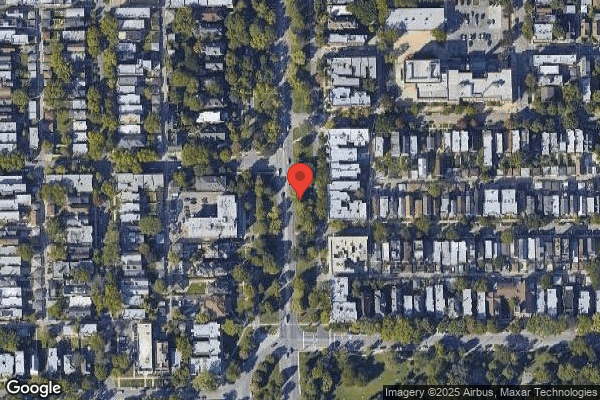
2242 NORTH KEDZIE, CHICAGO, IL 60647 (773) 486-7700
For profit - Individual 222 Beds PAVILION HEALTHCARE Data: November 2025
Trust Grade
15/100
#397 of 665 in IL
Last Inspection: September 2024

Within standard 12-15 month inspection cycle. Federal law requires annual inspections.

Overview

The Pavilion of Logan Square has received a Trust Grade of F, indicating significant concerns about the quality of care. Ranked #397 out of 665 facilities in Illinois, it falls in the bottom half for the state, and #130 out of 201 in Cook County, suggesting only a few local options are better. While the facility has shown improvement in the number of issues reported, decreasing from 19 in 2024 to 4 in 2025, the overall picture remains troubling. Staffing is a relative strength, with a turnover rate of 21%, well below the state average, but the RN coverage is concerning, being lower than 80% of Illinois facilities. Specific incidents reported include a resident sustaining facial lacerations and neck fractures due to improper fall precautions, and another resident developing severe pressure ulcers due to inadequate incontinence care, highlighting both serious weaknesses in patient monitoring and care.

Trust Score
F
15/100
In Illinois
#397/665
Bottom 41%
Safety Record
High Risk
Review needed
Inspections
Getting Better
19 → 4 violations
Staff Stability
✓ Good
21% annual turnover. Excellent stability, 27 points below Illinois's 48% average. Staff who stay learn residents' needs.
Penalties
○ Average
$98,614 in fines. Higher than 52% of Illinois facilities. Some compliance issues.
Skilled Nurses
⚠ Watch
Each resident gets only 23 minutes of Registered Nurse (RN) attention daily — below average for Illinois. Fewer RN minutes means fewer trained eyes watching for problems.
Violations
⚠ Watch
59 deficiencies on record. Higher than average. Multiple issues found across inspections.
★★☆☆☆
2.0
Overall Rating
★★☆☆☆
2.0
Staff Levels
★★★☆☆
3.0
Care Quality
★★☆☆☆
2.0
Inspection Score
Stable
2024: 19 issues
2025: 4 issues

The Good

  • Low Staff Turnover (21%) · Staff stability means consistent care
  • Full Sprinkler Coverage · Fire safety systems throughout facility
  • No fines on record
  • Staff turnover is low (21%)

    27 points below Illinois average of 48%

Facility shows strength in staff retention, fire safety.

The Bad

2-Star Overall Rating

Below Illinois average (2.5)

Below average - review inspection findings carefully

Federal Fines: $98,614

Well above median ($33,413)

Moderate penalties - review what triggered them

Chain: PAVILION HEALTHCARE

Part of a multi-facility chain

Ask about local staffing decisions and management

The Ugly 59 deficiencies on record

6 actual harm
May 2025 2 deficiencies
CONCERN (D) 📢 Someone Reported This

A family member, employee, or ombudsman was alarmed enough to file a formal complaint

Potential for Harm - no one hurt, but risky conditions existed

Pharmacy Services (Tag F0755)

Could have caused harm · This affected 1 resident

**NOTE- TERMS IN BRACKETS HAVE BEEN EDITED TO PROTECT CONFIDENTIALITY** Based on observations, interviews, and review of records the facility failed to provide and/or obtain routine medication for ava...

Read full inspector narrative →
**NOTE- TERMS IN BRACKETS HAVE BEEN EDITED TO PROTECT CONFIDENTIALITY** Based on observations, interviews, and review of records the facility failed to provide and/or obtain routine medication for availability in the medical supply for 1 out of 3 residents (R2) reviewed for pharmaceutical services. These failures have the potential to affect 1 resident (R2) that may impede timely administration and adversely affecting a resident's condition due to delay of acquisition of a medication. Findings include: R2 is [AGE] years old, initially admitted in the facility 12/10/2016. R2 diagnosis includes legal blindness, Parkinson's disease with dyskinesia, major depression, and dry eye syndrome. R2 has an order by physician to receive Latanoprost Ophthalmic Solution eye drops scheduled to be given at 07:00 PM, one (1) drop both eyes for legal blindness. On 05/27/2025 at 12:56 PM, R2 was seen alert and able to express thoughts within topic. R2 stated that he must ask for his eye drops before he can receive it. R2 said, Eye drops, I must ask for them. No, I don't receive my eye drop if I did not ask. I received them before I go to bed. And in the afternoon too. R2 said that he is legally blind because he sees things double instead of single form. At the nurse station with V4 (Licensed Practical Nurse) and V5 (Licensed Practical Nurse), medication cart that stores R2's medication was reviewed with V5. V5 checked all drawers and compartments but unable to find R2's Latanoprost Ophthalmic Solution eye drop. V5 informed V2 (Director of Nursing) who went to check the medication cart with V4, unable to find R2's eye drop. V2 went with V3 (Assistant Director of Nursing) to another floor where pharmacy medication dispenser was located. V3 checked supplies of medication for R2 specific to Latanoprost Ophthalmic Solution eye drop. V3 stated that R2's eye drop was not available, then called pharmacy to ask for details related to Latanoprost Ophthalmic Solution medicine. V3 stated that according to pharmacy, it was delivered to the facility on [DATE]. V2 stated that pharmacy should have been informed about R2's eye drops because electronic system automatically informs the pharmacy. V2 stated that in case pharmacy does not deliver medication for residents. It is the responsibility of nurses to request pharmacy to deliver specific medication in order not to run out of stock. V3 provided documentation from pharmacy dated 05/04/2025 that Latanoprost Ophthalmic Solution eye drops for R2 was delivered on the same date (05/04/2025). Per document, Latanoprost Ophthalmic Solution eye drops have a quantity of 25 uses. Medication Administration Record (MAR) for May 2025 documents that Latanoprost Ophthalmic Solution eye drops has a schedule to be given at 07:00 PM, one (1) drop both eyes for legal blindness. It was recorded as administered daily including date of delivery 05/05/2025 to current date 05/26/2025 or 22 days of use. There was a prior grievance or complaint (Resident / Family Grievance / Complaint Form) dated 05/23/2025 that documents V17 (Family of R2 / POA) was complaining that R2 was not getting his eye drops. The same form was notified by nursing department and was signed by V1 (Administrator). Under Storage of Medications and Medical Supplies policy, dated 12/2017 nursing staff shall be responsible for maintaining medical supply including medication. Under Administering Medication policy dated 11/2020, Director of Nursing Services will supervise and direct all nursing personnel who administer medications and/or related functions.
CONCERN (D) 📢 Someone Reported This

A family member, employee, or ombudsman was alarmed enough to file a formal complaint

Potential for Harm - no one hurt, but risky conditions existed

Medical Records (Tag F0842)

Could have caused harm · This affected 1 resident

**NOTE- TERMS IN BRACKETS HAVE BEEN EDITED TO PROTECT CONFIDENTIALITY** Based on review of records and interview the facility failed to maintain accurate resident record, ensure resident records are r...

Read full inspector narrative →
**NOTE- TERMS IN BRACKETS HAVE BEEN EDITED TO PROTECT CONFIDENTIALITY** Based on review of records and interview the facility failed to maintain accurate resident record, ensure resident records are readily accessible related to psychotropic medication use for 1 out of 4 residents (R1) reviewed for improper nursing care. These failures can affect 1 resident (R1) who uses psychotropic medication related to correct medical diagnosis and consent documentations. Findings include: R1 is [AGE] years old, initially admitted on [DATE] discharged on 8/20/2020, re-admitted on [DATE] and discharged to hospital 3/25/2025. R1 medical diagnosis includes dementia with behavioral disturbance, brief psychotic disorder, and mood affective disorder. Per R1's physician order documents that R1 has an order for the following psychotropic medications: Haloperidol Tablet 5 MG, as needed for aggression for 14 days, Haldol Injection Solution 5 MG/ML (Haloperidol Lactate) inject 5 mg/ml intramuscularly every 6 hours as needed for aggression for 14 days, Olanzapine Oral Tablet 2.5 MG give 1 tablet by mouth in the evening for schizophrenia, psychoses, bipolar disorder and Depakote Oral Tablet Delayed Release 250 MG (Divalproex Sodium) for depression all of these psychotropic medications require consent prior administration. Discrepancies were identified as to the Depakote order dated 02/11/2025, 03/06/2025 and 03/17/2025. Physician orders dated 02/11/2025 and 03/06/2025 for Depakote medication supporting diagnosis for psychotropic medication use for mood affective disorder. Physician order dated 03/17/2025 for Depakote medication supporting diagnosis for psychotropic medication use for depression. On 05/28/2025 at 10:54 AM, V12 (Psychotropic Nurse / Licensed Practical Nurse) stated that nursing staff chose the wrong diagnosis, Depakote was used for mood disorder and not for depression. V12 reviewed all R1's medical diagnosis on the face sheet that does not include depression. V12 stated that he is aware of the difference between two diagnosis and different side effects of prolong use of psychotropic medication. V12 presented consent form for Haldol antipsychotic mediation uploaded on R1's electronic record dated 05/27/2025. V12 stated that medical record just uploaded in R1's electronic record yesterday (05/27/2025), and it should have been uploaded on the date it was signed (03/22/2025). Although R1 has an order for two different Haldol orders, for Haldol 5 MG tablet and Haldol 5 MG per ML injection. R1 has only have one (1) consent form for Haldol 5 MG. V12 stated Now I see what you mean. Consent should be given to both tablet and injection. But I placed PO/per Orem or orally and IM/intramuscular). V12 stated that moving forward he will procure two (2) separate consent forms since there are two (2) different psychotropic medications involved. R1 has an order for Olanzapine Oral Tablet 2.5 dated 03/17/2025 without consent form to start use of psychotropic medication. V12 stated that he went to medical records because it was not uploaded on R1's electronic record. V12 stated that it should have been uploaded once available but medical records failed to upload. Per MAR (Medication Administration Record) for March 2025, R1 was documented of being administered with Depakote for depression.
Jan 2025 2 deficiencies
CONCERN (D) 📢 Someone Reported This

A family member, employee, or ombudsman was alarmed enough to file a formal complaint

Potential for Harm - no one hurt, but risky conditions existed

Deficiency F0883 (Tag F0883)

Could have caused harm · This affected 1 resident

**NOTE- TERMS IN BRACKETS HAVE BEEN EDITED TO PROTECT CONFIDENTIALITY** Based on interviews and records review, the facility failed to provide flu vaccine and education to two (R1, R11) residents of f...

Read full inspector narrative →
**NOTE- TERMS IN BRACKETS HAVE BEEN EDITED TO PROTECT CONFIDENTIALITY** Based on interviews and records review, the facility failed to provide flu vaccine and education to two (R1, R11) residents of four reviewed. Findings include: R11 is a [AGE] year-old individual admitted to the facility on [DATE]. R11's medical diagnosis includes but not limited to influenza due to identified novel influenza a virus with other respiratory manifestations, type 2 diabetes mellitus with diabetic chronic kidney disease, acute respiratory failure with hypoxia, cognitive communication deficit. R11's MDS (Minimum Data Set) section C dated [DATE], documents R11's Brief Interview for Mental Status (BIMS) as 15/15 indicating R11 has intact cognitive function. MDS section GG (Functional Abilities) documents R11 requires setup or cleaning assistance with eating and oral hygiene, partial to moderate assistance with toileting and is dependent for shower/bathing, upper and lower body dressing. Hospital records dated [DATE] document R11 presented to the hospital with two-day history of coughing and dyspnea, now admitted to Obs (observation) for further management after Rapid Plasma [NAME] (RPR) test, positive for influenza A. R1 is a [AGE] year-old individual admitted to the facility on [DATE] with medical diagnosis that include but not limited to type 2 diabetes mellitus without complications, atherosclerotic heart disease of native coronary artery without angina pectoris. R1's MDS (Minimum Data Set) section C dated De 30th, 2024, documents R1's Brief Interview for Mental Status (BIMS) as 15/15 indicating R11 has intact cognitive function. MDS section GG (Functional Abilities) documents R1 requires supervision/touching assistance with eating, partial/moderate assistance with oral hygiene, substantial/maximal assistance with toileting and shower/bathing. On [DATE], at 11:26 AM, V6 (Infection Control-Registered Nurse-RN) stated flu season monitoring starts from September to May of each year per CDC (Centers for disease control) protocol. V6 further stated in September of each year, she reaches out to residents and families to get flu vaccine consents so she can start vaccinating residents against the flu. V6 stated within 48-72 hours of a resident being admitted to the facility, she goes to the resident to discuss vaccination status and find out if the resident has received their immunizations. V6 stated some residents decline or agree to the vaccine. V6 stated she is supposed to provide education on the importance of flu vaccines and follow up with the residents to make sure they understand importance and make informed decisions regarding flu vaccinations.V6 stated when R1 was in the facility, her roommate, R11 had symptoms of a flu and was not feeling well, therefore, R11 was sent to the on hospital on [DATE]/2024 and was diagnosed with the flu. R11 returned to the facility on [DATE]. V6 stated R1 was moved to another room and R11 stayed in her room in isolation until R11's symptoms cleared. V6 stated R1 did not have a flu vaccine and V6 did not document that she offered R1 a vaccine or provided education to R1 regarding importance of flu vaccine. V6 stated If it is not documented, it is not done. V6 stated she did not document refusal in residents progress notes and did not go back to offer the flu vaccines later/date. V6 stated she offered R11 a flu vaccine but did not document it in R11's medical records. R11's refusal form is in V6's binder in her office and nurses do not have access to the binder since it is in V6's office in a drawer. V6 stated she should have offered flu vaccination information to R1 and R11 and followed up to make sure R1 and R11 understood importance of getting a flu vaccine and the education and refusal should have been part of R1 and R11's medical records where all medical staff can access to the information. V6 stated its important to offer flu vaccines to the elderly residents so that they don't get very sick if they contract the flu because of their age and other medical morbidities. Review of R1 and R11's immunization records do no not document R11's consent, refusal or education of flu immunizations. Review of 2024-2025 Resident Influenza Vaccine Consent documents: Seasonal Flu activity can begin as early as October and as late as May. Review of Facility Policy titled Influenza Policy titled 8/21 documents: -Vaccine should be ideally administered by the end of October but should continue to be offered as long as influenza viruses are circulating locally, and unexpired vaccine is available.
CONCERN (E) 📢 Someone Reported This

A family member, employee, or ombudsman was alarmed enough to file a formal complaint

Potential for Harm - no one hurt, but risky conditions existed

Deficiency F0571 (Tag F0571)

Could have caused harm · This affected multiple residents

Based on observations, review of records, and interviews the facility failed to safeguard resident rights to properly account and correctly charge resident funds for 7 out of 9 residents (R2, R4, R5, ...

Read full inspector narrative →
Based on observations, review of records, and interviews the facility failed to safeguard resident rights to properly account and correctly charge resident funds for 7 out of 9 residents (R2, R4, R5, R7, R8, R9, and R10. These failures does not conform with their policy that mandate the facility to hold, safeguard, manage and account resident funds. Four (4) residents (R2, R4, R7, and R8) personal funds accounts were affected and charged dental insurance premiums that should have been included in care cost. 5 residents (R2, R5, R8, R9, and R10) were charged haircuts on their resident funds without proper documentation of consent, residents unable to give consent due to impaired cognition, and/or service date discrepancies. Findings include: On 01/14/2025, at 1:07 PM, V3 (Assistant Administrator) stated that dental insurance premiums were charge by increasing resident's allowance (care cost) credit to accommodate dental insurance premiums. Per V3, dental insurance premiums is part of care cost and not to be charged differently. V3 stated that starting January 2024 there was an increase from 30 dollars to 60 dollars on personal need allowance. Residents that are not under SSI (Supplemental Security Income) should get 60 dollars monthly. Review on R2, R3, R4, R5, R6, R7, R8, R9, and R10's resident fund accounts from January 2024 to January 2025 are as follows: R2 has the following accounting of his resident funds: Charges include dental insurance premiums of $199.36 dollars on 05/14/24, 08/05/2024, and 10/03/2024. $996.80 dollars was charged on 01/07/2025. A credit by way of reduction of care cost of $199.36 dollars was given on 12/5/24 and 01/10/25. R2's total charges or deduction on his account for dental insurance premiums resulted to $1,594.88 dollars. R2's total credit by reduction of care cost resulted to $398.72 dollars. With difference of $1,196.16 dollars charged or deducted to R2's account. R2 also has charges for Beauty Shop / Barber of $10.00 dollars on 01/10/25. R4 has the following accounting of her funds: Charges include dental insurance premiums of $199.36 dollars on 08/05/2024 and 10/03/2024. $996.80 dollars on 01/07/2025. A credit by way of reduction of care cost of $199.36 dollars on 12/05/2024 and 01/10/2025. R4's total charges or deduction on her account for dental insurance premiums resulted to $1,395.52 dollars. R4's total credit by reduction of care cost resulted to $398.72 dollars. R4 had a difference of $996.80 dollars charged or deducted to R4's fund. R5 has the following accounting of her funds: No personal needs allowance credited to resident's fund balance for 02/2024. R5 also has charges for Beauty Shop / Barber of $10.00 dollars on 02/06/2024 and 09/06/2024. R7 has the following accounting of her funds: Charges includes dental insurance premiums of $199.36 dollars on 08/05/2024 and 10/03/2024. On 1/07/2025, R7 has a charge of $996.80. A credit by way of reduction of care cost of $199.36 dollars on 12/05/2024 and 01/10/2025. R7's total charges or deduction for dental insurance premiums $1,395.52 dollars. R7's total credit by reduction of care cost resulted to $398.72 dollars, with a difference of $996.80 dollars charged or deducted to R7's fund. R8 has the following accounting of her funds: Charges includes dental insurance premiums of $199.36 dollars on 10/03/2024 and $598.08 dollars on 01/07/2025. A credit by the way of reduction of care cost of $199.36 dollars on 12/05/2024 and 01/10/2025. R8's total deduction for dental insurance premiums was $797.44 dollars. R8's total credit by reduction of care cost resulted to $398.72 dollars, with a difference of $398.72 dollars charged or deducted to R8's fund. R8 has charges for Beauty Shop / Barber of $15.00 dollars on 09/06/2024 and 01/10/2025. R9 has the following accounting of her funds: R9 has charges for Beauty Shop / Barber of $10.00 dollars on 02/06/2024. R10 have the following accounting of her funds: R10 has also charges for Beauty Shop / Barber of $10.00 dollars on 02/06/2024, 09/06/2024 and 01/10/2025. In summary, there are four (4) residents that have charges on their dental insurance premiums. The funds were deducted from the personal funds account more than what was credited. R2's dental insurance premiums total charges was $1,594.88 dollars, with a total credit in a form of care cost reduction of $398.72 dollars. R2's account has remaining charges of $1,196.16 dollars that needs to be credited back to his account. R4's dental insurance premiums total charges was $1,395.52 dollars, with a total credit in a form of care cost reduction of $398.72 dollars. R4's account has remaining charges of $996.80 dollars that needs to be credited back to her account. R7's dental insurance premiums total charges was $1,395.52 dollars, with a total credit in a form of care cost reduction of $398.72 dollars. R7's account has remaining charges of $996.80 dollars that needs to be credited back to her account. R8's dental insurance premiums total charges was $797.44 dollars, with a total credit in a form of care cost reduction of $398.72 dollars. R7's account has remaining charges of $398.72 dollars that needs to be credited back to her account. Beauty shop or barber charges: R2's resident fund account was charged $10.00 dollars on 1/10/25. R5's resident fund account was charged $10.00 dollars on 02/06/2024 and 09/06/2024. R8's resident fund account was charged $15.00 dollars on 09/06/2024 and 01/10/2025. R9's resident fund account was charged $10.00 dollars on 02/06/2024. R10's resident fund account was charged $10.00 dollars on 02/06/2024, 09/06/2024 and 01/10/2025. On 01/15/2025, at 1:50 PM, V3 (Assistant Administrator) was informed on multiple residents having discrepancies on the amount of dental insurance premium deducted compared to the care cost credited to their resident funds account. There are multiple charges of beauty shop or barber charges to multiple residents. V3 took note on those residents (R2, R4, R7 and R8) and stated that she will review each of their resident fund's account. V3 stated that with regards to barber or beauty shop charges she will check on documentation that residents have written agreement on payment of those services and will get back for answers. On 01/16/2025, at 9:23 AM, with V12 (Business Manager) after review of R2's resident fund account from January 2024 to January 2025, V12 stated, what happened was room and board or care cost accounting needs to be changed. V12 said, I will reach out to our corporate biller to adjust the money. Dental insurance premiums should come from room and board or cost of care, it should be credited back. V12 stated that she does not know how far back the corporate biller can change the audit form (resident fund account itemization). V12 was informed that R4, R7 and R8's dental premium insurance charges are also more than what were credited on their respective resident fund accounts. V12 said, Moving forward, we need to audit the whole account of all the residents. Not only those that you identified. V12 was asked, why were there different charges for dental premiums that includes an amount of $996.80 dollars instead of $199.36 dollars. V12 stated that in the past there was nobody to address the problem. Dental premiums should be taken out monthly, not an accumulation of five (5) months. At 10:25 AM, V3 (Assistant Administrator) was made aware about the concerns that were identified related to resident funds of R2, R4, R7, and R8 during conversation with V12. V3 stated that she will look into the matter. Surveyor followed up with V3 related to charges on resident funds for beauty shop or barber. On 01/16/2025, at 12:55 PM, V3 (Assistant Administrator) provided documents related to resident's haircut services that was deducted to their personal funds. In comparison, all date of services in the documents provided by V3 does not match the date of services on resident funds statement. V3 wrote the date charges were made or debited to indicate a referral date. The following discrepancies were identified: R2's resident funds statement documents that $10.00 dollars was debited to R2's account on 01/10/2025, with date of service of 01/09/2025. But the signed document by V4 (Activity Director) as a witness and without R2's signature date of service was on 12/16/2024. R5's resident funds statement documents that $10.00dollars was debited on 02/06/2024 with the same date of service of 02/06/2024. The signed document by V4 as a witness and without R5's signature date of service was on 02/01/2024. Another deduction of $10.00 dollars was made on 09/06/2024 with service date of 09/03/2024. The signed document by V4 as a witness and without R5's signature does not indicate any date. R8's resident funds statement documents that $15.00 dollars was debited to R8's account on 01/10/2025, with date of service of 01/09/2025. But the signed document by V4 (Activity Director) as a witness and without R8's signature date of service was on 12/16/2024. Another deduction of $15.00 dollars was made on 09/06/2024, with service date of 09/03/2024. document was signed by V4 as a witness and without R8's signature does not indicate any date. R9's resident funds statement documents that $10.00 dollars was debited to R9's account on 07/08/2024, with date of service of 07/06/2024. But the signed document by V4 (Activity Director) as a witness and was without R9's signature date of service was on 06/13/2024. R10's resident funds statement documents that $10.00 dollars was debited to R10's account on 02/06/2024, with the same date of service of 02/06/2024. But the signed document by R8 with a date of service was on 01/18/2024. Another deduction of $10.00 dollars was made on 09/06/2024, with service date of 09/03/2024. The signed document by R10, and the date of service was on 08/08/2024. Another deduction of $10.00 dollars was made on 01/10/2025 with service date of 01/09/2025. But the signed document by R10 with service date of 12/16/2024. V3 was informed about discrepancies on service date of resident funds statements compared to actual service done per signed documents. V3 stated that residents date of service on their personal fund does not match date of service on their signed form. V3 said It should match, I know what you mean. R2 date has like a month difference. V3 said that moving forward, the facility needs to improve their auditing on personal funds, that is why V11 (Business Manager) is there. V15 (admission Assistant) will help V11. V3 was asked why there are charges that were signed by V4 as a witness without the signature of resident. V3 replied, They just put an X on it (pointing to R2's name on document). On 01/16/2025, at 2:59 PM, V4 (Activity Director) stated that it is her signature that appears on the document that charges residents for their haircut. V4 stated that R5 sometimes understands and sometimes does not understand. When asked if R5 can give consent on paying for his haircut from his personal fund, V4 stated that R5 agrees to have his haircut but sometimes he cannot give consent. V4 was also asked about R8's haircut and whether or not R8 agrees to pay for his haircut through his personal fund. V4 stated, R8 can give consent to get a haircut, but I am not sure if he can give consent that it will be deducted to his account. V4 stated that R8's friend knows that he will get a haircut. But she did not say to R8's friend that it will be deducted to R8's account (resident funds). Both R5 and R8 has a BIMS (Brief Interview of Mental Status) of six (6) that indicates both R5 and R8 have severe cognitive impairment. Document provided by facility that reflects charges of haircuts of multiple residents have signatures of V4 that reads witness by (signature of V4). Multiple residents that were signed by V4 does not indicate resident signatures but has charges for haircuts. On 01/14/2025, at 11:45 AM, R5 was seen in his room and during the meeting, R5 was not able to answer questions about the topic. R5 has diagnosis of vascular dementia. At 12:09 PM, R8 was seen unable to answer to questions. R8 has a diagnosis of dementia with psychotic disturbance. On 01/16/2025, at 3:15 PM, with V2 (Director of Nursing) and V3 (Assistant Administrator). V3 was made aware of R5 and R8's inability to give consent on charges of resident fund accounts due to their limitation of cognition having a BIMS score of 6. V4 was signing as a witness to charge R5 and R8 on their resident funds. V3 stated that it will be hard for R5 and R8 to see other residents having haircuts and they are not given the same. V3 was made aware that it is not the haircut or the charges on the haircut in question. But the fact that it was charged to R5 and R8's resident fund because there are many modes of payment besides charging resident funds. Residents that are not able to give consent due to limitation of cognition have representatives or family members that can provide consent. V2 (Director of Nursing) stated that she understood because it is a common practice like getting consent to start psychotropic medication or getting consent for vaccination. Resident Trust Fund Policy dated 08/11/2011, reads: The purpose is for the facility to hold, safeguard, manage, and account for the personal funds of the resident deposited with the facility.
Nov 2024 2 deficiencies 1 Harm
SERIOUS (G) 📢 Someone Reported This

A family member, employee, or ombudsman was alarmed enough to file a formal complaint

Actual Harm - a resident was hurt due to facility failures

Accident Prevention (Tag F0689)

A resident was harmed · This affected 1 resident

**NOTE- TERMS IN BRACKETS HAVE BEEN EDITED TO PROTECT CONFIDENTIALITY** Based on interview and record review, the facility failed to: a. implement care plan interventions for one resident (R2) and b. ...

Read full inspector narrative →
**NOTE- TERMS IN BRACKETS HAVE BEEN EDITED TO PROTECT CONFIDENTIALITY** Based on interview and record review, the facility failed to: a. implement care plan interventions for one resident (R2) and b. failed to ensure staff follow their job description and Driver Safety Rules for two residents (R3, R6) for three of three residents reviewed for falls in the sample of six. These failures resulted in R2 sustaining facial lacerations and R3 sustaining neck fractures. Findings include: a.11/13/2024, at 11:02 AM, V5 (Certified Nursing Assistant) via telephone, said I helped V7 (Certified Nursing Assistant) transfer R2 from shower chair to bed using a gait belt. V7 said I left the room. 11/13/2024, at 11:34 AM, V7 (Certified Nursing Assistant) said I gave R2 his shower the day he fell out of bed. V5 (Certified Nursing Assistant) helped me transfer R2 from the shower chair back to bed using a gait belt. We stood him up, turned him and someone grabbed his legs and we put him in bed.V5 left the room. V7 said I went to the window side of the bed, and rolled R2 towards me. Then, I reached over to pull the diaper out from under R2. R2 rolled towards me onto the floor. I think he hit his head on the nightstand. V7 said the bed was at working height for me, about waist high. V7 said R2 can't move from side to side. 11/13/2024, at 1:24 PM, V2 (Director of Nursing) said, staff had given R2 a shower and transferred him from shower chair to bed via mechanical lift with two persons assist. V2 said R2 can turn, so when he turned in bed, he rolled onto the floor hitting his head on the nightstand and probably the wall with the side of his face. He got some small lacerations there. V2 said now he's going to be a two person assist so that this doesn't happen again. 11/13/2024, at 2:22 PM V1 (Administrator) said, V5 and V7 showered R2 the day he fell out of bed. V5 left the room, V7 was trying to put R2's brief on, he was on the floor so fast. V1 said I told her (V7) she had to go home so that I could complete an investigation, it's part of our protocol. I spoke to V5, she said she helped V7 transfer R2 to his bed then left. V2 said I spoke with the nurse, she said he was on the floor on the mat near the window; lacerations to side of eye and above his eyebrow. V2 said I interviewed staff on unit, they were not witnesses to the incident. V7 was alone in the room by herself. The bed was raised to provide care. I went over the incident with V7. We did the reportable. We brought her back, did some re-education about bed mobility. R2's MDS (Minimum Data Set of 8/26/2024) Section GG documents (Functional Abilities and Goals) documents roll left and right as 2 or substantial/maximal assistance. R2's ADL (Activities of Daily Living) self-care performance care plan (initiated 3/19/2019) documents: Bed Mobility: The resident requires substantial/maximal assistance x2 staff for repositioning and turning in bed and as necessary. 10/25/2024, 10:30 AM, Incident Note Late Entry documents in part: CNA (Certified Nursing Assistant) called this writer for help to resident room. Upon arriving observed resident lying on the floor matt facing the window wall. Resident unable to describe occurrence. Writer assessed resident head to toe, ROM (Range of Motion) completed to all extremities, no observed injuries or discomfort. Observed abrasion on bilateral eyebrows and a small open skin bellow his right eye, and a laceration on his right index finger. Paramedics took resident to (local hospital) to be evaluated. 10/25/2024, at 10:57 AM, R2's hospital record documents in part: [AGE] year-old male presents from nursing home per (local fire department) for fall. Patient has multiple lacerations on his face and injury to his right hand inconsistent with reported history. 10/26/2024. at 7:06 AM, documents in part: patient reported as fall, but his injuries are severe and do not fit with mechanism and description by EMS (Emergency Medical Services). Patient's eyelid lacerations are technically complex and cannot be repaired by (V3). They require ophthalmology namely oculoplastic (eye doctor that specializes in treatment of conditions affecting structures that surround the eye including eyelids, eye socket, and tear drainage system) not available at this hospital. 10/25/2024, at 11:34 AM, Head CT documents in part: right periorbital (around the eye) soft tissue swelling and laceration. b. 11/12/2024, at 11:57 AM, V4 (R3's granddaughter) said R3 has a history of falls, three of them involve the facility van. V4 said per her grandmother, the facility's van driver does not properly secure R3 in the van, resulting in R3 falling two times. V4 said R3's last fall occurred on 10/28/2024, but is unclear if resident fell in van or inside hospital where resident had an appointment. V4 continued stating that someone from (local hospital) told her R3 had a fall but did not say where or when fall occurred. R3 was transferred to (local hospital) due to a neck fracture related to fall. R3 was admitted to ICU (Intensive Care Unit) at (local hospital) where he later developed pneumonia. V4 added the van driver was terminated because of other incidents. 11/13/2024, at 11:02 AM, V5 (Certified Nursing Assistant) via telephone, said I was asked to escort R3 to the hospital for a scheduled procedure. R3 was transferred in his wheelchair to the facility van by V6 (Former Bus Driver). I did not watch V6 place R3 into the van or secure R3. I did not check if R3 was secured, I assumed he was. I sat in passenger's seat in the front of the van. After V6 was done, we proceeded to the hospital. V5 continued, we got to a stop sign, V6 stopped. I heard something fall. I turned around and I saw R3 on the floor. He did not have his seatbelt on. R3 fell out of his wheelchair. V6 got R3 back into R3's wheelchair. I asked R3 if he was okay. R3 complained that his head was hurting. We proceeded to the hospital. When we got to the hospital, I registered R3 for his appointment, then told someone at the front desk about his fall in the van. I told the doctor what happened. They ordered x-rays and a CT scan. They told me R3 had a neck fracture, they were going to transfer R3 to another hospital. I was suspended for 3 days to find out what really happened. 11/13/2024, at 12:12 PM, V6 (Former Bus Driver) via telephone, said I rolled R3 into the van and secured the wheelchair with hooks that are attached to the van's floor. I did not fasten R3's seatbelt. He was sitting on a cushion and sitting towards the edge of the wheelchair. I should have repositioned him. He fell out of his wheelchair onto his butt. We (V6 and V5) got him off the floor, placed R3 back into the wheelchair. R3 was complaining of shoulder pain; that wasn't new. R3 was also complaining of back pain. After we got him back into the wheelchair, we proceeded to the hospital for R3's appointment. I told V5 to let hospital staff know about R3's fall. 11/13/2024, at 1:24 PM, V2 (Director of Nursing) said, the nurse from the hospital called to inform us that R3 was being evaluated in the emergency room because R3 had a fall in the van on the way to the hospital; V5 said R3 was complaining of neck and knee pain. V2 said R3 had fractures to C6-C7 (neck bone fractures). R3 was transferred to another hospital for treatment. V2 added we did an investigation. V5 told us V6 came to stop and R3 fell out of his wheelchair. V6 told us he could not remember if he fastened R3's seatbelt. V2 said, we know that R3's seatbelt was not secured. 11/13/2024, at 2:22 PM, V1 (Administrator) said, R3 was in facility van on the way to the hospital when R3 fell from his wheelchair in the van. V1 said R3 complained of shoulder pain that was not new. V1 said x-rays were done in the Emergency Room; R3 had a neck fracture and was transferred to another hospital for treatment. V1 said she was not aware of any previous incidents of falls in the van. 10/28/2024, at 11:00 AM, R3's Nurses Note documents in part: Writer received a called from (local hospital) ER nurse in regards of a fall incident that happened when patient was being transfer(ed) to his appointment this morning. ER nurse mentioned patient was complaining of pain on his neck & right shoulder. 10/28/2024, 2:18 PM, R3's Nurses Note documents in part: Writer received a call from (local hospital) in regards of patient status after a fall, intensive care unit nurse mentioned patient will be transfer(ed) to (local hospital) in reference to a neck fracture for further treatment. ICU (Intensive Care Unit) nurse verbalized resident has a fracture between C6 to C7. Driver Safety Rules (signed by V6 on 7/31/2023) documents in part: Pull seatbelt to make sure resident is secure. Position: Bus Driver (signed by V6 on 7/28/2023) documents in part: Follows established safety policies and procedures. 11/14/22024, at 2:27 PM, V11 (Registered Nurse) said V6 told me R6 slid from wheelchair in van onto van floor; incident occurred on the way back to facility. 11/14/2024, at 3:38 PM, R6 said, I was in my wheelchair in the back of the van, my seatbelt was not fastened. R6 continued, the driver slammed on the breaks, I fell on my a**. 10/9/2024, 1:23 PM, R6's Nurses Note documents in part: Driver from facility van come to this writer to report that resident slide down from his wheelchair during the driving returning from an appointment. Resident is assessed in his room. Resident states that he slid down from the wheelchair stating: I am okay, I am bullet prof (proof), everything hurts not because I fell, because all my body hurts, except my penis. 10/9/2024, 4:45 PM, Nurse Practitioner Progress Note Late Entry documents in part: Seen for a fall. Per nurse, resident slid out of his wheelchair while driving to his appointment. The facility did not produce evidence (for past noncompliance) until later.
CONCERN (D) 📢 Someone Reported This

A family member, employee, or ombudsman was alarmed enough to file a formal complaint

Potential for Harm - no one hurt, but risky conditions existed

Investigate Abuse (Tag F0610)

Could have caused harm · This affected 1 resident

Based on interviews and record reviews, facility failed to follow their policy to investigate an allegation of abuse for one of three residents (R2) reviewed for abuse in the sample of six. Findings i...

Read full inspector narrative →
Based on interviews and record reviews, facility failed to follow their policy to investigate an allegation of abuse for one of three residents (R2) reviewed for abuse in the sample of six. Findings include: 11/12/2024, at 11:31 AM via telephone, V3 (Emergency Department Physician) said R2 has a known fall risk history. Injury allegedly occurred during resident care at the facility; resident rolled out of bed onto floor. V3 said per facility, R2 was already in a low bed. V3 said R2's injuries were consistent with being punched in the face, not fall from low bed. V3 added R2's eyelid laceration was too complex (involved tear duct, resident crying bloody tears) to be treated at original hospital, R2 was transferred to another local hospital for laceration repair. 11/13/2024, at 11:02 AM, V5 (Certified Nursing Assistant) via telephone, said I helped V7 (Certified Nursing Assistant) transfer R2 from shower chair to bed using a gait belt. I asked V7 if she needed help with R2, V7 said no, I left the room. 11/13/2024, at 11:34 AM, V7 (Certified Nursing Assistant) said I gave R2 his shower the day he fell out of bed. V5 (Certified Nursing Assistant) helped me transfer R2 from the shower chair back to bed using a gait belt. We stood him up, turned him and someone grabbed his legs and we put him in bed, V5 left the room. V7 said I went to the window side of the bed, and rolled R2 towards me. Then, I reached over to pull the diaper out from under R2; R2 rolled towards me onto the floor, I think he hit his head on the nightstand. V7 said the bed was at working height for me, about waist high. V7 said R2 can't move from side to side. 11/13/2024, at 2:22 PM V1 (Administrator) said, V5 and V7 showered R2 the day he fell out of bed. V5 left the room, V7 was trying to put R2's brief on, he was on the floor so fast. V1 said I told her (V7) she had to go home so that I could complete an investigation, it's part of our protocol. V1 did not say what protocol was followed when asked. V1 said I spoke to V5, she said she helped V7 transfer R2 to his bed then left. V1 continued, I spoke with the nurse, she said he was on the floor on the mat near the window, lacerations to side of eye and above eyebrow. V1 said I interviewed staff on unit, they were not witnesses to the incident. V7 was alone in the room by herself. The bed was raised to provide care. I went over the incident with V7. We did the reportable (for fall with injury). We did not do a reportable for abuse, we knew it was a fall. V1 added, we brought her (V7) back, did some re-education about bed mobility. V1's (Administrator) Witness Statement documents in part: 10/28/2024 Administrator spoke to (R2's) son and went over the interventions and how the incident happened. Also spoke about hospital('s) allegation of abuse. Facility's Abuse Prevention Program (10/2022) documents in part: Policy This Pavilion facility affirms the right of our residents to be free from abuse, neglect, exploitation, misappropriation of property, deprivation of goods and services by staff or mistreatment. This will be done by implementing systems to promptly and aggressively investigate all reports and allegation of abuse, neglect, exploitation, misappropriation of property and mistreatment, and making the necessary changes to prevent future occurrences. VII. Internal Investigation: Any incident or allegation involving abuse, neglect, exploitation, mistreatment or misappropriation of property will result in an investigation.
Sept 2024 14 deficiencies
CONCERN (D)

Potential for Harm - no one hurt, but risky conditions existed

Deficiency F0558 (Tag F0558)

Could have caused harm · This affected 1 resident

**NOTE- TERMS IN BRACKETS HAVE BEEN EDITED TO PROTECT CONFIDENTIALITY** Findings include: R303 has a diagnosis of but not limited to Chronic Obstructive Pulmonary Disease, Hypertension, Pulmonary Emb...

Read full inspector narrative →
**NOTE- TERMS IN BRACKETS HAVE BEEN EDITED TO PROTECT CONFIDENTIALITY** Findings include: R303 has a diagnosis of but not limited to Chronic Obstructive Pulmonary Disease, Hypertension, Pulmonary Embolism Without Acute Cor Pulmonale and Type 2 Diabetes Mellitus. R303 has a Brief Interview of Mental Status score of 11. On 9/08/2024 at 10:02am surveyor observed R303's call light device attached to the pillow behind R303's head and not within reach. Surveyor observed R303 reach for the call light device, but she could not reach it and R303 said, No, I cannot reach the call light. On 9/08/2024 at 10:07am V4 (LPN) stated no, she (R303) can't reach her call light. On 9/08/2024 at 10:35am V5 (Certified Nursing Assistant-CNA) stated call lights should be close to the resident, at all times. On 9/10/2024 at 12:32pm V2 (Director of Nursing-DON) stated call lights should be within reach and closest to the resident. R303's care plan focus for falls with a revision date of 7/29/2024 documents, in part, be sure the resident's call light is within reach and encourage the resident to use it for assistance as needed. Call light policy with a revised date of 11/2013 documents, in part, when a resident is in bed or confined to a chair be sure the call light is within easy reach of the resident. Based on observation, interview and record review, the facility failed to maintain residents' call lights within reach of residents to use for staff assistance which affected two residents (R63, R303) in the total sample of 76 residents when reviewed for accommodation of needs. Findings include: On 9/8/24 at 11:21 am, this surveyor entered R63's room and observed R63 laying in bed. R63's red call light string is observed attached to the call light activator (on the wall) and is looped through hook on the wall to extend the red call light string towards R63 in bed; however, R63's red call light string is observed hanging on the opposite side of R63's nightstand table (3 drawers) which is clearly out of R63's reach in bed. This surveyor went to the doorway to the hall and requested that V24 (Certified Nursing Assistant, CNA) who was walking by to enter R63's room. When asked V24 where is R63's call light, V24 retrieves the red call light string from the behind R63's nightstand table and clipped it to R63's pillowcase with it now being within R63's reach. When asked where should R63's call light string be placed, V24 stated, It should be clipped on the bed or pillow, within reaching distance of the resident. R63's admission Record documents, in part, R63's diagnoses of dementia, adult failure to thrive, schizoaffective disorder, need for assistance with personal care, obesity, hyperlipidemia, hypertension and bipolar disorder. R63's Minimum Data Set (MDS), dated [DATE], documents, in part, that R63's Brief Interview for Mental Status (BIMS) score is a 6 which indicates that R63 has severe cognitive impairment. R63's Functional Abilities and Goals for Mobility documents, in part, that R63 is coded as substantial/maximal assistance-helper (staff) does more than half the effort for rolling left to right in bed, and R63 is coded as dependent-helper (staff) does all of the effort for sit to lying, lying to sitting on side of bed, and chair/bed-to-chair transfer. R63's Care Plan documents, in part, a focus of R63 at risk for falls related to dementia, incontinence, adult failure to thrive, schizoaffective and bipolar disorders, medication regimen and need for assistance with personal care (dated initiated 8/6/21, revision date 7/25/24) with an intervention of ensure call light is within reach and encourage the resident to use it for assistance (dated initiated 8/6/21, revision date 9/13/23). On 9/9/24 at 11:49 am, when asked where a residents' call light should be placed by staff, V2 (Director of Nursing, DON) stated It should be placed accessible and close to the patient (resident), within their reach. When asked the purpose of having the call light within the reach of the resident, V2 stated, So the patient (resident) can be able to access it to call for any help when needed. R63's Order Summary Report documents, in part, an order of Fall Precautions with an active order status of 8/8/21. Facility job description (undated) titled Certified Nursing Assistant (CNA) documents, in part, A Certified Nursing Assistant (CNA) provides quality nursing care to residents while implementing specific procedures and programs related to resident care under supervision of assigned Charge Nurse (LPN or RN). Certified Nursing Assistant (CNA) Essential Duties and Responsibilities: Provides individualized attention to residents which encourages each resident's ability to maintain or attain the highest practical physical, mental and psychosocial well-being . Contributes to the resident care planning process by providing the charge nurse or other care planning staff with specific information and observations of the residents' needs and preferences. Attends to residents' activities of daily living which may include assistance with feeding, grooming, bathing, oral hygiene, feeding, incontinent care, toileting, colostomy care, prosthetic appliances, transferring, ambulation, and range of motion, communicating or other needs in keeping with the individuals' care requirements . Answers residents' call lights promptly and courteously. All other duties as assigned.
CONCERN (D)

Potential for Harm - no one hurt, but risky conditions existed

Deficiency F0578 (Tag F0578)

Could have caused harm · This affected 1 resident

**NOTE- TERMS IN BRACKETS HAVE BEEN EDITED TO PROTECT CONFIDENTIALITY** Based on interview and record review, the facility failed to ensure that a resident has a physician's order for a code status (F...

Read full inspector narrative →
**NOTE- TERMS IN BRACKETS HAVE BEEN EDITED TO PROTECT CONFIDENTIALITY** Based on interview and record review, the facility failed to ensure that a resident has a physician's order for a code status (Full Code or DNR, Do Not Resuscitate) in the resident's electronic medical record (EMR) which affected one resident (R196) in the total sample of 76 residents reviewed for advanced directives. Findings include: On [DATE] at 2:11 pm, V19 (Licensed Practical Nurse, LPN) and V37 (LPN) were observed sitting at the nurse's station on R196's floor. This surveyor asked V37 how does V37 know the code status of V37's assigned residents, and V37 stated, We (nurses) know from here. It comes from here, as V37 is pointing to the computer screen with the electronic medical record (EMR) system is visible. V37 stated that the resident's code status for full code (life-sustaining treatments) or DNR (not providing certain treatments and/or allow natural death) is listed on the profile screen for each resident which is the first screen the nurse sees when viewing each resident's EMR. V37 stated, There is supposed to be an order for full code. V37 stated that the advance directives are determined by the resident or the family wishes and that it depends on what is in here in the EMR. V37 stated that the residents' code status can also come from the hospital transfer orders, and then the nurse will enter the code status order in the EMR under the orders tab. V37 stated, I (V37) will put in the code status order, and then it populates into the profile screen. When asked how the nurse knows to provide emergency resuscitation if a resident would go into cardiac arrest in the facility, V19 stated, I (V19) check the resident profile to provide the emergency services for whatever is there (on the profile screen). V37 stated, We (nurses) need to look (at the profile screen). R196's admission Record documents, in part, R196's diagnoses of dementia, cognitive communication deficit, major depressive disorder, hyperlipidemia, hypertension, neuropathy, diverticulitis of intestine, arthritis, and disorders of bone density and structure. R196's admission Record documents, in part, the categories of resident information, payer information, other information, pharmacy, external facilities, contacts, diagnosis information, advance directive and miscellaneous information; and R196's advance directive category is blank. R196's Order Summary Report with active physician orders as of [DATE] does not include a physician order for R196's code status. R196's Minimum Data Set (MDS), dated [DATE], documents, in part, that R196's Brief Interview for Mental Status (BIMS) score is a 6 which indicates that R196 has severe cognitive impairment. On [DATE] at 11:49 am, when asked about how the nurses know the code status of their residents, V2 (Director of Nursing, DON) stated, We (nurses) have it in the system (EMR). When you open it (resident's EMR), the code status is right there. On the profile screen, and it tells the resident's name, age and code status. V2 stated that the nurse will enter the physician order for the resident's code status (full code or DNR) in the EMR, and it will populate in the (EMR) on the profile. When asked if each resident needs to have a physician order for code status (full code or DNR) in the EMR, V2 stated, Yes. Correct. V2 stated that the full code or DNR order needs to be in the EMR, so the nurses know what emergency resuscitation services need to be provided in case of an emergency. V2 stated that the full code or DNR is verified by the family, and then the nurse will put order in the EMR. When asked what if a resident and/or family has not decided on the code status and there's no physician order placed in the EMR, V2 stated, We still have to have it for emergency. It should be there (in EMR). V2 stated that until a decision is made about code status, the resident will be treated as a full code status, and the resident will have an order for full code in the EMR. Facility policy dated [DATE] and titled Advance Directives documents, in part, Policy Statement: Advance directives will be respected in accordance with state law and facility policy. Policy Interpretation and Implementation: . 10. The plan of care for each resident will be consistent with his or her documented treatment preference and/or advance directive . 15. our facility has defined advance directives as preferences regarding treatment options and include, but are not limited to: a. Advance Directive - a written instruction, such as a living will or durable power of attorney for health care, recognized by State law, relating to the provisions of health care when the individual is incapacitated . e. Do Not Resuscitate - indicates that, in cases of respiratory or cardiac failure, the resident, legal guardian, health care proxy, or representatives (sponsor) has directed that no cardiopulmonary resuscitation (CPR) or other life-sustaining treatments or methods are to be used . h. Life-Sustaining Treatment - treatment that, based on reasonable medical judgment, sustains an individual's life and without it the individual will die. This includes medications and interventions that are considered life-sustaining, but not those that are considered palliative or comfort measures.
CONCERN (D)

Potential for Harm - no one hurt, but risky conditions existed

Assessment Accuracy (Tag F0641)

Could have caused harm · This affected 1 resident

**NOTE- TERMS IN BRACKETS HAVE BEEN EDITED TO PROTECT CONFIDENTIALITY** Based on observation, interview and record review, the facility failed to complete sections of a resident's minimum data set acc...

Read full inspector narrative →
**NOTE- TERMS IN BRACKETS HAVE BEEN EDITED TO PROTECT CONFIDENTIALITY** Based on observation, interview and record review, the facility failed to complete sections of a resident's minimum data set accurately to reflect the resident's health status. This failure has the potential to affect 1 resident (R153) in a sample size of 76. Findings include: Record review of R153's admission Record documents in part the following diagnosis: hemiplegia and hemiparesis following cerebral infarction affecting the left-non dominant side, dementia in other diseases classified elsewhere, unspecified psychosis. Record review of R153's Minimum Data Set (MDS) dated [DATE] documents in part that R153 has clear speech (distinct intelligible words), is able to be understood, and able to express ideas and wants. Additionally, R153's MDS dated [DATE] documents that the Brief Interview for Mental Status (BIMS) should not be completed, resident is rarely/never understood (incongruent data). On 9/8/2024 at 10:59 AM, V6 (Registered Nurse Supervisor) stated that R153 is hard to understand when speaking and can't talk very well. On 9/9/2024 at 11:08 AM, V44 (MDS Nurse, Registered Nurse) stated that V44 completes Section B of the MDS (Hearing, Speech, and Vision) and that V38 (Social Services Director) completes the BIMS. Surveyor reviewed the 7/23/24 MDS with V44 and V44 affirmed that R153 has clear speech and can be understood. V44 recalled that V44 completes other interview sections of the MDS with R153 and R153 is able to complete them but often refuses. V44 affirmed that if R153 is able to be understood, then the BIMS portion of the MDS should have been completed. V44 affirmed that the RAI (Resident Assessment Instrument) instructs staff how to complete the MDS. On 9/10/2024 at 11:38 AM, surveyor observed R153 communicate with V44. R143's speech was not clear and R153 spoke with a very quiet, strained, raspy, whisper. When V44 asked R153 where are you right now? V44 had to ask for clarification because surveyor and V44 could not understand R153's reply (indicating resident is not always understood). On 9/10/24 at 11:41 AM, V38 (Social Services Director) stated that V38 is assigned to complete the BIMS score for R153. V38 stated that when V38 attempted to complete the BIMS interview, R153 refused, so V38 coded C0100: Should Brief Interview for Mental Status Be Conducted? as 0. No (Resident is Rarely/Never Understood). V38 affirmed that R153 is able to be understood and C0100 should have been coded as yes. Record Review of CMS's RAI (Resident Assessment Instrument) Version 3.0 Manual, dated October 2023, documents in part, . B0700: Makes Self Understood (Cont.) . Coding Instructions Code 0, understood: if the resident expresses requests and ideas clearly. Code 1, usually understood: if the resident has difficulty communicating some words or finishing thoughts but is able if prompted or given time. They may have delayed responses or may require some prompting to make self understood. Code 2, sometimes understood: if the resident has limited ability but is able to express concrete requests regarding at least basic needs (e.g., food, drink, sleep, toilet). Code 3, rarely or never understood: if, at best, the resident's understanding is limited to staff interpretation of highly individual, resident-specific sounds or body language (e.g., indicated presence of pain or need to toilet) .C0100 Should brief interview for Mental Status Be Conducted? (cont.) Coding Instructions Code 0, no: if the interview should not be conducted because the resident is rarely/never understood; Cannot respond verbally, in writing or use another method; Or an interpreter is needed but not available. Code 1, yes: if the interview should be conducted because the resident is at least sometimes understood verbally, in writing, or using another method, and if an interpreter is needed, and one is available.
CONCERN (D)

Potential for Harm - no one hurt, but risky conditions existed

PASARR Coordination (Tag F0644)

Could have caused harm · This affected 1 resident

**NOTE- TERMS IN BRACKETS HAVE BEEN EDITED TO PROTECT CONFIDENTIALITY** Based on interview and record review the facility failed to refer one resident R170 to the appropriate state designated authorit...

Read full inspector narrative →
**NOTE- TERMS IN BRACKETS HAVE BEEN EDITED TO PROTECT CONFIDENTIALITY** Based on interview and record review the facility failed to refer one resident R170 to the appropriate state designated authority for a Level II PASARR (Preadmission Screening and Annual Resident Review) evaluation and determination after R170 was diagnosed with a new mental disorder. This deficient practice affected one resident (R170) in a total sample size of 76 residents. Findings include: R170's PASARR dated 03/03/23 documents in part, PASRR Level I Determination: No Level II Required - No SMI (Serious Mental Illness)/ID (Intellectual Disability)/RC (Related Condition). R170's admission date to the facility is 03/04/2023. R170's medical diagnosis with dates include but are not limited to Chronic Obstructive Pulmonary disease (03/09/23), Other Asthma (03/04/23, Schizoaffective Disorder (03/09/23), Paranoid Schizophrenia (04/18/23), Other Schizophrenia (04/18/23), Bipolar Disorder Current Episode Mixed Severe Without Psychotic Features (04/18/23), Major Depressive Disorder (04/18/23), Anxiety Disorder (04/18/23), Paranoid Personality Disorder (04/18/23), Delirium Due to Known Physiological Condition (04/18/23), Essential Hypertension (03/04/23). Record review of R170's chart show no new PASARR was completed after new mental disorder diagnosis. Facility's policy titled PASARR Guideline dated 12/2022 documents in part, Preadmission Screening And Annual Resident Review (PASARR) Guideline .Annually and with any significant change of status, the facility will complete the PASARR Level I screen for those individuals identified per the Level II screen requiring specialized services. The facility will report any changes as identified via the screen to the state mental health authority or state intellectual disability authority promptly .Objective PASARR Guideline .The objective of the PASSARR guideline is to ensure that individuals with mental illness and intellectual disabilities receive the care and services that they need in the most appropriate setting. The PASARR will be evaluated annually and upon any significant change for those individuals identified .f. Coordination of Care .iv. The facility will refer all level II residents and all residents with newly evident or possible serious mental disorder, intellectual disability, or related condition for a level II review upon a significant change in status assessment to the State PASARR representative. On 09/10/24 at 10:29am V38 Social Service Director (SSD) stated, R170 was admitted on [DATE] and R170's PASARR was done on 3/3/23. When a new PASARR is needed I (V38) would initiate the level 1. The only way I (V38) would know if a resident needs a new PASARR is if I (V38) am told. R170 has some diagnosis of Paranoid Schizophrenia, Bipolar, Major Depression and Anxiety. Either one of the diagnoses I (V38) just listed for R170 would indicate a need for a new PASARR or level 2 PASARR. R170 should have had another PASARR completed after his mental health diagnosis. On 09/10/24 at 2:27pm V38 stated, I (V38) just submitted a new Level I PASARR for R170. R170's Minimum Data Set (MDS) dated [DATE] has a Brief Interview for Mental Status (BIMS) score of 8, which indicated R170's cognition is moderately impaired. R170's physician order dated 04/18/23 documents in part, Monitor behaviors: Episodes of agitated, angry, screaming/yelling, fighting, hallucinations, kicking, pinching, pulling lines, slapping/hitting, throwing objects, isolative behaviors and depressed interventions. R170's care plan dated 07/21/24 documents in part, R170 uses psychotropic medications related to Bipolar Disorder, Other Psychoactive Substance Dependence In Remission, History of Schizoaffective disorder, Delirium due to known Physiological Condition, Schizophrenia, Paranoid Personality Disorder, Anxiety Disorder, Unspecified Mood (Affective) disorder.
CONCERN (D)

Potential for Harm - no one hurt, but risky conditions existed

Deficiency F0645 (Tag F0645)

Could have caused harm · This affected 1 resident

**NOTE- TERMS IN BRACKETS HAVE BEEN EDITED TO PROTECT CONFIDENTIALITY** Based on interview and record review, the facility failed to obtain a pre-admission screening and resident review (PASARR). This...

Read full inspector narrative →
**NOTE- TERMS IN BRACKETS HAVE BEEN EDITED TO PROTECT CONFIDENTIALITY** Based on interview and record review, the facility failed to obtain a pre-admission screening and resident review (PASARR). This failure affects 1 resident (R153) in a sample of 76. Findings include: Record review of R153's admission Record documents in part the following diagnosis: major depressive disorder, unspecified psychosis not due to a substance or known physiological condition. R153' Face Sheet documents R153 was admitted to the facility on [DATE]. Record review of R153's electronic medical record does not indicate a PASARR was completed. On 9/10/24 at 9:53 AM, V27 (Assistant Administrator) affirmed that there was not a Level I PASARR completed for R153 prior to the start of the survey. V27 provided a Level I PASARR that documents in part a submission date of 9/9/2024 and determination outcome for R153 dated 9/10/24. Record review of facility provided policy titled, PASARR Guideline (Revised 12/2022) documents in part, The PASARR process consists of the completion of a Level I screen per State and Federal requirements as well as the review and implementation of the level II recommendations upon admission into the facility .
CONCERN (D)

Potential for Harm - no one hurt, but risky conditions existed

Deficiency F0657 (Tag F0657)

Could have caused harm · This affected 1 resident

Based on interview and record review, the facility failed to invite and conduct care plan conferences to include the resident in development of their plan of care. This failure affects 1 resident (R13...

Read full inspector narrative →
Based on interview and record review, the facility failed to invite and conduct care plan conferences to include the resident in development of their plan of care. This failure affects 1 resident (R136) in a sample of 76. Findings include: Record review of R136's admission record documents in part, the following diagnosis: hemiplegia and hemiparesis following cerebral infarction affective left-non dominant side, unspecified dementia without behavioral disturbance, protein calorie malnutrition, and osteoarthritis of the left hip. Record review of R136's minimum data set (dated 8/16/24), documents in part a brief interview of mental status score of 11, indicating that R136 is cognitively impaired. On 9/8/2024 at 10:19 AM, R136 stated that R136 has never been invited to participate in the development of R136's plan of care. R136 denied ever participating in a plan of care meeting (care conference). R136 affirmed that if there was a meeting held to discuss R136's plan of care, R136 would want to participate. Record review of R136's progress notes (care conference notes) document in part on 6/14/2023, V45 (Careplan Coordinator, Licensed Practical Nurse) contacted R136's emergency contact to set up a care plan. No documentation was made that R136 was invited to a care plan meeting or that a care plan meeting occurred. On 9/9/2024 at 11:02 AM, V45 affirmed that V45 is the staff member that coordinates the care conferences in the facility and that care conferences are held quarterly and as needed, aligning with the MDS (Minimum Data Set) calendar. Surveyor inquired when the last date that R136 had a care conference, and V45 replied that R136 has not had a care conference. V45 did not know the reason why R136 has not had care conference or why R136 was not invited. V45 affirmed that residents have the right to attend care plan conferences and participate in developing their plan of care. Record review of facility titled, Care plans, Comprehensive Person Centered (Revised 4/2017) documents in part, . The Interdisciplinary Team (IDT), in conjunction with the resident and, resident representative or family or legal representative, develops and implements a comprehensive, person- centered care plan for each resident . 3. The IDT includes: . e. The resident and the resident's legal representative (to the extent practicable) . 7. The care planning process will: a. Facilitate resident and/or representative involvement;
CONCERN (D)

Potential for Harm - no one hurt, but risky conditions existed

ADL Care (Tag F0677)

Could have caused harm · This affected 1 resident

**NOTE- TERMS IN BRACKETS HAVE BEEN EDITED TO PROTECT CONFIDENTIALITY** Based on observation, interview, and record review the facility failed to ensure that two residents (R40 and R199) who depend on...

Read full inspector narrative →
**NOTE- TERMS IN BRACKETS HAVE BEEN EDITED TO PROTECT CONFIDENTIALITY** Based on observation, interview, and record review the facility failed to ensure that two residents (R40 and R199) who depend on staff's assistance for their ADL (Activities of Daily Living) care received shaving. This failure affected two out of 76 residents reviewed for ADL care. Findings include: R40's Brief Interview for Mental Status (BIMS) dated 08/22/24 shows that R40 has a BIMS score of 08 which indicates that R40 has moderate cognitive impairments. R40 has a diagnosis which includes but not limited to: unspecified dementia, major depressive disorder, and bipolar. R199's Brief Interview for Mental Status (BIMS) dated 08/22/24 shows a BIMS score of 6 which indicates that R199 has some cognitive impairments. Surveyor interviewed with R199, and R199 was alert but not able to answer questions appropriately. R199 has a diagnosis which includes but not limited to: need for assistance with personal care, muscle weakness and dementia. On 09/08/24 at 10:16 am, R40 was observed in bed awake, and alert ungroomed with facial hair beard and mustache visible. When surveyor asked R40 regarding being shaved R40 stated that R40 does not know the last time that R40 was shaved and that R40 does not shave herself (R40). On 09/08/24 at 10:28 am, R199 was observed in the dining room, alert ungroomed with facial hair beard. When surveyor asked R199 regarding being shaved R199 shrugged R199's shoulders and indicated that R199 did not know when the last time R199 was shaved. On 09/09/24 at 11:16 am, R40 was observed in bed resting, ungroomed with facial hair beard and mustache remain visible to R40's face. On 09/09/24 at 11:18 am, R199 was observed in the dining room, alert ungroomed with facial hair beard remain visible to R40's face. On 09/09/24 at 11:31 am, Surveyor questioned V34 (Certified Nursing Assistant, CNA) regarding residents being shaved and V34 stated, I (V34) do not have R40 I (V34) only have R199. I (V34) should have shaved her (R199) today, but I (V34) didn't. When V34 was questioned regarding who is responsible for shaving the resident and how often are residents shaved, V34 stated, The CNA's are responsible for shaving the residents. Every chance we (referring to the CNA's) get (referring to how often the CNA's are expected to shave the residents). When V34 was asked regarding the importance of ensuring residents are shaved, V34 stated, For the residents dignity. On 09/10/24 at 11:37 am, Surveyor questioned V2 (Director of Nursing, DON) regarding the facility's expectation for shaving female residents and V2 stated, Shaving female residents with visible facial hair is a part of ADL (Activities of Daily Living) care. Female residents are shaved the same as male residents. Shaving female residents should be offered daily if the Certified Nursing Assistant (CNA) see visible facial hair. When V2 was asked regarding the importance of shaving female residents V2 stated, For the dignity and hygiene of the resident. R40's MDS (Minimum Data Set) dated 08/22/24 shows that R40 requires maximum assistance with ADL care personal hygiene. R199's MDS dated [DATE] shows that R199 is dependent with ADL care personal hygiene. R40's care plan dated 12/01/23 documents in part: Focus: R40 requires ADL assistance related to Parkinson's Disease, COPD (Coronary Obstructive Pulmonary Disease)/Asthma, muscle weakness, vitamin D deficiency, cerebral ischemia . Intervention: Personal Hygiene/Oral Care: R40 requires substantial/maximal assistance x1 staff with personal hygiene an oral care. R199's care plan dated 08/21/24 documents in part: Focus: R199 has an ADL self-care performance deficit related to (r/t) Atherosclerosis of Native Arteries of extremities . Need for assistance with personal are care. The facility's policy dated 11/2015 and titled A.D.L. (Activities of Daily Living) Care documents, in part: Policy: To meet grooming and hygiene needs of residents with dignity and privacy. To encourage residents to achieve independence while providing the assistance needed. The basics for ADL care should be implemented whenever a procedure or task occurs. Safety Razor: . If the resident is a women shave only the areas with facial hair and apply facial moisturizer instead of aftershave. The facility's job description titled Certified Nursing Assistant (CNA) documents, in part: A Certified Nursing Assistant (CNA) provides quality nursing care to residents while implementing specific procedure and programs related to resident care under supervision of assigned Charge Nurse (LPN (Licensed Practical Nurse), RN (Registered Nurse)). Certified Nursing Assistant (CNA) Essential Duties and Responsibilities: Attends to residents' activities of daily living which may include assistance with feeding, grooming, transferring, ambulation, and range of motion, communicating or other needs in keeping with the individuals' care requirements.
CONCERN (E)

Potential for Harm - no one hurt, but risky conditions existed

Deficiency F0554 (Tag F0554)

Could have caused harm · This affected multiple residents

**NOTE- TERMS IN BRACKETS HAVE BEEN EDITED TO PROTECT CONFIDENTIALITY** Based on observation, interview and record review, the facility failed to assess a resident's ability to safely self-administer ...

Read full inspector narrative →
**NOTE- TERMS IN BRACKETS HAVE BEEN EDITED TO PROTECT CONFIDENTIALITY** Based on observation, interview and record review, the facility failed to assess a resident's ability to safely self-administer medications which affected one resident (R63) when reviewed for self-administration of medications in the total sample of 76 residents and has the potential to affect all 52 residents on the 4th floor in the facility. Findings include: On 9/8/24 at 10:13 am, V22 (Registered Nurse, RN) stated that the residents on the 4th floor are primarily residents with dementia. On 9/8/24 at 11:21 am, this surveyor entered R63's room via an open door and observed R63 laying in bed. This surveyor observed a clear medicine cup containing 5 medication pills on top of the nightstand (3 drawers) near R63's bed. The clear medication cup (30 milliliters) contained the following: one round light pink pill, one round dark pink pill, 2 round brown pills, and one red capsule. This surveyor went to the doorway to the hall and requested that V24 (Certified Nursing Assistant, CNA) who was walking by to enter R63's room. This surveyor asked V24 what this is, pointing to the medication cup, and V24 stated, It's 5 pills. Yes, I do see it. This surveyor requested for V24 to send in the nurse. On 9/8/24 at 11:32 am, V22 (RN) entered R63's room, and this surveyor pointed to the clear medicine cup with 5 pills near R63. V22 stated, Yes, I (V22) see that. This surveyor and V22 reviewed the pills together by identifying the colors and amounts of 2 brown pills, 1 dark pink pill, 1 light pink pill, and 1 red capsule. When asked if V22 was able to identify these medications, V22 said, Yes and stated that the red capsule is Docusate Sodium, the 2 brown pills are Sennosides, the light pink pill is Aspirin and the dark pink pill is Metoprolol. When asked if V22 prepared these medications for R63, V22 stated, Yes, I (V22) did pass these meds this morning. They (CNAs) were changing (R63) and then I was taking care of (R196). And I forgot about (R63). V22 stated that on 9/8/24 around 9:30 am, V22 prepared R63's medications to administer to R63. V22 stated that V22 set down R63's four prepared medications in the medicine cup in R63's room and forgot to come back. When asked if R63 is able to self-administer R63's medications, V22 stated that R63 will take R63's pills by mouth with the nurse present. When asked about V22 leaving R63's prepared medications on the nightstand in R63's room with the door open, what could occur, and V22 stated, (R63) might forget to take them too. When asked if R63 is assessed to self-administer R63's medications, V22 stated that R63 is not allowed to be taking medications by R63's self and that these medications (5 pills in medicine cup) cannot be in R63's room unsupervised without a nurse. R63's admission Record documents, in part, R63's diagnoses of dementia, adult failure to thrive, schizoaffective disorder, need for assistance with personal care, obesity, hyperlipidemia, hypertension and bipolar disorder. R63's Minimum Data Set (MDS), dated [DATE], documents, in part, that R63's Brief Interview for Mental Status (BIMS) score is a 6 which indicates that R63 has severe cognitive impairment. On 9/10/24 at 11:49 am, when asked about the process of nurses administering medication, V2 (Director of Nursing, DON) stated that the nurse will bring the medication cart close to the resident's room and prepare the medications. V2 stated that the nurse will then verify the five rights (right patient, right medication, right route, right time, and right route) during the medication preparation, and the nurse will bring the medications to the resident, explain each medication to the resident, and will give the medications to the residents. V2 stated that the nurse must ensure that the resident has swallowed the medications and need to be present to make sure (resident) really took the meds properly. When asked if medications like pills in a medicine cup are left unattended by the licensed staff (nurse) in a resident's room, V2 stated that the nurse would not know if the resident took the medication on their (residents') own as ordered, and If the resident did not take the meds, anyone could take that med. It's accessible to everyone. V2 stated, This is a safety issue. V2 stated that a medication self-administration assessment needs to be completed to confirm that a resident is cognitively competent to administer the medication unsupervised (without licensed staff present). This surveyor requested the medication self-administration assessment for R63, and V2 stated that V2 would have to check. On 9/11/24 at 9:27 am, V27 (Assistant Administrator) emailed this surveyor to respond to the follow up on V2's check for R63's medication self-administration assessment, and V27 documents, This is not applicable; (R63) is not able to administer (R63's) own medication. R63's Medication Administration Record (MAR) for September 2024 documents, in part, that R63 is ordered to receive the following medications: Aspirin 81 mg (milligram) tablet oral daily (scheduled at 9:00 am); Docusate Sodium capsule 100 mg oral twice a day (scheduled at 9:00 am); Metoprolol Tartrate tablet 25 mg oral every 12 hours (scheduled at 9:00 am); and Sennosides 8.6 mg tablet oral twice a day (scheduled at 9:00 am). Facility document titled Daily Census and dated 9/8/24 documents, in part, that 52 residents are residing on the 4th floor of the facility. Facility policy dated November 2020 and titled Administering Medications documents, in part, Policy Statement: Medications shall be administered in a safe and timely manner, and as prescribed. Policy Interpretation and Implementation: 1. Only persons licensed or permitted by this state to prepare, administer and document the administration of medications may do so . 24. Residents may self-administer their own medications only if the Attending Physician, in conjunction with the Interdisciplinary Care Planning Team, has determined that they have the decision-making capacity to do so safety and resident has successfully completed a competency for self-administration. Facility job description (undated) titled Registered Nurse (RN) documents, in part, The primary purpose of a Registered Nurse's position is to provide each of the residents with routine daily nursing care and services in accordance with each resident's assessments and care plan. Registered Nurse (RN) Essential Duties and Responsibilities: Works using the guidelines established from the Nurse Practice Act and Policies and Procedures and nursing judgement. Assesses, plans, and evaluates nursing care delivered to patients/residents requiring long-term or rehabilitation care. Delivers nursing care to patients/residents requiring long-term or rehabilitation care. Implements the patient/resident plan of care and evaluates the patient/resident response. Directs and supervises care given by other nursing personnel . Maintains knowledge of necessary documentation requirements . Conducts self in a professional manner in compliance with unit and facility policies.
CONCERN (E)

Potential for Harm - no one hurt, but risky conditions existed

Deficiency F0678 (Tag F0678)

Could have caused harm · This affected multiple residents

**NOTE- TERMS IN BRACKETS HAVE BEEN EDITED TO PROTECT CONFIDENTIALITY** Based on observation, interview and record review the facility failed to assure that emergency medical equipment stored to be us...

Read full inspector narrative →
**NOTE- TERMS IN BRACKETS HAVE BEEN EDITED TO PROTECT CONFIDENTIALITY** Based on observation, interview and record review the facility failed to assure that emergency medical equipment stored to be used in emergency basic life support was checked daily. This deficient practice has the potential to affect all Fifty seven residents that reside on the 3rd floor of the facility. Findings include: On [DATE] at 10:50am crash cart checklist observed with daily checks only for [DATE], [DATE], and [DATE]. Observed missing crash cart daily checks for [DATE], [DATE], [DATE], [DATE] and [DATE]. On [DATE] at 11:01am V4 Licensed Practical Nurse (LPN) stated, The crash cart should be checked every day. The crash cart should be checked every day to make sure we (staff) have supplies in case of an emergency. When the crash cart is not checked and it's an emergency the resident could be in danger. On [DATE] at 10:46am V2 Director of Nursing (DON) stated, The crash carts have basic things for emergencies. The crash carts have oxygen tubing, IV (intravenous) starter kits, IV fluids, the suction machine and everything needed for suction, and a glucometer. It's important to check the things on the outside of the crash cart on a daily basis to make sure the CPR (Cardiopulmonary Resuscitation) board is there, and a nebulizer machine is there and to make sure the oxygen tank is at least half full. We (staff) do check the inside of the crash cart on a weekly and monthly basis or when it has been opened, to make sure that everything on the inside is up to date. The purpose of checking the crash cart daily is to make sure everything is available for an emergency and to be prepared and not have to search all over for things and to save time because every minute counts in an emergency. Facility's policy titled Crash Cart Procedures dated 10/2021 documents in part, Purpose: To organize and maintain the emergency cart (Crash Cart) to ensure adequate needed equipment for CPR (Cardiopulmonary Resuscitation) and emergency procedures .Policy: 1. The charge nurse will ensure the equipment are stocked in the Crash Cart .5. Crash cart will be checked daily to ensure that the carts locked and has not been opened. Facility's undated job description titled Licensed Practical Nurse (LPN) documents in part, A Licensed Practical Nurse is responsible for supervising nursing personnel while ensuring our residents' needs are met in accordance with professional standards of practice through physician orders, center policies and procedures, and federal, state and local guidelines .Licensed Practical Nurse (LPN) Essential Duties and Responsibilities: Works using the guidelines established from the Nurse Practice Act and Policies and Procedures and nursing judgement .Maintains knowledge of equipment set-up, maintenance and use.
CONCERN (E)

Potential for Harm - no one hurt, but risky conditions existed

Accident Prevention (Tag F0689)

Could have caused harm · This affected multiple residents

**NOTE- TERMS IN BRACKETS HAVE BEEN EDITED TO PROTECT CONFIDENTIALITY** FACILITY ACCDNTS Record review of daily census roster dated 9/8/24, indicates that 57 residents reside on the second floor of th...

Read full inspector narrative →
**NOTE- TERMS IN BRACKETS HAVE BEEN EDITED TO PROTECT CONFIDENTIALITY** FACILITY ACCDNTS Record review of daily census roster dated 9/8/24, indicates that 57 residents reside on the second floor of the facility. On 09/08/24 at 10:14 AM, surveyor observed an open bag of disposable razors on top of the sharps container in the 2nd floor shower room. Additionally, surveyor observed 2 used disposable razors on top of the sharps container's opening. On 09/08/24 at 10:16 AM, V3 (Infection Preventionist) observed the razors and immidiately disposed of the razors into the sharps container and grabbed the open bag of razors. V3 stated that the razors should be kept secured because any resident on the second floor could have access to them and hurt themselves. V3 affirmed that there are ambulatory residents that could have access to the shower room without staff present. On 9/10/24 at 11:07, V1 (Administrator) stated that razors used for shaving should always be disposed of properly and not left unattended. Record review of facility policy dated 11/2015 titled A.D.L CARE, documents in part, .Upon completion of procedure, remove gloves if worn, wash your hands. Clean the equipment and return it to the correct storage space. Discard used disposable equipment in designated containers . SAFETY RAZOR . Discard the safety razor in the sharps container . Findings include: On 09/08/24 at 10:29am observed linen chute room with paper towel blocking the lock hole and the door easily pushes open and is accessible to residents. Linen chute without lock, easily opens. On 09/08/24 at 10:32am V26 Certified Nursing Assistant (CNA) stated, I'm not sure who put the tissue in the door hole. The laundry chute room should be locked because it's a safety risk for the residents. The residents could fall down the chute and many things could happen, it's a long way down. On 09/10/24 at 10:46am V2 Director of Nursing (DON) stated, The linen chute room should be always closed and locked. If it is not locked it is accessible to the residents and other people that should not go in there. If a resident goes in the linen chute room, they could put things that don't belong in there and it is a pretty big hole, and I don't want to think of what could happen if the residents goes down the hole. Findings include: R14 has a diagnosis which includes but not limited to: history of falling and pain in left wrist. R14 has a Brief Interview for Mental Status (BIMS) dated 08/14/24 that shows a score of 11 which indicates that R14 has moderate cognitive impairments. R403 has a diagnosis which includes but not limited to: Bilateral primary osteoarthritis of knee, hypertension, and asthma. R403 has a Brief Interview for Mental Status (BIMS) dated 09/10/24 does not indicate a score for R403. R403 face sheet indicates that R403 was admitted to the facility on [DATE] and R403's Minimum Data Set (MDS) is not yet complete. During this survey, Surveyor interviewed R403 and R403 was able to answer questions appropriately. On 09/08/24 at 10:27 am, R14 stated that R14 has had multiple falls in the past month at the facility. R14 explained that R14's last fall, was one week ago when R14 rolled from R14's bed onto the floor in R14's room. R14 then explained that R14 was given a floor mat to be placed next to R14's bed. Surveyor observed a floor mat on the floor in R14's room to the left of R403's (R14's roommate) bed. Surveyor questioned R403 regarding the floor mat to the left of R403's bed in R14 and R403's room and R403 stated, That is not mine. That is hers (referring to R14). R14 then stated, They gave that to me (R14) when I (R14) fell out the bed last week. I (R14) don't know how it (referring to the floor mat next to R403's bed) got over there. On 09/08/24 at 11:57 am, Surveyor brought this observation to R14 and R403's nurse on 09/08/24, R3 (Infection Preventionist, IP, Registered Nurse, RN) and V3 stated, R14 is a fall risk. That floor mat is for R14. It (referring to the floor mat to the left of R403's bed) should be next to R14's bed. Surveyor observed V3 move the floor mat from next to R403's bed and place the floor mat next to R14's bed. When V3 was asked regarding the importance of R14's floor mat being next to R14's bed while R14 is in bed and V3 stated, To protect R14 from falling on the floor. On 09/10/24 at 11:39 am, Surveyor questioned V2 (Director of Nursing, DON) regarding the facility's policy for fall interventions and V2 stated that when a resident sustains a fall, a fall intervention is immediately put into place to prevent the resident from falling again. V2 then explained that fall interventions that are put into place should be documented on the residents care plan so that all staff are aware of the plan of care for the resident. V2 further explained that residents should not have fall interventions in place that are not care planned for the resident. When V2 was asked regarding the importance of documenting fall interventions for a resident on the residents care plan, V2 stated, So all staff know the interventions in place to prevent a resident from sustaining a fall. The facility's undated policy titled Care Plans - Comprehensive documents, in part: Policy Statement: An individualized comprehensive care plan that includes measurable objectives and timetables to meet the resident's medical, nursing, mental and psychological needs is developed for each resident. 5. Care plan interventions are designed after careful consideration of the relationship between the resident's problem areas and their causes. The facility's document dated 09/01/24- 09/09/24 and titled Incident by Incident shows that R14 sustained a fall on 09/05/24 at 2:15 am and 09/05/24 at 4:00 am. The facility's document dated 05/2015 and titled Fall Management documents, in part: Policy Statement: Based on previous evaluations and current data, the staff will identify interventions related to the residence specific risk and causes to try to prevent the resident from falling and to try to minimize complications from falling. 6. As a fall occurs the nurse on duty will initiate a new intervention to prevent further falls the plan of care will be updated at this time period the revisions to the fall of care will be monitored for effectiveness and adjustments made as needed. The fall committee will review the revised plan of care and the residents response at fall committee. The facility's document dated 06/2012 and titled Falling Star Programs Policy documents, in part: Policy: To ensure that all residents determined to be at risk for falls or have fallen are properly monitored by initiating the falling star protocol. Procedure: 4. Individualized care plan will be initiated, and immediate intervention will be put into place. 8. Recommendations and updating of individualized interventions will be implemented in documented on the residence care plan. The facility's document dated 06/20152 and titled Fall Prevention Activities for All Residents documents, in part: 1. All residents shall be screened for the potential for fall, using the fall risk screening tool upon admission, readmission, quarterly, with significant change or as fall occurs. Staff will initiate falling star protocol. 4. For residents who have been identified at risk for falls upon admission, a care plan shall include interventions to promote a safe environment and resident placed in a fall star program. The facility's document dated 05/2015 and titled Fall Risk Screening Policy documents, in part: Policy Statement: The nursing staff, in conjunction with the attending physician, consultant pharmacist, therapy staff, and others, will seek to identify and document resident risk factors for falls. Policy Interpretation and Implementation: 10. The care plan for prevention will be developed and updated when a fall occurs or as needed including the identified risks and development interventions. R14's Fall Risk Evaluation dated 09/05/24 at 5:00 am, shows that R14 sustained a fall. R14's Fall Risk Evaluation dated 09/05/24 at 5:55 am, shows that R14 sustained a fall. R14's progress noted dated 09/05/24 5:04 am, authored by V48 (Licensed Practical Nurse, LPN) documents that R14 sustained a fall. R14's progress noted dated 09/05/24 5:57 am, authored by V48 (LPN) documents that R14 sustained a fall. Based on observation, interview and record review, the facility failed to provide a safe environment with unsecured shaving razors left in the unlocked shower room; failed to provide a safe environment with liquid body soap left unsecured in a drinking cup in a resident's room and in the unlocked shower room; failed to provide a safe environment with the laundry chute left unlocked accessible to residents; failed to implement care planned fall precaution interventions; failed to update a care plan with an observed fall intervention in place; and failed to follow the facility's fall prevention policy and procedure. These failures affected two residents (R14, R146) and have the potential to affect 57 residents on the 2nd floor, 57 residents on the 3rd floor and 52 residents on the 4th floor. Findings include: On 9/8/24 at 10:49 am, this surveyor observed R146's door closed, and a contact isolation sign posted outside R146's closed door. This surveyor donned appropriate personal protective equipment (PPE) and entered R146's room. This surveyor observed R146 laying sideways in bed 1 with R146's body perpendicular to length of the bed. Bed 1 is a regular bed (not a low bed). R146 observed confused, mumbling to self, and rubbing hands together. R146 then sits up to the side of the bed (bed-1), stands up with no shoes on, and begins walking around R146's room. This surveyor observed a folded-up fall mat in the room in between bed 1 and 2. This surveyor checked R146's bathroom and observed a clear plastic drinking cup with viscous, bright blue liquid in it on the back of the toilet. The blue liquid fills the cup about 1/3 full. This surveyor requested for assistance within R146's room, and V22 (Registered Nurse, RN) responded wearing appropriate PPE to enter R146's room (at 10:52 am). When asking V22 about R146's status, V22 stated that R146 is nonverbal, and R146 walks around. R146 observed walking randomly around room. This surveyor informed V22 that when this surveyor entered R146's room, R146 was observed laying sideways in bed 1. V22 stated that bed 1 is not R146's bed, and that R146's bed is bed 2 which is a low bed. V22 stated, Yes, (R146) is a fall risk. When asked about the folded-up fall mat in R146's room, V22 stated, I (V22) believe it's (R146's). There's no one else in the room. (R146) is on isolation. This surveyor showed V22 in R146's bathroom and asked what this blue liquid is, and V22 stated, I don't know, but it looks like liquid soap. V22 picked up the clear plastic drinking cup containing the blue liquid, and this surveyor smelled it to be fragrant like soap or detergent. V22 stated that there is shower liquid soap in the shower room that is blue, and it looks like this. When asked if shower liquid soap is different than the foam soap used for hand washing in the dispenser in R146's bathroom, V22 stated, Yes. When asked should this blue shower liquid soap be stored like this in an open drinking container with R146 walking randomly around room, V22 stated, No, it should not be. When asked if this is considered a hazard for R146, V22 stated, Yes, it is. This surveyor then walked to the shower room on the 4th floor with the door not locked, and asked V23 (Certified Nursing Assistant, CNA) to accompany this surveyor in the 4th floor shower room. This surveyor observed in one shower stall a dispenser attached on the wall with a push bar to dispense the liquid blue soap; however, the lid (cover) to the top of the dispenser is missing, so this surveyor can see the liquid blue soap with same scent as the one in R146's bathroom. When asked V23 (R146's assigned CNA) if V23 cleaned R146 already this morning, V23 stated that V23 only provided incontinence care and denies she seeing the clear plastic drinking cup containing blue liquid shower soap in R146's bathroom. On 9/8/24 at 11:04 am, V22 (RN) informed this surveyor that the floor mat in R146's room is not for R146, and R146 is ambulation with supervision. V22 stated that R146 is on the falling star program and pointed to R146's name plate outside the door with yellow tape noted. When asked what this falling star program signifies, V22 stated, We (staff) monitor them. (R146's) ambulation with supervision. When asked how can R146 be supervised with the door open, V22 stated, We are doing rounds on (R146). I usually do rounds. I cannot leave door open because (R146) will come out. R146 confirmed that it was the blue liquid body soap that was in the clear plastic drinking cup in R146's bathroom. R146's admission Record documents, in part, R146's diagnoses of history of falling, zoster with other complications, dementia, chronic kidney disease, spontaneous ecchymosis, major depressive disorder, hypertension, hypercholesterolemia, and insomnia. R146's Minimum Data Set (MDS), dated [DATE], documents, in part, that R146's Brief Interview for Mental Status (BIMS) score was not conducted. R146's Staff Assessment for Mental Status was conducted which indicates that R146 has short and long term memory problems, and R146's Cognitive Skills for Daily Decision Making is severely impaired. R146's Behavior for Wandering typically occurs every 1 to 3 days. R146's Functional Abilities and Goals for Self-Care documents, in part, that R146's Shower/bathe self: The ability to bathe self, including washing, rinsing, and dry self is coded as substantial/maximal assistance-helper (staff) does more than half the effort; and R146's Putting on/taking off footwear: The ability to put on and take off socks and shoes or other footwear that is appropriate for safe mobility is coded as partial/moderate assistance-helper (staff) does less than half the effort. R146's Functional Abilities and Goals for Mobility documents, in part, that R146 is coded as supervision or touching assistance-helper (staff) provides verbal cues and/or touching/steadying . as resident completes activity for rolling left to right in bed, for sit to lying, lying to sitting on side of bed, sit to stand, chair/bed-to-chair transfer, tub/shower transfer, walk 10 feet, walk 50 feet with two turns and walk 150 feet. R146's Order Summary Report documents, in part, an order of Fall Precautions with an active order status of 1/12/21. R146's Care Plan documents, in part, a focus of R146 at risk for falls related to dementia, psychosis, history of falls, major depressive disorder, generalized anxiety, insomnia, spontaneous ecchymosis, medications regimen (dated initiated 1/12/21, revision date 12/28/23) with an intervention of ensure shoes or gripper socks at all times (dated initiated 1/13/21); low bed (dated 6/10/24); Falling Star Program (date initiated 7/19/23, revision date 3/13/24); and keep all walkways free of hazards and maintain adequate lighting (dated initiated 1/13/21). On 9/9/24 at 12:55 pm, V37 (Licensed Practical Nurse, LPN) and this surveyor toured inside the unlocked shower room on 4th floor. V37 escorted this surveyor in the 4th floor shower room which has 2 doors which were unlocked. V37 said that anyone can go in or out either of the 2 unlocked doors. V37 showed the 3 separate shower stalls with all 3 shower liquid soap dispensers full of the blue liquid shower soap with no lids covering the top of the shower liquid soap dispensers. V37 stated that the blue soap is the shower liquid soap and is filled by the housekeeping staff. On 9/9/24 at 1:13 pm, when asked what is the blue liquid in the shower rooms on the floors, V36 (Housekeeping Director) stated, It's shampoo for their head and body wash for the residents. When asked where it is stored for usage for residents, V36 stated, It's only in the shower room. V36 stated that the soap dispensers in the residents' room bathrooms are for hand washing; comes out from the dispenser as foam when the person pushes the bar on the dispenser; and is different from the shower liquid soap. V36 stated that the hand soap from the dispenser in the residents' room bathrooms comes in a prefilled container that the housekeepers refill in the dispensers. V36 stated that the shower liquid soap is delivered to the facility in a gallon container, and the housekeeper will pour it into the dispenser. V36 stated that there is a lid on top of the shower liquid soap dispenser that the housekeeper removes, then pours the shower liquid soap into the dispenser and replaced the lid on top of the dispenser. V36 stated that then the CNA will push the bar on the front of dispenser to get a hand full of the shower soap. This surveyor informed V36 of the 3 shower stalls on the 4th floor with the shower liquid soap dispensers with no lids on top. V36 said, There's usually a lid but sometimes they open it (shower liquid soap dispenser) to get inside of there and the lid is lost, or we can't find the lids. When asked who is 'they,' V36 stated, The CNAs. V36 stated the CNAs will take a plastic drinking cup and scoop into the uncovered shower liquid soap dispenser to remove the shower liquid soap instead of using the bar to dispense it properly. V36 said that the CNAs will take the drinking cup of the shower liquid soap into the residents' rooms. V36 stated, There should be a lid on it (shower liquid soap dispenser), and it should not be open like that. It's for their (residents) safety. V36 stated that the shower liquid soap is for the resident's hair and body wash, and if left accessible to residents, they could use it inappropriately. On 9/10/24 at 11:49 am, when asked how staff prevent residents from falling in the facility, V2 (Director of Nursing, DON) stated that to prevent falls, the restorative and IDT (interdisciplinary team) team are involved with the falling star program. V2 stated, The falling star program is for every patient (resident) who is at high risk for falls. There are yellow stickers on the room name plate and it's on their equipment. When asked should all fall prevention interventions be care planned for, V2 stated, Yes. When asked V2 the expectations of the facility's nursing staff to follow the care planned fall interventions, V2 stated Yes, Yes, I (V2) do. V2 stated that the care planned fall interventions are individualized for each resident and each fall incident. V2 stated, If resident is ambulatory, we (staff) monitor (resident) more. Monitor (resident) in the day room, especially on the 4th floor. Residents who keep pacing or moving around on fall precautions are in the day room with activities, so someone is watching them continuously. When asked about footwear of this ambulatory resident on the 4th floor, V2 stated that staff encourage residents to wear the appropriate footwear when ambulating. When asked if barefoot is a safe way to ambulate with a dementia resident, V2 stated, No. Not to go barefoot. We encourage (residents) not to go barefoot and to wear socks with the non-skid sole. This prevents them (residents) from slipping. Some residents don't want to wear shoes, so they wear these. When asked how a resident can have a floor mat in the room when not care planned for, V2 stated that if a nurse will see that there is a concern for a high fall risk on that day, and the resident is more confused, then the resident may need the floor mat as a new intervention. When asked if it is a hazard (folded up floor mattress) in the resident's room who is ambulatory with dementia, V2 stated If it's in the middle of the room. The individual with dementia will not know and will get up anyway from bed so it's not appropriate to be using a fall mat. When asked if it's not care planned for and not being used for this dementia ambulatory resident, where should the floor mat be stored, and V2 stated, It should be removed from the room. When asked about a dementia ambulatory resident in an isolation room, like R146 (contact isolation), V2 stated that staff will supervise the resident. When asked how can staff supervision be done with the resident's door closed, V2 stated, The only thing we can do is to redirect (R146) to prevent (R146) from coming out of the room. When asked again how staff can be supervising R146 for fall prevention behind R146's closed room door, V2 stated, We have to round more. V2 stated that the floor should be clear from clutter for R146's fall prevention. When asked about the residents' shower rooms, V2 stated that there is liquid soap in the dispensers in the shower room and that the facility provides the residents with the liquid soap provided. V2 stated that nursing staff will obtain the shower liquid soap from the dispensers by pressing the bar on the dispenser to express the liquid soap. V2 stated, Nursing staff should use the shower liquid soap in the same area (shower room). When asked if V2 expects the nursing staff to obtain the shower liquid soap from the shower room with a plastic drinking cup and bring it into the resident's room for use, V2 stated, No. No. No, they should not. When asked if V2 expects the nursing staff to leave the plastic drinking cup containing the shower liquid soap in the resident's room or bathroom, V2 stated, No. They (nursing staff) can forget about it in the cup on the dementia unit and any resident can mistake it and taken (swallow) it. This surveyor informed V2 that on 9/8/24 and 9/9/24, the shower room liquid soap dispensers were observed with no lids (covering) on top of the dispensers, and that V36 (Housekeeping Director) informed this surveyor that CNAs are scooping out the shower liquid soap out of the dispensers in the shower room to bring into resident rooms. V2 stated, They (nursing staff) should not be. They should not be. V2 stated, The shower room is accessible to all residents on the floor, and the shower liquid soap being easily accessible to residents is a safety hazard. V2 stated that staff securing the shower liquid soap is for the safety of the residents. On 9/9/24 (after V36's interview at 1:13 pm), this surveyor requested from V36 the Safety Data Sheets for the blue shower liquid soap observed in the shower room dispensers and was provided the following documents: Safety Data Sheet Finished Product: Infuse Lavender Mint Body Wash (2/4/22); Safety Data Sheet Finished Product: Infuse Lavender Mint Conditioning Shampoo (2/4/22); Safety Data Sheet Finished Product: Infuse Lavender Mint Conditioner (2/4/22); and Safety Data Sheet Finished Product: Infuse Lavender Mint Shampoo. All of the above Safety Data Sheets document, in part, This mixture is not considered a hazard when used in a manner which is consistent with the labeled directions of Topical Use Only. Facility document titled Daily Census and dated 9/8/24 documents, in part, that 52 residents are residing on the 4th floor of the facility, and R146's dual room is occupied only by R146. Facility policy dated May 2015 and titled Fall Management documents, in part, Policy Statement: Based on previous evaluations and current data, the staff will identify interventions related to a resident's specific risks an (and) causes to try to prevent the resident from falling and try to minimize complications from falling. Risk: . Fall Prevention Activities Pre and Post Falls: 1. All residents shall be screened for the potential for falls, using the blank upon admission, be admission, quarterly, with significant change or as fall occurs. Staff will initiate falling prevention protocol . 4. For residents who have been identified at risk for falls upon admission, a care plan shall be developed which includes' the resident and/or his/her family input for interventions that have or have not worked in the past. Additional interventions will be developed to promote a safe environment. The residents' individualized needs for staff assistance will be assessed. Then the resident will be placed on a fall prevention program. 5. The effectiveness of each resident's care plan as it relates to fall prevention shall be monitored and documented as needed, as fall occurs and/or on a quarterly basis. Facility policy dated June 2012 and titled Falling Star Program Policy documents, in part, Policy: To ensure all residents determined to be at risk for falls or who have fallen are properly monitored by initiating the falling star protocol. Facility policy dated May 2015 and titled Fall Risk Screening Policy documents, in part, Policy Statement: The nursing staff, in conjunction with the Attending Physician, Consultant Pharmacist, therapy staff, and others, will seek to identify and document resident risk factors for falls. Policy Interpretation and Implementation: . 7. The staff will seek to identify environmental factors that may contribute to falling, such as lighting and room layout . 9. The staff and Attending Physician will collaborate to identify and address modifiable fall risk factors and interventions to try to minimize the consequences of risk factors that are not modifiable. Facility policy dated May 2015 and titled Accidents and Incidents: Supervision, Investigating and Reporting documents, in part, Statement: The facility provides an environment that is free from accident hazards over which the facility has control. The facility provides supervision and assistive devices to each resident to prevent avoidable accidents. This includes identifying hazard in risk, evaluating and the analyzing hazard in risk, implementing interventions to reduce hazard and risk, monitoring for effectiveness and modifying interventions when necessary. Definitions: Accident refers to any unexpected or unintentional incident, which may result in injury or illness to a resident. This does not include adverse outcomes that are a direct consequence of treatment or care that is provided in accordance with current standards of practice such as drug side effects or reaction. Avoidable Accident means that an accident occur because the facility failed to identify an environmental hazard or individual risk or the need for supervision and/or evaluate/analyze the hazard and risk and/or implement interventions consistent with the residents needs, goals, plan of care and current standards of practice in order to reduce the risk of an accident and/or monitor the effectiveness of the interventions and modify the interventions as necessary in accordance with the current standards of practice . Hazards refer two elements of the resident environment that have the potential to cause injury or illness. Hazards over which the facility has control are those hazards in the resident environment where reasonable efforts by the facility could influence the risk for resulting injury or illness. Free of accident hazard as is possible refers to being free of the accident hazard over which the facility has control. Resident environment includes the physical surroundings to which the resident has access . Adequate Supervision is defined by the type and frequency of supervision, based on the individual residents assessed needs and identified hazards in the resident environment. Identification of Risk and Hazards: The areas assessed include the residents' room and surrounding environment, physical plant, equipment devices that are defective or not used properly, residents' individual risks factors and need for supervision . Implementation of Interventions: This includes adequate supervision and assistive devices, to reduce individual risks related to hazards in the environment, educating resident and staff . Interventions includes supervision and other actions that could address and reduce the potential for negative outcomes. This includes providing a safe environment . Supervision: Monitoring there is sufficient staff based on residents' needs which can vary. Such needs could include: behaviors such as unsafe wandering . Limited cognitive abilities, limited safety awareness, history of falls . Making staff aware of plan and interventions to reduce to a residents risk for an accident. Facility job description (undated) titled Certified Nursing Assistant (CNA) documents, in part, A Certified Nursing Assistant (CNA) provides quality nursing care to residents while implementing specific procedures and programs related to resident care under supervision of assigned Charge Nurse (LPN or RN). Certified Nursing Assistant (CNA) Essential Duties and Responsibilities: Provides individualized attention to residents which encourages each resident's ability to maintain or attain the highest practical physical, mental and psychosocial well-being . Contributes to the resident care planning process by providing the charge nurse or other care planning staff with specific information and observations of the residents' needs and preferences. Attends to residents' activities of daily living which may include assistance with feeding, grooming, bathing, oral hygiene, feeding, incontinent care, toileting, colostomy care, prosthetic appliances, transferring, ambulation, and range of motion, communicating or other needs in keeping with the individuals' care requirements . All other duties as assigned. Facility job description (undated) titled Housekeeper documents, in part, Housekeeping personnel are responsible for keeping our facility clean and safe for residents, staff and visitors. Housekeeper Essential Duties and Responsibilities: Follows all housekeeping departmental policies and procedures . Uses proper sanitation and safety procedures . Promotes a safe resident environment by properly securing housekeeping carts in a locked area when not in use. Assures all chemicals are stored in a locked area and inaccessible to residents at all times.
CONCERN (E)

Potential for Harm - no one hurt, but risky conditions existed

Respiratory Care (Tag F0695)

Could have caused harm · This affected multiple residents

Based on observations, interviews, and record reviews, the facility failed to ensure the nebulizer mask was contained, failed to ensure the oxygen tubings and humidifier bottles were labeled with date...

Read full inspector narrative →
Based on observations, interviews, and record reviews, the facility failed to ensure the nebulizer mask was contained, failed to ensure the oxygen tubings and humidifier bottles were labeled with dates when changed, and failed to ensure oxygen tubings and humidifier bottles were changed per facility policy. These failures affected 4 (R36, R142, R163, and R303) residents reviewed for respiratory care in the total sample of 76 residents. Findings include: On 09/08/24 at 11:14 AM, R142's nebulizer mask was on top of R142's night stand, not contained. On 09/08/24 at 11:16 AM, this observation was pointed out to V15 (Registered Nurse). V15 stated her (R142)'s nebulizer mask is not in plastic container. On 09/10/2024 at 2:53pm, V2 (Director of Nursing) stated the nebulizer mask should be in a plastic container when not in use to prevent cross contamination. It is an infection control issue if not contained. R142's (Active Orders as of: 09/09/2024) Order summary Report documented, in part Diagnoses: (include but not limited to) chest pain, COPD (chronic Obstructive Pulmonary disease), and acute respiratory failure with hypoxia. Order Summary. Ipratropium-Albuterol solution 0.5-2.5 (3) MG/3ML 1 vial inhale orally every 6 hours as needed for shortness of breath. R142's (08/01/2024) Minimum Data Set documented, in part Section C0500. BIMS (Brief Interview for mental status) Summary Score: 12. Indicating R142's mental status as moderately impaired. R142's (09/2024) MAR (Medication Administration Record documented that R142 was administered Ipratropium-Albuterol solution on 09/07/2024 and 09/09/2024. This as needed medication was not administered on 09/08/2024. R142's (09/07/2024) Medication Administration Audit Report documented that R142 was administered Ipratropium-Albuterol solution at 12:02 (pm). R142's (07/30/2024) care plan documented, in part has an acute hypoxic respiratory failure. Will display optimal breathing patterns daily. Give medication as ordered. The (3/20) Nebulizer Administration documented, in part Purpose: The purpose of this procedure is to provide guidelines for safe administration of nebulized medication. General Guidelines: d. Nebulizer Masks and T-piece Mouth apparatus will be covered and stored when not in use. Findings include: R303 has a diagnosis of but not limited to Chronic Obstructive Pulmonary Disease, Hypertension, Pulmonary Embolism Without Acute Cor Pulmonale and Type 2 Diabetes Mellitus. R303 has a Brief Interview of Mental Status score of 11. R303's care plan focus for altered respiratory status with a revision date of 7/29/2024 documents, in part, Oxygen settings: O2 (oxygen) at 3L (Liters) per nasal canula. On 9/08/2024 at 10:02am surveyor observed R303's oxygen tubing with a piece of tape dated 8/23 and the humidifier bottle dated 8/06/2024. R36 has a diagnosis of but not limited to Chronic Obstructive Pulmonary Disease, Severe Protein-Calorie Malnutrition, Hypertension, Rheumatoid Arthritis and Anorexia. R36 has a Brief Interview of Mental Status score of 09. R36's care plan focus for risk for potential complications: SOB (Shortness of Breath), Respiratory Infections, documents, in part, Oxygen Settings: Oxygen per Nasal Cannula at 2 liters/minute continuous every shift Monitor and Record that O2 Sats (Saturation) remain above 95%. On 9/08/2024 at 10:23am surveyor observed R36's undated oxygen tubing. R36 stated that she thinks the nurse changed her tubing yesterday on 9/07/2024. R163 has a diagnosis of but not limited to Type 2 Diabetes Mellitus, Vascular Dementia, Chronic Obstructive Pulmonary Disease, Cerebral Infarction and Anemia. R163 has a Brief Interview of Mental Status score of 03. On 9/08/2024 at 10:30am surveyor observed R163's undated oxygen tubing. On 9/10/2024 at 12:32pm V2 (Director of Nursing-DON) stated that oxygen tubing is changed weekly and as needed and the nurses are required to label the oxygen tubing and humidifier bottle with the date the tubing and bottle have been changed. Oxygen Administration policy with a revised date of 3/2020 documents, in part, oxygen tubing and humidication bottles are to be changed weekly and as needed, tubing and humidification bottles are to be dated at the time they are changed.
CONCERN (E)

Potential for Harm - no one hurt, but risky conditions existed

Deficiency F0813 (Tag F0813)

Could have caused harm · This affected multiple residents

Findings include: On 09/08/24 at 10:35am R117's refrigerator temperature log observed with missing dates and multiple personal food items inside. On 09/08/24 at 10:41am R110's refrigerator observed wi...

Read full inspector narrative →
Findings include: On 09/08/24 at 10:35am R117's refrigerator temperature log observed with missing dates and multiple personal food items inside. On 09/08/24 at 10:41am R110's refrigerator observed with no refrigerator log on or near R110's refrigerator. Multiple prepackaged meals noted in R110's refrigerator. On 09/08/24 at 10:43am V21Certified Nursing Assistant (CNA) stated, The nurse or the CNA can check the refrigerator. The refrigerator should be checked every day so we can know the temperature of the food in the refrigerator to make sure food doesn't spoil. All the personal refrigerators should have a temperature log. R117's refrigerator is missing some dated checks on R117's refrigerator. This resident (R110) doesn't have a temperature log on the refrigerator. On 09/08/24 at 11:07am V6 Nursing Supervisor (NS) stated, The refrigerators should be checked daily and is the responsibility of nursing and housekeeping. Based on observation, interview, and record review the facility failed to monitor personal refrigerator temperature logs for five residents; and failed to ensure that personal refrigerators had a refrigerator thermometer for three residents. These failures affected five residents (R17, R36, R101, R110, and R117) out of 76 residents in the total sample. Findings include: R101 has a diagnosis which includes but not limited to unspecified dementia, gastrostomy status, unsteadiness on feet, supraventricular tachycardia, generalized anxiety, post covid condition, and gastritis. R101 Brief Interview for Mental Status (BIMS) dated 07/19/24 documents that R101 does not have a BIMS score and indicates that R101 has memory problems. On 9/08/2024 at 10:25am surveyor observed R36's personal refrigerator without a thermometer and a temperature log. On 9/08/2024 at 10:33am surveyor observed R17's personal refrigerator without a thermometer and a temperature log. On 9/08/2024 at 10:35am V5 (Certified Nursing Assistant-CNA) stated resident's personal refrigerators are supposed to have a temperature log and a thermometer. V5 said, No, I don't see a thermometer and I will have to tell maintenance. On 09/08/24 at 10:37 am, Surveyor observed R101's personal room refrigerator without a refrigerator temperature log sheet for September 2024 and without a refrigerator temperature thermometer in R101's personal refrigerator. On 09/08/24 at 11:51 am, V3 (Infection Preventionist, IP, Registered Nurse, RN) was observed as the second-floor nurse for R101. V3 stated that the nurses and CNA's on the unit are responsible for checking the residents personal refrigerators on the unit every day. V3 explained that the nurses and CNA's should be monitoring and recording the residents personal refrigerator temperatures on a temperature log sheet that is kept visible on the outside of the residents refrigerator daily. When V3 was asked regarding the residents personal refrigerators having a thermometer and monitoring the residents personal refrigerators on a temperature log sheet V3 stated, So that residents don't consume spoiled food and get sick. On 09/10/24 at 11:47 am, V2 (Director of Nursing, DON) stated that it is the housekeeping department is responsible for checking the residents personal refrigerators during the day and the night shift nurses are responsible for checking the residents personal refrigerators during the nighttime. V2 explained that the nurses are expected to check the residents personal refrigerators temperatures daily and record the temperature of the personal refrigerator on the residents personal refrigerator log sheet. When V2 was asked regarding the importance of the residents personal refrigerators being checked daily and logged onto the residents personal refrigerator log sheet V2 stated, To make sure the temperature is appropriate, and food doesn't spoil. On 9/10/2024 at 12:32pm V2 (Director of Nursing-DON) stated the night shift nurses and nursing staff are responsible for checking the temperature, completing the temperature log and replacing the thermometer in the residents personal refrigerators. V2 stated that harm in not checking the temperature of the resident's personal refrigerators or not having a thermometer poses a high risk for infections. On 09/10/24 at 11:52 am, V36 (Housekeeping Director) stated that it is the responsibility of the housekeepers and the nursing staff at the facility to check the residents personal refrigerators. V36 explained if the nursing department checks the residents personal refrigerators first then the nursing staff should record the residents personal refrigerator temperature onto the resident personal refrigerator log sheet. V3 stated that all personal refrigerators should have a thermometer and refrigerator log sheet to record the refrigerator temperature. When V3 was asked regarding the importance of the residents personal refrigerators having a temperature thermometer and log sheet and V3 stated, If the refrigerator is not checked then the food can get spoiled and be no good. The facility's undated policy titled Resident Refrigerator documents, in part: Policy Statement: This facility will ensure safe refrigerator maintenance, temperature, and sanitation, and will observe food expiration guidelines. Policy Interpretation and Implementation: 2. Monthly tracking sheets for all refrigerators will be posted to record temperatures. 3. Designated employees will check and record refrigerators temperatures. The facility's job description titled Housekeeper documents, in part: Housekeeping personnel are responsible for keeping our facility clean and safe for residents, staff and visitors. Housekeeper Essential Duties and Responsibilities: Follows all housekeeping departmental policies and procedures.
CONCERN (E)

Potential for Harm - no one hurt, but risky conditions existed

Safe Environment (Tag F0921)

Could have caused harm · This affected multiple residents

Based on observation, interview, and record review, the facility failed to ensure cigarette butts were contained and not blown towards the generator's fuel tank in an effort to prevent fire. This fail...

Read full inspector narrative →
Based on observation, interview, and record review, the facility failed to ensure cigarette butts were contained and not blown towards the generator's fuel tank in an effort to prevent fire. This failure has the potential to affect all residents residing at the facility. Findings include: On 09/09/2024 at 9:36am with V9 (Cook) at the facility's docking area, noted a big red tank with signs posted FLAMMABLE. KEEP FIRE AWAY and '270GHL'. Cigarette butts were noted inside the trash can adjacent to the fuel tank, under the fuel tank, on the drain cover, and on the surrounding of the docking area. These observations were pointed out to V9. V9 stated that's Maintenance's job. This surveyor called for the maintenance. On 09/08/2024 at 9:47am with V10 (Dishwasher) translating for V13 (Maintenance). This surveyor pointed out to V13 the cigarette butts under the fuel tank, inside the plastic trash can, drain cover, and on the surrounding of the docking area. V13 stated staff are smoking close to the docking area and the wind blows the cigarette butts towards the fuel tank. I (V13) don't know their names. On 09/09/2024 at 10:13am, V25 (Activity Director) stated staff are not allowed to smoke on the patio. Only residents can smoke on the patio. On 09/09/2024 at 10:14am, V18 (Activities Aide) stated we (facility) have 5 receptacle bins for the cigarette butts. The purpose of the cigarette butt receptacle bins is to prevent fire. On 09/09/2024 10:19am at the facility basement with V30 (Maintenance Director) and V32 (Regional Maintenance Director), V30 stated the purpose of the cigarette butts receptacle is to keep the cigarette butts in place. Surveyor inquired if V30 provided cigarette butt receptacles for the staff. V30 stated all the receptacles are upstairs. On 09/09/2024 at 10:21am at the docking area, V30, pointing to the big red tank on the docking area, stated that is our fuel tank. On 09/09/2024 at 10:22am, while walking towards the dumpster this surveyor pointed out to V30 multiple cigarette butts along the way. V30 stated I (V30) don't know where's the staff smoking area. Staff should not be throwing the cigarette butts here. the Fuel in the fuel tank and the flame from the cigarette butt can cause a fire. On 09/09/2024 at 10:25am while doing an observation with V30 and V32 of the facility's dumpsters, V35 (Dietary Aide) walked towards the dumpster and lit a cigarette. V35 started to smoke. V32 informed V35 'you cannot smoke here. Of note, the dumpster site is adjacent to the docking area where the fuel tank is located. On 09/10/2024 at 3:32pm, V30 stated the fuel tank is for our generator and the tank has 270 gallons of fuel. The (09/11/2024) email correspondence with V27 (Assistant Administrator) documented, in part Do you have a policy specific to the fuel tank in reference to smoking? No, we do not. Are staff expected to throw cigarette butts in a plastic trash can near or close to the fuel tank? The staff is expected to dispose of cigarette buds in a metal ash tray provided. The (09/09/2024 - 09/10/2024) email correspondence with V30 (Maintenance Director) documented, in part All staff will put all cig butts in ash trash in front of the building that's in the smoke area. The reason the facility provides ash tray it (is) to stop the spread of hot ashes and cigarettes butt around the facility. To prevent a fire. The (09/09/2024) Smoking Area documented, in part Summary of presentation: Employee smoking area is located in front of the building to the south. No employee shall smoke in any other area. The (06/01/2024) Employee Standards of conduct documented, in part In accordance with state law, all Facility's workplaces are non-smoking. Smoking is prohibited in all places of employment, including inside the facility premises and vehicles. Leaving cigarette or cigar butts or tobacco on the ground, in bushes, etc is littering and is prohibited. Smokers are responsible for disposing their cigarette and cigar butts and tobacco in an appropriate manner. The (11/18) State Long-Term Care Ombudsman Program Residents' Rights for people in Long-Term Care Facilities documented, in part Your rights to safety. Your facility must be safe.
CONCERN (F)

Potential for Harm - no one hurt, but risky conditions existed

Food Safety (Tag F0812)

Could have caused harm · This affected most or all residents

Based on observations, interview, and record review, the facility failed to ensure employees' personal food items were not stored in the Kitchen's walk-in cooler; failed to ensure the ceiling is not l...

Read full inspector narrative →
Based on observations, interview, and record review, the facility failed to ensure employees' personal food items were not stored in the Kitchen's walk-in cooler; failed to ensure the ceiling is not leaking and the drainage pipe is not clogged at the dishwashing area inside the kitchen in an effort to prevent food borne illnesses. These failures have the potential to affect all residents taking oral nutrition at the facility. Findings include: The (09/08/2024) census report documented that there were 204 residents at the facility. The (09/09/2024) Diet Type Report documented that there were 3 residents not taking oral nutrition at the facility. On 09/08/2024 at 9:21am, there were 4 small food baskets inside the walk-in cooler with V9's (Cook), V11's (Dishwasher), V12's (Dietary Aide), and V14's (Cook) names. V9 stated these (small food baskets) are for the Kitchen staff. They (facility) let us (Kitchen staff) keep our food in the walk-in cooler because we (Kitchen staff) don't have a place to keep our food. On 09/09/2024 at 9:43am, there was a puddle of water by the dishwashing area. V28 (Dietary Aide) stated we (kitchen staff) are running the dish machine and when the water from the dish machine gets to the drain the water goes back up. I (V28) think the drain is clogged. On 09/09/2024 at 9:46am, this observation was pointed out to V8 (Dietary Supervisor). V8 stated there should be no water on the floor because it is unsafe and unsanitary. On 09/09/2024 at 9:47am, walking towards the dish machine noted 2 buckets on the floor, directly were the water leak from the ceiling was coming from. V8 stated there is a leak on the ceiling and it is coming from upstairs (residents' floor). On 09/09/2024 at 9:55am inside the walk in cooler, this surveyor pointed out to V8 the kitchen staff's personal food baskets. V8 stated I (V8) think it should be okay if they are labeled. This surveyor inquired if V8 is aware where staff got the food items. V8 stated I (V8) don't know where staff got their food. On 09/10/2024 at 10:10am, the ceiling inside the kitchen by the dish machine was still leaking. The (09/10/2024) email correspondence with V8 (Dietary Manager) documented, in part What is the importance of not having leaks on the ceiling and not having a clogged drain in the kitchen or dishwashing room area? V8 responded 'The importance of not having leaks on the ceiling and not having a clogged drain in the kitchen or room area is free from contamination for all the equipment that we used and safe place to work. The (undated) SANITATION & FOOD SAFETY: STORAGE OF REFRIGERATED FOODS: PERSONAL FOOD ITEMS documented, in part Policy: Refrigerated food is stored in a manner that ensures food safety PROCEDURE: The facility does not allow employees to store personal food items in the dietary department refrigerators or freezers.
Aug 2024 1 deficiency 1 Harm
SERIOUS (G) 📢 Someone Reported This

A family member, employee, or ombudsman was alarmed enough to file a formal complaint

Actual Harm - a resident was hurt due to facility failures

Accident Prevention (Tag F0689)

A resident was harmed · This affected 1 resident

**NOTE- TERMS IN BRACKETS HAVE BEEN EDITED TO PROTECT CONFIDENTIALITY** Based on observations, interviews, and record review, the facility failed to a.) implement fall precaution interventions for two...

Read full inspector narrative →
**NOTE- TERMS IN BRACKETS HAVE BEEN EDITED TO PROTECT CONFIDENTIALITY** Based on observations, interviews, and record review, the facility failed to a.) implement fall precaution interventions for two (R1, R3) residents, b.) provide adequate supervision and monitoring to prevent falls for two (R1, R2) residents, and c.) provide supervision and monitoring for four (R4, R5, R6, R7) residents during the designated smoking time to ensure residents practice safe smoking in the designated area. Theses failures resulted in R1 falling while in the facility on 07/06/2024 and sustaining a facial laceration. R1 experienced a subsequent fall while in the facility on 07/29/2024 and sustained a head contusion. R2 fell on [DATE] while in the facility and sustained an iliac crest fracture of the pelvis. Findings include: On 08/10/2024 at 8:37AM, surveyor observes a yellow sticker outside of R1's room door next to her name. R1 observed inside of her room sitting up in high fowler's position with head of bed at 90 degrees eating her breakfast meal. R1 is not interviewable. Surveyor observes R1's bed in a high position, R1's bed observed to not be in the lowest position. R1's bed observed in a high position that reaches surveyor's mid lower thigh measuring approximately 2 feet, 2 inches in height. On 08/10/2024 at 9:15AM, V6 (Certified Nursing Assistant/CNA) states the yellow sticker placed outside the resident's rooms next to their names indicates that the resident is at risk for falls. On 08/10/2024 at 9:39AM, surveyor observes a yellow sticker outside of R3's room door next to her name. R3 observed sitting up in her bed in a semi-Fowler's position with head of bed at 45 degrees. R3's primary language is Spanish and R3 is not interviewable. Surveyor observes R3's bed in a high position, R3's bed observed to not be in the lowest position. R3's bed observed in a high position that reaches surveyor's mid upper thigh measuring approximately 2 feet, 5 inches in height. On 08/10/2024 at 9:47AM, V8 (Certified Nursing Assistant/CNA) located inside of R3's room and surveyor makes V8 aware of R3's bed being in a high position. V8 observes R3's bed position and states R3's bed is not in the lowest position. V8 observed operating R3's bed and lowering R3's bed to the lowest position. R3's bed is now in a position that reaches the top of surveyor's calves measuring approximately 1 feet, 5 inches in height. V8 states with R3's bed being in a high position, R3 could have rolled out of bed, hit the floor, and fractured a bone in R3's body. R3 states she is the CNA responsible for caring for R3 but maybe the nurse came in to give R3 her medication and forgot to the lower R3's bed. On 08/10/2024 at 1:52PM, V14 (LPN) states she was the 2nd shift oncoming nurse assigned to the second floor of the facility the day R1 fell on [DATE]. V14 states she did not witness R1's fall and was informed by V13 (LPN) during change of shift report that R1 had fallen in the dining room approximately 10 minutes before 3PM. V14 states when she arrived, V13 was already in the process of taking care of everything pertaining to R1's fall. Nursing progress note dated 07/29/2024 at 3:27PM written by V13 (LPN) documents Observed R1 in a right [NAME] lying position in the dining room next to wheel chair. R1 poor historian. Observed R1 for injury. Hematoma observed to Right side of forehead. Pillow placed under R1 head. 911 call placed. R1 able to move extremities spontaneously within normal limits for resident. Vitals taken 110/64, o2 94, and bloodsugar 120. The 911 paramedics arrived to facility and transferred R1 to hospital. Call placed to Daughter. No answer. Message left. An attempt to contact V13 (LPN) was made on 08/10/2024 at 2:50PM, left voicemail, awaiting call back. On 08/10/2024 at 2:51PM, V15 (Licensed Practical Nurse/LPN) states she was alerted by the Certified Nursing Assistant/CNA assigned to the dining room monitoring shift that R2 had fallen. V15 states she cannot recall which CNA informed her but she remembers it being a male CNA. V15 states the CNA informed her that R2 had fallen while in the dining room due to R2 pushing back in his chair and R2 fell backwards. V15 states R2's wheelchair was locked while R2 was sitting in it. V15 states R2 continued to push his wheelchair backwards against the locked wheelchair until he tilted backwards and fell. V15 states upon her assessment, it felt like R2 had a lump on the back of his head. V15 states she called the doctor and sent R2 out to the hospital to be evaluated. V15 states there were two CNAs inside the dining room during the time R2 fell. V15 states one CNA pressed the call light to call for assistance and the other CNA came to inform her of R2's fall. Nursing progress note dated 07/04/2024 at 1:30PM, written by V15 (LPN) documents R2 noted sitting in lock wheelchair while trying to push self backward, he tilted wheelchair over and hit back of head on floor. Full Body assessment perform, Noted with a small bump on head. Denies pain or discomfort, No SOB, Vital signs stable. PERRLA noted, Lung sounds clear to auscultation. Abdomen soft and non-tender, Active Bowel sounds in all 4 quadrants. Active ROM on upper and lower extremities pt. tolerated well. Skin intact. Safety measures in place. Call light within reach to make needs known. Neruo Check Perform. N/P made aware of fall with order's to transfer resident to hospital for medical evaluation. POA (Daughter) made aware of fall. Will continue to monitor plan of care and document accordingly. On 08/10/20204 at 3:22PM, V16 (LPN) states she was the nurse assigned to care for R1 the day R1 fell at the facility on 07/06/2024. V16 states she was performing medication administration to the residents when a CNA reported to V16 that R1 had fallen. V16 states the CNA reported to her that R1 got up out of the wheelchair and fell. V16 states she does not recall the name of the CNA who reported this to her. V16 states upon assessing R1, R1 had an open area to the forehead and R1 was bleeding. V16 states R1 had a gash in her forehead and she cleaned R1's wound. V16 states she then called the doctor and 911 and sent R1 out to be evaluated at the local hospital. Surveyor inquires to V16 the reason residents continue to fall in the dining room while being monitored by the CNA staff. V16 states she sees the CNAs in the dining room monitoring the residents. V16 states she does not have an answer to how residents continue to fall in the dining room despite being monitored by CNAs in the facility. Nursing progress note dated 07/06/2024 at 6:46PM written by V16 (LPN) documents Writer notified per CNA staff that R1 was observed on the floor, inside of dining room. Upon further assessment, R1 was noted on the floor in supine position with acute hemorrhage to the L forehead. First aide rendered, in-house NP made aware, orders given to transfer resident via 911 to the nearest hospital. 911 initiated, and awaiting transport. ROM performed without pain/discomfort, writer remains at resident's side, awaiting transport of resident. VS: 98.0-82-130/66-97% R/A. On 08/10/2024 at 3:46PM, V17 (R1's Friend) states she comes to visit the facility at least 3-4 times a week and observed R1's bruises on her face. V17 states another resident at the facility informed her that R1 fell inside of the dining room on two separate occasions. V17 states the other resident informed her that it was at least 3 CNAs in the dining room when R1 recently fell. V17 states she witnesses the staff members in the facility on their phones while monitoring the residents in the dining room. V17 states the facility staff are not able to properly monitor the residents due to them being on their phones even with their earpieces in their ears. On 08/11/2024 at 9:45AM, V21 (Restorative Rehab Aide/CNA) located on the third floor of the facility inside of the dining room monitoring residents. V21 states she has been working at the facility since 1998. V21 states she works at the facility as a restorative rehab aide Monday through Friday and on the weekends (Saturday through Sunday) she works as a CNA at the facility. V21 states the CNA staff takes turns monitoring the dining room every thirty minutes to monitor the residents for falls, unsteady gait, and any resident altercations that may arise. On 08/11/2024 at 9:57AM, surveyor located inside of the third floor dining room and observes V21 inside of the dining room with a black bluetooth earpiece inside of her left ear. CNA assignment sheet documents that V21 was assigned to monitor the third floor dining room from 9:30AM-10:00AM. On 08/11/2024 at 11:31AM, V20 (CNA) states he was the CNA assigned to monitor the second floor dining room the day R2 fell on [DATE]. V20 states he noticed that R2 was agitated while R2 was sitting in the dining room. V20 states R2's wheelchair brakes were in the locked position. V20 states he saw R2 pushing against the table with his wheelchair brakes still locked and R2 fell backwards. V20 states he must have looked away for a second because he did not see R2 actually fall. V20 states when he turned back around, R2 was lying on the floor in the second floor dining room yelling out in Spanish. V20 states R2 yelled that he had fell and R2 called out for help. V20 states he was located in dining room when R2 fell but he was also walking around the dining room checking on other residents. V20 states he stayed with R2 while another CNA called the nurse for help. CNA assignment sheet for the second floor of the facility dated 07/04/2024 documents that V20 (CNA) was responsible for monitoring the dining room during the date and time R2 fell in the dining room. R2's Face sheet dated 08/10/2024, documents that R2 is an [AGE] year-old male with diagnoses not limited to: Cardiac arrhythmia, unspecified dementia, need for assistance with person al care, unsteadiness on feet, fracture of right ilium, repeated falls, atrial fibrillation, and osteoarthritis. R2's MDS (Minimum Data Set) dated 07/11/2024, documents that R2 has a BIMS (Brief Interview for Mental Status) of 04/15 indicating that R2 is severely cognitively impaired. R2's Activities of Daily Living (ADL) Assistance documents that R2 is dependent with sit-to-stand, and transfer. R2's MDS documents that R2 utilizes a manual wheelchair and the activity of walking 10 feet was not attempted due to R2's medical condition or safety concerns. R2's hospital records dated 07/04/2024 documents that R2 was admitted to the hospital as a result of experiencing a fall while in the facility. R2 was diagnosed with a closed fracture of the right iliac crest. R2's Fall Risk assessment dated [DATE] documents that R2 has a fall risk score of 16, indicating that R2 is at high risk for falls. Per facility reported incident dated 07/04/2024, R2 sustained a fall which resulted in a closed fracture to R2s' iliac crest while at the facility on 07/04/2024. On 08/11/2024 at 11:45AM, V20 (CNA) states he mainly works on the second floor of the facility. V20 states he remembers when R1 recently fell at the facility on 07/29/2024. V20 states it was towards the end of his shift when R1 fell in the dining room. V20 states R1 fell approximately a couple of minutes prior to the end of his shift. V20 states he was getting ready to leave since it was the end of his shift. V20 states the oncoming 2nd shift CNA staff had arrived to the second floor to relieve him so there was a lot of staff in the dining room during the time R1 fell. V20 states he cannot recall exactly who was located in the second floor dining room. V20 states he remembers at least three CNAs being present in the second floor dining room when R1 fell. V20 states the facility CNA staff changes shifts at 3PM. Surveyor asks V20 who was responsible for monitoring the second floor dining room when R1 fell. V20 states he is not really sure and suggests that surveyor refer the question to management since other CNAs had arrived and clocked in for their shift a couple of minutes earlier that day. V20 states when R1 fell on [DATE], R1 was sitting in a wheelchair closer to the back of the dining room near the TV. V20 states when he saw R1, R1 was lying on the floor.V20 states since he was in the dining room with his other co-workers, they also saw R1 lying on the floor. V20 states the nurse on duty came to assess R1 and V20 left the facility for the day. CNA assignment sheet for the second floor of the facility dated 07/29/2024 documents that V20 (CNA) was responsible for monitoring the dining room during the date and time R1 fell in the dining room. R1's Face sheet dated 08/10/2024, documents that R1 is an [AGE] year-old female with diagnoses not limited to: Cerebral infarction, contracture of right hand, unspecified fall, osteoarthritis of hips, hyperlipidemia, and atherosclerotic heart disease. R1's MDS (Minimum Data Set) dated 06/06/2024, documents that R1 has a BIMS (Brief Interview for Mental Status) of 07/15 indicating that R1 is severely cognitively impaired. R1's Activities of Daily Living (ADL) Assistance documents that R1 requires substantial/maximal assistance with sit-to-stand and transfer. R1's MDS documents that R1 utilizes a manual wheelchair and the activity of walking 10 feet was refused by R1. R1's care plan dated 07/24/2023 documents that R1 is care planned for risk for falls with intervention that includes: bed in low position. R1's hospital records dated 07/29/2024 documents that R1 was evaluated at the local hospital as a result of experiencing a fall in the facility. R1 was diagnosed with a head contusion. R1's hospital records dated 07/06/2024 documents that R1 was evaluated at the local hospital as a result of experiencing a fall in the facility. R1 was diagnosed with a facial laceration. R1's Fall Risk assessment dated [DATE] document that R1 has a fall risk score of 16, indicating that R1 is at high risk for falls. R3's Fall Risk assessment dated [DATE] documents that R3 has a fall risk score of 7, indicating that R3 is at moderate risk for falls. R3's comprehensive care plan dated 08/02/2024 documents that R3 is care planned for risk for falls and is included in the Falling Star Program. On 08/11/2024 at 12:47 PM, V19 (LPN/Fall Coordinator) states she has been the fall coordinator at the facility for about 2 years. V19 states the fall risk program includes the residents who have the yellow stickers on their room doors. V19 states this is done to make sure residents have measures in place to try and prevent falls. V19 states she is made aware of resident's falls by the nursing staff, the DON (Director of Nursing) , and other staff members calling or texting her to inform her. V19 states she was informed that R1's fall on 07/06/2024 was due to R1 attempting to get up from her chair and R1 fell. V19 states she cannot recall if R1 had stitches to her forehead, but V19 remembers that R1 had steri strips on her forehead. V19 states R1 is able to say little words at a time and is able to make her needs known, V19 states she can understand R1. V19 states R1 informed V19 that R1's fall on 07/29/2024 was due to R1 trying to reposition herself in the wheelchair. V19 states R1 fell and was found in a right side lying position in the dining room due to R1 trying to reposition herself. On 08/11/2024 at 2:25PM, V1 (Administrator) states she went to visit R1 after R1 fell on [DATE]. V1 states R1 informed her that R1 was trying to get up out of her wheelchair when she fell. V1 states she reviewed the camera footage and saw that a CNA was located in the dining room with R1 when R1 fell on [DATE] but the CNA could not reach R1 in time. V1 states R1 was evaluated by the wound care team when R1 returned from the hospital and R1 did not have any stitches. V1 states R1 only had bruises on her face. V1 states when R1 fell the second time on 07/29/24, R1 was trying to reposition herself and fell over on her side. V1 states she has received complaints about the staff members being on their phones while monitoring residents in the facility. V1 states she received a complaint approximately one week ago about staff being on their phones. V1 states she has witnessed staff members on their phones at times while working in the facility. V1 states she has even reviewed the camera footage and seen some staff members on their phones while working in the facility. V1 states she addresses it right away and brings this to the staff's attention and tells them to get off of their phones. V1 states she discusses with the staff about how being on their phones can cause distractions and that staff needs to be more involved and keep residents in their line of vision while in the dining rooms. V1 states that employees should not be utilizing their phones and earpieces should not be in staff member's ears because it is not appropriate. V1 states she explains to the staff that they cannot fully care for the residents when they are distracted by their phones and that it is also a dignity issue for the residents. V1 states when R1 fell on [DATE], she reviewed the camera footage and saw that a CNA had just wheeled R2 into the dining room and placed him at the table. V1 states R2's brakes were locked on his chair and R2 pushed himself backwards and fell. V1 states R2 grabbed the table and used all his strength and pushed himself backwards. Surveyor inquires to administrator of the reason why residents continue to fall in the dining room while being monitored by staff. V1 states most of the residents are diagnosed with dementia and their behaviors are often so unpredictable. V1 states upon hire, every employee is given the employee handbook in the facility. V1 states the staff receives the handbook electronically and each staff members signs electronically indicating that they have read and understand the employee handbook. Facility Employee Handbook dated 06/01/2024 Page 39 documents in part, personal calls and messages should not be answered during work time. R1's skin assessment dated [DATE] documents that R1 had bruising to her right eye that was identified on 07/07/2024. Facility policy dated 05/2015, titled Falls-Clinical Protocol documents in part, Treatment/Management: 1. Based on preceding assessment, he staff and physician will identify pertinent interventions to try to prevent subsequent falls and to address risks of serious consequences of falling. Facility policy dated 05/2015, titled Fall Management documents in part, Policy statement: Based on previous evaluations and current data, the staff will identify interventions related to the resident's specific risks and causes to try to prevent the resident from falling and try to minimize complications from falling. 4. For residents who have been identified at risk for falls upon admission, a care plan shall be developed which includes the resident and/or his/her family input for interventions that have or have not worked in the past. Additional interventions will be developed to promote a safe environment. The resident's individual needs for staff assistance will be assessed. Then the resident will be placed on the fall prevention program. On 08/10/2024 at 9:59AM, surveyor located on the 1st floor of the facility and observes V10 (Activity Aide) inside of the 1st floor dining room with several residents located in the dining room. Surveyor also observes an opened glass door that leads to the first floor patio adjacent to the 1st floor dining room. Surveyor observes five residents on the patio smoking and not being supervised by staff members. V10 states she is currently responsible for monitoring the residents who are smoking outside on the patio and she is responsible for monitoring the residents inside the dining room for activities and hydration. On 08/10/2024 at 10:01AM, surveyor and V10 now located outside on the 1st floor smoking patio. R4 enters the 1st floor smoking patio with two cigarettes (one behind his left ear and one in his hand) and a light green cigarette lighter in his possession. R4 observed lighting his own cigarette, places the lighter in his pocket, and begins to smoke his cigarette. Surveyor makes V10 aware of this observation and inquires to V10 about the protocol for smoking and safe smoking practices. V10 states she also observed R4 and R4 is not allowed to possess his own smoking materials and all smoking materials should be kept by the facility. V10 is now observed asking R4 to give her possession of the light green lighter that R4 placed inside of his pocket. V10 states R4 resides on the third floor of the facility so she is not sure how R4 got possession of his own smoking materials. V10 suggest that sometimes R4's family comes to visit him in the facility and brings R4 items and maybe R4's family brought cigarettes for R4 and did not tell anyone in the facility. V10 states there is potential that a resident can start a fire, get burned, and hurt themselves if a resident who is not allowed to possess their own smoking materials gets access to smoking materials. On 08/10/2024 at 10:13AM, V10 observed exiting the 1st floor dining room and leaving the smoking bin unlocked and unattended. Surveyor observes the blue, transparent, plastic bin labeled 5.92 quarts with cigarettes and lighters inside of the blue bin. Blue bin has a plastic cover on it and is observed left on a table inside of the 1st floor dining room with several residents observed sitting down in the first floor dining room. V10 enters the dining room and surveyor makes V10 aware of the smoking bin being left unlocked and unattended. V10 then states a resident could have potentially grabbed the bin and obtained access to the smoking materials. On 08/10/2024 at 10:15AM, V11 observed on the first floor smoking patio sitting in a chair. V11 states she is responsible for monitoring the residents who are smoking. V11 states she was not initially outside on the first floor smoking patio monitoring the residents during their smoke break because she was located on another floor of the facility performing showers for the residents. V11 states that there should be someone outside with the residents at all times to monitor them while they are smoking. On 08/10/2024 at 10:22AM, surveyor located on the first floor nurses station and observes the blue smoking bin behind the nurses station on the counter unlocked and unattended. V9 (Registered Nurse/RN) now located at the 1st floor nurses station and observes the blue smoking bin. V9 takes the blue lid off of the smoking bin and acknowledges that the smoking bin is unlocked and was not attended by anyone. V9 states a resident could have taken the cigarettes, began smoking them, and they could have started a fire. V9 states the smoking bin should not be left unlocked and unattended. On 08/10/2024 at 12:10PM, V12 (Social Services Director) states each social worker assigned to a floor is responsible for completing their own smoking assessment for the residents. V12 states the smoking assessments should be performed quarterly and annually, or if with a change in condition. The smoking assessment should include the designated areas to smoke, if the resident is a safe smoker, if the resident is allowed to have their own smoking materials and light their own cigarette, and if they need an apron to prevent smoking hazards. V12 states the staff members in the activities department are responsible for dispersing the resident's smoking materials and lighting their cigarettes. V12 states if a staff member notices that a resident is in possession of smoking materials, then they have to confiscate it immediately. V12 states then the social services staff educate the resident and explain the risks involved with handling their own smoking materials. V12 states R4 is not allowed to have possession of his own smoking materials or lighter. V12 states if R4 is in possession of his own smoking materials and lighter, then R4 could potentially smoke at undesignated times and in undesignated places in the facility. V12 states this could potentially cause a fire in the facility and residents could be injured. V12 states this could also cause an explosion if R4 smokes around residents with oxygen tanks. On 08/10/2024 at 12:20PM, surveyor and V12 reviews R4's smoking risk assessment dated [DATE] and V12 states R4 is supposed to have a smoking risk score. V12 states she does not see a smoking risk score on R4's assessment. V12 states R4's smoking risk assessment does not provide the required information to be included in a smoking risk assessment. V12 states since the information is missing, then R4's smoking risk assessment dated [DATE] is not complete and is not accurate. V12 states the purpose of the smoking risk assessment is to provide full detailed information about resident's smoking abilities, their risk score, where they can smoke, and if they can have their own smoking materials. R4's care plan dated 07/31/2024 documents in part, R4 is a smoker. He has been educated on the negative consequences of continued smoking due to his medical condition. R4 will not smoke without supervision through the review date. R4 will not suffer injury from unsafe smoking practices through the review date. Educate R4 about smoking risks and hazards and about smoking cessation aids that are available. Instruct R4 about the facility policy on smoking: locations, times, and safety concerns. R4 requires SUPERVISION while smoking. Notify the charge nurse immediately if it is suspected R4 has violated facility's smoking policy. R4's smoking risk assessment dated [DATE] only documents that R4 smokes tobacco. On 08/11/2024 at 10:10AM, V10 (Activity Aide) observed standing on the first floor patio while residents smoke. On 08/11/2024 at 10:08AM, V10 walks inside of the facility and away from the smoking patio. R5 then observed with a cigarette in her hand and R5 walks up to R6 while R6 is smoking his own cigarette and R5 is observed lighting her cigarette from R6's prelit cigarette. On 08/11/2024 at 10:10AM, V18 (CNA) walks onto the first floor patio and states that she will now be monitoring the first floor patio. On 08/11/2024 at 10:17AM, while V18 is outside on the first floor smpking patio, R6 then observed with a cigarette in his hand and R6 walks up to R7 while R7 is smoking his own cigarette and R6 is observed lighting his cigarette from R7's prelit cigarette. V18 states residents are not supposed to light their cigarettes with another resident's cigarette because it can cause a fire. On 08/11/2024 at 10:25AM, V10 states R7 smokes but R7 is blind and unable to see and V10 has explained to R5 and R6 that they are not allowed to light their own cigarettes from another resident's cigarette. On 08/11/2024 at 9:51AM, surveyor located on the third floor of the facility and observes that five resident rooms have signs on their doors labeled Oxygen in use. Facility policy, dated 11/09/2023, titled Smoking Policy documents in part, Policy: All residents smoking materials will be kept by the facility. Purpose: To provide a healthy and smoke safe environment for all residents, employees and visitors.7. All residents will be under supervision while smoking. A. Smoking monitors will hold lighters for ignition of cigarettes. 8. Smoking material will be kept under facility staff control. Residents are not allowed to have any smoking materials in their possession. This includes lighters, cigarettes, cigars, loose tobacco, rolling papers, chewing tobacco, pipes, and loose pipe tobacco.
Jun 2024 2 deficiencies
CONCERN (D) 📢 Someone Reported This

A family member, employee, or ombudsman was alarmed enough to file a formal complaint

Potential for Harm - no one hurt, but risky conditions existed

Quality of Care (Tag F0684)

Could have caused harm · This affected 1 resident

Based upon observation, interview, and record review the facility failed to follow policy procedures, failed to timely document a skin integrity impairment, failed to document an accurate skin integri...

Read full inspector narrative →
Based upon observation, interview, and record review the facility failed to follow policy procedures, failed to timely document a skin integrity impairment, failed to document an accurate skin integrity impairment, and failed to follow physician orders for one of four residents (R3) reviewed for incidents/accidents. Findings include: R3's (3/1/24) BIMS (Brief Interview Mental Status) determined a score of 12 (cognition intact). R3's (5/24/24) physician orders include left knee: cover with foam silicon dressing for skin protection. Change every 3 days and as needed. On 5/28/24 at 1:32pm, R3 was observed lying in bed (in high position). Surveyor inquired about the current height of R3's bed V6 (Restorative CNA/Certified Nursing Assistant) stated in part It's kind of high right now and proceeded to lower the bed. As V6 lowered R3's bed, the over bed table (above R3's knees) fell and hit the side rail. Surveyor inquired about R3's (malfunctioning) over bed table V6 responded The tray table got caught underneath there. R3 replied Down in room (prior room number) that happened 3 times and caught this knee (pointing to the right knee). A week after that, it cut the left knee open. The scab is not healed yet. Surveyor inquired how R3's left knee was injured R3 stated She (staff) rolled it (over bed table) to my bed, I said stop. She (staff) hit the release button and it (over bed table) went boom on my knee. On 5/28/24 at 1:48pm, surveyor inquired about R3's left knee injury (which was covered with a large dressing) V7 (Registered Nurse) removed the dressing and replied, This is like a trauma, like a bump on a knee or something then placed the (soiled) dressing back on. A large, scabbed abrasion was observed on R3's left knee and sero-sanguineous drainage was on the dressing at this time. On 5/30/24 at 12:19pm, surveyor inquired about R3's left knee injury V2 (DON/Director of Nursing) stated That left knee is being followed by the Wound Nurse (V14) since 2/26/24. Her (V14) last assessment is 3/12/24 and it says intact skin she (V14) healed it (2.5 months ago). Surveyor inquired about R3's left knee treatment orders (received 6 days ago) V2 responded There's an order (5/24/24) for left knee cover with foam silicone dressing for skin protection and change every 3 days as needed and affirmed R3's left knee dressing administration was last documented today. Surveyor inquired why orders were received for R3's left knee if the wound was healed V2 was unsure. Surveyor requested that R3's left knee be assessed at this time. R3's (May 2024) TAR (Treatment Administration Record) affirms the left knee dressing was changed 3/24/24, 3/27/24 and 3/30/24 therefore (three times) before a wound assessment was documented. R3's TAR also affirms that the left knee dressing was changed 2 days after V7's (5/28/24) assessment therefore not as needed per physician's order. R3's (5/30/24) left knee wound assessment was documented at 2:06pm (after surveyor request) includes classification: blister. Source: present on admission. Status: closed. Date identified: 5/30/24. Tissue Type: deep maroon 100%. Outcome: healed (incongruent with attached picture). Size: 3.0 x 3.0 x 0.0cm (centimeters). Exudate: none. Pain Scale: 0. Maroon area with skin discoloration, well defined borders, tender to touch (incongruent with 0 pain rating), skin is fragile, dry, scaly. On Thursday (5/30/24) at 2:30pm, surveyor inquired when V14 (Wound Care Nurse) was made aware of R3's left knee injury V14 stated A very few days ago I cannot say for sure. Surveyor inquired if R3's left knee wound assessment was documented a few days ago V14 responded No it wasn't because it was not open. Surveyor inquired why V14 obtained treatment orders for R3's left knee if it wasn't open. V14 replied The resident (R3) said it was bothering him and said he (R3) wanted it covered because he doesn't want it to touch his sheets or clothes. Surveyor inquired about R3's left knee assessment on today's date V14 stated Its discolored area, not an open wound (the 5/30/24 picture on R3's assessment affirms otherwise). There's no drainage there, the skin is just very dry and scaly. Surveyor inquired how R3 injured the left knee V14 responded I don't know that. Surveyor inquired about the classification/outcome of R3's left knee wound (blister/healed) V14 replied There is no open wound there. Surveyor inquired if R3 sustained a left knee wound that's currently healed V14 stated I'm not saying it's healed, I'm saying it's not an open wound (R3's 5/30/24 assessment states blister healed). Surveyor inquired why R3's left knee wound was classified as a blister V14 responded There's no other way to classify it in the wound rounds. The way it looked it is not a blister but that's the only one that I picked (affirming R3 did not sustain a blister as documented). Surveyor inquired why V14 selected blister if R3's skin integrity impairment was clearly not a blister as stated V14 replied You cannot edit, you just have to choose from the choices that they give you. Surveyor inquired what other choices were available to select V14 stated Inflammation, infection, I'm not sure. Surveyor requested a description of what R3's wound currently looks like V14 responded I would say traumatic but maybe abrasion. Surveyor inquired if abrasion is a selection for documenting wounds V14 replied There is a selection yeah, but again I don't know how to describe the wound. Surveyor inquired (again) how R3 sustained the left knee injury V14 stated He (R3) said that he probably scratched it over the bed side table (incongruent with initial response). On 5/30/24 at 2:41pm, surveyor inquired about appearance of R3's (5/30/24) left knee photo V2 (DON) stated It looks like a bruise, and some discoloration and scaly skin. Surveyor inquired if the borders of R3's wound appear well-defined (as documented) V2 responded Well, it looks like all over therefore not well-defined. Surveyor inquired if R2's wound appears healed V2 replied I don't see that would be healed, it looks like there's blood there inside and there's bruising. It's a bruise, this is all scabbed or scale to me. There should have been a risk assessment and it needed to be put in wound rounds. Surveyor inquired when R3's left knee wound assessment should have been documented if R3 reported he probably scratched it over the bed side table, a few days ago (per V14) V2 replied On the day that he (R3) said that, there should have been risk management done for that. It should have been on the 24th as the order. The wound assessment policy (revised 5/2022) states an abrasion is an area on the skin that has been damaged by friction, scraping, rubbing or trauma. Document assessment of wound in (Electronic Medical Records) or Wound Rounds. When an abrasion/skin tear/bruise is discovered, complete a Risk Management.
CONCERN (D) 📢 Someone Reported This

A family member, employee, or ombudsman was alarmed enough to file a formal complaint

Potential for Harm - no one hurt, but risky conditions existed

Accident Prevention (Tag F0689)

Could have caused harm · This affected 1 resident

**NOTE- TERMS IN BRACKETS HAVE BEEN EDITED TO PROTECT CONFIDENTIALITY** Based upon observation, interview, and record review the facility failed to follow policy procedures, failed to implement fall p...

Read full inspector narrative →
**NOTE- TERMS IN BRACKETS HAVE BEEN EDITED TO PROTECT CONFIDENTIALITY** Based upon observation, interview, and record review the facility failed to follow policy procedures, failed to implement fall prevention interventions and/or failed to provide supervision for one of four residents (R1) in the sample. Findings include: R1 was admitted [DATE] and discharged [DATE]. R1's diagnoses include but not limited to encephalopathy and (5/12/24) wedge compression fracture of first lumbar vertebra. R1's (3/31/24) BIMS determined a score of 11 (moderate impairment). R1's (3/31/24) functional assessment affirms supervision or touching assistance is required for chair/bed to chair transfer and walking. Partial/moderate assistance is required for toileting. R1's (4/12/24) fall risk assessment determined a score of 11 (at risk). The facility fall log affirms R1 fell on 5/6/24 and 5/12/24. R1's (5/6/24) incident report states patient verbalized she was walking towards the door lost balance and fell. Sent to hospital for evaluation. No witnesses found. R1's (5/7/24) progress notes state returned to facility. Complained of lower back pain. R1's (5/12/24) incident report states CNA (Certified Nursing Assistant) called writer for help in resident's room. Writer observed resident lying on the floor (on her back) next to the bed. Resident stated, I wanted to go to the bathroom, and I fell. No witnesses found. Resident taken to hospital. R1's (5/13/24) progress notes state resident returned to facility in fair condition. Lumbar spine x-ray, there is age-indeterminate compression fracture involving the anterior superior endplate of L1. R1's (5/15/24) history & physical includes clinical history/indication for exam: head/neck pain status post fall. (5/12/24) lumbar spine x-ray impression: there is age-indeterminate compression fracture involving the anterior superior endplate of L1. R1's (2/6/24) care plan states resident is at risk for falls related to opioid dependence, encephalopathy, syncope, and collapse. Interventions: (5/6/24) Patient educated and redirected to rise slowly from a seated or supine position and await assistance as appropriate. Medication review. Wheelchair provided. (5/12/24) Assist to bathroom before dinner [supervision is excluded]. On 5/30/24 at 12:38pm, surveyor inquired about R1's cognitive and functional status V2 (DON) stated She's (R1) alert and oriented x3 and she's ambulatory but she has impulsive behaviors and gets up on her own. Surveyor inquired about R1's (5/6/24) fall V2 responded She (R1) said that she was walking by the door, she lost her balance and fell (in her room). It was not a witnessed fall. Surveyor inquired about R1's fall prevention interventions post (5/6/24) fall V2 replied We (staff) were mostly re-directing her (R1) and encouraging her to use the call light. Surveyor inquired about R1's (5/12/24) fall V2 stated On the 2nd fall, she (R1) was also in her room and this time she was trying to go to the washroom [R1 requires partial/moderate assistance for toileting] it was unwitnessed fall. Surveyor inquired about R1's fall prevention interventions post (5/12/24) fall V2 responded Assist to the bathroom after dinner. Surveyor inquired if R1's fall prevention interventions include supervision or frequent monitoring due to unwitnessed fall(s) V2 reviewed R1's electronic medical records and replied I'm trying to look here but I don't see it. No, I don't see frequent monitoring here. Surveyor inquired why supervision or frequent monitoring was excluded from R1's care plan knowing multiple falls were unwitnessed V2 stated What I can say about supervision is that they need to be checking on the patient all the time. For patients at high risk, we (staff) always put them in the dining room and monitoring them. That's why we have supervision at all times in the dining room. Surveyor inquired about staff requirements for dining room supervision V2 responded To be in the dining room at all times, for someone to be there so there's some type of supervision there. On 6/5/24 at 12:58pm, surveyor inquired about potential harm to a resident that falls V15 (Medical Director) stated We always educate for prevention of fall, that's our main goal. As much as we (staff) can we always try to prevent a fall. It could be a serious issue if they (residents) fall, it could be a bleed, it could be a fracture anything can happen. The fall management policy (revised 5/2015) states all residents shall be screened for the potential for falls, using the Fall Risk Screening Tool. Staff will initiate falling prevention protocol. As a fall occurs the Nurse on duty will initiate a new intervention to prevent further falls. The plan of care will be updated at this time. The revisions to the fall of care will be monitored for effectiveness and adjustments made as needed. The fall meeting will review the reports and communicate to facility staff any changes that need to be made to the resident's plan of care.
Dec 2023 7 deficiencies 2 Harm
SERIOUS (G) 📢 Someone Reported This

A family member, employee, or ombudsman was alarmed enough to file a formal complaint

Actual Harm - a resident was hurt due to facility failures

Pressure Ulcer Prevention (Tag F0686)

A resident was harmed · This affected 1 resident

Based on observation, interview and record review the facility failed to provide timely incontinence care to prevent MASD (Moisture Associated Skin Damage), failed to document skin integrity impairmen...

Read full inspector narrative →
Based on observation, interview and record review the facility failed to provide timely incontinence care to prevent MASD (Moisture Associated Skin Damage), failed to document skin integrity impairment, failed to obtain timely treatment orders, and failed to offload wounds for one of three residents (R2) reviewed for pressure ulcers. These failures resulted in R2 incurring (facility acquired) stage 4 sacrum pressure ulcer (with bone exposed), osteomyelitis secondary to infection, fractured S5 vertebra - in the setting of osteomyelitis, pain rated 5/10, and severe sepsis. The facility also failed to follow physician orders, failed to ensure that dressings were changed daily, failed to prevent MASD, and failed to offload wounds for R1. These failures resulted in R1 incurring a stage 4 sacrum wound with undermining (extensive damage beneath the skin surface). Findings include: On (11/27/23) IDPH (Illinois Department of Public Health) received allegations that R2 is being left in urine/feces contributing to wound development. R2 is not repositioned timely (> 2 hours). R2's dressing is not being changed on a consistent basis; on weekends the dressing is left soiled. R2 is complaining of back being broken. R2's diagnoses include dementia, mild protein-calorie malnutrition, type II diabetes mellitus, transient ischemic attack, and adult failure to thrive. R2's (11/2/23) BIMS (Brief Interview Mental Status) determined a score of 6 (severe impairment). R2's (11/2/23) functional assessment affirms 1 to 2 staff are required for toileting, turning and repositioning. R2's (5/30/23) care plan states resident is at risk for pressure ulcer development related to impaired mobility, incontinence, and history of pressure ulcer. Intervention: Resident needs assistance to turn/reposition at least every 2 hours, more often as needed or requested. R2's (11/14/23) POS (Physician Order Sheets) include sacrum: clean with wound cleanser, apply medihoney, cover with foam dressing. Change daily and as needed. R2's progress notes include (11/13/23) dressing was changed, area above buttocks (exact location, wound description, wound stage, wound drainage, and/or wound measurements are excluded). (11/26/23) PRN (as needed) medication given 5/10 pain in buttocks. (11/29/23) Medical doctor ordered Levaquin (Antibiotic) 500 milligrams daily for 10 days due to elevated white blood cell count. (12/1/23) Resident's wound observed with a foul smell during dressing. Doctor ordered to send resident to hospital for wound evaluation. Resident admitted for sepsis at hospital. On 12/18/23, surveyor requested R2's initial wound assessment and the wound assessment prior to (12/1/23) hospital transfer. Surveyor received R2's (11/16/23) wound assessment which affirms (facility acquired) MASD. Classification: incontinence. Date identified: 11/16/23 however the (11/13/23) progress note affirms a wound was present 3 days prior. R2's (11/29/23) sacrum wound assessment affirms pressure ulceration (stage 4). Wound deteriorated, increased in size, undermining present. Peri wound with dark discoloration, mild odor present. R2's (November 2023) TAR (Treatment Administration Record) affirms sacrum treatments were documented 11/14/23 (2 days prior to initial wound assessment). R2's (12/1/23) history & physical states patient presents to the emergency department for sacral wound evaluation from the nursing home. [NAME] blood cell count 12.1 (High). Patient appears to have infected sacral wound, concern for underlying osteomyelitis. Sacral wound with exposed muscle. Pelvis CT (Computed Tomography) with signs of acute osteomyelitis. Fracture at S5 vertebra cannot exclude pathologic fracture - in the setting of osteomyelitis. Sacral decubitus ulcer coursing to the coccyx and inferior most sacrum. Of note a portion of the skin ulceration tunnels within the subcutaneous fat approximately 3 centimeters superiorly posterior to the upper coccyx and lower sacrum. There are some thin fluids within the ulceration and adjacent edema/cellulitis. Diagnosis: Severe sepsis. Sacral ulcer acute. Sacral osteomyelitis acute. On 12/18/23 at 11:17am, surveyor inquired about R2's (11/13/23) dressing change which was documented in the progress notes. V22 (Licensed Practical Nurse) stated, The CNA (Certified Nursing Assistant) told me the dressing was coming off and asked me to change it. She (R2) had a wet to dry (dressing) already on, I just put a new bandage back on. Surveyor inquired if R2 had treatment orders (on 11/13/23). V22 responded, We don't need orders for a wet to dry dressing. Surveyor inquired about the appearance of R2's (11/13/23) wound. V22 replied, I don't remember. On 12/18/23 at 12:24pm, surveyor inquired if physician orders are required for wound treatments. V15 (Wound Care Nurse) stated, A physician order is always required for wound treatment, for all wound treatment we do require physician order. Surveyor inquired when R2's skin integrity impairment was identified. V15 reviewed the electronic records and responded, On November 13 it was an area of moisture skin damage and then on the 16 it deteriorated and became stage 2 pressure sore. Before she was sent out (12/1/23) it was debrided by wound care doctor and stage 4. Surveyor inquired what causes MASD. V15 replied, Contact with urine is moisture. She (R2) had a very fragile skin, and she is incontinent. Surveyor inquired what causes dark discoloration of the peri wound. V15 stated, Pressure. Surveyor inquired what causes a stage 4 wound. V15 responded, Pressure and moisture all together plus not just that also different factors; it's a process of repositioning and history of pressure ulcer that also contributing to stage 4. Surveyor inquired what causes undermining. V15 replied, Pressure, in her (R2) case undermining was created when doctor debrided the wound. Pressure, plus moisture, plus the wound itself all together that's how her (R2) wound developed. Surveyor inquired what an odorous wound is indicative of. V15 stated, Infection. Surveyor inquired what causes osteomyelitis. V15 responded, Infection of the bone. Surveyor inquired about the appearance of R2's wound prior to 12/1/23 hospital transfer. V15 stated, It was deep, it was all the way up to the bone after debridement. __ On 11/13/23, IDPH (Illinois Department of Public Health) received allegations that R1 is not provided appropriate wound care and bed sores are deteriorating. R1's diagnoses include dementia, type II diabetes mellitus, end stage renal disease, dependence on dialysis, and pressure ulcer. R1's (11/1/23) BIMS determined a score of 5 (severe impairment). R1's (11/1/23) functional assessment affirms resident requires maximal assistance with turning/repositioning and 1-2 person assist with toileting. Upper extremity impairment (one side) and lower extremity impairment (both sides) was also noted. R1's care plan includes (10/17/23) resident is at risk for pressure ulcer development related to immobility, incontinence, type II diabetes mellitus, and failure to thrive. (11/20/23) readmitted with unstageable (coccyx/left buttock) pressure ulcers. R1's POS includes (11/20/23) skin check every shift. Turn and reposition in bed every 2 hours and as needed. Utilize foam wedges or pillow to offload pressure areas. Apply zinc oxide cream to buttocks, sacrum and perineal area every shift after incontinence care. (11/29/23) Sacrum: clean with wound cleanser, apply medihoney, pack open areas with calcium alginate, cover with foam dressing. Change daily and as needed. R1's (11/20/23) wound assessments include the following (present on admission) coccyx (unstageable) pressure ulceration. Tissue types: 40% epithelial, 15% bright pink, 45% slough loosely adherent. 4.5 x 2.5 x 0.2cm (centimeters). Left buttock (unstageable) pressure ulceration. Tissue type: slough loosely adherent 100%. 2.5 x 2.0 x 0.2cm. R1's (11/30/23) wound assessment states pressure ulcer at coccyx and left buttock are connected with undermining and therefore recalcified by wound care nurse practitioner as one wound with location at sacrum. R1's (12/7/23) sacrum wound assessment states (stage 4). Tissue types: bright beefy red 80%, slough loosely adherent 20%. 6.0 x 5.0 x 2.0cm (increased in size). On 12/12/23 at 2:07pm, R1 was lying in bed and on his back therefore the sacral wound was not off loaded. Surveyor inquired about R1's wounds. V5 (Licensed Practical Nurse) responded, I know the wound care nurse (V15) just changed his dressings and his pouch (re: colostomy) about 10, 15 minutes ago. V16 (Family) at bedside also affirmed R1's dressing was just changed. V5 removed R1's incontinence brief (as requested) and his right hip was covered with a red rash. V5 stated, He's got a rash and it's probably from the diaper, it's too tight or if it's not changed often. A (4 x 4) border dressing (dated 12/12) observed on R1's sacrum appeared clean, dry and intact. V5 removed R1's border dressing (as requested) the small open area (between the buttocks) had no treatments and/or dressing atop of the wound. The large open area on R1's right buttock appeared to be packed with a dressing however the dressing (outside the wound) had dried sangeunous drainage and was adhered to R1's skin. Surveyor inquired if the dressing packed in R1's wound appeared as if it was just changed. V5 stated, No, the dressing says 12/12 but it doesn't seem like it. It shouldn't be dry; it should be fresh. If it's open or tunneling (referring to the wounds) it should be honey or something like that and it looks dry. Surveyor inquired if a dry dressing promotes wound healing. V5 stated, No, it has no purpose. On 12/12/23 at 2:20pm, surveyor inquired about R1's treatment orders. V15 (Wound Care Nurse) stated, He has daily medihoney, calcium alginate and a dry dressing. Every morning calcium alginate and medihoney goes directly to the wound bed. Medihoney and/or zinc oxide were not present on R1's skin and or inside the border dressing. Surveyor requested to see R1's treatments. V15 responded, We don't keep them separately; we have a house supply that we use. V15 opened the treatment cart and presented wound cleanser (with R1's name), border dressings and calcium alginate. Surveyor inquired where R1's medihoney was located. V15 replied, Medihoney? I used the last, it was just a little bit left. So now Im gonna open a new one however medihoney was not available on the treatment cart at this time. R1's (December 2023) TAR (Treatment Administration Record) affirms on Saturday (12/9/23) (daily) sacrum treatments were not documented. On 12/14/23 at 2:34pm, surveyor relayed concerns regarding facility staff not following treatment orders and/or changing dressings daily as ordered. V21 (Medical Director) stated, Nursing have to take care of the patients, they have to do a better job. Surveyor inquired about potential harm to resident wounds if treatments are not followed and/or not administered daily (as ordered). V21 responded, It can get infected and make it worse. The prevention of pressure ulcer policy (revised 1/2019) states; assess the resident on admission (within 8 hours) for existing pressure ulcer/injury risk factors. Repeat the risk assessment weekly for the first 4 weeks, then quarterly and upon any changes in condition. CNA's will inspect the skin on a daily basis when performing or assisting with personal care or ADL's. Select appropriate pressure reducing support surfaces based on resident's mobility, continence, skin moisture and perfusion, body size, weight, and overall risk factors. Evaluate, report and document potential changes in the skin. If the resident refused the care, document the reason why and notify the supervisor.
SERIOUS (G) 📢 Someone Reported This

A family member, employee, or ombudsman was alarmed enough to file a formal complaint

Actual Harm - a resident was hurt due to facility failures

Accident Prevention (Tag F0689)

A resident was harmed · This affected 1 resident

**NOTE- TERMS IN BRACKETS HAVE BEEN EDITED TO PROTECT CONFIDENTIALITY** Based on observation, interview and record review the facility failed to ensure (R3's) functional assessment was accurate, faile...

Read full inspector narrative →
**NOTE- TERMS IN BRACKETS HAVE BEEN EDITED TO PROTECT CONFIDENTIALITY** Based on observation, interview and record review the facility failed to ensure (R3's) functional assessment was accurate, failed to ensure staff use proper and/or appropriate transfer techniques, failed to implement and/or revise fall care plan interventions, failed to provide supervision, and failed to obtain a timely x-ray for one of three residents (R3) reviewed for falls/IOUO (Injuries of Unknown Origin). These failures resulted in R3 sustaining acute fractures of the left lateral 7th through 9th ribs (identified 12/2/23) and pain rated 3/10. The facility also failed to implement the falls management policy, failed to document (R4's) fall, failed to notify (R4's) family/physician immediately and failed to conduct daily skin assessments. These failures resulted in R4 sustaining a large bruise to the right arm (identified 12/11/23 - by the State surveyor). Findings include: R3's diagnoses include dementia, abnormal posture, difficulty walking, transient ischemic attack, and generalized muscle weakness. The fall log affirms R3 fell on 7/27/23 and 11/12/23. R3's (11/12/23) incident report states informed by CNA (Certified Nursing Assistant) that resident was on the floor. Resident observed lying on the floor next to his bed with feces and urine. Resident has right side weakness due to previous stroke. No witnesses found. [R3's November 2023 pain assessments affirm pain level was rated 0 post fall]. R3's progress notes state (11/30/23) staff reported resident was unable to get up this morning due to painful area on his abdomen and chest on left side. Nurse Practitioner made aware, order chest x-ray. [Nothing was documented 11/23/23 through 11/29/23]. (12/2/23) Writer received call from hospital, resident has left lateral acute fracture on ribs 7, 8, and 9. (12/3/23) Resident noted with facial grimacing when care was being provided. PRN (as needed) medication was provided. (12/5/23) Resident noted with facial grimacing when care was being provided. PRN medication was provided. R3's (December 2023) pain assessments affirm pain level was rated 2-3. R3's (12/2/23) history & physical states patient presents to the emergency department for evaluation of a possible fall. Per EMS (Emergency Medical Service) as well as by patient, patient fell about a week ago last Saturday (11/25/23) when he was walking, lost his balance, fell towards the side and hit a table, landing over the table with his (left) side rib cage. Patient has more pain over the left side when he moves. Mild tenderness over the right lower rib cage. Worst tenderness over the left mid clavicular line lower ribcage as well as mid-axillary line. Tenderness over torso. He had too much pain with doing x-rays, given Fentanyl (Schedule II Narcotic) afterwards. On 12/13/23 at 9:51am, surveyor inquired about R3's rib fractures (identified 12/2/23). V1 (Administrator) stated, I believe he might have had an unwitnessed fall and maybe fell on the table. On 12/13/23 at 12:03pm, surveyor inquired about R3's (11/30/23) change in condition. V17 (Licensed Practical Nurse) stated, Staff reported to me that he was uncomfortable and then I went to see him (R3). I asked him (R3) you in pain? He said I don't know but he look uncomfortable and maybe were in pain. At that moment the Nurse Practitioner was there, and I can see he (R3) was no good and did not want to get up. He (Nurse Practitioner) order x-ray for the abdomen, chest and hip. I (V17) placed the order that day but I think it was the next day that they come and do the x-ray. Surveyor inquired if the x-rays were ordered STAT (on 11/30/23). V17 responded, Yes. Surveyor inquired about STAT turnaround time. V17 replied, Normally we call and say to the technician this is stat and they (technician) say we will be there as soon as possible they don't give the hour or anything like that. I remember I was calling to the x-ray and they don't answer two times. Surveyor inquired how R3 incurred an injury. V17 stated, He didn't tell me any because he doesn't look like he want to answer me. Surveyor inquired about R3's functional status. V17 responded, That day he was in a (Brand Name wheelchair) when I went to see him. They (Staff) told me he (R3) is not too stable they use a 2 or 3 people to get in the (Brand Name wheelchair). On 12/14/23 at 2:27pm, surveyor inquired about potential harm to a resident that has an unwitnessed fall. V21 (Medical Director) stated, To my knowledge we (facility staff) always report any fall and for any unwitnessed fall. We always send the patient to the emergency room for evaluation. They (residents) can have a broken bone, or they can have a bleeding in the head (a hematoma) so we always send them out. R3's (12/2/23) x-ray (obtained 2 days after pain was noted) affirms acute fractures of the left lateral 7th through 9th ribs. R3's (9/20/23) BIMS (Brief Interview Mental Status) determined a score of 7 (severe impairment). R3's (9/20/23) functional assessment states (1 person) physical assist is required for bed mobility and transfers however observation and interviews were incongruent with this assessment. R3's (12/15/22) care plan states resident is at risk of falls related to dementia, weakness, and history of falling. Interventions: one side rail placed for bed mobility and transfers. Educate on safe transfer technique, assist to bathroom as needed. Resident is able to toilet himself with one person assist. Monitor/report any changes (re: declines in function). On 12/11/23 at 12:05pm, R3 was observed (in the dining room) seated in a wheelchair, leaning towards the left side, and appeared uncomfortable. On 12/11/23 at 12:10pm, surveyor inquired when R3 was placed in the wheelchair. V8 (CNA) stated, We got him up like at 7:30(am), it took four of us (staff) to transfer him to the chair. Surveyor requested to inspect R3's incontinence brief. V7 (CNA) and V8 placed a gait belt on R3 (R3 has fractured ribs) and instructed him to stand however he (R3) was unable to do so. R3 was lifted from the chair and stated, Don't let me slip as his feet were sliding sideways on the floor. V7 and V8 proceeded to transfer R3 (instead of placing him back in the chair) and almost dropped him on the floor however his butt landed on the mattress (near the floor). R3 has a low bed made of PVC pipes which is unable to be raised and/or lowered to accommodate resident and/or staff during transfer. [R3's bed did not have side rails for bed mobility and/or transfers as stated on the care plan]. Surveyor inquired if R3 can walk. V8 stated, When I first started around 6 or 7 months ago but not now. You see we have difficulty at him holding up. Surveyor inquired if R3 is able to stand. V8 stated, No. Surveyor inquired if R3 is able to turn and/or reposition himself. V8 stated, No, he's totally care. V8 removed R3's brief which was moderately saturated with urine and contained a large bowel movement. V8 stated, He's wet and dirty. R3's (12/7/23) care plan states resident has fracture of multiple ribs of left side however supervision and/or additional fall prevention interventions (re: mechanical lift) are excluded. The accidents and incidents policy (revised 5/2015) states adequate supervision is defined by the type and frequency of supervision, based on the individual residents assessed needs and identified hazards in the resident environment. A systematic approach has been put in place to promote resident safety and reduce accident/incidents. This approach includes identification of hazards, implementation of interventions, and supervision. __ R4's diagnoses include dementia, lack of coordination, abnormalities of gait/mobility, and need for assistance with personal care. R4's (10/30.23) functional assessment affirms moderate assistance is required for dressing and maximal assistance is required for toileting. R4's (10/25/23) care plan states resident is at risk for falls related to history of falls, restlessness, and agitation. Interventions: be sure resident's call light is within reach. Ensure that resident is wearing appropriate footwear when ambulating. On 12/11/23 at 11:55am, R4 was lying in bed however the call light was on the floor and out of reach. Surveyor inquired about the location of R4's call light. V6 (CNA) stated, It's by the bed on the floor. Surveyor inquired if R4 could reach the call light. V6 responded, Not from this angle he couldn't. Surveyor observed a large bruise on R4's right arm and requested the assigned Nurse. V6 left the room (without assisting R4) and did not return. R4 sat up, put a pull-up on and walked (with slow, shuffled, unsteady gait) to the doorway (without socks and/or shoes). On 12/11/23 at 12:02pm, V4 (LPN/Licensed Practical Nurse) entered the room and assisted R4 to the bathroom. Surveyor inquired about the bruise on R4's arm. V4 responded, With the shoulder? He (R4) has a bruise over there, let me see and assessed the resident. Surveyor inquired how R4 sustained the bruise. V4 replied, I just came back from vacation and affirmed she was unsure. V4 accessed R4's EMR (Electronic Medical Records) and stated, There is no incident there, I don't see any incident put in risk management if we saw something like this (referring to R4's bruise). Nobody reported that he (R4) has a bruise. On 12/11/23, at 12:16pm, V4 (LPN) inquired how R4 sustained the bruise (R4 responded in Spanish). V4 affirmed A few days before, he (R4) remember a fall, that's what he tell me. On 12/14/23 at 12:40pm, surveyor inquired about R4's bruise. V1 (Administrator) stated, he (R4) told me that he fell and hit the wall with his arm when the CNA was taking care of the roommate. A a male Nurse had also gone into the room. We traced back to see who was working. The CNA (V20) stated, he (R4) was walking around the room bumped into the wall and slid down to the ground, she said he didn't fall. I asked the Nurse (V3) about the incident. He (V3) said, the CNA called me, I (V3) asked did he (R4) fall. She (V20) said, No. I (V1) said if he (R4) was on the floor and fell you (staff) have to do risk management. I had to educate them (V3, V20), if they (residents) crawl to the floor, you lower them to the floor, or they slide to the floor, you have to report it timely. Whoever witness the fall needs to report it to the nurse supervisor regardless of whether they witness it. The nurse needs to assess the resident, communicate with the doctor, and take orders if they (residents) need pain management or further evaluation. They (staff) have to document the incident report on the risk management on the computer. V20's (12/11/23) statement affirms R4 fell on [DATE] (5 days prior to IOUO investigation). The fall management policy (revised 5/2015) states any time a resident sustains a fall, a report of that occurrence is to be completed by the licensed nurse. The family and doctor will be notified of the occurrence. Documentation will support the monitoring, findings and actions taken. A separate accident/incident/unusual occurrence report is to be completed.
CONCERN (D) 📢 Someone Reported This

A family member, employee, or ombudsman was alarmed enough to file a formal complaint

Potential for Harm - no one hurt, but risky conditions existed

Grievances (Tag F0585)

Could have caused harm · This affected 1 resident

Based upon interview and record review the facility failed to implement the grievance policy and failed to investigate reported allegations for one of three residents (R1) reviewed for concerns. Find...

Read full inspector narrative →
Based upon interview and record review the facility failed to implement the grievance policy and failed to investigate reported allegations for one of three residents (R1) reviewed for concerns. Findings include: The 12/11/23 facility census includes 207 residents. On 11/13/23, IDPH (Illinois Department of Public Health) received allegations that R1 is not provided appropriate wound care and bed sores are deteriorating. The facility Social Worker is unavailable and not following up after several messages were left. On 12/12/23 at 1:09pm, the complainant stated A few weeks ago (mid-November 2023) he (R1) was complaining about having sores on his bottom, so I tried to call the facility to try to coordinate with the Social Worker there (facility) and wasn't able to get a hold of anyone. On 12/13/23 at 1:42pm, surveyor reviewed R1's (November 2023) social service progress notes however concerns were excluded. V18 (Social Service Director) affirmed a message was received from the complaint (regarding R1's care) and V2 (Director of Nursing) was allegedly informed however V2 affirmed that V18 did not relay any concerns regarding R1. On 12/13/23 at 2:09pm, surveyor inquired if someone calls the facility to speak with staff how does the call and/or message get relayed. V18 (Social Service Director) stated, They (receptionist) will transfer my call to the phone or they have to leave a message. Surveyor inquired if V18 received a voicemail and/or message regarding concerns with R1's care. V18 replied, No, I haven't. Surveyor inquired if a dialysis center staff left a message for V18 regarding concerns with R1's care. V18 responded, I heard that message about the dialysis, but I believe they (facility) already took care of that. I (V18) referred that to her (V2- DON/Director of Nursing) because it was all nursing concerns. Surveyor inquired what nursing concerns for R1 were reported. V18 replied, I do not recall, I guess um refer that to nursing. It's about dialysis. Surveyor inquired if V18 referred R1's concerns to V2 what concerns were relayed? V18 stated, I cannot recall. Surveyor inquired if R1's reported nursing concerns were documented in the progress notes and/or grievance form. V18 responded, I did not put that down. Surveyor inquired about the grievance process. V18 replied, When a family member come to me (V18) and give me a concern, I (V18) take care of the concern and I inform the Administrator about their concern. We (staff) do a grievance concern, and we investigate it. V18 subsequently reviewed the (November-December 2023) grievances for R1's reported nursing concerns - to no avail. On 12/13/23, V18 (Social Service Director) affirmed a message was received from the complaint (regarding R1's care) and V2 (Director of Nursing) was allegedly informed however V2 affirmed that V18 did not relay any concerns regarding R1. On 12/13/23 at 2:28pm, surveyor inquired if V18 relayed concerns regarding R1's wound care and/or deteriorating wounds (which were reported by dialysis staff). V2 (DON) stated, There's nothing that I can tell you about that. I never had any phone calls about that. The only concern that I received was regarding the dialysis and the fistula from the daughter. Surveyor inquired about the grievance process. V2 responded, As soon as I get a concern, I fill out a concern form and address what the issue is. I call right away the family and speak to them in regards to the questions they have regarding care. The filing grievances/complaints policy (revised 1/2017) states upon receipt of a grievance and/or complaint, social service will investigate the allegations and submit a written report of such findings to the Administrator within five (5) working days of receiving the grievance and/or complaint.
CONCERN (D) 📢 Someone Reported This

A family member, employee, or ombudsman was alarmed enough to file a formal complaint

Potential for Harm - no one hurt, but risky conditions existed

ADL Care (Tag F0677)

Could have caused harm · This affected 1 resident

Based upon observation, interview and record review the facility failed to provide ADL (Activities of Daily Living) care to two of three dependent residents (R3, R4) reviewed for ADL care. Findings in...

Read full inspector narrative →
Based upon observation, interview and record review the facility failed to provide ADL (Activities of Daily Living) care to two of three dependent residents (R3, R4) reviewed for ADL care. Findings include: R4's diagnoses include dementia, lack of coordination, abnormalities of gait/mobility, and need for assistance with personal care. R4's (10/30.23) functional assessment affirms moderate assistance is required for dressing and maximal assistance is required for toileting. On 12/11/23 at 11:55am, R4 was somewhat covered with a sheet and completely naked. Surveyor inquired if R4 was dressed. V6 (CNA/Certified Nursing Assistant) removed R4's sheet and replied, He doesn't have on any clothes, he doesn't have nothing on. Surveyor inquired why R4 was not dressed. V6 stated, He says it be hot, so he doesn't wear them, he takes the clothes off however there were no clothes present. Surveyor observed a large bruise on R4's right arm and requested the assigned Nurse. V6 left the room (without assisting R4) and did not return. R4 sat up, put a pull-up on and walked to the doorway (undressed). On 12/11/23 at 12:02pm, V4 (LPN/Licensed Practical Nurse) entered the room and assisted R4 to the bathroom. V7 (CNA) affirmed she is assigned to R4. Surveyor inquired about R4's clothes. V7 stated, This morning I dressed him in a gown. Surveyor inquired where R4's gown was located V7 searched R4's bed and room however she was unable to locate a gown. V7 inquired where R4's gown was located R4 stated Yo no tengo V7 responded He said he doesn't have it no more, doesn't know where he put it. __ R3's diagnoses include dementia, abnormal posture, difficulty walking, generalized muscle weakness and need for assistance with personal care. R3's (9/20/23) functional assessment affirms (1 person) physical assist is required for toilet use. On 12/11/23 at 12:05pm, R3 was observed (in the dining room) seated in a wheelchair, leaning towards the left side, and appeared uncomfortable. At 12:10pm, surveyor inquired when R3 was placed in the wheelchair. V8 (CNA) stated, We got him up like at 7:30(am). Surveyor inquired if R3 is able to stand and/or turn/reposition himself. V8 responded, No, he's totally care. The left side of R3's pants appeared wet surveyor inquired when residents are supposed to be checked and/or changed. V8 replied, We're supposed to change em (residents) twice at least, at least sometimes three, it depends on their situation with their diaper. Surveyor inquired about the appearance of R3's pants. V8 stated, It's wet. V8 removed R3's brief which was moderately saturated with urine and contained a large bowel movement. V8 stated, He's wet and dirty. The (11/2015) ADL care policy states assist as needed with putting on clean undergarments, socks, and slacks. Next put on shirt, blouse, or dress. Finish with putting on shoes. The (03/2014) incontinence care policy states bedridden, incontinent residents must be turned every 2 hours and inspected for fecal incontinence. Residents must me cleaned after each episode of incontinence.
CONCERN (E) 📢 Someone Reported This

A family member, employee, or ombudsman was alarmed enough to file a formal complaint

Potential for Harm - no one hurt, but risky conditions existed

Deficiency F0725 (Tag F0725)

Could have caused harm · This affected multiple residents

Based upon observation, interview and record review the facility failed to ensure that adequate nursing staff were scheduled on the (4th floor) dementia unit, failed to ensure that sufficient nursing ...

Read full inspector narrative →
Based upon observation, interview and record review the facility failed to ensure that adequate nursing staff were scheduled on the (4th floor) dementia unit, failed to ensure that sufficient nursing staff were available to meet the needs for two of three dependent residents (R3, R4) reviewed for ADL (Activities of Daily Living) care, failed to ensure that staff were aware of required frequency to check and/or change dependent residents, failed to provide (R4) clothing, failed to ensure (R4's) call light was within reach, failed to provide (R4) a clean urinal, failed to timely identify/report/investigate (R4's) injury of unknown origin, failed to ensure staff use proper transfer techniques to prevent falls/injury, failed to revise (R3's) care plan with appropriate transfer interventions (post rib fractures), failed to offload (R1's) wound as directed, failed to follow (R1's) treatment orders, and failed to provide (R1) timely incontinence care to prevent MASD (Moisture Associated Skin Damage). These failures have the potential to affect 55 (4th floor) residents. Findings include: On 11/2/23, 11/13/23, 11/27/23 and 12/4/23 IDPH (Illinois Department of Public Health) received allegations regarding facility lack of staff on the weekends. The (12/11/23) facility census includes 55 (4th floor) residents. On 12/11/23 at 11:35am, surveyor inquired about the current (4th floor) staffing. V4 (LPN/Licensed Practical Nurse) stated, We have these CNAs/Certified Nursing Assistants (referring to the 12/11/23 assignment sheet) we are 7 and affirmed there are 2 Nurses assigned. Surveyor inquired if this was adequate staffing considering acuity of the dementia residents. V4 responded, Usually we have 7 or 8 CNAs, it depends. Sometimes CNAs call off, it could be 6. Surveyor inquired about the current (4th floor) census. V4 replied, We have 55. Surveyor inquired about the (4th floor) CNA staffing last Sunday (12/10/23). V4 reviewed the schedule and replied, Yesterday there were 6 CNAs (referring to the 7am-3pm assignment sheet) and 5 CNAs for evenings (referring to the 3pm-11pm assignment sheet). [The 11pm-7am staffing for 12/10/23 was not in the binder at this time]. Surveyor inquired about the (4th floor) CNA staffing last Saturday (12/9/23). V4 responded, This is 6 (referring to the 7am-3pm assignment sheet) and this was 6 but someone call off so it was 5 (referring to the 3pm-11pm assignment sheet). On 12/11/23 at 11:41am, V5 (LPN) affirmed 4th floor is the Dementia/Alzheimer's unit. Surveyor inquired about the (4th floor) 7am-3pm CNA staffing. V5 stated, Normally we have 7 CNAs but sometimes we have call offs, so we may have 5 or 6. Surveyor inquired if the facility uses Agency staff. V5 responded, We have less now but yes we have that. R4 resides on 4th floor. On 12/11/23 at 11:55am, R4 was lying in bed (alone) however the call light was on the floor and out of reach. Surveyor subsequently inquired about the location of R4's call light. V6 (CNA) entered R4's room and stated, It's by the bed on the floor. Surveyor inquired if R4 could reach the call light. V6 replied, Not from this angle he (R4) couldn't. R4's curtain was pulled; he was somewhat covered with a sheet and completely naked. Surveyor inquired if R4 was dressed. V6 removed R4's sheet and responded, He doesn't have on any clothes, he doesn't have nothing on. Surveyor inquired why R4 was not dressed. V6 replied, He says it be hot, so he doesn't wear them, he takes the clothes off however there were no clothes present. Surveyor observed a large bruise on R4's right arm and requested the assigned Nurse. V6 left the room (without assisting R4) and did not return. R4 sat up, put a pull-up on and walked to the doorway (undressed). On 12/11/23 at 12:02pm, V4 (LPN) entered the room and assisted R4 to the bathroom. Surveyor inquired about the bruise on R4's arm. V4 stated, With the shoulder? He (R4) has a bruise over there, let me see and assessed the resident. Surveyor inquired how R4 sustained the bruise. V4 responded, I just came back from vacation and affirmed she was unsure. V7 (CNA) entered the room and affirmed she is assigned to R4. Surveyor inquired about R4's clothes. V7 searched R4's closet however only socks were present. V4 (LPN) stated, Usually when we don't have belongings, we get it from community. V7 stated, There's no clothes here for him, this is his locker that he is assigned to basically we just see socks there for him. This morning I dressed him in a gown. Surveyor inquired where R4's gown was located. V7 searched R4's bed and room however unable to locate a gown. V7 (CNA) inquired where the gown was located. R4 replied, Yo no tengo vata V7 responded, He (R4) said he doesn't have it no more, doesn't know where he put it. Surveyor inquired about the appearance of R4's urinal which contained a dried crusty tan substance and a lot of black spots. V4 (LPN) stated, It's disgusting, I'm gonna throw it away this is unbelievable. It's a yellow and black, something old. Surveyor inquired what the black substance in R4's urinal appeared to be. V4 responded, mold. On 12/11/23 at 12:02pm, V4 (LPN) accessed R4's EMR (Electronic Medical Records) and stated, There is no incident there, I don't see any incident put in risk management if we saw something like this (referring to R4's bruise). Nobody reported that he (R4) has a bruise. On 12/11/23 at 12:16pm, V4 (LPN) inquired how R4 sustained the bruise. (R4 responded in Spanish) V4 stated, A few days before, he (R4) remember a fall that's what he tell me. R3 resides on 4th floor. R3's (12/2/23) progress notes state resident has (acute) left lateral fracture on ribs 7, 8, and 9. R3's (12/7/23) care plan states resident has fracture of multiple ribs of left side however mechanical lift transfer (to prevent further harm/injury) is excluded. On 12/11/23 at 12:05pm, R3 was observed (in the dining room) seated in a wheelchair, leaning towards the left side and appeared uncomfortable. At 12:10pm, surveyor inquired when R3 was placed in the wheelchair. V8 (CNA) stated, We got him up like at 7:30(am), it took four of us (staff) to transfer him to the chair. Surveyor requested to inspect R3's incontinence brief. V7 (CNA) and V8 placed a gait belt on R3 (around the fractured ribs) and instructed him to stand however he was unable to do so. R3 was lifted from the chair and stated Don't let me slip as his feet were sliding sideways on the floor. V7 and V8 proceeded to transfer R3 (instead of placing him back in the chair) and almost dropped him on the floor however his butt landed on the mattress which was near the floor (R3 has a low bed). Surveyor inquired if R3 can walk. V8 stated, When I first started around 6 or 7 months ago but not now. You see we have difficulty at him holding up. Surveyor inquired if R3 is able to stand. V8 responded, No therefore mechanical lift transfer is likely required. Surveyor inquired if R3 is able to turn and/or reposition himself. V8 replied, No, he's totally care. The left side of R3's pants appeared wet surveyor inquired when residents are supposed to be checked and/or changed. V8 stated, We're supposed to change em twice at least, at least sometimes three, it depends on their situation with their diaper [every 2 hours and/or as needed was excluded]. Surveyor inquired about the appearance of R3's pants. V8 responded, It's wet. V8 removed R3's brief which was moderately saturated with urine and contained a large bowel movement V8 stated He's wet and dirty. R1 resides on 4th floor. R1's physician orders include (11/20/23) utilize foam wedges or pillow to offload pressure areas. Apply zinc oxide cream to buttocks, sacrum and perineal area every shift after incontinence care. (11/29/23) Sacrum: clean with wound cleanser, apply medihoney, pack open areas with calcium alginate, cover with foam dressing. Change daily and as needed. On 12/12/23 at 2:07pm, R1 was lying in bed and (on his back) therefore his (stage 4) sacral wound was not off loaded (as directed). Surveyor inquired about R1's wounds V5 (LPN) responded I know the wound care nurse (V15) just changed his dressings and his pouch (re: colostomy) about 10, 15 minutes ago. V16 (Family) at bedside also affirmed that R1's dressing was just changed. V5 removed R1's incontinence brief (as requested) and his right hip was covered with a red rash [likely MASD]. V5 stated, He's got a rash and it's probably from the diaper, it's too tight or if it's not changed often. [zinc oxide cream was not present on R1's skin]. A (4 x 4) border dressing (dated 12/12) observed on R1's sacrum appeared clean, dry and intact. V5 removed R1's border dressing (as requested) the small open area (between the buttocks) had no treatments and/or dressing atop of the wound. The large open area on R1's right buttock appeared to be packed with a dressing however the dressing (outside the wound) had dried sangeunous drainage and was adhered to R1's skin. Surveyor inquired if the dressing packed in R1's wound appeared as if it was just changed. V5 stated, No, the dressing says 12/12 but it doesn't seem like it. It shouldn't be dry; it should be fresh. If it's open or tunneling (referring to the wounds) it should be honey or something like that and it looks dry. Surveyor inquired if a dry dressing promotes wound healing V5 stated No, it has no purpose. The Saturday (12/9/23) daily schedule affirms 2 CNAs and 1 Nurse were scheduled (11pm-7am) on the 4th floor therefore only 3 staff were assigned to care for 55 dementia residents. The Sunday (12/10/23) daily schedule affirms 3 CNAs and 1 Nurse were scheduled (11pm-7am) on the 4th floor however one CNA called off. On 12/18/23 at 3:40pm, surveyor inquired about the facility (4th floor) staffing. V24 (Staffing Coordinator) stated, for 7am-3pm we have 2 nurses and 5-7 CNA's depending on how many staff are available (staffing based upon the census and/or acuity of residents was excluded). 3pm-11pm, we have 2 nurses and 5-6 CNAs. 11pm-7am we have 1 nurse and 3 CNA's. Surveyor inquired what the xxxx indicates on the schedule. V24 responded, That means that there's no one there, no one is in that spot. I can say that we (facility) don't have a lot of call offs. If they (staff) call in like 4 hours before their shift, we'll replace them with somebody. We use agency. Surveyor inquired about the (4th floor) Sunday (12/10/23) 11pm-7am schedule V24 affirmed a CNA called off however no additional staff were added to the schedule. The (12/2018) staffing policy states our facility provides adequate staffing to meet needed care and services for our resident population. Staffing adjustments are made to meet the needs of residents with a diagnosis of dementia or cognitive impairment or other special needs. The direct care staffing policy (revised 1/2/14) states the number of staff who provide direct care who are needed at any time in the facility shall be based on the needs of the residents. The facility shall provide minimum care staff by determining the amount of direct staffing to meet the needs of the residents and meeting the minimum direct care staff ratios set forth in the Administrative Code 77.
CONCERN (E) 📢 Someone Reported This

A family member, employee, or ombudsman was alarmed enough to file a formal complaint

Potential for Harm - no one hurt, but risky conditions existed

Safe Environment (Tag F0921)

Could have caused harm · This affected multiple residents

**NOTE- TERMS IN BRACKETS HAVE BEEN EDITED TO PROTECT CONFIDENTIALITY** Based on observation, interview and record review the facility to provide a safe environment for residents, staff and the public...

Read full inspector narrative →
**NOTE- TERMS IN BRACKETS HAVE BEEN EDITED TO PROTECT CONFIDENTIALITY** Based on observation, interview and record review the facility to provide a safe environment for residents, staff and the public by blocking an egress door on the 4th floor stairwell. This failure affects 55 residents living on the 4th floor. Findings include: On 12/11/23 at 10:45AM The 4th floor stairwell exit door (next to RM [ROOM NUMBER]) was observed closed and blocked with a soiled linen cart. Surveyor was unable to open the door from the stairwell side. The door was forced open. On 12/11/23 at 10:50AM V1 (Administrator) stated, the staff are not supposed to block the stairwell doors. They probably do that to prevent the confused residents from trying to exit the door. I will address that issue. Facility policy titled Exits or Means of Egress states including: 3. All personal shall keep exits clear at all times. Exit doors should never me blocked , even briefly. 4. Whoever discovers a blocked exit shall clear the exit, if possible, and report the finding to his or her Immediate Supervisor or to a supervisor or manager in the building, if the Immediate Supervisor is not present.
CONCERN (F) 📢 Someone Reported This

A family member, employee, or ombudsman was alarmed enough to file a formal complaint

Potential for Harm - no one hurt, but risky conditions existed

Deficiency F0558 (Tag F0558)

Could have caused harm · This affected most or all residents

Based upon observation, interview and record review the facility failed to ensure that the call light was within reach, failed to provide a clean urinal, and failed to ensure that clothing was availab...

Read full inspector narrative →
Based upon observation, interview and record review the facility failed to ensure that the call light was within reach, failed to provide a clean urinal, and failed to ensure that clothing was available for one of three residents (R4) reviewed for accommodation of needs. The facility also failed to provide sufficient towels and/or washcloths this failure affects 207 residents. Findings include: On 11/2/23, IDPH (Illinois Department of Public Health) received allegations that resident call lights are left out of reach and staff are using gowns and/or pillowcases to clean residents due to lack of towels and washcloths. The 12/11/23 facility census includes 207 residents. On 12/11/23 at 11:55am, R4 was lying in bed however the call light was on the floor and out of reach. Surveyor inquired about the location of R4's call light. V6 (CNA/Certified Nursing Assistant) stated, It's by the bed on the floor. Surveyor inquired if R4 could reach the call light. V6 responded, Not from this angle he couldn't. R4 was somewhat covered with a sheet and completely naked. Surveyor inquired if R4 was dressed. V6 removed R4's sheet and replied, He doesn't have on any clothes, he doesn't have nothing on. Surveyor inquired why R4 was not dressed. V6 stated, He says it be hot, so he doesn't wear them, he takes the clothes off however there were no clothes present. V7 (CNA) affirmed she is assigned to R4. Surveyor inquired about R4's clothes. V7 searched R4's closet however only socks were present. V7 (CNA) stated, There's no clothes here for him, this is his locker that he is assigned to basically we just see socks there for him. V4 (LPN) responded, Usually when we don't have belongings, we get it from community. Surveyor inquired about the appearance of R4's urinal which contained a dried crusty tan substance and a lot of black spots. V4 (LPN) stated, It's disgusting, I'm gonna throw it away this is unbelievable. It's a yellow and black, something old. Surveyor inquired what the black substance in R4's urinal appeared to be. V4 replied, Mold. On 12/11/23 at 12:10pm, surveyor inquired about facility linen availability. V8 (CNA) stated, Sometimes we do run short, I guess if they're short in the laundry. Mostly towels is the main thing, sometimes we don't have enough. On 12/11/23 at 12:19pm, surveyor inspected the (4th floor) short hall linen cart and there were no towels and/or washcloths available. Surveyor inquired about towel and washcloth availability on the unit. V9 (CNA) inspected the (4th floor) cart near the Nurses station and affirmed there were 12 towels available however there were no washcloths. V9 stated, They (Laundry Staff) just refilled em (Linen Carts) about an hour ago. If it ain't nothing up here we go down (to the laundry) and get em (towels/washcloths). Surveyor inquired why there were no washcloths available. V9 responded, Sometimes we run out. On 12/11/23 at 12:23pm, surveyor inspected the (4th floor) long hall linen cart and there were no towels and/or washcloths available. Surveyor inquired about towel and washcloth availability on the unit. V11 (CNA) stated, They usually on this big cart (referring to the linen cart near the Nurses station) when they bring up the linen. Surveyor inquired where staff find towels or washcloths if unavailable on the unit. V11 responded, I usually go downstairs and see if they have any in the basement. On 12/11/23 at 12:26pm, surveyor inspected the clean linen room for towels and washcloths with V10 (Laundry Aide). V10 stated, Right now I have one (1) towel, I'm waiting for them in the dryer. Surveyor inquired about washcloth availability. V10 responded, I don't have none right now they're in the dryer. Surveyor inquired how many towels and washcloths were sent to the units this morning. V10 replied, I count everything they (staff) take upstairs and referred to the laundry count sheets. The 12/11/23 count sheet affirms 1st floor had not received any linens. 2nd floor received 12 washcloths and 30 towels, 3rd floor received 14 washcloths and 25 towels, 4th floor received 5 washcloths and 25 towels. On 12/11/23 at 12:27pm, surveyor inquired about facility linen not in circulation. V12 (Laundry Aide) stated, The administrator orders the linen. On 12/11/23 at 12:31pm, surveyor requested to see the facility towels and washcloths not in circulation. V1 (Administrator) affirmed there were a dozen towels in each bag and there were 20 bags available therefore 240 total. V1 affirmed there were 60 washcloths in each bag, there were 3 bags and an open bag of 31 therefore 211 available. Surveyor inquired about the regulatory requirement for ensuring adequate linens are available for each resident. V1 stated, I believe it is like 3 and affirmed that 3 of each item (i.e: towels and washcloths) should be available for each resident. Surveyor requested the current facility census. V1 responded, 205 therefore 615 of each linen item should be available. The call light policy (revised 11/2013) states when the resident is in bed or confined to a chair be sure the call light is with easy reach of the resident. The (undated) laundry and bedding policy states linens are replaced as they become worn and in poor repair. Housekeeping manager will complete monthly audit to ensure that there is sufficient linen for resident use. Whenever linen need to be replaced, they are ordered through the linen vendor and rotated into the system. The (11/14/23) invoice affirms only 4 bath towels ($13.95 each) and 10 washcloths ($2.49 each) were ordered.
Nov 2023 11 deficiencies
CONCERN (D) 📢 Someone Reported This

A family member, employee, or ombudsman was alarmed enough to file a formal complaint

Potential for Harm - no one hurt, but risky conditions existed

ADL Care (Tag F0677)

Could have caused harm · This affected 1 resident

**NOTE- TERMS IN BRACKETS HAVE BEEN EDITED TO PROTECT CONFIDENTIALITY** Findings include: b) R48 is a [AGE] year-old male admitted to the facility on [DATE]. R48 's medical diagnosis includes but not...

Read full inspector narrative →
**NOTE- TERMS IN BRACKETS HAVE BEEN EDITED TO PROTECT CONFIDENTIALITY** Findings include: b) R48 is a [AGE] year-old male admitted to the facility on [DATE]. R48 's medical diagnosis includes but not limited to: aphasia following cerebral infarction, hemiplegia and hemiparesis following unspecified cerebrovascular disease affecting left non-dominant side, unspecified atrial fibrillation. On 10/29/2023 at 12:40pm, V5(Certified Nursing Assistant-CNA) was observed going into R48's room and placing his food tray on his bed side table. The bed side table was observed to be high and placed far from R48, and R48's bed was observed with the head of the bed raised at about 10 degrees. R48 was observed trying to reach for his food to eat, but he could not reach it. On R48's plate was observed meat loaf with sauce (Double potion), mashed potatoes, green beans, and slice of bread. On 10/29/2023 at 1Pm, surveyor asked V5 to come into R48's bedside and observe R48's bed. Surveyor asked V5 if R48 can reach his food, and if that was the correct position for his bed to be while he(R48) is eating. V5 said R48's bed should be raised higher so that R48 does not choke while he eats his food. V5 stated she has never taken care of R48; therefore, she does not know if he needs to be assisted with feeding, and she does not know how he should be fed. R48 was observed reaching out for the slice of bread which was wrapped with a plastic paper and R48 was observed trying to eat it. V5 was observed cutting a few slices of the meat loaf for R48, then V5 left R48's room. R48 was observed trying to feed himself, but R48 was observed having difficulties reaching his food and eating it by himself. On 10/30/2023 at 1:56pm, V20(Speech pathologist) said R48 was put on aspiration precautions with distance supervision and regular thin liquids on [DATE]th, 2023. V20 stated R48 was assessed by pathology and R48 requires tray set up and occasional care giver assistance. V20 stated supervision while eating depends on a resident's supervision level. V20 said R48 food should be cut in small bites, and he should take small zips of liquids, and he should seat upright while eating, and if in bed, the bed should be at least 90 degrees and he should remain upright for 30 minutes after meals to prevent aspirations and to let food go through to his stomach so that the food does not come back up. V20 said If the food comes back up, it can cause acid reflux or aspiration, which can cause aspiration related diseases such as pneumonia and/or hospitalization. R48's physician Order Sheet (POS) dated 12/26/2022 documents: -Diet: LCS/NAS/Renal diet, Regular texture, Regular (Thin) consistency supervised eating, upright 90 degrees during oral intake. -MDS Section G - Functional Status, dated Sep 6, 2023, documents R48 needs extensive assistance, one-person physical assist with eating. -R48's care plan with quarterly review dated 9/5/2023 documents R48 is at risk of aspiration pneumonia. Interventions -Monitor/document ability to chew and swallow. Facility Policy titled Aspiration Precautions, dated 02/14/2016 documents: -Aspiration is a common problem among the residents who have difficulties swallowing or dysphagia. Aspiration means food or liquids that should go into the stomach go into the lungs instead. When such material goes into the lungs it can cause Aspiration Pneumonia. Aspiration Pneumonia can worsen quickly if not properly identified and treated. It is important for signs of aspiration be identified. Based on observations, interviews and records review, the facility failed to assist two residents with activities of daily living by failing to (a) assist in feeding one resident (R138) who requires extensive assistance with eating, (b) failing to elevate the head of the bed to 90 degrees for one resident (R48) while eating. This deficienct practice has the potential for R48 to experience aspiration while eating and subject R138 to malnourishment. Findings include: a) On 10/30/23 at approximately 9:00 AM, surveyor observed R138 lying in bed. Observed substantial tremor in R138's right arm/hand. R138 was arousable to hearing R138's name. R138's breakfast tray was sitting on the sink/face bowl in R138's room, intact/not served. On 10/30/23 at 9:12 AM, V32 (Restorative) was observed in R138's room applying a splint to R138's right hand. V32 stated V32 was only in the room to apply R138's splint. On 10/30/23 at 9:32 AM, V31 (Certified Nursing Assistant) stated V31 had not fed R138 because R138 was sleeping and said R138 did not want to eat. On 10/30/23 at 9:44 AM, V2 (Director of Nursing) asked R138 if R138 wanted to eat and R138 responded that R138 wanted to eat. On 10/30/23 at 9:32 AM, V31 (Certified Nursing Assistant) stated If I were not fed, I would not feel good. R138 walks but we (staff) have to be there so R138 doesn't fall. R138 cannot carry the food tray [the food tray was located on the sink/face bowl multiple steps away from where R138 was lying in bed]. If a resident is not fed, they will start having behaviors. On 10/30/23 at 9:44 AM, V2 (Director of Nursing) stated residents that require staff to feed, should have been fed by now. The process is for staff to get the resident changed, set-up and ready so they can be fed. We have educated the CNA's (Certified Nursing Assistants) to not leave the food tray. They are to offer the tray and feed the resident. If the resident doesn't want to eat at that time, they should let the nurse know and notify dietary so the resident can eat later. The resident needs to be fed immediately. Staff feeds the resident because the resident needs feed assistance. R138 is a one-to-one feeder. If R138 dose not receive the staff assistance, R138 will not eat. There is the potential for weight loss and malnourishment. Restorative is supposed to be checking on one-to-one feeding assistance. Restorative are CNA's and are able to feed residents. On 10/30/23 at 2:24 PM, V20 (Speech Pathologist) stated R138 was discharged [DATE]. R138 is a one-to-one feeder. R138's diet is mechanical soft, nectar thick liquids, aspiration, and swallow precautions. R138 needs feed assistance, someone to feed R138. 10/31/23 at 11:28 V24 (Registered Dietitian) stated R138 triggered for significant weight loss for three months. In a three-month period R138 had more than 7.5% weight loss. On 10/19 I increased the supplement R138 was already on. R138 is a one-to-one feeder assist. In general, if a resident was not able to feed self and required staff to feed and staff was not feeding it is potential for weight loss. On 10/31/23 at 2:06 PM, V30 (Restorative Director) stated R138 requires extensive assistance, substantial maximal assistance. R138 needs more than half of the effort staff assistance. CNA's (Certified Nursing Assistants), Restorative Aides, Nurses are supposed to assist R138 with eating. They document how much R138 eats on the POC. On the POC, for dates 10/3, 10/4 and 10/5 I don't see documentation that staff assisted R138 with eating. Review of R138 POC printed 10/31/23 indicates no documentation for eating for 10/29/23, 10/8/23, 10/5/23, 10/4/23, 10/3/23, 10/1/23. According to R138's facesheet printed 10/30/23 R138's diagnoses are not limited to cerebral ischemia, type 2 diabetes mellitus, schizoaffective disorder, bipolar type, bipolar disorder, epilepsy, tremor, major depressive disorder. Special instructions for R138 include 1:1 feeder, aspiration precautions. According to R138 Order Summary Report/Physician Order Summary, printed 10/30/23, R138 has an order for low concentrated sweets/no added salt diet; puree texture, nectar-thick liquid consistency; start date 8/17/23. MDS, 8/22/23, documents in part: R138 requires extensive assistance with one-person physical assist with eating, bed mobility, transfer, walk in room. R138 care plan documents in part: R138 has an ADL self-care performance deficit related to deconditioning, decreased safety awareness, gain/balance problems, history of falls, hypotension, hypertension, diabetes mellitus II, epilepsy, right shoulder fracture humerous, encephalopathy, syncope and collapse, anemia, difficulty in walking, unspecified mood (affective) disorder, muscle weakness, other abnormalities of gait and mobility, other lack of coordination, need for assistance with personal care, cerebral ischemia, pain in right shoulder, schizoaffective disorder, psychosis, latent syphilis, medication regimen; with interventions including R138 requires extensive assistance with one staff during meals. According to R138 Weights and Vital Summary printed 10/30/23, R138 weighted 130.4 Lbs. on 10/9/23, 136.2 Lbs. on 9/5/23, 135.4 Lbs. on 8/18/23, 144 Lbs. on 7/7/23. Facility policy Assistance with Meals, 10/2020, documents in part: Residents shall receive assistance with meals in a manner that meets the individual needs of each resident. Facility staff will serve resident trays and will help residents who require assistance with eating. Residents who cannot feed themselves will be fed with attention to safety, comfort, and dignity. Amount of meal consumed will be documented in POC.
CONCERN (D)

Potential for Harm - no one hurt, but risky conditions existed

Quality of Care (Tag F0684)

Could have caused harm · This affected 1 resident

Based on observation, interview and record review, the facility failed to ensure that PICC (Peripherally Inserted Central Catheter) line dressing was dated once changed. The facility also failed to en...

Read full inspector narrative →
Based on observation, interview and record review, the facility failed to ensure that PICC (Peripherally Inserted Central Catheter) line dressing was dated once changed. The facility also failed to ensure that arm circumference and PICC line catheter were measured as ordered. This failure can potentially affect 1 (R103) resident in a sample of 35. The findings include: R103's health record documented admission date of 10/1/23 with diagnoses including but not limited to Osteomyelitis, Type 2 diabetes mellitus with other specified complication, Cellulitis of left lower limb, Non-pressure chronic ulcer of skin of other sites with unspecified severity, Type 2 diabetes mellitus with foot ulcer, Encounter for surgical aftercare following surgery on the skin and subcutaneous tissue, Morbid (severe) obesity due to excess calories, Other asthma, Muscle weakness (generalized), Other abnormalities of gait and mobility, Skin graft infection, Essential (primary) hypertension, Other symptoms and signs involving cognitive functions and awareness, Hypo-osmolality and hyponatremia, Post cholecystectomy syndrome, Recurrent dislocation left shoulder, Cellulitis of buttock. On 10/29/23 at 10:25 am Observed R103 lying in bed, alert. oriented x 4, and verbally responsive. Observed with single lumen PICC line on right arm, dressing in placed with no date. Observed with IV infusion pump at bedside. Observed with empty IV antibiotic Zosyn 4.5mg hanging on the IV pole. R103 stated that she is on antibiotic for wound infection on left foot. At 11:26 am V14 (Licensed Practical Nurse / LPN) requested to check PICC line dressing of R103 and confirmed that PICC line has dressing with no date. Stated that PICC line dressing should be changed weekly and as needed and should be dated. Stated that R103 is on IV antibiotic for Osteomyelitis. Stated that R103 has Diabetic wound on Left foot. On 10/30/23 at 12:59 pm V2 (Director of Nursing / DON) stated that PICC line dressing is changed weekly and as needed. Stated that PICC line dressing should be dated to know that it was changed. Stated that arm circumference and PICC line external catheter are measured weekly to monitor swelling and to make sure that it is in place. Stated that nurse on duty or wound care nurse is doing PICC line measurement and documenting in resident's health record (TAR / Treatment Administration Record). On 10/31/23 at 3:28 pm V15 (wound care nurse) stated that nurses and wound care nurse is responsible in measuring PICC line external catheter and arm circumference. Reviewed TAR with V15 and stated that on 10/6/23, 10/13/23, 10/20/23 PICC line external catheter and arm circumference were not measured as ordered by physician and documented as NA / Not applicable. R103's order summary report dated 10/29/23 documented in part: Change dressing of PICC line on Friday record length and arm circumference in right arm every evening shift. Record length and circumference of arm. Piperacillin Sodium-Tazobactam Sodium in Dextrose intravenously three times a day for Osteomyelitis in left foot until 11/09/2023. Care plan dated 10/2/23 documented in part: R103 has an IV PICC Line in place. Inserted 9/30/23. Is at risk for potential complications, pain, infection, discomfort. Care plan interventions included but not limited to IV/PICC/Central line, Port care per protocol. Facility's policy for PICC line dressing changes dated 3/2014 documented in part: - The purpose of this procedure is to prevent catheter-related infections associated with contaminated, loosened or soiled catheter-site dressings. - Date and time dressing was changed.
CONCERN (D)

Potential for Harm - no one hurt, but risky conditions existed

Pressure Ulcer Prevention (Tag F0686)

Could have caused harm · This affected 1 resident

**NOTE- TERMS IN BRACKETS HAVE BEEN EDITED TO PROTECT CONFIDENTIALITY** Findings include: According to R63's facesheet printed 10/30/23 R63's diagnoses are not limited to seizures, pressure ulcer of s...

Read full inspector narrative →
**NOTE- TERMS IN BRACKETS HAVE BEEN EDITED TO PROTECT CONFIDENTIALITY** Findings include: According to R63's facesheet printed 10/30/23 R63's diagnoses are not limited to seizures, pressure ulcer of sacral region, stage 4, neuromuscular dysfunction of bladder, obesity, anemia, hyperlipidemia, rheumatoid arthritis, osteoarthritis of knee, paresthesia of skin. On 10/29/23 at 1:22 PM, surveyor observed R63 lying in bed watching television. R63 was lying on a low air loss mattress with the unit hanging at the foot of the bed set to 350 Lbs. On 10/29/23 at 1:32 PM, with V39 (Certified Nursing Assistant), observed there was a flat sheet, a chuck/pad, a cloth diaper/brief open flat, another flat sheet folded twice (four layers), and R63 was wearing an adult brief. On 10/29/23 at 1:32 PM, V39 (Certified Nursing Assistant) stated R63 has a wound on R63's backside, low by the buttock. I know the unit is for the bed, to keep the air in the bed. I don't set the unit. I've never touched it before. I know maintenance sets it up. Maybe the nurse does the setting. It's just supposed to be the flat sheet between the resident and the mattress. The 11-7 shift made up the bed. R63 rings the call light when R63 wants to be changed. I have not changed R63 on my shift and I did not change the bed linens. The unit is set to 350 lbs. R63 does not look 350 lbs. On 10/29/23 at 1:46 PM, V6 (Licensed Practical Nurse) stated R63's mattress is an air mattress. The unit is with the mattress and is set to 350 lbs. I did not set it. It was already set. When the air mattress first came it was set by whoever set it up. It's checked on periodically. I don't know who set it up. The nurses check on it periodically. When it is checked on, we are checking for how many pounds the resident weights and if it set to that many pounds. I did not check it today. Not sure how often it should be checked. There should just be a flat sheet between the resident and the mattress. Surveyor observed the fabric layers between R63 and the low air loss mattress with V6. V6 stated there is a pad, a sheet folded 2 or 3 times, a cloth diaper, a brief on R63, and another flat sheet. On 10/30/23 at 1:08 PM, V2 (Director of Nursing) stated the low air loss mattress unit should be set at the weight of the patient. The wound nurse sets it. Maintenance puts it in the patient's room. The wound nurse will set up the settings. The floor nurses are supposed to be checking to ensure it is working and at proper setting. There should be only one layer between the resident and the mattress. The CNAs know how many layers between the resident and mattress. Anything over one layer is too many. The mattress is a preventative measure to prevent ulcers and to help with healing, if there are too many layers then it is defeating the purpose of the mattress. Depending on the setting then it is not really helping for wound healing. On 10/31/23 at 9:28 AM, V15 (Wound Care Nurse) stated R63 is on a low air loss mattress. R63 is on a low air loss mattress because R63 has pressure ulcers and is pretty much immobile, for the prevention of new pressure ulcers, and R63 is a high risk for skin breakdown. R63 is incontinent and lower body is immobile. R63 has three pressure ulcers: sacrum, hospital acquired 10/31/22 as stage 3, currently stage 4 following hospital admission 4/21/23; left buttock, hospital acquired 4/21/23 as unstageable, currently stage 4; left heel, hospital acquired 6/12/23 as unstageable, currently stage 3. On 6/12/23, when R63 was readmitted to the facility from the hospital: Sacrum was stage 4, measuring 7x10.5x2.5; left buttock was stage 4, measuring 1.5x4x1; left heel was unstageable, measuring 4x4. Most recent measurements on 10/26/23: Sacrum measures 5x5x1; left buttock measures 2x2x0.2; left heel measures 1x0.8x0.2. They are getting better and smaller. There is no infection, no odor. R63 is seen by the wound doctor weekly. R63 has no complaints of pain. R63's treatments are three times a week, but I check that the dressings are intact more often. R63 has a protein supplement for wound healing two times daily. I, nursing staff monitor low air loss mattress settings and that the mattress is functioning. I'm here Monday through Friday. Floor nurses check on the weekends. R63's weight is 161.3lbs as of 10/25/23. The low air loss mattress unit definitely should not have been set at 350 lbs. It does not serve the purpose of the air mattress if it is not set correctly. The purpose of the mattress is to relieve the pressure and to prevent skin breakdown. If the setting is too high, it will not relieve the pressure as it should. The setting should be set according to the resident's weight. It should be one flat sheet and one flat sheet folded once (two layers) to serve as the draw sheet and an adult brief can be worn. A flat sheet, a chuck, an open cloth diaper, another flat sheet folded twice (four layers) and an adult brief on the resident is not correct that's too many layers. The mattress can't relieve the pressure as it should because of too many layers. According to R63'3 Order Summary Report/Physician Order Summary, R63 has orders: low air loss bariatric mattress, order date 6/12/23; provide low air loss mattress, order date 6/12/23. MDS, 7/28/23, indicates R63 requires extensive assistance with two persons physical assist for bed mobility and transfer. R63's Comprehensive Skin Screening, 6/12/23, lists risk factors not limited to immobility /friction/shearing, voiding dysfunction, urinary/bowel incontinence, sepsis, severe COPD. R63's care plan documents in part: R63 re-admitted with stage 4 PU (pressure ulcer) on sacrum (was stage 3 prior hospitalization), unstageable PU on left buttock, unstageable PU on right ankle, MASD of left and right gluteal folds related impaired mobility, incontinence, morbid obesity and is at risk for complications. Braden score 11; with interventions including the resident requires low air loss mattress on bed. Proactive Medical Products Operation Manual for Protekt Aire 2000 reads in part: You may place a thin cotton sheet over the overlay top cover. Patients can directly lie on the overlay or cover with a sheet and tuck loosely to increase the comfort of the patient. Determine the patient's weight and set the control knob to the weight setting on the control unit. Based on observations, interviews, and record reviews, the facility failed to ensure the proper amount of fabric layers were used for one resident (R63) using a low air loss mattress device, and failed to ensure low air loss mattress devices were in the correct settings for 3 (R63, R100, R152) out of 3 dependent residents with current pressure ulcers in a sample of 35 reviewed for pressure ulcer care. Findings Include: On 10/29/23 at 11:20 AM, Surveyor entered R100's room with V10 (Licensed Practical Nurse). R100 was resting in bed. R100's low air loss mattress weight control knob was set to 350 pounds (lbs.). V10 stated that R100 has a sacral wound. At 1:13 PM, R152 was resting in bed. Surveyor checked R152's low air loss mattress with V10 and the weight was set to 120 lbs. At 1:16 PM, V10 stated that the low air loss mattress setting should be based on the resident's weight. On 10/30/23 at 9:43 AM, V15 (Wound Care Nurse) stated that R100 has two unstageable pressure ulcers acquired from the hospital. V15 stated that R100 has low air loss mattress, turning and repositioning, and barrier cream for skin preventative measures. V15 stated that R152 has one stage 4 pressure ulcer on the sacrum and has low air loss mattress for skin preventative measures, turning and repositioning, and barrier cream. V15 stated that the low air loss mattress is set based on the resident's weight. V15 stated that V15 or the nurses will set the low air loss mattress and will also monitor to make sure it's at the correct setting. V15 stated that the purpose of the low air loss mattress is to relieve pressure from the wound and to relieve pressure so the skin can heal and to prevent for further damage. V15 stated that if it's not on the right setting it's not going to work properly. V15 stated that if the low air loss mattress is set too high, it's too firm and it's not going to relieve the pressure the way it should be. V15 stated that if the setting is low, the mattress will sink. V15 stated that when the resident is in bed the low air loss mattress should always be on and at the correct setting. R100's clinical records show an admission date of 2/12/21 with listed diagnoses not limited to Dementia, Cerebral Infarction, and Epilepsy. R100's weight shows R100 weighed 141.5 pounds on 10/25/23. R100's Minimum Data Set (MDS) dated [DATE] shows R100 is cognitively impaired and requires extensive two staff assistance with bed mobility and transfer. R100's WOUND ASSESSMENT DETAILS REPORT dated 10/27/23 shows R100 has unstageable sacral pressure ulcer. R152's clinical records show an admission date of 9/24/20 with listed diagnoses not limited to Type 2 Diabetes Mellitus, Dementia, Heart Failure, and Gastrostomy Status. R152's weight shows R152 weighed 103.5 pounds on 10/26/23. R152's MDS dated [DATE] shows R152 is cognitively impaired and requires extensive two staff assistance with bed mobility and transfer. R152's WOUND ASSESSMENT DETAILS REPORT dated 10/27/23 shows R152 has stage 4 sacral pressure ulcer. The facility's policy titled; Prevention of Pressure Ulcers/Injuries dated 1/2019 reads in part: Support Surfaces and Pressure Redistribution Select appropriate pressure reducing support surfaces based the resident's mobility, continence, skin moistures and perfusion, body size, weight, and overall risk factors.
CONCERN (D)

Potential for Harm - no one hurt, but risky conditions existed

Accident Prevention (Tag F0689)

Could have caused harm · This affected 1 resident

**NOTE- TERMS IN BRACKETS HAVE BEEN EDITED TO PROTECT CONFIDENTIALITY** Based on observation, interview and record review the facility failed to follow their policy and procedure to ensure that reside...

Read full inspector narrative →
**NOTE- TERMS IN BRACKETS HAVE BEEN EDITED TO PROTECT CONFIDENTIALITY** Based on observation, interview and record review the facility failed to follow their policy and procedure to ensure that resident is not keeping smoking materials for health, safety, and security reasons. This failure could potentially affect 1 (R173) of 1 resident reviewed for smoking in the sample of 35. The findings include: R173's health record documented admission date of 4/19/22 with diagnoses not limited to Chronic obstructive pulmonary disease, Atrial fibrillation, Peripheral vascular disease, Elevated prostate specific antigen, Benign prostatic hyperplasia without lower urinary tract symptoms, Retention of urine, Hyperlipidemia, Essential (primary) hypertension, Personal history of covid-19. On 10/29/23 at 10:42 am Observed R173 sitting up on the side of the bed, alert and verbally responsive. Stated that he is ambulatory. Observed with smoking materials - cigarette and lighter at bedside table. Stated that he is a smoker. On 10/31/23 at 9:41 V25 (Social Service Director) stated that she has been working in the facility for 13 years. Stated that designated smoking area is in the patio supervised by staff / Activity aide. Stated that Activity staff is keeping smoking materials (cigarettes and lighters). Stated no resident can bring / allowed to keep a lighter in his / her possession for safety reasons. Stated that facility staff is the one lighting the cigarette for the resident. Stated that R173 is an independent smoker, allowed to keep a cigarette but not a lighter. Stated that the risk if a lighter is in resident's possession can potentially smoke in undesignated areas like bathroom, room, etc. MDS (Minimum Data Set) dated 9/11/23 showed R173's cognition was moderately impaired. R173 needed supervision with bed mobility, transfer, walk in room and corridor, locomotion on and off unit, dressing, eating, toilet use and personal hygiene. MDS showed current tobacco use. Smoking assessment dated [DATE] documented in part: R173 is a smoker. Facility's policy for smoking safety dated 3/24/22 documented in part: - To provide a safe and healthy living environment with respect for the health and well-being needs of each resident, staff member and visitor. - The organization has the right to enforce a policy prohibiting residents from keeping any smoking materials in his / her possession for health, safety and security reasons.
CONCERN (E)

Potential for Harm - no one hurt, but risky conditions existed

Respiratory Care (Tag F0695)

Could have caused harm · This affected multiple residents

**NOTE- TERMS IN BRACKETS HAVE BEEN EDITED TO PROTECT CONFIDENTIALITY** Findings include: R172 R172 is a [AGE] year-old individual with medical diagnosis that include but not limited to: 10/29/23 11:...

Read full inspector narrative →
**NOTE- TERMS IN BRACKETS HAVE BEEN EDITED TO PROTECT CONFIDENTIALITY** Findings include: R172 R172 is a [AGE] year-old individual with medical diagnosis that include but not limited to: 10/29/23 11:49am, R172 was observed sitting in his Geri chair and on the floor next to his bed was observed a tank of oxygen. V8 (Registered Nurse) said R172 is on oxygen, 2 Liters as needed. Surveyor and V8 observed R172's oxygen tubing dated 10/02/2023. V8 said the tubing should be changed once a week to prevent bacteria growth, which can cause infections. V8 said the night staff are supposed to change the oxygen tubing every week. R172's POS (Physician Order Sheet dated 8/10/2023 documents-Oxygen per Nasal Cannula at (2) L/min PRN (2 liters per minute as needed). R20 R20 is a [AGE] year-old individual with medical diagnosis that include but not limited to: dependence on supplemental oxygen, chronic obstructive pulmonary disease with (acute) exacerbation, dysphagia, oropharyngeal phase. On 10/29/2023 at 11:43am, V8 and surveyor observed R20 wearing his nasal canula and oxygen was set at 3L/min. Oxygen tubing was labelled 10/18/2023. V8 said the tubing should be changed every seven days, and night staff are responsible for changing the tubing. V8 said it is important to change the tubing every seven days to prevent bacteria growing, especially because the nose is moist, and bacteria can easily grow and cause diseases. R20 care plan, with review date of 9/5/2023 documents: OXYGEN SETTINGS: Oxygen per Nasal Cannula at 2-3 L/min continuous every shift Monitor and Record that O2 Sats (Oxygen saturation) remain above 95%. R120 R120 is a [AGE] year-old individual with medical diagnosis that include but not limited to: Chronic obstructive pulmonary disease, unspecified, unspecified asthma, uncomplicated, dependence on supplemental oxygen, hypoxemia, cardiomegaly. 10/29/23 12:02 PM, R120 was observed in his room watching TV. V8 and surveyor observed R120 with his oxygen on and the tubing was label with the date 10/19/2023. V8 said the oxygen tubing should be changed every seven days to prevent bacteria growth, because that can be an infection control issue, and residents can get sick from a tubing that is not clean. R120's POS dated 5/31/2023 documents: Oxygen per Nasal Cannula at 2-3 L/min continuous every shift Monitor and Record that O2 Sats remain above 95%. R120's care plan dated 10/13/2023 documents: o Oxygen settings: Oxygen per Nasal Cannula at 2-3 L/min continuous every shift Monitor and Record that O2 Sats remain above 95%. Based on observations, interviews, and record reviews, the facility failed to ensure a resident (R100) received the correct oxygen flow rate as ordered by the physician and to properly label oxygen tubing for 4 (R20, R100, R120, R172) out of 4 residents reviewed for oxygen use in a sample of 35. Findings Include: R100's clinical records show R100 has listed diagnoses not limited to Dementia, Emphysema, Chronic Obstructive Pulmonary Disease, and Anemia. R100's physician order sheet (POS) reads in part: May give oxygen (O2) at 2 liters per minute (LPM) ordered on 10/26/23. R100's Minimum Data Set (MDS) dated [DATE] shows R100 is cognitively impaired and requires extensive with two staff assistance with bed mobility, transfer, and personal hygiene. On 10/29/23 at 11:20 AM, Surveyor entered R100's room with V10 (Licensed Practical Nurse). R100 was receiving supplemental O2 via nasal cannula at 1 LPM. R100's oxygen tubing had no label with the date when it was last changed. V10 stated that R100 should be getting 2 LPM of oxygen. V10 stated, Last Friday [R100's] oxygen saturation dropped around 91%. [R100] has asthma. V10 also stated that the oxygen tubing needs to be changed weekly every night shift and as needed. V10 stated that the oxygen tubing should have a date when it was last changed but it was not labeled. On 10/30/23 at 12:53 PM V2 (Director of Nursing) stated that before administering a resident's O2, there should be an order in place for how much oxygen the resident is getting and at what frequency. V2 stated that the nurses will need to monitor for the correct flow rate for the resident. V2 stated that if the resident is not getting the correct oxygen as ordered by the physician, then the resident will not be getting the medication properly. V2 also stated that the oxygen tubing needs to be changed weekly and as needed. V2 stated that the oxygen tubing should be dated when it was last changed. V2 stated that the purpose of changing the oxygen tubing weekly is to prevent for infection and for better flow of the oxygen. The facility's policy titled; Oxygen Administration dated 3/20 reads in part: Steps in the Procedure 5. Label the oxygen tubing with the date administered. Oxygen tubing, bottles and masks are labeled and changed every week on Sunday night shift. 9. Adjust the oxygen delivery device so that it is comfortable for the resident and the proper flow of oxygen is being administered.
CONCERN (E)

Potential for Harm - no one hurt, but risky conditions existed

Pharmacy Services (Tag F0755)

Could have caused harm · This affected multiple residents

Based on interview and record review, the facility failed to a.) ensure controlled substances were counted, and documented, at the beginning and end of each shift for 13 out of 88 shifts and b.) keep ...

Read full inspector narrative →
Based on interview and record review, the facility failed to a.) ensure controlled substances were counted, and documented, at the beginning and end of each shift for 13 out of 88 shifts and b.) keep an accurate count of all narcotic medications. These failures have the potential to affect 64 residents. Findings include: On 10/29/2023 at approximately 10:50AM, surveyor located on the 3rd floor of the facility with V6 (LPN/Licensed Practical Nurse). V6 stated that he did not perform a narcotic drug count. V6 was responsible for the 3rd floor short side medication cart (Rooms 301-329). On 10/29/2023 at approximately 10:50AM, review of the Shift Change Accountability Record for Controlled Substances sheet for the month of October 2023 for cart identified as short side medication cart located on the 3rd floor of the facility indicated for 11 shifts in October 2023, nurses had not counted and documented the controlled substances. The following dates were missing signatures: On 10/21/23, 3rd shift (11pm-7am) On 10/22/23, 1st shift (7am-3pm) On 10/24/23, 2nd shift (3pm-11pm) and 3rd shift (11pm-7am) On 10/25/23, 2nd shift (3pm-11pm) and 3rd shift (11pm-7am) On 10/27/23, 3rd shift (11pm-7am) On 10/28/23, 1st shift (7am-3pm), 2nd shift (3pm-11pm), and 3rd shift (11pm-7am) On 10/29/23, 1st shift (7am-3pm) On 10/30/2023 at approximately 09:20AM, surveyor located on the 1st floor of the facility with V16 (LPN/Licensed Practical Nurse). Surveyor informs V16 of the need to check V16's medication storage cart. Surveyor then observes V16 grab the narcotic drug count binder and begin signing her signature in the book. Surveyor observed V16's signature dated for October 30th 2023, 1st shift (7am-3pm) and 2nd shift (3pm-11pm) on the Shift Change Accountability Record for Controlled Substances sheet. V16 stated she forgot to sign the sheet at first and that's the reason why she just signed the narcotic drug count sheet. V16 stated she is not sure why she also signed her name for a future 2nd shift narcotic count. V16 was responsible for the 1st floor short side medication cart (Rooms 101-143). On 10/30/2023 at approximately 9:25AM, review of the Shift Change Accountability Record for Controlled Substances sheet for the month of October 2023 for cart identified as short side medication cart located on the 1st floor of the facility indicated for 2 shifts in October 2023, nurses had not counted and documented the controlled substances. The following dates were missing signatures: On 10/29/23, 3rd shift (11pm-7am) On 10/30/23, 1st shift (7am-3pm) (missing prior to surveyor observing V16 fill in signature) On 10/30/2023 at 9:25AM, Surveyor observed the following: A medication bingo card labeled R153's name, Lorazepam 0.5mg, surveyor observed there were 7 pills inside of the medication bingo card. R153's controlled drug receipt record documents a count of 8 pills. A medication bingo card labeled R95's name, Clonazepam 0.5mg, surveyor observed there were 15 pills inside of the medication bingo card. R95's controlled drug receipt record documents a count of 16 pills. V16 stated she administered the medications to R95 and R153 but forgot to document that she administered them. Facility policy titled Controlled Substance dated 11/2020, documents in part, 3. Controlled substances must be counted upon delivery. The nurse receiving the medication, along with the person delivering the medication, must count the controlled substances together. Both individuals must sign the designated controlled substance record. 9. Nursing staff must count controlled medications at the end of each shift. The nurse coming on duty and the nurse going off duty must make the count together. They must document and report any discrepancies to the Director of Nursing. Facility census dated 10/29/2023 documents that a total of 26 residents' medications are stored in the short side medication cart on the 3rd floor of the facility and 38 residents' medications are stored in the short side medication cart on the 1st floor of the facility.
CONCERN (E)

Potential for Harm - no one hurt, but risky conditions existed

Deficiency F0761 (Tag F0761)

Could have caused harm · This affected multiple residents

Based on observation, interview, and record review the facility failed to a.) ensure medications were locked and secured while unattended, b.) refrigerate an unopened insulin pen and label liquid medi...

Read full inspector narrative →
Based on observation, interview, and record review the facility failed to a.) ensure medications were locked and secured while unattended, b.) refrigerate an unopened insulin pen and label liquid medication that had been open in two of four medication storage rooms reviewed for medication labeling and storage and c.) ensure expired medications in supply for use were discarded. These failures have the potential to affect 78 residents residing in the facility. Findings Include: On 10/29/2023 at 9:34AM, surveyor located on the fourth floor of the facility. V10 (Licensed Practical Nurse/LPN) observed leaving medication cart (identified as 4th floor short side medication cart) unlocked and unattended. V10 states that she does not have an excuse for leaving the medication cart unlocked and unattended and it should be locked at all times when not in attended. V10 states that residents can potentially get access to the medications and there could be lots of consequences if the cart is left unlocked and unattended. The following was observed on the 4th floor short side medication cart: -Vitamin B-12 100mcg (House stock supply) with expiration date of 06/2023 On 10/30/2023 at 9:59AM, surveyor located on the fourth floor of the facility inside the medication storage room with V10 (LPN). Surveyor observed 1 liquid medication vial labeled Tuberculin Purified Protein Derivative (Mantoux) 5ml inside of the medication refrigerator. Liquid medication identified as Tuberculin Purified Protein Derivative (Mantoux) 5ml, observed opened and without an open date labeled on vial. V10 states that the liquid medications should have been labeled with an open date. Surveyor observes a medication refrigerator inside of the medication storage room and V10 states that liquid narcotics are stored in the refrigerator. Surveyor observes that the refrigerator is not locked. V10 states that since liquid narcotics are stored in the medication refrigerator, then it should be locked. V10 states she is unable to lock the medication refrigerator with the key that she has and she should have reported that so it can be fixed. On 10/29/2023 at 10:04AM, surveyor located on the third floor of the facility. V6 observed leaving medication cart (identified as 3rd floor short side medication cart) unlocked and unattended. V6 states that a confused residents can potentially get access to medications they are not supposed to have if the medication cart is left unlocked and unattended. The following was observed on the 3rd floor short side medication cart: - Humalog KwikPen Injection Pen with R22's name on it inside of a plastic bag labeled Basaglar 100 units/ml with R107's name on it -unlabeled clear medication cup with 2 green oblong shaped pills inside of the medication cup - Humalog KwikPen Injection Pen 100 Units/ml with R406's name- Refrigerate until open. R406's insulin was observed sealed and unopened in a plastic bag. R406's insulin was not refrigerated. V6 stated R406's insulin pen should have been refrigerated until it was ready to be used since it was sealed and unopened. V6 also stated that R22's insulin pen should not be stored in another's resident's medication bag. On 10/29/2023 at 10:57AM, surveyor located on the 3rd floor of the facility inside the medication storage room with V6 (LPN). Surveyor observed 1 liquid medication vial labeled Tuberculin Purified Protein Derivative (Mantoux) 5ml inside of the medication refrigerator. Liquid medication identified as Tuberculin Purified Protein Derivative (Mantoux) 5ml, observed opened and without an open date labeled on vial. V6 states that the liquid medications should have been labeled with an open date. On 10/30/2023 at 9:53AM, surveyor located on the second floor of the facility with V17 (Licensed Practical Nurse/LPN). V17 was responsible for the 2nd floor short side medication cart (Rooms 201-229). The following was observed on the 2nd floor short side medication cart: -Aspirin 81mg (House stock supply) with no expiration date - Diphenhydramine 50mg (House stock supply) with no expiration date - Folic Acid 1000mcg (House Stock supply) with no expiration date V17 stated he is unable to locate an expiration date on the house stock supply bottles above and is unsure when the medications expire. Facility policy titled Controlled Substance dated 11/2020, documents in part, 5. Controlled substances must be stored in the medication cart or medication room in a locked container, .medication container must remain locked at all times, Facility policy, dated 06/29/2021, titled Medication Storage in the Facility, documents in part, 3. Medication rooms, carts, and medication supplies are locked or attended by person with authorized access .9. All drugs classified as schedule II of the Controlled Substances Act will be stored under double locks. 14. Outdated, contaminated, or deteriorated drugs and those in containers, which are cracked, soiled or without secure closures will be immediately withdrawn from stock. They will be disposed of according to drug disposal procedures Facility document dated 06/2016, titled Comparison of Insulin Products and Storage Guidelines documents in part, All unopened insulin vials and pens are stored in the refrigerator. Facility census dated 10/29/2023 documents that a total of 27 residents' medications are stored in the short side medication cart on the 4th floor of the facility. 26 residents' medications are stored in the short side medication cart on the 3rd floor of the facility and 25 residents' medications are stored in the short side medication cart on the 2nd floor of the facility.
CONCERN (E)

Potential for Harm - no one hurt, but risky conditions existed

Infection Control (Tag F0880)

Could have caused harm · This affected multiple residents

Based on observation, interview and record review, the facility failed to clean and disinfect reusable equipment (blood pressure cuff device) used by two residents (R14, R197). The facility also faile...

Read full inspector narrative →
Based on observation, interview and record review, the facility failed to clean and disinfect reusable equipment (blood pressure cuff device) used by two residents (R14, R197). The facility also failed to follow their policy and procedure for Enhanced Barrier Protection to ensure that PPE (Personal Protective Equipment), including gowns and gloves available in the hallways between resident's rooms for 2 (R103 and R153) residents. This failure could potentially affect 38 residents residing on 1st floor for facility's census dated 10/29/23. The findings include: R103's health record documented admission date of 10/1/23 with diagnoses including but not limited to Osteomyelitis, Type 2 diabetes mellitus with other specified complication, Cellulitis of left lower limb, Non-pressure chronic ulcer of skin of other sites with unspecified severity, Type 2 diabetes mellitus with foot ulcer, Encounter for surgical aftercare following surgery on the skin and subcutaneous tissue, Morbid (severe) obesity due to excess calories, Other asthma, Muscle weakness (generalized), Other abnormalities of gait and mobility, Skin graft infection, Essential (primary) hypertension, Other symptoms and signs involving cognitive functions and awareness, Hypo-osmolality and hyponatremia, Post cholecystectomy syndrome, Recurrent dislocation left shoulder, Cellulitis of buttock. R153's health record documented admission date of 11/16/21 with diagnoses including but not limited to End stage renal disease, Mild intermittent asthma, Dependence on renal dialysis, Muscle weakness (generalized), Generalized anxiety disorder, Encounter for fitting and adjustment of extracorporeal dialysis catheter, Anxiety disorder, Insomnia, Schizophrenia, Gastro-esophageal reflux disease without esophagitis, Hyperlipidemia, Essential (primary) hypertension, Anemia in chronic kidney disease, Personal history of covid-19, Other sequelae of cerebral infarction, Diverticulitis of large intestine with perforation and abscess without bleeding, Secondary hyperparathyroidism of renal origin. On 10/29/23 10:25 am Observed R103's room with signage Enhanced Barrier Precautions with instructions for providers and staff to wear gloves and a gown for high contact resident care activities. Observed no PPE (personal protective equipment) supplies available by the room entrance or in between resident's rooms. R103 observed lying in bed, alert. oriented x 4, and verbally responsive. Observed with wound vac machine attached to left foot. Observed with single lumen PICC (Peripherally Inserted Central Catheter) line on right arm, dressing in placed with no date. At 10:44 am Observed R153's room with door signage indicating Enhanced Barrier Precautions. Observed no PPE items / supplies available in the hallway in between resident's rooms. R153 observed lying in bed, alert and verbally responsive. Stated that he is receiving hemodialysis 3x per week. R153 showed dialysis access site with dressing on left chest area. At 11:21 am V13 (Certified Nursing Assistant / CNA) stated that she is working full time in the facility for 38 years. Stated that there is 1 nurse and 1 CNA working on the 1st floor with 38 residents as of today 10/29/23. At 11:26 am V14 (Licensed Practical Nurse / LPN) stated that she has been working in the facility for 10 years and regularly working on the 1st floor. Stated that there is 1 nurse and 1 CNA assigned to 1st floor with 38 residents as of today 10/29/23. V14 stated that R103 has PICC line and diabetic wound on left foot and R153 is on hemodialysis. Stated that both residents are on enhanced barrier precautions. V14 confirmed that there are no PPE supplies available in R103 and R153's room entrance or in between residents' rooms. At 2:25 pm V3 (Assistant Director of Nursing / Infection Preventionist) stated residents with wounds, line (midlines / PICC), catheter, dialysis, colonization for MDROs (Multi Drug Resistant Organism) are placed on Enhanced Barrier Precautions. Stated that staff providing direct care should wear gloves and gown during high contact resident care activities. Stated that PPE supplies should be available in the hallway between resident's rooms. V3 confirmed that R103 and R153 are on Enhanced Barrier Precautions. V3 requested to R153's room and confirmed that there are no PPE supplies available in the hallway in between resident's room. On 10/30/23 at 12:59 pm V2 (Director of Nursing / DON) stated that the purpose of PPE is to protect staff and / or resident for any contamination or transmission of disease or infection. Stated that PPE supplies should be easily accessible, placed in the hallway in between resident's rooms for those residents on Enhanced Barrier Precautions. Stated that staff is expected to wear gloves and gown when providing high contact resident care activities. Stated that if staff is not wearing proper PPE can potentially cause cross contamination, spread or transmission of infection. R103's care plan dated 10/2/23 documented in part: R103 has an IV PICC Line in place. Inserted 9/30/23. Is at risk for potential complications, pain, infection, discomfort. Care plan interventions included but not limited to Enhanced Barrier Precautions (EBP) gown and glove use during high contact resident care. R153's care plan dated 1/4/23 documented in part: needs hemodialysis r/t (related to) ESRD (End Stage Renal Disease). R Arm Fistula removed 4/19/22, L Permacath replaced 7/11/22. Is at risk for potential complications; abnormal labs, fluid deficit, fluid overload, infection, pain, discomfort. Care plan interventions included but not limited to Enhanced Barrier Precautions (EBP) gown and glove use during high contact resident care. Facility's room signage Enhanced Barrier Precautions documented in part: Providers and staff must also wear gloves and a gown for the following high-contact resident care activities: Dressing, Bathing / Showering, Transferring, Changing linens, Providing hygiene, Changing Briefs or assisting with toileting. Device care or use: Central line, urinary catheter, feeding tube, tracheostomy. Wound care: any skin opening requiring a dressing. Facility's census dated 10/29/23 documented 38 total residents on 1st floor. Facility's policy for Enhanced Barrier Protection dated 5/2022 documented in part: - This precaution is for use in long term care facilities to prevent the spread of novel or MDRO infections. - Healthcare providers must don a gown and gloves prior to entering a room and doff after leaving the room for high contact resident care activities. - Make PPE, including gowns and gloves available in the hallways between resident's rooms. Findings Include: On 10/30/2023 at 8:25 AM V9 (Registered Nurse/RN) entered R197's room with the blood pressure device and placed the blood pressure cuff on R197's arm to obtain the blood pressure reading of 141/91. V9 returned to the medication cart with the blood pressure machine to prepare R197's medications. V9 did not clean the blood pressure device. On 10/30/2023 at 8:39 AM V9 entered R14's room with the blood pressure device and placed the blood pressure cuff on R14's arm to obtain the blood pressure reading of 135/85. V9 returned to the medication cart with the blood pressure device to prepare R14's medications. V9 did not clean the blood pressure device. On 10/30/2023 at 9:38AM, V9 (RN) stated that the blood pressure cuff device she used for R14 and R197 should have been disinfected in between resident use and that if not performed, then infections can potentially be spread from resident to resident. V9 stated she is aware that she was supposed to clean the blood pressure cuff device. Facility policy dated 01/2014, titled Cleaning and Disinfection of Resident-Care Items and Equipment documents in part, d. Reusable items are cleaned and disinfected or sterilized between residents (e.g., stethoscope, durable medical equipment).
CONCERN (E)

Potential for Harm - no one hurt, but risky conditions existed

Deficiency F0883 (Tag F0883)

Could have caused harm · This affected multiple residents

**NOTE- TERMS IN BRACKETS HAVE BEEN EDITED TO PROTECT CONFIDENTIALITY** Based on interview and record reviews, the facility failed to provide eligible residents and/or resident representatives educati...

Read full inspector narrative →
**NOTE- TERMS IN BRACKETS HAVE BEEN EDITED TO PROTECT CONFIDENTIALITY** Based on interview and record reviews, the facility failed to provide eligible residents and/or resident representatives education regarding the benefits and potential side effects of all available pneumococcal vaccinations and assess eligibility and offer pneumococcal vaccinations to 4 (R141, R192, R193, R195) of 5 residents reviewed for pneumococcal vaccinations. Findings Include: 1. R141's Electronic Health Records (EHR) show R141 was admitted to the facility on [DATE] and is [AGE] years of age with diagnoses that included but were not limited to: acute pyelonephritis, hyperlipidemia, essential hypertension, and muscle weakness. R141's current physician orders with active orders as of 10/30/23 revealed R141 had no orders to receive pneumococcal vaccination. Further review of R141's EHR revealed no documentation indicating the facility assessed R141's eligibility to receive the pneumococcal vaccination and/or that R141 or R141's representative was provided education related to the pneumococcal vaccination. 2. R192's EHR show R192 was admitted to the facility on [DATE] and is [AGE] years of age with diagnoses that included but were not limited to: hemiplegia and hemiparesis following cerebral infarction, essential hypertension, Alzheimer's disease, and muscle weakness. R192's current physician orders with active orders as of 10/30/23 revealed R192 had no orders to receive pneumococcal vaccination. Further review of R192's EHR revealed no documentation indicating the facility assessed R192's eligibility to receive the pneumococcal vaccination and/or that R192 or R192's representative was provided education related to the pneumococcal vaccination. 3. R193's EHR show R193 was admitted to the facility on [DATE] and is [AGE] years of age with diagnoses that included but were not limited to: type 1 diabetes mellitus, hyperlipidemia, essential hypertension, and bradycardia. R193's current physician orders with active orders as of 10/30/23 revealed R193 had an order for Pneumonia vaccine unless contraindicated on 5/17/23. Further review of R193's EHR revealed no documentation indicating the facility assessed R193's eligibility to receive the pneumococcal vaccination and/or that R193 or R193's representative was provided education related to the pneumococcal vaccination. 4. R195's EHR show R195 was admitted to the facility on [DATE] and is [AGE] years of age with diagnoses that included but were not limited to: Alzheimer's disease, anemia, type 2 diabetes mellitus, essential hypertension, and bradycardia. R195's current physician orders with active orders as of 10/30/23 revealed R195 had no orders to receive pneumococcal vaccination. Further review of R195's EHR revealed no documentation indicating the facility assessed R195's eligibility to receive the pneumococcal vaccination and/or that R195 or R195's representative was provided education related to the pneumococcal vaccination. The facility's Immunization Report for Pneumococcal vaccines printed on 10/30/23 shows R141, R192, R193, and R195 were not included on the list. On 10/30/23 at 11:20 AM, V3 (Assistant Director of Nursing/Infection Preventionist) stated that upon resident's admission, V3 would do an audit and check if a resident has received any Pneumococcal vaccine. V3 stated that if a resident has not received the vaccine, V3 would offer the vaccine to the resident within 14 days upon admission. V3 stated that all immunization records of the residents are entered electronically in their EHR. V3 stated that all residents or family education for all immunizations should be documented in the resident's chart electronically under the progress notes or under the assessment. V3 stated that all consents for the resident's immunizations should be uploaded as soon as it is obtained. V3 further stated that there should be a doctor's orders for all immunizations. R141, R192, R193, and R195's EHR were reviewed again with V3 and confirmed that R141, R192, R193, and R195 had no documentation regarding their Pneumococcal vaccines, had no documentation if education was provided to them or their representatives regarding the benefits and potential side effects of all available pneumococcal vaccinations, and no documentation if R141, R192, R193, and R195 were assessed for eligibility and offer pneumococcal vaccinations. The facility's policy titled; PNEUMONIA dated 6/2022 reads in part: Indications for vaccination - The Advisory Committee on Immunization Practices (ACIP) recommends: All healthy adults more than of equal to [AGE] years of age Adults who have never received a pneumococcal conjugate vaccine should receive PCV15 or PCV20 if they are 65 years and older.
CONCERN (E)

Potential for Harm - no one hurt, but risky conditions existed

Deficiency F0887 (Tag F0887)

Could have caused harm · This affected multiple residents

Based on interview and record reviews, the facility failed to document the information on the residents' COVID-19 vaccine and failed to document if education was provided regarding the benefits and po...

Read full inspector narrative →
Based on interview and record reviews, the facility failed to document the information on the residents' COVID-19 vaccine and failed to document if education was provided regarding the benefits and potential risks associated with the COVID-19 vaccine to 4 (R141, R192, R193, R195) out of 5 residents reviewed for COVID-19 immunizations. Findings Include: On 10/30/23 at 10:41 AM, R141, R192, R193, and R195's electronic health records (EHR) were reviewed and revealed no documentation regarding each dose of COVID-19 vaccine administered to R141, R192, R193, and R195 or if they did not receive the COVID-19 vaccine due to medical contraindications or refusal. R141, R192, R193, and R195's EHR also do not have documentation if education was provided to them or their representatives regarding the benefits and potential risks associated with the COVID-19 vaccine. There were no COVID-19 consents found in R141, R192, R193, and R195's EHR. The facility's spreadsheet for all residents' COVID-19 vaccination status provided by V3 (Assistant Director of Nursing/Infection Preventionist) shows R141, R192, R193, and R195 were blank. At 11:20 AM, V3 stated that not all residents in the facility are vaccinated for COVID-19. V3 stated that the facility has a tracker like a spreadsheet with the list of residents and information regarding their COVID-19 vaccines. V3 stated that all residents or family education for all immunizations including COVID-19 vaccines should be documented in the resident's chart electronically under the progress notes or under the assessment. V3 stated that all consents for the resident's immunizations should be uploaded as soon as it is obtained. V3 further stated that there should be doctor's orders for all immunizations. R141, R192, R193, and R195's EHR were reviewed again with V3 and confirmed that R141, R192, R193, and R195 had no documentation regarding their COVID-19 vaccines, had no documentation if education was provided to them or their representatives regarding the benefits and potential risks associated with the COVID-19 vaccine, and there were no COVID-19 consents found. R141's clinical records show an initial admission date of 5/23/23 with diagnoses not limited to Essential Hypertension, Hyperlipidemia, and Acute Pyelonephritis. R141's physician order sheet (POS) with active orders as of 10/30/23 has no order for COVID-19 vaccine. R192's clinical records show an initial admission date of 4/27/23 with diagnoses not limited to Hemiplegia and Hemiparesis Following Cerebral Infarction, Alzheimer's Disease, and Essential Hypertension. R192's POS with active orders as of 10/30/23 has no order for COVID-19 vaccine. R193's clinical records show ad initial admission date of 5/16/23 with diagnoses not limited to Type 1 Diabetes Mellitus, Hyperlipidemia, and Essential Hypertension. R193's POS with active orders as of 10/30/23 has no order for COVID-19 vaccine. R195's clinical records show an initial admission date of 6/16/23 with diagnoses not limited to Alzheimer's Disease, Type 2 Diabetes Mellitus, Anemia, and Essential Hypertension. R195's POS with active orders as of 10/30/23 shows no order for COVID-19 vaccine. The facility's policy titled' RESIDENT VACCINE ADMINISTRATION-COVID-19 dated 11/23 reads in part: EDUCATION All residents and/or resident representatives must be educated on the COVID-19 bivalent vaccine they are offered, in a manner they can understand, and receive the FDA COVID-19 Fact Sheet before being offered the vaccine. PROCEDURE Each resident will be offered the COVID-19 vaccine. INFECTION PREVENTIONIST MONITORING AND TRACKING The facility IP monitors for COVID-19 vaccine and bivalent status of residents and staff, including total numbers of residents and staff, numbers of residents and staff vaccinated, numbers of each dose of COVID-19 vaccine received, and COVID-19 vaccination adverse events; The IP in coordination with vaccine administrative staff will maintain documentation and surveillance data on vaccine coverage and reported post vaccine signs and symptoms of side effects or adverse reactions. The facility IP will provide educational material and monitor that education is provided to staff, residents and responsible parties. The IP will monitor the date education was given to staff, resident or representative and if education resulted in a vaccine consent or denial. The IP will develop further educational materials if re-education is needed. The date of re-education will be documented.
CONCERN (F) 📢 Someone Reported This

A family member, employee, or ombudsman was alarmed enough to file a formal complaint

Potential for Harm - no one hurt, but risky conditions existed

Food Safety (Tag F0812)

Could have caused harm · This affected most or all residents

Based on observation, interview and record review the facility failed to follow their policy and procedure for labeling, dating, and storing food item to ensure that food is labeled, dated and discard...

Read full inspector narrative →
Based on observation, interview and record review the facility failed to follow their policy and procedure for labeling, dating, and storing food item to ensure that food is labeled, dated and discarded after use by date; failed to ensure that resident's dishes and utensils were sanitized at a safe water temperature required for operating dishwashing machine. These failures have the potential to affect 190 residents living in the facility with 3 residents on Nothing by Mouth (NPO) for a total facility's census of 193 dated 10/29/23. The findings include: On 10/29/23 at 9:05 am Toured Kitchen with V12 (1st cook) stated that he has been working in the facility for 13 years. Observed with 2 garbage containers by the entrance with no lids / cover. Observed another garbage container by the refrigerator that was not covered with garbage / waste in it. Walk in freezer with open ice cream that was not dated, mixed vegetables not labeled or not dated, box of empanadas with use by date of 9/10/23. V12 stated that food items should be dated, labelled, and discarded after use by date. Walk in refrigerator with tray of vanilla pudding in disposable cups indicated use by date of 10/28/23; 2 containers of cottage cheese indicated use by date of 10/23/23; mechanical meat in a clear container labelled with use by date of 10/28/23. V12 stated that all food items should be discarded after use by date. Observed dry storage room with 4 loaves of sliced bread with use by date of 10/17/23, 3 loaves of sliced bread with used by date of 10/20/23 and 9 loaves of sliced bread with use by date of 10/27/23. V12 stated that loaves of bread should be discarded after use by date. Observed by the tray table with 5 disposable plates with plastic cover with eggs and slice bread in it and were not dated. Observed 3 cups of oatmeal and 2 cups of super cereal that were not dated. Observed garbage with no lid placed in between 3 compartment sinks and 3 trays of lemon sugar cookies not covered. On 10/30/23 at 10:35 am V33 (Dietary Aide) observed washing dishes and stated that low temperature dishwashing machine is operating. Stated that wash water temperature running in the dishwashing machine revealed 100F. Another kitchen staff V34 (Dietary Aide) checked wash water temperature running in the dishwashing machine revealed 103F. On 10/31/23 at 10:05 am V28 (Assistant Dietary Manager) was interviewed and stated that Dietary manager is on vacation. Stated she has been working in the facility for 24 years. Stated that food / good items should be dated / labelled to know when it arrived, need to go out and when it should be discarded. Stated that food / good items should be labelled with Use by date and need to be discarded after the use by date. Stated that if food items are not discarded after the use by date can be potentially hazardous and can cause food borne illness. Stated that Dietary Aide is washing plates, hot plates, lids / covers, cups, utensil, hot plate holder use for residents in the dishwashing machine. Stated that water temperature in the dishwashing machine should reach at least 120F. Stated that if the running water temperature in the dishwashing machine is not correct and not reaching 120F, dishes/cups/utensils will not be sanitized properly, can cause bacterial growth, and resident can get sick. Reviewed facility's daily census dated 10/29/23 documented 193 residents. List of residents on NPO (nothing by mouth) provided by V1 (Administrator) documented 3 residents. Facility's policy for labeling and dating foods dated 2017 documented in part: To decrease the risk of food borne illness and to provide the highest quality, foods is labeled with the date received, the date opened and the date by which the item should be discarded. Facility's storage of refrigerated foods dated 2018 documented in part: Food in the refrigerator is covered, labeled, and dated with a use by date. Open products that have not been properly sealed and dated are discarded. Facility's policy for Machine washing and sanitizing (low temperature dishwashing machine) dated 2017 documented in part: dishwashing machines may be used for cleaning and sanitizing tableware, utensils, equipment, pots and pans. Dishwashing machine using chemicals (typically chlorine) for sanitizing may be used if the temperature of the wash water is not less than 120F.
Jun 2023 4 deficiencies 2 Harm
SERIOUS (G) 📢 Someone Reported This

A family member, employee, or ombudsman was alarmed enough to file a formal complaint

Actual Harm - a resident was hurt due to facility failures

Free from Abuse/Neglect (Tag F0600)

A resident was harmed · This affected 1 resident

Based upon observation, interview and record review the facility failed to provide nursing care to (R6), failed to follow the abuse prevention program and failed to ensure that one of six residents (R...

Read full inspector narrative →
Based upon observation, interview and record review the facility failed to provide nursing care to (R6), failed to follow the abuse prevention program and failed to ensure that one of six residents (R3) in the sample remained free from abuse. R3 sustained (6/18/23) dislocated shoulder and affirmed that staff caused the injury. Findings include: On (6/20/23) IDPH (Illinois Department of Public Health) received allegations that on 6/18/23, R3's shoulder was dislocated by an unknown staff. R3's diagnoses include dementia without behavioral disturbance. R3's (5/8/23) BIMS (Brief Interview Mental Status) determined a score of 6 (severe impairment). R3's (5/8/23) functional assessment affirms (1 person) physical assist is required for bed mobility/locomotion. (2 persons) physical assist is required for transfers. On 6/20/23 at 1:26pm, surveyor inquired about R3's dislocated shoulder. V4 (Family) stated, I went to see him (R3) last Sunday (6/18/23) and as soon as I (V4) got off the elevator, I heard him (R3) yelling. When I (V4) went to the room there were 2 staff members in there, my dad (R3) said they hurt me and pointed at one of them (staff). I (V4) asked the guy (staff) did you do something to him (R3)? He (staff) said, I didn't touch him. My dad (R3) tells me, I can't even move my arm it hurts so bad. He (R3) was yelling, he was hurting when the guy (staff) moved his (R3) arm. I told the Nurse and all she did was give him (R3) Tylenol. He (R3) fell asleep, and I (V4) left. My brother (V11) went there (facility) a few hours later and said it doesn't even look like his (R3) shoulder was even, so he (V11) asked for him (R3) to be sent to the hospital. I called the facility, and they (staff) told me his (R3) shoulder was dislocated. R3's progress notes include (6/18/23) 5:00pm, resident visited by son (V11) with POA (Power of Attorney) on the phone, stated, the resident's (R3) right shoulder seemed injured and requested that the resident be sent to ER (Emergency Room) for further evaluation. AROM (Active Range of Motion) assessed, resident incapable to move RUE (Right Upper Extremity). (6/19/23) Resident shoulder was dislocated and was placed back in hospital. On 6/20/23 at 2:08pm, R3 affirmed he speaks Spanish, therefore V5 (Certified Nursing Assistant) translated the conversation for R3. R3 responded appropriately during interview. Surveyor inquired about R3's dislocated shoulder. V5 stated, He (R3) says, somebody (staff) dislocated it, the black man. He (R3) says, he (staff) just held him from the arm and twisted it to one side. On 6/20/23 at 2:29pm, surveyor inquired about R3's dislocated shoulder. V2 (DON/Director of Nursing) stated, He (R3) did have a fall a week and a half, almost two weeks ago. When he (R3) did have the fall we sent him to the hospital, but he was not complaining about increased pain on the shoulder, they (hospital) only check if he hit his head or whatever. They (staff) sent him (to the hospital) Sunday night (6/18/23) because of increase pain in the shoulder. Surveyor advised, R3 stated staff dislocated his shoulder. V2 responded, This is my first time I (V2) heard this. Yesterday (6/19/23) that was not the case when I (V2) assess him (R3). He (R3) tries to get up on his own and tried to do things on his own then alleged that R3's dislocated shoulder was likely related to 6/6/23 fall (which occurred 12 days prior to injury) because he was taking pain medication. On 6/21/23 at 2:45pm, surveyor inquired about R3's (6/18/23) injury. V1 (Administrator) stated, We contributed it to his previous fall. When you (surveyor) interviewed him (R3) he was saying that someone twisted his arm. Surveyor inquired if staff were suspended. V2 responded, (V10 CNA/Certified Nursing Assistant) who was the CNA on Sunday was suspended yesterday (2 days after the injury). (R3) keeps going in his room and they (staff) try to keep him (R3) out of the room because he falls. I talked to (V10) to see if he (V10) touched R3 or he held him back with any type of force when transferring him. He (V10) said many times he (V10) would just put his arms out to like help him (R3) do a pivot transfer [R3 requires 2 persons assist with transfers] and he didn't complain of pain. He (V10) put the brakes on his (R3) chair, so he (R3) was holding on to the bed, and held onto it. I (V10) left him (R3) because he (R3) just keeps screaming and I (V10) don't want to have any concerns with him (R3). Surveyor inquired why R3's injury (of unknown origin) was not considered abuse. V1 replied, First we didn't know it was a dislocation, when I talked with (V2) she thought he (R3) fell recently and maybe it occurred at that time because he was requesting pain medication. R3's (6/6/23) incident report states resident was noted in the bathroom sitting on his buttock. Head to toe assessment perform with no visual injuries. Level of pain is blank. R3's (June 2023) Medication Administration Record affirms Tylenol was only documented on 6/9/23 for pain rated 3. R3's pain level was rated 0 (6/14/23 through 6/17/23) however on (6/18/23) R3's pain was rated 7 therefore likely not related to (6/6/23) fall. On 6/26/23 at 3:07pm, surveyor inquired about potential harm to other residents if an injury of unknown origin (allegedly caused by staff) is not addressed immediately. V1 replied, I seriously doubt that staff are hurting any resident. They (staff) should notify the attending and find out what they (physician) want to do and what course they want to take. The DON and the Nurses they always watch the patient and what's going on. If somebody's hurting residents let em go. We definitely need to do more watching just to see if anything of that nature happens so we can take action. __ R6's diagnoses include dementia and encounter for palliative care. R6's (5/3/23) BIMS affirms resident is rarely/never understood. R6's (5/10/23) care plan states resident has potential for abuse or neglect related to poor communication. Intervention: treat with dignity and respect. On 6/20/23 at approximately 2:15pm, R6 stated I don't feel well while surveyor was interviewing R3 (roommate). Surveyor immediately approached the Nurse's station and reported to V6 (Registered Nurse) that R6 was not feeling well. V6 subsequently entered R6's room and advised that R6's Nurse was currently off the floor. V6 then exited the room without inquiring why R6 was not feeling well, obtaining vital signs and/or offering any intervention. On 6/20/23 at 2:28pm, V2 (Director of Nursing) entered R6's room (as requested). Surveyor stated, R6 was not feeling well and V6 was made aware, however V6 neglected to address R6's concern. V2 advised she would look into it however also neglected to assess R6 at this time. R6's progress notes exclude (6/20/23) documentation. R6's physician order sheets exclude (6/20/23) orders. R6's (6/20/23) medication administration record affirms PRN (as needed) medications (Bisacodyl suppository, Lorazepam, Morphine, and/or Tylenol) were not administered. The (10/2022) abuse prevention program states in part this facility affirms the right of our residents to be free from abuse, neglect, deprivation of goods and services by staff or mistreatment. This will be done by: identifying occurrences and patterns of potential mistreatment. Identifying concerns of residents' allegation of deprivation of goods and services by staff. Immediately protecting residents involved in identified reports of possible abuse, neglect, and mistreatment The facility will take steps to prevent potential abuse while the investigation is underway. Employees of this facility who have been accused of abuse, neglect or mistreatment of resident will be removed from resident contact immediately.
SERIOUS (G) 📢 Someone Reported This

A family member, employee, or ombudsman was alarmed enough to file a formal complaint

Actual Harm - a resident was hurt due to facility failures

Accident Prevention (Tag F0689)

A resident was harmed · This affected 1 resident

Based upon interview and record review the facility failed to follow the fall management policy, failed to implement appropriate fall prevention interventions and failed to provide supervision to one ...

Read full inspector narrative →
Based upon interview and record review the facility failed to follow the fall management policy, failed to implement appropriate fall prevention interventions and failed to provide supervision to one of three residents (R1) reviewed for falls. These failures resulted in R1's (4/2/23) fall with laceration(s) to right side of eyebrow requiring two (2) stitches above right eyebrow and six (6) stitches below. R1's (4/19/23) fall with laceration to left side of head requiring two (2) staples. R1's (4/23/23) fall with right forehead contusion and bleeding injury which required sutures. R1's (4/30/23) fall with laceration to upper lip and hematoma to forehead. R1's (6/7/23) fall with laceration to right side of eyebrow requiring seven (7) sutures. Findings include: R1's diagnoses include dementia, generalized muscle weakness, difficulty in walking and history of falling. The (April-June 2023) facility fall log affirms R1 fell on 4/2/23, 4/19/23, 4/23/23, 4/30/23 and 6/7/23. On 6/17/23, R1 was transferred to the hospital (due to change in condition) and was not in the facility during this survey. R1's (5/25/23) BIMS (Brief Interview Mental Status) affirms cognitive skills for daily decision making are severely impaired. R1's (5/25/23) functional assessment affirms (1 person) physical assist is required for transfer, walking and locomotion off unit. Mobility devices: wheelchair. R1's (5/30/23) cognition care plan states resident scored 3/15 (severe cognitive impairment) on the BIMS assessment. R1's (4/2/23) incident report states staff called for help at dining room. Writer observed resident lying on the floor. Resident noted with two (2) lacerations at right side of the eyebrow. Resident unable to describe occurrence. No witnesses found. R1's (4/2/23) initial reportable incident states resident returned from the hospital (4/3/23) with 2 stitches above right eyebrow and 6 stitches below. R1's (4/19/23) incident report states CNA (Certified Nursing Assistant) called writer for help. Writer observed resident sitting on floor mattress. Laceration observed at the left side of the head. Resident confused unable to describe occurrence. No witnesses found. Incident location: resident's room. R1's (4/19/23) initial reportable incident states resident fell while attempting to walk without the wheelchair. Resident returned from the hospital (4/20/23) with 2 staples on the left side of the head. R1's (4/23/23) incident report states CNA notify that resident has a little bump on right side of forehead with little bleeding. When I go to his room, resident is seated on floor mat noted with fresh injury to forehead. CNA said she noted resident came out from the toilet, he gets up with unsteady gait and poor balance. Resident unable to report how he hit his head. No witnesses found. Incident location: resident's room. R1's (4/23/23) CT (Computed Tomography) includes indication: fall/frontal contusion. R1's (4/30/23) incident report states CNA called for help to resident room. Upon arriving observed resident lying on the floor on his back. Observed resident with small laceration at upper lip. No witnesses found. Transferred resident to hospital for medical evaluation. R1's (4/30/23) history & physical states He does have a small hematoma to his forehead. R1's (6/7/23) incident report states resident noted sitting on the floor, noted laceration to side of right eyebrow. No witnesses found. Incident location: resident's room. R1's (6/7/23) initial reportable incident states resident admitted to hospital for 24-hour observation with seven (7) sutures on his right-side forehead. R1's (2/24/23) care plan includes risk for falls. Intervention: (4/3/23) PT (Physical Therapy) evaluation and treatment. Remove footrest. (4/19/23) Environment rearranged. (4/23/23) Helmet. (4/30/23) Psychological evaluation and medication review. (6/7/23) Anti-roll back mechanism for wheelchair and non-skid socks when ambulating or mobilizing in wheelchair however frequent rounds, supervision and/or room change closer to nursing station are excluded (R1's falls were unwitnessed). V7 (LPN/Licensed Practical Nurse) documented R1's 4/2/23, 4/19/23, and 4/30/23 incident reports. On 6/21/23 at 11:29am, surveyor inquired about R1's cognitive status. V7 (LPN) stated, He's (R1) confused, definitely there's confusion but he's able to let you know if he's okay with short words. He (R1) just says yes or no. Surveyor inquired about R1's fall prevention interventions. V7 responded, He (R1) has a low bed, he has a mat to the side of the bed, he has a soft helmet and as soon as he wake up, we put him close to the nurses station to be supervised by staff. We also make rounds continuously. Surveyor inquired how R1 fell four (4) times (in the room) if staff put him close to the Nurse's station as soon as he woke up. V7 refrained from response. Surveyor inquired about R1's (4/2/23) injury .V7 reviewed the documentation and replied, Staff was telling me that this was open and immediately we had to send him to the hospital because there were 2 cuts on the (right) forehead. He come back from the hospital with stitches. Surveyor inquired about R1's (4/19/23) injury. V7 stated, That one has the laceration from the left side on the head. He (R1) had 2 staples to the left side. Surveyor inquired about R1's (4/30/23) injury. V7 responded, The injury was for small laceration on the upper lip. Surveyor inquired if it was appropriate for R1 to reside at the facility. V7 replied, We have been put all the interventions in place and the precaution to put him close to us but really sometimes when you working they fall. On 6/21/23 at 12:03pm, surveyor inquired about appropriate fall prevention interventions for R1 if his falls were unwitnessed. V2 (Director of Nursing) stated, In the room, there was no supervision when he (R1) fell. We try to keep him (R1) monitored or at least do more frequent rounds with him when he's in the room. Surveyor inquired if R1's fall care plan includes moving resident closer to the nurse's station, frequent rounds and/or supervision. V2 affirmed, it does not. Surveyor inquired about R1's (4/23/23) injury. V2 responded, Resident (R1) has a laceration on the right forehead. I believe he (R1) came back with sutures. Surveyor inquired about R1's (6/7/23) injury. V2 replied, I saw that he had a small laceration on the right eyebrow, it opened again. They put sutures on that one. Surveyor inquired how R1 sustained (6/7/23) laceration (requiring 7 sutures) if a helmet was supposed to be implemented on or about 4/23/23. V2 stated, It's literally up to here (pointing at mid forehead) but every time that he (R1) fall (pause) he is tall, the body fall on the mattress, but the head hit the floor. Surveyor inquired if it's appropriate for R1 to reside in the facility. V2 stated, When it comes to his diagnosis yes, he does have dementia and he does have seizures he just gets very confused. We will have to review if social services should be looking for a place for him that could do more with him or maybe have a dementia unit. On 6/26/23 at 3:04pm, surveyor inquired about potential harm to R1 (or other residents) post sustaining multiple unwitnessed falls. V13 (Medical Director) stated, It's not good when they (residents) keep falling but the thing is the patient (R1) is not very cooperative and he (R1) has a low bed. It can be some harm definitely, hopefully they (residents) are being watched all the time so we (staff) can prevent injury. Surveyor inquired about potential injury post falls. V13 replied, To my knowledge its mostly laceration. The fall management policy (revised 5/2015) states staff will identify interventions related to the resident's specific risks and causes to try to prevent the resident from falling and to try to minimize complications from falling. As a fall occurs the Nurse on duty will initiate a new intervention to prevent further falls. The plan of care will be updated at this time. The revisions to the fall of care will be monitored for effectiveness and adjustments made as needed.
CONCERN (D) 📢 Someone Reported This

A family member, employee, or ombudsman was alarmed enough to file a formal complaint

Potential for Harm - no one hurt, but risky conditions existed

Deficiency F0657 (Tag F0657)

Could have caused harm · This affected 1 resident

Based upon record review and interview the facility failed to follow the care plan policy and failed to revise a comprehensive care plan with appropriate interventions for one of three residents (R1) ...

Read full inspector narrative →
Based upon record review and interview the facility failed to follow the care plan policy and failed to revise a comprehensive care plan with appropriate interventions for one of three residents (R1) reviewed for falls. Findings include: The (April-June 2023) facility fall logs affirm R1 fell on 4/2/23, 4/19/23, 4/23/23, 4/30/23 and 6/7/23. R1's 4/2/23, 4/19/23, 4/23/23, 4/30/23, and 6/7/23 incident reports state No witnesses found. R1's (2/24/23) care plan includes risk for falls. Intervention: (4/3/23) PT (Physical Therapy) evaluation and treatment. Remove footrest. (4/19/23) Environment rearranged. (4/23/23) Helmet. (4/30/23) Psychological evaluation and medication review. (6/7/23) Anti-roll back mechanism for wheelchair and non-skid socks when ambulating or mobilizing in wheelchair however frequent rounds, supervision and/or room change closer to the nursing station are excluded (R1's falls were unwitnessed). On 6/21/23 at 12:03pm, surveyor inquired about appropriate fall prevention interventions for R1 if his falls were unwitnessed. V2 (Director of Nursing) stated, In the room, there was no supervision when he (R1) fell. We try to keep him (R1) monitored or at least do more frequent rounds with him (R1) when he's in the room. Surveyor inquired if R1's fall care plan includes moving resident closer to the nurse's station, frequent rounds and/or supervision. V2 responded, For his (R1) last fall (6/7/23) we put him (R1) in a room that is right across from the Nurse's station. Surveyor inquired if R1's room change was an intervention on his care plan. V3 reviewed R1's care plan and replied, It isn't added here. Surveyor inquired about required care plan revision. V2 stated, Every time that the patient has falls, we review the care plan and revise it. The care plan policy (revised 11/2013) states review of residents are ongoing and care plans are revised as information about the resident's condition change. The care planning interdisciplinary team is responsible for the review and updating of care plans: When there has been a significant change in the resident's condition, and when the desired outcome is not met.
CONCERN (F) 📢 Someone Reported This

A family member, employee, or ombudsman was alarmed enough to file a formal complaint

Potential for Harm - no one hurt, but risky conditions existed

Abuse Prevention Policies (Tag F0607)

Could have caused harm · This affected most or all residents

Based upon interview and record review the facility failed to implement the abuse prevention program for one of three residents (R3) reviewed for abuse. This failure has the potential to affect 207 re...

Read full inspector narrative →
Based upon interview and record review the facility failed to implement the abuse prevention program for one of three residents (R3) reviewed for abuse. This failure has the potential to affect 207 residents residing in facility. Findings include: The (6/20/23) facility census includes 207 residents. On (6/20/23) IDPH (Illinois Department of Public Health) received allegations that on 6/18/23, R3's shoulder was dislocated by an unknown staff. On 6/20/23 at 1:26pm, surveyor inquired about R3's (6/18/23) injury V4 (Family) stated I went to see him (R3) last Sunday (6/18/23) and as soon as I (V4) got off the elevator, I heard him (R3) yelling. When I (V4) went to the room there were 2 staff members in there, my dad (R3) said they hurt me and pointed at one of them (staff). I (V4) asked the guy (staff) did you do something to him (R3)? He (staff) said I didn't touch him. My dad (R3) tells me, I can't even move my arm it hurts so bad. He (R3) was yelling that he was hurting when the guy (staff) moved his (R3) arm. I told the Nurse and all she did was give him (R3) Tylenol. He (R3) fell asleep, and I (V4) left. My brother (V11) went there (facility) a few hours later and said it doesn't even look like his (R3) shoulder was even, so he (V11) asked for him (R3) to be sent to the hospital. I called the facility, and they (staff) told me his (R3) shoulder was dislocated. R3's progress notes include (6/18/23) 5:00pm, resident visited by son (V11) with POA (Power of Attorney) on the phone, stated that the resident's (R3) right shoulder seemed injured and requested that the resident be sent to ER (Emergency Room) for further evaluation. AROM (Active Range of Motion) assessed, resident incapable to move RUE (Right Upper Extremity). (6/19/23) Resident shoulder was dislocated and was placed back in hospital. On 6/20/23 at 2:08pm, R3 affirmed he speaks Spanish, therefore V5 (Certified Nursing Assistant) translated the conversation for R3. Surveyor inquired about R3's shoulder. V5 stated, He (R3) says, somebody (staff) dislocated it, the black man. He (R3) says, he (staff) just hold him from the arm and twist it to one side. On 6/26/23 at 10:30am, surveyor inquired about R3's (6/18/23) injury. V12 (Licensed Practical Nurse) stated, The daughter (V4) had came to me and said he (R3) was having pain so I gave him (R3) Tylenol. Later on, the son (V11) came and said he (R3) was having shoulder pain. I didn't see any injuries or bruises or anything, but I said we could get an x-ray. He (V11) wasn't comfortable with that and requested he (R3) be sent to the hospital. He (R3) had like facial grimacing when he tried to do range of motion and wasn't lifting his arm like normal. I got the order to send him (R3) to the hospital from the Nurse Practitioner. Surveyor inquired if R3's acute pain, inability to move the right upper extremity and/or hospital transfer were reported to the supervisor and/or administrator. V12 responded, I don't know if there was a supervisor that day so no, I didn't call them. It was no reason for me to call them. The (10/2022) abuse prevention program states in part the nursing staff is responsible for reporting the appearance of suspicious bruises, lacerations or other abnormalities of an unknown origin as soon as it is discovered. The report is to be documented on a facility incident report and provided to the nursing supervisor, administrator or designated individual. Following the discovery of any abnormalities of an unknown origin, the nurse shall complete a full assessment of the resident for other bruises, laceration, or pain.
May 2023 4 deficiencies
CONCERN (D) 📢 Someone Reported This

A family member, employee, or ombudsman was alarmed enough to file a formal complaint

Potential for Harm - no one hurt, but risky conditions existed

Resident Rights (Tag F0550)

Could have caused harm · This affected 1 resident

Based on observation, interview, and record review the facility failed to ensure that one resident (R5) in the sample received privacy regarding Urine collection bag while in bed. This failure affecte...

Read full inspector narrative →
Based on observation, interview, and record review the facility failed to ensure that one resident (R5) in the sample received privacy regarding Urine collection bag while in bed. This failure affected R5 whose urine collection bag was not covered for privacy and visible from the hallway. Findings include: R5's medical record admission record listed diagnosis includes but not limited to Urinary infection, Sepsis, MRSA (Methicillin Resistant Staphylococcus Aureus Infection), Acute Respiratory failure, Hypoxia, Extended Spectrum Beta Lactamase (ESBL) resistance, Tachycardia, Gastrotomy Malfunction, Type two diabetes mellitus with hyperglycemia. On 04/25/23 at 11:42am, R5 noted in the bed from the hallway with urine bag visible to the hallway without privacy bag covering. When V3 ADON (Assistant Director of Nurses) was made aware and shown this observation. V3 stated in part that the urine collection bag should be placed in a privacy bag. On 04/25/23 at 11:53am, observation was made known to V19 (LPN). V19 was asked about the policy on privacy regarding the urine collection bag. V19 stated in part that there should be a privacy bag for the urine collection bag, all these things have to do with infection control. The State Long Term Care pamphlet for Resident's Rights for people in Long Term Care Facilities presented, documented in part listed resident's rights that includes but not limited to the facility must treat residents with dignity and respect. Rights to privacy and confidentiality that includes personal private care and rights to clean comfortable and homelike facility. Facility policy on Quality of Life - Dignity with revision date 12/2016 presented documented that each resident shall be cared for in a manner that promotes and enhances quality of life, dignity, respect, and individuality. Policy interpretation and implementation listed includes but not limited to promotion of resident dignity that includes helping resident to keep urinary catheter bags covered.
CONCERN (D) 📢 Someone Reported This

A family member, employee, or ombudsman was alarmed enough to file a formal complaint

Potential for Harm - no one hurt, but risky conditions existed

Deficiency F0694 (Tag F0694)

Could have caused harm · This affected 1 resident

**NOTE- TERMS IN BRACKETS HAVE BEEN EDITED TO PROTECT CONFIDENTIALITY** Based on observation, interview and record review the facility failed to label and date infusion tubing line and failed to disca...

Read full inspector narrative →
**NOTE- TERMS IN BRACKETS HAVE BEEN EDITED TO PROTECT CONFIDENTIALITY** Based on observation, interview and record review the facility failed to label and date infusion tubing line and failed to discard used infusion tubing to prevent accidental use in preventing infections associated with indwelling intravenous catheter. This failure affected R6 whose IV tubing was not dated or discarded after use and has the potential to affect all three residents with indwelling peripheral catheter. Findings include: R6's admission record documented that R6 was admitted [DATE] with diagnosis that includes but not limited to Sepsis, Osteomyelitis of vertebra, lumber region, Encounter for surgical aftercare following surgery on the nervous system, Urinary Tract Infection, Thrombocytopenia unspecified, other pancytopenia, hypokalemia, Intraspinal abscess and granuloma, post laminectomy syndrome, pain in the right leg, pain in the left leg Dysphagia and Essential (primary) hypertension. On 04/25/23 at 11:16am, R6 noted in the room sitting on the bed with left hand PICC (Peripheral Intravenous central catheter) Line labeled dressing date 4/25/23. IV pole with two bags of Daptomycin 500mg hanging but not running at this time, one connected to the IV Machine and one just hanging and empty with no date on the IV tubing. On 04/25/23 at 11:17am, V16 LPN assigned to R6 made aware and shown the IV ABT (Intravenous Antibiotic) tubing, V16 stated the RNs hangs the IV. I don't know why it is not dated. We (Facility Licensed Nurse's) are supposed to date and time any tubing being used on residents. They are pertinent to infection control. On 04/25/23 at 11:37am, during interview with V3 ADON (Assistant Director of Nurses) regarding the facility protocol on IV tubing. V3 stated that They (referring to the IV tubing) should be dated and thrown away after 24 hours of use. It has to do with the infection control and prevention. Because it can be accidentally used for more than 24 hours if not dated. On 04/25/23 at 11:40am, interview with V2 DON (Director of Nurses) regarding the IV tubing. V2 stated that they should be dated. For infection control purposes. V2 then turned to V3 and stated that We should have in-service on these things immediately. The facility policy on Prevention of Intravenous Catheter - Related Infections presented with revision date 01/2014 documented in part that the purpose is to maximally reduce the risk of infection associated with indwelling intravenous (IV) catheter. Nursing practice guidelines to prevent catheter -related infections listed includes but not limited to administration set replacement that includes discarding sets found without a sterile cap on the end of the tubing, or not labeled. Change intermittent set every 24 hours. The facility policy on Prevention Measures and Source control for emergency preparedness dated 5/22 presented documented in part that because of the potential for symptomatic and pre-symptomatic transmission, source control measures are recommended for everyone in a healthcare facility, even if they do not have symptoms of the EID (Emerging Infectious Disease).
CONCERN (D) 📢 Someone Reported This

A family member, employee, or ombudsman was alarmed enough to file a formal complaint

Potential for Harm - no one hurt, but risky conditions existed

Respiratory Care (Tag F0695)

Could have caused harm · This affected 1 resident

Based on observation, interview and record review the facility failed to ensure that nebulizer medication chambers and mask are cleaned and stored with the tubing dated in appropriate manner to preven...

Read full inspector narrative →
Based on observation, interview and record review the facility failed to ensure that nebulizer medication chambers and mask are cleaned and stored with the tubing dated in appropriate manner to prevent infection control for one resident (R5) in the sample. This failure affected R5 whose nebulizer medication chamber, mask and tubing were uncontained and has the potential to affect 206 residents in the facility. Findings include: R5's medical record admission record listed diagnosis includes but not limited to Urinary infection, Sepsis, MRSA (Methicillin Resistant Staphylococcus Aureus Infection), Acute Respiratory failure, Hypoxia, Extended Spectrum Beta Lactamase (ESBL) resistance, Tachycardia, Gastrotomy Malfunction, Type two diabetes mellitus with hyperglycemia. On 04/25/23 at 11:42am, R5 noted in bed with nebulizer machine noted with mask uncontained and medication chamber noted on the bedside dresser with no date on the tubing and not contained and visible from the hallway. This observation was shown to V3 ADON (Assistant Director of Nurse's). V3 stated in part that for infection control the medication chamber and the mask should be placed in a plastic bag with the tubing dated. On 04/25/23 at 11:53am, during interview with V8 LPN (Licensed Practical Nurse) identified as the assigned nurse for R5. V8 stated in part that the mask and the medication chamber should be placed in a re-usable plastic bag. The medication chamber and the mask should be cleaned after each use and stored away; all these things have to do with infection control. The facility policy on Nebulizer Administration presented with revision date 3/20 documented in part under purpose of the policy that this procedure is to provide guidelines for safe administration of nebulizer medication. Procedure steps listed includes but not limited label the nebulization tubing with the date administered. Nebulization tubing are labeled and changed every week on Sunday night shift.
CONCERN (E) 📢 Someone Reported This

A family member, employee, or ombudsman was alarmed enough to file a formal complaint

Potential for Harm - no one hurt, but risky conditions existed

Accident Prevention (Tag F0689)

Could have caused harm · This affected multiple residents

Based on observation, interview and record review, the facility failed to ensure that medications were locked up safely when not in use and when not in visual proximity of the nurse to prevent tamperi...

Read full inspector narrative →
Based on observation, interview and record review, the facility failed to ensure that medications were locked up safely when not in use and when not in visual proximity of the nurse to prevent tampering and accidental hazard. This has the potential to affect all 54 residents residing on the 2nd floor of the facility. Findings include: On 04/25/23 at 11:32am, on the 2nd floor of the facility on getting off the elevator, surveyor observed and noted that the medication cart was not locked and was not in vicinity of the nurse. This observation was made known and shown to V18 (LPN) assigned to the cart. The surveyor asked V18 about the facility policy on medication cart. V18 stated that the medication cart should be locked when not in use or at the nurse view. The surveyor asked V18 whether they locked the cart, V18 stated No, and when asked why the medication cart should be locked, V18 stated that Because someone can get in it and take the medicines. V18 stated that someone can be residents, visitors or even the staff. On 04/25/23 at 11:37am, this observation was brought to V3 (ADON)'s attention. V3 was asked about the facility protocol /policy on medication carts. V3 stated that The medication carts should be locked every time they (referring to Nurses) are away from the cart, when not in use. The facility policy on Storage of Medications and Medical Supplies with revision date of 12/2017 documented in part that the facility shall store all drugs and biologicals and medical supplies in a safe and secure manner. Policy interpretation and implementation listed includes but not limited to compartments that includes cart containing drugs and biologicals shall be locked when not in use and trays or carts used to transport such items shall not be left unattended if open or otherwise potentially available to others. And medication carts must be locked when not in use.
Mar 2023 2 deficiencies
CONCERN (D) 📢 Someone Reported This

A family member, employee, or ombudsman was alarmed enough to file a formal complaint

Potential for Harm - no one hurt, but risky conditions existed

Pressure Ulcer Prevention (Tag F0686)

Could have caused harm · This affected 1 resident

**NOTE- TERMS IN BRACKETS HAVE BEEN EDITED TO PROTECT CONFIDENTIALITY** Based on observation, interview, and record review, the facility failed to implement pressure ulcer prevention interventions as ...

Read full inspector narrative →
**NOTE- TERMS IN BRACKETS HAVE BEEN EDITED TO PROTECT CONFIDENTIALITY** Based on observation, interview, and record review, the facility failed to implement pressure ulcer prevention interventions as ordered by the physician for a resident with pressure ulcer who is at high risk for further pressure ulcers. This failure affected one resident (R3), reviewed for pressure ulcer prevention interventions. Findings include: On 3/6/23 at 10:45am, R3 was observed in bed with dry lips. R3 was on a regular mattress and not on the Low Air Loss Mattress as ordered. The Low Air Loss Mattress (LALM) was observed in the room placed against the wall. V5(LPN/Licensed Practical Nurse) was asked why R3 was not sleeping on the LALM. V5 stated that the mattress has been leaking, and R3 was placed on the regular mattress. V5 was asked how long the mattress had been leaking; V5 responded, I was off on the weekend and not sure when she (R3) came back from the hospital, I'm not sure when it started leaking, but when I came in this morning, she was not on the air mattress. I will call maintenance. On 3/6/23 at 10:55am, V7 (Wound Care Nurse) stated, The Low Air Loss Mattress she had was not working. I worked on Friday, and she had not come back from the hospital when I left. Maybe she (R3) came back on Friday evening. She (R3) has unstageable pressure ulcer on the sacrum and DTI (Deep Tissue Injury) on both heels, which was developed in the hospital. She came back from the hospital on 2/10/23 with the wounds. On 3/6/23 at 1:03pm, R3 was observed again on the regular mattress and the LALM was still by the wall in R3's room. On 3/6/23 at 1:20pm, V12 (Maintenance Director) was observed removing the LALM from R3's room. V12 stated No one told me before today that the mattress was broken. I was just informed, and I called the company to bring another one. We're waiting on a new one. On 3/6/23 at 10:55am, V7 (Wound Care Nurse) stated (R3) has unstageable pressure ulcer on the sacrum and DTI (Deep Tissue Injury) on both heels, which was developed in the hospital. She came back from the hospital on 2/10/23 with the wounds. The Wound Doctor saw her, and we have a treatment in place. Wound Doctor comes every week. The pressure ulcer was not there before she went to the hospital. The wound is not oozing. I did the dressing change this morning. (R3) just came back from the hospital about 3 days ago, on Friday. But the wound happened from the previous hospitalization. On 3/7/23 at 1:25pm, V2 (Director of Nursing) was interviewed regarding R3 not being placed on the LALM as ordered. V2 stated, The Low Air Loss Mattress was malfunctioning over the weekend, and they put her on a regular mattress. V2 was asked for the purpose of the LALM. V2 stated, The Low Air Loss Mattress is an intervention to prevent any further pressure ulcer development. R3's Physician Order Sheet (POS) dated 3/3/23 states: Provide Low Air Loss Mattress. R3's Pressure Ulcer Risk assessment dated [DATE] shows a score of 9(very high risk). Also, the Braden Scale for Predicting Pressure Ulcer Risk Evaluation dated 3/3/23 shows that R3 is at high risk for pressure ulcers. R3's skin integrity care plan dated 1/2/23 with revision date 2/13/23 states in part: (R3) is at risk for impairment to skin integrity. Intervention states: Encourage good nutrition and hydration in order to promote healthier skin. Follow facility protocols for treatment of injury. The Facility's policy titled Support Surface Guidelines dated 11/2013 with review date 12/2018 sates in part: Purpose: The purpose of this procedure is to provide guidelines for the assessment of appropriate pressure reducing and relieving devices for resident at risk of skin breakdown. General Guidelines. 1. Redistributing support surfaces are to promote comfort for all bed- or chairbound residents, prevent skin breakdown, promote circulation and provide pressure relief or reduction. Under Interventions/Care Strategies, the policy states: Any individual at risk for developing pressure ulcers should be placed on a redistribution support surface, such as static air, alternating air, gel, or air-loss device, when lying in bed. Use minimal linens on alternating air or air loss devices. Facility's policy titled Prevention of Pressure Ulcers/Injuries dated 11/2013 with revision date 1/2019 states under Support Surfaces and Pressure Redistribution: Select appropriate pressure reducing support surfaces based on resident's mobility, continence, skin moisture and perfusion, body size, weight, and overall risk factors. This policy also states under Nutrition: #2: Ensure that the resident drinks plenty of fluids and eats a well-balanced diet.
CONCERN (E) 📢 Someone Reported This

A family member, employee, or ombudsman was alarmed enough to file a formal complaint

Potential for Harm - no one hurt, but risky conditions existed

Deficiency F0692 (Tag F0692)

Could have caused harm · This affected multiple residents

Based on observation, interview, and record review, the facility failed to provide fresh water to residents to maintain proper hydration. This failure affected eight residents (R3, R7, R8, R9, R10, R1...

Read full inspector narrative →
Based on observation, interview, and record review, the facility failed to provide fresh water to residents to maintain proper hydration. This failure affected eight residents (R3, R7, R8, R9, R10, R11, R12, and R13) who did not have water to drink after breakfast and before lunch on 3/6/23. Findings include: R3's face sheet shows diagnoses which include but are not limited to Acute Kidney Failure, Cerebrovascular Disease, Hypertension, Paranoid Schizophrenia, Bipolar Disorder, Dementia, Muscle Weakness and Dysphagia. On 3/6/23 at 10:49 am, R3 was observed in bed with dry lips. There was no available water in R3's water pitcher and cup at the bedside. Also, R7, R8, R9, R10, R11, R12 and R13 were observed in their rooms. Some of the residents did not have any water or water pitcher or even empty cups at the bedside. No activity staff was observed passing water or any fluids to residents. On 3/6/23 at 12:55pm, R3 was observed in the room with V6 (CNA/Certified Nurse Assistant) giving feeding assistance to R3 during lunch. R3 coughed lightly during the feeding, but there was no water, no juice or coffee on R3's lunch tray or at the bedside during the feeding. V6 was asked why R3 did not have any fluids on the tray. V6 stated she (V6) would go and get water and then left R3's room to get water for R3. Again, between 1:00pm and 1:10pm after lunch, all seven residents (R7-R13) were observed without any available water or water pitchers or cups at the bedside. A few other residents had empty water pitchers. R12 had an empty water pitcher. Again, no activity staff was observed passing water or any fluids to residents. On 3/6/23 at 1:15pm, V13 (Certified Nursing Assistant, CNA) was interviewed regarding lack of water and cups/pitchers for residents. V13 stated that Activities staff are supposed to serve water in water pitchers and that the water pitchers are in the storage at the basement. V13 added that some of the residents assigned to him (V13) have water pitchers but no water in them. The surveyor walked down into the residents' rooms with V13 and showed V13 all the residents R7-R13 that did not have any water available to them. At this time, V4 (LPN/Licensed Practical Nurse) stated that he would go get some water pitchers. After a few minutes, V4 came off the elevator with some water pitchers and stated that he (V4) got the pitchers from the storage. On 3/6/23 at 1:31pm, V17 (R3's Family) stated that the staff don't give enough fluids to R3, and this contributes to dehydration and recurrent UTIs (Urinary Tract Infections) for R3. On 3/6/23 at 1:51pm, V11 (Activity Director) was interviewed regarding serving fresh water to residents. V11 stated Activity Staff usually gets water pitchers from the storage and put ice and water and pass it to residents, but the activity staff that was supposed to do it called off today. It should be everybody's responsibility, not just activity staff. CNAs can do it also. I will go now to the third floor to make sure everyone gets water in the pitchers. On 3/7/23 at 2:17pm, V16 (Dietary Manager) stated We don't serve water or coffee or juice on the meal trays. The coffee comes in the jug and the CNAs are supposed to pour it and put on the tray for the residents. Every resident can have water freely except those on Fluid Restriction, usually the dialysis residents. V16 later presented the list of 12 residents with orders for Fluid Restriction. This list was reviewed and V16 stated none of the 8 residents (R3, R7 - R13) was on the list of Fluid Restriction. V16 later presented the face sheets for R7-R13. On 3/7/23 at 3:05pm, V9 (Dietitian) was asked about R3 having dry lips in the morning and no fluids on lunch tray. V9 stated, I think she (R3) should have water with her meals. She (R3) is not on Fluid Restriction. All residents that are not on Fluid Restriction should have water at the bedside. On 3/6/23 and 3/7/23, V2 (Director of Nursing) was asked for the Intake and Output records (I & O) for R3, and the facility's policy on Intake and Output, but no I & O records or policy was presented. R3's care plan dated 1/26/23 with review date 2/14/23 states: (R3) has potential for dehydration and/or potential for fluid deficit, Malnutrition related to Dementia, Paranoid Schizophrenia. Goal states that R3 will be free of symptoms of dehydration and maintain moist mucous membranes, good skin turgor. Intervention states: Monitor and document intake and output as per facility policy. R3's skin integrity care plan intervention dated 1/2/23 with revision date 2/13/23 states: Encourage good nutrition and hydration in order to promote healthier skin. Facility's policy titled Prevention of Pressure Ulcers/Injuries dated 11/2013 with revision date 1/2019 states under Nutrition: #2: Ensure that the resident drinks plenty of fluids and eats a well-balanced diet. Facility policy dated 3/2014 with revision date 10/20 and 03/23, titled Hydration - Clinical Protocol documents, in part: The purpose of this procedure is to provide guidelines for the assessment of resident hydration needs and to aid in the development of an individualized care plan.
Sept 2022 8 deficiencies
CONCERN (D)

Potential for Harm - no one hurt, but risky conditions existed

Resident Rights (Tag F0550)

Could have caused harm · This affected 1 resident

**NOTE- TERMS IN BRACKETS HAVE BEEN EDITED TO PROTECT CONFIDENTIALITY** Based on observation, interview and record review the facility failed to ensure that the resident indwelling Foley catheter drai...

Read full inspector narrative →
**NOTE- TERMS IN BRACKETS HAVE BEEN EDITED TO PROTECT CONFIDENTIALITY** Based on observation, interview and record review the facility failed to ensure that the resident indwelling Foley catheter drainage bag is covered. This failure affected R438 reviewed for dignity in the sample of 86 residents. Findings include: R438's admission record includes diagnoses of Seizures, Hypertension, Lobar Pneumonia, Asthma, Cellulitis of Right and Left Lower Limb, Pressure Ulcer of buttock, Osteoarthritis and Paresthesia of skin. R438's Minimum Data Set (MDS) dated [DATE] documents, in part, Section C. Brief Interview for Mental Status (BIMS) score: 14 which indicates that R438 is cognitively intact. Section H. Bladder and Bowel: H0100. Appliances check all that apply: A. Indwelling catheter. On 9/11/22 at 10:00 AM, (R438) indwelling catheter drainage bag was not covered in a privacy bag. On 9/11/22 at 10:15 AM, V25 (License Practical Nurse, LPN) in room, surveyor inquired about R438's indwelling catheter drainage bag. V25 stated that the indwelling catheter bag should be in a privacy bag. R438's Active orders Summary Report (9/13/2022) documents, in part, Foley Catheter care every shift. R438's Care plan, dated 8/23/22, documents, in part, a Focus of: R438 has an indwelling Catheter. Facility Policy dated 12/2016 and titled, Quality of Life- Dignity documents, in part, Policy Statement: Each resident shall be cared for in a manner that promotes and enhances quality of life, dignity, respect and individuality. Policy Interpretation and Implementation: 11. Demeaning practices and standards of care that compromise dignity are (is) prohibited. Staff shall promote dignity and assist residents as needed by: a. Helping the resident to keep urinary catheter bags covered. Facility Policy dated 3/2014 and titled, Urinary Catheter Care Policy and Procedure documents in part, Steps in the procedure: 17. Place urinary bag in urinary bag holder.
CONCERN (D)

Potential for Harm - no one hurt, but risky conditions existed

Safe Environment (Tag F0584)

Could have caused harm · This affected 1 resident

Based on observation, interview and record review, the facility failed to maintain the cleanliness of a personal refrigerator, failed to date personal food items to prevent foodborne illness, and fail...

Read full inspector narrative →
Based on observation, interview and record review, the facility failed to maintain the cleanliness of a personal refrigerator, failed to date personal food items to prevent foodborne illness, and failed to ensure that daily temperature readings were obtained for the personal refrigerator for three residents (R93, R118 and R149) in the sample of 86 residents. Findings include: On 09/12/22 at 10:17 AM, R93's room was observed to have personal refrigerator. A temperature log was observed on R93's floor with the last temperature check noted to be 9/6/22. This observation was brought to the attention of V23 (CNA/Certified Nursing Aide) who picked up the temperature log off the floor and stated that the refrigerator temperature should be checked every day by the night shift CNA. On the bottom of the refrigerator, brown spots and a small puddle of water was observed. V23 stated, It looks like melted chocolate. V23 pointed to the small freezer portion of the refrigerator where a box of chocolate ice cream bars was held. Drops of water could be seen on the bottom of the freezer, which were dripping on to the bottom of the refrigerator. Other food items included a jar of spinach dip, two cups of banana pudding in plastic cups with plastic lids with no expiration date or use-by date, a turkey sub sandwich with cheese in a plastic container, bottles of water and pop. The surveyor inquired what the temperature is in the refrigerator given the drops of water from the freezer. V23 stated, I don't see it, referring to the thermometer. R93 asked, Do I need to buy one? V23 responded, No, we are supposed to provide it. V23 stated that it's important to have a thermometer to make sure that food doesn't get spoiled. R93's 7/19/22 BIMS (Brief Interview for Mental Status) determined a score of 12 out of 15, indicating R93's cognition is intact. R93's admission Record documents diagnoses including but not limited to heart failure, chronic obstructive pulmonary disease, gastro-esophageal reflux disease and morbid obesity. On 09/12/22 at 10:33 AM, a personal refrigerator with R118's name written on the side of the refrigerator was observed in R118's room. No temperature log was seen. At 10:37 AM, V23 opened the refrigerator and stated, There's a thermometer, but we need the sheet. V23 added that the food can spoil if the temperature is not monitored properly. A plastic cup of fresh-cut fruit, tangerines in a plastic, zipped bag and peppers in a plastic, zipped bag were observed with no expiration or use-by dates. R118's 7/29/22 BIMS determined a score of 8 out of 15, indicating R118's cognition is moderately impaired. R118's admission Record documents diagnoses including but not limited to type II diabetes mellitus, hemiplegia and hemiparesis following cerebral infarction affecting the right dominant side and gastro-esophageal reflux disease. On 09/12/22 at 11:44 AM, V22 (Agency LPN/Licensed Practical Nurse) was made aware of a baseball-sized amber stain on the second shelf in R149's personal refrigerator. V22 stated, Looks like honey. No temperature log was observed on the refrigerator. R149's 08/17/22 BIMS determined a score of 10, indicating R149's cognition is moderately impaired. R149's admission Record documents diagnoses including but not limited to type 2 diabetes mellitus, cerebral infarction without residual deficits, and peptic ulcer. On 09/13/22 at 12:59 PM, V2 DON (Director of Nursing) stated that the nurses and CNAs on all shifts are responsible for maintaining resident's personal refrigerators and that the refrigerators should be cleaned weekly. V2 added that if the food is sealed and in its original packaging then should be discarded by the expiration date of the label. If there is no expiration date on the item, then it should be dated 72 hours from the time it was brought to the facility, per V2. Also, V2 stated that there should be a temperature log on the front of the refrigerator and a thermometer inside to make sure that the refrigerator is functioning correctly. The surveyor inquired what can happen if the temperature is monitored. V2 replied, The food gets spoiled. The undated Resident Refrigerator policy documents, in part, This facility will ensure safe refrigerator maintenance, temperatures, and sanitation, and will observe food expiration guidelines. 1. Acceptable temperatures should be 35 to 40 degrees Fahrenheit for refrigerators. 2. Monthly tracking sheets for all refrigerators will be posted to record temperatures .5. All food should be appropriately dated to ensure proper use. Expiration date on unopened food will be observed and use-by dates indicated once food is opened. 6. Refrigerators will be kept clean, free of debris, and sanitized as necessary.
CONCERN (D)

Potential for Harm - no one hurt, but risky conditions existed

Deficiency F0676 (Tag F0676)

Could have caused harm · This affected 1 resident

Based on observation, interview and record review, the facility failed to provide ADL (Activities of Daily Living) care related to nail care for one resident (R157) in the sample of 86 residents. Fin...

Read full inspector narrative →
Based on observation, interview and record review, the facility failed to provide ADL (Activities of Daily Living) care related to nail care for one resident (R157) in the sample of 86 residents. Findings include: On 09/12/22 at 9:47 AM, R157's fingernails were observed approximately a ¼ to ½-inch long with the nail on R157's left hand index finger jagged and broken. R157 stated, I been telling the nurse to cut them. At 9:55 AM, this observation was brought to the attention of V22 (Agency LPN/Licensed Practical Nurse) who described the nails by saying, It hasn't been clipped but are clean. V22 added that the risk of having long, jagged fingernails is, When they're scratching themselves, they could cut the skin. On 09/13/22 at 12:59 PM, V2 (DON/Director of Nursing) stated that the CNAs (Certified Nursing Assistants) are expected to provide nail care as needed or upon the resident's preference. V2 added that part of the routine ADL (Activities of Daily Living) care provided is to look at the resident's nails and offer to cut them. R157's 08/22/22 BIMS (Brief Interview for Mental Status) determined a score of 8 out of 15, indicating R157's cognition is moderately impaired. R157's admission Record lists diagnoses including but not limited to age-related osteoporosis, type 2 diabetes mellitus, need for assistance with personal care. R157's 07/29/22 nursing care plan documents, in part, (R157) is at risk for impaired skin integrity and bruising r/t (related to) DM2 (Diabetes Mellitus Type 2), use of anticoagulants, poor safety awareness, schizoaffective disorder, muscle weakness. Interventions include but are not limited to, Keep nails short to reduce risk of scratching or injury from picking at skin. The 11/2020 Care of Fingernails/Toenails policy documents, in part, The purposes of this procedure are to clean the nail bed, to keep the nails trimmed, and to prevent infections .1. Nail care includes daily cleaning and regular trimming. 2. Proper nail care can aid in the prevention of skin problems around the nail bed .4. Trimmed and smooth nails prevent the resident from accidentally scratching and injuring his or her skin.
CONCERN (E)

Potential for Harm - no one hurt, but risky conditions existed

Deficiency F0761 (Tag F0761)

Could have caused harm · This affected multiple residents

Based on observation, interview and record review, the facility failed to ensure resident inhalers were properly labeled, failed to date insulin with an open and expiration date for 4 residents (R35, ...

Read full inspector narrative →
Based on observation, interview and record review, the facility failed to ensure resident inhalers were properly labeled, failed to date insulin with an open and expiration date for 4 residents (R35, R63, R79, and R142), failed to remove a resident-specific discontinued medication from the medication cart for one resident (R142), and failed to ensure food items were not stored in the 2nd floor medication refrigerator. These failures affected R35, R63, R79, and R142 in the sample of 86 residents and have the potential to affect all the residents on the second floor and residents on the short-end hall on the third floor. Findings include: On 09/12/22 at 01:51 PM, The surveyor observed the medication cart on the 2nd floor with V28 (LPN/Licensed Practical Nurse) for the long side medication cart serving rooms 229-245. The following concerns were noted: -An Aspart Insulin Flexpen for R142 was observed with a yellow sticker on it. The sticker had spaces labeled date open, exp (expiration) date and initials that were not filled in. V28 stated that the insulin pen should have when it was opened and the expiration date on it. -A Basaglar (Insulin Glargine) Quickpen for R63 was observed with a similar same yellow sticker /label with date open, exp (expiration) date and initials that was not filled in. -A blue medication bottle containing a multi-dose vial of Humalog insulin for R79 was observed with no yellow label on the blue container or on the insulin vial. No open or expiration date was noted on the vial. Per V28, the importance of putting the open and expiration date on the insulin is to make sure it's not expired because, It won't do the job. V28 clarified that the insulin won't have the same potency. - An Albuterol Sulfate inhaler was noted unlabeled with no resident identifier on it. The surveyor inquired why it is important to have a resident label on the inhaler. V28 replied, To make sure it's not given to a different resident. R63's admission Record documents diagnoses including but not limited to type 2 diabetes mellitus with hyperglycemia. R63's POS (Physician Order Summary Report) documents an active order for Insulin Glargine Solution 100 unit/ml (milliliter); Inject 24 unit subcutaneously at bedtime for diabetes. R79's admission Record documents diagnoses including but not limited to diabetes mellitus due to underlying condition with diabetic chronic kidney disease. R79's POS documents an active order for Humalog 100 unit/ml solution; inject as per sliding scale subcutaneously three times a day related to diabetes mellitus. R142's admission Record documents diagnoses including but not limited to type 2 diabetes mellitus without complications. R142's POS documents an active order for Insulin Glargine. Novolog solution 100 unit/ml (Insulin Aspart) was discontinued on 05/10/2022 per R142's POS. On 09/12/22 at 2:09 PM, in the 2nd floor medication room, a medication refrigerator was observed with a cup of yogurt inside behind a bag of insulin pens. V28 stated, It has a patient name on it. I'll throw it out. V28 added, No, that's (medication refrigerator) not for food, just for medication. On 09/12/22 at 2:17 PM, the 3rd floor short end medication cart serving rooms 301-329 was observed with V29 (LPN/Licensed Practical Nurse). The following concerns were noted: -A Symbicort inhaler and an Albuterol Sulfate inhaler attached to a spacer were observed with no label indicating which residents they belonged to. V29 stated, I thought there was a bag for it. -A Glargine Insulin Pen was observed for R35 with no open or expiration date on it. V29 stated that the insulin should have the open date written on it because it's only good for 28 days. V29 added that the date is important because they have to re-order the medication before the 28 days so that we have it in time. R35's admission Record documents diagnoses including but not limited to type 2 diabetes mellitus with foot ulcer. R35's POS documents an active order for Insulin Glargine-yfgn 100 unit/ml solution pen-injector; inject 10 unit subcutaneously at bedtime related to type 2 diabetes mellitus. On 09/13/22 at 12:59 PM, V2 (DON/Director of Nursing) stated that the open date and expiration date should be written on insulin because after 30 days the insulin is no longer good. Regarding inhalers, V2 stated that an inhaler should be kept in the pharmacy bag with the name of the resident and the instructions. V2 added, It should be disposed of if not labeled. No food, just medications should be stored in the medication refrigerator, per V2. The 12/2017 facility Storage of Medications and Medical Supplies policy documents, in part, Policy Statement: The facility shall store all drugs and biologicals and medical supplies in a safe, secure and orderly manner. Policy Interpretation and Implementation: 1. Drugs and biologicals shall be stored in the packaging, containers, or other dispensing systems in which they are received .5. Drug containers that have missing, incomplete, improper, or incorrect labels shall be returned to the pharmacy for proper labeling before storing. 6. The facility shall not use discontinued, outdated, or deteriorated drugs or biologicals. All such drugs shall be returned to the dispensing pharmacy or destroyed .11. Medications requiring refrigeration must be stored in a refrigerator in the drug room at the nurses' station or other secured location. Medications must be stored separately from food and must be labeled accordingly .14. Multiple dose vials such as insulin shall be dated the day they are opened and with the expiration date. 15. Insulin pens should be dated when opened and with the adjusted expiration date. The 11/2013 Labeling and Medication Containers documents, in part, Policy Statement: All medications maintained in the facility shall be properly labeled in accordance with current and federal regulations. Policy Interpretation and Implementation: 2. Any medication packaging or containers that are inadequately or improperly labeled shall be returned to the issuing pharmacy. 3. Labels for individual drug containers shall include all necessary information, such as: a. The resident's name; b. The prescribing physician's name; c. The name, address, and telephone number of the issuing pharmacy; d. The name, strength, and quantity of the drug; e. The prescription number (if applicable); f. The date that the medication was dispensed; g. Appropriate accessory and cautionary statements; h. The expiration date when applicable; and i. Directions for use.
CONCERN (E)

Potential for Harm - no one hurt, but risky conditions existed

Infection Control (Tag F0880)

Could have caused harm · This affected multiple residents

**NOTE- TERMS IN BRACKETS HAVE BEEN EDITED TO PROTECT CONFIDENTIALITY** R438's admission record includes diagnoses of Cellulitis of Right and Left Lower Limb, Pressure Ulcer of buttock, Osteoarthritis...

Read full inspector narrative →
**NOTE- TERMS IN BRACKETS HAVE BEEN EDITED TO PROTECT CONFIDENTIALITY** R438's admission record includes diagnoses of Cellulitis of Right and Left Lower Limb, Pressure Ulcer of buttock, Osteoarthritis and Paresthesia of skin. R438's Minimum Data Set (MDS) dated [DATE] documents, in part, Section C. Brief Interview for Mental Status (BIMS) score: 14 which indicates that R438 is cognitively intact. Section H. Bladder and Bowel: H0100. Appliances check all that apply: A. Indwelling catheter. On 9/11/22 at 10:00 AM R438's attached indwelling catheter drainage bag was lying in the garbage can next to the bed. R438 stated that the staff put the indwelling drainage bag into the garbage can because it was leaking. On 9/11/22 at 10:15 AM V7(License Practical Nurse, LPN) stated that the indwelling catheter drainage bag is in the garbage can, which it should not be in the garbage can. It should be hanging on the side of the bed. On 9/12/22 at 11:10 AM V2 (Director of Nursing, DON) stated, the garbage can is not an appropriate place for a foley bag to be in. A garbage can is for garbage. R438's Active orders Summary Report (9/13/2022) documents, in part, Change Foley Catheter Bag Every 2 weeks and as needed. R438's care plan dated 8/23/22 documents, in part, R438 has Indwelling Foley Catheter, 16 fr (French). Is at risk for potential complications, infection, pain, discomfort, trauma. Facility Policy dated 3/2014 and titled, Urinary Catheter Care Policy and Procedure documents in part, Purpose: The primary purpose for giving daily urinary catheter care is to prevent infection. Maintain aseptic technique at all times when handling and caring for the urinary catheter. Steps in the procedure: When the resident is in bed place the collection bag towards the end of the bed in the urinary bag holder, keep the tubing straight not coiled. Findings include: 09/11/22 10:57 AM, V6 (Housekeeping) was wearing gloves and blue surgical mask, entered R1 and R146's room, picked up the trash and threw trash in the housekeeping cart. Signs posted outside of R1 and R146's room: Enhanced Barrier Precautions. Surveyor inquired about the Enhanced Barrier Precautions posted outside of R1 and R146's room. V6 stated, No English. This surveyor beckoned for V4 (Licensed Practice Nurse), who (V4) was at the nurse's station at this time, to translate for this surveyor. V6 was then observed walking towards the nurse's station with gloves on; came back to this surveyor; touched the PPE bins located outside of R1 and R146's room, without changing gloves and without performing hand hygiene, got a gown from the PPE bin and donned the gown. On 09/11/22 at 11:02 AM, surveyor inquired about the Enhanced Barrier Precautions. V4 stated, It's for residents who have a porta catheter on their chest. Needs to wear PPE when entering the room if doing direct resident care. For cleaning the room or not taking care of the catheter, PPE are not necessary. I (V4) asked her (V6), she (V6) said she did not want to answer. On 09/11/22 at 11:04 AM, surveyor inquired if it was expected for staff to handle trash bag and touched PPE bins without performing appropriate hand hygiene and without changing the gloves. V4 stated, She (V6) was handling trash from the room. Expectation is to try to follow precautions. It is not appropriate for her (V6) to touch PPE bins with used gloves and get gown and don gown wearing the same gloves. The gloves are already contaminated by touching the trash. It is an infection control issue. On 9/13/2022 at 10:13am, V3 (Registered Nurse/Infection Preventionist) stated, Handling garbage on with resident body for those rooms they should only wear gloves when handling the garbage. They can dispose of trash in a specified place in the housekeeping cart. Right after disposing of the garbage, it is expected for the staff to doff the gloves and do appropriate hand hygiene like hand sanitizer or washing the hands. I don't expect the housekeeping to touch anything with used gloved such PPE bins and gown and don gown, I educated them to not wear gown unless providing direct patient care. It is an infection control issue, touching dirty surfaces to clean surfaces. On 09/13/2022 at 10:16am, surveyor inquired about the importance of doffing gloves and performing hand hygiene after touching dirty or contaminated surfaces. V3 stated, To prevent the spread of infection; we don't know what she touched previously. And considering the resident's condition, we don't want to expose resident to infection or to become sick. R1's (Active Orders as of: 09/12/2022) Order Summary Report documented, in part Diagnoses: dependence on renal dialysis. R1's (07/04/2022) Resident Assessment Instrument documented, in part Section C. BIMS (Brief Interview for Mental Status) Summary Score: 12. Indicating R1's mental status was moderately impaired. R1's (Date Initiated: 02/02/2022) Care plan documented, in part Focus: (R1) needs hemodialysis. Goals: (R1) will have immediate interventions should any s/sx (signs and symptoms of complications from dialysis occur . Interventions: Enhanced Barrier Precautions. R146's (Active Orders as of: 09/12/2022) documented, in part Diagnoses: Dependence on Renal Dialysis. R146's (08/16/2022) Resident Assessment Instrument documented, in part Section C. BIMS (Brief Interview for Mental Status) Summary Score: 11. Indicating R146's mental status was moderately impaired. R146's (Date Initiated: 02/17/2022) Care plan documented, in part Focus: (R146) needs hemodialysis . Goals: (R146) will have immediate interventions should any s/sx (signs and symptoms of complications from dialysis occur . Interventions: Enhanced Barrier Precautions. The (undated) list of residents on Enhanced Barrier Precaution included R1 and R146. The ([DATE]-17, 2022) Employee Work Schedule documented that V6 worked in 1FL (floor) The (7/10/22) Inservice Topic: Glove Usage documented, in part SUMMARY OF PRESENTATION: GLOVES MUST BE CHANGED REGULARLY WHEN PERFORMING DIRTY TASK TO CLEAN TASK . MUST NEVER USE THE SAME GLOVES TO PERFORM ALL TASK, THEY ARE CONSIDERED DIRTY . V6 name was in the list of employees who attended the in-service. The (7/8/22) In-service Topic: Handwashing/Hand Hygiene documented, in part SUMME(A)[NAME] OF PRESENTATION: ALL PERSONNEL MUST FOLLW THE HANDWASHING/HAND HYGIENE PROCEDURES TO PREVENT THE SPREAD OF INFECTIONS TO RESIDENTS, VISITORS, AND OTHER PERSONNEL. HANDS MUST BE WASHED: After touching a resident or the patient's immediate environment. After contact with . contaminated surfaces. V6 name was in the list of employees who attended the in-service. The (5/2022) Enhanced Barrier Protection documented, in part INTRODUCTION This precaution is for use in long term care facilities to prevent the spread of novel or MDRO (Multi Drug Resistant Organism) infections. PROCEDURE. Everyone must clean their hands before entering and when leaving a room. HCW's (Health Care Worker) do not wear the same . gloves for care of more than one person. When implementing . Enhanced Barrier Precautions, it is critical to ensure that staff have awareness of the facility's expectations about hand hygiene and gown/glove use . Position a trash can inside the resident room and near the exit for discarding PPE after removal, prior to exit of the room . The (rev 6/10/20) DONNING AND DOFFING PERSONAL PROTECTIVE EQUIPMENT documented, in part Staff are required to perform task that require exposure to body / blood fluids will be provided the appropriate PPE (Personal Protective Equipment). Procedure. PPE includes but not limited to gloves. The (Rev. 03/2020) Handwashing/Hand Hygiene documented, in part This facility considers hand hygiene the primary means to prevent the spread of infections. Policy Interpretation and Implementation 1. All personnel shall be trained and regularly in-serviced on the importance of hand hygiene in preventing the transmission of health care associated infections. The (Rev. 01/2014) Standard precautions documented, in part Policy Statement Standard Precautions will be uses in the care of all residents regardless of their diagnoses or suspected or confirmed infection status. Standard Precautions presume that all blood, body fluids, secretions, and excretions (except sweat), non-intact skin and mucous membranes may contain transmissible infectious agents. Policy Interpretation and Implementation 1. Standard Precautions shall apply to the care of all residents in all situations regardless of suspected or confirmed presence of infectious diseases. Standard precautions include the following practices: 1. Hand hygiene. b. Hands shall be washed with soap and water whenever visibly soiled with dirt, blood, or body fluids, or after direct or indirect contact with such . d. Wash hands after removing gloves. 2. Gloves. g. Remove gloves promptly after use, before touching non-contaminated items and environmental surfaces . wash hands immediately to avoid transfer of microorganism to other residents or environment. Based on observation, interview and record review the facility failed to maintain Infection Prevention and Control measures: a. Failure in Donning and Doffing PPE (Personal Protective Equipment) to prevent the spread of Covid-19 for R1, R79, R146, b. Failure to maintain Aseptic technique for a Foley Catheter for R438 to prevent an UTI (Urinary Tract Infection) c. Oxygen tubing not changed within required timeframe to prevent the spread of microorganisms and provide safe administration of oxygen for R120 These failures have the potential to affect all residents residing on the 1st, 2nd, and 4th floors. Findings: On 9/11/2022 at 12:11pm surveyor observed V10 (Certified Nursing Assistant, CNA) enter into R79's room without donning the additional PPE. Surveyor observed a sign on R79's door that read, STOP CONTACT PRECAUTION EVERYONE MUST: On 9/11/2022 at 12:12pm V10 (CNA) said, Well, I was just dropping off a tray, but I should have put on gloves and a gown. On 9/11/2022 at 12:15pm V11 (Registered Nurse) stated that N95 masks and face shields are required for all staff while working on the floor and that all PPE (gown, gloves, N95 mask and face shield) should be wore when entering Contact/Droplet isolation rooms. On 9/13/2022 at 12:59am V2 (Director of Nursing, DON) stated that staff should wear gown, gloves, face shield and N95 mask when entering a contact/droplet isolation room. Undated Contact Precautions Everyone must sign states, in part, clean their hands, including before entering and when leaving the room, put on gloves before room entry and put on gown before room entry. Policy and Procedure titled Contact Precautions state, in part, contact precautions are intended to prevent transmission of infectious agents, that are spread by direct or indirect contact with the resident or the resident's environment and contact precautions require the use of gown and gloves on every entry into a resident's room. Procedure for Contact Precautions state, in part, gloves clean gloves will be worn when providing direct care, whenever touching the resident's intact skin or surfaces and articles in close proximity to the resident. [NAME] gloves upon entry into the room and don gown upon entry into the room. On 9/11/2022 at 10:36am surveyor observed R120's oxygen tubing for her (R120's) nasal cannula and humidifier water bottle with a date of 8/22/2022. On 9/11/2022 at 11:09am V7 (Licensed Practical Nurse, LPN) stated that all oxygen tubing and humidification bottles are changed once a week on Sunday. On 09/13/22 02:33 PM V2 (DON) stated that oxygen tubing and humidifier bottle should be changed weekly on Sundays by the 11-7 shift. On 9/13/2022 at 2:35pm surveyor observed R120's oxygen tubing and humidifier tubing with a date of 9/12/2022. Order Summary Report dated with active orders as of 9/14/2022 states, in part, change and date oxygen tubing and humidification bottle every night shift Every Sunday Date Tubing and Humidification Bottle. Policy titled Oxygen Administration with a Revised date of 3/20 states, in part, Oxygen tubing and humidification bottles are to be changed weekly and as needed. Tubing and humidification bottles are to be dated at the time they are changed.
CONCERN (F)

Potential for Harm - no one hurt, but risky conditions existed

Food Safety (Tag F0812)

Could have caused harm · This affected most or all residents

**NOTE- TERMS IN BRACKETS HAVE BEEN EDITED TO PROTECT CONFIDENTIALITY** Based on observation, interview and record review the facility failed to discard food items stored in the walk-in refrigerator b...

Read full inspector narrative →
**NOTE- TERMS IN BRACKETS HAVE BEEN EDITED TO PROTECT CONFIDENTIALITY** Based on observation, interview and record review the facility failed to discard food items stored in the walk-in refrigerator by the use-by date; failed to follow proper food storage practices and label food to prevent food-borne illnesses; failed to perform handwashing and wear gloves during food preparation and failed to ensure that the sanitizing buckets had the adequate amount of chemical sanitizing solution needed for proper sanitizing per the manufacturer's recommendation. These failures have the potential to affect all 191 residents receiving an oral diet in the facility. Findings include: On 09/11/22 V1 (Administrator) presented facility census of 197 residents in the facility. On 09/12/22 V15 (Dietary Manager) presented Client List Report that documented 6 residents who were NPO (Nothing by Mouth) not receiving an oral diet in the facility. On 09/11/22 at 9:22 am, Surveyor and V12 (Dietary Cook) inspected the facility's walk-in refrigerator with the following observations: On the right second shelf a container of Ready Care Apple Juice with an expiration date of August 2022. A pan on the second shelf with scrambled egg mix unlabeled and undated. 192 bowls of vanilla pudding unlabeled and undated on the right second shelf. 1 tray of vanilla cookies unlabeled and undated on the right second shelf. 1 pan with cabbage and tomatoes undated and unlabeled on the second shelf. 1 pan of green onions undated and unlabeled on the second shelf. 1 pan of yellow onions undated and unlabeled on the second shelf. 1 bag with a white foam container of rice undated and unlabeled on the second shelf. V12 stated, That is the staff lunch from yesterday (referring to the white foam container of rice and the date of August 10, 2022). On the right top right shelf surveyor and V12 observed 1 package of [NAME] mint chocolate cookies opened on the right top shelf unlabeled and undated. 1 bottle of Vitarain Zero lemonade on the right top shelf unlabeled and undated, 1 bottle of Gatorade Blue on the right top shelf unlabeled and undated, 1 bottle of Dasani water on the right top shelf unlabeled and undated, 4 cans of Bang energy drink on the right top shelf unlabeled and undated, 1 pop can of [NAME] a Cola on the right top shelf unlabeled and undated, 2 Activia yogurts on the right top shelf unlabeled and undated, 1 pop can of Squirt on the right top shelf unlabeled and undated. V12 stated, Those are all the staff's foods and drinks. On 09/11/22 at 9:48 am, Surveyor asked how many sanitation buckets were in the kitchen and V12 stated that the facility's kitchen has three sanitation buckets. On 09/11/22 at 9:49 am, Surveyor requested V13 (Dietary Aide) to test the chemical level in the sanitation buckets with the chlorine test paper/strip. Surveyor observed V13 test the first sanitation bucket with a chlorine test strip and V13 interpreted the sanitation test strip at 200 parts per million (P.P.M.). V13 stated, It has too much chlorine in the bucket. It (referring to the sanitation bucket) should be at 100 P.P.M. When V13 was observed testing the second sanitation bucket, V13 interpreted the sanitation test strip at 50 P.P.M. V13 stated, It (referring to the sanitation bucket) does not have enough chlorine in it. When V13 was observed at the third sanitation bucket, surveyor and V13 observed the third sanitation bucket empty unable to test the sanitation bucket with the chlorine test paper. V13 stated, They (referring to the kitchen staff at the dishwashing station) need to prepare a sanitation bucket. On 09/11/22 at 1:30 pm, Surveyor observed V14 (Dietary Cook) cutting and touching meat that was identified as Salami on a cutting board without wearing gloves. V14 stated, I (V14 ) do not need to wear gloves when I (V14) am cutting this meat because it still has some plastic on it. On 09/12/22 at 11:34 am, V37 (Dietary Aide) was observed during the lunch tray line with no handwashing or wearing gloves, touching food lids and coffee cups that were placed on the residents lunch meal trays, leaving the kitchen to transport lunch carts to the residents floors, returning to the kitchen with no handwashing performed or gloves worn and continuing to touch food lids and coffee cups that were placed on the residents lunch trays. On 09/13/22 at 11:26 am, V15 was interviewed regarding food storage, labeling and sanitation in the kitchen and V15 stated, Foods should be labeled and dated as soon as we get the delivery and when staff put anything into the walk-in refrigerator. Expiration dates of items should be checked every morning by myself (V15), V12, or any staff member. V15 also stated that the sanitation buckets are prepared by V12 and V13 and there should be 3 buckets in use at all times in the kitchen. V15 explained that the sanitation buckets should be tested as soon as they (the sanitation buckets) are prepared, and the chemical level should test at 100 P.P.M. everyday. V15 stated that handwashing should be performed after transporting food carts to the residents floors and before touching any other items in the kitchen. V15 also stated that when cutting meat staff should be wearing gloves. When V15 was asked why kitchen sanitation, preparation and storage is important in the kitchen V15 stated, To avoid contamination and for the safety of the residents. Everything is for safety. Facility's undated document titled Food preparation/cooking documents, in part: Policy: Food is prepared using safe food handling methods which protect the food from contamination to prevent food-borne illness and preserve the nutritive value of the food. Procedure: Preparation: . Avoid bare hand contact with any food. Facility's undated document titled Labeling and Dating Foods documents, in part: Policy: To decrease the risk of food borne illness and provide the highest quality, foods is labeled with the date received, the date opened and the date by which the item should be discarded. Facility's undated document titled Labeling and Dating Foods documents, in part: Procedure: Refrigerated Food: Refrigerated food prepared in the healthcare community is labeled with the date to discard or to use by. This includes leftovers . Refrigerated Potentially Hazardous Food (PHF) or Time/Temperature Controlled for Safety (TCS) foods are labeled with the date received and if not opened, are discarded by the manufacturer's expiration date. If opened, the cold food item is labeled with the date opened and the date by which to discard or use by. Facility's undated document titled Handwashing documents, in part: Policy: Food and nutrition services employees will practice safe food handling to prevent foodborne illness. Procedure: Food and nutrition service employees will thoroughly wash their hands and exposed areas of their arms with soap and water in the designated hand-washing sink at the following times: Whenever necessary to remove soiled or contamination. Facility's undated job description document titled Director of Food Services documents, in part: Purpose of Your Job Position: The primary purpose of your job position is to assist the Dietitian in planning, organizing, developing and directing the overall operation of the Food Services Department in accordance with current federal, state, and local standards, guidelines and regulations governing our facility, and as may be directed by the Administrator, to assure that quality nutritional services are provided on a daily basis on a daily basis and that the Food Services Department is maintained in a clean, safe, and sanitary manner . Duties and Responsibilities . Ensure that all food storage rooms, preparation areas, etc. are maintained in a clean, safe, and sanitary manner.
CONCERN (F)

Potential for Harm - no one hurt, but risky conditions existed

Garbage Disposal (Tag F0814)

Could have caused harm · This affected most or all residents

Based upon observation, interview and record review, the facility failed to keep the dumpster lid close at all times and failed to keep the dumpster area free of trash in an effort to maintain a sanit...

Read full inspector narrative →
Based upon observation, interview and record review, the facility failed to keep the dumpster lid close at all times and failed to keep the dumpster area free of trash in an effort to maintain a sanitary environment which has the potential to affect all (197) residents in the facility. Findings include: On 09/11/22 the Facility's census was 197. On 09/12/22 at 10:40 am, Surveyor and V16 (Maintenance Director) observed two of the three facility's outside dumpsters overflowing with trash bags that had smeared feces on the trash bags that were hanging outside the dumpsters, trash on the ground surrounding the dumpster area and two of three dumpsters with the dumpster lid open. On 09/12/22 at 10:45 am, V16 was interviewed regarding the dumpster area and V16 stated, The dumpster is full and not closed. We (referring to the facility) need a bigger dumpster. I (V16) told them (referring to staff) not to leave trash sticking out of the dumpster or around the dumpster area. The dumpster should be closed, and the dumpster area should stay clean. Facility's document dated 01/2014 titled Waste Disposal documents, in part: Policy Statement: Regulated waste shall be handled and disposed of in a safe and appropriate manner. Policy Interpretation and Implementation: 1. All waste destined for disposal shall be placed in closable leak-proof containers or bags. The Dietary and Environmental Service Director will ensure that waste is properly disposed of, and the following rules are observed: d. The area surrounding the dumpster is maintained clutter free. e. The dumpster lids are closed after disposal of the waste.
CONCERN (F)

Potential for Harm - no one hurt, but risky conditions existed

Room Equipment (Tag F0908)

Could have caused harm · This affected most or all residents

Based on observation, interview and record review, the facility failed ensure that the dishwasher was maintained in a safe operating condition according to the facility's policy and manufacturers spec...

Read full inspector narrative →
Based on observation, interview and record review, the facility failed ensure that the dishwasher was maintained in a safe operating condition according to the facility's policy and manufacturers specifications. This failure has the potential to affect 191 residents who receive and oral diet at the facility. Findings include: On 09/11/22 V1 (Administrator) presented facility census of 197 residents in the facility. On 09/12/22 V15 (Dietary Manager) presented Client List Report that documented 6 residents who were NPO (Nothing by Mouth) not receiving an oral diet in the facility. On 09/11/22 at 9:55 am, V13 (Dietary Aide) was asked to perform a test of the low temperature chemical sanitation dishwasher machine in the kitchen. Surveyor and V13 observed the temperature gauze on the dishwasher machine at 70 degrees Fahrenheit (F). V13 stated, It (referring to the temperature gauze) has been broken for over a week. We use a thermometer and a sanitation test strip to test it (referring to the dishwashing machine). Surveyor observed V13 perform a chlorine sanitation test strip on the dishwasher machine that was interpreted by V13 at 50 parts per million (P.P.M.) on the chlorine sanitation test strip the results. When V13 was asked what the strength of the solution in P.P.M. for the dishwashing machine should be V13 stated, It should be at 100 P.P.M. Surveyor observed V13 perform a temperature check for the dishwashing machine with a thermometer during the wash water cycle that registered at 129.5 degrees Fahrenheit. No temperature check was performed during the rinse water. On 09/11/22 at 10:05 am V12 (Dietary Cook) was interviewed regarding the low temperature chemical sanitation dishwasher machine in the kitchen and stated, We check the temperature during the wash cycle because the thermometer has been broken over a week. When surveyor asked V12 for the dishwasher temperature logs V12 presented a document titled Low Temperature Dishwasher (Chemical Sanitation) that recorded a temperature of 120 degrees (F) and 100 P.P.M. for breakfast, lunch, and dinner. Surveyor brought to V12's attention that when V13 checked the temperature of the dishwashing machine during the wash cycle, that V13 interpreted the reading of the thermostat broken at 70 degrees (F), with the thermometer at 129 degrees (F) and the chlorine level at 50 P.P.M. at the wash cycle at 9:55 am. When V12 was asked who records the results on the temperature log every day, V12 stated, Different staff, but whoever records it just puts the same temperatures every day. On 09/12/22 at 10:24 am, V15 (Dietary Manager) stated, I (V15) did not know the dishwashing machine was broken until yesterday (referring to 09/11/22). I (V15) called the technician out to fix the machine today. When V15 was asked regarding who records the Low Temperature Dishwasher (Chemical Sanitation) logs. V15 stated, I (V15) do not know. Different staff every day. When V15 was asked how often does V15 check the dish machine V15 stated, We (referring to V15 and the surveyor) can check it now. At 10:29 am, Surveyor and V15 performed a chemical test of the low temperature dishwasher chemical sanitation with a chlorine sanitation test strip Surveyor observed with V13 the test strip interpreted at 50 P.P.M. When the surveyor brought this observation to V15 to compare to the document titled Low Temperature Dishwasher (Chemical Sanitation) log, surveyor and V15 observed {that for} breakfast on 09/11/22 {it was} documented at 100 P.P.M. V15 stated, I (V15) do not know who put that. Facility's Customer Service report dated 09/11/22 documents, in part the V33 (Dishwasher Technician) repaired the dish washer worn squeeze tube due to the machine sanitizing and reading at 50 P.P.M. On 09/12/22 at 11:35 am, Surveyor observed the thermostat temperature gauze remained broken at 70 degrees (F) on the dishwashing machine. When V15 was questioned regarding the repair of the dishwashing machine V15 stated, Oh the gauge wasn't fixed. I have to call the technician back out for that (referring to the repair of the temperature gauge). At 2:30 pm, V15 stated, I (V15) have to call the technician to come back out tomorrow to fix the temperature gauge. On 09/13/22 at 11:38 am, Surveyor observed V33 in the kitchen. V33 stated, I (V33) replaced the thermostat on the dishwasher, and it (the dishwasher temperature thermostat/thermometer) is working now. On 09/13/22 at 11:40 am, V15 was interviewed regarding the dishwasher machine and V15 stated, For the safety of the residents if equipment is not in an operating condition staff should be reporting it immediately. When V15 was asked how often the dishwasher is inspected to ensure it is operating in a safe condition V15 stated that the dishwasher should be inspected everyday by a staff member. When V15 was asked when the temperature of the low temperature dish machine is checked to ensure that the dishwashing machine is at a safe operating conditioning V15 stated, We (referring to staff) only check it (referring to the dish machine temperature) once. When V15 was asked regarding the facility's policy to check the dishwashing machine temperature V15 stated, I (V15) guess we (referring to staff) are not following the policy. Facility's Customer Service report dated 09/13/22 documents, in part that V33 (Dishwasher Technician) repaired the dish washer thermostat/thermometer to a working condition. Facility undated document titled Machine Washing and Sanitizing (Low Temperature Dishwashing Machine) documents, in part: Policy: Dishwashing machines will be operated in accordance with manufacturer's instructions. Dishwashing machines may be used for cleaning and sanitizing tableware, utensils, equipment, pots, and pans. Procedure: Low Temperature Dishwashing Machine. Dishwashing machines using chemicals (typically chlorine) for sanitizing may be used if the temperature of the wash water is not less than 120 degrees (F), and the temperatures of the rinse water is not less than 75 degrees (F) . The final rinse will be tested with the appropriate test strip and the results will be recorded on the Low Temperature Dishwashing Machine Log. Facility's undated job description document titled Director of Food Services documents, in part: Purpose of Your Job Position: The primary purpose of your job position is to assist the Dietitian in planning, organizing, developing and directing the overall operation of the Food Services Department in accordance with current federal, state, and local standards, guidelines and regulations governing our facility, and as may be directed by the Administrator, to assure that quality nutritional services are provided on a daily basis on a daily basis and that the Food Services Department is maintained in a clean, safe, and sanitary manner . Duties and Responsibilities . Monitor food services service personnel to assure that they are following established safety regulations in the use of equipment and supplies . Make periodic rounds to check equipment and to assure that necessary equipment is available and working properly.
Understanding Severity Codes (click to expand)
Life-Threatening (Immediate Jeopardy)
J - Isolated K - Pattern L - Widespread
Actual Harm
G - Isolated H - Pattern I - Widespread
Potential for Harm
D - Isolated E - Pattern F - Widespread
No Harm (Minor)
A - Isolated B - Pattern C - Widespread

Questions to Ask on Your Visit

  • "Can I speak with families of current residents?"
  • "What's your RN coverage like on weekends and overnight?"

Our Honest Assessment

Strengths
  • • 21% annual turnover. Excellent stability, 27 points below Illinois's 48% average. Staff who stay learn residents' needs.
Concerns
  • • Multiple safety concerns identified: 6 harm violation(s), $98,614 in fines, Payment denial on record. Review inspection reports carefully.
  • • 59 deficiencies on record, including 6 serious (caused harm) violations. Ask about corrective actions taken.
  • • $98,614 in fines. Extremely high, among the most fined facilities in Illinois. Major compliance failures.
  • • Grade F (15/100). Below average facility with significant concerns.
Bottom line: Trust Score of 15/100 indicates significant concerns. Thoroughly evaluate alternatives.

About This Facility

What is Pavilion Of Logan Square, The's CMS Rating?

CMS assigns Pavilion Of Logan Square, The an overall rating of 2 out of 5 stars, which is considered below average nationally. Within Illinois, this rating places the facility higher than 0% of the state's 100 nursing homes. A rating at this level reflects concerns identified through health inspections, staffing assessments, or quality measures that families should carefully consider.

How is Pavilion Of Logan Square, The Staffed?

CMS rates Pavilion Of Logan Square, The's staffing level at 2 out of 5 stars, which is below average compared to other nursing homes. Staff turnover is 21%, compared to the Illinois average of 46%. This relatively stable workforce can support continuity of care.

What Have Inspectors Found at Pavilion Of Logan Square, The?

State health inspectors documented 59 deficiencies at Pavilion Of Logan Square, The during 2022 to 2025. These included: 6 that caused actual resident harm and 53 with potential for harm. Deficiencies causing actual harm indicate documented cases where residents experienced negative health consequences.

Who Owns and Operates Pavilion Of Logan Square, The?

Pavilion Of Logan Square, The is owned by a for-profit company. For-profit facilities operate as businesses with obligations to shareholders or private owners. The facility is operated by PAVILION HEALTHCARE, a chain that manages multiple nursing homes. With 222 certified beds and approximately 196 residents (about 88% occupancy), it is a large facility located in CHICAGO, Illinois.

How Does Pavilion Of Logan Square, The Compare to Other Illinois Nursing Homes?

Compared to the 100 nursing homes in Illinois, Pavilion Of Logan Square, The's overall rating (2 stars) is below the state average of 2.5, staff turnover (21%) is significantly lower than the state average of 46%, and health inspection rating (2 stars) is below the national benchmark.

What Should Families Ask When Visiting Pavilion Of Logan Square, The?

Based on this facility's data, families visiting should ask: "Can you walk me through typical staffing levels on day, evening, and night shifts?" "Can I visit during a mealtime to observe dining assistance and food quality?" "How do you handle medical emergencies, and what is your hospital transfer rate?" "Can I speak with family members of current residents about their experience?" These questions are particularly relevant given the below-average staffing rating.

Is Pavilion Of Logan Square, The Safe?

Based on CMS inspection data, Pavilion Of Logan Square, The has a clean safety record: no substantiated abuse findings (meaning no confirmed cases of resident harm), no Immediate Jeopardy citations (the most serious violation level indicating risk of serious injury or death), and is not on the Special Focus Facility watch list (a federal program monitoring the lowest-performing 1% of nursing homes). The facility has a 2-star overall rating and ranks #100 of 100 nursing homes in Illinois. While no facility is perfect, families should still ask about staff-to-resident ratios and recent inspection results during their visit.

Do Nurses at Pavilion Of Logan Square, The Stick Around?

Staff at Pavilion Of Logan Square, The tend to stick around. With a turnover rate of 21%, the facility is 25 percentage points below the Illinois average of 46%. Low turnover is a positive sign. It means caregivers have time to learn each resident's needs, medications, and personal preferences. Consistent staff also notice subtle changes in a resident's condition more quickly.

Was Pavilion Of Logan Square, The Ever Fined?

Pavilion Of Logan Square, The has been fined $98,614 across 3 penalty actions. This is above the Illinois average of $34,065. Fines in this range indicate compliance issues significant enough for CMS to impose meaningful financial consequences. Common causes include delayed correction of deficiencies, repeat violations, or care failures affecting resident safety. Families should ask facility leadership what changes have been made since these penalties.

Is Pavilion Of Logan Square, The on Any Federal Watch List?

Pavilion Of Logan Square, The is not on any federal watch list. The most significant is the Special Focus Facility (SFF) program, which identifies the bottom 1% of nursing homes nationally based on persistent, serious quality problems. Not being on this list means the facility has avoided the pattern of deficiencies that triggers enhanced federal oversight. This is a positive indicator, though families should still review the facility's inspection history directly.