PAVILION OF SOUTH SHORE
7750 SOUTH SHORE DRIVE, CHICAGO, IL 60649 (773) 731-4200
For profit - Corporation 118 Beds PAVILION HEALTHCARE Data: November 2025 1 Immediate Jeopardy citation
Trust Grade
8/100
#604 of 665 in IL
Last Inspection: February 2025

Within standard 12-15 month inspection cycle. Federal law requires annual inspections.

Overview

Pavilion of South Shore in Chicago has a Trust Grade of F, indicating significant concerns and a poor reputation among nursing facilities. It ranks #604 out of 665 in Illinois and #186 out of 201 in Cook County, placing it firmly in the bottom half of local options. While the facility is improving, reducing issues from 17 in 2024 to 15 in 2025, it has serious deficiencies, including a critical incident where a resident was hospitalized for hypothermia after going missing. Staffing is a relative strength with a turnover rate of 35%, which is better than the state average, but the facility has $107,443 in fines and reported poor performance in health inspections and staffing. Specific findings include failing to identify significant weight loss in a resident and not following proper hand hygiene practices, which raises concerns about the overall quality of care.

Trust Score
F
8/100
In Illinois
#604/665
Bottom 10%
Safety Record
High Risk
Review needed
Inspections
Getting Better
17 → 15 violations
Staff Stability
○ Average
35% turnover. Near Illinois's 48% average. Typical for the industry.
Penalties
○ Average
$107,443 in fines. Higher than 67% of Illinois facilities. Some compliance issues.
Skilled Nurses
○ Average
Each resident gets 32 minutes of Registered Nurse (RN) attention daily — about average for Illinois. RNs are the most trained staff who monitor for health changes.
Violations
⚠ Watch
51 deficiencies on record. Higher than average. Multiple issues found across inspections.
★☆☆☆☆
1.0
Overall Rating
★☆☆☆☆
1.0
Staff Levels
★★★★☆
4.0
Care Quality
★★☆☆☆
2.0
Inspection Score
Stable
2024: 17 issues
2025: 15 issues

The Good

  • 4-Star Quality Measures · Strong clinical quality outcomes
  • Full Sprinkler Coverage · Fire safety systems throughout facility
  • No fines on record
  • Staff turnover below average (35%)

    13 points below Illinois average of 48%

Facility shows strength in quality measures, fire safety.

The Bad

1-Star Overall Rating

Below Illinois average (2.5)

Significant quality concerns identified by CMS

Staff Turnover: 35%

11pts below Illinois avg (46%)

Typical for the industry

Federal Fines: $107,443

Well above median ($33,413)

Significant penalties indicating serious issues

Chain: PAVILION HEALTHCARE

Part of a multi-facility chain

Ask about local staffing decisions and management

The Ugly 51 deficiencies on record

1 life-threatening 1 actual harm
May 2025 1 deficiency
CONCERN (D) 📢 Someone Reported This

A family member, employee, or ombudsman was alarmed enough to file a formal complaint

Potential for Harm - no one hurt, but risky conditions existed

Notification of Changes (Tag F0580)

Could have caused harm · This affected 1 resident

Based on interview and record review, the facility failed to notify a resident's family member in a timely manner when a change in condition occurred. This failure affected 1 resident (R1) reviewed fo...

Read full inspector narrative →
Based on interview and record review, the facility failed to notify a resident's family member in a timely manner when a change in condition occurred. This failure affected 1 resident (R1) reviewed for changes in condition. Findings include: On 4/13/2025 at 8:06 AM, R1's progress notes document in part, (R1) was noted with change in condition. upon assessment SPO2 89% oxygen given at 2L, SPO2 94% on 2L Oxygen. HOB elevated 30dg. Hospice notified. On 4/13/2025 at 12:40 PM, R1's progress notes document in part that R1's family member (V11) was made aware of the change in R1's condition at 11:15 PM. On 5/5/2025 at 11:05 AM, V11 (R1's Family Member) stated that on 4/13/2025 at around 11:00 AM, V11 received a phone call from the facility around and informed V11 that R1 had taken a turn for the worst and that R1 was in distress since 7:00 that morning. V11 recalled that V5 (Registered Nurse) had told V11 that R1 was having abnormal vital signs, vomiting, and difficulty breathing. V11 explained that the nurse on night shift that was responsible for R1's care had left without letting V11 know the change in condition. V11 stated that it is the facility's policy to notify both the provider and the family when a change in condition is identified. On 5/6/2025 at 11:17 AM, V4 (Registered Nurse) affirmed that V4 was assigned to care for R1 on 4/13/2025 and noted a change in R1's condition around 7:00 AM. V4 described R1's change in condition as, (R1) using accessory muscles to breathe (respiratory distress) and noted R1 to have hypoxia. V4 affirmed that when R1's change in condition was notified, V4 called hospice. V4 stated, (the facility staff) notify the doctor immediately. The family can come last when everything is taken care of. The family is not the priority, the patient is. V4 affirmed that V4 did not notify R1's family with the newly identified change in condition. V4 stated, I endorsed calling (V11) to (V5- Registered Nurse), it was the end of my shift. On 5/6/2025 at 12:45 PM, V5 (Registered Nurse) affirmed that V5 was assigned to care for R1 on the day shift of 4/13/2025. V5 affirmed that V5 notified V11 of the change in condition at 11:15 PM. V5 stated that V5 was reviewing (V4's) charting and noticed that (V4) had not called (V11) to report the change in condition, so I (V5) did. V5 denied that calling V11 was endorsed to V5 by V4. V5 recalled, (V4) told me that (V4) notified everyone that was supposed to be notified. V5 stated that the standard of practice is that resident family members are notified promptly of any change in condition. On 5/7/2025 at 10:53 AM, V2 (Director of Nursing) affirmed that the facility policy is to notify the physician and family whenever there is a change in condition as soon as a change is identified. V2 affirmed that V4 should have notified V11 promptly regarding R1's change in condition. Facility policy titled, Change in a Resident's Condition or Status (4/2018) documents in part, Our facility shall promptly notify the resident, his or her Physician, Nurse Practitioner, or Hospice Service as applicable, and representative (sponsor) of changes in the resident's medical/mental condition and/or status (eg. changes in level of care, billing/payments, resident rights, etc.) .
Feb 2025 2 deficiencies
CONCERN (D) 📢 Someone Reported This

A family member, employee, or ombudsman was alarmed enough to file a formal complaint

Potential for Harm - no one hurt, but risky conditions existed

Report Alleged Abuse (Tag F0609)

Could have caused harm · This affected 1 resident

Based on interview and record review, the facility failed to report allegations of misappropriation of property for one (R1) out of three residents reviewed for misappropriation of resident property i...

Read full inspector narrative →
Based on interview and record review, the facility failed to report allegations of misappropriation of property for one (R1) out of three residents reviewed for misappropriation of resident property in a total sample of three residents. Findings include: On 02/22/2025, at 12:07 PM, V4 (Social Services Director) states she recalls having a conversation with V9 (R1's Family Member) and educating V9 about filling out an inventory list whenever new items or valuables are brought into the facility for R1 in case something comes up missing. V4 states V9 informed her that R1 had a diamond ring and bracelet on when R1 was admitted to the facility. V4 states she informed V9 that these items were not inventoried but V9 was insistent that R1 had these items. V4 states she searched for R1s' inventory list but could not find one and states the facility does not have an inventory list of R1s' diamond ring or bracelet. V4 states an inventory list should be completed by staff upon admission for all residents but she does not have an inventory list for R1. V4 states she does not remember seeing R1 with a ring or bracelet. V4 states she informed V3 (Assistant Administrator) about the allegations and V3 reimbursed V9 for the ring and bracelet items. V4 states this incident occurred approximately in late 2023 or early 2024. On 02/22/2025, at 1:07 PM, V3 (Assistant Administrator) states he is aware of the allegations of R1s' missing ring and bracelet. V3 states this incident happened late in 2023 and was handled by V8 (Former Administrator). V3 states he remembers V8 having a meeting with V9 (R1s' family member) and V8 paid V9 approximately 200 dollars to replace R1s' missing items. V3 states R1s' missing items should have been reported and he will gather as much information that he can find that is related to the allegations. V3 states he is aware that the facility should retain documentation of resident files for a time period even after they are discharged from the facility. Facility reported incident for misappropriation of property for R1 was requested from V3 (Assistant Administrator) on 02/22/2025 at 1:07 PM. On 02/22/2025, at 2:20 PM, V3 provides surveyor with a form titled Petty Cash Reconciliation Form and states R1s' initials are located at the bottoms of the list and R1 was reimbursed 180 dollars for her missing items. V3 also provides surveyor a document dated 12/17/2023, titled Final investigation- Missing bracelet for R1 and a document titled Fax Initial Reportable Accident/Incident to IDPH (Illinois Department of Public Health) Regional Office. V3 states this was the only documentation that he could find regarding R1s' misappropriation of property allegations. Surveyor makes V3 aware that there is no documentation to show that the initial and final reports were faxed/submitted to the state agency. V3 observes the final report and is made aware that there is no fax confirmation and no date to show proof of when/if the misappropriation of property report was submitted to the state agency. Surveyor inquires to V3 about documentation of proof of an investigation and proof of submitting a report to the state agency for R1s' allegations. V3 states the investigation was handled by V8 (Former Administrator) and V3 is unable to find the folder containing those documents. V3 states he will search again for the documents containing the full investigation and reporting documents. On 02/23/2025, at 12:04 PM V3 (Assistant Administrator) states he could not find any more documents related to the allegations of misappropriation of property for R1. Surveyor requests a contact telephone number for V8 (Former Administrator) and V3 states he does not have a contact number for V8. V3 states while working at the facility, V8 used a company phone for contact purposes and since V8 no longer works for the facility, V8 no longer has the company phone. V3 states he does not have any other way to contact V8. V3 states V8 stopped working at the facility approximately in June 2024. There is no documentation presented during this survey to show that R1s' belongings were inventoried upon admission or while R1 resided in the facility. Facility policy dated 10/2022, titled Abuse Prevention Program documents in part, Facility affirms the right of the residents to be free from abuse, neglect, exploitation, misappropriation of property, deprivation of goods and services by staff or mistreatment. Misappropriation of resident property means the deliberate misplacement, exploitation or wrongful temporary, or permanent use of a residents' belongings or money without the residents' consent. V. Internal reporting requirements and identification of allegations: Reports will be documented and a record kept of the documentation. Upon learning of the report, the administrator or designee shall initiate an incident investigation. Any allegation of abuse or any incident that results in serious bodily injury will be reported to the Illinois Department of Public Health immediately .Any incident that does not involve abuse and does not result in serious bodily injury shall be reported within 24 hours. Facility policy dated 11/08/2011, titled Resident Personal Clothing and Belongings Handling documents in part, Procedure: Upon admission- Personal belongings are to be listed on the Belongings List in the residents' chart. New items brought to the facility other than during the admission process, should also be added to this list.
CONCERN (D) 📢 Someone Reported This

A family member, employee, or ombudsman was alarmed enough to file a formal complaint

Potential for Harm - no one hurt, but risky conditions existed

Investigate Abuse (Tag F0610)

Could have caused harm · This affected 1 resident

**NOTE- TERMS IN BRACKETS HAVE BEEN EDITED TO PROTECT CONFIDENTIALITY** Based on interview and record review, the facility failed to follow their abuse prevention program and conduct a thorough invest...

Read full inspector narrative →
**NOTE- TERMS IN BRACKETS HAVE BEEN EDITED TO PROTECT CONFIDENTIALITY** Based on interview and record review, the facility failed to follow their abuse prevention program and conduct a thorough investigation for one (R1) out of three residents reviewed for misappropriation of property in a total sample of three residents. Findings include: Record review documents that R1 was admitted to the facility on [DATE] and discharged from the facility on 11/23/2024. R1s' Facesheet documents that R1 has diagnoses not limited to: Parkinson's Disease, neurocognitive disorder, essential hypertension, bilateral knee osteoarthritis, venous thrombosis, schizoaffective disorder, bipolar disorder, visual hallucinations, long term use of anticoagulants, and chronic heart failure. R1s' MDS/Minimum Data Set, dated [DATE], documents that R1 has a BIMS/Brief Interview for Mental Status of 08/15, indicating that R1 is cognitively impaired. On 02/22/2025, at 12:07 PM, V4 (Social Services Director) states V9 (R1s' Family member) informed her that R1 had a diamond ring and bracelet on when R1 was admitted to the facility. V4 states she informed V9 that these items were not inventoried but V9 was insistent that R1 had these items. V4 states she informed V3 (Assistant Administrator) about the allegations and V3 reimbursed V9 for the ring and bracelet items. V4 states this incident occurred approximately in late 2023 or early 2024. On 02/22/2025, at 1:07 PM, V3 (Assistant Administrator) states he is aware of the allegations of R1s' missing ring and bracelet. V3 states this incident happened late in 2023 and was handled by V8 (Former Administrator). V3 states he remembers V8 having a meeting with V9 (R1s' family member) and V8 paid V9 approximately 200 dollars to replace R1s' missing items. V3 states R1s' missing items should have been reported and he will gather as much information that he can find that is related to the allegations. V3 states he is aware that the facility should retain documentation of resident files for a time period even after they are discharged from the facility. Facility reported incident for misappropriation of property for R1 was requested from V3 (Assistant Administrator) on 02/22/2025, at 1:07 PM. On 02/22/2025, at 2:20 PM, V3 provides surveyor with a form titled Petty Cash Reconciliation Form and states R1s' initials are located at the bottoms of the list and R1 was reimbursed 180 dollars for her missing items. V3 also provides surveyor a document dated 12/17/2023, titled Final investigation- Missing bracelet for R1 and a document titled Fax Initial Reportable Accident/Incident to IDPH (Illinois Department of Public Health) Regional Office. V3 states this was the only documentation that he could find regarding R1s' misappropriation of property allegations. Surveyor makes V3 aware that there is no documentation to show that the initial and final reports were faxed/submitted to the state agency. Surveyor inquires to V3 about documentation of proof of an investigation and proof of submitting a report to the state agency for R1s' allegations. V3 states the investigation was handled by V8 (Former Administrator) and V3 is unable to find the folder containing those documents. V3 states he will search again for the documents containing the full investigation and reporting documents. On 02/23/2025, at 12:04 PM V3 (Assistant Administrator) states he could not find any more documents related to the allegations of misappropriation of property for R1. Surveyor requests a contact telephone number for V8 (Former Administrator) and V3 states he does not have a contact number for V8. V3 states while working at the facility, V8 used a company phone for contact purposes and since V8 no longer works for the facility, V8 no longer has the company phone. V3 states he does not have any other way to contact V8. V3 states V8 stopped working at the facility approximately in June 2024. There is no documentation presented during this survey to show that the facility conducted a thorough investigation to include information such as resident and staff statements/interviews detailing names, dates, times, and other allegation details. Facility policy dated 10/2022, titled Abuse Prevention Program documents in part, Facility affirms the right of the residents to be free from abuse, neglect, exploitation, misappropriation of property, deprivation of goods and services by staff or mistreatment. Misappropriation of resident property means the deliberate misplacement, exploitation or wrongful temporary, or permanent use of a residents' belongings or money without the residents' consent. Upon learning of the report, the administrator or designee shall initiate an incident investigation.
Feb 2025 12 deficiencies
CONCERN (D)

Potential for Harm - no one hurt, but risky conditions existed

Deficiency F0558 (Tag F0558)

Could have caused harm · This affected 1 resident

**NOTE- TERMS IN BRACKETS HAVE BEEN EDITED TO PROTECT CONFIDENTIALITY** Based on observation, interview, and record review the facility failed to follow their policy to ensure that call lights are wit...

Read full inspector narrative →
**NOTE- TERMS IN BRACKETS HAVE BEEN EDITED TO PROTECT CONFIDENTIALITY** Based on observation, interview, and record review the facility failed to follow their policy to ensure that call lights are within easy reach for two (R25, and R58) residents out of 8 residents reviewed for call lights in a sample of 23. Findings Include: 1. R25's face sheet shows R25 is an [AGE] year-old male. R25's electronic medical record (EMR) revealed R25 was admitted to the facility on [DATE] with diagnoses not limited to: Chronic obstructive pulmonary disease, age related nuclear cataract, left eye, blindness left eye, history of falling, presence of pacemaker, wedge compression fracture of third lumbar vertebra, anxiety disorder, and atrial fibrillation. 2. R58's face sheet shows R58 is a [AGE] year-old male. R58's electronic medical record (EMR) revealed R58 was admitted to the facility on [DATE] with diagnoses that included but were not limited to: Hemiplegia and hemiparesis following cerebral infarction affecting right dominant side, repeated falls, Chronic obstructive pulmonary disease, epilepsy, dizziness/giddiness, and hypertension. On 2/4/25 at 12:10 PM, R58 was observed in bed, and call light was under the bed. R58 stated that R58 could not reach the call light. V8 (Registered Nurse/RN) stated that R58's call light is not reachable because the call light is under the bed. V8 stated that R58's call light should be reachable so that R58 could call for help as needed. V8 stated that failure to keep the call light within reach could cause R58 to fall. On 2/4/25 at 12:22 PM, R25 was observed in bed, and the call light was not within reach. R25 attempted to reach the call light, R25 stated that R25 could not reach the call light because the call light is far from R25. V11 (Certified Nursing Assistant/CNA) stated that all call lights should be within reach, but R25 call light is not within reach. V11 stated that R25 would not be able to call staff for help to use the washroom and could cause skin breakdown. On 2/5/25 2:26 PM, V2 (Director of Nursing) stated that it is V2's expectation that staff will place the call light within the reach of the resident while in bed or in chair, and not under the bed. V2 stated that when staff fails to keep call light within reach, the need of the resident will not be met, and could lead to skin break down or fall for bed bound resident. R25's Minimum Data Set, dated [DATE] shows R25 is cognitively impaired. R25 functional assessment shows R25 requires extensive assistance with transfers and toileting. R58's Minimum Data Set, dated [DATE] shows R58 is moderately cognitively impaired. R58 functional assessment shows R58 requires assistance with transfers and toileting. Facility's Policy titled: 'Answering the Call Light' dated 11/2013 documents in part: When the resident is in bed or confined to a chair be sure the call light is within easy reach of the resident.
CONCERN (D)

Potential for Harm - no one hurt, but risky conditions existed

Deficiency F0578 (Tag F0578)

Could have caused harm · This affected 1 resident

**NOTE- TERMS IN BRACKETS HAVE BEEN EDITED TO PROTECT CONFIDENTIALITY** Based on interview and record review, the facility failed to follow their policy to ensure code status should be consistent with...

Read full inspector narrative →
**NOTE- TERMS IN BRACKETS HAVE BEEN EDITED TO PROTECT CONFIDENTIALITY** Based on interview and record review, the facility failed to follow their policy to ensure code status should be consistent with plan of care and physician order for one (R29) resident reviewed for advance directives in a sample of 23. The findings include: R29's admission record documented initial admission date on [DATE] with diagnoses not limited to Chronic obstructive pulmonary disease with (acute) exacerbation, Dysarthria following cerebral infarction, Ataxia following cerebral infarction, Hemiplegia and hemiparesis following unspecified cerebrovascular disease affecting right dominant side, Unspecified osteoarthritis, Age-related osteoporosis without current pathological fracture, Foot drop right foot, Chronic kidney disease stage 3, Essential (primary) hypertension. On [DATE] At 1:01 pm V2 (Director Of Nursing / DON) stated each resident should have an advance directive whether DNR (Do not Resuscitate) or Full code and have an order. V2 said care plan should be developed for advance directives and make sure that resident's wishes are consistent or match with plan of care. She said if the code status is not consistent with plan of care and physician order, staff could make a mistake during emergency or could create confusion. V2 said staff could perform CPR (Cardiopulmonary Resuscitation) for resident who is DNR. On [DATE] At 10:09 am V6 (Social Service Director / SSD) stated Advance Directives include code status of the resident whether full code or DNR. She said it is important to determine the code status of every resident so when emergency arises staff would be able know what steps to make or proceed if to resuscitate or perform CPR (cardiopulmonary resuscitation) for full code or not to resuscitate resident if DNR is in place. V6 said code status needs an order and should be care planned. She said resident's wish for code status, physician order and care plan should match to avoid confusion and to properly care for the resident during emergency. MDS (Minimum Data Set) dated [DATE] showed R29's cognition was moderately impaired. R29's order summary report dated [DATE] with active order not limited to POLST (Physician Orders for Life-Sustaining Treatment): Do Not Attempt Resuscitation/DNR - Comfort Focused Treatment. R29's care plan documented in part: R29 requested to be a Full code. R29 requires all life saving measures and treatment in the event of any emergency. Perform CPR (Cardiopulmonary Resuscitation) for medical emergency if needed. Staff will inform caregivers of full-code status. R29's POLST form dated [DATE] showed DNR (Do Not Attempt Resuscitation), comfort measures only. Facility's Advance Directives policy dated 11/2020 documented in part: The plan of care for each resident will be consistent with his or her documented treatment preferences and / or advance directive.
CONCERN (D)

Potential for Harm - no one hurt, but risky conditions existed

Quality of Care (Tag F0684)

Could have caused harm · This affected 1 resident

Based on observation, interview and record review the facility failed to follow their peripheral inserted central catheter line dressing change policy, [A] failed change the line catheter dressing whe...

Read full inspector narrative →
Based on observation, interview and record review the facility failed to follow their peripheral inserted central catheter line dressing change policy, [A] failed change the line catheter dressing when not intact or compromised in any way, [B] failed to label the dressing with date or time, and [C] failed to enter physician orders of dressing changes and intravenous flush orders for one [R61] resident in a sample of 23. Findings include: On 2/4/25 at 9:34 AM, Surveyor observed V8 [Registered Nurse] during medication administration observation. On 2/4/25 at 9:42A M, V8 obtained R61's blood pressure [103/69] with a manual blood pressure device that was on top of the medication cart. After use, V8 then placed the manual blood pressure device back on top the medication cart and did not sanitize the blood pressure device. Surveyor observed R61 resting in bed with left arm midline intravenous catheter dressing halfway lifted completely on one side with no date. V8 [Registered Nurse] stated, I noticed the midline dressing was completely lifted on one side, upon making rounds this morning around 7:30 AM, I have been busy and did not have the time to change the dressing. I am not sure when the midline dressing was last changed, there is no date on the dressing. On 2/4/25 at 1:40 PM surveyor observed the midline dressing was still lifted dressing on R61. V8 stated, I was busy but will change the dressing. On 2/4/25 at 1:43 PM V8 stated, There is no physician order placed for an intravenous catheter dressing change nor any flush orders. The intravenous catheter dressing change should be changed twenty-four hours after the line was inserted, every seven days and or when ever the dressing in not intact. I will place in the standing physician orders now. On 2/625 at 1:22 PM, V2 [Director of Nursing] stated, The midline intravenous or peripheral central catheter line catheter should have the dressing changed twenty-four hours after insertion, then every seven days and when ever the dressing is not intact or compromised in any way. Once the dressing is noted compromised the nurse should immediately change the dressing and label with date and time. If not, the compromised dressing could potentially cause an infection. There should be required physician orders for a mid or central line should include the following: dressing changes, flush orders, and monitor the site for infections should be on the resident's medication administration sheet. If the dressing is not labeled with date, time and there is no physician orders the nurses staff would not know the last time the dressing was changed, which could cause an infection. Policy document in part: Picc Line Dressing Changes dated 3/2014. The purpose of this procedure is to prevent catheter related infections associated with contaminated, loosened, or soiled catheter site dressings. Change picc/mid line catheter dressing twenty-four hours after catheter insertion, every seven days, or if it is wet, dirty, not intact, or compromised in any way. The following information should be recorded in the resident's medical record. Date and time dressing was changed.
CONCERN (D)

Potential for Harm - no one hurt, but risky conditions existed

Deficiency F0688 (Tag F0688)

Could have caused harm · This affected 1 resident

Based on observation, interview and record review, the facility failed to follow plan of care and physician order to apply hand roll or splint on right hand for 1 (R29) resident. This failure could po...

Read full inspector narrative →
Based on observation, interview and record review, the facility failed to follow plan of care and physician order to apply hand roll or splint on right hand for 1 (R29) resident. This failure could potentially affect 1 (R29) resident reviewed for range of motion in a sample of 23. The findings include: R29's admission record documented initial admission date on 12/3/18 with diagnoses not limited to Chronic obstructive pulmonary disease with (acute) exacerbation, Dysarthria following cerebral infarction, Ataxia following cerebral infarction, Hemiplegia and hemiparesis following unspecified cerebrovascular disease affecting right dominant side, Unspecified osteoarthritis, Age-related osteoporosis without current pathological fracture, Foot drop right foot, Chronic kidney disease stage 3, Essential (primary) hypertension. On 2/4/25 at 11:03 AM Observed R29 sitting up on wheelchair in the dayroom, alert and verbally responsive, right hand contracted, fist closed, no device in placed. On 2/5/25 At 1:01pm V2 (Director Of Nursing/ DON) stated splint / any device should be applied as ordered by physician to prevent contracture. She said it is important to follow resident's plan of care for splint / device use to prevent further contracture. On 2/5/25 At 1:47pm V14 (Restorative Nurse, LPN / Licensed Practical Nurse) stated R29 has contracture on right hand due diagnosis of Hemiplegia right dominant. She said R29 uses Right hand roll or resting splint from 8:30am to 12:30pm every day to prevent further contracture on right hand. V14 said if splint / hand roll was not applied as ordered by physician could potentially lead to further contracture. MDS (Minimum Data Set) dated 1/7/2025 showed R29's cognition was moderately impaired. She needed Substantial / maximal assistance with oral, toileting and personal hygiene, shower / bathe self, lower body dressing. MDS showed R29's had functional limitation in range of motion or impairment on side of the upper extremity (shoulder, elbow, wrist, hand). R29's order summary report dated 2/6/25 with active order not limited to May apply right hand roll / splint for 4 hours, then remove. R29's care plan documented in part: R29 needs to wear right hand splint daily for 4 hours. Apply hand roll to right hand. Replace hand roll as often as needed after patient removes. Facility's Range of Motion exercises / Splinting policy dated 10/2020 documented in part: The splint should be applied for time frame designated in physician order as tolerated.
CONCERN (D)

Potential for Harm - no one hurt, but risky conditions existed

Accident Prevention (Tag F0689)

Could have caused harm · This affected 1 resident

**NOTE- TERMS IN BRACKETS HAVE BEEN EDITED TO PROTECT CONFIDENTIALITY** Based on observation, interview and record review, the facility failed to ensure that smoking materials (cigarette and lighters)...

Read full inspector narrative →
**NOTE- TERMS IN BRACKETS HAVE BEEN EDITED TO PROTECT CONFIDENTIALITY** Based on observation, interview and record review, the facility failed to ensure that smoking materials (cigarette and lighters) were kept by staff for safety. This failure could potentially affect 3 (R28, R84, R93) residents reviewed for smoking in a sample of 23. The findings include: R28's admission record showed admission date on 11/7/2023 with diagnoses not limited to Interstitial pulmonary disease, Unspecified asthma, Chronic obstructive pulmonary disease, Anemia, Essential (primary) hypertension. MDS (Minimum Data Set) dated 11/6/2024 showed R28's cognition was moderately impaired. R84's admission record showed admission date on 7/31/2023 with diagnoses not limited to Unilateral primary osteoarthritis right hip, Anemia, Pain in right lower leg, Pain in left lower leg, Opioid dependence. MDS dated [DATE] showed R84's cognition was intact. R93's admission record showed admission date on 3/4/2024 with diagnoses not limited to Type 1 diabetes mellitus with hyperglycemia, Essential (primary) hypertension, Tobacco use, Atherosclerotic heart disease of native coronary artery without angina pectoris. MDS dated [DATE] showed R93's cognition was intact. On 2/4/25 at 10:56 AM Observed R28 lying in bed, on moderate high back rest, with oxygen therapy via nasal cannula at 2L/min, with lighter at bedside table and nightstand near the oxygen concentrator. Requested V8 (REGISTERED NURSE / RN) to R28's room and stated R28 is using oxygen continuously. V8 saw the lighter at R28's bedside. R28 said he used to smoke but not anymore. R28's Care plan documented in part: tobacco use: R28 is a smoker and desire to smoke. R28 will be assessed and monitored to fully manage compliance with facility rules. On 2/04/25 at 11:01 AM Observed R93 lying in bed, on moderate high back rest, alert and verbally responsive. Stated he is smoking 4x per day in the 3rd floor smoking patio / balcony. R93 stated he has been residing in the facility for almost a year in March. He said cigarettes are kept by facility staff, but he has a lighter in his pocket and showed it to the surveyor. On 2/4/25 at 11:05 AM Observed R84 lying in bed in moderate high back rest, alert and oriented x 3, verbally responsive. Stated he is a smoker and smoking at least 3x daily in the 3rd floor balcony / patio. R84 said during smoking breaks staff is always present to supervise them. He stated he is keeping his cigarette and lighter and showed to the surveyor. Observed 1 stick of cigarette and lighter in R84's possession. On 2/5/25 at 11:47 AM V6 (Social Service Director / SSD) stated has been working in the facility for 15 years and transitioned as SSD for a year. She said smoking assessment is done upon admission, quarterly and as needed. V6 said smoking materials such as cigarettes and lighters are kept by facility staff every after smoking break for safety. V6 said resident should not have cigarette or lighter in their possession as they can potentially smoke in the building and could catch fire. She said facility have oxygen in the building, so it is not safe for the residents to have lighter in their possession. On 2/5/25 At 1:01pm V2 (DIRECTOR OF NURSING / DON) stated lighter should be kept by facility at all times. She said if resident has lighter in their possession it may start a fire in the building especially for those resident using oxygen. R28's smoking safety policy contract dated 5/16/24 showed in part: immediately turn over all smoking materials (cigarettes, lighter) to a staff person. R28's smoking and safety assessment dated [DATE] showed in part: R28 is no longer an active smoker due to the need of continuous oxygen. R84's smoking safety policy contract dated 5/16/24 showed in part: immediately turn over all smoking materials (cigarettes, lighter) to a staff person. R84's smoking and safety assessment dated [DATE] showed in part: Supervision, designated smoking location, and smoking times are determined by facility policy. R84 is an active smoker. R84 has been deemed reeducated on the facility smoking program. Care plan documented in part: TOBACCO USE: R84 is a smoker and desire to smoke. R84 will be assessed and monitored to fully manage compliance with facility rules. R93's smoking and safety assessment dated [DATE] showed in part: Supervision, designated smoking location, and smoking times are determined by facility policy. R93 is an active safe smoker. R93 has been deemed reeducated on the facility smoking program. R93's smoking safety policy contract dated 5/16/24 showed in part: immediately turn over all smoking materials (cigarettes, lighter) to a staff person. Care plan documented in part: TOBACCO USE: R93 is a smoker and desire to smoke. R93 will be assessed and monitored to fully manage compliance with facility rules. Facility's oxygen care and storage policy dated 12/2017 documented in part: Spark producing devices shall be prohibited in areas where oxygen is in use. Facility's smoking safety policy (undated) documented in part: To provide a safe and healthy living environment with respect for health and well-being needs of each resident, staff member and visitor. The organization has the right to enforce a policy prohibiting residents from keeping any smoking materials in his / her possession for health, safety and security reasons.
CONCERN (D)

Potential for Harm - no one hurt, but risky conditions existed

Respiratory Care (Tag F0695)

Could have caused harm · This affected 1 resident

**NOTE- TERMS IN BRACKETS HAVE BEEN EDITED TO PROTECT CONFIDENTIALITY** Based on observation, interview and record review, the facility failed to ensure oxygen use and no smoking signage was posted on...

Read full inspector narrative →
**NOTE- TERMS IN BRACKETS HAVE BEEN EDITED TO PROTECT CONFIDENTIALITY** Based on observation, interview and record review, the facility failed to ensure oxygen use and no smoking signage was posted on a resident's (R213) door who's on continuous oxygen, failed to date humidifier bottle for oxygen concentrator and nebulizer mask for 1 (R71) resident, and failed to follow physician order for oxygen liter flow and provide humidification for continuous use of oxygen for 1 (R28) resident out of 3 residents reviewed for respiratory care in a final sample of 23. Findings Include: On 2/04/25 at 11:24 AM, R213's sleeping in bed observed on oxygen at 3 liters per minutes (LPM) via nasal cannula. Surveyor did not observe oxygen in use and no smoking signage posted on R213's door or over R213's bed. On 2/05/25 at 11:22 AM, R213's lying in bed alert and able to verbalize needs. R213 was using oxygen via nasal cannula set to 3 LPM. R213 stated that [R213] has heart failure and [R213's] oxygen saturation goes down at times. There was no oxygen in use and no smoking signage posted on R213's door or over R213's bed. On 2/05/25 at 12:46 PM, interviewed V2 (Director of Nursing) and stated that there should be an order for the oxygen use in the resident's chart. The nurses should follow the physician's order when administering oxygen to residents. The oxygen flow rate is ordered by the physician. V2 stated that oxygen tubing and the water canister for the oxygen humidifier should be changed once a week, and both should be labeled with the date when they are changed. The oxygen concentrators should have the water humidifier to keep the residents' nose from drying. V2 further stated that residents on oxygen use should have an oxygen signage posted on the door that says oxygen in use and no smoking and there should be no one smoking around the area with oxygen. R213's clinical records show an initial admission date of 1/31/25 with included diagnoses but not limited to Heart Failure, Chronic Obstructive Pulmonary Disease, and Chronic Respiratory Failure with Hypoxia. R213's Minimum Data Set, dated [DATE] shows R213 is moderately impaired in cognition. R213's physician orders read in part: May use Oxygen at (3) L/min continuous every shift (ordered 2/01/25). The facility's Oxygen Care and Storage policy dated 12/17 documented in part: No Smoking signs must be clearly visible in areas where oxygen is stored or in use. The facility's Oxygen Administration policy dated 3/20 documented in part: Before administering oxygen, and while the resident is receiving oxygen therapy, assess for the following: Place an Oxygen in Use sign on the outside of the room entrance door. R28's admission record showed admission date on 11/7/2023 with diagnoses not limited to Interstitial pulmonary disease, Unspecified asthma, Chronic obstructive pulmonary disease, Anemia, Essential (primary) hypertension. On 2/4/25 at 10:56 AM surveyor observed R28 lying in bed, on moderate high back rest, with oxygen via nasal cannula at 2L/min. No humidifier found while resident is using continuous oxygen. Requested V8 (Registered Nurse / RN) to R28's room and stated oxygen setting is at 2L/min continuously. V8 said R28 does not have humidification for continuous use of oxygen. R28 said he is using oxygen continuously and at times his nose is so dry. R28's order summary report dated 2/5/25 with active order not limited to: Oxygen per Nasal Cannula at (3) L/min continuous every shift related to Interstitial pulmonary disease; Chronic obstructive pulmonary disease. Care plan documented in part: R28 is at risk for altered respiratory status / difficulty in breathing related to diagnosis of Interstitial pulmonary disease; Asthma. Give oxygen therapy as ordered. MDS (Minimum Data Set) dated 11/6/2024 showed R28's cognition was moderately impaired. Facility's oxygen care and storage policy dated 12/2017 documented in part: Oxygen therapy is administered to the resident only upon the written order of a licensed physician. Oxygen is to be administered at the prescribed rate prescribed by the physician. R71's electronic medical record (EMR) revealed R71 was admitted to the facility on [DATE] and is [AGE] years of age with diagnoses that included but were not limited to: Chronic obstructive pulmonary disease (COPD), unspecified diastolic congestive heart failure, asthma, chronic respiratory failure with hypoxia, chronic respiratory failure with hypercapnia, dependence on supplemental oxygen, and hypertensive heart disease with heart failure. On 2/4/25 at 11:50 AM, R71 received in bed, on oxygen, the humidifier bottle, and the nebulizer mask by R71's bed side has no date. At 1:10 PM V13 (Licensed Practical Nurse/LPN) stated that V13 has been in the facility for seven years, and that R71's humidifier bottle and Nebulizer mask are not dated. V13 stated that R71 is on continuous oxygen at 3 liter/minute for shortness of breath (SOB), and R71's humidifier bottle and nebulizer mask should be changed and dated weekly to prevent risk of infection. On 2/5/25 at 2:26 PM V2 (Director of Nursing/DON) stated that it is V2's expectation that nurses will change and date humidifier bottle for oxygen concentration and nebulizer mask weekly on Thursday and as needed. V2 stated that, when the humidifier bottle and nebulizer mask are not dated, the staff will not know when the tubing was changed and that can increase the risk of infection for the resident. Documents Reviewed: R71's Minimum Data Set (MDS) dated [DATE] shows R71 is cognitively impaired. R71's Physician Order Sheet (POS) with active orders as of 2/5/25 shows orders: Oxygen per nasal cannula at 3 liter/minute continuous every shift for SOB. Ipratropium-Albuterol 3ml inhale orally every 6 hours as needed for SOB. Change and date oxygen tubing humidification bottle every Sunday and change nebulizer tubing weekly every Sunday. Facility Policy titled, Oxygen Care and Storage dated 12/2017 documents in part: Oxygen tubing will be changed weekly and dated. Facility Policy titled, 'Nebulizer Administration' dated 3/2020 documents in part: Masks and T-Piece mouth apparatus are to be changed weekly and dated at the time they are changed.
CONCERN (D)

Potential for Harm - no one hurt, but risky conditions existed

Deficiency F0700 (Tag F0700)

Could have caused harm · This affected 1 resident

**NOTE- TERMS IN BRACKETS HAVE BEEN EDITED TO PROTECT CONFIDENTIALITY** Based on observation, interview and record review, the facility failed to assess the risk versus benefits of using a bed rail an...

Read full inspector narrative →
**NOTE- TERMS IN BRACKETS HAVE BEEN EDITED TO PROTECT CONFIDENTIALITY** Based on observation, interview and record review, the facility failed to assess the risk versus benefits of using a bed rail and review them with the resident prior use, and failed to implement person-centered comprehensive care plan addressing the use of the bed rail. These failures have the potential to affect 1 (R213) out of 4 residents reviewed for bed rails in a final sample of 23. Findings Include: On two separate occasions on 2/04/25 at 11:24 AM and on 2/05/25 at 11:22 AM, R213 was observed resting in bed and noted with one full bed rail up on the right side of R213's bed. On 2/05/25 at 1:50 PM, interviewed V14 (Restorative Licensed Practical Nurse) and stated that restorative does the residents' bed rail assessments, and they need to be completed before using the bed rail. V14 stated that the purpose of the bed rail assessment is to determine the need for use of bed rails prior to use. V14 stated [V14] will first explain to the resident or representative what rails are used for and the complications. V14 stated that the use of the bed rails should be addressed in the care plan and needs to be updated quarterly, annually, and with any changes. V14 stated that all interventions related to the use of the bed rail should be in the resident's care plan for the staff to know what to do for the resident. R213's clinical records show an initial admission date of 1/31/25 with included diagnoses but not limited to Heart Failure, Chronic Obstructive Pulmonary Disease, and Chronic Respiratory Failure with Hypoxia. R213's Minimum Data Set, dated [DATE] shows R213 is moderately impaired in cognition. R213's Assist Rail Screening was signed and completed on 2/05/25 and revealed recommended side rail use for R213 was 2 half rails. R213's comprehensive care plan does not address the use of the bed rail to indicate which medical need would be met through the use of bed rails and there is no identification of interventions to address any potential complication with the use of bed rail. The facility's Proper Use of Side Rails policy dated 10/20 documented in part: Side rails are only permissible if they are used to treat a resident's medical symptoms or to assist with mobility and transfer of residents. An assessment will be made to determine the resident's symptoms, risk of entrapment and reason for using side rails. The use of side rails as an assistive device will be addressed in the resident care plan.
CONCERN (D)

Potential for Harm - no one hurt, but risky conditions existed

Deficiency F0883 (Tag F0883)

Could have caused harm · This affected 1 resident

**NOTE- TERMS IN BRACKETS HAVE BEEN EDITED TO PROTECT CONFIDENTIALITY** Based on interview and record review, the facility failed to assess eligibility and offer pneumococcal vaccine to three (R39, R4...

Read full inspector narrative →
**NOTE- TERMS IN BRACKETS HAVE BEEN EDITED TO PROTECT CONFIDENTIALITY** Based on interview and record review, the facility failed to assess eligibility and offer pneumococcal vaccine to three (R39, R48, R72) of five residents reviewed for pneumococcal immunization. These failures had the potential to affect 3 (R39, R48, R72) residents eligible to receive the Pneumococcal vaccinations in a sample of 23. The findings include: 1. R39's admission record showed admission date on 5/19/2020 with diagnoses not limited to End stage renal disease, Malignant neoplasm of prostate, Cardiac tamponade, Hypothyroidism, Secondary malignant neoplasm of bone, Malignant neoplasm of colon, Secondary malignant neoplasm of liver and intrahepatic bile duct, Secondary malignant neoplasm of unspecified lung, Essential (primary) hypertension, Dependence on renal dialysis. R39's MDS (Minimum Data Set, dated [DATE] showed cognition was intact. MDS showed Pneumococcal vaccine was not up to date. Reviewed R39's immunization record, no documentation found for pneumococcal vaccine. R39's Covid-19 vaccine consent form dated 11/13/24 showed I do not give consent, however no documentation found for screening questions to determine eligibility of the vaccine. Pneumococcal vaccination informed consent form did not reflect / show that R39 or representative refused vaccine. 2. R48's admission record showed admission date on 9/5/2024 with diagnoses not limited to Cerebral infarction, Chronic obstructive pulmonary disease, Type 2 diabetes mellitus with diabetic neuropathy, acquired absence of right leg above knee, Acquired absence of left leg above knee, Peripheral vascular disease, Essential (primary) hypertension, Heart failure, Chronic kidney disease, Chronic embolism and thrombosis of unspecified deep veins of lower extremity, Hypothyroidism. R48's MDS dated [DATE] showed cognition was moderately intact. MDS showed Pneumococcal vaccine was not up to date. R48's order summary report dated 2/6/25 with active order not limited to May have pneumococcal vaccine unless contraindicated. Reviewed R48's immunization record, no documentation found for pneumococcal vaccine. R48's Pneumococcal vaccine consent form dated 2/6/25 did not reflect consent was obtained, no documentation found that R48 or representative refused vaccine. No documentation found for screening questions to determine eligibility of the vaccine. 3. R72's admission record showed initial admission date on 8/12/2022 with diagnoses not limited to, Hypertensive heart and chronic kidney disease without heart failure, Unspecified chronic bronchitis, Hyperlipidemia, Bilateral primary osteoarthritis of knee, Peripheral vascular disease, Chronic kidney disease stage 3a. R72's MDS dated [DATE] showed cognition was intact. MDS showed Pneumococcal vaccine was not up to date. Reviewed R72's immunization record, no documentation found for pneumococcal vaccine. R72's order summary report dated 2/6/25 with active order not limited to May have pneumococcal vaccine unless contraindicated. R72's Pneumococcal vaccine consent form dated 8/27/24 showed do not give consent however informed consent form did not reflect consent was obtained, no documentation found that R72 or representative refused vaccine. No documentation found for screening questions to determine eligibility of the vaccine. On 2/6/25 At 2:06 PM V4 (IP / Infection Preventionist, LPN / Licensed Practical Nurse) stated pneumococcal vaccine should be offered to all residents in the facility according to CDC (Center for Disease Control) guidelines. Pneumonia vaccine could prevent severe complications incase resident contracted the disease (pneumonia). V4 said screening or assessment should be done to determine if resident is appropriate or eligible to receive the vaccine. She said physician order is needed to give the vaccine. V4 said screening questions are important to determine if vaccine is contraindicated due to resident has an allergic reaction or medical contraindication to receive the vaccine. She said informed consent should be obtained from resident or responsible party prior to immunization. V4 said consent, screening / assessment should be documented in resident's record. Facility's pneumococcal vaccine policy dated 3/2014 documented in part: All residents will be offered the pneumococcal vaccine to aid in preventing pneumococcal infections (Pneumonia). Prior to or upon admission, residents will be assessed for eligibility to receive the pneumococcal vaccine and when indicated, will be offered the vaccine within thirty (30) days of admission to the facility unless medically contraindicated or the resident has already been vaccinated. Assessment of pneumococcal vaccination status will be conducted within 14 days of the resident's admission if not conducted prior to admission. Residents / representatives have the right to refuse vaccination. If refused, appropriate entries will be documented in each resident's medical record indicating the date of the refusal of the pneumococcal vaccination. Administration of the pneumococcal vaccine or revaccinations will be made in accordance with current Centers for Disease Control and Prevention (CDC) recommendations at the time of the vaccination.
CONCERN (D)

Potential for Harm - no one hurt, but risky conditions existed

Deficiency F0887 (Tag F0887)

Could have caused harm · This affected 1 resident

**NOTE- TERMS IN BRACKETS HAVE BEEN EDITED TO PROTECT CONFIDENTIALITY** Based on interview and record review, the facility failed to follow facility's policy and procedure, the facility failed to asse...

Read full inspector narrative →
**NOTE- TERMS IN BRACKETS HAVE BEEN EDITED TO PROTECT CONFIDENTIALITY** Based on interview and record review, the facility failed to follow facility's policy and procedure, the facility failed to assess eligibility and offer covid-19 vaccine to three (R39, R48, R72) of five residents reviewed for covid-19 immunization. These failures had the potential to affect 3 (R39, R48, R72) residents eligible to receive the covid 19 vaccinations in a sample of 23. The findings include: 1. R39's admission record showed admission date on 5/19/2020 with diagnoses not limited to End stage renal disease, Malignant neoplasm of prostate, Cardiac tamponade, Hypothyroidism, Secondary malignant neoplasm of bone, Malignant neoplasm of colon, Secondary malignant neoplasm of liver and intrahepatic bile duct, Secondary malignant neoplasm of unspecified lung, Essential (primary) hypertension, Dependence on renal dialysis. MDS (Minimum Data Set, dated [DATE] showed R39's cognition was intact. MDS showed R39's covid vaccination was not up to date. Reviewed R39's immunization record, no documentation found for Covid 19. R39's Covid-19 vaccine consent form dated 11/13/24 showed I do not give consent, however no documentation found for screening questions to determine eligibility of the vaccine. 2. R48's admission record showed admission date on 9/5/2024 with diagnoses not limited to Cerebral infarction, Chronic obstructive pulmonary disease, Type 2 diabetes mellitus with diabetic neuropathy, acquired absence of right leg above knee, Acquired absence of left leg above knee, Peripheral vascular disease, Essential (primary) hypertension, Heart failure, Chronic kidney disease, Chronic embolism and thrombosis of unspecified deep veins of lower extremity, Hypothyroidism, R48's MDS dated [DATE] showed cognition was moderately intact. MDS showed R48's covid vaccination was not up to date. Reviewed R48's immunization record, no documentation found for Covid 19. R39's Covid-19 vaccine consent form dated 2/6/25 did not reflect consent was obtained, no documentation found for consent. No documentation found for screening questions to determine eligibility of the vaccine. 3. R72's admission record showed initial admission date on 8/12/2022 with diagnoses not limited to, Hypertensive heart and chronic kidney disease without heart failure, Unspecified chronic bronchitis, Hyperlipidemia, Bilateral primary osteoarthritis of knee, Peripheral vascular disease, Chronic kidney disease stage 3a. R72's MDS dated [DATE] showed cognition was intact. MDS showed COVID-19 vaccine was not up to date. Reviewed R72's immunization record, no documentation found for COVID-19 vaccine. R72's COVID-19 vaccine consent form dated 7/29/24 showed no consent obtained or documented. No documentation found for screening questions to determine eligibility of the vaccine. On 2/6/25 At 2:06 PM V4 (IP / Infection Preventionist, LPN / Licensed Practical Nurse) stated COVID-19 vaccine should be offered to all residents in the facility according to CDC (Center for Disease Control) guidelines. She said COVID-19 vaccine could prevent severe complications incase resident contracted the disease. V4 said screening or assessment should be done to determine if resident is appropriate or eligible to receive the vaccine. V4 said screening questions are important to determine if vaccine is contraindicated due to resident has an allergic reaction or medical contraindication to receive the vaccine. She said informed consent should be obtained from resident or responsible party prior to immunization. V4 said consent, screening / assessment should be documented in resident's record. Facility's COVID-19 policy dated 4/2024 documented in part: Vaccination of covid 2023-2024 are a key component of the core infection control principals. Facility must offer COVID-19 vaccinations as recommended by CDC. Screening individuals prior to offering the vaccination for prior immunization., medical precautions and contraindications will be completed for determining whether they are appropriate candidates for vaccination at any given time.
CONCERN (E)

Potential for Harm - no one hurt, but risky conditions existed

Infection Control (Tag F0880)

Could have caused harm · This affected multiple residents

**NOTE- TERMS IN BRACKETS HAVE BEEN EDITED TO PROTECT CONFIDENTIALITY** Based on observations, interviews and record review, the facility [A] failed to ensure shared equipment were cleaned and deconta...

Read full inspector narrative →
**NOTE- TERMS IN BRACKETS HAVE BEEN EDITED TO PROTECT CONFIDENTIALITY** Based on observations, interviews and record review, the facility [A] failed to ensure shared equipment were cleaned and decontaminated between each use for 4 [R61, R68, R72, R263] and [B] failed to follow their infection control procedures to post Enhanced Barrier Precautions (EBP) signage outside 1 [R39's room] resident with active right subclavian perma catheter for dialysis in a sample of 23 residents. Findings Include: On 2/4/25 at 9:42AM, V8 obtained R61's blood pressure [103/69] with a manual blood pressure device placed on R61's bed linen, that was on top of the medication cart. After use, V8 then placed the manual blood pressure device back on top the medication cart and did not sanitize the blood pressure device. On 2/4/25 at 10:11 AM V8 obtained R72's blood pressure [130/73] with the same blood pressure device, sitting on the bed side, without sanitizing the device blood pressure. On 2/4/25 at 10:20 AM V8 obtained R263's blood pressure [123/71] used the manual blood pressure cuff sitting on R263 legs to obtain R62's blood pressure without sanitizing the device. On 2/4/25 at 10:38 AM, V8 obtained R68's blood pressure [145/103] used the manual blood pressure cuff, to obtain R68's blood pressure without sanitizing the device. On 2/4/25 at 11:00 AM, V8 stated, I forgot to sanitize the blood pressure cuff between each resident, and that could cause a spread of infection. On 2/6/25 at 2:44PM, V2 [Director of Nursing] stated, All resident's shared equipment such as blood pressure cuff must be sanitized between each resident to prevent the spread of infection. It could potentially cause an infectious outbreak. Policy documents in part: Resident care equipment including reusable items and durable medical equipment will be cleaned and disinfected. R39's face sheet shows R39 is a [AGE] year-old male. R39's electronic medical record (EMR) revealed R39 was admitted to the facility on [DATE] with diagnoses not limited to end stage renal disease (ESRD), dependence on renal dialysis, cardiac tamponade, malignant neoplasm of prostate, malignant neoplasm of colon, secondary malignant neoplasm of unspecified lung, secondary malignant neoplasm of liver and intrahepatic bile duct, secondary malignant neoplasm of bone, and tinea pedis. On 2/4/25 at 11:53 AM, R39 received up in chair in room with an active right subclavian Catheter with no EBP signage on R39's door. R39 stated that R39 goes out for dialysis three times a week, and R39 is not sure if the staff wear gown when staff inspect R39's catheter dressing. On 2/5/25 at 1:15 PM, V18 (Licensed Practical Nurse/LPN) stated that V18 has been in the facility for eight years. V18 stated that Enhanced Barrier Precautions (EBP) signage should be posted outside the door of any resident with wounds, feeding tube, Foley Catheter, Dialysis Perma catheter, central line, and other isolation. V18 stated it is important to have EBP signage to ensure that staff are wearing the necessary Personal Protective Equipment (PPE) required before providing care for R39. On 2/5/25 at 2:26 PM, surveyor V2 (Director of Nursing) stated that there should be a EBP signage by the door of any resident with Foley Catheter, Dialysis Perma catheter, and wound to alert staff to know the type of PPE to wear before providing care to the resident. V2 stated that not having the signage by the door of resident with dialysis Perma catheter, is a potential for transmission of infection. On 2/5/25 at 2:35 PM, V4 (Infection Preventionist/LPN) stated that the EBP should be on the door of a dialysis resident (R39) so that staff will put on appropriate PPE like gown and gloves before providing care for R39 to prevent transmission of infection. Documents Reviewed: R39's Minimum Data Set (MDS) dated [DATE] shows R39 is cognitively intact. R39's Physician Order Sheet (POS) with active orders as of 2/5/25 shows orders: EBP due to dialysis, monitor for signs/symptoms of infection-right chest permcath every shift, and may go to dialysis 3x/week at Fresenius kidney care. R39's Care plan dated 12/18/24 documents in part: R39 is receiving hemodialysis treatments related to ESRD, potential risk for complications. R39 has a dialysis shunt and requires advanced barrier precautions. Monitor right chest permcath site for any sign/symptoms of infection. The facility policy titled Enhanced Barrier Precautions (EBP) dated 5/2022 documents read in part: Post clear signage on the door or wall outside of the resident room indicating the type of precautions, and required Personal Protective Equipment (PPE) (e.g., gown and gloves) A copy of EBP signage documents in part: Providers and staff must wear gloves and a gown for high-contact resident care activities; central line, any skin opening requiring a dressing.
CONCERN (F)

Potential for Harm - no one hurt, but risky conditions existed

Food Safety (Tag F0812)

Could have caused harm · This affected most or all residents

Based on observations, interviews, and record reviews, the facility failed to: 1-Perform proper hand hygiene when passing food tray, after handling soiled dishes, and before handling clean dishes. 2- ...

Read full inspector narrative →
Based on observations, interviews, and record reviews, the facility failed to: 1-Perform proper hand hygiene when passing food tray, after handling soiled dishes, and before handling clean dishes. 2- Properly label perishable items inside the walk-in fridge 3- Prevent personal food items inside the walk-in fridge. These failures have the potential to affect all 110 residents receiving food prepared in the facility's kitchen. Findings include: On 2/4/25 at 9:50 AM, during initial round with V9 (Director of Dietary), surveyor observed the prepared apple sauce dated 1/29/25, concord grape jelly without a discard date, and a personal bottle of energy drink and water inside the walk-in fridge. V9 stated that the apple sauce is over six days and it is expired, and every item should have an in and out date, and serving residents with an expired food without proper storage could make resident sick with food borne illness. V9 stated that personal/staff food or drink should not be inside the walk-in fridge. V9 stated there is only one resident who receives nothing by mouth (NPO). On 2/4/25 at 9:53 AM, V10 (Dietary Aide) stated that V10 kept V10's personal bottle of energy drink and a bottle of water inside the walk-in fridge. V10 stated that keeping personal items in the fridge could cause cross contamination. On 2/5/25 at 11:35 AM, V9 stated it is V9's expectation that staff will perform proper hand hygiene in dish room when moving from a dirty area to a clean area to prevent cross contamination. On 2/4/25 at 12:47 PM, surveyor observed V12 (Certified Nursing Assistant/CNA) passing lunch tray to residents without performing hand hygiene after knocking at the door to pick another lunch tray from the tray cart. V12 stated that V12 should have sanitized V12's hand in between each resident to prevent cross contamination. On 2/5/25 at 11:00 AM, observed V10 (Dietary Aide) and V16 (Dietary Aide) working in the dish room. V10 and V16 stated that whoever is on the clean side should be wearing gloves. Observed V16 was breaking down soiled resident trays scraping food debris from the trays into the garbage. At 11:10 AM, observed V16 moved to the clean side of the dish machine and pull out the rack containing cleaned trays from the dish machine without hand hygiene and gloves. V16 stated that V16 should have washed V16's hand and wear new gloves before touching clean trays to prevent cross contamination. At 11:23 AM observed V10 returning rack to the soiled area with sanitized trays and placed the same sanitized trays on an open cart to air-dry. V10 stated that V10 should not have taken the sanitized trays to the dirty area and back to the clean side. V10 returned the sanitized trays for a rewash. On 2/5/25 at 2:26 PM, V3 (Administrator in Training) stated it is V3's expectation that staff will perform proper hand hygiene by using the hand sanitizer in between residents when passing food tray to prevent cross contamination. Documents Reviewed: Diet type report as of 2/4/25 shows one resident who receives nothing by mouth (NPO). Facility's policy titled Dish Room Safe Food Handling revision dated 2017 documents in part: If there is only one person working in the dish room, the person will remove their gloves, wash their hands, and put on fresh gloves whenever they cross over to the clean side of the dishwashing machine to unload the sanitized dishes and utensils. Facility's policy titled Hand Washing/Hand Hygiene dated 01/2014 documents in part: The facility considers hand hygiene the primary means to prevent the spread of infection. Facility's policy titled Refrigerated Food dated 2017 documents in part: Refrigerated food prepared in the healthcare community is labeled with the date to discard or to use by. The discard/use by date will be a maximum of six days after preparation. Facility's policy titled, Labeling and Dating Foods dated 2021 documents in part: To decrease the risk of food borne illness and to provide the highest quality, foods is labeled with the date received, the date opened and the date by which the item should be discarded.
CONCERN (F)

Potential for Harm - no one hurt, but risky conditions existed

Garbage Disposal (Tag F0814)

Could have caused harm · This affected most or all residents

Based on observations, interviews, and record reviews, the facility failed to (1) dispose of kitchen garbage properly in a contained dumpster, (2) failed to keep the dumpster area clean free of debris...

Read full inspector narrative →
Based on observations, interviews, and record reviews, the facility failed to (1) dispose of kitchen garbage properly in a contained dumpster, (2) failed to keep the dumpster area clean free of debris, the garbage area was not maintained in a sanitary condition to prevent harborage and feeding of pest. These failures could affect all 111 residents that reside in the facility. Findings Include: On 2/5/25 at 9:16 AM, During the initial facility tour, with V20 (Director of Maintenance) and V19 (Assistant Maintenance) observed the outside dumpster area where kitchen garbage is disposed with the large dumpsters uncovered with lids. All around the dumpsters were food garbage, papers, and foul odors. V19 stated that the dumpster is open, but it should be covered. V20 stated that the uncovered plastic bags in the dumpster are from the kitchen, and the housekeeping. V20 stated that when the lids to the two dumpsters are not properly covered, it could invite pest, racoons to the facility. V20 stated that V20 will call the garbage pick-up company to pick up the dumpsters. Facility policy titled Waste Disposal dated 01/2014 documents in part: Regulated waste shall be handled and disposed of in a safe and appropriate manner. The area surrounding the dumpster is maintained clutter free, the dumpsters lids are closed after disposal of the waste.
Jun 2024 1 deficiency
CONCERN (D) 📢 Someone Reported This

A family member, employee, or ombudsman was alarmed enough to file a formal complaint

Potential for Harm - no one hurt, but risky conditions existed

Quality of Care (Tag F0684)

Could have caused harm · This affected 1 resident

**NOTE- TERMS IN BRACKETS HAVE BEEN EDITED TO PROTECT CONFIDENTIALITY** Based on interview and record review the facility failed to provide transportation for a resident (R1) who required daily methad...

Read full inspector narrative →
**NOTE- TERMS IN BRACKETS HAVE BEEN EDITED TO PROTECT CONFIDENTIALITY** Based on interview and record review the facility failed to provide transportation for a resident (R1) who required daily methadone clinic visits. This failure affected one of three residents reviewed for quality of care. Findings include: R1's face sheets shows that R1 admitted to the facility on [DATE] R1's progress note dated May 24, 2024, authored by V5 (Social Service Director) documents in part that R1 discharged from the facility Against Medical Advice (AMA) on May 24, 2024. R1 has a diagnosis which include but not limited to opioid dependence, uncomplicated, psychoactive substance abuse, depression, and chronic diastolic congestive heart failure. R1's Minimum Data Set (MDS) dated [DATE] shows that R1 did not have a Brief Interview for Mental Status score and indicated that R1's memory was ok. R1's hospital record Physician Order Sheet (POS) dated 05/18/24 shows that R1 has orders to receive Methadone HCl Oral Tablet 10 MG by mouth starting May 19, 2024. On 06/11/24 at 11:03 am, V2 (Director of Nursing, DON) stated that R1 admitted to the facility with orders to receive Methadone daily. V2 stated that R1's methadone was to be dispensed at the methadone clinic daily and that R1 required transportation to the methadone clinic. V2 explained that R1 admitted to the facility the evening of Saturday May 18, 2024, and that the Methadone clinic was closed. V2 then explained Sunday May 19, 2024, that the Methadone clinic was closed. V2 then explained on Monday May 20, 2024, the floor nurse called the Methadone clinic to arrange for R1 to come to the methadone clinic and that R1 was not able to be transported to the methadone clinic Monday May 20, 2024. V2 further stated on Tuesday May 21, 2024, V2 did not know why R1 was not transported to the Methadone clinic. V2 then explained on May 22, 2024, R1 was transported to the Methadone clinic and received Methadone. V2 explained that the Methadone clinic administered R1 Methadone, did not dispense R1 any Methadone, and required R1 to come to the Methadone clinic daily. Next, V2 stated that on Thursday May 23, 2024, there was no transportation available for R2 to transport to the Methadone clinic. V2 then explained on May 24, 2023, R1 was told that R1 would be transported to the Methadone clinic and that R1 did not want to wait for the transportation at the facility and that R1 left the facility against medical advice (AMA). When V2 was asked regarding the importance of residents being transported to the residents scheduled appointments V2 stated that it is very important and that V1 (Administrator) was not at the facility to approve a private transportation for R1. On 06/11/24 at 11:51 am, V6 (Registered Nurse, RN) stated that V6 was R1's nurse at the facility. V6 stated that R1 admitted to the facility with orders to receive Methadone 10 mg (milligrams) oral tablet by mouth daily. V6 stated that R1 never had Methadone available at the facility to administer to R1. V6 stated that V6 remembers R1 going to the Methadone clinic once while R1 was at the facility but doesn't know if the Methadone clinic administered R1's Methadone. V6 stated that V6 made V2 (Director of Nursing, DON) aware that R1 did not have Methadone at the facility. V2 then explained that R1 left the facility against medical advice (AMA). On 06/11/24 at 2:51 pm, V10 (Transportation Coordinator) stated that V10 is the facility's transportation coordinator, central supply coordinator, medical records coordinator, and fills in as the front desk receptionist as needed. V10 explained the facility has a transportation book on each floor that the floor nurse documents the residents transportation appointments. V10 stated that V10 does not check the transportation book every day and that V10 checks the transportation book 2-3 times per week when V10 is able to. V10 explained when V10 checks the transportation book V10 will ask the floor nurse if the residents need a stretcher in order to determine if V10 will arrange the outside source transportation company to transport the resident. V10 further explained if a resident is ambulatory or in a wheelchair, V10 schedules the facility's transportation van to transport the resident to the residents appointment. When V10 was asked regarding R1's transportation to R1's daily methadone appointments V10 stated that V10 recalls R1 going to R1's daily methadone appointments once while R1 was at the facility. V10 explained that R1 admitted to the facility on a Saturday and that V10 was informed regarding R1's methadone clinic appointment on a Monday. V10 stated that nursing department informed V10 that the nursing department was arranging R1's daily methadone clinic appointment. V10 then stated the next day on Tuesday, V10 stated that the facility's transportation van was booked and that V10 could not arrange R1 to transport to the methadone clinic. When V10 was asked regarding making R1 other transportation arrangements, other than the facility's van V10 stated, It takes the residents insurance three days to approve a transportation appointment and R1 still would not have been able to go to R1's methadone appointment that Tuesday. V10 then stated on Wednesday R1 went to R1's methadone clinic appointment via the facility's transportation van. Next, V10 stated on Thursday R1 was not transported to R1's methadone clinic appointment because the facility's transportation van was booked. Then V10 explained on Friday R1 did not transport to R1's methadone clinic appointment and R1 discharged from the facility against medical advice (AMA). When V10 was asked regarding the importance of residents being transported to the residents scheduled appointments V10 stated that it is very important and that V10 is overseeing several departments at the facility. R1's Medication Administration Record (MAR) dated May 2024 shows that R1 did not receive Methadone HCl Oral Tablet 10 MG by mouth for treat addicted heroin on May 19, 2024, May 20, 2024, May 21, 2024, May 22, 2024, May 23, 2024, or May 24, 2024. R1' s care plan dated canceled date 05/28/24 documents in part: 'Focus: R1 has history of substance use/abuse/chemical dependency related to: Allowing negative, inappropriate persons to influence R1 and R1's use of substances. R1 has a diagnosis of Opioid Dependence.' The facility's policy and procedure for dated 08/12/23 and titled Community Methadone documents in part: Purpose: To ensure coordination of care for residents requiring Methadone in the community. Policy: 1. All residents that are admitted to the facility with needs for Methadone will have coordination of services between the facility and the Methadone Clinic prior to admission. 2. Methadone services will be set up with the methadone clinic by the local hospital or community agency prior to the resident's admit to the facility. When the methadone schedule is determined, the facility will set up transportation arrangements. The facility's policy dated 11/2020 titled Administering Medication documents in part Policy Statement: Medication shall be administered in a safe and timely manner and as prescribed. Policy Interpretation and Implementation: 3. Medications must be administered in accordance with the orders including any required time frame that is indicated specifically in the order by the physician. The facility's undated policy titled Transportation documents, in part: Policy Statement: Our facility will assist residents in arranging transportation to/from diagnostic appointments when necessary. Policy Interpretation and Implementation: 3. Should it become necessary for the facility to provide transportation, the transportation coordinator will be responsible for arranging the transportation through the business office.
Apr 2024 13 deficiencies 1 Harm
SERIOUS (G)

Actual Harm - a resident was hurt due to facility failures

Deficiency F0692 (Tag F0692)

A resident was harmed · This affected 1 resident

Based on observation, interview and record review, the facility failed to follow their policy to maintain acceptable parameters of nutritional status as evidenced by an unrecognized significant weight...

Read full inspector narrative →
Based on observation, interview and record review, the facility failed to follow their policy to maintain acceptable parameters of nutritional status as evidenced by an unrecognized significant weight loss, failed to serve food desired by a resident and failed to care plan weight loss for one resident (R57) in a sample of 26 total residents. This failure resulted in R57 experiencing a 17% weight loss that was not recognized and addressed by the facility. Findings: On 04/16/24 at 12:30 PM, R57 was observed in his wheelchair in dining room. V16 (CNA) presented lunch and said that it was a cheeseburger. R57 looked at the meal and said I want a cheeseburger. Not this. V17 (CNA) stated It is a chicken patty. He wants two peanut butter and jelly sandwiches. That is what he likes. On 04/16/24 at 12:50 PM, R57 was observed in the dining room eating a sandwich with a second sandwich wrapped on the plate. On 04/17/24 at 8:46 AM R57 was observed in his wheelchair in the hallway. When asked if he had eaten breakfast, he responded No. I'm hungry. V29 (CNA) was asked if R57 had eaten breakfast. V29 responded that she was getting ready to feed him. On 04/17/24 at 8:54 AM V29 was observed returning R57 to his room where she fed him breakfast. R57 stated that he did not like eggs and hot cereal. V29 stated that never eats his eggs and that she would ask the nurse to ask the kitchen for cold cereal. On 4/18/2024 at 9:52 AM, V29 (CNA) and V34 (LPN) were asked if R57 ate breakfast. V29 stated Yes. He ate 75-100% of his breakfast. When R57 was asked by surveyor if he ate breakfast, he stated I want water. V34 stated that she would get him water. On 04/17/24 at 11:05 AM the weight record of R57 was reviewed in the electronic health record: Weight 4/12/2024 - 145.6 pounds Weight 3/20/2024 - 143 pounds (20.73% decrease since 11/7/2023 and a 10.18% decrease since 2/9/2024) Weight 3/13/2024 - 140.2 pounds (22.28% decrease since 11/7/2023 and an 11.93% decrease since 2/9/2024) Weight 3/7/2024 - 149 pounds (17.41% decrease since 11/7/2024 and a 6.71% decrease since 2/9/2024) Weight 2/28/2024 - 148.6 pounds Weight 2/9/2024 - 159.2 pounds (11.75% decrease since 11/7/2023) Weight 1/4/2024 - 157.6 pounds Weight 12/28/2023 - 155.2 pounds Weight 12/21/2023- 158.6 pounds Weight 12/14/2024 - 160.7 pounds Weight 12/7/2023 - 163.5 pounds (9.37% decrease since 11/7/2023) Weight 11/23/2023-166.2 pounds (7.87% decrease since 11/7/2023) Weight 11/23/2023-162.8 pounds (9.76% decrease since 11/7/2023) Weight 11/16/2023 - 171.6 pounds Weight 11/7/2023 - 180.4 pounds On 04/17/24 at 11:39 AM V26 (Registered Dietician) was interviewed. V26 stated that she has worked at the facility for 6 years. V26 works once a week / thirty-two hours a month. V26's process for evaluating residents includes seeing any high risk residents which V26 described as residents with tube feedings, TPN, bed sores and anyone that the staff ask V26 to see. V26 runs reports out of the electronic health record such as the diet report, enteral feeding report and wound rounding report. V26 meets weekly with the multidisciplinary team which V26 described as the restorative nurse, administrator, director of nursing, corporate nurse, corporate lawyer and corporate wound nurse. The multidisciplinary team meets virtually and usually on Friday of each week. V26 stated that nurses do not have specific criteria which would require a consult to V26. The dietary manager reviews weight loss and communicates to V26 any residents who triggered concern about weight loss. V26 described a weight loss concern as a five percent weight loss within one month or a ten percent weight loss within six months. V26 stated that if there was a weight loss, the actions would include an assessment and documentation in the electronic health record, discussion with the resident or resident representative to understand possible causes or concerns, and that the issue would be addressed at the multidisciplinary meeting on Friday. V26 would also speak with staff to understand the cause of the weight loss. V26 stated that V26 relies on staff to understand what is going on with the resident and what is triggering the weight loss. V26 reviewed the list of residents on the third floor who V26 had concerns about relative to weight loss. R57 was not on that list. When asked if each resident with weight loss would have a care plan specific to the weight loss, V26 stated that V26 is not involved in minimum data set documentation or care planning. When V26 was asked about R57, V26 stated that He pulled up on my report for this month. I had not seen him previously . Yes, he has a loss. She described R57's weight loss as 17% loss between November 2023 and March 2024. V26 stated Actions should have been taken. V26 reviewed the care plan and stated I see a care plan, but it has nothing to do anything .The dietary care plan only says his diet and that he has cardiovascular disease .When there was a 17% weight loss in March, he should have been seen by me to figure out what is going on. During Interview with V3 (Director of Nursing) on 4/18/2024 at 8:57 AM, V3 stated that the restorative team takes residents' weights every month. The Restorative Nurse, Director of Nursing, Dietician, Wound Care Nurse, nurse consultant, corporate lawyer and wound care consultant meet weekly on Friday at 12:30 PM to discuss wounds and any resident changes, resident weights, or whether a resident would benefit from supplements. It is everyone's responsibility to identify a weight change. That means that the floor nurse will raise a concern if there is a change in a resident's eating. The restorative nurse will raise any concern about weight loss. V26 (Dietician) will then evaluate the situation and chart about any changes. If a weight changes, the physician is notified because the doctor may want to change something in the orders. The initial care plan begins upon admission. The Nurse doing the admission starts the care plan. The MDS Coordinator will then go an fix it, personalize it. Each department does their own care plan. MDS Coordinator does the nursing care plans. During a clinical meeting each morning care plans are discussed. If V3 does not see something in the care plan, she will notify the MDS coordinator. Social Services Department conducts a care plan meeting with the resident and family. During interview with V33 (Minimum Data Set (MDS) coordinator) on 4/18/2024 at 9:36 AM, V33 described the process of care planning and MDS documentation. When the resident is admitted , V33 looks at the paperwork from the transferring facility and puts the diagnoses into PCC. V33 introduces herself to the resident within 24-48 hours. V33 uses day eight as the admission assessment date and alerts all departments of the assessment reference date. V33 then starts the care plan process based on the diagnoses and documents from the sending facility. V33 develops the care plans, and the Social Services Department notifies the family to schedule a care plan meeting. All departments are involved in the care plan process including restorative, therapy, nursing, dietary, social services. V33 stated that she reviews information in PCC every day. V33 looks at every resident's twenty-four-hour report from nursing which includes any admissions, discharges, any changes in provider orders, antibiotic initiation, room changes or any change in condition. Weight change is not included in that report. V33 stated that she would be aware of a change in resident weight by getting ready for quarterly. V33 stated that she bases her MDS coding on progress notes or assessments. V33 would not code a weight change in MDS if the only documentation was the documented weight and there was no nursing note or dietician note in the electronic health record. V33 reviewed the MDS of R57 dated 3/5/2024. Section K stated no weight loss. V33 stated that if she had looked at R57's weight, she would have used the 2/28/2024 weight of 149.6 pounds to determine weight loss, but V33 would still have wanted to see a note from the Dietician or Dietary Manager before documenting a weight change in MDS. V33 stated that if she is not sure about coding, V33 can reach out to the Restorative Nurse. If V33 sees a weight that V33 is concerned about, V33 reaches out to the restorative nurse and asks for a reweight. If it is a big change in weight, V33 would suggest doing weekly weights. V33 stated that the Restorative Nurse is out sick and V33 is not sure who is covering for her while she is out. On 4/17/2024 at 3:27 PM, record review included a note from V26 dated 4/17/2024 at 14:11 which stated in part: Resident needs assistance from staff to complete meals. Resident often eats fifty percent or more of meals. Current weight on 4/12/2024 is recorded as 145.6 pounds. Weight at one month is 140.2 pounds (3.85% decrease) on 3/13/2024. Weight at three months is 157.6 pounds (7.6% decrease) on 1/4/2024. Significant weight loss over 3 months. Resident went to the hospital in February and there is a question if hospitalization is related to some of the weight loss. BMI is 25.0 and considered overweight. Goal is for weight maintenance. No edema noted. Skin intact. No new labs to report on. Medications were reviewed. Secondary to weight loss, will recommend to add HiCal 60ml 1x/day for additional kcals and protein. Goal at present time is for weight maintenance. Will follow as needed. On 4/18/2024 at 10 AM, the electronic medical record contained an order dated 4/18/2024 at 9 AM for house supplement H.Cal 60 ml once a day ordered by V26 (Dietician). On 4/18/2025 at 10 AM, review of R57's dietary care plan dated 11/7/2024 and revised on 2/28/2024 states in part: Goals (Date initiated: 11/7/2024, revised on 3/12/2024, target date 6/5/2024): The resident will maintain adequate nutritional and hydration status as evidenced by maintaining stable weight, no signs/symptoms of malnutrition, and consuming at least 75% of meals daily throughout the review date. Review of policy titled Weight Assessment and Intervention dated March 2014 and revised October 2020 stated in part: Policy Statement: The multidisciplinary team will strive to prevent, monitor, and intervene for undesirable weight loss for our residents. Policy Interpretation and Implementation 3. Any weight change of 5% or more since the last weight assessment will be retaken for confirmation. If the weight is verified, nursing staff will immediately notify the Dietician. Verbal notification must be confirmed in writing. 4. The Dietician will response within 24 hours of receipt of written notification. 5. The Dietician will review the unit weight record monthly to follow individual weight trends over time. Negative trends will be evaluated by the treatment team whether or not the criteria for significant' weight change has been me. 6. The threshold for significant unplanned and undesired weight loss will be based on the following criteria (where percentage of body weight loss equals usual weight minus actual weight divided by usual weight times one hundred): a. One month - 5% weight loss is significant; greater than five percent is severe. b. Three months - 7.5% weight loss is significant; greater than 7.5% is severe. c. Six months - 10% weight loss is significant; greater than 10% is severe. Care Planning 1. Care planning for weight loss or impaired nutrition will be a multidisciplinary effort and will include the physician or licensed independent practitioner, nursing staff, the Dietician, the consultant Pharmacist, and the resident or resident's representative. Review of policy titled Care Plan, Comprehensive Person-Centered dated 11/2013 and revised 4/2017 stated in part: Policy statement: A comprehensive, person-centered care plan that includes measurable objectives and timelines to meet the resident's physical, psychosocial and functional needs is developed and implemented for each resident. Policy Interpretation and Implementation: 2. Care plan interventions are derived from a thorough analysis of the information gathered as part of the comprehensive assessment. 8. The comprehensive, person-centered care plan will: b. Describe the services that are to be furnished to attain or maintain the resident's highest practicable physical, mental and psychosocial well-being. g. Incorporate identified problem areas 9. Areas of concern that are identified during resident assessment will be evaluated before interventions are added to the care plan.
CONCERN (D)

Potential for Harm - no one hurt, but risky conditions existed

Deficiency F0554 (Tag F0554)

Could have caused harm · This affected 1 resident

**NOTE- TERMS IN BRACKETS HAVE BEEN EDITED TO PROTECT CONFIDENTIALITY** On 04/18/24 at 12:42 PM, V16 (CNA) was observed exiting the room of R57 carrying a lunch tray. As V16 began to walk to the soile...

Read full inspector narrative →
**NOTE- TERMS IN BRACKETS HAVE BEEN EDITED TO PROTECT CONFIDENTIALITY** On 04/18/24 at 12:42 PM, V16 (CNA) was observed exiting the room of R57 carrying a lunch tray. As V16 began to walk to the soiled tray return cart, a medicine cup was noted on the tray. It was observed to contain a yellow substance with pink flecks. A tongue depressor was observed in the substance. V16 was asked what the substance was in the medicine cup. V16 stated that she did not know. As V16 walked to the tray return cart, surveyor and V16 stopped at the nurses station. V38 (LPN) was asked what the substance was. V38 responded I don't leave medication at the bedside. V34 (LPN) was asked what the substance was. V34 replied It's applesauce. When asked what the pink flecks were in the medicine cup, V34 again said applesauce. When asked again about the pink flecks, V34 stated that it was Depakote. V34 stated He's allowed to take it with food. When asked if the Depakote had been signed off as administered, V34 accessed the electronic health record and stated that the time of administration was 12:28 PM. V34 then stated Is it wrong? R57's Order Summary Report included in part: Diagnoses: Depression, Unspecified , Schizophrenia, Electrocution, Subsequent Encounter Pharmacy Order: Divalproex Sodium Oral Tablet Delayed Release 500 mg - Give 1500 mg by mouth one time a day related to schizophrenia, unspecified (F20.9). R57's , Minimum Data Set (MDS) Section C- Cognitive Patterns BIMS Summary Score was 2, meaning R57 is not cognitively intact. Based on observation, interview, and record review the facility failed to determine self-administration of medication was appropriate for three (R5, R57, R69) out of three residents observed with medication at bed side in a sample of 26. Findings Include: On 04/16/24 at 10:41 AM, surveyor entered R69's room and observed one medication in a medication cup on R69's bed side table. R69 stated the nurse left the medication on R69's table this morning, but R69 does not want to take the medication. At 10:45 AM, R69 triggered the call light, and V30 (Registered Nurse/RN) entered R69's room, V30 picked up the medication, V30 identified the medication as Colace 100 MG capsule administered at 9:00 AM. V30 stated V30 usually stay with R69 to ask if R69 wants the medication, but V30 did not ask R69 today because V30 went out of R69 to attend to other residents. V30 stated V30 should have stayed with R69 to take medication and that the medication should not have been left on R69's bed side table. R69's Minimum Data Set (MDS) dated [DATE] shows R69 to be cognitively intact. R69's Medication Administration Record (MAR) shows Colace oral capsule 100 MG was administered on 4/16/24 at 9 AM, and no physician order for medication self-administration was found. R69's Physician Order Sheet (POS) with active orders as of 4/16/24 shows an order for Colace oral capsule 100 MG, take one capsule daily for constipation. R69's clinical records had no documentation showing R69 is safe to administer R69's own medication. A review of R69's clinical records do not show a self-administration of medication assessment was completed. On 04/16/24 at 11:08 AM, surveyor entered R5's room and observed one inhaler and one patch on R5's bed side table. R5 stated R5 used the inhaler yesterday, R5 has been having the inhaler at R5's bed side for a long time since R5's Asthmatic attack about a month ago. R5 stated V36 (Licensed Practical Nurse/LPN) gave R5 the patch around 5:00 AM today. R5 told V36 that R5 would apply the patch to R5's lower back after R5 has taken a shower. At 11:14 AM, R5 triggered the call light, and V30 (Registered Nurse/RN) entered R5's room, V30 identified the medications as Albuterol Sulfate Inhaler 90 MCG/ACT and Lidocaine External Patch five percent. V30 stated V30 did not administer the two medications. V30 stated nurses should not leave any medications at residents' bed side. V30 stated that the medications should not have been left on R5's bed side table but should be locked up in the medication cart for safety. On 4/17/24 at 1:00 PM, V4 (Assistant Director of Nursing/ADON) stated V4 expects nurses to stay with resident when administering medication to ensure medication is taken, and to prevent other resident from taking the medication. V4 stated leaving medication at bed side could lead to undermedication or overmedication, nurses should not leave medication at R5's or R69 bed side table. On 4/18/24 at 10:35 AM, V36 (LPN) stated V36 administered lidocaine patch to R5 around 5am and 6am on 4/16/24, V36 stated V36 did not leave the lidocaine patch at R5's bed side table and V36 could not remember leaving inhaler and the patch at R5's bed side table. V36 stated nurses should not leave any medications at bed side when there is no physician order. V36 stated another resident can take any medications left at bed side. On 4/18/24 at 11:12 AM, observed Albuterol Sulfate Inhaler 90 MCG/ACT and Lidocaine External Patch five percent on R5's bed side table. R5 stated R5 uses the inhaler everyday as needed for shortness of breath, and R5's Lidocaine patch daily for R5's low back pain. R5 stated R5's pain now is at a level of eight over ten pain scale. V30 stated nurse supposed to get an order for the resident to self-administer medicine. V30 and surveyor reviewed the medical record, V30 stated that R5 did not have an order to self-administer prescribed medications. V30 provided education to R5, V30 will call R5's physician to obtain order for self-administration. R5's Minimum Data Set (MDS) dated [DATE] shows R5 to be cognitively intact. R5's Medication Administration Record (MAR) as of 4/16/24 shows Lidocaine External Patch five percent, apply topically to lower back topically one time a day for mild pain of one to three, and Albuterol Sulfate Inhalation Aerosol Powder breath activated 108 (90 base MCG/ACT) inhale 2 puffs orally every six hours as needed for shortness of breath. No physician order for self-administration of medications was found. R5's Physician Order Sheet (POS) with active orders as of 4/16/24 shows Lidocaine External Patch five percent, apply topically to lower back, and Albuterol Sulfate Inhalation Aerosol Powder breath activated 108 (90 base MCG/ACT). R5's clinical records had no documentation showing R5 is safe to administer R5's own medication. A review of R5's clinical records do not show a self-administration of medication assessment was completed. The facility policy for Administering Medication dated 3/2014, revised 11/2020, read in part; Residents may self-administer their own medications only if the attending physician, in conjunction with interdisciplinary care planning team has determined that they have the decision-making capacity to do so safely. A review of self-administration of medications policy revised 4/2017 read in part: Self-administered medications must be stored in a safe and secure place, which is not accessible by other residents.
CONCERN (D)

Potential for Harm - no one hurt, but risky conditions existed

Deficiency F0558 (Tag F0558)

Could have caused harm · This affected 1 resident

Based on observations, interviews, and record reviews, the facility failed to place a resident's (R410) call light in a position that allowed the resident to utilize it for one out of a total sample o...

Read full inspector narrative →
Based on observations, interviews, and record reviews, the facility failed to place a resident's (R410) call light in a position that allowed the resident to utilize it for one out of a total sample of 26 residents reviewed for call lights. Findings include: R410's comprehensive care plan documents in part that R410 has Activities of Daily Living (ADL) self-care performance deficit due to paraplegia (paralysis of the lower body) and multiple diagnoses (initiated 04/25/2023). R410's care plan also documents in part that R410 is at risk for falls related to multiple diagnoses (initiated 07/17/2023). Interventions initiated 07/17/2023 documents in part: Call light in reach and answer in a timely fashion. On 04/16/2024 at 10:37 AM, R410 was alert and oriented to person, place, and year. R410 laid in bed which was the furthest from the hallway. R410 was laying towards right side with a pillow under right forearm. R410 had contracted hands. R410 stated I'm burning up and asked the surveyor to remove R410's blankets. R410 stated uses call light to call staff but cannot reach it. Call light cord was tucked under the pillow under R410's right arm. R410 stated my arms are all sorts of messed up. I can't use it like that. R410 stated facility usually straps the call light to R410's wrist for R410 to hit the button with other wrist but staff forgot to do so this morning. R410 had on a black wrist strap with fasteners - call light was not attached. At 10:49 AM, surveyor was in the hallway. R410 called out hey nurse. R410 called out hey nurse multiple times including at 10:51 AM, 10:52 AM, 10:53 AM, 10:54 AM, 10:55 AM, 10:56 AM, 10:57 AM, 10:58 AM. At 11:00 AM, V23 (Nurse) entered R410's room. R410 stated feeling like burning up. V23 stated will take R410's vitals and left the room to retrieve equipment. At 11:03 AM, V23 returned to the room. V23 and V24 (Certified Nurse Aide) repositioned R410. Observed V23 pull out R410's call light from under the pillow and attach it to R410's right wrist strap. At 11:16 AM, V23 stated staff must make sure R410's call light is strapped to R410's wrist for R410 to use it. Facility's Call Lights policy (date 08/14/2021) documents in part: PURPOSE: 1. To respond promptly to resident's call for assistance. When providing care to residents, position the call light conveniently for the resident's use. Be sure call lights are placed within resident reach at all times, never on the floor or bedside stand.
CONCERN (D)

Potential for Harm - no one hurt, but risky conditions existed

Pressure Ulcer Prevention (Tag F0686)

Could have caused harm · This affected 1 resident

**NOTE- TERMS IN BRACKETS HAVE BEEN EDITED TO PROTECT CONFIDENTIALITY** Based on observations, interviews, and record reviews, the facility failed to ensure the low air loss mattress was available for...

Read full inspector narrative →
**NOTE- TERMS IN BRACKETS HAVE BEEN EDITED TO PROTECT CONFIDENTIALITY** Based on observations, interviews, and record reviews, the facility failed to ensure the low air loss mattress was available for 1 (R74) resident with Stage IV pressure ulcer and failed to ensure the low air loss mattress was in the correct setting for 1 (R56) resident. These failures affected 2 (R56 and R74) of 2 residents reviewed for pressure ulcer in a sample of 26. The findings include: R74's health record documented admission date on 9/8/2021 with diagnoses not limited to Multiple sclerosis, Pressure ulcer of sacral region stage 4, Dementia in other diseases classified elsewhere, Bipolar disorder, Cannabis abuse, Other psychoactive substance abuse, Strange and inexplicable behavior, Major depressive disorder, Delusional disorders, Insomnia, Anemia. On 4/16/24 at 12:41pm Observed R74 sitting on the side of the bed, alert and verbally responsive. R74 stated he has wound on his bottom and not sure how he got it. He said he has a wound when he was admitted to the facility. R74 had no air mattress in place. On 4/17/24 at 11:05am Wound care observation conducted with V27 (Wound Care Nurse), observed wound dressing on R74's sacral area. She said wound identified as stage IV pressure ulcer present on admission. Observed V27 removed wound dressing on sacral area. Observed sacral wound bed is pinkish, dry, with scar tissue, no signs and symptoms of wound infection. No air loss mattress in place. V27 said air mattress was removed because it was malfunctioning. She said maybe it was removed on 4/15/24. At 2:44 PM V3 (Director of Nursing / DON) said air loss mattress should be provided to resident with pressure ulcer. She said air loss mattress helps in distributing pressure in the body and could help with wound healing. Minimum Data Set (MDS) dated [DATE] showed R74's cognition was moderately impaired. He needed partial/moderate assistance with oral, toileting and personal hygiene, shower/bathe self, lower body dressing; Supervision/touching assistance with upper body dressing, chair/bed and toilet transfer. MDS showed R74 was occasionally incontinent of bowel and bladder. MDS indicated 1 Stage IV pressure ulcer that was present on admission. R74's Wound assessment report dated 4/16/24 documented in part: Sacrum - Stage IV - present on admission. Date identified: 11/7/21. Measurement (Length x Width x Depth): 0.6 x 0.3 x 0.5 cm (centimeter). R74's POS (physician order sheet) dated 4/17/24 with active order not limited to: - Low air loss mattress - Sacrum: Cleanse with NSS or wound cleanser. Skin prep periwound. Loosely pack with Iodoform strip and cover with dry dressing every day shift and PRN if dressing is soiled/saturated. Care plan dated 1/10/24 documented in part: R74 admitted with a stage 4 pressure injury to sacrum. R74 has multiple comorbidities. Care plan interventions included but not limited to Continue low air loss therapy mattress. Facility's prevention of pressure ulcers/injuries policy dated 1/2019 documented in part: - Utilize preventive equipment based on plan of care and need of resident. R56 has diagnosis not limited to Protein-Calorie Malnutrition, Arteriovenous Malformation of Digestive System Vessel, Type 2 Diabetes Mellitus, Essential (Primary) Hypertension, Schizoaffective Disorder, Bipolar Type, Major Depressive Disorder, Anxiety Disorder, Iron Deficiency Anemia, Dysphagia, Oral Phase, Tremor, History of Falling, Restlessness and Agitation, Hyperlipidemia, Retention of Urine, Syncope and Collapse, Glaucoma and First-Degree Hemorrhoids. Care Plan document in part: Focus: R56 has potential impairment to skin integrity r/t (related/to) Urinary retention, restlessness, agitation, iron deficiency, hyperlipidemia, Type 2 Diabetes Mellitus, Major Depressive disorder, Anxiety Disorder, Glaucoma, HTN (Hypertension), h/o (history of) hemorrhoids, dysphagia, tremors, difficulty walking, unsteadiness feet, syncope and collapse, h/o falling, bowel and bladder incontinence. Interventions: Interventions: R56 needs pressure relieving/reducing mattress to protect the skin while in bed. Focus: R56 has an ADL (Activities of Daily Living) self-care performance deficit. Interventions: Bed Mobility: R56 requires extensive assistance by X1 staff to turn and reposition in bed every shift and as necessary. Most Recent Risk assessment dated [DATE] document in part: Braden Score 12 (High Risk), Inactive Wounds (Healed) Wound site: Sacrum, Date Identified 09/07/23, Type: Pressure, Status: Healed, Clinical Stage: Stage 3. R56 weight dated 04/12/24 99.8 Lbs. (pounds). On 04/16/24 at 11:24 AM upon entering R56 room R56 was observed lying in bed on a low air mattress with the upper body appearing to be sunken into the mattress. The low air loss mattress knob was set between 180 and 210 pounds. On 04/16/24 at 02:36 PM surveyor entered R56 room with V11 (Licensed Practical Nurse). Surveyor asked V11 the setting on R56 low air loss mattress. V11 responded, it is set on 160. The top part of R56 body is sunken into the mattress. Something has to be going on with that. V11 proceeded to turn off the low air loss mattress, detach then reattach a cord then turn the low air loss mattress back on with no change noted with the mattress inflation. On 04/17/24 at 09:53 AM upon entering R56 room R56 was observed on a low air loss mattress set at 120 lying on her left side, facing door. On 04/17/24 at 10:28 AM surveyor entered R56 room with V10 (Licensed Practical Nurse). Surveyor asked V10 the setting on R56 low air loss mattress. V10 responded, the low air loss mattress is set at 120. I let V27 (Wound Care Nurse/Licensed Practical Nurse) know that R56 weight is 99.8 pounds and V27 said that 120 is the correct setting. On 04/17/24 at 10:30 AM V27 (Wound Care Nurse/Licensed Practical Nurse) stated V27 low air loss mattress is set at 120. R56 weighs 100 pounds, and we go up to the next weight setting on the low air loss mattress. The first selection is 90 and the next selection is 120. The low air loss mattress is set based on the resident weight. R56 has no wounds but she has had a sacral wound. The low air loss mattress is used for preventative measure based on R56 weight, age, comorbidities, because R56 had a wound and is at risk for skin breakdown. The low air loss mattress should not have been set between 180 -210 that was an incorrect setting. I did not see it set at the 180 - 210. Yesterday (04/16/24) the low air loss mattress was beeping and malfunctioning. I was messing with the low air loss mattress because I was trying to get it to inflate. When I went in there the bed appeared to be deflated and I tried to get it inflated, that is why we got R56 up. We changed R56 low air loss mattress yesterday and switched it out. On 04/17/24 at 10:47 AM V10 (Licensed Practical Nurse) stated something was wrong with R56 bed all day yesterday (04/16/24). On 04/18/24 at 10:00 AM V3 (Director of Nursing) stated If there is a person that we deem need a low air loss mattress, the purpose is for preventive measures if the resident is at risk for wounds or if there is a wound already. If the low air loss mattress malfunctions there is no air or distribution of weight. The resident will be sunken in the mattress, that can create another issue and we need to reorder a low air loss mattress. Policy: Titled Pressure Ulcer/Injury Risk Assessment Tool & Documentation dated 01/19 document in part: The purpose of this procedure is to provide guidelines for the structured assessment and identification of residents at risk of developing pressure ulcers/injuries and related documentation. 2. Risk factors that increase a resident's susceptibility to develop or to not heal PU/PIs (pressure ulcer/pressure injuries) include, but are not limited to: c. The presence of previously healed pressure ulcer/injuries (Areas of healed Stage 3 or 4 PU/PIs are more likely to have recurrent breakdown). Titled Low Air Loss Mattress revised 08/21 document in part; Purpose: To provide features of a mattress support system that provides a flow of air to assist in managing heat and humidity (microclimate) of the skin. 3. The lo air loss mattress will be checked on a regular basis to ensure that all cells of the mattress are functioning appropriately. When the low-pressure alarm sounds, the pressure inside the air mattress body is abnormal. 6. Low air loss mattress pressure will be set to the resident's weight. Titled Braden Risk Prevention Measures revised 11/13 document in part: 7. If score is 10-12, the resident is considered high risk.
CONCERN (D)

Potential for Harm - no one hurt, but risky conditions existed

Deficiency F0688 (Tag F0688)

Could have caused harm · This affected 1 resident

**NOTE- TERMS IN BRACKETS HAVE BEEN EDITED TO PROTECT CONFIDENTIALITY** Based on observation, interview and record review the facility failed to ensure the left-hand splint and left AFO (Ankle Foot Or...

Read full inspector narrative →
**NOTE- TERMS IN BRACKETS HAVE BEEN EDITED TO PROTECT CONFIDENTIALITY** Based on observation, interview and record review the facility failed to ensure the left-hand splint and left AFO (Ankle Foot Orthosis) were in place. These failures affected 2 (R38 and R54) residents reviewed for limited range of motion in a sample of 26. The findings include: R38's health record documented admission date on 12/15/2020 with diagnoses not limited to Hemiplegia and hemiparesis following cerebral infarction affecting right dominant side, Aphasia following cerebral infarction, Personal history of covid-19, Chronic fatigue, Multiple and bilateral precerebral artery syndromes, Repeated falls, Rhabdomyolysis, Hereditary and idiopathic neuropathy, Ataxia, Major depressive disorder, Essential (primary) hypertension, Alcohol abuse, Cannabis use, Hyperlipidemia. R54's health record documented admission date on 12/15/2019 with diagnoses not limited to Hemiplegia and hemiparesis following cerebral infarction affecting left non-dominant side, Unspecified chronic bronchitis, Low back pain, Age-related osteoporosis without current pathological fracture, Unspecified osteoarthritis, Epilepsy, History of falling, Personal history of (healed) traumatic fracture, Schizophrenia, Age-related physical debility. On 4/16/24 at 10:41am Observed R54 resting in bed, alert and verbally responsive, left hand contracted with no splint / device. She said not sure where her splint is. At 11:30am to 1:30 observed R54 up on wheelchair in the day room, no splint on left hand, no left AFO (Ankle Foot Orthosis) in placed. Observed R38 sitting up on Geri chair, alert and verbally responsive, left hand contracted with no device or splint. On 4/17/24 at 11:01am - 1:10pm Observed R38 sitting up on Geri chair in the day room, no splint on left hand. R54 sitting up in wheelchair, no splint on left hand, no Left AFO in placed. Minimum Data Set (MDS) dated [DATE] showed R38's cognition was moderately impaired. He needed total assistance/dependent to staff with eating, oral, toileting and personal hygiene, shower/bathe self, upper and lower body dressing, chair/bed and toilet transfer. Care plan dated 3/27/24 documented in part: R38 wears splints daily to left hand for 4 hours or as tolerated. Care plan interventions included but not limited to Apply splint. MDS dated [DATE] showed R54's cognition was moderately impaired. She needed set up/clean-up assistance with eating; Supervision/touching assistance with oral hygiene; Partial/moderate assistance with toileting and personal hygiene, shower/bathe self, upper and lower body dressing, chair/bed and toilet transfer. R54's physician order sheet (POS) dated 4/18/24 with active order not limited to: - Left AFO: apply when resident is out of bed and remove when put back in bed. - May apply Left hand splint - apply for 4 hours, then remove May apply Left AFO - apply when out of bed, remove when in bed. - left hand splint: Apply in in the am and remove in the pm. Care plan dated 12/28/2023 documented in part: R54 need to wear splints: left hand and left AFO. Apply splint to: left hand and left AFO when up in wheelchair. Reviewed R38 and R54's electronic health records no documentation found that both residents refused for left hand splint or left AFO on 4/16/24 and 4/17/24. On 4/18/24 at 11:45AM V39 (Restorative Nurse) said splints are applied 4 hours in the morning everyday between 8:30am -12:30pm and as tolerated. She said splint helps maintaining the contractures in the affected area or it will help improve the contractures / deformities. V39 said if device or splint is not applied deformities or contractures can worsen. She said Splint or device should have an order and care planned. V39 said R38 and R54 are using left hand splint that should be applied daily in the morning between 8:30am to 12:30pm. She said R54 has left AFO that should be applied when out of bed. Facility's range of motion exercises / splinting policy dated 10/2020 documented in part: - Review the resident's care plan to assess for any special needs of the resident. - The splint should be apply for time frame designated in physician order as tolerated.
CONCERN (D)

Potential for Harm - no one hurt, but risky conditions existed

Accident Prevention (Tag F0689)

Could have caused harm · This affected 1 resident

Based on observations, interview, and record reviews, the facility failed to ensure fall precautions were in place for a resident (R18) at risk for falls for one out of a total sample of 26 residents....

Read full inspector narrative →
Based on observations, interview, and record reviews, the facility failed to ensure fall precautions were in place for a resident (R18) at risk for falls for one out of a total sample of 26 residents. Findings include: R18's Fall Risk Evaluation dated 02/06/2024 documents in part that R18 is at risk for falls. R18's comprehensive care plan documents in part that R18 is at risk for falls/accidents related to medical complexities, impaired mobility, and multiple medications (initiated 08/08/2023). R18 had an unwitnessed fall on 02/04/2024. Interventions to prevent further falls document in part: floor mats down while resident is in bed (initiated 02/05/2024) and Resident's bed at the lowest position at all times (initiated 02/05/2024). On 04/16/2024 at 10:13 AM, R18 was lying in bed. There were large, blue, floor mats to each side of the head of the bed. The one on the left side of R18 was folded in half and not laid flat. The one on the right side of R18 was folded in half and standing on its side-not laid flat on the floor next to R18's bed. On 04/17/2024 at 10:20 AM, V24 (Certified Nurse Aide) left R18's room post grooming and incontinence care for R18. R18's bed was not in its lowest position. The large, blue, floor mat to the right of R18 was not laid flat near R18's bed. It was folded in half and standing on its side. On 04/17/2024 at 1:04 PM, V30 (Nurse) stated R18's floor mats are for precautionary measure to prevent injury. V30 stated the floor mats should be laid flat down on the floor next to the bed while R18 is in bed. Facility's Fall Management policy, last revised 05/2015, documents in part: Staff will initiate falling prevention protocol. Fall prevention measures will be reviewed, adjusted and implemented as needed. Facility's Care Plans, Comprehensive Person-Centered policy, last revised 04/2017, documents in part: A comprehensive, person-centered care plan that includes measurable objectives and timetables to meet the resident's physical, psychosocial and functional needs is developed and implemented for each resident. The Interdisciplinary Team (IDT), in conjunction with the resident and, resident representative or family or legal representative, develops and implements a comprehensive, person-centered care plan for each resident.
CONCERN (D)

Potential for Harm - no one hurt, but risky conditions existed

Respiratory Care (Tag F0695)

Could have caused harm · This affected 1 resident

**NOTE- TERMS IN BRACKETS HAVE BEEN EDITED TO PROTECT CONFIDENTIALITY** Based on observation, interview and record review the facility failed to place oxygen cannula tubing in a bag when not in use fo...

Read full inspector narrative →
**NOTE- TERMS IN BRACKETS HAVE BEEN EDITED TO PROTECT CONFIDENTIALITY** Based on observation, interview and record review the facility failed to place oxygen cannula tubing in a bag when not in use for one (R103) resident of three residents reviewed for respiratory care in a sample of 26. Findings include: On 04/16/24 at 11:48 AM, observed in R103's room oxygen cannula tubing attached to R103's oxygen concentrator hanging across the top of the concentrator. Cannula oxygen tubing was not stored in a bag or covered in anyway. The oxygen concentrator was not turned on and R103 was not in R103's room at this time. On 4/16/24 at 11:57 AM, observed R103 sitting on R103's bed. Next to R103's bed was R103's wheelchair with a portable oxygen tank on the back with oxygen cannula tubing attached and draped over a pole coming from the portable oxygen tank. The oxygen cannula tubing attached to the portable oxygen tank was not stored in a bag or covered in anyway. Observed R103 wearing the oxygen cannula tubing attached to the oxygen concentrator which was infusing oxygen at two liters per minute. On 04/16/24 at 11:58 AM, V10 (Licensed Practical Nurse) observed oxygen cannula tubing attached to the portable oxygen tank uncovered and stated when oxygen tubing is not in use it should be stored in a plastic bag to keep it clean. On 04/16/24 at 11:59 AM, R103 stated R103 changes the tubing so often that the tubing doesn't have time to get dirty. On 04/17/24 at 1:34 PM, V3 (Director of Nursing) stated when oxygen cannula tubing is not in use it should be stored in a plastic bag and the tubing should not be uncovered hanging or touching other items for infection control reasons. V3 stated it is important to keep the oxygen cannula tubing clean and germ free because the oxygen cannula goes into the resident's nose which is a direct portal to the resident's inside. V3 stated R103 uses an oxygen concentrator when R103 is in R103's room and a portable oxygen tank stored on the back of R103's wheelchair when R103 is out of R103's room. V3 stated education was provided to R103 yesterday regarding oxygen tubing storage when not in use. R103's diagnosis included but not limited to Acute and Chronic Respiratory Failure with Hypoxia, Opioid Dependence, Psychoactive Substance Abuse, Drug-Induced Myopathy, Type 2 Diabetes Mellitus, Hypertension, Long Term Use of Anticoagulants. R103's Order Summary Report printed 04/17/24 documents in part oxygen per nasal cannula at 2 liters per minute continuous every shift for shortness of breath related to acute and chronic respiratory failure with hypoxia dated 02/29/24. R103s MDS (Minimum Data Set) dated 03/07/24 indicates intact cognition with BIMS (Brief Interview for Mental Status) 13/15. R103's MDS dated [DATE] section O (Special Treatments, Procedures, and Programs) documents in part R103's use of oxygen therapy. R103's oxygen care plan documents in part R103 is at risk for altered respiratory status/difficulty in breathing related to diagnosis of acute/chronic respiratory failure with hypoxia, receives oxygen continuously and oxygen via nasal cannula. Facility provided policy titled Oxygen Care and Storage dated 12/2017 which documents in part oxygen tubing must be stored in a bag when not in use.
CONCERN (D)

Potential for Harm - no one hurt, but risky conditions existed

Medication Errors (Tag F0758)

Could have caused harm · This affected 1 resident

Based on interviews and record reviews the facility failed to obtain medication consents and care plan for the use of an antidepressant for R85, in a total sample of 26. Findings include: R85's face s...

Read full inspector narrative →
Based on interviews and record reviews the facility failed to obtain medication consents and care plan for the use of an antidepressant for R85, in a total sample of 26. Findings include: R85's face sheet documents in part an admission date of 01/20/2023. R85's physician order sheets (POS) documents in part an order for Nortriptyline HCl (hydrochloride) Capsule 10 MG (Milligram) Give 1 capsule by mouth at bedtime for depression. R85's progress notes and Medication Administration Records (MARs) document in part that R85 received the medication since admission. R85's January 2023 MAR documents in part that the first dose was on 01/21/2023. R85's November 2023 MAR documents in part that facility discontinued Nortriptyline on 11/22/2023 and reordered it on 11/29/2023. R85's March 2024 MAR documents in part that the medication was discontinued on 03/21/2024. R85's April 2024 MAR documents in part that it was reordered on 04/02/2024. Surveyor verbally requested R85's psychotropic consents multiple times on 04/18/2024 and via electronic mail on 04/18/2024 at 10:20 AM. Facility provided a consent dated 11/29/2023. Facility did not provide the initial consent for Nortriptyline from admission or for the reorder on 04/02/2024. Surveyor also reviewed R85's comprehensive care plan. Facility did not care plan for R85's Nortriptyline. Facility's Psychotropic Medication policy, dated 11/2013, documents in part: An informed consent must be obtained prior to starting the medication. An informed consent form signed by the resident or legal representative for the appropriate medication(s) and dose. A care plan will be developed and updated quarterly or more frequently as needed. The care plan will include resident goals, incorporate findings from the comprehensive assessment, non-pharmaceutical interventions, and potential adverse reactions.
CONCERN (E)

Potential for Harm - no one hurt, but risky conditions existed

Resident Rights (Tag F0550)

Could have caused harm · This affected multiple residents

**NOTE- TERMS IN BRACKETS HAVE BEEN EDITED TO PROTECT CONFIDENTIALITY** Based on observation, interview and record review, the facility failed to follow standards of professional practice to maintain ...

Read full inspector narrative →
**NOTE- TERMS IN BRACKETS HAVE BEEN EDITED TO PROTECT CONFIDENTIALITY** Based on observation, interview and record review, the facility failed to follow standards of professional practice to maintain resident dignity by standing over four residents (R7, R22, R57, R91) during feeding assistance out of a sample of 26 total residents. Findings: On 04/17/24 at 8:54 AM, R57 was observed sitting in his wheelchair in his room. V29 (CNA) was observed standing next to wheel chair feeding R57 breakfast. On 4/18/2024 at 12:42 PM, V16 (CNA) was observed standing in the room of R57 with his lunch tray in front of R57 giving R57 liquid from a cup. On 04/16/24 at 12:35 PM, V16 (CNA) was observed standing over R22 while V16 assisted R22 with eating lunch. On 04/18/24 12:38 PM V29 (CNA) was observed standing over R91 feeding him lunch. When surveyor asked the resident's name, V29 provided the name and stated I'm helping him because he has trouble with his vision. Policy titled Resident Rights dated 12/2012 and revised 11/2013, 4/2014 and 4/2017 states in part: Policy Statement: Employees shall treat all residents with kindness, respect and dignity. Policy Interpretation and Implementation: 1. Federal and state laws guarantee certain basic rights to all residents of this facility. These rights include the resident's right: b. To be treated with respect, kindness and dignity Policy titled Feeding Assistance dated 7/10/2011 and revised 8/5/2022 states in part: Policy: 3.For residents that require feeding assistance: Spoon food horizontally Place utensils to the center of the lips and mid portion of the tongue Check for pocketing The findings include: R7's health record documented admission date on 6/30/2023 with diagnoses not limited to Unilateral primary osteoarthritis left hip, Chronic obstructive pulmonary disease, Encounter for palliative care, Parkinson's disease without dyskinesia, Hyperlipidemia, Essential (primary) hypertension, Unspecified osteoarthritis, Syncope and collapse, Acute kidney failure, Unspecified glaucoma, Bipolar disorder, Schizophrenia, Anxiety disorder, Polyneuropathy, Pain in left leg. On 4/16/24 at 12:24pm Observed R7 sitting up on geri-chair in the dining room, alert and responsive with confusion. V17 (Certified Nursing Assistant/CNA) observed spoon feeding R7 in a standing position, not on eye level. On 4/17/24 at 2:44 PM V3 (Director of Nursing / DON) said if resident needs assistance at mealtime, staff is expected to assist or feed the resident with dignity by sitting down, maintain eye level while feeding the resident. She said resident should be treated with dignity. Minimum Data Set (MDS) dated [DATE] showed R7's cognition was impaired. He needed substantial/maximal assistance with eating, oral, toileting and personal hygiene, shower/bathe self, upper and lower body dressing, chair/bed, and toilet transfer.
CONCERN (E)

Potential for Harm - no one hurt, but risky conditions existed

Quality of Care (Tag F0684)

Could have caused harm · This affected multiple residents

**NOTE- TERMS IN BRACKETS HAVE BEEN EDITED TO PROTECT CONFIDENTIALITY** On 4/16/24 at 11:30 AM, received R40 up in wheelchair in the activity room, R40 stated R40 goes to dialysis three times a week, ...

Read full inspector narrative →
**NOTE- TERMS IN BRACKETS HAVE BEEN EDITED TO PROTECT CONFIDENTIALITY** On 4/16/24 at 11:30 AM, received R40 up in wheelchair in the activity room, R40 stated R40 goes to dialysis three times a week, Monday, Wednesday, and Friday. R40 eats breakfast before going for dialysis around 10:00 AM, R40 returns to the facility after 4 PM to eat a late lunch. On 4/17/24 at 9:00 AM, R40 stated R40 did not receive a lunch bag yesterday or on dialysis day. R40 stated R40 do get hungry, and R40 would like to take a lunch bag to dialysis. R40's Minimum Data Set (MDS) dated [DATE] shows R40 is cognitively intact and shows R40 is on dialysis while a resident. R40's Physician Order Sheet (POS) with active orders as of 4/18/24 shows R40 has an order for dialysis. R40's progress notes by registered dietitian dated 4/12/24 documents in part: R40 attends Hemodialysis at Fresenius Kidney Care three times a week. Based on observation, interview and record review the facility failed to follow facility policy by not providing residents going to dialysis during mealtimes with a sack lunch for four (R29, R40, R45, R101) out of four residents reviewed for dialysis services in a sample of 26. Findings include: On 04/16/24 at 11:30 AM, R45 stated R45 goes out to dialysis three times a week on Monday-Wednesday-Friday. R45 stated they don't send me to dialysis with a meal or snack. R45 stated R45 usually leaves the facility at 10:00 AM and returns between 4:30-5:00 PM. R45 stated on dialysis days R45 eats breakfast and dinner at the facility. R45 stated R45 does not eat lunch or anything in between breakfast and dinner on dialysis days because the facility does not send him to dialysis with a sack lunch or snacks. R45 stated by the time R45 returns to the facility after dialysis it is time for dinner. R45 complains about being hungry on dialysis days because R45 eats breakfast around 8:00 AM and then does not consume anything else until 5:00 PM when dinner is served. R45 stated they hold R45's lunch but that by the time R45 returns to the facility it is already time for dinner. R45 stated R45's dialysis center allows people to eat before or after dialysis because R45 sees other people eating food there. R45 stated if the facility sent him to dialysis with food that would be good. On 04/16/24 at 12:01 PM, V11 (Licensed Practical Nurse) stated R45 eats breakfast before R45 leaves for dialysis and that R45 is not sent to dialysis with any sack lunch or snacks. On 04/17/24 at 9:25 AM, observed R29 sitting in a wheelchair waiting by the nursing station on the 1st floor. R29 stated R29 is waiting for R29's transportation to dialysis. R29 stated R29 is usually out of the facility on dialysis days between 9:00 AM and 3:00-4:00 PM depending on the transportation schedule. R29 stated the facility does not give R29 a lunch or any snacks to take to dialysis. R29 stated it is a long time to go without eating anything because on dialysis days R29 is away from the facility for so long. R29 said, I get hungry. On 4/17/24 at 9:28 AM, observed R40 sitting in a wheelchair waiting by the nursing station on the 1st floor. R40 stated R40 is waiting for R40's transportation to take R40 to dialysis. R40 stated on dialysis R40 usually leaves between 9:00-9:30 AM and returns between 3:30-4:00 PM. R40 stated R40 is not given any food to take with R40 to dialysis. R40 stated sometimes R40 gets hungry, and no one has ever asked R40 if R40 wanted a snack to take with R40 to dialysis. R40 stated, I'd like that. On 04/17/24 at 9:31 AM, R101 stated R101 receives dialysis Tuesday-Thursday-Saturday and usually leaves the building between 9:30 AM-10:00 AM and returns around 4:00 PM. R101 stated R101 eats breakfast before R101 leaves for dialysis and then eats dinner when R101 returns. R101 stated if the facility sent R101 with food to dialysis R101 would eat it because R101 gets hungry. R101 said, they never offered any food to me, so I didn't know that was possible. On 04/17/24 at 12:29 PM, V26 (Consulting Registered Dietitian) stated the menus provide approximately 2000-2200 calories, and 6 ounces of protein per day and that this is based on residents receiving three meals per day. V26 stated sack lunches are available if a resident goes out to an appointment or dialysis depending on the timing. V26 stated the dialysis centers are requesting for us not to send sack lunches because they cannot eat the meal while they are on the dialysis machine, so the facility stopped sending sack lunches or snacks with residents going to dialysis. V26 stated residents eat breakfast at their regular time before leaving for dialysis and receive a late lunch when they return to the building. V26 stated the dinner is served at 5:00 PM so if a resident is returning from dialysis around 3:30-4:00 PM that is very close to the dinner meal. V26 stated when a resident is out of the building for dialysis, they are usually out of the building for approximately 6 hours. This includes the 4-5 hour run time for dialysis and transportation to/from which is variable. V26 stated dialysis residents are at higher nutritional risk for not getting enough calories, and protein. V26 stated their appetites can vary depending how they are feeling, and they are on restricted diets which limits their food options, so the focus is on just getting them to eat because residents receiving dialysis need more calories and protein. V26 stated if residents on dialysis are missing a meal the potential is that they may not be meeting their nutritional needs for the day. On 04/17/24 at 2:42 PM, V35 (Dialysis Registered Dietitian) stated via phone interview that residents on dialysis have compromised immune systems and are at higher nutritional risk. V35 stated residents on dialysis have unique needs because they have an entire organ that is not functioning and because their kidneys are not working, they have to be on restricted therapeutic diets, so the challenge is to make sure their nutritional needs are being met within those dietary restrictions. V35 stated the dialysis center strongly encourage the patients not to eat while they are receiving dialysis. V35 stated while they discourage patients from eating during their dialysis treatment it would be okay for residents to eat before or after receiving dialysis especially if they are complaining about being hungry. V35 stated oftentimes there is a lot of waiting around time whether that be when waiting for dialysis to start or when waiting for transportation which would give the residents time to eat something. V35 stated the dialysis center gives out supplements if a resident's albumin drops <3.5 and if this is the case, then they are eligible for protein bar supplement or liquid protein supplement. V35 stated R45's albumin level is 4.0. R45's diagnosis included but not limited to, End Stage Renal Disease, Dependence on Renal Dialysis, Secondary Hyperparathyroidism Of Renal Origin, Iron Deficiency Anemia, Generalized Muscle Weakness, Hypertension, Cardiac Tamponade, Malignant Neoplasm of Prostate. R45's Order Summary Report printed 04/18/24, 13:25 documents in part may go to dialysis 3x/week on days of the week (Monday, Wednesday, and Friday) ordered 01/12/24. R45s MDS (Minimum Data Set) dated 03/20/24 indicates moderately impaired cognition with BIMS (Brief Interview for Mental Status) 11/15. R45's MDS dated [DATE] section O (Special Treatments, Procedures and Programs) documents in part R45 receives dialysis. R45's nutrition progress note completed by V26 dated 04/17/24 documents in part residents PO intake fluctuates related to dialysis days but often eating 50% or more of most meals, and potential for alteration in nutrition related to increased calorie and protein needs as evidenced by End Staged Renal Disease with hemodialysis. R45's Pre/Post Dialysis Evaluation Forms dated 04/17/24 documents in part R45 left the facility at 9:54 with no meal/snack sent with resident and last meal eaten breakfast and returned to facility at 16:05 with last meal eaten breakfast. R45's Pre/Post Dialysis Evaluation Forms dated 04/15/24 documents in part R45 left the facility at 8:31 with no meal/snack sent with resident and last meal eaten breakfast and returned to facility at 17:30 with last meal eaten breakfast. R45's Pre/Post Dialysis Evaluation Forms dated between 03/15/24 to 04/12/24 documents in part R45 left the facility with no meal/snack sent with resident and last meal eaten breakfast. R29 diagnosis included but not limited to, End Stage Renal Disease, Dependence on Renal Dialysis, Chronic Obstructive Pulmonary Disease, Hemiplegia and Hemiparesis Following Unspecified Cerebrovascular Disease Affecting Left Non-Dominant Side, Type 2 Diabetes Mellitus. R29's Order Summary Report printed 04/18/24, 13:24 documents in part (name of dialysis center) Monday-Wednesday-Friday 11 am chair time. R29s MDS (Minimum Data Set) dated 04/09/24 indicates moderately impaired cognition with BIMS (Brief Interview for Mental Status) 12/15. R29's MDS dated [DATE] section O (Special Treatments, Procedures and Programs) documents in part R29 receives dialysis. R29's nutrition progress note completed by V26 dated 04/17/24 documents in part potential for alteration in nutrition related to increased calorie and protein needs as evidenced by End Staged Renal Disease with hemodialysis. Facility policy titled Transportation for Dialysis dated 12/20/22 documents in part for residents requiring a meal, a sack lunch will be made available at the reception desk to take with to the dialysis center. Facility policy titled Sack Lunch dated 2021 documents in part sack lunches will be available as needed for any client who will be out of the healthcare community at mealtime to attend workshops or other events and sack lunches will be planned by the dietitian. R101 was admitted to the facility on [DATE] with diagnosis not limited to Acute Embolism and Thrombosis of Right Internal Jugular Vein, Dependence on Renal Dialysis, Hyperlipidemia, Iron Deficiency Anemia, Thrombocytopenia, Umbilical Hernia, Visual Hallucinations, ESRD (End Stage Renal Disease), Essential (Primary) Hypertension, Insomnia, Localized Enlarged Lymph Nodes, Psychosis, Charcot's Joint, Right Ankle and Foot, Type 2 Diabetes Mellitus with Hypoglycemia, Human Immunodeficiency Virus Disease, Enterocolitis and Long Term (Current) use of Anticoagulants. Focus: is receiving Hemodialysis treatments related to diagnosis of ESRD. Potential risk for complications. R101 Order Summary Report document in part: Renal/LCS (Low Concentrated Sweet) diet Regular texture, thin consistency, Double portions order date 02/09/24. Dialysis chair time T-T-S (Tuesday-Thursday- Saturday). Care Plan document in part: Focus: R101 is receiving a Renal/LCS (Low Concentrated Sweet) diet (with)/double portions, Regular texture with thin liquids related to diagnosis of End Stage Renal Disease, Diabetes. Interventions: Provide, serve diet as ordered. Monitor intake and record q (every) meal. Explain and reinforce to the resident the importance of maintaining the diet ordered. Encourage the resident to comply. Explain consequences of refusal, obesity/malnutrition risk factors. Progress note dated 02/24/24 15:19 document in part: Pre/Post Dialysis Evaluation Treatment Information: Post-Dialysis Evaluation. Time back in facility: 02/24/24 3:00 PM Treatment performed off-site. Transported via non-emergent transport. Last meal eaten: breakfast. No meal/snack was sent with the Resident. Progress note dated 02/29/24 04:08 Pre/Post Dialysis Evaluation Treatment Information: Post-Dialysis Evaluation. Time back in facility: 02/29/24 4:00 PM Treatment performed off-site. Transported via non-emergent transport. Last meal eaten: breakfast. No meal/snack was sent with the resident. Progress note dated 03/05/24 16:40 document in part: Pre/Post Dialysis Evaluation Treatment Information: Post-Dialysis Evaluation. Time back in facility: 03/05/24 4:35 PM Treatment performed off-site. Transported via private car. Last meal eaten: breakfast. No meal/snack was sent with the resident. Progress note dated 03/07/24 15:21 document in part: Pre/Post Dialysis Evaluation Treatment Information: Pre-Dialysis Evaluation. Time out of the facility: 03/07/24 9:21 AM Treatment performed off-site. Transported by facility transport. Last meal eaten: breakfast. No meal/snack was sent with the resident. Progress note dated 03/09/24 17:45 document in part: Pre/Post Dialysis Evaluation Treatment Information: Post-Dialysis Evaluation. Time back in facility: 03/09/24 4:35 PM Treatment performed off-site. Transported via non-emergent transport. Last meal eaten: breakfast. No meal/snack was sent with the resident. Progress note dated 03/14/24 12:10 document in part: Pre/Post Dialysis Evaluation Treatment Information: Pre-Dialysis Evaluation. Time out of the facility: 03/14/24 9:10 AM Treatment performed off-site. Transported by facility transport. Last meal eaten: breakfast. No meal/snack was sent with the resident. Progress note dated 3/21/24 15:24 document in part: Pre/Post Dialysis Evaluation Treatment Information: Pre-Dialysis Evaluation. Time out of the facility: 03/21/24 9:24 AM Treatment performed off-site. Transported by facility transport. Last meal eaten: breakfast. No meal/snack was sent with the resident. Progress note dated 03/23/24 15:51 document in part: Pre/Post Dialysis Evaluation Treatment Information: Post-Dialysis Evaluation. Time back in facility: 03/23/24 3:51 PM Treatment performed off-site. Transported via non-emergent transport. Last meal eaten: breakfast. No meal/snack was sent with the resident. Progress note dated 03/28/24 15:59 document in part: Pre/Post Dialysis Evaluation Treatment Information: Post-Dialysis Evaluation. Time back in facility: 03/28/24 3:45 PM Treatment performed off-site. Transported via non-emergent transport. Last meal eaten: breakfast. No meal/snack was sent with the resident. Progress note dated 03/30/24 19:17 document in part: Pre/Post Dialysis Evaluation Treatment Information: Post-Dialysis Evaluation. Treatment performed off-site. Transported via non-emergent transport. Last meal eaten: breakfast. No meal/snack was sent with the resident. Progress note dated 04/02/24 15:55 document in part: Pre/Post Dialysis Evaluation Treatment Information: Post-Dialysis Evaluation. Time back in facility: 04/02/24 3:45 PM Treatment performed off-site. Transported via non-emergent transport. Last meal eaten: breakfast. No meal/snack was sent with the resident. Progress note dated 04/06/24 16:19 document in part: Pre/Post Dialysis Evaluation Treatment Information: Post-Dialysis Evaluation. Time back in facility: 04/06/2024 3:20 PM Treatment performed off-site. Transported via non-emergent transport. Last meal eaten: breakfast. No meal/snack was sent with the resident. Progress note dated 04/11/24 16:00 document in part: Pre/Post Dialysis Evaluation Treatment Information: Post-Dialysis Evaluation. Time back in facility: 04/11/24 3:20 PM Treatment performed off-site. Transported via non-emergent transport. Last meal eaten: breakfast. No meal/snack was sent with the resident. Progress note dated 04/16/24 14:44 document in part: Pre/Post Dialysis Evaluation Treatment Information: Post-Dialysis Evaluation. Time back in facility: 04/16/24 2:46 PM Treatment performed off-site. Transported by facility transport. Last meal eaten: breakfast. No meal/snack was sent with the resident. Progress not dated 04/17/24 13:36 document in part: *Nutrition/Dietary Note Text: RD (Registered Dietitian) dialysis note. Resident attends out-patient HD (Hemodialysis) 3x/week. Receives a Liberal Renal, LCS, Regular diet with thin liquids with double portions. Potential for alteration in nutrition related to increased calorie and protein needs as evidence by ESRD with HD. On 04/17/24 at 09:55 AM R101 was observed sitting in a wheelchair at bedside. R101 stated I only get breakfast and dinner on the days that I go to dialysis. I don't get back in time for lunch and I be hungry. I leave the facility at 09:45 AM on Tuesday - Thursday - Saturday for dialysis. The dialysis center will probably just give me a Nutra bar and that's it. The facility does not give a bagged lunch to me. The facility has never sent anything with me to dialysis to eat. Policy: Titled Policy and Procedure Community Hemodialysis dated 01/12/11 document in part: Purpose: To ensure coordination of care for residents requiring hemodialysis in the community. 3. Special consideration will be given to residents going to dialysis to coordinate therapy, medication administration and meals. A sack lunch will be provided to residents that are going to dialysis during mealtimes following the special dietary orders of the resident. Titled Long Term Care Facility Outpatient Dialysis Services Care Coordination Agreement dated 03/10/24 document in part: 3. Preparation of Residents: Long Term Care Facility shall ensure that each Resident is prepared to spend an extended length of time at Dialysis Facility, as necessary for the administration of Resident's prescribed treatment, and has received proper nourishment and any necessary medications before arriving at Dialysis Facility. Titled Long Term Care Facility Outpatient Dialysis Services Coordination Agreement dated 04/18/24 document in part: 4. Preparation of ESRD (End Stage Renal Disease) Residents: The Long Term Care Facility shall ensure that ESRD Residents are prepared to spend an extended length of time at the ESRD Dialysis unit and have received proper nourishment and any medications prescribed for reasons other than the treatment of ESRD, as appropriate, before coming to the ESRD Dialysis Unit.
CONCERN (E)

Potential for Harm - no one hurt, but risky conditions existed

Deficiency F0761 (Tag F0761)

Could have caused harm · This affected multiple residents

**NOTE- TERMS IN BRACKETS HAVE BEEN EDITED TO PROTECT CONFIDENTIALITY** Based on observations, interviews, and record review the facility [A] failed to label individual resident's insulin medications ...

Read full inspector narrative →
**NOTE- TERMS IN BRACKETS HAVE BEEN EDITED TO PROTECT CONFIDENTIALITY** Based on observations, interviews, and record review the facility [A] failed to label individual resident's insulin medications with an open date, [B] failed to dispose expired insulin, [C] failed to refrigerate unopened insulin in 3 of 5 medication carts reviewed for medication storage and labeling in a sample of 26. On 4/16/23 at 9:22 AM, V18 [Licensed Practical Nurse] and surveyor conducted inventory of the third-floor medication cart, observed the following: R72's [1] Open Novolog Flex Pen was opened and used, no open or expiration date. [2] Open Lantus insulin pen with an open date of 3/14/24, expiration date of 4/12/24, and [3] Open [NAME] pen with no open date. R72's physician orders: 12/14/23-Novolog Solution 100 units/ml, inject 10units three times per day. 9/6/22-Lantus Solution 100 unit/ml, inject 25 units at bedtime. R2's [1] Unopened Levemir Flex Insulin Pen read on the package Refrigerate Until Open. [2] Insulin Aspart Flex Insulin Pen with open date of 3/7/24, expiration date of 4/7/24. R2's physician orders: 3/22/24- Detemir (Levemir) Solution 100 units/ml, inject 40 units at bedtime. 1/4/24- Insulin Aspart Solution 100units/ml inject 15 units/ml. R16's Open Admelog Insulin with open date of 3/12/24, expiration date of 4/9/24, and [2] Open Admelog Insulin with no open date. R16's physician order: 12/02/22- Admelog 100unit/ml, inject 10 units three times per day. On 4/16/24 V18 stated, I used some of the insulin in this cart, but I did not pay attention to the dates on the insulin pens. The night nurses are to make sure the cart is cleaned, remove the expired, open and undated insulin off the cart and reorder the resident's medication. If the insulin is expired or there is no open date, then the insulin will not work effectively for the resident. On 4/16/24 at 9:47 AM, V23 [Licensed Practical Nurse] and surveyor conducted inventory of the second-floor medication cart, observed the following: R97's open Insulin Lispro with no open date. R97's physician order: 3/22/24- Insulin Lispro injection Solution 100unit/ml give per slide scale. On 4/16/24 at 10:00 AM, V23 stated, The insulin is to be dated for 28 days, then discarded. If the nurse used undated insulin, it could potential not be effective. On 4/16/24 at 10:22AM V10[Licensed Practical Nurse] and surveyor conducted inventory of the first-floor medication cart, observed the following: R49's Unopen Humulin R Solution 100units/ml, give insulin per slide scale. On the package read Refrigerate Until Open. R49's Physician order- 4/10/24, Humulin R Solution 100units/ml, give insulin per slide scale. On 4/16/24 at 10:40AM, V10 stated, The insulin should be refrigerated, until it's opened, and an open date placed on the insulin. Because if there is no date, and the insulin is not refrigerated, the time of effectiveness already started, but nursing staff don't know when the insulin was not in the refrigerator, the insulin is not effective. Policy document in part: Storage of Medications and Medical Supplies dated 12/2017 -Medications requiring refrigeration must be stored in a refrigerator located in the drug room at the nurse's station. -Insulin pens should be dated when opened and with the adjusted expiration date. -Expired medications are to be disposed of. -Multiple dose vials such as insulin shall be dated the day they opened and with the expiration date.
CONCERN (F)

Potential for Harm - no one hurt, but risky conditions existed

Food Safety (Tag F0812)

Could have caused harm · This affected most or all residents

Based on observations, interviews, and record reviews, the facility failed to a.) ensure food items were labeled and dated per facility policy, b.) discard expired and/or rotten foods, c.) keep food s...

Read full inspector narrative →
Based on observations, interviews, and record reviews, the facility failed to a.) ensure food items were labeled and dated per facility policy, b.) discard expired and/or rotten foods, c.) keep food storage areas clean, d.) conduct hand washing in between handling dirty and clean plateware/equipment. These failures have the potential to affect all 110 residents receiving food prepared in the facility's kitchen. Findings include: On 04/16/24 at 9:18 AM, during initial kitchen tour V5 (Dietary Manager) stated all food items need to be labeled with a in date or delivery date, an open or prepared date and a use by date or expiration date. Depending on what the food is determines its expiration or use by date. V5 pointed to a documented posted outside the walk-in cooler and stated that piece of paper has the use by dates on it organized by the item. V5 stated it is the responsibility of the staff member who puts the item in the cooler to label and date the item and it is V5's responsibility to monitor expiration dates and throw out any expired or items beyond the use by date. V5 stated it is important to monitor the expiration dates so we are not serving contaminated or spoiled food to the residents. People are in here because they are sick. We don't want to make them sicker. On 04/16/24 at 9:28 AM, observed cooling fan inside walk-in cooler. The plastic lid covering the cooling fan was covered in a black material. Also, viewed black material surrounding the base of the cooling fan and clumps of black material on the ceiling and plastic stripping near the doorway. V5 observed the black material on the cooling fan, ceiling and plastic stripping and stated the black material shouldn't be there because it could contaminate the food because some of the food boxes containing fresh produce are open. On 04/16/24 at 9:36 AM, observed the following items in the reach-in cooler: 1.) Opened 1 gallon container of green relish. Not labeled with an open or use by date. V5 stated the container should have been labeled with an open and use by date so that staff would know if the item was safe to use and when it needs to be thrown out. 2.) ½ case of fresh tomatoes felt very soft and swollen. V5 stated the tomatoes are like that because they are frozen and cannot be used anymore. V5 stated V5 is going to throw them out. On 04/16/24 at 9:40 AM, observed the following items on the metal cart containing dried condiments: 1.) Opened bottle of ground ginger with printed manufacturer's best by date 10/28/23. Delivery sticker on the side of the bottle very worn and not legible to read the delivery date. 2.) Opened bottle of rosemary with printed manufacturer's best by date 02/18/24. Delivery sticker on the rosemary indicate delivery date 10/06/22. On 04/16/24 at 10:05 AM, observed V6 (Dietary Aide) working in the dish machine area by himself. V6 stated V6 been working at the facility for 6 years and usually works the dish machine by himself. On 04/16/24 at 10:09 AM, observed V6 putting dirty insulated coffee & plastic juice pitchers into the dish machine. On 4/16/24 at 10:12 AM. observed V6 removing cleaned insulated coffee pitcher and plastic juice pitchers from the dish machine and then remove each of the items from the racks and place them into storage area. V6 did not wash hands in between handling dirty items and cleaned items. Then observed V6 go to the dirty side of the dish machine and put a stack of dirty meal trays into a rack and then place the rack into the dish machine to wash. On 04/16/24 at 10:13 AM, observed V6 begin to break down the resident breakfast trays. V6 stacked dirty plate domes in a pile, meal trays and dishes in a separate stack and put bowls and silverware into a liquid to soak. On 04/16/24 at 10:16 AM, observed V6 push cleaned rack containing meal trays out of the dish washer and touch individual meal trays with hand and organize the meal trays in stacks according to size/color. V6 did not wash hands before touching cleaned meal trays. On 04/16/24 at 10:19 AM, observed V6 return to dirty side of the dish machine and picks up dirty trays and dome lids and place them into a rack and place them into the dish machine to be washed. On 04/16/24 at 10:20 AM, observed V6 go to the clean side of the dish machine and use V6's hand to remove the cleaned items from dish machine. V6 did not wash hands before handling cleaned items. On 04/16/24 at 10:25 AM, V6 stated I've been working here by myself for a while now and I put the dirty items in the dish machine and then pull out the cleaned items and then put them away. V6 stated V6 keeps his hands in soapy, bleach water which keeps them sanitized all the time. V6 said when I leave out of the kitchen and come back inside that's when I use the hand sink to wash my hands. On 04/16/24 at 10:33 AM, V5 stated V6 should be washing his hands in between handling the dirty and cleaned items and changing gloves in between touching dirty and clean items. On 04/16/24 at 10:37 AM, V9 (Maintenance Director) viewed black material collecting around the cooling fans, ceiling and on plastic stripping by the doorway in the walk-in cooler and V9 stated that the black material was accumulated dirt and that the dirt should not be there. On 04/16/24, facility provided list of diet orders for all residents in the facility printed 04/16/24 at 12:16 PM from the facility electronic health system. Diet order list indicates there was one resident receiving nothing by mouth (NPO). Facility provided policy titled Labeling and Dating Foods dated 2021 documents in part, to decrease the risk of food borne illness and to provide the highest quality, foods is labeled with the date received, the date opened and the date by which the item should be discarded and use by date recommendations for expiration date per manufacturer. Facility provided policy titled Storage of Refrigerated Foods dated 2021 documents in part, refrigerated food is stored in a manner that ensures food safety and preservation of nutritive value and quality, food in the refrigerator is covered, labeled and dated with a use by date, and open products that have not been properly sealed and dated are discarded. Facility provided kitchen policy titled, Handwashing dated 2021 documents in part food and nutrition services employees will practice safe food handling to prevent foodborne illness and food and nutrition services employees will thoroughly wash their hands and exposed areas of their arms with soap and water in the designated hand-washing sink at the following times: after touching anything unsanitary (garbage, dirty dishes) and after handling soiled equipment and utensils.
CONCERN (F)

Potential for Harm - no one hurt, but risky conditions existed

Infection Control (Tag F0880)

Could have caused harm · This affected most or all residents

**NOTE- TERMS IN BRACKETS HAVE BEEN EDITED TO PROTECT CONFIDENTIALITY** On 04/16/24 at 09:38 AM, observed V30 (Registered Nurse/RN) administering Lactulose Encephalopathy oral solution 10MG/5ML to R10...

Read full inspector narrative →
**NOTE- TERMS IN BRACKETS HAVE BEEN EDITED TO PROTECT CONFIDENTIALITY** On 04/16/24 at 09:38 AM, observed V30 (Registered Nurse/RN) administering Lactulose Encephalopathy oral solution 10MG/5ML to R105. V30 picked up a new bottle of Lactulose, V30 did not perform hand hygiene, V30 did not wear clean gloves, V30 dipped right thumb into the new bottle to open the sealed liquid medication. When V30 was asked why V30 opened the sealed container without hand hygiene. V30 stated V30 should not have dipped V30's dirty thumb inside the liquid medication, V30 should have performed hand hygiene and put on clean gloves. V30 stated opening the medication with V30 dirty finger could result to contamination that could infect the resident. On 4/16/24 at 10:10 AM, observed V30 (RN) administering Buprenorphine HCL-Naloxone HCL 4MG-1MG Sublingual film to R93. V30 cut the sealed packet with V30's key without hand hygiene. V30 stated V30 should not have used V30's key, V30 should have put on clean gloves and use a clean scissor. V30 stated, V30 using a dirty (unsanatized) key could have introduced germs into the medication and contaminate the medication. On 04/17/24 at 08:47 AM, observed V11 (Licensed Practical Nurse/LPN) administering MiraLax Packet 17 GM (Polyethylene Glycol 3350) by mouth to R4. V11 picked a new bottle of Miralax powder, V11 did not perform hand hygiene and did not wear clean gloves, V11 dipped right thumb to open the sealed medication. V11 stated opening the medication with a dirty finger (unsanatized) could lead to bacterial infection. V1 stated, V11 should have performed hand hygiene to prevent infection. On 4/17/24 at 12:56 PM, V4 (Assistant Director of Nursing/ADON) stated nurses should not use dirty finger (unsanatized) or object to open a sealed medication. V4 stated as a form of infection control, V4 expects nurses to perform hand hygiene, put on a pair of clean gloves to cut the packet or pull up the tab at the edge of the imprinted seal to open any sealed medication. On 4/18/24 at 8:52 AM, V21 (Infection Preventionist/IP) stated V21 expects nurses to perform hand hygiene before administering care to the resident to reduce the spread of germs. V21 stated when nurses need to get a medication from the packet and to open a sealed medication, V21 expects nurses to perform hand hygiene either by washing with soap and water or by using hand sanitizer and put on a pair of clean gloves to avoid contamination and infection. V21 stated It is absolutely wrong for nurses to use a key to cut a packet or use dirty finger to open a sealed medication. The facility's policy for Administering Medications dated 3/2014, revised 11/2020 read in part: Staff shall follow established facility infection control procedures; handwashing, antiseptic technique, gloves, isolation precautions for the administration of medications as applicable. R74's health record documented admission date on 9/8/2021 with diagnoses not limited to Multiple sclerosis, Pressure ulcer of sacral region stage 4, Dementia in other diseases classified elsewhere, Bipolar disorder, Cannabis abuse, Other psychoactive substance abuse, Strange and inexplicable behavior, Major depressive disorder, Delusional disorders, Insomnia, Anemia. On 4/17/24 at 11:05am Observed R74 up and about, ambulatory with steady gait. Wound care observation conducted with V27 (wound care nurse), observed wound dressing on R74's sacral area. She said wound identified as stage IV pressure ulcer present on admission. Observed V27 removed wound dressing on sacral area and provided wound treatment without wearing proper PPEs. V27 wore gloves but not gown. No signage posted on the door or wall outside of R74's room indicating Enhanced Barrier Precaution (EBP). No PPE supplies were made available outside of R74's room. At 1:28 PM V21 (Infection Preventionist / IP nurse) said resident with pressure ulcer should be on enhance barrier precautions. Staff is expected to wear proper PPE such gown and gloves when providing wound care. Door signage should be posted on resident's room to inform staff what to do upon entering the room. Proper PPE should be worn when providing high care activities to prevent any transmission of infection. If there is no door signage, staff will not be able to know what to do and will not be informed what kind of PPE will be worn when providing care. At 2:44 PM V3 (Director of Nursing / DON) stated resident with pressure ulcer should be placed under enhanced barrier precautions. Staff are expected to wear proper PPE including gloves and gown when providing high care activities like wound care to prevent cross contamination. She said door signage for EBP should be posted by resident's door entrance to alert the staff what they are going to do when going into the room. If there is no signage - staff won't be able to know. Minimum Data Set (MDS) dated [DATE] showed R74's cognition was moderately impaired. He needed partial/moderate assistance with oral, toileting and personal hygiene, shower/bathe self, lower body dressing; Supervision/touching assistance with upper body dressing, chair/bed and toilet transfer. MDS showed R74 was occasionally incontinent of bowel and bladder. MDS indicated 1 Stage IV pressure ulcer that was present on admission. R74's Wound assessment report dated 4/16/24 documented in part: Sacrum - Stage IV - present on admission. Date identified: 11/7/21. R74's POS (physician order sheet) dated 4/17/24 with active order not limited to: Sacrum: Cleanse with NSS or wound cleanser. Skin prep peri wound. Loosely pack with Iodoform strip and cover with dry dressing everyday shifts and PRN if dressing is soiled/saturated. Care plan dated 1/10/24 documented in part: R74 admitted with a stage 4 pressure injury to sacrum. Facility's enhanced barrier protection policy dated 5/2022 documented in part: - Health care providers must don a gown and gloves prior to entering a room and doff after leaving the room for high contact resident care activities. - High contact activities include Wound care and any skin opening requiring a dressing. - Post clear signage on the door or wall outside of the resident room indicating the type of precautions and required PPE (e.g gown and gloves). - For Enhanced Barrier Precautions, signage should also clearly indicate the high-contact resident care activities that require the use of gown and gloves. - Make PPE including gowns and gloves available outside of the resident room. Based on observations, interviews, and record reviews, the facility failed to follow their policies and procedures to (a) ensure there was signage outside of the resident's (R74) room indicating Enhanced Barrier Precaution (EBP); (b) provide readily available personal protective equipment (PPE) supplies outside of the resident's (R74) room; (c) use PPE in isolation rooms (R74, R28, R85, R410); (d) maintain infection control practices during medication administration (R4, R93, R105); (e) ensure a resident's (R85) urinary catheter bag remained off the floor; and (f) contain soiled linens in sealed bags during transport. This has the potential to affect 111 residents residing in the facility. Findings include: R85's physician order sheets (POS) documents in part: Single Room Strict Contact Isolation for (ESBL [Extended-spectrum beta-lactamases], Herpes) (ordered 04/09/2024), resident on enhance barrier precautions due to [history of] ESBL, [urinary] Catheter (ordered 04/05/2024), and [urinary] catheter care every shift for infection control and hygiene (ordered 04/03/2024). Facility's Urinary Catheter Care Policy and Procedure, dated 03/2014, documents in part: Place urinary bag in urinary bag holder. R85's comprehensive care plan documents in part that R85 requires strict contact isolation precautions related to diagnosis of ESBL in the urine and carbapenem-resistant Acinetobacter baumannii (CRAB) infection. Intervention, initiated 01/30/2024, documents in part: Strict Contact Isolation precautions as ordered. On 04/16/2024 at 10:19 AM, surveyor observed two postage signage on R85's door indicating that R85 was on Enhanced Barrier Precautions (EBP) and Contact Precautions. Contact Precautions signage documents in part that providers and staff must put on gloves and gown before room entry. V31 (Companion Care) sat beside R85's bed without any PPE. On 04/16/2024 at 10:23 AM, R85 was oriented to person, place, and year. R85 stated [R85] was on isolation due to a urinary tract infection. R85 stated some staff do not wear gowns. During interview, surveyor observed a catheter privacy bag hanging off the bed frame to R85's right side but R85's urinary catheter bag was laying flat on the floor. On 04/16/2024 at 10:33 AM, V31 stated [V31] was employed by an outside company to provide emotional support to some residents. V31 stated staff do not gown up when entering the room so V31 assumed [V31] didn't have to do so also. V31 stated facility did not provide verbal instruction or redirection when in R85's room. On 04/16/2024 at 10:44 AM, R76 entered R85's room. R76 did not perform hand hygiene or wear PPE. Both R76 and V31 were in R85's room without PPE. At 10:59 AM, V23 (Nurse) took R76 out of the room stating R76 was not supposed to be in R85's room and that R76 needed hand sanitizer. R410's comprehensive care plan documents in part that R410 has a history of ESBL and requires enhanced barrier precautions and is at risk for complications (initiated 02/20/2024). On 04/16/2024 at 11:04 AM, surveyor observed Enhanced Barrier Precautions signage on R410's door. V23 (Nurse) did not wear gloves or gown when doing R410's vitals. V23 and V24 (Certified Nurse Aide) did not wear gowns when repositioning R410. V23 did not wear a gown when cleansing R410's arms and face with a wet towel. R28's POS documents in part: Strict Contact Isolation for CRE (Carbapenem-resistant Enterobacterales) of Urine every shift (ordered 02/13/2024) R28's comprehensive care plan documents in part that R28 requires strict isolation precautions related to diagnosis of CRE. Intervention, initiated 02/14/2024, documents in part: Initiate and maintain strict isolation. On 04/16/2024 at 11:27 AM, surveyor observed Contact Precautions signage on R28's door. R28 pressed the call light at 11:29 AM, V23 came in shortly after to answer the call light. V23 did not wear gloves or a gown prior to entering R28's room and turning off the call light. R28 requested water. V23 left the room and came back a few minutes after with a cup of water. V23 did not wear gloves or a gown prior to entering R28's room. V23 elevated R28's head of the bed and assisted R28 to drink water. On 04/17/2024 at 12:08 PM V21 (Infection Preventionist) stated residents are placed on Enhanced Barrier Precautions (EBP) to protect them and the staff so there is no transmission of any infectious organism. If staff are doing any type of high-contact care such as taking vitals and repositioning, the staff need to perform hand hygiene and wear gloves and a gown. When staff and visitors enter contact isolation rooms, they are to perform hand hygiene and wear gloves and a gown prior to entering the room. Facility's Enhanced Barrier Protection policy, dated 05/2022, documents in part: Healthcare providers must don a gown and gloves prior to entering a room and doff after leaving the room for high contact resident care activities. High contact activities include providing hygiene. Facility's Contact Precautions policy, last revised 05/2022, documents in part: In addition to Standard Precautions, use Contact Precautions to prevent nosocomial spread of organisms that can be transmitted by direct resident contact (hand or skin-to-skin contact that occurs when performing resident-care) or by indirect contact (touching) of environmental surfaces or contaminated resident care equipment. Contact Precautions require the use of gown and gloves on every entry into a resident's room. On 04/16/2024 at 12:16 PM, surveyor toured the laundry area with V22 (Laundry Attendant). There was a plastic bin under the laundry chute in the washer side of the laundry room. The bin had unwrapped/loose hand towels, body towels, incontinence pads, and other pieces of linen from the laundry chute. V22 stated the staff are supposed to send the linens in sealed plastic bags down the laundry chute. V22 stated the staff sometimes do not do that as is the case with the loose linens in the plastic bin. Facility's Linen and Laundry policy, last revised 05/2022, documents in part: If linen chutes are used, it is recommended that they are designed and maintained to as to minimize dispersion of aerosols from the contaminated laundry. (e.g. No loose items in the chute and bags are closed before tossing into the chute).
Jan 2024 3 deficiencies 1 IJ
CRITICAL (J) 📢 Someone Reported This

A family member, employee, or ombudsman was alarmed enough to file a formal complaint

Immediate Jeopardy (IJ) - the most serious Medicare violation

Accident Prevention (Tag F0689)

Someone could have died · This affected 1 resident

**NOTE- TERMS IN BRACKETS HAVE BEEN EDITED TO PROTECT CONFIDENTIALITY** Based on interview and record review the facility failed to adequately supervise 1 of 3 residents (R2) reviewed for elopement. T...

Read full inspector narrative →
**NOTE- TERMS IN BRACKETS HAVE BEEN EDITED TO PROTECT CONFIDENTIALITY** Based on interview and record review the facility failed to adequately supervise 1 of 3 residents (R2) reviewed for elopement. This failure resulted in R2 leaving the facility unsupervised through an exit door. R2 was found hours later by the police, taken to the hospital by EMS (Emergency Medical Services), and admitted with a diagnosis of hypothermia. This situation was identified as an immediate jeopardy. The Administrator was notified and presented with the immediate jeopardy template on [DATE] at 11:24 AM. The immediate jeopardy began on [DATE] and removed on [DATE]. The facility presented an acceptable removal plan on [DATE]. However, the deficiency remains out of compliance at the second level of harm until the facility evaluates the effectiveness of the removal plan. Findings Include: On [DATE] R2 was observed to be missing from the facility-by-facility staff. R2 was not found after a facility and community search was conducted by the facility. Per facility documentation the Chicago Police department was notified and participated in the community search. R2 was later identified at the Hospital after arriving via EMS (Emergency Medical Services) and admitted with a diagnosis of hypothermia. R2 was admitted to the facility on [DATE] with diagnosis not limited to Dysarthria Following Cerebral Infarction, Dysphagia Following Cerebral Infarction, Essential (Primary) Hypertension, Personal History of Transient Ischemic Attack, Cerebral Atherosclerosis, Psychoactive Substance Abuse, Hemiplegia and Hemiparesis Following Cerebral Infarction Affecting Left Non-Dominant Side, Cerebral Infarction Due To Thrombosis of Left Anterior Cerebral Artery, Cerebral Infarction Due To Thrombosis of Right Posterior Cerebral Artery, Cerebral Infarction Due To Unspecified Occlusion or Stenosis of Right Middle Cerebral Artery, Unsteadiness on Feet and Weakness. R2 MDS (Minimum Data Set) BIMS (Brief Interview for Mental Status) score is 7 indicating severe cognitive impairment. R2's Care plan documents in part: have been assessed to be at risk for elopement. R2 may be confused at times and express the desire to leave/go home and also R2 is a recent admit in the last 30 days. R2 may become agitated and combative with redirection attempts. On [DATE] at 12:59 PM V22 (Social Service Director) stated I did R2 assessment. R2 was not adjusting to placement here and this was new to R2. R2 told me I want to go home. R2 went in his roommate stuff one time. R2 told me that he had never been to a place like this before. By the paper R2 was considered an elopement risk but never went to the elevator and never packed his things. R2 triggered as an elopement risk because of the questions. Narrative of Investigation dated [DATE] documents: on Sunday [DATE]th at approximately 4:15 PM, it was noted R2 was missing from the facility. The resident was last seen at 2:55 PM in his room by nurse aids rounding. The resident was in bed most of the day and did not exhibit any wandering behaviors during the shift. Resident has diagnosis of cerebral infarction, dysphasia, hypertension, hemiplegia left side. Resident has a BIMS score of 7 (assessed on [DATE]). The facility immediately started a community search contacted the police, POA (Power of Attorney) and resident's physician. The police located the resident at 7:30 PM and brought him (R2) to the hospital where he was admitted with a diagnosis of hypothermia. Investigation started including staff interviews. It was determined the resident left the second floor and went to the basement back door and exited the facility at approximately 3 PM. The door alarmed but staff did not respond to the alarm immediately and the alarm disengaged after 10 minutes. The resident was assessed as an elopement risk on [DATE] by social service and care plan in place. The root cause: 1. The back door alarmed, and staff did not respond. R2's Progress note dated [DATE] 16:15 documents: Nurses Note Text: Resident noted not to be present in facility. Staff notified and conducted a facility wide search. R2's Progress note dated [DATE] 17:40 documents: Nurses Note Text: Writer called police (911) as staff participated in a community search. R2's Progress not dated [DATE] 17:45 documents in part: Nurses Note Text: V6 (R2 Family Member) notified of resident being out of facility and that staff was doing community search and police notified. R2's Progress note dated [DATE] 17:50 documents in part: Nurses Note Text: Area hospitals called, and resident is not in any hospital at this time. R2's Progress note dated [DATE] 19:45 documents in part: Nurses Note Text: Resident later identified at Hospital. Resident arrived via EMS. R2's Progress note dated [DATE] 16:14 documents in part: Nurses Note Text: Writer called V6 (R2 Family Member). Per V6, R2 has been extubated but is still in ICU (Intensive Care Unit). Interview statement written by V9 (Registered Nurse) documents in part: At 02:55 PM writer was alerted by CNA (Certified Nurse Assistant) of resident (R2) not being in the room upon CNA last rounds before the end of the shift. Writer did not hear the alarm go off. Investigation statement dated [DATE] written by V16 (Licensed Practical Nurse) documents in part: I did not hear any alarms going off on the second floor during my shift. Interview statement written by V23 (Licensed Practical Nurse) documents in part: [DATE] at 02:30 second-floor staff started buzzing around and making notice that one of their residents was missing. Floor count was done, and we searched all over the building looking for resident. At 3:00 PM supervisors were continuously looking for resident. Back hallway alarm, we did not notice alarm going off. At 3:30 PM resident was not found as I left building. Document titled On-Line Communications dated [DATE] documents in part: work was completed for back door facing driveway with alarm and keypad entry and push button exit. A missing person report was filed with CPD (Chicago Police Department) on [DATE]. Hospital records dated [DATE] documents in part: date and time of arrival [DATE] at 1840. Discharge Summary: at the time of admission: #Acute encephalopathy with accidental hypothermia, #Acute ventricular fibrillation cardiac arrest status post CPR (Cardiopulmonary Resuscitation) with ROSC (Return to Spontaneous Circulation), #Acute circulatory shock, #Acute on chronic heart failure with reduced EF (Low Ejection Fraction), #Multiple bilateral rib fractures due to CPR likely, #Acute respiratory failure and #Sepsis due to aspiration pneumonia. Patient was initially brought to the ED (Emergency Department) by EMS after he was found wandering outside, confused with minimal clothing. There was a report for a missing person from a nursing home/assisted living facility which was confirmed to be our patient. Presentation is concerning for early onset vascular dementia and accidental hypothermia. While in the ED, patient decompensated into V-fib (Ventricular fibrillation) cardiac arrest. Noted in detailed cardiac arrest while in the emergency department. Patient is status post CPR requiring shock x 3 with successful return of spontaneous circulation. S/p (status post) hypothermic protocol. CTA Computed Tomography Angiography) chest abdomen and pelvis on admission showed multiple bilateral rib fractures. Echo ejection fraction is 35% and akinesis of the mid anteroseptal, mid inferoseptal, apical anterior, septal, apical inferior, and apical lateral walls and the apex. CTA head and neck (12/14) with bilateral pleural effusion and bilateral lung infiltrates or pulmonary edema s/p cardiac cath. Patient initially seen on admission hypothermic with leukocytosis and lactic acid of 7.7. CTA chest showed large areas of consolidation in the lower lobes may be aspiration. Clinical history: SP cardiac arrest, on vent. [AGE] year-old male who presented unresponsive and subsequently had a cardiac arrest. Chief Complaint Patient presents with * Altered Mental Status The pt is a 59 y/o (year old) male that presents to the ED with a chief complaint unresponsiveness. The pt (patient) was found by CPD (Chicago Police Department) on the curb. On arrival, pt had no coat and was 32.4C. ED (Emergency department) Triage Vitals Group Temp [DATE] 1903 (!) 89.6 °F (32 °C). Critical care was necessary to treat or prevent imminent or life-threatening deterioration of the following conditions: Cardiac failure and respiratory failure. During interview on [DATE] at 01:06 PM V46 (Primary Physician) stated I am aware of R2's elopement. It was a cold day and R2 went to the hospital with hypothermia. When asked by the surveyor how long it would take for a person to get hypothermia V46 stated I don't know because I don't know what R2 was wearing or R2 comorbidities. When asked by the surveyor if a person gets hypothermia can they go into cardiac arrest. V46 responded If a person gets hypothermia that could send them into cardiac arrest, that I do know. On [DATE] at 01:44 PM Per telephone interview V6 (R2 Family Member) stated V3 (Director of Nursing) called me at home and said I want to inform you that R2 left the facility. It was almost 06:00 PM. V3 said that R2 left out through the employee entrance. V6 never told me what time R2 left out. It was cold outside. I called some family members, and they went looking for R2. The police found R2 sitting on the curb. They found out that R2 was so cold that he coded when I was on my way to the hospital. It took the hospital 10 minutes to get R2 back. They said R2 had a heart attack because his body was 32 degrees, and his body did not know how to react. R2 was in the hospital for 2 weeks. During interview on [DATE] at 09:43 AM V3 (Director of Nursing) stated On [DATE] it was at about 02:50 when staff were doing their last rounds and noticed R2 was not there. They checked the floor and called the supervisor then called a code purple (to say a resident is missing). They called me and I came. They checked the floor and did a head count. When I came everything was in motion. I called 911 to report R2 missing then I called V6 (R2 Family Member) to let her know. V6 said that she was coming and came to the building. When she came to the building, I was waiting for the police to come. V6 called some family members and V6 left. When V6 was leaving the police pulled up, I gave them a description of R2 when the sergeant came to see what was going. The sergeant said I think I saw your guy, but I can't be for sure, but I saw the red shirt. The sergeant said let me call my squad and send them over to the hospital to see if that is your man. The squad went over there and radioed back to confirm that was R2. I called V6 and told her R2 was located at the hospital. The sergeant said R2 was found on 83rd and south shore. I don't know the exact locating some passer [NAME] called 911 that is what the sergeant said. I was writing things down as they happened, and my documentation is for the time stamp as things happened. It was approximate 3.5 - 4 hours that R2 was missing. In my book it was cold outside the day that R2 was missing. R2 only had a tee shirt, sweatpants, socks, and shoes on but no coat. In the morning on [DATE] it was 34 degrees, and, in the evening, it was 32 degrees outside. It was cold that is what possibly caused the hypothermia. In the [NAME] of all this not reporting this to the state was just an oversight on my part. I called the hospital, and they told me R2 was on a ventilator, R2 was cold, and they were treating R2 for hypothermia. When I called V6 she also told me R2 was on a vent and in ICU (Intensive Care unit). The alarms were low. R5 told the staff that your man (R2) went out the back door. The cameras do not record. R2 would lay in the bed and sleep all day. R2 had one aggressive moment with staff, and I had psych to see R2. On [DATE] The facility provided surveyor with a binder containing in service documentation: Record of In-Service Education Offering dated [DATE], [DATE], [DATE] documents in part: Summary of Presentation: 1. Code Purple for missing persons/Elopement. 2. Follow protocol of checking census/people on each floor and then search facility and grounds. 3. Notify Supervisor, Manager on Duty, or DON (Director of Nursing). If/when resident returns to facility staff must monitor 1:1. Record of In-Service Education Offering dated [DATE] and [DATE] documents in part: Summary of Presentation: Code Purple for Elopement/missing person. Elopement Book Front Desk - 1st floor - 2nd floor - 3rd floor - Therapy Office. Follow protocol check census, do rounds on floors and throughout the building. Notify Manager on Duty, DON, nursing supervisor. 1:1 monitoring if/when patient returns. Surveyor did not observe any documentation of the event being reported to Illinois Department of Public Health (IDPH). In servicing documentation also did not include reporting procedures to IDPH. On [DATE] at 2:15 PM V3 (Director of Nursing) stated R2 did not have a reportable for the elopement. We called a code and attempt to look for the resident, if we don't locate the resident, we call the family and search the facility. We also notify the police for a missing person at the beginning, the staff notify the administrator and director of nursing. On [DATE] at 03:18 PM V1 (Administrator) stated this incident was not reported to IDPH (Illinois Department of Public Health) to my knowledge. It was not reported because R2 was found. Usually, it would be the Director of Nursing in conjunction with the administrator that is responsible for reporting it. My expectations are to make sure the staff immediately check the surrounding area, listen to cues if alarm doors go off, check doors, check surroundings and report to the Director of Nursing who would report to me. I am aware R2 was admitted to the hospital with hypothermia. We do not have any video footage. R2 left the facility through the exit door at the basement level. That door is not typically used. That was the only alarm door that went off. The alarm is one of the things we changed. Staff have to put in a code to disarm the alarm. We changed all of the alarms and we put in what ever did not happen is happening now. We did not have codes on each of the floors prior to this incident. I was not here when the incident happened. There are drills in the binder and in services. On [DATE] at 12:18 PM V21 (Vice President of Operations) stated when we identified the noncompliance for the elopement the binder is to show that we are in compliance prior to (referring to me the surveyor) entering the building on yesterday [DATE]. We talked about the root cause analysis, and we took the steps to remedy the issue of a resident leaving the building. I was not here at the time of the elopement. I was made aware sometime on the evening that it occurred. I did not come to the building, and I don't remember when I came to the building. I consulted with V1 (Administrator) and V3 (Director of Nursing) over the phone. The elopement should have been reported to the state. I was not aware that it was not reported. I am just merely a consultant. It was a past noncompliance (the elopement that happened that day) for immediate jeopardy. That is what a past noncompliance is and we have a form in the binder (referring to document titled Elopement PNC documenting in part: Item, Action, Person, Target date and Progress). V21 stated PNC stands for Past noncompliance. We did it at the time of the incident. We fixed the noncompliance prior to anyone asking us to fix it. The binder was put together as a team. The alarm was working, and it was not obviously that loud at the time of the elopement. We enhanced the alarm system based on the events that occurred. On [DATE] at 01:10 PM V9 (Registered Nurse) stated I was R2's nurse. I did my rounds between 02:00 PM - 02:30 PM and R2 was in his room sleeping. At 02:55 PM I ask the aide to do the rounds and V12 (Certified Nurse Assistant) said that R2 was not in his room. When V12 told me, we all started looking for R2 in the building and outside. We did not find R2, and we had to alert management. When we started looking for R2 the whole building was alerted. I did not do any documentation. I had to call my Director of Nursing and she said that she would take care of it. My shift was over, and I had to leave for the day. This happened on [DATE]. They found R2 but I don't know specifically where he was found. V35 (Licensed Practical Nurse) relieved me. When surveyor asked V9 was R2 an elopement risk V9 responded Not that I know of. On [DATE] at 12:15 PM Per telephone interview V51 (Nurse Manager) stated I was there when R2 exited the facility. I was sitting at my desk on the desk 4th floor and got a call from V16 (Licensed Practical Nurse) that they could not find one of the residents, it was about 02:43 PM close to 03:00 PM. I called the Director of Nursing and began searching the facility. They had already begun searching for R2. Staff were driving the neighborhood in search of R2. I did not here any alarms. V9 (Registered Nurse) said the last time that she saw R2 in his room was at 02:15 PM. The certified nurse assistants were not sure the last time that they saw R2, but it was earlier that day. I am not sure who discovered R2 was not in his room. We did not find R2 in the building or neighborhood. We called hospitals and the police were notified by the director of nursing. The protocol if a resident is missing is to notify department heads, notify the director of nursing, search every room, make sure they check that all of their residents are accounted for, search the facility top to bottom and outside the facility. I received the in service for code purple, which is made over the intercom, take a census, look for the residents on the floor and notify department heads. If the resident is found we call an all clear, do 1:1 supervision and notify the doctor. There is an elopement book on each floor with the resident picture and care plan. I have been involved in the drills when I hear the alarm, I go into action like everybody else. On [DATE] at 02:30 PM V11 (Certified Nurse Assistant) stated I was already gone when R2 left the facility. I was here that day, but I left early. Before I left between 9 AM and 10 AM R2 was here. R2 wandered the floor but not to leave the facility. R2's gait was steady enough to walk without a walker. I believe R2 was an elopement risk but not 100% sure. On that day they would only have had 2 certified nurse assistants because I went home. On [DATE] at 03:43 PM V28 (Environmental Service Director) stated I did not see when R2 left. The other staff looked for R2. I looked for R2 in the car. V28 walked with the surveyor to the north end of the basement then V28 stated this is the fire exit door. The delivery door is by the vending machines where we receive deliveries and take out the garbage. There is an emergency exit by the elevator. The alarm went off at the northwest door for 15 seconds. The southeast door is near the parking lot. I believe that R2 came all the way to the basement. The staff went room to room looking for R2. On [DATE] at 03:51 PM V29 (Maintenance Director) stated I was not here when R2 left the building. They called me and I came in. The exit door alarms go off and stays on until you enter a code. The alarm sounds at every nurse station. V29 walked to the first floor and north end of the facility basement. V29 opened the northwest exit door to demonstrate how the alarm is activated. On [DATE] at 04:21 PM Per telephone interview V12 (Certified Nurse Assistant) stated I was there when R2 left the facility. I was doing my rounds at 02:55 PM and I did not see R2. I let the nurse know and they called a code purple. I was doing patient care about 02:30 PM. R2 was in the room and was able to walk. I saw R2 walking around earlier during the shift. It was two Certified Nurse Assistant and two nurses on the floor. Sometimes we may have more CNA' (Certified Nurse Assistants), sometimes there are call offs and we have to work with what we have. We looked for R2. I did not know R2 was an elopement risk. They call a code purple and search the facility. I did not hear any alarms going off because I had the door closed doing patient care. On [DATE] at 05:44 PM per telephone interview V13 (Certified Nurse Assistant) stated I was there on [DATE] and there were 2 CNA's (Certified Nurse Assistant) on the floor because V11 (Certified Nurse Assistant) went home. I was asked to work the second floor because I usually work on the third floor. After doing last rounds we discovered that R2 was missing, and we let the nurse know. We searched everywhere. I drove the neighborhood and did not see R2. I did not hear any alarms because I was in a resident room with the door closed providing care. There is no way that we can supervise residents when we are giving patient care. They never found R2, and it was cold outside. Eight camera screens were observed behind the receptionist desk. The camera screen listed as C-4 was not operating. On [DATE] at 08:40 AM V30 (Office Manager) stated I don't work on the weekends and was not here when R2 eloped. V48 (Weekend Receptionist) works on the weekends. The gate on the west parking lot is always locked and we don't ever use it. V30 Stated that camera has been broken for a while. The camera with Camera C-1 is for the northwest of the building. The two cameras with Camera C-2 one is for the front door and the other is for the third floor. The two cameras with Camera C-3 one is for the first floor and the other is for the third floor. On [DATE] at 08:48 AM V2 (Business Office Manager/Assistant Administrator) stated the alarm system has been upgraded. We watch the parking lot, hallway, and main entrance. The cameras are recording over what was on there. On [DATE] at 09:12 AM V18 (Certified Nurse Assistant) stated I work on the 3rd floor. I saw the second-floor nurse then the supervisor said to check all the rooms. I did not hear the alarm go off. It was towards 03:00 pm. On [DATE] at 09:15 AM V17 (Certified Nurse Assistant) stated When R2 eloped, it was on a Sunday. I worked on the third floor when we heard the code purple, we had to start searching all the rooms. I did not hear the alarm go off. The nurses from the second floor were on the third floor to start searching the floor. It was after lunch, and it was supposed to be three Certified Nurse Assistants on that floor. V13 (Certified Nurse Assistant) was looking for R2 also but we did not find R2. I looked in the basement, laundry and did not find R2. When someone go out of the exit doors the alarm sound. On the third floor there was no alarm. Most of the residents know how to stop the alarm. On [DATE] at 09:32 AM V9 (Registered Nurse) stated I did not hear the alarm because that would have alerted me that something was going on. I am aware that R2 ended up in the hospital with hypothermia. The last time I saw R2 he had a tee shirt, pajama bottoms and socks on. R2 gait was a little wobbly but R2 did not use any assistive devices. I did my last rounds around 02:00 PM - 2:30 PM and R2 was sleeping. It is possible R2 left the facility after I did my rounds. I never saw R2 walk the stairs. R2 gait is not bad enough for him not to be able to walk the stairs. On the door at the end of the hallway there is no code, it is a little alarm that is audible enough and sometimes it is heard at the nurse station. Once the door closes the alarm goes off. On [DATE] at 09:43 AM R7 stated we (R7) and (R2) were watching the bears game on Sunday [DATE] and R2 walked out of the back door. It was about half time around 02:00 when R2 left. I saw R2 wander in other people rooms and R2 tried to leave before. They have alarms on all the doors. I heard the alarm 2-3 minutes, but it goes off. As soon as they change the door code the staff do it in the open and the residents see the code anyway. On [DATE] 09:57 AM R5 stated R2 would come out of his room and go down the back stairs. The alarm would alarm when you open the door but when the door closes the alarm go off. I was watching the bears game on Sunday [DATE] and it was about 15 minutes before the shift got ready to change. R2 timed that just right. R2 is the only one that did that. R2 would wander the floor and go in other resident rooms. I did not hear any other alarm. On [DATE] at 10:05 AM V16 (Licensed Practical Nurse) stated I was working the day that R2 eloped. They did the elopement code purple and staff started searching the building. R2 nurse said R2 is not in the room, and we started searching the floor to make sure R2 did not go into another resident room. I did not hear any alarms go off. If I hear an alarm, I will get up and check. On [DATE] at 10:18 AM V14 (Licensed Practical Nurse) stated I was here when R2 eloped, but I was on break and was in my car. I did not know what was going on. When I came back in from my break, they were searching the building. I never saw R2. I leave at 3:00 PM and I did not hear alarms going off. On [DATE] at 10:31 AM V15 (Certified Nurse Assistant) stated I was here when R2 eloped, and I was on the 1st floor. The staff were looking for R2 but could not find him. During the search the front door alarm was going off because everyone was going in and out looking for R2. Alarms go off all day. On [DATE] at 02:10 PM per telephone interview V23 (Licensed Practical Nurse) stated The staff from the second floor came down to the first floor and started about 02:30 PM checking all around the building. At 02:45 PM the supervisor came down continued to search. At 03:00 PM R2 had not been located. They continued to look for R2, the shift changed at 3pm and I left at 03:30 PM. I am not sure if the alarm went off. The staff was running all around and it was almost time for the shift to be over. They searched all around the building. I did help them search in the basement and outside. R2 may have gone out of that Northwest door. We are supposed to hear the alarm if someone went out of the door. On [DATE] 02:29 PM Per telephone interview V25 (Certified Nurse Assistant) stated I work on the first floor. When R2 eloped, we searched the facility. I did not hear any alarms. Someone from the second floor came and said someone was missing and we started searching together. On [DATE] at 02:42 PM V26 (Certified Nurse Assistant) stated I was at the facility when R2 eloped. R2 was not a resident from my floor, I work the first floor. R2 had on a red shirt. R2 was found and was taken to the hospital due to it being cold outside. It happened at the middle of the shift change. I looked on my floor and I told them I did not know what the person looked like. They did not have a book with residents that were elopement risk at the desk. They talked about designing one after the fact. I am not going to lie. I did not hear any alarm prior to them calling a code purple. On [DATE] at 02:52 PM Per telephone interview V27 (Licensed Practical Nurse) stated I got there when they were looking for R2. Everyone was searching the rooms and outside. To my understanding it had to be right before I got there. I got there a little before 3 pm and they were already checking. I don't remember a book with a list of residents at risk for elopement being at the nurse stations if it was, I am not aware. R2 wanders and would go through any doors he came across; other resident rooms and we would redirect R2 to his room. There were no alarms going off when I came in. I heard from R5 that R2 went out the back door of the hall. On [DATE] at 03:34 PM V35 (Licensed Practical Nurse) stated I work the pm shift. When I came in on [DATE] they could not account for R2. They checked in every room and outside. R2 was always in his room, confused and able to ambulate without assistance. I assisted in the search for R2. On [DATE] at 03:45 PM V32 (Licensed Practical Nurse) stated I worked that evening when R2 eloped. When I came in the search was over. One day R2 left the second floor and came to the first floor down the back stairs, and I call the nurse to come get R2. I did not know there was a book with a list of the residents at risk for elopement there on the first floor. On [DATE] 11:32 AM V29 (Maintenance Director) stated the northwest door has an alarm that go to the nurse station and is faint, but you can hear it. The alarm to the northwest door was not that loud initially. Originally it goes off and you shut it off but after 15 minutes it goes off on its own. When I came in on [DATE] it was between 5-6 o'clock pm. On [DATE] at 12:56 PM per telephone interview V20 (On-Line Communications Low Voltage Technician) stated on [DATE] the facility requested to have alarms installed at the doors. We installed a door alarm to the northwest door. I am not sure if an alarm was there. We quoted an annunciator that will ring at the nurse station when the alarm goes off. On [DATE] at 11:52 AM V29 (Maintenance Director) stated the alarms were working but the old was not as loud. The old alarm is still there, and you can still hear it. If you open the door, both the old and new alarms are alarming at each nurse station. Policy: Titled Elopements revised 11/16 document in part: Policy Statement; Staff shall investigate and report all cases of missing residents. Policy Interpretation and Implementation: 4. If an employee discovers that a resident is missing from the facility, he/she shall: b. If the resident was not authorized to leave, initiate a search of the building(s) and premises. c. If the resident is not located, notify the administrator and the Director of Nursing Services, the resident's legal representative, the Attending Physician, law enforcement officials and Emergency Management, Rescue Squads. 6. Procedures for Prevention of Missing Residents. a. all residents shall be assessed for behaviors that place them at risk of elopement utilizing an elopement risk assessment upon admission, quarterly, annually and upon significant change of condition. b. Any resident identified to be at risk of elopement will be placed on a resident AT Risk List which shall be posted at each nurse station and at the reception area. The At Risk List will be updated whenever a new resident safety concerns are identified. Residents with identified elopement risk will be documented in the resident plan of care. c. Pictures of the residents that are at risk of elopement will be posted at the reception area. d. unless otherwise identified in the plan of care, any resident at risk of elopement shall be accompanied by a responsible individual while outside the facility. e. Should an alarm on one of the exits to the outside of the facility sound, staff will immediately respond to determine the cause of the alarm. 7. For the Response to missing Resident, In the event a resident is discovered missing, the following procedure shall be followed. b. Should a search of the inside and outside of the facility prove to be unsuccessful in locating the resident, the immediate vicinity surrounding the facility shall be searched with interview of any potential witnesses conducted. Titled Accidents and Incidents: Supervision, Investigation and Reporting revised 05/15 document in part: The facility provides an environment that is free from accident hazards over which the facility has control. The facility provides supervision and assistive devices to each resident to prevent avoidable accidents. This includes identifying hazard and risk, evalua[TRUNCATED]
CONCERN (D) 📢 Someone Reported This

A family member, employee, or ombudsman was alarmed enough to file a formal complaint

Potential for Harm - no one hurt, but risky conditions existed

Report Alleged Abuse (Tag F0609)

Could have caused harm · This affected 1 resident

**NOTE- TERMS IN BRACKETS HAVE BEEN EDITED TO PROTECT CONFIDENTIALITY** Based on interviews and record review the facility staff failed to report an elopement and unusual occurance (unscheduled hospit...

Read full inspector narrative →
**NOTE- TERMS IN BRACKETS HAVE BEEN EDITED TO PROTECT CONFIDENTIALITY** Based on interviews and record review the facility staff failed to report an elopement and unusual occurance (unscheduled hospitalization) to the Illinois Department of Public Health for 1 (R2) of 3 residents reviewed for reporting. R2 eloped from the facility, was located with the assistance of the local police department , taken to local the hospital and recieved treatment for hypothermia. The facility also failed to follow the facility policies for reporting an accident, incident or unusual occurrence. This deficient practice was evidenced by the following: Findings Include: On [DATE] R2 was observed to be missing from the facility-by-facility staff. R2 was not found after a facility and community search was conducted by the facility. Per facility documentation the Chicago Police department was notified and participated in the community search. R2 was later identified at the Hospital after arriving via EMS (Emergency Medical Services) and admitted with a diagnosis of hypothermia. R2 was admitted to the facility on [DATE] with diagnosis not limited to Dysarthria Following Cerebral Infarction, Dysphagia Following Cerebral Infarction, Essential (Primary) Hypertension, Personal History of Transient Ischemic Attack, Cerebral Atherosclerosis, Psychoactive Substance Abuse, Hemiplegia and Hemiparesis Following Cerebral Infarction Affecting Left Non-Dominant Side, Cerebral Infarction Due To Thrombosis of Left Anterior Cerebral Artery, Cerebral Infarction Due To Thrombosis of Right Posterior Cerebral Artery, Cerebral Infarction Due To Unspecified Occlusion or Stenosis of Right Middle Cerebral Artery, Unsteadiness on Feet and Weakness. MDS (Minimum Data Set) BIMS (Brief Interview for Mental Status) score is 7 indicating severe cognitive impairment. Progress note dated [DATE] 16:15 document: Nurses Note Text: Resident noted not to be present in facility. Staff notified and conducted a facility wide search. Progress note dated [DATE] 17:40 document: Nurses Note Text: Writer called police (911) as staff participated in a community search. Progress not dated [DATE] 17:45 document in part: Nurses Note Text: V6 (R2 Family Member) notified of resident being out of facility and that staff was doing a community search and police notified. Progress note dated [DATE] 17:50 document in part: Nurses Note Text: Area hospitals called, and resident is not in any hospital at this time. Progress note dated [DATE] 19:45 document in part: Nurses Note Text: Resident later identified at Hospital. Resident arrived via EMS. Hospital records dated [DATE] document in part: dated and time of arrival [DATE] at 1840. Discharge Summary: at the time of admission: #Acute encephalopathy with accidental hypothermia, #Acute ventricular fibrillation cardiac arrest status post CPR (Cardiopulmonary Resuscitation) with ROSC (Return to Spontaneous Circulation), #Acute circulatory shock, #Acute on chronic heart failure with reduced EF (Low Ejection Fraction), #Multiple bilateral rib fractures due to CPR likely, #Acute respiratory failure and #Sepsis due to aspiration pneumonia. Patient was initially brought to the ED by EMS after he was found wandering outside, confused with minimal clothing. There was a report for a missing person from a nursing home/assisted living facility which was confirmed to be our patient. On [DATE] at 2:15 PM V3 (Director of Nursing) stated R2 did not have a reportable for the elopement. On [DATE] at 03:18 PM V1 (Administrator) stated this incident was not reported to IDPH (Illinois Department of Public Health) to my knowledge. It was not reported because R2 was found. Usually, it would be the Director of Nursing in conjunction with the administrator that is responsible for reporting it. On [DATE] at 12:18 PM V21 (Vice President of Operations) stated when we identified the noncompliance for the elopement the binder is to show that we are in compliance prior to (referring to me the surveyor) entering the building on yesterday [DATE]. We talked about the root cause analysis, and we took the steps to remedy the issue of a resident leaving the building. The elopement should have been reported to the state. I was not aware that it was not reported. I am just merely a consultant. It was a past noncompliance (the elopement that happened that day) for immediate jeopardy. On [DATE] at 09:43 AM V3 (Director of Nursing) stated On [DATE] it was at about 02:50 PM when staff were doing their last rounds and noticed R2 was not there. They checked the floor and called the supervisor then called a code purple (to say a resident is missing). They called me and I came. I gave the police sergeant a description of R2 when the sergeant came to see what was going. The sergeant said I think I saw your guy, but I can't be for sure, but I saw the red shirt. The sergeant said let me call my squad and send them over to the hospital to see if that is your man. The squad went over there and radioed back to confirm that was R2. I called V6 and told her R2 was located at the hospital. The sergeant said R2 was found on 83rd and South Shore. I don't know the exact location, some passer [NAME] called 911, that is what the sergeant said. I was writing things down as they happened, and my documentation is for the time stamp as things happened. It was approximate 3.5 - 4 hours that R2 was missing. In my book it was cold outside the day that R2 was missing. R2 only had a tee shirt, sweatpants, socks, and shoes on but no coat. In the morning on [DATE] it was 34 degrees, and, in the evening, it was 32 degrees outside. It was cold that is what possibly caused the hypothermia. In the [NAME] of all this not reporting this to the state was just an oversight on my part. I called the hospital, and they told me R2 was on a ventilator, R2 was cold, and they were treating R2 for hypothermia. When I called V6 (R2 Family Member), she also told me R2 was on a vent and in ICU (Intensive Care unit). On [DATE] 09:59 AM V42 (Assistant Director of Nursing) stated If a resident elopes, we need to notify the Director of Nursing and Administrator immediately, do a search, call the family, call 911 and report it to the State Agency. I am not sure if the cameras at the reception desk record. I am not sure if the alarms were working on the exit doors. On [DATE] at 02:10 PM surveyor asked V3 (Director of Nursing) the Policy and procedure for reporting an accident, incident, or elopement. V3 responded in general as soon as I know it, I report the information. When I am notified of injuries, elopement, or abuse, I work with the administrator for abuse coordination. Abuse should be reported within 2 hours. For the other stuff it is within 24 hours. After the initial report I finish the full investigation. Then I formulate the final reportable of the findings. The surveyor asked V3 why the elopement was not reported to the state. V3 responded a couple of days had past, the nurse consultant asked me if I had reported the elopement to the state. In my mind I knew I hadn't reported it, the time frame had past, and I was more so not thinking about the reportable case. I was focused on R2 and communicating with R2's family. I was just a little traumatized myself. I don't have a real reason why I did not report the elopement. I was in serviced on reporting some days ago. I did a formal in service before that they had verbally talked to me. On [DATE] the facility presented a document titled Record of Inservice Education Offering dated [DATE] and [DATE] documenting in part: Topic: Reporting Incident to State Agency including V1 (Administrator), V2 (Business Office Manager/Assistant Administrator), V3 (Director of Nursing) and V42 (Assistant Director of Nursing) in attendance. Policy: Titled Unusual Occurrence Reporting revised 11/13 document in part: As required by federals and state regulations, our facility reports unusual occurrences or other reportable events which affect the health, safety, or welfare of our residents, employees, or visitors. Policy Interpretation and Implementation: 2. Unusual occurrences shall be reported via telephone to appropriate agencies as required by current law and/or regulations as soon as possible but within twenty-four (24) hours of such incident or as otherwise required by federal and state regulations. 3. A written report detailing the incident and action taken by the facility after the event shall be sent or delivered to the state agency (and other appropriate agencies as required by law) within (24) hours of reporting the event or as required by federal and state regulations. Titled Reporting and Response revised 05/15 document in part: The administrator or designee will report all alleged violations and all substantiated incidents to the state agency and to all other agencies as required, and take all necessary corrective actions depending on the results of the investigation. The Illinois Department of Public Health must be notified of any accident/incident/unusual occurrence that results in physical harm or injury (i.e., hospital or emergency room treatment that involves more than diagnostic evaluation as soon as possible within 24 hours of the occurrence. A narrative summary of the reportable occurrence will be sent to the department within five (5) working days of the occurrence. Final Investigation Report. The investigator will report the conclusions of the investigation in writing to the administrator or designee and to other state officials including IDPH within five working days of the reported incident. The administrator or designee is then responsible for forwarding a final written report of the investigation and any corrective action taken to the Department of Public Health as soon as possible but within five working days of the reported incident. Titled Accidents and Incidents: Supervision, Investigation and Reporting revised 05/15 document in part: Completion of Accident /Incident/Unusual Occurrence Report: 1. The Nurse Supervisor/Charge Nurse and/or the department director or supervisor shall promptly initiate and document investigation of the accident or incident. 5. The Nurse and/or the department director or supervisor shall complete an Incident/Accident/Unusual Occurrence form as soon as possible at the time of the occurrence an submit the original to the Director of Nursing Services within 24 hours of the incident or accident.
CONCERN (D) 📢 Someone Reported This

A family member, employee, or ombudsman was alarmed enough to file a formal complaint

Potential for Harm - no one hurt, but risky conditions existed

Quality of Care (Tag F0684)

Could have caused harm · This affected 1 resident

Based on observations, interview and record review the facility failed to ensure that 1 (R3) of 4 residents received treatment and care in accordance with the professional standards of practice, accor...

Read full inspector narrative →
Based on observations, interview and record review the facility failed to ensure that 1 (R3) of 4 residents received treatment and care in accordance with the professional standards of practice, according to the side rail assessment, and the comprehensive person-centered care plan, as evidenced by: Findings Include: R3 has diagnosis not limited to Paraplegia, Asthma, Epilepsy, Insomnia, Chronic Embolism and Thrombosis of Unspecified Deep Veins of Unspecified Lower Extremity, Malignant Neoplasm of Colon, Neuromuscular Dysfunction of Bladder, Schizoaffective Disorder and Long Term (Current) Use of Anticoagulants. R3 MDS (Minimum Data Set) BIMS (Brief Interview for Mental Status) score is 15 indicating intact cognitive response. Assist Rail Screening dated 10/23/23 document in part: D. Recommendation: This facility uses assist rails which may be in a horizontal or vertical position. 1. The resident has been assessed and it is recommended to use: 3. Two assist rails. Care plan document in part: Focus: R3 has decreased mobility skills (roll to side) due to Paraplegia. Intervention: Instruct resident to pull on assist rail and push down on R/L (right/left) foot to roll to side- or pull-on side of bed to roll to R/L side. Focus: R3 is at risk of falls. Intervention: Bed Bolsters 11/10/23. Progress note dated 10/30/23 14:34 document in part: Nurses Note Text: Resident requires 100% assistance with ADLS (Activities of Daily Living) positioned with HOB (Head of bed) elevated and feet elevated. Prior to room change, patient medicated per MD's (Medical Doctors) orders. Report given to receiving nurse of patient transfer to (room on the second floor). Progress note dated 11/10/23 02:22 document in part: *Health Status Note Text: At rounds staff making rounds past states, she heard a noise from the room and observed resident on the floor. Upon arrival to resident's room writer observed resident lying with upper body on floor and both feet on the bed. Resident states he was sleeping and doesn't know what happened. Small abrasion to forehead and c/o (complaint of) discomfort to left elbow. Doctor made aware of the fall gave orders for resident to be transferred to (hospital) for evaluation s/p (status post) fall. On 01/02/24 at 12:14 PM R3 was observed lying in a low bed on a low air loss mattress in a semi-Fowler_position with a right-hand splint in place. Floor mats were observed on each side of the bed. R3 was leaning towards the right and a pillow was observed tucked under R3 body near the right arm. While the surveyor was speaking to R3 the pillow that was tucked under R3 body near the right arm unfolded, was falling over the side of the bed then fell to the floor. Surveyor alerted staff that R3 needed to be repositioned. R3 stated when I was on the 3rd floor, I was in a bed that had to be manually cranked. The bed had side rails but when they transferred me to the 2nd floor, they put me in this bed that do not have side rails, but it has the remote. I need to be in a bed with rails due to the metal that is in my neck, I need a remote bed. The remote for the bed is on the side (referring to the right upper side of the bed) and I cannot reach it. The bed remote was observed hooked on a silver bar on the right side of the bed over R3 head out of reach. R3 stated I can use these 4 fingers on my left hand. They put side rails on this bed, but they pop off. I spasm in my sleep and on 11/10/23 I fell out the bed in the middle of the night. I lost my breath, but I did not hurt myself. They said they are going to get a bed with side rails, but it's all lies. They tried to attached side rails, but they keep falling off. I have been in this bed about 2 months. I got a bed sore that is trying to open back up due to this bed. No side rails or Bolsters were observed on R3 bed. On 01/02/23 at 12:51 PM V8 (Licensed Practical Nurse) stated R3 was on this floor, had the air mattress and side rails. R3 did not have any falls not that I know of. On 01/02/23 at 1:25 PM V10 (Registered Nurse) stated R3 has no side rails but has floor mats for both sides of the bed. The doctor has to prescribe the side rails. Due to the way R3 sleeps the bed is always low and R3 leans to the right side, I don't know why R3 does not have side rails. R3 has not requested side rails. On 01/02/24 at 02:30 PM V11 (Certified Nurse Assistant) stated Right now, R3 does not have side rails. The side rails that they put on always break off, they come put them back on and they always come back off. On 01/02/24 at 05:44 PM per telephone interview V13 (Certified Nurse Assistant) stated When I took care of R3 on the third floor his bed had siderails. R3 was in a bed that is manually cranked. R3 is a total care, has a splint to the right hand and is a feeder. On 01/03/24 at 09:25 PM V19 (Restorative Aide) stated R3 has an order for side rails and has always had an order. We have the crank beds and when R3 left the third floor his bed was supposed to go with him. On 01/04/23 at 09:43 AM V3 (Director of Nursing) stated When R3 came down from the third floor he wanted an electric bed. R3 side rail assessment has that R3 is supposed to have side rails. R3 should have bed bolsters as well as side rails. On 01/04/24 at 11:32 AM V29 (Maintenance Director) stated The bedrails that we have are not compatible with the bed that R3 is in. Rails are not supposed to go on that particular bed that R3 is in. On 01/04/24 at 12:06 PM V39 (Restorative Nurse) stated R3 has regular prom (passive range of motion), bed mobility and is a total assist. R3 was assessed for upper siderails They switched R3 bed and the bed that R3 was switched to does not have side rails. R3 has bolsters which is a triangular cushion to help R3 be positioned in the bed. The bolsters were in R3 closet. R3 leans to the right and the bolsters are there to keep R3 in the middle of the bed. The bolters should be on the bed at all times. On 01/09/24 at 01:14 PM V39 (Restorative Nurse) stated I was responsible for R3 care plan after he had the fall, we ordered the bolsters on 11/10/23. Policy: Titled Proper Use of Side Rails revised 11/13/ document in part: The purpose of these guidelines are to ensure the safe us of side rails as resident mobility aids and to prohibit the use of side rails as restraints. Titled Equipment Maintenance revised 12/26/22 document in part: The maintenance department is responsible for maintaining the building, grounds, and equipment in a safe and operable manner at all times.
Nov 2023 2 deficiencies
CONCERN (D) 📢 Someone Reported This

A family member, employee, or ombudsman was alarmed enough to file a formal complaint

Potential for Harm - no one hurt, but risky conditions existed

Quality of Care (Tag F0684)

Could have caused harm · This affected 1 resident

Based on interview and record review the facility failed to ensure that resident's medications are administered as ordered by the physician. This failure affected two residents (R1 and R2) of seven re...

Read full inspector narrative →
Based on interview and record review the facility failed to ensure that resident's medications are administered as ordered by the physician. This failure affected two residents (R1 and R2) of seven residents reviewed for quality of care and administration of prescribed medications. Findings include: On 11/14/2023 at 3:00pm V2(Assistant Director of Nursing) presented R2's MARs (medication administration records) and POS (Physician Order Summary Report) to the surveyor, which were reviewed. There were missing entries of nurses' signatures or codes on the MARs for August 2023(8/1/2023 to 8/31/2023), September 2023 (9/1/2023 to 9/30/2023) and October 2023(10/1/2023 to 10/31/2023) for the following dates, times, and medications: 1. 8/17/2023 at 0600 Pantoprazole Sodium Oral Tablet Delayed Release 40mg-Give 1 tablet by mouth one time a day. 2. 8/17/2023 at 0600 Brimonidine Tartrate Ophthalmic Solution 0.2%- Instill 1 drop in both eyes three times a day. 3. 8/19/2023 at 1400 Brimonidine Tartrate Ophthalmic Solution 0.2%- Instill 1 drop in both eyes three times a day. 4. 8/17/2023 at 0600 Brinzolamide Ophthalmic Suspension 1% -Instill 1 drop in both eyes three times a day. 5. 8/19/2023 at 1400 Brinzolamide Ophthalmic Suspension 1% -Instill 1 drop in both eyes three times a day. 6. 8/17/2023 at 0600 Levalbuterol HCL Inhalation Nebulization Solution 1.25mg(milligrams)/3ml(milliliters)-1 vial inhale orally via nebulizer every 8 hours. 7. 9/6/2023 at 0000 Levalbuterol HCL Inhalation Nebulization Solution 1.25mg(milligrams)/3ml(milliliters)-1 vial inhale orally via nebulizer every 8 hours. 8. 9/6/2023 at 0600 Levalbuterol HCL Inhalation Nebulization Solution 1.25mg(milligrams)/3ml(milliliters)-1 vial inhale orally via nebulizer every 8 hours. 9. 9/14/2023 at 0000 Levalbuterol HCL Inhalation Nebulization Solution 1.25mg(milligrams)/3ml(milliliters)-1 vial inhale orally via nebulizer every 8 hours. 10. 9/14/2023 at 0600 Levalbuterol HCL Inhalation Nebulization Solution 1.25mg(milligrams)/3ml(milliliters)-1 vial inhale orally via nebulizer every 8 hours. 11. 9/6/2023 at 0600 Brinzolamide Ophthalmic Suspension 1% -Instill 1 drop in both eyes three times a day. 12. 9/6/2023 at 0600 Brimonidine Tartrate Ophthalmic Solution 0.2%- Instill 1 drop in both eyes three times a day. 13. 9/14/2023 at 0600 Brimonidine Tartrate Ophthalmic Solution 0.2%- Instill 1 drop in both eyes three times a day. 14. 9/6/2023 at 0600 Pantoprazole Sodium Oral Tablet Delayed Release 40mg-Give 1 tablet by mouth one time a day. 15. 9/14/2023 at 0600 Pantoprazole Sodium Oral Tablet Delayed Release 40mg-Give 1 tablet by mouth one time a day. 16. 10/1/2023 at 0600 Brimonidine Tartrate Ophthalmic Solution 0.2%- Instill 1 drop in both eyes three times a day. 17. 10/6/2023 at 0600 Brimonidine Tartrate Ophthalmic Solution 0.2%- Instill 1 drop in both eyes three times a day. 18. 10/1/2023 at 0600 Pantoprazole Sodium Oral Tablet Delayed Release 40mg-Give 1 tablet by mouth one time a day. 19. 10/6/2023 at 0600 Pantoprazole Sodium Oral Tablet Delayed Release 40mg-Give 1 tablet by mouth one time a day. 20. 10/1/2023 at 0000 Levalbuterol HCL Inhalation Nebulization Solution 1.25mg(milligrams)/3ml(milliliters)-1 vial inhale orally via nebulizer every 8 hours. 21. 10/1/2023 at 0600 Levalbuterol HCL Inhalation Nebulization Solution 1.25mg(milligrams)/3ml(milliliters)-1 vial inhale orally via nebulizer every 8 hours. 22. 10/6/2023 at 0600 Levalbuterol HCL Inhalation Nebulization Solution 1.25mg(milligrams)/3ml(milliliters)-1 vial inhale orally via nebulizer every 8 hours. R2's diagnosis include but are not limited to, Acute On Chronic Systolic (Congestive) Heart Failure, Chronic Obstructive Pulmonary Disease With (Acute) Exacerbation, Chronic Respiratory Failure With Hypoxia, Weakness, Anemia In Chronic Kidney Disease, Chronic Kidney Disease, Stage 4 (Severe), Supraventricular Tachycardia, Essential (Primary) Hypertension, Elevated [NAME] Blood Cell Count, Unspecified, Unspecified Abdominal Pain, Hyperglycemia, Unspecified, Unspecified Atrial Fibrillation, Constipation, Unspecified, Acute Kidney Failure, Unspecified, Low Back Pain, Unspecified, Unspecified Fall, Subsequent Encounter, And Unspecified Glaucoma. R2's Brief Interview for Mental Status (BIMS) dated 10/13/2023 documents that R2 has a BIMS score of 13, which indicates that R2's cognition is intact. On 11/15/2023 at 12:30pm V2(Assistant Director of Nursing) presented R1's MAR (medication administration record) and POS (Physician Order Summary Report) which were reviewed by the surveyor. There were missing entries of nurses' signatures or codes on the MAR for November 2023(11/1/2023 to 11/30/2023) for the following dates, times, and medications: 1. 11/1/2023 at 2100 Lipitor Tablet 10 mg(milligrams) - give 1 tablet by mouth at bedtime. 2. 11/4/2023 at 0600 Lidoderm Patch 5%- apply to lower back topically one time a day. 3. 11/8/2023 at 0600 Lidoderm Patch 5%- apply to lower back topically one time a day. R1's diagnosis include but are not limited to, Peripheral Vascular Disease, Unspecified, Atherosclerotic Heart Disease Of Native Coronary Artery Without Angina Pectoris, Essential (Primary) Hypertension, Personal History Of Transient Ischemic Attack (Tia), And Cerebral Infarction Without Residual Deficits, Abnormal Uterine And Vaginal Bleeding, Unspecified, Unspecified Osteoarthritis, Unspecified Site, Other Symptoms And Signs Concerning Food And Fluid Intake, Restlessness And Agitation, Unspecified Lump In Unspecified Breast, Acquired Absence Of Both Cervix And Uterus And Other Psychoactive Substance Abuse, Uncomplicated. R1's Brief Interview for Mental Status (BIMS) dated 09/11/2023 documents that R1 has a BIMS score of 07, which indicates that R1's cognition is severely impaired. On 11/15/2023 at 10:35am V8 (DON/Director of Nursing) stated the nurses are responsible for administering the medications to the residents. V8 stated a nurse's missing initials on a resident's medication administration record for a scheduled medication for a resident would indicate that the medication was not administered. V8 stated it is my expectation that the nurses are to use a code on the medication administration record if a scheduled dose of medication for a resident is not administered to the resident. V8 stated the code usually prompts the nurse to do a progress note and notify the doctor that the resident did not take the medication. On 11/15/2023 at 11:10am V11(LPN) stated the nurse is responsible for administering the medication to the residents. V11 stated if there are missing initials on the medication administration record this indicates the medication was not given by the nurse. V11 stated there are codes the nurse can use on the medication administration record if a scheduled medication is not administered to the resident. On 11/15/2023 at 11:36am V13(RN/Registered Nurse) stated the nurses are responsible for administering medications to the residents. V13 stated if there were missing initials on the medication administration record for a resident's scheduled dose of medication this would indicate that the medication was not given. V13 stated there are codes a nurse can use if a scheduled dose of medication has not been administered to a resident. Reviewed the Facility's Administering Medications policy dated 3/2014, reviewed 11/2020 which documents, in part, Policy Statement: Medications shall be administered in a safe and timely manner, and as prescribed. Underneath Policy Interpretation and Implementation page 2- #19. The individual administering the medication must initial the resident's EMAR (electronic medication administration record) in the appropriate box after giving each medication and before administering the next ones. Reviewed Registered Nurse undated Job Description which documents, in part, Registered Nurse (RN) Essential Duties and Responsibilities: Maintains knowledge of necessary documentation requirements. Reviewed Licensed Practical Nurse undated Job Description which documents, in part, Licensed Practical Nurse (LPN) Essential Duties and Responsibilities: Maintains knowledge of necessary documentation requirements.
CONCERN (D) 📢 Someone Reported This

A family member, employee, or ombudsman was alarmed enough to file a formal complaint

Potential for Harm - no one hurt, but risky conditions existed

Deficiency F0697 (Tag F0697)

Could have caused harm · This affected 1 resident

**NOTE- TERMS IN BRACKETS HAVE BEEN EDITED TO PROTECT CONFIDENTIALITY** Based on interviews and record review, that facility failed to ensure that one resident (R3) was free from pain, after a suspect...

Read full inspector narrative →
**NOTE- TERMS IN BRACKETS HAVE BEEN EDITED TO PROTECT CONFIDENTIALITY** Based on interviews and record review, that facility failed to ensure that one resident (R3) was free from pain, after a suspected unwitnessed fall. This failure affected one of 7 residents reviewed for pain management. Findings include: R3 is [AGE] year old with diagnosis including but not limited to: History of falling, Intervertebral disc degeneration, Cervical disc degeneration, Muscle wasting and atrophy, Ataxic gait and Hypertension. R3 has a BIMS (Brief Interview of Mental Status) score of 3 which indicates severe cognitive impairment. On 11/13/23 during investigation, V2 (Assistant Director of Nursing) said, R3 was discharged after going out to the hospital. She (R3) was complaining of pain and the family requested that she (R3) be sent to hospital for further evaluation. On 11/15/23 at 10:45 AM, V8 (Director of Nursing) said, I was not aware of R3 stating that she had a fall or complaining of pain. Surveyor inquired about the expectations regarding falls and pain management. On 11/15/23 at 10:45 AM, V8 said, If a resident has a suspected fall, the nurse conducts a post fall assessment, risk management, take vitals, call the family, call the Doctor and notify me (V8). For a patent that is non-verbal or cognitively impaired, a non-verbal pain scale is used to assess for facial grimacing, moaning etc. Surveyor inquired about expectations regarding pain management. On 11/15/23 at 10:50 AM, V8 said, If there is prn (as needed) pain medication it should be administered to the resident complaining of pain. If there is no order for pain medication, an order should be obtained and administered. If the resident's pain is not addressed, it could lead to anxiety, increased blood pressure, and continued pain until it's addressed. Surveyor asked how administered medications are documented. On 11/15/23 at 10:50 AM, V8 said, Pain medication is documented in the MAR (Medication Administration Record). If it is a one-time order it would also be documented on the MAR.Pain assessments are also documented on the MAR and would indicate a checkmark for no pain and a number would indicate the level of pain. On 11/15/23 at 2:50 PM, V16 (Certified Nurse Assistant/ CNA) said, I am familiar with R3. I worked with her the day that she kept saying that she fell and I told the nurse. I did not witness R3's fall, but there was a change in her (R3). I (V16) have been working at the facility for a long time and I know when there is a change in a patient. R3 kept ringing her call device and seemed uncomfortable. R3 kept saying that she fell. When the family came in, they were upset because R3 was still complaining that she had a fall days before and was complaining of leg pain. The family asked that R3 be sent to the hospital because of the leg pain. Surveyor called V6 (Licensed Practical Nurse/ LPN) on 11/14/23 and 11/15/23, but no answer. Facility incident report completed on 4/6/23 by V6 (LPN) documents, Resident stated she had a fall on Tuesday (4/4/23). Facility Abuse Investigation statement by V16 CNA documents, R3 stated that she had a fall when asked to stand and get into the bed. Once R3 was in bed, R3 kept ringing her light to be turned on her side. R3 stated again the she fell. Nursing Note written by V6 on 4/6/23 documents, Resident complained of having leg pain, family requesting to send to Hospital for evaluation. Writer made aware by family that R3 had a fall on Tuesday. Pain Assessment completed on 4/6/23 documents a pain level of 6 out of 10. R4's POS (Physician Order Sheet) excludes any order for pain medication. R4's MAR (Medication Administration Record) excludes any administration of pain medication between 4/1/23 through 4/30/23. R3's Care Plan (cancelled after hospital admission) documents, R3 has potential risk for alteration in comfort related to advanced disease process, chronic physical disability including diagnosis of Intervertebral Disc, Thoracic Region, Cervical Disc Degeneration, History of Wedge Compression Fracture Lumbar Vertebrae, Muscle Atrophy, History of CVA (Cerebral Vascular Accident), Interventions: Administer analgesia as per orders. Anticipate the resident's need for pain relief and respond immediately to any complaint of pain. Facility document titled Pain- Clinical Protocol documents, the physician or LIP (Licensed Independent Practitioner) will order appropriate non-pharmalogic and medication interventions to address the individual's pain; the staff will reassess the individual's pain and related consequences at regular intervals; Review should include frequency, duration and intensity of pain, ability to perform activities of daily living, sleep pattern, mood, behavior, and participation in activities.
Mar 2023 13 deficiencies
CONCERN (D)

Potential for Harm - no one hurt, but risky conditions existed

Deficiency F0558 (Tag F0558)

Could have caused harm · This affected 1 resident

**NOTE- TERMS IN BRACKETS HAVE BEEN EDITED TO PROTECT CONFIDENTIALITY** Findings include: On 03/14/2023 at 10:38am, R28 was seated on a wheelchair on the left hand side of the bed by R28's window. R28...

Read full inspector narrative →
**NOTE- TERMS IN BRACKETS HAVE BEEN EDITED TO PROTECT CONFIDENTIALITY** Findings include: On 03/14/2023 at 10:38am, R28 was seated on a wheelchair on the left hand side of the bed by R28's window. R28's call devices were wrapped on the right siderail, not within reach of R28. On 03/14/2023 at 10:43am, R28's roommate activated the call device per this surveyor's request. On 03/14/2023 at 10:44am, V13 (Licensed Practice Nurse) and V36 (CNA) responded to the call device. On 03/14/2023 at 10:45am, this surveyor pointed out to V13 and V36 R28's call devices and inquired if R28 could reach the call devices. V36 stated, She (R28) can't reach them. V13 was observed clipping R28's call devices on each side of R28's bed. On 03/14/2023 at 10:47am, surveyor inquired if R28 knew how to use the call device. R28 press the call device button and stated, Yes, I (R28) can and I (R28) know how. On 03/14/2023 at 1:53pm, this surveyor inquired about the purpose of the call device. V2 (Director of Nursing) stated, To let the staff know they (residents) need assistance. It should be attached to the bed or attached to pillow, should be accessible to the resident and it should also be functioning properly. R28's (Active Orders As Of: 03/13/2023) documented, in part Diagnoses: dislocation of cervical vertebrae . Fall, syncope and collapse. R28's (01/20/2023) Minimum Data Set documented, in part Section C. Cognitive Patterns. C0500. BIMS (Brief Interview for Mental Status) Summary Score: 06. Indicating R28's mental status as severely impaired. Section G. Functional Status. G0110 Activities of Daily Living (ADL) Assistance. B. Transfer: 3/3 coding Extensive assistance/Two +persons physical assist. I. Toilet use: 3/2 coding Extensive assistance/ One person physical assist. J. Personal hygiene: 3/2 coding Extensive assistance/ One person physical assist. R28's (Created on: 02/05/2023) Care plan documented, in part Focus .is at risk for falls . Goal . will have no falls . Interventions . Call light in reach and answer in a timely fashion. Educate to use call light for assistance with all transfers and ADLs (activities of daily Living). The (undated) Certified Nurses Assistant Job Description documented, in part Job Summary: Provides direct and indirect person centered resident care activities under the direction of an RN (Registered Nurse) or LPN (Licensed Practice Nurse). Assist residents with activities of daily living, provides for personal care, comfort and assists in the maintenance of a safe and clean environment for an assigned group or residents. DUTIES AND RESPONSIBILITIES: Demonstrates Competency in the following areas: . Answers residents' call lights . The (undated) Policy and Procedure Call Lights documented, in part Purpose: 1. To respond promptly to resident's call for assistance. 2. To assure call system is in proper working order. Procedure: 9. If a call light is not functional, give the resident another means to call for assistance. 10. Be sure call lights are placed within resident reach at all times, never on the floor or bedside stand. Based on observation, interview and record review the facility failed to ensure the call light was within reach for two residents (R10, R28). This failure has the potential to affect two residents (R10, R28) in a sample of 45 residents. Findings: R10 is a [AGE] year-old female with a diagnosis of but not limited to Parkinson Disease, Type 2 Diabetes Mellitus with Proliferative Diabetic Retinopathy, Lymphedema, Major Depressive Disorder, Bilateral Primary Osteoarthritis of Knee, Syncope and Collapse and Asthma. R10 has a Brief Interview of Mental Status score of 10 that suggests moderately impaired. On 3/12/2023 at 10:33am surveyor observed R10's call light on the floor underneath the bed not within reach. Surveyor asked R10 if R10 could locate her call light. R10 said, They gave me this new bed, so I don't have the call light anymore. On 3/12/2023 at 10:43am V11 (CNA) stated, The call light is right here on the floor and no, ma'am I (R10) cannot reach it. V11 stated that the call light is supposed to be attached to R10. On 3/14/2023 at 1:51pm V2 (DON) stated, the call light should be attached to the pillowcase or the resident's clothes, but it depends on the resident and that the call light should be always within reach of the resident. R10's care plan dated 2/07/2023 states, in part, under Risk for fall Focus: ensure call lights is within reach and encourage the resident to use it for assistance. Policy titled Answering the Call Light with a revision date of 11/2013 states, in part, when the resident is in bed or confined to a chair be sure the call light is within easy reach of the resident.
CONCERN (D)

Potential for Harm - no one hurt, but risky conditions existed

Deficiency F0567 (Tag F0567)

Could have caused harm · This affected 1 resident

**NOTE- TERMS IN BRACKETS HAVE BEEN EDITED TO PROTECT CONFIDENTIALITY** Based on interview and record review the facility failed to provide the monthly trust fund allowance to one resident (R77) out o...

Read full inspector narrative →
**NOTE- TERMS IN BRACKETS HAVE BEEN EDITED TO PROTECT CONFIDENTIALITY** Based on interview and record review the facility failed to provide the monthly trust fund allowance to one resident (R77) out of a sample of 45 residents residing in the facility. Findings: R77 is an [AGE] year-old female with a diagnosis of but not limited to Muscle Wasting and Atrophy (Left Shoulder), Hypertensive Heart Disease with Heart Failure, Left Ventricular Failure, Major Depressive Disorder and Anxiety Disorder. R77 has a Brief Interview of Mental Status score of 10 that suggests moderately impaired. On 3/12/2023 at 10:00am R77 stated that she does not get the monthly trust fund benefit and does not know why. On 3/13/2023 at 1:00pm surveyor reviewed the Withdrawal Record (Trust Fund Account) dated 2/15/2023 that does not include R77 as receiving an allowance amount. Trust Fund form for February 2023 does not list R77. Surveyor also reviewed the Trail Balance (Trust Fund Account) as of 3/13/2023 that indicates R77 has a balance and is entitled to an allowance of $30.00. On 3/13/2023 at 2:15pm surveyor reviewed R77's trust fund statement for 3/01/2023-3/13/2023 and R77 has a balance and R77 has not received the trust fund allowance of $30.00 for March 2023. Surveyor also reviewed R77's Resident Statement Landscape from 03/01/2022 to 3/03/2023 and there was no trust fund allowance paid to R77. On 3/14/2023 at about 9:40am V3 (Assistant Administrator) stated that he informs the resident and or family member of the balance if they request it, but does not provide this information if they do not ask for it. On 3/14/2023 at 10:45am R77 stated that no one has ever offered to purchase anything for her or offered her the $30.00 trust fund allowance. Surveyor inquired whether she had ever heard an announcement about, over the overhead system. R77 stated, No. On 3/14/2023 at 12:44pm V7 (Activity Director) stated, Trust fund disbursement is done monthly, but not on a specific day and to those residents who regularly receive trust fund. V7 stated, V3 gives her the list of the residents who regularly receives the monthly trust fund allowance. V7 stated, she goes to see the residents who don't come down to ask them (the residents) if they would like their trust fund benefit. R77's Resident Fund Management Service dated 10/06/2020 documents in part, Resident Account Fund: Transferring Account (Automatic transfer of care cost payments due the facility) with $30.00 Monthly Allowance Amount. Resident Trust Fund policy dated 03/11/2011 states, in part, upon written authorization of a resident, the facility must hold, safeguard, manage and account for the personal funds of the resident deposited with the facility. All T/F disbursements are the responsibility of the bookkeeper. 1. Resident Banking Hours are: Wednesday: 9: a.m. - 4:40 p.m.
CONCERN (D)

Potential for Harm - no one hurt, but risky conditions existed

Pressure Ulcer Prevention (Tag F0686)

Could have caused harm · This affected 1 resident

Based on observation, interview and record review, the facility failed to implement pressure ulcer prevention interventions as per resident care plan and failed to provide and document wound treatment...

Read full inspector narrative →
Based on observation, interview and record review, the facility failed to implement pressure ulcer prevention interventions as per resident care plan and failed to provide and document wound treatments as ordered for one resident (R14) with a Stage III pressure ulcer in the total sample of 45 residents. Findings include: On 03/12/23 at 10:57 AM, R14 was observed lying on a regular bed with a standard mattress. The surveyor inquired if R14 had any pressure sores. R14 answered, Yes, I do, and added that she (R14) gets wound care, Once a week. On 3/12/23 at 11:11 AM, the surveyor inquired if R14 has any wounds. V21 (LPN/Licensed Practical Nurse) stated, No. I don't believe she (R14) does. The surveyor requested to see R14's back side which R14 agreed to. V21 and V22 (LPN Orientee) turned R14 to the right side. V21 stated, It looks like she (R14) does have a wound. No dressing was observed over R14's coccyx wound. The surveyor inquired what was on the cloth incontinence pad. V21 stated, Looks like a little discharge. Like blood. The surveyor inquired if R14 was on a standard mattress. V21 replied, Yes. On 3/14/23 at 8:49 AM, the surveyor inquired what type of interventions are expected for a Stage III pressure sore. V25 stated, I will try to get an air mattress for them, let the CNAs know that when they clean them up to offload every 2 hours, in the chair for no longer than 2-3 hours max, I believe the wound doctor said, keep them dry, and if the wound dressing is soiled then let the nurse know so they can change it if I'm not here. The surveyor inquired why it's important to ensure the wound has a dressing. V25 replied, To keep out any bacteria or anything in the wound that can make it worse and to give that wound time to heal. The surveyor inquired what the purpose of a low air loss mattress is and if the resident should have one if he/she has it listed in the care plan. V25 answered, The doctor told me (V25) it alleviates the pressure. Yes, they should have one. On 3/14/23 at 9:33 AM, after V25 (Wound Nurse) provided wound care, the surveyor inquired what type of mattress R14 has. V25 stated, A regular one. R14's admission Record documents diagnoses including but not limited to hemiplegia and hemiparesis following non-traumatic intracranial hemorrhage affecting left non-dominant side and pressure ulcer of sacral region, stage 3. R14's BIMS (Brief Interview for Mental Status) determined a score of 7, indicating R14's cognition is moderately impaired. R14's care plan documents, Focus: I (R14) have a wound to Coccyx. Interventions include but are not limited to, The resident needs: pressure relieving/reducing mattress, pillows, sheepskin padding etc. to protect skin while IN BED. R14's Skin Only Evaluation dated 02/02/2023 and authored by V25 documents, in part, Skin issue: new issue; Location: coccyx; skin issue: Pressure ulcer/injury; Pressure ulcer staging: Stage 3 Pressure Ulcer/Injury: Full thickness skin loss. Length: 2 cm (centimeters); Width: 2 cm; Depth: 0.1 cm. R14's Wound Progress Note authored by V35 (Wound Specialist) dated 2/2/2023 documents, in part, Wound #3 status is Open. The wound is currently classified as Category/Stage III wound with etiology of Pressure Ulcer and is located on the Coccyx. The wound measures 2 cm length x 2 cm width x 0.1 cm depth .There is a small amount of serosanguinous drainage noted .Plan: . Pressure redistribution Mattress per Facility Policy/Protocol. R14's Order Summary Report documents a wound care order for Coccyx: Cleanse wound with saline, protect periwound with Skin Prep, cover wound with Hydrocolloid. Change three times per/week, every day shift Mon, Wed, Fri for Wound Care. R14's TAR (Treatment Administration Record) reviewed for February and March 2023 revealed missing documentation on Wednesday, February 15th; Monday, February 27th; and Monday, March 6th for the coccyx wound treatment. On 3/14/23 at 11:10 AM, the surveyor presented the R14's TAR to V2 (DON/Director of Nursing). V2 stated, There's some gaping holes in there. The surveyor inquired if it's expected that completed treatment should be documented. V2 replied, Yeah, and to document you would sign off on the TAR. The surveyor inquired why it's important that wound treatments should be done as ordered. V2 stated, Preventing further wound breakdown. Preventing infections. Preventing prolonging the wound healing. The revised 1/2019 Nursing Policy and Procedure Manual Prevention of Pressure Ulcers/Injuries documents, in part, Purpose: The purpose of this procedure is to provide information regarding identification of pressure ulcer/injury risk factors and interventions for specific risk factors .Factors That Contribute to Pressure Development: . 4. Pressure ulcers are often made worse by continual pressure, heat, moisture, irritating substances on the resident's skin (i.e., perspiration, feces, urine, wound discharge, etc.) .select appropriate pressure reducing support surfaces based on the resident's mobility, continence, skin moisture and perfusion, body size, weight, and overall risk factors. The revised 12/2018 Support Surface Guidelines documents, in part, The purpose of this procedure is to provide guidelines for the assessment of appropriate pressure reducing and relieving devices for residents at risk of skin breakdown. Preparation: 1. Review the resident's care plan to assess for any special needs of the resident .General guidelines: 1. Redistributing support surfaces are to promote comfort for all bed-or chair-bound residents, prevent skin breakdown, promote circulation, and provide pressure relief or reduction .Steps in the Procedure: 1. Any individual at risk for developing pressure ulcers should be placed on a redistribution support surface, such as foam, gel, static air, alternating air, or air-loss or gel when lying in bed. The revised 12/2018 Dressings, Dry/Clean guideline documents, in part, Purpose: The purpose of this procedure is to provide guidelines for the application of dry, clean dressings .Documentation: The following information should be recorded in the resident's medical record, treatment sheet or designated wound form: 1. The date and time the dressing was changed .5. The name and title (or initials) of the individual changing the dressing. 6. The type of dressing used, and wound care given.
CONCERN (D)

Potential for Harm - no one hurt, but risky conditions existed

Deficiency F0692 (Tag F0692)

Could have caused harm · This affected 1 resident

Based on observation, interview, and record review the facility failed to provide ordered oral nutritional supplements, for one resident (R213) reviewed for nutrition in a sample size of 45 residents....

Read full inspector narrative →
Based on observation, interview, and record review the facility failed to provide ordered oral nutritional supplements, for one resident (R213) reviewed for nutrition in a sample size of 45 residents. Finding include R213 has a diagnoses of but not limited to osteoarthritis, malignant neoplasm of stomach, anemia, hypertension, and chronic fatigue. R213's (3/6/23) BIMS (Brief Interview of Mental Status) score is 8 (Moderately impaired). On 3/12/23 at 10:15 am R213 stated that R213 has not been getting any dietary supplement for 2 weeks. R213 stated that the supplement helps R213 get up, walk and give R213 energy. On 3/12/23 at 12:35 pm observed R213 lunch tray with rice, ground meat, carrots, cake, and juice. No dietary supplement noted on R213's tray. R213's diet ticket reviewed, no dietary supplement on R213's diet ticket. On 3/13/23 at 12:25 pm observed R213's lunch tray with chicken broccoli casserole, mash potatoes, fruit cocktail and juice. No dietary supplement noted on R213's tray. R213's diet ticket reviewed, no dietary supplement on diet ticket. R213's order summary report, dated 3/5/23, documents, in part, House Supplement two times a day. R213's care plan (2/28/23) documents, in part, Interventions: All staff to be informed of resident's special dietary and safety needs. Diet to be followed as prescribed. On 3/13/23 at 2:58 pm V20 (Dietary manager) stated that orders are checked in the computer daily for new and changed orders. V20 stated that house supplements are put on the resident's meal tickets and go up to the floor with the resident's tray. V20 looked in the computer for R213's dietary order and stated that R213 has an order from 3/5/23 for a supplement to be given twice a day. V20 stated, today is the 13th and R213 has not been getting a supplement. V20 stated, I (V20) do not know how the order was missed. Facility Policy, undated and titled, Supplement, documents, in part: Policy: Nutritional supplements will be provided as ordered by the physician to residents whose nutrient needs may be increased. Fortified food items may be served with meals. Facility (8/2017) job description, title, Dietary Manager Job Description, documents, in part, Duties and Responsibilities: Coordinates and directs the clinical activities, including standards determining nutritional intervention to assure the patients at highest risk receive appropriate, timely care. Obtains necessary information form the medical record to determine resident's nutritional status. Facility (8/2017) job description, title, Dietary Aide-Food Service, documents in part, Job Summary: Under the supervision of the Dietary Supervisor or Cook, prepares and mixes ingredients for salads, fruit cups, beverages, and similar cold dishes. Participates in Person Centered Care. Prepares special diet foods as needed.
CONCERN (D)

Potential for Harm - no one hurt, but risky conditions existed

Deficiency F0919 (Tag F0919)

Could have caused harm · This affected 1 resident

Based on observation, interview and record review, the facility failed to ensure that residents' call device was functioning to allow resident to call for staff assistance. This failure affected 1 res...

Read full inspector narrative →
Based on observation, interview and record review, the facility failed to ensure that residents' call device was functioning to allow resident to call for staff assistance. This failure affected 1 resident (R28) reviewed for functioning resident call device in a total sample of 45 residents. Findings include: On 03/12/2023 at 10:36 AM, R28 was in the room by herself (R28). This surveyor requested R28 to activate the call device. Surveyor checked if the overhead call device indicator was lit. Surveyor observed the overhead call light was not lit. On 03/12/2023 at 10:40am, V10 (CNA) checked R28's call device, per surveyor's request and stated, It is not working. This surveyor inquired how R28 would be able to call for assistance if needed. V10 stated, If the roommate is here, the roommate will be able to call for help, but the (roommate) is not here. On 03/12/2023 at 10:55am, V8 (HK/Laundry/Maintenance Director) checked R28's call device, per this surveyor's request. V8 stated, It is not working. V8 checked the cord and stated, The cord is cut. I (V8) think what happened was, the staff wrapped the cord on the siderail and stressed the wire, that's why the wire got cut. On 03/14/2023 at 1:53pm, surveyor inquired about the purpose of the call device. V2 (Director of Nursing) stated, To let the staff know they (residents) need assistance. It should be attached on the bed or attached to pillow, should be accessible to the resident and it should also be functioning properly. R28's (Active Orders As Of: 03/13/2023) documented, in part Diagnoses: dislocation of cervical vertebrae . Fall, syncope and collapse. R28's (01/20/2023) Minimum Data Set documented, in part Section C. Cognitive Patterns. C0500. BIMS (Brief Interview for Mental Status) Summary Score: 06. Indicating R28's mental status as severely impaired. Section G. Functional Status. G0110 Activities of Daily Living (ADL) Assistance. B. Transfer: 3/3 coding Extensive assistance/Two +persons physical assist. I. Toilet use: 3/2 coding Extensive assistance/ One person physical assist. J. Personal hygiene: 3/2 coding Extensive assistance/ One person physical assist. R28's (Created on: 02/05/2023) Care plan documented, in part Focus .is at risk for falls . Goal . will have no falls . Interventions . Call light in reach and answer in a timely fashion. Educate to use call light for assistance with all transfers and ADLs (activities of daily Living). The (8/2018) Maintenance Director Job Description documented, in part Job summary: To supervise the daily performance of maintenance staff. Performs maintenance and routine repairs . DUTIES AND RESPONSIBILITIES: Diagnoses system malfunctions on mechanical and electrical equipment. Repairs or replaces defective parts as necessary. The (undated) Policy and Procedure Call Lights documented, in part Purpose: 2. To assure call system is in proper working order. Procedure: 7. Check all call lights regularly and report any defective call lights to the nurse. 8. Log defective call lights, with exact location, in the maintenance log.
CONCERN (E)

Potential for Harm - no one hurt, but risky conditions existed

Safe Environment (Tag F0584)

Could have caused harm · This affected multiple residents

Based on observation, interview and record review, the facility failed to provide a resident room identifier outside of 11 resident rooms on the first floor. This failure has the potential to affect a...

Read full inspector narrative →
Based on observation, interview and record review, the facility failed to provide a resident room identifier outside of 11 resident rooms on the first floor. This failure has the potential to affect all 22 residents residing in the affected rooms. Findings include: On 03/12/23 at 10:27 AM, this surveyor observed 11 out of 18 rooms on the first floor with no signage outside of the door to identify which room it is, or which residents reside in the room. On 03/12/23 at 11:58 AM, another surveyor verified that the following rooms did have a sign with the room number outside the door: 106, 108, 109, 115, 116, 117, 118. Therefore, according to the facility floor plan, the following rooms were missing room identifiers: 100, 101, 102, 103, 104, 105, 107, 110, 111, 112, and 114. On 03/12/23 at 11:38 AM, the surveyor inquired about the missing room number signs. V26 (Maintenance Assistant) stated, They supposedly ordered signs. The surveyor inquired who ordered the signs. V26 stated, The administrator or regional maintenance director. V26 added, They supposed to have them (doors) marked. 03/13/23 at 12:23 PM, the surveyor inquired if V3 (Assistant Administrator) is aware of the missing signage outside of the rooms on the first floor. V3 replied, Yes, we're trying to renovate. A lot of them fell off because of the wallpaper. We're trying to get quotes for some placards. The surveyor inquired, in the interim, how staff know which room to enter in case of an emergency or how visitors/residents know which room to enter. V3 stated, I understand what you're saying. There's a floor plan when you walk in that you can look at. V3 added, They usually have some paper on the wall with the room number. This surveyor as well as another surveyor both notified V3 that there was no paper signage observed. V3 stated, They must have taken them down, I guess because it looked kind of tacky, but we need them. The 3/12/23 Detailed Census Report lists 2 residents in rooms 100, 101, 102, 103, 104, 105, 107, 110, 111, 112, and 114 for a total of 22 residents. The revised 11/21/2016 Resident Rights policy documents, in part, The facility will inform the resident both orally and in writing in a language that the resident understands of his or her rights and all rules and regulations governing resident conduct and responsibilities during the stay in the facility .9. Safe environment: The resident has a right to a safe, clean, comfortable and Homelike environment, including but not limited to receiving treatment and supports for daily living safely.
CONCERN (E)

Potential for Harm - no one hurt, but risky conditions existed

ADL Care (Tag F0677)

Could have caused harm · This affected multiple residents

On 03/12/23 at 10:34 AM, R20 was observed with grayish facial hair along R20's upper lip and around R20's chin. The surveyor inquired if R20 would like staff to assist her (R20) with shaving. R20 repl...

Read full inspector narrative →
On 03/12/23 at 10:34 AM, R20 was observed with grayish facial hair along R20's upper lip and around R20's chin. The surveyor inquired if R20 would like staff to assist her (R20) with shaving. R20 replied, Yes, I would. The surveyor inquired if it bothers R20 to have facial hair. R20 replied, Yes. I don't want to look like a man. On 03/12/23 at 10:44 AM. This observation was brought to the attention of V23 (CNA/Certified Nursing Assistant). The surveyor asked V23 to describe what she (V23) saw on R20's face. V23 stated, A beard and a mustache. I (V23) just got her (R20) up. I (V23) shave every day but I'm on different floors, so I (V23) don't know when she (R20) was shaved last. The surveyor inquired when R20 was last shaved. R20 stated, I think about a week ago. R20's admission Record documents diagnoses including but not limited to hemiplegia and hemiparesis following cerebral infarction affecting right dominant side. R20's 1/1/23 BIMS (Brief Interview for Mental Status) determined a score of 9, indicating that R20's cognition is moderately impaired. R20's 1/1/23 MDS (Minimum Data Set) section G for Functional Status determined that for the ADL (Activities of Daily Living) task of Personal Hygiene, R20 coded a 3. Extensive Assistance for ADL Self-Performance and a 2. One-person physical assist for ADL Support Provided. On 3/14/23 at 11:07 AM, V2 stated that the expectation regarding ADL care is, To do it daily and to do it PRN (as needed). You're supposed to do grooming at the same time. V2 stated that grooming includes shaving and added that if the resident refuses, the CNA should let the nurse know so that it can be documented. The surveyor inquired why it's important to ensure a woman gets shaved if needed. V2 replied, It's an image thing with the women. The facility 11/2015 A.D.L. (Activities of Daily Living) Care Nursing Policy and Procedure documents, in part, Policy: To meet the grooming and hygiene needs of residents with dignity and privacy . Safety Razor . If the resident is a woman, shave only the areas with facial hair and apply facial moisturizer instead of aftershave. Based on observation, interview and record review the facility failed to ensure that residents who depend on staff's assistance for their ADL (Activities of Daily Living) care and grooming receive shaving. This affects four residents (R13, R20, R24, and R106) out of 45 residents reviewed for ADL care and grooming. Findings include: On 03/12/23 at 10:10 am, Surveyor observed R13 in R13's room awake, alert in bed. Surveyor observed R13 ungroomed, unshaved with a facial beard, mustache (hair above upper lip). When R13 was asked when was the last time R13's facial hairs (beard and mustache) were shaved, R13 stated, I (R13) don't remember. I (R13) look rough. The girls (referring to the CNA's) come in when they come in to shave me (R13). On 03/12/23 at 10:12 am, Surveyor observed R24 in R24's room awake, alert in bed. Surveyor observed R24 ungroomed, unshaved with facial beard, mustache (hair above upper lip) and long nasal hairs coming from both nostrils reaching down to R24's beard. R24 was asked when was the last time R24's facial hairs (beard and mustache) and nasal hairs were shaved. R24 stated I (R24) am not shaved as often as I (R24) would like. On 03/12/23 at 10:15 am, Surveyor observed R106 in R106's room awake, alert in bed. Surveyor observed R106 ungroomed, unshaved with facial beard, mustache (hair above upper lip). R106 was asked when was the last time R106's facial hair and (beard and mustache) were shaved. R106 stated, I (R106) don't know. On 03/14/23 at 12:25 pm, Surveyor and V5 (Licensed Practical Nurse, LPN) observed R13 in R13's room, in bed awake ungroomed, unshaved with a facial beard, mustache (hair above upper lip). On 03/14/23 at 12:26 pm, Surveyor and V5 (Licensed Practical Nurse, LPN) observed R24 in R24's room, in bed awake unshaved with facial beard, mustache (hair above upper lip) and long nasal hairs coming from both nostrils down to R24's beard. On 03/14/23 at 12:27 pm, Surveyor and V5 (Licensed Practical Nurse, LPN) observed R106 in R106's room, in bed awake ungroomed, unshaved with a facial beard, mustache (hair above upper lip). On 03/14/23 at 12:28 pm, V5 (Licensed Practical Nurse, LPN) was interviewed regarding residents receiving ADL care grooming and shaving the above observations with R13, R24 and R106. V5 stated, Residents should be shaved as needed. It is the Certified Nursing Assistants responsibility (CNA) to check and shave everybody (referring to the residents). It has not been reported that R13, R24 or R106 has refused care or to be shaved. It is a dignity issue if residents are not shaved and groomed. On 03/14/23 at 1:51 pm, V2 (Director of Nursing, DON) was interviewed regarding residents receiving ADL care grooming and shaving and V2 stated, ADL care including shaving, washing and grooming should be provided to the residents every day and as needed. V2 was ask why ADL care grooming and shaving are important to the residents. V2 stated, It is important so that the residents are odor free, so that the residents can be assessed for open areas, for the residents hygiene, so the resident can look nice and for the dignity of the resident. R13's Brief Interview for Mental Status (BIMS) dated 12/22/22 documents that R13 has a BIMS score of 08 which indicates that R13 has some cognitive impairments. R24's Brief Interview for Mental Status (BIMS) dated 2/15/23 documents that R24 has a BIMS score of 06 which indicates that R24 has some cognitive impairments. R106's Brief Interview for Mental Status (BIMS) dated 1/24/23 documents that R106 has a BIMS score of 03 which indicates that R106 has some cognitive impairments. The care plans for R13, R24 and R106 as dated below show that R13, R24 and R106 have self-care deficit, and they require assistance with ADL care and grooming and personal hygiene: R13's care plan dated 12/26/22 R24's care plan dated 01/20/23 R106's care plan dated 03/14/23 MDS (Minimal Data Status) Section G dated 12/22/22 for R13 shows that R13 is dependent on staff for ADL care. MDS Section G dated 2/15/23 for R24 shows that R24 is dependent on staff for ADL care. MDS Section G dated 1/24/23 for R106 shows that R106 is dependent on staff for ADL care. Facility's undated document titled Certified Nursing Assistant Job description documents, in part: Summary: The Certified Nursing Assistant (CNA) is to provide direct and indirect person centered resident care activities under the direction of an RN (Registered Nurse) or LPN (Licensed Practical Nurse). Assists residents with activities of daily living, provides for personal care, comfort and assists in the maintenance of safe and clean environment for assigned group or residents. Facility's document dated 11/2015 and titled A.D.L. Care documents, in part: Policy: To meet the grooming and hygiene needs of residents with dignity and privacy. To encourage residents to achieve independence while providing the assistance needed. The basics for ADL care should be implemented whenever a procedure or task occurs . Shaving.
CONCERN (E)

Potential for Harm - no one hurt, but risky conditions existed

Pharmacy Services (Tag F0755)

Could have caused harm · This affected multiple residents

Based on observation, interview and record review, the facility failed to ensure incoming and outgoing nurses counted the controlled medications at the end of the shift, failed to maintain an accurate...

Read full inspector narrative →
Based on observation, interview and record review, the facility failed to ensure incoming and outgoing nurses counted the controlled medications at the end of the shift, failed to maintain an accurate account of controlled medication for 1 (R22) resident, and failed to document administration of as needed controlled medication for 1 (R22) resident. These failures affected 1 resident (R22) reviewed for medication labeling and storage and have the potential to affect all 35 residents in the 3rd floor. Findings include: The (03/12/2023) census in 3rd floor was: 35. On 03/13/2023 at 11:25am, during the medication storage and labeling task with V27 (Licensed Practice Nurse), surveyor observed the (03/2023) Controlled Substance Check form with an entry in column 'Nurse Off' on Date: 13, Time: 3. This observation was pointed out to V27. V27 stated, I (V27) just sign both in and out after I (V27) counted the meds. This surveyor inquired if V27 counted the controlled medications with another nurse. V27 stated, She (V32) was already gone when I (V27) came in. On 03/13/23 at 11:28am, observed R22's Morphine Sulfate bottle to have about 24-25ml left. Instruction on the label documented, in part take 0.25ml by mouth under the tongue every 4 hours for pain. R22's (undated) Individual Controlled Substance Record documented that there was 29.00(ml-milliliter) amount remaining as of 03/01/23 and that R22 was administered Morphine Sulfate on dates: 11/29, 12/9, 1/25, and 3/1/23. This surveyor pointed out this observation to V27. V27 stated, I (V27) never give the medication. On 03/13/2023 at 12:00pm, V14 (LPN/Weekend Nurse Supervisor) checked the amount remaining on R22's Morphine sulfate bottle, per this surveyor's request, and stated, It is about 24-25ml.This surveyor then requested V14 to check R22's Individual Controlled Substance Record. V14 stated, It says here (pointing at R22's Individual Controlled Substance Record) there is 29ml left. The count is off. On 03/14/2023 at 1:55pm, surveyor inquired about the purpose of the Controlled Substance Check Form. V2 (Director of Nursing) stated, Purpose is to have communication between the nurses, to make sure the count is right. This surveyor inquired when should nurses sign the Controlled Substance Check Form. V2 stated, Staff are expected to count the controlled meds and to sign the controlled sheet right after they count the meds. I (V2) expect the sheet to be signed by the incoming and the outgoing nurses during the change of shift. On 03/14/2023 at 2:19pm, surveyor inquired when facility expected staff to document that medication was administered. V2 stated, Right after they give the medication, I (V2) expect the staff to document the administration of the medication in the MAR (Medication Administration Record). On 03/15/2023 at 12:11pm, this surveyor inquired how to determine the remaining amount in the bottle of Morphine Sulfate. V37 (Pharmacy Director of Clinical Services) stated, The notch on the right corresponds to the amount on the left and the notch on the left corresponds to the amount on the right. R22's (Active Orders As Of: 03/13/2023) Order Summary Report documented, in part Diagnoses: encounter for palliative care. Order summary. Admit to hospice . Morphine Sulfate (concentrate) Solution 20mg/ml. give 0.25ml by mouth every 4 hours as needed for pain, SOB Shortness of Breath). R22's (12/30/2022) Minimum Data Set documented, in part Section C. Cognitive Patterns. C0500. BIMS (Brief Interview for Mental Status) Summary Score: 03. Indicating R22's mental status as severely impaired. R22's (11/2022, 12/2022, 01/2023, 02/2023, and 03/2023) Medication Administration Record did not document administration of Morphine Sulfates on the following dates: 11/29, 12/9, 1/25, and 3/1/23. R22's (Undated) Individual Controlled Substance Record documented, in part Quantity Received: 30ml. Date: 3/1/23. Amount Remaining. 29.00 (ml). Of note, no additional entry following 3/1/23. The (03/15/2023) email correspondence with V37 (upon request by this surveyor to determine the remaining amount of R22's Morphine Sulfate) documented, in part It is a little difficult to determine in the picture without having the bottle in front of me, but my best estimate would be about 25mL. The (3/12/23) Daily Assignment Sheet documented that V32 (Licensed Practice Nurse) worked at the 3rd floor on Shift 11p-7a. The (3/13/23) Daily Assignment Sheet documented that V27 worked at the 3rd floor on Shift 7-3. V32's (Current period Mon Mar-06 23 to Sun Mar-19 23) Time Card Report - Print review documented that on Mon Mar-13 23, V32 clocked out at 7:36a (am). V27's (Current period Mon Mar-06 23 to Sun Mar-19 23) Time Card Report - Print review documented that on Mon Mar-13 23, V27 clocked in at 7:48a (am). Indicating V32 already clocked out when V27 clocked in on 03/13/2023. The (rev 11/2020) Nursing Policy and Procedure Controlled Substance documented, in part Policy Statement. The facility shall comply with all laws, regulations, and other requirement related to handling, storage, disposal, and documentation of Schedule and other controlled substances. Policy Interpretation and Implementation. 9. Nursing staff must count controlled medications at the end of each shift. The nurse coming on duty and the nurse going off duty must make the count together. They must document and report any discrepancies to the Director of Nursing Services. The (rev11/2020) Administering Medications documented, in part Policy Statement. Medications shall be administered in a safe and timely manner, and as prescribed. Policy Interpretation and Implementation 1. Only persons licensed or permitted by this state to prepare, administer and document the administration of medications may do so. 19. The individual administering the medication must initial the resident's EMAR (electronic Medication Administration Record) on the appropriate line after giving each medication .
CONCERN (E)

Potential for Harm - no one hurt, but risky conditions existed

Deficiency F0761 (Tag F0761)

Could have caused harm · This affected multiple residents

On 03/13/23 at 11:35am at the 3rd floor, during the medication storage and labeling task done with V27 (Licensed Practice Nurse), surveyor observed R88's Insulin Glargine pen had open date written 2/9...

Read full inspector narrative →
On 03/13/23 at 11:35am at the 3rd floor, during the medication storage and labeling task done with V27 (Licensed Practice Nurse), surveyor observed R88's Insulin Glargine pen had open date written 2/9/23. V27 (Licensed Practice Nurse) checked the label on R88's insulin Glargine, per this surveyor's request and stated, This is 4 days passed of the expiration date. On 03/13/2023 at 11:37am, R4's Novolog pen has an open date written 01/25/2023 and expiration date written 2/22/23. This observation was pointed out to V27. V27 stated, It's already expired. ON 03/13/2023 at 12:05pm, this surveyor inquired how long the Glargine and Novolog insulins are good for upon opening. V14 (LPN/Weekend Nurse Supervisor) stated, They are good for 28 days upon opening. This surveyor inquired about the effect of keeping expired insulins in the medication cart. V14 stated, It could have been given to the resident and would count as a medication error. If given after the expiration date, it will not be as effective. On 03/14/2023 at 2:00pm, surveyor inquired about expectation with expired insulin. V2 (Director of Nursing) stated, I (V2) expect the staff to pull the insulins out and reorder them. So staff don't give that medication. Medication has shelf life and may not have the same potency if already expired. R88's (Active Orders As Of: 03/13/2023) Order Summary Report documented, in part Diagnoses: Type 2 Diabetes Mellitus with Hyperglycemia. Order Summary. Insulin Glargine Subcutaneous Solution 100UNIT/ML (Insulin Glargine) Inject 5 unit (s) subcutaneously at bedtime for DM (Diabetes Mellitus). Order Status. Active. Order Date. 02/08/2023. R88's (Schedule for 03/2023) Medication Administration Record documented, in part Insulin Glargine Subcutaneous Solution 100UNIT/ML (Insulin Glargine) Inject 5 unit (s) subcutaneously at bedtime for DM (Diabetes Mellitus). R88's (01/27/2023) Minimum Data Set documented, in part Section C. Cognitive Patterns. C0500. BIMS (Brief Interview for Mental Status) Summary Score: 03. Indicating R88's mental status as severely impaired. R4's (Active Orders As Of: 03/13/2023) Order Summary Report documented, in part Diagnoses: Type 2 Diabetes Mellitus with hyperglycemia. Order Summary. Novolog (Aspart) 100unit/ml(,) inject 15 unit(s) subcutaneously with meals for Diabetes . R4's (Schedule for 03/2023) Medication Administration Record documented, in part Novolog (Aspart) 100unit/ml(,) inject 15 unit(s) subcutaneously with meals for Diabetes . R4's (01/01/2023) Minimum Data Set documented, in part Section C. Cognitive Patterns. C0500. BIMS (Brief Interview for Mental Status) Summary Score: 07. Indicating R4's mental status as severely impaired. The (undated) Long Term Care Pharmacy Medications with Shortened Expiration Dates documented, in part Lantus (Glargine) . expires 28 days after opening/puncturing or after removing from refrigerator, whichever comes first. Novolog . expire 28 days after initial use of after removing from refrigerator, whichever comes first. Based on observation, interview and record review the facility failed to dispose of loose pills in the bottom of 1st floor medication cart, failed to remove expired house stock medications from 1st floor medication cart, and failed to remove expired insulin for 2 residents (R4, R88) residing on the 3rd floor receiving insulin from 3rd floor medication cart. This failure has the potential to affect all 16 residents receiving medication from the 1st floor medication cart and 35 residents receiving medication from the 3rd floor medication cart. Findings: On 3/13/2023 at 11:27am surveyor observed 24 loose pills in the bottom of the medication cart that provides medication for the residents residing in the odd room numbers. At 11:36am surveyor observed 2 bottles of Aspirin 325mg with an expiration date of 2/2023 in the top drawer of the medication cart. On 3/13/2023 at 11:38am V28 (LPN) stated that medication from those bottles should not be given, and those bottles should be discarded. On 3/14/2023 at 1:51pm V2 (DON) stated that it's the 11:00 pm to 7:00 am nurse's responsibility to clean the medication care (top and bottom of the cart) out and the nurse should review the house stock to make sure they are not expired and remove all expired house stocks medication. V2 further stated, house stock medications are to be brought to me (V2) to be discarded. V2 stated, the purpose of pulling out expired medication is so you don't give the expired medications because the potency of the medication may be changed if the medicine is expired. Medication Storage in the Facility policy with a date of 6/29/2011 states, in part, medications and biological are store safely, securely, and properly following the manufacturer or supplier recommendations and outdated drugs will be immediately withdrawn from stock.
CONCERN (E)

Potential for Harm - no one hurt, but risky conditions existed

Infection Control (Tag F0880)

Could have caused harm · This affected multiple residents

**NOTE- TERMS IN BRACKETS HAVE BEEN EDITED TO PROTECT CONFIDENTIALITY** Based on observation, interview and record review, the facility failed to post isolation signs on the door of positive covid res...

Read full inspector narrative →
**NOTE- TERMS IN BRACKETS HAVE BEEN EDITED TO PROTECT CONFIDENTIALITY** Based on observation, interview and record review, the facility failed to post isolation signs on the door of positive covid residents rooms; failed to have isolation equipment available prior to entering an isolation room, failed to ensure that staff don PPE (Personal Protective Equipment) face mask covering the nose and the mouth for prevention and control of Covid-19, and failed to change and date oxygen tubing and humidification bottle in an effort to prevent the spread of infectious microorganisms including COVID-19. These failures affected five resident (R16, R23, R72, R 213, and R214) and has the potential to affect all 39 residents on the second floor and all 36 residents on the third floor in the facility. Findings include: The (3/12/23) Facility Census was 114. On 3/12/23 at 9:45 am surveyor toured the third floor and noted all staff walking in the hallway and going in and out of resident's rooms with N95 mask on and no eye shields. On 3/12/23 at 9:50 am surveyor observed an isolation cart outside of R214's room with no isolation signs posted on R214's door. Isolation cart outside of room stocked with gowns and red bags. No gloves or mask inside the isolation cart. On 3/12/23 at 10:00 am observed eleven residents in dining room watching television and four of the residents were noted to have their face mask pulled down on their chins, one resident did not have a face mask on. V15 CNA (Certified Nursing Assistant) was noted in room with the eleven residents. Surveyor observed for ten minutes to see if any redirection would be given to the residents to pull their mask up over their nose and mouth. V15 did not redirect residents to pull up their mask. V15 stated, when the residents come out of their rooms, they are suppose to have a mask on. On 3/12/23 at 11:00 am R72 was observed in bed with oxygen in place with an humidifier bottle. R72's oxygen was administering at 2 liters per nasal cannula. Surveyor observed R72's oxygen tubing undated. R72 stated that R72 oxygen tubing has not been changed in 3 weeks. On 3/12/23 at 11:10 am Surveyor asked V14 License Practical Nurse (LPN) what should be in an isolation cart for a resident diagnosed with Covid 19. to V14 stated, Covid 19 isolation cart should have gown, gloves, N95 mask and red bags. V14 looked inside of the isolation cart outside of R214's room and stated that the cart is missing gloves and mask. V14 stated, all staff should have on face shields when Covid 19 is in the building. V14 License Practical Nurse (LPN) stated, the isolation cart should be stocked with gloves, gowns, mask, and red bags. The surveyor asked V14 the purpose of isolation signs on isolation room doors. V14 stated, the purpose for isolation signs is to give directions to staff and visitors to keep them protected against the isolation. This surveyor asked V14 why R214's room does not have an isolation signs on the door. V14 stated, There should be a contact and droplet sign on the door of a Covid positive resident. On 3/13/23 at 12:52 pm surveyor observed V20 (Dietary Manager) wearing mask around neck not covering nose and mouth when walked in conference room with surveyors. On 3/13/23 at 2:38 pm observed V20 (Dietary Manager) wearing mask around neck walking into kitchen. On 3/14/23 at 11:00 am on the second floor, Surveyor observed V10 (CNA) walking out of R16's room and leaving the door open. Surveyor observed a contact sign on door and another sign on door stating, Please report to nurses' station prior to entry. Surveyor asked V10 what type of isolation is R16 on? V10 stated, Covid. Surveyor inquired if the door should be left open of a Covid positive room. V10 stated, I have to find out. Surveyor observed an isolation cart outside of R16's room with a red sign on top of the isolation cart reading, Attn (Attention) Staff. This room is both Contact/Droplet Isolation for Covid Positive. You may use the same gown when going from red room to red room for Covid positive. Surveyor asked V10 what does the sign mean? V10 stated, I don't know. On 3/14/23 at 11:15 am V5 (LPN) came to R16's room and stated, for Covid 19 residents, they should be on droplet precautions, not contact precaution. A droplet sign should be on the door. V5 attempted to take the contact precaution sign off R16's door. V13 (LPN) stopped V5 from taking the contact isolation sign off R16's door and stated, Covid-19 should be contact and droplet precautions, a droplet sign needs to be on the door with the contact sign. On 3/14/23 at 11:30 am Surveyor in R72's room with V27(LPN). Surveyor inquired to V27 (LPN) if there was a date on R72's oxygen tubing. V27 stated, No, I don't see a date, but the tubing should be changed every 3 to 5 days and dated. R16's admission Record, documents, in part, that R16 is a [AGE] year-old with diagnoses including cerebral infarction, acute respiratory failure, heart failure, COPD (Chronic Obstructive Pulmonary Hypertension), hypertension, atrial fibrillation Crohn's disease and Covid 19. R16's Brief Interview for Mental Status (BIMS) dated 1/4/2023 documents a score of 15, which indicates that R16's cognition is cognitively intact. R16's (3/12/23) Care Plan documents, in part, R16 requires contact/droplet isolation related to Covid-19 positive. Interventions: Contact/droplet precautions. R16's Laboratory report, documents in part, Tests: COVID-19 RT PCR (related to polymerase chain reaction) specimen collected on 3/10/23, reported 3/11/23 at 2:44 pm, results positive. R16's progress notes (3/11/23) documents in part, received a call from Simple Laboratory reporting that a resident (R16) has tested Covid Positive in reference to their lab result. R72's admission Record, documents, in part, that R72 is a[AGE] year old with a diagnoses including COPD, Hepatitis C, Hypertension, Anxiety, Depression, and Benign prostatic hyperplasia. R72's BIMS dated (2/10/23) documents a score of 6, which indicates that R72 is severely impaired. R72's order summary report, dated 11/3/21 documents, in part, O2 (Oxygen) per N.C. (Nasal Cannula) Continuous. R72's (2/10/23) Care Plan documents, in part, R72 is at risk for altered respiratory status/difficulty in breathing related to diagnosis of COPD . Interventions: Oxygen as ordered. R214's admission Record, documents, in part, that R214 is a [AGE] year-old with a diagnoses including hemiplegia/hemiparesis, pressure ulcer, cerebral ischemic, hypertension, cerebral infarction, and dementia. R214's Brief Interview for Mental Status (BIMS) dated 3/10/2023 documents a score of 3, which indicates that R214 is severely impaired. R214's order summary report, dated 3/9/23 documents, in part, Covid Positive: immediately place resident in droplet isolation from 3/9/23-3/18/2 . R214's progress note (3/9/23) documents in part, lab called resident (R214) positive for Covid-19. Resident placed on contact isolation. R214's care plan (3/3/23) documents, in part, R214 is on Contact/Droplet isolation related to Covid-19 form 3/9/23 - 3/18/23. Interventions: Contact/Droplet precautions. On 3/14/23 at 1:00 pm V2 (Director of Nursing, Infection Preventionist) stated, when Covid is in the building. Staff should have on mask and face shields. the expectation of staff is to wear PPE when in an isolation room. Staff is expected to redirect residents who refuse to wear their face mask. V2 stated, Covid rooms should have an isolation sign on the door which should be a contact and droplet sign. V2 stated, the supplies on the isolation cart should be mask, gloves, and gowns. V2 stated that oxygen tubing should be changed every 7 days and dated. Facility roster dated 3/13/23 and titled, Detailed Census Report, indicates that 39 residents were actively residing on the second floor. On the third floor 36 residents were actively residing on the third floor. Facility policy, dated 12/2017 and titled, Oxygen Care and Storage, documents, in part, Oxygen in use: 3. Oxygen tubing will be changed weekly and dated. Facility policy, dated 1/2014 and titled, Isolation- Categories of Transmission- Based Precautions. Documents in part, Policy Statement: Standard Precautions shall be used when caring for residents at all times regardless of their suspected or confirmed infection status. Transmission-Based Precautions shall be used when caring for residents who are documented or suspected to have communicable disease or infections that can be transmitted to others. Droplet Precautions: In addition to Standard Precautions, implement Droplet Precautions for an individual documented or suspected to be infected with microorganism transmitted by droplets (large-particle droplets [larger than 5 microns in size] that can be generated by the individual coughing, sneezing, talking, or by the performance of procedures ) On 03/12/2023 at 10:42 AM, surveyor observed R23 receiving Oxygen via nasal cannula. R23's humidifier bottle and nasal cannula were not labeled with date. On 03/12/2023 at 10:48 AM, V6 (Registered Nurse) checked R23's humidifier bottle and nasal cannula for labels, per this surveyor's request and stated, They are not labeled with date. On 03/14/2023 at 2:04pm, surveyor inquired about expectation with changing and labeling of nasal cannula and humidifier bottles. V2 (Director of Nursing) stated, Should be changed every 7 days and as needed. Supposed to label with the date it was change because we (facility) don't want to introduce anything, like germs. Anything they (residents) coughed out. R23's (Active Orders As Of: 03/13/2023) Order Summary Report documented, in part Diagnoses: Chronic Obstructive Pulmonary disease, Chronic Respiratory Failure with Hypoxia (low levels of oxygen in your body tissues), chronic respiratory failure with Hypercapnia (elevation in the arterial carbon dioxide tension). Order summary. Continuous 2 liter oxygen via nasal cannula. R23's (02/14/2023) Minimum Data Set documented, in part Section C. Cognitive Patterns. C0500. BIMS (Brief Interview for Mental Status) Summary Score: 15. Indicating R23's mental status as cognitively intact. Section J. Health Conditions. J1100. Shortness of Breath. C. shortness of breath or trouble breathing when lying flat. Section O. Special Treatments, Procedure, and Programs. Respiratory Treatments. C. Oxygen therapy 2. While a Resident. R23's (undated) care plan documented, in part is at risk for altered respiratory status . will display optimal breathing . Oxygen 2L/M (liter per minute) via nasal cannula as ordered. The (rev 12/2017) Oxygen Care and Storage documented, in part Purpose. 1. To provide general information concerning oxygen safety and storage of supplies . Oxygen in Use. 3. Oxygen tubing will be change weekly and dated. The (Rev. 3/20) Oxygen Administration documented, in part Purpose: The purpose of this procedure is to provide guidelines for safe oxygen administration. General Guidelines: 1.d. Oxygen tubing and humidification bottles are to be changed weekly and as needed. Tubing and humidification bottles are to be dated at the time they are changed. Steps in the Procedure: 5. Oxygen tubing, bottles and masks are labeled and changes (d) every week on Sunday night shift.
CONCERN (E)

Potential for Harm - no one hurt, but risky conditions existed

Deficiency F0924 (Tag F0924)

Could have caused harm · This affected multiple residents

**NOTE- TERMS IN BRACKETS HAVE BEEN EDITED TO PROTECT CONFIDENTIALITY** Based on observation, interview and record review the facility failed to ensure facility handrail on the first floor was firmly ...

Read full inspector narrative →
**NOTE- TERMS IN BRACKETS HAVE BEEN EDITED TO PROTECT CONFIDENTIALITY** Based on observation, interview and record review the facility failed to ensure facility handrail on the first floor was firmly secured to the wall. This failure has the potential to affect all 38 residents residing on the 1st floor. Findings include: 3/12/2023 resident census on the first floor was 38. On 3/12/2023 at about 12:05pm surveyor observed the hand railing on the first floor between rooms [ROOM NUMBERS] to be loose, and when touched the screws were visible. On 3/14/2023 at 9:52am V26 (Maintenance Assistant) stated, I tighten up the handrail on the first floor; it was loose. V26, further stated, Yes, the loose handrail on the first floor could be harmful to the residents. On 3/14/2023 at 12:05pm surveyor observed that the handrail between rooms on 111 and 115 was repaired and was no longer loose once this was brought to the attention of V26. Undated Maintenance Service Request documents, in part, 3/14/2023 handrail by RM [ROOM NUMBER] loose. Job description dated 8/2018 titled Maintenance Director states, in part, performs maintenance and routine repairs and makes periodic inspections, noting general condition to keep the facility in safe, well-maintained condition.
CONCERN (F)

Potential for Harm - no one hurt, but risky conditions existed

Food Safety (Tag F0812)

Could have caused harm · This affected most or all residents

Based on observation, interview and record review the facility failed to discard food items stored in the walk-in refrigerator and dry storage room by the use-by date; failed to follow proper food sto...

Read full inspector narrative →
Based on observation, interview and record review the facility failed to discard food items stored in the walk-in refrigerator and dry storage room by the use-by date; failed to follow proper food storage practices and labeling of food to prevent food-borne illnesses; failed to don a hairnet while in the kitchen; failed to ensure sanitizing buckets had the required amount of sanitizing solution needed for proper sanitizing per the manufacturer's recommendation; failed to ensure cleanliness of kitchen and storage refrigerator and failed to isolate dented cans from non-dented cans to prevent the spread of food-borne illness and contamination. These failures have the potential to affect all 113 residents receiving an oral diet in the facility. Findings include: On 03/12/23 at 9:13 am, Surveyor entered the facilities kitchen area. Surveyor observed V17 (Dietary Cook) at the cook station handling foods not wearing a hairnet. At 9:15 am, Surveyor and V17 toured the facilities kitchen with the following observations: Nine Ready Care health shakes observed in the walk-in refrigerator on the second shelf with an expiration date of 03/09/23. A plastic bag of raw carrots observed in the walk- in refrigerator on the second shelf undated. One square metal pan with clear plastic wrap observed in the walk-in refrigerator on the bottom shelf observed undated. V17 (Dietary Cook) stated That is chicken taco from yesterday. It should be dated. One 10 oz dented can labeled Red Pack observed in the dry storage on the second shelf mixed in with undented cans. A one-liter (L) container on the bottom shelf labeled Red Wine Vinegar observed in the dry storage area with an expiration date of 05/30/22. A one-gallon container on the bottom shelf labeled Worcestershire Sauce observed in the dry storage area with an expiration date of 12/12/22. Four peanut butter and jelly sandwiches wrap in a clear plastic wrap undated observed in the storage refrigerator. V17 stated, I (V17) just made those today. I (V17) forgot to date them. Surveyor observed the storage refrigerator not clean, with a thick orange substance that had two salt and one pepper package dried in the center of the orange substance, adhered to the bottom of storage refrigerator. Surveyor questioned V19 (Dietary Cook) regarding the thick orange substance observed at the bottom of the storage refrigerator. V19 stated, That should have not been left like that. It is everyone in the kitchens responsibility to keep the refrigerator clean. I (V19) will clean it now. On 03/12/23 9:44 am, Surveyor questioned V17 (Cook) regarding the kitchens sanitation buckets. V17 stated, There are three sanitation buckets in the kitchen, but none are made right now. Surveyor observed three sanitation buckets with no chemical solution inside the three sanitation buckets in the kitchen near the cook station and steam table area. The surveyor asked V17 when the sanitation buckets should be prepared in the kitchen. V17 stated, Whenever we are working in the kitchen. On 03/13/23 at 2:44 pm, V20 (Dietary Manager) was interviewed regarding the facility's kitchen. Surveyor questioned V20 regarding the facility's policy for dented cans. V20 stated, Dented cans should be stored separately from undented cans. Dented cans are damaged goods and can cause the resident to become sick if the metal get in the residents food. Surveyor further questioned V20 regarding staff wearing hairnets in the kitchen. V20 stated, If staff do not wear a hairnet while in the kitchen, they can drop hair in the residents food. All kitchen staff should be wearing a hairnet while in the kitchen. Surveyor also questioned V20 regarding food items being labeled with a date. V20 stated, All items have to be labeled and dated. It is important to date items because it tells you how long you can keep the item. Surveyor questioned V20 regarding the policy for the sanitation buckets in the kitchen. V20 stated, We have three sanitation buckets that should be made daily and ready for use in the kitchen. Facility's undated policy titled Refrigerated Food documents, in part: Policy: Refrigerated Food: Refrigerated food prepared in the healthcare community is labeled with a date to discard or to use by. This includes leftovers . Refrigerated Potentially Hazardous Food (PHF) or Time/Temperature Controlled for Safety (TCS) foods are labeled with the date received and if not opened, are discarded by the manufacturer's expiration dated. If opened, the cold food item is labeled with the date opened and the date by which to discard or use by. Facility's undated policy titled Labeling and Dating Foods documents, in part: Policy: To decrease the risk of food borne illness and to provide the highest quality, foods is labeled with the date received, the date opened and the date by which the item should be discarded. Facility's undated policy titled Storage of Dry Goods/Foods documents in part: Policy: Non-refrigerated foods, disposable dishware and other dry goods will be stored in a clean, dry area, which is free from contaminants . Dented cans should be stored in a designated area to be returned to vendors.
CONCERN (F)

Potential for Harm - no one hurt, but risky conditions existed

Deficiency F0888 (Tag F0888)

Could have caused harm · This affected most or all residents

Based on interview and record review, the facility failed to track, and ensure 100% of staff were vaccinated with Covid vaccine to help prevent the spread of Covid-19 as required by CDC (Centers for D...

Read full inspector narrative →
Based on interview and record review, the facility failed to track, and ensure 100% of staff were vaccinated with Covid vaccine to help prevent the spread of Covid-19 as required by CDC (Centers for Disease Control and Prevention). These failures have the potential to affect all 114 residents in the facility. Findings include: On 03/12/22 at 11:00 am, V1 (Administrator) stated that the official facility census is 114 residents. On 03/12/22 at 1:00 pm, Surveyor requested the facilities staff vaccination matrix from V2 (Director of Nursing, DON). V2 was unable to provide the facilities staff vaccination matrix to surveyor. V2 stated, The Infection Preventionist is out on maternity leave. Surveyor asked V2 to complete the Covid-19 Staff Vaccination Matrix created by the Department of Health and Human Services Centers for Medicare and Medicaid Services. On 03/13/22 at 9:10 am, V2 gave surveyor a copy of employee immunization list with missing documentation for 12 employees. Surveyor inquired if the employees with undocumented Covid vaccinations have any exemptions. V2 stated, the employees have been vaccinated and it's probably in the staff immunization book. V2 stated, only one employee has an exemption. On 3/13/23 at 2:00 pm Surveyor inquired if V2 had completed the staff vaccination list or if have any exemptions for the undocumented staff vaccines. During the course of the survey, V2 did not provide surveyor with Covid staff exemption list. On 03/14/22 at 9:22 am, Surveyor emailed V2 a copy of staff vaccination matrix form to complete. Surveyor inquired multiple times if V2 had completed the staff matrix. On 03/15/22 at 10:55 am, V2 emailed surveyor an incomplete staff vaccination matrix. The Centers for Medicaid and Medicare Services Revised Guidance for Staff Vaccination Requirements dated 10/26/2022 (Ref: QSO-23-02-ALL) documents, in part, §483.80 Infection control §483.80(i) COVID-19 Vaccination of facility staff. The facility must develop and implement policies and procedures to ensure that all staff are fully vaccinated for COVID-19. For purposes of this section, staff are considered fully vaccinated if it has been 2 weeks or more since they completed a primary vaccination series for COVID-19. The completion of a primary vaccination series for COVID-19 is defined here as the administration of a single-dose vaccine, or the administration of all required doses of a multi-dose vaccine. (1) Regardless of clinical responsibility or resident contact, the policies and procedures must apply to the following facility staff, who provide any care, treatment, or other services for the facility and/or its residents: (i) Facility employees. (ii) Licensed practitioners; (iii) Students, trainees, and volunteers; and (iv) Individuals who provide care, treatment, or other services for the facility and/or its residents, under contract or by other arrangement. (2) The policies and procedures of this section do not apply to the following facility staff: (i) Staff who exclusively provide telehealth or telemedicine services outside of the facility setting and who do not have any direct contact with residents and other staff specified in paragraph (i)(1) of this section; and (ii) Staff who provide support services for the facility that are performed exclusively outside of the facility setting and who do not have any direct contact with residents and other staff specified in paragraph (i)(1) of this section. (3) The policies and procedures must include, at a minimum, the following components: (i) A process for ensuring all staff specified in paragraph (i)(1) of this section (except for those staff who have pending requests for, or who have been granted, exemptions to the vaccination requirements of this section, or those staff for whom COVID-19 vaccination must be temporarily delayed, as recommended by the CDC, due to clinical precautions and considerations) have received, at a minimum, a single-dose COVID-19 vaccine, or the first dose of the primary vaccination series for a multi-dose COVID-19 vaccine prior to staff providing any care, treatment, or other services for the facility and/or its residents; (ii) A process for ensuring that all staff specified in paragraph (i)(1) of this section are fully vaccinated for COVID-19, except for those staff who have been granted exemptions to the vaccination requirements of this section, or those staff for whom COVID-19 vaccination must be temporarily delayed, as recommended by the CDC, due to clinical precautions and considerations; (iii) A process for ensuring the implementation of additional precautions, intended to mitigate the transmission and spread of COVID-19, for all staff who are not fully vaccinated for COVID-19; (iv) A process for tracking and securely documenting the COVID-19 vaccination status of all staff specified in paragraph (i)(1) of this section; (v) A process for tracking and securely documenting the COVID-19 vaccination status of any staff who have obtained any booster doses as recommended by the CDC; (vi) A process by which staff may request an exemption from the staff COVID-19 vaccination requirements based on an applicable Federal law; (vii) A process for tracking and securely documenting information provided by those staff who have requested, and for whom the facility has granted, an exemption from the staff COVID-19 vaccination requirements; (viii) A process for ensuring that all documentation, which confirms recognized clinical contraindications to COVID-19 vaccines and which supports staff requests for medical exemptions from vaccination, has been signed and dated by a licensed practitioner, who is not the individual requesting the exemption, and who is acting within their respective scope of practice as defined by, and in accordance with, all applicable State and local laws, and for further ensuring that such documentation contains: (A) All information specifying which of the authorized COVID-19 vaccines are clinically contraindicated for the staff member to receive and the recognized clinical reasons for the contraindications; and (B) A statement by the authenticating practitioner recommending that the staff member be exempted from the facility's COVID-19 vaccination requirements for staff based on the recognized clinical contraindications; [ix) A process for ensuring the tracking and secure documentation of the vaccination status of staff for whom COVID-19 vaccination must be temporarily delayed, as recommended by the CDC, due to clinical precautions and considerations, including, but not limited to, individuals with acute illness secondary to COVID-19, and individuals who received monoclonal antibodies or convalescent plasma for COVID-19 treatment; and (x) Contingency plans for staff who are not fully vaccinated for COVID-19.
Feb 2023 3 deficiencies
CONCERN (D) 📢 Someone Reported This

A family member, employee, or ombudsman was alarmed enough to file a formal complaint

Potential for Harm - no one hurt, but risky conditions existed

Deficiency F0558 (Tag F0558)

Could have caused harm · This affected 1 resident

**NOTE- TERMS IN BRACKETS HAVE BEEN EDITED TO PROTECT CONFIDENTIALITY** Based on interview, observation and record review the facility failed to follow their policy on answering the call lights for on...

Read full inspector narrative →
**NOTE- TERMS IN BRACKETS HAVE BEEN EDITED TO PROTECT CONFIDENTIALITY** Based on interview, observation and record review the facility failed to follow their policy on answering the call lights for one resident (R4). Findings include: Surveyor observed call light at room [ROOM NUMBER] on at 10:05AM. No staff responded to the call light until 10:45 AM. Surveyor observed two nurses, two CNAs (Certified Nursing Assistants) and one housekeeper on the floor while the call light was lit. All of which, during different times, were located in the hallway to notice the lit call light. On 2/18/23 at 10:45 AM, R4 observed lying in bed, alert and oriented. Writer asked R4 why was the call light on, R4 stated I want water. I want to be cleaned up. I haven't been cleaned since yesterday at 8PM. Call light has been on for about an hour. On 2/18/23 at 11:00 AM, V2 (Registered Nurse) stated If I'm at the nursing station, I can see that a residents call light is on. This one (referring to light at nursing station) lets me know someone's light is on. I either alert the CNA (Certified Nursing Assistant) or get it myself. CNAs are responsible for answering the call lights. If they are busy doing something, I can help out. When call lights go on, they should be immediately responded to. There is no option not to answer the call light. The resident may not be breathing. On 2/18/23 at 11:10 AM, V8 (Housekeeping) stated If I see a call light, I ask the resident what they need, then I let the CNA (Certified Nursing Assistant) or nurse know. CNAs are responsible for answering call lights. Residents will have to wait longer if CNAs are busy. Depending on what's going on with the resident there could be harm. On 2/18/23 at 11:20 AM, V7 (Certified Nursing Assistant) stated CNAs and nurses are responsible to answer the call lights immediately. The resident could fall, may need a pain medication or want water. On 2/18/23 at 11:23 AM, V9 (Licensed Practical Nurse) stated Everybody is responsible to answer call lights as soon as we can. There could be harm to the resident or fall. Facility policy, Answering the Call Light, rev. 11/2013, documents in part: 8. Answer the resident's call as soon as possible.
CONCERN (D) 📢 Someone Reported This

A family member, employee, or ombudsman was alarmed enough to file a formal complaint

Potential for Harm - no one hurt, but risky conditions existed

ADL Care (Tag F0677)

Could have caused harm · This affected 1 resident

**NOTE- TERMS IN BRACKETS HAVE BEEN EDITED TO PROTECT CONFIDENTIALITY** Based on observations, interviews and records review, the facility failed to follow their Activities of Daily living (ADL) polic...

Read full inspector narrative →
**NOTE- TERMS IN BRACKETS HAVE BEEN EDITED TO PROTECT CONFIDENTIALITY** Based on observations, interviews and records review, the facility failed to follow their Activities of Daily living (ADL) policy for 1 (R4) resident of three residents reviewed for ADL care. Findings include: R4 is a [AGE] year-old male admitted to the facility on [DATE]. R4 medical diagnosis include but not limited to: Local infection of the skin and subcutaneous tissue, unspecified, Irritant contact dermatitis due friction or contact with other specified body fluids, proteus (Mirabilis)(Morganii) as the cause of disease classification elsewhere. R4's BIMS (Brief Interview of Mental Status) Activities of daily living are not on file since R4 is new admit to the facility. On 2/19/2023 at 10:40am, V4(Certified Nurses' Assistant-CNA) was observed on the hallway on the 2nd floor two doors from R4's room. V4 was observed putting ice in ice containers and taking to resident rooms. V4 said I am passing ice to residents before I change them. V4 further stated that V4 has changed only two residents this morning and will do ADL (Activities of Daily Living) care after passing the ice to residents. R4's call light was observed to be on since 10:05am. On 2/18/2023 at 10:45am, Upon entering R4's room, a strong foul smell was noticed coming out of the room. R4 was observed in his room R4 was alert and oriented to person, place, and time. R4 said R4 was admitted to the facility yesterday )2/17/2023). R4 said since 8:00pm last night, R4 has not been changed despite putting the call light on. R4 said I wanted to be changed and I wanted some water, and that's why I put the call light on. It's been almost an hour. R4 said R4 is not able to get up by himself(R4), and R4 needs staff assistance with ADLs. R4 was observed to have a cloths incontinent pad on, and it was observed to be soaking wet as well as the cloth incontinence chuck pad that R4 was laying on. On 2/18/2023 at 10:48am, surveyor called V7(Certified Nurses' Assistant-CNA) to R4's room. V7 stated R4 is soaking wet. Residents are not supposed to be this wet. Residents should be changed as soon as they are wet. If residents are not changed as soon as they are wet, they could get bed sores, or infection. V7 said that R4 was not V7's resident, and that V7 was taking care of residents on the odd number side. V7 said R4 was on V4's side, but R7 will get V4 to help R7 change R4. On 2/18/2023 at 11:08am. V2(Registered Nurse-RN) said residents are supposed to be turned every two hours to prevent bedsores. V2 said If residents are not changed on time, they can develop bedsores, which can lead to infections and hospitalizations. V2 said CNAs need to check their residents frequently to make sure they are changing them on time. V2 further stated that the unit was short of CNA (Certified Nurses Assistants-CNA) We are short of CNAs. We should have three CNAs on this unit. On 2/18/2023 at 11:21am, V4, CNA (Certified Nurses Assistants-CNA), said she has changed four residents so far this morning, and has six more residents to change. V4 said she is assigned to the second floor even side. V4 she just changed R4's diaper and it was soaking wet at 11:15am, when V4 went to check on R4's call light. V4 said R4's room smelt like a wound sore that was not clean, and there was a foul smell coming from R4. V4 said staff are supposed to change residents regularly, especially those who have with pressure ulcers so that the skin will be dry, and to prevent more skin breakdown. On 2/18/2023 at 2:00pm, V1(Director of Nursing-DON) said the facility does not have enough CNAs (Certified Nurses Assistants) on the weekends because a few CNAs were let go recently. V1 said it is not acceptable for a resident to not be changed since 8:pm last evening. V1 said staffing could be a contributing factor to residents not getting proper ADL (Activities of Daily Living) care. On 2/18/2023 at 2:00pm, V1(Director of Nursing-DON) said that all residents should be changed in a timely manner to prevent skin breakdown and infection, and no resident should be left wet. On 2/18/2023 at 2:45pm, V13(Licensed Practical Nurse-LPN) said the 2nd floor is skilled, therefore V13 tries to have 3-4 CNAs, but the weekend is hard to staff especially because no CNA wants to give up their weekend off. V13 said it is harder when there are just two CNAs on any floor especially the second floor, because the 2nd floor is a skilled unit. V13 said on the weekends, it's harder to staff CNAs, therefore the weekends are sometimes short staffed. Facility policy titled Activities of Daily Living (ADLs), Supporting, dated 11/2020 documents: -Appropriate care and services will be provided for residents who are unable to carry out ADLs independently, with consent of the resident and in accordance with the plan of care, including appropriate support and assistance with: a. Hygiene (Bathing, dressing, grooming, and oral care); b. Mobility (transfer and ambulation, including walking); c. Elimination (toileting) d. Dinning (meals and snacks); and e. Communication (speech, language and any functional communication systems).
CONCERN (E) 📢 Someone Reported This

A family member, employee, or ombudsman was alarmed enough to file a formal complaint

Potential for Harm - no one hurt, but risky conditions existed

Deficiency F0725 (Tag F0725)

Could have caused harm · This affected multiple residents

Based on observations, interviews and records review, the facility failed to follow their Policy on staffing for the 2nd floor. This failure has the potential to affect 38 residents residing on the 2n...

Read full inspector narrative →
Based on observations, interviews and records review, the facility failed to follow their Policy on staffing for the 2nd floor. This failure has the potential to affect 38 residents residing on the 2nd floor. Finding include: On 2/18/2023 at 2:45pm, V13(Licensed Practical Nurse-LPN) said she (V13) does the CNA (Certified Nurses Assistants) Schedules. V13 said there were six CNAs working today. V13 said there are staffing issues with CNAs. V7 said if there is a call in, the facility calls the CNAs who are off to come fill in but sometimes they refuse. V13 said the 2nd floor is skilled, therefore V13 tries to have 3-4 CNAs, but the weekends are hard to staff especially because no CNA wants to give up their weekend off. V13 said it is harder when there are just two CNAs on any floor especially the second floor, because the 2nd floor is a skilled floor. V13 on the weekends, it's harder to staff CNAs, therefore the weekends are short staffed sometimes. On 2/18/2023 at 2:00pm, V1(Director of Nursing-DON) said the facility does not have enough CNAs (Certified Nurses Assistants) on the weekends because a few CNAs were let go recently. V1 said it is not acceptable for a resident to not be changed since 8:pm last evening. V1 said staffing could be a contributing factor to residents not getting proper ADL (Activities of Daily Living) care. On 2/18/2023 at 3:35 pm, V1(Director of Nursing-DON) said it is difficult to get proper staffing during the weekends because Certified Nurses CNAs call off. V1 said all staff should help when there is a staffing shortage. V1 said if there is not enough staff, it is obvious resident care affected because there is no person who can do it alone. V1 said there are a lot of call offs especially with CNAs during the weekends. Review of Facility three months of nursing staffing schedules document less/inadequate CNA (Certified Nurses Assistants) staffing. 2/19/2023, there are 114 residents currently at the facility. Per V1(Director of Nursing-DON), there are 38 residents on the second floor. Facility policy titled Staffing, dated 12/2018 documents: -Our facility maintains adequate staffing on each shift to ensure that our resident's needs and services are met. Licensed registered and licensed nursing staff are available to provide and monitor the delivery of resident care services. -Certified Nursing Assistants are available on each shift to provide the needed care and services of each resident as outlined on the resident's comprehensive care plan. To meet of residents with dementia or cognitive impairment the facility plans staffing based on the following: Resident personal care needs, the varying cognition of the resident population, the level of supervision needed to maintain resident safety.
Dec 2022 1 deficiency
CONCERN (D) 📢 Someone Reported This

A family member, employee, or ombudsman was alarmed enough to file a formal complaint

Potential for Harm - no one hurt, but risky conditions existed

Free from Abuse/Neglect (Tag F0600)

Could have caused harm · This affected 1 resident

**NOTE- TERMS IN BRACKETS HAVE BEEN EDITED TO PROTECT CONFIDENTIALITY** Based on interview and record review, facility failed to affirm the right of the resident to be free from physical abuse. This d...

Read full inspector narrative →
**NOTE- TERMS IN BRACKETS HAVE BEEN EDITED TO PROTECT CONFIDENTIALITY** Based on interview and record review, facility failed to affirm the right of the resident to be free from physical abuse. This deficient practice affected 1 (R2) of 4 residents reviewed for abuse. This failure resulted in R2 and R7 having an altercation, resulting in R7 screaming and pushing R2 and R2 falling on the ground. Findings Include: Facility's Final Reportable (01/05/22) regarding R2 and R7 documents in part: On 01/03/2022 at approximately 12pm R2 was pushed down to the floor by R7. Residents were immediately separated. Resident was noted in a sitting position. R2's Face Sheet documents resident is a [AGE] year-old with diagnoses including but not limited to: ULCERATIVE COLITIS, UNSPECIFIED WITH RECTAL BLEEDING, CHRONIC KIDNEY DISEASE, STAGE 3 UNSPECIFIED, UNSPECIFIED DEMENTIA, UNSPECIFIED SEVERITY, WITHOUT BEHAVIORAL DISTURBANCE, PSYCHOTIC DISTURBANCE, MOOD DISTURBANCE, AND ANXIETY, TYPE 2 DIABETES MELLITUS WITHOUT COMPLICATIONS, PSYCHOTIC DISORDER WITH DELUSIONS DUE TO KNOWN PHYSIOLOGICAL CONDITION. Minimum Data Set Section C (MDS) (dated 04/20/2022) scored R2 as (2). R7's Face Sheet documents resident is a [AGE] year-old with diagnoses including but not limited to: TOBACCO USECHRONIC OBSTRUCTIVE PULMONARY DISEASE, UNSPECIFIED, ANXIETY DISORDER, UNSPECIFIED, MAJOR DEPRESSIVE DISORDER, SINGLE EPISODE, UNSPECIFIED, BENIGN PROSTATIC HYPERPLASIA WITHOUT LOWER URINARY TRACT SYMPTOMS, OPIOID DEPENDENCE, UNCOMPLICATED, VENTRAL HERNIA WITHOUT OBSTRUCTION OR GANGRENE. Behavior Care plan (initiated 01/03/2022) notes R7 often exhibits verbal and physical behavior toward peers. Minimum Data Set Section C (MDS) (dated 04/12/2022) scored R7 as (11). On 12/05/2022 at 11:42am V4 (wound nurse) stated, On 01/03/2022, I was making rounds and I came to R7's room because I heard yelling. I entered the room and I saw R2 in a sitting position on the floor with R7 yelling at R2. I immediately got in between R2 and R7. Another certified nursing assistant and I, escorted R2 and I back to R2's room and I assessed R2. I did not find any abnormal finding or any marks of injury on R2. I notified the director of nursing and I informed R2's family of this incident. The physician was notified, and the physician ordered us to continue to monitor R2 and R7. I went back to R7's room to talk to R7 after I made sure that R2 was safe and away from R7. When I tried to talk to R7, R7 was loud and angry and R7 was pretty much yelling and wanted to let his anger out over R2 walking into R7's room. After a little while, R7 calmed down. R7 got angry because R2 wondered into R7's room and R7 did not wish for any resident to come into his room. I educated R7 that hitting or yelling at another resident is unacceptable. I did not see R7 hit the resident. I saw R2 sitting on the floor and R7 was screaming I'm gonna hit him, I'm gonna hit him. R7 never expressed to me that R7 hit R2. When I asked R7 what happened, all R7 said to me is I'm gonna hit him. I never noticed any red marks on R2 or any sign that R2 was hit or harmed in any way. I asked R2 what happened, however, R2 was not able to recall the events. R2 denied having pain and stated that R2 feels safe in the facility. On 12/05/2022 at 12:27pm V2 (director of nursing/abuse coordinator) stated, I am the abuse prevention coordinator. On 01/03/2022, R2 walked into R7's room and the way R7 is he does not want anyone in his room. R7 started screaming at R2 to get out of his room. When the wound nurse heard the screaming and walked in, R7 was standing over R2 and screaming at R2 to get out of his room. R7 was very agitated. R2 and R7 were immediately separated. R2 was assisted back to his room. No injuries were noted on R2.We did the petition and we had to send R7 out for psychiatric evaluation because R7 was very agitated, and he was not re-directable and R7's blood pressure was over 200 that's how upset he was. We have to investigate and report any sort of abuse allegation that occurs in the facility. We informed the physician and the family of this incident. The residents have the right to be free of abuse and have to be monitored for safety. We educate our staff on abuse prevention and we make sure that the staff report any abuse suspicion or allegation. R2 had dementia and R2 often wondered around on the hall and R2 walked into R2's room because R2 was confused. R7 lightly pushed R2 and told R2 to get out of his room and R2 lost his balance and fell to the ground. R7 did not hit R2, however, R7 did make contact with R2 which resulted in R2 losing balance and falling to the ground. R2's Nursing Progress Note (dated 01/03/2022) documents, Nurse arrived at another resident room and found R1 in a sitting position with other resident (R7) yelling. Nurse got between both residents, Nurse and CNA help resident to his room and place in bed where head to toe assessment done with no abnormal findings. Doctor notified and gave order to continue to monitor, DON made aware, and call placed to spouse with no answer message left to call facility. R2's Social Service Progress Note (dated 01/03/2022) documents, Writer met with R2 after receiving report that he was involved in altercation with peer. R2 denied pain or injury and verbalized that he felt safe residing in the facility. Staff will continue to monitor for any physical changes or changes in mood or behavior. R7's Behavior Note (dated 01/03/2022) documents, Resident observed in room standing over another resident (R2), nurse got between both resident and removed the other resident. Nurse asked resident what happened resident stated he came in my room and I asked him to leave and he didn't so I hit him. Resident sister, doctor, and DON notified. R7's Social Service Progress Note (dated 01/03/2022) documents, Writer met with R7 after receiving report that he presented with verbal and physical aggression toward peer. R7 stated that peer came into his room, and he told him not to. R7 continued to make threatening statements of harm regarding anyone that comes in my room. R7 was not receptive to counseling for Anger Management or Conflict Resolution. He continued to escalate with threats of harm and was unable to show insight regarding need to maintain appropriate physical and verbal boundaries with peers and staff. MD was notified with order to petition R7 out for psychiatric stabilization received and carried out. Resident Rights Policy (dated 03/2014) states: Our facility will make every effort to assist each resident in exercising his/her rights to assure that the resident is always treated with respect, kindness and dignity. You must not be abused by anyone, physically, verbally, mentally, financially or sexually. Abuse, Neglect, Exploitation Program Policy Statement (Revised 09/2016): This facility affirms the right of our residents to be free from exploitation of resident and property, verbal, sexual, physical, emotional, mental abuse. Residents must not be abused by anyone, including, but not limited to, facility staff, other residents, consultants, contractors, volunteers, and other caregivers.
Understanding Severity Codes (click to expand)
Life-Threatening (Immediate Jeopardy)
J - Isolated K - Pattern L - Widespread
Actual Harm
G - Isolated H - Pattern I - Widespread
Potential for Harm
D - Isolated E - Pattern F - Widespread
No Harm (Minor)
A - Isolated B - Pattern C - Widespread

Questions to Ask on Your Visit

  • "What changes have you made since the serious inspection findings?"
  • "Can I speak with families of current residents?"
  • "What's your RN coverage like on weekends and overnight?"

Our Honest Assessment

Strengths
  • • 35% turnover. Below Illinois's 48% average. Good staff retention means consistent care.
Concerns
  • • Multiple safety concerns identified: 1 life-threatening violation(s), 1 harm violation(s), $107,443 in fines. Review inspection reports carefully.
  • • 51 deficiencies on record, including 1 critical (life-threatening) violation. These warrant careful review before choosing this facility.
  • • $107,443 in fines. Extremely high, among the most fined facilities in Illinois. Major compliance failures.
  • • Grade F (8/100). Below average facility with significant concerns.
Bottom line: Trust Score of 8/100 indicates significant concerns. Thoroughly evaluate alternatives.

About This Facility

What is Pavilion Of South Shore's CMS Rating?

CMS assigns PAVILION OF SOUTH SHORE an overall rating of 1 out of 5 stars, which is considered much below average nationally. Within Illinois, this rating places the facility higher than 0% of the state's 100 nursing homes. A rating at this level reflects concerns identified through health inspections, staffing assessments, or quality measures that families should carefully consider.

How is Pavilion Of South Shore Staffed?

CMS rates PAVILION OF SOUTH SHORE's staffing level at 1 out of 5 stars, which is much below average compared to other nursing homes. Staff turnover is 35%, compared to the Illinois average of 46%. This relatively stable workforce can support continuity of care.

What Have Inspectors Found at Pavilion Of South Shore?

State health inspectors documented 51 deficiencies at PAVILION OF SOUTH SHORE during 2022 to 2025. These included: 1 Immediate Jeopardy (the most serious level, indicating potential for serious harm or death), 1 that caused actual resident harm, and 49 with potential for harm. Immediate Jeopardy findings are rare and represent the most serious regulatory concerns. They require immediate corrective action.
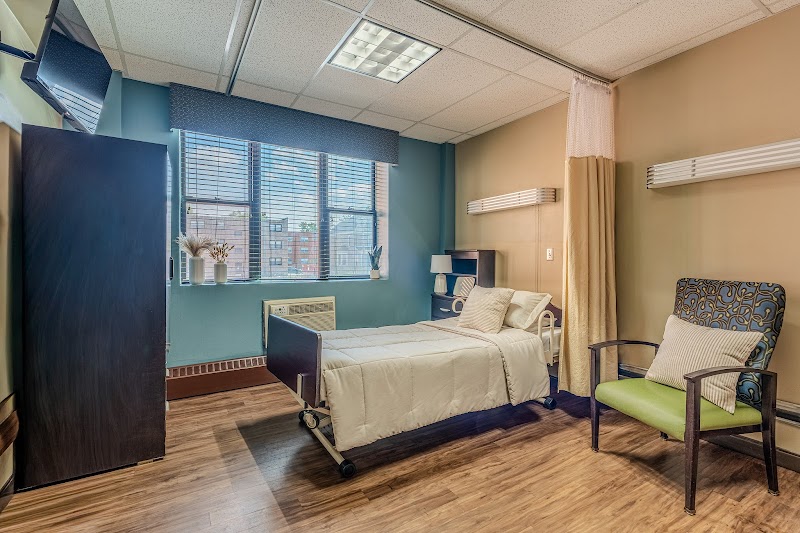
Who Owns and Operates Pavilion Of South Shore?

PAVILION OF SOUTH SHORE is owned by a for-profit company. For-profit facilities operate as businesses with obligations to shareholders or private owners. The facility is operated by PAVILION HEALTHCARE, a chain that manages multiple nursing homes. With 118 certified beds and approximately 109 residents (about 92% occupancy), it is a mid-sized facility located in CHICAGO, Illinois.
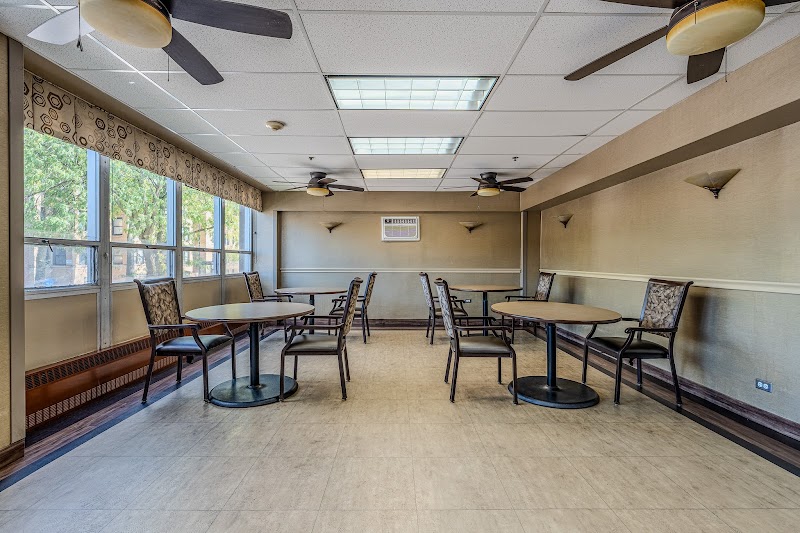
How Does Pavilion Of South Shore Compare to Other Illinois Nursing Homes?

Compared to the 100 nursing homes in Illinois, PAVILION OF SOUTH SHORE's overall rating (1 stars) is below the state average of 2.5, staff turnover (35%) is significantly lower than the state average of 46%, and health inspection rating (2 stars) is below the national benchmark.

What Should Families Ask When Visiting Pavilion Of South Shore?

Based on this facility's data, families visiting should ask: "What changes have been made since the serious inspection findings, and how are you preventing similar issues?" "Can you walk me through typical staffing levels on day, evening, and night shifts?" "Can I visit during a mealtime to observe dining assistance and food quality?" "How do you handle medical emergencies, and what is your hospital transfer rate?" These questions are particularly relevant given the facility's Immediate Jeopardy citations and the below-average staffing rating.

Is Pavilion Of South Shore Safe?

Based on CMS inspection data, PAVILION OF SOUTH SHORE has documented safety concerns. Inspectors have issued 1 Immediate Jeopardy citation (the most serious violation level indicating risk of serious injury or death). The facility has a 1-star overall rating and ranks #100 of 100 nursing homes in Illinois. Families considering this facility should ask detailed questions about what corrective actions have been taken since these incidents.

Do Nurses at Pavilion Of South Shore Stick Around?

PAVILION OF SOUTH SHORE has a staff turnover rate of 35%, which is about average for Illinois nursing homes (state average: 46%). Moderate turnover is common in nursing homes, but families should still ask about staff tenure and how the facility maintains care continuity when employees leave.

Was Pavilion Of South Shore Ever Fined?

PAVILION OF SOUTH SHORE has been fined $107,443 across 4 penalty actions. This is 3.1x the Illinois average of $34,153. Fines at this level are uncommon and typically indicate a pattern of serious deficiencies, repeated violations, or failure to correct problems promptly. CMS reserves penalties of this magnitude for facilities that pose significant, documented risk to resident health or safety. Families should request specific documentation of what issues led to these fines and what systemic changes have been implemented.

Is Pavilion Of South Shore on Any Federal Watch List?

PAVILION OF SOUTH SHORE is not on any federal watch list. The most significant is the Special Focus Facility (SFF) program, which identifies the bottom 1% of nursing homes nationally based on persistent, serious quality problems. Not being on this list means the facility has avoided the pattern of deficiencies that triggers enhanced federal oversight. This is a positive indicator, though families should still review the facility's inspection history directly.