PEARL OF MONTCLARE, THE
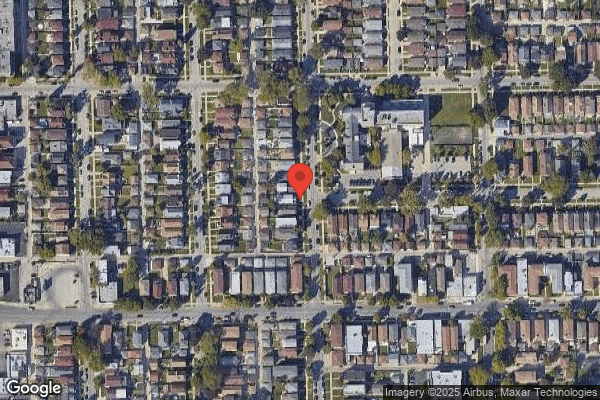

2833 NORTH NORDICA AVENUE, CHICAGO, IL 60634 (773) 622-6144
For profit - Limited Liability company 96 Beds PEARL HEALTHCARE Data: November 2025
Trust Grade
10/100
#391 of 665 in IL
Last Inspection: March 2025

Within standard 12-15 month inspection cycle. Federal law requires annual inspections.

Overview

The Pearl of Montclare has a Trust Grade of F, which indicates significant concerns and poor performance. Ranking #391 out of 665 facilities in Illinois places it in the bottom half, while its county rank of #126 out of 201 suggests limited local options that are better. The facility's trend is improving slightly, having reduced issues from 18 to 16 over the past year. Staffing is average with a turnover rate of 52%, and while RN coverage is also average, it does not stand out as a strength. Notably, the facility has concerning fines totaling $132,091, higher than 77% of Illinois facilities. There have been serious incidents, including a resident who fell and sustained a head injury because the facility failed to apply a protective helmet as required, and another resident who fractured a femur due to improper transfer techniques without a gait belt. Additionally, a resident fell and sustained a leg laceration, requiring stitches after safety measures were overlooked. Overall, while there are some improvements, the facility faces critical concerns that families should consider.

Trust Score
F
10/100
In Illinois
#391/665
Bottom 42%
Safety Record
High Risk
Review needed
Inspections
Getting Better
18 → 16 violations
Staff Stability
⚠ Watch
52% turnover. Above average. Higher turnover means staff may not know residents' routines.
Penalties
○ Average
$132,091 in fines. Higher than 58% of Illinois facilities. Some compliance issues.
Skilled Nurses
○ Average
Each resident gets 37 minutes of Registered Nurse (RN) attention daily — about average for Illinois. RNs are the most trained staff who monitor for health changes.
Violations
⚠ Watch
54 deficiencies on record. Higher than average. Multiple issues found across inspections.
★★☆☆☆
2.0
Overall Rating
★★☆☆☆
2.0
Staff Levels
★★★☆☆
3.0
Care Quality
★★☆☆☆
2.0
Inspection Score
Stable
2024: 18 issues
2025: 16 issues

The Good

  • Full Sprinkler Coverage · Fire safety systems throughout facility
  • No fines on record

Facility shows strength in fire safety.

The Bad

2-Star Overall Rating

Below Illinois average (2.5)

Below average - review inspection findings carefully

Staff Turnover: 52%

Near Illinois avg (46%)

Higher turnover may affect care consistency

Federal Fines: $132,091

Well above median ($33,413)

Significant penalties indicating serious issues

Chain: PEARL HEALTHCARE

Part of a multi-facility chain

Ask about local staffing decisions and management

The Ugly 54 deficiencies on record

5 actual harm
May 2025 1 deficiency
CONCERN (D) 📢 Someone Reported This

A family member, employee, or ombudsman was alarmed enough to file a formal complaint

Potential for Harm - no one hurt, but risky conditions existed

Unnecessary Medications (Tag F0759)

Could have caused harm · This affected 1 resident

Based on observations, interviews, and record reviews, the facility failed to ensure a medication administration error rate of <5% for 2 (R2 and R5) residents of 4 (R2, R4, R5, and R6) residents re...

Read full inspector narrative →
Based on observations, interviews, and record reviews, the facility failed to ensure a medication administration error rate of <5% for 2 (R2 and R5) residents of 4 (R2, R4, R5, and R6) residents reviewed for medication administration. There were 33 opportunities with 3 errors resulting in 9.09% medication administration error rate. Findings include: On 05/27/2025 at 11:15am, V5 (Licensed Practice Nurse) dispensed R2's medications including: Senna 8.6 mg/tab x 2 tablets - this is an error. R2's (Active Order as Of: 05/27/2025) Order Summary Report documented, in part Senna S Oral tablet 8.6-50mg (Sennosides-Docusate sodium) give 2 tablets by mouth two times a day. Folic Acid 800mcg x 1 tab - this is an error. R2's (Active Order as Of: 05/27/2025) Order Summary Report documented, in part Folic Acid Oral tablet 1 MG (1000mcg) 1 tablet by mouth one time a day. On 05/27/2025 at 2:52pm with V2 (Director Of Nursing), this surveyor requested V5 to show V2 the Over the Counter containers of Senna and Folic Acid that were administered to R2. V5 showed the containers to the surveyor and to V2. Inquiring if the orders and what were administered to R2 were the same, V2 stated these are not the same medications. V5 stated I have been giving him these medications. R2's (Active Order as Of: 05/27/2025) Order Summary Report documented, in part Diagnoses: (include but not limited to) swelling, mass and lump lower limb bilateral, non-pressure chronic ulcer of part of left and right lower leg. R2's (05/07/2025) Minimum Data Set documented, in part Section C. Cognitive Patterns. C0500. BIMS (Brief Interview for Mental Status) Summary Score: 09. Indicating R2's mental status as moderately impaired. On 05/28/2025 at 9:25am, V11 (Registered Nurse) dispensed R5 medications including: Calcium Carbonate 500mg x 1 tab (brand name: Alkums) - this is an error. R5's (Active Order as Of: 05/28/2025) Order Summary Report documented, in part Calcium Carbonate-Vitamin D tablet 500-200Mg, give 1 tablet by mouth in the morning. R5's (Active Order as Of: 05/28/2025) Order Summary Report documented, in part Diagnoses: (include but not limited to) hypokalemia, hyponatremia, and hypertension. R5's (04/29/2025) Minimum Data Set documented, in part Section C. Cognitive Patterns. C0500. BIMS (Brief Interview for Mental Status) Summary Score: 13. Indicating R5's mental status as cognitively intact. The (undated) Facility provided 'Alkums Antacid' documented, in part Active ingredient (in each tablet) Calcium Carbonate 500mg. Of note, vitamin D is not listed as an active ingredient. The (undated) Nurse supervisor RN/LPN Job description documented, in part JOB summary: Within scope of practice, coordinates care delivery, which will ensure that patient's needs are met in accordance with professional standards of practice through physician orders, center policies and procedures, and federal, state, and local guidelines. General Nursing Care Responsibilities. Demonstrates the ability to administer medications according to facility policy. Demonstrate ability to carry out physician orders. The (05/02/2025) Administering Medications documented, in part Policy Statement: The Facility will ensure that medications are administered in a safe and timely manner, and as prescribed. Procedure: 3. Medications are administered in accordance with prescriber orders. 8. The individual administering the medication checks the label THREE (3) times to verify the right medication and right dosage.
Apr 2025 1 deficiency
CONCERN (D) 📢 Someone Reported This

A family member, employee, or ombudsman was alarmed enough to file a formal complaint

Potential for Harm - no one hurt, but risky conditions existed

Report Alleged Abuse (Tag F0609)

Could have caused harm · This affected 1 resident

**NOTE- TERMS IN BRACKETS HAVE BEEN EDITED TO PROTECT CONFIDENTIALITY** Based on interview and record review, the facility failed to report an abuse allegation to Illinois Department of Public Health ...

Read full inspector narrative →
**NOTE- TERMS IN BRACKETS HAVE BEEN EDITED TO PROTECT CONFIDENTIALITY** Based on interview and record review, the facility failed to report an abuse allegation to Illinois Department of Public Health (IDPH) for one resident (R1) out of 4 residents reviewed for abuse. Finding include: R1's Face sheet documents that R1 was admitted to the facility on [DATE] with diagnoses not limited to: Toxic encephalopathy, unspecified abnormalities of gait and mobility, other reduced mobility, type 2 diabetes mellitus without complications, acute kidney failure. Essential (primary) hypertension. Minimum Data Set Section (MDS) section C (dated [DATE]) documents that R1 has a Brief Interview for Mental Status (BIMS) score of 5, indicating that R1 has a severe cognitive impairment. Care plan (dated 04/14/2025) documents that R1 is noted with potential communication deficits- may have difficulty completing her thoughts, trouble with word choices. On 04/15/2025 at 11:06AM, during a complaint investigation survey, surveyor inquired for V1 (administrator) to bring the surveyor the facility reportable binder. At 11:31AM, surveyor received the reportable binder and after reviewing it, surveyor noted that R1's abuse allegation from 03/20/2025, was not in the facility's reportable binder. Surveyor interviewed V1 to determine why the reportable was not submitted to the state agency. On 04/15/2025 at 11:35AM, V1 (administrator) stated, R1 was admitted to the facility on [DATE]. On 03/20/2025, when R1's family came to the facility to visit R1, they noticed the discoloration to R1's left eye. V2 (director of nursing) and I, went to assess R1 and R1's son and V5 (R1's daughter) were present during the assessment. During the assessment, I saw R1 with a discoloration to the left eye, which looked different from the right eye. R1's skin is of dark complexion, and the discoloration did not appear red. We asked the resident what happened. R1 mentioned that during the ambulance transport to the facility, the night prior, something fell on R1's head inside the ambulance. R1 was not sure what fell on her head. R1 was explicit about saying that they did not mean for anything to fall on R1. R1 mentioned that the paramedics put back whatever fell on R1's head. R1 is alert and oriented. I told the family that I would call the ambulance for the ambulance to start the investigation. I did not have the ambulance transport form. I had to ask the hospital's case manager for the name of the ambulance company. I contacted the ambulance company and I spoke to the manager, and I informed them of the allegation that something had fallen on R1's head during transportation. The next day, on 03/21/2025, the manager from the ambulance company called me back and informed me that there was no such incident noted on their end. I had asked the manager for a written report because I wanted to provide the ambulance report to R1's daughter. The manager informed me that he would send the report. R1 was very specific about how R1 obtained the discoloration under her eye. Nobody noted the discoloration under R1's left eye when she was admitted to the facility because R1 admitted to the facility late, round 9:30PM. R1 reported the ambulance incident in front of her son and daughter. R1's physician was notified, and the physician ordered an x-ray. The x-ray result was negative. The report from the ambulance company came much later, on 04/01/2025. The daughter received the report. There was not much follow up because shortly after that, R1 went to the hospital on [DATE] and returned to the facility on [DATE]. I conducted an investigation of R1's left eye discoloration. I interviewed the resident, as part of the investigation. If R1 was not able to tell me what happened to her eye, or if R1 did not remember how it happened, then it would trigger an abuse investigation and I would report it to the state agency (IDPH). Based on the interview with the resident, I did not deem it as an abuse allegation. R1 was adamant that it was not intentional and that something fell on her head inside the ambulance. I informed the ambulance company to conduct their own investigation. I have the origin for the discoloration on R1's eye, so we know how it happened and that the patient stated that it was not intentional. When the ambulance company denied that the allegation occurred, I did not feel that I should report it to the state agency, and the resident was at the hospital at the time. R1 still has the same discoloration under her left eye that she had on 03/20/2025. The family mentioned that the discoloration was not her usual discoloration. I saw R1 yesterday, (04/14/2025) and it looks the same as it looked on 03/20/2025. Ambulance Investigation Report (dated 04/01/2025) documents in part: After the completion of the investigation, there was no incident found during the transportation and/or transfer of the patient while in the care of the ambulance crew. Injury Investigation Policy (dated 10/03/2020) states in part: It is the policy of the facility to investigate any unexplained resident injury. Abuse Prevention Policy (undated) states in part: After an allegation of abuse, neglect, mistreatment, misappropriation of resident property, or exploitation, the administrator or designee will initiate an investigation into the allegation. (C.) Initial report. An initial report to the State licensing agency, Illinois Department of Public Health, shall be made immediately after the resident has been assessed and the alleged perpetrator has been removed.
Mar 2025 14 deficiencies 1 Harm
SERIOUS (G)

Actual Harm - a resident was hurt due to facility failures

Accident Prevention (Tag F0689)

A resident was harmed · This affected 1 resident

**NOTE- TERMS IN BRACKETS HAVE BEEN EDITED TO PROTECT CONFIDENTIALITY** Based on interviews and records reviews, the facility failed to follow a resident's (R95) fall care plan intervention and physic...

Read full inspector narrative →
**NOTE- TERMS IN BRACKETS HAVE BEEN EDITED TO PROTECT CONFIDENTIALITY** Based on interviews and records reviews, the facility failed to follow a resident's (R95) fall care plan intervention and physician recommendation with multiple history of falls to ensure soft head helmet was applied while in bed for 1 (R95) out of 1 resident reviewed for falls. This failure resulted in R95 sustaining a left subdural hematoma after falling and hitting head on the floor on 2/4/25. Findings Include: R95's clinical records show an initial admission date of 3/9/24 with included diagnoses but not limited to anxiety disorder, traumatic subdural hemorrhage, other lack of coordination, other abnormalities of gait and mobility, and epilepsy. R95' Minimum Data Set (MDS) dated [DATE] shows R95 has moderate cognitive impairment and is dependent with staff assistance on toileting, positioning in bed, personal hygiene, and dressing. R95's Witnessed Fall dated 2/4/25 at 7:10 PM documented by V9 (Wound Care Licensed Practical Nurse) reads in part: Writer alerted by CNA [Certified Nursing Assistant]/Staff that the resident was in her room attempting to walk without assistance and she fell hitting her left side of her head onto the floor as well as her left side of her body. Patient was in low bed with floor mat next to the bed. Resident unable to give description. R95's progress notes dated 2/5/25 at 6:10 AM documented by V38 (Licensed Practical Nurse) revealed R95 was sent to the hospital and was admitted for Acute chronic subdural hematoma. R95's hospital records HISTORY OF INJURY Event/HPI [History of Present Illness] dated 2/5/25 documents in part: [AGE] year-old female presents as a level 2 trauma transfer from outside hospital after mechanical fall at facility. She was walking, lost her balance, and struck the left side of her head. Denies loss of consciousness. She was transferred to our hospital for a left subdural hematoma. SICU (Surgical Intensive Care Unit admission date 2/5/25 brief HPI revealed R95 suffered from a mechanical fall and sustained an acute on chronic left frontal subdural hematoma. R95's fall risk assessment dated [DATE] shows R95 is moderate risk for falling. This fall risk assessment also shows R95 has inadequate vision, exhibits loss of balance while standing, requires hands on assistance to move from place to place, had history of falls in the past six months, and on psychotropic and sedative/hypnotic medications. R95's fall care plan initiated on 3/11/24 documents in part: [R95] had an actual fall with [NAME] balance, unsteady gait, and poor safety awareness with one fall intervention initiated on 3/14/24 that reads: Soft head helmet while resident is bed or during therapy session. R95's fall care plan also revealed R95 had multiples falls (more than 5) in the last six months. R95's progress notes dated 1/18/25 at 1:11 PM documented by V43 (R95's Physician) revealed R95 had history of skull surgery, wear helmet every shift, fall precautions, and aspiration precautions. On 3/11/25 at 12:33 PM, R95 was sitting on her wheelchair in the dining room with soft helmet on, alert and verbally responsive with forgetfulness. When Surveyor asked about the fall incident that happened on 2/4/25, R95 stated, I don't remember how I fell. They sent me to the hospital. I just woke up and I was in the hospital. R95 stated she has to wear her helmet all the time according to the doctor, but she does not know the reason why. On 3/11/25 at 3:08 PM, interviewed V2 (Director of Nursing/Falls Nurse) and stated that fall interventions in the resident's care plan are initiated and implemented based on the root cause of the resident's previous falls, the fall assessments, and based on the needs of the resident. V2 stated that care plans are individualized and updated accordingly. V2 stated that the purpose of the fall care plan interventions is for the resident to avoid more falls in the future and for the staff to know what to do for the resident. V2 stated that frontline staff is aware of the residents' care plan interventions and all interventions in the care plan should be implemented and followed by the staff on the floor working with the resident. On 3/12/25 at 10:14 AM, interviewed V9 about R95's fall incident on 2/4/25. V9 stated, it happened between 7:10 PM to 7:15 PM. V9 was sitting at the nurse's station doing documentation. V22 (Former Certified Nursing Assistant) alerted V9 that [R95] was on the floor. V9 stated she went inside R95's room and saw R95 lying on the floor beside the floor mattress without her soft helmet on and call light was off. V9 stated R95 hit her head but denied pain and no visible injuries upon V9 assessment on R95. V9 stated that when R95 is in bed, her helmet can come off and only being applied back on when R95 is up on her wheelchair. V9 stated the last time she saw R95 was around 6:30 PM when V22 was wheeling R95 on a wheelchair back in her room to put R95 in bed. V9 stated R95 was sent to the hospital because she hit her head and needed to be evaluated. V9 stated R95 is high risk for falling, has unsteady gait, will get up without asking for help, and needs constant monitoring and re-education. On 3/12/25 at 11:29, a phone interview was conducted with V21 (Medical Director/R95's Physician) and stated that R95 is very impulsive and had multiple falls that happened by falling off from the bed. V21 stated R95 should be wearing the soft helmet while in bed to minimize injury. V21 stated R95 had brain surgery, her skull was taken out and was put back eight months ago. V21 stated R95's skull is not intact and wearing soft helmet could minimize injury. V21 stated if R95 falls and hit her head without the soft helmet, she is high risk for severe injury on the head. On 3/12/25 at 11:52 AM, a phone interview was conducted with V22 about R95's fall incident on 2/4/25. V22 stated she remembers R95 to be alert but with forgetfulness and confusion at times. V22 stated, Sometimes [R95] knows how to use the call light sometimes she forgets. [R95] has the tendency to get up by herself all the time without calling for help. [R95] is high risk for falls. [R95] had multiple history of falls before. [R95] needs one staff assistance to get up from bed and she's incontinent, but sometimes she goes to the toilet with staff assistance if she's up in the chair. When I put [R95] to bed I don't put her helmet on. I only put it on when she's [R95] up in the wheelchair. On 2/4/25 after dinner at around 6:30 PM I put [R95] to bed she told me she was tired. [R95] did not tell me she was ready to sleep, she just told me she's tired. The last time I saw her [R95] was about 6:40 PM she was lying in bed awake watching TV [television]. [R95] was not wearing her helmet because we don't put the helmet on while she's in bed. I changed her [R95] diaper around 6:30 PM and I made sure her call light was within reach. So around 7:00 PM I was rounding because I always look at the fall risk rooms. I saw [R95] walking in circles in her room texting on her cellphone. As soon I saw that I went inside the room to put her [R95] back in bed but then she [R95] fell right in front of me. [R95] lost her balance. [R95] was not wearing her helmet and stood up by herself without asking for help. [R95] fell directly on the floor and hit her head. I think it was her [R95] left side of her head. I went to get the nurse [V9] right away. [V9] assessed [R95] and 911 sent her to the hospital. On 3/13/25 at 9:40 AM, a phone interview was conducted with V38 (Licensed Practical Nurse) and stated that she called the hospital in the morning of 2/5/25 and was informed that R95 was admitted for subdural hematoma. The facility's Fall Prevention and Management policy dated 4/8/24 documents in part: The facility is committed to its duty of care to residents and patients in reducing risk, the number and consequences of falls including those resulting in harm and ensuring that a safe patient environment is maintained. A comprehensive falls care plan is developed. Development of the fall interventions plan is based on results of the Falls Assessment as well as investigation of all circumstances and related resident outcomes. Facility will initiate monitoring of interventions for residents who fall in the facility and with history of fall, who trigger the Falls CAA, and when a resident falls. Frequency and duration of monitoring of interventions will be based on current risks.
CONCERN (D)

Potential for Harm - no one hurt, but risky conditions existed

Deficiency F0554 (Tag F0554)

Could have caused harm · This affected 1 resident

**NOTE- TERMS IN BRACKETS HAVE BEEN EDITED TO PROTECT CONFIDENTIALITY** Based on observations, interviews, and record reviews the facility failed to obtain a physician order and to determine if self-a...

Read full inspector narrative →
**NOTE- TERMS IN BRACKETS HAVE BEEN EDITED TO PROTECT CONFIDENTIALITY** Based on observations, interviews, and record reviews the facility failed to obtain a physician order and to determine if self-administration of medication was appropriate for one (R10) out of one resident observed with medications at bed side table in a sample of 22. Findings Include: On 3/11/25 at 11:32 AM, R10 received up in chair in bedroom alert and verbal on the phone. Surveyor observed one uncovered inhaler dispenser and nasal spray bottle on R10's bed side table. At 2:48 PM, R10 stated she has been having the inhaler and the nasal spray at her bed side for a long time since admitted to the facility. R10 stated that she uses the inhaler twice a day for wheezing and the nasal spray once a day for nasal congestion, and she uses the inhaler even when she does not have wheezing. At 2:50 PM, V4 (Licensed Practical Nurse/LPN) identified the medications as Ventolin HFA inhalation aerosol solution 108 (Albuterol Sulfate Inhaler 90 MCG/ACT) and Fluticasone propionate (nasal) bottle. V4 stated nurses should not leave medication at residents' bed side without a physician's order. V4 also stated that the medications should not have been left on R10's bed side table to prevent misuse or overuse. On 3/12/25 at 9:52 AM, R10 observed in bedroom with same medications at her bed side. V30 (Registered Nurse/RN) stated R10's medication should not be at bed side if there is no physician's order. On 3/12/25 at 10:38 AM, V2 (Director of Nursing/DON) stated that for any residents to keep medication at bed side for self-administration, there should be a medication self-administration safety assessment and a physician order. On 4/18/24 at 10:35 AM, V36 (LPN) stated V36 administered lidocaine patch to R5 around 5am and 6am on 4/16/24, V36 stated V36 did not leave the lidocaine patch at R5's bed side table and V36 could not remember leaving inhaler and the patch at R5's bed side table. V36 stated nurses should not leave any medications at bed side when there is no physician order. V36 stated another resident can take any medications left at bed side. R10's Minimum Data Set (MDS) dated [DATE] shows R10 to be cognitively intact. Medication Administration Record (MAR) as of 3/11/25 shows Lidocaine External Patch five percent, apply topically to lower back topically one time a day for mild pain of one to three, and Albuterol Sulfate Inhalation Aerosol Powder breath activated 108 (90 base MCG/ACT) inhale 2 puffs orally every six hours as needed for shortness of breath. No physician order for self-administration of medications was found. R5's Physician Order Sheet (POS) with active orders as of 4/16/24 shows Ventolin HFA inhalation aerosol solution 108 (Albuterol Sulfate Inhaler 90 MCG/ACT) 2 puffs inhale orally every 6 hours as needed for wheezing, and Fluticasone propionate (nasal) 1 spray in both nostrils one time a day for rhinorrhea, cough. POS do not show that resident can keep resident at bed side. R10's clinical records had no documentation showing she is safe to administer her own medication, and a review of her clinical records do not show a self-administration of medication assessment was completed. The facility policy titled, Medication Administration-General Guidelines dated 11/2021, read in part. Residents can self-administer medications when specifically authorized by the attending physician, and in accordance with procedures for self-administration of medications.
CONCERN (D)

Potential for Harm - no one hurt, but risky conditions existed

PASARR Coordination (Tag F0644)

Could have caused harm · This affected 1 resident

**NOTE- TERMS IN BRACKETS HAVE BEEN EDITED TO PROTECT CONFIDENTIALITY** Based on interviews and record reviews, the facility failed to refer a resident (R67) to the appropriate state-designated author...

Read full inspector narrative →
**NOTE- TERMS IN BRACKETS HAVE BEEN EDITED TO PROTECT CONFIDENTIALITY** Based on interviews and record reviews, the facility failed to refer a resident (R67) to the appropriate state-designated authority for a Preadmission Screening and Resident Review (PASRR) re-evaluation after new psychiatric diagnoses for one out of three residents reviewed for PASRRs. Findings include: R67's [DATE] Notice of PASRR Level I Screen Outcome documents in part that R67 did not require a Level II PASRR because R67 did not have severe mental illness, intellectual disabilities, or related conditions during the evaluation. It also documents in part that R67 did not have any antidepressants, mood stabilizers, antipsychotics, or other mental health medications prescribed during the evaluation. R67's admission Record now documents in part diagnoses of anxiety disorder (onset date [DATE]), unspecified psychosis not due to a substance or known physiological condition (onset date [DATE]), and major depressive disorder, single episode, unspecified (onset date [DATE]). R67's Order Summary Report also documents in part medication orders for Escitalopram Oxalate (antidepressant) for major depressive disorder (order date [DATE]) and Risperidone (antipsychotic) for psychosis (order date [DATE]). On [DATE] at 2:01 PM, V1 (Administrator) stated V35 (Admissions Director) oversees initial/admission PASRRs but V39 (Social Service Director) is in charge of reviewing current PASRRs and re-doing expired PASRRs. V1 also stated that V40 (Regional Admissions Director) has been helping the facility catch up with residents' PASRRs. On [DATE] at 2:56 PM, V39 stated [V39] started with the facility in 09/2024. V39 has not started reviewing PASRRs; therefore, has not reviewed R67's PASRR. On [DATE] at 3:00 PM, V35 stated only handling admission/initial PASRRs. V35 stated V40 will take care of monitoring and updating expired PASRRs. V35 stated residents need PASRR re-evaluation after the current one expires or if the resident has new psychiatric issues or diagnoses. At the conclusion of the survey, facility did not provide a more recent PASRR evaluation for R67 besides the one from [DATE]. Facility's Policy: admission Criteria (last facility review date of [DATE]) does not document in part procedures for re-evaluation/re-screening due to new diagnoses for mental disorders, intellectual disabilities, or related disorders.
CONCERN (D)

Potential for Harm - no one hurt, but risky conditions existed

ADL Care (Tag F0677)

Could have caused harm · This affected 1 resident

**NOTE- TERMS IN BRACKETS HAVE BEEN EDITED TO PROTECT CONFIDENTIALITY** Based on observations, interviews, and record reviews the facility failed to ensure nail care was provided for three (R14, R27, ...

Read full inspector narrative →
**NOTE- TERMS IN BRACKETS HAVE BEEN EDITED TO PROTECT CONFIDENTIALITY** Based on observations, interviews, and record reviews the facility failed to ensure nail care was provided for three (R14, R27, and R31) residents who are dependent in grooming reviewed for Activities of Daily Living (ADL) in a total sample of 22. Findings Include: On 3/11/25 at 12:27 PM, R27 observed lying in bed alert, legally blind, and with dirty long nail that overgrown the fingers tip. R27 stated, she would like her fingernails to be cut but she cannot remember the last time the staff cut her fingernails. On 3/11/25 at 12:30 PM, V6 (Certified Nursing Assistant/CNA) stated that R27's fingernails are dirty, nasty, and too long. V6 also stated that the CNAs should be providing nail clipping care during shower twice a week and as needed. V6 stated that failure to cut the long nail, could cause R27 to scratch herself. On 3/11/25 at 12:35 PM, R14 observed up in chair in the dining room with dirty, very long fingernails overgrown the tips of his fingers. R14 could not remember when last he had a nail cut. V5 (licensed Practical Nurse/LPN) stated that the CNAs are responsible for the fingernail care, and that R14 fingernails are too long, dirty and he could get sick from eating with dirty fingernails. On 3/11/25 at 12:45 PM, R31 observed up in chair in the bedroom, alert, verbal with very dirty long fingernails that overgrown the tips of her fingers. She also stated that she would like her nails to be cut when the staff is ready. Surveyor contacted V4 (LPN) stated the fingernails care should be done by the CNAs with shower twice a week and as needed. V4 also stated that R31's fingernails are dirty with food debris, long, and the nail should have been cut. V4 stated that R31 tends to refuse care, but when V4 asked if she would like her nails to be cut halfway? R31 stated yes. V4 stated V4 will follow up. On 3/12/25 at 10:30 AM, V36 (Scheduler/CNA Supervisor) stated that it is V36's expectation that CNAs are providing nail care for all residents on their shower days and as needed because it is part of their grooming and personal hygiene. On 3/12/25 at 10:38 AM, V2 (Director of Nursing/DON) stated that it is V2's expectation that CNAs are cutting residents' fingernails and not toenails on shower days. V2 also stated that nail care is part of ADL grooming. On 3/13/25 at 9:10 AM, V1(Administrator) stated that the facility has no policy for nail care because it is part of the ADL grooming. R14, R27, and R31's Minimum Data Set (MDS) dated [DATE], 1/15/25, and 2/5/25 functional abilities assessment shows R14, R27, and R31 requires moderate to maximum assistance with personal hygiene. The facility policy for ADL dated 5/22/24, read in part: Residents who are unable to carry out activities of daily living independently will receive the services necessary to maintain good nutrition, grooming, personal hygiene, and oral hygiene.
CONCERN (D)

Potential for Harm - no one hurt, but risky conditions existed

Medication Errors (Tag F0758)

Could have caused harm · This affected 1 resident

Resident #92 Unnecessary Meds, Psychotropic Meds, and Med Regimen Review Based on observations, interviews, and record reviews, the facility failed to update a resident's (R92) comprehensive care pla...

Read full inspector narrative →
Resident #92 Unnecessary Meds, Psychotropic Meds, and Med Regimen Review Based on observations, interviews, and record reviews, the facility failed to update a resident's (R92) comprehensive care plan and limit R92's PRN (as needed) psychotropic drug to 14 days for one out of a total sample of 22 residents. Findings include: R92's admission Record documents in part medical diagnoses of dementia, anxiety disorder, major depressive disorder, and somnolence. R92's Order Summary Report (as of 3/11/2025 at 1:58 PM) documents in part an active order for Xanax (Alprazolam) 0.25 MG (milligram) one tablet by mouth every 24 hours as needed for anxiety. Order date was 2/24/2025 with no end date. R92's February Electronic Medication Administration Records (eMARs) document in part that facility administered one dose of the PRN Xanax to R92 on 2/26/2025. R92's February and March eMARs do not document in part any further PRN Xanax administration. As of 3/11/2025, R92's Care Plan Report did not include a focus on R92's use for Xanax. V2 (Director of Nursing) initiated the focus during time of survey on 3/12/2025. R92 was not verbally/physically aggressive or restless during random observations during the annual survey. No observations of R92 yelling or trying to get out of bed or the wheelchair. On 3/12/2025 at 12:06 PM, V8 (Nurse) stated working at the facility for two years. V8 takes care of R92 at least eight days out of a two-week period. V8 stated R92 initially had behaviors but is doing much better in the last three to fourth months. V8 stated in the last three weeks, R92's been really good and compliant with medications with the last behavior being about 2 to 2.5 weeks ago. V8 stated R92 has been more directable with non-pharmacological calming techniques and doesn't require too much redirection. When asked about the PRN Xanax order, V8 stated R92's family requested the order. V8 stated there is no progress note to correlate this from 2/24/2025. V8 stated R92 got the PRN Xanax once on 2/26/2025 but has not received it since then. V8 stated R92 has not needed it. V44's (Psychiatric Nurse Practitioner) progress note dated 3/04/2025 10:53 AM documents in part that the PRN Xanax should be for 14 days. During a telephone interview with V44 on 3/13/2025 at 10:38 AM, V44 stated [V44] verbally ordered the PRN Xanax on 2/24/2025. V44 stated facility was supposed to enter the order and limit it to 14 days. V44 stated all PRN psychotropics are limited to 14 days. After 14 days, providers are to re-evaluate to see how the resident is doing and to see if it is needed further. V44 stated [V44] has not re-evaluated R92 since 3/04/2025. Facility did not provide further progress note or physician note that documented why PRN Xanax was warranted for R92 pass the 14 days or why it was reordered on 3/12/2025. Facility's Psychotropic Drug Use policy (last revised 1/18/2021) documents in part: If a resident has a PRN Psychotropic medication order it cannot exceed 14 days, unless physician noted a plan for treatment.
CONCERN (D)

Potential for Harm - no one hurt, but risky conditions existed

Unnecessary Medications (Tag F0759)

Could have caused harm · This affected 1 resident

FACILITY Medication Administration F759 Based on observations, interviews, and record reviews, the facility failed to maintain a medication error rate of less than 5% for 1 (R51) of 3 residents review...

Read full inspector narrative →
FACILITY Medication Administration F759 Based on observations, interviews, and record reviews, the facility failed to maintain a medication error rate of less than 5% for 1 (R51) of 3 residents reviewed for medication administration. There was a total of 32 opportunities with 2 errors observed, which resulted in a medication error rate of 6.25%. Findings Include: On 3/11/25 at 9:45 AM, after V8 (Registered Nurse) checked R51's blood pressure and heart rate, V8 started to prepare R51's morning medications. V8 started R51's nebulizer treatment Ipratropium-Albuterol and then prepared the oral pills Amlodipine 10 mg, Ferrous Sulfate 325 mg, Finasteride 5 mg, Fluoxetine 20 mg, Folic Acid 1 mg, Nebivolol 10 mg, Oxybutynin 5 mg, Senna 1 tablet, Sodium Bicarb 650 mg, and Vitamin B12 1000 mcg. At 9:56 AM, R51's nebulizer treatment was completed and took all his oral pills. At 9:57 AM, V8 stated she completed R51's medication pass and signed the Electronic Medication Administration Record (EMAR) indicating R51's medications were administered. R51's 3/11/25 Medication Administration Record (MAR) shows Advair Diskus Aerosol Powder 1 puff inhaler and Lisinopril 20 mg 1 tablet by mouth to be given to R51 scheduled on DAY1 (between 7:00 AM to 11:00 AM). R51's Medication Administration Audit Report documents in part a 7:00 AM dose of Advair Diskus Aerosol Powder 1 puff inhaler and Lisinopril 20 mg 1 tablet by mouth that were documented administered at 9:57 AM by V8. Surveyor did not see V8 administer these medications during the medication administration observation with R51 on 3/11/25 completed at 9:57 AM. On 3/11/25 at 3:08 PM, interviewed V2 (Director of Nursing) and stated that for medication administration, the nurses should be following the right resident, right route, right medication, right time, and right dose. V2 stated nurses are supposed to be following physician orders when administering medications to the residents. V2 stated that after a resident takes their medications, the Nurses are documenting the time they administered the medications in the EMAR. V2 stated that they have to document what are given, what's missed or refused. The facility's Medication Administration policy dated 8/1/24 documents in part: An order is required for administration of all medication. Check medication administration record prior to administering medication for the right mediation, dose, route, patient and time.
CONCERN (D)

Potential for Harm - no one hurt, but risky conditions existed

Menu Adequacy (Tag F0803)

Could have caused harm · This affected 1 resident

Based on observations, interviews, and record reviews, the facility failed to follow their menu and failed to follow cooking instructions. This affected all 108 residents receiving nutrition from the ...

Read full inspector narrative →
Based on observations, interviews, and record reviews, the facility failed to follow their menu and failed to follow cooking instructions. This affected all 108 residents receiving nutrition from the kitchen. Findings include: Surveyor conducted an initial kitchen tour with V11 (Dietary Manager) on 3/11/2025 at 9:03 AM. At 9:29 AM, there were multiple boxes of pies sitting on the kitchen counter. V11 stated the pies were frozen and are defrosting for lunch. Facility's Week at a glance menu documents in part that the facility was to serve lemon meringue pies for lunch on 3/11/2025. At 11:40 AM, V14 (Cook) began plating the lunch meal for the residents. Did not observe V14 slice or plate any pies. V11 stated the dessert for lunch was now a 4-ounce serving of pears. Later that day, V11 stated that the pies did not defrost in time for the lunch meal and the facility could not serve them. During a Resident Council meeting on 3/12/2025 at 1:24 PM, R67 and R88 stated that the facility does not follow the menus. R88 stated the menu will say one thing but the facility will serve a different food item instead. Facility's undated Accuracy of Quality of Tray Line Service policy documents in part: The director of food and nutrition services or designee will be responsible for assuring that all foods needed for meal assembly are present at the appropriate time. Tray line and/or meal service positions for breakfast, lunch and dinner will be planned and determined: according to the menu. The meal will be checked against the therapeutic diet spread sheet to assure that foods are served as listed on the menu. -- On 3/12/2025 at 10:01 AM, V14 (Cook) started the pureed mashed potatoes. Surveyor asked how many portions V14 was going to make. V14 asked V11 (Dietary Manager) how many residents were on pureed diet. V11 answered about 15 residents. V14 grabbed a deep pan and filled it halfway with regular water. Surveyor asked how much water was in the pan. V14 did not know. Surveyor asked the capacity of the pan and V14 did not know. V11 stated it was a 6-inch pan. V11 stated the facility uses powdered mashed potatoes and V14 only needs to reconstitute it. V14 opened the lid of the mashed potato granules and started pouring unmeasured amounts of it into the water. V14 stirred it with a whisk and then added more granules until V14 got a pureed consistency. V14 did not add salt. Surveyor reviewed the label on the mashed potato container. It documents in part that for 35 servings, the preparer should use a fourth of the can or 3 cups of the granules with three quarts water and two teaspoon salt. Instructions read to use boiling water and mix on low and slowly add all potato granules over one minute.
CONCERN (D)

Potential for Harm - no one hurt, but risky conditions existed

Deficiency F0805 (Tag F0805)

Could have caused harm · This affected 1 resident

Based on observations, interviews, and record reviews, the facility failed to follow physician orders for nectar-thick liquids for one resident (R40) out of a total sample of 22 residents. Findings in...

Read full inspector narrative →
Based on observations, interviews, and record reviews, the facility failed to follow physician orders for nectar-thick liquids for one resident (R40) out of a total sample of 22 residents. Findings include: R40's Order Summary Report documents in part an active diet order for nectar-thick consistency for liquids (order date 2/26/2024). R40's Care Plan Report documents in part that R40 has swallowing/chewing difficulties and requires mechanically altered diet with thickened liquids (last revised 1/09/2025). Intervention initiated on 1/09/2025 documents in part to Provide and serve diet as ordered. On 3/11/2025 at 12:15 PM, V15 (Certified Nurse Aide) assisted R40 with lunch meal. R40 had a 114-milliliter carton of apple juice with lunch meal. V15 fed the apple juice thin and not nectar thick to R40. Facility's undated Accuracy of Quality of Tray Line Service policy documents in part: All meals will be checked for accuracy by the food and nutrition services staff, and by the service staff prior to serving the meal to the individual. The meal will be checked against the therapeutic diet spread sheet to assure that foods are served as listed on the menu. Staff will refer to the meal identification (ID) card/ticket for food dislikes, allergies and other details and substitute appropriately for those items. Each meal will be check for correct name, room number, and diet order.
CONCERN (E)

Potential for Harm - no one hurt, but risky conditions existed

Pressure Ulcer Prevention (Tag F0686)

Could have caused harm · This affected multiple residents

**NOTE- TERMS IN BRACKETS HAVE BEEN EDITED TO PROTECT CONFIDENTIALITY** Based on observation, interview and record review, the facility failed to ensure low air loss mattress devices were on the corre...

Read full inspector narrative →
**NOTE- TERMS IN BRACKETS HAVE BEEN EDITED TO PROTECT CONFIDENTIALITY** Based on observation, interview and record review, the facility failed to ensure low air loss mattress devices were on the correct weights setting for residents (R28, R29) with current pressure ulcer and for residents (R6, 91) who are at risk in developing pressure ulcers. This failure has the potential to affect four (R6, R28, R29, R91) out of four residents reviewed for pressure ulcer care in a final sample of 22. Findings Include: On 3/11/2025 at 11:15 AM, R91 was lying in bed and noted on a low air loss mattress with the weight dial on the machine set to 400 pounds. R91's Minimum Data Set (MDS) dated [DATE] shows R91 requires staff assistance with positioning in bed. R91's BRADEN scale dated 2/20/25 shows R91 is at risk in developing skin breakdown. R91's weight records show R91 weighs 136.6 pounds dated 3/5/25. On 3/11/2025 at 11:20 AM, R6 was sleeping in bed and noted on a low air loss mattress with the weight dial on the machine set to 350 pounds. R6's MDS dated [DATE] shows R6 requires staff assistance with positioning in bed. R6's BRADEN scale dated 12/6/24 shows R6 is high risk in developing skin breakdown. R6's weight records show R6 weighs 230 pounds dated 3/10/25. On 3/11/25 at 11:49 AM, R29 was sleeping in bed and noted on a low air loss mattress with the weight dial on the machine set to 400 lbs. R29's MDS dated [DATE] shows R29 requires staff assistance with positioning in bed. R29's skin progress notes dated 3/10/25 shows R29 has multiple pressure ulcers. R29's weight records show R29 weighs 137 pounds dated 3/5/25. On 3/12/25 at 10:14 AM, interviewed V9 (Wound Care Licensed Practical Nurse) and stated that residents who are at risk for developing pressure ulcers are placed on a low air loss mattress as preventative measure especially for those who needs assistance with positioning in bed. V9 stated that residents with current pressure ulcers are also placed on a low air loss mattress to help with wound healing to relieve pressure on the wound. V9 stated that the low air loss mattress should be set based on the current weight of the resident. V9 stated the low air loss mattress relieves pressure from the bony prominences, regulate pressure on specific areas of the body, and if it's not in the right setting that would deplete the purpose of the low air loss mattress. The restorative and the nurse should check the correct setting every shift. V9 stated that the facility uses a BRADEN scale to assess a resident for risk of skin breakdown. V9 stated R91 has no current wound but had history of having pressure ulcers on his sacrum. R91 is at risk for skin breakdown. R91 is on low air loss mattress for prevention of skin breakdown. R91 needs assistance with turning and repositioning. V9 stated R91's current weight is 136.6 pounds taken on 3/15/25. V9 stated 400 pounds setting for R91'sow air loss mattress is incorrect. V9 stated R29 is high risk for skin breakdown and has current pressure ulcer on her left heel. R29 is also requiring assistance with turning and repositioning. R29's current weight for is 137.0 pounds on 3/5/25. V9 stated if the dial is pointing to 400 pounds that is not the right setting for R29's low air loss mattress. V9 stated R6 is high risk for skin breakdown and is completely immobile. R6's current weight is 230.0 pounds on 3/10/25. V9 stated if the weight dial is pointing to 350 pounds that is not the right setting for the low air loss mattress. The facility's Wound Prevention and Healing policy dated 6/1/24 documents in part: Braden scale will be completed to determine the patient's level of risk and implement interventions to prevent development of pressure injuries. The facility's Skin Management: Specialty Mattress policy dated 6/24 documents in part: Settings will be observed every shift to ensure mattress is functioning properly.
CONCERN (E)

Potential for Harm - no one hurt, but risky conditions existed

Respiratory Care (Tag F0695)

Could have caused harm · This affected multiple residents

**NOTE- TERMS IN BRACKETS HAVE BEEN EDITED TO PROTECT CONFIDENTIALITY** On 3/11/25 at 9:36 AM, R48's resting in bed alert and able to verbalize needs. Surveyor noted R48's BiPAP mask on the floor conn...

Read full inspector narrative →
**NOTE- TERMS IN BRACKETS HAVE BEEN EDITED TO PROTECT CONFIDENTIALITY** On 3/11/25 at 9:36 AM, R48's resting in bed alert and able to verbalize needs. Surveyor noted R48's BiPAP mask on the floor connected to the machine not stored inside a bag. R48 stated she uses the BiPAP at night for sleep apnea. R48's face sheet has included diagnoses but not limited to obstructive sleep apnea and morbid obesity. R48's Minimum Data Set (MDS) dated [DATE] shows R48 is cognitively intact and requires staff assistance with her activities of daily living (ADL). R48's order summary report printed on 3/11/25 does not show any order for her BiPAP. On 3/11/25 at 11:37 AM, R66's lying in bed noted on oxygen at 4 liters per minute via nasal cannula. R66's oxygen tubing had no date when it was last changed. R66's nebulizer treatment was not in used sitting on R66's nightstand with the mask had no date when it was last changed and not inside a clear bag. Surveyor also noted R66's CPAP mask not in use and not stored inside a bag. R66 stated she uses her CPAP at night. R66's face sheet has included diagnoses but not limited to chronic obstructive pulmonary disease and Parkinson's disease. R66's MDS dated [DATE] shows R66 is cognitively intact and requires staff assistance with her ADLs. R66's order summary report printed on 3/11/25 documents in part: oxygen, continuous, at 4-5 liters/minute via nasal cannula, but no order for her CPAP. Based on observation, interview and record review, the facility failed to ensure (a) oxygen and nebulization tubing were dated / changed; (b) BiPAP (Bilevel Positive Airway Pressure) and CPAP (Continuous Positive Airway Pressure) masks, oxygen and nebulization tubing were properly stored when not in used; and (c) obtain physician orders for use of BiPAP and CPAP. These failures affected four (R48, R61, R66, R86) out of four residents reviewed for respiratory care in a sample of 22. The findings include: R61's admission record showed admission date on 2/14/23 with diagnoses not limited to Unspecified atrial fibrillation, Acute on chronic systolic (congestive) heart failure, Hypertensive heart and chronic kidney disease with heart failure and stage 1 through stage 4 chronic kidney disease. On 3/11/25 at 11:28 AM R61's room door signage indicated oxygen in use. Observed R61 lying in bed on moderate high back rest, alert and verbally responsive. Stated she has been residing in the facility for 2 years. Stated she was using oxygen and nebulization before, not able to recall when the last time she used it. Observed oxygen cannula and nebulization tubing at bedside not dated, tubings were hanging freely, touching the floor and not stored properly. On 3/11/25 at 11:32 AM Surveyor requested V4 (Licensed Practical Nurse / LPN) to R61's room and stated R61 is using oxygen as needed, unable to recall when the last time she used it. V4 said oxygen tubing should be changed at least weekly every Sunday at night shift and should be dated once changed. She said oxygen tubing and nebulization tubing should be stored in plastic bag when not in use to prevent contamination. On 3/11/25 At 3:00 PM V2 (DIRECTOR OF NURSING / DON) stated she has been working in the facility for over a year. She said oxygen and nebulization tubing should be changed weekly and as needed and should be dated once changed to know when it was changed last. V2 said oxygen tubing, neb tubing, CPAP / BIPAP tubing and mask should be stored properly in a clear bag when not in use to keep it clean. V2 said use of CPAP and BIPAP should have a physician order in resident's record. R61's order summary report dated 3/11/25 showed active order not limited to: Administer PRN (as needed) oxygen at 2/L if o2 sat is below 94% at room air, as needed for SOB/oxygen saturation below 94. Place 2 Liters of oxygen if saturation if goes below 93%. Care plan dated 4/19/24 showed in part: R61 has oxygen therapy at 2/L if O2 (oxygen) saturation is below 94% at room air PRN related to CHF (Congestive Heart Failure). MDS (Minimum Data Set) dated 2/10/2025 showed R61's cognition was intact. Facility's care and cleaning of respiratory equipment policy dated 11/11/24 showed in part: Disposable respiratory equipment will be replaced on a scheduled basis in order to minimize the risk of nosocomial infection. Nasal cannulas are changed weekly and as needed. Respiratory tubings, masks will be secured or placed in a container, original package or bag. Resident #86 Respiratory Care 03/14/25 02:30 PM Findings Include: R86's Electronic Medical Record (EMR) revealed R86 was admitted to the facility on [DATE] and is [AGE] years of age with diagnoses that included but were not limited to: encounter for palliative care, rhabdomyolysis, anemia, malignant neoplasm of large intestine, and malignant neoplasm of colon. On 03/11/25 at 10:34 AM, surveyor and V4 (License Practical Nurse/LPN) entered R86's room, observed her Oxygen Nasal Cannula on oxygen concentration tank, not dated and not in a plastic bag when not in use. V4 stated R86's oxygen nasal cannula tubing should have been contained in a plastic bag when not in use to prevent her from breathing in germs like bacteria, and the oxygen nasal cannula tubing should have been dated so that staff will know when next it should be changed. On 03/12/25 at 10:38 AM, V2 (Director of Nursing/DON) stated, it is V2's expectation that nurses will change oxygen tubing weekly, date and keep oxygen nasal cannula tubing in a plastic bag when not in use to prevent exposure to germs, maintain good hygiene, and prevent infection. R86's Minimum Data Set, dated [DATE] shows she is cognitively impaired. Physician Order Sheet (POS) with active orders as of 3/11/25 shows an order for Oxygen at 2 liters/minute for shortness of breath/SOB via nasal cannula. Change oxygen tubing every weeknight shift, every Sunday.
CONCERN (E)

Potential for Harm - no one hurt, but risky conditions existed

Deficiency F0700 (Tag F0700)

Could have caused harm · This affected multiple residents

**NOTE- TERMS IN BRACKETS HAVE BEEN EDITED TO PROTECT CONFIDENTIALITY** Resident #37 Accidents PLEASE SEE F700 CITATION FOR DETAILS. Resident #41 Accidents F700 Based on observation, interview and ...

Read full inspector narrative →
**NOTE- TERMS IN BRACKETS HAVE BEEN EDITED TO PROTECT CONFIDENTIALITY** Resident #37 Accidents PLEASE SEE F700 CITATION FOR DETAILS. Resident #41 Accidents F700 Based on observation, interview and record review, the facility failed to ensure the appropriate side rails were used, evaluate the use of side rails quarterly and develop plan of care for use of side rails for four (R37, R41, R61 and R63) out of four residents reviewed for accident / hazard in a sample of 22. The findings include: 1. On 3/11/25 at 11:11 AM Observed R63 Lying in bed, alert and verbally responsive, both upper bed / side rails were up. R63's admission record showed admission date on 2/21/2023 with diagnoses not limited to Alzheimer's disease, Essential (primary) hypertension, Heart failure, Obstructive sleep apnea (adult), Nonrheumatic aortic (valve) stenosis. No care plan found for bed / side rail use in R63's EHR (electronic health record). R63's last side rail assessment was dated 10/25/24 showed in part: 1/4 rails due to weakness. MDS dated [DATE] showed R63's cognition was severely impaired. She needed supervision or touching assistance with oral hygiene; Dependent with toileting hygiene, shower / bathe self, lower body dressing, chair / bed transfer; Partial / moderate assistance with upper body dressing, Substantial / maximal assistance with personal hygiene. 2. On 3/11/25 at 11:28 AM Observed R61 lying in bed on moderate high back rest, alert and verbally responsive, both upper bed / side rails were up. R61 appears comfortable and well groomed, alert and verbally responsive. R61's admission record showed admission date on 2/14/23 with diagnoses not limited to Unspecified atrial fibrillation, Acute on chronic systolic (congestive) heart failure, Hypertensive heart and chronic kidney disease with heart failure. No care plan found for bed / side rail use in R61's EHR. R61's last side rail assessment was completed on 11/12/24 showed in part: 1/4 rails due to generalized weakness. MDS dated [DATE] showed R61's cognition was intact. She needed Partial or moderate assistance with oral and personal hygiene; Dependent with toileting hygiene, shower / bathe self, lower body dressing, Substantial / maximal assistance with upper body dressing, chair / bed transfer. 3. On 3/11/25 at 11:49 AM Observed R41 lying in bed, alert and verbally responsive both upper bed / side rails were up. R41's admission record showed admission date on 11/1/2014 with diagnoses not limited to Hemiplegia and hemiparesis following cerebral infarction affecting left non-dominant side, Type 2 diabetes mellitus, Atrial fibrillation, Vascular dementia, Contracture left hand, Essential (primary) hypertension. R41's last side rails assessment was dated 10/11/24 showed in part: 1/4 rails due to weakness. No care plan found for side / bed rail use in R41's EHR (electronic health record). MDS dated [DATE] showed R41's cognition was intact. She needed supervision or touching assistance with oral hygiene, Dependent with toileting hygiene, shower / bathe self, lower body dressing, chair / bed transfer; Substantial / maximal assistance with upper body dressing; Partial / moderate assistance with personal hygiene. 4. On 03/11/25 at 11:58 AM Observed R37 lying in bed, alert and verbally responsive, both upper side / bed rails were up. R37's admission record showed admission date on 6/10/2024 with diagnoses not limited to Benign neoplasm of meninges, Encounter for palliative care, Cerebral infarction, Hemiplegia, Hypertensive heart disease without heart failure, Atherosclerosis of aorta, Other seizures, Rheumatoid arthritis, Scoliosis, Acquired absence of lung. No care plan found for side / bed rails use in R37's EHR. R37's last side rails assessment was dated 9/16/24 and showed in part: 1/4 rails due to generalized weakness and assist in positioning. MDS dated [DATE] showed R37's cognition was severely impaired. She needed partial / moderate assistance with eating, oral and personal hygiene, upper body dressing, Dependent with toileting hygiene, shower / bathe self, lower body dressing, chair / bed transfer. On 3/11/25 At 3:00PM V2 (DIRECTOR OF NURSING / RESTORATIVE NURSE) stated she has been working in the facility for over a year and overseeing restorative. She said use of side rails for resident should be assessed upon admission / readmission, quarterly, or significant change to determine if side / bed rails is use for repositioning or assisting self to get up in bed or to promote more independence in bed mobility. V2 stated the purpose of side rail assessment is to determine if the resident need side rails and resident utilizes it. She said side rail assessment should be reviewed quarterly and as needed to know if resident still need it. V2 said there should be a care plan for side rail use. Stated care plan directs staff on how to care for the resident. Surveyor reviewed R37, R41, R61 and R63' EHR with V2 and stated their side rail assessments were not reviewed quarterly and there were no care plan found for use of side / bed rails. Facility's bed or side rails policy dated 10/22/21 showed in part: provide adequate management of bedrails to ensure resident attain or maintain the highest practicable physical, mental and psychosocial well-being. Use of bed / side rails will be discussed with IDT (Interdisciplinary team) to initiate and implement plan of care. Plan of care will be reviewed, revised, and or updated. Resident #61 Accidents PLEASE SEE F700 CITATION FOR DETAILS. Resident #63 Accidents PLEASE SEE F700 CITATION FOR DETAILS.
CONCERN (E)

Potential for Harm - no one hurt, but risky conditions existed

Deficiency F0808 (Tag F0808)

Could have caused harm · This affected multiple residents

Findings include: On 3/11/2025 at 12:15 PM, V15 (Certified Nurse Aide) assisted R40 with lunch meal. V15 stated R40 did not get a high calorie frozen dessert with the meal. V15 stated [V15] hasn't se...

Read full inspector narrative →
Findings include: On 3/11/2025 at 12:15 PM, V15 (Certified Nurse Aide) assisted R40 with lunch meal. V15 stated R40 did not get a high calorie frozen dessert with the meal. V15 stated [V15] hasn't seen any high calorie desserts in a while. V15 stated usually assisting R40 with meals. V15 stated during the times V15 fed lunch to R40, R40 has not received the high calorie frozen dessert. On 3/11/2025 at 12:18 PM, R92 sat at a lunch table on own. R92's lunch meal did not include a high calorie frozen dessert. On 3/11/2025 at 12:33 PM, V11 (Dietary Manager) stated R40 and R92 are supposed to get a high calorie frozen dessert based on the residents' meal tickets. V11 does not know why kitchen staff failed to provide them to R40 or R92. On 3/11/2025 at 12:50 PM, R40 had a high calorie gelato sitting on the table in front of R40. Staff was not present to assist R40 eat it. At 1:00 PM, V16 (Certified Nurse Aide) stated [V16] wasn't aware that R40 needed the high calorie frozen dessert or that it was physician ordered due to R40's nutritional risk and weight loss. Based on observations, interviews, and record reviews, the facility failed to provide oral supplements on meal trays as part of the therapeutic diet prescribed by the physician for five (R15, R32, R40, R92, R106) residents reviewed for dining services in a total sample of 22. Finding include: R15, R32, R40, R92, R106's Order Summary Reports document in part dietary supplement order for High Calorie Frozen Dessert to be given at lunch. R15, R32, R40, R92, R106's lunch meal tickets document in part for Frozen Nutritional Treat to be served as a daily item. R15, R32, R40, R92, R106's nutrition care plan documents in part, provide and serve supplement as ordered and/or as needed. On 03/11/25 at 11:45 AM, observed R106 eating lunch in main dining room. R106 did not receive a High Calorie Frozen Dessert (Frozen Nutritional Treat) on her tray. R106 said, I didn't get it today and I don't get it every day, only sometimes. On 03/11/25 at 12:35 PM, V19 (R32's Guardian) stated she had fed R32 lunch and there was no Frozen Nutritional Treat on R32's lunch tray. V19 showed surveyor R32's lunch tray. There was no Frozen Nutritional Treat on it. V19 stated she feeds R32 on a regular basis and cannot remember if she has seen the Frozen Nutritional Treat on R32's lunch tray or not. On 03/11/25 at 12:40 PM, V13 (Dietary Aide) stated she was serving lunch in the main dining room and did not give out any Frozen Nutritional Treats. V13 said, I have not seen those in a couple of days. I think we are waiting for a delivery. If the kitchen had the Frozen Nutritional Treats, I would have given them out. On 03/11/25 at 12:50 PM, V11 (Dietary Manager) stated the kitchen receives orders for Frozen Nutritional Treats based on the doctor's orders. V11 stated once she receives the order the item gets added to the residents' meal ticket so the staff knows who to give the supplement to. V11 stated the kitchen has Frozen Nutritional Treats in stock. V11 showed surveyor inside freezer and observed 12 cases of Gelato High Calorie which V11 stated is what they serve as the Frozen Nutritional Treat. Cases were dated 1/21. V11 stated that is the date the cases were delivered. V11 stated she does not know why the supplements were not given out. V11 stated they have enough in stock so they should have been given out. V11 stated the Frozen Nutritional Treats are used for residents who need extra calories so the potential problem of the residents not receiving the supplements is that they could lose weight. On 03/12/25 at 11:52 AM, V33 (Registered Dietitian) stated oral supplements are ordered by the doctor and are considered to be part of the resident's therapeutic diet. V33 stated that some of the reasons she might put someone on an oral supplement could be to increase calorie intake because weight loss has occurred, or if they are not eating well to prevent weight loss, or for wound healing if they require more calories and protein. V33 stated the Frozen Nutritional Treats should be given as ordered by the doctor and the potential problem of the supplement not being given is that weight loss can continue or occur and/or the resident's wound may not heal because wounds require energy and protein for healing. V33 stated R32 is underweight and has a poor appetite. V33 stated R106 has a pressure ulcer and needs extra calories and protein for wound healing. Facility provided list of residents with physician orders for Frozen Nutritional Treat dated 03/11/25 including R15, R32, R40, R92, R106. Facility provided policy titled, Fortified Foods/Supplements undated which documents in part, Fortified foods and supplements are used to promote adequacy of the diet as a nutrition intervention for at risk patients/residents and patient/residents who are at nutritional risk are considered for fortified foods/supplements to increase their overall calorie and nutrient intake. Facility provided policy titled, Accuracy of Quality of Tray Line Service undated which documents in part, the director of food and nutrition services or designee will be responsible for assuring that all foods needed for meal assembly are present at the appropriate time and each tray will be checked for food and beverage preferences, allergies, intolerances and special food requests.
CONCERN (E)

Potential for Harm - no one hurt, but risky conditions existed

Infection Control (Tag F0880)

Could have caused harm · This affected multiple residents

R16's Order Summary Report documents in part an active order for Enhance Barrier Precaution due to: wound every shift (order date 1/29/2025). R16's Care Plan Report documents in part that R16 is on En...

Read full inspector narrative →
R16's Order Summary Report documents in part an active order for Enhance Barrier Precaution due to: wound every shift (order date 1/29/2025). R16's Care Plan Report documents in part that R16 is on Enhanced Barrier Precautions related to wound (initiated 1/29/2025). Intervention initiated 1/29/2025 documents in part for staff to clean/wash hands, including before entering and when leaving the room. Staff are to wear gloves and a gown for high contact resident care activities such as changing briefs or assisting with toileting. On 3/11/2025 at 10:40 AM, there was no Enhanced Barrier Precaution (EBP) sign outside of R16's room or on the door. There was no Personal Protective Equipment bin readily accessible near R16's room. After the surveyor interviewed R16, V37 (Certified Nurse Aide) provided incontinence care and dressing assistance to R16. V37 did not don a gown during the high touch care activities. R16's room remained without EBP signage and PPE bin during additional observations on 3/11/2025 at 2:58 PM and on 3/12/2025 at 9:34 AM. On 3/12/2025 at 9:36 AM, V23 (Nurse) stated [V23] is assigned to care for R16. V23 stated [V23] works on an as needed schedule and does not work often with R16. During interview, V23 did not know which residents would qualify for EBP or why residents would be on EBP. V23 stated the facility would usually have signs on the doors to alert staff which residents were on EBP. V23 guessed that V2 (Director of Nursing) was the one responsible to put the signs up. V23 stated [V23] was not aware that R16 had orders for EBP because R16 didn't have signs on the door or outside the room. Findings include: On 03/11/25 at 11:34 AM, observed signage posted for Contact Isolation outside of R4's room with adequate supply of Personal Protective Equipment (PPE) located outside R4's room including gowns, masks, gloves. On 03/11/25 at 11:48 AM, observed V17 (Nursing Supervisor/Licensed Practical Nurse) enter R4's room without gown or gloves. V17 only wore a mask. On 03/11/25 at 11:50 AM, V18 (Licensed Practical Nurse) stated R4 is on Contact Isolation for c. diff (Clostridium Difficile) and anyone going into R4's room whether they are providing care or not needs to wear a gown, mask, and gloves. On 03/11/25 at 11:54 AM, V17 said, I didn't do any touching. V17 stated she did not wear a gown or gloves but should have and the reason for wearing gown, gloves and mask is prevent the transfer of c.diff to other residents. V17 stated c.diff is contagious and the problem with her not wearing the correct PPE is she could transfer c.diff to other residents. R4's diagnosis included but not limited to Enterocolitis Due to Clostridium Difficile, Sepsis, Urinary Tract Infection, Chronic Obstructive Pulmonary Disease, Chronic Kidney Disease Stage 3, Malignant Neoplasm of Prostate, Malignant Neoplasm of Lung, Hypertensive Heart Disease without Heart Failure, Iron Deficiency Anemia, Obstructive Sleep Apnea. R4's Order Summary Report dated 03/12/25 documents in part, active order for Contact Isolation for C. Diff every shift ordered 03/07/25 and Vancomycin HCl Oral Capsule 125 mg give 4 capsule by mouth every 6 hours for c.diff ordered 03/06/25. Based on observations, interviews and record reviews, the facility: 1. Failed to follow Contact Precautions guidelines by not wearing appropriate Personal Protective Equipment (PPE) for one (R4) resident. 2. Failed to ensure that there was an Enhanced Barrier Precautions (EBP) sign and PPE outside of R16's room and failed to don PPE prior to incontinence care. 3. Failed to don PPE prior to incontinence and wound care to 2 (R15, and R28) residents. These failures could potentially affect 4 (R4, R15, R16, and R28) of 8 residents reviewed for Transmission-Based Precautions in a sample of 22. Findings Include: On 03/11/25 at 10:21 AM, R15 observed lying in bed with V3 (Certified Nursing Assistant/CNA) providing incontinence care to R15 without donning a gown as Personal Protective Equipment/PPE. V3 stated that V3 should be wearing a gown before providing incontinence care to R15 because she has sacral wound and an enhanced Barrier Precautions (EBP) signage by her door. V3 stated that providing care to R15 without donning a gown exposes her to germs and transmission of infection. On 03/12/25 at 9:41 AM, R28 observed lying in bed, with V9 (Wound Care Licensed Practical Nurse) assisted by V29 (CNA) providing wound care to R28 without donning gown as PPE. V9 and V29 both stated that failure to don the gown as the appropriate PPE while providing high contact care can cause cross contamination. V9 stated that R28 has EBP signage by the door, so V9 should always wear a gown before providing wound care. On 03/12/25 at 10:38 AM, V2 (Director of Nursing/Infection Preventionist) stated that staff and visitors should not enter contact isolation room without donning the appropriate PPE (gown, gloves, and mask). V2 also stated that it is V2's expectation that staff will don gown when providing high contact care like, wound and incontinence care to residents with EBP and contact precaution signage to prevent cross contamination. R15 and R28's Physician Order Sheet (POS) with active orders as of 3/11/25 shows Enhance Barrier Precaution due to wounds every shift. The facility policy on EBP dated 10/23 documents read in part: EBP is an approach of targeted gown and glove use during high contact resident care activities, designed to reduce transmission of S. aureus and multidrug Resistant Organisms (MDRO). Transmission Based Precautions (TBPs) include airborne, droplet, contact, and EBP. TBP are intended to prevent transmission of infectious agents which are spread by direct or indirect contact with the patient or the patient's environment.
CONCERN (F)

Potential for Harm - no one hurt, but risky conditions existed

Food Safety (Tag F0812)

Could have caused harm · This affected most or all residents

Based on observations, interviews, and record reviews, the facility failed to follow their policies and dispose of food items past their expiration/best buy/use by dates, label opened food item, store...

Read full inspector narrative →
Based on observations, interviews, and record reviews, the facility failed to follow their policies and dispose of food items past their expiration/best buy/use by dates, label opened food item, store food and food related items away from cleaning solutions, perform hand hygiene during dishwashing, and cover prepared food to prevent contamination. This has the potential to affect all 108 residents that receive nutrition from the kitchen. Findings include: On 3/11/2025 at 9:03 AM, surveyor conducted an initial tour of the kitchen and food storage areas with V11 (Dietary Manager). During the tour of the facility's dry goods stock room on 3/11/2025 at 9:05 AM, there was a gallon of maraschino cherries that expired on 3/01/2025 in the bottom shelf. In the same bottom shelf, there was an opened jug of soy sauce with the 'best by' date of 11/30/2024. The label reads to refrigerate after opening. V11 did not know it had to be refrigerated. In the same bottom shelf, there was an additional jug of unopened soy sauce with a 'best by' date of 11/30/2024. There was also an unopened gallon of Caesar dressing with a 'use by' date of 1/01/2025. V11 stated that the facility's policy is to move all the old stock to the front of the shelves and the incoming stock to the back of the shelves. V11 stated V42 (Dietary Aide) and the other kitchen staff are supposed to check all the labels and toss the expired items. V11 stated when there is no written expiration date, the facility follows the 'use by' or 'best by' date to discard them. In a separate shelf there was an opened clear bag with brown powder inside it. The bag was tied manually and did not have a label. V11 stated it was brownie mix. V11 stated staff were supposed to label the bag when they opened it. In the back of the dry storage room, there was a shelf against the wall perpendicular to the large can racks against the window (contained cans of fruits). In the bottom shelf, there were opened bags of food lids next to two 1-gallon bottles of bleach cleaning solution. V11 stated the lids were for cups and bowls used during residents' meals. Additionally, underneath the shelf (resting on the floor), there was a case of six 1-gallon bottles of bleach cleaning solution. On 3/11/2025 at 9:21 AM, V12 (Dietary Aide) and V13 (Dietary Aide) were cleaning up the breakfast trays. V12 was tossing the food waste and handing over the trays, dishes, and utensils to V13. V13 loaded the dirty dishes through the hot-temperature dishwasher. V13 then pulled out the washed trays, dishes, and utensils out the other end of the dishwasher without performing hand hygiene or changing gloves. V13 touched the clean dishes with the same dirty gloves throughout the washing process. On 03/11/2025 at 9:29 AM, there was coffee grounds in a coffee liner lying on top of the metal table next to the coffee machine. The coffee grounds were open to air and located next to two buckets with solution. V11 stated the kitchen staff uses the buckets to sanitize and clean the kitchen. V11 stated staff opened the coffee grounds that morning and shouldn't have left them out next to the sanitation station. V11 verbally acknowledged that there could be cross contamination from the cleaning solutions splashing on the coffee grounds. The open coffee grounds remained on top of the metal table during return observations later that day at 11:40 AM. During the initial tour, there were also trays of uncovered, pre-portioned pears on the top counters. V11 stated they were 4-ounce servings of pears that one of the dietary aides prepared earlier that morning. Facility will serve them for lunch. The facility's heating and air conditioning unit was blowing over the uncovered pears. The pre-portioned pears were on the counter uncovered during return observations later that day at 11:40 AM. On 3/11/2025 at 9:36 AM, V11 took the surveyor to the basement where the facility's walk-in refrigerator and freezer were located. In the refrigerator, there was a box of cucumbers in one of the top shelves. Multiple cucumbers were mushy, soft to touch, and had multiple black spots. V11 took the box out and stated staff should have tossed them out. In the freezer, there was a large, opened bag of ice in the bottom, left shelf. There was ice recrystallization (freezer burn) throughout the ice block. V11 stated the large bag of ice was there when V11 started working for the facility, which was seven months ago. V11 does not know what the facility used it for or why the facility purchased it. On 3/11/2025 at 11:40 AM, V14 (Cook) started serving food from the kitchen tray line. Did not observe V14 check the temperatures of the food prior to plating. V11 showed the surveyor the kitchen's daily food temperature logs. The form for the current meal was empty. Surveyor asked V11 if V14 took the food temperatures. V11 did not know and asked V14. At 11:47 AM, V14 stated taking the temperatures prior to surveyor's arrival (before 11:30 AM) but forgot to write them down. Facility's undated General Infection Control in Dining Services policy documents in part: The Dining Department follows all local, state and federal regulations in order to assure a safe and sanitary department. Facility's undated Food Storage policy documents in part: All food stock and food products are stored in a safe and sanitary manner. All food stock is dated and used on a first in, first out basis. Facility's Labeling and Dating policy (last reviewed 8/12/2023) documents in part: Leftovers and opened foods shall be clearly labeled with date food item is to be discarded. Food items to be labeled and dated include items prepared in house and food items that are opened and stored for later use. Facility's undated Chemical Storage Guidelines documents in part: Poisonous and toxic materials are to be stored only in areas designated for such use and for no other purpose, or in a storage area outside the food, equipment and utensil storage area. Facility's undated Dish Room - Safe Handling policy documents in part: Potential cross-contamination is prevented in the Dish Room. The task of loading the dirty dishes and utensils into the dishwashing machine is handled by one person. The task of removing the clean dishes and utensils from the dishwashing machine is handled by a different person. If there is only one person working in the dish room, the person will remove their gloves, wash their hands and put on fresh gloves whenever they cross over to the clean side of the dishwashing machine to unload the sanitized dishes and utensils. Facility's undated Food Temperatures policy documents in part: Temperatures of TCS (temperature controlled for safety) foods shall be recorded before being served from the steam table. Food temperatures shall be checked at the end of cooking and recorded before meal service on the Food Temperature log or production sheet.
Aug 2024 1 deficiency 1 Harm
SERIOUS (G) 📢 Someone Reported This

A family member, employee, or ombudsman was alarmed enough to file a formal complaint

Actual Harm - a resident was hurt due to facility failures

Accident Prevention (Tag F0689)

A resident was harmed · This affected 1 resident

**NOTE- TERMS IN BRACKETS HAVE BEEN EDITED TO PROTECT CONFIDENTIALITY** Based on interview and record review, the facility failed to utilize a gait belt during resident transfer, from toilet to wheelc...

Read full inspector narrative →
**NOTE- TERMS IN BRACKETS HAVE BEEN EDITED TO PROTECT CONFIDENTIALITY** Based on interview and record review, the facility failed to utilize a gait belt during resident transfer, from toilet to wheelchair, for one of three residents (R1) reviewed for falls. This failure resulted in R1 falling and sustaining a left femur fracture. Findings include: Facility's incident report (Final of 7.13.2024) R1 is a [AGE] year-old on 8/13/2021. Diagnoses include Acute Systolic Congestive Heart Failure, Overactive Bladder, Hypertension, Anemia, Anxiety Disorder, Hyperlipidemia, Alzheimer Disease, Dementia Without Psychotic Disturbance, Legally Blind, and Polyarthritis. Patient is alert and oriented x3. Patient is legally blind and requires supervision with toileting/hygiene care, transfers, bed mobility, and ambulation with a rollator walker. Patient also utilizes a wheelchair for mobility as well. Patient is continent of both bladder and bowel. Patient was assisted to the bathroom on 7/8/24 by the nursing assistant with the use of a wheelchair. After the patient finished toileting and providing hygiene care to herself, she proceeded to wash her hands at the sink in the bathroom. The nursing assistant was standing in the doorway of the bathroom with the wheelchair and gave directions to the patient to stand up from the toilet seat and to take a step forward towards the sink, when all of a sudden patient got up and had a missed step while approaching the sink in front of her. There was a change in plane and patient fell onto her knees and then the patient leaned towards her left side resting her upper body against the wall. The nursing assistant informed the nurse. Patient was sent to the hospital via 911. According to hospital records patient sustained a left femur fracture and underwent a ORIF (Open Reduction Internal Fixation) of left femur on 7/10/24. R1's MDS (Minimum Data Set of 5/10/2024) documents R1 is severely visually impaired and is cognitively intact. R1's X-ray of hip (7/9/2024) documents: Comminuted fracture involving the distal femur which appears to extend to the articular surface distally is noted. 8/10/2024 at 9:53 AM, V9 (R1's son) said via telephone, R1 has had multiple falls; two within the last 30 days. R1 called V9, screaming in pain and told him she fell. V9 said R1 sustained a femur fracture. V9 said R1 is blind and would have never attempted to go to the bathroom on her own. 8/10/2024 at 2:57 PM R1 awake/alert sitting up in bed eating pizza. Appears neat/clean. Surveyor asked R1 about her recent fall (7/8/2024). R1 said. I thought someone was with me (in the bathroom). Someone should be with me when I'm in the bathroom, I'm blind. I don't know if anyone helped me to the bathroom. Nobody was there when I fell. I go in the diaper now because I can't get up. R1 added, She kept hollering at me to sit down. I called my son; I told him I broke my hip. Call my son, he can tell you what happened. (Son was not at facility when resident fell). 8/10/2024 at 4:38 PM, V3 (LPN-Licensed Practical Nurse) via telephone said the CNA (Certified Nursing Assistant) told me R1 was on the floor in the bathroom. V3 stated, I went to bathroom; I saw the resident on the floor leaning against the wall. I asked the CNA what happened. She said the resident (R1) got up from the toilet, turned to sit down in the wheelchair and fell on the floor. The CNA told me she was standing behind the chair, holding the chair for the resident. She (CNA) said she (R1) could not move her leg. (R1) said she broke her leg. (R1) was unable to move her leg. We called 911, while I was waiting for 911, I (V3) did her (R1) assessment. I couldn't determine if she broke her leg. I asked R1 if she would be able to move her leg. I left her on the floor, 911 picked R1 up when they arrived and put her on the gurney. I forgot the CNA's name; I never saw her again. V3 insisted she left R1 on the floor while waiting for 911. I called the physician immediately but no there was no response. I was about to call the son; when he arrived at the facility; R1 called her son. 8/12/2024 1:35 PM, V5 (LPN-Licensed Practical Nurse) via telephone, said We use a gait belt with all the residents (when doing transfers); gait belts are part of their (CNA's) uniform. 8/12/2024 at 2:43 PM, V2 (DON) said, Yes, staff use gait belts. I don't remember if I asked her (V4) if she used a gait belt. (V4) was standing behind (R1)'s wheelchair. (V4) should have been in bathroom with (R1) and using gait belt. 8/12/2024 at 4:42 PM, V7 (Physical Therapist) via telephone, said R1 is legally blind, had a couple of falls, and requires a lot of cues. I evaluated her (after a fall), I don't exactly know how she fell, she was complaining of shoulder pain and couldn't lift her shoulder. (R1) is a contact guard assist (CGA) for transfers; hold her a little, use a gait belt. V7 added staff should use a gait when transferring R1. If a gait belt is not used (during transfers) the resident could fall with or without injury. V4 (CNA-Certified Nursing Assistant) was not available for interview. R1's Progress Note of 7/8/2024 at 15:22 (written by V3-Licensed Practical Nurse) Note Text: At 1300, the C.N.A came to the nursing station and reported, 'the resident fell in the bathroom'. On getting to the room noted the resident sat on the floor in front of the toilet seat and sink, leaned her back against the wall, straight the right leg and bent the right leg. The resident voiced, 'I broke my leg'. The resident is alert oriented x 3, able to make her needs known. The resident room and bathroom are clutter free and dry. There is adequate light in the room. Noted that the resident had shoes and socks on. The last time the writer saw the resident was during the lunch time at 12:00 p.m. Head to toe assessments were completed. Noted that the resident could not move nor stand on the leg. The resident still complained, 'I could not move my leg, I broke my leg'. The C.N.A assisted the resident to get up from the floor to the wheelchair and moved her to the side of the bed, then transferred her to the bed. The D.O.N. was made aware at 1307. Contact (resident's physician) with the order to send the resident out via 911. At 1307, the resident son was at the bedside at 1309. Called 911 @ 1354 and arrived at 1400 and transported the resident to the (local hospital).
Jun 2024 1 deficiency
CONCERN (E) 📢 Someone Reported This

A family member, employee, or ombudsman was alarmed enough to file a formal complaint

Potential for Harm - no one hurt, but risky conditions existed

Quality of Care (Tag F0684)

Could have caused harm · This affected multiple residents

**NOTE- TERMS IN BRACKETS HAVE BEEN EDITED TO PROTECT CONFIDENTIALITY** Based on observation, interview, and record review, the facility failed to a.) monitor call light system and answer call lights ...

Read full inspector narrative →
**NOTE- TERMS IN BRACKETS HAVE BEEN EDITED TO PROTECT CONFIDENTIALITY** Based on observation, interview, and record review, the facility failed to a.) monitor call light system and answer call lights within a timely manner for four residents (R1, R3, R4, R7), b.) failed to provide incontinence care for five (R1, R3, R4, R5, R6) dependent residents, c.) failed to ensure medications were administered as ordered by the residents' physician for one (R1) resident, and d.) failed to provide sufficient nursing coverage to ensure adequate resident care and support. These failures have the potential to affect 20 residents residing in the facility. Findings include: On 06/01/2024 at 9:35AM, R1 stated he is having on-going issues with the staff's call light response time. R1 stated on 06/01/2024 at approximately 2:00AM, R1 pressed his call light to have his incontinence briefs changed because he was soaked and soiled. R1 stated he waited so long to have his call light answered that he fell back to sleep. R1 stated he woke up at approximately 6:00AM and his call light was still on, and no staff member had come to his room to assist him with his needs. R1 stated he was still soiled at 6:00AM on 06/01/2024. R1 stated on 05/12/2024, he was not given his evening and night medications. R1 stated he was informed that he was not given his medications because there was not a nurse to administer them to him. On 06/01/2024 at 9:58AM, V4 (Certified Nursing assistant/CNA) stated she was scheduled to start her shift today on 06/01/2024 at 7:00AM. V4 stated she arrived at the facility at 6:50AM for her scheduled shift. V4 stated when she arrived there was not an off- going CNA present on the third floor north unit to give her report. V4 stated she was informed that the CNA who was assigned to care for residents on the third floor north unit from the previous 11PM-7AM shift (identified as V8) had already left the facility because V8 had to go to her next job. V4 stated she was informed that V8 left the facility at 6:00AM. V4 stated when she arrived and performed her rounds on the residents, R1's incontinence briefs were soiled. V4 stated R1 complained to her that V8 (CNA) never answered R1's call light and R1 had to wait until V4 came in to work to have his incontinence briefs changed. On 06/01/2024 at 10:06AM, R4 stated on 05/30/2024, R4 had to wait approximately 45 minutes to have his call light answered. R4 stated he has a colostomy bag and it ruptured and R4 needed staff assistance with cleaning R4 and replacing his colostomy bag. R4 stated he eventually called his brother to ask his brother to call the facility to get assistance. R4 stated his brother called him back and told him that he could not get in contact with anyone in the facility to help assist R4 with his needs. R4 stated he first pressed his call light on 05/30/2024 at 11:15AM and a staff member did not come to R4's room to assist R4 until approximately 12:00PM. On 06/01/2024 at 10:15AM, R3 stated she is blind and needs staff assistance with her toileting needs. R3 stated she pressed her call light around 4AM this morning on 06/01/2024 and the assigned CNA (identified as V8) never came to answer R3's call light. R3 stated she was wringing wet and needed her incontinence briefs to be changed. R3 stated V3 (Licensed Practical Nurse/LPN) answered R3's call light and informed R3 that V8 (CNA) left the facility at 6:00AM. R3 stated she currently has her call light on, and it has been on for approximately one hour. R3 stated she pressed her call light because she must use the bathroom to be toileted. Surveyor located inside R3's room and observed a red light blinking on R3's call light system, no sound was audibly heard coming from the call light system. Outside of R3's room door a white light illuminated above R3's room door. On 06/01/2024 at 10:23AM, in the hallway on the three north unit R3's call light is observed still illuminated. Surveyor observed V4 (CNA) walk past R3's room but not answer R3's call light. At 10:26AM, V4 observed walking down the hallway past R3's room again and does not answer R3's call light. On 06/01/2024 at 10:27AM, V4 observed answering R3's call light and stated there is no sound that rings on the call light system, only the light illuminates. On 06/01/2024 at 10:28AM, V5 (CNA) stated the facility's call light system does not have an audible sound to alert staff that the resident's call light has been pressed. V5 stated there is only a light that illuminates above the resident's room when it is pressed. V5 stated this system allows the staff to constantly round on the residents to assist with resident's needs. On 06/01/2024 at 12:24PM, V2 (DON) stated she has been working at the facility since February 2024. V2 stated she learned in the second week of working at the facility that there is no sound for the facility's call light system. V2 stated there is only a light that illuminates when a resident presses their call light. V2 stated the facility staff taught her that the staff's call light protocol is to walk looking up to see the call light. V2 stated this is how the call lights are set up at the facility. V2 stated everyone is responsible for answering call lights even if they are not able to perform a specific task, they should answer the call light and refer the resident's needs to the appropriate person. V2 stated when agency staff work at the facility, there is a checklist that they sign off on acknowledging that the agency staff understands how the call light system works. V2 stated it is not okay to walk past a resident's illuminated call light unless it is an emergency. V2 stated she has not received any complaints of call lights not being answered in a timely manner since the end of February 2024. V2 stated nurses are allowed to administer medications one hour before and one hour after the scheduled administration times. On 06/02/2024 at 9:30PM, V7 (LPN) stated he was the nurse on duty on 05/31/2024 from 11PM-7AM on the third floor of the facility for this shift. V7 stated he was responsible for caring for residents on the three west unit and the three north unit. V7 stated there were two CNAs assigned on the third floor of the facility, one CNA assigned to the west unit and one CNA assigned to the north unit. V7 stated V8 (CNA) is an agency CNA whom he had never worked with before. V7 stated at the start of V8's shift, V8 informed V7 that V8 would be leaving the facility at 6AM in order to attend her next job. V7 stated he gave V8 her assignment and V8 was initially receptive and cooperative with her assignment. V7 stated later in the shift, V7 had a hard time locating V8 in the facility. V7 stated he observed V8 constantly on her phone during V8's assigned shift. V7 stated V8 would disappear off the unit and he did not know where V8 was located majority of the shift. V7 stated he observed multiple resident call lights illuminated throughout the shift. V7 stated he observed R1's call light illuminated also but he is unsure what R1's needs were because V7 did not get a chance to answer R1's call light. V7 stated he is not sure if R1's incontinence briefs were changed during the shift and could not answer R1's call light because V7 was administering medications to residents. V7 stated on 06/01/2024 at approximately 3:30AM, V7 was performing his medication administration pass and observed R7's call light illuminated. V7 stated he observed R7's call light illuminated for approximately 15 minutes. V7 stated this is the only facility he has ever worked for that has a silent call light system. V7 stated he does not feel the facility's call light system is an effective call light system for resident needs. V7 stated he then went to answer R7's call light and R7 stated he needed his incontinence briefs changed and needed some water. V7 stated he went to the third floor dining room to get water for R7 and observed V8 (CNA) sleeping in the dining room during her assigned shift. V7 stated when V4 (CNA) started her assigned shift on 06/01/2024 at approximately 7AM, V4 informed V7 that R5 and R6 were not changed, and their incontinence briefs were soiled. V7 stated once V8 left the facility at 6AM on 06/01/2024, no one was assigned to resume care for residents residing on the three north unit. V7 stated he did the best he could with answering resident call lights but V7 also had other nursing duties he was responsible for. V7 stated it is a problem if no one is assigned to care for residents and perform rounds on the residents because residents could potentially fall or be in distress if not monitored and rounded on. V7 stated when agency staff works at the facility, he encounters agency staff leaving the facility before their assigned shift is completed. V7 stated this happens approximately once or twice a month. V7 stated he has not encountered this behavior with regular staffing in the facility, only agency staff. V7 stated he has not informed anyone in management about the above occurrences and only gives report to the on-coming nurse when he completes his assigned shift. R1's Facesheet documents that R1 has diagnoses not limited to: secondary Parkinsonism, type 2 diabetes mellitus, heart failure, muscle weakness, need for assistance with personal care, reduced mobility, seizures, history of falling, urinary tract infection, and retention of urine. R1's Physician Order Sheet/POS documents in part the following orders: 1. Ativan 0.5mg- Give 1 tab by mouth at bedtime 2. Atorvastatin 40mg- Give 1 tab by mouth one time a day 3. Brilinta 90mg- Give 1 tab by mouth two times a day 4. Budesonide-Formoteral Fumarate 160-4.5mcg/ACT- 2 puff inhale orally two times a day 5. Buspirone 7.5mg- Give 1 tab by mouth three times a day 6. Carbidopa-Levodopa 25-250mg- Give 1 tab by mouth four times a day 7. Carvedilol 6.25mg- Give 1 tab by mouth two times a day 8. Entacapone 200mg- Give 1 tab by mouth four times a day 9. Hydroxyzine 25mg- Give 1 tab by mouth at bedtime 10. Ipratropium-Albuterol Inhalation Solution 0.5mg-2.5mg (3) mg/3ml- 3ml inhale orally every eight hours 11. Lantus 100unt/ml- Inject 10 unit subcutaneously at bedtime 12. Midodrine 5mg- Give 1 tab by mouth three times a day 13. Mirtazapine 45mg- Give 1 tab by mouth at bedtime 14. Novolog FlexPen 100unit/ml- Inject per sliding scale 15. Pramipexole Dihydrochloride 0.125mg- Give 1 tab by mouth three times a day 16. Sacubitril-Valsartan 24-26mg- Give 1 tab by mouth two times a day 17. Tamsulosin 0.4mg- Give 1 cap by mouth one time a day R1's Medication Administration Audit Report reviewed for 05/12/2024 and documents that the above medications were not given as prescribed by the physician's orders. R1's MDS/Minimum Data Set, dated [DATE] documents that R1 is dependent with toileting hygiene needs. R1 has a Brief Interview for Mental Status/BIMS of 15/15, indicating that R1 is cognitively intact. R1's care plan documents in part, Be sure the resident's call light is within reach and encourage the resident to use it for assistance as needed. Toileting: R1 requires one staff assistance with Toileting. Toileting Schedule: CNA to assist resident to the bathroom q2 hours while resident is awake. R3's Facesheet documents that R3 has diagnoses not limited to: Congestive heart failure, overactive bladder, anxiety disorder, Alzheimer's disease, dementia, legal blindness, polyarthritis, and left artificial hip joint. R3's MDS/Minimum Data Set, dated [DATE] documents that R3 requires partial/moderate assistance with toileting hygiene needs and is occasionally incontinent of bowel and bladder. R3's MDS documents that R3 has a Brief Interview for Mental Status/BIMS of 15/15, indicating that R3 is cognitively intact. R3's care plan documents in part, Be sure the resident's call light is within reach and encourage the resident to use it for assistance as needed. Toileting Schedule: Assist resident to the toilet every shift and as needed. Check the resident and as required for incontinence. Wash, rinse, and dry perineum. CNA change clothing PRN after incontinence episodes. Toileting: R3 requires one staff assistance with Toileting. R4's Facesheet documents that R4 has diagnoses not limited to: Spastic hemiplegic cerebral palsy, spinal stenosis, encounter for attention to colostomy, malignant neoplasm of colon, and polyarthritis. R4's MDS/Minimum Data Set, dated [DATE] documents that R4 is dependent with toileting hygiene needs. R4's MDS documents that R4 has a Brief Interview for Mental Status/BIMS of 15/15, indicating that R4 is cognitively intact. R4's care plan documents in part, Be sure the resident's call light is within reach and encourage the resident to use it for assistance as needed. Check resident every two hours and assist with Colostomy care if needed. Toilet Use: The resident requires total staff assistance with Toileting. R5's MDS dated [DATE] documents that R5 is dependent with toileting hygiene needs. R6's MDS dated [DATE] documents that R6 is dependent with toileting hygiene needs. Facility policy dated 03/20/2020 titled Medication Administration documents in part, 5. Check the medication administration record (MAR) prior to administering medication for the right medication, does, route, patient and time. 14. Document as each medication is prepared on the MAR. 18. If medication is not given as ordered, document the reason on the MAR. Facility policy dated 06/19/2020 titled Call Light Use documents in part, Intent: Facility aims to meet resident's needs as timely as possible. Call light system is used to alert staff of resident's needs. 4. Direct care staff will check these residents during, check and change, rounds and ADL care. Facility policy dated 10/29/2021 titled Supporting Activities of Daily Living (ADL) documents in part, Residents who are unable to carry out activities of daily living independently will receive the services necessary to maintain good nutrition, grooming and personal and oral hygiene. Appropriate care and services will be provided for residents who are unable to carry out ADLs independently ., including appropriate support and assistance with: Elimination (toileting). Facility' CNA assignment sheet dated 05/31/2024 documents that V8 (CNA) was responsible for caring for residents residing on the three north unit of the facility. Facility nursing scheduled dated 05/31/2024 documents that V8 was scheduled to work at the facility from 11PM-7AM. Facility timecards dated 05/31/2024 documents that V8 left the facility at 6:06AM. Facility Census dated 06/01/2024 documents a total of 20 residents reside on the three north unit of the facility.
Apr 2024 1 deficiency
CONCERN (D) 📢 Someone Reported This

A family member, employee, or ombudsman was alarmed enough to file a formal complaint

Potential for Harm - no one hurt, but risky conditions existed

ADL Care (Tag F0677)

Could have caused harm · This affected 1 resident

**NOTE- TERMS IN BRACKETS HAVE BEEN EDITED TO PROTECT CONFIDENTIALITY** Based on observation, interview and record review, the facility failed to ensure residents who depend on staff assistance for th...

Read full inspector narrative →
**NOTE- TERMS IN BRACKETS HAVE BEEN EDITED TO PROTECT CONFIDENTIALITY** Based on observation, interview and record review, the facility failed to ensure residents who depend on staff assistance for their ADL (Activities of Daily Living) care received grooming care, showers, personal hygiene and feeding assistance. This affects three residents (R1, R2, R3) of three residents reviewed for ADL care. Findings include: 1. According to the Electronic Health Record (EHR) R1 had diagnoses including congestive heart failure, chronic obstructive pulmonary disease, coronary artery disease with history of stents, Parkinson's disease, depression, peripheral vascular disease, anxiety, gastro-esophageal reflux disease and urinary retention. The Minimum Data Set (MDS) dated [DATE], shows R1's cognition was intact with a fifteen out of fifteen points on the Brief Interview for Mental Status (BIMS). Section GG documents R1 requires partial/moderate assistance with oral hygiene; is dependent on staff for shower/bathing; and requires substantial/maximal assistance with personal hygiene. Care Plan showed R1 had an Activities of Daily Living (ADLs) self-care performance deficit related to impaired mobility, decrease in ADLs, Physical limitations: Balance problems, gait, strength, endurance. On 4/19/2024 at 10:27 AM, R1 was observed in bed, on high back rest, being fed by V4, Certified Nursing Assistant/CNA. R1 was wearing a hospital gown, observed with overgrown beard reaching past the chin and mustache touching the upper lip, observed with dry, flaky scalp. R1 stated he hasn't been shaved in a very long time; the last time was about a month ago during one of his therapy sessions. R1 also stated he got a bed bath yesterday, which was the first time in 3 weeks only because he complained about it to the Resident Council president when the other surveyor was here. R1 stated the CNA who gave him a bed bath yesterday did not do a good job because the CNA did not wash his hair nor was, he shaved. R1 stated he is just eating his breakfast right now because the staff forgot about him, apparently his meal tray was delivered to a different unit of the facility. R1 stated, The CNAs here don't shave me. I had bed bath yesterday which was the first time in 3 weeks, they didn't wash my hair, my hair is so dry. The last time they washed my hair was three weeks ago. When the CNA gave me a bed bath yesterday, I told the CNA I had a bowel movement. The CNA just changed my diaper but did not clean or wipe my back. V4, Certified Nursing Assistant stated, I am the one in charge of R1 today. I did not wash his face or brush his teeth, R1 needs assistance with eating. I don't know where the toothbrush supplies are, so I didn't brush R1's teeth, nor did I wash his face. Even the linen rooms, I couldn't open it. I came to work on this floor a while ago, so I know where it's at, but I tried to open it today and it was locked, the nurse was busy. I didn't ask her for the supplies. On 4/19/2024 at 11:01 AM, V5, Licensed Practical Nurse, stated R1 needs assistance with most Activities of Daily Living (ADLs). V5 stated, For eating R1 requires 1:1 assist except for pizza. For all other ADLs, grooming, we must provide everything but R1 can brush his teeth. R1 is incontinent of both bowel and bladder functions. For bed mobility, R1 is dependent on staff for repositioning. For showers, R1 is dependent on 1 staff for bed baths and showers. R1 requires a Hoyer lift with 2 staff for transfers. R1's shower schedule is Thursday PM shift and Sunday PM shift. The CNAs fill up the Shower Sheet and the Alma Palette, a newly created form for the CNAs to distinguish any new skin impairments. They would check it and let the nurse know and the nurse will do an assessment if there are any new skin changes. On 4/19/2024 at 1:26 PM, R1 was observed up in the Geri chair, wearing personal clothing with crumbs all over his upper garment, with spilled juice all over the floor, his lunch meal consisting of bun with a patty was spilled all over the table beside him. R1 was trying to reach for his food. R1 stated he is very hungry, and no one has come to assist him with his lunch meal yet. R1 stated he has been waiting for 45 minutes for the staff to assist him with his meal tray. R1 stated he tried to pick up his hamburger to eat but it just fell on top of the bedside table, and he knocked his cup of juice down while trying to reach for it. Surveyor summoned V5, LPN, and V4, CNA to R1's room. V4 stated his meal tray was delivered around 12:30 PM and then she went to check another resident. When asked why R1 has not eaten yet at this time and why no one is assisting R1 eat his lunch, V5 stated V4, Certified Nursing Assistant/CNA, knew R1 needed assistance with eating and V4 is not supposed to leave R1 while he is eating especially since the resident V4 mentioned she was helping was ready already. V5 stated, If I was given my lunch late and if nobody was assisting me with feeding, I would be upset and would feel helpless also. I will make sure R1 gets another tray and is assisted with feeding. R1 appeared distraught and kept saying, Leave me alone, I don't want to talk to anybody anymore, I just want to transfer to a different hallway. This keeps happening to me. Leave me alone, I don't want to talk anymore. Review of R1's Shower sheets exclude documentation R1 received a d bath or shower on 4/4/2024 and 4/11/2024 as scheduled. Review of Point of Care Documentation in R1's EHR excludes any documentation bed bath or shower was given for the whole month of April. Review of R1's progress notes excludes any documentation R1 was refusing showers, bed baths or shaving. 2. According to the Electronic Health Record (EHR) R2 had diagnoses including chronic obstructive pulmonary disease, muscle weakness, need for assistance with personal care, acute respiratory failure, acute kidney failure, localized edema, atherosclerotic heart disease of native coronary artery, hypertensive heart disease without heart failure, hyperlipidemia, dementia, bipolar disorder, generalized anxiety disorder, major depressive disorder, monoplegia of upper limb affecting left nondominant side, arthritis, psychotic disorder and personal history of COVID-19. The Minimum Data Set (MDS) dated [DATE], shows R2's cognition was moderately impaired with a nine out of fifteen points required on the Brief Interview for Mental Status (BIMS). Section GG documents R2 has an impairment on one side of the upper extremity. Care Plan showed R2 had an Activities of Daily Living (ADLs) self-care performance deficit related to impaired mobility, decrease in ADLs, Physical limitations: Balance problems, gait, strength, endurance. On 4/19/2024 at 10:02 AM R2 was observed sitting in her wheelchair. V2 stated she has not been receiving her showers and the only time she gets showers is when her friend comes to visit her. R2 stated, If the CNAs give her a shower, they don't do a good job, they just pour water over me and does not clean me up very well. Review of Point of Care Documentation in R2's EHR excludes any documentation bed bath or shower was given for the whole month of April. Review of R2's progress notes excludes any documentation R1 was refusing showers or bed baths. 3. According to the Electronic Health Record (EHR) R3 had diagnoses including muscle weakness, osteomyelitis, chronic obstructive pulmonary disease, asthma, type 2 diabetes mellitus, hyperlipidemia, dementia, bipolar disorder, major depressive disorder, iron deficiency anemia, cocaine abuse, gastrointestinal hemorrhage, chronic kidney disease and gastritis without bleeding. The Minimum Data Set (MDS) dated [DATE], shows R3's cognition was intact with a fifteen out of fifteen points required on the Brief Interview for Mental Status (BIMS). Section GG documents R3 requires partial/moderate assistance with shower/bathing and supervision/touching assistance with upper body dressing. Care Plan showed R3 had an Activities of Daily Living (ADLs) self-care performance deficit related to impaired mobility, decrease in ADLs, Physical limitations: Balance problems, gait, strength, endurance. On 4/19/2024 at 10:10 AM, R3 was observed ambulating in the room, appeared disheveled, upper garment was worn inside out, hair disheveled. R3 stated she can't remember when the last time was, she got a shower. R3 stated nobody helped her dress up this morning. Review of Point of Care Documentation in R3's EHR excludes any documentation bed bath or shower was given for the whole month of April. Review of R3's progress notes excludes any documentation R3 was refusing showers, bed baths or assistance with grooming and dressing. V2, Director of Nursing/DON provided the shower sheets for the month of March and April, which excludes any shower sheets for R2 and R3. V2 informed surveyor did not find any completed shower sheets for R2 and R3, and R1 was missing shower sheets for 4/4/2024 and 4/11/2024 to which V2 responded, I will take a look and give you what I have. No additional shower sheets were provided by V2. On 4/19/2024 at 1:50 PM, V2, Director of Nursing/DON, stated the expectation is the CNAs will assist residents with their Activities of Daily Living (ADLs), and some residents require more assistance than other. V2 stated the CNAs are expected to complete the Shower Sheet and document in the Electronic Health Record (EHR) the shower or bed bath was completed, and agency staff should at least document in the Shower Sheets. If a resident is refusing showers or bed baths, V2 stated she expects to see documentation on the progress notes regarding the refusal. V2, DON, provided the facility policy titled, Activities of Daily Living dated 1/1/2021 which documents in part: Policy Statement: Facility ensures residents receive ADL assistance and maintains resident ' s comfort, safety, and dignity. The goal is to maximize the residents and staff safety, confidence, independence, and ability to handle everyday activities.
Apr 2024 15 deficiencies
CONCERN (D)

Potential for Harm - no one hurt, but risky conditions existed

Quality of Care (Tag F0684)

Could have caused harm · This affected 1 resident

**NOTE- TERMS IN BRACKETS HAVE BEEN EDITED TO PROTECT CONFIDENTIALITY** Based on observation, interview and record review, the facility failed to provide needed care or services by not ensuring compre...

Read full inspector narrative →
**NOTE- TERMS IN BRACKETS HAVE BEEN EDITED TO PROTECT CONFIDENTIALITY** Based on observation, interview and record review, the facility failed to provide needed care or services by not ensuring compression stockings or compression wrap were applied, midline dressing was dated, educate, and assess residents who decided to apply compression wrap and develop a plan of care. These failures affected 3 (R20, R70 and R83) residents reviewed for quality of care in a final sample of 22. The findings include: R20's health record documented admission date on 12/20/2021 with diagnoses with not limited to Secondary parkinsonism, Chronic systolic (congestive) heart failure, Type 2 diabetes mellitus, Other asthma, Cardiomegaly, Hypertensive heart disease with heart failure, Atherosclerotic heart disease of native coronary artery without angina pectoris, Nonrheumatic aortic valve disorder, Spinal stenosis, Obstructive sleep apnea Vascular dementia, Anxiety disorder, Major depressive disorder, Hyperlipidemia, Obesity, Repeated falls, Pain in left knee, Other seborrheic dermatitis, Gastro-esophageal reflux disease without esophagitis, Personal history of covid-19, Dysphagia, Chronic kidney disease, Unspecified osteoarthritis, Benign prostatic hyperplasia without lower urinary tract symptoms. MDS dated [DATE] showed R20's cognition was impaired. R20 needed supervision/touching assistance with oral hygiene and toilet transfer; Partial/moderate assistance with toileting and personal hygiene, shower/bathe self, upper and lower body dressing; Set up/clean up assistance with chair/bed transfer. R20's physician order sheet (POS) dated 4/10/24 with active order not limited to: TED hose on at 6am and off at 6pm one time a day apply to bilateral lower extremities and remove per schedule. R20's ETAR reviewed with missing signature / initial on 4/2/24, 4/3/34 and 4/6/24 for TED hose on at 6anm and off at 6pm one time a day apply to bilateral lower extremities and remove per schedule. R70's health record documented admission date on 11/22/23 with diagnoses not limited to Encounter for surgical aftercare following surgery on the skin and subcutaneous tissue, Cutaneous abscess of abdominal wall, Unspecified cirrhosis of liver, Morbid (severe) obesity due to excess calories, Systemic lupus erythematosus, Enterocolitis due to clostridium difficile, Unspecified atrial fibrillation, Unspecified diastolic (congestive) heart failure, Hypertensive heart disease with heart failure, Venous insufficiency (chronic) (peripheral), Ventricular tachycardia, Insomnia, Gout, Orthostatic hypotension, Other ascites, Umbilical hernia with obstruction, Vitamin d deficiency, Restless legs syndrome, Lymphedema, Hypothyroidism, Hyperlipidemia, Anemia. MDS dated [DATE] showed R70 was cognitively intact. R70 needed total assistance or dependent with toileting hygiene; Substantial/maximal assistance with shower/bathe self; Partial/moderate assistance with upper body dressing and chair/bed transfer; Supervision/touching assistance with lower body dressing and personal hygiene. R70's POS dated 4/10/24 with active order not limited to Bilateral legs swelling apply ace wrap from ankle towards above the knee ON at 6AM, OFF at HS (bedtime) one time a day for swelling. R70's TAR reviewed with missing signature on 4/2/24, 4/3/24, 4/6/24 for order of Bilateral legs swelling apply ace wrap from ankle towards above the knee ON at 6AM, OFF at HS (bedtime) one time a day for swelling. No care plan found for lymphedema or compression wrap use. R83's s health record documented admission date on 7/18/2023 with diagnoses not limited to Unspecified sequelae of cerebral infarction, Hemiplegia and hemiparesis following cerebral infarction affecting right dominant side, Encephalopathy, Altered mental status, Type 2 diabetes mellitus without complications, Dysphagia pharyngoesophageal phase, Gastro-esophageal reflux disease, Hyperlipidemia, Anemia, Long term (current) use of anticoagulants, Other specified arthritis, Claustrophobia, Depression, Anxiety disorder, Hyperkalemia, Hypertensive heart disease without heart failure. On 4/9/24 at 10:53am R70 observed sitting up on wheelchair, alert, and oriented x 3, verbally responsive, with compression wrap on both lower extremities not applied properly, with skin showing in between wrap. Both lower extremities are edematous or swollen. R70 said, My biggest concern is my ongoing lymphedema on both legs. R70 said she was the one doing the compression wrap on both legs every day and removing it at nighttime. At 11:28am R83 Observed lying in bed, alert and verbally responsive, with IV (Intravenous) antibiotic infusing (Cefepime) via single lumen midline on left arm, dressing peeling off and with no date. Requested V8 (Licensed Practical Nurse / LPN) in R83's room, checked midline dressing and stated there was no date. V8 said midline dressing should be dated when inserted or changed. V8 said midline dressing is changed every 3 days and as needed. MDS dated [DATE] showed R83's cognition was impaired. R83 needed substantial/maximal assistance with eating, oral hygiene; Dependent with toileting hygiene, shower/bathe self, upper and lower body dressing, personal hygiene, chair/bed transfer. R83's POS dated 4/10/24 with active order not limited to: - Cefepime HCl Intravenous Solution 1 GM/50ML (Cefepime HCl) Use 1 gram intravenously every day and night shift. - Order to have midline in place to run antibiotic for diagnosis of UTI (urinary tract infection). No care plan found for midline catheter use in R83's health record. At 2:28pm R20 Observed sitting up on wheelchair in the day room, alert and verbally responsive. No TED (Thromboembolic deterrent) hose / compression stockings on both lower extremities. R20 stated nobody is applying a compression stocking, and not sure if I need it. On 4/10/24 at 10:32am R20 Observed lying in bed, alert and verbally responsive. No compression stockings observed on both lower extremities. At 4:05pm V2 (Director of Nursing / DON) said TED hose stockings are applied as ordered and should be signed in ETAR (Electronic Treatment Administration Record) that it was provided, if not signed it means that it was not done. V2 said TED hose stockings or compression are used for swelling to help with edema. Reviewed ETAR with V2 and V2 said TED hose order was not signed on 4/2/24, 4/3/24, 4/6/24 meaning it was not done or provided. V2 said midline when inserted or changed, dressing should be dated to know when it needs to be changed. V2 said policy for midline dressing should be changed and external catheter should be measured weekly and as needed and documented. Midline should be flushed before and after medication administration to keep the line patent and should be documented. Reviewed R83's electronic health record (EHR) with V2 and V2 stated no order for flushing and midline care - dressing change and external catheter measurement. V2 said no documentation found that midline was flushed, dressing was changed, or external catheter was measured. V2 said use of antibiotic or midline catheter should be care planned but no care plan found. V2 said ace wrap or compression wrap is used for edema management and needs an order. V2 said if resident is cognitively intact and decided to apply the compression wrap, the resident needs to be educated and perform return demonstration to make sure that resident is doing it correctly or properly. V2 said education provided should be documented. Reviewed R70's EHR with V2 and V2 said no documentation or education, and no care plan regarding compression wrap found. V2 said care plan is to communicate with staff of what services is needed for the resident. Facility's physician order policy and procedure dated 1/20/24 documented in part: - Licensed Profession Nurses / Registered Nurses will follow orders from physician and documented in a timely manner. Facility's policy for Midline catheters dated 1/2022 documented in part: - Measure mid-arm circumference at baseline and PRN (as needed). NOTE: Measure the mid-arm halfway between the midline insertion site and the tip of the shoulder. Measurement in centimeters. - Measure external midline length at baseline, weekly and PRN with dressing changes. Measure in centimeters. - Document the following information in the resident's electronic health record: Date and time, Measurement of mid-arm circumference, Measurement of external midline length, Site condition, Dressing / cap change. - On treatment administration record (TAR): Document dressing change. Schedule measurements for mid arm circumference and external midline length. - On Medication administration record (MAR): Document and initial date and time for routine saline flushes. Facility's policy for TED (compression) stockings dated 12/18/23 documented in part: - To apply even pressure to the lower legs in order to support blood vessels and prevent pooling of blood in lower extremities. - The stockings are applied by an RN (registered nurse), LPN (licensed practical nurse), PT (Physical Therapist) or certified nursing assistant. Facility's policy for comprehensive care plan dated 12/18/23 documented in part: - To meet the resident's physical, psychosocial and functional needs, facility will develop and implement a comprehensive, person-centered care plan for each resident that includes measurable objectives and target goals. - A resident's care should have the appropriate interventions and provide a means of interdisciplinary communication to ensure continuity in resident care.
CONCERN (D)

Potential for Harm - no one hurt, but risky conditions existed

Pressure Ulcer Prevention (Tag F0686)

Could have caused harm · This affected 1 resident

**NOTE- TERMS IN BRACKETS HAVE BEEN EDITED TO PROTECT CONFIDENTIALITY** Based on observations, interviews, and record reviews, the facility failed to ensure the low air loss mattress was in the correc...

Read full inspector narrative →
**NOTE- TERMS IN BRACKETS HAVE BEEN EDITED TO PROTECT CONFIDENTIALITY** Based on observations, interviews, and record reviews, the facility failed to ensure the low air loss mattress was in the correct setting for 1 (R47) resident and failed to ensure the left heel boot protector was in place for 1 (R14) out of 2 dependent residents reviewed for pressure wound prevention in a final sample of 22. Findings Include: R47's clinical records show R47 has diagnoses not limited to hemiplegia following cerebral infarction affecting left non-dominant side, dementia, and type 2 diabetes mellitus. R47's minimum data set (MDS) dated [DATE] shows R47 requires substantia/maximal assistance with rolling left and right on the bed. R47's Risk assessment dated [DATE] shows R47 is at risk in developing pressure wounds. R47's weight records show R47 weighs 196.6 pounds dated 4/4/24. R14's clinical records show R14 has diagnoses not limited to dementia, type 2 diabetes mellitus, and hypertensive heart diseases with heart failure. R14's MDS dated [DATE] shows R14 is cognitively impaired and requires substantia/maximal assistance with rolling left and right on the bed. R14's Risk assessment dated [DATE] shows R14 is at moderate risk in developing pressure wounds. R14's physician order sheet (POS) with active orders as of 4/10/24 shows an order to apply left heel boot at all times every shift. On 4/09/24 at 11:09 AM, R47 was lying in bed and noted on a low air loss mattress. R47's low air loss mattress weight control knob was set to 400 pounds. R47 stated that R47 has a wound on R47's buttocks. Surveyor asked V48 (Certified Nursing Assistant/CNA) to assist with R47 and noted R47 has redness on the left buttock. On 4/10/24 at 10:42 AM, R47 was lying in bed and noted R47's low air loss mattress weight control knob was still set to 400 pounds. On 4/10/24 at 11:40 AM, R14 was sleeping in bed and noted no heel boot was applied on R14's left heel. At 12:40 PM, R14 was being fed by V41 (Activity Director) and noted R14 left heel boot was not applied. On 4/10/24 at 11:09 AM, V2 (Director of Nursing) stated that when taking care of residents, staff should be following the doctor's orders. On 4/11/24 at 9:44 AM, V42 (Wound Care/Psychotropic Registered Nurse) stated R47 is on the low air loss mattress to prevent R47 from developing pressure wounds due to R47 is total assist with bed mobility. V42 stated the purpose of the low air loss mattress is to relieve pressure on the bony prominence. V42 stated the low air loss mattress is set based on the current resident's weight. V42 stated the nurses and CNAs should be checking the correct setting of the low air loss mattress every shift. If too low the mattress would deflate. If it's too high, it's too hard and it depletes the purpose of it. V42 stated R14's left heel boot is to offload the heel to prevent from getting pressure ulcer on the heel. V42 stated, For people who have weakness on their legs it's skin preventative measure so [R14] does not get any skin breakdown on [R14's] heels. [R14] has no history of refusing the boot so the CNAs should be applying that at all times except during shower and therapy. The facility's policy titled; Skin Management: Specialty Mattress dated 5/23 reads in part: Settings will be observed every shift to ensure mattress is functioning properly. The facility's policy titled; Physician Orders dated 1/20/24 documents that all Licensed Professional Nurses/Registered nurses will follow orders from physicians and documented in a timely manner.
CONCERN (D)

Potential for Harm - no one hurt, but risky conditions existed

Tube Feeding (Tag F0693)

Could have caused harm · This affected 1 resident

**NOTE- TERMS IN BRACKETS HAVE BEEN EDITED TO PROTECT CONFIDENTIALITY** Based on observation, interview and record review the facility failed to ensure a resident receiving enteral feeding received ap...

Read full inspector narrative →
**NOTE- TERMS IN BRACKETS HAVE BEEN EDITED TO PROTECT CONFIDENTIALITY** Based on observation, interview and record review the facility failed to ensure a resident receiving enteral feeding received appropriate care and services, enteral feeding was not administered as ordered and g-tube dressing was not changed daily for 1 (R1) resident reviewed for Tube feeding in a final sample of 22. The findings include: R1's health record documented admission date on 9/11/2021 with diagnoses with not limited to Dysphagia following cerebral infarction, Unspecified sequelae of cerebral infarction, Encephalopathy, Encounter for attention to gastrostomy, Type 2 diabetes mellitus with other circulatory complications, Gout due to renal impairment right hand, Other seizures, Vascular dementia, Heart disease, Atherosclerotic heart disease of native coronary artery without angina pectoris, Peripheral vascular disease, Hyperlipidemia, Chronic kidney disease, Hypothyroidism, Unspecified osteoarthritis, Personal history of covid-19, Essential (primary) hypertension. On 4/9/24 at 4:01pm Observed R1 lying in bed alert and verbally responsive, spoke in Tagalog interpreted by surveyor. Observed GT (Gastrostomy Tube) site covered with dressing dated 4/4/24. Observed blackish material on the G-tubing near the stopper. R1 stated he eats by mouth and receives formula and water via GT. R1 stated he's had the GT for 6-8 months and complains of pain at the GT site. R1 stated he becomes bloated after nursing administers formula via GT. R1 stated he does not refuse the formula feedings, but that nursing is not giving the g-tube feeding formula daily. V15 (Certified Nursing Assistant / CNA) stated R1's dressing at GT site was dated 4/4/24. Observed G-Tube site with slight redness and brownish drainage or stain on the dressing. On 4/10/24 at 4:05pm V2 (Director of Nursing / DON) said Enteral feeding should have an order and given as ordered. Dietician is consulted for residents with G-tube and if there is a recommendation for G-tube feeding and flushing, will be communicated, or confirmed to MD. V2 said G-tube dressing is changed daily and as needed. V2 said nurses are expected to sign EMAR (electronic medication administration record) and ETAR (electronic treatment administration record) if g-tube feeding was administered and G-tube dressing was changed to confirm that it was administered and services were provided, if not signed it means it was not done. Reviewed R1's EHR with V2 and stated with missing signature on eMAR for enteral feeding administration and eTAR for G-tube dressing changed. V2 said it was not given or provided because there was not signature or initial. Minimum Data Set (MDS) dated [DATE] showed R1's cognition was impaired. R1 needed supervision/touching assistance with eating, oral hygiene; Dependent with toileting hygiene, shower/bathe self; Partial/moderate assistance with upper body dressing and personal hygiene; Substantial/maximal assistance with lower boy dressing, chair/bed and toilet transfer. MDS showed R1 had feeding tube. R1's physician order sheet (POS) dated 4/10/24 included active order but not limited to: - Clean feeding tube site and change dressing daily every day shift. - G-tube site: cleanse with nss (normal saline solution), pat dry, apply dry gauze around, cover with dry dressing and secure it with tape every shift and as needed one time a day. - Enteral feed order: Jevity 1.2 400ml bolus feeding two times a day. - Enteral feed order: 150ml water flush 4x a day after each bolus feeding. R1's treatment administration record (TAR) showed order for G-tube site: cleanse with nss (normal saline solution), pat dry, apply dry gauze around, cover with dry dressing and secure it with tape every shift and as needed one time a day was not signed on 4/4/24, 4/5/24, 4/6/24 and 4/8/24 that was done. R1's medication administration record (MAR) showed order Enteral feed order: Jevity 1.2 400ml bolus feeding two times a day was not signed on 4/6/24 and 4/8/24 that was given. Facility's physician order policy and procedure dated 1/20/24 documented in part: - Licensed Profession Nurses / Registered Nurses will follow orders from physician and documented in a timely manner. Facility's enteral feeding policy dated 5/19/23 documented in part: - It is the policy of the facility to provide adequate nutrition and hydration to ensure that residents attain or maintain the highest practicable physical, mental, and psychosocial well-being in accordance with state and federal regulation.
CONCERN (D)

Potential for Harm - no one hurt, but risky conditions existed

Respiratory Care (Tag F0695)

Could have caused harm · This affected 1 resident

**NOTE- TERMS IN BRACKETS HAVE BEEN EDITED TO PROTECT CONFIDENTIALITY** On 04/10/24 at 10:56 AM R106 was in bed without oxygen on. No tracheostomy in place. Oxygen tubing was noted to be in lying in a...

Read full inspector narrative →
**NOTE- TERMS IN BRACKETS HAVE BEEN EDITED TO PROTECT CONFIDENTIALITY** On 04/10/24 at 10:56 AM R106 was in bed without oxygen on. No tracheostomy in place. Oxygen tubing was noted to be in lying in a chair and not in a bag. During interview with V4 (RN) on 4/10/2024 at 11 AM, V4 stated the oxygen tubing was not in a bag but should be stored in a bag. V4 stated she would clean the tubing with alcohol and place it in a bag. On 04/09/24 at 11:25 AM record review included an order for oxygen dated 3/9/2024. Order stated Oxygen therapy: aerosol t-collar FiO2 : 30% titrate oxygen to maintain O2 saturation of 94%. Keep head of bed elevated more than thirty degrees. On 04/10/24 at 03:52 PM record review included care plan of R106 dated 3/10/2024. Next review date was 3/28/2024. Care plan stated in part that R106 has oxygen therapy related to tracheostomy. Order dated 3/29/2024 by V23 (Medical Director) stated Respiratory Therapy to remove trach on Saturday 3/30/2024. Based on observation, interview and record review the facility failed to ensure that oxygen tubing and bubbler were dated, changed, and oxygen tubing was placed in a bag when not in use. These failures affected 2 (R65 and R106) residents reviewed for respiratory care in a final sample of 22. The findings include: R65' s health record documented admission date on 4/11/2023 with diagnoses with not limited to unspecified atrial fibrillation, Acute kidney failure, Retention of urine, Heart failure, Obstructive and reflux uropathy, Cardiomegaly, Atrioventricular block complete, Type 2 diabetes mellitus, Neurocognitive disorder with Lewy bodies, Polyarthritis, Gout, Tremor, Hyperlipidemia, Hypertensive heart disease with heart failure, Dementia in other diseases classified elsewhere, History of falling, Personal history of covid-19, Anemia, Insomnia. On 4/9/24 at 1:21pm Observed R65 sitting up on wheelchair in the dining room, alert and verbally responsive, with oxygen inhalation via nasal cannula at 3L/min, oxygen tubing no date, humidifier bottle dated 3/27/24. Requested V8 (LPN / Licensed Practical Nurse) to check on R65 oxygen and stated oxygen tubing has no date and bubbler was dated 3/27/24. V8 said oxygen tubing and bubbler should be changed weekly and as needed. On 4/10/24 at 4:05pm V2 (Director of Nursing / DON) said Oxygen administration should have an order including liter flow. V2 said oxygen tubing and bubbler are changed every week (Sunday) and as needed for sanitation purposes and should be dated to know when to change it. V2 said Oxygen tubing should be stored in the bag if tubing is not used to keep it clean. V2 said oxygen use should be care planned or incorporated in medical diagnoses like COPD (Chronic Obstructive Pulmonary Disease), emphysema, etc. R65's electronic health record (EHR) reviewed with V2 and said no care plan found for oxygen use. V2 stated care plan is to communicate with staff of what services are needed for the resident. MDS dated [DATE] showed R65 was cognitively impaired. R65 needs partial/moderate assistance with oral and toileting hygiene, shower/bathe self, upper body dressing; Substantial/maximal assistance with lower body dressing and personal hygiene; Supervision/touching assistance with chair/bed and toilet transfer. MDS shows R65 received oxygen therapy treatments. R65's physician order sheet (POS) dated 4/10/24 included active order but not limited to: - Change oxygen nasal cannula/mask tubing and humidifier bottle weekly every night shift every Sunday. - Oxygen, continuous at 3L/min via nasal cannula. Facility's oxygen policy dated 4/2023 documented in part: - It is the facility's policy to ensure that oxygen equipment use is compliant with the acceptable standards of practice. - Once opened, this equipment will be dated and discarded after 7 days of use, whether used continuously or on a prn (as needed) basis.
CONCERN (E)

Potential for Harm - no one hurt, but risky conditions existed

Resident Rights (Tag F0550)

Could have caused harm · This affected multiple residents

Based on observations, interviews, and record reviews, the facility failed to treat five residents (R4, R37, R53, R65, R91) with respect and dignity by not serving all the residents sitting at the sam...

Read full inspector narrative →
Based on observations, interviews, and record reviews, the facility failed to treat five residents (R4, R37, R53, R65, R91) with respect and dignity by not serving all the residents sitting at the same table at the same time during dining observations. Findings include: On 04/09/2024 at 12:49 PM, R2, R37, and R91 sat at the same table in the dining room. At 12:50 PM, V21 (CNA-Certified Nurse Aide) provided R91's lunch tray. At 12:53 PM, V21 provided R2's lunch tray. At 1:02 PM, V44 (CNA) sat in between R2 and R91 to provide feeding assistance and cueing. R2 and R91 were eating but R37 did not receive lunch tray yet. V21 did not provide lunch tray and one-to-one feeding assistance to R37 until 1:16 PM. On 04/10/2024 at approximately 11:49 AM, staff started passing out lunch trays in the dining room and starting with the larger table set in front of the television. R65, R90, R37, R7, R60, R86, R63, R12, and R4 sat at the larger table set together. V22 provided R4's lunch tray first. R4 didn't want the main dish so V22 stated [V22] will get R4 a sandwich instead. At 12:02 PM, most of the residents at the larger table set were eating but R37, R65, and R90 did not receive their lunch trays. R4 did not receive meal alternative-sandwich. At 12:03 PM, R37 and R65 remained waiting for lunch trays. At 12:09 PM, R65 tapped the table with hand and stated, food. At 12:10 PM, V22 provided R65's lunch tray. R4 remained waiting for sandwich and staff did not bring R37's lunch tray or assist with feeding yet. At 12:12 PM, V21 brought R37's lunch tray and provided feeding assistance. Facility didn't provide R4's sandwich until 12:24 PM. During the same dining observations, R26, R53, and R91 sat together at the smaller table located in the middle of the dining room. At 11:54 AM, V22 provided R26's lunch tray. R53 did not receive lunch tray until 12:05 PM and R91 at 12:07 PM. On 04/10/2024 at 12:20 PM, V22 stated staff are supposed to serve the meal trays at the same time to those residents sitting at the same table. V22 stated it is difficult to do so because the kitchen does not have the trays in order. V22 stated there are a lot of missing items from the meal trays so they find themselves going back and forth to the kitchen to retrieve those items. Missing items include cream, sugar, water, milk, gelato, or silverware. On 04/10/2024 at 12:34 PM, V19 (CNA who was also passing out lunch trays) stated they could not serve all the residents at the same time because there were missing meal trays. V19 stated CNAs go to the kitchen a lot during most meals because there are missing trays, drinks, or substitutes. On 04/11/2024 at 11:35 AM, V46 (CNA Supervisor) stated the expectation is to serve all the residents sitting at the same table at the same time. Facility's Meal Service policy, dated 11/03/2021, documents in part: Trays are delivered to the residents at the same table at the same time.
CONCERN (E)

Potential for Harm - no one hurt, but risky conditions existed

Deficiency F0676 (Tag F0676)

Could have caused harm · This affected multiple residents

Based on observation, interview and record review, the facility failed to provide language support to non-English-speaking residents in accordance with professional standards of practice and facility ...

Read full inspector narrative →
Based on observation, interview and record review, the facility failed to provide language support to non-English-speaking residents in accordance with professional standards of practice and facility policy. This failure impacts seven residents out of a total facility census of one hundred and nine residents. Findings: On 4/9/2024 at 10 AM, observed staff speaking English to R106. No communication board was at bedside. On 04/09/24 at 10:56 AM during interview V4 confirmed R106's primary/preferred language is Spanish. V4 stated that to communicate with R106, One of the CNAs speaks Spanish. Otherwise, she will touch the area of her body to tell us what is bothering her. On 04/10/24 at 9:20 AM during interview, V28 (CNA) stated she did not receive an orientation before providing resident care. R106 speaks Spanish but knows a little English. V29 (CNA) stated to speak with R106, staff find a coworker who speaks Spanish. There are no other services or resources available. On 04/10/24 at 9:30 AM V21 (CNA) stated there are 2 residents on the 2nd floor who speak Spanish. V21 stated that to speak with the residents, we get a coworker, but she is off today. The housekeeping staff also help. A coworker is our only resource. On 04/10/24 at 9:39 AM during interview V40 (LPN) was asked if she received an orientation prior to starting or prior to providing patient care. V40 responded absolutely not. When asked what language services resources are available, V40 said Most facilities have a communication board, but I have not encountered one here. On 04/10/24 at 03:44 PM R106's care plan was reviewed. The care plan was dated 3/14/2024 and states in part that the resident has a communication problem related to medical conditions. Resident's daughter states R106 understands English and Spanish and declined communication cards. On 4/10/2024 at 3:45 PM, the admission documents of R106 state, Patient Registration Data from outside source dated 3/4/2024 at 17:27 stated: Patient Language: Language that patient prefers to speak: Spanish. Needs interpreter. On 04/10/24 at 11:31 AM during interview, V3 (Director of Social Services) stated staff have language line available to them. V3 stated they are rolling out an external vendor interpreter service in the next few months. V3 stated she reaches out to the family to interpret if needed. V3 stated staff have communication cards available, and staff should also read the resident's gestures. V3 did not know if staff have received education about language support services and resources. On 04/10/24 at 08:08 AM a communication resource list was presented by V3 (Social Services Director). The list is not dated and included Widget Health, language line services, Coalition of Limited English-Speaking Elderly, Cross Cultural Interpreting Services, Freetranslations.com, Google Translate, Chicago Hearing Society, Chicago Area Interpreter Referral Service, Eastern health (Australia), Illinois Language Services, PHQ-9 Translations and Communication Boards. On 4/12/2024 at 9:34 AM, V47 (Minimum Data Set Coordinator) presented a list of Resident Responses to the question, What is your preferred language? Residents R364, R56, R10, R86, R109, R3 and R106 responded, Spanish. Reviewed policy titled Communication - Foreign Language / Difficulty Expressing Self dated 11/4/2021 and last reviewed 4/1/2024. The policy stated in part: Policy Statement: Facility will ensure that resident will communicate through assistance from a translator or have access to use an augmentative communication device like communication book/language line to improve reception and/or expression.
CONCERN (E)

Potential for Harm - no one hurt, but risky conditions existed

Accident Prevention (Tag F0689)

Could have caused harm · This affected multiple residents

Based on observations, interviews, and record reviews, the facility failed to ensure that a staff member supervised residents (R4, R7, R12, R26, R37, R53, R60, R63, R65, R86, R90, R91) sitting in the ...

Read full inspector narrative →
Based on observations, interviews, and record reviews, the facility failed to ensure that a staff member supervised residents (R4, R7, R12, R26, R37, R53, R60, R63, R65, R86, R90, R91) sitting in the dining room. Findings include: On 04/09/2024 at 11:44 AM, V22 (CNA - Certified Nurse Aide) stated a CNA is supposed to watch the dining room when there are residents there, but it is difficult to do so if the CNAs also have their regular assignments involving residents' activities of daily living (ADL) care to carry out. On 04/10/2024 at 11:27 AM, multiple residents were in the dining room. Residents included R4, R7, R12, R26, R37, R53, R60, R63, R65, R86, R90, and R91. Residents R65, R90, R7, R37, R60, R86, R63, and R12 were sitting at the side with the television. R26 and R91 were talking in the middle of the room. In the smaller, activity side of the room, bingo concluded and V20 (Activity Aide) started cleaning up and assisting other residents back to their rooms. V20 left the room at 11:29 AM to take a resident to their room. No other staff in the dining room. Prior to leaving, V20 told residents including R4 and R53 who sat in the smaller, activity side of the room to wait, not move, and V20 will be back. V20 returned at 11:30 AM. V20 left the room again at 11:33 AM, came back seconds later. Left again at 11:35 AM and came back. Left again at 11:36 AM. R37 who was sitting in a specialized chair was leaning forward towards left side. No staff in the room. V20 returned at 11:38 AM and instructed R37 to sit back. V20 left the room at 11:41 AM with no staff in the room and returned 11:42 AM. At 11:47 AM, V20 stated [V20] supervised the residents during activities. V20 stated a CNA (Certified Nurse Aide) is supposed to watch the residents on the larger side of the room (side with the television) while V20 conducts activities on the smaller side. V20 stated V20 does not have clinical training and does not know which residents are high-fall risk residents. On 04/10/2024 at 12:20 PM, V22 (CNA) stated there should always be a CNA or nurse in the dining room, but it is difficult sometimes because the CNAs must also complete all ADL care for their assigned residents. V22 stated there isn't a CNA specifically assigned to monitor the residents, but CNAs are expected to take turns watching the dining room. V22 stated R86 is a high fall risk and recently had a fall last week. V22 stated R90 is also a high fall risk and needs supervision. On 04/10/2024 at 12:34 PM, V19 (CNA) stated [V19] was not sure who was supposed to watch the residents in the dining room. No specific CNA was assigned to be in the dining room to supervise the residents. V19 stated V19 can't do ADL care for given assignment and watch the dining room at the same time. On 04/10/2024 at 2:12 PM, V21 (CNA) stated V21 is not assigned to watch the dining room. V21 stated there should always be a staff member in the dining room supervising the residents. CNAs are supposed to take turn watching the residents. On 04/10/2024 at 2:13 PM, V8 (Nurse) was sitting in dining room with the residents. V8 stated a staff member needs to always be in the dining room to supervise the residents for safety reason. On 04/11/2024 at 11:29 AM, V47 (Minimum Data Set Nurse) stated if there are residents in the dining room, staff needs to supervise them. On 04/11/2024 at 11:35 AM, V46 (CNA Supervisor) stated facility always assigns a specific CNA to be in the dining room to supervise the residents. The CNAs are supposed to rotate blocked times during the day to supervise the dining room when there's no activities. V46 stated there should always be staff in the dining room supervising the residents. R26's comprehensive care plan documents in part R26 is at high risk for falls related to weakness, impaired mobility, psychoactive medications use, need for assistance with ADLs, and multiple diagnoses including dementia. R26 had six falls since April of 2023. Intervention initiated 09/23/2022 documents in part: Resident to be closely monitored when participating in activities in the sunroom. R53's comprehensive care plan documents in part that R53 is at high risk for falls related to impaired mobility, muscle weakness, need for assistance with ADLs, and related diagnoses. R53 had a recent fall on 04/07/2024. Intervention initiated on 02/03/2022 documents in part: Anticipate resident's toileting needs. Staff re-educated to not leave the resident unattended. Facility's Fall Prevention and Management policy, dated 10/29/2021, documents in part: The facility is committed to its duty of care to residents and patients in reducing risk, the number and consequences of falls including those resulting in harm and ensuring that a safe patient environment is maintained. Universal Fall Precautions/Facility Fall Protocol will be implemented to all residents admitted to the facility regardless of risk scores. High-Risk Precautions will be implemented to residents and patients whose scores on Resident/Family Notification Fall Risk screen shows high risk will be considered on this precaution. Reviewed facility's undated Dining Room Service Tray Service policy. It documents in part: Edit this procedure to show actual responsibilities of dining and nursing staff in your community. Policy does not notate how facility ensures resident safety or prevent falls in the dining room.
CONCERN (E)

Potential for Harm - no one hurt, but risky conditions existed

Deficiency F0692 (Tag F0692)

Could have caused harm · This affected multiple residents

**NOTE- TERMS IN BRACKETS HAVE BEEN EDITED TO PROTECT CONFIDENTIALITY** Based on observation, interview and record review the facility failed to a.) provide thickened liquids as prescribed by physicia...

Read full inspector narrative →
**NOTE- TERMS IN BRACKETS HAVE BEEN EDITED TO PROTECT CONFIDENTIALITY** Based on observation, interview and record review the facility failed to a.) provide thickened liquids as prescribed by physician affecting 1 resident (R71), b.) provide physician ordered oral nutritional supplements affecting 1 resident (R14), and c.) assess residents with a significant weight change and adjust nutrition interventions affecting 3 residents (R36, R71, R100) out of 6 residents reviewed for nutrition and weight loss in a final sample of 22. Findings include: 1. On 04/09/24 at 1:05 PM, observed R71 in room consuming lunch. R71 did not receive any liquids on R71's lunch tray. R71's lunch ticket read nectar thick liquids and had the following items listed on the meal ticket: nectar thick water, nectar thick juice, 4 ounces nectar thick dairy choice of milk, and nectar thick beverage of juice. V13 (Certified Nursing Assistant) stated the kitchen is supposed to send the thickened liquids on the tray because there are no thickened liquids available on the nursing unit. V13 stated this has happened before and all V13 can do is call down to the kitchen to let them know. V13 stated R71 would drink the thickened liquids if they were provided. On 04/10/24 at 2:00 PM, V18 (Consulting Registered Dietitian) stated residents may be on thickened liquids if there are at risk for aspiration. V18 stated the Speech Language Pathologist would give these recommendations to the physician and once the order was obtained the information would be on the meal ticket as part of the diet order. V18 stated residents on thickened liquids could potentially be at increased risk for dehydration if they do not like the thickened liquids and/or if they are not provided with thickened liquids. V18 stated if a resident has an order for thickened liquids but are not receiving the thickened liquids, then they may not be meeting their fluid needs which could contribute to under hydration. V18 stated R71's diet order is mechanical soft with nectar thick liquids. V18 stated R71 should be provided with liquids at meals that have been thickened to nectar consistency per R71's physician order. V18 stated if R71 was not given nectar thickened liquids it would put R71 at risk for underhydration. On 04/09/24 at 3:44 PM, V37 (Contracted Regional Director of Operations) stated the only oral supplement served by the kitchen is the Frozen Gelato which is a high calorie ice cream type high calorie supplement. V37 stated if a resident has an order for the Thrive Gelato or Frozen Nutritional Treat then the kitchen would put it on the resident's tray at mealtime depending on the order. V37 stated anyone requiring thickened liquids per their diet order receives pre-thickened nectar thick juice or water from the kitchen on their trays as part of their meal. R71 was admitted to the facility on [DATE] and has diagnosis which includes but not Cerebral Infarction, Hemiplegia and Hemiparesis Following Cerebral Infarction Affecting Right Dominant Side, Alzheimer's Disease, Personal History of Other Malignant Neoplasm of Bronchus And Lung. R71's Order Summary Report printed 04/10/24 documents in part General Diet - Mechanical Soft texture, nectar consistency ordered 10/20/23 and High Calorie Drink four times a day for nutritional supplement 120 ml ordered 02/26/24 and High Calorie Frozen Dessert one time a day for nutritional supplement Thrive Gelato at lunch ordered 02/26/24. R71's Speech Therapy Discharge summary dated [DATE] documents in part diagnosis moderate oropharyngeal dysphagia and recommendation to continue with mechanical soft with nectar thick liquids. R71's MDS (Minimum Data Set) dated 01/19/24 BIMS (Brief Interview for Mental Status) was 10 out of 15 indicating moderately impaired cognition. R71's Weight and Vitals Summary printed 04/10/24 documents R71's weights as follows: 04/04/2024 158.2 pounds 03/01/2024 162.5 pounds 02/15/2024 165.0 pounds 01/09/2024 161.4 pounds 12/04/2023 167.0 pounds 11/03/2023 170.8 pounds 10/01/2023 174.2 pounds 09/05/2023 190.0 pounds 08/06/2023 191.2 pounds Weight Warnings documents in part -27.5 pounds (-14.5%) from 09/05/23 to 03/01/24 (6 months). Calculated weight change from 08/06/23 to 02/15/24 (6 months) -26.2 pounds (-13.7% change). R71's most recent Dietary Progress Note titled, Dietitian Note- Weight Update dated 01/23/24 documents in part, significant weight loss x6 months - negative weight loss, underweight range according to geriatric guidelines, and oral supplement 120 ml three times per day. No Registered Dietitian documentation completed 2/2024 or 03/2024. R71 MNA Mini Nutritional Assessment completed 01/21/24 documents in part score 7.0 = malnourished. On 04/10/24 at 1:40 PM, V18 (Consulting Registered Dietitian) stated V18 has been covering the facility since the middle of February 2024 and sees the nutrition high-risk residents such as those who trigger for significant weight loss, pressure wounds, tube feedings, and dialysis. V18 stated significant weight loss triggers are defined as 5% in 1 month, 7.5% in 3 months and 10% in 6 months. V18 stated it is V18 responsibility to address the weight loss triggers. 2. R36 was admitted to the facility initially on 09/01/21 and has diagnosis which includes but not limited to Dementia, Atherosclerotic Heart Disease, Generalized Muscle Weakness, Abnormalities of Gait and Mobility, Repeated Falls, Need for Assistance With Personal Care, Chronic Obstructive Pulmonary Disease, Chronic Kidney Disease, Polyarthritis, Age-Related Osteoporosis, Hyperlipidemia, Anxiety Disorder, Myalgia, Palmar Fascial Fibromatosis, Anemia, Hydronephrosis. R36's Order Summary Report printed 04/10/24 documents in part General Diet - Regular diet texture, thin consistency ordered 10/19/22 and Two Calorie per ml Supplement three times a day 120 ml ordered 12/12/23. R36's MDS (Minimum Data Set) dated 02/22/24 BIMS (Brief Interview for Mental Status) was 05 out of 15 indicating severe cognitive impairment and weight loss 5% or more in the last month or loss of 10% or more in the last 6 months documents in part, yes, not on prescribed weight-loss regimen. R36's Weight and Vitals Summary printed 04/10/24 documents R36's weights as follows: 04/04/24 136 pounds 03/01/24 136.8 pounds 02/15/24 140.4 pounds 01/04/24 147 pounds 12/04/23 144 pounds 11/03/23 149.8 pounds 10/03/23 153.5 pounds 09/05/23 156.9 pounds 08/06/23 162.7 pounds 07/02/2023 161.5 pounds R36's most recent Dietary Progress Note titled, Dietitian Note - Weight Updated signed 12/12/23 documents in part significant weight loss x3, 6 months and recommendation to increase oral supplement to 120 ml three times per day. R36's Dietary Profile Form completed by 02/27/24 by V26 (Diet Technician) documents in part BMI underweight for age, weights times 6 months down 22.3 pounds (13.7% change), significant/unplanned weight loss times 6 months, at risk for malnutrition, and Registered Dietitian to follow for weight change. On 04/10/24 at 2:15 PM V18 (Consulting Registered Dietitian) reviewed R36's electronic health record and stated, I don't have a recent note for her. V18 stated the last Registered Dietitian assessment was done on 12/12/23 at which time R36 had a weight loss trigger and oral supplement was increased from 120 ml twice per day to three times per day. V18 stated R36's weight in 12/2023 was 144 pounds. V18 calculated R36's percent weight change from 08/06/23 to 02/15/24 and stated the percent change was -13.7% change indicating a weight loss trigger over this 6-month period. V18 stated 02/2024 weight was 140.4 pounds and since 12/2023 R36 had lost an additional 3.5 pounds. V18 stated is no Registered Dietitian note in 02/2024 addressing R36's weight loss trigger which occurred from 8/2023-02/2024 and there was no change in nutrition interventions since 12/2023. V18 calculated R36's percent weight change from 09/05/23 to 03/01/24. V18 stated the percent change was (-12.8% change) over the 6-month period indicating a weight loss trigger. V18 stated there is no Registered Dietitian assessment addressing the weight loss trigger and no change in nutrition interventions since 12/2023. V18 stated R36's 03/2024 weight was 136.8 pounds so R36 was still losing weight. V18 stated R36 should have been documented on to address the weight loss trigger. V18 stated R36 has a care plan for potential nutrition problem including risk for malnutrition and weight loss with goal was for weight maintenance, not loss. V18 stated that from a nutritional standpoint R36's weight loss was not planned. V18 stated given R36's weight loss triggers and continued weight loss trend V18 needs to look into another intervention for R36. V18 stated V18 would like to know how much of the supplement R36 is drinking and/or if another type of supplement should be offered. V18 stated when V18 was reviewing the monthly weights V18 saw that R36 already had a supplement, so she went to the bottom of my list. 3. R100 was admitted to the facility on [DATE] and was hospitalized between 02/17/24-03/06/24 and 03/26/24-04/02/24. R100 has diagnosis which includes but not limited to End Stage Renal Disease, Dependence on Renal Dialysis, Human Immunodeficiency Virus Disease, Type 2 Diabetes Mellitus Without Complications, Systolic (Congestive) Heart Failure, Heart Failure With Reduced Ejection Fraction, Anemia, Chronic Lymphocytic Leukemia Of B-Cell Type In Remission, Secondary Hyperparathyroidism, Diffuse Large B-Cell Lymphoma, Viral Hepatitis C Without Hepatic Coma. R100's Order Summary Report printed 04/11/24 documents in part Renal Diet - Regular diet texture, thin consistency ordered 12/19/23 and Liquid Protein three times a day 30 ml ordered 03/24/24. R100's MDS (Minimum Data Set) dated 03/12/24 BIMS (Brief Interview for Mental Status) was 15 out of 15 indicating intact cognition. R100's Weight and Vitals Summary printed 04/11/24 documents R100's weights as follows: 03/08/2024 206.2 pounds 02/15/2024 200.64 pounds 02/10/2024 203.4 pounds 02/07/2024 213.8 pounds 02/5/2024 213.8 pounds 01/27/2024 217.6 pounds 01/25/2024 212.96 pounds 01/13/2024 241.0 pounds 01/9/2024 247.2 pounds 01/6/2024 248.4 pounds 12/30/2023 248.4 pounds 12/24/2023 241.4 pounds 12/24/2023 244.2 pounds 12/23/2023 251.2 pounds 12/18/2023 251.4 pounds Weight Warnings documents in part -45.2pounds (-18%) from 12/18/23 to 03/08/24 (3 months). R100's most recent Dietary Progress Note titled, Dietitian Note - HD (Hemodialysis) signed 12/19/23. R100's dietary progress note dated 03/22/24 by V18 documents left voicemail for RD at Fresenius requesting call back, in addition to labs and recent pre/post hemodialysis weights for (R100). No Registered Dietitian documentation addressing weight loss trigger in 03/2024. R100's Dietary Profile Form completed 04/08/24 by V26 (Diet Technician) documents in part reentry weight pending, resident is at risk for malnutrition per Mini Nutritional Assessment (9.0), goal maintain weight and RD following for hemodialysis. No changes made to nutrition interventions. On 04/11/24 at 12:44 PM, V2 (Director of Nursing) stated the Registered Dietitian (V18) manages the weights and coordinates care with the Dialysis Registered Dietitian. V2 stated the RD is the one who should be assessing R100's weights because R100 is at higher nutritional risk due to being on dialysis. Facility provided Job Description for Diet Technician/Diet Clerk dated 2021 which documents in part, duties include to Refer clients with significant weight loss, skin breakdown, or those on tube feeding or dialysis to the dietitian for further nutritional assessment. Facility policy titled, Weight and Weight Change Management undated documents in part, 1.) significant weight changes will be monitored and will be addressed by the dietitian/designee and interdisciplinary care team, 2.) the dietitian/designee will reassess the nutritional needs and intake of any resident with significant weight change and appropriate recommendations will be documented in the medical record. Facility policy titled, Supplements undated, documents in part supplements are used to promote adequacy of the diet as a nutrition intervention for at risk residents and residents who are at nutritional risk are considered for supplements to increase their overall calorie and nutrient intake. Facility policy titled, Thickened Liquids undated, documents in part residents with impaired swallowing ability will receive liquids that are thickened to the degree ordered by the physician or speech therapist. 4. R14's clinical records show R14 has diagnoses not limited to Type 2 Diabetes Mellitus, Dementia, Anemia, and Congestive Heart Failure. R14's Minimum Data Set (MDS) dated [DATE] shows R14 is cognitively impaired. R14's physician orders show R14 is to receive high calorie frozen gelato dessert with lunch ordered on 4/1/24. R14's nutritional care plan shows that R14 is malnourished and is to receive the high calorie frozen dessert every day for weight loss. R14's weights documented in part: 4/4/24 102.0 pounds, 3/14/24 104.6 pounds, and 2/7/2024 107.6 pounds. On 4/09/24 at 1:05 PM, R14 was being assisted by V51 (Certified Nursing Assistant/CNA) for lunch in the 3rd floor dining room. R14 received chopped cheesy lasagna, green beans, juice, and chocolate bread for lunch. R14 did not receive the high calorie gelato dessert. R14's meal ticket does not indicate the high calorie gelato dessert. On 4/10/24 at 12:40 PM, V41 (Activity Director) was feeding R14 for lunch in R14's room. V41 stated that V41 is also a CNA and is certified to feed the residents. R14's lunch tray consisted of ravioli, garlic bread, peas and carrots, mandarin oranges, apple juice and coffee. R14 did not receive the high calorie gelato dessert. R14's meal ticket does not indicate the high calorie gelato dessert. On 4/10/24 at 2:49 PM, V18 (Consulting Registered Dietician) stated that R14 is underweight and had triggered for weigh loss. V18 stated that R14 should be getting the high calorie gelato dessert with lunch to help with weight gain or for maintenance. V18 stated that the gelato should be indicated in R14's meal ticket because it's a tool that the facility uses to communicate with the staff what R14 should be getting for meals. On 4/11/24 at 11:17 AM, V2 (Director of Nursing) stated V2 entered the order for the high calorie gelato dessert for R14 because dietary recommended it for weight loss.
CONCERN (E)

Potential for Harm - no one hurt, but risky conditions existed

Deficiency F0725 (Tag F0725)

Could have caused harm · This affected multiple residents

On 4/10/24 at 12:45 PM, R13 stated that last Monday and Sunday 11-7 shift, R13 stated R13 rang R13's call button at 12 midnight and asked for pain medications but did not receive. R13 stated R13 was u...

Read full inspector narrative →
On 4/10/24 at 12:45 PM, R13 stated that last Monday and Sunday 11-7 shift, R13 stated R13 rang R13's call button at 12 midnight and asked for pain medications but did not receive. R13 stated R13 was up all night in pain. R13 stated R13 does not remember the nurses' names, but they were both agency nurses. R13 stated both nurses were upset staffing were so short and that they had to cover the entire floor by themselves. R13 stated during Easter there was only one nurse that worked night shift and covered two floors. R13 stated R13 always has to wait for hours at night for the nurse to come. Based on observations, interviews, and record reviews, the facility failed to provide adequate staffing to ensure that nurses administer medications on time, staff supervise the dining rooms when fall-risk residents are present and provide residents' care needs. This has the potential to affect all the residents that reside on the second and third floors. Findings include: On 04/09/2024 at 11:44 AM, V22 (CNA - Certified Nurse Aide) stated the facility needs more staff. V22 stated a CNA is supposed to watch the dining room when there are residents there, but it is difficult to do so if the CNAs also have their regular room assignments and activities of daily living (ADL) care to carry out. V22 stated there are also a lot of residents on [V22's] assigned unit that requires total assistance and mechanical lifts for transfers. Two staff are required to do the mechanical transfers, so it is difficult to monitor the dining room if two are doing a transfer and the other CNA is rounding in the hall or doing ADL care. On 04/09/2024 at 1:32 PM, V45 (Family Member) stated the facility is short-staffed for nurses and CNAs. It takes a long time, sometimes an hour, for care since the staff are taking care of others. V45 stated R12 requires two staff assistance and a mechanical lift for transfer. It takes a long time for staff to get R12 in and out of the bed and wheelchair since R12's CNA needs to wait for another staff to become available to help with the transfer. During a resident council meeting on 04/10/2024 at 10:47 AM, R70 stated when there is one nurse on the unit, the nurse must cover all the residents on the floor. When the nurse passes out medications, the nurse can't stop to answer questions or come check on the residents. R70 stated the CNAs help but they can't handle nursing stuff, so residents have to wait until the nurse finishes everyone's medications first. At 10:52 AM, V29 stated, if they're short, we have to wait longer. Sometimes I've had to wait 40-50 minutes before they answer the call light. On 04/10/2024 at 12:34 PM, V19 (CNA) stated it is difficult to perform regular CNA duties such as ADL care and watch the residents in the dining room. Facility's Staffing policy, created 11/18/2021, documents in part: Our facility provides sufficient numbers of staff with the skills and competency necessary to provide care and services for all residents in accordance with resident care plans and the facility assessment. Staffing number and the skill requirements of direct care staff are determined by the needs of the residents based on each resident's plan of care. Please refer to F689E regarding supervision in the dining room.
CONCERN (E)

Potential for Harm - no one hurt, but risky conditions existed

Medication Errors (Tag F0758)

Could have caused harm · This affected multiple residents

**NOTE- TERMS IN BRACKETS HAVE BEEN EDITED TO PROTECT CONFIDENTIALITY** R76's health record documented admission date on 5/18/2023 with diagnoses with not limited to Chronic obstructive pulmonary dise...

Read full inspector narrative →
**NOTE- TERMS IN BRACKETS HAVE BEEN EDITED TO PROTECT CONFIDENTIALITY** R76's health record documented admission date on 5/18/2023 with diagnoses with not limited to Chronic obstructive pulmonary disease, Pneumonia, Other interstitial pulmonary diseases with fibrosis in diseases classified elsewhere, Type 2 diabetes mellitus without complications, Moderate protein-calorie malnutrition, Ulcerative colitis, Acute ischemic heart disease, Other specified disorders of brain, Unspecified dementia, Major depressive disorder, Anxiety disorder, Unspecified psychosis not due to a substance or known physiological condition, Hyperlipidemia, Hypothyroidism, Paroxysmal atrial fibrillation, Peptic ulcer, Squamous cell carcinoma of skin of nose, Anemia, Vitamin d deficiency, Cerebrovascular disease, Gastro-esophageal reflux disease without esophagitis, Polyarthritis, Hypertensive heart disease without heart failure, Peripheral vascular disease. On 4/11/24 at 11:24am V42 (Registered Nurse/RN wound care / psychotropic nurse) stated consent is needed for psychotropic medication use before giving it. Consent will provide family or resident education with psychotropic medication use, understanding the purpose / reason and potential side effects of medication. V42 stated AIMS (abnormal involuntary movement scale) assessment is done every 6 months and as needed for all psychotropic medications. R76's electronic health record (EHR) reviewed with V42 showed R76 has an active order of Risperidone 1mg twice a day, start date 8/29/23. Diagnosis: unspecified psychosis. V42 stated no consent found in EHR, consent was obtained today 4/11/24. V42 said last AIMS assessment done on 5/18/23, it was not done in November 2023 and was signed today 4/11/24. V42 said AIMS assessment is done to monitor side effects of the psychotropic medications, would be able to assess physical symptoms like tremors or involuntary movement. MDS dated [DATE] showed R76's cognition was impaired and had received antipsychotic medication. R76's POS (physician order sheet) dated 4/11/24 included active order but not limited to: Risperidone Oral Tablet 1 MG (Risperidone) Give 1 tablet by mouth two times a day. Care plan dated 8/22/2023 documented in part: R1 takes psychotropic medications (Escitalopram/Risperidone) r/t Dementia, Depression. Educate the resident/family/caregivers about risks, benefits, and the side effects and/or toxic symptoms of the psychoactive medication drugs being given. Facility's psychotropic drug use policy dated 6/11/23 documented in part: - If an order is obtained for a psychotropic medication, the resident, family, or POA (power of attorney) must be informed of the risks and benefits of the medication. The facility must obtain an informed consent. - A baseline AIMS test may be done prior to starting a new psychotropic medication. After initiating a new drug, the test will be repeated every 6 months. - Residents on psychotropic drugs may be seen and evaluated by facility's psychiatrist and or PCP initially and at least quarterly for follow up. The psychiatrist / PCP (Primary Care Physician) will review the continued need for the medication and monitor side effects. This information will be noted in the progress note section. If the resident is eligible for potential GDR (gradual dose reduction), the health care provider will review and document the reasons for not reducing the medication. Based on interview and record reviews, the facility failed (a) to follow their policy and procedure to ensure consents were obtained prior to administering psychotropic medications to 3 residents (R27, R74, R76), (b) to ensure Abnormal Involuntary Scale (AIMS) were completed every six months for 2 residents (R14, R76), (c) to follow physician recommendation to attempt a gradual dose reduction (GDR) for 1 (R27) resident, and (d) to provide adequate documentation to support that a GDR was attempted or if contraindicated for 1 (R14) out 4 residents reviewed for psychotropic medications in a final sample of 22. Findings Include: On 4/10/24 at 2:47 PM, R27's electronic health record (EHR) reviewed. R27's physician orders show R27 is on antipsychotic medication Quetiapine 25 mg by mouth at bedtime related to diagnosis of Psychosis ordered on 11/15/21, on antidepressant medication Escitalopram 20 mg by mouth one time a day related to diagnosis of Major Depressive Disorder ordered on 4/27/20, and antianxiety medication Ativan 1 mg by mouth at bedtime related to diagnosis of Generalized Anxiety ordered on 3/23/20. R27's Minimum Data Set (MDS) dated [DATE] shows R27 received antipsychotic, antianxiety, and antidepressant medications. There were no psychotropic medications consents found in R27's EHR. R27's progress notes dated 2/29/24 at 2:48 PM documented by V50 (Psychiatrist) reads in part: Attempt GDR Quetiapine 12.5 mg at bedtime. No documentation shows that this was followed. On 4/10/24 at 3:05 PM, R74's EHR reviewed. R74's physician orders show R74 is on antipsychotic medication Seroquel 25 mg by mouth in the morning and 50 mg at bedtime related to diagnosis of Psychotic disorder with delusions ordered on 3/9/23 and 6/28/22, and on antidepressant medication Mirtazapine 15 mg by mouth one time a day related to diagnosis of Major Depressive Disorder ordered on 6/28/22. R74's MDS dated [DATE] shows R74 received antipsychotic and antidepressant medications. There were no psychotropic medications consents found in R74's EHR. On 4/10/24 at 3:12 PM, R14's EHR reviewed. R14's physician orders show R14 is on antipsychotic medication Seroquel 12.5 mg by mouth one time a day related to diagnosis of Psychotic Disorder ordered on 4/12/23 and antidepressant medication Trazodone 50mg by mouth at bedtime related to diagnoses of Psychosis and Insomnia ordered on 12/17/22. There was no documentation found in R14's EHR related to any attempt for a gradual dose reduction (GDR) in the last year. R14's recent Abnormal Involuntary Scale (AIMS) assessment was last completed on 6/23/23. On 4/10/24 at 3:22 PM and on 4/11/24 at 12:30 PM, Surveyor requested for R14's documentations for GDR, but facility never provided. On 4/11/24 at approximately 10:00 AM, facility provided R27 and R74's psychotropic medications consent dated 4/11/24. On 4/11/24 at 9:44 AM, reviewed R27 and R74's EHR with V42 (Wound Care/Psychotropic RN) and no psychotropic medications consents were found. V42 stated that any psychotropic medications are not to be administered to the residents until consents are obtained. V42 stated that AIMS should be completed every 6 months for residents on antipsychotic medications to make sure they are not having side effects with the medications. V42 stated that GDRs should be done quarterly or every 6 months.
CONCERN (E)

Potential for Harm - no one hurt, but risky conditions existed

Deficiency F0761 (Tag F0761)

Could have caused harm · This affected multiple residents

Based on observations, interviews and record reviews, the facility (a) failed to properly discard multi-dose inhaler and insulins on expiration dates for 6 residents (R68, R362, R8, R56, R1, R89), (b)...

Read full inspector narrative →
Based on observations, interviews and record reviews, the facility (a) failed to properly discard multi-dose inhaler and insulins on expiration dates for 6 residents (R68, R362, R8, R56, R1, R89), (b) failed to date opened multi-dose insulins for 3 residents (R17, R34, R61), and (c) failed to follow their policy and procedure for medication storage and labeling to ensure medications were secured in a locked storage area from one out of three carts inspected for medication storage and labeling that could potentially affect all 53 residents residing on the second floor. Findings Include: On 4/09/24 at 9:03 AM, Surveyor observed a medication cart on the 2nd floor hallway left unattended and unlocked. There were house stocks medications sitting on top of the medication cart which include: Aspirin, Vitamin C, Vitamin B12, Cranberry, Calcium, Iron, Multivitamin, Stool Softener, Vitamin B1, Vitamin D, and Magnesium Oxide. At 9:07 AM, V7 (Agency Registered Nurse) came out of R88's room and stated that V7 was taking R88's blood pressure reading. At 9:15 AM, after preparing R88's medications, V7 went inside R88's room and did not lock the medication cart. The same house stock medications and R88's individual medication blister packs were left unattended on top of the medication cart. At 9:20 AM, V7 went to the other medication cart located by the nurses' station and left the other medication cart unattended in the hallway with the house stock medications sitting on top. At 9:27 AM, V7 prepared R76's medications. At 9:30 AM, after V7 prepared R76's medications, V7 went to R76's room to take R76's blood pressure reading and left the medication cart unlocked and unattended with the house stock medications and R76's individual medication blister packs sitting on top of the medication cart. On 4/09/24 at 12:08 PM, 2nd floor medication cart center odd was inspected with V8 (Licensed Practical Nurse). The following were noted: - R68's opened Aspart insulin vial with date opened 3/5/24 written on the label. The label shows the medication is good for 30 days after opening. - R362's Lantus insulin vial with date opened 4/3/24 written on the label. The label shows to discard after 28 days of opening. - R8's Incruse inhaler with date opened 3/8/24 and with expired date of 4/7/24 written on the label. On 4/09/24 at 12:33 PM, 3rd floor medication cart north was inspected with V17 (Agency Registered Nurse). The following were noted: - R17's Humalog insulin vial without the date opened written on the label. - R56's Novolog insulin pen with date opened 4/5/24 written on the label. The label shows to discard 28 days after opening. On 4/10/24 at 10:22 AM, 3rd floor medication cart west was inspected V12 (Licensed Practical Nurse). The following were noted: - R34's Tresiba insulin pen without the date opened written on the label. - R61's Lantus insulin vial without the date opened written on the label. - R61's Lispro insulin pen without the date opened written on the label. - R1's Glargine insulin vial with dated opened 3/4/24 and expiration date of 4/1/24 written on the label. - R89's Novolog insulin vial with date opened 3/4/24 and expiration date of 4/1/24 written on the label. On 4/10/24 at 11:09 AM, V2 (Director of Nursing) stated that the expectation during medication administration is that the medication cart is locked in between resident's medication pass and once the nurse walks away from the cart. V2 stated that all medications should be securely stored inside the cart locked when the nurse walks away from the cart. V2 stated that insulin vials, insulin pens, and inhalers should be dated with the date of opening once opened and should be discarded the day after the expiration date. V2 stated that the days are indicated on the label how long they are good for. R89's physician order sheet (POS) with active orders as of 4/10/24 shows R89 is on Insulin Aspart (Novolog) injection sliding scale. R362's POS with active orders as of 4/10/24 shows R362 is on Insulin Glargine (Lantus) injection 22 units at bedtime. R8's POS with active orders as of 4/10/24 shows R8 is on Incruse inhaler one time a day. R17's POS with active orders as od 4/10/24 shows R17 is on Humalog insulin injection sliding scale. R34's POS with active orders as of 4/10/24 shows R34 is on Tresiba insulin injection 20 units one time a day. R61's POS with active orders as of 4/10/24 shows R61 is on Lispro insulin injection sliding scale and 10 units before meals and on Lantus insulin injection 15 units in the afternoon. The facility's pharmacy manufacturer's guidelines for insulins dated 9/12/20 documents the following: Novolog (Aspart) insulin vial/pen to discard 28 days after opening/use. Lantus (Glargine) insulin vial/pen to discard 28 days after opening/use. Humalog (Lispro) insulin vial/pen to discard 28 days after opening/use. Tresiba (Degludec) insulin pen to discard 56 days after use. The facility's policy titled; ID1 Storage of Medications dated 10/25/14 reads in part: Policy Medications and biologicals are stored safely, securely, and properly, following manufacturer's recommendations or those of the supplier. The medication supply is accessible only by licensed nursing personnel, pharmacy personnel, or staff members lawfully authorized to administer medications. Procedures B. Only licensed nurses, pharmacy personnel, and those lawfully authorized to administer medications (such as medication aides) permitted to access medications. Medication rooms, carts, emergency kits/boxes, and medication supplies are locked when not attended by persons with authorized access. Expiration Dating C. Certain medications or package types, such as multiple dose injectable vials once opened, require an expiration date shorter than the manufacturer's expiration date to insure medication purity and potency. H. All expired medications will be removed from the active supply and destroyed in the facility, regardless of amount remaining.
CONCERN (E) 📢 Someone Reported This

A family member, employee, or ombudsman was alarmed enough to file a formal complaint

Potential for Harm - no one hurt, but risky conditions existed

Menu Adequacy (Tag F0803)

Could have caused harm · This affected multiple residents

Based on observation, interview, and record review the facility failed to a.) ensure resident menus, individual food plan and preferences were followed affecting four residents (R29, R56, R75, R87), b...

Read full inspector narrative →
Based on observation, interview, and record review the facility failed to a.) ensure resident menus, individual food plan and preferences were followed affecting four residents (R29, R56, R75, R87), b.) provide menus that provide a variety of entrees which are not repetitive affecting three residents (R44, R70, R87), c.) communicate menu changes and/or food substitutions to residents affecting one resident (R70) out of 7 residents reviewed for menus in a final sample of 22. Findings Include: On 04/10/24 at 10:02 AM, during interview with Resident Council participants R29, R75, R87 all stated the kitchen was out of coffee this morning and no one received any coffee. R29 stated R29 did not receive any coffee this morning on R29's breakfast tray and when R29 asked the staff for a cup of coffee the staff told R29 there was no coffee to give her. R87 stated, I love coffee and want to get it at my meals and they run out of coffee all the time. On 04/10/24 at 10:10 AM, R87 stated, We always get pasta. There is too much pasta on the menu. R87 stated the menu repeats a lot. R44 stated, We want something a little different, not the same food all the time. On 04/10/24 at 10:11 AM, R70 stated yesterday for lunch R70 received lasagna for the main entrée at lunch and then for dinner received a grilled cheese sandwich with a scoop of same lasagna R70 received a lunch that day. R70 stated R70 did not request to receive lasagna for both lunch and dinner and does not know why she (R70) received the same thing two meals in a row. R70 stated there is no variety in what the kitchen serves for meals. On 04/10/24 at 10:12 AM, R70 stated the kitchen does not follow the posted menus and does not give an explanation to the residents ahead of time when changes are made to the menu. R70 stated for example on Monday of this week the menu listed Barbeque Chicken Sandwich for dinner which R70 said, I was looking forward to. R70 stated a Barbeque Chicken Sandwich was not served. R70 stated instead R70 received a dry chicken breast. R70 stated R70 was disappointed R70 did not receive the Barbeque Chicken Sandwich R70 was expecting. R70 stated there is no sign posted identifying any changes to the menus and R70 was not told about the menu change by any staff. On 04/10/24 at 11:52 AM, V35 (Dietary Aide) stated V35 was working this morning during the breakfast meal and that the residents were given hot chocolate instead of coffee because there was no coffee in stock. V35 stated someone had to run out to the store after breakfast to buy some so the kitchen would have coffee for lunch today. On 04/10/24 at 11:54 AM, V36 (Dietary Aide) stated V36 has been working in the kitchen since last week and makes the coffee to be served with the meals. V36 stated sometimes the kitchen does not have any coffee grounds to make coffee which is the problem we had this morning. V36 stated someone went out to buy some coffee so V36 had coffee grounds to make coffee for everyone at lunch today but none of the residents received coffee at breakfast. On 04/10/24 at 11:58 AM, V11 (Food Service Director) stated V11 does all the food ordering and food gets delivered once a week on Tuesdays. V11 stated sometimes the supplier does not send all the food ordered and this has been an issue especially with receiving coffee. V11 stated that was the situation that happened yesterday. V11 ordered coffee but no coffee was delivered. V11 stated V11 was not made aware that the coffee was not delivered on Tuesday and there was enough coffee to serve at dinner but not any for breakfast this morning. V11 stated no one tried to text V11 to let V11 know the coffee was all used up at dinner last night. V11 stated if they had V11 would have ordered coffee through a food delivery service and had it delivered so there was coffee for breakfast this morning. V11 stated when the kitchen does a substitution like that the kitchen does not send out any type of notification to the residents on the unit. V11 stated hot chocolate is not what they were expecting or supposed to have, and the residents want coffee with meals which does not make them happy when they don't receive coffee. On 04/10/24 at 12:27 PM, V11 stated on Monday a Barbeque Chicken Sandwich with lettuce/tomato was on the menu to be served however because the supplier did not send the chicken thighs ordered V11 served chicken breast instead with a hot vegetable on the side in place of the lettuce/tomato. V11 stated V11 let the corporate department and V11's manager know V11 did not receive the correct product and they approved the substitution. V11 stated V11 knew the residents were not going to be happy with the substitution because it was different than what they expected. V11 stated the kitchen does not send any kind of notification up to the nursing units or change the posted menus. V11 stated there is a disconnect, a breakdown in communication. On 04/11/24 at 9:43 AM, V37 (Contracted Regional Director of Kitchen Operations) stated V37 does not know if V11 communicates information about food substitutions to the residents. V37 stated anytime there is a substitution needed because of lack of product the kitchen keeps substitution log to track changes. V37 stated V11 should change the menus posted on the unit so the residents would know what the change is so the residents can adjust their expectation of the meal. On 04/11/24 at 11:42 AM, V37 stated there was no Food Substitution Log completed V37 could find. V37 stated the assumption was it was not being done since V37 cannot find any. R29 was admitted to the facility 06/01/21 and has diagnosis which includes but not limited to Multiple Sclerosis, Type 2 Diabetes Mellitus, Polyarthritis, Atherosclerotic Heart Disease, Chronic Kidney Disease. R29's MDS (Minimum Data Set) dated 03/20/24 BIMS (Brief Interview for Mental Status) was 12 out of 15 indicating moderately impaired cognition. R44 was admitted to the facility 02/24/15 and has diagnosis which includes but not limited to Heart Failure, Mild Cognitive Impairment of Uncertain or Unknown Etiology, Osteoarthritis, Dementia, Osteoarthritis, Other Specified Peripheral Vascular Diseases. R44's MDS (Minimum Data Set) dated 03/25/24 BIMS (Brief Interview for Mental Status) was 5 out of 15 indicating severe impaired cognition. R70 was initially admitted to the facility 02/20/21 and has diagnosis which includes but not limited to Surgical Aftercare Following Surgery on the Skin & Subcutaneous Tissue, Muscle Weakness, Reduced Mobility, Need for Assistance with Personal Care, Cirrhosis of Liver, Morbid (Severe) Obesity Due to Excess Calories, Systemic Lupus Erythematosus Lymphedema. R70's MDS (Minimum Data Set) dated 01/14/24 BIMS (Brief Interview for Mental Status) was 15 out of 15 indicating intact cognition. R75 was admitted to the facility 01/21/21 and has diagnosis which includes but not limited to Chronic Systolic (Congestive) Heart Failure, Atherosclerotic Heart Disease, Chronic Kidney Disease, Hyperlipidemia, Anxiety Disorder. R75's MDS (Minimum Data Set) dated 03/13/24 BIMS (Brief Interview for Mental Status) was 15 out of 15 indicating intact cognition. R87 was admitted to the facility 04/26/22 and has diagnosis which includes but not limited to Bilateral Primary Osteoarthritis of Hip, Spinal Stenosis, Cardiomyopathy, Asthma, Morbid (Severe) Obesity Due to Excess Calories, Acute Combined Systolic (Congestive) and Diastolic (Congestive) Heart Failure, Chronic Atrial Fibrillation, Chronic Kidney Disease Stage 3, Anemia. R87's MDS (Minimum Data Set) dated 03/18/24 BIMS (Brief Interview for Mental Status) was 14 out of 15 indicating intact cognition. Week At a Glance Menu dated from Sunday, 04/07/24 to Saturday, 04/13/24 documents Italian Sausage Pasta for Sunday Lunch, BBQ Chicken Sandwich for Monday Lunch, Cheesy Meat Lasagna for Tuesday Lunch, Cheese Ravioli for Wednesday Lunch, Beef Mac (Macaroni) Casserole for Thursday Lunch, Pasta Salad as side for Friday Lunch, and Macaroni & Cheese for Friday Dinner. Kitchen policy titled Tray Service-Centralized dated 2021 documents in part, the director of food and nutrition services or person in charge checks the trays to ensure that the food is served according to the menu and clients' requests and food preferences will be honored. Kitchen policy titled Menu Substitutions undated documents in part, changes in the planned posted menu shall be made only, when necessary, changes to the posted menu shall be made when menu item is not available for service, changes to the menu shall be recorded on the Menu Substitution Log, and substitution logs will be retained with the menu for one year or the period between surveys. On 4/09/24 at 1:14 PM, noted R56's lunch tray was untouched. R56 stated that R56 did not eat anything because R56 did not like the food and did not like the alternatives. R56's lunch tray consisted of cheesy lasagna, green beans, and chocolate cake. R56 stated that R56 wanted milk but the staff doesn't bring it to R56. R56's 4/9/24 lunch meal ticket indicates R56 was supposed to receive 4 ounces of choice of milk. On 4/10/24 at 12:36 PM, R56 was eating lunch in R56's room. R56's lunch tray consisted of half of garlic bread, cheese ravioli, peas and carrots, diced peaches, and coffee. R56 stated R56 wanted the milk but did not get it. R56's 4/10/24 lunch meal ticket indicates R56 was supposed to receive 4 ounces of choice of milk. On 4/10/24 at 1:40 PM, V18 stated V18 reviews the menu and stated, I see milk on the menu all 3 meals. V18 stated if a resident does not like to consume milk, up to 8 oz. milk can be substituted by hard cheese (1.5 ounces), or processed cheese (2 oz.) or yogurt (1 cup), or cottage cheese (1 cup). V18 stated that milk is a good source of protein. V18 stated, My main concern with a resident not receiving milk listed on their ticket would be the potential of lowering their protein intake. We have Lactaid milk for those residents who don't like milk or are intolerant. If they don't like milk, it would make sense for milk to be removed from their meal tickets and substituted for an alternative (yogurt, cottage cheese, hard or processed cheese). The facility has an obligation to offer, the residents have the right not to accept. By putting the item on the tray, I would consider that being offered. I would rather milk be on the tray and waste it, than not provide it at all. R56's clinical records show the following weights: 4/04/2024 201.8 pounds, 3/5/2024 190.2 pounds, and 2/29/2024 192.0 pounds. R56's progress notes dated 3/26/24 at 6:12 PM documented by V18 (Consulting Registered Dietician) reads in part: R56 had unintended weight loss potentially related to inadequate by mouth intake over time as evidenced by weight loss of -7.4% in one month, -2.3% in 3 months, and -10.8% in 6 months. The facility's policy titled; TRAY CARDS/MEAL TICKETS dated 2021 indicates that tray cards/meal tickets are placed on each tray for identification and the diet is served as indicated on the tray card/meal ticket.
CONCERN (F)

Potential for Harm - no one hurt, but risky conditions existed

Deficiency F0804 (Tag F0804)

Could have caused harm · This affected most or all residents

Based on observation, interview and record review the facility failed to ensure food was served at a palatable temperature, and an appetizing appearance and taste. This deficient practice has the pote...

Read full inspector narrative →
Based on observation, interview and record review the facility failed to ensure food was served at a palatable temperature, and an appetizing appearance and taste. This deficient practice has the potential to affect all 107 residents receiving food prepared in the facility's kitchen. Findings include: On 04/09/24, during lunch meal rounds observed meat lasagna being served. The appearance of the meat lasagna was not visually appealing because it looked very soft and mushy and was spreading across the plates. Some residents complained the lasagna tasted cold. No heated bases observed under the plates of food on lunch trays. On 04/10/24 at 10:09 AM, during interview with Resident Council participants R29, R64, R70, R75, and R87 complained of frequently receiving cold hot food and food that does not taste good. R64 stated the hot food is always cold and if I was at home, I wouldn't eat cold food and food tastes better when it's hot. On 04/10/24 at 10:23 AM, R87 stated R87 keeps a jar of peanut butter, jelly, and a loaf of bread in R87's room which R87 asked R87's son to bring because I often cannot eat the food. On 04/10/24 at 10:24 AM, R75 stated when R75 receives cold food or food that is not appealing or appetizing R75 calls R75's family to tell them R75 could not eat what was served and R75's family must go out and buy something so R75 can eat. On 04/10/24 at 10:29 AM, R87 stated, The food here stinks. On 04/10/24 at 10:30 AM, R29 said, When you ask us what we had to eat we are trying to forget it because the food is not appealing here. On 04/10/24 at 12:14 PM, test tray left the kitchen and was transported in a closed metal chart to 3 North nursing unit. The test tray was covered in a dome cover. There was no heated base underneath the plate of food. On 04/10/24 at 12:39 PM, after the last tray was passed from the chart, test tray temperatures were taken by V11 (Food Service Director) using a probe thermometer. Temperature results were as follows: Cheese Ravioli (114 degrees F), peas/carrots (121 degrees F), and mandarin oranges (77 degrees F). On 04/10/24 at 12:41 PM, V11 stated the hot food temperatures should be 145 degrees and the cold food temps should be 41 degrees or less. On 04/10/24 at 12: 42 PM, surveyor tasted the food items on the test tray. The cheese ravioli tasted cool and was a very mushy, thick consistency. Not able to view individual raviolis because the raviolis were stuck together in one large clump. The cheese ravioli also had an unappealing taste. The peas/carrots tasted lukewarm, and the mandarin oranges tasted warm. On 04/10/24 at 12:43 PM, V11 (Food Service Director) tasted the cheese ravioli and stated, it is warm but not hot. V11 tasted the mandarin oranges and stated, they are not chilled. On 04/11/23, at 11:45 AM, V37 (Contracted Regional Director of Kitchen Operations) stated that acceptable food temperatures are subjective to the resident's preference. V30 stated that if the temperature is not acceptable to the resident, then their food can be reheated, or they can request a menu alternative. On 04/09/24, facility provided list of diet orders for all residents in the facility printed 04/09/24 at 11:09 AM from the facility electronic health system and V37 provided a list of diet orders for all residents in the facility printed 04/10/24 from the kitchen computer system. Both diet order lists indicated there are two residents who receive nothing by mouth (NPO). Kitchen policy titled Palatability and Nutritive Value dated 06/27/23 documents in part, food will be prepared, held, and served in a manner that preserves nutritive value and palatability, best efforts will be made to present hot food hot and cold foods cold at point of service using thermal lids and bases, heated or chilled plates and thermal pellets as necessary and food service staff will monitor palatability of food at point of service by periodic test tray evaluation and review of resident council concerns. Kitchen policy titled Food Temperatures at Point of Service dated 07/14/23 documents in part, food will be prepared, held, and served in a manner that preserves nutritive value and palatability, best efforts will be made to present hot food hot and cold foods cold at point of service using thermal lids and bases, heated or chilled plates and thermal pellets as necessary and food service staff will monitor palatability of food at point of service by periodic test tray evaluation and review of resident council concerns. Kitchen job description for Dietary [NAME] undated, documents in part prepare meals that are palatable and appetizing. Facility job description for Food Service Director undated, documents in part supervises and may assist in preparation of all products and meals so they are plateable and appetizing in appearance by following planned menus and using the standard recipes.
CONCERN (F)

Potential for Harm - no one hurt, but risky conditions existed

Food Safety (Tag F0812)

Could have caused harm · This affected most or all residents

Based on observations, interviews, and record reviews, the facility failed to a.) ensure food items were labeled and dated per facility policy, b.) discard expired and/or rotten foods, c.) follow manu...

Read full inspector narrative →
Based on observations, interviews, and record reviews, the facility failed to a.) ensure food items were labeled and dated per facility policy, b.) discard expired and/or rotten foods, c.) follow manufacturer guidelines for storage, d.) keep food storage areas clean, e.) properly store uncooked meat, f.) clean ice machine, g.) do proper hand hygiene during meal preparation, h.) reheat pureed foods to 165 degrees before serving, i.) use tongs when serving bread to avoid direct hand contamination. These failures have the potential to affect all 107 residents receiving food prepared in the facility's kitchen. Findings include: On 04/09/24 at 9:00 AM, during initial kitchen tour V9 (Regional Food Service Manager) stated V9 has been in this position for three months and that prior to this V9 had been a Food Service Manager for 23 years. V9 stated that everything that goes in/out of the coolers/freezer must be labeled and dated. V9 stated all items should be labeled with a delivery date, an opened date, and a use by date. V9 stated the use by date is three days for prepared food with DAY 1 being the date it was prepared. V9 stated they follow the manufacturer guidelines for use by dates and storage printed by the manufacturer on the product. V9 stated whoever opens or prepares the item is responsible for labeling/dating the item and whoever sees the item past its use by date is responsible to discarding that item. On 04/09/24 at 9:15 AM, observed the following items in the kitchen walk-in cooler located on the lower level: 1.) One case of celery stalks 50% full labeled with packing date 02/23/24. The celery stalks inside the box appeared wilted and soft. V9 picked up one of the celery stalks. V9 stated the celery had gone bad based on the look and feel of it. V9 stated this celery will be discarded because it is not good anymore and they do not want to use it because of the highly susceptible patient population in the facility. 2.) One case of green peppers 25% full labeled with packing date 02/02/24. [NAME] peppers inside the case were observed to be wrinkled and soft and some of the green peppers had dark black spots on them. V9 acknowledged that some of the green peppers had gone bad and should not be used. 3.) Unopened deli turkey labeled with packed date 12/29/23 and labeled with sell or freeze by date 04/07/24. Surveyor pointed out that today is 04/09/24. V9 stated they can still use this item because with the way they make things now with so many preservatives it is still okay to use. On 04/09/24 at 9:24 AM, observed fans in the walk-in cooler blowing cold air enclosed by plastic covers which were covered in large clumps of dark gray fuzzy dust like material. Also, observed this material adhered on the ceiling of the walk-in cooler near the fans. V9 viewed the fan covers, and ceiling and stated that looks like dust coming from the fan and it should not be there because it could cross contaminate the food by falling on the fresh vegetables which are in open containers. On 04/09/24 at 9:37 AM, observed the following items in the reach in cooler #3 located in the main kitchen: 1.) Opened one-gallon container of Separating Italian Dressing dated with delivery date 03/17/24, and manufacturers use by date 03/05/24. V9 stated this product is beyond the manufacturer's use by date and should have been tossed on 03/05/24. V9 noted this product was delivered after the manufacturer's use by date. 2.) Opened one-gallon container of Sweet Relish dated with delivery date 03/17/24. There was no open date or use by date documented on the container. 3.) Opened one-gallon container of Creamy Caesar Dressing dated with delivery date 03/11/24. There was no open date or use by date documented on the container. 4.) Opened one-gallon container of Thousand Island Dressing dated with delivery date 03/19/24. There was no open date or use by date documented on the container. 5.) Opened one-gallon container of Mayonnaise dated with delivery date 03/06/24. There was no open date or use by date documented on the container. V9 stated these products are good for 30 days once they are opened but the items should have been labeled with an open date so that the staff knows when to discard the product(s). On 04/09/24 at 9:49 AM, observed inside ice machine black and light brown wet substance along the plastic lip of the inside of the ice machine and water dripping inside the ice machine. V9 stated V9 did not know what the substance was. V9 stated, it looks dirty. Observed V9 get a rag and wipe along the plastic lip inside the ice machine and V9 was able to wipe away the substance. V9 stated it should be colder in the ice machine because V9 could see dripping water inside the ice machine. V9 stated the ice inside the ice machine was used for the residents. On 04/09/24 at 9:54 AM, observed the following items in the reach in cooler #4 located on the main kitchen: 1.) Five-pound bag of shredded mozzarella cheese identified by V9 with 10-20% left in the bag. There was no open date or use by date documented on the bag. 2.) Sliced Swiss cheese slices identified by V9 wrapped in plastic wrap. There was no open or use by date documented on the plastic wrap. 3.) Sliced American cheese slices identified by V9 wrapped in plastic wrap. There was no open or use by date documented on the plastic wrap. 4.) Opened number 10 can of [NAME] Chiles dated with delivery date 02/22/22. There was no open or use by date documented on the can. 5.) Unopened defrosted 5-pound package of uncooked ground pork with no date stored on the top shelf grate. Not in a container. Observed pink liquid pooling around the edges of the package. 6.) Unopened defrosted 5-pound package of uncooked bulk sausage with no date stored on the top shelf grate. Not in a container. Observed pink colored liquid pooling around the edges of the package. 7.) Prepared red gelatin dated 03/20/24 stored in a metal pan covered in plastic stored on the 2nd shelf directly underneath the uncooked ground pork and bulk sausage. V9 stated the ground pork and bulk sausage were brought up to defrost but should have been placed on the bottom rack, not the top rack because they do not want bacteria from the raw product dripping on ready to eat foods such as the gelatin. V9 stated this could make the resident's sick. On 04/09/24 at 10:05 AM, V9 stated V9 was the cook for the day and had to start preparing the lunch meal. V9 introduced surveyor to V10 (Regional Food Service Manager) who would be continuing the kitchen tour. On 04/09/24 at 10:10 AM, observed the following items in the reach in the Dietary Aide reach-in cooler located on the main kitchen near the coffee maker: 1.) Seven pitchers of various juices. None of the pitchers of juice were labeled or dated. 2.) A bowl containing cottage cheese with no label or date. 3.) A chef's salad with no label or date. V10 stated V10 does not know how long those items have been in there because they are not labeled or dated. V10 stated the items should be labeled with use by dates so the staff knows when they should be discarded. On 04/09/24 at 10:20 AM, observed the following items in the food preparation area near the stoves (not refrigerated): 1.) Opened 1.25-quart Sesame Oil dated by manufacturer with best by date 03/28/24. 2.) Opened 1-gallon Teriyaki Marinade & Sauce not dated with a delivery, opened date, or use by date. Printed on the bottle manufacturer printed directions refrigerate after opening. V10 stated the Teriyaki Sauce should have been dated and stored in the refrigerator per manufacturer guidelines. 3.) Opened 1-gallon container of Soy Sauce dated with opened date 07/12/23. Printed on the bottle manufacturer printed direction refrigerate after opening for quality. V10 stated the product had expired and should have been stored in the refrigerator because the quality drops if not refrigerated. 4.) Opened 1-gallon container of Hickory Smoke dated with opened date 10/20/20. V10 stated this product should have been discarded 6-months from the opened date. 5.) Opened 1-gallon container of Dijon Mustard dated with delivery date 03/17. No year specified. Not dated with an opened date. Printed on the bottle manufacturer printed directions refrigerate after opening. 6.) Opened 1-quart bottle of lime juice not dated. Printed on the bottle manufacturer printed directions refrigerate after opening. Observed an excessive amount of sediment collecting at the bottle of the bottle. 7.) Opened 1-quart bottle of lemon juice not dated. Printed on the bottle manufacturer printed directions refrigerate after opening. V10 stated the kitchen should be following the manufacturer guidelines for refrigerated storage when specified, items should be labeled with a delivery, open and use by date and expired items should be discarded to avoid food poisoning because everyone is this facility is sick so it's a very weak population. On 04/10/24 at 11:31 AM, during pureed preparation observed V9 remove lid from the blender and dip a spatula into the pureed carrot mixture in the blender. Then, observed V9 dribble some of the pureed carrot mixture from the spatula on to the opened palm side of V9's gloved hand. Then, observed V9 use V9's tongue to lick the pureed carrot mixture off V9's glove. V9 then using the same gloved hand V9 had just licked picked up the blender lid and placed on top of the blender and turned the blender back on. V9 stated the carrots were not pureed enough and that is why he was pureeing the carrots more. V9 did not remove cloves or wash V9's hands. On 04/10/24 at 11:36 AM, observed V9 take the temperature of the pureed carrots using a probe thermometer. The thermometer read 142 degrees F. V9 stated V9 wants the temperature to be 140 degrees or higher. Observed V9 place the pureed carrots into a metal pan and place the pan directly on the steam table without reheating to 165 degrees F. On 04/10/24 at 11:38 AM, observed V9 take the temperature of the pureed ravioli using a probe thermometer and it read 145 degrees F. Observed V9 place the pureed ravioli in a pan and place the pan on the steam table without reheating to 165 degrees F. On 04/10/24 at 11:43 AM, observed lunch tray line in progress. Observed V34 (Dietary Aide) plating pureed foods for designated residents on pureed diets. On 04/10/24 at 11:47 AM, observed V34 (Dietary Aide) using gloved hand to grab individual slices of garlic bread and place the garlic bread onto the plates of food. No tongs were used. V34 was the only kitchen staff working on the tray line serving food and was observed handling multiple serving utensils and plate ware. On 04/09/24, facility provided list of diet orders for all residents in the facility printed 04/09/24 at 11:09 AM from the facility electronic health system and V37 (Contracted Regional Director of Kitchen Operation) provided a list of diet orders for all residents in the facility printed 04/10/24 from the kitchen computer system. Both diet order lists indicated there are two residents who receive nothing by mouth (NPO). On 04/11/24 at 9:33 AM, V37 stated V34 should have used tongs when serving the garlic bread on the tray line because V34 was handling multiple serving utensils when serving food on the tray line. V37 stated direct hand contact (gloved or not gloved) can only be done if there is one staff designated to only serve the bread and performs hand hygiene before/afterwards. On 04/11/24 at 9:38 AM, V37 stated everything is wrong with V9 licking V9's palm of hand during pureed meal preparation. V37 stated that was unacceptable and V9 should have used a tasting spoon to taste the pureed food for appropriate consistency. V37 stated V9 is going to contaminate all the pureed product prepared and that V9 should have discarded V9's gloves, washed hands and put on a new pair of gloves before proceeding with pureed preparation. Facility provided kitchen policy titled, Food Storage (Dry, Refrigerated and Frozen) undated documents in part food storage areas will be clean, goods that have been opened with no date will be discarded, all out dated goods will be discarded the day after expiration, open products are sealed, labeled and dated and raw food is stored below cooked or read-to-eat-foods. Facility provided kitchen document titled, Labeling and Dating undated documents in part leftovers and opened foods shall be clearly labeled with date food item is to be discarded. Food items to be labeled and dated include items prepared in house and food items that are opened and stored for later use (i.e., salad dressings, pickles). Seven day shelf life including date of preparation - label includes: name of food item and discard date. 30 day shelf life usually applies to items that are shelf stable until opened - label includes: name of food product and discard date. Facility provided document titled Shelf Life - Fresh Fruits and Vegetables undated, documents in part do not use fresh fruits and vegetables past their expiration date and 7 days/1 week for celery and peppers. Facility provided policy titled Ice Dispensing undated documents in part, the ice machine is cleaned necessary to preclude accumulation of soil or mold. Facility provide policy titled Food Handling undated, documents in part the kitchen and equipment shall be cleaned according to cleaning charts, prepared food items will be served with clean serving utensils to avoid hand contamination of food, tasting of food should be done with a clean plastic spoon or fork and all meats are to be thawed according to thawing policy/procedure. Facility provided policy titled Hand Washing undated, documents in part when to wash hands after touching any part of the body and after engaging in any other activity that contaminates the hands. Facility provided recipe titled Peas & Carrots undated, documents in part pureed process if temperature falls below 150 degrees F during processing, reheat to 165 before serving. Facility provided recipe titled Cheese Ravioli with Marinara Sauce undated, documents in part 165 degrees F including pureed foods all are reheated.
CONCERN (F)

Potential for Harm - no one hurt, but risky conditions existed

Infection Control (Tag F0880)

Could have caused harm · This affected most or all residents

Based on observation, interview and record review, the facility failed to follow standards of professional practice and facility policy relative to infection prevention and control. This failure has t...

Read full inspector narrative →
Based on observation, interview and record review, the facility failed to follow standards of professional practice and facility policy relative to infection prevention and control. This failure has the potential to impact every resident in the facility. The facility census of one hundred and nine residents. Findings: On 04/09/24 at 09:10 AM it was noted that R95 had a sign for contact precautions while R363 had signage on the door for enhanced barrier precautions (EBP) and contact precautions. During interview on 4/9/2024 at 9:11 AM, V4 (RN) stated that isolation requirements are different. For R95, staff did not have to gown or glove unless they are going to touch R95. During Interview with V2 (Director of Nursing and Infection Prevention Nurse) on 4/10/2024 at 1 PM, V2 was asked about the fact that some resident rooms have EBP signs, some rooms have contact precautions, and some rooms have both. V2 stated, I have told staff not to do that. I reeducated the staff again today because I saw it on the first floor too. On 04/09/24 at 09:17 AM R364 was observed to be on EBP with signage on room door. V4 (RN) and V5 (CNA) entered room. V4 donned gloves. V5 did not don gown or gloves. V5 placed gait belt on resident. V4 and V5 transferred resident from wheelchair to bed, and V5 moved floor prevention mat and placed it beside the bed. On 04/09/24 at 09:28 AM, V5 exited R364's room, V5 did not wash hands or use alcohol-based hand sanitizer, and entered the room of R366 who also had a sign for EBP on the door. On 04/09/24 at 09:32 AM, V5 did not wash hands or use alcohol-based hand sanitizer, exited the room of R366 holding a water pitcher, went to central kitchen area, filled the water pitcher with ice and water and returned it to R366's room. On 04/09/24 at 09:36 AM, V5 was interviewed. V5 stated that V5 is allergic to latex and hand sanitizer so she does not use either. V5 stated that she did not wash her hands after exiting the room of R364 and entering the room of R366 because the call light was going off and she did not want the resident to wait. On 04/09/24 at 10:18 AM, surveyor observed one bottle of hand sanitizer in the hallway on 2 Central unit. During interview with V22 (CNA), she stated that there is one bottle of hand sanitizer in the hallway. V22 stated that there was a bottle by the Nurses Station, but she could not locate it. On 04/09/24 at 01:50 PM record review included an order dated 3/12/2024 for R106 that stated: PPE Use During high-contact resident care activities: Dressing? Bathing/showering? Transferring? Providing hygiene? Changing linens? Changing briefs or assisting with toileting? Device care or use: central line, urinary catheter, feeding tube, tracheostomy/ventilator? Wound care: any skin opening requiring a dressing. On 04/09/24 at 01:50 PM surveyor observed that there was no sign for EBP outside of R106's room. Interviewed V4 (RN) who stated that the resident does not need precautions and there is no need to gown or glove during contact activities with resident. Surveyor and V4 reviewed provider order dated 3/12/2024. V4 stated We are not doing this. We don't gown up. On 04/10/24 at 9:26 AM R106's room door was observed as having no EBP signage. V7 (RN) was asked about whether R106 had any precautions or isolation PPE requirements. V7 walked to the door of R106's room and stated, There is no isolation sign, but she should probably be on precautions. V7 and surveyor reviewed the order dated 3/12/2024 which stated: PPE Use During high-contact resident care activities:? Dressing? Bathing/showering? Transferring? Providing hygiene? Changing linens? Changing briefs or assisting with toileting? Device care or use: central line, urinary catheter, feeding tube, tracheostomy/ventilator? Wound care: any skin opening requiring a dressing. V7 stated I believe that these are EBP orders. I will place a sign on her door for EBP. On 04/10/24 at 10:57 AM, R106's room was observed to have no EBP signage on door. On 4/10/2024 at 9:03 AM, V27 (Phlebotomist) was observed entering R365's room which had an EBP sign on door. V27 did not don a gown before entering room. V27 was observed donning gloves and drawing blood. V27 then assisted resident to the wheelchair and exited the room with gloves still on and no hand hygiene performed. Before entering the next resident's room, V27 was asked by surveyor if she should have worn a gown when drawing blood on R365. V27 stated, I would normally gown up before drawing blood. I did not see the sign on the door. These are the gloves that I drew his blood in. On 04/10/24 at 1 PM, V2 (Director of Nursing and Infection Prevention Nurse) was interviewed. V2 stated she did an in-service on hand hygiene and about a month ago began doing spot checks of staff's hand washing compliance but has no data regarding compliance. The results of NICL Laboratories' preventative surveillance were reviewed which included two positive eye cultures and six positive urine cultures from January 1, 2024 to January 31, 2024 and no negative cultures, as well as one positive urine catheter culture and five positive urine cultures during the period of February 1, 2024 to February 29, 2023. V2 stated, These results were before I started. I would have to track it. I don't know if anything was done. When V2 was asked about hand sanitizer availability, V2 stated that hand sanitizer used to be available on the walls throughout the hallways. V2 stated she is not sure why hand sanitizer is no longer wall-mounted in the hallways. V2 was asked about the order for PPE Use During high-contact resident care activities: Dressing? Bathing/showering? Transferring? Providing hygiene? Changing linens? Changing briefs or assisting with toileting? Device care or use: central line, urinary catheter, feeding tube, tracheostomy/ventilator? Wound care: any skin opening requiring a dressing. V2 stated that this is a template order that the physicians are supposed to use to individualize their EBP orders, but they don't. V2 stated that for new hires, Human Resources started an education program upon hire last month. Agency staff also receive orientation and tour of the facility and V2 states that she discusses expectations and spot-checks documentation. Surveyor asked if there was documentation of orientation. V2 responded that orientation is .aways verbal. There is no documentation. On 4/11/2024 at 10:34 AM, a random sample of resident rooms was observed for compliance with V2's statement that she has advised staff not to place both EBP and contact precaution signage on a resident's room door or near the resident room plaque. Findings included: Room of R106 - Had signage for EBP on room door. Room of R363 - Had signage for EBP and contact precautions on room door. Room of R 95 - Had signage for contact precautions on room door. Room of R366 - Had signage for EBP and contact precautions on room door. On 04/10/24 at 2:45 PM during interview with V1 (Administrator) and V24 (Maintenance Supervisor), V1 stated that water testing is done twice a year. Quarterly shower head cleaning/Legionnaires Prevention is done annually. On 4/11/2024 at 8:55 AM, V24 stated Weekly Water Temperature Log/Chlorine Test Log is completed monthly. Reviewed policy titled: Enhanced Barrier Precautions which was dated July 2022 with a review date of 3/28/2024. The policy stated in part: General: Enhanced Barrier Precautions (EBP) is an approach of targeted gown and glove use during high contact resident care activities, designed to reduce transmission of S. Aureus and Multidrug Resistant Organisms (MDRO). EBP may be applied (when contact precautions do not otherwise apply) to residents with any of the following: Wounds or indwelling medical devices, regardless of MDRO colonization status, infection or colonization with an MDRO .Examples of high contact resident care activities: Dressing, Bathing/Showering, Transferring, Providing hygiene, Changing Linens, Changing briefs or assisting with toileting, device care or use (central lines, urinary catheter, feeding tube, tracheostomy), and wound care: Chronic wounds, to include, but not limited to, pressure ulcers, diabetic foot ulcers, unhealed surgical wounds and venous status ulcers. Reviewed policy titled Water Management Plan dated July 1, 2023 which stated in part that the facility will put in place a water management plan to ensure water is safe along all distribution points. On 04/09/24 at 1:32 PM, V45 (Family member) stated the facility used to have masks and hand sanitizers that were readily available on the unit but now [V45] must ask for staff where it is or walk around for a while to look for it. V45 stated sometimes not being able to find hand sanitizers in the hallways.
Nov 2023 1 deficiency 1 Harm
SERIOUS (G) 📢 Someone Reported This

A family member, employee, or ombudsman was alarmed enough to file a formal complaint

Actual Harm - a resident was hurt due to facility failures

Accident Prevention (Tag F0689)

A resident was harmed · This affected 1 resident

**NOTE- TERMS IN BRACKETS HAVE BEEN EDITED TO PROTECT CONFIDENTIALITY** Based on interviews and records review, the facility failed to ensure resident safety for one resident (R2) of three residents r...

Read full inspector narrative →
**NOTE- TERMS IN BRACKETS HAVE BEEN EDITED TO PROTECT CONFIDENTIALITY** Based on interviews and records review, the facility failed to ensure resident safety for one resident (R2) of three residents reviewed. This failure resulted in R2 falling and sustained right leg laceration. R2 was taken to the emergency room and received sutures on the right leg. R2 is not currently in the facility. Findings include: According to current POS (Physician Order Sheet), R2 is an [AGE] year-old individual admitted to the facility on [DATE]. R2's medical diagnosis includes but not limited to: Acute on chronic diastolic (congestive) heart failure, unspecified dementia, unspecified severity, without behavioral disturbance, psychotic disturbance, mood disturbance, and anxiety. R2's Brief Interview for Mental Status (BIMS dated 8/4/2023 document R2's BIMS as 2/15, indicating R2's has severe cognitive impairment. R2's functional status dated 8/4/2023 documents R2 is dependent for toileting hygiene, Shower/bathe self, Lower body dressing, lying to sitting on side of bed, Chair/bed-to-chair transfer. Facility's MDS (Minimum Data Set) section GG (functional Abilities) defines Dependent as: -Dependent - Helper does ALL the effort. Resident does none of the effort to complete the activity. Or the assistance of 2 or more helpers is required for the resident to complete the activity. On 11/14/2023 at 3:08PM, V2 (Director of Nursing-DON) said on 10/02/2023 about 12:00am, V15 (Certified Nursing Assistant-CNA) told V2 that R2 was in bed sleeping. V15 woke R2 up and told R2 V15 needed to change R2 because R2 had a bowel movement. V15 said R2 said OK, and when V15 attempted to change her, R2 started becoming restless. V15 said when R2 became restless, V15 stopped what she was doing and explained to R2 what V15 was doing but R2 remained restless. R2 then tried to slip out of bed so V15 tried to support R2's weight and lowered R2 to the floor. V2 said V16 (RN) entered the room at that time, and that is when V15 and V16 noticed blood coming out of R2's right lower leg. V2 said V16 applied pressured and called the physician because the pressure was not reliving the bleeding on R2's leg. V2 said the physician gave orders to V16 to call 911 and transport R2 to emergency room of the community hospital. V2 said after R2's fall and injury to the right lower leg, V15 was assessed and educated on bed mobility to determine what education V15 needed regarding bed mobility to prevent falls. V2 said V15 should have called someone else to assist her if R2 continued to be restless since V15 was having a hard time calming R2. V2 said R2 is a two person assist for transfer with mechanical lift when getting out of bed. V2 said V2 followed up with the community hospital and was informed R2 was admitted to the hospital with diagnosis injury to the right lower extremity and sutures were applied on right lower extremity. V2 said when V2 got the report from the hospital, V2 was not told how many sutures R2 received on her right leg. On 11/15/2023 at 3:15pm, V15 (Certified Nursing Assistant-CNA) said she went to R2's room to check on R2 to see if she was ok at about 11:00pm. R2 was wet with urine and had a bowel movement. V15 said she informed R2 she was going to change R2 and R2 consented. V15 said she was trying to clean R2 when R2 started yelling and screaming. V15 explained to R2 what V15 was doing. R2 calmed down but as soon as V15 started cleaning R2 again, R2 got agitated and tried to get out of bed. V15 said R2 cannot control her legs and started sliding out of bed so V15 tried to ease her to the floor while protecting her head. V15 yelled for help and V16 (Registered Nurse-RN) came to help but by the time the V16 came blood was observed on the floor. R2's right leg was observed with a cut on the side. V15 said she thought R2's leg got caught on the lower part of the bed as R2 was sliding down but V15 was not sure how the cut happened. V15 said she was not within reach of the call light when R2 fell. On 11/15/2023 at 3:33pm, V16 (Registered Nurse) said she was the Nurse for R2 when R2 fell. V16 said V15 (CNA) yelled for help, and when V16 went to R2's room, she found R2 on the floor one leg was bleeding. V16 said the length of the laceration was about 1.5cm. V16 applied pressure dressing but the laceration continued bleeding, therefore V16 called the physician who gave orders to call 911 and sent to R2 to the ER (Emergency Room). V16 said R2 was a high fall risk patient. V16 said R2 was restless and agitated and was moving around during care. V15 was unable to control R2 because R2's legs are very heavy, therefore V15 protected R2's head and the legs were caught on the bed frame which caused laceration to R2's leg. V16 said usually R2 was calm during care and had never shown signs of agitation. V16 said, the day R2 fell and got injured, R2 was sleeping when V15 was changing R2. This woke R2 up and it caused R2 to be agitated and restless. V16 said the staff should wake the resident up before changing them to make sure they know what is happening. V16 said R2 moved her legs from side to side and her legs are very heavy and that is why R2 slide off the bed, causing the R2 to fall. V16 said R2 was usually a very calm and cooperative resident and was alert and could understand what she was being told to do. V16 said she did not know what happened that day to cause R2 to be agitated as R2 had never behaved like this before. On 11/16/2023 at 11:04am, V18 (Physical Therapy-PT) said V18 evaluates residents when they are admitted for physical therapy to assess for bed mobility, functional transfer, ability to ambulate or walk and stair usage. V18 said R2 was not on PT schedule at the time of the fall. V18 said R2 had knee contractures and R2 was discharged from therapy because of no progress in terms of transfer. V18 said R2 was recommended by physical therapy to use a mechanical lift for transfers. V18 said R2 was able to roll on each side with standby assistance for cuing and for safety. V18 said R2 was not able to sit up or pull herself up. R2 needed two people to scoot R2 up, sit her at the end of the bed or to reposition R2 because R2 was heavy. V18 said it would be very difficult for R2 to scoot herself up and down the bed or swing her legs out of the bed because of her lower body weakness. Facility policy titled Fall Prevention and Management, dated 10/29/2021, revised 10/30/2023 documents: -Facility is committed to its duty of care to residents and patients in reducing risk, the number and consequences of falls including those resulting in harm and ensuring that a safe patient environment is maintained. Nursing progress notes dated 10/2/2023 document: Staff (V15-Certified Nursing Assistant -CNA) called for help. Resident's (R2) room lying on the floor head up lying on her back. Right lower leg laceration noted. MD notified new order call 911 sent to ER (Emergency Room). Facility Reported Accident Report (FRI) dated 10/03/2023 documents: -On 10/03/2023 facility got call from hospital ER (Emergency Room) and was informed R2's admitting diagnosis of laceration of lower extremity with sutures for observations.
Sept 2023 5 deficiencies
CONCERN (D) 📢 Someone Reported This

A family member, employee, or ombudsman was alarmed enough to file a formal complaint

Potential for Harm - no one hurt, but risky conditions existed

Transfer Requirements (Tag F0622)

Could have caused harm · This affected 1 resident

**NOTE- TERMS IN BRACKETS HAVE BEEN EDITED TO PROTECT CONFIDENTIALITY** Based on interview and record review, the facility failed to implement their Involuntary Transfer and Discharge Process policy a...

Read full inspector narrative →
**NOTE- TERMS IN BRACKETS HAVE BEEN EDITED TO PROTECT CONFIDENTIALITY** Based on interview and record review, the facility failed to implement their Involuntary Transfer and Discharge Process policy and failed to provide their bed hold policy upon discharge to hospital for one of one resident (R3), reviewed for involuntary discharge. Findings include: R3's medical record (Face Sheet, MDS-Minimum Data Set) documents R3 is a severely cognitively impaired [AGE] year-old admitted to the facility on 4.26.2023 with diagnoses including but not limited to: Vascular Dementia, unspecified severity, with agitation, restlessness and agitation, Major Depressive Disorder, single episode, unspecified, unspecified sequelae of cerebral infarction. R3's Petition for Involuntary/Judicial Admission dated 08.22.2023, completed and signed by V9 V14 (Social Services Director) documents in part: I assert that (R3) is a person with mental illness who: because of his or her illness is reasonably expected, unless treated on an inpatient basis, to engage in conduct placing such person or another in physical harm or in reasonable expectation of being physically harmed; I base the foregoing assertion on the following: R3 is a 91 y/o (year old) LTC (Long Term Care) at the facility with a diagnosis of Depression, and vascular Dementia with a history of wondering. On 08.22.2023 the patient (R3) was in isolation and despite education and redirection attempts, R3 walked down three flights of stairs and was found by the Director of Environmental Services on the first floor and attempted to exit the building. R3 was not redirectable and became aggressive to staff, attempting to hit a staff with his walker. R3 is currently on one-on-one supervision. Email written on 08.23.2023 by V18 (Hospital's Licensed Social Worker-LSW) to facility states: Wondering if R3 can return? Email response to V18's email by V17 (Director of Admissions) to V18 dated 08.23.2023 states: 1. R3 is a significant financial risk for the facility as discussed by V17 and V15 (Business Office Manager) 2. R3 has no income, family not cooperating with submitting documents. 3. V17 said she informed V9 (Administrator) with this information and he (V9) understands the Urgency of NOT accepting R3 back. V17 further wrote: R3 has no source of payment, appropriateness for the facility (No locked unit). On 09.09.2023 at 9:57am V2 (Director of Nursing) said R3 had a behavior that was unsafe for him (R3) and other residents and was unable to be redirected. His psychiatrist was contacted, and another psychiatric evaluation was ordered. V2 stated the facility prepared IVD (Involuntary Discharge) and orders were given for R3 to be sent to the hospital. V2 said she does not know if R3 received 30-day notice to residents but will find out from social services. On 09.10.2023 at 1:59pm V5 (R3's wife and Power of attorney-POA), via phone, said she was not issued any paperwork, including the facility's bed hold policy, when R3 was sent to the hospital. V5 said she was told by V3 that R3 was petitioned to the hospital after R3, who was on isolation for COVID-19 kept trying to leave his room to go downstairs and staff were not successful in redirecting him. R3 was aggressive and was attempting to leave the facility and attempted to hit a nurse with his walker. On 09.10.2023 at 10:53am, surveyor spoke to V9 via phone. V9 said the facility spoke to V5 on the phone and the conversation was sent to V5 via email. No bed hold policy was sent to V5 or attached to the email sent to V5. On 09.10.2023 V14 (Social Services Director) said R3 was sent to the hospital for the hospital to help him a little bit because he (R3) was not suitable for the facility anymore because of R3's behavior of wandering in the unit. On 8/22/2023, R3 was wanting to leave the facility and walked from the third floor to the first floor exit where he was stopped by staff. R3 was being aggressive and agitated towards staff. V14 said at that point, R3 became aggressive and wanted to hit a staff member with his walker. V14 said he reached out to V5 and to see if R3 had been placed and V5 told V14 that she is still looking for somewhere for R3 to go and V5 was looking into three facilities to see if they would accept R3. V14 said he did not give V5 any paperwork like bed policy, V14 did not chart his conversations with V5, but wrote the conversations in his notebook. On 8.24.2023 R20(Ombudsman) wrote email to V16 as follows: The facility must serve R3 a thirty-day discharge notice. Please work with R3's family in returning him to the facility. Please send me his factsheet and nurses note as to why he was discharged to the Veterans Affairs (VA) facility. On 09.10.2023, V8 (Physician), V17 (Director of Admissions) V19 (Registered Nurse-RN) were unable to be reached by phone. Facility's policy titled Bed Holds and returns, dated 06/01/2023 states in part: -Prior to transfers and therapeutic leaves, residents of resident representatives will be informed in writing of the bed-hold and return policy. 1. Prior to transfer, written information will be given to the residents and the resident representatives that explain in detail: a. The rights and limitations of the resident regarding bed holds. R3's progress notes do not document any papers given to ambulance staff. No documentation is found regarding the facility's bed hold policy in R3's medical records. Facility policy titled Transfer and Discharge Requirements dated 6.30.2023 states: It is the policy of the facility to ensure residents are treated equally regarding transfer, discharge, and the provision of services, regardless of their payment source in accordance with the state and federal regulations. Facility brochure titled Pearl health Care, no date, documents: Facility provides Alzheimer and Dementia care. Facility's admission packet, no date, documents: Behaviors: There are many disease processes that can cause agitated behaviors. These include diseases such as Alzheimer's and Dementia, liver disease, and depression, as well as mental health diagnosis. Up to 60% of residents with dementia have agitation. Agitation may occur. suddenly, or gradually lasting a few minutes to weeks and is usually unintentional. We ask that you communicate with us ideas that have been. successful to control these behaviors. It is not uncommon for a resident exhibiting these behaviors to be sent for a psychiatric evaluation. Transfer and discharge rights: o Be notified in writing before you are to be transferred or discharged from the nursing home o Return to the nursing home after a short-term transfer to a hospital or after a therapeutic leave from the facility. The nursing home must explain to you their policy about bed holds and your rights to return to the facility. Facility policy titled: admission criteria, dated 06/01/2022 documents: -Residents are admitted to this facility as long as their needs can be met adequately by the facility. Examples of conditions that can be treated adequately in this facility include: Dementia.
CONCERN (D) 📢 Someone Reported This

A family member, employee, or ombudsman was alarmed enough to file a formal complaint

Potential for Harm - no one hurt, but risky conditions existed

Deficiency F0625 (Tag F0625)

Could have caused harm · This affected 1 resident

**NOTE- TERMS IN BRACKETS HAVE BEEN EDITED TO PROTECT CONFIDENTIALITY** Based on interview and record review, the facility failed to provide their bed hold policy, upon discharge to hospital, for one ...

Read full inspector narrative →
**NOTE- TERMS IN BRACKETS HAVE BEEN EDITED TO PROTECT CONFIDENTIALITY** Based on interview and record review, the facility failed to provide their bed hold policy, upon discharge to hospital, for one of one resident (R3), reviewed for discharge Findings include: R3's medical record (Face Sheet, MDS-Minimum Data Set) documents R3 is a severely cognitively impaired [AGE] year-old admitted to the facility on 4.26.2023 with diagnoses including but not limited to: Vascular Dementia, unspecified severity, with agitation, restlessness and agitation, Major Depressive Disorder, single episode, unspecified, unspecified sequelae of cerebral infarction. On 09.09.2023 at 9:57am V2 (Director of Nursing) said R3 had a behavior that was unsafe for him (R3) and other residents and was unable to be redirected. His psychiatrist was contacted, and another psychiatric evaluation was ordered. V2 stated the facility prepared IVD (Involuntary Discharge) and orders were given for R3 to be sent to the hospital. V2 said she does not know if R3 received 30-day notice to residents but will find out from social services. On 09.10.2023 at 1:59pm V5 (R3's wife and Power of attorney-POA), via phone, said she was not issued any paperwork, including the facility's bed hold policy, when R3 was sent to the hospital. V5 said she was told by V3 that R3 was petitioned to the hospital after R3, who was on isolation for COVID-19 kept trying to leave his room to go downstairs and staff were not successful in redirecting him. R3 was aggressive and was attempting to leave the facility and attempted to hit a nurse with his walker. On 09.10.2023 at 10:53am, surveyor spoke to V9 via phone. V9 said the facility spoke to V5 on the phone and the conversation was sent to V5 via email. No bed hold policy was sent to V5 or attached to the email sent to V5. On 09.10.2023 V14 (Social Services Director) said R3 was sent to the hospital for the hospital to help him a little bit because he (R3) was not suitable for the facility anymore because of R3's behavior of wandering in the unit. On 8/22/2023, R3 was wanting to leave the facility and walked from the third floor to the first floor exit where he was stopped by staff. R3 was being aggressive and agitated towards staff. V14 said at that point, R3 became aggressive and wanted to hit a staff member with his walker. V14 said he reached out to V5 and to see if R3 had been placed and V5 told V14 that she is still looking for somewhere for R3 to go and V5 was looking into three facilities to see if they would accept R3. V14 said he did not give V5 any paperwork like bed policy, V14 did not chart his conversations with V5, but wrote the conversations in his notebook. Conversation documentation was not provided to surveyor. On 8.24.2023 R20 (Ombudsman) wrote email to V16 as follows: The facility must serve R3 a thirty-day discharge notice. Please work with R3's family in returning him to the facility. Please send me his factsheet and nurses note as to why he was discharged to the Veterans Affairs (VA) facility. Facility's policy titled Bed Holds and returns, dated 06/01/2023 states in part: -Prior to transfers and therapeutic leaves, residents of resident representatives will be informed in writing of the bed-hold and return policy. 1. Prior to transfer, written information will be given to the residents and the resident representatives that explain in detail: a. The rights and limitations of the resident regarding bed holds. R3's progress notes do not document any papers given to ambulance staff. No documentation is found regarding the facility's bed hold policy in R3's medical records.
CONCERN (D) 📢 Someone Reported This

A family member, employee, or ombudsman was alarmed enough to file a formal complaint

Potential for Harm - no one hurt, but risky conditions existed

Safe Transfer (Tag F0626)

Could have caused harm · This affected 1 resident

**NOTE- TERMS IN BRACKETS HAVE BEEN EDITED TO PROTECT CONFIDENTIALITY** Based on interview and record review, the facility failed to permit a resident to return to the facility after hospitalization f...

Read full inspector narrative →
**NOTE- TERMS IN BRACKETS HAVE BEEN EDITED TO PROTECT CONFIDENTIALITY** Based on interview and record review, the facility failed to permit a resident to return to the facility after hospitalization for one of one resident reviewed for discharge. Findings include: R3's medical record (Face Sheet, MDS-Minimum Data Set) documents R3 is a severely cognitively impaired [AGE] year-old admitted to the facility on 4.26.2023 with diagnoses including but not limited to: Vascular Dementia, unspecified severity, with agitation, restlessness and agitation, Major Depressive Disorder, single episode, unspecified, unspecified sequelae of cerebral infarction. On 09.09.2023 at 9:57am V2 (Director of Nursing) said R3 had a behavior that was unsafe for him (R3) and other residents and was unable to be redirected. His psychiatrist was contacted, and another psychiatric evaluation was ordered. V2 stated the facility prepared IVD (Involuntary Discharge) and orders were given for R3 to be sent to the hospital. V2 said she does not know if R3 received 30-day notice to residents but will find out from social services. On 09.10.2023 at 1:59pm V5 (R3's wife and Power of attorney-POA), via phone, said she was not issued any paperwork, including the facility's bed hold policy, when R3 was sent to the hospital. V5 said she was told by V3 that R3 was petitioned to the hospital after R3, who was on isolation for COVID-19 kept trying to leave his room to go downstairs and staff were not successful in redirecting him. R3 was aggressive and was attempting to leave the facility and attempted to hit a nurse with his walker. On 09.10.2023 at 10:53am, surveyor spoke to V9 via phone. V9 said the facility spoke to V5 on the phone and the conversation was sent to V5 via email. No bed hold policy was sent to V5 or attached to the email sent to V5. On 09.10.2023 V14 (Social Services Director) said R3 was sent to the hospital for the hospital to help him a little bit because he (R3) was not suitable for the facility anymore because of R3's behavior of wandering in the unit. On 8/22/2023, R3 was wanting to leave the facility and walked from the third floor to the first floor exit where he was stopped by staff. R3 was being aggressive and agitated towards staff. V14 said at that point, R3 became aggressive and wanted to hit a staff member with his walker. V14 said he reached out to V5 and to see if R3 had been placed and V5 told V14 that she is still looking for somewhere for R3 to go and V5 was looking into three facilities to see if they would accept R3. V14 said he did not give V5 any paperwork like bed policy, V14 did not chart his conversations with V5, but wrote the conversations in his notebook. Conversation documentation was not provided to surveyor. Facility's policy titled Bed Holds and returns, dated 06/01/2023 states in part: -Prior to transfers and therapeutic leaves, residents of resident representatives will be informed in writing of the bed-hold and return policy. 1. Prior to transfer, written information will be given to the residents and the resident representatives that explain in detail: a. The rights and limitations of the resident regarding bed holds. R3's progress notes do not document any papers given to ambulance staff. No documentation is found regarding the facility's bed hold policy in R3's medical records.
CONCERN (D) 📢 Someone Reported This

A family member, employee, or ombudsman was alarmed enough to file a formal complaint

Potential for Harm - no one hurt, but risky conditions existed

Infection Control (Tag F0880)

Could have caused harm · This affected 1 resident

**NOTE- TERMS IN BRACKETS HAVE BEEN EDITED TO PROTECT CONFIDENTIALITY** Based on interview and record review, the facility failed to follow its policy on infection control and prevention to prevent th...

Read full inspector narrative →
**NOTE- TERMS IN BRACKETS HAVE BEEN EDITED TO PROTECT CONFIDENTIALITY** Based on interview and record review, the facility failed to follow its policy on infection control and prevention to prevent the spread of COVID by not properly cohorting residents with confirmed COVID infections. This failure has the potential to affect two (R8, R11) residents out of four residents reviewed for infection control. Findings include: On 09/09/2023 at approximately 10:30 AM, V1 (Assistant Director of Nursing ADON/Infection Preventionist) confirmed there were COVID positive residents residing in the facility. V1 provided surveyor with a list of COVID positive residents. A total of two residents in the facility were positive for COVID. The two COVID positive residents resided in a room with another resident who were listed as PUI/Person Under Investigation. On 09/09/203 at 11:02 AM, V13 (Registered Nurse/RN) stated, R9 is on contact isolation for COVID. R8 has not tested positive for COVID and is a PUI for COVID exposure. R9 also reside in the same room as R8. On 09/09/2023 at 3:21 PM, R2 stated, I am concerned about how the facility is handling the COVID outbreak. They have been putting COVID positive residents in the same room as people who do not have COVID. On 09/09/2023 at 5:11PM, V1 (Assistant Director of Nursing ADON/Infection Preventionist) stated, We keep COVID positive residents in the same room as PUI residents since the PUI residents have already been exposed or come in contact with the person who is COVID positive. We monitor the residents' vital signs every 4 hours and the PUI residents were symptomatic. My other justification for placing COVID positive residents with PUI residents is that we do not have available rooms since our census is nearly 100 residents. Facility policy dated 05/16/2023 titled Interim Infection Prevention and Control Recommendations for Healthcare Personnel During the Coronavirus Disease 2019 (COVID-19) Pandemic documents in part, Policy Statement: Facility will follow the health care infection prevention and control (IPC) recommendations in this guidance. If cohorting, only residents with the same respiratory pathogen will be housed in the same room. C. Residents with Confirmed COVID-19- Cohorting may occur with other positive COVID-19 residents. A. Residents Suspected to have COVID-19- However, these residents should NOT be cohorted with residents with conformed SARS-CoV-2 infection unless they are conformed to have [NAME]-CoV-2 infection through testing.
CONCERN (F) 📢 Someone Reported This

A family member, employee, or ombudsman was alarmed enough to file a formal complaint

Potential for Harm - no one hurt, but risky conditions existed

Resident Rights (Tag F0550)

Could have caused harm · This affected most or all residents

Based on interview and record review, the facility failed to assert the rights of the residents by not ensuring residents were afforded the opportunity to choose their own food menu items. This failur...

Read full inspector narrative →
Based on interview and record review, the facility failed to assert the rights of the residents by not ensuring residents were afforded the opportunity to choose their own food menu items. This failure has the potential to affect 96 residents residing in the facility. Findings include: On 09/09/2023 at 11:15 AM, V10 (Food Service Manager) stated, Our menus are created on a monthly basis. I print the monthly menus and provide them to the Activity Department staff, who are responsible for passing out the menus to the residents. On 09/09/2023 at 12:24PM, V11 (Life Enrichment Director) stated, V10/Food Service Manager has never given me or any of my staff any of the menus to provide to the residents here at the facility. V10 began working here at the facility in July of this year. Prior to V10 working here, my staff and I used to pass out the menus to the residents. Since V10 has been working here, V10 has not provided menus for my department to give to the residents. I am unable to provide the menus to the residents if they are not provided to me by V10. I had a discussion with V10 about this matter and he keeps saying that he will get to it. On 09/09/2023 at 12:44 PM, V10 (Food Service Manager) stated, At the last Resident Council Meeting. I made R6 (identified as the Resident Council President) aware of the monthly menus and the substitute list. I gave R6 and the other member who were present at the meeting a copy of the menus. All of the other residents did not receive their own copy of the food menus. It was my understanding that the Activity Department had their own copies of the menu and was providing them to the residents. The menus are not posted for the residents to see, that's my fault. I have not posted the menus yet. I had a meeting with V9 (Administrator) a few weeks ago and it was discussed that I am the person responsible for providing and posting the menus in the facility. On 09/09/2023 at 3:21 PM, R2 stated, The facility does not give me a menu so that I can choose my own food items. Facility census dated 09/09/2023 documents a total of 98 residents resides in the facility. Facility document provided by the facility documents that a total of two residents in the facility are NPO/nothing by mouth. Document titled Residents' Rights for People in Long-Term Care Facilities documents in part, You have a right to make your own choices. Facility document dated 11/01/2022 titled Resident Right- Exercise of Rights documents in part, 3. The facility will protect and promote the rights of the resident. 10. When providing care and services, staff will respect each resident's individuality, as well as honor and value their input.
May 2023 12 deficiencies 1 Harm
SERIOUS (G)

Actual Harm - a resident was hurt due to facility failures

Free from Abuse/Neglect (Tag F0600)

A resident was harmed · This affected 1 resident

**NOTE- TERMS IN BRACKETS HAVE BEEN EDITED TO PROTECT CONFIDENTIALITY** On 05/02/2023 at 10:29 AM, surveyor observed R24 and V39 (Son/POA for R24) sitting in R24's room. R24 stated that she is blind a...

Read full inspector narrative →
**NOTE- TERMS IN BRACKETS HAVE BEEN EDITED TO PROTECT CONFIDENTIALITY** On 05/02/2023 at 10:29 AM, surveyor observed R24 and V39 (Son/POA for R24) sitting in R24's room. R24 stated that she is blind and that no one comes in and introduces themselves. V39 stated R24 has to go to the bathroom frequently and that a few CNA's come in and make comments like, I'm not doing this or I'm not doing that and have walked out of the room. V39 stated we made a complaint about one CNA in particular who was rude and reported that the CNA walked out on R24. V39 stated that the CNA was V30 (Certified Nursing Assistant). V39 stated, I am not sure what was done about that situation, all I know is that V30 was moved from 2nd floor to the 3rd floor. Surveyor asked R24 how did V30's action make her feel. R24 stated she felt terrible and it made her cry. R24 stated she told V16 (LPN) about the incident. R24's diagnosis documents in part: Legal Blindness. R24's MDS Section C Cognitive Patterns (February 17th, 2023) documents in part: BIMS score is 15, which means she is cognitively intact. R24's care plan documents in part: R24 is incontinent of bowel and bladder due to reduced mobility secondary to neuromuscular weakness. R24 is legally blind. V28 stated she is also aware of the incident that took place on Monday April 17th 2023, about CNAs' being rude to R24. V28 stated V1 notified her and asked her if she could go talk to R24. V28 stated R24 stated that she was very upset. V28 stated R24 told her the CNA was upset that she had to take her to the bathroom. R24 stated, Her attitude was nasty and she stated that she is not going to take care of me and walked out. When V28 asked R24 who the CNA was, R24 stated V30 (CNA). V28 asked R24 how she knew it was V30. R24 replied that she recognized her voice from the previous time V30 had worked with her (R24). V28 stated R24 told V28 that she was upset and that she had called her son to talk to V28. V28 stated, I am sure these incidents happened and I am not sure if any in-services were done. V28 stated she would report this to nursing and to V1 and make sure that V30 (CNA) will not work with her (R24) again. __ R42's Facesheet documents in part: Medical diagnosis- need assistance with personal care. R42's care plan documents in part: R42 has an ADL Self Care Performance Deficit secondary to impaired mobility, decrease in ADLs, Physical Limitations: Balance problems, gait, strength, endurance. On 05/02/2023 at 12:55 PM, surveyor observed R42 laying on her bed in her room. R42 stated a staff member was very rude to her. R42 stated, One time I had trouble with my bowel movements, and I was going frequently. A CNA came into my room, threw the diaper on my bed, didn't say anything and walked out. I am not sure who it was. R42 stated she told V16 (LPN). Surveyor asked R42 how she felt after the incident, R42 stated she mentally felt hurt and distressed. On 05/03/2023 at 1:00 PM, V16 stated that R42 did tell him about a staff member being rude to her. V16 stated that he told the administrator, and then V28 (Director of Social Services) came to talk to her (R42). V16 stated that R24 also notified him about V30 being rude to her. V16 stated that he told V28 and V28 went to talk to R24. On 05/04/2023 at 10:31 AM, V28 (Director of Social Services) stated when an abuse is suspected the expectation is myself or my co-worker notify the administrator and then we interview the person. We interview other residents, and then the nursing leadership departments will get statements from their staff. Usually, one of the nurse supervisors or V29 (Assistant Director of Nursing) will get the statements from the staff. Sometimes it does fall on V1 (administrator) to collect the statements if the nursing staff is unavailable. V1 is the abuse coordinator. If there is an allegation of staff members being rude to residents, the expectation is to do an official investigation. V28 stated, I do all the documenting and questioning. If I am notified first, then I would tell V1 (Administrator). After the investigation is complete, we make a decision if the allegation of abuse is substantiated or not. V28 stated she was notified of staff members being rude to R42. V28 stated she talked with her (R42). The incident took place on March 21st, 2023. V28 stated V16 (LPN) notified her that a couple of CNAs' were rude to R42 and if ask she (V28) could talk with her (R42). V28 stated she notified V1 about the incident only after talking to R42. When V28 talked to R42, R42 stated the CNAs' threw the diaper on her bed and walked away. I did not interview anyone else about this incident. On 05/04/2023 at 10:50 AM, V2 (Director of Nursing) stated she is not aware of any abuse allegation that took place with R42 nor the incident that took place with R24. On 05/04/2023 at 10:55 AM, V1 (Administrator) stated she did not do a full, thorough investigation for these two abuse incidents. V1 stated that after speaking to V28, she didn't think the allegation was abuse so she didn't do a full abuse investigation. V1 stated the incident against R24 took place on April 17th, 2023. V1 stated that when she looked back at the schedule, V30 didn't even work the day of the alleged event, so didn't bother to investigate further. On 05/04/2023 at 11:00 AM, V5 (Executive Director) stated V1 didn't do a full abuse investigation but a soft investigation because the impression V1 received from V28 (Director of Social Services) was that there was no abuse. Facility's soft investigation for R24's mental abuse allegation dated April 17th, 2023, documents in part: V30 didn't work on April 15th, or 16th. Reviewed facility's nurse/CNA schedule for April 2023. V30 last worked April 8th, 2023. Facility's abuse policy (3/24/22) documents in part: All residents have the right to be free from abuse and corporal punishment by anyone, including but not limited to facility staff, other residents, consultants, volunteers, staff of other agencies, family members, friends or other individuals. Mental abuse is defined as but not limited to humiliation, harassment, threats of punishment, withholding of treatment or services. Based on observation, interview and review of records, the facility failed to protect resident's right to be free from physical abuse and mental abuse for 3 out of 3 residents (R23, R24, R42) for a total of 18 residents reviewed for abuse. These failures resulted in1 resident (R23) suffering pain after being roughly pulled during care by health care personnel (HCP) with a diagnosis of Right upper leg / hip fracture and (R24, R42) being spoken to rudely and refusing to provide assistance with ADL care causing mental anguish to 2 residents (R24, R42). Findings include: R23 is [AGE] years old, re-admitted on [DATE] with medical diagnosis of displaced fracture of greater trochanter of right femur. R23 has a brief interview of mental status of 15 that means R23 cognition is intact. On 05/03/2023 at 02:11 PM, V15 (State Ombudsman) said the facility was ignoring an incident that happened with R23, the alleged victim, and V13 (Certified Nursing Assistant / Agency), the alleged perpetrator. V15 forwarded an email that in part reads: V13 screamed at R23 despite R23 asking V13 to be gentle. V13 was being rough with R23. V13 still works in the facility after incident. Another email dated 05/03/2023 at 05:11 PM was sent by V15 reiterating the facility was ignoring her (V15). It reads: They (facility) not ever saw the need to return my (V15's) call. On 05/03/2023 at 02:42 PM. V13's schedule and contact information was requested from V1 (Administrator). V1 said V1 would check and get back to give update. On 05/03/2023 at 02:45 PM. R23 said, Let me make this clear, this is how it happened. V13 (Certified Nursing Assistant) came inside my room and told me that she will change my diaper then V13 left room. After that 2 therapist (V26/PT and V27/OTA) came in because I was scheduled to have therapy. They offered to change my diaper because I was wet. I refused because I feel uncomfortable with male therapist changing me. About 10, 15, or 20 minutes later V13 came back really upset screaming and said that I should have let those 2 therapists (V26 and V27) change me. V13 then pulled my legs apart really hard making it really hurt bad (R23 was grimacing). V13 was rough handling me while changing me. I think she hurt me on purpose because she was upset that I did not allow the 2 therapists to change me. So, I was crying during therapy and the 2 therapists asked me what was wrong. At first, I told them (2 therapist) it was nothing. Then V24 (Therapist / Rehab Director) came and asked me and I told her what happened. V24 told me that I need to report it. R23 said, I felt bad, this same thing happened to me in another place (Nursing Home), they told me that's just how that person acts. I feel traumatized. On 05/04/2023 at 09:31 AM. V1 (Administrator) stated she only interviewed random residents. When asked why the therapist who was present during the incident was not interviewed. V1 said, I will look on it. Again, V1 was asked the same question. V1 again said, I will look on it. On 05/04/2023 at 09:51 AM. V24 (Director of Rehab and Therapy) said, R23 was relatively new during this incident. V26 (Physical Therapist) and V27 (Occupational Therapist Assistant) went into R23's room. R23 said that she needs to be change. V26 and V27 offered to change her but R23 said I would rather have a woman. The call light was turned on and one of the therapists went to go find a certified nursing assistant. Both V26 and 27 left the room. Twenty minutes later, V13 (Certified Nursing Assistant / Agency) went to R23's room but both V26 and V27 had already left. After V13 care, R23 said V13 was abrupt and rough in V13's care. R23 told V24, 'V13 makes me feel uncomfortable.' R23 was crying a bit while she was telling me (V24) about V13. R23 was in significant pain at that time. R23 has right hip fracture, hip replacement. Precautions needed with hip fracture medical diagnosis includes not crossing legs, don't pull legs wide apart, and no bending or leaning forward. I agree it is different when a person has physical pain and being handled correctly compared to when a person has physical pain and also emotional or psychological pain during care by V13, I cannot argue with that. I think V13 was upset because V13 just changed R23 and then V13 needed to change R23 again because R23 is scheduled for therapy. I know that is not a good reason because it is what they are here for. The staff that has primary duty to do incontinence care are the CNA (Certified Nursing Assistant). Although therapist like PT (Physical Therapist) or OT (Occupational Therapist) are also trained to perform incontinence care. On 05/04/2023 at 10:14 AM, with V26 (Physical Therapist) and V27 (Occupation Therapist Assistant), V26 said, R23 was in a lot of pain because of her medical diagnosis. R23 has fracture and has a lot of pain. She (R23) often feels uncomfortable. We had already left (R23's room) before V13 performed bedside care (to R23) but we were informed by V24 that R23 felt that V13 was abusive and was rough. On 05/04/2023 at 09:43 AM this surveyor left a message for V35 (Orthopedic Doctor). At 01:40 PM, V36 (Nurse Practitioner) calling for V35 said, R23 has minimal displace fracture, R23 requires restrictive weight bearing positioning and I would not extend her leg. Absolutely R23 has pain because of the fracture. V36 did not order pain medication but R23 currently has an order for pain medicine. On 05/05/2023 at 11:17 AM V13 (Certified Nursing Assistant) said before any questions were asked, I deal with too many clients and work too much. I cannot remember, I do not want to get upset with you. V13 then said, I worked on the floor and R23 was one of my residents. We were very busy that day. I think it was morning, R23 was so sweet, very needy but real nice. I went to see R23 and she said she has therapy later. I told R23 why we don't get her washed up and leave her pants half on. Later I went back to R23's room and told her that I was not available and told R23 that the therapist can change her (R23). Because everybody has a slot and everybody has a schedule, I need to take care of everybody not just R23. R23 did mention that therapist tried to change her. V13 was asked twice to describe what happened during incontinence care. V13 answered twice, Nothing happened. This surveyor asked V13 to describe what she can remember and had no implication to anything. V13 said, I opened up diaper, asked R23 to turn and assisted R23. I think R23 has something was with her legs. I think she has injury or something. I turned her on the right side towards the window so her weight is on the right side. R23 always complained that she is in pain all time because of her injury. I don't know if she told me to be gentle. I cannot remember. V13 said, An unknown staff told me there was a complaint with the resident (R23) and they told me who it was. I understood that the lady (R23) was very fragile. She (Unknown Staff) explained and mentioned therapy staff. I cannot remember what they told me. This surveyor asked V13 how many times she changed R23 before therapy? V13 said, Only 1 time. After clarifying with V13 the question, asking if changed R23 before breakfast and who changed her before therapy. V13 said with upset voice, I changed her, then R23 ate breakfast and changed her before therapy. That's the way she (R23) is, she also complained to me in the past. V13 was then very defensive about questions and got upset and verbally aggressive when it was mentioned that R23 has pain because of right leg / hip fracture. V13 said, I don't like to be ask anymore. I don't want to be blame of something. The only thing missing for me to become a nurse is my license! I think I need to get an attorney because I don't want to be blamed for causing a fracture to R23. Explained to V13 that no one is blaming her about the fracture because R23 has that medical diagnosis since admission. V13 said, I don't want to talk anymore! That's it! I will hang up! Review of R23's records are as follows: R23's Care Plan has occasional bladder incontinence related to activity intolerance, impaired mobility. Physical limitations due to fracture of right greater trochanter. After full care plan was reviewed there was no plan of care for abuse and pain. Facility Reported Incident investigation documentation (Initial and Final Report) does not include those therapists (V24, V26 and V27) as part of the investigation. Abuse and Neglect Policy and Procedure dated 03/24/2022 as revised, in part reads: To outline guidelines for the prevention of resident abuse and measures to be taken in the event any kind of resident abuse is suspected and identified. All residents have the right to be free from abuse and corporal punishment by anyone, including, but not limited to facility staff, other residents, consultants, volunteers, staff of other agencies, family members, friends, or other individuals. For the purpose of this policy, resident abuse is defined as the willful infliction of injury, intimidation, or punishment with resulting physical harm, pain or mental anguish.
CONCERN (D)

Potential for Harm - no one hurt, but risky conditions existed

Report Alleged Abuse (Tag F0609)

Could have caused harm · This affected 1 resident

Based on interview and review or records, facility failed to follow their policy to report to Illinois Department of Public Health, the abuse incident for two residents (R42, R24) out of three residen...

Read full inspector narrative →
Based on interview and review or records, facility failed to follow their policy to report to Illinois Department of Public Health, the abuse incident for two residents (R42, R24) out of three residents reviewed for abuse in a sample of 18. Findings include: On 05/02/2023 at 10:29 AM, surveyor observed R24 and V39 (Son/POA for R24) sitting in R24's room. R24 stated that she is blind and that no one comes in and introduces themselves. V39 stated R24 has to go to the bathroom frequently and that a few CNA's come in and make comments like, I'm not doing this or I'm not doing that and have walked out of the room. V39 stated we made a complaint about one CNA in particular who was rude and reported that the CNA walked out on R24. V39 stated that the CNA was V30 (Certified Nursing Assistant). V39 stated, I am not sure what was done about that situation, all I know is that V30 was moved from 2nd floor to the 3rd floor. Surveyor asked R24 how did V30's action make her feel. R24 stated she felt terrible and it made her cry. R24 stated she told V16 (LPN) about the incident. R24's diagnosis documents in part: Legal Blindness. R24's MDS Section C Cognitive Patterns (February 17th, 2023) documents in part: BIMS score is 15, which means she is cognitively intact. R24's care plan documents in part: R24 is incontinent of bowel and bladder due to reduced mobility secondary to neuromuscular weakness. R24 is legally blind. V28 stated she is also aware of the incident that took place on Monday April 17th 2023, about CNAs' being rude to R24. V28 stated V1 notified her and asked her if she could go talk to R24. V28 stated R24 stated that she was very upset. V28 stated R24 told her the CNA was upset that she had to take her to the bathroom. R24 stated, Her attitude was nasty and she stated that she is not going to take care of me and walked out. When V28 asked R24 who the CNA was, R24 stated V30 (CNA). V28 asked R24 how she knew it was V30. R24 replied that she recognized her voice from the previous time V30 had worked with her (R24). V28 stated R24 told V28 that she was upset and that she had called her son to talk to V28. V28 stated, I am sure these incidents happened and I am not sure if any in-services were done. V28 stated she would report this to nursing and to V1 and make sure that V30 (CNA) will not work with her (R24) again. __ R42's Facesheet documents in part: Medical diagnosis- need assistance with personal care. R42's care plan documents in part: R42 has an ADL Self Care Performance Deficit secondary to impaired mobility, decrease in ADLs, Physical Limitations: Balance problems, gait, strength, endurance. On 05/02/2023 at 12:55 PM, surveyor observed R42 laying on her bed in her room. R42 stated a staff member was very rude to her. R42 stated, One time I had trouble with my bowel movements, and I was going frequently. A CNA came into my room, threw the diaper on my bed, didn't say anything and walked out. I am not sure who it was. R42 stated she told V16 (LPN). Surveyor asked R42 how she felt after the incident, R42 stated she mentally felt hurt and distressed. On 05/03/2023 at 1:00 PM, V16 stated that R42 did tell him about a staff member being rude to her. V16 stated that he told the administrator, and then V28 (Director of Social Services) came to talk to her (R42). V16 stated that R24 also notified him about V30 being rude to her. V16 stated that he told V28 and V28 went to talk to R24. On 05/04/2023 at 10:31 AM, V28 (Director of Social Services) stated when an abuse is suspected the expectation is myself or my co-worker notify the administrator and then we interview the person. We interview other residents, and then the nursing leadership departments will get statements from their staff. Usually, one of the nurse supervisors or V29 (Assistant Director of Nursing) will get the statements from the staff. Sometimes it does fall on V1 (administrator) to collect the statements if the nursing staff is unavailable. V1 is the abuse coordinator. If there is an allegation of staff members being rude to residents, the expectation is to do an official investigation. V28 stated, I do all the documenting and questioning. If I am notified first, then I would tell V1 (Administrator). After the investigation is complete, we make a decision if the allegation of abuse is substantiated or not. V28 stated she was notified of staff members being rude to R42. V28 stated she talked with her (R42). The incident took place on March 21st, 2023. V28 stated V16 (LPN) notified her that a couple of CNAs' were rude to R42 and if ask she (V28) could talk with her (R42). V28 stated she notified V1 about the incident only after talking to R42. When V28 talked to R42, R42 stated the CNAs' threw the diaper on her bed and walked away. I did not interview anyone else about this incident. On 05/04/2023 at 10:50 AM, V2 (Director of Nursing) stated she is not aware of any abuse allegation that took place with R42 nor the incident that took place with R24. On 05/04/2023 at 10:55 AM, V1 (Administrator) stated she did not do a full, thorough investigation for these two abuse incidents. V1 stated that after speaking to V28, she didn't think the allegation was abuse so she didn't do a full abuse investigation. V1 stated the incident against R24 took place on April 17th, 2023. V1 stated that when she looked back at the schedule, V30 didn't even work the day of the alleged event, so didn't bother to investigate further. On 05/04/2023 at 11:00 AM, V5 (Executive Director) stated V1 didn't do a full abuse investigation but a soft investigation because the impression V1 received from V28 (Director of Social Services) was that there was no abuse. Facility's soft investigation for R24's mental abuse allegation dated April 17th, 2023, documents in part: V30 didn't work on April 15th, or 16th. Reviewed facility's nurse/CNA schedule for April 2023. V30 last worked April 8th, 2023. Facility's abuse policy (3/24/22) documents in part: All residents have the right to be free from abuse and corporal punishment by anyone, including but not limited to facility staff, other residents, consultants, volunteers, staff of other agencies, family members, friends or other individuals. Mental abuse is defined as but not limited to humiliation, harassment, threats of punishment, withholding of treatment or services. Employees, residents and families are instructed to report unusual events, findings or concerns immediately to V1. V1 or his/her designee will provide an initial report to the Illinois Department of Public Health Regional Office as soon as possible after making resident safe. A final report will be completed and delivered to the Illinois Department of Public Health within 5 days (including weekends) of receipt of the initial allegation.
CONCERN (D)

Potential for Harm - no one hurt, but risky conditions existed

Investigate Abuse (Tag F0610)

Could have caused harm · This affected 1 resident

Based on interview and review or records, facility failed to follow their policy to conduct a thorough investigation of an abuse allegation for two residents (R42, R24) out of three residents reviewed...

Read full inspector narrative →
Based on interview and review or records, facility failed to follow their policy to conduct a thorough investigation of an abuse allegation for two residents (R42, R24) out of three residents reviewed for abuse in a sample of 18. Findings include: On 05/02/2023 at 10:29 AM, surveyor observed R24 and V39 (Son/POA for R24) sitting in R24's room. R24 stated that she is blind and that no one comes in and introduces themselves. V39 stated R24 has to go to the bathroom frequently and that a few CNA's come in and make comments like, I'm not doing this or I'm not doing that and have walked out of the room. V39 stated we made a complaint about one CNA in particular who was rude and reported that the CNA walked out on R24. V39 stated that the CNA was V30 (Certified Nursing Assistant). V39 stated, I am not sure what was done about that situation, all I know is that V30 was moved from 2nd floor to the 3rd floor. Surveyor asked R24 how did V30's action make her feel. R24 stated she felt terrible and it made her cry. R24 stated she told V16 (LPN) about the incident. R24's diagnosis documents in part: Legal Blindness. R24's MDS Section C Cognitive Patterns (February 17th, 2023) documents in part: BIMS score is 15, which means she is cognitively intact. R24's care plan documents in part: R24 is incontinent of bowel and bladder due to reduced mobility secondary to neuromuscular weakness. R24 is legally blind. V28 stated she is also aware of the incident that took place on Monday April 17th 2023, about CNAs' being rude to R24. V28 stated V1 notified her and asked her if she could go talk to R24. V28 stated R24 stated that she was very upset. V28 stated R24 told her the CNA was upset that she had to take her to the bathroom. R24 stated, Her attitude was nasty and she stated that she is not going to take care of me and walked out. When V28 asked R24 who the CNA was, R24 stated V30 (CNA). V28 asked R24 how she knew it was V30. R24 replied that she recognized her voice from the previous time V30 had worked with her (R24). V28 stated R24 told V28 that she was upset and that she had called her son to talk to V28. V28 stated, I am sure these incidents happened and I am not sure if any in-services were done. V28 stated she would report this to nursing and to V1 and make sure that V30 (CNA) will not work with her (R24) again. __ R42's Facesheet documents in part: Medical diagnosis- need assistance with personal care. R42's care plan documents in part: R42 has an ADL Self Care Performance Deficit secondary to impaired mobility, decrease in ADLs, Physical Limitations: Balance problems, gait, strength, endurance. On 05/02/2023 at 12:55 PM, surveyor observed R42 laying on her bed in her room. R42 stated a staff member was very rude to her. R42 stated, One time I had trouble with my bowel movements, and I was going frequently. A CNA came into my room, threw the diaper on my bed, didn't say anything and walked out. I am not sure who it was. R42 stated she told V16 (LPN). Surveyor asked R42 how she felt after the incident, R42 stated she mentally felt hurt and distressed. On 05/03/2023 at 1:00 PM, V16 stated that R42 did tell him about a staff member being rude to her. V16 stated that he told the administrator, and then V28 (Director of Social Services) came to talk to her (R42). V16 stated that R24 also notified him about V30 being rude to her. V16 stated that he told V28 and V28 went to talk to R24. On 05/04/2023 at 10:31 AM, V28 (Director of Social Services) stated when an abuse is suspected the expectation is myself or my co-worker notify the administrator and then we interview the person. We interview other residents, and then the nursing leadership departments will get statements from their staff. Usually, one of the nurse supervisors or V29 (Assistant Director of Nursing) will get the statements from the staff. Sometimes it does fall on V1 (administrator) to collect the statements if the nursing staff is unavailable. V1 is the abuse coordinator. If there is an allegation of staff members being rude to residents, the expectation is to do an official investigation. V28 stated, I do all the documenting and questioning. If I am notified first, then I would tell V1 (Administrator). After the investigation is complete, we make a decision if the allegation of abuse is substantiated or not. V28 stated she was notified of staff members being rude to R42. V28 stated she talked with her (R42). The incident took place on March 21st, 2023. V28 stated V16 (LPN) notified her that a couple of CNAs' were rude to R42 and if ask she (V28) could talk with her (R42). V28 stated she notified V1 about the incident only after talking to R42. When V28 talked to R42, R42 stated the CNAs' threw the diaper on her bed and walked away. I did not interview anyone else about this incident. On 05/04/2023 at 10:50 AM, V2 (Director of Nursing) stated she is not aware of any abuse allegation that took place with R42 nor the incident that took place with R24. On 05/04/2023 at 10:55 AM, V1 (Administrator) stated she did not do a full, thorough investigation for these two abuse incidents. V1 stated that after speaking to V28, she didn't think the allegation was abuse so she didn't do a full abuse investigation. V1 stated the incident against R24 took place on April 17th, 2023. V1 stated that when she looked back at the schedule, V30 didn't even work the day of the alleged event, so didn't bother to investigate further. On 05/04/2023 at 11:00 AM, V5 (Executive Director) stated V1 didn't do a full abuse investigation but a soft investigation because the impression V1 received from V28 (Director of Social Services) was that there was no abuse. Facility's soft investigation for R24's mental abuse allegation dated April 17th, 2023, documents in part: V30 didn't work on April 15th, or 16th. Reviewed facility's nurse/CNA schedule for April 2023. V30 last worked April 8th, 2023. Facility's abuse policy (3/24/22) documents in part: All residents have the right to be free from abuse and corporal punishment by anyone, including but not limited to facility staff, other residents, consultants, volunteers, staff of other agencies, family members, friends or other individuals. Mental abuse is defined as but not limited to humiliation, harassment, threats of punishment, withholding of treatment or services. Employees, residents and families are instructed to report unusual events, findings or concerns immediately to V1. V1 or his/her designee will provide an initial report to the Illinois Department of Public Health Regional Office as soon as possible after making resident safe. The administrator will thoroughly investigate the incident to determine the facts. The investigation will be documented following the final IDPH report form format.
CONCERN (D)

Potential for Harm - no one hurt, but risky conditions existed

Respiratory Care (Tag F0695)

Could have caused harm · This affected 1 resident

Based on observations, interviews and record reviews, the facility failed to ensure oxygen nasal cannula tubing and humidifier bottle was labelled with date for one resident (R55) reviewed for respira...

Read full inspector narrative →
Based on observations, interviews and record reviews, the facility failed to ensure oxygen nasal cannula tubing and humidifier bottle was labelled with date for one resident (R55) reviewed for respiratory care in a sample of 18. Findings include: On 5/2/23 at approximately 10:45am, surveyor observed an oxygen nasal cannula placed on R55. Surveyor observed there was no date on the oxygen humidifier water bottle and no date on the nasal cannula tubing. On 5/2/23 at 1:30 PM, V40 (Registered Nurse/agency) confirmed with surveyor there is no date on the oxygen humidifier water bottle or nasal cannula tubing. V40 stated because there is no date, it is not known how long tubing has been placed on R55. V40 stated humidifier water bottle and tubing should be labeled with the date the bottle and tubing was placed/changed. V40 stated that in moist areas like the water bottle, tubing, noise, bacteria can grow leading to infection in the resident. On 5/4/23 at 3:45 PM, V2 (Interim Director of Nursing) stated the oxygen tubing is supposed to be kept in a bag and the bag should be labeled with the date placed/changed. V2 stated the water bottle should be labeled with the dated placed/changed. V2 stated the bottle and tubing must be changed on a regular basis to prevent bacteria growth, germs, so the resident doesn't get bacteria. It is the expectation that tubing, and bottle is labeled. The tubing and bottle should be changed weekly and or as needed. R55 current physician order summary documents in part: Maintain O2 sat at 92% administer oxygen 4/L as needed Facility policy Changing Supply Equipment and Tubing for Oxygen and Nebulizer Procedure Guidelines, dated 8/2018, documents in part: All oxygen humidifiers and oxygen tubing are changed on the night shift weekly and PRN. Date either the tubing or the humidifier bottle.
CONCERN (D)

Potential for Harm - no one hurt, but risky conditions existed

Medication Errors (Tag F0758)

Could have caused harm · This affected 1 resident

**NOTE- TERMS IN BRACKETS HAVE BEEN EDITED TO PROTECT CONFIDENTIALITY** Based on observations, interviews, and records review, failed to discontinue a PRN (As Needed) psychotropic medication after 14 ...

Read full inspector narrative →
**NOTE- TERMS IN BRACKETS HAVE BEEN EDITED TO PROTECT CONFIDENTIALITY** Based on observations, interviews, and records review, failed to discontinue a PRN (As Needed) psychotropic medication after 14 days for one (R69) of four residents reviewed, in a sample of 18 residents. Findings include: R69 Physician orders dated 1/5/2023 document: Ativan Solution 2 MG/ML (LORazepam) Inject 1 mg intramuscularly every 12 hours as needed for anxious pacing and agitated related to PANIC disorder [EPISODIC PAROXYSMAL ANXIETY] R69 is a [AGE] year-old individual admitted with original admission to the facility dated 09/27/2023, then readmitted on [DATE]. R69's diagnosis includes but not limited to: Unspecified dementia, unspecified severity, with other behavioral disturbance, unspecified psychosis not due to a substance or known physiological condition, major depressive disorder, single episode, unspecified, bipolar disorder, unspecified. R69's Brief Interview for Mental Status dated [DATE], document R69 has a BIMS score of 5/15, indicating R69 has severe cognitive function. On 5/4/2023 at 12:32pm, V2 (Interim Director of Nursing/Infection Preventionist) said PRN (As Needed) medication should only stay in the physician orders for 14 days, then the physician should discontinue the medication, re-assess the resident because situations change, and PRN medications should not be on the orders unless a doctor renewed it and assessed the resident. V2 said there is no policy on PRN being active for 14 days, but everyone knows PRN are active for only 14 days, and after that, the PRN should be discontinued and reordered if necessary. V2 stated there was no facility policy on PRN medication administration. On 5/4/2023 at 12:50pm, surveyor and V38(Licensed Practical Nurse-LPN) reviewed R69's medications in the narcotic box. R69's Controlled Drug Receipt/record/disposition form documented -Date received 1/6/2023- Ativan Solution 2 MG/ML (LORazepam). Inject 0.5 ML 1mg intramuscularly every 12 hours as needed for anxious pacing. -Quantity received 3.00. V38 and surveyor went to the medication fridge and inside the fridge in a locked box were three vials of Ativan Solution 2 MG/ML (LORazepam) labelled with R69 name. V38 said Ativan Solution 2 MG/ML (LORazepam) was a PRN medication for R69 in case R69 became agitated and difficult to redirect, and or tried to run outside the door/facility; or if she was danger to herself or to other residents. V38 said if R69 was agitated, then we would give her the PRN medication in the orders and stored in the fridge. V38 said I would look at the order to make sure the medication is in the physician orders, I would clarify the right patient, right route, right dose and then give R69 1mL to calm her down.
CONCERN (E)

Potential for Harm - no one hurt, but risky conditions existed

Deficiency F0883 (Tag F0883)

Could have caused harm · This affected multiple residents

Based on interviews and review of records the facility failed to follow policy in offering, educating and documenting influenza and pneumococcal to 4 of 5 residents (R129, R54, R128, and R45) about th...

Read full inspector narrative →
Based on interviews and review of records the facility failed to follow policy in offering, educating and documenting influenza and pneumococcal to 4 of 5 residents (R129, R54, R128, and R45) about the benefits and risks of influenza and pneumococcal vaccines. These failures have the potential to affect (R129, R54, R128, and R45) residents who wants to avail influenza and pneumococcal when properly informed on the benefits and risks of the vaccine. Findings include: On 05/03/2023 at 01:03 PM. V2 (Infection Preventionist / Director of Nursing) said, Influenza and pneumococcal vaccination to residents must be recorded under immunization record and when residents refused, it will be documented that education was given. Sample residents reviewed for Influenza and Pneumococcal Vaccinations: - R129 does not have record for influenza and pneumococcal vaccines - R54 influenza vaccine was dated 10/07/2021 and pneumococcal vaccine documented as consent refused - R128 influenza documents not eligible and no record for pneumococcal vaccine - R45 influenza and pneumococcal documents refused On 05/04/2023 at 01:03 PM. V2 was informed about lack of failure to meet policy related to documentation of Influenza and Pneumococcal Vaccination. V2 said, I know that documentation of those residents (R129, R54, R128, and R45) does not meet facility policy. Pneumococcal Vaccine Policy dated 08/2009, in part reads: All residents will be offered the pneumococcal vaccine to aid in preventing pneumococcal infections. Prior to or upon admission, residents will be assessed for eligibility to receive the pneumococcal vaccine, and when indicated will be offered the vaccination within thirty (30) days of admission to the facility unless medically contraindicated or the resident has already vaccinated. Before receiving the pneumococcal vaccine, the resident or legal representative shall receive information and education regarding the benefits and potential side effects of the pneumococcal vaccine. Provisions of such education shall be documented in the resident's medical record. Influenza Vaccine Policy dated as revised 06/2018, in part reads: All residents and employees who have direct contact with residents will be offered the influenza vaccine annually to encourage and promote the benefits associated with vaccinations against influenza. The facility will provide pertinent information about the significant risks and benefits of vaccines to employees and residents (or residents' legal representative). Education information provided, resident decision and administration information will be kept in the medical record.
CONCERN (E)

Potential for Harm - no one hurt, but risky conditions existed

Deficiency F0887 (Tag F0887)

Could have caused harm · This affected multiple residents

Based on interviews and review of records the facility failed to offer, provide education and documentation of Covid-19 to 4 of 5 residents (R129, R24, R128, and R45) about the benefits and risks of C...

Read full inspector narrative →
Based on interviews and review of records the facility failed to offer, provide education and documentation of Covid-19 to 4 of 5 residents (R129, R24, R128, and R45) about the benefits and risks of Covid-19 Vaccine. These failures have the potential to affect (R129, R24, R128, and R45) residents who want Covid-19 vaccination when properly informed on the benefits and risks of the vaccine. Findings include: On 05/03/2023 at 01:03 PM. V2 (Infection Preventionist / Director of Nursing) said, The same as to influenza and pneumococcal vaccination to residents, Covid-19 must be recorded under immunization record. When residents refused, it will be documented that education was given. Sample residents reviewed for Influenza and Pneumococcal Vaccinations: - R129 does not have record for Covid-19 vaccination on Immunization Report - R24 does not have record for Covid-19 vaccination on Immunization Report - R128 does not have record for Covid-19 vaccination on Immunization Report - R45 does not have record for Covid-19 vaccination on Immunization Report On 05/04/2023 at 01:03 PM. V2 was informed about lack of failure to meet policy related to documentation of Covid-19 Vaccination. V2 said, I know that it needs to be documented in resident's immunization record. V2 provided policy for Covid-19 Staff Vaccination Policy. V2 was asked if facility has a separate policy of Covid-19 Vaccination for residents. V2 said, We only have that policy, but it also applies to residents. Per facility Matrix for Covid-19 Vaccination Status R129, R24, R128 and R45 does not have record of receiving Covid-19 vaccine. Covid-19 Updated Interim Guidance for Nursing Homes and Other Licensed Long-Term Care Facilities dated 11/04/2022, in part reads: This interim guidance provides guidelines to mitigate the spread of COVID-19 in nursing homes and other long-term care (LTC) facilities that provide skilled personal care services. Vaccinations Vaccination remains critically important in reducing hospitalization and death for COVID-19. Facilities should encourage residents, staff, and families to remain up to date with COVID-19 vaccination, including all eligible booster doses.
CONCERN (F)

Potential for Harm - no one hurt, but risky conditions existed

Food Safety (Tag F0812)

Could have caused harm · This affected most or all residents

**NOTE- TERMS IN BRACKETS HAVE BEEN EDITED TO PROTECT CONFIDENTIALITY** Based on observation, interview, and record review the facility failed to ensure disposal of expired food items and follow prope...

Read full inspector narrative →
**NOTE- TERMS IN BRACKETS HAVE BEEN EDITED TO PROTECT CONFIDENTIALITY** Based on observation, interview, and record review the facility failed to ensure disposal of expired food items and follow proper cleaning and sanitation practices for the kitchen and dishes. This failure has the potential to affect 78 residents residing in the facility and receiving meals from the kitchen. Findings include: On 5/2/2023 at 9:20 am, observed V4 (Dietary Aide) putting dishes in the washing machine and V11(dietary aide) observed pulling the dishes out of the dish washer. The drainer where the clean dishes were being placed after coming from the dishwasher was observed to have lots of food scraps. V4 said, The drainer for the dishes should be clean, it is not sanitary with all the food scraps/bits of food on the clean rack and on the clean dishes. V4 further stated she does not test the dish washer temperatures when doing dishes because she does not have testing trips, and that the food manager keeps the testing strips and tests the dishwasher. V4 said she does not know if the dishwasher temperature reaches the temperature required because she does not test it when washing the dishes. V4 said it's important to know the temperature reached by the dishwasher to make sure dishes are sanitized properly. On 5/2/23, at 9:50am, V7 (Corporate Support-Dietary) and surveyor observed a general lack of cleanliness in the kitchen, the oven/warming cart/plate warmer were covered in black slimy looking substance covered on the sides and near the wheel. V7 said that was old grease and dirt. The back splash by the three-compartment sinks and around the kitchen had grease splattered all over it and under the food warmer, under the oven/stove/food warmer/plate holder was observed used folks, used napkins, pieces of half-eaten bread, used stalls, plastic cup covers, straws and kitchen were observed to have black greasy floors. V7 said, I just flew in this morning to come support this facility. This is my first day, we will work to clean the kitchen. V7 stated if the kitchen is not clean, it can contaminate the food prepared in the kitchen and can make the residents sick. On 5/2/2023 at 10:17am, V8 (Dinning Service Supervisor) said it is important to test the dishwasher temperature to make sure it is reaching the right temperatures to kill germs to prevent the dishes from contaminating resident foods. V8 commented that kitchen staff doing dishes are supposed to check the dish washer temperatures with testing strips every day. V8 said she and another staff member are the only ones with access to testing strips. V8 said the testing strips should be available to kitchen staff so that they can test the dish washer as they clean the dishes. V8 said the internal temperature for the dishwasher should be at 180 degrees. On 5/3/2023 at 10:12am, surveyor with V7, observed V11 loading dirty dishes and unloading the clean dishes. V11 did not change gloves between loading dirty dishes on to the dishwasher and unloading the clean dishes from the dishwasher. V7 said V11 is supposed to change gloves before touching the clean dishes to prevent cross contamination. V7 said the facility has contacted the dishwasher company to come service the dishwasher and kitchen staff will be in-serviced on checking temperatures every day with checking dishwasher temperatures. On 5/2/2023 at 2:31pm, V1 (Administrator) said the kitchen should be cleaned every day after meals and deep cleaned every 6 months. V1 said there was no cleaning log because the previous company that was providing dietary services took all the kitchen staff last week and V1 or kitchen staff had no documentation showing the kitchen cleaning schedule of when the kitchen was last deep cleaned of floors cleaned. V1 said she can only give me information about cleaning the kitchen verbally and does not have any documentation. V1 said It is important to know when the Kitchen was cleaned for infection, sanitation, and purposes to prevent spread of germs. On 5/2/2023 at 9:35am surveyor with V6([NAME] Director-Dietary) observed in the fridge foods without labels of when they were made or when they should be discarded: -9 bowls of garden salad-No date -2 cups of salad dressing -No date V6 said all foods in the fridge should be labelled with the date the food was prepared, and it should be discarded after three days if it's not used because it can make the residents sick when staff don't know when the food was prepared. V6 said I come in yesterday to support this facility because the company that was providing dietary services left/quit last week on Friday, and I am here with V7 to support facility and streamline things. Facility policy titled Policy and Procedure, no date, documents: -The food service area shall be maintained in a clean and sanitary manner. -All kitchens, kitchen areas and dining areas shall be kept clean, free from litter and rubbish -All utensils, counters, shelves, and equipment shall be kept clean. Facility policy titled Dishwashing Machine Operation, no date, documents: -Test kits with appropriate strips are used to determine the correct ppm's (part per million) of the sanitizer in the final rinse Facility policy Machine washing and sanitation (Low TEMPERATURE DISHWASHING MACHINE) -The final rinse will be tested with the appropriate test strip and the results will be recorded on the Low Temperature Dishwashing Machine Log at the beginning of each washing session for breakfast, lunch, and dinner. Facility Dish Machine Temperature record dated April-2023 documented the last dishwasher temperature log with test strip on 4/12/2023.
CONCERN (F)

Potential for Harm - no one hurt, but risky conditions existed

Garbage Disposal (Tag F0814)

Could have caused harm · This affected most or all residents

Based on observation, interview and record review, the facility failed dispose of garbage and refuse properly. This failure has the potential to affect 80 residents residing in the facility. Findings ...

Read full inspector narrative →
Based on observation, interview and record review, the facility failed dispose of garbage and refuse properly. This failure has the potential to affect 80 residents residing in the facility. Findings include: On 5/3/2023 at 10:22am, surveyor with V8 (Dinning Service Supervisor) observed two grey garbage bins filled with garbage with no lids. Loose garbage was seen placed on top of the bagged garbage. V8 said the grey garbage cans are 44-gallon cans. V8 said one of the garbage cans has been there by the side of the dumpster for a week, and the other garbage can have been out for at least a couple of days since the weekend. V8 said the garbage bins are too heavy for the kitchen female staff to lift and put in the dumpster. V8 tried to lift the garbage bin and said, This is so heavy (garbage bin), it is at least a couple hundred pounds and no female staff can lift it up to dump the garbage into the dumpster. V8 further commented that since she started in December 2022, it's been a struggle for the kitchen staff, who are mostly female to load garbage into the dumpster because the garbage from the kitchen is very heavy. V8 for the kitchen staff to get help putting garbage into the dumpster, she (V8) must put in a work order to get maintenance to help with dumping the kitchen garbage into the dumpster. V8 said she was told that putting the kitchen garbage into the dumpster is the work of the kitchen staff and not maintenance. V8 stated that leaving the garbage outside in the bins with not covered can bring rodents to the facility, cause spread of diseases, and cross contamination. On 5/3/2023 at 12:25pm, surveyor with V12 (Director of Environmental Services) observed two grey garbage cans without lids outside by the dumpster, filled with garbage. Some of the garbage was in a plastic bag inside the garbage can, and some loose garbage on top of the garbage can. V12 said garbage cans are supposed to have lids on them for sanitation reasons, to prevent animals getting into the garbage cans and to prevent contamination. Facility policy titled Garbage Disposal, No date, documents: Policy: Food Waste Disposal Cleaning will be maintained in a clean and sanitary condition after every use to ensure food safety.
CONCERN (F)

Potential for Harm - no one hurt, but risky conditions existed

Infection Control (Tag F0880)

Could have caused harm · This affected most or all residents

On 05/04/2023 at 10:00 AM, surveyor observed V33 (Licensed Practical Nurse) pass medication to residents on the 2nd floor. On 05/04/2023 at 10:12 AM, surveyor observed V33 go into R32's room with the...

Read full inspector narrative →
On 05/04/2023 at 10:00 AM, surveyor observed V33 (Licensed Practical Nurse) pass medication to residents on the 2nd floor. On 05/04/2023 at 10:12 AM, surveyor observed V33 go into R32's room with the blood pressure cuff. V33 did not clean and disinfect the cuff prior to taking it into the room. After coming out of the room, V33 did not clean or disinfect the blood pressure cuff. On 05/04/2023 at 10:45 AM, surveyor observed V33 go into R40's room with the blood pressure cuff. V33 did not clean and disinfect the cuff prior to taking it into the room. After coming out of the room, V33 did not clean or disinfect the blood pressure cuff. On 05/04/2023 at 11:10 AM, surveyor observed V33 go into R8's room with the blood pressure cuff. V33 did not clean and disinfect the cuff prior to taking it into the room. After coming out of the room, V33 did not clean or disinfect the blood pressure cuff. On 05/04/2023 at 11:25 AM, V33 stated to prevent infection control during medication administration, it important to wash your hands and wipe down reusable items such as blood pressure cuff and blood sugar monitor. V33 stated that if you don't wipe down these reusable items in between residents, the items could be contaminated with microorganisms and you could pass it along to other residents and get them sick. Facility's Cleaning and Disinfection of Equipment policy (9/2014) documents in part: non-critical reusable resident care items include bedpans, blood pressure cuffs, crutches and computers. Reusable items are cleaned and disinfected between residents (e.g., stethoscopes, medical equipment). On 5/2/23 at approximately 10:45am, surveyor observed an oxygen nasal cannula placed on R55. Surveyor observed there was no date on the oxygen humidifier water bottle and no date on the nasal cannula tubing. On 5/2/23 at 1:30 PM, V40 (Registered Nurse/agency) confirmed with surveyor there is no date on the oxygen humidifier water bottle or nasal cannula tubing. V40 stated because there is no date, it is not known how long tubing has been placed on R55. V40 stated humidifier water bottle and tubing should be labeled with the date the bottle and tubing was placed/changed. V40 stated that in moist areas like the water bottle, tubing, noise, bacteria can grow leading to infection in the resident. On 5/4/23 at 3:45 PM, V2 (Interim Director of Nursing) stated the oxygen tubing is supposed to be kept in a bag and the bag should be labeled with the date placed/changed. V2 stated the water bottle should be labeled with the dated placed/changed. V2 stated the bottle and tubing must be changed on a regular basis to prevent bacteria growth, germs, so the resident doesn't get bacteria. It is the expectation that tubing, and bottle is labeled. The tubing and bottle should be changed weekly and or as needed. R55 current physician order summary documents in part: Maintain O2 sat at 92% administer oxygen 4/L as needed Facility policy Changing Supply Equipment and Tubing for Oxygen and Nebulizer Procedure Guidelines, rev. 8/2018, documents in part: All oxygen humidifiers and oxygen tubing are changed on the night shift weekly and PRN. Date either the tubing or the humidifier bottle. Based on observations, interviews, and records reviews, the facility failed to A) follow procedure and policy related to weekly check of domestic water temperature and chlorine test by not testing domestic water from October 2023 to present. These failures have the potential to affect 80 residents in the facility to minimize risk of legionella water contamination; B) the facility failed to implement appropriate infection prevention by sanitizing blood pressure cuff after use between residents for three (R32, R40 and R8) out of five residents observed during medication administration; C) the facility failed to ensure change of oxygen nasal cannula tubing and humidifier bottle by not labelling tubing with date for one resident (R55) reviewed for respiratory care in the sample of 18. Findings include: On 05/03/2023 at 9:35 AM. V1 (Administrator) presented upon request Legionella Risk Management Plan for review. On 05/03/2023 at 10:25 AM. V12 (Director of Environmental Services) said he cannot present any 2023 documentation that facility was checking water for prevention of Legionella contamination. V12 said, The staff in-charge is not here right now. He will arrive around 12 noon, I cannot find it. It may be in his locker. In V12's office with V14 (Maintenance Tech), V12 was found documents inside the drawer titled Weekly Domestic Water Temperature Log / Chlorine Log with most current date of 09/03/2022. V12 said the rest cannot be located because it may be inside the locker of another staff that will arrive at 12:00 noon. V1 was informed that documentation of water temperature / chlorine weekly check cannot be accounted for. At 10:55 AM V12 said, No there is no staff that will come around 12:00 noon, my staff failed to test facility water temperature and chlorine level since last year October 2022 up to the present. I was just informed just now. Legionella Risk Management Plans dated 08/12/2018 as revised, in part reads: The dominant factor to consider when looking at the potential for amplification of Legionella bacteria in water system is temperature. Under current practices and microbiological control domestic water, free oxidant residuals to be monitored weekly with result logged. Hot water storage tanks be kept at a temperature of 130 degrees Fahrenheit or above and temperature will be logged daily. Documentation noting the date, time, and initials. To reduce cases of Legionnaires' disease in health care facilities, the Centers for Medicare & Medicaid Services (CMS) announced that Medicare certified healthcare facilities must develop and maintain water management policies and procedures to reduce the risk of growth and spread of Legionella and other opportunistic pathogens in building water systems. The directive has an immediate effective date. (https://www.ashrae.org/about/news/2017/cms-issues-directive-requiring-medicare-certified-healthcare-facilities-to-implement-and-maintain-legionella-prevention-policies) Legionella, the bacterium that causes Legionnaires' disease, Legionella can pose a health risk when it gets into building water systems. Legionella first must grow (increase in numbers). Then it must spread through small water droplets (aerosolization) that people can breathe in. (https://www.cdc.gov/legionella/wmp/overview/growth-and-spread.html) Seven key elements of a Legionella water management program are to: Establish a water management program team, describe the building water systems using text and flow diagrams; identify areas where Legionella could grow and spread; decide where control measures should be applied and how to monitor them; establish ways to intervene when control limits are not met; make sure the program is running as designed (verification) and is effective (validation) and document and communicate all the activities. (https://www.cdc.gov/legionella/wmp/overview.html)
CONCERN (F)

Potential for Harm - no one hurt, but risky conditions existed

Deficiency F0886 (Tag F0886)

Could have caused harm · This affected most or all residents

Based on observations, interviews, and review of records the facility failed to follow Covid-19 testing policy during an outbreak to test residents and staffs exposed to a resident positive of Covid-1...

Read full inspector narrative →
Based on observations, interviews, and review of records the facility failed to follow Covid-19 testing policy during an outbreak to test residents and staffs exposed to a resident positive of Covid-19 infection. These failures have the potential to affect all 80 residents living in the facility in minimizing risk of Covid-19 infections. Findings include: On 05/02/2023 during entrance, V1 (Administrator) stated that facility has 1 positive resident for Covid-19 infection. Per document presented by V2 (Infection Preventionist / Director of Nursing), R14 is currently positive for Covid-19. R14 census documents R14 was currently in a room on the first floor. Prior to transferring, R14 was on the second floor from 07/20/2022 up to 05/01/2023. On 05/03/2023 at 09:20 AM on the floor where R14 was residing when tested positive for Covid-19, V17 (Registered Nurse / Agency) said, I did not do Covid-19 testing initiated by facility. Yes, I worked last week on this floor. Last time I did Covid-19 testing was weeks ago on my own initiative. I work for the agency. V17 was asked if she is familiar with R14. V17 said, Yes R14 tested positive here. I took care of her (R14) while she was here. I think they did Covid testing last Friday 4/28/2023. That is how R14 was known to be positive with Covid. At 9:30 AM. V18 (Certified Nursing Assistant) said she worked on the floor a week ago and was not tested by facility for Covid-19. V19 (Certified Nursing Assistant / Agency) said she worked on the floor yesterday, Monday 05/01/2023 and 1 to 2 weeks ago but was not tested for Covid-19. Random residents R24, R21 and R43 said they were not tested with Covid-19 recently. On 05/03/2023 at 01:03 PM. V2 (Infection Preventionist / Director of Nursing) said, Yes, we had an outbreak. A single resident or staff positive of Covid-19 is considered an outbreak. Yes, we do contact tracing. Facility uses both broad base testing and unit approach. But in the case of R14, we used unit approach. R14 was tested for Covid-19 and specimen was sent to the lab on 04/29/2023. Result was received on 05/01/2023. Residents were tested via PCR on Monday 05/01/2023. Facility staff and agency staff were not yet tested. Proof of testing was requested from V2. On 05/04/2023 at 01:03 PM proof of residents Covid-19 testing was again requested from V2. V2 said, Do you want to have just the names or the results? V2 was informed that results are needed to rule out spread of Covid-19 infections. V2 said, Ok will try to email you. Policy: Covid Testing Plan and Response Strategy dated as revised 02/10/2023, in part reads: The facility will have a written Covid-19 Testing Plan and Response strategy in place, based on contingencies informed by the CDC and, applicable, CMS and IDPH requirements. If there is an outbreak, a single facility case of Covid-19 in resident or staff member, facility will determine broad-based or unit approach (following IDPH guidelines). Covid-19 Updated Interim Guidance for Nursing Homes and Other Licensed Long-Term Care Facilities dated 11/04/2022 as updated, in part reads: Outbreak testing o Facilities can choose to investigate an outbreak using contact tracing or a broad-based approach. A broad-based approach includes the unit, floor, or other specific area of the facility where the positive COVID-19 case was identified (this could be where the resident resides or where the HCP worked). If a facility is unable to conduct contact tracing or contacts cannot be identified, the facility should follow a broad-based approach. When using the broad-based approach, a facility should continue to test every 3-7 days until there are no more positive cases identified for 14 days. If additional cases are identified after testing a unit, floor, or specific area of the facility, the facility may expand testing to facility-wide testing if testing and implementation of infection control measures have failed to halt transmission. If contact tracing was completed, test all residents and HCP identified as close contacts or who had a higher-risk exposure regardless of vaccination status unless they have recovered from COVID-19 in the prior 30 days. Testing should be considered for those who have recovered in the prior 31-90 days; however, an antigen test instead of a NAAT (e.g., PCR) is recommended. This is because some people may remain NAAT positive but not be infectious during this period. Test at day 1, day 3, and day 5 (as above).
CONCERN (F)

Potential for Harm - no one hurt, but risky conditions existed

Deficiency F0888 (Tag F0888)

Could have caused harm · This affected most or all residents

Based on observations, interviews, and review of records the facility failed to monitor Covid-19 vaccinations status of healthcare workers (employed and contracted) performing direct care to residents...

Read full inspector narrative →
Based on observations, interviews, and review of records the facility failed to monitor Covid-19 vaccinations status of healthcare workers (employed and contracted) performing direct care to residents and failed to develop policies and procedures to ensure contracted / agency nursing staff are fully vaccinated for Covid-19. These failures have the potential to affect all 80 residents living in the facility in minimizing risk of Covid-19 infections. Findings include: On 05/02/2023 at 02:48 PM V2 (Infection Preventionist / Director of Nursing) provided some of the requested documents. Included is the Matrix for HCP Covid-19 Vaccination status. V2 was informed that the matrix does not include contracted / agency staff. V2 said V2 would provide modified matrix soon because they need to gather information. On 05/03/2023 at 11:15 AM V2 presented Matrix for Contracted / Agency HCP Covid-19 Vaccination status. Agency staff (nurses and Certified Nursing Assistants) currently working on the 2nd floor were not included in the matrix. Upon further review of Facility Schedule for Nursing staff from 04/24/23 to 05/05/23 many Agency staff were not included in the Matrix. Facility had an outbreak with 1 resident (R14) testing positive in the facility. Per Covid-19 test dated 04/29/2023 R14 was positive of Covid-19. V2 was asked for facility contact tracing and testing. No testing for residents and staff was provided by V2. On 05/03/2023 at 01:03 PM V2 (Infection Preventionist / Director of Nursing) after review of discrepancies of the Covid-19 Vaccination Matrix for staff said, Yes, not all nursing agency staff were included. When informed that there are agency nurses and certified nursing assistants seen on the floor not included in the Matrix, V2 said, It should have been included. I will check on it. On 05/04/2023 at 01:03 PM. V2 was reminded of failure to provide complete Covid-19 Vaccination Matrix for contracted / agency staff and facility policy for Covid-19 Staff Vaccination does not address contracted / agency staff. Upon observation multiple HCP (Healthcare Personnel) agency staff were working. V2 was asked related to recent outbreak in the facility, what was the response by facility to rule out spread of Covid-19 infections? What measures were done to protect both residents and HCP from Covid-19 since all HCP are not accounted for as to Covid-19 vaccination status. V2 said, I understand what you mean. Review of Records: Covid-19 Vaccination Matrix for Facility Employee has discrepancies between two lists. First list has a total of 119 employees with 2 unvaccinated employees. Second list has a total 128 combined employees with 1 employee unvaccinated. There are multiple Nursing Staff (nurses and certified nursing assistants) that were not included in Covid-19 Vaccination Matrix for contracted / agency nursing staffs that was seen on the floor on 05/03/2023. At 09:20 AM the following nursing staff were seen working on the floor that R14 was tested positive for Covid-19 infection: V17 (Registered Nurse / Agency) V18 (Certified Nursing Assistant / Agency) V19 (Certified Nursing Assistant / Agency) V33 (Licensed Practical Nurse / Agency) There are contracted / agency nursing staff that were scheduled to work per Nursing Staff Schedule (04/24/2023 to 05/05/2023) but were not include on Covid-19 Vaccination Matrix for contracted / agency. V2 only provided documentation once concerns were relayed. V2 was unable to provide required documentation for all contracted / agency HCP listed on the nursing staff schedule from 04/24/23 to 05/05/23 compared to Matrix for HCP Covid-19 Vaccination status. Covid-19 Staff Vaccinations Policy dated 04/04/2022, in part reads: In accordance with facility's duty to provide and maintain a workplace that is free of known hazards: A policy will be instituted to provide a safe environment. The intent is to keep the community safe from infectious disease such as Covid-19 virus. In following the IDPH guidelines, the facility will ensure that all staff are fully vaccinated for Covid-19 before they are hired. Interim Guidance for Managing Healthcare Personnel with SARS-CoV-2 Infection or Exposure to SARS-CoV-2 Updated Sept. 23, 2022, in part reads: Healthcare Personnel (HCP): HCP refers to all paid and unpaid persons serving in healthcare settings who have the potential for direct or indirect exposure to patients or infectious materials, including body substances (e.g., blood, tissue, and specific body fluids); contaminated medical supplies, devices, and equipment; contaminated environmental surfaces; or contaminated air. HCP include, but are not limited to, emergency medical service personnel, nurses, nursing assistants, home healthcare personnel, physicians, technicians, therapists, phlebotomists, pharmacists, dental healthcare personnel, students and trainees, contractual staff not employed by the healthcare facility, and persons not directly involved in patient care, but who could be exposed to infectious agents that can be transmitted in the healthcare setting (e.g., clerical, dietary, environmental services, laundry, security, engineering and facilities management, administrative, billing, and volunteer personnel). For this guidance, HCP does not include clinical laboratory personnel.
Jan 2023 2 deficiencies 1 Harm
SERIOUS (G) 📢 Someone Reported This

A family member, employee, or ombudsman was alarmed enough to file a formal complaint

Actual Harm - a resident was hurt due to facility failures

Accident Prevention (Tag F0689)

A resident was harmed · This affected 1 resident

**NOTE- TERMS IN BRACKETS HAVE BEEN EDITED TO PROTECT CONFIDENTIALITY** Based on interview and record review, the facility failed to use a gait belt and or walker during transfer from wheelchair to be...

Read full inspector narrative →
**NOTE- TERMS IN BRACKETS HAVE BEEN EDITED TO PROTECT CONFIDENTIALITY** Based on interview and record review, the facility failed to use a gait belt and or walker during transfer from wheelchair to bed for one of three (R1) residents reviewed for safe transfers. This failure resulted in R1 falling to the floor during transfer and sustaining an incomplete fracture to the left medial malleolus (broken ankle). Findings include: R1's MDS (Minimum Data Set of 10.18.2022) documents R1 is a cognitively intact [AGE] year-old admitted to the facility on 7.16.2021 with diagnoses including but not limited to Metabolic Encephalopathy, Atrial Fibrillation, Arthritis, Osteoporosis, and Heart Failure. R1 is not steady during surface-to-surface transfer (between bed and wheelchair) and is only able to stabilize with staff assistance. Facility's incident report of 11.1.2022 notes in part, the resident transfers with stand by assist, with walker and can transfer from wheelchair to bed. On 10.21.2022 the nursing assistant was helping the resident into bed, the resident stood up from wheelchair, held onto walker and then started to become weak with legs starting to shake. The nursing assistant felt that the resident was about to fall and assisted with sliding down to the floor. On 1.26.2023 at 1:45 PM. R1 said, I was getting back in bed, I was turning around, apparently I wasn't close enough to the bed, I missed the bed and fell on the floor. On 1.26.2023 at 2:44 PM, V6 (CNA-Certified Nursing Assistant) said, R1 was in R1's wheelchair. V6 said, I put the wheelchair close to R1's bed. R1 didn't have a walker to grab onto. R1 said they (R1 and V6) could do it, so I assumed R1 could. I was standing in front R1, holding on to the back of R1's pants. I told R1 to hold onto the railing. R1 was kind of off balance, looked unsteady when R1 got up from wheelchair and R1 started to fall. I got behind R1. R1 started really sliding. I slid R1 down my leg to the floor. I did not know what R1's transfer status was before I attempted to transfer R1. I didn't use a gait belt. I hold back of their (residents) pants, that's how I secure them. On 1.26.2023 at 4:30 PM, V9 (Director of Rehab/Speech Therapist) said R1's walker should have been used during transfer from wheelchair to bed. Progress note of 10.22.2022 at 12:00 PM notes, (R1) states had a fall 2 days ago when transferring from wheelchair to bed with CNA. R1 states was not ready to transfer, felt pushed, lost balance and landed on the floor bedside. Progress note of 10.22.2022 at 2:00 PM notes, resident said (R1) had fallen on Thursday 10/20/22 around noon. Resident said was in (R1's) wheelchair and was going to be transferred to bed with the help of a CNA. (R1) said they (R1 and V6) stood up but before they could stand up completely, the CNA pulled R1 on to the bed which made R1 lose R1's footing and fall to the floor. R1's at risk for falls care plan (initiated 7.16.2021, revised 10.20.2022) notes, staff to ensure gait belt is used when transferring resident. Left ankle x-ray report of 11.1.2022 notes incomplete fracture of the medial malleolus.
CONCERN (D) 📢 Someone Reported This

A family member, employee, or ombudsman was alarmed enough to file a formal complaint

Potential for Harm - no one hurt, but risky conditions existed

Quality of Care (Tag F0684)

Could have caused harm · This affected 1 resident

**NOTE- TERMS IN BRACKETS HAVE BEEN EDITED TO PROTECT CONFIDENTIALITY** Based on interview and record review, the facility failed to follow a physician's order to change an indwelling urinary catheter...

Read full inspector narrative →
**NOTE- TERMS IN BRACKETS HAVE BEEN EDITED TO PROTECT CONFIDENTIALITY** Based on interview and record review, the facility failed to follow a physician's order to change an indwelling urinary catheter and drainage bag for one of three (R2) reviewed for indwelling urinary catheters. Findings include: R1's face sheet and progress notes document R2 is an [AGE] year-old admitted to the facility on 8.12.2022, re-admitted on 8.29.2022 with diagnoses including but not limited to Adult Failure to Thrive, Malignant Neoplasm of Colon, Acquired Absence of Other Parts of Digestive Tract, Dysphagia, and Major Depressive Disorder. R2's MDS (Minimum Data Set, 9.2.2022) documents R2 is moderately cognitively impaired and has an indwelling urinary catheter. On 1.27.2023 at 1:15 PM, V15 (RN-Registered Nurse) said indwelling urinary catheters should be changed every 30 days. On 1.31.2023 at 3:07 PM, V3 (Corporate Director of Clinical Services) said they could not find documentation that staff changed R2's indwelling urinary catheter and drainage bag as per physician's order; I can't say they didn't, but I can't find it (documentation). R2's TARS (Treatment Administration Records) for 9.1.2022-9.30.2022 documents change (indwelling catheter), and drainage bag every 4 weeks and PRN (as needed). The box for 9.28.2022 is blank denoting the catheter and drainage bag were not changed as ordered. R2's Order Listing Report (page 2) documents change (indwelling catheter), and drainage bag every 4 weeks and PRN (as needed).
Understanding Severity Codes (click to expand)
Life-Threatening (Immediate Jeopardy)
J - Isolated K - Pattern L - Widespread
Actual Harm
G - Isolated H - Pattern I - Widespread
Potential for Harm
D - Isolated E - Pattern F - Widespread
No Harm (Minor)
A - Isolated B - Pattern C - Widespread

Questions to Ask on Your Visit

  • "Can I speak with families of current residents?"
  • "What's your RN coverage like on weekends and overnight?"

Our Honest Assessment

Strengths
  • • Licensed and certified facility. Meets minimum state requirements.
Concerns
  • • Multiple safety concerns identified: 5 harm violation(s), $132,091 in fines, Payment denial on record. Review inspection reports carefully.
  • • 54 deficiencies on record, including 5 serious (caused harm) violations. Ask about corrective actions taken.
  • • $132,091 in fines. Extremely high, among the most fined facilities in Illinois. Major compliance failures.
  • • Grade F (10/100). Below average facility with significant concerns.
Bottom line: Trust Score of 10/100 indicates significant concerns. Thoroughly evaluate alternatives.

About This Facility

What is Pearl Of Montclare, The's CMS Rating?

CMS assigns PEARL OF MONTCLARE, THE an overall rating of 2 out of 5 stars, which is considered below average nationally. Within Illinois, this rating places the facility higher than 0% of the state's 100 nursing homes. A rating at this level reflects concerns identified through health inspections, staffing assessments, or quality measures that families should carefully consider.

How is Pearl Of Montclare, The Staffed?

CMS rates PEARL OF MONTCLARE, THE's staffing level at 2 out of 5 stars, which is below average compared to other nursing homes. Staff turnover is 52%, compared to the Illinois average of 46%.

What Have Inspectors Found at Pearl Of Montclare, The?

State health inspectors documented 54 deficiencies at PEARL OF MONTCLARE, THE during 2023 to 2025. These included: 5 that caused actual resident harm and 49 with potential for harm. Deficiencies causing actual harm indicate documented cases where residents experienced negative health consequences.

Who Owns and Operates Pearl Of Montclare, The?

PEARL OF MONTCLARE, THE is owned by a for-profit company. For-profit facilities operate as businesses with obligations to shareholders or private owners. The facility is operated by PEARL HEALTHCARE, a chain that manages multiple nursing homes. With 96 certified beds and approximately 105 residents (about 109% occupancy), it is a smaller facility located in CHICAGO, Illinois.

How Does Pearl Of Montclare, The Compare to Other Illinois Nursing Homes?

Compared to the 100 nursing homes in Illinois, PEARL OF MONTCLARE, THE's overall rating (2 stars) is below the state average of 2.5, staff turnover (52%) is near the state average of 46%, and health inspection rating (2 stars) is below the national benchmark.

What Should Families Ask When Visiting Pearl Of Montclare, The?

Based on this facility's data, families visiting should ask: "Can you walk me through typical staffing levels on day, evening, and night shifts?" "Can I visit during a mealtime to observe dining assistance and food quality?" "How do you handle medical emergencies, and what is your hospital transfer rate?" "Can I speak with family members of current residents about their experience?" These questions are particularly relevant given the below-average staffing rating.

Is Pearl Of Montclare, The Safe?

Based on CMS inspection data, PEARL OF MONTCLARE, THE has a clean safety record: no substantiated abuse findings (meaning no confirmed cases of resident harm), no Immediate Jeopardy citations (the most serious violation level indicating risk of serious injury or death), and is not on the Special Focus Facility watch list (a federal program monitoring the lowest-performing 1% of nursing homes). The facility has a 2-star overall rating and ranks #100 of 100 nursing homes in Illinois. While no facility is perfect, families should still ask about staff-to-resident ratios and recent inspection results during their visit.

Do Nurses at Pearl Of Montclare, The Stick Around?

PEARL OF MONTCLARE, THE has a staff turnover rate of 52%, which is 6 percentage points above the Illinois average of 46%. Moderate turnover is common in nursing homes, but families should still ask about staff tenure and how the facility maintains care continuity when employees leave.

Was Pearl Of Montclare, The Ever Fined?

PEARL OF MONTCLARE, THE has been fined $132,091 across 3 penalty actions. This is 3.8x the Illinois average of $34,400. Fines at this level are uncommon and typically indicate a pattern of serious deficiencies, repeated violations, or failure to correct problems promptly. CMS reserves penalties of this magnitude for facilities that pose significant, documented risk to resident health or safety. Families should request specific documentation of what issues led to these fines and what systemic changes have been implemented.

Is Pearl Of Montclare, The on Any Federal Watch List?

PEARL OF MONTCLARE, THE is not on any federal watch list. The most significant is the Special Focus Facility (SFF) program, which identifies the bottom 1% of nursing homes nationally based on persistent, serious quality problems. Not being on this list means the facility has avoided the pattern of deficiencies that triggers enhanced federal oversight. This is a positive indicator, though families should still review the facility's inspection history directly.