PETERSON PARK HEALTH CARE CTR
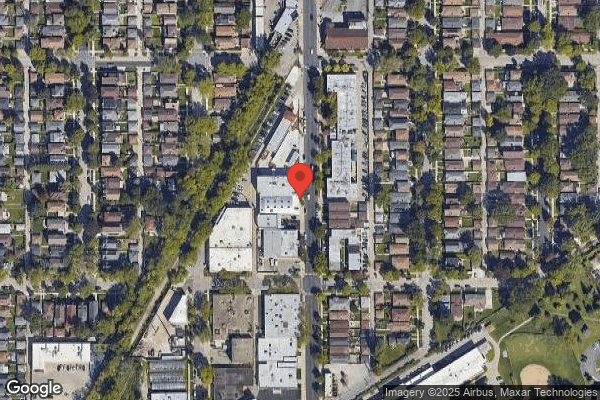
6141 NORTH PULASKI ROAD, CHICAGO, IL 60646 (773) 478-2000
For profit - Corporation 196 Beds LEGACY HEALTHCARE Data: November 2025 1 Immediate Jeopardy citation
Trust Grade
23/100
#394 of 665 in IL
Last Inspection: September 2024

Within standard 12-15 month inspection cycle. Federal law requires annual inspections.

Overview

Peterson Park Health Care Center has a Trust Grade of F, indicating significant concerns and poor quality of care. It ranks #394 out of 665 facilities in Illinois and #127 out of 201 in Cook County, placing it in the bottom half of options available. While the facility shows signs of improvement, reducing issues from 13 in 2024 to just 1 in 2025, it still faces serious deficiencies, including a critical incident involving a faulty power cord that posed fire hazards and several serious incidents related to resident safety and abuse. Staffing here is average with a turnover rate of 41%, which is slightly better than the state average, but the facility has also accumulated $49,226 in fines, which reflects ongoing compliance issues. Additionally, while there is average RN coverage, specific incidents like a resident's fatal fall due to inadequate fall prevention measures highlight the need for significant improvements in care quality.

Trust Score
F
23/100
In Illinois
#394/665
Bottom 41%
Safety Record
High Risk
Review needed
Inspections
Getting Better
13 → 1 violations
Staff Stability
○ Average
41% turnover. Near Illinois's 48% average. Typical for the industry.
Penalties
○ Average
$49,226 in fines. Higher than 57% of Illinois facilities. Some compliance issues.
Skilled Nurses
○ Average
Each resident gets 36 minutes of Registered Nurse (RN) attention daily — about average for Illinois. RNs are the most trained staff who monitor for health changes.
Violations
⚠ Watch
46 deficiencies on record. Higher than average. Multiple issues found across inspections.
★★☆☆☆
2.0
Overall Rating
★★☆☆☆
2.0
Staff Levels
★★★★☆
4.0
Care Quality
★★☆☆☆
2.0
Inspection Score
Stable
2024: 13 issues
2025: 1 issues

The Good

  • 4-Star Quality Measures · Strong clinical quality outcomes
  • Full Sprinkler Coverage · Fire safety systems throughout facility
  • No fines on record
  • Staff turnover below average (41%)

    7 points below Illinois average of 48%

Facility shows strength in quality measures, fire safety.

The Bad

2-Star Overall Rating

Below Illinois average (2.5)

Below average - review inspection findings carefully

Staff Turnover: 41%

Near Illinois avg (46%)

Typical for the industry

Federal Fines: $49,226

Above median ($33,413)

Moderate penalties - review what triggered them

Chain: LEGACY HEALTHCARE

Part of a multi-facility chain

Ask about local staffing decisions and management

The Ugly 46 deficiencies on record

1 life-threatening 2 actual harm
Mar 2025 1 deficiency
CONCERN (D) 📢 Someone Reported This

A family member, employee, or ombudsman was alarmed enough to file a formal complaint

Potential for Harm - no one hurt, but risky conditions existed

Free from Abuse/Neglect (Tag F0600)

Could have caused harm · This affected 1 resident

**NOTE- TERMS IN BRACKETS HAVE BEEN EDITED TO PROTECT CONFIDENTIALITY** Based on interview and record review, the facility failed to protect the resident's right to be free from physical abuse by a re...

Read full inspector narrative →
**NOTE- TERMS IN BRACKETS HAVE BEEN EDITED TO PROTECT CONFIDENTIALITY** Based on interview and record review, the facility failed to protect the resident's right to be free from physical abuse by a resident. This failure affected 1 (R2) resident who vocalized that he felt that his life was in terrible danger when a resident (R5) slapped him on his face. Findings include: On 03/17/2025 at 12:24pm, R2 stated couple of weeks ago, we (R2 and R8) were talking about car insurance, when he (R5) slapped me with his open right hand above my temple. I did not know what to do. When his hand landed on my face, I felt I was in a terrible danger. On 03/17/2025 at 12:16pm, R8 stated I did observed (R5) hitting (R2) a couple of weeks ago. He (R5) hit him (R2) on the face. I was talking to him (R2), and he (R5) hit him on his face with open hand on the left side of his (R2) face. He (R5) said he was upset because he (R2) was talking to me. The intent was to physically harm him, and he said I told you I don't want you in my room. On 03/19/2025 at 2:21pm, V22 (Licensed Practice Nurse) stated I was working that weekend on 03/01/2025. I was by my cart outside of the room preparing (R8)'s medications, while doing that, I heard a strange sound. I went in the room to see what is going on. I saw (R5) and (R2) standing up. (R2) was panting. He was upset based on his body language. There was a frown on their faces. I went in the middle. I sat him (R2) on his wheelchair and propelled him to his room. I asked him what happened, and he (R2) said R5 hit me on my face. I went to (R5)'s room and asked him what happened, and he (R5) said I told him not to come to my room while I am sleeping; he just kept on coming and so I just let him know how serious I am about not coming to my room while I am resting. I did assess him (R2). He has redness on the side of his face, I don't remember which side. It was tender because when I touched it, he moved his face away not wanting to be touched. He did a reaction of pulling his face away when I touched that side of his face. On 03/19/2025 at 9:49am, V18 (Family Nurse Practitioner) stated I was called to assess him (R2). From what I was told, there was an altercation between (R2) and (R5) that he (R2) got punched on his left side of face. I assessed him and there was tenderness on that side of his face. There was no discoloration, but it was tender. On 03/17/2025 at 3:28pm, V11 (Social Service Director) stated (R5) slapping (R2) is considered physical abuse. It is not expected of resident to be slapped by another resident. Our environment should be a home like environment and safe for all the residents. On 03/17/2025 at 2:30pm, V1 (Administrator) stated I asked him (R5) about the incident. He (R5) said R2 kept coming into their (R5 and R8) room. He (R5) said that he was just sleep deprived and frustrated because he could not sleep, and he said he slapped him on the face. Of course, a resident is not expected to be slapped by another resident. He (R5) said he was just not himself and he made a poor decision. He really could not think because he was sleep deprive. R2's admission Record documented that R2's diagnoses (include but not limited to) neoplasm of rectosigmoid junction, atherosclerotic heart disease, and hypotension. R2's (02/06/2025) Minimum Data Set documented, in part Section C. Cognitive Patterns. C0500. BIMS (Brief Interview for Mental Status) Summary Score: 99. Unable to complete the interview. C1000. Cognitive Skills for daily decision making: 1 - modified independence - some difficulty in new situations only. R2's (Active Order as Of: 03/17/2025) Order Summary Report documented, in part send to hospital ER for head and hip protocol, due to physical altercation. Active 03/01/2025. R2's (3/6/2025) After Visit summary documented, in part Today's visit. Reason for visit: Battery. R2's (03/07/2025) final reportable documented, in part 2. Allegation type. Type of Abuse. Cross mark on 'Physical'. Summary of interview with individual name in the allegation: (R5) stated that he lost control over himself due to a lack of sleep and due to (R2)'s laughing at his request to keep it down. (R5) stated he never intended to just get his attention. Summary of Interview with residents on the unit: (R8) stated that he saw (R5) slap (R2)'s face as a means to get him to leave. Summary of investigator's findings: (R5) said he slapped (R2) as a way of telling him to leave the room. (R5) explained that he was extremely tired and 'lost himself a bit', believing it was the only way to achieve peace and quiet. Based on resident and staff interviews, the allegation of abuse cannot be substantiated. (R5) believed that slapping (R2) was the only way to create a quiet atmosphere and remove (R2) from his room. He stated that he 'lost himself' momentarily. R5's admission Record documented that R5's diagnoses (include but not limited to) hypertension, osteoarthritis and Type 2 Diabetes Mellitus. Date of discharge: [DATE]. discharged to: Acute Care Hospital. R5's (01/23/2025) Minimum Data Set documented, in part Section C. Cognitive Patterns. C0500. BIMS (Brief Interview for Mental Status) Summary Score: 15. Indicating R5's mental status as cognitively intact. R5's (09/05/2024) care plan documented, in part Focus: Identified Offender - history of criminal behavior. Aggravated battery. Goal: will behave in a safe manner consistent with resident conduct policies. R8's admission Record documented that R8's diagnoses (include but not limited to) essential hypertension, alcohol abuse and dependence and anxiety disorder. R8's (12/16/2024) Minimum Data Set documented, in part Section C. Cognitive Patterns. C0500. BIMS (Brief Interview for Mental Status) Summary Score: 10. Indicating R8's mental status as moderately impaired. The (undated) Residents' Rights for People in Long-Term Care Facilities documented, in part As a long-term care resident in the State, you are guaranteed certain rights, protections and privileges according to State and Federal laws. Your rights to safety. You must not be abused physically. Your facility must be safe. The (7/12/24) Abuse and Neglect documented, in part Policy Statement: It is the policy of the facility to provide professional care and service in an environment that is free from any type of abuse, corporal punishment, misappropriation of property, exploitation, neglect or mistreatment. The facility follows the federal guidelines dedicated to prevention of abuse and timely and thorough investigations of allegations. Abuse is a willful infliction of mistreatment and injury. Types of abuse: 1. Physical abuse. Includes but not limited to infliction of injury. Examples: slapping. Potential aggressors include but not limited to other residents.
Sept 2024 10 deficiencies
CONCERN (D)

Potential for Harm - no one hurt, but risky conditions existed

Deficiency F0688 (Tag F0688)

Could have caused harm · This affected 1 resident

Based on observation, interview, and record review the facility failed to place a hand splint to the left hand for contracture management for 1 (R145) resident reviewed for range of motion in a sample...

Read full inspector narrative →
Based on observation, interview, and record review the facility failed to place a hand splint to the left hand for contracture management for 1 (R145) resident reviewed for range of motion in a sample of 35. Findings Include: R145 has diagnosis not limited to Hemiplegia and Hemiparesis Following Cerebral Infarction Affecting Left Non-Dominant Side, Cerebral Infarction due to Unspecified Occlusion or Stenosis of Right Middle Cerebral Artery, Aphasia Following Cerebral Infarction, Dysphagia Following Cerebral Infarction, Dysarthria Following Cerebral Infarction, Facial Weakness Following Cerebral Infarction, Occlusion and Stenosis of Unspecified Carotid Artery and Essential (Primary) Hypertension. R145's MDS (Minimum Data Set) BIMS (Brief Interview for Mental Status) score is 15 indicating intact cognitive response. Order Summary Report dated 09/18/24 document in part: Apply resting hand splint and elbow on left hand and PRAFO (pressure relief ankle foot orthosis) on BLE (Bilateral lower extremities) for 4 hours daily as tolerated. Care Plan document in part: Focus: R145 has an ADL (activities of daily living) self-care deficit related to limited mobility in left hand d/t (due/to) hemiplegia. Resident is on a splint and/or brace assistance program Date Initiated: 12/10/23. Interventions: I am on a Splint Program. Staff will provide Passive Range of Motion daily before application of R145 splint. Date Initiated: 12/10/23. I am on a Splint Program. I would like staff to check for skin integrity, circulation, and motion before and after removal of splint and note condition of the skin Date Initiated: 12/10/2023. Restorative Splint/Brace Program: Please provide/use left resting hand brace for 4-6 hours daily or as tolerated. Date Initiated: 12/10/23. On 09/17/24 at 11:14 AM R145 was observed lying in bed on a low air loss mattress. R145 left hand was observed contracted with the left arm bent up and laying on R145's chest. There was no splint observed to the left upper extremity. R145 stated I have been here about a year. They exercise my left arm, but they haven't come today yet. On 09/19/24 at 09:45 V21 (Restorative Nurse) stated R145 has a splint to the left upper extremity. R145 had a stroke, is alert and oriented x3. R145's splint should be applied daily at least 4 hours. They have the charting in Point Click Care for that. If R145 refuses the splints the restorative aide or certified nurse assistant should document. The purpose of the splint is to prevent the worsening of a contracture or stiffness. R145 has a contracture to the left upper extremity and the splint is for the prevention of further contracture. On 09/18/24 at 10:12 AM V21 (Restorative Nurse) presented the surveyor with Documentation Titled Follow Up Question Report dated 09/12/24 - 09/18/24 with V22 (Certified Nurse Assistant) entry that document in part: 09/17/24 09:18 AM Was brace/splint applied? Yes. However, on 09/17/24 at 11:14 AM R145 was observed lying in bed with no splint in place to the left upper extremity. On 09/19/24 at 10:13 V22 (Certified Nurse Assistant) stated I was assigned to R145 on Tuesday 09/17/24. I provide total care, change, wash her face and on days that R145 want to get up I get her up. On Tuesday it was a normal day, I checked, changed, would go in when R145 put on the call light and turn her. I document the brace/splint because I see them applied but restorative applies the splints. I do not apply the splints myself. On 09/17/24 I saw R145 legs I don't remember if the left arm splint was on there. R145 is alert and oriented x3. I know for sure that R145 had the brace on her legs, but she did not get a bath on Tuesday. On 09/18/24 at 09:18 AM surveyor entered R145 room and observed R145 lying in bed with the left-hand splint in place. When asked did the staff ever come and apply the left-hand splint on Tuesday 09/17/24. R145 responded, they did not put it on at all yesterday and they just put it on about forty minutes ago. It is used to stretch my fingers out and they leave it on until lunch time. On 09/19/24 at 10:40 AM V21 (Restorative Nurse) stated my restorative aides put the residents' splints on. If they had applied the splints they would have charted. There is no proof that R145's splints were applied other then V22 (Certified Nurse Assistant) documentation. On 09/17/24 we only had two restorative aides for that day, and it is generally four restorative aides, one on each unit. I only had two restorative aides to cover the whole building. Generally, all of the residents should have some type of restorative program. If there are two restorative aides, I can't expect for them to cover the whole building. That is why we implemented the group program for about 3 months. Policy: Titled Restorative Nursing Program revised 08/19/24 document in part: It is the policy of this facility to assess for comprehensive nursing and restorative needs upon admission. Procedure: 2. Appropriate nursing and restorative services consistent to the resident's functional needs must be provided. 3. Nursing and Restorative Services may include the following: c. Contracture Prevention and Management. ii. Splint/Orthotic Management. 6. Restorative Programs shall be reflected and indicated in the resident's electronic restorative log in order to document the provision of services and the frequency by the nurses, cnas (certified nurse assistants) and/or restorative aides.
CONCERN (D)

Potential for Harm - no one hurt, but risky conditions existed

Deficiency F0694 (Tag F0694)

Could have caused harm · This affected 1 resident

Based on observation, interview, and record review, the facility failed to change an intravenous catheter dressing timely for 1 (R33) resident reviewed for intravenous catheter care in a sample of 35....

Read full inspector narrative →
Based on observation, interview, and record review, the facility failed to change an intravenous catheter dressing timely for 1 (R33) resident reviewed for intravenous catheter care in a sample of 35. Findings Include: R33 has diagnosis not limited to Essential (Primary) Hypertension, Personal History of Malignant Neoplasm of Thyroid, Personal History of Malignant Neoplasm of other Parts of Uterus, Type 2 Diabetes Mellitus, Morbid (Severe) Obesity due to Excess Calories, Hypothyroidism, Hyperlipidemia, Spinal Stenosis, Cervical Region, Osteophyte, Vertebrae, Disorder of Bone, Adult Failure to Thrive, Restlessness and Agitation, Personal History of Transient Ischemic Attack (TIA), and Cerebral Infarction, Intervertebral Disc Degeneration, Lumbar Region, Spinal Stenosis, Lumbar Region , Adjustment Disorder with Anxiety, Bilateral Primary Osteoarthritis of Knee, Primary Osteoarthritis, Left Hand, Arthropathy, Atherosclerotic Heart Disease of Native Coronary Artery, Ankylosing Spondylitis of Multiple Sites in Spine, Spondylosis, Polyarthritis, Major Depressive Disorder, Adjustment Disorder with Depressed Mood, Ventral Hernia, other and Unspecified Ventral Hernia With Obstruction, Personal History of Covid-19, Primary Osteoarthritis, Left Shoulder, Intervertebral Disc Degeneration, Thoracic Region, Vascular Dementia, Unspecified Severity, with Agitation, Diverticulosis of Large Intestine, Intestinal Obstruction, Gastro-Esophageal Reflux Disease, Slow Transit Constipation, Carrier of Carbapenem-Resistant Enterobacterales. BIMS (Brief Interview for Mental Status) 11. Care plan documents in part: R33 has potential for infection related to presence of midline catheter on right upper arm. Date Initiated: 09/05/24. Interventions: Initiate proper precaution per facility policy. R33 on Antibiotic Therapy related to elevated WBC (Leukocytosis) and ESBL in urine. R33 received Meropenem Intravenous Solution Reconstituted 1 GM (gram) intravenously every 8 hours for leukocytosis for 5 Days -Start Date- 09/05/24 2200. On 09/17/24 at 11:26 AM R33 was observed lying on a low air loss mattress. The Midline observed to R33's right arm was dated 09/05/24. On 09/17/24 at 11:50 AM V16 stated facility policy on PICC (Peripheral Inserted Central Catheter)/Midline dressing change was the PICC/Midline dressing is changed every 7 days, but wound care changes the dressing and take care of it. On 09/17/24 at 01:35 PM surveyor entered R33's room with V16 (Registered Nurse) then asked what date was on R33's Midline dressing. V16 looked at the PICC line dressing using the flashlight on her (V16) cell phone and stated, it's dated 09/05/24. On 09/19/24 at 11:53 AM V2 (Director of Nursing) stated The Midline dressing is changed every 7 days once a week and as needed. If the Midline dressing is not changed as ordered there is a potential for infection. We need to check the site when doing the dressing changes, look at the skin condition during dressing changes make sure there is not any redness. Policy: Titled Intravenous Therapy revised 08/16/24 document in part: it is the facility's policy to ensure that intravenous policy and procedure are compliant to federal standard of care. Procedures: b. All midline catheter dressing are to be done every 7 days while following the procedure for dressing change of central lines. vii. The outside of the dressing will then be labeled with dressing change date and time.
CONCERN (D)

Potential for Harm - no one hurt, but risky conditions existed

Deficiency F0813 (Tag F0813)

Could have caused harm · This affected 1 resident

Based on observation, interview and record review the facility failed to ensure food items in a residents personal refrigerator was labeled and dated for one resident (R143) reviewed in a total sample...

Read full inspector narrative →
Based on observation, interview and record review the facility failed to ensure food items in a residents personal refrigerator was labeled and dated for one resident (R143) reviewed in a total sample of 35 residents. Findings include: R143 has diagnosis not limited to Essential (Primary) Hypertension, Spastic Hemiplegia Affecting Right Dominant Side, Hyperlipidemia, Type 2 Diabetes Mellitus with other Diabetic Neurological Complication and Aphasia Following Cerebral Infarction. R143's Care plan document in part: R143 has a diagnosis of Type 2 Diabetes Mellitus. Interventions: Monitor compliance with diet and document any problems. On 09/17/24 at 12:03 PM surveyor entered R143 room and asked it was okay to check his refrigerator. R143 responded, yes. Two undated sandwiches and 2 undated chocolate chip cookies wrapped in clear plastic wrap were observed in R143's refrigerator. On 09/17/24 at 12:07 PM surveyor asked V15 (Licensed Practical Nurse) who is responsible for checking the resident refrigerators and discarding undated and expired items. V15 responded, any nurse can check the resident's refrigerator. Things in the resident refrigerator should be dated and if it is not dated, we discard it. On 09/17/24 at 12:10 PM surveyor entered R143 room with V15 (Licensed Practical Nurse) and asked to check R143's refrigerator. V15 opened R143's refrigerator and when asked what she observe in the refrigerator V15 responded, two cheese and turkey sandwiches and 2 chocolate chip cookies, both do not have a date on them. On 09/19/24 at 11:53 AM V2 (Director of Nursing) stated the checking of the resident refrigerators is done by housekeeping. If there is something unlabeled in the resident's refrigerator the nurses are made aware and social service talk to the resident. The food items in the resident refrigerators should be dated. If there is a sandwich in the resident refrigerator that is unlabeled, we offer another sandwich and we need to educate the resident.
CONCERN (D)

Potential for Harm - no one hurt, but risky conditions existed

Deficiency F0919 (Tag F0919)

Could have caused harm · This affected 1 resident

**NOTE- TERMS IN BRACKETS HAVE BEEN EDITED TO PROTECT CONFIDENTIALITY** Based on observation, interview, and record review, the facility failed to ensure a functioning call light system for one (R14) ...

Read full inspector narrative →
**NOTE- TERMS IN BRACKETS HAVE BEEN EDITED TO PROTECT CONFIDENTIALITY** Based on observation, interview, and record review, the facility failed to ensure a functioning call light system for one (R14) resident in a total sample of 35 residents reviewed. Findings include: On 09/17/2024 at 11:50AM, surveyor located inside of R14's room. R14 asks surveyor to assist her with finding her television remote control referring to it as the clicker. R14 states she wants her remote control so that she can change the channel on her television. Surveyor informs R14 that she should press her call light for staff assistance with her remote control. R14 then picks up her call light pad and continuously press her call light pad while stating that she has been pressing it for a long time already and no one has come to her room to assist her. Surveyor observes that when R14 presses her call light several times, the call light does not illuminate above R14's room door and no audible sound is heard. Surveyor observes that R14's call light is plugged into the wall. On 09/17/2024 at 11:53AM, surveyor makes V3 (Licensed Practical Nurse/LPN) aware of R14's call light status. V3 states she is the nurse responsible for caring for R14 today. V3 now located inside of R14's room and return demonstrates the use of R14's call light. V3 is observed pressing R14's call light pad and states she does not see a light illuminated above R14's door and does not hear an audible call light sound. V3 observes R14's call light and confirms that R14's call light is plugged into the wall. V3 states R14's call light should illuminate above R14's room and a call light sound should be audible. V3 states staff would not be able to respond to R14's call light to assist with her needs because R14's call light is currently not working. V3 states she needs to call maintenance and make them aware that R14's call light is not working. On 09/17/2024 at 12:04PM, surveyor makes V4 (Certified Nursing Assistant/CNA) aware of R14's call light status. V4 states she is the CNA responsible for caring for R14 today. V4 located inside of R14's room and return demonstrates the use of R14's call light. V4 is observed pressing R14's call light pad and states she does not see a light illuminated above R14's door and does not hear an audible call light sound. V4 observes R14's call light and confirms that R14's call light is plugged into the wall. V4 states staff would not be able to respond to R14's call light to assist with her needs because R14's call light is currently not working. R14's call light assessment dated [DATE] documents that V32 (Restorative Nurse/LPN) documented that R14 is not able to cognitively use her call light. On 09/19/2024 at 10:59AM, V32 (Restorative Nurse/LPN) states she performs call light assessments by going into resident rooms and asking them to return demonstrate the use of their call light button by having them press their call light button. V32 states if a resident is not able to use the call light button, she assesses them for the call light touch pad instead. V32 states R14 uses the call light touch pad to call for staff assistance. Surveyor makes V32 aware of R14's call light assessment dated [DATE]. V32 observes R14's call light assessment and states she must have made a mistake when documenting R14's call light assessment because R14 is able to use her call light although R14 can be cognitively confused at times. R14's care plan dated 07/05/2024 documents that R14 has an ADL self-care performance deficit and documents CALL LIGHT Encourage R14 to use call light to call for assistance. May use touch pad. Facility policy dated 07/26/2024, titled The facility also ensures that the call system is in proper working order. 3. Nursing staff shall check all call lights daily and report any defective call lights to the administrator/maintenance immediately for repair. 6. Be sure that when the call light is triggered, it will either alert the staff visually or audibly or both.
CONCERN (E)

Potential for Harm - no one hurt, but risky conditions existed

Accident Prevention (Tag F0689)

Could have caused harm · This affected multiple residents

On 9/17/24 approximately 12:15 PM, observed R11 sitting in the day/dining room coloring. R11 was alert and oriented and had no concerns with the facility. R11 endorsed quitting smoking. On 9/17/24 at...

Read full inspector narrative →
On 9/17/24 approximately 12:15 PM, observed R11 sitting in the day/dining room coloring. R11 was alert and oriented and had no concerns with the facility. R11 endorsed quitting smoking. On 9/17/24 at 12:42 PM, During review on the 2nd floor, surveyor/writer observed R11 come out of a room carrying a new trash bag. On the wall next to the room there was a sign that read Utility Room. On the door of the room there was a sign that read CAUTION Infectious Waste Storage Area Unauthorized Persons Keep Out and an entry code keypad. Writer asked R11 what was R11 doing in the room. R11 said R11 went to throw out trash and get a trash bag. Writer asked R11 how did R11 get inside of the room. R11 proceeded to press a series of buttons on the entry code keypad, turned a knob and opened the door. Multiple times, writer attempted to open the door without even pressing buttons on the entry keypad and the door opened each time. Inside of the room were two garbage cans with bags of trash inside, one red biohazard can with bags of trash inside, two red sharps containers that contained sharps, a hopper with standing water, a utility sink, a broom, and the room had a foul stench. On 9/17/24 at 12:55 PM, Writer reviewed the Utility Room with V28 (MDS/Clinical Care Coordinator). Writer opened the door of the room without entering a code. V28 verified the room was not locked and stated the room is supposed to be locked and entry is with a code. V28 stated residents should not be in the room. V28 picked-up and shook the sharps containers to verify they were full of sharps. V28 stated the sharps containers located in the room should not be accessible to residents. V28 stated the hopper is used to pour urine into. On 9/17/24 at 1:05 PM, V23 (Housekeeping Manager/Laundry/Central Supplies) stated red isolation bags, trash from resident rooms, full sharps containers are kept in the Utility Room. Housekeeping throws the trash in dumpsters at the end of shift. Maintenance takes the red isolation bags and sharps containers to a special area outside of the building. V23 stated the door to the Utility Room should be locked at all times. Residents should not be in the room and should not have the code to the door to the room. Residents should not be in the room because of the risk of infection from the garbage and sharps that are kept in there. On 9/18/24 at 2:54 PM, During review on the 1st floor, two surveyors, including writer, discovered an unlocked room. On the wall next to the room there was a sign that read Utility Room. On the door of the room there was a sign that read CAUTION Infectious Waste Storage Area Unauthorized Persons Keep Out and an entry code keypad. Writer opened the door to the room without entering a code into the entry code keypad. Inside of the Utility Room was a hopper, a biohazard box with at least one red isolation bag inside, a cube refrigerator, empty, with a sign on the door stating the Refrigerator is for Specimens, and two garbage cans. On 9/18/24 at 3:05 PM, V2 (Director of Nursing) stated urine and stool specimens are kept in the refrigerator in the Utility Room on the 1st floor. On 9/19/24 at 11:55 AM, V27 (Registered Nurse) stated residents should not be in the Utility Room. That room is where we put the sharps containers when they are full, biohazard/isolation waste, garbage including used diapers, garbage from medication administration, garbage from resident rooms. The specimen refrigerator in the room is for urine, stool samples, Covid tests. The lab picks up samples daily. The door to the room should be locked. Its dirty in the room and don't want residents in there. The residents can hurt themselves with the sharps, they can mess with the samples. On 9/19/24 at 12:10 PM, V8 (Infection Control Nurse) stated residents should not be in the Utility Room. It can be a safety hazard. They can be exposed to harmful bacteria. Without proper hand hygiene when they come out of the room, that can lead to cross contamination with staff and other residents. There can be biohazard waste, full sharps containers, dirty diapers, waste from resident rooms, waste from the medication carts in the room. The door to the room should be locked. The refrigerator is for urine, and stool specimens. The access to the refrigerator is for nurses and lab personnel. Facility policy Hazards, 7/30/24, documents in part: Policy Statement: It is the facility's policy to ensure the safety of each resident in the building and remove hazardous items and correct situations to prevent accidents. Procedures: 1. Ensure that residents have no access to medications, sharps, and chemicals that would be hazardous to them. Based on observations, interviews, and record reviews, the facility failed to provide supervision of residents during a smoking break and demonstrate competency and knowledge related to safety measures and equipment for the smoking patio and failed to secure first and second floor soiled utility rooms that contained sharps and infectious waste containers. These deficient practices have the potential to affect all residents who are identified as smokers (R15, R26, R40, R59, R75, R87, R93, R95, R111, R112, R117, R125, R128, R129, R137, R149, R151, R154, R159, R160, R163, R170, R171) and all ambulatory residents that reside on the first and second floors, in the sample of 35. Findings include: On 9/19/2024 at 9:35 AM, approximately 10 residents observed on the Smoking Patio. V26 (Activity Aide) observed helping wheelchair bound residents on to and off the smoking patio; no staff observed stationed on the patio to monitor residents during smoking break. On 9/19/2024 at 9:42 AM, V24 (Activity Aide) said we don't stay on the patio the whole time, we go out there periodically. V24 said I can find out where the smoking blanket is, I don't know what it is. I have not received any training related to what to do if resident's clothing catches on fire, I would call for help immediately. On 9/19/2024 at 9:52 AM V25 (Activity Director) said there is no training related to what to do if resident's clothing catches on fire. V25 said, we don't stay on the patio (duration of smoke break), we go out there periodically. On 9/19/2024 at 09:58 AM, V28 (Activity Aide) said staff do not stay on smoking patio for duration of smoking break; periodically go out and monitor. On 9/19/2024 at 10:08 AM, V1 (Administrator) said Activity Staff sit at door (first floor dining room) during smoking breaks. They periodically go out on the patio and check residents for paraphernalia when returning from smoking patio. V1 said, I would expect staff to call for help if resident's clothing catches on fire. V1 acknowledged Surveyor's concern that staff may not be able to see entire smoking patio if they are sitting inside the building.) V1 said Activity Staff would be provided with fire safety training for smoking patio. Fire Drill Evaluation Worksheets dated 5/28/2024, 6/11/024, 7/31/2024, and 8/27/2024, do not document any drills/training specific to the facility's smoking patio/smoke breaks. Employee Inservice Sign-In Sheets document Activity Staff received the following training: Location and how to use fire blanket. Safety of residents during smoke breaks. Monitor residents that are smoking at all times. Follow the facility('s) smoking policy. How to use the fire blanket safely. Where it is located. All sign-in sheets are dated 9.19.2024. Smoking Policy (revised 8.19.2024) documents: It is the facility's policy to monitor and assess residents that smoke to promote smoking in a safe manner. Smoking Policy (undated) does not document safety measures to be implemented if a resident's clothing catches on fire or monitoring of smoking patio.
CONCERN (E)

Potential for Harm - no one hurt, but risky conditions existed

Tube Feeding (Tag F0693)

Could have caused harm · This affected multiple residents

3. 9/17/24 at 3:15 PM, reviewed 2 North medication room with V29 (Licensed Practical Nurse) and V30 (Registered Nurse) and observed: -Osmolite Complete Balanced Nutrition; 1.5 CAL; with use before dat...

Read full inspector narrative →
3. 9/17/24 at 3:15 PM, reviewed 2 North medication room with V29 (Licensed Practical Nurse) and V30 (Registered Nurse) and observed: -Osmolite Complete Balanced Nutrition; 1.5 CAL; with use before date Nov (November) 1, 2023; 2 bottles -TwoCal HN 2.0 CAL Calorie and Protein Dense Nutrition; with expiration date Sep (September) 1, 2024; 2 cartons According to face sheet printed 9/19/24, R29 diagnoses include but are not limited to quadriplegia, encounter for attention to gastrostomy, gastrostomy status, cerebral infarction. R29 physician order summary printed 9/20/24 reads in part: enteral feed order every shift enteral feeding-tube type: G-tube, Osmolite 1.5, Rate: 70 ml/hr, start at 5am and infuse until 1400 ml formula is reached per day. According to face sheet printed 9/19/24, R36 diagnoses include but are not limited to acquired absence of other specified parts of digestive tract, encounter for attention to gastrostomy, gastrostomy status, chronic diastolic (congestive) heart failure. R36 physician order summary printed 9/20/24 reads in part: enteral feed order six times a day enteral feeding-tube type: PEG tube, Bolus: 1 carton of TwoCal (240 ml), 6x/day. On 9/19/24 at 11:55 AM, V27 (Registered Nurse) stated there should not be expired medications in the medication carts or medication rooms. If a resident is given an expired medication, it can harm the resident. The G-tube feedings and bolus feedings and oral feedings should not be expired. On 9/19/24 at 12:10 PM, V8 (Infection Control Nurse) stated there should not be expired medications in the medication carts or medication rooms. It can be dangerous to the residents to have expired products administered to them. On 9/19/24 at 1:54 PM, V2 (Director of Nursing) stated there should be no expired medications or enteral feedings in the medication carts or medication rooms. Residents could have an adverse reaction to expired medications or enteral feedings. Central supply should be checking the supply for expiration dates. When the supply comes upstairs then the nurses should be checking dates. List of Residents with G-tubes and are on Enteral Feedings provided by facility 9/19/24 documents in part: R29, Osmolite 1.5; R36, TwoCal 240 ml. Facility policy Enteral Tube Feeding Care, 7/26/24, documents in part: 2. Check for feeding formulas expiration date. Based on observations, interviews, and record review, the facility failed to provide appropriate treatment and services to prevent complications from enteral feeding for 2 (R35, R132) of 6 residents reviewed for enteral feedings. The facility also failed to ensure expired enteral feeding products were removed and unavailable to be administered to residents. This failure has the potential to affect 2 (R29, R36) residents that receive enteral nutritional feedings. Findings Include: 1. R35 has diagnosis not limited to Essential (Primary) Hypertension, Hyperlipidemia, Adult Failure to Thrive, Type 2 Diabetes Mellitus with Hyperglycemia, Bilateral, Indeterminate Type 2 Diabetes Mellitus with Diabetic Neuropathy, Chronic Obstructive Pulmonary Disease, Restlessness and Agitation, Dysphagia, Dementia, unspecified Severity, with Agitation, Severe Protein-Calorie Malnutrition, Gastrostomy Status, Ulcer of Esophagus, Vitamin D Deficiency, Type 2 Diabetes Mellitus with Foot Ulcer, Pressure Ulcer of Sacral Region and Personal History of other Diseases of the Digestive System. R35's MDS (Minimum Data Set) BIMS (Brief Interview for Mental Status) indicate resident is rarely/never understood. R35's Order Review Report dated 09/18/24 document in part: NPO (Nothing by mouth) diet NPO texture, NPO consistency, for PEG (percutaneous endoscopic gastrostomy) tube. Enteral Feed Order every shift Enteral feeding- Tube type: Peg tube, Glucerna 1.5 Rate: 60 ml/hr. (milliliter/hour), start at 6 am and infuse x20 hours or until 1200 ml formula is reached per day. Care plan document in part: R35 is NPO d/t (due/to) dysphagia. S/p (status/post) PEG tube placement on 2/7/24. R35 is on therapeutic enteral formula dt (due to) dx (diagnosis) DM (Diabetes Mellitus) Date Initiated: 09/14/20. R35 has the following conditions and risk factors that puts her at risk for dehydration: increased risk of confusion and delirium, cognitive impairment, Senile Degeneration of the Brain, on diuretic therapy, on NPO and on enteral feeding via gastrostomy tube (s/p GT placement (02/07/24), s/p Explore Lap, Partial Gastrectomy of greater curvature of body of stomach (02/12/24), Dx of Dysphagia, Adult Failure to Thrive, Malnutrition, Type 2 DM w/ Hyperglycemia, Diabetic Neuropathy. Interventions: Administer fluids per doctor's order via appropriate routes (Nothing by Mouth, G- (gastric) tube). R35's currently on NPO and on enteral feeding of Glucerna 1.5 via gastrostomy tube given as scheduled. Observe aspiration precaution. Monitor for tolerance and effectiveness. Date Initiated: 09/08/20. On 09/17/24 at 12:28 PM R35 was observed in bed on a low air loss mattress positioned in a low Fowler position receiving an enteral feeding of Glucerna at 60 ml/hr. On 09/17/24 at 12:34 the surveyor entered R35 room with V15 (Licensed Practical Nurse) then asked the position of R35 head of the bed. V15 responded, it looks like R35 head of bed should be up a little more because she could aspirate. On 09/19/24 at 12:45 PM V2 (Director of Nursing) presented a care plan that documents in part: R35 is at risk for alteration in nutritional status related to her Dx (diagnosis) of Adult Failure to Thrive, Dysphagia, Type 2 Diabetes mellitus w/ Hyperglycemia, Diabetic Neuropathy and Foot Ulcers, Gastrostomy Status. Interventions: Elevate head of the bed during enteral feeding. Observe aspiration precaution. Monitor for tolerance and effectiveness. 2. R132 has diagnosis not limited to Type 2 Diabetes Mellitus, Altered Mental Status, Hemiplegia and Hemiparesis Following Cerebral Infarction Affecting Right Dominant Side, Gastrostomy Status, Hyperlipidemia, Chronic Obstructive Pulmonary Disease, Emphysema, Anxiety Disorder, Restlessness and Agitation, Personal History of other Diseases of the Respiratory System, Dysphagia. R132's MDS (Minimum Data Set) BIMS (Brief Interview for Mental Status) score is 06 indicating severe cognitive impairment. R132's Order Summary Report dated 09/18/24 document in part: NPO (Nothing by mouth) diet NPO texture, thin liquid consistency. Enteral Feed Order every shift Enteral feeding- Tube type: Peg tube, Glucerna 1.5 Rate: 80 ml/hr. (milliliter/hour), start at 6 am and run 20 hours or until 1600 ml formula is administered daily. Care plan document in part: R132 is NPO, on PEG tube feeding d/t dysphagia and the inability to meet his nutritional/fluid needs. Presence of PEG tube places him at risk of infections, fluid overload, dehydration, and aspiration. -R132 is at increased nutrition risk d/t recent NPO status requiring enteral feeding to support nutrition, on NPO and on enteral feeding via gastrostomy tube s/p placement (04/01/24), Interventions: Administer fluids per doctor's order via appropriate routes (PEG-tube). R132 currently on NPO and on enteral feeding via gastrostomy tube. Observe aspiration precaution. Monitor for tolerance and effectiveness. Date Initiated: 05/10/23. On 09/17/24 at 12:21 PM R132 was observed in bed in a low Fowler position receiving an enteral feeding of Glucerna at 80 ml/hr. (milliliters/hour). On 09/17/24 at 12:33 the surveyor entered R132 room with V15 (Licensed Practical Nurse) then asked the position of R132 head of the bed. V15 responded, I'd say 30 degrees. However, R132 head of the bed was observed positioned in a low fowlers position. On 09/19/24 at 11:53 AM V2 (Director of Nursing) stated A resident with a Gastric tube should be position at 30-to-45-degree angle, slightly elevated as long as they are not flat in the bed. There is a potential for aspiration if the resident is not properly positioned. On 09/19/24 at 12:45 PM V2 (Director of Nursing) presented a care plan that documents in part: R132 has/have a Dx of COPD related to Nicotine Dependence (cigarettes) in remission. Interventions: Head of bed elevated (semi-Fowlers to fowlers) secondary to shortness of breath while lying flat and difficulty breathing as needed. Head of bed to be elevated (semi-Fowlers to fowlers) or out of bed upright in a chair during episodes of difficulty breathing (Dyspnea). Document titled Diet Type Report dated 09/19/24 document in part: Eleven residents with a diet type of NPO. Policy: Titled Enteral Tube Feeding Care revised 07/26/24 document in part: Enteral Tube is an avenue of feeding and hydration nutritional support via gastrostomy route. Procedure: 9. Residents on enteral feeding must be positioned in a fowler's position at all times while the feeding is running. Titled General Care revised 07/30/24 document in part: It is the facility's policy to provide care for every resident to meet their needs. Procedures: 1. Upon admission or readmission, the facility will evaluate the resident for physical and psychosocial needs, etc. Psychosocial needs would include but are not limited to areas of mental and psychosocial well-being. The facility will assist the resident to meet these needs.
CONCERN (E)

Potential for Harm - no one hurt, but risky conditions existed

Deficiency F0761 (Tag F0761)

Could have caused harm · This affected multiple residents

Based on observation, interview and record review, the facility failed to ensure expired medications were removed and unavailable to be administered to residents. This failure has the potential to aff...

Read full inspector narrative →
Based on observation, interview and record review, the facility failed to ensure expired medications were removed and unavailable to be administered to residents. This failure has the potential to affect all residents receiving medications from the 2 North Front medication cart. Findings include: On 9/17/24 at 3:07 PM, reviewed 2 North front medication cart with V2 (Director of Nursing) and observed: -Gas Relief Simethicone 80mg chewable tablets with expiration date 8/24. On 9/19/24 at 11:55 AM, V27 (Registered Nurse) stated there should not be expired medications in the medication carts or medication rooms. If a resident is given an expired medication, it can harm the resident. On 9/19/24 at 12:10 PM, V8 (Infection Control Nurse) stated there should not be expired medications in the medication carts or medication rooms. It can be dangerous to the residents to have expired products administered to them. On 9/19/24 at 1:54 PM, V2 (Director of Nursing) stated there should be no expired medications or enteral feedings in the medication carts or medication rooms. Residents could have an adverse reaction to expired medications or enteral feedings. Central supply should be checking the supply for expiration dates. When the supply comes upstairs then the nurses should be checking dates. Facility policy Medication Storage, Labeling, and Disposal, 8/16/24, documents in part: 2. House stocks designed for multiple administration will be labeled with the name of the medication, the strength, instruction, and expiration. The information from the manufacturer is enough to meet this requirement. The facility does not date this medication when opened. And the medication automatically expires based on the expiration date based on the manufacture's guidelines.
CONCERN (E)

Potential for Harm - no one hurt, but risky conditions existed

Menu Adequacy (Tag F0803)

Could have caused harm · This affected multiple residents

Based on observation, interview, and record review the facility failed to follow the menu for residents receiving a pureed diet. This failure has the potential to affect 19 residents receiving a puree...

Read full inspector narrative →
Based on observation, interview, and record review the facility failed to follow the menu for residents receiving a pureed diet. This failure has the potential to affect 19 residents receiving a pureed diet. Findings Include: On 09/18/24 at 11:29 AM the kitchen staff began plating from the steam table. Staff was observed plating pureed ravioli, pureed medley mixed vegetable and mash potatoes to be served for the residents that receive a pureed diet. There was no pureed bread served. On 09/19/24 at 03:25 PM V20 (Registered Dietician) stated If it says a pureed bread item on the meal ticket the resident should be receiving it. The residents on the pureed diet should have received ravioli, mixed vegetables, French garlic bread and pineapple upside down cake. The residents could receive mashed potatoes in place of the bread. That would not be following the menu. The mashed potatoes would be a substitution and be marked in the substitution binder. There is a binder in the kitchen if there is not enough of an item, I need to give this as a substitution and I would have to sign off on it. I was not notified that they were serving mashed potatoes. The bread would be the first option. On 09/19/24 at 09:21 AM V14 (Dietary Manager) stated on 09/18/24 Beef Ravioli, California blend vegetable medley, garlic bread and pineapple upside down cake was served for lunch. All of the residents should have received bread, even the residents that receive a pureed diet. The Register Dietician let me know mashed potatoes were served instead of the garlic bread. When I spoke to the V14 (Cook) she said that she forget the pureed bread. The menu was not followed for the residents that receive a pureed diet. The mashed potatoes being substituted for the pureed bread there is a potential the residents could not have received the same calories. That should not have happened unless the dietician is aware of the substitution. Document titled Diet Type Report dated 09/18/24 document in part: Nineteen residents that receive a Pureed Diet. Policy: Titled Kitchen revised 08/16/24 document in part: The facility will comply with state and federal regulations in operating facility's kitchen. 8. All food items in the menu and recipe will be followed. In the event that change is needed, the dietician may be consulted first to approve the change and ensure that the change is appropriate.
CONCERN (F)

Potential for Harm - no one hurt, but risky conditions existed

Food Safety (Tag F0812)

Could have caused harm · This affected most or all residents

Based on observation, interview, and record review the facility failed to ensure kitchen tongs and measurement pitchers were properly cleaned and sanitized and food was removed and discarded from the ...

Read full inspector narrative →
Based on observation, interview, and record review the facility failed to ensure kitchen tongs and measurement pitchers were properly cleaned and sanitized and food was removed and discarded from the prep refrigerator by the use by date This failure has the potential to affect all the residents in the facility. Findings Include: On 09/17/24 at 09:34 the surveyor entered the kitchen for the initial tour with V14 (Dietary Manager). Red rice/chicken was observed in the prep refrigerator dated 07/12/24 - 07/16/24. V14 stated the wrong month was written on there but today is 09/17/24. On 09/18/24 at 09:35 AM the surveyor entered the kitchen. The Menu dated Wednesday 09/18/24 consisted of Beef Ravioli, Italian Parmesan, Medley Mixed Vegetables, French Garlic Bread and Pineapple Up-side Down Cake. On 09/18/24 at 09:47 AM V18 (Cook) place Steak burgers in a pan using tongs on top of stove. On 09/18/24 at 10:14 AM V18 (Cook) removed a green bucket from under the prep table near the sink, used a sponge that was in the green bucket and washed the tongs. On 09/18/24 at 10:16 AM V18 (Cook) used the tongs to remove the steak burgers from the pan and placed them on the hamburger buns. On 09/18/24 at 10:35 AM V18 (Cook) washed the strainer, small and large measurement pitcher using the sponge that was in the green bucket, then placed them to the right side of the sink. On 09/18/24 at 10:39 AM V18 (Cook) obtained the small measurement pitcher then dipped it into the pot Italian parmesan sauce then poured it into two pans before placing them on the steam table. On 09/18/24 at 10:45 AM V18 (Cook) washed the tongs and the pitcher with the sponge that was in the green bucket. On 09/18/24 at 10:49 AM Surveyor asked V14 (Dietary Manager) the contents of the red and green bucket. V18 stated the red bucket has the sanitizer; the green bucket has soap and water. On 09/18/24 at 11:03 AM V18 (Cook) used the small pitcher that she washed with the sponge from the green bucket to dip and remove excess water from the ravioli that was on the stove top. On 09/19/24 at 09:21 AM V14 (Dietary Manager) stated The green bucket had soap and water and it is used for towels after the counters are sanitized. The soiled towels are placed in the bucket then we have a large bucket that the towels are put in so they can be washed. The tongs and measurement pitchers should be taken to the three-compartment sink to be washed. V14 should have grabbed a clean pitcher each time she uses a dish. V14 should put the dishes in the three-compartment sink and get a new measurement pitcher, we have plenty of measurement pitchers. There is a potentially using the measurement pitcher and tongs could contaminate the food. The dishes should be washed, sanitized and air dry before using again. Document titled In-Service Sign in Sheet dated 09/17/24 document in part: In-service topic: Sanitation buckets concentration. Document titled In-Service Sign in Sheet dated 09/17/24 document in part: In-service topic: Label and dating. Temperature Control for Safety foods can grow harmful bacteria if stored or labeled incorrectly. Labeling Temperature Control for Safety foods we prepare helps us know when they were made and when they might spoil. We must label and us Temperature Control for Safety foods within 7 days from preparation or opening to stay safe. Proper labeling ensures the food we serve is fresh and safe to eat. If we use food labels incorrectly it could lead to us serving unsafe food. Labeling errors that can lead to unsafe food: incomplete labels or inaccurate information, incorrect use-by-dates. Document titled In-Service Sign in Sheet dated 09/19/24 document in part: In-service topic: Cleaning and Sanitizing, Preventing Cross Contamination. Cleaning removes dirt and soil, while sanitizing reduces bacteria and viruses on surfaces. Cleaning and sanitizing does not eliminate the need for disinfection. Both activities prevent contamination and keep our employees, locations, food, and customers safe. Cross contamination occurs when harmful bacteria move or transfer from one person, place, or surface to another. Preventing cross-contamination is an important step to preventing foodborne illness - protecting our employees, customers, and company's reputation. Conditions that can cause cross-contamination: Improper cleaning and sanitizing, Improper storing food. Behaviors that can contribute to cross contamination: Preparing food on or serving with unclean items. Policy: Titled Kitchen revised 08/16/24 document in part: The facility will comply with state and federal regulations in operating facility's kitchen. 1. Food Storage: h. Open containers or potentially hazardous food or leftovers should be dated and used within 3-5 days in the refrigerator. 5. 3 Compartment Sink (Wash, Rinse, Sanitize). a. The 1st compartment is water and soap for washing. b. The 2nd compartment is water for rinsing. c. The 3rd sink used for sanitizing pots and pans. d. The 3rd compartment for sanitizing has to comply with the sanitizer's manufacturer's recommendation. 8. All food items in the menu and recipe will be followed. In the event that change is needed, the dietician may be consulted first to approve the change and ensure that the change is appropriate. 11. Miscellaneous Areas: b. Food brought by the resident's family will be labeled to identify the date the food from the outside was brought in by the representative. c. Perishable food items brought in by the resident's representative will be discarded within 3-5 days after brought in and refrigerated in the resident's room.
CONCERN (F)

Potential for Harm - no one hurt, but risky conditions existed

Infection Control (Tag F0880)

Could have caused harm · This affected most or all residents

Based on observations, interviews, and record reviews, the facility failed to ensure contracted staff wore appropriate Personal Protective Equipment (PPE) while caring for a resident (R34) on Enhance ...

Read full inspector narrative →
Based on observations, interviews, and record reviews, the facility failed to ensure contracted staff wore appropriate Personal Protective Equipment (PPE) while caring for a resident (R34) on Enhance Barrier Precautions (EBP) and failed to ensure proper linen storage/handling. These failures have the potential to affect all 171 residents that reside in the facility. Findings include: R34's admission Record documents in part medical diagnoses of gastrostomy status and encounter for attention to gastrostomy. R34's care plan documents in part that R34 is on Enhanced Barrier Precautions (initiated 7/13/2023). Interventions include Ensure that gown and gloves are used during high-contact resident are activities (like dressing, bathing/showering, transferring, providing hygiene, changing linens, changing briefs or assisting with toileting, Device care or use for those with central line, urinary catheter, feeding tube, tracheostomy/ventilator, and Wound care for any skin opening requiring a dressing) that provide opportunities for transfer of MDROs [multi-drug resistant organisms] to staff hands and clothing (initiated 7/13/2023). On 9/17/2024 at 11:08 AM, there was an Enhanced Barrier Precautions (EBP) sign posted outside of R34's bedroom door. It documents in part to wear gloves and a gown for High-Contact Resident Care Activities including dressing, bathing/showering, changing linens, providing hygiene, and changing briefs or assisting with toileting. Inside R34's room, V11 (Hospice Certified Nurse Aide - CNA) was bagging dirty linen. V11 wore gloves but no gown. V11 stated finishing R34's bed bath. V11 stated [V11] comes five times a week to care for R34. V11 stated facility did not inform V11 of any precautions for R34. Showed V11 the EBP sign outside of R34's door. V11 stated doesn't know what the sign is for and wasn't told to gown up while doing care for R34. V11 flagged down V12 (CNA) who was walking down the hall and asked what the EBP meant. At 11:13 AM, V12 stated EBP was for residents who were at risk. V11 stated they kind of are like easier for them to catch stuff. V11 stated staff are supposed to wear gloves and gown when doing contact stuff with the skin. On 9/18/2024 at 2:03 PM, V8 (Infection Preventionist) stated EBP is usually for residents with central lines, catheters, tracheostomy's, gastrostomy tubes (R34), and wounds. V8 stated staff are to don gloves and a gown for contact care including personal hygiene, changing linen, and bathing. Facility's Infection Prevention and Control policy, last revised 7/31/2024, documents in part that Enhanced Barrier Precautions (EBP) is an infection control intervention designed to reduce transmission of multi-drug resistant organisms (MDROs). The goal is to prevent transmission of MDROs to others. It involves the use of gloves and gowns during high contact resident care activities for residents infected or colonized with MDROs as well as residents with wounds and/or indwelling medical devices. On 9/18/2024 at 10:33 AM, surveyor conducted laundry observations in the basement. Outside the laundry room there were blue bins lined up against the wall. One blue bin had bundles of flat sheet. The bin was uncovered. Another bin contained white/blue incontinence pads. The bin was also uncovered. V9 (Laundry Aide) stated linens were clean and delivered that morning. V9 stated linen bins should remain covered. Laundry room door was propped open. There were two bins of dirty resident clothing on the right side waiting to be washed. To the left there was a metal rack of clean linen. On one of the metal racks there was a portable fan blowing directly on the clean linen. Fan intake was towards the door and dirty linen and fan output was to the clean linen (wind current going from dirty to clean). At 10:39 AM, V9 opened the laundry chute room. The bin inside was overflowing and there were multiple bags of linen/resident clothing backed up the chute. At 2:03 PM, V8 (Infection Preventionist) and V10 (Assistant Director of Nursing) stated linens are supposed to be covered to keep them protected from potential contamination. Linens in the blue carts should be covered with plastic. On 9/19/2024 at 11:01 AM, V23 (Housekeeping/Laundry/Central Supplies) stated an outside company delivers clean linen in blue bins. The blue bins need to be covered in plastic until time for use. V23 stated that laundry chute should be checked every two hours or as needed. V23 stated the laundry chute should not be overflowing. Facility's Linen Handling by Laundry Staff policy, last revised 8/16/2024) documents in part: Clean linen may be placed in a clean linen room or left in the cart that is protected from the environment. Facility did not have a policy pertaining to laundry chute.
May 2024 1 deficiency
CONCERN (E) 📢 Someone Reported This

A family member, employee, or ombudsman was alarmed enough to file a formal complaint

Potential for Harm - no one hurt, but risky conditions existed

Deficiency F0836 (Tag F0836)

Could have caused harm · This affected multiple residents

**NOTE- TERMS IN BRACKETS HAVE BEEN EDITED TO PROTECT CONFIDENTIALITY** Based on interview and record review, the facility failed to provide services in compliance with applicable federal, state, and ...

Read full inspector narrative →
**NOTE- TERMS IN BRACKETS HAVE BEEN EDITED TO PROTECT CONFIDENTIALITY** Based on interview and record review, the facility failed to provide services in compliance with applicable federal, state, and local laws, regulations, and codes, and with accepted professional standards and principles by not scheduling service plan meetings for the [NAME] Consent Decree Program in an effort to transition residents back into the community. This failure has the potential to affect 28 residents residing in the facility. Finding include: On 05/18/2024 at 11:48AM, V7 (Social Services Director/SSD) states she has been the SSD at the facility since February 2023. V7 states she is one of the people responsible for helping with the [NAME] Program. V7 states upon admission, the facility provides the resident with the [NAME] Program fact sheet. V7 states it usually takes 60 days for a [NAME] representative to come to the facility and assess the resident to be transitioned back into the community. V7 states there has been a lot of issues getting case managers from the [NAME] Program assigned to the residents. V7 states she has reached out to representatives of the [NAME] Program to inquire about the status of residents being assessed to be transitioned back into the community. V7 states when she would make this inquiry, V7 would be informed by someone from the [NAME] Program that they are still waiting to assign residents to a case manager. V7 states the [NAME] Program was taking too long to assist residents with transitioning into the community. V7 states because of this, the facility has been contacting the case manager of the resident's insurance company to try and help assist residents with transitioning back into the community. V7 states the [NAME] program has recently reached out to the facility and visited the facility on 04/25/2024 to visit and have a service plan meeting with a resident and help them transition to the community. V7 states she communicates with the [NAME] Program via phone and email but may not be included on all email correspondences with [NAME] Program representatives. V7 states she never denied the [NAME] Program from seeing the residents and they were always able to visit the residents in the facility. V7 states she did explain to the [NAME] Program representatives that certain residents are not good candidates. All email correspondences to/from [NAME] representatives from 03/14/2024 to 05/18/2024 was requested from V7 (SSD). V7 states she will send the requested emails to V3 (Assistant Administrator). On 05/18/2024, V3 (Assistant Administrator) states the facility does not have a policy for the [NAME] Program and provides surveyor with a document undated, titled Department of Human Services, Help is Here. On 05/18/2024, email correspondences to/from [NAME] representatives from 03/14/2024 to 05/18/2024 was provided to surveyor by V3. Email written by V6 ([NAME] Representative) dated 03/15/2024 at 10:36PM, addressed to V7 (SSD) and V9 (Social Services) documents V6 addressing concerns pertaining to how residents at the facility are assessed by the [NAME] Program. Email written by V8 ([NAME] Care Manager) dated 04/16/2024 at 2:41PM, addressed to V7 (SSD) documents a request by V8 to schedule care plan meetings for Colber Class Members at the facility. There is no email correspondence/documentation to show that V7 (SSD) responded to V8's email and requests. Email written by V6 ([NAME] Representative) dated 05/05/2024 at 10:05PM, addressed to V7 (SSD) and V9 (Social Services) documents V6 addressing concerns with not receiving a response from the facility and difficulty with scheduling care plan meetings. Email written by V7 (SSD) dated 05/06/2024 at 11:34AM, addressed to V9 (Social Services) and V6 ([NAME] Representative) documents in part, Now with caseworkers assigned it appears that ([NAME] Program) is trying to rectify this by having care plan meetings arranged quickly. Again, we're unable to facilitate these meetings for ([NAME] Program). Email written by V6 ([NAME] Representative) dated 05/06/2024 at 6:46PM, addressed to V7 (SSD) and V9 (Social Services) documents in part, We are going to continue to need to move forward with care plan meetings for these individuals. Email written by V7 (SSD) dated 05/07/2024 at 7:01AM, addressed to V9 (Social Services) and V6 ([NAME] Representative) documents in part, Again, ([NAME] Program) requires those meetings for those who are not appropriate. We do not. We have our own requirements Facility document undated, titled Department of Human Services, Help is Here documents in part, a Care Manager makes a Service Plan to identify the Class Member's needs, wants, and goals, and the services and supports they will need. The Care Manager works with the facility staff and other providers to do the activities in the Service Plan and move the Class Member into the community. Facility document undated, titled, DHS Comprehensive Class Member Transition Program: Consent Decree Fact Sheet documents in part, Referrals: Each nursing home or SMHRF works with one [NAME]/[NAME] agency. Assessment: Assessments are done by specially trained staff in the [NAME]/[NAME] program. These staff know about people with special and complex needs and how to identify what that person might need to live in the community. They look at the person's needs, strengths, abilities and preferences, and whether the person can safely and successfully move to the community. Class Members who are not recommended to move to the community are told the reasons why. They are given goals to work on for 6 months. List provided by facility documents that a total of 28 residents currently participates in the [NAME] Program.
Mar 2024 2 deficiencies
CONCERN (D) 📢 Someone Reported This

A family member, employee, or ombudsman was alarmed enough to file a formal complaint

Potential for Harm - no one hurt, but risky conditions existed

Deficiency F0557 (Tag F0557)

Could have caused harm · This affected 1 resident

**NOTE- TERMS IN BRACKETS HAVE BEEN EDITED TO PROTECT CONFIDENTIALITY** Based on interview and record review the facility failed assert the right of the resident by failing to ensure a resident's pers...

Read full inspector narrative →
**NOTE- TERMS IN BRACKETS HAVE BEEN EDITED TO PROTECT CONFIDENTIALITY** Based on interview and record review the facility failed assert the right of the resident by failing to ensure a resident's personal belongings were inventoried upon readmission to the facility. This failure affects one (R1) resident out of three residents reviewed for resident rights. Findings include: R1's Facesheet documents that R1 was admitted to the facility on [DATE] and readmitted to the facility from the hospital on [DATE]. R1 was discharged from the facility on [DATE], R1 expired on [DATE]. On [DATE] at 1:40PM, V12 (Activities Director) states she has been working at the facility since [DATE]. V12 states when a resident is admitted to the facility, their belongings are inventoried and documented in their electronic health record. V12 states all residents who are admitted to the facility should have a resident inventory form placed in their electronic health record. V12 states not one person is responsible for handling the resident's belongings when they are admitted . V12 states she has seen staff such as nurses, housekeepers, receptionists, social services, CNAs, and administration bring resident belongings to the activity department in the basement to be inventoried. V12 states she has never personally performed an inventory of resident's belongings and have three other staff members who are responsible for resident inventories. V12 states the activities department work in collaboration with social services to perform the inventories for resident belongings. V12 states the activities department does not usually inventory resident valuable belongings and mainly inventory items such as hearing aids, eyeglasses, clothing, and shoes. V12 states the activities department mainly focuses on labeling the resident clothing to help prevent lost clothing items. On [DATE] at 2:01PM, V13 (Social Services/Dementia Coordinator) states she has been working at the facility for 5 years. V13 states when a resident is admitted to the facility, the activities department goes to the resident's room to retrieve the resident belongings to be inventoried. V13 states resident belongings are also taken down to the activities department in the basement. V13 states the activities department is responsible for inventorying all resident belongings such as phones, wallets, and jewelry. V13 states if the activities department discovers an item that is considered valuable or if a resident chooses, the items are placed in the facility safe that is kept in the social services office located in the basement. V13 states when a resident is admitted to the facility, they should have their belongings inventoried and documented in their electronic health record; V13 states since she has been working at the facility, this has been the process. V13 states the social services department will then place the valuable item in the safe. V13 states the social services department, maintenance department, and V1 (administrator) all have the code to the safe where resident belongings are kept. V13 states all residents should have an inventory list even if they do not have any belongings. V13 states it should be documented in the resident's electronic medical record that the resident does not have any belongings. V13 states she is aware that R1 had some clothing items and a ring that was inventoried when R1 was admitted to the facility. V13 states she remembers seeing R1 wearing a gold ring on her left ring finger and believe it was R1's wedding ring. V13 states she was made aware of R1's missing ring when R1's daughter called the facility after R1 expired and inquired about the whereabouts of R1's ring. V13 states R1 was hospitalized prior to R1 expiring and V13 believes R1 went to the hospital with the ring on. V13 states the facility filled out a concern form and performed a search for R1's missing ring and did not find it. V13 states she also interviewed the nurse and CNA and asked if they recalled seeing R1's ring when R1 returned from the hospital and they said no. V13 describes R1's ring as a gold ring with diamonds. V13 states she has seen R1 with the ring on her finger before. V13 states she informed V1 (Administrator) and V1 stated he would call R1's daughter. V13 states if the facility receives a report of a resident missing their belongings and the item is not inventoried, then the facility performs a search for the item. V13 states she believes the item is reimbursed if it is not found. V13 states she believes V1 is the person responsible for reimbursing the residents for lost items. On [DATE] at 10:03AM, V1 (Administrator) states he was made aware six weeks ago about R1's missing ring.V1 states the facility called the hospital to see if R1's ring was located there but the hospital stated R1's ring was not inside the hospital. V1 states R1's ring is invaluable and irreplaceable and is not sure how to continue with handling the process regarding R1's lost ring as it relates to legal issues. V1 states he called R1's daughter and she informed V1 that she was getting a lawyer. V1 states R1 had a legal guardian who is not R1's daughter. Social Services progress note written by V13 on [DATE] at 11:32AM documents Writer emailed R1's Guardian and attorney on this date d/t R1 leaving behind a wallet in SS safe. Attorney responded Any belongings of R1's can be given to R1's daughter. Writer will call R1's daughter regarding belongings. Social Services progress note written by V13 on [DATE] at 3:27PM documents R1's daughter called writer regarding a gold ring and a necklace with a Jewish [NAME] pendant. Writer recalls R1 wearing a ring before recent hospitalizations. Writer checked inventory and only a gold ring w/6 diamonds was inventoried. R1's daughter called local hospital and no ring in the lost and found. Writer and housekeeper cleaned R1's room and did not find a ring. Spoke with NOD and said they may have removed ring in hospital d/t swelling. Concern form completed and will continue to look out for a gold ring/necklace. No other concerns; R1's daughter expressed appreciation. Guardian and attorney also informed of missing jewelry and expressed appreciation for the update. Concern logs reviewed; concern form dated [DATE] documents a concern related to R1's missing ring and necklace. R1's resident inventory lists during R1's entire time of residing in the facility were requested from V3 (Assistant Administrator). Two resident inventory lists were provided to surveyor by V3 and were dated [DATE] and [DATE]. R1's resident inventory dated [DATE] documents a gold ring with six diamonds was inventoried in the facility. There is no documentation to show that R1's belongings were inventoried upon R1 being readmitted from the hospital to the facility on [DATE]. Ombudsman Program Residents' Rights for People in Long Term Care Facilities dated 11/2018 documents in part, Your facility must try to keep your property from being lost or stolen. Facility policy dated [DATE] titled Personal Belongings List documents in part, Policy statement- It is the policy of the facility to protect the resident's belongings from being misplaced and from theft. In order to prevent this, the facility will ensure that resident's belongings are tracked accurately. Procedures- 1. Upon admission or readmission , the CNA will list all of the resident's belongings in the Resident Inventory UDA. 4. When a resident or family reports that a personal item is missing, the Resident's Resident Inventory UDA will be checked to rule out false claims.
CONCERN (D) 📢 Someone Reported This

A family member, employee, or ombudsman was alarmed enough to file a formal complaint

Potential for Harm - no one hurt, but risky conditions existed

Tube Feeding (Tag F0693)

Could have caused harm · This affected 1 resident

Based on observation, interview, and record review, the facility failed to ensure staff providing care and services to a resident who has a feeding tube is competent in and utilize facility protocols ...

Read full inspector narrative →
Based on observation, interview, and record review, the facility failed to ensure staff providing care and services to a resident who has a feeding tube is competent in and utilize facility protocols regarding feeding tube nutrition and care. This failure affects one (R2) resident receiving enteral nutrition feedings out of three residents reviewed. Findings include: On 03/16/2024 at 11:13AM, surveyor enters R2's room and observes V10 (Wound Care Technician) providing care for R2. R2's enteral feeding pump observed off while V10 is providing care to R2. V10 states R2 does not have any wounds but V10 is applying bandages and cushioning to R2's legs to prevent pressure ulcers. Surveyor observes R2's right leg contracted and folded over R2's left leg. V10 observed placing padding and bandages in between where R2's right leg comes in contact with R2's left leg. V10 observed completing applying bandages and is observed putting R2's head of bed at 90 degrees. V10 observed turning R2's enteral feeding pump on. V10 states he is not a nurse. V10 states he is the person who turned R2's enteral feeding pump off prior to providing care for R2. V10 states he also turned R2's enteral feeding pump back on because he knows that R2 has certain times when R2's enteral feeding should be turned off and on. V10 states he is not certain of the exact times when R2's feeding should be turned on or off and he would have to check with the nurse. Surveyor asks V10 if he is authorized to operate R2's enteral feeding pump. V10 states he does not think that he is authorized to operate R2's enteral feeding pump. Surveyor asks V10 why did he operate R2's enteral feeding pump if he is not certain of the correct times when R2's enteral feeding should be turned on or off. V10 states he is not sure why he operated R2's enteral feeding pump because usually V10 would call the nurse to turn R2's enteral feeding back on. On 03/16/2024 at 11:21AM, V11 (Wound Care Nurse/RN) enters R2's room. Surveyor makes V11 aware of V10 operating R2's enteral feeding pump. V11 states she does not think that V10 is authorized to operate R2's enteral feeding pump. V11 states the nurses are authorized to operate resident's enteral feeding pumps. On 03/16/2024 at 11:53AM, V2 (Director of Nursing/DON) states V10 is not authorized to operate resident's enteral feeding pumps and V10 should have asked the nurse to operate R2's enteral feeding pump instead. R2's Physician Order Sheet/POS dated 03/05/2024 documents in part the following order: Enteral feed: every shift Enteral feeding- Tube type: G-tube, Glucerna 1.5, Rate: 60ml/hr (milliliters/hour), start at 6am and infuse until 1200 ml is reached per day. Turn off for ADLs (activities of daily living) and PRN (as needed). May give Glucerna 1.2 @ 75 ml/hr x20 hrs (1500 ml formula total) if Glucerna 1.5 unavailable. AND one time a day every Tuesday, Thursday, Saturday Turn tube feeding OFF at 9am. AND one time a day every Tuesday, Thursday, Saturday Turn tube feeding ON at 11am. AND one time a day every Monday, Wednesday, Friday, Sunday Turn tube feeding OFF at 11am. AND one time a day every Monday, Wednesday, Friday, Sunday Turn tube feeding ON at 1pm. AND one time a day Turn tube feeding OFF at 4pm. AND one time a day Turn tube feeding ON at 6pm. AND every night shift Total Volume Infused within 24 hrs: 1200 ml (Tube feeding expected to end during 11pm-7am shift) Facility policy dated 01/14/2017 titled Enteral Nutrition Care documents in part, Procedures- 4. Nurse shall identify proper French size, balloon volume, monitor and check that feeding tubes is in the right location in order to verify proper placement; 5. Before beginning of a feeding and before administering medications. 10. Nurse shall perform proper calibration of enteral feeding pumps to ensure that pump settings accurately provide the rate and volume consistent with the physician's order and plan of care.
Oct 2023 9 deficiencies
CONCERN (D)

Potential for Harm - no one hurt, but risky conditions existed

Resident Rights (Tag F0550)

Could have caused harm · This affected 1 resident

Based on observation, interview and record review the facility failed to ensure a resident's lower extremity and incontinence brief were covered for dignity. This failure affected 1 (R142) resident re...

Read full inspector narrative →
Based on observation, interview and record review the facility failed to ensure a resident's lower extremity and incontinence brief were covered for dignity. This failure affected 1 (R142) resident reviewed for dignity in the total sample of 59 residents. Findings include: On 10/16/2023 at 3:45pm, R142 was on a highback chair across the 1st floor South nurse's station. R142's right thigh and incontinence brief were exposed. There was a blanket between R142 legs. R104 was also seated on a wheelchair across the nurse's station with R142. At this time, two staff were by the nurse's station. One of the staff was V12 (Registered Nurse) who was writing on a piece of paper. This surveyor inquired who the nurse assigned to R142 was. V12 (Registered Nurse) stated I (V12) am the nurse for (R142). Surveyor inquired what's with R142's exposed right thigh and incontinence brief. V12 lifted his (V12) eyes and stated (R142) has Huntington's disease; she (R142) moves a lot. After this statement, V12 continued what he (V12) was doing. On 10/16/2023 at 3:47pm, two staff tried to cover R142's exposed thigh and incontinence brief. V11 (Certified Nursing Assistant) stated she (R142) moves a lot and we can't keep the blanket on her (R142). I (V11) usually have a blanket over her (R142) to keep her (R142) covered for dignity. This surveyor inquired if the intervention was effective. V11 stated no, it is not effective. She (R142) can't keep the blanket on her (R142). On 10/18/2023 at 9:27am, V3 (Director of Nursing) stated, in reference to providing privacy and dignity to R142, to make sure she (R142) is covered for dignity. Everybody can monitor her (R142) safety and dignity. This surveyor informed V3 that during the observation on 10/17/2023 with R142, V12 (Registered Nurse) was at the nurse's station and this surveyor gestured to V12 of R142's exposed right upper thigh and incontinence brief and V12 informed surveyor R142's diagnosis of Huntington's disease without covering R142's exposed right thigh and incontinence brief. V3 stated he (V12) should have covered her (R142) for dignity. R142's (Active Order As Of: 10/17/2023) Order Summary Report documented, in part Diagnoses: (include but not limited to) dementia, Huntington's disease, restlessness and agitation. R142's (09/08/2023) Minimum Data Set documented, in part Section C. Cognitive Patterns. C0500. BIMS (Brief Interview for Mental Status) Summary Score: 99 - unable to complete the interview.C0700. Short Term memory OK. 1. Memory problem. C0800. Long-term memory OK. 1. Memory problem. Section G. I. toilet use- how resident changes pad and adjust clothes. 3/3 coding extensive assistance/Two +persons physical assist. The (05/05/15) Registered Nurse Job Description documented, in part Summary/Objective. In keeping with our organization's goal of improving the lives of the Guests we serve, the Registered Nurse (R.N.) plays a critical role in providing superior customer service and nursing care to all Guests and guests. The R.N. provides supervision of staff and will safeguard the health, safety and welfare of all Guests/guests under their care by following applicable laws, regulations and established nursing policies and procedures. Essential Functions. Reasonable accommodations may be made to enable individual with disabilities to perform the essential functions. 19. Maintains the comfort, privacy and dignity of Guests/guests and interacts with them in a manner and displays warmth, respect and promotes a caring environment. The (undated) Residents' Rights for people in Long-Term Care Facilities documented, in part Your rights to dignity and respect. Your facility must treat you with dignity and respect and must care for you in a manner that promotes your quality of life.
CONCERN (D)

Potential for Harm - no one hurt, but risky conditions existed

Safe Environment (Tag F0584)

Could have caused harm · This affected 1 resident

Based on observation, interview and record review, the facility failed to ensure a homelike environment for two residents (R164 and R18) in the sample of 59 residents. Findings include: On 10/16/23 1...

Read full inspector narrative →
Based on observation, interview and record review, the facility failed to ensure a homelike environment for two residents (R164 and R18) in the sample of 59 residents. Findings include: On 10/16/23 12:17 PM surveyor observed brown stain approximately one square foot in size in the ceiling located adjacent to the room door. R164 stated it has been like that since I moved into this room. R164 stated I have not seen water dripping from the ceiling area where the brown spot is located. On 10/16/23 12:37 PM survey observed the baseboard near the floor behind R18's bed hanging off the wall. On 10/18/2023 at 11:35am V23(Maintenance Director) observed the brown stain in the ceiling of R164's room and stated when the heavy rain came earlier this year there were some water leaks from the main roof. V23 stated I patched the main roof and stopped some of the leaking. V23 stated I need to repatch this part of the ceiling. V23 stated maintenance is responsible for fixing the plastic baseboard hanging from the wall. R18's diagnosis include but are not limited to Unspecified Convulsions ,Personal History Of Covid-19 , Schizophrenia, Unspecified, Dysphagia, Unspecified, Morbid (Severe) Obesity Due To Excess Calories, Major Depressive Disorder, Recurrent, Unspecified, Blindness Left Eye Category 3, Normal Vision Right Eye, Unspecified Dislocation Of Left Hip, Sequela, Pseudobulbar Affect, Allergic Rhinitis, Unspecified, Constipation, Unspecified, Unspecified Asthma, Uncomplicated, Bipolar Disorder, Unspecified , Hypothyroidism, Unspecified , Neuromuscular Dysfunction Of Bladder, Unspecified, Gastro-Esophageal Reflux Disease Without Esophagitis , Mild Intellectual Disabilities. R164's's diagnosis include but are not limited Hemiplegia And Hemiparesis Following Other Cerebrovascular Disease Affecting Right Dominant Side, Aphasia, Muscle Wasting And Atrophy, Not Elsewhere Classified, Multiple Sites, Other Lack Of Coordination, History Of Falling, Other Abnormalities Of Gait And Mobility, Restlessness And Agitation, Unspecified Fall, Subsequent Encounter, Cerebral Edema, Facial Weakness Following Other Cerebrovascular Disease, Diabetes Insipidus, Compression Of Brain, Type 2 Diabetes Mellitus With Hyperglycemia, Malignant Neoplasm Of Brain, Unspecified, Other Specified Disorders Of Brain, Obesity, Unspecified, Sleep Apnea, Unspecified, Personal History Of Other Diseases Of The Digestive System, Unspecified Intellectual Disabilities, Tachycardia, Unspecified, Acute Embolism And Thrombosis Of Right Popliteal Vein, Acute Embolism And Thrombosis Of Unspecified Deep Veins Of Right Lower Extremity , Encounter For Antineoplastic Radiation Therapy, Personal History Of Other Diseases Of The Respiratory System, Heart Failure, Unspecified, Other Pulmonary Embolism Without Acute Cor Pulmonale. On 10/18/2023 reviewed the facility's Maintenance Work Order Lists from 7/2023 to 10/2023, no work was received for R164's brown stain on the ceiling in the room nor the baseboard hanging from the wall in R18's room. On 10/18/2023 reviewed the job description dated 12/1/2019 for Maintenance Director which documents, in part underneath Essential Functions 1. Responsible for all service and repair tasks as assigned.
CONCERN (D)

Potential for Harm - no one hurt, but risky conditions existed

ADL Care (Tag F0677)

Could have caused harm · This affected 1 resident

Based on observation, interview and record review the facility to provide nail care to two residents (R7, R77) out of a sample size of 59. R7 has a diagnosis of but not limited to Parkinson's Disease ...

Read full inspector narrative →
Based on observation, interview and record review the facility to provide nail care to two residents (R7, R77) out of a sample size of 59. R7 has a diagnosis of but not limited to Parkinson's Disease without Dyskinesia, Nonexudative Age-Related Macular Degeneration, Type 2 Diabetes Mellitus, and Dysphagia. Brief Interview of Mental Status score is 13 that indicates cognitively intact. R77 has a diagnosis of but not limited to Hemiplegia and Hemiparesis following Cerebral Infarction affecting Left Non-Dominant Side, Vascular Dementia, Type 2 Diabetes Mellitus with Hyperglycemia and Cerebral Infarction. R77's Brief Interview of Mental Status score is 13 that indicates cognitively intact. Findings: On 10/16/2023 at 11:00am surveyor observed R7 with long fingernails on the right hand. R7 stated that she would like her fingernails cut, but staff say they will cut them but they don't ever come back to cut them. On 10/18/2023 at 11:55am surveyor observed R77 fingernails long on both hands. R77 stated that they cut his nails sometimes and he would like them to be cut. On 10/18/2023 at 12:33pm V27 (CNA) stated that nail care is done during baths or showers and as needed. On 10/18/2023 at 12:37pm V3 (Director of Nursing) stated that nail care should be done during bathing or showering and as needed. R7's care plan ADL focus Self Care Deficit dated 4/22/2017 documents check nail length and trim and clean on bath day and as necessary. Nail Care Policy with a revised dated of 7/28/2023 documents, in part, the purposes of this procedure are to keep nails trimmed and to prevent infections and trimmed and smooth nails prevent the resident from accidentally scratching and injuring his or her skin.
CONCERN (D)

Potential for Harm - no one hurt, but risky conditions existed

Deficiency F0687 (Tag F0687)

Could have caused harm · This affected 1 resident

Based on observation, interview, and record review, the facility failed to provide foot care/podiatry care for a resident. This failure affects one resident (R92) in a sample of 59 residents, reviewed...

Read full inspector narrative →
Based on observation, interview, and record review, the facility failed to provide foot care/podiatry care for a resident. This failure affects one resident (R92) in a sample of 59 residents, reviewed for foot care. Findings include: On 10/16 23 at 11:10am on the first floor, R92 was observed in the hallway with the toenails on both feet very thick and yellow with dry scaly skin on both feet and around the toes. On 10/17/23 at 12:30pm, R92's feet were still in the same condition. On 10/18/23 at 1:40pm, V3(Director of Nursing) was asked about how a resident gets to see a Podiatrist for foot care. V3 stated that the nurses usually put down the names of the residents in a book at the nursing station for the Podiatrist. The surveyor went with V3 to the nursing station on the first floor, and V3 stated that the Podiatrist list is somewhere in her(V2's) office. V3 explained that R92 was admitted in the past 3 weeks (9/27/23) and that she(V3) will add R92 to the list for the Podiatrist. R92's POS (Physician Order Sheet) dated 9/27/23 states: May see Podiatrist as needed. Facility's policy on Nail Care dated 7/28/23 states: The purposes of this procedure are to clean the nail bed, to keep nails trimmed, and to prevent infections. #6 states: CNA (Certified Nurse Assistant) to report to the nurse if there is evidence of ingrown toenails, infections, pain, or if nails are too hard or too thick to cut with ease. #7 states: Refer to podiatrist for podiatric care and treatment of toenails. Facility's policy on Podiatry consult dated 7/28/23 states: The facility will observe the following policy for coordinating Podiatry care. #2 states: Residents will be referred to Podiatrist based on the foot assessment.
CONCERN (D)

Potential for Harm - no one hurt, but risky conditions existed

Unnecessary Medications (Tag F0759)

Could have caused harm · This affected 1 resident

Based on observations, interviews, and record reviews, the facility failed to ensure a medication administration error rate of <5% for 1 (R68) of 4 (R68, R91, R132, and R161) residents reviewed for...

Read full inspector narrative →
Based on observations, interviews, and record reviews, the facility failed to ensure a medication administration error rate of <5% for 1 (R68) of 4 (R68, R91, R132, and R161) residents reviewed for medication administration. There were 32 opportunities and 4 errors resulting in 12.5% medication administration error rate. Findings include: On 10/17/2023 at 8:51am, V10 (Registered Nurse) started dispensing the following medications for R68: 1. Pro-Stat 30ml. 2. Arginaid 4.5grams orange flavor mixed well with 180ml of water 3. Vitamin C. 500mg tablet 4. Eliquis 5mg tablet 5. Iron tablet 325/65mg tablet 6. Furosemide 40mg tablet 7. Losartan 100mg tablet 8. Valproic Acid 250mg/5ml dispensed 10ml. On 10/17/2023 at 9:00am, V10 counted the medications and stated there are five tablets and 3 liquid medications for a total of 8 medications. On 10/17/2023 at 9:27am, V10 administered R68's medications via g-tube. R68's (Schedule date 10/17/2023 - 10/17/2023) Medication Administration Audit Report documented that R68 was also administered the following medications at 9:59am and was documented at 10:00am by V10. These are errors as R68 did not receive these medications during the medication pass observation with V10. 1. Multivitamins liquid 5ml 2. Amlodipine besylate tablet 5mg 3. Senna Oral capsule 8.6mg 2 capsules and 4. Zinc sulfate 220mg R68's (10/2023) Medication Administration Record documented that R68 was administered amlodipine Besylate 5mg, multivitamin liquid 5ml, Zinc Sulfate capsule 220MG, and Senna Oral Capsule 8.6mg 2 capsules on 10/17/2023. On 10/17/2023 at 3:40pm, this surveyor with V1 (Administrator) reviewed the camera located at R68's unit. V10 was observed pouring water on a plastic cup and entered R68's room. Did not observe V10 dispensing and crushing medications prior to entering R68's room. On 10/18/2023 at 10:25am, V10 stated I (V10) was not able to give his (R68)'s multivitamins, Zinc 220mg, Senna and amlodipine. It is expected of staff to give the medications as scheduled and we have to document accurately that the medications were given. I (V10) called the doctor 10 minutes ago today and informed of the missed medications. I (V10) should have called right away, yesterday, that (R68) missed some of his (R68) medications. I (V10) should have not documented that the medications were given. Instead, I (V10) should have documented that the medications were not available at that time. On 10/18/2023 at 9:51am, V3 (Director of Nursing) stated expectation with medication administration is to give or administer the medication one hour before and after scheduled time and to observe the Rights of medication administration like the right patient, right dose, right medications, right route, right refuse, and right time or frequency and to document medication administration right after the staff administered the medication. To acknowledge that the medications are given. On 10/18/2023 at 10:08am, V3 stated staff are not expected to document medication was administered if not given. If medications are not given, staff are expected to document the reason why the medications were not given. R68's (Active Order As Of: 10/18/2023) Order Summary Report documented, in part amlodipine Besylate oral tablet 5mg Active 10/07/2023, Multivitamins Liquid give 5ml via G-tube Active 10/09/2023, Senna Oral Capsule 8.6mg Active 10/07/2023, Zinc Sulfate Capsule 220MG Active 10/07/2023. The (05/05/15) Registered Nurse Job Description documented, in part Summary/Objective. In keeping with our organization's goal of improving the lives of the Guests we serve, the Registered Nurse (R.N.) plays a critical role in providing superior customer service and nursing care to all Gusts and guests. The R.N. provides supervision of staff and will safeguard the health, safety and welfare of all Guests/guests under their care by following applicable laws, regulations and established nursing policies and procedures. Essential Functions. Reasonable accommodations may be made to enable individual with disabilities to perform the essential functions. 5. Administer medications within the scope of practice of the R.N. Licensure. The (10/18/23) Employee Inservice Sign-In Sheet documented, in part If medication is not available, inform MD (medical doctor) and document. The (7/28/23) Missed Medication documented, in part Policy Statement. It is the facility's policy to administer medications to the residents and promote resident's rights of refusal at the same time. This policy will address missed medications. Procedures. 1. Administer medications as ordered to the residents. 2. Sign the eMAR (electronic Medication Administration Record) after the medications have been given to the resident. 5. If the medication is not available, administer the medication once available if it is a medication that is ordered daily. 6. If the medication that is missed is ordered more than once daily, call the physician to determine if the physician would like to order anything related to the missed dose, or would want to have the missed dose administered to the resident, when it becomes available.
CONCERN (D)

Potential for Harm - no one hurt, but risky conditions existed

Deficiency F0813 (Tag F0813)

Could have caused harm · This affected 1 resident

Based on observation, interview and record review the facility failed to properly log refrigerator temperatures for two resident's (R91, R16) personal refrigerators. This failure has the potential to ...

Read full inspector narrative →
Based on observation, interview and record review the facility failed to properly log refrigerator temperatures for two resident's (R91, R16) personal refrigerators. This failure has the potential to affect all 59 residents in the sample. R16 has a diagnosis of but not limited to Cerebral Infarction, Non-Pressure Chronic Ulcer of Right Calf with Fat Layer Exposed, Obesity, Type 2 Diabetes Mellitus, and Hypertension. R16's Brief Interview of Mental Status score is 15 that indicates cognitively intact. R16's admission date is 8/01/2022. R91 has a diagnosis of Atrioventricular Block, Mild Cognitive Impairment, Hypothyroidism, Type 2 Diabetes Mellitus and Psychosis. R91 has a Brief Interview of Mental Status score of 14 that indicates cognitively intact. R91 admission date is 10/08/2020. Findings: On 10/16/2023 at about 11:15am surveyor observed R16's Daily Refrigerator Log for 2023 with only 3 temperatures on it. R16 stated, no, the refrigerator temperature is not being checked every day. On 10/16/2023 at 11:47am surveyor observed R91's Daily Refrigerator Log for 2023 with no temperatures logged for January 2023-June 2023, July 1-July 25 and 09/04, 09/10, 9/10, 10/01, 10/02, 10/07, 10/8, and 10/14-10/16 were blank. Surveyor also checked R91's thermometer inside of the refrigerator and it read 52 degrees. R91 stated that she has had to throw away the milk she keeps in her refrigerator because it spoils and the freezer unthaws and has water on the top shelf. On 10/16/2023 at 11:53am V29 (ADON) stated that a temperature of 52 degrees is a problem for a resident's personal refrigerator. On 10/18/2023 at 11:51am surveyor checked the thermometer for R91's refrigerator again and it read 52 degrees. On 10/18/2023 at 10:27am V34 (Housekeeping Director) stated refrigerator logs, for resident's personal refrigerators should be completed every day by the housekeeping staff. Undated Daily Refrigerator Log Policy, documents, in part, refrigerators should be check daily.
CONCERN (E)

Potential for Harm - no one hurt, but risky conditions existed

Pharmacy Services (Tag F0755)

Could have caused harm · This affected multiple residents

Based on observation, interview, and record review the facility staff failed to document on the individual residents controlled drug administration record for 5 residents (R124, R167, R75, R67 and R15...

Read full inspector narrative →
Based on observation, interview, and record review the facility staff failed to document on the individual residents controlled drug administration record for 5 residents (R124, R167, R75, R67 and R159). This failure has the potential to affect all 172 residents in the facility. Findings include: On 10/17/2023 at 2:27PM surveyor with V22(LPN/Licensed Practical Nurse) reviewed the two north medication cart Controlled Drug Administration Records for the following residents R159, R75 and R67(these forms are used by the facility for accountability of controlled substances after the controlled substance medication is administered to the individual resident). The controlled drug administration records were not signed after the administration of the controlled substance to the resident. On 10/17/2023 at 2:28PM R159's MAR(medication administration record) documents R159 was administered one tablet of Hydrocodone-Acetaminophen Oral tablet 5-325mg(milligrams)- Give 1 tablet by mouth every 6 hours as needed on 10/17/2023 at 12:14. Upon review of R159's controlled drug administration record the tablet had not been documented as administered to R159 on 10/17/2023 at 12:14, which made the amount of tablets remaining in the bingo card not match the number of tablets documented on the controlled drug administration record. R159's diagnosis include but are not limited to Metabolic Encephalopathy, Major Depressive Disorder, Recurrent, Moderate, Generalized Anxiety Disorder, Primary Insomnia, Unspecified Severe Protein-Calorie Malnutrition, Unspecified Abdominal Pain, Anemia, Unspecified, Thrombocytopenia, Unspecified, Elevation Of Levels Of Liver Transaminase Levels, Myalgia, Unspecified Site, Calculus Of Gallbladder Without Cholecystitis Without Obstruction, Alcoholic Liver Disease, Unspecified, Alcohol Abuse, Uncomplicated, Alcohol Use, Unspecified With Withdrawal Delirium, Other Pulmonary Embolism Without Acute Cor Pulmonale, Iron Deficiency Anemia, Unspecified, Alcohol Abuse, In Remission, Alcoholic Hepatitis Without Ascites, Cholecystitis, Unspecified, Localized Edema. R159's MDS section C dated 07/06/2023 documents a BIMS of 15, which indicates R159 is cognitively intact. On 10/17/2023 at 2:30PM R75's MAR (medication administration record) documents R75 was administered one tablet of Hydrocodone-Acetaminophen Oral tablet 5-325mg(milligrams)- Give 1 tablet by mouth every 8 hours on 10/17/2023 at 1400. Upon review of R75's-controlled drug administration records the tablet had not been documented as administered to R75 on 10/17/2023 at 1400, which made the number of tablets remaining in the bingo card does not match the number of tablets documented on the controlled drug administration record. R75's diagnosis include but are not limited to Spondylosis Without Myelopathy Or Radiculopathy, Cervical Region, Urinary Tract Infection, Site Not Specified , Unspecified Severe Protein-Calorie Malnutrition, Adult Failure To Thrive, Neuromuscular Dysfunction Of Bladder, Unspecified, Pressure Ulcer Of Sacral Region, Stage 4 , Unspecified Dementia, Unspecified Severity, Without Behavioral Disturbance, Psychotic Disturbance, Mood Disturbance, And Anxiety, Alzheimer's Disease, Unspecified, Unspecified Fall, Subsequent Encounter, Spinal Stenosis, Cervical Region, Unspecified Atrial Fibrillation, Heart Failure, Unspecified, Anemia, Unspecified, Thrombocytosis, Unspecified, Age-Related Osteoporosis Without Current Pathological Fracture, Hypotension, Unspecified, Other Cervical Disc Degeneration, Unspecified Cervical Region. R75's MDS section C dated 7/20/2023 documents a BIMS score of 03, which indicates R75's cognition is severely impaired. On 10/17/2023 at 2:32PM R67's MAR (medication administration record) documents R67 was administered one capsule of Floricet Oral Capsule 50-300-40 mg(milligrams)- Give 1 tablet by mouth every 4 hours as needed on 10/17/2023 at 1302. Upon review of R67's-controlled drug administration records the capsule had not been documented as administered to R67 on 10/17/2023 at 1302, which made the number of capsules remaining in the bingo card not match the number of capsules documented on the controlled drug administration record. R67's diagnosis include but are not limited to Fibromyalgia, Muscle Wasting And Atrophy, Not Elsewhere Classified, Other Site, Difficulty In Walking, Not Elsewhere Classified, Other Lack Of Coordination, History Of Falling, Unspecified Asthma, Uncomplicated, Hypothyroidism, Unspecified, Other Specified Disorders Of Urethra, Hyperlipidemia, Unspecified, Gastro-Esophageal Reflux Disease Without Esophagitis, Obesity, Unspecified, Major Depressive Disorder, Recurrent, Unspecified, Anxiety Disorder, Unspecified, Insomnia, Unspecified, Calculus Of Kidney, Suicidal Ideations, Nonrheumatic Mitral (Valve) Prolapse, Vitamin D Deficiency, Unspecified, Chronic Migraine Without Aura, Not Intractable, Without Status Migrainosus, Interstitial Cystitis (Chronic) Without Hematuria, Irritable Bowel Syndrome Without Diarrhea, Personal History Of Other Diseases Of The Digestive System. R67's MDS section C dated 9/28/2023 documents R67 has a BIMS score of 15, which indicates R67 is cognitively intact. On 10/17/2023 at 2:27PM V22(LPN/Licensed Practical Nurse) stated I just gave the residents their medications. V22 stated I am supposed to sign out the medication on the individual residents-controlled drug administration record immediately after I administer the medication to the resident. On 10/18/2023 at 12:52 PM V29(ADON/Assistant Director of Nursing) stated the nurse on duty is responsible for completing the controlled drug administration record. V29 stated the purpose of the nurse completing the controlled drug administration record is to track the total number of each controlled substance remaining in the bingo card. V29 stated if the nurse discovers the count documented on the controlled drug administration record does not match the number of tablets or capsules in the bingo card, the nurse is to call the director of nursing or the assistant director of nursing so that we can investigate why the count is off. On 10/18/2023 reviewed the facility's policy (revision date of 07/27/2023) titled Controlled Medications Count which documents, in part, Policy Statement: It is the policy of the facility to maintain an accurate count of Scheduled II (2) controlled medications. Procedure 1. After removing the controlled medication from the bingo card or individual packet, the nurse will sign off the accompanying controlled medication sheet indicating the medication was taken. On 10/18/2023 reviewed the facility's job description for RN (Registered Nurse) Floor Nurse dated 12/01/2019 which documents, in part, underneath Essential Functions 5. Administer medications within the scope of practice of the RN (Registered Nurse) Licensure Maintain a current report of narcotics received and used. 6. Review daily the documentation of the dispensing of the controlled substances and narcotics. Ensure that drugs covered by controlled substances laws are verified by inventory. On 10/17/2023 at 11:39am, during the controlled medication storage task observation with V18 (Licensed Practice Nurse) of the medication cart labeled 1 South back, there was one pill left on R167's Oxycodone dispensing card and R167's Controlled Drug Administration Record Tablet for Oxycodone IR 10mg indicated 2 tablets left on the dispensing card; and there were 23 pills left on R124's Briviact 50mg dispensing card and R124's Controlled Drug Administration Record tablet for Briviact 50mg indicated there were 24 tablets left on the dispensing card. V18 stated I (V18) signed in the PCC (EHR -electronic health record) but I (V18) forgot to sign in their (R167 and R124) controlled sheets that I (V18) dispensed their (R167 and R124) medications. On 10/18/2023 at 9:53am, V3 (Director of Nursing) stated the expectation is to initial the resident's controlled sheet after the staff dispensed the controlled medication to ensure controlled medications are accounted for. R124's (Active Order As Of: 10/18/2023) Order Summary Report documented, in part Briviact Oral Tablet 50mg Active 07/06/2023. R124's (Schedule Date: 10/17/2023 - 10/17/2023) Medication Admin (Administration) Audit Report documented, in part Briviact Oral tablet 50MG. Administration time: 10/17/2023 08:17 (am). R167's (Active Order As Of: 10/18/2023) Order Summary Report documented, in part Oxycodone HCl Oral tablet 10MG Active 08/29/2023. R167's (Schedule Date: 10/17/2023 - 10/17/2023) Medication Admin (Administration) Audit Report documented, in part Oxycodone HCl oral tablet 10MG. Administration Time: 10/17/2023 09:19(am). The (undated) Controlled Substance Storage documented, in part Policy. The medications included in the drug enforcement administration (DEA) classification as controlled substances are subject to special handling, storage, disposal and recordkeeping in the facility in accordance with federal, state, and other applicable laws and regulations. Procedures. 4. The following information is completed on the accountability form upon dispensing or receipt of a controlled substance: e) quantity received. The (05/05/15) Registered Nurse Job Description documented, in part Summary/Objective. In keeping with our organization's goal of improving the lives of the Guests we serve, the Registered Nurse (R.N.) plays a critical role in providing superior customer service and nursing care to all Guests and guests. The R.N. provides supervision of staff and will safeguard the health, safety and welfare of all Guests/guests under their care by following applicable laws, regulations and established nursing policies and procedures. Essential Functions. Reasonable accommodations may be made to enable individual with disabilities to perform the essential functions. 5. Administer medications within the scope of practice of the R.N. Licensure. Maintain a current report of narcotics received and used. 6. Review daily documentation of the dispensing of the controlled substances and narcotics. Ensure that drugs covered by controlled substances laws are verified by inventory.
CONCERN (E) 📢 Someone Reported This

A family member, employee, or ombudsman was alarmed enough to file a formal complaint

Potential for Harm - no one hurt, but risky conditions existed

Safe Environment (Tag F0921)

Could have caused harm · This affected multiple residents

**NOTE- TERMS IN BRACKETS HAVE BEEN EDITED TO PROTECT CONFIDENTIALITY** Based on observation, interview, and record review, the facility failed to provide a sanitary shower room and bathroom for resid...

Read full inspector narrative →
**NOTE- TERMS IN BRACKETS HAVE BEEN EDITED TO PROTECT CONFIDENTIALITY** Based on observation, interview, and record review, the facility failed to provide a sanitary shower room and bathroom for residents on the north wing of the first floor. This failure has the potential to affect all 46 residents on the north wing of the first floor. Findings include: On 10/16/23 at 10:30am after the entrance conference, V1(Administrator) presented the facility's census that show that 46 residents reside on the north wing of the first floor. On 10/16/23 at 11:10am, the bathroom in room [ROOM NUMBER] was observed with dried brownish material on the edges and on the top of the toilet, and with the garbage full and overflowing with some material on the floor of the bathroom. R92 (a resident from room [ROOM NUMBER] on the north wing of the first floor) told the surveyor in the hallway that he could not use the bathroom because it was filthy. The surveyor tried to look around for a housekeeper. Again, on 10/16 23 at 11:53am, the bathroom was still in the same condition. At this time, V32(Certified Nurse Assistant/CNA) was called to observe the bathroom and V32 stated, I will call them now to clean it. On 10/17/23 between 11am and 12pm during the Resident Council Group Interview, the 3 residents on unit 1 North (R129, R130, and R139) all stated that the community shower room on unit 1 North was always filthy with feces, soiled towels and wash cloths all over the floor in the mornings, and sometimes they had to wait for long before taking a shower. The surveyor immediately went to observe the shower room and found soiled wash cloths on the floor with some unpleasant odor. On 10/18/23 at 10:10am, V34(Housekeeping Director) stated the shower room should be clean because a housekeeper is always assigned to the unit. V34 also explained that he(V34) did not expect room [ROOM NUMBER]'s garbage to be so full of garbage on the floor. V34 later presented the Housekeeping Schedule for unit 1 North which was reviewed. V34 also presented General Housekeeping Policy. This policy dated 8/18/2016 with revision date 9/29/23 states in part, #1: The housekeeping staff will clean and sanitize the resident's rooms and bathrooms daily using the sanitizer and keep surfaces clean.
CONCERN (E) 📢 Someone Reported This

A family member, employee, or ombudsman was alarmed enough to file a formal complaint

Potential for Harm - no one hurt, but risky conditions existed

Smoking Policies (Tag F0926)

Could have caused harm · This affected multiple residents

Based on observation, interview, and record review, the facility failed to provide an environment free of cigarette odor and failed to consider nonsmoking residents on the first floor of the facility....

Read full inspector narrative →
Based on observation, interview, and record review, the facility failed to provide an environment free of cigarette odor and failed to consider nonsmoking residents on the first floor of the facility. This failure has the potential to affect all 55 non-smoking residents on the first floor. Findings include: On 10/16/23 at 10:30am after the entrance conference, V1(Administrator) presented the facility's census that show that 74 residents reside on the first floor. On 10/19/23 at 11:01am, V1 presented a list that shows that there are 19 smokers and 55 nonsmokers on the first floor. On 10/17/23 between 9:45am and 10:15am, the surveyor smelled a strong cigarette odor in the front lobby, and in the dining room and in the hallway of the whole first floor. The surveyor called V1(Administrator) to confirm the strong cigarette odor. V1 stated that it was due to some residents leaving the door to the smoking area open after they finish smoking. V1 stated that he(V1) would educate the staff that supervise smoking to ensure that the door is always closed to prevent cigarette smoke from spreading to other areas. On 10/19/23 at 10:53am, V38(R227's family) stated Always, if you go into that dining room after they finish smoking, you will smell a strong cigarette odor all over everywhere, and that is not fair for other people who don't smoke. Facility's Smoking Policy with latest revision date 7/28/23 states in #6: If a facility changes its policy to prohibit smoking, it should allow current residents who smoke to continue smoking in an area that maintains the quality of life for those residents and considers non-smoking residents. The smoking area may be an outside area provided that residents remain safe. The facility did not follow this policy.
Oct 2023 2 deficiencies
CONCERN (D) 📢 Someone Reported This

A family member, employee, or ombudsman was alarmed enough to file a formal complaint

Potential for Harm - no one hurt, but risky conditions existed

Deficiency F0558 (Tag F0558)

Could have caused harm · This affected 1 resident

**NOTE- TERMS IN BRACKETS HAVE BEEN EDITED TO PROTECT CONFIDENTIALITY** Based on observation, interview, and record review, the facility failed to ensure a resident who depends on staff's assistance f...

Read full inspector narrative →
**NOTE- TERMS IN BRACKETS HAVE BEEN EDITED TO PROTECT CONFIDENTIALITY** Based on observation, interview, and record review, the facility failed to ensure a resident who depends on staff's assistance for ADL (Activities of Daily Living) care call device was responded to in a timely manner. This failure affected one resident (R1) out of four residents reviewed for ADL care. Findings include: R1's Brief Interview for Mental Status (BIMS) dated 07/10/23 shows that R1 has a BIMS score of 15 which indicates that R1 is cognitively intact. R1 has a diagnosis which includes but not limited to: Left knee resistance to unilateral primary osteoarthritis, lymph edema, asthma, anemia, major depression non rheumatic aortic valve stenosis, liver disease, atrial fibrillation, and hyperlipidemia. On 10/02/23 at 11:39 am, R1 was observed in bed awake and alert with R1's call device activated. Surveyor observed V12 (License Practical Nurse, LPN) R1's nurse in the 1 south unit hallway outside of R1's room at V12's medication cart while R1's call device was activated and sounding for assistance. R1 stated, R1 had soiled R1's incontinence brief with urine and had been waiting to be changed by staff for over 30 minutes. R1 stated staff last changed R1's incontinence brief around 5:00 am on 10/02/23. At 11:50 am, Surveyor observed V12 remain in the hallway outside of R1's room at V12's medication cart while R1's call device remained activated and sounding for assistance. At 12:05 pm, V13 (Certified Nursing Assistant, CNA, Agency Staff) responded to R1's call device for assistance. When V13 was asked regarding the last time V13 rounded on R1 or provided incontinence care to R1, V13 stated around 9:00 am on 10/02/23. When V13 was asked regarding how long R1's call device was activated and sounding for assistance V13 stated, V13 responded to R1's call device when V13 saw R1's call device activated. V13 stated, staff should respond to the residents call devices as soon as possible for the residents safety. At 12:10 pm, V13 performed incontinence care with R1 and R1's incontinence brief was observed lightly saturated with yellow amber urine. On 10/02/23 at 12:30 pm, V12 (Licensed Practical Nurse, LPN) was asked regarding the facility's expectation for answering call lights and rounding on the residents and V12 stated, I (V12) am new to the facility. I (V12) do not know the residents and was trying to pass my (V12) medication. On 10/03/23 at 3:15 pm, V2 (Director of Nursing, DON) stated, it is the facility's expectation for all staff to answer the call lights. V2 stated, all staff is expected to answer call lights within a timely manner of 5 minutes or less of the call light being activated for the safety of the resident. R1's Minimum Data Set (MDS) dated [DATE] shows that R1 requires extensive assistance from staff for ADL care. The facility's policy dated 10/31/20 and titled ADL Care documents, in part: ADL care is provided for each resident in the facility in accordance too the resident's comprehensive assessment and care plan in order to identify, evaluate, and intervene to, maintain, improve or prevent an avoidable decline in the ADL's. The facility's policy dated 07/27/23 and titled Call Light Policy documents, in part: Policy Statement: It is the policy of the facility to ensure that there is prompt response to the residents call for assistance. Procedures: 1. Facility shall answer call lights in a timely manner. The facility's job description dated 05/05/2019 and titled Certified Nursing Assistant documents, in part: Summary/Objective: In keeping with our organization's goal of improving the lives of the Guest we serve, the Certified Nursing Assistant (C.N.A.) plays a critical role in providing superior customer service and nursing care to all Guest. The C.N.A. safeguards the health, safety, and welfare of all guests under their care by following applicable laws, regulation, and established nursing policies and procedures. Essential Functions: 14. Must answer and respond to call lights promptly and courteously. The facility's undated job description undated titled Licensed Practical Nurse documents, in part: Summary/Objective: In keeping with our organization's goal of improving the lives of the Guest we serve, Licensed Practical Nurse (L.P.N.) plays a critical role in providing superior customer service and nursing care to all Guest. The L.P.N. provides supervision of staff and will safeguard the health, safety, and welfare of all Guest/guest under their care by following applicable laws, regulations, and established nursing policies and procedures. Essential Functions: 20. Answer and respond to call lights promptly and courteously.
CONCERN (D) 📢 Someone Reported This

A family member, employee, or ombudsman was alarmed enough to file a formal complaint

Potential for Harm - no one hurt, but risky conditions existed

ADL Care (Tag F0677)

Could have caused harm · This affected 1 resident

**NOTE- TERMS IN BRACKETS HAVE BEEN EDITED TO PROTECT CONFIDENTIALITY** Based on observation, interview and record review the facility failed to ensure that a resident (R1) who depend on staff's assis...

Read full inspector narrative →
**NOTE- TERMS IN BRACKETS HAVE BEEN EDITED TO PROTECT CONFIDENTIALITY** Based on observation, interview and record review the facility failed to ensure that a resident (R1) who depend on staff's assistance for their ADL (Activities of Daily Living) care received showers/bed baths. This failure affected one out of four residents reviewed for ADL care and showers. Findings include: R1's Brief Interview for Mental Status (BIMS) dated 07/10/23 shows that R1 has a BIMS score of 15 which indicates that R1 is cognitively intact. R1 has a diagnosis which includes but not limited to: Left knee resistance to unilateral primary osteoarthritis, lymph edema, asthma, anemia, major depression non rheumatic aortic valve stenosis, liver disease, atrial fibrillation, and hyperlipidemia. On 10/02/23 at 11:39 am, R1 was observed in room in bed awake and alert. R1 was asked regarding the last time R1 received a shower at the facility. R1 stated, R1 last received a shower on 09/11/23. R1 explained, on 09/11/23 was the last time that staff at the facility offered and gave R1 a shower. R1 stated, R1 has refused a shower when R1's leg is hurting too much for R1 to get out of bed and R1 is not offered a bed bath or for R1's shower to be given on another day. On 10/02/23 at 12:11 pm, V13 was asked regarding R1's shower schedule. V13 stated, I (V13) do not know. I (V13) am from the agency. This is my (V13) first time caring for her (R1).) V13 stated that R1 was not scheduled for V13 to give a shower or bed bath to on 10/02/23. On 10/02/23 at 12:30 pm, V12 (Licensed Practical Nurse, LPN) was asked regarding the residents shower schedules. V12 stated, I (V12) do not know. I (V12) just started working at this facility. The CNA's make the residents shower schedule. On 10/03/23 at 3:15 pm, V2 (Director of Nursing, DON) V2 stated, residents are given showers twice a week according to the units shower schedule. V2 stated, R1 requires extensive assistance from staff and that R1 is known for refusing showers. V2 stated, every resident has a shower schedule on each unit at the facility and that residents should be offered a shower or bed bath twice a week at the facility to maintain the residents hygiene and make sure the resident is clean. V2 stated, residents are given showers as needed per the residents' or family's request. R1's Minimum Data Set (MDS) dated [DATE] shows that R1 requires extensive assistance from staff. R1's care plan dated 07/10/23 documents, in part: Interventions: R1 requires extensive one staff participation with bathing. The facility's document dated 03/15/23 and titled 1 South Shower Schedule documents, in part: R1 is scheduled for a shower on the PM shift on Mondays and Thursdays at the facility. The facility's document dated 09/01/23- 10/03/23 titled ADL - Bathing & Skin Monitoring shows that from 09/01/23 through 10/03/23 R1 receive a shower only on 09/11/23. The facility's policy dated 10/31/20 and titled ADL Care documents, in part: ADL care is provided for each resident in the facility in accordance too the resident's comprehensive assessment and care plan in order to identify, evaluate, and intervene to, maintain, improve or prevent an avoidable decline in the ADL's. The facility's policy dated 07/28/23 and titled Shower and Hygiene documents, in part: Policy Statement: It is the policy of this facility to ensure that resident shower/hygienic care is provided by the nursing staff to promote cleanliness, provide comfort to the resident, and observe the condition of the resident's skin. Procedure: 1. Administer resident shower once weekly and/or as often as necessary. Any resident who needs hygienic care will be provided care to promote hygiene (facial, body, perineal care, etc.). 2. If reasonably practicable, try to accommodate resident's preference in the shower schedule. 3. Shower refusal by the resident shall be relayed by the assigned CNA to the charge nurse. 4. Nursing staff to provide bed bath daily and PRN as needed. 11. Documentation (Shower Log/ CNA Assignment Sheet): . d. If the resident refused the shower and / or if shower was not administered and interventions taken e.g., bed bath/ re-scheduling the shower schedule consistent to facility protocol. The facility's job description dated 05/05/2019 and titled Certified Nursing Assistant documents, in part: Summary/Objective: In keeping with out organization's goal of improving the lives of the Guest we serve, the Certified Nursing Assistant (C.N.A.) plays a critical role in providing superior customer service and nursing care to all Guest. The C.N.A. safeguards the health, safety, and welfare of all guests under their care by following applicable laws, regulation, and established nursing policies and procedures. Essential Functions: 3. Carry out assignments required for the Guest's activities of daily living (ADL's) which include but not limited to bathing, dressing, grooming, toileting, and feeding.
Sept 2023 3 deficiencies 1 IJ
CRITICAL (J) 📢 Someone Reported This

A family member, employee, or ombudsman was alarmed enough to file a formal complaint

Immediate Jeopardy (IJ) - the most serious Medicare violation

Accident Prevention (Tag F0689)

Someone could have died · This affected 1 resident

**NOTE- TERMS IN BRACKETS HAVE BEEN EDITED TO PROTECT CONFIDENTIALITY** Based on observation, interview, and record review, the facility failed to remove a faulty power cord resulting in a series of o...

Read full inspector narrative →
**NOTE- TERMS IN BRACKETS HAVE BEEN EDITED TO PROTECT CONFIDENTIALITY** Based on observation, interview, and record review, the facility failed to remove a faulty power cord resulting in a series of orange-red sparks accompanied by puffs of smoke and a series popping noises. This deficient practice has the potential to affect one of two residents (R3) reviewed for faulty power cords and could affect all residents in the entire building, as well as an indeterminable number of staff and visitors. The Immediate Jeopardy began on 9.4.2023. V1 (Administrator) was notified on 9.19.2023 at 2:14 PM of the Immediate Jeopardy. The facility presented the removal plan on 9.19.2023 at 3:14 PM. The plan was accepted on 9.20.2023 at 8:29 AM. The surveyor conducted onsite observations, interviews, and record reviews to confirm the removal plan was implemented. V1 (Administrator) was informed on 9.20.2023 that the Immediate Jeopardy was removed. Although the immediacy was removed, the facility remains out of compliance at severity level II until the facility can evaluate the effectiveness of the removal plan and maintain substantial compliance with this regulation. Findings include: R3's Face Sheet documents R3 is a [AGE] year-old admitted to the facility on 5.11.2022 with diagnoses including but not limited to: Chronic Atrial Fibrillation, Type 2 Diabetes Mellitus, Dysphagia, and Pressure Ulcer of Sacral Region, Stage 4. R3's MDS (Minimum Data Set of 8.9.23) Section C (Cognitive Patterns) documents R3 is mildly cognitively impaired. Section G (Functional Status) documents R3 requires extensive assistance of two plus persons physical assist for bed mobility, is totally dependent with two plus persons physical assist for transfers and requires extensive assistance of one person for toilet use. Section M (Skin Conditions) documents R3 is at risk for developing pressure ulcers/injuries, was admitted with one unstageable pressure ulcer, and has a pressure relieving device for the bed. R3's Order Summary Report (Active Orders as of 9.21.2023) documents: Skin: Mattress: [Low Air Loss Mattress] due to very limited mobility and presence of pressure injury. On 9.14.2023 at 8:35 AM, V11 (Long Term Care Support Specialist) said R3's son (V5) provided her pictures, including one of a cord with exposed frayed wires. On 9.14.2023 at 11:00 AM, Surveyor and V3 (Maintenance Director) entered R3's room. Surveyor observed R3 awake, alert, and sitting up in on a low air loss mattress. The power cord to the mattress pump was plugged in electrical outlet on the wall behind R3's bed; the pump was in the on position. V3 crouched down, picked up the electrical cord and said to the Surveyor: look at this. The black power cord had a small slit (approximately ¼ inch long) with frayed, exposed wires. As V3 was showing Surveyor the power a cord, several orangish-reddish sparks and puffs of white smoke were observed; several popping noises were heard. On 9.14.2023 at 11:15 AM, V1 (Administrator) and V2 (DON-Director of Nursing) were notified of the issue with power cord. On 9.14.2023 at 11:51 AM, V5 (R3's Family Member) said, regarding frayed, exposed wire of power cord, I took a picture on 9.4.23 at 11:44 AM. I reported it to her (R3's) nurse.'' On 9.14.2023 at 2:29 PM, V7 (LPN-Licensed Practical Nurse) said, after reviewing Daily Nursing Schedule for 9.4.2023, she was working 7:00 AM to 7:00PM on that day; was assigned to Team One and was the nurse responsible for R3's care on that day. I don't remember anything about the cord (frayed cord with exposed wires). It could be a problem, it's a short circuit, there could be a fire, it's hazardous. 9.14.2023 at 4:05 PM, V3 (Maintenance Director) said, I already changed the power cord. What we should have done, is inspect it (low air loss mattress power cord) when it was delivered (to the facility). So now we will inspect any equipment that we rent when it is delivered. We have a checklist now. On 9.15.2023 at 9:26 AM, V3 (Maintenance Director) said, I did not know about it (frayed cord with exposed wires) until you and I found it. If someone here knew about it, they should have reported it to me. V5 (Family Member) never told us about the exposed wires. It should be fixed because it's a hazard, you don't want anyone to die. V3 said, I do rounds in the morning. I ask the residents if everything is okay, then I check the logbook. Every day I go into every resident's rooms. Do I visually inspect every cord, no. I don't visually inspect every day, I ask the resident. I depend on the Nurses and CNAs to let me know if there is a problem. If I inspected every remote control, bed cord, it would take me six hours per day. V13 (Maintenance Assistant) changed the power cord around 11:15 AM yesterday. On 9.15.2023 at 8:14 AM, V5 (R3's Family Member) said, I showed her (V7-LPN) the cord; she was in the room with me and (R3). I informed V4 (Social Service Designee) on Tuesday September 12, 2023, at 10:55 AM when she called me. 9.15.2023 at 12:35 PM, V4 (Social Service Designee) said, I was not informed about the exposed wires. R5 did not mentioned any exposed wires when I spoke with him. I would have mentioned the exposed wires to the Administrator and Maintenance. On 9.19.2023 at 11:51 AM, V5 emailed pictures of cord for R3's low air loss mattress pump. The black outer sheath was frayed with exposed wires. On 9.19.2023 at 12:45 PM, V5 (R3's Family Member) said, I found the frayed power cord when I was looking for the bed control (R3's) bed. It always seems to be missing. So, that's the first thing I do when I come to visit her, I look for the bed control. I saw the exposed wires when I was looking for her bed control. Facility's Maintenance policy (Revised 7.28.2023) documents, It is the facility's policy to maintain equipment and the building environment. All resident care equipment and the building environment will be maintained by the maintenance department. Any staff who is made aware of a malfunctioning equipment or any part of the building that is in disrepair will report the issue to the maintenance department. The maintenance department will address the issue as soon as possible. Any equipment that cannot be fixed will be replaced accordingly. On 9.15.2023, V12 (Vice President of Marketing and Sales Durable Medical Equipment Company) emailed Surveyor LS900 True Low Air Loss Operating Instructions Manual (undated) which documents, Care should be taken such that the power cord of the control unit is not pinched or any objects placed on the power cord, and also ensure it is not located where it can be stepped on or tripped over. United States Department of Labor - (OSHA) Occupational Safety and Health Administration webpage discussing Electrical - Hazards/Flexible Cords, reads: A flexible cord may be damaged by door or window edges, by staples and fastenings, by abrasion from adjacent materials, or simply by aging. If the electrical conductors become exposed, there is a danger of shocks, burns, or fire. Abatement Plan Accepted on 9.20.2023. These are the steps that (Facility) took to remove the immediacy from the alleged deficient practice: -On 9/14/23, low air loss mattress pump identified by (V3 Maintenance Director) as being frayed with exposed wires was immediately removed from resident (R3). -On 9/19/23, Facility staff of (V3 Maintenance Director), (V1 Administrator), (V2 Director of Nursing), and (V17 Assistant Administrator) conducted facility wide search for air mattresses to ensure cords attached to the pump are intact with no deficiencies (ex. no cuts, frayed wires, exposed wires). No other issues were noted during this audit -On 9/17/23, Administrator in-serviced Maintenance staff Preventative Maintenance Policy. This was completed on 9/19/23. -On 9/14/23, Maintenance Director and Assistant Administrator initiated facility-wide in-service on recognizing damaged cords, reporting them and removing power source in order replace with a properly working unit. The facility will ensure that new hires, staff on leave, and agency staff will be in-serviced prior to their shift regarding this topic. Completion date 9/22/23. -QA tool titled F689 QA Tool was initiated on 9/19/23. This audit tool will be utilized to monitor air mattresses and ensure they are intact. This will be carried out by the Maintenance Director or Maintenance Assistant daily for 4 weeks until 10/17/23, followed by twice a week for 4 weeks until 10/30/23.
CONCERN (D) 📢 Someone Reported This

A family member, employee, or ombudsman was alarmed enough to file a formal complaint

Potential for Harm - no one hurt, but risky conditions existed

Deficiency F0572 (Tag F0572)

Could have caused harm · This affected 1 resident

Based on interview and record review, the facility failed to provide and complete admission contracts to three of five residents (R1, R3, and R5) upon admission to the facility. Findings include: On...

Read full inspector narrative →
Based on interview and record review, the facility failed to provide and complete admission contracts to three of five residents (R1, R3, and R5) upon admission to the facility. Findings include: On 9.14.2023 at 11:51 AM, V5 and V6 (Family Members) said, they did not sign any paperwork (Admissions Contract) when R3 was admitted to the facility. On 9.14.2023 at 3:11PM, V1 (Administrator) said, I don't know what's up with her (R3) contract. Either V19 (Administrative Assistant/Guest Relations/Admissions) did not upload it, or it wasn't done. There should be a contract; we can't find it, were looking for it. Facility was unable to provide a contract for R3. On 9.20.2203 at 10:15 AM, V19 (Administrative Assistant/Guest Relations/Admissions) said, the Admissions Department is responsible for obtaining a signed contract for each resident, when the resident comes in, we obtain a contract, The contract is signed by the resident's family or whoever is their responsible party. The contract is signed within 72 hours but if not then as soon as possible. We put it into the admission file. The family or the resident is given a copy. V19 said, I haven't spoken with R3's family about the admission contract yet. The contract contains information such as choice of physician, advanced directives, vaccines, bed hold policies, storage polices, benefits as it relates to Medicare and Medicaid, and resident rights are included. Those who don't have family involved, those who are homeless, they might not understand the policies of how things work. R1's medical record (Face Sheet) documents R1 was admitted to the facility on 9.17.2022. R1's contract was not completed until 9.21.2023. R5's medical record (Face Sheet) documents R5 was admitted to the facility on 5.23.2023. R5's contract was not completed until 8.30.2023.
CONCERN (D) 📢 Someone Reported This

A family member, employee, or ombudsman was alarmed enough to file a formal complaint

Potential for Harm - no one hurt, but risky conditions existed

Safe Environment (Tag F0584)

Could have caused harm · This affected 1 resident

Based on interview and record review, the facility failed to ensure that facility staff did not store their personal belongings in a resident's closet for one (R3) of five residents reviewed for homel...

Read full inspector narrative →
Based on interview and record review, the facility failed to ensure that facility staff did not store their personal belongings in a resident's closet for one (R3) of five residents reviewed for homelike environment. Findings include: On 9.13.2023 at 2:21 PM, V2 (DON-Director of Nursing) said, DON said, V8 (CNA-Certified Nursing Assistant) left her belongings in R3's closet. V2 said there is a locker room in the basement where staff can place their belongings; staff should not place their belongings in a resident's room. On 9.14.2023 at 11:51 AM, V5 (Family Member) said during telephone interview, there were items in her closet that were not hers. I sent pictures to V4 (Social Service Designee). On 9.14.2023 at 12:24 PM, V4 (Social Service Designee) said, yes, I was sent a picture (of R3's closet). In the picture there was a wig, a few belongings, some clothing items that were in a folded pile. R3's previous roommate had a wig. V5's (Family Member) concern was that the wig and clothing belonged to an employee. Surveyor noted a wig, water bottle, jacket and backpack in the picture of R3's closet. On 9.14.2023 at 2:29 PM, V7 (LPN-Licensed Practical Nurse) said, there were no clothes in R3's closet. That's all we found, the backpack, water bottle and jacket belonging to V8 (CNA-Certified Nursing Assistant). She, V8, admitted they were her belongings; I spoke with her, and she removed them immediately. Staff should not be storing their belongings in a resident's closet. It's for the residents' belongings. We do have a locker room in the basement. On 9.14.2023 at 3:59 PM, V8 (CNA-Certified Nursing Assistant) said during telephone interview, I put my belongings in R3's closet. It was for just a moment; I was caught up in doing something. After it was pointed out to me, I removed my belongings. We have a locker in the basement where we can store our belongings while working. Staff's personal belongings should not be placed in a resident's closet.
Apr 2023 1 deficiency
CONCERN (D) 📢 Someone Reported This

A family member, employee, or ombudsman was alarmed enough to file a formal complaint

Potential for Harm - no one hurt, but risky conditions existed

Deficiency F0774 (Tag F0774)

Could have caused harm · This affected 1 resident

**NOTE- TERMS IN BRACKETS HAVE BEEN EDITED TO PROTECT CONFIDENTIALITY** Based on interview and record review, the facility failed to provide an escort on a resident's transportation to an appointment ...

Read full inspector narrative →
**NOTE- TERMS IN BRACKETS HAVE BEEN EDITED TO PROTECT CONFIDENTIALITY** Based on interview and record review, the facility failed to provide an escort on a resident's transportation to an appointment which affected one (R2) of three residents (R2, R5, R6) reviewed for residents' rights. Findings include: R2's admission Record documents, in part, diagnoses of intervertebral disc degeneration thoracic region, hypertension, myelopathy, ataxia, quadriplegia, and type 1 diabetes mellitus. R2's Minimum Data Set (MDS), dated [DATE], documents, in part, R2's Brief Interview for Mental Status (BIMS) score of 15 which indicates that R2 is cognitively intact. R2's locomotion off the unit is has a staff assist code of 2 which means one-person physical assist. On 4/18/23 at 12:28 pm, R2 stated, R2 had an escort during transportation for all R2's previous appointments that he's been to except for 4/15/23. R2 stated, on 4/15/23, R2 had an 8:20 am appointment to get blood drawn at the hospital. R2 stated, V5 (Certified Nursing Assistant, CNA) took R2 downstairs in R2's wheelchair to the facility lobby and V5 was shocked that R2 didn't have an escort waiting. R2 stated, R2 went in the transportation vehicle with another resident, R7, and there was no facility escort with R2. On 4/18/23 at 12:38 pm, V5 (CNA) stated that on 4/15/23, V5 wheeled R2 in the wheelchair down to the facility lobby, dropped off R2 in the lobby, for R2's transportation to the appointment. V5 stated, V5 was not R2's escort on 4/15/23 during transportation to R2's appointment. On 4/18/23 at 12:40 pm, R7 stated that R7 did share a transportation vehicle ride with R2 on 4/15/23 around 7:15 am and stated, there was no facility staff with R2 and R7 in the transportation vehicle. R7's MDS, dated [DATE], documents, in part, R7's BIMS score of 15 indicating that R7 is cognitively intact. Facility email authored by V20 (Receptionist), dated 4/15/23 at 7:01 am, documents, (R2) left the facility for appointment at 7:00 am, going to (hospital), 7:00 am, no escort, transported by (external transportation company). On 4/19/23 at 2:05 pm, V2 (Director of Nursing, DON) showed this surveyor on V2's phone an email detailing R2's prior appointment on 3/28/23 where R2 had V22 (Resident Care Assistant, RCA) as R2's escort. On 4/19/23 at 10:17 am, V11 (Transportation Coordinator) stated, V11 is responsible for scheduling transportation for resident appointments. V11 stated, V11 creates a weekly transportation schedule with the dates and times provided by looking up the resident's insurance to see what company is to be used. V11 stated, V11 then checks with the nursing staff to see if the resident needs an escort during the transportation. V11 stated, V11 will then book the transportation with the external transportation company and documents the confirmation number. When asked about R2's escort status, V11 stated (R2) has always gone out with an escort. When asked about the 4/15/23, 8:20 am appointment for R2, V11 stated, V11 scheduled the transportation vehicle but V11 didn't know who the escort was that was scheduled. V11 stated, I (V11) know to always send (R2) with escort. Family request that (R2) have an escort. V11 stated, V11 does not schedule the escorts. On 4/19/23 at 3:38 pm, V17 (Staffing Coordinator) stated, V17 will coordinate with V11 when escorts need to be scheduled for resident appointments. V17 stated, RCAs are used for escorts during transportation to appointments. V17 stated, RCA's primary role is to be an escort. V17 stated, V17 looks at the weekly transportation schedule with the dates and the times which shows who needs escorts. When asked who was assigned to be R2's escort for the 4/15/23, 8:20 am hospital appointment, V17 stated, V17 could not remember. When asked how does V17 know who needs to be scheduled for an escort. V17 stated, V17 looks at the transportation schedule. This surveyor asked V17 what does the blank spot on the transportation sheet mean in the Escort column. V17 stated, It means that they need an escort. Facility document titled Weekly Appointment Schedule and dated 4/10/23 to 4/15/23, documents, in part, that R2's appointment, Saturday on 4/15/23 is at 8:20 am with a pickup time of 7:00 am, and under the Escort column, a blank space is noted. For R7's appointment on the same date of 4/15/23, under the Escort column, Self is listed. On 4/18/23 at 2:01 pm, V18 (R2's Family Member) stated, on 4/15/23, R2 phoned V18 three times (8:15 am, 8:20 am, and 8:50 am) because that's the only time R2 could call using the phone there at the hospital appointment. V18 stated that R2 was saying that R2 had no escort. V18 stated, the facility always sent an escort to previous appointments. On 4/19/23 at 4:03 pm, V18 (R2's Family Member) stated, V18 would send emails to the facility's secretary (receptionists) and transportation scheduler (V11) of when and where V18 scheduled the appointments for R2. When this surveyor asked V18 about those previous emails that V18 sent about soon needing an end to CNA escort, V18 stated, V18 remembered the email, but V18 did not request that the escorts stop attending R2's transportation to appointments. V18 stated, with R2's weakened hand joints, it's hard for R2 to wheel R2's self in the wheelchair and when R2 returned from the 4/15/23, R2's hands were hurting. V18 stated, R2 didn't even have R2's walker with R2 on 4/15/23. V18 stated, I (V18) have not wanted escorts to stop. (R2) is easily malaised and not coordinated. I (V18) always thought someone would be with (R2). V18 stated, R2 told V18 that on 4/15/23, R2 asked specifically who's going with R2 as an escort, and the CNA walked away. V18 stated that the facility staff did not communicate with R2 or V18 about not having an escort on 4/15/23, and R2 did not have R2's walker with R2 during the transport. V18's email, dated 1/22/23, documents, in part, (R2) has difficulties walking and will need support and that V18 is requesting a CNA escort on staff longer than a month. R2's Care Plan, dated 12/23/22, documents, in part, a focus of (R2) has deficit in ADL (activities of daily living) functions r/t (related to) history of falling, with the following medical conditions of intervertebral disc degeneration (cervical disc disorder with myelopathy, mid-cervical region), thoracic region, muscle wasting and atrophy (multiple sides), unsteadiness on feet, hypertension, ataxia . quadriplegia . (R2) requires supervision to extensive assist with ADL functions. Facility policy titled Appointment and Transportation Policy and dated 7/27/22, documents, in part, Policy: When a resident requires an appointment outside the facility, the appointment will be scheduled in a timely manner as outlined below. Procedure: . 3. The facility will assist in arranging transportation for the resident unless the resident or resident's responsible party will arrange the transportation themselves . 4. Depending on the resident's medical, physical and cognitive needs and condition, the resident may require an escort while out of the facility for an appointment. If the resident has no representative, family member, friend, etc. (and the rest) to escort him/her during the appointment, the facility will provide one.
Mar 2023 3 deficiencies 1 Harm
SERIOUS (G) 📢 Someone Reported This

A family member, employee, or ombudsman was alarmed enough to file a formal complaint

Actual Harm - a resident was hurt due to facility failures

Free from Abuse/Neglect (Tag F0600)

A resident was harmed · This affected 1 resident

**NOTE- TERMS IN BRACKETS HAVE BEEN EDITED TO PROTECT CONFIDENTIALITY** Based upon observation, interview and record review the facility failed to follow the abuse/neglect policy and failed to ensure ...

Read full inspector narrative →
**NOTE- TERMS IN BRACKETS HAVE BEEN EDITED TO PROTECT CONFIDENTIALITY** Based upon observation, interview and record review the facility failed to follow the abuse/neglect policy and failed to ensure that two of four residents (R3, R4) reviewed for abuse remained free from abuse. These failures have the potential to affect 45 (2 South) residents. On (2/21/23) R3 pushed R2 into R4 causing both residents (R2, R4) to fall, R4 sustained dizziness and head/neck/right shoulder pain rated 3 out of 10. Findings include: The (3/14/23) census includes 45 (2 South) residents. The (2 South) memory care unit is locked to prevent elopement. R3's diagnoses include dementia with agitation and other conduct disorders. R3's (12/28/23) BIMS (Brief Interview Mental Status) affirms resident was unable to complete the interview. R3's cognitive skills for daily decision making: moderately impaired. R3's care plan includes (12/23/22) presence of abuse factors: resident presents with behavioral symptoms. Wandering: resident going into and out of other resident's rooms. Resident demonstrates cognitive impairment related to dementia with agitation. (3/8/23) Behaviors: resident has been noted with taking items off nursing cart and throwing at wall/staff. Resident will at times make verbal threats to harm staff when attempting to redirect/de-escalate. Intervention: Psychiatric consult as indicated. Progress notes affirm (R3) was sent to the hospital for aggressive behaviors on 2/21, 3/7, 3/9, 3/10, and 3/11 (2023). However R3's last psychiatric consult was documented 1/25/23. R3's (2/21/23) progress notes state resident being aggressive towards another resident and pushed resident to the floor. The (2/21/23) initial abuse report includes name of alleged victims (R2) and (R4). Alleged perpetrator (R3). Writer was informed (2/21/23) by Nurse that (R3) made contact with (R2) who lost her balance and bumped into (R4). (R4) was sent to hospital for evaluation due to fall. The (3/14/23) census affirms R2, R3 and R4 reside on 2 South. On 3/14/23 at 3:32pm, surveyor inquired about R3's behaviors. V13 (Certified Nursing Assistant) stated, She (R3)doesn't want anyone to come in her (R3) room but she (R3) go into other rooms and take everything. R3 was subsequently observed by surveyor entering (3) other resident rooms and closing the doors however no redirection was provided. Surveyor inquired if R3 is aggressive. V13 responded, She (R3) was fighting with another resident and throw them on the floor. Surveyor inquired which resident R3 was fighting with. V13 replied, (R2). Surveyor inquired why R3 was entering R2's room (which was adjacent to R3's room) at this time. V13 stated, That's a problem. [R2 was in the room when R3 entered]. On 3/14/23 at 3:55pm, R3 was observed entering R2's room again (uninvited). Surveyor stated, V13 just reported to surveyor that R3 was recently thrown on the floor by R2 and inquired why R2 and R3 reside next door to each other. V18 (Agency Nurse) responded, It shouldn't be happening obviously there needs to be a separation. R3 subsequently exited R2's room entered room [ROOM NUMBER] and then room [ROOM NUMBER] (uninvited). V18 stated, She's (R3) going back and forth, I'll try and keep her (R3) separated from the others. V18 verbally redirected R3 to go back to her room. Surveyor observed, R3 become verbally aggressive towards V18 entered her room then slammed the door shut. R3 immediately opened the door and entered the hallway. V18 stated, She's got agitation, so I'll talk to the doctor about it. On 3/20/23 at approximately 4:00pm, surveyor requested a recent psychiatric consult for R3 V2 (Director of Nursing) affirmed the last psychiatric consult was documented 1/23/23 (roughly 2 months ago). R2's (2/2/23) BIMS affirms resident is rarely/never understood. On 3/14/23, at approximately 3:37pm, R2 was unable to communicate with surveyor due to cognitive status and communication barrier (Speaks Bosnian). On 3/14/23 at approximately 4pm, surveyor relayed concerns regarding R3 currently residing next door to R2 (post 2/21/23 abuse) and R3 entering R2's room uninvited. V2 (Director of Nursing) affirmed, R2 would be moved to 2 South today [3 weeks after the incident]. R4's (3/7/23) BIMS determined a score of 15 (cognitively intact). On 3/16/23 at 2:30pm, surveyor inquired about the (2/21/23) incident V19 (Staffing Coordinator) translated the conversation in Spanish. R4 stated she was walking and the next thing she knew her face, head and shoulder hit the floor. When she (R4) turned around there were 2 other people on the floor with her (R4). She (R4) doesn't know if she was pushed or what happened. R4 went to the hospital due to head and shoulder pain. R4's (2/21/23) pain assessment affirms resident verbalized pain rated 3 out of 10 (pain location is excluded). R4's (2/21/23) history & physical affirms patient states that she was bumped by another resident causing her to fall onto the floor. Patient states she did hit her head denies loss of consciousness but was complaining of dizziness at the time. Complaining of mild neck pain. Patient also complaining of right shoulder pain. On 3/15/23 at 10:02am, V3 (Assistant Director of Nursing) affirmed R4 was also involved in the (2/21/23) incident. Surveyor inquired why R4 still resides on 2 South (where R3 resides). V3 stated, We can move her to 2 North [3 weeks after the incident]. On 3/15/23 at 11:45am, surveyor inquired about the regulatory requirements for abuse. V1 (Administrator/Abuse Coordinator) stated, If there's a resident-to-resident abuse, we separate the residents. __ R3's (3/11/23) progress notes state resident going into other resident's room stealing items. Resident hurt writer's (V14/Agency Nurse) finger while swinging. Resident could not be redirected. Administered PRN (as needed) Ativan. Several hours later resident continues to curse and be abusive to staff and other residents. Resident hit resident when she went into resident's room to steal her blankets. On 3/20/23 at 1:46pm, surveyor inquired about R3's (3/11/23) incident. V20 (Agency Certified Nursing Assistant) stated, I just know that R3 is very very aggressive. She flips out a lot, she wanders in other people's room and takes things like pillows and bedding and put it in her room. When we try to get it back, she'll (R3) fight. She'll (R3) swing at staff, scream, yell, curse you out. We (staff) were trying to calm her down, when we were trying to take the linen out her room, she (R3) ended up hitting the Nurse's finger or something like that. It can get a little tough at times because she's (R3) very strong. Surveyor inquired which resident was hit (per 3/11/23 progress note) V20 responded, I don't know which resident it was. On 3/16/23 at 10:00am, V1 affirmed he was unaware of R3's (3/11/23) abuse and unsure which residents were abused. On 3/16/23 at 10:54am, surveyor inquired about the requirements for staff that incur and/or witness abuse. V2 (DON/Director of Nursing) stated, If they see abuse of course they need to report it. They need to separate the resident and assess both of them. The aggressive one needs to be monitored 1 to 1. On 3/21/23 at 10:24am, surveyor inquired about potential harm to residents if R3 pushed them (R2, R4) to the floor. V22 (Physician) stated, If she (R3) is pushing somebody, they (R2, R4) could potentially be harmed. They (R2, R4) can sustain bruises and soft tissue injury, or contusion, they could break a bone its possible anything can happen. Surveyor inquired about potential harm to other residents if R3 had 5 recent episodes of aggressive behavior and is not monitored 1:1 and/or victims (R2, R4) reside with R3. V22 responded, There's potential harm to the residents. I was not aware about that, nobody brought it to my attention. The abuse and neglect policy (reviewed 10/24/22) states in part: it is the policy of the facility to provide professional care and services in an environment that is free from any type of abuse. If abuse is suspected the facility will: take immediate steps to assure the protection of the resident(s). This may involve separation from the alleged abuser and/or provision of medical care.
CONCERN (D) 📢 Someone Reported This

A family member, employee, or ombudsman was alarmed enough to file a formal complaint

Potential for Harm - no one hurt, but risky conditions existed

Resident Rights (Tag F0550)

Could have caused harm · This affected 1 resident

Based upon observation, interview and record review the facility failed to ensure staff are aware of which language (R2) speaks, failed to implement communication interventions, and failed to provide ...

Read full inspector narrative →
Based upon observation, interview and record review the facility failed to ensure staff are aware of which language (R2) speaks, failed to implement communication interventions, and failed to provide a means of communication to one of four residents (R2) reviewed for abuse. Findings include: R2's diagnoses include dementia. R2's (2/2/23) BIMS (Brief Interview Mental Status) concluded resident is rarely/never understood. R2's (5/21/21) care plan states resident has a communication problem related to impaired cognitive abilities. Her primary language is Bosnian. Resident is hard of hearing and mumbles when she speaks. Interventions: anticipate and meet needs. Discuss with family concerns regarding communication difficulty. Refer to audiology for hearing consult as ordered. On 3/14/23 at approximately 3:50pm, surveyor attempted to communicate with R2 (in English) however no response was received. On 3/14/23 at 3:53pm, surveyor inquired what language R2 speaks. V5 (Licensed Practical Nurse) stated, I don't know. Surveyor inquired how R2 communicates with staff. V5 responded, She just points at water if she wants water or anything. Other than that (pointing) there's none [use of a communication book/board was excluded]. On 3/14/23 at 3:55pm, V18 (Agency Nurse) affirmed he was currently assigned to R2. Surveyor inquired how staff communicate with R2. V18 stated, I've never worked here before. I just have a baseline of the residents here, that was not received in report. Surveyor inquired what language R2 speaks. V18 responded, I'm not sure. V18 then attempted to use online application translate to communicate with R2 to no avail [the language line and/or a communication book/board were not implemented]. On 3/20/23, surveyor requested R2's audiology consult which was documented as a communication intervention (per care plan). At 11:05am, V2 (Director of Nursing) affirmed that R2 did not have an audiology consult and stated, I'll go take care of that right now. The foreign language speaking resident's policy (reviewed 7/28/22) states it is the policy of the facility to provide assistance to residents who do not speak the dominant language in the facility. Provide communication book/board for those residents identified as unable to speak the dominant language in the facility. Designate and provide staff interpreters in the facility for those residents who do not speak the dominant language in the facility (English). In the event, that there are no staff available, and the resident is unable to use the communication board effectively, the staff may use Language Line Personal Interpreter Service. Speak the Name of the desired language. The call will be connected to an interpreter. Tell them what you want to accomplish.
CONCERN (F) 📢 Someone Reported This

A family member, employee, or ombudsman was alarmed enough to file a formal complaint

Potential for Harm - no one hurt, but risky conditions existed

Report Alleged Abuse (Tag F0609)

Could have caused harm · This affected most or all residents

Based upon record review and interview the facility failed to ensure that staff report abuse to the Administrator and/or Designee, failed to report accurate information to IDPH (Illinois Department of...

Read full inspector narrative →
Based upon record review and interview the facility failed to ensure that staff report abuse to the Administrator and/or Designee, failed to report accurate information to IDPH (Illinois Department of Public Health) and failed to report resident to resident abuse to IDPH within regulatory requirements for three of four residents (R2, R3, R4) reviewed for abuse. These failures have the potential to affect 174 residents. Findings include: The (3/14/23) census includes 174 residents. R3's (2/21/23) progress notes state resident being aggressive towards another resident and pushed resident to the floor. The (2/21/23) initial abuse report includes name of alleged victims (R2, R4). Alleged perpetrator (R3). Writer was informed (2/21/23) by Nurse that (R3) made contact with (R2) who lost her balance and bumped into (R4). On 3/14/23 at 3:32pm, surveyor inquired if R3 is aggressive. V13 (Certified Nursing Assistant) responded, She (R3) was fighting with another resident and throw them on the floor. Surveyor inquired which resident R3 was fighting with V13 replied, (V2). The (2/21/23) final abuse report was submitted to IDPH via email on 3/2/23 (9 days after the incident). Did the findings indicate that abuse occurred? No [V13 stated that R3 threw R2 on the floor]. On 3/15/23 at 11:45am, surveyor inquired about the regulatory requirements for abuse. V1 (Administrator/Abuse Coordinator) stated, Within 2 hours it has to be reported to IDPH and within 5 business days for the final. __ R3's (3/11/23) progress notes state resident going into other resident's room stealing items. Resident hurt writer's (V14/Agency Nurse) finger while swinging. Resident could not be redirected. Administered PRN (as needed) Ativan. Several hours later resident continues to curse and be abusive to staff and other residents. Resident hit resident when she went into resident's room to steal her blankets. On 3/16/23 at 10:00am, surveyor inquired if V1 was made aware of R3's (3/11/23) abuse. V1 responded, I don't think so I'm not sure. V1 reviewed the abuse incident binder and stated, No, it's not here. I was not aware of that. On 3/16/23 at 10:54am, surveyor inquired about the requirements for staff that incur and/or witness abuse. V2 (Director of Nursing) stated, If they see abuse of course they need to report it. They need to call the abuse coordinator or the on-call nursing supervisor and report it immediately. On 3/16/23 at 11:09am, surveyor inquired if V3 (Assistant Director of Nursing) was the (3/11/23) on call nurse. V3 stated, Yes. Surveyor inquired if V14 reported R3's (3/11/23) abuse. V3 responded, No, she never called me. The only one who called me was the Nurse Supervisor (V15). She (V15) just told me that the Nurse on the floor called 911 for (R3's) behavior. That's all that she (V15) said. Surveyor inquired about R3's (3/11/23) behavior V3 replied, According to the supervisor (V15) she's (R3) going room to room and was aggressive, not aggressive. She was aggressive with a staff she did not say residents. Surveyor inquired if R3's progress notes were reviewed to determine what happened. V3 stated, I did not able to review that one, I was sick since that one. On 3/16/23 at 12:00pm, V1 presented R3's (3/11/23) initial abuse report submitted to IDPH on 3/16/23 (5 days after incident) which excludes witnesses [V14 documented R3's abuse therefore likely a witness]. On 3/20/23 at 2:15pm, surveyor inquired if R3's (3/11/23) abuse was reported. V14 (Agency Nurse) responded, I told the supervisor that the resident was out of control, and I was having a hard time taking care of her. She was cursing and stealing things from resident rooms. She was aggressive and trying to hit the staff. She was swinging at me, and we sent her out. Surveyor inquired which resident R3 hit V14 replied, I need to make an addendum to that note because I misworded that and alleged that R3 was not abusive towards any residents [V14's documentation is clearly incongruent with this statement]. On 3/20/23 at 1:46pm, surveyor inquired about R3's (3/11/23) incident. V20 (Agency Certified Nursing Assistant) stated, I just know that R3 is very very aggressive. She flips out a lot, she wanders in other people's room and takes things like pillows and bedding and put it in her room. When we try to get it back, she'll (R3) fight. She'll (R3) swing at staff, scream, yell, curse you out. We (staff) were trying to calm her down, when we were trying to take the linen out her room, she (R3) ended up hitting the Nurse's finger or something like that. It can get a little tough at times because she's very strong. Surveyor inquired which resident was hit (per progress note). V20 responded, I don't know which resident it was, but I heard about it and affirmed she (V20) overheard staff talking about the incident. The (3/11/23) final abuse report submitted to IDPH (3/20/23) states did the findings indicate that abuse occurred? No. On 3/20/23 at approximately 1:30pm, surveyor inquired how V1 concluded that abuse did not occur if V14 reported that R3 hit staff and V20 observed R3 strike her Nurse (per summary of investigation). V1 advised that the facility only has to report resident abuse. Surveyor advised that R3 was a perpetrator of abuse on 3/11/23 and inquired if R3 hitting and/or striking staff is considered abuse. V1 responded, Yes. The abuse and neglect policy (reviewed 10/24/22) states all allegations and/or suspicions of abuse must be reported to the Administrator immediately. If the Administrator is not present, the report must be made to the Administrator's Designee. All allegations of abuse will be reported to IDPH immediately not exceeding 2 hours after the initial allegation is received. A final investigation report will be submitted to IDPH within 5 working days.
Jan 2023 2 deficiencies 1 Harm
SERIOUS (G) 📢 Someone Reported This

A family member, employee, or ombudsman was alarmed enough to file a formal complaint

Actual Harm - a resident was hurt due to facility failures

Accident Prevention (Tag F0689)

A resident was harmed · This affected 1 resident

Based upon interview and record review, the facility failed to implement the fall prevention interventions plan of care according to resident's assessment. This failure affected one resident(R2) of th...

Read full inspector narrative →
Based upon interview and record review, the facility failed to implement the fall prevention interventions plan of care according to resident's assessment. This failure affected one resident(R2) of three residents reviewed for falls. As a result, R2 fell from the bed to the floor and sustained a blunt force injury to the neck. R2 was later pronounced dead after the paramedics arrived at the scene of the accident. Findings include: On 1/23/23 during this investigation, V2(Director of Nursing) presented the facility's incident investigation of R2's fall event and the Police Report Case number, with the written statement from V13(Agency CNA/Certified Nurse Assistant). The report states that R2 was DNR (Do Not Resuscitate) and was pronounced dead at 7:18pm. V13's statement states in part: On 12/16/22 around 6.30-6:45pm, I went into the room to feed (R2). I got inside the room with his food tray and discovered he was covered in a lot of loose bowel movement which was diarrhea. I left the tray and went to get supplies to clean him first before I feed him. I got the bowl of warm water, soap and wash cloths. I started with his hands first because he had it all over his hands, and then continued to give him a full bath down the perineal area. I did the front first, and then turned him to clean the back, as soon as I turned him, it happened so fast, he fell over on the floor on the other side of the bed with his head and face down. I rushed over and called but he did not talk but had a pulse and was breathing. I ran out called the nurse and other staff for help. The nurse took his vitals, he was still breathing and had a pulse. We called the ambulance, and they came and took over. R2's records reviewed include but are not limited to the following: Fall Risk Evaluation dated 11/20/22 shows a score of 21(high risk for falls). MDS (Minimum Data Set) section G with target date 12/13/22 shows that R2 needs extensive assistance with two persons for bed mobility, transfer, personal hygiene and toilet use. MDS section C does not record any BIMS (Basic Interview for Mental Status) score for R2 due to history of Traumatic Brain Injury and Dementia. Care Plan dated 9/28/22 states that R2 is at high risk for falls related to medical diagnoses; Intervention states to make more frequent rounds and ensure that resident is properly positioned in bed to prevent resident from sliding. Another intervention dated 7/13/22 states to use wedge cushion to provide for positioning in bed to prevent R2 from sliding from bed. Care plan dated 12/9/2016 states that R2 has an ADL (Activities of Daily Living) self-care performance deficit related to medical diagnoses; Intervention states that R2 requires extensive two staff participation to reposition and turn in bed. POS (Physician Order Sheet) dated 2/12/2022 states: admitted to Hospice with Late Effect CVA (Cerebrovascular Accident). Progress notes dated 12/16/22 at 6:45pm written by V3(RN/Registered Nurse) states: Writer was alerted by assigned CNA. Resident was observed on the floor inside the resident's room in left side lying position. Immediately assessed resident together with another nurse. Neuro-check initiated. Resident not responsive to verbal and tactile stimulation. Resident is DNR (Do Not Resuscitate). Observed with eyes and mouth open. Head to toe assessment done. No bump, no open skin alteration noted on the head. No skin discoloration observed. Vital signs taken and noted to be, BP 127/82 P 18 R 18 T 97.5. Unable to read Sp02(oxygen saturation) using a pulse oximeter. Writer asked what happened, per assigned CNA, she was giving the resident a bed bath when he slid off the bed. On 1/23/23 at 1:35pm, V2 was interviewed regarding the fall event. V2 stated It happened during dinner tray pass on a Friday evening, close to change of shift. The CNA was from the agency and was supposed to ask for assistance to care for (R2). V3(RN/Registered Nurse) was the nurse. The night nurse(V4/RN) that came in at 7pm no longer works here but I will give you the phone number for all of them. V2 added, This CNA has been here several times and she knows the rules about getting assistance before transfer or bed bath, for residents that require 2 persons assist. We orientate every agency CNA about each resident that they will care for. At this time, V2 proceeded to show the surveyor letter H that stands for mechanical lift transfer/2 persons assist, and the star sign that stands for fall risk, written by R2's name post that was at the door. On 1/23/23 at 12:35pm, V3(RN) was interviewed. V3 stated It was during dinner tray pass; I was called to the room, and I saw (R2) on the floor. We called 911 and assessed and took the vital signs. The paramedics came within about 5 minutes, and they took over. They did not get any pulse and no breathing. Inquired from V3 about R2's level of assistance needed for bed bath or incontinence care; V3 stated that R2 requires 2 persons for incontinence care or bed bath. V3 explained When we have an agency CNA who is not familiar with the resident, we go from room to room of all the residents assigned to her to give orientation and information about transfer, assistance, and feeding the resident. I gave the CNA all the information. Also, at the door by the name of the resident, the information is there to show that the resident needs 2 persons for assistance. This CNA did not ask for assistance. We do room rounds and a tour of the section that the CNA will have. On 1/25/23 at 10:29am, V12(Medical Director/R2's Physician) was interviewed regarding R2. V12 stated It's a sad case for everyone here. (R2) has been very sick for over fifteen years and he was on hospice, and DNR (Do Not Resuscitate). The nursing home took good care of him, and he bounced back, and we took him off hospice. But after the stroke, he became very sick and the plan was to put him back in hospice again, and then, this happened. The surveyor inquired from V12 if the fall could have been prevented if the CNA had asked for assistance. V12 responded, Well, that is the policy, that two persons should care for him, maybe the fall could have been prevented, but he could also have died an hour later because of his serious medical condition. We don't know if he was having another stroke during the care that could make him fall over. You know when someone driving has a heart attack or brain bleed and crashes and dies, we don't know if the heart attack or stroke happened and cause the accident or if the accident resulted in the heart attack or stroke. I'm not saying that was what happened, but we don't know. When a patient is on blood thinner, the brain can bleed also. Inquired from V12 about the possible injuries from a fall that could lead to death, V12 stated If a patient falls, the main concerns are head and neck injuries; major injury to the neck area or brain bleed could happen. R2's document POLST (Practitioner Order for Life-Sustaining Treatment) dated 4/6/22 signed by R2's Daughter/Surrogate Decision Maker states: Do Not Attempt Resuscitation (DNR). R2's Death Certificate signed by Medical Examiner/Coroner on 12/20/2022 states in #24: Cause of Death (a) Blunt Force Injury of Neck; (b) Fall. #35 states that R2 broke his neck due to fall. Several unsuccessful attempts were made to contact V13 and V4 for more information. Facility's Fall Policy dated 8/3/2016 with latest revision date 5/17/2022 states in part: It is the policy of the facility to ensure that residents are assessed for risk for falls, that interventions are put in place, and interventions are reevaluated and revised as necessary. Those identified as high risk for falls will be provided fall interventions. An interim Falls Care Plan may be started but a Falls Care Plan is necessary and required after the State required MDS was done. Facility's CNA Job description dated 05/20/2022 states in #7: Must be knowledgeable of individual care plans and support the care planning process by providing supervisors with specific information and observations of the guest's needs, preferences and report any behavioral changes.
CONCERN (E) 📢 Someone Reported This

A family member, employee, or ombudsman was alarmed enough to file a formal complaint

Potential for Harm - no one hurt, but risky conditions existed

Infection Control (Tag F0880)

Could have caused harm · This affected multiple residents

**NOTE- TERMS IN BRACKETS HAVE BEEN EDITED TO PROTECT CONFIDENTIALITY** Based on observation, interview and record review the facility failed to isolate a positive Covid-19 resident (R9) from none cov...

Read full inspector narrative →
**NOTE- TERMS IN BRACKETS HAVE BEEN EDITED TO PROTECT CONFIDENTIALITY** Based on observation, interview and record review the facility failed to isolate a positive Covid-19 resident (R9) from none covid residents. This failure has the potential to affect three residents (R10, R11, and R12) who resides in the same room. Findings Include: On 1/23/23 at 12:30 pm observed room [ROOM NUMBER] on the second floor with a red zone sign, contact and droplet precaution signs on the door. Observed four residents (R9, R10, R11, and R12) in a covid positive room. R9 was the only resident in the room tested positive for covid. R9's Laboratory report, documents in part, Tests: SARS COVID rt-PCR (severe acute respiratory syndrome coronavirus, related to polymerase chain reaction) Detection, specimen collected on 1/18/23, final reported 1/20/23 at 2:48 pm, results positive. R10's Laboratory report documented in part SARS COVID rt-PCR Detection, specimen collected on 1/18/23, final reported 1/20/23 at 2:08 pm, results negative. Specimen collected on 1/21/23, final reported 1/22/23 at 6:17 am, results negative. R11's Laboratory report documented in part SARS COVID rt-PCR Detection, specimen collected on 1/18/23, final reported 1/20/23 at 2:08 pm, results negative. Specimen collected on 1/21/23, final reported 1/22/23 at 6:17 am, results negative. R12's Laboratory report documented in part SARS COVID rt-PCR Detection, specimen collected on 1/18/23, final reported 1/20/23 at 2:08 pm, results negative. Specimen collected on 1/21/23, final reported 1/22/23 at 6:17 am, results positive. On 1/23/23 at 12:20 pm V10 (License Practical Nurse, LPN) stated that room [ROOM NUMBER] is a red zone room and there is one active covid positive residents in that room. V10 stated that the other three residents in the room are PUI's (Person Under Investigation). Surveyor inquired to V10 (LPN) Is it the practice in the facility to have covid positive residents in the same room with covid negative residents. V10 said, we just do what we are told. On 1/23/23 at 1:15 pm, V5 (Infection Preventionist, IP) stated that R9 is positive and the three other residents in the room with R9 is negative. They are PUI's (Person Under Investigation). V5 (IP) stated that a PUI should not be in a room with a Positive covid resident. V5 (IP) stated that R9 should have transferred out because it's easy to transfer one resident instead of three. PUI's should be isolated but not with a positive covid resident. V5 (IP) stated that all residents in the room with R9 should have been in another room away from the positive covid resident. On 1/24/23 at 1:15 pm, V2 (Director of Nursing, DON) stated that once we receive the report of a covid positive resident. The resident should be moved to an isolation room. Covid positive residents are not to be in the room with a Covid negative resident. We are expected to move the positive resident or the PUI resident. On 1/26/23 at 12:30 pm, V23 (Nurse Practitioner, NP) stated that orders were given for strict Isolation. V23 (NP) stated that strict isolation is to be in a single room. A positive covid resident should not be in a room with a non-positive resident because the non-positive resident can become positive because of the exposure from the positive covid resident. On 1/27/23 at 9:00 am, V12 (Medical Director, MD) stated that a covid positive resident should not be in the same room with a resident that test negative for covid. V12 (MD) stated that it is not okay to expose residents who test negative for covid, with residents that test positive for covid. Facility Isolation List and Reminders (1/23/23) Red Zone (Covid +) R9 on list. Facility Isolation List and Reminders (1/24/23) Red Zone (Covid +) R9 only resident on the list. Facility Isolation List and Reminders (1/26/23) Red Zone (Covid +) R9 only resident on the list. R9's admission Record, documents, in part, that R9 is a [AGE] year-old with diagnoses including dementia, cerebral infarction, transient ischemic attack, intracerebral hemorrhage, hemiplegia and hemiplegia. R9's Brief Interview for Mental Status (BIMS) dated 12/18/22 documents a score of 6, which indicates that R9's cognition is severely impaired. R9's (1/22/23) progress note documents in part, Resident remains on contact and droplet isolation for (+) Covid 19. R9's (1/22/23) Physician order set documents in part, Isolation- Droplet/Contact Reason: Active COVID every shift. R9's (1/24/23) Physician order set documents in part, Strict Isolation- Contact and Droplet Isolation for Positive Covid 19. R9's Care Plan documented, in part, R9 requires contact/droplet isolation strict-single room isolation precaution due to Dx (diagnosis) of Covid-19. Interventions: Provide STRICT ISOLATION- All services provided in the room, resident by himself (R9) in the room. R10's admission Record, documents, in part, that R10 is a [AGE] year-old with diagnoses including Congestive Heart Failure, Atrial Fibrillation, Chronic Respiratory failure with hypoxia, End Stage Renal Disease, Dependence on dialysis, Diabetes, and Hypertension. R10's BIMS dated 11/25/22 documents a score of 15, which indicates R10's cognition is cognitively intact. R11's admission Record, documents, in part, that R11 is a [AGE] year-old with diagnoses including atherosclerotic heart disease, pneumonia, congestive heart failure, hypertension, diabetes, and chronic kidney disease. R10's BIMS dated 12/10/22 documents a score of 13, which indicates R11's cognition is moderately impaired. R12's admission record, documents, in part, that R12 is a [AGE] year-old with diagnoses including subdural hemorrhage, metabolic encephalopathy, cerebral infarction, and hypertension. R10's BIMS dated 1/4/23 documents a score of 6, which indicates R12 cognition is severely impaired. Facility Policy (7/28/22) titled, Infection Prevention and Control, documents, in part, Policy Statement: The facility has established a policy to Identify, Record, Investigate, Control, Test, and Prevent infections in the facility. Precautions to prevent Transmission of Infectious Agents and Transmission Based Precaution: 2. Contact Precaution- intended to prevent transmission of infectious agents spread by direct or indirect contact with patient or the environment. a. Single room is required. 3. Droplet Precaution-intended to prevent transmission through close respiratory or mucous membrane contact with respiratory secretions. a. Single room is required . Facility's Policy (11/7/22) titled, COVID 19 Guidelines and Emergency Preparedness Plan, documents, in part, C. Isolation and Quarantine: If residents can be safely managed in the general population, the facility can place a positive resident in a single room with isolation signage with staff wearing full Covid PPE (Personal Protective Equipment) upon entering the room. Facility Job description titled LPN Floor Nurse, documents in part, Essential Functions: 17. Assure that established infection control and prevention practices and standard precautions are maintained at all times. In CDC's guidance, dated 8/11/2022, and titled, Isolation and Precautions for People with Covid-19, documents, in part: If you have COVID-19, you can spread the virus to others. There are precautions you can take to prevent spreading it to others: isolation, masking, and avoiding contact with people who are at high risk of getting very sick. Isolation is used to separate people with confirmed or suspected COVID-19 from those without COVID-19 . When to Isolate: Regardless of vaccination status, you should isolate from others when you have COVID-19.
Dec 2022 3 deficiencies
CONCERN (D) 📢 Someone Reported This

A family member, employee, or ombudsman was alarmed enough to file a formal complaint

Potential for Harm - no one hurt, but risky conditions existed

Comprehensive Care Plan (Tag F0656)

Could have caused harm · This affected 1 resident

**NOTE- TERMS IN BRACKETS HAVE BEEN EDITED TO PROTECT CONFIDENTIALITY** Based on record reviews and interviews the facility failed to provide person-centered care plan and failed to review and update ...

Read full inspector narrative →
**NOTE- TERMS IN BRACKETS HAVE BEEN EDITED TO PROTECT CONFIDENTIALITY** Based on record reviews and interviews the facility failed to provide person-centered care plan and failed to review and update care plan for psychotropic medication, falls, activities of daily living (ADL) including transfer for 2 out of 3 residents (R1 and R2) reviewed for care plan. Findings include: R1 is [AGE] years old with medical diagnosis Psychosis, Psychoactive Substance Abuse, Dementia and was initially admitted on [DATE]. R1's brief interview for mental status dated 11/08/2022 documents that R1 score was 99. That means R1 was not able to complete the interview. R1's Psychotropic plan of care was not updated to reflect current psychotropic medications ordered for R1. Per Psychotropic care plan dated 12/23/2021 R1 is on antipsychotic medications Olanzapine and Haldol. Per R1's medication administration record, R1 currently taking Trazodone and not Olanzapine. R2 iss [AGE] years old initially admitted on [DATE] with medical diagnosis of Polyneuropathy and Quadriplegia, Hemiplegia and Hemiparesis following Cerebral Infraction affecting left non-dominant side. R2's brief interview for mental status (BIMS) dated 11/17/2022 scored 15. That means R2's cognition is intact. R2's functional Status assessment on transfers dated 11/17/2022 documents that R2 needs 2-persons total assist or full staff performance every time. R2's care plan are as follows: Under R2's self-care deficit with activities of daily living's (ADL) function including bed mobility and transfers dated 08/17/2021. Under intervention, R2 requires total, 2-persons assist staff participation with transfers using full mechanical lift dated 08/19/2022. And similar intervention for R2, which documents R2 uses mechanical device, with 2-persons assistance to transfer dated 05/19/2022. Plan of care were not reviewed after the incident happened to R2 related to issue of mechcanical lift during transfer dated 12/18/2022. Under R2's fall care plan dated 08/25/2021 with goal target date 02/15/2023. R2 was categorized as low risk of fall. Although R2 has 2 separate assessments dated 08/17/2022 and 11/17/2022 categorizing R2 as high risk of fall. On 12/22/2022 at 11:07 AM. V1 said, We will review R2's care plan, I admit there are many problems with our care plan. At 03:13 PM. V15 (Restorative Nurse) said, Now I understand, care plan must have been reviewed after the incident on 12/18/2022. Because it can be used as a tool to provide intervention to prevent R2 from having the same problem with transfer using Hoyer Lift.
CONCERN (D) 📢 Someone Reported This

A family member, employee, or ombudsman was alarmed enough to file a formal complaint

Potential for Harm - no one hurt, but risky conditions existed

Accident Prevention (Tag F0689)

Could have caused harm · This affected 1 resident

**NOTE- TERMS IN BRACKETS HAVE BEEN EDITED TO PROTECT CONFIDENTIALITY** Based on observation, interviews and review of records the facility failed to establish interventions to prevent the recurrencet...

Read full inspector narrative →
**NOTE- TERMS IN BRACKETS HAVE BEEN EDITED TO PROTECT CONFIDENTIALITY** Based on observation, interviews and review of records the facility failed to establish interventions to prevent the recurrencet of accident involving mechanical lift (Hoyer Lift) and failed to follow manufacturer's guidelines on how to operate the machine before transfer to 1 out of 1 resident (R2) in a total sample of 3 residents reviewed for safety of transfers. These failures have the potential to affect 1 resident (R2) for similar incident to reoccur. Findings include: R2 iss [AGE] years old initially admitted on [DATE] with medical diagnosis of Polyneuropathy and Quadriplegia, Hemiplegia and Hemiparesis following Cerebral Infraction affecting left non-dominant side. R2's brief interview for mental status (BIMS) dated 11/17/2022 scored 15. That means R2's cognition is intact. R2's functional Status assessment on transfers dated 11/17/2022 documents that R2 needs 2-persons total assist or full staff performance every time. Per R2's progress notes, on 12/18/2022 R2 was being transferred from bed to wheelchair via Hoyer Lift when it became wobbly. R2 was not transferred to wheelchair, instead he was placed back to his bed. R2's incident report dated 12/19/2022 documents that during shower R2 was found to have right forearm bruising and a scratch on the bridge of his nose. R2 was seen on 12/20/2022 at 11:04 AM accompanied by Certified Nursing Assistant on a wheelchair then transferred to the bed via Hoyer Lift. During transfer, 2 Certified Nursing Assistants performed the actual transfer. Hoyer Lift Equipment was not reviewed before transfer. R2 said that during transfer on the weekend they had to return him back to bed because the CNA (Certified Nursing Assistant) did not know how to transfer him. R2 said, They have to put me back on the bed and was unable to transfer me on the wheelchair. The problem always is with agency they don't know much. I felt scared during transfer. When R2 was asked if he hurt himself because of the transfer. R2 said, No I did not hurt myself because of the transfer, but my back always hurts. I have on and off pain on my back (R2 was grimacing). No, they don't give me pain medication for my back pain. R2 showed his right forearm with light bruising about 2 centimeters length and width. R2 was also asked about a very small scabbing on the bridge of his nose about 0.2 centimeters of length and width. At 11:35 AM, V5 (Licensed Practical Nurse) stated that on 12/18/2022 after R2 was attempted to transfer from bed to wheelchair she was informed by one of Certified Nursing Assistant (CNA) about the incident. V5 said that after she was informed. Full assessment was done to R2, and no injury was found. And the following day (12/19/2022), she was informed that there was light discoloration of R2's forearm and a small scratch on R2's nose bridge. At 1:50 PM. V8 (Maintenance Director) stated that Hoyer Lift that was used with R2 on 12/18/2022 was checked and everything was in place. Nothing was wrong. Then submitted the manual of the same Hoyer Lift that was used with R2 on 12/18/2022 per V8. On 12/21/2022 at 9:28 AM, facility submitted document that identified V10 (Certified Nursing Assistant) and V11 (Certified Nursing Assistant Agency) as the staff that helped R2 transfer using Hoyer Lift on 12/18/2022. At 10:06 AM, V10 said, If I am the one doing it, I always do it with another CNA (Certified Nursing Assistant). I was just helping V11 during that time. She (V11) was the one using the control, lifting R2. I was not in-service after the incident. I cannot remember when I was in-service. It may be for a while, like 1 to 2 months ago. V10 was asked if she and V11 made sure that the base legs of Hoyer Lift were widely open. V10 said, We don't do that. It is only when we pull out of the bed. Per Hoyer Lift manual submitted by V8 in part reads: Important Safety Instructions: When lifting patient, make sure the base legs are in the most widely opened position and the rear caster brakes are engaged. This will prevent tipping. Facility Policy on Mechanical Lift Transfers dated 7/28/2022 as revised, in part reads: Follow Manufacturer's guidelines on how to operate machine. Facility provided contact number of V11 but was unavailable when called. V1 (Director of Nursing) were requested to make arrangement for V11 to contact writer. And on 12/22/2022 at 10:18 AM, V1 said that she cannot assure the availability of V11 because they were contacting the agency but has had no response. R2's care plan are as follows: Under R2's self-care deficit with activities of daily living's (ADL) function including bed mobility and transfers dated 08/17/2021. Under intervention, R2 requires total, 2-persons assist staff participation with transfers using full mechanical lift dated 08/19/2022. And similar intervention for R2, which documents R2 uses Hoyer Lift, with 2-persons assistance to transfer dated 05/19/2022. Plan of care were not reviewed after the incident happened to R2 related to issue of Hoyer Lift during transfer dated 12/18/2022. Under R2's fall care plan dated 08/25/2021 with goal target date 02/15/2023. R2 was categorized as low risk of fall. Although R2 has 2 separate assessments dated 08/17/2022 and 11/17/2022 categorizing R2 as high risk of fall. On 12/22/2022 at 11:07 AM. V1 said, We will review R2's care plan, I admit there are many problems with our care plan. At 03:13 PM. V15 (Restorative Nurse) said, Now I understand, care plan must have been reviewed after the incident on 12/18/2022. Because it can be used as a tool to provide intervention to prevent R2 from having the same problem with transfer using Hoyer Lift. Facility was requested to provide incident internal investigation related to 12/18/2022 related to Hoyer Lift incident. Facility submitted incident investigation for 12/19/2022 when it was discovered that R2 had discoloration on his right forearm and a scratch on the bridge of his nose. On 12/22/2022 at 04:03 AM. V27 (Nurse Regional Consultant) was asked why facility did not investigate incident that happened on 12/18/2022 regarding Hoyer Lift and if it would help if investigation was done to avoid similar incident to happen, V27 said, I understand what you mean. Facility Policy on Mechanical Lift Transfers dated 7/28/2022 as revised, in part reads: Follow Manufacturer's guidelines on how to operate machine.
CONCERN (D) 📢 Someone Reported This

A family member, employee, or ombudsman was alarmed enough to file a formal complaint

Potential for Harm - no one hurt, but risky conditions existed

Deficiency F0697 (Tag F0697)

Could have caused harm · This affected 1 resident

**NOTE- TERMS IN BRACKETS HAVE BEEN EDITED TO PROTECT CONFIDENTIALITY** Based on observation, interviews and review of record the facility failed to follow pain policy and failed to follow care plan f...

Read full inspector narrative →
**NOTE- TERMS IN BRACKETS HAVE BEEN EDITED TO PROTECT CONFIDENTIALITY** Based on observation, interviews and review of record the facility failed to follow pain policy and failed to follow care plan for pain management for 1 of 1 resident (R2) who complaint of pain during transfer for a total sample of 3 residents reviewed for pain. These failures have the potential to affect resident daily activities due to pain. Findings include: R2 was [AGE] years old initially admitted on [DATE] with medical diagnosis of Polyneuropathy and Quadriplegia, Hemiplegia and Hemiparesis following Cerebral Infraction affecting left non-dominant side. R2's brief interview for mental status (BIMS) dated 11/17/2022 scored 15. That means R2 cognition is intact. R2's functional Status assessment on transfers dated 11/17/2022 documents that R2 needs 2-persons total assist or full staff performance every time. R2 was seen on 12/20/2022 at 11:04 AM accompanied by Certified Nursing Assistant on a wheelchair then transferred to the bed via Hoyer Lift. R2 was asked about the incident that happened on 12/18/2022 when the Hoyer Lift became wobbly. R2 said, I felt scared during transfer. When R2 was asked if he hurt himself because of the transfer. R2 said, No I did not hurt myself because of the transfer, but my back always hurts. I have on and off pain on my back (R2 was grimacing). No, they don't give me pain medication for my back pain. At 11:35 AM, V5 (Licensed Practical Nurse) was informed that R2 was complaining of pain. V5 said that she was not notified by R2. R2's care plan on pain are as follows: Under R2's pain care plan related to medical diagnosis that includes but not limited to Polyneuropathy, Central Cord Syndrome, Left Hemiplegia and Hemiparesis following Cerebrovascular Accident, Quadriplegia, Thoracolumbar Degeneration, and Cervical Scoliosis dated 09/22/2022 with goal dated 02/15/2023. Under intervention, facility needs to evaluate efficacy of pain management, medicate prior to therapy / treatment, observe for non-verbal cues of pain, provide analgesic as ordered, utilize non-pharmacological intervention all interventions dated as initiated on 08/17/2021. No review date after initiated date. Per R2's medication administration records (MAR) for the following months October, November and December 2022, R2 has only 1 pain medication which is Acetaminophen 325 MG to give 2 tablets every 6 hours as needed. No documentation that it was given to R2 on the month of October 2022 and December 2022. Only 1 time was given for the month of November 2022. On 12/21/2022 at 3:43 PM. V1 said that facility will look into R2's pain situation and will perform pain assessment to determine R2's level of pain. On 12/22/2022 at 03:13 PM. V15 (Restorative Nurse) said, R2 has hemiplegia and hemiparesis and I do active range of motion (AROM) to prevent contractures. His (R2) schedule is daily. Before exercise R2 does not receive pain medication. Facility policy on Pain dated 07/28/2022 as revised, in part reads: It is the policy of the facility to ensure that all residents are assessed for pain in every situation where there is potential for pain.
Nov 2022 9 deficiencies
CONCERN (D)

Potential for Harm - no one hurt, but risky conditions existed

Resident Rights (Tag F0550)

Could have caused harm · This affected 1 resident

**NOTE- TERMS IN BRACKETS HAVE BEEN EDITED TO PROTECT CONFIDENTIALITY** Based on observation, interview and record review, the facility failed to provide privacy while giving incontinent care to one r...

Read full inspector narrative →
**NOTE- TERMS IN BRACKETS HAVE BEEN EDITED TO PROTECT CONFIDENTIALITY** Based on observation, interview and record review, the facility failed to provide privacy while giving incontinent care to one resident (R166) and failed to ensure dignity while dining for one resident (R70). These failures affected two residents reviewed for dignity in the sample of 62 residents. Findings Include: 1. R166 admission record includes diagnoses of Peripheral Vascular Disease, Congestive Heart Failure, Bipolar Disorder, Atherosclerotic Heart Disease, Hypertension, Depression, Anxiety, Chronic Obstructive Pulmonary Disease, and Dysphagia. R166 (7/31/22) Resident Assessment Instrument documents, in part Section C. Brief Interview for Mental Status (BIMS) score: 12 which indicates that R166 is moderately impaired. Section G. Functional Status: I. toilet use 3/3 Extensive assistance/Two+ person physical assist. On 10/31/22 at 11:50 am, surveyor observed V36 (Certified Nursing Assistant, CNA) give incontinent care to R166 and did not close the privacy curtain while performing incontinent care in view of R166's roommate. Surveyor inquired if V36 should have closed the curtain to obstruct the view of the roommate. V36 affirmed yes, the curtain should have been closed to give R166 privacy and dignity. On 11/2/22 at 10:21 am, V4 (Director of Nursing, DON) stated that when doing incontinence care the staff needs to provide privacy to the residents, which means closing the door, and closing the privacy curtains especially if resident has a roommate. R166's (2/18/22) Care Plan, document, in part Interventions: I (R166) would like staff to ensure his (R166) privacy and promote his dignity during ADL Care. Facility Policy, titled Privacy and Dignity (7/28/22) documents, in part, Policy Statement: It is the facility's policy to ensure that resident's privacy and dignity is respected by the staff at all times. Procedures: 1. During care that requires privacy such as incontinence care, the resident will be placed in bed and the privacy curtain will be drawn to provide full visual privacy. Facility Policy, titled Incontinence and Perineal Care (7/28/22) documents, in part, Procedures: 2. Provide privacy. Avoid unnecessary exposure of residents. Facility Contract Between Resident and Facility, Attachment D: Statement of Residents Rights documents, in part, 1. The right to live in an environment that promotes and supports each resident's dignity, individuality, independence, self-determination, privacy, and choice and to be treated with consideration and respect. 2. The right to respect for bodily privacy and dignity at all times, especially during care and treatment. The facility Certified Nursing Assistant job descriptions documents, in part, Essential Functions .1. Provides quality nursing care to Guests in an environment that promotes their rights, dignity, and freedom of choice. 2. R70 has a BIMS (Brief Interview of Mental Status) score of 99 which indicates that the resident was unable to complete the interview. R70 has a diagnosis of Hemiplegia and Hemiparesis following Cerebral Infarction Affecting Right Dominant Side and Dysphagia. On 10/31/2022 at 12:45 PM, surveyor observed R70 sitting at the table with R78 without a tray watching R78 eat lunch. On 10/31/2022 at 12:55 PM, V10 (Escort/Resident Care Assistant) stated that R70 was a feeder, and she was waiting for staff to bring R70's tray. At 12:58 PM, surveyor observed V9 (Licensed Practical Nurse) bring R70's tray to the table. On 11/02/2022 at 10:23 am V9 stated that a resident should not have to watch another resident eat and that all residents, sitting at a table, should be feed at the same time. V9 stated that that is a dignity issue, and all should eat at the same time. On 11/02/22 at 02:30 pm V4 (Director of Nursing) said, No, no resident should have to watch another resident eat. Ideally, the table and all residents should be served all at the same time. Minimum Data Set, dated [DATE] indicates that R70 requires extensive assistance with eating (how resident eats and drinks). Undated policy titled Meal Assistance states, in part, functional assistance with meals will be provided by the nursing personnel in accordance to the MD's and/or restorative nursing assessment. Restorative assessment dated [DATE] states, in part, Self Care Eating: The ability to use suitable utensils to bring food and/or liquid to the mouth and swallow food and/or liquid once the meal is placed before the resident. - admission Performance: partial/moderate assistance. Job Description titled Certified Nursing Assistant dated 5/20/2022 states, in part, provides individualized attention, which encourages each Guest's ability to maintain or attain the highest practical physical, mental and psychosocial well-being.
CONCERN (D)

Potential for Harm - no one hurt, but risky conditions existed

Deficiency F0554 (Tag F0554)

Could have caused harm · This affected 1 resident

Based on observation, interview, and record review, the facility failed to assess one resident (R54) for the ability to safely self-administer medication. This failure affected one resident (R54) revi...

Read full inspector narrative →
Based on observation, interview, and record review, the facility failed to assess one resident (R54) for the ability to safely self-administer medication. This failure affected one resident (R54) reviewed for self-administration of medication in the sample of 62 residents. Findings include: On 10/31/22 at 12:34 PM, there was a box of Stomach Relief tablets Bismuth Subsalicylate anti-diarrheal upset stomach on top of R54's bedside table. On 10/31/2022 at 12:36pm, V7 (Licensed Practice Nurse) checked the medications inside the box of Equate Stomach Relief tab, pulled out 1 reddish nickel size tablet wrapped in a clear plastic container and showed it to this surveyor. Surveyor inquired about the medication. V7stated, Not sure if he (R54) has an order for this. I (V7) have to check . 11/02/2022 at 9:45am, surveyor inquired about R54's self-administration of medication. V4 (Director of Nursing) stated, (R54) has a (family) who brought the medication for (R54). We (facility) just did the assessment for self-administration of medication for (R54). Stomach upset has been his (R54) problem before when he (R54) in the community. He (R54) wanted the medication with him (R54) for easy access. We explain it to them. No medication was at bedside by then. So we don't initiate the assessment for self-administration of medication. On 11/02/2022 at 9:47am, surveyor inquired about order for self-administration of medication. V4 stated, There should be an order to may keep the medication at bedside. R54's (10/11/2022) Resident Assessment Instrument documented, in part Section C. BIMS (Brief Interview for Mental Status) Summary Score: 15. Indicating R54's mental status is cognitively intact. R54's (Active Orders As Of: 10/31/2022) Order Summary Report documented, in part Diagnoses: . Gastro esophageal reflux disease without esophagitis. Order Summary. Pepto-Bismol Max Strength Oral Suspension 525mg/15ml (Bismuth Subsalicylate) give 15ml by mouth every 6hours as needed for ANTIDIARRHEAL/PROBIOTIC AGENTS. Of note, all pages of the Order Summary Report was reviewed with no order for R54 to self-administer any of R54's medications. R54's (11/01/2022) Medication Self - Administration Evaluation Form documented, in part It is the policy of the facility to observe resident's right to self-administer medication when the resident request the facility to self -medicate. Actual Specific self-medication Teaching: 1. Name of medication: Pepto-Bismol. Medication timing: 15ml every 6 hours PRN (as needed). Of note, this Medication Self-Administration Evaluation Form was created on 11/1/2022 for Pepto-Bismol suspension, a day after this surveyor observed medications on tablet form at R54's bedside table and this form also indicated a different preparation of the medication. The (Revised: 7/28/22) Self-Administration of Medication documented, in part Policy Statement: it is the policy of the facility to ensure that resident's right to self-administer medication is observed. A resident who requests to self-administer medication will be assessed to determine if resident is able to safely self-medicate. Procedures: 2. The resident may store the medication at bedside if there is a physician order to keep it at bedside. 5. The resident's ability to self-administer medication will be assessed regularly by the facility to coincide with the MDS assessment or any notable change in status.
CONCERN (D)

Potential for Harm - no one hurt, but risky conditions existed

ADL Care (Tag F0677)

Could have caused harm · This affected 1 resident

**NOTE- TERMS IN BRACKETS HAVE BEEN EDITED TO PROTECT CONFIDENTIALITY** Based on observation, interview, and record review, the facility failed to ensure that residents who depend on staff assistance ...

Read full inspector narrative →
**NOTE- TERMS IN BRACKETS HAVE BEEN EDITED TO PROTECT CONFIDENTIALITY** Based on observation, interview, and record review, the facility failed to ensure that residents who depend on staff assistance for their ADL (Activities of Daily Living) receive oral care and grooming. This failure affects two residents (R62 and R171), of 4 residents, reviewed for ADL care, in a total sample of 62 residents. Findings include: On 10/31/22 11:06 AM, the surveyor observed R62 awake in bed. Oral care not done. R62 noted lying in bed with mouth open. Dried saliva and fresh saliva noted on the mouth, lips, chin and cheeks. V22 was notified (LPN/ Licensed Practical Nurse) and stated that she would ensure that resident is cleaned and given oral care. Resident's family entered the room and was interviewed regarding R62, and stated that he (R62's family)usually does the oral care when he visits. Per MDS(Minimum Data Status), Section G( Functional Status), dated July 16, 2022: 1.ADL Self- Performance for R (62) indicates that R62 is totally dependent on staff for personal hygiene including oral care and grooming. Per MDS(Minimum Data Status), Section G( Functional Status), dated October 3, 2022: 1.ADL Self- Performance for R(52) indicates that R52 is totally dependent on staff for personal hygiene including oral care and grooming. Per facility document titled (Certified Nursing Assistant): Essential Functions 3. Carry out assignments required for the Guest's activities of daily living (ADL's) which include but not limited to bathing, dressing, grooming, toileting, and feeding. Per facility policy titled (ADL Care- Care Guidelines, dated October 31, 2020, Reviewed October 31, 2021): 4. ADL nursing care is performed daily for the residents based on the plan of care. Such care may include as appropriate, but is not limited to: h. Daily Assistance in eating; grooming/hygiene; transfer, locomotion and mobility. On 10/31/2022 at about 11:10am surveyor observed R171's mouth to have layers of a whitish beige substance caked up on his bottom teeth. On 10/31/2022 at 11:11am V37 (CNA) stated that R171's mouth is cleaned daily. On 11/02/22 at 02:30 pm V4 (Director of Nursing) stated that oral care should be provided every shift for a person who has a g-tube and care can be provided with a swab by nurse or CNA. On 11/03/2022 at 9:48am, V5 (Assistant Director of Nursing) said, Oral care should be provided after very after meal and as needed and for residents on g-tube, because they don't eat, staff are expected to perform oral care during morning care and as needed. V5 stated that residents with g-tube, sometimes burp, and there'll be whitish feeding in the mouth. Staff has to perform oral care inside and outside the mouth to maintain cleanliness and oral health. Minimum Data Set, dated [DATE] indicates that R171 requires extensive assistance personal hygiene (brushing teeth). Restorative assessment dated [DATE] states, in part, Personal Hygiene: self performance: Extensive assistance and one person physical assist. Care plan with a date of 9/06/2022 indicates R171 has an ADL (Activities of Daily Living) self care performance deficit; Personal Hygiene/Oral care: R171's requires extensive staff participation with personal Hygiene and oral care.
CONCERN (D)

Potential for Harm - no one hurt, but risky conditions existed

Deficiency F0688 (Tag F0688)

Could have caused harm · This affected 1 resident

Based on observation, interview, and record review, the facility failed to ensure that hand splints/braces or other restorative devices were applied on resident's extremities as indicated in the asses...

Read full inspector narrative →
Based on observation, interview, and record review, the facility failed to ensure that hand splints/braces or other restorative devices were applied on resident's extremities as indicated in the assessments and care plans, to prevent further contractures. This failure affects two residents (R52 and R62) of three residents, reviewed for restorative care, in a total sample of 62 residents. Findings include: On 10/31/22 between 10:35am and 1:10pm, and during resident observation on the second floor of the facility, R52 was observed awake in bed with mild contractures to the right upper extremities, and without any restorative device to prevent further contractures, as indicated on the care plan. Also, R62 was awake in bed with both hands in a fist. Again on 10/31/22 at 2:28pm, R52 and R62 were still without any splints, braces, or other restorative devices. At this time, V22(LPN/Licensed Practical Nurse) was asked about who was responsible for applying splints and other devices on the residents, and for the list of residents who require splint/brace application. V22 stated that she(V22) was not sure about who was supposed to do it, but that the Restorative office is located down on the first floor. On 11/1/22 at 11:10am, V24(Restorative Aide) was interviewed regarding the staff responsible for restorative care on the 2 North unit the previous day. V24 was asked why the residents did not have splints on yesterday morning and afternoon. V24 stated that she (V24) worked on the 2 South unit yesterday and was not able to work on the 2 North unit. On 11/2/22 at 10:55am, V25(Restorative Nurse) was interviewed regarding this, and presented the Restorative List for the second floor. This list shows that R62 requires bilateral hand splints and bilateral knee splints. The list also shows that R52 requires right knee, right elbow, right hand, and bilateral feet braces. None of these were applied on the residents in the morning or afternoon of 10/31/22. R52's care plan dated 10/21/2021 states that R52 is on a splint/brace assistance program. Intervention states to provide Passive Range of Motion daily before splint application. R62's care plan dated 4/11/2019 states that R62 is on a splint/brace assistance program. Intervention states to provide Passive Range of Motion daily before splint application, and to apply bilateral knee orthosis and bilateral hand splints for 4 hours daily. Facility's Policy titled Restorative Nursing Program dated 4/5/2013 with latest revision on 7/28/2022 states in part: #2: Appropriate nursing and restorative services consistent to the resident's functional needs must be provided .#3: Nursing Restorative Services may include the following: C: Contracture Prevention and Management (i)PROM (Passive Range of Motion/AROM (Active Range of Motion) Exercises (ii) Splint/Orthotic Management.
CONCERN (D)

Potential for Harm - no one hurt, but risky conditions existed

Respiratory Care (Tag F0695)

Could have caused harm · This affected 1 resident

Based on observation, interview and record review, the facility staff failed to date and label a resident's oxygen tubing. This failure affected 1 resident (R145), in a total sample of 62 residents. ...

Read full inspector narrative →
Based on observation, interview and record review, the facility staff failed to date and label a resident's oxygen tubing. This failure affected 1 resident (R145), in a total sample of 62 residents. Findings include: On 10\31\2022 at 11:30 AM observed R145's oxygen tubing not labeled with the date the tubing was changed. On 11\01\2022 at 10:01 AM V13(LPN\Licensed Practical Nurse) stated the oxygen tubing is to be changed weekly, every Sunday and prn (as needed). V13 stated the nurses are responsible for changing the oxygen tubing, particularly on the 11pm to 7am shift. V13 stated there is no date on the oxygen tubing of R145. V13 stated the nurses usually attach a label with the date of the change to the tubing. On 11\02\2022 at 2:05 PM V4(DON\Director of Nursing) stated the oxygen tubing is changed weekly and as needed on the 11pm to 7am shift. V4 stated the nurses are responsible for changing the oxygen tubing and the nurse should put a label with the date on the oxygen tubing when changing the tubing. On 11\02\2022 review of R145's care plan documents, in part, Focus: R145 has a diagnosis of pneumonia. Goal: R145's pneumonia will be resolved without complications by the next review date. Interventions: oxygen therapy as ordered. On 11\02\2022 review of R145's MDS(Minimum Data Set) Section O. Special Treatments, Procedures and Programs documents in part O0100. underneath Respiratory Treatments C. Oxygen Therapy(box checked) indicating 1. while not a resident (box checked) indicating 2. while a resident. Review of Policy labeled Respiratory Therapy Equipment Use adopted April 15, 2013, reviewed 7/28/2022, revised 7/28/2022 documents in part, Policy Statement: It is the facility's policy to ensure that oxygen and nebulizer equipment use is compliant with the acceptable standards of practice. Procedures: Once opened, this equipment will be dated and discarded after 7 days of use.
CONCERN (D)

Potential for Harm - no one hurt, but risky conditions existed

Unnecessary Medications (Tag F0759)

Could have caused harm · This affected 1 resident

Based on observation, interview, and record review, the facility failed to ensure a medication error rate of <5% for 1 (R12) of 3 residents observed for medication administration. There were 28 opp...

Read full inspector narrative →
Based on observation, interview, and record review, the facility failed to ensure a medication error rate of <5% for 1 (R12) of 3 residents observed for medication administration. There were 28 opportunities and 2 errors resulting in 7.14% medication error rate. Findings include: On 11/01/2022 at 9:42am, V14 (Registered Nurse) counted the medications dispensed for R12 and stated, Five regular meds, 4 BP meds, Miralax and insulin Lispro. Total of 11medications. On 11/03/2022 at 9:47am, surveyor inquired about staff expectation with medication administration time. V5 (Assistant Director of Nursing) stated, Expectation is to follow the doctor's order; to administer the medication an hour before and one hour after scheduled time. R12's (Active Orders As Of: 11/01/2022) Order Summary Report documented, in part Humalog solution 100unit/ml (insulin Lispro) inject 12units subcutaneously with meals . Metformin HCL tablet 850mg. give 1 tablet orally two time a day for DM (diabetes mellitus). R12's (11/2022) MAR (Medication Administration Record) documented that R12's insulin Lispro was scheduled at 0800 (8am), 1200 (12pm) and at 1700 (5pm) and Metformin 850mg was scheduled at 0900 (9am) and at 1700 (5pm). R12 was administered 12units of Lispro more than 1 hour after the scheduled time and R12 did not receive Metformin 850mg during this med pass observation. R12's (Schedule date: 11/01/2022 - 11/01/2022) Medication Admin Audit Report documented, in part Humalog solution 100unit/ml (Insulin Lispro) inject 12 units subcutaneously with meals. Schedule Date: 11/01/2022 08:00 (8am), Administration Time: 09:00 (9am), Doc'd (documented) Time: 11/01/2022 09:53 9am. Metformin HCL tablet 850mg give 1 tablet orally two times a day. Schedule Date: 11/01/2022 09:00. Administration Time: 10:09 (am). Doc'd Time: 10:09(am). The (07/05/2022) Clinical Guidelines Medication Pass Schedule documented, in part Medications maybe administered an hour before and after the specified medication pass time unless specified otherwise by the resident's attending physician.
CONCERN (E)

Potential for Harm - no one hurt, but risky conditions existed

Pressure Ulcer Prevention (Tag F0686)

Could have caused harm · This affected multiple residents

**NOTE- TERMS IN BRACKETS HAVE BEEN EDITED TO PROTECT CONFIDENTIALITY** Based on observation, interview, and record review, the facility failed to ensure the Low Air Loss Mattresses were set based on ...

Read full inspector narrative →
**NOTE- TERMS IN BRACKETS HAVE BEEN EDITED TO PROTECT CONFIDENTIALITY** Based on observation, interview, and record review, the facility failed to ensure the Low Air Loss Mattresses were set based on the residents' weight and failed to ensure the Low Air Loss Mattresses were not layered with linens per facility policy. These failures affected 6 (R13, R22, R52, R57, R81, and R146) residents reviewed for pressure ulcer/injury prevention and treatment in a sample of 62 residents. Findings include: On 10/31/22 at 11:03 AM, R146 was lying on an low air loss mattress. On 10/31/22 at 11:09 AM, V6 (Licensed Practice Nurse) checked the layers of linens between R146 and the Low Air Loss Mattress, per this surveyor request and stated, There's a fitted sheet, 2 incontinence pads, and she (R146) wears incontinence brief. On 10/31/22 at 11:28 AM, R81 was lying on a low air loss mattress. V6 checked the layers of linens between R81 and the Low Air Loss Mattress, per this surveyor's request, and stated, He (R81) has a fitted sheet, 2 incontinence pads, and yellow incontinence brief. On 10/31/2022 at 11:39am, R57 was lying on a Low Air Loss Mattress. Setting at lowest. V6 checked the setting of R57's Low Air Loss Mattress and stated, It was on the softest setting. This surveyor and V6 felt for the bottom of the mattress by pressing down the top of the mattress, this surveyor was able to feel for the bed frame of the mattress. V6 stated, I can feel the bed frame. On 10/31/2022 at 11:51am, surveyor inquired about the purpose of the Low Air Loss Mattress. V8 (Wound Care Nurse/LPN) stated, Purpose of Low Air Loss Mattress for patient with limited mobility is to prevent pressure wound, and skin breakdown. Setting of the Low Air Loss Mattress is based on the residents' weights. Layers of linens should be 1 fitted sheet or flat sheet, one incontinence pad and incontinence brief. Supposed to be just incontinence pad, not 2 pads. The less layer is better. If they are on Low Air Loss Mattress and they have more layers then it defeats the purpose of the Low Air Loss Mattress. On 10/31/22 at 11:58 AM, R22 was lying on a Low Air Loss Mattress. Setting was at 400lbs. V8 checked the setting of R22's Low Air Loss Mattress, per this surveyor's request and stated, Setting is at 400lbs. I have to change the setting. On 10/31/2022 at 12:03pm, surveyor inquired about the importance of setting the Low Air Loss Mattress based on the resident's weight. V8 stated, If it is set too high, the Low Air Loss Mattress would be too hard. It can cause skin breakdown or discomfort to the resident. On 10/31/22 at 12:19 PM, R13 was lying on a low air loss mattress. Setting was at 320 lbs. On 10/31/2022 at 12:22pm, V6 checked the setting of R13's Low Air Loss Mattress, per surveyor's request and stated, Low Air Loss Mattress setting is at 320 lbs. The facility (provided 11/2/22) Current Weights documented that R22 weighed 68.6# (pounds), R81 weighed 144# (pounds), R57 weighed 117.2# (pounds), R54 weighed 300# (pounds), and R13 weighed 140# (pounds). R13's (Active Orders As Of: 10/31/2022) Order Summary Report documented, in part Diagnoses: hemiplegia (paralysis of partial or total body function on one side of the body) and hemiparesis (one?sided weakness) following cerebral infarction affecting left non-dominant side ., unspecified sequelae of cerebral infarction. Order Summary: SKIN: Mattress: Low Air Loss Mattress due to very limited mobility. R13's (08/23/2022) Resident Assessment Instrument documented, in part Section C. BIMS (Brief Interview for Mental Status) Summary Score: 06. Indicating R13's mental status is severely impaired. Section G. A. Bed mobility - how resident moves to and from lying position, turns side to side, and positions body while in bed or alternate sleep furniture: 3/3 coding Extensive assistance/Two+ persons physical assist. Section M. Skin Conditions. M0150. Risk of Pressure Ulcers/Injuries coding 1 for Yes. M1200. Skin and Ulcer/Injury Treatments. B. Pressure reducing device for bed. R13's (01/06/2022) Skin Evaluation documented, in part Braden Score: 13. 5. Resident has alteration in skin integrity. 1. Yes. R13's (07/13/2022) Skin Evaluation documented, in part Braden Score: 13. Additional skin/Treatment Note: (R13) has potential for impairment to skin integrity d/t (due to) medical history. Indicating R13 is at moderate risk to develop pressure sore. R13's (Initiated: 01/05/2022, Target Date: 11/21/2022) Care plan documented, in part Focus: (R13) has potential for further impairment to skin integrity . Goals: will have health care needs met . Interventions: SKIN: On Low Air Loss Mattress due to very limited mobility. R22's (Active Orders As Of: 10/31/2022) Order Summary Report documented, in part Diagnoses: . cerebral ischemia . cerebral infarction. R22's (10/08/2022) Resident Assessment Instrument documented, in part Section C. BIMS (Brief Interview for Mental Status) Summary Score: no entry. C0700. Short term memory OK. Coding: 1 for Memory problem. C0800. Long-term memory OK. Coding: 1 for Memory problem. Section G. A. Bed mobility - how resident moves to and from lying position, turns side to side, and positions body while in bed or alternate sleep furniture: 3/3 coding Extensive assistance/Two+ persons physical assist. Section M. M0150. Risk for Pressure Ulcers/Injuries. Coding 1 for Yes. M1200. Skin and Ulcer/Injury Treatments. B. Pressure reducing device for bed. R22's (09/07/2022) Skin Evaluation documented, in part 1. Current Braden Score: 12. Indicating that R22 is at high risk to develop pressure sore. 6. PRESSURE ULCER. Site: Sacrum. Type: Pressure. R22's (09/06/2022) Care plan documented, in part Focus: has potential for impairment to skin integrity . Goals: will have no skin breakdown . Interventions: SKIN: Mattress: On Low Air Loss Mattress due to very limited mobility. R57's (Active Orders As Of: 10/31/2022) Order Summary Report documented, in part Diagnoses: multiple sclerosis . hemiplegia (paralysis of partial or total body function on one side of the body) and hemiparesis (one?sided weakness) following cerebral infarction affecting right non-dominant side. Order Summary. SKIN: Mattress: Low Air Loss Mattress due to: limited mobility and pressure injury. R57's (09/13/2022) Resident Assessment Instrument documented, in part Section C. BIMS (Brief Interview for Mental Status) Summary Score: no entry/blank. Staff Assessment for Mental Status. C0700. Short Term Memory OK. Code 1 for Memory Problem. C0800. Long-Term Memory OK. Code 1 for Memory problem. Section G. A. Bed mobility - how resident moves to and from lying position, turns side to side, and positions body while in bed or alternate sleep furniture: 3/3 coding Extensive assistance / Two+ persons physical assist. Section M. M0150. Risk for Pressure Ulcers/Injuries. Coding 1 for Yes. M1200. Skin and Ulcer/Injury Treatments. B. Pressure reducing device for bed. R57's (09/09/2022) Skin Evaluation documented, in part Current Braden Score: 11. Indicating R57 was at high risk to develop pressure sore. Skin Summary Note: has potential for impairment to skin integrity. R57's (Target Date: 12/12/2002) Care plan documented, in part Focus: has potential for further impairment to skin integrity . Goals: no worsening and further skin breakdown . Interventions: SKIN: Mattress: Low Air Loss Mattress due to: limited mobility and pressure injury. R81's (Active Orders As Of: 10/31/2022) Order Summary Report documented, in part Diagnoses: . hemiplegia (paralysis of partial or total body function on one side of the body) and hemiparesis (one?sided weakness) following cerebral infarction affecting right dominant side . R81's (08/26/2022) Resident Assessment Instrument documented, in part Section C. BIMS (Brief Interview for Mental Status) Summary Score: 99. C0700. Short-term memory OK. Coding 1. Memory problem. C0800. Long-term Memory OK. Coding 1. Memory problem. Section G. A. Bed mobility - how resident moves to and from lying position, turns side to side, and positions body while in bed or alternate sleep furniture: 3/3 coding Extensive assistance / Two+ persons physical assist. Section M. M0150. Risk for Pressure Ulcers/Injuries. Coding 1 for Yes. M1200. Skin and Ulcer/Injury Treatments. B. Pressure reducing device for bed. R81's (05/16/2022) Skin Evaluation documented, in part Current Braden Score: 13. Indicating R81's at moderate risk in developing pressure sore. Additional Skin/Treatment Note: . has potential for impairment to skin integrity related to fragility of skin, limited mobility . R81's (Target Date: 11/24/2022) Care plan documented, in part Focus: has potential for impairment to skin integrity related to fragility of skin . Goals: will have care needs met Interventions: SKIN: Mattress: Low Air Loss Mattress due to very limited mobility. R146's (Active Orders As Of: 11/02/2022) Order Summary Report documented, in part Diagnoses: . moderate protein calorie malnutrition . muscle wasting and atrophy . Order Summary. SKIN: Mattress: On Low Air Loss Mattress due to very limited mobility. R146's (08/12/2022) Resident Assessment Instrument documented, in part Section C. BIMS (Brief Interview for Mental Status) Summary Score: 01. Indicating R146's mental status was severely impaired. Section G. A. Bed mobility - how resident moves to and from lying position, turns side to side, and positions body while in bed or alternate sleep furniture: 3/3 coding Extensive assistance / Two+ persons physical assist. Section M. M0150. Risk for Pressure Ulcers/Injuries. Coding 1 for Yes. M1200. Skin and Ulcer/Injury Treatments. B. Pressure reducing device for bed. R146's (05/15/2022) Skin Evaluation documented, in part Current Braden Score: 15. Indicating that R146's at Mild Risk to develop Pressure sore. Additional Skin/Treatment Note: . has potential for skin impairment d/t (due to) limited mobility. R146's (Target Date: 11/10/2022) Care plan documented, in part Focus: . has potential for skin impairment d/t limited mobility. Goals: will have health care needs met. Interventions: SKIN: Mattress: On Low Air Loss Mattress. The (undated) Braden Scale - For Predicting Pressure Sore Risk documented, in part Severe Risk: Total score ?9. High Risk: Total Score 10-12. Moderate Risk: Total Score 13-14. Mild Risk: Total score 15-18. The (undated) Proactive medical products True Low Air Loss Mattress System with Alternating Pressure and Pulsation documented, in part According to the weight of the patient, adjust the pressure setting to the most suitable level without bottoming-out. The (undated) Drive Owner's Manual documented, in part OPERATION For patients: Cover the mattress with a cotton sheet to avoid direct skin contact and for the patient's comfort. The (Revised: 7/28/22) Skin Care Treatment Regimen documented, in part Policy Statement. It is the policy of this facility to ensure prompt identification, documentation and to obtain appropriate topical treatment for residents with skin breakdown. Procedures: 9. Residents . will be placed in specialized air mattress like Low Air Low (Loss) Mattress with an incontinent brief if they are incontinent only, incontinence pad, and either a flat sheet or a fitted sheet . The (Revised: 7/28/22) Specialized Mattress and Appropriate Layers of Padding documented, in part Policy statement: As the federal regulation F686 in the SOM (State Operations Manual) does not provide guidance on the use of layers while using different specialized air mattress, it is the policy of this facility to use the NPIAP (National Pressure Injury Advisory Panel) guidelines on the use of layers on top of specialized mattress appropriately in accordance with the need of the resident. Procedures: 1 . For Low Air Loss Mattress, consider 1 fitted or flat sheet on top of the bed for dignity, 1 cloth incontinence pad, and 1 absorbent brief. On 10/31/22 at 10:35am on the second floor, R52 was observed in bed laying on a low air loss mattress. On top of the low air loss mattress was a fitted sheet, a mint green bed pad, and a light blue bed pad. R52 was also wearing and incontinence brief. Again at 12:00pm, R52 was observed in bed with the same multiple layers of linen. At this time, V22(LPN/Licensed Practical Nurse) was notified. V22 stated that she(V22) would inform the CNAs about this. On 10/31/22 at 12:05pm, V23(Wound Care Nurse) was notified of this multiple layering of linen on R52's low air loss mattress. V23 stated that too many layers of linen will prevent the air mattress from doing its job, and that she(V23) would ensure that CNAs (Certified Nurse Assistants) follow the policy for the air mattress. R52's care plan dated 10/12/22 states that R52 potential for impairment to skin integrity related to immobility, contracture, incontinence in bladder and bowel, skin fragility etc. Intervention states: Mattress: On Low Air Loss Mattress due to very limited mobility and presence of multiple pressure injury. R52's Pressure Ulcer Risk assessment dated [DATE] shows that R52 scored 11 on the scale (High risk for pressure ulcer). R52's MDS (Minimum Data Set) dated 10/3/22, section M-Skin Conditions, states that R52 has a pressure reducing device for bed.
CONCERN (E)

Potential for Harm - no one hurt, but risky conditions existed

Accident Prevention (Tag F0689)

Could have caused harm · This affected multiple residents

**NOTE- TERMS IN BRACKETS HAVE BEEN EDITED TO PROTECT CONFIDENTIALITY** Based on observation, interview, and record review, the facility failed to ensure that the laundry chute in the hallway of the s...

Read full inspector narrative →
**NOTE- TERMS IN BRACKETS HAVE BEEN EDITED TO PROTECT CONFIDENTIALITY** Based on observation, interview, and record review, the facility failed to ensure that the laundry chute in the hallway of the second floor is closed and locked to prevent cognitively impaired residents from falling through the chute to the ground floor. This failure has the potential to affect 20 ambulatory residents out of the 51 residents on the north wing of the second floor, reviewed for safety from environmental hazards. Findings include: On 10/31/22 at 10:40am after the entrance conference, V2(Administrator) presented the facility's census which shows that there are 51 residents on the 2 North floor. On 11/01/22 at 2:07pm in the 2 North hallway, the laundry chute across from room [ROOM NUMBER] was found to be open. Surveyor looked around and there was no staff member in the hallway to notify. Later, V24(Restorative Aide) came and was shown the opened door of the laundry chute. V24 closed the laundry chute and stated that Maintenance staff would be notified that the lock needs to be fixed. On 11/2/22 at 11:40am, V25(Restorative Nurse) presented the list of 20 residents on the 2 North unit who ambulate independently with and without device. These twenty residents are at risk for falling into the unlocked laundry chute. On 11/2/22 at 11.02am, V4 (Director of Nursing) was interviewed regarding the cognition of the residents on the north wing of the second floor, and the risk of the laundry chute. V4 stated that none of the residents on the second floor should be exposed to the laundry chute that is left open, and that she would ensure that all staff are given in-service to ensure that the laundry chute is always locked and that this does not happen again. At this time, V4 presented the facility's policy titled Hazards, dated 7/28/2016 with latest revision date of 7/28/22. This policy states: It is the facility's policy to ensure the safety of each resident in the building and remove hazardous items and correct situations to prevent accidents.
CONCERN (E)

Potential for Harm - no one hurt, but risky conditions existed

Deficiency F0761 (Tag F0761)

Could have caused harm · This affected multiple residents

**NOTE- TERMS IN BRACKETS HAVE BEEN EDITED TO PROTECT CONFIDENTIALITY** Based on observation, interview, and record review, the facility failed to ensure expired over-the -counter medication was not s...

Read full inspector narrative →
**NOTE- TERMS IN BRACKETS HAVE BEEN EDITED TO PROTECT CONFIDENTIALITY** Based on observation, interview, and record review, the facility failed to ensure expired over-the -counter medication was not stored in the medication cart, failed to ensure the cleanliness of the 1st floor medication carts, and failed to properly label multidose medication with open and discard dates for 1 (R12) resident. These failures affected R12 and have the potential to affect all 66 residents residing in the 1st North Back and 1st South Front and Back. Findings include: The [DATE] resident census in 1st floor North Front was 24. The [DATE] resident census in 1st Floor South Front was 22. The [DATE] resident census in 1st Floor South back was 20. On [DATE] at 9:33am, V14 (Registered Nurse) dispensed 12units of R12's insulin Lispro, the insulin Lispro vial was not labeled with open and discard dates. On [DATE] at 9:34am, V14 checked the vial of R12's Insulin Lispro for open and discard dates, per this surveyor's request and stated, There is none. We are supposed to label it with the date it was opened and label with discard date which is after 28 days. On [DATE] at 10/20am, there were loose pills on 1North-front medication cart. V15 (Licensed Practice Nurse) counted the loose pills, per this surveyor request and stated, Ten loose pills in 2nd drawer and 16 loose pills in 3rd drawer. Total of 26 loose pills. On [DATE] at 1:40pm, in 1st Floor South during the medication labeling and storage task, V18 (Licensed Practice Nurse) opened the first drawer of the medication cart labeled as 1-South Back. There was a bottle of Aspirin Pain Reliever (NSAID) with Expiration date: 7/22. V18 stated, It should not be in the cart. It is not good for the residents. On [DATE] at 1:50pm, in 1st Floor South during the medication labeling and storage task with V19 (Registered Nurse) there were loose pills in the medication cart labeled as 1-South Front. V19 counted the loose pills per this surveyor's request and stated There are 19 whole loose pills and 2 half pills in the second drawer, and 1 loose pill in the 3rd drawer. On [DATE] at 9:33am, surveyor inquired about the expired over-the-counter medication. V4 (Director of Nursing) stated, We need to discard it. The cart should be checked for expired medication and discard them. Potency could be altered, potency might not be the same. On [DATE] at 9:35am, surveyor inquired about cleanliness of the medication carts. V4 stated, Loose pills are inevitable but staff should clean the medication carts, check for loose pills and discard them. We expect all shifts to clean the cart but the night shift is expected to counter check the carts. On [DATE] at 9:39am, surveyor inquired about labeling of multidose medication insulin. V4 stated, Staff are expected to label it with the date the insulin was opened and with the discard date which is 28 days after opening. R12's (Active Orders As Of: [DATE]) Order Summary Report documented, in part Humalog solution 100unit/ml (insulin Lispro) inject 12units subcutaneously with meals . The (Revised: [DATE]) Medication Pass documented, in part Policy Statement. It is the policy of the facility to adhere to all Federal and State regulation with medication pass procedures. Medication Labeling: 1. All opened medication vials in the refrigerator should be labeled with the date when it was opened and discarded within 28days of opening. 3. Insulin vials are to be discarded within 28days after opening. The (Revised: [DATE]) Medication Storage, Labeling, and Disposal documented, in part Policy Statement. It is the facility's policy to comply with federal regulations in storage, labeling, and disposal of medications. Procedures. 2. House stocks designed for multiple administration will be labelled with . expiration. The information from the manufacturer is enough to meet this requirement . the medication automatically expires based on the expiration date based on the manufacturer's guideline.
Understanding Severity Codes (click to expand)
Life-Threatening (Immediate Jeopardy)
J - Isolated K - Pattern L - Widespread
Actual Harm
G - Isolated H - Pattern I - Widespread
Potential for Harm
D - Isolated E - Pattern F - Widespread
No Harm (Minor)
A - Isolated B - Pattern C - Widespread

Questions to Ask on Your Visit

  • "What changes have you made since the serious inspection findings?"
  • "Can I speak with families of current residents?"
  • "What's your RN coverage like on weekends and overnight?"

Our Honest Assessment

Strengths
  • • 41% turnover. Below Illinois's 48% average. Good staff retention means consistent care.
Concerns
  • • Multiple safety concerns identified: 1 life-threatening violation(s), 2 harm violation(s), $49,226 in fines, Payment denial on record. Review inspection reports carefully.
  • • 46 deficiencies on record, including 1 critical (life-threatening) violation. These warrant careful review before choosing this facility.
  • • $49,226 in fines. Higher than 94% of Illinois facilities, suggesting repeated compliance issues.
  • • Grade F (23/100). Below average facility with significant concerns.
Bottom line: Trust Score of 23/100 indicates significant concerns. Thoroughly evaluate alternatives.

About This Facility

What is Peterson Park Health Care Ctr's CMS Rating?

CMS assigns PETERSON PARK HEALTH CARE CTR an overall rating of 2 out of 5 stars, which is considered below average nationally. Within Illinois, this rating places the facility higher than 0% of the state's 100 nursing homes. A rating at this level reflects concerns identified through health inspections, staffing assessments, or quality measures that families should carefully consider.
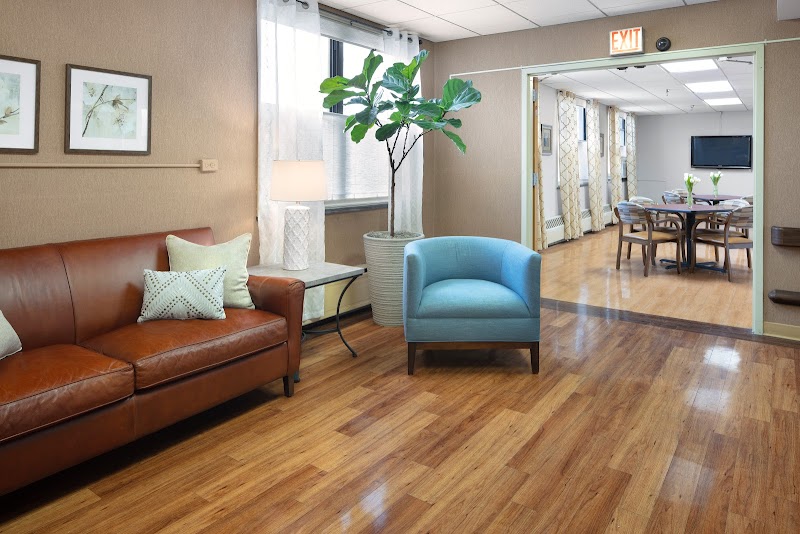
How is Peterson Park Health Care Ctr Staffed?

CMS rates PETERSON PARK HEALTH CARE CTR's staffing level at 2 out of 5 stars, which is below average compared to other nursing homes. Staff turnover is 41%, compared to the Illinois average of 46%. This relatively stable workforce can support continuity of care.

What Have Inspectors Found at Peterson Park Health Care Ctr?

State health inspectors documented 46 deficiencies at PETERSON PARK HEALTH CARE CTR during 2022 to 2025. These included: 1 Immediate Jeopardy (the most serious level, indicating potential for serious harm or death), 2 that caused actual resident harm, and 43 with potential for harm. Immediate Jeopardy findings are rare and represent the most serious regulatory concerns. They require immediate corrective action.
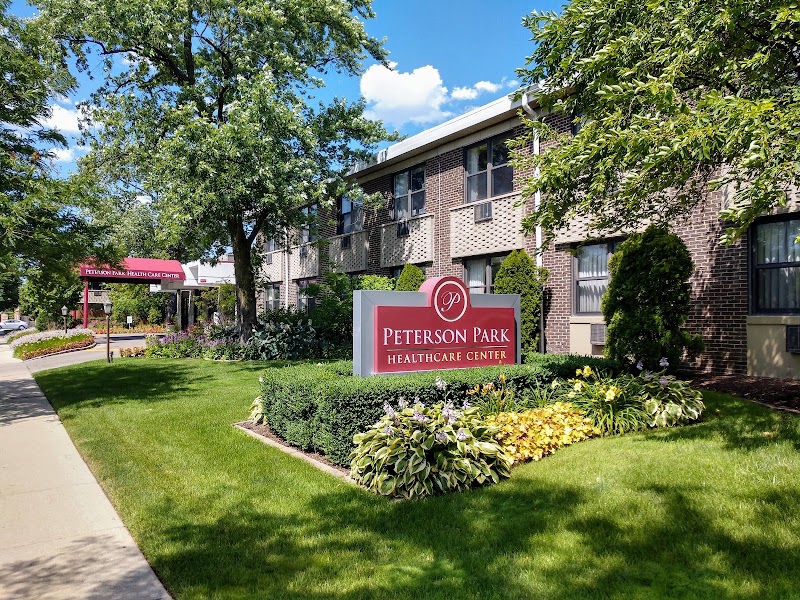
Who Owns and Operates Peterson Park Health Care Ctr?

PETERSON PARK HEALTH CARE CTR is owned by a for-profit company. For-profit facilities operate as businesses with obligations to shareholders or private owners. The facility is operated by LEGACY HEALTHCARE, a chain that manages multiple nursing homes. With 196 certified beds and approximately 177 residents (about 90% occupancy), it is a mid-sized facility located in CHICAGO, Illinois.

How Does Peterson Park Health Care Ctr Compare to Other Illinois Nursing Homes?

Compared to the 100 nursing homes in Illinois, PETERSON PARK HEALTH CARE CTR's overall rating (2 stars) is below the state average of 2.5, staff turnover (41%) is near the state average of 46%, and health inspection rating (2 stars) is below the national benchmark.

What Should Families Ask When Visiting Peterson Park Health Care Ctr?

Based on this facility's data, families visiting should ask: "What changes have been made since the serious inspection findings, and how are you preventing similar issues?" "Can you walk me through typical staffing levels on day, evening, and night shifts?" "Can I visit during a mealtime to observe dining assistance and food quality?" "How do you handle medical emergencies, and what is your hospital transfer rate?" These questions are particularly relevant given the facility's Immediate Jeopardy citations and the below-average staffing rating.

Is Peterson Park Health Care Ctr Safe?

Based on CMS inspection data, PETERSON PARK HEALTH CARE CTR has documented safety concerns. Inspectors have issued 1 Immediate Jeopardy citation (the most serious violation level indicating risk of serious injury or death). The facility has a 2-star overall rating and ranks #100 of 100 nursing homes in Illinois. Families considering this facility should ask detailed questions about what corrective actions have been taken since these incidents.

Do Nurses at Peterson Park Health Care Ctr Stick Around?

PETERSON PARK HEALTH CARE CTR has a staff turnover rate of 41%, which is about average for Illinois nursing homes (state average: 46%). Moderate turnover is common in nursing homes, but families should still ask about staff tenure and how the facility maintains care continuity when employees leave.

Was Peterson Park Health Care Ctr Ever Fined?

PETERSON PARK HEALTH CARE CTR has been fined $49,226 across 2 penalty actions. The Illinois average is $33,571. While any fine indicates a compliance issue, fines under $50,000 are relatively common and typically reflect isolated problems that were subsequently corrected. Families should ask what specific issues led to these fines and confirm they've been resolved.

Is Peterson Park Health Care Ctr on Any Federal Watch List?

PETERSON PARK HEALTH CARE CTR is not on any federal watch list. The most significant is the Special Focus Facility (SFF) program, which identifies the bottom 1% of nursing homes nationally based on persistent, serious quality problems. Not being on this list means the facility has avoided the pattern of deficiencies that triggers enhanced federal oversight. This is a positive indicator, though families should still review the facility's inspection history directly.