RYZE ON THE AVENUE

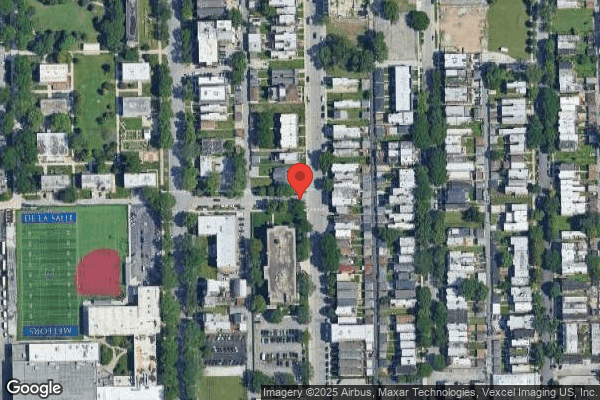
3400 SOUTH INDIANA, CHICAGO, IL 60616 (312) 842-5000
For profit - Corporation 302 Beds Independent Data: November 2025
Trust Grade
0/100
#622 of 665 in IL
Last Inspection: September 2024

Within standard 12-15 month inspection cycle. Federal law requires annual inspections.

Overview

Ryze on the Avenue in Chicago has received a Trust Grade of F, indicating significant concerns about its quality of care. The facility ranks #622 out of 665 in Illinois, placing it in the bottom half of state facilities, and #193 out of 201 in Cook County, meaning there are very few local options that are worse. Although the trend shows improvement, with issues decreasing from 45 in 2024 to 15 in 2025, there are still serious concerns, including incidents of physical abuse among residents and failures to properly care for pressure wounds, which led to hospitalizations. Staffing is a weakness, with only 1 out of 5 stars and a concerning turnover rate of 54%, which is close to the state average. Additionally, the facility has incurred $223,923 in fines, and it has less RN coverage than 84% of facilities in Illinois, which raises further red flags regarding adequate care.

Trust Score
F
0/100
In Illinois
#622/665
Bottom 7%
Safety Record
High Risk
Review needed
Inspections
Getting Better
45 → 15 violations
Staff Stability
⚠ Watch
54% turnover. Above average. Higher turnover means staff may not know residents' routines.
Penalties
✓ Good
$223,923 in fines. Lower than most Illinois facilities. Relatively clean record.
Skilled Nurses
⚠ Watch
Each resident gets only 18 minutes of Registered Nurse (RN) attention daily — below average for Illinois. Fewer RN minutes means fewer trained eyes watching for problems.
Violations
⚠ Watch
88 deficiencies on record. Higher than average. Multiple issues found across inspections.
★☆☆☆☆
1.0
Overall Rating
★☆☆☆☆
1.0
Staff Levels
★★★☆☆
3.0
Care Quality
★☆☆☆☆
1.0
Inspection Score
Stable
2024: 45 issues
2025: 15 issues

The Good

  • Full Sprinkler Coverage · Fire safety systems throughout facility
  • No fines on record

Facility shows strength in fire safety.

The Bad

1-Star Overall Rating

Below Illinois average (2.5)

Significant quality concerns identified by CMS

Staff Turnover: 54%

Near Illinois avg (46%)

Higher turnover may affect care consistency

Federal Fines: $223,923

Well above median ($33,413)

Significant penalties indicating serious issues

The Ugly 88 deficiencies on record

12 actual harm
Aug 2025 2 deficiencies 1 Harm
SERIOUS (G) 📢 Someone Reported This

A family member, employee, or ombudsman was alarmed enough to file a formal complaint

Actual Harm - a resident was hurt due to facility failures

Pressure Ulcer Prevention (Tag F0686)

A resident was harmed · This affected 1 resident

**NOTE- TERMS IN BRACKETS HAVE BEEN EDITED TO PROTECT CONFIDENTIALITY** Based on interview and record review the facility failed to assure that one resident (R7) with intact skin, received the necessa...

Read full inspector narrative →
**NOTE- TERMS IN BRACKETS HAVE BEEN EDITED TO PROTECT CONFIDENTIALITY** Based on interview and record review the facility failed to assure that one resident (R7) with intact skin, received the necessary treatment and services to prevent the development pressure wounds. This failure resulted in R7's development and worsening of one pressure ulcer, requiring hospitalization for wound infection and surgical intervention of wound. The facility failed to ensure one resident's (R77) low air loss mattress was set at the correct settings. These failures affected two residents (R7 and R77) in a total sample size of 66. Findings include: 1.) On 08/24/2025 at 11:48am, R77 was lying on a low air loss mattress; setting was at 280lbs. This observation was pointed out to V12 (Registered Nurse/RN). V12 stated low air loss mattress should be set based on the resident's weight to promote healing. If the setting is higher than the resident’s weight, the surface will be hard, and it will impair with the healing process of the wound. On 08/26/2025 at 10:58am, V31 (Wound Care Nurse/Licensed Practical Nurse) stated the setting of the low air loss mattress should be based on the resident’s weight. If the weight falls between a range. Then the setting should be on the lower side of the range. The purpose of the low air loss mattress is for prevention and treatment of wounds. When the setting is above the weight of the resident, low air loss mattress creates a hard surface. A hard surface defeats the purpose of the low air loss mattress. R77’s (Active Order as of: 08/25/2025) Order Summary Report documented, in part “Diagnoses: (include but not limited to) quadriplegia, pressure ulcer of sacral region, pressure ulcer of left and right ankle, and pressure ulcer of other site. Order Summary: Skin. Pressure redistribution mattress. Order Date: 02/25/2025.” R77’s (printed: 08/24/2025) Weight and Vital summary documented, in part “08/05/2025: 116lbs.” R77’s (06/03/2025) Minimum Data Set documented, in part “Section C. Cognitive Patterns. C0500. BIMS (Brief Interview for Mental Status) Summary Score: 06.” Indicating R77’s mental status as severely impaired. “Section M. Skin Conditions. M0150. Risk of Pressure Ulcers/Injuries: 1 – yes. M1200. Skin and Ulcer /Injury Treatments: B. Pressure reducing device for bed.” R77’s (05/06/2025) care plan documented, in part “risk for alteration in skin integrity. Interventions: Pressure redistribution mattress (LAL - Low air loss mattress). The Operation Manual documented, in part “The (Brand name) pump and overlay system is indicated for the prevention and treatment of any and all stage pressure ulcers when used in conjunction with a comprehensive ulcer management program. Pressure-adjust Knob. Determine the patient’s weight and set the control know to that weight setting on the control unit. Operating Instruction. Step 6. Determine the patient’s weight and set the control knob to that weight setting on the control unit. 2.) R7’s medical diagnoses include but are not limited to type 2 diabetes mellitus, diastolic congestive heart failure, essential hypertension, benign neoplasm of right breast, acute kidney failure. R7’s Minimum Data Set (MDS) dated [DATE] has a Brief Interview for Mental Status score of 13, indicating R7’s cognition is intact. R7’s MDS dated [DATE] section M’s Determination of Pressure Ulcer/Injury Risk documents in part, “A. Resident has a pressure ulcer/injury, a scare over bony prominence, or a non-removable dressing/device…No….Is this resident at risk of developing pressure ulcers/injuries? .Yes” R7’s care plan with initiation date of 08/13/24 and revision date of 04/25/25 documents in part, “R7 has potential/ at risk for alteration in skin integrity due to risk factors associated with fragile skin, friction, immobility, decreased sensory awareness, presence of cardiac pacemaker, a PMHx (past medical history) that includes breast CA (cancer), hemiplegia, hemiparesis….Decrease/minimize risk for skin breakdown…skin checks by CNA (Certified Nursing Assistant) and floor nurse on bath/shower days paying particular attention to bony prominences, if impairment is present, follow appropriate skin impairment protocols…pressure redistribution mattress…remind/assist resident to reposition frequently.” On 08/24/25 at 12:01pm R7 stated that she did not have any wounds when she first arrived at the facility. R7 stated that she developed the wound on her sacrum area at the facility. R7 stated that the facility’s staff does not clean and reposition her as needed. On 08/25/25 at 12:15pm V31 (Wound Care Nurse/Licensed Practical Nurse) stated that R7 did not have a wound when R7 arrived at the facility. V31 stated that R7’s wound to R7’s sacral region was facility acquired on 05/29/25. R7’s progress note dated 05/29/25 documents in part, “R7 is chairfast, incontinent of B&B (bowel and bladder), and totally dependent for ADL’s (Activities of Daily Living). Staff alerted the wound care team about a skin alteration on the patient’s right buttock, assessment performed, patient noted with MASD (moisture associated skin dermatitis)…Wound care will continue to monitor and treat the wound.” Review of R7’s records show no documentation or indication that R7’s new wound to sacral area was unavoidable. R7’s wound assessment dated [DATE] documents in part, “Wound #1 Sacral is an acute Unstageable Pressure Injury Obscured full-thickness skin and tissue loss Pressure Ulcer acquired on 05/29/2025 and has received a status of Not Healed. Initial wound encounter measurements are 6.8cm length x 6.8cm (centimeter) width x 0.1 cm depth, with an area of 46.24 sq (square) cm and a volume of 4.624 cubic cm. No tunneling has been noted. No sinus tract has been noted. No undermining has been noted…76-100% adherent, yellow slough.” On 08/26/25 at 2:55pm V2 (Director of Nursing/DON) stated that she assessed R7 the day R7 was sent to the hospital. V2 stated that R7 appeared lethargic and kept moaning “it hurt, it hurt”. V2 stated that she instructed the nurse to call the doctor for orders to send R7 out to the hospital. R7’s progress note dated 06/07/25 documents in part, “NP (nurse practitioner) making rounds with writer, observed resident lethargic with altered mental status, unstable vital signs…received order to send resident out 911.” R7’s hospital discharge records dated 06/16/25 documents in part, “patient was admitted for workup of AMS (altered mental status) and hypotension…Infectious workup remarkable for Bacteroides fragilis. CT (Computed Tomography) pelvis showing sacral decubitus ulcer with osseous destruction of the lower sacrum/coccyx suggestive of osteomyelitis. ID (Infectious Disease) consulted, recommended IV (Intravenous) CTX (Ceftriaxone) and Flagyl with plan to transition to Augmentin at discharge…Plastics was consulted due to concern for sacral wound being source of infection….Attempted minor debridement x2 but patient couldn’t tolerate due to pain.” R7’s progress note dated 06/17/25 documents in part, “R7 is chairfast, incontinent of bowel and bladder and requires extensive assistance transferring and completing ADL’s…wound to sacrum noted as unstageable with palpable bone.” R7’s wound assessment dated [DATE] documents in part, “clinical stage: unstageable…Measurements: size (cm) centimeters: 9.00x10.00x1.10 (L x W x D) Length times width times depth.” On 08/26/25 at 11:01am V31 (Wound Care Nurse/Licensed Practical Nurse) stated that she assessed R7’s wound upon readmission from the hospital. V31 stated that R7’s sacral wound had bone exposed. V31 stated that R7 was in a lot of pain with wound care dressing changes. V31 stated that R7 has always been compliant and has never refused care. R7’s MDS dated [DATE] section M’s Determination of Pressure Ulcer/Injury Risk documents in part, “A. Resident has a pressure ulcer/injury, a scare over bony prominence, or a non-removable dressing/device…Yes…F1. Number of unstageable pressure ulcers due to coverage of wound bed by slough and/or eschar…1.” Facility’s policy titled “Skin Care Prevention” dated 01/2025 documents in part, “General: All residents will receive appropriate care to decrease the risk of skin breakdown. Responsible Party: All Nursing Staff. Guideline: 1. The nursing department will review all new admissions/readmissions to put a plan in place for prevention based on the resident’s activity level, comorbidities, mental status, risk assessment and other pertinent information. 2. Dependent residents will be assessed during care for any changes in skin condition including redness and this will be reported to the nurse. The nurse is responsible for alerting the Health Care Provider. 3. All residents will be evaluated for changes in their skin condition… 5. All residents unable to reposition themselves will be repositioned as needed, based on a person-centered approach (minimum of every 2 hours).” Facility’s policy titled “Residents’ Rights” dated 11/2018 documents in part, “As a long-term care resident in Illinois, you are guaranteed certain rights, protections and privileges according to state and federal laws…Your rights to dignity and respect…Your facility must provide equal access to quality care regardless of diagnosis, condition, or payment source…Your rights to safety…Your facility must provide services to keep your physical and mental health, at their highest practical levels.” Facility’s undated job description titled “Wound Care Nurse” documents in part, “Basic Function: The primary purpose of Wound Care Nurse is to provide for the day-to-day care needs of the residents in a Skilled Nursing Facility Environment…Essential Duties:…2. Must be able to identify changes in the resident condition and evaluate the resident care needs…17.Recognize significant changes in the condition of residents and take necessary action.”
CONCERN (D) 📢 Someone Reported This

A family member, employee, or ombudsman was alarmed enough to file a formal complaint

Potential for Harm - no one hurt, but risky conditions existed

Deficiency F0658 (Tag F0658)

Could have caused harm · This affected 1 resident

Based on observation, interview, and record review, the facility failed to ensure staff monitor a resident's blood glucose per physician's order and failed to ensure staff document the result of the b...

Read full inspector narrative →
Based on observation, interview, and record review, the facility failed to ensure staff monitor a resident's blood glucose per physician's order and failed to ensure staff document the result of the blood glucose accordingly. These failures affected 1 (R67) resident reviewed for professional standard of care in the total sample of 66 residents.Findings include:On 08/25/2025 at 8:57am, V22 (Licensed Practice Nurse) opened R67's electronic health record, the 7:30am glucose check was red and read as blood glucose before meals and before bedtime. V22 stated the facility serves breakfast on the first floor between 8:00am to 8:30am. On 08/25/2025 at 8:59am, V30 (Certified Nursing Assistant) was assisting R67 with feeding. R67's food tray was almost empty except for the cookie. V30 stated she (R67) still wants her cookie. On 08/25/2025 at 9:00am, V22 took R67's blood sugar; the glucometer announced the result as 309. On 08/25/2025 at 9:01am, V22 stated he was supposed to take her blood sugar before breakfast. Review of R67's (08/2025) MAR (Medication Administration Record documented, in part Blood glucose via Accuchecks before meal and at HS (hour of sleep) for diabetes. 08/25, 730(7:30am), 144. 1100 (11:00am), 131. Signed by V22 (Licensed Practice Nurse).On 08/26/2025 at 9:54am with V2 (Director of Nursing), V30 stated that she was present when V22 took her (R67)'s blood sugar on 08/25/2025 at around 9am and the result was at 300 or something.On 08/26/2025 at 11:41am, V2 (Director of Nursing) stated the expectation is to get the blood sugar before breakfast. At this time, this surveyor presented V2 the 1st floor mealtimes. V2 stated staff is expected to get the blood sugar between 7:00am and 7:15am to prevent from getting a false reading. I also expected the nurse (V22) to document the accurate result, if it is 200 then document 200. Documenting the correct result will determine the resident's endocrine system is working or an adjustment to her diabetes medications need to be done. On 08/27/2025 at 10:04am, V50 (Nurse Practitioner) stated blood glucose monitoring is usually ordered to make sure the resident's diabetes is well controlled. The staff are expected to document the correct result so when the physician reviews the results, the physician will be able to determine whether the medication is working appropriately or needs to be adjusted. The expectation is to follow the physician's order to get the blood sugar; it is usually before meals and before bedtime.R67's (Active Order as of: 08/25/2025) Order Summary Report documented, in part Diagnoses: (include but not limited to) hypertension, chronic pain, and Type 2 Diabetes Mellitus. Order Summary: Blood Glucose via Accuchecks before meals and at bedtime for Diabetes. Order date: 07/30/2025.R67's (08/2025) MAR (Medication Administration Record documented, in part Blood glucose via Accuchecks before meal and at HS (hour of sleep) for diabetes. 08/25, 730(7:30am), 144. 1100 (11:00am), 131. Signed by V22 (Licensed Practice Nurse). The (undated) Mealtimes 1st Floor Dining Area documented in part Breakfast: 7:15am.The (01/01/2025) Blood Glucose Monitoring documented, in part Policy: It is the policy of this facility to perform blood glucose monitoring to a diabetic residents as per physician's order. Policy Explanation and Compliance Guidelines: 1. The facility will perform blood glucose monitoring per physician's orders. Procedure: 21. Document the procedure.
Aug 2025 1 deficiency
CONCERN (D) 📢 Someone Reported This

A family member, employee, or ombudsman was alarmed enough to file a formal complaint

Potential for Harm - no one hurt, but risky conditions existed

Deficiency F0761 (Tag F0761)

Could have caused harm · This affected 1 resident

**NOTE- TERMS IN BRACKETS HAVE BEEN EDITED TO PROTECT CONFIDENTIALITY** Based on observation, interview, and record review, the facility failed to ensure that medications are securely stored for one o...

Read full inspector narrative →
**NOTE- TERMS IN BRACKETS HAVE BEEN EDITED TO PROTECT CONFIDENTIALITY** Based on observation, interview, and record review, the facility failed to ensure that medications are securely stored for one of one resident (R4) reviewed for medication storage in the sample of 20.Findings include:R4's face sheet documents resident is [AGE] year-old admitted to the facility on [DATE] with diagnoses including but to limited to: Chronic Obstructive Pulmonary Disease, Type 2 Diabetes Mellitus, Chronic Pancreatitis, Chronic Kidney Disease, Essential Hypertension, and Atherosclerotic Heart Disease.R4's MDS (Minimum Data Set of 7/16/2025) documents a BIMS (Brief Interview for Mental Status) of 14 denoting R4 is cognitively intact.On 8/7/25 at 12:15 PM, R4 was observed ambulating with rollator down the hallway. R4 was holding souffle cup with seven tablets/capsules noted (one large white oval pill, three brown/clear capsules, one round white tablet, one oval light-yellow pill noted, one orange oval). R4 said, the nurse gave me these medications over an hour ago. Surveyor asked what they were. Surveyor wanted the names of the pills. R4 couldn't tell me. R4 left the pills with the surveyor, then left. 8/7/25 at 12:30 PM, V2 (Director of Nursing) said, staff should not leave medications at the bedside. Staff should explain what the medications are for and what the names of the medications are.8/8/25 at 11:27 AM, V3 (Registered Nurse) said, I prepared R4's medications and brought them to him. He asked what they were for. I had an emergency (a resident fell), and I ran out of R4's room to tend to the other resident. It slipped my mind that I needed to go back to R4. I never should leave medications at the bedside. I have to see the resident take the medication. Another resident could come along and take R4's medication.Medication Administration policy (Reviewed 1.2024) documents in part, 21. Remain with the resident to ensure that the resident swallows the medication.
Aug 2025 1 deficiency
CONCERN (D) 📢 Someone Reported This

A family member, employee, or ombudsman was alarmed enough to file a formal complaint

Potential for Harm - no one hurt, but risky conditions existed

Deficiency F0558 (Tag F0558)

Could have caused harm · This affected 1 resident

**NOTE- TERMS IN BRACKETS HAVE BEEN EDITED TO PROTECT CONFIDENTIALITY** Based on observation, interview, and record review, the facility failed to ensure call lights are answered in a timely manner fo...

Read full inspector narrative →
**NOTE- TERMS IN BRACKETS HAVE BEEN EDITED TO PROTECT CONFIDENTIALITY** Based on observation, interview, and record review, the facility failed to ensure call lights are answered in a timely manner for one resident (R4) in the sample of 8 residents reviewed for call lights. Findings include: R4's Face Sheet documents resident is a [AGE] year-old with diagnoses including but not limited to: Hemiplegia and hemiparesis following cerebral infarction affecting right dominant side, speech and language deficits following cerebral infarction, major depressive disorder. Minimum Data Set Section (MDS) section C (dated Jun 24, 2025) documents that R4 has an Interview for Mental Status (BIMS) score of 15, indicating that R4's cognition is intact.Minimum Data Set Section (MDS) section GG (dated Jun 24, 2025) documents that R4 utilizes a walker and requires supervision with toileting. Care plan (dated 12/10/2024) documents that R4 has a diagnosis of/history of cerebral vascular accident with right side residual effects. On 07/29/2025 at 11:02AM, surveyor was conducting an interview with R4. R4 verbalized that he needs staff assistance and R4 ignited the call light system at 11:05AM. Surveyor remained in the room the entire time R4 waited for staff to answer the call light. At 11:11AM, surveyor observed a staff member dressed in a purple scrub uniform (identified as a certified nursing assistant) walking past R4's room and not answering R4's call light. At 11:16AM, surveyor observed R4's call light being answered by V3 (Assistant Director of Nursing). V3 assisted R4 with his needs. R4 waited for a total of 11 minutes for his call light to be answered. On 07/29/2025 at 11:30am, R7 (R4's roommate) stated, R4 had a stroke, and he walks with a walker. R4 needs staff assistance when he goes to the restroom because he cannot put his pants on by himself. At times, R4 will put on the call light and staff will take hours to answer the call light. This happens a lot. I try to help R4 as much as I can. The nurses and certified nursing assistants bring their personal problems to work and talk about this personal issues instead of helping the residents. On 07/29/2025 at 2:57PM, V2 (Director of Nursing) stated, The expectation for call lights is that the staff will answer the call lights within a timely manner. Sometimes staff are not able to answer the resident call lights in a timely manner because there is a code, which is understandable. I think 3 to 5 minutes is an acceptable time for a resident to wait on staff to answer a call light. I answer call lights right away and acknowledge the resident's needs immediately. I never leave a resident waiting to have their call lights answered for 11 minutes because I answer the call lights right away. It is never acceptable for any staff to walk past a resident's call light and not answer it. It is never okay to walk past a call light and not answer it. I will do an in-service with the nurses and the certified nursing assistants about making sure that resident call lights are answered promptly. On 08/01/2025 at 12:20PM, V1 (Administrator) stated, An acceptable amount of time for a resident to wait to get their call light answered is between 5 to 10 minutes, depending on the situation. The certified nursing assistants are wearing purple uniforms. It is not the facility's policy for a certified nursing assistant or any staff member to walk past a resident's call light and not answer it and see what the resident needs. Call Light Response Policy (dated 01/10/2024) documents in part: To provide the staff with guidance on responding to residents' requests and needs. Answer the patient or resident's call as soon as possible.
Jun 2025 1 deficiency 1 Harm
SERIOUS (G) 📢 Someone Reported This

A family member, employee, or ombudsman was alarmed enough to file a formal complaint

Actual Harm - a resident was hurt due to facility failures

Free from Abuse/Neglect (Tag F0600)

A resident was harmed · This affected 1 resident

**NOTE- TERMS IN BRACKETS HAVE BEEN EDITED TO PROTECT CONFIDENTIALITY** Based on interviews and record review, the facility failed to ensure that three residents (R2, R4 and R6) were free from physica...

Read full inspector narrative →
**NOTE- TERMS IN BRACKETS HAVE BEEN EDITED TO PROTECT CONFIDENTIALITY** Based on interviews and record review, the facility failed to ensure that three residents (R2, R4 and R6) were free from physical abuse. This failure resulted in R2, R4 and R6 being attacked by their roommates. R4 stated she does not feel safe. R6 stated R6 was upset and felt helpless. Findings include: 1.) R4 is [AGE] year-old with diagnosis including but not limited to: paraplegia, major depressive disorder, polyneuropathy, cerebral infarction and obesity. R4 has a BIMS (Brief Interview of Mental Status) score of 15, which indicates cognitively intact. R5 is [AGE] year-old with diagnosis including but not limited to, other specified disorders of bone, hypokalemia, multiple myeloma and type 2 diabetes mellitus. On 6/16/2025 at 1:36 PM, R4 stated R5 came at me with scissors while I was in bed. I pulled the call light for help, and R5 snatched the call light from me and begin to hit me with it. V9 (Restorative Aide) came in and took the scissors from her. R5 then pulled out a bigger pair of scissors once V9 left the room. I (R4) called for help again and the scissors were taken from her. She was moved to a different room, but I do not feel safe here. On 6/16/2025 at 1:44 PM, V9 (Restorative Aide) stated that she went into R5's room after she (R5) called for help and at that time, R4 had a pair of scissors in which she threw on the bed. V9 also said that she took R5's scissors to prevent R5 from stabbing R4 with the scissors, but found out later that the nurse had recovered a second pair of scissors. On 6/16/2025 at 1:53 PM, R5 stated that she did not want to talk about the incident that occurred between her and R4. On 6/17/2025 at 3:30 PM, V2 (Director of Nursing/DON) stated that she was made aware that R5 had allegedly attacked R4 with a call light and that two pair of scissors were taken from R5. R4's Care plan documents the following, R4 has a diagnosis of paraplegia; R4 is at risk for abuse and neglect related to paraplegia. Facility State Report of Abuse Allegation dated 6/4/2024 documents, alleged victims: R4; alleged perpetrators: R5, a resident-to-resident altercation occurred. Event Investigation Questionnaire dated 6/4/2025 documents the following statement given by V9 (Restorative Aide), Bed one (R4) flagged me down as I was going pass. Bed two (R5) had bed one's call light in hand and I (V9) saw a pair of scissors on her (R5) bed. I took the scissors and told the nurse that there was a disagreement going on with two residents (R4 and R5). 2.) R1 is [AGE] year-old with diagnosis including but not limited to: mood disorder, alcohol abuse, mixed anxiety disorder, restlessness and agitation. R1 is no longer a resident of the facility. R2 is [AGE] year-old with diagnosis including but not limited to: Alzheimer's disease, dementia, adult failure to thrive and generalized stomach pain. On 6/16/2025 at 2:04 PM, V10 (Licensed Practical Nurse/LPN) stated that she was the nurse that intervened when R3 reported the physical altercation between R1 and R2. At that time, V10 stated that she was unaware of how the altercation started, but that R1 and R2 were wrestling on a bed when she (V10) entered the bedroom. On 6/16/2025, R3 (R1 and R2's roommate) stated that R1 and R2 were fighting in the room and that she didn't know why. On 6/16/2025, R2 was not able to recall the details of her (R2) and R1's fight. R2's Care plan documents, potential for abuse and or neglect. Facility Reported Incident dated 4/22/2025 documents, time of incident: 10:30 AM; alleged victims: R1 and R2. The roommate (R3) alleged that a resident (R1) may have hit another resident (R2). The residents (R1 and R2) were separated, and the doctor and family notified. A body check was completed with noted redness. A police report filed. R2 and R1's Police report dated 4/22/2025 documents, simple battery. 3.) R6 is [AGE] year-old with diagnosis including but not limited to: legal blindness, pain in unspecified lower leg, dizziness, heart failure and chronic obstructive pulmonary disease. R6 has a BIMS (Brief Interview of Mental Status) score of 15, which indicates cognitively intact. R7 is [AGE] year-old with diagnosis including but not limited to: major depressive disorder, chronic pain, essential hypertension and insomnia. R7 has a BIMS (Brief Interview of Mental Status) score of 15, which indicates cognitively intact. On 6/17/2025 at 10:55 AM, R6 stated the following, R7 attacked me. He (R7) approached me and kicked me on the right leg. I (R6) was upset and felt helpless because I'm blind and couldn't defend myself at the time. I notified staff and staff removed R7 from the room. On 6/17/2025 at 11:15 AM, R7 stated that he kicked R6 because he (R7) was having a bad day. On 6/18/2024 at 11:46 AM, V24 (Nurse Practitioner) Stated, Resident to resident abuse of any kind is not acceptable because the patient can be harmed physically and emotionally. We have to protect each resident that comes into the facility from abuse. On 6/18/2025 at 1:45 PM, V2 (DON) stated that Resident to Resident abuse was not acceptable in the facility. Facility reported incident titled State Report of Abuse Allegation dated 6/5/2025 at 4:30pm, documents in part, Alleged Victim is R6, and Alleged Perpetrator is R7, Resident to Resident altercation. Residents were immediately separated. Facility document titled Event Investigation Questionnaire, dated 6/5/2025 at 4:20 pm documents, R6 activated his call light and informed V23 (LPN) that R7 kicked him (R6). R7 was propelling to the elevator. R7 stated that he did kick R6 because he (R7) was being stupid. R6's progress notes dated 6/5/2025 at 4:30 pm, documents, R6 informed writer that R6 and R7 had a disagreement and R6 alleged that R7 kicked R6's right leg. R6's care plan printed 6/17/2025, documents, R6's Active Range of Motion (AROM) Focus: R6 has impaired functional mobility due to weakness/poor motivation/Cognitive. R6's care plan printed 6/17/2025, documents, R6's Abuse Focus: Risk for abuse and neglect related to Legal Blindness. Facility's Abuse Policy and Prevention Program documents, this facility is committed to protecting our residents from abuse, neglect, exploitation, misappropriation of property and mistreatment by anyone including, but not limited to, facility staff, other residents, consultants, volunteers, staff from other agencies providing services to the individual, family members or legal guardians, friends, or any other individuals.
May 2025 1 deficiency 1 Harm
SERIOUS (G) 📢 Someone Reported This

A family member, employee, or ombudsman was alarmed enough to file a formal complaint

Actual Harm - a resident was hurt due to facility failures

Pressure Ulcer Prevention (Tag F0686)

A resident was harmed · This affected 1 resident

**NOTE- TERMS IN BRACKETS HAVE BEEN EDITED TO PROTECT CONFIDENTIALITY** Based on interview and record review the facility failed to assure that a resident (R1) with pressure ulcers received the necess...

Read full inspector narrative →
**NOTE- TERMS IN BRACKETS HAVE BEEN EDITED TO PROTECT CONFIDENTIALITY** Based on interview and record review the facility failed to assure that a resident (R1) with pressure ulcers received the necessary treatment and services to promote wound healing. This failure caused one resident's (R1) wound to decline leading to wound infection and hospitalization. Findings include: R1's medical diagnoses include but are not limited to displaced fracture of lesser trochanter of right femur, muscle weakness, cognitive communication deficit, type 2 diabetes mellitus, pressure ulcer of unspecified heel unspecified stage, pressure ulcer of sacral region stage 3, acute diastolic heart failure. R1's Minimum Data Set (MDS) dated [DATE] has a Brief Interview for Mental Status score of 9, which indicates R1's cognition is moderately impaired. R1 admission progress note dated 02/06/25 at 9:32pm documents in part, has wound on the coccyx, right and left lateral heel. R1's care plan dated 02/06/25 documents in part, R1 was admitted with skin alterations and is at risk for further breakdown related to fragile skin, friction, decreased sensory awareness, impaired mobility and a past medical history that includes hypertension .infection will not develop at the wound site. Review of R1's records show no wound assessment or wound care orders until 02/14/25. R1's progress note dated 02/14/25 documents in part, Writer alerted that patient has alterations to skin, assessment performed, patient noted with open areas to his sacrum, right heel and a DTI (Deep Tissue Injury) on his left heel. MD (Medical Doctor) notified, verbal treatment orders received, carried out, and tolerated well by patient. R1's wound culture with collection date of 02/19/25 documents in part, culture wound - sacrum .gram stain: few gram-negative bacilli .few gram-positive cocci .rare white blood cells .rare epithelial cells .mixed gram-negative bacilli also present .methicillin resistant staphylococcus aureus few. R1's physician order dated 02/19/25 documents in part, Bactrim DS oral tablet 800-160 mg (milligrams) .give 1 tablet by mouth every 12 hours for wound infection for 5 days until finished. R1's wound physician assessment dated [DATE] documents in part, wound size 9 by 9 by 0.5 cm (centimeters) .periwound radius odor .exudate moderate purulent .thick adherent devitalized necrotic tissue 80% .wound progress exacerbated due to infection. R1's progress note dated 02/23/25 at 12:10pm documents in part, Noted to have altered mental status, lethargy, O2 (oxygen) saturation low 83% room air with nrb (non-rebreather) mask 15lnc (liter per nasal canula) stared O2 saturation 95%, BP (blood pressure) low with shortness of breath, diaphoretic. No fever at this time. V12 (Medical Doctor) called with order for hospital transfer stat. 911 paramedic called. R1's progress note dated 02/23/25 at 4:20pm documents in part, admitted at hospital with diagnosis of sepsis. R1's hospital records dated 02/23/25 documents in part, acute metabolic encephalopathy likely due to sepsis from sacral wound infection .sepsis due to sacral ulcer .consult wound and surgery. On 05/05/25 at 2:24pm V18 (Wound Care Nurse/Licensed Practical Nurse) stated that the facility did not have a wound care nurse for approximately one week. V18 stated that R1 was not assessed by wound care until 02/14/25. V18 stated that R1 did not have wound care orders until 02/14/25. V18 stated that if wounds are not treated then they could decline and become infected. On 05/06/25 at 12:19pm V12 (Medical Doctor/MD) stated that R1's wounds had previously been stable. V12 stated that it is possible that if the facility did not take care of R1's wounds, that could be part of R1's decline in condition. On 05/06/25 at 1:06pm V15 (Wound Care MD) stated that a resident should have wound care orders continued from the discharging hospital until she assesses them. V15 stated that if wounds are not treated then the wounds can deteriorate. On 05/06/25 at 2:34pm V2 (Director of Nursing) stated that if a resident doesn't have wound orders, then the nurse should get wound orders from the doctor. V2 stated that she was unaware that R1 did not have wound orders from 02/06/25 until 02/14/25. V2 stated that R1 not having wound orders is not acceptable practice and he should have orders, so the wound doesn't get worse. Facility's policy titled Skin Management: Monitoring of Wounds and Documentation dated 01/2023 documents in part, General: It is important that the facility have a system in place to assure that the protocols for daily monitoring and for periodic documentation of measurements, terminology, frequency of assessment, and documentation are implemented consistently throughout the facility. Facility's policy titled Residents' Rights dated 11/2018 documents in part, Your rights to safety .Your facility must provide services to keep your physical and mental health, at their highest practical levels.
Apr 2025 2 deficiencies 1 Harm
SERIOUS (G) 📢 Someone Reported This

A family member, employee, or ombudsman was alarmed enough to file a formal complaint

Actual Harm - a resident was hurt due to facility failures

Accident Prevention (Tag F0689)

A resident was harmed · This affected 1 resident

**NOTE- TERMS IN BRACKETS HAVE BEEN EDITED TO PROTECT CONFIDENTIALITY** Based on observation, interview, and record review the facility failed to accurately assess or evaluate a resident that are high...

Read full inspector narrative →
**NOTE- TERMS IN BRACKETS HAVE BEEN EDITED TO PROTECT CONFIDENTIALITY** Based on observation, interview, and record review the facility failed to accurately assess or evaluate a resident that are high risk for falls, failed to provide plan of care for falls. The facility failed to ensure fall preventive measures or interventions were implemented. The facility also failed to monitor and supervise a resident to prevent falls for 1 (R1) out of 3 residents reviewed for fall prevention program. These failures resulted in R1 falling twice. R1's first fall resulted in R1 being admitted to the hospital with an epidural brain bleed. R1's second fall resulted in R1 sustaining a laceration to the back of his head. Finding includes: R1 is [AGE] years old, re-admitted in the facility on 01/07/2025 with repeated falls and traumatic subdural hemorrhage and coagulation defect. Clinical notes of R1 dated 02/03/2025 by V11 (Registered Nurse/RN) documents that R1 was seen on laying on the floor. R1 stated that he hit the back of his head. R1 was transferred to the hospital with admitting diagnosis of epidural brain bleed per V24 (Licensed Practical Nurse/LPN). On 03/18/2025 R1 fell again sustaining a laceration at the back of his head. R1 was transferred to the hospital, currently not in the facility. On 04/16/2025 at 12:09 PM V11 (RN) stated that she worked from 07:00 AM to 03:00 PM the day R1 fell on [DATE]. V11 stated that it was a CNA (Certified Nursing Assistant) that informed her that R1 was on the floor. V11 said, It was an unwitnessed fall. V11 said that R1 does not ambulate, non-compliant to instruction. R1 wants to try to do things that he cannot do. He needs assistance when getting up and needs 1-to-2-person assistance. V11 stated that it was around breakfast time when R1 fell. V11 stated breakfast starts at 07:30 AM and during that time, R1 ate breakfast in bed. V11 stated that she did not see anyone feed R1. V11 was asked if it would be safer for R1 to be transferred to the wheelchair and monitor by staff instead of leaving R1 in his room alone. V11 stated I am not sure if it will prevent R1 from falling. V11 stated that R1 was not transferred to his wheelchair because he is not on the get up list. V11 stated it would be hard for CNAs who are busy feeding another resident to come wash up R1 and place R1 in a wheelchair. On 04/16/2025 at 1:52 PM, V2 (Director of Nursing/DON) stated R1 kept saying he can walk, and he tries to maintain his independence. R1 was not on the get up list and was not scheduled to get up. Reviewed R1's care plan with V2. R1's fall care plan does not have any fall prevention interventions prior to the fall and was created on 02/03/2025. R1's fall care plan interventions are as follows: Encourage R1 to ask for assistance before transferring created on 2/11/2025, floor mat in place created date 03/18/2025, R1 will receive education related to potential fall risk and preventative measures created 02/10/2025. Per statement by nursing staff, R1 is non-compliant with instruction. R1 insist he can walk does not follow redirection. V2 was asked, how can these interventions help prevent R1 from falling? V2 stated the problem was that he got up without assistance. V2 was asked about the investigation she conducted. V2 was asked if the nursing staff, both nurses, and certified nursing assistants' whereabouts were accounted for. V2 replied, In doing our investigation we don't asked nursing staff where they are at the time of the fall or during the fall. V22 (CNA) that was assigned to R1 does not have written statement as part of investigation. V2 was informed that R1 fell again inside his room on 03/18/2025 sustaining laceration on the back of his head with bleeding. V2 replied, I have to look at the records. V2 stated that other interventions can prevent fall of R1, like putting signage or placing R1 in the get up list. On 04/22/2025 at 11:38 AM V7 (LPN) verified that she was the nurse on the day R1 fell on [DATE]. V7 stated that R1 was trying to get in his wheelchair when he fell. V7 stated that none of the staff was in the room. None of the staff witnessed the fall of R1. R1 had bleeding on the middle area of his head. V7 stated it happened around 08:00 PM as it was noted in her notes. R1's assessment for admission dated 01/07/2025 and re-admission dated 02/17/2025 documents that R1 is at high risk for fall with score of 16 on 01/07/2025. R1's score increased to 20 on 02/17/2025. Per assessment instructions, any score above 10 considered as high risk for falls. Although both assessments have scores higher than 10, staff who assessed put the score of 8 on both assessments indicating that R1 is not high fall risk. There was no baseline care plan intervention provided on both assessments. On 04/22/2025 at 10:18 AM, reviewed R1 fall assessments, evaluations and fall care plans with V25 (Restorative Nurse/LPN) and V26 (Restorative Nurse/LPN). V25 stated that the number or score is wrong on R1's fall assessment included during admission evaluation dated 01/07/2025 (prior to fall) and 02/17/2025 (after to fall). V25 stated that the score eight (8) represent the number of items being answered, not the score based on fall assessment. Per fall assessment ten (10) and above means high risk of fall. R1's score should be sixteen (16) for the assessment dated [DATE] which is a high risk of fall. R1's score for the fall assessment dated [DATE] should have been scored 20 which is high risk for fall. V25 was made aware that there was no baseline plan of care intervention for all fall assessments of R1. Upon reviewing the care plan, V25 stated that R1 does not have any fall care plan prior to fall. V25 said, Nothing on 01/07/2025 care plan for fall. V25 and V26 made aware on their policy fall assessment/evaluation and fall care plan review should be done during admission and quarterly to prevent resident from falling. R1 does not have fall interventions upon admission dated 01/07/2025 although he came in the facility with history of falls. On 04/23/2025 at 09:44 AM, V2 (Director of Nursing) was made aware of concerns related to R1 fall assessments/evaluations and lack of care plan interventions prior to falls. V2 stated that it will help prevent fall for R1 if there were interventions placed prior to the falls. V2 said, I cannot say that all falls can be prevented. But interventions prior to fall may help prevent falls. Fall Prevention and Management policy dated 02/2025 reads: This facility is committed to maximizing each resident's physical, mental and psychosocial well-being. The facility will identify and evaluate those residents at risk for falls, plan for preventive strategies, and facilitate as safe an environment as possible. All resident falls shall be reviewed, and the resident's existing plan of care shall be evaluated and modified as needed. All fall risk evaluation will be completed on admission, readmission, and quarterly, significant change and after each fall. A fall risk evaluation is completed by the Nurse. A score of 10 or greater indicates the resident is at high risk for falls; a score of less than 10 indicates at risk for fall. Care plan to be updated with new intervention based on root cause analysis after each fall occurrence.
CONCERN (D) 📢 Someone Reported This

A family member, employee, or ombudsman was alarmed enough to file a formal complaint

Potential for Harm - no one hurt, but risky conditions existed

Resident Rights (Tag F0550)

Could have caused harm · This affected 1 resident

**NOTE- TERMS IN BRACKETS HAVE BEEN EDITED TO PROTECT CONFIDENTIALITY** Based on interviews and review of records that facility failed to ensure personal belongings of 1 (R3) out of 3 residents were p...

Read full inspector narrative →
**NOTE- TERMS IN BRACKETS HAVE BEEN EDITED TO PROTECT CONFIDENTIALITY** Based on interviews and review of records that facility failed to ensure personal belongings of 1 (R3) out of 3 residents were properly inventoried in accordance with facility's policy. These failures affected 1 resident (R3) resulting in not being able to unable to account personal belonging. Finding includes: R3 is [AGE] years old, initially admitted in the facility on 12/17/2024. R3 medical diagnosis includes amyloidosis, insomnia, anxiety disorder. R3 BIMS (Brief Interview of Mental Status) score dated 03/31/2025 scored at 15 means cognition is intact. On 04/15/2025 at 11:06 AM, R3 stated that his personal belongings that includes pair of headphones, mini wrench with screwdriver, State ID, orange extension cord with USB, titanium phone charging cord. R3 stated that he gave the list to V3 (Social Worker). On 04/16/2025 at 11:14 AM, V3 confirmed that R3 told her about his missing personal belongings. V3 stated that a concern form was done on R3's behalf. V3 stated that R3 should have brought to the receptionist all his belongings upon first arrival in the facility. Because R3 did not bring his belongings to receptionist his personal belongings were not inventoried. V3 stated that R3's belongings list form was not done. V3 was asked if it is the resident's responsibility or facility staff to ensure belongings were accounted to avoid prospective confusion? V3 stated, Here at this facility, we tell them, or the nurse explained to them. V3 was asked if she or any facility staff explained to R3 proper procedure. V3 stated No, I did not ask any of the staff if they did belongings list. We searched for it. All of us helped R3 to find it. We did not find it. On 04/17/2025 at 10:08 AM, V1 (Administrator) was made aware about personal belongings concern of R3. V1 stated that per proper procedure is to fill up belongings list form. And it should be done by staff to account resident's personal belongings. And to avoid future problem when resident will allege that they have certain personal belongings that no one can confirm. Personal Effects policy dated 01/2025, reads: The purpose of inventory is to limit the risk of loss of residents' personal effects and to protect the facility from liability for loss personal effects. The inventory shall be completed upon admission and signed by the resident or resident's responsible party. The inventory shall be updated when items are brought to the facility for the resident or when things are removed from the facility by the resident or resident's responsible party.
Mar 2025 3 deficiencies 1 Harm
SERIOUS (G) 📢 Someone Reported This

A family member, employee, or ombudsman was alarmed enough to file a formal complaint

Actual Harm - a resident was hurt due to facility failures

Free from Abuse/Neglect (Tag F0600)

A resident was harmed · This affected 1 resident

**NOTE- TERMS IN BRACKETS HAVE BEEN EDITED TO PROTECT CONFIDENTIALITY** Based on interview and record review, the facility failed to prevent and protect two residents (R1, R5) from resident-to-residen...

Read full inspector narrative →
**NOTE- TERMS IN BRACKETS HAVE BEEN EDITED TO PROTECT CONFIDENTIALITY** Based on interview and record review, the facility failed to prevent and protect two residents (R1, R5) from resident-to-resident abuse out of four residents reviewed for physical assault in a total sample of 14 residents. This failure resulted in R5 falling in the facility and sustaining a pneumothorax and several fractured ribs. Findings include: 1.) On 03/18/2025, at 3:22 PM, R5 states herself and her former roommate (identified as R12) were arguing because R12 never cleaned and never showered. R5 states she was encouraging R12 to clean up and take a shower. R5 states R12 then told her to shut the f**k up. R5 states she then told R12, I'm not a kid, don't tell me to shut up. R5 states R12 then took a gray colored water pitcher with water inside and threw the water on R5. R5 states she tried to cover herself by placing her hands up over her face. R5 states in the process, she slipped on the water that R12 threw at her. R5 states she hit her chest when she fell. R5 states the facility called the ambulance and she was taken to the hospital and had broken ribs. R5 states she was moved to another room when she returned from the hospital. R5 states herself and her new roommate get along well without any problems. R5 states she sees R12 in the facility and has not had any other problems with R12 since then. On 03/18/2025, at 3:30 PM, R12 states R5 was upset with her and wanted to argue. R12 states R5 had an attitude with her and wanted to fight. R12 states she threw water on R5 to calm her down. R12 states R5 slipped and fell over by the window and was taken out of the facility by the ambulance. R12 states herself and R5 are no longer roommates and when R5 returned from the hospital, R5 was moved to another room. R12 states she sees R5 in the facility but no longer speaks to R5. On 03/19/2025, at 1:39 PM, V8 (Licensed Practical Nurse/ LPN), states a CNA (Certified Nursing Assistant) came to notify her that R5 was moaning in pain and her left side was hurting. V8 states when she arrived to R5s' room, R5 informed her that she slipped, fell, and hit her side on the railing of her bed. V8 states R5 informed her that R5 fell on the previous shift. V8 states she asked R5 why R5 did not report it on the previous shift and R5 told V8 that R5 was not in pain then. V8 states she assessed R5 and R5s' side was red in color. V8 states she called the doctor and the Director of Nursing/DON (identified as V2) to notify them, but they did not pick up the phone. V8 states she then informed the supervisor on duty and the supervisor advised V8 to send R5 out to the hospital. V8 states she called the ambulance and sent R5 to the emergency room to be evaluated. V8 states she later was informed by V2 that V2 was made aware that R5 had a squabble with her former roommate (identified as R12). V8 states she was never informed by R5 that R5 was involved in an altercation with R12. V8 states she also informed V2 that V8 was not made aware of any altercations between R5 and R12. On 03/19/2025, at 3:18 PM, V2 (Director of Nursing/DON) states she was made aware by V8 (LPN) that R5 had a fall and was complaining of pain. V2 states R5 was then sent to the hospital to be evaluated. V2 states she was made aware via R5's hospital records that R5 reported that she slipped on water and fell in the facility. V2 states R5 did not originally report this to the facility. V2 states she then initiated an investigation for R5's fall. V2 states through her investigation, she was made aware that R5 and R12 had a disagreement about R5 making noise while R12 was trying to sleep. V2 states with further investigation, she was made aware that R12 alleged that R5 touched R12's shoulder. V2 states she informed V1 (Administrator) and V1 was responsible for following up with this allegation. V2 states she handles fall reportables (facility required documentation/report notifying the state surveying agency of an incident involving a resident) and V1 handles abuse reportables. V2 states she reported R5's fall to the state agency within the required time frame. On 03/21//2025, at 9:12 AM, V1 (Administrator) states she is the abuse coordinator, and she was made aware by V2 (DON) of the altercation between R5 and R12. V1 states she spoke with R12 and R12 informed her that R5 hit R12 because R5 was making noise and R12 asked R5 to stop. V1 states R12 told V1 that R12 may have thrown some water near R5 and then sat back down on R12's bed and R12 left it alone. V1 states she conducted an investigation and was made aware that R5 possibly slipped on some water. V1 states she spoke with R5 and R5 informed V1 that R12 threw water on R5. V1 states she was made aware that R5 may have fallen later after the altercation between R5 and R12. V1 states R5 did not use the verbiage that R5 fell on the water that R12 threw at R5. V1 states she reported this incident to the state agency within the required time frame. R5's Face sheet documents that R5 has diagnoses not limited to: Multiple fractures of ribs, left side, subsequent encounter for fracture with routine healing, traumatic hemopneumothorax, subsequent encounter, unspecified fall, sequela, and vitamin D deficiency. R5's MDS/Minimum Data Set, dated [DATE], documents that R5 has a BIMS/Brief Interview for Mental Status of 9/15, indicating that R5 is moderately cognitively impaired. R5 requires substantial/maximum assistance with ADL/Activities of Daily Living care. R5 is incontinent of bladder and bowel. R5 ambulates via walker. R5's care plan dated 03/10/2025. documents R5 has 4th/6th rib Fracture r/t Fall. R5 had a traumatic hemopneumothorax. R5s' care plan dated 03/11/2025 documents Encourage resident to report all spills to staff immediately. R5s' care plan also documents that R5 is at high risk for falls. R5's hospital records dated 03/07/2025, documents that R5 has diagnoses of small left pneumothorax, acute, displaced fracture of the left fourth and sixth through ninth ribs. R5 was admitted to the hospital on [DATE], due to bleeding and chest injury. R12's Face sheet documents that R12 has diagnoses not limited to: unspecified dementia, cerebral infarction, type 2 diabetes mellitus, essential hypertension, and chronic viral hepatitis C. R12's MDS/Minimum Data Set, dated [DATE], R12 has a BIMS/Brief Interview for Mental Status of 13/15, indicating that R12 is cognitively intact. R12 requires supervision assistance with ADL/Activities of Daily Living care. R12 is incontinent of bladder and bowel and ambulates via walking. R12's behavior assessment dated [DATE] documents that R12 was physically aggressive towards her roommate (identified as R5). Nursing progress note dated 03/02/2025, written by V8 (LPN) at 5:13 AM, documents R5 explains to writer that she had a fall on the previous shift and is screaming in severe pain in her left side ribs. R5 says that it hurts when she tries to move. Supervisor was notified and suggested to send R5 out to hospital for further evaluation. Nursing progress note dated 03/02/2025, at 6:15 PM documents R5 admitted to hospital with admitting diagnosis trauma, multiple rib fractures. Record review documents that R5 resided in the same as R12 on 03/02/2025. Ombudsman Residents' Rights for People in Long-Term Care Facilities dated 11/2028 documents in part, You must not be abused, neglected, or exploited by anyone - financially, physically, verbally, mentally, or sexually. 2.) According to R1's face sheet and MDS 2/28/25 provided by facility, R1 has diagnoses that include but not limited to Alzheimer's disease, anxiety disorder. R1 has a BIMS (Brief Interview for Mental Status) score of 6 indicating severe cognitive impairment and required services of and resided on a specialized dementia/Alzheimer unit. According to R1's care plan provided by facility, R1 is care planned for wandering behavior: R1 demonstrates behavior that may be interpreted as wandering, pacing, or roaming related to the diagnosis of Alzheimer's disease. Symptoms are manifested by pacing, roaming, or wandering in and out of peer's rooms. R1 is care planned for abuse/neglect: R1's comprehensive assessment reveals a history of suspected abuse and/or neglect or factors that may increase his/her susceptibility to abuse/neglect. R1 is care planned for Alzheimer: R1 has diagnosis of Alzheimer's and may display moods/behaviors related to diagnosis such as agitation/aggression. According to R2's face sheet and MDS 1/3/2025, provided by facility, R2 has diagnoses that include but not limited to schizophrenia, restlessness and agitation, type 2 diabetes mellitus. R2 has a BIMS (Brief Interview for Mental Status) score of 13 indicating intact cognition. According to R2 care plan provided by facility, R2 is care planned for behavior: R2 has a history of verbal and physical aggression and threatening staff and peers. The resident has a diagnosis of schizophrenia. On 3/18/25 at 2:50 PM, V25 (Certified Nursing Assistant/CNA) stated V25 heard a scream from R1. I went to see what was going on. This happened in R2's room. When I went into the room there was a CNA (V26) in the room who was trying to get R1 and R2 apart. R2 was in a wheelchair. R1 was standing. R2 had the wheelchair armrest in hand and was hitting R1 in the head with it. R1 wanders in different resident rooms and is known to lay down in their beds. On 3/18/25 at 3:00 PM, V26 (CNA) stated V26 was walking past R2's room and heard R1 saying Stop. I went into the room and saw R2 hitting R1 with an object. R2 did make contact with R1. I immediately called for the nurse. I stood in between them. R2 was in a wheelchair. R1 was standing in R2's room. R1 is a wanderer. I believe R1 went out to the hospital. R2 went out to the hospital and has not been back to the facility. R1 gets confused, tired and wants to sit down. It is typical for R1 to wander into other residents' rooms. R2 is mean and grumpy. R2 has outburst cursing at staff. R1 has dementia. On 3/18/25 at 3:13 PM, V4 (Licensed Practical Nurse/LPN) stated R1 went into R2's room. R1 wanders. R1 started yelling. The CNA called out for help. Me and another nurse went into the room and separated R1 and R2. R2 can be irate. R2 is combative, was always yelling, mean and mad. It was a challenge to give R2 care. R2 mostly yelled and cursed at staff. R2 had the cushion from the wheelchair armrest in hand. I sent R1 and R2 to the hospital. R2 was sent for a psychiatric evaluation. R1 went to the hospital because R1 had redness/abrasion on the forehead and a scratch. I notified the physician, family, and the Director of Nursing. The administrator is the abuse coordinator. I have had abuse in-services within the last month. If I witness abuse I would intervene, separate the residents, and notify the administrator. On 3/21/25 at 12:30 PM, V12 (LPN) stated I was called to the situation. I helped separate the two (R1 and R2). I was at the other end of the unit/floor. I heard the commotion, the CNA yelled for me and said R1 is in the room having an incident with R2. I went to the room. R1 was already out of the room and R2 was wheeling himself to the door to come out of the room saying, R1 was in my room. I stepped in between and closed the door so R2 could not come out. I did not see anything in R2's hands. I monitored R2 until R2 was petitioned out to the hospital. R1 roams a lot, and I have not observed any aggressive behaviors. R2 has random outbursts if someone comes in R2's space/personal space. R2 has said Get away from me. R2 is mostly into himself. On 3/21/25 at 2:40 PM, V1 (Administrator) stated I am the abuse coordinator. I was the Administrator/abuse coordinator at the time of the incident with R1 and R2, on 1/23/25. The last abuse in-service was in 2/25/2025. Some types or abuse are physical, neglect, mental, involuntary seclusion, exploitation, financial. My expectation is for abuse to be reported to me immediately. Residents should be separated immediately. The incident with R1 and R2 was reported to me and my assistant administrator at that time. It was alleged that R2 was agitated and allegedly hit R1. The nurse, V4 (Licensed Practical Nurse), told me that when she went into the room R2 was swinging at R1. V4 said R2 had the cushion from the arm rest in hand. V4 said they immediately separated them and both residents were assessed. There were no injuries observed. Abuse was not substantiated due to the evidence. R1 and R2 were both sent to the hospital for evaluation. R1 came back from the hospital. R2 has not been back since the incident and is not returning. R2 stated R2 does not want to come back to the facility. R2 nursing progress note, 1/23/2025, 11:35 AM, reads in part: resident made physical contact with another resident. Resident stated, Resident entered my room and would not get out. Separated resident from other resident and monitored resident behavior. Resident sent to hospital for psych evaluation and treatment. MD (medical doctor) and family notified of incident and transfer. State Report of Abuse Allegation, 1/23/25, reads in part: R1, R2 and staff were interviewed related to the resident-to-resident altercation that occurred. Upon investigation, it was determined that R2 allegedly hit R1 in the forehead although the incident was unwitnessed. Residents were immediately separated to prevent further conflicts and ensure the safety of all residents. R2 was educated on the appropriate procedures for reporting concerns, emphasizing the importance of notifying staff rather than taking matters into their own hands. Both residents were sent out to the hospital for further evaluation. R2 has not returned to the facility at this time. A police report was filed. Alleged victim (R1) orientation is not alert with a diagnosis of Alzheimer's disease. Alleged perpetrator (R2) orientation is alert with a diagnosis of schizophrenia. Facility Abuse Policy and Prevention Program, 10/20/22, reads in part: This facility affirms the right of our residents to be free from abuse, neglect, exploitation, misappropriation or property, deprivation of goods and services by staff or mistreatment. This facility therefore prohibits abuse, neglect, exploitation, misappropriation of property, and mistreatment of residents. Abuse means any physical or mental injury or sexual assault inflicted upon a resident other than by accidental means. Abuse is the willful infliction of injury, unreasonable confinement, intimidation, or punishment with resulting physical harm, pain, or mental anguish to a resident. Physical abuse is the infliction of injury on a resident that occurs other than by accidental means and that requires medical attention. Physical abuse includes hitting, slapping, pinching, kicking, and controlling behavior through corporal punishment.
CONCERN (D) 📢 Someone Reported This

A family member, employee, or ombudsman was alarmed enough to file a formal complaint

Potential for Harm - no one hurt, but risky conditions existed

Notification of Changes (Tag F0580)

Could have caused harm · This affected 1 resident

**NOTE- TERMS IN BRACKETS HAVE BEEN EDITED TO PROTECT CONFIDENTIALITY** Based on interviews and records review, the facility failed to notify a representative for one (R7) of three residents reviewed ...

Read full inspector narrative →
**NOTE- TERMS IN BRACKETS HAVE BEEN EDITED TO PROTECT CONFIDENTIALITY** Based on interviews and records review, the facility failed to notify a representative for one (R7) of three residents reviewed of change in condition in a total sample of 14 residents. Findings include: R7 is a [AGE] year-old individual admitted to the facility on [DATE]. R7's current face sheet documents R7's medical conditions to include but not limited to: benign neoplasm of right breast, hemiplegia and hemiparesis following unspecified cerebrovascular disease affecting left non-dominant side, other specified abnormal uterine and vaginal bleeding, unspecified dementia, unspecified severity, without behavioral disturbance, psychotic disturbance, mood disturbance, and anxiety. R7's MDS (Minimum Data Set) section C (Cognitive Patterns) dated 1/27/2025, documents R7's Brief Interview for Mental Status (BIMS) as 14/15 indicating R7 has intact cognition abilities. Section GG - Functional Abilities documents R7' abilities as: Eating/ Oral Hygiene-Supervision or touching assistance, Toileting Hygiene-Substantial/maximal assistance, Shower/bathe self-Substantial/maximal assistance, Upper body dressing-Substantial/maximal assistance, Lower body dressing-Substantial/maximal assistance, putting on/taking off footwear-Substantial/maximal assistance, Personal Hygiene-Substantial/maximal assistance, and R7 uses a motorized scooter. On 03/19/2025 at 2:25 PM, R7 was observed lying in bed awake and stated not too long ago she was bleeding out of her vagina. She saw it when she was assisted to the bathroom. R7 stated she has gone through menopause and was worried when two days after she started bleeding, she was sent to the hospital. R7 stated her daughter was notified the day R7 went to the hospital but she does not know if she was notified when R7 started bleeding. R7's progress notes dated 2/16/2025, 6:11 AM, by V8 (Licensed Practical Nurse/LPN) documents Certified Nursing Assistant/CNA (no name provided) brought to V8's attention that resident (R7) is bleeding vaginally and passing big clots. Writer (V8) went to assess R7 and saw clots. V8 will notify MD (Medical Doctor), DON (Director of Nursing), Family, and next shift nurse. Review of R7's progress notes document R7 was sent to the hospital on [DATE]. R7's family member contact was attempted on 2/18/2025 and the family was not reached. R7's progress notes do not document R7's family was attempted to be reached on 2/16/2025 and 2/17/2025. On 03/21/2025, at 10:52 AM, V18 (LPN) stated if a resident has a change in condition, the nurse notifies the doctor, DON, and resident's family member(s) the same day and charts it in the progress notes who was notified. V18 stated the nursing progress notes should read notified and not will notify because will notify is in the future and is not carried out yet. On 03/21/2025, at 12:15 PM, V12 (LPN) stated if a resident has a change in condition, the nurse notifies the doctor, the Director of Nursing, and the family. Then the nurse documents in the progress notes. V12 stated when a nurse documents in the progress notes will notify doctor, Director of Nursing, and family member, it means that the nurse has the intentions of contacting the doctor, DON and family member but has not done it yet. V12 stated once the nurse notifies the doctor, DON and family member, progress notes should read they were notified even if they were not reached. On 03/21/2025, at 2:50 PM, V2 (DON) stated V8's (LPN) documentation on R7's progress notes dated 2/16/2025, 6:11 AM, stating V8 will notify MD (Medical Doctor), DON (Director of Nursing) , family, and the next shift nurse are charted in the future and do not document that R7's family was notified of R7's change in condition on the day R7 had a change in condition. V2 stated if it's not documented correctly, it's not done. Facility policy titled Change in Resident Condition dated 1/10/2024, documents: -It is the policy of the facility except in a medical emergency, to alert the resident, residents' physician, and resident party of a change in condition.
CONCERN (E) 📢 Someone Reported This

A family member, employee, or ombudsman was alarmed enough to file a formal complaint

Potential for Harm - no one hurt, but risky conditions existed

Accident Prevention (Tag F0689)

Could have caused harm · This affected multiple residents

Based on observation, interview, and record review, the facility failed to provide adequate supervision and monitoring for residents in the dining room. The facility also failed to monitor and track r...

Read full inspector narrative →
Based on observation, interview, and record review, the facility failed to provide adequate supervision and monitoring for residents in the dining room. The facility also failed to monitor and track residents who are on fall precautions. This failure affects one of three residents (R4) reviewed for falls. The facility also failed to monitor one resident (R1) with a known history of wandering in the facility. These failures have the potential to affect 73 residents residing on the second floor in the facility. Findings include: 1.) On 3/18/25 and 3/21/25 observed R1 walking in the hallways. According to R1's face sheet and MDS 2/28/25, provide by facility, R1 has diagnoses that include but not limited to Alzheimer's disease, anxiety disorder. R1 has a BIMS (Brief Interview for Mental Status) score of 6 indicating severe cognitive impairment and required services of and resided on a specialized dementia/Alzheimer unit. According to R1's care plan provided by the facility, R1 is care planned for wandering behavior: R1 demonstrates behavior that may be interpreted as wandering, pacing, or roaming related to the diagnosis of Alzheimer's disease. Symptoms are manifested by pacing, roaming, or wandering in and out of peer's rooms. R1 is care planned for abuse/neglect: R1's comprehensive assessment reveals a history of suspected abuse and/or neglect or factors that may increase his/her susceptibility to abuse/neglect. R1 is care planned for Alzheimer: R1 has diagnosis of Alzheimer's and may display moods/behaviors related to diagnosis such as agitation/aggression. On 3/18/25 at 2:50 PM, V25 (Certified Nursing Assistant/CNA) stated V25 heard a scream from R1. I went to see what was going on. This happened in R2's room. When I went into the room there was a CNA (V26) in the room who was trying to get R1 and R2 apart. R2 was in a wheelchair. R1 was standing. R2 had the wheelchair armrest in hand and was hitting R1 in the head with it. R1 wanders in different resident rooms and is known to lay down in their beds. We have to redirect R1 back into the dayroom. On 3/18/25 at 3:00 PM, V26 (CNA) stated V26 was walking past R2's room and heard R1 saying Stop. I went into the room and saw R2 hitting R1 with an object. R2 did make contact with R1. I immediately called for the nurse. I stood in between them. R2 was in a wheelchair. R1 was standing in R2's room. R1 is a wanderer. I believe R1 went out to the hospital. R2 went out to the hospital and has not been back to the facility. R1 gets confused, tired and wants to sit down. Everybody has the right to wander around. R1 wanders the whole floor. No staff walk with R1. It is typical for R1 to wander into other residents' rooms. R2 is mean and grumpy. R2 has outburst cursing at staff. R1 has dementia. We redirect R1 to the dayroom for monitoring. We (CNAs) take turns in the dayroom. On 3/18/25 at 3:13 PM, V4 (Licensed Practical Nurse/LPN) stated R1 went into R2's room. R1 wanders. On 3/21/25 at 10:50 AM, V27 (Activity Aide) stated R1 is very sweet. R1 has dementia. R1 walks a lot. R1 goes into other resident rooms. R1 will go into their rooms and talk to them and come out. R1 does not need staff to accompany R1. On 3/21/25 at 11:00 AM, V18 (LPN) stated R1 has dementia, is confused, and talks to herself. R1 is a wanderer and goes into other residents' rooms. R1 does not need staff with R1. Staff need to be aware of where R1 is. R1 can be redirected. Some residents have called to the nursing station saying there is a lady in here (their room). The resident will tell R1 that R1 can't be in there and R1 will walk back out. On 3/21/25 at 11:42 AM, V4 (LPN) stated R1 does not wear an electronic monitor. R1 walks around but does not attempt to leave. The electronic monitor is for residents that try to elope. On 3/21/25 at 12:30 PM, V12 (Licensed Practical Nurse) stated R1 roams a lot, is sweet, and I have not observed any aggressive behaviors. 2.) On 03/18/2025 at 3:05 PM, R5 and multiple other residents sitting in wheelchairs and with walkers observed sitting in the dining room on the second floor of the facility without any staff member inside monitoring the residents in the dining room. On 03/18/2025, at 3:07 PM, surveyor makes V6 (Registered Nurse/RN) aware that residents are inside of the dining room without any staff members monitoring them. V6 states there is supposed to be someone inside of the dining room monitoring the residents at all times. V6 states she is the off-going nurse and there is a change of shift happening. V6 states she is unsure of who is responsible for monitoring the dining room because the CNA assignments have not been made yet by the on-coming nurse. On 03/18/2025, at 3:08 PM, V7 (CNA) was observed walking inside of the second-floor dining room to monitor residents. V7 states she is not aware of who is supposed to be monitoring the residents because the schedule has not been made yet. V7 states she was informed by V6 to monitor the second-floor dining room until a schedule is made. V7 states if residents are not properly monitored, then they can potentially fall and injure themselves, or get into an altercation with one another. On 3/21/25 at 11:43 AM, V17 (Fall Coordinator) states V17 states the CNA staff are responsible for taking turns and monitoring the dining rooms in the facility. V17 states staff monitoring is required in the dining room while residents are present because this can help to prevent falls in the facility. V17 states there should be a staff member monitoring the dining room at all times. V17 states if staff monitoring is not provided to residents, then residents could potentially fall, experience resident on resident abuse, choke, or experience wandering in the facility. 3.) Nursing progress note dated 03/03/2025, at 8:48 AM, documents R4 noted on the floor inside of her room lying on her left side. The resident stated she hit her head and hip and just wants to go home to be with her kids. Vitals stable. ROM (Range of Motion) was assessed. Head to toe and pain assessment completed. Family member, NP/nurse practitioner notified. NP ordered to send R4 to the emergency room for brain scan and x-ray of the hip. Transportation services contacted. Son made aware R4 is going to hospital. On 03/21/2025, at 11:43 AM, V17 (Fall Coordinator) states R4 fell once in the facility on 03/03/2025, and she was aware by checking risk management in the electronic health records system. V17 states she does not keep a list of residents who are on fall precautions in the facility. V17 states she does not keep a fall risk precaution/intervention binder or list at the nurses' station for staff reference and knowledge. V17 states residents have a blue dot on their doors, and this represents that the resident is on fall precaution interventions. V17 states staff are made aware of residents who requires fall precautions by observing the blue dot on the residents' door. V17 states she is responsible for updating the residents' care plan whenever a resident falls. V17 states fall precaution interventions should be changed to include a new intervention each time a resident experience a fall in the facility. V17 states after R4 fell in the facility, R4s' care plan should have been updated to reflect that R4 had an actual fall while in the facility. Surveyor deploys R4s' electronic fall care plan interventions on a computer with V17 present. V17 observes interventions are dated 03/18/2025 and signed by V17. Surveyor inquires to V17 why interventions are dated after resident was already discharged from the facility. Surveyor also makes V17 aware that the care plan was signed by herself on 03/18/2025, the same date surveyor began investigations of R4s' fall. V17 states she is not sure why it is dated for 03/18/2025 and signed by herself because she does not remember signing R4s' care plan on 03/18/2025. R4s' fall care plan to reflect V17s' revisions dated 03/18/2025, was requested from V17 on 03/21/2025, at approximately 12:00 PM. This care plan for R4 was not provided to surveyor during this survey. Record review of R4s' care plan does not document that R4 is care planned for having an actual fall on 03/03/2025. Surveyor requested the facility's supervision/monitoring policy and accidents/hazards policy from V2 (Director of Nursing) on 03/18/2025 and 03/19/2025. Facility's supervision/monitoring policy and accidents/hazards policy was not provided to surveyor during this survey. Facility census dated 03/18/2025 documents that a total of 73 residents reside on the second floor of the facility. Facility policy dated 03/17/2025 titled, Baseline Care Plan documents in part, 6. Because the baseline care plan documents the interim approaches for meeting the residents' immediate needs, it should also reflect changes to approaches, as necessary, resulting from significant changes in condition or needs .
Feb 2025 1 deficiency
CONCERN (D) 📢 Someone Reported This

A family member, employee, or ombudsman was alarmed enough to file a formal complaint

Potential for Harm - no one hurt, but risky conditions existed

Deficiency F0558 (Tag F0558)

Could have caused harm · This affected 1 resident

**NOTE- TERMS IN BRACKETS HAVE BEEN EDITED TO PROTECT CONFIDENTIALITY** Based on observation, interview and record review, the facility failed to ensure the resident's call light device was functionin...

Read full inspector narrative →
**NOTE- TERMS IN BRACKETS HAVE BEEN EDITED TO PROTECT CONFIDENTIALITY** Based on observation, interview and record review, the facility failed to ensure the resident's call light device was functioning properly for resident use. This failure affected one resident (R10) out of three residents reviewed for call lights. Findings include: On 2/11/25 at 11:54 AM, R10 was observed wheeling himself out of his room, noted with bilateral braces to lower legs; lower legs on wheelchair leg rests. R10 alert and responsive, agreed to speak to surveyor. R10 states that he is heading to therapy. R10 states that he is doing better since he began doing therapy. R10 states that when he first came in, he could hardly do anything. This surveyor questioned R10 if his call light is functioning. R10 reports that his call light has not worked and states they told him to use his roommate's call light. R10 states that his call light has never worked. R10 states that maintenance came up twice. One maintenance staff came one time and never came back. R10 states another maintenance worker came another time. He looked at it, walked out and never came back. R10 reports that his roommate's call light does work, and he uses his next-door roommate's call light. On 02/11/25, at 12:44 PM, R10 pressed his call light. No light turned on at R10's call light source and no call light turned on in front of R10's room. R10 states that when he first got to the facility, his call light not working affected him a lot. R10 states in the beginning I couldn't walk and couldn't go to the bathroom by myself. They would come and put a belt on me and walk me there. When I needed to use the bathroom, I would wait until someone would do their rounds and then they still needed to go get help. Sometimes it felt like forever. I'd have to try to reach my roommate's call light and use his. At times, R10's roommate has been upset about R10 using his call light. On 2/11/25, 1:06 PM, V8 (Certified Nursing Assistant) pressed R10's call light button and states I don't think it's working; the call light panel would have light up green. V8 continues to state. On the outside of R10's room, this would light up to white, as V8 pointed to the outdoor of R10's room's call light. When V8 walked to the nurse's station, where the call light notification is located, V8 states it shows no calls. V8 picked up the phone to attempt to call R10's call light that is in R10's room. V8 states I would say it works for us calling him, but it doesn't work for him calling us. V8 states that it is important for a resident's call light to work so they can call staff and let them know if they need anything. On 2/11/25, at 4:49 PM, V2 (Director of Nursing) R10 states that maintenance did not come for his call light. His call light is not working. R10 states that maintenance brought a table for one of his roommates. R10 states that the CNA (Certified Nursing Assistant) brought the bell in. V2 states that R10's call light should be functioning, and he should have his own and not have to use his roommate's call light. R10's Face sheet documents that R10 is a [AGE] year-old female admitted to the facility on [DATE], who has diagnoses not limited to: aftercare following joint replacement surgery, muscle weakness (generalized), infection and inflammatory reaction due to unspecified internal joint prosthesis, subsequent encounter, venous insufficiency (chronic) (peripheral). R10's Minimum Data Set (MDS), dated [DATE], documents R10 has a Brief Interview for Mental Status (BIMS) of 15 out of 15, indicating R10 is cognitively intact. R10's care plan date initiated 1/14/2025, revised 1/21/2025, documents in part R10 is at high risk for falls r/t (related to) aftercare following joint replacement surgery. R10 will remain free of falls causing hospitalization r/t injury through next review. Interventions documents in part staff to assist as needed. Promote placement of call light within reach and assess resident's ability to use. Facility document dated 1/10/2024 titled call light response documents in part to provide the staff with guidance on responding to residents' requests and needs. Report all defective call lights to the nurse supervisor or maintenance director promptly.
Jan 2025 3 deficiencies
CONCERN (D) 📢 Someone Reported This

A family member, employee, or ombudsman was alarmed enough to file a formal complaint

Potential for Harm - no one hurt, but risky conditions existed

Free from Abuse/Neglect (Tag F0600)

Could have caused harm · This affected 1 resident

**NOTE- TERMS IN BRACKETS HAVE BEEN EDITED TO PROTECT CONFIDENTIALITY** Based on interview and record review the facility failed to ensure that four of six residents (R2, R3, R5 and R6) were free from...

Read full inspector narrative →
**NOTE- TERMS IN BRACKETS HAVE BEEN EDITED TO PROTECT CONFIDENTIALITY** Based on interview and record review the facility failed to ensure that four of six residents (R2, R3, R5 and R6) were free from physical abuse. This failure affected R2, R3, R5 and R6 who had verbal altercation that resulted in physically hitting one another. Findings include: 1.) R2's medical record showed documentation that R2 was admitted on [DATE] with diagnosis list that includes but not limited to Peripheral vascular disease, chronic obstructive pulmonary disease, Acquired absence of right leg, necrotizing fasciitis, complete traumatic amputation, and type2 diabetes mellitus without complications. R2's MDS (Minimum Data Set) dated 12/23/2024 showed that R2 had a BIMS scored of 15 indicating no cognitive deficit. R2's plan of care for potential abuse last revised date 01/02/2025 showed the goal that R2 will be treated with respect, dignity and reside in the facility free of mistreatment (i.e., abuse and neglect). On 01/27/25 at 10:20am, R2 was observed in the bed, when the surveyor asked about the incident of 12/25/24, R2 stated that R3 hit me (R2) in the head and was cursing at me (R2) but I am fine now because I don't want anything to happen to (R3) now or get (R3) arrested. R2 stated that is not okay to hit some-one like that (R3) could have bust me in the head. R2 stated this happened in my (R2) the room. 2.) R3's medical record admission Record showed documentation that R3 was admitted [DATE] with diagnosis that includes but not limited to Legal blindness as defined in USA (United State of America), unspecified Glaucoma, and atherosclerotic heart disease of native coronary artery without angina pectoris. R3's MDS (Minimum Data Set) dated 12/05/2024 showed that R3 had a BIMS scored of 12 indicating slight cognitive deficit. R3's plan of care for potential abuse last revised date 09/17/2024 showed the goal that R3 will be treated with respect, dignity and reside in the facility free of mistreatment (i.e., abuse and neglect). On 1/27/25 at 10:23, R3 stated that yes there was a fight, but it is fine now. (R2) hit me and I (R3) hit (R2) back. On 1/27/25 at 10:38am, V17 (Social Worker) stated that she is the social worker for the 4th floor, but she did not witness the incident. V17 stated R3 is legally blind, very manipulative, accusatory, and can get upset easily. V17 stated R2 can get upset easily. When asked whether it is appropriate for resident to physically hit each other and whether physical hitting another resident is a form of abuse. V17 stated I was not present in the facility but physically hitting another resident is a physical abuse. Facility summary of investigation documented in part that (R2) rode past (R3) in the wheelchair in the hallway and called R3 out R3's name as (R2) went pass R3. R3 allegedly followed behind R2 to the room and allegedly struck R2. The incident was unwitnessed. V21 (Licensed Practical Nurse/LPN's) Event Investigation Questionnaire documentation presented dated 12/25/24. V21 documented in part that I (V21) observed R2 sitting in his wheelchair at the foot of the bed swinging both arms/hands making contact to peer's body (referring to R3). R3's documentation showed R3 was sent to the local hospital for complaint of pain to the back of the neck area. On 1/29/25 at 3:22pm, V21 (LPN) assigned to R2 and R3 stated that she was passing medications in the hallway and heard the residents yelling and telling R3 not to go into R2's bedroom. V21 stated that she saw R3 in R2's room swinging his arms and hitting R2. V21 stated that she did not see both residents R2 and R3 when the fight started because they were coming out of the elevator from smoking time. V21 stated I assessed R2 and R3 and there was no apparent injury but when the police arrived at the facility R3 stated that (R3) will like to go to the hospital because of pain to the back of the neck. V21 stated that the physician ordered for R3 to be sent to the hospital. R3 returned to the facility without any injury. R3's medical record progress note showed V21 documentation that R3 was sent to the local hospital for complaint of pain to the back of the neck area. 3.) R5's medical record admission Record showed documentation that R5 was admitted to the facility on [DATE] with listed diagnosis that includes Cerebral Infarction unspecified, nicotine dependence unspecified, other psychoactive substance, essential hypertension dysarthria and anarthria, Major depressive disorder, Dysphagia, oropharyngeal phase, and long term (current) use of aspirin. R5's MDS (Minimum Data Set) showed that R5 had a BIMS scored of 15 indicating no cognitive deficit. On 01/27/25 at 9:52am, R5 observed in bed and awake. When asked about the incident of 01/11/25, R5 stated (R6) was upset for something I don't know and then R6 just started cursing me call me N**** word and B**** word. When I told R6 to stop, R6 started hitting me in the face. It hurts and I hit R6 back. R6 picked a fight with me. R5 stated R6 is gone now, I don't have to worry about R6 because R6 threatened me about hurting me and others in this place (Referring to other residents). 4.) R6 medical record admission Record showed documentation that R6 was admitted to the facility on [DATE] with diagnosis that includes but not limited to bipolar disorder, current episode mixed moderate, anxiety disorder and Parkinson disease without dyskinesia. R6's MDS (Minimum Data Set) showed that R6 had a BIMS scored of 15 indicating no cognitive deficit. R6's plan of care initiated dated 1/09/25 for behavior documented that R6 has a history of verbal aggression, inappropriate, attentions-seeking and/or maladaptive behavior. On 1/27/25 at 11:28am V15 (Social Services Director) stated that R6 came into the facility (referring to at Admission) verbally aggressive. V15 stated R6 was sent to the hospital but did not come back to the facility. V15 stated R6 did not want to come back to the facility. The surveyor asked whether R6 was on any therapeutic program for aggressive behavior since this behavior is a known behavior. V15 stated that R6 did not stay in the facility long enough for this to be address. When asked whether hitting another resident is an appropriate behavior, V15 stated that hitting another resident in cases of resident-to-resident altercation can be a form of abuse. On 1/27/25 at 11:39pm, V14 (LPN) stated that on 1/11/25, I (V14) was the supervisor on that shift 3pm to 11pm. Another nurse was the direct nurse (referring to V24) for (R5 and R6). I (V14) was in the nursing office, and I (V14) overheard a resident yelling that they are fighting (referring to R5 and R6) but at the time I (V14) did not know it was (R5) and (R6). I (V14) opened the door and there was no one in the hallway but I (V14) can still hear the noise. Then I (V14) heard R5 yelling you all better come and get her (referring to R6). I (V14) ran into the room and another nurse who came out the elevator was behind me. When I got to the room, both (R5 and R6) were standing about one to two feet apart sweating, breathing heavily with their hair looking like they have pulled each other hair. On 1/27/25 at 1:44pm V14 stated that, one (referring to self) can tell that they have being fighting like in a physical altercation both of their hair looks the same. I (V14) assessed both R5 and R6, R5 had no injury but R6 had a small scratch to the left side of the nose on the face. I (V14) cleaned it with normal saline. V14 stated that R5 had no injury and asked (R5) if R5 was in pain. R5 said she was in a little pain and declined pain medicine. V14 stated that when I asked both (referring to R5 and R6) about what caused the altercation, they both said she hit me first. Pointing at each other. R5 said R6 was calling (R5) N**** word and B*** word. On 1/27/25 at 1:53pm, V14 stated that R6 is known for been verbally abusive and aggressive towards staff and peers and this was path of the diagnosis. Calling them (staff and peers) out of their names. We (staff) separated them. R5 was taken to the nurse's station because R6 will not leave. The local police department was called, social services, administrator, DON (Director of Nurses), ADON (Assistant Director of Nurses), and the doctor were notified. A police report was filled. The doctor wanted R6 petitioned out to the hospital for evaluation and treatment because R6 has been having behavior problem issues. When asked about V14's professional opinion whether this incident of physical assault on 1/11/25 can be a form of abuse. V14 stated that an abuse is an abuse, I (V14) believe R6 was abusive towards R5. Yes, R6 was abusive. V23 (Certified Nursing Assistant/CNA) assigned to R5 and R6 statement presented as part of facility investigation dated 1/11/24 (referring to 1/11/25), V23 documented on a paper statement that I did not witness anything. V24 (Nurse) documented that I did not witness the physical fight between the two residents (R5 and R6). Only verbal abuse and threatening altercation was heard at a distance. On 1/29/25 at 3:10pm, interview conducted with V1 (Administrator) regarding types of abuse whether physically hitting resident to resident is appropriate and can be regarded as a form of abuse. V1 stated physical hitting of resident is a form of physical abuse. V1 stated it is an abuse because a bodily contact is made. V1 stated that was why the incidents were reported. On 1/29/25 at 4:38pm, V24 stated that I was with another resident at the time of the incident on 1/11/25. V24 stated I heard the verbal foul language been uttered by R6. V24 stated it later turned to physical hitting, but I did not witness that. They (R5 and R6) were separated. When asked about physically hitting peers being a form abuse. V24 stated hitting another resident or staff hitting a resident is considered an abuse. On 1/29/25 at 4:42pm, V23 (CNA) stated that on 1/11/25, I did not witness the physical fight. I (V23) hardly work on this floor, but I was told there was a fight between two residents (referring to R5 and R6) The facility Abuse Policy and Prevention Program presented dated 10-2022 documented that the facility affirms the right of our residents to be free from abuse that includes mistreatment. This facility therefore prohibits abuse that includes mistreatment of residents. The purpose of the policy is to assure that the facility is doing all that is within its control to prevent occurrences of abuse that includes mistreatment of residents. The policy defines abuse that includes any physical/ mental injury inflicted upon a resident other than by accidental means. The term willful in the definition of abuse means the individual must have acted deliberately, not that the individual must have intended to inflict injury or harm. Listed examples of physical abuse includes hitting and slapping.
CONCERN (E) 📢 Someone Reported This

A family member, employee, or ombudsman was alarmed enough to file a formal complaint

Potential for Harm - no one hurt, but risky conditions existed

Deficiency F0694 (Tag F0694)

Could have caused harm · This affected multiple residents

Based on observation, interview, and record review the facility failed to follow generally accepted stand of professional practice when administering IV (Intravenous) fluids rate as ordered by physici...

Read full inspector narrative →
Based on observation, interview, and record review the facility failed to follow generally accepted stand of professional practice when administering IV (Intravenous) fluids rate as ordered by physician for 5 of 5 residents (R8, R9, R10, R11, and R12) reviewed in the sample for IV therapy. This failure affected R8, R9, R10, R11, and R12 who were receiving IV fluid were observed not infusing at the right drip rate per minute to infuse 1000ml/hour as ordered. This has potential to affect all 73 residents listed as getting IV therapy. Findings include: On 1/22/25 at 10:40am, R8 noted in the room with an IV 1000ML bag infusing rapidly with flow meter left at open rate. No label to show the start time and no stop time. Highest calibration noted on the flow meter was 250ml/hour which will equal to 4 hours of infusion. V3 (Registered Nurse/RN) in charge of R8 stated that I (V3) don't do anything with the IV, there is an outside company that takes care of that. R8 stated that I (R8) would like to go in the bathroom, and I (R8) don't know what to do now should I carry it to the bathroom (referring to the IV pole) asking the surveyor. At 10:45am, when this observation was shown to V2 (Director of Nurse/DON) and V29 (Nurse Consultant). V2 and V29 both stated that the drip rate is too fast. V2 and V29 were unable to determine the drip rate. V29 stated that the IV infusion therapy nurse should be called to explain self. On 1/22/25 at 11:10am, V4 (RN from IV therapy infusing company) when this was shown, stated there was no way to infuse it at 1000ml/hr. as it was ordered because the (flow meter) calibration is at highest 250ml/hr. and using that it will take four hours to get the fluid into the resident, so I just leave it open. When asked whether this was communicated to the physician who ordered the medication. V4 stated that all I (V4) must do is to just speed the remaining solution up and at times it goes over one hour. V4 stated for R8 IV was started at 10:25am. When asked why the bag was not labeled. V4 could not present any documentation of vitals before and after infusion and did not answer the question. V4 stated that the flow meter in use has a 15 drops/ml. V4 stated that the fluid includes nutritional supplement and vitamins. The surveyor then asks V4 with 15 drops/ml delivery the 1000ml will not be infused in one hour. V4 stated all I (V4) must do is to just speed the remaining solution up and at times it goes over one hour. On 1/22/25 at 11:20am V29 (Nurse consultant) stated any IV infusion should be given per physician order. On 1/22/25 at 11:23am V2 (DON) stated that if a flowmeter or IV pump is not used to infuse the IV fluid, V4 should have counted drip per minute to follow the physician of 1000ml/hr. V2 stated that is not professionally accepted in nursing for safety reasons for resident not to have fluid overload. When asked what can happen to a resident if fluid is infused rapidly. V2 stated in resident with CHF (Congestive Heart Failure), with resident on dialysis or in respiratory distress this can be a serious problem. V2 stated the facility nurses on the floor does not monitor the infusion the consulted RN is performing the infusion are supposed to monitor the flow rate, use the right equipment (referring to flow meter device) and the residents. On 1/22/25 at 11:30am, on the 4th floor R9 and R10 was noted with IV infusion and same flow meter left on open calibration. V5 (Licensed Practical Nurse/LPN) stated I (V5) was wandering why the fluid was running that fast, but we (facility Nurses) have been told not to worry about the IV because the consulting IV people will be in charge (oversee) of the IV. But I (V5) can tell this is too fast. R5 stated there is no labeling of time it started or will end. On 1/22/25 at 11:44am, R11 noted in bed with IV infusion infusing at an open rate on the flow meter. V6 (RN) stated this is like just infusing without any rate. V6 stated I did not know when it was started it is not written on the IV bag but if I am the nurse giving it (administering the fluid) as a nurse I (V6) will label the infusing bag with time and rate it should be going to the resident (infusing). V6 stated that we (referring to facility licensed Nurses) don't do anything with the IV supplement infusing there is a company nurses that monitor that, but the IV therapy nurse is not on the floor right now. On 1/22/25 at 11:49am, R12 noted in the dining room with peers in activity waiting for lunch, IV infusing noted. V7 (RN from IV therapy infusing company) walked out of the elevator and was asked about the infusion rate setting and labeling of the IV bag with time started and ending time. V7 stated the flow meter has a calibration of 60 drops per hour so we just set it at open rate and the remainder we just speed it up to infuse if there is any fluid left. V7 presented unused IV administration set that showed 15 drops/ml (milliliter) not 60 drops/ml. V7 stated with this there is usually some small amount left in the bag and then when I (V7) return to the (resident) that I (V7) am taking care of I will just speed it up. V7 then walked to the dining area where R12 was sitting with peers present and disconnect the IV from R12 with some of the fluid left in the bag. On 1/22/25 at 1:28pm, V12 (Regional Operations Manager of the IV therapy company) stated that the 1000ml bag should be infusing at 15 drops/ml. When asked at what drops should that be calculated. V12 stated that the (flowmeter) on the IV administration set is 15 drops/ml but I am not a nurse if the 250ml/hour on the set is used the IV will have to infused for 4 hours and the order was 1000ml/1 hour. V12 stated there is no pumping machine device to be used by the infusion nurses so they must have 250ml in the fluid chamber that is how it is counted. The surveyor asked V12 to clarify 250ml in the infusion IV set. V12 stated that is how it is counted. Maybe I (V12) will have to get our nurse consultant for you (referring to the surveyor) on the phone. In the telephone conversation V13 (VP Clinical Operations RN) stated that with the (flowmeter) used the highest rate is 250ml/hr. V13 stated in part that with this calibration it will take 1000ml to infuse for 4 hrs. V13 stated the that the 1000ml/hr. should be infusing at 250 drops/minute. Review of R8, R9, R10, R11 and R12 medical record Physician Order sheet showed that the IV bag 1000ml should infuse at 1000ml/1hr(hour). This order was not followed. Review of R8, R9, R10, R11 and R12 medical record progress notes showed documentation that the IV therapy were administered completely within the 1 hour as ordered. The facility presented Educational In-Service titled Calculating Drip Rates for Infusion dated 1/28/25 with objective indicating that by the end of the in-service session the nurses will be able to confidently calculate drip rates for IV infusion using step by step approach, ensuring the correct flow rate is maintained for optimal patient care. Formula listed to calculate drip rate showed that with 1000ml/hour bag the drop rate should be 250gtt/min (Drops/Minute) this formula was not followed. Under educational review it showed documentation that accurately calculating drip rate is essential in providing safe and effective IV infusions. The facility policy on Medication Administration documented that all medications are to be administered safely and appropriately to aid residents to overcome illness, relieve and prevent symptoms and help in diagnosis. Listed guideline includes but not limited to if the physician order cannot be followed for any reason, the physician should be notified in a timely manner (depending on the situation) and a note should reflect the situation in the resident's medical record.
CONCERN (E) 📢 Someone Reported This

A family member, employee, or ombudsman was alarmed enough to file a formal complaint

Potential for Harm - no one hurt, but risky conditions existed

Deficiency F0761 (Tag F0761)

Could have caused harm · This affected multiple residents

Based on observation, interview, and record review the facility failed to ensure that the medication cart was locked when not in visual proximity of the nurse and not in use to prevent tampering and a...

Read full inspector narrative →
Based on observation, interview, and record review the facility failed to ensure that the medication cart was locked when not in visual proximity of the nurse and not in use to prevent tampering and accidental hazard. This failure has the potential to affect all the 73- residents residing on the 4th floor. Findings include: On 01/27/25 at 1:30pm, on the 4th floor medication cart was noted in the hallway unlocked and not in visual view of the nurse. R14 was observed standing by the cart while V14 (Licensed Practical Nurse/LPN) was in a patient room. The surveyor asked R14 where the nurse is, R14 stated V14 went into that room and was waiting here for V14 to come out. On 1/27/25 at 1:33pm, when this observation was shown to V14 and was asked about the facility policy on medication/medication cart storage, V14 stated I should have locked the cart when I went into the patient's room for safety. On 1/27/25 at 2:18pm, when the surveyor made V16 (Assistant Director of Nurses/ADON) aware of the observation and was asked about the facility policy on medication cart storage and the expectation of the nurses when medication cart is not in view of the nurse and not locked. V16 stated that if they (referring to the nurses) must walk away or have their back turned (Referring to away from the cart). They must lock the medication cart. Medications and biologicals are stored safety, securely, and properly following the manufacture or supplier recommendations. The medication supply is accessible only to licensed nursing personnel, pharmacy personnel, or staff members lawfully authorized to administer medications. Responsible party listed is Nursing. Listed procedure includes but not limited to medication carts and medication supplies are locked or attended by person with authorized access. The facility policy on Medication Administration documented under guidelines that never leave the medication cart open and unattended.
Dec 2024 1 deficiency 1 Harm
SERIOUS (G) 📢 Someone Reported This

A family member, employee, or ombudsman was alarmed enough to file a formal complaint

Actual Harm - a resident was hurt due to facility failures

Accident Prevention (Tag F0689)

A resident was harmed · This affected 1 resident

Based on interview and record review, the facility failed to provide appropriate assistance during ADL (activities of daily living) care and follow ADL care plan intervention for use of side rails. Th...

Read full inspector narrative →
Based on interview and record review, the facility failed to provide appropriate assistance during ADL (activities of daily living) care and follow ADL care plan intervention for use of side rails. The facility also failed to complete fall risk evaluation/assessment in a timely manner. These failures affected 1 (R1) out of 3 residents reviewed for accidents and adequate supervision. R1 had a fall incident on 12/15/24 and sustained a left hip fracture while receiving care. The findings include: R1's admission record showed initial admission date on 6/18/19 with diagnoses not limited to Interstitial pulmonary disease, Rheumatoid arthritis, Unspecified dementia, Other pulmonary embolism, Chronic obstructive pulmonary disease, Schizophrenia, Acute on chronic right heart failure, Gastro-esophageal reflux disease, Depression, Atherosclerotic heart disease of native coronary artery, History of falling, Myocardial infarction, Hyperlipidemia. MDS (Minimum Data Set) dated 10/21/2024 showed R1's cognition was intact. R1 needed substantial/maximal assistance with toileting and personal hygiene, upper and lower body dressing; Partial/moderate assistance with roll left and right on the bed. MDS showed R1 was frequently incontinent of bladder and always incontinent of bowel. MDS coding showed in part: Partial/Moderate Assistance = Helper lifts, holds, or supports trunk or limbs, but provides less than half the effort. Substantial/Maximal Assistance = Helper lifts or holds trunk or limbs and provides more than half the effort. R1's POS (Physician Order Sheet) showed in part: May have side rails up when in bed to aide in bed mobility. Order date on 2/7/23 and end date on 12/16/24. Care plan revision date on 7/31/21 documented in part: R1 has an ADL self-care performance deficit r/t (related to) stroke. Bed mobility: R1 requires extensive assistance. Side rails up as per doctor's order for safety during care provision, to assist with bed mobility. R1's latest side rail review assessment effective date 7/27/24 documented in part: Side rails are being used: ½ side rail. The resident will utilize side rails that are not considered a restraint and will be utilized to enable the resident to attain and maintain his / her practicable level. R1's Fall Risk Evaluation dated 7/26/24 documented in part: Score = 11 (High fall risk). No fall risk evaluation in October found in R1's record. R1's RCA (Root Cause Analysis) read in part: Resident had a fall due to not able to self-stabilize in bed during bed mobility with x 1 assist. Witness statement dated 12/15/24 by V12 (Certified Nursing Assistant/CNA) written in part: V12 went to R1's room to change incontinence pad and do patient care, in the process R1 fell. Nursing progress notes dated 12/15/2024 by V16 (Registered Nurse/RN) documented in part: Approximately at 11:50 the CNA informed V16, R1 had fallen from bed. R1 was observed lying on her left side, next to the left side of her bed. R1 was assessed and reported pain in the left hip. PRN (as needed) Pain medication was administered, and the resident was assisted back to bed in accordance with facility Protocol. A STAT (immediately) X-Ray of the left hip and pelvis was ordered by the MD (medical doctor). X-RAY completed and Resulted in Left Femur intertrochanter fracture. R1's left thigh has increased swelling. MD ordered to send R1 to the hospital for further evaluation. Nursing progress notes dated 12/16/2024 documented in part: R1 admitted with dx (diagnosis) of broken hip. Nursing progress notes dated 12/20/2024 showed in part: R1 readmitted to the facility from the hospital. R1' hospital records - Trauma History and Physical notes dated 12/15/24 showed in part: Left intertrochanteric femur fracture. Admit for ortho for operative fixation. On 12/22/24 at 11:02AM surveyor observed R1 lying on bed, on lowest position, floor mats on both sides, with bed bolster, call light within reach, appears comfortable and well groomed. R1 is alert and verbally responsive. R1 stated to surveyor I don't want to talk to you, go away. On 12/22/24 at 11:10AM surveyor attempted to interview R1 with V8 (Staffing coordinator/CNA) and V9 (CNA) and R1 agreed. R1 able to recall some information regarding the fall incident on 12/15/24, she said she was pushed/slipped from the bed. R1 said she was trying to say a prayer and wanted to be changed. R1 further stated she held onto me and get someone to help her move and slipped from the bed. She said it was a terrible experience. R1 unable to recall staff name. On 12/22/24 at 11:55am V13 (Restorative Director) stated V13 has been working in the facility since April 2024. V13 said on 12/15/24, V12 (CNA) was rendering care (bed mobility/repositioning/cleaning/changing) to R1 and fell from bed. V13 stated in-service was given to V12 regarding bed mobility. V13 said, R1 required partial to substantial assistance x 1 person assist with ADL care. She said R1 was transferred to the hospital due to fall. V13 stated RCA (Root Cause Analysis) was completed, R1 had a fall due to not able to self-stabilize in bed during bed mobility with x 1 assist. Stated R1 is a fall risk. V13 said fall risk assessment is completed upon admission, quarterly and every after fall. V13 stated R1 had fall risk assessment in July and December after the fall incident on 12/15/24 but nothing found for October. V13 stated the purpose of the fall risk assessment/evaluation is to help put all appropriate fall interventions and it will identify if resident is at risk or high risk for fall. V13 said care plan interventions should be followed by staff. On 12/22/24 at 12:54 PM V14 (Licensed Practical Nurse/LPN) stated has been working in the facility for 10 years and transitioned to restorative nurse about 4 months ago. She said on 12/15/24, R1 had a fall incident while V12 (CNA) was rendering care (bed mobility) to R1. V14 said prior to fall: R1 requires 1 -2 assist with ADL care. V14 stated fall incident on 12/15/24 could have been prevented if V12 asked for help or assistance. V14 stated V12 was provided in-servicing regarding bed mobility. V14 stated R1 does not use siderails. She said R1 needed partial assistance with rolling from left to right on bed and substantial assistance with toileting or personal hygiene with 1 person assist. V14 said staff should be holding/supporting the resident while providing care. She said R1 was transferred to the hospital because of the fall incident. On 12/22/24 at 1:27 PM V12 (CNA) stated, V12 has been working in the facility for about 3 months. She said had worked with R1 and on 12/15/24 while providing care by herself, R1's front side was cleaned and was turned in bed on her back. V12 stated, she got a barrier cream in the drawer and R1 slid on the other side of the bed away from her. She said, R1's bed does not have a side rail and R1 can move in bed. V12 stated she told R1, don't move, I guess she moved and slid from the bed. Stated if there was a side rails this fall could be prevented, R1 could have grabbed on the side rail to help / assist with bed mobility. V12 stated she removed her hands or was not holding R1 while reaching out for the moisture barrier cream at bedside drawer. On 12/22/24 at 2:02 PM V16 (RN) stated V16 has been working in the facility since October 2024 and regularly assigned on the 4th floor. Stated on 12/15/24, V12 (CNA) informed her that R1 fell from bed, went to R1's room immediately and saw R1 on the floor lying on her left side with c/o (complaint of) left hip pain. V16 stated, V16 did not see side rails on R1's bed. She said STAT (immediately) x-ray of left hip was completed with result of left femur fracture and R1 was transferred to the hospital. On 12/22/24 at 2:22 PM V2 (Director of Nursing) stated, she was informed by V16 (RN) that R1 fell from bed. She said there was an order for x -ray due to R1's c/o left hip pain; stat x-ray was done in the facility. Result came back that resident has left hip fracture and patient was transferred to the hospital. V2 said, a Fall risk evaluation is done upon admission, quarterly and every after fall to minimize resident risk of falling and identify the risks for fall. If fall risk assessment/evaluation was not completed timely, would not know the risk because resident was not assessed or evaluated. V2 said, the care plan is developed so staff would know what care the resident needs and care plan interventions should be followed, should be appropriate and updated to reflect the status of the resident. V2 said, side rails can be used to aid in bed mobility if resident is able to use it. V2 stated, side rail assessment should be done prior to use to make sure it is not a restraint. V2 said, R1 needed assistance with bed mobility, incontinence care, toileting/personal hygiene, not sure to what extent. Stated if resident required partial/substantial assistance, staff is expected to provide appropriate assistance for resident's safety. On 12/23/24 at 9:39 AM V15 (R1's Nurse Practitioner) stated has been working with R1 and she needed assistance with ADL care. V15 said, in much better situation, R1 should have 2 staff assistance for safety. V15 said, siderails could be used if resident is able to help with bed mobility, something to grab on so that fall could be prevented. If R1 had a fracture, then it was the result from the fall incident that happened. Facility's bed rails/side rails policy dated 5/2024 documented in part: Bed rails may be used to assist with mobility to ensure that resident maintains the optimal amount of independence. These will be used only after an assessment has been completed. Facility's fall prevention and management policy dated 1/2024 documented in part: While preventing all fall is not possible, the facility will identify and evaluate those residents at risk for falls, plan for preventive strategies, and facilitate as safe an environment as possible. A fall risk evaluation will be completed on admission, readmission, and quarterly significant change and after each fall.
Dec 2024 4 deficiencies
CONCERN (D) 📢 Someone Reported This

A family member, employee, or ombudsman was alarmed enough to file a formal complaint

Potential for Harm - no one hurt, but risky conditions existed

Comprehensive Care Plan (Tag F0656)

Could have caused harm · This affected 1 resident

**NOTE- TERMS IN BRACKETS HAVE BEEN EDITED TO PROTECT CONFIDENTIALITY** Based on interviews and record reviews, the facility failed to provide individualized and person-centered care plan related to p...

Read full inspector narrative →
**NOTE- TERMS IN BRACKETS HAVE BEEN EDITED TO PROTECT CONFIDENTIALITY** Based on interviews and record reviews, the facility failed to provide individualized and person-centered care plan related to pressure ulcer and hospice care per their policies and hospice agreement for 1 out of 3 residents (R1) reviewed for plan of care. These failures affected 1 resident (R1) who acquired pressure ulcer and receiving hospice care in the facility. Findings include: R1 is [AGE] years old, initially admitted on [DATE]. R1 medical diagnosis includes dementia, traumatic brain injury and subdural hemorrhage. R1 has impaired cognition with brief interview of mental status result of 0. On 12/11/2024, at 10:27 AM, V3 (Wound Coordinator/Licensed Practical Nurse) stated that R1 acquired pressure ulcer on the sacrum in the facility. It first started as DTI or deep tissue injury and currently staged as 3 or stage 3 pressure injury per wound doctor. Sacral pressure injury was first identified on 11/24/2024 as DTI. V3 reviewed full care plan of R1, and was asked the reason not to include identified pressure injury on the sacrum in the plan of care? V3 stated that it does not matter whether there is a care plan or not. She (V3) did not know that when there is a new pressure ulcer it needs to have a new care plan. On 12/11/2024, at 2:19 PM, V27 (Minimum Data Set Director) stated that care plan needs to be person-centered and individualized. That means a person's name and needs related to the diagnosis. New pressure ulcer/injury needs to be care planned. However, it depends upon the wound care department. V27 then stated that she will inform wound care that it needs to be care planned if there is a new pressure ulcer/injury. R1 is currently on hospice with admission date of 6/13/2024. Upon review of R1's vital signs record multiple abnormal vital signs were recorded for the month of October 2024. R1's blood pressure on 10/2/2024, dropped to 85/55. On 10/3/2024, it dropped to 81/36, and on 10/18/2024, it dropped to 80/53, with a heart rate of 147 beats per minute. All progress notes of R1 were reviewed for the month of October 2024. No documentation was recorded as to nursing intervention to R1 abnormal vital signs, assessment, and comfort status. On 12/12/2024, at 10:13 AM, V2 (Director of Nursing) stated that CNA (Certified Nursing Assistant) and nurses take vital signs. When a CNA gets an abnormal vital sign, they need to notify the nurse on duty. V2 stated that the expectation for the nurse when a resident has an abnormal vital sign is to reassess the resident, check resident record, and notify the doctor. Nurses need to document anything that was done in the progress notes. V2 stated that since R1 is on hospice, R1 is expected to have an abnormal vital sign. Although hospice residents need to be comfortable, the physician does not need to be notified because they are not to be sent to the hospital anyway. V2 stated that the change of condition policy does not apply to hospice residents. But will ask her consultant if it is accurate and did not further elaborate. V2 reviewed R1's vital signs including heart rate of 147 beats per minute and blood pressure of 80/53. V2 stated, This needs to be addressed. Hospice has different protocols. Hospice residents are expected to have abnormal vital signs. Then said, I cannot answer the question, I will ask my consultant. Explained to V2 that questions are addressed to facility staff since they are in direct care to the resident instead of consultants. V2 said, I will ask my consultant and get back to you. R1's care plan for hospice dated 6/13/2024, does not reflect facility's hospice policy and hospice agreement between hospice agency and the facility on the guidelines set forth to include in the care of hospice patient/resident in the facility. Comprehensive Care Plan policy dated 01/2023, reads: The facility must develop a comprehensive person-centered care plan for each resident. The comprehensive care plan should drive the care and services provided for the resident and allow for the highest level of physical, mental, and psychosocial function based on the comprehensive MDS (Minimum Data Set) assessment. Hospice policy dated 01/2024, reads: To provide guidance on how hospice services will be administered within the facility. A written agreement with the hospice that is signed by an authorized representative of the hospice that is signed by an authorized representative of the hospice provider and an authorized representative of the LTC facility before hospice care is furnished to a resident. The written contract must include the following: -The services the hospice will provide. -The hospice's responsibilities for determining the appropriate hospice plan of care. -The services the LTC facility will continue to provide based on each resident's plan of care. Facility - Hospice Agreement, not dated, reads: Facilities Services means those personal care and room and board services provided by Facility as specified in the Plan of Care for Hospice Patient. It includes providing health monitoring of general condition. Plan of Care means a written care plan established, maintained, reviewed, and modified at intervals identified by the interdisciplinary group. It will reflect the participation of the Hospice, Facility and the Hospice Patient and family to the extent as possible. Specifically, the Plan of Care includes identification of the Hospice Services, detailed statement of the scope and frequency of such Hospice Services, the Plan of Care will identify which provider is responsible for performing the respective functions that have been agreed upon and included in the Plan of Care.
CONCERN (D) 📢 Someone Reported This

A family member, employee, or ombudsman was alarmed enough to file a formal complaint

Potential for Harm - no one hurt, but risky conditions existed

Quality of Care (Tag F0684)

Could have caused harm · This affected 1 resident

**NOTE- TERMS IN BRACKETS HAVE BEEN EDITED TO PROTECT CONFIDENTIALITY** Based on interviews and record reviews, the facility failed to provide comfort measures and document that abnormal vital signs w...

Read full inspector narrative →
**NOTE- TERMS IN BRACKETS HAVE BEEN EDITED TO PROTECT CONFIDENTIALITY** Based on interviews and record reviews, the facility failed to provide comfort measures and document that abnormal vital signs were addressed for a hospice resident. The facility failed to notify a change in the resident's physical status (abnormal vital signs) to Hospice Services per the hospice agreement and facility's hospice policy. These failures apply to 1 out of 3 residents (R1) reviewed for improper nursing care and affect 1 resident (R1) receiving hospice care in the facility. Findings include: R1 is [AGE] years old, initially admitted on [DATE]. R1 medical diagnosis includes dementia, traumatic brain injury and subdural hemorrhage. R1 has impaired cognition with brief interview of mental status result of 0. R1 was admitted to hospice on 07/17/2024. On 12/10/2024 at 10:16 AM, V24 (Former Certified Nursing Assistant/CNA) stated that when she worked on 10/18/2024, she took R1's vital signs and the heart rate was 147 beats per minute. R1's blood pressure was also very low. During that time R1 did not feel well and was uncomfortable. As a result, she informed V10 (Registered Nurse/RN) who told her not to take R1's vital signs anymore because it is late, and it will delay her leaving at the end of the shift. Because she (V10) will do a lot of things like notifying the doctor and documenting resident's condition. Instead V10 recorded R1's heart rate as 97 beats per minute instead of 147 beats per minute. V24 stated that every time vital signs of residents are abnormal. Nurses will instruct the CNAs not to record it and just put a normal vital sign without seeing the resident. Upon review of R1's vital signs record on 10/18/2024, it was documented that R1's heart rate on 10/18/2024, at 7:45 PM, was 147 beats per minute. At 9:17 PM the same day it was recorded as 97 beats per minute as V24 stated. All progress notes of R1 were reviewed for the month of October 2024. No documentation was recorded as to nursing intervention to R1 abnormal vital signs, assessment, and comfort status. Abnormal vital signs were also identified for the month of October as follows: R1's blood pressure on 10/2/2024, dropped to 85/55. On 10/3/2024, it dropped to 81/36, and on 10/18/2024 it dropped to 80/53. On 12/11/2024, at 1:44 PM, V10 (RN) stated that R1 is on hospice, and any abnormal vital signs needs to notify physician to explain change in condition. V10 was asked if vital signs are part of nurses and certified nursing assistants' coordination of care for the resident? V10 stated that she does her own vital signs and does not check Certified Nursing Assistants vital signs. V10 stated, I do my own vital signs, I don't check CNAs vital signs. I do my own. V10 stated that it is the responsibility of the CNA to notify the nurses if there are abnormal vital signs to any residents. Per V10, residents with abnormal vital signs like R1 need to be re-assessed, report to the physician and notify hospice. After reviewing R1's vital signs dated 10/18/2024, V10 stated that both heart rate and blood pressure results needs to be addressed. V10 checked R1's progress notes stated that when residents have abnormal vital signs nurse's needs to document in the progress notes that it was addressed. On 12/12/2024, at 10:13 AM, V2 (Director of Nursing) stated that CNA and nurses takes vital signs. When a CNA gets an abnormal vital sign, they need to notify the nurse on duty. V2 stated that expectation to the nurse when a resident has an abnormal vital sign is to reassess the resident, check resident record, and notify the doctor. Nurses need to document anything that was done in the progress notes. V2 stated that since R1 is on hospice, R1 is expected to have an abnormal vital sign. Although hospice residents need to be comfortable, the physician does not need to be notified because they are not to be sent to the hospital anyway. V2 stated that change of condition policy does not apply to hospice residents but will ask her consultant if it is accurate and did not further elaborate. V2 reviewed R1's vital signs including heart rate of 147 beats per minute and blood pressure of 80/53. V2 stated, This needs to be address, hospice has different protocol. Hospice residents are expected to have abnormal vital signs. Then said, I cannot answer the question, I will ask my consultant. Explained to V2 that questions are addressed to facility staff since they are in direct care to the resident instead of consultants. V2 said, I will ask my consultant and get back to you. Change of Condition policy dated 1/10/2024, reads: It is the policy of the facility to alert the resident, resident's physician, and resident's responsible party of a change of condition. When deemed necessary or appropriate in the best interest of the resident. Hospice policy dated 01/2024, reads: To provide guidance on how hospice services will be administered within the facility. A written agreement with the hospice that is signed by an authorized representative of the hospice that is signed by an authorized representative of the hospice provider and an authorized representative of the LTC facility before hospice care is furnished to a resident. The written contract must include the following: -The services the hospice will provide. -The hospice's responsibilities for determining the appropriate hospice plan of care. -The services the LTC facility will continue to provide based on each resident's plan of care. -A communication process, including how the communication will be documented between LTC facility and the hospice provider, to ensure that needs of the resident are addressed and met 24 hours per day. A provision that the LTC facility immediately notifies the hospice about the following: -A significant change in the resident's physical, mental, social, or emotional status. -Clinical complications that suggest a need to alter the plan of care. -A need to transfer the resident from the facility for any condition. Facility - Hospice Agreement, not dated, reads: Facilities Services means those personal care and room and board services provided by Facility as specified in the Plan of Care for Hospice Patient. It includes providing health monitoring of general condition. Plan of Care means a written care plan established, maintained, reviewed, and modified at intervals identified by the interdisciplinary group. It will reflect the participation of the Hospice, Facility and the Hospice Patient and family to the extent as possible. Specifically, the Plan of Care includes identification of the Hospice Services, detailed statement of the scope and frequency of such Hospice Services, the Plan of Care will identify which provider is responsible for performing the respective functions that have been agreed upon and included in the Plan of Care. Facility Services reads, facility shall perform facility services at the same level of care provided to each hospice patient before hospice care was elected. Coordination of Care hospice and facility shall communicate with one another regularly and as needed for each particular hospice patient. Each party is responsible for documenting such communications in its respective clinical records to ensure that the needs of hospice patients are met 24 hours per day. Notification of Change in Condition facility shall immediately inform hospice of any change in the condition of a hospice patient. This includes, without limitation, a significant change in a hospice patient's physical, mental, social, or emotional status, clinical complications that suggest a need to alter the plan of care, a need to transfer the hospice patient to another facility, or the death of a hospice patient.
CONCERN (D) 📢 Someone Reported This

A family member, employee, or ombudsman was alarmed enough to file a formal complaint

Potential for Harm - no one hurt, but risky conditions existed

Pressure Ulcer Prevention (Tag F0686)

Could have caused harm · This affected 1 resident

**NOTE- TERMS IN BRACKETS HAVE BEEN EDITED TO PROTECT CONFIDENTIALITY** Based on observation, interview, and record review, the facility failed to follow physician order for weekly skin assessment, mo...

Read full inspector narrative →
**NOTE- TERMS IN BRACKETS HAVE BEEN EDITED TO PROTECT CONFIDENTIALITY** Based on observation, interview, and record review, the facility failed to follow physician order for weekly skin assessment, monitoring, and documentation. The facility failed to follow plan of care intervention for daily skin check, failed to document daily monitoring of pressure ulcer prevention according to their policy. These failures apply to 1 out of 3 residents (R1) reviewed for skin. These failures affected 1 resident (R1) who acquired pressure ulcer on the sacral in the facility. Findings include: R1 is [AGE] years old, initially admitted on [DATE]. R1's medical diagnosis includes dementia, traumatic brain injury and subdural hemorrhage. R1 has impaired cognition with brief interview of mental status result of 0. Per admission evaluation dated 06/12/2024, R1 was admitted without pressure ulcer/injuries. Facility skin assessment dated [DATE], R1 acquired pressure ulcer/injury in the facility located on her sacrum. Per the same assessment of R1, it was staged as DTI or deep tissue injury measures (in centimeter) 6 by 7 by unknown. Per V28 (Wound Doctor) documentation dated 11/27/2024, surgical debridement was performed to remove necrotic tissue. R1's sacral pressure ulcer/injury was categorized as unstageable due to necrotic tissue. Measurement in centimeters are as follows: 3.30 by 5.60 by 0.10 (Length by Width by Depth). Facility assessment for R1's sacral pressure ulcer/injury dated 12/01/2024 and 12/08/2024 documents that it increases in size after debridement (11/27/2024) to 5.50 by 6.80 by unknown (Length by Width by Depth). On 12/11/2024, at 10:27 AM, V3 (Wound Coordinator/Licensed Practical Nurse) stated that R1 acquired pressure ulcer on the sacrum in the facility. It first started as DTI or deep tissue injury and currently staged as 3 or stage 3 pressure injury per wound doctor. The sacral pressure injury was first identified on 11/24/2024, as DT1. V3 reviewed full care plan of R1, and was asked the reason not to include identified pressure injury on the sacrum in the plan of care? V3 stated that it does not matter whether there is a care plan or not. She (V3) did not know that when there is a new pressure ulcer it needs to have a new care plan. V3 was asked about R1's sacral wound was identified on its late stage of DTI or deep tissue injury with significant measurement? V3 stated that all nursing staff both on the floor and wound care team needs to check the skin on a daily basis. V3 was asked if there are documentation as to daily skin monitoring per R1's care plan intervention dated 06/13/2024? V3 stated that, she does not know if there are documentation by nursing staff monitoring R1's skin on a daily basis. It was not ordered by the physician although it is included on R1's care plan. V3 stated that it is done during ADL (Activity of Daily Living) care that nursing check the skin. V3 added that ADL include incontinence care, showering, and other care that involves skin check. On 12/12/2024, at 1:19 PM with V3, R1's sacral pressure ulcer was located more to the left side of the sacrum. The pressure ulcer/injury has the characteristic of stage 3 with some slough on small areas within the wound. R1's physician order dated 06/17/2024, reads: Complete weekly skin check to ensure no new skin alterations are present. Every dayshift (Monday). R1's care plan on risk for alteration in skin integrity dated 06/13/2024 (preventive measure) to check skin daily. Care plan does not address current sacral pressure ulcer that was identified on 11/24/2024. Per Skin Management: Monitoring of Wounds and Documentation Policy dated 01/2024, it reads: It is important that the facility have a system in place to assure that protocols for daily monitoring and for periodic documentation of measurements, terminology, frequency of assessment, and documentation are implemented consistently throughout the facility.
CONCERN (D) 📢 Someone Reported This

A family member, employee, or ombudsman was alarmed enough to file a formal complaint

Potential for Harm - no one hurt, but risky conditions existed

Deficiency F0919 (Tag F0919)

Could have caused harm · This affected 1 resident

**NOTE- TERMS IN BRACKETS HAVE BEEN EDITED TO PROTECT CONFIDENTIALITY** Based on observations, interviews and records review, the facility failed to provide a working call light to one (R9) of four re...

Read full inspector narrative →
**NOTE- TERMS IN BRACKETS HAVE BEEN EDITED TO PROTECT CONFIDENTIALITY** Based on observations, interviews and records review, the facility failed to provide a working call light to one (R9) of four residents reviewed in a sample of six. Findings include: R9 current face sheet documents R9 is a [AGE] year-old individual admitted to the facility on [DATE]. R9's medical diagnosis includes but not limited to hemiplegia and hemiparesis following cerebral infarction affecting right dominant side, cerebral infarction, unspecified, personal history of traumatic brain injury. R9's Brief Interview for Mental Status (BIMS) dated 12/05/2024 documents BIMS of 11/15, indicating moderate cognitive impairment, and Activities of Daily Living (ADL) document R9 needs assistance for eating and oral hygiene, and requires partial/moderate assistance with toileting/shower/ bath self, upper/lower body dressing, and with personal hygiene. R9 uses a manual wheelchair. R9's nursing progress notes dated 11/29/2024 12:30 documents R9 is alert and oriented to (Person, place, time situation). Daily Skilled Nursing Note dated 12/07/2024, documents R9 needs assistance with bed mobility, toileting, eating and transferring. On 12/10/2024, at 11:15AM, during tour of the unit the call light station at the nursing station was observed constantly beeping and making a loud noise. Above the nursing station on the left side of the unit was a call light on the ceiling with a purple light on. On 12/10/2024, at approximately 11:20AM, R9 was observed sitting in his wheelchair between his bed and his roommate's bed. R9 stated he needed help getting from between the beds. R9 stated his call light has not been working all day and he notified staff this morning and no one is working on it. R9 was upset and declined to further speak with surveyor. 12/10/2024, at 11:30AM, V14 (Registered Nurse/RN) stated the call light noise/ beep is coming from the call light station at the nursing station and showing on the ceiling was from R9's room. V14 stated R9 informed her this morning at about 8:30 AM that his call light was not working. V14 said residents are supposed to have functioning call lights so that the resident can reach staff in case of an emergency. V14 stated staff dropped the ball on R9. V14 stated she informed V16 (Maintenance Assistant) this morning and should have followed up on it make sure R9 had a functioning call light. On 12/10/2024, at 11:36AM, V15 (RN) said if a resident's call light is not working, the resident should be provided an alternative means of calling the nurse in case of an emergency. V15 said there was a bell by the nursing station that could have been provided to R9. V15 said she was aware R9's call light was not working but did not see or think of the bell until surveyor interviewed V15. V15 was observed reaching for a red bell and stated R9 should have been provided the bell this morning when he reported his call light was not working. On 12/10/2024, at 12:20PM, V16 (Maintenance Assistant) said he was aware R9's call light was not working since this morning and was informed by V14, but he was busy attending to more pressing plant issues. He had not had time to replace R9's call light. V16 stated there only two maintenance personnel to take care of all plant issues, but he will change R9's call light. Facility policy titled Call Light Respond dated 1/10/2024 documents: -Ensure the call light is always within reach of resident's reach -Report all defective call lights to the nurse supervisor or maintenance director promptly.
Nov 2024 2 deficiencies
CONCERN (D) 📢 Someone Reported This

A family member, employee, or ombudsman was alarmed enough to file a formal complaint

Potential for Harm - no one hurt, but risky conditions existed

Free from Abuse/Neglect (Tag F0600)

Could have caused harm · This affected 1 resident

**NOTE- TERMS IN BRACKETS HAVE BEEN EDITED TO PROTECT CONFIDENTIALITY** Based on interviews and record reviews, the facility failed to follow their abuse prevention and residents' rights policies by f...

Read full inspector narrative →
**NOTE- TERMS IN BRACKETS HAVE BEEN EDITED TO PROTECT CONFIDENTIALITY** Based on interviews and record reviews, the facility failed to follow their abuse prevention and residents' rights policies by failing to affirm the right of the resident to be free from abuse and to have a safe environment. This deficient practice affected one resident (R2) with severe cognitive impairment involved in an allegation of physical abuse by another resident (R1) out of three residents reviewed for resident-to-resident abuse. On [DATE], R1 placed a pillow and a blanket over R2's face. Findings Include: R1's clinical records show an admission date of [DATE] with included diagnoses not limited to Bipolar Disorder, Depression, and anxiety disorder. R1's Minimum Data Set (MDS) dated [DATE] shows R1 is cognitively impaired and required partial/moderate assistance with activities of daily living (ADL) except for eating and oral hygiene required supervision assistance. R1's behavioral care plan date initiated on [DATE] shows R1 may voice allegations of mistreatment or exploitation by caregivers related to mental illness/psychosis, difficulty controlling anger and depression. R1's progress notes dated [DATE] at 4:00 AM documented by V4 (Registered Nurse) documents in part, When rounding Resident was observed behind her Roommate's bed putting a pillow and blankets on her roommate's face, she was remove (sic) from safety from the room for safety to prevent future occurrences;. R2's clinical records show an admission date of [DATE] with included diagnoses not limited to Cerebral Infarction, Aphasia, Dementia, and Dysphagia. R2's MDS dated [DATE] shows R2 has severely impaired cognition and is total dependent on staff's assistance with grooming, personal hygiene, dressing, transfer, and bed mobility. R2's Potential for Abuse and Neglect assessment was completed on [DATE]. No abuse assessment was found prior to [DATE] incident. R2's care plan shows R2 has increased susceptibility to abuse (date initiated [DATE]). R2's progress notes dated [DATE] at 3:53 AM documented by V4 (Registered Nurse) reads in part, When rounding, the Resident's roommate was found in a room trying to be caring to the resident but ended up putting a blanket and her pillow over the resident's face, The Resident was not in distress, and no signs of discomfort were observed; no harm was done to the Resident; Resident was put in a semi-Fowler_position to be calm, resident's Family was notified; (son) sets of vitals were taken BP [Blood Pressure] 110/72, P [Pulse] 84, O2 [Oxygen] sat [Saturation] 98 RA [Room Air]. R2's progress notes dated [DATE] at 4:54 PM documented by V15 (Social Service Director/SSD) documents in part, SSD went to speak to resident after incident with roommate. Resident was visibly shaking she is nonverbal she shook her head when asked if she was okay. Nursing staff was informed, residents were separated immediately body assessment completed nurse informed physician. Resident is breathing fine not in distress G-tube feeding going. Resident family was called and informed of incident. Family was upset but glad to hear that there were no damaging injuries and stated they will be filing Police Report. SS [Social Service] will continue to monitor and check on resident's wellbeing. Progress notes written by V15 dated [DATE] at 4:14 PM and [DATE] at 8:21 AM document R2 were resting in bed and not in distress. The facility's final State Report of Abuse Allegation shows alleged victim was R2 and the alleged perpetrator was R1 date of incident [DATE] at 4:00 AM. Summary of investigation documents in part, R2 was sleeping and non-verbal with severe impairment. R1 assumed R2 was dead, and staff found a pillow over R2's head. V6's (Certified Nursing Assistant) documented statement that was obtained by the facility during the investigation of the abuse allegation between R1 and R2 dated [DATE] documents in part: V6 was sitting at the nurses' station. [R1] came out and said [R2] died. R1 was saying belligerent things and V6 followed R1 in the room. V6 opened the curtain moved the cover and pillow that was over R2's mouth. V6 called V9 (Licensed Practical Nurse) and said R2 is shaking too bad epilepsy or anxiety. On [DATE] at 11:13 AM, Surveyor observed R2 lying in bed alert and awake but was not able to make verbal or non-verbal communication. Surveyor attempted to ask R2 questions about the incident that happened on [DATE] with R1, but R2 just stared blankly and did not answer. On [DATE] at 1:06 PM a phone interview was conducted with V6 (CNA). When V6 was asked regarding R1 and R2's incident on [DATE], V6 stated, So I did my rounds at 3:00 AM I walked in their (R1 and R2) room and I saw the privacy curtain was opened and I saw [R2] lying in bed on a fowler's position. The bed was sitting upright around 90 degrees up. I saw there was a pillow on top of [R2's] face and the blanket was pulled up over the pillow covering [R2's] entire body and [R2's] face. As soon as I saw that I removed everything and I called the nurse and both nurses came [V4 - Registered Nurse, V9 - Licensed Practical Nurse]. I had the other CNA (Certified Nursing Assistant) to remove the other resident [R1]. V6 further stated that V4 assessed R2. V6 stated R2 could not talk and could not even do gestures if R2's okay or not. V6 stated R2 looked in distress and per V6, [R2] was having a hard time breathing. V6 stated V4 assessed R2 and monitored R2. V6 stated R2 calmed down later. On [DATE] at 2:26 PM, a phone interview conducted with V9 (Licensed Practical Nurse) and was asked regarding R1 and R2's incident on [DATE]. V9 (LPN) stated that V6 (CNA) called [V9's] attention to R1 and R2's room. When V9 entered the room, R2 looked very agitated and uncomfortable. V9 stated V6 informed [V9] that there was a pillow and blanket on top covering [R2's] face. V9 stated R1 was brought out to the nurses' station and was placed on one-to-one supervision. V9 stated that R2 is non-verbal, bed bound, and could not explain what happened. V9 stated [V9] asked R1 what happened and why the pillow and blanket were on R2's face, R1 answered what did they do with the body. On [DATE] at 10:58 AM, a phone interview conducted with V4 (Registered Nurse) and was asked regarding R1 and R2's incident on [DATE]. V4 (RN) stated, At around 3:20 AM, [V6] called me to go to [R1 and R2's room]. I went in the room I saw [V6] and [V9] and they were telling me they saw the pillow and blanket over [R2's] face. They already removed it before I came in. I saw [R1] was walking back and forth in the room. V4 stated [V4] asked R1 what happened and R1 answered, I thought she [R2] was dead so I covered her [R2] with the pillow and blanket so that you can carry her body. V4 stated R2 can't speak. V4 stated R2 looked very scared so the staff immediately removed R1 from the room and sat R1 by the nurses' station. On [DATE] at 1:33 PM, interviewed V1 (Administrator) and stated that an example of physical abuse is striking or mishandling another person. V1 stated abuse is a violation or anything that is different from the expectation. V1 stated the residents have the right to be safe and free from abuse while living in the facility. On [DATE] at 2:04 PM, a phone interview conducted with V29 (Nurse Practitioner) and stated R2 has severely impaired cognition, does not talk, and is unable to communicate. When asked if the reasonable person standard is applied, what would R2 had felt when a pillow and a blanket were placed over R2's face. V29 answered, That's brutal. I would fight back thinking are you trying to kill me or something. V29 stated R2 would feel scared and unsafe. The facility's ABUSE POLICY AND PREVENTION PROGRAM dated 10/22 documents in part: This facility affirms the right of our residents to be free from abuse, neglect, exploitation, misappropriation of property, deprivation of goods and services by staff or mistreatment. In order to do so, the facility has attempted to establish a resident sensitive and resident secure environment. Abuse is the willful infliction of injury, unreasonable confinement, intimidation, or punishment with resulting physical harm, pain, or mental anguish to a resident. This assumes that all instances of abuse of residents, even those in a coma, cause physical harm or pain or mental anguish. The term willful in the definition of abuse means the individual must have acted deliberately, not that the individual must have intended to inflict injury or harm. The facility's RESIDENTS' RIGHTS policy (undated) documents in part: The residents have the right to safety, must not be abused and residents' facility must be safe, clean, comfortable and homelike.
CONCERN (D) 📢 Someone Reported This

A family member, employee, or ombudsman was alarmed enough to file a formal complaint

Potential for Harm - no one hurt, but risky conditions existed

Pressure Ulcer Prevention (Tag F0686)

Could have caused harm · This affected 1 resident

**NOTE- TERMS IN BRACKETS HAVE BEEN EDITED TO PROTECT CONFIDENTIALITY** Based on interview and record review, the facility failed to properly assess, monitor, and document to prevent further developme...

Read full inspector narrative →
**NOTE- TERMS IN BRACKETS HAVE BEEN EDITED TO PROTECT CONFIDENTIALITY** Based on interview and record review, the facility failed to properly assess, monitor, and document to prevent further development of pressure ulcers for a resident (R3) identified as high risk. The facility failed to document dressing changes on the treatment administration record (TAR). The facility failed to revise individualized care plan to reflect status of multiple facility acquired pressure ulcers, approaches, and goals for care. The facility also failed to properly assess and complete wound documentation timely for facility acquired pressure ulcers. These failures apply to 1 (R3) out of 3 residents reviewed for pressure ulcers. The findings include: R3's admission record showed admission date on 5/16/2023 with diagnoses not limited to Hemiplegia and hemiparesis following unspecified cerebrovascular disease affecting right non-dominant side, Unspecified lack of coordination, Weakness, Unspecified glaucoma, Benign prostatic hyperplasia, Encephalopathy, Cerebral infarction, Essential (primary) hypertension, Epilepsy, Aphasia following cerebral infarction, Unspecified dementia. R3's record showed expiration in facility on 8/24/2024. On 11/9/24 at 9:26AM V23 (Wound Care Nurse, Licensed Practical Nurse/LPN) stated she has been working at the facility for about 2 months. She said an assessment to identify the resident if they are at risk for skin breakdown (BRADEN scale) is done upon admission then weekly x 4 weeks, quarterly and as needed for new skin alteration/pressure ulcer. V23 stated if there is a new pressure ulcer, it should be assessed right away and develop or revise the care plan. Assessment includes wound measurement, classification, tissue type, drainage. V23 said there is a wound MD (medical doctor) or NP (nurse practitioner) coming to facility weekly. Reviewed electronic health record (EHR) with V23 and stated R3 with multiple facility acquired pressure ulcers/injuries: 1.Left ankle inner was classified as stage 1 identified on 8/9/24 measured 3.8 x 2.5 x no depth, ended as Unstageable pressure ulcer on 8/23/24 measuring 3.4 x 4.0cm, no depth. 2.Left shoulder started on 7/31/24 classified as Stage 3 measured 10.0 x 5.5 no depth documented. V23 said if it is a Stage 3 there should be a depth because there is an opening, it could have been the wound was not assessed properly. On 8/23/24 it was still classified as Stage 3, measured 13.0 x 7.0 x 0.5cm. V23 said the location, classification and measurement of the wound is not usual and stated, I have seen it before, but it is not usual, it should not be. 3.Left trochanter or hip was classified as DTI (Deep Tissue Injury) on 8/9/24 measured 10.x 8.0cm. On 8/23/24, it was classified as Unstageable measuring 17.0 x 9.0 no depth. V23 stated the wound got necrotic. 4. Left inner heel started on 6/7/24 as Unstageable measuring 7.5 x 3.0 x 0.5cm. It was classified as Stage 4 on 6/23/24. On 8/23/24, pressure ulcer was still classified as Stage 4 measured 7.2 x 3.2 x 0.5cm. 5.Right lower leg was identified on 8/16/24 as Stage 1 measuring 7.0 x 3.0 x 0.0 and ended as Unstageable on 8/23/24 measuring 9.5 x 3.0 x 0.2cm. 6.Right hip classified as Unstageable on 2/1/24 measuring 4.0 x 6.0cm was still Unstageable on 8/23/24 measuring 6.2 x 8.0 x 0.2cm. 7.Right shoulder started on 5/29/24 and classified as Stage 3 measuring 1.5 x 2.0, no depth documented. On 8/23/24, it was classified as Stage 4 measuring 1.5 x 2.0, no depth. V23 said there should have been a depth measurement because it was a Stage 3 and ended up Stage 4, it might not have assessed/measured properly. On 11/9/24 at 11:23AM V2 (Director of Nursing/DON) stated V2 has been working in the facility since 5/1/24. V2 expects the nurses to provide wound care according to the doctor's order and sign or document in TAR (Treatment Administration Record) after wound treatment to show treatment was done or provided. If it is not signed the treatment was not done or if they forget to sign it. V2 said standard of professional nursing practice is if it was not documented it was not done. On 11/9/24 at 1:45PM V29 (Nurse Practitioner) stated the wound care nurse takes care of pressure wounds in the facility. If the wounds are not provided with wound treatments as ordered or if they had missed treatment this could lead to worsening of the wounds. On 11/9/24 at 2:15pm Reviewed R3's wound record with V23 (Wound Care Nurse) and said Left shoulder Stage 3 pressure ulcer was identified on 7/31/24, was not able to find wound assessment/documentation on 7/31/24, the first wound assessment/documentation was dated 8/9/24. Braden scale is an assessment to identify the risk for developing additional or further skin breakdown. Any new pressure ulcer should have a Braden assessment. Reviewed R3's assessment with V23 and stated there are missing assessments for R3's new facility acquired pressure ulcers. V23 said the care plan should be updated or revised to reflect the status of multiple pressure ulcers and to show that the facility developed the plan of care of the residents for the guidance of the staff on how to care for the resident. V23 said after providing treatment sign off in TAR to show Treatment was done or cared for. If it was not signed, it possibly was not done, or they forgot to sign. If treatment is not done as ordered, wound could possibly decline, worsen, potentially could lead to infection. If pressure ulcer is identified, they should do assessment on that day so to keep account of the progression of the wound. If wound assessment was missed or not done timely, they are not able to determine if wound is improving or declining. The size/measurement or classification of the wound could have been different from the date identified to the following day or following week. On 11/9/24 at 3:26pm V2 (DON) stated if wound care treatment is missed or not done, this could set up infection or worsening of the wound. Braden assessments should be completed timely when there is a new pressure ulcer identified to assess resident if they are at risk for skin breakdown. Current status of the wound should reflect in the care plan to keep up the plan of care of the resident. If the care plan is not updated, something could be missed like treatment or care. V2 stated wound assessments and documentation should be done timely or on the date the wound was identified to monitor progress of wound as measurement or classification could change in a day or so and treatment could also change depending on wound assessment. On 11/10/24 at 10:47 V42 (Wound MD) stated she has been servicing or coming to the facility for at least 2 years and seeing/following residents with pressure or non-pressure wounds. She said if wound treatment was missed for a few days, it is not always that resident's wound would deteriorate or worsen but it could be a factor for wound deterioration or worsening. If a wound is identified, timely documentation and assessment is important as wound measurement or classification could change from today, tomorrow or the following week. MDS dated [DATE] showed R3's cognition was severely impaired. R3 needed total assistance or dependent with eating, oral, toileting and personal hygiene, shower/bathe self, upper and lower body dressing; Substantial/maximal assistance with chair/bed transfer. Always continent of bladder and frequently incontinent of bowel. MDS showed 6 Stage 3 and 4 Unstageable pressure ulcers that were facility acquired or not present upon admission. Reviewed R3's wound assessment details showed in part: 1. Right Trochanter (Hip)- facility acquired, date identified on 2/1/24 as Unstageable. assessment dated [DATE] showed wound measurement: 6.2 (length) x 8.0 (width) x 0.2cm (depth). 2. Right shoulder - facility acquired on 5/29/24 as Stage 3. assessment dated [DATE] showed wound measurement: 2.5 x 7.3 x 0.3cm, clinical Stage IV. 3. Left heel - facility acquired on 6/7/24 as Unstageable. assessment dated [DATE] showed wound measurement: 7.2 x 3.2 x 0.5cm, clinical Stage IV. 4. Left Trochanter (Hip)- facility acquired on 7/31/24 as DTI (Deep Tissue Injury). assessment dated [DATE] showed wound measurement: 17.0 x 9.0, no depth clinical Stage: Unstageable. Facility was not able to provide wound assessment documentation on 7/31/24 date identified. 5. Left shoulder - facility acquired on 7/31/24 as Stage 3. assessment dated [DATE] showed wound measurement: 13.0 x 7.0 x 0.5cm, clinical Stage 3. Facility was not able to provide wound assessment documentation on 7/31/24 date identified. 6. Left ankle inner - facility acquired on 8/9/24 as Stage1. assessment dated [DATE] showed wound measurement: 3.4 x 4.0cm, no depth, clinical Stage - Unstageable. 7. Right lower leg - facility acquired on 8/16/24 as Stage 1. assessment dated [DATE] showed wound measurement: 9.5 x 3.0 x 0.2cm, clinical stage - Unstageable. R3's TAR (Treatment Administration Record) showed but not limited to: -Right hip pressure ulcer treatment was not signed as wound care was provided on 6/3/24, 6/17/24, 6/26/24. June 2024 TAR orders: Cleanse RT (right) hip with NSS (Normal Saline Solution), skin prep peri-wound, apply honey gel cover with hydrocolloid one time a day every Mon, Wed, Fri. -Left Heel pressure ulcer treatment was not signed that wound care was provided on 6/17/24, 6/26/24. June 2024 TAR orders: Cleanse with NSS, pat dry, apply (honey gel) then cover with a dry dressing every M-W-F and PRN one time a day every Mon, Wed, Fri for wound healing. -Right shoulder pressure ulcer treatment was not signed that wound care was provided on 6/3/24, 6/17/24, 6/26/24 June 2024 TAR orders: Rt shoulder: clean with NSS, pat dry, skin prep, add honey, apply foam dressing one time a day every Mon, Wed, Fri for wound care. -Left ankle inner was identified on 8/9/24, no treatment signed as provided on 8/9/24 to 8/18/24. August 2024 TAR orders: Lt ankle inner: Cleanse with NSS, pat dry, apply honey and cover with gauze (with border). -Left shoulder was identified on 7/31/24, no treatment signed as provided on 8/1/24 to 8/18/24. August 2024 TAR orders: Lt Shoulder: Cleanse with NSS, pat dry, apply honey and cover with gauze (with border) one time a day every Mon, Wed, Fri for wound healing. -Left trochanter (hip) was identified on 7/31/24, no treatment signed as provided on 8/1/24 to 8/18/24. August 2024 TAR orders: Lt trochanter (hip): cleanse with NSS, pat dry, apply honey cover with gauze (with border) one time a day every Mon, Wed, Fri for wound healing. -Right lower leg was identified on 8/16/24, no treatment signed as provided on 8/16/24 to 8/18/24. August 2024 TAR orders: Rt lower leg: Cleanse with NSS, pat dry, cover with gauze (with border) one time a day every Mon, Wed, Fri for wound healing. R3's care plan reviewed and did not reflect skin alteration on left inner ankle, facility acquired pressure ulcer on 8/9/24. R3's risk assessment (Braden scale) history reviewed, no documentation found that assessment was completed/done on 5/29/24, 6/7/24, 7/31/24, 8/9/24, 8/16/24 when multiple facility acquired pressure ulcers were identified. Facility was not able to provide assessments despite several requests. Facility's policy for skin management: Monitoring of wounds and documentation dated 1/2024 showed in part: it is important that the facility have a system in place to assure that the protocols for daily monitoring and for periodic documentation of measurements, terminology, frequency of assessment, and documentation are implemented consistently throughout the facility. With each dressing change or at least weekly (and more often when indicated by wound complications or changes in wound characteristics), an evaluation of the PU (pressure ulcer) should be documented, at a minimum, documentation should include the date observed and location and staging, size, exudate, pain if present, description of wound edges and surrounding tissue. If a wound shows no signs of healing after three weeks, a reevaluation of the treatment plan including determining whether to continue or modify the current interventions is done. No other policy regarding skin or wound treatment policy and procedures was provided by facility despite several requests.
Nov 2024 2 deficiencies
CONCERN (D) 📢 Someone Reported This

A family member, employee, or ombudsman was alarmed enough to file a formal complaint

Potential for Harm - no one hurt, but risky conditions existed

Free from Abuse/Neglect (Tag F0600)

Could have caused harm · This affected 1 resident

Based on interviews and record reviews, the facility failed to protect the resident's (R3) right to be free from abuse for one of five residents reviewed for abuse. This resulted in R3 suffering psych...

Read full inspector narrative →
Based on interviews and record reviews, the facility failed to protect the resident's (R3) right to be free from abuse for one of five residents reviewed for abuse. This resulted in R3 suffering psychosocial harm from verbal and emotional abuse by a staff member as evidence by verbalizing hurt feelings and feeling inferior. Findings include: R3's admission Record and Order Summary Report document in part diagnoses of osteoarthritis, muscle weakness, lack of coordination, and history of falling. R3's Order Summary Report documents in part an order for no weight bearing to both legs (active since 4/22/2024) R3's Quarterly Minimum Data Set from 10/02/2024 documents in part that R3 is cognitively intact. R3's Potential for Abuse and Neglect assessment (effective 6/05/2024 12:31 PM) documents in part a history of emotional abuse. R3's comprehensive care plan documents in part a focus of [R3] may be at risk for potential abuse [related to] physical and/or communication challenge as evidence (initiated 3/31/2022). The goal was [R3] will be free from harm through next review (initiated 3/31/2022). One of the interventions documented in part: Discuss with resident and/or family preference for shower/bath, clothing choices and provide assistance according to preference (initiated 3/31/2022). Facility's initial report to the state surveying agency (Timestamp 10/08/2024 4:08 PM) documents in part that R3 alleged that V5 (former Certified Nursing Assistant/CNA) used profane language while speaking to R3 and stated what various duties V5 can't or won't perform. Date and time of incident was on 10/07/2024 at around 7:35 AM. On 11/06/2024 at 1:36 PM, R3 was alert and oriented to person, place, and date. R3 stated It started with patient care on me. [V5] wasn't doing what [V5] was supposed to do the way I asked [V5] to do it and that's what set it off. R3 stated was sitting in the motorized wheelchair that morning. R3 asked V5 for assistance to go to the bathroom because R3 felt like moving bowels. R3 stated [V5] snapped at me. R3 stated V5 used profanities towards R3. Surveyor asked if R3 can recall the statements. R3 stated I just don't want to think about it. It kind of hurt my feelings. It's something I don't want nobody to go through. R3 stated The words and paused and then said, it kind of shocked me in a way. R3 stated I felt beneath me. [V5] just down lowed me as a woman and as a person and a human being. It's just that I didn't like that feeling. Written statement signed and dated by R3 on 10/7/2024 documents in part: I [R3] was talking to CNA [V5]. I told [V5] that I have the pleasure of having [V5] as my CNA today. [V5] stated to me yes but I'm not about to be doing all that lifting and pulling today because I already done fell and hurt myself in this building. I just ain't (sic) going to be doing all that stuff. [V5] then began to use profane language saying stuff like [V5] tired of this s*** around here. On 11/07/2024 at 11:12 AM, V2 (Assistant Administrator) during date of incident/currently Administrator in training) stated interviewing R3 after the incident. V2 wrote R3's above statement and R3 signed it. R3's progress notes do not document in part the abuse allegation or nursing assessment post incident. Facility's Floor Nursing Assignment Sheet for 10/07/2024 7:00 AM to 3:00 PM documents in part that the facility assigned V10 (Nurse), V15 (CNA), and V21 (CNA) to work R3's unit. On 11/06/2024 at 12:02 PM, V10 (Nurse) stated working that morning but was not aware of the incident. V10 did not do R3's post incident assessment. On 11/06/2024 at 12:54 PM, V15 (CNA) stated that morning when V15 was doing morning rounds, V15 heard a lot of back and forth and cursing. V15 stated V5 was cursing at R3. V15 stated it was the CNA going off really bad. V15 stated redirecting R3 back to the bedroom and V5 to separate from R3. V15 stated staff always got complaints from residents and staff about V5. It was the attitude. [V5] didn't really know how to talk to other residents. Other coworkers complained about [V5] too. [V5] couldn't work with a lot of people. On 11/07/2024 at 10:56 AM, V21 (CNA) stated working that morning but facility assigned V21 a different floor at the last minute. V21 did not observe the incident but R3 told V21 what happened that same day. R3 said that V5 was upset and cursing because [V5] was supposed to be doing light-duty. V21 stated [R3] just said that [V5] didn't want to do nothing. [R3] definitely said that [V5] cursed at [R3]. V21 stated profanity or any foul language should not be used because it is abuse. V21 stated there is no reason to be using it towards a resident. V14's (Transportation Coordinator) written statement dated 10/08/2024 documents in part: Upon entering the 1st floor hallway I could hear a female voice loud & using profanity. As I'm walking up the hallway I heard 'That m*****f***ing b****.' 'I don't give a f***.' When I finally got to the nursing station, I saw [V5] talking to a resident that lives on the 1st floor. [V5] and I looked at each other and [V5] continued [V5's] loud, profanity conversation with the resident. [V5] told that resident 'they got me f***** up.' I went to my office to call my Administrator. On 11/06/2024 at 12:37 PM, V14 stated during that morning, V14 was coming from the South stairwell and walking down the hall towards the nurses' station. V14 heard a lot of loud talking and profanity being used. V5 was going off. V14 made eye contact with V5 and V5 kept going on with the conversation with R3. R3 was sitting in a wheelchair in front of the nurses' station and V5 was sitting behind the nurses' station. V5 was looking towards R3. V14 heard V5 say they got me f***** up, I don't play that s***, and I don't give a f***. V14 stated there is no reason for an employee to be using profanity. V14 reported it to V6 (former Administrator) because V5 was using foul language towards R3. V14 stated based on facility's policy, that behavior was a form of abuse - verbal abuse. On 11/06/2024 at 1:06 PM, V3 (Director of Nursing) stated there should be no reason and no time that profanity should be used. It is discourteous behavior. V5's Discharge - Employee Warning Notice (dated 10/09/2024) documents in part: On 10-7-24 the employee was observed engaging in a profanity filled conversation with a facility resident. Profanity in the presence of facility residents is a form of verbal abuse. V5, V6 (former Administrator), and V8 (Associated Union Stewardess/CNA) signed the document on 10/09/2024. On 11/06/2024 at 11:42 AM, V8 (Associated Union Stewardess/CNA) stated speaking with R3 after the incident. R3 said it happened. Per R3's conversation with V8, V5 was told to clean R3 up. V5 got upset and started saying stuff like I don't know why the h*** they go (sic) me here. This didn't look like my light duty. What the f*** is this? I ain't (sic) supposed to be doing this s***. V8 stated staff should not be using any profanity for any reason whether towards a resident or staff. V8 stated abuse is not tolerated at all with the Union and with the facility. V8 stated any abuse to a resident is deemed automatic termination. During a telephone call with V6 (former Administrator) on 11/07/2024 at 12:16 PM, V6 stated getting a phone call from V14 (Transportation Coordinator) the day of the incident. V14 informed V6 what V14 heard. V6 was not on site at the time and instructed V2 (Assistant Administrator) during date of incident/currently Administrator in training) to ask V5 to leave the facility pending the investigation. V6 spoke with R3 to confirm the written statement. V6 stated staff should not be using any profane language at any time. During a telephone call with V5 (former CNA) on 11/07/2024 at 12:28 PM, V5 stated facility was to provide light duty to V5's doctor's orders. V5 denied using profanity towards R3. V7 (Human Resources Director) provided a copy of [Company Name] Healthcare General Orientation slides. V7 stated these slides are presented to all newly hired employees. It documents in part: Abuse is defined as ANY willful infliction of injury, unreasonable confinement, intimidation, or punishment that results in physical harm, pain or mental anguish. Forms of abuse included but were not limited to emotional, neglect of residents' basic needs, and verbal. Slides document in part that emotional abuse includes, but is not limited to, humiliation, harassment, threats of punishment or deprivation. Slides also document in part that verbal abuse is any use of written or gestured language that includes derogatory terms to residents. V5's Certificate of Receipt documents in part that V5 received and had the opportunity to read the facility's company employee handbook which provides guidelines and summary information regarding facility's policies and procedures on 4/16/2024. V5's Compliance/False Claims Act/Ethics Program and Code of Conduct - Employee Understanding Agreement documents in part to do your job right, according to your job description and the laws, respect resident rights at all times, and provide good care. It also documents in part to don't mistreat a resident in any way. V5 signed this document on 4/16/2024. Undated All Staff In-Service documents I will conduct myself professionally and ethically at work. I will refrain from negative conversation and ensure to give my best care to the residents and work together with my team. V7 stated facility had V5 sign this during hiring orientation. V5's most recent abuse in-service was on 9/25/2024. The objective of the in-service was to inform staff of the types of abuse and who to report abuse to. Facility's 10-2022 Abuse Policy and Prevention Program documents in part on page 3: This facility affirms the right of our residents to be free from abuse, neglect, exploitation, misappropriation of property, deprivation of goods and services by staff or mistreatment. This facility therefore prohibits abuse, neglect, exploitation, misappropriation of property, and mistreatment of residents. This will be done by establishing an environment that promotes resident sensitivity, resident security, and prevention of mistreatment. This facility is committed to protecting our residents from abuse, neglect, exploitation, misappropriation of property and mistreatment by anyone including, but not limited to, facility staff, other residents, consultants, volunteers, staff from other agencies providing services to the individual, family members or legal guardians, friends, or any other individuals. On page 4, Abuse means any physical or mental injury or sexual assault inflicted upon a resident other than by accidental means. Abuse is the willful infliction of injury, unreasonable confinement, intimidation, or punishment with resulting physical harm, pain, or mental anguish to a resident. This also includes the deprivation by an individual, including a caretaker, of goods or services that are necessary to attain and/or maintain physical, mental, and psychosocial well-being. The term 'willful' in the definition of 'abuse' means the individual must have acted deliberately, not that the individual must have intended to inflict injury or harm. Verbal Abuse is the use of oral, written, or gestured language that willfully includes disparaging and derogatory terms to residents or families, or within their hearing distance, regardless of an individuals' age, ability to comprehend, or disability. Mental Abuse includes, but is not limited to, humiliation, harassment, threats of punishment or deprivation.
CONCERN (D) 📢 Someone Reported This

A family member, employee, or ombudsman was alarmed enough to file a formal complaint

Potential for Harm - no one hurt, but risky conditions existed

Report Alleged Abuse (Tag F0609)

Could have caused harm · This affected 1 resident

Based on interviews and record reviews, the facility failed to report an allegation of abuse for R3 within two hours to the state surveying agency for one out of one resident reviewed for abuse report...

Read full inspector narrative →
Based on interviews and record reviews, the facility failed to report an allegation of abuse for R3 within two hours to the state surveying agency for one out of one resident reviewed for abuse reporting. Findings include: On 11/06/2024 at 1:36 PM, R3 was alert and oriented to person, place, and date. R3 stated It started with patient care on me. [V5 Certified Nursing Assistant/CNA] wasn't doing what [V5] was supposed to do the way I asked [V5] to do it and that's what set it off. R3 stated was sitting in the motorized wheelchair that morning. R3 asked V5 for assistant to go to the bathroom because R3 felt like moving bowels. R3 stated [V5] snapped at me. R3 stated V5 used profanities towards R3. Surveyor asked if R3 can recall the statements. R3 stated I just don't want to think about it. It kind of hurt my feelings. It's something I don't want nobody to go through. R3 stated The words and paused and then said, it kind of shocked me in a way. R3 stated I felt beneath me. [V5] just down lowed me as a woman and as a person and a human being. It's just that I didn't like that feeling. V14's (Transportation Coordinator) written statement dated 10/08/2024 documents in part: Upon entering the 1st floor hallway I could hear a female voice loud & using profanity. As I'm walking up the hallway I heard 'That m*****f***ing b****.' 'I don't give a f***.' When I finally got to the nursing station, I saw [V5] talking to a resident that lives on the 1st floor. [V5] and I looked at each other and [V5] continued [V5's] loud, profanity conversation with the resident. [V5] told that resident 'they got me f***** up.' I went to my office to call my Administrator. On 11/06/2024 at 12:37 PM, V14 stated during that morning, V14 was coming from the South stairwell and walking down the hall towards the nurses' station. V14 heard a lot of loud talking and profanity being used. V5 was going off. V14 made eye contact with V5 and V5 kept going on with the conversation with R3. R3 was sitting in a wheelchair in front of the nurses' station and V5 was sitting behind the nurses' station. V5 was looking towards R3. V14 heard V5 say they got me f***** up, I don't play that s***, and I don't give a f***. V14 stated there is no reason for an employee to be using profanity. V14 reported it to V6 (former Administrator) because V5 was using foul language towards R3. During a joint interview with V1 (Regional Director of Operations) and V2 (Assistant Administrator) at time of incident/currently Administrator in training) on 11/07/2024 at 11:12 AM, V1 stated all allegations of abuse should be reported immediately. During a telephone call with V6 (former Administrator) on 11/07/2024 at 12:16 PM, V6 stated getting a phone call from V14 (Transportation Coordinator) the day of the incident. V14 informed V6 what V14 heard. V6 was not on site at the time and instructed V2 (Assistant Administrator) during date of incident/currently Administrator in training) to ask V5 to leave the facility pending the investigation. V6 spoke with R3 later that day to confirm the written statement. V6 stated allegations of abuse should be reported to the state surveying agency immediately or within two hours of reporting. Facility's initial report to the state surveying agency documents in part that R3 alleged that V5 (former Certified Nursing Assistant) used profane language while speaking to R3 and stated what various duties V5 can't or won't perform. Date and time of incident was on 10/07/2024 at around 7:35 AM. Facility's final report to the state surveying agency also documented a date and time of incident of 10/07/2024 at around 7:35 AM. The transmission details of the facility's initial report to the state surveying agency documents a timestamp of 10/08/2024 4:08 PM (greater than two hours from the time of the incident). Facility's 10-2022 Abuse Policy and Prevention Program documents in part on page 9: Any allegation of abuse or any incident that results in serious bodily injury will be reported to the (state surveying agency) immediately, but not more than two hours after the allegation of abuse.
Nov 2024 2 deficiencies
CONCERN (D) 📢 Someone Reported This

A family member, employee, or ombudsman was alarmed enough to file a formal complaint

Potential for Harm - no one hurt, but risky conditions existed

Free from Abuse/Neglect (Tag F0600)

Could have caused harm · This affected 1 resident

**NOTE- TERMS IN BRACKETS HAVE BEEN EDITED TO PROTECT CONFIDENTIALITY** Based on interview and record review the facility failed to affirm the right of the resident to be free from verbal abuse. This ...

Read full inspector narrative →
**NOTE- TERMS IN BRACKETS HAVE BEEN EDITED TO PROTECT CONFIDENTIALITY** Based on interview and record review the facility failed to affirm the right of the resident to be free from verbal abuse. This deficient practice affected 1 (R2) of 8 residents reviewed for abuse. Findings include: Facility's Reported Incident (dated 02/08/2024) states in part: based on the investigation conducted, statements received from residents involved, as well as the employees, both residents were alert and oriented. The residents engaged in a mutual disagreement. No injuries resulted and both residents are safe and comfortable. It may be concluded that there was no intention of either of the residents to inflict any harm on each other. As a result, the facility is unable to substantiate any act of abuse. Staff (V10 Previous Administrator) spoke with R3, and he said, I was going to use the bathroom when my roommate cussed me out and told me to go sit down. We exchanged words, but I didn't hit him with my walker. A staff member heard us and came to separate us. The staff member asked me to leave the room. Staff (V11 nurse) stated, While doing rounds, I heard both R2 and R3 exchanging words. I immediately asked R3 to please leave the room, reported to the nurse on duty. A head-to-toe assessment was done, no injury noted. Pain assessment done; resident reports no pain. R2's Face Sheet documents resident is a [AGE] year-old with diagnoses including but not limited to: hemiplegia and hemiparesis following cerebral infarction affecting right dominant side, unspecified symptoms and signs involving the nervous system, cognitive communication deficit, seborrheic dermatitis, unspecified, gastro-esophageal reflux disease without esophagitis, cerebral infarction, unspecified, nontraumatic intracerebral hemorrhage. MDS (Minimum Data Set) section C (dated [DATE]) documents that R2 has a BIMS (Brief Interview for Mental Status) score of 14, indicating that R2's cognition is intact. MDS section GG (dated Mon [DATE]) documents that R2 does not have the ability to walk or transfer independently. R2's Care plan (dated 06/20/2024) documents that R2 has a self-care deficit in bed mobility related to decreased ability to position or reposition self in bed/ turn from side to side/ move from lying to sitting or sitting to lying position. R3's Face Sheet documents resident is a [AGE] year-old with diagnoses including but not limited to: Conversion disorder with seizures or convulsions, human immunodeficiency virus disease, neutropenia, unspecified, personal history of (healed) traumatic fracture, benign prostatic hyperplasia without lower urinary tract symptoms, major depressive disorder, recurrent, unspecified, disorganized schizophrenia. MDS section C (dated [DATE]) documents that R3 has a BIMS core of 13, indicating that R3's cognition is intact. Care plan (dated 01/26/2024) documents that R3 requires the use of psychotropic medication to assist with managing mood and behavior related to diagnosis of disorganized schizophrenia, major depressive disorder, and conversion disorder with seizures. On 10/30/2024, at 9:39 AM, V1 (Administrator) stated, I am the abuse coordinator. I started my employment at this facility on 06/24/2024, and I am not familiar with what occurred between R2 and R3, because the previous administrator investigated that incident. I let all the employees know that I am the abuse coordinator, and any incidence, observations or reports of abuse should be immediately reported to me and to the supervisor on duty. I also teach the employees the types of abuse, which everyone has on the back of the ID badge as well. Of course, this facility is anti-abuse facility and we do not condone or accept or participate in any forms of abuse. We are always to be proactive and try to anticipate and minimize the chance of abuse occurring. The residents have the right to be free from abuse. On 10/29/2024, at 1:01 PM, Surveyor observed R2 lying in bed comfortably, with the call light within reach. Surveyor interviewed R2 regarding an incident that occurred between R2 and R3. R2 stated, R3 was my roommate at the time. R3 wanted to go out and smoke, and he kept walking back and forth in the room. I was lying down in my bed, and R3 kept pacing back and forth. R3 was agitated because they were not letting him to go out and smoke. I said to R3, Sit your a** down, and I guess he got mad. The next thing I know, he slammed me with his walker. The nurse came in right away. When the nurse came in, R3 said, I'm gonna kill this b****, and he was referring to me. R3 was aggressive and I was scared because I couldn't defend myself. I couldn't defend myself because I can't walk. The nurse removed R3 from the room and they sent him to another facility. R3 was never aggressive towards me before. He hit me with the walker. R3 and I never had any issues before, and I have never seen R3 aggressive towards anyone in the facility. R3 was an old man. He was anxious because he wanted to smoke. He got upset when I said, Sit your a** down. The facility called the police and I have not had a roommate since R3 was transferred out. I feel safe and comfortable in this facility. On 10/30/2024, at 5:21 PM, V11 (Nurse) stated, I don't recall the incident because this was a while ago and I work two other jobs. If I did witness the two residents arguing, I would immediately separate the residents so that the argument does not escalate any further. I would not hesitate to immediately separate the residents who are arguing to prevent the argument from getting physical. Most likely, I did immediate intervene. Incident Statement Authored by V11 (Nurse) (dated 02/05/2024) states: Writer observed resident R3 and his roommate R2 in a heated exchange of words. Resident immediately separated and R3's room was changed to the second floor. No distress for either resident noted. R2's Progress Note (dated 02/05/2024) documents, It was reported to nurse that resident was hit with a walker by his roommate. Resident stated he asked his roommate to stop moving around too much as he was trying to sleep then roommate hit him with his walker. Head to toe assessment was done, no injury noted. Pain assessment done; resident reports no pain. Dr. made aware. Family made aware. Will continue to monitor. R2's Progress Note (dated 02/05/2024) documents, SSD (Social Service Director) went to speak to resident after incident with roommate. Resident stated that he told his roommate to sit down because they were walking back and forth. The roommate turned around and hit him with their walker. Nursing staff was informed, and the residents were separated immediately. A body assessment was completed, and the nurse informed the physician. Resident stated that his legs were in pain but other than that he was fine. The resident's mother was called and informed of incident. She was upset but glad to hear that there were no damaging injuries. She filed a police report. Social services will continue to monitor and check on resident's well-being. R3's Progress Note (dated 02/05/2024) documents, It was reported to nurse that a resident hit his roommate with his walker. The nurse met with resident to inquire what happened. Resident presents with agitation and not yielding to re-directions. Resident separated from roommate. PRN (as needed) administered. Abuse Policy and Prevention Program (dated 10/2022) states: This facility affirms the right of our residents to be free from abuse, neglect, exploitation, misappropriation of property, deprivation of goods and services by staff or mistreatment. This facility, therefore, prohibits abuse, neglect exploitation, misappropriation of property, and mistreatment of residents. Verbal abuse is the use of oral, written, or gestured language that willfully includes disparaging and derogatory terms to residents or families, or within their hearing distance, regardless of an individual's age, ability to comprehend, or disability. Examples of verbal abuse include, but are not limited to, threats of harm, saying things to frighten a resident, such as telling a resident that he/she will never to be able to see his/her family again. Resident Rights Policy (undated) states in part: Your rights to safety; You must not be abused, neglected, or exploited by anyone-financially, physically, verbally, mentally, or sexually.
CONCERN (D) 📢 Someone Reported This

A family member, employee, or ombudsman was alarmed enough to file a formal complaint

Potential for Harm - no one hurt, but risky conditions existed

Deficiency F0697 (Tag F0697)

Could have caused harm · This affected 1 resident

**NOTE- TERMS IN BRACKETS HAVE BEEN EDITED TO PROTECT CONFIDENTIALITY** Based on observation, interview and record review, the facility failed to administer scheduled pain medication on time for R1, a...

Read full inspector narrative →
**NOTE- TERMS IN BRACKETS HAVE BEEN EDITED TO PROTECT CONFIDENTIALITY** Based on observation, interview and record review, the facility failed to administer scheduled pain medication on time for R1, a hospice resident with prostate and bone cancer, in a sample of 5 residents reviewed for pain management. Findings include: R1's Face Sheet documents resident is a [AGE] year-old with diagnoses including but not limited to: Fusion of spine, malignant neoplasm of prostate, secondary malignant neoplasm of bone, elevated prostate specific antigen, muscle weakness, (generalized), benign prostatic hyperplasia, essential (primary) hypertension, anemia. MDS (Minimum Data Set) section C (dated Sep 25, 2024) documents that R1 has a BIMS (Brief Interview for Mental Status) score of 14, indicating that R1's cognition is intact. Care plan (dated 09/25/2024) documents that R1 is on palliative care program related to life limiting illness and a desire not to have aggressive life sustaining measure (i.e. Hospitalizations, hospital visits, laboratory draws, and x-rays). Palliative care staff establishes a plan of care with a team approach that includes R1's family. On 10/29/2024, at 11:43 AM, surveyor observed R1 lying in bed with call light within the resident's reach. R1 appeared to be in discomfort. R1 stated, I have not received my scheduled morning pain medication. Nobody brought the pain medication to me yet. There are times that I receive my pain medication late. Sometimes when a new nurse is working the floor, the medication is brought to me late because the nurse does not know the residents and it takes the new nurses longer to administer the medication. I have prostate, bone cancer and I am on hospice. The worst that my pain gets is a 7 out of 10. Right now, since I did not receive my morning pain medication, my pain is at a 7 out of 10. On 10/29/2024, at 11:48 AM, V7 (Licensed Practical Nurse) entered R1's room to administer R1's scheduled medication (9:00 AM). V7 stated, I did not give R1 his 9:00 AM medications and his PRN (as needed) Norco. That is what I am about to give R1. R1's 9:00 AM morphine is being given to R1 right now and I am giving R1 his PRN Norco now as well. I was called in to pick up this shift so that is why I started this shift late. I picked up this shift because they needed the help, so this is the reason why R1 is receiving his 9:00 AM Morphine and his PRN Norco right now. I am about to give R1 his Morphine 30mg and his Norco 10/325mg. I got to R1 as fast as I could but since I started the shift late, that's the only reason why R1's pain medication is delayed. At 11:50AM, surveyor observed V7 administering Morphine 30mg tablet and Norco 10/325mg tablet to R1 for pain management. On 10/29/2024, at 11:57 AM, surveyor performed an inspection of the medication card with V7. Surveyor observed that R1 had 1 Morphine 30mg tablet and 5 Norco 10/325mg tablets remaining in the narcotics locked box. V7's Time Care (dated 10/29/2024) indicated that V7 arrived to work at 8:39 AM. On 10/30/2024, at 10:27 AM, V2 (Director of Nursing) stated, There have not been any issues with R1 not receiving his pain medications. I am not aware of any issues with R1's pain medication. I have given R1 pain medication that I retrieved from the (medication dispensing device). What happened is that the hospice nurse called me and asked me to give R1 his pain medication from the (medication dispensing device) because hospice was waiting for R1's pain medication to arrive. R1 calls the hospice nurse when R1 needs pain medication instead of asking the floor nurse and the hospice nurse will call me to let me know that R1 needs his PRN medication. There was only that one time that R1's pain medication was not in stock yet and that's when I went and received pain medication from the (medication dispensing device). When a resident with prostate cancer that metastasized to the bone does not receive pain medication on time, it results in increased pain. The morning shift is from 7:00 AM until 3:00 PM. On 10/29/2024, V7 informed me that R1 received his pain medications late. I provided education to V7 and all the nurses in the facility about the importance of administering medications on time. V7 was called in on 10/29/2024, to work the morning shift because one of the nurses that was originally scheduled to work that shift had to go for an IV certification class. This is why V7 had a late start. This is the reason R1's pain medication wasn't administered on time. R1's Physician Order (dated 10/11/2024) states: Morphine Sulfate Oral Tablet 30 MG (Morphine Sulfate) *Controlled Drug*; Give 1 tablet by mouth two times a day for Pain. R1's Physician Order (04/28/2024) states: Norco Oral Tablet 10-325 MG (Hydrocodone-Acetaminophen) *Controlled Drug*. Give 1 tablet by mouth every 4 hours as needed for pain. Pain Management Policy (dated 01/2023) states: To facilitate resident independence, promote resident comfort and preserve resident dignity. This will be accomplished through an effective pain management program, providing our residents the means to receive necessary comfort, exercise greater independence, and enhance dignity and life involvement. Pain management is defined as the process of alleviating the resident's pain to a level that is acceptable to the resident and is based on his or her clinical condition and established treatment goals.
Sept 2024 17 deficiencies
CONCERN (D)

Potential for Harm - no one hurt, but risky conditions existed

Deficiency F0554 (Tag F0554)

Could have caused harm · This affected 1 resident

Based on observation, interview and record review, the facility failed to assess a resident's ability to safely self-administer medications which affected one resident (R155) when reviewed for self-ad...

Read full inspector narrative →
Based on observation, interview and record review, the facility failed to assess a resident's ability to safely self-administer medications which affected one resident (R155) when reviewed for self-administration of medications in the total sample of 65 residents. Findings include: R155 has a diagnosis of but not limited to Multiple Subsegmental Thrombotic Pulmonary Emboli, Type 2 Diabetes Mellitus with other Circulatory Complications, and Asthma. R155 has a Brief Interview of Mental Status score of 15. On 9/22/2024 at 10:45am surveyor observed a red inhaler on R155's over-the-bed table. R155 said, Yes, I do have asthma, but I really don't use that inhaler. On 9/22/2024 at 11:32am via email V2 (Director of Nursing/DON) said Leaving an inhaler at the bedside of a resident who does not have a medical order or has not received proper education on its use can lead to several potential harms and risks. The resident may attempt to use the inhaler without knowing the correct technique. Inhalers require specific coordination between inhaling and pressing the canister, which, if done incorrectly, can lead to ineffective treatment or respiratory distress. If the residents are unaware of how often they should use the inhaler, they may overuse it, leading to side effects such as increased heart rate, dizziness, or shaking. On the other hand, improper or infrequent use could prevent them from getting the full benefit of the medication, potentially worsening their condition. Inhalers are meant for individual use. If another resident uses the inhaler, it can lead to the transmission of infections, particularly respiratory illnesses, which can be dangerous in healthcare settings. On 9/22/2024 at 2:17pm V2 (DON) stated that a resident can self-administrate their meds if they have an order and have received education on how to self-administrate the medicine from a Registered Nurse. On 9/23/2024 at 2:30pm surveyor reviewed R155's electronic medical record and did not find a Medication Self-Evaluation Form. R155's Order Summary Report with active orders as of 9/24/2024 does not document an order for an Albuterol Asthma Inhaler. Progress note dated 9/24/2024 at 2:46am documents I only had my asthma pump because the surgeon told me to bring it and I gave it back to my nurse on Sunday. Policy titled Self Administration of Medications and Treatments with a review date of 1/2024 documents, in part, self-administration of medications and treatments is determined by an order after determining that the resident is able to self-administer and determination of the ability to self-administer medications will be done by nursing using the form in PCC (Point Click Care) titled Medication Self-Evaluation Administration and resident teaching will be performed by nursing staff.
CONCERN (D)

Potential for Harm - no one hurt, but risky conditions existed

Deficiency F0578 (Tag F0578)

Could have caused harm · This affected 1 resident

**NOTE- TERMS IN BRACKETS HAVE BEEN EDITED TO PROTECT CONFIDENTIALITY** Based on observation, interview, and record review the facility failed to document the code status for one resident (R213). This...

Read full inspector narrative →
**NOTE- TERMS IN BRACKETS HAVE BEEN EDITED TO PROTECT CONFIDENTIALITY** Based on observation, interview, and record review the facility failed to document the code status for one resident (R213). This failure affected one resident (R213) in the sample size of 65. Findings include: R213 has a diagnosis of but not limited to Metabolic Encephalopathy, Sepsis, Hypocalcemia and Acidosis. On [DATE] at 12:36pm surveyor reviewed R213's profile screen and there was no code status listed and in the orders section there were no order for Advance Directive (code status) in electronic medical record. R213's Orders Summary Report with Active Orders As of [DATE] documents, in part, an order for Advance Directive Code Status dated [DATE]. R213's Practitioner Order For Life-Sustaining Treatment (POLST) Form documents, in part, Attempt Resuscitation/CPR and has a date of [DATE]. On [DATE] at 10:27am V34 (Registered Nurse) stated a resident's code status should appear on the face sheet and on the profile screen in the electronic medical record. On [DATE] at 2:17pm V2 (Director of Nursing) stated a resident's code status is supposed to be put in the electronic medical record upon admission on the profile screen and there should be an order also. Policy titled Advance Directives and DNR with a revised date of [DATE] documents, in part, it is the policy of this facility to follow an individual 's physician order and a Full Code order will be noted in the resident's medical record.
CONCERN (D)

Potential for Harm - no one hurt, but risky conditions existed

Deficiency F0603 (Tag F0603)

Could have caused harm · This affected 1 resident

Based on observation, interview, and record review the facility failed to consistently ensure that one resident (R72) was not confined to his room as evidenced by observations of one resident without ...

Read full inspector narrative →
Based on observation, interview, and record review the facility failed to consistently ensure that one resident (R72) was not confined to his room as evidenced by observations of one resident without documented interventions and R72 verbalizing not getting out of his room. This failure resulted in R72 stating R72 feels like R72 is in a prison and is getting worse. This failure affected one resident (R72) reviewed for involuntary seclusion in a sample of 65 residents. Findings include: On 9/22/24 at 11:04am, R72 was observed in his room, lying on his back in bed, with a nasal cannula in his nose at 2 liters of oxygen. R72 stated, I have been here awhile. It wouldn't be too bad here if they (staff) would help me get out of bed and out of this room. If I could do it myself I would, but I can't. I feel like I'm in prison. This is not a way to live. I'm not getting better here. I'm getting worse. My a** hurts all day. I can't get off this oxygen cause all I do is lay in bed. The only person I talk to is my wife when she visits me. You see this curtain (R72 pointed to the privacy curtain encircling his bed)? That's what I look at all day. I can't even go home for a few days cause of this d*** oxygen. They (staff) never get me up. When asked if R72 refuses care and refuses to get up, R72 replied, I never refuse to get up. I beg them to get me up and out of this room. I will ask the staff to get me up and they would just say, I'll be back later and never come back. Or not today, I'm too busy. I've refused to get my labs done but never to get out of this bed and out of this room. Can you please help me with that? R72's Face sheet, documents, in part, medical diagnosis including but not limited to chronic obstructive pulmonary disease, unspecified, chronic embolism and thrombosis of deep veins of lower extremity, seizures, and morbid (severe) obesity due to excess calories. R72's Brief Interview of Mental Status (BIMS) score, dated 6/18/24, documents, in part, a BIMs score of 13 which indicates R72 is cognitively intact. R72's Care Plan, revision date 9/10/24, documents, in part, (R72) is an adult living with chronic health conditions and co-morbidities that requires the support, services and structure of this care setting to maintain stability and highest practicable level of functioning. (R72) will be treated with respect, dignity and reside in the facility free of mistreatment (i.e.: abuse/neglect) . R72's Care Plan for Psychosocial Wellbeing, revision date 6/5/24, documents in part, (R72) demonstrates significant mood distress related to: difficult time adjusting to losses of independence and placement in facility and changes in roles/status, feeling guilty and out of control (powerless, hopeless, incomplete, incompetent), remaining secluded in his room for the majority of the day. R72's Care Plan, revision date 8/14/23, document in part, (R72) has Oxygen Therapy r/t (related to) dx (diagnosis) of COPD (chronic obstructive pulmonary disease) .Encourage or assist with ambulation as indicated. R72's Care Plan, revision date 4/1/23, document in part, (R72) functioning at a reasonably independent level concerning leisure pursuits. Introduce the resident to peers with similar interest. On 9/22/24 at 11:17am, while in R72's room, when this surveyor inquired about R72 getting out of bed and out of his room V7 (Registered Nurse/RN) replied, We (staff) sometimes get R72 out of bed. He gets out every now and then. I'm not sure how often. R72 doesn't want to get up sometimes. Sometimes he refuses. R72 heard V7 say sometimes he refuses, and R72 interrupted and said, That is not true. I (R72) always want to get up. I want to get up now. You guys (staff) say you're either too busy or you will later but never do. Ya'll never get me up. I (R72) never refuse to get out of this room. When asked when the last time R72 had gotten out of bed and out of his room V7 replied, I'm not sure. When asked if R72 had gotten up and out of his room any time last week V7 replied, Don't know. On 9/23/24 at 12:10pm, R72 was observed in the dayroom, sitting up in the chair working on a crossword puzzle. R72 said, Thank you for getting them to help me finally. This isn't like home but it's better than lying in bed all day. On 9/24/2024 at 10:00am, this surveyor requested documentation from V2 (Director of Nursing) showing that R72 has been getting out of bed and out of his room. On 9/24/24 at 11:46am, V45 (Director of Therapy) said, Occupational therapy was seeing R72. The last time occupational therapy seen R72 was 6/20/23, because (R72) was discharged from occupational therapy because (R72) reached the maximum potential achieved. R72 was then referred to Restorative Nursing and has been seeing Restorative Nursing ever since. R72 had 6 visits with us (occupational therapy), and it appears that during the visits he (R72) did not leave his room. Occupational Therapy did left hand grip exercises, weight shifting on the bed .oh looks like on 6/21/23, R72 did a pivot transfer most like from the bed to commode in his room. R72's Order Summary Report, dated 9/3/24, documents, in part, OT (Occupational Therapy). Clarification orders: 3/wk. for 4 weeks for AOL training (assurance of learning), NM (neuromuscular) reeducation, therapeutic activities, therapeutic exercises . Active . Order date 6/20/23. R72's Order Summary Report, dated 9/3/24, documents, in part, OT Clarification orders: 3/wk. for 4 weeks for AOL (assurance of learning) training, therapeutic activities, therapeutic exercises, NM (neuromuscular) reeducation . Active . Order date 4/04/23. R72's Order Summary Report, dated 9/3/24, documents, in part, PT (Physical therapy)-Continue with PT 3x/week for 2 weeks to address Phone therapeutic activities, NMR (neuromuscular reeducation), therapeutic exercise, gait training, group and wheelchair management, effective 4/19/23. On 9/24/24 at 12:38pm, V47 (Nurse Practitioner) said, I'm familiar with R72 . When asked about R72's mobility status and ADLs (activities of daily living) V47 replied, He's (R72) heavier set; harder to get up; up with assist, 2 people (staff) I believe. The times that I saw R72 he was always in his room. R72 has no restriction to get up and get out of bed. Yes, (R72) can leave his room. When asked about R72's medical and mental status due to remaining in bed and not getting up and out of his room, V47 replied, R72's medical status is worsening due to staying in bed most of the time. It slows down his GI (gastrointestinal) motility, respiratory status, yeah . On 9/24/24 at 1:27 pm, V49 (Restorative Nurse) said, I'm familiar with R72. I (V49) think he's on oxygen. Big guy. I don't not know his restorative programs off hand. I see people every 3 months, quarterly and at discharge. I make the programs for the residents and the Restorative Aide do the programs with residents. I do not chart it in the computer. I have a sticky note on a wall in my office that shows who needs what done and it gets checked off when done. I keep them (sticky notes) up there just a few months. On 9/24/24 at 1:40pm, V48 (Nurse Practitioner) said, Yes, I'm familiar with R72. He's (R72) morbid obese, big COPD (chronic obstructive pulmonary disease), on oxygen and we're trying to get the swelling down in legs and lose weight. I've been seeing him a year .more than a year. No, I haven't seen him out of his room, or in a chair. He usually stays in room. When asked if R72's limited time out of bed and out of his room is causing harm to R72's physical and mental health, V48 replied, Of course. Think about it. For COPD, getting out of bed is the first line of defense. Lying in bed and having his weight pressed on his lungs is preventing his lungs from fully expanding and getting off the oxygen. It's definitely affecting his mental health as well. On 9/24/24 at 2:03pm, V52 (Restorative Aide) stated that she has been working with R72 since May or June of this of 2024. V52 said, He's just been on active range of motion, dressing and bed mobility, like turning and moving in the bed. I have helped get R72 out of bed into the dining room about 10 times since May of this year. I do the restorative programs in his bedroom the majority of the time. Facility document titled, Restorative dated 9/9/24 through 9/21/24, documents R72 having active range of motion and dressing therapy by restorative aides but there is no documentation of transferring and walking therapy being done with R72. On 9/24/22 at 2:12pm, V2 (Director of Nursing) said, There's no documentation on him (R72) getting out of bed and out of his room. I cannot find anything. Staff usually don't chart when they get the residents out bed. The staff get the majority of the residents on the floor up so that's a lot to chart. This surveyor told V2 that on 9/22/24 at 12:10pm, this surveyor notified V7 (Registered Nurse) that R72 alleged to this surveyor that he never leaves his room because staff won't assist him out of bed. After V7 was notified, there were 2 progress notes in R72's EMR (electronic medical record) documenting that R72 was up sitting up in the chair. V2 replied, Really? Of course, they're documenting it now. I guess they're starting to do that today. I've been here since May. Honestly, I don't know if I ever seen R72 out of bed and out of his room. The abuse coordinator is the Administrator. If they (residents) don't get up they can become lonely, depressed, weaker, inability to do things they used to be able to do. I honestly don't know if R72 is experiencing these issues. R72's progress notes by V7 (Registered Nurse), dated 9/22/24 at 1:17pm, documents, in part, up in chair . (charted after this surveyor notified the facility that R72 alleged to this surveyor that he never leaves his room because staff won't assist him out of bed.) R72's progress note by V56 (Licensed Practical Nurse), dated 9/22/24 at 5:02pm, documents, in part, . Resident sitting up in chair in day room comfortably. Will continue to monitor. (Charted after this surveyor notified the facility that R72 alleged to this surveyor that he never leaves his room because staff won't assist him out of bed.) On 9/24/24 at 2:26pm, V1 (Administrator) said, Me. I'm the Abuse Coordinator. Approximately in July was the most recent in-service on Abuse. I, myself, conducted it with all staff. I came in at the end of June of this year. I wouldn't even be honest that I know all the resident's names. I don't know if I have ever seen R72 out of his room. Facility policy titled, Abuse Policy and Prevention Program, date 10/2022, documents, in part, This facility affirms the right of our residents to be free from abuse, neglect, exploitation, misappropriation of property, deprivation of goods and services by staff or mistreatment. This facility therefore prohibits abuse, neglect, exploitation, misappropriation of property, and mistreatment of residents . establishing an environment that promotes resident sensitivity, resident security and prevention of mistreatment . identifying occurrences and patterns of potential mistreatment . Unreasonable confinement or Involuntary seclusion means the separation of a resident from other residents or . confinement to her/his room (with or without roommates) against the resident's will . Facility policy titled, Activities of Daily Living, reviewed date 5/2024, documents, in part, A program of activities of daily living is provided to prevent disability and return or maintain residents at their maximal level of functioning based on their diagnosis. Facility presented document titled, RESIDENTS' RIGHTS for People in Long-Term Care Facilities, revision date 11/2018, documents, in part, Your facility must treat you with dignity and respect and must care for you in a manner that promotes your quality of life. You must not be abused, neglected, or exploited by anyone - financially, physically, verbally, mentally or sexually. Your facility must provide services to keep your physical and mental health, at their highest practical levels.
CONCERN (D)

Potential for Harm - no one hurt, but risky conditions existed

Quality of Care (Tag F0684)

Could have caused harm · This affected 1 resident

**NOTE- TERMS IN BRACKETS HAVE BEEN EDITED TO PROTECT CONFIDENTIALITY** Based on interview and record review, the facility failed to follow a physician's order for infectious disease consult to treat ...

Read full inspector narrative →
**NOTE- TERMS IN BRACKETS HAVE BEEN EDITED TO PROTECT CONFIDENTIALITY** Based on interview and record review, the facility failed to follow a physician's order for infectious disease consult to treat a resident's diagnosis of hepatitis C. This failure affects 1 resident (R110) in the sample of 65. Findings include: R110's admission Record documents in part a diagnosis of hepatitis C (3/23/2020). R110's Minimum Data Set, dated [DATE], documents in part a brief interview of mental status (BIMS) summary score of 3, indicating R110 is cognitively impaired. R110's physician orders document in part an active order for Infectious disease consult for Hep (hepatitis) C at (location), dated 6/15/2020. R110's care plan dated 3/24/2020 identifies that R110 has been diagnosed with hepatitis C. R110's care plan does not indicate if R110 has received treatment or follow up by an infectious disease provider. On 9/22/24 at 11:49 AM, R110 stated that R110 didn't know that R110 was diagnosed with hepatitis. R110 could not remember if R110 ever received treatment for hepatitis C. On 9/22/24 at 1:32 PM, surveyor requested documentation of the infectious disease consult and any treatment provided to R110 regarding hepatitis C. On 9/24/24 at 1:24 PM, V48 (Nurse Practitioner) affirmed that R110 is under V48's care. V48 stated that V48 is aware that R110 has an active diagnosis of hepatitis C but that hepatitis C is treated by infectious disease. V48 was not aware if R110 ever received consultation by an infectious disease specialist or treatment. V48 affirmed that hepatitis C is a treatable disease and that if left untreated in can cause harm and complications, including liver cirrhosis. On 9/24/24 at 2:00 PM, V2 (Director of Nursing) affirmed that the facility had no documentation of R110 having an appointment made for an infectious disease provider, being seen/assessed by an infectious disease provider, or receiving treatment for hepatitis C. V2 affirmed that R110 should have been seen by infectious disease and received treatment. V2 stated that V2's expectation for the facility is that orders for consultation are followed up on and appointments made. V2 stated that if hepatitis C is left untreated it could lead to liver failure, need for liver transplant or death. On 9/24/24 at 2:33 PM, V24 (Assistant Administrator/Social Worker) stated that V24 was unaware if an appointment was made for R110 to see the infectious disease provider. V24 stated that appointments were usually made by the nursing staff. Facility policy titled, Appointments and Transportation (reviewed 2/9/2024) documents in part, . When a resident has an appointment outside of the facility, the staff will make transportation arrangements, unless the responsible party chooses to make arrangements themselves. Level of Responsibility: Nursing Staff .Procedure: 1. Unit Clerk, HIM Director or designee will call the place of the appointment to verify the date, time and location .
CONCERN (D)

Potential for Harm - no one hurt, but risky conditions existed

Pressure Ulcer Prevention (Tag F0686)

Could have caused harm · This affected 1 resident

Based on observation, interview, and record reviewed the facility failed to assure that a resident (R29) with a pressure ulcer received necessary treatment and services to promote healing. This failur...

Read full inspector narrative →
Based on observation, interview, and record reviewed the facility failed to assure that a resident (R29) with a pressure ulcer received necessary treatment and services to promote healing. This failure affected 1 resident (R29) out of 65 residents reviewed for wound care. Findings include: On 09/22/24 R29 was observed alert and oriented in R29's room sitting in R29's motorized chair. R29 stated that R29 has a wound on R29's buttocks area that developed a few weeks ago. R29 stated that when R29 reported pain to R29's buttocks wound to R29's nurse a few weeks ago R29's nurse placed a bandage to R29's buttocks area. When R29 asked regarding the last time R29's buttocks wound dressing was changed, R29 stated that R29 did not know. On 09/24/24 at 9:09 am, Surveyor requested V5 (Licensed Practical Nurse/Wound Care Nurse) and V32 (LPN/Wound Care Nurse) to perform a skin check and dressing change to R29's buttocks wound. V5 stated, She (R29) does not have a wound on her (R29) buttocks. Upon V5's skin assessment of R29, the surveyor, V5 and V32 observed a piece of undated tape to R29's left buttocks area. Surveyor then observed V5 remove the tape from R29's left buttocks area and observed an open wound to R29's buttocks area that was 100% granular in color with scant serous drainage. V5 stated, I (V5) did not know that she (R29) had that. No one reported to me (V5) that she had an open wound on her buttocks. I (V5) change her (R29's) left heel wound every day and I did not see that (referring to the open area to R29's left buttocks. V32 then stated, I (V32) did not know she (R29) had it (referring to the open area to R29's left buttocks) either. When surveyor questioned V5 regarding the type and staging of the area observed to R29's left buttocks, V5 then stated that the open area to R29's left buttocks was a stage 2 pressure ulcer and that V5 would apply a hydrocolloid dressing to R29's left buttocks. Surveyor requested V5 to measure the open area to R29's buttocks and V5 measured the open area to R29's left buttocks as 1.0 x 1.0 x 0 cm (centimeters). When V5 and V32 was asked regarding the importance of a resident to received wound care to an open pressure ulcer and V5 stated, So that the wound does not decline. On 09/24/24 at 12:45 pm, Surveyor questioned V5 regarding R29's wound care orders and V5 stated that R29 did not have treatment orders to R29's left buttocks wound. V5 then explained that R29's Treatment Administration Record (TAR) had a treatment in place that did not specify a site to be treated that V5 believes was for R29's buttocks wound. V5 then explained that V5 overlooked the treatment order without an indication of a site to be treated due to the treatment order not having a specific site causing V5 to oversight treating R29's left buttocks wound. V5 was asked regarding how often R29's skin was assessed and V5 stated, I (V5) was only looking at R29's heel wound. Her (R29) skin should have been assessed every day. When V5 was asked regarding the importance of following physicians order for skin checks and V5 stated so that you are aware of any new areas in need of wound care and treatment on a resident. On 09/24/24 at 2:40 pm, V2 (Director of Nursing) was questioned regarding what could happen if a treatment order does not indicate a site to be treated and V2 stated, Staff won't know where to apply the treatment and the wound can get worse. Surveyor and V2 reviewed R29's TAR and Physicians Order Sheet (POS) which did not indicate a treatment order for R29's left buttocks wound. R29's TAR dated Sep (September) 2024 shows R29 has treatment orders for Cleans (Cleanse) area with normal saline, apply dry dressing every 24 hours as needed for prophylactic to begin 09/03/24. R29's POS dated 09/03/24 documents, in part: Cleans (Cleanse) area with normal saline, apply dry dressing every 24 hours as needed for prophylactic. R29's POS dated 04/22/24 documents, in part: Complete Weekly Skin Check to ensure no new skin alterations are present. (If new alterations are present complete new Skin Condition assessment) every day shift every Fri (Friday). R29's progress note dated 09/03/24 at 10:12 pm, authored by V35 (LPN) documents, in part: Skin alteration to left buttocks noted during care, area cleansed order for dry dressing received. The facility's policy dated 01/2024 and titled Skin Care Prevention documents, in part: All residents will receive appropriate care to decrease the risk of skin breakdown . Guideline: dependent residents will be assessed during care for any changes in skin condition including redness (non-blanching erythema), and this will be reported to the nurse. The nurse is responsible for alerting the health care provider . 3. All residents will be evaluated for changes in their skin condition.
CONCERN (D)

Potential for Harm - no one hurt, but risky conditions existed

Incontinence Care (Tag F0690)

Could have caused harm · This affected 1 resident

Based on observation, interview, and record review the facility failed to ensure a resident (R129) indwelling catheter bag was changed. This failure affected one resident (R129) in the sample of 65 re...

Read full inspector narrative →
Based on observation, interview, and record review the facility failed to ensure a resident (R129) indwelling catheter bag was changed. This failure affected one resident (R129) in the sample of 65 residents. Findings include: R129's face sheet shows that R129's has diagnosis which include but not limited to neuromuscular dysfunction of bladder and paraplegic. R129's Brief Interview for Mental Status (BIMS) dated 06/28/24 shows that R129 has a BIMS of 15 which indicates that R129 is cognitively intact. On 09/22/24 at 10:58 am, R129 was observed sitting in R129's wheelchair in R129's room with R129's indwelling catheter attached to the side of R129's wheelchair. R129 stated that R129's indwelling catheter bag has not been changed in 2 months and that R129 informed staff that R129's indwelling catheter bag was soiled and has been asking for staff for over a month for R129's indwelling catheter bag to be changed. Surveyor observed R129's indwelling catheter bag without a date, cloudy urine and with a brownish discoloration to R129's indwelling catheter bag. R129 stated, They (referring to staff) don't change it (referring to R129's indwelling catheter bag). It (referring to R129's indwelling catheter bag) has not been changed for long time. I (R129) don't want to get another UTI (urinary tract infection). On 09/24/24 at 1:02 pm, V2 (Director of Nursing) stated that indwelling catheters are changed according to the resident's physician's orders and if the indwelling catheter bag is dirty or discolored. When V2 was asked regarding the importance of changing the residents indwelling catheter bag if the indwelling catheter bag becomes soiled or discolored and V2 explained if a residents indwelling catheter bag is discolored with visible dirt the indwelling catheter bag should be changed to decrease the risk of the resident acquiring an infection and for the overall health of the resident. The facility's policy dated 01/2024 and titled Equipment Change Schedule Nursing documents, in part: Policy: Equipment will be changed following established scheduled to prevent cross contamination . 3. Foley (Indwelling Catheter) a) Foley (Indwelling Catheter) bags are changed only if they become cloudy, leak, or have an odor. The facility's policy dated 01/2024 and titled Indwelling Catheter Care documents, in part: Policy: Daily and prn (as needed) catheter care will be done to promote comfort and cleanliness. R129's Physician's Order Sheet (POS) dated 08/08/24 documents, in part: Change urinary bag as needed when clinically appropriate as needed . Provide Catheter care Q (every) shift and prn every shift.
CONCERN (D)

Potential for Harm - no one hurt, but risky conditions existed

Tube Feeding (Tag F0693)

Could have caused harm · This affected 1 resident

Based on observation, interview, and record review the facility failed to ensure an enteral feeding formula was changed in a timely for one resident (R209). This failure affected 1 of 8 residents who ...

Read full inspector narrative →
Based on observation, interview, and record review the facility failed to ensure an enteral feeding formula was changed in a timely for one resident (R209). This failure affected 1 of 8 residents who receive gastrostomy tube feedings. Findings include: R209 has a diagnosis of Acute Respiratory Failure, Unspecified Whether with Hypoxia Or Hypercapnia, Dysphagia, Pharyngoesophageal Phase, Pneumonitis Due To Inhalation Of Food And Vomit, Dyskinesia Of Esophagus, Dysphagia, Esophageal Obstruction. R209 has a Brief Interview of Mental Status score of 14. R209's Order Summary Report documents, in part, Enteral Feed Order every shift Enteral Feeding Formula: (Brand name of enteral feeding) 1.5 cal Rate 80 ml/hr (hour) total volume 1280 on at 4:00pm. R209's Dietary Evaluation with a date of 7/30/2024 documents, in part, (Brand name of enteral feeding) 1.5 to infuse 1280 mL/d @ 80 mL/hr; Flush @ 300mL q shift (TID). R209's admission Evaluation dated 7/24/2024 documents, in part, Enteral Feeding. R209's care plan focus tube feedings, document, in part, resident will receive tube feeding and water flushes per physician orders. On 9/22/2024 at 11:36am surveyor observed R203's almost full G-tube (gastrostomy tube) feeding bottle opened with a date of 9/19/2024. On 9/22/2024 at 11:40am V7 (Registered Nurse/RN) said, I see 9/19 and today is the 22nd of September on the R209's Gastrointestinal feeding and feeding should be changed daily. On 9/22/2024 at 11:45am V57 (RN) came in and removed R209's G-tube feeding bottle dated 9/19. On 9/24/2024 at 2:17pm V2 (Director of Nursing/DON) stated a resident's G-tube feeding is good for 24 hours and should be discarded after 24 hours of being opened. V2 also stated If it (g-tube feeding) is not discarded it could make the resident sick. On 9/25/2024 via email V2 (DON) stated if a resident ingests g-tube feeding that is 2 days old, several issues could arise, primarily related to food safety and nutritional quality. Tube feeding formulas are typically designed to be used within a specific time frame, often 24 hours after opening. If it's been sitting for 2 days, harmful bacteria (such as E. coli, Salmonella, or Listeria) could grow in the formula, potentially leading to foodborne illness. Over time, the nutritional content of the feeding can degrade, meaning the resident may not get the intended number of calories, proteins, vitamins, or minerals. This could be problematic for individuals relying on g-tube feedings as their primary source of nutrition. Policy titled Tube Feeding with a revised date of 1/2024 documents, in part, 1. Continuous tube feedings are based upon a 22-hour consumption period or other time frame based on individual resident need per Registered Dietician assessment and delivered over a 24-hour period, and tube feedings and tubing via closed system will be changed per manufacturer's instructions. Policy titled Equipment Change Schedule with a revision date of 1/2024 documents, in part, change enteral feeding solution and bag/bottle Q (every) 48 hours and PRN (as needed).
CONCERN (D)

Potential for Harm - no one hurt, but risky conditions existed

Deficiency F0761 (Tag F0761)

Could have caused harm · This affected 1 resident

Based on observation, interview and record review, the facility failed to ensure controlled substances were stored appropriately. This failure affects 1 resident (R7) in a sample of 65. Findings incl...

Read full inspector narrative →
Based on observation, interview and record review, the facility failed to ensure controlled substances were stored appropriately. This failure affects 1 resident (R7) in a sample of 65. Findings include: On 9/23/24 at 09:37 AM, V21 (Licensed Practical Nurse) observed the refrigerator in the 3rd floor medication room. V21 stated that the refrigerator should be locked. An open padlock was noted on the counter above the refrigerator. V21 withdrew R7's vial of Lorazepam (controlled substance) from the refrigerator. V21 affirmed that R7's Lorazepam is a controlled substance and must be kept locked. Additionally, within the refrigerator was unopened insulin pens, bisacodyl suppositories, acetaminophen suppositories, and a vial of haloperidol lactate. No additional lock box or device was observed in the refrigerator that would prevent the lorazepam from being stored with non-controlled medications. On 9/24/24 at 2:00 PM, V2 (Director of Nursing) affirmed that all controlled substances should be kept locked behind a system of 2 locks. V2 stated the two-lock system for refrigerated medications is the lock on the door of the medication room and a lock on the fridge. V2 stated that it is important for controlled substances to be behind two locks because it helps to prevent residents from accidentally consuming the medication and to prevent diversion of controlled substances. Review of facility policy titled, Medication Storage In The Facility, (Reviewed 1/2024) documents in part, .3. Medication rooms, carts, and medication supplies are locked or attended by person with authorized access . 9.All drugs classified as Schedule II-V medications must be maintained in a separately locked, permanently affixed compartments and cannot be stored with other non-scheduled medications .
CONCERN (D)

Potential for Harm - no one hurt, but risky conditions existed

Infection Control (Tag F0880)

Could have caused harm · This affected 1 resident

Based on observation, interview, and record review the facility failed to ensure a resident (R129) with an indwelling catheter was placed on Enhanced Barrier Precautions (EBP); failed to ensure a resi...

Read full inspector narrative →
Based on observation, interview, and record review the facility failed to ensure a resident (R129) with an indwelling catheter was placed on Enhanced Barrier Precautions (EBP); failed to ensure a resident (R29) with EBP had a Personal Protective Equipment (PPE) bin in place; and failed to ensure staff don PPE while providing high contact resident care for a resident (R29) with EBP. These failures affected two residents (R29 and R129). Findings include: On 09/22/24 at 9:50 am, V1 (Administrator) presented a facility census of 29 residents on the first floor. R29's face sheet shows that R29's has diagnosis which include but not limited to pressure ulcer of left buttock, stage 3. R29's Brief Interview for Mental Status (BIMS) dated 08/29/24 shows that R29 has a BIMS score of 14 which indicates that R29 is cognitively intact. R129's face sheet shows that R129's has diagnosis which include but not limited to neuromuscular dysfunction of bladder and paraplegic. R129's Brief Interview for Mental Status (BIMS) dated 06/28/24 d shows that R129 has a BIMS of 15 which indicates that R129 is cognitively intact. On 09/22/24 at 9:45 am, Surveyor toured the first-floor unit and did not observe any resident rooms with PPE bins or PPE supplies for staff use on the first-floor unit. On 09/22/24 at 9:52 am, Surveyor observed R129 in bed resting with no EBP sign or Personal Protective Equipment (PPE) bin inside or near R129's room. On 09/22/24 at 11:19 am, Surveyor observed R29 in R29's room with a EBP sign on R29's door and no EBP bin inside or near R29's room. On 09/22/24 at 12:26 pm, Surveyor questioned V20 (Licensed Practical Nurse/LPN) regarding Enhanced Barrier Precautions (EBP) for the first-floor unit and V20 stated, I don't know what EBP is. That sign has been on that door (referring to R29's door) since the last two times I worked with R29. I don't know why that isolation sign (referring to the EBP sign on R29's door) is up there. When V20 was asked regarding where the isolation PPE bins were for R29's room and the first-floor unit, V20 stated, I (V20) don't know that either. When V20 was asked regarding PPE for residents with Enhanced Barrier Precaution V20 stated, You (referring to staff) should put on a gown, gloves, and a mask for residents on EBP because they (referring to the resident) is on isolation. When V20 was asked regarding what can happen if proper PPE is not worn in a resident's room that requires EBP and V20 stated, You (referring to staff) can carry germs in and out the room (referring to the resident's room that require EBP). On 09/24/24 at 9:16 am, Surveyor observed R29's door with a sign that stated EBP Everyone Must: Clean their hands, including before entering and when leaving the room. Providers and staff must also: Wear gloves and a gown for the following high contact resident care activities dressing, bathing/showering, transferring, changing linens, providing hygiene, changing briefs for assisting with toileting, device care or use: Central line, urinary catheter, feeding tube, tracheostomy. Wound care: Any skin opening requiring a dressing. Surveyor then observed R29 in bed with a dressing to R29's left foot and V33 (Certified Nursing Assistant/CNA) performing high-contact resident care (performing ADL (Activities of Daily Living) care (bathing) and hygiene care) to R29 without wearing PPE (gown) in R29's room. Surveyor also observed V5 (LPN/Wound Care Nurse) performing high-contact resident care activities (wound care for a wound observed on R29's left buttocks area) without wearing PPE (gown) in R29's room. Surveyor questioned V33 regarding EBP and V33 stated, I (V33) was not paying attention to the EBP sign. I (V33) should have been wearing a gown (referring to not wearing a gown while providing ADL care to R29). V5 was questioned regarding EBP and V5 stated, It was surprising to me (V5) to see her (R29) with a wound on her (R29) buttocks, so I (V5) was not thinking about the EBP sign. When V5 was asked regarding the facility's policy for residents who require EBP and V5 stated that if a resident has a wound staff should be wearing gloves and a gown to protect themselves and residents from body fluids and getting and infection. On 09/24/24, at 9:29 am V4 (Infection Preventionist/LPN) was asked regarding the facility's policy for residents who require EBP and V4 stated, EBP is an extra standard precaution when you (referring to staff) come into contact with blood, and anything that may splash. V4 then explained that residents with wounds, indwelling catheters, and dialysis require staff to wear proper PPE (gown and gloves) when providing care, the residents room should have a EBP sign posted on the resident's door and a PPE bin outside the resident's room. When V4 was asked regarding the importance of EBP and V4 stated, If staff don't wear proper PPE, they (referring to staff) are putting either themselves or the resident in danger of getting an infection or giving an infection to the resident. When V4 was asked regarding how staff are made aware if a resident requires EBP precautions if the resident does not have a EBP sign or EBP orders and V4 stated, You (referring to the staff) wouldn't know. When V4 was asked regarding the first floor not having PPE bins for staff use on 09/22/24 and V4 stated, We did not have enough PPE bins in the building to supply the first floor with PPE bins. I (V4) had to go out to the local store Sunday (referring to 09/22/24) to buy more PPE bins. The facility's undated document titled Enhanced Barrier Precautions shows that R29 requires EBP for wound care and R129 requires EBP for indwelling catheter. R29's Physician Order Sheet (POS) does not document EBP orders for R29. R29's POS dated 09/23/24 documents, in part Left heel: Cleanse with NSS (normal saline solution), pat dry and apply calcium alginate cover with foam dressing every M-W-F (Monday-Wednesday-Friday) and prn (as needed) one time a day every Mon, Wed, Fri (Monday-Wednesday-Friday) for wound healing. R129's POS does not document EBP orders for R129. R129'S POS dated 08/08/24 documents, in part: Catheter: Suprapubic Catheter size 18 fr (French) with 10 cc (cubic centimeter) balloon. The facility undated document (sign) titled Enhanced Barrier Precautions Everyone Must: Clean their hands, including before entering and when leaving the room. Providers and staff must also: Wear gloves and a gown for the following high contact resident care activities Dressing, bathing/showering, transferring, changing linens, providing hygiene, changing briefs for assisting with toileting, device care or use: Central line, urinary catheter, feeding tube, tracheostomy. Wound care: Any skin opening requiring a dressing. The facility's document dated 01/2/24 and titled IC-Enhanced Barrier Precautions (EBP) documents, in part: General: EBP: expand the use of PPE and refer to the use of gown and gloves during high-contact resident care activities that provide opportunities for transfer of Drop's (Multidrug-Resistant Organism) to staff hands and clothing . Nursing home residents with wounds and indwelling medical devices are at especially high risk of both acquisition of and colonization with Drop's. The use of gown and gloves for high-contact resident care activities is indicated, when Contact Precautions do not otherwise apply, for nursing home residents with wounds and/or indwelling medical devices regardless of Drop's colonization as well as for residents with Drop's infection or colonization. Policy: EBP requires the use of gown and gloves for use during high contact resident care activities that provide opportunities for transfer of Drop's to staff hands and clothing . High- contact resident care activities requiring gown and glove use among residents that trigger EBP use include: dressing, bathing, transferring, providing hygiene, changing linens, changing briefs or assisting with toileting, device care or use: central line, urinary catheter, feeding tube, tracheostomy/ventilator, and wound care.
CONCERN (E)

Potential for Harm - no one hurt, but risky conditions existed

Deficiency F0558 (Tag F0558)

Could have caused harm · This affected multiple residents

Based on observation, interview, and record review, the facility failed to ensure that call lights were within reach for 3 residents (R15, R72 and R120) and failed to ensure linen was provided for one...

Read full inspector narrative →
Based on observation, interview, and record review, the facility failed to ensure that call lights were within reach for 3 residents (R15, R72 and R120) and failed to ensure linen was provided for one resident (R124). This failure had the potential to affect 4 residents out of a sample of 65 residents reviewed for reasonable accommodation of needs. Findings include: 1.) On 9/22/24 at 10:58am, this surveyor observed R124 lying in bed, on his left side, on a bare mattress with no linen on the mattress or a blanket. This surveyor inquired about R124 having no linen for the mattress and no blanket. R124 replied, They (staff) said they don't have any. This surveyor inquired to R124 about R124's preference for linen and a blanket. R124 replied, Of course I (R124) want sheets on my mattress. My skin sticks to this plastic mattress. It's annoying. Or at least a blanket. It can get a little cold sometimes. R124's Face sheet, documents, in part, medical diagnosis including but not limited to type 2 diabetes mellitus, schizophrenia, major depressive disorder and unspecified abnormalities of gait and mobility. R124's Brief Interview of Mental Status (BIMS) score, dated, 7/02/24, documents, in part, a BIMs score of 13 which indicates R124 is cognitively intact. 2.) On 9/22/24 at 11:04am, R72 was observed in his room, lying on his back in bed. When asked if R72 can reach his call light, R72 replied, I (R72) don't even know where it is. I (R72) usually ask one of my roommates to get the nurse because I (R72) can never find the call light. R72's Face sheet, documents, in part, medical diagnosis including but not limited to chronic obstructive pulmonary disease, unspecified, chronic embolism and thrombosis of deep veins of lower extremity, seizures, and morbid (severe) obesity due to excess calories. R72's Brief Interview of Mental Status (BIMS) score, dated, 6/19/24, documents, in part, a BIMs score of 13 which indicates R72's is cognitively intact. R72's Care Plan, revision date 11/27/23, documents, in part, Falls . Have commonly used items within reach. R72's Care Plan, revision date 4/24/23, documents, in part, (R72) has an ADL (Activities of Daily Living) Self Care Performance . Transfer: The resident requires limited assistance x1 staff participation to CNA (certified nursing assistant). Personal Hygiene/Oral Care: The resident requires extensive assistance x1 CNA staff participation with personal hygiene and oral care. Dressing: The resident requires extensive assistance x1 staff participation to dress. 3.) On 9/22/24 at 11:08am, R15 was observed lying in bed, on his back and R15's call light was under his bed not within reach. R15 said, I (R15) can't do much for myself anymore. I (R15) need these people help a lot here. This surveyor asked R15 if R15 knew where his call light was located and R15 replied, I've (R15) been looking for it for a while. I (R15) just can't seem to find to it. R15's Face sheet, documents, in part, medical diagnosis including but not limited to ataxia following other cerebrovascular disease, nontraumatic intracerebral hemorrhage, unspecified, epilepsy, unspecified, not intractable, without status epilepticus, unspecified dementia, unspecified severity, without behavioral disturbance, psychotic disturbance, mood disturbance, and anxiety, altered mental status, unspecified, other abnormalities of gait and mobility, other lack of coordination, cognitive communication deficit and hemiplegia, unspecified affecting left nondominant side. R15's Brief Interview of Mental Status (BIMS) score, dated, 8/14/24, documents, in part, a BIMs score of 06 which indicates R15's cognition is severely impaired. R15's Care Plan, revision date 8/9/24, documents, in part, Fall: (R15) is at risk for falls Cognitive deficits, Functional Deficits. Encourage appropriate use of Assistive Device. 4.) On 9/22/24 at 11:10am, R120 was observed in bed, lying on his right side and R120's call light was under his bed not within reach of R120. This surveyor asked R120 if R120 could locate his call light and R120 replied, Probably on the floor again where I can't reach it. I do need to find that sucker because I need these nurses' help. R120's Face sheet, documents, in part, medical diagnosis including but not limited to cerebral infarction, unspecified muscle weakness (generalized), unsteadiness on feet and other abnormalities of gait and mobility. R120's Brief Interview of Mental Status (BIMS) score, dated, 8/6/24, documents, in part, a BIMs score of 14 which indicates R120 is cognitively intact. R120's Care Plan, revision date 4/24/24, documents, in part, Transferring: (R120) has a self-care deficit in transferring r/t (related to) weakness. On 9/22/24 at 11:12am, while in R120's and R15's room, V6 (Certified Nursing Assistant/CNA) said, R120's call light cord is tangled behind his refrigerator and the call light is under his (R120) bed. This surveyor inquired about the location of both R15's and R120's call lights and V6 replied, They both cannot reach their call lights. The call lights should be attached to their pillow so they can reach it to call for help. On 9/22/24 at 11:17 am, while in R72's room, V7 (Registered Nurse/RN) said, R72's call light must have fell on the floor. No, R72 can't reach it. I'll clip it next to him so he can reach it and call us. On 9/22/24 at 11:25am, while in R124's bedroom, V7 (RN) stated, The CNA needs to put a sheet on R124's bed. We have sheets. I'll let them know. It's probably not comfortable for him (R124) without the sheet. On 9/23/24 at 12:16pm, while in R124's room with V7 (RN), R124 was observed, again, lying in bed, on a bare mattress with no linen on the mattress or a blanket. V7 said, I told the CNA yesterday to put a sheet on R124's bed. Let me see what's going on with this. I'll just do it myself. On 9/24/24 at 2:12pm, V2 (Director of Nursing) said, I expect call lights to be answered in a timely manner and immediately. Call lights should be accessible to the resident, pinned to the bed within reach. On 9/25/24 at 11:08am, V2's e-mail documents, in part, Linen is provided daily as needed, linen is changed on shower day, and PRN, All residents should have linen, and blankets if they prefer. Facility policy titled, Call Light Response, reviewed date 1/10/24, documents, in part, . 3. Ensure the call light is always within the resident's reach. 4. When the patient or resident is in bed or confined to a bed or chair, provide the call light within easy reach of the patient or resident. Facility presented document titled, RESIDENTS' RIGHTS for People in Long-Term Care Facilities, revision date 11/2018, documents, in part, Your facility must treat you with dignity and respect and must care for you in a manner that promotes your quality of life. Your facility must provide services to keep your physical and mental health, at their highest practical levels.
CONCERN (E)

Potential for Harm - no one hurt, but risky conditions existed

Deficiency F0645 (Tag F0645)

Could have caused harm · This affected multiple residents

**NOTE- TERMS IN BRACKETS HAVE BEEN EDITED TO PROTECT CONFIDENTIALITY** Based on interview and record review, the facility failed to ensure Pre-admission Screening and Resident Reviews (PASRRs) were c...

Read full inspector narrative →
**NOTE- TERMS IN BRACKETS HAVE BEEN EDITED TO PROTECT CONFIDENTIALITY** Based on interview and record review, the facility failed to ensure Pre-admission Screening and Resident Reviews (PASRRs) were completed prior to resident admission. The facility also failed to ensure properly qualified staff completed Level I Pre-admission Screening and Resident Reviews (PASARR)This failure affects 4 (R38, R75, R110, R124) residents in a sample of 65. Findings include: 1.) Record review of R75's admission record documents in part that R75 was admitted on [DATE]. Record review of R75's PASRR Level I Screen indicates that V31 (Admissions Director) completed the level I PASSR screening for R75 on 9/23/24. 2.) Record review of R110's admission record documents in part that R110 was admitted on [DATE]. Record review of R110's PASRR Level I Screen indicates that V31 (Admissions Director) completed the level I PASSR screening for R110 on 9/23/24. 3.) Record review of R38's admission record documents in part that R38 was admitted on [DATE]. Record review of R38's PASRR Level I Screen indicates that V31 (Admissions Director) completed the level I PASSR screening for R38 on 9/23/24. 4.) R124's admission Record documents that R124 was admitted to the facility on [DATE] and that R124's diagnoses include Schizophrenia (date 11/27/2020) and Major Depressive Disorder (date 11/27/2020). R124's Brief Interview of Mental Status (BIMS) score, dated, 7/02/24, documents, in part, a BIMs score of 13 which indicates R124 is cognitively intact. R124's (active order as of 7/23/24), Order Summary Report documents, in part, Seroquel Oral Tablet 25 MG (Quetiapine Fumarate) Give 1 tablet by mouth in the morning for SCHIZOPHRENIA and Fluoxetine HCl Capsule 20 MG Give 1 capsule by mouth in the morning for antidepressant. R124's Care Plan, created date 2/15/24, documents, in part, (R124) displays behavioral symptoms .manifested by schizophrenia. Review of Level I PASRR Attestation and Signature documents in part By checking this box, I attest that I have reviewed all information herein and that I take responsibility for the completeness and accuracy of information reported throughout this submission. I attest that I am a healthcare professional working in a clinical capacity for this provider. I understand that approved submitters include clinical professionals such as nurses, LPNs (Licensed Practical Nurses), social workers (with a BS (Bachelor of Science) degree or higher, physicians or home health agency staff clinical staff. Social Services staff are not required to be licensed to submit information. I understand that administrative staff are not permitted to submit clinical information to Ascend. I understand that Illinois PASRR considers knowingly submitting inaccurate, incomplete or misleading Level I information to be Medicaid fraud, and I have completed this form to the best of my knowledge. V31's name is noted under this box, attesting to this information. On 9/23/24 at 2:37 pm, V31 (Admissions Director) presented document titled, PASRR (Pre-admission Screening and Resident Review) Pro-1 PASRR Level I Screen, dated 9/23/24 at 1:19 pm, showing that V31 requested a Level I PASRR to be done on R124 on 9/23/24. This surveyor inquired about the date R124's PASRR Level I was submitted and V31 replied, There was not one (PASRR) done on R124 for some reason. I submitted it today. There should have been one done. On 9/24/24 at 10:17 AM, V22 (Human Resources Director) confirmed that V31 does not have a nursing license, physician license, and is not a social worker with a BS degree or higher. V22 stated that V31 does not have any records on file of a collegiate education. On 9/24/24 at 2:38 PM, V46 (Social Services Director) stated that V46 completes that PASSR assessments with the social services consultant, as well as V31. V46 affirmed that V46 has a bachelor's degree but was unaware if V31 had any formalized collegiate education. V46 reviewed the Level I PASSR attestation and signature and affirmed that clinical staff members are approved to complete level I PASRR assessments. V46 affirmed that having formalized clinical knowledge is important to completing the PASSR because the PASSR asks a lot of clinical questions, like about psychiatric diagnosis and psychiatric medication use. V46 affirmed that the PASSRs were completed on 9/23/24 for R38, R110, and R75 by V31. V46 stated that PASSR assessments are important because they identify potential mental health needs of a resident and are typically completed by the hospital prior to admission. V46 opened R75's medical record and confirmed that there were no prior PASSR or OBRA-1 (PASSR screening method prior to 3/14/22) completed for R75. On 9/24/24 at 3:23 PM, V46 affirmed that V46 reviewed R75, R110 and R38's medical record and the Maximus system and no PASSR assessments were completed prior to 9/23/24. Facility policy titled, PAS (Pre-admission Screening) SCREENING (reviewed 1/2024) documents in part, . It is the policy of this facility to: 1. Comply with Illinois standards addressing the PAS assessment/screening process. 2. Request full and complete PAS materials (Level I and 2) from each referral source prior to admission .
CONCERN (E)

Potential for Harm - no one hurt, but risky conditions existed

Deficiency F0657 (Tag F0657)

Could have caused harm · This affected multiple residents

**NOTE- TERMS IN BRACKETS HAVE BEEN EDITED TO PROTECT CONFIDENTIALITY** Based on interview and record review, the facility failed to conduct care plan conferences to include the resident/responsible p...

Read full inspector narrative →
**NOTE- TERMS IN BRACKETS HAVE BEEN EDITED TO PROTECT CONFIDENTIALITY** Based on interview and record review, the facility failed to conduct care plan conferences to include the resident/responsible party in development of their plan of care. This failure affects 4 (R61, R75, R76, and R110) residents in a sample of 65. Findings include: 1.)R75's admission record documents in part that R75 was admitted on [DATE] and that R75 has been diagnosed with the following diagnoses including but not limited to, hemiplegia, heart failure, Alzheimer's disease, and osteoarthritis. R75's Minimum Data Set (MDS) dated [DATE], documents in part a brief interview of mental status summary score of 9, indicating resident is cognitively impaired. On 9/22/24 at 11:32 AM, R75 stated that R75 has never been invited to participate in a care conference or in the development of R75's plan of care. R75 stated that R75 has been here a long time and would have wanted to be invited to participate in the development of R75's plan of care. 2.)R110's admission record documents in part that R110 was admitted on [DATE] and that R110 has been diagnosed with the following diagnoses including but not limited to, chronic hepatitis c, epilepsy, cachexia, unspecified dementia, and adult failure to thrive. R110's Minimum Data Set, dated [DATE], documents in part a brief interview of mental status (BIMS) summary score of 3, indicating R110 is cognitively impaired. However, resident was able to be interviewed, answer questions, and respond appropriately. On 9/22/24 at 11:49 AM, R110 stated that R110 has not been invited to any care conferences and was unaware if R110's family had been invited to any. R110 affirmed that R110 would want to be involved in the development of R110's plan of care. 3.)R76's admission record documents in part that R76 was admitted on [DATE] and has been diagnosed with the following diagnoses including but not limited to, hemiplegia, type two diabetes mellitus, anemia, depression, anxiety disorder, altered mental status, epileptic seizures, and epilepsy. R76's Minimum Data Set, dated [DATE], documents in part a brief interview of mental status (BIMS) summary score of 13, indicating R76 is cognitively intact. On 9/22/24 at 11:39 AM, R76 stated that R76 has been last admitted to the facility about a year ago and has never had a care plan meeting or care conference to involve R76 in developing R76's plan of care. R76 stated that if there was ever a care plan meeting, R76 would want to be involved in developing R76's plan of care. 4.)R61's admission record documents in part that R61 was admitted to the facility on [DATE] and has been diagnosed with the following diagnoses including but not limited to, hemiplegia, unspecified psychosis, dysphagia following cerebrovascular accident, dementia, unspecified severe protein calorie malnutrition. R61's Minimum Data Set, dated [DATE] documents in part brief interview of mental status (BIMS) summary score of 10, indicating resident is cognitively impaired. On 9/22/24 at 11:21 AM, R61 stated that R61 has been a resident for about a year. R61 stated that R61 has never been asked to participate in the development of R61's plan of care or invited to any care plan conference. R61 stated that if there were any meetings related to developing R61's plan of care, R61 would like to be invited, attend, and provide R61's input. On 9/22/24 at 1:32 PM, records for R75, R110, R76 and R61 care plan meetings/conference documentation and participation records were requested. On 9/24/24 at 1:35 PM, V54 (Registered Nurse Consultant) stated that the facility does not have records of invitation or conducting care plan conferences for R75, R110, R76 and R61. V54 stated that care plan meetings are supposed to be set up by the social services staff and conducted quarterly. On 9/24/24 at 2:00 PM, V2 (Director of Nursing) affirmed that the facility had not completed or invited R75, R110, R76 and R61 to care conferences to participate in the development in their plan of care. V2 affirmed that residents have a right to attend care plan meetings and participate in the development in their plan of care. Facility policy titled Care Conferences (dated 1/2024) documents in part, An interdisciplinary care conference, which includes the resident and their significant other, is necessary to coordinate resident needs and establish obtainable goals. By inviting the resident and/or significant other to the care plan conference, it ensures their right to participate in planning care and treatment .Policy: 1. The care plan coordinator or designee will notify the resident and resident representative of the initial and quarterly care plan conferences. 2. The resident representative will be notified in writing of the conference and the letter maintained in the resident record. 3. The initial care plan meeting is held within approximately 14 days after admission and approximately 90 days there after .5. Everyone attending the care plan conference documents their attendance. 6. The Care Plan Coordinator or designee is responsible for running the Care Plan Conference . If the resident/family attend the care conference their input will be recorded in the medical record. 9. If the resident and/or significant other cannot attend the care conference, they may request that the facility contact them after the conference to share any information from the conference. The Care Plan Coordinator or other designated team member may make this contact. 10. The Care Plan Coordinator/designee will make every effort to accommodate the resident representative's schedule; including holding the conference by phone.
CONCERN (E)

Potential for Harm - no one hurt, but risky conditions existed

Accident Prevention (Tag F0689)

Could have caused harm · This affected multiple residents

Based on observation, interview and record review, the facility failed to provide a safe environment with laundry chute left unlocked and accessible to residents on the 3rd floor dementia unit. The fa...

Read full inspector narrative →
Based on observation, interview and record review, the facility failed to provide a safe environment with laundry chute left unlocked and accessible to residents on the 3rd floor dementia unit. The facility also failed to ensure one resident (R48) has no access to an item that could potentially be used as a weapon against staff or other residents. These failures affected one resident (R48) and have the potential to affect 67 residents on the 3rd floor and 66 residents on the 4th floor. Findings include: 1.) On 09/23/24 at 09:55am observed soiled utility room with no lock and linen chute in soiled utility with no lock. Multiple residents ambulating freely throughout halls. On 09/23/24 at 10:23am V30 (Licensed Practical Nurse) stated, I'm not sure why the doors to the dirty linen room doesn't have a lock on it. Working on the dementia floor there are a lot of things that create a risk. The laundry chute could pose a risk for the residents. On 09/24/24 at 2:27pm V2 (Director of Nursing) stated, 3rd floor is the dementia floor. The dementia residents are confused. They wander throughout the unit. Extra safety measures should be in place for this population. The laundry chutes go down to the basement. An unlocked room with an unlocked laundry chute is considered a safety risk. The residents could injure themselves on the chute. The residents could fall down the chute and die. The laundry chute room should be locked at all times. We (facility) do not have a policy on safety and hazards. On 09/24/24 at 3:12pm V1 (Administrator) email states, The facility does not have a hazard policy. The Illinois Long-Term Care Ombudsman Program titled Residents' Rights for People in Long-Term Care Facilities dated 11/18 documents in part, Your facility must be safe, clean, comfortable and homelike. 2.) On 09/22/2024 at 10:53am, there was a steak knife on top of R48's beside table. R48 stated I don't like people coming into my room. I have a steak knife for my protection. On 09/22/2024 at 11:11am, this surveyor requested V11 (Licensed Practical Nurse/LPN) to check R48's bedside table. V11 stated he (R48) has a steak knife. This surveyor, with V11 present, inquired R48 why R48 has a steak knife in his room. R48 stated because I don't trust people. I need to protect myself. V11 took the knife outside of R48's room. On 09/22/24 11:16 AM outside of R48's room, V11 stated I did not know he had a knife. R48 should not have a knife at all because it may cause harm to himself or other residents. And that is what he basically said to us, to protect himself. His intention is to use the steak knife on whoever comes in his room. On 09/23/2024 at 12:34pm, V2 (Director of Nursing) stated there should be no weapon inside the resident's room at no time that could potentially harm other residents or the resident himself. A steak knife can be used as weapon or to cut food. V2 was informed that R48 made a statement I don't like people coming into my room. I have a steak knife for my protection. and I don't trust people. I need to protect myself. V2 stated with these statements, R48's intent is to use to the steak knife as a weapon. R48's (09/22/2024) Order Summary Report documented, in part Diagnoses: (include but not limited to) cerebrovascular disease, hypertension, and personal history of traumatic fracture. R48's (07/26/2024) Minimum Data Set documented, in part Section C0500. BIMS (Brief Interview for mental status) Summary Score: 15. Indicating R48's mental status as cognitively intact. The (09/24/2024) email correspondence with V1 (Administrator) documented, in part The facility does not have a hazard policy. The facility expects all residents to conduct themselves in a safe manner and to refrain from engaging in any actions that can cause the resident, resident's peers, employees of the facility and visitors of the facility any harm. In regards to any resident having possession of a steak knife; the facility has the reasonable expectation that a resident being in possession of a steak knife will, immediately, turn the steak knife over to staff and make use of the facility's provided eating utensils.
CONCERN (E)

Potential for Harm - no one hurt, but risky conditions existed

Respiratory Care (Tag F0695)

Could have caused harm · This affected multiple residents

4.) On 9/22/24 at 11:04am, R72 was observed in R72's room, lying on R72's back in bed, with a nasal cannula in R72's nose at 2 liters of oxygen. The nasal cannula and humidifier bottle were not labele...

Read full inspector narrative →
4.) On 9/22/24 at 11:04am, R72 was observed in R72's room, lying on R72's back in bed, with a nasal cannula in R72's nose at 2 liters of oxygen. The nasal cannula and humidifier bottle were not labeled with a date. This surveyor asked R72 when the nasal cannula oxygen tubing and humidifier bottle were last changed and R72 replied, I (R72) am not sure. R72's Face sheet, documents, in part, medical diagnosis including but not limited to chronic obstructive pulmonary disease, unspecified, chronic embolism and thrombosis of deep veins of lower extremity, seizures, and morbid (severe) obesity due to excess calories. R72's Brief Interview of Mental Status (BIMS) score, dated, 6/18/24, documents, in part, a BIMs score of 13 which indicates R72 is cognitively intact. R72's Order Summary Report, dated 9/23/24, documents, in part, Change Oxygen Tubing every night shift every Wed (Wednesday) . Oxygen (02) @ (at) 2-3Liters/Minute per nasal cannula, Maintain 02 Saturation @ 92% or greater every shift for SOB (shortness of breath) R72's Care Plan, revision date 8/14/24, document in part, (R72) has Oxygen Therapy r/t (related to) dx of COPD (chronic obstructive pulmonary disease) . Administer oxygen per physician's orders: 2-3 L/Min. per N/C nasal cannula), maintain 02 Sats at 92% or greater. On 9/22/24 at 11:17 am, while in R72's room, when asked when R72's nasal cannula tubing and humidifier bottle were last changed. V7 (Registered Nurse/RN) grabbed R72's oxygen tubing and looked from the top of the oxygen tubing to the bottom of the oxygen tubing and replied, I (V7) don't know when it was changed. There's no date on it. I'll have to change it now cause there's no way to tell. It should be changed every 3 days cause of germs. Facility policy titled, Equipment Changing Schedule, revision date 1/2024, documents, in part, 1. Oxygen: a) Oxygen tubing, nasal cannula and masks are changed weekly and PRN. b) Check water levels in humidifier jar every shift and change humidifier jar weekly and pm. Change pre-filled humidifier when water level becomes low or weekly and pm. c)Aerosol set up: device, tubing, drain bag and humidifier jar changed weekly and pm. Based on observation, interview, and record review the facility failed to label and date respiratory equipment (nasal cannulas and humidifier bottles). The facility also failed to ensure there was a physician's order for oxygen therapy. This failure affected 4 residents (R72, R100, R209, R276) who receive oxygen therapy. Findings include: 1.) R100 has a diagnosis of but not limited to Chronic Obstructive Pulmonary Disease, Shortness of Breath, and Dependence on Supplemental Oxygen. R100 has a Brief Interview of Mental Status score of 09. Surveyor reviewed R100's Order Summary Report with active orders as of 9/24/2024 that does not document an order for oxygen. R100's care plan focus respiratory dated 9/24/2024 documents, in part, administer medications/treatments as ordered, administer oxygen as ordered and monitor oxygen saturation. On 9/22/2024 at 12:03pm surveyor observed R100's oxygen tubing and humidifier bottle that was not dated. 2.) R209 has a diagnosis of but not limited to Acute Respiratory Failure, Unspecified Whether with Hypoxia Or Hypercapnia, Dysphagia, Pharyngoesophageal Phase, Pneumonitis Due To Inhalation Of Food And Vomit, Dyskinesia Of Esophagus, Dysphagia, Esophageal Obstruction. R209 has a Brief Interview of Mental Status score of 14. R209's care plan for respiratory dated 9/24/2024 documents, in part, administer medication/treatments as ordered and administer oxygen as ordered. Surveyor reviewed R209's Order Summary Report with active orders as of 9/24/2024 documents, in part, oxygen at 3 liters/minute per nasal cannula. 3.) R276 has a diagnosis of but not limited to Chronic Respiratory Failure, Dyspnea, and Dependence on Supplemental Oxygen. R276 has a Brief Interview of Mental Status score of 15. Surveyor reviewed R276's Order Summary Report with active orders as of 9/24/2024 that does not document an order for oxygen. R276's care plan focus: Respiratory dated 9/05/2024 documents, in part, administer medications/treatments as ordered and monitor oxygen saturation. On 9/22/2024 at 11:35AM surveyor observed oxygen tubing and humidifier bottle with no date. On 9/22/2024 at 11:40am V9 (Registered Nurse/RN) stated that there is no label on the oxygen tubing or humidifier bottle, and it should be labeled. On 9/22/2024 at 12:10pm surveyor observed R276 oxygen tubing and humidifier bottle with no date. On 9/24/2024 at 10:27am V34 (RN) stated oxygen tubing and humidifier bottles should be labeled with the date and changed once a week. On 9/24/2024 at 2:17pm V2 (Director of Nursing/DON) stated a resident's oxygen tubing and humidifier bottle should be changed weekly and/or as needed and should be dated when it is changed. On 9/25/2024 at 1:55pm via email V2 (DON) said, Yes, a physician's order is required for residents who require oxygen therapy. This is important for several reasons, Oxygen is considered a medication, and like any medication, it needs to be prescribed based on a resident's specific medical condition. The physician's order ensures the proper flow rate and delivery method (e.g., nasal cannula, mask) are tailored to the resident's needs. Too much or too little oxygen can be harmful.
CONCERN (E)

Potential for Harm - no one hurt, but risky conditions existed

Deficiency F0813 (Tag F0813)

Could have caused harm · This affected multiple residents

6.) On 9/22/24 at 11:10am, R120's personal refrigerator was observed with missing temperature readings and signatures on R120's Temperature Log. This surveyor inquired if staff come and check R120's p...

Read full inspector narrative →
6.) On 9/22/24 at 11:10am, R120's personal refrigerator was observed with missing temperature readings and signatures on R120's Temperature Log. This surveyor inquired if staff come and check R120's personal refrigerator every day to make sure it's functioning properly, there's no expired food and it's clean. R120 replied, Oh yeah, they come check it, just not every day. R120's Face sheet, documents, in part, medical diagnosis including but not limited to cerebral infarction, unspecified muscle weakness (generalized), unsteadiness on feet and other abnormalities of gait and mobility. R120's Brief Interview of Mental Status (BIMS) score, dated, 8/6/24, documents, in part, a BIMs score of 14 which indicates R120 is cognitively intact. R120's Temperature Log September 2021, had missing temperature readings and signatures on 9/14/24, 9/15/24, 9/16/24, 9/17/24, 9/18/24, 9/19/24, 9/20/24, and 9/21/24. R120's Temperature Log September 2021, had missing signatures for the whole month of September. 4.) On 9/23/2024 at 9:45am observed a black personal refrigerator sitting on the floor, next to R202's bed. Upon opening the refrigerator door, no thermometer observed inside the refrigerator, observed a tray of food inside the refrigerator, no temperature log observed near R202's personal refrigerator. R202 stated I had my family bring the refrigerator to me from home. R202 stated the staff are not checking the temperature inside the refrigerator. R202's Brief Interview for Mental Status (BIMS) dated 09/10/2024 Section C C0500 documents that R202 has a BIMS score of 15 which indicates that R202's cognition is intact. 5.) On 9/23/2024 at 9:50am observed a white refrigerator sitting on the floor inside of R1's room. Upon opening the door to R1's personal refrigerator observed two half pint (236ml) cartons of whole milk, one carton had a best by date of 8/11/2024 and the other carton had a best by date of 8/14/2024. R1 stated the staff come in every day to check the temperature in the refrigerator. On 9/24/2024 at 9:56am V36(Certified Nursing Assistant/CNA) stated the activity staff person, or the unit manager is responsible for checking the temperatures in a resident's personal refrigerator and for removing expired food items from the refrigerator. On 9/24/2024 at 10:01am V37(CNA) stated I see the activities staff, the unit managers, and sometimes the caseworkers checking the temperatures and checking for expired food items in resident's personal refrigerators. On 9/24/2024 at 10:04am observed the inside of R1's refrigerator with the same two half pint (236ml) cartons of whole milk, one carton had a best by date of 8/11/2024 and the other carton had a best by date of 8/14/2024. On 09/24/2024 at 1:04pm V34 (Registered Nurse) was asked to come into R1's room and observe the contents in R1's refrigerator. V34 pulled two cartons of milk from the top shelf of R1's refrigerator. Surveyor inquired about the expiration dates listed on the two cartons of milk. V34 stated one carton of milk has a best by date of 8/11/2024 and the other carton milk has a best by date of 8/14/2024. V34 stated these cartons of milk are expired. When V34 was asked what would happen if R1 consumed those expired cartons of milk, V34 stated, R1 would have gotten very sick. V34 stated I will dump these cartons of milk immediately. On 9/24/2024 at 2:30pm V2(DON) stated the food would spoil and the resident will become sick if the temperature in a resident's personal refrigerator is not within an acceptable range. V2 stated the importance of having a thermometer inside of a resident's personal refrigerator is so that you can know the temperature in the resident's personal refrigerator and the food can stay fresh. V2 stated the staff should be checking the resident's personal refrigerators for expired foods. R1's Brief Interview for Mental Status (BIMS) dated 09/17/2024 Section C C0500 documents that R1 has a BIMS score of 11 which indicates that R1's cognition is moderately impaired. 3.) On 09/22/24 at 10:51 am, Surveyor observed R11's personal room refrigerator with an incomplete refrigerator temperature log sheet (last temperature recorded for 09/12/24). R11 stated, They have not checked my refrigerator in weeks. On 09/23/24 at 11:47 am, V2 (DON) stated that V4 (Infection Preventionist) is responsible for checking the residents' personal refrigerator temperature logs daily. When V2 was asked regarding the importance of the residents' personal refrigerators being checked daily and logging on the temperature thermometer log sheet V2 stated, So that the residents' food doesn't spoil, and staff is not aware. The facility's document dated September 2024 and titled Temperature Log shows R11's personal refrigerator last log documented on 09/12/24. R11 has a diagnosis which includes but not limited to morbid (severe) obesity due to excess calories. R11 Brief Interview for Mental Status (BIMS) dated 08/1/24 documents that R11 has a BIMS score of 15 which indicates that R11 is cognitively intact. Based on observation, interview, record review, the facility failed to ensure the personal refrigerator temperature log had no missing temperatures, failed to ensure a thermometer is available inside a personal refrigerator and failed to ensure the personal refrigerator has no expired food items. These failures affected 6 (R1, R11, R48, R92, R120, and R202) residents reviewed for personal food in the total sample of 65 residents. Findings include: 1.) On 09/22/2024 at 10:53 am, there was a small refrigerator inside R48's room. There were missing temperatures on the Temperature log. On 09/22/2024 at 11:06 am, this surveyor requested V11 (Licensed Practice Nurse/LPN) to check the food items inside R48's refrigerator. V11 opened the refrigerator, there were milk cartons inside the refrigerator. V11 checked the expiration dates of the 2 cartons of 2% milk, V11 stated the expiration date in on 08/23/24. V11 checked the expiration date of 1 carton of whole milk, V11 stated 08/23/24. V11 checked R48's September 2024 personal refrigerator temperature log. V11 stated there are no temps from 09/15/2024 through 09/21/2024. On 09/22/24 at 11:15 am, outside of R48's room, V11 stated R48's temperature log is not completed for 7 days total. The refrigerator should be checked daily to make sure nothing is going bad and to check the temperature is in the normal temp. The expired food items should not be in the refrigerator because it can cause harm to the resident and the resident may get sick from ingesting the milk. R48's (09/2024) Temperature Log had missing temperature from 09/15/2024 through 09/21/2024. R48's (09/22/2024) Order Summary Report documented, in part Diagnoses: (include but not limited to) cerebrovascular disease, hypertension, and personal history of traumatic fracture. R48's (07/26/2024) Minimum Data Set documented, in part Section C0500. BIMS (Brief Interview for mental status) Summary Score: 15. Indicating R48's mental status as cognitively intact. 2.) On 09/22/24 11:53 am, there was a small refrigerator inside R92's room. R92's personal refrigerator temperature log has missing temperatures. V11 stated no temperatures were logged on 09/08/2024, 09/14/2024, 09/15/2024, and 09/21/2024. R92's (09/2024) Temperature Log had missing temperatures on 09/08/2024, 09/14/2024, 09/15/2024, and 09/21/2024. R92's (09/22/2024) Order Summary Report documented, in part Diagnoses: (include but not limited to) hypertension, hyperlipidemia, and mild protein calorie malnutrition. R92's (07/08/2024) Minimum Data Set documented, in part Section C0500. BIMS (Brief Interview for mental status) Summary Score: 14 Indicating R92's mental status as cognitively intact. On 09/23/2024 at 12:36pm, V2 (Director of Nursing/DON) stated I expect the refrigerator temperature's logged daily. The importance of checking the temperature daily is to make the holding temperature within the range 36F-41F. V2 stated I expected the expired food items be discarded, because the resident could have ingested the expired food items, and this can harm the resident and make the resident sick. The (09/01/2021) Storage on Outside Food documented, in part The use and storage of foods brought to residents by family and other visitors must be monitored to ensure safe and sanitary storage, handling, and consumption. Guidelines: Daily temperatures will be recorded.
CONCERN (F)

Potential for Harm - no one hurt, but risky conditions existed

Safe Environment (Tag F0921)

Could have caused harm · This affected most or all residents

Based on observation, interview and record review, the facility failed to ensure the 4 dryers have no accumulation of lint to provide a safe environment to the residents. These failures have the poten...

Read full inspector narrative →
Based on observation, interview and record review, the facility failed to ensure the 4 dryers have no accumulation of lint to provide a safe environment to the residents. These failures have the potential to affect all residents in the facility. Findings include: On 09/22/2024 at 9:50am, V17 (Laundry Personnel) pointed to this surveyor the 4 dryers inside the laundry room and stated the dryers are labeled 1, 2, 3, and 4 from left to right. V17 stated the expectation is to clean the lint trap every 2 hours to prevent fire. We have a log when the lint trap is cleaned. V17 showed this surveyor the lint trap log and noted the last entry on the log documented 7. V17 stated the other staff (V50 Laundry Personnel) cleaned the lint trap at 7am. This surveyor requested V17 to open the lint traps of the 4 dryers. All the lint traps have accumulations of lint. V17 stated V50 did not clean the lint traps and it may cause fire. V17 said V17 know that for a fact. On 09/23/2024 at 12:39pm, V2 (Director of Nursing) stated (V2) expect the lint trap to be cleaned as scheduled and as needed to prevent fire or damage to the dryer. The (undated) Lint Screen cleaning /Drain Cleaning documented, in part All Laundry personnel should be trained to clean the lint screens in dryers. As dryers run, lint will accumulate inside the dryers. To keep the lint from travelling up to the top of the dryers, near the flame, the dryers are equipped with a screen to catch lint and hold it away from the flame. These screens will eventually be covered with lint and must be cleaned. If not cleaned, the screens will prevent air form circulating through the dryers and is a definite fire hazard.
MINOR (C)

Minor Issue - procedural, no safety impact

Deficiency F0577 (Tag F0577)

Minor procedural issue · This affected most or all residents

Based on observation, interview and record review, the facility failed to ensure state survey records were kept publicly for residents to review. This failure has the potential to affect all 223 resid...

Read full inspector narrative →
Based on observation, interview and record review, the facility failed to ensure state survey records were kept publicly for residents to review. This failure has the potential to affect all 223 residents in the facility. Findings include: Record review of facility census documents in part that 223 residents reside within the facility. On 9/23/24 at 10:37 AM, resident council meeting was conducted. R29 (resident council president) affirmed that state inspections were not available for residents to read. On 9/23/24 at 12:46 PM, V1 (Administrator) stated that V1 did not know where the survey findings were kept and that V1 would have to ask V24 (Assistant Administrator/Social Worker). On 9/23/24 at 12:48 PM, V1 stated that the results are kept on the table by the entrance to the front door. V1 observed the table, and no survey records were located. V1 stated, I don't know where they (survey records) are, they should be here. V1 affirmed that it is important for records to be able to be viewed by residents because residents have the right to view survey records. On 9/24/24 at 3:56 PM, surveyor observed table by the entrance where survey records were to be kept, and no survey records were noted. Review of facility provided document titled, Residents' Rights for People in Long-Term Care Facilities (undated) documents in part, . You (Resident) have the right to see reports of all inspections by the Illinois Department of Public Health from the last 5 years and the most recent review of your facility along with any plan that your facility gave to the surveyors saying how your facility plans to correct the problem .
Aug 2024 1 deficiency
CONCERN (D) 📢 Someone Reported This

A family member, employee, or ombudsman was alarmed enough to file a formal complaint

Potential for Harm - no one hurt, but risky conditions existed

Accident Prevention (Tag F0689)

Could have caused harm · This affected 1 resident

**NOTE- TERMS IN BRACKETS HAVE BEEN EDITED TO PROTECT CONFIDENTIALITY** Based on interview and record review, the facility failed to ensure two staff members were present during ADL (Activities of Dai...

Read full inspector narrative →
**NOTE- TERMS IN BRACKETS HAVE BEEN EDITED TO PROTECT CONFIDENTIALITY** Based on interview and record review, the facility failed to ensure two staff members were present during ADL (Activities of Daily Living) for one of three residents (R2) reviewed for falls. This failure resulted in R2 rolling out of bed to the floor and sustaining a hematoma (bruise that forms under the skin when blood vessels are damaged and leak). Findings include: R2's medical record (Face Sheet) documents R2 is a [AGE] year-old admitted to the facility on [DATE] with diagnoses including but not limited to Metabolic Encephalopathy, Muscle Weakness, Need for Assistance with Personal Care, Dysphagia, Unspecified Protein-Calorie Malnutrition, and Adult Failure to Thrive. R2's MDS (Minimum Data Set of 5/9/2024) documents: -BIMS (Brief Interview for Mental Status) 3 (severely cognitively impaired) -Mobility: Roll left and right: (The ability to roll from lying on back to left and right side and return to lying on back on the bed.) Dependent - Helper does ALL the effort. Resident does none of the effort to complete the activity. Or the assistance of 2 or more helpers is required for the resident to complete the activity. 7/30/2024 at 2:40 PM, V2 (Director of Nursing/DON) said R2 had a fall from bed during ADL (Activities of Daily Living) care. Staff (V11) turned resident too far and R2 fell out of bed. 7/31/2024 at 2:59 PM, V11 (Certified Nursing Assistant/CNA) said she was the CNA responsible at the time of R2's fall. Me and V12 (CNA) put her back into bed, from her wheelchair to her bed using the mechanical lift. V12 went to bathroom to get towel wet, get soap and R2 just rolled out of bed. When surveyor said that R2 was extensive/totally dependent upon staff for bed mobility, V11 said some residents just move. V11 said, I started to remove R2's diaper when V12 was in the bathroom, and she rolled over. I tried to grab her, but she fell to the floor. The bed was at about waist level. She just hit the floor. I believe R2 had a bump on her head. 7/31/2024 at 3:39 PM, V12 (CNA) said, I went to the linen room to get towels. When I came back, R2 was on the floor, on bedside mat. V11 was at the side of the lady. V11 told me she went to roll R2 and R2 rolled out of bed. Bed at low level. Bed was lower than when I left to get linen. R2 has contractures if you roll (a resident who has contractures) you need to hold them, so they don't fall. I don't think R2 could roll herself. 7/23/2024 20:41 Nursing Note documents in part: Resident sustained a witnessed fall. Resident rolled to floor while attempting to reposition and provided ADL care in bed, fall mats in place. Raised quarter sized area to left side of forehead, skin intact. Resident assisted back to bed with 2 persons assist with (Mechanical lift). MD was notified of the incident, with orders carried out, family notified. Bed in lowest position, HOB elevated, call light in reach, fall mats in place. All department made aware.
Jul 2024 5 deficiencies
CONCERN (D) 📢 Someone Reported This

A family member, employee, or ombudsman was alarmed enough to file a formal complaint

Potential for Harm - no one hurt, but risky conditions existed

Deficiency F0692 (Tag F0692)

Could have caused harm · This affected 1 resident

**NOTE- TERMS IN BRACKETS HAVE BEEN EDITED TO PROTECT CONFIDENTIALITY** Based on observation, interview, and record review the facility failed to ensure that one dependent resident with a 1:1 feeding ...

Read full inspector narrative →
**NOTE- TERMS IN BRACKETS HAVE BEEN EDITED TO PROTECT CONFIDENTIALITY** Based on observation, interview, and record review the facility failed to ensure that one dependent resident with a 1:1 feeding order was fed. This failure has affected one (R4) of four residents reviewed for nutrition. Findings include: R4 is a [AGE] year-old with diagnosis including but not limited to: Need for assistance with personal care, weakness, fasciculation, type 2 diabetes mellitus and unspecified convulsions. R4's Physician Order sheet documents, 6/3/2024, 1:1 assistance while eating or drinking. On 7/15/2024 at 1:40 PM, R4 was sitting in bed and inquired about (R4's) lunch. R4 said, Someone started feeding me, but she left. I didn't finish my food. I am still hungry. Surveyor went into the hallway to find V23 (Certified Nursing Assistant/CNA) who was assigned to R4. On 7/15/2024 at 1:42 PM, V23 (CNA) said, Someone must have taken his (R4's) lunch tray. I wasn't done feeding R4. I left his room to go and assist with another patient, but I was planning to come back. I left his tray on his table so that I could finish feeding R4. I will try to find his tray. On 7/15/2024 at 1:45 PM V23 (CNA) removed R4's lunch tray from a cart sitting near the 2nd floor nurses' station. V23 removed the cover from R4's meal and Surveyor observed 90% of R4's meal still on the tray. V23 said, These are the trays that are done and are going down to the kitchen. I don't know who put R4's tray here. On 7/17/2024 at 11:15 AM, V36 (Assistant Director of Nursing) said, The expectation with our feeders, is that the resident is fed their entire meal or until the resident is full. The purpose of ensuring that they are adequately fed, maintain weight, and keep overall health and skin integrity. Facility policy titled Feeding assistance documents, to attempt to provide adequate nutrition to a resident who is unable to feed themselves by hand feeding the resident.
CONCERN (E) 📢 Someone Reported This

A family member, employee, or ombudsman was alarmed enough to file a formal complaint

Potential for Harm - no one hurt, but risky conditions existed

Deficiency F0558 (Tag F0558)

Could have caused harm · This affected multiple residents

**NOTE- TERMS IN BRACKETS HAVE BEEN EDITED TO PROTECT CONFIDENTIALITY** Based on observation, interviews and record review, the facility failed to respond to one dependent resident's (R12) call light ...

Read full inspector narrative →
**NOTE- TERMS IN BRACKETS HAVE BEEN EDITED TO PROTECT CONFIDENTIALITY** Based on observation, interviews and record review, the facility failed to respond to one dependent resident's (R12) call light within a reasonable amount of time, causing R12 to stay in an uncomfortable position for an extended period. The facility failed to ensure that call lights were within reach for three dependent residents (R20, R21, and R22) who required incontinent care from staff. Findings include: 1.) R12 is [AGE] year-old with diagnosis including but not limited to: Cerebral infarction, idiopathic chronic gout, aphasia, muscle weakness, hemiplegia, and hemiparesis. R12's Minimum Data Set- Section GG dated 7/3/2024 documents, R12 requires maximal assistance with activities of daily living and toileting. On 7/15/2024 at 11:45 AM, R12 was observed slumped over in his bed. At that time, R12 pressed his call device for assistance and said, I need to be pulled up in bed and I need water. At that time, Surveyor went to the hallway to see if any staff were available, but no staff member was visible. On 7/15/2024 at 12:15 PM, 30 minutes after R12 had pressed his call device, V22 (Certified Nursing Assistant/CNA) entered R12's room and brought him (R12) water. At that time, V22 said, R12's CNA is on break, but I can help him really quick. I have another patient and family member waiting on me. I have to find someone to help me reposition R12. I will be back. 2.) R20 is [AGE] year-old with diagnosis including but not limited to: Adult failure to thrive, contracture of muscle, unspecified osteoarthritis, hemiplegia, and hemiparesis. R20's Minimum Data Set- Section GG dated 4/26/2024 documents, R20 requires maximal assistance with activities of daily living. R20 is dependent on staff with toileting. On 7/17/2024 at 4:45 AM, observed V30 (Registered Nurse) in the second-floor medication room sitting with her eyes closed. On 7/17/2024 at 4:50 AM, observed V32 (CNA) and V38 (CNA) sitting in day room/dining room resting with their eyes closed. On 7/17/2024 at 5:00 AM, during unit rounds, R20 was observed lying in bed restless. Surveyor noted a strong urine odor in R20's room. R20 said, I am wet, I need to be changed. I don't know where my call light is. It is hard to get help during the night shift. I don't remember the last time that I was cleaned. Call light observed on floor on the right side of R20's bed. On 7/17/2024 at 5:10 AM, V31 (Licensed Practical Nurse/LPN) said, I'm not sure how R20's call device ended up on the floor. R20 should have her call light within reach at all times to make sure that all of her needs are met. 3.) R21 is [AGE] year-old with diagnosis including but not limited to: Cerebral infarction, neurologic neglect syndrome, lymphangioma, hemiplegia and hemiparesis. R21's Minimum Data Set- Section GG dated 7/17/2024 documents, R21 requires maximal assistance with personal hygiene. On 7/17/2024 at 5:50 AM, R21 was lying in bed waiting for her brief to be changed. Surveyor observed R21's call device lying on the floor on the right side of her bed. R21 was asked if she had called for help. R21 said, I can't call for help. Where is my call light? Surveyor went to find help for R21. On 7/17/2024 at 5:56 AM, V32 (CNA) entered R21's room with incontinent supplies to clean her. Surveyor inquired about R21's call device. V32 (CNA) said, R21's call light is on the floor. It should be clipped on her bed so that she can reach it when she needs it. 4.) R22 is [AGE] year-old with diagnosis including but not limited to: Chronic pain, encounter for attention to colostomy, Crohn's disease, and dementia. R22's Minimum Data Set- Section GG dated 7/1/2024 documents, R22 is totally dependent with toileting and activities of daily living. On 7/17/2024 at 6:12 AM, V32 (CNA) entered R22's room with Surveyor to render incontinent care. At that time, R22 was observed sitting in feces and urine in her bed. R22's call light was observed lying on the floor. Surveyor inquired about R22's call device. V32 (CNA) said, I don't know where R22's call device is. On 7/17/2024 at 11:15 AM, V36 (Assistant Director of Nursing) said, Residents' call device should always be within reach of the resident so that the patient can call for assistance whenever they need it. Thirty minutes is too long for a call light to be answered. The call light should be answered within 5- 10 minutes. It could be an emergency situation. Facility document titled Resident Council Reconciliation dated 6/25/2024 documents, R24 (resident of facility) states that the CNAs don't answer call lights. Facility document titled Resident Council Reconciliation dated 5/23/2024 documents, R19 (resident of the facility) states that it is hard to get the attention of the 11 pm- 7 am CNAs because a lot of times they are in the dayroom sleeping and has seen the nurse in the medication room sleeping. Facility policy titled Call Light Response documents, to provide the staff with guidance on responding to residents' requests and needs; ensure the call light is always within the resident's reach; answer the resident's call as soon as possible. Facility policy titled Certified Nurse Aide documents the following as part of the essential duties: Keep nurse call system within easy reach and answer call lights within ten minutes.
CONCERN (E) 📢 Someone Reported This

A family member, employee, or ombudsman was alarmed enough to file a formal complaint

Potential for Harm - no one hurt, but risky conditions existed

Safe Environment (Tag F0584)

Could have caused harm · This affected multiple residents

Based on observation, interview and record review, the facility failed to provide a functional and comfortable environment for residents. This failure affected 3 residents (R9, R10 and R17) who were o...

Read full inspector narrative →
Based on observation, interview and record review, the facility failed to provide a functional and comfortable environment for residents. This failure affected 3 residents (R9, R10 and R17) who were observed and interviewed for inadequate cooling (and has the potential to affect their roommates R16 and R18), reviewed for comfortable and homelike environment. Findings include: R9's Brief Interview for Mental Status (BIMS) dated 4/15/24 shows that R9 has a BIMS score of 13(cognitively intact). R10's BIMS score dated 4/29 is 12(mild cognitive impairment). R17's BIMS score dated 5/15/24 is 13(cognitively intact). On 7/15/24 at 11:20am, V6 (Maintenance Director) was asked about inadequate cooling and broken air conditioners in some rooms at the facility. V6 stated that he is not aware that any air conditioners were broken, and they are all working well. On 7/15/24 at 11:45 am, R9 and R10 were observed awake in the room with windows open and stated that the room was hot (outside temperature was 95 degrees). Inquired from R9 and R10 why they left the window opened and the air conditioner was not on. R10 stated that the air conditioner makes too much noise, and nothing was done when they complained, and they would rather endure the heat than have the loud noise that disturbs their sleep. R9 stated that the noise is too loud to allow anyone to sleep at night. The surveyor observed the noise of the air conditioner and notified the staff. R17's room air conditioner was observed not working and the window was opened to the 95 degrees outside temperature. R17 stated that the air conditioner is not working and nothing was done when she complained. The surveyor observed that the knob of the air conditioner did not turn on the air conditioner. On 7/16/24 at 11am, V6 was asked if staff on the third floor notified him(V6) of the 2 rooms with air conditioners not working. V6 stated that no staff informed him(V6) but he that would go and look at the 2 rooms mentioned by the surveyor. On 7/16/24 at 1:05pm, V6 stated We tightened the screws in the AC for R9 and R10 and that reduced the noise. The residents said it is much better. For the room of R16, R17, and R18, V6 stated The base of the unit was off the wall, so I put anchors and moved it closer to the wall. The screw to the knob was adjusted and now it's okay. I will go round to see that the units in other rooms are working okay. Facilities policy titled Preventive Maintenance Plan with latest revision date 1/2024, states in #6: All residents' rooms should be inspected for any repairs needed and proper operation of call equipment. The facility's job description titled Maintenance Director documents in part: Purpose of your job position: The primary purpose of your job position is to plan, organize, develop, and direct the overall operation of the Maintenance Department in accordance with current federal, state, and local standards, guidelines, and regulations governing our facility, and as may be directed by the Administrator, to assure that our facility is maintained in a safe and comfortable manner.
CONCERN (E) 📢 Someone Reported This

A family member, employee, or ombudsman was alarmed enough to file a formal complaint

Potential for Harm - no one hurt, but risky conditions existed

ADL Care (Tag F0677)

Could have caused harm · This affected multiple residents

**NOTE- TERMS IN BRACKETS HAVE BEEN EDITED TO PROTECT CONFIDENTIALITY** Based on observation, interviews, and record review the facility failed to ensure that four residents (R20, R21, R22 and R23) re...

Read full inspector narrative →
**NOTE- TERMS IN BRACKETS HAVE BEEN EDITED TO PROTECT CONFIDENTIALITY** Based on observation, interviews, and record review the facility failed to ensure that four residents (R20, R21, R22 and R23) received timely incontinent care. This failure has affected four of nine residents reviewed for incontinent care. Findings include: 1.) R20 is [AGE] year-old with diagnosis including but not limited to: Adult failure to thrive, contracture of muscle, unspecified osteoarthritis, hemiplegia, and hemiparesis. R20's Minimum Data Set- Section GG dated 4/26/2024 documents, R20 requires maximal assistance with activities of daily living. R20 is dependent on staff with toileting. On 7/17/2024 at 5:00 AM, R20 was observed lying in bed restless. Surveyor noted a strong urine odor in R20's room. R20 said, I am wet, I need to be changed. On 7/17/2024 at 5:15 AM, V35 (Certified Nursing Assistant/CNA) entered R20's room to change her brief. V35 removed R20's blanket. R20's brief, bed pad and sheet saturated with urine. R20's bed pad was noted with a brown stain in the shape of a ring. Surveyor asked if R20's sheet was wet. V35 (CNA) said, Yes, her (R20's) sheet is wet. I (V35) checked her when I got here at 11:00 PM last night and she told me that she didn't need to be changed. I checked on her again at 2 AM, but she was asleep. I don't believe she was wet at that time. 2.) R21 is [AGE] year-old with diagnosis including but not limited to: Cerebral infarction, neurologic neglect syndrome, lymphangioma, hemiplegia and hemiparesis. R21's Minimum Data Set- Section GG dated 7/17/2024 documents, R21 requires maximal assistance with personal hygiene and toileting. On 7/17/2024 at 5:50 AM, R21 was lying in bed waiting for her brief to be changed. On 7/17/2024 at 5:56 AM V32 (CNA) entered the room with incontinent supplies for R21. V32 (CNA) pulled back R21's blanket. R21's brief, bed pad, and sheet saturated with urine. Surveyor also noted a strong urine odor and a brown ring around the bed pad. 3.) R22 is [AGE] year-old with diagnosis including but not limited to: Chronic pain, encounter for attention to colostomy, Crohn's disease, and dementia. R22's Minimum Data Set- Section GG dated 7/1/2024 documents, R22 is totally dependent with personal hygiene and toileting. On 7/17/2024 at 6:12 AM, V32 (CNA) entered R22's room to render incontinent care. R22's sheet was saturated with urine and feces. Surveyor inquired about when R22 was last changed. V32 said, I'm not sure when R22 was last changed, but I know that I changed her. 4.) R23 is [AGE] year-old with diagnosis including but not limited to: Polyosteoarthritis, dementia, pressure ulcer to left buttock, age-related osteoporosis, and traumatic subdural hemorrhage. R23's Minimum Data Set- Section GG dated 7/19/2024 documents, R23 requires maximal assistance with personal hygiene and toileting. On 7/17/2024 at 6:40 AM, V33 (CNA) was in her bedroom receiving incontinent care from R23. Surveyor noted R23's sheet and brief saturated with urine. Surveyor inquired about when R23 was last changed. V33 said, I'm not sure exactly when R23 was last changed. I have a lot of residents. Surveyor asked what a brown stain on a bed sheet could indicate. On 7/17/2024 at 10:10 AM, V27 (Nurse Supervisor) said, To me a brown ring would indicate that there was a lapse in time since a resident was last changed. On 7/17/2024 at 11:15 AM, V36 (Assistant Director of Nursing) said, For dependent residents, my expectations are that the residents are rounded on every two hours and as needed. Rounding every two hours ensures that they are getting incontinent care on a regular interval and is important to maintain the dignity of the patient. Timely incontinent care prevents skin breakdown. In the event that there is already skin breakdown, timely incontinent care will prevent further skin damage. Surveyor asked what a brown stain on a bed sheet could indicate. V36 said, A brown ring on a resident's sheet would indicate that a resident had been wet or soiled for a long period, more than two hours. Facility policy titled Certified Nurse Aide documents the following as part of the essential duties: Keep incontinent residents clean, dry and odor free; check every two hours to maintain. Facility policy titled Incontinence Care documents, Incontinence care is provided to keep residents as dry, comfortable and odor free as possible. It also helps in preventing skin breakdown.
CONCERN (F) 📢 Someone Reported This

A family member, employee, or ombudsman was alarmed enough to file a formal complaint

Potential for Harm - no one hurt, but risky conditions existed

Deficiency F0725 (Tag F0725)

Could have caused harm · This affected most or all residents

**NOTE- TERMS IN BRACKETS HAVE BEEN EDITED TO PROTECT CONFIDENTIALITY** Based on observation, interviews and record review, the facility failed to ensure adequate staffing to meet the needs of four re...

Read full inspector narrative →
**NOTE- TERMS IN BRACKETS HAVE BEEN EDITED TO PROTECT CONFIDENTIALITY** Based on observation, interviews and record review, the facility failed to ensure adequate staffing to meet the needs of four residents (R4, R12, R20 and R21). This failure has the potential to affect all 210 residents that reside at the facility. Findings include: 1.) R12 is [AGE] year-old with diagnosis including but not limited to: Cerebral infarction, idiopathic chronic gout, aphasia, muscle weakness, hemiplegia, and hemiparesis. On 7/15/2024 at 11:45 AM, R12 was observed slumped over in his bed. At that time, R12 pressed his call device for assistance and said, I need to be pulled up in bed and I need water. Surveyor went to the hallway to see if any staff were available, but no staff member was visible. On 7/15/2024 at 12:15 PM, V22 (Certified Nursing Assistant/CNA) entered R12's room and brought him (R12) water. V22 said, R12's CNA is on break, but I can help him really quick. I have another patient and family member waiting on me. I have to find someone to help me reposition R12, but I will be back as soon as I can. 2.) R4 is a [AGE] year-old with diagnosis including but not limited to: Need for assistance with personal care, weakness, fasciculation, type 2 diabetes mellitus and unspecified convulsions. On 7/15/2024 at 1:40 PM, observed R4 sitting in bed and inquired about his (R4's) lunch. R4 said, Someone started feeding me, but she left. I didn't finish my food. I am still hungry. That happens a lot. The CNA sometimes feed me and another person at the same time. She will feed me a little and then leave to go and feed someone else. They need help here because they are short-staffed. Surveyor went into the hallway to find V23 (CNA) who was assigned to R4. On 7/15/2024 at 1:42 PM, V23 (CNA) said, I wasn't done feeding R4. I left his room to go and assist with another patient that was going out to the hospital, but I was planning to come back. I left his tray on his table so that I could finish feeding R4. Someone must have taken his lunch tray. I will find his tray. 3.) R20 is [AGE] year-old with diagnosis including but not limited to: Adult failure to thrive, contracture of muscle, unspecified osteoarthritis, hemiplegia, and hemiparesis. On 7/17/2024 at 5:00 AM, R20 was observed lying in bed restless. Surveyor noted a strong urine odor in R20's room. R20 said, I am wet. I need to be changed. I don't know where my call light is. It is hard to get help during the night shift. I don't remember the last time that I was cleaned. On 7/17/2024 at 5:15 AM, V35 (CNA) said, I checked R20 when I got here at 11:00 PM last night and she told me that she didn't need to be changed. We do rounds every two hours. But it is sometimes difficult with the amount of residents that I have. There are only two of us (CNAs) on the second floor the overnight shift. 4.) R21 is [AGE] year-old with diagnosis including but not limited to: Cerebral infarction, neurologic neglect syndrome, lymphangioma, hemiplegia and hemiparesis. R21's Minimum Data Set- Section GG dated 7/17/2024 documents, R21 requires maximal assistance with personal hygiene and toileting. On 7/17/2024 at 5:50 AM, R21 was lying in bed waiting for her brief to be changed. On 7/17/2024 at 5:56 AM V32 (CNA) entered the room with incontinent supplies for R21. V32 pulled back R21's blanket. R21's brief, bed pad, and sheet saturated with urine. Surveyor also noted a strong urine odor and a brown ring around the bed pad. On 7/17/2024 at 6:25 AM, V34 (CNA) said, There are only two CNAs on this floor for the third shift. We rarely get three or four CNAs. There are no night shift laundry aids, and sometimes there is no linen. It's been short here for a while. We just do the best that we can. On 7/17/2024 at 6:54 AM, V29 (Licensed Practical Nurse) said, Sometimes we have three or four CNAs on the second floor for the overnight shift. Two CNAs are not sufficient for this floor because we have a lot of residents that need total care on the floor, almost all of them. We help the CNAs also, but it is still difficult. On 7/17/2024 at 6:54 AM V30 (Registered Nurse) said, We have only two CNAs on the overnight shift and they both have been on their feet all night. I called overnight nursing supervisor at the beginning of the shift to request a third CNA, but I was told that there were none available. On 7/17/2024 10:10 AM, V27 (Nurse Supervisor) said, For staffing, we schedule three CNAs overnight for the fourth, third and second floors with two nurses. The 1st floor has one nurse and one aide because the census and the acuity are lower on the 1st floor. Last night we had two call-offs and one no-call-no show, which is why we only had 2 CNAs on the second and fourth floors last night. Surveyor asked if two CNAs were sufficient for the overnight shift. V27 (Nurse Supervisor) said, I don't think that two CNAs on the overnight shift are sufficient for the second, third or fourth floors. We do have a lot of call offs. It is mainly on the weekends for about three weeks now. We don't use agency for the CNAs at this time. Facility Census dated 7/16/24 documents 210 residents residing in the facility. Facility document titled Resident Council Reconciliation dated 5/23/2024 documents, R25 (resident of facility) states more staff is needed on the weekends and holidays. R25's BIMS (Brief Interview of Mental Status) score is 15, which indicates cognitively intact. Facility policy titled Staffing documents, to have appropriate numbers of staff available to meet the needs of the residents; staffing is then increased based on the needs of the resident population; staffing is supplemented as needed by outside agencies.
Jun 2024 1 deficiency
CONCERN (D) 📢 Someone Reported This

A family member, employee, or ombudsman was alarmed enough to file a formal complaint

Potential for Harm - no one hurt, but risky conditions existed

Deficiency F0808 (Tag F0808)

Could have caused harm · This affected 1 resident

Based on observation, interview and record review, the facility failed to provide the nutritional supplement as ordered by the physician. This failure affected 1 resident (R7) reviewed for therapeutic...

Read full inspector narrative →
Based on observation, interview and record review, the facility failed to provide the nutritional supplement as ordered by the physician. This failure affected 1 resident (R7) reviewed for therapeutic supplements. Findings include: R7's admission record documents in part the following diagnosis: plasma cell leukemia in relapse, type 2 diabetes with hyperglycemia, tumor lysis syndrome, chronic kidney disease stage 3, chronic ulcer of skin. R7's minimum data set (dated 3/15/24) documents in part a brief interview of mental status score of 15 indicating that R7 is cognitively intact. R7's physician orders dated 5/7/24 documents in part the following order: house supplement two times a day (nutritional supplement) with B + L (breakfast and lunch). R7's care plan (dated 6/21/24) identifies that R7 has or has a potential nutritional problem related to R7's medical diagnoses and requires therapeutic diet restrictions and supplements to maintain adequate nutritional status. On 6/24/24 at 10:42 AM, R7 affirmed R7 has received (nutritional supplement) from the dietary department in the past. R7 stated that R7 gets a (nutritional supplement) every morning with breakfast. R7 denied receiving (nutritional supplement) at lunch. On 6/24/24 at 12:53 PM, surveyor observed R7 leaving the dining room. R7 stated that he did not receive a (nutritional supplement) at lunch. On 6/24/24 at 12:55 PM, surveyor observed R7's food tray with V13 (Social Services Director). V13 confirmed resident barely ate anything and that there was no (nutritional supplement) on R7's tray. V13 confirmed the lunch meal ticket indicated that a (nutritional supplement) was to be given. When surveyor asked where the (nutritional supplement) was, V10 (Cook) produced the (nutritional supplement) that was to be given to R7 from the food cart. On 6/24/24 at 1:00 PM, V7 (Unit Manager/Licensed Practical Nurse) stated that R7 sometimes refuses the (nutritional supplement) and that was probably why it was not given with the lunch tray. V7 affirmed that supplements should always be offered if there is a physician order. V7 explained that if R7 didn't like the supplement or has a different preference, the physician should be notified, and a different supplement given. On 6/25/24 at 1:25 PM, V12 (Registered Dietician) affirmed that the (nutritional supplement) should be given by the dietary department during tray pass. V12 stated that if a resident refuses a supplement, the nursing department should reach out to a supervisor to contact V12 or the physician to get an alternative. Facility policy (undated) titled, Supplementation/Fortified Foods Policy) documents in part the following, .Purpose: To Provide additional calories/protein for residents that are identified as at risk according to their current nutritional status . Procedure: . 2. (Nutritional supplements) and fortified foods are given by dietary with meals/on trays according to the meal ticket ordered.
Jun 2024 1 deficiency
CONCERN (D) 📢 Someone Reported This

A family member, employee, or ombudsman was alarmed enough to file a formal complaint

Potential for Harm - no one hurt, but risky conditions existed

Accident Prevention (Tag F0689)

Could have caused harm · This affected 1 resident

Based on observation, interview and record review, the facility failed to provide supervision and individualized fall prevention interventions as indicated in residents' care plans for cognitively imp...

Read full inspector narrative →
Based on observation, interview and record review, the facility failed to provide supervision and individualized fall prevention interventions as indicated in residents' care plans for cognitively impaired residents. The facility also failed to ensure that residents assessed to be at risk for falls don't have repeated falls. These failures affected three residents (R1, R6, and R7), reviewed for falls and fall prevention interventions. Findings include: 1. On 6/3/24 between 11:18am and 11:20am, the surveyor was in the third-floor dining room where about 20 residents (including R6 and R7) were sitting at the tables with no activity going on, and there was no staff in the dining room watching the residents. The surveyor went to the nursing station and asked V3 (MDS/Minimum Data Status Nurse) if someone was supposed to be in the dining room watching the residents. V3 followed the surveyor back to the dining room and responded that there was supposed to be staff in the dining room to watch the residents. V3 stated I will get someone to watch the residents. V6 (CNA/Certified Nurse Assistant) later came into the dining room and stated that she(V6) would watch the residents. Together with V6, the surveyor observed the following residents not wearing non-skid footwear as follows: R6 was sitting in the wheelchair wearing a pair of brown socks that were smooth on the bottom. R7 was wearing a pair of black socks that were smooth on the bottom. V6 stated They are supposed to wear non-skid socks to prevent falls. I will ask someone to find non-skid socks for them. On 6/3/24 at 11:25am, V5 (LPN/Licensed Practical Nurse) stated that sometimes, the non-skid socks are sent to the laundry. V5 explained that staff will go downstairs to the supply room to get some non-skid socks. Progress notes and fall records of R6's fall event as dated below show the following: 1/4/24 - CNA informed nurse that resident slid out of the bed, onto the floor. R6's records reviewed include but are not limited to the following: Face sheet shows that admission diagnoses include but are not limited to Dementia, Alzheimer's Disease, Difficulty Walking, Joint Disorders, Major Depressive Disorder, and Poly-osteoarthritis. Fall Risk Review forms dated 1/4/24 shows that R6 is at risk for falls. MDS (Minimum Data Set) section GG dated 10/1/23 shows that R6 requires assistance for functional ability activities and transfers. MDS section C dated 10/1/23 shows BIMS (Basic Interview for Mental Status) score of 0 out of 15(severe cognitive impairment). Care plan Intervention dated 2/26/24 states in part: R6 had an actual fall related to poor safety awareness/impulsiveness. Intervention states in part: Encourage the use of wearing non -skid footwear. 2. Progress notes and fall records of R7's 2 fall events as dated below show the following: 12/14/23 - Resident observed on floor in sitting position next to bed. 1/26/24 - Resident observed on the floor of the dining room. R7's records reviewed include but are not limited to the following: Face sheet shows that admission diagnoses include but are not limited to Dementia, Epilepsy, Schizophrenia, and Acquired Absence of Left Foot. Fall Risk Review forms dated 1/26/24 shows that R7 is at risk for falls. MDS (Minimum Data Set) section GG dated 10/1/23 shows that R7 requires assistance for functional ability activities and transfers. MDS section C dated 10/1/23 shows BIMS (Basic Interview for Mental Status) score of 3 out of 15(severe cognitive impairment). Care plan Intervention dated 8/26/19 states in part: R7 is at high risk for falls related to Impaired Mobility, Weakness, Psychosis, Schizophrenia, and Hypertension. Intervention states in part: Encourage the use of wearing non -skid footwear. 3. On 6/3/24 at 10:30am, V1 (Administrator) presented the facility's report of residents' falls that were sent to the State Agency. R1's fall report dated 4/15/24 states that R1 had an unobserved fall in the room, sustained a pelvic fracture, and was sent to the hospital. On 6/6/24 at 3:20pm, V17(CNA) was interviewed about R1's fall injury. V17 stated On 4/15/24 after breakfast, I saw (R1) still in bed. Usually, she would go in her walker. I asked her why she was in bed, and she said that she hurt her back while trying to get up to reach her refrigerator. I called the nurse immediately and the nurse sent her to the hospital. On 6/6/24 at 3:35pm, V9 (RN/Registered Nurse) stated I came in the morning, and she(R1) told me that she fell. I asked her how she fell and who assisted her to get up, but she could not recall. So, I called the doctor and the family, and sent her to the hospital per doctor's order. R1's Hospital Records dated 4/15/24, written by V10 (Hospital Physician), under ED (Emergency Department) Course states in part: (R1) presenting with right hip pain most consistent with traumatic injury after a ground level fall in her nursing home. X-Ray report (written on 4/15/24 at 4:54pm) of Right Hip with Pelvis states that R1 had a Comminuted, mildly displaced fractures of the right superior and inferior pubic rami, extending to the body of the right pubic bone. Progress notes and fall records of R1's 3 fall events as dated below show the following: 3/17/24 - R1 observed on the floor in the room sitting next to bed. 3/26/24 - R1 fell at the nursing station. 4/15/24 - R1 had a fall in her room and was sent to the hospital. R1 had a pelvic fracture. On 6/3/24 at 1:12pm, V4(Fall/Restorative Nurse/LPN) was interviewed about fall prevention interventions for a resident in the wheelchair in the dining room. V4 stated that residents should wear non-skid socks or a proper footwear to prevent fall when they are out of bed. R1's records reviewed include but are not limited to the following: Face sheet shows that admission diagnoses include but are not limited to Dementia and Altered Mental Status. Fall Risk Review forms dated 3/26/24 shows that R1 is at risk for falls. MDS (Minimum Data Set) section GG dated 10/1/23 shows that R1 requires assistance for functional ability activities and transfers. R1's coding for the ability to transfer to and from a bed to a chair or wheelchair shows 3(partial/moderate assistance needed). Ability to come to a standing position from sitting in a chair/wheelchair or on the side of the bed also shows 3(partial/moderate assistance needed). MDS section C dated 10/1/23 shows BIMS (Basic Interview for Mental Status) score of 4 out of 15(severe cognitive impairment). Care plan Intervention dated 2/26/24 states in part: R1 is at risk for falls related to poor balance and walker use. Intervention dated 3/27/24 states to redirect and monitor resident. On 6/4/24 at 11:49am, V21(Medical Director) was interviewed regarding residents' frequent falls and if the nursing staff should follow the care plan for fall prevention, especially for residents who have had repeated falls. V21 stated that staff should comply with the fall care plan to help reduce falls and injuries, and the interventions in the care plan should be followed. On 6/4/24 at 12:20pm, V2(Director of Nursing) stated that the CNA that was supposed to be watching the residents in the third-floor dining room was not there because she stepped out for a minute. Inquired from V2 if another staff was supposed to stand in for this staff while away from the dining room to ensure the safety of the residents. V2 responded that she (V2) did an Inservice regarding supervising the dining area, making rounds on the residents in their rooms, and wearing non-skid socks. At this time, V2 presented the In-service dated 6/3/24 titled Ensuring Resident Safety. This document was reviewed without concerns. Facility's Fall Prevention and Management Policy dated 1/2023 with latest revision date 1/2024 states in part: #2 - Residents at risk for falls will have fall risk identified on the interim plan of care with interventions implemented to minimize fall risk. #4 states Care plan to be updated with new interventions based on root cause analysis after each fall occurrence.
May 2024 1 deficiency
CONCERN (F) 📢 Someone Reported This

A family member, employee, or ombudsman was alarmed enough to file a formal complaint

Potential for Harm - no one hurt, but risky conditions existed

Safe Environment (Tag F0584)

Could have caused harm · This affected most or all residents

Based on observation and interview, the facility failed to ensure proper maintenance and housekeeping services were provided to maintain a clean and sanitary environment related to air vents, water st...

Read full inspector narrative →
Based on observation and interview, the facility failed to ensure proper maintenance and housekeeping services were provided to maintain a clean and sanitary environment related to air vents, water stains, and ceiling tiles throughout all nursing floors. These failures have the potential to affect all 189 residents residing in the facility. On 5/14/24 at 1:06 PM, R4 stated, I told V1 about all the mold, dirt, and dust coming through the vents in the ceiling. V1 was aware and did not have the vents cleaned or fixed. The ceiling tile have all these stains from the third floor leaking down here to the second floor. V5 (Maintenance) spray painted the mold and the dirt on the ceilings, instead of replacing the ceiling tile. The leaking water, mold and dirt makes my nose run and sneeze, just makes me sick. On 5/14/24 at 1:38 PM, surveyor, V4 (Maintenance Director), and V5 (Maintenance) toured the nursing floors on the second, third, and fourth floors. All the nursing stations were observed to have a large vent with a thick black substance on the outside and inside vent rim edges. The neighboring ceiling tiles also had a black substance on them as well. The ceiling wall next to the vent, there was orange and brown stains spotted on 15-20 ceiling tiles throughout the second, third and fourth floors. On 5/14/24 at 1:40 PM, V5 stated, I cleaned all the vents in the building and changed the filter. I sprayed painted over some of the water stains. The facility has new ceiling tiles, but I spray painted over some of the spots, and did not replace the ceiling tile. I do not know what the black substance is. I think it is just a stain. Without being asked, V5 got a towel and rubbed the vent at the second-floor nursing station. The towel had a thick black substance on the towel. V5 stated, It's not that dirty. Surveyor asked V5, when was the vents cleaned. V5 walked away and stated to surveyor, I am going to lunch. On 5/14/24 at 1:45 PM, V4 (Maintenance Director) stated, I just started working here in this facility since 4/4/24. Surveyor and V4 toured the nursing floors (2nd, 3rd, 4th floors). There were black, orange, and brown stains on the ceilings. V4 stated, The stains are from water leakage. Sometimes the residents wall heating and cooling units leak water because the unit system is clogged. There are times residents run the water over in their bathroom sinks and clogged their toilets. Then the water runs down to the other floors. I am not sure what the black substance is. If there was a water leak, there is a potential for mold to grow. Mostly, mold is black in color. If there is a water leak the ceiling tile should be replaced to prevent the potential growth of mold. The air vents on the nursing floors in the main hallways and near the nursing station are dirty with thick black debris. If the air vents in the main hallways are not cleaned, it could potentially cause the air not to be filtered correctly, causing dirt and dust in the air. On 5/ 14/24 at 2:10 PM surveyor observed R5 and R6's room. Observed a large dark brown stain on the ceiling by the window. R6 stated, the ceiling has not been leaking lately. R5 stated, there is no leaks on this side of the room, but I see the ceiling leaking in other parts of the building. On 5/14/24 at 4:10 PM, V1 (Administrator) stated, I been working here since 3/24. The facility has a new system regarding housekeeping and repairs to make sure things are done. I have not received any concerns regarding dirt or black substance coming from the venting systems. V5 cleaned the vents not too long ago. On 5/15/24 10:18AM, V1 stated, The facility was cited on 4/5/24, for homelike environment for some resident rooms ceiling stains. We made repairs in those specific resident rooms that was mentioned in the citation. We will survey the facility and make repairs. Policy; Documented in part. Illinois Long-Term Care Ombudsman Program's Residents Rights for People in Long-Term Care Facilities, last revised 11/2018, -Facility must be safe, clean, comfortable, and homelike. Facility Assessment Tool dated 11/23 -Two-person maintenance team that will keep up with the safety and integrity of the building by rounding daily.
Apr 2024 3 deficiencies
CONCERN (D) 📢 Someone Reported This

A family member, employee, or ombudsman was alarmed enough to file a formal complaint

Potential for Harm - no one hurt, but risky conditions existed

Accident Prevention (Tag F0689)

Could have caused harm · This affected 1 resident

**NOTE- TERMS IN BRACKETS HAVE BEEN EDITED TO PROTECT CONFIDENTIALITY** Based on interview and record review, the facility failed to follow their policy and procedure by not completing the fall risk e...

Read full inspector narrative →
**NOTE- TERMS IN BRACKETS HAVE BEEN EDITED TO PROTECT CONFIDENTIALITY** Based on interview and record review, the facility failed to follow their policy and procedure by not completing the fall risk evaluation assessments and updating the care plan with new interventions for 1 (R1) resident with history of multiple falls. These failures affected 1 (R1) of 3 residents reviewed for improper nursing care. Findings include: R1's health record documented admission date on 12/11/23 with diagnoses not limited to Cerebral infarction, Hemiplegia unspecified affecting left nondominant side, Transient cerebral ischemic attack, other abnormalities of gait and mobility, Dysphagia, Alcohol use, Nicotine dependence, Solitary pulmonary nodule, Nontoxic single thyroid nodule, Benign neoplasm of parotid gland, Dysarthria and anarthria, Cognitive communication deficit, Essential (primary) hypertension. R1 was discharged to hospital on 4/22/24. On 4/23/24 at 2:55pm V24 (Restorative Director) said fall risk evaluation should be completed upon admission, readmission, quarterly and after every fall to assess risk factors for fall and if there are any changes with the resident. She said care plan is reviewed/updated and new intervention should be added every after fall. V24 stated adding interventions in the care plan has something to do with the fall after reviewing or doing a root cause analysis. V24 stated the care plan is a way to communicate with staff what interventions are appropriate for the resident and should be checked or implemented. On 4/24/24 at 10:10am V24 (Restorative Director) reviewed R1's health record and stated R1 had multiple fall incidents on 4/6/24, 4/12/24, 4/13/24, 4/21/24. She said on 4/13/24, R1 found lying on the floor, was transferred to the hospital, and was readmitted on [DATE]. R1's printed care plan provided by facility to surveyor reviewed with V24, no new interventions were added after 4/13/24's fall or readmission on [DATE] and after a fall on 4/21/24. R1's electronic health record reviewed with V24, and stated a fall risk evaluation assessment was not done on 4/13/24 post fall and on 4/20/24 readmission. On 4/24/24 at 10:51am V25 (Registered Nurse/RN) said he was the assigned nurse to R1 for fall incidents on 4/6/24, 4/12/24 and 4/21/24. V25 stated R1 was found sitting and lying on the floor with no injury but was sent out to hospital due to protocol. R1 was on a blood thinner and had an unwitnessed fall. V25 said that Fall assessment is done upon admission, readmission and after every fall. Minimum Data Set (MDS) dated [DATE] showed R1's cognition was severely impaired. He needed supervision/touching assistance with eating; Substantial/maximal assistance with oral and personal hygiene, shower/bathe self, chair/bed transfer; Dependent/total assistance with toileting hygiene, upper and lower body dressing. MDS showed he was always incontinent of bowel and bladder. R1's health record showed initial admission date on 3/20/2024. discharged to hospital on 4/13/2024 and readmitted to facility on 4/20/2024. discharged to hospital again on 4/22/24. Progress notes reviewed and documented in part: -On 4/6/24: R1 observed, sitting on the floor, awake and verbal, unwitnessed fall, on blood thinners. R1 was transferred to hospital ER for evaluation and returned to facility on 4/7/24. -On 4/12/2024: R1 sitting on the floor in his room, awake and verbal, unwitnessed fall, On blood thinners. Transferred to hospital ER for evaluation and returned to facility the same day. -On 4/13/2024: R1 lying on the floor at the foot of bed, assessed for injury and bruising, none noted, resident remain alert and confused. Transferred to hospital and was admitted with diagnosis of AMS (Altered Mental Status). -On 4/20/24: R1 was readmitted to facility. -On 4/21/24: R1was observed laying down on the floor at bedside, on low bed, call light within reach. Head to toe assessment done, Neuro check done +PERLA. awake and verbally responsive. No complain of pain, no bruises, no visible injuries noted. Able to move upper and lower extremities, no head injuries noted. -On 4/22/2024: Resident noted to be alert, awake but not responding to verbal stimuli; Resident responses to painful stimuli. R1 unable to take his medications. Transferred to hospital. Care plan dated 3/21/24 documented in part: R1 is at high risk for falls related to poor balance. 4/6/24 R1 had an actual fall. 4/12/24 R1 had an actual fall. No new interventions added on 4/13/24 and 4/21/24 post fall and on 4/20/24 readmission. Fall risk evaluation dated 4/6/24 R1 scored 21, on 4/12/24 scored 11 and on 4/21/24 scored 10. Scoring a 10 or higher makes resident HIGH RISK for falls. No fall risk evaluation on 4/13/24 (post fall) and on 4/20/24 (readmission). Facility's fall prevention and management dated 1/2024 documented in part: -While preventing all fall is not possible, the facility will identify and evaluate those residents at risk for falls, plan for preventive strategies, and facilitate as safe an environment as possible. All resident falls shall be reviewed, and the resident's existing plan of care shall be evaluated and modified as needed. -A fall risk evaluation will be completed on admission, readmission, and quarterly, significant change and after each fall. -A care plan to be updated with a new intervention based on root cause analysis after each fall occurrence.
CONCERN (E) 📢 Someone Reported This

A family member, employee, or ombudsman was alarmed enough to file a formal complaint

Potential for Harm - no one hurt, but risky conditions existed

Deficiency F0676 (Tag F0676)

Could have caused harm · This affected multiple residents

Based on observation, interview, and record review the facility failed to follow standards of professional practice and facility policy in providing activities of daily living specific to bathing or s...

Read full inspector narrative →
Based on observation, interview, and record review the facility failed to follow standards of professional practice and facility policy in providing activities of daily living specific to bathing or showering at least once a week in eleven out of eighteen total opportunities in a sample of nine randomly selected residents. Findings include: On 4/23/2024 at 1:56 PM during interview V18 (Certified Nursing Assistant/CNA) described that there is a list of when residents are offered showers and it is based on the day of the week. V18 stated that residents typically shower three times a week. On 4/23/2024 at 2:03 PM during interview V16 (Registered Nurse/RN) reviewed the shower schedule. V16 stated that residents shower twice a week. During the shower, the nurse performs a front-to-back skin assessment of the resident. If a resident refuses a shower, the nurse will involve the family or try to change the resident ' s shower day and encourage the resident to shower. Social Services may also get involved and encourage the resident. However, the resident does have the right to refuse. The CNA and RN documents on the form that includes space for the resident name, resident room number, and date shower was offered. A silhouette of a person's front and back is in the middle of the page. The schedule of resident showers is placed on the staff assignment sheet and assigned to each CNA. On 4/23/2024 at 2:15 PM V19 (Licensed Practical Nurse/LPN) stated that the unit had a shower schedule, but she could not locate it to review with the surveyor. V19 stated that resident showers are assigned to the CNAs on the daily assignment sheet. Resident showers are documented on a paper form. Residents shower twice a week according to the shower schedule. On 4/23/2024 at 2:20 PM V20 (LPN) stated that they have s shower schedule and residents shower twice a week. V20 described that the CNAs are assigned to shower residents. Nurses do an evaluation of the resident's skin during the shower. If a resident refuses a shower, the nurse documents the refusal and encourages the resident to shower. The nurse will also report the refusal to the nurse manager or charge nurse. The manager or charge nurse may try to encourage the resident. On 4/23/2024 at 2:25 PM V21 (Nurse Consultant) stated that social services are notified and the resident's refusal to shower is care planned. The staff may also involve the family if a resident refuses to shower. On 4/24/2024 at 3:15 PM during interview, V1 (Administrator) stated that residents are not being showered once or twice a week or it is not documented if the resident has showered or refused. V1 stated that there is currently no process of documenting a resident's refusal of a shower. The staff are also not persistent about trying to get a resident to shower. Residents should receive at least one shower a week. Residents would ideally have two showers a week. On 4/23/2024 at 9:25 AM, the showering documentation of nine randomly selected residents was reviewed for the weeks of April 7-13, 2024 and the week of April 14-20, 2024. The findings were as follows: R18 - Facility unable to present documentation of resident shower/bed bath or refusal of shower/bed bath for the week of April 7-13, 2024. Facility unable to present documentation of resident shower/bed bath or refusal of shower/bed bath for the week of April 14-20, 2024. R19- Facility unable to present documentation of resident shower/bed bath or refusal of shower/bed bath for the week of April 7-13, 2024. Facility unable to present documentation of resident shower/bed bath or refusal of shower/bed bath for the week of April 14-20, 2024. R17- Facility unable to present documentation of resident shower/bed bath or refusal of shower/bed bath for the week of April 7-13, 2024. Facility unable to present documentation of resident shower/bed bath or refusal of shower/bed bath for the week of April 14-20, 2024. R15-Facility presented documentation of refusal of shower on April 11, 2024 and April 18, 2024. R14-Facility presented documentation of shower on April 10, 2024 and documentation of refusal of shower on April 17, 2024. R16 - Facility unable to present documentation of resident shower/bed bath or refusal of shower/bed bath for the week of April 7-13, 2024. Facility unable to present documentation of resident shower/bed bath or refusal of shower/bed bath for the week of April 14-20, 2024. R11- Facility unable to present documentation of resident shower/bed bath or refusal of shower/bed bath for the week of April 7-13, 2024. Facility presented documentation of a bed bath on April 17, 2024. R12-Facility presented documentation of a bed bath on April 11, 2024 and April 15, 2024. R13 - Facility unable to present documentation of resident shower/bed bath or refusal of shower/bed bath for the week of April 7-13, 2024. Facility unable to present documentation of resident shower/bed bath or refusal of shower/bed bath for the week of April 14-20, 2024. On 4/24/2024 at 3 PM, review of the pre-printed shower schedule for the second, third and fourth floor documented that each resident is to be offered two showers each week -one shower on seven-to-three shift and one shower on three-to-eleven shift. Policy entitled Bathing dated January 1, 2023 and revised January 10, 2024 states in part: General: All residents are offered a bath or shower at least one time per week. More frequent bathing or showering is given as needed. Guideline: 1. All residents are offered a bath or shower at least once per week by the Certified Nursing Assistant. 2. If the resident requires a bed bath, a complete bed bath is given one time per week, and a partial bed bath on other days.
CONCERN (F) 📢 Someone Reported This

A family member, employee, or ombudsman was alarmed enough to file a formal complaint

Potential for Harm - no one hurt, but risky conditions existed

Deficiency F0804 (Tag F0804)

Could have caused harm · This affected most or all residents

Based on observation, interview, and record review the facility failed to ensure food was served at a palatable temperature. This deficient practice has the potential to affect 190 residents receiving...

Read full inspector narrative →
Based on observation, interview, and record review the facility failed to ensure food was served at a palatable temperature. This deficient practice has the potential to affect 190 residents receiving food prepared in the facility's kitchen. Findings Include: On 4/23/24 at 11:48 AM, R2 stated the breakfast is cold at times, R2 would like to eat hot food when the food is supposed to be hot. On 4/23/24 at 12:41 PM, R4 stated the breakfast is cold. On 4/23/24 at 1:15 PM, R3 stated the breakfast is cold and the food does not taste good cold. On 4/24/24 at 1:21 PM, test tray was conducted V10 (Food Service Area Manager), and another surveyor. After last tray on the unit was delivered, observed V10 use a digital thermometer to check temperature of food served. The temperature of the breaded pork chop was 112.4 degrees Fahrenheit. V10 stated the pork-chop is cold, below the normal 135 degrees Fahrenheit for hot food. The other surveyor tasted the breaded pork chop and stated the pork chop tasted cold which made it unappealing and unappetizing, and that the surveyor would not eat it. On 4/24/24 at 1:30 PM, R2 stated R2 eats R2's snack when the food is served cold. On 4/24/24 at 2:42 PM, V31(Registered Dietitian) stated if the food temperature is not correct it could negatively affect residents' food intake. Facility's Resident diet report dated 4/24/24 documented four resident are on nothing by mouth (NPO) status and 190 residents received food from the facility's kitchen. Facility's policy and procedure for Food Palatability-Hot Food Temperatures, documented in part: The community prepares and serves food that is palatable, attractive and at the proper temperature.
Apr 2024 3 deficiencies
CONCERN (D) 📢 Someone Reported This

A family member, employee, or ombudsman was alarmed enough to file a formal complaint

Potential for Harm - no one hurt, but risky conditions existed

Report Alleged Abuse (Tag F0609)

Could have caused harm · This affected 1 resident

Based on interviews and record review the facility staff failed to report an injury of unknown origin to the surveying state agency within the required time frame for 1 (R3) of 4 residents reviewed fo...

Read full inspector narrative →
Based on interviews and record review the facility staff failed to report an injury of unknown origin to the surveying state agency within the required time frame for 1 (R3) of 4 residents reviewed for resident injury. The facility also failed to follow the facility policies for reporting an accident, incident, or unusual occurrence. Findings include: R3's diagnosis includes and is not limited to Crohn's Disease, Dementia, Calculus of Gallbladder with other Cholecystitis without Obstruction, Vitamin D Deficiency, Colostomy, Chronic Pain, Constipation and Hyperlipidemia. R3 MDS (Minimum Data Set) BIMS (Brief Interview for Mental Status) score is 00 indicating severe cognitive impairment. Progress note dated 03/07/24 08:11 document in part: Nursing Note: Writer received resident alert and verbally responsive with a bruise to her forehead. MD (Medical Doctor) made aware, new order to start neuro checks and to continue to monitor the resident. Progress note dated 03/08/24 04:39 in part: Nursing Note: Resident observed resting in bed, resident has a bruise to R (right) side of the head. Progress note dated 03/09/24 13:59 (1:59 PM) document in part: Nursing Note: Resident noted requiring constant redirection, resident continues to attempt to lay face on table, area where bruising is noted. Care Plan document in part: Focus: R3 is at risk for fall related to Impaired Mobility, Weakness, Alzheimer's, Ileostomy. Focus: Fall: Resident is at risk for falls Use of Psychotropic Medication. Focus: R3 is at risk for skin alterations R/T (related/to) comorbidities and diagnosis. Interventions: Keep nails trimmed and filed to prevent scratches to the face and bruises Date Initiated: 03/08/24. Focus: R3 at times attempt to lay face on table while in dining room. Document dated 03/07/24 document in part: Incident Description: Nursing Description: Writer received resident alert and verbally responsive with a bruise (red) to her side of head. MD (Medical Doctor) made aware new order to start neuro checks and to continue to monitor the resident. Resident unable to give description. Immediate action taken: Resident's nail seen jagged, and nail trimmed to prevent further scratch to her face. Injuries Observed at time of incident: Bruise, Injury Location: Face. Other Info: resident scratched face with her nail. Witnesses: No Witnesses found. Employee V21 (Certified Nurse Assistant) statement dated 03/07/24: document; I worked 3 to 11 that night. I put R3 to bed at around 10:30 PM. I did a check around 10:45 PM, R3 was asleep. I came in the next morning for my 7-3 shift and noticed a bruise with a little scratch. Employee V18 (Licensed Practical Nurse) statement 03/07/24: document in part; Resident observed in dining room with a bruise to her forehead. MD made aware. New order for neuro checks. Employee V13 (Certified Nurse Assistant) statement dated 03/07/24: document; Came to work for shift, saw R3 had marking on face what looked like a scratch. R3 did not fall from my knowledge. Document dated 04/03/24 was presented to the surveyor by V1 (Administrator) titled In-services Incident and Accident. Who is the Abuse Coordinator. Reporting all incidents and accident. Interview process when we suspect an incident or accident. What is an injury of unknown origin. Document titled State Report of Abuse Allegation dated 04/03/24 document in part: Date of Incident: 03/07/24. Orientation: Alert, confused oriented to self. Summary of Investigation: Investigation conducted, staff was interviewed finding was resident will rest her head on the table at times, it was concluded based on staff interviews R3 was not involved in any accident or incident. Follow up actions taken: Discoloration was a result of resident laying her head on the table when in the dining room, intervention staff put resident to bed for naps as needed, nail was also trimmed to prevent resident from scratching herself. Cushion placed on table as a barrier to prevent further discoloration. On 04/03/24 at 12:55 PM V14 (R2 and R3's Family Member) stated R3 had a black eye, and they could not give me an explanation what happened. They said R3 bumped her head on the table. I saw R3's eye when I got here, it was burgundy. It was light burgundy around the side and dark burgundy underneath the eye. They said we called the doctor and was wandering was it from the infusion due to a vitamin deficiency. R3 did not have any scratches. On 04/02/24 at 01:27 PM V13 (Certified Nurse Assistant) stated R3 usually lays her head on the table, that is why R3 had the pillow. R3 had bruising on her face. No one knew the cause of R3's bruising not to my knowledge. R3 is alert and oriented x1, dependent, does not understand and need extensive cueing. On 04/02/24 at 01:34 PM V9 (Licensed Practical Nurse) stated I do not know where R3 got the bruising to her face. R3 had the bruising when she transferred to my side. I provided R3 with a pillow if she put her head on the table because of the bruising and trauma to have something soft. When I did tactile touching of R3's face there was no grimacing that I can remember. On 04/03/24 at 09:34 AM V2 (Director of Nursing) stated the bruising R3 had we figured out what it was. When I first saw R3's bruise on the right side of the face above the eyebrow because R3 is light skinned I looked under her nails and saw blood under R3's right hand nails. I asked the staff to trim and file R3's nails and that was care planned. I asked the staff to monitor R3 and redirect R3 not to lean on the table and apply pressure on her face. There was redness and a straight line on R3's face, similar to a scratch. There was no blood but the redness of a line. There was not any swelling just discoloration, the redness so to speak. The nurse was the first person to notice the bruising. If the injury is actually unknown it would be an injury of unknown origin. I cannot say anyone witnessed R3 scratching her face. R3 like to touch and play with her face and R3's nails needed to be filed. Immediately I noticed there was blood under R3 nails. I asked the staff to clip and file R3 nails. The definition of an injury of unknown origin is an injury without you knowing the root cause. Surveyor asked V2 would R3's bruising be considered an injury of unknown origin. V2 responded, I would beg to differ. I have been doing the reportable. I did my due diligence to determine the cause of the bruising. I would say no that is not an injury of unknown origin, there was not any falls. R3 is ambulatory and her gait is steady. Initially we thought it was a fall. I can't explain what a nurse wrote but when we did our investigation, we determined it was not a fall. Surveyor asked what the policy for injuries of unknown origin was. V2 responded, I would have to get a policy. I communicated with my consultant. On 04/03/24 at 10:05 AM V18 (Licensed Practical Nurse) stated When I came to work that morning 03/07/24, I noticed R3 had a bruise to the forehead. This was at the beginning of my shift. There was no bleeding, swelling or scratch. R3 is alert to self but showed no signs of pain. I called the doctor, and he wanted us to initiate neuro checks. R3 was not able to tell me what happened to her forehead. There was not any blood under R3 nails. R3 is ambulatory with a steady gait. Sometimes R3 may get out of the bed and come down the hallway. I worked on the day before and I would have been assigned to R3 the day before. R3 did not have the bruise to the forehead on 03/06/24. On 04/03/24 at 10:26 AM V18 (Licensed Practical Nurse) stated if a resident has a bruise or scratch that was unwitnessed, and no one told me what happen to R3 I would consider that an injury of unknown origin. On 04/03/24 at 11:42 AM V20 (Social Services) stated R3 laying her head on the table was something observed during that quarter. This was a new behavior for R3 that quarter and R3 had bruising on that area. I do not know off hand where R3's bruising was. I don't know what the cause of the bruising was, you have to check with the nurse. On 04/03/24 at 12:28 PM V4 (Certified Nurse Assistant) stated R3 can walk with assistance, being guided, need to be bathe, hygiene, clothes, and mouth care. You can ask R3 a question and she won't be able to respond. I did a double on 03/06/24 7 am -3 pm and 3 pm -11 pm. I took care of R3 at that time and R3 did not have any bruises or scratches on her at that time. That night I put R3 to bed about 10:30 pm, changed R3 into pajamas and R3 was sleep. There was nothing wrong with R3 when I put her to bed. When I came back the next morning 03/07/24 R3 was already up in the dining room. In the morning they get R3 up early because R3 is a fall risk. When I came in, I saw the bruising around R3 right eye on the outside corner coming around under the eye. Everything was red but as the days progressed it got black. It spread in the same area; it was a little swelling but not too much. When I did see the bruising, I let the nurse know and it seem like they were already aware of it. There was a small, slanted scratch above the right eyebrow with no bleeding. The scratch was within the bruise. R3 ultimately ended up with a black eye. I enquired to see R3 like that, I had questions, and they could not tell me what happen. I wrote a statement. On 04/03/24 at 01:00 PM V1 (Administrator) stated as you are investigating, so am I. Then V1 provided the surveyor with the abuse policy. On 04/03/24 at 02:08 PM V1 (Administrator) stated I did the template, and I am reporting the bruise to R3 face. Based on the abuse policy and the charting that I read it would be assumed because it was vague but based on the interviews it was established how the bruise was caused. I interviewed V2 (Director of Nursing) and based on V2's interviews with the staff that is what V2 concluded. I did ask the staff. Had I handled R3's bruising I would have followed the policy and moving forward the policy will be followed according to policy. If the bruising was unwitnessed, it would be considered an injury of unknown origin. On 04/03/24 at 02:53 PM V15 (Nurse Practitioner) stated I was not made aware R3 that had a bruise to her face. The bruising would be caused by some type of trauma like falling and hitting herself somewhere. I would have sent R3 out to the hospital because it could have been that she hit her head. In my professional opinion a scratch would not have cause R3 to get a black eye. On 04/04/24 at 09:31 AM (V18 (Licensed Practical Nurse) stated I remember R3's bruising was up by her eyebrow. I don't remember which side it was, but it was kind of bluish around the eyebrow and to the side of R3's eye on the curve a little bit. I don't remember seeing any scratches. No one told me about the bruising I saw the bruising myself. On 04/04/24 at 11:43 AM per telephone interview V28 (Licensed Practical Nurse) stated R3's right eye was bruised like a burgundy dark color. It was not near the eyebrow but near the outside of R3 face. She was resting at the time when I saw the bruise, but she would not be able to tell me what happened. On 04/04/24 at 12:00 PM per telephone interview V23 (Certified Nurse Assistant) stated R3 did not have any falls. When I noticed the bruise on R3's face I asked what happened. That morning when I was getting R3 dressed I noticed the bruise. If I can recall it was under the eye and it was burgundy, reddish. I got R3 dressed, and I put her in the dayroom. On 04/04/23 12:51 PM V21 (Certified Nurse Assistant) stated I don't know exactly what happen to R3. I worked 7 am - 3 pm on Tuesday 03/05/24. When I worked R3 had no bruising. I was off Wednesday 03/06/24 and when I returned Thursday 03/07/24 7 am -3 pm I saw R3 again and she had a bruise on her face. I never heard of R3 falling. The bruise was over the right eyebrow and near the right side of her right eye. When I noticed the bruising, R3 was sitting in the dining room. The staff knew of the bruising and said that R3 did not fall. On 04/04/23 at 01:13 PM per telephone interview V30 (Registered Nurse) stated I wasn't aware of R3 bruising. No one reported the bruising to me, and I never saw the bruising. On 04/04/24 at 01:16 PM per telephone interview V32 (Certified Nurse Assistant) stated I was assigned to R3 on 03/06/24 11 pm - 7 am and dressed her twice because she tore off her colostomy bag. There was nothing wrong with R3 when I was taking care of her. There was nothing wrong with R3 when I left that morning. I got R3 up at about 06:30 am. I washed R3 up, walked her to the dayroom and left. When I returned to work on 03/07/24 night shift I asked R3 what happen, but she could not tell me what happened. There was a bump on the side of her face and bruising under the eye. It was red like bruised blood at the whole bottom of the eye like a black eye. Policy: Titled Abuse Policy and Prevention Program dated 10/22 document in part: Abuse Policy: This facility affirms the right of our residents to be free from abuse, neglect, exploitation, misappropriation of property, deprivation of goods and services by staff or mistreatment. Any incident that does not involve abuse and does not result in serious bodily injury shall be reported within 24 hours. The nursing staff is responsible for reporting the appearance of suspicious bruises, lacerations, or other abnormalities of an unknown origin as soon as it is discovered. The report is to be documented on a facility incident report and provided to the nursing supervisor., administrator or designated individual. Following the discovery of any suspicious bruises, lacerations or other abnormalities of unknown origin, the nurse shall complete a full assessment of the resident for other bruises, laceration, or pain. VII. Internal Investigation: 1. All incidents will be documented, whether or not abuse, neglect, exploitation, mistreatment, or misappropriation of resident property occurred, was alleged or suspected. 3. For resident injuries not involving an allegation of abuse or neglect, the administrator will appoint a person to gather further facts to make a determination as to whether the injury should be classified as an injury of unknown source. An injury should be classified as an injury of unknown source when both of the following conditions are met: The source of the injury was not observed by any person or the source of the injury could not be explained by the resident; and The injury is suspicious because of the extent of the injury or the location of the injury (e.g., the injury is located in an area not generally vulnerable to trauma) or the number of injuries observed at one particular point in time or the incidence of injuries over time. If classified as an injury of unknown source the person gathering facts will document the injury, the location, and the time it was observed, any treatment given and notification of the resident's physician, responsible party. The (surveying state agency) will be notified. Time frames for reporting and investigating abuse will be followed. The appointed investigator will, at a minimum, attempt to interview the person who reported the incident, anyone likely to have direct knowledge of the incident and the resident, if interviewable. 8. Final Investigation Report. The investigator will report the conclusion of the investigation in writing to the administrator or designee within 5 working days of the reported incident. The final investigation report shall contain the following: Conclusion of the investigation based on known facts. The administrator or person designated to act as administrator in the administrator's absence will review the report. The administrator or designee is then responsible for forwarding final written report of the results of the investigation and of any corrective action taken to the (surveying state agency) within five working days of the reported incident. This report shall be made immediately: not later than 24 hours if the events that caused suspicion do not result in serious bodily harm. Titled Reporting of Unusual Occurrences reviewed 01/24 document in part: Purpose: To provide a process for the reporting and reviewing unusual occurrences. Guideline: 1. All unusual incidents/occurrences will be recorded in the Risk Management Portal of the EHR (Electronic Health Record). 2. Entries into the Risk Management Portal are completed for all bruises or skin tears, falls, medication errors, and resident to resident altercations that result in an injury. 4. The resident will be evaluated after the incident/occurrence to determine injury. 7. The DON (Director of Nursing) and Administrator will review all incidents.
CONCERN (D) 📢 Someone Reported This

A family member, employee, or ombudsman was alarmed enough to file a formal complaint

Potential for Harm - no one hurt, but risky conditions existed

Investigate Abuse (Tag F0610)

Could have caused harm · This affected 1 resident

Based on interview, and record review the facility failed to ensure an injury of unknown origin was thoroughly investigated related to bruising for 1 (R3) of 4 residents reviewed for Resident Injury. ...

Read full inspector narrative →
Based on interview, and record review the facility failed to ensure an injury of unknown origin was thoroughly investigated related to bruising for 1 (R3) of 4 residents reviewed for Resident Injury. Findings Include: During staff interviews V2 (Director of Nursing) failed to interview all staff that had direct contact with R3 prior to the bruising. V2 failed to identify an injury of unknown source, did not do a thorough investigation of R3 bruising and failed to follow the facility policy for injury of unknown source as the basis of the conclusion. R3's diagnosis includes and is not limited to Crohn's Disease, Dementia, Calculus of Gallbladder with other Cholecystitis without Obstruction, Vitamin D Deficiency, Colostomy, Chronic Pain, Constipation and Hyperlipidemia. R3 MDS (Minimum Data Set) BIMS (Brief Interview for Mental Status) score is 00 indicating severe cognitive impairment. Progress note dated 03/07/24 08:11 document in part: Nursing Note: Writer received resident alert and verbally responsive with a bruise to her forehead. MD (Medical Doctor) made aware, new order to start neuro checks and to continue to monitor the resident. Progress note dated 03/08/24 04:39 in part: Nursing Note: Resident observed resting in bed, resident has a bruise to R (right) side of the head. Progress note dated 03/09/24 13:59 (1:59 PM) document in part: Nursing Note: Resident noted requiring constant redirection, resident continues to attempt to lay face on table, area where bruising is noted. Care Plan document in part: Focus: R3 is at risk for fall related to Impaired Mobility, Weakness, Alzheimer's, Ileostomy. Focus: Fall: Resident is at risk for falls Use of Psychotropic Medication. Focus: R3 is at risk for skin alterations R/T (related/to) comorbidities and diagnosis. Interventions: Keep nails trimmed and filed to prevent scratches to the face and bruises Date Initiated: 03/08/24. Focus: R3 at times attempt to lay face on table while in dining room. Document dated 03/07/24 document in part: Incident Description: Nursing Description: Writer received resident alert and verbally responsive with a bruise (red) to her side of head. MD (Medical Doctor) made aware new order to start neuro checks and to continue to monitor the resident. Resident unable to give description. Immediate action taken: Resident's nail seen jagged, and nail trimmed to prevent further scratch to her face. Injuries Observed at time of incident: Bruise, Injury Location: Face. Other Info: resident scratched face with her nail. Witnesses: No Witnesses found. Employee V21 (Certified Nurse Assistant) statement dated 03/07/24: document; I worked 3 to 11 that night. I put R3 to bed at around 10:30 PM. I did a check around 10:45 PM, R3 was asleep. I came in the next morning for my 7-3 shift and noticed a bruise with a little scratch. Employee V18 (Licensed Practical Nurse) statement 03/07/24: document in part; Resident observed in dining room with a bruise to her forehead. MD made aware. New order for neuro checks. Employee V13 (Certified Nurse Assistant) statement dated 03/07/24: document; Came to work for shift, saw R3 had marking on face what looked like a scratch. R3 did not fall from my knowledge. Document dated 04/03/24 was presented to the surveyor by V1 (Administrator) titled In-services Incident and Accident. Who is the Abuse Coordinator. Reporting all incidents and accident. Interview process when we suspect an incident or accident. What is an injury of unknown origin. On 04/03/24 at 12:55 PM V14 (R2 and R3's Family Member) stated R3 had a black eye, and they could not give me an explanation what happened. They said R3 bumped her head on the table. I saw R3's eye when I got here, it was burgundy. It was light burgundy around the side and dark burgundy underneath the eye. They said we called the doctor and was wandering was it from the infusion due to a vitamin deficiency. R3 did not have any scratches. On 04/02/24 at 01:27 PM V13 (Certified Nurse Assistant) stated R3 usually lays her head on the table, that is why R3 had the pillow. R3 had bruising on her face. No one knew the cause of R3's bruising not to my knowledge. R3 is alert and oriented x1, dependent, does not understand and need extensive cueing. On 04/02/24 at 01:34 PM V9 (Licensed Practical Nurse) stated I do not know where R3 got the bruising to her face. R3 had the bruising when she transferred to my side. I provided R3 with a pillow if she put her head on the table because of the bruising and trauma to have something soft. When I did tactile touching of R3's face there was no grimacing that I can remember. On 04/03/24 at 09:34 AM V2 (Director of Nursing) stated the bruising R3 had we figured out what it was. When I first saw R3's bruise on the right side of the face above the eyebrow because R3 is light skinned I looked under her nails and saw blood under R3's right hand nails. I asked the staff to trim and file R3's nails and that was care planned. I asked the staff to monitor R3 and redirect R3 not to lean on the table and apply pressure on her face. There was redness and a straight line on R3's face, similar to a scratch. There was no blood but the redness of a line. There was not any swelling just discoloration, the redness so to speak. The nurse was the first person to notice the bruising. If the injury is actually unknown it would be an injury of unknown origin. I cannot say anyone witnessed R3 scratching her face. R3 like to touch and play with her face and R3's nails needed to be filed. Immediately I noticed there was blood under R3 nails. I asked the staff to clip and file R3 nails. The definition of an injury of unknown origin is an injury without you knowing the root cause. Surveyor asked V2 would R3's bruising be considered an injury of unknown origin. V2 responded, I would beg to differ. I have been doing the reportable. I did my due diligence to determine the cause of the bruising. I would say no that is not an injury of unknown origin, there was not any falls. R3 is ambulatory and her gait is steady. Initially we thought it was a fall. I can't explain what a nurse wrote but when we did our investigation, we determined it was not a fall. Surveyor asked what the policy for injuries of unknown origin was. V2 responded, I would have to get a policy. I communicated with my consultant. On 04/03/24 at 10:05 AM V18 (Licensed Practical Nurse) stated When I came to work that morning 03/07/24, I noticed R3 had a bruise to the forehead. This was at the beginning of my shift. There was no bleeding, swelling or scratch. R3 is alert to self but showed no signs of pain. I called the doctor, and he wanted us to initiate neuro checks. R3 was not able to tell me what happened to her forehead. There was not any blood under R3 nails. R3 is ambulatory with a steady gait. Sometimes R3 may get out of the bed and come down the hallway. I worked on the day before and I would have been assigned to R3 the day before. R3 did not have the bruise to the forehead on 03/06/24. On 04/03/24 at 10:26 AM V18 (Licensed Practical Nurse) stated if a resident has a bruise or scratch that was unwitnessed, and no one told me what happen to R3 I would consider that an injury of unknown origin. On 04/03/24 at 11:42 AM V20 (Social Services) stated R3 laying her head on the table was something observed during that quarter. This was a new behavior for R3 that quarter and R3 had bruising on that area. I do not know off hand where R3 bruising was. I don't know what the cause of the bruising was, you have to check with the nurse. On 04/03/24 at 12:28 PM V4 (Certified Nurse Assistant) stated R3 can walk with assistance, being guided, need to be bathe, hygiene, clothes, and mouth care. You can ask R3 a question and she won't be able to respond. I did a double on 03/06/24 7 am -3 pm and 3 pm -11 pm. I took care of R3 at that time and R3 did not have any bruises or scratches on her at that time. That night I put R3 to bed about 10:30 pm, changed R3 into pajamas and R3 was sleep. There was nothing wrong with R3 when I put her to bed. When I came back the next morning 03/07/24 R3 was already up in the dining room. In the morning they get R3 up early because R3 is a fall risk. When I came in, I saw the bruising around R3 right eye on the outside corner coming around under the eye. Everything was red but as the days progressed it got black. It spread in the same area; it was a little swelling but not too much. When I did see the bruising, I let the nurse know and it seem like they were already aware of it. There was a small, slanted scratch above the right eyebrow with no bleeding. The scratch was within the bruise. R3 ultimately ended up with a black eye. I enquired to see R3 like that, I had questions, and they could not tell me what happen. I wrote a statement. On 04/03/24 at 01:00 PM V1 (Administrator) stated as you are investigating, so am I. Then V1 provided the surveyor with the abuse policy. On 04/03/24 at 02:08 PM V1 (Administrator) stated I did the template, and I am reporting the bruise to R3 face. Based on the abuse policy and the charting that I read it would be assumed because it was vague but based on the interviews it was established how the bruise was caused. I interviewed V2 (Director of Nursing) and based on V2's interviews with the staff that is what V2 concluded. I did ask the staff. Had I handled R3's bruising I would have followed the policy and moving forward the policy will be followed according to policy. If the bruising was unwitnessed, it would be considered an injury of unknown origin. On 04/03/24 at 02:53 PM V15 (Nurse Practitioner) stated I was not made aware R3 that had a bruise to her face. The bruising would be caused by some type of trauma like falling and hitting herself somewhere. I would have sent R3 out to the hospital because it could have been that she hit her head. In my professional opinion a scratch would not have cause R3 to get a black eye. On 04/04/24 at 09:31 AM (V18 (Licensed Practical Nurse) stated I remember R3's bruising was up by her eyebrow. I don't remember which side it was, but it was kind of bluish around the eyebrow and to the side of R3's eye on the curve a little bit. I don't remember seeing any scratches. No one told me about the bruising I saw the bruising myself. On 04/04/24 at 11:43 AM per telephone interview V28 (Licensed Practical Nurse) stated R3's right eye was bruised like a burgundy dark color. It was not near the eyebrow but near the outside of R3 face. She was resting at the time when I saw the bruise, but she would not be able to tell me what happened. On 04/04/24 at 12:00 PM per telephone interview V23 (Certified Nurse Assistant) stated R3 did not have any falls. When I noticed the bruise on R3's face I asked what happened. That morning when I was getting R3 dressed I noticed the bruise. If I can recall it was under the eye and it was burgundy, reddish. I got R3 dressed, and I put her in the dayroom. On 04/04/23 12:51 PM V21 (Certified Nurse Assistant) stated I don't know exactly what happen to R3. I worked 7 am - 3 pm on Tuesday 03/05/24. When I worked R3 had no bruising. I was off Wednesday 03/06/24 and when I returned Thursday 03/07/24 7 am -3 pm I saw R3 again and she had a bruise on her face. I never heard of R3 falling. The bruise was over the right eyebrow and near the right side of her right eye. When I noticed the bruising, R3 was sitting in the dining room. The staff knew of the bruising and said that R3 did not fall. On 04/04/23 at 01:13 PM per telephone interview V30 (Registered Nurse) stated I wasn't aware of R3 bruising. No one reported the bruising to me, and I never saw the bruising. On 04/04/24 at 01:16 PM per telephone interview V32 (Certified Nurse Assistant) stated I was assigned to R3 on 03/06/24 11 pm - 7 am and dressed her twice because she tore off her colostomy bag. There was nothing wrong with R3 when I was taking care of her. There was nothing wrong with R3 when I left that morning. I got R3 up at about 06:30 am. I washed R3 up, walked her to the dayroom and left. When I returned to work on 03/07/24 night shift I asked R3 what happen, but she could not tell me what happened. There was a bump on the side of her face and bruising under the eye. It was red like bruised blood at the whole bottom of the eye like a black eye. Policy: Titled Abuse Policy and Prevention Program dated 10/22 document in part: Abuse Policy: This facility affirms the right of our residents to be free from abuse, neglect, exploitation, misappropriation of property, deprivation of goods and services by staff or mistreatment. The nursing staff is responsible for reporting the appearance of suspicious bruises, lacerations, or other abnormalities of an unknown origin as soon as it is discovered. Following the discovery of any suspicious bruises, lacerations or other abnormalities of unknown origin, the nurse shall complete a full assessment of the resident for other bruises, laceration, or pain. VII. Internal Investigation: 1. All incidents will be documented, whether or not abuse, neglect, exploitation, mistreatment, or misappropriation of resident property occurred, was alleged or suspected. 3. For resident injuries not involving an allegation of abuse or neglect, the administrator will appoint a person to gather further facts to make a determination as to whether the injury should be classified as an injury of unknown source. An injury should be classified as an injury of unknown source when both of the following conditions are met: The source of the injury was not observed by any person or the source of the injury could not be explained by the resident; and The injury is suspicious because of the extent of the injury or the location of the injury (e.g., the injury is located in an area not generally vulnerable to trauma) or the number of injuries observed at one particular point in time or the incidence of injuries over time. If classified as an injury of unknown source the person gathering facts will document the injury, the location, and the time it was observed, any treatment given and notification of the resident's physician, responsible party. The appointed investigator will, at a minimum, attempt to interview the person who reported the incident, anyone likely to have direct knowledge of the incident and the resident, if interviewable. The administrator or designee is then responsible for forwarding final written report of the results of the investigation and of any corrective action taken to the (surveying state agency) within five working days of the reported incident. This report shall be made immediately: not later than 24 hours if the events that caused suspicion do not result in serious bodily harm. Titled Reporting of Unusual Occurrences reviewed 01/24 document in part: Purpose: To provide a process for the reporting and reviewing unusual occurrences. Guideline: 1. All unusual incidents/occurrences will be recorded in the Risk Management Portal of the EHR (Electronic Health Record). 2. Entries into the Risk Management Portal are completed for all bruises or skin tears, falls, medication errors, and resident to resident altercations that result in an injury. 4. The resident will be evaluated after the incident/occurrence to determine injury. 7. The DON (Director of Nursing) and Administrator will review all incidents.
CONCERN (E) 📢 Someone Reported This

A family member, employee, or ombudsman was alarmed enough to file a formal complaint

Potential for Harm - no one hurt, but risky conditions existed

Safe Environment (Tag F0584)

Could have caused harm · This affected multiple residents

Based on observations, interviews, and record reviews, the facility failed to provide a comfortable and homelike environment for residents that reside on the second (46 residents) and third floor (57 ...

Read full inspector narrative →
Based on observations, interviews, and record reviews, the facility failed to provide a comfortable and homelike environment for residents that reside on the second (46 residents) and third floor (57 residents) for two out of four floors in the building. Findings include: On 04/02/2024 at 11:09 AM, R4 stated there is possibly mold in the ceiling and heating unit in R4's room. Brown/tan stains noted to at least five ceiling covers near R4's bed. Brown/tan stains also noted on the heater. R4 stated facility paints over the stains and don't check it for mold. R4 also stated facility has not replaced the trim behind R4's bed. Missing trim noted only to area behind R4's bed. R4 took surveyor on a tour of the second floor. There were brown, tan, and black stains to ceiling covers outside of the R4's room near the wall. Shower room closest to R4's room had two shower stalls. One stall was broken. The other shower stall had a missing shower head. It also had black stains along crevice between the wall and floor on one side. The vent in the shower room did not have a vent cover. The vent and ceiling covers near the nurses' station had brown, tan, and black stains. In the day room, there were two rectangular vents near the ceiling opposite the television. Black, brown, and tan stains around the vents and surrounding ceiling covers. Near the television there was a warped ceiling cover with brown/tan stains. The other shower room on the floor had two shower stalls. In one stall there was leakage marks on the ceiling, brown/tan stains on the wall, and paint peeling off. On 4/2/24 at 11:37 AM, writer observed brown/tan stains in the ceiling of R5's bathroom. On 4/2/24 at 11:53 AM, writer observed two rectangular vents near the ceiling opposite the television in the third-floor day room. Black and brown stains around the vents and surrounding ceiling covers. On 4/2/24 at 1:44 PM, V10 (Maintenance Assistant) stated no recent testing for mold at the facility. V10 stated mold is black in color. V10 stated sometimes the pipes leak and cause water damage. Staff are to report the stained ceiling covers and maintenance department will replace the ceiling covers. V10 stated facility has been trying to fix the issues in the shower rooms since last month. V10 stated facility is also aware of concerns in R4's room but have not gotten to them because R4 declines to move out of the room for the repairs. V10 stated V10 has not checked the ceilings and vents in the day rooms. V10 stated no staff brought the issues to V10's attention. Reviewed maintenance logs from January to current. No mention of stained ceiling covers, missing trim in R4's room, or shower room concerns. On 4/2/24 at 2:29 PM, R4 stated the maintenance department knows about R4's concerns but are making up excuses not to fix the room. R4 stated facility polished R4's floors recently and had R4 move belongings and move out of the room. R4 stated facility failed to fix the problems then. R4 provided surveyor with photos of the room during floor polishing. Missing trim present during that time. On 4/2/24 at 2:43 PM, V2 (Director of Nursing) stated no mold testing at the facility since V2 started seven weeks ago. V2 stated facility was recently cited for ceiling tiles and walls in a previous survey; however, facility has not completed the necessary repairs. Facility's Preventative Maintenance Plan, last reviewed 1/2024, documents in part: All resident rooms should be inspected for any repairs needed and proper operation of all equipment. Illinois Long-Term Care Ombudsman Program's Residents Rights for People in Long-Term Care Facilities, last revised 11/2018, documents in part: Your facility must be safe, clean, comfortable and homelike.
Feb 2024 1 deficiency
CONCERN (E) 📢 Someone Reported This

A family member, employee, or ombudsman was alarmed enough to file a formal complaint

Potential for Harm - no one hurt, but risky conditions existed

Safe Environment (Tag F0584)

Could have caused harm · This affected multiple residents

Based on observations, interviews, and record reviews, the facility failed to provide a homelike environment to 15 (R1, R5, R6, R13, R14, R15, R16, R17, R18, R19, R20, R21, R22, R23, and R25) resident...

Read full inspector narrative →
Based on observations, interviews, and record reviews, the facility failed to provide a homelike environment to 15 (R1, R5, R6, R13, R14, R15, R16, R17, R18, R19, R20, R21, R22, R23, and R25) residents reviewed for home-like environment and has the potential to affect all residents on the second and third floors. Findings include: On 02/20/2024 at 11:14am, on the hallway of 3rd floor, there was water staining noted on the ceiling tiles. On 02/20/2024 at 11:20am, V9 (Maintenance - Corporate) stated there are water stains on ceiling tiles. The water stain could be a condensation from the pipe's sweat. When we (facility) turn the heat, the cold water in the pipe causes water condensation and this condensation cause water stain on the ceiling tiles. On 02/20/2024 at 11:24am, V9 checked the vent in second floor by the nurse's station and stated it is dust for sure. V9 wiped the vent with V9's finger and collected accumulation of dust on V9's finger. On 02/20/2024 at 11:32am, R1's room has water staining on ceiling tiles. V9 stated it is a home like environment issue. The water staining is an eye sore. This is their home. The ceiling tiles should have been changed once staff see it. We (facility) have been so swamped lately. We (facility) are very busy. On 02/21/2024 at 10:06am, there was a small exhaust vent inside R5 restroom, no air flow could be felt. On 02/21/2024 at 10:10am, there were water stain on the ceilings on the hallway of the second floor. On 02/21/2024 at 10:12am, V15 (Corporate Painter) stated that's water stains on the ceiling tiles. On 02/21/2024 at 10:19am, inside R1's restroom, there was a small exhaust vent inside R1's restroom. V15 (Painter- Corporate) took a piece of paper towel and place it on the vent cover and stated the vent is not working; if the exhaust is working, there would be a sucking motion that would suck the paper towel. On 02/21/2024 at 10:22am, V15 checked R15's and R16's restroom's exhaust vent and stated it is not working. On 02/21/2024 at 10:25am, V15 checked R13's and R14's restroom's exhaust vent and stated it is not working. On 02/21/2024 at 10:28am, V15 checked R17's, R18's and R19's restroom's exhaust vent and stated it is not working. R18 stated I (R18) use the restroom to do number 2 (bowel movement). On 02/21/2024 at 10:31am, V15 checked R20's and R21's restroom's exhaust vent and stated it is not working. On 02/21/2024 at 10:33am, V15 checked R22's and R23's restroom's exhaust vent and stated it is not working. R23 stated I (R23) use the restroom to do number 2 (bowel movement). On 02/22/2024 at 2:02pm, R1 stated that is just unsanitary and I (R1) know it is a federal violation for not having an exhaust vent in the restroom. I (R1) must open the windows so the smell will go out there (pointing outside of the room). On 02/22/2024 at 2:02pm, R1 stated that is just unsanitary and I (R1) know it is a federal violation for not having an exhaust vent in the restroom. I (R1) must open the windows so the smell will go out there (pointing outside of the room). R25 has a diagnosis of but not limited to Metabolic Encephalopathy, Type 2 Diabetes Mellitus, Asthma, Cerebrovascular Disease, And Hypertension. R25 has a Brief Interview of Mental Status score of 02. On 2/20/2024 at 12:07pm surveyor observed R25's room without a window covering. On 2/21/2024 at 1:09pm surveyor observed R25's room without a window covering. Surveyor attempted to ask R25 if it bothered her not to have a window covering but R25 just repeated what I asked. On 2/21/2024 at 2:41pm V10 (Maintenance Assistant) stated yes, all rooms should have window coverings and the purpose of window coverings are to keep people from outside of the building from seeing into the resident's room. On 2/22/2024 at 9:42am V2 (Director of Nursing-DON) stated window coverings and privacy curtains are required for all residents. The purpose of having privacy curtains to maintain privacy when ADL care is being provided and window coverings to provide protection from people seeing into the residents from the outside. On 02/21/2024 at 11:31am, V10 (Maintenance Assistant) stated we (facility) have 16 motor suctions located at the rooftop of the building. If the exhaust vents are not working, whoever are using the toilet (rest) rooms, to move their bowels, are affected by the smell. Coming out of the restroom, I (V10) think the other residents inside the room will smell it too. On 02/22/2024 at 9:46am, V2 (Director of Nursing) stated I (V2) don't know if those vents (referring to the exhaust vents inside the residents' restrooms) are actually working. These should be working. The purpose of the vents is to exhaust the unpleasant smell inside the restroom; for the benefit of the residents; not just the residents using the restroom but also all the residents in the room. On 02/22/2024 at 10:46am, V9 stated the motor for the exhaust is out. I (V9) am going to place a request to have it a repaired or replaced. I (V9) don't know if this motor services the whole residents' floor. There is no way of knowing which rooms are affected. The (2/22/24) Service Request created by V9 documented, in part we have a roof top motor out that controls several washroom exhausts. The (02/22/2024) email correspondence with V2 documented, in part Subject: Home like environment. The above-mentioned policy (home like environment) that you are requesting for, is in our Resident's right booklet on page 3. The (undated) Maintenance Director Job Description documented, in part The primary purpose of the Maintenance Director is to plan, organize, develop, and direct the overall operation of the Maintenance Department in accordance with current, federal, state, and local standards, guidelines, and regulations governing our facility, and as may be directed by the Administrator, to assure that our facility is maintained is a safe and comfortable manner. Essential Duties and responsibilities. Repair facility/resident property as necessary. The (undated) Residents' Rights for people in Long-Term Care Facilities documented, in part Your right to safety. Your facility must be safe, clean, comfortable and homelike.
Feb 2024 1 deficiency 1 Harm
SERIOUS (G) 📢 Someone Reported This

A family member, employee, or ombudsman was alarmed enough to file a formal complaint

Actual Harm - a resident was hurt due to facility failures

Accident Prevention (Tag F0689)

A resident was harmed · This affected 1 resident

**NOTE- TERMS IN BRACKETS HAVE BEEN EDITED TO PROTECT CONFIDENTIALITY** Based on observation, interview, and record review the facility failed to provide an environment free from accident hazards for ...

Read full inspector narrative →
**NOTE- TERMS IN BRACKETS HAVE BEEN EDITED TO PROTECT CONFIDENTIALITY** Based on observation, interview, and record review the facility failed to provide an environment free from accident hazards for 3 (R3, R6, R7) out of 3 residents reviewed for accident hazards. This failure resulted in R3 getting a laceration that required 14 sutures to R3's left hand. Findings include: R3 is an [AGE] year-old male, admitted to the facility 12/12/2023 with diagnosis not limited to Acute Diastolic (Congestive) Heart Failure, Type 2 Diabetes Mellitus With Diabetic Chronic Kidney Disease, Venous Insufficiency (Chronic) (Peripheral), Bilateral Primary Osteoarthritis Of Knee, Unspecified Fall, Intervertebral Disc Degeneration Lumbar Region, Adult Failure to Thrive, Unspecified Protein-Calorie Malnutrition, Chronic Kidney Disease, Lack Of Coordination, Cognitive Communication Deficit, Weakness R3's MDS (Minimum Data Set) dated 12/22/23 documents 1.) BIMS (Brief Interview of Mental Status) score of 15/15 indicating intact cognition, 2.) R3 uses wheelchair as mobility device, 3.) R3 is dependent on staff for chair/bed transfers. R3's completed facility reported incident (FRI) for the event on 01/14/24 8:30 PM documents wherein R3 took a staff members unattended personal item and when the staff reached toward R3 to retrieve the item R3 retracked R3's hand and scraped R3's left hand across the exposed metal part of R3's wheelchair resulting in a laceration. R3 was sent to the local hospital. R3 returned to facility on 01/15/24 with 14 sutures on left hand. On 01/31/24 at 9:24 AM, V21 (Certified Nursing Assistant/CNA) stated V21 was assigned to R3 on 01/14/24 during the 3-11 shift and noticed that part of the foam was missing from R3's arm cushion after R3 left for the hospital. V21 stated V21 did not notice the missing foam before this event. On 01/31/24 at 11:57 AM, V2 (Assistant Administrator) stated V2 spoke over the phone with V17 (Agency Nurse) working 3-11 shift on 01/14/24 to determine how R3 cut R3's hand. V2 stated V17 told V2 that there was foam missing from R3's left arm cushion wheelchair and V17 could see exposed metal in that area so that is likely how R3 got cut. V2 asked V17 to take a picture of R3's wheelchair which V17 did using a cell phone and sent it to V2. V2 showed surveyor the photo of R3's wheelchair arm cushion time stamped on 01/14/24 at 8:07 PM. Surveyor could see that there was no foam covering the front portion of R3's left arm cushion, leaving a sharp edge exposed and what appears to be a thin rounded piece of metal. V2 stated R3's wheelchair was thrown out due to the exposed metal. V2 stated V2 asked V20 (Restorative Aide) to do a sweep of all the wheelchairs being used in the facility to make sure they were functional and did not have any exposed metal which could potentially cause an accident to the resident(s). V2 stated it is the Maintenance Department's responsibility to monitor equipment. V2 stated wheelchairs are pieces of equipment. Multiple attempts were made to contact V17 to conduct a phone interview on 01/31/24 and 02/01/24 however calls were never returned. On 01/31/24 at 10:32 AM, V20 (Restorative Certified Nursing Assistant) stated R3 is on restorative program for active range of motion but R2 often refuses but it is still offered. V20 stated V20 did not notice R3's wheelchair was broken during the times V20 went in to R3's room to offer R3's restorative services. V20 stated no one prior to 1/14/24 notified V20 that there was anything wrong with R3's wheelchair. V20 stated V20 saw R3's wheelchair in the front office following the incident. V20 stated V20 could see metal exposed on the end of the arm rest because it was not covered in foam. V20 stated the arm rest should have been fully covered all the way with foam so that there would not be any exposed metal. V20 stated if V20 had seen that exposed metal on R3's wheelchair V20 would have removed the wheelchair from the floor immediately and alerted maintenance or housekeeping that the wheelchair needed to be thrown out. V20 stated V20 would have removed the wheelchair because it could cause harm to the resident. On 01/31/24 at 10:50 AM, V20 stated that on 01/15/24 or 01/16/24 V20 was asked to do a facility wide audit of all wheelchairs to make sure they were functional and did not have any issues such as dysfunctional brakes, broken arm rests, missing arm cushions or any exposed metal. V20 stated the purpose of doing this audit was to monitor all wheelchairs for safety. V20 stated V20's audit did not find any other wheelchairs with exposed metal but did find some with missing arm cushions and one wheelchair that did not lock which is a safety concern because residents can fall while trying to get in/out of the chair if their wheelchair is not able to be in a locked position. Surveyor showed V20 the floor list of the wheelchair audit and V20 confirmed this was the completed audit which was submitted to V2. On 01/31/24 at 10:57 AM, V20 went with surveyor to the floor and using the completed wheelchair audit surveyor selected a few of the resident's names that were identified as having issues with their wheelchair. On 01/31/24 at 11:01 AM, observed R6 sitting in wheelchair in the unit dining room. The left brake was engaged but the right brake was not activated. R6 stated the lock on her wheelchair does not work and that she's already told staff that it needs to get fixed, but nobody had fixed it yet. V20 tried to engage the right brake but could not get it to hold. V20 stated the brake did not work and needs to be replaced because it is a safety concern. On 01/31/24 at 11:09 AM, observed R7 sitting in wheelchair in the unit dining room. The right arm cushion was missing, and a metal bolt was observed to be protruding upward from the first nail opening. V20 observed the metal bolt and stated that is a potential safety risk because R7's skin can get snagged on it. On 01/31/24 at 12:42 PM, V22 (Regional Director of Maintenance) stated the Maintenance Department does monthly checks on resident wheelchairs to make sure they are working the way they are supposed to and to see if there were anything that would cause skin damage such as a broken piece of the equipment. V22 stated if Maintenance staff sees anything wrong or if there is safety concern with a wheelchair then that wheelchair would be taken off the floor right away until they were able to replace a broken/missing part or fix the problem. V22 stated arm cushions and arm rests can be replaced rather than having to replace the entire wheelchair assuming those replacement items are in stock. V22 stated if there is a problem with a resident's wheelchair in between the monthly monitoring they rely on the restorative staff to let them know so the issue can be addressed. V22 stated since V22 has been working at the facility for the past two weeks and no one has told V22 about any broken wheelchair or any wheelchairs that need to be replaced. On 01/31/24 at 12:50 PM, V23 (Maintenance Assistant) stated when V23 is notified by the staff that there is a broken or missing part to a wheelchair V23 sees if V23 can fix the problem. V23 stated V23 has extra brakes V23 can use to replace on wheelchairs missing brakes or if the brakes are broken. At 12:51 PM, in the Maintenance Office/Storage Room observed V23 walk over to a cardboard box and pull out four wheelchair brakes to show the surveyor. Observed V23 walk over to a different cardboard box and pull out a new arm cushion wrapped in plastic. V23 stated here are the arm cushions, they come in two different sizes, large and small depending on the size of the wheelchair. V23 stated I also have extra arm rests which have arm cushion already attached which I can also replace as needed. V23 stated no one has asked me in the past two to three weeks to fix any residents brake on their wheelchair or replace any arm cushions or arm rests or given me a list of wheelchairs that need to be fixed. On 02/01/24 at 2:05 PM, V3 (Director of Nursing) someone should have noticed that R3's wheelchair was defective. V3 stated if you see something like that do something and naturally if a staff saw something like that someone should have seen it and acted on it. V3 stated damaged wheelchairs need to be removed right away so no one gets hurt. V3 stated we want to make sure we notice it and take care of it to prevent injuries with staff and residents. V3 stated, if this problem had been identified earlier then R3's accident potentially may have been prevented. R6 is a [AGE] year-old male, admitted to the facility 09/07/21 with diagnosis not limited to Unspecified Severe Protein-Calorie Malnutrition, Venous Insufficiency (Chronic) (Peripheral), Bipolar Disorder, Hereditary and Idiopathic Neuropathy, Idiopathic Hypotension, Adult Failure to Thrive, Type 2 Diabetes Mellitus with Other Circulatory Complications, Other Chronic Pancreatitis, Unspecified Psychosis Not Due to A Substance Or Known Physiological Condition, Nicotine Dependence. R6's MDS (Minimum Data Set) dated 11/03/23 documents 1.) BIMS (Brief Interview of Mental Status) score of 14/15 indicating intact cognition, 2.) R6 uses wheelchair as mobility device, 3.) R6 requires partial/moderate assistance for chair/bed transfers. R6's Fall Risk Screen dated 05/04/23 documents in part, R6 is at moderate risk based on score of 13.0. R6's transfer and ambulation care plan dated 08/04/23 documents in part to lock wheelchair brakes. R7 is a [AGE] year-old male, admitted to the facility 06/14/17 with diagnosis not limited to Alzheimer's Disease, Polyosteoarthritis, Joint Disorder, Fracture of Shaft Of Left Humerus, Lack Of Coordination, Difficulty In Walking, Unspecified Symptoms And Signs Involving The Nervous System. R7's MDS (Minimum Data Set) dated 12/15/23 documents 1.) BIMS (Brief Interview of Mental Status) score of 00/15 indicating severe cognitive impairment, 2.) R7 uses wheelchair as mobility device, 3.) R7 requires substantial/maximal assistance for chair/bed transfers. Facility provided policy titled, Resident Rights - Accommodation of Needs and Preferences and Homelike Environment Policy dated 1/2024 documents in part, the facility will provide a safe environment. Facility provided document titled, Preventative Maintenance Plan dated 1/2024 documents in part, all resident rooms should be inspected for proper operation of all equipment. Facility provided Facility Assessment Tool dated 11/2023 documents in part maintenance team audits physical equipment and performs maintenance when necessary. Wheelchairs are listed as examples of physical equipment.
Dec 2023 2 deficiencies
CONCERN (D) 📢 Someone Reported This

A family member, employee, or ombudsman was alarmed enough to file a formal complaint

Potential for Harm - no one hurt, but risky conditions existed

Deficiency F0568 (Tag F0568)

Could have caused harm · This affected 1 resident

Based on interview and record review, the facility failed to provide personal trust fund allowance to 1 (R2) resident. This failure affected 1 (R2) out of 3 residents reviewed for access to resident f...

Read full inspector narrative →
Based on interview and record review, the facility failed to provide personal trust fund allowance to 1 (R2) resident. This failure affected 1 (R2) out of 3 residents reviewed for access to resident funds. The findings include: R2's health record documented admission date of 12/14/2021 and discharged date of 10/14/2022 with diagnoses not limited to Heart failure, Covid-19, Other stimulant use, Bilateral inguinal hernia, Shortness of breath, Chronic kidney disease stage 3, Major depressive disorder, Bilateral primary osteoarthritis of hip, Other specified disorders of bone density and structure, Personal history of covid-19, Unspecified atrial flutter, Essential (primary) hypertension, Type 2 diabetes mellitus without complications. On 12/19/23 at 9:54am R2 was interviewed via phone, stated that he stayed in the facility for 10 months and was discharged on 10/14/22. He stated that he was supposed to get a monthly trust fund/allowance of $30 but he only got it once. R2 stated that he signed the receipt when he got it. He stated that the facility owed him $270 of his trust fund money due to not receiving it for 9 months while he was residing in the facility. On 12/22/23 at 11:23am R2 was interviewed via phone and stated that cash out for trust funds is given every Tuesdays and Thursdays. He stated that he was constantly going to the office to obtain his trust fund allowance of $30 per month but staff was telling him that facility run out of cash and $30 per month was not given to him for 9 months. On 12/21/22 at 10:30am V1 (Administrator) said that she started working in the facility on 1st week of November 2023. She stated that V17 (Business Office Manager/BOM) is responsible for trust funds but had an emergency and is not available. V1 stated that trust fund is scheduled every Tuesdays and Thursdays. She stated that R2 is eligible to receive $30 per month from his social security pension/trust fund money. V1 stated that due to facility's transitioned to a new company in July 2023, she is unable to find receipts with R2's signature that $30 was given every month while R2 was residing in the facility. MDS (Minimum Data Set) dated 9/8/23 showed R2's cognition was intact. Facility's resident trust policy and procedure (undated) documented in part: -Receipts are to be issued using the safeguard system on all withdrawals from the cash box. All receipts are to be issued in sequential order by date and receipt number and are to be signed by resident.
CONCERN (D) 📢 Someone Reported This

A family member, employee, or ombudsman was alarmed enough to file a formal complaint

Potential for Harm - no one hurt, but risky conditions existed

Safe Environment (Tag F0921)

Could have caused harm · This affected 1 resident

**NOTE- TERMS IN BRACKETS HAVE BEEN EDITED TO PROTECT CONFIDENTIALITY** Based on observation, interview and record review, the facility failed to provide comfortable environment for residents by not e...

Read full inspector narrative →
**NOTE- TERMS IN BRACKETS HAVE BEEN EDITED TO PROTECT CONFIDENTIALITY** Based on observation, interview and record review, the facility failed to provide comfortable environment for residents by not ensuring residents have routine access to warm/hot water. This failure has the potential to affect 2 (R1 and R3) of 3 residents reviewed for access to warm/hot water. The findings include: R1's health record documented admission date of 12/8/23 with diagnoses not limited to Guillain-Barre syndrome, Quadriplegia, Aphasia, Acquired absence of spleen, Anxiety disorders, Asthma, Type 2 diabetes mellitus without complications, Major depressive disorder, Acute embolism and thrombosis of unspecified deep veins of unspecified lower extremity, Gastro-esophageal reflux disease without esophagitis, Chronic kidney disease, Insomnia due to other mental disorder, Obstructive sleep apnea (adult), Other pulmonary embolism without acute cor pulmonale. R3's health record documented admission date of 9/26/2022 with diagnoses not limited to Osteoarthritis of knee, Anxiety disorder, Major depressive disorder, other lack of coordination, Difficulty in walking, Essential (primary) hypertension, Unspecified symptoms and signs involving the musculoskeletal system. On 12/19/23 at 10:58am Observed R3 lying in bed, alert, and oriented x 3, verbally responsive, lying comfortably in bed. She stated that their bathroom doesn't have hot water. R3 stated that bed bath was given to her this morning and staff got the hot water from across the room. On 12/19/23 at 11:01am R1 observed lying in bed on moderate high back rest, alert, and oriented x 3, verbally responsive. Appears well groomed and comfortable. She stated that there was no hot water available in their bathroom since she was admitted on [DATE]. R1 stated that staff is using cold water when providing care with her and she does not like it. She stated that staff is telling her that there is no hot water available. On 12/19/23 at 11:04am Surveyor turned on the faucet for hot water inside the bathroom of R1 and R3, water was running until 11:11am and there was no hot water coming out. Surveyor felt water cold to touch even though hot water faucet was running for 7 minutes. On 12/19/23 at 11:53am V8 (Director of Maintenance) and surveyor went to R1 and R3's bathroom, V8 run hot water faucet for 4 minutes from 11:53am to 11:57am and revealed a water temperature of 71 degrees Fahrenheit. Water felt cold to touch and V8 stated that water was cold and felt like 60 - 70 degrees Fahrenheit. On 12/19/23 at 10:27am Survey team interviewed V6 (R1'S Power of Attorney/POA) and stated he has been R1's fiancé for the past 8 years. V6 stated he needs hot water to bath R1 properly and that the water in R1's bathroom is always cold. V6 stated he has complained to the staff, and they told him to go across the hall to get hot water. V6 stated when he complains someone from Maintenance comes to R1's bathroom and does something to the water which gets the hot water working but then the next time V6 comes in to visit the water is cold again. On 12/19/23 at 11:31 am V8 (Director of Maintenance) said that he has been working in the facility for 2 years and 8 months and he has 1 assistant staff working in maintenance. He stated that water temperature is checked and logged every day. V8 stated that maintenance, checked 2 rooms per floor every day, Monday through Friday. He stated that normal hot water temperature should be 95F and not exceeding to 110F to prevent scalding. V8 stated that he received hot water issues/concerns from family about 2 weeks ago that there was no hot water in R1's room. He stated that he would run the faucet for hot water for about 2-3 mins before taking temperature to know the desired water temperature. On 12/21/23 at 11:22am, Survey team interviewed V1 (Administrator) stated that the V8 (Maintenance Director) was notified about R1's concern about lack of hot water in R1's bathroom. On 12/21/23 at 1:38 pm V9 (CNA/Certified Nursing Assistant) said that she has been working in the facility for more than 3 years and regularly working on the 1st floor. She stated that sometimes no hot water is available on the first floor, some of the room does not have hot water. She stated that on 12/9/23, she ran hot water in R1 and R3's bathroom, it was cold. She stated that if hot/warm water is not available in resident's bathroom, she will get hot water from the pantry for bed bath or care. MDS (Minimum Data Set) dated 12/16/23 showed R1's cognition was intact. R1 needed substantial/maximal assistance with eating, personal hygiene; needed partial/moderate assistance with oral hygiene; needed total assistance/dependent with toileting hygiene, upper and lower body dressing, chair/bed transfer. MDS showed that R1 was always incontinent of bowel and bladder. MDS (Minimum Data Set) dated 10/4/23 showed R3's cognition was intact. R3 needed supervision/touching assistance with eating; needed partial/moderate assistance with oral hygiene; needed substantial/maximal assistance with toileting hygiene, shower/bathe self, upper and lower body dressing, personal hygiene, chair/bed, and toilet transfer. MDS showed that R3 was always incontinent of bowel and bladder. Facility's logbook documentation for test and log the hot water temperature reviewed from 10/2/23 - 12/22/23 with missing test and log documentation on 11/6/23 - 11/10/23 and 11/20/23 - 11/24/23. Facility's water temperature management policy dated 5/2023 documented in part: -Hot water distribution systems shall be arranged to provide hot water of at least 100 degrees Fahrenheit. -Temperatures shall be periodically tested to ensure safety measures are functioning properly.
Oct 2023 2 deficiencies 1 Harm
SERIOUS (G) 📢 Someone Reported This

A family member, employee, or ombudsman was alarmed enough to file a formal complaint

Actual Harm - a resident was hurt due to facility failures

Accident Prevention (Tag F0689)

A resident was harmed · This affected 1 resident

**NOTE- TERMS IN BRACKETS HAVE BEEN EDITED TO PROTECT CONFIDENTIALITY** Based on observation, interview and record review the facility failed to follow its policy and procedures for Fall Prevention fo...

Read full inspector narrative →
**NOTE- TERMS IN BRACKETS HAVE BEEN EDITED TO PROTECT CONFIDENTIALITY** Based on observation, interview and record review the facility failed to follow its policy and procedures for Fall Prevention for one (R1) of three residents reviewed for falls. This failure resulted in R1 sustaining a fall resulting in a head injury and R1 requiring stitches to the left eyebrow. Findings include: On 10/14/2023 at 9:30 am, R1 was observed lying in bed awake. R1 said he fell a while ago and hurt his left eyebrow and was taken to the hospital and he received 4 stitches. R1 said he fell trying to reach for his TV remote which was on his bedside table and the bedside table was placed far away from him, and he could not reach it. R1 said he had pressed his call light, but it was not working. R1 pointed to his left eyebrow and said that is where he had four stitches and said now there is a scar. R1's bed was observed to be on high position. R1 said he does not know where his bed remote is. On 10/14/2023 at 9:35 am, surveyor and V3 (Licensed Practical Nurse/LPN) went to R1's room. Asked V3 about the position of R1's bed. V3 said R1's bed was in high position and said R1 could have manipulated the bed. R1 said he does not know where his bed remote is, and he has not touched it this morning. V3 looked for R1's bed remote and it was observed to be at the head of the bed under R1's pillow. V3 said the CNAs (Certified Nursing Assistants) could have left the bed in high position when they took care of R1 this morning. V3 said R1's bed should be on low position to prevent falls. On 10/14/2023 at 1:02 pm, V15 (LPN) said when R1 fell, he told her he was trying to get his TV remote control which was on his over bed table, but the over bed table was away from him, and he had to get up to get it, and that is then said he fell. V15 said R1's over bed table should be near him. V15 said she does not know who moved R1's over bed table away from R1, and further said that the CNA could have moved it when assisting R1 with ADL care. V15 said R1 was on the floor in his room when he fell and he had a visible injury on the left upper eye, a little cut area with blood coming out. V15 said R1 was sent to the hospital and when he returned, he has stitches on his left eyebrow. V15 said residents should be safe at the facility and fall precautions should be observed by staff to prevent resident injury. On 10/14/2023 at 1:49 pm, V17 (Director of Nursing) said when she interviewed staff, R1 was in bed listening to music on his phone and staff was alerted that when R1 went to reach for his TV remote which was on his over bed table, R1 had fallen out the bed. V1 said R1 was able to ambulate at the time of his fall. V17 said R1 sustained a cut on his left eyebrow, and he received three sutures at the hospital. V1 said R1 hospitalized from [DATE] to the 8/27/2023. V17 said R1's bed should be in low position to prevent injuries if R1 was to fall out of his bed. V17 said if R1's bed is in high position and R1 fell, there is a higher risk of serious injuries. R1's nursing progress notes dated 8/25/2023 document R1 had a fall and had an injury on top of his left eye and was sent to the hospital. R1's nursing progress notes dated 8/25/2023 document sutures to R1's left eyebrow intact. R1's hospital records dated 8/26/2025 document R1 had a head injury/concussion and suture were applied to his head. Policy titled Fall prevention management dated 1/23 documents: -This facility is committed to maximizing each resident's physical, mental and psychosocial well-being. While preventing all falls is not possible, the facility will identify and evaluate those residents at risk for falls, plan for preventive strategies, and facilitate as safe an environment as possible.
CONCERN (F) 📢 Someone Reported This

A family member, employee, or ombudsman was alarmed enough to file a formal complaint

Potential for Harm - no one hurt, but risky conditions existed

Deficiency F0919 (Tag F0919)

Could have caused harm · This affected most or all residents

Based on observations, interviews and records review, the facility failed to follow their call light system policy by failing to maintain a properly functioning call light system that allows residents...

Read full inspector narrative →
Based on observations, interviews and records review, the facility failed to follow their call light system policy by failing to maintain a properly functioning call light system that allows residents to call for staff assistance through a communication system which relays the call directly to a staff member or to a centralized staff work area. This deficient practice has the potential to affect all 173 residents residing in the facility. Findings include: On 10/14/2023 at 9:10am, during observation on the fourth-floor unit near the nursing station, surveyor observed call light system by the nursing station ringing constantly from several rooms, and the call light above the nursing station on the ceiling was observed to be on, with a color purple blinking. The phone call light system by the nursing station, and above the nursing station were observed to be ringing/blinking constantly. On 10/14/2023 at 10:12 am, R3 was observed in his room laying on the bed. R3 said it is annoying to be called every minute to be asked if he is ok because his call light is broken. He said his call light has been broken since he got here, and stated this was some B*** S***. On 10/14/2023 at 11:05 am, R5 was observed in his room. R5 said he feels junky when no one answers his call light. On 10/14/2023 at 10:07 am, R6 was observed in the unit dining room playing cards with his peer. R6 said the call light in his room is not working and he is worried for his roommate (R7) who has medical conditions that require him to have a functioning call light when R6 is not in the room to call for help for R7. R6 said the call light system has not been working well for over a month. R6 said he was glad R7 went out with a community pass, because he does not have to worry about him, and R6 is able to go to the dining room to interact with his friends. 10/14/2023 at 10:35 am, V6 (Licensed Practical Nurse/LPN) said there are two LPNs, and 5 CNAs (Certified Nurse Assistants) on the floor today (third floor). There are 51 residents, some needing extensive assistance and some needing some assistance with ADL care. V6 said within the last month, staffing has been pretty good. V6 said the call light system on the unit does not work at all, and when a resident puts the call light on, it will turn blue, but it does not beep at the nursing station. V6 said it's hard to take care of residents without a functioning call light system, and call light system is malfunctioning for about three months now. On 10/14/2023 at 10:50 am V9 (LPN) said the call light system does not work, and it makes it difficult to take care of residents because if/when residents are in their rooms, they cannot reach staff via call light. V9 said staff frequently monitor and round the floors but residents are not able to reach staff via call light when they need help, and this can delay care. On 10/14/2023 at 10:56 am, V10 (LPN) said call light is not working and the call light system is not working either, the one at the nursing station remaining blank, and the one above the nursing station celling constantly blinking. V10 said for example, R5's call light is broken and R5 cannot reach nurses in case of an emergency. V10 said the only way staff would know if a resident needs staff attention were to frequently round and look for blinking lights because the call light system at the nursing station is not working. On 10/14/2023 at 2:35 pm (Administrator) said the call light system is not working but the maintenance called the company that repairs the call light company (Outside vendor) has not come yet to fix the call light system. V1 said the call light system is important for resident, they call nursing staff if they need assistance. If it is not working, it can affect the residents' safety. Policy titled Call light response, dated 1/23 documents: -Report all defective call lights to the nursing supervisor or maintenance director promptly. -Answer the patient or resident ' s call light promptly. Concern log dated 8/30/2023 document R7's complaint regarding call light not functioning for over a month. Concern log dated 7/24/2023 document R6 complained regarding his call light not working. Concern log dated 4/28/2023 document R8 complained regarding staff not answering his call light.
Aug 2023 10 deficiencies
CONCERN (D)

Potential for Harm - no one hurt, but risky conditions existed

Deficiency F0578 (Tag F0578)

Could have caused harm · This affected 1 resident

**NOTE- TERMS IN BRACKETS HAVE BEEN EDITED TO PROTECT CONFIDENTIALITY** Based on interview and record review, the facility failed to ensure that the code status order entered in the resident's electro...

Read full inspector narrative →
**NOTE- TERMS IN BRACKETS HAVE BEEN EDITED TO PROTECT CONFIDENTIALITY** Based on interview and record review, the facility failed to ensure that the code status order entered in the resident's electronic medical record (EMR) correlates to the resident's physician orders for life-sustaining treatment (POLST) form which affected one resident (R150) in the sample of 57 residents. Findings include: R150's admission Record documents, in part, diagnoses of post-traumatic stress disorder, dementia, major depressive disorder and agoraphobia with an initial admission to the facility of [DATE]. R150's POLST form, signed by V41 (Physician) on [DATE], for R150's choice of cardiopulmonary resuscitation (CPR) is checked as Do Not Attempt Resuscitation/DNR with Comfort Measures Only (Allow Natural Death). R150's Order Summary Report, dated [DATE], documents, in part, two code status orders for R150 which include Code Status: DNR with active phone order dated [DATE] and Code Status: Full Code with active phone order dated of [DATE]. R150's profile screen in the EMR shows two code status orders, Code Status: DNR, Code Status: Full Code. On [DATE] at 11:25 am, when asked about how does V34 (Licensed Practical Nurse) know the code status of a resident in the facility, V34 stated, it says Code Status when V34 pulls up the resident's name in the EMR, and the code status is listed under the profile screen in the resident's chart. On [DATE] at 11:49 am, V40 (Social Services Director/SSD) stated, the social services staff offers advance directives to residents on admission, quarterly, and with a significant change of condition. V40 stated, when a resident completes and signs a POLST form, then the resident's physician will sign it, and it's uploaded in the resident's EMR. On [DATE] at 1:40 pm, V2 (Director of Nursing) stated, the code status of a resident is in the EMR under the resident's profile section, and a code status (full code or DNR) needs to have a physician order. V2 stated, when the physician order for the resident's code status is entered into the EMR, it will populate in the profile screen from the nurse or physician entering the physician order. V2 stated, no staff can type directly into the profile screen and that the code status as it appears in the profile screen comes from entering the physician's code status order. V2 stated, code status physician orders are either a full code or DNR. When asked if a resident can have a full code order and a DNR order entered at the same time in the EMR, V2 stated, No. V2 stated, Full code is a full code. When asked the importance of having the EMR physician order for a code status of a resident matching the POLST code status order, V2 stated, It's their (residents) rights. Then nurses are upholding their rights. Full code or DNR. It's the resident's life choice. When asked if nurses should clearly be able to see the resident's code status order in the EMR for an emergency if life sustaining treatment is needing to be rendered, V2 stated, Yes absolutely. It's important. R150's Minimum Data Set (MDS), dated [DATE], documents, in part, a Brief Interview for Mental Status (BIMS) score of 6 which indicates that R150 has severe cognitive impairment. R150's Care Plan, dated [DATE], documents, in part, that R150 has an advance directive of a POLST for a DNR. Facility document, dated [DATE], provided by V40 (SSD) on [DATE], indicates all residents' code statuses in the facility with R150's code status listed as a DNR. Facility policy titled Advance Directives and DNR and dated [DATE], documents, in part, General: When a resident is admitted to the facility, a discussion of advanced directives will take place between the resident and family, if the resident is unable to make decisions. This enables the staff to readily and clearly ascertain how to treat the resident in advance of emergency. Level of Responsibility: Physician, Nursing Staff, Social Services. Advance Directives: 1. Under state and federal law, people have the right to make decisions regarding health care treatment. This includes their right to determine in advance what life-sustaining treatment will be provided, if any, in the future if they are unable to communicate those desires themselves . 2. Life-sustaining treatments are the measures we taken to sustain an individual's life and health. For example, in the event someone suffers a heart attack, we will perform CPR . 3. Individuals have the right to provide written instructions to their physician and family about their desire for treatments in the future including life-sustaining treatment. If an individual desires to limit some or all these life-sustaining procedures they can inform their doctor, Social Services, or the nursing supervisor. These instructions are called Advance Directives. State law has established standard advance directive forms . POLST Forms in order to help communicate the individual's wishes . Guideline: 1. It is the policy of this facility to follow an individual's physician order made in accordance with state law regarding advance directives limiting life-sustaining treatment. 2. A DNR order is valid with a POLST or IDPH (Illinois Department of Public Health) Uniform DNR form completed and/or physician order is completed. 3. A Full Code/DNR order will be noted in the resident's medical record a. Orders for DNR will only be entered if signed paper copy is available and scanned.
CONCERN (D)

Potential for Harm - no one hurt, but risky conditions existed

Report Alleged Abuse (Tag F0609)

Could have caused harm · This affected 1 resident

Based on interview and record review the facility failed to report a serious bodily injury to State Agency within the mandated time frame and failed to develop policies and procedures which ensures re...

Read full inspector narrative →
Based on interview and record review the facility failed to report a serious bodily injury to State Agency within the mandated time frame and failed to develop policies and procedures which ensures reporting of serious bodily injury within the mandated time frame. These failures affected 1 (R15) resident reviewed for reporting of incident and accident in the total sample of 57 residents. Findings include: R15's (admission Date: 8/8/2023) Hospital Record documented, in part History of present illness. Pt (patient) states she rolled out of bed onto the floor . CTH (Computer Tomography Head) showed mixed density L (left) SDH (subdural hematoma) with acute component. MRI Brain 8/11 1. Bilateral acute cerebral convexity subdural hematomas as before. CT head Comparison: Multiple prior CT head exam, most recent 8/8/23 at 13:33 (1:33pm). Findings Redemonstrated is a subdural collection along cerebral convexity, which appears more homogenous compared to the immediate prior CT head exam, however, is decrease in maximum thickness measuring 1.0cm previously, 1.4 cm possibly due in part to redistribution. There is increase in size of the subdural collection overlying the right frontal parietal convexity now measuring 1.0cm, previously 0.8cm. R15's (07/11/2023) Minimum Data Set documented, in part Section C. Cognitive Patterns. C0500. BIMS (Brief Interview for Mental Status) Summary Score: 10. Indicating R15's mental status as moderately impaired. R15's (Active Order as of: 08/14/2023) Order Summary Report documented, in part Diagnoses: (include but not limited to) chronic obstructive pulmonary disease, cerebrovascular disease, hemiplegia, weakness and shortness of breath. R15's progress note dated 08/09/2023 at 06:51 (am) documented, in part Writer (V20 Wound Care Director/Licensed Practical Nurse) place call to (name of hospital). Resident (R15) admitted with Dx (diagnosis) of Left subdural hematoma. Author (V20). R15's (Incident Date: 8/8/23 and report date: 8/9/23) Serious Injury Incident and Communicable Disease Report documented that the report was received by the State Agency on 08/09/2023 at 03:33PM, more than 2 hours after the facility documented that R15 was admitted to the hospital with a diagnosis of left subdural hematoma. On 08/15/2023 at 10:47am, surveyor showed V20 (Wound Care Director/Licensed Practical Nurse) the progress note authored by V20. V20 stated, I worked night shift on 8/8/23 at 11pm until 8/9/23 at 7am. The progress note written on 8/9/23 at 6:54am was right after I called the hospital to inquire about her (R15) admitting diagnosis which was left subdural hematoma. I consider left subdural hematoma a serious injury. On 08/15/2023 at 2:10pm, V20 stated, I personally informed the unit manager (V38) about (R15)'s admitting diagnosis around 10am that day. She (V38) said she (V38) would follow up with the hospital because (R15) fell on her (R15) right side and the admitting diagnosis was left subdural hematoma. On 08/15/2023 at 2:13pm, V20 stated, I received training about incidents and accidents and all reportable go to the DON (Director of Nursing) and it has to be reported to IDPH within 24 hours. On 08/15/2023 at 1:47pm, V38 (1st Floor Unit Manager) stated, I spoke with the nurse at the hospital later that day on 08/09/2023 to confirm the admitting diagnosis of left subdural hematoma. On 08/15/2023 at 1:09pm, V2 (Director of Nursing) stated, a left subdural hematoma is a serious injury. This surveyor showed V2 R15's initial reportable. V2 stated, it was reported on 8/9/23 at 3:33pm. As far as I (V2) know serious injury is reportable within 24 hours. This surveyor showed V2 the regulations. After reading the regulation, V2 stated, I am a little upset. We reported her (R15)'s initial reportable late. R15's (08/08/2023) Care Plan documented, in part Focus: sustained a fall related to functional deficits. Goal: will remain free from falls. Interventions: Bilateral bed bolster (07/29/22), bed in lowest position, floor mat on right side. The (1/2023) Reporting of Unusual occurrences documented, in part Purpose: To provide a process for the reporting and reviewing unusual occurrences. Guideline: 8. If the incident report is serious, by which there is a serious harm or injury to the resident it will be reported to IDPH within 24 hours and a final summary completed in 7 days. The (Rev. 208, 10-21-22) State Operations Manual Rev. 208; Issued:10-21-22; Effective: 10-21-22; Implementation:10-24-22) §483.12(b) The facility must develop and implement written policies and procedures that: §483.12(b)(5) Ensure reporting of crimes occurring in federally funded Along-term care facilities in accordance with section 1150B of the Act. The policies and procedures must include but are not limited to the following elements. (B) Each covered individual shall report immediately, but not later than 2 hours after forming the suspicion, if the events that cause the suspicion result in serious bodily injury, or not later than 24 hours if the events that cause the suspicion do not result in serious bodily injury. §483.12(c)(1) Ensure that all alleged violations involving abuse, neglect, exploitation or mistreatment, including injuries of unknown source and misappropriation of resident property, are reported immediately, but not later than 2 hours after the allegation is made, if the events that cause the allegation involve abuse or result in serious bodily injury, or not later than 24 hours if the events that cause the allegation do not involve abuse and do not result in serious bodily injury, to the administrator of the facility and to other officials (including to the State Survey Agency and adult protective services where state law provides for jurisdiction in long-term care facilities) in accordance with State law through established procedures.
CONCERN (D)

Potential for Harm - no one hurt, but risky conditions existed

Pressure Ulcer Prevention (Tag F0686)

Could have caused harm · This affected 1 resident

Findings include: 3.) R15's (Active Order as of: 08/14/2023) Order Summary Report documented, in part Diagnoses: (include but not limited to) chronic obstructive pulmonary disease, cerebrovascular d...

Read full inspector narrative →
Findings include: 3.) R15's (Active Order as of: 08/14/2023) Order Summary Report documented, in part Diagnoses: (include but not limited to) chronic obstructive pulmonary disease, cerebrovascular disease, hemiplegia, weakness and shortness of breath. R15's (07/11/2023) Minimum Data Set documented, in part Section C. Cognitive Patterns. C0500. BIMS (Brief Interview for Mental Status) Summary Score: 10. Indicating R15's mental status as moderately impaired. Section M. Skin Conditions. M0100. Determination of Pressure Ulcer/Injury Risk. A. Resident has a pressure ulcer/injury, a scar over bony prominence, or a non-removable dressing. M1200. Skin and Ulcer/ Injury Treatments. B. Pressure reducing device for bed. On 08/13/23 at 12:31 PM, R15 was lying on low air loss mattress. The setting was at 280 lbs. V10 (Licensed Practice Nurse/LPN) checked the setting of R15's low air loss mattress and stated setting is at 280lbs. Setting of low air loss mattress should be based on her (R15) weight. I (V10) have to check how much she (R15) weighs. On 08/13/2023 at 12:33pm, observed V10 returned to R15's room and set R15's low air loss mattress between 120lbs and 160lbs. On 08/14/2023 at 12:03pm, V20 (Wound Care Director/LPN) stated the purpose of the low air loss mattress is for wound prevention. If there is already a wound or wounds the purpose of the low air loss mattress is to relieve pressure or reduce pressure to the wound. Setting of the low air loss mattress is based on the resident's weight. On 08/14/2023 at 12:06pm, V20 checked R15's low air loss mattress and stated the setting is just below 140. She (R15) weighs about 130lbs. The setting should not be over 160lbs because it can cause pressure ulcer. That's why we want to make sure the setting is based on the resident's weight. Requested the manual for the low air loss mattress. R15's (printed 8/15/23) Weight summary documented that R15 weighed 135lbs on 8/9/2023 and weighed 132.8lbs on 7/12/2023. R15's (11/25/2022) Care Plan documented, in part Focus: potential / at risk for alteration in skin integrity dur to risk factors associated with multiple comorbidities. Goal: Resident will have no complication. The (undated) low air loss mattress (Brand name) documented, in part Introduction. Indications. (Name of mattress) is indicated for the prevention and treatment of any and all stage pressure ulcers when in used in conjunction with a comprehensive pressure ulcer management. Product Functions. Control Unit. Pressure-adjust Knob (2). Determine the patient's weight and set the control knob to that weight setting on the control unit. Operating Instructions. Step 6. Determine the patient's weight and set the control knob to that weight on the control unit. The (1/2023) Skin Care Prevention documented, in part General: All residents will receive appropriate care to decrease the risk of skin breakdown. Guideline: 15. For residents who are bed or chair bound, provide a chair cushion and pressure reducing mattress. Based on observation, interview and record the facility failed to provide pressure ulcer prevention measures correctly to 3 residents (R15, R48, R83). This failure has the potential to affect all 3 residents (R15, R48, R83) out of the sample of 57 residents. Finding include: 1.) R48's diagnosis includes but not limited to Dysphagia, Gastro Esophageal Reflux Disease, Hypertension, Anemia and Hemiplegia. R48 has a Brief Interview of Mental Status score of 11 that indicates moderately impaired. On 8/13/2023 at about 12:15pm surveyor observed R48's low air loss mattress set to a weight of 120lbs. R48's Weights and Vitals Summary dated 8/09/2023 at 9:07am documents a current weight of 150.2 lbs. R48's Care plan focus for skin breakdown documents pressure redistribution mattress in place for pressure relief. 2.) R83 's diagnosis includes but not to Quadriplegia, Pressure Ulcer Sacral Region, Type 2 Diabetes Mellitus, Hypertension and Neuromuscular Dysfunction. R83 has a Brief Interview of Mental Status score of 15 that indicates cognitively intact. On 8/13/2023 at 12:22pm surveyor observed R83's low air loss mattress set to a weight of 120lbs. R83's Weights and Vitals Summary dated 8/09/2023 at 11:26am documents a current weight of 144.6 lbs. R83's Care plan focus for skin breakdown documents pressure redistribution mattress in place for pressure relief.
CONCERN (D)

Potential for Harm - no one hurt, but risky conditions existed

Pharmacy Services (Tag F0755)

Could have caused harm · This affected 1 resident

Based on observation, interview and record review, the facility failed to maintain an accurate count of a controlled substance which affected one resident (R27) in the sample of 57 residents reviewed ...

Read full inspector narrative →
Based on observation, interview and record review, the facility failed to maintain an accurate count of a controlled substance which affected one resident (R27) in the sample of 57 residents reviewed for narcotics accountability. Findings include: On 8/14/23 at 11:42 am, with V15 (Registered Nurse) performed a controlled substance count together for the second floor Team 3 medication cart. Observed R27's dispensing card for Lacosamide 200 milligram (mg) tablet with a count of nine tablets. R27's Controlled Drug Receipt/Record/Disposition Form for Lacosamide 200 milligram (mg) tablet documents, in part, an amount left of ten tablets. When seeing the discrepancy with R27's medication count against the controlled drug record, V15 stated, When I (V15) counted this morning, it was right. I (V15) know what happen. They didn't sign for last night. V15 was asked regarding the importance of the narcotics accountability sheet being accurate V15 stated, So that the residents are not missing medications. On 08/15/23 at 1:29 pm, V2 (Director of Nursing) stated, the narcotics accountability record is to record the narcotics count. V2 stated, the narcotics count should be counted at the beginning and the end of the nurses' shift. V2 also stated, narcotics that are dispensed should be documented when the narcotic is being given by the nurse for accurate documentation. V2 stated, the importance of the narcotics count is to ensure the resident received their medication at the right dose and time. V2 explained, any discrepancies with the narcotics count should be immediately brought to V2's attention. R27's face sheet shows R27 has a diagnosis which includes but not limited to seizures and cerebral infarction. R27's Brief Interview for Mental Status (BIMS) dated 06/30/23 documents in part that R27 has a BIMS of 03 which indicates that R27 is cognitively impaired. R27's Controlled Drug Receipt/Record/Disposition Form for Lacosamide 200 mg tablet, with a dispensed date of 7/20/23, documents, in part, the amount left is 10. Facility policy dated 01/2023 and titled Controlled Substance documents, in part, General: Medications classified by the FDA (Federal Drug Administration) as controlled substances have high abuse potential and may be subject to special handling, storage, and record keeping. Policy: . 8. Record each dose at the time of administration on the following: .10. Controlled Substances Count Sheet a. Date b. Time c. Signature (which includes minimum of first initial, last name and title) of nurse who administered dose. 11. All schedule II-controlled substances (and other schedules if facility policy so dictates) will be counted each shift or whenever there is an exchange of keys between off- going and on -coming licensed nurses . Discrepancies a. Any discrepancy in the count of controlled substances shall be reported in writing to the responsible supervisor and a signed entry shall be recorded on the page where the discrepancy is found.
CONCERN (D)

Potential for Harm - no one hurt, but risky conditions existed

Unnecessary Medications (Tag F0759)

Could have caused harm · This affected 1 resident

Based on observation, interview and record review, the facility failed to have a less than five percent (5%) medication error rate. There were 3 medication errors out of 27 medication opportunities, r...

Read full inspector narrative →
Based on observation, interview and record review, the facility failed to have a less than five percent (5%) medication error rate. There were 3 medication errors out of 27 medication opportunities, resulting in a 11.11% medication error rate and affected 2 residents (R130 and R141) observed for medication pass. Findings include: On 08/13/22 at 12:38 pm, V14 (Registered Nurse/RN) was observed on the second floor at the Team 1 medication cart. Observed V14 prepare and count 4 pills total that were administered to R130. V14 stated, I (V14) do not have calcium vitamin D on this cart. Upon surveyor reconciling R130's medication for medications that were order for administration and medications that were observed as administered and documented by V14, the following medication error was identified: 1.) Omission error: Calcium 500 +D tablet 500-200 mg (milligram) per unit give one tablet by mouth in the morning for supplement. R130's Medication Administration Audit Report (MAAR) documents that Calcium 500 +D tablet 500-200 mg per unit give one tablet by mouth in the morning for supplement was administered at 12:45 pm, on 08/13/23. However, the preparation or administration of these medication was not observed by surveyor. R130's Physician Order Sheet (POS) order date 03/08/23 shows that R130 has an order for Calcium 500 +D tablet 500-200 mg per unit give one tablet by mouth in the morning for supplement. R130's Brief Interview for Mental Status (BIMS) dated 06/02/23 documents R130 with a score of 03 which indicates R130 is cognitively impaired. R130's face sheet documents R130 has a diagnosis which include but are not limited to fracture, reduced mobility, and unspecified osteoarthritis. 2.) On 08/13/23 at 12:51 pm, V14 (Licensed Practical Nurse/LPN) was observed on the second floor at Team 1 medication cart. Surveyor observed V14 prepare and count 6 pills total that were administered to R141. Upon surveyor reconciling R141's medication for medications that were order for administration and medications that were observed as administered and documented by V14, the following medication errors were identified: 1.) Late Administration: Senna-S 50 mg Docusate 8.6 mg 1 tablet by mouth two times a day for Constipation. 2.) Late Administration: Magnesium Oxide 400 mg 1 tablet by mouth two times a day for Nutritional Supplement. R141's Medication Administration Audit Report (MAAR) documents: Senna-S 50 mg Docusate 8.6 mg 1 tablet by mouth two times a day for Constipation was administered at 12:59 pm, on 08/13/23 and Magnesium Oxide 400 mg 1 tablet by mouth two times a day for Nutritional Supplement was administered at 12:59 pm, on 08/13/23. Administration time for these medications was ordered at 9:00 am. No notification of late administration was documented in the progress notes on 08/13/23 for R141's late medication administration when surveyor reviewed R141's progress notes. R141's POS dated 3/26/23 shows R141 has an order for Senna-S 50 mg Docusate 8.6 mg 1 tablet by mouth two times a day for Constipation. R141's POS dated 11/30/22 has an order for Magnesium Oxide 400 mg 1 tablet by mouth two times a day for Nutritional Supplement. R141's Brief Interview for Mental Status (BIMS) dated 6/30/23 documents R141 with a score of 13 which indicates R141 is cognitively intact. R141's face sheet documents R141 has a diagnosis which include but are not limited to: Vitamin D deficiency and Unilateral primary osteoarthritis, right knee. On 08/15/23 at 1:28 pm, V2 (Director of Nursing) was interviewed regarding the facility's policy regarding medication administration and V2 stated medications should be given per the physician's orders. V2 also stated, the importance of medication administration is to make sure nurses are following the rights of medications. V2 stated that if a resident does not receive medication that is ordered the resident can have a negative effect or adverse reaction depending upon the medication. V2 stated, if a medication is going to be administered late to the resident, the physician should be notified at the time of the late administration, and the nurse should document the occurrence on a nursing note. V2 also explained, if a medication is not available the nurse should document in the nursing note, call the pharmacy, and make the physician aware. The facility's document dated revised 01/2023 and titled Medication Administration Policy documents, in part: General: All medications are administered safely and appropriately to aid residents to overcome illness, relieve and prevent symptoms and help in diagnosis. Guideline: . 22. If medication is ordered, but not present, check to see if it was misplaced and then call the pharmacy to obtain the medication. If available, obtain from the contingency or convenience box. 27. If the physician's order cannot be followed for any reason, the physician should be notified in a timely manner (depending on the situation), and a note should reflect the situation in the resident's medical record. The Facility's job description document titled Charge Nurse, RN documents, in part: Purpose of Your Job Position: The primary purpose of your job position is to provide direct nursing care to the residents, and to supervise the day-to-day nursing activities performed by nursing assistants. Such supervision must be in accordance with current federal, state, and local standards, guidelines, and regulations that govern out facility, and as may be required by the Director of Nursing Supervisor to ensure that the highest degree of quality care is maintained at all times . Drug Administration Functions: Prepare and administer medications as ordered by the physician.
CONCERN (D)

Potential for Harm - no one hurt, but risky conditions existed

Deficiency F0761 (Tag F0761)

Could have caused harm · This affected 1 resident

2.) On 08/14 at 10:55 am, with V15 (Registered Nurse/RN) inspected the facility's second floor Team 2 medication cart and observed R66's Insulin Lispro Humalog Solution 100 units/ml (milliliter) Kwik ...

Read full inspector narrative →
2.) On 08/14 at 10:55 am, with V15 (Registered Nurse/RN) inspected the facility's second floor Team 2 medication cart and observed R66's Insulin Lispro Humalog Solution 100 units/ml (milliliter) Kwik pen and Lantus solution 100 unit/ml injection pen expired with and open date of 07/04/23. V15 stated, insulin should be discarded after 30 days of opening so that the resident does not get an ineffective medication. On 08/15/23 at 1:28 pm, V2 (DON) stated, when insulin is opened the nurse should place and open and expiration date on the insulin. V2 stated, the importance of labeling insulin with an open and expiration date is to make sure the nurse is not given expired medications. V2 also explained that expired insulin should be discarded from the medication cart so that the nurse is not giving expired insulin to the residents. V2 stated, if a resident receives expired medication such as insulin, the medication can have decrease efficiency and effect on the resident. R66's Physician Order Sheet (POS) order date of 03/29/23 documents in part: Humalog Solution 100 units/ml (insulin lispro (human)) inject per sliding scale and order dated 12/14/22 for Lantus Solution 100 units/ml (insulin glargine) inject 5 units subcutaneously at bedtime for diabetes mellitus hold if BS < (less than)120. R66's face sheet R66 has a diagnosis which includes but not limited to: Type 2 diabetes mellitus with unspecified complications. R66's Brief Interview for Mental Status (BIMS) dated 7/21/23 documents in part R66 has a BIMS of 08 which indicates that R66 is cognitively impaired. The facility's policy dated 01/2023 and titled Medication Storage in the Facility documents, in part: General: Medications and biologicals are stored safety (safely), securely, and properly following the manufacture or supplier recommendations . 14. Outdated, contaminated, or deteriorated drugs and those in containers, which are cracked, soiled or without secure closure will be immediately withdrawn from the stock by the facility. They will be disposed of according to drug disposal procedures and reordered from the pharmacy if a current order exist. The facility's document dated revised 01/2023 and titled Medication Administration Policy documents, in part: General: All medications are administered safely and appropriately to aid residents to overcome illness, relieve and prevent symptoms and help in diagnosis. Guideline: 6. Check medications administration record prior to administering medications for the right medication, dose, route, patient/resident, and time. The facility's job description document titled Charge Nurse, RN documents, in part: Purpose of Your Job Position: The primary purpose of your job position is to provide direct nursing care to the residents, and to supervise the day-to-day nursing activities performed by nursing assistants. Such supervision must be in accordance with current federal, state, and local standards, guidelines, and regulations that govern out facility, and as may be required by the Director of Nursing Supervisor to ensure that the highest degree of quality care is maintained at all times. Based on observation, interview and record review, the facility failed to discard expired insulin medication and failed to refrigerate unopened eye drop medication per pharmacy instructions which affected two residents (R66, R67) in the sample of 57 residents. Findings include: 1.) On 8/15/23 at 11:19 am, V34 (Licensed Practical Nurse/LPN) performed a medication storage review of the 3rd floor medication cart, identified by V34 as the 1st team medication cart. V34 opened this locked medication cart for to view. In the top drawer, observed R67's Latanoprost Solution 0.005% eye drops bottle in a plastic pharmacy bag with R67's pharmacy label and a separate pharmacy label (blue in color) reading Refrigerate until open. Removed R67's Latanoprost Solution 0.005% eye drops bottle from the pharmacy bag and observed that the seal is intact on the lid of the eye drop bottle. It was also noted to have an attached yellow label from pharmacy, which is blank, that is to be filled out by the nurse when Latanoprost Solution 0.005% eye drops bottle is opened. A small, soft gel pack (room temperature and pliable to touch) observed in the plastic pharmacy bag is stored with R67's Latanoprost Solution 0.005% eye drops. When asked if R67's Latanoprost bottle was open, V34 checked the bottle cap by attempting to turn it and stated, It's still sealed. V34 verified that there was a room temperature, gel pack stored in with R67's Latanoprost Solution 0.005% eye drops bottle in the pharmacy bag that was being stored in the medication cart (unrefrigerated). When asked what the blue pharmacy label reads on the plastic bag, V34 stated, Refrigerate until open. R67's Order Summary Report, dated 8/15/23, documents, in part, an active order date of 5/16/23 for Latanoprost Solution 0.005% Instill 1 drop in both eyes at bedtime for glaucoma. On 8/15/23 at 1:40 pm, V2 (Director of Nursing/DON) stated, a sticker on the pharmacy package of a medication instructs the nurse to keep a medication refrigerated until it's opened. V2 stated, when the medication packaging is labeled with Refrigerate until open then it's not to be stored in the med cart. V2 stated, the facility nurses should follow the pharmacy's directions for all medications. When asked the purpose of refrigerating medications as ordered by the pharmacy, V2 stated, a medication may degrade at certain temperatures, to prevent a medication from prematurely expiring, or to ensure that no organism builds up before using the medication. Facility policy dated January 2023 and titled Medication Storage in the Facility, documents, in part, . Responsible Party: Nursing. Procedure: 1. (Facility pharmacy) dispenses medications in containers that meet legal requirements for stability . 11. Medications requiring 'refrigeration' or temperatures between 36 degrees Fahrenheit, and 46 degrees Fahrenheit are kept in a refrigerator . 16. Light sensitive and temperature sensitive drugs will be properly packaged at the pharmacy and will be properly stored at the facility.
CONCERN (E)

Potential for Harm - no one hurt, but risky conditions existed

Respiratory Care (Tag F0695)

Could have caused harm · This affected multiple residents

Based on observations, interviews, and record reviews, the facility failed to date humidifier bottles, failed to ensure humidifier bottle was changed weekly, and failed to ensure nasal canula was conn...

Read full inspector narrative →
Based on observations, interviews, and record reviews, the facility failed to date humidifier bottles, failed to ensure humidifier bottle was changed weekly, and failed to ensure nasal canula was connected to the oxygen concentrator to deliver prescribed oxygen to a resident. These failures affected 4 (R15, R65, R99 and R362) residents reviewed for respiratory care in the total sample of 57 residents. Findings include: 1.) R99's (Active Order as of: 08/14/2023) Order Summary Report documented, in part Diagnoses: (include but not limited to) chronic obstructive pulmonary disease and hypertension. Order Summary. Change O2 tubing weekly on Sunday night. Oxygen (02) @ 2 Liters/Minute per Saturation @ 92% or greater as needed related to chronic obstructive pulmonary disease. Change O2 Tubing Weekly on Sunday Night every night shift every Sun related to chronic obstructive pulmonary disease. R99's (05/25/2023) Minimum Data Set documented, in part Section C. Cognitive Patterns. C0500. BIMS (Brief Interview for Mental Status) Summary Score: 15. Indicating R99's mental status as cognitively intact. Section O. Special Treatments, Procedures, and Programs. O0100. Respiratory Treatments 1 while not a resident and 2. While a resident. R99's (target date 08/23/2023) Care Plan documented, in part Focus: resident has oxygen therapy. Goal: will have no s/sx (signs and symptoms) of poor oxygen absorption. Interventions: monitor for s/sx of respiratory distress. . R99's (Target Date: 08/23/2023) Care Plan documented, in part Focus: have COPD (chronic obstructive pulmonary disease) related to SOB (shortness of breath) O2 @ 2L per nasal canula. Goal: will free of s/sx of respiratory distress. On 08/13/23 at 10:21AM, R99 was on O2 (oxygen) at 3 liters/minute (LPM). The humidifier bottle was dated 7/30/23 and the nasal canula was not dated. V4 (Licensed Practice Nurse) stated, on Sunday night, the nurse should be changing the nasal canula and humidifier bottle, and to make sure tubing and humidifier bottles are dated. The date on the humidifier bottle means it was not changed for 2 weeks now. The purpose of dating the nasal canula and the humidifier bottle is to make sure everything is up to date. If not changed, it is an infection control issue. 2.) R362's (Active Order as of: 08/14/2023) Order Summary Report documented, in part Diagnoses: (include but not limited to) chronic obstructive pulmonary disease. Order Summary. 3 Liters of O2 (oxygen) continuously every shift. R362's (06/30/2023) Minimum Data Set documented, in part Section C. Cognitive Patterns. C0500. BIMS (Brief Interview for Mental Status) Summary Score: 15. Indicating R362's mental status as cognitively intact. Section O. 0100. C. Oxygen 1. Yes, while not a resident. 2. Yes, While a resident. R362's (08/14/2023) Care Plan documented, in part Focus: has potential for altered respiratory status/difficulty of breathing r/t (related to) dx (diagnosis) of COPD (chronic obstructive pulmonary disease. Goal. Will maintain normal breathing pattern. Interventions. Administer medication/puffers as ordered. On 08/13/23 at 11:08 AM, R362's was on O2 at 3LPM. R362's nasal canula was dated 8/7/23. The humidifier bottle was not dated. On 08/13/23 at 11:18 AM, this observation was pointed out to V10 (Licensed Practice Nurse) and stated the nasal canula is dated 08/07/23, but there is no date on the humidifier bottle. On 08/14/2023 at 9:51am, V23 (Licensed Practice Nurse) checked R362's oxygen tubing and stated, the nasal canula is dated 8/14/23. The humidifier bottle is not dated. (R362) is getting 3 liters of oxygen. 3.) R65's (Active Order as of: 08/14/2023) Order Summary Report documented, in part Diagnoses: (include but not limited to) pulmonary embolism, chronic obstructive pulmonary disease. Order Summary: Change O2 (oxygen) Tubing Weekly as needed related to chronic obstructive pulmonary disease. Oxygen at 2-3liter/Minute per nasal cannula. R65's (06/30/2023) Minimum Data Set documented, in part Section C. Cognitive Patterns. C0500. BIMS (Brief Interview for Mental Status) Summary Score: 13. Indicating R65's mental status as cognitively intact. Section O. Special Treatments, Procedures, and Programs. O0100. Respiratory Treatments 1 while not a resident and 2. While a resident. R65's (06/30/2023) Care Plan documented, in part Focus: has oxygen therapy r/t (related to) dx (diagnosis) of COPD (chronic obstructive pulmonary disease). Goal: will have no s/sx (signs and symptoms) of poor oxygen absorption. Interventions: Administer oxygen per physician's order. On 08/13/23 at 12:21 PM, R65 was on oxygen at 3LPM. The nasal canula was dated 8/7/23 and the humidifier bottle was not dated. V10 stated, the humidifier bottle is not labeled. On 08/14/2023 at 9:54am, V23 checked R65's oxygen tubing and stated it is not even connected. Observed V23 connecting R65's nasal canula to the humidifier bottle that was attached to the oxygen concentrator. V23 stated, R65 is on continuous 3 liters of oxygen. I (V23) don't know why it is not connected. If it is not connected, the oxygen is not delivered to him (R65). He (R65) is not getting the oxygen. The nasal canula is dated 8/14/23 and the humidifier bottle is not dated. 4.) R15's (Active Order as of: 08/14/2023) Order Summary Report documented, in part Diagnoses: (include but not limited to) chronic obstructive pulmonary disease, cerebrovascular disease, hemiplegia, weakness and shortness of breath. Order Summary. Change O2 tubing Weekly every night shift every sun (Sunday). Oxygen @ 2-3 liter/Minute per NC (nasal canula) R15's (07/11/2023) Minimum Data Set documented, in part Section C. Cognitive Patterns. C0500. BIMS (Brief Interview for Mental Status) Summary Score: 10. Indicating R15's mental status as moderately impaired. Section O. Special Treatments, Procedures, and Programs. Respiratory Treatments. C. Oxygen therapy. 1. While not a resident. 2. While a resident. R15's (08/14/2023) Care Plan documented, in part Focus: has oxygen therapy r/t (related to) dx (diagnosis of emphysema/COPD (chronic obstructive pulmonary disease). Goal: will have no s/sx (signs and symptoms) of poor oxygen absorption. Interventions: Administer oxygen per physicians orders: 2-3 L (liters)/min O2 (oxygen) at 92% or greater). On 08/13/23 at 12:31 PM, R15 was on O2 at 3LPM. V10 checked R15's oxygen tubing and stated, the nasal canula is dated 8/7/23; there's nothing on the humidifier bottle. On 08/14/2023 at 9:58am, V23 checked R15's oxygen tubing and stated, the nasal canula is dated 8/14/23. The humidifier bottle is not dated. She (R15) is on 3 liters of oxygen. On 08/15/2023 at 12:56pm, V2 (Director of Nursing) stated, nasal cannulas and humidifier bottles should be changed every week, on Sunday, by the night shift nurse. They are supposed to label the nasal cannula and the humidifier bottle with the date they were changed for infection control. Some organisms may grow in the nasal cannula and humidifier bottle. We label the nasal canula and humidifier bottle to know when the last time these were changed. On 08/15/2023 at 12:59pm, V2 stated, the expectation is to administer oxygen according to the physician's order. The nasal canula should be connected to the oxygen concentrator to deliver the oxygen. The (1/2023) Equipment Change Schedule documented, in part Policy: equipment will be changed following established schedule to prevent cross contamination. Procedure. Oxygen: a) Oxygen tubing, nasal cannula and masks are changed weekly and prn (as needed). b) change humidifier jar weekly and prn.
CONCERN (E)

Potential for Harm - no one hurt, but risky conditions existed

Deficiency F0725 (Tag F0725)

Could have caused harm · This affected multiple residents

**NOTE- TERMS IN BRACKETS HAVE BEEN EDITED TO PROTECT CONFIDENTIALITY** Based on observation, interview, and record review the facility failed to provide a sufficient number of skilled licensed nurses...

Read full inspector narrative →
**NOTE- TERMS IN BRACKETS HAVE BEEN EDITED TO PROTECT CONFIDENTIALITY** Based on observation, interview, and record review the facility failed to provide a sufficient number of skilled licensed nurses to provide nursing related services to meet resident needs. This failure affected 2 residents, (R29 and R141) and has the potential to affect all 46 residents on the second-floor unit. Findings include: On 08/13/23 at 10:39 am, surveyor observed the second floor with a census of 46 residents with V15 (Registered Nurse/RN). Surveyor observed V15, V16 (Certified Nursing Assistants/CNA), V17 (CNA), V18 (CNA), and V19 (CNA) working on the second-floor unit. On 08/13/23 at 10:40 am, V15 stated, V15 is assigned to Team 3 and half of Team 2 (room [ROOM NUMBER] through room [ROOM NUMBER]). V15 explained, the nurse for Team 1 did not arrive on the unit. V15 stated, I (V15) did my best to start that side (Referring to the Team 1 assignment). On 08/13/23 at 11:35 am, observed V14 (Licensed Practical Nurse/LPN, Unit Manager) arrive to the second-floor unit. Surveyor asked V14 if V14 was the nurse for the second-floor unit. V14 stated, I (V14) am the unit manager. I (V14) don't know what is going on. I (V14) just got here. I (V14) can if you (referring to the Surveyor) want me to be. On 08/13/23 at 12:51 pm, V14 (LPN) was observed on the second floor at Team 1 medication cart. Surveyor observed V14 prepare and count 6 pills total that were administered to R141. Upon surveyor reconciling R141's medication for medications that were order for administration and medications that were observed as administered and documented by V14, the following medication error was identified: 1.) Late Administration: Senna-S 50 mg Docusate 8.6 mg 1 tablet by mouth two times a day for Constipation. 2.) Late Administration: Magnesium Oxide 400 mg 1 tablet by mouth two times a day for Nutritional Supplement. R141's Medication Administration Audit Report (MAAR) documents that: Senna-S 50 mg Docusate 8.6 mg 1 tablet by mouth two times a day for Constipation was administered at 12:59 pm, on 08/13/23 and Magnesium Oxide 400 mg 1 tablet by mouth two times a day for Nutritional Supplement was administered at 12:59 pm, on 08/13/23. Administration time for these medications was ordered at 9:00 am. No notification of late administration was documented in the progress notes for R141's late medication administration when surveyor reviewed R141's progress notes on 08/13/23. R141's POS dated 3/26/23 shows R141 has an order for Senna-S 50 mg Docusate 8.6 mg 1 tablet by mouth two times a day for Constipation. R141's POS dated 11/30/22 has an order for Magnesium Oxide 400 mg 1 tablet by mouth two times a day for Nutritional Supplement. R141's Brief Interview for Mental Status (BIMS) dated 6/30/23 documents R141 with a score of 13 which indicates that R141 is cognitively intact. R141's face sheet documents R141 has a diagnosis which include but are not limited to: Vitamin D deficiency and Unilateral primary osteoarthritis, right knee. R141's health status/progress note with back dated charting that was created on 08/14/23 at 11:11 am, authored by V14 (LPN, Unit Manager) was documented after surveyor question V2 (Director of Nursing/DON) at 11:05 am, on 08/14/23 regarding R141's medication administration audit report for R141's late medication administration medications on 08/13/23. On 08/15/23 at 1:28 pm, V2 (DON) was interviewed regarding the facility's policy regarding medication administration. V2 stated, medications should be given per the physician's orders. V2 stated, the importance of medication administration is to make sure nurses are following the rights of medications. V2 stated, if a resident does not receive medication that is ordered, the resident can have a negative effect or adverse reaction depending upon the medication. V2 stated, if a medication is going to be administered late to the resident, the physician should be notified at the time of the late administration, and the nurse should document within a nursing note. On 08/15/23 at 1:50 pm, V11 (Director of Staffing) stated, V11 is responsible for staffing the nurses at the facility. V11 explained, V11 was notified on 08/13/23 at 8:45 am, that the nurse for second-floor Team 1 unit did not appear for work at the facility. V11 stated, around 11 am, the nurse was replaced by V14. V11 stated, V11 schedules 7 licensed nurses on 7:00 am -3:00 pm shift every day: 1 nurse on the first-floor unit, and 2 nurses each for the second, third and fourth floor units. V11 explained the importance of sufficient nursing staff is to make sure that a nurse is available to care for the residents. The facility's document dated 02/15/23 titled Facility Assessment Tool documents, in part: Nursing Services Euro483.35: The facility must have sufficient nursing staff with the appropriate competencies and skills set to provide nursing and related services to assure resident safety and attain or maintain the highest practical physical, mental and psychosocial wellbeing of each resident, as determined by resident assessment and individual plans of care and considering the number, acuity and diagnosis of the facility's resident population in accordance with 483.70(e). The facility's document dated 08/13/23: Floor 2nd: documents, in part: V37 (LPN) was assigned to rooms 201-212 on the second-floor unit and V15 (RN) was assigned to rooms 213-232 on the second-floor unit. The facility's Employee Timecard dated as of Tuesday August 15, 2023, documents that V37 did not appear at the facility for work on 08/13/23. The facility's document titled Daily Nursing Schedule dated 08/13/23 documents, in part: V15 (RN), V23 (LPN) and V14 (LPN, Unit Manager) was assigned to the second-floor nursing unit. The facility's document titled Employee Timecard dated as of Tuesday August 15, 2023, documents that V23 Call off and not appear at the facility for work on 08/13/23. The facility's Employee Timecard dated as of Tuesday August 15, 2023, documents that V14 with a start time of 11:15 am, and a stop time of 5:30 pm on 08/13/23. The facility's undated document titled Staffing Coordinator documents, in part: Purpose of Your Job Position: The primary purpose of your job position is to ensure adequate and appropriate staffing of the facility nursing department to meet the needs of the residents based on budget, census, and as may be directed by facility administration. R29's admission Record, documents, in part, diagnoses of chronic obstructive pulmonary disease, type 2 diabetes mellitus, hypertensive heart disease with heart failure, hyperlipidemia, idiopathic peripheral autonomic neuropathy, vitamin D deficiency, osteoarthritis, personal history of pulmonary embolism and long term (current) use of anticoagulants. R29's Minimum Data Set (MDS), dated [DATE], documents, in part, a Brief Interview for Mental Status (BIMS) score of 15 which indicates that R29 is cognitively intact. On 8/15/23 at 10:30 am, R29 stated during resident council meeting, R29 will sometimes receive R29's morning medications late after lunch because there is only one nurse working on the 2nd floor. R29's Medication Administration Record (MAR), dated August 2023, documents, in part, R29 is ordered for administration of the following medications by a facility nurse in a morning medication pass daily: Aspirin, Bacitracin, Calcium-Vitamin D-Minerals, Cyclobenzaprine, Lisinopril, Plavix, Carbamazepine, and Levetiracetam.
CONCERN (F)

Potential for Harm - no one hurt, but risky conditions existed

Staffing Information (Tag F0732)

Could have caused harm · This affected most or all residents

Based on observation, interview and record review, the facility failed to ensure the Daily Nurse Staffing was posted in a prominent place readily accessible to residents and visitors and failed to ens...

Read full inspector narrative →
Based on observation, interview and record review, the facility failed to ensure the Daily Nurse Staffing was posted in a prominent place readily accessible to residents and visitors and failed to ensure the Daily Nurse Staffing information was complete. This failure affected all 167 residents residing in the facility. Findings: On 8/13/2023 the facility's census was 167. On 8/13/2023 at 8:57am, did not observe the Daily Nurse Staffing posted in the reception area. On 8/14/2023 at 9:08am, did not observe the Daily Nurse Staffing posted in the reception area. On 8/14/2023 at 9:14am, did not observe the Daily Nurse Staffing posted in the reception area. On 8/15/2023 at 10:59am V11 (Staffing Coordinator) stated, the Daily Nurse Staffing is normally at the front desk, right here, pointing to the glass at the reception window. Surveyor did not observe a Daily Nurse Staffing for 8/15/2023 on the window. V11 stated, she is responsible for posting the Daily Nursing Staffing during the week and the receptionist is responsible for posting on the weekends. On 8/15/2023 at 11:06am V11 provided surveyor with Daily Nursing Staffing Form for 8/14/23 and 8/15/23 and the census number was blank. The (Rev. 208; Issued:10-21-22; Effective: 10-21-22; Implementation:10-24-22) State Operations Manual documented, in part §483.35(g) Nurse Staffing Information. §483.35(g)(1) Data requirements. The facility must post the following information on a daily basis: (iv) Resident census. §483.35(g)(2) Posting requirements. (i) The facility must post the nurse staffing data specified in paragraph (g)(1) of this section on a daily basis at the beginning of each shift. (ii) Data must be posted as follows: (A) Clear and readable format. (B) In a prominent place readily accessible to residents and visitors. GUIDANCE §483.35(g) The facility ' s staffing data document may be a form or spreadsheet, as long as all the required information is displayed clearly and in a visible place. The facility did not follow this requirement.
CONCERN (F)

Potential for Harm - no one hurt, but risky conditions existed

Food Safety (Tag F0812)

Could have caused harm · This affected most or all residents

Based on observation, interview, and record review the facility failed to ensure refrigerated items were stored at an appropriate temperature, failed to ensure red meat was stored on a shelf below cr&...

Read full inspector narrative →
Based on observation, interview, and record review the facility failed to ensure refrigerated items were stored at an appropriate temperature, failed to ensure red meat was stored on a shelf below crème pies, failed to ensure drainage pipes were clear to prevent sewage backup in the kitchen, and failed to maintain foods at an appropriate temperature before plating. These failures have the potential to affect 162 residents receiving meals from the kitchen. Findings Include: On 8/13/23 at 9:30 am, small refrigerator in main kitchen outside thermometer and inside thermometer read 60 degrees. Surveyor touched the racks inside the refrigerator for temperature and the racks were not cold. Opened condiments and liquid substances were observed. On 8/13/23 at 9:35 am, surveyor observed water on floor in the main kitchen by the three compartment sinks. Coming from a drain in the floor. On 8/13/23 at 9:40 am, surveyor observed water on the floor in the dry storage room with a pollution smell. V26 (Cook) stated, the room must be cleaned four times a day, two times on day shift and two times on evening shift. V26 stated, the water never reaches the level where the food gets wet. The water may reach the sole of your shoes. V26 stated, we have to clean water off the floor 4 times a day. Twice in the morning and twice at night. V26 stated, the problem has been going on for a week now. On 8/13/23 at 10:30 am small refrigerator in the main kitchen outside and inside thermometer reading of 63 degrees Fahrenheit read on the thermometers. On 8/13/23 at 12:30 pm lunch observation on 3rd floor, food temperatures taken before plating chicken parmesan temperature was 121degrees Fahrenheit. On 8/14/23 at 12:10 pm, observed in walk-in refrigerator ground beef on top shelf over crème pies. V27 (Dietary Manager) stated, the ground beef should not be on the top shelf, it should be on the bottom shelf. On 8/14/23 at 12:15 pm, observed 4th floor steam table with scaly loose particles in the steam water and debris on trays. Surveyor asked V27 (Dietary Manager) if the steam table tray was acceptable and should there be scaly loose particles and build up on the tray. V27 stated, Yes, it is acceptable, that's how it's been looking since I've been here. V27 stated, the steam table is cleaned with soap and water and deliming is done once a week when they power wash the steam table. Power wash is done on Tuesday or Thursdays. On 8/14/23 at 12:30 pm, V28 (Dietary Manager, from Sister Facility) stated, regarding the 4th floor steam table, which is Lyme buildup and should not be there. It is not acceptable and should be cleaned. It should be cleaned out after every meal. A chemical called (name of chemical) should be used to clean out the Lyme. That scaley particles on the steam table tray has been there for a while. V28 stated, ground beef should not be on the top shelf in the refrigerator. On 8/14/23 at 12:40 pm, surveyor observed the following on 4th floor lunch dining: food temperatures taken before plating residents' food, chicken tenders' temperature was 130 degrees Fahrenheit, tator tots' temperature was 131 degrees Fahrenheit, rice temperature was 129 degrees Fahrenheit, and tomato salad temperature was 55 degrees Fahrenheit. On 8/14/23 at 12:45 pm, V42 (Dietary Aide) stated, hot foods should be 135 degrees Fahrenheit or higher and cold foods should be 41 degrees Fahrenheit or lower. On 8/15/23 at 9:35 am V12 (Maintenance Director) stated, Yes, I am aware of the water coming up from the drains. The circuit breaker must be reset then the water goes out. It has been doing this all week. The circuit breaker must be reset once or twice a day. The water in the main kitchen is clean water that is coming in from the city. The water that is coming into the dry storage room is sewer water. I was aware of this since Friday and called the plumbing company to come out, but they could not come until today (8/15/23). On 8/15/23 at 1:08 pm, V27 (Dietary Manager) stated, hot food temperatures before plated should be 145-165 degrees Fahrenheit and cold foods should be between 35-40 degrees Fahrenheit. V27 stated, if food is not at the proper temperature, she (V27) should be notified, and food should not be served because it is not at the right temperature to be served a hot food item. Job Description titled Director of Dietary documents in part, Functions: Ensure that all food procedures are followed in accordance with established policies. Safety and Sanitation: Follow safety regulations and precautions at all times. Ensure that the department is maintained in a clean and safe manner by assuring that necessary equipment and supplies are maintained. Job Description titled Dietary Aide documents in part, Functions: Ensure that all food procedures are followed in accordance with established policies. Facility document titled HACCP (Hazard Analysis Critical Control Point) Food Temperature Monitoring Form documents in part, Holding Temperature: Hot Food Not Less Than 135 degrees Fahrenheit, Cold Food Not Greater that 41 degrees Fahrenheit. Facility Policy titled Cold Storage dated 9/1/21 documents in part, All time/Temperature Control for Safety (TCS) foods, frozen and refrigerated, will be appropriately stored in accordance with guidelines of the FDA Food. Guidelines: 2. All perishable foods will be maintained at a temperature of 41-degree F (Fahrenheit) or below, except during necessary periods of preparation and service. 4. An accurate thermometer will be kept in each refrigerator and freezer. A written record of daily temperatures will be recorded. Facility Policy titled Food Storage dated 9/1/23 documents in part, Guild lines: 9. The Dinning Service Director or Designee regularly inspects the dry storage are to ensure it is well lit, well ventilated, and not subject to sewage or wastewater back floor or contamination by condensation, leakage, rodents, or vermin. Facility Policy titled Food Palatability dated 9/1/21 documents in part, Standard: Food will be prepared by methods that conserve nutritive value, flavor, and appearance. Food will be palatable, attractive, and served at a safe and appetizing temperature . Facility Policy titled Food Palatability-Hot Food Temperatures undated documents in part, Procedure: Hot foods will be held at or above 135 degrees F. Once the food is plated for serving the food temperature will begin to drop. By the time the hot food reaches the client it is expected to be less than 135 degrees.
Aug 2023 3 deficiencies
CONCERN (D) 📢 Someone Reported This

A family member, employee, or ombudsman was alarmed enough to file a formal complaint

Potential for Harm - no one hurt, but risky conditions existed

Free from Abuse/Neglect (Tag F0600)

Could have caused harm · This affected 1 resident

**NOTE- TERMS IN BRACKETS HAVE BEEN EDITED TO PROTECT CONFIDENTIALITY** Based on observation, interview, and record review, the facility failed to follow their policy and procedure to ensure that resi...

Read full inspector narrative →
**NOTE- TERMS IN BRACKETS HAVE BEEN EDITED TO PROTECT CONFIDENTIALITY** Based on observation, interview, and record review, the facility failed to follow their policy and procedure to ensure that residents are free from misappropriation of property by a deliberate transfer of money from R2's bank account without R2's consent. This failure has affected 1 (R2) of 3 residents reviewed for abuse. The findings include: R2's health record documented admission date of 12/28/2019 with diagnoses not limited to Chronic obstructive pulmonary disease, Major depressive disorder, long term use of oral hypoglycemic drugs, Vitamin D deficiency, Insomnia, Seizures, Alcohol abuse, Fracture of unspecified part of right clavicle, Hereditary and idiopathic neuropathy, Type 2 diabetes mellitus, Hyperlipidemia, Personal History of COVID, Essential hypertension, and Asthma. On 8/2/23 at 9:30 am R2 observed up and about, ambulatory with steady gait, with sling on left arm. R2 observed alert, cognitively intact and verbally responsive. R2 stated that he has been residing in the facility for 3 years. R2 stated that he (R2) went out on pass on 7/4/23. R2 said he (R2) slipped and fell on the concrete. R2 said that he (R2) has abrasion on left knee. Observed left knee abrasion dry and healing with brown scab. R2 stated that x-ray was done in the facility with result of fracture and was sent out to hospital on 7/5/23 for evaluation. R2 stated that he (R2) came back to facility the same day with sling on left arm. R2 stated that upon his (R2) return to the facility, R2 could not find his (R2) wallet in the dresser drawer in his room. R2 stated that his (R2) wallet was stolen with Driver's license and Debit card inside the wallet. Stated that R2 notified the staff. R2 stated that facility notified the police. R2 stated that he (R2) was notified by the bank that there was a transaction taken from his (R2) account amounting to $60. R2 stated that there were 2 transactions made and transferred from his (R2) account to V20 (former Certified Nursing Assistant /CNA). R2 stated that he (R2) does not know V20 and was informed by staff that V20 was a CNA working 7-3 shift on 7/5/23. R2 stated that facility's HR (Human Resource) staff attempted to call V20 but unable to reach. R2 stated that V20 was supposed to be working the following day but did not show up. R2 stated that V1 (Administrator) was made aware and $60 was not refunded by the facility yet. R2 showed the surveyor the mobile online banking application and indicated that there were 2 separate transactions made on 7/5/23 amounting to $50.00 at 1:53 pm and $10.00 at 2:34 pm transferred to V20 (Former CNA) from R2's checking account. On 8/2/23 at 10:50 am V12 (Human Resource / HR Director) stated she has been working in the facility for almost a year. V12 stated that V20's (Former Certified Nursing Assistant/CNA) hired date was on 6/28/23. V12 stated that V20 first day of orientation on the floor was on 7/5/23 and did not show up the following day. V12 stated that she (V12) has been leaving multiple messages to V20 and to the emergency contact person for several days but no response. V12 stated no call back received from V20. Reviewed V20's employee file with V12 and stated that background check was done. V12 stated that health care worker registry showed that V20 was eligible to work. V12 stated that V20 received in service for abuse on 6/28/23. V12 stated that V20's employee timecard indicated that V20 worked on 7/5/23 at 7:00 am until 2:38 pm. On 8/2/23 at 11:18 am V14 (Registered Nurse/RN) stated that abuse coordinator is the administrator. V14 stated that any type of abuse should be reported immediately to the administrator. V14 stated that facility is providing in-service for abuse on a regular basis. V14 stated that on 7/5/23, R2 reported that his (R2) bank card, driver's license and other valuables were missing from his (R2) dresser drawer in R2's room. R2 stated allegedly that money was transferred from his (R2) account to someone he (R2) didn't know. V14 stated that alleged abuse was reported immediately to abuse coordinator (Administrator). On 8/3/23 at 10:01 am V1 (Administrator) stated that she started working in the facility in March 2022. V1 confirmed that she is the abuse coordinator. V1 confirmed that she (V1) is aware of R2's concern regarding the missing wallet with identification cards, debit card in it and missing 60$ that was transferred to former CNA identified as V20. V1 stated that V20 did not show up to work on 7/6/23. V1 stated that facility had been trying to contact V20 for a week since the incident on 7/5/23 but to no avail. V1 stated that no call back received from V20. V1 stated that abuse allegation was reported to police and state agency. V1 stated that corporate office was informed and requested for $80 reimbursement for R2 and still waiting for the check to come in. V1 stated that R2 claimed that allegedly there was a $60 transferred from R2's debit card to V20. V1 stated that R2 was also complaining that his smoking materials were also missing worth $20 thus a $80 reimbursement report was submitted to corporate office. Minimum Data Set (MDS) dated [DATE] showed that R2's cognition was cognitively intact. R2 needed supervision with bed mobility, transfer, walk in room and corridor, locomotion on and off unit, dressing, eating, toilet use and personal hygiene. Progress notes dated 7/4/23 documented in part: R2 c/o (complaint of) falling on sidewalk coming into the facility and fell on left shoulder with pain 8/10, with skin tear on left knee. Fall was unwitnessed. NP (Nurse Practitioner) was notified, and stat x-ray for left shoulder and left knee was ordered. Progress notes dated 7/5/23 documented in part: X-ray result revealed fracture to left humeral neck and fracture to left clavicle. R2 was sent out to hospital for further evaluation. R2 returned to facility the same day. R2 informed nurse on duty that his (R2) bank card, driver's license and other valuables were missing from his dresser drawer. R2 stated allegedly that money was transferred from his account to someone he didn't know. Alleged abuse reported to abuse coordinator (Administrator). Initial and final report submitted to state agency on 7/5/23 and 7/11/23 respectively documented in part: R2 reported to staff that there was money missing from his bank account along with his identification. R2 is responsible for himself. The facility attempted to suspend V20, but he had left the facility and would not answer calls. V20 has not returned to the facility. The police were called, and a report was filed. Doctor was informed about the allegation. Facility's abuse prevention program policy dated 11/22/17 documented in part: -Residents have the right to be free from abuse, neglect, exploitation, misappropriation of property or mistreatment. -Misappropriation of resident property means the deliberate misplacement, exploitation, or wrongful temporary or permanent use of a resident's belongings or money without the resident's consent.
CONCERN (D) 📢 Someone Reported This

A family member, employee, or ombudsman was alarmed enough to file a formal complaint

Potential for Harm - no one hurt, but risky conditions existed

Deficiency F0806 (Tag F0806)

Could have caused harm · This affected 1 resident

Based on observations, interviews, and record reviews, the facility failed to follow a resident's (R1) meal preference as written in the physician's order for 1 of 4 residents reviewed during meals. ...

Read full inspector narrative →
Based on observations, interviews, and record reviews, the facility failed to follow a resident's (R1) meal preference as written in the physician's order for 1 of 4 residents reviewed during meals. Findings include: R1's physicians' order sheets contain an active diet order dated 07/26/2023. It documents in part that R1 should receive double portions with all meals along with two glasses of milk with all meals. On 08/01/2023 at 11:30 AM, R1 was alert and oriented to person, city, and month. R1 was sitting up in wheelchair in the bedroom. R1 stated [R1] was hungry and waiting for lunch. R1 stated the facility does not provide enough during meals. On 08/01/2023 at 11:40 AM, V4 (Nurse - Unit Manager) stated R1 is supposed to get double portions. V4 stated it is printed on R1's meal tickets. On 08/01/2023 at 12:20 PM, R1 received one bag of cheese puffs, one six-inch roast beef sandwich, and one 16-ounce bottle of water. Sandwich had one slice of roast beef and cheese along with lettuce. At 12:29 PM, R1 finished the sandwich. At 12:32 PM, R1 showed the surveyor the meal ticket that came with lunch. The meal ticket documented in part Large Portion at the top and two milks with every meal: DOUBLE PORTIONS EVERY MEAL at the bottom. On 08/01/2023 at 12:37 PM, surveyor interviewed R1 privately in the bedroom. R1 stated [R1] was not full after lunch meal and wanted more food. Facility did not provide a double portion or the two glasses of milk. Surveyor proceeded to the fourth floor. Observed staff completing lunch meal handouts. Fourth floor had extra lunch bags. On 08/02/2023 at 12:20 PM, V15 (Dietary Aide) stated facility will serve cold ham and cheese sandwiches. Sandwiches with one slice of ham and one slice of cheese. V15 stated it will be served with tomato, lettuce, a bag of chips and a rice crispy treat. On 08/02/2023 at 12:33 PM, R1 received lunch tray with one ham & cheese sandwich, one slice tomato, two linear cuts of lettuce, a bag of chips, a rice crispy treat, and one 16-ounce bottle of water. Surveyor approached R1 to review meal ticket. Meal ticket documents in part Large Portion at the top and two milks with every meal: DOUBLE PORTIONS EVERY MEAL at the bottom. After surveyor did so, at 12:35 PM, staff provided R1 with a second sandwich. Did not provide the two glasses of milk. At 12:40 PM, surveyor asked V15 if the kitchen was serving any other beverages beside water. V15 stated probably downstairs but only serving water for lunch. Surveyor continued observations until 12:55 PM. Staff did not provide milk as written on the meal ticket. On 08/02/2023 at 1:58 PM, V6 (Dietary Manager) stated facility was doing a deep cleaning of the kitchen and was serving temporary meals that were not on the scheduled menu. V6 stated facility did not have a shortage of meal items and beverages including milk. During a telephone interview with V16 (Dietitian) on 08/02/2023 at 2:08 PM, V16 stated R1 should get double portions and milk at every meal. V16 stated if R1 wants it, [R1] should get it because it is R1's request and the facility should try to follow it as much as possible. If the facility has the extra food and beverage available, they should provide R1 with the double portion and milk with each meal. Facility's RESIDENT RIGHTS - Accommodation of Needs and Preferences and Homelike Environment Policy, dated 1/2023, documents in part: The objective of the accommodation of resident needs and preferences is to create an individualized, home-like environment to maintain and/or achieve independent functioning, dignity, and well-being to the extent possible in accordance with the resident's own needs and preference. It is the policy of the facility to identify and provide reasonable accommodation of resident needs and preferences except when to do so would endanger the health or safety of the resident or other residents. Facility's Quick Resource Tool: Food Preference and Portions policy, issued 09/01/2021, documents in part: Snacks and beverages will be provided as identified in the individual plans of care.
CONCERN (D) 📢 Someone Reported This

A family member, employee, or ombudsman was alarmed enough to file a formal complaint

Potential for Harm - no one hurt, but risky conditions existed

Medical Records (Tag F0842)

Could have caused harm · This affected 1 resident

Based on interviews and record reviews, the facility failed to maintain complete and accurate Medication Administration Records for 1 (R1) of 4 residents reviewed for medications. Findings include: O...

Read full inspector narrative →
Based on interviews and record reviews, the facility failed to maintain complete and accurate Medication Administration Records for 1 (R1) of 4 residents reviewed for medications. Findings include: On 08/01/2023 at 11:03 AM, surveyor reviewed R1's July 2023 MAR (Medication Administration Record). R1's order for Lantus has no charting (blank) for the 7/16 and 7/23 doses. R1's order for Latanoprost Ophthalmic Solution has no charting for 7/1, 7/3, and 7/17. R1's MAR also documents in part an order for Hydralazine HCL (Hydrochloride) 25 MG (Milligram) by mouth every eight hours. Parameters to hold Hydralazine HCL if the systolic blood pressure is less than 110 mmHG (millimeters of mercury) or if R1's heart rate is less than 60 beats per minute. R1's MAR documents in part multiple blanks for the vitals and for the administration times for Hydralazine HCL. There is missing documentation on 7/01-7/03, 7/05, 7/07, 7/10, 7/15-7/17, 7/22, 7/23, and 7/30. Reviewed R1's electronic medical records. Reviewed R1's blood pressure and heart rate under the Vital Signs section of the medical record. Reviewed R1's progress notes. None pertaining to missing MAR charting. On 8/02/2023 at 10:37 AM, V9 (Nurse) stated I believe I gave it [7/16's Lantus dose] but did not sign it out but I'm not sure. When asked about the missing charting for Hydralazine HCL, V9 stated I believe I just forgot to sign that out. On 8/02/2023 at 10:50 AM, surveyor asked V10 (Nurse) about the 7/3 Latanoprost dose. V10 stated I can't tell you what happened. V10 cannot recall whether [V10] administered it. When asked about the Hydralazine HCL, V10 stated I probably didn't get the chance to document on the MAR. I usually give the medications as ordered. I can't say what happened. V10 stated if there are parameters to give a medication, the nurse will have to check the resident's vital signs and document it. The MAR will prompt the nurse to input the vital signs prior to signing off the medication. During a telephone interview on 8/02/2023 at 11:26 AM, V11 (Nurse) stated [V11] doesn't know why the 7/1 Latanoprost dose was blank. V11 could not recall if R1 received it. When asked about Hydralazine HCL, V11 did not know why there were so many blanks in the MAR. On 8/03/2023 at 9:16 AM, V17 (Nurse) stated nurses are supposed to sign out medications on the MAR as soon as they give them to the residents. V17 stated the MAR lets other staff know that they administered the medications. When asked about the missing medications for Latanoprost, Lantus, and Hydralazine HCL, V17 did not know why there were blanks. V17 stated [V17] was not for sure if R1 received the medications based on the documentation but stated if it's on the MAR, V17 administers it. On 8/03/2023 at 9:27 AM, V18 (Nurse) stated the documentation and signatures on a resident's MAR signifies that the nurse administered the medications and checked the resident's vital signs. It lets other staff know what the nurse already did. V18 stated multiple staff have access to the medical records including the doctors, V2 (Director of Nursing), supervisors, and other nurses. When asked whether R1 received the morning medications including Amlodipine and Aspirin, V18 stated [V18] administered them earlier in the morning to R1. Surveyor asked if V18 charted this. V18 stated yes; however, when surveyor reviewed MAR at 9:31 AM, it was not documented. Reviewed MAR again at 9:38 AM (after the interview), medications signed out. On 8/03/2023 at 11:39 AM, V2 stated after the nurses administer resident medications, they need to document it on the MARs. V2 stated the documentation is used to communicate between shifts that the nurses administered the medications. Facility's Medication Administration policy, dated 1/2023, documents in part: Document as each medication is prepared on the MAR. If medication is not given as ordered, document the reason the MAR and notify the Health Care Provider if required. Vital signs are taken as required prior to medications and documented on the MAR. Medications are held as specified by the Health Care Provider. When giving a medication that requires an injection, record the site on the MAR.
Jun 2023 2 deficiencies 2 Harm
SERIOUS (G) 📢 Someone Reported This

A family member, employee, or ombudsman was alarmed enough to file a formal complaint

Actual Harm - a resident was hurt due to facility failures

Free from Abuse/Neglect (Tag F0600)

A resident was harmed · This affected 1 resident

Deficiency Text Not Available

Read full inspector narrative →
Deficiency Text Not Available
SERIOUS (G) 📢 Someone Reported This

A family member, employee, or ombudsman was alarmed enough to file a formal complaint

Actual Harm - a resident was hurt due to facility failures

Accident Prevention (Tag F0689)

A resident was harmed · This affected 1 resident

**NOTE- TERMS IN BRACKETS HAVE BEEN EDITED TO PROTECT CONFIDENTIALITY** Based on interview and record review, the facility failed to utilize two staff members during a mechanical lift transfer for one...

Read full inspector narrative →
**NOTE- TERMS IN BRACKETS HAVE BEEN EDITED TO PROTECT CONFIDENTIALITY** Based on interview and record review, the facility failed to utilize two staff members during a mechanical lift transfer for one of five residents (R6) reviewed for falls. The failure resulted in R6 falling from the mechanical lift and sustaining a right intertrochanteric (right hip fracture) and a right fibular fracture. Findings include: R6's medical record (Face Sheet) documents R6 is a [AGE] year-old initially admitted to the facility on [DATE] with diagnoses including but not limited to: Repeated Falls, Essential Hypertension, Anemia, and Protein-Calorie Malnutrition. MDS (Minimum Data Set) dated 5/8/2023 documents R6 is severely cognitively impaired; is totally dependent upon staff with a two or more physical assist for bed mobility, transfers, and toileting, and is incontinent of bladder and bowel. Facility's incident report of 5/17/2023 documents in part: It was reported on 5/9/2023 that resident sustained a fall. (R6) was observed on the floor in a right side-lying position. Upon inquiry, staff stated that during transport, (R6) shifted her weight causing the mechanical lift to tilt to the side and a fall was sustained. Noted with c/o (complaining of pain) to right lower extremity. On 5/10/2023, x-ray results revealed right intertrochanteric and right fibular fracture(s). Resident is at high risk for falls with a score of 18. (R6) is non-ambulatory, incontinent of bowel/bladder and requires extensive assistance to complete ADL (Activities of Daily Living) care and transfers. Facility's Event Investigation Questionnaire dated 5/29/2023 completed by V8 (Former Certified Nursing Assistant/CNA) documents: 10:15 PM I took (R6) in the room to bed. I hooked up the (mechanical lift) with all four hooks and as I move the (mechanical lift) to lower from chair (R6) slip(ped) out the side of (mechanical lift) and I try to catch her. She still fell. V8 was not available for interview. On 06/27/2023 at 4:15 PM via telephone, V9 (Licensed Practical Nurse) said, what I know is that a CNA (V8) came and got me. V8 told me there was a fall. I went into the room, she (R6) was on the floor. She (V8) just told me she (R6) fell during a (mechanical lift) transfer. R6 is a mechanical lift transfer, she was a (mechanical lift) transfer at the time of the fall. I did an assessment, then after I assessed her, I got her off the floor and called her physician. V9 also said two staff members are required to perform a (mechanical lift) transfer. On 6/28/2023 at 10:10 AM, V11 (Human Resource Director) said she was alerted by V12 (Facility Clinical Manager) that V8 (CNA) used a mechanical lift to transfer resident (R6) improperly and as a result resident fell from the lift. On 6/28/2023 at 11:20 AM V14 (CNA) said two to three staff should be present when transferring a resident using the (mechanical lift) for safety reasons. Staff could get hurt or the resident could get hurt. On 6/28/2023 at 11:52 AM, V20 (CNA) said two staff are required when using a mechanical lift to transfer residents, for support. You can't use the controls and try to support the resident at the same time. The resident could fall. Facility's policy Safe Patient Lifting Policy (undated) states in part: T=Total Lift Transfer with two or more caregivers (Total Assist)
Mar 2023 3 deficiencies 1 Harm
SERIOUS (G) 📢 Someone Reported This

A family member, employee, or ombudsman was alarmed enough to file a formal complaint

Actual Harm - a resident was hurt due to facility failures

Free from Abuse/Neglect (Tag F0600)

A resident was harmed · This affected 1 resident

Based on interview and record review, the facility failed to ensure that two residents (R2 and R3) were free from resident-to-resident physical abuse. This failure affected R2 who sustained a nasal fr...

Read full inspector narrative →
Based on interview and record review, the facility failed to ensure that two residents (R2 and R3) were free from resident-to-resident physical abuse. This failure affected R2 who sustained a nasal fracture. Findings include: R2's admission Record documents, in part, that R2's diagnoses include but are not limited to: Dependence on renal dialysis, hyperkalemia, essential (primary) hypertension, hypothyroidism unspecified, unspecified psychosis not due to a substance or known physiological condition, type 2 diabetes mellitus without complications, personal history of COVID-19, unspecified abnormalities of gait and mobility, unspecified symptoms and signs involving the nervous system, nicotine dependence unspecified uncomplicated, patient's noncompliance with renal dialysis, bipolar disorder unspecified Cognitive communication deficit, pneumonia due to other specified infectious organisms, anemia unspecified, end stage renal disease, and chest pain unspecified. R3's admission Record documents, in part, that R3's diagnoses include but are not limited to: Constipation unspecified, esophagitis unspecified without bleeding, other specified disease of esophagus, unspecified viral hepatitis C without obstruction on gangrene, iron deficiency anemia secondary to blood loss (chronic), schizophrenia unspecified, barrettes esophagus without dysplasia, long term (current) use of anticoagulants, major depressive disorder recurrent unspecified, personal history of COVID19, essential (primary) hypertension, hyperlipidemia unspecified opioid use unspecified uncomplicated, other age related incipient cataract unspecified eye, anemia unspecified, presbyopia, presence of other heart-valve replacement, and inflammatory polyps of colon without complication. R2's Brief Interview for Mental Status (BIMS) dated 01/10/23 shows 15 cognitively intact. R3's BIMS dated 01/17/23 shows 11 some cognitive impairments. On 03/27/23 at 10:00 am, V3 (Licensed Practical Nurse/LPN, Nurse Manager), provided the surveyor with the initial and final incident reports that were sent to the state agency for the alleged incident that occurred on 02/26/2023 between R2 and R3. The final report faxed to the state agency on March 3, 2023, documents, in part, R3 and R2 were involved in a physical altercation. R2 noted with blood-tinged drainage from R2's nose and R3 sent to local hospital for psychiatric evaluation. R2 had a CT (Computed Tomography) scan of the head, diagnosed with a nasal fracture and prescribed Tylenol Extra Strength 500 milligrams (mg) oral tablet 2 tablets for 7 days as needed for pain. On 03/27/23 at 10:41 am, R3 was observed in R3's room sitting in a chair awake, alert and oriented. R3 denied any knowledge of being in an altercation with R2 on 02/26/23. R3 stated, R3 and R2 were never roommates and R3 denied ever choking R2's neck or punching R2 in the nose causing injury. On 03/27/23 at 10:47 am, R2 stated, about a month ago R2 and R3 were roommates for about six months when R3 physically attacked R2. R2 stated after breakfast, R2 was sitting in a chair next to R2's bed in R2 and R3's room. R2 stated, R3 walked to the doorway and then walked over to R2 punching R2 in R2's nose with R3's fist and then choking R2's neck with both of R3's hands. R2 stated, R2 fell from R2's chair to the floor and R2's nose began to bleed. R2 stated, while R2's nose was bleeding, R2 got off the floor and walked to R2's bathroom. R2 stated while R2 was in R2's bathroom V10 (Registered Nurse/RN) came into R2's bathroom to ask R2 what occurred. R2 stated, V10 then called the police and R2 completed a police report against R3. R2 stated, after R2 completed the police report R2 was sent to the local hospital and had an x-ray of R2's nose performed and was sent back to the nursing home. R2 said upon R2's return to the facility R3's room was changed and R2 has not seen R3 since the altercation. On 03/27/23 at 12:54 pm, V10 (RN) stated, V10 was the nurse on 02/26/23 when the altercation between R2 and R3 occurred. V10 stated, 15 minutes after checking on R2 and R3's room, V10 was down the hallway near another resident's room when R2 came to V10 in the hallway with R2's nose bleeding and stated R3 choked R2 and punched R2 in the nose twice while R2 was alone sitting in a chair in R2's room. V10 stated, R2 stated R2 did not know why R3 choked and punched R2. V10 stated, V10 rendered care to R2's bleeding nose to stop the bleeding. V10 stated, V10 observed R3 in the day room while V10 was providing care to R2. V10 stated after V10 stopped R2's nose from bleeding V10 called V1 (Administrator) right away and informed V1 of R2 and R3's altercation. V10 stated, after calling V1, V10 called R2's and R3's physicians, families, and the police. V10 stated, when V10 spoke with R3, R3 stated that R3 was tired of R2 laughing at R3 about R3's missing money. V10 stated, both residents remained separated and placed on one-to-one monitoring by Certified Nursing Assistants (CNAs). V10 stated, R2 was sent to the local hospital for a CT (Computed Tomography) scan of R2's nose and head and, R3 was sent to the local hospital for a psychiatric evaluation. V10 stated, R2 and R3 both return to the facility from the local hospitals within a few hours and upon R3's return to the facility R3's room was changed to another floor. V10 stated, R2's hospital report stated, R2 sustained a nasal fracture and that R2's neurology status was monitored for changes and change of mental status. V10 stated, R3's hospital report stated R3 was cleared by psychiatry and could return to the facility. On 03/28/23 at 1:17 pm, V1 (Administrator) stated, V1 is the facility's abuse coordinator. V1 stated, V1 recalled the incident reported where a resident was assaulted by another resident however V1 was not able to recall what resident was assaulted between R2 and R3. V1 stated, R2 and R3 was immediately separated after the altercation and sent to the local hospitals. V1 also stated, a police report was made and both residents returned to the facility residing on different floors. V1 was asked what facility measures are put into place to prevent resident-to-resident abuse. V1 stated, We try to make sure residents are compatible, cognitive intact residents are placed together, residents with like BIMS scores are place together and chose appropriate roommates. Staff should be rounding on residents as needed. On 03/28/23 at 1:32 pm, V2 (Director of Nursing/DON) stated, V2 was made aware that R3 hit R2 without reason. V2 stated, V2 was not in the facility when the incident occurred. V2 also stated, after the altercation with R2 and R3, R3 was sent out to the local hospital for a psychiatric evaluation and returned to the facility after a couple of hours. When V2 was asked if any resident was injured during the altercation between R2 and R3, V2 stated, V2 was informed that R2 had some bleeding from R2's nose. On 03/28/23 at 2:02 pm, V4 (Social Service Director) stated, V4 was not in the facility when the altercation between R2 and R3 took place on a weekend. V4 stated, V4 was made aware of R2 and R3's altercation when V4 returned to work. V4 stated, upon V4's return to the facility R3's room was changed to another floor. Facility's initial incident report to local State Agency dated 02/26/23 at 1:11 pm, documents that R3 and R2 were involved in a physical altercation. R2 noted with blood-tinged drainage from R2's nose and R3 sent to local hospital for psychiatric evaluation. Facility's final incident report to local State Agency dated 03/03/23 at 6:55 pm, documents that R2 had a CT of head and was diagnosed with a nasal fracture and prescribed Tylenol Extra Strength 500 milligrams (mg) oral tablet 2 tablets for 7 days as needed for pain. R2's hospital record dated 02/26/23 at 2:07 pm shows that R2 sustained a nasal fracture. R3's hospital record dated 02/26/23 at 2:00 pm, shows that R3 was seen at local hospital for stress management. R2's progress note dated 02/26/23 authored by V10 (RN) documents that at 9:00 am R2 reported to V10 that R3 grabbed R2's neck and punched R2 in the face. At 3:25 pm CT scan revealed R2 with a nasal fracture. R3'S progress noted dated 02/26/23 at 9:01 am, authored by V10 (RN) documents that R3 stated that R3 punched R2 in the face because R3 got tired of R2 smiling and laughing at R3. R3'S care plan dated 01/03/22 documents, in part, R3 may be susceptible to potential abuse/neglect related to (r/t) resident demonstrating difficulty with behaviors by others that can be characterized as provoking, antagonizing, disrespectful, angry, insensitive an annoying. The resident has a history and/or personality that draws him/her into unhealthy or even abusive relationships. R2's care plan dated 03/03/23 documents, in part, R2 maybe at risk for potential abuse related to (r/t) mental/emotional challenges. The facility's undated policy titled Abuse Prevention Program-Policy documents, in part, Residents have the right to be free from abuse, neglect, exploitation, misappropriation of property or mistreatment .Physical abuse is the infliction of injury on a resident that occurs other than by accidental means and that requires medical attention. Physical abuse includes hitting, slapping, pinching, kicking, and controlling behavior through corporal punishment.
CONCERN (D) 📢 Someone Reported This

A family member, employee, or ombudsman was alarmed enough to file a formal complaint

Potential for Harm - no one hurt, but risky conditions existed

Pressure Ulcer Prevention (Tag F0686)

Could have caused harm · This affected 1 resident

**NOTE- TERMS IN BRACKETS HAVE BEEN EDITED TO PROTECT CONFIDENTIALITY** Based on interview, and record review, the facility failed to provide wound treatments as ordered by the physician to one reside...

Read full inspector narrative →
**NOTE- TERMS IN BRACKETS HAVE BEEN EDITED TO PROTECT CONFIDENTIALITY** Based on interview, and record review, the facility failed to provide wound treatments as ordered by the physician to one resident (R1) with a pressure ulcer in the sample of four residents reviewed for pressure ulcer prevention. Findings include: R1's admission Record documents, in part, R1's diagnoses include but are not limited to: Hemiplegia unspecified affecting right dominant side, dysphagia following cerebral infarction, encounter for attention to gastrostomy, aphasia following cerebral infarction, essential (primary) Hypertension, gout, unspecified, personal history of COVID19, anemia, unspecified, hyperosmolality and hypernatremia, altered mental status unspecified, pressure ulcer of sacral region stage 3, aphasia, dysphagia, oropharyngeal phase, and gastro-esophageal reflux disease without esophagitis. R1's Minimum Data Set (MDS) dated [DATE] documents that R1 requires extensive assistance for R1's care. On 03/27/23 at 10:30 am, R1 was observed in bed awake and alert able to nod yes and no to questions. Surveyor observed a strong urine odor in R1's room. R1 nodded R1's head yes when asked if R1's incontinence brief was wet for greater than two hours. R1 also nodded R1's head yes when R1 was asked if R1 currently had bed sores on R1's buttocks region. On 03/27/23 at 10:34 am, V7 (Registered Nurse/RN) and V8 (Certified Nursing Assistant in Training, CIT) was asked to perform a skin check with R1. Observed R1 with a large open wound that was greater than a grapefruit in size, 60 percent granular tissue, 20 percent yellow slough, 20% eschar tissues with a small amount of serosanguinous drainage, mild odor, barrier cream applied to the wound base and without a dressing in place covering the open wound bed. R1's incontinence brief observed saturated with clear yellow amber urine. On 03/27/23 at 10:36 am, V7 (RN) stated, V7 was not aware when the last time R1 received incontinence care and V7 was not aware of R1 did not have a dressing in place to R1's buttocks open wound and V5 (Wound Care Nurse, Licensed Practical Nurse/LPN) changes R1's dressings to R1's buttocks area when needed. On 03/27/23 at 10:44 am, V9 (Certified Nursing Assistant/CNA) stated, V9 was in the dining room for monitoring residents for the last hour. V9 also stated, V9 last checked on R1 15 minutes prior to speaking with the surveyor. V9 then stated, Well I (V9) am not sure of the last time I (V9) checked on R1 and I (V9) was in the day room. V9 further stated, when V9 provided care to R1 when V9 arrived on V9's shift around 7:00 am R1 did not have a dressing in place to R1's coccyx area and V9 got distracted and did not inform the nurse that R1 did have a dressing to R1's coccyx region. On 03/27/23 at 12:07 pm, V5 explained, V5 was R1's wound care nurse and that R1 should always have a dressing in place to coccyx region. V5 stated, R1's coccyx dressing is changed on Tuesdays, Thursdays, and Saturdays and as needed if the dressing comes off. V5 stated, on days R1 is not seen by wound care and R1's dressings require to be replaced, it is the floor nurse's responsibility to change and/or replace R1's dressings and document on the Treatment Administration Record (TAR). When V5 was asked regarding what could happen if a wound does not have a physician ordered dressing in place, V5 stated, the wound can become infected, deteriorate, get larger and get alternative tissue types like slough and eschar in the wound. On 03/28/23 at 1:32 pm, V2 (Director of Nursing/DON) stated CNAs should be rounding on resident at least every 2 hours providing incontinence care and residents are expected to receive incontinence care as needed. V2 explained if a resident is left incontinent there is a potential to cause a decline in the resident's skin and a resident's wound. V2 stated that residents with wounds should be seen by wound care and if the resident requires a dressing a dressing should be in place per the physician's orders. V2 explained if a resident requires a dressing and does not have a dressing in place to the residents wound the wound could get infected, saturated and the wound can decline and possibly become infected. V2 also stated, it is the responsibility of the CNA, floor nurses, and wound care nurse to ensure that a resident who requires a dressing in place have the appropriate dressing in place per the physician's orders. R1's MDS dated [DATE] section M show that R1 has a pressure ulcer/injury, a scar over bony prominence, or a non-removable dressing/device. R1's care plan dated 03/10/22 documents, in part Focus: R1 has an alteration in skin integrity. R1 has pressure injury. Site: Coccyx. Factors that may inhibit wound healing: Immobility, incontinence. Intervention: Treat as ordered per MD (Medical Doctor). R1's Physician Order Sheet (POS) dated 03/08/23 documents, in part: Apply hydrocolloid dressing as needed to promote wound healing. Coccyx cleanse with NSS (Normal Saline Solution), skin prep peri-wound, apply hydrocolloid dressing every Tuesday, Thursday and Saturday to promote wound healing. Facility's undated job description titled Charge Nurse documents, in part: Purpose of your job position: The primary purpose of your job position is to provide direct nursing care to the residents, and to supervise the day-to-day nursing activities performed by the nursing assistants. Such supervision must be in accordance with current federal, state and local standards, guidelines, and regulations that govern our facility, and as may be required by the Director of Nursing Services or Nurse Supervisor to ensure that the highest degree of quality care is maintained at all times . Ensure that direct nursing care be provided by a licensed nurse, a certified nursing assistant and /or a nurse aide trainee qualified to perform the procedure. Facility's undated job description titled Certified Nursing Assistant documents, in part: Purpose of your job position: The primary purpose of your job position is to provide each of your assigned residents with routine daily nursing care and services in accordance with the resident's assessment and care plan, and as may be directed by your supervisors . Personal Nursing Care Functions: Keep incontinent residents clean and dry . Check each resident routinely to ensure that his/her personal care needs are being met in accordance with his/her wishes. Facility policy dated 01/22 and titled Skin Care Prevention documents, in part General: All residents will receive appropriate care to decrease the risk of skin breakdown. Responsibility: All nursing staff. Guidelines: 3. All residents will be observed daily during routine care for changes in their skin condition. 4. Residents will be assessed during care for any changes in skin condition including redness or any other altercation in skin integrity, and this will be reported to the nurse.
CONCERN (D) 📢 Someone Reported This

A family member, employee, or ombudsman was alarmed enough to file a formal complaint

Potential for Harm - no one hurt, but risky conditions existed

Incontinence Care (Tag F0690)

Could have caused harm · This affected 1 resident

**NOTE- TERMS IN BRACKETS HAVE BEEN EDITED TO PROTECT CONFIDENTIALITY** Based on observation, interview, and record reviewed the facility failed to provide incontinent care to two dependent residents ...

Read full inspector narrative →
**NOTE- TERMS IN BRACKETS HAVE BEEN EDITED TO PROTECT CONFIDENTIALITY** Based on observation, interview, and record reviewed the facility failed to provide incontinent care to two dependent residents (R1 and R9) in the sample of five residents. Findings include: R1's admission Record documents, in part, that R1's diagnoses include but are not limited to: Hemiplegia unspecified affecting right dominant side, dysphagia following cerebral infarction, encounter for attention to gastrostomy, aphasia following cerebral infarction, essential (primary) Hypertension, gout, unspecified, personal history of COVID19, anemia, unspecified, hyperosmolality and hypernatremia, altered mental status unspecified, pressure ulcer of sacral region stage 3, aphasia, dysphagia, oropharyngeal phase, and gastro-esophageal reflux disease without esophagitis. R9's admission Record documents, in part, that R9's diagnoses include but are not limited to cerebral infarction due to unspecified occlusion or stenosis of left middle cerebral artery, hemiplegia and hemiparesis following cerebral infarction affecting right dominant side, dysphagia unspecified, cognitive communication deficit, hypo-osmolality and hyponatremia, type 2 diabetes mellitus without complications, essential (primary) hypertension, acute respiratory failure, unspecified whether with hypoxia or hypercapnia, dysphagia following cerebral infarction, hyperosmolality and hypernatremia, encounter for attention to gastrostomy, hyperlipidemia unspecified, anxiety disorder unspecified, gastrostomy status, and encounter for surgical aftercare following surgery on the nervous system. R1's Brief Interview for Mental Status (BIMS) dated 12/28/22 documents that R1 has cognitive impairments. During interview with R1, R1 able to nod R1's head yes and no to questions. R1's Minimum Data Set (MDS) dated [DATE] documents that R1 requires extensive assistance for R1's care. R9's Brief Interview for Mental Status (BIMS) dated 1/25/23 documents that R9 has cognitive impairments. During interview with R9, R9 able to nod R9's head yes and no to questions. R9's Minimum Data Set (MDS) dated [DATE] documents that R9 requires extensive assistance for R9's care. On 03/27/23 at 10:30 am, observed R1 in bed awake, alert with a strong odor of urine smell in room. R1 able to nod yes and no to questions. Surveyor observed a strong urine odor in R1's room. R1 verbalized concerns with being left incontinent for greater than two hours by nodding yes when asked. On 03/27/23 at 10:34 am, V7 (Registered Nurse/RN) and V8 (Certified Nursing Assistant in Training/CIT) was asked to perform a skin check with R1. R1 incontinence brief was observed saturated with yellow urine and R1's coccyx was observed with a large open wound, 60 percent granular tissue, 20 percent yellow slough, 20 percent eschar tissue with a small amount of serosanguinous drainage, mild odor, barrier cream applied to the wound base without a dressing in place covering the wound bed. V7 (RN) stated, V7 was not aware when the last time R1 received incontinence care and that V7 would have to find the Certified Nursing Assistant (CNA) to ask when was the last time R1 received incontinence care. On 03/27/23 at 10:44 am, V9 (Certified Nursing Assistant/CNA) entered R1's room to provide incontinence care and stated V9 was in the dining room monitoring residents for the last hour. V9 then stated that V9 last checked on R1 15 minutes prior to speaking with the surveyor. Next, V9 then stated, Well I (V9) am not sure of the last time I (V9) checked on R1. I (V9) was in the day room. V9 further stated, V9 provided care to R1 when V9 arrived on V9's shift around 7:00 am. On 03/28/23 at 10:10 am, R9 was observed in bed awake, alert, and able to nod yes and no to questions. Surveyor observed a strong urine and feces odor in R9's room. At 10:11 am, V18 (CNA) entered R9's room to perform peri care. V18 stated, V18 did not perform any incontinence care to R9 since V18 arrived on the unit at 7:05 am. V18 stated, I (V18) checked on R9 but did not have a chance to clean R9 because I (V18) was in the dining room. V18 removed R9's incontinence brief and R9 was observed saturated with yellow urine and brown feces. On 03/28/23 at 1:32 pm, V2 (Director of Nursing/DON) stated CNAs should be rounding on resident at least every 2 hours providing incontinence care and that residents are expected to receive incontinence care as needed. V2 explained, if a resident is left incontinent there is a potential to cause a decline in the resident's skin and a resident's wound. R1's Care plan, dated (10/04/19), documents, in part, R1 experiences functional urinary/bowel incontinence related impaired mobility, weakness, HTN (hypertension), GERD (Gastroesophageal Reflux Disease, CVA (Cerebrovascular accident), right sided weakness, and gout . Interventions: Check and change for incontinence, AC (before meals), PC (after meals), HS (at bedtime), and PRN (as needed). R9's Care plan, dated (09/15/21), documents, in part, R9 experiences functional urinary/bowel incontinence related to Co-Morbidities. Goal: Staff will check/change throughout the day to keep clean and odor free. Interventions: Check and change for incontinence, AC (before meals), PC (after meals), HS (at bedtime), and PRN (as needed) experiences bladder incontinence and bowel due to anoxic brain damage. Facility's policy dated 01/22 and titled Incontinence Care documents, in part: General: Incontinence care is provided to keep residents as dry, comfortable and odor free as possible. Facility's undated job description titled Charge Nurse documents, in part: Purpose of your job position: The primary purpose of your job position is to provide direct nursing care to the residents, and to supervise the day-to-day nursing activities performed by the nursing assistants. Such supervision must be in accordance with current federal, state and local standards, guidelines, and regulations that govern our facility, and as may be required by the Director of Nursing Services or Nurse Supervisor to ensure that the highest degree of quality care is maintained at all times . Ensure that direct nursing care be provided by a licensed nurse, a certified nursing assistant and /or a nurse aide trainee qualified to perform the procedure. Facility's undated job description titled Certified Nursing Assistant documents, in part: Purpose of your job position: The primary purpose of your job position is to provide each of your assigned residents with routine daily nursing care and services in accordance with the resident's assessment and care plan, and as may be directed by your supervisors . Personal Nursing Care Functions: Keep incontinent residents clean and dry . Check each resident routinely to ensure that his/her personal care needs are being met in accordance with his/her wishes.
Feb 2023 1 deficiency 1 Harm
SERIOUS (G) 📢 Someone Reported This

A family member, employee, or ombudsman was alarmed enough to file a formal complaint

Actual Harm - a resident was hurt due to facility failures

Accident Prevention (Tag F0689)

A resident was harmed · This affected 1 resident

**NOTE- TERMS IN BRACKETS HAVE BEEN EDITED TO PROTECT CONFIDENTIALITY** 2. On 2/6/23 at 11:59 AM, R9 was observed lying in bed in R9's room. No fall mats were observed on either side of R9's bed. The ...

Read full inspector narrative →
**NOTE- TERMS IN BRACKETS HAVE BEEN EDITED TO PROTECT CONFIDENTIALITY** 2. On 2/6/23 at 11:59 AM, R9 was observed lying in bed in R9's room. No fall mats were observed on either side of R9's bed. The surveyor inquired about the most recent fall that R9 had on 12/10/22. R9 stated I slipped out the bed. On 2/6/23 at 12:10 PM, the surveyor inquired if V7 (Registered Nurse/RN) saw any floor mats on the floor or in R9's room. V7 replied, No floor mats. On 2/8/23 at 9:13AM, the surveyor observed R9 sleeping in bed with the floor mat propped up against the wall across from the bed. The rolling bedside table was noted with one end towards the bed and the other pushed away from the bed with a covered plate on it. At 9:14 AM, this observation was brought to the attention of V12 (LPN/Licensed Practical Nurse/Unit Manager). The surveyor inquired if R9 had a floor mat on the floor. V12 replied, No he (R9) doesn't. It's on the wall. They probably moved it because he (R9) has his breakfast tray. It (floor mat) should be on the side that he (R9) dominates. That's the side where his (R9) tray is. V12 called V22 (Certified Nursing Assistant/CNA) and instructed her (V22) to pick up breakfast tray and put down the floor mat. On 2/8/23 at 1:05 PM, V2 (DON) stated, My expectation is that if we have established someone as a fall risk, and if they have interventions care planned, then my expectation is that they are in place. V2 added that staff will move fall mats if the resident is eating because the bedside table will not roll over the mat, but as soon as the resident is through with eating, then I (V2) expect them to put the mat back in place. I would expect for it (fall mat) to be in place to the side that was identified. The surveyor inquired where it would be documented which side the fall mat should be placed. V2 replied, I would expect that they would say in the care plan either mat to right side or mat to left side. The surveyor inquired what is the risk to the resident if a fall mat is not in place? V2 answered, If they fall, they could potentially injure themselves. R9's admission Record documents diagnoses including but not limited to history of falling, lack of coordination, hypotension, and acquired absence of right leg below the knee. R9's 01/20/23 BIMS (Brief Interview for Mental Status) determined a score of 15, indicating R9's cognition is intact. R9 is listed on the facility's High Fall Risk list provided by V1 (Administrator) on 02/06/23. The facility Incidents by Date list with a date range of 11/1/22 - 2/6/23 documents that R9 had four falls on the following dates and times: 11/2/22 at 9:31 PM, 11/7/22 at 10:15 PM, 11/12/22 at 5:55 AM, and 12/10/22 at 10:31 AM. R9's 2/10/22 care plan documents, in part, Focus: (R9) has experienced an actual fall r/t (related to) impaired mobility, weakness and comorbidities. Interventions include but are not limited to Unilateral floor mat placed at bedside while in bed and removed when patient out of bed (initiated 9/30/22). The reviewed 6/21 Falls Management policy documents, in part, General: This facility is committed to maximizing each resident's physical, mental and psychosocial wellbeing. While preventing all falls is not possible, the facility will identify and evaluate those residents at risk for falls, plan preventive strategies, and facilitate as safe an environment as possible. All resident falls shall be reviewed, and the resident's existing plan of care shall be evaluated and modified as needed .Fall Prevention Guidelines for all residents upon Admission/re-admission: . 2. Residents at risk for falls will have Fall Risk identified on the interim plan of Care with interventions implemented to minimize fall risk. Based on observation, interview and record review, the facility failed to implement fall prevention interventions as care planned for one resident (R9) and failed to provide adequate supervision to one resident (R4), while using a motorized wheelchair. This failure resulted R4 sustaining an acute fracture involving the base of the proximal phalanx of R4's right great toe which required R4 to wear a post op boot. Findings include: 1. R4's face sheet documents that R4 was admitted to the facility on [DATE] with a diagnosis which includes but not limited to: Hemiplegia and hemiparesis following cerebral infarction affecting left non-dominant side, Cerebral infarction unspecified, Unspecified osteoarthritis unspecified site, and unspecified symptoms and signs involving the nervous system. On 02/06/23 at 1:33 pm, Surveyor observed R4 in bed awake and alert. R4 stated that R4 was given a motorized wheelchair a few months ago from R4's insurance. R4 stated when R4 received the motorized wheelchair, V11 (Occupational Therapist/OT) was showing R4 how to use R4's motorized wheelchair in R4's therapy sessions. R4 stated that V11 left R4 sitting in R4's motorized wheelchair in R4's room to go and find help with putting R4 to bed. R4 stated that while R4 was left alone sitting in R4's motorized wheelchair, R4 tried to back R4's motorized wheelchair next to R4's bed in R4's room and R4 bumped R4's right first toe on the wall in R4's room. R4 stated that R4 did not mention the incident to the therapist when the therapist returned to R4's room. R4 stated that R4 mentioned the incident to V11 the next day when V11 came to get R4 for therapy because R4's right first toe was hurting when V11 was trying to dress R4 and place R4 in R4's wheelchair. R4 stated, I (R4) thought I (R4) knew what I (R4) was doing when I (R4) was trying to turn around in the wheelchair (referring to the motorized wheelchair), but I (R4) didn't know how to turn around in the wheelchair (referring to the motorized wheelchair) by myself (R4). On 02/07/23 at 11:05 am, V11 (Occupational Therapist/OT) was interviewed regarding R4 motorized wheelchair and V11 stated that R4 received a motorized wheelchair a few months ago. V11 explained that R4 had orders for occupational therapy to teach R4's how to operate R4's motorized wheelchair and that R4's motorized wheelchair was only to be used while R4 was being supervised in R4's therapy session. V11 explained that R4 required assistance to operate R4's motorized wheelchair safely. V11 stated that V11 would get R4 up into R4's motorized wheelchair for R4's therapy sessions to teach R4 how to use R4's motorized wheelchair safely. V11 stated that R4 was not to be in R4's motorized wheelchair unsupervised or without assistance until R4 met R4's long term and short-term goals in therapy with R4's motorized wheelchair. V11 explained that R4's goals with R4's motorized wheelchair included but were not limited to: R4 able to operate basic controls of R4's motorized wheelchair independently. R4 able to turn navigate turns, doorways independent with her motorized wheelchair. R4 able to navigate hallways independently with R4's motorized wheelchair. R4 able to park R4's motorized wheelchair in R4's room (navigating tight spaces) independently. V11 stated that on 12/23/23 after R4's therapy session, R4 asked V11 if R4 could stay in R4's motorized wheelchair a little longer. V11 stated that V11 informed R4 that R4 could stay sitting in R4's motorized wheelchair in the hallway outside of R4's room while V11 went to provide therapy services to another resident. V11 stated that V11 returned to R4 after about 30 minutes and that R4 was still sitting in R4's motorized wheelchair outside of R4's room. V11 then explained that V11 assisted R4 inside of R4's room with R4's motorized wheelchair and placed R4 back into bed. V11 stated that the next day on 12/24/23 V11 went to R4's room to get R4 up into R4's motorized wheelchair for R4's therapy session and that R4 complained of pain to R4's right first toe. V11 stated that when V11 looked at R4's toe R4's toe looked swollen and that V11 informed the nurse, and an x ray was performed on R4's right first toe. V11 stated that R4 then explained that the prior day (12/23/22) when V11 left R4 in R4's motorized wheelchair, that R4 tried to maneuver R4's motorized wheelchair without assistance in R4's room and bumped R4's toe on the wall in R4's room while R4 was trying to turn around inside of R4's room. V11 stated that R4 never informed V11 or any staff on 12/23/22 of R4's attempt to maneuver R4's motorized wheelchair without assistance because R4 was not supposed to operate R4's motorized wheelchair without the assistance of V11. When V11 was asked why V11 left R4 unsupervised with R4's motorized wheelchair, V11 stated, I (V11) was trying to trust R4 alone. R4 should have been supervised whenever R4 was operating R4's wheelchair. On 02/07/23 at 1:46 pm, V18 (R4's Physician) was interviewed regarding R4 and V18 stated that R4 is an alert and oriented resident at the facility. V18 stated that V18 recalled that R4 was being seen by therapy to operate R4's motorized wheelchair safely and properly. V18 stated that at the time of R4's incident on 12/23/22, R4 should have been supervised at all times while operating R4's motorized wheelchair until there was an order for R4 to be able to operate R4's motorized wheelchair without supervision. V18 stated, If a resident who requires supervision while operating a motorize wheelchair, operates a motorized wheelchair without supervision the resident could run into things and injury themselves, injury other people or even cause property damage. On 02/08/23 at 1:09 pm, V2 (Director of Nursing/DON) was interviewed regarding R4's motorized wheelchair and V2 stated, R4 was issued an electric wheelchair from therapy. R4 was given an okay to practice in open areas by R4's self and R4 decided that R4 wanted to practice in R4's room and R4 ran into the wall and hit R4's foot. When V2 was asked if R4 was supervised by therapy or a staff member during the time of R4's injury, V2 stated, I (V2) am not sure if therapy was supervising R4 at the time of R4's injury to R4's foot V11 (Occupational Therapist) informed nursing the next day after R4's injury. V11 stated that R4 informed V11 of R4's injury to R4's foot the day after R4's injury occurred. Once nursing was made aware of R4's injury to R4's foot, nursing informed R4's physician who order for an x ray to R4's foot. R4's foot was x rayed and R4's x ray results showed that R4 had a fracture to R4's foot. Whatever orders R4's physician gave for R4's fractured foot was carried out. I (V2) am not sure which foot R4 injured or what the exact physician orders for R4's fracture foot was. When V2 was asked what could happen to a resident who should be supervised while operating a motorized wheelchair is operating a motorized wheelchair unsupervised and V2 stated, The resident could injure themselves. A lot of possibilities of things can happen. R4's Brief Interview for Mental Status (BIMS) dated 02/03/2023 documents that R4 has a BIMS score of 13 which indicates that R4 is cognitively intact. Facility's document dated 12/25/22 and titled Patient Report documents, in part: Findings: Trauma to foot. Right Foot: 5 images . Impressions: 1. Acute fracture involving the base of the proximal phalanx of the right great toe. R4's Occupational Therapy Recertification and Updated Plan of Treatment dated 12/12/2022 through 03/09/2023 and documents, in part: STG (Short Term Goal): R4 able to operate basic controls of R4's motorized wheelchair independently . LTG (Long term Goal): R4 will be able to navigate turns doorways independently with R4's motorized wheelchair . STG: R4 will be able to navigate hallways independently with R4's motorized wheelchair . LTG: R4 will be able to park R4's motorized wheelchair in R4's room (navigating tight spaces). independently. Facility's document dated 09/27/22 and titled Motorized Wheelchair Evaluation documents, in part that R4 received a motorized wheelchair evaluation on 09/27/22. Facility's Initial Reportable to local agency dated 12/25/22 at 2:13 pm, documents, in part that on 12/23/22 R4 bumped R4's right big toe while in R4's motorized wheelchair, reviewed. Facility's Final Reportable to local agency dated 12/30/22 at 5:47 pm, documents, in part that R4 incurred injury while maneuvering R4's motorized wheelchair, reviewed. Facility's Policy dated 10/2021 and titled Safety and Supervision of Residents documents, in part: General: Our facility strives to make the environment as free from accident hazards as possible. Resident safety and supervision and assistance to prevent accidents are facility-wife priorities . Facility-Oriented Approach to Safety: 1. Our facility-oriented approach to safety addresses risks for groups of residents . 4. Employees shall be trained and in serviced on potential accident hazards and how to identify and report accident hazards and try to prevent avoidable accidents . Resident-Oriented Approach to Safety: . 2. Staff shall use various sources to identify risk factors for residents, including the information obtained from the medical history, physical exam, observation of the resident, and the MDS (Minimum Data Set) . Systems Approach to Safety: . 2. Resident supervision is a core component of the systems approach to safety. The type and frequency of resident supervision is determined by the individual resident's assessed needs and identified hazards in the environment.
Jun 2022 5 deficiencies
CONCERN (D)

Potential for Harm - no one hurt, but risky conditions existed

Deficiency F0655 (Tag F0655)

Could have caused harm · This affected 1 resident

**NOTE- TERMS IN BRACKETS HAVE BEEN EDITED TO PROTECT CONFIDENTIALITY** Based on interview and record review, the facility failed to develop a baseline care plan within 48 hours of admission for two (...

Read full inspector narrative →
**NOTE- TERMS IN BRACKETS HAVE BEEN EDITED TO PROTECT CONFIDENTIALITY** Based on interview and record review, the facility failed to develop a baseline care plan within 48 hours of admission for two (R497, R500) of seven residents reviewed for baseline care plans in the sample of 33. Findings include: R497's medical record (Face Sheet) document R497 as admitted to the facility on [DATE]. R497's care plans were initiated on 06/13/2022 (Restorative program, ROM-range of motion) and 06/15/2022 (Potential for falls, Diet order, Pain). R500's medical record (Face Sheet) document R500 as admitted to the facility on [DATE]. R500's care plans were initiated on 06/14/2022 (Impaired bed mobility, ROM) and 06/15/2022 (Potential for falls, Current diet order, At risk for alteration in comfort, Potential for skin integrity impairment, Antibiotic therapy, Potential/actual impairment to skin integrity, Pressure ulcers, rash). 06/15/2022 at 3:49 PM, V2 (Director of Nursing) said, all care plans are found in (electronic health record) and baseline care plans should be completed within 24 hours of a resident's admission to the facility. Facility's Baseline Care Policy (revision date 5/21) documents in part, The baseline care plan will be developed within 48 hours of a resident's admission into the facility.
CONCERN (D)

Potential for Harm - no one hurt, but risky conditions existed

Quality of Care (Tag F0684)

Could have caused harm · This affected 1 resident

Based on observations, interviews, and record review, the facility failed to follow their Infusion Therapy policy by not dating and labeling a resident's (R151) peripheral intravenous catheter (PIV). ...

Read full inspector narrative →
Based on observations, interviews, and record review, the facility failed to follow their Infusion Therapy policy by not dating and labeling a resident's (R151) peripheral intravenous catheter (PIV). This deficiency had the potential to affect 1 (R151) out of 1 resident reviewed for peripheral intravenous catheters in a sample of 35 residents. Findings Include: On 6/14/2022 at 11:45 AM, R151 was observed with a right hand peripheral intravenous catheter (PIV), 20 gauge, saline locked. PIV site noted with a transparent dressing in place. Transparent dressing observed with no labeling of date or initials of who inserted the PIV. On 6/14/2022 at 11:45 AM R151 stated, they gave me some of that water in a bag through this thing, but it's finish now though. They gonna take it out. On 6/15/2022 at 12:35 PM, R151 was observed with a different right forearm PIV, 20 gauge, saline locked. PIV site noted with a transparent dressing in place. Transparent dressing observed with no labeling of date or initials of who inserted the PIV. On 6/15/22 at 11:45 AM, V4 (Unit Manager/Licensed Practical Nurse) stated, IVs are to be labeled with date inserted, and initials of the nurse who inserted the peripheral IV. On 6/16/22 at 1:07 PM, V2 (Director of Nursing) stated, staff are to date and initial peripheral IVs inserted; for the purpose of assuring policy's time frame for the keeping of an IV, is within the time stated, to prevent infection or injury to the resident. Physician's order from 5/23/22 stated: May insert peripheral line for administration of IV fluids. Facility policy titled, Short Peripheral Venous Access Device Insertion, 01/01/14, states in part, Label dressing with gauge, date, time, and initials of person inserting catheter.
CONCERN (D)

Potential for Harm - no one hurt, but risky conditions existed

Deficiency F0761 (Tag F0761)

Could have caused harm · This affected 1 resident

**NOTE- TERMS IN BRACKETS HAVE BEEN EDITED TO PROTECT CONFIDENTIALITY** Based on observation, interview, and record review, the facility failed to discard expired house stock medications for 1 of 5 me...

Read full inspector narrative →
**NOTE- TERMS IN BRACKETS HAVE BEEN EDITED TO PROTECT CONFIDENTIALITY** Based on observation, interview, and record review, the facility failed to discard expired house stock medications for 1 of 5 medication carts reviewed in a total of 9 medication carts; the facility also failed to ensure that medications and 1 medication cart was secure while unattended. These failures have the potential to affect 26 residents that resides on the XXX floor and all 59 residents that resides on the YYY floor for a total of 85 residents. Findings Include: On [DATE] at approximately 9:52am, V6 (Licensed Practical Nurse/LPN) observed on the YYY floor of the facility performing a medication administration pass. V6 located with medication cart identified as Team 2 middle cart in front of R60s' room. Prior to preparing medication for R60, V6 stated I have to wash my hands. V6 observed walking away from medication cart and into R60s' washroom with the door closed, leaving the medication cart unattended and unlocked. On [DATE] at approximately 9:51am, V6 observed exiting the washroom of R60 and returning to medication cart. V6 stated Yes, I saw that I left the cart unlocked when I came out of the bathroom. V6 then stated that due to V6 leaving the medication cart unattended and unlocked that Someone could go into my cart and overdose. On [DATE] at approximately 10:24am, V6 located with medication cart identified as Team 2 middle cart in front of R62s' room. Prior to preparing medication for R62, V6 stated I have to take R62s' blood pressure. V6 observed walking away from medication cart and into R62s' room to obtain R62s' blood pressure, leaving medication cart unattended and unlocked. On [DATE] at approximately 10:36am, V6 located with medication cart identified as Team 2 middle cart. V6 stated I have to go and check on a medication for R11. V6 observed walking away from medication cart and to the nurses' station located on the YYY floor of the facility, leaving medication cart unattended with 2 medication bingo cards on top of the medication cart. Observation of the 2 bingo cards left unattended on the medication cart were identified as follows: Atorvastatin 80mg capsules prescribed for R157. On [DATE] at approximately 10:41am, V6 returned to medication cart and referenced medication left unattended stating This medicine is for R157 who was discharged and is no longer here at the facility. No, this medication is not supposed to be left here unattended, I forgot that I had put it here. V6 then verbalized that leaving medication on top of the cart unattended has the same potential outcome as when V6 previously left the medication cart unlocked. On [DATE] at approximately 11:14am, surveyor located on the XXX floor of the facility accompanied by V10 (LPN) performing inventory of medication cart identified with serial # ABCD for rooms (XXY-XXZ). V10 stated We float to different floors a lot, so I check for expired medication whenever I am assigned to a different medication cart. On [DATE] at approximately 11:25am, House stock medication: RenaVite 0.8mg with the expiration date of 05/22, Loratadine 10mg with the expiration date of 01/22, Fish Oil 500mg with the expiration date of 04/22, and Diphenhydramine 25mg without an expiration date printed on the bottle was observed inside of medication cart with serial # ABCD for rooms (XXY-XXZ). On [DATE] at approximately 11:25am, V10 stated, If an expired medication is given to a resident, the medication could be less effective. If medication expires, I am supposed to discard it and get a new bottle from the storage room. On [DATE] at approximately 1:23pm, V2 (Director or Nurses) stated Expired medication is expected to be removed from the cart and nurses are expected to check for expired medication daily. If expired medication is given to residents, then there is a potential to have adverse effects or a reduction in the efficiency of the medication. Facility policy titled Medication Use Medication Storage Policy 3.7, undated, states 1. All medication will be stored in a locked cabinet, cart or medication room that is accessible only to authorized personnel, as defined by facility policy. 6. Expired, discontinued and/or contaminated medications will be removed from the medication storage areas and disposed of in accordance with facility policy.
CONCERN (D)

Potential for Harm - no one hurt, but risky conditions existed

Infection Control (Tag F0880)

Could have caused harm · This affected 1 resident

Based on observation, interviews, and record reviews, the facility failed to follow their Transmission Based Precautions policy by allowing a visitor in a resident's (R503) room without wearing the ap...

Read full inspector narrative →
Based on observation, interviews, and record reviews, the facility failed to follow their Transmission Based Precautions policy by allowing a visitor in a resident's (R503) room without wearing the appropriate personal protective equipment (PPE). This affected one (R503) out one resident reviewed for transmission-based precautions in a sample of 35 residents. Findings include: On 06/16/2022 at 12:45 PM, a contact and droplet isolation sign was observed on the door of R503. Visitor observed in R503's room standing over R503's bed with no isolation gown on. R503 observed lying in bed. V12 (Unit Manager) entered R503's room and delivered a lunch tray to R503. V12 observed leaving the room. On 06/16/2022 at 10:49 AM, V12 confirmed that there is a visitor in R503's room without an isolation gown on. V12 stated, the visitor must have taken her gown off. I will go and tell the visitor to put an isolation gown on. V12 stated visitors must wear an isolation gown when a resident is on contact isolation to prevent the spread of infection. 06/16/22 2:18 PM V9 (Infection Preventionist) stated visitors should wear a gown, face shield, and a face mask when visiting residents in contact and droplet isolation. This prevents infection from spreading. Once the visitor comes onto the resident's floor, the nurse should instruct the visitor what personal protective equipment (PPE) should be worn into the room. The nurse should educate the visitor on hand hygiene and proper disposable of PPE. R503's physician order dated 06/08/2022 reads: Transmission Based Precautions: Contact and Droplet Precautions. Policy titled, Transmission Based Precautions, reads: Contact Isolation - Gown REQUIRED (necessary in contact with contaminated surfaces). Facility visitation policy reads: Before visiting residents, who are in Transmission Based Precautions (TBP) or quarantine, visitors should be made aware of the potential risk of visiting and precautions necessary in order to visit the resident. Visitors should adhere to the core principles of infection prevention. Facility door signage tilted, Contact & Droplet Precautions, shows an image a of women wearing an isolation gown, gloves, face mask, and eye googles.
CONCERN (F)

Potential for Harm - no one hurt, but risky conditions existed

Food Safety (Tag F0812)

Could have caused harm · This affected most or all residents

Based on observations, interviews, and record reviews, the facility failed to date opened boxes of food in the refrigerator and freezer, properly thaw meat, and store clean dishes and utensils under s...

Read full inspector narrative →
Based on observations, interviews, and record reviews, the facility failed to date opened boxes of food in the refrigerator and freezer, properly thaw meat, and store clean dishes and utensils under sanitary conditions. This had the potential to affect all resident who receive food from the kitchen. Findings include: On 06/14/2022 at 11:08 AM the following food items were found in the refrigerator opened with no date. 2 5lb (pound) cheese blocks in an opened undated box. 1 10lbs box hot dogs in an opened undated box. 1 5lb box of diced chicken in an opened undated box. On 06/14/2022 at 11:15 AM the following food items were found in the freezer: 1 cup of ice cream was unsealed-undated, found in an open box with 5 cups of ice cream in it. On 06/15/2022 at 10:59 AM one 50 pack of hot dogs observed thawing in the sink. Hot water observed on and running over the hot dogs. Steam observed coming from the water and the hot dog package. On 06/15/2022 at 11:05 AM V7 (Cook) stated, the hot dogs should not be thawing under hot water. I made a mistake and turned the hot water on. I will turn on the cold water. On 06/15/2022 at 11:05 AM 2 windows were observed opened over the stored clean dishes and utensils. Large amounts of dirt and debris observed on the window screen of both windows. Dirt and debris observed on the clean dishes and utensils. On 6/15/22 at 10:04 AM V3 (Dietary Manager) stated, the windows over the clean dishes should have been closed because the dirt and debris on the window screen were coming into the kitchen and contaminating the clean dishes. The hot dogs should have been thawed under cold water not hot water. Hot dogs are thawed under cold water to prevent food borne illness. Food items in the refrigerator and freezer need to be labeled with an open date so to make sure staff know when the food items get spoiled. Facility policy titled, Thawing Food, reads: Under portable running water at a temperature of 70 degrees Fahrenheit or below with sufficient water velocity to agitate and float off loose articles. Facility policy titled, Storage of Refrigerated Foods, reads: Food in the refrigerator is covered, labeled, and dated with a use by date. Open products that have not been properly sealed and dated are discarded. Facility policy titled, Storage of Frozen Foods, reads: Opened products that have not been properly sealed and dated are discarded. Facility policy titled, Storage of Clean Dishes Air-Drying Tableware and Utensils, reads: Food is stored, prepared, distributed, and served under sanitary conditions.
Understanding Severity Codes (click to expand)
Life-Threatening (Immediate Jeopardy)
J - Isolated K - Pattern L - Widespread
Actual Harm
G - Isolated H - Pattern I - Widespread
Potential for Harm
D - Isolated E - Pattern F - Widespread
No Harm (Minor)
A - Isolated B - Pattern C - Widespread

Questions to Ask on Your Visit

  • "What safeguards are in place to prevent abuse and neglect?"
  • "Can I speak with families of current residents?"
  • "What's your RN coverage like on weekends and overnight?"

Our Honest Assessment

Strengths
  • • Licensed and certified facility. Meets minimum state requirements.
Concerns
  • • Multiple safety concerns identified: Federal abuse finding, 12 harm violation(s), $223,923 in fines, Payment denial on record. Review inspection reports carefully.
  • • 88 deficiencies on record, including 12 serious (caused harm) violations. Ask about corrective actions taken.
  • • $223,923 in fines. Extremely high, among the most fined facilities in Illinois. Major compliance failures.
  • • Grade F (0/100). Below average facility with significant concerns.
Bottom line: This facility has a substantiated abuse finding. Extreme caution advised. Explore alternatives.

About This Facility

What is Ryze On The Avenue's CMS Rating?

CMS assigns RYZE ON THE AVENUE an overall rating of 1 out of 5 stars, which is considered much below average nationally. Within Illinois, this rating places the facility higher than 0% of the state's 100 nursing homes. A rating at this level reflects concerns identified through health inspections, staffing assessments, or quality measures that families should carefully consider.

How is Ryze On The Avenue Staffed?

CMS rates RYZE ON THE AVENUE's staffing level at 1 out of 5 stars, which is much below average compared to other nursing homes. Staff turnover is 54%, compared to the Illinois average of 46%. RN turnover specifically is 65%, which is notably high. RNs provide skilled clinical oversight, so turnover in this role can affect medical care quality.

What Have Inspectors Found at Ryze On The Avenue?

State health inspectors documented 88 deficiencies at RYZE ON THE AVENUE during 2022 to 2025. These included: 12 that caused actual resident harm, 75 with potential for harm, and 1 minor or isolated issues. Deficiencies causing actual harm indicate documented cases where residents experienced negative health consequences.

Who Owns and Operates Ryze On The Avenue?

RYZE ON THE AVENUE is owned by a for-profit company. For-profit facilities operate as businesses with obligations to shareholders or private owners. The facility operates independently rather than as part of a larger chain. With 302 certified beds and approximately 231 residents (about 76% occupancy), it is a large facility located in CHICAGO, Illinois.

How Does Ryze On The Avenue Compare to Other Illinois Nursing Homes?

Compared to the 100 nursing homes in Illinois, RYZE ON THE AVENUE's overall rating (1 stars) is below the state average of 2.5, staff turnover (54%) is near the state average of 46%, and health inspection rating (1 stars) is much below the national benchmark.

What Should Families Ask When Visiting Ryze On The Avenue?

Based on this facility's data, families visiting should ask: "What safeguards and monitoring systems are in place to protect residents from abuse or neglect?" "Can you walk me through typical staffing levels on day, evening, and night shifts?" "Can I visit during a mealtime to observe dining assistance and food quality?" "How do you handle medical emergencies, and what is your hospital transfer rate?" These questions are particularly relevant given the substantiated abuse finding on record and the below-average staffing rating.

Is Ryze On The Avenue Safe?

Based on CMS inspection data, RYZE ON THE AVENUE has documented safety concerns. The facility has 1 substantiated abuse finding (meaning confirmed case of resident harm by staff or other residents). The facility has a 1-star overall rating and ranks #100 of 100 nursing homes in Illinois. Families considering this facility should ask detailed questions about what corrective actions have been taken since these incidents.

Do Nurses at Ryze On The Avenue Stick Around?

RYZE ON THE AVENUE has a staff turnover rate of 54%, which is 7 percentage points above the Illinois average of 46%. Moderate turnover is common in nursing homes, but families should still ask about staff tenure and how the facility maintains care continuity when employees leave.

Was Ryze On The Avenue Ever Fined?

RYZE ON THE AVENUE has been fined $223,923 across 10 penalty actions. This is 6.3x the Illinois average of $35,318. Fines at this level are uncommon and typically indicate a pattern of serious deficiencies, repeated violations, or failure to correct problems promptly. CMS reserves penalties of this magnitude for facilities that pose significant, documented risk to resident health or safety. Families should request specific documentation of what issues led to these fines and what systemic changes have been implemented.

Is Ryze On The Avenue on Any Federal Watch List?

RYZE ON THE AVENUE is not on any federal watch list. The most significant is the Special Focus Facility (SFF) program, which identifies the bottom 1% of nursing homes nationally based on persistent, serious quality problems. Not being on this list means the facility has avoided the pattern of deficiencies that triggers enhanced federal oversight. This is a positive indicator, though families should still review the facility's inspection history directly.