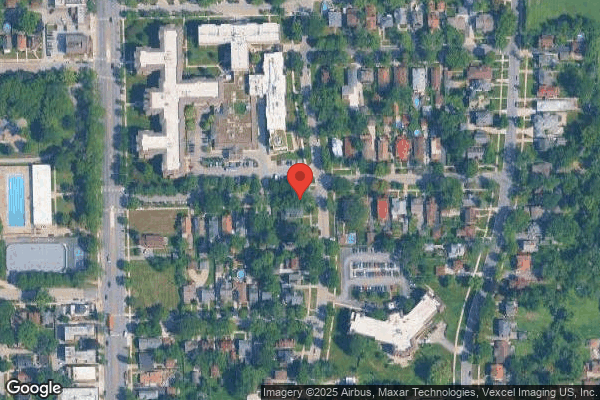
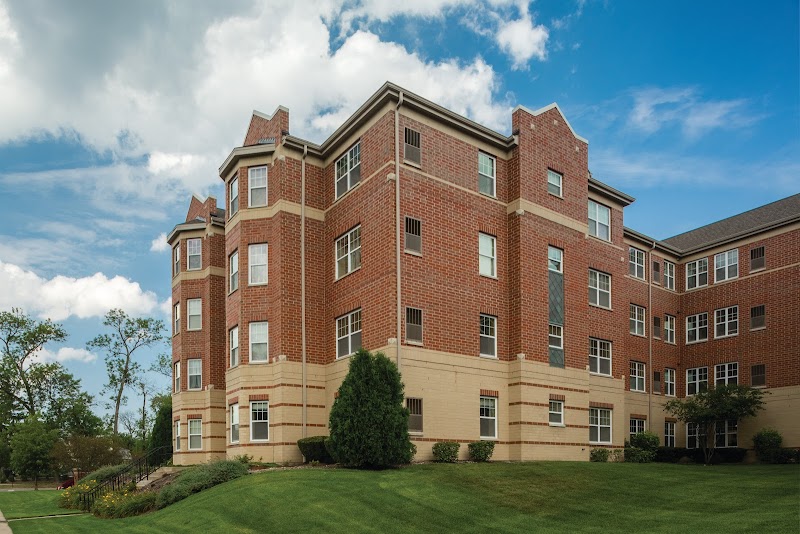

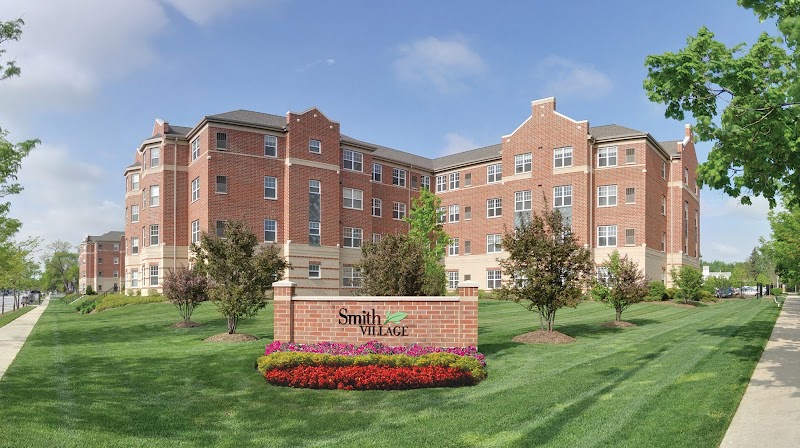
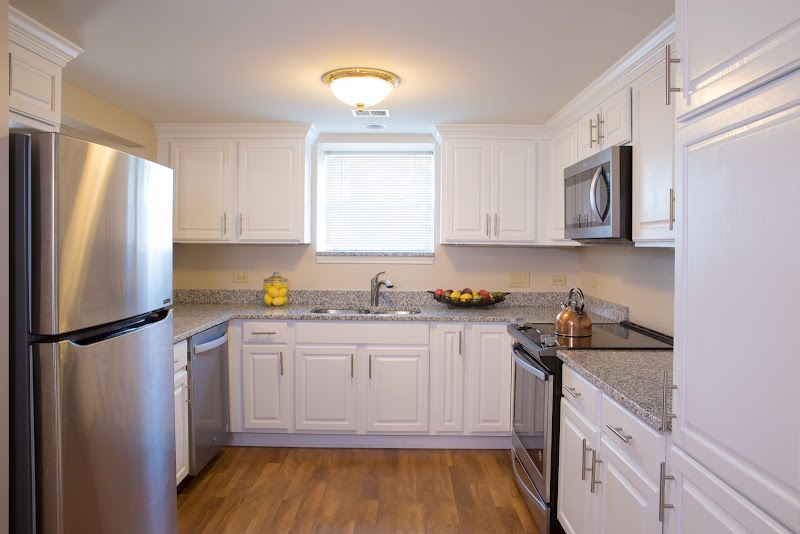
SMITH VILLAGE

2320 WEST 113TH PLACE, CHICAGO, IL 60643 (773) 474-7300
Non profit - Other 93 Beds Independent Data: November 2025
Trust Grade
40/100
#184 of 665 in IL
Last Inspection: September 2024

Within standard 12-15 month inspection cycle. Federal law requires annual inspections.

Overview

Smith Village in Chicago has a Trust Grade of D, which indicates below-average performance and some concerns about care quality. In terms of rankings, the facility is #184 out of 665 in Illinois, putting it in the top half of state facilities, and #58 out of 201 in Cook County, meaning only a few local options are better. The trend is improving, with serious issues decreasing from 7 in 2024 to just 2 in 2025, which is a positive sign. Staffing is a strong point, rated 5 out of 5 stars with a turnover rate of 44%, slightly below the state average, suggesting stability among caregivers. However, the facility has incurred fines totaling $100,443, which is higher than average, indicating ongoing compliance issues. Specific incidents raise concerns: one resident suffered a serious laceration requiring 18 stitches due to a loose bed frame during a transfer, and another resident had a skin condition that went unnoticed, leading to a serious health issue that required surgical intervention. While the facility has good staffing and is trending positively, these incidents highlight serious lapses in care and safety that families should consider before making a decision.

Trust Score
D
40/100
In Illinois
#184/665
Top 27%
Safety Record
High Risk
Review needed
Inspections
Getting Better
7 → 2 violations
Staff Stability
○ Average
44% turnover. Near Illinois's 48% average. Typical for the industry.
Penalties
○ Average
$100,443 in fines. Higher than 63% of Illinois facilities. Some compliance issues.
Skilled Nurses
✓ Good
Each resident gets 69 minutes of Registered Nurse (RN) attention daily — more than 97% of Illinois nursing homes. RNs are the most trained staff who catch health problems before they become serious.
Violations
⚠ Watch
20 deficiencies on record. Higher than average. Multiple issues found across inspections.
★★★★☆
4.0
Overall Rating
★★★★★
5.0
Staff Levels
★★☆☆☆
2.0
Care Quality
★★★☆☆
3.0
Inspection Score
Stable
2024: 7 issues
2025: 2 issues

The Good

  • 5-Star Staffing Rating · Excellent nurse staffing levels
  • Full Sprinkler Coverage · Fire safety systems throughout facility
  • No fines on record
  • Staff turnover below average (44%)

    4 points below Illinois average of 48%

Facility shows strength in staffing levels, fire safety.

The Bad

Staff Turnover: 44%

Near Illinois avg (46%)

Typical for the industry

Federal Fines: $100,443

Well above median ($33,413)

Significant penalties indicating serious issues

The Ugly 20 deficiencies on record

4 actual harm
Feb 2025 2 deficiencies 2 Harm
SERIOUS (G) 📢 Someone Reported This

A family member, employee, or ombudsman was alarmed enough to file a formal complaint

Actual Harm - a resident was hurt due to facility failures

Accident Prevention (Tag F0689)

A resident was harmed · This affected 1 resident

**NOTE- TERMS IN BRACKETS HAVE BEEN EDITED TO PROTECT CONFIDENTIALITY** Based on interview and record review the facility failed to ensure that proper number of staff were used in transferring one of ...

Read full inspector narrative →
**NOTE- TERMS IN BRACKETS HAVE BEEN EDITED TO PROTECT CONFIDENTIALITY** Based on interview and record review the facility failed to ensure that proper number of staff were used in transferring one of four residents (R1) to prevent accidental hazard in the sample who requires two persons assist in transfers from chair to bed or bed to chair. This failure affected R1 who was transferred from chair to bed by one staff instead of two. As a result, R1 sustained laceration of left lower leg, was sent to the hospital and the laceration required eighteen (18) sutures to be repaired. This has a potential to affect all 70-residents residing at the facility. Findings include: R1's medical record admission Record showed that R1 was originally admitted to the facility on [DATE] and the latest admission date was 08/26/24 with a diagnosis list that includes but not limited to Unspecified intracapsular fracture of the left femur, subsequent encounter for closed fracture with routine healing, aftercare following joint replacement surgery, syncope and collapse, unspecified atrial fibrillation, mixed hyperlipidemia, ataxic gait, muscle weakness(generalized), muscle wasting and atrophy, major depressive disorder, single episode unspecified, Unspecified Dementia unspecified severity without behavioral disturbance and anxiety. R1 was sent to the hospital on [DATE] and was treated for diagnoses that includes laceration of lower leg initial encounter and cellulitis of left lower extremity. R1 was discharged from the facility on 10/11/2024. According to facility incident report, on 10/02/24 R1 was assisted from chair to the bed by V5 CNA (Certified Nurse's aide) not following the plan of care of using two persons assist and, in the process, R1 sustained skin tear (referring to laceration to left lateral lower leg that required 18 (eighteen) sutures from the local hospital. R1's medical record PT (Physical Therapy) Evaluation and Treatment notes with certification period 8/16/2024 to 10/14/2024 showed documentation that transfers from chair/bed-to chair transfer = dependent indicating that R1 is dependent on staff in performing this task, maximum of two person assist. R1 progress notes, V6 RN (Registered Nurse) describe the injury site as skin tear to LLE (Left Lower Extremity), hollow area noted adipose tissue exposed. On 02/06/2025 at 10:20am, V2 DON (Director of Nurse's) stated that the incident occurred during the evening shift and was reported 10/03/25. V2 stated that the CNA incorrectly transferred the resident (referring to R1). On 2/06/25 at 12:06pm, V8 CNA (Certified Nurse's aide) stated that she was usually assigned R1 in the morning shift when on duty. V8 stated that R1 needs two staff (persons) assistance when transferring from bed to wheelchair. V8 stated that the PT (Physical therapy) /OT (Occupational Therapy)/ Restorative department staffs are usually on the floor walking residents, and they will help with routine care of the residents as needed. In additional will bring R1 for meals and therapy. On 02/06/2025 at 12:09am, V9 (Restorative Nurse) stated that R1 is clinically compromised with ADL's (Activity of Daily Living) not wanting to get up. R1 had hip surgery and due to the surgery R1 was dependent on staff and not functionable. We educated the nursing staff including the CNAs that R1 was on hip precaution due to the hip surgery and R1 requires two persons assistant with transfers. All the residents have the green card or/and yellow card in their rooms that showed what kind of assistance needed and there is a 24-hour report on the computer that the CNAs can access to show the plan of care in assistant level. At 1:06pm V19 OT (Occupational Therapist) stated I worked with R1 and R1 needs two persons assist the day R1 was admitted to the day R1 was discharged . Staff must not transfer R1 by themselves, R1 becomes anxious, fearful due to fall history because R1 used to be very independent and now must depend on others. Multiple training was given to the family and staff before discharge from the (facility). V19 stated the PT/OT notes showed that R1 needs 2-person assistant with transfer and that for the incident on 10/02/2024, (V5) transferred R1 incorrectly by self and according to what was reported R1 got injured from (V5)'s action. At 1:16pm, V18 PT (Physical Therapist) stated that she is familiar with R1. V18 stated that R1 needs two (2) persons assistance with transfers. V18 stated that both herself and V19 do evaluation of the residents together to decide whether the resident needs a mechanical lift or sit to stand assistance. V18 stated that with R1, R1 needs 2 persons assistance with lateral transfer. V18 stated that R1 should not be transferred with a mechanical lift device because with any hip surgery and hemiarthroplasty that R1 had; it will force R1's hip to flexion greater that 90 degrees and this is contraindicated. The surveyor asks whether it is appropriate to transfer R1 with one person assist, V18 stated that transferring R1 alone is wrong. V18 stated that the staff must follow the green sheet in residents' room that showed the individual care needed which is updated as to resident needs. At 4:08pm, V5 CNA (Certified Nurse's Aide) stated that on that day (referring to 10/02/2024), I had given R1 a shower. Pulled R1 to the side of the bed for dinner. R1 tried to get out the wheelchair and R1 said I can do this, I (V5) put the gait belt around R1 and asked for R1 to reach for the bed side rails to turn into the bed easily and I picked up R1's legs and put it on the bed. That was when I noticed that R1 got a skin tear on the leg, I can't remember which leg. I left out of the room and called the nurse (referring to V6) who decided to send R1 to the hospital. When the surveyor asked V5 how many staff are needed and whether there is any transfer device used in transferring R1, V5 stated that in R1's case the needs were changing rapidly and by now I cannot remember what it was that day. V5 stated one person assistance means transfer must be done with one staff and use of gait belt, two persons assistance means two people with use of gait belt. The surveyor then asked if a resident is marked for two people assist and one staff did the transfer task, whether that is appropriate. V5 stated that will not be appropriate because the resident can fall, can have skin tear and staff can also injure self. On 2/10/2025 at 11:15am, V17 (Physician) stated that he cannot remember seeing the resident. V17 stated that the facility staff has reminded him of what happened with the incident (referring to 10/02/24 incident resulting in injury). V17 stated that skin tear can be managed with compression, dressing and we (referring to the facility) can keep the resident. If the resident must receive sutures, it is laceration, the resident must be sent out, it means they (facility) cannot take care of it there (facility). R1's Hospital report presented dated 10/2/2024 showed instructions documented that R1 was seen and evaluated after an injury that resulted in a laceration. In addition, R1 was treated for soft tissue infection. Facility Job Description for CNA (Certified Nursing Assistant) documented that the purpose of this position is to work under the direction of the charge nurse. Provides assists with all areas of ADL's. Assists in observing and reporting changes in resident's condition. Accountabilities and job duties listed includes but not limited to always understanding and adherence to resident rights. Ensures proper positioning of all residents while in bed or wheelchair, making sure that all mattresses and positioning device are in place, and carries out restorative programs. The facility job description for RN (Registered Nurse) documented that RN purpose is to be responsible for all nursing care administered to residents, including but not limited to overall supervision of the nursing assistants. Accountabilities and job duties listed includes but not limited to always understanding and adherence to resident rights.
SERIOUS (G) 📢 Someone Reported This

A family member, employee, or ombudsman was alarmed enough to file a formal complaint

Actual Harm - a resident was hurt due to facility failures

Deficiency F0909 (Tag F0909)

A resident was harmed · This affected 1 resident

**NOTE- TERMS IN BRACKETS HAVE BEEN EDITED TO PROTECT CONFIDENTIALITY** Based on observation, interview, and record review the facility failed to ensure that the bed frame is locked to the size of the...

Read full inspector narrative →
**NOTE- TERMS IN BRACKETS HAVE BEEN EDITED TO PROTECT CONFIDENTIALITY** Based on observation, interview, and record review the facility failed to ensure that the bed frame is locked to the size of the mattress for the safety of one resident (R1) reviewed for injury. As a result, R1's left lower leg made contact with the loose bed frame during transfer into bed causing a laceration. R1 was sent to the hospital and the laceration was repaired with 18 sutures. This has the potential to affect all 70 residents residing in the facility. Findings include: R1's medical record admission Record showed that R1 was originally admitted to the facility on [DATE] and latest admission date was 08/26/24 with diagnosis list that includes but not limited to Unspecified intracapsular fracture of the left femur, subsequent encounter for closed fracture with routine healing, aftercare following joint replacement surgery, syncope and collapse, unspecified atrial fibrillation, mixed hyperlipidemia, ataxic gait, muscle weakness(generalized), muscle wasting and atrophy, major depressive disorder, single episode unspecified, Unspecified Dementia unspecified severity without behavioral disturbance and anxiety. R1 was sent to the hospital on [DATE] and was treated for diagnoses that includes laceration of lower leg initial encounter and cellulitis of left lower extremity. R1 was discharged from the facility on 10/11/2024. According to facility incident report on 10/02/24, R1 was assisted from chair to the bed by V5 CNA (Certified Nurse's aide) not following the plan of care requiring use of two persons assist and, in the process, R1 sustain skin tear (referring to laceration to left lateral lower leg that required 18 (eighteen) sutures from the local hospital. On 02/10/25 at 4:29pm, V23 (Case Manager) was asked why V5 was written up for the incident on 10/02/2024? V23 stated that the write-up was for (V5) improperly transferring the resident (referring to R1). V23 stated that R1 was transferred with one-person assistance instead of 2-person assistance. V5 transferred R1 from wheelchair to bed and in the process R1 bumped the leg on the bedframe and caused the skin to open. Having 2-person would have made the transfer of R1 safe. After the facility administrative investigation of the cause of the skin tear (referring to the lower leg extremity laceration) we found out that the bed frame was larger than the bed mattress at the time of the transfer. The bed frame needed to be adjusted by pulling the lever (part of the bedframe) to adjust it, so it is stable. It was corrected after the incident. The surveyor asked who is responsible for making sure the bedframe is not larger than the mattress. V23 stated that the maintenance department are supposed to do that. On 2/11/25 at 9:02am, V25 Assistant Maintenance Manager EVS (Environment Services) stated that the bed frames maximum width is 42 inches, the facility standard mattress is 42, but the bedframe can be extended to about 80 inches. V25 stated that the bed frame can be adjusted down to 39 inches and if the mattress is narrower then it becomes a safety issue. The maintenance staff is responsible for making sure the bed frames are properly secured it's a safety issue. At 9:21am, V2 (DON) demonstrated on the bed frame with V25 and V26 present on how it was loose when the administration investigated the incident and what went wrong with the bed frame causing R1's injury laceration to lower left leg. V2 stated that the middle part of the bed frame was wider that the bed mattress causing R1's leg to make contact with the bed frame and resulted in the skin tear (Laceration). V2 stated that at the time of incident the bed frame was wider than the bed mattress and that's what caused the injury when the resident (R1) leg made contact (Bump) with the bed frame and that is what we reported (referring to IDPH (Illinois Department of Public Health)). On 2/11/25 at 9:22am, V26 EVSD (Environment Services Director) stated that we do not check on bed frames to check whether they are locked or loose. There is no reason for the bed frame to be out of place. V26 stated that all the facility beds should be at a 42 inches setting 100% of the time. The surveyor asked what measures have been put in place since the incident of 10/02/2024 to make sure this does not repeat itself. V2 who was present at the time stated that we (Facility) will have to put in a work order for the maintenance staff to come and check the bed frame. At 9:36am, the surveyor asked how they are monitoring the safety of the beds, V2 stated that a system must be put in place for checking the bed frames. As at 4:20pm on 2/11/25 the facility was unable to provide any work order or documentation that shows that a process has been put in place to ensure safety and prevention of such incident. The facility in-service instruction on Bed frame size, how and when to adjust the size, mattress sizes indicated that as a safety precaution the staff should make sure the bedframes are adjusted to match the mattress size correctly. Regular mattress size 42 inches wide, APM 42 inches wide, and Bariatric APM 48 inches wide. Bed frames can extend in length to 84 inches if needed. The facility policy on Safe and Home Environment with implementing date of 2/10/23 documented in part that in accordance with residents' rights, the facility will provide safe, clean, comfortable, and homelike environment which includes but not limited to ensuring that the resident can receive care and services safely and does not pose a safety risk. The facility Job description for job title Director of Facility management documented that the purpose of this position primary responsibilities includes but not limited to oversight of building and grounds maintenance, and to daily management of the facility operations and direct supervision of staff involved in these operations. Accountabilities and job duties listed includes but not limited to always understanding and adherence to resident rights, ensuring that the (facility) residents are always safe and secure. Listed primary job duties includes but not limited to ensures compliance with health safety and environment regulations. Making regular rounds.
Sept 2024 7 deficiencies
CONCERN (D)

Potential for Harm - no one hurt, but risky conditions existed

Resident Rights (Tag F0550)

Could have caused harm · This affected 1 resident

Based on observation, interview and record review, the facility failed to ensure that one resident's (R11) urinary catheter drainage bag was covered with a privacy cover. This failure affected one res...

Read full inspector narrative →
Based on observation, interview and record review, the facility failed to ensure that one resident's (R11) urinary catheter drainage bag was covered with a privacy cover. This failure affected one resident (R11) in a sample of 44 residents reviewed for dignity. Findings include: On 09/17/2024 at 08:49am while in the hallway upon entry into R11's room, a urinary catheter drainage bag was observed hanging off the right-side lower bed frame of R11's bed. R11 was observed lying in the bed. R11's urinary catheter drainage bag contained yellow urine and was not covered with a privacy bag. R11's bed is the only bed in the room and the uncovered urinary catheter drainage bag was visible to others walking past R11's room door when the door was open. On 09/17/2024 at 8:53am this observation was brought to the attention of V12(LPN/Licensed Practical Nurse). V12 stated the urinary catheter drainage bag should be covered with a privacy bag. On 09/17/2024 at 8:54am observed V12(LPN) placing R11's urinary catheter drainage bag into a blue privacy bag. On 09/18/2024 at 11:10am V2(DON/Director of Nursing) stated the resident's urinary catheter drainage bag should be in a privacy bag, this provides dignity for the resident. R11's diagnosis includes but are not limited to neuromuscular dysfunction of bladder, unspecified, retention of urine, unspecified, difficulty in walking, not elsewhere classified, and muscle weakness (generalized). R11's (08/12/2024) Resident Assessment Instrument documents, in part, Section C. Brief Interview for Mental Status (BIMS) score 15, indicating R11's cognition is intact. R11's (08/12/2024) Resident Assessment Instrument documents, in part, Section H. Bladder and Bowel H0100. Appliances A. Indwelling catheter. R11's Order Summary Report, with active orders as of 09/18/2024 documents, in part, Catheter change foley catheter- monthly with 16FR(French) foley with 10cc balloon inflation one time a day every 30 days. Catheter: change foley drainage bag -drainage bag and leg bag every 1 week one time a day every Wednesday night. Routine Foley Catheter Care every shift. Reviewed facility's policy titled Catheter Care with an implemented date of June 2015, revised date of March 30, 2023, which documents, in part, 2. Privacy bags will be available and catheter drainage bags will be covered at all times while in use. Reviewed the facility's policy titled Facility Responsibilities Resident Rights with an implemented date of 2/10/23, which documents in part, 1. Resident Rights. a. The facility will treat each resident with respect and dignity, and care for each resident in a manner and environment that promotes maintenance or enhancement of his or her quality of life, recognizing each resident's individuality.
CONCERN (D)

Potential for Harm - no one hurt, but risky conditions existed

Menu Adequacy (Tag F0803)

Could have caused harm · This affected 1 resident

Based on observation, interview, and record review the facility failed to follow a resident's diet order for fluid restriction. This failure affected one resident (R37) out of 44 residents in the samp...

Read full inspector narrative →
Based on observation, interview, and record review the facility failed to follow a resident's diet order for fluid restriction. This failure affected one resident (R37) out of 44 residents in the sample. Findings include: R37's face sheet shows that R37's has diagnosis which include but not limited to acute on chronic diastolic (congestive) heart failure, chronic kidney disease and organ limited amyloidosis. R37's Brief Interview for Mental Status (BIMS) dated 08/19/24 shows that R37 has a BIMS score of 10 which indicates that R37 has some cognitive impairments. On 09/16/24 at 12:30 pm, R37's was observed in the second-floor dining room during the lunch meal. Surveyor observed R37 drink a 7.5 oz (ounce) can of ginger ale soda and then a 6.0 oz cup of water. Surveyor observed R37's diet card orders next to R37's lunch meal with the following dietary order documented in part: Diet Order: Regular texture no added salt, fluids thin. Notes Fluid restriction: provide the following only: 6 oz (ounces) water, coffee, juice, or soda- one of these options only . Alerts: 1500 mL (milliliter) fluid restrictions. On 09/16/24 at 12:42 pm, Surveyor questioned V7 (Dietician) regarding R37's lunch meal diet card fluid restrictions orders and V7 stated that R37 should have either water or ginger ale but not both due to R37's fluid restriction. V7 then stated, I (V7) did not give him (R37) that (referring to R37's water and ginger ale). The servers provide the drinks before the meals are served. They (referring to the servers) need to read the ticket (referring to R37's diet card). When V7 was asked regarding what could happen if a resident's diet card for fluid restrictions are not followed and V7 stated, R37 has CHF (Congestive Heart Failure) and if he (R37) drinks too much fluid, he (R37) could have issues with his (R37's) heart. I (V7) will in-service the servers. R37's diet card dated Mon (Monday) Sep (September) 16/24 shows that R37 has a diet order Diet Order: Regular texture no added salt, fluids thin. Notes Fluid restriction: provide the following only: 6 oz (ounces) water, coffee, juice, or soda- one of these options only . Alerts: 1500 mL (milliliter) fluid restrictions. R37's Physician Order Sheet (POS) dated 09/16/24 documents, in part: Diet: Fluid Restriction: 1500 mL daily 1080 mL, Nursing 420 mL every shift. R37's care plan presented on 09/17/24 documents, in part: Interventions: Provide fluid restriction as ordered per MD (Medical Director) (1500 mL (milliliter) day) (Dietary 1080 mL Nursing 420 mL. The facility's policy dated March 2022 and titled Therapeutic Diet Orders documented in part: Policy: the facility provides all residents with foods in appropriate form and/or the appropriate nutritive content as prescribed by physician, and/or assessed by the interdisciplinary team to support the residents treatment/plan of care, in accordance with his/her goals and preferences.
CONCERN (D)

Potential for Harm - no one hurt, but risky conditions existed

Deficiency F0813 (Tag F0813)

Could have caused harm · This affected 1 resident

On 09/16/2024 at 10:53am observed a black and gray refrigerator sitting in R29's room. Surveyor observed no thermometer in the inside of the refrigerator and no refrigerator temperature log to record ...

Read full inspector narrative →
On 09/16/2024 at 10:53am observed a black and gray refrigerator sitting in R29's room. Surveyor observed no thermometer in the inside of the refrigerator and no refrigerator temperature log to record a daily temperature affixed to R29's personal refrigerator. Surveyor observed 6 cartons of a nutritional drink, 2 containers of Jello, applesauce, and 27 cans of soda in R29's personal refrigerator. On 09/17/2024 at 10:12 am V13(RN/Registered Nurse) stated I am not sure who is responsible for maintaining and taking the temperatures in the refrigerators for resident's who have personal refrigerators. On 09/17/2024 at 2:09pm V8 (Environment Service Director) stated I do not know who is monitoring the temperature daily in resident's personal refrigerators. On 09/18/2024 at 11:10 am V2(DON/Director of Nursing) stated the resident's personal refrigerators are maintained by the resident's family. V2 stated the facility does not have a policy regarding the care and maintenance of resident's personal refrigerators. V2 stated if the temperature in a resident's personal refrigerator is not within an acceptable range, the food in the resident's personal refrigerator will spoil and cause the resident to experience gastrointestinal upset or discomfort. R29's Brief Interview for Mental Status (BIMS) dated 07/25/2024 Section C C0500 documents that R29 has a BIMS score of 13 which indicates that R29 is cognitively intact. Based on observation, interview and record review the facility failed to maintain temperature logs and provide thermometers for resident's personal refrigerators for two residents R1 and R29 to ensure the safety of the residents. This failure has the potential to affect all three residents (R1, R14 and R29) with personal refrigerators. Findings include: On 9/16/2024 at 10:50am surveyor observed R1's refrigerator with no log or thermometer. On 9/18/2024 at 10:37pm surveyors observed R1's refrigerator with no log or thermometer. On 9/18/2024 at 10:38am V20 (Certified Nursing Assistant) stated that the kitchen staff is responsible for labeling and checking the food in resident's personal refrigerators every day. On 9/18/2024 at 9:18am V2 (Director of Nursing) stated that the family is responsible for cleaning, unthawing and discarding food from the resident's personal refrigerator. Policy titled Use and Storage of Food Brought in by Family or Visitors with a revised date of 3/26/2023 documents, in part, It is the right of the residents of this facility to have food brought in by family or other visitors, however, the food must be handled in a way to ensure the safety of the resident.
CONCERN (E)

Potential for Harm - no one hurt, but risky conditions existed

Pharmacy Services (Tag F0755)

Could have caused harm · This affected multiple residents

Based on observation, interview, and record review the facility staff failed to complete the controlled substance shift to shift count form which is utilized to complete a shift-to-shift count for con...

Read full inspector narrative →
Based on observation, interview, and record review the facility staff failed to complete the controlled substance shift to shift count form which is utilized to complete a shift-to-shift count for controlled substances. This failure has the potential to affect all 27 residents on the second floor and all 16 residents on the first floor. Findings include: On 09/17/2024 at 10:00AM with V13(RN/Registered Nurse) reviewed the second-floor medication cart's Controlled Substance Shift to Shift Count form for September 2024, this form is used by the facility for shift change accountability for controlled substances. The Nurse On and/or Nurse Off initial boxes were left blank for: September 08, 2024, PM Shift, - Nurse Off September 09, 2024, AM Shift-Nurse On September 11, 2024, PM Shift-Nurse Off On 09/17/2024 at 10:15AM with V14(RN/Registered Nurse) reviewed the first-floor medication cart's Controlled Substance Shift to Shift Count form for September 2024, this form is used by the facility for shift change accountability for controlled substances. The Nurse Off initial box was left blank for: September 04, 2024, 6PM - Nurse Off On 09/17/2024 at 10:06AM V13(RN/Registered Nurse) stated the nurses have been having trouble with the controlled substance shift to shift count sheets and getting confused. V13 stated two nurses are to count the controlled substances and sign on and off on the controlled substances shift to shift count sheet. V13 stated the nurses coming in to work and the nurses leaving for the day are to count the tablets in the medication cards of controlled substances to make sure the count of tablets are correct. V13 stated when both nurses agree that the count is correct, then both nurses initial the controlled substance shift to shift count sheet indicating the count for the controlled substances is correct. On 09/17/2024 at 10:17AM V14(Registered Nurse) stated the nurse coming in to work signs the controlled substance shift to shift count sheet with the nurse leaving the shift for the day. V14 stated the two nurses are to count the controlled substances together. V14 stated after both nurses verify that the count of the controlled substances is correct, then both nurses initial the controlled substance shift to shift count sheet for the correct date and time. On 09/18/2024 at 11:10AM V2(Director of Nursing) stated the nurses are responsible for completing the controlled substance shift to shift count sheets. V2 stated the incoming nurse is to count the controlled substances with the outgoing nurse to make sure the count of the controlled substances is correct. V2 stated the purpose of the controlled substance shift to shift count sheet is to make sure all narcotics are accounted for. V2 stated the nurses are to notify me, the DON (Director of Nursing) if the controlled substances shift to shift count sheet is not initialed and completed for each shift. On 09/18/2024 reviewed the facility's policy (dated June 2018, with a revision date of August 2024) titled Controlled Substance Administration & Accountability which documents, in part, 9. Inventory Verification: b. Two licensed nurses account for all controlled substances and access keys at the end of each shift.
CONCERN (E)

Potential for Harm - no one hurt, but risky conditions existed

Infection Control (Tag F0880)

Could have caused harm · This affected multiple residents

Based on observation, interview, and record review the facility failed to ensure a resident (R21) with a chronic wound was placed on Enhanced Barrier Precautions (EBP). This failure has the potential ...

Read full inspector narrative →
Based on observation, interview, and record review the facility failed to ensure a resident (R21) with a chronic wound was placed on Enhanced Barrier Precautions (EBP). This failure has the potential to affect all 27 residents on the second floor. Findings include: On 09/16/24 at 9:50 am, V1 (Administrator) presented a facility census of 27 residents on the second floor. R21's face sheet shows that R21's has diagnosis which include but not limited to unspecified malignant neoplasm of skin and other symptoms and signs involving the musculoskeletal system. R21's Brief Interview for Mental Status (BIMS) dated 06/24/24 shows that R21 has a BIMS score of 6 which indicates that R21 has some cognitive impairments. On 09/17/24 at 9:52 am, Surveyor observed R21 in bed resting with no EBP sign or Personal Protective Equipment (PPE) bin inside or near R21's room. On 09/17/24 at 9:54 am, V9 (Registered Nurse, RN, Wound Care Nurse) and V10 (Certified Nursing Assistant, CNA) were observed performing high-contact resident care activities (wound care to R21's left ischium stage 4 pressure ulcer chronic wound and ADL (Activities of Daily Living) care (providing hygiene and changing R21's incontinence pad that was saturated with stool) without wearing PPE (gown) in R21's room. On 09/17/24 at 10:00 am, V9 (Registered Nurse, RN, Wound Care Nurse) was asked regarding residents who require EBP and V9 stated that residents with indwelling catheters, ostomy, and wounds require EBP. When V9 was asked regarding R21 requiring EBP V9 stated, I (V9) don't know why he (R21) is not on EBP. You (referring to the surveyor) will have to ask V3 (Infection Preventionist). When V9 was asked regarding the importance of residents who require EBP due to having a chronic wound being placed on EBP and V9 stated, To avoid an infection. When V9 was asked regarding the proper PPE for residents who require EBP for high contact care such as wound care dressing changes and ADL care and V9 stated, A gown and gloves. 09/17/24 at 10:03 am, V10 was asked regarding residents who require EBP and V10 stated that V10 is made aware of residents who require EBP by checking the resident's room for a EBP sign placed on the resident's door and a PPE bin in the residents' room. V10 explained that if a resident does not have a EBP sign on the resident's door then V10 is not aware of the resident requiring EBP. On 09/17/24 at 10:13 am, V11 (Certified Nursing Assistant, CNA, Agency) was observed performing ADL care (dressing) with R21 without wearing proper EBP PPE (gown). On 09/17/24 at 10:14 am, V3 (Infection Preventionist, IP, Registered Nurse, RN) was asked regarding residents who require EBP and V3 stated, R21 does not require EBP. His (R21) wound is not chronic and does not have a history of MDRO (Multidrug-Resistant Organism). Only wounds that are chronic with MDRO require EBP. If his (R21) was a heavily draining wound without a bandage, then we would place him (R21) on EBP. Surveyor questioned V3 regarding wounds that are considered chronic wounds and V3 stated, I (V3) will have to look at his (R21) co-morbidities. On 09/17/24 at 10:20 am, V2 (Director of Nursing, DON) was asked regarding a resident with EBP and V2 stated that residents with lines, drains, catheters, PICC (Peripherally Inserted Central Catheter) lines, history of MDRO's and chronic wounds require EBP. When V2 was asked regarding the purpose of residents being placed on EBP and V2 stated, To protect the staff and residents from MDRO transmission. When V2 was asked regarding how staff are made aware of residents who require EBP and V2 stated that a EBP sign is placed on the resident's door and through the nurses 24-hour report. When V2 was asked regarding what could happen if a resident who requires EBP is not placed on EBP and V2 stated, There is a risk of the resident getting an infection. The facility undated document titled Enhanced Barrier Precautions Everyone Must: Clean their hands, including before entering and when leaving the room. Providers and staff must also: Wear gloves and a gown for the following high contact resident care activities Dressing, bathing/showering, transferring, changing linens, providing hygiene, changing briefs for assisting with toileting, device care or use: Central line, urinary catheter, feeding tube, tracheostomy. Wound care: Any skin opening requiring a dressing. The facility's document dated October 20, 2023, and titled Enhanced Barrier Precautions documents, in part: Policy: it is the policy of this facility to implement enhanced barrier precautions for the prevention of transmission of multidrug resistant organisms (MDRO's). Definitions: Enhanced barrier precautions refer to the use of gown and gloves for use during high contact resident care activities for residents known to be colonized or infected with MDRO as well as those at increased risk of MDRO acquisitions (e.g. (example), residents with wounds or indwelling medical devices). Policy explanation and compliance guidelines: 2. Initiation of enhanced barrier precaution b. Enhanced barrier precautions will be initiated for residents with any of the following i. Significant wounds e.g., chronic wounds or skin openings such as pressure ulcers, diabetic foot ulcers, unhealed surgical wounds, chronic venous stasis ulcers, stomas) and/or and dwelling medical devices (e.g., central lines, midlines, hemodialysis catheters, urinary catheters, plural drain, feeding tubes etc.) Even if the resident is not known to be infected or colonized with MDRO. Not intended for minor skin tears or cuts. 4. High contact resident care activities include: a. Dressing. b. Bathing. c. Transferring. d. Providing hygiene. e. Changing linens. f. Changing briefs or assisting with toileting. g. Device care or use: centralized, urinary catheters, feeding tubes. h. Wound care: any skin openings requiring a dressing. 7. Enhanced barrier precautions should be used for the duration of the affected residents stay in the facility or until the wound heals or indwelling medical device is removed. R21's Physician Order Sheet (POS) shows that R21 has orders for Left Ischium: Cleanse with skin integrity, pat, dry, lightly pack with collagen, apply moisture barrier to the peri wound and cover with ABD (abdominal) pad. R21's POS dated 09/17/24 documents in part: Precautions: Enhanced Barrier Precautions. R21's care plan dated 09/17/24 documents, in part: Focus: Enhanced Barrier Precautions initiated due to resident having chronic wound.
CONCERN (F)

Potential for Harm - no one hurt, but risky conditions existed

Food Safety (Tag F0812)

Could have caused harm · This affected most or all residents

Based on observation, interview and record review the facility failed to ensure foods were labeled, dated and maintained to prevent the spread of foodborne illness to all residents receiving oral nutr...

Read full inspector narrative →
Based on observation, interview and record review the facility failed to ensure foods were labeled, dated and maintained to prevent the spread of foodborne illness to all residents receiving oral nutrition. This failure has the potential to affect all residents. Findings include: On 9/15/2024 at 9:54am surveyor observed a 1.5 lb. container of uncovered beef patties (sliders) out of its original packaging and a roll of pepperoni wrapped in plastic with no received date or discard date. There was a bag of tilapia fish, not individually wrapped but open to air in its original container with no discard date. On 9/15/2024 at 9:57am V4 (Dietary Manager) stated no, they (beef patties-sliders) should not be in the freezer uncovered and all food items should be covered and have a received and discard date because you will not know when to discard the items. On 9/15/2024 at 10:02am surveyor observed two 5-gallon tubs of chocolate and pecan ice cream with the top not secured on the tubs in the dairy freezer. On 9/16/2024 at 10:17am surveyor observed (2) 1.5-gallon containers of Bread Battered Cod and Edamame Dumplings (1) with no lid (open to air) and not dated. On 9/16/2024 at 10:17am V4 (Dietary Manager) stated, yes, they (dumplings and bread battered cod) should be covered and dated to protect from cross contamination. Date Marking for Food Safety with a revised date of March 2022 documents, in part, the facility adheres to a date marking system to ensure the safety of ready-to-eat, time/temperature control for food safety. 2. The food shall be clearly marked to indicate the date or day by which the food shall be consumed or discarded. 3. The individual opening or preparing a food shall be responsible to cover, label and date marking the food at the time the food is opened or prepared. 6. The Executive Chef, or designee shall be responsible for checking the refrigerator daily for food items that are expiring and shall discard accordingly. Position Analysis for Dining Service Manager dated February 2020 documents, in part, Under the guidance of the Director of Dining Services, is responsible for overall service in the main dining room, health care, personal care, coffee shop, and special functions. These areas will be operated within established objectives, standards, policies, and procedures and 2. Assists in providing quality food. Undated job description titled Director of Dining Services, documents, in part, Oversee and participate in the preparation and service of food and beverage items in adherence to company food standards for preparation, presentation, sanitation and safety (meeting HACCP and OSHA guidelines) and portion control. Food Safety Policy with a revised date of 3/29/2023 documents, in part, It is the policy of this facility to procure food from sources approved or considered satisfactory by federal, state and local authorities. Food will also be stored, prepared, distributed and served in accordance with professional standards for food service safety. 1. Food safety practices shall be followed throughout the facility's entire food handling process. This process begins when food is received from the vendor and ends with delivery of the food to the resident. B. Storage of food in a manner that helps prevent deterioration or contamination of the food, including from growth of microorganisms. 3. Facility staff shall inspect all food, food products, and beverages for safe transport and quality upon delivery/receipt and ensure timely and proper storage. C. Refrigerated storage - Practices to maintain safe refrigerated storage include: iv. Labeling, dating, and monitoring refrigerated food, including, but not limited to leftovers, so it is used by its use-by date, or frozen (where applicable)/discarded; and v. Keeping foods covered or in tight containers.
CONCERN (F)

Potential for Harm - no one hurt, but risky conditions existed

Garbage Disposal (Tag F0814)

Could have caused harm · This affected most or all residents

Based on observation, interview, and record review the facility failed to ensure the garbage dumpster lids were closed. This failure has the potential to affect all residents residing in the facility....

Read full inspector narrative →
Based on observation, interview, and record review the facility failed to ensure the garbage dumpster lids were closed. This failure has the potential to affect all residents residing in the facility. Findings include: On 9/16/2024 at 10:11am surveyor observed a blue garbage dumpster with both lids open. Surveyor observed V4 (Dining Service Manager) close both lids on the blue garbage dumpster. On 9/16/2024 at 10:11am V4 (Dining Service Manager) stated, no, the lids should not be open, but the CNAs use the dumpsters too. On 9/18/2024 at 12:30pm V8 (Environment Service Director) stated that the dumpster lids should be closed on the dumpsters. Policy titled Disposal of Garbage and Refuse with an implemented date of 2/10/2023, documents, in part, Garbage and refuse containers shall be covered when not in use and 7. Containers and dumpsters shall be kept covered when not being loaded. Undated job description titled EVS Director documents, in part, Plans, organizes and directs all functions of Environmental Services to provide for a safe, clean, functional and comfortable environment, adhering to regulatory requirements.
Oct 2023 5 deficiencies
CONCERN (E)

Potential for Harm - no one hurt, but risky conditions existed

Resident Rights (Tag F0550)

Could have caused harm · This affected multiple residents

On 10/17/23 at 11:51 AM, observed V12 (Certified Nursing Assistant) sitting at head of a table in the 2nd unit dining room. On 10/17/23 at 11:54 AM, observed V12 pick up R42's utensil, place utensil i...

Read full inspector narrative →
On 10/17/23 at 11:51 AM, observed V12 (Certified Nursing Assistant) sitting at head of a table in the 2nd unit dining room. On 10/17/23 at 11:54 AM, observed V12 pick up R42's utensil, place utensil into R42's food and brought utensil to R42's mouth and R42 accepted the food from the utensil. V12 then put R42's utensil down on the table and turned toward R68, away from R42. R42 made no attempt to feed herself. On 10/17/23 at 11:56 AM, observed V12 pick up R68's utensil, place utensil into R68's food and brought utensil to R68's mouth. Observed R68 accept the food. R68 made no attempt to feed self. V12 then put R68's utensil down on the table and turned toward R42, away from R68. On 0/17/23 at 11:57 AM, observed V12 pick up R42's utensil, place utensil into R42's food and brought utensil to R42's mouth. Observed R42 accept the food from the utensil. V12 then put R42's utensil down on the table and picked up R42's water glass and brought it to R42's mouth. Afterwards, V12 turned back toward R68, away from R42. On 10/17/23 at 11:58 AM, observed V12 pick up R68's utensil, place utensil into R68's food and brought utensil to R68's mouth. Observed R68 accept the food. V12 then put R68's utensil down on the table and turned toward R42, away from R68. R68 made no attempt to feed herself. On 10/17/23 at 12:02 PM, observed V12 pick up R42's utensil, place utensil into R42's food and brought utensil to R42's mouth. Observed R42 accept the food. V12 then put R42's utensil down on the table and turned toward R68, away from R42. R42 made no attempt to feed herself. On 10/17/23 at 12:03 PM, observed V12 pick up R68's utensil, place utensil into R68's food and brought utensil to R68's mouth. Observed R68 accept the food. V12 then put R68's utensil down on the table and turned toward R42, away from R68. On 10/17/23 at 12:04 PM, observed V12 pick up R42's utensil, place utensil into R42's food and brought utensil to R42's mouth. Observed R42 accept the food. V12 then put R42's utensil down on the table and turned toward R68, away from R42. On 10/17/23 at 12:05 PM, observed V12 pick up R68's utensil, place utensil into R68's food and brought utensil to R68's mouth. Observed R68 accept the food. V12 then put R68's utensil down on the table and turned toward R42, away from R68. On 10/17/23 at 12:06 PM, observed V12 pick up R42's utensil, place utensil into R42's food and brought utensil to R42's mouth. Observed R42 accept the food. V12 then put R42's utensil down on the table and turned toward R68, away from R42. This process of V12 giving R42 and then R68 a bite of food back and forth continued until 12:25 PM. Surveyor did not observe R42 or R68 make any attempt to feed themselves during this time period. On 10/18/23 at 11:29 AM, V19 (Food Server) stated that the meal tickets are organized and distributed by room number, not by table in the unit dining room. On 10/18/23 at 12:26 PM, in the 2nd unit dining room observed V6 (Licensed Practical Nurse) standing over R8 while feeding R8 food. Did not observed R8 make any attempt to feed herself. On 10/18/23 at 12:28 PM, when V6 saw surveyor watching V6 standing while feeding R8, V6 quickly turned around and pulled a chair over from the wall to the table, sat down in the chair and continued to feed R8 again. On 10/18/23 at 3:35 PM, V16 (Registered Dietitian) stated the staff should be sitting down when feeding a resident, not standing. V16 stated it is a dignity and safety issue. The resident who is dependent on staff for feeding needs the staff members full attention. Staff should be feeding one resident at a time at eye level so that they can be monitored closely for choking or swallowing issues. V16 stated if a staff member is getting pulled away then they are not providing their full attention, and this would be doing a disservice to the resident. On 10/19/23 at 8:35 AM, V17 (Restorative Nurse) stated that residents who require feeding should be fed one at a time and staff should be sitting down next the resident, at eye level, not standing. V17 stated this is because of safety and dignity. V17 stated, I wouldn't want anybody standing over me when I was being fed and that this could be viewed as intimidating to a resident, which could make a resident fearful. R8's diagnosis included but not limited to Dementia, Dysphagia, Muscle Weakness. R8's MDS (Minimum Data Set) undated indicates severe cognitive impairment with BIMS (Brief Interview for Mental Status) 3/15. R42's diagnosis included but not limited to Muscle Weakness, Dementia, Acute Respiratory Failure with Hypoxia, Muscle Wasting/Atrophy, Anxiety. R42's MDS (Minimum Data Set) undated indicates severe cognitive impairment with BIMS (Brief Interview for Mental Status) 6/15. R68's diagnosis included but not limited to Malaise, Weakness, Muscle Wasting and Atrophy, Alzheimer's Disease. R68's MDS (Minimum Data Set) undated indicates severe cognitive impairment with BIMS (Brief Interview for Mental Status) 0/15. Facility policy titled Promoting/Maintaining Resident Dignity During Mealtimes dated 03/23/23 documents in part it is the practice of this facility to treat each resident with respect and dignity and care for each resident in a manner and in an environment that maintains or enhances his or her quality of life. Guidelines include feed only one resident at a time and all staff will be seated, if possible, while feeding a resident. Facility policy titled Facility Responsibilities - Resident Rights dated 02/10/23 document in part the resident has the right to a dignified existence and the facility will treat each resident with respect and dignity, and care for each resident in a manner and environment that promotes maintenance or enhancement of his or her quality of life. Based on observations, interviews, and record reviews, the facility failed to maintain residents' dignity during meals (R8, R12, R42, R68) and while using a urinary catheter drainage bag (a device in which urine drains into) for one resident (R43) in a sample of 37 residents. Findings include: On 10/17/2023 at 12:07 PM, R12, R42, and R68 were sitting at the same table in the dining room for lunch services. R42 and R68 had their lunch plates and were eating. R12 did not have a lunch plate. R12 only had lemonade and a cup of tea. V4 (Server) was plating and serving lunch plates to other residents at different tables. When surveyor went to the counter where V4 was plating, surveyor did not observe R12's meal ticket on the counter. At 12:13 PM, R12 stated I hope they bring my lunch plate sooner than later. At this time, R42 completed their lunch meal. At 12:15 PM, V4 served R12's lunch plate. Facility's Resident Food Services policy, last revised 01/2022, documents in part: Meals are served in a manner that enhances each resident's dignity and in an environment that is home inspired. Traditional Dining Service: Serve residents seated at one table at the same time. On 10/17/2023 at 10:43 AM and 11:02 AM, R43 was lying in bed. Urinary catheter drainage bag was hanging from the right side of the bed in plain view from the hallway. It was not in a privacy bag. On 10/18/2023 at 9:38 AM, R43 was lying in bed. Urinary catheter drainage bag remained hanging from the right side of the bed in plain view from the hallway. During an interview with V2 (Director of Nursing) on 10/18/2023 at 11:46 AM, V2 stated residents' urinary catheter drainage bags should be placed in a privacy bag when visible to other residents and guests. Facility's Catheter Care policy, last revised 06/2022, documents in part: It is the policy of this facility to ensure that residents with indwelling catheters receive appropriate catheter care and maintain their dignity and privacy when indwelling catheters are in use. Privacy bags will be available and catheter drainage bags will be covered at all times while in use.
CONCERN (E)

Potential for Harm - no one hurt, but risky conditions existed

Respiratory Care (Tag F0695)

Could have caused harm · This affected multiple residents

On 10/17/23 at 12:47 PM, observed oxygen concentrator at R56's bedside. Humidifier bottle was dated 09/11/23 and oxygen nasal cannula tubing was not dated. Nasal cannula oxygen tubing was laying on th...

Read full inspector narrative →
On 10/17/23 at 12:47 PM, observed oxygen concentrator at R56's bedside. Humidifier bottle was dated 09/11/23 and oxygen nasal cannula tubing was not dated. Nasal cannula oxygen tubing was laying on the floor. There was no container or storage bag observed at R56's bedside or in room. R56 stated that he uses the oxygen every night when he sleeps and that the staff removes the tubing in the morning and turns off the oxygen machine. R56 stated, the tubing is on the floor right now. On 10/17/23 at 12:50 PM, V6 (Licensed Practical Nurse) observed R56's humidification bottle dated 09/11/23 and stated the oxygen tubing and humidification bottle should each be labeled with a date and changed weekly. V6 observed R56's nasal cannula tubing on the floor and stated the oxygen tubing should be in a bag to keep it clean from bacteria and should not be on the floor. V6 stated she would change R56's oxygen tubing and humidification bottle right away. On 10/17/23 at 11:52 AM, observed R42 sitting in unit dining room with oxygen infusing via nasal cannula. On 10/17/23 at 12:55 PM, observed doorway outside of R42's room. There was no oxygen in use sign outside R42's doorway. On 10/17/23 at 12:57 PM, V6 stated a resident who is receiving oxygen should have a sign outside their doorway to their room indicating oxygen is in use. V6 observed outside R42's room and verbalized the R42 did not have an oxygen sign outside R42's room and that there should be a sign because R42 is receiving oxygen. R42's diagnosis included but not limited to Chronic Obstructive Pulmonary Disease (COPD), Muscle Weakness, Dementia, Acute Respiratory Failure with Hypoxia, Muscle Wasting/Atrophy, Anxiety. R42's Physician Order Sheet October 2023 in part documents in part 2-liter oxygen with nasal cannula. R42's active care plan printed 10/17/23 documents in part R42 has oxygen therapy as ordered by physician. R42's MDS (Minimum Data Set) undated indicates severe cognitive impairment with BIMS (Brief Interview for Mental Status) 06/15 and special treatments include oxygen therapy. R56's diagnosis included but not limited to Shortness of Breath, Muscle Wasting and Atrophy, Muscle Weakness, Heart Failure. R56's Physician Order Sheet October 2023 in part documents in part administer oxygen at 3 liters per nasal cannula for Shortness of Breath. R56's active care plan for oxygen therapy documents in part R42 requires oxygen per nasal cannula PRN and nightly at 3 liters per nasal cannula for shortness of breath and interventions include to change tubing & nasal cannula per policy. R56's MDS (Minimum Data Set) undated indicates moderate cognitive impairment with BIMS (Brief Interview for Mental Status) 09/15 and special treatments include oxygen therapy. Facility policy titled Oxygen Administration dated March 2023 documents in part change oxygen tubing and mask/cannula weekly, keep delivery devices covered in a plastic bag when not in use, oxygen warning signs must be placed on the door of the resident's room, and possible risks and complications include respiratory infections related to contaminated humidification systems. On 10/17/23 at 10:40 AM, surveyor and V18 [Licensed Practical Nurse] observed R25's oxygen infusing per nasal canula not labeled, no date, and oxygen humidifier bottle not labeled, no date. On 10/17/23 at 10:42 AM, V18 stated, The oxygen tubing and oxygen humidifier bottle should have a date. The night nurse is responsible to changing and dating the oxygen tubing and humidifier bottle weekly with a date. Based on observation, interview and record review the facility failed to label/date 3 (R25, R32, R56) of 3 residents oxygen tubing, failed to properly store 2 (R32, R56) of 2 residents oxygen tubing and 1 (R32) nebulizer set up to prevent contamination, failed to change R56's oxygen humidifier bottle, and failed to have an oxygen in use signage posted for 1 (R42) resident reviewed for oxygen therapy in a sample of 18. Findings Include: R32 has diagnosis not limited to Acquired Absence of Bilateral Breasts and Nipples, Acute and Chronic Respiratory Failure with Hypercapnia, Acute Embolism and Thrombosis of Unspecified Deep Veins of Lower Extremity, Bilateral, Acute Myocardial Infarction, Anxiety Disorder, Chronic Obstructive Pulmonary Disease with (Acute) Exacerbation, Emphysema, Moderate Persistent Asthma, Peripheral Vascular Disease, Shortness of Breath, Solitary Pulmonary Nodule and Tachycardia. R32 MDS (Minimum Data Set) BIMS (Brief Interview for Mental Status) score is 15 indicating intact cognitive response. R32 physician order document in part: O2 (oxygen) at 4L (liters) per NC (nasal cannula) Dx: (diagnosis) COPD (Chronic Obstructive Pulmonary Disease). Ipratropium 0.5 mg (milligrams)-albuterol 3 mg (2.5 mg base)/3 mL (milliliters) nebulization soln. (solution) 1 Time Daily. Care Plan document in part: R32 was recently admitted to the hospital due to shortness of breath and diagnosed with acute on chronic hypoxemic respiratory failure. R32 now presents with a functional deficit in ADLs (activities of daily living) and mobility she also has the following dx: Emphysema. Intervention: Oxygen as ordered by physician. On 10/17/23 at 10:37 AM R32 was observed sitting in a chair at the bedside asleep with oxygen in use set on the at 4 liters per nasal cannula on the oxygen concentrator. The oxygen humidity bottle was dated 10/14/23, oxygen tubing was observed undated. Two-portable oxygen tanks were observed in the oxygen tank stand with the oxygen tubing hanging over the oxygen tank stand unlabeled and not stored in a bag with the connector end of the oxygen tubing on the floor. The nebulizer set up was observed on top of the nebulizer machine not stored in a bag. On 10/17/23 at 11:34 AM V3 (Registered Nurse) entered R32 room with the surveyor. V3 stated the oxygen tubing is changed once a week. There is no label on R32's oxygen tubing. The oxygen tubing that is on the portable oxygen tanks should be in a plastic bag. Since it is on the floor it is now contaminated. I will throw it away. The nebulizer is usually put in a bag. On 10/19/23 at 09:50 AM V2 (Director of Nursing/Infection Preventionist) stated my expectations for a resident with oxygen are that the staff should have the red oxygen label on the resident's door. The oxygen tubing, nebulizer and the humidity bottle should be labeled and there should be a bag attached to the oxygen concentrator for storage of the oxygen tubing when the oxygen is not in use. The purpose of labeling is to know when the oxygen tubing and nebulizer setup was opened and need to be replaced. The humidity bottle should be changed weekly or when needed. The oxygen tubing and the nebulizer set ups are to be change weekly. If the oxygen tubing touches the floor, it should be discarded immediately and replaced. If the oxygen tubing and nebulizer setups are not stored in the bag there is a risk for contamination. Policy: Titled Oxygen Administration revised 03/23 document in part: Policy: Oxygen is administered to residents who need it, consistent with their comprehensive person-centered care plans, goals, and preferences. 5. a. Change oxygen tubing and mask/cannula weekly and as needed if it becomes soiled or contaminated. c. Change nebulizer tubing and delivery device weekly and as needed if it becomes soiled or contaminated. d. Keep delivery devices covered in plastic bag when not in use. 6. Oxygen warning signs must be placed on the door of the resident's room where oxygen is in use. 9. Oxygen Equipment includes a selection from the following: c. Oxygen warning signs. 11. Staff shall monitor for complications associated with the use of oxygen and take precautions to prevent them. Possible risks humidification systems.
CONCERN (E)

Potential for Harm - no one hurt, but risky conditions existed

Infection Control (Tag F0880)

Could have caused harm · This affected multiple residents

Based on observation, interview and record review the facility failed to ensure staff wore the proper PPE (Personal Protective Equipment) during medication administration for 1 (R27) resident. This fa...

Read full inspector narrative →
Based on observation, interview and record review the facility failed to ensure staff wore the proper PPE (Personal Protective Equipment) during medication administration for 1 (R27) resident. This failure has the potential to affect 28 residents residing on the third floor. Findings include: R27 has diagnosis not limited to Cerebral Infarction, Cognitive Communication Deficit, Congenital Hiatus Hernia, Dysarthria and Anarthria, Dysphagia, Gastrostomy, Essential (Primary) Hypertension, Gastrointestinal Hemorrhage, Hemiplegia and Hemiparesis Following Nontraumatic Subarachnoid Hemorrhage Affecting Left Non-Dominant Side, Hemorrhage, Iron Deficiency Anemia Secondary To Blood Loss (Chronic), Long Term (Current) Use of Anticoagulants, Major Depressive Disorder, Mixed Hyperlipidemia, Myasthenia Gravis, Cholelithiasis, Lack of Coordination, Pulmonary Embolism, Secondary Gout, Multiple Sites, Parkinson's Disease, Personal History of Transient Ischemic Attack (TIA), Slow Transit Constipation, Type 2 Diabetes Mellitus, Dementia and Weakness. On 10/17/23 at 11:17 AM V3 (Registered Nurse) entered R27 room to administer medication. R27 is on Enhanced Barrier Precautions with signage posted on the entry door indicating the required PPE (Personal Protective Equipment) when providing care for R27. On 10/17/23 at 11:21 AM V3 (Registered Nurse) checked placement by auscultation of the tubing to administer the medications. V3 (Registered Nurse) then flushed the tubing with 30 ml of water and administered the medication. On 10/17/23 at 11:27 AM the surveyor asked V3 (Registered Nurse) how much water is used in each medication cup to mix the medication. V3 (Registered Nurse) responded 10 -15 ml. Surveyor asked V3 what type of PPE should be worn since R27 is on Enhanced Barrier Precautions. V3 responded I should have on gloves and a mask, but I did not have the gown on. V3 put on an isolation gown. At 11:29 V3 removed the isolation gown then exited R27 room. On 10/19/23 at 09:50 AM V2 (Director of Nursing/Infection Preventionist) stated My expectations if a resident is on Enhance Barrier Precautions is that the staff do hand hygiene, put on a gown and gloves. R27 has a g (gastric)-tube. If the staff are not putting on a gown when giving medication through the gastric tube to a resident on Enhanced Barrier Precautions, the risk for infection is always there and there is a potential for cross contamination. Policies: Titled Infection Prevention and Control Program revised 03/23/23 document in part: Policy: This facility has established and maintains an infection prevention and control program designed to provide a safe, sanitary, and comfortable environment and to help prevent the development and transmission of communicable diseases and infections. 2. All staff are responsible for following all policies and procedures related to the program. Titled Personal Protective Equipment revised 03/23 document in part: Policy: This facility promotes use of appropriate use of personal protective equipment to prevent the transmission of pathogens to residents, visitors, and staff. Personal protective equipment, or PPE, refers to a variety of barriers used alone or in combination to protect mucous membranes, skin, and clothing with pathogens (bacteria/viruses). It includes gloves, gowns, face protection (facemasks, goggles, and face shields), and respiratory protection. Policy Explanation and Compliance Guidelines: 1. All staff who have contact with residents and/or their environment must wear personal protective equipment as appropriate during resident care activities and at other times in which exposure to blood, body fluids, or infectious materials are likely. a. Gloves: 4. Indications/considerations for PPE use: iii. Perform hand hygiene before donning gloves and after removal. Gloves are Not a substitute for hand hygiene. b. Gowns: i. Wear gowns to protect arms, exposed body areas, and clothing from contamination with blood, body fluids, and other potentially infectious material. Titled Infection Control revised 03/20/23 document in part: Policy: All staff engaged in direct patient care shall be instructed in correct techniques and be familiar with our facility's established infection control policies and procedures. Purpose: The primary purpose for this policy is to prevent the spread of infection through identification of infectious agents requiring isolation. 4. Staff Referral to Treatment Centers/Services: d. Staff shall use personal protective care equipment (PPE) according to established facility policy governing the use of PPE. 5. Hand Hygiene Protocol: a. All staff shall wash their hands when coming on duty, between patient contacts, after handling contaminated objects, after PPE removal, and before going off duty. 7. Equipment protocol: a. All reusable items and equipment requiring special cleaning, disinfection, or sterilization shall be cleaned in accordance with our procedure governing the cleaning and sterilization of soiled or contaminated equipment. E. Equipment items not sent for decontamination processing shall be washed with a germicidal detergent before being stored for reuse. Titled Enhanced Barrier Precautions revised 03/30/23 document in part: Policy: it is the policy of this facility to implement enhanced barrier precautions for the prevention of transmission of multidrug-resistant organisms (MDRO's). Definitions: Enhanced Barrier Precautions refer to the use of gown and gloves for use during high-contact resident care activities for residents known to be colonized or infected with a MDRO as well as those at increased risk of MDRO acquisition (e.g., residents with wounds or indwelling medical devices). 2. Initiation of Enhanced Barrier Precautions: b. Enhanced barrier precautions will be initiated for residents with any of the following: i. Significant wounds and/or indwelling medical devices (e.g., central lines, midlines, hemodialysis catheters, urinary catheters, pleural drain, feeding tubes etc.). 3. Implementation of Enhanced Barrier Precautions - a. Gowns and gloves will be available upon entering resident's room. 4. High-contact resident care activities include: g. Device care or use: central lines, urinary catheters, feeding tubes.
CONCERN (F)

Potential for Harm - no one hurt, but risky conditions existed

Food Safety (Tag F0812)

Could have caused harm · This affected most or all residents

**NOTE- TERMS IN BRACKETS HAVE BEEN EDITED TO PROTECT CONFIDENTIALITY** Based on observation, interview and record review, the facility failed to ensure food items were properly labeled, dated, and st...

Read full inspector narrative →
**NOTE- TERMS IN BRACKETS HAVE BEEN EDITED TO PROTECT CONFIDENTIALITY** Based on observation, interview and record review, the facility failed to ensure food items were properly labeled, dated, and stored; failed to ensure raw food and cooked/ready to eat foods stored properly on the same storage rack using top-to-bottom system per facility policy; and failed to ensure staff performed appropriate hand hygiene in between handling dirty plate ware and clean plate ware. This deficient practice has the potential to affect all 70 residents receiving food prepared in the facility's kitchen. Findings include: On 10/17/23 at 09:22 AM, V8 (Director of Dining Services) stated all food items stored in the refrigerator are labeled with an open/prepared date and a use by date. V8 stated the kitchen uses an orange sticker to label items which has the following information on it to be filled out: product name, today's date (prepared date), good thru date and staff initials. V8 stated the use by date lets staff know when the product needs to be used by and/or discarded. On 10/17/23 at 09:32 AM, observed in the walk-in refrigerator a container of green beans labeled with orange sticker indicating prepared date 10/12/23, and good thru date 10/15/23. V8 stated the green beans should have been thrown out because it is past the use by date as marked on the label. V8 stated there is the potential to cause a food borne illness for the residents which is why the product should have been thrown out. On 10/17/23 at 9:40 AM, observed two cases of defrosted ground beef patties on the upper shelf in the walk-in refrigerator with a large container of salmon fillets on the lower shelf directly underneath the defrosted ground beef patties. V8 observed the location of the ground patties above the salmon and stated the ground patties should be stored on the lowest shelf, underneath the salmon because the cooking temperature of the fish is lower than the beef. On 10/17/23 at 9:44 AM, observed a portable open shelving rack containing various food items in the walk-in refrigerator. Raw fish was observed in a shelving slot stored over cooked prepared food and on the same portable shelving rack. Raw pork was observed in another shelving slot stored over cooked prepared food. V8 stated raw foods should never be stored above ready to eat prepared food or cooked left over foods because the potential for the dripping of the raw meat could cause cross contamination and food borne illness. On 10/17/23 at 9:55 AM, V8 stated that all items in the dry storage area should be labeled with a delivery date unless there is already an order label containing the delivery date on it. On 10/17/23 at 10:10 AM, observed in dry storage room [ROOM NUMBER]-plastic bottles (7 pounds, 6 ounces each) of Sliced Strawberry Topping, 8-1 gallon containers of mayonnaise, 3-1 gallons of Balsamic Vinaigrette, and 3-1 gallons of Home Ranch Dressing without any delivery dates or label indicating the delivery date. V8 stated the items should have been labeled with a delivery date so the staff would know how to rotate the food in storage using first in, first out. On 10/17/23 at 10:30 AM, observed in reach-in refrigerator near prep area ¾ full container of Fat Free Sour Cream dated with an open date of 10/07/23 with manufacturers best by date printed on the container of 10/14/23. Also, observed in reach-in refrigerator an opened glass jar of apricot preserves labeled with an open date 06/17 (year not specified) and good thru date 07/17 (year not specified) and container of opened applesauce labeled with open date 08/09/23 and good thru date 08/28/23. V9 (Executive Chef) stated the items should not be used because they have expired and I'll throw it out right now. On 10/18/23 at 9:44 AM, V4 (Kitchen Server) stated that each of the nursing units contain a dishwasher which is used after every meal to wash all the utensils, plates, and glass ware for the residents to use for the next meal. On 10/18/23 at 9:46 AM, observed V4 rinse off resident dirty dishes and then stack the dirty dishes into a rack. At 9:47 AM, V4 placed the rack containing the dirty dishes into the dishwasher and turned dishwasher on. On 10/18/23 at 9:50 AM, without performing hand hygiene after handing the dirty dishes V4 removed a rack now containing clean dishes from dishwasher. On 10/18/23 at 9:51 AM, without performing hand hygiene observed V4 remove dishes one at a time from the rack and stack dishes in a pile on the counter. On 10/18/23 at 10:05 AM, in main kitchen observed V14 (Kitchen Utility Aide) feeding dirty pans into dishwasher, then performing hand hygiene and putting on new pair of gloves before pulling clean pans out of the dishwasher. V14 stated that he has to wash his hands and change gloves in between touching the dirty dishes and before getting the clean dishes from the dishwasher to prevent cross contamination. Facility policy titled Food and Supply Storage dated 1/2022 documents in part, foods past the use by, sell by, best by or enjoy by date should be discarded, products are good through the close of business on the date noted on the label, refer to the Food Storage Chart to determine discard dated for food items, separate cooked and raw foods, store ready-to-eat and cooked food above raw food, if raw animal foods are stored on the same rack, store them in the following order from top of the rack to the bottom of the rack (fish, eggs, whole cut of beef or pork, ground meat and poultry. Facility policy titled Refrigerated Storage Life of Foods dated 1/2022 documents in part unused portions of foods prepared on site use by 3 days, and fruit purees use by one month. Facility document titled Proper Refrigerator and Freezer Storage undated documents in part top-to-bottom storage of different foods in the same refrigerator and shows a picture diagram with cooked and ready-to-eat food stored at the top and raw products below cooked and ready-to-eat food in the following order from top to bottom: whole fish, raw shell eggs, whole meat, pork, ground meat, and poultry. Facility policy titled Hand Hygiene dated 03/20/23 documents in part all staff will perform proper hand hygiene procedures to prevent the spread of infection, and this applies to all staff working in all locations within the facility.
CONCERN (F)

Potential for Harm - no one hurt, but risky conditions existed

Garbage Disposal (Tag F0814)

Could have caused harm · This affected most or all residents

Based on observation, interview and record review, the facility failed to ensure dumpsters were covered to prevent the harborage and feeding of pests, insects, and rodents. This deficient sanitation p...

Read full inspector narrative →
Based on observation, interview and record review, the facility failed to ensure dumpsters were covered to prevent the harborage and feeding of pests, insects, and rodents. This deficient sanitation practice has the potential to affect all 70 residents who reside in the facility. Findings include: On 10/17/23 at 10:16 AM, surveyor traveled outside facility to view dumpster area with V9 (Executive Chef). Observed both lids to dumpster wide open and garbage loose inside the dumpster. Also, observed smashed Brussel Sprouts, multiple plastic gloves, milk cartons and other garbage debris on the ground all around the dumpster. V9 stated the dumpster lids should be kept closed to keep animals out and that food and other garbage around the dumpster could attract unwanted visitors which could lead to an infestation. On 10/17/23 at 10:23 AM, V10 (Kitchen Utility Aide) viewed the dumpster and stated that the lids to the dumpster should be closed when not being used. V10 did not know why both lids were wide opened and stated they should be closed to prevent animals from getting inside. On 10/18/23 at 12:43 PM, V15 (Assistant Environmental Services Director) stated the dumpster lids should be kept closed when not in use to keep rodents, and other animals out and there should be no food or other debris on the ground around the dumpster as this could attract rats. V15 stated we don't want that. V15 stated the facility wants to try to eliminate the potential of rodents getting close to the doors to prevent them from getting inside the facility. Facility policy titled Disposal of Garbage and Refuse dated 02/10/23 documents in part, containers and dumpsters shall be kept covered when not being loaded, surrounding area shall be kept clean so that accumulation of debris and insect/rodent attractions are minimized.
Jun 2023 1 deficiency
CONCERN (D) 📢 Someone Reported This

A family member, employee, or ombudsman was alarmed enough to file a formal complaint

Potential for Harm - no one hurt, but risky conditions existed

Accident Prevention (Tag F0689)

Could have caused harm · This affected 1 resident

**NOTE- TERMS IN BRACKETS HAVE BEEN EDITED TO PROTECT CONFIDENTIALITY** Based on observation, interview and record review the facility failed to properly transfer a resident (R2) using a total body me...

Read full inspector narrative →
**NOTE- TERMS IN BRACKETS HAVE BEEN EDITED TO PROTECT CONFIDENTIALITY** Based on observation, interview and record review the facility failed to properly transfer a resident (R2) using a total body mechanical lift machine during bedside care. This failure affected one resident (R2) out of three residents reviewed for transfers. Finding include: R2 has a diagnosis which includes but are not limited to: Displaced fracture of head of left radius subsequent encounter for closed fracture with routine healing, encounter for removal of internal fixation device, displaced intertrochanteric fracture of left femur, subsequent encounter for closed fracture with routine healing, and encounter for other orthopedic aftercare history of falling, age related osteoporosis without current pathological fracture, cognitive communication deficit, other malaise, difficulty in walking not elsewhere classified, and unsteadiness on feet. R2 has a Brief Interview of Mental Status (BIMS) dated 05/26/23 that documents R2 has a BIMS score of 03 which indicates that R2 is cognitively impaired. On 06/12/23 at 12:54 pm, V3 (Certified Nursing Assistant, CNA) was observed by surveyor in R2's room without a gait belt. Surveyor observed V3 lean over R2 to the right side of R2's wheelchair and placing a total body lift pad underneath R2's left side then leaned over R2 to the left side in R2's wheelchair and placed a total body lift pad underneath R2's right side. V3 then stood in front of R2's wheelchair and pulled the total body lift pad underneath R2's right and left thigh areas and attached the total body lift machine to the total body lift pads underneath R2. Surveyor then observed V3 transfer R2 with a total body mechanical lift from R2's wheelchair to R2's bed. When V3 was asked regarding the facility's policy for the use of the total body mechanical lift, V3 stated, the total body mechanical lift is used to transfer residents into the bed. V3 was asked how many staff should be present when operating the total body mechanical lift. V3 stated, Two. Surveyor asked V3 why V3 did not have another staff to assist with transferring R2 with the total body lift machine. V3 stated, I (V3) don't know. Surveyor asked V3 the importance of having two staff members when transferring a resident with total body lift mechanical lift. V3 stated, To make sure the resident is transferred correctly and for safety. On 06/13/23 at 9:22 am, V9 (Restorative Nurse, Licensed Practical Nurse, LPN) stated, residents who have a total body mechanical lift transfer status, transfers should be performed with two staff members and a sling (referring to the total body lift pad). V9 also explained, total body lift pads are not left underneath the residents. V9 stated, one staff member should be present on one side of the residents wheelchair assisting to place the total body sling pad underneath the resident while another staff member is standing and assisting on the other side of the residents wheelchair to place the total body lift pad underneath the resident. V9 was asked the importance of having two staff members to transfer a resident with a total body mechanical lift machine. V9 stated, Two staff members should always be present. If only one staff member is present the resident can get hurt or the staff member can hurt themselves. On 06/13/23 at 9:54 am, V2 (Director of Nursing, DON) stated, residents who use a mechanical lift transfer status must always have two staff members present. V2 was asked regarding the importance of having two staff members present to transfer a resident with a total body lift machine. V2 stated, Many things can happen. There can be injury to the resident or staff. R2's Care Card observed in R2's closet documents in part: Mechanical Lift Transfers: (Always 2 (two) persons assist): Hoyer Lift (Total Body Lift) . High Fall Risk. R2's Fall Risk assessment dated [DATE] documents that R2 has a fall risk assessment score of 14 which indicates that R2 is high risk for falls. R2's Care Plan Report dated 05/22/2023 documents, in part: Problems: Fall Precautions: R2 has a history of falls and is at risk for injury related to fall risk . Transfers: R2 is totally dependent on the staff. Goal: R2 will be out of bed daily (as tolerated); transfers will be completed by the staff using Hoyer Lift (Total Body Lift) as required. Interventions: Transfer using lift devices (H**** Lift) (Total body lift). The facility's policy titled Safe Resident Handling documents, in part: Policy: To establish a framework that promotes a safe staff work environment and resident safety during the handling and movement of residents. Policy Explanation and Compliance Guidelines: 1. Staff participating in a resident handling and movement shall always practice safe resident handling techniques . 4. Resident transfers will be designated into one of the following categories: f. TL (Total Lift Transfer (also known as H**** lift (HL) with two caregivers (Total Assist). The Facility's job description titled Certified Nursing Assistant documents, in part: Position Purpose: Works under the direction of the charge nurse. Provides or assists with all areas of ADL's (Activities of Daily Living) . Primary Job Duties: . Uses proper body mechanics at all times, utilizes gait belt or H**** lift (total body lift) for all transfers. Operates and uses all equipment in a safe and proper manner.
Apr 2023 1 deficiency 1 Harm
SERIOUS (G) 📢 Someone Reported This

A family member, employee, or ombudsman was alarmed enough to file a formal complaint

Actual Harm - a resident was hurt due to facility failures

Free from Abuse/Neglect (Tag F0600)

A resident was harmed · This affected 1 resident

Based upon observation, interview and record review the facility failed to address R3's (4/18/23) injury of unknown origin, failed to obtain physician orders for weekly skin assessments, failed to con...

Read full inspector narrative →
Based upon observation, interview and record review the facility failed to address R3's (4/18/23) injury of unknown origin, failed to obtain physician orders for weekly skin assessments, failed to conduct bi-weekly showers/skin assessments (as scheduled) for four of four residents (R1, R2, R3, R4) in the sample, failed to document (R1) skin integrity impairments, and failed to timely notify the physician of (R1's) change in skin condition. These failures resulted in (R1) sustaining a keratotic papule on the chest measuring 1.6 cm (centimeters) which required surgical intervention due to neoplasm of uncertain behavior vs. keratoacanthoma. Findings include: On 4/5/23, IDPH (Illinois Department of Public Health) received allegations that the facility is not doing proper skin checks on residents. A resident wound was present, and staff were unaware. R1's diagnoses include dementia and malignant melanoma of skin. R1's (undated) BIMS (Brief Interview Mental Status) determined a score of 6 (severe cognitive impairment). R1's (undated) functional assessment affirms (1 person) physical assist is required for dressing and personal hygiene. R1's care plan states (4/9/23) resident requires full hands-on assistance with ADL's (Activities of Daily Living). Monitor skin for redness/breakdown when changing and report to Nurse/Medical Doctor. Resident is at risk for alteration in skin integrity related to history of melanoma. Intervention: weekly skin assessment On 4/19/23 at 9:15am, surveyor inquired about concerns with R1's care at the facility V3 (Family) stated, They (staff) have to bathe her (R1) twice a week and dress her because she's incapable of doing it herself. I (V3) came to visit R1 and, she (R1) said can you take a look at this and showed me her chest. She (R1) said she told the Nurse, and the Nurse said it could be skin cancer. They (staff) called the wound care nurse to see if it (lesion) was annotated and it was not. She (R1) needed to see a doctor to get a biopsy. He (V12/Dermatologist) thought it was a squamous spot, were awaiting the test results. He (V12) said squamous cells can grow quickly but this (lesion) has probably been there for at least 2 weeks. It's just neglect, they (staff) had to have seen it (lesion). On 4/19/23 at 9:45am, surveyor inquired about R1's alleged skin integrity impairment. V5 (CNA/Certified Nursing Assistant) stated, When they found out about what she (R1) had on her skin, that was my first time working with her (R1). Surveyor inquired how V5 found out about R1's skin integrity impairment. V5 responded, When I walked in the room (after breakfast) I was about to change her (R1), the sister (V3) was in the room. That's when she (R1) was telling the sister (V3) look at this, I've been having this for a long time and affirmed the Nurse (V6) was made aware. On 4/19/23 at 9:52am, surveyor inquired about resident skin assessments. V6 (Registered Nurse) stated, Usually, the CNA's will hit the light (call light) in the shower. We (Nurses) check their (residents) skin for any redness, bruising, skin tears or any new changes. Surveyor inquired about R1's skin integrity impairment. V6 responded, She complained that she had something like a lesion on her chest. It (lesion) was something that was raised, irregular and different shades of dark colors. Surveyor inquired when R1's lesion was identified. V6 replied, I think 3 weeks ago already. The sister (V3) was upset, she (V3) wanted to talk to someone. I went to see if there was anything on her chart, it said that she (R1) has a history of melanoma, but I really couldn't find much, there was nothing under wounds. I looked at her admission assessment also since there was nothing there. She (V3) spoke to (V4/Director of Clinical Operations). We (V4 & V6) did a thorough skin assessment then called the attending and wound doctor. Surveyor inquired if V6 was aware of R1's lesion prior to (V3) requesting to speak with someone. V6 stated, Her (R1's) showers are in the evening so I never did a skin assessment on her (R1) before. Surveyor inquired about R1's current location. V6 responded, She's in the hospital. R1's (March/April 2023) progress notes include (4/5/23) resident skin assessment was completed (entered by V4) observed with dry, flaky skin all over, dry brown, irregular shaped moles on her arms, legs upper back, dry healing scabs to bilateral shins, some redness to buttocks, dry patch nickel size to back of head. To the left chest area, a quarter sized elevated lesion hard to touch middle noted with whiteness and brown, area surrounding noted with dry, scaly redness. Doctor made aware order for dermatology consult given [there were no prior skin integrity impairments documented]. R1's (4/6/23) skin/pressure ulcer assessment states resident was assessed today by wound care nurse. Resident was noted to have a dry patch in the back of her head. Dry skin and lesions throughout her face, back and upper anterior body. Left upper chest there is a raised lesion brown in color, quarter size, hard to touch, no redness, no temp, no complaint of pain to area. Right shin skin tear present dressing applied, scabs on bilateral shins, red spots on bilateral lower extremities. Left arm skin lesions present. Dryness under breasts. Dry scaly skin throughout the body. Floor Nurse gave her shower today. R1's (4/9/23) physician progress notes state patient was seen and examined. She is complaining of skin lesion/mass on her left chest. Skin: left chest skin mass. Skin mass on the left side of the chest most likely skin cancer. R1's (4/10/23) dermatology consult states patient seen for an evaluation of a skin lesion that has been present for at least 2 weeks and increasing in size. Pertinent history: melanoma unspecified, removed and squamous cell skin cancer. Additional visit reasons: evaluation for suspicious growths. An examination was performed including the chest and back. Diagnoses include neoplasm of uncertain behavior vs. keratoacanthoma 1.6 cm (centimeters). A biopsy by shave method to the level of the dermis was performed using a dermablade on the left lateral superior chest. Patient will be notified of biopsy result. The shower assignment sheet affirms R1's showers are scheduled Mondays and Thursdays (PM shift). On 4/19/23 at 10:33am, surveyor inquired about requirements for resident showers. V7 (CNA) stated, We got a shower list Monday through Saturday, they're scheduled 2 times (a week) on days or evening shift. We document the shower and have the Nurse sign off on the skin check. R1's (March 2023) skin monitoring: CNA shower reviews include the following: (3/6/23) Stated she personally bathed herself [R1 has dementia & requires assistance]. (3/9/23) Visual assessment excludes any abnormalities (bruising, skin tears, rashes, dryness, lesions, wound, blisters, scratches, abnormal color, abnormal skin). (3/27/23) Refused. (3/30/23) Visual assessment excludes any abnormalities. [3/2, 3/13, 3/16, 3/20, 3/23 assessments were not documented as scheduled]. R1's (4/6/23) skin monitoring: CNA shower review includes left chest lesion, right shin skin tear and dry skin from the neck down endorsed by the CNA and Nurse however dry skin lesions throughout the face, red spots on bilateral lower extremities and scabs on bilateral shins (documented 4/6/23 by the wound care nurse in the progress notes) were excluded. R1's Physician Orders were updated (4/20/23) with skin assessment twice weekly on shower days [2 weeks after R1's lesion was identified]. On 4/19/23 at approximately 12:15pm, surveyor relayed concerns with resident showers and/or skin assessments not documented twice a week. V1 (Administrator) affirmed the facility identified the concern and presented a (4/7/23) memo which states In doing bath sheet audits, it has been discovered that residents are not getting their baths as scheduled. In addition, it appears that Nurses are not doing body check each time a bath sheet has been filled out. This does not meet the standards for good care. R3's diagnoses include dementia, muscle wasting and atrophy. R3's care plan states resident is at risk for impaired skin related to impaired mobility, fragile skin, incontinence, and muscle wasting. Intervention: bi-weekly skin assessment on shower days to monitor for any alterations in skin integrity (goal date 7/15/23). R3's POS excludes bi-weekly skin assessments. The shower assignment sheet affirms R3's showers are scheduled every Wednesday and Saturday (AM shift). R3's (April 2023) Skin Monitoring: CNA shower sheets were documented (Monday) 4/3, (Thursday) 4/6, 4/12, 4/15, and 4/19 (not as scheduled). R3's (4/18/23) progress notes state resident noted with bruise to lateral side of right knee however cause of the bruise was excluded. On 4/19/23 at 11:10am, a large (dark purple) bruise was observed on R3's right (lateral) leg below the knee. On 4/20/23 at 10:31am, surveyor requested R3's (4/18/23) incident report. At 11:23am, V2 (Director of Nursing) stated, we don't have anything in particular for that bruise because we attributed that to her (R3) fall on March 23rd (4 weeks ago). Surveyor inquired how an old bruise appears. V2 responded, It's actually pink, yellow and green depending on what stage it is. Surveyor inquired how R3's (dark purple) bruise was therefore considered old. V2 replied, I'm not a wound doctor so I don't know. Surveyor inquired if R3 has weekly skin checks ordered. V2 stated, Your concern with the weekly skin checks is our concern as well, so we're currently doing house-wide assessments on everyone's skin. She (R3) has orders for skin protectors cause she's high skin risk so it's not like we don't have interventions in place for her (R3). Surveyor inquired again if R3's physician orders include skin checks. V2 responded, I think everyone should have twice a week skin checks during showers, it's not an order though. On 4/20/23 at 1:14pm, surveyor inquired about potential harm to a resident (with history of malignant melanoma) that develops a new lesion that is not addressed. V13 (Medical Director) stated, They do assessment of the patients there. I know what you are calling me about, it was addressed. Surveyor advised that R1's lesion was not addressed by the facility until (V3) reported it to staff. V13 responded, This lady (R1) complained and said look at what I have. I said this looks like cancer, we need to send you to a dermatologist and do a biopsy. I talked to the lady (R1) and said it's not an infection it looks like cancer. Surveyor inquired if R1's (1.6cm) lesion may have developed within less than a week because R1's (3/30/23) skin assessment excluded skin integrity impairment. V13 replied, No, it's like a week or more. Surveyor inquired about potential for harm to a resident with a large bruise (of unknown origin) that is not addressed. V13 stated, Bone fracture if somebody falls, and it's a bruise. They (staff) have to pay attention to that part. Anything is possible, it may be in a shower she (resident) was handled a little bit roughly, they are frail, they are old if you put the hand, they (residents) may have a bruise. If there's anything suspicious, they tell the nurse they have to do that. R2's diagnoses include weakness, chronic kidney disease, urinary incontinence, muscle wasting and atrophy. R2's care plan states resident is at risk for skin breakdown related to impaired mobility, fragile skin, incontinence, muscle wasting and atrophy. Intervention: bi-weekly skin assessment on shower days (goal date 5/6/23). R2's POS (Physician Order Sheets) exclude bi-weekly skin assessments. The shower assignment sheet affirms R2's showers are scheduled every Wednesday and Saturday (AM shift). R2's (April 2023) Skin Monitoring: CNA Shower sheets were documented 4/1, 4/5, 4/12, 4/15 and 4/19 however 4/8 was not documented. 4/1 & 4/15 showers were refused therefore skin assessments were not documented for over 1 week. R4's diagnoses include encephalopathy. R4's care plan states resident is at risk for skin breakdown related to impaired mobility, fragile skin, incontinence, muscle weakness and dementia. Interventions exclude skin assessment. R4's POS excludes skin checks. The shower assignment sheet affirms R4's showers are scheduled every Tuesday and Friday (PM shift). R4's (April 2023) Skin Monitoring: CNA shower sheets were documented 4/7 (refused). 4/11 and 4/14 (denied shower/bed bath) however 4/4 and 4/18 were not documented. The skin audits by Nursing Assistants policy (revised 3/31/23) states Nursing Assistants shall inspect all skin surfaces during bath/shower and report any concern to the resident's Nurse immediately after the task. Nursing assistants shall also report changes in skin condition that are noted during any care procedure. Notification shall be made to the Nurse verbally and in writing via shower sheet. The (2/10/23) abuse/neglect policy states the facility will identify events, occurrences, patterns and trends that may constitute neglect: failure of the facility, its employees or service providers to provide goods and services to a resident that are necessary to avoid physical harm, pain, mental anguish or emotional distress. [Injuries of unknown origin is inclusive].
Dec 2022 4 deficiencies 1 Harm
SERIOUS (G)

Actual Harm - a resident was hurt due to facility failures

Accident Prevention (Tag F0689)

A resident was harmed · This affected 1 resident

**NOTE- TERMS IN BRACKETS HAVE BEEN EDITED TO PROTECT CONFIDENTIALITY** Based on observation, interview and record review, the facility failed to supervise three cognitively impaired residents (R11, R...

Read full inspector narrative →
**NOTE- TERMS IN BRACKETS HAVE BEEN EDITED TO PROTECT CONFIDENTIALITY** Based on observation, interview and record review, the facility failed to supervise three cognitively impaired residents (R11, R53, and R62) who are at high risk for falls and have a history of falls from having repeated falls and failed to implement fall prevention interventions as care planned for two residents (R11 and R53) in a total sample of 29 residents. As a result, R11 fell and sustained a 2-centimeter laceration to the left posterior head that required four staples and bruising to the right hand. Findings include: R11's Face Sheet documents an admission date of 11/1/22 and diagnoses including but not limited to intracranial injury w/o (without) loss of consciousness, anxiety disorder, dementia, osteoarthritis, abnormalities of gait and mobility, muscle weakness and history of falling. R11's 11/14/22 BIMS (Brief Interview for Mental Status) determined a score of 3, indicating that R11's cognition is severely impaired. R11's 11/2/22 admission Fall Risk Assessment documents, in part, Overall score of 10 or above represents HIGH RISK. Calculated overall score: 10. The facility fall report reviewed from July-December 2022 documents that R11 sustained a fall on 11/2/22 at 7:15 AM with no injury and on 11/11/22 at 7:15 pm with injury and sent to hospital. R11's 11/3/22 care plan documents, in part, Problems: (R11) is at risk for injury related to fall risk. (R11) is admitted to skilled rehab from independent living. She (R11) experienced a fall while a resident in independent living that resulted in a subdural hematoma. Falls in skilled rehab then listed on 11/2/22 and 11/11/22. Interventions include but are not limited to, Keep (R11) in public area as much as possible for increased supervision; Continue to increase frequent rounds and monitoring for the resident; Communication boards/signs in Italian placed in resident room. On 12/05/22 at 9:50 AM, V1 (Executive Director) provided the surveyor with the Initial and Final Facility Reported Incidents reports that were sent to the state agency for the alleged incident that occurred on 11/11/2022. The Final Investigation report documents, in part, She (R11) is one person assist with transfers, speaks Italian, and needs cueing and redirection. On the evening of November 11, 2022, around 7 pm, resident was toileted and assisted to bed and then at approximately 7:30 PM, the Nurse on duty reported she was making rounds and observed resident on floor next to her (R11) bed and soiled. The nurse assessed resident and then assisted resident to bathroom and incontinence care provided. During her assessment, the nurse used hand gestures to determine any signs of pain or discomfort. The resident pointed to the lateral side of her hand and expressed pain. The nurse continued to further assess resident and noted a small laceration to her head .Resident returned from ER (Emergency Room) with results of no right-hand fracture, negative CT (Computed Tomography scan), and staples to the laceration sustained from her (R11) fall. On 12/07/22 at 1:53 PM, V23 (LPN/Licensed Practical Nurse) who was the nurse on duty on 11/11/22 stated that she (V23) was rounding on her (V23) residents at the start of her (V23) shift around 7pm when she (V23) found R11 on the floor next to her (R11) bed. V23 stated that during the initial assessment R11 was pointing to her right hand and had pain upon palpation so the physician was contacted for an x-ray order. Per V23, a CNA (Certified Nursing Assistant) noted blood in R11's hair so when V23 inspected it, a laceration was found to R11's scalp and the resident was sent to the hospital for evaluation. The surveyor inquired what fall precautions are in place for R11. V23 replied, We do pretty much a one to one with her. We keep her with a staff member. If the CNAs were busy, I would keep her with me. If they were available to take her, they would take her to keep her in close visuality to make sure nothing happens. V23 stated that this was an intervention that was in place from the first day that R11 came to the facility. The surveyor inquired where the assigned CNA was at the time of the fall. According to V23, she (V23) did observe a CNA in the break room when she (V23) arrived for her (V23) shift but did not know which CNA was assigned to which patients at the time and proceeded to obtain report from the previous nurse and do her (V23) rounds. On 12/07/22 at 3:05 PM, V25 (CNA) stated that on 11/11/22, I happened to be at the charting desk outside of (R11's) room when the day shift CNA (V18 Restorative Aide) was giving him (V22 Agency CNA) report, so I heard (V18) tell him (V22) that (R11) is one to one. According to V25, (V18) told V22 that R11's caregiver leaves at 4:30pm so after that she (R11) needs to be closely monitored and he (V22) responded, Oh ok. V25 added that she (V25) has taken care of R11 in the past and we wouldn't leave her (R11) alone in the room because R11 was a high fall risk and in report V25 was instructed to not leave R11 unsupervised. V25 also reported that on 11/11/22 when she (V25) returned from her (V25) scheduled break around 7-7:30 pm, she (V25) observed V22 sitting in the break room on his (V22) personal laptop. On 12/07/22 and 12/08/22, the surveyor attempted to contact V22 (Agency CNA) multiple times but was unsuccessful. On 12/07/22 at 2:07 PM, the surveyor walked with V14 (Restorative Nurse) to R11's room and inquired if there were any signs in Italian. V14 replied, No. There should be because I made them myself. V14 added that staff should have brought the signs with R11 when R11 was transferred from the first to the second floor. On 12/08/22 at 10:26 AM, V18 (Restorative Aide) stated, I remember giving him (V22) a walk-through of the whole set. I told him (V22) that he (V22) has to keep a close eye on (R11) because she's (R11) a busy body; she (R11) likes to move around a lot and that she's (R11) a one-to-one assist. The surveyor inquired what V18 meant by one-to-one assist. V18 replied, Like somebody has to sit with her (R11). So, if you're giving care to somebody else, you have to make sure somebody else is sitting with her (R11). V18 added, I told him that she (R11) has a caregiver and the caregiver leaves between 4 and 4:30 PM. He said, 'Ok.' On 12/08/22 at 10:47 AM, the surveyor inquired what is the risk to a resident who has an unwitnessed fall. V29 (R11's Primary Physician) replied that any injury can occur depending on how hard the resident fell. V29 listed, Fracture, head trauma, bruises, concussion, laceration, intracranial bleed .anything. R11's 11/11/2022 Emergency Department APP (Advanced Practice Physician) Note authored by V26 (PAC/Physician Assistant-Certified) and cosigned by V27 (DO/Doctor of Osteopathic Medicine) documents, in part, History of Present Illness: (R11) . presents to the ED (Emergency Department) with son from nursing home unwitnessed fall PTA (Prior to Arrival) .Physical exam: Skin: 2 cm (centimeter) linear laceration to left posterior head . dried blood noted. Musculoskeletal: TTP (Tenderness to Palpation)-scant edema (swelling) and ecchymosis (bruising) overlying posterior right 4th and 5th metacarpals (hand bones) . Laceration repair: skin closure: staples. Number of sutures: 4. R53's Face sheet documents an admission date of 9/2/2022. R53's 10/14/22 BIMS, determined a score of 9, indicating R53's cognition is moderately impaired. R53's 09/02/22 admission Fall Risk Assessment documents, in part, Overall score of 10 or above represents HIGH RISK. Calculated overall score: 14. R53's 9/14/22 care plan documents, in part, (R35) is at risk for falls related to: impaired mobility, muscle wasting cervical disc disorder, OA (osteoarthritis), lumbar spondylosis, SOB (shortness of breath), pain, muscle weakness, incontinence, difficulty walking, gait abnormalities, poor safety awareness, DM (diabetes mellitus), HTN (hypertension), NSTEMI (non-ST Elevation Myocardial Infarction), atrial flutter, CAD (Coronary Artery Disease), CKD (Chronic Kidney Disease), heart failure, hx (history) of falls, hx hip replacement. Interventions include but are not limited to: Keep call light within reach at all times and encourage (R53) to ask for assistance. The facility fall report reviewed from July-December 2022 documents that R53 had a fall on 9/4/22 at 10:20 PM with no injury; 10/9/22 at 2:15 AM with no injury; and 11/23/22 at 1:23 AM with min injury. Not sent to hospital. On 12/05/22 at 10:41 AM, R53 was observed sitting in a recliner next to the window in R53's room. R53's call light was noted on R53's bed, not within reach. At 10:43 AM, this observation was brought to the attention of V30 (Restorative CNA) who verified that the call light was on top of the bed and when the surveyor inquired if R53 was able to reach the call light from his (R53) position, V30 replied, No. I wouldn't have set it here. The surveyor inquired what the risk is of not having the call light within reach. V30 replied, He's (R53) not going to be able to call and he (R53) could get up and fall. The 3/3/22 Protocol for: Fall Prevention, Response and Management documents, in part, Policy: (Facility) is committed to minimizing resident falls and/or injury so as to maximize each resident's physical, mental and psychosocial well-being. While preventing all falls is not possible, it is this community's policy to act in a proactive manner to identify and assess those residents at risk for falls, plan for preventive strategies and facilitate a safe environment. All staff will be responsible in assisting with the implementation of the Facility's Fall Management Program to ensure the safety of all residents in the community .Standards and Practice Guidelines: . 3. An indicated score of high risk for falls, or history of falls will require the development of a care plan with interventions designed to reduce the risk and/or re-occurrences. 4. The admitting nurse and assigned CNA are responsible for initiating safety precautions at the time of admission. All assigned nursing personnel are responsible for ensuring ongoing precautions are put in place and consistently maintained. Standard fall/safety precautions for all residents: All staff will be oriented and trained on the Fall Prevention Program upon hire, annually and as needed. At the time of admission, and in accordance with the plan of care the resident will be oriented to use the call nurse device. The nurse call device will be placed within the resident's reach at all times .In addition to the use of Standard Fall Safety Precautions, the following interventions will be implemented for resident identified at risk: 1. The resident will be checked frequently or as according to the care plan, to assure they are in a safe position/environment. The frequency of safety monitoring will be determined by each resident's risk factors and plan of care. The September 2017 Call Lights: Accessibility and Timely Response Policy documents, in part, The purpose of this policy is to assure the facility is adequately equipped with a call light at each residents' bedside, toilet, and bathing facility to allow residents to call for assistance .Policy Explanation and Compliance Guidelines: . 5. Staff will ensure the call light is within reach of resident and secured with each interaction in the residents' room or bathroom and as needed. On 12/5/22 and 12/6/22 during observation of residents on the nursing units, R62 was observed and interviewed. R62 could not respond to any questions regarding any of the fall incidents and could not use call lights to ask for staff assistance. R62's face sheet shows that R2 has multiple diagnoses which include but are not limited to Dementia, History of Falling, and Abnormalities of Gait and Mobility. R62's MDS (Minimum Data Set) dated 10/1/2020, section C states that R62 has a BIMS (Basic Interview for Mental Status) score of 5 out of 15 (severe mental impairment). R62's MDS dated [DATE], Section G (Functional Status) shows that R62 requires assistance to walk, to transfer from bed or from chair. R62's Fall Risk assessment dated [DATE] shows that R62 has a score of 18 (High Risk for Falls). On 12/06/22 at 2:10pm, V14 (Restorative Nurse) was interviewed regarding why R62 was not supervised closely and had 8 falls within 6 months. V14 stated that R62 was previously residing at the Assisted Living side of the facility and wanted to do things for herself. V14 later presented eight records of R62's falls within the past 6 months. The fall incident records are as follows: 8/1/22 at 1:30am - R62 fell in her room and was sent to the hospital and returned. 8/4/22 at 8:30am - R62 fell in the hallway with no injury. 8/31/22 at 8pm - R62 fell in the common area. 8/31/22 at 10:30pm - R62 fell in the common area. 10/1/22 at 2:40pm - R62 fell in his room with minimal injury. 10/27/22 at 8am - R62 fell in the common area. 11/4/22 at 12:30pm - R62 fell while trying to walk. 11/15/22 at 5:50pm - R62 fell in the Dining Room and was sent to the hospital and returned. R62's care plan initiated on 6/20/22 states that R62 is at risk for injuries related to falls related due to several medical diagnoses including but not limited to Dementia, Alzheimer's Disease, Muscle Weakness, history of falls, and Poor Safety Awareness. Facility's policy on Accidents and Supervision dated September 2015 with latest revision date of January 2022 states in part: Each resident will receive adequate supervision and assistive devices to prevent accidents.
CONCERN (D)

Potential for Harm - no one hurt, but risky conditions existed

Deficiency F0578 (Tag F0578)

Could have caused harm · This affected 1 resident

Based on interview and record review, the facility failed to enter a full code status order under the physician orders in the electronic medical record (EMR) which affected one resident (R35) in the s...

Read full inspector narrative →
Based on interview and record review, the facility failed to enter a full code status order under the physician orders in the electronic medical record (EMR) which affected one resident (R35) in the sample of 29 residents reviewed for advance directives. Findings include: On 12/05/22 at 3:15 PM, during record review for advance directives, no physician order was found in R35's electronic medical record (EMR) related to R35's code status. Likewise, no code status was displayed in the Resident info section of the EMR, nor were there any advance directives found in the EMR. On 12/07/22 at 11:20 AM, the surveyor reviewed R35's paper chart located at the 1st floor nursing station with no documentation of R35's code status/advance directives found. R35's printed December 2022 Physician Order Sheet documents in part, No Relevant Advance Directives Entered. On 12/07/22 at 11:42 AM, the surveyor inquired where a resident's code status is documented. V5 (DON/Director of Nursing) replied, They're in the electronic chart. V5 added, Code status orders should be in on admission because obviously if something happens to the patient, we need to know how to move forward. V5 also stated, social services will be notified if a resident is admitted without a POLST (Physician Order for Life Sustaining Treatment) form or advance directives so that the resident, family, or resident representative can be educated on advance directives. Additionally, if a resident does not have a signed POLST form, the nurse will have to obtain a Full Code order from the physician. On 12/07/22 at 12:11 PM, V21 (Social Services Director) stated that the nurse will put in the code status order, then he (V21) will follow up. V21 provided the surveyor of a copy V21's clinical note written on 11/28/22 which documented that R35 arrived at the facility with no advance directives and was notified that she (R35) would be considered a Full Code. R35's Face Sheet documents and admission date of 11/9/2022 and diagnoses including but not limited to muscle wasting and atrophy, pulmonary fibrosis, dementia, chronic kidney disease, type 2 diabetes mellitus, heart failure, Parkinson's Disease and glaucoma. R35's 11/22/22 BIMS (Brief Interview for Mental Status) determined a score of 13, indicating R35's cognition is intact. The June 2018 (Revised March 2022) Communication of Code Status policy documents, in part, It is the policy of this facility to adhere to residents' rights to formulate advance directives. In accordance with these rights, this facility will implement procedures to communicate a resident's code status to those individuals who need to know this information. Policy Explanation and Compliance Guidance: . 2. When an order is written pertaining to a resident's presence or absence of an Advance Directive, the directions will be clearly documented in designated sections of the medical record. Examples of directions to be documented include but are not limited to: a. Full Code . 3. The nurse who notates the physician order is responsible for documenting the directions in all relevant sections of the medical record. 4. In the absence of an Advance Directive or further direction from the physician, the default direction will be Full Code.
CONCERN (E)

Potential for Harm - no one hurt, but risky conditions existed

Deficiency F0761 (Tag F0761)

Could have caused harm · This affected multiple residents

**NOTE- TERMS IN BRACKETS HAVE BEEN EDITED TO PROTECT CONFIDENTIALITY** Based on observation, interview and record review, the facility failed to ensure that expired dietary supplements were discarded...

Read full inspector narrative →
**NOTE- TERMS IN BRACKETS HAVE BEEN EDITED TO PROTECT CONFIDENTIALITY** Based on observation, interview and record review, the facility failed to ensure that expired dietary supplements were discarded from the supplement refrigerator and failed to ensure that the temperatures of the medication and supplement refrigerators were recorded daily on a temperature log as per facility policy. These failures have the potential to affect all residents residing on the 1st, 2nd, and 3rd floors who either receive a dietary supplement and/or a refrigerated medication. Findings include: On [DATE] at 8:27 AM, the surveyor observed the 1st floor medication room with V8 (RN/Registered Nurse). No temperature log was observed on the locked medication refrigerator or the supplement refrigerator. Inside the supplement refrigerator, five 8-ounce liquid nutrition drinks were noted with an expiration date of [DATE]. V8 confirmed that the five supplements were expired and removed them from the supplement refrigerator. A binder kept at the nurse's station containing the medication/storage refrigerator temperature log was reviewed for December and noted to only have two dates filled in ([DATE]st and [DATE]th). On [DATE] at 8:43 AM, V5 (DON/Director of Nursing) provided the surveyor with the Temperature Log for Nursing Refrigerators for the 2nd floor. For the month of December, only one temperature was recorded for [DATE]st as 38/40 for the column labeled Medication Fridge/Storage Fridge. The surveyor inquired who is responsible for checking the refrigerator temperatures. V5 replied that the log is, Usually done on night shift on a daily basis. The surveyor inquired what the importance of checking the temperatures is. V5 answered, To make sure that the temperature is within range for the medications and supplements. V5 added that every nurse as part of their medication pass should be checking expirations daily, including supplements. On [DATE] at 11:31 AM, the supplement fridge on the 2nd floor contained a carton of prune juice with a Use by date of [DATE]. There was no open date on the carton. V10 (RN) acknowledged that the prune juice was expired and proceeded to dump it down the drain. The surveyor inquired why is it important to check expiration dates of supplements? V10 stated, You want to make sure they're safe for the resident for consumption. The surveyor also inquired why it's important to ensure that the temperature logs are up to date. V10 replied, You want to make sure it's the right temperature because it can spoil your products. V10 added that medication refrigerator should be monitored as well because, you don't want to freeze insulin. On [DATE] at 11:38 AM, the 3rd floor Temperature Log for Nursing Refrigerators was noted to be filled in up to [DATE]th, however, only the Medication Fridge section had a check mark in the 39- and 40-degree Fahrenheit column, but no check marks were noted in the Storage Fridge section. The [DATE] (Revised [DATE]) Storage of Medication Requiring Refrigeration policy documents, in part, It is the policy of this facility to assure proper and safe storage of medications requiring refrigeration and to prevent the potential alteration of medication by exposure to improper temperature controls. Policy Explanation and Compliance Guidelines: . 4. Refrigerators used for the storage of medications and biologicals: . d. Temperature should be maintained between 36-46 degrees F (Fahrenheit). E. Temperature to be monitored daily to ensure proper temperature control and documented on the temperature log with date, time, and signature of person performing the check clearly written. f. The monthly log will be keep in a binder on each unit. The [DATE] (Revised [DATE]) Nutritional and Dietary Supplements Policy documents in part, It is the policy of this facility that nutritional and dietary supplements will be used to complement a resident's dietary needs in order to maintain adequate nutritional status and resident's highest practicable level of well-being. Policy Explanation and Compliance Guidelines: . 8. Supplements to be stored in a cabinet or in the appropriate refrigerator. 9. Staff to follow safe administration guidelines including but not limited to .Check for broken seal, evidence of tampering and date of expiration.
CONCERN (F)

Potential for Harm - no one hurt, but risky conditions existed

Food Safety (Tag F0812)

Could have caused harm · This affected most or all residents

Based on observation, interview, and record review, the facility failed to follow proper food storage practices to prevent food-borne illnesses which has the potential to affect all 68 residents recei...

Read full inspector narrative →
Based on observation, interview, and record review, the facility failed to follow proper food storage practices to prevent food-borne illnesses which has the potential to affect all 68 residents receiving an oral diet in the facility. Findings include: On 12/5/22 at 9:28 am, this surveyor and V3 (Director of Dining Services) toured the dry storage area in the facility kitchen. This surveyor observed 5 stacked racks of bread items with packages of wheat muffins visible on the top rack, and the 5 stacked bread racks were directly stored on the kitchen floor. V3 stated that the independent vendors deliver specific food items, like bread and ice-cream, to the kitchen on certain days of the week. V3 stated that when the facility's contracted food distributor company deliveries arrive two times a week, V3 schedules a stocker to store the large amount of delivered food items. V3 stated that with the independent vendor deliveries (which are separate from the contracted food distributor) that arrive before 11:00 am, then the cooks or chefs will store the independent vendor's delivered food items. On 12/5/22 at 9:45 am, V4 (Lead [NAME] A) was asked if V4 was responsible for storing food deliveries, and V4 stated, No. We have specific people to come in to put away delivery stuff. On 12/5/22 at 2:35 pm, V3 stated that the bread items for the facility are delivered from the independent vendor company 5 days a week excluding Wednesdays and Sundays. V3 stated that the stocker, cooks or line chefs will move the delivered bread racks to be stored by 11:00 am and the latest by 12:00 pm. When asked if the stocker is not working and a bread delivery comes, how are the cooks or chefs assigned to store the bread delivery when it arrives, and V3 stated, They know to do it. It's part of their job responsibility. On 12/6/22 at 9:30 am, this surveyor entered the facility kitchen and observed V17 (Sous Chef) walking out of the dry storage area around a large stack of break racks stored directly on the kitchen floor. On 12/6/22 at 9:33 am, V3 and this surveyor walked into the dry storage area in the kitchen. This surveyor observed 13 stacked racks of specialty bread items including banana bread, buns and rolls stored directly on the kitchen floor. V3 stated that the bread delivery from the independent vendor is delivered at either 2:30 am or 6:30 am on the 5 days a week (excluding Wednesdays and Sundays) and that the bread is stored by 11:00 am at the latest by the kitchen staff. V3 stated that the majority of the storing of the food deliveries is done by V24 (Line Chef) who was off work today. V3 then asked V17, who was walking by the dry storage area, if V17 was stocking the bread that was stored on the floor, and V3 stated to this surveyor, (V17's) got it today. On 12/6/22 at 10:43 am, V17 (Sous Chef) stated that there is a stock person who will store the delivered food items in the kitchen. V17 stated that if the stock person is not working on the food delivery date, then it's the lead cook's responsibility who will be storing the bread by rotating the dates of the breads for the quality check. V17 stated that V17 will cover storing the bread deliveries when no one is here. When asked what time the current bread order (13 stacked racks) was delivered this morning, V17 stated that it was early around 6:00 am to 6:30 am. On 12/6/22 at 2:29 pm, when asked should food items be stored directly touching the floor in the kitchen, V3 stated Absolutely not. They should never be on the floor. They should be on a cart or rack and be 6 inches off the floor. When asked the purpose of keeping food items stored at least 6 inches off the floor, V3 stated, To prevent contamination from any spills, leaks, overflows or pests. Facility document dated 12/6/22 and titled Diet Order Report lists 68 long term care residents receiving oral diets from the facility kitchen. Facility policy dated March 2022 and titled Food Safety Requirements, documented, in part, Policy: It is the policy of this facility to procure food from sources approved or considered satisfactory by federal, state and local authorities. Food will also be stored, prepared, distributed and served in accordance with professional standards for food service safety . Policy Explanation and Compliance Guidelines: 1. b. Storage of food in a manner that helps prevent deterioration or contamination of the food, including from growth of microorganisms . 3. Facility staff shall inspect all food, food products, and beverages for safe transport and quality upon delivery/receipt and ensure timely and proper storage . b. Dry food storage - keep foods/beverages in a clean, dry area off the floor. Facility job description, undated and for title of Line Chef, documents, in part, Position Purpose: Responsible for the planning, preparing, distributing and storing of food in an enjoyable, nutritionally sound and sanitary manner . Accountabilities and Job Duties: . Primary Job Duties: . Oversees all aspects of preparation, distribution, storage and sanitation, to assure that all food service staff adheres to established procedures . Assists in ensuring proper labeling, dating, rotation and organization of product in dry storage. Facility job description, undated and for title of Cook, documents, in part, . Accountabilities and Job Duties: . Primary Job Duties: . Oversees all aspects of preparation, distribution, storage and sanitation, to assure that all food service staff adheres to established procedures.
Understanding Severity Codes (click to expand)
Life-Threatening (Immediate Jeopardy)
J - Isolated K - Pattern L - Widespread
Actual Harm
G - Isolated H - Pattern I - Widespread
Potential for Harm
D - Isolated E - Pattern F - Widespread
No Harm (Minor)
A - Isolated B - Pattern C - Widespread

Questions to Ask on Your Visit

  • "Can I speak with families of current residents?"
  • "What's your RN coverage like on weekends and overnight?"

Our Honest Assessment

Strengths
  • • 44% turnover. Below Illinois's 48% average. Good staff retention means consistent care.
Concerns
  • • Multiple safety concerns identified: 4 harm violation(s), $100,443 in fines, Payment denial on record. Review inspection reports carefully.
  • • 20 deficiencies on record, including 4 serious (caused harm) violations. Ask about corrective actions taken.
  • • $100,443 in fines. Extremely high, among the most fined facilities in Illinois. Major compliance failures.
  • • Grade D (40/100). Below average facility with significant concerns.
Bottom line: Trust Score of 40/100 indicates significant concerns. Thoroughly evaluate alternatives.

About This Facility

What is Smith Village's CMS Rating?

CMS assigns SMITH VILLAGE an overall rating of 4 out of 5 stars, which is considered above average nationally. Within Illinois, this rating places the facility higher than 99% of the state's 100 nursing homes. This rating reflects solid performance across the metrics CMS uses to evaluate nursing home quality.

How is Smith Village Staffed?

CMS rates SMITH VILLAGE's staffing level at 5 out of 5 stars, which is much above average compared to other nursing homes. Staff turnover is 44%, compared to the Illinois average of 46%. This relatively stable workforce can support continuity of care.

What Have Inspectors Found at Smith Village?

State health inspectors documented 20 deficiencies at SMITH VILLAGE during 2022 to 2025. These included: 4 that caused actual resident harm and 16 with potential for harm. Deficiencies causing actual harm indicate documented cases where residents experienced negative health consequences.

Who Owns and Operates Smith Village?

SMITH VILLAGE is owned by a non-profit organization. Non-profit facilities reinvest revenue into operations rather than distributing to shareholders. The facility operates independently rather than as part of a larger chain. With 93 certified beds and approximately 68 residents (about 73% occupancy), it is a smaller facility located in CHICAGO, Illinois.

How Does Smith Village Compare to Other Illinois Nursing Homes?

Compared to the 100 nursing homes in Illinois, SMITH VILLAGE's overall rating (4 stars) is above the state average of 2.5, staff turnover (44%) is near the state average of 46%, and health inspection rating (3 stars) is at the national benchmark.

What Should Families Ask When Visiting Smith Village?

Based on this facility's data, families visiting should ask: "Can I visit during a mealtime to observe dining assistance and food quality?" "How do you handle medical emergencies, and what is your hospital transfer rate?" "Can I speak with family members of current residents about their experience?"

Is Smith Village Safe?

Based on CMS inspection data, SMITH VILLAGE has a clean safety record: no substantiated abuse findings (meaning no confirmed cases of resident harm), no Immediate Jeopardy citations (the most serious violation level indicating risk of serious injury or death), and is not on the Special Focus Facility watch list (a federal program monitoring the lowest-performing 1% of nursing homes). The facility has a 4-star overall rating and ranks #1 of 100 nursing homes in Illinois. While no facility is perfect, families should still ask about staff-to-resident ratios and recent inspection results during their visit.

Do Nurses at Smith Village Stick Around?

SMITH VILLAGE has a staff turnover rate of 44%, which is about average for Illinois nursing homes (state average: 46%). Moderate turnover is common in nursing homes, but families should still ask about staff tenure and how the facility maintains care continuity when employees leave.

Was Smith Village Ever Fined?

SMITH VILLAGE has been fined $100,443 across 2 penalty actions. This is 2.9x the Illinois average of $34,083. Fines at this level are uncommon and typically indicate a pattern of serious deficiencies, repeated violations, or failure to correct problems promptly. CMS reserves penalties of this magnitude for facilities that pose significant, documented risk to resident health or safety. Families should request specific documentation of what issues led to these fines and what systemic changes have been implemented.

Is Smith Village on Any Federal Watch List?

SMITH VILLAGE is not on any federal watch list. The most significant is the Special Focus Facility (SFF) program, which identifies the bottom 1% of nursing homes nationally based on persistent, serious quality problems. Not being on this list means the facility has avoided the pattern of deficiencies that triggers enhanced federal oversight. This is a positive indicator, though families should still review the facility's inspection history directly.