SOUTH SHORE REHABILITATION
2425 EAST 71ST STREET, CHICAGO, IL 60649 (773) 721-5000
For profit - Limited Liability company 248 Beds EXTENDED CARE CLINICAL Data: November 2025 2 Immediate Jeopardy citations
Trust Grade
0/100
#634 of 665 in IL
Last Inspection: August 2025

Inspected within the last 6 months. Data reflects current conditions.

Overview

South Shore Rehabilitation in Chicago has a Trust Grade of F, indicating poor performance and significant concerns about resident care. It ranks #634 out of 665 nursing homes in Illinois, placing it in the bottom half of facilities in the state, and #196 out of 201 in Cook County, meaning there are only a few local options that are better. Although the facility is improving overall, with issues decreasing from 21 in 2024 to 14 in 2025, it still faces serious challenges, including $364,559 in fines, which is higher than 78% of Illinois facilities, indicating compliance problems. Staffing is a weak point with a poor rating of 1 out of 5 stars and a turnover rate that is around the state average at 48%. Additionally, there are concerning findings, such as a failure to protect a resident from alleged sexual abuse and another resident eloping from the facility, highlighting serious lapses in safety and supervision.

Trust Score
F
0/100
In Illinois
#634/665
Bottom 5%
Safety Record
High Risk
Review needed
Inspections
Getting Better
21 → 14 violations
Staff Stability
⚠ Watch
48% turnover. Above average. Higher turnover means staff may not know residents' routines.
Penalties
○ Average
$364,559 in fines. Higher than 70% of Illinois facilities. Some compliance issues.
Skilled Nurses
⚠ Watch
Each resident gets only 21 minutes of Registered Nurse (RN) attention daily — below average for Illinois. Fewer RN minutes means fewer trained eyes watching for problems.
Violations
⚠ Watch
61 deficiencies on record. Higher than average. Multiple issues found across inspections.
★☆☆☆☆
1.0
Overall Rating
★☆☆☆☆
1.0
Staff Levels
★★★★☆
4.0
Care Quality
★★☆☆☆
2.0
Inspection Score
Stable
2024: 21 issues
2025: 14 issues

The Good

  • 4-Star Quality Measures · Strong clinical quality outcomes
  • Full Sprinkler Coverage · Fire safety systems throughout facility
  • No fines on record

Facility shows strength in quality measures, fire safety.

The Bad

1-Star Overall Rating

Below Illinois average (2.5)

Significant quality concerns identified by CMS

Staff Turnover: 48%

Near Illinois avg (46%)

Higher turnover may affect care consistency

Federal Fines: $364,559

Well above median ($33,413)

Significant penalties indicating serious issues

Chain: EXTENDED CARE CLINICAL

Part of a multi-facility chain

Ask about local staffing decisions and management

The Ugly 61 deficiencies on record

2 life-threatening 4 actual harm
Aug 2025 11 deficiencies
CONCERN (D)

Potential for Harm - no one hurt, but risky conditions existed

Deficiency F0645 (Tag F0645)

Could have caused harm · This affected 1 resident

Based on interview and record review the facility failed to refer two residents (R14 and R17) to the appropriate state designated authority for PASARR (Preadmission Screening and Annual Resident Revie...

Read full inspector narrative →
Based on interview and record review the facility failed to refer two residents (R14 and R17) to the appropriate state designated authority for PASARR (Preadmission Screening and Annual Resident Review) evaluation and determination and failed to perform additional screening for one resident (R17) diagnosed with a new mental disorder. This deficient practice affected two residents (R14 and R17) in a total sample size of 77 residents.Findings include: 1. R17’s Omnibus Budget reconciliation Act (OBRA) dated 12/4/20 documents in part, “Screening indicates nursing facility services are appropriate; based upon all information and data available R17 has no reasonable basis for suspecting Developmental delay or Mental illness diagnosis.” R17’s admission to facility was 12/7/2020 and readmission date to the facility was 8/7/2022. R17’s medical diagnosis includes but are not limited to Schizophrenia 1/4/2021, diabetes mellitus, epilepsy, chronic kidney disease, hypertension, gastro esophageal reflux disease. R17’s Physician order summary report dated 8/8/2023 documents in part that R17 takes Risperdal oral tablet 0.25mg by mouth at bedtime related to Schizophrenia. On 8/5/25 at 3:54pm, V31 admission Director stated the facility utilizes two major diagnoses to identify if a resident would need a PASARR 2 completed, and these two diagnoses that qualify a resident are major depressive disorder and Schizophrenia. V31 stated that normally a resident is sent from the hospital with PASARR 2 and that she is responsible for handling the process to have PASARR’s completed. V31 stated that in the morning meeting (intradisciplinary team present) or care plan conference meetings, residents are discussed who may have new diagnosis that needs to be reviewed for further assessments. V31 stated that if a resident received a new diagnosis of Schizophrenia, the referral for assessment should be sent to the designated agency so the resident can be assessed and reviewed for further evaluation. V31 stated that R17 does not currently have a PASARR 2 in chart. On 8/6/25 at 9:31am, V1 Administrator stated a resident should have a PASARR 2 when they have a new mental health diagnosis or if they were screened from hospital with a major mental health disorder. V1 stated that Schizophrenia is a major diagnosis that qualifies a resident to have a PASARR 2 completed. V1 stated that the purpose of resident with major mental health diagnosis being assessed is to give the facility an idea of the treatment plan and services that resident may need, and if the PASARR 2 was not completed, it is a possibility that treatment plan of R17 was not completed accurately. On 8/6/2025 at 11:45 am, V31 submitted a document titled “Notice of Preadmission Screening and Resident review (PASRR) Level Screen Outcome,” which documents, in part, that a PASRR Level 1 Determination: Refer for Level 2 Onsite; Mental health diagnosis: Schizophrenia, current; Outcome: reviewer documented R17 referred for level 2 screening; rationale: A PASRR level 2 evaluation must be conducted. That evaluation will occur as an onsite/face-to-face evaluation. Suspected or confirmed PASRR condition: Mental health disability. 2. R14’s admission Record documents, in part, diagnoses of chronic obstructive pulmonary disease, end stage renal disease, type 2 diabetes mellitus, heart failure, anemia, hyperlipidemia, dementia, delusional disorders, difficulty in walking, lack of coordination, hypertension, and cognitive communication deficit. On 8/5/2025 after requesting for R14’s PASSAR (Pre-admission Screening and Annual Resident Review) screening(s), V1 (Administrator) presented this surveyor with R14’s one page document (2536) titled “Interagency Certification of Screening Results” certified by the Department on Aging and dated 10/17/2018 documents, in part, that this screening indicated nursing facility services are appropriate. On 8/5/2025 at 12:56 PM, this surveyor requested from V1 for R14’s PASARR screening(s) due to R14’s “Interagency Certification of Screening Results” not indicating the physical and mental condition of R14 or the level of services that R14 requires to be provided by the facility. On 8/6/2025 at 10:56 AM, V1 (Administrator) stated that the facility performed an audit about one year ago for all residents, which included R14, who have been residing in the facility prior to the new state designated authority’s process for electronic submission for resident PASARR evaluation and referral screenings. V1 stated that V1 does not have further PASARR screenings, including a Level 1 for R14. On 8/6/2025 at 11:04 AM, V29 (Social Services Director) stated that R14's Interagency Certification of Screening Results is not the same as a PASARR Level 1 screening. V29 stated that the state designated authority will perform a separate assessment for the PASARR Level 1 screening to determine if there is suspicion for mental condition(s) that would require a more in-depth screening (Level 2) which tells the facility what mental programs or therapies that the resident should have in the facility. V29 stated that to my (V29's) knowledge, R14 does not have a PASARR Level 1 screening done. On 8/6/2025 at 12:23 PM, V29 provided this surveyor with a document, with R14’s name on it, and V29 stated that it was a screenshot from V29’s computer where V29 has logged into the electronic system for the state designated authority for PASARR evaluations and screenings. This document indicates a Level 1 Screen for R14 with a status of “Queued for Review” with no determination date and was started by V31. On 8/6/2025 at 12:30 PM, V31 (Admissions Director) stated that every current resident should have a PASARR Level 1. V31 stated that today (on 8/6/2025), V31 initiated for R14’s PASARR Level 1 screening via the state designated authority’s electronic submission process. V31 stated that since there is this new state designated authority’s electronic submission process that was implemented in 2022, V31 is “getting it together” to ensure that all residents have a PASARR Level 1 screening, which will then indicate if a resident should have additional screening for a Level 2. Facility’s policy dated 10/06/2023 titled PASARR, documents in part; It is the policy of this facility to conduct a preadmission screening and resident review (PASARR) prior to admitting a new resident. The screening will be obtained so that the facility can make appropriate decisions regarding care and placement; Responsibility: Admissions director, Administrator; Procedure: 1.Nursing and medical needs of individuals with mental disorders or intellectual disabilities will be determined by coordination with the Medicaid pre -admission screening and resident review program (PASARR).7.Should the resident require a PASARR update after admission the facility will contact the state agency to update the PASARR; the facility will document attempts to contact the agency and update the PASARR. Facility’s undated job description titled admission director, documents in part “ Essential duties and responsibilities: Admit, transfer, and discharge residents in accordance with established policies and procedures; Attach preadmission documentation to admission papers as appropriate; refer admission problems to proper authority, nursing service and social services; keep abreast of current Medicare/Medicaid regulations governing admission/ discharge requirements of health care facilities; Assist the MDS Coordinator in scheduling resident assessments; collect, assemble, and check admission papers, forward to appropriate departments.
CONCERN (D)

Potential for Harm - no one hurt, but risky conditions existed

Deficiency F0658 (Tag F0658)

Could have caused harm · This affected 1 resident

Based on observation, interview, and record review the facility failed to ensure that medications were signed out when administered for one residents (R143). This failure affected one out of 77 reside...

Read full inspector narrative →
Based on observation, interview, and record review the facility failed to ensure that medications were signed out when administered for one residents (R143). This failure affected one out of 77 residents in the sample. Findings include:On 08/04/25 at 1:00 pm, R143 was observed with a PICC (Peripherally Inserted Central Catheter) to R143's right arm with medication infusing. R143 stated, I usually get my IV (Intravenous) medication around 9:00 am but I did not get it today. On 08/04/25 at 1:25 pm, V5 (Licensed Practical Nurse, LPN, Unit Manager) stated, I signed R143's IV medication out this morning but I did not give it. V5 explained that medications should be signed out when administered to avoid a medication error. R143's Medication Administration Record (MAR) presented by the facility on 8/04/25 shows R143 has orders for Vancomycin HCL (hydrochloride) intravenous solution 1250 mg(milligram)/250 ml solution administered by V5 at 10:01 am, however at on 08/04/25 at 1:00 pm R143 stated that R143 did not receive any IV medications (Vancomycin HCL (hydrochloride) intravenous solution 1250 mg(milligram)/250 ml) at 10:01 am.R143's Medication Administration Audit Record (MAAR) presented by the facility on 8/04/25 Vancomycin HCL (hydrochloride) intravenous solution 1250 mg (milligram)/250 ml solution administered by V5 at 10:01 am, however on 08/04/25 at 1:00 pm, R143 stated that R143 had not receive Vancomycin HCL (hydrochloride) intravenous solution 1250 mg(milligram)/250 ml.On 8/05/25 at 9:09 am, V2 (Director of Nursing, DON) was asked regarding the facility's policy for medication administration and V2 stated, Medication should be signed out immediately after the medication is given to prevent a medication error. V2 explained that if a medication is not administered the nurse should not sign the medication on the MAR.R143's Face sheet shows that R143 has diagnosis which include but not limited to presence of heart assist device, other mechanical complication of other cardiac and vascular devices and implants subsequent encounter, and acute osteomyelitis. R143's Brief Interview for Mental Status (BIMS) dated 07/13/25 shows that R143 has a BIMS score of 15 which indicates that R143 is cognitively intact.R143 Physician Order Sheet (POS) shows active orders as of 08/04/25 with orders for Vancomycin HCL (hydrochloride) intravenous solution 1250 mg(milligram)/250 ml (milliliter) (Vancomycin HCL) use 1.25 gm (gram) intravenously every 48 hours related to OTHER cardiomyopathies. The facility's policy dated October 2023 and titled Medication Administration Policy documents, in part: Policy: To authorize licensed nursing personnel (RN, LPN) (Registered Nurse, Licensed Practical Nurse) and Qualified Medication Aides (QMA) to prepare ad administer drugs and biologicals. Policy Specifications: 1. Drugs will be administered in accordance with orders of licensed medical practitioners of the State in which the facility operates. 2. All licensed nurses assigned the responsibility of administering and recording of medications must meet the requirement of the state in which the facility operates . 20. Medications shall be recorded on the MAR promptly after each administration by the individual who administered the drug.The facility's undated document titled The Licensed Practical Nurse (LPN) documents, in part: Summary: The LPN is responsible for providing direct nursing care to the residents, and to supervise the day-to-day nursing activities performed by nursing assistants. Such supervision must be in accordance with current federal, state, and local standards, guidelines, and regulations that govern our facility, and as may be required by the Director of Nursing to ensure that the highest degree of quality care is maintained at all times . Prepare and administer medications as ordered by the physician.The facility's undated document titled Registered Nurse (RN) documents, in part: Summary: The LPN is responsible for providing direct nursing care to the residents, and to supervise the day-to-day nursing activities performed by nursing assistants. Such supervision must be in accordance with current federal, state, and local standards, guidelines, and regulations that govern our facility, and as may be required by the Director of Nursing to ensure that the highest degree of quality care is maintained at all times . Prepare and administer medications as ordered by the physician.
CONCERN (D)

Potential for Harm - no one hurt, but risky conditions existed

Deficiency F0676 (Tag F0676)

Could have caused harm · This affected 1 resident

**NOTE- TERMS IN BRACKETS HAVE BEEN EDITED TO PROTECT CONFIDENTIALITY** Based on observation, interview, and record review, the facility failed to provide toenail care with trimming for a resident wit...

Read full inspector narrative →
**NOTE- TERMS IN BRACKETS HAVE BEEN EDITED TO PROTECT CONFIDENTIALITY** Based on observation, interview, and record review, the facility failed to provide toenail care with trimming for a resident with lengthy and jagged toenails which affected one resident (R147) in the sample of 77 residents reviewed for activities of daily living. Findings include:On 8/4/2025 at 12:48 PM, R147 observed lying in bed with no shoes or socks on, and R147 observed with long (3/4 to 1 inch long) toenails with jagged edges. This surveyor communicating with R147 via R147's Polish communication board in room, and R147 saying that nails are long and wants them cut. On 8/5/2025 at 9:47 AM, R147 observed lying in bed with no shoes or socks on, and R147 observed with the same length (long) and jagged toenails. R147's left toes observed with 4 long and jagged toenails, and the left 2nd toe (next to big toe) with the discolored toenail growing more outwards instead of upwards towards tip of toe. R147's right toes observed with 4 long and jagged toenails besides the left 2nd toe (next to big toe) with the nail short and jagged. R147 remains saying that R147 wants them cut. On 8/5/2025 at 9:53 AM, this surveyor requested that V26 (Registered Nurse, RN) come view R147's toenails. V26 stated that R147 has some long and jagged toenails, and stated, They can be cut. V26 stated that toenails are offered to be cut every shift and when needed by the nursing staff, except if the resident is a diabetic, then there is a referral to the podiatrist. V26 stated that V26 doesn't believe that R147 is a diabetic but has to check R147's chart. On 8/5/2025 at 10:03 AM, V26 confirmed via R147 electronic health record (EHR) that R147 is not a diabetic. V26 stated that staff responsible for cutting R147's toenails since R147 is not a diabetic are the nurses and the CNAs (Certified Nursing Assistants). V26 stated that nail clippers are kept on the nursing units in the clean utility room. R147's admission Record documents, in part, diagnoses of delirium, dysphagia, unsteadiness on feet, lack of coordination, reduced mobility, cognitive communication deficit, and person injured in unspecified motor-vehicle accident, traffic, subsequent encounter.R147's Minimum Data Set (MDS), dated [DATE], documents, in part, a Brief Interview for Mental Status (BIMS) score of 3 which indicates that R14 has severe cognitive impairment. R147's Functional Abilities for Self-Care for personal hygiene, lower body dressing, putting on/taking off footwear and shower/bathe self are coded as 4 which indicates that supervision or touching assistance from staff may be provided throughout the activity or intermittently. R147's Care Plan, initiated 5/15/2025, documents, in part a focus that R147 has an ADL (Activities of Daily Living) Self Care Performance Deficit related to weakness with interventions to provide assistance with bathing/showering as necessary and to monitor, document, report to doctor, as needed, any changes, reasons for self-care deficit, expected course or declines in function. Facility document titled Foot Assessment Documentation and dated 8/4/2025 documents, in part, 12 residents' names which includes R147's name. In the column for Skin Issue? a notation of All Pts (patients) need toenails trimmed is documented with an arrow extending down all 12 residents names, including R147.On 8/6/2025 at 1:28 PM, V2 (Director of Nursing, DON) stated that CNAs are responsible for assessing residents' toenails during ADL care and that toenail checks are to be done every day. V2 stated that nursing staff, including V2, will then provide trimming of a residents' lengthy or jagged toenails. V2 stated that if a resident is diagnosed with diabetes, the facility refers the resident to the podiatrist for toenail trimming. V2 stated that R147 is not a diabetic resident.Facility policy titled Care of Fingernails/Toenails and dated April 2007 documents, in part, Purpose: The purposes of this procedure are to clean the nail bed, to keep nails trimmed, and to prevent infections. Preparation: 1. Review the resident's care plan to assess for any special needs of the resident. 2. Assemble the equipment and supplies as needed. General Guidelines: 1. Nail care includes daily cleaning and regular trimming. 2. Proper nail care can aid in the prevention of skin problems around the nail bed. 3. Unless otherwise permitted, do not trim the toenails of diabetic residents or residents with circulatory impairments. 4. Trimmed and smooth nails prevent the resident from accidentally scratching and injuring his or her skin . Equipment and Supplies: The following equipment and supplies will be necessary when performing this procedure. 1. Nail Clippers; 2. Nail file or emery board; 3. Towel; 4. Orange sticks; 5. Line protector (disposable or plastic), as necessary; 6. Hand lotion (as permitted or prescribed); 8. Paper towels; and 8. Personal protective equipment . Documentation: The following information should be recorded in the resident's medical record, if applicable: 1. The date and time that nail care was given. 2. The name and title of the individual(s) who administered the nail care . 6. If the resident refused the treatment, the reason(s) why and the intervention taken. 7. The signature and title of the person recording the data.Facility job description (undated) titled Certified Nursing Assistant documents, in part, Summary: The Certified Nursing Assistant (CNA) is responsible for providing resident care and support in all activities of daily living and ensures the health, welfare and safety of all residents. Essential Duties and Responsibilities: . Provide assistance in personal hygiene . Adhere to professional standards, company policies and procedures. Facility job description (undated) titled Licensed Practical Nurse (LPN) documents, in part, Summary: The LPN is responsible for providing direct nursing care to the residents, and to supervise the day-to-day nursing activities performed by nursing assistants. Such supervision must be in accordance with current federal, state, local standards, guidelines, and regulations that govern our facility, and as may be required by the Director of Nursing to ensure that the highest degree of quality care is maintained at all times. Essential Duties and Responsibilities: Direct the day-to-day functions of the nursing assistants . Performs other duties as assigned.Facility job description (undated) titled Registered Nurse (RN) documents, in part, Summary: The RN is responsible for providing direct nursing care to the residents, and to supervise the day-to-day nursing activities performed by nursing assistants. Such supervision must be in accordance with current federal, state, local standards, guidelines, and regulations that govern our facility, and as may be required by the Director of Nursing to ensure that the highest degree of quality care is maintained at all times. Essential Duties and Responsibilities: Direct the day-to-day functions of the nursing assistants . Performs other duties as assigned.
CONCERN (D)

Potential for Harm - no one hurt, but risky conditions existed

ADL Care (Tag F0677)

Could have caused harm · This affected 1 resident

**NOTE- TERMS IN BRACKETS HAVE BEEN EDITED TO PROTECT CONFIDENTIALITY** Based on observation, interview and record review the facility failed to ensure ADL's (Activities of Daily Living) were complete...

Read full inspector narrative →
**NOTE- TERMS IN BRACKETS HAVE BEEN EDITED TO PROTECT CONFIDENTIALITY** Based on observation, interview and record review the facility failed to ensure ADL's (Activities of Daily Living) were completed for two residents (R202, R204) to allow the residents to maintain their dignity. This failure affected 2 residents out of a sample of 77.Findings include: Findings include: R202 has a diagnosis of but not limited to Syncope and Collapse, Muscle Weakness, Lack of Coordination, Need for Assistance with Personal Care, Weakness and Hypertension. R202's Brief Interview of Mental Status score is 6 which indicates severe cognitive impairment. R202 Minimum Data Set section GG-Functional Abilities documents, in part, 02 (Substantial/maximal assistance) and Personal hygiene: the ability to maintain personal hygiene, including shaving. R202's Care plan focus for ADL's dated 08/06/2025 documents, in part, R202 has an ADL Self Care Performance Deficit related to muscle weakness and Personal Hygiene: R202 requires total staff assist with shaving facial hair. On 8/04/2025 at 11:28am, surveyor observed R202 with medium length gray hair extending from R202's chin. On 8/04/2025 at 11:30am, R202 stated she knows they (chin hairs) are there but can't cut them and no one has asked her if she (R202) wants them cut. R202 stated she wants them (chin hairs) cut off. On 8/04/2025 at 11:35am, V4 (Certified Nursing Assistant-CNA) stated with every shower or bed bath we offer to shave facial hair to all residents. On 8/06/2025 at 11:18am, V35 (Licensed Practical Nurse) stated facial hair shaving is offered to residents as soon as we see facial hair and it's a dignity issue. On 8/06/2025 at 11:22am, V34 (CNA) stated we offer to shave all residents when showers are given or when stumble is seen and if the resident allows us (CNA's) to shave the facial hair. On 8/06/2025 at 3:15pm, V2 (Director of Nursing) stated all residents are shaved as needed and when showers are given including female residents. Shaving the Resident Procedure with a revised date of March 2004 documents, in part, the purpose of this procedure is to promote cleanliness and to provide skin care. Activities of Daily Living (ADL) with an effective date of 2/2023 documents, in part, Purpose: based on a comprehensive assessment of the resident and consistent with the resident's needs and choices, our facility provides necessary care and services to ensure that a resident's abilities in activities of daily living (ADL) do not diminish unless the circumstances of the individual's clinical condition demonstrates that such decline was unavoidable. Job description titled Certified Nursing Assistant documents, in part, the Certified Nursing Assistant (CNA) is responsible for providing resident care and support in all activities of daily living and ensures the health, welfare and safety of all residents and provide assistance in personal hygiene by giving shaves. R204’s diagnoses include but are not limited to acute osteomyelitis, lack of coordination, muscle wasting and atrophy. R204’s Minimum Data Set, dated [DATE] has a Brief Interview for Mental Status score of 14, indicating that R204’s cognition is intact. On 08/04/25 at 10:26am R204 observed with a moderate amount of facial hair. On 08/04/25 at 10:26am R204 stated that he had been asking the staff to shave him. R204 stated that when he asks the staff to shave him, the staff tell him that they will get to it but haven’t got to it yet. On 08/04/25 at 10:37am V5 (Unit Manager) stated that she sends some of the residents down to be shaved by the wound care technician. V5 stated that staff know to look at the resident’s face and if the resident looks like they need to be shaved, then the staff should shave the resident. On 08/04/25 at 12:40pm V8 (Wound Care Technician) stated he cuts the resident’s hair and shave the resident’s whenever he is available, which is hardly ever.
CONCERN (D)

Potential for Harm - no one hurt, but risky conditions existed

Pressure Ulcer Prevention (Tag F0686)

Could have caused harm · This affected 1 resident

Based on observation, interview, and record review the facility failed to redistribute pressure by maintaining the air mattress pump at the correct weight setting to prevent pressure wounds. This fail...

Read full inspector narrative →
Based on observation, interview, and record review the facility failed to redistribute pressure by maintaining the air mattress pump at the correct weight setting to prevent pressure wounds. This failure has the potential to effect one resident (R7) in a sample of ­­­­77.Findings Include: R7 was observed lying in bed on a low air mattress with an air mattress pump at the foot of the bed set on Firm which is one setting past 360lbs (pounds). On 8/4/2025 at 11:24 am, V17, RN (Registered Nurse/Agency) verified R7's air mattress pump was set past 360lbs (pounds) on firm. V17 stated she (V17) was not aware of the facilities protocol for the air mattress setting. V17 verified R7's current weight was 150.8lbs. On 8/4/2025 at 11:47 am, V8, WCT (Wound Care Technician) stated only a nurse, wound care coordinator, or the wound care tech can change the setting on a resident's air mattress pump. V8 stated an incorrect air mattress pump setting can cause a pressure ulcer wound to develop. On 8/6/2025 at 12:34 pm, V24 WCC (Wound Care Coordinator) stated R7's family requested R7 remain on a low air mattress for comfort measures since she was on one in the hospital; low air mattresses are used to promote wound healing; incorrect low air mattress settings can cause a decline in a wound; and a low air mattress is not needed for a resident who doesn't have a wound. R7's Face Sheet dated 8/6/2025 documents a diagnosis of but not limited to CEREBRAL INFARCTION, UNSPECIFIED, HEMIPLEGIA AND HEMIPARESIS FOLLOWING CEREBRAL INFARCTION AFFECTING RIGHT DOMINANT SIDE, ENCOUNTER FOR ATTENTION TO GASTROSTOMY, MILD NEUROCOGNITIVE DISORDER DUE TO KNOWN PHYSIOLOGICAL CONDITION WITHOUT BEHAVIORAL DISTURBANCE, AND DYSPHAGIA FOLLOWING OTHER CEREBROVASCULAR DISEASE.R7's Physician Order Sheet dated 8/6/2025 documents no order for a low air mattress.R7's weight summary dated 8/4/2025 documents a weight of 150.8lbs (pounds) on 7/8/2025 at 10:44 AM.R7's Care Plan dated 7/28/2025 documents a focus for Risk for alteration in skin integrity R/T self-care deficits, impaired mobility and comorbidities and to pressure redistribution mattress, apply pressure redistribution cushion when up in chair/wheelchair, reposition/Shift weight at frequent intervals to resident's comfort, remind/Assist resident to reposition frequently.R7's Minimum Data Set Section GG dated 7/20/2025 documents in part, R7 is dependent eating, oral hygiene, toileting hygiene, shower, upper body dressing, lower body dressing, putting on/taking off footwear, and personal hygiene. On 8/6/2025 at 2:30 pm, V2, DON (Director of Nursing) stated the purpose of a low air mattress is to properly redistribute weight on a resident which ensures the resident doesn't have any skin breakdown; the low air mattress setting is determined by a residents weight; incorrect low air mattress weight setting can cause improper redistribution of pressure; and V2 is unsure if a physician's order is needed for a low air mattress. Facility Policy titled Low Air Mattress dated 7/2012 documents in part, to provide features of a mattress support system that provides a flow of air to assist in managing the heat and humidity (Microclimate) of the skin. Low air loss mattresses will be utilized for residents with Stage III, IV, and unstageable pressure ulcers of the trunk as well as residents with multiple Stage II pressure ulcers. Low Air Mattress Manufacturers User Manual REV3.6.5.17 documents in part, Static Control-Press to set the air mattress in static mode according to the weight of the patient and turn the pressure adjust knob to set a comfortable pressure level using the weight scale as a guide.
CONCERN (E)

Potential for Harm - no one hurt, but risky conditions existed

Safe Environment (Tag F0584)

Could have caused harm · This affected multiple residents

**NOTE- TERMS IN BRACKETS HAVE BEEN EDITED TO PROTECT CONFIDENTIALITY** Based on observation and interview, the facility failed to maintain a safe homelike environment. This failure affected four resi...

Read full inspector narrative →
**NOTE- TERMS IN BRACKETS HAVE BEEN EDITED TO PROTECT CONFIDENTIALITY** Based on observation and interview, the facility failed to maintain a safe homelike environment. This failure affected four residents (R3, R19, R20, and R158) reviewed for maintenance of a safe home like environment in a sample of 77. Findings include:On 8/4/2025 at 11:53 am, R19's brown bathroom door was observed with a hole in the middle of the door and another hole below it covered with a white substance. On 8/4/2025 at 11:58 am, R158's wall behind the head of the bed was missing crown molding and the wall had paint chippings.On 8/4/2025 at 12:08 pm, R20's wall behind the head of the bed was missing crown molding and the wall had paint chippings. On 8/4/2025 at 12:13 pm, R3's wall had a large hole in the wall. On 8/4/2025 at 12:48 pm, V6 (Maintenance Director) stated he (V6) is aware of the repairs and can only make repairs with the supplies he has on hand. V6 stated the facility has discontinued their contract with [NAME] for painting supplies and now must purchase painting supplies from Home Depot. On 8/6/2025 at 2:47 pm, V1 (Administrator) stated staff usually puts in a work order with maintenance and maintenance is required to make repairs. V1 stated maintenance can repair walls, doors, and replace crown molding throughout the facility and maintenance conducts rounds daily on all the units and floors in the facility. Facility Policy titled Preventive Maintenance reviewed October 2024 documents in part, To assure that all equipment included in the Preventative Maintenance program includes testing, maintenance and repair information at the established intervals and The Maintenance Department checks for preventative maintenance program equipment work orders and evaluates/repairs the malfunction described. Facility Maintenance Director Job Description undated documents in part, The Maintenance Director will repair facility/resident property as necessary. In the event of inability to repair coordinate with outside vendors to make repair or replace as cost effectively as possible. Also ensure that services provided by outside vendors are properly completed/supervised in accordance with contract/work orders.
CONCERN (E)

Potential for Harm - no one hurt, but risky conditions existed

Accident Prevention (Tag F0689)

Could have caused harm · This affected multiple residents

**NOTE- TERMS IN BRACKETS HAVE BEEN EDITED TO PROTECT CONFIDENTIALITY** Based on observation, interview and record review, the facility failed to implement a resident's (R36) care planned fall precaut...

Read full inspector narrative →
**NOTE- TERMS IN BRACKETS HAVE BEEN EDITED TO PROTECT CONFIDENTIALITY** Based on observation, interview and record review, the facility failed to implement a resident's (R36) care planned fall precaution intervention by maintaining the bed height in the lowest position and failed to perform a resident's (R36) fall risk assessment quarterly which affected one resident (R36); and failed to secure a resident's (R131) oxygen tank in a holder which affected R131 and has the potential to affect all 29 residents residing on the 1st floor.Findings include: 1. R36’s admission Record documents, in part, diagnoses of type 2 diabetes mellitus, dementia, dysphasia, reduced mobility, need for assistance with personal care, mild cognitive impairment, hyperlipidemia, pseudobulbar affect, anemia, hypothyroidism, hypertension, lymphedema, and difficulty in walking. R36’s Minimum Data Set (MDS), dated [DATE], documents, in part, a Brief Interview for Mental Status (BIMS) score of 3 which indicates that R36 has severe cognitive impairment. On 8/4/2025 at 11:38 AM, R36 observed lying in bed with the bed height level visibly high from the floor. This surveyor standing next to R36's bed and marking the top of R36’s bed mattress height at approximately 2 and 1/2 feet from the floor. On 8/4/2025 at 2:26 PM, R36 observed lying in bed with the same bed height level visibly high from the floor. R36’s bed controller for the height of bed is observed out of R36's reach hanging from the foot of the bed. On 8/5/2025 at 9:43 AM, R36 observed lying in bed with the bed height level visibly high from the floor. This surveyor asked V28 (CNA, Certified Nursing Assistant) asked about R36’s elevated bed height from the floor, and V28 stated that R36 is care planned for the bed being high. On 8/6/2025 at 9:12 AM, R36 observed lying in bed still with the height level of bed visibly high from floor. This surveyor standing next to R36's bed and marking the top of R36’s bed mattress height at approximately 2 and 1/2 feet from the floor. R36’s bed controller for the height of bed is out of R36's reach hanging from the foot of the bed. R36 stated that the bed height goes up and down, but I (R36) can't do it and that the staff does it. On 8/5/2025 at 12:56 PM, this surveyor requested from V1 (Administrator) and V2 (Director of Nursing, DON) for R36’s two most recent fall risk assessments and current complete care plan. R147’s two most recent fall risk assessment provided are titled “Fall Risk Observation – V2” with dates of 1/24/2025 and 10/24/2024. R36’s “Fall Risk Observation – V2,” dated 10/24/2025 and 1/24/2025, document, in part, that R36 has intermittent confusion; requires use of assistive devices; confined to chair or wheelchair (unable to ambulate without assistance); needs assistance to and from, on and off toilet/commode for elimination and or with cares; uses antidepressants and antihypertensives; and has neuromuscular/functional, psychiatric or cognitive conditions. R36’s Care Plan dated 4/19/2019 documents, in part, a focus of R36 “at risk for fall related to co-morbidities” with an intervention of “bed in lowest position when lying in bed (11/2/2021).” In review of R36’s current complete care plan (printed 8/5/2025), no interventions are noted for R36 being care planned for a high bed. On 8/6/2025 at 11:46 AM, V33 (Restorative Director, LPN, Licensed Practical Nurse) stated that V33 is responsible for the facility’s fall prevention program. V33 stated that one of the general fall prevention interventions for residents is to ensure that the bed is in lowest position. When asked the purpose of having the bed in the lowest position, V33 stated, “So, if they (residents) do happen to fall out of bed, there won’t be much damage. If resident were to have injury, it would reduce risk of major injury.” V33 stated that fall risk assessments are performed for all residents on admission, readmission, quarterly or when a resident has a fall incident. V33 stated that the quarterly fall risk assessments are performed because residents’ fall risk needs may change over time, and it helps to distinguish the level of fall risk by looking at predisposing factors such as cognition, needing assistance with toileting, types of medications, and any falls previous. V33 stated that performing these fall risk assessments every 3 months allows staff to identify and determine changes in the residents’ medical, mental or physical status. Facility policy titled “Falls Guideline” and dated August 2024 documents, in part, “Purpose: To consistently identify and evaluate residents at risk for falls and those who have fallen to treat or refer for treatment appropriately and developed an organization-wide ownership for fall prevention to: To achieve each resident’s maximum potential of physical functioning. To prevent or reduce injuries related to fall. To enhance residents’ dignity and self-worth. To rehabilitate residents to their fullest potential of function. Falling is an unintentional change in position coming to rest on the ground floor or onto the next lower surface … The intent of this guideline is the (to) ensure this facility provides an environment that is free from hazards over which the facility has control and provides appropriate supervision to each resident as identified through the following processes: I. Identification of hazards and risks II. Evaluation III. Implementation IV. Monitoring V. Analysis. Responsible Party: IDT (Interdisciplinary Team). Fall Risk evaluation: A fall evaluation is used to identify individuals who have predicting factors for falls. This is evaluation is completed upon admission, quarterly, annually and with a significant change in condition. Residents who are evaluated as being at risk for falls will be identified and individualized fall precautions will be developed for each resident. Preventable measures shall be taken to decrease the number of falls whenever possible. Purpose: 1. To consistently identify and evaluate residents who fall and to treat or refer for treatment appropriately. 2. To Achieve each resident’s maximum potential of physical functioning. 3. To Prevent or reduce injuries related to falls. 4. To enhance residents’ dignity and self-worth. 5. To rehabilitate residents to their fullest potential of function. 6. Individualize interventions for each resident. Evaluation May Include: residents with recent surgery or new admissions; psychotropic drug use; fall history; appropriate clothing and footwear; visual deficit; impaired mobility functional status; incontinence; change of environment; cognitive status; mood or behavior indicator; underlying illness and disease processes; sensory status; orthostatic hypotension … implement resident specific interventions/precautions.” Facility job description (undated) titled Certified Nursing Assistant documents, in part, Summary: The Certified Nursing Assistant (CNA) is responsible for providing resident care and support in all activities of daily living and ensures the health, welfare and safety of all residents. Essential Duties and Responsibilities: . Adhere to professional standards, company policies and procedures. 2. On 08/04/25 V2 (Director of Nursing, DON) presented a facility census of 29 residents on the first-floor unit. On 08/04/25 at 11:52am, Surveyor observed 2 oxygen cylinder tanks in R131's room leaning up against the wall behind a chair and not in a holder. On 08/04/2025 at 11:53am, R131 stated those are empty oxygen tanks that the hospital loaned him on his last visit. On 08/04/25 at 11:58am, surveyor brought this observation to V3 (Staffing Coordinator) attention. V3 stated oxygen tanks should not be free standing and should be in a holder and V3 proceeded to remove the oxygen tanks from the room with no holder. On 8/06/2025 at 11:18am V35 (Licensed Practical Nurse) stated empty oxygen tanks should be stored in the oxygen room with a tag on it and it should be in a holder. V35 stated storing a free standing oxygen tank could fall and be a big problem. On 8/06/2025 at 3:15pm V2 (Director of Nursing-DON) stated oxygen tanks are supposed to be stored in a holder and the purpose of storing them in a holder is to ensure the safety of all residents. Policy and Procedure for Portable Oxygen with an updated date of 5/21/2020 documents, in part, all E cylinders must be placed in carrier device before use and follow all safety precautions when using and storing E cylinder. All empty tanks go on a specific empty tank rack.
CONCERN (E)

Potential for Harm - no one hurt, but risky conditions existed

Respiratory Care (Tag F0695)

Could have caused harm · This affected multiple residents

**NOTE- TERMS IN BRACKETS HAVE BEEN EDITED TO PROTECT CONFIDENTIALITY** Based on observation, interview and record review, the facility failed to contain oxygen equipment (nebulizer masks) per facilit...

Read full inspector narrative →
**NOTE- TERMS IN BRACKETS HAVE BEEN EDITED TO PROTECT CONFIDENTIALITY** Based on observation, interview and record review, the facility failed to contain oxygen equipment (nebulizer masks) per facility's policy. This failure affected four residents (R11, R47, R113, R143) reviewed for oxygen equipment, in a total sample size of 77 residents.Findings include: R11’s medical diagnoses include but are not limited to chronic pulmonary embolism, essential hypertension, asthma with acute exacerbation. R113’s medical diagnoses include but are not limited to chronic obstructive pulmonary disease, pleural effusion, heart failure, chronic atrial fibrillation, shortness of breath. R113’s physician order dated 11/13/2023 documents in part, “change nebulizer administration device.” On 08/04/25 at 10:30am R11’s nebulizer face mask observed on R11’s nightstand not contained in a bag. On 08/04/25 at 10:33am R113’s nebulizer face mask observed on R113’s nightstand not contained in a bag. On 08/04/25 at 10:37am V5 (Unit Manager) stated that R11’s nebulizer face mask is not in a bag. V5 stated that R11’s face mask should be in a bag for infection control reasons. V5 stated that R113’s face mask is not contained and should also be in a bag. Facility’s undated policy titled “Oxygen Therapy and Devices” documents in part, “Purpose: Oxygen is a basic human need. Without it, we would not survive. The air that we [NAME] contains approximately 21% oxygen. For most people with healthy lungs, this is sufficient, but for some people with certain health conditions whose lung function is impaired the amount of oxygen that is obtained through normal breathing is not enough. Therefore, they require supplemental amounts to maintain normal body function…4). Simple Mask… f. Place in a labeled bag when not in use.” R47’s face sheet dated August 6,2025 documents in part, “R47’s initial admission date was 2/24/2022 and diagnosis listed: Benign neoplasm of meninges, seizures, migraines, diabetes mellitus, mild protein calorie malnutrition, major depressive disorder, essential hypertension, hypertensive heart disease, anemia, acute kidney failure, gastro esophageal reflux disease. R47’s Physician order summary report dated 8/4/2025 documents in part, that R47 is receiving medication for the treatment of pneumonia; “Azithromycin 500 milligram (mg) 1 tablet in the morning every day x 5 days for pneumonia dated 7/30/25 until 8/4/2025,Amoxicillin-Pot Clavulanate Oval tablet 875-125 mg give 1 tablet by mouth every 12 hours for pneumonia dated 7/30/25 until 8/5/2025”;Ipratroplum-Albuterol Solution 0.5-2.5 (3) mg/milliliters (ml), 3 ml inhale orally every 6 hours as needed for shortness of breath or wheezing via nebulizer”. R47’s Cognitive Patterns/brief interview for mental status dated May 5, 2025 documents in part, that “R47 has a score of 10 which means R47 has moderate cognitive impairment”. R47’s care plan dated 8/5/2025 documents in part, “R47 has oxygen therapy/ nebulizer treatment orders as needed related to Pneumonia and respiratory illness; staff to administer nebulizer treatments per physician’s orders”. On 8/4/25 at 11:50am, R47’s was not in room her nebulizer machine was plugged into the wall socket and mask was sitting on bedside table not contained in any bag or covering over the device. On 8/4/25 at 11:51am, V17 Registered Nurse stated she was the nurse for R47 and that she wasn’t aware that the mask was not contained because she did not give her a treatment this morning. V17 said there are infection control concerns because the mask could become contaminated with dust or could possibly fall on the floor. V17 went to retrieve a plastic bag to cover the mask. On 8/4/2025 at 11:53am, V16 Licensed Practical Nurse/ Unit manager stated the mask for R47 should be contained in a plastic bag to decrease risk of contamination of the mask which could result in R47 becoming sick with respiratory issues, staff is aware that mask should be contained in plastic bag when not in use. On 8/4/25 at 11:56am R47 was observed in 2nd floor dining room watching television she was alert and responsive and reported that she does use oxygen and nebulizer treatments when she becomes short of breath at times and the nurses provide the treatments to her. R47 stated she is aware that she has pneumonia and is receiving antibiotic treatment that will be over in a few days. On 8/6/25 at 11:54am, V2 Director of Nursing stated nebulizer mask should be stored in plastic bag for infection control purposes, nebulizer mask should be contained and if nebulizer mask is not contained it could possibly result in infection to residents. R143’s Face sheet shows that R143 has diagnosis which include but not limited to chronic obstructive pulmonary disease, presence of heart assist device, other mechanical complication of other cardiac and vascular devices and implants subsequent encounter, heart failure, and primary pulmonary hypertension. R143’s Brief Interview for Mental Status (BIMS) dated 07/13/25 shows that R143 has a BIMS score of 15 which indicates that R143 is cognitively intact. R143 Physician Order Sheet (POS) shows active orders as of 08/04/25 with orders for Ipratropium Bromide inhalation solution 0.02% (Ipratropium Bromide) 2.5 inhalation inhale orally four times a day for shortness of breath/dyspnea related to heart failure, unspecified (150.9) Chronic obstructive pulmonary disease unpacified (j44.9). On 08/05/25 at 10:45 am, Surveyor observed R143’s nebulizer mask on top of R143’s Left Ventricular Assist Device (LVAD) not contained in a bag. R143 stated R143 uses R143’s nebulizer machine daily and sometimes R143’s nebulizer mask is placed in a bag and sometimes it is not. R143 could not recall the last time R143’s nebulizer mask was placed in a plastic bag when it was not in use.
CONCERN (E)

Potential for Harm - no one hurt, but risky conditions existed

Deficiency F0761 (Tag F0761)

Could have caused harm · This affected multiple residents

**NOTE- TERMS IN BRACKETS HAVE BEEN EDITED TO PROTECT CONFIDENTIALITY** Based on observation, interview and record review, the facility failed to lock the 3rd floor emergency crash cart and failed to ...

Read full inspector narrative →
**NOTE- TERMS IN BRACKETS HAVE BEEN EDITED TO PROTECT CONFIDENTIALITY** Based on observation, interview and record review, the facility failed to lock the 3rd floor emergency crash cart and failed to double lock refrigerated controlled substances which affected R6, R8, R10 and R174 and has the potential to affect the 58 residents residing on the 3rd floor when reviewed for medication storage. Findings include:On [DATE] at 11:23 AM, this surveyor observed the 3rd floor emergency crash cart unlocked with the latch handle opened, and no facility staff observed in front of or near this cart. The 3rd floor emergency crash cart is observed in the 3rd floor hallway positioned outside the dining room doorway closest to the elevator.On [DATE] at 11:27 AM, this surveyor requested that V25 (Registered Nurse, RN/Nurse Supervisor) come over to the 3rd floor emergency crash cart, and upon arrival to this cart, V25 observed and stated that this cart is unlocked. When asked what contents were inside the 3rd floor emergency cart, V25 opened each one of the 4 drawers, showing this surveyor (while saying the name of each item aloud) all of the emergency medical items found which are listed on the 3rd floor emergency cart checklist (oxygen masks, tubing and airways; suction equipment; vital signs equipment; medical supplies; intravenous (IV) supplies; IV fluid bags; PPE (personal protective equipment); and general equipment). V25 stated that nurses, including V25, are responsible for locking the 3rd floor emergency crash cart to ensure that all emergency supplies are present, available, and not missing, if a resident has any medical emergency, like a code blue, on this floor. V25 stated that nurses perform daily checks with the emergency cart checklist to ensure that all supplies are in the cart, will fill out the check list and then will lock the emergency cart with a cable tie lock so the drawers cannot be opened. V25 stated that it's important that nurse monitor this cable tie lock on the 3rd floor emergency cart due to some of the floor's dementia residents walking by and thinking that it's a toy.Facility document titled 3rd Floor: Emergency Cart Check List dated for [DATE] documents, in part, the following items in the 4 drawers (indicated by check marks on dates [DATE] to [DATE]): adult oxygen mask, non-rebreather mask, adult nasal cannula, oxygen meter adapter, adult airway, flashlight, extra batteries, Yankauer suction tube, blood pressure cuff, stethoscope, oxygen sensor, suction catheter kits, 2 bottles of saline, band aids, alcohol wipes, tongue depressors, roll tape, primary IV tubing, extension sets, 1 liter Normal Saline bag, IV start kits, J loops, IV angiocaths, red bags, sharps container, PPE, gloves, and electrical cord. On [DATE] and [DATE], there are blank spots (no check marks) noted for the two entries of cart cleaned and locked and breakaway lock intact and in place.On [DATE] at 1:00 PM, V26 (RN) observed with keys on V26's person and requested to perform a check of V26's medication cart which V26 stated is the east medication cart. V26 used one of the keys on the ring to open the east medication cart. V26 and this surveyor viewed the controlled substances in this medication cart. V26 flagged 5 pink pharmacy sheets in the controlled substance folder to continue the controlled substance check in the 3rd floor medication room, since these 5 controlled substances are stored in the refrigerator in the locked medication room. V26 opened the medication door with a key from the key ring, and then V26 opened the refrigerator door by lifting up the latch from the top of the refrigerator where there is a key lock. V26 did not insert a key into the lock to open the latch. V26 opened the refrigerator and pulled out the 5 refrigerated controlled substances and sets them on top of the counter. V26 showed this surveyor each of R6's (2 Lorazepam elixir containers), R8's (1 Lorazepam elixir container), R10's (1 Lorazepam elixir container), and R174's (1 Lorazepam elixir container) for accurate controlled substance counts while verifying each amount on R6, R8, R10 and R174's individual controlled substance records of 30 milliliters. V26 placed the 5 controlled substances (Lorazepam) back into the refrigerator, and this surveyor asked V26 about the refrigerator lock. V26 stated that V26 will lock it now. V26's tried to put each key into the refrigerator lock's hole to lock it with no success. V26 opened the medication room door and asked V27 (Licensed Practical Nurse, LPN) at the nurse's station for V27's keys. V27 observed handing V27's keys to V26, who then tried each one of these keys with no success. V27 next tried to insert V27's keys into the refrigerator lock to lock it with no success. V27 stated that the refrigerator lock key is a silver key, and it's usually on the set of V26's key ring (with no silver key noted).On [DATE] at 1:21 PM, V25 (RN/Nurse Supervisor) stated that the refrigerator lock has been broken for a few days, and I (V25) am getting it fixed.R6's Individual Controlled Substance Record documents, in part, that Lorazepam (concentration of 2 mg/ml {milligrams/milliliter}) with a date received of [DATE] and has a quantity received of 30 ml. R6 also has another Individual Controlled Substance Record (with a #6 hand written on the top of the page) which documents, in part, that Lorazepam (concentration of 2 mg/ml) with a unclear date received (the month is not clearly written-not readable-followed by a forward slash and 22) and has a quantity received of 30 ml. No Lorazepam doses have been documented as given on either of R6's Individual Controlled Substance Record documents.R6's admission Record documents, in part, diagnoses of dementia, combined systolic (congestive) and diastolic heart failure, polyneuropathy, major depressive disorder, hypertension, acute embolism and thrombosis of vein, atherosclerotic heart disease, schizophrenia, and senile degeneration of brain.R8's Individual Controlled Substance Record documents, in part, that Lorazepam (concentration of 2 mg/ml) with no date received and has a quantity received of 30 ml. No Lorazepam doses have been documented as given.R8's admission Record documents, in part, diagnoses of dementia, hypertension, type 2 diabetes mellitus, atrial fibrillation, hyperlipidemia, dermatitis, acute embolism and thrombosis of unspecified deep veins of lower extremities, reduced mobility, unsteadiness on feet, and dysphagia.R10's Individual Controlled Substance Record documents, in part, that Lorazepam (concentration of 2 mg/ml) with no date received and has a quantity received of 30 ml. No Lorazepam doses have been documented as given.R10's admission Record documents, in part, diagnoses of dementia, adult failure to thrive, lack of coordination, unsteadiness on feet, malignant neoplasm of breast, hyperlipidemia, and hypertension.R174's Individual Controlled Substance Record documents, in part, that Lorazepam (concentration of 2 mg/ml) with a date received of [DATE] and has a quantity received of 30 ml. No Lorazepam doses have been documented as given.R174's admission Record documents, in part, diagnoses of dementia, Alzheimer's disease, personal history of transient ischemic attack (TIA), muscle wasting and atrophy, speech and language deficits following other cerebrovascular disease, primary open-angle glaucoma, blindness right eye category 3, peripheral vascular disease, lack of coordination, hypertension, bullous keratopathy, and pressure ulcer of left hip.On [DATE] at 1:28 PM, V2 (Director of Nursing, DON) stated that controlled substances are to be stored under double locks. V2 stated that if a controlled substance is refrigerated in the medication room, the nurse must lock the medication room door and lock the refrigerator lock for the double lock to be in place. V2 stated that the emergency crash cart is to be locked at all times when not in use.Facility resident roster titled Midnight Census Report and dated [DATE] documents, in part, that 58 residents reside on the 3rd floor.Facility policy (undated) titled Pharmaceutical Storage Policy documents, in part, Policy: it is the policy of this facility that drugs and biologicals shall be stored in a safe, sanitary and orderly manner at the proper temperatures. Policy Specification: To establish guidelines for the control and storage of drugs and biologicals. Responsibility: Consultant Pharmacist, Director of Nursing, Licensed Nurses, Qualified Medication Aide. Standards: . 4. Medication and treatment cabinets or shall be locked at all times . 5. Only authorized personnel shall handle, distribute or administer drugs and biologicals . 8. Individually prescribed Schedule II drugs, shall be in separate containers under double lock and stored in a substantially constructed box, cabinet or mobile drug storage unit.Facility policy (undated) titled Cardiopulmonary Resuscitation (CPR) and Basic Life Support (BLS) documents, in part, Purpose: The purpose of his procedure is to provide guidelines for the initiation of Cardiopulmonary Resuscitation (CPR)/Basic Life Support (BLS) in victims of sudden cardiac arrest. Preparation: . 3. Maintain equipment and supplies necessary for CPR/BLS in the facility at all times.
CONCERN (F)

Potential for Harm - no one hurt, but risky conditions existed

Infection Control (Tag F0880)

Could have caused harm · This affected most or all residents

**NOTE- TERMS IN BRACKETS HAVE BEEN EDITED TO PROTECT CONFIDENTIALITY** Based on observation, interview, and record review the facility failed to follow infection control protocol by not displaying th...

Read full inspector narrative →
**NOTE- TERMS IN BRACKETS HAVE BEEN EDITED TO PROTECT CONFIDENTIALITY** Based on observation, interview, and record review the facility failed to follow infection control protocol by not displaying the correct isolation sign for two residents (R66 and R143); failed to ensure that Enhanced Barrier Precaution (EBP) sign was visibly posted for three residents (R209, R210 and R211) who require EBP; and failed to ensure staff perform hand hygiene during dining for three residents (R125, R130 and R190). Theses failures affected eight residents (R66, R125, R130, R143, R190, R209, R210, and R211) reviewed for infection control and has the potential to place all 198 residents at risk for the spread of infection.Findings include: #1 On 08/04/2025 at 12:28pm on the 4th floor dining/activity room, V11 (Activity Aide) set up R11's food tray. After setting up R11’s food tray, V11 moved R11’s wheelchair closer to the table. On 08/04/2025 at 12:30pm, V11 took another food tray from the food cart without performing hand hygiene and set up the food tray in front of R190. After setting up the food in front of R190, this surveyor inquired about hand hygiene. V11 stated she is supposed to sanitize her hands before setting up her (R190) food tray but she forgot. On 08/05/2025 at 12:15pm, V22 (Infection Preventionist/LPN) stated the expectation is for the staff to wash their hands after contact with the resident’s wheelchair prior to serving another resident’s tray to prevent from passing on any type of contamination or germs. V22 added “We need to have clean hands when we serve food.” R11’s (Active Order as of: 08/05/2025) Order Summary Report documented R11’s Diagnoses: (include but not limited to) history of falling, hemiplegia and hemiparesis, and asthma with acute exacerbation. R11’s (06/26/2025) Minimum Data Set documented, in part “Section C. Cognitive Patterns. C0500. BIMS (Brief Interview for Mental Status) Summary Score: 06.” Indicating R11’s mental status as severely impaired. Section GG0170. Q5. Does the resident use a wheelchair and/or scooter: 1- Yes.” R190’s (Active Order as of: 08/05/2025) Order Summary Report documented R190’s Diagnoses: (include but not limited to) epilepsy, muscle wasting and atrophy, and mild protein malnutrition. R190’s (06/11/2025) Minimum Data Set documented, in part “Section C. Cognitive Patterns. C0500. BIMS (Brief Interview for Mental Status) Summary Score: 07.” Indicating R190’s mental status as severely impaired. The (undated) Passing Meal Trays documented, in part “Policy: Nursing will be responsible for preparing residents for scheduled meal service. Policy Specifications: Dining Room Meal Service: Designated Staff will be responsible for distributing the beverages prior or during meal service. 3. Sanitize hands routinely.” The (08/05/2025) email correspondence with V2 (Director of Nursing) documented, in part “Staff should utilize the hand sanitizer in dining room, after touching wheelchairs hands should be sanitized.” The (8/2024) Standard precautions Guidelines documented, in part “Standard Precautions are used for all patient care. They’re based on a risk assessment and make use of common sense practices and personal protective equipment used protect healthcare providers from infection and prevent the spread of infection from patient to patient. Implementation of standard precautions constitutes the primary strategy for preventing healthcare associated transmission of infectious agents among resident and healthcare personnel. Appropriate infection control measures should be used in each resident interaction. Standard Precautions include but not limited to hand hygiene. Equipment or items in resident environment likely to have been contaminated with infectious fluids or other potentially infectious matter must be handled in a manner so as to prevent transmission of infectious agents. Standard precautions are also intended to protect a residents by ensuring healthcare personnel do not carry infectious agents to residents on their hands or via equipment used during resident care.” The (undated) handwashing/Hand Hygiene Policy documented, in part “It is the policy of the facility to assure staff practice recognized handwashing/hand hygiene procedures as a primary means to prevent the spread of infections among residents. Policy Specifications: 4. When hands are not visibly soiled, employees may use an alcohol-based hand rub containing at least 60% alcohol in all of the following situations: n. during resident meal service: in between tray pass if contact with resident is made, hand hygiene should be used.” #2 On 08/04/2025 at 11:19am, R209 was seated on a chair. R209’s right foot was covered with [NAME] sheet, supported by a half cast, and wrapped with ace bandage. R209 stated he was on a car accident and the hospital put 2 screws in his right foot. This surveyor went outside the room, there was no EBP (enhanced barrier precaution) sign posted by R209’s door and no PPE bin available. On 08/04/2025 at 2:41pm with V5 (Unit Manager/LPN) by R209’s door. V5 stated there was no EBP sign posted by R209’s door and no PPE bin outside of the room. On 08/04/2025 at 2:47pm, V22 (Infection Preventionist/LPN) stated if a resident came in with surgical incision, the expectation is to place the resident on EBP (enhanced barrier precaution) to keep the wound from getting infected. There should be an EBP sign posted by his door and PPE bin available, so the staff is aware of what to wear when doing ADL (Activities of Daily Living) care. On 08/05/2025 at 3:23pm, there was an EBP sign posted by R209’s door and PPE bin across the room. V5 stated the EBP sign should have been posted and PPE bin available on 08/01/2025, the day he was admitted . On 08/06/2025 at 12:45pm, V2 (Director of Nursing) stated the resident has a surgical incision and should be placed on EBP. R209's admission Record documented R209's admission date was on 08/01/2025. R209’s (Active Order as of: 08/05/2025) Order Summary Report documented, in part “Diagnoses: (include but not limited to) pathological fracture, hypertension, and Opioid abuse. Order Summary. Maintain Enhanced Barrier Precautions to prevent infection r/t (related to) surgical incision. Order Date: 08/05/2025.” Of note, order was placed 4 days after admission. R209’s (08/01/2025) Hospital External Transfer Report documented, in part “Diagnosis: Motor vehicle collision. Closed nondisplaced fracture of right calcaneus (heel bone). Surgery Performed: 7/26/2025 Right calcaneus ORIF (open reduction internal fixation). [NAME] (Active Wounds, Airways, Lines, Drains, Ostomies): Surgical/Procedure: Surgical Incision Posterior Right heel. Hospital course and therapy. Underwent ORIF right calcaneus.” R209 (08/05/2025) care plan documented, in part “requires Enhanced Barrier Precautions d/t surgical incision. Enhanced Barrier Precautions will reduce the spread of the infectious agent, minimize the transmission of the infection, and reduce the risk of colonization. Interventions: Follow facility's Infection Control and Enhanced Barrier Precautions policies/procedures when cleaning/disinfecting room, handling soiled and/or contaminated linen, disinfecting equipment, etc. Gown and glove use when performing high-contact resident contact activity. Have adequate PPE available. Practice good handwashing.” The (03/21/2024) Enhanced Barrier Precautions documented, in part “It is the practice of this facility to implement Enhanced Barrier Precautions for the prevention of transmission of multidrug resistant organisms. Definitions: “Enhanced Barrier Precautions” refer to the use of gown and gloves for use during high contact resident care activities for resident known to be colonized or infected with MDRO as well as those at increased risk of MDRO acquisition (e.g., residents with wounds or indwelling medical devices. Explanation and Compliance Guidelines: 1. Prompt Recognition of need: c. Clear signage will be posted on the door or wall outside of the resident room indicting the type of precautions, required personal protective equipment (PPE), and the high-contact resident care activities require the use of gown and gloves. 2. Initiation of Enhanced Barrier Precautions – b. implement Enhanced Barrier Precautions for resident with unhealed surgical wounds. 3. Implementation of Enhanced Barrier Precautions – a. make gowns and gloves available immediately outside of the resident’s room.” R66’s Face sheet shows R66 has diagnosis which include but not limited to infection and inflammatory reaction due to other internal prosthetic devices, implants, and grafts, presence of heart assist device, viral infection, and resistance to vancomycin. R143’s Face sheet shows R143 has diagnosis which include but not limited to presence of heart assist device, other mechanical complication of other cardiac and vascular devices and implants subsequent encounter, and acute osteomyelitis. R210’s Face sheet shows R210 has diagnosis which include but not limited to encounter for surgery aftercare following surgery on the digestive system. On 08/04/25 at 10:38 am, R66 and R143’s room door was observed with a sign stated, “Enhanced Barrier Precaution (EBP).” R66 and R143 were both observed with LVAD (left ventricular assistive device) next to R66 and R143’s bed side. R143 was observed with and IV (intravenous) pump next to R143’s bedside did not have any IV medication infusing into R143. R143 was observed with a PICC (Peripherally Inserted Central Catheter) to R143’s right arm. R143 stated R143 was receiving IV antibiotics for infection. On 08/04/25 at 10:49 am, R210’s room door was observed with Personal Protective Equipment (PPE) and without any visible signage posted (EBP or isolation sign). V13 (Registered Nurse, RN) stated, “He is on Enhanced Barrier Precaution (EBP) I took his sign down and threw it in the trash today because it was ripped and needed to be replaced. I just asked V22 (Infection Preventionist, Licensed Practical Nurse, LPN) to print another sign.” Surveyor and V13 then observed the trash can V13 stated she had thrown R210’s ripped EBP sign in and Surveyor and V13 did not observe any isolation signs ripped in the trash can(s) on the fourth-floor unit. V13 then stated she was going to get R210 a EBP sign for R210’s door. V13 explained residents should have the proper isolation signs on the residents door, so staff know what type of isolation the resident requires before entering the room. V13 then explained if residents don’t have the proper signage on the residents door it may cause a cross contamination. On 08/05/25 at 3:21 pm, Surveyor and V22 (Infection Preventionist, Licensed Practical Nurse, LPN) observed R66 and R143’s room with a sign on the door stated, “Enhanced Barrier Precaution” V22 stated R66 and R143 were on EBP precautions for having a LVAD (Left Ventricular Assist Device). When V22 was asked regarding R210 with no EBP sign on R210’s door, V22 stated, “R210 moved from the first floor to the fourth floor and his EBP sign did not go with him.” V22 explained every resident on isolation and EBP should have a sign visibly posted on the residents door regarding the residents isolation or EBP. V22 also explained residents on isolation and EBP should have an order for EBP on the residents Physician Order Sheet (POS) regarding the residents isolation or EBP type to prevent transmission of infection and so staff know what precautions to take with the residents during care. R66 Physician Order Sheet shows active orders as of 08/04/25 with orders for “Maintain contact/isolation for VRE/MDRO (vancomycin-resistant enterococci/ Multidrug-Resistant Organisms) of driveline site. However, surveyor and V22 observed R66’s room with EBP sign posted on R66’s door. R143 POS show active orders as of 08/04/25 with orders for “Maintain contact/isolation for MDRO (Multidrug-Resistant Organisms) Candida Auris of driveline site. However, surveyor and V22 observed R143’s room with EBP sign posted on R143’s door. R210 POS show active orders as of 08/06/25 with orders for Maintain enhanced barrier precautions to prevent infection r/t (related to) _ colostomy every shift. However, surveyor did not observe R210 with a EBP sign posted on R210’s door. The facility policy dated 01/20/2024 and titled “Enhanced Barrier Precautions” documents, in part: “Guideline: It is the practice of this facility to implement enhanced barrier precautions for the prevention of transmission of multidrug-resistant organisms … c. Clear signage will be posted on the door or wall outside of the resident room indicating the type of precaution, required personal protective equipment (PPE), and the high-contact resident care activities require the use of gown and gloves.” The facility policy dated 01/20/2024 and titled “Isolation Categories for Transmission-based Precautions” documents, in part: “Purpose: Identify appropriate transmission-based precautions … Policy Interpretation and Implementation: 2. Signage must be placed near entry to resident room when Transmission-based Precaution are necessary to indicate type of precaution and PPE (Personal Protective Equipment) needed.” The facility undated document titled “Enhanced Barrier Precaution/Contact isolation shows R66, R143 and R210 is on Enhanced Barrier Precaution/Contact isolation. The facility undated document titled “Contact Isolation” does not show R66 and R143 receiving contact isolation. On 8/5/25 at 12:42 pm, Surveyor conducted the laundry tour with V30 (Housekeeping Director) and observed the following: Upon entry of the laundry door, next to the folding table on the floor, 4 linen blankets. V30 stated. “I don’t know why these are on the floor.” Upon entry of the laundry door to the left underneath a table on the floor 2 flat linen sheets holding up a fan. V30 stated, “They are using the sheets to prop of the fan and get some air.” Next to the linen carts 3 bags of residents personal laundry on the floor. V30 stated, “These are clean. They were just washed. I know they shouldn’t be on the floor.” On 08/05/25 at 12:50 pm, V30 stated, “Nothing should be on the floor. is cross contamination.” The facility policy dated 11/01/2023 and titled “Laundry Services Policy” documents, in part: “Policy: It is the policy of this facility to provide and in-house laundry service for linens and resident personal laundry in a safe and sanitary manner … Policy Specifications: To ensure proper handling of soiled and clean linen and personal laundry to prevent spread of infection disease … 6. Resident personal laundry will be identified by sew-on labels or indelible ink, by the facility staff. Personal clothing and belongings shall be handled, stored, processed, and transported to ensure safe keeping and timely return to the resident in good condition. 7. The laundry staff shall store, process, and transport all linens and resident personal laundry in accordance with procedures which ensure safety and sanitary conditions to prevent the spread of infection … 13. The Laundry Department shall adhere to all infection control policies and procedure including those established for isolation.” The facility undated job description titled “Laundry Aide” documents, in part: “Summary: the primary purpose of this job position is to assist in providing exceptional cleaning services to our residents. The incumbent will work with all departments to ensure our residents are receiving the highest caliber of service during their stay. Essential Duties and Responsibilities: adhere strictly to rules regarding health safety and be aware of any company related practices.” R125’s medical diagnoses include but are not limited to chronic obstructive pulmonary disease, cognitive communication deficit, feeding difficulties, essential hypertension. R130’s medical diagnoses include but are not limited to pneumonia, Alzheimer’s disease, lack of coordination, weakness, schizoaffective disorder. R211’s medical diagnoses include but are not limited to pain in left foot, immunodeficiency, interstitial pulmonary disease, essential hypertension. R211’s care plan dated 07/25/25 documents in part, “R211 has an arterial/ischemic ulcer of the left toes 2-5 r/t (related to) peripheral arterial disease…R211 will be free form infection or complications related to arterial ulcer through review date.” R211’s physician order dated 07/28/25 documents in part, “Left foot: Cleanse with NS (normal saline), apply betadine and Abd pad, wrap with kerlix one time a day ever Monday, Wednesday, Friday for promote wound healing.” On 08/04/25 at 12:29pm V7 (Certified Nursing Assistant/CNA) observed pushing R130’s wheelchair to table. V7 then observed picking up a lunch tray and delivering lunch tray to R125. V7 did not perform hand hygiene between activities. V7 then observed adjusting R125’s body alignment then going back to lunch cart to continue passing tray without performing hand hygiene. On 08/04/25 at 12:31pm V7 (CNA) stated she should have performed hand hygiene between assisting residents. V7 stated everything she touches is considered contaminated. On 08/04/25 at 3:05pm, R211 observed with left foot bandage. No EBP (Enhanced Barrier Precaution) sign observed on R211 room door. On 08/04/25 at 3:06pm V14 (Licensed Practical Nurse/LPN) stated R211 has a wound. V14 stated there is no EBP posted for R211, and staff should be using PPE (personal protective equipment) when caring for R211. On 08/06/25 at 10:14am V22 (Infection Prevention Nurse/IP) stated residents with wounds should be placed on EBP and PPE should be worn when caring for these residents. Facility’s policy titled “Handwashing/Hand Hygiene Policy” dated 03/2020 documents in part, “Policy: It is the policy of the facility to assure staff practice recognized hand-washing/hand hygiene procedures as a primary means to prevent the spread of infections among residents, personnel and visitors. Alcohol based hand rubs (ABHR) can be used for hand hygiene when hands are not visibly soiled or contaminated with blood or bodily fluids…4. When hands are not visibly soiled, employees may use an alcohol-based hand rub (foam, gel, liquid) containing at least 60% alcohol in all of the following situations:…b. after direct contact with a resident but prior to direct contact with another resident…k. after contact with objects such as medical devices or equipment in the immediate vicinity of a resident may be potentially contaminated:…during resident meal service: in between tray pass if contact with resident is made hand hygiene should be used; when removing trays hand hygiene should be used before contact with fresh tray or with a resident.” Facility’s policy titled “Enhanced Barrier Precautions” with revision date 03/21/24 documents in part, “it is the practice of this facility to implement enhanced barrier precautions for the prevention of transmission of multidrug-resistant organisms….Definitions: “Enhanced barrier precautions” refers to the use of gown and gloves for use during high-contact resident care activities for residents know to be colonized or infected with a MDRO (multi-drug resistant organism) as well as those at increased risk of MDRO acquisition (residents with wounds or indwelling medical devices)…Explanation and Compliance Guidelines: 1. Prompt recognition of need:…c. Clear signage will be posted on the door or wall outside of the resident room indicating the type of precautions, required personal protective equipment (PPE), and the high-contact resident care activities require the use of gown and gloves…2. Initiation of Enhanced Barrier Precautions…b. Implement enhanced barrier precautions for residents with any of the following: i. Wounds (chronic wounds such as pressure ulcers, diabetic foot ulcers, unhealed surgical wounds, and chronic venous stasis ulcers).”
CONCERN (F)

Potential for Harm - no one hurt, but risky conditions existed

Safe Environment (Tag F0921)

Could have caused harm · This affected most or all residents

Based upon observation, interview and record review, the facility failed to empty the lint compartment and lint filter in an effort to provide safe environment to residents. This failure has the poten...

Read full inspector narrative →
Based upon observation, interview and record review, the facility failed to empty the lint compartment and lint filter in an effort to provide safe environment to residents. This failure has the potential to affect all 198 residents in the facility. Findings include: On 08/05/25 at 12:42 pm, Surveyor and V30 (Housekeeping Director) toured the laundry area and observed dryer number 1 with the lint compartment that had a large amount of lint visible and not emptied. V30 stated the laundry staff is expected to check the lint traps and empty the lint every two hours. V30 stated the lint traps cleaning is signed off and logged by the staff every two hours. V30 stated that the lint traps should be cleaned every two hours to prevent a fire.On 08/05/25 at 12:45 pm, Surveyor and V30 observed the lint trap logbook with no staff signatures, not completed for 08/05/25.The facility document dated 11/01/2003 and titled Laundry Services Policy documents, in part: It is the policy of the facility to provide and in-house laundry services for linens and residents personal laundry in a safe and sanitary manner . Standards: Monthly quality assurance audits include inspection of the removal of lint and external dry ducts. Inspections are recorded and monitored by the Environmental Services Director . 18. Cleaning schedules for laundry equipment and area are in writing, posted for staff and adhere to. The facility document dated August 2025 and titled Lint Trap Cleaning Log shows no signatures for lint traps being checked on 08/05/25.The facility undated job description titled Laundry Aide documents, in part: Summary: the primary purpose of this job position is to assist in providing exceptional cleaning services to our residents. The incumbent will work with all departments to ensure that our residents are receiving the highest caliber of service during their stay. Essential Duties and Responsibilities: adhere strictly to rules regarding health safety and be aware of any company related practices.
May 2025 2 deficiencies
CONCERN (E) 📢 Someone Reported This

A family member, employee, or ombudsman was alarmed enough to file a formal complaint

Potential for Harm - no one hurt, but risky conditions existed

Comprehensive Care Plan (Tag F0656)

Could have caused harm · This affected multiple residents

Based on interview and record review, the facility failed to update resident care plans to accurately identify isolation needs. These failures have the potential to affect 4 residents (R1, R2, R4, and...

Read full inspector narrative →
Based on interview and record review, the facility failed to update resident care plans to accurately identify isolation needs. These failures have the potential to affect 4 residents (R1, R2, R4, and R5) reviewed for isolation. Findings include: Record review of R1's physician orders document an active order for contact isolation precautions. Record review of R1's care plan does not document care planning for R1's isolation needs. Record review of R2's physician orders document an order for contact and droplet isolation precautions. Record review of R2's care plan does not document that the isolation needs were care planned during R2's stay in the facility. Record review of R4's physician orders document an active order for contact isolation precautions. Record review of R4's care plan does not document care planning for R4's isolation needs. Record review of R5's physician orders document an active order for contact isolation precautions. Record review of R5's care plan does not document care planning for R5's isolation needs. On 5/2/2025 at 12:14 PM, V2 (Director of Nursing) affirmed that when a resident is on isolation, the care plan must be updated to reflect their isolation status. Record review of facility policy titled, Care Plans (Comprehensive) (10/2022) documents in part, .Policy: An individualized Comprehensive Care Plan that includes measurable objectives and timetables to meet the resident's medical, nursing, mental and/or psychological needs is developed for each resident . 5. Care plans are revised as changes in the resident's condition dictates.
CONCERN (E) 📢 Someone Reported This

A family member, employee, or ombudsman was alarmed enough to file a formal complaint

Potential for Harm - no one hurt, but risky conditions existed

Infection Control (Tag F0880)

Could have caused harm · This affected multiple residents

**NOTE- TERMS IN BRACKETS HAVE BEEN EDITED TO PROTECT CONFIDENTIALITY** Based on observation, interview and record review, the facility failed to ensure personal protective equipment (PPE) was readily...

Read full inspector narrative →
**NOTE- TERMS IN BRACKETS HAVE BEEN EDITED TO PROTECT CONFIDENTIALITY** Based on observation, interview and record review, the facility failed to ensure personal protective equipment (PPE) was readily available for use for residents that require enhanced barrier precautions and transmission-based precautions; failed to ensure linen cart was covered. These failures have the potential to affect 6 residents (R1, R4, R5, R6, R8, R9) reviewed for infection control. Findings include: 1) On 5/2/2025 at 10:30 AM, enhanced barrier precaution signs (noting that providers and staff must wear gown/gloves when providing high-contact resident care activities) were noted on the doors to resident's rooms. No personal protect equipment (PPE) was noted to be readily accessible outside the rooms. V6 (Certified Nursing Assistant) affirmed that there was no PPE available for use. V6 stated that V6 would be unable to provide care to those residents due to the lack of required PPE. On 5/2/2025 at 10:32 AM, V2 (Director of Nursing) affirmed that there was no PPE available for the staff to use for residents that require enhanced barrier precautions for the resident's rooms. V2 stated, I (V2) think they (the staff) brought all the containers downstairs to refill them. Record review of facility provided document titled ENCHANCED BARREIR PRECAUTION (undated) documents in part that the four resident's rooms require enhanced barrier precautions. 2) On 5/2/2025 at 10:48 AM, a contact precaution sign (noted that everyone must clean their hand prior to entering/exiting the room, and don gown/gloves prior to entering the room) was noted to R1's door. No gloves were noted in R1's isolation bins. V11 (Psychosocial Rehabilitation Services Coordinator) observed the isolation bin on R1's door and affirmed that there were no gloves. V11 stated, there should be gloves in there, and it's missing hand sanitizer too. V11 walked down the hallway and approached V8 (Restorative/Rehab Nurse, Licensed Practical Nurse) and asked for gloves from V8's medication cart. V8 responded, I don't have any. V11 then grabbed the last box of gloves from a PPE bin located near the end of the hallway, (leaving that bin without gloves) and placed the box of gloves in R1's isolation bin. No hand sanitizer was placed in R1's isolation bin. 3) On 5/2/2025 at 11:15 AM, a contact precaution sign (noted that everyone must clean their hand prior to entering/exiting the room, and don gown/gloves prior to entering the room) was noted to R4's door. No gloves were observed in R4's isolation bin. V12 (Licensed Practical Nurse) observed R4's isolation bin and affirmed there were no gloves in the isolation bin. V12 stated, there are some here after entering the room to get to another box located inside the threshold of the room. 4) On 5/2/2025 at 11:17 AM, the first-floor linen cart was observed uncovered. V12 (Licensed Practical Nurse) stated that the linen cart should be always covered. V12 pulled the flap down to cover the linen cart and turned the cart's opening to the wall. V12 explained that covering the linen cart is important to ensure the linen remain clean and have less exposure to germs. Record review of facility policy titled, Isolation- categories for Transmission-Based Precautions (1/2024) documents in part Contact Precautions . Use personal protective equipment (PPE) appropriately, including gloves and gowns. Wear a gown and gloves for all interactions that may involve contact with the resident or the resident's environment. [NAME] PPE upon room entry and properly discarding before exiting the resident room is done to contain pathogens. The policy does not include procedures regarding the availability of personal protective equipment. Record review of facility policy titled, Infection Prevention and Control Program(1/24/24) documents in part, Mission of program: The primary mission is to establish and maintain an effective Infection Prevention and Control Program (IPCP) designed to provide a safe, sanitary, and comfortable environment and to help prevent the development and transmission of communicable diseases and infections . 5. A system for linen handling to prevent the spread of infection includes handling, storing, processing and transporting linen .
Jan 2025 1 deficiency
CONCERN (E) 📢 Someone Reported This

A family member, employee, or ombudsman was alarmed enough to file a formal complaint

Potential for Harm - no one hurt, but risky conditions existed

Pressure Ulcer Prevention (Tag F0686)

Could have caused harm · This affected multiple residents

**NOTE- TERMS IN BRACKETS HAVE BEEN EDITED TO PROTECT CONFIDENTIALITY** Based on observation, interview, and record review, the facility failed to implement pressure ulcer prevention interventions as ...

Read full inspector narrative →
**NOTE- TERMS IN BRACKETS HAVE BEEN EDITED TO PROTECT CONFIDENTIALITY** Based on observation, interview, and record review, the facility failed to implement pressure ulcer prevention interventions as stated in the care plan for residents at risk for pressure ulcers. This failure has the potential to affect six residents (R2, R3, R4, R5, R6, and R7), reviewed for wheelchair cushions as a pressure ulcer prevention intervention for residents. Findings include: On 1/15/25 at 11:50am during observation of residents in the fourth-floor dining room, R2 and R3 were observed sitting in the wheelchair without pressure relieving cushion. At 12:13pm, both residents were still in the wheelchairs without cushions. At this time, V9 (CNA/Certified Nurse Assistant) who was with the residents at the time was notified and stated that she (V9) would ask Restorative. V9 stated that residents need the cushions in the wheelchair to prevent wounds. V3 (Unit Manager) also stated that she (V3) would find cushions for the wheelchairs immediately she finishes assisting the resident with lunch. On 1/15/25 at 12:18pm during observation of residents in the third-floor dining room, R4, R5, R6, and R7 were observed sitting in the wheelchair without pressure relieving cushion. At 12:27 pm, all 4 residents were still in the wheelchair without cushion. At this time, V12 (Wound Care Technician) was notified and stated, I am the Wound Care Tech. They need cushions in the wheelchairs to keep the buttocks from breakdown and from having pressure ulcer. I will put the cushions in the wheelchair. On 1/15/25 at 1:00pm, V13 (Wound Care Nurse) stated, Residents' wheelchairs should have cushions to prevent pressure ulcers. We will in-service them. R2's records show the following: Multiple diagnoses which include but are not Limited Mobility. Pressure Ulcer Risk assessment dated [DATE] shows that R2 is at risk for pressure ulcer. MDS (Minimum Data Status) section M dated 11/3/24 states that R2 is at risk of developing pressure ulcers/injuries and should have a pressure reducing device for chair. Care plan dated 12/16/20 states: R2 is at risk for impaired skin integrity. Intervention states to provide cushion to wheelchair. R3's records show the following: Multiple diagnoses which include but are not limited generalized muscle weakness and reduced mobility. Pressure Ulcer Risk assessment dated [DATE] shows that R3 is at risk for pressure ulcer. MDS section M dated 11/30/24 states that R3 is at risk of developing pressure ulcers/injuries and should have a pressure reducing device for chair. Care plan dated 8/3/21 states: R3 is at risk for impaired skin integrity. Intervention states to provide cushion to wheelchair. R4's records show the following: Multiple diagnoses which include but are not limited generalized muscle weakness and reduced mobility. Pressure Ulcer Risk assessment dated [DATE] shows that R4 is at risk for pressure ulcer. MDS section M dated 11/3/24 states that R4 is at risk of developing pressure ulcers/injuries and should have a pressure reducing device for chair. Care plan dated 11/9/22 states: R4 is at risk for impaired skin integrity. Intervention states to provide cushion to wheelchair. R5's records show the following: Multiple diagnoses which include but are not limited generalized muscle weakness and reduced mobility. Pressure Ulcer Risk assessment dated [DATE] shows that R5 is at risk for pressure ulcer. MDS section M dated 10/25/24 states that R5 is at risk of developing pressure ulcers/injuries and should have a pressure reducing device for chair. Care plan dated 4/18/24 states: R5 is at risk for impaired skin integrity. Intervention states to provide cushion to wheelchair. R6's records show the following: Multiple diagnoses which include but are not limited generalized muscle weakness and difficulty walking. Pressure Ulcer Risk assessment dated [DATE] shows that R6 is at risk for pressure ulcer. MDS section M dated 11/25/24 states that R6 is at risk of developing pressure ulcers/injuries and should have a pressure reducing device for chair. Care plan dated 1/13/20 states: R6 is at risk for impaired skin integrity. Intervention states to provide cushion to wheelchair. R7's records show the following: Multiple diagnoses which include but are not limited Dementia and Difficulty Walking. Pressure Ulcer Risk assessment dated [DATE] shows that R7 is at risk for pressure ulcer. MDS section M dated 1/3/25 states that R7 is at risk of developing pressure ulcers/injuries and should have a pressure reducing device for chair. Care plan dated 7/3/23 states: R7 is at risk for impaired skin integrity. Intervention states to provide cushion to wheelchair. Facility's policy titled Pressure Ulcer and Wound Prevention/Management Program with latest revision date 12/5/06, states under Purpose: To identify residents who are at risk for pressure ulcers and skin breakdown, and to prevent pressure ulcers and skin breakdown. #7 states: The residents plan of care is audited at least quarterly or more frequently when change in condition occurs by the interdisciplinary team. Each intervention is analyzed to determine if the intervention is still appropriate and is actively provided. Interventions are added or changed as necessary to prevent further breakdown and promote healing as necessary. #8: The preventative measures from residents at risk will be implemented based on Braden Score and as deemed necessary based on clinical condition by the interdisciplinary team.
Jul 2024 17 deficiencies 1 Harm
SERIOUS (G)

Actual Harm - a resident was hurt due to facility failures

Accident Prevention (Tag F0689)

A resident was harmed · This affected 1 resident

Based on interviews and record reviews, the facility failed to supervise and use the appropriate shower equipment for one (R147) resident out of a total sample of 36 residents reviewed for falls. This...

Read full inspector narrative →
Based on interviews and record reviews, the facility failed to supervise and use the appropriate shower equipment for one (R147) resident out of a total sample of 36 residents reviewed for falls. This failure resulted in R147 falling out of the shower chair and sustaining a closed nondisplaced fracture of the greater trochanter of the right femur. Findings include: R147's admission Record documents in part medical diagnoses of dementia, seizures, cerebral infarction, hemiplegia and hemiparesis affecting the right dominant side. R147's 5/10/2024 Fall Risk Screen documents in part that R147 is at moderate risk for falls. R147's comprehensive care plan documents in part that R147 has a potential for falls and is at risk for injury from falls (initiated 10/02/2023). Intervention includes to Anticipate and meet resident's needs (initiated 10/21/2022). It documents in part that R147 had an actual fall on 6/26/2024 resulting in right trochanter fracture. On 7/23/2024 at 1:09 PM, R136 (R147's roommate) stated R136 was in the hallway when R136 saw V29 (Certified Nurse Aide-CNA) bring R147 from the shower room to the bedroom. R136 stated, [R147] was in the shower chair, then I just heard staff say [R147] was on the floor. Facility's working schedule for 6/26/2024 documents in part that facility assigned V29 to care for R147 that morning. On 7/23/2024 at 1:13 PM, V24 (Nurse) stated V24 has been taking care of R147 since May 2024. V24 stated R147's trunk/upper body control was not good. V24 stated R147 doesn't tolerate the shower chair and needs a shower bed. V24 stated this was R147's baseline status. On 7/23/2024 at 2:36 PM, V25 (CNA) stated V25 has been taking care of R147 for three out of five shifts a week for the past year. V25 stated R147's cannot sit up in a chair per baseline. V25 stated for bathing [V25] would bath R147 in a bed because R147 cannot sit in a shower chair. On 7/23/2024 at 2:40 PM, V26 (CNA) stated facility assigns [V26] mostly to the first floor. For the past 20 days, V26 has taken care of R147 four to five days out of the week. V26 stated R147 is bed bound and cannot sit up in a chair. V26 stated, [R147] can help sit up but beyond sitting upright by [self] [R147] can't. V26 stated that on the day of R147's fall, V29 asked [V26] for assistance to put R147 into the shower chair. After the shower, V29 took R147 back to the bedroom while V26 attended to another resident. V29 told V26 that during the time [V29] went to get linens for R147's bed, R147 fell out of the shower chair. V26 stated staff are not to leave residents unattended while on the shower chair including R147. On 7/24/2024 at 11:17 AM, V29 (CNA) stated during date of fall [V29] gave R147 a shower with V26's assistance. V26 and V29 used a shower chair for R147. After the shower, V29 took R147 back to the bedroom while V26 attended to another resident. While R147 was sitting in the shower chair by the bedside, V29 went to the linen cart in the hallway. V29 stated the cart was sitting by the door. I came to grab a sheet out of the cart. Once I grabbed the sheet, I turned around and [R147] was on the floor. [R147] just kind of slid out the chair. V29 stated R147 was sitting on [R147's] bottom with upper body leaning backwards towards the shower chair. During a witnessed interview among other surveyors on 7/23/2024 at 2:50 PM, V27 (Restorative Director) stated worked as the Restorative Director/Nurse since 10/2023 but worked at facility as floor nurse since 12/2022. V27 stated R147 cannot use a shower chair due to poor trunk control and one-sided weakness. V27 stated, [R147] has been like that since I've been working here. V27 stated R147 is not able to hold self-up even when sitting upright on the bed. V27 stated being part of the interdisciplinary team that investigated R147's recent fall on 6/26/2024. V27 stated, they shouldn't have utilized a shower chair. [R147] was improperly transferred and the wrong equipment was used for [R147]. V27 stated staff were supposed to use a shower bed for R147's showers. V27 stated facility did care plan for it. However, when reviewing R147's care plan, facility did not include shower bed intervention until 6/27/2024-after the fall. V27 stated after the fall R147 went to the hospital where they diagnosed R147 to have a right trochanter fracture. R147's 6/27/2024 hospital records and discharge papers document in part an acute nondisplaced fracture of the right greater trochanter. Facility's 8/2008 Falls-Clinical Protocol documents in part: As part of the initial assessment, the physician will help identify individuals with a history of falls and risk factors for subsequent falling. The staff will document risk factors for falling in the resident's record and discuss the resident's fall risk.
CONCERN (D)

Potential for Harm - no one hurt, but risky conditions existed

Resident Rights (Tag F0550)

Could have caused harm · This affected 1 resident

Based on observation, interview, and record review the facility failed to provide privacy and confidentiality for 3 [R62, R106, R129] of 4 residents personal medication administration record. Findings...

Read full inspector narrative →
Based on observation, interview, and record review the facility failed to provide privacy and confidentiality for 3 [R62, R106, R129] of 4 residents personal medication administration record. Findings Include: On 7/23/24 at 9:25AM, Surveyor observed V11 [Licensed Practical Nurse] during medication administration. On 7/23/24 at 9:26 AM, V11 walked away from the medication cart and left the computer screen unlocked and displaying R129's personal medication information facing toward the hallway, visible to anyone walking pass. On 7/23/24 at 9:33 AM, V11 walked away from the medication cart and left the computer screen unlocked and displaying R106's personal medication information facing toward the hallway. On 7/23/24 at 9:46 AM, V11 walked away from the medication cart and left the computer screen unlocked and displaying R62's personal medication information facing toward the hallway. On 7/23/24 at 10:02 AM V11 stated, I forgot to lock the computer screen before walking away. I need to lock the computer screen to protect the resident's personal information from other residents or anyone walking down the hallway. On 7/24/24 at 1:10 PM, V2 [Director of Nursing] stated, The medication cart computer screen should always be locked before the nurse walks away from the cart. If the screen is left open, the nurse is not providing privacy to the resident, and anyone walking pass can view the resident medical record. Policy documented in part: Dignity - Staff shall maintain an environment in which confidential clinical information is protected. Resident Rights -You have a right to privacy and confidentiality of your personal and medical records. Your medical and personal care are private.
CONCERN (D)

Potential for Harm - no one hurt, but risky conditions existed

Deficiency F0558 (Tag F0558)

Could have caused harm · This affected 1 resident

Based on observations, interviews, and record reviews, the facility failed to ensure that residents' call lights were within reach for two (R43, R171) out of a total sample of 36 residents reviewed fo...

Read full inspector narrative →
Based on observations, interviews, and record reviews, the facility failed to ensure that residents' call lights were within reach for two (R43, R171) out of a total sample of 36 residents reviewed for accommodation of needs. Findings Include: 1. On 07/23/24 at 11:30 AM, surveyor observed R171 lying in bed. Surveyor observed R171's call light on the floor. R171 stated R171 cannot get out of bed without help, and R171 cannot find or reach for R171's call light. R171 must scream for help sometimes when the call light is on the floor. R171 stated the staff do not like when R171 screamed for help. R171 told staff to always keep R171's call light within R171's reach. On 07/23/24 at 11:46 AM, V23 (Certified Nursing Assistant/CNA) and surveyor observed R171's call light on the floor. V23 stated call light should not be on the floor, R171's call light should be within R171's reach. V23 stated the potential problem is that R171's need will not be met. V23 then attached the call light to R171's reach. On 07/23/24 at 2:30 PM, V2 (Director of Nursing/DON) stated, it is the expectation of V2 that staff will ensure safety of the resident by making sure the call light is within R171's reach. V2 stated call light should not be on the floor. V2 stated the potential problem of not having the call light within R171's reach is that it will cause a delay in R171's care. On 07/24/24 at 12:17 PM, V26 (CNA) stated call light is for the resident especially those who needs help with transfer and toileting. V26 stated, it is very important that the call light is within the reach of the resident to avoid, fall and skin alteration. R171's MDS Section C (06/20/2024) documents in part: R171's BIMS score is 13, which means R171 awareness is cognitively intact. Call light policy (08/2008) documents in part: When the resident is in bed or confined to a chair be sure the call light is within easy reach of the resident. 2. R43's admission Record documents in part medical diagnosis of difficulty in walking, repeated falls, limitation of activities due to disability, and other reduced mobility. R43's comprehensive care plan documents in part a focus for falls (initiated 9/26/2022). There are three listed falls. Interventions to decrease falls for R43 include to remind R43 to ask for staff assistance (initiated 9/26/2022 and 11/06/2023). R43's care plan also contains a focus related to R43's behavior of attempting to ambulate independently to the bathroom with unsteady gait (initiated 10/04/2022). Goal is for R43 to use call light to have aides assist R43 (initiated 10/04/2022). On 7/23/2024 at 11:01 AM, R43 was sitting in a wheelchair between the window and R43's bed. R43 wanted water pitcher refilled. R43's call light was not within reach. Call light cord was strung on a chair that was on the opposite side of the bed. R43 stated could not reach it and didn't know how to call staff. R43 asked surveyor to get water. On 7/23/2024 at 11:05 AM, V7 (Certified Nurse Aide) went into R43's room. R43 stated [R43] wanted water. Surveyor asked how R43 is supposed to call staff. V7 stated R43 can use call light. V7 noticed call light's location. V7 stated R43's call light should be next to R43 and it's not. R43 placed call light on the bed within R43's reach. Facility's Answering the Call Light policy, last revised 8/2008, documents in part: When the resident is in bed or confined to a chair be sure the call light is within easy reach of the resident.
CONCERN (D)

Potential for Harm - no one hurt, but risky conditions existed

Deficiency F0578 (Tag F0578)

Could have caused harm · This affected 1 resident

Based on interview and record review the facility failed to obtain physician order for code status of 1 (R109) resident reviewed for advance directives in a sample of 36. The finding include: R109 f...

Read full inspector narrative →
Based on interview and record review the facility failed to obtain physician order for code status of 1 (R109) resident reviewed for advance directives in a sample of 36. The finding include: R109 face sheet documented admission date on 3/25/2024 with diagnoses not limited to Spinal stenosis, Presence of other vascular implants and grafts, Muscle weakness (generalized), Hyperlipidemia, Chronic obstructive pulmonary disease, Bipolar disorder, Solitary pulmonary nodule, Benign prostatic hyperplasia with lower urinary tract symptoms, Vitamin d deficiency, Paraplegia, Acute embolism and thrombosis of unspecified deep veins of unspecified lower extremity, Obstructive sleep apnea, Other seizures. On 7/24/24 at 10:40 AM V3 (Social Service Director / SSD) said they are assisting resident and family with advance directives including code status. V3 said code status needs to have an order from the physician. Nurses are supposed to obtain an order for code status whether full code or DNR (Do Not Resuscitate) from physician so staff would know the code status of the resident. Surveyor reviewed physician order sheet with V3 and there was no code status order for R109. V3 stated R109 is DNR and POLST (Practitioner Order for Life-Sustaining Treatment) form was completed. At 1:03 PM V2 (Director of Nursing / DON) stated resident's code status whether full code or DNR should have an order from the physician and should be maintained in resident's health record. Stated code status is very important to determine how to proceed during emergency. POLST form reviewed and showed R109 is DNR. Care plan dated 3/26/24 documented in part: R109 has the following advance directives: DNR. POS (Physician order sheet) dated 7/23/24 reviewed no order for code status. Facility's policy for advance directives (undated) documented in part: If changes or revisions are required, the care plan team will initiate the necessary processed to modify the status changes in the resident's record, including contact of the resident's attending physician so that appropriate orders to reflect these status changes are secured.
CONCERN (D)

Potential for Harm - no one hurt, but risky conditions existed

Deficiency F0638 (Tag F0638)

Could have caused harm · This affected 1 resident

Based on interview and record review, the facility failed to complete the Quarterly Minimum Data Set (MDS) assessment using the CMS-specified Resident Assessment Instrument (RAI) process within the re...

Read full inspector narrative →
Based on interview and record review, the facility failed to complete the Quarterly Minimum Data Set (MDS) assessment using the CMS-specified Resident Assessment Instrument (RAI) process within the regulatory timeframe for 1 (R124) of 4 residents reviewed for resident assessment in a sample of 36. The findings include: R124's face sheet documented admission date on 10/30/23 with diagnoses not limited to Type 2 diabetes mellitus, Major depressive disorder, Anemia, Schizophrenia, Bipolar disorder, Dysphagia. On 7/24/24 at 11:26 AM V42 (MDS Director) said V42 has been working in the facility for 5 years. V43 (Reimbursement specialist) said MDS assessment is done for all residents in the facility and completed by IDT (interdisciplinary team) such as SS, wound care, Activities, Dietary, Restorative, Therapy, Nursing. MDS assessment has different sections including demographics, cognition, hearing, speech, vision, mood, behavior, activities, functional abilities and goals, incontinence, diagnosis, health conditions, nutrition, dental, skin, medications, special treatment and procedures, restraints. V42 said based on MDS assessment the team develops the care plan and reimbursement. Care area triggers and develops plan of care for resident. V43 said MDS is important to develop plan of care of the resident and for payment purposes. V42 and V43 said they follow RAI guidelines in completing MDS assessment. If MDS assessment is not done timely there could possibly be a delay of care and payment. V42 and V43 said Quarterly Assessment ARD (Assessment Reference Date) is set 92 days or earlier and should be completed 14 days from ARD then transmitted within 14 days from completion date. R124 records review with V42 and V43 and the last quarterly assessment ARD was done on 2/4/24. V43 said there should have another MDS assessment 92 days after 2/4/24 and should be around first week of May 2024. V43 said facility will open quarterly assessment today, it is considered late quarterly assessment. R124 MDS record showed last MDS assessment completed was dated 2/4/24. Facility's policy dated October 2023 titled RAI OBRA - Required assessment summary documented in part: Quarterly assessment - ARD of previous OBRA assessment of any type + 92 calendar days. MDS completion date: ARD + 14 calendar days.
CONCERN (D)

Potential for Harm - no one hurt, but risky conditions existed

MDS Data Transmission (Tag F0640)

Could have caused harm · This affected 1 resident

Based on interview and record review, the facility failed to electronically transmit MDS (Minimum Data Set) records to CMS system using the CMS-specified Resident Assessment Instrument (RAI) process w...

Read full inspector narrative →
Based on interview and record review, the facility failed to electronically transmit MDS (Minimum Data Set) records to CMS system using the CMS-specified Resident Assessment Instrument (RAI) process within the regulatory timeframes for 3 (R99, R147, R167) of 4 residents reviewed for resident assessment in a sample of 36. The findings include: R99's face sheet documented admission date on 4/13/22 with diagnoses not limited to Type 2 diabetes mellitus, Neuropathy, Atrial Fibrillation, Heart failure, Obstructive sleep apnea, Anemia, Acquired absence of right and left leg below knee, Essential hypertension. R147's face sheet documented admission date on 10/20/22 with diagnoses not limited to Dementia, Major depressive disorder, Essential hypertension, other seizures, Atrial fibrillation, Hyperlipidemia, Hemiplegia and hemiparesis following Cerebral infarction, Dysphagia, Presence of pacemaker. R167's face sheet documented admission date on 2/7/24 with diagnoses not limited to Type 2 diabetes mellitus, Asthma, Hyperlipidemia, Hypothyroidism, Essential hypertension, Congestive heart failure, Osteoarthritis. On 7/24/24 at 11:26 AM V42 (MDS Director) said V42 has been working in the facility for 5 years. V43 (Reimbursement specialist) said MDS assessment is done for all residents in the facility and completed by IDT (interdisciplinary team) such as SS, wound care, Activities, Dietary, Restorative, Therapy, Nursing. MDS assessment has different sections including demographics, cognition, hearing, speech, vision, mood, behavior, activities, functional abilities and goals, incontinence, diagnosis, health conditions, nutrition, dental, skin, medications, special treatment and procedures, restraints. V42 said based on MDS assessment the team develops the care plan and reimbursement. Care area triggers and develops plan of care for resident. V43 said MDS is important to develop plan of care of the resident and for payment purposes. V42 and V43 said they follow RAI guidelines in completing MDS assessment. If MDS assessment is not done timely there could possibly be a delay of care and payment. V43 said admission MDS assessment should be completed by day 14 from admission date, CAA / CP (Care area assessment / care plan) should be completed 7 days after completion date and transmitted no later than 14 days after CP completion date. Quarterly Assessment ARD (Assessment Reference Date) is set 92 days or earlier, should be completed 14 days from ARD then transmitted within 14 days from completion date. Annual MDS ARD is set 366 days or earlier, should be completed 14 days from ARD. CAA / CP completed 7 days after completion date and transmitted 14 days after CAA / CP completion. Reviewed records of the following residents with V42 and V43: 1. R99's Quarterly ARD 12/1/23 was completed on 12/15/23 and transmitted 1/4/24. V42 said it is considered late transmission, should have been transmitted within 14 days from completion date. 2. R147's Annual MDS ARD 11/3/23 was completed on 11/17/23 and was transmitted on 1/4/24. V42 said it is considered late transmission, should have been transmitted within 14 days from completion date. 3. R167's admission MDS ARD 2/12/24 was completed on 2/20/24 and was transmitted on 3/8/24. V42 said it is considered late transmission should have been transmitted within 14 days from completion date. R99's Quarterly MDS assessment showed ARD on 12/1/23, completion date on 12/15/23. Final validation report showed record submitted late. The submission date is more than 14 days after completion date. R147's Annual MDS assessment showed ARD on 11/3/23, care plan completion date on 11/17/23. Final validation report showed record submitted late. The submission date is more than 14 days after care plan completion date. R167's admission MDS assessment showed ARD on 2/12/24, care plan completion date on 2/20/24. Final validation report showed record submitted late. The submission date is more than 14 days after care plan completion date. Facility's policy dated October 2023 titled RAI OBRA - Required assessment summary documented in part: admission MDS ARD no later than 14TH calendar day of the resident's admission. CAA completion date no later than 14th calendar day of the resident's admission date. Care plan completion date no later than CAA completion date + 7 calendar days. Transmission date no later than care plan completion date +14 calendar days. Annual MDS CAA completion date no later than ARD + 14 days. Care plan completion date no later than CAA completion date + 7 calendar days. Transmission date no later than care plan completion date +14 calendar days. Quarterly MDS completion date no later than ARD + 14 calendar days. Transmission date no later than MDS completion date + 14 calendar days.
CONCERN (D)

Potential for Harm - no one hurt, but risky conditions existed

Deficiency F0645 (Tag F0645)

Could have caused harm · This affected 1 resident

Based on interviews and record reviews, the facility failed to conduct a Preadmission Screening and Resident Review (PASRR) for one (R101) resident out of a total sample of 36 residents reviewed for P...

Read full inspector narrative →
Based on interviews and record reviews, the facility failed to conduct a Preadmission Screening and Resident Review (PASRR) for one (R101) resident out of a total sample of 36 residents reviewed for PASRRs. Findings include: Reviewed R101's 8/10/2023 admission Minimum Data Set (MDS) assessment. It documents in part an admission date of 7/28/2023. Under section A1500 PASRR, facility marked 0 to indicate that resident was not considered to have serious mental illness. R101's admission Record, however, documents in part a medical diagnosis of bipolar disorder (onset date 7/28/2023). Surveyor requested to review R101's PASRR from V1 (Administrator), V2 (Director of Nursing), and V41 (Admissions Director) on multiple occasions including on 7/23/2024 at 3:10 PM and on 7/24/2024 at 9:25 AM, 10:55 AM, 1:43 PM, and 1:58 PM. Facility provided an old pre-admission screening for R101 from 1/10/2021 directed to another facility. Facility did not provide PASRR related to R101's 7/28/2023 admission to current facility. On 7/24/2024 at 1:58 PM, V41 stated facility admitted R101 prior to V41's start date at the facility (10/2023). V41 stated R101 was a transfer from another long-term care facility. V41 stated the previous admission Director should have done a PASRR prior to R101 transferring or admitting to the facility. Facility's 3/2016 Pre-admission Assessment Policy documents in part: Objective: To establish uniform guidelines for personnel to follow when admitting consumers to the facility. Prior to admission the facility, each consumer shall receive an assessment (MH PASRR) conducted under the auspices of [Department of Human Services-Department of Mental Health. The assessment shall be used to determine the appropriate level of service and is required for authorization of services.
CONCERN (D) 📢 Someone Reported This

A family member, employee, or ombudsman was alarmed enough to file a formal complaint

Potential for Harm - no one hurt, but risky conditions existed

ADL Care (Tag F0677)

Could have caused harm · This affected 1 resident

Based on observation, interview and record review, the facility failed to ensure incontinence care was provided in a timely manner for 1 (R109) resident who needed assistance with toileting. This fail...

Read full inspector narrative →
Based on observation, interview and record review, the facility failed to ensure incontinence care was provided in a timely manner for 1 (R109) resident who needed assistance with toileting. This failure affected 1 (R109) resident reviewed for ADL (Activities of Daily Living) care in a sample of 36. The findings include: R109 face sheet documented admission date on 3/25/2024 with diagnoses not limited to Spinal stenosis, Presence of other vascular implants and grafts, Muscle weakness (generalized), Hyperlipidemia, Chronic obstructive pulmonary disease, Bipolar disorder, Solitary pulmonary nodule, Benign prostatic hyperplasia with lower urinary tract symptoms, Vitamin d deficiency, Paraplegia, Acute embolism and thrombosis of unspecified deep veins of unspecified lower extremity, Obstructive sleep apnea, Other seizures. On 7/23/24 at 10:36 AM R109 observed lying in bed, alert and oriented x 3, verbally responsive. R109 stated he is not satisfied with care; he has been wet with urine and feces and was last changed around 3am and he told staff after breakfast around 8am that he needed to be changed. R109 said he has been waiting to be changed for 2 hours and activated the call light. At 10:40am V14 (Certified Nursing Assistant / CNA) and V15 (Medical Records staff) came in to R109's room and V15 stated she will be assisting V14. Surveyor conducted incontinence care observation with V14 assisted by V15. Observed R109 incontinence brief heavily soiled with urine and feces, overflowed / leaked to the bedsheet. Observed V14 wiped / cleanse and rinse perineal area. Incontinence care completed. At 10:55am V14 stated she has been working in the facility since 2015. V14 said rounding and incontinence care should be done at least every 2 hours and as needed to prevent skin breakdown. V14 said R109 told her that he needed to be changed after breakfast or after 8am but was not able to care for him right away because she was picking up breakfast trays and attended to another resident. V14 stated this is the first incontinence care provided to R109 and her shift started at 6am. At 7/24/24 at 1:03 PM V2 (Director of Nursing / DON) said staff is expected to do rounding including checking resident for incontinence episode and providing incontinence care at least every 2 hours and as needed to prevent skin breakdown or irritation. MDS (Minimum Data Set) dated 6/15/24 showed R109's cognition was intact. R109 needed Substantial / maximal assistance with oral and personal hygiene; Dependent with toileting hygiene, shower / bathe self, upper and lower body dressing, chair / bed and toilet transfer. MDS showed R109 was always incontinent of bowel and bladder. Facility's policy for perineal care dated August 2008 documented in part: The purposes of this procedure are to provide cleanliness and comfort to the resident, to prevent infections and skin irritation, and to observe the resident's skin condition.
CONCERN (D)

Potential for Harm - no one hurt, but risky conditions existed

Respiratory Care (Tag F0695)

Could have caused harm · This affected 1 resident

Based on observation, interview and record review, the facility failed to ensure oxygen was administered as ordered, failed to ensure oxygen masks and nebulizer masks and tubing were stored following ...

Read full inspector narrative →
Based on observation, interview and record review, the facility failed to ensure oxygen was administered as ordered, failed to ensure oxygen masks and nebulizer masks and tubing were stored following professional standards of care and facility policy, and failed to ensure residents were provided humidity while on oxygen. These failures could potentially affect three (R18, R63, R80) residents out of a total of thirty-six residents reviewed for respiratory care. Findings On 07/23/24 at 10:25 AM R63 was observed lying in bed with oxygen running at four liters per minute per nasal cannula. An oxygen mask was observed on the bedside table not in a bag. On 7/23/2024 at 10:27 AM V32 (Certified Nurses Aide) stated, We store unused oxygen masks and cannulas wrapped in a plastic bag. V32 observed the oxygen mask on R63's bedside table and stated, It should be in a plastic bag. On 7/24/2024 at 8:44 AM R63's nasal cannula was observed on the floor with the oxygen machine running at four liters per minute. V33 (Licensed Practical Nurse) stated, I will get her a new nasal cannula. I should probably check her oxygenation as well. V33 checked R63's oxygen saturation and observed to be ninety-one percent. Policy titled Oxygen Therapy and Devices with no date stated in part: Purpose: Oxygen is a basic human need. Without it, we would not survive. The air that we breathe contains approximately twenty-one percent oxygen. For most people with healthy lungs, this is sufficient, but for some people with certain health conditions whose lung function is impaired, the amount of oxygen that is obtained through normal breathing is not enough. Therefore, they require supplemental amounts to maintain normal boxy function. Oxygen devices: 1. Nasal Cannula f. Place in a labeled bag when not in use. R18's face sheet documented initial admission date on 6/23/2022 with diagnoses not limited to Type 2 diabetes mellitus with unspecified complications, Essential (primary) hypertension, Gastro-esophageal reflux disease without esophagitis, Generalized anxiety disorder, Chronic obstructive pulmonary disease, Malignant neoplasm of thyroid gland, Malignant neoplasm of prostate, Anemia, Heart failure, Atherosclerotic heart disease of native coronary artery with unspecified angina pectoris. On 7/23/24 10:52 AM Observed R18 sitting up in the wheelchair, alert and verbally responsive, with oxygen via nasal at 5L/min. Oxygen concentrator does not have a humidifier bottle. Requested V8 (LPN) to R18's room and stated there should have a humidifier bottle for oxygen concentrator. V8 stated oxygen is at 5L/min, not sure what is the order. V8 checked order and said R18's oxygen order is at 2L/min. On 7/24/24 at 1:03 pm V2 (Director of Nursing / DON) said oxygen administration should have a doctor's order and it is important to follow doctor's order to prevent any change in condition with resident. V2 stated if resident is using an oxygen concentrator there should be a humidifier bottle to keep the air from not getting dry as it provides moisture. MDS (Minimum Data Set) dated 6/22/2024 showed R18's cognition was intact. R18 needed partial / moderate assistance with chair / bed, and toilet transfer. R18's POS (Physician order sheet) documented order not limited to Oxygen (02) @ 2 Liters/Minute per nasal cannula, Maintain 02 Saturation 92% or greater Continuous every shift. Care plan dated 2/8/23 documented in part: R18 has Oxygen Therapy related to CHF (congestive heart failure). Administer oxygen per physician's orders. Facility's policy for oxygen therapy (undated) documented in part: Oxygen is a drug which must be ordered by a physician. Verify physician order. Obtain Humidity. Apply device to the patient with appropriate liter flow. On 07/23/24 at 11:59 AM, observed R80's nebulizer mask lying on R80's side table. The nebulizer mask was uncovered and not in bag. R80 stated R80 received a nebulizer treatment this morning and the nurse removed the mask from R80's face when it was completed. On 07/23/24 at 12:13 PM - V8 (Agency LPN) observed nebulizer mask on the side of R80's nightstand, uncovered and stated, It should be in a bag to make sure it does not get contaminated and to keep it clean. I don't see a bag in here. I'll go get one now. Look for one. V8 stated, I took the nebulizer mask off this morning once (R80) was done with the treatment. To be honest, I didn't think about putting it in a bag, but it should be stored in a bag when it isn't being used. On 07/24/24 at 1:52 PM, V2 (Director of Nursing) stated the nebulizer mask and tubing should be dated and changed weekly and when not in placed in a plastic bag and left at the bedside. V2 stated it is the nurse's responsibility to place the nebulizer mask and tubing in a bag, not the resident's responsibility. V2 started the mask and tubing should be contained in a bag for infection control reasons so they will not hit the floor and/or something cannot fall on them. 07/24/24, 2:11 PM, V13 (LPN) observed R80's nebulizer tubing and stated it is dated 07/15/24. V13 stated, It's been 9 days since that has been changed. It should have been changed after 7 days. V13 stated the nebulizer mask should also be dated and there is no date on the mask, only the tubing. R80 has diagnosis which includes but not limited to Opioid Abuse, Other Pulmonary Embolism Without Acute Cor Pulmonale, Anemia, Gastro-Esophageal Reflux Disease Without Esophagitis, Constipation, Chronic Viral Hepatitis C, Benign Prostatic Hyperplasia Without Lower Urinary Tract Symptoms, Combined Systolic (Congestive) And Diastolic (Congestive) Heart Failure, Hypertension, Emphysema, Chronic Obstructive Pulmonary Disease, Limitation Of Activities Due To Disability, Other Reduced Mobility, Myasthenia Gravis With (Acute) Exacerbation, Hyperlipidemia, Major Depressive Disorder, Insomnia, Sciatica, Chronic Pain Syndrome, Other Lack Of Coordination, Dysphagia, Oropharyngeal Phase. R80's Order Summary Report dated 07/23/24 documents in part, DuoNeb Solution 0.5-2.5 (3) mg/3ML (Ipratropium Albuterol. 3 milliliter inhale orally four times a day for COPD. R80's MDS (Minimum Data Set) from 07/14/24 BIMS (Brief Interview for Mental Status) score 15/15 indicating intact cognition. Facility provided policy titled Oxygen Therapy and Devices, undated which documents in part to for simple mask to place in a labeled bag when not in use and change out weekly and PRN.
CONCERN (D)

Potential for Harm - no one hurt, but risky conditions existed

Deficiency F0825 (Tag F0825)

Could have caused harm · This affected 1 resident

Based on observation, interview and record review, facility failed to follow provider orders and provide speech evaluation for one resident (R176) out of a sample of seven residents (R31, R63, R106, R...

Read full inspector narrative →
Based on observation, interview and record review, facility failed to follow provider orders and provide speech evaluation for one resident (R176) out of a sample of seven residents (R31, R63, R106, R131, R133, R176, R488). Findings On 07/23/24 at 10:35 AM R176 stated I was expecting to get speech therapy on a regular basis, but I don't know if I should be expecting that. R176 stated that R176 has had multiple strokes. R176 stated I don't recall getting speech therapy. I have been to physical therapy. On 07/23/24 at 12:41 PM review of the orders for R176 includes Speech Therapy to Evaluate and Treat. Order was written on 5/22/2024. Order for Speech Therapy was signed by V53 (Physician) on 6/19/2024. On 7/23/2024 at 3:20 PM V52 (Director of Rehabilitation Services) stated that physical therapy (PT) services ended for R176 on 6/17/2024, occupational therapy (OT) services for R176 ended on 6/13/2024, and R176 did not have speech therapy. V52 stated that R176 was admitted to the facility for skilled therapy. V52 stated that upon new resident admission, a speech therapy evaluation or screen is performed for all residents. V52 stated that for R176, a speech therapy screening was performed and an evaluation and/or speech therapy was not indicated. V52 stated that screens are not documented in the electronic health record. They are kept in paper format in a binder. When surveyor asked for a copy of R176's speech therapy screen, V52 stated I will need to find it and get it to you. On 07/24/24 at 2 PM V52 (Director of Rehabilitation Services) stated I know that I told you yesterday that everyone gets a screen, but I looked at this case. R176 is on a regular diet. We don't do evaluations if the resident is on a regular diet. V52 stated If a resident comes in on a regular diet, they don't warrant a speech evaluation. Surveyor and V52 reviewed R176's order for speech therapy in the electronic health record. On 5/22/2024, an order for speech therapy to evaluate and treat was entered. The order was signed by the V53 (Physician) on 6/19/2024. V52 stated But it was a standing order for speech. The purpose of speech is to address swallow problems. What needs to be figured out if whether the order needs to come out (of the EMR). V52 stated Screens for speech are related to swallowing. Speech Therapy screening is triggered by an altered diet. On 07/24/24 at 2:15 PM A1 (Administrator) stated We follow provider orders V1 stated We have standing orders, but they should be followed. If an order cannot be followed or is not in the best interest of the resident, we should reach out to the physician to discuss. 07/24/24 03:07 PM V1 (Administrator) stated We are seeing R176 today for a speech therapy screening. On 7/25/2024 at 12:27 PM facility provided the Speech Language Pathology / Minimum Data Set Communication Worksheet dated 7/24/2024 for R176. In category A on the form, the question is Is a neuro dx the primary reason for the SNF stay? The question is answered no. Under recommendations on the form, the recommendation is Speech Language Pathology Evaluation for Speech/Language/Voice. On 7/25/2024 at 12:46 PM V1 (Administrator), V2 (Director of Nursing), V52 (Director of Rehabilitation Services), and V38 (Speech Language Pathologist) were interviewed. V52 stated that the Speech Language Pathology / Minimum Data Set Communication Worksheet is the screening tool. The clinical category (section A) of the form is the section related to a neuro diagnosis. When V38 was asked what would constitute a neuro diagnosis, V38 stated I don't have a direct answer for you. V38 stated that for the clinical category section of the form, the neuro diagnosis for R176 should probably be yes. V38 stated R176 has a diagnosis of Cerebrovascular Accident (CVA) so the answer should be yes. For section D: Swallowing Disorder V38 stated We do not do a swallow evaluation. R176 came in on a regular diet, so we have no indication that any of the disorders in Section D are triggered. V52 stated that if a resident comes in on a regular diet, Section D is answered as none of the above. V52 stated Screens are hands-off approaches so we are only looking to see if there is anything that will trigger an evaluation. V38 stated that for R176 the recommendation is an evaluation based on R176's presentation in the screening. When asked for clarification of R176's presentation that created a recommendation that a speech language pathology evaluation be completed, V38 stated R176 demonstrated deficits in attention, speech, language. That was the trigger for the evaluation. R176's evaluation will be completed on Monday. On 7/25/2024 at 2:56 PM V2 (Director of Nursing) provided the Speech Therapy Evaluation and Plan of Treatment dated 7/25/2024 for R176. The evaluation documented that objective progress and short-term goals were established based on the evaluation. The document stated that treatment approaches may include: Speech and hearing therapy and evaluation of speech sound production and language assessment. Frequency was three times per week. Duration was forty-one days. Intensity was daily. Certification period was 7/25/2024 to 9/3/2024. Short term goal number one was: Patient will recall new information, up to three elements with seventy-five percent of opportunities in order to participate in higher level of cognitive-communicate tasks. Target date is 8/14/2024. Baseline is fifty percent. Prior level of functioning was one hundred percent. Short term goal number two was: Patient will use WRAP strategies for new coding novel two-three part content parcels with MAX speech language pathology (SLP) to eighty percent accuracy for coding and retrieval after five minute latency. Target date is 8/7/2024. Baseline is moderate changes in coding and recall. Prior level of functioning was within functional limits (WFL) Short term goal number three was: Patient will perform functional planning tasks with seventy-five percent accuracy in order to facilitate ability to live in environment with least amount of supervision/assistance. Target date is 8/7/2024. Baseline is fifty percent. Prior level of functioning was one hundred percent. Short term goal number four was: Patient will demonstrate adequate cognitive-communicative skills as evidenced by ability to complete age-appropriate complex living tasks ninety-one to one hundred precent of the time. Target date is 8/7/2024. Baseline is seventy-six to ninety percent. Prior level of functioning was ninety-one to one hundred percent. Long term goal number one was: Patient will demonstrate adequate cognitive-communicative skills as evidenced by ability to complete age-appropriate complex living tasks ninety-one to one hundred percent of the time. Target date is 9/3/2024. Baseline is seventy-six to ninety percent. Prior level of functioning was ninety-one to one hundred percent. R176's desired change in condition risk area, which is a lack of a place to live, is that R176 needs assistance to find a place to live. The focus of the plan of treatment is restoration. On 7/25/2024 at 3:27 PM V52 (Director of Rehabilitation Services) stated that V38 (Speech Language Pathologist) was not available. V52 stated that WRAP strategies are memory strategies. V52 stated It means Write it down, Repetition and Routine, Association and Picture it. The sentence Patient will use WRAP strategies for new coding novel two-three part content parcels with MAX speech language pathology (SLP) to eighty percent accuracy for coding and retrieval after five minute latency means that if someone has a sequencing task with pictures or by memory, where they need to put something in order or sequence, it is how well the patient can do something in sequence. V52 stated If V38 gave a story, she is saying that the resident should be able to repeat that story with eighty percent accuracy. R176's baseline was moderate changes in coding and recall. Moderate changes means that R176 was averaging fifty percent and V38 wants R176 to increase to eighty percent accuracy. V52 stated WFL means within normal limited. V52 stated that she did not know why MAX was capitalized. It means maximum. V52 stated that the treatment plan is based on the computer system. Even though it states that the treatment plan may include, V52 stated That is R176's treatment plan. V52 stated The computer system automatically writes it as 'may include'. R176's speech therapy will be three times per week. The intensity of daily means that R176 will receive speech therapy three times a week once a day. V52 stated that baseline is what V38 observed today. V52 stated that prior level of functioning is determined based on chart review and patient interview. When V52 was asked if the delay in ordering speech therapy on 5/22/2024 and the speech therapy evaluation on 7/25/2024 would have a negative impact on R176, V52 stated I can answer that by saying that when we look at prior level of functioning, it may have been in the past or on the day of admission. Prior level of functioning means prior to coming to the facility. For a stroke patient, prior level of functioning may have been five years ago. The prior level of functioning is often gathered from chart review and the patient as to how they were functioning prior to coming to the facility. You are trying to piece the information together because it may not be accurate. Some of it is clinical judgement. When V52 was asked, With cognition changes, would a 2-month delay in starting speech therapy negatively impact a resident? V52 stated There is not a way to say yes or no. R176 had intervention with physical therapy and occupational therapy. I say that because if we had seen a concern in physical therapy or occupational therapy, we would have addressed it. There is an overlap in cognition assessment with occupational therapy, so speech therapy assessment is part of the occupational therapy assessment. In occupational therapy, there were not glaring issues in R176's cognition. Policy titled Medication and Treatment Order Policy dated February 2014 stated in part: Policy Specifications: 12. If a treatment, test of another intervention is included in a protocol that has been reviewed and approved by the Medical Director, then a licensed nurse may write a verbal order for a situation that is covered by the protocol. Otherwise, no one should write verbal orders or sign a physician's name to an order that is not based on a conversation with the physician or a faxed order. 16. Interruptions in the delivery schedule, when known, will be communicated to the prescribing physician. Policy titled Standing Orders (Optional) dated 10/25/2014 stated in part: Policy: Certain, common, self-limited standing conditions are often amenable to treatment with nonprescription medications, using good nursing judgement. To facility prompt treatment of such conditions and to avoid unnecessary telephone calls to prescribers who approve, standing orders are used. Standing orders cannot be utilized for controlled substances. Policy titled Rehabilitation Screens last revised 1/30/2023 stated in part: Policy: The Rehabilitation Department should perform screenings on patients to identify change in function in coordination with the patient's Minimum Data Set (MDS) review schedule, when triggered by the Quality Measures Report, when a change in status has been identified and reported by an interdisciplinary team member, or if a resident has been newly admitted to the facility. Procedure: 1. Performed at admission based on clinical need.
CONCERN (D)

Potential for Harm - no one hurt, but risky conditions existed

Deficiency F0883 (Tag F0883)

Could have caused harm · This affected 1 resident

Based on observation, interview, and record review the facility failed to follow facility policy and standards of professional practice in the timely education and/or administration of pneumococcal va...

Read full inspector narrative →
Based on observation, interview, and record review the facility failed to follow facility policy and standards of professional practice in the timely education and/or administration of pneumococcal vaccine for two residents (R176, R488) out of seven residents in the sample (R31, R63, R106, R131, R133, R176, R488). Findings On 07/23/24 11:20 AM V4 (Infection Prevention Nurse) stated that resident education, resident consent, resident declination, and resident vaccination of the pneumococcal and/or influenza vaccines will be documented under immunizations in the electronic health record. On 7/23/2024 at 12 PM, the electronic health record of R31, R63, R106, R131, R133, R176, R488 were reviewed. Under the immunization record in the electronic health record, there was observed to be no education, consent, or declination of the pneumococcal vaccine for R488. There was a signed consent for R176 but no pneumococcal vaccination administration. On 07/23/24 at 3:20 PM V4 (Infection Prevention Nurse) stated that upon admission of a new resident, the staff and V4 assess what vaccines the resident has had or has not had and if the resident is due for vaccines. If the resident is due for a vaccine, nurses educate the resident or resident representative and resident consents or declines the vaccine after education. V4 stated, I get all signed consents and we have a company that come out to give the vaccines every few months. There must be a clinic who gives the residents their vaccines. The clinic does multiple vaccinations. They do not come out for only 1 vaccine. Our last clinic was in November 2023. When V4 was asked about any residents who were admitted since November 2023, V4 stated that the nurses or V4 will then give the vaccine. V4 and surveyor reviewed the immunization record of R176. V4 stated, R176 consented to the pneumococcal vaccine on 5/22/2024, but I did not get the consent and I was not aware that R176 needed the vaccine. R176 also does not have an order. R176 did not get the vaccine. On 7/24/2024 at 9:24 AM V4 (Infection Prevention Nurse) and surveyor reviewed the electronic health record of R488. V4 stated, R488 does not have anything about the pneumococcal vaccine. R488 did not consent or decline the vaccine. I will follow up. V4 stated R176 will get the pneumococcal vaccine. The facility will need to pay for it. V4 stated that V4 would administer the vaccine as soon as it arrived which she believed would be in the afternoon on 7/24/2024. On 7/24/2024 at 9:45 AM V2 (Director of Nursing) stated that residents are evaluated for the pneumococcal vaccine upon admission. V1 stated V4 (Infection Prevention Nurse) get the consent for pneumococcal vaccination. The education is on the consent. Residents can refuse to be vaccinated. V2 stated that if a resident consents to the influenza or pneumococcal vaccine, the facility administers the vaccine after consent is obtained. Influenza and Pneumococcal Immunizations Policy effective date 2016 stated in part: Policy: To assure that each resident receives education regarding the benefits and potential side effects before being offered influenza and pneumococcal immunizations and securing their informed consent for administration of these immunizations. Policy Specifications: 1. Each resident, or when appropriate their resident representative, will be educated regarding the benefits and potential side effects of both influenza and pneumococcal immunizations and will be provided the opportunity to accept or refuse. 2. While each resident will be offered these immunizations, residents excluded from the immunization process will be those for whom the immunizations are medically contraindicated or those who have already been immunized during the standard of practice time periods: Influenza - Annually from October 1 to March 31. Pneumococcal- Five years. 3. The facility will document both the education provided and the resident's decision, or when appropriate that of the resident representative, to accept or refuse the offered immunizations that will be maintained in the resident's clinical record.
CONCERN (E)

Potential for Harm - no one hurt, but risky conditions existed

Deficiency F0692 (Tag F0692)

Could have caused harm · This affected multiple residents

Based on observation, interview and record review the facility failed to provide physician generated diet orders. These failures affected 5 residents (R7, R15, R75, R110, R152) of 7 residents reviewed...

Read full inspector narrative →
Based on observation, interview and record review the facility failed to provide physician generated diet orders. These failures affected 5 residents (R7, R15, R75, R110, R152) of 7 residents reviewed for nutrition in a total sample of 36. Findings include: On 07/23/24 at 12:29 PM, observed R110 eating lunch in unit dining room. R110's meal ticket read double portions. R110 received one scoop of mashed potatoes, a single portion of yellow squash, and a single portion of Turkey Pot Roast. R110 stated, Sometimes I get doubled portions and sometimes I don't. The doctor requested it because he wants me to get double portions. On 07/23/24 at 12:33 PM, observed R75 sitting in the unit dining room. R75 received a single portion of Turkey Pot Roast, single portion of Yellow Squash, and one scoop of mashed potatoes. R75's meal ticket read double portions as part of diet listed. R75 stated, I'm supposed to get double portions, but I didn't get it. On 07/23/24 at 12:57 PM, observed R15 sitting on bed in R15's room with lunch meal on R15's bed table. R15 took the dome lid off the plate. Observed one breaded meat patty, single portion of yellow squash, and one scoop of mashed potatoes. R15's meal ticket read double portions as part of R15's diet order. R15 stated R15 would like to receive the more food at meals and that the kitchen does not always send R15 double portions. On 07/23/24 at 01:00 PM, observed R7 lying in bed in room with lunch meal at bedside table. R7 took the dome lid off the plate. Observed one breaded meat patty, a single portion of yellow squash, and one scoop of mashed potatoes. R7's meal ticket read double portions as part of R7's diet order. On 07/23/24 at 01:04 PM, observed R152 sitting in wheelchair in room with lunch tray in front of him on the table. R152 had a single portion of Turkey Pot Roast, a single portion of yellow squash, and one scoop of mashed potato. R152's meal ticket read double portions as part of the diet order. R152 stated, That doesn't look like double portions to me. R152 said he often doesn't receive double portions and said, I don't like to complain. On 07/23/24 at 12:34 PM, in the unit dining room V6 (Dietary Aide) observed two resident trays; one tray had a meal ticket which listed double portion as part of the diet and the other tray had a meal ticket which had a standard portion diet order listed as part of the diet order. V6 looked at the two trays and stated both trays had single portions on them. V6 stated a double portion diet should receive doubles of the meat and vegetable. V6 stated V6 did not know about whether the mashed potatoes should be doubled or not. V6 stated neither of the trays shown to V6 had double portions on them. On 07/23/24 at 1:09 PM, in the unit dining room observed a tray which had the meal ticket for double portion diet untouched, not passed out yet. A Certified Nursing Assistant stated that resident had been discharged from the facility already and therefore the tray was an extra one. Surveyor took this tray down to the kitchen. On 07/23/24 at 1:14 PM, V5 (Dietary Manager) stated a double portion diet should receive double portion of meat, vegetable, and starch. V5 stated, Everything on the plate should be doubled. V5 stated the dessert and/or roll is not doubled. V5 stated for residents who did not like the Turkey Pot Roast they were given a Breaded Pork Chop instead. V5 stated based on the spreadsheets the standard portion size for the Turkey Pot Roast was 3.5-ounces so residents receiving a double portion diet should have received 7-ounces of Turkey Pot Roast. V5 weighed the Turkey Pot Roast from the leftover tray the surveyor brought down from the unit which had a meal ticket for double portion diet on it. The Turkey Pot Roast weighed 3.45 ounces. V5 stated this portion of meat should have been 7 ounces since the meal ticket listed double portion has part of the diet and that the 3.45 ounces was less than the standard portion of 3.5 ounces. On 07/24/24 at 9:00 AM, V5 stated the diet order is ordered by the doctor and listed on the meal ticket. V5 stated the kitchen follows the diet order listed on the meal ticket. V5 stated if a resident has double portions listed on their meal ticket, they should be receiving the double portions because it is what the doctor ordered. V5 stated there are many different reasons the doctor may have ordered double portions for a resident including to promote weight gain, maybe for wound healing, food preferences or a medical condition requiring more calories. V5 stated a double portion means the meat, the vegetable and the starch are each doubled. V5 stated yesterday those residents who did not receive double portions was because of miscommunication. V5 stated the residents should have received the double portions because the potential problem is those residents may not receive enough nourishment and this could potentially cause weight loss. On 07/24/24 at 12:46 PM, via phone interview V36 (Registered Dietitian) the kitchen should be providing the diet listed on the meal ticket. V36 stated a resident could be on a double portion diet for added calories/protein due to different reasons including history of weight loss, wound healing, dialysis, or increased nutritional needs related to specific medical condition. V36 stated the potential problem if a resident who should receive double portions does not receive double portions could be anything from weight loss, varying blood sugars, and possibly impaired wound healing. V36 stated R110 has a vascular wound so R110 has increased calorie/protein needs so the double portions is still indicated to support wound healing. V36 stated based on R75's estimated nutritional needs R75 requires more calories/protein than what a standard diet provides. V36 stated R15 requires the double portions to promote weight gain because R15's BMI is towards the lower end and R15 has a history of weight loss. V36 stated R152 requires double portions related to R152's medical diagnosis. V36 stated R7's calorie/protein needs are higher than what would be provided on a standard diet. R7's diagnosis includes but not limited to Insomnia, Schizoaffective Disorders, Benign Prostatic Hyperplasia with Lower Urinary Tract and Symptoms, Seizures, Chronic Obstructive Pulmonary Disease with Acute Exacerbation, Type 2 Diabetes Mellitus Without Complications, Hypotension, Urinary Tract Infection. R7's Order Summary Report dated 07/23/24 documents in part No Added Salt/No Concentrated Sweets Regular Texture, Double Portion. R7's MDS (Minimum Data Set) from 07/01/24 BIMS (Brief Interview for Mental Status) 15/15 indicating intact cognition. R7's nutrition care plan documents in part, provide and service diet as ordered. R7's printed meal ticket documents in part, Regular, Double Portion, No Added Salt (NAS), No Concentrated Sweets (NCS). R15's diagnosis includes but not limited to Human Immunodeficiency Virus (HIV) Disease, Schizophrenia, Schizoaffective Disorder, Bipolar Type, Deficiency of other Specified Nutrient Elements, Bipolar Disorder, Pain. R15's Order Summary Report dated 07/23/24 documents in part General Diet, Regular Texture, Double Portion. R15's MDS (Minimum Data Set) from 06/13/24 indicates BIMS (Brief Interview for Mental Status) was 15 out of 15 indicating intact cognition. R15's nutrition care plan dated 07/24/24 documents in part, the resident has a potential nutritional problem related to Schizoaffective Disorder (SAD), deficiency of other specified nutrient elements, and HIV disease, and provide and serve diet as ordered. R15's Dietitian Assessment completed 05/21/24 documents in part, recommend double portions with meals and a Two Cal/ml supplement 237 ml every day to promote weight stability. R15's printed meal ticket documents Regular, Double Portion. R75's diagnosis includes but not limited to Gastroesophageal Reflux Disease without Esophagitis, Vitamin D Deficiency, Epilepsy, Post-Traumatic Seizures, Chronic Kidney Disease, Secondary Hypertension, Schizophrenia, Disorientation, Adjustment Disorder with Mixed Disturbance of Emotions and Conduct, Type 2 Diabetes Mellitus with Unspecified Complications. R75's Order Summary Report dated 07/23/24 documents in part, Low Concentrated Sweets, Regular Texture, Double Portion. R75's MDS (Minimum Data Set) from 06/24/24 indicates BIMS (Brief Interview for Mental Status) was 15 out of 15 indicating intact cognition. R75's nutrition care plan dated 12/09/20 documents in part, provide, serve diet as ordered. R75's printed meal ticket documents NCS, Regular, Double Portion. R110's diagnosis includes but not limited to Hypertension, Constipation, Reduced Mobility, Limitations of Activities Due To Disability, Weakness, Lack of Coordination, Difficulty in Walking, Cognitive Communication Deficit, Chronic Obstructive Pulmonary Disease, Parkinson's Disease without Dyskinesia, Bed Confinement Status. R110's Order Summary Report dated 07/23/24 documents in part, General Diet, Regular Texture, Double Portion. R110's MDS (Minimum Data Set) from 05/21/24 indicates BIMS (Brief Interview for Mental Status) 0 (resident unable to complete). R110's nutrition care plan dated 02/15/24 documents in part, provide diet as ordered. R110's printed meal ticket documents in part Regular, Double Portion. R152's diagnosis includes but not limited to Chronic Obstructive Pulmonary Disease, Limitation of Activities Due to Disability, Difficulty In Walking, Chronic Systolic Congestive Heart Failure, Pain And Left Knee, Lack Of Coordination, Reduced Ability, Cognitive Communication Deficit, Major Depressive Disorder, Hypotension, Paroxysmal Atrial Fibrillation, Type 2 Diabetes Mellitus, Hypertension, Hyperlipidemia. R152's Order Summary Report dated 07/23/24 documents in part, No Salt Packet, Regular Texture, Double Portions Every Meal. R152's MDS (Minimum Data Set) from 05/20/24 indicates BIMS (Brief Interview for Mental Status) was 15/15 indicating intact cognition. R152's nutrition care plan dated 02/21/23 documents in part, provide diet as ordered. R152's printed meal ticket documents in part Regular, Double Portion, No Added Salt. Kitchen provided document titled Spring & Summer Menus 03/18/24 Option 2 Week 1 which lists the meals with portions sizes served Sunday -Saturday. Tuesday lunch meal for regular diet listed standard portion size as 3.5 ounces Turkey Pot Roast, #8 scoop Homemade Mashed Potatoes, 4 ounces Roasted Yellow Squash. Facility provided policy titled, Resident Diets and Nutritional Needs dated June 2023 which documents in part, must provide each resident with a nourished, palatable, well-balanced diet that meets his or her daily nutritional and special dietary needs, taking into consideration the preference of each diet and menus must be followed. Facility provided kitchen policy titled, Meal Plans with Increased Calories and Protein undated documents in part, the general diet ordered with extra portions, large portions, high protein, or as fortified foods is for the clients who requires additional calories or protein above what is provided in the planned general menu. Facility provided kitchen policy titled, General Diet - Extra Portions undated documents in part, this diet can also be ordered as General Diet with Double Portions and to provide for lunch and supper 2 servings of meat, 2 servings of starch, 2 servings of vegetable(s). Facility provided kitchen document titled Diet Orders and Portion Sizes which documents in part, ensure staff is providing the correct meal and liquid consistency to the resident per the physician diet order. Verify portion sizes are correct at the meal. Facility provided kitchen document titled, Correct Diet Order which documents in part, must provide prescribed diet in accordance with the MD orders. Verify you are serving the resident the correct diet ordered. Refer to the tray ticket as a guide.
CONCERN (E)

Potential for Harm - no one hurt, but risky conditions existed

Deficiency F0761 (Tag F0761)

Could have caused harm · This affected multiple residents

On 07/23/24 at 10:42 AM R488 was observed lying in bed. A plastic water cup was observed on the overbed table which was positioned over R488's bed. A medicine cup with a small light-yellow pill and a ...

Read full inspector narrative →
On 07/23/24 at 10:42 AM R488 was observed lying in bed. A plastic water cup was observed on the overbed table which was positioned over R488's bed. A medicine cup with a small light-yellow pill and a larger white pill were observed in the medicine cup. R488 was asked what the pills were and R488 stated, I don't know, but I will take them. As R488 was moving the pills to her mouth, surveyor stated that we should ask the nurse before R488 took the pills. R488 agreed. On 7/23/2024 at 10:45 AM V11 (Licensed Practical Nurse) was presented with the plastic water cup with the medicine cup and pills inside the medicine cup. V11 stated, That looks like R488's Vitamin C and her Aspirin or Folic Acid. V11 stated, I explain all of the meds before I give them to patients. R488 must have forgot what I told her they were. R488 started taking them when I was in the room and another patient needed me, so I walked away. I saw her take some of them, but not all of the medicine. On 7/25/2024 at 4:25 PM R488's care plan and provider orders were reviewed. There was no care plan or provider order for medication self-administration. Policy titled Storage of Medications dated 10/24/2014 stated in part: Policy: Medications and biologicals are stored safely, securely and properly, following manufacturer's recommendation or those of the supplier. Procedure: B. Only licensed nurses, pharmacy personnel, and those lawfully authorized to administer medications are permitted to access medications. Medications rooms, carts, emergency kits/boxes, and medication supplies are locked when not attended by persons with authorized access. Policy titled Medication Administration dated 10/24/2014 stated in part: Policy: Medications are administered as prescribed in accordance with good nursing principles and practices and only by persons legally authorized to do so. Procedure: B. Administration. 1. Medications are administered only by licensed nursing staff, medical, pharmacy or other personnel authorized by state laws and regulations to administer medication. 4. When medications are administered form a mobile cart taken to the resident's location (room, dining area, etc.) medications are administrated at the time that they are prepared. 14. Residents are allowed to self-administer medications when specifically authorized by the attending physician and in accordance with procedures for self-administration of medications. 18. Residents is always observed after administration to ensure that the dose was completely injected. Based on observation, interview, and record review, the facility failed to: (a) follow standards of professional practice and facility policy by leaving medications at the bedside of one resident (R488); (b) ensure that one medication cart were locked during medication administration; (c) properly date opened multi-dose eye drops, insulin vials and pen; (d) properly discard expired house stock medication from 4 of 8 medication carts and 2 of 4 medication storage room inspected for medication storage and labeling. The findings include: On 7/23/24 at 11:01 AM Inspected 2 east medication cart with V9 (Licensed Practical Nurse / LPN) and observed R94's opened Insulin Lispro vial with no open date. Pharmacy label indicated discard after 28 days. R94's POS (Physician Order Sheet) dated 7/23/24 documented active order not limited to: Humalog injection solution 100unit/ml (Insulin Lispro inject as per sliding scale. At 11:18am 2 west medication cart inspected with V8 (LPN) and observed R13's opened Insulin Glargine pen and Aspart insulin vial with no open date. Pharmacy label indicated: Throw away any medicine that remains 28 days after first use. Opened Levemir Insulin vial with no open date. Pharmacy label indicated: Discard after 42 days. R13's POS dated 7/23/24 documented order not limited to: Insulin Glargine Inject 26 unit subcutaneously in the morning and 16 unit at bedtime. Insulin Aspart Inject 4 unit subcutaneously before meals and at bedtime and as per sliding scale. No active order of Levemir insulin found in R13's POS. At 11:25am 3 east medication cart inspected with V13 (LPN) and observed the following inside the medication cart: 1. R76's opened Latanoprost eye solution with no open date. Pharmacy label indicated: After opening, may store at room temperature. Throw away any drug left after 6 weeks. R76's POS dated 7/23/24 documented order not limited to Latanoprost Instill 1 drop in both eyes at bedtime. 2. R173's opened Latanoprost eye solution with no open date. Pharmacy label indicated: After opening, may store at room temperature. Throw away any drug left after 6 weeks. R173's POS dated 7/23/24 documented order not limited to Latanoprost Instill 1 drop in both eyes at bedtime. 3. R162's opened Latanoprost eye solution with no open date. Pharmacy label indicated: After opening, may store at room temperature. Throw away any drug left after 6 weeks. R162's POS dated 7/23/24 documented order not limited to Latanoprost Solution Instill 1 drop in both eyes at bedtime. 4. R29's opened Lantus insulin vial with no open date. Pharmacy label indicated: Discard after 28 days. R29's POS dated 7/23/24 documented order not limited to Lantus Solution 100 UNIT/ML (Insulin Glargine) Inject 40 unit subcutaneously at bedtime. 5. R52's opened Latanoprost eye solution with no open date. Pharmacy label indicated: After opening, may store at room temperature. Throw away any drug left after 6 weeks. R52's POS dated 7/23/24 documented order not limited to: Latanoprost Ophthalmic Solution Instill 1 drop in both eyes in the evening. At 11:30am 3 west medication cart inspected with V12 (LPN) and observed the following inside the medication cart: 1. R112's opened Latanoprost eye solution with no open date. Pharmacy label indicated: After opening, may store at room temperature. Throw away any drug left after 6 weeks. R112's POS dated 7/23/24 with order not limited to Latanoprost Solution Instill 1 drop in both eyes at bedtime. 2. R97's opened Latanoprost eye solution with no open date. Pharmacy label indicated: After opening, may store at room temperature. Throw away any drug left after 6 weeks. R97's POS dated 7/23/24 with order not limited to Latanoprost Ophthalmic Solution Instill 1 drop in both eyes in the evening. 3. R146's opened Latanoprost eye solution with no open date. Pharmacy label indicated: After opening, may store at room temperature. Throw away any drug left after 6 weeks. R146's POS dated 7/23/24 with order not limited to Latanoprost Solution 0.005 % Instill 1 drop in both eyes at bedtime. At 11:50am 3rd floor Medication room inspected with V12 (LPN) and found 1 unopen bottle of Vitamin B6 50mg tablet with manufacturer expiry date on 6/2024. V12 said will discard this expired medication. On 7/25/24 at 11:26am V2 (Director of Nursing / DON) stated medication should be dated / labelled once opened to know when to discard the medication. She said when it is not dated or labelled could potentially use the medication beyond expiry or discard date and resident could have an adverse reaction when given. Facility's policy for storage of medications dated 10/25/14 documented in part: Medications and biologicals are stored safely, securely, and properly, following manufacturer's recommendations or those of the supplier. Certain medications such multiple dose injectables, vials, ophthalmic, once opened, require an expiration date shorter than the manufacturer's expiration date to insure medication purity and potency. When the original seal of a manufacturer's container or vial is initially broken, the container or vial will be dated. The nurse shall place a date opened sticker on the medication and enter the date opened and the new date of expiration. All expired medications will be removed from the active supply and destroyed in the facility, regardless of amount remaining. On 7/23/24 at 9:25AM, Surveyor observed V11 [Licensed Practical Nurse] during medication administration. On 7/23/24 at 9:26 AM, V11 walked away from the medication cart and left the cart unlocked, to administer R129's medication. The medication cart was facing toward the hallway out of V11's view. On 7/23/24 at 9:33 AM, V11 walked away from the medication cart and left the cart unlocked, to administer R106's medication. The medication cart was facing toward the hallway out of V11's view. On 7/23/24 at 9:46 AM, V11 walked away from the medication cart and left the cart unlocked, to administer R62's medication. The medication cart was facing toward the hallway out of V11's view. On 7/23/24 at 10:00 AM, stated, I forgot to lock the medication cart, I was nervous. I need to lock the medication cart, because other residents or visitors could open the medication cart and have access to the resident medications. On 7/24/24 at 1:10 PM, V2 [Director of Nursing] stated, The medication carts must be always locked when not in use. Leaving the medication unlocked, potentially any resident, visitor, or unauthorized staff could enter the medication cart. The cart should be locked for safety protocols. Policy documents in part: Storage of Medications -Medications and biologicals are stored safely, securely, and properly. -Medications rooms, Medication carts, are locked when not attended by persons with authorize access.
CONCERN (F)

Potential for Harm - no one hurt, but risky conditions existed

Deficiency F0582 (Tag F0582)

Could have caused harm · This affected most or all residents

Based on interview and record review, the facility failed to have a policy and procedure in place on how to provide beneficiary notifications such as NOMNC (Notice of Medicare Non-Coverage) and ABN (A...

Read full inspector narrative →
Based on interview and record review, the facility failed to have a policy and procedure in place on how to provide beneficiary notifications such as NOMNC (Notice of Medicare Non-Coverage) and ABN (Advanced Beneficiary Notice) to its residents. This failure could potentially affect 182 Medicaid / Medicare eligible residents residing in the facility with 2 residents under private pay for a total census of 184 as of 7/23/24. The findings include: On 7/23/24 at 1:10 PM facility provided a list of residents who were discharged from Medicare covered Part A stay in the past 6 months. On 07/24/24 10:40 AM V3 (SSD/ Social Service Director) said she started working in the facility January 2023 and transitioned as SSD in May 2024. V3 said NOMNC was not given for Medicare residents, it is only given for managed care / insurance residents. V3 stated she is not aware about ABN. At 11:06 AM V58 (Social Service Consultant) stated ABN should be provided to residents staying in the building and not covered by Medicare. V58 said NOMNC should be given to Medicare eligible residents within 48-72 hours before the last cover day. V58 said there is no process yet with regards to NOMNC and ABN notification. At 11:48am reviewed residents who were discharged from Medicare covered Part A stay in the past 6 months reviewed with V1 (Administrator) and stated no NOMNC or ABN were provided to residents. V1 stated no process yet regarding Beneficiary notification - ABN / NOMNC. V1 said moving forward, the facility will follow guideline or instructions for Beneficiary notifications provided by CMS (Center s for Medicare and Medicaid Services). Form completed by facility titled Beneficiary Notice - Residents discharged within the last 6 months listed 16 residents. Facility Census dated 7/23/24 showed 182 residents under Medicare / Medicaid and 2 residents under private pay for a total census of 184. Facility was not able to provide policy and procedure for Beneficiary notification (NOMNC and ABN). Facility provided Form instructions for the Notice of Medicare Non-Coverage (NOMNC) CMS-10123 and documented in part: A Medicare provider must deliver a completed copy of the Notice of Medicare Non-Coverage (NOMNC) to beneficiaries / enrollees receiving covered skilled nursing. The NOMNC must be delivered at least two calendar days before Medicare covered services end or the second to last day of service if care is not being provided daily. Provider must deliver the NOMNC to all beneficiaries eligible for the expedited determination process. A NOMNC must be delivered even if the beneficiary agrees with the termination of services. Medicare providers are responsible for the delivery of the NOMNC. The provider must ensure that the beneficiary or representative signs and dates the NOMNC to demonstrate that the beneficiary or representative received the notice and understands that the termination decision can be disputed. Facility provided Form instructions Skilled Nursing Facility Advanced Beneficiary Notice of Non-coverage (SNFABN) Form CMS-10055 (2018) documented in part: Medicare requires SNFs (Skilled Nursing Facility) to issue the SNF ABN to original Medicare, also called fee-for-service (FFS), beneficiaries prior to providing care that Medicare usually covers, but may not pay for in this instance because the care is: not medically reasonable and necessary; or considered custodial. The SNF ABN provides information to the beneficiary so that she / he can decide whether or not to get the care that may not be paid for by Medicare and assume financial responsibility.
CONCERN (F)

Potential for Harm - no one hurt, but risky conditions existed

Food Safety (Tag F0812)

Could have caused harm · This affected most or all residents

Based on observations, interviews, and record reviews, the facility failed to ensure a.) kitchen staff wearing facial hair covering b.) food items were properly labeled, dated, and stored, c.) refrige...

Read full inspector narrative →
Based on observations, interviews, and record reviews, the facility failed to ensure a.) kitchen staff wearing facial hair covering b.) food items were properly labeled, dated, and stored, c.) refrigerator kept clean. These failures have the potential to affect all 180 residents receiving food prepared in the facility's kitchen. Findings include: On 07/23/24 at 9:10 AM, during initial tour with V5 (Dietary Manager) observed V6 (Dietary Aide) walking around the kitchen. V6 had a mustache and beard which was not covered with a beard protector/covering. V6 stated, I got going and forgot to put on a beard protector this morning. I should be wearing one now. I'll go put one on. V5 stated there is an adequate supply of beard guards in stock and V6 should be wearing a beard guard in the kitchen. On 07/24/24 at 9:08 AM, V5 stated beard guard's purpose is to prevent hair from falling in food and to prevent contamination of the food. V5 stated any kitchen employee with a beard or facial hair should put on a beard guard before they enter the kitchen. On 07/23/24 at 9:18 AM, V5 stated all items in the refrigerators should be labeled with an open and use by date. A non-prepared item such as condiments/spices should also have a delivery date on them, in addition to the open and use by date. V5 stated the kitchen follows the manufacturer guidelines if they have a printed date for a use by or best by date on the item. V5 stated whoever opens the item or prepares the item is responsibility for labeling and dating that item. On 07/23/24 at 9:25 AM, observed inside the Behind Reach-In Cooler a thermometer hooked to the grate of the refrigerator fan on the ceiling of the cooler. The thermometer was covered in black spotted material with a larger clump of gray/black/white on the face of the thermometer. Black spots could be seen inside and outside the fan covering. Observed the following items inside the Behind Reach-In Cooler: 1.) Opened 1-gallon Balsamic Vinaigrette Dressing dated with delivery date of 07/08/24. There was no opened date on the item or use by date. 2.) Opened 1-gallon Barbeque Sauce dated with delivery date of 07/15/24. There was no opened date on the item or use by date. On 07/23/24 at 9:30 AM, V5 stated the Balsamic Vinaigrette Dressing and Barbeque Sauce should be labeled with the opened date so that the staff can keep track of how long the product has been opened and so they know when to discard it. On 07/23/24 at 9:35 AM, V5 stated spices are good for one year and should be discarded after one year from the opened date. All items should have a delivery date, open date and use by/best by date if not already printed on the containers by the manufacturer. Observed the following spices in the Cook/Prep Area: 1.) Opened 1.75-pound Basil Leaves labeled with best by date 01/31/22. Labeled with delivery date 10/01/20. 2.) Opened container Ground Cloves labeled with delivery date 01/07/21. No use by or best by date observed on the container. 3.) Opened container Ground Rosemary. Container appeared old. Unable to reach delivery date, opened date and/or use by/best by date because all of the dates were worn off. 4.) Opened container of Cayenne Pepper labeled with a delivery date 11/30/20. Expiration date 06/01/22. On 07/23/24 at 9:46 AM, observed opened bag of Pureed Bread Mix in an opened box. V5 stated the bag should be closed tightly with a twist closure and the box should be closed so that something doesn't crawl or fly in there. On 07/23/24 at 9:49 AM, observed in dry storage room an opened 1-gallon container of Lemon Juice 50% full. The Lemon Juice was not refrigerated. On the bottle label manufacturer printed refrigerate after opening. V5 read the label out loud and stated the lemon juice should be stored in the refrigerator, not on the shelf. V5 stated, that container will be thrown out right away. On 07/23/24, facility provided list of diet orders for residents receiving an oral diet in the facility printed 07/23/24 at 02:46 PM. On 07/23/24, facility provided list of residents on NPO (Nothing by Mouth) Diets indicating there are four residents receiving nothing by mouth (NPO). Facility provided document titled Hairnets and Hair Coverings which document in part, all employees working in the kitchen must have their hair covered by hair net or cap and all mustaches and beards must have a beard covering and hairnets are required to be worn in the kitchen all times. Facility provided policy Culinary Experience Sanitation and Infection Control undated which documents in part, 1.) Sanitation and Infection Control techniques will be implemented by the Culinary Services Department to protect food from contamination and spoilage; to ensure vermin control; to maintain physical plant and equipment in a clean and sanitary manner; and to prevent the transmission of infections. 2.) All storage areas, freezers and refrigerators should be cleaned and sanitized on a regularly scheduled basis. 3.) Refrigerator and freezer should be cleaned regularly and free from food debris or spillage. Gaskets, shelving and fan covers should be checked occasionally for mildew and food build-up. 4.) All open nonperishable food products must be labeled, dated, and used within 30 days of opening or following the manufacturer's label suggestions. 5.) Dry goods should be placed in plastic containers, sealed and labeled after being opened. Facility provided policy titled, Food Storage dated June 2023 documents in part that all food products will be stored under proper conditions of sanitation, temperature, light, moisture, ventilation and security and to meet all federal and state guidelines and protecting the safety of the resident from any cross contamination of food born illnesses; all refrigeration equipment is thoroughly scrubbed weekly and cleaned daily; and all exposed foods should be stored tightly covered.
CONCERN (F)

Potential for Harm - no one hurt, but risky conditions existed

Infection Control (Tag F0880)

Could have caused harm · This affected most or all residents

Based on observation, interview and record review the facility failed to update infection prevention and control policies at least annually resulting in current policies and procedures dating as far b...

Read full inspector narrative →
Based on observation, interview and record review the facility failed to update infection prevention and control policies at least annually resulting in current policies and procedures dating as far back as 2006. This failure has the potential to affect all residents at the facility. The facility also failed to ensure shared equipment was sanitized between each use for 3 [R62, R106, R129] of 4 [R127] residents reviewed for medication administration observation. Findings On 07/23/24 at 02:14 PM infection prevention and control policies were reviewed. Policy titled Infection Control Protocol for All Nursing Procedures was revised January 2019. Policy titled Blood and Body Fluids Exposure was revised August 2008. Policy titled Cleaning Spills or Splashes of Blood or Body Fluids was revised December 2006. Policy titled Exposure Classification or Tasks and Procedures was revised December 2006. Policy titled Exposure Determination was revised December 2006. Policy titled Handwashing/Hand Hygiene Policy had an effective date of March 2020. Policy titled Hepatitis B Vaccination was revised August 2008. Policy titled HIV Antibody Testing was revised August 2006. Policy titled Influenza and Pneumococcal Immunizations had an effective date of November 2016. Policy titled Laundry and Bedding, soiled was revised August 2008. Policy titled Needlesticks and Cuts was revised December 2006. Policy titled Sharps Disposal was revised August 2008. Policy titled Standard Precautions was revised December 2006. Policy titled Vaccination of Residents was revised August 2008. Policy titled Visitation, Infection Control During was revised August 2008. On 07/23/24 at 3:20 PM V4 (Infection Prevention Nurse) stated that infection control policies are revised and updated yearly. When surveyor stated that the policies that were presented were dated as far back as 2006, V4 stated, Our corporate consultant sent those. On 07/24/24 at 10:14 AM V2 (Director of Nursing) was asked about the policy review process at the facility. V2 stated, I have already spoken to V4 (Infection Prevention Nurse). Policies get reviewed at the corporate level and corporate sends us the policy to us. On 7/23/24 at 9:25AM, Surveyor observed V11 [Licensed Practical Nurse] during medication administration. On 7/23/24 at 9:26 AM, V11 obtained R129's blood pressure with a manual blood pressure device that was on top of the medication cart. After use, V11 then placed the manual blood pressure device back on top the medication cart and did not sanitize the blood pressure device. On 7/23/24 at 9:33 AM, V11 obtained R106's blood pressure with the same blood pressure device without sanitizing the device blood pressure device. V11 then placed the manual blood pressure device back on top the medication cart and did not sanitize the blood pressure device. On 7/23/24 at 9:46 AM, V11 used the manual blood pressure cuff, to obtain R62's blood pressure without sanitizing the device. V11 then placed the manual blood pressure device back on top the medication cart and did not sanitize the blood pressure device. On 7/23/24 at 10:05 AM, V11 stated, I forgot to sanitize the blood pressure device. I have the wipes, but I just forgot to use the wipes. I need to clean the blood pressure device between residents to prevent the spread of possible infections. On 7/24/24 at 1:10 PM, V2 [Director of Nursing] stated, The nurses must sanitize all shared medical equipment before and after each use between each resident. If the nurse does not sanitize the equipment, it could potentially spread infection from one resident to the next resident, not provided infection control. Policy-Document in part: Cleaning, Disinfecting, and Maintaining Durable Medical Equipment -Medical equipment must be disinfected between each resident's use.
CONCERN (F) 📢 Someone Reported This

A family member, employee, or ombudsman was alarmed enough to file a formal complaint

Potential for Harm - no one hurt, but risky conditions existed

Deficiency F0925 (Tag F0925)

Could have caused harm · This affected most or all residents

Based on observation, interview and record review the facility failed to maintain effective pest control as evidenced by flying insects visualized both in resident rooms and common areas in the facili...

Read full inspector narrative →
Based on observation, interview and record review the facility failed to maintain effective pest control as evidenced by flying insects visualized both in resident rooms and common areas in the facility. This failure had the possibility of affecting the one hundred and eighty-four residents at the facility. Findings: On 07/23/24 at 9:29 AM V24 (Licensed Practical Nurse) stated that she tries to have the Certified Nurses Aides (CNA) get food trays picked up quickly after meals so that there are no fruit flies. V24 stated that she saw fruit flies on one occasion a few years ago in the unit kitchenette area. On 07/23/24 at 9:34 AM V32 (Certified Nurses Aide) stated, In the summer, we have seen a fly here and there if there are windows open. On 07/23/24 at 9:40 AM - V39 (Housekeeping) stated, We have little gnats. I let V40 (Maintenance Director) know when I see one so that V40 can call pest control. As surveyor was speaking to V39, a flying insect flew by the surveyor's face. V39 stated, I just saw one. It just flew by your head. It looked like a little gnat. It is only common in the hot months. On 07/23/24 at 9:55 AM - Flying insects were observed in the conference room provided to the surveyors by the facility. Flying insects were also observed in the ground floor hallway outside of the conference room. On 7/23/2024 at 10:58 AM R133 was observed to have a flying insect on R133's bed linen and an insect flying around R133's head. On 07/23/24 at 11:09 AM V40 (Maintenance Director) stated the facility has an outside vendor come to the facility every 2 weeks. V40 stated, We have had some gnats and a roach here and there. V40 stated the outside vendor just dropped off fly and gnat catchers. V40 stated that V40 also bought drain cleaner to treat the sewer lines. On 07/24/24 at 8:33 AM V40 (Maintenance Director) stated, They finally send me the drain fluid so that I can address the drains and the flies and gnats. When V40 was asked if the outside vendor was aware that there are flies and gnats throughout the facility, V40 stated, Yeah. They are a little behind. On 7/24/2024 at 9 AM flying insects were observed in the conference room provided to surveyors by the facility. On 7/24/2024 at 11:30 AM V54 (Director of Housekeeping) was asked about pest control. V54 stated, I am glad that you brought that up. We recently met and are working it out. When asked when the meeting took place, V54 stated, Yesterday. On 7/24/2024 at 11:42 AM a woman who appeared to be a visitor was observed at the first-floor elevator swatting the air around her head. The woman stated, Oh, these gnats. A flying insect was observed around the right side of the women's face. Review of outside agency pest control report 7/8/2024 - General comments: Report of flies and gnats in resident rooms. Fruit flies found in 2 areas. Pest totals: 26 7/3/2024 - General comments: In addition to the regular service flies and gnats in resident room, first floor dining room and kitchen. 3/4/2024: General Comments: Gnats sighted on 4th floor dining room in additional to regular service. Fruit flies 2 areas. Total Pests: 14. German Roaches in 1 area. Total pests: 7 2/15/2024: Fruit flies in 1 area. Total Pests: 5 Document titled Guideline for Pest Control effective date 11/1/2023 stated in part: Purpose: The facility maintains an effective pest control program to remain free of pests and rodents.
Jun 2024 3 deficiencies
CONCERN (D) 📢 Someone Reported This

A family member, employee, or ombudsman was alarmed enough to file a formal complaint

Potential for Harm - no one hurt, but risky conditions existed

Resident Rights (Tag F0550)

Could have caused harm · This affected 1 resident

Based on observation, interview, and record review the facility failed to ensure that urine collection bag was placed appropriately where it is not visible from the hallway for two of two residents (R...

Read full inspector narrative →
Based on observation, interview, and record review the facility failed to ensure that urine collection bag was placed appropriately where it is not visible from the hallway for two of two residents (R3 and R7) in the sample reviewed for nursing care in the sample. This failure affected R3 and R7 whose urine drainage bag was without privacy bag and was visible from the hallway to other resident and visitors. Findings include: On 05/30/24 at 10:53am, R3 noted in bed with urine bag collection visibly noted from the hallway. When this observation was shown to V6 (Case Manager), V6 was asked about the facility policy and protocol on dignity and privacy. V6 stated that Urine bags (Collection Bags) should be inside a privacy bag. On 05/30/24 at 11:00am, R7 observed in bed with urine collection bag visible from the hallway with no in a privacy bag. At 11:02am, when this was shown to shown to V7 LPN (Licensed Practical Nurse), V7 was asked about the facility policy/ protocol on privacy and dignity. V7 stated that it (referring to the urine collection bag) should be covered with a dignity bag; I (V7) will go and get one now. At 4:10pm, V2 DON (Director of Nurse's) stated that urine collection bags should be covered with a privacy bag to promote dignity. The facility policy on Dignity with no revised or revised date documented residents shall be treated with dignity and respect, each resident shall be cared for in a manner that promotes and enhances quality of life, dignity, respect, and individuality. Duties and responsibility listed includes but not limited to helping the resident to keep urinary catheter bags covered.
CONCERN (D) 📢 Someone Reported This

A family member, employee, or ombudsman was alarmed enough to file a formal complaint

Potential for Harm - no one hurt, but risky conditions existed

Deficiency F0761 (Tag F0761)

Could have caused harm · This affected 1 resident

Based on observation, interview, and record review the facility failed to ensure that inhaler medication was labelled appropriately, was ordered by physician, and locked in a medication cart when not ...

Read full inspector narrative →
Based on observation, interview, and record review the facility failed to ensure that inhaler medication was labelled appropriately, was ordered by physician, and locked in a medication cart when not in visual proximity of the nurse and not in use to prevent tampering and hazard for two residents (R4 and R5) in the sample of 8 residents. Findings include: On 05/30/24 at 10:29am, R5 was observed in bed with inhaler medication noted on the over the bed table. Symbicort budesonide 80mcg, Formoterol Fumarate Dihydrate 4.5mcg inhaler aerosol 80/4.5 and Latanoprost (4 tubes) not in manufacturer's package, without a name or pharmacy label. R5 stated R5 uses the inhaler and needs it. At 10:32am, when this observation was shown to V21 LPN (Licensed practical Nurse) and was asked about the facility policy and protocol on professional standard of medication storage, and medication administration, V21 stated no medication should be left at the bedside unless it is ordered, and it should be labeled with name of the patient and administration direction. V21 said, I should get a plastic bag to put them in and I will check for the inhaler and the eye drop order for whether it should be kept at the bed side. At 10:38am, the surveyor and V21 checked R5's physician order and MAR (medication Administration Record). There was no order for the inhaler and no order to leave at the bedside. On 05/30/24 at 10:53 am R4 was observed in bed, with Symbicort inhaler noted on the over bed table with no label, no name, not in manufacturer's package. R4 stated, I use it every morning. At 10 57am, when this observation was brought to R6 RN (Registered Nurse) case manager's attention, V6 stated the medication should not be stored at bed side unless ordered. After checking the MAR and physician order in R4's electronic medical record, V6 stated there is no order for the medication. V6 said, It may be that the family brought it for (R4). We don't randomly check their (residents) belongings so how can we know they have these medicines? When asked about the facility protocol/policy on medication storage and administration, V6 stated, If they have an order, then they can keep meds (Medicine) at the bed side but if they don't there is no way we will know if they have it or not. V6 stated, The medication storage should be kept locked in the cart and for wound care medications they are locked in the treatment cart. On 05/30/24 at 4:08pm, V2 DON (Director of Nurse's) stated in part that medication should be stored properly, locked away and it should be properly labelled with name and direction of use. The facility policy on Storage of Medications with effective date 10/25/24 documented in part that medications and biologicals are stored safely, securely, and properly. The medication supply is accessible only by licensed nursing personnel, pharmacy, personnel, or staff members lawfully authorized to administer medications. Listed procedures include but not limited to medication supplies are locked when not attended by persons with authorized access and medications labelled for individual residents are stored separately from floor stock medications when not in the medication cart.
CONCERN (E) 📢 Someone Reported This

A family member, employee, or ombudsman was alarmed enough to file a formal complaint

Potential for Harm - no one hurt, but risky conditions existed

Safe Environment (Tag F0921)

Could have caused harm · This affected multiple residents

Based on observation, interview, and record review the facility failed to provide a safe and functional environment by not ensuring the shower room floor tiles had non-skid tape attached to prevent ac...

Read full inspector narrative →
Based on observation, interview, and record review the facility failed to provide a safe and functional environment by not ensuring the shower room floor tiles had non-skid tape attached to prevent accidental hazards. This failure has the potential to affect 142 residents residing on the 1st, 2nd, and 3rd, floor out of 193 residents. Findings include: On 05/30/24 at 11:52am, on the 3rd floor shower room in two shower stalls the six floor tiles were missing non-skid grip tapes and some were rolled up. V4 (Maintenance Director) who was present during this environment observation, stated there should be a non-skid tape on each of the tiles on the floor. At 12:02pm, 2nd floor shower room was observed with water puddle noted on the floor under the wash sink. The floors had two of the shower stalls with missing non-skid tapes. On 06/03/24 at 10:20am, the 1st floor shower stall was observed wet with peeling non-skid tape and some peeling off. V10 CNA (Certified Nurse's Aide) stated that all the residents' showers are done in the shower room. At 10:28am, V5 (Housekeeping) was made aware of the observation and was asked about the facility policy on wet floor and cleaning of the shower rooms. V5 stated that the housekeepers, and the flow tech are responsible for cleaning the shower rooms and if there is a problem the maintenance Director is called to see the problems for any repair. At 10:30am when the 1st floor shower room missing non-skid tape were shown to V4 (Maintenance Director), V4 stated V4 ran out of tape and there is no more non-skid tape to replace the missing ones. V4 stated V4 was not aware that these were missing. The surveyor asked V4 about the importance of the floor non-skid tape and what could happen if the floors are not repaired. V4 stated it is for the resident, so that they will not fall when the shower floors are wet. On the 2nd shower stall the drainage cover was coming loose. V4 stated this should be fixed. V4 stated that staff should let V4 know as soon as there is any needed maintenance work. V4 said, Some of them still use the maintenance book log on the floor but we are now switching to the computer form where I will check and correct whatever the problem is. Right now, I (V4) am trying to correct most of these things that are broken. At 11:30am, V2 DON (Director of Nurse's) stated that the bathroom's floor (referring to shower room floors) should have a non-skid floor. When asked about where the staff should the staff report any problem regarding maintenance, V2 stated they are to put it on a maintenance log located at the nurse's station. When asked about the importance of non-skid floor, V2 stated to keep people from slipping. As at 06/03/24 at 4:15pm, the facility was unable to provide any work order for the floor non skip tapes repair. The facility job description for Director of Maintenance documented that the purpose of the job position is to plan, organize, develop, and direct the overall operation of the maintenance department in accordance with current federal, state, and local standards, guidelines and regulation governing the facility and as may be directed by the Administrator, to assure that (the) is maintained in a safe and comfortable manner. Listed duties and responsibilities include but not limited to ensuring that supplies, are maintained to provide a safe and comfortable environment. Place orders for equipment and supplies as necessary or as may require.
Jan 2024 1 deficiency 1 IJ
CRITICAL (J) 📢 Someone Reported This

A family member, employee, or ombudsman was alarmed enough to file a formal complaint

Immediate Jeopardy (IJ) - the most serious Medicare violation

Free from Abuse/Neglect (Tag F0600)

Someone could have died · This affected 1 resident

**NOTE- TERMS IN BRACKETS HAVE BEEN EDITED TO PROTECT CONFIDENTIALITY** Based on interviews and record reviews, the facility failed to follow their abuse policy by failing to ensure resident was safe ...

Read full inspector narrative →
**NOTE- TERMS IN BRACKETS HAVE BEEN EDITED TO PROTECT CONFIDENTIALITY** Based on interviews and record reviews, the facility failed to follow their abuse policy by failing to ensure resident was safe from abuse by failing to immediately report an allegation of sexual abuse made by R4 regarding employee (V23/CNA); facility failed to protect R4 from additional abuse/trauma by allowing V23 to continue to work after R4 reported the allegation of sexual abuse to a staff member; failed to protect R4 from harm when she initially reported to CNA, prior to incident on 1/11/24 that she did not want V23 to provide care for her anymore. This affected one resident (R4) of 5 residents reviewed for physical abuse. These failures resulted in V23 re-entering resident's room after R4 made an allegation of sexual abuse against V23. R4 expressed amplified feelings of anguish and panic, in addition to the trauma R4 experienced during the alleged incident. This was identified as an immediate jeopardy situation which began on 01/11/2024. On 01/24/2024, the administrator was notified of the immediate jeopardy. The immediate jeopardy was removed on 01/26/2024. However, the deficiency remains at the second level of harm until the facility determine the effectiveness of the implementation of the removal plan. Findings include: R4's Factsheet documents R4 is a [AGE] year-old female. R4's diagnoses are but not limited to major depressive disorder, weakness, post-traumatic stress disorder, and heart failure. R4' s BIMS (Brief Interview for Mental Status) dated 12/05/2023, notes R4 has a score 0f 15, indicating R4's cognition is intact. R4' s MDS (Minimum Data Set) dated 12/05/2023, notes R4 is dependent upon staff for care. R4's Care plan (dated 09/16/2024) documents R4 has an ADL self-care performance deficit r/t impaired balance. On 01/11/2024, R4, a bed ridden female resident alleged V23 (certified nursing assistant) was providing incontinence care to R4. R4 alleged when V23 was cleaning R4's vaginal area, V23 inserted and penetrated R4's vagina with his fingers. R4 alleged that R4 started screaming stating V23 is hurting her and V23 needs to stop and after that R4 put on her call light. V21 (certified nursing assistant) entered R4's room while V23 was still present. R4 told V21 that V23 hurt R4 and V21 asked V23 to leave R4's room. R4 was hysterical and reported to V21 that V23 penetrated his fingers into R4's vagina and R4 does not want V23 to provide care for R4. V21 left R4's room and told R4's nurse that V20 (licensed practical nurse) R4 had something to tell her. V21 went home, failing to report sexual abuse to the administrator and R4's nurse. R4 was left alone in her room, and V23 was still in the facility. R4 reported R4 was traumatized and frantic after the incident occurred, and 15 minutes later V23 re-entered R4's room, which caused R4 to experience a panic attack and additional trauma. R4 stated about 3 weeks prior to this incident, V23 rubbed R4's face and told her she was beautiful. R4 stated she reported this to staff and told staff R4 did not want V23 to provide care for her. Staff failed to report this abuse to the administrator, which potentially could have prevented R4 from any further sexual abuse. Facility's Final Investigation Report (dated 01/19/2024) states in part: On 01/11/2024, nurse manager received a phone call from R4's husband, who stated, The guy in the room just stuck his finger in my wife's vagina. According to the husband, R4 had called him to report that information. Nurse manager immediately went to R4's room to assess R4. R4 stated to nurse manager, the male C.N.A. just put his fingers in my vagina. Reassurance was provided, police were notified as well as provider who ordered resident to be sent to the ER for evaluation. Hospital records indicate alleged she was getting washed up for the night and a male attendant was cleaning her buttocks and peri area had bowel movement between crevices and peri area when she stated the male C.N.A. stuck his fingers in her vagina for a second or two. R4 also stated she saw another staff member walking past the room during the incident and yelled for assistance. R4 states she has had care performed by V23 (C.N.A) previously with no issues or concerns. Based on a complete and thorough investigation the facility has determined the allegation of sexual abuse is unfounded. It is believed resident perceived this sensation during ADL care when R4 was pushing the brief down between her legs to begin the process of changing her. R4 remains in the facility at this time without concern and will only have care provide by female staff. Her abuse risk assessment, sexuality assessment, and ADL care plans have been updated. R4's Health Status Note (dated 1/11/2024) documents, Informed by staff member R4 was mishandled. R4's Physician note (dated 1/15/2024) documents, R4's is a [AGE] year-old female patient who presents for medical evaluation. Thursday night R4 reported sexual assault. R4 stated she was being cleaned after urinating. R4 stated V23 was rough. R4 reports there was no bowel movement, only urine. R4 said V23 stated she was beautiful. R4 told V23 to stop and called for help. R4 reports having a panic attack, and 911 was called. R4 went out to local hospital. R4 stated a swab was done, unclear where, which showed she was having some bleeding. R4 reports also having scar tissue. R4 states she had nightmares about the event. Since this event happened, R4 has had some burning with urination. R4 stated she has never had anything like this happen before but does have PTSD (post-traumatic stress disorder) from witnessing her son's murder and recently worsened depression from her cousin's death from cancer. R4 ' s Hospital Records (dated 1/12/2024) documents, R4 is being treated for a urinary tract infection. There was mild blood noted on the swab, for gonorrhea and chlamydia rape kit. There was no active bleeding. On 1/13/2024, at 11:05 AM, V8 (Director of Nursing) stated, In the last sixty days, there have not been any other allegations of sexual assault. The police took the alleged perpetrator, V23 (certified nursing assistant) to jail. It is protocol to call the police. V27 (Night Supervisor) was writing down V23's statement. V27 called me and stated V23 had been arrested. I came in and the detectives arrested him. I thought they were going to release V23 that night. I just heard yesterday V23 was still incarcerated. I found out from one of his friends V23 is still in jail. R4 is alert and oriented. I interviewed R4. R4 told me she turned on her call light because she was wet. V23 came into the room. She told V23 she was wet. V23 asked her if she was wet. V23 went to go get a towel. V23 started to clean R4 up. V23 started washing up underneath her abdomen. As he was washing her, V23 stated she was dirty. She told V23 it was urine. V23 started to clean R4's vaginal area. While V23 was cleaning R4, V23 was explaining to R4 what V23 was doing. I also asked R4 if the door was open or closed. She stated it was open. R4 said V23 began cleaning her vagina area and inserted his fingers into her vagina area. R4 stated 'you're hurting me'. V23 said, I am trying to clean you. R4 stated she did not see a towel while V23 was doing this. V23 did have gloves on. R4 started screaming for V21 (Certified Nursing Assistant). V21 came into the room. R4 told V21 that V23 was hurting her. V21 said V21 asked V23 to leave. R4 asked V21 to put lotion on her legs. Then, R4 told V21 she does not want V23 cleaning her up. R4 told V21 that V23 put his hands in her vagina. V21 went to tell V20 (Licensed Practical Nurse) something was going on with R4 and V20 needed to follow up. R4 called her husband. The husband called the facility and spoke with V27 (Night Supervisor). V27 activated the abuse protocol. V27 called me, the police, and separated V23 to write V23's statement. V27 told me V23 was arrested. V21 stated about 9:30 PM, she was coming back upstairs from her locker. V21 was on her way to make sure R4 was alright before she left the facility. When V21 came up, V21 saw the linen cart in front of R4's room. V21 went into the room and V23 was adjusting R4 in bed. V21 did not hear any yelling in the hallway. I had social services go talk to other residents. Previously, I was told by R4 that V23 had rubbed her face and stated she was beautiful. R4 told her husband but does not recall if she mentioned this to a staff member. I have not had any other allegations from other residents concerning V23. On 1/13/2024, at 12:40 PM, R4 stated, It did not start yesterday. It started about a week ago. V23 always in came in my room and stated I was a beautiful young lady. He told me you're so beautiful my sister and started rubbing my face. I told him not to do it. Every time V23 came in my room, I told another aide I did not want him. But that day I did not have a choice. He did not knock before coming into my room. He came in my room, and I told him I was wet. He said I am going to change you. He asked if I had a bowel movement. I told him I urinated. He said I want you to be clean and smell good. I told him I do smell good. He got a towel and wiped under my belly. He told me I was dirty. I told him it is just urine. Then, he cleaned me between my legs on both sides. He said again I am dirty. I told him again is just urine. Then, he washed between the creases of my vagina. He did not use a towel; he threw it on the side. He put his fingers in my vagina and penetrated me. I started hollering. I screamed it hurt. I have a urinary tract infection as well. It hurt bad. After that, I saw another aide. I told V21 to come in. V21 asked me what was wrong. I told V21 that V23 touched me, and I started screaming and hollering. V21 told V23 to get out of my room. V23 said he did not do anything. I told V21 that V23 hurt me, and I had a panic attack. I called my husband because I was on the phone with my niece. My niece said call 911. My family came. The facility notified my family of the incident. The police came and V23 was in the waiting room. The police said let's arrest V23 before he leaves. V23 tried to come back in. I started screaming and the nurses came running in. I could not stop crying. The ambulance took me to the hospital. They did a swab and found out I was bleeding. V23 had penetrated me a bit. The hospital stated that after the swab I was bleeding. I have had a hysterectomy and I have not had a period in years. My husband does not touch me either. The detectives asked me piece by piece what V23 did. I am disabled and over 60. I am totally dependent, and I have a wheelchair. I had a very bad stroke because I saw my son get shot seven times in front of me. The police came and arrested V23. The detective interviewed my son in law. The staff were going to clean me up, but the police told them not to. My bed was still soaking wet because V23 did not clean me. The police asked me if I wanted V23 arrested, and I said yes. I did not have a roommate during this time. I was in the room by myself. I have had nightmares because I cannot have any men change me. I get scared and urinate all over myself. My family is looking for another facility. On 1/13/2024, at 2:00 PM, V26 (R4's Family Member) stated, R4 declined a rape kit. She stated the gentleman had gloves. I told her it did not matter. That is when the officer called on the portable radio to transfer R4 to do the rape kit. The officer left. All these people came in to ask if she was ok. I told the nurse she was not going to clean R4 up because R4 was going to the hospital and needed evidence. The nurse told me V23 (certified nursing assistant) came into the room to clean her. V23 told R4 she was pretty and rubbed on her face. When V23 went to clean R4, V23 told R4 that R4 had to be extra clean and inserted his fingers into R4. After this occurred, V23 was able to come back into the room to linger over R4 and tell R4 that V23 did not do anything to R4. I did not see anything but R4 called me and told me this happened. This is what R4 told me on the phone, and I called the facility and reported this to the night shift supervisor. On 1/13/2024, at 2:32 PM, V20 (Licensed Practical Nurse) stated, I was working the day this allegation occurred. I was working on the same floor as R4. I was her nurse for the day. She did not tell me anything. She reported this to V27 (Night Supervisor) and V28 (Staffing Coordinator) came up the elevator. V27 asked me if R4 was alert and oriented, I stated yes. I said R4 stated someone raped her. V27 and V28 went to go interview R4. I asked her if I could examine her. The family was there. When I attempted, the police stated I could not because the ambulance was on the way. The police called the fire department. R4 is alert and oriented. V27 informed me R4 was raped. This is what I meant by mishandled because I do not use words like that. On 1/17/2024, at 2:21 PM, V21 stated, I did not hear R4 screaming. R4 never reported to me she did not want V23 not to be her aide before the incident occurred. On 1/13/2024, at 2:39 PM, V21 (certified nursing assistant) stated, V23 was R4's aide the day of the allegation. I did not witness anything. But I did answer her (R4's) call light because she saw me walk by. When I got back on R4's unit, there was a cart by her door. I assumed she did not need changing. It was almost time to go home. I went to check on R4 to make sure she was alright. V23 was already done cleaning her up. I was wondering if V23 needed any help in there. I put some lotion on R4's legs. She asked where V23 was at. She told me V23 had fingered her. I said the nurse is right behind me. The nurse is coming in to give you your medication. When I walked out, I told V20 that R4 had something to tell her. After that, I went home. R4 is alert and oriented. On 1/17/2024, at 9:34 AM, V27 (night supervisor) stated, R4's husband told me to go see her (R4) right away. When I got there, she was hysterical. She told me during incontinence care, she felt uncomfortable with the way she was being changed. I went to see who was attending to her. I separated V23 from her to prevent harm. She pointed towards her incontinence brief. She stated the way she was wiped was inappropriate. She stated V23 was wiping her up and down and said that she was beautiful at the same time. She did not tell me V23 had penetrated her. I asked V23 for a statement, but he never gave me one. I have had no other complaints from any other residents about V23. On 1/17/2024, at 11:49 AM, V23 (certified nursing assistant) stated, I was covering day from 2:00 PM to 10:00 PM. The schedule was for me to work on the second floor. The assignment given to me by the charge nurse was to cover rooms . Just like all other residents in my care, I must make sure they are clean and dry. Mostly, by changing their diaper. I got to R4's room because the call light was on. I started attending to her. I asked her if she was ready to be changed. She said yes. My cart and my dirty linen cart were close to her room. I took the necessary material to her room. I soaked the towels and added some soap to water. The temperature must be ok before attending to her. Normally, I must start from the front. Her stomach was extended, and she helped me to lift her stomach so I could clean it. When I cleaned her, I showed her that she was clean. I cleaned between where her legs and torso meet down to her leg. I showed her just for her to know she is clean. There are reports residents say they are not cleaned well. That is why I did all of this. Next, I rolled her incontinence brief down before I started cleaning. I cleaned from her abdominal all the way down to the front of her vagina. I dried her with the other side of the towel at every step of the cleaning. I could not get the soiled brief off until after she rolled over. I cleaned the back of her buttocks. She cooperated with turning. I gave her a boost to turn. She did not complain of anything. I cleaned her buttock. I cleaned from the clean to dirtiest as I was taught. That was all I did. As I was cleaning, she had a very small bowel movement. I did not see this when I was cleaning the front. I cleaned her everywhere. When I remove the dirty incontinence brief, I noticed the bed pad was wet as well. Even it is not wet, she had been on it for some time. I needed to change it. I changed it along with the brief. That was all I did. I closed the new brief on both sides. There was no complaint or screaming and I left. I had no other staff because she only requires one person because she can be cooperative with care. When I was cleaning her, I did not stick my fingers inside of her vagina at all. I did not touch her inappropriately in any way. This was not the first time I had taken care of her. She did not complain. More than three weeks ago, I saw her crying. I asked her what the problem was. I encouraged her not to cry. That was all. I did not touch her face. I patted her on the arm. I did not mean any harm to her; just to encourage her. I did not touch her on the face or anything. On the day of the allegation, I was doing my charting in the dining room. Before that, V27 called me, she came with another person. I was trying to let V28 (Staffing Coordinator) know it would be good for them to have four aides on the floor at a time because the floor is too heavy. I did not know something was going on. After some time, V28 called me and told me there was a complaint against me. The husband called the police. V28 told me to continue my charting in the dining room. The police came. They arrested me there and took me away. The police asked me to get up and they handcuffed me to the back. They took me to a police station. I was there for some hours. I was taken to another police station. They told me it was the second district. They searched me. I was in jail from the 11th until the 13th. They told me there was no charge against me. On the second day, two detectives came. They took me upstairs in a room. They wanted to interrogate me. They read some of my rights to me including taking a lawyer. On 1/17/2024, at 1:30 PM, V8 (Director of Nursing) stated, The detective informed me the alleged perpetrators are held for 48 hours and then they are let go. When I talked to R4, she told me she could not recall reporting the face rubbing to anyone. She reported to the detective as well. V23 has been taking care of her for a while and she has never reported anything like this to staff before. If she had reported this, V23 would not have been taking care of her. Currently, R4 does have a urinary tract infection. Some burning and bleeding may occur. On 1/17/2024, at 1:55 PM, R4 stated, I do not remember names of the staff I talked to about the face touching. I do not remember what staff member I said I did not want V23 to be my aide before the incident occurred. On 1/17/2024, at 2:57 PM, V28 (Staff Coordinator) stated, V27 and I knocked on the door and went in the room. R4 was in the room lying in bed. I came in and asked her what was going on. She said V23 was fingering her. I asked her what you mean fingering you? Was V23 in the process of cleaning you? She stated he was, but he started fingering me. I asked if he stopped when you asked him. She said that he stopped. I said he is the aide, are you sure it was fingering or cleaning? Do you think he was cleaning you because you had a bowel movement. She said no he was fingering me. She made a [NAME] with her finger of him going in and out of her vagina. I looked at V27 and told her we must call V1 (Administrator). We let V1 know, and we did not leave. At this time, we noticed R4's call light was next to her. I asked her if she put her call light on in the process of this. She said no. She said she called her husband. She never pulled the call light or told us. The husband called the facility and told us. She said she called her husband. I told her the call light is next to her and it is to alert us. We told her he would not be back. We told him not to go by her room or in it. At this time, were coming down the elevator. The receptionist stated the police were coming. V27 called V1 and the V8. The police did not come right away. I have not heard any complaints from the residents about V23. On 1/18/2024, at 9:21 AM, V29 (Police Detective) stated, If a victim has signed complaint, then the offender can be placed into custody. This is not new; this can happen at any point. Police hold them for 72 hours before the alleged perpetrator is in front of a judge. On 01/22/2024 at 10:01am V1 (Administrator) stated, I am the abuse prevention coordinator. All facility employees receive abuse prevention training upon hire and as needed. When a resident reports being sexually abused, we have to make sure the alleged perpetrator is not around. For instance, when a resident says an alleged perpetrator sexually abused them, we have to immediately remove the alleged perpetrator from the premises. After that, we have to assess the victim. The nurse on duty must assess the resident and do the interview of what occurred. The nurse must determine who needs to be called, for example the law enforcement, determine if the resident needs to be sent to the hospital, family and physician notification. The investigation process must be started immediately, and we must make sure the resident is safe. Staff must report the abuse allegation immediately to me. When a resident reports being sexually abused by a staff member, and the perpetrator leaves the victims room, the alleged perpetrator must be sent home immediately, the perpetrator must leave the facility immediately and be suspended immediately so the resident was abused feels safe. The alleged perpetrator is never allowed to re-enter the victims room. The alleged perpetrator is never allowed to continue to work once the abuse is reported. The alleged perpetrator is not allowed to keep working once abuse was reported and they must leave the facility and they are immediately removed from the schedule. When R4 reported being sexually assaulted, they removed the staff member and R4 was sent to the hospital. V23 (certified nursing assistant/alleged perpetrator) was not immediately sent home by the staff, he was removed from the facility by the police. Per the facility police, the perpetrator should have been sent home immediately, but he was not, he was removed from the building by the police. We don't allow the alleged perpetrator to continue to work. When a resident reports abuse, it is the responsibility of the person who the victim reported the abuse to, to report the abuse allegation to me. On 01/22/2024 at 11:12am V8 (Director of Nursing) stated, The event occurred on 01/11/2024 and the detectives returned to the facility the next day and interviewed R4. R4 stated R4 never had a problem with V23 (certified nursing assistant) in the past except R4 stated to the detectives V23 rubbed her face and called her beautiful in the past and she reported this to her husband and a staff member, but she could not remember who the staff member was. R4 could not remember for sure if R4 reported the face rubbing to a staff member. On 01/11/2024, V27 (night supervisor) received a call from R4's husband informing V27 R4 was sexually abused. When V27 received the call from the husband, V27 rushed to the 2nd floor to interview the resident. R4's nurse on duty, V20, did not assess R4 because V20 was not made aware of the sexual abuse allegation. V27 assessed and interviewed R4 after R4's husband notified her the alleged abuse occurred. V20 (licensed nurse practitioner) did not assess or interview R4 the time R4 reported the incident. V27 was notified by R4's husband the incident occurred and then V27 went to interview R4. Police removed V23 from the facility, because R4's husband called the police and reported the sexual abuse allegation. On 01/22/2024 at 11:20am V30 (social worker) stated, I have been following up with R4. R4 has not expressed any anxiety or any feeling of distress. I follow up with R4 and she says she is fine and she's doing good. R4 wants to discharge to another facility so she can be close to her son. R4 is doing good, and we have been following up with her since the incident occurred on 01/11/2024. Abuse Prevention Policy (undated) states: This facility affirms the right of our residents to be free from abuse, neglect, exploitation, misappropriation of property, deprivation of goods and services by staff or mistreatment. Internal Reporting Requirement and Identification of Allegations; Employees are required to report any incident, allegation or suspicion of potential abuse, neglect, exploitation, mistreatment or misappropriation of resident property they observe, hear about, or suspect to the administrator immediately, to an immediate supervisor who must then immediately report it to the administrator or the designated individual in the administrator's absence. The surveyor confirmed through observation, interview, and record review the facility took the following actions to remove the Immediate Jeopardy: 1. On 01/24/2024, V1 (Administrator) informed surveyor V23 (certified nursing assistant/alleged perpetrator) no longer works in the facility. R4 remains in-house, having her needs met without further concern. V1 stated R4 receives care from female staff to ensure R4's safety and comfort. 2. The social service and nurse managers have conducted a comprehensive review to identify other residents who may be at risk for abuse. The staff conducted interviews of residents and staff to determine if there have been other residents who were affected by the alleged perpetrator or any other staff. 3. On 01/24/2024, the administrator and the director of nursing started reeducating/ in-servicing staff on how to effectively respond to allegations of abuse and maintain the safety of residents by immediately removing the accused person from the facility and not allow the accused to return into the facility until a thorough investigation is completed. 4. On 01/24/2024, staff were in-serviced on the importance of reporting allegations in detail for immediate intervention, including prompt notification to family/responsible parties, physicians and Np's, and police. 5. On 01/24/2024, the facility started providing an in-service and training to in-house staff, agency nurses and agency certified nursing assistants and PRN staff regarding abuse, abuse prevention and reporting, emphasizing on the importance of immediately removing the alleged perpetrator with no re-access to the floors and specific focus on reporting detailed information on what is alleged. The in-service was completed on 01/25/2024. 6. The new hires will be educated during the core orientation process, prior to starting. If unable to reach the employee, the employee will not be allowed to return to work until education is completed. 7. V21 (certified nursing assistant) received 1:1 education regarding abuse, abuse prevention and immediate detailed reporting. Based on observation, interview, and record reviews conducted on 01/26/2024, the facility completed all measures on the abatement plan. Therefore, the abatement plan could be approved on 01/25/2024.
Dec 2023 2 deficiencies 1 IJ
CRITICAL (J) 📢 Someone Reported This

A family member, employee, or ombudsman was alarmed enough to file a formal complaint

Immediate Jeopardy (IJ) - the most serious Medicare violation

Accident Prevention (Tag F0689)

Someone could have died · This affected 1 resident

**NOTE- TERMS IN BRACKETS HAVE BEEN EDITED TO PROTECT CONFIDENTIALITY** Based on interview and record review, the facility failed to follow their elopement policy for monitoring a cognitively impaired...

Read full inspector narrative →
**NOTE- TERMS IN BRACKETS HAVE BEEN EDITED TO PROTECT CONFIDENTIALITY** Based on interview and record review, the facility failed to follow their elopement policy for monitoring a cognitively impaired resident (R2) with severe mental illness, who was assessed to have cognitive impairment, and assessed to be at risk of elopement, failed to have a physician order for unsupervised outside pass, and failed to obtain consent from state guardian to be discharged from facility. These failures resulted in R2 eloping from the facility on 10/10/23. R2 was located at a restaurant 4 miles away from the facility and refused to go back to the facility and facility discharged R2 AMA (Against Medical Advice). This was identified as an immediate jeopardy situation which began on 10/10/23 when R2 eloped from the facility. On 12/5/2023 at 11:45 am, V1 (Administrator) and V2 (Director of Nursing, DON) were notified of the Immediate Jeopardy. The facility presented a removal plan on 12/5/23 at 6:02 pm, which was not approved. The facility presented a revised removal plan on 12/6/23 at 1:11 pm, which was not approved. The facility presented a revised plan on 12/6/23 at 8:16 pm, which was not approved. The facility presented a revised removal plan on 12/7/23 at 3:33pm, which was not accepted. The facility presented a revised removal plan on 12/11/23 at 12:10 pm, which was not approved. The facility presented a revised removal plan on 12/11/23 at 1:01 pm, which was not approved. The facility presented a removal plan on 12/11/23 at 3:21 pm, which was accepted on 12/12/23 at 5:10 pm. The survey team confirmed by observation, interview, and record review that the Immediate Jeopardy was removed on 12/13/23 based on the acceptable removal plan, however, noncompliance remains at Level Two because additional time is needed to evaluate the implementation and effectiveness of the in-service training. Findings include: R2's admission diagnoses include but not limited to schizophrenia, noncompliance with medications regimen, bipolar disorder, current episode depressed, severe with psychotic features and diabetes. R2's (10/10/23) BIMS (Brief Interview Mental Status) summary score was blank. R2's (10/9/23) admission Clinical Evaluation with Braden Scale documented in part, 42. Risk Alerts: i. May attempt exit. 44. Impairments- General: a. Cognitive. 47. Trauma Exposure: B. other comments: Received A/O (Alert and Oriented) X3 (Time 3), verbally responsive, speech impaired, Ambulatory, gait unsteady. After arrival resident kept getting up unsupervised, responds to re-direct, doesn't last, must reiterate all instructions. C/O pain to LLE (Left Lower Extremity), comfort following Tylenol. PMH (Past Medical History) of falls, violent behavior tendencies, fall and elopement precautions initiated. Will continue to monitor. R2's Order Appointing Plenary Guardian of a Person with a Disability documents, in part, 4. In accordance with 11a-3 and 11a-12 of the Probate Act, by clear and convincing evidence, the Respondent is a person with a disability and: a. totally lacks sufficient understanding or capacity to make or communicate responsible decisions concerning the care of his or her person. 6. The appointment of a Guardianship ad litem WAS necessary for the protection of the Respondent or to make a reasonably informed decision on the Petition. Entered date 4/17/2023. On 11/28/23 at 10:40 am, V23 (Liaison) stated, (R2) was one of the patients the hospital wanted me to see. She (R2) had a sitter when I (V23) saw her. I explained, the sitter needs to be discontinued for 48 hours before the facility can take her (R2). She (R2) had a sitter for safety to monitor her (R2) for transfers. The Facility was able to accept (R2) after being without a sitter for 48 hours. The hospital sent hospital records and discharge paperwork to me (V23). I kept in contact with the social worker at the hospital and was not made aware of R2 having a guardian. I did speak to (R2), and she (R2) was aware of the facility and what type of facility it was. (R2) did a verbal consent that she (R2) agreed to come to the facility. I'm the one who accepts the residents that come to the facility. I speak to admissions and send over the paperwork notifying them of the admission. When I talked to (R2), she asked questions and answered questions appropriately. (R2) never discussed about wanting to go to a group home. On 11/28/23 at 3:30 pm, V3 (Hospital Social Worker) stated V3 was having a hard time placing R2 and V23 (Liaison) assisted with R2's placement and accepted the resident at the facility. V3 said, I sent a referral packet to (V23 Liaison). When the resident goes to the facility a packet goes with them also. Surveyor asked if V3 was aware of R2 having a guardian. V3 stated, Yes, I knew R2 had a guardian and had been in communication with the guardian. Surveyor asked V3 if the paperwork for the legal guardian was sent in the referral packet or in the documents sent to the facility. V3 stated, Everything in the chart was sent to the facility and I put in my notes that R2 had a guardian on several occasions. V3 stated she told V23 that R2 had a guardian. V3 said V23 knew V3 was having a hard time placing R2. The guardian wanted R2 placed in a facility. On 11/29/23 at 1:15 pm, V28 (Admissions Director) stated, I'm the acting admission director. During that time (referring to 10/9-10/10/23) the facility did not have an admission director. V28 stated, V28, V2 Director of Nursing (DON) and V23 (Liaison) reviewed the paperwork for R2. V28 stated V23 completed an in-person interview with R2 and that V23 can accept residents at the bedside. V28 said, We (V28, V2, V23) noticed R2 had a 1:1 sitter and requested she be cleared of a sitter for 24 to 48 hours prior to R2 being admitted because that is something we are unable to accommodate. The case was reviewed to see if R2 was taken off the 1:1 sitter. If any clinical concerns, we put it at a yellow. V2 was looking at the paperwork for clinical concerns. We (V28/V2) requested updates to be sent to see if R2 was stable. The updates came in on 10/9/23, before R2 came to the facility and was reviewed by me (V28) and V2. Surveyor asked if V28 was aware of R2 having a state guardian. V28 stated, I cannot recall if I was told about R2 having a legal guardian. The whole packet was reviewed including the nursing notes and case management notes by us (V28, V2, and V23). In that packet I did not notice any information about a guardian. We did not know a guardian was in place for R2. A resident with a guardian would not have the ability to say they want to leave if a guardian is in place without a guardian's consent. V28 stated, R2 was admitted to the facility between 6:00 pm and 7:00 pm on 10/9/23. On 11/28/23 at 2:05 pm, V2 DON stated, The liaison sends the referral packet to review, and I look at it to determine if the resident could come on a clinical level. The liaison can make the decision of who comes but I review all the paperwork before they get here. I reviewed R2 and she did have some behaviors noted. I told V23 if R2 does not have any behaviors in 24-48 hours then we can take her (R2). R2 was stable and within a day or two and R2 came into the facility. I was not aware of R2 having a guardian. I did not see that in the record. On 11/21/23 at 9:34 am, V16 LPN (License Practical Nurse) stated, I'm not sure what time R2 came into the facility. I did the admission for R2. R2 kept asking about a pass for the next morning. I told R2 she can ask social service about a pass tomorrow. R2 did say she (R2) did not want to be here. I did have to redirect R2 several times about a pass. R2 was at the nurse's station with other staff when I went to pass medications. Surveyor asked V16 what time V16 started to pass medication. V16 stated, I do not remember. I noticed (R2) was not at the nurse's station. I went to her (R2's) room, bathroom, the dining room, down the stairwell and elevators, to look for R2. Surveyor asked V16 what time V16 noticed R2 was not at the nurses' station and what time did V16 start to search for R2. V16 stated, I cannot remember the time. Staff searched the whole building; she (R2) was not there (in the building). A code yellow (elopement/missing person) was called. The supervisor (V15) heard the code yellow and came upstairs. I went outside to 71st/exchange and south shore drive, and I did not see her (R2). The police were called. When residents are high risk for elopement we monitor and post CNAs (Certified Nursing Assistant) in the hallway by their rooms. Surveyor asked V16 what time code yellow was called. V16 stated, I do not remember the time. On 12/6/23 at 7:47am V16 (LPN) stated, I did not assign any staff to watch R2. I did not hear any door alarms by the exits on the second floor go off. So, R2 must have gone down the elevator and out the front door. Surveyor asked V16 if a community skills assessment check list should have been completed on R2 before saying R2 is safe to go into the community. V16 stated, Yes, a community assessment should have been done by social service before we (facility) said R2 can go into the community safely. Surveyor asked V16 if V16 was aware R2 had a state guardian. V16 stated, No, I was not aware of R2 having a state guardian. On 12/18/23 at 12:45 pm, V37 (CNA) stated, I don't remember if I got a new resident referring to (R2) on 10/9/23. V37 stated, if a new resident comes into the group of rooms V37 is assigned to, then it would have been V37's admission. V37 stated she does not remember R2 being in the facility. On 12/7/23 at 5:32 pm V33 CNA (Certified Nursing Assistant) stated, R2 was there before my shift (10pm to 6am). R2 woke up at 4:00 am and came to the nurse's station. R2 said her house had caught fire and she (R2) needed somewhere to live and that is why she (R2) is here in the facility. R2 said she wanted to go to her cousin's house at 5:00 am and asked if the cousin could come pick her (R2) up. She (R2) kept asking for a pass. The nurse (V16) told R2 that she could not leave. R2 was fully dressed and had a coat on. R2 kept trying to go toward the elevator. I (V33) tried to distract her by talking to her and moving her away from the elevator. V33 stated, (R2) seemed like she (R2) was special needs. R2 had a speech impediment, walked with a limp, and had a certain look about herself (R2). Surveyor asked V33 to explain a certain look. V33 stated, R2 appeared to be mentally delayed. It was hard to understand what she (R2) was saying. Surveyor asked V33 if V16 told her that R2 was an elopement risk. V33 stated, V16 did not say she was an elopement risk or on any elopement precautions. V33 further stated, The way R2 was looking, I would not let R2 outside alone, but V16 did not tell me to watch R2. V33 (CNA) Time Log form dated 10/9/23 documented V33 clock in time at 10:00 pm and clock out time at 6:00 am. On 11/30/23 at 11:30 am, (V31) LPN stated, I was the oncoming nurse for the day of [DATE]th. I was running late that day, I got to work around 7:30 am. I set my work bag and coat down at the nurse's station and started making rounds on the floor because the nurse (V16) was still on the medication cart down the hallway. I started on the side that R2 was on. I looked in the room and the bed was messed up. Then I went to the other side to finish my rounds. After I finished my rounds, I asked the nurse (V16) was there someone assigned to that room because the bed is messed up and no one is in there. V16 said, 'Yes someone came in last night' so we (V31, V16) started looking for her (R2) and checked all rooms on the unit. The nurse V16 said she had just saw her (R2) at the nurse's station. The CNAs on the unit started looking for R2 in all rooms on the unit, and we alerted the night shift supervisor (V15) that R2 was missing. V15 (Night Supervisor) took over after that. A code yellow was called. The other staff on the other floors were saying no one was out of place on the other floors. When I (V31) came in that morning, I did not notice R2 at the nurse's station. There were two CNAs and an orientee CNA at the nurse's station. Surveyor asked if there were any staff at the front desk in the lobby when V31 entered the building. V31 stated, I am absolutely positive there was no one at the reception desk when I came in because it was still dark in the lobby. V31(LPN) Time Log form dated 10/10/23 documented V31 clock in time at 7:35 am. On 11/21/23 at 9:00 am, V15 (LPN/Night supervisor) stated, On 10/10/23 morning I was sitting in the lobby when I heard a code yellow called. I do not remember the time it was called. I ran upstairs and ask who (referring to eloped resident) it was. The staff said it was R2 the new admission. We (Staff) searched the building and grounds outside. We got into our cars to look for R2 but did not see R2. The CNAs were on foot in the neighborhood, and I was in my car looking for R2. 911 was called to make a missing person report. The CNA (Certified Nursing Assistant V20) who came in at 6:00 am, said R2 was at the nurse's station because they (V20) talked to her (R2). The CNA (V20) stated she turned their head then R2 was gone. R2's mother called the facility and said R2 was at M******* on 95th and [NAME]. I saw her at M******* eating food. R2 left out of M******* and went across the street to the dollar store then got on the bus. V5 (Social Worker) and V18 (Receptionist) came to 95th and convinced her (R2) to get off the bus. The police and fire department came to 95th street to assist with R2. R2 stated she (R2) did not want to go back to the facility and decided to go with the paramedic to the hospital. V15 stated she does not remember the time they went to 95th and [NAME]. V15 said, The nurse (V16) stated R2 had been asking about a pass. She did have a bus pass on her. R2 said it was in her shoe. V15 stated, high risk elopement residents are monitored. On 12/5/23 at 8:13 am V15, (LPN) stated, The front doors to the facility were opened at 6:00 am on 10/10/2023 and I was sitting in the lobby until the staff got here. I did leave the lobby to answer call lights. I was in the lobby when a code yellow was called. I do not remember what time the code yellow was called. I went outside and got in my car and looked for R2. I did not see her (R2). I came back to the facility and then I received a call at the desk that R2 was on 95th street. When I got to where R2 was, she did have on a coat, but I don't remember if she had her belongings with her. On 11/21/23 at 12:09 pm, V20 (CNA), stated, I came in around 7:00 am and I saw R2 at the nursing station. She (R2) was standing at the nursing station, and I asked her was she (R2) OK. R2, she said yes. She (R2) was pacing and got a chair and sat next to me (V20) and was talking and saying she was from around here and new to the area. She (R2) kept saying she wanted to leave. I got up to go make rounds and then we (staff) noticed we didn't see her (R2) anymore. We (Staff) started looking around for her (R2) in the rooms, bathrooms, and outside. No one could locate her (R2), that's when we (staff) noted she (R2) had eloped. A code yellow was called. I went outside to the neighborhood and looked. I did not see R2, so I came back into the facility. Surveyor asked V20 what time code yellow was called. V20 stated, I do not remember. On 12/5/23 at 11:30 am, V20 CNA stated, I asked the nurse was R2 a new person. The nurse V16 (LPN) said yes, and don't make R2 angry because R2 was agitated. R2 had sat next to me at the nurse's station and was agitated. (V16) said to keep an eye on her, but (V16) did not say she was an elopement risk. V16 did not assign me to watch R2 as a 1:1. I had other residents, and I was orienting a new CNA (V21). I did not keep a constant eye on R2 because I was charting and had the new CNA (V21). Surveyor asked V20 what does 'keep an eye on mean'? V20 stated, Just check in on her (R2) frequently. It's not a constant observation like 1:1. V20 stated, R2 was fully dressed that morning and that was unusual that early in the morning. R2 had a coat on at the nurse's station. V20 (CNA) Time Log form dated 10/10/23 documented V20 clock in time at 6:42 am. On 11/21/23 at 11:50 am, V19 stated, I came in that day around 6:00 am, and there was a conversation that a resident was missing, and I was asked if I saw her (R2) at the nurse's station. I do not remember seeing a resident at the nurse's station. A code yellow was called, staff looked around the building and outside. I did not leave the building. In report that morning I was told a new resident was here. I did have my assignment at that time. Once we get our assignment and report we go and check on the residents. I do not remember if she was in my group, but if a resident was missing out of my group, I would have reported it to the nurse. I do not remember anyone missing. I have had in-services on elopement on what to do and high-risk elopement residents will be on constant surveillance. V19 (CNA) Time Log form dated 10/10/23 documented V19 clock in time at 6:00 am. Facility daily floor assignment sheet for 6A-2P on 10/10/23 documents V19 was the assigned CNA for R2. On 11/20/23 at 1:30 pm V5 (SW/Social Worker/Duet Director) stated, R2's admission was in the evening on 10/9/23. V5 stated, I had not seen (R2). That morning when I got to work, the nurse told me R2 had left. When the nurse told me the name, I said I just saw her at the bus stop. I remembered (R2) from another facility. V5 stated, I got to work between 8 am and 9 am. I went to look for (R2) and saw R2 get on the bus. I followed the bus until it stopped. Me (V5) and (V18 Receptionist) another staff member, followed the bus. R2 got off the bus and got on another bus that was already there. R2 got off the bus on 95th street and went into M******* on 95th. I talked to R2 and tried to get her to come back. R2 ran out of M******* into the dollar store. The police were called. When the police came, R2 was at the bus stop again and got on the bus. We (V5 and V18) got on the bus to try to get R2 off the bus by talking to her with the police. R2 got off the bus. The fire department and the ambulance came and took R2 to the hospital. R2 refused to come back to the facility. I (V5) asked R2 why she came to the facility. She (R2) said the hospital told her she was coming to a group home not a nursing home and she did not want to be in a nursing home. R2 was trying to go to her (R2) brother's school. I called R2's brother on my cell phone and told him (R2's brother) R2 left the nursing home and is refusing to come back to the nursing home. The brother told R2 to go back to the hospital if she did not want to come back to the facility. R2 agreed to go to the hospital. R2 agreed to sign out of the facility as an AMA (Against Medical Advice). V5 stated, I was not aware of R2 having a state guardian. V5 stated, The purpose for the community assessment form is to see if a resident can navigate in the community safely and to assess if they know how to seek help if they get lost. The community assessment form was not completed because R2 came after hours and R2 had left before it could be completed. On 11/20/2023 at 3:23pm V18 (Receptionist) stated, I came to work around 7:15 am on 10/10/23. When I first got to work, I went to punch in, and staff said R2 was missing and not in the building. I asked staff for a description of R2 and what she was wearing. They said R2 had on grey and a big coat. I went riding around with my wife to see if I could locate R2. I did not see R2 and came back to the facility. I let V5 SW (Social Worker) know that R2 had left the facility. We did an elopement call, Code yellow (meaning elopement). The night shift staff said she (R2) left the building around 6 something that morning. The SW (V5) and I were riding around the neighborhood. The administrator (V1) called the SW and said the mother called and said (R2) was on 95th and [NAME] at M********. I (V18) do not remember the time V1 (Administrator) called. We (V5 and V18) started driving that way to M********. The overnight supervisor (V15) was already out looking for (R2). I went to 95th street with V5 (SW) to M******** and (R2) refused to get into the car. (R2) kelp walking away from us to one side of the street to the other side of the street, then got on the bus. The overnight supervisor (V15) told the bus driver to not pull off because our patient is on the bus. The police and paramedics were present at that time. She (R2) got off the bus and everyone was trying to encourage her to come back to the facility then the Paramedic told R2, let's go the hospital for a safe discharge and R2 agreed. R2 did talk to her brother at that time also. R2's brother told her to go to the hospital. R2 did get into the ambulance to go to the hospital. V18 stated, The facility doors are locked every day from 11:00 pm to 6:00 am because we don't have security at that time. V18 (Receptionist) Time Log form dated 10/10/23 documented V18 clock in time at 8:09 am. On 11/21/23 at 12:40 pm, V1 Administrator stated she was notified around 8:15/8:30 am that a code yellow was called, and everyone was looking for R2. V1 stated, When I (V1) got here, I talked to V20 (CNA) and V15 (Supervisor). R2's mother called the facility and said R2 had called and said she was at M******** on 95th and [NAME]. I called V5 (SW) and let her know that the mother said R2 was at M******** at 95th and [NAME]. R2's mother called back and said she (R2) had no idea R2 was in our building. V5 called and said the police and paramedic are here on 95th and R2 is refusing to come back to the facility. V1 stated V1 was concerned about making sure R2 was cognitively intact to make that decision on not coming back to the facility because R2 was a new resident. V1 stated, The paramedic determined R2's cognition and stated she (R2) was ok to make her own decisions. R2 went to local hospital with the paramedics. When V5 (SW) was on 95th on the bus, V5 (SW) had me on the phone and I heard R2 saying I don't want to go to a nursing home, I was raped in a nursing home. I'm not going back there. V1 stated, I was not aware of a state guardian until after R2 left the facility. On 11/21/23 at 9:40 am V24 (State Guardian Office) stated, R2's elopement was reported to the office by R2's mother. V24 stated, R2's mother called and said R2 had eloped and was at M********. V24 stated V24 had talked to the administrator after 8:30 am. V24 stated, R2 had become a ward of the state on 4/17/23. The medical report dated 3/11/23 stated R2 has a moderate intellectual delay with speech difficulty and is incapable of making personal and financial decisions. R2 is not able to sign her own consents. On 11/28/23 at 12:09 pm, V27 (R2's State Guardian) stated, R2 is not able to sign her (R2) own consents. R2 has been to a couple of facilities because of her (R2) violent behavior. V27 stated, I talked to someone at facility on Tuesday and that's when I found out R2 had left the facility and ended up at M********. The police were called to assist with R2. R2 should not be signing any consent and should not be in the community alone. On 11/29/23 at 10:30 am, V2 (DON) stated, I don't know why the nurse documented elopement precautions. For an elopement resident we have wonder guards (band around a wrist). Monitoring 1:1 and a locked unit. The nurse did the assessment and deemed her (referring to R2) to be alert and oriented. Surveyor asked V2 if V2 reviewed V16's assessment including that R2 had some cognitive impairments. V2 stated, I did not see that. I did not see that R2 had a guardian in the admission packet. V2 stated, R2 walked out of the front door. The camera system was down. R2 was not gone more than 45 minutes. On 12/5/23 at 1:40 pm, V32 (Maintenance) stated, I did not know the east wing alarm door had a timer. I just make sure it goes off. The door alarm is supposed to stay on until you put the code in. The purpose of the code is for the alarm to stay on until the code is put in. Surveyor requested V32 to look at the alarm on the second-floor east wing. V32 opened the door and the alarm sounded then went off without putting a code in. Surveyor inquired how long the [NAME] has not been working. V32 stated he is not aware of the [NAME] not working. R2's (10/10/23) Chicago Fire Department run sheet documented dispatch time for call at 10:06 am, arrived at patient at 10:17 am. Patient care report narrative documents in part, Dispatched to location for psychiatric emergency. S**** S**** staff on scene and states patient left their facility without being discharged and family is concerned for her wellbeing. Patient left hospital several days ago without being properly discharged . Patient (R2) states she needs her medication to feel mentally better but does not want to be placed back into the rehab facility. R2's progress notes on 10/9/23 at 6:47 am, V16 LPN (License Practical Nurse) documents, in part, R2 up at 5:00 am, wandering around unit, multiple warnings to not enter other resident's rooms, advised to sit in room or dining room. Perseveration regarding an outpatient pass. Advised to wait to 8/8:30am and speak with social services. Last seen seated at nurse's station at 6:30. R2's progress notes on 10/10/23 at 7:00 am, V16 (LPN) documented, Resident (R2) inquired about a pass. Upon last rounds noticed resident left facility on unauthorized pass. R2's progress notes on 10/10/23 at 7:30 am, V31 LPN documented, Upon making rounds this nurse noted the resident not in her (R2) room or the dining area. Upon further investigation this nurse was made aware by off going nurse (V16) that this resident (R2) is out of the facility on an unauthorized pass. R2's progress notes on 10/10/23 at 12:44 pm, V5 (Social Service) documented, in part, R2 was observed at the bus stop getting on the bus. Writer (V5) and other staff followed the bus until R2 got off the bus at 95th and [NAME]. R2 went into the M********. The writer parked the car and went into M******** to ask R2 to return to the facility. R2 stated that she was not coming back to a nursing home. The writer continued to encourage her to return to the facility. R2 became verbally and physically aggressive toward other staff members. Writer called 911 for assistance. R2 then ran across the street toward the bus and got on the bus and refused to get off. By the time the fire truck and police arrived on the scene. R2 finally got off the bus stop and spoke to the paramedics once they showed up R2 agreed that R2 would be discharged from the facility against medical advice .Writer received a call from R2's state guardian this morning inquiring about her admission to the facility . R2's (10/9/23) Elopement Screen form documents in part, 1. Upon Review (a) Is resident cognitively intact in making decisions to exit building (can go outside safely and return). If answer is Yes, skip rest of assessment. Documented YES on form. R2's community survival risk assessment form not completed upon admission. R2's Order Summary Report excludes an order for R2 to go outside unsupervised. R2's Psychiatry Evaluation dated 8/24/23 documents in part, R2 presents as a danger to self and others. Unpredictable and untrustworthy. Facility job description undated and titled Administrator, documents, in part, Administration functions: Develop and maintain written policies and procedures and professional standards of practice that govern the operation of the facility. Ensure that all employees, residents, visitors, and the general public follow the facility's established policies and procedures. Facility job description undated and titled, Director of Nursing, documents, in part, Plan, develop, organize, implement, evaluate, and direct the nursing service department, as well as its programs and activities, in accordance with current rules, regulations, and guidelines that govern the nursing care facilities. Facility job description undated and titled, Registered Nurse/RN, documents in part, Summary: The RN is responsible for providing direct nursing care to the residents, and to supervise the day-to-day nursing activities performed by nursing assistants. Such supervision must be in accordance with current federal, state, and local standards, guidelines, and regulations that govern our facility, and as may be required by the Director of Nursing to ensure that the highest degree of quality care is maintained at all times. Essential Duties and Responsibilities: Direct the day-to-day functions of the nursing assistants. Meet with your assigned nursing staff, as well as support personnel, in planning the shift's services, programs and activities. Make written & oral reports/recommendations concerning the activities of the shift as required. Admit, transfer and discharge residents as required. Provide leadership to nursing personnel assigned to your unit/shift. Fill out and complete accident/incident reports and submit to Director as required. Facility job description undated and titled, License Practical Nurse/LPN, documents in part, Summary: The LPN is responsible for providing direct nursing care to the residents, and to supervise the day-to-day nursing activities performed by nursing assistants. Such supervision must be in accordance with current federal, state, and local standards, guidelines, and regulations that govern our facility, and as may be required by the Director of Nursing to ensure that the highest degree of quality care is maintained at all times. Essential Duties and Responsibilities. Direct the day-to-day functions of the nursing assistants. Meet with your assigned nursing staff, as well as support personnel, in planning the shift's services, programs and activities. Make written & oral reports/recommendations concerning the activities of the shift as required. Admit, transfer and discharge residents as required. Provide leadership to nursing personnel assigned to your unit/shift. Facility job description undated and titled, Certified Nursing Assistant, documents, in part, Safety and Sanitation: Immediately notify the Nurse Supervisor/Charge Nurse of any resident leaving/missing from the facility. Facility job description undated and titled, Social Worker, documents, in part, Participate in the facility assessment and assess individual social services needs a resource. Admission, Transfer and Discharge Functions: Ensure that the discharge needs of each resident are identified and result in the development of a discharge plan for each resident. Facility's policy titled, Elopement and Search Policy dated 1/23, documents in part, Standards: 1. All nursing personnel are responsible for knowing the whereabouts of residents they are assigned to care for. Department Directors and Licensed nurses are responsible for conducting resident rounds to monitor resident location and staff are responsible for keeping the nurse informed of a resident's whereabouts. In addition, routine walking rounds are made at the beginning and end of each shift by the oncoming an off going supervising nurses to observe or know the whereabouts of each resident. Other observations are made at approximately every two (2) hours by CNA's, during scheduled activity programs, at meals bedtime and during mediation and treatment administration. 3. Residents are not permitted to leave the building alone unless the attending physician approves in writing. 5. Residents who have been identified as cognitively impaired and who have been assessed as an elopement risk will be provided [TRUNCATED]
CONCERN (D) 📢 Someone Reported This

A family member, employee, or ombudsman was alarmed enough to file a formal complaint

Potential for Harm - no one hurt, but risky conditions existed

Report Alleged Abuse (Tag F0609)

Could have caused harm · This affected 1 resident

Based on interview and record review the facility failed to report an elopement of a cognitively impaired resident with an appointed state guardian to the Illinois Department of Public Health. This fa...

Read full inspector narrative →
Based on interview and record review the facility failed to report an elopement of a cognitively impaired resident with an appointed state guardian to the Illinois Department of Public Health. This failure affected R2 wh0 eloped from the facility on 10/10/23. Findings include: R2's admission diagnoses include but not limited to schizophrenia, noncompliance with medications regimen, bipolar disorder, current episode depressed, severe with psychotic features and diabetes. R2's (10/10/23) BIMS (Brief Interview Mental Status) summary score blank. IDPH (Illinois Department of Public Health) was not notified of a cognitively impaired resident with a state appointed guardian elopement on 10/10/23. R2's progress notes on 10/9/23 at 6:47 am, V16 LPN (License Practical Nurse) documents, in part, R2 up at 5:00 am, wandering around unit, multiple warnings to not enter other resident's rooms, advised to sit in room or dining room. Perseveration regarding an outpatient pass. Advised to wait to 8/8:30am and speak with social services. Last seen seated at nurse's station at 6:30. R2's progress notes on 10/10/23 at 7:00 am, V16 (LPN) documented, Resident (R2) inquired about a pass. Upon last rounds noticed resident left facility on unauthorized pass. R2's (10/9/23) admission Clinical Evaluation with Braden Scale documented in part, 44. Impairments- General: a. Cognitive'. On 11/29/23 at 5:10 pm, V1 (Administrator) stated, R2 was not treated as an elopement. R2 leaving the facility was treated as an AMA (Against Medical Advice) because R2 was alert and oriented with no physical impairment that would prevent her (R2) from navigating in the community. Facility job description undated and titled Administrator, documents, in part, Administration functions: Develop and maintain written policies and procedures and professional standards of practice that govern the operation of the facility. Ensure that all employees, residents, visitors, and the general public follow the facility's established policies and procedures. Ensure that all suspected or known incidents of unauthorized use or release of protected health information are thoroughly investigated and reported to appropriated personnel/agencies as outlined in the facility's established policies. Facility Policy titled Accident/Incident and Unusual dated 2/2014 documents in part, Policy Specifications 14. The Administrator/ Designee is responsible for referring reportable occurrences to the respective state agencies in which the facility operates. The following are examples of reportable occurrences: e. Resident Elopement, including cognitively impaired residents found outside the facility and whose whereabouts had been unknown and any elopement circumstance requiring police notification. 15. The results of all reportable occurrence investigations will be made to the respective Department of Health within five (5) days of the occurrence in writing or via fax and will include: a. time, place, and nature of the occurrence: b. Investigation action (s); c. Other parties or agencies to whom occurrence was reported; d. Plan of action/interventions implemented to prevent similar occurrences. Facility's policy titled, Discharge Against Medical Advice dated 3/2019 documented, in part, 10. In the event the resident is signing him or herself out AMA (Against Medical Advice), his/her legal representative and family member listed in clinical record will be notified.
Sept 2023 5 deficiencies 1 Harm
SERIOUS (G) 📢 Someone Reported This

A family member, employee, or ombudsman was alarmed enough to file a formal complaint

Actual Harm - a resident was hurt due to facility failures

Accident Prevention (Tag F0689)

A resident was harmed · This affected 1 resident

**NOTE- TERMS IN BRACKETS HAVE BEEN EDITED TO PROTECT CONFIDENTIALITY** Based on interview and record review, the facility failed to (a) ensure resident safety by allowing a resident (R6) with a histo...

Read full inspector narrative →
**NOTE- TERMS IN BRACKETS HAVE BEEN EDITED TO PROTECT CONFIDENTIALITY** Based on interview and record review, the facility failed to (a) ensure resident safety by allowing a resident (R6) with a history of alcohol dependence out on a community pass without a medical provider authorization/order and (b) failed to complete a community survival skills assessment for the same resident (R6) prior to allowing resident out on pass into the community. These failures affected one (R6) resident out of three residents reviewed. These failures resulted in R6 leaving the facility on an independent community pass and returning to the facility intoxicated. While intoxicated, R6 fell while inside the facility and sustained a right mandibular fracture and chin laceration. Findings Include: Face sheet dated 09/22/2023, documents R6 is a [AGE] year-old male with diagnoses not limited to: Malignant neoplasm of larynx, epilepsy, bipolar disorder, acquired absence of larynx, speech disturbances, major depressive disorder, dysphagia, and fracture of condylar process of right mandible. R6's MDS (Minimum Data Set) dated 05/11/2023, documents R6 has a BIMS (Brief Interview for Mental Status) of 15/15 indicating R6 is alert and oriented x3 and cognitively intact. R6's Activities of Daily Living (ADL) Assistance documents R6 requires supervision and set-up with ADL care. R6 is continent of bowel and bladder. R6's physician order sheet (POS) provided to surveyor on 09/22/2023 does not document a physician order for R6's community pass. R6's care plan dated 09/11/2023 provided to surveyor on 09/22/2023 does not document R6 is care planned for a community pass. R6's care plan dated 09/11/2023 documents R6 is care planned for: risk for falls, tracheostomy care, potential nutritional problems, risk for abuse, seizure disorder, psychotropic medication use, and antidepressant medication use. Review of R6's electronic medical record does not show a Community Survival Skills Assessment prior to 09/22/2023. Nursing Progress note dated 07/26/2023 at 4:35PM, written by V4 (Licensed Practical Nurse/LPN) documents, Writer sitting at nurses' station when heard a loud thump, found R6 in front of doorway near bathroom door lying on left side in fetal position with head faces hallway. Bright red blood coming from left side of R6 chin. R6 moved to comfortable position, laceration cleansed with normal saline, three steri strips applied. R6 now lying in bed resting, MD made aware, new order to send to hospital, ambulance called and notified all appropriate departments, will continue to monitor. R6's hospitalization records documents R6 was hospitalized from [DATE]-[DATE] with diagnoses and injuries includes: closed fracture of right condylar process of mandible, left chin laceration, missing teeth, and staples to neck. Nursing Progress note dated 07/30/2023 at 5:27PM, written by V8 (LPN/ 4th Floor Unit Manager) documents, R6 back from hospital transported by ambulance via stretcher. R6 is alert x 4 ambulatory and able to make needs known. R6 PERRLA, lungs sound clear, Abdomen soft to touch, upper extremities strong with grasp, lower extremities strong. R6 noted with sutures under the left side of the chin, and noted with swelling to right side of jaw. R6 returned back with a DX of closed Fracture of left condylar process of mandible with a diet of no chew diet for 4 weeks. all orders in and carried out. Facility Reported Incident dated 08/03/2023 documents R6 fell while in the facility on 07/26/2023 and sustained a mandibular fracture. On 09/21/2023 at 10:28AM, R6 stated he was drunk when he fell on [DATE]. R6 states he goes out on pass into the community and would sometimes stop and purchase alcohol at a local liquor store. R6 stated he has never brought alcohol into the facility but would get drunk before returning to the facility from his community pass. R6 said when he returned to the facility from being out on an independent community pass, R6 was intoxicated when he tried to ambulate to his bathroom, he fell on the floor. On 09/26/2023 at 9:37AM, V3 (Social Services Director) stated R6 goes out independently on pass into the community. V3 stated R6 is assigned to his caseload, and he is responsible for completing and documenting the community survival skills assessment in the resident's electronic health record. V3 stated he did not complete R6s' community survival skills assessment until 09/22/2023, after surveyor's request. V3 stated even if a resident does not have a physician order, the nurses are responsible for deciding rather or not a resident can go out on pass into the community. V3 states he is not familiar with the facility's community pass policy/procedures and does not know the purpose of the community survival skills assessment. V3 stated he was not trained on the procedures for allowing residents out on pass into the community. V3 stated he implements protocols he learned from his previous job and applies them to this facility. On 09/26/2023 at 12:22PM, V12 (Receptionist) stated the facility does not keep a list of residents who are allowed out independently on community pass. Instead, the facility keeps copies of the residents' community pass and it is provided to the resident by the nurse. The residents are required to present pass to the receptionist before they leave the facility. Record review of facility community pass log titled Destination Notification documents R6 leaves the facility and goes out on pass independently into the community. On 09/26/2023 at 1:10PM, V5 (Physician) stated he does not make the initial determination of which residents are allowed out on community pass. V5 stated he usually refers the residents to Social Services and let them make an assessment. Based on Social Services assessment and recommendations, V5 will authorize a physician order for the resident to go out on pass into the community. V5 stated he was informed by the facility R6 went out into the community, consumed alcohol, and was intoxicated and R6 fell and was sent to the hospital. On 09/26/2023 at 3:16PM, V13 (LPN/ 1st Floor Unit Manager) stated community passes are guided by physician orders. The doctor determines who can go out on pass into the community by authorizing a physician order. If a doctor approves a resident to go out on pass, then either the nurse or the doctor will put the order in the physician order sheet (POS) and the nurse is to verify the resident can go out on pass via the physician orders in the electronic record. If there is no order, then the nurse is to call the doctor to obtain the order. The nurse should inform the resident without a doctors' order the resident cannot go out on community pass until the doctor gives the order. Before a resident goes out on pass, the protocol is for the resident to obtain the pass from the nurse, then take the pass down to the receptionist to show them, then resident can leave the facility. V5 stated it is not the nurses' decision to allow the residents out on pass into the community. Facility policy titled Independent Community Pass Privileges dated 04/2004 documents in part, 1. Residents will be assessed for pass privileges by completion of the Community Skills Determination Assessment to determine if resident can independently go out on pass. 2. A pass order is obtained from the physician.
CONCERN (D) 📢 Someone Reported This

A family member, employee, or ombudsman was alarmed enough to file a formal complaint

Potential for Harm - no one hurt, but risky conditions existed

Safe Environment (Tag F0584)

Could have caused harm · This affected 1 resident

Based on observation, interview and record review the facility failed to provide a homelike environment to R3 by not providing privacy curtain in the shower stall. This failure resulted in R3 not bein...

Read full inspector narrative →
Based on observation, interview and record review the facility failed to provide a homelike environment to R3 by not providing privacy curtain in the shower stall. This failure resulted in R3 not being provided with a homelike environment at the facility. Findings include: On 9/21/23 at 1:22 PM, R3 stated there is missing shower curtain in the 4th floor shower room and there should be shower curtains for privacy because when someone comes into the shower room, they can see R3 naked. R3 stated, I should be allowed privacy when bathing. On 09/21/23 at 12:54 PM, V16 (Maintenance Worker) observed with surveyor missing shower curtain in the 4th floor shower room. V16 stated the shower curtain was taken down because it was damaged and another one should have been put up in its place. On 9/21/23 at 1:07 PM, V17 (Certified Nursing Assistant) observed missing shower curtain from the left shower stall in the 4th floor shower room. V17 stated the shower curtain has been missing for a while and the purpose of having a shower curtain is to provide privacy for the residents when they are taking a shower. V17 stated V17 would still use the shower curtain even if there was only one resident in the shower room in case another staff member or other resident was to walk into the shower room while V17 was giving or assisting a resident with a shower to maintain the resident's privacy. On 09/27/23 at 11:50 AM, V28 (Housekeeping Supervisor) stated each of the shower stalls should have a shower curtain to provide privacy for the residents and some of the shower curtains had been torn so they were taken down and someone forgot to replace them. V28 stated the facility is trying to provide a clean, safe, and homelike environment for the residents. R3 has a diagnosis of but not limited to Intervertebral Disc Disorders with Myelopathy, Lumbar Region, Cervical Disc Disorder with Myelopathy, High Cervical Region, Conversion Disorder with Motor Symptom Or Deficit, Fibromyalgia, Anxiety Disorder, Arthropathy, Unspecified Subjective Visual Disturbances, Low Back Pain, Unsteadiness On Feet, Weakness, Limitation Of Activities Due To Disability, Reduced Mobility. R3's Brief Mental Status Interview (BIMS) dated 08/23/23 documents score of 15/15 indicating intact cognition. Facility Job Description for Housekeeping Supervisor documents in part duties and responsibilities are to ensure assigned work areas are maintained in a clean, safe, comfortable, and attractive manner. Facility document titled Resident Rights Statement undated documents in part the facility will provide a safe, clean, comfortable, and homelike environment.
CONCERN (D) 📢 Someone Reported This

A family member, employee, or ombudsman was alarmed enough to file a formal complaint

Potential for Harm - no one hurt, but risky conditions existed

Deficiency F0745 (Tag F0745)

Could have caused harm · This affected 1 resident

**NOTE- TERMS IN BRACKETS HAVE BEEN EDITED TO PROTECT CONFIDENTIALITY** Based on interview and record review, the facility failed to identify and provide medically related social services to address a...

Read full inspector narrative →
**NOTE- TERMS IN BRACKETS HAVE BEEN EDITED TO PROTECT CONFIDENTIALITY** Based on interview and record review, the facility failed to identify and provide medically related social services to address alcohol dependence when in the community for one (R6) of three residents reviewed. Findings include: R6 is a [AGE] year-old, oriented, ambulatory male who was admitted to the facility on [DATE]. R6 hospital records dated 12/23/2022, prior to admission, documents R6 has alcohol dependence and reports drinking alcohol several times a week and binge drinking at least once a month. Facility Census dated 09/21/2023 documents R6 currently resides in the facility. The facility failed to identify and document R6 had a history of alcohol dependence and provide medically related social services. R6 went out on pass into the community and returned to the facility intoxicated. Nursing progress note dated 09/10/2023 at 6:36pm, documents, R6s' family called. Explained R6 was drinking due to loss of brother and other family members. That is the reason R6 was observed on the floor smelling of alcohol. Family stated they will call in the morning. On 09/21/2023 at 10:28AM, R6 stated he was drunk when he fell on [DATE]. R6 stated he goes out on pass into the community and would sometimes stop and purchase alcohol at a local liquor store. R6 stated he would get drunk before returning to the facility from his community pass. On 09/26/2023 at 9:37AM, V3 (Social Services Director) stated R6 goes out independently on pass into the community. V3 stated he is aware R6 has returned to the facility intoxicated from going out on pass into the community. V3 stated R6's intoxicated incidents have been reported to him at least 2-3 times. On 09/27/2023 at 10:02AM, V32 (Duet Director/Social Worker) stated she has been working at the facility since January 2023. V32 stated she is responsible for managing and overseeing the facility's Duet program. V32 stated the criteria for admission to the facility Duet program is a resident is 55 years or older and is prescribed methadone or buprenorphine/naloxone to self-administer and cannot be an IV/intravenous drug user. V32 stated residents are admitted to the Duet program upon admission. V32 stated she reviews the behavior and drug background portions of the resident's admission paperwork to determine if the resident meets criteria to be placed in the Duet program. V32 stated there are different levels of acceptance criteria into the Duet program. There is the Red, Yellow, and Green. If a resident is categorized in the Red criteria then the resident will not be referred to the Duet program. If a resident is categorized in the Green criteria then the resident will be referred to the Duet program. If a resident is categorized in the Yellow criteria then the resident may be referred to the Duet program depending on how much of the criteria is met from the list. V32 reviews criteria list with surveyor and stated R6 does meet criteria for referral to the Duet program. V32 stated she was not informed by nursing staff R6 needed to be referred to the Duet program. V32 stated she was aware R6 has a tracheostomy and had issues related to returning to the facility intoxicated with alcohol. V32 stated based on R6s' history of alcohol intoxication, R6 could benefit from alcohol anonymous group, weekly social service meetings to make sure R6's needs are made to maintain his sobriety, urine test screenings, and random room searches. If R6 was in the DUET program initially, then R6 would have been given time limits on visits into the community. Residents in the Duet program are allowed 4 hour passes between the hours of 10AM-6PM. R6 possibly could have benefitted from the Duet program upon admission and it could have potentially prevented R6's alcohol intoxication and R6s' fall. Review of R6s' electronic medical record shows R6 does not have a Duet Assessment and have not been referred to the Duet program. Facility policy titled Duet Program dated 01/2020 documents in part, It is the mission of the facility to provide an interdisciplinary approach to allow each person to function at his or her highest practicable level based on his or her medical and behavioral health condition. In addition, this program aims to improve quality of life, improve compliance with the established treatment plan, reduce hospital readmissions and eliminate acute episodes. admission Diagnosis to the Duet Program includes, but not limited to: Clinical/Medical- Tracks Psycho-social/Behavioral Health- Mental Illness, Substance Abuse.
CONCERN (E) 📢 Someone Reported This

A family member, employee, or ombudsman was alarmed enough to file a formal complaint

Potential for Harm - no one hurt, but risky conditions existed

Safe Environment (Tag F0921)

Could have caused harm · This affected multiple residents

Based on observation, interview and record review, the facility failed to provide a safe and sanitary environment. Findings include: On 9/21/23 at 1:22 PM, R3 stated the shower heads in the shower r...

Read full inspector narrative →
Based on observation, interview and record review, the facility failed to provide a safe and sanitary environment. Findings include: On 9/21/23 at 1:22 PM, R3 stated the shower heads in the shower rooms are broken and are always leaking water from them and the floors have standing water on them even before R3 turns on the water which make the floors slippery. R3 says two days ago R3 slipped, lost her balance, and almost fell but was able to catch herself at the last minute. R3 stated there is nothing to keep the water inside the shower stall when in use so when taking a shower, the water from the shower stall flows into the middle of the shower room floor and sometimes into the hallway. R3 reports drain covering missing from one of shower stalls on the 4th floor and complained the shower stalls have mold in them. R3 stated there is black mold in the inside of the plastic spout of the ice machine on the unit. R3 stated, It's full of mold, I can see it and I'm allergic to mold. R3 stated, This is where I'm getting my water and ice from for hydration which means I am ingesting the mold and now from that mold I'm getting headaches and it's disrupting my sleep at night. On 09/21/23 at 12:54 PM, V16 (Maintenance Worker) toured 4th floor shower room with surveyor and observed the drain in the back left shower stall missing a drain cover and stated there should be a drain cover on it. V16 observed dripping shower heads in the right and left shower stalls and the standing water covering the floor in the shower stalls and missing non-skid treads in the left shower stall. On 09/21/23 at 1:07 PM, V17 (Certified Nursing assistant) toured 4th floor shower room with surveyor and observed leaking water heads and standing water in the right and left shower stalls and stated this is typical. V17 observed there are no skid guards in the left shower stall. V17 stated a resident could potentially slip in the shower since there are no skid guards. V17 observed no drain cover in the back left shower stall and stated she does not know why there is no drain cover there. Observed wet rolled sheet in the back left shower stall on the floor. V17 stated the staff does that to try to contain the water when a resident is in the shower because otherwise, the water from the shower overflows into the shower room floor which can be slippery for the residents. On 09/26/23 at 11:16 AM, V19 (Certified Nursing Assistant) toured the shower room on the 3rd floor with surveyor. Surveyor observed large area of black spotted substance covering a tile on the left shower wall near the floor in the corner. The shower head was leaking water, and standing water was collecting on the shower room floor. Also, observed plastic shower mat on the floor with black areas around the suction cups on the bottom of the mat. V19 stated the water dripping from the shower head is how it usually is. V19 wearing gloves and using a clean white towel wiped the area once. What was left on the white towel was black wet material. V19 stated the area needs to be cleaned and I thought it was some kind of mold when I wiped it off with a towel. V19 turned over shower mat on the floor and wiped a white towel over the area and a black dark material came off the shower mat onto the towel. V19 stated when the shower is on the water from the shower stall flows into the middle of the shower room and that there used to be a barrier of some type to keep the water in the shower stall but stated there has not been anything like that for a while. On 09/26.23 at 11:58 AM, V21 (Assistant Maintenance Director) toured 3rd floor shower room with surveyor. V21 observed missing non-slip strips on the floor in the left shower stall and other worn-out non-skid strips in the other 3 shower stalls. V21 stated the purpose of the non-skid strips is to prevent residents from slipping and possibly falling while taking a shower and that they should be inside each shower and replaced when they start to get worn away. V21 stated the non-skid trips V21 sees need to be replaced because they are worn out. V21 stated V21 can hear the water dripping from the shower heads, and that the water should be totally off and not leaking. V21 stated each shower has a water barrier strip on the shower stalls and the rubber seal is worn out which means the water from the shower is not being kept inside the shower stall. V21 stated there should be a drain cover over each drain because a resident could get their toe caught in there causing them to trip or fall so it is a safety concern. V21 stated, We don't want any residents tripping or falling in the shower. On 09/21/23 at 12:07 PM, V14 (Dietary Manager) stated the ice machine in the kitchen does not work and has not been working for months. V14 stated there are ice machines on each nursing unit for the residents to use. On 09/21/32 at 12:15 PM, observed residents and staff using the ice machine on the 4th floor unit to dispense water and ice into water pitchers and cups. Surveyor could see black wet substance lining the inside of the plastic spout that dispenses ice and water. On 09/21/23 at 12:38 PM, V8 (Licensed Practical Nurse/4th Floor Unit Manager) stated if residents ask for water or ice the staff would get it for them using the unit ice machine located in the 4th floor pantry area. On 09/21/23 at 1:00 PM, V8 watched the inside of the ice dispenser be wiped with a white tissue and observed the white tissue covered in black wet substance. V8 stated, that substance should not be in the dispenser and that a company used to come to clean the ice machine monthly but V8 has not seen anyone from the company in a few months, so the ice machines have not been cleaned in a while. On 09/21/23 at 2:36 PM, surveyor and V10 (Licensed Practical Nurse) observed 1st floor ice machine plastic spout in the pantry. Surveyor observed black wet material lining the inside of the plastic spout. V10 stated, I see it, it's black and near water so it might be mold. On 09/27/23 at 11:50 AM, V28 (Housekeeping Supervisor) stated that after seeing the mold in the ice machine spouts last week the staff removed the plastic spout piece of the ice machines on each unit so they could soak be soaked in a cleaning solution. V28 stated that prior to this the housekeeping staff were only wiping the outside of the ice machine because there was an outside vendor who used to come clean the inside of the ice machines but with the transition to a new company that outside vendor has stopped coming to the facility and has not been to the facility for approximately 3 months. V28 stated V28 saw mold in the left shower stall on the tile wall in the 3rd floor shower room today and it has now been cleaned. V28 stated someone from housekeeping should be cleaning the showers daily and the facility is trying to provide a clean and safe environment for the residents. R3 has a diagnosis of but not limited to Intervertebral Disc Disorders with Myelopathy, Lumbar Region, Cervical Disc Disorder with Myelopathy, High Cervical Region, Conversion Disorder with Motor Symptom or Deficit, Fibromyalgia, Anxiety Disorder, Arthropathy, Unspecified Subjective Visual Disturbances, Low Back Pain, Unsteadiness on Feet, Weakness, Limitation Of Activities Due To Disability, Reduced Mobility. R3's Brief Mental Status Interview (BIMS) dated 08/23/23 documents score of 15/15 indicating intact cognition. R3's Facility Concern Form filled out on 08/16/23 documents in part R3's concern about drain not covered, and shower room leaking. R3's Facility Concern Form filled out on 09/13/23 documents in part R3's concern that 4th floor shower room leaking water and coming into the hallway. Facility policy and procedure on Shower/Tub Bath dated August 2002 documents in part the purposes of this procedure are to promote cleanliness, steps in the procedure included to be sure the shower is clean, place a non-skid bathmat on the floor where the resident will step in/out of the shower (note: this will aide in preventing falls). Facility document for Housekeeping Floor Tech daily duties which include cleaning common areas - shower room at 7:35 AM. Facility document titled Maintenance Policy undated documents in part it is the policy of this facility to provide a safe, accessible, effective, and efficient environment of care that is consistency with its mission services, and law and regulations and to ensure the building and equipment are maintained in a safe operable manner, and plumbing fixtures and piping shall function properly and maintained in good repair.
CONCERN (F) 📢 Someone Reported This

A family member, employee, or ombudsman was alarmed enough to file a formal complaint

Potential for Harm - no one hurt, but risky conditions existed

Deficiency F0804 (Tag F0804)

Could have caused harm · This affected most or all residents

Based on observation, interview and record review the facility failed to ensure food was served at a palatable temperature. This deficient practice has the potential to affect all 152 residents receiv...

Read full inspector narrative →
Based on observation, interview and record review the facility failed to ensure food was served at a palatable temperature. This deficient practice has the potential to affect all 152 residents receiving food prepared in the facility's kitchen. Findings include: On 09/21/23 at 1:58 PM, R3 stated the hot food is always served cold by the time it is delivered to her and when R3 asks for staff to heat up her food they tell her they will but then they don't come back to do it. On 09/26/23 at 12:56 PM, R1 complained the hot food is not hot because the trays sit on the unit for a long time before they are passed out. R1 stated R1 can ask the staff to warm up R1's food but they are usually too busy passing out the trays to the other residents. R1 stated if the hot food was hot the food might taste better and cold food does not taste good. On 09/21/23 at 11:50 AM, V14 checked tray line temperatures as follows: Meatloaf 209.6 degrees Fahrenheit (F), Broccoli 150.2 degrees F, Mashed Potatoes 208.9 degrees F, Ground Meatloaf 157.8 degrees F, Pureed Meatloaf 168.8 degrees F, Pureed Broccoli 178 degrees F, Milk 44.2 degrees F, Coffee 148 degrees F. On 09/21/23 at 12:11 PM, test tray left the kitchen and was transported in an opened non-insulated chart to the 4th floor unit. The test tray was covered in a dome cover and the ceramic plate was in a bottom insert was not heated. On 09/21/23 at 12:29 PM, after the last tray is passed from the chart, test tray temperatures were taken by V14 using the same thermometer used in the kitchen to test the temperatures on the tray line. Temperature results were as follows: Meatloaf 120.9 degrees F, Broccoli 108 degrees F, Mashed Potatoes 110 degrees F, Ground Meatloaf 108 degrees F, Pureed Meatloaf 110.8 degrees F, Pureed Broccoli 104 degrees F, Milk 56.4 degrees F, Coffee 141.4 degrees F. On 09/21/23 at 12:31 PM, surveyor tasted the food items on the test tray. The meatloaf and mashed potatoes tasted lukewarm. The broccoli, pureed broccoli, ground meatloaf and pureed meatloaf tasted cold and unappetizing. On 09/21/23, V14 stated the temperature of the hot food at the point it is being served to the resident should be at least 110 degrees F. On 09/28/23 at 8:50 AM, V30 (Consultant Registered Dietitian) stated acceptable food temperatures are subjective to the resident's preference. V30 stated if the temperature is not palatable to the resident, then they may not eat the food, but staff is directed to either provide a new tray or reheat the tray to the temperature desired. V30 stated milk temperatures should be 45 degrees or below. Facility document titled, Client List Report printed 09/27/23, 11:21 AM which documents in part four residents receive nothing by mouth (NPO). Kitchen policy titled, The Dining Experience documents in part once the hot food is plated it is expected to cool down and the hot food served at no less than 110 degrees F is considered to be palatable.
Jun 2023 11 deficiencies
CONCERN (D)

Potential for Harm - no one hurt, but risky conditions existed

Deficiency F0558 (Tag F0558)

Could have caused harm · This affected 1 resident

Based on observation, interview and record review, the facility failed to ensure the call light was within reach for a resident. This failure affected one resident (R106) reviewed for call lights, in ...

Read full inspector narrative →
Based on observation, interview and record review, the facility failed to ensure the call light was within reach for a resident. This failure affected one resident (R106) reviewed for call lights, in a total sample of 66 residents. Findings include: R106's Face sheet documents R106 has the following diagnosis which includes, but are not limited to: type 2 diabetes, peripheral vascular disease, heart failure, anxiety disorder, essential hypertension, difficulty in walking, cellulitis of unspecified part of limb, unspecified abnormalities of gait and mobility, history of falling, unspecified osteoarthritis, sciatica, unspecified atrial fibrillation and emphysema. R106's Brief Interview for Mental Status (BIMS) dated 5/8/2023 documents R106 has a BIMS score of 12, which indicates R106's cognition is moderately impaired. On 6/11/2023 at 12:00pm surveyor observed R106 lying in the bed, covered with bedsheets and a blanket, alert and oriented. When asked, Where is your call light located?, R106 stated, I don't know, the call light is not in the bed with me, I don't see the call light. On 6/11/2023 at 12:02pm observed R106's call light on the floor behind the head of R106's bed. On 6/11/2023 at 12:05pm V12 (CNA/Certified Nursing Assistant) stated, R106's call light is on the floor behind R106's bed, I found the call light on the floor. V12 stated every hour the certified nursing assistants are to round on the residents. V12 stated, the purpose of the resident having the call light within reach is because the resident may need some assistance and the call light is a way the resident can let staff know or alert staff to come to their room to assist. On 6/11/2023 at 12:07pm surveyor observed V12 (CNA/Certified Nursing Assistant) reached behind the head of R106's bed, bent down to the floor to pick up R106's call light and then placed the call light into R106's right hand. On 6/13/2023 at 2:13pm V16 (LPN/Licensed Practical Nurse) stated, the resident's call light should be located within the resident's reach. V16 stated all staff are responsible for answering the residents' call lights. On 06/13/2023 reviewed R106's care plan dated 4/3/2023 which documents, in part, Focus: At risk for fall related to Co-Morbidities. Intervention: Call light within resident's reach when in room. The facility's policy dated 10/2021, titled Call Light Answering documents, in part, 5. When the patient or resident is in bed or confined to bed or chair, provide the call light within easy reach of the patient or resident. On 6/13/2023 reviewed the Certified Nursing Assistant's undated job description which documents, in part, Keep the nurses' call system within easy reach of the resident.
CONCERN (D)

Potential for Harm - no one hurt, but risky conditions existed

Deficiency F0578 (Tag F0578)

Could have caused harm · This affected 1 resident

Based on observation, interview and record review the facility failed to document the code status for one resident, R337. This failure has the potential to affect one resident in the sample of 66. Fin...

Read full inspector narrative →
Based on observation, interview and record review the facility failed to document the code status for one resident, R337. This failure has the potential to affect one resident in the sample of 66. Finding including: R337's has a diagnosis of but not limited to Dementia, Diverticulosis of Intestine, Heart Failure, Hypertension, Chronic Kidney Disease, Stage 3 and Altered Mental Status. R337's Brief Interview of Mental Status is 06 which indicates severely impaired. On 6/13/2023 at approximately 12:00pm surveyor reviewed R337's profile and orders screen. There was no code status documented. Surveyor reviewed R337's face sheet and the response area for Advance Directive was blank. On 6/13/2023at 1:09pm V18 (RN/Case Manager) stated, code status should be on the profile screen and the orders screen. V18 stated, she would put R337's code status in the system. On 6/14/2023 at 2:00pm surveyor reviewed R337's Order Summary Report with active orders of 6/13/2023 that did not include an order for R337's Advance Director or Code Status. R337's care plan dated 2/01/2023 documents, in part, R337 has no advance directive documents at this time. Policy titled Advance Directive and DNR Policy with a revised date of 5/21 documents, in part, when a resident is admitted to the facility, a discussion of advance directives will take place between the resident or family/resident representative, if the resident is incompetent, and the facility staff. This enables the staff to readily and clearly ascertain how to treat the resident in advance of an emergency. It is the policy of this facility to follow an individual's physician's order made in accordance with state law regarding advance directives limiting life-sustaining treatment and advance directives will be placed in the electronic medical record.
CONCERN (D)

Potential for Harm - no one hurt, but risky conditions existed

ADL Care (Tag F0677)

Could have caused harm · This affected 1 resident

Based on observation, interview, and record review, the facility failed to ensure a resident who depends on staff's assistance for ADL (Activities of Daily Living) care and grooming received nail care...

Read full inspector narrative →
Based on observation, interview, and record review, the facility failed to ensure a resident who depends on staff's assistance for ADL (Activities of Daily Living) care and grooming received nail care. This affects one resident (R4) in the total sample of 66 residents, reviewed for ADL care and grooming. Findings include: On 6/12/23 at 11:35am, R4 was observed awake in bed with contractures on all extremities and long fingernails on both hands which had accumulated brownish black substances on the nail beds. On 6/13/23 at 11:32am, R4 was observed awake in bed with the fingernails still long and with accumulated dirt as observed on the previous day. On 6/13/23 at 1:33pm, V26 (Activity Director) stated, Activity Staff usually do nail care for residents and would find out why R4's nails were not trimmed and cleaned. R4's care plan dated 10/17/2015 with latest revision 12/2/2019 states R4 requires assist with ADL'S related to Impaired Mobility, Weakness, Rheumatoid Arthritis, Cerebral Palsy and has ADL self-care deficit, and requires assistance with ADL care and grooming: MDS (Minimal Data Status) Section G dated 5/29/23 for R4 shows R4 is totally dependent on staff for ADL care. Facility's Policy and Procedure on Fingernail Care, dated 9/2013 with latest revision 10/21, states in part: Resident fingernails will be inspected during morning and evening ADL care for cleanliness, length, and no sharp or jagged edges are present. #3 states: If nails are long or have sharp/jagged edges, the nails are to be trimmed. Facility's CNA (Certified Nursing Assistant) job description states under personal nursing care: Assist residents with nail care (clipping, trimming, and cleaning the finger/toenail -does not include diabetic residents). R4's face sheet and records show R4 does not have diabetes.
CONCERN (D)

Potential for Harm - no one hurt, but risky conditions existed

Respiratory Care (Tag F0695)

Could have caused harm · This affected 1 resident

3. R53 has an admission diagnosis of chronic embolism and thrombosis, diabetes, depression, anemia, hypertensive heart disease, malignant neoplasm of prostate, chronic obstructive pulmonary. R53's Bri...

Read full inspector narrative →
3. R53 has an admission diagnosis of chronic embolism and thrombosis, diabetes, depression, anemia, hypertensive heart disease, malignant neoplasm of prostate, chronic obstructive pulmonary. R53's Brief Interview of Mental Status (BIMS) dated 4/3/23 score is 15. R53 is cognitively intact. On 6/11/23 at 10:45 am, observed R53 lying in bed receiving oxygen thru an oxygen nasal tube at 2-liters. R53's oxygen tubing was undated. R53's humidifier bottle was dated 3/16/23 with no water in the bottle. R53 stated, I need some water in my bottle, I can feel when it (referring to humidifier bottle) has no water in it. On 6/11/23 at 10:55 am V28 Registered Nurse (RN) came into R53's room to respond to the call light. R53 stated, I need some water in my oxygen bottle. V28 stated, I know this date on this bottle is a mistake. They had to have made a mistake with this date, tubing and the humidifier bottles are changed weekly on night shift. R53 stated, It's no mistake they don't change it, they just add water to the bottle. R53's Active Orders As of: 6/13/2023, documents in part, Change O2 (Oxygen) Tubing Weekly every night shift every Sunday. 2. R67's Face Sheet documents that R67 has diagnosis which include, but are not limited to Obstructive Sleep Apnea, Sarcoidosis, Morbid (Severe) obesity due to excessive calories and other disorders of the lung. R67's Brief Interview for Mental Status (BIMS) dated 03/12/23 documents that R67 has a BIMS score of 14, which indicates that R67 is cognitively intact. On 06/11/23 at 11:00am, observed R67 sitting on the bed awake and alert. R67 was observed with 3 liters oxygen via nasal cannula tubing. The tubing was not dated with a last changed date. R67 stated, The nurse changes the tubing once a week on Wednesday or Thursday. On 06/11/23 at 11:34am V2(DON/Director of Nursing) stated, I don't see a date on R67's oxygen tubing indicating when the tubing was changed. V2 stated, the nurse is responsible for changing the oxygen tubing every week or as needed. On 06/13/2023 at 2:13pm V16(LPN/Licensed Practical Nurse/ADON/Assistant Director of Nursing) stated, the oxygen tubing should be changed weekly by the nurses. V16 stated, the changing of the oxygen tubing is done on Sunday nights by the 7pm-7am shift nurses. R67's Physician Order Report documents, in part, Oxygen at 3 Liters per minute, continuous. Maintain oxygen saturation at 92% or greater related to disorder of the lung. Every shift. Based on observations, interviews, and record reviews, the facility failed to ensure residents' nasal cannulas and humidifier bottles were dated for 2 (R26 and R67) residents; failed to ensure the nasal cannula and humidifier bottle were not outdated for 1 (R53) resident; and failed to ensure humidifier bottles were filled with water for 2 (R26 and R53) residents. These failures affected 3 (R26, R53 and R67) residents reviewed for oxygen administration in the total sample of 66 residents. Findings include: 1. On 06/11/2023 at 11:19 AM, R26's humidifier bottle had no water and was not dated; the nasal cannula was also not dated. V4 (Licensed Practice Nurse) checked R26's humidifier bottle and nasal cannula per this surveyor's request and stated, the nasal cannula and humidifier bottle were not dated. V4 stated, These should be labeled with date. We (facility) want to make sure these were changed to prevent risk of infection. The humidifier bottle should have water for moisture. The night shift usually changes them. On 06/11/2023 at 11:21am, R26 stated, I (R26) need them (facility) to fill this (pointing to the humidifier bottle) with water. On 06/11/2023 at 11:22am, informed V4 of R26's request. On 06/13/2023 at 1:15pm, V16 (ADON/LPN) stated, the expectation with nasal cannula and humidifier bottles, should be changed weekly by night shift on Sunday night and as needed. It is an infection control issue if not changed and the tubing gets bent if not changed. It should be functional and working properly. Humidifier bottles should be changed weekly and as needed. V16 stated, We (facility) also have a prefilled humidifier bottle with water. Sometime the humidifier runs dry really fast, and staff needs to change or replace it right away. The purpose of the humidifier is for moisture. The skin on the nares will start breaking down and it can cause the nose to bleed. On 06/13/2023 at 2:10pm, V16 stated, when staff change the nasal cannula and humidifier bottles, the cannula and the humidifier bottle should be dated with the date these were changed. To ensure these were actually changed. R26's (Active Orders As Of: 06/04/2023) Order Summary Report documented, in part Diagnoses: chronic obstructive pulmonary disease. Order Summary: Change O2 (oxygen) tubing weekly as needed. Change O2 tubing weekly every night shift every Sun (Sunday). Oxygen @ 2 Liters/Minute per continuously, Maintain O2 saturation @ 92 or greater every shift for SOB (shortness of breath). R26's (05/09/2023) Minimum Data Set documented, in part Section C. Cognitive Patterns. C0500. BIMS (Brief Interview for Mental Status) Summary Score: 05. Indicating R26s mental status as severely impaired. R26's (02/03/2023) Care Plan documented, in part Focus: has oxygen therapy r/t (related to) Goal: will have no poor oxygenation. Intervention: Administer oxygen per physicians orders. R26's (02/03/2023) care plan documented, in part has (on) Oxygen Therapy r/t (related to) COPD (chronic obstructive pulmonary disease) The resident will have no s/sx (signs and symptoms of poor oxygen absorption through the review date. Administer oxygen per physicians orders:2 liters continuously. The (undated) I****** Respiratory Therapy Procedure Oxygen Therapy documented, in part Purpose: Oxygen is a drug administered with a physicians order for specific therapeutic benefits. Infection Control issues: Instruction will be given to replace the tubing to cannula every week or more frequently if it becomes excessively kinked or discolored. The (undated and untitled) facility provided document documented, in part 5.3.11.10 Explain and demonstrate how to fill and empty the humidifier container and emphasize the use of distilled water.
CONCERN (D)

Potential for Harm - no one hurt, but risky conditions existed

Deficiency F0761 (Tag F0761)

Could have caused harm · This affected 1 resident

**NOTE- TERMS IN BRACKETS HAVE BEEN EDITED TO PROTECT CONFIDENTIALITY** Based on observation, interview and record review, the facility failed to ensure residents' expired eye drops were discarded; an...

Read full inspector narrative →
**NOTE- TERMS IN BRACKETS HAVE BEEN EDITED TO PROTECT CONFIDENTIALITY** Based on observation, interview and record review, the facility failed to ensure residents' expired eye drops were discarded; and failed to label opened multidose Insulin with the open date. This failure has the potential to affect 2 residents (R99 and R132), reviewed for medication storage, in a total sample of 66 residents. Findings include: 1. On [DATE] at 2:58pm during observation of medication carts on the second floor with V23 (LPN/Licensed Practical Nurse), R99's Alphagan Ophthalmic Eye drops (5 ml-milliliters) was observed to be opened, labeled with open date of [DATE] (5 months ago). V23 was asked for how long after opening the eyedrops are good for; V23 stated I think it should be discarded after 30 days. I believe there is a new bottle. 2. R132's 10 ml multi-dose vial of Insulin Glargine 100 units per ml was observed open with no open date. V23 stated the Insulin belongs to the second cart and they should have put the open date on the insulin when it was opened. On [DATE] at 1:04pm, V18 (RN/Registered Nurse Case Manager) stated all eye drops are supposed to be labeled with the open date and discarded after 30 days. Regarding the Insulin, V18 stated, Insulin should be dated when opened because we have to discard them after 28 days. Facility's Document titled Medications with Shortened Expiration Dates states Insulin Glargine Vial expires 28 days after first use once opened. Consumer Medicine Information for Alphagan Eye Drops dated 4/2008 states: Write the date on the bottle when you open the eye drops and throw out any remaining solution after four weeks. Eye drops contain a preservative which helps prevent germs growing in the solution for the first four weeks after opening the bottle. After this time there is a greater risk, the drops may become contaminated and cause an eye infection. A new bottle should be opened.
CONCERN (E)

Potential for Harm - no one hurt, but risky conditions existed

Deficiency F0554 (Tag F0554)

Could have caused harm · This affected multiple residents

Based on observation, interview, and record review, the facility failed to assess one resident (R26) for the ability to safely self-administer medication. This failure affected R26 and has the potenti...

Read full inspector narrative →
Based on observation, interview, and record review, the facility failed to assess one resident (R26) for the ability to safely self-administer medication. This failure affected R26 and has the potential to affect all 45 residents residing on the 4th floor. Findings include: The (06/10/2023) Daily Census documented that there were 45 Active residents in 4th floor. R26's (Active Order as of 06/04/2023) documented, in part Diagnoses: Major Depressive Disorder, Anxiety Disorder, Dementia and Dysphagia (difficulty in swallowing). On 06/11/2023 at 11:19 AM, there was a medicine cup with medications on top of R26 bedside table. V4 (Licensed Practice Nurse) counted the medications in the medicine cup. V4 stated, Seven medications. We (facility) are not supposed to leave medications at bedside because we (facility) would not know if he (R26) would take them or not. On 06/13/2023 at 1:07pm, V16 (Licensed Practice Nurse/ADON) stated self-administration of medication must be care planned and ordered by the doctor. There should be education and assessment of the resident. The importance of the assessment is to see if the resident can administer the medication safely. V16 said, To my (V16) knowledge, we (facility) do not have anyone on self-administration of medication. It is not expected of staff to leave the medications at bedside. It is expected for staff to give the medication in person and to verify administration of medication to residents because we (facility) need to make sure the resident takes the medication in a timely manner. We (facility) want to make sure these are given at the right time so it will not interfere with the frequency of the administration of medication. R26's (Active Orders as of 06/04/2023) Order Summary Report was reviewed with no order for self-administration of medication documented. R26's (05/09/2023) Minimum Data Set documented, in part Section C. Cognitive Patterns. C0500. BIMS (Brief Interview for Mental Status) Summary Score: 05. Indicating R26s mental status as severely impaired. R26's (11/18/2022) care plan was reviewed, R26 was not care planned for self-administration of medication. The (2/5/2021) Self-Administration of Medications and Treatments documented, in part General: Self-Administration of medications and treatments are done to prepare a resident for discharge and to help the resident maintain their independence. The decision for self-administration is done by the interdisciplinary team. Guideline: 1. Self-administration of medication and treatments is determined by an order after determining that the resident is able to self-administer. Procedure: 1. If it is determined by a member of the interdisciplinary team, or if the resident request to self-administer, it is documented in the chart and the Health Care Providers is called for an order to self-administer medications and keep the medications at bedside. The order shall specify that this medication shall be kept at bedside for each medication that applies to self-administration. 6. A care plan is for resident who self-administer, and documentation should be present in the nursing notes of teaching related to self-administration of the medications.
CONCERN (E)

Potential for Harm - no one hurt, but risky conditions existed

Pressure Ulcer Prevention (Tag F0686)

Could have caused harm · This affected multiple residents

4. R77's admission Record documented, in part; Diagnosis Information. Pressure ulcer of sacral region, Pressure ulcer of left buttock, and Pressure ulcer of other site. On 06/11/2023 at 10:46 AM, obs...

Read full inspector narrative →
4. R77's admission Record documented, in part; Diagnosis Information. Pressure ulcer of sacral region, Pressure ulcer of left buttock, and Pressure ulcer of other site. On 06/11/2023 at 10:46 AM, observed R77 lying on a Low Air Loss Mattress. Setting was at 140 lbs. and on static mode. V5 (Licensed Practice Nurse) checked the setting of R77's Low Air Loss Mattress per this surveyor's request and stated, Setting is at 140lbs, static. I (V5) don't touch it. (Company) comes and put the setting on. On 06/11/2023 at 12:03 PM, R95 was lying on a Low Air Loss Mattress. Setting was at 210lbs and on static mode. This surveyor requested V4 (Licensed Practice Nurse) to check the setting of the Low Air Loss Mattress. V4 stated, Setting is 210lbs and static. Surveyor inquired if the setting should be at static mode. V4 stated, I (V4) have to check. On 06/13/2023 at 12:39pm, V29 (Wound Care Coordinator/LPN) stated, the purpose of the Low Air Loss Mattress is to help promote wound healing. V29 stated, I (V29) don't set it on static mode. Static mode holds the mattress firmer and is used when staff are doing the ADL care for resident. If the setting is not changed after doing ADL care, it can cause skin break down; defeating the purpose of the air loss mattress. R77's (03/05/2023) Minimum Data Set documented, in part Section C. Cognitive Patterns. C0500. BIMS (Brief Interview for Mental Status) Summary Score: 03. Indicating R77's mental status as severely impaired. Section M. M0150. Risk of Pressure Ulcers/Injuries. 1. Yes. M1200. Skin and Ulcer/Injury Treatments. B. Pressure reducing device for bed. R77's (02/27/2023) care plan documented, in part Focus: at risk for alteration in skin integrity. Goal: will have no complication. Interventions: Pressure redistribution mattress. 5. R95's admission Record documented, in part Diagnosis information. Pressure ulcer of unspecified part of back, stage 3 and Pressure ulcer of right buttock, stage 3. R95's (03/09/2023) Minimum Data Set documented, in part Section C. Cognitive Patterns. C0500. BIMS (Brief Interview for Mental Status) Summary Score: 15. Indicating R95's mental status as cognitively intact. Section M. M0150. Risk of pressure Ulcers/Injuries. Is this resident at risk of developing pressure ulcers/injuries. 1. Yes. M1200. Skin and Ulcer/Injury Treatments. B. Pressure reducing device for bed. R95's (04/27/2023) care plan documented, in part Focus: has pressure injury. Goal: will have no complications. Interventions: Pressure redistribution mattress. The (06/14/2023) email correspondence with V18 (RN/Case Manager) documented, in part Subject Low Air Loss Mattress Manual. I (V18) spoke with wound care and that is all they have for I****** (local company) as I****** is a rental company. The (undated) Med-Aire Assure 14530 8 Alternating Pressure & Low Air Loss Mattress System with Foam Base documented, in part Operating Instructions. Note: In static mode, the mattress provides a firm surface that makes it easier for the patient to transfer or reposition. The static mode prevents the patient from bottoming out when in a sitting position. 2. R69 has a diagnosis of but not limited to Gastrointestinal Hemorrhage, Reduced Mobility, Difficulty in Walking and Type 2 Diabetes. R69's Brief Interview of Mental Status is a 3 which indicates severely impaired. On 6/11/2023 at 10:52am observed R69's low air loss mattress was set on alternating pressure at 350lbs. On 6/11/2023 at 11:00am V10 (LPN) stated, the low air loss mattress should not be set at 350lbs and it should be set at her weight. On 6/11/2023 at 11:05am V10 stated, R69's weight is 120.6lbs. On 6/13/2023 at 12:37pm V29 (Wound Care Coordinator/LPN) stated, low air loss mattresses are set according to the resident's weight. Care plan dated 2/06/2023 for focus: alteration in skin integrity related to self-care deficits documents, in part, pressure redistribution mattress. 3. R82 has a diagnosis of but not limited to Dementia, Hypertension, Reduced Mobility, Absence of Right Leg Below Knee and History of Falling. R82's Brief Interview of Mental Status is 3 which indicates severely impaired. On 6/11/2023 at 12:00pm surveyor observed R82 with one floor mat in front (left side) of her bed. On 6/13/2023 at 2:58pm V16 (ADON/LPN) stated, if the person is unable to tell us what happened then they would have two fall mats and if they are able to tell you what happened then they would have a fall mat down on the side they fell on. If a second fall occurs on the opposite side, then they would have two fall mats down. Care plan dated 7/12/2021 for fall related to Co-Morbidities documents bilateral floor mat. Undated Drive Manual titled Med-Aire Assure 14530 8 Alternating Pressure and Low Air Loss Mattress System with Foam Base documents, in part, turn the Pressure Adjust Knob to set a comfortable pressure level using the weight sale as a guide. Based on observation, interview, and record review, the facility failed to implement pressure ulcer prevention interventions as indicated in the facility's policy, for residents at risk for pressure ulcers. This failure has the potential to affect 9 residents (R2, R34, R40, R44, R69, R77, R82, R95, and R163), reviewed for pressure ulcer prevention interventions. Findings include: 1. On 6/12/23 at 10:15am during observation of residents in the fourth-floor dining room, R2, R40, and R44 were observed in the dining room sitting in the wheelchairs without pressure relieving cushion devices as indicated in the facility's policy. V20 (CNA-Certified Nurse Assistant) was with the residents at the time. At 11:20am, all 3 residents were still in the wheelchairs without cushions. On 6/12/23 at 10:35am during observation of residents on the third floor, R34 and R163 were observed in the day room with V27 (Activity Aide). R34 and R163 were observed sitting in their wheelchairs without pressure relieving cushion devices. At 11:45am, both R34 and R163 were in the same position. V11(Unit Manager) was notified. V11 stated, I will call Restorative to ask for cushions. V11 later stated, I'm sorry, I was told it's the wound care that gives the wheelchair cushions, not Restorative, so I will speak with them. On 6/12/23 between 12:00pm and 12:30pm, all 5 residents were observed sitting in their wheelchairs without cushions. V18 (RN/Case Manager) was asked about cushions for the residents. V18 stated, she (V18) would ensure cushions are obtained from Restorative department. On 6/13/23 at 1:13pm, V17(Restorative Director) was interviewed regarding which residents should have pressure-relieving cushions in the wheelchair. V17 stated, All residents in wheelchair are at risk for pressure ulcers and should have cushions to relieve pressure. V17 stated, We will do in-service for all nurses and CNAs (Certified Nurse Assistants). Pressure Ulcer Risk Assessments for all 5 residents ((R2, R34, R40, R44, and R163) show that all 5 residents are at risk for pressure ulcers. The risk assessment dates are as stated below for each resident: R2 dated 5/18/23; R34 dated 5/12/23; R40 dated 4/11/23; R44 dated 3/22/23; R163 dated 4/24/23. Care plans for all 5 residents (R2, R34, R40, R44, and R163), show that all 5 residents are at risk for pressure ulcers due to multiple comorbidities. The care plan dates are as stated below for each resident: R2 dated 2/17/21; R34 dated 3/25/20; R40 dated 8/9/19; R44 dated 8/23/21; R163 dated 4/24/23. Facility's policy titled, Skin Care Prevention, dated 11/03 with latest revision 12/19 states: All residents will receive appropriate care to decrease the risk of skin breakdown. #13 states: For residents who are bed or chair bound, consider using a pressure-reducing device.
CONCERN (E)

Potential for Harm - no one hurt, but risky conditions existed

Pharmacy Services (Tag F0755)

Could have caused harm · This affected multiple residents

Based on interview and record review, the facility failed to maintain shift change accountability records for controlled substances for residents'-controlled medications. This failure has the potentia...

Read full inspector narrative →
Based on interview and record review, the facility failed to maintain shift change accountability records for controlled substances for residents'-controlled medications. This failure has the potential to affect one of four medication carts reviewed, and all residents on the second floor that receive medications from the medication cart. Findings include: On 6/12/23 at 2:50pm on the second floor with V23 (LPN/Licensed Practical Nurse), during observation of the medication carts, the Shift Change Accountability Records for Controlled Substances shows several missing entries of nurses' signatures. This is interpreted to mean there were some shifts no nurse was accountable or responsible for the narcotics on the floor. The missing entries for April 2023 include: 4/5/23, 4/11/23, 4/13/23, 4/16/23, and 4/30/23. The missing entries for May 2023 include: 5/7/23, 5/21/23, and 5/24/23. V23 was asked why some nurses did not sign the records and if they counted the narcotics before taking over from the previous nurse. V23 responded, she does not know whose signatures were missing, and she (V23) always signs the book. On 6/13/23 at 1:04pm, V18 (RN/Registered Nurse Case Manager) stated, nurses must count the controlled medications and sign at the beginning and at the end of their shifts. Facility's policy titled Narcotics dated 8/1/05 with latest revision date 3/2022 states in #6: Two nurses must count narcotics at the beginning and end of each shift, initialing the narcotics count record. The two nurses counting should be incoming and outgoing nurses. The facility did not follow this policy.
CONCERN (E)

Potential for Harm - no one hurt, but risky conditions existed

Deficiency F0924 (Tag F0924)

Could have caused harm · This affected multiple residents

Based on observation, interview, and record review, the facility failed to ensure handrails on the third floor were firmly affixed to the walls and failed to ensure the broken sharp edges of the handr...

Read full inspector narrative →
Based on observation, interview, and record review, the facility failed to ensure handrails on the third floor were firmly affixed to the walls and failed to ensure the broken sharp edges of the handrails were fixed. This failure has the potential to affect all 64 residents on the third floor. Findings include: On 6/11/23 at 10:30am after the entrance conference, facility's administration presented the facility census which shows there are 64 residents on the third floor. On 6/12/23 at 11:05am during observation of residents on the third floor, the handrails by the elevator and on the right side of the hallway close to the nursing station were observed to be loose and broken at the edges with the sharp metal ends protruding. Maintenance log for the floor was requested from V19 (LPN/Licensed Practical Nurse). The Maintenance Log did not show any records of the broken and loose handrails. V19 explained to the surveyor, if any staff reported any maintenance issue, it will be on the maintenance log. V19 stated, No one reported it yet, I will write it on the log now, so maintenance will see it. I will call maintenance now. On 6/13/23 at 11:17am, V21(Maintenance Director) stated, he (V21) was not aware of the issues with the handrails and would ensure the repairs are done. Facility's policy titled Preventative Maintenance & Inspections under Common Areas Maintenance Checklist states Handrails should be tightened and secured.
CONCERN (F)

Potential for Harm - no one hurt, but risky conditions existed

Food Safety (Tag F0812)

Could have caused harm · This affected most or all residents

Based on observation, interview and record review the facility failed to prevent comingling of staff personal food items with facility food items in the kitchen's refrigerator. This failure has the po...

Read full inspector narrative →
Based on observation, interview and record review the facility failed to prevent comingling of staff personal food items with facility food items in the kitchen's refrigerator. This failure has the potential to affect all resident receiving oral nutrition. On 6/11/2023 at 9:18am observed in the refrigerator a black plastic bag with food items, a lunch tote and a large bottle of coffee creamer. On 6/11/2023 at 9:20am V35 (Assistant Dietary Manager) stated those items (black plastic bag, lunch tote and large bottle of coffee creamer) belonged to the staff. On 6/12/2023 at 12:02pm V14 (Dietary Manager) stated, No it should not be stored refrigerator, it should be stored in the employee break room. Updated General Orientation Checklist and Acknowledgement documents, in part, during the facility tour-designated areas for lunch, breaks, personal item storage.
CONCERN (F)

Potential for Harm - no one hurt, but risky conditions existed

Safe Environment (Tag F0921)

Could have caused harm · This affected most or all residents

2. On 06/13/2023 at 11:51am, during the tour of the laundry room with V34 (Housekeeping and Laundry Supervisor), V34 stated after 2 loads the dryer's lint compartment should be cleaned. Cleaning of th...

Read full inspector narrative →
2. On 06/13/2023 at 11:51am, during the tour of the laundry room with V34 (Housekeeping and Laundry Supervisor), V34 stated after 2 loads the dryer's lint compartment should be cleaned. Cleaning of the lint compartment is documented after it is done. If it is not documented, it means it was not done. On 06/13/2023 at 11:54am, V34 opened the lint compartment of Dryer #1 and surveyor observed the lint screen covered with accumulation of lint. On 06/13/2023 at 11:56am, V34 opened the lint compartment of Dryer #2 and surveyor observed the lint screen covered with accumulation of lint. On 06/13/2023 at 11:59am, V34 opened the lint compartment of Dryer #3 and surveyor observed the lint screen and the lint compartment covered with accumulation of lint. On 06/13/2023 at 12:00pm, V34 stated, the lint compartments should be cleaned so there would be no accumulation of lint because we (facility) don't want to start a fire. They (staff) did not clean the lint compartments properly. It is a hazard, and it could catch fire. The Aides just clean the floors of the 2 lint compartments and not the screen. The (June 2023) Lint Trap Cleaning was reviewed; with missing initials from 06/01 through 06/13; also noted initials from 06/13 - 06/14 from 10:00pm to 6:00am (in the future). The (last revised) 11/2019) Laundry Worker Job Description documented, in part Primary Duty. Performs Laundry activities within well established guidelines to ensure that quality standards, safety guidelines and customer service expectations are met. The (undated and untitled) facility provided document documented, in part Lint Screen Cleaning Drain Cleaning. All laundry Personnel should be trained to clean screens in dryers. As Dryers run, lint will accumulate inside the dryers. To keep lint from traveling up to the top of the dryers, near the flame, the dryers are equipped with a screen to catch lint and hold it away from the frame. These screens will eventually be covered with lint and must be cleaned. If not cleaned, the screens will prevent air from circulating through the dryers and is s definite fire hazards. The (August 2007) Drying Tumblers documented, in part Maintenance. Daily. 1. Inspect the area surrounding tumblers, remove all combustible materials, including lint, before operating the machines. 3. Clean lint from lint compartment and screen to maintain proper airflow and avoid overheating. B. Remove all accumulated lint in the lint compartment area. Lightly brush any lint that may be left on the lint screen. Lint left in the lint compartment is drawn back onto the lint screen and will restrict airflow. The (undated) Residents' Rights for People in the Long-Term Care Facilities documented, in part Your Safety. Your facility must provide you with a safe, clean and comfortable environment. Based on observation, interview, and record review, the facility failed to maintain the fourth-floor bathroom wall tiles in good repair; failed to replace the missing shower knob in the community shower room; and failed to keep dryer lint compartments free of lint buildup. This failure has the potential to affect all 64 residents on the fourth floor and all 175 residents residing in the facility. Findings include: 1. On 6/11/23 at 10:30am during the entrance conference, the facility's administration presented the facility's census that shows that 64 residents live on the fourth floor. On 6/12/23 at 10:40am during observation on the fourth floor with V18 (RN/Registered Nurse Case Manager), the shower knob for the right-side shower stall on the fourth-floor shower room was observed to be broken and missing. Wall tiles were broken and missing on the right-side wall of the shower room. Inquired from V18 if the issues were noted on the Maintenance log records for the floor, V18 stated, she (V18) would notify Maintenance. V18 stated, This shower room is the only shower room for the fourth floor. On 6/13/23 at 11:17am, V21(Maintenance Director) was interviewed regarding the disrepair. V21 stated, he (V21) would ensure that the repairs are done. Facility's policy titled Preventative Maintenance & Inspections states in #C1: A schedule is developed to delineate all inspections that are to be completed on a regular basis. Inspections verify that all equipment and furnishings are in working order and free from safety hazards. #C3 states: Replacement and/or repair of all furnishings and equipment is completed as soon as possible. Facility's Job Description for Director of Maintenance states in part: Make periodic rounds to check equipment and to assure that necessary equipment is available and working properly.
Apr 2023 1 deficiency
CONCERN (F) 📢 Someone Reported This

A family member, employee, or ombudsman was alarmed enough to file a formal complaint

Potential for Harm - no one hurt, but risky conditions existed

Deficiency F0804 (Tag F0804)

Could have caused harm · This affected most or all residents

Based on observations, interviews and records review, the facility failed to provide/take temperatures of foods to ensure foods met required food temperatures in the steaming tray before serving to re...

Read full inspector narrative →
Based on observations, interviews and records review, the facility failed to provide/take temperatures of foods to ensure foods met required food temperatures in the steaming tray before serving to residents. This deficiency has the potential of affecting 184 residents who were on an oral diet and receiving meals from the facility's kitchen. Findings include: On 4/8/2023 at 10:30am, R5 said food is sometimes cold when brought to R5 and R5 must request food to be warmed. V8 said, It's terrible. On 4/9/2023 at 11:50am, observed food on the seaming tray: Stewed tomatoes, Meat balls, noodles, and chicken noodle soup and tomatoes soup were already served into the soup bowls for residents. There were two versions of the foods: regular diet and pureed diet. V4 (cook) was asked when food temperatures are taken. V4 said she takes temperatures during cooking and just before starting to serve food from the warming tray into the residents' plates for delivery to the units. V4 said she was getting ready to start delivering food into resident trays. V4 was asked to take the temperatures of the foods. V4 got a food thermometer (yellow in color) and started to take the temperature, but surveyor observed that the thermometer gage was at 97 degrees F, before being placed in the food. V4 started with the pureed tomatoes, and thermometer registered 206 degrees F. V4 then wiped the thermometer, but the thermometer did not calibrate, and proceeded to take the temperature of the meatballs. The thermometer registered 97 degrees F. V4 was observed wiping the thermometer, turning it on and off, and the thermometer registered 205 degrees F before it was placed in the food. V4 was observed placing the thermometer in the noodles and the thermometer's temperature remained at 205. V4 was asked if the food thermometer was functioning correctly. V4 said, No it is not working. I used it earlier and it was working V4 was asked if V4 had another thermometer to check the food temperatures. V4 said, No, I don't have another thermometer and the dietary manager is off today, so I have no other thermometer to use. V4 was asked how V4 would know if the food is at the correct temperature without taking temperatures. V4 said, I know the food is ok because I can see steam coming out of the food. V4 said food is not cooked to the right temperatures, the residents can get food borne illnesses. V10 (Dietary Aide) said, Hold on, I will go get the building manager to come open the door to the office so we can look for another thermometer. V10 left the kitchen and returned but they were not able to open the storage door. V10 said she would look for someone else to open the storage. Surveyor waited for approximately 20 minutes or more, but V10 had not yet returned to the kitchen. On 4/8/2023 at 12:29am V1 (Administrator) said foods should be cooked to the right temperatures to make sure they are not under cooked or over cooked, and temperature of food should be checked to make sure resident food is at the right temperature. V1 said if the food is cold, it is not a pleasurable experience for the resident eating the food, and if food is not cooked correct temperatures, that food can make residents sick.
Mar 2023 2 deficiencies 2 Harm
SERIOUS (G) 📢 Someone Reported This

A family member, employee, or ombudsman was alarmed enough to file a formal complaint

Actual Harm - a resident was hurt due to facility failures

Free from Abuse/Neglect (Tag F0600)

A resident was harmed · This affected 1 resident

**NOTE- TERMS IN BRACKETS HAVE BEEN EDITED TO PROTECT CONFIDENTIALITY** Based on interviews, and record reviews, the facility failed to keep 5 out of 9 [R2, R3, R4, R5, R6] residents free from abuse. ...

Read full inspector narrative →
**NOTE- TERMS IN BRACKETS HAVE BEEN EDITED TO PROTECT CONFIDENTIALITY** Based on interviews, and record reviews, the facility failed to keep 5 out of 9 [R2, R3, R4, R5, R6] residents free from abuse. This failure resulted in R2 sustaining a left forehead laceration and requiring emergency room evaluation. Finding Include, On 2/28/23 at 1:56 PM, surveyor observed R2 resting in bed, alert and oriented X1, confused and unable to sound out words, or articulate sentences. R2's medical record documents in part: admitted on [DATE] admitting diagnosis of dementia, peripheral vascular disease, osteoarthritis, rhabdomyolysis, and atherosclerotic heart disease. Social Service Potential for Abuse and Neglect assessment dated [DATE] indicates R2 may be at risk for potential abuse related to behaviors problems as evidenced by wandering Goal R2 to remain free of harm and to monitor R2's behavior. Minimum data set brief interview for mental status score = [0] indicated severely cognitively impaired. Physician order dated -2/10/23, Left side of Head: steri strips monitor for any abnormalities check daily and as needed. Medication Administration Record for February 2023; noted physician order dated 2/10/23 -Left side of head: steri strips monitor for any abnormalities check daily and as needed end dated 2/18/23. Wound care assessment details report dated 2/10/23 document in part- type [trauma], source [facility acquired], two steri strips in place holding skin together. R2's emergency evaluation documentation in part dated 2/8/23; The patient [R2] is a 78-year male with a past medical history of dementia who presents to emergency department with the chief complaint of alleged assault. Per triage notes patient [R2] arrived from facility following physical altercation with peer. Per NH [Nursing Home] staff, patient[R2] was hit over the head with a glass plate. Progress noted dated 2/8/2023, at 16:06-Health Status: Text: Pt [R2] involved in physical altercation with peer. Pt [R2] noted with laceration and raised area to left side of head. Pt [R2] has bleeding addressed, controlled and ceased. MD made aware, orders ice, and steri strips to area, send to hospital for evaluation and treatment. Ordered carried, Pt[R2] vitals present at 136/90bp [blood pressure], p84 [pulse], r20 [respirations], t97.8 [temperature], spo2 99 [oxygen saturation]. Pt [R2] denies pain, medicated prophylactically. Pt [R2] family contacted a numerous of times, all contacts on face sheet contacted with no avail, will continue to attempt. Ambulance gives one hour ETA [estimated time of arrival], hospital has report communicated too. Pt [R2] noted with staff with close monitoring. Care Plans: dated 8/22/22-R2 has severe impaired cognition required frequent cueing and redirection. Dated 8/22/22-R2 is risk for elopement related to dementia. Dated 8/22/22 R2 is confused and wanders the unit. Dated 8/22/22 R2 wanders into residents' rooms and take belongings; staff will monitor R2's behavior. Dated 2/8/23 R2 at risk for potential abuse related to behavior problems as evidenced by wandering, R2 involved in incident where another resident struck R2 after R2 wandered into the resident's room; R2 will remain free of harm; Assure R2 that he is in a safe and secure environment with caring professionals. On 2/28/23 at 2:00 PM, surveyor observed R1 sitting on the side of the bed, alert, and oriented X1-2. R1 was able to answer questions only for the present, he [R1] did not have any memory of the 2/8/23 incident. R1's medical record documents in part: admitted [DATE] with the medical diagnosis of chronic kidney disease, anemia, encephalopathy, dementia, memory deficit, and essential hypertension. Social Service Potential for Abuse and Neglect assessment dated [DATE] indicates R1 has a history of aggression. Minimum data set brief interview for mental status score = [03] indicates R1 is moderately cognitively impaired. Care Plan dated 2/8/23-R1 may be a risk for potential abuse related to behavior problems as evidence by striking other individuals when they enter into his room. Progress noted dated 2/8/23 16:50-Health Status/Progress Note Text: Pt [R1] involved in physical altercation with peer [R2]. Pt noted causing laceration and raised area to left side of other patient's head. Pt [R1] noted saying, Get out, get out, I'll end him, he came in my room, he doesn't know what he is doing, so I pushed him out.: Pt. separated immediately. Pt [R1] has no s/s of pain or injury. Pt [R1] vitals present at 119/72bp, p69, r18, t98, spo2 98. Pt MD made aware, orders pt. [R1] to be sent for psych evaluation. Pt family made aware. Elite gives one hour eta, pt. will be monitored until pick up. Emergency department notes:2/8/23 at 19:30 R1 was pacing back and forth, refused blood draw and R1 became verbally aggressive with staff. R1 received Haldol 5mg injection. 2/8/23 at 22:00 R1 becoming aggressive with staff. R1 received Ativan 1mg injection. On 2/28/23 at 12:08 PM, V5 (Registered Nurse) stated, I been working here at this facility for 10 years first as a Licensed Practical Nurse, then became a Registered Nurse in 2019. On 2/8/23 I was the nurse working. I was told by the Certified Nurse Assistant [V6] that the R1 was yelling and screaming for R2 to get out his room. R2 was noted with a laceration to the side of his forehead. I cleaned the area applied steri-strips and placed ice to the area. I asked R2 what happened, he was not able to cognitively answer me. R2 is normally alert 1-2 and has never been able to explain himself to me, that is his [R2] normal cognition. The physician, family, director of nursing and administrator was made aware of the incident and injury. I received orders for the physician to send R2 to the emergency room for further evaluation. R1 told me that R2 came in his [R1] room, and R2 did not know where he[R2] was going. R1 said that he [R1] pushed R2 out of his[R1] room. R1 did not say how R2 received the laceration to his [R2] forehead, R1 just kept saying I pushed him [R2] out, I pushed him out. I never got a clear understanding how R2 received the laceration to his forehead. Both residents were separated immediately, assessed R1 did not noted any injuries to R1, however R1's physician gave order for R1 to be sent out for a psych evaluation. The family, director of nursing and administrator was made aware of the incident and the order for R1 to be sent out for psych evaluation. R1 has behaviors of aggression due to non-compliance not wanting to do complete task that nursing needed him [R1] to do and becoming agitated. R2 has behaviors of pleasantly wandering around in other resident rooms, without any history of aggression. On 2/28/23 at 12:49 PM, V6 [Restorative Certified Nurse Assistant] stated, I worked on 2/8/23 and seen R2 walking into the employee's bathroom, I redirected R2 from the bathroom. Then I saw R1 upset telling me to keep R2 out of his room. R1 was angry, upset, and hyper. R1 said get him away from me before I end him and hurt him again. I asked R1 to calm down and I still had R2 near me. I looked at R2 and saw an open knot on the side of his [R2] forehead bleeding. I told V5 what I saw and V5 took over the situation. R2 was not able to tell me what happen. R2 is not normally able to formulate a sentence. R2 normally wanders around in other residents' room, staff tries to verbally redirect R2 out of resident's rooms. However, R2 always wander back in the rooms fidget with other resident's personal items, which can aggravate some of the other residents. R1 normally stay to himself and stay in his room. R1 is easily agitated, angry and moody. Both residents have dementia but at different progressions of dementia. R1 is alert and oriented X 2-3, he knows what he is doing at present time, but may not remember later. R2 is severely demented, he cannot put a sentence together, and do not know what he is doing at all. On 3/1/23 at 1:11 PM, V13 [Certified Nurse Assistant] stated, I been working here in this facility for 6 months, and I have been a certified nurse assistant for 4 years. R2 was my resident on that day, but I don't remember anything at all. I worked overtime that day, but I have no memory of what happened. I have received abuse training when I was hired. Some types of abuse are financial, verbal, physical, emotional, sexual, and seclusion. The abuse coordinator is the administrator. On 3/1/23 at 1:30 PM, V16 [Licensed Practical Nurse/Wound Care Nurse] stated, I been working her for 8 years. I picked up to work on the floor on 2/8/23 and I was the nurse for R1. During the time of the incident, I was completing wound care treatments. When I got to third floor to work as a staff nurse, both residents were on their way out to the hospital. During report from V5 there was resident to resident aggression between R1 and R2. I was told R1 hit R2, but I did not know what had happened. V5 was the nurse on the floor at the time of the incident and he [V5] completed the documentation. The next day as the treatment nurse I did assess R2's laceration to his forehead. The area was clean with two steri strips in place, and no active bleeding. I received abuse training about a month ago. Some types of abuse are verbal, physical, sexual, and mental. If abuse occurs, I will report it to the administrator. On 3/1/23 at 1:48 PM, V5 stated, I was R2's nurse on 2/8/23. I gave report of the incident to the ambulance [EMT] personnel when they arrived to transport R2 to the emergency room for an evaluation. I did not know what caused R2's forehead laceration. Sorry, I forgot that I did tell the EMT R2 was hit over the head with a glass plate. I did not witness the incident, but I saw the plate in R1's room, I cannot remember what made me think R2 was hit over the head with a glass plate. I received abuse training at least every year, sometimes more often. Some types of abuse are physical, mental, verbal, financial, and sexual. If I witness abuse, I will separate the persons and notify the administrator immediately. On 3/2/23 at 9:00 AM, V2 [Director of Nursing] stated, R1 and R2 abuse allegation findings was R1 pushed R2 out of his room and R2 sustained a laceration to his forehead. I was not made aware until today that the nurse told the ambulance personnel that R2 was hit over the head with a glass plate. R2 does have a history of wandering in other resident's room and elopement risk. The nursing staff is to monitor R2 closely and provide re-direction and activities to keep R2 attention occupied. The staff should at least check on R2 every hour and monitor him closely when R2 is starting to wander around the unit. R2 wandering behavior into other residents' room, when staff is not aware could potentially cause R2 to be abused by another resident. On 3/2/23 at 10:15 AM, V1 [Administrator] stated, The abuse investigation between R1 and R2 was substantiated. R1 stated that he pushed R2 out of his room and staff noted bleeding from R2's forehead. During my investigation, I was not told by anyone that R1 hit R2 in the forehead with a glass plate. I assume when R1 pushed R2 that he hit his head on the wall or door frame. I am not sure why V5 [Registered Nurse] told the ambulance drivers and the emergency room nurse that R2 was hit in the head with a glass plate. I think V5 assumed that because he over thinks every situation. R1 was sent out to the hospital for a psychiatric evaluation and R2 was sent out to the emergency room for an evaluation of the laceration to his forehead. Both residents' room are now on opposite wings of floor. All new hires receive abuse training upon hire and before they are allowed to with the residents. All other staff receives abuse training at least annually and with any abuse allegations. Policy-Documents in part dated 2/17 Abuse Prevention Program: -This facility affirms the right of our residents to be free from abuse, neglect, exploitation, misappropriation of property or mistreatment. This facility therefore prohibits abuse, neglect, exploitation, misappropriation of property and mistreatment of residents. In order to do so, the facility has attempted to establish a resident sensitive and resident secure environment. The purpose of this policy is to assure that the facility is doing all that is within its control to prevent occurrences of abuse, neglect, exploitation, misappropriation of property or mistreatment of residents. R3's comprehensive care plan contains a focus initiated on 10/25/2022 that documents in part that R3 may be at risk for potential abuse related to mental and emotional challenges as evidenced by diagnoses of major depressive disorder and confusion. The goal was for R3 to remain free from incident through the next review date. A facility reportable documents in part: On 02/10/2023 at 7:30 PM, R3 was struck by R4 while in [R3's] room. Staff noted a dime-sized raised area to the bridge of R3's nose. V15's (Physician) progress note dated 02/10/2023 8:28 PM documents in part that R3 was assaulted by another resident. R3 was hit in the face. Staff reported R3's nose was swelling. V15's disposition was to transfer R3 to the hospital due to facial pain and assault. V5's (Nurse) progress note for R3 dated 02/10/2023 8:51 PM documents in part: Writer summoned to resident room, [V7, Certified Nurse Aide] states another patient aggressed set patient. [Patient] noted in bedroom, [patient] noted in physical altercation with another patient. [Patient] states '[R4] hit me in my nose, I got something for [R4] though,' [patients] separated, and monitored. On 02/28/2023 at 12:27 PM, V5 stated above progress note to be true to the incident in which R4 hit R3. V5 stated R3 sustained a dime-sized bump to the nose with no report of fracture from the hospital. On 02/28/2023 at 12:53 PM, V7 stated [V7] was providing care to R3's roommate when [V7] heard R3 state get the f*** out of my room. When V7 pulled the curtain back to see who R3 was talking to, it was R4. V7 stated, Before I can get there, [R4] charged at [R3] and hit [R3] in the middle of [R3's] face in [R3's] nose. V7 stated, [R3] is the floor bully. [R3] curses people out but nothing physical. V7 stated R4 is a wanderer and gets physically aggressive at times. V7 stated, By [R4] and [R3] being both my patients, I couldn't watch them like that. Their rooms were separated by one room. V7 stated R4 continued to be aggressive towards staff after separating the two residents. V7 stated after the incident, R3 sustained a scar at the center of [R3's] face near the nose. On 03/01/2023 at 10:36 AM, V8 (Social Services Director) stated R3 has a behavior of cursing residents out. V8 stated when R3 curses, it's meaningful but [R3] is more bark than bite. V8 stated, [R3's] dementia is mild so [R3] has meaning behind [R3's] words. When asked about R4, V8 stated, [R4] is more aggressive than verbal. There's more confusion. If a staff or resident approaches [R4] and [R4] doesn't know what it's about, it's more of a physical response than a verbal response. V8 stated R4 had previous aggressive incidents with staff and residents. During a telephone interview on 03/01/2023 at 4:46 PM, V17 (Nurse) stated [V17] did the aftercare for R3's injury. V17 stated R3 had swelling to the bridge of the nose. V17 described R4 as a little aggressive at times and can come out very agitated. V17 stated it sometimes takes a lot to calm R4 down because [R4] is hard to redirect. V17's progress note for R4 dated 02/10/2023 7:44 PM documents in part that R4 struck a lady in the nose. Facility petitioned R4 to the hospital for evaluation. R4's comprehensive care plan contains a focus initiated on 10/20/2022 that documents in part that R4 can become combative with staff and other residents and will strike others when staff attempts to redirect or even during moment where R4 is not provoked. Comprehensive care plan did not contain a focus for R4's potential for abuse and neglect until date of the incident. R5's comprehensive care plan contains a focus initiated on 07/06/2022 that documents in part that R5 may be at risk for potential abuse related to mental and emotional challenges. The goal was to remain free from harm through the next review date. R5's comprehensive care plan also contains a focus initiated on 10/20/2021 that documents in part that R5 has aggressive behaviors at times, verbal and physical abuse towards residents. The goal was for R5 to keep hands to self and walk away when [R5] feels angry. R5 was to be free of aggressive behavior and speak with social services when feeling provoked. R6's comprehensive care plan contains a focus initiated on 10/10/2022 that documents in part that R6 may be at risk for potential abuse related to mental and emotional challenges as evidenced by R6's interactions with other residents and staff members. The goal was to remain free from harm through the next review date. Facility reportable documents in part: On 1/12 around 5pm the elevator door open on the 4th floor when two residents were observed entangled, one of which was on the floor and the other on top. Both residents were holding each other at arm's length and yelling derogatory statements at each other. R5 yelled I'm going to get that motherf***er, watch. R6 stated, That's what you get for f***ing with me and I'm going to get you one day, you are going to stop playing with me. V17's (Nurse) progress note for R5 dated 01/12/2023 4:59 PM documents in part that R5 was physically aggressive towards a fellow resident and V1 (Administrator). V17's progress note for R6 dated 01/12/2023 5:00 PM documents in part that R6 was physically aggressive towards a fellow resident and V1. On 03/01/2023 at 10:36 AM, V8 (Social Services Director) described R5 as rambunctious, easily offended, and difficult to re-direct. V8 stated R5 can be verbally aggressive and abusive to both staff and residents. V8 stated R6 was also verbally aggressive at times. On 03/01/2023 at 12:24 PM, V12 (Nurse) stated R5 and R6 did not get along. During a telephone interview with V17 on 03/01/2023 at 4:46 PM, V17 stated R5 and R6 got into a physical altercation while in the elevator. V1 and staff tried to break the two up but V1 got hurt in the process. During a telephone interview with V1 on 03/02/2023 at 10:21 AM, V1 stated, I was in the building making rounds late that evening. I was leaving the floor when the elevator door opened, and they were holding each other and going off. I screamed and tried to pull them apart. I was trying to keep [R6] from coming out of [R6's] wheelchair. [R5] looked at me and was like 'no the f*** not' and [R5] just kicked me in my face. V1 stated, I didn't actually see them throw punches. They were kind of like in a standoff and holding each other. I don't know if they already got into it, were about to get into it or what. I don't know what stage their argument was in, but [R5] didn't want me to separate them. They still wanted to get into it with each other. V1 described both residents to have dominating personalities. V1 stated, I was trying to talk to them, and they were just going back and forth. They were not interview-able. They were too busy arguing. It was hard to redirect them. Facility's Abuse Prevention Program dated 02/07/2017 documents in part: This facility affirms the right of our residents to be free from abuse, neglect, exploitation, misappropriation of property or mistreatment. This facility therefore prohibits abuse, neglect, exploitation, misappropriation of property, and mistreatment of residents. In order to do so, the facility has attempted to establish a resident sensitive and resident secure environment. The purpose of this policy is to assure that the facility is doing all that is within its control to prevent occurrences of abuse, neglect, exploitation, misappropriation of property and mistreatment of residents.
SERIOUS (G) 📢 Someone Reported This

A family member, employee, or ombudsman was alarmed enough to file a formal complaint

Actual Harm - a resident was hurt due to facility failures

Accident Prevention (Tag F0689)

A resident was harmed · This affected 1 resident

**NOTE- TERMS IN BRACKETS HAVE BEEN EDITED TO PROTECT CONFIDENTIALITY** Based on observation, interview and record review the facility failed to a.) ensure 2 (R7, R8) of 3 (R3) residents reviewed for ...

Read full inspector narrative →
**NOTE- TERMS IN BRACKETS HAVE BEEN EDITED TO PROTECT CONFIDENTIALITY** Based on observation, interview and record review the facility failed to a.) ensure 2 (R7, R8) of 3 (R3) residents reviewed for falls were free from injury and b.) ensure one (R9) resident environment remains as free of accident hazards as is possible to prevent the potential for injury. These failures resulted in R7 sustaining an injury requiring a suture to the left side of the head, R8 sustaining traumatic injuries with bilateral femur fractures and R9 sustaining an injury requiring three sutures to the bridge of the nose. Findings Include: R7 was admitted to the facility on [DATE] and has diagnosis not limited to Type 2 Diabetes Mellitus, Limitation of Activity Due to Disability, Hypoglycemia, Epilepsy, Cerebral Infarction, Dysphagia, Abnormalities of Gait and Mobility, Repeated Falls, Slurred Speech, Unsteadiness on Feet and Cardiac Pacemaker. R7 MDS (Minimum Data Set) BIMS (Brief Interview for Mental Status) score is 15 indicating intact cognitive response. R7 has sustained 7 falls in 13 months with one resulting in an injury that required a suture to the left side of the head. MDS Section G Functional Status document in part: B. Transfer - how resident moves between surfaces including to or from: bed, chair, wheelchair, standing position: Extensive Assist. Two + Person physical assist. Care Plan document in part: Actual Fall, with actual fall on 01/20/22 @ 20:27. IDT (Interdisciplinary Team) Fall Note: Actual Fall on 06/23/22 @ 07:47, actual fall on 08/14/22, 09/22/22, 01/15/23 01/25/23, 02/12/23. Date Initiated: 08/14/22 Created on: 01/21/22. Maintain bed in the lowest position, lock wheels to prevent the bed from moving. Progress note dated 01/20/22 at 19:45 document in part: Health Status/Progress Note Text: writer was called to R7 room by CNA (Certified Nurse Assistant) due to R7 being on the floor, writer noted R7 to be lying on the floor on R7 right side noted with an injury (skin tear) to R7 left thumb with blood present. Progress note dated 06/23/22 07:47 document in part: SBAR (Situation, Background, Assessment and Recommendation) Note Text: REASON FOR REPORT: recent unwitnessed fall. Progress note dated 06/24/22 09:48 document in part: Interdisciplinary Note Text: FALL NOTE: On 06/23/2022 @ 07:47 R7 had an unwitnessed fall with no injuries noted Resident was observed by staff lying in the prone position beside his bed. R7 stated that R7 rolled out of bed onto the floor on his stomach. Progress note dated 08/14/22 07:00 document in part: Health Status/Progress Note Text: Brought to writer's attention that R7 was noted on the floor in room. Writer went to room noting bed in a diagonal position, floor was wet from urine, resident noted in sitting position with back against the bed, resident noted with non-skid socks on, and wheelchair was pushed back near window. There is no documentation in the progress notes for the fall that occurred on 09/22/22. Progress note dated 01/15/23 15:10 document in part: Restorative Nursing Note Text: R7 was reported to be sitting up on the floor matt stated he was trying to get to his closet. Progress note dated 01/24/23 18:15 document in part: SBAR Note Text: REASON FOR REPORT: observed on floor in bathroom. Progress note dated 0 1/24/23 18:15 document in part: Health Status/Progress Note Text: was called to R7 room, where it was observed R7 was sitting in R7 bathroom on floor. Progress note dated 02/12/23 12:15 document in part: SBAR Note Text: REASON FOR REPORT: R7 had a fall NEW ORDERS: Resident sent to E.R (Emergency Room) for Evaluation and Treatment. Progress note dated 02/12/23 17:30 document in part: Health Status/Progress Note Text: R7 return to facility from Hospital. R7 noted with 1 suture to left side of head. Fall Risk Screen dated 02/12/23 document in part: 3. History of falls within last six months 5. Multiple falls. Score 13. Document titled, Facility Reported Incident, dated 02/13/23, for the incident that occurred on 02/12/23 document in part: 02/12/23 R7 sustained a fall while attempting to self-transfer himself from the bed to the wheelchair. R7 sent to ER (emergency room for evaluation and treatment. Returned to facility with one suture. R8 was admitted to the facility on [DATE] and was discharged to the hospital on [DATE]. R8 has diagnosis not limited to Nondisplaced fracture of proximal Phalanx of Left Lesser Toe(s), Limitation of Activities Due to Disability, Muscle Weakness (Generalized, Reduced Mobility, Morbid Obesity, Depressive Episodes, Heart Failure and Rheumatoid Arthritis. R8 MDS (Minimum Data Set) BIMS (Brief Interview for Mental Status) score is 15 indicating intact cognitive response. MDS Section G Functional Status document in part: Bed mobility - how resident moves to and from lying position, turns side to side, and positions body while in bed or alternate sleep furniture: Extensive Assist. Two + Person physical assist. Care Plan document in part: R8 requires assist with ADL'S (Activities of Daily Living) related to Impaired Mobility, Weakness, Rheumatoid Arthritis, Carpal Tunnel Syndrome, Morbid Obesity. Mobility, Toileting, Total assist x 2 staff with Transfer, non-ambulatory. R8 is at risk for fall related to Co- Morbidities. R8's Fall Risk Screen dated 01/11/23 document in part: 3. History of falls within last six months 5. Multiple falls. Progress note dated 01/10/23 22:40 document in part: Incident Follow up note: Upon rounds, I heard the bed being lowered. Upon entering room R8 noted with bed remote lowering bed. R8 was observed half on bed with legs bent back. I immediately adjusted R8 and lowered patient to floor for safety. Bed was currently in lowest position. Resident placed in bed. ROM (Range of Motion) initiated; resident complained of pain to bilateral knees. Received new orders for x-ray. Progress note dated 01/10/23 23:59 document in part: SBAR Note Text: REASON FOR REPORT: behavior, anxious, sliding self from edge of bed. Progress note dated 0 1/11/23 01:06 document in part: Incident Follow up note: resident in bed, c/o (complain of) right knee pain, resident sat up from recliner position, slid to edge of bed with c/o knee pain. Progress note dated 01/11/23 08:21 document in part: Incident Follow up note: Resident noted scooting to edge of bed. Progress note dated 01/11/23 09:30 document in part: Health Status/Progress Note: Called to room by CNA (Certified Nurse Assistant)-states she and the x-ray technician were attempting to reposition R8-R8 leaned forward and slid to floor. R8 with complaint of bilateral lower extremity pain. R8's Progress note dated 01/11/23 10:05 document in part: Health Status/Progress Note: x-ray results noted fx (Fracture) present. R8's Document titled, Nursing Home to Hospital Transfer Form, dated 01/11/23 document in part: reason for transfer: Fall. Document titled Report of Resident Incident/Accident dated 01/10/23 document in part: R8 sustained a fall in her room from her bed while attempting to get up. 01/11/23 X-ray results, Right knee acute oblique fracture of the distal femur. Radiology Results Report dated 01/11/23 document in part: Right Knee 1/2 views Acute oblique fracture of the distal femur. Moderate arthritic changes of the knee with acute distal femur fracture. Left Knee 1/2 views Acute oblique fracture of the distal femur. Acute distal femur fracture. R8's Hospital Records dated 01/11/23 document in part: Clinical Impression: 2. Age related osteoporosis, unspecified pathological fracture presence. 3. Fall, initial encounter. Chief Complaint: Patient presents with Fracture Multiple recent falls, x-ray showed bilateral femur fractures. Fall. Lower extremities fractures confirmed by x-ray. Principle/Secondary Diagnosis: Bilateral Hip Fractures, Acute Renal Failure and Hyperkalemia. Result date: CT (Computed Tomography Scan) Lower Extremity Left: Radiographs 01/12/23 Findings: comminuted fracture of the distal meta diaphysis of the femur with approximately one shaft's-width posterior and one-half shaft's-width medial displacement of the distal fracture fragment. Fracture appears to extend to the very superior aspect of the patellofemoral articulation. CT (Computed Tomography Scan) Lower Extremity Right Findings: Redemonstrated comminuted but predominately oblique fracture of the distal meta diaphysis of the right femur with approximately one shaft's-width anterolateral displacement and anterolateral angulation of the distal fracture fragment. Procedure(s) Performed 1. Retrograde intramedullary nailing of bilateral femur fractures. R9 was admitted to the facility on [DATE] with diagnosis not limited Dyspnea, Type 2 Diabetes Mellitus, Acute Kidney Failure, Heart Failure and Abnormal Posture. R9 MDS (Minimum Data Set) BIMS (Brief Interview for Mental Status) score is 15 indicating intact cognitive response. MDS Section G Functional Status document in part: Walk in room - how resident walks between locations in his/her room: Supervision. Care Plan document in part: Potential for falls, R9 at risk for injury from falls. R9 sustained fall on 01/24/23 r/t (Related to) poor safety awareness. Document titled Facility Reported Incident dated 01/24/23 document in part: On 01/24/23 approximate time 1835. R9 attempted to retrieve his clothes from his bedroom closet, lost his balance and sustained a fall. New order to send resident to ER (Emergency Room) for evaluation and treatment. 01/25/23 patient returned with 3 sutures to bridge of nose. Hospital Record dated 01/24/23 document in part: Laceration, Head Injury. On 02/28/23 at 12:58 PM V9 (Unit Manager 2nd Floor) stated, I was checking with the hospital to follow up on R8 care and see how R8 was doing. I was not present when R8 fell, R8 had her injury when I came to the unit. They were doing an x-ray at the time of the second fall and R8 went out to the hospital. The fall incident happened with the x-ray technician. I was notified R8 had the previous fall that night before and that is why the x-ray tech was there to do an x-ray. R8 fell twice to my understanding. When I came to the floor during the x-ray, R8 had a fall, and I was there for the aftermath. I observed R8 on the floor. V17 (Licensed Practical Nurse) was the night nurse. I did not witness R9 fall. Everybody was changing rooms that day. When I talked to R9, R9 said that he was reaching into the closet and stepped on the drawer inside of the closet. R9 stated something fell off the top shelf and hit him in the face and R9 had an opening to the bridge of his nose. R9 was sent out to the hospital got sutures and was sent back to the facility the same day. On 02/28/23 at 01:22 PM V10 (Registered Nurse) stated, R8 had fallen on the night shift. The x-rays were to be done on my shift and R8 had another fall when they were doing the x-ray of the bilateral knees. I don't think R8 complained of pain before sliding off the bed but R8 was complaining of Bilateral leg pain after she (R8) slid from the bed. The x-ray was completed, and the x-ray company called and reported that R8 had a thigh fracture. On 03/01/23 at 09:10 AM R9 was observed sitting on the bed. Two board were observed being stored on top of the closet cabinet with one board extending beyond the left edge positioned over the head of R9 bed. R9 stated they had to move me from the other room that I was in. They were taking too long, and I was pulling stuff out of the top of the closet cabinet, and I could not see on the top shelf. I was trying to help them out so that they could move me out of the room. I had pulled everything out of the closet except for the top shelf. The whole closet cabinet fell. The closet cabinet was not anchored to the wall. The back of my head hit the floor and I had a cut on my nose that I had to get 3 sutures. The nurses told me not to mess with the two boards that are now on the top of the cabinet closet. The boards on top of the cabinet closet are not safe and they could fall. My bed is directly below where the board would fall. On 03/01/23 at 09:40 AM the surveyor entered R9 room with V11 (Maintenance Director). Surveyor asked V11 what were the objects that were located on top of the closet cabinet next to R9 bed. V11 stated, That looks like the cork board and mirror. They were remodeling and have not put them back on the wall. They put R9 in this room too soon, we were not finished. Surveyor asked V11 what could potentially happen with the cork board and mirror being stored on top of the closet cabinet. V11 responded, Ma'am an accident in process. The closet cabinets are not anchored to the walls. We do not have instructions for instillation because the closet cabinets have been here for the duration of the building. Thank you for bringing that to my attention. V11 proceeded to remove the cork board and mirror from the top of R9 closet cabinet. On 03/01/23 at 11:41 AM V18 (Nursing Manager) stated, R8 did not like coming out of the room and would sit on the side of the bed. I worked the day that R8 fell, but I was not here when the first incident happened that morning. The initial fall happen on the midnight shift. I did assist the nurse when the x-ray tech came in and they were sending R8 out on 01/11/23. The x-ray tech came in to do R8 x-rays from the previous fall before R8 fell with the x-ray tech. I do not know what happen because I did not assist in anyway when they were x-raying R8 legs. On 03/01/23 at 01:11 PM V21 (Licensed Practical Nurse) stated, I was not a witness when R9 fell. I was called to the room and when I went to R9 room I assessed R9 lying on floor. R9 was transferring to another room and was climbing in the closet to get something off the top shelf of the closet. The entire closet fell and was beside R9. R9 ending up having a laceration across the bridge of the nose, went to hospital and had to get sutures. On 03/01/23 at 02:12 PM R7 was observed sitting in a wheelchair in the dining room. R7 stated, About 3-4 weeks ago I was asleep and fell out of bed. My head hit the floor and when I reached up and touched my head it was bloody. I put my hand on the floor to try to straighten up and there was blood on the floor. I called the Certified Nurse Assistant, and they made the decision that I needed to go to the hospital. On 03/01/23 at 02:16 PM V22 (Certified Nurse Assistant) stated, R8 sat in bed on the side of her bed. On 01/10/23 I was not aware that R8 had fallen until the staff got R8 up. R8 fell that night and again that morning. The morning of 01/11/23 when R8 had the second fall there was a female radiology tech with R8, and the Certified Nurse Assistant made me aware that R8 had fallen. On 03/01/23 at 04:26 PM V26 (Wound Care Coordinator/Licensed Practical Nurse) stated, I was getting my laptop and the aides were passing trays when housekeeping told the aide that R7 had fallen. R7 had a laceration to the left side of the head. R7 is alert and oriented x 2-3. The fall was during breakfast time. On 03/01/23 at 06:21 PM per telephone interview V23 (Certified Nurse Assistant) stated, R9 told me that he (R9) was standing with the closet open trying to get the items on top of the closet and the closet came down and hit R9 in the face. I did not witness the fall but R9 had a laceration to the bridge of his (R9) nose. On 03/02/23 at 10:31 AM V24 (Licensed Practical Nurse) stated, R9 stated that he was trying to get something off the top of the closet and the closet fell and hit him. I believe the closet fell over and I saw it on the floor. R9 had bleeding and an open cut on the bridge of R9 nose. On 03/02/23 at 10:44 AM V27 (Restorative Nurse) stated, R7 has the interventions to call don't fall that was initiated 09/22, encouraged to wait for assistance initiated 12/13/22 and bed lowest position initiated 11/12/21. R7 is at risk for falls and has had multiple falls. The last fall with injury was on 02/12/23. R7 was sent to hospital and came back with one suture to the left side of R7 head. Per nurse documentation R7 said he was trying to get up in his (R7) wheelchair. R7 is alert and oriented x2-3 with periods of confusion. Floor mats were implemented 01/11/23 and on 01/30/23 the floor mats were resolved. When we resolve an intervention, the intervention is removed from the care plan. With the floor mats, we were trying to figure out the pros and cons. The floor mats are a tripping hazard and that's why we removed that intervention. R7 cannot walk by himself. From R7 care plan R7 had 4 falls in 2022 and has had 3 falls 01/15/23, 1/25/23 and 02/12/23. The new intervention that was added for 01/15/23 is the resident to be in common areas during hours of awake. On 02/12/23 hipsters to be applied while in bed. Everyone is at risk for falls. R8 was extensive 2 assist with transfers, 1 with bed mobility, and a mechanical lift. R8 was at risk for falls. On 01/11/23 R8 went to the hospital. On 01/10/23 R8 was in bed and complained of knee pain. In the documentation the nurse said she heard the bed lowering and the nurse noticed R8 halfway on the bed and R8 legs were bent back. R8 does sit on the side of the bed. I don't know if R8 would fall asleep while sitting on the side of the bed. The x-ray was completed after the second fall. I cannot determine if R8 had the fractures after the first or the second fall. On 03/02/23 at 12:05 PM V2 (Director of Nursing) stated, My expectations of the staff are to prevent falls and make sure any fall interventions are in place. R7 fell out of bed trying to get in his wheelchair. We were doing a room change and R9 was trying to reach something on the top shelf of his closet. The shelf or part of the dresser hit R9 on the bridge of the nose. The administrator had the maintenance make sure the shelves were intact. There could be a potential for injury with the cork board and the mirror being stored on top of the closet. The staff gave me a call and I was told that V17 (Licensed Practical Nurse) heard R8 bed being lowered. V17 (Licensed Practical Nurse) went into R8 room and R8 was sitting on assuming the edge of the bed. R8 said she fell asleep. They positioned R8 and R8 bilateral legs were underneath her. R8 complained of pain to the bilateral knees, and they did the x-ray. The staff could not move R8 because R8 was a heavy lady and they had to put R8 on the floor to use the mechanical lift and put R8 back in the bed on 01/10/23. The X-ray tech came the next morning on 01/11/23. They reported to me that R8 sustained a fall when they were trying to reposition R8 to do the x-ray. R8 was sitting on the side of the bed. They would have had to lay R8 in the bed. When I did the original fall reportable the fractures must have come from the first fall that's why I just submitted that one. On 03/02/23 at 12:53 PM V11 (Maintenance Director) stated, I can see the shelves coming down in the closet cabinet, so I removed the shelves. The shelf lines up with the bridge of R9 nose. On 03/02/23 at 02:36 PM telephone interview attempted to contact V25 (Certified Nurse Assistant) that was caring for R8 on 01/11/23 x3 with no answer. Voicemail left with return contact information. On 03/02/23 at 02:37 PM telephone interview attempted to contact V17 (Licensed Practical Nurse) x2 that was caring for R8 on 01/10/23 with no answer. Voicemail left with return contact information. On 03/02/23 at 02:52 PM per telephone interview V19 (Radiology Technologist) stated on 01/11/23 when I first arrived to and entered R8 room to do the stat bilateral lower extremity x-ray R8 call light was on. R8 was sitting toward the foot of the bed with her gown hanging on her wrist and R8 chest was completely exposed. I introduced myself, adjusted R8 gown then went to get an aide to help reposition R8 in bed to do the x-ray. While waiting for the aide I started to get R8 history. R8 is a large woman and complained of pain from both legs just above the knee, more towards the lower femur. When the aide arrived to R8 room we both positioned ourselves on both sides of R8 and before we got a chance to touch R8, R8 leaned forward and shouted oh. R8 fell to her knees, elbows and forearms then rolled to the right side. When everyone came to get R8 up, it was 4-5 staff that sat R8 up. Two of the staff members grabbed R8 under each arm and two staff grabbed R8 by the lower part of the leg and transferred R8 to the bed. They did not us a mechanical lift. I was able to do some of the x-rays and I did partial views. A new order was entered after R8 fell the second time they added on the right lower leg, it was just bilateral knees, the right humerus and right forearm. Document titled Facility Assessment Tool reviewed 12/23/22 document in part: Physical environment and building/plant needs: Physical Resource Category: Physical equipment, room, and common space furniture. The facility maintenance and administrative team conduct visual inspections of the facility equipment during scheduled and random rounds. Maintenance and/or corrective actions are implemented based upon the outcome of rounds/inspections. Policy: Titled Falls Management review date 02/23 document in part: General: This facility is committed to maximizing each resident's physical, mental and psychosocial wellbeing. While preventing falls is not possible, the facility will identify and evaluate those residents at risk for falls, plan for preventive strategies, and facilitate as safe an environment as possible. All resident falls shall be reviewed, and the resident's existing plan of care shall be evaluated and modified as needed. Fall prevention Guidelines for all residents upon Admission/re-admission: 2. Residents at risk for falls will have Fall Risk identified on the interim plan of care with interventions implemented to minimize fall risk. Titled Preventive Maintenance and Inspection undated document in part: I. Policy Guidelines: To provide a safe environment for residents, employees, and visitors a preventive maintenance program has been implemented to promote the maintenance of equipment in a state of good repair and condition. Regular inspection, testing and replacement or repair of equipment and operational systems contribute to preservation of equipment and facilities assets. II. Definitions: Preventive Maintenance is the care and servicing by personnel for the purpose of maintaining equipment and facilities in a satisfactory operating condition by providing for systemic inspection, detection, and correction of incipient failures either before they occur or before they develop into major defects. C. Inspections: 1. A schedule is developed to delineate all inspections that are to be completed on a regular basis. Inspections verify that all equipment and furnishings are in working order and free from safety hazards.
Feb 2023 4 deficiencies
CONCERN (D) 📢 Someone Reported This

A family member, employee, or ombudsman was alarmed enough to file a formal complaint

Potential for Harm - no one hurt, but risky conditions existed

Transfer Requirements (Tag F0622)

Could have caused harm · This affected 1 resident

**NOTE- TERMS IN BRACKETS HAVE BEEN EDITED TO PROTECT CONFIDENTIALITY** Based on interview and record review facility failed to document in the medical records the reason for one resident's discharge ...

Read full inspector narrative →
**NOTE- TERMS IN BRACKETS HAVE BEEN EDITED TO PROTECT CONFIDENTIALITY** Based on interview and record review facility failed to document in the medical records the reason for one resident's discharge (R3) out of three residents reviewed for discharges. The facility failed to allow R3 time to appeal his discharge. Findings Include: R3 was admitted to the facility on [DATE] R3's BIMs score was 0/15 dated 12/15/22 R3's Health Status/Progress Note Text dated 12/14/2022 20:15 reads: Resident is a [AGE] year-old male admitted from hospital. Arrived at facility with two attendees. Resident oriented to room, call light, bed remote television, visiting hours, and meal times. Vitals BP 122/59, RR 18, T 97.8, HR 59, 02 sat 96% on room air. Resident offered refreshments. Call light within reach, bed in low position. All needs met and maintained at this time. Will continue to monitor and relay to oncoming nurse. R3's Health Status/Progress Note Text dated 12/15/2022 21:28 reads: As nurse and res (R3) were at the nurses station nurse was assessing the res vitals, and as the nurse was removing the BP cuff from the res wrist the res just lashed out striking the nurse and pulling her hair, the nurse started screaming for the other nurse and CNA to come to get the res from pulling the nurse down by her hair, nurse and CNA came to the aide of the nurse and convinced the res to release the nurse from his hands, res was then taken back to his room by the CNA. R3's Health Status/Progress Note dated 12/15/2022 21:53, Text reads: res (R3) was petitioned out to Hospital, ambulance ETA 45min. R3's physician order dated 12/15/22 21:24 reads: Send to emergency room for evaluation and treatment. R3 Minimum Data Set, dated [DATE], denotes Section Q - Participation in Assessment and Goal Setting. Q0400. Discharge Plan A. Is active discharge planning already occurring for the resident to return to the community? NO R3 Minimum Data Set, dated [DATE] denotes mental score 0/15. R3's hospital record dated 12/29/22 denotes R3 will be discharge back to the nursing home after he is medically cleared. V4 (Licensed Practical Nurse) stated on 1/12/23 at 5:15 pm, she has been a nurse for eight years. V4 stated she called R3's doctor who gave order to send R3 out for evaluation and treatment. V4 stated she was under the impression that R3 was going to the hospital to get an evaluation and treatment for his behavior. V4 stated she did not fill out an involuntary discharge form for R3, only a petition for involuntary admission. V4 stated she did not know if R3 was coming back or not. V4 stated she would not want R3 to come back because she was afraid of him (R3). V2 (Director of Nursing) stated on 1/18/23 at 5:45 pm, the facility is to follow the doctor orders. V2 stated to discharge a resident, an order for discharge is needed. V2 stated the hospital did not call them about R3 coming back to the facility. V2 stated if the hospital had called them, they would have let R3 returned to the facility. V2 stated the doctor did not have time to document in R3 records why R3 was to be discharged because R3 was only in the facility for one day. V6 (Administrator) stated 1/18/23 at 6 pm, staff sent R3 to hospital with a petition but without the involuntary discharge paper work. V6 stated staff should have followed the facility involuntary discharge policy because R3 was deemed unsafe. V6 stated the doctor told them later that R3 should be in another facility that would be better suited for him. V6 stated the facility should have followed the involuntary discharge process. V6 stated the doctor has not written any notes about R3's discharge and/or why he had to be discharged . V6 stated staff are going to be in-serviced on how to facilitate an involuntary discharge correctly. V1 (Doctor) stated on 1/12/23 at 5:35 pm, We cannot have a violent resident in this nursing home. V1 stated R3 needs to go to a facility that has a large psych population. V1 stated they did not know R3 resident was so violent. V1 stated R3 was not safe for other residents and if allowed back in the facility it's possible he could kill someone. V1 stated if R3 punched one of the other frail residents it could cause a brain injury. V1 stated he would recommend R3 going to another facility that handles resident with violent behavior. V1 stated has not documented any notes on R3 because he has not had time to see R3. R3 progress note and physician note do not denote a reason or explanation for R3 being discharged out of the facility. Facility policy denotes you have the right to appeal to the Illinois Department of Public Health. The facility cannot make you leave until the appeal is decided by the Illinois Department of Public Health.
CONCERN (D) 📢 Someone Reported This

A family member, employee, or ombudsman was alarmed enough to file a formal complaint

Potential for Harm - no one hurt, but risky conditions existed

Transfer Notice (Tag F0623)

Could have caused harm · This affected 1 resident

**NOTE- TERMS IN BRACKETS HAVE BEEN EDITED TO PROTECT CONFIDENTIALITY** Based on interview and record review facility failed to give a resident and resident's representative an involuntary discharge n...

Read full inspector narrative →
**NOTE- TERMS IN BRACKETS HAVE BEEN EDITED TO PROTECT CONFIDENTIALITY** Based on interview and record review facility failed to give a resident and resident's representative an involuntary discharge notice prior to the resident's transfer/discharge to the hospital. This applies to one resident (R3) out of three residents reviewed for discharges. Finding Include: R3 was admitted to the facility on [DATE] R3's BIMs score was 0/15 dated 12/15/22 R3 previous hospital record dated 12/12/22 denotes R3 is [AGE] year-old male with a past medical history of significant dementia, hypertension who presented to the emergency room with complaint of increasing confusion. R3's Health Status/Progress Note Text dated 12/14/2022 20:15 reads: Resident is a [AGE] year old male admitted from hospital. Arrived at facility with two attendees. Resident oriented to room, call light, bed remote television, visiting hours, and meal times. Vitals BP 122/59, RR 18, T 97.8, HR 59, 02 sat 96% on room air. Resident offered refreshments. Call light within reach, bed in low position. All needs met and maintained at this time. Will continue to monitor and relay to oncoming nurse. R3 Minimum Data Set, dated [DATE], denotes Section Q - Participation in Assessment and Goal Setting. Q0400. Discharge Plan A. Is active discharge planning already occurring for the resident to return to the community? NO R3's Health Status/Progress Note Text dated 12/15/2022 21:28 reads: As nurse and res (R3) were at the nurses station nurse was assessing the res vitals, and as the nurse was removing the BP cuff from the res wrist the res just lashed out striking the nurse and pulling her hair, the nurse started screaming for the other nurse and CNA to come to get the res from pulling the nurse down by her hair, nurse and CNA came to the aide of the nurse and convinced the res to release the nurse from his hands, res was then taken back to his room by the CNA. R3's Health Status/Progress Note dated 12/15/2022 21:53, Text reads: res (R3) was petitioned out to Hospital, ambulance ETA 45min. R3's physician order dated 12/15/22 21:24 reads: Send to emergency room for evaluation and treatment. R3's hospital record dated 12/29/22 denotes R3 will be discharge back to the nursing home after he is medically cleared. V2 (Director of Nursing) stated on 1/18/23 at 5:45 pm, the facility is to follow the doctor orders. V2 stated to discharge a resident, an order for discharge is needed. V2 stated the hospital did not call them about R3 coming back to the facility. V2 stated if the hospital had called them, they would have let R3 returned to the facility. V2 stated the doctor did not have time to document in R3 records why R3 was to be discharged because R3 was only in the facility for one day. V4 (Licensed Practical Nurse) stated on 1/12/23 at 5:15 pm she has been a nurse for eight years. V4 stated work the 7pm-7am shift and R3 was one of her residents. V4 stated when she got to the unit, she noticed R3 was undressing at the nurses station and explained to R3 he should undress in his room. V4 stated she redirected R3 to his room and there were no problems. V4 stated R3 came out R3s room when R3 started touching the blood pressure cuff. V4 stated she asked R3 if she could take his blood pressure. V4 stated she told R3 that his blood pressure was good when suddenly R3 grabbed her hair and pulled her towards him. V4 then called for help. V4 stated before help arrived R3 started hitting her on her head. V4 stated staff intervened and she was able to get loose. V4 stated the aide walked R3 to his room. V4 stated had never been attacked by a patient/resident before. V4 stated she was upset and felt ashamed. V4 stated she called R3's doctor who gave order to send R3 out for evaluation and treatment. V4 stated was under the impression that R3 was going to the hospital to get an evaluation and treatment for his behavior. V4 stated did not fill out an involuntary discharge form for R3, only a petition for involuntary admission. V4 stated did not know if R3 was coming back or not. V4 stated would not want R3 to come back because she was afraid of him. V6 (Administrator) stated 1/18/23 at 6 pm, staff sent R3 to hospital with a petition but without the involuntary discharge paper work. V6 stated staff should have followed the facility involuntary discharge policy because R3 was deemed unsafe. V6 stated the doctor told them later that R3 should be in another facility that would be better suited for him. V6 stated the facility should have followed the involuntary discharge process. V6 stated the doctor has not written any notes about R3's discharge and/or why he had to be discharged . V6 stated staff are going to be in-serviced on how to facilitate an involuntary discharge correctly. V1 (Doctor) stated on 1/12/23 at 5:35 pm, We cannot have a violent resident in this nursing home. V1 stated R3 needs to go to a facility that has a large psych population. V1 stated they did not know R3 resident was so violent. V1 stated R3 was not safe for other residents and if allowed back in the facility it's possible he could kill someone. V1 stated if R3 punched one of the other frail residents it could cause a brain injury. V1 stated he would recommend R3 going to another facility that handles resident with violent behavior. V5 (Social Worker Director) stated on 2/8/23 at 11:30 am that if a resident receives an involuntary discharge, V5 is the one that fills it out and then lets the process take its course. V5 stated he did not fill out an involuntary discharge for R3. V5 stated once a resident is sent out to the hospital, he is not responsible for doing any follow up calls to the hospital. V11 (R3's daughter) stated on 2/7/23 at 12:30 pm, her father (R3) was admitted to the hospital psychiatric unit for seven days. V11 stated the hospital wanted to send her dad (R3) back to the nursing home but the facility refused. V11 stated her father (R3) had to come home with her and her mother. V11 stated when R3 was transferred to the hospital she did not get a copy of the Involuntary Discharge from the facility. V12 (Hospital Case Worker) stated on 2/8/23 at 11:05 am that R3 was sent to them from the nursing home on December 19th, 2022. V12 stated the facility did not send the proper paperwork with R3 when he was admitted . V12 stated R3 was admitted for seven days then was supposed to be discharged back to the facility. V12 stated he called the facility and they (facility) told him that they were not going to take R3 back. V12 stated he could not find another facility to take R3 so he went home with his family. The Facility Involuntary Discharge policy denotes an involuntary discharge will be issued under the following circumstances: The facility discharges a resident because the health or other individuals in the facility would otherwise be endangered. The resident, responsible party and agencies are notified in writing of the discharge 30 days prior to the discharge date . This is done via a notice of Involuntary discharge form with an opportunity for hearing. Document in the resident record that the discharge and procedure were discussed with the resident and/or their representative. The resident cannot be involuntarily discharged from the facility until the process is completed.
CONCERN (D) 📢 Someone Reported This

A family member, employee, or ombudsman was alarmed enough to file a formal complaint

Potential for Harm - no one hurt, but risky conditions existed

Deficiency F0625 (Tag F0625)

Could have caused harm · This affected 1 resident

**NOTE- TERMS IN BRACKETS HAVE BEEN EDITED TO PROTECT CONFIDENTIALITY** Based on interview and record review facility failed to follow their bed hold policy for one resident (R3) out of three resident...

Read full inspector narrative →
**NOTE- TERMS IN BRACKETS HAVE BEEN EDITED TO PROTECT CONFIDENTIALITY** Based on interview and record review facility failed to follow their bed hold policy for one resident (R3) out of three residents reviewed for discharges/transfer. This failure resulted in the facility not holding R3 bed for 10 days and subsequently R3 was discharged to a family members house instead of being allowed to return to his room in the facility. Findings Include: R3 was admitted to the facility on [DATE] R3's BIMs score was 0/15 dated 12/15/22 R3's Health Status/Progress Note Text dated 12/14/2022 20:15 reads: Resident is a [AGE] year-old male admitted from hospital. Arrived at facility with two attendees. Resident oriented to room, call light, bed remote television, visiting hours, and meal times. Vitals BP 122/59, RR 18, T 97.8, HR 59, 02 sat 96% on room air. Resident offered refreshments. Call light within reach, bed in low position. All needs met and maintained at this time. Will continue to monitor and relay to oncoming nurse. R3's Health Status/Progress Note Text dated 12/15/2022 21:28 reads: As nurse and res (R3) were at the nurses station nurse was assessing the res vitals, and as the nurse was removing the BP cuff from the res wrist the res just lashed out striking the nurse and pulling her hair, the nurse started screaming for the other nurse and CNA to come to get the res from pulling the nurse down by her hair, nurse and CNA came to the aide of the nurse and convinced the res to release the nurse from his hands, res was then taken back to his room by the CNA. R3's Health Status/Progress Note dated 12/15/2022 21:53, Text reads: res (R3) was petitioned out to Hospital, ambulance ETA 45min. R3's physician order dated 12/15/22 21:24 reads: Send to emergency room for evaluation and treatment. R3's hospital record dated 12/29/22 denotes R3 will be discharge back to the nursing home after he is medically cleared. V12 (Hospital Case Worker) stated on 2/8/23 at 11:05 am that R3 was sent to them from the nursing home on December 19th, 2022. V12 stated the facility did not send the proper paperwork with R3 when he was admitted . V12 stated R3 was admitted for seven days then was supposed to be discharged back to the facility. V12 stated he called the facility and they (facility) told him that they were not going to take R3 back. V12 stated he could not find another facility to take R3 so he went home with his family. V11 (R3's daughter) stated on 2/7/23 at 12:30 pm, her father (R3) was admitted to the hospital psychiatric unit for seven days. V11 stated the hospital wanted to send her dad (R3) back to the nursing home but the facility refused. V11 stated her father (R3) had to come home with her and her mother. V11 stated when R3 was transferred to the hospital she did not get a copy of the bed hold policy. V4 (Licensed Practical Nurse) stated on 1/12/23 at 5:15 pm, she has been a nurse for eight years. V4 stated she called R3's doctor who gave order to send R3 out for evaluation and treatment. V4 stated she was under the impression that R3 was going to the hospital to get an evaluation and treatment for his behavior. V4 stated did not fill out an involuntary discharge form for R3, only a petition for involuntary admission. V4 stated did not know if R3 was coming back or not. V6 (Administrator) stated 1/18/23 at 6pm, staff sent R3 with a petition without the involuntary discharge paper work. V6 stated the facility should have followed involuntary discharge process. V6 stated staff are going to be in-serviced on how to facilitate an involuntary discharge correctly. V2 (Director of Nursing) stated on 1/18/23 at 5:45 pm they are to follow the doctor orders. V2 stated to discharge, a resident needs an order for discharge. V2 stated the hospital did not call them about R3 coming back to the facility. V2 stated if the hospital had called them, they would have let R3 returned to the facility. Facility bed hold policy denotes in the State of Illinois, the facility will hold a bed for a maximum of ten days when a resident is hospitalized . Bed hold policy notice should be provided in advance of any transfer and at the time of any transfer.
CONCERN (D) 📢 Someone Reported This

A family member, employee, or ombudsman was alarmed enough to file a formal complaint

Potential for Harm - no one hurt, but risky conditions existed

Safe Transfer (Tag F0626)

Could have caused harm · This affected 1 resident

**NOTE- TERMS IN BRACKETS HAVE BEEN EDITED TO PROTECT CONFIDENTIALITY** Based on interview and record review facility failed to follow their resident rights policy for one resident (R3) out of three r...

Read full inspector narrative →
**NOTE- TERMS IN BRACKETS HAVE BEEN EDITED TO PROTECT CONFIDENTIALITY** Based on interview and record review facility failed to follow their resident rights policy for one resident (R3) out of three residents reviewed for discharges/transfer to return to their facility. This failure resulted in R3 not being allowed to return to the facility and subsequently being discharged to a family members house. Finding Include: R3 was admitted to the facility on [DATE]. R3's BIMs score was 0/15 dated 12/15/22. R3's Health Status/Progress Note Text dated 12/14/2022 20:15 reads: Resident is a [AGE] year-old male admitted from hospital. Arrived at facility with two attendees. Resident oriented to room, call light, bed remote television, visiting hours, and meal times. Vitals BP 122/59, RR 18, T 97.8, HR 59, 02 sat 96% on room air. Resident offered refreshments. Call light within reach, bed in low position. All needs met and maintained at this time. Will continue to monitor and relay to oncoming nurse. R3's Health Status/Progress Note Text dated 12/15/2022 21:28 reads: As nurse and res (R3) were at the nurses station nurse was assessing the res vitals, and as the nurse was removing the BP cuff from the res wrist the res just lashed out striking the nurse and pulling her hair, the nurse started screaming for the other nurse and CNA to come to get the res from pulling the nurse down by her hair, nurse and CNA came to the aide of the nurse and convinced the res to release the nurse from his hands, res was then taken back to his room by the CNA. R3's Health Status/Progress Note dated 12/15/2022 21:53, Text reads: res (R3) was petitioned out to Hospital, ambulance ETA 45min. R3's physician order dated 12/15/22 21:24 reads: Send to emergency room for evaluation and treatment. R3's hospital record dated 12/29/22 denotes R3 will be discharge back to the nursing home after he is medically cleared. V1 (Doctor) stated on 1/12/23 at 5:35 pm, We cannot have a violent resident in this nursing home. V1 stated R3 needs to go to a facility that has a large psych population. V1 stated they did not know R3 resident was so violent. V1 stated R3 was not safe for other residents and if allowed back in the facility it's possible he could kill someone. V1 stated if R3 punched one of the other frail residents it could cause a brain injury. V1 stated he would recommend R3 going to another facility that handles resident with violent behavior. Facility admission resident right packet denotes you must be allowed to return to your facility after you are hospitalized . If you are hospitalized for more than ten days, your facility must let you return if it has a bed available. If your facility is full, you must be allowed to have the first available bed if you still need that level of care.
Dec 2022 1 deficiency
CONCERN (D) 📢 Someone Reported This

A family member, employee, or ombudsman was alarmed enough to file a formal complaint

Potential for Harm - no one hurt, but risky conditions existed

Free from Abuse/Neglect (Tag F0600)

Could have caused harm · This affected 1 resident

Based on interview and record review, facility failed to provide necessary care and failed to follow facility policy regarding residents right to be free from physical abuse. This failure resulted in ...

Read full inspector narrative →
Based on interview and record review, facility failed to provide necessary care and failed to follow facility policy regarding residents right to be free from physical abuse. This failure resulted in a resident (R7) physically assaulting another resident (R6). This applies to two residents (R6, R7) out of three residents reviewed for physical abuse. Findings include: On 12/20/2022 at 12:00 PM, surveyor observed R6 lying in bed. No signs of pain or discomfort. R6 stated he (R6) doesn't remember anyone hitting him. On 12/20/2022 at 12:26 PM, surveyor observed R7 eating lunch in the dining room. R7 stated he remembers an altercation with R6. He doesn't remember how it ended. R7 stated, I think I may have hit him. On 12/21/2022 at 12:08 PM, V1 (Administrator) stated she has been the Administrator at the facility for a year and 3 months. V1 stated she is aware of the abuse between R6 and R7 and the incident that took place on the third floor. V1 stated R6 was in R6's room and they (R6 and R7) were roommates. V1 stated she couldn't get a 'real story' from R6 or R7 because they both had dementia. V1 stated, R7 punched R6 in the eyebrow. R6 had injury to his left eyebrow. V1 stated, We filed a police report and they were separated, room change. R7 was sent out for psych evaluation. R6 had another incident where he (R6) hit another resident. That other resident did not have injuries. It was reported to IDPH but no one came out to investigated. Changes were made to the care plan after the 1st and 2nd incident. Facility final incident Investigation report between R6 and R16 (11/21/2022) documents in part: R16 was engaged in a physical altercation with R6. No injuries noted. Final conclusion documents, on 11/21/2022 R6 struck R16 stating R16 was sitting in his (R6) chair. Staff were in the process of moving R16 down the hall to place him (R16) in the correct chair when he (R16) was struck by R6. On 12/21/2022 at 1:44PM, V22 (CNA) stated she did not see the incident happen. V22 stated, I saw R6 come out of his (R6) room and was bleeding from his (R6) eyebrow. V22 stated that R6 said his roommate hit him. R6's only roommate at that time was R7. Facility final incident Investigation report between R6 and R7 (10/25/2022) documents in part: R6 alleges he (R6) was struck by his roommate (R7) causing an open area to his (R6's) left eyebrow. MD and family made aware. First aide initiated. In conclusion, it was determined that an incident did occur. Upon return to the facility, R7 did initially admit to striking R6 stating it was spur of the moment. Both residents will be followed by psych services and care plans have been updated to reflect their current physical, mental and cognitive needs. Signed verbal interview by V22 (Certified Nursing Assistant) on 10/17/2022 documents in part: At 9:00 PM, I (V22) gave R6 a shower. After shower, I (V22) escorted R6 to his (R6) room. After that, I (V22) started charting at the desk. The next thing I (V22) know, R6 came out of his(R6) room with blood on his gown. I (V22) immediately came to him (R6) and asked what happened? He (R6) said R7 hit him (R6). Signed verbal interview by V21 (Certified Nursing Assistant) on 10/17/2022 documents in part: At the time of the incident, I (V21) was doing my (V21) POC and R6 came out of his(R6) room with blood on his gown. The nurse asked what happened? He (R6) said R7 hit him (R6). Signed verbal interview by V24 (Licensed Practical Nurse) on 10/17/2022 documents in part: I (V24) was notified by V22 that R6 had blood on his (R6) gown. I (V22) went to assess R6 and asked what happened? He (R6) said R7 hit him (R6). Facility abuse policy (02/07/2017) documents in part: The facility affirms the right of our residents to be free from abuse, neglect, exploitation, misappropriation of property or mistreatment. Abuse means any physical, mental or sexual assault inflicted upon a resident other than by accidental means. Abuse is the willful infliction of injury with resulting by physical harm, pain or mental anguish to a resident. Physical abuse is the infliction of injury upon a resident that occurs by hitting slapping, pinching, kicking, and controlling behavior through corporal punishment, which requires medical attention.
Understanding Severity Codes (click to expand)
Life-Threatening (Immediate Jeopardy)
J - Isolated K - Pattern L - Widespread
Actual Harm
G - Isolated H - Pattern I - Widespread
Potential for Harm
D - Isolated E - Pattern F - Widespread
No Harm (Minor)
A - Isolated B - Pattern C - Widespread

Questions to Ask on Your Visit

  • "What changes have you made since the serious inspection findings?"
  • "Can I speak with families of current residents?"
  • "What's your RN coverage like on weekends and overnight?"

Our Honest Assessment

Strengths
  • • Licensed and certified facility. Meets minimum state requirements.
Concerns
  • • Multiple safety concerns identified: 2 life-threatening violation(s), 4 harm violation(s), $364,559 in fines, Payment denial on record. Review inspection reports carefully.
  • • 61 deficiencies on record, including 2 critical (life-threatening) violations. These warrant careful review before choosing this facility.
  • • $364,559 in fines. Extremely high, among the most fined facilities in Illinois. Major compliance failures.
  • • Grade F (0/100). Below average facility with significant concerns.
Bottom line: Trust Score of 0/100 indicates significant concerns. Thoroughly evaluate alternatives.

About This Facility

What is South Shore Rehabilitation's CMS Rating?

CMS assigns SOUTH SHORE REHABILITATION an overall rating of 1 out of 5 stars, which is considered much below average nationally. Within Illinois, this rating places the facility higher than 0% of the state's 100 nursing homes. A rating at this level reflects concerns identified through health inspections, staffing assessments, or quality measures that families should carefully consider.
How is South Shore Rehabilitation Staffed?

CMS rates SOUTH SHORE REHABILITATION's staffing level at 1 out of 5 stars, which is much below average compared to other nursing homes. Staff turnover is 48%, compared to the Illinois average of 46%.

What Have Inspectors Found at South Shore Rehabilitation?

State health inspectors documented 61 deficiencies at SOUTH SHORE REHABILITATION during 2022 to 2025. These included: 2 Immediate Jeopardy (the most serious level, indicating potential for serious harm or death), 4 that caused actual resident harm, and 55 with potential for harm. Immediate Jeopardy findings are rare and represent the most serious regulatory concerns. They require immediate corrective action.
Who Owns and Operates South Shore Rehabilitation?

SOUTH SHORE REHABILITATION is owned by a for-profit company. For-profit facilities operate as businesses with obligations to shareholders or private owners. The facility is operated by EXTENDED CARE CLINICAL, a chain that manages multiple nursing homes. With 248 certified beds and approximately 183 residents (about 74% occupancy), it is a large facility located in CHICAGO, Illinois.
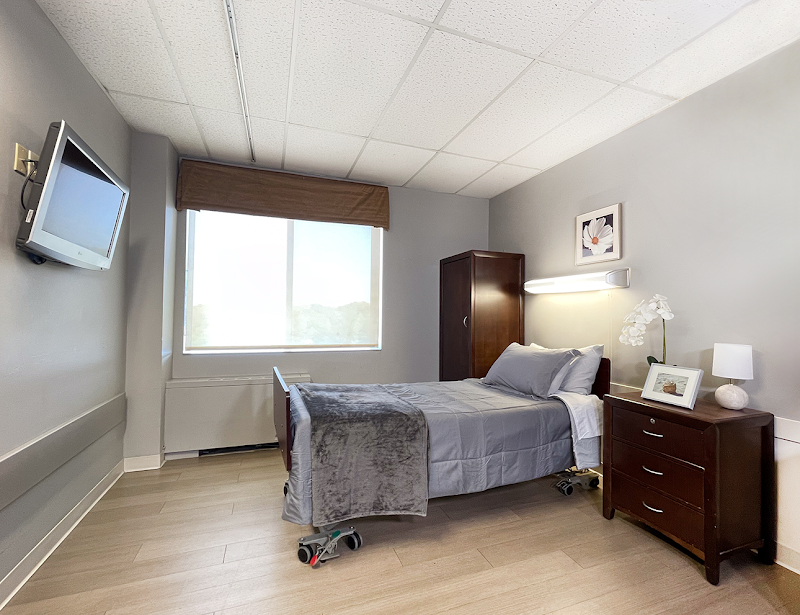
How Does South Shore Rehabilitation Compare to Other Illinois Nursing Homes?

Compared to the 100 nursing homes in Illinois, SOUTH SHORE REHABILITATION's overall rating (1 stars) is below the state average of 2.5, staff turnover (48%) is near the state average of 46%, and health inspection rating (2 stars) is below the national benchmark.

What Should Families Ask When Visiting South Shore Rehabilitation?

Based on this facility's data, families visiting should ask: "What changes have been made since the serious inspection findings, and how are you preventing similar issues?" "Can you walk me through typical staffing levels on day, evening, and night shifts?" "Can I visit during a mealtime to observe dining assistance and food quality?" "How do you handle medical emergencies, and what is your hospital transfer rate?" These questions are particularly relevant given the facility's Immediate Jeopardy citations and the below-average staffing rating.

Is South Shore Rehabilitation Safe?

Based on CMS inspection data, SOUTH SHORE REHABILITATION has documented safety concerns. Inspectors have issued 2 Immediate Jeopardy citations (the most serious violation level indicating risk of serious injury or death). The facility has a 1-star overall rating and ranks #100 of 100 nursing homes in Illinois. Families considering this facility should ask detailed questions about what corrective actions have been taken since these incidents.

Do Nurses at South Shore Rehabilitation Stick Around?

SOUTH SHORE REHABILITATION has a staff turnover rate of 48%, which is about average for Illinois nursing homes (state average: 46%). Moderate turnover is common in nursing homes, but families should still ask about staff tenure and how the facility maintains care continuity when employees leave.

Was South Shore Rehabilitation Ever Fined?

SOUTH SHORE REHABILITATION has been fined $364,559 across 5 penalty actions. This is 9.9x the Illinois average of $36,724. Fines at this level are uncommon and typically indicate a pattern of serious deficiencies, repeated violations, or failure to correct problems promptly. CMS reserves penalties of this magnitude for facilities that pose significant, documented risk to resident health or safety. Families should request specific documentation of what issues led to these fines and what systemic changes have been implemented.

Is South Shore Rehabilitation on Any Federal Watch List?

SOUTH SHORE REHABILITATION is not on any federal watch list. The most significant is the Special Focus Facility (SFF) program, which identifies the bottom 1% of nursing homes nationally based on persistent, serious quality problems. Not being on this list means the facility has avoided the pattern of deficiencies that triggers enhanced federal oversight. This is a positive indicator, though families should still review the facility's inspection history directly.