SOUTHPOINT NURSING & REHAB CENTER
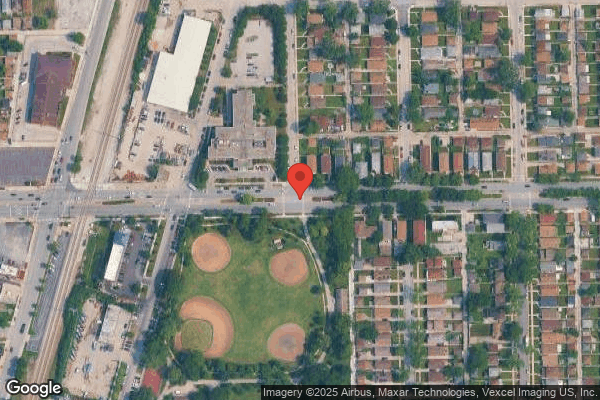
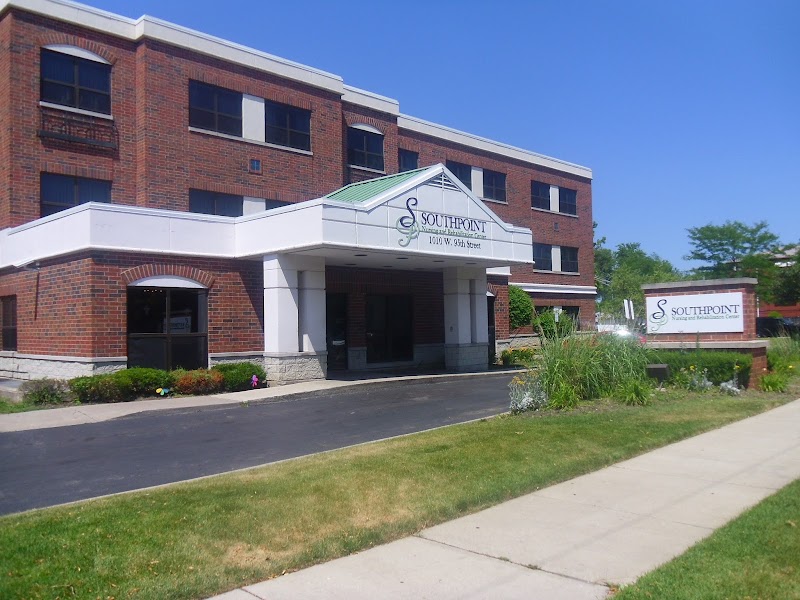
1010 WEST 95TH STREET, CHICAGO, IL 60643 (773) 298-1177
For profit - Limited Liability company 228 Beds INFINITY HEALTHCARE CONSULTING Data: November 2025 1 Immediate Jeopardy citation
Trust Grade
0/100
#635 of 665 in IL
Last Inspection: July 2024

Within standard 12-15 month inspection cycle. Federal law requires annual inspections.

Overview

Southpoint Nursing & Rehab Center has received a Trust Grade of F, indicating significant concerns regarding care quality. With a state rank of #635 out of 665 facilities in Illinois and #197 out of 201 in Cook County, this facility is in the bottom half of both rankings, suggesting limited options for quality care. Although the facility is showing improvement with the number of issues decreasing from 37 in 2024 to 12 in 2025, it still has a troubling history, highlighted by serious incidents such as a resident suffering critical health issues due to missed diagnostic tests and failures in following care plans that led to multiple falls and injuries among residents. Staffing is a weakness, with only 1 out of 5 stars and a turnover rate of 51%, which is concerning but close to the state average. Additionally, the facility faces a hefty $676,469 in fines, higher than 95% of similar facilities, reflecting ongoing compliance issues and insufficient RN coverage compared to 93% of state facilities.

Trust Score
F
0/100
In Illinois
#635/665
Bottom 5%
Safety Record
High Risk
Review needed
Inspections
Getting Better
37 → 12 violations
Staff Stability
⚠ Watch
51% turnover. Above average. Higher turnover means staff may not know residents' routines.
Penalties
○ Average
$676,469 in fines. Higher than 64% of Illinois facilities. Some compliance issues.
Skilled Nurses
⚠ Watch
Each resident gets only 16 minutes of Registered Nurse (RN) attention daily — below average for Illinois. Fewer RN minutes means fewer trained eyes watching for problems.
Violations
⚠ Watch
107 deficiencies on record. Higher than average. Multiple issues found across inspections.
★☆☆☆☆
1.0
Overall Rating
★☆☆☆☆
1.0
Staff Levels
★★☆☆☆
2.0
Care Quality
★☆☆☆☆
1.0
Inspection Score
Stable
2024: 37 issues
2025: 12 issues

The Good

  • Full Sprinkler Coverage · Fire safety systems throughout facility
  • No fines on record

Facility shows strength in fire safety.

The Bad

1-Star Overall Rating

Below Illinois average (2.5)

Significant quality concerns identified by CMS

Staff Turnover: 51%

Near Illinois avg (46%)

Higher turnover may affect care consistency

Federal Fines: $676,469

Well above median ($33,413)

Significant penalties indicating serious issues

Chain: INFINITY HEALTHCARE CONSULTING

Part of a multi-facility chain

Ask about local staffing decisions and management

The Ugly 107 deficiencies on record

1 life-threatening 15 actual harm
Aug 2025 2 deficiencies
CONCERN (D) 📢 Someone Reported This

A family member, employee, or ombudsman was alarmed enough to file a formal complaint

Potential for Harm - no one hurt, but risky conditions existed

Medical Records (Tag F0842)

Could have caused harm · This affected 1 resident

**NOTE- TERMS IN BRACKETS HAVE BEEN EDITED TO PROTECT CONFIDENTIALITY** Based on observations, interviews and review or records the facility failed to maintain complete and accurate resident record fo...

Read full inspector narrative →
**NOTE- TERMS IN BRACKETS HAVE BEEN EDITED TO PROTECT CONFIDENTIALITY** Based on observations, interviews and review or records the facility failed to maintain complete and accurate resident record for 1 out of 4 residents (R3). These failures affected 1 resident (R3) who felt exposed during shower without documentation as to interventions done to address concerns. Findings include: R3 is [AGE] years old, with initial admission date of 04/16/2021. R3's primary medical diagnosis acute kidney failure. R3's BIMS score dated 07/22/2025 was 14 which indicates that R3 cognition is intact and without impairment. On 08/14/2025 at 08:33 AM, R3 was seen in her room alert, able to express her thoughts clearly and within topic. R3 stated that it happened on Sunday, 07/27/2025 in the shower. I hear someone at the door. I yelled out, Hello! Hello! The next thing I know I saw a man. I don't know who it was. I told the nurse on duty. She was a female nurse. I reported the incident to her. R3 stated that shower room does not have any privacy curtain. Anyone taking shower is exposed when door was open, or a person comes in. R3 states that she complained before of people not knocking when they get in my room. R3 said, No one knocks on the door. I complaint to higher staff members. Yes, I complaint to V4 (Social Service Director). R3 said that during the time she was taking shower it was locked. And one of the staff opened the door. R3 stated that it happened around 08:30 AM to 09:00 AM. The man (R7) was able to go in the door went to the opposite door across all shower areas and went back to the door where he came in. R3 said, I felt exposed, violated, my privacy was violated, I wasn't secure, my security was violated, and I was unprotected. Left vulnerable and exposed! On 08/14/2025 at 9:30 AM, V4 (Social Service Director) denies having knowledge about any recent privacy concern with R3. V4 said, I can't remember R3 has concern about privacy. V4 stated that the proper procedure for facility staff when entering resident's room is to knock first, say your name, wait for respond before going in. For shower rooms V4 said, it does not always work that way. Even if staff knock, resident may not hear you. V4 stated that there are two (2) shower rooms on the first floor. One is under construction, so all residents in this floor uses the same shower room. Again, V4 was asked if there were resident with concern on privacy on shower room? V4 replied, I did not get any report about people coming in while resident is taking a shower. After informing V4 about the incident related to R3. V4 said, I was told about it. The staff member opened the door. V4 was asked if he spoke to R3. V4 replied, I did not talk to R3. V4 said it was the nurse on duty who informed him (V4). V4 again reiterate that he did not talk to R3. And that he (V4) did not know how R3 felt about the incident. V4 said, I did not know she felt violated during that time. V4 was made aware that there was no privacy curtain to all three (3) shower areas in the shower room. V4 stated that as far as he knows there are curtains. And if there is no curtain, the curtain needs to be place because it will help in providing privacy. V4 stated that there were no notes about the incident because he thinks it was just a misunderstanding. V4 stated that there was a grievance documented about what happened but there were no notes or other documentation related to the incident. On 08/14/2025 at 10:21 AM, V2 (Director of Nursing) was asked about any documentation related to incident. V2 replied, That's not an incident to me it is something that needs to be addressed but not an incident. To me I addressed. To my knowledge it affected her, when I explained to her it makes her safe. V2 stated that what happened need to be addressed but not documented. V2 said, everything does not need to be documented. V2 confirmed that V12 (Former Certified Nursing Assistant) was the staff who opened the door with R7. And V13 (Licensed Practical Nurse) was the nurse on duty during that day whom R3 spoke to about what happened in the shower room. On 08/14/2025 at 12:03 PM V13 (Licensed Practical Nurse) confirmed that the incident happened on Sunday, 07/27/2025. V13 stated that R3 told her that somebody opened the door while she was in the shower. I (V13) went in the shower room, I did see that shower room have no curtain, I did see that. V13 stated that when she talks to R3 she was initially upset, then she said OK, and she got her pass, and she left. I was under the impression that R3 was okay that why I did not write any notes. On 08/14/2025 at 1:04 PM V1 (Administrator) was made aware that there is no documentation on R3's resident record related to incident. Concern form by V2 (Director of Nursing) was provided by facility dated 07/29/2025 related to R3 regarding shower room. Concern form is not documented on R3's resident record or part of R3's resident record. In-service was also provided by V2 dated 07/29/2025 related to shower room safety. And does not address concerns related to privacy which is the concern of R3.
CONCERN (E) 📢 Someone Reported This

A family member, employee, or ombudsman was alarmed enough to file a formal complaint

Potential for Harm - no one hurt, but risky conditions existed

Resident Rights (Tag F0550)

Could have caused harm · This affected multiple residents

**NOTE- TERMS IN BRACKETS HAVE BEEN EDITED TO PROTECT CONFIDENTIALITY** Based on observations, interviews and review of records the facility failed to protect the right of every resident to privacy an...

Read full inspector narrative →
**NOTE- TERMS IN BRACKETS HAVE BEEN EDITED TO PROTECT CONFIDENTIALITY** Based on observations, interviews and review of records the facility failed to protect the right of every resident to privacy and dignity by failing to place privacy shower curtain in the shower room for 31 residents using shower room and failed to ensure resident maintain their privacy during shower for 1 out of 4 residents (R3) reviewed for resident rights. These failures have the potential to affect all 31 residents using shower room without privacy curtain and affected 1 resident (R3) who felt exposed during shower.Findings include: R3 is [AGE] years old, with initial admission date of 04/16/2021. R3's primary medical diagnosis acute kidney failure. R3's BIMS score dated 07/22/2025 was 14 which indicates that R3 cognition is intact and without impairment. On 08/14/2025 at 08:33 AM, R3 was seen in her room alert, able to express her thoughts clearly and within topic. R3 stated that it happened on Sunday, 07/27/2025 was in the shower. I hear someone at the door. I yelled out, Hello! Hello! The next thing I know I saw a man. I don't know who it was. I told the nurse on duty. She was a female nurse. I reported the incident to her. R3 stated that shower room does not have any privacy curtain. Anyone taking shower is exposed when door was open, or a person comes in. R3 states that she complaint before of people not knocking when they get in my room. R3 said, No one knocks on the door. I complained to higher staff members. Yes, I complaint to V4 (Social Service Director). At the hallway V15 (Wound Coordinator / Licensed Practical Nurse) was informed to see the shower room. V15 informed one of the staff to get the key. Before the key was provided by staff, R3 pushed the shower room, and the door opened without using a key. With R3 inside the shower room, there were three (3) shower areas. And all three (3) shower areas do not have privacy curtain. R3 said that during the time she was taking shower it was locked. One of the staff opened the door. R3 stated that it happened around 08:30 AM to 09:00 AM. The man (later identified as R7) was able to go in the door went to the opposite door across all shower areas and went back to the door where he came in. R3 said, I felt exposed, violated, my privacy was violated, I wasn't secure, my security was violated, and I was unprotected. Left vulnerable and exposed! Going back to the hallway, V14 (Certified Nursing Assistant) stated that all residents are using one shower room (pointing to the shower room that was seen without privacy curtain) because the other shower room is under construction. On 08/14/2025 at 9:30 AM, V4 (Social Service Director) denies having knowledge about any recent privacy concern with R3. V4 said, I can't remember R3 has concern about privacy. V4 stated that the proper procedure for facility staff when entering resident's room is to knock first, say your name, wait for respond before going in. For shower rooms V4 said, it does not always work that way. Even if staff knock, resident may not hear you. V4 stated that there are two (2) shower rooms on the first floor. One is under construction, so all residents in this floor uses the same shower room. Again, V4 was asked if there were resident with concern on privacy on shower room? V4 replied, I did not get any report about people coming in while resident is taking a shower. After informing V4 about the incident related to R3. V4 said, I was told about it. The staff member opened the door. V4 was asked if he spoke to R3. V4 replied, I did not talk to R3. V4 said it was the nurse on duty who informed him (V4). V4 again reiterate that he did not talk to R3. And that he (V4) did not know how R3 felt about the incident. V4 said, I did not know she felt violated during that time. V4 was made aware that there was no privacy curtain to all three (3) shower areas in the shower room. V4 stated that as far as he knows there are curtains. There is no curtain, the curtain needs to be place because it will help in providing privacy. V4 stated that there were no notes about the incident because he thinks it was just a misunderstanding. V4 stated that there was a grievance documented about what happened but there were no notes or other documentation related to the incident. On 08/14/2025 at 10:07 AM, with V4 went to the shower room upon entering the door near resident's room the three (3) shower areas do not have privacy curtain. It does not have a pole to place the curtain. Both left and right shower areas are visible upon opening the door through the hallway. V4 said, You are right there is no privacy curtain. It may be because this shower room is newly renovated. V4 stated that all residents are using the same shower room without privacy curtain. When door was open will be visually exposed to any person on the hallway. Then V4 went to other shower room near resident's room. Inside shower room construction ongoing, power tools on the floor, ceiling taken off, lot of construction materials. V4 stated that this shower room is not being use by resident. And all residents in this floor male and female uses the shower room without privacy curtain. V4 stated that he will address this concern right away. On 08/14/2025 at 10:21 AM, V2 (Director of Nursing) stated that shower room needs privacy curtain for privacy. V2 stated that she addressed this concern with R3. V2 stated that R3 heard something came to the door and called for help. V2 was asked about any documentation related to incident. V2 replied, That's not an incident to me it is something that needs to be addressed but not an incident. To me I addressed. To my knowledge it affected her, when I explained to her it makes her safe. V2 stated that what happened need to be addressed but not documented. V2 said, everything does not need to be documented. V2 confirmed that V12 (Former Certified Nursing Assistant) was the staff who opened the door with R7. And V13 (Licensed Practical Nurse) was the nurse on duty during that day whom R3 spoke to about what happened in the shower room. On 08/14/2025 at 12:03 PM V13 (Licensed Practical Nurse) confirmed that the incident happened on Sunday, 07/27/2025. V13 stated that R3 told her that somebody opened the door while she was in the shower. I (V13) went in the shower room, I did see that shower room have no curtain, I did see that. On 08/14/2025 at 1:04 PM V1 (Administrator) was made aware about the privacy curtain. V1 stated that she was told about the problem regarding privacy curtain. V1 said, I understand that part about the privacy curtain that it will help. V1 was made aware that shower room was left unsecure earlier when R3 was able to push open the door without use of the key. Any person may enter shower room when a resident is performing shower. And without privacy curtain, person showering is right away visible to any person entering shower room or opening the door. Requested to facility for policy and procedure related to privacy and/or resident rights. V1 presented part of admission packet which serves as a contract between facility and residents; it reads: Resident have the right of privacy over your persona. The facility must care for residents in a manner and environment that enhances or promotes your quality of life. The facility will treat residents with dignity and respect in full recognition of resident's individuality.
Jul 2025 1 deficiency
CONCERN (E) 📢 Someone Reported This

A family member, employee, or ombudsman was alarmed enough to file a formal complaint

Potential for Harm - no one hurt, but risky conditions existed

Safe Environment (Tag F0584)

Could have caused harm · This affected multiple residents

**NOTE- TERMS IN BRACKETS HAVE BEEN EDITED TO PROTECT CONFIDENTIALITY** Based on observations and interviews, the facility failed to provide a homelike environment by ensuring that there were no visib...

Read full inspector narrative →
**NOTE- TERMS IN BRACKETS HAVE BEEN EDITED TO PROTECT CONFIDENTIALITY** Based on observations and interviews, the facility failed to provide a homelike environment by ensuring that there were no visible holes in the ceilings of two shower rooms. This failure has effected one resident (R10), and has the potential to affect 117 residents who utilize these shower rooms.Findings include:R10 is [AGE] year old with diagnosis including but not limited to: other polyosteoarthritis, unilateral inguinal hernia, localized swelling of lower left limb, hyperlipidemia and gastro-esophageal reflux disease.R10's BIMS (Brief Interview of Mental Status) score is 14, which indicates cognitively intact.During investigation on 7/3/2025 at 2:52 PM, V12 (LPN/ Licensed Practical Nurse) stated that the shower room in front of the third floor nurses' station was closed for remodeling and that the shower room in the 3 North hallway was still being used for showers.At that time, V12 (LPN/ Licensed Practical Nurse) toured the shower room located in the 3-North hallway and at that time, Surveyor noted a hole in the ceiling of the shower room.On 7/7/2025 at 1:10 PM, R10 stated the following, The second floor (2 North) shower room has holes in the wall and paint is peeling from the ceiling. Water drips from the ceiling sometimes and I don't feel comfortable taking showers here. The other shower room on this floor is closed down right now because it's even worse.On 7/8/2025 at 1:05 PM, V16 CNA (Certified Nurse Assistant) coming from second floor (2 North) shower room and stated that she had just given three showers in the shower room.At that time, Surveyor noted a hole with peeling paint in the 2-North shower room.On 7/8/2025 at 1:58 PM, V10 (Maintenance Director) stated the following, I've been here a year. We've been working on the shower rooms, remodeling the ceilings and the floors. Something happened with the shower valves which resulted in the water leaking from the valves. The running hot water makes steam and the ceiling starts sweating. The moisture also makes the dry wall soggy and sweaty and begin buckle. That's what causes the holds and peeling paint. Yes, It could make the residents feel uncomfortable in the shower room and mold could eventually grow.Facility Census Report dated 7/8/2025 documents 58 active residents on the second unit/ floor and 59 active residents on the third floor.Facility Shower schedules for the second and third floors documents shower schedules for 117 current residents. Facility policy titled General Cleaning Policies and Procedures documents, to maintain a clean and attractive environment which reduces the likelihood of cross contamination and enhances the image of the facility.Facility policy titled Physical Plant/ Daily Inspections documents, as areas needing repair or attention are identified, they should be dealt with immediately.
Jun 2025 1 deficiency 1 Harm
SERIOUS (G) 📢 Someone Reported This

A family member, employee, or ombudsman was alarmed enough to file a formal complaint

Actual Harm - a resident was hurt due to facility failures

Free from Abuse/Neglect (Tag F0600)

A resident was harmed · This affected 1 resident

**NOTE- TERMS IN BRACKETS HAVE BEEN EDITED TO PROTECT CONFIDENTIALITY** Based on observation, interviews and records review the facility failed to follow their policy to ensure one (R2) resident remai...

Read full inspector narrative →
**NOTE- TERMS IN BRACKETS HAVE BEEN EDITED TO PROTECT CONFIDENTIALITY** Based on observation, interviews and records review the facility failed to follow their policy to ensure one (R2) resident remained free from physical abuse by another resident (R1) in a sample of four reviewed. This failure resulted in R1 hitting R2 with a bottle causing an open wound over R2's left eyebrow. Findings include: R1 is a closed record and was not residing in the facility during this investigation. R1's current face sheet document R1's medical conditions to include but not limited to: hemiplegia and hemiparesis following cerebral infarction affecting left non-dominant side, anxiety disorder, unspecified, depression, unspecified, anxiety disorder, unspecified. MDS (Minimum Data Set) section C dated 04/24/2025, documents R1's Brief Interview for Mental Status (BIMS) as 12/15 indicating R1 has moderate cognitive impairment functional abilities. MDS Section D- Mood documents R1 feels down, depressed, or hopeless 2-7 days (half or more of the days. R2's current face sheet documents her medical conditions to include but not limited to: hemiplegia, unspecified affecting left dominant side, dysarthria and anarthria, cerebrovascular disease, unspecified. MDS (Minimum Data Set) section C dated [DATE], documents R2's Brief Interview for Mental Status (BIMS) as 3/15 indicating R3 has severe impairment. On 06/07/2025, at 10:26 AM, R2 was observed in her room sitting on her bed with wheelchair next to bed. R2 was alert and oriented. R2 stated R1 struck her with a glass bottle on her face while she was in the dining room a while ago. R2 was scared that she would develop seizures. R2 stated since then she has been experiencing headaches. R2 stated, it's too late now to go to the hospital. R2 stated that day she was scared because R1 was taller and bigger than her. R2 thought that R1 might attack her again. R2 stated since then she feels somewhat safe in the facility now. Nursing progress notes dated 5/22/2025, 7:21 PM, documents R1 was involved in verbal altercation with R2 and R1 struck in the face. Police Report Number -JJ264943 dated 4/22/2025 documents R1's name and documents: -Battery; Aggravated: OTHER Dangerous. Form titled Physical Aggression dated 5/22/2025, documents: R1 had an altercation with R2 in the hallway. R1 struck R2 in the face and R2 was noted with open area to left eyebrow. Social Service Note dated 5/22/2025, 4:27 PM, documents R1 was involved in an altercation with R2. R2 displayed increased agitation toward staff. R2 was difficult to re-direct and non-receptive to counseling as she continued to be aggressive and being disruptive on the unit. On 06/07/2025, at 10:39 AM, V6(Certified Nursing Assistant-CNA) was observed sitting in the dining room at a corner adjacent to the nursing station looking through his phone. V6 stated he was supervising residents in the dining room for safety and further stated he can see the residents in front of him. He has turn to see the residents sitting behind him. V6 stated he should be sitting at a place where he can see all residents for resident safety and prevent resident altercations. V6 stated residents are not supposed to fight or have altercations because it can be a form of abuse. On 06/07/2025, at 10:42 AM, V7 (Licensed Practical Nurse-LPN) stated she was R2's nurse on 5/22/2025, when R1 struck R2 on the face outside the door leading to the dining room. She was not on the unit when it happened. V7 stated when she got back to the nursing station, she found V1 (Administrator) and V2 (Director of Nursing) at the nursing station, after being notified of the altercation. V7 further stated she went to R2's room and found the wound nurse cleaning and treating R2's wound in the face, which was bleeding. V7 stated residents are not allowed to hit each other because that's a form of abuse. R1 was sent out to a local hospital for psychiatric evaluation and did not come back to the facility. On 06/07/2025, at 10:24 AM, V5 (Certified Nursing Assistant-CNA) was observed sitting in the dining room at a corner adjacent to the nursing station looking through her phone. Some residents were observed sitting behind V5 playing music. On 06/07/2025, at 10:59 AM, V5 (Certified Nursing Assistant-CNA) stated when the surveyor observed her earlier, sitting in the dining room on her phone, she (V5) was completing her charting on her cell phone and supervising residents for safety in the dining room. V5 stated at the position she was sitting at; she would have to turn to see residents sitting behind her. She should have sat at a position where she could see all the residents in the dining room. V5 stated she worked on 5/22/2025, when R1 was physically aggressive towards R2. R1 was coming out of the dining room and R2 was going into the dining room. V5 stated R1 started becoming aggressive towards R2, swearing at R2, and took something from her wheelchair. R1 hit R2 on the face. V5 stated blood shot out of R2's face and blood went everywhere on R2's face and the floor. V5 stated at that time, all staff ran towards the dining room to see what was happening and separate R1 and R2. V5 stated residents hitting each other is not allowed and it is a form of abuse. On 06/07/2025, at 11:07 AM, V8 (Wound Care Nurse-LPN) V5 and surveyor observed R2 in her room. V8 described R2's scar on the left side of her face as: midline, left eyebrow, 4 centimeters long, width 0.5 centimeters, closed not draining, dark brownish scab on the scar. V8 touched R2's scar. R2 stated she felt pain of 5/10 with 10 being the most pain and the pain was regular in description. On 06/07/2025, at 11:26 AM, V4(Social Services Director) stated on 5/22/2025, there was a physical altercation between R1 and R2. R 1 was the aggressor hitting R2 on the left side of the face with an empty glass perfume bottle, causing R2 to bleed. V4 stated staff separated the residents and attended to R2. V4 stated a glass bottle can be used as a weapon and any form of physical altercation is abuse. Therefore, residents should be monitored for safety, so they don't hit each other. V4 stated R1 has a lot of behavioral issues such as aggression, disrespect, being inappropriate, yelling, and attention seeking behaviors. But R2 does not have these behaviors. V4 stated when residents are in the dining room or in common areas, staff should supervise residents for safety. On 06/07/2025, at 2:04 PM, V9 (Licensed Practical Nurse-LPN) via phone stated on 5/22/2025, at approximately lunch time, she was notified that R2 has a laceration on the face. V9 came to the unit and found R2 in her room sitting on in her wheelchair with a slightly open wound over her left eyebrow, with minimal bleeding. V9 stated R2 did not complain of pain at time but R2 was upset because of the altercation with R1. V9 stated she assessed R2 and called V10 (Physician) who gave a one-time order to cleanse the wound with saline water, apply over the counter antibiotic bacitracin, then cover with strip strips (surgical cape). V9 stated she does not remember if she wrote the orders in R2's Physician Order Sheet (POS) and further stated she is supposed to write the orders to notify other nurses and doctors what has already been given for resident. V9 stated no other orders were given after that and she did not follow up on R2. On 06/07/2025, at 2:28 PM, V10 (Physician) via phone stated he was notified R2 has a lesion on her forehead and was not notified R2 had been hit by another resident. V10 stated V9 had evaluated R2 and informed V10 that the laceration was superficial. Therefore, it was not necessary to send R2 to the hospital. V10 stated he gave orders to V9 to clean the lesion with normal saline, put over the counter antibiotic, and cover with normal dressing. V10 stated nurses are supposed to write all physician orders in the Physician Order Sheet (POS) so the nursing team are aware of which treatments a resident has received for effectiveness. V10 stated residents in the facilities have arguments all the time and hit each other. R2 being hit by R1 is not considered abuse because the laceration R2 sustained was superficial and there was no hematoma of broken bones, but he does not expect residents to hit each other. On 6/7/2025, at 4:20 PM, V2 (Director of Nursing) stated she was informed that two residents on the second floor had an altercation, so she went to the unit to find out what was going on. V2 stated she saw V5 (Certified Nursing Assistant-CNA) with R2 in the hallway holding a gauze on R2's left side of the face, above the eyebrow. V5 informed V2 that R2 was bleeding after being hit by R1. V2 stated the staff told her R2 was sitting outside the dining room adjacent to the nursing station. R1 was coming out of the dining room and as she was passing by. R2 hit her on the face before staff could intervene. V2 stated V1(Administrator) told her R1 used a perfume glass bottle which was in a sock to hit R2 and that is physical assault. V2 stated her expectation is for staff to always monitor residents for safety and staff are not supposed to be on their phones while on the job or use their phones to access residents' medical records to chart. On 06/07/2025, at 5:00 PM, V1(Administrator) stated on 5/22/2025, during lunch time when a staff member (cannot remember who) called the front desk and stated something was wrong on the second floor. V2 ran to the second floor to find out what was going on. V1 stated she found other staff members already on the floor and was told R1 hit R2 with an empty perfume bottle that was in a sock, which R1 had been carrying around tucked under her thigh and wheelchair seat. V1 stated she and V4 brought R1 to V4's office to separate her from R2, as the nurses took care of R2. V1 stated she called the police right away. They came and interviewed R1, R2, and herself. Both residents' doctors were notified of the incident. R1 was sent to the hospital for further evaluation. R2 was treated at the facility to stop her bleeding. V1 stated R1 attacked R2 which is a physical altercation, but V1 does not like calling it physical assault or abuse because calling it that is too harsh. V1 stated residents are not supposed to hit each other. V1 stated she spent some time with R2 that day and R2 told her she was scared. Facility Reported Incident Report dated 5/28/2025, documents: -R1 was verbally aggressive to R1 and stuck R2 when attempting to go into the dining room. Facility Policy titled Standard Supervision and Monitoring, no date documents: Purpose: this guideline emphasizes a proactive intervention promoting enhanced physical and psychosocial well-being. The facility recognizes supervision and guidance to the residents is an essence part of nursing care in which standard approaches are successful in meeting the resident's physical and psychosocial needs. Facility Policy Titled: Abuse Prevention Program Abuse And Crime dated 01/19, documents: -Abuse: the willful infliction of injury, unreasonable confinement, intimidation, or punishment with resulting physical harm or pain or mental anguish. -Willful, as used in this definition of abuse means the individual must have acted deliberately, not that the individual must have intended to inflict injury or harm. -Physical Abuse: Hitting, slapping, pinching, kicking, etc. It also includes controlling behavior through corporal punishment. R1's care plan documents: R1 displays manipulative behavior which is disruptive, insensitive and/or disrespectful to staff and peers.
Apr 2025 1 deficiency 1 Harm
SERIOUS (G) 📢 Someone Reported This

A family member, employee, or ombudsman was alarmed enough to file a formal complaint

Actual Harm - a resident was hurt due to facility failures

Free from Abuse/Neglect (Tag F0600)

A resident was harmed · This affected 1 resident

**NOTE- TERMS IN BRACKETS HAVE BEEN EDITED TO PROTECT CONFIDENTIALITY** Based on interview and record review, the facility failed to prevent and protect one resident (R1) from resident-to-resident abu...

Read full inspector narrative →
**NOTE- TERMS IN BRACKETS HAVE BEEN EDITED TO PROTECT CONFIDENTIALITY** Based on interview and record review, the facility failed to prevent and protect one resident (R1) from resident-to-resident abuse out of four residents reviewed for physical assault. This failure resulted in R1 sustaining a fracture of the left ankle in a total sample of four residents. Findings include: On 04/22/2025, at 11:57 AM, R1 states the altercation between himself and R2 began when he refused to lend his Bluetooth speaker to another female resident. R1 states all parties were located on the first floor of the facility during this time. R1 states R2 inserted himself into the situation and began to try to impress the female resident. R1 states R2 then began calling R1 bit**es and saying he will catch R1 outside. R1 states he and R2 then started a verbal argument and that's when R1 decided to remove himself from the situation. R1 states he began to self-propel himself in the opposite direction from R2. R1 states when he turned his back, R2 rammed him really hard with R2's electric wheelchair, knocked R1 onto the floor, and ran over R1's leg. R1 states R2 then reversed his wheelchair and proceeded to run him over again but that's when staff intervened and stopped R2 from doing so. R1 states staff separated them and R1 went back to his room. R1 states the staff only asked him if he was okay and R1 said yes at the time. R1 states the staff was in the process of trying to change his room when he began feeling pain later. R1 states when staff initially asked was he okay, R1 did not feel any pain. It could have been due to his adrenaline. R1 states he does not know the nurse's name, but he informed the female nurse on duty that he believed something was wrong. R1 states he informed the nurse that he may have broken his foot and that he was now in pain. R1 states staff did not assess him or take his vital signs. Staff moved him to another room located on the second floor. R1 states shortly after being moved to the second floor, he attempted to go to the restroom. R1 states he then felt more pain in his foot as he tried to use the restroom and that's when he fell. R1 states he fell in the restroom due to the pain he felt in his foot. R1 states he then told staff again that his foot was in pain, and he needed to go to the emergency room. R1 states he now has an appointment scheduled on 04/24/2025, with an orthopedic surgeon to have plates and screws placed in his foot. R1 states there have been no consequences for R2 and R2 continues to get community pass privileges. R1 states R2 can also come to the floor where R1 now resides anytime R2 feels like it. On 04/22/2025, at 12:27 PM, R4 states he did not witness the altercation that took place between R1 and R2. R4 states he has witnessed on multiple occasions how R2 is aggressive towards people. R4 states a couple of days ago, while on the smoking patio, R2 was bragging about how he ran over R1's foot and R2 stated to R4 that R2 would do it again. R4 states he also witnessed R2 roll up to R1 and kick R1's Bluetooth speaker onto the floor. R4 states R2 resides on the first floor of the facility but R2 continuously comes to the second floor where R1 is located just to bother R1. R4 states R2 needs to leave R1 alone. On 04/23/2025, at 6:34 PM, V6 (LPN) states upon starting her shift at 7:00 PM, she was given report from the off-going nurse that R1 had recently transferred rooms to the second floor. V6 states she was now responsible for caring for R1. V6 states she was located at the second-floor nurses' station when R1 approached her stating he was having pain in his left ankle. V6 states she assessed R1's left leg at the nurses' station and did not see any swelling or redness. R1's leg was not warm to touch. V6 states R1 told her that he wanted to have an x-ray performed on his left leg. V6 states she then called the doctor, but the doctor did not answer. She left a message and was awaiting a call back for further orders. V6 states approximately 30-40 minutes after complaining of left ankle pain, she was made aware that R1 had fallen while inside of his room. V6 states she called 911 and sent R1 to the hospital. V6 states when R1 returned from the hospital, she was made aware that R1 had a fracture to his left ankle. R1's nursing progress note written by V6 on 04/06/2025, at 8:45 PM, documents While this nurse writer was in the hallway passing meds, cna (certified nursing assistant) informed that R1 fell in the restroom. Upon entering R1's room, R1 was observed lying on his right side on the bathroom floor. Upon assessment, R1 was noted to be unresponsive and diaphoretic with normal vital signs. This writer kept calling R1 until he started to respond. 911 was called. R1 was made comfortable and transferred to bed per facility protocol. All safety precautions were maintained. Neurological assessment initiated. R1's nursing progress note written by V6 on 04/07/2025, at 4:25 AM, documents R1 returned from hospital via stretcher accompanied per 2 ambulance attendants. R1 transferred from stretcher to the bed per ambulance attendants without incident. Upon assessment, R1 was noted with a soft cast to the left ankle. Diagnoses closed bimalleolar fracture of left ankle, initial encounter. R1 is to see orthopedic surgeon. Dr. notified. R1's return and new orders. There is no documentation to show that V6 documented R1's complaint of left ankle pain, assessment of R1's left ankle, and notification to the doctor prior to R1 falling in the facility. R1's abuse care plan documents in part, R1 will be treated w/ respect, dignity & reside in the facility free of mistreatment (i.e., abuse/neglect) (on-going). Facility Designee will complete a Screening Assessment for Indicators of Aggressive and/or Harmful Behaviors within 72-hours of admission and Quarterly thereafter. Assure the resident that staff members are available to help & department heads maintain an open door policy. R1's aggression assessments dated 02/05/2025 and 04/15/2025 documents R1 has no history of aggression. R1's aggression assessment also documents that R1 scores a 2 which indicates that R1 is at minimal and low risk of aggression. R2's abuse care plan documents in part, My comprehensive assessment reveals a history of suspected abuse and neglect, exploitation, past trauma and/or other factors that may increase my susceptibility to abuse/neglect. R2 demonstrates: Depression, Diagnosis of Mental Illness. R2 had a disagreement with a peer on 8/28/2023. R2 and his roommate had a verbal disagreement on the unit on 10/13/2023 and 11/15/2024. R2 was involved in an alleged incident with staff on 4/11/2024. R2 will be treated w/ respect, dignity & reside in the facility free of mistreatment (i.e., abuse/neglect) (on-going). Facility Designee will complete a Screening Assessment for Indicators of Aggressive and/or Harmful Behaviors within 72-hours of admission and Quarterly thereafter. R2's behavior care plan documents in part, R2 demonstrates behavioral distress related to verbally abusive behavior when agitated towards and peer. R2 and his roommate had a verbal disagreement on the unit on 08/28/2023, 10/13/2023. Socially inappropriate and disrespectful by using profane languages towards staff members. 01/09/2024,04/24/2024. R2 kick doors instead of asking for assistance from staff 05/13/2024. R2 was socially inappropriate towards peers on 11/7/2024. R2 playing loud music while ambulating with his power-chair 11/20/2024, 11/22/2024. R2 will refrain from verbally and/or physically abusive behavior following staff intervention by: Explain Rules of Conduct and each person's obligation to treat others with dignity & respect at all times. Ask the resident to treat others as he/she would like to be treated. R2's aggression assessment dated [DATE] documents R2 was socially inappropriate towards peers on 11/7/2024. Facility reported incident dated 04/06/2025, documents an altercation between R1 and R2 where R1 became agitated and struck R2. In return R2 bumped his wheelchair into R1's wheelchair. R1's Hospital records dated 04/06/2025, documents that R1 was diagnosed with a closed bimalleolar fracture of the left ankle. Ombudsman Residents' Rights for People in Long-Term Care Facilities dated 11/2018 documents in part, You must not be abused, neglected, or exploited by anyone - financially, physically, verbally, mentally, or sexually. Facility policy dated 01/2019, titled Abuse Prevention Program documents in part, It is the policy of this facility to prohibit and prevent resident abuse, neglect, exploitation, mistreatment, and misappropriation of resident property and a crime against a resident in the facility. 1. Abuse: The willful infliction of injury, unreasonable confinement, intimidation or punishment with resulting physical harm, pain or mental anguish .Willful, as used in this definition of abuse, means the individual must have acted deliberately, not that the individual must have intended to inflict injury or harm.
Feb 2025 6 deficiencies 1 Harm
SERIOUS (G) 📢 Someone Reported This

A family member, employee, or ombudsman was alarmed enough to file a formal complaint

Actual Harm - a resident was hurt due to facility failures

Free from Abuse/Neglect (Tag F0600)

A resident was harmed · This affected 1 resident

Based upon interview and record review the facility failed to follow the abuse prevention program, failed to provide supervision, failed to implement preventive interventions, and failed to ensure tha...

Read full inspector narrative →
Based upon interview and record review the facility failed to follow the abuse prevention program, failed to provide supervision, failed to implement preventive interventions, and failed to ensure that two of seven residents (R1, R2) in the sample remained free from abuse. These failures resulted in (8/9/24) physical altercation between R1 and R2. R1 sustained a displaced fracture of the left 5th metacarpal, right shoulder deformity and right eye discoloration. R2 sustained a scratched forehead. Findings include: On (1/10/24) IDPH (Illinois Department of Public Health) received allegations that R1 reported a resident was threatening physical violence (for about 2 weeks) prior to actual assault resulting in R1 sustaining bruises and fractured finger. On 1/27/25 at 10:22am, surveyor inquired if R1 was assaulted by a facility resident, V2 (Director of Nursing) stated (R2's name) was in an altercation with him (R1) several months ago and subsequently affirmed that the incident occurred on 8/9/24. R2's diagnoses include dementia, metabolic encephalopathy, and psychoactive substance abuse. R2's (6/18/24) BIMS (Brief Interview Mental Status) determined a score of 3 (severe impairment). R2's (6/7/24) care plan states resident displays behavioral symptoms related to severe mental illness. Interventions: Intervene when any inappropriate behavior is observed. Refer resident to consulting psychiatrist for a psychiatric evaluation as warranted. R2's progress notes state (7/22/24) Resident wandering down hallway and went into another resident's room. When staff asked resident to come out he became verbally aggressive and began yelling and cursing at staff that this was his house. Staff explained that this was another resident's room, and he had another room. Resident continued to yell and curse. Staff left resident in room and called (V11/Family) from cell phone to get her to speak to resident. Resident yelled and cursed at (V11) as well and refused to leave room. Received an order for IM (Intramuscular) injection of Zyprexa (Antipsychotic) 5mg PRN (as needed) every 8 hours. (7/25/24) Resident confused, leaves room and goes into other resident's rooms walking about the hallway asking where is his room. Resident needs constant redirection. (8/9/24) Resident was engaged in a physical altercation with peer. Resident was difficult to re-direct and non-receptive to Counseling as he continues to be aggressive and being disruptive on the unit. Physician was contacted and ordered the resident to be petitioned to hospital for psychological evaluation. Resident is currently placed on behavior monitoring and supervision until paramedic arrives. Staff will continue to monitor, follow-up and document progress accordingly. Resident transferred to the hospital with petition paperwork. The facility census affirms that R2 was discharged (8/9/24) and did not return to the facility. On 1/29/25 at 12:15pm, surveyor inquired about R2's behaviors, V12 (Social Worker) stated He (R2) was just a wanderer he was confused. Surveyor inquired about the (8/9/24) incident involving R1 and R2, V12 responded (V11) just called for staff to come to the room and by the time I (V12) got there the staff was already breaking them up. I guess they had a fight. Surveyor inquired if R1 reported that R2 threatened physical violence prior to (8/9/24) incident, V12 replied No ma am, not that I'm aware. __ R1's diagnoses include (8/12/24) displaced fracture of base of 5th metacarpal bone, left hand. R1's (12/26/24) BIMS determined a score of 13 (cognition intact). R1's (2/10/24) care plan states resident's medical diagnosis may increase his susceptibility to abuse/neglect. Interventions: observe resident for signs of fear and insecurity during delivery of care. Assure the resident that staff are available to help, and department heads maintain an open-door policy. On 1/27/25 at 11:58am, surveyor inquired about concerns at the facility, R1 stated I was assaulted in August, and I broke my little finger on my left hand. He (referring to R2) asked me what was I doing in his house and before I could understand what he was saying to me, he swung at me. He said everything in here (referring to the room) belonged to him and affirmed that (R2) was his roommate at the time. R1's (8/9/24) progress notes state resident was in an altercation with roommate and was attacked by him causing injuries [nothing was documented from 7/10/24 to 8/8/24 - roughly one month]. The (8/9/24) initial incident report states V11 was in facility to visit (R2). When (V11) entered the room (R2) was sitting in (R1's) wheelchair. (R1) was sitting on the side of his bed slightly leaning forward, (V11) asked if (R1) was alright. (R1) informed (V11) that (R2) had just jumped on him. (V11) attempted to speak with (R2) who became aggressive and defensive. (V11) called for assistance. Staff arrived, immediately separated. NP (Nurse Practitioner) made aware, arrived on the unit for head-to-toe assessment and observed (R1) with right 5th digit and shoulder deformity, and right eye discoloration. (R2) with scratch to left forehead. NP gave orders for transfers to acute care settings for further interventions. The (8/9/24) final incident report states (R1) stated that his roommate (R2) accused him of being in his house and told him (R1) to get out. (R1) stated I tried to defend myself but was overpowered. (R2) was interviewed but could not provide a detailed account of what happened. When asked about the incident, he (R2) only stated that this was his room. After being transferred to the hospital (R1) was examined and noted with a closed displaced fracture of proximal phalanx of left little finger. The (undated) abuse prevention program states it is the policy of this facility to prevent resident abuse. Prevention: Resident and family concerns will be recorded, reviewed, addressed, and responded to using the facility's concern/grievance procedure. Random rounds will be made throughout facility assessing the safety of the environment. Staff will identify residents with increased vulnerability for abuse, neglect, mistreatment or who have needs and behaviors that might lead to conflict.
CONCERN (D) 📢 Someone Reported This

A family member, employee, or ombudsman was alarmed enough to file a formal complaint

Potential for Harm - no one hurt, but risky conditions existed

Deficiency F0558 (Tag F0558)

Could have caused harm · This affected 1 resident

Based upon observation, interview, and record review the facility failed to follow policy procedures and failed to ensure that call lights were within reach for three of three residents (R3, R4, R7) r...

Read full inspector narrative →
Based upon observation, interview, and record review the facility failed to follow policy procedures and failed to ensure that call lights were within reach for three of three residents (R3, R4, R7) reviewed for falls. Findings include: R4's (12/10/24) BIMS (Brief Interview Mental Status) determined a score of 3 (severely impaired). R4's (12/10/24) functional assessment affirms resident requires partial/moderate assistance for sit to stand and bed to chair transfers. On 1/27/25 at 11:25am, R4 was observed lying in bed however the call light was on the floor and out of reach. V6 (Licensed Practical Nurse) was at R4's bedside surveyor inquired about R4's fall prevention interventions V6 responded She has floor mats and boosters (referring to bed bolsters) however call light within reach was excluded. Surveyor inquired about R4's cognitive status V6 replied She's alert and oriented 1 to 2 and proceeded to exit the room. Surveyor inquired about the location of R4's call light V6 returned to R4's bedside and stated, It was on the floor. __ R7's (11/14/24) BIMS determined a score of 6 (severe impairment). R7's (11/14/24) functional assessment affirms resident is dependent on staff for sitting on side of bed and bed to chair transfers. On 1/27/25 at 11:33am, R7 (R4's roommate) was lying in bed however the call light was on the floor and out of reach. Surveyor inquired if R7 was able to reach the call light R7 stated No. On 1/27/25 at 11:36am, surveyor inquired about the location of R7's call light V2 (Director of Nursing) entered the room (as requested) and affirmed it was on the floor. V2 inquired if R7 could reach the call light however (R7) was unable to therefore V2 placed the call light within reach. __ R3's (10/28/24) BIMS determined a score of 11 (moderate impairment). R3's (10/28/24) functional assessment affirms partial/moderate assistance is required for chair to bed transfers and walking was not attempted. On 1/29/25 at 1:46pm, R3 was alone in her room and seated in a wheelchair (at the foot of the bed). R3 did not have call light access. On 1/29/25 at 1:53pm, V14 (CNA/Certified Nursing Assistant) affirmed that she's assigned to R3. Surveyor inquired about R3's fall prevention interventions V14 stated Right now, all I know is the floor mats that's all I can remember. You (surveyor) would have to ask restorative about anything else. Surveyor inquired if R3 can stand V14 replied She (R3) can stand with assistance and left the room without providing the call light. The (undated) call lights policy states the call system will be available in the resident's room. Always place the call light in an accessible location to where the resident is located in their room.
CONCERN (D) 📢 Someone Reported This

A family member, employee, or ombudsman was alarmed enough to file a formal complaint

Potential for Harm - no one hurt, but risky conditions existed

Notification of Changes (Tag F0580)

Could have caused harm · This affected 1 resident

**NOTE- TERMS IN BRACKETS HAVE BEEN EDITED TO PROTECT CONFIDENTIALITY** Based upon record review and interview the facility failed to timely notify the Physician, Nurse Practitioner, and/or Medical Di...

Read full inspector narrative →
**NOTE- TERMS IN BRACKETS HAVE BEEN EDITED TO PROTECT CONFIDENTIALITY** Based upon record review and interview the facility failed to timely notify the Physician, Nurse Practitioner, and/or Medical Director of change in condition for one of three residents (R4) reviewed for falls. Findings include: On 1/14/25, IDPH (Illinois Department of Public Health) received allegations that R4 fell out of bed and was not sent to the hospital until V17 (Family) arrived and told staff to call an ambulance. R4 is [AGE] years old with diagnoses which include but not limited to altered mental status and history of falling. R4's (12/10/24) BIMS (Brief Interview Mental Status) determined a score of 3 (severely impaired). R4's (1/13/25) fall incident report states CNA (Certified Nursing Assistant) responded to call light; resident observed laying on her side left side of bed. Roommate witnessed incident; roommate stated, She put her feet out the bed then slid down on the floor. Resident stated, I was trying to get something off my table. Resident denies pain, no signs/symptoms of distress or discomfort voiced or noted. No injuries observed at time of incident. Staff transferred resident back to bed, educated resident on using call light to ask for assistance. Predisposing factors: dementia, confused, history of fall. R4's progress notes state (1/13/25) 12:41am, Writer contacted Medical Doctor awaiting a call back. 8:25am, Residents daughter in building this morning insisting her mother goes out to ER (Emergency Room) due her mother sliding out of bed. Resident has no injuries and has no change of baseline but due to the families insisting Nurse Practitioner gave order to send out for evaluation. (1/14/25) Writer called Hospital to ascertain resident admitting Diagnosis. Hospital staff Nurse informed writer that resident is admitted for pulmonary thrombosis (blood clot in the lungs). On 1/30/25 at 1:31pm, surveyor inquired when the nurse should notify the Physician of resident fall. V16 (Physician) stated Instantly, I need to know right then and there, and we'll evaluate what happened. I want to be called immediately. Surveyor inquired if a fall could cause a pulmonary embolism V16 responded You have to have it there just standing by (as a preexisting condition) if they (residents) fall down it can move from one area to another one and it can cause more damage. On 1/30/25 at 3:06pm, surveyor inquired about R4's cognitive status V3 stated This lady is confused. Surveyor inquired if R4's (1/13/25) fall was witnessed V3 responded It was witnessed by the roommate but by staff no. Surveyor inquired about staff requirements when a resident falls V3 replied You call the MD (Medical Doctor), family, and ADON or DON immediately after the fall. Surveyor inquired if the Doctor was notified of R4's (1/13/25) fall V3 reviewed R4's progress notes and stated, Writer contact MD awaiting call back. Surveyor inquired if the Physician called back V3 responded, They contacted the NP (Nurse Practitioner) I see at 8:25 in the morning [roughly 7.75 hours after falling]. Surveyor inquired when R4 fell V3 replied It look like in the middle of the night, like midnight. Surveyor inquired how many hours transpired before the NP was notified of R4's fall V3 stated It was 7 hours and some minutes. Surveyor inquired why R4 was sent to the hospital V3 responded When the family came in the building is what the notes say. Surveyor inquired what staff are supposed to do if the Doctor does not respond and/or call back V3 replied Call the Medical Director. The (undated) change in resident's condition or status policy states it is the policy of the facility to ensure that the resident's attending Physician and representative are notified of changes in the resident's condition or status. The Nurse will notify the resident's attending physician when: the resident is involved in any accident or incident that results in injury including injuries of unknown origin. It is necessary to transfer the resident to the hospital.
CONCERN (D) 📢 Someone Reported This

A family member, employee, or ombudsman was alarmed enough to file a formal complaint

Potential for Harm - no one hurt, but risky conditions existed

Comprehensive Care Plan (Tag F0656)

Could have caused harm · This affected 1 resident

**NOTE- TERMS IN BRACKETS HAVE BEEN EDITED TO PROTECT CONFIDENTIALITY** Based upon record review and interview the facility failed to follow policy procedures and failed to timely develop comprehensiv...

Read full inspector narrative →
**NOTE- TERMS IN BRACKETS HAVE BEEN EDITED TO PROTECT CONFIDENTIALITY** Based upon record review and interview the facility failed to follow policy procedures and failed to timely develop comprehensive care plans for two of seven residents (R4, R6) in the sample. Findings include: R4 was admitted to the facility on [DATE] with diagnoses which include history of falling. R4 is [AGE] years old. R4's (6/13/23) Fall Risk Review determined a score of 17 (high risk). R4's comprehensive care plan states resident is at risk for falls (Date Initiated: 1/21/25) therefore completed roughly 1.5 years after admission. __ R6 was admitted to the facility on [DATE] (10 months ago) with diagnoses which include history of alcohol abuse and history of cocaine abuse. R6's comprehensive care plan (received 1/28/25) excludes history of alcohol and/or cocaine abuse. On 1/30/25 at 12:04pm, surveyor inquired about the requirements for developing comprehensive care plans, V15 (Care Plan Coordinator) stated The primary diagnoses, were care planning it. I've (V15) got 24 to 48 hours to get it done but it gets done on Monday if they (residents) come on the weekends. Surveyor inquired if R4 was admitted (6/12/23) with a known history of falling, V15 responded Yes. Surveyor inquired when R4's risk for falls was added to the care plan, V15 replied I initiated it on 1/21/25. Surveyor inquired if R6 was admitted (3/30/24) with a known history of alcohol and cocaine abuse, V15 stated Yes, Social Service is supposed to care plan those. Surveyor inquired if R6's comprehensive care plan includes history of alcohol and/or cocaine abuse, V15 responded I do see something in the interventions about alcohol but not as far as the diagnosis and affirmed that resident diagnoses should be entered under Focus on the care plan. Surveyor inquired if R6's history of alcohol and cocaine abuse were entered under Focus V15 replied No. The (undated) care planning policy states each resident will have a comprehensive assessment completed by the Interdisciplinary team upon admission, quarterly and with significant changes and an individualized care plan will be developed and updated as needed with quarterly assessments, re-admissions, and changes in conditions.
CONCERN (D) 📢 Someone Reported This

A family member, employee, or ombudsman was alarmed enough to file a formal complaint

Potential for Harm - no one hurt, but risky conditions existed

Deficiency F0657 (Tag F0657)

Could have caused harm · This affected 1 resident

Based upon record review and interview the facility failed to follow policy procedures and failed to review and/or revise a comprehensive care plan for two of three residents (R3, R7) reviewed for fal...

Read full inspector narrative →
Based upon record review and interview the facility failed to follow policy procedures and failed to review and/or revise a comprehensive care plan for two of three residents (R3, R7) reviewed for falls. Findings include: R3's (11/26/24) progress notes state writer got report from the Nurse stating that the resident had an unwitnessed fall. R3's (7/4/23) care plan states resident is at risk for falls however the (11/26/24) fall is excluded, and the Goal Target Date is 8/11/24 (outdated roughly 5.5 months ago). R7's (3/15/23) care plan states resident is at risk for falls. Goal Target Date: 11/12/24 (outdated roughly 2.5 months ago). On 1/30/25 at 12:30pm, surveyor inquired about the requirements for care plan review and/or revision V15 (Care Plan Coordinator) responded Every 3 months, which is every assessment and we do it within 7 days. I (V15) would do it if there's a change in condition, new diagnosis or they came from the hospital then I would update the care plan. Surveyor inquired about concerns with R3's (7/4/23) fall risk care plan, V15 reviewed R3's care plan and stated I'm just gonna be blunt and honest that this was assigned to someone that quit. I reviewed it through the documents tab yesterday (1/29/25) and updated it. The last target date was 8/13-8/19 (2024). Surveyor inquired about concerns with R7's (3/15/23) fall risk care plan, V15 reviewed R7's care plan and stated There's no history of falls here so it was never updated. The target date was 11/12/24. The (undated) care planning policy states residents care plans will be reviewed and updated as needed with re-admissions, quarterly, annually and with changes in condition. The fall prevention program (revised 1/25/23) states the care plan addresses each fall. Interventions are changed with each fall, as appropriate.
CONCERN (D) 📢 Someone Reported This

A family member, employee, or ombudsman was alarmed enough to file a formal complaint

Potential for Harm - no one hurt, but risky conditions existed

Accident Prevention (Tag F0689)

Could have caused harm · This affected 1 resident

**NOTE- TERMS IN BRACKETS HAVE BEEN EDITED TO PROTECT CONFIDENTIALITY** Based upon observation, interview, and record review the facility failed to follow policy procedures, failed to provide supervis...

Read full inspector narrative →
**NOTE- TERMS IN BRACKETS HAVE BEEN EDITED TO PROTECT CONFIDENTIALITY** Based upon observation, interview, and record review the facility failed to follow policy procedures, failed to provide supervision, failed to ensure that staff are aware of required fall prevention interventions, and/or failed to implement fall prevention interventions for three of three residents (R3, R4, R7) reviewed for falls. Findings include: R4 is [AGE] years old with diagnoses which include altered mental status, weakness, lack of coordination, abnormalities of gait/mobility, and history of falling. R4's (6/13/23) admission Fall Risk Review determined a score of 17 (high risk). R4's (1/13/25) fall incident report states CNA (Certified Nursing Assistant) responded to call light; resident observed laying on her side left side of bed. Roommate witnessed incident. Predisposing factors: dementia and history of fall. On 1/30/25 at 3:06pm, surveyor inquired if R4 can transfer herself and/or walk V3 (ADON/Assistant Director of Nursing) stated She's (R4) a 1-person transfer, she can't walk. Surveyor inquired about R4's fall prevention interventions V3 responded Bolsters and floor mat. Surveyor inquired about R4's cognitive status V3 replied This lady is confused. Surveyor inquired if R4's (1/13/25) fall was witnessed V3 replied It was witnessed by the roommate but by staff no. R4's (12/10/24) BIMS (Brief Interview Mental Status) determined a score of 3 (severely impaired). R4's (12/10/24) functional assessment states resident requires partial/moderate assistance for sit to stand and bed to chair transfer. R4's (1/21/25) care plan affirms partial/moderate assistance is also required for bed mobility, interventions: keep call light within reach. On 1/27/25 at 11:25am, R4 was observed lying in bed with bed bolsters and floor mats in place however the call light was on the floor and out of reach. V6 (Licensed Practical Nurse) was at R4's bedside surveyor inquired about R4's fall prevention interventions V6 stated She (R4) has floor mats and boosters referring to the bed bolsters [keep call light within reach was excluded]. Surveyor inquired about R4's cognitive status V6 responded She's alert and oriented 1 to 2 and proceeded to exit the room. Surveyor inquired about the location of R4's call light V6 returned to R4's bedside and affirmed It was on the floor. __ R3 is [AGE] years old with diagnoses include dementia, weakness, reduced mobility, abnormalities of gait/mobility and history of falling. R3's (10/28/24) Fall Risk Review determined a score of 16 (high risk). R3's (11/26/24) progress notes state writer got report from the Nurse stating that the resident had an unwitnessed fall. R3's (11/26/24) fall incident report states writer made aware that resident was noted sitting on the floor. When writer asked resident what happened resident replied that she was trying to put some cover (blanket) on her daughter that was sitting in the chair, and she slid out of bed on her butt. Resident daughter is not present. Predisposing factors include but not limited to confused/ disoriented, gait imbalance, agitated/anxious, and decreased safety awareness. On 1/30/25 at 1:31pm, surveyor inquired about R3's fall risk V16 (Physician) stated That patient (R3) happens to need replacement of the hip. The Nurses need to make sure that when she (R3) wants to get out of the bed she needs to call for help. Surveyor inquired if R3 can walk unassisted V16 responded No, not yet she needs the surgery. R3's (10/28/24) BIMS determined a score of 11 (moderate impairment). R3's (10/28/24) functional assessment affirms partial/moderate assistance is required for chair/bed to chair transfers. R3's (7/4/23) care plan states resident is at risk for falls as evidenced by decreased strength/endurance and general weakness. Interventions: low bed. Place my call light within reach and encourage me to use it for assistance as needed. Place (Brand Name non-slip material) in my wheelchair to prevent sliding. Position me in my chair while up out of bed within view of staff to allow for closer supervision and safety. Bilateral fall mats in place. On 1/29/25 at 1:46pm, R3's bedroom door was closed surveyor knocked on the door and entered the room. R3 was observed alone in the room and seated in a wheelchair (at the foot of the bed) without call light access. Surveyor inquired who placed R3 in the wheelchair today R3 stated They (staff) get me up in the morning and help me get dressed but after that I'm on my own. On 1/29/25 at 1:53pm, V14 (CNA) affirmed that she's assigned to R3. Surveyor inquired about R3's fall prevention interventions V14 stated Right now, all I (V14) know is the floor mats that's all I can remember. You (surveyor) would have to ask restorative about anything else. Surveyor inquired how long V14 has been caring for R3 V14 responded About a month. Surveyor inquired if R3 can stand V14 replied She (R3) can stand with assistance. V14 assisted R3 to stand (as requested) however the required non-slip material (per 7/4/23 care plan) was not in use. Surveyor inquired if anything was present on the seat of R3's wheelchair V14 inspected the wheelchair and stated No. V14 then left R3 in the room (unattended) and did not provide a call light. On 1/30/25 at 2:59pm, surveyor inquired about facility fall prevention interventions V3 (ADON) stated We put interventions in place for anyone that had a fall. You have to assess the patient and see what you wanna do with them. Surveyor inquired how staff are made aware of required fall prevention interventions for each resident V3 responded We put a list on the unit, they have a fall binder here (facility). Surveyor inquired if R3 is confused V3 replied Yes, but she have her moments she can be with it one moment and then be confused. Surveyor inquired about R3's required fall prevention interventions V3 stated She have the fall mats, it's a (Brand Name non-slip material) and bed to lowest position. __ R7 is [AGE] years old with diagnoses which include obesity, generalized weakness, reduced mobility, and abnormalities of gait/mobility. R7's (11/14/24) Fall Risk Review determined a score of 9 (moderate risk). R7's (11/14/24) BIMS determined a score of 6 (severe impairment). R7's (11/14/24) functional assessment affirms resident is dependent on staff for sitting on the side of bed and bed to chair transfers. R7's (3/15/23) care plan states resident is at risk for falls as evidenced by impaired coordination and cerebrovascular accident. Interventions: I would like staff to provide me with a working and reachable call light. On 1/27/25 at 11:33am, R7 was lying in bed however the call light was on the floor and out of reach. Surveyor inquired if R7 was able to reach the call light R7 stated No. On 1/27/25 at 11:36am, surveyor inquired about the location of R7's call light V2 (Director of Nursing) entered the room (as requested) and affirmed it was on the floor. V2 inquired if R7 could reach the call light however (R7) was unable to therefore V2 placed the call light within reach. On 1/30/25 at 3:23pm, surveyor inquired about R7's functional status V3 (ADON) stated She's dependent in transfer and affirmed she's unable to walk. The fall prevention program (revised 1/25/23) includes Purpose: to assure the safety of all residents in the facility, when possible. The program will include measures which determine the individual needs of each resident by assessing the risk of falls and implementation of appropriate interventions to provide necessary supervision and assistive devices are utilized as necessary. Direct care staff will be oriented and trained in the Fall Prevention Program. The Nurse call device will be placed within resident's reach at all times. Residents will be observed approximately every two hours to ensure the resident is safely positioned in the bed or a chair and provide care as assigned in accordance with the plan of care.
Jan 2025 1 deficiency
CONCERN (D) 📢 Someone Reported This

A family member, employee, or ombudsman was alarmed enough to file a formal complaint

Potential for Harm - no one hurt, but risky conditions existed

Free from Abuse/Neglect (Tag F0600)

Could have caused harm · This affected 1 resident

**NOTE- TERMS IN BRACKETS HAVE BEEN EDITED TO PROTECT CONFIDENTIALITY** Based on interview and record review, the facility failed to follow their policy and procedure to prevent R1 from being physical...

Read full inspector narrative →
**NOTE- TERMS IN BRACKETS HAVE BEEN EDITED TO PROTECT CONFIDENTIALITY** Based on interview and record review, the facility failed to follow their policy and procedure to prevent R1 from being physically abused by R2. This failure affected 1 (R1) of 4 residents reviewed for abuse. Findings include: R1 is a [AGE] year old male with a diagnosis including Cerebral infarction, Hemiplegia affecting left dominant side, Chronic kidney disease, Mood disorder, Difficulty in walking, Diabetes 2, Opiod abuse, Heart failure and Kidney failure. R1 was first admitted to the facility on [DATE]. R1 has a BIMS (Brief interview for mental status) score of 13/15. R1 is care planned for including Behavior, may demonstrate behavioral distress. 10/19/24. R2 is a [AGE] year old male with a diagnosis including Heart failure, Chronic kidney disease, Bipolar disorder, Alcohol dependence with alcohol-induced persisting dementia and Alcoholic cirrhosis of liver. R2 was first admitted to the facility on [DATE]. R2 has a BIMS (Brief Interview for Mental Status) score of 14/15. On 1/4/25 at 1:35PM R1 stated around Christmas R2 came into my room. He asked where his lighter was and I told him to get out. He pushed me to the floor and was on me. He left. I had to go to the hospital. I have a fractured back and fractured ribs. I haven't had any other issues with him since. He was moved to a different floor but I am afraid of him . On 1/4/25 at 1:49PM R2 stated I went into R1's room to talk to his roommate (R3) around Christmas time. R1 was acting goofy and told me to get out of his room. He got up out of the chair and pushed me on my chest. I pushed him back with one hand on his chest. He went back a step and that was it. I turned around and left. That was it. I haven't seen him or had any other issues with him since. On 1/7/25 at 12:08PM R3 (R1's roommate) stated I was sleeping. I heard a commotion. I looked and R1 was on the floor. I did not see anything happen. I was sleeping. The nurse came in and looked at R1. That was it. On 1/7/24 at 11:23AM V8 (LPN per phone) stated I went into R1's room. R2 was not in R1's room at this time. R1 stated to me that R2 pushed him down to the floor and his back hurt. I talked to R2 and both their stories were conflicting. R2 stated he did not push R1 down to the floor. I assessed R1 and he had a small skin tear on his heel. This would have had nothing to do with any altercation. I notified the doctor and R1 was sent to the hospital for evaluation. R2 was sent to hospital for evaluation. The administrator was also notified. I talked to R1's roommate. He said he heard a commotion but didn't see R1 and R2 pushing each other. R1 returned from from the hospital with no injury. R2 was moved to another floor. Hospital record dated 12/18/24 shows R1 X Rays indicate no fracture or dislocation of shoulder. CT scan of chest abdomen and pelvis was negative for acute abnormality. No injuries. Facility initial incident report dated 12/19/24 shows R1 and R2 were involved in an alleged dispute in R1's room. Nursing staff observed R1 on floor upon assessment complained of back pain. Facility final incident report dated 12/25/24 shows R2 stated that he entered the room of R1 to request a lighter from roommate. At this time it is reported that R1 became verbally aggressive and began to argue with R2. R2 then pushed R1. R1 was educated on not entering peers rooms without permission prior to entering. Both residents were sent out for evaluation. Facility abuse prevention program policy (undated) documented in part: It is the policy of this facility to prevent resident abuse, neglect, mistreatment. The facility will not tolerate resident abuse or mistreatment by anyone, including staff members or other residents. Abuse: the willful infliction of injury. Facility residents rights policy (undated) documented in part: Be free from abuse and neglect. You have the right to be free from verbal, sexual, physical and mental abuse.
Dec 2024 1 deficiency
CONCERN (D) 📢 Someone Reported This

A family member, employee, or ombudsman was alarmed enough to file a formal complaint

Potential for Harm - no one hurt, but risky conditions existed

Free from Abuse/Neglect (Tag F0600)

Could have caused harm · This affected 1 resident

**NOTE- TERMS IN BRACKETS HAVE BEEN EDITED TO PROTECT CONFIDENTIALITY** Based on interview and record review, the facility failed to follow their policy & procedure to prevent R2 from being physically...

Read full inspector narrative →
**NOTE- TERMS IN BRACKETS HAVE BEEN EDITED TO PROTECT CONFIDENTIALITY** Based on interview and record review, the facility failed to follow their policy & procedure to prevent R2 from being physically abused by R1. This failure affected 1 (R2) resident out of 4 residents reviewed for abuse. The findings include: R2's admission record documented initial admission date on 6/26/2021 with diagnoses not limited to Unspecified convulsions, Bipolar disorder, Major depressive disorder. MDS dated [DATE] showed R2's cognition was moderately intact. On 12/1/24 at 9:53 AM Observed R2 up and about, ambulatory with walker, alert, and oriented x 2-3, verbally responsive. R2 said about 3 weeks ago around dinnertime by the 1st floor dining room. R1 was cursing staff so she went to R1 and told him not curse out loud. She said R1 got annoyed, pushed her away and fell on her side. R2 said R1 attacked and scratched her on the face. She said she was bleeding and staff attended to her. She said they were separated by staff and other residents. Stated she felt abused. R2 said she feels safe in the facility because she can protect herself. Stated R1 was transferred to another floor. At 10:16 AM Observed R1 up and about, ambulatory with steady gait, alert and oriented x 3, verbally responsive. Stated about 3 weeks ago in the 1st floor dining room around dinner time, it started with V4 (Certified Nursing Assitant/ CNA), she was passing juice to residents, but she kept on ignoring him and not giving him a juice despite several requests. R1 stated she was brushing me off. He said he got up and took juice by himself. Stated V5 (CNA) told him you are not supposed to do that, and he replied that he took the juice because V4 kept on ignoring him. He said, you don't care. R1 said V5 stated You're right, we don't F****** care about you. R1 said R2 came to their table and said don't talk to V5 like that and R2 further stated I will kick your ass. R1 stated that he told R2 to go somewhere, it has nothing to do with her. R1 stated that R2 grabbed / squeezed his face while she was standing behind him. Stated he was trying to get her off on him, so he pushed her away, touched, and scratched R2's face. Stated he saw R2's face was red and had blood on it and they were separated by other residents. He said the incident was witnessed by R3 and R4. R1 stated staff constantly picking on him and was not treated equally. At 10:41AM Observed R3 resting on bed, alert, and oriented x 3, verbally responsive. She said about 3 weeks ago around dinner time in the 1st floor dining room. V4 (CNA) was passing juice to residents. R1 was asking her but it was not his turn yet and he can't wait so he got up and took his own juice. She said R1 told staff You b****. She said R2 walked behind R1 and told him don't curse out staff. R1 replied to R2 Shut up or I'll pretend that you are not female and beat your ass. R1 head butted R2's face while she was standing behind him. R1 grabbed R2's face and beat and punched her face. R3 stated she was sitting with R1, she got up and broke it up. R1 and R2 were separated. R1 was transferred to another floor. R3 stated that she saw blood on R2's face. At 11:16AM Observed R4 sitting up on motorized wheelchair, alert, and oriented x 3, verbally responsive. He said about 3-4 weeks ago around dinner time in the 1st floor dining room, R1 was cursing out V4 (CNA) for no reason saying B****, for not giving him the juice and went over and took juice by his own. Stated R1 could not wait for his turn, did not give V4 the chance to give it to him. Stated staff told him not to touch the juice because staff is not sure if his hands are clean. R1 keep on cursing and went back to his table and was seated. R4 then came to R1 and told him not to curse them out, they are women, and they are here to help you. R4 stated R2 went to him saying you can't do that and that R1 called her(R2) a B****. R1 head-butted R2's face while she was standing at the back of him. R1 grabbed, smacked, and beat her (R2) on the face. Everybody grabbed R1 to separate them and the CNA came to grab R2 away from him. R1 and R2 were separated. He said R2 did not scratch R1, and he was not bleeding. R2 was bleeding, there were scratches on her face. R2's face was red; she had a long scratch from cheek down to her mouth. R4 said he came to R1 first and he did not do nothing to him. But when R2 went to him, he punched and scratched R2's face. R4 said there was intent to hurt R2 because she is a woman cause she is weak. At 12:04 PM V5 (CNA) stated has been working in the facility for 10 years and regularly assigned on the 1st floor. The incident between R1 and R2 happened about the 2nd week of November, during dinner time in the dining room. R1 was cursing and disrespecting the CNAs (V5 and V4). He took coffee / juice by himself and they told him not to do that. V4 was passing coffee and juice and it was not his turn yet. He got mad. Cursing and saying B****. He was told don't curse out loud and wait until staff will get around to him. V5 stated R4 came to him and told him to stop cursing at staff. V5 stated she was not cursing at R1 or any residents. R2 walked up to him and told him to stop cursing. R2 was standing at the back of R1 telling him to stop cursing the staff. R1 continued cursing at R2. V5 told R2 to go back to her table and she went passing tray down the hall. Did not see scratching or grabbing or punching between R1 and R2. When V5 came back to the dining room. R1 and R2 were separated. V5 stated there was no bleeding found on R1 or R2's face. At 12:23 PM V6 (Social Services) stated has been working in the facility for 2.5 years and did not witness the incident between R1 and R2. She was called down to the floor around dinner time as she was about to get off from the facility. V6 went to the first floor by the nurses' station. R2 was in the hallway. R1 was in the room. Both residents had a disagreement and staff separated them. She said R1 was moved to another floor. At 1:12 PM V4 (CNA) stated she has been working in the facility for 10 years and reguarly assigned on the 1st floor. She said about 3 weeks ago around dinner time in the dining room. R1 started cursing out staff and he was asking for juice. R1 could not wait for his turn, so he got up and got the juice by himself. She stated she did not ignore R1 or any other residents. V4 said she walked to the hallway to tell other residents that it is time to eat. V4 said she did not see R1 and R2 have the physical altercation as she was by the hallway. She heard the argument going on between 2 residents when she came back to the dining room R1 and R2 were separated already. V4 sa she did not see blood on R1 or R2's face. At 2:15 PM V13 (LPN AGENCY) stated she did not see the incident between R1 and R2. V13 did not witness the incident. There were 2 CNAS working at that time. She was told by staff, the incident happened in the dining room. There were 2 residents (R1 and R2) got into arguments and they were separated right away. Did not see bleeding or scratches on R1 and R2 faces. Did not know if there was staff in the dining room during the incident. R1 was moved to another floor. At 2:51 PM V2 (DON / DIRECTOR OF NURSING) stated she started working in the facility April 2024. She said she was not in the building on 11/9/24 and was called by V13. V13 informed her regarding the incident / disagreement between R1 and R2. She stated she was informed by V4 and V5 that there was an altercation or disagreement between R1 and R2. She said R2 was a little agitated because she did not want or like how R1 was talking /speaking to staff in the dining room. She said there was no report of cursing out to her. Both R1 and R2 were separated. Staff is expected to be in the dining room during mealtime. She saw R1 and R2 on Monday on 11/11/24 did not see any scratches on R1 or R2's face. R1 was transferred to another floor to prevent further disagreements. At 3:09 PM V1 (Administrator) started working in the facility in August 2024. She is the Abuse coordinator and investigated the incident on 11/9/24 between R1 and R2. After the investigation, R1 was getting loud and aggressive wanted to get his juice by himself. R2 took it upon herself and told him not to do that. R2 grabbed him when addressing him not to take anything from the cart. R1 could not wait to be served. R2 was cursing and grabbed R1. R2 was the instigator. She said R1 got frustrated at the staff and He pushed away R2. They made contact, his hand by her cheek area. Stated she saw both R1 and R2 on 11/11/24 with no scratches, no bruising, no redness, no bleeding on their face. R1's admission record documented initial admission date on 6/21/2024 with diagnoses not limited to Conversion disorder with seizures, Major depressive disorder, Anxiety disorder, Bipolar disorder, Presence of neurostimulator. MDS (Minimum Data Set) dated 9/24/2024 showed R1's cognition was moderately intact. R1's progress notes dated 11/9/2024 documented in part: resident was involved in a disagreement with another resident in the dining room. staff separated residents involved and moved his room to a different floor. R1's Social Service Note dated 11/9/2024 documented in part: Resident had a disagreement with a peer. Resident was placed on behavior monitoring and supervision at this time to prevent any further aggression. Room change was initiated. R2's Social Service Note dated 11/9/2024: Resident had a disagreement with a peer. Resident was placed on behavior monitoring and supervision at this time to prevent any further aggression. R3's admission record documented initial admission date on 1/19/2017 with diagnoses not limited to Type 2 diabetes mellitus, Essential (primary) hypertension, Unspecified psychosis, Schizophrenia, Major depressive disorder. MDS dated [DATE] showed R3 was cognitively intact. R4's admission record documented initial admission date on 3/11/2024 with diagnoses not limited to Paraplegia, Central cord syndrome at c4 level of cervical spinal cord, Hemiplegia and hemiparesis following cerebral infarction affecting left non-dominant side, Anxiety disorder, Spinal stenosis. MDS dated [DATE] showed R4 was cognitively intact. Facility's incident dated 11/9/24 with conclusion documented in part: R1 was frustrated with staff and getting him his drinks, he therefore went on the cart to get the items himself. R2 began to curse at him and then grabbed him. R1 to get away from R2 pushed her away from him. Staff immediately intervened and separated residents. 1:1 was given to residents and room changed. Facility's abuse prevention program policy (undated) documented in part: It is the policy of this facility to prevent resident abuse, neglect, mistreatment. The facility will not tolerate resident abuse or treatment by anyone, including staff members, other residents. Abuse: the willful infliction of injury. Facility's resident rights policy (undated) documented in part: Be free from abuse and neglect. You have the right to be free from verbal, sexual, physical and mental abuse. Facility's policy and procedure for standard supervision and monitoring (undated) documented in part: A staff member that has been assigned to care for the resident will visualize the resident at the start and end of the shift, during mealtimes. At any time that the resident is being supervised and requires redirection, the direct care staff member may need to redirect the resident through verbal and / or physical guidance and or care. If the resident cannot be guided, supervised, or redirected during regular intervals of rounds, the resident may require 30minute, 15minute or 1:1 intervention.
Nov 2024 1 deficiency
CONCERN (D) 📢 Someone Reported This

A family member, employee, or ombudsman was alarmed enough to file a formal complaint

Potential for Harm - no one hurt, but risky conditions existed

Deficiency F0760 (Tag F0760)

Could have caused harm · This affected 1 resident

Based on observation, interview, and record review, the facility failed to ensure medications were administered as ordered by the residents' physician for one (R5) resident out of three residents revi...

Read full inspector narrative →
Based on observation, interview, and record review, the facility failed to ensure medications were administered as ordered by the residents' physician for one (R5) resident out of three residents reviewed. Findings include: On 11/03/2024, at 9:18 AM, surveyor located on the second floor of the facility with V11 (Licensed Practical Nurse/LPN). V11 observed with a medication cart and performing a morning medication administration pass. On 11/03/2024, at 9:23 AM, V11 observed preparing medication for R6. R6 placed the medications in a clear medication cup and placed it to the side on top of the medication cart. V11 does not administer R6's prepared medications to R6. V11 is observed immediately deploying R7's electronic medication administration record/eMAR and began gathering R7's medications and places them on top of the medication cart. Surveyor asks V11 did she administer R6's prepared medications. V11 states she was preparing both R6 and R7 medication at the same time since they are in the same room but will take it to them separately. Surveyor inquired about the rights of medication administration and V11 states she will then give the medications to R6 and R7 one at a time now. V11 then administers medication to R6 and returns to her computer and immediately deploys R7's eMAR. Surveyor asks V11 what should nurses do after administering medications to residents. V11 states Oh, I have to sign them. V11 then observed deploying R6's eMAR and signs the medication that she administered to R6. V11 observed preparing medications for R7 with R7's eMAR deployed on the computer. V11 then observed gathering all of R7's medication packets and cutting them open with scissors. V11 then poured all of R7's medication into the clear medication cup all at once. One small, white, circle pill did not fall into the medication cup and landed on top of the medication cart. Surveyor inquires to V11 which pill fell onto the medication cart and V11 is unable to immediately identify which pill fell onto the medication cart. V11 states she is aware that she is unable to immediately identify which pill fell because she emptied all of R7's medications into the cup all at once. V11 stated if the rights of medication administration is not followed, then the residents could receive the wrong medication, get sick, or have adverse reactions. On 11/03/2024, at 9:47 AM, V11 now observed preparing medications for R5. Surveyor observes that R5's eMAR has the following order: Vitamin D3 Oral Tablet 50 MCG (2000 UT) (Cholecalciferol). V11 located a house stock medication bottle labeled Vitamin D3 Oral Tablet 25 MCG (1000 UT). V11 inquired to surveyor if V11 could administer the house stock medication to R5. Surveyor does not consult V11 on what actions to take regarding administering medications to R5. On 11/03/2024, at 9:56 AM, V11 observed administering R5's medications and then obtaining R5's blood pressure reading with a wrist blood pressure cuff. Surveyor observes R5's blood pressure reading as 105/70 (Systolic/Diastolic) and heart rate 89. Surveyor asked V11 to deploy R5's physician orders on the computer for medication Metoprolol. Surveyor and V11 reads R5's order which read: Metoprolol Tartrate Oral Tablet (Metoprolol Tartrate)- Give 50 mg by mouth two times a day for HTN ( Blood pressure) taken before administration if SBP (systolic blood pressure) is less than 110 or diastolic less than 60 hold medication please. V11 then abruptly begin to walk away stating to surveyor that she has to leave to go to the restroom because she does not feel well. V11 then states that she may even have to go home because she just doesn't feel well. V11 then observed getting onto the elevator and leaving the unit. R5's Physician Order Sheet/POS documents the following order: Start date 10/15/2024- Metoprolol Tartrate Oral Tablet (Metoprolol Tartrate)- Give 50 mg by mouth two times a day for HTN Blood pressure taken before administration if SBP less than 110 or diastolic less than 60 hold medication please. R5's medication administration record/MAR documents that R5's blood pressure reading dated 11/03/2024 is 105/70 (Systolic/Diastolic). R5's medication administration record/MAR audit report documents that V11 administered R5's metoprolol to R5 today on 11/03/2024, at 9:59 AM. On 11/03/2024, at 12:43 PM, V2 (Assistant Director of Nursing/ADON) states it is not acceptable for the nurses to prepare medications for more than one resident at a time. V2 stated if medications are prepared for multiple residents at one time, the residents could get the wrong medication and experience an adverse reaction. V2 stated medications should be administered per physician orders. V2 stated if a resident is given blood pressure medication and their blood pressure is already low, then the resident's blood pressure could further decrease. V2 stated the resident could also become incoherent and would require emergency services. V2 stated if a blood pressure medication is administered outside of the physician orders and parameters then the physician should be notified. V2 stated the resident's family should also be notified, the resident's vitals should be taken more frequently, and follow any orders that the physician may give. V2 states she may also fill out a risk management assessment for the resident. Facility document undated, titled Section 5.0 Medication Administration documents in part, Policy: Medications are administered as prescribed, in accordance with good nursing principles and practices and only by persons legally authorized to do so. Procedure: 2. Medications are administered in accordance with written orders of the attending physician. 7. Only the licensed or legally authorized personnel who prepare medication may administer it. This individual records the administration on the resident's MAR at the time the medication is given. 18. When medication administration is dependent upon vital sign measures, this monitoring should be performed before the administration of the prescribed medication. The vitals are recorded per facility policy. Facility document undated, titled Section 5.2 Medication Administration documents in part, Purpose: To administer all medications safely and appropriately to aid residents to overcome illness, relieve and prevent symptoms, and help in diagnosis. Procedure: 3. Review the resident's Medication Administration Record (MAR). Read each order entirely.
Oct 2024 7 deficiencies 1 Harm
SERIOUS (G) 📢 Someone Reported This

A family member, employee, or ombudsman was alarmed enough to file a formal complaint

Actual Harm - a resident was hurt due to facility failures

Incontinence Care (Tag F0690)

A resident was harmed · This affected 1 resident

Deficiency Text Not Available

Read full inspector narrative →
Deficiency Text Not Available
CONCERN (D) 📢 Someone Reported This

A family member, employee, or ombudsman was alarmed enough to file a formal complaint

Potential for Harm - no one hurt, but risky conditions existed

Transfer Requirements (Tag F0622)

Could have caused harm · This affected 1 resident

**NOTE- TERMS IN BRACKETS HAVE BEEN EDITED TO PROTECT CONFIDENTIALITY** Based upon record review and interview the facility failed to follow policy procedures, failed to ensure that care plans include...

Read full inspector narrative →
**NOTE- TERMS IN BRACKETS HAVE BEEN EDITED TO PROTECT CONFIDENTIALITY** Based upon record review and interview the facility failed to follow policy procedures, failed to ensure that care plans include discharge planning on admission, failed to ensure the discharge care plan includes actual discharge plan, failed to follow-up on transfer referral(s), and failed to transfer one of three residents (R1) reviewed for discharge timely. Findings include: On (10/9/24) IDPH (Illinois Department of Public Health) received an allegation that the facility is not providing residents ADL (Activities of Daily Living) care and not assisting (R1) to transfer to another facility in a timely manner. On 10/15/24 at 1:06pm, concerns were identified with R1 not receiving timely ADL care. R1 was admitted [DATE]. R1's comprehensive care plan (received 10/15/24) excludes discharge planning. R1's progress notes include (7/10/24) resident family expressed a desire to be transferred to (South [NAME] LTC/long-term care facility). Residents' referral packet has been faxed to the facility per family request. (7/11/24) Writer received a call from (South [NAME] LTC facility) stating that the resident is not accepted at this time due to her insurance. The family member has been notified. Staff will continue to provide assistance as needed. Resident family expressed a desire to be transferred to ([NAME] Heights LTC facility) resident referral packet has been faxed to facility as per request. Writer will continue to follow up and document progress accordingly. (8/1/24) Resident family expressed a desire to be transferred to (South [NAME] LTC facility). Residents' referral packet has been faxed to the facility per request [R1 was denied by South [NAME] LTC 7/11/24 due to insurance - per 7/11/24 progress note]. (8/3/24) resident family member expressed a desire to be transferred to (Crestwood LTC facility) residents' referral packet has been faxed to the facility per request. Writer will continue to follow up and document progress accordingly. [follow-up with [NAME] Heights LTC and/or Crestwood LTC facilities is not documented]. On 10/21/24 at 11:50am, surveyor inquired about R1's discharge planning V26 (Social Service) stated from the beginning (V27/Family) requested a transfer for another facility. We (staff) requested the transfer to the facility that she (V27) wanted (referring to the South [NAME] LTC) and sent a referral to them but due to her (R1) insurance she wasn't accepted. I (V26) let (V27) know and I told her (V27) we (facility) have a lot of facilities we can send her to, but she (V27) wanted something close to her. We also sent referrals to [NAME] Heights, and Crestwood there was no bed for both of them and I (V26) let her (V27) know about it. [facility denial - due to bed availability and/or contact with V27 regarding denial for [NAME] Heights LTC and/or Crestwood LTC is not documented]. I (V26) gave her (V27) a list for her (R1) to be transferred and she (V27) never requested to send her (R1) somewhere else. Surveyor inquired about the facility protocol for resident transfers V26 responded We (staff) send a referral to the facility that they (resident/family) want to be sent to and follow up with them to see if they have any space or whatever. If they don't have any space, we (staff) just document it and let the family know. We give them a list of facility of which one they want to go to. Surveyor inquired about resident discharge planning V26 replied Every resident supposed to have a discharge care plan on admission. Surveyor inquired why R1's comprehensive care plan excludes discharge planning V26 stated I'll have to check that one. On 10/21/24 at 11:55am, V26 presented R1's discharge care plan initiated 10/15/24 (after surveyor request and over 3 months after admission). R1's (10/15/24) care plan states resident and/or representative express the desire for resident to move to a less structured environment. Interventions: determine what services the resident will need in the community [request to transfer to another facility is excluded]. The (1/1/17) transfer and discharge policy states the facility shall permit each resident to remain in the facility unless such transfer or discharge is made in recognition of the resident's rights to receive considerate and respectful care; to receive necessary care and services and to participate in the development of the comprehensive care plan and in recognition of the rights of other residents in the facility.
CONCERN (D) 📢 Someone Reported This

A family member, employee, or ombudsman was alarmed enough to file a formal complaint

Potential for Harm - no one hurt, but risky conditions existed

ADL Care (Tag F0677)

Could have caused harm · This affected 1 resident

Based upon observation, interview, and record review the facility failed to follow policy procedures, failed to ensure that care plans include required assistance, and failed to provide timely ADL (Ac...

Read full inspector narrative →
Based upon observation, interview, and record review the facility failed to follow policy procedures, failed to ensure that care plans include required assistance, and failed to provide timely ADL (Activities of Daily Living) care to two of three dependent residents (R1, R3) in the sample. Findings include: On 10/3/24 and 10/9/24, IDPH (Illinois Department of Public Health) received allegations that facility residents are not receiving ADL (Activities of Daily Living) care. R1's diagnoses include Alzheimer's disease, reduced mobility, lack of coordination, and weakness. R1's (7/15/24) BIMS (Brief Interview Mental Status) determined a score of 1 (severely impaired). R1's (7/15/24) functional assessment affirms substantial/maximal assistance is required for toileting hygiene, and chair/bed to chair transfers are dependent on staff. R1's comprehensive care plan (received 10/15/24) excludes toileting and transfer assistance. On 10/15/24 at 12:27pm, V4 (CNA/Certified Nursing Assistant) was observed feeding R1 in the dining room, R1 ate 100% of the meal. Surveyor inquired if R1 can communicate V4 stated She (R1) says things now and then however R1 was non-verbal at this time. On 10/15/24 at 1:06pm, R1 was observed again in the dining room. V7 (CNA) affirmed that she is currently assigned to R1. Surveyor inquired when R1 was placed in the wheelchair V7 stated She slept in a little late today, so she (R1) ate breakfast in bed. I (V7) got her up around 10:00 (over 3 hours prior). Surveyor requested to inspect R1's incontinence brief at this time V7 subsequently placed R1 in the bed and removed R1's brief which was moderately saturated with urine. __ R3's diagnoses include vascular dementia and lack of coordination. R3's (7/24/24) BIMS affirms resident is rarely/never understood. R3's (7/24/24) functional assessment affirms resident is dependent on staff for eating, chair/bed to chair transfer, and toileting hygiene. R3's care plan excludes ADL care. On 10/15/24 at 1:39pm, surveyor inquired how many residents assigned to V11 (CNA) are incontinent V11 stated Ten, the majority of them. Surveyor inquired when R3 was last checked and/or changed V11 responded At like 10:00 (3.5 hours prior). Surveyor inquired about the required frequency for checking and/or changing incontinent residents V11 replied Every two hours. V11 subsequently removed R3's incontinence brief which contained urine and bowel movement. Surveyor inquired if R3 communicates V11 replied He doesn't respond but he knows what's going on. The (undated) Activities of Daily Living policy states ADL care is provided throughout the day, evening, and night and as care planned and/or as needed. The (undated) incontinence care policy states it is the policy of the facility to ensure that residents receive as much assistance as needed for cleansing the perineum and buttocks after an incontinent episode with routing daily care. Frequency depends on bladder diary results and/or routine minimal every 2-hour checks as well as care planning.
CONCERN (E) 📢 Someone Reported This

A family member, employee, or ombudsman was alarmed enough to file a formal complaint

Potential for Harm - no one hurt, but risky conditions existed

Safe Environment (Tag F0584)

Could have caused harm · This affected multiple residents

Based upon observation, interview, and record review the facility failed to ensure that staff report hazards and/or housekeeping concerns, failed to ensure that resident rooms are clean and hazard fre...

Read full inspector narrative →
Based upon observation, interview, and record review the facility failed to ensure that staff report hazards and/or housekeeping concerns, failed to ensure that resident rooms are clean and hazard free, failed to ensure that spills are addressed immediately, and failed to ensure that dining rooms are cleaned timely. These failures have the potential to affect 82 residents residing on 1st and 3rd floor. Findings include: On (10/9/24) IDPH (Illinois Department of Public Health) received allegations that the facility floors are not swept/mopped timely, and the dining room is not being cleaned appropriately or timely. The (10/15/24) census includes 30 (1st floor) residents and 52 (3rd floor) residents. R1's (7/10/24) concern form states the room is very dirty and there is trash under the bed. R1's diagnoses include Alzheimer's disease, reduced mobility, and lack of coordination. R1's (7/15/24) BIMS (Brief Interview Mental Status) determined a score of 1 (severely impaired). R1's (7/15/24) functional assessment affirms partial/moderate assistance is required for eating and chair/bed to chair transfers are staff dependent. R1 resides on the 1st floor. On 10/15/24 at 12:35pm, V5 (Housekeeping) was assigned to the 1st floor. V5 stated The rooms get cleaned every day. The dining room gets cleaned after breakfast and after lunch on my (V5) shift. There's two housekeepers on each floor, the other one (housekeeper) is on break. On 10/15/24 at 1:06pm, surveyor inquired when R1 was placed in the wheelchair V7 (CNA/Certified Nursing Assistant) stated She (R1) slept in a little late today, so she ate breakfast in bed. I (V7) got her up around 10:00 (3 hours prior). Large pieces of food debris were observed on R1's bedroom floor (some of which was smashed) however R1 requires feeding/transfer assistance and resides in the room alone. The drywall (adjacent R1's bed) appeared to be repaired and the baseboard (removed from the wall) was lying on the floor. Surveyor inquired why the baseboard was on R1's bedroom floor V7 responded I don't know if they repaired the wall and didn't put it back or what. Surveyor inquired about the facility housekeeping V7 replied They walking the floors right now going into the rooms however didn't seem concerned with the identified hazard and/or cleanliness of R1's room. On 10/15/24 at 1:03pm, the (1st floor) dining room tables appeared clean however food debris and (dried) brown spills were observed on the floor. On 10/15/24 at 1:26pm, the (3rd floor) dining room tables were not cleared and/or cleaned. Trash (napkins, meal tickets, cups, plastic wrap, etc.) and food debris were observed all over the floor. Two large (partially dried) orange juice spills were also noted on the floor. Surveyor inquired about the current (3rd floor) housekeeping staff V9 (Housekeeping) stated It's two housekeepers and we have a janitor too, so I'll say three. Surveyor inquired why the (3rd floor) dining room was not cleaned V9 responded We usually clean after lunch, but they got a call and had to move resident's downstairs. Surveyor inquired what was on the dining room floor V9 replied It look like the food they were eating earlier. Surveyor inquired about the large spills on the dining room floor V9 stated That's probably juice because it looks like they had some orange juice. Surveyor inquired what drinks were served today for lunch V8 (CNA) stated Kool-Aid and coffee therefore considering reasonable person concept, substantial debris, and the partially dried orange juice, the dining room floor was likely not cleaned after breakfast. R3 resides on 3rd floor. On 10/15/24 at 1:39pm, several (dried) spots of gastrostomy tube feeding were observed on the floor (adjacent R3's bed) and the floor appeared dirty with scattered debris. Surveyor inquired about the facility housekeeping V11 (CNA) stated They could be better. Surveyor inquired about the appearance of R3's bedroom floor V11 responded There's dirt, debris and a lot of stuff that could be swept up. On 10/21/24 at 1:40pm, V28 (Housekeeping Director) stated We (facility) have 6 housekeepers a day, we have two on each floor. Surveyor inquired if any housekeeping staff called off on 10/15/24 V28 responded No, not that I'm aware. Surveyor inquired about the facility requirements for cleaning resident rooms V28 replied They supposed to be going into the room and wiping everything down, moving the furniture sweeping and mopping everything behind, cleaning bathrooms, pulling trash and high and low dusting daily. Surveyor inquired if staff was feeding a resident and food got all over the floor what should they do? V28 stated They would notify the housekeeper for them to pick it up off the floor and sweep and mop it. Surveyor inquired about the requirements for cleaning the facility dining room V28 responded After each meal, they (staff) sweep and mop the floor and clean the tables. Surveyor inquired when breakfast and lunch are served at the facility V28 replied Breakfast is between 7 and 8:00am, lunch is from 12-1pm. The (undated) general cleaning policies and procedures state the purpose is to provide a clean, attractive, and safe environment for residents, visitors, and staff. Survey the area and pick up loose trash. Clean and disinfect the room furnishings. Dust mop the resident room. Remove any gum or other sticky residue from the floor by gently prying it loose with the putty knife. Wet mop the resident room. Look over the room carefully and mentally check that you have performed all the required steps and that the room meets your standards.
CONCERN (F) 📢 Someone Reported This

A family member, employee, or ombudsman was alarmed enough to file a formal complaint

Potential for Harm - no one hurt, but risky conditions existed

Comprehensive Care Plan (Tag F0656)

Could have caused harm · This affected most or all residents

**NOTE- TERMS IN BRACKETS HAVE BEEN EDITED TO PROTECT CONFIDENTIALITY** Based upon record review and interview the facility failed to ensure that staff are aware of facility policies, failed to follow...

Read full inspector narrative →
**NOTE- TERMS IN BRACKETS HAVE BEEN EDITED TO PROTECT CONFIDENTIALITY** Based upon record review and interview the facility failed to ensure that staff are aware of facility policies, failed to follow policy procedures, and failed to develop a comprehensive care plan including required interventions for three of three dependent residents (R1, R2, R3) in the sample. These failures have the potential to affect 145 residents. Findings include: On 10/3/24 and 10/9/24, IDPH (Illinois Department of Public Health) received allegations that facility residents are not receiving required ADL (Activities of Daily Living) care. The (10/15/24) census includes 145 residents. R1 was admitted on [DATE]. R1's diagnoses include Alzheimer's disease, reduced mobility, lack of coordination, and weakness. R1's (7/15/24) BIMS (Brief Interview Mental Status) determined a score of 1 (severely impaired). R1's (7/15/24) functional assessment affirms partial/moderate assistance is required for eating and bathing, substantial/maximal assistance is required for toileting hygiene, and chair/bed to chair transfers are dependent on staff. R1's (7/10/24) care plan states resident requires extensive to total assistance with most ADL's however interventions required for eating, bathing, toileting, and transfers are excluded. __ R2 was readmitted on [DATE]. R2's diagnoses include paraplegia. R2's (9/3/24) functional assessment affirms supervision/touching assistance is required for eating, and substantial/maximal assistance is required for toileting hygiene and chair/bed to chair transfer. R2's care plan includes the following: (7/31/23) resident has paraplegia, interventions: assist with ADL's as required however the required assistance for eating, toileting, and transfers is excluded. __ R3 was readmitted on [DATE]. R3's diagnoses include vascular dementia and lack of coordination. R3's (7/24/24) BIMS affirms resident is rarely/never understood. R3's (7/24/24) functional assessment affirms resident is dependent on staff for eating, chair/bed to chair transfer, and toileting hygiene. R3's comprehensive care plan (received 10/15/24) excludes ADL care. On 10/17/24 at 12:26pm, surveyor inquired about care plan requirements V25 (MDS/Minimum Data Set Coordinator) stated We have an initial care plan upon admission and then we have a quarterly after that. Surveyor inquired who's responsible for the ADL care plans V25 responded That would be restorative but according to their policy its saying that I'm responsible for that which I just found out about yesterday. Surveyor inquired if R1's care plan includes ADL care V25 replied I only see the AROM (Active Range of Motion) for restorative. Surveyor inquired if required transfers, toileting, bathing or dressing assistance are on R1's care plan V25 stated No. R2 was readmitted 4 months ago. Surveyor inquired if transfers, toileting, and eating assistance are included on R2's care plan V25 responded Yes and affirmed R2's self-care deficit care plan was initiated on 10/16/24 (after surveyor received R2's care plan). Surveyor inquired if R3's care plan includes ADL care V25 replied No. Surveyor inquired if required eating, transfers, or toileting assistance are on R3's care plan V25 stated No ma am. The baseline care plan assessment/comprehensive care plan policy (updated 9/18/18) states the baseline care plan will be discontinued upon the completion of the comprehensive care plan. The comprehensive care plan will further expand on the resident's risks, goals and interventions using the Person Centered plan of care approach for each resident that includes measurable objectives and timetables to meet the resident's medical, nursing, physical functioning, mental and psychosocial needs. These needs will be defined from observation, interviews, clinical medical record review and through assessments. The facility interdisciplinary team in conjunction with the resident, resident's family, surrogate or representative as appropriate will discuss and develop quantifiable objectives along with appropriate interventions in an effort to achieve the highest level of functioning. The comprehensive care plans will be reviewed and updated every quarter at a minimum. The facility may need to review the care plans more often based on changes in the resident's condition. Interdisciplinary team responsible for section ADL's:: MDS Nurse and Restorative Nurse. Back-up Designee: DON/ADON (Assistant Director of Nursing). On 10/17/24 at approximately 1:00pm, V2 (Director of Nursing) affirmed that the facility does not currently have a Restorative Nurse.
CONCERN (F) 📢 Someone Reported This

A family member, employee, or ombudsman was alarmed enough to file a formal complaint

Potential for Harm - no one hurt, but risky conditions existed

Deficiency F0725 (Tag F0725)

Could have caused harm · This affected most or all residents

Based upon observation, interview, and record review the facility failed to ensure they have a written staffing policy, failed to ensure that the required amount of staff are scheduled, failed to ensu...

Read full inspector narrative →
Based upon observation, interview, and record review the facility failed to ensure they have a written staffing policy, failed to ensure that the required amount of staff are scheduled, failed to ensure that scheduled staff arrive timely and/or stay for the entire shift, and failed to ensure that sufficient nursing staff were available to meet the needs for three of three dependent residents (R1, R2, R3) in the sample. These failures have the potential to affect 145 residents. Findings include: On 10/9/24, IDPH (Illinois Department of Public Health) received allegations that facility residents are left in urine/feces for 3+ hours due to lack of staff. The (10/15/24) census includes 145 residents. On 10/15/24 at 12:24pm, surveyor inquired about the current (1st floor) staffing V3 (Agency Registered Nurse) stated It's just me (V3) and I have three CNAs (Certified Nursing Assistants). Normally it's just one Nurse on this floor. Surveyor inquired about the 1st floor census V3 responded there's 30. Surveyor inquired if one Nurse on the unit is adequate staffing considering acuity and/or needs of each resident V3 replied I've been doing it for a while, I can manage it however concerns were subsequently identified with failing to monitor R2's indwelling urinary catheter. On 10/15/24 at 12:27pm, V4 (CNA) was feeding R1 in the dining room. Surveyor inquired about the current (1st floor) staffing V4 stated It's three CNAS and like 30 residents on the floor. I (V4) would say a little more than half of them (residents) require assistance. About half of the residents are like totals (require total care). Surveyor inquired how many (1st floor) residents require feeding assistance V4 responded four. On 10/15/24 at 12:42pm, surveyor inquired about the current (1st floor) staffing V6 (CNA) stated We got three CNAS on this floor, we (CNAS) got 10 or 11 people apiece. They (facility) usually have two CNAS and that's not enough. R2 resides on 1st floor. On 10/15/24 at 12:50pm, white speckled sediment was notably adhered throughout R2's indwelling urinary catheter tubing. In addition, several chunks of thick purulent sediment appeared to be obstructing R2's urine flow. Surveyor inquired when R2's catheter was placed and/or catheter bag changed however R2 was unsure. Surveyor inquired about the appearance of R2's catheter V3 (Agency Registered Nurse) stated We (staff) definitely need to change this tubing, it's some buildup here. On 10/15/24 at 2:20pm, surveyor inquired about the appearance of R2's catheter this afternoon V2 (DON/Director of Nursing) stated There was sediment in the tubing and looked like it needed to be flushed. R2's (10/15/24) urinalysis affirms UTI (Urinary Tract Infection). R1 resides on 1st floor. R1's (7/15/24) BIMS (Brief Interview Mental Status) determined a score of 1 (severely impaired). R1's (7/15/24) functional assessment affirms substantial/maximal assistance is required for toileting hygiene and chair/bed to chair transfers are dependent on staff. On 10/15/24 at 1:06pm, V7 (CNA) affirmed that she is currently assigned to R1. Surveyor inquired when R1 was placed in the wheelchair V7 stated She slept in a little late today, so she (R1) ate breakfast in bed. I got her up around 10:00 (over 3 hours prior). Surveyor requested to inspect R1's incontinence brief at this time V7 subsequently placed R1 in the bed and removed R1's brief which was moderately saturated with urine. Surveyor inquired about the (1st floor) day shift CNA staffing V7 stated The staffing its iffy sometimes. Normally it supposed to be three on the floor and basically end up with two. Monday (after the weekends) sometimes it be short. We try to call someone in, but it doesn't give em enough time to come in. On 10/15/24 at 1:23pm, surveyor inquired about the current (3rd floor) staffing V8 (CNA) stated First we started out with four CNAS then we ended up with five. Surveyor inquired when the 5th CNA showed up this morning V8 responded I'll say maybe around 9:30 or 10:00. Surveyor inquired about concerns with facility staffing V8 responded Lately, it's been four sometimes five CNAS. Surveyor inquired if four CNAS was adequate (3rd floor) staffing considering acuity and/or needs of each resident V8 replied I don't think so, no. Preferably six would be good because the people up here have Alzheimer's. [The 10/15/24 (3rd floor) census includes 52 residents]. On 10/15/24 at 1:32pm, surveyor inquired about the current (3rd floor) staffing V10 (CNA) stated We got five aides and two Nurses. Surveyor inquired if five (3rd floor) CNAS was adequate staffing V10 responded It could be more. Surveyor inquired if one of the CNAS arrived late today V10 stated I was on a escort, I started my shift today at 8:00 and affirmed that she was subsequently pulled to work on 3rd floor. On 10/15/24 at 1:39pm, surveyor inquired about the current (3rd floor) staffing V11 (CNA) stated It was more than four CNAs scheduled but usually we have call offs. Surveyor inquired if four (3rd floor) CNAs were adequate staffing V11 responded No, not at all. Surveyor inquired if five (3rd floor) CNAs was adequate staffing V11 replied It's fine, it's not the best but honestly it's not the worst. Surveyor inquired how many residents assigned to V11 are incontinent V11 stated Ten, the majority of them. R3 resides on 3rd floor. R3's (7/24/24) BIMS affirms resident is rarely/never understood. R3's (7/24/24) functional assessment affirms resident is dependent on staff for transfers and toileting hygiene. V11 removed R3's incontinence brief which contained urine and bowel movement at this time. Surveyor inquired when R3 was last checked and or changed V11 responded At like 10:00 (3.5 hours prior). Surveyor inquired about the required frequency for checking and/or changing incontinent residents V11 replied Every two hours. Surveyor inquired if R3 communicates V11 replied He doesn't respond but he knows what's going on. On 10/15/24 at 1:47pm, surveyor inquired about the current (3rd floor) staffing V12 (Licensed Practical Nurse) stated We got five CNAs and two Nurses. We had four CNAs, they pulled from another floor. I believe there was a call off. Surveyor inquired when the fifth CNA arrived on the unit V12 responded Maybe between 9 or 10:00, something like that but it wasn't when the shift started. Surveyor inquired about the 3rd floor census V11 replied Right now there is 53 dementia residents. Even the ones who think they're independent we (staff) still need to assist them with the bathroom or maybe make sure something isn't inside out. On 10/16/24 at 3:43pm, surveyor inquired about the facility day shift staffing V13 (Staffing Coordinator) stated On the 1st floor it should be 2 aides and 1 Nurse, 2nd floor is 6 aides and 2 Nurses, 3rd floor is 5 aides and 2 Nurses [therefore a total of 13 CNAs]. However, the 10/15/24 day shift staffing affirms only 12 CNAs were scheduled]. Surveyor inquired about the 10/15/24 day shift staffing V13 responded I (V13) had two CNA call offs. I tried to call people in, but it was a late call in. When they (staff) call off at like 5:45 in the morning it's hard to get a hold of someone to come in. On 10/17/24 at 10:01am, surveyor inquired about the Nursing staff hours V2 (DON) stated The Nurses work 7a (am) to 7p (pm) and the CNAs work 7a to 3p, 3p to 11p and 11p to 7a. The (10/15/24) time sheets affirm the following scheduled staff showed up late and/or left early: V3 (Agency RN/Registered Nurse) clocked in at 7:17am (17 minutes late). V4 (CNA) clocked in at 7:15am (15 minutes late). V8 (CNA) clocked in at 7:30am (30 minutes late) and left at 2:00pm (1 hour before the shift ended). V11 (CNA) clocked in at 7:15am (15 minutes late). V15 (CNA) clocked in at 7:15am (15 minutes late). V16 (CNA) clocked in at 7:30am (30 minutes late). V17 (CNA) clocked in at 7:15am (15 minutes late). V19 (CNA) clocked in at 8:00am (1 hour late). V23 (Agency RN) clocked in at 10:59am (4 hours late). V24 (Agency RN) clocked in at 7:51am (51 minutes late). The (10/15/24) time sheets also affirm that V20 (CNA) and V21 (CNA) never clocked in (due to call offs) therefore only 10 CNAS were scheduled to work the floors. On 10/17/24 at 12:26pm, surveyor inquired about care plan requirements V25 (MDS/Minimum Data Set Coordinator) stated We have an initial care plan upon admission and then we have a quarterly after that. Surveyor inquired who's responsible for the ADL (Activities of Daily Living) care plans V25 responded That would be restorative but according to their (facility) policy its saying that I'm (V25) responsible for that which I just found out about yesterday. Surveyor inquired if R1's care plan includes ADL care V25 replied I only see the AROM (Active Range of Motion) for restorative. Surveyor inquired if required transfers, toileting, bathing or dressing assistance are on R1's care plan V25 stated No. [R2 was readmitted 4 months ago]. Surveyor inquired if transfers, toileting, and eating assistance are included on R2's care plan V25 responded Yes and affirmed R2's self-care deficit care plan was initiated on 10/16/24 (after surveyor requested R2's care plan). Surveyor inquired if R3's care plan includes ADL care V25 replied No. Surveyor inquired if required eating, transfers, or toileting assistance are on R3's care plan V25 stated No ma am. On 10/17/24, at approximately 1:20pm, V2 (DON) affirmed that the facility does not currently have a restorative nurse. On 10/15/24 at 4:16pm, surveyor requested the facility staffing policy V1 (Administrator) responded We don't have a staffing policy, so we base it on the needs of the building based on our census, and skilled and intermediate needs, and then we staff accordingly.
CONCERN (F) 📢 Someone Reported This

A family member, employee, or ombudsman was alarmed enough to file a formal complaint

Potential for Harm - no one hurt, but risky conditions existed

Room Equipment (Tag F0908)

Could have caused harm · This affected most or all residents

**NOTE- TERMS IN BRACKETS HAVE BEEN EDITED TO PROTECT CONFIDENTIALITY** Based upon observation, interview, and record review the facility failed to follow policy procedures, failed to ensure the build...

Read full inspector narrative →
**NOTE- TERMS IN BRACKETS HAVE BEEN EDITED TO PROTECT CONFIDENTIALITY** Based upon observation, interview, and record review the facility failed to follow policy procedures, failed to ensure the building is well maintained, failed to ensure that facility repairs are documented, failed to timely identify an area needing repair, failed to address falling ceiling tiles, and failed to timely repair a malfunctioning actuator. The facility also failed to pay the HVAC (Heating Ventilation Air Conditioning) company. These failures have the potential to affect 145 residents. Findings include: The (10/15/24) census include 145 residents. On (10/9/24) IDPH (Illinois Department of Public Health) received an allegation that the facility (3rd floor) ceiling tiles are falling on one end. On 10/15/24 (6 days later) at 1:32pm, a large trash can was observed in the middle of the hallway (adjacent room [ROOM NUMBER]) and several wet towels were on the floor surrounding the trash can. Two of the ceiling tiles (above the trash can) were missing and water was draining profusely from the ceiling (it was raining outside at this time). On 10/15/24 at 2:24pm, surveyor relayed concerns with the (3rd floor) ceiling currently leaking V2 (Director of Nursing) stated I know that's been addressed. On 10/21/24 at 2:25pm, surveyor inquired about the facility maintenance requests V29 (Maintenance Director) stated We have books at each of the Nurse's station for maintenance requests. We check them daily and the important ones like if it's a leak or a bed malfunctioning, we will do that first. Surveyor inquired if concerns regarding facility (3rd floor) ceiling tiles was reported V29 responded Yes, they did let us know that some of the ceiling tiles was wet. It was like in June (4 months ago) when it rained so we had the roof sealed and I thought it was fixed. We called out (HVAC Contractor) the Friday before you (surveyor) came (10/11/24). That's when the ceiling tile collapsed, after getting wet so much it just fell on the 3rd floor in the hallway right outside of room [ROOM NUMBER]. They (HVAC Contractor) told us that it was an actuator tied into the air handling system in the room for the air conditioner. They (HVAC Contractor) ordered a part and they're up there repairing it now (10 days later). Surveyor inquired about requirements for maintaining the facility heat/air system V29 replied We'll (maintenance staff) go through and check that its free of debris and the residents clothing is not on the unit and we change the filters. We also make sure that there's proper air flow. The (HVAC contractor) comes out quarterly to check the chiller, air handler units and make sure the motors and actuators are working properly. Invoices were requested at this time for the HVAC quarterly inspections, actuator assessment/repair and the roof repair. On 10/21/24 at 3:41pm, V29 presented a (4/15/24) maintenance request which states towels needs to be placed (Location: room [ROOM NUMBER]) and stated the ceiling tile was replaced at that time (6 months ago). V29 affirmed that the HVAC contractor comes twice a year not quarterly (as stated) and presented (9/23/24) HVAC statement which includes ten (10) unpaid charges since 7/1/24. Total payments: $0.00. PAST DUE - PLEASE REMIT $15, 405.58 (invoices including actual inspections and/or repairs were excluded, the 10/11/21 inspection and/or actuator repair estimate was also excluded). Surveyor inquired about the (June 2024) roof repair invoice V29 affirmed facility staff sealed the roof however nothing was documented. The (undated) preventive maintenance program states buildings and ground are to be inspected daily. As areas needing repair or attention are identified, they should be dealt with immediately. Twice a year the roof should be inspected for penetration leaks.
Oct 2024 4 deficiencies 1 IJ
CRITICAL (J) 📢 Someone Reported This

A family member, employee, or ombudsman was alarmed enough to file a formal complaint

Immediate Jeopardy (IJ) - the most serious Medicare violation

Quality of Care (Tag F0684)

Someone could have died · This affected 1 resident

**NOTE- TERMS IN BRACKETS HAVE BEEN EDITED TO PROTECT CONFIDENTIALITY** Based on interviews and record reviews the facility [ A] failed to monitor and recognize change in condition for one resident [R...

Read full inspector narrative →
**NOTE- TERMS IN BRACKETS HAVE BEEN EDITED TO PROTECT CONFIDENTIALITY** Based on interviews and record reviews the facility [ A] failed to monitor and recognize change in condition for one resident [R3]out of 4 residents with known history of chronic kidney disease fluid volume status, [B] failed review and address diagnostic test results, and [C] failed to follow physician orders to schedule nephrology, cardiology, and pulmonary consultant appointments. These failures resulted in R3 being sent to the emergency department very weak, massive volume overload, worsening kidney function, pulmonary edema, respiratory failure, hypotension, and diagnosed with cardiorenal syndrome, in acute renal failure, admitted to intensive care unit to place line for emergent dialysis. The facility's immediate jeopardy began on [DATE]. On [DATE] at 2:25 PM, the administrator was notified of the immediate jeopardy. The immediate jeopardy was removed on [DATE] at 1:59 PM. However, the deficiency remains at the second level of harm until the facility determine the effectiveness of the implementation of the removal plan. Findings Include: R3's clinical record indicated in part the following: On [DATE], R3 was admitted with medical diagnosis include but not limited to chronic kidney disease, chronic obstructive pulmonary disease, type II diabetes, chronic congestive heart failure, cardiomegaly, essential hypertension, dependence on supplemental oxygen, abnormal gait, mobility, heart failure and atherosclerotic heart disease. R3's care plan dated [DATE] indicate the following in part: R3 has a medical diagnosis of congested heart failure. Interventions are to monitor and document any edema and notify the physician. R3 has a medical diagnosis of heart failure. Interventions are to monitor, document, and report to physician changes in edema and changes in weight. R3 has a medical diagnosis of chronic renal disease stage [3]. Interventions are to monitor lab reports of electrolytes and report to physician if potassium is over 5.5mg/dl. R3's Physician orders: Cardiology Consults Appointments were ordered on [DATE], [DATE]. Pulmonary Consult Appointments were ordered on [DATE], [DATE]. Renal/Nephrology Consult Appointment were ordered on [DATE], [DATE]. R3's progress notes Dated from [DATE] to [DATE], there were eleven documented provider progress notes for multiple consults appointments [Cardiology, Pulmonary, Renal/Nephrology] and a need for a pulmonary function test.] [None of the Consult appointments or test were scheduled] R3's Laboratory results: [DATE] R3 Labs: B-Natriuretic Peptide [BNP] = 1159.2pg/ml [2.0-100] Blood Urea Nitrogen [BUN] =61mg/dl [7-28] Creatinine =1.76mg/dl [0.44-1.32] Glomerular Filtration Rate [GFR] = 45ml/m [ >60] [diagnosed with stage 3 chronic kidney disease.] [DATE] Labs: BUN =71mg/dl [7-28] Creatinine = 2.48mg/dl GFR 26 ml/m [ >60] - [There is a trend of deteriorating renal function.] [Stat labs were collected on [DATE] at 21:08 (9:08 pm) and resulted in the facility's dashboard computer system on [DATE] at 21:54 [9:54PM]. Labs was not reviewed until [DATE] at 21:34 [9:34 PM] 4 days later by V9 [Nurse Practitioner]. Labs were not addressed or documented on by V9 or any other physician, nurse practitioner, nor nursing staff in the progress notes.] [DATE] Labs: Potassium 6.0mmol/L BUN=128mg/dl Creatinine= 7.01mg/dl [0.44-1.32] GFR = 7ml/m [>60] BNP= 26,862pg/ml [2.0-100] [Stat Labs were collected [DATE] at 14:45 (2:45 pm) . Labs resulted on [DATE] at 19:39 [7:39 PM]. Labs was reviewed [DATE] at 11:16 AM by V9 [Nurse Practitioner] approximately 12 hours later, R3's labs were reviewed by V9 [Nurse Practitioner] R3 labs: Elevated potassium at 6.0, BUN at 128, creatinine at 7.0, and an eGFR of 7, indicating critical lab values. [R3 now exhibits lab findings consistent with stage 5 CKD or renal failure.] R3's Progress notes indicates in part: [DATE] at 14:33 R3 noted with right leg edema, physician notified [V17 Medical Director/R3's Physician, no orders were given] R3's [DATE] at 21:57 V18 [Physician] progress note: R3 had no weight change, weight is 219.0 (pounds). Plan is for R3 to have a pulmonary function test, and pulmonary consult with V21 [Pulmonologist]. [V18 also provided V21's phone number in the note]. R3's [DATE] at 17:17 (5:17 pm) progress note documents - R3 noted with right leg edema, physician [V17] notified. (no orders were given) R3's [DATE] at 20:03 (8:03 pm) V18 [Physician] progress note: R3 had no weight change, weight is 219.0. Plan is for R3 to have a pulmonary function test, and pulmonary consult with V21 [Pulmonologist]. [V18] also provided V21's phone number in the note]. R3's [DATE] at 16:25 (4:25 pm) V18 [Physician] progress note documents: Plan is for R3 to have a pulmonary function test, and pulmonary consult with V21 [Pulmonologist]. [V18 also provided V21's phone number in the note]. Cardiologists consult with V23 [Cardiologist]. R3's [DATE] at 10:35 am V10 [ Nurse Practitioner] progress note documents: No weight changes. Weight 219.0. R3's plan-Pulmonary function test, pulmonary consult, and cardiology consult. R3's [DATE] at 18:50 (6:50 pm) V11 [Former Licensed Practical Nurse] progress note: Per V3 [R3's Family Member] R3 has swelling to his abdomen. Upon assessment R3 has distended abdomen that feels ridged and hard. Writer spoke with MD orders for stat x ray (as soon as possible) of R3's abdomen and D5 with ½ normal saline @80 ml/hr. for 48 hours continuous. Orders for stat CBC, BMP. Orders noted and carried out. R3's [DATE] R3's stat abdominal Xray was completed on [DATE]. Resulted on [DATE] at 21:06 (9:06 pm). Findings: Difficult evaluation. [Results was not relay to physician] R3's [DATE] at 9:19 am V10 [Nurse Practitioner] progress note: No weight changes noted. Weight is 236.2 [On [DATE] V10 documented R3's weight 219.0. R3 gained 17.2 pounds in 9 days, however V10 did not notice the weight gain and documented no weight gain] Plan: Pulmonary function test, pulmonary consult, and cardiology consult. R3's [DATE]- V9 [Nurse Practitioner] progress note: The resident is being evaluated today due to reports of abdominal firmness. The onset of the firmness is not clear. According to the nurse on duty, the resident's abdomen is less firm than it was the previous day. The resident reports no pain upon palpation, a complete stat abdominal ultrasound has been ordered. [Stat Ultrasound results was not relayed to V9] R3's [DATE] 13:42 (1:42 pm) Dietary Progress Note documents: NUTRITION: RD Review (Skin, Weight), Weight(s): 236.2 lbs. (7/30), 219 lbs. (6/14) Weight Change: Up 17.2 lbs. (7.9%) in 1 month. Weight is up in past 1 month. No edema, per provider note, 7/30. /Plan: Monitor weight, PO intake, skin updates. RD available, as needed WEIGHT WARNING. [Physician was not notified] R3's [DATE] at 19:05 (7:05 pm) V18 [Physician] progress note documents: No weight changes. R3's weight is 236.2 pounds. [ V18 progress note on [DATE] at 20:03 R3 had no weight change, weight is 219.0. From last visit on [DATE] to [DATE] R3 gained 17.2 pounds]. Plan is for R3 to have a pulmonary function test, and pulmonary consult with V21 [Pulmonologist]. [V18] also provided V21's phone number in the note], nephrology consult, and cardiology consult. [V18 failed to address 17.2-pound weight gain.] R3's abdominal ultrasound was completed on [DATE] , resulted on [DATE] at 21:14 (9:14 pm) . Results were reviewed by V9 [Nurse Practitioner] on [DATE] at 21:14. [V9 stated she went on vacation and did not report the findings to anyone]. Findings: Large amount of ascites. [V9 did not document on R3's ultrasound report findings. No progress note documented the abdominal ultrasound was relay to the physician by nursing staff nor no documentation the test was addressed by any physician, or nurse practitioner]. R3's [DATE] at 13:57 (1:57 pm) V22 [Nurse Practitioner] progress note: No weight changes. R3's weight 219.0 [R3's clinical record document [DATE] weight of 236.2] Pulmonary function test, pulmonary consult, and cardiology consult. [V22 documented the weight gain, failed to address the weight gain] R3's [DATE] at 10:45 am V10 [Nurse Practitioner] progress note: No weight changes noted. Weight is 236.2. Plan: Pulmonary function test, pulmonary consult, and cardiology consult. R3's [DATE] [no time documented] V9 [Nurse Practitioner] progress note stated: On [DATE] The resident is being evaluated for their 30-day follow-up today. They are alert and oriented to both person and place. Vital signs have remained stable. The nurse reports that the patient is compliant with medication and exhibits no new behaviors. Assistance is needed with activities of daily living (ADLs) and mobility. The resident has been stable since the initial assessment, with no falls or new wounds in the past 30 days. They deny experiencing fevers, chills, headaches, dizziness, chest pain, shortness of breath, nausea, vomiting, diarrhea, or constipation. No signs of acute distress are observed. [Upon V9 return back to work, V9 failed to address known, ultrasound results that showed large amount of ascites dated [DATE] that she reviewed while on vacation.] R3's [DATE] 06:21 pm V18 [Physician] progress note documents: No weight changes. R3's weight is 236.2 pounds. Plan is for R3 to have a pulmonary function test, and pulmonary consult with V21 [Pulmonologist]. [V18 also provided V21's phone number in the note], nephrology consult, and cardiology consult. [V18 documented the weight gain and failed to address] R3's [DATE] at 10:25 am V10 [Nurse Practitioner] progress note: No weight changes noted. Weight is 238.2. [V10 note dated [DATE] note R3 weight at 236.2. R3 weight increased by 2 pounds. Plan: Pulmonary function test, pulmonary consult, and cardiology consult. [V10 documented the known weight increase and failed to address] R3's [DATE] 19:42 (7:42 pm) V12 [Registered Dietitian] Dietary Progress Note documents: NUTRITION: RD Review (Skin, Weight) Weight(s): 238.2 lbs. (8/22), 236.2 lbs. (7/30), 219 lbs. (6/14). Weight Change: Up 19.2 lbs. (8.8%) in 2 months. Weight is up in past 2 months No edema, per provider note, 8/19. Weight fluctuations may be anticipated with diuretic therapy. R3's [DATE] at 13:59 (1:59 pm) V10 [Nurse Practitioner] progress note documents: No weight changes noted. Weight is 238.2. Plan-Echocardiogram, BNP monthly, cardiology consult, renal ultrasound, Pulmonary function test, and pulmonary consult. [V10 documented a weight increase and failed to address] R3's [DATE] [no time documented] V9 [Nurse Practitioner] progress note stated: Resident is being evaluated today for reports of increased weakness. Resident noted A/Ox2 (Self and location). Resident assessed in privacy of bedroom with [V3/R3's Family Member] at bedside. R3 noted with generalized edema. CBC, CMP, BNP ordered stat. Denies any fevers, chills, headache, dizziness, chest pain, SOB, nausea, vomiting, diarrhea, constipation. No acute distress noted at this time. [Stat Labs were collected [DATE] at 14:45 (2:45 pm) . Labs resulted on [DATE] at 19:39 [7:39 PM]. Labs was reviewed [DATE] at 11:16 AM by V9 [Nurse Practitioner] approximately 12 hours later, R3's labs were reviewed by V9 [Nurse Practitioner] R3 labs: Elevated potassium at 6.0, BUN at 128, creatinine at 7.0, and an eGFR of 7, indicating critical lab values. [R3 now exhibits lab findings consistent with stage 5 CKD or renal failure.] R3 's [DATE] Hospital emergency department record shows: R3 entered the emergency department very weak, massively volume overload, worsening kidney function, pulmonary edema, respiratory failure, and hypotension. Per R3's daughter, R3 has been more confused over the past several days. Left leg edema progressive over the past week. Vital signs with hypotension, bradycardia, and left lower leg edema on arrival. Concern for cardiogenic shock. Nephrology to admit R3 to the intensive care unit and place a line for hemodialysis. admitted to intensive care unit for further care. (R3 was admitted to the hospital on [DATE] at 1:02 pm) Nephrology was consulted and recommended dialysis and admission to the intensive care unit. Likely cardiorenal syndrome in acute renal failure, line to be placed by intensive care unit team for emergent dialysis. Interviews: On [DATE] at 10:13 AM, V3 [R3's Family Member] stated, I noticed around the end of July, prior to R3 being sent out the end of August, that something was wrong, and he had swelling all over his body. I told the V11 [Licensed Practical Nurse] that R3's stomach was hard and swollen. V11 called R3's physician and he ordered labs, stomach x-ray, and intravenous fluids. The nurses told me the R3 was fine, he was dehydrated and needed the fluids. I trusted they were telling me the truth, because R3 had no other symptoms during that time, the end of July. The nursing staff and nurse practitioners kept telling me it was R3's congested heart failure and refused to send him to the hospital. On [DATE], I came to visit R3, and he could not speak, R3 always could talk. He was closing his eyes, and making sounds, but I could not understand one word coming out of his mouth, and he was really swollen in his arms, legs and abdomen area, the edema was worse. I asked V24 [Agency Licensed Practical Nurse] has R3 been like this all day, V24 said yes, and he just thought R3 was very tired. I told V24 this was not R3's normal state, something is wrong with R3, and go get some one that can help. V9 [Nurse Practitioner] came to see R3. V9 told me she would order stat labs and they should be back today to make sure R3 is okay. I asked V9 if R3 should be sent to the hospital, V9 told me she wanted to wait a few hours on the lab results. I explained I was concerned because R3 was very swollen, cannot speak, and keept closing and opening his eye. The nurse practitioner told me she would order labs stat. However, no one called me with the results on [DATE]. The next afternoon on [DATE], V24 nurse called me and said they was sending R3 to the hospital due abnormal labs related to his kidney function. I believe no one followed up on his labs, V9 told me the results would come in a few hours. I feel the facility did not listen to me or cared about R3; they should have done something to help him about four weeks ago when he first started swelling up all over his body. I was the only one who noticed his edema and change in mental status, I am afraid if I did not demand for someone to see him on [DATE], he would have died in the facility. The facility never scheduled any of his important appointments with the Nephrologist, Cardiologist, or Pulmonogist to manage his health conditions, they were responsible to schedule all R3's appointments. R3 arrived in the emergency department and R3 was admitted to the intensive care unit to start a line for emergency hemodialysis. Now R3 needs hemodialysis three times per week, because of the facility's neglect. [R3's family member [V3] noticed change of condition, facility staff did not] On [DATE] at 1:56 PM, V15 [Appointment Scheduler/Central Supply] stated, I knew about R3's appointments and consults that needed to be scheduled. I received R3's first order dated for [DATE] from V33 [Licensed Practical Nurse]. According to my notes, R3 had additional orders for nephrology, pulmonary, cardiology and pulmonary test ordered, the appointments was not scheduled. I did not schedule R3's consult appointments, I believe it was due to his insurance, I am not sure. I did not notify V2 [Director of Nursing] or the any staff nurse that his appointments was not scheduled, I really cannot remember the reason I did not schedule R3 appointments. On [DATE] at 1:04 PM, V11 [Former Licensed Practical Nurse] stated, On [DATE], R3 appeared to look swollen, but he had edema in his legs and arms for a couple of weeks. Other than R3 being swollen he was stable, he was not experiencing any nausea, vomiting, diarrhea, he ate his meals. Around 6PM, R3's family member [V3] was concerned that R3's abdomen was swollen. During my assessment I noted his abdomen was swollen and hard. The swollen abdomen was new that V3 [R3's Family Member] had noticed. I called V2 [Director of Nursing] for V17 [Medical Director] direct phone number, because I was having difficulties getting in contact with V17. V2 gave me his number, and V2 was made aware of R3' swollen abdomen, she did not ask me any questions regarding R3's condition. I spoke with V17 and explained R3 has distended abdomen that feels ridged and hard and have no other symptoms. V17 gave orders for stat x ray of R3's abdomen and intravenous D5.45 normal saline [Dextrose 5% and 0.45% sodium Chloride] @80 ml/hour for 48 hours continuous. Orders also received for stat CBC, BMP. Orders noted and carried out. I did not see the results of the labs because I got off work at 7PM. Once the results are completed the nurse can see the results on the computer system's dashboard and or under the resident's name in the results tab. I gave report to V31 [[Licensed Practical Nurse] to check for R3's labs and test results and to call V17 with the results. V31 said she understood and will call V17. I documented V17 orders, I did obtain nor document any vital signs, V17 did not ask about R3's vital signs because I would have obtained them and documented. R3 seemed to be relaxed and not in distress. [R3's family member [V3] identified R3's change of condition, facility staff did not recognize R3's swelling] On [DATE] at 3:38 PM, V31 [Former Licensed Practical Nurse] stated, I worked with R3 on [DATE], from 7PM to 7:30 AM. I received in report from V11[ Licensed Practical Nurse] earlier that R3 family observed R3 with a hard distended abdomen and V17 [Medical Director/R3's Physician] ordered intravenous fluids, I assumed it was for dehydration, I really did not know the exact reason. Also, R3 was ordered stat labs and stat diagnostic x ray of his abdomen, and for me to call V17 with the results. After report, I logged onto the computer system, the dashboard shows all the labs that needs to be relayed. I checked for R3 labs and abdomen x ray, but they were not posted. I remember, at the start of my shift the IV company came and inserted a picc line in R3's arm, and I started his fluids right away. R3 was alert and oriented x3, speaking to me, he looked stable, I did not take his vital signs. I got busy during my shift and did not check the dashboard or R3's chart [results tab] for his stat lab results. [Family observed R3's change of condition, V31 did not address R3's labs] On [DATE] at 3:14 PM V16 [Licensed Practical Nurse] stated, I worked with R3 on [DATE] for day shift [7am-7pm]. I remember administrating intravenous [IV] fluids to R3 for dehydration. There is usually a nurse practitioner in the facility, and they review and address the labs. The labs are available on the computer system dashboard, and under each resident result tab, but I did not review labs for R3, I did not know he had stat labs ordered on [DATE]. On [DATE] at 3:20 PM, V8 [Registered Nurse] stated, I worked with R3 on [DATE] and [DATE] from 7pm to 7am night shift and I did administer R3 IV fluids for dehydration. All resident labs appear on the computer system dashboard and under each resident chart. I did not check the system dashboard for any labs that was not relayed, because the day shift nurse usually takes care of the labs, not the night nurses. I did not check for R3's labs. On [DATE] at 10:24 AM, V9 [Nurse Practitioner] stated, I been working here through an outside agency, I'm contracted through the facility. R3 was alert and oriented x3, able to make his needs known. R3 was admitted with the diagnosis of chronic kidney disease, congested heart failure, and prostate cancer. On [DATE], V11 [Licensed Practical Nurse] alerted me that she received orders on [DATE] for abdominal Xray and Intravenous fluids Dextrose 0.45% saline at 80ml/hour for 48-hours and now R3's family is concerns that his abdomen is swollen. I do not understand why R3 was ordered intravenous fluids, and he has a diagnosis of chronic kidney disease and congested heart failure, let make it clear, I did not order those fluids. I reviewed the abdominal Xray results showed scattered air in the colon, but difficult to evaluate. Due to the results not giving much information, I ordered a stat abdominal ultrasound, because he had edema in abdominal area and lower extremities. I never received a phone call from the nurses regarding R3's results. On [DATE] I reviewed R3 results remotely, and the results showed large amount out of ascites, marginally enlarged liver without abnormality, and mild dilation of the extrahepatic bile duct. After I reviewed the ultrasound results, on that day I was off and on vacation. I knew R3 was a low sodium diet, diuretics, and awaiting nephrology consult. At the bottom of the ultrasound report, the diagnostic company printed that the results were faxed over to V17 [Medical Director/R3's Physician] office. I did not notify V17 [Medical Director/R3's Physician], V18 [Physician], V10 [Nurse Practitioner], V2 [Director of Nursing] nor any nursing staff, I was out of town and on vacation. However, they all knew I was on vacation. [R3's Family Member [V3] identified R3's change of condition] On [DATE] at 1:44 PM V12 [Registered Dietitian] stated, I am contracted to work with the facility since [DATE]. I usually review the resident's chart online and make adjustments and recommendations based on the resident's clinical chart, I basically work remote. However, there is another dietitian that attends the weekly weight meeting, but we all collaborate on the resident's comprehensive health via phone and or email. During the weight meetings, nursing administration V2 [Director of Nursing] and V14 [Assistant Director of Nursing], are present as well, for any nursing issues that the dietitian is not made aware of or any acute changes that need to be addressed regarding nutrition, wounds or weight. On [DATE], I reviewed R3's chart online remotely, and noted there was a 17-pound weight increase. The oral intake log documented R3 had a good appetite. I also reviewed, V10 [Nurse Practitioner] progress note dated [DATE] at 09:19, V10's assessment notes there was no documentation of concern regarding R3' weight. The note documented no edema. V10 also documented, the weight of 236.0 pounds in her assessment note, with no concerns regarding R3's weight was noted. Once the medical provided did not express any concerns with R3 weight, and documented no edema, just the day before my review and R3 was on a no added salt diet, I did not change or add any new recommendations. The standard of care is that upon all new admissions and re-admissions the residents should be weighted weekly for four weeks then monthly if there's no concerns. R3 was admitted on [DATE] and weighed 219.0 pounds. The facility did not follow their weight protocol, R3's weight was not taken the weeks of [DATE] or [DATE], then R3 was admitted to the hospital on [DATE] and re-admitted back on [DATE]. R3 weight was not taken on re-admission ([DATE]) and R3's weight was not taken during the weeks of [DATE], or [DATE]. Then on [DATE] R3's weight was taken at 236.2 pound. The facility nursing administration is made aware of all the weights and any recommendation, it is the nursing responsibility to notify physicians, nurse practitioners and family of weight changes. On [DATE] at 11:11AM, V14 [Assistant Director of Nursing] stated, I been working her since [DATE]. I do not see where the stat labs were addressed. I see that V9 [Nurse Practitioner] reviewed the stat labs on [DATE], because it is documented in the upper left corner of the lab. However, any provider and licensed staff is able to view any labs in the resident electronic chart under the result tab. The weight policy protocol is the restorative aides complete the weights for the facility. The restorative aides obtain the weights, they do not document the weights. Then they give the weights to me, and I review the resident previous weights. If there is a five-pound increase or decrease, in the resident's weight I have the resident re-weighed. Once the resident weight is confirmed, I would review the resident's medical diagnosis and call their physician and dietitian. R3's weight upon admission was 219.0 lbs. ([DATE]) [pounds], on [DATE] R3's weight was [236.2 pounds] verified on [DATE] [236.2 pounds]. R3's other weights were [DATE] [236.0 pounds], [DATE] [238.2 pounds], and on [DATE] [238.2 pounds]. I entered R3's weight for [DATE] and [DATE], but I did not look back at his previous weight, that was an oversight. V2 [Director of Nursing] was overseeing the resident's weight monitoring, I was only entering the weights into the resident's chart. When the physician or nurse practitioner give an order to monitor vital signs that mean blood pressure, heart rate, pulse, oxygen saturation percentage, respirations, and temperature. When there is a picc line inserted and intravenous fluids ordered, the nurses should closely monitor the resident condition, all vital signs, the picc line site, signs and symptoms of fluid overload and document in the resident progress notes. Any change in condition such as a change in vital signs, edema noted, or mental status change the physician or nurse practitioner should be notified immediately and documented in the resident's progress note. On [DATE] at 11:34 AM V2 [Director of Nursing] stated, R3's physician orders for needed appointments with nephrology, cardiology, and pulmonary, should've been scheduled, I am not sure. R3 went back to the hospital at the end of June to beginning of July. V15 [Appointment Scheduler/Central Supply] would know if the appointments were scheduled. My expectation is that soon as an order is placed for a consult or needed appointment, that V15 need to schedule the appointment soon as possible. The process to schedule an appointment is when the provider writes an order for a needed appointment, the nurse will place in the order and notify V15. I have not received any concerns from physicians or nurse practitioners that the orders for consult appointments was not being scheduled. If medical consult appointments are not scheduled, that does not mean a delay in treatment, because the resident is being managed here in the facility. I was not overseeing the resident weight. The former restorative nurse[V32] was responsible to oversee the weights. Weekly, the restorative nurse, [V32] dietician, assistant director of nursing, and I would meet and reviewed the weights, wounds, and gastric tube feeders which were the facility's nutritional at risk residents. I would write down any recommendations from the dietitian. If the dietician does not give any recommendation, then, there is nothing to report to the physician. The physicians and nurse practitioners are able to access the resident's complete chart while in the facility and remotely. All physicians and nurse practitioners are responsible to review the residents chart including the weights, I don't remember if R3 had a significant weight gain. All weights are documented in the resident's chart under the weight tab. If the dietitian did not have any recommendation for us to pass on to the physician, then it was nothing for us to report. If the dietician report recommendation for a significant weight increase or decrease, then the physician will be notified. I will check our significant weight change policy to see who is responsible for notifying the physician. I did not receive any information from nursing staff, providers or R3s' family that R3 was swollen all over his body. On [DATE], V11 [Former Licensed Practical Nurse] contacted me about R3's abdomen was only swollen and wanted V17 [Medical Director/R3's Physician] phone number. I did not discuss R3's weight gain with V11, I cannot remember every resident's weight. Again, the physician can access the resident's complete chart, and can review the dietician notes. My expectation of the staff nurses that receive an order for a stat labs or diagnostic test are to relay the results to the ordering provider soon as possible. The staff nurses should be on the lookout for the labs results to post on the facility's system dashboard. Again, the physicians or nurse practitioners should also follow up on their resident's stat orders they as well can check the dashboard remotely at any time. [Surveyor requested a copy of the facility's weight management policy] On [DATE] at 12:51 PM, V2 [Director of Nursing attended V30's interview] V30 [Restorative Aide] stated, I been working here for six months. I go around the facility and obtain the resident's weights, then I gave the weights to V32 [Former Restorative Nurse], and she would place them in the resident's electronic chart. I just found this paper with some of R3's weights written down. R3 was admitted on [DATE] and I took his weights on [DATE] R3 weighed 223.6 pounds, [DATE], 223.4 pounds, [DATE] 223.4 pounds, and on [DATE], R3 weighed 221.6 pounds. R3 came back from the hospital in July with the weight gain. I forgot to document all those weights in R3's electronic chart from June and [DATE]. Surveyor asked about R3's weight in the computer system documented his weight on [DATE], R3 weight was 219.0 pounds. V30 stated, I am not sure how R3 weighed 219.0 pounds on [DATE]. Surveyor asked V30 how she obtained R3's weight on [DATE], because he was still in the hospital, and R3 did not re-admitted back into the facility until [DATE]. V30 stated, I don't know, I'm done, this is too much. V2 [Director of Nursing] stated, Give me the paper back. [Surveyor declined V2's request] V2 [Director of Nursing] stated, I spoke to fast, per my nurse consultant, the facility no longer have a policy on weight management, weight protocol, or significant weight loss. On [DATE] at 4:22 PM V32 [Former Restorative Nurse] stated, I worked at the facility for about six weeks. My last day was [DATE]. I was a part of the weight team. The facility weight policy was to weight the admissions weekly for four weeks then monthly. Most of the time that did not occur. Residents were not weighed weekly for four weeks. If a resident's weight showed a five-pound increase or decrease the restorative aide would re-weight the resident to make sure the weight was accurate. The restorative aids were not allowed to place in a resident's weight into the computer system. V2 [Director of Nursing], V14 [Assistant Director of Nursing], and I documented the weights in the resident's electronic chart. Weight was not kept or stored on sheets of paper. I attended the weekly weight meetings. The director of nursing [V2], assistant director of nursing, dietitian and I would attend the meeting. I remember R3, had a significant weight increase, review his weights, and notice R3's weight was taken a few times in just a few days to verify R3's weight. During the meetings V2 [Director of Nursing] would take notes on all the weight gains and weight loss. V2 was responsible to notify the physician of the resident's weight gain or loss, I was not responsible. On [DATE] t 12:15 PM, V10 [Nurse Practitioner] stated, When I exam any resident I first review the resident's chart, such as labs and test results as a standard practice. I had a visit with R3 on [DATE], R3 seemed to be doing well. I ordered for R3 to be scheduled to see Pulmonogist and to complete a pulmonary function test due to him having chronic obstructive pulmonary disease. On [DATE] I reordered the R3 to be scheduled to see Pulmonogist and to complete a pulmonary function test, because I did not see that the test or appointment was completed. I do not recall ordering the intravenous fluids for R3, I do not remember. If I order IV fluids, I would have documented as such. On [DATE] visit I documented no weight change and current weight was 219.0, on 7/21 I documented no weight [NAME][TRUNCATED]
SERIOUS (G) 📢 Someone Reported This

A family member, employee, or ombudsman was alarmed enough to file a formal complaint

Actual Harm - a resident was hurt due to facility failures

ADL Care (Tag F0677)

A resident was harmed · This affected 1 resident

Based on observations, interviews, and record reviews the facility failed to provide ADL (Activity of Daily Living) care to residents who are dependent on staff assistance with ADL's. This failure af...

Read full inspector narrative →
Based on observations, interviews, and record reviews the facility failed to provide ADL (Activity of Daily Living) care to residents who are dependent on staff assistance with ADL's. This failure affected 3 [R2, R3, R4] of three residents reviewed for incontinence care and personal hygiene. This failure resulted in R2 feeling the urine and feces burning in R2's wound, R3 feeling itching and burning due to delayed care and R4 not receiving incontinence care for 12 hours and which resulted in R4 itching and scratching all night from urine. Findings Include, R2's clinical record indicates in part; R2's medical diagnosis was muscle wasting, paraplegia, and major depressive disorder. Minimum Data set [MDS] Section [C] dated 8/6/24, Brief interview mental status scored [15], indicates R2 is cognitively intact. MDS section GG dated 8/6/24 indicates R2 is dependent for activities of daily living [ADL] care, toileting, bathing, and transferring. R2's care plan dated 6/13/22, document in part, R2 has a self-care deficit and require total assistance with for activities of daily living [ADL] care. On 9/11/24 at 8:10 AM, R2 stated, I have not been changed all night. I am soaked with urine and feces; and this happens all the time. I have a wound on my butt, and my wound needs to stay clean, the urine and feces burn like hell in my wound. I had this wound for years since I been here, this is why my wound will not heal because I sit in urine and feces. On 9/11/24 at 8:15 AM, surveyor observed V26 [Certified Nurse Assistant] complete incontinence care for R2's. V26 and surveyor observed R2's under brief soaked with urine that leaked out on to the fitted sheet. There were crumbs all over his buttocks. V26 stated, The white crumbs are the under brief disintegrating from being soaked with urine for so long the under brief is falling apart. On 9/11/24 at 8:20 AM, surveyor observed R2's wound care with V28 [Wound Nurse Practitioner. V28 cleaned the area and also applied metro cream. V28 stated, The metro cream to help prevent the wound from being contaminated with urine and feces to help prevent infection. R2 tells me his dressing comes off at times due to feces and urine, so the metro cream will help the wound from developing an infection. Incontinence care need to be provided timely to prevent contamination. R4's clinical record indicates in part; R4 was admitted with hemiplegia and hemiparesis, flaccid hemiplegia affective left side, and essential hypertension. MDS section [C] dated 7/22/24, Brief interview mental status scored [13], indicates R4 is cognitively intact. MDS section GG dated 7/22/24, indicates R4 is dependent for activities of daily living [ADL] care, toileting, bathing, and transferring. R4's care plan dated 7/22/24, document in part, R4 has a self-care deficit and require total assistance with for activities of daily living [ADL] care. On 9/11/24 at 8:40 AM, R4 stated, I am soaked with urine. I have not been changed since yesterday around 9PM. My fingernails are nasty, because I been itching and scratching all night from the urine eating at my skin. I am so nasty. I been asking to get a shower for the last couple of days. I'm treated like a dog. R3's clinical record indicates in part; R3 was admitted with medical diagnosis of weakness, reduced mobility, abnormal gait and mobility, essential hypertension, and limitation of activities due to disability. MDS section [C] dated 7/17/24, Brief interview mental status scored [8], indicates R3 is mildly cognitively impaired MDS section GG dated 7/17/24, indicates R3 is dependent for activities of daily living [ADL] care, toileting, bathing, and transferring. On 9/11/24 at 7:22AM, surveyor heard R3 yelling out for help. Surveyor entered R3's room and observed R3 resting in bed, alert and orientated. R3 stated, Help me, no one has cleaned me up all night long and this bowel movement is eating me up all over my a**, it is itching and burning so bad. On 9/11/24 at 7:38 AM, V7 [Certified Nurse Assistant] and surveyor observed R3's incontinence care. Observed R3's under brief filled with feces and urine. The feces and urine were leaking out onto the incontinence pad with four brown colored circle rings. V7 stated, I will go get the night nurse, R3 was not changed at all last night, the night nurse needs to see this. On 9/11/24 at 7:45 AM, V8 [Registered Nurse] stated, I saw the night certified assistant enter into this room to clean R3 up. The night certified assistant did not touch him at all. I am going to discipline her. I am so sorry. On 9/12/24 at 3:33 PM, V14 [Assisted Director of Nursing] stated, I started in serving nursing staff on ADL care, and once they come on the floor to complete rounds and if anyone is soiled the certified nurse assistant from the previous shift will be disciplined. Incontinence care rounds should at least be made every two hours. On 9/12/24 at 4:05 PM, V2 [Director of Nursing] stated, All nursing staff should make rounds every two hours to provide incontinence care. The nurse should make rounds to ensure incontinent care is being provided. If incontinent care is not being provided timely, it could potentially cause skin issues and infection. Reviewed Facility's resident council: 4/9/24- Resident said she was sitting in feces for over two hours. 4/26/24- Family member concerned that resident was not receiving proper incontinent care throughout night shift. 4/13/24 Resident complaint, she did not have her call light for two hours, could not call for assistance. Reviewed Facility's resident council minutes: 8/18/24 resident said they have to wait a long time for call light response to receive assistance. Policy documents in part: Guidelines for incontinence care date 9/21/23 -Ensure that residents received as much assistance as needed for cleansing the perineum and buttocks after an incontinent episode or with routine daily care. Frequent minimal every two hours checks as well as care planning.
SERIOUS (G) 📢 Someone Reported This

A family member, employee, or ombudsman was alarmed enough to file a formal complaint

Actual Harm - a resident was hurt due to facility failures

Pressure Ulcer Prevention (Tag F0686)

A resident was harmed · This affected 1 resident

**NOTE- TERMS IN BRACKETS HAVE BEEN EDITED TO PROTECT CONFIDENTIALITY** Based on observations, interviews, and record reviews the facility failed to follow their skin condition assessment policy to en...

Read full inspector narrative →
**NOTE- TERMS IN BRACKETS HAVE BEEN EDITED TO PROTECT CONFIDENTIALITY** Based on observations, interviews, and record reviews the facility failed to follow their skin condition assessment policy to ensure three [R1, R2, R3] of three residents wound dressings were checked for placement, and cleanliness, and failed to complete wound care as prescribed for one [R1] resident. These failures resulted in R1 developing a stage II pressure wound on his left rear thigh, R2's wound increased in size, and R3 developed moisture associated dermatitis. Findings Include, R1's clinical record indicates in part; R1 was admitted with the medical diagnosis of heart failure, chronic obstructive pulmonary disease, schizoaffective disorder, reduced mobility, abnormal gait and mobility, lack of coordination, acquired absence of left leg below knee, and muscle weakness. R1's Minimum Data Set, dated [DATE], R1 is cognitively intact [scored 15], alert and oriented x3. R1's Weekly Skin Assessments document in part: Left back thigh facility acquired stage II pressure ulcer noted on 6/6/24. 6/6/24 measured 2.0 x 0.5 x 0.2 cm. 6/12/24 measured 1.7 x 0.5 x 0.1 cm. 6/19/24 left back thigh was healed. R1's Left back thigh re-opened back up on 8/7/24 measured 4.0 x 3.0 x 0.1 cm [centimeter]. On 8/14/24 measured 3.0 x 5.0 x 0.5 cm [wound size increased]. R1's Physician order: 8/28/24- Lt thigh rear: cleanse with normal saline. Apply collagen to site. cover with 4x4 foam dry. Three times per week and as needed. Everyday shift on Monday, Wednesday, and Friday. R1's ETAR [electronic treatment administration record] documented on 9/6/24, V5 [Wound care Nurse] documented [9- see nurse note]. No PRN [change as needed] order signed out from 9/4/24 to 9/9/24. R1's Progress note: Type: Skin/Wound Note 9/6/2024 11:06:44 Writer [V5] attempted to treat [R1]'s wound, (R1) begins to talk aggressive to writer, resident was not easily redirected and did not allow writer to do tx [wound care treatment] all parties made aware of refusal current plan of care on going. R1's ETAR (treatment record) indicated his wound care was completed on 9/4/24 [Wednesday]. R1's next treatment was due on 9/6/24 [Friday], wound care was not complete, nor on 9/7/24 [Saturday], and 9/8/4 [Sunday]. On 9/9/24 R1's ETAR indicates his wound care was completed. [R1 did not receive wound care for four [4] days] On 9/10/24 at 11:22 AM, V6 [Facility's Ombudsman] stated, I am the Ombudsman for this facility. On 9/9/24, R1 called my work cell phone early morning and asked me to please help him, that no one has changed his wound dressing since 9/4/24. R1 said he is supposed to receive wound care on every Monday, Wednesday, and Friday's, and he thinks his wound is infected. R1 said he had someone take a picture of his wound, and it looks horribly infected. R1 said that V5 [Wound Care Nurse] came to change his wound on 9/6/24 but had a very disrespectful mouth and they both had words. R1 said that V5 told him that he would not get his wound care. On 9/6/24, 9/7/24, and 9/8/24, R1 said he been asking the nursing to change his wound dressing, they all said no, the wound care nurse will change your dressing it's not my job and told him he is not due for a dressing change until Monday. I called the facility several times on 9/9/24, I was told V2 was unavailable due to her being in meetings. On 9/10/24, I continued to call V2 and did not receive any phone call back. Then I started emailing V2, with no respond back until this morning, after you [IDPH Surveyor] walked into the facility. I had to email the facility's corporate nurse for assistance. Today when I saw V2, I asked her, if she spoken to R1 regarding his wound care and V2, told me no. V2 said I did not have time because we have a surveyor in the facility. On 9/11/24 at 9:18 AM, R1 stated, I was supposed to receive wound care on every Monday, Wednesday, and Friday's, and my wound is infected. I had someone takes a picture of my wound, and it looks terrible. V5 [Wound Care Nurse] came to change my wound on 9/6/24 but she was disrespectful, with a big mouth running off with her words. Then I told V5 back off, so V5 told me that I would not get wound care. On 9/6/24, 9/7/24, and 9/8/24, I been asking the nursing to change my wound dressing, they all said no, the wound care nurse would change your dressing, it's not my job and told me it was not due for a dressing change until Monday. Whenever my dressing come off, I cannot get no one to put another dressing back on. The staff nurse will not touch my wound, they all say it is the wound care nurse's job, and I have to wait until the wound care nurse come in. Even when the wound care nurse come in the next day, the wound care nurse still doesn't come to place a dressing or help me, I been told I have to wait until the next time the dressing is due to be changed. I have to move around with an open wound on the back of my leg, leaking fluid and causing me pain, all the time. My wound only gets changed or a dressing placed three times per week. On 9/11/24 at 9:42 AM, surveyor observed R1's wound care with V28 [Wound Nurse Practitioner]. R1 did not have a dressing on his wound. R1 stated, The dressing has been off since yesterday evening. R1's wound was beefy red, no drainage, no four odors noted. V5 [Wound Care Nurse] was present during wound care. On 9/11/24 at 9:55 AM, V5 [Wound Care Nurse] stated, I will change the order from three times per week to daily wound change. When I tried to change R1's wound dressing on 9/6/24, he started speaking disrespectful to me, I told the staff nurse I did not complete his dressing change. I did not make any other attempts to complete R1 wound care. I did not notify the director of nursing or R1's physician. R2's Weekly Skin Assessment document in part: R2's clinical record indicates he is cognitively intact. Sacrum stage four wound, R2 was admitted with sacrum wound on 5/2023. 5/2023 measured 1.8 x 1.5x x 3.2 cm. 6/26/24 measured 1.5 x 1.0 x 2.4 cm 7/3/24 measured 1.5 x 1.0 x 2.4 cm 7/31/24 measured 2.0 x 1.0 x 2.0 cm 8/7/24 measured 2.0 x 1.0 x 2.2 cm [R2's wound size increased] R2's Physician order: 1/3/24-Sacral wound cleanse with normal saline medihoney then cover with calcium alginate then cover with dry dressing only use metro cream for contamination daily and as needed for wound care. On 9/11/24 at 8:10 AM, R2 stated, I have not been changed all night. I am soaked with urine and feces; and this happens all the time. I have a wound on my butt, and my wound needs to stay covered and cleaned. My dressing came off and none of the nurses would clean my wound a put another dressing on me, they all told me to wait until the treatment nurse come in today. The urine and feces burn like hell in my wound. I had this wound for years since I been here, this is why my wound will not heal. On 9/11/24 at 8:15 AM, surveyor observed V26 [Certified Nurse Assistant] complete incontinence care for R2's. V26 and surveyor observed R2's under brief soak with urine that leaked out on to the fitted sheet. Once V26 turned R2 over his buttocks area wound was uncovered. There was not wound dressing on the wound, in the under brief, or bed. There was an open wound hole with white crumbs all over his buttocks and inside his wound. V26 stated, The white crumbs are the under brief disintegrating from being soaked with urine for so long the under brief is falling apart. I have to go to the laundry department for more towels and linen, I'll be back in a few minutes. On 9/11/24 at 8:20 AM, surveyor observed R2's wound care with V28 [Wound Nurse Practitioner. V28 cleaned the area and also applied metro cream. V28 stated, The metro cream to help prevent the wound from being contaminated with urine and feces to help prevent infection. R2 tells me his dressing comes off at times due to feces and urine, so the metro cream will help the wound from developing an infection. R3's Weekly Skin Assessment document in part: R3's clinical record indicates he is cognitively intact. 9/11/24-perineal, scrotum, bilateral inner thighs have moisture associated dermatitis, redness and excoriation with red patches [no measurements] Sacrum unstageable wound measures 1.0 x 1.0 x 0.4 [This assessment was completed 9/11/24 at 16:19, surveyor observed resident in bowel movement at 7:45 AM] R3's clinical record Minimum data set, brief interview mental status indicates R3 is alert and oriented X3, he is cognitively intact. On 9/11/24 at 7:22AM, surveyor heard R3 yelling out for help. Surveyor entered R3's room and observed R3 resting in bed, alert and orientated. R3 stated, Help me, no one have cleaned me up all night long and this bowel movement is eating me up all over my a**, it is itching and burning so bad. On 9/11/24 at 7:38 AM, V7 [Certified Nurse Assistant] and surveyor observed R3's incontinence care. Observed R3's under brief filled with feces and urine. The feces and urine were leaking out onto the incontinence pad with four brown colored circle rings. Observed R3 with redden small open superficial arear to peri area, groin, and buttocks. V7 stated, I will go get the night nurse, R3 was not changed at all last night, the night nurse needs to see this. On 9/11/24 at 7:45 AM, V8 [Registered Nurse] stated, I saw the night certified assistant enter into this room to clean R3 up. The night certified assistant did not touch him at all. I am going to discipline her. I am so sorry. I am not sure why R3 do not have a dressing on his wound. I will replace the dressing. V7 stated, I will clean R3 up right now, I need to go get more bath towel to soak off the dried feces. R3's progress note dated 9/11/24 at 16:19 V20 [Wound Nurse] document in part: R3 is alert and orientedx3. With open areas to the sacrum, moisture associated dermatitis to perineal area, scrotum, and bilateral thighs. [Noted after 7:45 AM observation] On 9/17/24 at 1:03 PM, V4 [Wound Care Coordinator] stated, Moister associated dermatitis is causes by excessive moisture, from being wet too long. If a resident is not provided timely incontinent care, it could potentially cause moister associated dermatitis. R3 was admitted on [DATE] and his skin admission assessment did not note any moister associated dermatitis on R3's peri area. On 9/11/24, R3's skin assessment was completed by the wound team and moister associated dermatitis was noted. On 9/10/24 at 3:00 PM V4 [Wound Care Coordinator] stated, I have been the wound care coordinator her for three years. The Wound Detail report information is inputted by the wound care nurse practitioner. Under the subtitle 'Acquired at Facility' means the wound developed while the resident was in the facility. I see on the report the answer is 'no' for all resident on the report. I am not sure why the report reflexes 'no' for all residents. There are some residents that did in fact acquire or develop a wound while in the facility. I did not notice that when I gave you the report, the report is not accurate. On the report I provided, I wrote (FA) which means facility acquired, (A) which means the resident was admitted to the facility with the wound. There are two other treatment nurses, we are here daily to complete wound care. After we leave for the day, the staff nurse is capable of changing a wound dressing as needed. The wound team stagger the schedule, so we have a wound nurse in the facility on the weekends as well. Whenever a wound dressing comes off the staff floor nurse should replace the dressing to promote healing and prevent infection. On 9/6/24 when R1 and V4 was not getting along, and V4 told the staff nurses that R1's dressing was not completed. Then the floor staff nurses should have made attempts to change his dressing and document the attempts. If a dressing is not clean, changed or the dressing is not replaced, it could potentially cause a wound infection or worsening of the wound. On 9/11/24 at 11:10 AM, V28 [Wound Care Nurse Practitioner] stated, If the resident does not receive wound care treatments as ordered, it could potentially cause an infection, worsen the wound, or could stop the healing process. If the resident is not receiving timely proper incontinence care, it could potentially cause skin excoriation from the moisture, cause a wound, make a wound worse or cause an infection. All wound treatment orders also have a change wound dressing as needed order, so any licensed nurse should be able to apply the wound dressing to protect the wound. On 9/12/24 at 4:20 PM, V14 [Assistant Director of Nursing] stated, I have not received any concerns that R1 concerns that his wound was infected. I recently seen R1's wound, because he needed a dressing change. I saw the wound, and the wound was not infected no odor, and discharge, he had no signs or symptoms of infection was noted. If a wound dressing comes off or need changing the staff floor nurse should complete wound care and sign it out on the electronic treatment administration record [ETAR] immediately after completing the treatment. If there is no signature in the ETAR, then the treatment was not completed. If a resident refuses a wound care treatment, the staff nurse should make multiple attempts, if not successful then call the physician to receive new orders. Also, the nurse can educate the resident the importance of wound care. If a bandage is not change or covered as prescribed, it could potentially cause an infection, or the wound could worsen. On 9/12/24 at 4:38 PM, V2 [Director of Nursing] stated, If a resident refused his wound care, it is his right to refuse, we cannot make him. It is not the other staff nurse's responsibility to complete wound care, after it was already offered, V5 offered R1 wound care on Friday, and he refused. I do not expect the other weekend nurses assigned to R1 to complete his wound care from Friday. R1 can not expect his wound treatment to be completed whenever he decides he wants it. R1 received wound care on Monday, 9/10/24 which was his scheduled next day for wound care. I did not receive any emails from V6 [Ombudsman] regarding R1 until this morning, and I responded. The other staff nurses did not have to make attempts to change R1's wound. The staff nurses said that R1 did not ask for a wound change over the weekend. If there is no signature on the electronic treatment record, it does not mean the treatment was not completed, it just means the nurse forgot to sign out the treatment, as nurses we have the right to forget to document. The standard of care is once you administer medication or a treatment the nurse should sign out on the resident's electronic mediation or treatment administration record at that time, but the nurse has the right to forget to sign. I have not found any nurse that worked the weekend say they completed R1's wound care. If a wound is not changed as ordered or a dressing is not on the wound, it could or could not make the wound worsen. R1's wound is not infected according to the wound care nurse practitioner notes, and there is not documentation from the wound care team that states R1 wound is or was infected. Policy documented in part: Skin Condition Assessment and Monitoring -Pressure and Non-Pressure dated 2/14/23. -Assessing, monitoring, and documenting the presence of skin breakdown, pressure injuries and other non-pressure skin conditions, and assuring interventions are implemented. -Each resident will be observed for skin breakdown daily during care from the certified nurse assistant and unit nurse. -Dressings which are applied to pressure ulcers, skin tears, wound lesions or incisions shall include the date of the licensed nurse who performed the procedure. Dressing will be checked daily for placement, cleanliness, and signs of infection. -Physician ordered treatments shall be initialed by the staff on the electronic treatment administration record after each administration. -A licensed nurse shall observe the condition of wound daily or with dressing changes as ordered.
CONCERN (F) 📢 Someone Reported This

A family member, employee, or ombudsman was alarmed enough to file a formal complaint

Potential for Harm - no one hurt, but risky conditions existed

Safe Environment (Tag F0584)

Could have caused harm · This affected most or all residents

Based on observation, interview, and record review, the facility failed to provide bed linen and bath towels for four (R1, R2, R3, R4) out of four residents and failed to ensure the facility's washing...

Read full inspector narrative →
Based on observation, interview, and record review, the facility failed to provide bed linen and bath towels for four (R1, R2, R3, R4) out of four residents and failed to ensure the facility's washing machines was functioning properly. This failure has the potential to affect all 150 residents residing in the facility. Findings Include, On 9/10/24 at 10:00 AM, R1 stated, I never have clean face towels to clean myself up in the morning. The nurses tell me I have to wait for the clean laundry to come up, sometimes the laundry does not come up until 1 PM. I should not have to take my own money to buy face towels. R2's clinical record indicates in part; R2's medical diagnosis was muscle wasting, paraplegia, and major depressive disorder. Minimum Data set [MDS] Section [C] dated 8/6/24, Brief interview mental status scored [15], indicates R2 is cognitively intact. MDS section GG dated 8/6/24 indicates R2 is dependent for activities of daily living [ADL] care, toileting, bathing, and transferring. On 9/11/24 at 8:10 AM, R2 stated, I have not been changed all night. I am soaked with urine and feces; and this happens all the time. On 9/11/24 at 8:15 AM, V26 [Certified Nurse Assistant] stated, I have to go to the laundry department for more towels and linens. This morning the certified nurse assistants only received face towel, and three sets of linen. Each of the certified nurse assistance have fourteen to fifteen residents each. There should now be more towels and linen clean. I'll be back in a few minutes. R4's clinical record indicates in part; R4 was admitted with hemiplegia and hemiparesis, flaccid hemiplegia affective left side, and essential hypertension. MDS section [C] dated 7/22/24, Brief interview mental status scored [13], indicates R4 is cognitively intact. MDS section GG dated 7/22/24, indicates R4 is dependent for activities of daily living [ADL] care, toileting, bathing, and transferring. On 9/11/24 at 8:40 AM, R4 stated, I am soaked with urine. I have not been changed since yesterday around 9PM. My fingernails are nasty, because I been itching and scratching all night from the urine eating at my skin. I am so nasty. I been asking to get a shower for the last couple of days, just like today, I have to wait until more linen comes up. By the time if any ever come up, I have the certified nurse assistant get me up. I do not know why it is not enough linen and why I have to wait almost twelve hours to get changed. This place does not have any wipes, so I could clean up with those, I'm treated like a dog. R3's clinical record indicates in part; R3 was admitted with medical diagnosis of weakness, reduced mobility, abnormal gait and mobility, essential hypertension, and limitation of activities due to disability. MDS section [C] dated 7/17/24, Brief interview mental status scored [8], indicates R3 is mildly cognitively impaired MDS section GG dated 7/17/24, indicates R3 is dependent for activities of daily living [ADL] care, toileting, bathing, and transferring. On 9/11/24 at 7:22AM, surveyor heard R3 yelling out for help. Surveyor entered R3's room and observed R3 resting in bed, alert and orientated. R3 stated, Help me, no one have cleaned me up all night long and this bowel movement is eating me up all over my a**, it is itching and burning so bad. On 9/11/24 at 7:45 AM, V7 [Certified Nurse Assistant] stated, I will clean R3 up right now, I need to go get more bath towels to soak off the dried feces. This morning I only received a few towels from laundry, this happens all the time. On 9/11/24 at 9:22 AM, V25 [Certified Nurse Assistant] stated, I only have a few bath towels like five pieces on linen and I have fifteen residents to bathe and get dressed. This happens everyday, that is normal. The laundry aide [27] will bring up some more linen around 9AM or later. Then it is only a few pieces for five certified nurse assistance to use. There are many days, residents do not get cleaned up, because there are no wipes or towels. When you go ask V27 for more linen she has an attitude. On 9/11/26 at 9:46 AM, surveyor observes the availability of towel and linen with V27 [Laundry Aide]. Surveyor observed only one washer in use and two dryers. V27 stated, When I get here to work from 6AM to 2PM, my job is delivery clean laundry to the first, second and third floors first thing so the first shift certified nurse assistants will have their supplies to work clean up the residents. The reason there is not enough laundry is because third shift do not have the laundry ready and stored on the cart for me to deliver to the floors. I start washing at 6 AM and have a few pieces of linen ready for the nursing floors. The big washer machine is not working, and one of the small washer machines I cannot use because the drain sewage hole is clogged then the water overflows all over the floor. Please speak to my supervisor [V29]. I am washing the linen for second shift; I will have the cart ready by 1PM. On 9/11/24 at 10:16 AM, V29 [Laundry/Housekeeping Supervisor] stated, I been working here for a year, but been with the company for eight years. Currently the facility has two washing machines down and one small washer working. I called the repair company out about three weeks ago, and it was found that the large washer needs a computer. The second washer machine works, but the drain hole is clogged up and the water can not be drained properly. The repair company have not sent me a price for the repair, it's been three weeks. I cannot call another company on my own. I need approval to call another company for the repairs. I have to go through the director of nursing, administrator, and corporate for approval. I have not tried to get approval for another repair company. The one washer or even the two small washer machines is not able to keep up with the workload of 150 residents in the facility linen, bedding, and personal clothing. I met with the administrator and director of nursing today, they recommended for the laundry staff and I to place the soiled laundry in our vehicle and take the dirty laundry to the laundry mat. I am not placing linens, towels, and personal soiled clothing in my personal car, that would not be proper infection control. The administrator and director of nursing knew the big washing machine has not been working for more than three weeks. V19 [Maintenance Director] is trying to unclog the drain. The drain has been clogged for a few days. V19 unclog the drain then a day later it is backed clogged. If the administrator approves it, I will order more towel, linen, and pillowcases today. On 9/11/24 at 10:40 AM, V19 [Maintenance Director] stated, I been working here for five months. When I started working here the large washing machine was working at that time, so I really don't know how long it has been out of commission. I called the repair company out and they told me the washer needs a computer board. Once we receive the invoice the administrator and corporate needs to approve the repair. V27 told me yesterday that the drain pipe needs to be rodded out. I rodded the drain, but this morning the water started flooding on the floor, so I need to try to rod the drain pipe again. On 09/11/24 at 11:20 AM, the facility administrator [V1] was made aware of the substandard of quality of care has been identified. On 9/11/24 at 1PM, surveyor and V27 observed water on the floor near the washer machines that covered about half of the laundry floor area. V27 and the surveyor counted the linen that was going to the floor for second shift. Each floor was going to receive 35 face towels, 25 bath towels, 20 sheets, 15 fitted sheets, 22 incontinent pads, 10 gowns, and 1 pillowcase. V27 stated, I washed all the towels I had, and this is all, now the drain has flooded the floor. I will not walk in the water, I could fall. On 9/11/24 at 3:57 PM, V1 [Administrator] stated, The plan of correction is the facility is working on one of the washing machines and rodding out the pipe. Once this is completed the facility will have two working washing machines with no water in front of the area. the repair company will be coming 9/12/24 in the morning to fix the machine that needs a computer board. An extra laundry aide will be on the schedule this evening to assist with washing linens. Nursing staff will re-educate on the laundry process and where to find clean linen. Nursing staff will be re-educated on not hoarding linen in resident's rooms or other areas of the facility. Laundry staff will be re-educated on the accurate amount of linen to bring to each floor. On 9/11/24 at 4:05 PM, V1 [Administrator] stated, I been working here for two weeks, but I have been an administrator for nineteen years. I was made aware that the facility had one functioning washer machine and two dryers. I had no ideal until today there was only one washer working. I mean the one of the two washer machines work it is the drain pipe that is clogged, so we cannot use the other washer either. V19 said he will call the repair company and find out what is going on. I was not made aware of the linen shortage. The resident census is 150, we should have at least 450 pieces of towels, and linen in rotation to the three floors. V29 will order more linen, towels, and pillowcases today. Reviewed facility's resident council minutes notes: 5/14/24- Residents said their clothes are not coming back timely from laundry. 8/13/24-Residents said they are missing clothes from laundry, not being returned from laundry. Reviewed staff in-serviced dated 9/11/24: Staff must change linen daily. Laundry will brought up to the floors. Policy Documents in part Facility Assessment Tool dated 1/27/22. Preventative Maintenance is conducted on a regular basis. Maintenance directors conduct daily rounds and report during morning meeting. Perform routine checks and inventory. Central supply coordinator, maintenance director maintains non-medical supplies inventory and orders supplies as needed. Environmental care Manual dated 6/13/2018. Clean linen is to be delivered to the appropriate locations at designated times. The laundry room equipment will be inspected and serviced by the maintenance director.
Jul 2024 13 deficiencies
CONCERN (D)

Potential for Harm - no one hurt, but risky conditions existed

Resident Rights (Tag F0550)

Could have caused harm · This affected 1 resident

**NOTE- TERMS IN BRACKETS HAVE BEEN EDITED TO PROTECT CONFIDENTIALITY** R2's Minimum Data Set, dated [DATE] indicates that R2 has a brief interview of mental status (BIMS) score of 15 (indicating R2 i...

Read full inspector narrative →
**NOTE- TERMS IN BRACKETS HAVE BEEN EDITED TO PROTECT CONFIDENTIALITY** R2's Minimum Data Set, dated [DATE] indicates that R2 has a brief interview of mental status (BIMS) score of 15 (indicating R2 is cognitively intact) and that R2 utilizes an indwelling catheter. On 7/14/24 at 10:12 AM, surveyor observed R2 sitting outside nurse's station with other residents ambulating in the vicinity of R2. R2's drainage bag containing urine was hung via clips on the arm of R2's wheelchair. No privacy bag was noted for R2's urinary drainage bag. R2 stated that R2 had asked for a privacy bag from the facility staff and R2 never received one. R2 affirmed that R2 wanted a privacy bag to so that others did not see R2's urine. On 7/24/24 at 10:14 AM, V5 (Licensed Practical Nurse) observed R2's drainage bag exposed with urine clipped to the arm of R2's wheelchair. V5 affirmed that all urinary drainage bags should be kept in privacy bags to promote privacy and dignity of the resident. V5 stated that we are getting (R2) one (privacy bag) now. On 7/17/24 at 10:33 AM, V2 (Director of Nursing) stated that the facility expectation is that all catheter drainage bags are kept in a privacy bag at all times. V2 affirmed that all drainage bags should be in a privacy bag to promote dignity and privacy. Based on observation, interview and record review, the facility failed to maintain a resident's dignity by covering a resident's indwelling catheter urinary bag from public view and failed to maintain a resident's dignity during one-to-one feeding by a staff member by sitting eye level with the resident and engaging with only one resident during one-to-one feeding. These failures affected R2 and R36 in the total sample of 71 residents when reviewed for resident rights. Findings include: On 7/14/24 at 12:40 pm, R36 observed in reclining wheelchair in dining room sitting at a larger circular table. V16 (Certified Nursing Assistant, CNA) lifts up R36's reclining wheelchair to an upright position. V16 observed cutting up R36's meatloaf patty with gravy into smaller pieces while standing on R36's right side. V16 remains standing and begins feeding R36 the meatloaf patty pieces with the fork. V16 then lifts up R36's cup filled with apple juice and gives R36 a drink from the cup. V16 continues standing while feeding R36 the meatloaf patty and mashed potatoes from the lunch meal plate. On 7/14/24 at 12:44 pm, V16 remains standing feeding R36 and is looking around at other residents in the dining room. R42 is observed with R42's head down and not eating any more of R42's food. V16 leaves R36's side (stops feeding R36) and walks over to R42, who is sitting at a different table, and takes R42's fork from the tray, sticks R42's fork into a piece of the meatloaf and encourages R42 to eat. On 7/14/24 at 12:45 pm, V16 walks back to R36's left side, stays standing and picks up R36's fork to feed R36 a bite of mashed potatoes. R32 observed sitting across from R36 at the circular table, saying ba-da-ba-da-dah then smiling. V16 observed standing and looking across the circular table at R32. V16 talks back to R32 by repeating what R32 was saying ba-da-ba-da-dah and asking R32 to eat R32's food. As V16 is looking directly at R32 and speaking to R32 for approximately 20 seconds, V16 is standing next to R36 holding R36's utensil with a bite of mashed potato on it and holding it out in front of R36's face. R36 observed looking at the mashed potato bite with R36's mouth wide open, and R36 trying to lean R36's head forward to get the bite of mashed potatoes. On 7/14/24 at 12:46 pm, R79 observed turning R79's fork sideways to cut the meatloaf patty on the plate, and R79 is sitting at same circular table with R32 and R36. V16 (CNA) stops feeding R36 and walks around to R79, picks up R79's fork and then cuts R79's meatloaf patty into smaller pieces. V16 observed next opening R79's 2 individual, sealed apple juice containers (4 fluid ounces) and placing the apple juice containers back on R79's tray. On 7/14/24 at 12:47 pm, V16 then walks back to R36 sitting in the reclining wheelchair. V16 observed standing while feeding R36 again the meatloaf and mashed potatoes. On 7/14/24 at 12:48 pm, R79 observed struggling to reach the food with the fork on the plate on R79's lunch tray. V16 leaves feeding R36, walks back over to R79 and lifts up R79's plate to move it closer to R79's body and positioned R79's two apple juice containers at the top of the lunch tray. V16 then walks back to R36, while standing, and restarts feeding R36 food with the fork. On 7/14/24 at 12:49 pm, V17 (Licensed Practical Nurse, LPN) walks up to V16 who is standing feeding R36. V16 exits the dining room, and V17 positions V17's self on R36's left side, remains standing and observed feeding R36 the meatloaf and mashed potatoes with the same utensil. On 7/14/24 on 12:51 pm, V14 (LPN) walks into the dining room and talks to V17 (LPN) who is still standing feeding R36. V17 then positions a chair on R36's left side and sits eye level with R36 to feed R36. On 7/14/24 at 12:53 pm, V16 (CNA) re-enters the dining room. V17 stops feeding R36 and exits the dining room, and V16 stands on R36's right side to continue feeding R36 despite an open chair on R36's left side. R36's admission Record documents, in part, diagnoses of dementia, dysphagia, hereditary motor and sensory neuropathy, type 2 diabetes mellitus, limitation of activities due to disability, reduced mobility, weakness, malaise and fatigue, hypertension, endothelial corneal dystrophy (right eye), and local infection of the skin and subcutaneous tissue. R36's Minimum Data Set (MDS), dated [DATE], documents, in part, a Brief Interview of Mental Status (BIMS) score of 8 which indicates that R36 has moderately cognitive impairment. R36's Skin Conditions documents, in part, that R36 has unhealed pressure ulcers. R36's Care Plan with an date initiated of 11/20/23, documents, in part, a focus of R36 may be at risk for weight loss related to: Reduced ability to feed self and an intervention of provide one-to-one staff intervention to promote proper nutritional intake. R32's admission Record documents, in part, diagnoses of dementia, altered mental status, schizoaffective disorder, dysphagia, lack of coordination, type 2 diabetes mellitus, hypertension, weakness, limitation of activities due to disability and reduced mobility. R32's MDS, dated [DATE], documents, in part, a BIMS score of 7 which indicates that R32 has severe cognitive impairment. R42's admission Record documents, in part, diagnoses of dementia, Alzheimer's disease, weakness, limitation of activities due to disability, unsteadiness on feet, lack of coordination, hypertension and hyperlipidemia. R42's MDS, dated [DATE], documents, in part, a BIMS score of 5 which indicates that R42 has severe cognitive impairment. R79's admission Record documents, in part, diagnoses of dementia, schizoaffective disorder, dysphagia, osteoarthritis, weakness, reduced mobility, lack of coordination, hypertension, asthma, and limitation of activities due to disability. R79's MDS, dated [DATE], documents, in part, a BIMS score of 3 which indicates that R79 has severe cognitive impairment. On 7/15/24 at 1:26 pm, V2 (Director of Nursing, DON) stated that when a resident is being fed one-to-one by a staff member, the staff member should be sitting next to the resident so they (staff) can be actually looking at the resident and be attentive to the resident eating. And (staff) sitting down is a dignity issue. They (staff) should not be standing over the resident feeding. When asked the purpose of a staff member sitting to feed a resident one-to-one, V2 stated, To look face to face with that resident. No talking to other residents or staff. You (staff member) have to be engaging with that resident. V2 stated that V2 expects when a staff member is feeding a resident one-to-one, the staff member should not be feeding someone else. Facility undated policy titled Your Rights and Protections as a Nursing Home Resident documents, in part, What are my rights in a nursing home? As a nursing home resident, you have certain rights and protections under Federal and state law that help ensure you get the care and services you need . At a minimum, Federal law specifies that nursing homes must protect and promote the following rights of each resident. You have the right to: Be Treated with Respect: You have the right to be treated with dignity and respect. Facility undated policy titled Policy and Procedure: Meal Service documents, in part, Policy Statement: It is the policy of this facility that all residents are provided adequate supervision to meet each resident's nursing and personnel care needs including meal service and assistance with eating . The resident's ability to feed themselves and eat may be physical or cognitive. Procedure: . 7. Resident's requiring feeding assistance due to cognitive or physical deficits will be assisted with their meal according to their plan of care. Facility Job Description titled Certified Nursing Assistant and with a revised date of 4/1/23 documents, in part, Position Summary: The Certified Nursing Assistant (CNA) provides each resident with routine daily nursing care and services in accordance with the resident's assessment and care plan with a passionate focus on customer service. This position will strive to offer an enlightened approach to providing comprehensive and individualized care while preserve each resident's independence. Essential Job Functions: . B. Role Responsibilities - Food Service: Prepares residents for meals . Role Responsibilities - Resident Care/Dignity: . Ensures that all residents are treated fairly, with kindness, dignity, and respect . Upholds compliance with all rules regarding Residents' Rights. Facility Job Description (undated) titled Licensed Practical Nurse documents, in part, Position Summary: The Licensed Practical Nurse provides direct nursing care to residents, and supervises the day-to-day nursing activities performed by nursing assistants. The person holding this position is delegated the administrative authority, responsibility, and accountability for carrying out the assigned duties and responsibilities in accordance with current existing federal and state regulations and established company policies and procedures to ensure that the highest degree of quality care is maintained at all times. Essential Job Functions: . E. Role Responsibilities - Nursing Care: . 8. Implements and maintain established nursing objectives and standards . L. Role Responsibilities - Resident Care/Dignity: . 2. Monitors nursing care to ensure that all residents are treated fairly, and with kindness, dignity and respect.
CONCERN (D)

Potential for Harm - no one hurt, but risky conditions existed

Deficiency F0558 (Tag F0558)

Could have caused harm · This affected 1 resident

Based on observations, interviews and record reviews, the facility failed to ensure call devices were within residents' reach for use to call for staff assistance. This failure affected 3 residents (R...

Read full inspector narrative →
Based on observations, interviews and record reviews, the facility failed to ensure call devices were within residents' reach for use to call for staff assistance. This failure affected 3 residents (R18,R41 and R155) reviewed for accommodation of needs in a total sample of 71 residents. Findings include: On 07/14/24 at 11:31 AM, R155 was seated on a wheelchair by the window. There were floor mats on each side of R155's bed. R155's call device was on the floor between the two beds inside the room. This surveyor requested R155 to use the call light. R155 stated I (R155) can use it, but I (R155) can't reach it. It is hard for me (R155) to go there, myself (R155), on a wheelchair because of the floor mats. On 07/14/24 at 11:37 AM, this observation was pointed out with V6 (Licensed Practice Nurse). V6 picked the call light on the floor and clipped it on R155's pillow, within reach of R155. V6 stated it was on the floor and she (R155) could not reach it. The call light (device) is the best way to communicate that a resident needs help. On 07/16/2024 at 11:38am, V2 (Director Of Nursing) stated the expectation is to have the call device within reach so when the resident needs assistance, the resident is able to push the call device to call for help. R155's (Active Order As Of: 07/15/2024) Order summary report documented, in part Diagnoses: (include but not limited to) difficulty in walking; osteoarthritis, right knee; abnormalities of gait and mobility; muscle weakness. R155's (06/19/2024) Minimum Data Set documented, in part Section C0500. BIMS (Brief Interview for mental status) Summary Score: 15. Indicating R155's mental status as cognitively intact. Section GG. Functional Abilities and Goals. P. Picking up object: the ability to bend/stoop from a standing position to pick up small object from the floor: 1= Dependent. Q1. Does the resident use a wheelchair: 1- Yes. R155's (6/21/2024) careplan documented, in part Focus: has Alteration in musculoskeletal status r/t (related to) Dx (diagnoses) Right knee effusion (congenital deformity of knee), Right knee Osteoarthritis, disorder of right patella, and abnormalities of gait and muscle weakness. Goal: will remain free from pain or at a level of discomfort acceptable to the resident. Interventions: Anticipate and meet needs. Be sure call light is within reach and respond promptly to all requests for assistance. The (07/17/2024) email correspondence with V2 in response to the request of the surveyor to provide R155's call light assessment documented, in part Nor (Not either) does the facility use a call light assessment. The (1/27/2023) Call light policy and procedure documented, in part Purpose: to respond to resident's request and needs in a timely and courteous manner. Guidelines. 1. All resident that have the ability to use a call light shall have the nurse call light system available at all times and within easy accessibility to the resident at the bedside ort other reasonable accessible location. R18 has a diagnosis of but not limited to Hemiplegia And Hemiparesis Following Unspecified Cerebrovascular Disease Affecting Right Dominant Side, Type 2 Diabetes Mellitus, Dementia, and Contracture, Right Hand. R18 has a Brief Interview of Mental Status Score of 05. R41 has a diagnosis of but not limited to Cerebrovascular Disease, Hemiplegia And Hemiparesis Following Unspecified Cerebrovascular Disease Affecting Unspecified Side, Weakness and Contracture, Left Elbow. R41 has a Brief Interview of Mental Status Score of 12. On 7/14/2024 at 11:27am surveyor observed R18's call light wrapped around the left side rail where resident cannot reach it. On 7/14/2024 at 11:31am V14 (Licensed Practical Nurse-LPN) stated R18 cannot reach it (call light) and it should be within reach. On 7/14/2024 at 11:53am surveyor observed R41's call light hanging from the wall and not within reach of the resident. R41 stated that he could not reach his call light. On 7/14/2024 at 11:54am V13 (Certified Nursing Assistant-CNA) stated no, R41 cannot reach the call light right now and he will be able to reach it when I attach it to him (R41). On 7/14/2024 at 11:57am surveyor observed V13 (CNA), plugging in R41's call light into the wall outlet.
CONCERN (D)

Potential for Harm - no one hurt, but risky conditions existed

Deficiency F0561 (Tag F0561)

Could have caused harm · This affected 1 resident

**NOTE- TERMS IN BRACKETS HAVE BEEN EDITED TO PROTECT CONFIDENTIALITY** Based on interview and record review the facility failed to follow a resident's care plan for assessed resident's to exercise th...

Read full inspector narrative →
**NOTE- TERMS IN BRACKETS HAVE BEEN EDITED TO PROTECT CONFIDENTIALITY** Based on interview and record review the facility failed to follow a resident's care plan for assessed resident's to exercise their right to engage in an intimate sexual relationship. This failure affected 2 residents R8 and R65 in a total sample of 70. Finding include: On 07/14/24 at 10:58 AM R65 stated The facility doesn't allow us to adult things. When the staff catch us having sex, they stop us. The facility gave us condoms. The staff caught us having sex around 15 times and they stopped us each time. I don't understand why as two consenting adults they continue to prevent us from having sex. On 07/15/24 at 10:11 AM (V11) PRSD stated, Once the residents come to the staff and let the staff know that they want to have sex I (V11) do an assessment. The facility provides condoms. The facility also lets the residents know that if they (residents) have a roommate then they (residents) must make sure the curtain is closed. There is no form that the residents must sign. We care plan the resident giving consent to have sex. I (V11) would also put a note stating that the resident was counseled and educated on having sex. Both residents have to agree to having sex. The Director of Nursing (DON) should educate the staff. We tell the staff that if the resident comes to them asking for condoms that the staff should provide the residents with condoms. We tell the staff to make sure that they knock before entering a resident's room. R65 came to me and I made sure that both residents agreed to having sex and I provided condoms to her (R65). On 07/15/24 at 11:28 AM R8 stated I try to be intimate with R65 but the staff always in our business and stop it. The staff tell us that we (R8 and R65) can't be with each other. On 07/15/24 at 11:40 AM, V6 Licensed Practical Nurse (LPN) stated, Residents that want to have sex, the facility gives them condoms to prevent transmission of disease. The facility should also provide privacy. Staff are not supposed to stop them (residents) from having sex, we (staff) just offer condoms. If the room is shared then we (staff) stop them (residents) from having sex, it invades the other resident's privacy and rights. They (resident) should be able to have sex even though they (residents) are in a shared room, so I (V6) talk to my supervisor. I would discourage them (residents) to not have sex if they (residents) are in a shared room. On 07/15/24 at 11:46 AM V8 Certified Nursing Assistant (CNA) stated, If I (V8) had residents that wanted to have sex then I (V8) would inform the nurse. I (V8) have not had any in-services regarding resident rights to have sex, but we were taught to knock before entering a resident's room. On 07/15/24 at 11:49 AM V37 (CNA) stated, I (V37) attended an in-service on residents rights to have sex and the right to say no. I (V37) feel like in a place like this that it still should be a no. They are old and I think of my parents doing it. I V37) wouldn't stop them. I (V37) never seen any residents having sex. On 07/15/24 at 01:29 PM V2 (DON) stated, V11 discusses sex with the residents. V11 educates the residents and offers the residents condoms. I (V2) would have to find out how sex between residents is communicated with the staff, I (V2) am unsure. R8 diagnosis include but are not limited to Mental disorder not otherwise specified, Seizures, Respiratory failure unspecified. R8's Minimum Data Set (MDS) dated [DATE] has a Brief Interview for Mental Status (BIMS) score of 14 which indicates that R8's cognition is intact. R8's care plan dated 7/12/24 documents in part, R8 is alert, aware, coherent, chooses to exercise his/her right to engage in and intimate/sexual relationship. R65 diagnosis include but are not limited to Depression, Essential hypertension, Generalilzed anxiety, Chronic Obstructive Pulmonary Disease. R65's Minimum Data Set (MDS) dated [DATE] has a Brief Interview for Mental Status (BIMS) score of 14 which indicates that R65's cognition is intact. R65's care plan dated 7/11/24 documents in part, R65 is alert, aware, coherent, chooses to exercise his/her right to engage in and intimate/sexual relationship. The facility's undated policy titled Your Rights and Protections as a Nursing Home Resident documents in part, You have the following rights .To have private visits. The facility's undated Job Description titled Licensed Practical Nurse documents in part, K. Role Responsibilities Care plan: .1. Reviews care plans to ensure tat appropriate care is being rendered .5. Ensures that assigned certified nursing assistants are aware of the resident care plans. The facility's undated Job Description titled Certified Nursing Assistant documents in part, Knowledge/skills and Abilities: .10. Adheres to and interpret resident rights.
CONCERN (D)

Potential for Harm - no one hurt, but risky conditions existed

Deficiency F0578 (Tag F0578)

Could have caused harm · This affected 1 resident

**NOTE- TERMS IN BRACKETS HAVE BEEN EDITED TO PROTECT CONFIDENTIALITY** Based on observation, interview, and record review the facility failed to list the code status for one resident (R133) on the el...

Read full inspector narrative →
**NOTE- TERMS IN BRACKETS HAVE BEEN EDITED TO PROTECT CONFIDENTIALITY** Based on observation, interview, and record review the facility failed to list the code status for one resident (R133) on the electronic medical record. This failure has the potential to affect one resident (R133) out of a sample of 71 residents. Findings: R133's has a diagnosis of but not limited to Nontraumatic Intracerebral Hemorrhage, Epilepsy, Lack of Coordination, Convulsions, Schizoaffective Disorder, Difficulty in Walking and Hypertension. R133's Minimum Data Set (MDS), dated [DATE], does not documents Brief Interview of Mental Status (BIMS) score but documents No (resident is rarely/never understood. R133's Order Summary Report (POS) with active orders as of 7/16/24, documents that no physician's order for advance directives (full code or DNR status) for R133. R133's admission Record Form for Advance Directive section is blank. R133's Care plan dated 6/06/2023 documents, in part, dated Pursuant to R133's rights & the individual's desire to retain control & autonomy over his/her health care decisions, the individual has: elected to be a FULL CODE On 07/15/2024 surveyor reviewed R133's profile screen in PCC (Point Click Care) that does not list the code status. On 07/15/2024 at 3:24pm, V2 (Director of Nursing) stated that a code status should be on every resident in the facility and the code status should be on the resident strip (profile on the profile screen) and in the orders. Facility policy dated 1/17/ 2017 and titled Advance Directives Policy and Procedure, documents in part, Procedure: 4. If the resident has not executed advance directives, the facility will advise the resident/legal representative regarding the right to establish an advance directive. 5. The resident choice of advance directive will be developed into the resident's plan of care. The resident's desires will be re-evaluated on an annual basis or upon a change in condition as indicated to ensure that the resident's/ legal representative's choices are honored timely.
CONCERN (D)

Potential for Harm - no one hurt, but risky conditions existed

ADL Care (Tag F0677)

Could have caused harm · This affected 1 resident

Based on observation, interview, and record review the facility failed to provide nail care for two residents (R18, R41). This failure affected two residents (R18, R41) and has the potential to affect...

Read full inspector narrative →
Based on observation, interview, and record review the facility failed to provide nail care for two residents (R18, R41). This failure affected two residents (R18, R41) and has the potential to affect all residents in the sample of 71 residents. Findings include: R18 has a diagnosis of but not limited to Hemiplegia And Hemiparesis Following Unspecified Cerebrovascular Disease Affecting Right Dominant Side, Type 2 Diabetes Mellitus, Dementia, and Contracture, Right Hand. R18 has a Brief Interview of Mental Status Score of 05. R41 has a diagnosis of but not limited to Cerebrovascular Disease, Hemiplegia And Hemiparesis Following Unspecified Cerebrovascular Disease Affecting Unspecified Side, Weakness and Contracture, Left Elbow. R41 has a Brief Interview of Mental Status Score of 12. On 7/14/2024 at 11:27am surveyor observed R18's hands with long fingernails with a brownish gray substance under the nails. On 7/14/2024 at 11:31am V14 (Licensed Practical Nurse-LPN) stated nail care is provided daily, on shower days and as needed and the nurse will cut the fingernails of diabetic residents. On 7/14/2024 at 11:53am surveyor observed R41's fingernails with a brownish gray substance under the nails. On 7/16/2024 at 3:23pm V2 (Director of Nursing-DON) stated nail care is provided on shower days and as needed by the CNA's and the nurses will provide nail care to the diabetic residents. R18's MDS: GG: Personal Hygiene documents the ability to maintain personal hygiene, including combing hair, shaving, applying makeup, washing/drying face and hands (excludes baths, showers, and oral hygiene). Partial/Moderate Assist. R18's Care Plan focus Self Care Deficit dated 6/13/2022 documents require assistance with ADL's ((Activities of Daily Living) to maintain the highest possible level of functioning and Personal Hygiene and Oral Care: I usually require Extensive assistance and 1 person support for Personal Hygiene and Oral Care. R41's MDS: GG: Personal hygiene documents the ability to maintain personal hygiene, including combing hair, shaving, applying makeup, washing/drying face and hands (excludes baths, showers, and oral hygiene). Partial/Moderate Assist. R41's Care Plan focus Self Care Deficit dated 6/13/2022 documents require assistance with ADL's ((Activities of Daily Living) to maintain the highest possible level of functioning and Personal Hygiene and Oral Care: I usually require Extensive assistance and 1 person support for Personal Hygiene and Oral Care. Dated Policy titled Activities of Daily Living (ADL) policy (1/25/2023) documents, in part residents are given routine daily care and HS (nighttime) care by a CNA (Certified Nursing Assistant) or a licensed nurse to promote hygiene, provide comfort, and provide a homelike environment. ADL care is provided throughout the day, evening and night as care planned and/or as needed. Dated Job description titled Certified Nursing Assistant (4/01/2023) documents, in part, the Certified Nursing Assistant (CNA) provides each resident with routine daily nursing care and assists residents with daily bathing functions and nail hygiene needs.
CONCERN (D)

Potential for Harm - no one hurt, but risky conditions existed

Deficiency F0688 (Tag F0688)

Could have caused harm · This affected 1 resident

Based on observation, interview, and record review the facility failed to apply a hand splint to a resident with contracture, failed to ensure a hand splint was applied on correct hand, and failed to ...

Read full inspector narrative →
Based on observation, interview, and record review the facility failed to apply a hand splint to a resident with contracture, failed to ensure a hand splint was applied on correct hand, and failed to ensure the resident was appropriately care planned for a hand splint in an effort to prevent further contracture of the hand and functional decline of the resident. These failures affected 1 (R83) resident reviewed for limited range of motion in a total sample of 71 residents. Findings include: On 07/14/24 at 10:44 AM, there was bedside table on R83 left side by the wall and a call device was on R83's right side, within reach. R83's both hands have contractures, more to the left hand than the right hand. R83 stated I (R83) use my right hand to press the call light if I (R83) need the staff to give me (R83) a sip of water. The staff applies splint on my left hand every morning if there are people downstair, if no one is there, then no one will put it on me. I (R83) did not remove my splint, it was not applied to me. R83 was instructed to close his left hand. R83 stated I (R83) can't. This surveyor instructed R83 to close his right hand. R83 took about 3 seconds to close his right hand. R83 stated I (R83) had a stroke. On 07/14/24 at 10:49 AM, surveyor inquired about R83 hand splint. V11 (PRSD) stated he (R83) is not wearing it right now. On 07/14/2024 at 10:52am, V11 stated I (V11) always see him (R83) with a splint, and I (V11) don't know why he (R83) is not wearing it right now. The restorative or the nurse is supposed to put the splint on him (R83). On 07/14/24 at 10:55 AM, V10 (Restorative Aide) came inside R83's room and checked the R83's nightstand for R83 hand splint. The splint was not there. V10 checked R83 TV stand drawers. V10 was able to locate the hand splint in the second drawer. V10 applied the hand splint on R83's right hand. Surveyor inquired where V10 applied the hand splint. V11 stated she (V10) applied the splint on his (R83) right hand. On 07/14/24 at 11:05 AM, surveyor showed V6 (Licensed Practice Nurse) the hand splint on R83's right hand and inquired where V10 placed the hand splint. V6 asked R83 if the hand splint was on the correct hand. R83 stated the splint should be on my (R83) left hand. V6 stated to this surveyor it is on his (R83) right hand. It is in the wrong hand. V6 observed applying the hand splint on R83's left hand. On 07/14/24 at 11:49 AM, V6 (Licensed Practice Nurse) stated his (R83) both hands are deformed but he (R83) said the splint should be on his (R83) left hand and not on his (R83) right hand because he (R83) can still use his (R83) right hand. On 07/16/2024 12:44pm, V36 (Occupational Therapy) stated my (V36) recommendation for him (R83) is to have AROM (Active Range of Motion) on the right hand and PROM (Passive Range of Motion) on the left. He (R83) has muscle weakness and contracture on his (R83) left hand; and on his right hand, he (R83) can do more. He (R83) needs the splint on his (R83) left hand because his (R83) left hand is the one that is more contracted. When I (V36) picked him (R83) up for therapy for the period of 4/30/24 - 5/27/24, we (rehab) are working on AROM on his right hand and PROM on the Left. He (R83) already has a splint to his (R83) left hand when we picked him (R83) up for therapy and my recommendation is to continue the splint on the left hand. I (V36) informed the restorative team, I (V36) informed her (V10) her verbally about my (V36) recommendation. My (V36) expectation is to apply the splint on his (R83) left hand after doing the PROM on his (R83) left hand. I (V36) will not expect her (V10) to apply the splint his (R83) right hand because it is his(R83) functional hand; to pick up objects and finger food. If the hand splint is applied on the right hand and not on the left hand, the contracture can increase on the left hand, and he (R83) would not be able to use his (R83) functional right hand. I (V36) probably informed her (V10) in June or July. The expectation is to care plan the right hand with AROM and the left hand with PROM and splint. On 07/16/2024 at 11:39am, V2 (Director of Nursing) stated the purpose of the splint to prevent contracture from becoming worst. The expectation is to always put the right hand splint to the right hand and the left hand splint to left hand and to follow order and proper use. R83's (Active Order As Of: 07/15/2024) Order Summary report documented, in part Diagnoses: (include but not limited to) contracture, left elbow; contracture, left hand. Contracture of muscles, multiple sites. Order summary. Restorative nursing program: bilateral resting hand splint to left hand on during AM care, off with PM care as tolerated 6-7 6 seven days a week. Active 06/25/2024. Restorative: to be fitted for left elbow, left hand, bilateral knee braces. Active 10/17/2023. R83's (07/2024) Documentation Survey Report documented, in part Nursing Rehab: Assistance with splint or brace - resident will allow staff to apply BUE (bilateral upper extremities) hand splints and wear it intermittent thru the day or as tolerated at least four hours daily, 6-7days a week. Of note, there was an entry on Sun (Sunday), July 14 at 9:41am, however during the observation and interview with R83, hand splint was not in place. R83's (06/24/2024) Minimum Data Set documented, in part Section C0500. BIMS (Brief Interview for mental status) Summary Score: 14. Indicating R83 mental status as cognitively intact. Section GG. Functional Abilities and Goals. GG0130. Self-Care. A. Eating (the ability to use suitable utensils to bring food and/ or liquid to the mouth): 3. Partial/Moderate assistance. R83's (Dates of Service:4/30/2024 - 5/207/2024) Occupational Therapy Discharge Summary documented, in part Summary since last progress report. Skill = interventions provided ther(therapeutic)Ex(Exercise): PROM to LUE (left upper extremity) in all planes facilitating joint mobility required for daily task. Resistive ex (exercise) for RUE (right upper extremity) m/s (muscle strengthening) needed for ADLs (activities of daily living). Discharge status and recommendations. D/C recs (Discharge recommendations): RNP (restorative nursing program) to facilitate patient maintaining current level of performance and in order to prevent decline, development of instruction in the following RNP's has been completed with the IDT (interdepartmental team): ROM (passive), ROM (active) and grooming. R83's (09/27/2023) care plan documented, in part Focus: would benefit from a splint/brace Restorative Nursing Program as evidenced by the following risk factors and potential contributing Diagnosis: Contractures (BUE:), General Weakness and/or Fatigue. Goal: will allow staff to apply his Splint (hand splints/BUE) per his splint schedule (4-6 hrs. as tolerated) to help maintain and/or improve my current ROM status and prevent any further deterioration. Interventions: Apply my Splint (BUE) per my splint schedule to help maintain and/or improve my current ROM status and prevent any further deterioration. Apply splint after am care for 4-6 as tolerated. The (undated) Restorative Aide Job Description documented, in part POSITION SUMMARY: they're started aid is responsible for providing nursing restorative care to ensure residents attain or maintain the highest possible physical, mental, and emotional well-being possible without decline, unless the decline is documented as unavoidable. The restorative aid will provide this care as assigned by the restorative nurse or DON and in accordance with the residents overall plan of care. The person holding this position is delegated the responsibility for carrying out the assigned duties and responsibilities in accordance with current existing federal and state regulations and established company policies and procedures. ESSENTIAL JOB FUNCTIONS: 1. Provides care to residents that is designed to strengthen muscles, assist with mobility, promote independence, and prevent functional declines. 4. Assist residence to apply and remove splints. 12. Cooperates with licensed rehabilitative therapist when providing restorative nursing care to residents when appropriate. KNOWLEDGE/SKILLS AND ABILITIES: 1. Understands and agrees with the facilities philosophy and goal to maintain, improve and/ or enhance each resident's quality of care and quality of life. 2. Possesses and demonstrates comprehensive knowledge of safe restorative nursing care practices. 7. Must be able to develop and maintain a good working rapport with inter-department personnel as well as with other departments within the facility to assure the residents needs are met. The (undated) untitled facility provided document, documented, in part The following policies were requested, and the facility does not have one for them: Restorative Policy and Splint Application Policy.
CONCERN (D)

Potential for Harm - no one hurt, but risky conditions existed

Pharmacy Services (Tag F0755)

Could have caused harm · This affected 1 resident

Based on observations, interviews, and record review, the facility failed to ensure incoming and outgoing nurses counted the controlled medications during shift change; and failed to ensure administra...

Read full inspector narrative →
Based on observations, interviews, and record review, the facility failed to ensure incoming and outgoing nurses counted the controlled medications during shift change; and failed to ensure administration of controlled medication was documented. These failures affected three residents (R53, R62 and R87) reviewed for pharmacy services and records in a total sample of 71 residents. Findings include: On 07/15/24 at 10:30 am, Controlled Substances Check form for 3rd floor Team 1's medication cart was observed with missing signatures on 07/12/24, 07/13/24 and 07/15/24. This observation was pointed out to V27 (Registered Nurse, RN) and V27 stated, I (V27) don't know why it's not signed. I (V27) am from the agency. I (V27) should have signed it (referring to the controlled substance accountability record) after I (V27) counted. My (V27) pen ran out of ink. On 07/15/24 at 10:36 am, during the controlled medication count of R53's Tramadol HCL (Hydrogen Chloride) tab 50 milligrams (mg) with surveyor and V27, there were 12 tablets left in R53's Medication Dispensing Card. R53's Controlled Drug Receipt/Record/Disposition Form's last entry was on 07/14/24 at 9:00 pm and amount left was 13. V27 (RN) stated, I (V27) was very busy. I (V27) did not sign it out yet. On 07/15/24 at 10:37 am, during the controlled medication count of R62's clonazepam 1 mg tablet, surveyor and V27 noted 15 tablets left in R87's Medication Dispensing Card. R62's Controlled Drug Receipt/Record/Disposition Form's last entry was on 07/15/24 at 6:00 am and amount left was 16. V27 (RN) stated, Like I (V27) said, I (V27) was very busy. I (V27) did not sign it out yet. On 07/15/24 at 10:38 am, during the controlled medication count of R87's Tramadol HCL tab 50 mg, Surveyor and V27 noted 21 tablets left in R87's Medication Dispensing Card. R87's Controlled Drug Receipt/Record/Disposition Form's last entry was on 07/15/24 at 2:00 am and amount left was 22. On 07/15/24 at 10:40 am, V27 stated, It was just a mistake. I (V27) should sign out narcotics as I (V27) give them. When V27 was asked regarding the importance of signing out narcotics administered to the residents upon administration, V27 stated, Keeping Accuracy. On 07/16/24 at 10:58 am, V2 (Director of Nursing, DON) stated that narcotics should be signed out by the nurse as soon as the nurse administers the medication. V2 then explained that the narcotics accountability sheet should be signed at the beginning and the end of the shift by the on coming and off going nurses. When V2 was asked regarding the importance of signing narcotics as soon as narcotics are administered and signing the narcotics accountability sheets V2 stated, To ensure the count is correct. The facility's policy dated 01/01/2024 and titled Medication Administration Policy documents, in part: Policy: . IV. Class II Medications: When Class II medications are administered, the medication is - . b. Accounted for the residents individual Control Substance Record by a licensed nurse. The facility's policy dated March 2023 and titled Controlled Substances Policy: Medications classified by the FDA (Federal Drug Administration) as controlled have high abuse potential and may be subject to special handling , storage, and record keeping. Procedure: 4. While a controlled substance is in use the nursing staff will maintain the following medication records: 2. Controlled Substance Count Sheet: a. Date. b. Time. Signature (which includes minimum of first initial, last name and title) of nurse who administered dose. d. Number of doses remaining. B. All schedule II-controlled substances (and other schedules if facility policy so dictates) will be counted each shift or whenever there is an exchanged of keys between off-going and on-coming licensed nurses. 3. Both nurses will count the Controlled Substances count sheet and verify the accuracy of the number of remaining counts sheets. 4. Both nurses will sign the Shift/Shift Controlled Substance Count Sheet acknowledging that the actual count of controlled substances and count sheet matches the quantity documented. The facility's undated job description titled Registered Nurse documents: in part: Position Summary: The Registered Nurse provides direct nursing care to the residents and supervises the day-to-day nursing activities performed by nursing assistants. The person holding this position is delegated the administrative authority, responsibility, and accountability for carrying out the assigned duties and responsibilities in accordance with current existing federal and state regulations and established company policies and procedures to ensure that the highest degree of quality care is maintained at all times. C. Role Responsibilities Drug Administration: 6. Ensures that narcotics records are accurate for shift. The facility's undated job description titled Licensed Practical Nurse documents: in part: Position Summary: The Registered Nurse provides direct nursing care to the residents and supervises the day-to-day nursing activities performed by nursing assistants. The person holding this position is delegated the administrative authority, responsibility, and accountability for carrying out the assigned duties and responsibilities in accordance with current existing federal and state regulations and established company policies and procedures to ensure that the highest degree of quality care is maintained at all times. C. Role Responsibilities Drug Administration: 6. Ensures that narcotics records are accurate for shift.
CONCERN (E)

Potential for Harm - no one hurt, but risky conditions existed

Accident Prevention (Tag F0689)

Could have caused harm · This affected multiple residents

**NOTE- TERMS IN BRACKETS HAVE BEEN EDITED TO PROTECT CONFIDENTIALITY** Based on observation, interview and record review, the facility failed to ensure a resident obtained/consumed alcohol, failed to...

Read full inspector narrative →
**NOTE- TERMS IN BRACKETS HAVE BEEN EDITED TO PROTECT CONFIDENTIALITY** Based on observation, interview and record review, the facility failed to ensure a resident obtained/consumed alcohol, failed to ensure alcoholic beverages and razors were stored in a safe manner. This failure effected 2 residents (R149 and R410) and has the potential to affect all 67 residents on the second floor and 31 residents on the first floor of the facility. Findings include: R149's face sheet documents in part a diagnosis of alcohol abuse. R149's Minimum Data Set (MDS) dated [DATE] documents in part a brief interview of mental status (BIMS) summary score of 15, indicating that R149 is cognitively intact. R149's care plan (dated 5/16/2024) identifies that R149 has a history of hoarding items related to R149's alcohol abuse. R149's hospital records and discharge instructions dated (12/6/23) states, Avoid alcohol while on narcotic pain medication. R149's physician orders indicate R149 has an order for HYDROcodoneAcetaminophen Oral Tablet 5-325 MG (HydrocodoneAcetaminophen) Give 1 tablet by mouth every 6 hours as needed for for pain (narcotic pain medication). Black box warning attached to R149's order for HYDROcodone-Acetaminophen Oral Tablet 5-325 MG within electronic medical record states, Concomitant use of opioids with benzodiazepines or other CNS depressants, including alcohol, may result in profound sedation, respiratory depression, coma, and death. On 7/14/24 at 11:03 AM, surveyor observed an open half-empty bottle of beer on R149's personal refrigerator. R149 confirmed that R149 had consumed the beer. On 7/14/24 at 12:17 PM, surveyor observed V4 (Licensed Practical Nurse) observe the inside of R149's personal refrigerator, which contained more full bottles of beer. R149's personal refrigerator was not secured with any locking mechanism to safely prevent others from obtaining any of the beverages inside. V4 affirmed that residents are not allowed to have alcoholic beverages in the facility to due potential injury and that R149 consuming alcohol needed to be reported right away. V4 did not take any immediate corrective action to prevent further alcohol consumption. On 7/15/24 at 12:05 PM, V41 (Nurse Practitioner) affirmed that V41 is a provider for R149. V41 stated that R149 has a history of alcohol abuse and should not be consuming alcohol. V41 stated that there is not an order for R149 to consume alcohol and that V41 was not made aware that R149 was consuming alcohol. On 7/15/24 at 12:35 PM, V2 (Director of Nursing) stated that V2 was made aware from the nurses that R149 was consuming alcohol. V2 affirmed the facility did not know how R142 obtained the alcoholic beverages. V2 stated that alcohol is prohibited in the facility. Facility policy (undated) titled, Search and Confiscation Policy documents in part the following, Prohibited items include but are not restricted to the following list: .Alcohol, beer, wine, homemade distilled alcohol, rubbing alcohol, or items with high alcohol content should the resident have history of ETOH (alcohol) abuse Findings include: The (07/14/2024) midnight census report documented that R410 resided on the 1st floor and that there were 31 residents on the 1st floor. On 07/14/2024 at 11:40am, there were 2 razors inside R410's basin. On 07/14/24 at 11:45 AM, this surveyor requested V6 (Licensed Practice Nurse) to check R410's basin. V6 stated he (R410) has 2 razors inside the basin. He (R410) could have hurt himself (R410) with these razors. On 07/16/2024 at 11:50am, V2 (Director of Nursing) stated my expectation is for the CNA to explain to the resident to discard the razors in the sharps container. The purpose of discarding the razors in the sharps container is to prevent the resident from cutting themselves, and other residents may cut themselves. R410's (Active Order As Of: 07/16/2024) Order Summary Report documented, in part Diagnoses: (include but not limited to) heart disease, lack of coordination, muscle weakness, depression, and sepsis unspecified organism. R410's (07/10/2024) Minimum Data Set documented, in part Section C0500. BIMS (Brief Interview for mental status) Summary Score: 13. Indicating R410's mental status as cognitively intact. The (07/17/2024) email correspondence with V2 in response to the request of the surveyor to provide R410's shaving care plan documented, in part (R410) does not have a shaving care plan. The (07/16/2024) email correspondence in response to the surveyor's request to provide Hazard policy in reference to use and disposal of razors documented, in part The facility does not have a hazard policy in reference to disposal of razors. It is expected that the razors are disposed of in the sharp containers after use. The (undated) untitled facility provided document, documented, in part The following policies were requested, and the facility does not have one for them: Hazards Policy for Razors.
CONCERN (E)

Potential for Harm - no one hurt, but risky conditions existed

Respiratory Care (Tag F0695)

Could have caused harm · This affected multiple residents

On 07/14/24 at 11:37 AM, R49 observed lying in bed in supine position with oxygen in use through nasal cannula. R49's oxygen tubing and sterile water for humidity not dated. On 07/14/24 at 11:52 AM V...

Read full inspector narrative →
On 07/14/24 at 11:37 AM, R49 observed lying in bed in supine position with oxygen in use through nasal cannula. R49's oxygen tubing and sterile water for humidity not dated. On 07/14/24 at 11:52 AM V6 Licensed Practical Nurse (LPN) There is no date on R49's sterile water or humidity bottle or nasal canula tubing. There should be a date. The facility changes it when the water is running down. I (V6) am not regular staff, I (V6) come to this facility every 2 weeks. I(V6) seen that there was still some water in the humidity bottle so I didn't feel the need to change it even though there is no date. R49's diagnosis includes but are not limited to Unspecified systolic heart failure, Malignant neoplasm of prostate, Anxiety disorder, Essential hypertension. R49's daily skilled nursing notes dated 7/16/24 in part, B. Respiratory .Check all that apply .Oxygen. Facility's undated policy titled Oxygen Administration documents in part, Procedures .4. Tubing, humidifier bottles and filters will be changed, cleaned and maintained no less than weekly and PRN. Each will be labeled with date, time and initialed by staff completing this service to equipment. Based on observations, interviews, and record review the facility failed to ensure oxygen tubing, humidifier bottle, and nebulizer mask were dated, failed to ensure that a resident receiving oxygen have oxygen orders, and failed to ensure respiratory equipment (incentive spirometer, peak flow meter, and nebulizer mask) were contained. These failures affected 4 residents (R49, R59, R360 and R410) reviewed for oxygen in a sample size of 71. Findings include: R59's admission diagnoses include but not limited to acute and chronic respiratory failure with hypoxia or hypercapnia, and congestive heart failure. On 7/14/24 at 10:30 am, observed R59 in room lying in bed with nebulizer mask and tubing lying on the bedside table not dated, concealed, or contained in a bag. On 7/16/24 at 3:22 pm, Surveyor inquired to V2 DON (Director of Nursing) if oxygen tubing and mask should be dated and contained in a bag. V2 stated that oxygen tubing and mask should be dated and contained in a bag. R59's POS (Physician Order Set) documents in part, Albuterol Sulfate Nebulization Solution 0.83 mg/3ml (milligram/ milliliter) .inhale orally via nebulizer every 4 hours as needed for shortness of breath. Facility job description undated and titled, License Practical Nurse, documents in part, Essential Job Functions: 1. Directs the day-to-day functions of the nursing assistants in accordance with current rules, regulations, and guidelines that govern the long-term care facility. R360 has a diagnosis which includes but not limited to chronic obstructive pulmonary disease, sarcoidosis, and pulmonary embolism. R360's Interview for Mental Status (BIMS) dated 07/02/24 documents that R360 has a BIMS score of 13 which indicates that R360 is cognitively intact. On 07/14/24 t 10:45 am, R360 was observed in R360's room awake and alert with 3 liters (L) of oxygen being administered to R360 via nasal cannular (NC). R360 stated that R360 wears oxygen continuously in order for R360 to breath comfortably. Surveyor observed R360 with a portable oxygen tank, two oxygen concentrators, and two oxygen tanks in R360's room. On 07/15/24 at 1:30 pm R360 was observed in R360's room awake and alert with 3 liters (L) of oxygen being administered to R360 via NC. Surveyor observed R360 with a portable oxygen tank, two oxygen concentrators, and two oxygen tanks in R360's room remain in R360's room. On 07/16/24 at 10:43 am, Surveyor and V42 (Licensed Practical Nurse, LPN) observed R360 in R360's room with 3 L of oxygen per NC administering to R360. Surveyor requested to review R360's oxygen orders with V42 and V42 stated, I (V42) don't see her (R360's) oxygen orders. Let me asked V43. That is her (R360's) nurse for today. Surveyor then requested to review R360's Physician Order Sheets (POS) with V43 (Registered Nurse, RN) and V43 stated, I (V43) don't see oxygen orders for her (R360). I (V43) can let management know. When surveyor asked V43 regarding the importance of residents who require oxygen administration to have an oxygen order on the residents POS V43 stated, They (referring to residents) should have oxygen orders for oxygen because it's a medication. On 07/16/24 at 10:58 am, V2 (Director of Nursing, DON) stated that residents receiving oxygen require a physician order to administer the oxygen to the resident. When V2 was asked regarding the importance of residents who require oxygen to have a physicians order for oxygen. V2 stated, So the nurse knows how much oxygen to administer to the resident. R360 Physician Order Sheet (POS) shows that R360 does not have order for R360's oxygen administration. The facility's undated policy titled Oxygen Therapy documents, in part: Purpose: Oxygen is administered to residents to improve oxygenation and provide comfort to residents experiencing respiratory difficulties. Policy: Oxygen therapy is administered by licensed staff only as ordered by a physician or as an emergency measure until an order can be obtained. The physician order will specify the rate of flow of oxygen. Findings include: On 07/14/2024 at 11:40am, R410's incentive spirometer and peak flow meter were by the windowsill, uncontained. The mouthpiece of the incentive spirometer was touching the surface of the windowsill and the mouthpiece of the peak flow meter was touching the outside of R410's basin. R410 stated the hospital gave them (referring to the peak flow meter and incentive spirometer) to me. One is where I (R410) suck in air and the other one is where I (R410) blow air. I (R410) use them every day to improve my breathing. I (R410) have lung issues. On 07/14/24 at 11:45 AM, this surveyor pointed out to V6 (Licensed Practice Nurse) R410's peak flow meter and incentive spirometer. V6 stated the peak flow meter and incentive spirometer should be contained to prevent infection. The mouthpieces are not supposed to touch any surfaces to prevent infection. On 07/16/2024 at 11:47am, V2 (Director of Nursing) stated first of all it should be in resident's bedside and the mouth pieces should be covered up to prevent dust to get on it and to prevent infection. R410's (Active Order As Of: 07/16/2024) Order Summary Report documented, in part Diagnoses: (include but not limited to) Atelectasis (the collapse of part or all of a lung-https://www.hopkinsmedicine.org/health/conditions-and-diseases/atelectasis); acute respiratory failure with hypoxia (low levels of oxygen in your body tissues- https://my.clevelandclinic.org/health/diseases/23063-hypoxia) R410's (07/10/2024) Minimum Data Set documented, in part Section C0500. BIMS (Brief Interview for mental status) Summary Score: 13. Indicating R410's mental status as cognitively intact. R410's (07/11/2024) care plan documented, in part Focus: has altered respiratory status/Difficulty Breathing r/t DX Acute respiratory failure with hypoxia, DX/HX (diagnosis/history) Atelectasis. Goal: will have no complications related to SOB (shortness of breathing) Interventions: Encourage sustained deep breaths by: Using demonstration (emphasizing slow inhalation, holding end inspiration for a few seconds, and passive exhalation); Using incentive spirometer (place close for convenient resident use). The (07/17/2024) email correspondence with V2 in response to the surveyor's request to provide Respiratory equipment policy and procedure in reference to the containment of the peak flow meter and incentive spirometer documented, in part We don't have the policy. My expectation is that it is left at bedside covered for no exposure to eliminate dust and other particles to possible prevent infection.
CONCERN (E)

Potential for Harm - no one hurt, but risky conditions existed

Staffing Information (Tag F0732)

Could have caused harm · This affected multiple residents

Based on observation, interview and record review, the facility failed to post the daily nursing staffing. This failure has the potential to affect all 156 residents residing in the facility. Findings...

Read full inspector narrative →
Based on observation, interview and record review, the facility failed to post the daily nursing staffing. This failure has the potential to affect all 156 residents residing in the facility. Findings include: On 07/14/24 V2 (Director of Nursing) present facility's census of 156 residents. On 07/14/2024 at 9:00am, upon entrance to the facility, the facility's daily staff posting was observed posted at the receptionist desk dated 07/04/24. On 7/14/2024 at 910am V45 (Receptionist) stated that she just started this position a couple of days ago and she does not know you post it for display and acknowledged that she did not post it (Daily Nurse Staffing Form) dated 7/04/2024 On 7/15/2024 at 9:39am V22 (Staffing Coordinator) stated the Nurse Staffing is posted daily and in her absence V20 (Transportation Coordinator) whose assist with scheduling or the DON (Director of Nursing) will post the Daily Nurse Staffing.
CONCERN (E)

Potential for Harm - no one hurt, but risky conditions existed

Deficiency F0813 (Tag F0813)

Could have caused harm · This affected multiple residents

**NOTE- TERMS IN BRACKETS HAVE BEEN EDITED TO PROTECT CONFIDENTIALITY** R149's Minimum Data Set (MDS) dated [DATE] documents in part a brief interview of mental status (BIMS) summary score of 15, indi...

Read full inspector narrative →
**NOTE- TERMS IN BRACKETS HAVE BEEN EDITED TO PROTECT CONFIDENTIALITY** R149's Minimum Data Set (MDS) dated [DATE] documents in part a brief interview of mental status (BIMS) summary score of 15, indicating that R149 is cognitively intact. On 7/14/24 at 11:03 AM, surveyor observed R149's personal refrigerator with the door to the refrigerator ajar. No temperature log or thermometer was noted. R149 stated that staff do not check the temperature of R149's refrigerator and it is one of those old school refrigerators that don't have a thermometer. On 7/14/24 at 12:17 PM, surveyor observed V4 (Licensed Practical Nurse) observe R149's refrigerator still ajar. V4 stated that there was no temperature log to track R149's temperature of R149's personal refrigerator. When surveyor asked if there was a thermometer to check the refrigerator temperatures inside the refrigerator, V4 opened the refrigerator and could not find a thermometer. R149 stated, I told you, there is no thermometer-- it is one of those old school refrigerators. I change the temperature using the knob inside when it gets too warm in there. V4 was not aware of which staff member was supposed to check the temperatures, stating, I think it is night shift's responsibility. On 7/14/24 at 10:40 am, R146 personal refrigerator had no temperature log and no thermometer in the refrigerator. On 7/15/24 at 9:32 am, V23 CNA (Certified Nursing Assistant) stated that the resident's refrigerator should be checked every day to make sure it's clean and the temperature is checked. Surveyor inquired to V23 if a thermometer is in the refrigerator. V23 looked inside the refrigerator and stated, I don't see a thermometer in there, but it should be one in there. On 7/16/24 at 10:20 am, V2 (DON) stated that the personal refrigerators are check by the guardian angles (Management) during daily rounds. Surveyor inquired to V2 if a temperature gauge should be in the refrigerator? V2 stated, Yes, refrigerators should have a thermometer in the fridge. On 7/16/24 at 2:00 pm, V40 (Maintenance Director) stated that no one reported that R146's personal refrigerator needed a thermometer. On 7/15/24 at 9:30 am, Temperature Tracking Log for July on R146's refrigerator noted with no recorded temperatures documented from July 1 to July 15th. Facility Policy undated and titled Unit (Resident Room) Refrigerators documents in part, Policy: It is the policy of the facility to assure that perishable food requiring refrigerators is stored at the proper temperature. 2. Each refrigerator will be provided with a thermometer to ensure that the refrigerator is maintained between 35 degrees and 40 degrees Fahrenheit. 4. The refrigerator temps will be checked and documented daily. Based on observation, interview, and record review the facility failed to provide a resident personal refrigerator with a thermometer; failed to provide a residents personal refrigerator with a temperature log; failed to monitor a residents personal refrigerator temperature log; and failed to clean a residents personal refrigerator. Theses failures affected four residents (R93, R113, R146, and R149's in the sample of 71 residents. Findings include: R93 has a diagnosis which includes but not limited to unspecified psychosis not due to a substance or known physiological condition, diabetes mellitus due to underlying condition without complications, essential (primary) hypertension and constipation. R93 Brief Interview for Mental Status (BIMS) dated 06/28/24 documents that R93 has a BIMS score of 14 which indicates that R93 is cognitively intact. On 07/14//24 at 11:32 am, Surveyor observed R93 in bed alert and awake with R93's personal room refrigerator missing a refrigerator temperature log sheet for July 2024. Surveyor observed R93's personal refrigerator with black visible dirt, and with a temperature log dated June 2024. R93 stated, I (R93) clean my (R93) refrigerator myself. They (referring to staff) don't clean it or check it (referring to R93's refrigerator). On 07/14/24 at 1:00 pm, Surveyor observed V20 (Transportation Coordinator) placing a refrigerator log sheet dated July 2024 on R93's personal refrigerator. When V20 was asked regarding who is responsible for the residents personal refrigerators. V20 stated, It is the nurses and guardian angel rounds (referring to the administrative staff) responsibility to check the residents personal refrigerator. When V20 was asked regarding the importance of the residents personal refrigerators being monitored and checked and V20 stated, To make sure the residents food is not spoiled, and temperatures are completed. The facility's policy dated 11/28/16 and titled Food Brought into the facility by Friends/Family/ others (Outside Sources) for Resident Policy documents, in part: Policy: 4. Facility staff will monitor residents rooms, resident personal refrigerators, unit pantries as well as facility refrigerators and freezers for food and beverage disposal needs for safety . 6. All refrigerators in use in the facility have an internal thermometer to monitor temperatures. All refrigerators have their internal temps (temperatures) recorded daily. On 07/14/24 at 10:31 AM, R113 was cleaning up her (R113) personal refrigerator. This surveyor requested to see what was inside R113's refrigerator. R113 opened her (R113) personal refrigerator and stated I (R113) have different kind of food, (pointing to each food) R113 stated I (R113) cottage cheese, yogurt, egg salad, and avocado; food that regular people eat. I (R113) buy my (R113) own food. This surveyor requested to see R113's temperature log. R113 stated it is on the side. R113's (07/2024) personal refrigerator temperature log has no entry from 07/02/2024 through 07/13/2024. On 07/14/24 at 10:34 AM, V12 (Housekeeping Aide) stated the Guardian Angels are in charge of checking the personal refrigerator temperature. On 07/14/24 at 10:38 AM, this surveyor showed V6 (Licensed Practice Nurse) R113's 07/2024 personal refrigerator temperature log and stated the only entry I (V6) see is the temperature on July 1st. the nurses are in charge of checking the refrigerator every shift. On 07/16/2024 at 11:48am, V2 (Director of Nursing) stated the housekeeping cleans the personal refrigerator and the guardian angel checks the temperature daily during the first shift. The purpose of checking the personal refrigerator temperature daily is to make sure the refrigerator temp is within the normal range to prevent food from spoiling or to prevent the possibility of food spoilage. R113's (05/01/2024) Minimum Data Set documented, in part Section C0500. BIMS (Brief Interview for mental status) Summary Score: 15. Indicating R113's mental status as cognitively intact. R113 (7/2024) Medication Refrigerator Temperature Logs documented, in part Note: Nurse must check the refrigerator temperature on the night shift. Of note, R113's personal refrigerator log has no entry from 07/02/2024 - 07/13/2024. The (11/28/2016) Food Brought Into The Facility By Friends/Family/Other (Outside Sources) For Resident Policy documented, in part Policy: Due to the potential for foodborne illness or interference with nutritional treatment, family members and or friends/others who bring in food/drink in from the outside will be educated on safe food handling practices as the importance of diet order compliance. Foods or beverages [NAME] in from the outside will be monitored by nursing staff for spoilage, contamination, and safety. Procedure: 6. All refrigerators in use in the facility have an internal thermometer to monitor temperature. All refrigerators have their internal temps recorded daily.
CONCERN (E)

Potential for Harm - no one hurt, but risky conditions existed

Infection Control (Tag F0880)

Could have caused harm · This affected multiple residents

**NOTE- TERMS IN BRACKETS HAVE BEEN EDITED TO PROTECT CONFIDENTIALITY** Based on observation, interview and record review the facility failed to perform hand hygiene before performing direct care to r...

Read full inspector narrative →
**NOTE- TERMS IN BRACKETS HAVE BEEN EDITED TO PROTECT CONFIDENTIALITY** Based on observation, interview and record review the facility failed to perform hand hygiene before performing direct care to resident; failed to perform hand hygiene in between assisting residents during dining service; and facility failed to post an Enhanced Barrier Precautions (EBP) isolation sign and place Personal Protective Equipment (PPE) directly outside a resident's isolation room in an effort to prevent the spread of infectious microorganisms. These failures affected R36, R42, R79, and R120 in the sample of 71 residents and has the potential to affect all 89 residents residing on 1st and 3rd floors when reviewed for infection control. Findings include: On 07/15/24 at 11:36 AM Observed V6 apply gloves to hands without using hand sanitizer to do blood glucose on R120. V6 observed stepping away from R120, remove gloves then open medication cart without sanitizing hands. On 07/15/24 at 11:40 AM V6 Licensed Practical Nurse (LPN) stated, I (V6) should have used hand sanitizer before applying the gloves. I (V6) also should have sanitized before touching the cart. Gloves are not 100% effective against germs, but it does reduce germs. The staff receive infection control in-services often, but I (V6) am not here that often, if I (V6) am here then I (V6) attend the in-service. Facility's undated policy titled Hand Hygiene documents in part, III. Procedure .b. When criteria above have not been met it is appropriate to use a waterless alcohol-based agent .i. Apply product to palm of one hand and rub hands together .ii. Cover all surfaces of hands and fingers .iii. Continue to rub until dry, remembering to not fan your hands .iv. Allow hands to completely dry prior to applying gloves or interacting with a resident. Facility's undated job description titled Licensed Practical Nurse documents in part, I. Role Responsibilities - Infection Control and Sanitation: .8. Ensures that assigned personnel follow established handwashing techniques in the administering of nursing care procedures. Findings include: 1) On 7/14/24 at 11:05 am, R36's room observed with no Enhanced Barrier Precautions (EBP) isolation sign posted on R36's door, and no PPE bin positioned outside R36's room. On 7/14/24 at 12:53 pm, R36's room observed with no EBP isolation sign posted on R36's door, and no PPE bin positioned outside R36's room. On 7/15/24 at 11:19 am, R36's room observed now with an EBP sign posted on R36's door, and a PPE bin noted outside R36's room. On 7/15/24 at 11:25 am, V27 (Agency Registered Nurse, RN) confirms that V27 is R36's nurse. When asked the reason that R36 is on EBP precautions, V27 stated, It's (R36's) wound. When asked what PPE is to be donned when performing R36's care in the room, V27 stated that gowns and gloves need to be worn by staff. R36's admission Record documents, in part, diagnoses of dementia, dysphagia, hereditary motor and sensory neuropathy, type 2 diabetes mellitus, limitation of activities due to disability, reduced mobility, weakness, malaise and fatigue, hypertension, endothelial corneal dystrophy (right eye), and local infection of the skin and subcutaneous tissue. R36's Minimum Data Set (MDS), dated [DATE], documents, in part, a Brief Interview of Mental Status (BIMS) score of 8 which indicates that R36 has moderately cognitive impairment. R36's Skin Conditions documents, in part, that R36 has unhealed pressure ulcers. R36's Order Summary Report documents, in part, an order date of 5/15/24 of Enhanced Barrier Precaution r/t (related to) wound and an order date of 7/10/24 of Lt (Left) Hip: Clean site with nss (normal saline). Apply collagen powder to site. Covet (Cover) with ABD/Dry drsg (dressing). Every day shift every other day for Wound care. On 7/15/24 at 1:06 pm, V31 (Wound Care Coordinator) stated that R36 is on EBP precautions due to R36's left trochanter (hip) wound, and we (staff) are supposed to wear gown and gloves when we are doing treatments or care. R36's Weekly Wound Evaluation, dated 7/10/24, documents, in part, R36's left trochanter pressure injury wound (stage 3) with undermining and a moderate amount of exudate (drainage) with current treatment as daily/PRN (whenever needed) dressing. On 7/15/24 at 12:30 pm, V2 (Director of Nursing, DON) stated that residents are placed on EBP isolation due to having a wound, indwelling catheter or gastrostomy tube. V2 stated that the purpose of the EBP isolation for these residents is for preventing the spread of infection. V2 stated that the staff providing direct care for a resident with a wound is to wear gloves and a gown to protect staff from passing infection from the wound to other residents the staff care for. When asked how would staff know what PPE to wear before caring for a resident with a wound, V2 stated, It's on the sign. There are pictures too (gown and gloves). The EBP sign tells you. On 7/16/24 at 3:22 pm, when asked when a resident has an order for EBP isolation, where should the PPE bin be placed, and V2 (DON) stated that the PPE bin should be directly outside the door and is to be stocked with the gowns and gloves needed for EBP isolation rooms. When asked the purpose of having the PPE bin located directly outside the resident's EBP room, V2 stated, So they (staff) can put it on before entering the room. R36's Care Plan with a date initiated of 7/8/24, documents, in part, a focus of R36 am on enhanced barrier precautions for Wounds or skin opening requiring a dressing and interventions of Follow Enhanced Precaution Guidelines when providing care or coming in direct contact with potentially infected material or devices that put me at risk. Direct care activities include dressing, bathing/showering, transferring, providing hygiene, changing linens, changing briefs, assisting with toileting and incontinence care, device use, catheter, trach/vent, central lines, feeding tube, wounds care or any skin opening requiring a dressing and Set up isolation per facility protocol. Follow the enhanced precautions guidelines. Facility Isolation Sign (untitled) titled Enhanced Barrier Precautions and dated documents, in part, Everyone Must: Clean their hands, including before entering and when leaving the room. Providers and Staff Must Also: Wear gloves and a gown for the following High-Contact Resident Care Activities: Dressing, Bathing/Showering, Transferring, Changing Linens, Providing Hygiene, Changing briefs or assisting with toileting, Device care or use: Device care or use: central line, urinary catheter, feeding tube, tracheostomy. Wound Care: any skin opening requiring a dressing. Facility policy titled Clinical Standard & Guideline Enhanced Barrier Precautions with a last revised date of 5/23/23 documents, in part, Enhanced Barrier Precautions-(EBP) An extension of Personal Protective Equipment-(PPE). Policy: It is the policy of the facility to ensure that additional and appropriate PPE (Personal Protective Equipment) is utilized, when indicated, to prevent to spread of Multidrug-resistant Organisms also known as MDROs. Enhanced Barrier Precautions (EBP): Enhanced Barrier Precautions are define as the use of PPE (gowns and gloves) during high-contact resident care activities that generate opportunities for transfer of MDROs in the form of blood or body fluids, onto the hands and/or clothing of the rendering caregiver . The precautions are generally in place for the duration of a resident's stay, or until there is resolution of the wound or discontinuation of the device that placed the resident at higher risk. Who is at High Risk for acquiring or spreading a MDRO? . Residents with wounds regardless of MDRO status . Examples of High Contact Resident Care Activities at which time EBP is to be practices are: . g) . Wound Care. Procedure: . 3) Ensure that proper signage is posted on the resident's room door . 4) Ensure that all necessary supplies are available in an enclosed clean labeled container outside the resident's room. 2) On 7/14/24 at 12:40 pm, R36 observed in reclining wheelchair in dining room sitting at a larger circular table. V16 (Certified Nursing Assistant, CNA) lifts up R36's reclining wheelchair to an upright position. V16 observed cutting up R36's meatloaf patty with gravy into smaller pieces while standing on R36's right side. V16 remains standing and begins feeding R36 the meatloaf patty pieces with the fork. V16 then lifts up R36's cup filled with apple juice and gives R36 a drink from the cup. V16 continues standing while feeding R36 the meatloaf patty and mashed potatoes from the lunch meal plate. On 7/14/24 at 12:44 pm, V16 remains standing feeding R36 and is looking around at other residents in the dining room. R42 is observed with R42's head down and not eating any more of R42's food. V16 leaves R36's side (stops feeding R36) and walks over to R42, who is sitting at a different table, and takes R42's fork from the tray, sticks R42's fork into a piece of the meatloaf and encourages R42 to eat. V16 did not perform hand hygiene in between residents. On 7/14/24 at 12:45 pm, V16 walks back to R36's left side, stays standing and picks up R36's fork to feed R36 a bite of mashed potatoes. On 7/14/24 at 12:46 pm, R79 observed turning R79's fork sideways to cut the meatloaf patty on the plate, and R79 is sitting at same circular table with R36. V16 (CNA) stops feeding R36 and walks around to R79, picks up R79's fork and then cuts R79's meatloaf patty into smaller pieces. V16 observed next opening R79's 2 individual, sealed apple juice containers (4 fluid ounces) and placing the apple juice containers back on R79's tray. V16 did not perform hand hygiene in between residents. On 7/14/24 at 12:47 pm, V16 then walks back to R36 sitting in the reclining wheelchair at the circular table. V16 observed standing while feeding R36 again the meatloaf and mashed potatoes. On 7/14/24 at 12:48 pm, R79 observed struggling to reach the food with the fork on the plate on R79's lunch tray. V16 leaves feeding R36, walks back over to R79 and lifts up R79's plate to move it closer to R79's body and positioned R79's two apple juice containers at the top of the lunch tray. V16 then walks back to R36, while standing, and restarts feeding R36 food with the fork. V16 did not perform hand hygiene in between residents. On 7/15/24 at 1:26 pm, when asked about performing hand hygiene in between assisting residents with feeding, V2 (Director of Nursing, DON) stated that hand hygiene is to be done in between each resident. V2 stated that a staff member who is touching resident's food tray items and utensils during resident feeding needs to perform hand hygiene before going to another resident to assist with feeding. When asked the purpose of performing hand hygiene in between assisting residents with feeding, V2 stated, Contamination. To prevent infection. R42's admission Record documents, in part, diagnoses of dementia, Alzheimer's disease, weakness, limitation of activities due to disability, unsteadiness on feet, lack of coordination, hypertension and hyperlipidemia. R42's MDS, dated [DATE], documents, in part, a BIMS score of 5 which indicates that R42 has severe cognitive impairment. R79's admission Record documents, in part, diagnoses of dementia, schizoaffective disorder, dysphagia, osteoarthritis, weakness, reduced mobility, lack of coordination, hypertension, asthma, and limitation of activities due to disability. R79's MDS, dated [DATE], documents, in part, a BIMS score of 3 which indicates that R79 has severe cognitive impairment. Facility resident roster titled Midnight Census Report and dated 7/14/24 documents, in part, that 31 residents reside on the 1st floor, and 58 residents reside on the 3rd floor. Facility undated policy titled Policy and Procedure: Meal Service documents, in part, Policy Statement: It is the policy of this facility that all residents are provided adequate supervision to meet each resident's nursing and personnel care needs including meal service and assistance with eating . Procedure: . 6. Staff will wash their hands after removing dirty dishes from a resident's table and/or assisting another resident with their meal/tray delivery and set up . The staff may use an appropriate antibacterial hand hygiene preparation 3 x (times), then staff will perform hand hygiene by use of soap and water per the handwashing policy. Facility undated policy titled Hand Hygiene documents, in part, I. Scope: a. The scope of this guideline includes all interdisciplinary members, visitors, and individuals that partake in the resident plan of care. II. Equipment required. a. Sink. b. Handwashing items such as soap and water. c. Paper towels. d. Waterless alcohol-based agent. III. Procedure: a. When hands are visibly soiled, exposure to a spore forming organism has been a suspected or proven, before and after eating, and after using the restroom hand should be washed with a non-microbial or antimicrobial soap. i. Use towel to turn on faucet. ii. Wet hands with warm water. Iii. Apply generous amount of soap to hands and run hands vigorously for at least 20 seconds, keeping in mind to cover surfaces of the hands and fingers. Facility Job Description titled Certified Nursing Assistant and with a revised date of 4/1/23 documents, in part, Position Summary: The Certified Nursing Assistant (CNA) provides each resident with routine daily nursing care and services in accordance with the resident's assessment and care plan with a passionate focus on customer service. This position will strive to offer an enlightened approach to providing comprehensive and individualized care while preservice each resident's independence. Essential Job Functions: . B. Role Responsibilities - Food Service: Prepares residents for meals . C. Role Responsibilities - Safety and Infection Control: . Ensures that established infection control and standard precaution practices are maintained when performing nursing procedures according facility policies. Role Responsibilities - Resident Care/Dignity: . Ensures that all residents are treated fairly, with kindness, dignity, and respect . Upholds compliance with all rules regarding Residents' Rights.
CONCERN (F)

Potential for Harm - no one hurt, but risky conditions existed

Garbage Disposal (Tag F0814)

Could have caused harm · This affected most or all residents

Based on observation, interview and record review, the facility failed to ensure waste containers were properly contained and covered. This failure has the potential to affect all 156 residents residi...

Read full inspector narrative →
Based on observation, interview and record review, the facility failed to ensure waste containers were properly contained and covered. This failure has the potential to affect all 156 residents residing in the facility. Findings include: On 7/16/24 at 10:19 AM, Surveyor and V40 (Maintenance Director) observed the facility dumpster area and noted one of the dumpsters uncovered. V40 stated that the dumpster was for recyclable items but that it should still be covered. V40 then covered the dumpster with the lid. On 7/16/24 at 10:21 AM, Surveyor and V40 observed the additional dumpster and garbage can located in the back parking lot. The dumpster was observed with no cover and the trash can lid was unable to be closed from the amount of trash inside (which included food and drink waste). V40 stated that the additional trash cans and dumpster were for the construction being done at the facility and that the city must have forgotten to pick them (the garbage cans and dumpster) up. V40 affirmed that the trash gets picked up by the city weekly and that not covering trash/waste containers can attract pests and rodents. Facility policy (dated 1/15/24) titled Waste Disposal documents in part the following: Procedure statement: Facility staff will hold, transfer, and dispose of waste in a manner that does not create a nuisance or breeding place for insects and rodents, or otherwise permit the transmission of disease . Trash should be emptied as soon as the container is full; do not allow trash to accumulate to the point that the bag cannot be closed or the trashcan lid does not fit tightly . Keep dumpster lids closed at all times .
Jul 2024 4 deficiencies
CONCERN (D) 📢 Someone Reported This

A family member, employee, or ombudsman was alarmed enough to file a formal complaint

Potential for Harm - no one hurt, but risky conditions existed

Comprehensive Care Plan (Tag F0656)

Could have caused harm · This affected 1 resident

Based interview and record review, the facility failed to develop a plan of care for Foley catheter use. This failure affects 1 resident (R4) sampled for Foley catheter care. Findings include: On 7/...

Read full inspector narrative →
Based interview and record review, the facility failed to develop a plan of care for Foley catheter use. This failure affects 1 resident (R4) sampled for Foley catheter care. Findings include: On 7/1/24 at 10:35 AM, R4 affirmed that R4 has had a Foley catheter since before entering the facility. R4's admission records documents in part the following diagnosis: acute on chronic heart failure, retention of urine, and presence of urogenital implants. R4's MDS (Minimum Data Set), dated 5/15/24, documents in part a BIMS (Brief Interview for Mental Status) summary score of 15, indicating that R4 is cognitively intact and that R4 utilizes an indwelling catheter. Record review of R4's IL- URINARY CATHETER REVIEW dated 6/19/24, indicates R4 had a urinary catheter placed approximately 6/17/24 and does not identify R4's medical diagnosis/clinical condition that demonstrates catheterization was unavoidable. Record review of R4's CAA (care area assessment) worksheet dated 5/15/24, identified that R4 has a Foley catheter, and that R4's indwelling catheter will be addressed in the care plan for improvement and to minimize risks. Record review of R4's care plan does not indicate any developed care planing related to catheter use. On 7/2/24 at 12:06 PM, surveyor reviewed R4's CAA (care area assessment) worksheet dated 5/15/24 with V2 (Director of Nursing) that identified that R4 has a Foley catheter, and that indwelling catheter will be addressed in the care plan for improvement and to minimize risks. Surveyor inquired to V2 why R4's Foley catheter was not implemented in R4's care plan in response to the assessments of R4's urinary needs, and V2 stated that care planning the Foley catheter for R4 must have been missed. V2 affirmed that residents with Foley catheters should have a plan of care developed on the resident's care plan. Review of CMS's Minimum Data Set 3.0 Resident Assessment Instrument User's Manual v1.18.11 (October 2023), Chapter 4 (CARE AREA ASSESSMENT (CAA) PROCESS AND CARE PLANNING) Page 23-24 documents in part the following: Because of the risk of substantial complications with the use of indwelling urinary catheters, they should be used for appropriate indications and when no other viable options exist. The assessment should include consideration of the risks and benefits of an indwelling (suprapubic or urethral) catheter, the potential for removal of the catheter, and consideration of complications resulting from the use of an indwelling catheter (e.g., urethral erosion, pain, discomfort, and bleeding). The next step is to develop an individualized care plan based directly on these conclusions.
CONCERN (D) 📢 Someone Reported This

A family member, employee, or ombudsman was alarmed enough to file a formal complaint

Potential for Harm - no one hurt, but risky conditions existed

Incontinence Care (Tag F0690)

Could have caused harm · This affected 1 resident

Based on observation, interview and record review, the facility failed to ensure physician orders are in place for residents utilizing Foley catheters and provide care for residents with Foley cathete...

Read full inspector narrative →
Based on observation, interview and record review, the facility failed to ensure physician orders are in place for residents utilizing Foley catheters and provide care for residents with Foley catheters. This failure affects 1 resident (R4) sampled for Foley catheter care. Findings include: R4's admission records documents in part the following diagnosis: acute on chronic heart failure, retention of urine, and presence of urogenital implants. R4's MDS (Minimum Data Set), dated 5/15/24, documents in part a BIMS (Brief Interview for Mental Status) summary score of 15, indicating that R4 is cognitively intact and that R4 utilizes an indwelling catheter. On 7/1/24 at 10:35 AM, R4 affirmed that R4 has had a Foley catheter since before entering the facility. R4 stated that facility staff do not care for R4's foley catheter or the drainage bag. R4 showed the drainage bag to surveyor which appeared to be bulging and contained 1000-1200 mL of straw-colored urine. R4 stated no one empties it, so I have to do it myself. On 7/1/24 at 10:37 AM, V6 (Licensed Practical Nurse) affirmed V6 is responsible for R4's care. V6 observed R4's Foley catheter drainage bag and noted at least 1000 mL of urine. V6 could not state when the last time the drainage bag was emptied. V6 then left R4's room and did not empty the drainage bag. On 7/1/24 at 11:26 AM, surveyor inquired to V6 what was the reasoning for R4 to have an indwelling catheter, and V6 replied retention of urine. Surveyor reviewed physician orders with V6 and no orders for R4's foley catheter, monitoring, or care were identified. Record review of R4's IL- URINARY CATHETER REVIEW dated 6/19/24, indicates R4 had a urinary catheter placed approximately 6/17/24 and does not identify the resident's medical diagnosis/clinical condition that demonstrates catheterization was unavoidable. Record review of R4's physician progress notes indicate V2 (Director of Nursing) processed orders for R4's Foley catheter on 7/1/24 at 11:41 AM. On 7/1/24 at 12:48 PM, V2 (Director of Nursing) stated that V2 entered orders for R4's Foley catheter earlier this morning. V2 suspected that the orders for R4's Foley catheter were not reinstated after R4's hospitalization. Surveyor inquired the standard of care regarding orders and Foley catheter use, and V2 affirmed that all residents with Foley catheters should have orders for insertion, changing the catheter, and care. The facility undated policy presented by V2 on 7/3/24 titled, CATHETERS documents in part the following: .Procedure: .3. identification and documentation of clinical indicators for use of catheter; . 4. Insertion, ongoing care, and catheter removal protocols that adhere to professional standards of practice and facility policy . The facility undated policy presented by V2 on 7/4/24 titled, Indwelling Urinary Catheter Maintenance documents in part the following: To ensure that the indwelling urinary catheter is properly maintained and cared for to reduce trauma or infection . Procedure: 1. Indwelling catheter care will be rendered every shift and as needed.
CONCERN (D) 📢 Someone Reported This

A family member, employee, or ombudsman was alarmed enough to file a formal complaint

Potential for Harm - no one hurt, but risky conditions existed

Deficiency F0697 (Tag F0697)

Could have caused harm · This affected 1 resident

Based on interview and record review, the facility failed to provide as needed medication for pain prior resulting with one resident suffering from excruciating pain and refusing to be touched during ...

Read full inspector narrative →
Based on interview and record review, the facility failed to provide as needed medication for pain prior resulting with one resident suffering from excruciating pain and refusing to be touched during therapy and restorative sessions. This failure affected 1 (R3) resident reviewed for pain management in the total sample of 11 residents. Findings include: On 07/02/2024 at 11:35am, V20 (Physical Therapy) stated I (V20) saw her (R3) between 4/1/2024 - 4/10/2024. Her (R3) PT was discontinued because she (R3) reached her (R3) maximum potential. (R3) is not progressing; repeatedly showing no improvement. When I (V20) assessed her (R3) on 4/1 she (R3) was dependent with bed mobility, transfers, and the gait was not assessed because she (R3) cannot really sit at the bed, her (R3) pain was 10/10. She (R3) refused to be touched. I (V20) continued to see her (R3) and provide what she (R3) can tolerate. On 4/5/2024, she (R3) basically had 15 minutes of PT session because she (R3) cannot tolerate the exercises. She (R3) had an excruciating pain. She (R3) had a big wound on the left side of the body. On 4/10/24, I (V20) discharged her (R3) because she (R3) did not progress. I (V20) referred her (R3) to Restorative. I (V20) recommended Range of Motion Passive and Active. On 07/02/2024 at 11:40am, this surveyor inquired if nursing department was informed of R3's excruciating pain during therapy session. V20 stated no, I (V20) did not. But I (V20) told my manager. My manager is on vacation and is not available for interview. On 07/02/2024 at 12:36pm, V9 (Restorative Aide) stated she (R3) refuses restorative because she (R3) was in a lot of pain. I (V9) would set her (R3) up and she (R3) enjoyed that for a about a minute or two. Her (R3) legs are painful, if you touched her (R3), she (R3) will be screaming. Even on the hoyer lift she (R3) would be screaming. I (V9) told the nurse about it. It is about a good 90% she (R3) refuses the treatment from me (V9). On 07/02/2024 at 1:35pm, V28 (Licensed Practice Nurse) stated I (V28) am the regular 1st shift nurse on 1st floor. I (V28) work Tuesday, Wednesday, Thursday and every other weekends. I (V28) have been working here for one and a half years, and nobody ever reported to me that she (R3) is in excruciating pain during therapy or that she was sore during restorative sessions. There is a reason why PRN (as need) meds are ordered. I (V28) have never given any PRN pain medications to her (R3). On 07/02/2024 at 1:56pm, V2 (Director of Nursing) stated staff from therapy are expected to let the nurse know the resident is in pain during the therapy session and the nurse should anticipate the pain and ask the physician to give PRN and to give PRN prior to therapy. On 07/02/2024 at 1:58pm, V2 stated restorative staff should let the nurse know that the resident is in pain so the nurse can give the PRN medication and nurse, the next time, should anticipate that there will be pain. R3's (Active Order As Of: 07/02/2024) Order Summary report documented, in part Diagnoses: (include but not limited to) morbid (severe) obesity due to excess calories, acute embolism and thrombosis of unspecified vein, major depressive disorder, hidradenitis suppurativa, weakness, reduced mobility, unspecified abnormalities of gait and mobility. Pharmacy Order. Acetaminophen tablet 325mg give 2 tablets by mouth every 4 hours as needed for pain. R3's (04/24/2024) Minimum Data Set documented, in part Section C0500. BIMS (Brief Interview for mental status) Summary Score: 15. Indicating R3's mental status as cognitively intact. Section GG. GG 0130. Functional Abilities and Goal: E Shower/bathe self: 2 - substantial/maximal assistance. Section M. M0100. Determination of Pressure ulcer/injury risk. A. Resident has a pressure ulcer/injury. R3's (Dates of Service: 04/01/2024-04/10/2024) Physical Therapy Discharge Summary documented, in part Discharge Status and Recommendations: Functional Maintenance Program/Restorative Nursing Program. To facilitate patient, maintain current level of performance and in order to prevent decline, development and instruction in the following RNPs has been completed with the IDT (interdepartmental team): ROM (Active) and ROM (Passive). R3's (03/2024-06/2024) Medication Administration record were reviewed; no PRN (as needed) pain was given from 03/2024 - 06/2024. R3's (03/07/2024) careplan documented, in part Focus: has acute/chronic pain. Goal: will not have an interruption in normal activities due to pain. Intervention: will be monitored for indication of pain such as verbal cues, nonverbal cues, grimaces, redness, and swelling of extremities and limbs. (R3) will take pain meds as prescribed. The (07/03/2024) email correspondence with V2 documented, in part No the therapist or restorative have not disclosed that (R3) says she (R3) is in pain. The (undated) Restorative Aide Job Description documented, in part position summary: the restorative aid is responsible for providing nursing restorative care to ensure residents attain or maintain the highest possible physical, mental, and emotional well-being possible without decline, unless the decline is documented as unavoidable, their starting aid will provide this care as assigned by the restorative nurse or DON and in accordance with the residents overall plan of care. The person holding this position is delegated the responsibility for carrying out the assigned duties and responsibilities in accordance with current existing federal and state regulations and established company policies and procedures. Essential job functions: 7. Reports to the DON any adverse conditions experienced by the resident during the provision of restorative nursing care including, but not limited to, pain. The (9/11/19) Job Description: Physical therapist documented, in part Physical therapist is responsible for their direct clinical skills, documentation skills and the compliance to all professional standards. Job Description. The RPT (Registered Physical Therapy) is responsible for the evaluation and treatment of residents who demonstrate disorders of musculoskeletal deficiencies, transfer/gait deficits. Develops programs appropriate to the needs of the residents in the facility, to assist them in achieving their highest feasible level of functioning. The (9/1/23) GUIDELINES FOR PAIN MANAGEMENT documented, in part Purpose: It is the intent of the facility to promote resident independency, comfort, and to preserve resident dignity in an ongoing effort to promote the highest level of quality for their lives. One aspect of this commitment is to maintain an effective pain management plan to provide residents the means to receive necessary comfort, exercise greater independence, and therefore enhance their overall welfare and well-being. Methods to Achieve Goals of Pain Management. 3) Being cognizant of the non-verbal signs/symptoms of pain in residents not able to verbally express their pain due to a limited cognition or other concern or deficit. 4) Increasing comfort for the residents and promoting an atmosphere as free of anxiety and/or depression for the resident(s) as possible. 5) Optimize the ability of residents to perform activities of daily living to maintain their independence and dignity as much as possible.
CONCERN (E) 📢 Someone Reported This

A family member, employee, or ombudsman was alarmed enough to file a formal complaint

Potential for Harm - no one hurt, but risky conditions existed

Infection Control (Tag F0880)

Could have caused harm · This affected multiple residents

Based on observation, interviews, and record review, the facility failed to ensure washcloths were changed in between dirty body surface areas, failed to ensure a sign is posted for a resident on enha...

Read full inspector narrative →
Based on observation, interviews, and record review, the facility failed to ensure washcloths were changed in between dirty body surface areas, failed to ensure a sign is posted for a resident on enhanced barrier precautions and failed to ensure staff appropriately don and doff personal protective equipment during high contact care for a resident on enhanced barrier precautions in an effort to prevent the spread on Multidrug Resistant Organism. This failure affected 1 (R3) resident reviewed for infection control and has the potential to affect all the residents on the first floor. Findings include: On 07/01/2024 at 1:16pm, there was a sign posted by R3's outside wall sequence of donning and doffing of PPE. A PPE bin was outside of R3's room with gown, gloves, and mask. There was no enhanced barrier precautions sign posted by R3's room or door. V12 (Certified Nursing Assistant) knocked at R3's room and entered wearing a mask and gloves only. V12 put down a basin with one washcloth by R3's foot of bed. R3 was turned on her (R3) left side. There was a minimal bleeding noted on R3's left armpit. V12 wiped R3's back from the buttocks up, returned the washcloth in the basin, towel dried R3's back without changing her (V12) gloves, instructed R3 to turn on her (R3) right side. R3's right arm pit noted with dressing. V12 wiped R3's front side of body with the same washcloth she (V12) used on R3's back. (V12) returned the washcloth in the basin and towel dried R3's front side of body with the towel she (V12) used on R3's back. On 07/01/2024 at 1:28PM outside of R3's room this surveyor pointed out to V12 the sign posted by R3's outside wall and the PPE bin outside of R3's room. V12 stated the sign tells me (V12) how to put on the PPE, the sequence of putting in the PPE. I (V12) am supposed to wear a gown, but I (V12) did not see the orange sign and I (V12) just entered without a gown. On 07/01/2024 at 1:30pm, inquiring when to appropriately change gloves, V12 stated I (V12) was told I (V12) was supposed to remove the gloves after everything is done. I (V12) was only taught to change the gloves when I (V12) am leaving the room; not taught to change gloves from dirty to clean (surface). On 07/01/2024 at 1:31pm, inquiring about the sequence of wiping a resident's body, V12 stated I (V12) am supposed to start from top to bottom using the same washcloth. We only have few available washcloths. On 07/01/2024 at 2:11pm, V2 (Director of Nursing) stated residents with wound are placed on enhanced barrier precautions to protect residents and staff for potential spread of infection. EBP sign should be available to inform staff what to wear upon room entry. The purpose of donning appropriate PPE (personal protective equipment) so the potential infection will not go to the staff clothes. The sign should be there, but it has been taken out due to construction. I (V2) expected my staff to don PPE upon entering the room when they do ADL care. Staff are expected to wear gowns, gloves and mask. On 07/02/2024 at 1:50pm, V2 (Director of Nursing) stated the process of washing the body is to don gloves, wash the back with a washcloth, now the gloves are dirty, staff should remove the gloves, don new gloves and towel dry the resident. I (V2) don't expect the staff to use the same washcloth that staff use on the back of a resident. The washcloth is already dirty, and I (V2) expect them to use new wash cloth to prevent putting the dirt back on the skin, there could be open areas on the skin, the purpose is to prevent infection. I (V2) expect the staff to put on a new gloves after the process of cleaning the back of the resident and before washing the front side of the resident. The purpose of changing gloves is to prevent infection. R3's (04/24/2024) Minimum Data Set documented, in part Section C0500. BIMS (Brief Interview for mental status) Summary Score: 15. Indicating R3's mental status as cognitively intact. Section GG. GG 0130. Functional Abilities and Goal: E Shower/bathe self: 2 - substantial/maximal assistance. Section M. M0100. Determination of Pressure ulcer/injury risk. A. Resident has a pressure ulcer/injury. R3's (Active Order As Of: 07/02/2024) Order Summary Report documented, in part Diagnoses: (include but not limited to) morbid (severe) obesity due to excess calories, essential (primary) hypertension, acute embolism and thrombosis of unspecified vein, major depressive disorder, hidradenitis suppurativa, weakness, reduced mobility. Order Summary: Both Groins and Pubis Multiple Sites: Cleanse with 1/4 strength Dakin's, pat dry, apply Calcium Alginate Silver, cover with dry dressing every day shift for Wound care. Active. Order Date: 05/15/2024. End date: (blank). LT (left) Axillary: Cleanse with 1/4 Dakin's, pat dry, apply Calcium Alginate Silver, cover with dry dressing everyday shift for wound care. Active. Order Date: 05/15/2024. End Date: (blank). RT (right) Axillary: Cleanse with 1/4 Dakin's, pat dry, apply Calcium Alginate Silver, cover with dry dressing every day shift for wound care. Active. Order Date: 05/15/2024. End Date: (blank). Rt (right) high: Cleanse with 1/4 Dakin's, pat dry, apply Calcium Alginate Silver, cover with dry dressing every day shift for wound care. Active. Order Date: 05/15/2024. End Date: (blank). Sacral Split: Cleanse with 1/4 Dakin's, pat dry, apply Calcium Alginate Silver, cover with dry dressing every day shift for wound care. Active. Order Date: 05/15/2024. End Date: (blank). Maintain Enhanced Barrier precautions every shift must wear appropriate PPE. Of note, wound care were ordered on 05/15/2024 and maintaining enhanced barrier precaution was ordered on 07/02/2024. R3's (07/02/2024) Care plan documented, in part Focus: On enhanced barrier precautions for wounds or skin opening requiring a dressing. Goal: Enhanced barrier precaution will be maintained. Follow personal equipment protocols. The (07/01/2024) Resident's with EBPs (enhanced barrier precaution) documented that R3 was in the list due to wound. The (2023_04_01) certified nursing assistant job description documented, in part position summary: the certified nursing assistant (CNA) provides each resident with routine daily nursing care and services in accordance with the resident's assessment and care plan with a passionate focus on customer service. This position will strive to offer an enlightened approach to providing comprehensive and individualized care while preserving each resident's independence. C. Role responsibilities - safety and infection control: ensures that established infection control and standard precaution practices are maintained when performing nursing procedures according (to) facility policies. The (12/19/22) Enhanced Barrier Precautions documented, in part Policy: it is the policy of the facility to ensure that additional and appropriate PPE (personal protective equipment) is utilized, when indicated, to prevent the spread of multidrug resistant organisms also known as MDROs. Enhanced barrier precautions (EBP) are defined as the use of PPE (gowns and gloves) during high contact resident care activities that generate opportunities for transfer of MDRO's in the form of blood or body fluids, onto the hands and/or clothing of the rendering caregiver. These precautions are generally in place for the duration of the resident's stay, or until there is a resolution of the wound that placed the resident at higher risk. Who is at risk before acquiring or spreading a MDRO? Residents with wounds regardless of MDRO status. Example of high contact resident care activities at which time ebp is to be practiced are: bathing/showering, providing hygiene - ADL (activities of daily living). Procedure: 1) when engaging in any of the aforementioned high contact resident care activities with a resident who would be at risk to contract a MDRO - use gloves and gowns (EBP). 2) obtain of physicians order for the enhanced barrier protection (precautions). 3) ensure that proper signage is posted on the residence room door instructing those who plan to enter the room to check first at the nurses station for education/instruction.
May 2024 3 deficiencies
CONCERN (D) 📢 Someone Reported This

A family member, employee, or ombudsman was alarmed enough to file a formal complaint

Potential for Harm - no one hurt, but risky conditions existed

Pressure Ulcer Prevention (Tag F0686)

Could have caused harm · This affected 1 resident

Based on observation, interview and record review facility failed to follow professional standards of practice and facility policy to (a) ensure incontinence care were provided timely for two resident...

Read full inspector narrative →
Based on observation, interview and record review facility failed to follow professional standards of practice and facility policy to (a) ensure incontinence care were provided timely for two residents (R4, R6), and (b) to ensure provider orders were followed in preventing alterations in skin integrity for one resident (R4). These failures have the potential to affect 2 (R4, R6) out of 3 residents reviewed for skin preventive measures. Findings Include: On 5/7/2024 at 9:55 AM V10 (Certified Nursing Assistant/CNA) entered and then exited R4's room and stated R4 is normally wet so I need to get her up and get her cleaned up before she eats. On 5/7/2025 at 10:07 AM V10 (CNA) started to get R4 to a sitting position in bed and diaper observed by surveyor to appear wet. Surveyor asked if R4 was wet or soiled. V10 (CNA) stated Yeah, just a little bit. V10 (CNA) removed wet diaper and got R4 up to wheelchair. R4 was wheeled to the bathroom. Bed pad was observed to be saturated with pale yellow liquid and smelled like urine. When bed pad was lifted, sheet was also wet. R4 was taken to the shower. No moisture barrier cream applied to R4 prior to applying a diaper, dressing resident, or returning R4 to her room. On 5/7/2024 at 1:33 PM V11 (Wound Nurse) was interviewed. V11 (Wound Nurse) stated that incontinent care includes every two hours incontinence checks and use of moisture barrier cream with each episode of incontinence. If the CNA has any concerns about the skin, they will let the nurse know. In the last few months, R4 has had bouts of moisture associated dermatitis. The treatment has been moisture barrier cream when she is being bathed or showered and after each episode of incontinence. V11 (Wound Nurse) stated that they are also administering a fungal cream. V11 (Wound Nurse) stated Any time a resident is incontinent, moisture barrier cream should be used. V11 (Wound Nurse) stated We don't really know if the CNAs are checking the residents every 2 hours. On 5/8/2024 at 7:24 AM V26 (CNA) was preparing to get R4 up. When asked if resident was wet, V26 (CNA) initially said no, but then turned R4 in bed and said that R4 was wet. V26 wiped R4's perineal area and buttocks with a wet towel. No moisture barrier cream was applied and diaper was put on. When V26 (CNA) was asked if the CNAs use moisture barrier cream, V26 (CNA) stated that sometimes the facility does not have it. V26 (CNA) stated that the Nurse has the cream, and CNAs use it if the skin is red. V26 (CNA) stated that R4 did not need moisture barrier cream because her skin was not red. On 5/8/2024 at 7:51 AM V25 (Licensed Practical Nurse/LPN) was asked if the Nurses have A&D ointment or moisture barrier cream to apply to residents. She stated No. The CNAs have it. It is stored in the clean utility room. V25 (LPN) entered the clean utility room showed surveyor a tube of Procure A&D Ointment/Skin Protectant. Reviewed Concern/Compliant Action form dated 4/9/2024. It stated in part: Person(s) sharing the concern: R6. Resident involved: R6. Resident stated that she was sitting in feces for over two hours. DON spoke to resident and ensured her that she has in-serviced the staff on appropriate responses to call lights and resident's needs. Signature: V2 (Director of Nursing) on 4/11/2024. Reviewed Concern/Compliant Action form dated 4/26/2024. It stated in part: Person(s) sharing the concern: V2 (Director of Nursing). Resident involved: R4. Family complained about the resident receiving proper patient care throughout the night. V2 (Director of Nursing) went to the floor with the family member and resident. The nurse and CNAs were in serviced on proper patient care and frequency of repositioning and changing residents. Signature: V2 (Director of Nursing) on 4/26/2024. On 5/8/2024 at 11:30 AM R6 was interviewed. When asked about incontinence care, R6 stated somedays it is good and somedays it is not. Someone typically changes R6 around 11 AM, but at times no one comes. R6 turns the call light on and it takes a while for staff to come. R6 described the wait as forty five to sixty minutes at times. R6 stated I should not have to eat my lunch wet. R6 stated that she has a good diaper in which the urine turns to gel. R6 stated that she can urinate three times before it is time to change the diaper. R6 stated that she entered the facility with a wound on her buttocks. R6 stated that the wound is now practically closed. R6 referenced a notebook and stated that on 5/7/2024, R6 put her call light on at 11:40 AM because she needed to be cleaned up after being incontinent. At 12 PM, a nurse answered the call light and said she would send a CNA in. At 1:30 PM, R6 stated that the wound nurse came to see her and R6 was soaked. R6 stated that the wound nurse changed her diaper and cleaned her up at 1:30 PM. 3 tubes of A&D ointment/skin protectant were observed on the overbed table. When asked if the staff apply it, R6 stated I make them put it on me. On 5/8/2024 at 8:15 AM, the Care Plan of R4 dated 11/3/2023 was reviewed and stated in part: The resident is at increased for alterations in skin integrity related to comorbidities. The resident will not develop any skin integrity issues through next review, unless the disease process causes unavoidable deterioration. Interventions: Precautions for prevention of pressure ulcers will be completed: good pericare and CNA drying of skin, apply protective barrier cream, reposition resident frequently when in bed/chair/Geri chair and/or w/c. A second care plan initiated 2/1/2024 was reviewed and stated in part: R4 has incontinence episodes and would benefit from a restorative toileting program as evidenced by the following risk factors and potential contributing diagnosis: dementia, history of falls while trying to toilet self, I'm confused and need prompting, cueing and task segmentation to use the toilet, I'm forgetful, but can follow commands/directions, impair cognition, impaired communication, incontinent of bladder, incontinent of bowel, type of toileting program (check and change as resident is not able to participate in a structured toileting plan, type of toileting program (scheduled/habit training program as resident no always or usually aware of need to void and needs a structured time. Goal: R4 will successfully void three to four times per day with participation in my toileting program through the next review. R4 will be encouraged to use the toilet, in the event of incontinence episode resident will be checked and changed. Interventions: Check and change every two to three hours and prn. On 5/8/2024 at 10 AM, Minimum Data Set (MDS) Section GG dated 2/8/2024 was reviewed and stated: Roll left and right, sit to lying, lying to sitting on side of bed were all substantial/maximum assist. R4 MDS also shows R4 is dependent on staff for toileting. On 5/8/2024 at 11:11 AM Interview with V43 (Wound Nurse) Stated that Braden is assessed upon admission and for the subsequent 3 weeks, quarterly, if the resident has a wound or if there is any change in condition such as change in appetite, the resident goes to the hospital, there is a change in cognition. For incontinent residents, the facility protocol is followed for incontinence care. The resident is checked every 2 hours and moisture barrier cream is applied after each episode of incontinence. The CNAs apply moisture barrier cream. I hope that they use it. V43 (Wound Nurse) stated that if a resident is incontinent, the CNA cleans the resident and wipes off the first layer of moisture barrier cream and then reapplies the moisture barrier cream. They apply moisture barrier cream after each episode of incontinence. On 5/8/2024 at 8:44 AM, R4 provider order from V42 (Physician) dated 4/26/2024 at 11:20 AM was reviewed. Order is for Moisture Barrier Ointment, apply to buttocks and peri area topically every shift for skin protection secondary to incontinence and apply to peri care and buttocks topically as needed for skin protection after incontinent episode. Review of Medication Administration Record provided by V2 (Director of Nursing) documented that on May 4, 2024 and May 5, 2024, no moisture barrier cream was applied on the night shift. Document entitled: Guidelines for Incontinence Care with no date was reviewed and stated in part: Policy: It is the policy of the facility to ensure that residents receive as much assistance as needed for cleansing the perineum and buttocks after an incontinent episode or with routine daily care. Frequency depends on bladder diary results and/or routine minimal every two hour checks as well as care planning. Procedure: 14. Apply skin protectant product, if needed, and/or as ordered per manufacturer's directions. Document titled: Preventative Skin Care with no approval date stated in part: Guideline: It is the intent of the facility that the facility provide preventative skin care through careful washing, rinsing and drying to keep residents clean, comfortable, well-groomed and free from pressure sores. All residents will be provided a preventative pressure reducing mattress. Procedure: 3. A thin layer of barrier cream may be applied as a protective barrier to areas exposed to incontinence. Medicated treatments ordered by the physician are to be applied by the licensures Nurse/QMA as appropriate. 15. Bowel and bladder retraining may be essential. Keep incontinent residents clean and dry.
CONCERN (D) 📢 Someone Reported This

A family member, employee, or ombudsman was alarmed enough to file a formal complaint

Potential for Harm - no one hurt, but risky conditions existed

Accident Prevention (Tag F0689)

Could have caused harm · This affected 1 resident

**NOTE- TERMS IN BRACKETS HAVE BEEN EDITED TO PROTECT CONFIDENTIALITY** Based on observation, interview and record review, the facility failed accurately assess and supervise one resident's (R4) out o...

Read full inspector narrative →
**NOTE- TERMS IN BRACKETS HAVE BEEN EDITED TO PROTECT CONFIDENTIALITY** Based on observation, interview and record review, the facility failed accurately assess and supervise one resident's (R4) out of three residents reviewed for falls. Findings include: Review of Medical Record includes date of admission of 11/3/2023 and falls by R4 dated 10/23/2023, 12/18/2023, 1/31/2024 and 5/3/2024. Review of Fall Risk Assessment completed 11/3/2023 at 7:27 PM has the answer no to the question: Does the resident have a history of falls within the last 3 months? Review of Nursing Progress Note by V38 (Licensed Practical Nurse/LPN) created 11/3/2023 at 21:26 stated in part that R4 is diagnosed with falls. R4's Care Plan initiated 11/4/2023 relative to fall risk was reviewed and reflects R4 is at risk for falls as evidenced by the following risk factors and potential contributing diagnosis: general weakness, impaired coordination, impaired gait and balance. Goal: R4 will have fall interventions in place that will help reduce my risk for falls and injury through the next review. Review of Progress Note created 12/4/2023 at 10:27 by V39 (Physician): stated in part: XXX[AGE] year old women admitted went to hospital in October 2023 due to right hip pain after a fall and worsening confusion. R4 Care Plan initiated 12/12/2023 relative to actual fall was reviewed. R4 has had an actual fall with no injury related to poor balance, unsteady gait. Interventions include in part: Resident to be in common area while up in wheelchair. Fall Risk Assessment: completed 12/27/2023 at 1502 has the answer no to the question: Does the resident have a history of falls within the last 3 months? Review of Progress Note by V25 (LPN) on 1/31/2024 at 15:58 stated in part: Heard resident yelling out for staff. While walking to resident's room observed another resident coming out of room. Went into resident room and observed resident in bathroom laying on stomach on the floor. When asked what happened R4 stated I fell. R4 is a 1 person assist but allowed R5 to push her into room and attempted to transfer herself to the toilet. Review of Minimum Data Set (MDS) dated [DATE] Section C shows that R4 is cognitively impaired. MDS Section GG shows substantial/maximum assistance is needed by R4 relative to sit to lying, lying to sitting on side of bed, sit to stand, chair/bed to chair transfer. R4 is dependent for toilet transfer. Fall Risk Assessment: Effective date: 4/29/2024- at 8:27 has the answer no to the question: Does the resident have a history of falls within the last 3 months? Fall risk total score is 9. A score of 10 or above represents high risk for fall. Progress note by V45 (LPN) dated 5/3/2024 at 2:11 stated in part: Writer summoned to resident's room. Resident noted on buttocks, on the bedside mat, on the floor, eating popcorn. Resident stated that she slid out of bed. On 5/7/2024 at 9:25 AM R4 observed wheelchair at bedside. On 5/7/2024 at 10:07 AM V10 (Certified Nursing Assistant/CNA) assisted R4 to the wheelchair, took R4 to the bathroom, and assisted R4 to the toilet. V10 (CNA) left R4 in the bathroom to get linens for resident shower. On 5/8/2024 at 7:24 AM, V26 (CNA) was preparing to get R4 up. Resident's bed was in the low position with bed wheels locked. Call light within reach. Non-skid mat next to bed. Wheelchair in room next to bedside table. V26 (CNA) was asked about the pad next to R4's bed. V26 (CNA) stated that it is a mat because she is a fall risk. On 5/8/2024 at 9:35 AM, R4 was observed sitting in wheelchair in room alone eating breakfast. On 5/9/2024 at 8:51 AM V37 (Restorative Director/Fall Prevention Coordinator) was interviewed. V37 stated that for any new admission, V37 will look at hospital records and personally assess the resident. V37 will determine how much of a fall risk that the resident has. If a resident does have a fall while at the facility, V37 will investigate and determine what measures are needed to prevent falls from continuing. V37 described standard fall prevention measures for all residents which include the bed in low position, good lighting, room free of clutter, personal items within reach, call light within reach. V37 stated that if a resident is a 1-person assist, they need assistance with toileting, transferring and eating and/or setting up their meal tray. V37 stated We don't want residents to reach for their own items or transfer themselves when toileting. If a person is at high risk for falls, they will have floor mats, and it is mandatory that the bed in low position. Nurses round every two hours and CNAs round every two hours on the opposite hours so that the resident is seen every hour. When V37 was asked if a resident who is at risk of falling is ever to be left alone in the bathroom, she stated Absolutely not. Residents at risk of falling are not to be left alone in the bathroom. When asked if it was ok to leave a resident for only a short period of time, V37 stated no. V37 then discussed R4. V37 stated that R4 is confused. The wheelchair is to be removed from R4's room so that she does not try to transfer on her own. V37 stated Residents try to self-transfer so we have in-serviced staff that wheelchairs are to be removed from the room so that they don't try to self-transfer. They have to call for assistance. The wheelchair should be removed from the room and placed in the hallway. During toileting, the CNA should assist the resident to the washroom. The wheelchair can stay in the bathroom because the CNA is not going to leave the resident in the bathroom. When asked again if the CNA can leave the resident in the bathroom to get quickly get something, V37 stated No. They would put the call light on and ask or assistance. There is a call light in the bathroom that the CNA can use. Fall Prevention Program Policy revised 1/25/2023 stated in part: Purpose: To assure the safety of all residents in the facility, when possible. The program will include measures which determine the individual needs of each resident by assessing the risk of falls and implementation of appropriate interventions to provide necessary supervision and assistive devise are utilized when necessary. Quality Assurance Programs will monitor the program to assure ongoing effectiveness. Guidelines state in part: The Fall Prevention Program includes the following components: Methods to identify risk factors Methods to identify residents at risk Assessment time frames. Use and implementation of professional standards of practice Immediate change in interventions that were successful Fall Safety Interventions may include, but are not limited to: Bullet #11: Residents who require staff assistance will not be left alone after being assisted to bathe, shower or toilet.
CONCERN (D) 📢 Someone Reported This

A family member, employee, or ombudsman was alarmed enough to file a formal complaint

Potential for Harm - no one hurt, but risky conditions existed

Respiratory Care (Tag F0695)

Could have caused harm · This affected 1 resident

**NOTE- TERMS IN BRACKETS HAVE BEEN EDITED TO PROTECT CONFIDENTIALITY** Based on observation, interview, and record review, the facility failed to follow their policy and procedure and failed to follo...

Read full inspector narrative →
**NOTE- TERMS IN BRACKETS HAVE BEEN EDITED TO PROTECT CONFIDENTIALITY** Based on observation, interview, and record review, the facility failed to follow their policy and procedure and failed to follow a resident's care plan to ensure a resident received the correct oxygen flow rate as ordered by the physician for 1 (R3) out of 3 residents receiving supplemental oxygen. Findings Include: R3's clinical records show R3 was admitted in the facility on 3/29/24 with diagnoses not limited to Chronic Obstructive Pulmonary Disease (COPD) and Hypoxemia. R3's Minimum Data Set (MDS) dated [DATE] shows R3 is cognitively intact. R3's order summary report with active orders as of 5/7/24 reads in part: Oxygen @ 2 Liters/Min via nasal cannula continuous every day and night shift for COPD ordered on 4/23/24. R3's care plan shows R3 has Oxygen Therapy related to insufficient gas exchange with one intervention that reads: OXYGEN SETTINGS: The resident has O2 via nasal canula as ordered by physician. On 5/7/24 at 11:14 AM, R3's sitting up on a chair in R3's room alert and able to verbalize needs. R3 was receiving oxygen (O2) that was set to 4 liters per minute (LPM) via nasal cannula. R3 stated that R3 came from the hospital three weeks ago and was told that R3 has issues with her lungs. R3 stated R3 is not sure how much oxygen R3 should be getting. R3 stated, I don't touch that the nurse sets that up for me. On 5/7/24 at 11:17 AM, V2 (Director of Nursing) stated that Physician gives order for oxygen. V2 stated that the nurses are supposed to be rounding and checking the resident is receiving the correct oxygen as ordered. V2 stated that if a resident does not get the correct order for the oxygen, the resident can potentially get shortness of breath. The facility's policy titled, OXYGEN ADMINISTRATION with no date documents in part: It is the policy of this facility to provide oxygen to maintain levels of saturation to residents as needed and as ordered by the attending physician.
Mar 2024 1 deficiency
CONCERN (D) 📢 Someone Reported This

A family member, employee, or ombudsman was alarmed enough to file a formal complaint

Potential for Harm - no one hurt, but risky conditions existed

Free from Abuse/Neglect (Tag F0600)

Could have caused harm · This affected 1 resident

**NOTE- TERMS IN BRACKETS HAVE BEEN EDITED TO PROTECT CONFIDENTIALITY** Based on interviews, and record reviews the facility failed to ensure one [R1] of three sampled residents was free of verbal abu...

Read full inspector narrative →
**NOTE- TERMS IN BRACKETS HAVE BEEN EDITED TO PROTECT CONFIDENTIALITY** Based on interviews, and record reviews the facility failed to ensure one [R1] of three sampled residents was free of verbal abuse from an employee. R1's clinical record documented in part: R1 was admitted on [DATE] with the following medical diagnosis of abnormalities of gait and mobility, pulmonary embolism, heart failure, anemia, type ll diabetic, acute embolism of deep veins of lower extremity, ulcer of right/left lower leg, muscle weakness, and essential hypertension. R1's Minimum Data Set Brief Interview for Mental Illness indicated R1 was cognitively intact. R1's care plane dated 1/21/24 documents in part: -R1 assessment reveals a history of suspected abuse and neglect or other factors that may increase my susceptibility to abuse and neglect. -R1 has a self-care deficit with impaired transfer abilities due to general weakness. -R1 has impaired coordination, gait, and balance. On 3/12/24 at 2:40 PM, R1 stated, I was in the bed, and dropped some of my items on the floor by accident. I am too weak to walk, bend and pick them up off the floor. When I asked V5 [Certified Nurse Assistant] to pick up my items off the floor, V5 told me it was not her mother fu_ _ing job to pick up my sh_ _. V5 then said to me, she was tired of my mother fu_ _ ing a_ _. V5 handed me my dentures and they were broke, and I asked her what happened to my bottom dentures, they were broke in half. V5 said they was broken when I [R1] gave them to her [V5], and I told V5 they were not broken. V5, I don't know what the F_ ck is wrong with you. V5 walked out my room and left me wet. I reported her to the nurse. The administrator, director of nursing and social worker came and spoke to me about V5 and took care of the situation. I feel safe in this facility, and the other workers have been nice. On 3/12/24 at 1:38 PM, V3 [Social Service Director] stated, R1 told me that V5 was not verbally appropriate with her. R1 did not tell exactly what V5 said to her, other than she was not respectful and did not want V5 taking care of her anymore. I reported the allegation to V1 [Administrator]. I completed and made rounds and gave one to one time with R1 to make sure she was doing well and felt safe it the facility. R1 expressed she felt safe in the facility. On 3/13/24 at 1:27 PM, V6 [Licensed Practical Nurse] stated, I was R1's nurse on the day of the allegation. A staff member told me that R1 wanted to speak to me about an allegation. V2[Director of Nursing] and I went to speak to R1. She [R1] said V5 used profanity during ALD care and her dentures were broken by V5 as well. On 3/14/24 at 10:20 AM, V8 [Licensed Practical Nurse] stated, V5 said that she was tired of all this mess today and needed to go home. V5 said that R1 was giving her hard time. Then R1's call light came on, so left the conversation to answer R1's light. R1 told me she wanted to speak to a manager. On 3/14/24 at 1:36 PM, V7 [Maintenance Director] stated, I was making rounds on the second floor and heard V5 state to R1 'I'm tired of your mother f_ cking a_ _. I went and reported the incident. On 3/14/23 at 4:10 PM, V2[Director of Nursing] stated, V5 came to me and told me that she [V5] made an inappropriate comment while walking out of R1's room. V5 told me she [V5] said 'I am sick of her mother f_ cking a_ _,' V5 was suspended pending investigation. On 3/14/24 at 11:15 AM, V1 [Administrator] stated, After the investigation, the allegation of verbal abuse was substantiated. There was evidence from V5 and V7, that V5 did verbally abuse R5. V5 was terminated. The other residents that V5 took care of was interviewed, they all denied being verbally abused by V5. Surveyor phoned V5 [Certified Nurse Assistant] on 3/13/24, 3/14/24, and 3/15/24 left voice mail, no return call. Policy documents in part: Resident Right to Freedom from Abuse, Neglect, and Exploitation Policy and Procedure -To ensure that all of facility residents are free from abuse, neglect, and misappropriation. -Associates must not use verbal, mental, sexual, or physical abuse, corporal punishment, or involuntary seclusion against any resident. Verbal aggressive behavior, such as screaming, cursing, or bossing.
Feb 2024 3 deficiencies
CONCERN (D) 📢 Someone Reported This

A family member, employee, or ombudsman was alarmed enough to file a formal complaint

Potential for Harm - no one hurt, but risky conditions existed

Deficiency F0554 (Tag F0554)

Could have caused harm · This affected 1 resident

Based on observation, interview, and record review, the facility failed to assess/monitor one resident (R1) for self-administration of medication out of three residents reviewed for medication adminis...

Read full inspector narrative →
Based on observation, interview, and record review, the facility failed to assess/monitor one resident (R1) for self-administration of medication out of three residents reviewed for medication administration. Findings include: On 1/30/24 at approximately at 10:15am a medication administration observation was conducted with V12(Licensed Practical nurse/LPN). V12 was observed administering medication to R4 on the second floor of the facility outside of R4 room. V12 prepared Iron 325mg 1 tablet, aspirin 81mg 1 tablet, vitaminD3 1000mg 1 tablet. An unlabeled white pill was noted on medication cart inside a clear plastic medication cup. Surveyor inquired about the unlabeled white pill and V12 stated, the unlabeled white pill was not for R4. V12 stated she found the pill in the cart unlabeled and unpackaged and states she don't know who it is for. V12 reposition her medication cart at the nursing station. At approximately 10:30am V12 walked away from medication cart leaving the unlabeled white pill in the clear plastic cup unattended on top of the medication cart. On 1/30/2024 at 1:00pm V8 (R1's family member) stated on 12/24/23 me and another family member visited R1 at the facility. I walked on the 3rd floor unit and R1 was sitting in the dining room. Another family member and I walked R1 to his room for a more private family visit. V8 states, R1 went over to his bedside table and picked up some unlabeled medication in a small cup and self-administered them. I immediately intervened and stopped R1 because I didn't know what R1 had taken and if those medication was his. V8 states, R1 swallowed two of the unknown pills and I was able to obtain one yellow pill that R1 didn't swallow. I walked to the nursing station were V5 (Licensed Practical Nurse/LPN) and V13(LPN) were located. V5 was the nurse caring for R1 and I asked V5 what medications R1 took and why didn't the nurse administer his medication appropriately. I voiced my concern that R1 has some cognitive issues and it's not safe to leave unlabeled medication unattended on a dementia unit. I asked V13 what medication did R1 take and V13 told me it probably was a stool softener. There was a manager on duty/MOD and wrote the incident up on a concern form. On 1/30/2024 at 3:00pm V5(LPN) stated, I been working here since 11/2020 and I work 7am-7pm.On 12/24/23 R1 was initially sitting in the dining room area until R1's family came to visit and walked R1 to his room for privacy.V8 (R1's family member) came out the room stating R1 just took some unlabeled pills that was left on the table.R1 other family member instructed R1 to take the pills but V8 intervened and stopped R1. R1 self-administered two unknown pills and left one pill in the medication cup. I have no knowledge how the pills got there. R1 been sitting in the dining room all day. I gave R1 medications in the dining room as scheduled. The medication V8 brought to me was a small yellow pill that appeared to look like an aspirin when compared to other medication in the cart. I informed my supervisor and the Nurse Practitioner on call. I received orders to assess vitals, observe and monitor R1 for any adverse effects and send to hospital if any severe changes. V8 filed a concern with MOD. The five right of medication administration are the right dose, right time, right route, right person, right medication. Medication was left over from previous shift, and I did not prepare those medications that was left on R1 table. On 1/31/24 at 12:49 V2(Director of Nursing) states, there are no resident who has an order to self-administer medication in the facility. R1 Physician order sheet (POS) documents that, R1 does not have a physician order and has not been assessed to store medication at the bedside or self-medicate. Concern Log dated 12/24/23 documents that V8 made a concern regarding R1 medication being left at the bedside and R1 self-administering his medications. Facility policy dated 1/23/23, titled Medication administration policy documents in part, medications must be administered in accordance with a physician's order, e.g., the right resident, right medication, right dose, right route, and right time. Residents may self-administer medication if the IDT and attending physician has determined that this practice is safe.
CONCERN (D) 📢 Someone Reported This

A family member, employee, or ombudsman was alarmed enough to file a formal complaint

Potential for Harm - no one hurt, but risky conditions existed

Free from Abuse/Neglect (Tag F0600)

Could have caused harm · This affected 1 resident

Based on interview and record review, facility failed to affirm the right of the resident to be free from verbal abuse. This deficient practice affected two (R3, R5) out of three residents reviewed fo...

Read full inspector narrative →
Based on interview and record review, facility failed to affirm the right of the resident to be free from verbal abuse. This deficient practice affected two (R3, R5) out of three residents reviewed for abuse. Findings Include: On 01/30/2024 at 10:37AM, R3 observed lying in bed with a gown on inside of R3's room. R3 states approximately around thanksgiving time, she pulled her called light because R3 needed staff to assist R3 with having her incontinence briefs changed. R3 states V9 (Former Certified Nursing Assistant/CNA) came into R3's room and yelled What do you want? R3 states after she told V9 her reason for pulling the call light, V9 stated I'm going to change you so you can't let the men staff play with your p***y, because that's all you want anyway. R3 states V9 then told R3 that V9 was not going to change R3's incontinence briefs and V9 left R3's room. R3 states V9's eyes were red and V9 smelled like marijuana. R3 states she informed V6 (Social Services Director) of what happened. R3 states V9 is the only staff member in the facility who has verbally abused R3. R3 states she was informed that V9 was suspended and has not seen V9 in the facility since the incident happened. On 01/31/2024 at 1:48PM, V6 (Social Services Director) states another surveyor came to the facility on a separate investigation and informed the facility that R3 made verbal abuse accusations against V9. V6 states he took statements from some of the other residents to see if they heard or saw anything. V6 states the majority of the time when there is an abuse allegation, V1interviews the staff since V1 is the abuse coordinator. V6 states he mainly just assist V1 with interviewing the residents. V6 states he did not obtain witness statements from any staff members and did not interview V9 (Former CNA) or V10 (Registered Nurse/RN). V6 states he cannot recall if V9 has been accused of verbally abusing any other residents in the facility. On 01/31/2024 at 1:57PM, V1(Administrator) states she has been the abuse coordinator at the facility since August 2023. V1 states she received a report of an allegation of verbal abuse that V9 (Former CNA) was verbally abusive towards an unidentified resident. V1 states she received this allegation report from another state surveyor on a previous investigation. V1 states since the report she received did not contain a specific alleged victim, she performed a random sample of interviews for residents to see if any residents witnessed V9 being verbally abusive towards any of the residents. V1 states she will typically interview staff members but no staff members were interviewed during her investigations due to the allegation not having any documented witnesses. V1 states that V9 did provide V1 a verbal statement via telephone. V1 states V9 told V1 that V9 did not verbally abuse any residents in the building. V1 states V10 (Registered Nurse/RN) also provided a written statement to V2 (DON) pertaining to V9's behavior towards other nurses and V9's use of profanity. V1 states after this allegation, V9 was suspended from the facility pending investigations. V1 states V9 did not return back to the facility because V1 made the decision that it was best to terminate V9 from the facility. V1 states this is not the first time she has heard of allegations that V9 has been verbally abusive. V1 states based on her investigations, she could not substantiate the allegations of verbal abuse involving V9 but terminated V9 from the facility due to a pattern of verbal abuse accusation against V9 (Former CNA). Attempted to contact V10 (RN) via telephone was made on 01/30/2024 at 2:57PM, left voice message awaiting call back. Another attempt to contact V10 (RN) was made on 01/31/2024 at 7:32AM, left another voice message, awaiting call back. On 01/31/2024 at 11:25AM, V1 (Administrator) states to surveyor that V10 works on Fridays, Saturdays, and Sundays only at the facility. V1 states she has called V10 and could not get an answer so V1 also texted V10 to inform V10 that surveyor would like to speak to V10. Review of V9's employee file documents that V9 had a documented verbal altercation with other staff members on 09/14/2023, resulting in V9 being suspended for 3 days. V9's employee file documents another verbal altercation with another staff member on 09/22/2023 resulting in V9 admitting to calling another co-worker a b***h. V9 was terminated from the facility on 09/26/2023 and reinstated on 10/17/2023. V9's employee files documents that V9 was terminated from the facility on 12/05/2023. V9's telephone number was provided to surveyor as 217-XXX-XX09 by V1 (Administrator). An attempt to contact V9 via telephone was made on 01/31/2024 at 3:10PM, unable to leave voicemail and message states the telephone number has been disconnected. Facility Reported Incident dated 12/02/2023 reviewed and documents R3 made verbal abuse accusations against V9. Witness statement written by V10 (Registered Nurse/RN) dated 12/03/2023 documents that V10 witnessed V9 behaving unprofessional towards a wheelchair bound resident speaking very loudly using profanity and got belligerent when V10 attempted to intervene for the resident. Witness statement dated 12/03/2023 also documents that V9's eyes were reddened and V9 acted erratic. On 02/01/2024 at 10:25AM, V2 (DON) states she has been the DON at the facility for approximately three months. V2 states she took V10's statement pertaining to when V10 witnessed V9 being verbally abusive to another resident (identified as R5). V2 states V10 witnessed R5 ask V9 for something and V9 responded to R5 stating I'm not getting your fat a** nothing. V2 states that V10 asked V9 why did V9 talk to R5 this way and V10 stated to V9 that V9 could not speak to R5 that way. V2 states that V9 asked the nurses to sign V9's time card so that V9 could leave the facility. V2 states that both nurses declined to sign V9's time card but allowed V9 to the leave the facility. V2 states V9 was then suspended from the facility and ultimately terminated from the facility. On 02/01/2024 at 10:35AM, V2 verified that the undated witness statement she obtained from V10 (RN) was referring to V9 (Former CNA) talking to R5 when V9 told R5 I'm not getting your fat a** nothing. Facility Reported Incident dated 12/14/2023 reviewed and documents an unknown resident made verbal abuse accusations against V9. Abuse Policy undated, titled Abuse Prevention Program documents in part, It is the policy of this facility to prevent resident abuse, neglect, mistreatment and misappropriation of resident property. Each resident receives care and services in a person-centered environment in which all individuals are treated as human beings. 2. Verbal abuse: Any use of oral, written or gestured language that willfully includes disparaging and derogatory terms to residents or their families, or within their hearing distance, to describe residents, regardless of their age, ability to comprehend or disability.
CONCERN (D) 📢 Someone Reported This

A family member, employee, or ombudsman was alarmed enough to file a formal complaint

Potential for Harm - no one hurt, but risky conditions existed

Report Alleged Abuse (Tag F0609)

Could have caused harm · This affected 1 resident

Based on interview and record review, the facility failed to report and investigate verbal abuse for one (R5) of three residents reviewed for abuse. Findings include: On 02/01/2024 at 10:25AM, V2 (DON...

Read full inspector narrative →
Based on interview and record review, the facility failed to report and investigate verbal abuse for one (R5) of three residents reviewed for abuse. Findings include: On 02/01/2024 at 10:25AM, V2 (DON) states she has been the DON at the facility for approximately three months. V2 states she took V10's statement pertaining to when V10 witnessed V9 being verbally abusive to another resident (identified as R5). V2 states V10 witnessed R5 ask V9 for something and V9 responded to R5 stating I'm not getting your fat a** nothing. V2 states that V10 asked V9 why did V9 talk to R5 this way and V10 stated to V9 that V9 could not speak to R5 that way. V2 states that V9 asked the nurses to sign V9's time card so that V9 could leave the facility. V2 states that both nurses declined to sign V9's time card but allowed V9 to the leave the facility. V2 states V9 was then suspended from the facility and ultimately terminated from the facility. Surveyor asked V2 did she report this incident of verbal abuse involving V9 (Former CNA) and R5. V2 stated she just took V10's statement and V1 (Administrator) handled the rest. On 02/01/2024 at 3:25PM, V1 (Administrator) states she was not aware that V9 told R5 I'm not getting your fat a** nothing. V1 states this should have been reported. Facility Reported Incidents reviewed for the past three months and does not document a report of verbal abuse for R5. Abuse Policy undated, titled Abuse Prevention Program documents in part, IV. Identification: Employees are required to report any incident, allegation or suspicion of potential abuse, neglect or mistreatment they observe, hear about or suspect to the Administrator or an immediate supervisor who will immediately report the allegation to the Administrator. The person in charge of the investigation will update the Administrator or designee during the progress of the investigation. The charge nurse must complete an incident report and obtain a written, signed and dated statement from the person reporting the incident. The Administrator or designee is then responsible for forwarding a final written report of the results of the investigation and any corrective action taken to the state agency within five working days of the reported incident.
Dec 2023 6 deficiencies 1 Harm
SERIOUS (G) 📢 Someone Reported This

A family member, employee, or ombudsman was alarmed enough to file a formal complaint

Actual Harm - a resident was hurt due to facility failures

Accident Prevention (Tag F0689)

A resident was harmed · This affected 1 resident

**NOTE- TERMS IN BRACKETS HAVE BEEN EDITED TO PROTECT CONFIDENTIALITY** Based on interview and record review, the facility failed to prevent a fall by not implementing effective fall interventions for...

Read full inspector narrative →
**NOTE- TERMS IN BRACKETS HAVE BEEN EDITED TO PROTECT CONFIDENTIALITY** Based on interview and record review, the facility failed to prevent a fall by not implementing effective fall interventions for residents (R5, R6) who were at risk for fall and with history of falling and failed to supervise (R16) from smoking while oxygen is in use. The facility failed to ensure that resident (R7) was assessed by nurse before moving / transferring back to bed, facility failed to follow facility policy and procedutes and failied to follow residents care plans. These failures resulted in (R5) sustaining an lumbar compression fracture, (R6) sustaining acute subdural hematoma. These failures affected 4 (R5, R6, R7,R16) out of 4 residents reviewed for resident safety / falls/supervision. Findings include: 1. R5 health record documented initial admission date of 4/6/23 with diagnosis not limited to Fracture of nasal bones, End stage renal disease, Unspecified systolic (congestive) heart failure, Weakness, Unspecified abnormalities of gait and mobility, Unspecified dementia, Other lack of coordination, Cerebral infarction, Hypoglycemia, Unspecified atrial fibrillation, Anemia, Essential (primary) hypertension, Low vision left eye, Hyperparathyroidism. On 11/29/23 at 10:35 am Observed R5 sitting up on wheelchair by her bed, appears comfortable, well groomed, alert, and oriented to time, place, person, and situation, verbally responsive. R5 able to recall the fall incident on 10/5/23, stated that she got up from bed to go to the bathroom. Stated that she called the staff using the call light, but nobody was answering and wanted to urinate badly, so she got up and went to the bathroom. Stated that after using the bathroom she walked back to her room but slid and next thing she knew she was sitting on the floor. Stated that she used to ambulate, she was not wearing non-skid footwear and she was barefooted at the time of the fall incident. Stated that in the hospital it was found out that she had a fracture in the lumbar area / tailbone. Stated that she is still having on and off pain especially when she is sitting for a long period of time. On 11/30/23 at 9:41 am V27 (R5's Nurse Practitioner) stated that he recalled R5 fall incident on 10/5/23. Stated that the nurse called him regarding the incident. Stated that R5 had refused to go to the hospital after the fall incident but the next day she agreed to be transferred to the hospital due to severe back pain. Stated that R5 Compression fracture was most likely from the fall. Stated that R5 is not totally immobile and is able to get out from bed. Stated that R5 was not wearing a non-skid footwear / barefooted at the time of the fall incident can be a contributing factor of the fall. Stated not able to rule out the cause of the fall as it was an unwitnessed incident. At 12:32 pm V31 (LPN, former employee) was interviewed via phone and said that around 1st week of November she left the facility. Stated that she knew R5 and was able to remember the fall incident on 10/5/23. Stated that R5 got up from bed without calling for assistance. Stated that R5 wanted to go to the bathroom. Stated that R5 was identified as a fall risk. Stated that fall could have been prevented if R5 room was closer to the nurse's station, frequent rounding and more number of staff in the facility to closely check or monitor R5 whereabouts and to attend to R5 needs. Stated unable to remember if R5 was wearing a non-skid footwear or barefooted on 10/5/23 fall incident. R5 nursing Progress Note dated 10/5/2023 documented in part: Resident was observed on hallway floor outside of room. R5 Fall Risk Review assessment with signed date of 10/9/23 documented in part: Score: 12 (High Risk for Falls). Assessment showed that R5 had a history of fall in the last 3 months. R5 fall risk assessment dated [DATE] indicated a total score of 19 (high risk for falls). R5 Physician Progress Note dated 10/16/2023 documented in part: a long-term resident of the facility was sent to hospital with a fall. The patient was evaluated in the ER. X-ray to lumbar spine showed L1 compression fracture. R5 Care plan dated 10/6/23 documented in part: R5 has had an actual fall related to unsteady gait. Care plan interventions included but not limited to: Ensure non-skid footwear is in place and available. Monitor whereabouts and provide redirection/education as needed. MDS (Minimum Data Set) dated 7/14/2023 showed that R5's cognition was moderately impaired. R5 needed extensive assistance with bed mobility, transfer, locomotion on and off unit, dressing, personal hygiene, toilet use; Supervision with eating, walk in room and corridor. MDS showed that R5 used walker. MDS indicated that R5 was frequently incontinent of bowel and bladder. 2. R6 health record documented initial admission date of 7/22/20 with diagnosis not limited to Nontraumatic subdural hemorrhage, Paranoid schizophrenia, Other lack of coordination, Parkinsonism, Depression, Hypoxemia, Primary osteoarthritis, Dysphagia oropharyngeal phase, Acute kidney failure, Metabolic encephalopathy, Unspecified abnormalities of gait and mobility, Insomnia, Weakness, Respiratory failure, Unspecified injury of head, History of falling, Syncope and collapse, Difficulty in walking, not elsewhere classified, Bilateral primary osteoarthritis of first carpometacarpal joints, Muscle weakness (generalized), Dysphagia oral phase, Gastro-esophageal reflux disease without esophagitis, Other secondary, hypertension, Dementia in other diseases classified elsewhere, Schizophrenia. On 11/28/23 at 11:01am Observed R6 sitting up on wheelchair in the dining / day room, Alert and verbally responsive with confusion. R6 unable to recall / verbalize any fall incident. At 9:57 am V28 (CNA) said that she remembered R6 fall incident on 9/10/23. Stated that R6 was found sitting on the floor in another resident's room. Stated that R6 used to ambulate with walker and roam around the unit or another resident's room. Stated that she was not aware that R6 was a fall risk. Stated no fall preventions implemented prior to R6 fall incident on 9/10/23 because R6 was not a fall risk. Stated that if R6 was identified as a fall risk, closely monitoring and frequent redirection could have been done. Stated that R6 could have a 1:1 but staff is also busy attending with other residents and providing care. R6 Fall Risk Review assessment with signed date of 9/10/23 documented in part: Score: 11 (High Risk for Falls). Fall Risk Review assessment dated [DATE] indicated a total score of 10 (High Risk for Falls). R6 Nursing Progress Notes dated 9/10/2023 documented in part: resident was found sitting on the floor in another resident's room. R6 escorted to her room, observed little laceration to upper right eye, bleeding noted. R6 hospital records dated 9/10/23 (Hospitalist History and Physical) documented in part: Patient is a nursing home resident where she tripped and had a fall hitting her head on the ground. Patient has a small laceration on her right eyebrow no active bleeding. CT (computerized tomography) head revealed small acute subdural hematoma overlying the left lobe and left frontal and anterior temporal areas up to 5 mm (millimeter) in thickness. R6 Physician Progress Note dated 9/25/2023 documented in part: long term resident of the facility. The patient was sent to Hospital ER (emergency room) on 09/10/2023 for evaluation due to an unwitnessed fall. CT of head revealed small acute subdural hematoma overlying the left lobe and left frontal and anterior temple area up to 5 mm in thickness with no evidence of mass effect or midline shift. R6 Care plan dated 06/28/22 documented in part: At Risk for Falls. Care plan interventions included but not limited to: Frequent rounding on resident for safety. Nursing Staff will complete a Fall Risk Assessment per Facility Fall Protocol. Follow the facility Fall Protocol. MDS dated [DATE] showed that R6's cognition was severely impaired. R6 needed extensive assistance with bed mobility, transfer, walk in room and corridor, locomotion on unit, dressing, toilet use and personal hygiene; Limited assistance with locomotion off unit, eating. MDS showed that R6 used wheelchair. MDS indicated that R6 was always incontinent of bowel and bladder. 3. R7 health record documented initial admission date of 5/20/14 with diagnosis not limited to Muscle wasting and atrophy, Hemiplegia and hemiparesis following unspecified cerebrovascular disease affecting right dominant side, Heart failure, Congestive heart failure, Weakness, Personal history of covid-19, Contracture, Other specified anemias, Vitamin d deficiency, Essential (primary) hypertension, Type 2 diabetes mellitus without complications, Atherosclerotic heart disease of native coronary artery without angina pectoris, Hyperlipidemia, Major depressive disorder, Benign prostatic hyperplasia without lower urinary tract symptoms. At 12:03 pm V23 (LPN/Licensed Practical Nurse) stated that she was able to remember R7 fall incident on 9/28/23. Stated that when did her rounding, saw 2 CNAs attending R7 in bed. Stated that one of the CNAs said that resident fell on the floor and was transferred back to bed without informing her. Stated that she told the CNAs that they are not supposed to move the resident until seen or assessed by the nurse. Stated that she was very upset with the CNAs because R7 was transferred back to bed without informing the nurse to assess R7. Stated that she informed the DON about the incident and CNAs were in serviced or educated to never move a resident until a nurse assesses the resident after a fall incident. At 12:17 pm V24 (CNA/Certified Nursing Assistant) stated that she was the assigned CNA to R7 on 9/28/23 fall incident. Stated that during making rounds, R7 was on the side of the bed in sitting position with another CNA (V29). Stated that they both assisted R7 back to bed x 2 staff assist. Stated that she was not the one who first saw R7 sitting on the floor. Stated that she did not initiate the transfer of the resident. Stated that she was not aware that V29 did not inform the nurse yet about the fall incident. Stated that facility's fall protocol is to leave the resident and call the nurse to check / assess on the resident before moving / transferring the resident. Stated that she was disciplined / written up because of the fall incident. Stated that if resident was moved / transferred after a fall incident without informing the nurse first, the resident could have a broken bone or injury that CNA don't know of, and it could trigger another injury or worsen the injury. Stated that the best thing to do is to call the nurse before touching or moving the resident. At 1:27 pm V29 (CNA) said she was able to recall R7 fall incident on 9/28/23. Stated she saw the resident sitting on the floor. Stated that she went to nurse's station and nurse was doing medication pass. Stated that she went back R7 room and picked up / transferred R7 back to bed with another CNA (V24). Stated that they transferred R7 to the bed and the nurse was not aware of the fall incident. Stated that staff were instructed not to move the resident without informing the nurse first to assess the resident after a fall incident. Stated I know it was wrong, but I was trying to help the resident. Stated that after a fall incident, if resident was not assessed first by the nurse and was moved / transferred, resident could have broken bone, can cause more injury or worsen the injury. At 12:26pm Observed R7 sitting up on wheelchair in the dining room, alert and verbally responsive with forgetfulness. Stated that he fell on the floor after rolling over from bed, unable to recall date and time. Stated he was assisted back to bed by 2 staff. R7 Nursing Progress Note dated 9/28/2023 documented in part: the resident was noted on the floor in a sitting position with his back was towards the bed. Received resident in bed alert verbally responsive. R7 Fall Risk Review assessment with signed date of 9/28/23 showed score of 14 (High Risk for Falls). MDS dated [DATE] showed R7's cognition was severely impaired. R7 needed extensive assistance with bed mobility, transfer dressing, toilet use and personal hygiene; Dependent / total assistance with locomotion on and off unit; Limited assistance with eating. MDS showed that R7 used wheelchair. MDS indicated that R7 was always incontinent of bowel and bladder. At 1:40pm V3 (Restorative Director, LPN/Licensed Practical Nurse) said that in the event of fall incident, CNA should inform the nurse immediately before moving the resident. Stated that nurse is expected to do full body assessment to check for any injury. Stated that if resident was identified as a fall risk, fall prevention interventions should be implemented for resident's safety. Reviewed R6's electronic health record with V3 and stated that if R6 was closely monitored, fall could have been prevented. Stated that R5, R6 and R7 were identified as a fall risk. Stated that Fall risk assessment is done by nurse on duty upon admission, quarterly and every after-fall incident. Facility's fall prevention program policy dated 1/25/23 documented in part: - The program will include measures which determine the individual needs of each resident by assessing the risk of falls and implementation of appropriate interventions to provide necessary supervision and assistive devices are utilized as necessary. - A fall risk assessment will be performed after any fall incident - Safety interventions will be implemented for each resident identified at risk. - Nursing personnel will be informed of residents who are at risk of falling. - Resident at risk of falling will be assisted with toileting needs. - Footwear will be monitored to ensure the resident has proper fitting shoes and / or footwear is non-skid. Facility policy and procedures for Resident Supervision / Monitoring dated 7/2023 documented in part: - All staff are responsible for monitoring residents' locations, to ensure resident safety at all times. - Staff must immediately provide supervision/monitoring, as deemed appropriate to ensure the safety of the at-risk resident(s), i.e. reduced cognition, impaired physical mobility, etc. 4. On 11.29.2023 at 11:40 AM, R14 said he observed R16 in her doorway, smoking marijuana. R14 said he is concerned about the safety of residents residing in the facility as R16 uses oxygen. R14 said he reported his concern to V15 (Social Service Director). On 11.30.2023 at 10:58 AM, V15 (Social Service Director) said, what happened with R16, the nurse said she (R16) was smoking. When I talked to her, she denied smoking in her room. I counseled her that she can't smoke with oxygen. She doesn't go out; I don't know how she gets the contraband. We counsel her, call her family to inform of situation, we do random room checks. We found marijuana and marijuana butts. She will not tell how or from whom she got the marijuana. Smoking while using oxygen is a danger to R16, other residents, and staff because an explosion could happen. 11.29.2023 at 12:00 PM, R16 was observed awake, alert, neat, clean, sitting up in bed, watching television. An oxygen concentrator was observed at bedside; the concentrator was on, however, R16 was not using oxygen. R16 said she dons/doffs her oxygen cannula. R16 said she is a former marijuana smoker/smoker; stopped a while ago. 12.1.2023 at 12:58 PM, V53 (Former Licensed Practical Nurse) said via telephone interview, that she never saw R16 smoking marijuana, but did on several occasions smelled an odor of marijuana in R16's room. V53 said R16 did not have a roommate on those occasions. V53 said R16 denied smoking marijuana each time. V53 said she counselled R16 about the dangers of smoking oxygen while using oxygen, telling R16 it was dangerous and R16 could catch fire, blow herself up, and die. V53 said she did confiscate smoking paraphernalia including a cigarette lighter and what appeared to be marijuana cigarettes; resident was referred to Social Service, paraphernalia was turned over to Social Service. On 11.30.2023 at 10:58 AM, V15 (Social Service Director) said the nurse said she (R16) was smoking. when I talk to her, she denies smoking in her room. I counseled her, that she can't smoke with oxygen. We do random room checks; we found marijuana and marijuana butts in her room. R16 will not tell us how or from whom she got the marijuana. V15 said it's a danger to R16, other residents, and staff because she's on oxygen an explosion could happen. V15 said R16 was told at the end of Otober, if she continues to smoke in the facility she will be discharged . 9.30.2023 at 3:51 AM, Nursing Progress Note documents: Upon rounds staff smelled marijuana. Writer went into resident room asked resident was she smoking or smoked marijuana resident stated no. Resident currently receiving O2 @ 2L/NC continuously. Resident has history of having contraband materials in/on the facility premises. During the room search, smoking materials was found in resident's room/possession. All contrabands were confiscated from the resident. Resident was re-educated on the facility smoking and substance abuse policy and advised to adhere to them at all times. Resident was also educated on the negative impact of marijuana along with her prescribed medication with the use of oxygen may cause health/bodily harm to her. IDT to be made aware of resident's behavior. 10.18.2023 at 6:29 PM Social Service Note documents: Staff conducted a random room search for contrabands with resident's presence. Resident has a history of having contraband materials in the facility premises. During the room search, smoking materials was found in the resident's room/possession. All contrabands were confiscated from the resident. Resident was re-educated on the facility smoking and substance abuse policy and advised to adhere to them at all times. Resident was also educated on the negative impact of marijuana along with her prescribed medication may cause to her health. IDT made aware of resident's behavior. Staff will continue to follow up and document accordingly. Facility's Resident Smoking Policy and Procedure (2023) documents: the Facility will maintain an environment that remains as free from accident hazards as is possible, and the Facility will ensure that each resident receives adequate supervision and assistance to prevent accidents. Residents are not permitted to have any smoking paraphernalia in their room or on their person. Residents with medical oxygen are not permitted to smoke or enter a designated smoking area. Per Smoking and Home Oxygen: What You Need to Know ([NAME] County, MD undated fact sheet): While oxygen itself is not flammable, an oxygen-rich environment can cause materials to ignite easier and burn quickly. Never smoke inside a home where supplemental oxygen is in use. Smoking while on oxygen increases the risk of fire. Once ignited, fires burn hotter and more rapidly in oxygen-rich surroundings.
CONCERN (D) 📢 Someone Reported This

A family member, employee, or ombudsman was alarmed enough to file a formal complaint

Potential for Harm - no one hurt, but risky conditions existed

Deficiency F0558 (Tag F0558)

Could have caused harm · This affected 1 resident

**NOTE- TERMS IN BRACKETS HAVE BEEN EDITED TO PROTECT CONFIDENTIALITY** Based on observation, interview and record review, the facility failed to accommodate the needs of one (R1) resident by failing ...

Read full inspector narrative →
**NOTE- TERMS IN BRACKETS HAVE BEEN EDITED TO PROTECT CONFIDENTIALITY** Based on observation, interview and record review, the facility failed to accommodate the needs of one (R1) resident by failing to ensure call light was within reach for R1 to use it if desired, in a sample of three residents reviewed. Findings include: R1's current face sheet documents R1 was first admitted to the facility on [DATE] and re-entered the facility on 11/21/2023 and lists R1 medical diagnosis to include but not limited to: Cerebral infarction, unspecified, malignant neoplasm of endometrium, other lack of coordination. R1's MDS (Minimum Data Set) section C -Cognitive functions dated [DATE], Document R1's BIMS (Brief Interview for Mental Status) as 2/15, indicating R1 has severe cognitive impairment. R1's MDS section GG (Functional Abilities and Goals) with assessment reference date of 11/01/2023 documents R1 is dependent for toilet transfer, Shower/bathe self, Oral hygiene, Upper/lower body dressing, putting on/taking off footwear. On 11/28/2023 at 12pm, V11(Licensed Practical Nurse-LPN) with surveyor observed R1 laying in bed, which was in lowest position, laying on an air mattress and fall prevention mattresses in place. R1's call light was observed hanging in the wall, next to the side table, and R1 could not reach the call light. When surveyor asked R1 if she had her call light, R1 said I don't know where it is. V11 looked for the call light, saw in hanging down the wall next to R1's bed side table that was not within R1's reach. V11 picked the call light up and hooked it next to R1's bed sheets. V11 said R1's call light should next to R1 so that R1 can use it to get staff attention to prevent R1 sustaining falls and staff to respond to R1's needs in a timely manner. V11 said if the call light is far from R1, she cannot reach it to get staff attention. On 11/28/2023 at 12:16pm, V5(Assistant Director of Nursing-ADON) V5 said call lights should be within resident reach so that the resident can get staff attention when they need it. R15 ' s MDS section C dated [DATE], documents Brief Interview for Mental Status (BIMS) score of 12/15 which indicates R15 has moderate cognitive impairment. MDS section GG dated [DATE], documents R15 is dependent on Toileting hygiene, personal hygiene, sit to stand, Toilet transfer, Tub/shower transfer and needs, maximal/substantial assistance with Upper body dressing, roll left and right, laying to sitting on side of bed, and section H documents R15 has an Indwelling catheter and is frequently incontinent. On 11/28/2023 at 12:45pm, R15 said staff take a long time to answer call lights and answer 30 minutes or later after he has put on the call light. R15 said he knows how long it takes because he uses his phone to look at the time. V15 said sometimes he gets frustrated when staff don't answer his call light because he might be having an urgent need. Facility titled Resident Call System Policy and Procedure, dated 20222 documents: Purpose: -To ensure that Southpoint Nursing & Rehabilitation Center (the Facility) is adequately equipped to allow each resident, when in their rooms and toilet and bathing area, to call for staff assistance through a communication system which relays the call directly to a staff member or to a centralized staff work area. -Record Review of facility's concerns and grievance log dated 11/07/2023 documents family concern for call light on the floor away from resident reach.
CONCERN (D) 📢 Someone Reported This

A family member, employee, or ombudsman was alarmed enough to file a formal complaint

Potential for Harm - no one hurt, but risky conditions existed

Free from Abuse/Neglect (Tag F0600)

Could have caused harm · This affected 1 resident

Based on interview and record review, the facility failed to ensure resident to resident physical abuse did not occur for two of three residents (R12, R13) reviewed for abuse. Findings include: Faci...

Read full inspector narrative →
Based on interview and record review, the facility failed to ensure resident to resident physical abuse did not occur for two of three residents (R12, R13) reviewed for abuse. Findings include: Facility's final incident report (9.29.2023) documents in part: Facility received report of a peer-to-peer incident in which resident (R12) and resident (R13) were involved in a physical altercation. Both residents were immediately separated and placed on 1:1 monitoring. Residents were assessed by nursing and both residents MD(s) (were) notified. Both residents care plans were reviewed and will be updated as needed. After review of statements, and resident interview, resident(s) (R12) and (R13) were involved in a peer-to-peer incident in which both residents made physical contact with each other in the corridor of the first-floor dining room. During the incident (R13) attempted to his position from his wheelchair and slipped down to the floor as staff intervened and separated both residents. (R13) was assessed by nursing and noted with a laceration to his forehead. (R13) was transferred to (local hospital) for medical evaluation. (R12's) MD was notified, and facility received orders to send him out for Psych Eval. 11.30.2023 at 3:13 PM, R13 said he was sitting in his wheelchair in the hallway by the first-floor dining room. R13 said R12 called R13 a b****. We got to fighting, I threw the first punch. 11.30.2023 at 3:18 PM, R12 was observed sitting in his wheelchair, at a table in the second-floor dining room playing bingo. R12 said R13 grabbed R12 by his hood and punched R12. R12 denied provoking R13. 11.30.2023 at 11:31 AM V34 (CNA-Certified Nursing Assistant) said (regarding altercation between R12 and R13), my back was turned, I heard a noise of furniture moving. I turned and saw both residents throwing punches at each other, both are in wheelchairs. I didn't see how it started. I went to separate them, I yelled for the nurses to assist me. I know both residents, they have had previous incidents with each other, where they were exchanging words with each other. Yes, this abuse, residents have the right to be from abuse. 11.30.2023 at 1:55 PM via telephone, V37 (LPN-Licensed Practical Nurse) said (regarding altercation between R12 and R13) we were in the nurses' station, one of the CNAs (Certified Nursing Assistants) said look they're fighting. We looked in the direction, they were really fighting, punches like crazy. I don't know how it started; staff separated them. R13 had fallen on the floor, he was swinging so hard. We had to send him out (to the hospital) the gash (to his forehead) was so deep. R12 was taken upstairs to his unit. Yeah, it was abuse because punches were being thrown, it was physical abuse, residents do have the right to be free from abuse. Facility's abuse policy states the facility affirms the right of our residents to be free from abuse, neglect, exploitation, misappropriation of property, deprivation of goods and service by staff or mistreatment. This facility therefore prohibits abuse, neglect, exploitation, misappropriation of property, and mistreatment of residents. To do so, the facility, has attempted to establish a resident sensitive and resident secure environment. Physical Abuse is the infliction of injury on a resident that occurs other than by accidental means and that requires medical attention. Physical abuse includes hitting, slapping, pinching, kicking, and controlling behavior through corporal punishment.
CONCERN (D) 📢 Someone Reported This

A family member, employee, or ombudsman was alarmed enough to file a formal complaint

Potential for Harm - no one hurt, but risky conditions existed

ADL Care (Tag F0677)

Could have caused harm · This affected 1 resident

**NOTE- TERMS IN BRACKETS HAVE BEEN EDITED TO PROTECT CONFIDENTIALITY** Based on observation, interview, and record review the facility failed to provide sufficient staffing to ensure ADL (Activities ...

Read full inspector narrative →
**NOTE- TERMS IN BRACKETS HAVE BEEN EDITED TO PROTECT CONFIDENTIALITY** Based on observation, interview, and record review the facility failed to provide sufficient staffing to ensure ADL (Activities of Daily Living) care was provided for dependent residents who required assistance with bladder and bowel incontinence for one(R1) of three residents reviewed for ADL care. Findings include: R1's MDS (Minimum Data Set) section C -Cognitive functions dated [DATE], Document R1's BIMS (Brief Interview for Mental Status) as 2/15, indicating R1 has severe cognitive impairment. R1's MDS section GG (Functional Abilities and Goals) with assessment reference date of 11/01/2023 documents R1 is dependent for toilet transfer, Shower/bathe self, Oral hygiene, Upper/lower body dressing, putting on/taking off footwear. R1's current face sheet documents R1 was first admitted to the facility on [DATE] and re-entered the facility on 11/21/2023 and lists R1 medical diagnosis to include but not limited to: Cerebral infarction, unspecified, malignant neoplasm of endometrium, other lack of coordination. On 11/28/2023 at 12pm, V11(Licensed Practical Nurse-LPN) with surveyor observed R1 lying in bed, which was in lowest position, laying on an air mattress and fall prevention mattresses in place. V11 and surveyor observed R1 wearing a tummy binder, blue incontinence wear and a hospital gown. R1 was observed to be wet, covered with a brown looking fluid, from the top of the tummy binder to the incontinence underwear, incontinence pad and on bed sheets. V11 said that the brown looking liquid was R1's nutrition feeding, and R1 plays with her feeding tube and must have opened the feeding tube letting the nutritional feeding out and spilling it all over her(R1). V11 said R1 should have been changed to prevent skin breakdown. On 11/28/2023 at 12:09pm, V13 (Certified Nursing Assistant-CNA) come in to R1's room and observed R1 covered with a brown liquid, from the top of R1's tummy binder to the bottom of R1's incontinence brief/underwear, incontinence pad, and on bed sheets. V13 said he changed R1 when he first started his shift this morning at about 8:00am and has not been to R1's room to check if she was wet. V13 said residents who are incontinent should be checked on every two hours and changed to prevent skin breakdown. V13 said there are five CNAs working on the floor today, 11/28/2023. V13 said R1 is his resident, and he was completing care for the other residents before coming to take care of R1. On 11/28/2023 at 12:16pm, V5(Assistant Director of Nursing-ADON) and surveyor observed R1 in bed and R1 was covered with a brown looking liquid, from the top of R1's tummy binder to the bottom of R1's incontinence brief/underwear, incontinence pad and on bed sheets, which were all soaked wet. V5 said maybe R1 was not changed since morning, and that is why R1 was wet. V5 said whether it was R1's nutrition supplement or urine, R1 should have been checked on at least every two hour and changed to prevent skin breakdown. V5 said leaving R1 wet is a care and dignity issue. On 11/29/2023 at 9:48am, V2(Director of Nursing-DON) said R1 receives bolus tube feeding and has tummy binder to protect the G-tube because R1 tries to pull it out and has a history of pulling it out. V2 said R1 gets bolus feedings at 9:00am, and 9:00pm, and the bolus feeding can come out if the G tube if is not capped probably or if the G-tube is facing downwards, it can leak. V2 said residents should be checked every two hours to see if they need incontinence care to prevent skin breakdown and to give the residents the care they need. Facility policy titled Quality of Care Policy and Procedure, dated 2019 documents: Ensure that a resident who is incontinent of bladder must receive appropriate treatment and services to prevent urinary tract infections and to restore as much normal bladder function as possible.
CONCERN (D) 📢 Someone Reported This

A family member, employee, or ombudsman was alarmed enough to file a formal complaint

Potential for Harm - no one hurt, but risky conditions existed

Deficiency F0692 (Tag F0692)

Could have caused harm · This affected 1 resident

**NOTE- TERMS IN BRACKETS HAVE BEEN EDITED TO PROTECT CONFIDENTIALITY** Based on observation, interview and record review the facility failed to follow their policy to identify residents at risk for i...

Read full inspector narrative →
**NOTE- TERMS IN BRACKETS HAVE BEEN EDITED TO PROTECT CONFIDENTIALITY** Based on observation, interview and record review the facility failed to follow their policy to identify residents at risk for impaired nutritional status, adjust nutritional interventions and notify the family of persistent decline in appetite and food intake. This failure affected 1 resident (R8) of 3 residents reviewed for nutrition. Findings include: On 11/28/23 at 12:06 PM, R8 stated R8 did not eat any breakfast this morning. R8 stated, I eat what I want, when I want and I buy snacks from the vending machine and order out for food a couple of times per week. I don't really eat the food here. On 11/28/23 at 1:10 PM, V19 (Certified Nursing Assistant) stated R8 routinely refuses meals. V19 stated on occasion R8 will pick at one food item on the tray but that R8 usually only drinks the coffee off the tray, refusing everything else most of the time. V19 stated R8 eats a lot of snacks from the vending machine and will eat food from outside the facility. V19 stated R8 refused breakfast and lunch tray today. V19 stated R8 looks the same but that since R8's not eating meals V19 would not be surprised if R8 is losing weight. On 11/28/23 at 1:00 PM, V18 (Restorative Aide) stated V18 tried to weigh R8 earlier in the month however R8 refused. On 11/28/23 at 1:26 PM, V20 (Licensed Practical Nurse) stated a liquid oral supplement poured from a larger container into a plastic cup and was offered to R8 during medication pass however R8 refused it which is typical for R8. On 11/30/23 at 9:28 AM, V45 (R8's Family Member) stated during phone interview that R8 appears to have lost weight. V45 stated V45 has not had any contact with the Registered Dietitian at the facility since 12/2022. V45 stated R8 is paranoid and delusional and that often thinks R8 food is poisoned, or medication is being hid in R8's food. On 11/29/23 at 1:17 PM, V40 (Diet Technician) stated the previous Registered Dietitian had been notified about R8's meal refusal and risk for weight loss. V40 stated V40 does not know where R8 is getting R8's calories from and that V40 referred R8 to the previous Registered Dietitian (RD) because of R8's poor intake but I don't know if the RD saw R8 or not. V40 stated there is new consulting Registered Dietitian covering the facility as of a couple of weeks ago. On 11/30/23 at 10:02 AM, V44 (Consulting Registered Dietitian) stated V44 recently started working at the facility in the beginning of November 2023. V44 stated R8 has not triggered for a weight loss since 10/24/22 however R8 has refused monthly weights for October and November 2023. V44 stated if R8 has been routinely refusing meals at the facility and refusing oral supplements then R8 is at risk for weight loss and R8 should be assessed by a Registered Dietitian and followed as part of the NARS (Nutrition At Risk) meeting. After reviewing R8's EHR (Electronic Health Record) V44 stated it does not look as if a Registered Dietitian has seen or assessed R8 since 10/24/22 or that R8 was not being discussed at NARS meeting because there is no documentation in R8's EHR. V44 stated R8's BMI (19) is below the desired range for age which is between 22-29. V44 stated that different interventions should be tried with R8 such as trying a rotation of different snack type foods at and in between meals since R8 likes to snack a lot, evaluate if R8 is not eating because she potentially thinks medication is being put into the food/supplement and try to give R8's supplements that are in a closed container that R8 can open herself or staff can open in front of R8. V44 stated that if R8 was accepting oral supplements and was offered more food items R8 would accept it could potentially prevent R8 from losing weight. R8 was admitted to the facility on [DATE] and has diagnosis which includes but not limited to Type 1 Diabetes Mellitus Without Complications, Lack Of Coordination, Hyperlipidemia, Limitation Of Activities Due To Disability, Pain In Right Shoulder, Pain In Left Shoulder, Muscle Wasting And Atrophy, Schizophrenia, Bipolar Ii Disorder, Abnormal Posture, Weakness, Encounter For Palliative Care, Lack Of Coordination, Contracture, Unspecified Joint, Dysphagia, Reduced Mobility, Muscle Weakness, Dementia, Age Related Osteoporosis. R8's Order Summary Report dated 11/29/23 documents in part Med Pass 2.0 every 12 hours for dietary supplement 120 ml ordered 11/07/23. R8's MDS (Minimum Data Set) from 10/04/23 BIMS (Brief Interview for Mental Status) was 15 out of 15 indicating intact cognitive function. R8's care plan dated 10/14/22 documents in part, R8 has experienced weight loss and is at risk for continued weight loss related to nutrition related problems manifested by diagnosis of schizophrenia, bipolar disorder and a increased risk for dehydration and/or malnutrition. Interventions in part include assess to determine how psychological factors include eating pattens, look for signs/symptoms of paranoia for example a belief that the food is poisoned. No changes to interventions have been updated since 10/14/22. R8's Nutrition Risk Review Assessment completed by V40 (Diet Technician) dated 10/04/23 documents in part R8's weight loss concern below her IBW, poor appetite with symptom frequency 2-6 days, refusing to have weight taken, along with not completing a meal. Facility policy titled Nutrition (Impaired)/Unplanned Weight Loss dated 08/2008 documents in part to identify individuals with anorexia, and significant risk for subsequently impaired nutrition, and the staff will notify family of persistent decline from baseline appetite or food intake and nutritional interventions will be modify the treatment of underlying causes of impaired nutritional status.
CONCERN (D) 📢 Someone Reported This

A family member, employee, or ombudsman was alarmed enough to file a formal complaint

Potential for Harm - no one hurt, but risky conditions existed

Deficiency F0725 (Tag F0725)

Could have caused harm · This affected 1 resident

**NOTE- TERMS IN BRACKETS HAVE BEEN EDITED TO PROTECT CONFIDENTIALITY** Based on observations and interviews, the facility failed to provide sufficient staffing to ensure ADL (Activities of Daily Livi...

Read full inspector narrative →
**NOTE- TERMS IN BRACKETS HAVE BEEN EDITED TO PROTECT CONFIDENTIALITY** Based on observations and interviews, the facility failed to provide sufficient staffing to ensure ADL (Activities of Daily Living) care was provided for dependent residents who required assistance with bladder and bowel incontinence for one of three residents (R1) reviewed for ADL care. Findings include: R1's MDS (Minimum Data Set) section C -Cognitive functions dated [DATE], Document R1's BIMS (Brief Interview for Mental Status) as 2/15, indicating R1 has severe cognitive impairment. R1's MDS section GG (Functional Abilities and Goals) with assessment reference date of 11/01/2023 documents R1 is dependent for toilet transfer, Shower/bathe self, Oral hygiene, Upper/lower body dressing, putting on/taking off footwear. R1's current face sheet documents R1 was first admitted to the facility on [DATE] and re-entered the facility on 11/21/2023 and lists R1 medical diagnosis to include but not limited to: Cerebral infarction, unspecified, malignant neoplasm of endometrium, other lack of coordination. On 11/28/2023 at 12pm, V11(Licensed Practical Nurse-LPN) with surveyor observed R1 lying in bed, which was in lowest position, laying on an air mattress and fall prevention mattresses in place. V11 and surveyor observed R1 wearing a tummy binder, blue incontinence wear and a hospital gown. R1 was observed to be wet, covered with a brown looking fluid, from the top of the tummy binder to the incontinence underwear, incontinence pad and on bed sheets. V11 said that the brown looking liquid was R1's nutrition feeding, and R1 plays with her feeding tube and must have opened the feeding tube letting the nutritional feeding out and spilling it all over her(R1). V11 said R1 should have changed to prevent skin breakdown. On 11/28/2023 at 12:09pm, V13 (Certified Nursing Assistant-CNA) come in to R1's room and observed R1 covered with a brown liquid, from the top of R1's tummy binder to the bottom of R1's incontinence brief/underwear, incontinence pad, and on bed sheets. V13 said he changed R1 when he first started his shift this morning at about 8:am and has not been to R1's room to check if she was wet. V13 said residents who are incontinent should be checked on every two hours and changed to prevent skin breakdown. V13 said there are five CNAs working on the floor today, 11/28/2023. V13 said R1 is his resident, and he was completing care for the other residents before coming to take care of R1. On 11/28/2023 at 12:16pm, V5(Assistant Director of Nursing-ADON) and surveyor observed R1 in bed and R1 was covered with a brown looking liquid, from the top of R1's tummy binder to the bottom of R1's incontinence brief/underwear, incontinence pad and on bed sheets, which were all soaked wet. V5 said maybe R1 was not changed since morning, and that is why R1 was wet. V5 said whether it was R1's nutrition supplement or urine, R1 should have been checked on at least every two hour and changed to prevent skin breakdown. V5 said leaving R1 wet is a care and dignity issue. 11/29/2023 at 9:48am, V2(Director of Nursing-DON) said R1 receives bolus tube feeding and has tummy binder to protect the G-tube because R1 tries to pull it out and has a history of pulling it out. V2 said R1 and get bolus feedings at 9:00am, and 9:00pm, and the bolus feeding can come out if the G tube if is not capped probably or if the G-tube is facing downwards, it can leak. V2 said residents should be checked every two hours to see if they need incontinence care to prevent skin breakdown and to give the residents the care they need.
Sept 2023 1 deficiency
CONCERN (D) 📢 Someone Reported This

A family member, employee, or ombudsman was alarmed enough to file a formal complaint

Potential for Harm - no one hurt, but risky conditions existed

Free from Abuse/Neglect (Tag F0600)

Could have caused harm · This affected 1 resident

Based on record review and interview the facility failed to protect residents from being abused and failed to immediately intervene in situations before residents became physically aggressive towards ...

Read full inspector narrative →
Based on record review and interview the facility failed to protect residents from being abused and failed to immediately intervene in situations before residents became physically aggressive towards their peers for four (4) of six (6) residents (R4, R5, R6, R7) reviewed abuse. Findings Include: Facility's abuse report dated 8/27/23 denotes brief description of Incident: Facility received report that R4 and R5 were involved in an unwitnessed peer to peer incident. R4 was interviewed and stated R5 came into his room and was going through his belongings. R4 was yelling for her to leave his room and a staff member then escorted R5 from his room. R4 appeared agitated and was sent out for behavior per physician order. R4's 8/23/2023 15:09 Social Service Note Text reads: Behavior Note: Per staff's report, resident was inappropriate towards staff. Resident was counseled and educated on refraining from inappropriate behaviors towards staff. Resident was educated and advised to bring issues or concerns to staff for immediate intervention. Staff will continue to monitor and follow up on the resident accordingly. R4's 8/27/2023 14:04 Nursing Progress Note Text reads: Resident allegedly a had a physical altercation with a peer. Resident was immediately separated from peer and monitor by staff, until the EMT arrived to transfer to hospital. Resident refused vitals from this writer. DR called and informed of the incident, an order was given to send to hospital R4's 8/27/2023 16:22 Nursing Progress Note Text reads: Resident had an altercation with a female resident the resident wandered in his room and he hit her in the nose, which caused injury. Resident has a scratch on her nose and upper lip. Dr. notified of the incident and an order was given to petition to Hospital for aggressive behavior. Resident cousin notified of the incident and the petition. ambulance called for transport eta 90 mins. R5's 8/27/2023 13:52 Nursing Progress Note Text reads: Resident observed walking the hallway with an injury noted to her nose. Bleeding and a scratch observed on the bridge of nose and upper lip. Resident was taken to her room and injury was addressed. Resident was then escorted to the dining area and monitored by staff.T-98.7 P-68 R-18 B/P 138/78. R5 's 8/27/2023 16:04 Nursing Progress Note Text reads: Resident had an altercation with a male resident, resident wandered in his room and he hit resident in the nose. Injury was caused with a scratch on her nose and upper lip. NP called to notify of the incident, an order was given to send to ER for a CT-SCAN. Resident sister and made aware of the incident and Transfer to the hospital. ambulance transferred resident to the ER. R5's hospital records discharge diagnosis dated 8/27/23 denotes abrasion, scratch. R5's 8/28/2023 02:10 Nursing Progress Note Text reads: Resident arrived to facility via stretcher, resident alert to self as previous baseline. Scratch noted to bridge of nose and under left nostril. Resident denies c/o pain or discomfort at this time. Current plan of care continues. During interview on 9/20/23 at 10:30 am V9 (Certified Nurse Aide) stated she was working one evening passing trays and told R4 to go his room with his tray. V9 stated few minutes later she was going down the hall and heard R4 yelling then went to his room. V9 stated entered his room and saw him standing by his window yelling at R5 to get out. V9 stated redirected out R5 out of his room and at that time did not seen any injuries or scratches on her face. V9 stated as she watched R5 walked down the hall continued passing trays then suddenly noticed some blood dripping off R5 nose. V9 stated immediately told her nurse (V8). During interview on 9/20/23 at 10:45 am V8 (Licensed Practical Nurse) stated she was working one evening when she heard the aide (V9) yell that R5 was bleeding. V8 stated she approached R5 in the hallway and noted a small amount of blood dripping from a scratch on her nose. V8 stated she did not see how R5 got the scratch. V8 stated at that moment while in the hall with R5, noticed R4 standing outside his room not to far from where R5 was. V8 stated asked R4 what happened and he told her that R5 keeps coming into his room. V8 stated she did not think to ask R4 if he hit R5, just assumed it. V8 stated she wrote in her nursing notes what she thought happened and not what she witnessed. During interview on 9/20/23 at 12:30 pm V1 (Administrator) she stated any allegation of abuse is filled out on the incident form and faxed to IDPH within 24 hours. V1 stated not sure what happened between R4 and R5 because the nurse nor aide did not witness what actually happened that evening. V1 stated the nurse (V8) and aide (V9) were interviewed but contradicted each other accounts as to what they seen or heard. V1 stated they are a facility that wants to be free from abuse at all times. During interview on 9/20/23 at 11:10 am V5 (Social Worker Director) he stated R4 is confused with Dementia. V5 stated he has history of being aggressive with staff but not his peers. V5 stated it was alleged that R4 hit R5 even though it was not witnessed. V5 stated he is part of the team that investigate allegations on abuse. V5 stated when they asked R4 what happen he could not tell them but they still investigated it. V5 stated R5 is a very confused resident with Dementia and when asked what happened she could not due to her poor cognition. R6's 7/27/2023 15:50 Nursing Progress Note Text reads: nurse was not present during incident. resident stated that he was in the bathroom and (R7), his roommate was knocking on the door rushing him out. He stated (R7)then approached him aggressively and he tried to push him out the way and resident then stated that (R7) started to swing at him leaving him with scratches on his arm. social services took statements from both residents. resident stated he is not in any pain. Dr notified and order received for scratch on arm, cleaned with normal saline and bacitracin. resident to be relocated to another room, family notified. R6's 7/27/2023 13:08 Social Service Note Text reads: Social Service Note: Per Staff's report, resident was involved in an altercation with his roommate. Writer met with resident to check on his well-being. Resident did not voice any concerns at this time. Resident was re-assured of his safety in the facility and advised to bring issues or concerns to staff for immediate intervention. Residents family and police department were notified. Resident verbalized his understanding. Staff will continue to follow up as needed. R6 's 7/27/2023 17:25 Social Service Note Text reads: Room Change: Resident was transferred to a different room. Resident's family informed of room change. Staff will continue to follow up as needed. R7's 7/27/2023 13:13 R7 Nursing Progress Note Text reads: Writer was informed by staff that the resident and his roommate was involved in a physical altercation. Writer wasn't present at the time of the incident. Per resident's report, he stated that his roommate was in the restroom for over 45mins and he needed to use it. The roommate then being yelling and pushed him. In his defense, the resident then grabbed the roommate by the arm until he calmed down. Resident denies any pain/discomfort. Roommate transferred to a different room. NP(nurse practicioner) made aware. NNO(no new orders). Safety maintained, staff will continue monitoring. R7's 7/27/2023 13:20 R7 Nursing Progress Note Text reads: Writer was informed by staff that the resident and his roommate was involved in a physical altercation. Writer wasn't present at the time of the incident. Per resident's report, he stated that his roommate was in the restroom for over 45mins and he needed to use it. The roommate then began yelling and pushed him. In his defense, the resident then grabbed the roommate by the arm until he calmed down. Resident denies any pain/discomfort. Roommate transferred to a different room. NP made aware. NNO. Family phoned, voicemail left. Safety maintained, staff will continue monitoring. R7's 7/27/2023 13:18 Social Service Note Text reads: Social Service Note: Per Staff's report, resident was involved in an altercation with his roommate. Writer met with resident to check on his well-being. Resident did not voice any concerns at this time. Resident was re-assured of his safety in the facility and advised to bring issues or concerns to staff for immediate intervention. Residents family and police department were notified. Room change was initiated. Resident verbalized his understanding. Staff will continue to follow up as needed. During interview on 9/20/23 at 12:30 pm V1 (Administrator) she stated they are a facility that wants to be free from abuse at all times. V1 stated there was an allegation of an altercation between R6 and R7 and it was reported to IDPH. V1 stated just because resident have a disagreement or heated argument does not mean it is abuse. V1 stated R6 and R7 are good residents that normally follow house rules and they just got upset with each other one morning. V1 stated both have been counseled on problem solving but neither are violent or aggressive with residents/staff. During interview on 9/20/23 at 11:10 am V5 (Social Worker Director) he stated he is part of the team that investigate allegations on abuse. V5 stated R6 is ambulatory, nonverbal, but does use a communication board. V5 stated R7 is alert and oriented times three. V5 stated an incident occurred that R6 mentioned to his social worker (V7) that R7 grabbed him. V5 stated after the incident they switched their rooms and educated them on problem solving. During interview on 9/20/23 at 12:50 pm V7 (Social Worker) she stated when she got to work another resident told her that R6 and R7 had got into an argument. V7 stated she talked to both of the residents (R6,R7). V7 stated R6 demonstrated with the help of his communication board that R7 and him were wrestling. V7 stated R6 showed her that from them wrestling he sustained a small scratch on his arm. V7 stated asked R7 what happened and he told her he confronted R6 about being in the washroom too long. V7 stated R7 told her that he confronted R6, R6 became aggressive towards him and had to restrain him by his arms. V7 stated reported the incident immediately to her supervisor. During interview on 9/20/23 at 2:30 pm R6 denied that he was in altercation with any resident. During interview on 9/20/23 at 2:40 pm R7 stated that R6 would be in the bathroom for long periods of time. R7 stated he told R6 that it was okay to use the washroom but he had to let them use the bathroom too. R7 stated one morning R6 did like he normally does, stayed in the washroom for 45 minutes. V7 stated R6 came out and was about to use the washroom when R6 went back in the washroom and stayed in there for an hour. R7 stated when R6 came out of the washroom he told R6 that was not fair then suddenly R6 became aggressive with him. R7 stated when R6 approached him in an aggressive manner he grabbed R6 by his arms and pushed him away. R7 stated that ended the argument and they went on about their normal daily activities. R7 stated he does not have any bad feelings towards R6 just did not like him holding up the bathroom. R7 stated he never told staff about R6 using the bathroom for long periods of time but next time will tell them if that happens again. R7 stated R6 was moved to another room and everything has been fine. Facility's abuse prevention policy denotes affirms the right of our residents to be free from abuse, neglect, exploitation, misappropriation of property, deprivation of goods and service by staff or mistreatment. This facility therefore prohibits abuse, neglect, exploitation, misappropriation of property, and mistreatment of residents. To do so, the facility has attempted to establish a resident sensitive and resident secure environment. Physical Abuse is the infliction of injury on a resident that occurs other than by accidental means and that requires medical attention. Physical abuse includes hitting, slapping, pinching, kicking, and controlling behavior through corporal punishment.
Aug 2023 1 deficiency
CONCERN (D) 📢 Someone Reported This

A family member, employee, or ombudsman was alarmed enough to file a formal complaint

Potential for Harm - no one hurt, but risky conditions existed

Deficiency F0679 (Tag F0679)

Could have caused harm · This affected 1 resident

**NOTE- TERMS IN BRACKETS HAVE BEEN EDITED TO PROTECT CONFIDENTIALITY** Based upon observation, interview and record review the facility failed to ensure that R3's activities care plan was accurate, c...

Read full inspector narrative →
**NOTE- TERMS IN BRACKETS HAVE BEEN EDITED TO PROTECT CONFIDENTIALITY** Based upon observation, interview and record review the facility failed to ensure that R3's activities care plan was accurate, complete and/or had attainable goals, failed to provide 1:1 activities to one of three residents (R3) reviewed for accommodation of needs, failed to follow the activities program policy and failed to ensure that staff have access to resident electronic medical records to document activities participation/attendance. Findings include: On (6/9/23) IDPH (Illinois Department of Public Health) received allegations that the facility is not involving R3 in activities like painting and/or art. R3's diagnoses include pseudobulbar affect and aphasia. R3's (6/14/23) BIMS (Brief Interview Mental Status) determined a score of 1 (severely impaired). R3's (6/14/23) functional assessment affirms (1-2 person) physical assist is required for ADL's (Activities of Daily Living) care. R3's (6/14/23) preferences for activities assessment includes listening to music: yes however additional activity preferences are excluded. Family involvement in care discussions: yes however additional activity preferences are excluded. On 8/7/23 at 3:12pm, R3 was lying in bed alone in her room and the curtain was pulled. There were no art projects, paintings, coloring books, puzzles, magazines, or electronic devices present, and/or television/music ongoing in R3's room. Surveyor attempted to interview R3 at this time however only Ah, oh and oooh responses were received. R3 was animated during interview, flailing her arms and pointing at nearby objects. Surveyor inquired if R3 could write responses on a piece of paper. R3 presented paper and a pen however did not write anything down. The paper appeared to have only hieroglyphic symbols previously written. On 8/7/23 at 3:29pm, surveyor inquired about R3. V7 (Licensed Practical Nurse) stated, She's alert and oriented to person. She's non-verbal. She makes noises like uh, [NAME] its always the same response. Surveyor inquired if R3 participates in activities offered by the facility. V7 stated, They (Activity Aides) do come around and do things every day. They talk to the residents and inform them of activities. I don't know how her (R3) activity is in the room with the activity aide. On 8/8/23 at 12:03pm, surveyor inquired if R3 is provided activities. V13 (Activity Director) stated, She's (R3) a 1:1, she doesn't like to come out her room. The activities aide should meet with her (R3) daily and spend at least 15 minutes with her. It should be documented but I am aware at this point that they (Activity Aides) don't have access to (EMR/Electronic Medical Record) but it should be care planned. There's no progress notes in (EMR). They (Activity Aides) have a sign in code but it does not allow them to document. Surveyor inquired how anyone knows if activities are being provided to residents (if not documented). V13 responded, Since I have came in, I walk around with them (Activity Aides) to make sure they are doing the activities however affirmed that activities are provided on all 3 floors of the facility. R3's (3/16/23) care plan states resident is functioning at a reasonable independent level concerning leisure pursuits [R3 requires 1-2 person assist for ADL's]. Resident is alert, sufficiently oriented and coherent able to express his/her needs [R3's cognitive status is severely impaired, and she is unable to express herself verbally and/or in writing]. Resident currently engages in the following leisure/recreation pursuits: television, movies, music, and religious oriented activities. Resident appears to enjoy, respond well to leisure opportunities in the following settings: independently, alone. Resident appears to enjoy, respond well to leisure opportunities in the following settings with her family: ___. [R3's family is involved in care discussions per activities assessment however family input is excluded]. Intervention: conduct a leisure skills assessment/interest inventory as appropriate. Goal: resident will establish a significant relationship with a peer who holds similar interests [R3's leisure/recreation pursuits are independent/alone]. Resident will assist the activity department in planning the next month's program [R3 is likely unable to do so]. The facility provided no documentation during this survey to affirm activities are being provided to R3. The activities program policy (revised 01/2019) states facility activity director will see that each resident has a timely and accurate plan of care written which is individualized and reflects appropriate interventions and measurable goals. The activity director will ensure that timely, organized records are kept to show the participation/attendance of residents in both individual and group activities.
Jun 2023 16 deficiencies 1 Harm
SERIOUS (G)

Actual Harm - a resident was hurt due to facility failures

Free from Abuse/Neglect (Tag F0600)

A resident was harmed · This affected 1 resident

**NOTE- TERMS IN BRACKETS HAVE BEEN EDITED TO PROTECT CONFIDENTIALITY** Based on interviews and record reviews, the facility failed to protect R110's right to be free from physical abuse by a resident...

Read full inspector narrative →
**NOTE- TERMS IN BRACKETS HAVE BEEN EDITED TO PROTECT CONFIDENTIALITY** Based on interviews and record reviews, the facility failed to protect R110's right to be free from physical abuse by a resident. This failure resulted in R132 hitting R110 on the face. R110 was sent to acute hospital and showed R110 sustained a nasal fracture and dental injury. Findings Include: On 6/06/23 at 11:22 AM, an interview conducted with R110. R110 stated that another resident (R132) who's room was right across R110's room had hit R110 on the face. R110 stated that R132 came in R110's room, woke R110 and started hitting R110. R110 stated, The resident hit me on my nose bridge and my mouth. It was another resident. His name was [R132] he was right next door across the hall. It was around 2 o'clock in the morning. I don't remember the exact date. It was last week Tuesday. I was sleeping he was waking me up then he hit me on the face. I yelled and the female CNA [Certified Nursing Assistant] came right away. R110 stated R110 went to the hospital because R110's mouth was bleeding and had a broken nose. R110 stated R110 felt scared after the incident happened. On 6/7/23 at 7:36 AM, a phone interview conducted with V23 (Certified Nursing Assistant). V23 stated that last week around 2 in the morning, V23 heard R110 hollering for help. V23 ran in R110's room and saw R132 standing over R110's bed. V23 stated R110 said that R132 had hit R110. V23 stated R132 tried to hit R110 again and also tried to hit V23. V23 stated that the bottom of R110's mouth was bleeding and was saying R110's tooth was loose. V23 stated R110 also said that R110 was frightened. At 7:46 AM, a phone interview conducted with V24 (Registered Nurse). V24 stated that V24 was alerted to R110's room because R110 was screaming for help. V24 stated that when V24 got to R110's room two CNAs were already in R110's room and found R132 standing next to R110. V24 stated V24 and the other two CNAs removed R132 from R110's room and V24 instructed the CNAs to monitor R132 in R132's room. V24 stated V24 saw R110 bleeding in R110's mouth and was told that R110 was woken up by R132 and started beating R110. V24 stated V24 provided first aid kit to R110 and was sent to the hospital via 911. V24 stated that R110 came back the same day from the hospital and R110 sustained a nasal fracture based on the Computed Tomography (CT) Scan. R110's clinical record shows an initial admission date of 2/28/18 with listed diagnoses not limited to Cerebral Infarction, Type 2 Diabetes Mellitus, and Epilepsy. R110's Minimum Data Set (MDS) dated [DATE] shows R110 is cognitively intact. The facility's incident final report shows incident date of 6/2/23 with brief description of incident that reads in part: R110 yelled out as [R110] awoke in [R110] bed, as the resident [R132] was hitting R110. CNA was at the nurses station and heard [R110] yell out. Both the CNA and Nurse immediately went to [R110] room, at which time [R132] standing at the bedside. [R132] was removed from the room immediately by the nurse. The nurse completed a total body assessment, contacted MD and sent [R110] put to the hospital. [R132] was petitioned out to the hospital. The conclusion of this final report reads in part: Investigation was completed and allegations were substantiated. [R110] was sent to the hospital and has returned with a nasal bone fracture and dental injury. R110's hospital records dated 6/2/23 shows that R110 had CT scan of the face with conclusion that reads: Slightly depressed bilateral nasal bone fracture and Very poor dentition with multiple missing and loose teeth, widespread dental caries and signs of chronic dental infection. The facility's policy titled; ABUSE PREVENTION PROGRAM with revision date of 1/2019 reads on part: Prevention The facility desires to prevent abuse, neglect, exploitation, misappropriation, and a crime against a resident by establishing a resident-sensitive and resident-secure environment. The facility's RESIDENTS' RIGHTS for People in Long-Term Care Facilities reads in part: Your rights to safety You must not be abused, neglected, or exploited by anyone - financially, physically, verbally, mentally or sexually.
CONCERN (D)

Potential for Harm - no one hurt, but risky conditions existed

Deficiency F0638 (Tag F0638)

Could have caused harm · This affected 1 resident

**NOTE- TERMS IN BRACKETS HAVE BEEN EDITED TO PROTECT CONFIDENTIALITY** FACILITY Based on interview and record review, the facility failed to complete the quarterly Minimum Data Set (MDS) assessment u...

Read full inspector narrative →
**NOTE- TERMS IN BRACKETS HAVE BEEN EDITED TO PROTECT CONFIDENTIALITY** FACILITY Based on interview and record review, the facility failed to complete the quarterly Minimum Data Set (MDS) assessment using the CMS-specified Resident Assessment Instrument (RAI) process within the regulatory timeframe for 1 (R149) of 1 resident reviewed for quarterly resident assessment in a sample of 35. Findings Include: On 6/7/23 at 3:09 PM, R149's electronic health record (EHR) reviewed. R149 was admitted on [DATE]. R149's Quarterly MDS assessment with assessment reference date (ARD) of 10/7/22 was completed on 10/24/22 past the 14 days regulatory timeframe. At 3:24 PM, interviewed V28 (MDS Director) and stated that Quarterly MDS assessment's ARD is set 92 days from the last ARD MDS assessment and should be completed within 7 days from the ARD. V28 stated that scheduling and completion timing of the MDS assessments are based on the RAI manual. The facility's RAI Version 3.0 Manual dated October 2018 page 2-17 titled RAI OBRA-required Assessment Summary indicates that Quarterly (Non-Comprehensive) MDS assessment should be completed no later than 14 days from the ARD.
CONCERN (D)

Potential for Harm - no one hurt, but risky conditions existed

Tube Feeding (Tag F0693)

Could have caused harm · This affected 1 resident

Based on observations, interviews, and record reviews, the facility failed to follow their policy by not following physician orders for a resident's (R181) enteral feeding for 1 out of 4 residents rev...

Read full inspector narrative →
Based on observations, interviews, and record reviews, the facility failed to follow their policy by not following physician orders for a resident's (R181) enteral feeding for 1 out of 4 residents reviewed in a total sample of 35 residents. Findings include: R181 is a resident of the facility. R181's face sheet documents in part diagnoses of gastrostomy status and dysphagia-oropharyngeal phase. R181's comprehensive care plan contains focuses, dated 06/02/2023, that documents in part that R181 demonstrates some risk to potentially choke or aspirate food or liquids relating to dysphagia. R181 requires tube feeding related to dysphagia. Intervention dated 06/02/2023 documents in part: Provide diet, as ordered. On 06/06/2023 at 11:10 AM, R181 was lying in bed. R181's enteral feeding was running at 65 milliliters per hour (ml/hr). At 2:45 PM, surveyor reviewed R181's physician orders. There were two orders for the enteral feeding. Both orders dated 06/05/2023 document in part to run the feeding at 75 ml/hr. At 2:58 PM, surveyor went to R181's room to verify the enteral feeding. Enteral feeding remained running at 65 ml/hr. At 2:59 PM, V13 (Nurse) was at the nurses' station. Surveyor asked V13 what the physician order is for R181's enteral feeding. V13 checked the computer and stated it is supposed to be running at 75 ml/hr. V13 stated [V13] was not aware that it was running at 65 ml/hr and proceeded to R181's room to change the enteral feeding rate. R181's Nutritional Risk Reviewed dated 05/22/2023 documents in part an enteral rate of 75 ml/hr. V29's (Registered Dietician) progress note dated 05/30/2023 at 11:15 PM documents in part a recommended rate of 75 ml/hr. Facility's undated Enteral Tubes: Continuous (Pump) Feedings) policy documents in part: It is the policy of the facility to deliver ordered intermittent feeding and/or hydration via a pump method to provide necessary nutrition and hydration as required to maintain the residents caloric and hydration needs to maintain the highest degree of homeostasis possible for the resident. Verify physician's order for formula, rate, route and frequency.
CONCERN (D)

Potential for Harm - no one hurt, but risky conditions existed

Medication Errors (Tag F0758)

Could have caused harm · This affected 1 resident

Based on interviews and record reviews, the facility failed to ensure that as needed (PRN) psychotropic medication be evaluated if medication is to be extended longer than 14 days for continued use. T...

Read full inspector narrative →
Based on interviews and record reviews, the facility failed to ensure that as needed (PRN) psychotropic medication be evaluated if medication is to be extended longer than 14 days for continued use. This failure has the potential to affect one (R78) of five residents reviewed for unnecessary medications in a sample of 35. The findings include: R78 admission date documented 5/10/23 with diagnoses not limited to Parkinson's disease, Type 2 diabetes mellitus, Dysphagia, Unspecified psychosis, Major depressive disorder, Insomnia, Anxiety disorder, Dementia, Hyperlipidemia, Anemia, Heart failure, Essential hypertension, Overactive bladder. R78 order summary report documented in part: Lorazepam Oral Tablet 0.5 MG (Lorazepam) Give 0.5 mg by mouth every 8 hours as needed for anxiety order date 5/10/23. R78 Psychiatric progress notes dated 5/14/2023 documented in part: Patient seen for routine evaluation with no complaints noted. Assessment/Plan: Dementia/ Major Depressive Disorder 1. Stable on Lexapro and PRN Ativan regimen. 2. Per Staff no agitation, no aggressive behavior or resistance to care noted. 3. Patient needs complete care with ADL's and self-care. 4. GDR is contraindicated at this time to maintain stability, to control s/s of psychosis, and to prevent decompensation. On 6/7/23 at 3:10am V26 (Assistant Director of nursing - Registered Nurse) was interviewed and stated that she (V26) is responsible for psychotropic medication. V26 stated that psychotropic prn medications should have a stop date of 14 days and needs evaluation from psychiatrist or NP (Nurse Practitioner) for continued use. V26 stated that NP is coming to the facility once a month to evaluate/assess residents on psychotropic medications. On 6/8/23 at 9:10 am V2 (Director of Nursing - DON) was interviewed and stated that PRN psychotropic medications should have a stop date for 14 days and if continued use is necessary then Psychiatrist or NP should be informed, and resident should be evaluated. R78 electronic health record reviewed with V2 and confirmed that R78 has an active order of Lorazepam dated 5/10/23 for anxiety disorder. V2 stated that NP should have been informed in 14 days after the date ordered to evaluate R78 for continued use of Lorazepam. V2 stated that R78 was last seen by NP on 5/14/23. Facility's policy for psychotropic drugs usage dated 11/17 documented in part: Residents who receive PRN psychotropic medications will be evaluated and if the medication is extended longer than 14 days, the rationale for continuation will be documented in the resident's medical record.
CONCERN (D)

Potential for Harm - no one hurt, but risky conditions existed

Unnecessary Medications (Tag F0759)

Could have caused harm · This affected 1 resident

Based on observations, interviews, and record reviews the facility failed to ensure a medication error rate of less than 5% for one (R176) of four residents in the sample reviewed for medication admin...

Read full inspector narrative →
Based on observations, interviews, and record reviews the facility failed to ensure a medication error rate of less than 5% for one (R176) of four residents in the sample reviewed for medication administration. There were 25 opportunities and 2 errors resulting in 8% medication error rate. The findings include: R176 admission date was on 5/5/23 with diagnoses not limited to Chronic obstructive pulmonary disease, Type 2 diabetes mellitus, Heart failure, Atherosclerotic heart disease, Chronic bronchitis, Bilateral primary osteoarthritis of hip, Essential hypertension. On 6/6/23 at 11:10am Medication administration observation done with V20 (Licensed Practical Nurse - LPN). Observed V20 checked R176's Blood pressure (BP) = 104/67; Pulse rate = 86/min. Observed R176 lying in bed, on moderate high back rest, alert and verbally responsive. V20 prepared the following medications: Bumetanide 1mg (milligram) 1 tablet; Loratadine 10mg 1 tablet; Carvedilol 6.25mg 1 tablet. V20 poured Polyethylene glycol powder in medication cup about 8ml (milliliter). V20 transferred 8ml Polyethylene glycol powder in a clear plastic cup and added water without measuring the water. V20 stated that Methimazole 10mg was not available, V20 stated that she (V20) will check convenience box if it is available and if not, she (V20) will call pharmacy to deliver the medication. V20 stated that Multivitamin (MVI) 1 tablet was not available, V20 stated she (V20) will check medication storage room for house stock supply. Observed V20 administered the medications prepared. Observed R176 took medications by mouth. R176's physician order sheet (POS) was reviewed and documented in part: Bumetanide oral tablet 1mg Give 1 tablet by mouth one time a day at 9am. Loratadine oral tablet Give 10mg by mouth one time a day at 9am. Carvedilol oral tablet 6.25mg Give 1 tablet by mouth two times a day for hypertension at 9am and 6pm. During medication administration observation, V20 administered Carvedilol 6.25mg at 11:15 am instead of 9am as ordered. R176's medication audit report indicated that V20 documented Carvedilol 6.25mg administration time at 2:02pm. Polyethylene glycol powder 1450 Give 17gram by mouth one time a day for constipation. Dissolve 1 capful (17 gram) in 8 oz (ounces) of water. Observed V20 administered Polyethylene glycol powder 8ml instead of 1 capful (17 gram) and V20 was observed not measuring the water added to Polyethylene glycol powder. R176's medication audit report indicated that V20 documented Polyethylene glycol powder 17gram administration time at 2:02pm. Methimazole oral tablet 10mg Give 10mg by mouth one time a day at 9am. Multivitamin oral tablet Give 1 tablet by mouth one time a day at 9am. R176's medication administration record (MAR) indicated that Methimazole and multivitamin medications were signed as given on 6/6/23. On 6/8/23 at 9:10am V2 (Director of Nursing - DON) was interviewed and stated that nurses are expected to follow 5 rights (right resident, medication, dose, route, time) in giving medications. V2 stated that all medications given should have an order from the doctor. V2 stated that facility is following the general rule of administering medications 1 hour before and 1 hour after the ordered time. V2 stated that if medications were administered after 1 hour from the ordered time is considered as late medication and not following doctor's order for right time. V2 stated that if medications were administered late can cause an effect to the resident depending on what kind of medications were ordered. Facility's policy for medication administration dated 1/1/15 documented in part: Medications must be administered in accordance with a physician's order, e.g., the right resident, right medication, right dosage, right route, and right time.
CONCERN (D)

Potential for Harm - no one hurt, but risky conditions existed

Deficiency F0919 (Tag F0919)

Could have caused harm · This affected 1 resident

Based on observations, interviews, and record reviews, the facility failed to provide a functioning call light for 1 (R38) resident out of a total sample of 35 residents. Findings include: R38 is a re...

Read full inspector narrative →
Based on observations, interviews, and record reviews, the facility failed to provide a functioning call light for 1 (R38) resident out of a total sample of 35 residents. Findings include: R38 is a resident of the facility. R38's comprehensive care plan contains a focus dated 05/19/2023 that documents in part that R38 requires total assistance with two staff members for transfers. On 06/06/2023 at 12:11 PM, R38 stated [R38's] call light does not work. R38 stated needs staff assistance to transfer in and out of bed. R38 pressed the call light button repeatedly. Surveyor checked the call light outside of R38's room. The two light indicators above R38's door were not on. R38 pressed the call light button again. R38 stated you can't get anybody in here. At 12:14 PM, V14 (CNA, Certified Nurse Aide) passed by R38's room. Did not take note of R38's room or call light. At 12:15 PM, surveyor went to the nurses' station to see if R38's call light reflected at the station. No beeping/buzzing heard. Call light panel with room numbers was not lit up for R38's room. No indication at nurses' station that R38's call light was on or that R38 needed assistance. At 12:18 PM, R38 stated no staff has been in the room since surveyor left. At 12:25 PM, surveyor was standing in the hallway when R38 called surveyor to room. R38 stated a CNA never came to the room. At 12:32 PM, surveyor asked V22 (Agency CNA) if there were any call lights going off. V22 stated no. V22 stated if a call light is going off, it rings at the nurses' station. At 12:36 PM, surveyor and V22 walked to the nurses' station. V22 stated no call light is going off. V22 stated if there was a resident calling, the room number would light up in the call light panel. V22 stated R38's room is not on. At 12:37 PM, V12 (Nurse) stated [V12] was not aware that R38's call light was not functioning. V38 and surveyor went to R38's room. At 12:38 PM, V12 pressed R38's call button. Call light indicator above R38's door remained off. R38 stated call light has not been functioning for 2-3 weeks now. V12 inspected the call light button, cord, and wall inlet. Call light indicator above R38's door remained off. V12 stated [V12] will notify maintenance to get it fixed. Facility's Call Light, Use of policy, effective 05/02/2023, documents in part that the purpose is To assure call system is in proper working order. Equipment includes Bedside call light in functioning order. Procedure details: All facility personnel must be aware of call lights at all times.
CONCERN (E)

Potential for Harm - no one hurt, but risky conditions existed

Deficiency F0645 (Tag F0645)

Could have caused harm · This affected multiple residents

**NOTE- TERMS IN BRACKETS HAVE BEEN EDITED TO PROTECT CONFIDENTIALITY** R3 admission date documented 2/10/23 with diagnoses not limited to Schizoaffective disorder, bipolar type; Acquired absence of f...

Read full inspector narrative →
**NOTE- TERMS IN BRACKETS HAVE BEEN EDITED TO PROTECT CONFIDENTIALITY** R3 admission date documented 2/10/23 with diagnoses not limited to Schizoaffective disorder, bipolar type; Acquired absence of fingers and toes due to frost bite, Diabetes mellitus, Chronic obstructive pulmonary disease, Gastro-esophageal reflux disase, Alcohol abuse, Schizophrenia. On 6/7/23 at 12:39pm R3's electronic health record (EHR) was reviewed and no PASARR II found. PASARR II requested from V1 multiple times but unable to provide document. V1 stated we don't have it. R3 Minimum data set with assessment reference date of 4/5/23 documented primary diagnosis of Schizoaffective disorder, Bipolar type. R3 care plan dated 8/3/22 documented in part: resident may display behavioral symptoms related to: Severe mental illness. Other: Schizoaffective d/o -Bipolar Type, Schizophrenia, & other conduct disorders. R3 has history of socially inappropriate behavior manifested by urinating in the elevator. On 6/8/23 at 11:49 AM requested PASARR II to V1 and stated that PASARR II for Resident # 3 is incomplete. R78 admission date documented 5/10/23 with diagnoses not limited to Parkinson's disease, Type 2 diabetes mellitus, Dysphagia, Unspecified psychosis, Major depressive disorder, Insomnia, Anxiety disorder, Dementia, Hyperlipidemia, Anemia, Heart failure, Essential hypertension, Overactive bladder. On 6/7/23 at 12:57pm R78's electronic health record (EHR) was reviewed with no PASARR II found. PASARR II requested from V1 multiple times but unable to provide document. V1 stated we don't have it. R78 Minimum data set with assessment reference date of 5/17/23 documented primary diagnosis of Parkinson's disease, also indicated that R78 has psychiatric disorder such as anxiety disorder, Depression and Psychotic disorder. On 6/8/23 at 11:49 AM requested PASARR II to V1 and stated that PASARR II for R78 is incomplete. R59 admitted to the facility 11/15/11 with diagnosis not limited to Cerebrovascular Disease with Hemiplegia, Type 2 Diabetes Mellitus. T59's initial MDS (Minimum Data Set) section I dated 11/25/11 include depression. Schizophrenia diagnosis was added 01/19/17. PASARR II screening not completed. R81 admitted to the facility on [DATE] with diagnosis not limited to Cerebrovascular Disease Affecting Left Non-Dominant Side, Aphasia. R81's initial MDS section I dated 08/25/16 includes depression. Schizophrenia diagnosis added 02/27/17. PASARR II screening not performed. R94 admitted to the facility with diagnosis not limited to Unspecified Dementia, Type 2 Diabetes Mellitus, Hypertension, Hyperlipidemia, Major Depressive Disorder. The Department on Aging completed an initial screening for R94 on 08/19/2015 which documented in part, R94 not suspected to have a developmental disability, or mental illness. Schizophrenia diagnosis was added 06/09/22. PASARR II screening not completed. On 06/08/23 at 3:02 PM, V36 (Admissions) stated there were no PASARR II screenings completed for R59, R81, R94. V36 stated there are no PASARR II's available before 2022. V36 stated V36 submitted requests on 06/08/23 for R59, R81, and R94 to receive PASARR II screenings because PASARR II's were never completed for them. Based on interview and record review, the facility failed to properly assess and provide specific services needed based on diagnosis when failing to initiate a level II Pre-admission Screening and Resident Review (PASARR) for 7 (R2, R3, R59, R78, R81, R82, R94) residents reviewed for PASARR in a sample of 35. Findings included: A review of the medical record revealed R2 was admitted to the facility on [DATE] with diagnosis not limited to Major Depressive Disorder, Schizophrenia. On 10/01/22 R2 primary diagnosis was documented as Psychotic Disturbance, Mood Disturbance and Anxiety. A review of R2 care plan dated 06/14/22 document in part: R2 requires psychotic medication for Major Depression and Schizophrenia. Interventions: Complete psychotropic evaluation and assessment consistent with protocol. The Order Summary Report dated 06/08/23 document in part: Quetiapine 100 MG (Milligram) daily, Quetiapine 200 MG (Milligram) at bedtime for Behavior Disturbance and Vistaril 25 MG twice a day for Agitation and Anxiety. Document titled Interagency Certification of Screening Results document in part: date of screening: 06/19/19. The annual Minimum Data Set (MDS) dated [DATE] revealed R2 Active Diagnosis: Depression and Schizophrenia. Document presented to the surveyor on 06/08/23 by V1 (Administrator) document in part: R2 Assessment incomplete/in review. Document titled PASRR Pro-1 presented to the surveyor on 06/08/23 document in part: R2 Assessment submitted 06/08/23. A review of the medical record revealed R82 was admitted to the facility on [DATE] with diagnosis not limited to Schizoaffective Disorder, Psychosis, Pseudobulbar Affect, Psychotic Disturbance and Anxiety Disorder. A review of R82 care plan dated 08/03/22 document in part: R82 requires psychotic medication to help manage and alleviate: Dx (Diagnosis) of Anxiety, Schizoaffective Disorder, Psychosis. Interventions: Complete psychotropic evaluation and assessment consistent with protocol. The Order Summary Report dated 06/08/23 document in part: Clonazepam 1 MG three times a day for anxiety, Quetiapine 25 MG (Milligram) three times a day for schizoaffective disorder. The annual Minimum Data Set (MDS) dated [DATE] revealed R82 Active Diagnosis: Anxiety Disorder, Psychotic Disorder, Pseudobulbar Affect and Schizophrenia. Document presented to the surveyor on 06/08/23 by V1 (Administrator) document in part R82 Assessment incomplete. On 06/06/23 at 03:03 PM V1 (Administrator) stated I don't know what to tell you we only have the OBRA (Omnibus Budget Reconciliation Act) screen for three out of the six residents that you requested. We do not have the PASARR. On 06/08/23 at 02:40 PM V2 (Director of Nursing) stated the admissions director was trying to locate the PASARR policy because there is a newer program. On 06/08/23 at 02:59 PM V36 (Admissions) stated I have not been able to find the PASARR policy. Once a resident is admitted to the facility I go into the system and request the level 1 screen based on their mental or disability medical diagnosis. It is then determined if someone else need to come out and do an assessment. Anyone in the facility prior to 2022 does not have a PASARR 2. I requested R2 and R82 assessment in maximus today. I did R82 request, but I don't believe R82 had an OBRA (Omnibus Budget Reconciliation Act) screen.
CONCERN (E) 📢 Someone Reported This

A family member, employee, or ombudsman was alarmed enough to file a formal complaint

Potential for Harm - no one hurt, but risky conditions existed

Pressure Ulcer Prevention (Tag F0686)

Could have caused harm · This affected multiple residents

**NOTE- TERMS IN BRACKETS HAVE BEEN EDITED TO PROTECT CONFIDENTIALITY** Based on observations, interviews, and record reviews, the facility failed to ensure that wound dressing was in place for one (R...

Read full inspector narrative →
**NOTE- TERMS IN BRACKETS HAVE BEEN EDITED TO PROTECT CONFIDENTIALITY** Based on observations, interviews, and record reviews, the facility failed to ensure that wound dressing was in place for one (R25) resident and maintain appropriate setting for low air loss mattress for three (R2, R35, R124) residents. These failures have the potential to affect four (R2, R25, R35, R124) of five residents reviewed for pressure ulcer in a sample of 35. The findings include: R2 admission date documented 2/14/23 with diagnoses not limited to Unspecified dementia, Major depressive disorder, Primary generalized osteoarthritis, Seizures, Muscle wasting, Type 2 diabetes mellitus, Generalized muscle weakness, Dysphagia, Insomnia, Hypothyroidism, Schizophrenia, Essential hypertension, Immunodeficiency. R25 admission date documented 1/28/23 with diagnoses not limited to Pathological hip fracture, Type 2 diabetes mellitus, Unspecified dementia, Metabolic encephalopathy, Gastro-esophageal reflux disease. R124 admission date documented 3/3/23 with diagnoses not limited to Metabolic encephalopathy, Nutritional deficiency, congestive heart failure, Pressure ulcer left heel, non-pressure chronic ulcer of other part of left foot, Benign neoplasm of prostate, Essential hypertension. On 6/6/23 11:25am Observed R124 lying on low bed with floor mats, alert and verbally responsive. Observed air loss mattress with setting indicated on digital display weight: 90 lbs (pounds). On 6/7/23 at 9:29am Wound care observation conducted with V15 (Wound care coordinator, Licensed Practical Nurse - LPN), V16 (Wound nurse - LPN) and V17 (Wound Doctor). Observed R25 lying on left side on low bed with floor mats. R2 observed alert with confusion, with alternating air mattress in place with setting display: 90-150 lbs. V16 opened R25's incontinence pad, clean and dry. Sacral wound was without wound dressing in place. Observed wound was clean and not contaminated with feces or urine. Observed wound with yellow slough, moist with necrotic tissue / eschar in the center of the wound bed. V17 sprayed lidocaine spray on the wound area. V17 was wearing gloves and measured the wound. V17 stated that wound measurement was 3.5 x 3 x 0.1cm. V17 identified sacral wound as unstageable necrosis, facility acquired. Observed V16 assisted by V15 performed wound care treatment as ordered. V16 removed R25's wound dressing on left hip. V17 sprayed lidocaine spray on left hip wound. V17 measured left hip wound and stated measurement of 3 x 1 x 0.1 cm. V17 identified left hip wound as stage 2, facility acquired. V16 assisted by V15 performed wound dressing to left hip wound as ordered. V17 stated that R25's acquired wound to sacral and left hip area were unavoidable due to R25's multiple comorbidities such as malnutrition, impaired mobility, incontinence. V17 stated that R25 has a history of left hip pathological fracture and maybe R25 has some insufficiency. V17 stated that R25's Albumin level is 2.6 which is low. V15 and V16 confirmed that there was no dressing on R25's sacral wound. V16 and V17 stated that maybe when the CNA changed R25, wound dressing had fell off or soiled. V15 and V16 stated that R25's sacral wound should not be left with no dressing. V15 and V16 stated that wound could be contaminated, set up infection or could worsen if wound is not covered with dressing as ordered. V17 stated that wound dressing was recently removed because when sacral wound was seen, it was still moist. V17 stated that maybe when CNA changed R25, dressing was removed. V17 stated that if there is a wound contamination, it becomes dry. V17 stated that there was no damage to the wound as it was clean and not contaminated with urine or feces. At 9:47am Wound care observation conducted with V15, V16 and V17. R2 was on a low bed with floor mats. R2 observed alert and verbally responsive with confusion, with air mattress in place with setting display: normal pressure set up at 140 lbs (pounds). V16 opened R2's incontinence pad, clean and dry. Observed sacral wound with dressing, wound was clean and not contaminated with feces or urine. Observed wound with no signs and symptoms of infection. V17 sprayed lidocaine spray on the wound area. V17 was wearing gloves and measured the wound. V17 stated that wound measurement was 0.7 x 0.9 x 0.1 cm and identified wound as Stage 3. V16 assisted by V15 performed wound care treatment as ordered. V17 stated that R2 weighs 77 lbs. V15, V16 and V17 confirmed that air mattress set up at 140 lbs. V17 stated that air mattress setting should be adjusted according to resident's weight, air mattress could be set to 80lbs. V17 stated that if air mattress is not set properly according to resident's weight can cause pressure or shearing to skin that could lead to skin breakdown. V17 stated that R2's sacral wound was unavoidable due to multiple comorbidities such as malnutrition, incontinence, and impaired mobility. At 11:10am Observed R124 appears well groomed, no smell noted. Observed lying in bed, alert and verbally responsive. Observed air loss mattress, digital display indicated setting of 90 lbs. On 6/8/23 at 9:00am Observed R124 in bed, lying on his back, alert and verbally responsive. Observed air loss mattress, digital display indicated setting of 90 lbs. R124 weight as of 6/6/2023 =114.0 Lbs (pounds). At 9:10am V2 (Director of Nursing - DON) was interviewed and stated that staff is expected to assist resident in turning and repositioning every 2 hours and as needed. V2 stated that staff is expected to provide incontinence care as prompt as possible. V2 stated that residents should not be left soiled for extended times as it can cause skin irritation or breakdown. V2 stated that CNA is expected to notify the nurse if wound dressing was soiled or came off during care. V2 stated that nurse should do wound treatment as needed when dressing is soiled, contaminated, or came off. V2 stated that wound should not be left open as it can set up an infection or wound could worsen if no dressing in placed. V2 stated that air loss mattress setting should be correct or properly set up according to resident's weight as indicated. V2 stated that if air mattress setting is not correct according to resident's weight, can potentially cause pressure to the skin or to the wound. At 9:35am R2, R25, R124 electronic health record (EHR) were reviewed with V15 and V16. V15 stated that R2 has Stage 3 pressure ulcer to sacrum, facility acquired on 5/11/23. V15 stated that treatment order is Normal Saline (NS), Medi honey and foam dressing daily and as needed. V15 stated that wound status is improving. V15 stated that R25 has Unstageable necrosis to sacrum, facility acquired on 6/1/23 with treatment order of Santyl and Metro cream, foam or dry dressing daily and prn. V15 stated hat R25 also has Stage 2 pressure ulcer to left hip, facility acquired on 5/31/23. V15 stated that R2 and R25 pressure ulcers were unavoidable due to multiple comorbidities per wound doctor. V15 stated that R124 has multiple wounds to left lateral distal foot merging to left lateral foot and 5th toe identified as stage IV pressure ulcer and arterial wound, not facility acquired. V15 stated that treatment order is NS, Medi honey, Adaptive ABD and Kerlix daily and as needed. V15 stated that R124 has non arterial wound to left medial big toe with treatment order of NS, collagen, xeroform and kerlix daily and as needed. V15 stated that R124 has Unstageable necrosis pressure ulcer to Left heel with treatment order of NS, Medi honey, calcium alginate, ABD and kerlix daily and as needed. V15 stated that R124 has arterial wound to left medial ankle with treatment order of NS, Medi honey, calcium alginate, ABD and kerlix daily and as needed. V15 stated that R124 wounds are all stable with no signs and symptoms of infection. V15 stated that R2, R25, R124 are followed by wound doctor on a weekly basis. V15 and V16 stated that air loss mattress setting is done by wound care team and checked every day. V15 and V16 stated that at times CNA is changing air loss mattress during care without informing the wound care team. R2 minimum data set (MDS) with assessment reference date (ARD) of 5/26/23 indicated that R2 has impaired cognition. R2 required extensive assistance with bed mobility, dressing, eating, toilet use, personal hygiene. R2 needed total assistance with transfer. R2 is always incontinent of bowel and bladder. Also documented in MDS that R2 has Stage 3 pressure ulcer, not present on admission. R2 care plan dated 5/12/23 documented in part: The resident has an alteration in skin integrity and is at risk for additional and / or worsening of skin integrity issues related to impaired cognition, impaired communication, incontinence of bladder and bowel, Impaired nutritional status, decreased sensory perception, diabetes, comorbidities. Site: Sacral (Pressure, Stage 3). Dietary progress notes dated 4/18/23; Wound doctor's wound assessment dated [DATE] were reviewed. Nutritional supplements, skin preventative measures, treatments documented in POS (Physician order sheet). R25 minimum data set (MDS) with assessment reference date (ARD) of 5/5/23 indicated that R25 has impaired cognition, rarely or never understood. R25 required extensive assistance with bed mobility, transfer, dressing, eating, toilet use, personal hygiene. R25 is always incontinent of bladder and frequently incontinent of bowel. R25 care plan dated 6/1/23 documented in part: The resident has pressure ulcer development r/t (related to) disease process, immobility. Site: Sacral and left hip. One of the interventions include: Monitor dressing to ensure it is intact and adhering. Report lose dressing to treatment nurse. Dietary progress notes dated 5/1/23, 5/28/23 and 6/6/23; Wound doctor's wound assessment dated [DATE] were reviewed. Nutritional supplements, skin preventative measures, treatments documented in POS (Physician order sheet). R124 minimum data set (MDS) with assessment reference date (ARD) of 4/7/23 indicated that R124 has moderately impaired cognition. R124 required extensive assistance with bed mobility, transfer, dressing, eating, toilet use, personal hygiene. R124 needed limited assistance with eating. R124 is frequently incontinent of bladder and bowel. R124 care plan dated 3/13/23 documented in part: Resident has an alteration in skin integrity and is at risk for additional and / or worsening of skin integrity issues related to comorbidities. Sites: Left medial foot / big toe - Arterial; Left heel Unstageable pressure ulcer; Left lower leg, dorsal foot, medial ankle; left foot between 5th and 4th toes - PAD (Peripheral Arterial Disease). Dietary progress notes dated 5/24/23 and wound doctor's wound assessment dated [DATE] were reviewed. Nutritional supplements, skin preventative measures, treatments documented in POS (Physician order sheet). Facility's policy for skin condition assessment and monitoring - Pressure and Non-pressure dated 2/14/23 documented in part: 3. Dressings which are applied to pressure ulcers shall include the date of the licensed nurse who performed the procedure. Dressing will be checked daily for placement, cleanliness, and signs and symptoms of infection. Policy and procedure of low air loss mattress (undated) documented in part: Purpose: To provide features of a mattress support system that provides a flow of air to assist in managing the heart and humidity (microclimate) of the skin. Low air loss mattresses will be utilized for residents with Stage III and IV pressure ulcers of the trunk as well as residents with multiple stage II pressure ulcers. Procedure: 1. Residents identified with multiple stage II pressure ulcers or stage III/IV pressure ulcers on the trunk will be provided with a low air loss mattress. 3. The low air loss mattress will be checked on a regular basis to ensure that all cells of the mattress are functioning appropriately. Findings Include: R2 has diagnosis not limited to Muscle Wasting and Atrophy, Lack of Coordination, Reduced mobility, Muscle Weakness and Type 2 Diabetes Mellitus. R2 Care Plan document in part: R2 is at risk of skin breakdown r/t (related/to) Impaired Mobility, Incontinence. The resident has an alteration in skin integrity and is at risk for additional and/or worsening of skin integrity issues. The resident is at increased risk for alteration in skin integrity related to: Impaired Cognition, Impaired Communication, Incontinence of bladder, Incontinence of bowel, Impaired Mobility Status, Impaired Nutritional Status, Decreased sensory perception, Diabetes, Comorbidities Site: Sacral (Pressure, Stage 3). Interventions: Pressure reducing/relieving mattress and W/C (Wheelchair) cushion as needed. R2 weight dated 06/05/23 document 77.8 Lbs. (pounds). On 06/06/23 at 12:35 PM R2 was observed lying in bed on her left side on a low air loss mattress. On 06/07/23 at 10:13 AM surveyor entered R2 room with V15 (Licensed Practical Nurse/Wound Care Coordinator), V16 (Licensed Practical Nurse/Wound Nurse) and V17 (Wound Medical Doctor) for the wound care observation. R2 was observed lying in bed on a low air loss mattress with the dial set on 140. Surveyor asked V16 (Licensed Practical Nurse/Wound Nurse) the setting on R2 low air loss mattress and V16 responded it is set at 140. V16 stated R2 wound was facility acquired. V17 (Wound Medical Doctor) measured R2 sacral wound and stated it is a stage 3 wound measuring 0.7 cm (Centimeters) x 0.9 cm x 0.1 cm. V17 stated the wound is a stage 3 with scaring from the healed area. Apply protective foam to the right hip because R2 is so frail. In the book it looks like R2 weighs 70 pounds. V17 then instructed the nurse to put the low air loss mattress dial at 80 pounds the lowest setting. V17 then stated, if the low air loss mattress becomes more firm it can cause pressure and a possible risk of further skin breakdown because R2 bones are prominent. On 06/07/23 at 10:21 AM V15 (Licensed Practical Nurse/Wound Care Coordinator) stated we normally set the low air loss mattress settings and we check the settings daily. R35 has diagnosis not limited to Adult Failure to Thrive, Weakness, Muscle Wasting and Atrophy, Muscle Weakness, Hemiplegia and hemiparesis Following Unspecified Cerebrovascular Disease Affecting Left Dominant Side, Reduced Mobility and Contracture. R35 Care plan document in part: R35 is at increased risk for alteration in skin integrity related to: Failure to Thrive. The resident has an alteration in skin integrity and is at risk for additional and/or worsening of skin integrity issues. The resident is at increased risk for alteration in skin integrity related to: Impaired Cognition, Impaired Communication, Impaired Mobility Status, Comorbidities. Site Medial Knee - Unstaged Pressure dated (3/15/23). Interventions: Pressure reducing/relieving mattress and W/C (Wheelchair) cushion as needed. R35 weighed dated 06/05/23 document 83.0 lbs. (pounds). On 06/06/23 during the facility tour R35 was observed lying in bed on a low air loss mattress. On 06/07/23 at 10:35 AM surveyor entered R35 room with V15 (Licensed Practical Nurse/Wound Care Coordinator), V16 (License Practical Nurse/Wound Nurse) and V17 (Wound Medical Doctor) for the wound care observation. R35 was observed lying in bed on a low air loss mattress with the dial set at 120. The wound to left inner knee was measured by V17 (Wound Medical Doctor) measuring 1.0 cm x 0.5 cm x 0.1 cm. V17 instructed the nurse to change the wound treatment to Medi honey to take off the slough and cover with foam then stated, if the wound is not gone away next week, we can scrap it. Surveyor asked V16 (Licensed Practical Nurse/Wound Nurse) the setting on R35 low air loss mattress and V16 responded it is set at 120. If R35 weighs 80 some pounds as you said the low air loss mattress is set incorrectly. On 06/08/23 at 08:20 AM V26 (Assistant Director of Nursing) stated the wound care team is responsible for the low air loss mattress settings. If the low air loss mattress is set incorrectly the resident wound is in jeopardy of going to another phase or they can fall out of the bed if the mattress is deflated.
CONCERN (E)

Potential for Harm - no one hurt, but risky conditions existed

Respiratory Care (Tag F0695)

Could have caused harm · This affected multiple residents

On 06/06/23 at 10:43 AM, observed R93's nasal canula on the floor behind R93's bed. R93 stated when R93 is done using the oxygen R93 hangs the tubing off the back of R93's bed. R93 stated no one ever ...

Read full inspector narrative →
On 06/06/23 at 10:43 AM, observed R93's nasal canula on the floor behind R93's bed. R93 stated when R93 is done using the oxygen R93 hangs the tubing off the back of R93's bed. R93 stated no one ever gave R93 any type of container or bag to put the oxygen tubing in when not in use. R93 stated the staff does not change R93's oxygen tubing. R93 said, I've had this same oxygen tubing for 3 months now. Surveyor observed oxygen tubing not to be labeled with any date, initial or time. There was no oxygen signage posted outside R93's door. On 06/06/23 at 10:51 AM, V9 (Licensed Practical Nurse) stated oxygen tubing should be dated and changed at least weekly to keep down the risk of infection. V9 observed R93's oxygen tubing laying on the floor behind R93's bed and stated when the oxygen tubing is not in use it should be in a bag, it should never be touching the floor due to infection control concerns. V9 stated if the oxygen tubing is touching the floor and then R93 puts the nasal cannula into R93's nose this could cause R93 to get a potential infection. V9 looked at and inspected R93's oxygen tubing and stated, there is no date on R93's oxygen tubing. V9 stated oxygen tubing should be labeled with a date so the staff knows when it needs to changed. On 06/06/23 at 11:07 AM, observed R111's oxygen concentrator at bedside, not in use. R111 nasal canula observed under residents' upper leg and incontinence brief. R111 stated, I use my oxygen all the time. When I need a break from it, I put the tubing under my leg. No bag or container observed at bedside and oxygen tubing and humidifier bottle were not dated. R111 stated, It's been a long time since someone has changed my tubing. See? there is no date on this one. No oxygen signage observed outside R111's room. On 06/06/23 at 11:12 AM, V9 looked over R111's oxygen tubing and stated, there is no date on this tubing and there is no date on the humidifier bottle. R111 stated both the oxygen tubing and humidifier bottle should be dated. V9 stated R111's oxygen tubing should be stored in a bag when not in use for infection control prevention. V9 observed no oxygen signage outside R93 and R111's room. V9 stated there should be a sign for oxygen in use sign outside any resident's room receiving oxygen. R93 has diagnosis not limited to Chronic Obstructive Pulmonary Disease, Weakness, Malignant Neoplasm of Unspecified Part of Lung, Latent Tuberculosis, Cerebral Infarction Affecting Left Non-Dominant Side, Dysphagia. R93's MDS (Minimum Data Set) dated 03/20/23 BIMS (Brief Interview for Mental Status) score is 14 indicating intact cognition. R93's Order Summary Report dated 06/08/23 documents in part, oxygen at three liters/minute per nasal cannula as needed for shortness of breath. R111 has diagnosis not limited to Chronic Obstructive Pulmonary Disease, Anxiety, Acute and Chronic Respiratory Failure, Muscle Wasting and Atrophy, Weakness, Chronic Pain Syndrome. R111's MDS (Minimum Data Set) dated 04/06/23 BIMS (Brief Interview for Mental Status) score is 15 indicating intact cognition. R111's Order Summary Report dated 06/06/23 documents in part, maintain oxygen at three liters/minute continuously for shortness of breath. Facility policy titled, Oxygen Administration undated documents in part: Tubing, humidifier bottles and filters will be changed, cleaned, and maintained no less than weekly and PRN [as needed]. Each will be labeled with date, time and initialed by staff completing this service to equipment. Oxygen signage will be on the door frame inside and outside the room. On 6/06/23 at 11:22 AM, R110's nebulizer tubing and mask was hanging at the bed side table not inside the clear bag with date of 5/29 written on the mask. R110 stated R110 uses nebulizing treatment for shortness of breath. R110's physician order sheet reads in part: Ipratropium-Albuterol Solution 0.5-2.5 (3) MG/3ML 3 ml inhale orally every 6 hours as needed for SOB or Wheezing via nebulizer AND 3 ml inhale orally two times a day for SOB ordered on 5/18/2023. Based on observations, interviews, and record reviews, the facility failed to follow their 'Oxygen Administration' policy by not labeling oxygen equipment and replacing oxygen tubing, humidifier bottles and nebulizer equipment weekly and failed to follow infection control measures to properly store oxygen tubing when not in use. This affected 4 (R93, R110, R111, R181) out of a total sample of 35 residents. Findings include: R181 is a resident of the facility. Face sheet documents in part medical diagnoses of tracheostomy status, acute and chronic respiratory failure with hypoxia, and chronic obstructive disease. R181's comprehensive care plan contains a focus, initiated 06/02/2023, that documents in part that R181's has altered respiratory function secondary to chronic obstructive pulmonary disease. R181's physician order sheets document in part: Oxygen at 6 liters/minute via trach collar continuously. Physician order sheets also document in part: Change trach collar and tubing as needed for infection control AND every day shift every 7 day(s) for infection control. On 06/06/2023 at 11:07 AM, surveyor observed R181 lying in bed receiving 6 liters via trach collar. R181's blue trach collar with date of 5/22. Humidifier bottle with date of 5/22/23. No time listed. Facility's undated Oxygen Administration documents in part: Tubing, humidifier bottles and filters will be changed, cleaned and maintained no less than weekly and PRN [as needed]. Each will be labeled with date, time and initialed by staff completing this service to equipment.
CONCERN (E)

Potential for Harm - no one hurt, but risky conditions existed

Menu Adequacy (Tag F0803)

Could have caused harm · This affected multiple residents

Based on observation, interview, and record review the facility failed follow pureed menu and recipes and failed to give adequate portion sizes of pureed food to 11 residents (R2, R25, R35, R36, R74, ...

Read full inspector narrative →
Based on observation, interview, and record review the facility failed follow pureed menu and recipes and failed to give adequate portion sizes of pureed food to 11 residents (R2, R25, R35, R36, R74, R78, R79, R97, R101, R159 and R241) out of 8 residents reviewed for menus and nutritional adequacy in a sample of 35. Findings include: On 06/06/23 at 11:46 AM, observed V6 (Cook) use a numbered 16 scoop (blue) and counted out 12 portions of pieces of breaded fish and placed in blender to pureed. V6 stated the blue scoop was equivalent to 2 ounces. V6 added water to the pureed fish but did not measure out the amount of water before adding to the fish. Surveyor observed that V6 did not follow any recipe. V6 stated, the recipes are in those binders over there somewhere. On 06/06/23 at 12:05 PM, after puree fish preparation V6 stated now I put the pureed fish in a pan and put it on the steam table for tray line service. At 12:23 PM, the lunch tray line started, and surveyor did not observe V6, or any other staff take the temperatures of the pureed foods on the tray line. At 12:30 PM, V6 said, I did not check the temperature of the pureed food because we were delayed starting the tray line. On 06/06/23 during lunch tray line service, observed the following equipment utensils used to portion out pureed food: Pureed rice - number 16 scoop size (2 ounces) Pureed stewed tomatoes - number 12 scoop size (2 2/3 ounces) Pureed breaded fish - number 16 scoop size (2 ounces) Pureed bread and margarine were not served to residents on pureed diets. Facility spreadsheet for Week 2 Tuesday documents in part to give pureed diets number 8 scoop of pureed fish, number 8 scoop of pureed rice, number 8 scoop of pureed stewed tomatoes, number 16 scoop of pureed bread, 1 teaspoon margarine. On 06/07/23 at 11:38 AM, V5 (Assistant Dietary Manager) stated the cook should be following the menu and recipes to make sure the product is consistent, and the overall nutrition is adequate. V5 stated the portion size is important because it controls the amount of calories the resident takes in. V5 stated if the portion size given to the resident is smaller than the spreadsheet lists then there is the possibility that the resident may not receive enough nutrition, and this could lead to loss of weight. V5 stated the temperature of the pureed food should be reheated back up to 165 degrees to make sure the temperature is outside the danger zone and to decrease the risk of food borne illness. On 06/07/23 at 11:54 AM, surveyor asked V5 about scoop sizes for portioning and V5 referred surveyor to a sign posted in the kitchen area which read in part as follows: SERVING PORTIONS - Protein 2 ounces which is the blue scoop; Vegetable 4 ounces which is the gray scoop; Starch 2 2/3 ounces which is the green scoop. On 06/07/23 at 11:56 AM, V5 stated the blue scoop is a number 16 scoop size which provides 2 ounces, the gray scoop is a number 8 scoop size which provides 4 ounces, and the green scoop is a number 12 scoop size which provides 2 2/3 ounces. On 06/07/23 at 11:58 AM, surveyor asked V5 to review the recipes for 06/06/23 week 2 Tuesday lunch for pureed items. V5 read from the recipe for pureed lemon pepper fish fillet that one pureed portion should be distributed using a number 8 scoop size which is equivalent to 4 ounces. Surveyor told V5 the blue number 16 scoop size was used to serve the pureed fish. V5 stated residents should have received 4 ounces of pureed fish instead of the 2 ounces served based on the recipe and spreadsheet. On 06/07/23 at 12:00 PM, V5 read from the recipe for pureed herbed rice that one pureed portion should be distributed using a number 8 scoop size to serve ½ cup. Surveyor told V5 the blue number 16 scoop size was used to serve the pureed rice. V5 stated residents should have received 4 ounces of pureed rice based on the recipe instead of the 2 ounces provided. On 06/07/23 at 12:02 PM, V5 read from the recipe for pureed stewed tomatoes that one pureed portion should be distributed using a number 8 scoop size. Surveyor told V5 the green number 12 scoop size was used to serve the pureed stewed tomatoes. V5 stated the green scoop serves 2 2/3 ounces and residents should have received 4 ounces. On 06/07/23 at 12:08 PM, V5 stated that pureed bread and margarine was not served at the lunch meal yesterday because it was too hectic yesterday. On 06/07/23 at 12:51 PM, V27 (Corporate Registered Dietitian) stated the menus are signed off on by a registered dietitian from the food vendor distributor and that the menus and spreadsheets should be followed to meet the nutritional needs of the residents. V27 stated the menus are created to provide an average number of calories and protein and that the pureed diets should be receiving the same amount of calories and protein as provided by the mechanical soft and regular consistency diets. Kitchen document titled, Daily Spreadsheet Week 2 Tuesday documents in part for lunch for pureed diets to receive: #8 scoop puree lemon fish, #8 scoop puree herb rice, #8 scoop puree stewed tomatoes, #16 scoop puree bread and 1 teaspoon margarine. V5 provided surveyor with recipe titled, Pureed Lemon Pepper Fish Fillet Week 2 Tuesday Lunch from contracted food company menus system which documents in part, portion with #8 scoop. V5 provided surveyor with recipe titled, Pureed Herb [NAME] Week 2 Tuesday Lunch from contracted food company menu systems which documents in part, serve ½ cup using #8 scoop. V5 provided surveyor with recipe titled, Pureed Stewed Tomatoes Week 2 Tuesday Lunch from contracted food company menu systems which documents in part, portion #8 scoop into each serving bowl. V5 provided surveyor with recipe titled, Pureed Bread Week 2 Tuesday Lunch from contracted food company menu systems. This item was never prepared or served. Kitchen document titled, Client List Report printed 06/08/23 at 10:03 AM documents in part R2, R25, R35, R36, R74, R78, R79, R97, R101, R159 and R241 receive a pureed diet consistency. R2's Order Summary Report dated 06/08/23 documents in part pureed texture diet ordered 02/14/23. R25's Order Summary Report dated 06/08/23 documents in part pureed texture diet ordered 04/27/23. R35's Order Summary Report dated 06/08/23 documents in part, pureed texture diet ordered 12/01/22. R36's Order Summary Report dated 06/08/23 documents in part, pureed texture diet order 12/08/22. R74's Order Summary Report dated 6/08/23 documents in part, pureed texture diet order 04/06/23. R78's Order Summary Report dated 06/08/23 documents in part, pureed texture diet order 05/20/23. R79's Order Summary Report dated 06/08/23 documents in part, pureed texture diet order 08/27/20. R97's Order Summary Report dated 06/08/23 documents in part, pureed texture diet order 12/28/22. R101's Order Summary Report dated 06/08/23 documents in part, pureed texture diet order 04/04/23. R159's Order Summary Report dated 06/08/23 documents in part, pureed texture diet order 05/12/23. R241's Order Summary Report dated 06/08/23 documents in part, pureed texture diet order 06/03/23 Kitchen document titled, Client List Report printed 06/08/23 at 10:03 AM documents in part R2, R25, R35, R36, R74, R78, R79, R97, R101, R159 and R241 receive a pureed diet consistency. Facility policy titled, Food Preparation undated, documents in part menus and recipes will be followed when preparing foods, and mechanically altered food will be reheated to 165 degrees before served. Facility policy titled, Puree Food Prep undated, documents in part the actual food item as prepared for the general diet is to be pureed, when adding liquid to pureed use milk, broth, juice or other liquid with flavor or nutritional value. Do not use water unless specified in the recipe. Puree diets will receive margarine per the menu. Job description for the Food Service [NAME] undated, documents in part to prepare and serve food by following planned menus, portion control procedures and facility policies.
CONCERN (E)

Potential for Harm - no one hurt, but risky conditions existed

Infection Control (Tag F0880)

Could have caused harm · This affected multiple residents

Based on observations, interviews, and record reviews, the facility failed to contain and transport soiled linen in a manner that prevents or limits the spread of infection and don personal protective...

Read full inspector narrative →
Based on observations, interviews, and record reviews, the facility failed to contain and transport soiled linen in a manner that prevents or limits the spread of infection and don personal protective equipment (PPE) during patient care for a resident (R125). This has the potential to affect all 48 residents that reside on the first floor. Findings include: R80 is a resident at the facility. R80's physician order sheets read an active order as of 06/04/2023 to maintain contact isolation related to an infection in the urine. R80's comprehensive care plan contains a focus initiated on 06/06/2023 that documents in part that R80 is on isolation related to an infection. On 06/06/2023 at 11:53 AM, surveyor observed a contact isolation sign posted on R80's door. A PPE bin was outside the door in the hallway. Next to the PPE bin was a blue geriatric chair. There were soiled linens and an incontinence pad on the chair. Incontinence pad had brown stains. No staff in the immediate vicinity. At 12:28 PM, the dirty linen remained on the geriatric chair outside of R80's room. At 12:32 PM, surveyor asked if V22 (Agency Certified Nurse Assistant) knew whose dirty linens were on the geriatric chair. V22 guessed it came from R80 but was not certain. V22 did not clean up the dirty linens after interview. At 12:44 PM, observed V14 (Certified Nurse Assistant) bagging the dirty linen on the geriatric chair. V14 stated [V14] did not know who the dirty linen belonged to. V14 stated staff are supposed to immediately bag the dirty linen after incontinence care. On 06/07/2023 at 9:52 AM, surveyor conducted a laundry walk through with V39 (Laundry). V39 opened the facility's laundry chute. Observed towels, linens, and a gown not bagged in the chute. V39 stated that staff are supposed to bag dirty linens during transport and when sending it down the laundry chute. R125 is a resident of the facility. R125's face sheet and physician orders document in part that R125 is dependent on oxygen via tracheostomy. R125's physician orders document in part that R125 requires enteral feeding for nutrition. R125's physician orders also document in part an active order since 05/31/2023 to maintain enhanced barrier precautions every shift. Staff are to wear appropriate PPE. On 06/07/2023 at 10:24 AM, V40 (Certified Occupational Therapy Assistant) and V41 (Physical Therapy Assistant) provided therapy services to R125. V40 and V41 were not wearing isolation gowns. V40 and V41 performed direct patient care while doing exercises and stretching with R125. After therapy services, V40 and V41 assisted R125 to lie back down in bed, straightened R125's linens, and positioned R125's tracheostomy-oxygen tube to a comfortable position. Enhanced Barrier Precautions signage on R125's door documents in part to wear gloves and a gown for High-Contact Resident Care Activities including when there is device care or use such as a feeding tube and tracheostomy. At 11:54 AM, V3 (Infection Preventionist) stated staff are to practice enhanced barrier precautions for residents with feeding tubes and tracheostomy. Staff are supposed to wear a gown and gloves while rendering direct patient care. Facility's Clinical Standard & Guideline Enhanced Barrier Precautions policy last revised 05/23/2023 documents in part: It is the policy of the facility to ensure that additional and appropriate PPE (Personal Protective Equipment) is utilized, when indicated, to prevent the spread of Multidrug-resistant Organisms also known as MDROs. Enhanced Barrier Precautions (EBP): Enhanced Barrier Precautions are defined as the use of PPE (gowns and gloves) during high-contact resident care activities that generate opportunities for transfer of MDROs in the form of blood or body fluids, onto the hands and/or clothing of the rendering caregiver. Examples of High Contact Resident Care Activities at which time EBP is to be practiced are when there is device care or use such as a feeding tube and tracheostomy. Facility's Standard Precautions policy from the Infection Prevention Manual version 07/19/18 documents in part: Linen - soiled linen should be handled as little as possible. Gloves should be worn to handle linen wet with blood or body fluids. Linen is bagged in impervious plastic bags or placed in a container lined with an impervious plastic lining. Facility's undated policy titled Laundry Policies and Procedures for Laundry Personnel documents in part: Soiled laundry/bedding shall be handled in a manner that prevents gross microbial contamination of the air and persons handling the linen. All dirty linen must be handled with care to minimize transmission of microorganisms via dust and skin scales. Soiled linen must be removed from the units for 2 reasons: to keep the area infection free and laundry needs the soiled linen picked up regularly to keep the flow of wash moving through the Laundry Room.
CONCERN (E)

Potential for Harm - no one hurt, but risky conditions existed

Deficiency F0883 (Tag F0883)

Could have caused harm · This affected multiple residents

**NOTE- TERMS IN BRACKETS HAVE BEEN EDITED TO PROTECT CONFIDENTIALITY** Based on interview and record reviews, the facility failed to provide eligible residents and/or resident representatives educati...

Read full inspector narrative →
**NOTE- TERMS IN BRACKETS HAVE BEEN EDITED TO PROTECT CONFIDENTIALITY** Based on interview and record reviews, the facility failed to provide eligible residents and/or resident representatives education regarding the benefits and potential side effects of all available pneumococcal and influenza vaccinations and assess eligibility and offer pneumococcal vaccinations to five (R38, R37, R52, R59, and R80) of five residents reviewed for pneumococcal and influenza vaccinations. Findings Include: 1.Review of R38's electronic medical record (EMR) revealed R38 was admitted to the facility on [DATE] and is [AGE] years of age with diagnoses that included but were not limited to: stage 3 chronic kidney disease, anemia, and heart failure. Review of R38's current physician orders with active orders as of 6/8/23 revealed R38 had no orders to receive pneumococcal and influenza vaccinations. Further review of R38's EMR revealed no documentation indicating the facility assessed R38's eligibility to receive the pneumococcal and influenza vaccinations and/or that R38 was provided education related to the pneumococcal and influenza vaccinations. 2. Review of R37's EMR revealed R37 was admitted to the facility on [DATE] and is [AGE] years of age with diagnoses that included, but not limited to: type 1 diabetes mellitus, essential hypertension, and epilepsy. Review of R37's current physician orders with active orders as of 6/8/23 revealed R37 had no orders to receive pneumococcal vaccination. Further review of R37's EMR revealed no documentation indicating the facility assessed R37's eligibility to receive the pneumococcal vaccination and/or that R37 was provided education related to the pneumococcal and influenza vaccinations. Review of R37's Influenza (Flu) Vaccine Consent and Refusal form shows R37 refused the influenza vaccine; however, this consent form has no date and no R37's signature. 3. Review of R52's EMR revealed R52 was admitted to the facility on [DATE] and is [AGE] years of age with diagnoses that included, but not limited to: alcohol abuse, anemia, multiple sclerosis, and paraplegia. Review of R52's current physician orders with active orders as of 6/7/23 revealed R52 had no orders to receive pneumococcal vaccination. Further review of R52's EMR revealed no documentation indicating the facility appropriately assessed R52's eligibility to receive the pneumococcal vaccination and/or that R52 was provided education related to the pneumococcal and influenza vaccinations. Review of R52's Influenza (Flu) Vaccine Consent and Refusal form shows R52 refused the influenza vaccine; however, this consent form has no date and no R52's signature. 4. Review of R59's EMR revealed R59 was admitted to the facility on [DATE] and is [AGE] years of age with diagnoses that included, but not limited to: cerebrovascular disease, anemia, hyperlipidemia, essential hypertension, and major depressive disorder. Review of R59's current physician orders with active orders as of 6/7/23 revealed R59 had no orders to receive pneumococcal vaccination. Further review of R59's EMR revealed no documentation indicating the facility assessed R59's eligibility to receive the pneumococcal vaccination and/or that R59 was provided education related to the pneumococcal and influenza vaccinations. Review of R59's Influenza (Flu) Vaccine Consent and Refusal form shows R59 refused the influenza vaccine; however, this consent form has no date and no R59's signature. 5. Review of R80's EMR revealed R80 was admitted to the facility on [DATE] and is [AGE] years of age with diagnoses that included, but not limited to: cerebral ischemia, Alzheimer's disease, essential hypertension, and acute kidney failure. Review of R80's current physician orders with active orders as of 6/7/23 revealed R80 had no orders to receive pneumococcal vaccination. Further review of R80's EMR revealed no documentation indicating the facility assessed R80's eligibility to receive the pneumococcal vaccination and/or that R80 was provided education related to the pneumococcal and influenza vaccinations. Review of R80's Influenza (Flu) Vaccine Consent and Refusal form shows R80 refused the influenza vaccine; however, this consent form has no date and no R80's signature. On 6/7/23 at 10:26 AM, an interview conducted with V3 (Infection Preventionist). V3 stated that the facility offers and provide education on pneumococcal and influenza vaccinations to all residents or their responsible parties. V3 stated that education provided should be documented in the resident's EMR. At this time, surveyor requested to provide proof of documentation that R38, R37, R52, R59, and R80 were assessed for eligibility for both influenza and pneumococcal vaccinations, and also to provide proof of documentation that the influenza and pneumococcal vaccinations were offered, and educations were provided to R38, R37, R52, R59, and R80. At 11:54, V3 provided the Influenza vaccination consents and education for R37, R59, R52, and R80 but were not signed by these residents and had no dates. V3 stated that the residents don't sign if they refuse the vaccines. R38's Influenza consent and education was not provided. V3 stated that the vaccine was not offered to R38 yet because R38 came in the facility in April. V3 was not able to provide documents showing Pneumococcal vaccinations were offered and educations were provided to R59, R52, R38, R80, and R37. V3 also stated that eligibility assessments for R38, R37, R52, R59, and R80 were not found in their clinical health records. V3 stated that the facility offers pneumococcal vaccines every 5 years per V3's consultant's instructions. V3 stated V3 does not see the list in the system who received the vaccine or not. V3 stated, Since I started I haven't offered any pneumococcal vaccines yet to any residents. The facility's policy titled; Influenza and Pneumococcal Immunization dated 1/1/17 reads in part: PROCEDURE: 1. The facility will obtain a standing order from each resident's attending physician and/or the facility Medical Director for the Influenza vaccine to be administered annually while the resident resides in the facility. This standing order will be followed unless immunization is medically contraindicated, the resident has already been immunized or the resident and/or responsible pary refused for the immunization to be administered. 2. This standing order will be placed in each resident's medical record and will remain on each current physician order sheet. 3. A standing order for the Pneumococcal immunization to be administered will be obtained from a resident's attending physician and/or the facility medical record. 4. This standing order will be placed in each resident's medical record and will remain on each current physician order sheet. admission: Consent or Refusal: 1. Upon admission to the facility the resident and/or responsible party (POA) will be given information containing the risks and benefits of the Influenza and Pneumococcal immunization vaccine. 4. For residents currently residing in a facility that are not new admissions, the following will be completed: The CDC Vaccine Information related to the Influenza and Pneumococcal Vaccines will be given to the resident and/or responsible party prior to the immunization being given. If the resident and/or responsible party does not consent to the immunization, a signature will need to be obtained on the Immunization consent or Refusal form. This refusal will be placed in the resident's medication record, a copy places in the resident's admission file and documentation of the refusal places on the Immunization log. Pneumococcal Immunization: It is the practice of this facility to offer and administer the Pneumococcal vaccine upon admission and throughout the entire year unless the immunization is medically contraindicated or the resident has already been immunized.
CONCERN (F)

Potential for Harm - no one hurt, but risky conditions existed

Pharmacy Services (Tag F0755)

Could have caused harm · This affected most or all residents

Based on observations, interviews and record reviews, the facility failed to: Maintain shift change accountability records for controlled substances that enables periodic reconciliation and accounting...

Read full inspector narrative →
Based on observations, interviews and record reviews, the facility failed to: Maintain shift change accountability records for controlled substances that enables periodic reconciliation and accounting for residents'controlled medications and failed to ensure that controlled medications are placed into a secured storage area and double locked. These failures have the potential to affect all 180 residents residing in the facility as of census dated 6/6/23. The findings include: On 6/7/23 at 11:07am Second floor medication storage room was inspected with V19 (Nursing Manager). Observed with white refrigerator inside the medication room, lock is broken. V19 confirmed that refrigerator locked was broken and maintenance was informed. Observed a box with no lock with the following medications: Lorazepam oral solution 2mg/ml; Morphine sulfate solution 20mg/ml R190. V19 stated that those medications came from hospice company. V19 stated that controlled medications such as morphine and lorazepam should be kept in double locked. At 12:15 PM First floor medication storage room was inspected with V18 (Licensed Practical Nurse - LPN). Observed with 2 refrigerators inside the medication storage room. V18 stated that first refrigerator is for medications and second refrigerator is for food / supplements. Both refrigerators noted with no locked. Observed with 2 boxes of Lorazepam intensol 2mg/ml with no resident name inside the first refrigerator without locked. V18 unable to identify for whom 2 boxes of Lorazepam belong or came from. Inside the second refrigerator observed with multiple medications kept with food. Medications found inside the second refrigerator with no lock were: - Unopened 2 boxes of lorazepam intensol 2mg/ml with no resident name, Expiration date 1/2025. - Unopened 12 vials of lorazepam inj 2mg /ml, expiration date of 8/24 and 9/24. No resident name. V18 unable to determine for whom. - Unopened 2 boxes of lorazepam intensol 2mg/ml expiration date 1/2025 with no resident name. V18 unable to determine for whom. V18 stated that controlled medications like Lorazepam should be kept in double locked. V18 stated that medications should be separated from food to prevent cross contamination and to avoid any side effects. On 6/8/23 at 9:10am V2 (Director of Nursing - DON) was interviewed and stated that medications that require refrigeration should be refrigerated. V2 stated that controlled medications need to be stored in a secured area and double locked. V2 stated that food and medications should be separated and not kept in one refrigerator as it might potentially cause cross contamination. V2 stated that Ativan found in both refrigerators came from pharmacy. Facility's policy and procedure for medication storage dated 2/2019 documented in part: 12.2. After receiving controlled substances and adding to inventory, facility should ensure that schedule II-V controlled substances are immediately placed into a secured storage area (i.e., a safe, self-locked cabinet, or locked room, in all cases in accordance with applicable law) and double locked (i.e. locked narcotic drawer inside locked medication cart or locked box in locked medication room. On 6/7/2023 at 11:05 AM, the surveyor reviewed the Controlled Substances Accountability Record for the 3rd floor, team 1 medication cart with V11, Licensed Practical Nurse/LPN. The record was noted to be missing the Nurses Initial On for: June 1, 2, 3, and 4, 2023 for the first and second shifts; and on the second shift on 6/5/2023. V11 stated, Is it's not signed, it means it was not done, We're supposed to sign the sheet at the start of the shift and then during endorsement after my shift. I did count it this morning with the other nurse. On 6/7/2023 at 3:36 pm, V2, Director of Nursing stated, The nurses are in charge of checking the carts for expired medications. There should be no food in the med cart. The narcotic accountability sheet should be signed at the beginning of shift when they are doing the hand off and then when they are leaving and coming to the shift. Multi use inhalers, insulin should be dated with the date it was opened and expiration date. Once expired, they should be removed from the med cart, reordered and sent back to the pharmacy. Undated facility policy titled Controlled Substances documents in part: 6. Change in shift counts will be conducted by authorized nursing personnel to reconcile drug drug availability.
CONCERN (F)

Potential for Harm - no one hurt, but risky conditions existed

Deficiency F0761 (Tag F0761)

Could have caused harm · This affected most or all residents

Based on observations, interviews, and record reviews, the facility failed to follow policy and procedures for medication storage and labeling to: Discard expired house-stock medications and supplemen...

Read full inspector narrative →
Based on observations, interviews, and record reviews, the facility failed to follow policy and procedures for medication storage and labeling to: Discard expired house-stock medications and supplements as well as an expired resident-specific medication for one resident (R20). Discard expired medications from the convenience box inside the refrigerator. Ensure personal food items were not stored in medication carts. Ensure that food is not stored in the refrigerator where medications are stored. Ensure that medications are stored in an orderly manner in refrigerator of sufficient size to prevent crowding. Label a multi-dose insulin pen and inhalers with an open date for four residents (R18, R27, R45, R84). These failures affected R18, R27, R45 AND R84 in the sample of 35 residents and have the potential to affect all 180 residents residing in the facility to facilitate precautions and safe administration of medications reviewed for medication storage and labeling in 2 of 3 medication storage rooms and 3 of 6 medication carts inspected in each floor or unit. The findings include: On 6/7/23 at 11:07am Second floor medication storage room was inspected with V19 (Nursing Manager). Observed with white refrigerator inside the medication room, observed lock is broken. V19 confirmed that refrigerator locked was broken and maintenance was informed. Observed sealed convenience box inside the refrigerator with medications such as Lantus flexpen, Humilin N vial, Humulin R vial, Humalog kwik pen; Levemir flextouch, NovoLog flex pen. Observed convenience box with label This medication kit have been checked and quantities verified Date 6/13/22; Expired 4/23. Observed with personal water bottle inside the refrigerator. V19 stated that personal drinks / food should be separated from medications to prevent contamination. At 12:15 PM First floor medication storage room was inspected with V18 (Licensed Practical Nurse - LPN). Observed with two black refrigerators inside the medication storage room. V18 stated that the first refrigerator is for medications and the second refrigerator is for food and nutritional supplements. Both refrigerators observed with no locked and was confirmed by V18. Inspected the first black refrigerator and observed overcrowding multiple medications and were not organized. Observed water seeping on the medications. Observed with convenience box with no seal wet with water draining. Observed convenience box with label This medication kit have been checked and quantities verified, expired 2/23. Surveyor and V18 unable to read the date checked (month and day) but year is legible dated 2022. Inspected the second black refrigerator and observed pudding, apple sauce, nutritional supplements such as ensure, Glucerna; also observed multiple medications kept with food. Multiple medications found inside the second black refrigerator were: Unopened Lispro kwikpen for R10 who was discharged per V18; Lispro kwikpen for R11; Novolog vial for R38; 3 Victoza injection pens for R43; Humalog kwik pen for discharged resident per V18. V18 stated that medications should be separated from food to prevent cross contamination and to avoid any side effects. On 6/8/23 at 9:10am V2 (Director of Nursing - DON) was interviewed and stated that medications that require refrigeration should be refrigerated. V2 stated that medications should be labeled with open and expiration date. V2 stated that expired medications from the convenience box kept inside the refrigerator should have been discarded or returned to pharmacy to avoid potential administration and cause potential side effects to residents. V2 stated that refrigerator with medications should be clean, organized and not overcrowded. V2 stated that water should not be seeping to the medications as it could potentially cause contamination and label to be illegible. V2 stated that food and medications should be separated and not kept in one refrigerator as it might potentially cause cross contamination. Facility's policy and procedure for medication storage dated 2/2019 documented in part: 2. Facility should ensure that medications and biologicals are stored in an orderly manner in cabinets, carts, refrigerators / freezers of sufficient size to prevent crowding. 3.5. Facility should ensure that food is not to be stored in the refrigerator, freezer, or general storage areas where medications and biologicals are stored. 4. Facility should ensure that medications and biologicals that: (1) have an expired date on the label; (2) have been retained longer than recommended by manufacturer or supplier guidelines; (3) have been contaminated or deteriorated, are stored separate from other medications until destroyed or returned to the supplier. 6. Facility should destroy and reorder medications and biologicals with soiled, illegible, worn, makeshift, incomplete, damaged, or missing labels. On 6/7/22 at 10:30 AM, the surveyor observed the 1st floor team 2 medication cart with V12, Licensed Practical Nurse/LPN, one bottle of house stock Senokot 8.6 mg tablets with a manufacturer expiration date of 04/2023. V12 stated, This has to be thrown away. The nurses are supposed to be checking the expiration dates and remove them once expired. There were 2 bottles of R27's Azelastine Hydrochloride and Fluticasone Propionate nasal sprays with no label when it was opened. V12 stated, The nurse who opened the medicine should label it with the date it was opened. This nasal spray is usually good for 30 days after opening. The 1st floor medication cart had a package of pickles on the lower level drawer. V12 stated, It's not supposed to be there. On 6/7/22 at 11:05 AM, the surveyor observed the 3rd floor Team 1 Medication Cart with V11, Licensed Practical Nurse/LPN. The following were observed: R20's Humalog Kwik Pen Date Opened: 5/1/23 had an Expiration Date of 5/29/23. V11 stated, Usually the night shift nurses check the carts for expired meds. When a medicine is expired, it should be removed from the medication cart and put in the bin for return to the pharmacy. The danger in using an expired insulin is it might not do what it's supposed to do. On 6/7/22 at 11:23 AM, the surveyor observed the 3rd floor Team 2 Medication Cart with V13, Licensed Practical Nurse/LPN. The following were observed: R84's opened Fluticasone/Salmeterol Diskus 250-50 mcg had no label when it was opened; R18s opened Advair Diskus 100/500 mcg had no label when it was opened; R45'S opened Lantus solo star injection 100/ml had no label when it was opened; R45'S opened Lispro KwikPen 100unit/ml had no label when it was opened; V13 stated, I can't use this anymore because I don't know how old they are On 6/7/2023 at 3:36 pm, V2, Director of Nursing stated, The nurses are in charge of checking the carts for expired medications. There should be no food in the med cart. The narcotic accountability sheet should be signed at the beginning of shift when they are doing the hand off and then when they are leaving and coming to the shift. Multi use inhalers, insulin should be dated with the date it was opened and expiration date. Once expired, they should be removed from the med cart, reordered and sent back to the pharmacy. Facility Policy with effective date of 10-1-15 titled Medication Administration documents the following in part: 3.5 Facility should ensure that food is not to be stored in the refrigerator, freezer, or general storage areas where medications and biologicals are stored. 4. Facility should ensure that medications and biologicals that (1) have an expired date on the label; (2) have been retained longer than recommended by manufacturer or supplier guidelines; or (3) have been contaminated or deteriorated, are stored separate from other medications until destroyed or returned to the supplier. 5. Once any medication or biological package is opened. Facility should follow manufacturer/supplier guidelines with respect to expiration dates for opened medications. Facility staff should record the date opened on the medication container when the medication has a shortened expiration date once opened.
CONCERN (F)

Potential for Harm - no one hurt, but risky conditions existed

Food Safety (Tag F0812)

Could have caused harm · This affected most or all residents

Based on observation, interview and record review, the facility failed to ensure a.) food items were properly labeled, dated, and stored, b.) proper use of hair restraints worn by staff, c.) hand wash...

Read full inspector narrative →
Based on observation, interview and record review, the facility failed to ensure a.) food items were properly labeled, dated, and stored, b.) proper use of hair restraints worn by staff, c.) hand washing policy followed, d.) cook/service ware sanitized according to manufacturer guidelines. These deficient practices have the potential to affect all 173 residents receiving food prepared in the facility's kitchen. Findings include: On 06/06/23 at 9:20 AM, during initial kitchen tour observed V6 (Cook) working in the kitchen prep-area without wearing a hairnet. When surveyor inquired about V6's hairnet V6 said, I just took it off. I'm about to go on break soon. V6 stated the purpose of wearing a hairnet is so that V6's hair does not fall into resident food. On 06/06/23 at 9:24 AM, V5 (Assistant Dietary Manager) stated all food items are labeled with a delivery date, an open date and a use by date unless labeled with manufacturers use by date. V5 stated any food item over five days is discarded. On 06/06/23 at 9:25 AM, observed in the walk-in refrigerator the following items: 1.) Opened 5-pound container of cottage cheese with 25% left in the container with the manufacturer's print on the container best if used by 03/12/23. V5 stated this item is expired and should be thrown out. 2.) Opened 1 gallon container of BBQ sauce labeled with a delivery date of 05/16/23 but not labeled with an open or use by date. 3.) Opened 1-gallon container of Yellow Mustard labeled with a delivery date of 09/06/22 but not labeled with an open or use by date. V5 stated all items should be labeled with an open date so the staff knows when to discard the item, otherwise they don't know how long the item has been in the refrigerator opened and the item may no longer be good in which case it should not be served to the residents. 4.) Container of diced turkey ham not labeled, no dates. V5 stated this item should be labeled and dated. On 06/06/23 at 9:46 AM, in dry storage area observed the following items on the shelves: 1.) Opened 1-gallon container of soy sauce 25% used labeled with delivery date of 07/29 (year not documented). There was no opened or use by date on the container. V5 stated the soy sauce can stay at room temperature even after it is opened, and it does not need to be refrigerated. Surveyor observed on the label of the soy sauce manufacturers label which read in part, refrigerate after opening. V5 stated V5 did not notice that part of the manufacturer's label before and the item should have been refrigerated, not left in dry storage. 2.) Opened 1-gallon container of teriyaki sauce 40% used, labeled with a delivery date of 02/17/22. There was no opened or use by date on the container. Surveyor observed on the label of the teriyaki sauce manufacturer's label which read in part, refrigerate after opening. V5 stated this item should be refrigerated, not stored on the shelf. On 06/06/23 at 11:43 AM, observed V6 remove the gloves V6 was wearing and put on a new pair of gloves without performing hand hygiene in between. On 06/06/23 at 11:57 AM, observed V6 go to the handwashing sink, turn on the water, apply soap to hands and wash hands for 5 seconds before rinsing hands under water, and then drying hands with paper towel. On 06/06/23 at 12:09 PM, observed V6 wash blender, lid, and blade in 3-compartment sink. At 12:10 PM V6 submerged the blender container, lid, and blade in the sanitizing sink for 30 seconds. At 12:10 PM, after items were removed from the sanitizer compartment sink observed V6 use a towel to wipe the inside and outside of the blender container and lid. At 12:11 PM, observed V6 using the same towel to wipe down the base of the blender and then using the same towel again wiped down the inside of the blender again before using the same towel to wipe down the counter and sink area. On 06/07/23 at 11:36 AM, V5 stated the expectation is that everyone who enters the kitchen should have a hairnet on and keep the hairnets on while in the kitchen working. V5 stated that is why they have the container full of hairnets outside the kitchen door. V5 stated the purpose of the hairnet is to make sure the hair of the staff does not get into any food product being prepared or served to residents. V5 stated that staff should wash their hands before putting on a new pair of gloves because if you go from one task to a next it can create an avenue for cross contamination. V5 stated staff should wash their hands for 25-40 seconds to make sure hands are fully removed of dirt, and to properly make sure hands are clean. V5 stated when using the 3-compartment sink to wash cooking equipment, the item being washed should be submerged in the 3-compartment sink containing sanitizer for the length of time per manufacturer's guidelines. V5 stated that once the item is taken out of the sanitizing compartment sink the item should be allowed to air dry fully and that a towel cannot be used because it could potentially cross-contaminate the item, and the item would therefore no longer be clean. On 06/08/23 at 8:00 AM, V5 provided surveyor with manufacturing guidelines for chemical sanitizer added to the 3-compartment sink. Manufacturing guidelines state in part, to immerse in solution for at least 60 seconds, then drain and air dry. Kitchen policy titled, Handwashing dated 04/2017 documents in part the facility will practice safe food handling and avoid cross contamination through proper and adequate handwashing techniques, the Food & Nutrition Department Manger or designee will ensure that employees practice proper hygiene and handwashing at all times and washing hands should take at least 20 seconds. Kitchen policy titled, Employee Health and Personal Hygiene dated 04/2017 documents in part hair restraints will be worn at all times. Kitchen policy titled, Receiving and Handling dated 04/2017 documents in part, the facility will follow safe food and handling practices and to check expiration dates. Kitchen policy titled, Three Compartment Sink Use dated 4/2017 document in part, the facility will clean and sanitize food service equipment, utensils, dishes, and tableware using the proper procedure and food service employees are trained on the use of the 3-compartment sink according to the chemical manufacturer's specifications and instruction. .
CONCERN (F)

Potential for Harm - no one hurt, but risky conditions existed

Deficiency F0887 (Tag F0887)

Could have caused harm · This affected most or all residents

Based on interviews and record reviews, the facility failed to provide a policy for COVID-19 Immunization for staff and residents and failed to provide documentation for two residents (R59, R80) who d...

Read full inspector narrative →
Based on interviews and record reviews, the facility failed to provide a policy for COVID-19 Immunization for staff and residents and failed to provide documentation for two residents (R59, R80) who declined the vaccine. This has the potential to affect all180 residents that reside in the facility. Findings include: On 06/06/2023 at 09:11 AM, survey team conducted the facility entrance and requested the infection control policies from V1 (Administrator). These documents included the facility's COVID-19 Immunization Policy and Procedures. The facility was to provide this document within four hours of the entrance. At 10:35 AM, surveyor emailed V1 and V2 (Director of Nursing) a list of documents needed to review the facility's infection control practices. These included the COVID-19 Immunization Policy and Procedures and their mechanism of choice for tracking residents' COVID-19 immunization statuses. On 06/07/2023 at 11:54 AM, V3 (Infection Preventionist) provided facility's COVID-19 immunization tracker for the residents. The tracker was incomplete and did not include all the residents in the facility. At 1:23 PM, V3 went over the five sampled residents for immunization. V3 stated R59 declined the COVID-19 vaccine. Surveyor asked for documentation as to when the facility offered the vaccine, if education was provided to R59, and when did R59 decline. V3 stated only documentation available was on the tracker which documents in part that R59 declined. No date or education noted. V3 stated R80 had one dose of the COVID-19 vaccination but declined any further doses. Surveyor asked for documentation as to when the facility offered the vaccine, if education was provided to R80, and when did R80 decline. V3 stated only documentation available was on the tracker. Surveyor reviewed the tracker, and R80's name was not on it. V3 stated will provide a complete tracker but did not provide it at the completion of the survey. Surveyor also requested the facility's COVID-19 Immunization Policy and Procedures. V3 stated it should be part of the facility's INFECTION CONTROL - Interim COVID-19 policy last revised 5/12/2023. Surveyor reviewed the policy, and it did not contain information on COVID-19 immunization for residents or staff. On 06/08/23 at 9:45 AM, surveyor followed up on the missing items and requested them again from V1 (Administrator). Did not receive facility's COVID-19 Immunization Policy and Procedures at the completion of the survey. During a telephone interview with V3 on 06/09/23 at 10:50 AM, V3 stated if residents decline vaccination, the staff are to write a progress note that education was provided and have the residents or family representation sign a declination form. Asked if R59 or R80 had any of these forms. V3 stated no.
May 2023 2 deficiencies
CONCERN (D) 📢 Someone Reported This

A family member, employee, or ombudsman was alarmed enough to file a formal complaint

Potential for Harm - no one hurt, but risky conditions existed

Accident Prevention (Tag F0689)

Could have caused harm · This affected 1 resident

**NOTE- TERMS IN BRACKETS HAVE BEEN EDITED TO PROTECT CONFIDENTIALITY** Based on observation, interview and record review, the facility failed to maintain fall prevention interventions care planned fo...

Read full inspector narrative →
**NOTE- TERMS IN BRACKETS HAVE BEEN EDITED TO PROTECT CONFIDENTIALITY** Based on observation, interview and record review, the facility failed to maintain fall prevention interventions care planned for one resident (R1) out of 3 residents reviewed for fall prevention. Findings include: R1's face sheet documents that R1 has the following medical diagnosis including but not limited to: Epilepsy unspecified not intractable with status epileptics, hypoxic ischemic encephalopathy unspecified, cerebral infarction, personal history of traumatic brain injury, muscle wasting and atrophy not elsewhere classified right thigh, abnormal posture, contact with and suspected exposure to COVID 19, disorder of kidney and ureter, personal history of COVID 19, Cannabis use, respiratory failure whether with hypoxia or hypercapnia, gastrostomy status, dysphagia oropharyngeal phase. R1's Brief Interview for Mental Status (BIMS) dated 04/02/23 documents in part that R1 has a BIMS score of 08 which indicates that R1 has some cognitive impairments however, surveyor able to interview R1 with questions answered. On 05/15/23 at 12:50 pm, Surveyor observed R1 in bed awake, alert, with R1's bed in the lowest position and one floor mat to R1's right side of R1's bed. On 05/16/2023 at 12:30 pm, V13 (Restorative Nurse, Licensed Practical Nurse, LPN) stated, V13 is responsible for implementing fall interventions and making sure the residents fall interventions are in place. V13 stated, residents with floor mats as a fall intervention are given two floor mats and that one floor mat is placed on each side of the residents bed. V13 stated that R1 is a repeated fall risk and that R1 has had three falls within the last few months at the facility. V13 stated R1 sustained recent falls on 04/19/23 on 05/11/23 and V13 implemented bed bolsters fall intervention to be applied to R1's bed on 05/15/23. On 05/16/23 at 12:42 pm, Surveyor observed R1 in bed awake, alert, with R1's bed in the lowest position and one floor mat to R1's right side of the bed. R1's bed bolsters were observed at the side of R1's dresser in R1's room. Surveyor brought this observation to V13 (Restorative Nurse, Licensed Practical Nurse, LPN) and V13 stated, I (V13) do not know why R1 only has one floor mat. R1 should have two floor mats, one on each side of R1's bed. I (V13) do not know why R1's bed bolsters are not on R1's bed. They (referring to R1's bed bolsters) should be. My (V13) restorative aide was pulled to the floor today otherwise he (R1) would have his (R1's) fall interventions in place. On 05/17/23 at 11:23 am, V2 (Director of Nursing, DON) stated, R1 is alert and oriented with confusion. When V2 was asked regarding R1's fall interventions V2 stated, R1's bed should be in the lowest position, R1 should have two floor mats one to each side of R1's bed and bolsters to R1's bed at all times when R1 is in bed for R1's safety and to prevent R1 from falling. V2 also stated, V2 was aware that R1 did not have R1's fall interventions in place on 05/16/23 and V2 does not know why staff did not have R1's fall interventions in place. R1's fall risk review dated 04/19/23 and 05/11/23 documents in part that R1 is high risk for fall. R1's care plan dated 08/31/2022 documents in part: Focus: R1 is at risk for falls. Goal: R1 will have fall interventions in place that will help reduce R1 risk for falls and injury. Interventions: Floor mats at beside . R1 will have bed bolsters to help prevent falls. R1's Minimum Data Set, dated [DATE] documents in part that R1 is total dependence. The facility's policy dated 01/25/23 and titled Fall Prevention Program documents, in part: Purpose: To assure the safety of all residents in the facility, when possible. The program will include measure which determine the individual needs of each resident by assessing the risk of falls and implementation of appropriate interventions to provide necessary supervision and assistive devices are utilized as necessary . Standards: Safety interventions will be implemented for each resident identified at risk. The admitting nursing personnel are responsible for initiating safety precautions at the time of admission. All assigned nursing personnel are responsible for ensuring ongoing precautions are put in place and consistently maintained. The facility's undated job description titled Restorative Aide documents, in part: The Restorative Aide is responsible for providing nursing restorative care to ensure residents attain or maintain the highest possible physical, mental, and emotional well-being possible . Knowledge/Skills and abilities . 2. Possess and demonstrate comprehensive knowledge of safe restorative nursing care practices . 5. Observe all safety precautions as required by facility's policies and procedure, as well as federal and state regulations. The facility's undated job description titled Restorative Nurse documents, in part: The Restorative Nurse is responsible for the development, implementation, monitoring and supervision of the restorative nursing program for the facility. Essential Job Functions: 1. Plans, develops, implements, evaluates, and directs restorative services. 2. Completes the required supportive documentation . 5. Evaluates and revises restorative programs quarterly and as necessary. 6. Ensures that all restorative nursing measures are reflected on the care plan . 10. Works collaboratively with other departments to ensure the necessary assistive devices are consistently clean, available, addressed on the care plan . 12. Makes daily rounds to oversee and monitor the restorative programs and to provide 1:1 teaching necessary. 18. Ensures that restorative equipment and supplies are available as needed . 29. Ensure new assistive device interventions are implemented.
CONCERN (E) 📢 Someone Reported This

A family member, employee, or ombudsman was alarmed enough to file a formal complaint

Potential for Harm - no one hurt, but risky conditions existed

Safe Environment (Tag F0584)

Could have caused harm · This affected multiple residents

Based on observation, interview and record review, the facility failed to ensure residents' bathrooms were clean and sanitary for four residents (R5, R6, R9, and R10,) out of four residents reviewed f...

Read full inspector narrative →
Based on observation, interview and record review, the facility failed to ensure residents' bathrooms were clean and sanitary for four residents (R5, R6, R9, and R10,) out of four residents reviewed for homelike environment. Findings include: On 05/15/23 at 1:18 pm, Surveyor observed R5, R9 and R10's bathroom with brown dried feces smeared on the toilet seat. R5 stated that R5, R9 and R10's bathroom is usually only cleaned once a week. R5 stated that R5 asked the housekeepers to clean R5, R9 and R10's bathroom every day however R5, R9 and R10's bathroom is not cleaned every day. On 05/15/23 at 1:28 pm, Surveyor observed R6's bathroom with brown dried feces smeared on the toilet seat. Surveyor brought this observation to V7 (Licensed Practical Nurse, LPN) and V17 stated, V17 does not know how long the brown feces was left on R6's toilet seat and the housekeepers on the unit are responsible for cleaning the residents bathrooms. On 05/15/23 at 1:32 pm, Surveyor and V8 observed R6's bathroom with brown dried feces smeared on the toilet seat. V8 stated, V8 does not know how long the brown feces was left on R6's toilet seat and V8 last toileted R6 at 10:30 am. V8 stated, any staff can clean the residents toilets, however the housekeeper is usually responsible for cleaning the residents toilet. When V8 was asked if V8 informed the housekeeper to clean R6's bathroom V8 stated, No. I (V8) did not see it (referring to the dried brown feces left on R6's toilet seat. On 05/15/23 at 1:34 pm, V9 (Housekeeper) stated, the housekeepers have sanitizing chemicals and are responsible for cleaning the residents bathrooms including the toilet seats. V9 stated, V9 was not aware that R6's bathroom soiled with feces on the toilet seat. V9 stated, V9 cleaned R6's bathroom at 7:30 am and staff did not make V9 aware of R6's bathroom in need of cleaning. When V9 was asked the brown dried feces smeared on the toilet seat of R5, R9 and R10's bathroom, V9 stated, V9 was not the housekeeper assigned to V5, V9 and V10's bathroom. On 05/16/23 at 11:10 am, Surveyor observed R5, R9 and R10's bathroom again with brown dried feces smeared on the toilet seat as observed on 05/15/23 . When surveyor asked R5 if R5's bathroom was cleaned on 05/15/23 or 05/16/23 R5 replied to the surveyor stating, No. Does it look like it to you. On 05/16/23 at 11:14 am, Surveyor brought this observation to V15 (Housekeeper). V15 stated, V15 did not clean R5, R9 and R10's bathroom and V15 would get to it during V15's rounding. V15 stated, V15 did not work the previous day and was not sure why R5's bathroom toilet seat was not cleaned. On 05/16/2023 at 12:47 pm, V14 (Environmental Service Director) stated, it is the responsibility of the housekeeping department to clean the residents bathrooms including toilets. V14 explained the housekeepers round on the 7:00 am - 3:00 pm days shift to clean the residents bathrooms including the residents toilet seats. V14 also stated, if a residents bathroom is soiled upon rounds of the Certified Nursing Assistant (CNA) the CNA or nurse must request the housekeeper to clean the residents bathroom. V14 stated, it is important for the residents bathrooms including the residents toilet seats to be clean at all times in order to maintain a sanitary environment for the residents. R5's Face sheet documents that R5 has a diagnosis that include but not limited to: hypertensive heart disease without heart failure, secondary neuroendocrine tumors, other pulmonary embolism without acute cor pulmonale, and other partial intestinal obstruction. R5's Brief Interview for Mental Status (BIMS) dated 03/18/23 documents that R5 has a BIMS score of 13 which indicates that R5 has some cognitive impairments. R6's Face sheet documents that R6 has a diagnosis that include but not limited to: primary osteoarthritis, unspecified protein calorie malnutrition dysphagia oral phase, weakness and cognitive communication deficit. R6's BIMS dated 04/07/23 documents that R6 has a BIMS score of 0 which indicates that R6 has some cognitive impairments. R9's Face sheet documents that R9 has a diagnosis that include but not limited to: acute on chronic diastolic congestive heart failure, type 2 diabetes mellitus with unspecified complications, unsteadiness on feet, and gastro-esophageal reflux disease without esophagitis. R9's BIMS dated 03/34/23 documents that R9 has a BIMS score of 6 which indicates that R9 has some cognitive impairments. R10's Face sheet documents that R10 has a diagnosis that include but not limited to: Other specified diabetes mellitus without complications, hemiplegia and hemiparesis following cerebral infarction affecting right dominant side and aphasia following cerebral infarction. R10's BIMS dated 02/17/23 documents that R10 has a BIMS score of 08 which indicates that R10 has some cognitive impairments. The facility's undated job description titled Housekeeper documents, in part: Position Summary: Under the direction of the Director of Housekeeping, the Housekeeper is responsible for cleaning residents rooms and other interior and exterior facility areas and assisting in maintaining a clean and attractive environment for the residents. The person holding this position is delegated the responsibility for carrying out the assigned duties and responsibilities in accordance with current existing federal and state regulation and established company policies and procedures. Essential Job Functions: . 4. Clean straightens (including vacuuming ,wiping, moping, polishing etc.) rooms, offices, and common areas; polish and remove items; ensure resident's rooms are safe comfortable and maintained in an attractive manner . 6. Cleans and sanitizes areas of responsibility according to facility policy and procedure . 9. Cleans and sanitizes residents bathrooms and common areas. The facility's undated job description titled Director of Housekeeping documents, in part: Position Summary: Under the direction of the Administrator, the Director of Housekeeping is responsible for the daily operations of the housekeeping department, including staffing, supply ordering and supervision. The person holding this position is delegated the responsibility for carrying out the assigned duties and responsibilities in accordance with current existing federal and state regulation and established company policies and procedures . Roles and Responsibilities - Administrative Duties: 1. Supervises staff and assist with all aspects of cleaning and maintaining the facility interior and grounds; ensures residents; room are safe, comfortable, and maintained in an attractive manner . 4. Ensures cleaning schedules are followed and coordinates daily housekeeping services with other departments. The facility's policy titled Residents Right for People in Long-Term Care Facilities documents, in part: Your rights to safety: Your facility must be safe, clean, comfortable and homelike.
Apr 2023 4 deficiencies
CONCERN (D) 📢 Someone Reported This

A family member, employee, or ombudsman was alarmed enough to file a formal complaint

Potential for Harm - no one hurt, but risky conditions existed

Deficiency F0552 (Tag F0552)

Could have caused harm · This affected 1 resident

Based on interview and record review the facility failed to notify a resident (R2) of test results. This failure has the potential to affect 194 residents residing in the facility. Findings include: ...

Read full inspector narrative →
Based on interview and record review the facility failed to notify a resident (R2) of test results. This failure has the potential to affect 194 residents residing in the facility. Findings include: R2's MDS (Minimum Data Set) dated 3/20/2023 documents, in part, R2's BIMS (Brief Interview for Mental Status) score of 15 which indicates R2 is cognitively intact. On 4/11/2023 at 11:31am R2 stated the nurse put a slip in for me to see the doctor about two weeks ago. R2 stated I told the nurse my left leg was swollen, and the nurse told me to elevate my leg and she (the nurse) would call the doctor to inform the doctor. R2 stated the nurse came and told me the doctor ordered an x-ray and some lab work for me(R2). R2 stated the portable x-ray company came on 3/31/2023 and did the x-ray on my left leg. R2 stated I have not heard anything about the x-ray results since the x-ray company came to do the x-ray on my left leg. R2 stated the nursing staff did not come to tell me about the results of my x-ray. On 4/12/2023 at 2:35pm V2(DON/Director of Nursing) stated if the resident is cognitively intact, any lab or x-ray results should be relayed to the resident immediately especially if there is a concern. V2 stated if the lab or x-ray is abnormal the doctor, family and the resident are notified. V2 stated I am not sure if R2 was notified of the results of the venous doppler scan which was ordered on 03/30/2023 and performed on 3/31/2023. V2 stated I do not think the nurse documented that R2 was notified of the results of the venous doppler scan. V2 stated R2 was not given the results of his venous doppler scan because R2 did not come to the nursing staff and say he(R2) wanted the results. On 4/12/2023 at 3:32pm V1(Administrator) stated it is my expectation that nursing staff should be informing a cognitively intact resident of the results of labs and x-rays. On 4/11/2023 reviewed R2's Nursing Progress Note written by V36(LPN) on 3/30/2023 which documents, in part, Resident with complaints of having problems with his feet fitting in his shoes. Writer assessed the resident and noted that the left lower extremity is swollen and pitting+2. Doctor notified, ordered venous doppler of the left lower extremity to r/o (rule out) DVT (deep vein thrombosis). Order noted and carried. On 4/11/2023 reviewed R2's orders on 3/30/2023 R2 received an order for Venous Doppler of left lower extremity to r/o (rule out) DVT. On 4/12/2023 reviewed R2's Left Duplex Scan Report with an Exam Date of 3/31/2023, Date of Service 3/31/2023 and a Reported Date of 3/31/2023. On 4/12/2023 reviewed R2's progress notes, no documentation of nursing staff notifying R2 of venous doppler of left lower leg completed on 3/31/2023 test results. On 4/13/2023 reviewed facility's undated policy titled Residents' Rights for people in Long-Term Care Facilities which documents, in part, you have the right to complete information about your medical condition and treatment in a language that you can understand.
CONCERN (D) 📢 Someone Reported This

A family member, employee, or ombudsman was alarmed enough to file a formal complaint

Potential for Harm - no one hurt, but risky conditions existed

Comprehensive Assessments (Tag F0636)

Could have caused harm · This affected 1 resident

**NOTE- TERMS IN BRACKETS HAVE BEEN EDITED TO PROTECT CONFIDENTIALITY** Based on interviews and record review, the facility failed to ensure that fall assessments were complete for one resident (R4) a...

Read full inspector narrative →
**NOTE- TERMS IN BRACKETS HAVE BEEN EDITED TO PROTECT CONFIDENTIALITY** Based on interviews and record review, the facility failed to ensure that fall assessments were complete for one resident (R4) after falling from the bed. This has the potential to affect all residents that reside at the facility identified as Fall Risk. Findings include: R4 is [AGE] year old with diagnosis including but not limited to: Right side Hemiplegia, Reduced mobility, Weakness, Lack of Coordination, Fracture of Right Humerus (arm), Dementia, and Muscle Spasm. R4's BIMS (Brief Interview of Mental Status) documents Severe Cognitive Impairment. On 4/11/23 at 11:38 am, R4 was observed in geriatric chair near the 3rd floor Nurse's Station. R4's Right arm was contracted at nearly 90 to 100 degrees and rested on a pillow. Surveyor asked if R4 was in pain. R4 shook his head from right to left (indicating that he R4 was not in pain). On 4/13/23 at 12:45, V42 (R4's sister) said, R4 had a fall on 2/14/23, and a week before the 2/14/23 fall, R4 had another fall. My brother does not walk. The hospital called me to notify me that R4 was admitted to the hospital. When I got to the Hospital he (R4) had swelling near his (R4's) shoulder. On 4/11/23 at 11:45 am V38 (LPN/ Licensed Practical Nurse) said, I'm not sure how often Fall Risk Assessments are done. I am a contract Nurse. On 4/13/23 at 2:13, V2 (DON/Director of Nursing) said, We are supposed to complete fall assessments upon admission and after each fall. Progress note dated 2/14/2023 documents, the patient was observed lying on the floor mat on the left side of the bed. Last documented Fall Risk Assessment for R4 was initiated on 3/2/23 and was signed on 4/13/23 (during survey). No Fall Risk Assessment was completed after R4's unwitnessed fall that occurred on 2/14/23. Facility Policy titled 'Fall Prevention and Management Program' documents, facility will achieve fall prevention goals through, Reassessment of risk after a fall with modification and/or additional interventions as appropriate.
CONCERN (D) 📢 Someone Reported This

A family member, employee, or ombudsman was alarmed enough to file a formal complaint

Potential for Harm - no one hurt, but risky conditions existed

Accident Prevention (Tag F0689)

Could have caused harm · This affected 1 resident

**NOTE- TERMS IN BRACKETS HAVE BEEN EDITED TO PROTECT CONFIDENTIALITY** Based on interviews and record review, the facility failed to ensure that a mechanical lift was used while transferring a depend...

Read full inspector narrative →
**NOTE- TERMS IN BRACKETS HAVE BEEN EDITED TO PROTECT CONFIDENTIALITY** Based on interviews and record review, the facility failed to ensure that a mechanical lift was used while transferring a dependent resident (R4) who is a two person lift and identified as a High Fall Risk Resident. This failure has the potential to affect all residents requiring mechanical transfers. Findings include: R4 is [AGE] year old with diagnosis including but not limited to: Right side Hemiplegia, Reduced mobility, Weakness, Lack of Coordination, Fracture of Right Humerus (arm), Dementia, and Muscle Spasm. R4's BIMS (Brief Interview of Mental Status) documents Severe Cognitive Impairment. On 4/11/23 at 11:38 am, R4 was observed in geriatric chair near the 3rd floor Nurse's Station. R4's Right arm was contracted at nearly 90 to 100 degrees and rested on a pillow. Surveyor asked if R4 was in pain. R4 shook his head from right to left (indicating that he R4 was not in pain). On 4/11 at 11:40 V33 (Memory Care Director) said, All I know is that R4 had a fall. I'm not sure what happened. On 4/11/23 at 11:45 am V38 (LPN/ Licensed Practical Nurse) said, I am assigned to R4 today. I don't know what happened to R4's arm but I heard that he has fallen before during a transfer. R4 is dependent on a Hoyer (mechanical) lift. R4 is not ambulatory. 4/11/23 at 3:15pm V11 (Certified Nurse Assistant/ CNA) said, I worked from 7am-3pm on 2/21/23. I didn't notice anything wrong with R4's arm. R4 seemed normal to me. I left the floor at three and R4 was fine sitting in his (R4's) chair. R4 showed no signs of pain. R4 is usually transferred with a Hoyer lift by two staff members. On 4/11/2023 3:37 pm, V18 (CNA) said, R4 seemed pretty normal to me (V18) in his chair at around 7:30 pm. I (V18) didn't notice any swelling or redness to R4's arm. I (V18) helped V44 (agency CNA) get R4 in bed. V44 asked for help getting R4 in bed because R4 didn't have a Hoyer sling underneath him (R4). V44 and me (V18) had to lift R4 to the bed. Usually the Hoyer sling is left under R4 while he (R4) is in the Geri chair. It is easier to transfer R4 back to the bed that way. R4 did not have a draw sheet or sling underneath him. V44 and me (V18) sat R4's chair up in a sitting position and both transferred R4 to the bed. We (V44 and V18) both grab one side of R4, right and left side by the pants and transferred R4 to the bed. When we (V44 and V18) transferred R4, I (V18) asked if R4 was alright, and R4 shook his (R4's) head yes. I (V18) left R4's room so that the V44 could get R4 cleaned up for bed. It was about 7:30 - 8:00 when we transferred him. On 4/11/23 at 2:13 pm, DON said, My staffing coordinator (V16) tried to get a phone number for V44, but could not. V16 called the staffing agency for V44's number and has not heard back from the agency yet. On 4/13/23 at 12:39 pm V42 (R4's Sister) said, I was told on 4/22/23 by the Hospital that R4 was being admitted with a fracture. I am not sure how R4 broke his arm. Surveyor inquired about the expectations when transferring a resident that requires a two person Hoyer lift. On 4/13/23 at 2:13 V2 (DON) said, Staff should not be transferring R4 manually. If there was no Hoyer sling underneath R4, a Hoyer sling could easily be placed underneath R4 before transferring. R4 requires a Hoyer lift for transfers and is a two person lift. Residents that requires a Hoyer lift should never be manually transferred. It is unsafe and increases the risk for injury to the resident. I am not sure how R4's arm was broken but it is possible that it was broken during transferring R4. Facility Assignment Schedule for 2/21/23 documents V11 worked 7am- 3pm, V18 worked 3pm- 11 pm and V44 worked 3 pm- 11 pm on the 3rd floor. Hospital X-ray report dated 2/22/23 documents, Findings: Osteopenia fracture of the proximal humeral (right arm fracture) and soft tissue swelling to right arm. Indication: Trauma with pain. Facility Policy titled 'Fall Prevention and Management Program' documents, the facility is committed to act in a practical manner to identify those residents at risk for falls, plan for preventative strategies, and facilitate as safe an environment as possible. Facility Transfer policy excludes the importance of refraining from manually transferring residents that require a Hoyer lift.
CONCERN (F) 📢 Someone Reported This

A family member, employee, or ombudsman was alarmed enough to file a formal complaint

Potential for Harm - no one hurt, but risky conditions existed

Food Safety (Tag F0812)

Could have caused harm · This affected most or all residents

Based on observation, interview, and record review, the facility failed to ensure that Potentially Hazardous Foods were stored at 41 degrees Fahrenheit. Facility failed to ensure that sanitizing solut...

Read full inspector narrative →
Based on observation, interview, and record review, the facility failed to ensure that Potentially Hazardous Foods were stored at 41 degrees Fahrenheit. Facility failed to ensure that sanitizing solution was changed and effective for sanitizing. This has the potential to affect all residents that reside at the facility and receive meals from the kitchen. Findings include: On 4/11/23 during kitchen inspection, the thermometer in the dairy refrigerator read 48 degrees Fahrenheit. On 4/11/23 at 10:41 am V37, Dietary Aide used a hand-held thermometer and pointed it in the corner of the dairy refrigerator. The hand- held thermometer read 55 degrees. V37 said, I have to get another thermometer. On 4/11/23 at 10:43 am, V20 Dietary Manager said, the milk refrigerator thermometer is not working. We have to get another one. Surveyor inquired about the risks of not having a properly functioning thermometer in the dairy refrigerator. On 4/11/23 at 10:44 am V20 said, If there is no working thermometer in the refrigerator, there could be spoilage of food. It could make the residents sick. Surveyor asked V20 to test the cleaning solution used to clean surfaces in the kitchen. V20 checked the cleaning solution with quaternary test strips. The test strip read 100. On 4/11/23 at 10:47 am, V20 said, the cleaning solution should be 200 ppm (parts per million) in order to be effective. If the solution is not at 200 ppm, it could lead to lack of sanitation in the kitchen. We usually change the solution after every meal. Surveyor inquired about the type of solution that the facility uses to sanitize the kitchen. On 4/11/23 at 10:48 am, V20 said, We use Quaternary solution. We don't use bleach solution. Facility policy titled Food Contact Surfaces Cleaning and Sanitizing documents, Sanitizing solution will be prepared in a red sanitizer bucket. Quaternary ammonium solution will be at 200 ppm. Facility policy titled Dating and Labeling documents, PHF/ TCS (Potentially Hazardous Foods/ Time-Temperature Control for Safety) foods will be stored in the refrigerator held at 41 degrees. Surveyor requested policy/ procedure regarding the use of thermometers when monitoring food temperatures. The facility was unable to provide a policy related to thermometer use for food safety.
Feb 2023 8 deficiencies 4 Harm
SERIOUS (G) 📢 Someone Reported This

A family member, employee, or ombudsman was alarmed enough to file a formal complaint

Actual Harm - a resident was hurt due to facility failures

Free from Abuse/Neglect (Tag F0600)

A resident was harmed · This affected 1 resident

**NOTE- TERMS IN BRACKETS HAVE BEEN EDITED TO PROTECT CONFIDENTIALITY** Based on interview and record review, the facility failed to protect residents right to be free from abuse. This deficient pract...

Read full inspector narrative →
**NOTE- TERMS IN BRACKETS HAVE BEEN EDITED TO PROTECT CONFIDENTIALITY** Based on interview and record review, the facility failed to protect residents right to be free from abuse. This deficient practice affected 4 residents (R5, R6, R21, and R22) in a sample of 28 residents reviewed for abuse. This failure resulted in R5 feeling intimidated and R6 feeling threatened by the facility administrator and R21 and R22 receiving unwanted touching by a facility staff member. Findings include, Facility's Final Incident Investigation Report dated (12/09/22) regarding incident which occurred on 12/05/22 involving R5, R6 and the facility administrator (V43) documents in part: V43 spoke inappropriately and aggressively toward R5 and R6 using profanity. R5 has diagnosis not limited to Unspecified Injury of Face, Subsequent Encounter Assault by Strike Baseball Bat, Insomnia, Major Depressive Disorder, Lack of Coordination, Muscle Weakness, Acquired Absence of Other Specified Parts of Digestive Tract. R5's Brief Mental Status Interview (BIMS) dated 02/03/23 documents that R5's cognition is intact. R5's MDS dated [DATE] section GG documents in part R5 uses a wheelchair and/or scooter. R5's document titled, Screening Assessment for Indicators of Agressive (Aggressive) and/or Harmful Behavior dated 12/05/22 documents in part total score = 1 with recommendations and outcome that R5 potentially able to integrate into the peer community, minimal risk for aggression. R5's care plans reviewed. R5 does not have a care plan for abuse or history of aggression. R6 has diagnosis not limited to Driver of Heavy Transport Vehicle Injured in Collision with Two or Three-Wheeled Motor Vehicle in Traffic Accident, Unspecified Injury at Unspecified Level of Cervical Spinal Cord, Quadriplegia, Muscle Weakness, History of Falling, Muscle Spasm, Contracture, Major Depressive Disorder, Hyperlipidemia, Retention of Urine, Anemia, Idiopathic Peripheral Autonomic Neuropathy. R6's Brief Mental Status Interview (BIMS) dated 12/01/22 documents that R6's cognition is intact. R6's MDS section G (Functional Status) dated 12/02/22 document in part R6 requires extensive assistance with two+ persons physical assist with bed mobility, transfer, dressing, toilet use, and personal hygiene. Activity of walking in room and walking in corridor did not occur, R6 uses wheelchair. R6's care plan dated 06/01/22 documents in part R6's medical and psychiatric diagnosis may increase resident's susceptibility to abuse/neglect. R6's care plan dated 06/01/22 documents in part R6 displays socially inappropriate and behavior. R6's care plan dated 06/01/22 documents in part R6 was socially inappropriate by using profane language towards staff members. R6's assessment titled, Screening Assessment for Indicators of Agression (Aggression) and/or Harmful Behavior dated 12/05/22 documents R6 has a history of verbal aggression towards staff/peer, resident was involved in an altercation with staff on 12/05/22. R6's score of 4 for recommendations and outcome potentially able to integrate into the peer community, minimal risk for aggression. On 02/21/23 at 1:36 PM, R5 stated that the previous administrator (V43) lashed out at R5 one day by the 1st floor elevator. R5 stated that R5 did not remember what led up to the altercation but that V43 got hostile with R5 by raising V43's voice and pointing V43's finger in R5's face. R5 stated that R5 was sitting in R5's wheelchair and V43 was standing over R5 looking down at him. R5 stated, he (V43) just snapped! R5 denies any issues with V43 prior to this. R5 does not remember specifically what V43 said to R5 but R5 stated that V43 was cursing at R5 a few times. R5 stated that R5 felt disrespected and intimidated. R5 stated that, I felt like I was going to have to defend myself and fight. R5 stated that the staff intervened and put V43 in the Social Service Director's office to calm down but then when V43 came out of the office got into it with R6 by the 1st floor elevator. R5 stated that at that point V43 was told to leave the building. On 02/21/23 at 2:01 PM, R6 stated the R6 was sitting in R6's electric wheelchair by the 1st floor elevator and R6 heard V43 and R5 having words. R6 stated R5 and V43 were cussing each other out and that V43 was standing over R5 (who was in a wheelchair) pointing V43's finger in R5's face. R6 stated that V43 went into the Social Service Director's office and then when V43 came out of the office V43 tried to fist pump (daps) R6. R6 stated that R6 did not return V43's fist pump because R6 was upset at the way V43 had spoken to R5. R6 stated, I told him to get out of my face. R6 stated that V43 raised V43's voice, got into R6's face and yelled at R6, what do you want to do? you can't do sh**. R6 stated that V43 was standing over R6 and aggressively pointing V43's finger in R6's face. R6 stated that this made R6 feel threatened and intimidated. R6 stated, I didn't know what he (V43) was going to do to me. R6 stated that the Social Service Director told R6 to go back to R6's room but that V43 refused to get out of R6's face and yelled, yeah, mother fuc**** what do you want to do? R6 stated at this time the staff intervened and physically removed V43 from the situation and soon afterwards V43 was escorted out of the building. On 02/21/23 at 3:50 PM, surveyor conducted interview via phone with V43 (Former Administrator) who stated that R5 was a gang member and participating in organized gang-like activities such as trying to sell drugs in the facility and acting inappropriately to female staff. V43 stated R5 was playing the system to stay in the nursing home by claiming that he (R5) has a psych problem. V43 stated, everyone was scared of him. V43 stated that on 12/05/22 R5 threatened my personal safety by R5 telling V43, I'll take you out. V43 stated that at this point V43 and R5 went into the Social Service Director's office to allow R5 to explain himself. V43 stated that R5 said, you're not my father and you cannot tell me what to do. V43 stated that R5 tried to stand up from R5's wheelchair so that R5 could punch or fight with V43. V43 stated, the way he (R5) threatened me rattled me and I lost my cool. I should have known better. V43 stated that when V43 left the Social Service Office R6 was by the office and V43 tried to engage in a conversation with R6. V43 stated that R6 likes to play gangster music and is friends with R5. V43 stated that R6 said to V43, F*** you! V43 stated that V43 has no memory of swearing back at R6 however other staff said that V43 did do this. V43 stated that the building director (V44) called and told V43 to leave the building. V43 has not been back to the facility since this date. V43 stated, I knew this was going to be written as an abuse case. On 02/22/23 at 11:15 AM, V1 (Administrator) stated that V1 has been the Administrator for the facility since Monday, 02/20/23 and is the Abuse Coordinator for the building. V1 stated that staff should never have any verbal or physical altercation with a resident because that is considered to be abuse and harmful to the resident as it goes against the rights of the resident as a person. V1 stated that the goal of the facility is for residents to feel safe, that their needs are being met, and that they are cared for and happy. V1 stated that the residents should feel that this is their home. On 02/22/23 at 12:15 PM, V10 (Social Service Director) stated that V10 has been working at the facility for 3 years. V10 stated that if an abuse is reported, V10 would immediately inform the Abuse Coordinator who is the Administrator and that once the Abuse Coordinator is informed then V10 and staff make sure the residents are separate physically and by floor if needed. V10 stated, we don't want any escalation of aggression. V10 stated that the social service staff get the residents statement and then do an Aggressive Assessment and document what occurred in a behavior note and update the care plan with the date and modify the interventions. V10 stated that abuse training is done monthly and V10 provide the following examples of abuse: physical, neglect, exploitation. V10 stated that V10 was present on 12/05/22 and in V10's office when V10 heard loud voices by the elevator and went out to check out the situation. V10 stated that based on V10's observations on 12/05/22, R5 and R6 were both victims of verbal abuse. On 02/22/23 at 1:34 PM, V13 (Admissions Director) stated that V13 was in V13's office and V13 heard loud talking from V10's office and toward the elevator on the 1st floor. V13 stated that V43 was being very loud, and confrontational with 2 of the residents (R5 and R6). V13 stated that one of the residents said something sarcastic to V43 and V43 responded with an inappropriate comment back. V13 stated that heard everyone (R5, R6, V43) using profanity. V13 stated that V43 keep talking loudly to the residents (R5, R6) and these residents were saying for V43 to leave them alone yet V43 keep it up saying something like, you don't talk to me like that! who do you think you are? Hu? Who do you think you are? V13 stated that it seemed like V43 was goading R5 and R6 to get more of a response from them. V13 stated that V43 was in the position of authority, and the Abuse Coordinator and it was not appropriate for V43 to talk like that to anyone but especially a resident. V13 stated that this is the residents' home, and they should feel safe and comfortable here. On 02/24/23 at 10:45 AM, surveyor conducted interview via phone with V76 (Psychiatric Nurse Practitioner) who stated that V76 is familiar with R6 but has not seen R5. V76 stated that V76 saw R6 on 12/16/22 and was never made aware of the altercation between R6 and the former administrator on 12/5/22. V76 stated that V76 or the psychiatrist should have been called or notified. V76 stated that it is staff responsibility to calm residents down in a non-threatening manner to help diffuse situation, not fuel it. V76 stated that V43 was the professional and should not have come down to the level of the resident. V76 stated that now R6 may feel R6 cannot trust R6's surroundings, where R6 lives, and this is a safety concern. V76 stated, who do they turn to for help? and that it is creating a hostile environment coming from a person in a position of power and authority. Policy: Abuse Prevention Program - Policy undated, documents in part, it is the policy of the facility to prevent resident abuse, neglect, mistreatment and misappropriation of property. Facility policy titled, Resident Rights undated, documents in part, residents have the right to be free from verbal, sexual, physical or mental abuse and the facility must implement procedures that protect (you) from abuse, neglect or mistreatment. R21 has diagnosis not limited to Spondylosis with Myelopathy Cervical Region; Epilepsy; Nicotine Dependence; Low Back Pain; Fusion of Spine; Mastodynia; ETOH (Alcohol) Abuse; Thrombocytopenia; Hyperlipidemia; Overactive Bladder; Problem related to Care Provider Dependency; History of Falls. R21 MDS (Minimum Data Set) BIMS (Brief Interview for Mental Status) score is 15 indicating intact cognitive response. On 02/22/23 at 09:15 AM R21 using a rollator walker, approached the surveyor while standing at the second-floor nurse station and stated V1 (Administrator) put her hands on me. V1 grabbed my arms with both her hand and put me in the line while I was standing and waiting to go on smoke break. I was off balance. No worker is supposed to put their hands on residents. It happened at 07:45 this morning. V1 want every resident in line outside to smoke on the patio. The whole line and the worker in the red uniform that was passing out cigarettes saw the incident. On 02/22/23 at 09:21 AM surveyor called receptionist and requested that V1 (Administrator) come to the second-floor nurse station. On 02/22/23 at 09:31 AM V39 (Activity Aide) stated When I was passing cigarettes at 7:45 AM I grabbed the cigarette cart and material to go to the patio pass out and light cigarettes for the residents. V1 wanted the residents to stand in a straight line. This morning there was lot of confusion, and this was the new administrator first time being here to see cigarette break time. The residents are not always in a straight line so some of them were out of line. V1 (Administrator) was trying to put them in a straight line and trying to tell them to get in a straight line. The administrator put R21 in the line by touching her, I think on her arms. R21 told her that she is not supposed to be touching the residents. R22 hollered you don't have to push me. On 02/22/23 at 09:40 AM V1 (Administrator) arrived on the second-floor nurse station and the incident that R21 reported to the surveyor was reported to the administrator. V1 (Administrator) responded I am going to have to call my boss so that she can come into the facility. On 02/22/23 at 09:55 AM V1 (Administrator) stated I was in the first-floor dining room during smoke break observing. I don't know the time; the dining room light was off. V39 (Activity Aide) came in with the smoking cart and was inside the dining room passing cigarettes. I told V39 (Activity Aide) that I need for you to be outside with the residents. V39 (Activity Aide) was upset, and people were jammed up. I was touching the residents as they walked out the door. I said you have to be outside to supervise the residents. The whole room smelled like smoke. I told the residents to line up outside and get cigarettes. I said we are going to line up and go out the door. I was touching people as they went out the door. R21 said don't touch me. The housekeeping supervisor was there. While the residents were standing outside, I touched a lot of people. I touched several people because I am a touchy-feely person. I can't say I was assisting R21 in anyway. I don't remember any other person saying you don't have to touch me. The housekeeping director was also there. I called my boss so they can come in and take over. V39 (Activity Aide) was upset with me for having her go outside to pass the cigarettes. I told the residents that we were going to paint and strip floors. It is going to take 24 hours and I would give the residents a couple days' notice because the room will be closed down. On 02/22/23 at 10:30 AM V65 (Housekeeping Supervisor) stated I was standing in the first-floor dining room. I cut the lights on and walked over to where the smokers were. V1 (Administrator) was talking about the floors being done and the walls painted. V39 (Activity Aide) came with the cigarette cart in the dining room and V1 (Administrator) said she did not want the residents in the dining room. V1 (Administrator) wanted the residents outside and wanted V39 (Activity Aide) to stand outside. I did not see V1 (Administrator) touching the residents. R22 has diagnosis not limited to Epilepsy; Metabolic Encephalopathy; Non-traumatic Subdural Hemorrhage; Muscle Wasting and Atrophy; Difficulty in Walking; Lack of Coordination; ETOH (Alcohol) Abuse; Cognitive Communication Deficit; Hypokalemia; Weakness; Pancytopenia. R22 MDS (Minimum Data Set) BIMS (Brief Interview for Mental Status) score is 15 indicating intact cognitive response. On 02/22/23 at 01:17 PM R22 stated the administrator was aggressively grabbing people in the smoke break line and saying the line is this way outside. V1 (Administrator) put her hands on my wheelchair. My hands were on the wheels and could have gotten caught in the wheels. I asked V1 can you get your hands off of my wheelchair. V1 aggressively put her hands on R21 and could have knocked her to the ground. I was in my wheelchair behind R21. Initial Reportable dated 02/22/23 document in part: Facility received report from an IDPH (Illinois Department of Public Health) Surveyor on 02/22/23 at approximately 9:00 a.m. that R21 alleged that V1 (Administrator) grabbed/pushed her while resident attended a scheduled smoking break. During initial/preliminary investigation of the alleged incident, it was reported that V1 grabbed R22's wheelchair and pushed R22 chair without permission and bumping the chair into R21 leg. V1 (Administrator) denies the allegation made against her. V1 (Administrator) immediately removed herself from resident contact and has been suspended pending investigation of the alleged incident. Investigation was initiated. Policy: Policy titled Abuse Prevention Program revised 01/19 document in part: it is the policy of this facility to prohibit and prevent resident abuse. 1. Abuse: the willful infliction of injury, unreasonable confinement, intimidation, or punishment resulting in physical harm or pain or mental anguish or deprivation by an individual, including a caretaker, of goods or services that are necessary to attain or maintain physical, mental psychosocial well-being.
SERIOUS (G) 📢 Someone Reported This

A family member, employee, or ombudsman was alarmed enough to file a formal complaint

Actual Harm - a resident was hurt due to facility failures

Pressure Ulcer Prevention (Tag F0686)

A resident was harmed · This affected 1 resident

**NOTE- TERMS IN BRACKETS HAVE BEEN EDITED TO PROTECT CONFIDENTIALITY** Based on observation, interview and record review the facility failed to ensure wound care was provided for 2 (R4, R13) of 3 res...

Read full inspector narrative →
**NOTE- TERMS IN BRACKETS HAVE BEEN EDITED TO PROTECT CONFIDENTIALITY** Based on observation, interview and record review the facility failed to ensure wound care was provided for 2 (R4, R13) of 3 residents reviewed for wound care. The facility also failed to turn and reposition R4 while in bed. This failure resulted in the decline of R4 wounds with exposed bone to the left lower extremity. Findings Include: On 02/21/23 at 03:19 PM V9 (Wound Care Coordinator) stated R4 has one pressure wound underneath the buttocks to the sacral conjoined, tunneled one to the other and both heels. Both knees lateral side are venous ulcers and both side of the upper and lower leg are venous ulcers. R4 wounds looked bad, and I have seen a significant improvement in the wounds since I started. R4 has diagnosis not limited to Spondylosis with Radiculopathy, Thoracolumbar Region, Paraplegia, Neuromuscular Dysfunction of Bladder, Type 2 Diabetes Mellitus, Methicillin Resistant Staphylococcus Aureus Infection, Reduce Mobility, Limitation of Activities Due to Disability, Lack of Coordination. Pressure Ulcer of Right Buttocks, Stage 4, Non-Pressure Ulcer of Right Calf with Fat Layer Exposed, Non-Pressure Ulcer of Other Part of Right Lower Leg, Non-Pressure Ulcer of Other Part of Left Lower Leg , Osteomyelitis, Weakness, Acute Embolism and Thrombosis of Unspecified Deep Veins of Unspecified Lower Extremity, Muscle Wasting and Atrophy, Acute Kidney Failure, Chronic Embolism and Thrombosis of Unspecified Deep Veins of Left Lower Extremity, Major Depressive Disorder, Osteoarthritis, and Essential (Primary) Hypertension. R4 Care plan document in part: R4 is at increased risk for alteration in skin integrity related to incontinence of bladder, incontinence of bowel and impaired mobility status. Interventions: Precautions for prevention of pressure ulcers will be completed: good peri care and drying of the skin. Apply protective barrier cream. Reposition resident frequently when in bed /chair/Geri chair and or wheelchair. Administer Wound Care (Treatment) per MD (Medical Doctor) orders. R4 Treatment Administration Record dated 09/01/22 -09/30/22 document in part: Collagen- Antimicrobial Sheet Apply to Left Lateral Leg every day has 16 out of 31 days with no documented treatments. Collagen- Antimicrobial Sheet Apply to Right Lateral Leg every day has 16 out of 31 days with no documented treatments. Foam Dressing Pad apply to Right Lateral Lower Leg every Tuesday, Thursday, Saturday has 5 out of 13 days with no documented treatments. Gentamicin Sulfate Ointment 0.1 % Apply to Right Gluteal fold topically every day shift has 7 out of 15 days with no documented treatments. Medi honey gel apply to right gluteal fold has 9 out of 12 days with no documented treatments. Left Lateral Lower Leg: Cleanse with NSS (Normal Saline) apply collagen sheet cover with foam dressing every day shift has 2 out of 4 days with no documented treatments. Right Gluteal Ischial cleanse with ½ Dakin's every day shift has 2 out of 4 days with no documented treatments. Right Lateral Lower Leg: Cleanse with NSS every shift has 2 out of 4 days with no documented treatments. R4 Treatment Administration Record dated 10/01/22 - 10/31/22 document in part: Calcium Alginate Miscellaneous Apply to Left Lower Extremity and Right Lower Extremity every day has 10 out of 25 days with no documented treatments. Collagen-Antimicrobial sheet apply to left lateral leg every day has 5 out of 6 days with no documented treatments. Collagen-Antimicrobial sheet apply to right lateral knee every Monday, Wednesday, Friday has 4 out 11 days with no documented treatments. Collagen-Antimicrobial sheet apply to right lateral leg every day has 5 out of 6 days with no documented treatments. Foam Dressing pad apply to right lateral lower leg Tuesday, Thursday, Saturday has 7 out of 13 days with no documented treatments. Medi honey Apply to Left Lower Extremity & Right Lower Extremity topically every day has 10 out of 25 days with no documented treatments. Left Lateral lower leg: cleanse with NSS apply Medi honey and Calcium Alginate every day has 10 out of 25 days with no documented treatments. Left Lateral Lower Leg: cleanse with NSS apply collagen sheet every day has 5 out of 6 days with no documented treatments. Right Gluteal Ischial Cleanse with ½ Dakin's every day has 5 out of 6 days with no documented treatments. Right Lateral Knee: Cleanse with NSS apply collagen sheet or calcium alginate Monday, Wednesday Friday has 4 out of 10 days with no documented treatments. Right Lateral Lower Leg: Cleanse with NSS apply collagen sheet every day has 5 out of 6 days with no documented treatments. Right Lateral Lower Leg: Cleanse with NSS apply Medi honey and Calcium Alginate has 10 out of 25 days with no documented treatments. Dakin's ½ strength 0.25 % sodium hypochlorite apply to right gluteal fold every day and night shift has 22 out of 50 wound changes with no documented treatments. Right Gluteal Ischial: Cleanse with Dakin's ½ strength, moisten and loosely insert, every day and night shift have 22 out of 50 wound changes with no documented treatments. R4 Treatment Administration Record dated 11/01/22 - 11/30/22 document in part: Collagen-Antimicrobial Sheet Apply to Right lateral knee topically every day has 5 out of 13 wound changes with no documented treatments. Foam Dressing pad apply to right lateral lower leg Tuesday, Thursday, Saturday has 4 out of 13 days with no documented treatments. Medi honey Apply to Left Lower Extremity & Right Lower Extremity topically every day has 9 out of 30 days with no documented treatments. Left Lateral lower leg: cleanse with NSS apply Medi honey and Calcium Alginate every day has 9 out of 30 days with no documented treatments. Right Lateral Knee: Cleanse with NSS, pat dry, apply adaptic, cover with foam dressing Monday, Wednesday Friday has 4 out of 9 days with no documented treatments. Right Lateral Lower Leg: Cleanse with NSS, apply Medi honey and Calcium Alginate every day has 9 out of 30 days with no documented treatments. Dakin's ½ strength 0.25 % sodium hypochlorite apply to right gluteal fold every day and night shift has 14 out of 60 wound changes with no documented treatments. Right Gluteal Ischial: Cleanse with Dakin's ½ strength, moisten and loosely insert, every day and night shift have 3 out of 19 wound changes with no documented treatments. Right Gluteal Ischial: Cleanse with Dakin's ½ strength, pack loosely with iodoform gauze, every day and night shift have 12 out of 41 days with no documented treatments. R4 Treatment Administration Record dated 12/01/22 - 12/31/22 document in part: Calcium Alginate apply to Left Lower Extremity and Right Lower Extremity topically every day has 2 out of 4 days with no documented treatments. Foam Dressing pad apply to right lateral lower leg Tuesday, Thursday, Saturday has 2 out of 4 days with no documented treatments. Gentamicin Sulfate Ointment 0.1 % Apply to Left Lateral lower leg everyday Cleanse with ½ Dakin's apply gentamycin ointment daily and PRN (as needed) day has 9 out of 14 days with no documented treatments. Gentamicin Sulfate Ointment 0.1 % Apply to Left Lateral lower leg everyday Cleanse with ½ Dakin's has 3 out of 10 days with no documented treatments. Medi honey Apply to Left Lower Extremity & Right Lower Extremity topically every day has 2 out of 4 days with no documented treatments. Left Lateral lower leg: cleanse with NSS apply calcium alginate daily and prn has 9 out of 13 days with no documented treatments. Left Lateral lower leg Cleanse with Dakin's ½ strength apply gentamycin every day has 3 out of 9 days with no documented treatments. Left Lateral lower leg Cleanse with NSS apply Medi honey and calcium alginate every day has 2 out of 7 days with no documented treatments. Right Lateral Knee Cleanse with NSS Monday, Wednesday, Friday has 1 out of 7 days with no documented treatments. Right Lateral Lower Leg: Cleanse with NSS, apply Xeroform Monday, Wednesday, Friday has 5 out of 10 days with no documented treatments. Right Lateral Lower Leg: Cleanse with NSS, apply Medi honey and calcium alginate every day has 14 out of 31 days with no documented treatments. Apply Xeroform over any exposed bone, wet to dry with Dakin's solution twice a day has 13 out of 33 wound changes with no documented treatments. Dakin's ½ strength 0.25 % sodium hypochlorite apply to right gluteal fold every day and night shift has 3 out of 7 wound changes with no documented treatments. Gentamicin Sulfate Ointment 0.1 % Apply right gluteal ischial topically every day and night shift for wound care Cleanse with 1/2 strength Dakin's apply gentamicin ointment with calcium alginate Twice a day and prn have 14 out of 29 wound changes with no documented treatments. Right gluteal ischial Cleanse with Dakin's ½ strength pack loosely with iodoform gauze every day and night shift have 9 out of 33 wound changes with no documented treatments. R4 Treatment Administration Record dated 01/01/23 - 01/31/23 document in part: Gentamicin Sulfate Ointment 0.1 % Apply to Left Lateral lower leg topically every day shift Clean with 1/2 Dakin's apply gentamicin ointment daily and PRN shift has 15 out of 18 days with no documented treatments. Santyl ointment 250 unit/gm (gram) apply to left heel every day has 2 out of 2 days with no documented treatments. Santyl ointment 250 unit/gm (gram) apply to left knee every day has 4 out of 6 days with no documented treatments. Santyl ointment 250 unit/gm (gram) apply to left lateral lower leg cleanse with 1/2 strength Dakin's every day has 2 out of 4 days with no documented treatments. Santyl ointment 250 unit/gm (gram) apply to left lateral lower leg cleanse with NSS apply calcium alginate daily and prn has 4 out of 9 days with no documented treatments. Left Heel cleanse with NSS apply Xeroform Monday, Wednesday, Friday has 7 out of 8 days with no documented treatments. Left lateral knee cleanse with NSS paint with betadine every day has 14 out of 18 days with no documented treatments. Right Heel cleanse with NSS apply Xeroform Monday, Wednesday, Friday has 8 out of 9 days with no documented treatments. Right Lateral Lower Leg: Cleanse with NSS, apply Xeroform Monday, Wednesday, Friday has 7 out of 8 days with no documented treatments. Right Lateral Lower Leg: Cleanse with NSS, apply Medi honey and Calcium alginate every day has 14 out of 18 days with no documented treatments. Gentamicin Sulfate Ointment 0.1 % Apply right gluteal ischial topically every day and night shift for wound care Cleanse with 1/2 strength Dakin's apply gentamicin ointment with calcium alginate Twice a day and prn have 26 out of 36 wound changes with no documented treatments. R4 Wound Care Note dated 10/20/22 document in part: Left Lateral Lower Leg non-pressure Size in cm (centimeters) 7.4x3.4x0.4. Right Gluteal Ischial Pressure Size in cm (centimeters) 1.5x2.2x3.7. Right Lateral Lower Leg non-pressure Size in cm (centimeters) 11.6x3.5x0.3. Right Lateral Knee non-pressure Size in cm (centimeters) 0.8x0.8x0.1. R4 Wound Care Note dated 11/10/22 document in part: Left Lateral Lower Leg non-pressure Size in cm (centimeters) 8.5x4.2x0.4. Right Gluteal Ischial Pressure Size in cm (centimeters) 2x1.8x2.3. Right Lateral Knee non-pressure Size in cm (centimeters) 1x0.4x0.1. R4 Wound Care Note dated 11/17/22 document in part: Left Lateral Lower Leg non-pressure Size in cm (centimeters) 9x4.5x0.5. Right Gluteal Ischial Pressure Size in cm (centimeters) 2x2x2.8. Right Lateral Lower Leg non-pressure Size in cm (centimeters) 12x3x0.4. R4 Wound Care Note dated 12/01/22 document in part: Left Lateral Lower Leg non-pressure Size in cm (centimeters) 14x5x1.3. Right Lateral Lower Leg non-pressure Size in cm (centimeters) 14x5x1.2. Left Lateral Knee Size in cm (centimeters) 0.8x0.4x0.1. R4 Wound Care Note dated 12/07/22 document in part: Left Lateral Lower Leg non-pressure Size in cm (centimeters) 16x8.5x1.3. Right Lateral Lower Leg-Proximal Reopen non-pressure Size in cm (centimeters) 1.2x0.8x0.1. R4 Wound Care Note dated 12/21/22 document in part: Left Lateral Lower Leg non-pressure Size in cm (centimeters) 17.3x7.5x1.2. Right Gluteal Ischial Pressure Size in cm (centimeters) 2x3.2x2.5. Right Lateral Knee non-pressure Size in cm (centimeters) 3.2x4x0.1. Right Heel pressure Size in cm (centimeters) 3.5x3x0. Left Heel pressure Size in cm (centimeters) 2.5x3.5x0. R4 Wound Care Note dated 01/18/23 document in part: Right Gluteal Ischial Pressure Size in cm (centimeters) 8x7.8x2.4. Right Lateral Lower Leg non-pressure Size in cm (centimeters) 15.5x4.2x1.2. Left Lateral Knee non-pressure Size in cm (centimeters) 3.5x3.8x0. Right Heel pressure Size in cm (centimeters) 7x7.4x0.2. Left Heel pressure Size in cm (centimeters) 3.5x7x01. Left Post Knee Size in cm (centimeters) 2x3.7x0.1. Left Anterior Knee Size in cm (centimeters) 2x2x0.1. R4 Wound Care Note dated 02/08/23 document in part: Right Gluteal Ischial Pressure Size in cm (centimeters) 8x7.4x2.8. R4 Hospital Record dated 11/27/22 document in part; Final Hospital Diagnosis: Chronic osteomyelitis of fibula, Pyogenic arthritis of left knee joint, Decubitus ulcer of right perineal ischial region, stage 4. R4 presented to the hospital due to newer wounds on bilateral lower extremities with exposed bone. Initially started as superficial wounds about 2 months prior. R4 came to the hospital from the nursing home facility due to worsening of wounds on both legs. admitted [DATE] with chronic bilateral fibulas (and likely tibial) osteomyelitis with worsening bilateral lower extremity wounds and sacral decubitus ulcer. Wounds on bilateral lower extremities, red granulation tissue with exposed bone. Imaging: X-ray Lower Leg/Tibia-Fibula Bilateral 2 views. Final Result: 1. Soft tissue wounds along the distal bilateral lower extremities, greater on left. Periosteal reaction involving the adjacent bilateral fibula concerning for chronic osteomyelitis. With respect to R4 new bilateral lower extremity wounds, has new findings of chronic appearing lateral ulcerative changes with bone exposure (fistula). This is likely also in the setting of chronic pressure. On 02/22/23 at 08:37 AM the surveyor entered R4 room. R4 was observed lying in a supine position with a pillow under the lower extremities. R4 stated the old wound care team walked out when the facility was making its transition and they had no one to do wound care. The old Director of nursing told V41 (Former Wound Care Nurse) that the residents don't have to have wound care every day, and they can miss a day. I still do not get my wound care done daily. The facility tried to make the floor nurses do the wound care, but they don't know how to do it or what medicine go on each leg. My legs got worse. V41 came in and started doing wounds but it was not an everyday thing. V38 (Nurse Consultant) said the facility was getting a wound care team coming in but about the time they came you could see the bone in my leg, and I was sent out to the hospital to get my legs checked out. The Certified Nurse assistant came in at 2 AM this morning to give me some ice water and I have not seen a Certified Nurse Assistant since then. I have never been turned every 2 hours. I have been laying on my back all night. On 02/22/23 at 10:25 AM V9 (Wound Care Coordinator) stated R4 has daily dressing changes to the buttock and Bilateral lower extremities. R4 has a low air loss mattress, and we recommend and encourage R4 to off load, turn and reposition. R4 is alert and oriented x4 and is compliant sometimes. If a resident is not turned and repositioned it can cause pressure, worsening of the wounds and drainage. I will update the care plan to include turning and repositioning R4 every 2 hours. On 02/22/23 at 10:34 AM the surveyor entered R4 room with V9 (Wound Care Coordinator). V42 (Certified Nurse Assistant) had R4 turned on his (R4) right side performing incontinent care. V42 (Certified Nurse Assistant) stated R4 had a bowel movement. R4 was noted with 4 plus pitting edema to the left lower extremity with a large indentation observed to the left lower extremity. V42 (Certified Nurse Assistant) stated R4 had a pillow under the left leg, under the knee area. A moderate amount of serosanguinous drainage was observed to the left lower extremity dressing and the edge of the dressing near the buttocks was soiled with stool. Dressing and packing to right buttocks was removed by V9. The entire buttocks appeared dark with scattered areas of light pink tissue. V9 cleaned the gluteal wound, applied Santyl/gentamycin, and packed the wound with calcium alginate. V9 stated the gluteal wound has improved since I started doing the wound care. A small open area was observed to the scrotum. V9 stated I saw the open area to the scrotum yesterday. R4 left lower extremity outer lateral area was observed with a large open area red in color with slough tissue observe to the top edge of the wound. V9 stated it was much larger, deeper, wider with a lot of slough tissue, green and yellow drainage. The surgical site to the left knee turned into a wound and has gotten worse. The right outer heel and upper ankle were observed with eschar tissue. The right lower outer lateral leg was observed with a large wound. The wound bed appeared red in color with slough tissue observed to the top area of the wound. A small open area was observed to the right ankle. The wound observed to the right lateral knee area appeared red in color with slough tissue. Open area observed to the right outer heel with eschar tissue. A total of six open areas were observed to the right lower extremity. V9 (Wound Care Coordinator) stated the right heel wound was facility acquired. On 02/22/23 at 10:56 AM V40 (Certified Nurse Assistant) knocked on R4 door while V9 (Wound Care Coordinator) was performing wound care. On 02/22/23 at 11:01 AM V42 (Certified Nurse Assistant) stated the whole wound care department left in September 2022 and the floor nurses would have to do their own wound care. R4 aide has not been in here yet. In September R4 did not have the wounds to the heels and the wounds to the lower extremities were much thinner. R4 had the one wound to the gluteal fold but the area above the gluteal fold that had to get the most packing is the newer wound. On 02/22/23 at 11:55 AM V40 (Certified Nurse Assistant) entered R4 room to perform AM care. R4 was transferred to the wheelchair using the sit to stand with three assistances. On 02/22/23 at 11:59 AM V66 (Licensed Practical Nurse) stated I saw R4 once at the beginning of the shift. It was after 8 AM when I went in to take R4 blood pressure. No one else has been in R4 room to my knowledge. On 02/22/23 at 12:40 PM V40 (Certified Nurse Assistant) exited R4 room. V40 stated This is my first day. When they were doing wound care and I knocked on the door, that was the first time that I attempted to see R4. When I start my shift, I do a view of my patients to make sure they are okay. The residents are turned and repositioned at least twice a shift and every 10 - 15 minutes. When I came over it was time for R4 to get up. Before I came over here, I am sure whoever had R4 turned R4. On 02/22/23 at 1:21 PM V38 (Nursing Consultant) stated I would have to look at R4 initial assessments. I am not a wound nurse or wound coordinator. R4 has wounds to the bilateral legs and buttocks. On 02/15/23 it is documented R4 left lateral lower leg full thickness, right gluteal ischial stage 4 pressure, left lateral knee non pressure. The facility had a wound care team coordinator, treatment nurse and the Certified Nurse Assistant that rounded with the team. The wound care team did not want to work with the new company that took over in August 2022 and the wound team exited the facility the first part of September. At that time, I would round with the wound doctor until we found a treatment nurse. The wound care doctor come to the facility once a week and the floor nurses did the wounds 6 days a week. I really don't want to describe R4 wounds because it would be based on my memory. R4 was seen by the nurse practitioner on 11/17/22. I reviewed the assessment, and I observed the wounds referred back to the assessment versus what I was objectively assessing with my visual assessment there was a decline in R4 wounds. At that time the orders were daily and prn (as needed). R4 likes to use pillows under the knees that causes pressure. You cannot make the resident do anything; you can care plan. On 01/12/23 R4 most recent BIMS score is 15. R4 is alert oriented to person, place, time, and situation. All we can do is educate preventive measure for the wound care. Pressure is detrimental to the healing of R4 wounds. R13 has diagnosis not limited to Cellulitis, Lack of Coordination, Dysphagia, Non-Pressure Chronic Ulcer of Other Part of Right Lower Leg with Fat Layer Exposed, Non-Pressure Chronic Ulcer of Other Part of Left Lower Leg with Fat Layer Exposed, Sepsis, Pressure Ulcer of Contiguous Site of Back, Buttock, and Hip, Stage2, Pressure Ulcer of Sacral Region, Stage 4, Weakness, Limited Activities Due to Disability, Reduced Mobility and is no longer a resident at the facility. R13 Braden Scale for Predicting Pressure Sore Risk dated 12/13/22 document in part: 3. Activity: 1. Bedfast. 4. Mobility: Completely immobile. R13 Wound Care Note dated 12/21/22 document in part: Right leg and foot non-pressure size in cm (centimeters) 58x30x0.3. Left leg and foot non-pressure size in cm (centimeters) 59x30x0.3. Back/Buttock/Hip Pressure size in cm (centimeters) 4.5x1.5x0.2. Midback with no documented measurements. R13 Wound Care Note dated 12/29/22 document in part: Midback size in centimeters 3x2x0.2. R13 Wound Care Note dated 01/04/23 document in part: Midback 4x2x0.2. Sacral Pressure reopened size in centimeters 2x2x0.1. R13 Wound Care Note dated 01/11/23 document in part: Sacral Pressure size in centimeters 4x4x0.1. R13 Wound Care Note dated 01/18/23 document in part: Midback 5x1.8x0.2. Sacral Pressure size in centimeters 5x8x0.1. R13 Treatment Administration Record dated 12/01/22 - 12/31/22 document in part: Left leg and foot cleanse with Hibiclens apply gentamycin, collagen, Unna boot every Monday, Wednesday, Friday has 0 out of 3 scheduled dressing change dates with no documented treatment. Right Hallux and 2nd and 3rd toes cleanse with Hibiclens apply gentamycin, collagen every Monday, Wednesday, Friday has 0 out of 3 scheduled dressing change dates with no documented treatment. Right leg and foot cleanse with Hibiclens apply gentamycin, collagen, Unna boot every Monday, Wednesday, Friday has 0 out of 3 scheduled dressing change dates with no documented treatment. R13 Treatment Administration Record dated 01/01/23 - 01/31/23 document in part: Gentamicin Sulfate 0.1 % (Gentamicin Sulfate (Topical)) Apply to Left leg and foot topically everyday shift for wound care cleanse with 1/2 strength Dakin's apply gentamycin ointment + adaptic cover with abd pad wrap with kerlix and ace wrap daily and PRN (as needed) has 9 out of 31 days with no documented treatments. Gentamicin Sulfate 0.1 % (Gentamicin Sulfate (Topical)) Apply to Right and Left hallux and 2nd to topically everyday shift for wound care cleanse with ½ strength Dakin's apply gentamycin ointment + adaptic cover with abd pad wrap with kerlix and ace wrap start date 01/13/23 has nine out of 19 days with no documented treatments. Gentamicin Sulfate 0.1 % (Gentamicin Sulfate (Topical)) Apply to Right leg and foot topically everyday shift for wound care cleanse with 1/2 strength Dakin's apply gentamycin ointment adaptic abd pad wrap with kerlix and ace wrap -Start Date- 01/13/23 has nine out of 19 days with no documented treatments. Santyl External Ointment 250 UNIT/GM (Gram) Apply to sacral topically everyday shift for wound care cleanse with ½ strength Dakin's apply Santyl calcium alginate cover with foam dressing daily and PRN -Start Date- 01/26/23 with 3 out of 6 with no documented treatments. Santyl Ointment 250 UNIT/GM Apply to mid back topically everyday shift for wound care cleanse with NSS (Normal Saline) apply Santyl/adaptic and foam dressing daily, and PRN has 13 out of 31 days with no documented treatments. Left Buttocks cleanse with NSS apply zinc oxide cover with foam dressing daily and prn -Start Date- 01/26/23 has 4 out of 6 days with no documented treatments. Left leg and foot cleanse with ½ strength Dakin's apply adaptic abd pad and kerlix and ace wrap everyday shift for wound care -Start Date- 01/01/23 -D/C (Discontinue) Date- 01/12/23 has 4 out of 12 days with no documented treatments. Right and Left Hallux and 2nd toes cleanse with ½ strength Dakin's apply adaptic abd kerlix wrap and ace wrap daily and PRN -Start Date- 01/01/23 -D/C Date- 01/12/23 has 4 out of 12 days with no documented treatments. Right Leg and foot cleanse with ½ strength Dakin's apply adaptic abd cover with kerlix ace wrap daily and prn -Start Date- 01/01/23 -D/C Date- 01/12/23 has 4 out of 12 days with no documented treatments. Right upper buttocks cleanse with NSS apply Medi honey calcium alginate cover with foam dressing everyday shift -Start Date- 01/26/23 has 4 out of 6 days with no documented treatments. Right upper buttocks-site cleanse with NSS apply adaptic cover with foam dressing 3/week and PRN every Monday, Wednesday, Friday has 6 out of 11 scheduled dressing change dates with no documented treatment. Mid Back cleanse with NSS apply Medi honey calcium alginate cover with foam dressing daily and PRN -Start Date- 01/26/23 has 4 out of 6 days with no documented treatments. On 02/22/23 at 05:22 PM V2 (Director of Nursing) stated R13 was one of the wound patients. I started here on 01/09/23 and V41 (Former Wound Care Nurse) walked out within the first week of me being here. The staff should make rounds on shift arrival to make sure the residents are alive and not on the floor. R4 is alert and oriented x4 and makes his needs and complaints known. The residents should be repositioned in bed. R4 is on a pressure reducing mattress. The purpose for turning and repositioning is to offload the areas to reduce pressure. If the treatment administration record is not signed or documented, it is not done. If it is not signed, we cannot verify that the treatments were done. R4 wounds were bad when I first started but they are getting better since the new wound coordinator. On 02/23/23 at 10:25 AM V33 (Nurse Practitioner/Infectious Disease) stated R13 has Chronic wound care following vascular issues preventing the wounds from healing. R13 has been treated for bacteria. I know at the facility I have heard from other residents about the sporadic wound care. At one point not long ago, the wound nurse was not working there anymore. I tried to follow what wound care providers was providing. We want wound care to be done as ordered. If wound care is not done for chronic and slow healing wounds, that does not help the issue and is not in the best interest because it could cause the wounds to get worst. We are trying to keep the wounds from getting infected and to heal. The wound care should be done as frequently as wound care recommend. R4 was the resident I had to discuss with the Director of nursing. When R4 came back from the hospital, wound care was ordered twice daily. If the wound care is not being done and especially if there are pictures and the measurements show that the wounds were getting worse then that is evidence that the lack of wound care is why the wounds got worse. On 02/23/23 at 12:50 PM V64 (Former Wound Care Coordinator) stated R13 was admitted with a sacral wound that closed and bilateral lower extremity vascular wounds that were chronic. The dressings were changed as order. R4 had a stage 4 pressure wound to the right gluteal fold that was facility acquired. The Bilateral Lower Extremity vascular wound were improving. The bottom part lateral left leg was larger than right lateral leg wound and was kind of wide. There were no wounds to R4 heels. I left the facility the second week of September. They were cutting staff and wanted the wound nurses to work the floor and wanted the staff nurses to do the wounds. On 02/23/23 at 01:02 PM V41 (Licensed Practical Nurse) stated R13 bilateral lower extremity wounds were improving to the point where R13 had start growing skin. There was granulation to the lower part of the wound. I was not receiving any assistance from anyone for wound care. There was no wound nurse for a couple of weeks after the wound care team left in September 2022 and the resident wounds were not getting done. V38 (Nurse Consultant) was trying to do the wounds and they wanted the nurses to do the wounds. When the wound doctor came, we could not do the whole building in one day on the wound care rounds. I became the only wound care nurse and they had no one to replace the wound care coordinator. I took a day off on a Monday, it was a couple nurses that did wound care, but they did not touch anyone on that Monday. When I returned to worked on Tuesday, I could tell by R4 bandages that R4 wound care was not done that Monday. In one day, the wound was all the way to R4 bone. I called V38 (Nurse Consultant) to witness R4 wounds. V38 told R4 it is not that bad I see a little bone I don't see any green drainage. I told R4 it was bad your bone is showing and there was green drainage. R4 was sent to the hospital and came back with orders for dressing changes twice a day. I quit because of the lack of help. R4 had wounds to both lower extremities on the lateral sides, 2 on the knees because they were not turning R4 and another wound on the gluteal fold that was facility acquired. On 02/23/23 at 03:57 V67 (Wound Care Nurse Practitioner) stated there was a couple of wound care nurses at the facility that quit. R4 has multiple wounds. When I started R4 had one small gluteal wound and it deteriorated from R4 sitting in wheelchair and going out. R4 has multiple wounds on the legs. The wounds to the legs became septic and were not improving. R4 went to hospital because of the septic arthritis. There is a potential for infection, bacterial growth and the wound bed will get worst, deteriorate, and increase in size if the dressings are not changed as ordered. R13 legs were deteriorating. Document titled Job Description undated document in part: The Certified Nurse Assistant for the Special Care Unit provides each assigned resident with routine daily nursing care and services in accordance with the resident's assessment and care plan. Policy: Titled Preventive Skin Care undated document in part It is the intent of the facility that the facility provides preventive skin care through careful washing, rinsing, and drying to keep residents clean, comfortable, well groomed, and free from pressure sores. Procedure: 4. Residents identified as being high risk for potential breakdown shall be turned and repositioned frequently to prevent redness that does not fade or blanche. Titled Activities of Daily Living undated document in part: ADL (Activities of Daily Living) care is provided throughout the day, evening and night as care planned and/or as needed. ADL care of the resident includes Assisting with movement and ambulation and ROM (Range of Motion) as indicated and care planned. Titled Turning/Repositioning Guideline undated document in part: If the resident cannot change position without the help of other(s) or cannot change position due to a splint or brace or other device the risk for skin breakdown is increased.
SERIOUS (G) 📢 Someone Reported This

A family member, employee, or ombudsman was alarmed enough to file a formal complaint

Actual Harm - a resident was hurt due to facility failures

Deficiency F0697 (Tag F0697)

A resident was harmed · This affected 1 resident

Based on interviews and record reviews, the facility failed to maintain R1's pain levels for 1 of 5 residents reviewed for medications. This failure resulted in R1 being hospitalized due to pain and e...

Read full inspector narrative →
Based on interviews and record reviews, the facility failed to maintain R1's pain levels for 1 of 5 residents reviewed for medications. This failure resulted in R1 being hospitalized due to pain and experiencing pain of 11 on a scale of 1 to 10. Findings include: On 3/1/23 at 9:01 am, R1 said he was in terrible pain during his stay at the facility. R1 said, his pain was 11 on a pain scale of 1 to 10. R1 said, he got no pain medications during his stay and he was withdrawing from opioid as he got no pain treatment at the facility. R1 said, his pain felt like I want to saw my leg off, I also felt insignificant. R1 said, whenever he would press the call light and staff would come in, they would inform him they already know what he needs (referring to pain medications). R1's face sheet documents in part diagnoses including but not limited to monkeypox, rash and other nonspecific skin eruption. R1's 'Pain Review' dated 12/01/2022 9:37 PM documents in part that R1 experienced pain occasionally in the last 5 days. R1 described it as moderate pain. R1's care plan initiated 12/02/2022 documents in part that R1 has an alteration in comfort secondary to pain related to an alteration in skin integrity. Interventions initiated 12/02/2022 include Give medications as ordered. Keep the physician informed of the resident's progress. R1's physician order sheets and Medication Administration Record (MAR) document in part orders for ibuprofen, hydrocodone-acetaminophen, and morphine sulfate for pain as needed (PRN). R1's MAR documents in part that R1 did not receive any pain medications PRN. On 02/21/2023 at 3:25 PM, V18 (Facility's Customer Service Representative) stated R1 called V18 on 12/02/2022 complaining about not receiving pain medication. On 02/22/2023 at 10:55 AM, V31 (Nurse) stated R1 complained of being in pain on 12/03/2022. R1 called V77 (R1's Outside of Facility Physician) repeatedly to report the pain and not receiving medication. V31 stated the doctor called me and said if you guys aren't able to keep pain down, just send [R1] out. V31 stated [R1] wasn't saying what [R1's] pain was at from 0-10 but [R1] was saying that [R1] was in excruciating pain. [R1] just said [R1] was in pain 'I'm in pain.' I remember his mood was not stable. V31 stated there was an order in the computer for hydrocodone-acetaminophen and morphine sulfate PRN but pharmacy could not dispense it without a prescription faxed to them. Surveyor asked if there was any documentation that the facility attempted to get a prescription for the medications or if staff followed-up with V69 (Nurse Practitioner) or V70 (R1's Physician) regarding R1's pain. V31 reviewed electronic medical records and stated could not find it. V31's (Nurse) progress note dated 12/03/2022 5:18 PM documents in part R1 does not have any PRN pain medication. R1 sent to the hospital for pain. When V31 asked V77 (R1's Outside of Facility Physician) what the diagnosis was for hospital evaluation, V77 stated pain because its Saturday and its not much I can truly do for [R1]. On 02/23/2023 at 12:10 PM, V2 (Director of Nursing) stated during admission, the nurse has to reconcile the medications with the doctor and get clarifications. V2 stated They have to ask the doctor whether to continue the narcotics. If we don't have a script, the doctor has to give us the script or they contact the pharmacy themselves. V2 stated nurses are supposed to document this conversation with the doctor whether the facility is waiting for the prescription or the doctor is going to call the pharmacy. During a telephone interview on 02/23/2023 at 1:03 PM, V69 (Nurse Practitioner) stated [V69] was not aware of a resident that was admitted to the facility with monkey pox. V69 stated if a resident with monkey pox has open wounds, a provider would be at the facility within 24-48 hours to assess. V69 stated so we did not get a call. So that was definitely three days of miscommunication. Someone like [R1] would definitely need something more for pain. V69 stated if a resident is reporting pain and requesting stronger medications, the providers would order a pain consult as soon as possible. R1's physician order sheets did not read an order for pain consult. Facility's undated Management of Pain policy documents in part: Our mission is to facilitate resident independence, promote resident comfort and preserve resident dignity. The purpose of this policy is to accomplish that mission through an effective pain management program, providing our residents the means to receive necessary comfort, exercise greater independence, and enhance dignity and life involvement. Policy documents in part that the facility with achieve these goals through promptly and accurately assessing and diagnosing pain, monitoring treatment efficacy and side effects, and Using pain medication judiciously to balance the resident's desired level of pain relief with avoidance of unacceptable adverse consequences.
SERIOUS (H) 📢 Someone Reported This

A family member, employee, or ombudsman was alarmed enough to file a formal complaint

Actual Harm - a resident was hurt due to facility failures

Accident Prevention (Tag F0689)

A resident was harmed · This affected multiple residents

**NOTE- TERMS IN BRACKETS HAVE BEEN EDITED TO PROTECT CONFIDENTIALITY** Based on observations, interviews and record reviews, the facility failed to follow their Fall Prevention and Management Program...

Read full inspector narrative →
**NOTE- TERMS IN BRACKETS HAVE BEEN EDITED TO PROTECT CONFIDENTIALITY** Based on observations, interviews and record reviews, the facility failed to follow their Fall Prevention and Management Program by (a) not implementing a comprehensive resident centered care plan with goals and interventions to prevent falls, (b) not providing supervision for a wandering resident, and (c) not providing fall prevention interventions for 5 (R7, R8, R15, R16, R11) of 5 in a sample of 28 residents reviewed for falls. These failures resulted in R11 sustaining a right femoral neck fracture. These failures also resulted in R15 falling on the floor directly on her face and sustaining a nasal bone fracture. R7 sustained a left hip (femur) fracture. R8 sustained a scalp hematoma, forehead laceration that required stitching, and multiple acute pelvic and sacral fractures. Findings Include: On [DATE] at 2:48 pm, an interview conducted with R15. When asked about the incident that happened on [DATE], R15 stated, I used to be on the 3rd floor. There was this resident (R16) who walks around and goes to other rooms. I was lying in bed I looked up and saw that resident (R16) in my room. She (R16) was reaching something in my dresser. She (R16) was by herself. There was no staff watching her (R16). I got up and when I got up I guess I moved so fast I lost my balance and fell. I fell on the floor. I was between the dresser and the bed. I felt blood coming from my nose. I never got to touch her (R16). I was going to get her out of there but did not get a chance to because I fell and then she (R16) just left and walked out. That's what she (R16) does she (R16) goes to room to room. On [DATE] at approximately 9:45 am to 10:00 am, surveyor observed R16 wandered around the 3rd floor unit. Surveyor did not observe any staff re-directed R16 at that time period. On [DATE] at 1:52 pm, V21 (Certified Nurse Aide) stated, V21 worked on [DATE] day shift but did not witness R15's fall. V21 was doing patient care with another resident. V21 stated, R16 is confused and wanders around the unit by herself. V21 stated staff should be re-directing R16. At 1:59 pm, interviewed V22 (Certified Nurse Aide) and stated worked on [DATE] day shift but did not witness R15's fall. V22 stated, V22 was doing patient care with another resident. V22 stated R16 wanders to other residents' rooms and staff should be re-directing R16 back to the dining room or where staff can supervise R16. At 2:06 pm, interviewed V14 (Contract Licensed Practical Nurse) who stated, V14 was not the nurse in-charge of R15 on the day of R15 and R16's incident. V14 stated, V14 did not witness R15 falling. V14 stated, R16 wanders in the unit and sometimes to other residents' rooms. V14 stated, R16 should always be supervised when wandering. On [DATE] at 11:22 am, interviewed V10 (Social Service Director) and stated that staff should always be re-directing R16 when wandering. V10 stated, If (R16) walks inside another resident's room they have to re-direct. On [DATE] at 9:42 am, a phone interview conducted with V55 (Certified Nurse Aide). V55 stated was in-charge of R15 when R15 and R16's incident happened but did not witness the incident. V55 stated, V55 went downstairs and was not in the unit when the incident happened. V55 stated V55 was not in-charge of R16 that time but V55 saw R16 walking around the unit. V55 stated R15 walks independently, gets up by herself (R15), and toilets independently. V55 stated R15 does not need assistance with transferring or when walking. Surveyor attempted to contact V25 (Agency Registered Nurse) multiple times and left messages to call back to no avail. V25 was in-charge of R15 on [DATE] day shift. R15's clinical records indicate an admission date of [DATE] with listed diagnoses not limited to Alzheimer's disease, hypertension, weakness, and other lack of coordination. R15's Quarterly Minimum Data Set (MDS) assessment with assessment reference date (ARD) of [DATE] shows R15 has impaired cognition and requires limited one person assistance with activities of daily living and is unsteady with balance during transitions and walking. R15's progress notes dated [DATE] at 10:15 am documented by V25 indicates V25 observed R15 sitting on the side of R15's bed with trails of blood on the floor and R15's arms. R15's reported pain on R15's left arm. R15 reported that R15 was trying to get another resident out of R15's room. R15 fell on the floor directly on R15's face. R15 was transferred to the hospital. R15's hospital records show a computed tomography scan of facial bone was performed on [DATE] at 1:00 pm with findings that shows displaced fracture at the base of the right nasal bone. R16's clinical records indicate an initial admission date of [DATE] with listed diagnoses not limited to dementia, disorientation, and anxiety disorder. R16's Annual MDS assessment with ARD of [DATE] shows R16 requires supervision one staff assistance with transfer and walking. R16's comprehensive care plan with date initiated on [DATE] shows R16 has a diagnosis of dementia and wanders in and out of peer's rooms. One intervention shows to re-direct R16 when R16 goes to other peer's room. R11's progress notes dated [DATE] documented by V26 (Agency Registered Nurse) reads at 4:00pm, staff heard (R11) calling out for help. Staff responded to (R11's) call immediately. Staff observed (R11) lying on the floor right side of bed. This note also documents R11 did not know what happened, was sleeping and woke up on the floor. This note also documents R11 stated R11 hit R11's head and was sent out to acute hospital via 911. Facility's final incident reporting on R11's fall reads in part: Based on a thorough review of (R11's) medical record, the incident was determined to be contributed by (R11) attempting to ambulate out of bed without staff assistance. (R11) was treated at the hospital for the Dx: Right Hip Fracture. R11's hospital records dated [DATE] shows X-ray of right femur performed on [DATE] at 5:57 pm with conclusion that reads in part, 1. There is evidence of an age-indeterminate fracture of the right femoral neck, possibly acute. R11's clinical record shows an [DATE] with listed diagnoses not limited to cerebral infarction, heart failure, dementia, weakness, abnormalities of gait and mobility, diabetes mellitus, and hypertension. R11's Quarterly Minimum Data Set (MDS) assessment with ARD of [DATE] shows R11 was cognitively impaired and requires extensive 2 staff assist requires for bed mobility, toileting, transfer. Unsteady with balance during transitions and walking. R11's Restorative Nursing Review dated [DATE] shows R11 was not steady with balance during transitions. R11's Fall Risk Review dated [DATE] shows R11 was at risk for falls. R11's comprehensive care plan shows R11's fall care plan was not initiated until [DATE], which was after the fall. On [DATE] at 2:26 pm, interviewed V23 (Certified Nurse Aide) and stated did not witness R11's fall. V23 stated R11 needed limited with one staff assistance with transfer, bed mobility, and toileting. V23 stated R11 was at risk for falls. On [DATE] at 10:04 am, an interview conducted with V34 (Restorative Director). V34 stated V34 is in-charge of the fall program in the facility. V34 stated R11 fell on [DATE] at around 4:47 PM. R11 slipped off the bed and woke up on the floor. V34 stated R11 required extensive 2 staff assistance with bed mobility, transfer, and was incontinent of bowel and bladder. V34 stated R11 was cognitively impaired with diagnosis of dementia psychotic disturbances. V34 stated R11's fall care plan was initiated on [DATE] right after the fall. V34 stated prior to R11's fall, R11 had no fall care plan. V34 stated R11 was at risk for falling based on the fall risk assessment dated [DATE]. V34 stated that if fall care plan is not implemented repeated falls could potentially happen. V34 stated that the fall care plan should be implemented upon admission and updated quarterly, annually, significant changes, or after a fall. V34 stated that fall care plan should have the residents' updated and personalized goals and updated personalized interventions. V34 stated that the purpose of the fall care is to keep the residents safe and to keep the interventions in place to prevent residents from falling. Facility's policy titled; Fall Prevention and Management version 080317 reads in part: Fall Prevention Protocol III. Fall Prevention A. Identify risk factors B. Implements individualized approaches/interventions based upon resident risk 1. The Fall Prevention Strategies/Interventions list may be used to identify appropriate interventions 2. Approaches/interventions should focus on risk factors identified V. Care plan A. Interdisciplinary care plan is implemented for residents at risk and may include 1. Interventions to prevent falls B. Evaluations of the interventions is completed 1. Quarterly 2. Post fall 3. Interventions are modified as indicated based upon evaluated efficacy of the interventions Facility's policy titled; Standard Supervision and Monitoring not dated, reads in part: Procedure: 1. When a resident has been assessed either by the staff nurse of Psychosocial staff to have stable physical and psychosocial needs regular rounds will be maitnained to ensure that all of the resident's needs are met. Findings include: R7 was [AGE] years old, initial admission date [DATE] and discharged date [DATE]. R7 brief interview for mental status dated [DATE] scored at 7 that means R7 has impaired cognition. Under functional status bed mobility, ambulation, walk in room and corridor all 1-person limited assistance. On [DATE] at 11:18 AM. V12 (R7's Sister) stated that because of the fall on [DATE], R7 went to hospital on [DATE] and had a hip surgery on [DATE]. After R7 left the hospital, he was transferred to a different Long-Term Care facility where he expired on [DATE]. Per R7's notes dated [DATE] (04:12 AM) by V8 (Licensed Practical Nurse), in part reads: Approximately 4:00 AM this morning, R7 was found out of bed. And prior to the incident, R7 was found not acting as usual. Per R7's notes dated [DATE] (01:26 PM) by V8 (Licensed Practical Nurse), in part reads: R7 was observed kneeling by the side of the bed. On [DATE] at 09:56 AM, V8 said that she cannot remember anything to all the questions that were asked by the surveyor. On [DATE] at 09:07 AM, V52 (Former Director of Nursing) stated that she is the nursing consultant for the company and was acting as the DON (Director of Nursing) during that time. V52 said, I am sorry I cannot remember. I can hardly remember R7 vaguely. And I cannot account to what resident condition at that time. R7's notes dated [DATE] by V6 (Licensed Practical Nurse), documents in part: R7 was unresponsive with oxygen saturation of 78% with labored breathing. 911 was called and R7 was transported to the hospital. On [DATE] at 09:43 AM, V6 said, I am an agency nurse, but I remember sending R7 out to the hospital on [DATE]. I was called by a CNA (Certified Nursing Assistant) who told me that R7 was not responsive. And when I checked R7 oxygen saturation it was low. I took care of R7 in the past beside the time when I sent him (R7) out of the hospital. R7 has altered mental status. And yes, he was walking or ambulating by himself. V6 was informed that per R7's assessment he (R7) needs 1-person to assisting when walking. V6 said, Was I the one who made that assessment? R7 was walking by himself, he (R7) walks independently. Facility Incident Report Form dated [DATE] marked as initial report, in part reads: Under description of occurrence, documentation reads: Received update from hospital regarding R7's status of left femur fracture. Full investigation initiated. No description was provided as to occurrence of the incident. On [DATE] at 2:34 PM. V2 (Director of Nursing) stated related to R7's report, that there should have been detailed description of the event. V2 said, the present documentation does not account as complete. V2 said after reading (Description of Occurrence), No that is not complete. It does not amount to complete description. R7's notes dated [DATE] by V5 (Licensed Practical Nurse), documents in part reads: She (V5) spoke with a nurse that R7 was admitted with left femur fracture. R7's notes dated [DATE] by V61 (Physician), in part reads: R7 seen and examined today for follow visit. R7 has reported behaviors at times including attempts to elope. Requires redirection from staff. Care plan for elopement was initiated on [DATE] and was never reviewed. On [DATE] at 09:56 AM. V2 (Director of Nursing) said, Yes, I don't think that R7 has an updated Fall Risk Assessment before the fall. I will check if R7 has any current fall assessment. But of course, if he does not have any, I cannot give it to you. Yes, care plan for fall must be updated quarterly. After the fall, there must be a head-to-toe assessment done, pain assessment needs to be done related to the fall that must be comprehensive to make sure that R7 has no pain. R7 BIMS score is at 7 that means he is cognitively impaired and may not verbalized how he felt. Fall Assessment and care plan is needed to have interventions help prevent falls. R7 most recent Fall Assessment was done on [DATE]. Fall care plan was initiated on [DATE]. Fall interventions for the care plan were also dated on [DATE] and was never reviewed. Per R7's notes dated [DATE], R7 has history of fall that was not care planned. Since fall care plan was only initiated on [DATE]. Fall Prevention and Management Program not dated, in part reads: The facility is committed to safety and maximizing each resident's physical, mental, and psychosocial well-being. The purpose of our Fall Prevention and Management Program is to: Provide our residents with an interdisciplinary approach to assess risk of falls Provide appropriate interventions to prevent falls Ensure that in the event a fall occurs, the fall will be investigated, appropriate emergency treatment will be provided, additional interventions will be implemented to prevent another fall from occurring as much as possible. Fall Prevention Protocol not dated, in part reads: Fall Risk Assessment is completed quarterly. Care Plan: Evaluation of the interventions is completed. Review will be done quarterly. Interventions are modified as indicated based upon evaluated efficacy of the interventions. Findings include: R8's face sheet documents in part diagnoses that include but are not limited to difficulty in walking, weakness, abnormalities of gait and mobility, cognitive communication deficit, history of falling, and Alzheimer's disease. R8's [DATE] admission Minimum Data Set (MDS) Assessment documents in part that R8 requires supervision and one-person physical assist for locomotion on the unit. R8's Fall Risk Review dated [DATE] documents in part that R8 is a high risk for fall. R8's comprehensive care plan contains a focus initiated on [DATE]. It documents in part that R8 is at high risk for falls related to behavioral concerns and history of falls prior to admission. V7's (Registered Nurse) progress note dated [DATE] 02:33 AM documents in part: Patient [R8] was observed on the floor in the dining area. Patient informed the writer that [R8] slept in [R8's] wheelchair and fell face down from [R8's] wheelchair. R8 had a laceration to forehead. Facility sent R8 to the hospital for evaluation. During a telephone interview on [DATE] at 7:45 AM, V7 stated R8 fell in the dining room on [DATE] around 2:00 AM. V7 stated R8 was sitting up in a wheelchair in front of the television. V7 stated R8 fell asleep and fell from the wheelchair. V7 stated to my recollection no one was there with her. V7 stated R8 with behaviors of going to the dining room at night without telling staff. V7 stated we don't tell [R8] nothing. [R8] will fight you to the moon on that. Whatever and whenever [R8] wants to do it, [R8] does it. This was not reflected on R8's comprehensive care plan. V7 stated last seeing R8 in the bedroom about an hour prior to the fall. On [DATE] at 9:59 AM, V1 (Administrator) stated all dining rooms should be supervised when there are residents present. V1 stated this goes for all shifts including night shift. On [DATE] at 12:10 PM, V2 (Director of Nursing) stated a staff member must always be supervising in the dining room when residents are present. V2 stated during night shift staff should be doing rounds at least hourly to make sure everyone is in bed and that no one is on the floor. R8's hospital records from the [DATE] admission documents in part that R8 sustained a +4-centimeter laceration to the forehead which required stitching. R8 also sustained multiple pelvic fractures and a sacral fracture which required hospital overnight stay with orthopedic consult. Facility's undated Standard Supervision and Monitoring policy documents in part: The facility recognizes supervision and guidance to the resident is an essential part of nursing care in which standard approaches are successful in meeting the resident's physical and psychosocial needs. If the resident cannot be guided, supervised, or redirected during regular intervals of rounds, the resident may require 30-minute, 15-minute or 1:1 supervision. Facility's Fall Prevention and Management Program policy version 080317 documents in part: Through an interdisciplinary approach, this facility will provide fall prevention assessment, implement interventions to prevent falls as much as possible, and manage post-fall treatment.
CONCERN (D) 📢 Someone Reported This

A family member, employee, or ombudsman was alarmed enough to file a formal complaint

Potential for Harm - no one hurt, but risky conditions existed

Deficiency F0604 (Tag F0604)

Could have caused harm · This affected 1 resident

Based on interviews and record reviews, the facility failed to follow their policies and procedures to ensure 1 (R9) of 3 residents was free from physical restraints. Findings Include: R9's clinical ...

Read full inspector narrative →
Based on interviews and record reviews, the facility failed to follow their policies and procedures to ensure 1 (R9) of 3 residents was free from physical restraints. Findings Include: R9's clinical record shows an initial admission of 3/18/20 with listed diagnoses not limited to dementia without behavioral disturbance, psychotic disturbance, mood disturbance, and anxiety. R9's Minimum Data Set with assessment reference date of 10/4/22 shows R9 has severely impaired cognitive skills for daily decision making, has memory problems and requires extensive two staff assist with toileting, walking, bed mobility, and transfer. Facility's incident report on R9 dated 12/28/22 at 12:30 am shows V37 (Agency Certified Nursing Assistant) admitted that V37 secured R9 with a sheet in attempt to maintain R9's safety, as V37 was concerned that R9 would fall. This incident report also shows that R9's restraint incident was witnessed by V20 (Certified Nursing Assistant) and V54 (Certified Nursing Assistant). V54's (Certified Nursing Assistant) witness statement documents on 12/27/22 at approximately 11:45 (does not indicate if pm or am) that V54 witnessed R9 was tied down in a chair in the hallway on the 3rd floor. On 2/21/23 at 1:06 pm, a phone interview conducted with V20 (Certified Nursing Assistant). V20 stated, When I came on the 3rd floor I witnessed (R9) sitting on a regular chair a little way up from the nurses' station in the hallway. I asked the other aide to help me with (R9) to lift (R9) up out of the chair to put (R9) on the wheelchair. Then I noticed (R9) had 2 sheets wrapped around (R9). One sheet was tied around (R9's) thighs and tied around the side of the chair. The other sheet was tied around (R9's) waist and tied around the side of the chair. V20 stated the incident was reported to V7 (Registered Nurse). On 2/22/23 at 2:22 pm, a phone interview conducted with V37 (Agency Certified Nursing Assessment). V37 stated worked on 12/27/22 evening shift from 4:00 pm to 11:00 pm. V37 stated that R9 was exhibiting aggressive behaviors and CNAs were supposed to do one on one supervision with R9 so R9 does not hurt herself and get up and fall. V37 stated that at around 10:00 pm, another CNA was supposed to relieve V37 in supervising R9, but no one was relieving V37. V37 stated in order to finish V37's other duties on the floor, V37 wheeled R9 across the nurses' station, took one sheet and wrapped across R9's leg to the bottom of the chair so R9 could not stand up. V37 stated took another sheet and wrapped across R9's mid-section to the chair. V37 stated V37 then left R9 to finish V37's work. V37 stated V37 left at 11:00 pm and did not get to see R9 before V37 left. Facility's policy titled; Resident Rights not dated; page 5 reads in part: RESIDENT BEHAVIOR AND FACILITY PRACTICES Restraints The facility must not use physical restraints or psychoactive drugs for discipline or convenience or when they are not required to treat medical symptoms Facility's policy titled; Physical Restraints/Seclusion not dated reads in part: Policy: It is the policy of the facility to use physical restraint only as a last resort and only after every other alternative to a physical restraint (based on assessment) that seemed to have the potential for being used successfully, has been tried, and has failed. The use of physical restraint and/or device is to enable and promote functioning at the highest practicable physical, mental or psychosocial well-being. It will only be used only after the resident has been assessed and it has been determined by the IDT that the restraint to be used in the least restrictive.
CONCERN (D) 📢 Someone Reported This

A family member, employee, or ombudsman was alarmed enough to file a formal complaint

Potential for Harm - no one hurt, but risky conditions existed

Deficiency F0658 (Tag F0658)

Could have caused harm · This affected 1 resident

**NOTE- TERMS IN BRACKETS HAVE BEEN EDITED TO PROTECT CONFIDENTIALITY** Based on interviews and record reviews, the facility failed to utilize their convenience boxes or electronic medication storage ...

Read full inspector narrative →
**NOTE- TERMS IN BRACKETS HAVE BEEN EDITED TO PROTECT CONFIDENTIALITY** Based on interviews and record reviews, the facility failed to utilize their convenience boxes or electronic medication storage system and administer R1's medications as ordered for 1 of 5 residents reviewed for medications. Findings include: On 3/1/23 at 9:01 am, R1 said he was in terrible pain during his stay at the facility. R1 said, his pain was 11 on a pain scale of 1 to 10. R1 said, he got no pain medications during his stay and he was withdrawing from opioid as he got no pain treatment at the facility. R1 said, his pain felt like I want to saw my leg off, I also felt insignificant. R1 said, whenever he would press the call light and staff would come in, they would inform him they already know what he needs (referring to pain medications). R1's face sheet documents in part that R1 was admitted to the facility on [DATE] with diagnoses including but not limited to monkeypox, chronic kidney disease, neuralgia and neuritis, and anemia. R1's physician order sheets and Medication Administration Record (MAR) document in part multiple medication orders including but not limited to ferrous sulfate, vancomycin hydrocholoride solution, and gabapentin. R1's MAR documents in part that R1 did not receive these medications on 12/02/2022. On 02/21/2023 at 1:55 PM, V14 (Nurse) stated if there is a newly admitted resident, the nurse must order the medications from pharmacy and wait until the medications come in. However, if the medications are supplements, the facility can administer them as they have house stock of supplements. V14 stated there is also an electronic medication storage system but only V2 (Director of Nursing) has access to it. On 02/21/2023 at 2:00 PM, V15 (Nurse) stated if a medication is not here, the nurses must order from pharmacy. V15 stated the nurses are supposed to check the convenience box or electronic medication storage system if the medication is there; otherwise, facility must wait for the delivery from pharmacy. On 02/21/2023 at 2:08 PM, V17 (Nurse) and surveyor went into the first-floor medication room. There was an electronic medication storage system on top of the counter. V17 stated (V17) does not have access to it but V2 does. V17 was not sure what medications were available in the system. Also in the medication room was a red standing locker at the corner of the room. There was a list of medications posted on the locker. V17 stated that's what supposed to be in the boxes inside. Inside the locker there were eight black medication boxes. The bottom shelf had containers for intravenous fluids and supplies. Surveyor requested copy of medications in the boxes and in the electronic mediation storage system. Did not receive both lists; however, the list V2 provided included vancomycin and gabapentin. On 02/21/2023 at 3:25 PM, V18 (Facility's Customer Service Representative) stated R1 called V18 on 12/02/2022 complaining about not receiving medications. V18 stated since R1 was admitted during the evening on 12/01/2022, the medications were not available yet as the pharmacy did not deliver them to the facility. During a telephone interview on 02/22/2023 at 11:28 AM, V32 (Pharmacy Representative) stated vancomycin is in the electronic medication system. V32 stated the nurse can call the pharmacy, the pharmacy can they provide instructions, and open the medication drawer/tab remotely to dispense the ordered medication. Facility provided their contracted pharmacy's policies and procedures for the electronic medication storage system. It documents in part: Nursing and pharmacy staff will use the [electronic medication storage system] Station as an inventory, charging and information system for the control and distribution of medications for emergency, first-dose use and other situations where medications are not readily available from the pharmacy until the next scheduled delivery. Facility's undated Medication Administration policy documents in part that the purpose of the policy is: To ensure that resident medications are administered in a timely manner and documentation is completed to substantiate administration. Unless otherwise specified by the physician, medications will be administered within 60 minutes before or after the facility's dosing schedule, except before or after meal orders and non-routine time ordered medications.
CONCERN (D) 📢 Someone Reported This

A family member, employee, or ombudsman was alarmed enough to file a formal complaint

Potential for Harm - no one hurt, but risky conditions existed

Quality of Care (Tag F0684)

Could have caused harm · This affected 1 resident

**NOTE- TERMS IN BRACKETS HAVE BEEN EDITED TO PROTECT CONFIDENTIALITY** Based on observations, interviews, and record reviews, facility failures are as follows: failed to follow their PICC (Peripheral...

Read full inspector narrative →
**NOTE- TERMS IN BRACKETS HAVE BEEN EDITED TO PROTECT CONFIDENTIALITY** Based on observations, interviews, and record reviews, facility failures are as follows: failed to follow their PICC (Peripherally Inserted Central Catheter) Line Dressing policy, failed to follow their Interdisciplinary Care Plan policy and failed to provide treatment for wounds as ordered by physician for 2 of 3 residents (R20 and R2) reviewed for nursing care. Findings include: R2 is [AGE] years old, brief interview for mental status dated 02/01/2023 scored 12 that means R2 has moderate cognitive impairment. On 02/21/2023 at 02:06 PM. R2 was seen at the Nurse's Station able to verbalize her thoughts during conversation. R2 upon request from the surveyor, was able to walk to her room. R2 said that she has a boil in her buttock and said, No when asked if other area of her skin has opening or any issues. R2 also said, No, when asked if she has in the past skin issue under her breast or on her armpits. R2 said, I have a boil on my buttock and taking antibiotic. On 02/22/2023 at 09:32 AM. R2 was seen in her room and said that she wants to go to shower and smoke after shower. R2 agreed to look at her buttocks area and lower her pant. R2 showed her buttock and perennial area with open skin and irritation-like appearance. R2 did not have any dressing treatment underneath her breast, abdominal folds, and bilateral underarms. R2 said, I don't have an ointment, or anything done but I only take antibiotic. On 02/21/2023 at 02:45 PM. V9 (Wound Care) said, R2 has a condition called Hidradenitis on inner thighs inguinal / groin in the thighs up to buttock lower left. R2 was refusing wound care treatments a of couple times. I just started February 1st and has a hard time keeping up with R2's treatments. On 02/22/2023 at 09:43 AM. V2 (Director of Nursing) after seeing R2's buttock-perennial said, I was informed that on R2's buttocks area, cream is being placed by staff and R2 spread it. V9 (Wound Care) does the patting of the area. The facility used agency nursing staff often that is why continuity of care is horrible. Agency nursing staff will say, I am just here to pass medication. After reading R2's TAR (Treatment Administration Record) for November to December 2022 and January to February 2023. V2 said, Yes, nurses on the floor are supposed to sign treatment done per order by the physician. And if it was not signed, they did not do it. After showing R2's most current and complete care plan. V2 said, R2 does not have care plan for behavior and for being non-compliant with treatment. I know R2 needs to have behavior care plan. On 02/22/2023 at 10:20 AM, V9 (Wound Care) said, For the days that TAR (treatment administration record) are not signed. Those were supposed to be signed by the floor nurses. I cannot attest to what the nurses on the floor are doing. V9 said, once I saw R2 had puss and blood on R2's underwear. I tried to show R2 how to properly clean her perineal area. But she (R2) has a problem with being non-compliant. I know I should have updated her care plan, but I am still learning. I am new to this position. I will ask them to teach me how to do a care plan. R2's February 2023 Treatment Administration Record (TAR) reads the following: Clindamycin-Niacin-Tretinoin Cream 1-4-0.025% antibiotic ointment to apply on R2's abdominal folds, bilateral breast and underarms after cleansing with Daikins daily and as needed. R2's Treatment Administration Records (TAR) from November to December 2022. And from January to February 2023. Multiple days were not signed as treatments were being performed. R2's notes dated 12/07/2022 by V68 (Licensed Practical Nurse), in part reads: R2 was sent out to the hospital due to critically low hemoglobin of 6.5. Result was verified by laboratory result document dated 12/07/2022. R2 had also low hemoglobin result of 7.9 dated 11/23/2022. R2's physician notes with multiple dates by V33 (Nurse Practitioner / Infectious Disease), in part reads: R2 has chronic Hidrandenitis that has been treated with topical Clindamycin Phosphate Gel 1% applied to cleansed area daily and daily Doxycycline. R2 has extensive wounds with thick, yellow drainage on her bilateral breast, axilla (underarms), chest, buttocks, and groin that are stable with antibiotic. R2's care plan does not address behavioral issue of non-compliant of treatment and problem related to low hemoglobin. Findings include: R20's physician order sheets document in part that R20 is currently on intravenous (IV) antibiotics for a current infection. It documents in part that R20 has a Single Lumen PICC [Peripherally Inserted Central Catheter] Line to Left Arm for Antibiotic infusion. Order created 2/05/2023 reads IV-PICC change transparent dressing on admission, then weekly and PRN [as needed] thereafter. Order created 2/06/2023 reads IV-PICC (all types) change transparent dressing on admission, then weekly and PRN thereafter every day shift every Tue [Tuesday] AND as needed. On 02/22/2023 at 1:27 PM, surveyor entered R20's room for interview but R20 was not interviewable. Observed R20's PICC line to left arm. The date on the transparent dressing was 2/09. The distal end of the transparent dressing was compromised and peeling off. Foam dressing at the insertion site was tan stained. On 02/22/2023 at 2:39 PM, V2 (Director of Nursing) stated [V2] and the other Registered Nurses (RNs) perform the IV dressings for the residents. On 02/23/2023 at 8:55 AM, surveyor observed R20's PICC line to left arm. The date on the transparent dressing was 2/22/2023. Transparent dressing was intact; however, the foam dressing remained tan stained. There was also a paper tape folded up and an additional transparent dressing crumpled up around the insertion site. On 02/23/2023 at 9:38 AM, V2 along with surveyor observed R20's PICC line. V2 stated Radiology and Diagnostic Company came to the facility a few days ago to address patency issues for R20's PICC line and left the foam and transparent dressing bunched-up. Surveyor asked V2 if RNs can remove the bunched-up dressing and replace it. V2 stated yes they can. I don't know why they left it like that. V2 stated that does look like the old dressing. I'll do the dressing today. I'll definitely do that. On 02/23/2023 at 10:12 AM, surveyor reviewed R20's progress notes. Progress note dated 02/19/2023 1:56 PM documents in part that Radiology and Diagnostic Company were to address R20's PICC line on 02/19/2023. On 02/23/2023 at 12:10 PM, V2 stated an unchanged or improperly dressed IV line can lead to potential infection control issues. On 02/24/2023 at 9:40 AM, surveyor reviewed R20's care plan. It did not contain a focus for the PICC line or IV medications. Facility's undated PICC Line Dressing policy documents in part the Purpose: The PICC catheter insertion site is a potential entry site for bacteria that could produce a catheter related infection. Under the section titled Policy, it documents in part: Transparent dressing are changed every 7 days and sooner if the integrity of the dressing has been compromised (wet, soiled, or loose). Dressing with gauze shall be changed every 48 hours. Under the section titled Procedure, it documents in part: Remove old dressing, being careful to not disturb the PICC catheter. Facility's undated Interdisciplinary Care Plan policy documents in part that the facility is to develop a comprehensive care plan for each resident that includes their problems, needs, and concerns. It should also include historical issues currently managed with interventions (drug and non-drug) that place the resident at risk for decline in functioning.
CONCERN (F) 📢 Someone Reported This

A family member, employee, or ombudsman was alarmed enough to file a formal complaint

Potential for Harm - no one hurt, but risky conditions existed

Safe Environment (Tag F0921)

Could have caused harm · This affected most or all residents

Based on observation, interview and record review, the facility failed to provide comfortable environment for residents by not ensuring residents have routine access to hot water and a clean shower ro...

Read full inspector narrative →
Based on observation, interview and record review, the facility failed to provide comfortable environment for residents by not ensuring residents have routine access to hot water and a clean shower room. This failure has the potential to affect all 190 residents residing in the facility. Findings include, On 02/21/23 at 1:50 PM, V27 (Certified Nursing Assistant) stated the facility has been having issues with no hot water available especially early in the morning for resident showers and care. V27 stated there has been no hot water at 7AM when V27 starts her shift 5 times within the past 2 weeks. V27 described the water as freezing cold. V27 stated that if the water is too cold or there is no hot water available then care cannot be provided including basic care activities such as washing face, brushing teeth, showers. V27 stated that when hot water is not available in the morning the Maintenance Department is notified. V27 stated that the hot water is usually back on by 9:00 AM and that the residents therefore can get their showers eventually during the day however the residents may not be getting showers at the time they want them. V27 showed the surveyor that there is a green Maintenance Log book at the unit and in the binder are sheets of paper titled, Maintenance Request form. Upon reviewing some of the Maintenance Request forms in the binder V27 stated, See? You can see here where someone has written that there is no hot water on that day. On 02/21/23 at 2:44 PM, V29 (Maintenance Director) stated that there are green binders on every nursing unit and in the binder are work request forms for staff to write down any issues/problems which need to be fixed or addressed. V29 stated that V29 or V29's assistant checks the binders every day and sign off on the forms once they are completed or addressed. V29 stated that if the issue is not signed off it is because the item needs to be fixed by an outside vendor or company or a part may need to be ordered. V29 stated that the facility has 2 domestic water heaters which service the resident rooms and another water heater which is dedicated to the kitchen and laundry room. V29 stated that the facility's 2 domestic water heaters have been having issues which has been causing lack of hot water. V29 stated that an outside heating company has been at the facility multiple times to make repairs on the 2 domestic water heaters however the outside heating company recommendation is for the facility to get 2 new water heaters. V29 stated that one new water heater would cost $30,000 each and that the facility cannot afford to replace the existing water heaters, so they continue to make calls to the outside heating company to have them try to fix the problem of cold water. V29 stated that the cold water is caused when the pilot on the 2 domestic water heaters goes out. V29 stated that V29 knows how to restart the pilot but that V29 needs to be in the building to do it and that it takes 30 minutes for the water to heat back up. V29 stated that V29 starts work at 9:00 AM. If a resident wanted to take a shower before 9:00 AM and if the pilot lights for the water heaters are out, then V29 stated that would be considered an emergency and V29 would need to come into the facility to turn on the pilot. V29 stated that V29 is on call 24/7. V29 stated that V29 checks the water temperatures in the building twice per day. On 02/21/23 at 3:05 PM, V29 stated the highest temperature the water should be is 110-112 degrees, and the lowest temperature the water should be is 107 degrees. On 02/22/23 at 9:30 AM, V46 (Maintenance Assistant) stated that the water temperature out of the resident's faucets and shower should not be greater than 110 degrees and not be lower than 107 degrees. V46 was asked to test the water temperature of the faucet in R14 and R28's room, and R25's room. Using a traditional style thermometer surveyor observed V46 obtain the following temperatures: On 02/22/23 at 09:36 AM, R16 and R28's sink faucet hot water temperature was 100 degrees. The water was felt by the surveyor, and it was tepid. On 02/22/23 at 09:41 AM, R25's sink faucet hot water temperature was 98 degrees. The water was felt by the surveyor, and it was lukewarm. On 02/22/23 at 09:46 AM, V29 (Maintenance Director) provided V46 with a digit thermometer and a laser type thermometer for V46 to use. Using both the digital and laser thermometer surveyor observed V46 obtain the following temperatures: On 02/22/23 at 09:50 AM, R25's sink faucet hot water temperature was 101.1 degrees using the laser thermometer and 104 degrees using the digital thermometer. On 02/22/23 at 10:00 AM, the hot water temperature of the middle shower stall in the 1st floor east shower room was taken using the laser thermometer and it was 59 degrees and very cold to touch per surveyors observation. On 02/22/23 at 10:03 AM, the hot water temperature of the same shower stall was taken using the laser thermometer and it was 88 degrees. On 02/22/23 at 10:34 AM, surveyor spoke with V29 to tell him about the shower temperatures which were obtained and V29 stated, the shower temperature at 88 degrees is not good. V29 stated that sometimes the hot water temperature fluctuates if the other floors are also running the water and asked to recheck the shower water temperature. Surveyor observed V29 re-check the shower water temperature using the digital thermometer at 10:38 AM and the temperature was 96 degrees. Surveyor felt the shower water at this time, and it was lukewarm, not hot. On 02/22/23 at 10:30 AM, R25 stated the facility not having hot water is a recent problem within the past month. R25 stated that R25 likes to take bed baths at 5:00 AM and that the water is frigid early in the morning. R25 stated that even when the staff runs the water for a long time the water is still lukewarm at best. R25 stated that if the water is too cold, R25 still gets the bed bath because R25 feels it is important for R25 to clean herself daily but IR25 has to do it quick because the water is very cold. R25 stated that if R25 was at home R25 would be washing herself with hot water, not cold or lukewarm water. On 02/22/23 at 11:06 AM, R26 stated that the hot water has been out a lot and that sometimes the water is so cold R26 cannot take a shower or clean herself. R26 stated that if maintenance staff are not in the building, then they cannot fix the cold water problem and then R26 has to wait. R26 stated that R26 should be able to take a hot shower anytime. On 02/23/23 at 9:54 AM, R14 stated that the water from the faucet in R14's sink and in the shower room was completely cold, not lukewarm. R14 reported that for the last 2 months at least 1-2 times per week there was no hot water in the facility. R14 stated that because there was no hot water R14 was not able to take a shower or bath herself. R14 stated that no explanation or no alternatives were given to the residents. R14 stated that R14 mentioned the issue to the unit Social Worker (V48) and R14 did mention it in the February Resident Council Meeting. R14 stated that other residents were also complaining about the lack of hot water at the February Resident Council Meeting as well. R14 stated that on Saturday, 2/11/23 R14 had an early appointment and therefore had to leave the facility early. R14 stated that R14 wanted to take a shower in the morning before R14 left so R14 would be fresh for my appointment. R14 stated that it was important to R14 to be clean since V14 was going out of the facility on this day. R14 stated that there was no hot water in the facility on this day so R14 could not take a shower. Because there was no hot water available to R14, R14 stated, I had to put the cold water in a basin and heat the water in the microwave and then wash myself that way. R14 stated it was the only option available to her. R14 stated that if R14 was at home R14 would not choose to take a shower or bath self in cold water especially in the middle of the winter. R14 stated that the shower area smells and is dirty with trash & garments on the floor. On 02/23/23 at 10:38 AM, surveyors inspected the 1st floor east shower room and observed missing faucet handle with constant dripping water from the shower head in the 1st stall and black fuzzy spotted material in the corners of the 3rd stall extending from the flooring toward the ceiling. On 02/23/23 at 10:42 AM, V58 (Certified Nursing Assistant) stated that when all of the shower stalls are repaired then they can be used by the residents. V58 observed the missing faucet handle in the 1st stall and stated that V58 did not know how long the faucet handle had been missing but that because the faucet handle was missing the water could not be turned on or off. Surveyor showed V58 the black fuzzy spotted material observed in the 3rd shower stall and V58 stated, it looks like mold. V58 stated that a few weeks ago there was no hot water in the morning at 8:00 AM but it was mixed by the maintenance department within the hour. On 02/23/23 at 3:03 PM, R28 complained about the lack of hot water at the facility. R28 stated that the longest time the facility has gone without having hot water was 5-6 days but R28 could not remember the specific dates when this happened. R28 stated that R28 prefers to take bed baths everyday instead of showers and that when hot water is not available this makes her feel terrible. R28 stated, you don't take baths with cold water! R28 stated that R28 takes a bed bath every morning except when hot water is not available. R14 has diagnosis not limited Acute Kidney Failure, Abnormalities of Gait and Mobility, Unspecified Fracture of Lower End of Tibia, Major Depressive Disorder, Reduced Mobility, Unsteadiness on Feet, Acute Respiratory Distress, Obesity, Gastro-Esophageal Reflux Disease. MDS section C dated 02/03/23 BIMS score 15 = intact cognition. 14's Brief Mental Status Interview (BIMS) dated 02/03/23 documents that R14's cognition is intact. R25 has diagnosis not limited to Pulmonary Embolism without Acute Cor Pulmonale, Acute Respiratory Failure with Hypoxia, Muscle Wasting and Atrophy, Personal History of COVID-19, Lack of Coordination, Weakness, Limitations of Activities Due to Disability, Reduced Mobility, Repeated Falls, Obstructive Sleep Apnea, Obesity, Hypertension, Dependence on Supplemental Oxygen, Enlarged Lymph Nodes. R25's Brief Mental Status Interview (BIMS) dated 11/24/22 documents that R25's cognition is intact. R26 has diagnosis not limited to Thyrotoxicosis with Diffuse Goiter without Thyrotoxic Crisis or Storm, Hemiplegia Affecting Right Dominant Side, Functional Quadriplegia, Spinal Stenosis, Reduced Mobility, Limitation of Activities Due to Disability, Abnormalities of Gait and Mobility, Weakness, Personal History of Adult Psychological Abuse, Hypertension, Intervertebral Disc Degeneration - Lumbar Region, Personal History of Traumatic Brain Injury, History of Falling. R26's MDS section C signed 01/10/23 documents in part BIMS = 15 indicating cognition is intact. R28 has diagnosis not limited to Major Depressive Disorder - Recurrent, Moderate, Presence of Left Artificial Hip Joint, History of Falling, Weakness, Limitation of Activities Due to Disability, Hypertension, Gastro-Esophageal Reflux Disease without Esophagitis, Bilateral Osteoarthritis of Hip, Morbid (Severe) Obesity due to Excess Calories, Anemia, Hyperglycemia, Thrombocytosis, Hypotension. R28's MDS section C signed 01/07/23 documents in part BIMS score 15 indicating intact cognition. Documents reviewed include: Facility documents titled, Maintenance Request forms which document in part: On 12/5/22 all showers do not work and all have cold only, On 12/29/22 no hot water on 1st floor, no hot water on 3rd floor On 01/23/23 at 8:30 AM no hot water on 1st floor, On 01/23/23 at 3:30 AM no hot water in specific rooms listed on 2nd floor and hot water tank is needed, On 02/06/23 at 2:00 AM on 2nd floor No hot water! No hot water! No hot water! On 02/08/23 2nd floor shower hose not working in the first stall remarks were shower not be used for a reason Resident Council Meeting Minutes from (02/14/23) documents a resident concern for having no hot water. Facility policy and procedure titled, General Cleaning Policies and Procedures - Tubs and Showers - Clean undated, documents in part the purpose is to maintain a clean and attractive environment which reduces the likelihood of cross contamination and enhances the image of the facility. Facility document titled, Resident Rights document in part as a resident of this facility you have the right to a dignified existence, the facility must care for you in a manner and environment that enhances or promotes your ability of life. On 02/23/23 at 08:38 AM duringthe facility tour with V29 (Maintenance Director) the first-floor east shower temperature reading was 102 degrees Fahrenheit. V29 stated I fixed the shower on the first-floor yesterday. On 02/23/23 at 08:41 AM during the facility tour with V29 (Maintenance Director) the first-floor west shower temperature reading was 103 degrees Fahrenheit. On 02/23/23 at 08:52 AM during the facility tour with V29 (Maintenance Director) one second-floor east shower head had no water pressure. The second shower stall temperature reading was 99-100 degrees Fahrenheit. On 02/23/23 at 08:57 AM during the facility tour with V29 (Maintenance Director) the second -floor west shower temperature reading was 96 degrees Fahrenheit. On 02/23/23 at 09:01 AM during the facility tour with V29 (Maintenance Director) the third-floor east shower temperature reading was 98 degrees Fahrenheit. On 02/23/23 at 09:05 AM during the facility tour with V29 (Maintenance Director) the third-floor west shower temperature reading was 98 degrees Fahrenheit.
Dec 2022 4 deficiencies 3 Harm
SERIOUS (G) 📢 Someone Reported This

A family member, employee, or ombudsman was alarmed enough to file a formal complaint

Actual Harm - a resident was hurt due to facility failures

Free from Abuse/Neglect (Tag F0600)

A resident was harmed · This affected 1 resident

**NOTE- TERMS IN BRACKETS HAVE BEEN EDITED TO PROTECT CONFIDENTIALITY** Based on interviews and record reviews, the facility failed to keep residents (R1, R2, R4, R10, and R11) free from abuse for 5 o...

Read full inspector narrative →
**NOTE- TERMS IN BRACKETS HAVE BEEN EDITED TO PROTECT CONFIDENTIALITY** Based on interviews and record reviews, the facility failed to keep residents (R1, R2, R4, R10, and R11) free from abuse for 5 of 9 residents reviewed for abuse. This failure resulted in R3 and R4 having an altercation, resulting in R3 punching R4 in the eye and R4 sustaining a bruised right eye and R4 feeling unsafe around R3. This failure also resulted in being attacked by R11 and R18 and R10 sustaining an orbital fracture. Findings include: R3's Face Sheet documents resident is a [AGE] year-old with diagnoses including but not limited to: EPILEPSY, UNSPECIFIED, NOT INTRACTABLE, WITH STATUS EPILEPTICUS, HYPERLIPIDEMIA, UNSPECIFIED, INSOMNIA, UNSPECIFIED, BIPOLAR DISORDER, UNSPECIFIED, SCHIZOPHRENIA, UNSPECIFIED, SCHIZOAFFECTIVE DISORDER, UNSPECIFIED, TYPE 2 DIABETES MELLITUS WITHOUT COMPLICATIONS, ESSENTIAL (PRIMARY) HYPERTENSION(I10), UNSTEADINESS ON FEET. Facility's Final Reportable (10/21/22) regarding R3 and R4 documents in part: Based on interviews conducted, review of the resident's record, interview with the housekeeper, Social Service Worker and R4 who alleged that R3 was playing his television too loudly and he asked him to turn it down. R4 stated that they exchanged words then R3 came over to his side of the room and knocked over a basin of water used to clean himself, and said 'what you gonna do about it, you're in a wheelchair', He then balled his fist to hit me, I ducked, but he managed to graze my left eye. Staff intervened immediately but R3 had returned to his side of the room. Nurse assessed R4 for pain and bruises. R4 expressed that he was not in pain and that his eye does not hurt and feels safe in the facility. However, as per protocol, R3 was ordered out to H. P. Hospital for psych evaluation. Both Resident's care plan and assessment will be updated as appropriate. Families, MD made aware of the outcome of this investigation. Behavior Care plan (initiated 07/11/2022) notes R3 demonstrates cognitive impairment and displays behavioral symptoms related to diagnosis of severe mental illness. Behavior Care plan (initiated 10/21/2022) notes R3 has a history of aggressive behavior including verbal/physical aggression. Minimum Data Set Section G (MDS) (dated 11/24/2022) scored R3 as (2) requiring one- person physical assistance for bed mobility. M.D.S (dated 11/24/2022) scored R3 as (2) requiring one-person physical assistance for transfers. R4's Face Sheet documents resident is a [AGE] year old with diagnoses including but not limited to: PULMONARY HYPERTENSION, UNSPECIFIED, EPILEPSY, UNSPECIFIED, INTRACTABLE, WITH STATUS EPILEPTICUS, METABOLIC ENCEPHALOPATHY, NONTRAUMATIC SUBDURAL HEMORRHAGE, UNSPECIFIED, MUSCLE WASTING AND ATROPHY, NOT ELSEWHERE CLASSIFIED, MULTIPLE SITES, DIFFICULTY IN WALKING, NOT ELSEWHERE CLASSIFIED, OTHER ABNORMALITIES OF GAIT AND MOBILITY, MUSCLE WASTING AND ATROPHY. Minimum Data Set Section G (MDS) (dated 11/14/2022) scored R4 as (3) extensive assistance requiring 2-person physical assistance for bed mobility. M.D.S (dated 11/14/2022) scored R4 as (3) extensive assistance requiring one-person physical assistance for transfers. On 11/29/2022 at 12:32pm, R3 stated, I don't remember anything about that. On 11/29/2022 at 1:02pm, R4 stated, On 10/21/2022, I remember that day that the incident occurred between me and R3. I came into my room one day and R3 and I were roommates at the time. It was in the afternoon, R3 had his tv up real loud. I asked R3 to please turn the tv down because I had a headache. When I asked R3 to turn the tv down politely, R3 ignored me. I asked R3 to turn the tv down for the second time and R3 said to me, I used to be a boxer and I will knock you out. I don't know what triggered R3 to get up and come to my wheelchair and R3 got aggressive. R3 swung on me, and I tried to block myself, however, R3 was still able to hit me, and he gave me a black eye. I am wheelchair bound and he came to me aggressively and I tried to block it, but he was able to punch me and give me a black eye. When R3 came to my wheelchair in an aggressive manner, R3 knocked my water over with his hand. The water was standing on my bedside table and R3 knocked my water over on purpose with his hand which resulted in the water spilling on the floor. R3 had an incident on the 3rd floor as well where R3 tossed down nurses to the floor. R3 is very aggressive, and he has a mental problem, and I am wheelchair bound and I have a physical problem so R3 posed as a direct threat to me. Why is R3 still in this facility. R3 is not appropriate to be in this facility he is very aggressive and dangerous. R3 can be dangerous at times to other residents. With R3 you never know what R3 can do or what he is capable of because R3 has mental problems, and I don't feel safe with R3 at all. They moved R3 out of my room, but he's still in the building and I know for a fact that other residents fear R3 because R3 gets into resident's faces aggressively all the time. I don't feel safe with R3 in this building because he is severely mentally ill, and he is dangerous and aggressive towards others. On 11/30/2022 at 11:04am V8 (social service director) stated, On 10/21/2022 I was called by my psych tech to inform me that an altercation between R3 and R4 occurred. The nurse was there and performed a skin assessment after the altercation and R3 was not able to be redirected. R3 was aggressive and not accepting direction and loud with everything and we had to put R3 on a 1 to 1 supervision after the altercation occurred. The psychiatrist ordered to send R3 to the hospital for psychiatrist evaluation. R3 and R4 were roommates at the time the altercation occurred. R3 has mental issues and is often loud and aggressive toward staff and other residents. At times R3 cannot hold conversation and exhibits a lot of aggressive behaviors. R3 has had physical contact with another resident prior to the physical altercation with R4. It occurred with a different resident in a dining room, where R3 was aggressive and touched another resident so we had to send R3 out for psychiatric evaluation. R4 is not the only resident that was physically assaulted by R3, there have been another resident. R3 is a resident with severe mental health issues and there have been many instances where R3 verbally assaulted staff and other residents. We sent R3 to the hospital for psychiatric evaluation many times. R3 was on each resident floor, and we keep moving R3 around. R3 had incidents with other residents on each floor so we had to move R3 many times. Based on R3's behaviors, R3 is not suitable for this facility, R3 is not appropriate for this facility. R3 is a threat to other residents. R3 is a threat to the safety of other residents and staff as well. Any times we send a resident out for psych evaluation, we send the resident with a petition and R3 was sent back to this facility and were told by hospital nurse that R3 is stable and good to return. We did indicate that R3 is a danger to self and other residents. R3 is not appropriate to have a roommate because most of the time, the roommates that share a room with R3 complain about R3. At this time, R3 is not appropriate to have a roommate because R3's current roommate (R6) is complaining about R3. One of the staff members complained that R3 aggressively got into their face and was not able to be redirected. On 12/01/2022 at 10:21am V1 (administrator) stated, I am the abuse coordinator. The facility policy is that all staff have to report any kind of abuse and all staff have to watch and monitor for any kind of resident abuse. It is mandatory for staff to report any form of abuse to the administrator. If any kind of abuse is reported, we investigate. We have cameras and we do a full investigation into abuse allegations. Any kind of abuse such as resident to resident or staff to resident is investigated and we have to report it to the state agency anything regarding any sort of harm allegation that was reported we have to report it to the state. Depending on the type of abuse that is reported, we investigate, and we also report it to the resident's physician. If there is an abuse allegation which involves resident to resident, we immediately separate the residents. If the abuse allegation is between 2 roommates, we separate them and move them to different locations and we assess the residents for injuries. The aggressor is sent out and also if there are injuries involved, we send the resident out. If there is an issue between 2 roommates and the 2 roommates are not getting along, we try to accommodate the needs and desires of the existing roommate that was there in that particular room. If we move a new roommate into the room of an existing resident residing in that room and if there is a problem between the 2 roommates, then we accommodate the needs of the existing roommate, unless the existing roommate that was there first is the one that causes the problems and issues. Typically, if the new roommate that was moved into the room of another roommate is the one causing issues, we move that resident out of that room. I started working at this facility on November 8 and I am not familiar with what occurred between R3 and R4. R3 should have been in the room by himself and not placed into a room with any other resident if R3 is constantly aggressive towards other residents and staff, but I was not made aware of this at all. I will move R3 into a private room immediately. I will also look into possibly finding R3 a more suitable facility which can accommodate R3's severe mental health issues. On 12/01/2022 at 6:48pm, V36 (psychiatrist) stated The incident between R3 and R4 happened on 10/21/2022 and after the incident, R3 was sent out to the hospital for psychiatric and R3 was admitted . R3 was admitted for a while and then sent back to the facility. I was informed from a nurse at the nursing home that when R3 came back to the facility, R3 is more calm and more compliant with medications and more manageable. So far there has been no aggression from R3 toward other resident. At this time R3 is more manageable due to R3's last psych admission. I told the nursing facility that R3 does not get along with his current roommate and has issues with any roommate R3 has and R3 should be in a room by himself. I told the social service director that R3 should be in a room by himself because R3 does not get along with any resident because of R3's severe mental illness. R3 is a man of his own mind and suffers from severe mental illness and R3 should be in a room by himself for safety of other residents. R3's Progress Note (10/21/2022) documents, Made aware by co-staff of resident in his room with physical aggression towards his roommate. Both immediately separated and placed 1:1 with staff. Remains verbally aggressive and refused writer to assess him. Facial scratches observed refuse writer to cleanse and dress area. Doctor called and made aware. New order to transfer to hospital noted and carried out. Admin and DON made aware. Report given to hospital and states okay to transfer to ED (emergency room) ambulance made aware with ETA (estimated time of arrival) 40 mins. State Guardian office call and made aware. All necessary paperwork completed. R3's Social Service Behavior Note (dated 10/21/2022) documents, Per report, resident was involved in an altercation with his roommate. Resident was difficult to re-direct and non-receptive to counseling as he continues to be disruptive on the unit. Resident's physician was contacted and ordered the resident to be petitioned to Hospital for a psyche evaluation. Resident is currently placed on 1:1 behavior monitoring and supervision until paramedic arrives. Staff will continue to monitor, follow up and document progress accordingly. R4's Progress Note (dated 10/21/2022) documents, Alert to resident roommate being physically aggressive toward him. Staff separated them and placed 1:1. Head to toe assessment reveals no injuries. Denies pain or discomfort. No bruising or redness noted. Admin and DON made aware. Doctor called and made aware. POA made aware and thanked writer. Resident instructed to notify the nurse with any concerns/issues. Staff to monitor psychosocial well being. Able to verbalize all needs. Petition for Involuntary/ Judicial admission (dated 10/21/2022) documents that R3 has displayed physical aggression toward R4 a male peer with harm and is recommended for immediate hospitalization for evaluation. Abuse Prevention Policy (undated) states: It is the policy of this facility to prevent resident abuse, neglect, mistreatment, and misappropriation of resident property. This facility will not tolerate resident abuse or treatment by anyone, including staff members, other residents, consultants, volunteers, staff of other agencies, family members, legal guardians, friends or other. R10's Quarterly MDS (Minimum Data Set) assessment dated [DATE] documents in part that R10 is cognitively intact. On 11/30/2022 at 2:17 PM, surveyor entered R10's room for an interview. R10 was oriented to person, place, and time. R10 stated a few weeks ago R11 and R18 came into [R10's] room and shut the door. R10 stated R11 and R18 told [R10] to keep [R10's] mouth shut. R10 stated They were talking about people getting extorted and for me to keep my mouth shut. They thought I snitched on them or something, but I didn't know what they were talking about. Then they just started hitting me. One came on this side of my bed (pointed to side by window) and the other came on this side (side by the bathroom). They just started hitting me. I got knocked out and fell unconscious and fell out the bed. Then they started stomping on me. I was unconscious until they left. Don't know what happened after that. R10 stated When I woke up from the floor, my face was all busted. I was hurting in my face. My nose was fractured. I have to take an inhaler to help me breathe. My jaw and the inside of my mouth were cut. I thought I needed stitches, but they told me to just let it heal. Couple of days later I had to go to the hospital because I couldn't see that well. I had to keep squinting to see. On 12/01/2022 at 9:51 AM, V25 (Nurse) stated [V25] assessed R11 after the incident. V25 stated [R11] told me [R11] went up to the second floor and they [R10 and R11] got into an altercation. [R11] said [R10] called [R11] out of [R11's] name. [R10] said something derogatory to [R11] so they got into an altercation. During a telephone interview with V34 (Human Resources) on 12/01/2022 at 10:44 AM, V34 stated [V34] was the Manager on Duty at the time of the incident. V34 stated staff alerted [V34] to come to R10's room. When V34 entered R10's room, R10 was on the floor. R10 stated two residents came into R10's room saying [R10] stole something and that the two residents put their hands on R10. V34 stated R10 had blood to the face. V34 stated [R11] said when [R11] approached [R10], [R10] kept calling [R11] out of [R11's] name. Even after [R11] walked out the room, [R10] kept calling [R11] out of [R11's] name. That's when [R11] turned around and [R11] used the term 'cold cock' when [R11] told me. V34 stated [R11] said [R10] was calling [R11] out of [R11's] name. I don't remember the verbiage, but it was derogatory. 'Cold cock' means [R11] hit [R10]. V34 stated staff called emergency services, but R10 initially declined hospital evaluation. On 12/01/2022 at 11:56 AM, V37 (Psychiatric Rehabilitation Services Coordinator) stated when staff reviewed the camera footage, they saw R11 and R18 enter R10's room. V37 stated On camera, both [R18] and [R11] went in [R10's] room at the same time. They weren't in there a long time then they left together. Then afterwards I guess [R10] alerted the staff and the nurse called [V34]. V26's (Nurse) progress note for R10, dated 10/23/2022 11:18 AM, documents in part: . informed that resident was sitting on the floor of [R10's] room and had been injured. Upon entering the room resident was sitting on [R10's] floor. [R10] was alert and talking. [R10] stated that 2 residents had come into [R10's] room and began hitting [R10] while [R10] was sitting on [R10's bed. Noted blood on [R10's] upper torso, face, nose, and hand. Noted broken blood vessels to the right eye. Assessed body and cleansed blood from torso and hands. Noted blood was coming from resident's nose. R10's physician order sheets document in part an order to transfer R10 to the hospital for evaluation and treatment related to blurred vision in the right eye the day after the incident. R10's hospital records dated 10/24/2022 document in part R10's complaint in the emergency room included head, neck, and jaw pain related to getting punched in the face at the nursing home. Imaging studies and V39's (emergency room Physician) notes document in part a diagnosis of orbital fracture. R10's discharge instructions included as needed medications to alleviate congestion to help R10 avoid blowing [R10's] nose as it can increase pressure around the fracture and cause muscle entrapment, and permanent vision damage. R1's Quarterly MDS assessment dated [DATE] documents in part that R1 is cognitively intact. On 11/30/2022 at 1:46 PM, surveyor entered R1's room for an interview. R1 was alert and oriented to person, place, time, and situation. R1 stated R2 thought R1 took R2's shoes. R1 stated [R2] saw that I had shoes under the bed. I told [R2] they were my shoes, but [R2] said it was [R2's]. So, when I tried to grab my shoes so [R2] couldn't get to them, [R2] started swinging at me. [R2] hit me on me left shoulder. I was trying to grab my shoes, so I hit [R2] back. R1 stated V27 (Nurse) came in shortly after and separated them. R2's admission MDS assessment dated [DATE] documents in part that R2 has severe cognitive impairment. Surveyor attempted interview with R2 on 11/30/2022 at 1:32 PM. R2 was oriented only to self. R2 could not recall altercation with R1. V27's progress note for R2, dated 10/12/2022 5:46 PM, documents in part: Resident with increased confusion and agitated, approached roommate bed stating [R2's] shoes was underneath [R1's] bed. Resident was hit by [R1] with handle from wheelchair mirror. Noted with [small] laceration on [left] finger [with small] bleeding. V37's progress note for R1, dated 10/12/2022 5:39 PM, documents in part: Per staff's report, resident was involved in an altercation with [R1's] roommate on the second-floor unit. Resident was difficult to re-direct and non-receptive to counseling as [R1] continues to threaten physical aggression towards peers. Facility's Abuse Prevention Program last revised 11/08/2012 documents in part: It is the policy of this facility to prohibit resident abuse, neglect, exploitation, mistreatment, and misappropriation of resident property and a crime against a resident in the facility.
SERIOUS (G) 📢 Someone Reported This

A family member, employee, or ombudsman was alarmed enough to file a formal complaint

Actual Harm - a resident was hurt due to facility failures

Accident Prevention (Tag F0689)

A resident was harmed · This affected 1 resident

**NOTE- TERMS IN BRACKETS HAVE BEEN EDITED TO PROTECT CONFIDENTIALITY** Based on observation, interview, and record review, facility failed to follow their policy to ensure initial fall risk assessmen...

Read full inspector narrative →
**NOTE- TERMS IN BRACKETS HAVE BEEN EDITED TO PROTECT CONFIDENTIALITY** Based on observation, interview, and record review, facility failed to follow their policy to ensure initial fall risk assessments and fall prevention interventions are completed for 1 (R14) out of 3 residents reviewed for accident and prevention. This failure resulted in R14 sustaining a fall, being transferred for hospital evaluation and requiring stitches to the forehead. Findings include: On 11/30/2022 at 2:17 PM, V2 (Director of Nursing) stated she (V2) has been working here 8 weeks. V2 stated, Upon admission you have to do an initial fall risk assessment. This is important because if you know the resident has an unsteady gait you can aid preventing falls by providing them with the necessary interventions. Once somebody falls, we do initial the fall risk assessment and do the follow up as a team. There were no initial fall risk assessments done for R14. V2 stated, R14 fell on [DATE]. R14 fell again on 10/11/2022. When R14 fell on [DATE], he had a laceration on his head. V2 stated, I am not sure if R14 had any initial fall interventions in place. I don't think they did an initial fall risk assessment. I just started around that time and hadn't gotten my full bearings yet. V2 stated the purpose of the care plan is to keep up with the patient's treatment plan. V2 also stated that if there is change of status whether the interventions were working or not, the care plan would be updated. The initial fall risk assessment could have helped to appropriately monitor the resident and provide him (R14) with the necessary fall prevention interventions to prevent him from falling and injuring himself. R14's progress note by LPN (10/10/2022) documents in part: R14 observed on the floor sitting on buttocks with wheelchair near unlocked and no socks on his (R14) feet. R14 stated he (R14) was attempting to go to the bathroom and fell. Head to toe assessment obtained and no abnormal findings noted. No deviation from mental/physical baseline. R14's progress note by LPN (10/12/2022) documents in part: Nurse assessed R14 since R14 is a re-admission back to facility post fall. R14 is alert and oriented x1. R14 has stitches in middle of forehead, right leg wound and wound on right heel, wound on left heal and wound on right elbow. R14's Physician progress note (12/24/2022) documents in part: R14 was sent to outside hospital on [DATE] due to fall. R14 hit his head. R14 received stitches to the forehead. Facility's Reported Incident for R14's fall incident (10/11/2022): On 10/11/2022, R14 sustained fall incident with head injury. 10/11/2022 - Full assessment completed. Ice pack applied. Area cleansed with normal saline solution with pressure dressing applied. Pain assessed. 911 notified. MD notified. Family notified. Transported to emergency department for evaluation and treatment. On 10/12/2022 at 7:38 PM, R14 returned to facility. Full assessment completed. Sutures noted to forehead. Pain management in place. Based on a thorough review of R14's medical record, staff, and resident interview, the incident was determined to be contributed by R14 attempting to ambulate out of bed without staff assistance. Sutures to forehead remain intact with follow up appointment scheduled for removal of sutures. Reviewed R14's Electronic Medical Record. No documentation of initial fall risk assessment. Reviewed R14's care plan. No documentation of fall prevention interventions prior to 10/10/2022. Facility's Fall Prevention Protocol documents in part: Fall risk assessment is completed upon admission and readmission. Implement individualized approaches/interventions based on resident's risk. The Fall Prevention Strategies/Interventions list are used to identify appropriate interventions. Interdisciplinary care plan should be implemented for residents at risk and interventions to prevent falls.
SERIOUS (G) 📢 Someone Reported This

A family member, employee, or ombudsman was alarmed enough to file a formal complaint

Actual Harm - a resident was hurt due to facility failures

Deficiency F0742 (Tag F0742)

A resident was harmed · This affected 1 resident

**NOTE- TERMS IN BRACKETS HAVE BEEN EDITED TO PROTECT CONFIDENTIALITY** Based on interview and record review the facility failed to assess residents' (R4 and R6) concerns for safety in a sample of 3 r...

Read full inspector narrative →
**NOTE- TERMS IN BRACKETS HAVE BEEN EDITED TO PROTECT CONFIDENTIALITY** Based on interview and record review the facility failed to assess residents' (R4 and R6) concerns for safety in a sample of 3 residents reviewed for psychosocial concerns. This failure resulted in R4 and R6 living in fear with R6 stating the needs to sleep with one eye open affecting R6's sleep pattern due to fear that R3, who is R6's current roommate, will attack R6. Finding Include: R3's Face Sheet documents resident is a [AGE] year-old with diagnoses including but not limited to: EPILEPSY, UNSPECIFIED, NOT INTRACTABLE, WITH STATUS EPILEPTICUS, HYPERLIPIDEMIA, UNSPECIFIED, INSOMNIA, UNSPECIFIED, BIPOLAR DISORDER, UNSPECIFIED, SCHIZOPHRENIA, UNSPECIFIED, SCHIZOAFFECTIVE DISORDER, UNSPECIFIED, TYPE 2 DIABETES MELLITUS WITHOUT COMPLICATIONS, ESSENTIAL (PRIMARY) HYPERTENSION(I10), UNSTEADINESS ON FEET. Facility's Final Reportable (10/21/22) regarding R3 and R4 documents in part: Based on interviews conducted, review of the resident's record, interview with the housekeeper, Social Service Worker and R4 who alleged that R3 was playing his television too loudly and he asked him to turn it down. R4 stated that they exchanged words then R3 came over to his side of the room and knocked over a basin of water used to clean himself, and said 'what you gonna do about it, you're in a wheelchair', He then balled his fist to hit me, I ducked, but he managed to graze my left eye. Staff intervened immediately but R3 had returned to his side of the room. Nurse assessed R4 for pain and bruises. R4 expressed that he was not in pain and that his eye does not hurt and feels safe in the facility. However, as per protocol, R3 was ordered out to H. P. Hospital for psych evaluation. Both Resident's care plan and assessment will be updated as appropriate. Families, MD made aware of the outcome of this investigation. Behavior Care plan (initiated 07/11/2022) notes R3 demonstrates cognitive impairment and displays behavioral symptoms related to diagnosis of severe mental illness. Behavior Care plan (initiated 10/21/2022) notes R3 has a history of aggressive behavior including verbal/physical aggression. Minimum Data Set Section G (MDS) (dated 11/24/2022) scored R3 as (2) requiring one- person physical assistance for bed mobility. M.D.S (dated 11/24/2022) scored R3 as (2) requiring one-person physical assistance for transfers. R4's Face Sheet documents resident is a [AGE] year old with diagnoses including but not limited to: PULMONARY HYPERTENSION, UNSPECIFIED, EPILEPSY, UNSPECIFIED, INTRACTABLE, WITH STATUS EPILEPTICUS, METABOLIC ENCEPHALOPATHY, NONTRAUMATIC SUBDURAL HEMORRHAGE, UNSPECIFIED, MUSCLE WASTING AND ATROPHY, NOT ELSEWHERE CLASSIFIED, MULTIPLE SITES, DIFFICULTY IN WALKING, NOT ELSEWHERE CLASSIFIED, OTHER ABNORMALITIES OF GAIT AND MOBILITY, MUSCLE WASTING AND ATROPHY. Minimum Data Set Section G (MDS) (dated 11/14/2022) scored R4 as (3) extensive assistance requiring 2-person physical assistance for bed mobility. M.D.S (dated 11/14/2022) scored R4 as (3) extensive assistance requiring one-person physical assistance for transfers. R6's Face Sheet documents resident is a [AGE] year old with diagnoses including but not limited to: DISORDER OF CARTILAGE, UNSPECIFIED, GASTRO-ESOPHAGEAL REFLUX DISEASE WITHOUT ESOPHAGITIS, MUSCLE WASTING AND ATROPHY, NOT ELSEWHERE CLASSIFIED, UNSPECIFIED SITE, OTHER ABNORMALITIES OF GAIT AND MOBILITY, OTHER LACK OF COORDINATION, UNSPECIFIED LACK OF COORDINATION, UNSPECIFIED ABNORMALITIES OF GAIT AND MOBILITY , UNSTEADINESS ON FEET. R6's Minimum Data Set Section C (MDS) (dated 08/25/2022) documents R6 with a Brief Interview for Mental Statues (BIMS) score of 15. On 11/29/2022 at 12:32pm, R3 stated, I don't remember anything about that. On 11/29/2022 at 12:45pm, R6 stated, I have a concern with my roommate. I have a problem with R3, and I told the social service director many times that I don't feel safe with R3 being my roommate and all he does is listen to me and nothing is being done about my concerns and R3 is still here with me as my roommate. I have a problem with R3's behavior. R3 talks to himself all night long and I can't sleep, R3 keeps me up all night. R3 plays his television really loud all night and it prevents me from getting a good night sleep. I have to constantly keep one eye open when I sleep because R3 has severe mental illness, and I don't feel safe sleeping in the same room as R3. He does not flush the toilette after he uses it. R3 is aggressive and gets into other resident's faces. R3 gets aggressive with staff too. R3 is a bit unpredictable. I talked to the social worker, and I expressed concern to the social worker. When I try to sleep at night, I have to sleep with one eye open because of R3's behavior, his severe mental illness and the fact that R3 has physically attacked 2 residents in this facility and continues to get into resident's and staff faces in an aggressive manner. I don't know what R3 is going to do so I keep my eye on R3 at all times because I don't feel safe as he is very unpredictable. All the residents in this building know R3 and they are scared of him. On 11/29/2022 at 1:02pm, R4 stated, On 10/21/2022, I remember that day that the incident occurred between me and R3. I came into my room one day and R3 and I were roommates at the time. It was in the afternoon, R3 had his tv up real loud. I asked R3 to please turn the tv down because I had a headache. When I asked R3 to turn the tv down politely, R3 ignored me. I asked R3 to turn the tv down for the second time and R3 said to me, I used to be a boxer and I will knock you out. I don't know what triggered R3 to get up and come to my wheelchair and R3 got aggressive. R3 swung on me, and I tried to block myself, however, R3 was still able to hit me, and he gave me a black eye. I am wheelchair bound and he came to me aggressively and I tried to block it, but he was able to punch me and give me a black eye. When R3 came to my wheelchair in an aggressive manner, R3 knocked my water over with his hand. The water was standing on my bedside table and R3 knocked my water over on purpose with his hand which resulted in the water spilling on the floor. R3 had an incident on the 3rd floor as well where R3 tossed down nurses to the floor. R3 is very aggressive, and he has a mental problem, and I am wheelchair bound and I have a physical problem so R3 posed as a direct threat to me. Why is R3 still in this facility. R3 is not appropriate to be in this facility he is very aggressive and dangerous. R3 can be dangerous at times to other residents. With R3 you never know what R3 can do or what he is capable of because R3 has mental problems, and I don't feel safe with R3 at all. They moved R3 out of my room, but he's still in the building and I know for a fact that other residents fear R3 because R3 gets into resident's faces aggressively all the time. I don't feel safe with R3 in this building because he is severely mentally ill, and he is dangerous and aggressive towards others. On 11/30/2022 at 11:04am V8 (social service director) stated, On 10/21/2022 I was called by my psych tech to inform me that an altercation between R3 and R4 occurred. The nurse was there and performed a skin assessment after the altercation and R3 was not able to be redirected. R3 was aggressive and not accepting direction and loud with everything and we had to put R3 on a 1 to 1 supervision after the altercation occurred. The psychiatrist ordered to send R3 to the hospital for psychiatrist evaluation. R3 and R4 were roommates at the time the altercation occurred. R3 has mental issues and is often loud and aggressive toward staff and other residents. At times R3 cannot hold conversation and exhibits a lot of aggressive behaviors. R3 has had physical contact with another resident prior to the physical altercation with R4. It occurred with a different resident in a dining room, where R3 was aggressive and touched another resident so we had to send R3 out for psychiatric evaluation. R4 is not the only resident that was physically assaulted by R3, there have been another resident. R3 is a resident with severe mental health issues and there have been many instances where R3 verbally assaulted staff and other residents. We sent R3 to the hospital for psychiatric evaluation many times. R3 was on each resident floor, and we keep moving R3 around. R3 had incidents with other residents on each floor so we had to move R3 many times. Based on R3's behaviors, R3 is not suitable for this facility. Based on R3's behavior R3 is not appropriate for this facility. R3 is a threat to other residents. R3 is a threat to the safety of other residents and staff as well. We tried to send R3 out to other facilities, however, other facilities did not want to accept R3 back. Any times we send a resident out for psych evaluation, we send the resident with a petition and R3 was sent back to this facility stating that R3 is stable and good to return. We did indicate that R3 is a danger to self and other residents. R3 is not appropriate to have a roommat because most of the time, the roommates that share a room with R3 complain about R3. At this time, R3 is not appropriate to have a roommate because already, R3 current roommate (R6) is complaining about R3. R6 is complaining about R3 and asked me to move R3 out of the room. Since R3 has not made any physical contact with R6, I feel that it is ok for R3 and R6 to share a room. Since R3 did not physically attack R6, I feel at this time it is safe for R3 and R6 to share a room. We did not give R3 a private room because a private room is given to a resident on isolation and since R3 is not on isolation precautions, we did not place R3 in a private room. The last time R6 came to me and expressed concern pertaining to R3, R6 stated that R3 watches television really loud and late at night and R6 cannot sleep. R6 also expressed to me that R3 talks to self and R6 expressed some concerns with R3's behavior. R6 requested that we remove R3 from his room. R6 expressed concerns with R3 and requested for R3 to be moved out of R6's room. R6 did express to me that R3 watches television loudly in the late hour. I explained the rules to R6 that if a resident complains about their roommate, then the resident who is complaining is the one who will be moved out. I said to R6 that if he is complaining about R3 that I have to look for a room for R6 and move R6 instead of moving R3. R6 was residing in that room first, before R3. R6 stated that R6 did not want to be moved. R6 wanted us to move R3 out. One of the staff members complained that R3 aggressively got into their face and was not able to be redirected. On 12/01/2022 at 10:21am V1 (administrator) stated, I am the abuse coordinator. The facility policy is that all staff have to report any kind of abuse and all staff have to watch and monitor for any kind of resident abuse. It is mandatory for staff to report any form of abuse to the administrator. If any kind of abuse is reported, we investigate. We have cameras and we do a full investigation into abuse allegations. Any kind of abuse such as resident to resident or staff to resident is investigated and we have to report it to the state agency anything regarding any sort of harm allegation that was reported we have to report it to the state. Depending on the type of abuse that is reported, we investigate, and we also report it to the resident's physician. If there is an abuse allegation which involves resident to resident, we immediately separate the residents. If the abuse allegation is between 2 roommates, we separate them and move them to different locations and we assess the residents for injuries. The aggressor is sent out and also if there are injuries involved, we send the resident out. If there is a issues between 2 roommates and the 2 roommates are not getting along, we try to accommodate the needs and desires of the existing roommate that was there in that particular room. If we move a new roommate into the room of an existing resident residing in that room and if there is a problem between the 2 roommates, then we accommodate the needs of the existing roommate, unless the existing roommate that was there first is the one that causes the problems and issues. Typically, if the new roommate that was moved into the room of another roommate is the one causing issues, we move that resident out of that room. I started working at this facility on November 8 and I am not familiar with what occurred between R3 and R4. I am not aware that R6 is having problems with his current roommate, R3. I am not aware that R6 fears R3 so I will talk to the social service director. If R6 is having issues with R3 and he is afraid of R3, then we have to accommodate R6's wishes and we have to move R3. R6 is the original roommate in that room, so we will move R3 out of that room to accommodate R6 and make sure that R6 feels safe. I was not made aware by the social service director that R6 is afraid of R3. I was not made aware by social service director that there are existing issues between R3 and R6 and that R6 cannot sleep and is afraid to sleep. That should never occur no resident should live in fear, and I am taking action immediately to move R3 out and we will place R3 into a room by himself. R6 is our guest and R6 and any other resident should never have to be afraid to sleep and fear their roommate. R3 should have been in the room by himself and not placed into a room with any other resident if R3 is constantly aggressive towards other residents and staff, but I was not made aware of this at all. I had no knowledge that R6 is having issues with R3 and if I was made aware by social service, then R3 would have been placed in a room by himself. I will move R3 into a private room immediately. I will also look into possibly finding R3 a more suitable facility which can accommodate R3's severe mental health issues. It is not original occupant of the room, so the original occupant should be accommodated, unless the original occupant of that room is the one causing the issue. On 12/01/2022 at 6:48pm, V36 (psychiatrist) stated The incident between R3 and R4 happened on 10/21/2022 and after the incident, R3 was sent out to the hospital for psychiatric and R3 was admitted . R3 was admitted for a while and then sent back to the facility. I was informed from a nurse at the nursing home that when R3 came back to the facility, R3 is more calm and more compliant with medications and more manageable. So far there has been no aggression from R3 toward other resident. At this time R3 is more manageable due to R3's last psych admission. I told the nursing facility that R3 does not get along with his current roommate and has issues with any roommate R3 has and R3 should be in a room by himself. I told the social service director that R3 should be in a room by himself because R3 does not get along with any resident because of R3's severe mental illness. R3 is a man of his own mind and suffers from severe mental illness and R3 should be in a room by himself for safety of other residents. R3's Progress Note (10/21/2022) documents, Made aware by co-staff of resident in his room with physical aggression towards his roommate. Both immediately separated and placed 1:1 with staff. Remains verbally aggressive and refused writer to assess him. Facial scratches observed refuse writer to cleanse and dress area. doctor called and made aware. New order to transfer to hospital noted and carried out. Admin and DON made aware. Report given and hospital states okay to transfer to ED (emergency department). Ambulance made aware with ETA 40 mins. State Guardian office call and made aware. All necessary paperwork completed. R3's Social Service Behavior Note (dated 10/21/2022) documents, Per report, resident was involved in an altercation with his roommate. Resident was difficult to re-direct and non-receptive to counseling as he continues to be disruptive on the unit. Resident's physician was contacted and ordered the resident to be petitioned Hospital for a psyche evaluation. Resident is currently placed on 1:1 behavior monitoring and supervision until paramedic arrives. Staff will continue to monitor, follow up and document progress accordingly. R4's Progress Note (dated 10/21/2022) documents, Alert to resident roommate being physically aggressive toward him. Staff separated them and placed 1:1. Head to toe assessment reveals no injuries. Denies pain or discomfort. No bruising or redness noted. Admin and DON made aware. Doctor called and made aware. POA made aware and thanked writer. Resident instructed to notify the nurse with any concerns/issues. Staff to monitor psychosocial wellbeing. Able to verbalize all needs. Petition for Involuntary/ Judicial admission (dated 10/21/2021) documents that R3 has displayed physical aggression toward R4 a male peer with harm and is recommended for immediate hospitalization for evaluation. Resident Rights Policy (undated) states: You have the right to be free from verbal, sexual, physical or mental abuse, corporal punishment and involuntary seclusion. Room Changes-Resident Rights Policy (undated) states: Resident/Responsible party will be informed of their right to refuse to transfer to another room in the facility. Abuse Prevention Policy (undated) states: It is the policy of this facility to prevent resident abuse, neglect, mistreatment, and misappropriation of resident property. This facility will not tolerate resident abuse or treatment by anyone, including staff members, other residents, consultants, volunteers, staff of other agencies, family members, legal guardians, friends or other.
CONCERN (E) 📢 Someone Reported This

A family member, employee, or ombudsman was alarmed enough to file a formal complaint

Potential for Harm - no one hurt, but risky conditions existed

Pharmacy Services (Tag F0755)

Could have caused harm · This affected multiple residents

Based on observation, interview and record review the facility failed to administer medications on a timely manner as ordered by physician for 4 residents (R7, R8, R17, R20) and failed to ensure that ...

Read full inspector narrative →
Based on observation, interview and record review the facility failed to administer medications on a timely manner as ordered by physician for 4 residents (R7, R8, R17, R20) and failed to ensure that house stock medications were available to meet the needs of 2 residents (R17, R20) out of 6 residents reviewed for medication administration and pharmaceutical services. Findings Include: On 11/29/22 at 11:40am, R8 was interviewed and R8 stated, nurses are giving my medications late and run out of medications about a couple of weeks ago, on a weekend, maybe around 11/16 or 11/17. R8 stated that R8 missed medications. R8 unable to determine or identify the staff at that time. At 12:15am R20 stated, I have not gotten my morning meds yet. I don't know what my nurse's name is she's an agency nurse. I don't think they are short staff but they didn't give me my meds this morning. At 12:28pm, interviewed V13 (Agency Licensed Practical Nurse) stated, He (R20) did not get his BP (Blood Pressure) meds this morning because his BP was 103/65. He (R20) didn't get his (R20) Aspirin either because I (V13) don't have 81mg aspirin just 325mg. It's house stock. Central supply has not delivered it. V13 further stated I (V13) signed it off but it doesn't mean they were given. At 12:34pm, surveyor inspected medication cart team 2 with V13 and no Aspirin 81mg house stock was found. At 12:35pm, surveyor inspected medication cart team 1 with V35 (Agency Licensed Practical Nurse) and stated just ran out on Aspirin 81mg. At 12:46pm, R7 was interviewed and stated that he (R7) did not receive his (R7) 9:00 AM medications until 11:00 AM this morning. R7 stated that the nurse was late giving (R7) medications. At 1:02pm, Interviewed V2 (Director of Nursing) and stated, House stock provides by V32 (Former Central Supply). He (V32) should be providing house stocks daily on the floors and as needed. I (V2) talked to him (V32) the other day because the staff are complaining that they are not getting the supplies, but he (V32) says he (V32) provides the supplies. If he's (V32) not in the building the staff have the key for the central supply where they can get house stock, or the nurses can call me (V2) if they have missing medications. Residents who are getting Aspirin 81mg they are not on the bingo card. It's house stock. V2 stated medication administration range times are 1 hour before and 1 hour after the scheduled medication time. V2 claimed she (V2) was not aware that the 2nd floor ran out of house stock Aspirin 81 mg. V2 stated she (V2) will make sure to deliver them on each floor. On 11/30/22 at 10:35am, Medication administration observation conducted with V9 (Agency Licensed Practical Nurse). V9 administered the following medications to R17: Aspirin 81mg 1 tablet; carvedilol 25mg; Clonidine .2mg; ferrous 324mg; Losartan 50mg; Spironaloctone 25mg. did not administer Docusate Sodium to R17. V9 stated that Docusate Sodium is not available in the medication cart. V9 stated that she (V9) will check Docusate Sodium in medication supply room and will give the medication once available. R8's admission Minimum Data Set (MDS) with Assessment Reference Date (ARD) of 10/21/22 shows R8 is cognitively intact. A record review of R8's Medication Admin Audit Report revealed the following: On 11/1/22, Oxybutynin Chloride Tablet 5 MG 1 tablet by mouth two times a day scheduled order time at 9am; 5pm was administered at 4:57pm and 7:08pm respectively. Prednisone Tablet 5 MG by mouth one time a day scheduled order time at 9am was administered at 4:57pm. Polyethylene Glycol Powder 17 gram by mouth one time a day scheduled order time at 9 am was administered at 4:57pm. Sennosides-Docusate Sodium Tablet 8.6-50 MG 2 tablet by mouth two times a day at scheduled order time at 9am; 5pm was administered at 4:57pm and 7:08pm respectively. Zytiga Tablet 250 mg by mouth one time a day scheduled order time at 9am was administered at 4:57pm. Cyclobenzaprine HCl Tablet 10 MG by mouth three times a day scheduled order time at 2pm was administered at 4:57pm. Morphine Sulfate ER Tablet Extended Release 30 MG by mouth three times a day scheduled order time at 2pm was administered at 4:57pm. Gabapentin Capsule 300 MG by mouth three times a day scheduled order time at 2pm was administered at 4:57pm. On 11/16/22, Zytiga Tablet (Abiraterone Acetate) 250 mg by mouth one time a day scheduled order time at 9am was administered at 11:04am. On 11/18/22, Oxybutynin Chloride Tablet 5 MG 1 tablet by mouth two times a day scheduled order time at 9am; 5pm was administered at 10:21am and 6:18pm respectively. Prednisone Tablet 5 MG by mouth one time a day scheduled order time at 9am was administered at 10:21am. Polyethylene Glycol Powder 17 gram by mouth one time a day scheduled order time at 9 am was administered at 10:22am. Sennosides-Docusate Sodium Tablet 8.6-50 MG 2 tablet by mouth two times a day at scheduled order time at 9am; 5pm was administered at 10:22am and 6:18pm respectively. Zytiga Tablet 250 mg by mouth one time a day scheduled order time at 9am was administered at 10:21am. R7's Quarterly MDS with ARD of 10/5/22 shows R7 is cognitively intact. A record review of R7's Medication Admin Audit Report revealed the following: Lisinopril 20 mg by mouth and Metoprolol Tartate 25 mg by mouth scheduled administration times of 9:00 PM. Administration records show that on 11/23/22 these medications were administered at 10:38 PM; on 11/24/22 they were administered the next day on 11/25/22 at 12:12 AM; and on 11/25/22 they were administered the next day on 11/26/22 at 4:06 AM. R20's Quarterly MDS with ARD of 10/5/22 shows R20 is cognitively intact. A record review of R20's Medication Admin Audit Report revealed the following: On 11/28/22, Amlodipine Besylate Tablet 5 MG ordered to give at 9am was given at 11:15am. Aspirin Tablet 81 MG ordered to give at 9am was given at 11:15am. Ergocalciferol Capsule 50000 unit with scheduled order time to give at 9am was administered at 11:15am. On 11/29/22, Amlodipine Besylate Tablet 5 MG with scheduled order time to give at 9am was administered at 11:26am. Aspirin Tablet 81 MG with scheduled order time to give at 9am was administered at 12:34pm. R17's Quarterly MDS with ARD of 10/11/22 shows R17 has moderate impaired cognition. A record review of R20's Medication Admin Audit Report revealed the following: R17's Docusate Sodium 100mg by mouth with scheduled administration time of 9:00am was not administered. Also, Spironolactone 25mg by mouth, Aspirin 81mg by mouth, Clonidine 0.2mg by mouth, Carvedilol 25mg by mouth, and Ferrous Sulfate 324mg by mouth were scheduled to be administered at 9:00am but were administered at 10:37am. More than 1 hour late. Reviewed the facility's policy and procedure titled Medication Administration dated 2/8/11 reads in part: Unless otherwise specified by physician, medications will be administered within 60 minutes before or after the facility's closing schedule, except before or after meal orders and non -routine time ordered medications.
May 2022 16 deficiencies
CONCERN (D)

Potential for Harm - no one hurt, but risky conditions existed

Resident Rights (Tag F0550)

Could have caused harm · This affected 1 resident

Based on observation, interview and record review the facility failed to provide privacy and maintain dignity for one resident R170 while providing incontinence care. This failure has the potential to...

Read full inspector narrative →
Based on observation, interview and record review the facility failed to provide privacy and maintain dignity for one resident R170 while providing incontinence care. This failure has the potential to affect all residents residing on the third floor. Findings: On 5/15/2022 at 1:15pm surveyor observed V8 (Certified Nursing Assistant) leave R170 completely uncovered as he (V8) went into the bathroom to wet a towel to provide incontinence care. On 5/15/2022 at 1:17pm V8 said, Oh no, no I am not supposed to leave the resident uncovered. On 5/17/2022 at 3:01pm V2 (Director of Nursing) stated, privacy should be provided and dignity maintained every time incontinence care is provided. Undated policy titled Dignity states, in part, staff will provide privacy for residents during any personal care and/or treatment. Undated policy titled Activities of Daily Living states, in part, providing privacy for the resident. Undated job description for Certified Nursing Assistant states, in part, ensures that you treat all residents fairly, with kindness, dignity and respect and ensures that all nursing care is provided in privacy.
CONCERN (D)

Potential for Harm - no one hurt, but risky conditions existed

Deficiency F0558 (Tag F0558)

Could have caused harm · This affected 1 resident

Based on observation and interview the facility failed to answer R107's call light in a timely fashion. This failure affected one resident (R107) residing on the 3rd floor. Findings include: R107 has ...

Read full inspector narrative →
Based on observation and interview the facility failed to answer R107's call light in a timely fashion. This failure affected one resident (R107) residing on the 3rd floor. Findings include: R107 has a diagnosis of Unspecified Sequelae of other cerebrovascular Disease, Muscle weakness and Alzheimer's disease. R107 has a BIMS (Brief Interview of Mental Status) score of 05. On 5/15/2022 at 12:19pm R107 stated, They don't answer the call light. On 5/15/2022 at 12:20pm surveyor asked R107 to activate the call light. R107 pushed the button on the call light, and the light outside of the door did not light up. On 5/15/2022 at 12:24pm, 12:27pm and 12:30pm while waiting in R107's room surveyor did not observe anyone come to answer the call light. On 5/15/2022 at 12:33pm surveyor did not observe a light for R107's room being lit up at the call light board at the nurses station. At 12:33pm R107 stated that no one came to answer the call light yet. On 5/15/2022 at 12:38pm V7 (LPN) stated that the call lights should be answered in 2-5 minutes and it is supposed to light up and make a sound at the nurse's station. On 5/17/2022 at 2:58pm V2 (DON) stated that staff should respond right away when a call light is activated. Undated policy titled Call lights states, in part, it is the policy of the facility to have a system in place to allow the staff to respond promptly to a resident's call for assistance and bedside call lights will be seen and heard over the door of the resident's room as well as at the nurse's station area.
CONCERN (D)

Potential for Harm - no one hurt, but risky conditions existed

Safe Environment (Tag F0584)

Could have caused harm · This affected 1 resident

**NOTE- TERMS IN BRACKETS HAVE BEEN EDITED TO PROTECT CONFIDENTIALITY** Based on observation, interview and record review, the facility failed to provide a clean and sanitary home-like environment whi...

Read full inspector narrative →
**NOTE- TERMS IN BRACKETS HAVE BEEN EDITED TO PROTECT CONFIDENTIALITY** Based on observation, interview and record review, the facility failed to provide a clean and sanitary home-like environment which affected R24, R52, and R81 in a sample of 73 residents reviewed for environment. Findings include: On 05/16/22 at 09:18 AM, the surveyor observed large, yellowish-brown stains on R81's curtains with some stuck-on particles (potentially food). On 05/16/22 at 10:34 AM, the surveyor observed the wall behind R24's bed to have a dried, brown colored splash running down the wall. When the surveyor asked if housekeeping had ever cleaned the wall, R24 stated, Not since I been here. R24 stated that R24 has been at the facility since the start of the pandemic (March 2020). On 05/16/22 at 10:37 AM, the surveyor observed reddish-brown splattered stains on R52's wall to the right of R52's bed. On 05/16/22 at 1:01 PM, the surveyor asked V34 to describe R52's wall. V34 stated that it looks like there is food stains on it. V34 stated that some residents might throw their sauce on the wall. V34 added, We supposed to wipe it every day. On 05/16/22 at 1:07 PM, the surveyor asked V34 to describe R81's curtains. V34 stated, That's the first thing you notice when you come in here .the stains on the curtain. When asked how often the curtains are changed, V34 stated, They change them when they see stuff like this. On 05/16/22 at 1:24 PM, regarding R81's privacy curtain (Director of Housekeeping) stated, Last week we changed the privacy curtains, but there are some that are permanently stained. The surveyor pointed out that there were stuck-on particles, not just stains on the curtain. V35 stated, We will change it today. R24's admission Record documents R24's initial admission date as 03/10/2020. R24's diagnoses include but are not limited to fracture of right lower leg, paraplegia, muscle weakness, major depressive disorder and neuromuscular dysfunction of the bladder. R24's MDS (Minimum Data Set) dated 03/01/2022 documents R24's BIMS (Brief Interview for Mental Status) score of 15, indicating R24 is cognitively intact. R52's MDS dated [DATE] documents R52's BIMS score of 11, indicating R52's cognition is moderately impaired. R52's admission Record documents R52's diagnoses include but are not limited to unspecified cirrhosis of liver, moderate persistent asthma, type 2 diabetes mellitus without complications, essential (primary) hypertension. R81's MDS dated [DATE] documents R52's BIMS score of 15, indicating R52 is cognitively intact. R81's admission Record documents R81's diagnoses include but are not limited to cerebral infarction, type 2 diabetes mellitus, anemia, essential (primary) hypertension, schizoaffective disorder and heart failure. The undated facility policy titled General Cleaning Policies and Procedures, Resident Room - Clean documents, in part, Purpose: To provide a clean, attractive and safe environment for residents, visitors, and staff .Responsibility: Housekeeping staff .Procedure: g. Spot check walls and shelves. j. Report any soiled blinds or curtains to the housekeeping supervisor .l. Bed - pull the bed at least 2 feet from the wall; spot clean the wall. The facility Director of Housekeeping job description documents, in part, Position summary: Under the direction of the Administrator, the Director of Housekeeping is responsible for the daily operation of the housekeeping department .Essential duties/responsibilities: B. Role Responsibilities-Administrative duties: 1. Supervises staff and assists with all aspects of cleaning and maintaining the facility interior and grounds; ensures residents rooms are safe, comfortable, and maintained in an attractive manner.
CONCERN (D)

Potential for Harm - no one hurt, but risky conditions existed

ADL Care (Tag F0677)

Could have caused harm · This affected 1 resident

Based on observation, interview and record review the facility failed to provide ADL (Activities of Daily Living) to two residents (R28, R170) residing on the 3rd floor. This failure has the potential...

Read full inspector narrative →
Based on observation, interview and record review the facility failed to provide ADL (Activities of Daily Living) to two residents (R28, R170) residing on the 3rd floor. This failure has the potential to affect 2 residents out of 73 residents in the sample. On 05/15/22 at 12:57pm R170 stated that she had not been changed since 5:30am from the CNA on 11p-7a shift. On 5/15/2022 at 1:04pm surveyor observed R170's incontinence brief to be wet and the cotton in the brief to be coming apart as if it had been on for a long time. On 5/15/2022 at 1:07pm V8 (Certified Nursing Assistant) stated, To be honest with you I have not changed R170 today. At 1:18pm V8 stated, he does round about 4 times a shift, once before breakfast, but V8 said he tends to those who are getting up and need showers first. On 5/15/2022 at 1:32pm surveyor observed R28's fingernails to be long with a brownish gray substance underneath them. At 1:33pm R28 stated that his nails were cut last month and haven't been cut since. On 5/15/2022 at 1:35 V8 stated that his sister normally cuts his nails when she comes and that resident fingernails should be cut once a week. On 5/15/2022 at 1:57pm V5 (Registered Nurse) stated that nail care is done on an as needed basis by the CNA's and nurses. On 5/17/2022 at 3:01pm V2 (Director of Nursing) stated that residents should be changed with every incontinence episode and the residents should be checked every two hours. V2 said, No it is not acceptable for a resident to have to sit in their urine from 5:30am to 1:15pm. On 5/18/2022 at 11:45pm surveyor reviewed R170's care plan that states, in part, the resident will be kept clean, dry, and toilet the resident @ regular intervals throughout the day. Undated policy titled Incontinence care states, in part, it is the policy of the facility to ensure that resident's receive as much assistance as needed for cleansing the perineum and buttocks after incontinent episode or with routine daily care and frequency depends on bladder diary results and or routine minimal every 2 hours checks. Undated job description for Certified Nursing Assistant states, in part, assist residents with nail care (i.e. clipping, trimming, and cleaning the finger/toenails, keep residents dry, assists residents with bowel and bladder functions (i.e. take to bathroom, offer bedpan/urinal, portable commode and keeps incontinent residents clean and dry.
CONCERN (D)

Potential for Harm - no one hurt, but risky conditions existed

Quality of Care (Tag F0684)

Could have caused harm · This affected 1 resident

**NOTE- TERMS IN BRACKETS HAVE BEEN EDITED TO PROTECT CONFIDENTIALITY** Based on observation, interview and record review, the facility failed to ensure that a residents oxygen medication is administe...

Read full inspector narrative →
**NOTE- TERMS IN BRACKETS HAVE BEEN EDITED TO PROTECT CONFIDENTIALITY** Based on observation, interview and record review, the facility failed to ensure that a residents oxygen medication is administered according to a physicians order. This failure affected one resident R126 out of 73 reviewed for quality of care. Findings include: R126's face sheet shows that R126 was admitted to the facility on [DATE] with diagnoses which include but are not limited to: Chronic obstructive pulmonary disease unspecified, and moderate persistent asthma with acute exacerbation. R126's Brief Interview for Mental Status (BIMS) dated 04/25/22 documents R126 with a score of 12 which indicates that R126 has a moderate cognitive impairment. On 05/16/22 at 8:05 am, Surveyor and V31 (Licensed Practical Nurse LPN) observed R126 in bed with 4 liters (L) of nasal cannula (NC) being administered to R126. On 05/17/22 at 11:28 am, V40 (Licensed Practical Nurse, LPN) observed R126 in bed with 4 liters (L) of nasal cannular (NC) being administered to R126. When V40 was asked to review R126's orders for 4 (L) of oxygen via nasal cannular, V40 stated, She (referring to R126) does not have an order for oxygen. When Surveyor questioned V40 regarding why R126 was receiving 4 (L) oxygen via nasal cannular V40 stated, If there is no order, she (R126) should not be getting it (referring to the 4 (L) of nasal cannular being administered to R126). On 05/17/22 at 2:59 pm, V2 (Director of Nursing, DON) was interviewed regarding residents receiving oxygen and V2 stated that residents that have oxygen should have an oxygen order and can only be given up to 2 liters (L) of oxygen without a physicians order. When V2 was asked regarding nurses following physicians orders V2 stated, I expect nurses to follow physicians orders. R126's Physicians Order Sheet (POS) dated Active orders as of 05/17/22 does not document an order for R126 to receive oxygen at 4 liters (L) of nasal cannular. R126's MAR dated May 1, 2022, through May 31, 2022, does not document an order for R126 to be administered oxygen at 4 liters (L) of nasal cannular. Facility's undated document titled Oxygen Administration documented, in part: Policy: It is the policy of this facility to provide oxygen to maintain levels of saturation to residents as needed and as ordered by the attending physician. Orders are entered into the clinical record under Medication Administration Record (MAR).
CONCERN (D)

Potential for Harm - no one hurt, but risky conditions existed

Accident Prevention (Tag F0689)

Could have caused harm · This affected 1 resident

**NOTE- TERMS IN BRACKETS HAVE BEEN EDITED TO PROTECT CONFIDENTIALITY** Findings include: On 05/15/2022 at 11:58am, R29 came out of the restroom, walked towards his (R29) bed and slouched on the bed,...

Read full inspector narrative →
**NOTE- TERMS IN BRACKETS HAVE BEEN EDITED TO PROTECT CONFIDENTIALITY** Findings include: On 05/15/2022 at 11:58am, R29 came out of the restroom, walked towards his (R29) bed and slouched on the bed, the bed then moved as R29 slouched on the bed. Surveyor checked if the bed was locked; the bed was not locked. R29 has a fall risk bracelet on his (R29) right wrist. On 05/15/2022 at 11:59am, V16 (Certified Nursing Assistant) checked R29's bed, per surveyor's request, and stated, It is not locked. On 05/15/2022 at 12:06pm, surveyor inquired about fall prevention program in place for residents with history of falls. V17 (Restorative Nurse) stated, Bed should be locked and on lowest position. On 05/15/2022 at 12:08pm, V17 checked R29's bed, per surveyor's request, and stated, The wheel lock is not working. On 05/17/2022 at 2:24pm, V15 (Maintenance Director) stated, I (V15) replaced his (R29) bed yesterday. Nobody informed me (V15) that it was broken. The problem is the lock, it is hard to lock. R29's (9/7/21) Fall Risk Care Plan documented, in part (R29) is at risk for fall r/t (related to) history of falls, cognitive impairments Goals/Objectives: Will have a safe environment maintained . Approaches/Interventions: Anticipate and intervene to prevent future recurrence. Anticipate and meet needs. R29's (printed 05/16/2022) Order summary Report documented, in part Diagnoses: . history of falling. R29's (03/03/2022) Resident Assessment Instrument documented, in part Section C. Brief Interview for Mental Status (BIMS) score: 12. R29's mental status is moderately impaired. The ([NAME] 080317) Fall Prevention Protocol documented, in part III. Fall Prevention. C. Identify and correct environmental risks. 2. Examples may include but are not limited to: c. Equipment of furniture in need of repair or adjustment . The (undated) Residents' Rights for the People in the Long-term Care Facilities documented, in part You have the right to .safety and good care. Your facility must provide services to keep your physical and mental health, and sense of satisfaction. Based on observation, interview, and record review, the facility failed to implement individualized fall prevention interventions for residents identified to be at risk for falls. This failure affected two residents (R29 and R42) out of 3 residents reviewed for prevention of falls with injuries, in a total sample of 73 residents. Findings include: On 5/15/22 at 10:25am, R42 was observed with in the bed in high position. Again on 5/15/22 at 11:30am, R42 was observed in bed in the same high position. Both V20(LPN-Licensed Practical Nurse) and V21(CNA/Certified Nurse Assistant) were notified. V21 stated that she would go and ensure that resident's bed is put in the low position. On 5/17/22 at 1:39pm, V43 (Fall Nurse) was interviewed regarding fall prevention interventions. V43 stated Beds should be in the lowest position so that in case they fall, they will not get injured. We try to remind staff that they should lower the bed after giving care to the residents. R42's care plan dated 4/1/22 states that R42 is at risk for falls related to quadriplegia. R42's fall risk review dated 8/19/2021 states that R42 is at high risk for falls related to quadriplegia Facility's Fall Prevention Protocol version 080317 states in part: #A: Identify risk factors; #B states: Implement individualized approaches/interventions based upon resident risk.
CONCERN (D)

Potential for Harm - no one hurt, but risky conditions existed

Unnecessary Medications (Tag F0759)

Could have caused harm · This affected 1 resident

**NOTE- TERMS IN BRACKETS HAVE BEEN EDITED TO PROTECT CONFIDENTIALITY** Based on observation, interview and record review, the facility failed to have a five percent (5%) or lower medication error rat...

Read full inspector narrative →
**NOTE- TERMS IN BRACKETS HAVE BEEN EDITED TO PROTECT CONFIDENTIALITY** Based on observation, interview and record review, the facility failed to have a five percent (5%) or lower medication error rate. There were two medication errors out of 37 medication opportunities, resulting in a 5.41% medication error rate and affected two (R1 and R43) residents observed for medication pass. Findings include: On 05/16/22 at 9:07 am, V32 (Licensed Practical Nurse, LPN) was observed on the first floor at the team 2 medication cart. Surveyor observed V32 prepare and count 8 pills total that were administered to R43. Upon surveyor reconciling R43's medication for medications that were order for administration and medications that were observed as administered and documented by V32, the following medication error was identified: 1.) Omission error: Divalproex Sodium Tablet Delayed Release 500 mg give 1 tablet by mouth two times a day related to unspecified convulsions was not given. R43's Medication Administration Audit Report (MAAR) documents that Divalproex Sodium Tablet Delayed Release 500 mg was administered at 18:17pm on 05/16/22, however the preparation or administration of this medication was not observed by the surveyor. Had this medication been administered, it would have been a late medication administration error. R43's Brief Interview for Mental Status (BIMS) dated 04/01/22 documents R43 with a score of 13 which indicates that R43 is cognitively intact. R43's face sheet shows that R43 was admitted to the facility on [DATE] with diagnoses which include but are not limited to: Unspecified Convulsions. On 05/16/22 at 10:00 am, Surveyor arrived on the third-floor unit and observed V30 (Licensed Practical Nurse, LPN) at team 2 medication cart. Surveyor observed V30 prepare 1 pill and 1 inhaler for administration to R1. Upon surveyor reconciling R1's medication for medications that were ordered for administration and medications that were observed as administered and documented by V30 the following medication error was identified: 1.) Omission error: Advair Diskus Aerosol Powder Breath Activated 100-50 mcg/dose (Fluticasone-Salmeterol) 1 puff inhale orally two times a day related to Chronic obstructive pulmonary disease, unspecified was not given. Had this medication been administered, it would have been a late medication administration error. R1's Medication Administration Audit Report (MAAR) documents that: Advair Diskus Aerosol Powder Breath Activated 100-50 mcg/dose (Fluticasone-Salmeterol) 1 puff inhale orally two times a day related to Chronic obstructive pulmonary disease was administered at 11:53 am on 05/16/22, however the preparation or administration of this medication was not observed by the surveyor. Had this medication been administered, it would have been a late medication administration error. R1's Brief Interview for Mental Status (BIMS) dated 02/09/22 documents R1 with a score of 12 which indicates that R1 has a moderate cognitive impairment. R1's face sheet shows that R1 was admitted to the facility on [DATE] with diagnoses which include but are not limited to: Chronic Obstructive Pulmonary Disease. On 05/17/22 at 3:10 pm, V2 (Director of Nursing, DON) was interview regarding medication administration and V2 stated that nurses should follow the physicians orders and administer medications at the times that the medications are due. V2 explained that nurses have 1 hour before and 1 hour after the ordered medication time to administer medications and that nurses should be signing medications out at the time, they administer the medication. When V2 was asked regarding the importance of residents receiving medications on time as orders by the physician V2 stated, If residents do not receive medications in a timely fashion as ordered by the physician the resident can have an adverse reaction. Facility's document dated 02/08/11 titled Medication Administration documented, in part: Purpose: To ensure that resident medications are administered in a timely manner and documentation is completed to substantiate administration. Policy: Unless otherwise specified by the physician, medications will be administered within 60 minutes before or after the facility's dosing schedule, except before or after meal orders and non-routine time ordered medications. 1. Licensed professional nurses administer medications according to times documented on the Medication Administration record (MAR). 2. Medication administration pass may begin sixty minutes before the scheduled times of administration but may not excess sixty minutes after the scheduled times of administration.
CONCERN (E)

Potential for Harm - no one hurt, but risky conditions existed

Deficiency F0578 (Tag F0578)

Could have caused harm · This affected multiple residents

**NOTE- TERMS IN BRACKETS HAVE BEEN EDITED TO PROTECT CONFIDENTIALITY** Findings include: On 05/16/22 at 12:22 PM, During review of R24's EMR (Electronic Medical Record), it was noted by the surveyor ...

Read full inspector narrative →
**NOTE- TERMS IN BRACKETS HAVE BEEN EDITED TO PROTECT CONFIDENTIALITY** Findings include: On 05/16/22 at 12:22 PM, During review of R24's EMR (Electronic Medical Record), it was noted by the surveyor that there was no documentation of R24's code status in the banner bar on the home page screen for the field titled Code Status. Upon further investigation, no physician order for code status was found as well as no POLST (Physician Orders for Life Sustaining Treatment) form was found in the EMR. On 05/16/22 at 12:38 PM, During review of R52's EMR, it was noted by the surveyor that there was no documentation of R52's code status in the banner bar on the home page screen for the field titled Code Status. Upon further investigation, no physician order for code status was found as well as no POLST form was found in the EMR. Review of R52's progress notes revealed no social service documentation regarding advanced directives. On 05/16/22 at 1:15 PM, the surveyor asked V31 LPN (Licensed Practical Nurse) how V31 would know a resident's code status in the event of an emergency. V31 stated that there is a book with the code status on every unit. V31 stated that V31 would first look in the binder to determine the code status of a resident and then eventually look at the computer. V31 showed the surveyor the green binder for the second floor which listed R24 and R52 as a Full Code. No POLST form was found in the binder for R52. On 05/17/22 at 9:27 AM, the surveyor inquired about how a nurse would know what the code status of a resident is. V2 DON (Director of Nursing) stated, You put that in as an order. V2 stated that the order must be in the POS (Physician Order Summary). On 05/17/22 at 9:44 AM, the surveyor asked V36 Social Services Director where nurses can find the code status of a resident. V36 stated, We have a green binder on all floors. All the POLST forms are in there. The surveyor asked where a POLST form can be found if it is not in the binder. V36 stated that if there is no POLST form in the binder that means that physician has not signed it yet. V36 added that in the EMR, the POLST form can be found under the Documents tab. Also, V36 stated that in the EMR, the code status will show on the top once you enter the resident's chart. Clinically, there should be an order in the EMR for code status, added V36. When the surveyor asked who is responsible for putting in the code status order, V36 stated that the DON will verify the information on the POLST form and then enter the physician order for code status. On 05/17/22 at 11:07 AM, V36 provided the surveyor with R52's POLST form (indicating V36 is a full code) that was not signed by the physician. V36 stated that there was supposed to be a QA (Quality Assurance) meeting 2-3 weeks ago, but the physician did not show up then. V36 added that there was supposed to be another QA meeting today (05/17), but it was canceled due to the IDPH (Illinois Department of Public Health) survey. V36 stated that the form had been previously filled out but just needs to be signed by the physician. R24's MDS (Minimum Data Set) dated 03/01/2022 documents R24's BIMS (Brief Interview for Mental Status) score of 15, indicating R24 is cognitively intact. R24's admission Record documents R24's diagnoses include but are not limited to fracture of right lower leg, paraplegia, muscle weakness, major depressive disorder and neuromuscular dysfunction of the bladder. R52's MDS dated [DATE] documents R52's BIMS score of 11, indicating R52's cognition is moderately impaired. R52's admission Record documents R52's diagnoses include but are not limited to unspecified cirrhosis of liver, moderate persistent asthma, type 2 diabetes mellitus without complications, essential (primary) hypertension. Findings include: On 5/16/2022 at approximately 2:00pm surveyor reviewed R28's profile screening in the EHR (electronic health record) and there was no code status documentation listed for R28. Surveyor reviewed R28's physician orders and there was no code status order in EHR for R28. Based on interview and record review, the facility failed to enter an advance directives order (full code or do not resuscitate, DNR) under the physician orders in a resident's electronic medical record (EMR) which affected four residents (R24, R28, R52, R65) in a sample of 73 residents reviewed for advance directives. Findings include: R65's admission Record documents, in part, diagnoses of cognitive communication deficit, dependence on renal dialysis and hemiplegia, and a blank space is noted under R65's Advance Directive section of the profile screen (admission Record). R65's Minimum Data Set (MDS), dated [DATE], documents, in part, a Brief Interview for Mental Status (BIMS) score of 10 which indicates that R65 has moderate cognitive impairment. R65's Order Summary Report (POS) with active orders as of 5/16/22, documents that no physician's order for advance directives (full code or DNR status) for R65. On 5/17/22 at 9:28 am, V7 (Licensed Practical Nurse, LPN) was asked where V7 looks to find out the code status of a resident, and V7 stated, It's in the computer system (EMR). It's shows up right when you sign in on the profile screen and in the orders section. V7 stated, I (V7) make sure it's right in there (on profile scree) so I (V7) can see in an emergency what the code status is. R65's Care Plan, dated 4/4/22, documents, in part, a focus of Pursuant to resident rights and the individual's desire to retain control and autonomy over his/her health care decisions, the individual has: (R65) able to make . needs known and an intervention of review quarterly or per request. Facility policy dated 1/1/2017 and titled Advance Directives Policy and Procedure, documented, in part, Purpose: The facility provides to all residents the right to accept or refuse medical and surgical treatment, and at the resident's option, formulate an advance directive . Procedure: . 2. Upon admission, the facility must determine if the resident executed an advance directive or has given other instructions to indicate what care is desired in case of subsequent incapacity. 3. If the resident/resident legal representative has executed one or more advance directives . incorporated in the resident medical record.
CONCERN (E)

Potential for Harm - no one hurt, but risky conditions existed

Deficiency F0583 (Tag F0583)

Could have caused harm · This affected multiple residents

Based on observation, interview and record review, the facility failed to ensure protected health information remained confidential for 1 (R29) resident reviewed for confidentiality in the sample of 7...

Read full inspector narrative →
Based on observation, interview and record review, the facility failed to ensure protected health information remained confidential for 1 (R29) resident reviewed for confidentiality in the sample of 73 residents. This failure has the potential to affect all 69 residents residing on 2nd floor. Finding include: The (05/15/2022) resident census in 2nd Floor was 69. On 05/17/2022 at 10:31am, there was an empty medication dispensing card in the trash can attached to the medication cart referred to as 2nd floor team 1 medication cart. The empty medication dispensing card contained R29's name, the name of the medication, dose and frequency (Phenytoin 100mg, give 3 capsules daily). On 05/17/2022 at 10:32am, surveyor showed to V6 (Floor Supervisor/RN) the empty medication dispensing card in the trash can and inquired about the process of disposing of empty medication dispensing card. V6 stated, Tear off identifiers before throwing it in the trash. There are identifiers there. We have to tear the identifiers to avoid messing up with HIPAA (Health Insurance Portability and Accountability Act). R29's (printed 05/16/2022) Order summary Report documented, in part Diagnoses: . unspecified convulsion. Order Summary: Dilantin Capsule100mg (Phenytoin sodium Extended) Give 3 capsule by mouth one time a day for seizures. R29's (03/03/2022) Resident Assessment Instrument documented, in part Section C. Brief Interview for Mental Status (BIMS) score: 12. R29's mental status is moderately impaired. The (undated) Licensed Practical Nurse Job Description documented, in part Position Summary: The Licensed Practical Nurse provides direct nursing care to the residents, and supervise the day-to-day nursing activities performed by nursing assistants. The person holding this position is delegated the administrative authority, responsibility, and accountability for carrying out the assigned duties and responsibilities in accordance with current existing federal and state regulation and established company policies and procedures to ensure that the highest degree of quality care is maintained at all times. L. Role Responsibilities - Resident Care/Dignity: 1. Maintains the confidentiality of all resident care information. The (undated) Registered Nurse Job Description documented, in part Position Summary: The Registered Nurse provides direct nursing care to the residents, and supervise the day-to-day nursing activities performed by nursing assistants. The person holding this position is delegated the administrative authority, responsibility, and accountability for carrying out the assigned duties and responsibilities in accordance with current existing federal and state regulation and established company policies and procedures to ensure that the highest degree of quality care is maintained at all times. L. Role Responsibilities - Resident Care/Dignity: 1. Maintains the confidentiality of all resident care information. The (undated) Residents' Rights for the People in the Long-term Care Facilities documented, in part You have the right to . privacy. Your medical and personal care are private. Your facility may not give information about you or your care to any unauthorized person (s) without your permission. The (undated) Medication Packaging documented, in part Policy. Medications and biologicals are stored safety (safely), securely, and properly following the manufacture or supplier recommendations. The medication supply is accessible only to licensed nursing personnel, pharmacy personnel, or staff members lawfully authorized to administer medications. Procedure: 2. Medication packaging is disposed of in accordance with HIPPA guidelines. The Facility Policy and Procedure (7.1.16) Notice of Privacy Policy documented, in part Protected health information (PHI) is individually identifiable health information that is transmitted or maintained by electronic record or any other form or medium . Policy. PHI will be used and disclosed in accordance with the Health Insurance Portability and Accountability Act (HIPAA) Privacy standards and other applicable law . Procedure. 4. PHI will be protected in any form . 6. PHI may be de-identified by removing . or otherwise eliminating or concealing the information that makes the PHI individually identifiable including the following identifier of the individual: names, .
CONCERN (E)

Potential for Harm - no one hurt, but risky conditions existed

Pressure Ulcer Prevention (Tag F0686)

Could have caused harm · This affected multiple residents

**NOTE- TERMS IN BRACKETS HAVE BEEN EDITED TO PROTECT CONFIDENTIALITY** Findings include: On 05/15/2022 at 10:30am, R15 was lying on a Low Air Loss Mattress; setting was at 280lbs. R15 stated, I (R15...

Read full inspector narrative →
**NOTE- TERMS IN BRACKETS HAVE BEEN EDITED TO PROTECT CONFIDENTIALITY** Findings include: On 05/15/2022 at 10:30am, R15 was lying on a Low Air Loss Mattress; setting was at 280lbs. R15 stated, I (R15) have a wound on my bottom. On 05/15/2022 at 10:44am, V9 (Licensed Practice Nurse) checked the setting of the Low Air Loss Mattress, per surveyor's request and stated, The setting is at 280lbs. To be honest with you, I (V9) don't know how they set the Low Air Loss Mattress. On 05/15/2022 at 10:57am, V13 (Wound Care Director) checked the setting of R15's Low Air Loss Mattress, per surveyor's request, and stated, Setting is at 280lbs. V13 then checked R15's weight and stated, He weighs 197lbs. It should not be at 280lbs; it defeats the purpose of the Low Air Loss Mattress which is to relieve pressure. On 05/16/2022 at 10:14am, during the wound treatment observation for R15, V27 (Wound Nurse) cleansed R15's wound with saline. On 05/16/2022 at 10:15am, surveyor inquired what kind of solution was used to clean R15's wound. V27 stated, Saline. On 05/16/2022 at 10:20am, V13 checked the wound treatment order for R15 on the electronic medical record, per surveyor's request, and stated, The order is to clean the wound with hibiclens. She (V27) did not use hibiclens. On 05/17/2022 at 3:08pm, surveyor inquired about staff expectation with physician order. V2 (Director of Nursing) stated, to follow them. R15's (printed: 05/16/2022) Order Summary Report documented, in part Diagnoses: pressure ulcer of sacral region stage 4. Order Summary: Apply to L (left) Buttock topically every day shift for wound care cleanse with hibiclens pat dry apply dermacol/calcium alginate with foam dressing every day shift for wound care. Low Air Loss Mattress. R15's (05/05/2022) weight was 197.6lbs. R15's (03/01/2022) Braden Scale documented, in part Braden Score: 13. Braden Category: Moderate Risk. R15's (02/16/2022) Resident Assessment Instrument documented, in part Section C. Brief Interview for Mental Status (BIMS) score: 15. R15's mental status is cognitively intact. Section G. A. Bed mobility - how resident moves to and from lying position, turns side to side, and positions body while in bed or alternate sleep furniture: 3/3 coding Extensive assistance / Two +persons physical assist. R15's (05/12/2022) Weekly Wound Evaluation documented, in part 1. Site: 56. 1a. Left Ischium. 2. Type: b. Pressure Injury. 2b. Pressure Ulcer Stage: e) Stage IV. VI. Comments 2. Current Preventative Interventions: a. Pressure Redistribution Mattress. R15's (5/13/22) Interdisciplinary Plan of Care documented, in part Resident has alteration in skin integrity and is at risk for additional skin issue r/t (related to) decreased mobility. Location L (left) ischium. Goal: Wound will show improvement. Interventions: 16. Low air loss mattress. On 05/15/2022 at 10:43am, R90 was lying on a Low Air Loss Mattress. Setting was at 320lbs. On 05/15/2022 at 10:46am, surveyor inquired about the purpose of R90's Low Air Loss Mattress. V13 (Wound Care Director) stated, He (R90) has a risk to develop wound according to his (R90) Braden. The Low Air Loss Mattress prevents pressure wound to develop. On 05/15/2022 at 10:51am, V13 checked the setting of R90's Low Air Loss Mattress, per surveyor request, and stated, Setting is at 320lbs. On 05/15/2022 at 10:52am, surveyor inquired about recommended setting of the Low Air Loss Mattress. V13 stated, The setting of the Low Air Loss Mattress is based on the resident's weight. On 05/15/2022 at 10:53am, surveyor inquired about R90's current weight. V13 checked R90's weight on the electronic medical record and stated, He (R90) weighs 218lbs. Setting should be between 200lbs and 240lbs. R90's (printed 05/16/2022) Order Summary Report documented, in part Diagnoses: muscle wasting and atrophy, weakness, difficulty in walking and obesity and muscle weakness. Order Summary. Low Air Loss Mattress. Active. 04/08/2022. R90's (05/05/2022) weight was 218.5lbs. R90's (04/06/2022) Resident Assessment Instrument documented, in part Section C. Brief Interview for Mental Status (BIMS) score: 15. R90's mental status is cognitively intact. Section G. A. Bed mobility - how resident moves to and from lying position, turns side to side, and positions body while in bed or alternate sleep furniture: 3/3 coding Extensive assistance / Two +persons physical assist. R90's (04/07/2022) Braden Scale documented, in part Braden Score: 13. Braden Category: Moderate Risk. R90's (5/5/22) Interdisciplinary Plan of Care documented, in part Concern: Pressure Ulcer Risk. Goal: (R90) will not develop any skin integrity issues. Interventions: 4. Pressure reducing/relieving mattress and W/C cushion. The (undated) Facility Policy and Procedure Pressure Injury Prevention documented, in part Policy: It is the policy of this facility to implement measures to protect the resident's skin integrity and prevent skin breakdown whenever possible. Purpose: The purpose of this policy is to establish and provide consistent measures for the prevention of pressure injuries based upon the assessment of pressure injury risk. Procedure: I. This facility will implement interventions based upon the results of the risk assessments. A. 5. Support surfaces including pressure reduction and pressure relief devices will be used as appropriate; devices may include gel, static air, foam, or alternating air. The (undated) Alternating Pressure Low Air Loss Mattress System documented, in part The alternating Low Air Loss Mattress system helps provide treatment for pressure ulcers through every stage. Adjustable setting allows for customized pressure by resident weight. The (undated) Facility Policy and Procedure Physician Order - (Following Physician orders) documented, in part Policy: It is the policy of the facility to follow the orders of the physician. Based on observation, interview, and record review, the facility failed to ensure that: A resident's pressure ulcer is treated according to physician order; Low Air Loss mattresses are placed at the recommended settings; Multiple layers of linen are not put on residents' low-air loss mattresses; to prevent further pressure ulcer in residents who currently have pressure ulcers, and another resident who is at risk for pressure ulcers. These failures affected four residents (R15, R42, R68 and R90) of five residents, reviewed for pressure ulcers and pressure ulcer prevention interventions, in a total sample of 73 residents. Findings include: On 5/15/22 at 10:25am on the first floor, R68 was observed in bed laying on a low air loss mattress with a white sheet, and a mint green pad and was also wearing an incontinence brief. On 5/15/22 at 10:30am, R42 was observed in bed laying on the low-air loss mattress with double sheets, a green pad, and wearing an incontinence brief. On 5/15/22 at 11:40am, both residents were still observed the same way on low-air loss mattresses. At this time, V20 (LPN/Licensed Practical Nurse/Wound Care Nurse) was notified. V20 stated that he(V20) is one of the wound care nurses, and V20 was shown R42 having multiple layers of linen on the air mattress. V20 stated that he (V20) will educate the staff. At this time, V20 called V21 (CNA/Certified Nurse Assistant). V21 stated that she (V21) would remove the extra linen from R42's bed. R42's care plan dated 4/1/22 states that R42 is at risk for pressure ulcers related to immobility. R42's Pressure Ulcer Risk assessment dated [DATE] shows that R42 scored 12 on the scale (High Risk for pressure ulcer). R68's Pressure Ulcer Risk assessment dated [DATE] shows that R68 scored 15 on the scale (Low Risk for pressure ulcer), although R68 currently has pressure ulcers that R68 was admitted with. Facility's policy titled Low Air Loss Mattress states in #1: Residents identified with multiple stage 2 pressure ulcers or stage 3 or 4 pressure ulcers on the trunk will be provided with a low air loss mattress. #5 states: Any resident on a low air loss mattress will be provided blue air permeable chucks for episodes of incontinence. A single non-fitted sheet may be used on the mattress for assistance with re-positioning. The facility did not follow these guidelines.
CONCERN (E)

Potential for Harm - no one hurt, but risky conditions existed

Infection Control (Tag F0880)

Could have caused harm · This affected multiple residents

**NOTE- TERMS IN BRACKETS HAVE BEEN EDITED TO PROTECT CONFIDENTIALITY** Findings include: On 05/16/22 at 10:38 AM, R63's O2 (oxygen) tubing was observed tied around the right siderail of R63's bed. No...

Read full inspector narrative →
**NOTE- TERMS IN BRACKETS HAVE BEEN EDITED TO PROTECT CONFIDENTIALITY** Findings include: On 05/16/22 at 10:38 AM, R63's O2 (oxygen) tubing was observed tied around the right siderail of R63's bed. No date was observed on the humidifier bottle or tubing. R63 stated that R63 uses oxygen as needed. On 05/16/22 at 10:51 AM, This observation was brought to the attention of V6 RN (Registered Nurse)/Floor Supervisor who verified that there's no date on the humidifier bottle or tubing. V6 stated that there should be a date on the humidifier bottle and O2 tubing. R63's MDS (Minimum Data Set) dated 04/03/2022 documents the BIMS (Brief Interview for Mental Status) score of 15 indicating R63's cognition is intact. R63's admission Record documents, in part, R63's diagnoses of cerebral infarction, unspecified; anemia, unspecified; essential (primary) hypertension; muscle weakness; personal history of Covid 19. The undated facility policy titled Oxygen Administration documents, in part, Procedures: 4. Tubing, humidifier bottles and filters will be changed, cleaned and maintained no less than weekly and PRN (as needed). Each will be labeled with date, time initiated by staff completing this service to equipment. Based on observation, interview and record review, the facility staff failed to: perform hand hygiene between residents during meal tray pass; wear appropriate PPE in the isolation room; ensure that isolation signage was displayed for the isolation rooms; ensure that isolation bins are placed by the door; date and label oxygen tubing and label/date humidifier bottle; clean the G-tube feeding machine and pole used for hanging G-tube feedings. These failures affected 10 residents (R12, R63, R68, R77, R79, R100, R102, R117, R163, and R172) and has the potential to affect all 50 residents on the first floor and all 69 residents on the second floor. Findings include: On 5/15/22 at 11:00am, V1(Administrator) presented the facility census that shows there are 50 residents on the first floor and 69 residents on the second floor. On 5/16/22 at 12:45PM observed no label with date on the oxygen tubing of R77. On 5/16/22 at 12:50PM V25 (CNA) states every 2-3 days the oxygen tubing is changed. On 5/16/22 at 3:06PM V20 (LPN) states the date is missing on the oxygen tubing. The 11pm-7am nurse is responsible for changing and dating the oxygen tubing. On 5/17/22 at 2:59PM V2 (DON) states the oxygen tubing is to be changed weekly, the tubing should be dated and include the initials of the nurse. On 5/17/22 reviewed care plan and physician order statement for R77. Policy titled Oxygen Administration (undated) states, in part, tubing, humidifier bottles and filters will be changed, cleaned, and maintained no less than weekly and PRN. Each will be labeled with date, time and initialed by staff completing the service on the equipment. Findings include: On 05/15/22 at 10:59 am, surveyor observed R100's room with an isolation bin outside of R100's door without an isolation sign displayed for R100's room. At 11:29 am, Surveyor brought this observation to V10 (Licensed Practical Nurse, LPN) regarding R100's isolation status, V10 stated, Yes, she (R100) is on isolation for contact isolation for history of KPC of the rectal skin. When V10 was asked how does V10 and staff know what Personal Protective Equipment (PPE) to wear when entering R100's room V10 stated, There should be an isolation sign on the door (referring to R100's door). V10 also stated that V22 (Infection Preventionist) is responsible for posting isolation signs on the door of the isolation rooms. On 05/17/22 at 1:36 pm, V22 (Infection Preventionist) was interviewed regarding residents on isolation and V22 stated that V22 is responsible for identifying residents who are on isolation and posting the appropriate isolation signs on the residents doors who are on isolation. When V22 was asked regarding the importance of having the appropriate isolation sign posted for residents who are on isolation, V22 stated so that those who enter the room know what type of isolation the resident is on and the appropriate Personal Protective Equipment (PPE) to use. V22 also stated, As soon as staff made me aware that R100 did not have an isolation sign on R100 door, I put one there (referring to R100's door). R100's Brief Interview for Mental Status (BIMS) dated 04/06/22 documents R100 with a score of 15 which indicates that R100 is cognitively intact. R100's Physicians Order Sheet (POS) order with order details dated 04/17/22 documents that R100 is on contact isolation for history of (H/O) Klebsiella Pneumoniae Carbapenemase (KPC) rectal skin. Facility's undated document titled Facility Nursing Infection Log documented, in part: R100 is on KPC rectal with a reporting date of 12/17/13 and KPC skin with a reporting date of 08/27/13 with type of isolation listed as contact isolation. Facility's undated document titled Transmission Based Precautions documented, in part: Purpose: To prevent the spread of infection within the facility through the use of transmission-based precautions with residents when appropriate. Policy: It is the policy of this facility that Transmission based precautions will be used with residents when ordered by the physician or as deemed appropriate by the Infection Preventionist or designee. Findings include: On 05/15/22 at 11:08 am, Surveyor and V6 (Registered Nurse) was in R139's isolation room that had a sign posted on R139's door that documented, in part: Contact precautions everyone must: Put on gloves before room entry: Discard gloves before room exit: Put on a gown before room entry: Discard gown before room exit. Droplet Precautions: Everyone must: Clean their hands, including before entering and when leaving the room. While Surveyor was observing V6 administer R139's eternal feeding, V18 (Certified Nursing Assistant, CNA) entered R139's room without wearing appropriate Personal Protective Equipment (PPE) gloves or gown and stated to V6 that another resident down the hallway needed V6. V6 stated to V18 This is an isolation room you can't be in here without a gown on. V18 replied to V6 Oh, I (V18) just was coming in to tell you that (referring to telling V6 that another resident needed V6). R139's Brief Interview for Mental Status (BIMS) dated 04/08/22 documents R139 with a score of 13 which indicates that R139 is cognitively intact. R139's Physicians Order Sheet (POS) order with order details dated 04/17/22 documents that R139 is on contact/droplet isolation related to (R/T) hospital history of (H/O) Klebsiella Pneumoniae Carbapenemase (KPC) rectal/urine/sputum and Carbapenem-Resistant Enterobacteriaceae (CRE) urine. Facility's undated document titled Facility Nursing Infection Log documented, in part: R139 is on KPC rectal/urine/sputum and CRE urine with a reporting date of 10/16/18 with type of isolation listed as contact/droplet strict single room isolation. Facility's undated document titled Transmission Based Precautions documented, in part: Purpose: To prevent the spread of infection within the facility through the use of transmission-based precautions with residents when appropriate. Policy: It is the policy of this facility that Transmission based precautions will be used with residents when ordered by the physician or as deemed appropriate by the Infection Preventionist or designee. Findings include: On 05/15/2022 at 1:06pm on 2nd floor dining area, V18 (Certified Nursing Assistant) took a meal tray from the food cart and placed it on the table in front of R117, adjusted R117 wheel chair and took another meal tray from the food cart and placed it on top of the seat of R12's rollator walker without performing proper hand hygiene. V18 took another meal tray from the food cart and placed it on the table in front of R163 without performing hand hygiene. On 05/17/2022 at 12:46pm, surveyor inquired about staff expectation on when to perform hand hygiene during meal tray pass. V22 (Infection Preventionist) stated, Expectation is to perform hand hygiene each time after passing a meal tray. Keeping hands clean and to sanitize hands between residents. The (Infection Prevention Manual [NAME] 050117) Hand Hygiene Procedure documented, in part Policy: Staff will perform hand hygiene at the appropriate times using the appropriate technique t prevent the spread of infection via health care worker's hands. III. Recommended opportunities for hand hygiene with alcohol based hand rubs include routine decontamination: A. Before direct contact with residents. D. After contact with inanimate objects in the immediate vicinity of the resident. The (Infection Prevention Manual [NAME] 050117) Clinical Care Practice: Infection Prevention documented, in part Handwashing is the best way to prevent the spread of infection. When should you wash your hands? Before handing food, . after handling dirty equipment, dishes or utensils. The (Infection Prevention Manual [NAME] 050117) Clinical Care Practice: Infection Prevention documented, in part Your 5 Moments for Hand Hygiene. 1. Before touching a patient. When? Clean your hands before touching a patient when approaching him/her. Why? To protect the patient against harmful germs carried on your hands. 4. After touching a patient. 5. After touching patient surrounding. When? Clean your hand after touching a patient and her/his immediate surroundings, when leaving the patient's side. Why? To protect yourself and the health-care environment from harmful patient germs. Findings include: On 5/15/2022 at 12:17pm surveyor observed R172's g-tube (gastrostomy tube) feeding machine and pole to have a brown substance spilled on the machine and on the pole. On 5/15/2022 at 12:53pm surveyor observed R79's oxygen tubing not dated. R79 stated he can't remember when it was last changed but it had been a while. On 5/17/2022 at 10:03am V38 (Maintenance Director) stated the housekeeping cleans the g-tube poles, but we need new ones. At 10:10am surveyor observed V38 bring R79's g-tube pole out of the room to be cleaned. At 10:26am V47 (Housekeeping staff) stated that they clean g-tube feeding poles daily. On 5/17/2022 at 12:58pm V2 (Director of Nursing) stated the oxygen tubing and humidifier bottles should be changed weekly and labeled with the nurse's initials and the date it was changed. Undated job description titled Housekeeper states, in part, cleans and straightens (including vacuuming, wiping, moping, polishing, etc) rooms and cleans and sanitizes areas of responsibility according to facility policy and procedure. Findings include: On 05/15/22 at 10:20am, R102 was observed in room [ROOM NUMBER]a and R68 was in the second bed of the same room (127b). There was no signage at the door and there was no isolation bin available to show that the two residents were on contact isolation. Again on 5/15/22 at 11:30am, both residents were observed with the room wide open with no signage and no isolation bin available. At this time, the two nurses on the first floor were interviewed regarding the isolation status of both R68 and R102. V19 (RN/Registered Nurse) stated that neither of the two residents is on isolation. V19 explained that R68 completed the quarantine requirement and was moved to room [ROOM NUMBER]. V20 (LPN/Licensed Practical Nurse) was also interviewed. V20 stated room [ROOM NUMBER] is not an isolation room. Both residents have wounds. Inquired from V20 if R68 or R102 has any infectious organism in their wounds. V20 responded Not to my knowledge. On 5/15/22 at 11:45am, V22 (Infection Preventionist) stated that both residents are supposed to be on Contact Isolation for MRSA in the wound. At this time, V22 presented the Nursing Infection Log for the facility. This log shows that R68 is on contact isolation for MRSA (Methycilline Resistant Staphylococcus Aureus) in the wound. The log also shows that R102 is on contact isolation for MRSA in the wound. Facility's Infection Prevention Manual version 050117 titled Transmission Based Precautions states under Purpose: To prevent the spread of infection within the facility through the use of Transmission Based Precautions with residents when appropriately. #B states: Contact Precautions are used in addition to Standard Precautions for organisms that are transmitted by direct contact with the resident or contaminated environmental surfaces.
CONCERN (E)

Potential for Harm - no one hurt, but risky conditions existed

Deficiency F0919 (Tag F0919)

Could have caused harm · This affected multiple residents

Based on observation, interview and record review the facility to maintain a working call light system for one resident R107 who resides on the 3rd floor. R107 has a diagnosis of Unspecified Sequelae...

Read full inspector narrative →
Based on observation, interview and record review the facility to maintain a working call light system for one resident R107 who resides on the 3rd floor. R107 has a diagnosis of Unspecified Sequelae of other cerebrovascular Disease, Muscle weakness and Alzheimer's disease. R107 has a BIMS (Brief Interview of Mental Status) score of 05. On 5/15/2022 at 12:20pm surveyor asked R107 to activate the call light, he pushed the button on the call light, and the light outside of the door did not light up. On 5/15/2022 at 12:33pm surveyor did not observe a light for R107's room being lit up outside of R107's door or at the call light board at the nurses station and did not hear any sound indicating that R107's call light had been activated. At 12:34pm R107 stated that no one came to answer the call light yet. On 5/15/2022 at 12:38pm V7 (LPN) stated that call lights should be answered in 2-5 minutes and that it is supposed to light up outside of the door, on the call light board behind the nurse's station and make a sound. At 12:40pm V7 had a CNA to activate R107's call light and it did not light up at the call light board or make a sound. V7 stated that she will call maintenance right now and put it in the Maintenance Log book. On 5/17/2022 at 3:45pm V15 (Maintenance Director) stated that the call light system is checked on a daily and monthly basis and that he is notified by phone during the day, if there is a problem. V15 stated that when the call light cord is activated it should light up outside of the door and at the nurse's station on the call light board. On 5/17/2022 at 4:00pm surveyor reviewed a Maintenance Request sheet that indicates in R107's room a call light malfunction, call light not lighting up at the door or on the call light screen and replaced new cord and also replaced bulb on nurse station. Undated policy titled Call lights states, in part, it is the policy of the facility to have a system in place to allow the staff to respond promptly to a resident's call for assistance and to ensure that the call system is in proper working order, bedside call lights will be seen and heard over the door of the resident's room as well as at the nurse's station area. Undated job description titled Maintenance Director states, in part, ensures supplies and equipment are maintained to provide a safe and comfortable environment.
CONCERN (E)

Potential for Harm - no one hurt, but risky conditions existed

Deficiency F0924 (Tag F0924)

Could have caused harm · This affected multiple residents

**NOTE- TERMS IN BRACKETS HAVE BEEN EDITED TO PROTECT CONFIDENTIALITY** Based on observation, interview, and record review, the facility failed to ensure that handrails on the 2nd floor were not broke...

Read full inspector narrative →
**NOTE- TERMS IN BRACKETS HAVE BEEN EDITED TO PROTECT CONFIDENTIALITY** Based on observation, interview, and record review, the facility failed to ensure that handrails on the 2nd floor were not broken. This failure has the potential to affect all 69 residents on the 2nd floor. Findings include: The (05/15/2022) resident census in 2nd Floor was 69. On 05/15/2022 at 10:39am, the hand rails between rooms 210-211 and 220-221 were broken. On 05/15/2022 at 10:40am, surveyor inquired about the hand rail between rooms 210-211. V12 (Certified Nursing Assistant) checked the hand rail; a piece of the hand rail fell on the floor. V12 then stated, It needs to be replaced. On 05/15/2022 at 10:41am, V12 checked the hand rail between rooms [ROOM NUMBERS], per surveyor's request, and stated, It's broken. On 05/15/2022 at 10:59am, V13 (Wound Care Director) checked the hand rail between rooms [ROOM NUMBERS], per surveyor's request, and stated, It's broken. On 05/15/2022 at 11:00am, V13 checked the hand rail between rooms [ROOM NUMBERS], per surveyor's request, and stated, It needs to be tightened or replaced. On 05/15/2022 at 11:32am, V15 (Maintenance Director) checked the hand rails between rooms [ROOM NUMBERS] and between rooms [ROOM NUMBERS], per surveyor's request, and stated, They are broken. I (V15) will fix them shortly. On 05/15/2022 at 11:33am, surveyor inquired what could have happened if the hand rails were broken. V15 stated, Residents may fall. The (undated) Maintenance Director Job Description documented, in part Position Summary: The Maintenance Director is responsible for planning, organizing, developing, and directing the overall operation of the maintenance department in accordance with current federal, state, and local regulations and established company policies and procedures. Ensure the facility is well-maintained in a safe and comfortable manner. Essential Job Functions: A. Role Responsibilities - Job Knowledge/Duties: 5. Assist is establishing a preventative maintenance program. 8. Makes daily rounds to assure that maintenance personnel are performing required duties and assure the appropriate maintenance procedures are being rendered to meet the needs of the facility. D. Role Responsibilities - Safety: 5. Recognizes, removes, and/or reports potential hazards. 7. Ensures that supplies and equipment are maintained to provide a safe and comfortable environment. The (undated) maintenance checklist documented, in part Hallway Hand Rails. Inspect all hand rails for safety and appearance. The (undated) Residents' Rights for the People in the Long-term Care Facilities documented, in part You have the right to .safety and good care. Your facility must provide services to keep your physical and mental health, and sense of satisfaction.
CONCERN (F)

Potential for Harm - no one hurt, but risky conditions existed

Pharmacy Services (Tag F0755)

Could have caused harm · This affected most or all residents

Based on observation, interview and record review, the facility failed to maintain shift change accountability records for controlled substances that enables periodic reconciliation and accounting for...

Read full inspector narrative →
Based on observation, interview and record review, the facility failed to maintain shift change accountability records for controlled substances that enables periodic reconciliation and accounting for residents' controlled medications. This failure has the potential to affect all 182 residents residing in the facility. Findings include: On 05/17/22 at 11:05 AM, the surveyor performed an audit of the controlled substances stocked on the 2nd floor, team 1 medication cart with V41 LPN (Licensed Practical Nurse). The Shift Change Accountability Record for Controlled Substances was noted to be missing a signature for the Nurses Initials On column for the 1st shift on May 8th as well as for the Nurses Initials Off column for the 2nd shift on May 8th. V41 verified the missing signatures and stated that the incoming nurse and nurse leaving for the shift are supposed to count the controlled substances together and sign off on the sheet. On 05/17/22 at 11:52 AM, the surveyor reviewed the Shift Change Accountability Record for Controlled Substances for the 3rd floor, team 2 medication cart with V7 LPN. The record was noted to be missing the Nurses Initial On for May 16th for the 2nd shift. V7 stated that there was an agency nurse working the night before. The surveyor noticed that the Nurses Initials Off was pre-signed by V7 for the second shift for May 17th. V7 stated that the record should only be signed when the nurses endorse the count to each other. On 05/17/22 at 12:34 PM, the surveyor reviewed the Shift Change Accountability Record for Controlled Substances for the 1st floor, team 1 medication cart with V42 RN (Registered Nurse) Agency. The record was missing signatures for May 16th, 1st shift Nurses Initials On and 2nd shift Nurses Initials Off as well as for May 17th, 1st shift Nurses Initials On. On 05/17/22 at 3:02 PM, V2 DON (Director of Nursing) stated that the expectation of nurses is to count the narcotics at shift change and sign it off (on the Shift Change Accountability Record for Controlled Substances). The facility census dated 05/15/2022 documents the total amount of residents in the facility is 182. The undated facility policy and procedure titled Controlled Substances documents, in part, Purpose: To ensure that schedule II substances are labeled, handled and accounted for in accordance with the Controlled Substance Act. Policy: To maintain individual records of receipt and distribution of all controlled drugs in sufficient detail to enable accurate reconciliation .6. Records shall be maintained by authorized nursing personnel of all Schedule II drugs administered. 8. Change of shift counts will be conducted by authorized nursing personnel to reconcile drug availability. The facility Licensed Practical Nurse and Registered Nurse job descriptions document, in part, Position Summary .The person holding this position is delegated the administrative authority, responsibility, and accountability for carrying out the assigned duties and responsibilities in accordance with current existing federal and state regulations and established company policies and procedures to ensure that the highest degree of quality care is maintained at all times. Essential job Functions: C. Role Responsibilities-Drug Administration .6. Ensures that narcotic records are accurate for your shift.
CONCERN (F)

Potential for Harm - no one hurt, but risky conditions existed

Deficiency F0761 (Tag F0761)

Could have caused harm · This affected most or all residents

**NOTE- TERMS IN BRACKETS HAVE BEEN EDITED TO PROTECT CONFIDENTIALITY** Based on observation, interview and record review, the facility failed to maintain the cleanliness of medication carts, failed t...

Read full inspector narrative →
**NOTE- TERMS IN BRACKETS HAVE BEEN EDITED TO PROTECT CONFIDENTIALITY** Based on observation, interview and record review, the facility failed to maintain the cleanliness of medication carts, failed to discard expired house-stock medications and supplements as well as an expired resident-specific medication for one resident (R72), failed to ensure personal food items were not stored in medication refrigerators, failed to maintain the temperature log for a medication refrigerator, and failed to label a multi-dose insulin pen with an open date for one resident (R13). These failures affected R13 and R72 in the sample of 73 residents reviewed for medication storage and labeling and have the potential to affect all 182 residents residing in the facility. Findings include: On 05/17/22 at 10:34 AM, A total of 32 multi-colored/multi-shaped pills were found in drawers 2, 3, and 4 of the 2nd floor, team 1 med (medication) cart. Additionally, the drawers were observed to be dirty with a build-up of powdery residue and foil pieces/paper scraps from the medication punch cards. A bottle of Prostat Sugar Free stored in the last drawer on the right side of the med cart had an expiration date of [DATE] and an open date of 05/04/22. V41 LPN (Licensed Practical Nurse) stated that the expired supplement should not be in the med cart and should've been tossed because, It's not advisable, to give the resident an expired supplement. V41 added, I don't know how often they (the med carts) are cleaned. The night shift does it. On 05/17/22 at 11:16 AM, in the 2nd floor med storage room, the surveyor observed that the med (medication) refrigerator temperature log was missing temperatures and signatures on the following dates: 05/03, 05/08, 05/12 and 05/14. V41 verified that temperatures were not recorded or signed off for those 4 days. V41 stated that the temperature log is signed off by the night shift and that someone must have forgotten to check the temperature or just forgot to sign it off. Inside the refrigerator, on the door rack, was a bottle of water; on the bottom shelf of the refrigerator was a plastic bag containing two plastic bowls-one with cut pineapple, the other with cut watermelon. Additionally, a bottle of hot sauce was found. In the top freezer portion of the refrigerator was a bottle of iced tea and another bottle of water. V41 stated that there should not be any personal food items stored in the medication refrigerator. On 05/17/22 at 11:35 AM, in the first drawer of the 1st floor, team 2 medication cart (next to the house stock medications), a Lispro Kwikpen 100 unit/ml belonging to R13 was found with no open or use-by date on it. V45 Agency LPN verified that there were no dates on the insulin. During conversation with V45, V2 DON (Director of Nursing) approached the surveyor and asked if another med cart could be observed with a staff nurse since V45 was an agency nurse, and it was V45's first day on the unit. On 05/17/22 at 11:52 AM, the surveyor observed the 3rd floor team 2 medication cart with V7 LPN. A house-stock bottle of Vitamin D 25 mcg (microgram) tablets was noted with a date on the cap of 05/12/22, which V7 stated is the open date. The Best By date on the bottle was observed to be 02/22. When asked if expired medications should be in the med cart, V7 stated, No, because it's (the medication) not gonna work properly. In the second drawer of the same med cart, one loose tablet was found that was round and pink in color. When the surveyor asked who is responsible for cleaning the medication cart, V7 stated, It's supposed to be a dual effort between me and the night shift nurse. On 05/17/22 at 12:15 PM, The surveyor observed the 3rd floor medication storage room. Inside the medication refrigerator, on the top rack, there was a plastic bag with a bottle of Omeprazole 10 mg/5 ml, give 10 ml (20 mg) per G-tube with a Use By date of 05/11/22. The medication belonged to R72. A frozen bottle of water was found in the freezer portion of the refrigerator. When asked if personal food/drink items can be stored in the medication refrigerator, V7 stated, No, nothing should be in there. Next to the sink faucet were two bottles of Nutricia UTI Stat (Urinary tract protection complex) with an expiration date of June 30, 2021. V7 stated that they (nurses) probably put the supplement there because it was expired, but V7 added that, They should've just thrown them in the garbage. On 05/17/22 at 12:26 PM, the surveyor asked V42 RN Agency (Registered Nurse) to open the second drawer of the 1st floor, team 1 med cart and pull out any loose pills, which V42 did with bare hands. V42 became agitated when discovering multiple loose pills and stated, This ain't my cart so why should my name be on it? A total of 8 multi-colored, multi-shaped pills were found in the second and third drawers of the med cart. On 05/17/22 at 03:02 pm, the surveyor asked V2 DON (Director of Nursing) What is the expectation of your agency staff regarding using the med cart. V2 stated, The expectation is the same as any practicing nurse that has a license. V2 stated that the med cart is expected to be clean and that everybody should cleaning it (med cart), not just waiting for the night shift to clean it. On 05/15/22 at 3:28 PM, regarding opening of a new insulin pen, V2 DON (Director of Nursing) stated, It's expected to be dated (with the open date). When asked if any other date should be written on the insulin label, V2 stated that it depends on the insulin pen because some of them already have an expiration date on them. V2 added that the dating should be based on the manufacturer's guidelines. The facility census dated 05/15/2022 documents the total amount of residents in the facility is 182. R13's MDS (Minimum Data Set) dated 02/18/2022 documents R13 scored a 13 on the BIMS (Brief Interview for Mental Status), indicating R13's cognition is intact. R13's admission Record documents R13's diagnoses include but are not limited to Type II diabetes mellitus with diabetic neuropathy, chronic obstructive pulmonary disease, acquired absence or right leg below the knee, essential (primary) hypertension, and hyperlipidemia. R13's Order Summary Report documents, in part, an order dated 12/13/2021 for Insulin Lispro Solution 100 unit/ml (milliliter), Inject 14 unit subcutaneously three times a day for prophylaxis for blood sugar control. R72's MDS (Minimum Data Set) dated 04/08/2022 documents, in part, that the BIMS (Brief Interview for Mental Status) should not be conducted (Resident is rarely/never understood.) The Staff Assessment for Mental Status documents, in part, that R72 has memory problem with both short-term and long-term memory. R72's admission Record documents R72's diagnoses include but are not limited to gastrostomy status; dysphagia, oropharyngeal phase; gastro-esophageal disease without esophagitis; schizophrenia. R72's Order Summary Report documents, in part, an order dated 01/07/2022 for Omeprazole Suspension, give 20 mg via G-tube (gastrostomy) one time a day related to gastrostomy status. The undated facility policy titled Medication Storage in the Facility documents, in part, Policy: Medications and biologicals are stored safely, securely, and properly following the manufacturer or supplier recommendations. Procedures: 11. Medications requiring refrigeration or temperatures between 36 degrees Fahrenheit and 46 degrees Fahrenheit are kept in a refrigerator. 12. A thermometer must be kept in the refrigerator to allow for proper temperature monitoring. 13. Refrigerator medications are to be used stored in a manner separating internal and external medications. Other foods (e.g., employee lunches, activity department refreshments) should not be stored in this refrigerator. 14. Outdated, contaminated, or deteriorated drugs and those in containers, which are cracked, soiled or without secure closures will be immediately withdrawn from stock. 15. Medication storage areas are kept clean, well lit, and free of clutter.
CONCERN (F)

Potential for Harm - no one hurt, but risky conditions existed

Food Safety (Tag F0812)

Could have caused harm · This affected most or all residents

Based on observation, interview, and record review, the facility failed to store food items off the floor. This failure has the potential to affect all 168 residents receiving oral meals in the facili...

Read full inspector narrative →
Based on observation, interview, and record review, the facility failed to store food items off the floor. This failure has the potential to affect all 168 residents receiving oral meals in the facility. Findings include On 5/15/22 at 9:46am surveyor observed 3 boxes with direct contact to the floor in the refrigerator of the kitchen. One box labeled deli ham, one box labeled whipped spread and one box labeled cheese. On 5/15/22 at 10:00am surveyor observed 2 boxes with direct contact to the floor in the freezer of the kitchen. One box labeled scramble eggs and one box labeled chicken. On 5/15/22 at 10:10am surveyor observed boxes with direct contact to the floor in the Supply Storage Room labeled lids. On 5/15/22 at 10:15am surveyor observed 7 boxes with direct contact to the floor in the Dry storage room in the kitchen. One box labeled ginger ale pop, one box labeled cornflakes, 1 box labeled vanilla wafer cookies, 1 box labeled canned fruit, 1 box labeled Fritos lays, one box labeled rice, and 1 box labeled flour. On 5/15/22 at 10:17am V38 (Cook) stated that the supplies came in Friday (5/13/22) and the facility was short of staff in the kitchen. V38 stated that the boxes should not be on the floor. On 5/16/22 at 10:30am, observed boxes in direct contact to the floor in the Dry storage room in the kitchen. 1 box labeled ginger ale pop, 1 box labeled canned fruit, 1 box labeled rice and 1 box labeled flour. On 5/16/22 at 10:32, V38 stated that the facility is working on getting the boxes off the floor. Facility Policy dated 4/2017 and titled, Storage of Refrigerated/Frozen Foods, documents, in part, Policy: The facility will follow safe handling and storage of refrigerated and frozen foods. Procedure: Foods should be stored at a minimum of 6 inches from the floor. Facility Policy dated 4/2017 and titled, Storage of Dry Foods/ Supplies, documents, in part, Policy: The facility will follow safe handling and storage of dry foods and supplies. Procedure: Foods and goods shall be stored at minimum of 6 inches off the floor and 18 inches from the ceiling and clear of ceiling sprinklers, sewer pipes and vents.
Understanding Severity Codes (click to expand)
Life-Threatening (Immediate Jeopardy)
J - Isolated K - Pattern L - Widespread
Actual Harm
G - Isolated H - Pattern I - Widespread
Potential for Harm
D - Isolated E - Pattern F - Widespread
No Harm (Minor)
A - Isolated B - Pattern C - Widespread

Questions to Ask on Your Visit

  • "What changes have you made since the serious inspection findings?"
  • "What safeguards are in place to prevent abuse and neglect?"
  • "Can I speak with families of current residents?"
  • "What's your RN coverage like on weekends and overnight?"

Our Honest Assessment

Strengths
  • • Licensed and certified facility. Meets minimum state requirements.
Concerns
  • • Multiple safety concerns identified: Federal abuse finding, 1 life-threatening violation(s), 15 harm violation(s), $676,469 in fines, Payment denial on record. Review inspection reports carefully.
  • • 107 deficiencies on record, including 1 critical (life-threatening) violation. These warrant careful review before choosing this facility.
  • • $676,469 in fines. Extremely high, among the most fined facilities in Illinois. Major compliance failures.
  • • Grade F (0/100). Below average facility with significant concerns.
Bottom line: This facility has a substantiated abuse finding. Extreme caution advised. Explore alternatives.

About This Facility

What is Southpoint Nursing & Rehab Center's CMS Rating?

CMS assigns SOUTHPOINT NURSING & REHAB CENTER an overall rating of 1 out of 5 stars, which is considered much below average nationally. Within Illinois, this rating places the facility higher than 0% of the state's 100 nursing homes. A rating at this level reflects concerns identified through health inspections, staffing assessments, or quality measures that families should carefully consider.

How is Southpoint Nursing & Rehab Center Staffed?

CMS rates SOUTHPOINT NURSING & REHAB CENTER's staffing level at 1 out of 5 stars, which is much below average compared to other nursing homes. Staff turnover is 51%, compared to the Illinois average of 46%. RN turnover specifically is 77%, which is notably high. RNs provide skilled clinical oversight, so turnover in this role can affect medical care quality.

What Have Inspectors Found at Southpoint Nursing & Rehab Center?

State health inspectors documented 107 deficiencies at SOUTHPOINT NURSING & REHAB CENTER during 2022 to 2025. These included: 1 Immediate Jeopardy (the most serious level, indicating potential for serious harm or death), 15 that caused actual resident harm, and 91 with potential for harm. Immediate Jeopardy findings are rare and represent the most serious regulatory concerns. They require immediate corrective action.

Who Owns and Operates Southpoint Nursing & Rehab Center?

SOUTHPOINT NURSING & REHAB CENTER is owned by a for-profit company. For-profit facilities operate as businesses with obligations to shareholders or private owners. The facility is operated by INFINITY HEALTHCARE CONSULTING, a chain that manages multiple nursing homes. With 228 certified beds and approximately 141 residents (about 62% occupancy), it is a large facility located in CHICAGO, Illinois.

How Does Southpoint Nursing & Rehab Center Compare to Other Illinois Nursing Homes?

Compared to the 100 nursing homes in Illinois, SOUTHPOINT NURSING & REHAB CENTER's overall rating (1 stars) is below the state average of 2.5, staff turnover (51%) is near the state average of 46%, and health inspection rating (1 stars) is much below the national benchmark.

What Should Families Ask When Visiting Southpoint Nursing & Rehab Center?

Based on this facility's data, families visiting should ask: "What changes have been made since the serious inspection findings, and how are you preventing similar issues?" "What safeguards and monitoring systems are in place to protect residents from abuse or neglect?" "Can you walk me through typical staffing levels on day, evening, and night shifts?" "Can I visit during a mealtime to observe dining assistance and food quality?" These questions are particularly relevant given the facility's Immediate Jeopardy citations, the substantiated abuse finding on record, and the below-average staffing rating.

Is Southpoint Nursing & Rehab Center Safe?

Based on CMS inspection data, SOUTHPOINT NURSING & REHAB CENTER has documented safety concerns. The facility has 1 substantiated abuse finding (meaning confirmed case of resident harm by staff or other residents). Inspectors have issued 1 Immediate Jeopardy citation (the most serious violation level indicating risk of serious injury or death). The facility has a 1-star overall rating and ranks #100 of 100 nursing homes in Illinois. Families considering this facility should ask detailed questions about what corrective actions have been taken since these incidents.

Do Nurses at Southpoint Nursing & Rehab Center Stick Around?

SOUTHPOINT NURSING & REHAB CENTER has a staff turnover rate of 51%, which is about average for Illinois nursing homes (state average: 46%). Moderate turnover is common in nursing homes, but families should still ask about staff tenure and how the facility maintains care continuity when employees leave.

Was Southpoint Nursing & Rehab Center Ever Fined?

SOUTHPOINT NURSING & REHAB CENTER has been fined $676,469 across 6 penalty actions. This is 17.0x the Illinois average of $39,844. Fines at this level are uncommon and typically indicate a pattern of serious deficiencies, repeated violations, or failure to correct problems promptly. CMS reserves penalties of this magnitude for facilities that pose significant, documented risk to resident health or safety. Families should request specific documentation of what issues led to these fines and what systemic changes have been implemented.

Is Southpoint Nursing & Rehab Center on Any Federal Watch List?

SOUTHPOINT NURSING & REHAB CENTER is not on any federal watch list. The most significant is the Special Focus Facility (SFF) program, which identifies the bottom 1% of nursing homes nationally based on persistent, serious quality problems. Not being on this list means the facility has avoided the pattern of deficiencies that triggers enhanced federal oversight. This is a positive indicator, though families should still review the facility's inspection history directly.