ST JOSEPH VILLAGE OF CHICAGO

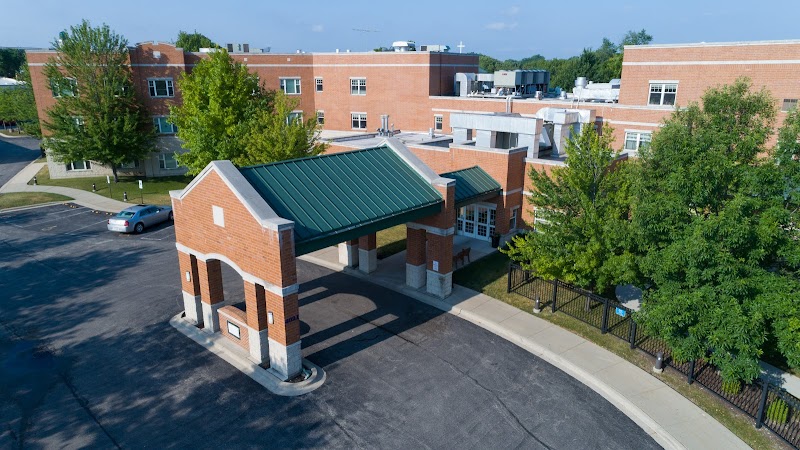
4021 WEST BELMONT, CHICAGO, IL 60641 (773) 328-5500
Non profit - Church related 54 Beds FRANCISCAN COMMUNITIES Data: November 2025
Trust Grade
60/100
#186 of 665 in IL
Last Inspection: June 2024

Within standard 12-15 month inspection cycle. Federal law requires annual inspections.

Overview

St. Joseph Village of Chicago has a Trust Grade of C+, indicating a decent performance that is slightly above average. They rank #186 out of 665 facilities in Illinois, placing them in the top half, and #59 out of 201 in Cook County, meaning only a handful of local options are better. The facility is improving, with issues decreasing from 8 in 2024 to just 1 in 2025. Staffing is rated at 4 out of 5 stars, with a turnover rate of 56%, which is around the state average, suggesting that while staff may not stay as long as desired, they are generally experienced. Notably, the facility has no fines on record, which is a positive sign, and they boast higher RN coverage than 89% of Illinois facilities, allowing for better monitoring of residents' needs. However, there are some concerns. Two serious incidents were reported, including a resident who suffered two falls in six days due to inadequate monitoring, resulting in a hip fracture, and issues with pressure ulcers that were not properly addressed. Additionally, there were concerns about food safety, as some items in the kitchen were not stored or labeled correctly, which could impact the health of residents. Overall, while there are strengths in staffing and care monitoring, families should be aware of the facility’s recent issues and the need for ongoing improvements.

Trust Score
C+
60/100
In Illinois
#186/665
Top 27%
Safety Record
Moderate
Needs review
Inspections
Getting Better
8 → 1 violations
Staff Stability
⚠ Watch
56% turnover. Above average. Higher turnover means staff may not know residents' routines.
Penalties
✓ Good
No fines on record. Clean compliance history, better than most Illinois facilities.
Skilled Nurses
✓ Good
Each resident gets 89 minutes of Registered Nurse (RN) attention daily — more than 97% of Illinois nursing homes. RNs are the most trained staff who catch health problems before they become serious.
Violations
⚠ Watch
19 deficiencies on record. Higher than average. Multiple issues found across inspections.
★★★★☆
4.0
Overall Rating
★★★★☆
4.0
Staff Levels
★★★★☆
4.0
Care Quality
★★★★☆
4.0
Inspection Score
Stable
2024: 8 issues
2025: 1 issues

The Good

  • 4-Star Staffing Rating · Above-average nurse staffing levels
  • 4-Star Quality Measures · Strong clinical quality outcomes
  • Full Sprinkler Coverage · Fire safety systems throughout facility
  • No fines on record

Facility shows strength in staffing levels, quality measures, fire safety.

The Bad

Staff Turnover: 56%

10pts above Illinois avg (46%)

Frequent staff changes - ask about care continuity

Chain: FRANCISCAN COMMUNITIES

Part of a multi-facility chain

Ask about local staffing decisions and management

Staff turnover is elevated (56%)

8 points above Illinois average of 48%

The Ugly 19 deficiencies on record

2 actual harm
Jul 2025 1 deficiency
CONCERN (D) 📢 Someone Reported This

A family member, employee, or ombudsman was alarmed enough to file a formal complaint

Potential for Harm - no one hurt, but risky conditions existed

Accident Prevention (Tag F0689)

Could have caused harm · This affected 1 resident

**NOTE- TERMS IN BRACKETS HAVE BEEN EDITED TO PROTECT CONFIDENTIALITY** Based on interview and record review the facility failed to implement interventions consistent with a resident's needs and curre...

Read full inspector narrative →
**NOTE- TERMS IN BRACKETS HAVE BEEN EDITED TO PROTECT CONFIDENTIALITY** Based on interview and record review the facility failed to implement interventions consistent with a resident's needs and current professional standards of practice to eliminate the risk of a fall for one (R1) resident out of six residents reviewed for quality of care in a total sample of six. This failure resulted in R1 sustaining a fall without significant injury. Findings include: On 07/08/2025, at 1:23 PM, V3 (Certified Nursing Assistant/CNA) stated that she was the assigned CNA for R1 when R1 fell on [DATE]. V3 stated that V3 was going around taking blood pressures and meal tickets. V3 stated I went to his room and he needed something. I told him to give me a second. I am going to take vital signs. I will be right back. At that time he kept getting up and I instructed him to lay back down, and he followed that command. I went to go get another resident's vital signs. When I came to his room, I heard him yell. I heard him say hey. When I looked in his room he was on the ground. V3 stated that R1 had a bump/knot/bruise on the left side of his head. V3 stated that R1 didn't have any other visible injuries, lacerations, or cuts. V3 stated that R1 did voice that he hit his head, but his head was not hurting. V3 stated we asked him these questions, but he was cracking jokes. We sat him up, and put him in our hallway. I fed him dinner before he went to the hospital. While he was waiting for the ambulance, he was doing fine. V3 stated that R1 was a fall risk and staff had to redirect him to use his call light. V3 reported that R1 was a one person assist and V3 would use a sit to stand mechanical lift for R1. V3 stated that R1 was incontinent but he liked to go to the bathroom for continence of bowel. V3 stated he (R1) wanted to get something; I cannot remember specifically. It is probably something he didn't have in the room, and I had to go get. I don't remember at this time what it was. V3 stated that when nursing assistants come on shift, they are required to get all vital signs under their care and get dinner orders by a certain time. V3 stated that R1 was responsive but he had moments and required a lot of redirections. V3 stated maybe he could have forgotten or gotten impatient. V3 stated that she did ask R1 for patience because V3 must have vital signs and dinner order information within the first hour. V3 stated that she told R1 that she would be back. V3 stated that she went to take three more residents' vital signs. V3 stated that it was not even five minutes that went by when she checked on R1. V3 stated I think he got antsy and forgot what he asked me for. If I would have found him 10 to 15 minutes later, it would have been worse. It was probably something he wanted a new container. That is why I told him one second, I'm going to take vital signs. On 07/08/2025, at 1:46 PM, V4 (Registered Nurse) stated R1 has left side weakness and R1 is usually redirectable. V4 stated that R1 told V4, R1 knows he should have not touched his feet. I think he leaned down and he lost his balance. Since he couldn't move his left side, he did not have a chance for support. V4 stated that she didn't know R1 was asking for something. If the resident needs something, they should attend to it. If the CNA needs help, they can ask the nurse for help. V4 stated that R1's fall prevention interventions included reminding R1 frequently to call us for help, give him the call light, bed at lowest position, putting safety floor mats, and doing frequent rounds because sometimes he wants to do something on his own. On 07/08/2025, at 3:30 PM, V2 (Director of Nursing) stated in a perfect world, I would have gotten what R1 wanted. I understand that not fulfilling his needs can lead to a fall. It was not emergency, she was strictly just doing a routine task. V2 stated that attending to resident's needs are number one although vital signs are a critical part of patient care because the residents are getting ready to receive the evening medications. R1's face sheet documents that R1 is a [AGE] year-old individual with diagnoses not limited to: hemiplegia and hemiparesis following cerebral infarction affecting left non-dominant side, unsteadiness on feet, muscle weakness (generalized), unspecified symptoms and signs involving cognitive functions following cerebral infarction, difficulty in walking. R1's care plan documents in part R1 is at risk for falls and fall related injuries r/t (related to) unsteady balance, left hemiparesis status post-acute stroke right middle cerebral artery distribution infarction. R1 will be free of falls and fall related injuries daily through next the review date. The resident needs prompt response to all requests for assistance. R1's incident note dated 6/6/2025, at 7:00 PM, documents in part resident (R1) was observed lying on prone position on the floor between the bed and the window side. A lump was noted on the left side of the forehead. The resident is able to move his right extremities. The left side is paralyzed as baseline. R1's health status note dated 6/6/2025, at 10:00 PM, documents in part placed call to hospital ER (emergency room) and confirmed that the resident was there. All tests were negative. Nurse in charge stated also that resident will be back to facility within the next few hours. Facility document dated 10/23/2024, documents in part fall prevention & management policy. Fall prevention is achieved through an interdisciplinary approach of education, managing risk factors, and implementing appropriate interventions to reduce the risk of falls. Facility document not dated titled resident rights documents in part the resident has a right to a safe, clean, comfortable and homelike environment, including but not limited to receiving treatment and supports for daily living safely.
Aug 2024 2 deficiencies
CONCERN (D) 📢 Someone Reported This

A family member, employee, or ombudsman was alarmed enough to file a formal complaint

Potential for Harm - no one hurt, but risky conditions existed

Quality of Care (Tag F0684)

Could have caused harm · This affected 1 resident

**NOTE- TERMS IN BRACKETS HAVE BEEN EDITED TO PROTECT CONFIDENTIALITY** Based on interview and record review, the facility failed to meet personal care and nursing needs; and failed to ensure that a r...

Read full inspector narrative →
**NOTE- TERMS IN BRACKETS HAVE BEEN EDITED TO PROTECT CONFIDENTIALITY** Based on interview and record review, the facility failed to meet personal care and nursing needs; and failed to ensure that a resident received treatment and care in accordance with professional standards of practice and in accordance with the resident's goals of care for one resident (R1) in a total sample size of three residents. Findings include: Facility's undated investigation form documents in part, At this time, it appears that V7 did not do appropriate rounding, nor did V7 make appropriate inquiries about the care needed for R1. V7's time sheet shows a late arrival to V7's shift. V7 also did not inquire about R1's needs from the nurse on duty. On 08/27/24 at 11:38am, V7 Certified Nursing Assistant (CNA) stated, I (V7) didn't get any report about R1. I (V7) didn't know that R1 needed help or assistance with feeding or being cleaned. I (V7) helped clean R1 when R1's daughter came. Before that I (V7) didn't clean R1 because I (V7) didn't think R1 needed me to do anything. When I (V7) cleaned R1 with R1's daughter, I (V7) realized that R1's wounds were exposed with no dressing on. I (V7) didn't notice any stool inside the wounds but R1 had no bandages on any of the wounds. R1 also had no diaper on. R1's daughter applied the bandages to the wounds. Now they (facility) are telling me (V7) that I (V7) neglected R1. R1's physician order dated 08/21/24 documents in part, Needs 1 to 1 assistance with feeding at every meal/snack. R1's care plan dated 08/18/24 documents in part, R1 has an ADL self-care and mobility usual performance deficit related to poor mobility, incontinence, end of life stages .Will manage ADLs to maintain comfort/dignity during end of life stages .Eating: substantial to dependent with 1 staff assist .Personal hygiene assistance level: substantial to dependent with 1 staff assist .Roll left and right: substantial to dependent with 1-2 staff assist .Toileting hygiene: substantial to dependent with 1-2 staff assist. R1's eating task flowsheet Setup or clean-up assistance- Helper sets up or cleans up; resident completes activity. Helper assists only prior to or following the activity documents yes for R1 on 08/20/24, 08/21/24 and 08/22/24. R1's care plan dated 08/18/24 documents in part, The resident has bowel incontinence .check resident every two hours and assist with toileting as needed .Provide pericare after each incontinence episode. R1's medical diagnosis includes but are not limited to Chronic Obstructive Pulmonary Disease, Hypertensive Heart Disease without Heart Failure, Rheumatoid Arthritis, History of Falling, Pressure Ulcer of Right Hip Stage 3, Pressure Ulcer of Right Upper Back Stage 4, Pressure Ulcer of Left Upper Back Stage 4. R1's Minimum Data Set (MDS) dated [DATE] has a Brief Interview for Mental Status (BIMS) score of 9, which indicates R1 has moderate cognitive impairment. R1's assessment for eating, toileting and personal hygiene are all documented as dependent, which indicates helper does all the effort, resident does none of the effort to complete the activity. R1's nursing progress note dated 08/22/24 documented by V14, Registered Nurse (RN) documents in part, Patient is very contracted and has three sores. dressing sores as ordered. Turning patient every 2 hours. On 08/27/24 at 1:13pm, V9 (CNA) stated, R1 could not reposition herself. R1 was contracted and couldn't move at all. On 08/27/24 at 2:58pm, V10 Registered Nurse (RN) stated, I (V10) do remember admitting R1 and R1 had wounds. R1 was very limited with movement and needed a lot of assistance. R1 was incontinent of bowel and bladder. R1 required assistance with feeding. I always get report to find out who has wounds and I stress to the CNA the importance of letting me know if a wound bandage is soiled. On 08/27/24 at 3:26pm, V12 (R1's family member) stated, I (V12) went to R1's room at 8:45pm on 08/20/24 and the door was completely closed so I (V12) knocked on the door assuming R1 was receiving incontinence care. As I (V12) looked at R1, I (V12) noticed that R1 had food all over R1 and was drenched in sweat. I (V12) told the staff that R1 was a feeder and had told staff that before R1 even came to the facility. V3 (RN) told me (V12) that V3 had no recollection of R1 having wounds. V7 told me (V12) that V7 did not get a report on the residents. When I (V12) pulled out R1's bedside table I (V12) noticed R1 had no diaper on, just a pillow between R1's legs and it was soiled with urine and feces. There was food visible on R1's face, R1's sheets and even on R1's headboard from R1 trying to attempt to feed R1's self. On Sunday when R1 arrived, I (V12) gave report to the charge nurse about how often I (V12) change the wounds and what I use to change the wounds. R1 had 3 wounds, when I (V12) arrived at the facility, R1's wound to the sacrum had a sponge over the wound that was full of blood. R1's other two wounds were not covered. When I (V12) saw that R1 was naked, I (V12) immediately told the CNA to get the nurse. When V3 came in V3 said that V3 had no knowledge of R1's wounds. R1 was contracted and could not feed R1's self or reposition R1's self. On 8/27/24 at 3:48pm, V13 CNA stated, R1 was a feeder. R1 was contracted. The day I (V13) had R1, I had to change R1 and I (V13) repositioned R1 and noticed a big wound on R1's hip. The area was raw and sore without a bandage, so I (V13) put a dry bandage over the reddened area. On the date of the incident 08/20/24 around 8pm, I(V13) heard a lot of commotion, so I (V13) went to check what was going on. The nurse told me that R1's daughter was yelling about another resident in R1's room and R1 naked with no diaper. I (V13) asked R1 if R1 was okay and R1 said no. At that time, I (V13) noticed a lot of open wounds on R1. V12 said that when V12 came in R1's room that R1 didn't have a diaper on. V12 allowed me (V13) to assist V12 with cleaning R1. R1 was on a regular mattress. On 08/28/24 at 10:30am V3 RN stated, R1 had wounds on R1's body. I (V3) was starting the before bedtime medication pass. V12 came to R1's room and found a male resident in the room and asked why the male resident was there and why R1 didn't have a diaper on. V12 questioned me (V3) on why R1 was dirty and V12 stated that R1's wounds needed to be changed. When I (V3) came in R1's room, V12 was cleaning R1 and I (V3) didn't see if the wounds were covered or not, the wounds were already exposed. R1 did not have an incontinence brief on when I (V3) walked in the room. The CNAs can always come and ask the nurse about a resident. Rounds are done every 2 hrs. R1 was not able to reposition self. R1 was not able to feed self, R1 needed assistance. The CNA (V7) did not assist R1 with feeding, V7 thought that R1 could feed R1's self. R1's arms were slightly contracted. R1 was incontinent of bowel and bladder. Diapers are placed on incontinent residents. R1 should have had a diaper on. R1 should have been assisted with R1's meals. For all PRN (as needed) wounds, if I (V3) visually see the wounds are soiled or if the CNAs do their rounds then the CNAs would let the nurse know the wound needs to be changed. I (V3) assumed that the CNA knew R1's status and would reposition R1. I didn't tell the CNA about the resident because I (V3) thought that V7 knew what to do for the resident. On 08/28/24 at 1:45pm, V2 Assistant Director of Nursing (ADON) stated, The facility's expectations is that the nurses should communicate with the CNAs to let the CNAs know what is going on with the resident and also a CNA handoff report should be done. The CNA's have to do frequent rounds on total care residents and if a resident is a high fall risk. 5 hours without checking on an incontinent resident is not acceptable; it should be at least every hour. If a CNA finds a soiled wound dressing that information should be communicated to the nurse right away to make sure that the wounds are clean and redressed. Diapers are for most of our residents who are incontinent. Facility's position description for Certified Nursing Assistant (C.N.A) dated 05/01/24 documents in part, I. Position Summary: Provides certified nursing assistant services to assigned residents in accordance with care plans, community policies and procedures and at the direction of supervisors .II. Key Duties and Responsibilities: 2. Assists residents with or performs activities of daily living for resident in accordance with care plans and established community policies and procedures .3. Assist resident with lifting, turning, transferring, positioning and transporting .6. Delivers nutritional supplements to residents at assigned times and provides resident assistance as needed to ensure intake .III. Essential Functions: 2. Treats residents, families, visitors and associates with dignity and respect. Facility's position description undated for Registered Nurse (RN) documents in part, Position Summary: Provide direct nursing care to the residents and supervises the day-to-day nursing activities performed by the licensed practical/vocational nurse and certified nursing assistants in accordance with current federal, state, and local regulations and guidelines and established facility policies and procedures .I. Key Duties and Responsibilities: Ensures that policies and procedures are complied with by nursing personnel assigned .Performs rounds to ensure resident needs are being met and personnel are performing their assigned duties. Facility's policy titled Activities of Daily Living (ADLs) dated 12/01/23 documents in part, Policy: Residents who are unable to carry out activities of daily living independently will receive the services necessary to maintain good nutrition, grooming, and personal and oral hygiene .Procedure: 2. Appropriate care and services will be provided for residents who are unable to carry out ADLs independently, with the consent of the resident and in accordance with the plan of care, including appropriate support and assistance with: a. Hygiene (bathing, dressing, grooming, and oral care) .c. Elimination (toileting). Facility's policy titled Routine Resident Checks dated 07/2013 documents in part, Policy Statement .Staff shall make routine resident checks to help maintain resident safety and well-being .Policy Interpretation and Implementation .2. Routine resident checks involve entering the resident's room and/or identifying the resident elsewhere on the unit to determine if the resident's needs are being met, identify any change in the resident's condition, identify whether the resident has any concerns, and see if the resident is sleeping, needs toileting assistance, etc. Facility's policy titled Perineal Care dated 2021 documents in part, Purpose: The purposes of this procedure are to provide cleanliness and comfort to the resident, to prevent infections and skin irritation, and to observe the resident's skin condition.
CONCERN (D) 📢 Someone Reported This

A family member, employee, or ombudsman was alarmed enough to file a formal complaint

Potential for Harm - no one hurt, but risky conditions existed

Accident Prevention (Tag F0689)

Could have caused harm · This affected 1 resident

**NOTE- TERMS IN BRACKETS HAVE BEEN EDITED TO PROTECT CONFIDENTIALITY** Based on observation, interview, and record review the facility failed to provide adequate supervision for one resident (R2). Th...

Read full inspector narrative →
**NOTE- TERMS IN BRACKETS HAVE BEEN EDITED TO PROTECT CONFIDENTIALITY** Based on observation, interview, and record review the facility failed to provide adequate supervision for one resident (R2). This failure affected one resident (R1) and has the potential to affect all residents residing on the 3rd floor. Findings include: R1 has a diagnosis of but not limited to Chronic Obstructive Pulmonary Disease, Hypertensive Heart, Rheumatoid Arthritis, History of Falling, Pressure Ulcer of Right Hip, stage 3, Pressure Ulcer of Right Upper Back, Stage 4, Pressure Ulcer of Left Upper Back, Stage 4. R1 has a Brief Interview of Mental Status score of 09. R2 has a diagnosis of but not limited to Dementia, Hypertensive Heart Disease, Dementia, Type 2 Diabetes Mellitus, Cognitive Communication Deficit, Anxiety Disorder. R2 has a Brief Interview of Mental Status score of 04. R2's Minimum Data Set, dated [DATE] documents, in part, Sit to Stand: Substantial/Maximal Assistance (Helper does More Than Half the effort), Chair/bed to chair transfer: Partial/Moderate assistance (Helper does Less Than Half the effort), Functional Limitation in Range of Motion: No impairment in upper and lower extremities, Mobility Devices: manual wheelchair. On 8/26/2024 at 3:23pm, surveyor observed R2 wheel himself into the CNA (Certified Nurses Assistant) charting area. Surveyor observed R2 wheel himself down the hall, on the high-end side (309-318) and back to the middle area twice. On 8/26/2024 at 3:24pm, V5 (CNA) stated R2 is a wanderer, and he does wander into other resident's rooms. On 8/26/2024 at 3:15pm, V7 (CNA) stated that R2 does wander around the unit in his wheelchair and that he did remove R2 from R1's room on 8/20/2024. V7 stated that R2 was sitting in his wheelchair on the left side of R1's bed, facing the window, with his pants down to his knees and that his incontinence brief was visible. Progress noted dated 8/20/2024 at 11:35pm by V3 (Registered Nurse) documents, in part, aide (V7) notified writer (V3) that V12 (R1's family member) found another resident (R2) inside resident's room. On 8/26/2024 at 3:37pm, V6 (RN) stated that R2 is a wanderer and that R2 sometimes wanders into other resident's rooms, but then he (R2) comes out on his own before he (V6) must go get him. On 8/27/2024 at 3:14pm V11 (Plant Operations Supervisor stated camera for view of hallway 301-308 does not work. Surveyor reviewed another camera view from the CNA's charting area but V11 could not retrieve the data for August 20, 2024. On 8/27/2024 at 3:26pm, V12 (R1's Family Member) stated when she (V12) went to R1's room at 8:45pm the door was completely closed, so she (V12) knocked on the door assuming R1 was receiving incontinence care but when she (V12) entered, she (V12) saw R2 sitting on the side of her (R1) bed with his (R2) pants down. I grabbed the wheelchair handle and asked R2 who he was and what he was doing there. R2 stated his name and that he was trying to give her (R1) something because she won't eat. I went back out and found the CNA (V7) and had V7 to remove the resident from my mom's room. V7 stated that R2 goes in everybody's room. V12 stated that R2 said, I am trying to give R1 some sugar, as he threw a sugar packet on her over the bed table, but R1 won't eat. On 8/28/2024 at 10:29am, V3 (RN) stated that R2 had been removed from R1's room when she entered R1's room and that we (nursing staff) did not see R2 enter R1's room. On 8/28/2024 at 2:27pm, V2 (Assistant Director of Nurse-ADON) stated potential issues that could arise from the breakdown of supervision for a wanderer and other residents is that they (wanderer) can elope, get hurt or fall. R1's care plan focus dated 8/21/2024 documents, in part, assure the resident that she is safe and secure and assure her that needs will be addressed by trained caregiver. R2's Care plan focus for elopement documents, in part, distract resident from wandering by offering pleasant diversions, structured activities, food, conversation, television, books and provides structured activities: toileting, walking inside and outside, reorientation strategies including signs, pictures and memory boxes. Resident Rights for People in Long Term Care Facilities, documents, in part, your right to safety: your facility must be safe. Undated policy titled Safety and Supervision of Residents documents, in part, our facility strives to make the environment as free from accident hazards as possible and resident safety and supervision and assistance to prevent accidents are facility-wide priorities. Resident supervision is a core component of the systems approach to safety. The type and frequency of resident supervision is determined by the individual resident's assessed needs and identified hazards in the environment. Position Description titled Certified Nursing Assistant with an effective date of 5/01/2024 documents, in part, follows appropriate safety policies/procedures at all times to protect residents. Undated Position Description titled Registered Nurse documents, in part, promotes and protects all residents' right, follows appropriate safety measures at all times to protect residents.
Jun 2024 6 deficiencies 2 Harm
SERIOUS (G) 📢 Someone Reported This

A family member, employee, or ombudsman was alarmed enough to file a formal complaint

Actual Harm - a resident was hurt due to facility failures

Pressure Ulcer Prevention (Tag F0686)

A resident was harmed · This affected 1 resident

**NOTE- TERMS IN BRACKETS HAVE BEEN EDITED TO PROTECT CONFIDENTIALITY** Based on interview and record review the facility failed to put interventions in place for a newly admitted resident (R199) in a...

Read full inspector narrative →
**NOTE- TERMS IN BRACKETS HAVE BEEN EDITED TO PROTECT CONFIDENTIALITY** Based on interview and record review the facility failed to put interventions in place for a newly admitted resident (R199) in a sample of 12 residents. This failure resulted in R199's skin intact with redness progressed to stage three wounds of the buttock and heel. Findings include: According to R199's face sheet printed 6/12/2024, R199 is [AGE] years of age and was admitted to the facility on [DATE] and discharged [DATE]. R199 diagnoses include but are not limited to aftercare following explanation of shoulder joint prosthesis; unspecified rotator cuff tear or rupture of left shoulder; arthropathies, left shoulder; polyosteoarthritis; pressure-induced deep tissue damage of left heel and right buttock with onset date 5/10/24; pressure ulcer of left heel and right buttock, stage 3 with onset date 5/22/24. R199's admission Evaluation, dated 5/10/2024, indicates skin intact. According to R199's POS (Physician Order Summary) printed 6/12/24, the following orders were placed for R199, air loss mattress, order date 5/22/24; apply alginate calcium to right buttock after cleansing NSS then cover with gauze island dressing every night shift for open wound, order date 5/22/24; apply alginate calcium with leptospermum to left heel after cleansing NSS then cover with gauze island dressing every night shift for open wound, order date 5/22/2024; off load the wound, reposition per facility protocol, float heels, limit sitting for 60 minutes, order date 5/22/24. R199's TAR (Treatment Administration Record) dated May 2024, indicates wound care treatments with start date of 5/22/24 to right buttock and left heel. Treatments completed 5/22, 5/23, 5/24. R199's progress note 5/10/2024 8:10 PM (20:10) documents in part: resident skin intact with redness to buttocks, redness to left heel, resident has bruising to left arm, chest, back and abdomen area, bruising to right arm. R199's progress note 5/14/2024 9:00 PM (21:00) documents in part: Also has sore present on foot. R199's progress note 5/16/2024 3:39 PM (15:39) documents in part: wound care to follow for heel pressure ulcer. R199's progress note 5/19/2024 6:27 PM (18:27) documents in part: Also family meeting scheduled today feels well, receiving supplements for pressure ulcer, yet to be seen by wound care MD. Specialty Physician Initial Wound Evaluation and Management Summary, 5/22/2024, documents in part: Stage 3 pressure wound of the left heel full thickness; etiology, pressure; duration greater than 14 days; wound size, 1.7 x 3.1 x not measurable cm, dept is unmeasurable due to presence of nonviable tissue and necrosis. Stage 3 pressure wound of the right buttock full thickness; etiology, pressure; duration greater than 14 days; wound size, 1.5 x 1.7 x 0.1 cm. On 6/12/24 at 9:34 AM, V17 (Wound Care Nurse) stated V17 has been at the facility as wound care nurse for three years. I'm here one day a week. The night shift nurse does treatments when I'm not here. The Facility does skin assessments on admission and weekly. Treatments are documented on the TAR (Treatment Administration Record). There is only an admission note for R199. I saw R199 with the wound doctor on 5/22/24. When R199 was admitted the nurse charted redness on the left heel and buttock. The doctor charted redness on left buttock and left heel. On 5/22/24 the left heel and left buttock were stage 3, they were open. Redness is not an open wound it is intact. 5/22/24 ordered a low air loss mattress. There were no treatments for the redness. Usually for redness in the buttock area there is an order for barrier cream to prevent from getting worse. Heel protectors or off-loading for redness on the heels to prevent from getting worse. I don't know if that was done. I was not here the day R199 was admitted . The wounds were acquired in the facility. 5/22/24 order for alginate calcium and Medi honey to left heel, alginate calcium to the buttock. The doctor or I did not see R199 after 5/22/24. On 6/14/24 at 12:18 PM, V28 (Wound Care Physician) stated R199 had two wounds, one on the heel and one on the buttock. My date of service is 5/22/24. R199 was admitted 12 days before I saw R199. On 5/22 the heel, post debridement, was stage 3, the buttock was stage 3. I did not debride the buttock. I can't base my presumption on someone else's note I can only base it on my own. I would have seen R199 when they told me to see R199. I would not have delayed seeing R199. The floor nurses notify myself and or the wound care nurse of any new wounds that they want me to see. I round once a week, Wednesday mornings starting at 6AM. Facility system procedure, Skin and Wound Care Program, 2/12/2023, documents in part: To provide clinical systems and resources to identify residents at risk for skin breakdown; implement strategies to prevent and/or manage pressure ulcers and reduce pain and minimize infection; reduce and mitigate the overall incidence of pressure ulcers; reduce risk factors that contribute to the development of pressure ulcers; monitor the incidence and severity of pressure ulcers.
SERIOUS (G) 📢 Someone Reported This

A family member, employee, or ombudsman was alarmed enough to file a formal complaint

Actual Harm - a resident was hurt due to facility failures

Accident Prevention (Tag F0689)

A resident was harmed · This affected 1 resident

**NOTE- TERMS IN BRACKETS HAVE BEEN EDITED TO PROTECT CONFIDENTIALITY** Based on interviews and review of records the facility failed to provide effective supervision, interventions and monitoring to ...

Read full inspector narrative →
**NOTE- TERMS IN BRACKETS HAVE BEEN EDITED TO PROTECT CONFIDENTIALITY** Based on interviews and review of records the facility failed to provide effective supervision, interventions and monitoring to prevent falls per policy for a resident that needs maximal assistance with ADLs/Activities of Daily Living (bed mobility, transfers, and ambulation). Facility also failed to ascertain or to rule out injury had occurred due to the fall. These failures include 1 out of 1 resident (R49) in a total sample of 12 residents reviewed for accidents and hazard. This failure resulted in R49 having 2 falls for a period of 6 days in the facility. R49 sustained left leg/hip severe pain and left leg/hip (femoral) fracture that was determined the day after discharge. Findings include: R49 was [AGE] years old, admitted on [DATE] for respite of 6 days until 1/29/2024. R49 medical diagnosis includes vascular dementia, convulsion, cerebral atherosclerosis. R49's progress notes for history and physical by V4 (Medical Doctor) dated 1/25/2024 documents that R49 was seen confused alert to self only. R49 needs fall and safety precautions. Per R49's progress notes by V10 (Licensed Practical Nurse) dated 1/25/2024 (verified by V2 (Acting Director of Nursing actual date was 1/24/2024) around 6:30 PM, an aide informed V10 that R49 was observed laying on the floor on her left side. Per R49's progress notes by V11 (Licensed Practical Nurse) dated 1/26/2024 documented that another fall incident happened. Per notes, R49 was again observed on the floor. Multiple notes of R49 with pain to the left leg after the first fall are as follows: V10 documented on 1/25/2024 at 6:30 PM for post fall monitoring that R49 was complaining of left leg pain when hospice staff did a range of motion on R49. V10 documented on 1/25/2024 at 11:00 PM during evaluation or assessment there was pain at left lower extremity, posterior thigh. V12 (Licensed Practical Nurse) documented on 1/28/2024 for post fall charting, that R49 complains of severe pain throughout the shift. After Tylenol was administered around 6:00 PM, R49 continues to complaint of severe pain on the left leg. Morphine was administered around 8:20 PM continue to monitor pain. On 06/12/2024 at 1:47 PM, V10 (Licensed Practical Nurse) stated, I was the nurse when R49 fell. I called the doctor and hospice. Hospice nurse came in the facility and did ROM (range of motion). But hospice did not want to pay for X-Ray. On 06/12/2024 at 12:12 PM, V2 (Acting Director of Nursing/Infection Control Preventionist/Restorative) said R49 fell twice during her 5 days stay in the facility. The first fall was on 1/24/2024 at 6:30 PM and another fall on 1/25/2024 . Hospice came early morning 1/26 after the fall. V2 said that she noted that there was documentation of R49 having severe pain on 1/28/2024. V2 said that there was no X-Ray done on record. And that the facility was not aware of any injury R49 sustained due to the fall. On 06/12/2024 at 02:00 PM, V20 (Minimum Data Set Coordinator / Registered Nurse) stated that R49 medical diagnosis includes convulsion, it was included on alteration of neurological status but not included on the fall care plan. When asked about R49's ADL (Activity of Daily Living), how does R49 do with bed mobility, transfers, and ambulation? V20 stated that R49's care plan for transfers and ambulation was not continued. V20 said after reviewing R49's care plan, It was not in the care plan. It does not have to have one. V20 stated that per MDS (Minimum Data Set) assessment, R49 needs extensive assistance. On 06/12/2024 at 03:16 PM, V11 (Licensed Practical Nurse) stated that when she did her rounds R49 was found on the floor. When asked about R49's ADL status on transferring, ambulation, and toileting. V11 said R49 was able to get up and walk. She was able to walk and no limitation going to the bathroom from her bed. On 6/13/2024 at 10:06 AM, V4 (Medical Doctor) stated that there is a collaboration of Hospice and Family. In cases of pain that cannot be controlled we need to intervene, do X-Ray, surgery, or other intervention for comfort reasons. Per facility incident report investigation dated 1/25/2024 document as follows: R49 was only oriented to self. Under predisposing factors: R49 was confused, incontinent, gait imbalance, impaired memory, non-compliant, weakness/ fainted. Under predisposing situation factors: R49 did a room change, wanderer, ambulating without assist, and that R49 cannot retain safety education, requires maximum supervision at all times for safety. R49 second fall dated 1/26/2024 was not included in the incident report. Per V26 (Certified Nursing Assistant) handwritten document included in the incident report, documents that R49 was seen on the floor. Per V26, R49 gets up with little help or no help. V26 full handwritten notes reads: I (V26) walk to room. R49 laying down on floor on left side with pillow under her head. Did not complain about pain. R49 get up with little or no help. On 6/14/2024 at 9:36 AM, V25 after reading the handwritten document that reads: V26 called me asking for help. When I walked in the resident was laying on her left side with a pillow under head. Nurse on duty was informed (V25 signature). V25 verified that it was her handwriting and both she (V25) and V26 wrote in the same piece of paper and gave it to V10 (Licensed Practical Nurse). V25 stated that R49 was confused and has an impaired gait. And that R49 needs supervision at all times. And that V26 was the certified nursing assistant that was assigned to R49 which per the same handwritten note, R49 get up with little to no help. R49's admission Evaluation dated 1/24/2024, documents that R49 was at risk of fall, at risk of elopement, and has ADL (Activities of Daily Living) deficits on self-care, mobility usual performance that needs to be addressed in the care plan. R49's Minimum Data Set (MDS) assessment on functional dated 1/29/2024 documents that R49 needs substantial or maximal assistance means helper does more than half the effort. Helper lifts or hold trunk or limbs and provides more than half the effort on all ADLs (Activities of Daily Living) including bed mobility, sit to stand, transfers, and ambulation. R49's care plan dated 1/24/2024 identified R49 of having ADL (Activities of Daily Living) self-care and mobility usual performance deficit. The goal is to improve R49's level of function. But all interventions listed including transfers, positioning, bed mobility were left blank. Although R49 was assessed as elopement risk on admission evaluation (1/24/2024). And was identified as wanderer in the incident report. ADLs and elopement/wandering was not addressed in the care plan of R49. On 1/31/2024, R49 was admitted to the hospital. Per hospital records, R49 sustained left leg fracture. Per R49's X-Ray report done in the hospital dated 1/30/2024 it was documented that R49 sustained an acute displaced and angulated fracture of the left femoral neck. Left femoral neck location is at the top of the thigh bone. The area where R49 was complaining of severe pain. Facility policy on Fall Prevention and Management dated 6/1/2023 reads: Per CMS definition Fall refers to unintentionally coming to rest on the ground, floor, or other lower level. When a resident is found on the floor, a fall is considered to have occurred. Under evaluation, a baseline care plan is developed on admission by the Licensed Nurse based on the Morse Fall Scale result, resident/family input, medical condition of the resident per assessment. Under actions following a fall includes the following: Ascertaining if an injury has occurred and providing treatment as necessary. Addressing the factors for the fall. Under supervision, the facility will provide adequate supervision to prevent accidents. Adequacy of supervision is defined by type and frequency based on the individual resident's assessed needs and identified hazards in the resident environment.
CONCERN (D)

Potential for Harm - no one hurt, but risky conditions existed

Deficiency F0645 (Tag F0645)

Could have caused harm · This affected 1 resident

**NOTE- TERMS IN BRACKETS HAVE BEEN EDITED TO PROTECT CONFIDENTIALITY** Based on interview and record review, the facility failed to initiate a new Level I screen for residents with known mental illne...

Read full inspector narrative →
**NOTE- TERMS IN BRACKETS HAVE BEEN EDITED TO PROTECT CONFIDENTIALITY** Based on interview and record review, the facility failed to initiate a new Level I screen for residents with known mental illness for one (R12) resident reviewed for Pre-admission Screening and Record Review (PASARR) in a total sample of 12 residents reviewed. Findings include: R12's Facehsheet documents that R12 was admitted to the facility on [DATE]. R12's Facesheet documents that R12 was diagnosed with other bipolar disorder on 05/17/2022, and diagnosed with major depressive disorder, recurrent, unspecified on 05/17/2022. R12's Interagency Certification of Screening Results OBRA-I Initial Screen dated 04/11/2018 indicates that R12 has no reasonable basis for suspecting MI (mental illness). R12's Minimum Data Set (MDS) Section I dated 03/15/2024 indicates active diagnoses of depression and bipolar disease. There is no documentation to show that R12 has a Level II PASARR screening. On 06/12/2024, surveyor inquired to V1 (Administrator) about level PASARR screenings for residents who are admitted to the facility. V1 (Administrator) provided surveyor with R12's PASARR and V1 stated he is not aware of who is specifically responsible for performing the resident PASARR screenings at the facility. On 06/12/2024, V3 (Social Services Director) stated she is not responsible for performing the PASARR screenings in the facility. Facility policy dated 06/01/2023 titled PASARR, Preadmission, Screening & Resident Review-SNF documents in part, Policy: PASARR requires that all people entering Medicaid-certified nursing communities are evaluated for: Serious Mental Illness (SMI); Intellectual Disability (ID); Developmental Disabilities (DD); .This is a federal requirement to ensure that individuals are not inappropriately placed in nursing homes for long term care. Protocol: The PASARR process requires that all Medicaid-certified nursing communities, regardless of payer, be given a preliminary assessment to determine whether they might have SMI, ID, DD. This is called a Level I screen. The NF is ultimately responsible for ensuring that the (Level I) is completed and the determination is on file.
CONCERN (E)

Potential for Harm - no one hurt, but risky conditions existed

Pharmacy Services (Tag F0755)

Could have caused harm · This affected multiple residents

Based on observation, interview and record review, the facility failed to follow policy to reconcile controlled medications in order to prevent loss or diversion for one of two carts reviewed for medi...

Read full inspector narrative →
Based on observation, interview and record review, the facility failed to follow policy to reconcile controlled medications in order to prevent loss or diversion for one of two carts reviewed for medication labeling and storage. Findings include: On 6/11/24 at approximately 10:00 AM, reviewed 1st floor medication cart: -Observed the number of pills in three bingo cards did not match the corresponding number of pills left on the Controlled Drug Receipt/Record/Disposition forms. The controlled substance was not signed out by the nurse when administered. R150 POS (Physician Order Summary) documents in part: hydromorphone HCL tablet 5mg. R150 Hydromorphone HCL 4mg bingo card indicates 19 pills remaining. R150 Controlled Drug Receipt/Record/Disposition Form for Hydromorphone HCL 4mg indicates amount left is 20. R24 POS documents in part: oxycodone HCL tablet 5mg and pregabalin capsule 75mg. R24 Pregabalin 75mg bingo card indicates 2 pills remaining. R24 Controlled Drug Receipt/Record/Disposition Form for Pregabalin 75mg indicates amount left is 3. R24 Oxycodone HCL 5mg bingo card indicates 21 pills remaining. R24 Controlled Drug Receipt/Record/Disposition Form for Oxycodone HCL 5mg indicates amount left is 22. Reviewed Controlled Substances Count Verification forms for the months of April, May, and June. Found multiple lapses in documentation of nurse initials for multiple days and shifts. On 6/13/24 at 2:28 PM, V2 (Infection Preventionist, Acting Director of Nursing, Restorative Nurse) stated when the nurse administers a controlled substance/narcotic, they remove the controlled substance from the box and the bingo card and document the removal in the narcotic log and on the MAR (medication administration record) right after administration. The nurse should not wait until later after all medications have been passed to document removal in the narcotic log. The previous nurse and the next nurse should count the narcotics together to confirm the number of pills in the bingo card match the number of pills left on the sheet. This is done because they are controlled substances and to verify that they are not diverted somewhere else. The narcotics log has to be signed by both of the nurses to know that the count was done. If the sheet is not signed, I don't know that the count was done. On 6/13/24 at 4:14 PM, V27 (Registered Nurse) stated at the change of each shift, outgoing and oncoming nurse should count the narcotics together, so we know that the count is right, and nothing is missing. Both nurses sign the form to verify that we counted. Controlled Substances, 11/2022, documents in part: Nursing staff count controlled medication inventory at the end of each shift, using these records to reconcile the inventory count. The nurse coming on duty and nurse going off duty make the count together and document and report any discrepancies to the director of nursing services. Preparation and General Guidelines, Controlled Substances, 3/2021, documents in part: Accurate accountability of the inventory of all controlled drugs is maintained at all times. When a controlled substance is administered, the licensed nurse administering the medication immediately enters the following information on the accountability record and the medication administration record (MAR): 1) Date and time of administration (MAR, Controlled Drug Receipt/Record Disposition Form) 2) Amount administered (Controlled Drug Receipt/Record Disposition Form) 3) Remaining quantity (Controlled Drug Receipt/Record Disposition Form) 4) Initials of the nurse administering the dose, completed after the mediation is actually administered (MAR, Controlled Drug Receipt/Record Disposition Form).
CONCERN (E)

Potential for Harm - no one hurt, but risky conditions existed

Deficiency F0761 (Tag F0761)

Could have caused harm · This affected multiple residents

Based on observation, interview and record review the facility failed to a) remove medications from the top of the cart when unattended, b) lock the cart when unattended and c) remove expired medicati...

Read full inspector narrative →
Based on observation, interview and record review the facility failed to a) remove medications from the top of the cart when unattended, b) lock the cart when unattended and c) remove expired medications from the cart for one of two medication carts reviewed for medication labeling and storage. Findings include: On 6/11/24 at approximately 10:00 AM, reviewed 1st floor medication cart: -During medication administration with V14 (Nurse), a medicine cup of approximately 10 loose tablets and capsules for a resident was observed on the top of the medication cart that was unattended. -During medication administration with V14, V14 walked away from the medication cart and went into a resident room leaving the medication cart out of view of V14. The cart was observed not locked. -Observed Lantus (insulin glargine) injection pen 100unit/ml, not sealed, labeled with date opened 5/6 and date expire 6/3/24. R23's POS (Physician Order Summary) documents in part: Lantus SoloStar subcutaneous solution pen-injector (insulin glargine). -Observed a controlled substance, a bottle of Hydromorphone 4mg/ml liquid, labeled expired 4/26/24 and the Controlled Drug Receipt/Record/Disposition Form marked expired 4/26/24. R41's POS documents in part: hydromorphone HCL solution 4mg On 6/11/24 at 10:15 AM, V14 (Registered Nurse) stated I poured the cup of medications and when I went into the room the resident was not in there. They had taken the resident to therapy already. Medications should not be left on the top of the medication cart. They should not be left on top of the cart because anybody could come and take them. Some of the residents on this floor have psychiatric diagnoses. I could have trashed the medications since I was not able to administer them. I should have locked the medication cart before I left it unattended. It should be locked so it is not accessible. According to the label, the insulin is expired. It should be discarded. If a resident was administered an expired medication, there is potential for medical issues and for the medication not to work. It may not have the effect as it would if it were not expired. There should not be expired medications in the medication cart. On 6/13/24 at 2:28 PM, V2 (Infection Preventionist, Acting Director of Nursing, Restorative Nurse) stated the expired hydromorphone should have been discarded long ago. The medication cart should not be left unlocked. The medication cart should be locked when the nurse is not at the cart. If the nurse is in the resident room and the cart is out of sight of the nurse the cart should be locked. It should be locked so no one but the nurse has access to it. A cup of medications should not be left on the cart if the cart is not attended. Anyone can pass by and grab and take the medications. The medications should be wasted if the resident is not available to take the medications if already poured. There should not be expired medications on the medication cart. The insulin should have been disposed of on the expiration date. There is potential for harm if a resident is administered an expired medication. On 6/13/24 at 4:14 PM, V27 (Registered Nurse) stated the medication cart should be locked when left unattended. There should be no medications, no sharps, no scissors left on top of the cart. Somebody might grab and take it. It's dangerous especially if it's not their medication. Expired medications should be removed from the cart and wasted for safety of the resident. It's not good to the resident if its expired. Medications with shortened Expiration Dates, 5/26/23, reads in part: Lantus Solostar shortened expiration date is 28 days from open or out of refrigerator. Medication Labeling and Storage, 2/2023, documents in part: The nursing staff is responsible for maintaining medication storage and preparation areas in a clean, safe, and sanitary manner. If the facility has discontinued, outdated or deteriorated medication or biologicals, the dispensing pharmacy is contacted for instructions regarding returning or destroying these items. Compartments (including, but not limited to, drawers, cabinets, rooms, refrigerators, carts, and boxes) containing medications and biologicals are locked when not in use, and trays or carts used to transport such items are not left unattended if open or otherwise potentially available to others.
CONCERN (F)

Potential for Harm - no one hurt, but risky conditions existed

Food Safety (Tag F0812)

Could have caused harm · This affected most or all residents

Based on observations, interview, and review of record the facility failed to properly store and label fruits and vegetables inside walk-in cooler. And failed to seal properly burger patties and proce...

Read full inspector narrative →
Based on observations, interview, and review of record the facility failed to properly store and label fruits and vegetables inside walk-in cooler. And failed to seal properly burger patties and processed turkey chili inside walk-in freezer in accordance with policy of the facility. These failures are potential to affect all 42 residents taking food by mouth. Findings include: On 06/11/2024 at 09:45 AM, with V23 (Food Services Director) at the walk-in cooler 1 discolored cantaloupe not dated. V23 said, I do not think this is mold, but I see what you mean. I will discard it. V23 took the discolored cantaloupe out of the walk-in cooler. Celery labelled as received May 15 with no other date when to discard. There are onions and carrots on a plastic container (not the original package) not dated. At the walk-in freezer turkey chili and around 27 burger patties on a large metal tray, at the bottom plastic wrap not attached from three sides exposing the food to the environment. V23 was asked if these patties are intended to be prepared for residents' consumption. V23 took the metal tray out of the walk-in freezer. Placed it on the table, and V23 said, I will tell my staff, to seal food in the freezer properly. V23 also said that staff are expected not to use food in the freezer that is not properly sealed. Policy of the facility for Storage of Food and Supplies dated 12/7/2020 reads: All food, non-food items and supplies used in food preparation shall be stored in such a manner as to prevent contamination to maintain safety and wholesomeness of the food for human consumption. Under fruit and vegetable storage: All perishable fruits and vegetables placed in refrigeration as soon as received. They should remain in the original container until empty. Watch closely to prevent the possibility of decay. Sort and produce daily to remove spoiled pieces. Under freezer foods, wrap food tightly to prevent cross contamination. Per V1 (Administrator) facility does not have any resident that does not take the food by mouth.
May 2023 7 deficiencies
CONCERN (D)

Potential for Harm - no one hurt, but risky conditions existed

ADL Care (Tag F0677)

Could have caused harm · This affected 1 resident

Based on observation, interview, and record review, the facility failed to provide turning and repositioning for a dependent resident (R28) for 1 of 20 residents reviewed for improper nursing care. Fi...

Read full inspector narrative →
Based on observation, interview, and record review, the facility failed to provide turning and repositioning for a dependent resident (R28) for 1 of 20 residents reviewed for improper nursing care. Findings include: R28's comprehensive care plan documents in part that R28 has potential impairment to skin integrity related to poor mobility and history of pressure injury. Focus, initiated 01/06/2022, documents in part that R28 presents with weakness in bilateral lower extremities and limitation in right lower extremity. Intervention initiated 01/06/2022 documents in part: BED MOBILITY: The resident requires extensive assistance by one staff to turn and reposition in bed. R28's Quarterly MDS (Minimum Data Set) dated 03/31/2023 documents in part that R28 requires extensive assist with one-person physical assist. R28's Braden Scale for Predicting Pressure Sore Risk dated 04/01/2023 documents in part that R28 is at risk for developing pressure sores. On 05/23/2023 at 10:28 AM, surveyor observed R28 lying in bed on [R28's] back with the head of the bed elevated less than 90 degrees but greater than 45 degrees. R28 was leaning towards left side. Conducted observations at 10:44 AM, 10:58 AM, 11:10 AM, 11:15 AM, and 11:27 AM. R28 remained lying on back leaning to the left side. At 11:46 AM, V10 (Nurse) was at bedside. R28 remained lying on back leaning to the left side. Conducted further observations at 11:46 AM and 11:55 AM. R28 remained lying on back leaning to the left side. At 12:07 PM, surveyor noted a light blue binder at the nurses' station. In the inside left pocket, there was a hand-written sheet of the residents on the floor with their ADL (Activities of Daily Living) care needs. For R28 it documented in part: Check & change. Extensive assist. At 12:11 PM, R28 remained lying on back side leaning towards left side with head of the bed less than 90 degrees. Staff did not reposition resident further upright or higher in the bed for eating. At 12:21 PM, R28 remained lying on back leaning to the left side. V7 (Certified Nurse Aide) came in the room and asked if R28 needed assistance eating. R28 stated no. V7 left the room without repositioning R28 upright to 90 degrees. At 12:30 PM, R28 remained lying on back leaning to the left side. At 12:41 PM, R28 was asleep in bed lying on backside and leaning to left side. Head of the bed was down less than 45 degrees. No positioning pillows. On 05/24/2023 at 9:45 AM, V10 stated R28 cannot turn from side to side independently. V10 stated R28 needs one assist for bed mobility. When asked what interventions the facility has in place to prevent pressure ulcers, V10 stated to turn and reposition R28 every two hours. Facility's Pressure Ulcer Prevention and Treatment, last revised 03/03/2023, documents in part: Reposition resident per care plan using pressure relieving devices (i.e., low air loss mattress, pillows, etc.) to prevent bony prominences from rubbing as applicable. Facility's Feeding policy, last revised 11/27/2022, documents in part: For a bedbound patient, elevate the head of the bed upright to 90 degrees (unless contraindicated).
CONCERN (D)

Potential for Harm - no one hurt, but risky conditions existed

Deficiency F0692 (Tag F0692)

Could have caused harm · This affected 1 resident

**NOTE- TERMS IN BRACKETS HAVE BEEN EDITED TO PROTECT CONFIDENTIALITY** Based on observation, interview, and record review the facility failed to provide enteral feedings as prescribed by physician fo...

Read full inspector narrative →
**NOTE- TERMS IN BRACKETS HAVE BEEN EDITED TO PROTECT CONFIDENTIALITY** Based on observation, interview, and record review the facility failed to provide enteral feedings as prescribed by physician for 1 (R40) of 3 residents reviewed for nutrition in a total sample of 22. Findings include: On 05/24/23 at 10:10 AM, surveyor observed tube feeding IsoSource 1.5 formula in plastic bag with R40's tube feeding infusing at 50 milliliters/hour (ml/hr.) and tube feeding formula bag labeled with R40's name, room number, date 05/23/23, time 7:00 PM, total volume 1000 milliliters, rate 50 milliliters/hour. V22 (R40's Family Member) stated a member of R40's family is at the facility daily from morning to early evening and that R40's tube feeding is routinely turned off at 12 noon so that R40 can receive therapy downstairs. On 05/24/23 at 10:52 AM, V5 (7-3 Registered Nurse/RN) stated R40 receives tube feedings and nothing by mouth. V5 stated V5 turns off and removes R40's tube feeding at 12 noon so R40 can participate in physical therapy downstairs. V5 stated R40's tube feeding is off between 12 noon and restarted at approximately 6:00 or 7:00 PM by the 3-11 shift nurse. V5 stated V5 does not restart R40's tube feeding during the rest of V5's 7-3 shift once V5 turns it off at 12 noon. On 05/24/23 at 11:58 AM, surveyor observed R40 in R40's room with tube feeding unhooked and no tube feeding longer infusing. Tube feeding formula bag was no longer hanging on infusion pole or in R40's room. On 05/24/23 at 3:39 PM, V18 (3-11 Registered Nurse/RN) stated R40's tube feeding is turned on at 7:00 PM every day. V18 stated V18 was working on 05/23/23 and V18 turned on R40's tube feeding at 7:00 PM. V18 stated V18 writes the time the tube feeding administration was started on the tube feed label along with R40's name, room number, rate of infusion, total volume, date, and V18's initials. On 05/24/23 at 4:03 PM, V13 (Registered Dietitian) state based on the estimated nutritional needs that the Registered Dietitian calculates a tube feeding order is recommended which would include the rate and total volume of tube feeding the resident would need to receive to meet those calorie and protein needs. V13 stated the RD recommendation for R40 was IsoSource 1.5 at 50 milliliters/hour for a total volume of 1000 milliliter/day which would provide 1500 calories, 68 grams protein. V13 stated R40 was diagnosed with protein calorie malnutrition in the hospital and a Registered Dietitian on 05/03/23 conferred with this diagnosis of protein calorie malnutrition based on R40's loss of body fat and moderate muscle mass loss. V13 stated R40's care plan goal is for R40 to gradual gain weight to desired body mass index to 23. R40 stated R40 receives nothing by mouth and receives all nutrition via a feeding tube. V13 stated the goal is for R40 to receive 1500 calories per day and if R40's tube feeding was run continuously for 20 hours at 50 milliliter/hour this would provide 1000 milliliters and then the resident would be off the tube feeding for a total of four hours daily. V13 stated if R40 is not receiving any tube feeding between 12 PM-7 PM this would be a total of seven hours off the tube feeding instead of four hours which would mean R40 is not receiving a total of 1000 milliliters, providing 1500 calories per day as recommended. V13 stated if R40 was not receiving the calories and protein recommended then this could cause weight loss, impaired wound healing, and lack of energy to participate in physical therapy. On 05/25/23 at 10:05 AM, V2 (Director of Nursing/DON) stated the nurse should be following the tube feed order as prescribed by the physician. V2 stated R40's tube feeding start time can be anytime between 4:00-7:00 PM. V2 stated R40 should be receiving 50 milliliters/hour of IsoSource 1.5 tube feed formula for a total volume of 1000 milliliters per 24-hour period. V2 stated R40's tube feeding infusion is held during activities of daily living and when R40 receives therapy. V2 stated it was V2's expectation that the nurses would turn R40's tube feeding back on back on once R40 returned from therapy to complete the tube feeding bag so R40 receives the full amount of 1000 milliliters as prescribed. V2 stated the nurses should be making sure R40 is receiving the full amount tube feeding formula in the bag. R40 was admitted to the facility on [DATE] and has diagnosis which includes but not limited to: Dysphagia following Cerebral Infarction, Unspecified Protein-Calorie Malnutrition, Encounter for Attention to Gastrostomy, Hypertensive Heart Disease with Heart Failure, Chronic Combined Systolic and Diastolic Heart Failure, Chronic Atrial Fibrillation, Anemia, Polyarthritis, Pneumonia. R40's Order Summary Report dated 05/25/23 documents in part enteral feeding order in the evening for nutrition IsoSource 1.5 to infuse at 50 ml/hr for a total volume of 1000 ml/day. R40's Medication Administration Record dated 05/01/23-05/31/23 document in part, enteral feeding for Nutrition IsoSource 1.5 to infuse at 50 ml/hr for total volume 1000 ml start date 05/03/23 1700. R40's care plan initiated 05/03/23 documents in part, nutritional diagnosis: moderate malnutrition related to chronic illness, impaired skin integrity as evidenced by loss of muscle mass and body fat with weight goal: gradual weight gain, BMI between 23-25, TF as prescribed IsoSource 1.5 at 50 ml/hr for a total of 1000 ml/day. R40's MDS (Minimum Data Set) from 05/01/23 BIMS (Brief Interview for Mental Status) indicates moderately impaired cognition. R40's Comprehensive Nutrition Assessment signed 05/03/23 documents in part, R40 appears to be (have) mild body fat and moderate muscle mass loss diagnosis protein-calorie malnutrition, estimated calorie needs 1440-1680 calories, moderate malnutrition, and recommendation for IsoSource 1.5 to infuse at 50 ml/hr for a total of 1000 ml/day to provide 1500 calories, 68 gm protein. Facility policy titled, Enteral Nutrition Support dated 01/01/21 documents in part, nursing to administer daily enteral nutrition per order.
CONCERN (D)

Potential for Harm - no one hurt, but risky conditions existed

Respiratory Care (Tag F0695)

Could have caused harm · This affected 1 resident

Based on observation, interview, and record review, the facility failed to follow their policy and procedure for oxygen administration to ensure that oxygen is administered under orders of a physician...

Read full inspector narrative →
Based on observation, interview, and record review, the facility failed to follow their policy and procedure for oxygen administration to ensure that oxygen is administered under orders of a physician. This failure has the potential to affect one (R245) of three residents reviewed for respiratory care in a sample of 22. The findings include: R245 admission date was on 5/22/23 with diagnoses not limited to Displaced Intertrochanteric fracture left femur status post intramedullary nail/ORIF (open reduction internal fixation), History of falling, COPD (Chronic Obstructive Pulmonary Disease), Paroxysmal Atrial Fibrillation, Unspecified Dementia without behavioral disturbance, Essential Hypertension, Atherosclerotic heart disease. On 5/23/23 at 10:29 AM, R245 was observed sitting in wheelchair, alert and verbally responsive. R245 stated, I think I was admitted last night. R245 was observed with oxygen inhalation at 2L/min via nasal cannula. At 11:10 AM, V5 (Registered Nurse -RN) was interviewed and stated she (V5) was the assigned nurse to R245. V5 stated that R245 is currently using oxygen at 2L/min related to diagnosis of COPD. On 5/24/23 at 9:46 AM, R245 was observed in bed, on lowest position, alert and verbally responsive. R245 stated she (R245) prefers to be in bed. Observed with O2 inhalation at 2L/min via nasal cannula. On 5/25/23 at 10:53 AM, V2 (Director of Nursing -DON) was interviewed and stated she has been working in the facility for about 2 years. V2 stated that oxygen administration should have a physician order in resident electronic health record. V2 stated that during emergency, nurse can administer oxygen then inform attending doctor. V2 reviewed R245 electronic health record (EHR) and confirmed that there was no physician order for oxygen. V2 stated that the nurse will not be able to know how many liters and method of oxygen administration if there is no physician order. V2 further stated that R245 was using oxygen upon admission per EHR. Reviewed R245 physician order sheet (POS) active orders as of 5/23/2023 with no order for oxygen. R245 admission progress notes dated 5/22/2023 documented in part: Utilizing oxygen: Yes. Oxygen L: 2 LPM Oxygen via nasal cannula. admitted resident via stretcher, accompanied by 2 EMTs (Emergency Medical Technician). With O2 (oxygen) support of 2LPM via NC (nasal cannula). R245 care plan dated 5/25/23 documented in part: R245 has altered respiratory status / difficulty breathing r/t (related to) COPD. Oxygen settings: 2L/min via nasal cannula as ordered by MD. Facility's policy and procedure for oxygen administration dated 7/1/22 documented in part: PURPOSE: Oxygen is administered to residents who need it, consistent with professional standards of practice, the comprehensive person-centered care plans, and the resident's goals and preferences. Procedure: 1. Oxygen is administered under orders of a physician, except in the case of an emergency. In such case, oxygen is administered and orders for oxygen are obtained as soon as practicable when the situation is under control.
CONCERN (D)

Potential for Harm - no one hurt, but risky conditions existed

Deficiency F0761 (Tag F0761)

Could have caused harm · This affected 1 resident

On 5/23/23 at 11:32am, first floor medication room and medication cart inspected with V5 (Registered Nurse -RN). Observed R29's Humalog multi dose vial with date opened: 4/21/23; date expired: 5/19/23...

Read full inspector narrative →
On 5/23/23 at 11:32am, first floor medication room and medication cart inspected with V5 (Registered Nurse -RN). Observed R29's Humalog multi dose vial with date opened: 4/21/23; date expired: 5/19/23 was still in the medication cart. V5 stated that expired Humalog vial should be discarded. V5 stated it can potentially cause some adverse effects to the resident if expired medication was given to the resident. 5/25/23 at 10:53 am, V2 (Director of Nursing -DON) was interviewed and stated that she has been working in the facility for 2 years. V2 stated that insulin should be labeled with open and expiration / discard date. V2 stated that Humalog insulin expiration date and be discarded 28 days after opening. V2 stated that potentially can cause some adverse reactions to resident if expired medication was given to resident. V2 stated that expired insulin will not be returned to pharmacy, it will be discarded in the (Tradename) medical collection and waste disposal. R29 physician order sheet (POS) active orders as of 5/24/2023 was reviewed and documented in part: Humalog Solution 100 UNIT/ML (Insulin Lispro) Inject as per sliding scale: if 150 - 200 = 0; 201 - 249 = 2; 250 - 299 = 4; 300 - 350 = 6 If less than 70 or greater than 400 call MD, subcutaneously three times a day for diabetes mellitus with meals. Hold if not eating. R29 has diagnoses not limited to Type 2 Diabetes Mellitus with hyperglycemia, long term (current) use of insulin. Based on observation, interview, and record review, the facility failed to discard expired medications from their medication carts for 3 residents (R9, R29, R30) in 2 out of 2 medication carts reviewed in a sample of 20 residents. Findings include: On 05/23/2023 at 2:21 PM, surveyor reviewed the third-floor medication cart with V10 (Nurse). Observed R9's Atropine Sulfate 1% solution in the drawer. Open date 02/24/2023. Staff did not write a date in the expired section of the label. V10 stated for ophthalmic solutions, they should be discarded after 28 days from open date. Observed R30's Ear Wax Removal Drops 6.5% solution in the drawer. Open date 2/10/2023. No written expired date. V10 stated it should have been discarded 4 weeks after open date. Facility's Medication Storage in the Facility policy, dated March 2021, documents in part: Certain medications or package types, such as IV solutions, multiple dose injectable vials, ophthalmic, nitroglycerin tablets, blood sugar testing solutions and strips, once opened, require an expiration date shorter than the manufacturer's expiration date to insure medication purity and potency. All expired medications will be removed from the active supply and destroyed in the facility, regardless of amount remaining. The medication will be destroyed per community policy.
CONCERN (D)

Potential for Harm - no one hurt, but risky conditions existed

Menu Adequacy (Tag F0803)

Could have caused harm · This affected 1 resident

**NOTE- TERMS IN BRACKETS HAVE BEEN EDITED TO PROTECT CONFIDENTIALITY** Based on observation, interview, and record review, the facility failed to follow the meal ticket menu for 1 (R22) of 3 resident...

Read full inspector narrative →
**NOTE- TERMS IN BRACKETS HAVE BEEN EDITED TO PROTECT CONFIDENTIALITY** Based on observation, interview, and record review, the facility failed to follow the meal ticket menu for 1 (R22) of 3 residents reviewed for nutrition in a total sample of 20 residents. Findings include: On 5/23/23 at 11:47 AM, R22's eating lunch in her room. R22's meal tray consisted of pureed chicken salad, pureed orzo, pureed ginger soup, pureed cake, and coffee. R22's meal ticket shows R22 was supposed to receive 4 ounces (oz) of pureed roll wheat and 4 oz of pureed peaches. R22's meal ticket also shows that R22 is allergic to milk. R22's physician order sheet shows R22 is on puree texture, thin liquid consistency and lactose free diet. R22's Minimum Data Set (MDS) dated [DATE] shows R22 is cognitively impaired. At 11:53 AM, V17 (Dietary Aide) stated that for dessert residents get cake and no peaches. V17 also stated the kitchen has no pureed roll wheat and pureed peached prepared. At 11:55 AM, V4 (Dining Services Director) stated that residents should receive what's on their meal ticket. On 5/24/23 at 10:22 AM, interviewed V13 (Registered Dietitian) and stated that residents' allergies are indicated on their meal tickets, and staff should provide all foods and beverages listed on the residents' meal tickets. V13 stated that if a resident is allergic to milk and if any sort of menu item has milk in it, a substitution will be provided to the resident. V13 also stated that the cake should not be provided to resident who's allergic to milk. V13 stated R22 is on a lactose-free pureed consistency diet. V13 checked R22's records and V13 stated R22 was supposed to get the pureed wheat roll and pureed peaches on 5/23/23 for lunch. V13 stated that the peaches were R22's alternative for the cake because R22's allergic to lactose. V13 stated that it is very important for the staff to follow the meal ticket because it reflects not only the residents' needs of caloric intake, but also reflects the allergens, reflects the mechanically altered diet, and potential interactions with medication. V13 that residents could have allergic reactions to something, could aspirate, or could lose weight if residents are not provided with their caloric needs. V13 stated that V13 approves the menus, and the meal tickets are paper communication for the nurses and Certified Nursing Aides (CNAs) from the kitchen. The facility's policy titled; Nutritional Menu Standards dated 1/1/21 reads in part: Procedure: o Menus are developed to meet the specific needs of the patients and/or residents served including age, demographics, and medical nutritional therapy needs. o Menus include a variety of food choices appropriate for the patient / resident's nutritional status and consistent with his or her clinical care; o Therapeutic and mechanically altered diets are developed per the patient and/or resident needs with input from medical and dining service professionals; o Menu cycle lengths may vary based on facility needs, however, all patient and/or resident menus are planned in advance; o Menus are evaluated for nutritional adequacy with a focus on providing a balanced plate of proteins, fruits, vegetables, and grains with limited amounts of discretionary calories such as sugars and fat.
CONCERN (D)

Potential for Harm - no one hurt, but risky conditions existed

Safe Environment (Tag F0921)

Could have caused harm · This affected 1 resident

Based on observation, interview, and record review, the facility failed to provide a sanitary elevated toilet seat for 1 (R95) out of a total sample of 20 residents reviewed for homelike environment. ...

Read full inspector narrative →
Based on observation, interview, and record review, the facility failed to provide a sanitary elevated toilet seat for 1 (R95) out of a total sample of 20 residents reviewed for homelike environment. Findings include: On 05/23/2023 at 11:23 AM, R95 returned from therapy. V8 (Physical Therapy Assistant) pushed R95 in a wheelchair back to room. Shortly after, V8 and R95 returned to the nurses' station and headed to the spa room next to the nurses' station. V7 (Certified Nurse Aide), who was sitting at the nurses' station, asked what is wrong. V8 stated R95 did not want to use the raised toilet seat because it was rusted. V7 stated [V7] will call for a new one and replace it. At 11:39 AM, R95 was back in the bedroom. Surveyor entered for interview. R95 was alert and oriented to person, place, and time. R95 stated [R95] did not want to use the raised toilet seat so [R95] asked V8 to take [R95] to use the one in the spa room. R95 pointed to the raised toilet seat in [R95's] bathroom. R95 stated, Would you want to use that thing. Look at it. It's all rusted. Rust on the metal brims under the plastic toilet seat. R95 stated the raised toilet seat was rusted when the staff brought it in a week after admission. On 05/24/2023 at 9:17 AM, R95 stated facility did not replace raised toilet seat. Stated no staff talked to R95 as to why they cannot replace it. At 9:50 AM, V15 (Central Supply) stated housekeeping maintains and cleans the resident's equipment with bleach. V15 stated [V15] did not receive a work order or a request to replace R95's raised toilet seat. V15 stated they have others in storage. V15 stated it was only a matter of retrieving one from storage and cleaning it to replace the rusted raised toilet seat. State Operations Manual Appendix PP for Long Term Care Facilities, Revision 211 - 02/03/2023, documents in part to provide a sanitary and comfortable environment.
CONCERN (F)

Potential for Harm - no one hurt, but risky conditions existed

Food Safety (Tag F0812)

Could have caused harm · This affected most or all residents

Based on observation, interview, and record review, the facility failed to follow their policy and procedure for food and supply storage to ensure food and dairies in the main cooler were discarded af...

Read full inspector narrative →
Based on observation, interview, and record review, the facility failed to follow their policy and procedure for food and supply storage to ensure food and dairies in the main cooler were discarded after the expiration date. This failure has the potential to affect 42 residents in the facility who are receiving oral diet. Findings include: On 5/23/23 at 9:28 AM, during the initial kitchen tour with V4 (Dining Services Director), the following were found in the main cooler: a container of cooked mushrooms labeled today's date 5/15 and good thru 5/15. V4 stated, I think it's expired already. It needs to be thrown out. Also found 5 half gallons of whole milk labeled with best by dates of May 19. V4 stated, They are expired and should have been thrown out, they should have been thrown out on Friday. V4 stated if residents are served with expired foods, they could potentially get illness. On 5/24/23 at 10:22 AM, interviewed V13 (Registered Dietitian) and stated that expired foods and dairies should be removed and disposed of from the main cooler. V13 stated that foods and dairies with best by and expired dates mean that they need to be discarded either that day or the following day. V13 stated that staff are not supposed to be serving expired foods and dairies. V13 stated residents could potentially get sick and get IBS (Irritable Bowel Syndrome) symptoms such as diarrhea, nausea, and stomachache especially with the expired dairy would be the most common. Facility policy titled, FOOD STORAGE & HANDLING dated 1/4/11 reads in part: PROCEDURE: All manufacturer packaged foods are used or discarded by their used by date which is determined by either their open date or manufacture's use-by date whichever is lesser. FOOD STORAGE TIME Check labels daily and discard outdated food! The facility's roster documents 44 residents in the facility with 2 residents who are NPO (Nothing by Mouth).
Jul 2022 3 deficiencies
CONCERN (D)

Potential for Harm - no one hurt, but risky conditions existed

Tube Feeding (Tag F0693)

Could have caused harm · This affected 1 resident

Based on observation, interview and record review, facility failed to follow their protocol for the labeling of Enteral tube feeding set-ups and all other equipment used in its conjunction, for nutrit...

Read full inspector narrative →
Based on observation, interview and record review, facility failed to follow their protocol for the labeling of Enteral tube feeding set-ups and all other equipment used in its conjunction, for nutrition, fluids, and medications for R30 in a sample of 12 residents. Findings Include: On 7/26/22 at 10:42 am, upon tour of XX floor, noted R30 with two bags hanging on pole, noted one as Isosource 1.5 cal Enteral feeding and the other with clear fluid in approximately 200-300 milliliters (ml). Both infusing through gastric feeding pump, both bags were noted without labeling of date, time, and initials of person who hung the items. The bag with clear fluid without details of its contents as well. According to the resident's orders, 37ml's of water to infuse concurrently with the Enteral feeding of Isosource 1.5 cal. Also observed irrigation set-up for medication administration and post flushing, was without date, and time. R30's orders state resident of Nothing by mouth status, part of diagnosis is that of Dysphagia; review of R30's weight appears stable for last several months. On 7/27/22 at 03:05 pm, V4 (Registered nurse/RN), working for facility less than 6months, said labeling of the tube feeding set-ups allows staff to know of its time of expiration, to assure no complications to the resident. V4 stated, Gastric feeding is good for 24 hours, and feeding set-up to be hung every evening. To keep any longer can cause illness to the resident and stomach upset with nausea and vomiting. On 7/28/22 at 03:40 pm, V2 (Nurse Supervisor) said dating of the nutritional supplement is to assure its use has not gone beyond its expiration of use. Also stated, Any fluids infusing into someone is to be monitored for length of time of its use, because over time can cause bacterial growth and cause a person to become ill. The expectation of the labeling to the Enteral nutritional feeding, water flush bags, and is for staff to follow the policy in its accordance. Facility's Enteral Feeding Policy, with last review of 11/18/21, states in part: Make sure that you label the enteral formula container with the patient's identifiers; formula name (and strength, if diluted); date and time of formula preparation; date and time that you hung the formula; administration route, rate, and duration (if cycled or intermittent); initials of the person who prepared, hung, and checked the enteral formula against the order: expiration date and time.
CONCERN (E)

Potential for Harm - no one hurt, but risky conditions existed

Deficiency F0883 (Tag F0883)

Could have caused harm · This affected multiple residents

**NOTE- TERMS IN BRACKETS HAVE BEEN EDITED TO PROTECT CONFIDENTIALITY** Based on interview and record review, the facility failed to follow their immunization policy by not providing pneumonia vaccine...

Read full inspector narrative →
**NOTE- TERMS IN BRACKETS HAVE BEEN EDITED TO PROTECT CONFIDENTIALITY** Based on interview and record review, the facility failed to follow their immunization policy by not providing pneumonia vaccines to three (R141, R2, R38) out six residents reviewed for immunizations in a sample of 12 residents. Also, the facility failed to provide the influenza vaccine to one (R21) out six residents reviewed for immunizations in a sample of 12 residents. Findings Include: On 07/27/2022 at 10:44 AM, immunization information for the pneumonia and influenza vaccines were requested for R141, R2, R38, and R21 from V1 (Executive Director) and V2 (Nursing Supervisor Clinical Services). On 07/29/2022 at 12:41 PM, V1 stated he was unable to locate the pneumonia information for R141, R2, R38. On 07/29/2022 at 02:29 PM, V1 provided an influenza consent for R21 dated 07/29/2022. R21's influenza consent for the 2021-2022 flu season was not provided by the facility. On 07/29/2022 at 12:41 PM, V1 (Executive Director) stated, all residents are offered the pneumonia vaccine upon admission. There should be documentation of refusal and education. All residents are offered the influenza vaccine during flu season and there should be documentation and education. Review of the entire electronic medical records (EMR) of the four (R141, R2, R38, R21) residents residing in the facility during the survey revealed there was no information that addressed the current pneumonia vaccination status for R141, R2, and R38, and there was no information that addressed the 2021-2022 influenza vaccine status for R21. The review included, but was not limited to, physician orders, resident/resident representative consents for influenza and pneumonia immunization, immunization tab and medication administration record (MAR). R141 was admitted to the facility on [DATE], with diagnoses not limited to, Other Intraarticular Fracture of Lower End of Right Radius, Subsequent Encounter for Closed Fracture with Routine Healing. Review of R141's medical record showed no pneumonia consent or refusal documentation. R2 was admitted to the facility on [DATE], with a diagnosis not limited to, Benign Prostatic Hyperplasia without Lower Urinary Tract Symptoms. Review of R2's medical record showed no pneumonia consent or refusal documentation. R21 was admitted to the facility on [DATE], with a diagnosis not limited to, Atherosclerotic Heart Disease of Native Coronary Artery without Angina Pectoris. Review of R21's medical record showed no Influenza consent or refusal documentation for the 2021-2022 flu season. R38 was admitted to the facility on [DATE], with a diagnosis not limited to, Atherosclerotic Heart Disease of Native Coronary Artery without Angina Pectoris. Review of R38's medical record showed no pneumonia consent or refusal documentation. Facility policy titled, Immunization Program, reads: Franciscan Ministries offers, as available, immunizations against seasonal influenza, other novel/pandemic influenza and pneumococcal pneumonia to all residents and associates. The time frame for immunizations against seasonal influenza is generally considered to be from October 1st of each year through March 31st of the following year. In certain circumstances, and with certain viruses, the season may be extended to an earlier or later date. A pneumococcal immunization will be offered to residents upon admission unless medically contraindicated. The type and sequencing of pneumococcal immunizations will depend on the resident's age, the type of prior pneumococcal immunization and in accordance with current Centers for Disease Control (CDC) guidelines and recommendations.
MINOR (B)

Minor Issue - procedural, no safety impact

Infection Control (Tag F0880)

Minor procedural issue · This affected multiple residents

Based on observation, interview and record review the facility failed to prevent the potential for cross contamination when using blood glucose supplies. This deficient practice has a potential to aff...

Read full inspector narrative →
Based on observation, interview and record review the facility failed to prevent the potential for cross contamination when using blood glucose supplies. This deficient practice has a potential to affect 4 of 4 (R24, R26, R34, R39) residents reviewed for blood glucose monitoring. The facility also failed to clean the insulin pen stopper prior to applying the needle for 2 of 2 (R34, R39) review during medication administration in a sample of 12. Findings Include: R24 has diagnosis not limited to Type 2 Diabetes Mellitus, Chronic Kidney Disease, Bipolar Disorder, Major Depressive, Dementia and Anxiety Disorder. Care Plan document in part: R24 has Diabetes Mellitus. Fingerstick blood sugars as ordered. R24 Physician Order dated 12/18/21 document in part: Blood Glucose Test Strip (Glucose Blood) Inject 1 stick subcutaneously three times a day. R26 has diagnoses not limited to Type 2 Diabetes Mellitus with Foot Ulcer, Hypertensive Heart and Chronic Kidney Disease with Heart Failure. Care Plan document in part: R26 has Diabetes Mellitus. R26 Physician Order dated 07/18/22 document in part: Blood Glucose Test QID (four times a day). R34 has diagnoses not limited to Type 2 Diabetes Mellitus with Diabetic Peripheral Angiopathy, Unspecified Dementia and Depression. Care Plan document in part: R34 has Diabetes Mellitus. R34 Physician Order dated 10/26/21 document in part: Blood Glucose Test Strip (Glucose Blood) Inject 1 stick subcutaneously before meals and at bedtime. Novolog Flex pen inject 5 units subcutaneously Twice a day. Order date 04/29/22. R39 has diagnoses not limited to Type 2 Diabetes Mellitus and Hypertensive Heart and Chronic Kidney Disease with Heart Failure. Care Plan document in part: R39 has Diabetes Mellitus. Administer diabetic medication as ordered. o Conduct blood sugar testing as ordered. R39 Physician Order dated 12/14/21 document in part: Humalog Solution 100 UNIT/ML (Milliliter) per sliding scale. (Insulin Lispro) Inject subcutaneously three times a day. Physician Order dated 12/14/21 Blood Glucose Test Strip (Glucose Blood) Inject 1 strip subcutaneously one time a day On 07/26/22 at 12:50 PM, V4 (Registered Nurse/RN) removed R39 Insulin Kwik Pen from the medication cart, removed it from the storage bag, took the Insulin Pen out of the storage bag, removed the cap then applied the needle to the pen without wiping the stopper with an alcohol wipe. On 07/26/22 at 01:04 PM, V4 (RN) placed 3 lancets, alcohol wipes, glucometer and blood glucose test strip container on a white Styrofoam tray then entered R26 room, placed the Styrofoam tray on R26 bed side table, applied gloves, wiped R26 finger with an alcohol wipe, used 1 lancet to prick R26 finger, picked up the container of blood glucose strips, removed a strip, placed the blood glucose container back on the white Styrofoam tray, checked the blood glucose with the glucometer, placed the glucometer back on the Styrofoam then exited R26 room. On 07/26/22 at 01:07, PM V4 (RN) returned to the medication cart, placed the Styrofoam tray on top of the medication cart, cleaned the glucometer, placed the 2 lancets, alcohol wipes and test strip container on a clean Styrofoam tray then placed the tray in the medication cart drawer. On 07/26/22 at 01:11 PM, V4 removed R34 Insulin Flex pen from the medication cart, removed the Insulin Flex pen from the storage bag, removed the cap from Flex pen then applied a needle to the insulin pen without cleaning the Flex pen stopper with an alcohol wipe. On 07/26/22 at 12:15 PM, V4 (RN) stated I should clean the insulin pen with alcohol to make sure it is clean because it just has the cap on it and is not sterile. There are four residents on the XX floor that have glucose monitoring, R24, R26, R34 and R39. I take the Styrofoam tray with the glucose monitoring supplies (lancets, alcohol wipes, glucose strips) and glucometer into the resident's room. By taking the glucose monitoring supplies into multiple resident rooms there is a potential for cross contamination. On 07/27/22 at 04:25 PM, V1 (Administrator) stated we do not have an insulin Flex pen/Kwik pen Policy. I will check with corporate about the policy for the insulin pen. On 07/28/22 at 11:02PM, V2 (Nursing Supervisor Clinical Service) stated before the needle is applied to the insulin pen the stopper should be rubbed with an alcohol swab for aseptic technique. The stopper could have accumulated a bacterial film. Cleaning the stopper is to make sure it is clean and do not transmit bacteria to the patient. Only the blood glucose equipment that is needed should be taken into the resident's room. No equipment should come back out of the resident's room except for the glucometer. This is to minimize any bacteria or contamination and we do not want to introduce any germs a resident may have into the facility. There is a potential for cross contamination. On 07/28/22 at 02:08 PM, V1 (Administrator) stated the alcohol swab thing for the insulin pen, the nurse was nervous and made a mistake. An in-service was given to the nurse and staff. There is no insulin pen policy. In Service document titled Proper Technique in Giving Insulin Injection (Sanitation) dated 07/26/22 and 07/27/22 was reviewed. Policy: Titled Blood Glucose Monitoring, Long - Term Care reviewed 11/18/21 document in part: Single - use, auto disabling fingerstick devices should also be used to prevent the spread of bloodborne pathogens. Implementation: Gather and prepare the necessary equipment and supplies. To collect a sample from the resident's fingertip, position a single - use auto disabling lancet on the resident's fingertip. Contaminated blood glucose monitoring equipment increases the risk of transmitting infections cause by bloodborne pathogens, such as hepatitis B, Hepatitis C, and human immunodeficiency viruses. Titled Medication Administration - Specific Procedures revised 01/15 document in part: Proper medication administration techniques should be used regardless of who administers the medication. Subcutaneous Administration: 1) Swab vial stopper with alcohol wipe.
Understanding Severity Codes (click to expand)
Life-Threatening (Immediate Jeopardy)
J - Isolated K - Pattern L - Widespread
Actual Harm
G - Isolated H - Pattern I - Widespread
Potential for Harm
D - Isolated E - Pattern F - Widespread
No Harm (Minor)
A - Isolated B - Pattern C - Widespread

Questions to Ask on Your Visit

  • "Why is there high staff turnover? How do you retain staff?"
  • "Can I speak with families of current residents?"
  • "What's your RN coverage like on weekends and overnight?"

Our Honest Assessment

Strengths
  • • No fines on record. Clean compliance history, better than most Illinois facilities.
Concerns
  • • 19 deficiencies on record, including 2 serious (caused harm) violations. Ask about corrective actions taken.
  • • 56% turnover. Above average. Higher turnover means staff may not know residents' routines.
Bottom line: Mixed indicators with Trust Score of 60/100. Visit in person and ask pointed questions.

About This Facility

What is St Joseph Village Of Chicago's CMS Rating?

CMS assigns ST JOSEPH VILLAGE OF CHICAGO an overall rating of 4 out of 5 stars, which is considered above average nationally. Within Illinois, this rating places the facility higher than 99% of the state's 100 nursing homes. This rating reflects solid performance across the metrics CMS uses to evaluate nursing home quality.

How is St Joseph Village Of Chicago Staffed?

CMS rates ST JOSEPH VILLAGE OF CHICAGO's staffing level at 4 out of 5 stars, which is above average compared to other nursing homes. Staff turnover is 56%, which is 10 percentage points above the Illinois average of 46%. High turnover can affect care consistency as new staff learn residents' individual needs. RN turnover specifically is 72%, which is notably high. RNs provide skilled clinical oversight, so turnover in this role can affect medical care quality.

What Have Inspectors Found at St Joseph Village Of Chicago?

State health inspectors documented 19 deficiencies at ST JOSEPH VILLAGE OF CHICAGO during 2022 to 2025. These included: 2 that caused actual resident harm, 16 with potential for harm, and 1 minor or isolated issues. Deficiencies causing actual harm indicate documented cases where residents experienced negative health consequences.
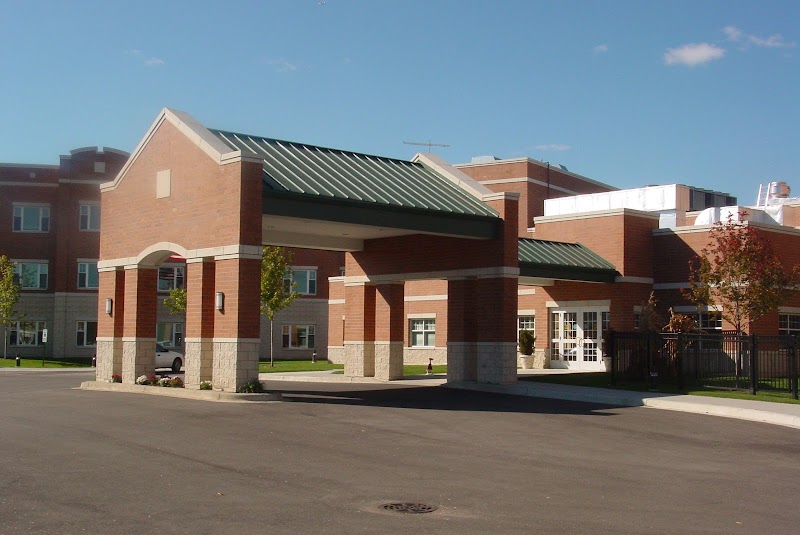
Who Owns and Operates St Joseph Village Of Chicago?

ST JOSEPH VILLAGE OF CHICAGO is owned by a non-profit organization. Non-profit facilities reinvest revenue into operations rather than distributing to shareholders. The facility is operated by FRANCISCAN COMMUNITIES, a chain that manages multiple nursing homes. With 54 certified beds and approximately 50 residents (about 93% occupancy), it is a smaller facility located in CHICAGO, Illinois.

How Does St Joseph Village Of Chicago Compare to Other Illinois Nursing Homes?

Compared to the 100 nursing homes in Illinois, ST JOSEPH VILLAGE OF CHICAGO's overall rating (4 stars) is above the state average of 2.5, staff turnover (56%) is significantly higher than the state average of 46%, and health inspection rating (4 stars) is above the national benchmark.

What Should Families Ask When Visiting St Joseph Village Of Chicago?

Based on this facility's data, families visiting should ask: "How do you ensure continuity of care given staff turnover, and what is your staff retention strategy?" "Can I visit during a mealtime to observe dining assistance and food quality?" "How do you handle medical emergencies, and what is your hospital transfer rate?" "Can I speak with family members of current residents about their experience?" These questions are particularly relevant given the facility's high staff turnover rate.

Is St Joseph Village Of Chicago Safe?

Based on CMS inspection data, ST JOSEPH VILLAGE OF CHICAGO has a clean safety record: no substantiated abuse findings (meaning no confirmed cases of resident harm), no Immediate Jeopardy citations (the most serious violation level indicating risk of serious injury or death), and is not on the Special Focus Facility watch list (a federal program monitoring the lowest-performing 1% of nursing homes). The facility has a 4-star overall rating and ranks #1 of 100 nursing homes in Illinois. While no facility is perfect, families should still ask about staff-to-resident ratios and recent inspection results during their visit.

Do Nurses at St Joseph Village Of Chicago Stick Around?

Staff turnover at ST JOSEPH VILLAGE OF CHICAGO is high. At 56%, the facility is 10 percentage points above the Illinois average of 46%. Registered Nurse turnover is particularly concerning at 72%. RNs handle complex medical decisions and coordinate care — frequent RN changes can directly impact care quality. High turnover means new staff may not know residents' individual needs, medications, or preferences. It can also be disorienting for residents, especially those with dementia who rely on familiar faces. Families should ask: What is causing the turnover? What retention programs are in place? How do you ensure care continuity during staff transitions?

Was St Joseph Village Of Chicago Ever Fined?

ST JOSEPH VILLAGE OF CHICAGO has no federal fines on record. CMS issues fines when nursing homes fail to meet care standards or don't correct problems found during inspections. The absence of fines suggests the facility has either maintained compliance or corrected any issues before penalties were assessed. This is a positive indicator, though families should still review recent inspection reports for the full picture.

Is St Joseph Village Of Chicago on Any Federal Watch List?

ST JOSEPH VILLAGE OF CHICAGO is not on any federal watch list. The most significant is the Special Focus Facility (SFF) program, which identifies the bottom 1% of nursing homes nationally based on persistent, serious quality problems. Not being on this list means the facility has avoided the pattern of deficiencies that triggers enhanced federal oversight. This is a positive indicator, though families should still review the facility's inspection history directly.