WARREN BARR SOUTH LOOP
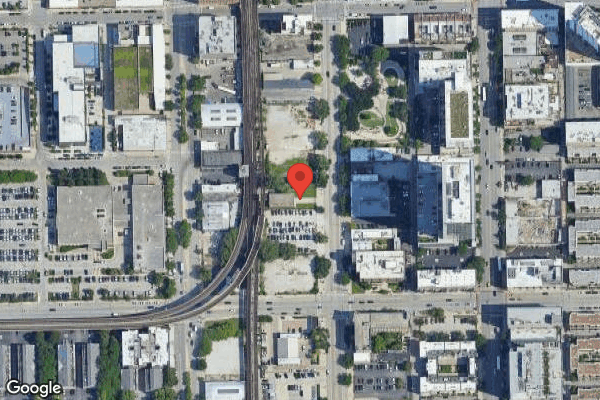

1725 SOUTH WABASH, CHICAGO, IL 60616 (312) 922-2777
For profit - Limited Liability company 210 Beds LEGACY HEALTHCARE Data: November 2025
Trust Grade
0/100
#661 of 665 in IL
Last Inspection: February 2025

Within standard 12-15 month inspection cycle. Federal law requires annual inspections.

Overview

Warren Barr South Loop has received a Trust Grade of F, indicating significant concerns about the quality of care provided. Ranking #661 out of 665 in Illinois and #199 out of 201 in Cook County places this facility in the bottom tier for nursing homes in the area. While there is a slight improvement trend noted, with the number of issues decreasing from 21 to 17 over the past year, the overall picture remains troubling. Staffing is a major concern, with a low rating of 1 out of 5 stars and a high turnover rate of 62%, significantly above the state average. Additionally, the facility faced serious incidents, including a resident suffering a hematoma due to inadequate supervision and another resident who passed away after staff failed to monitor a tracheostomy properly. These findings highlight both the weaknesses in care and the critical need for families to weigh these factors carefully when considering this nursing home.

Trust Score
F
0/100
In Illinois
#661/665
Bottom 1%
Safety Record
High Risk
Review needed
Inspections
Getting Better
21 → 17 violations
Staff Stability
⚠ Watch
62% turnover. Above average. Higher turnover means staff may not know residents' routines.
Penalties
✓ Good
$237,213 in fines. Lower than most Illinois facilities. Relatively clean record.
Skilled Nurses
○ Average
Each resident gets 35 minutes of Registered Nurse (RN) attention daily — about average for Illinois. RNs are the most trained staff who monitor for health changes.
Violations
⚠ Watch
73 deficiencies on record. Higher than average. Multiple issues found across inspections.
★☆☆☆☆
1.0
Overall Rating
★☆☆☆☆
1.0
Staff Levels
★★★☆☆
3.0
Care Quality
★★☆☆☆
2.0
Inspection Score
Stable
2024: 21 issues
2025: 17 issues

The Good

  • Full Sprinkler Coverage · Fire safety systems throughout facility
  • No fines on record

Facility shows strength in fire safety.

The Bad

1-Star Overall Rating

Below Illinois average (2.5)

Significant quality concerns identified by CMS

Staff Turnover: 62%

16pts above Illinois avg (46%)

Frequent staff changes - ask about care continuity

Federal Fines: $237,213

Well above median ($33,413)

Significant penalties indicating serious issues

Chain: LEGACY HEALTHCARE

Part of a multi-facility chain

Ask about local staffing decisions and management

Staff turnover is elevated (62%)

14 points above Illinois average of 48%

The Ugly 73 deficiencies on record

10 actual harm
Sept 2025 1 deficiency
CONCERN (D) 📢 Someone Reported This

A family member, employee, or ombudsman was alarmed enough to file a formal complaint

Potential for Harm - no one hurt, but risky conditions existed

Safe Environment (Tag F0584)

Could have caused harm · This affected 1 resident

Based on observations interviews, and record reviews, facility failed to follow their policy to ensure residents have a homelike environment for 3 (R1, R8, R9) out 5 residents reviewed for homelike en...

Read full inspector narrative →
Based on observations interviews, and record reviews, facility failed to follow their policy to ensure residents have a homelike environment for 3 (R1, R8, R9) out 5 residents reviewed for homelike environment in a sample of 11. Findings include:On 09/09/2025, surveyor observed R1's room had a broken thermostat with no temperatures indicating the temperature in the room. R1's dresser also had a missing handle with drawers that would not close. R1's dresser was also dirty with hardened paste all over it. R8's thermostat was also broken thermostat with no indication of the temperature. R9's thermostat had no temperatures marking on it. R1, R8 and R9's thermostat's analog dial did not have any markings on it to indicate if the thermostat was set to cool or hot.On 09/09/2025 at 10:30 AM, V7 (R1's POA) stated that R1's thermostat is broken and there is no way for us to know what temperature is being set in the room. V7 also pointed to R1's dresser and showed the hardened paste all over the dresser. V7 stated that some drawers would not even close.On 09/09/2025 at 1:14 PM, V3 (Maintenance Director) stated he over looks all the physical plant problem in the facility. V3 stated that there is a thermostat in every patient room which helps resident control the temperatures. The thermostat is an analog thermostat which says what the temperature is set at. V7 stated that every thermometer should have numbered temperatures indicating what the temperatures in the room are set at.Surveyor then asked V3 to join him in R1, R8 and R9's rooms. Surveyor pointed to R1, R8 and R9's thermometer and asked V3 if he knew what the temperature was set at. V3 stated that he doesn't know. V3 stated that this is not what a homelike environment for residents should be.Surveyor also showed V3, R1's dresser. V3 had to take out a wrench from his pocket to fix the drawers on R1's dresser as well as scrape the hardened paste on the dresser. V3 stated that he will get housekeeping right away to clean the dresser and the room.On 09/11/2025, V1 (administrator) stated that all the thermostats are being replace and fixed. V1 stated that V3 is communicating with an outside company on the quotes for this repair. Facility's Resident's rights policy (undated) documents in part: The facility must be safe, clean, comfortable and homelike. Facility's Maintenance policy (07/2025) documents in part: All resident building environment with be maintained by the maintenance department. Any staff who is made aware of a malfunctioning equipment will report the issue to the maintenance department. Cleaning will be done daily while being used by the resident by the housekeeping staff.
Apr 2025 1 deficiency
CONCERN (D) 📢 Someone Reported This

A family member, employee, or ombudsman was alarmed enough to file a formal complaint

Potential for Harm - no one hurt, but risky conditions existed

Deficiency F0698 (Tag F0698)

Could have caused harm · This affected 1 resident

Based on interview and record review, the facility failed to ensure hemodialysis services were provided 3 times weekly as ordered by physician to a resident (R5). This failure has the potential to aff...

Read full inspector narrative →
Based on interview and record review, the facility failed to ensure hemodialysis services were provided 3 times weekly as ordered by physician to a resident (R5). This failure has the potential to affect 1 (R5) of 3 residents reviewed for Quality of Care /Treatment. The findings include: R5's admission record showed admit date on 02/18/2025 with diagnoses not limited to End stage renal disease, Dependence on renal dialysis, Arthritis due to other bacteria right knee, Acute and chronic respiratory failure with hypoxia, Gout, Benign prostatic hyperplasia, Type 2 diabetes mellitus, Chronic diastolic (congestive) heart failure, Unilateral primary osteoarthritis right knee, Essential (primary) hypertension. R5 was discharged to facility on 3/10/25. R5's order summary report dated 4/1/25 showed order not limited to: Hemodialysis MWF (Monday, Wednesday, Friday). On 4/1/25 at 2:22 PM V17 (LPN / Licensed Practical Nurse) stated she has been working in the facility for 2 years and is regularly assigned on the 1st floor. She said she had worked with R5 who was receiving HD (hemodialysis) 3x per week MWF (Monday, Wednesday, and Friday) as ordered by physician. She stated every dialysis day, dialysis assessment is printed out, given to resident including Face sheet and POS (Physician Order Sheet). V17 said dialysis resident would come back to facility with paperwork (dialysis assessment) filled out by dialysis center as a form of dialysis communication. V17 said if resident missed dialysis treatment, physician should be informed and documented. V17 stated R5 was scheduled for hemodialysis on 2/28/25 (Friday) but due to transportation issue, hemodialysis was rescheduled on 3/1/25. Reviewed R5's EHR (electronic health record) with V17 and was unable to find documentation that physician was informed regarding missed dialysis on 2/28/25. She said she does not know if R5 received dialysis on 3/1/25, no documentation found. V17 said she is always off every Monday and does not know if R5 received hemodialysis on 3/3/25. On 4/2/25 At 1:34PM V13 (Registered Nurse / RN) stated resident on hemodialysis is sent out to dialysis center to receive hemodialysis as ordered by physician. She said Dialysis assessment should be completed every dialysis day as a form of dialysis communication. V13 said usually she would do progress notes if resident is going out and had received hemodialysis. She said if resident missed or refused hemodialysis, inform physician. Surveyor reviewed R5's EHR with V13 and she confirmed that she worked with R5 on 3/3/25 (Monday), dialysis day. She said she is not sure if R5 received hemodialysis that day. V13 unable to find documentation if R5 received hemodialysis on 3/3/25. No dialysis assessment, no progress notes or documentation found in R5's EHR (electronic health record) on 3/3/25 that R5 received hemodialysis as ordered by physician. On 4/2/25 At 1:54pm V2 (Director of Nursing / DON) stated hemodialysis, should have a physician order in resident's record and should be followed. She said when a resident going out for HD (hemodialysis), Dialysis assessment is printed out by nurses and sent with resident together with Face sheet and POS (physician order sheet) and should be documented in progress/resident's record that resident received HD. V2 said dialysis assessment is a form of communication between facility and dialysis center. She said if resident refused or missed dialysis treatment, physician should be informed and documented. V2 said HD is very important to be received by resident as ordered by physician to remove toxins off their body system and to maintain kidney function. She said if resident missed dialysis treatment, it could potentially lead to fluid overload. She said best nursing practice is to document every dialysis treatment day in resident's health record. V2 said it is standard nursing principle, if it's not documented, it wasn't done. She said R5 is on HD 3x per week Monday/Wednesday/Friday. V2 said on 2/28/25 (Friday), R5 was not able to receive HD due to a transportation issue. V2 said she is not sure if R5 received HD on 3/1/25 and on 3/3/25. V2 stated I don't know why R5 missed dialysis. Surveyor reviewed R5's EHR with V2 and V2 stated unable to find documentation or dialysis assessment if R5 received hemodialysis on 2/28/25 (Friday) and 3/3/25 (Monday) as ordered by physician. MDS (Minimum Data Set) dated 2/27/2025 showed R5's cognition was intact. R5 needed Substantial / maximal assistance with toileting hygiene, shower / bathe self, lower body dressing, chair / bed and toilet transfer. Care plan date initiated on 03/08/2025 showed in part: R5 requires dialysis related to ESRD (End Stage Renal Disease). Assist with arranging transportation to and from dialysis center. Encourage communication with dialysis center. No documentation found in R5's electronic health record that R5 received hemodialysis on 2/28/25 and 3/3/25. No dialysis assessment / dialysis communication found for 2/28/25 and 3/3/25. Facility's Hemodialysis policy dated 7/30/24 documented in part: it is the policy of the facility to ensure that appropriate care for resident on hemodialysis is provided by facility staff. The dialysis nurse will communicate with the facility nurse through a communication sheet or over the phone to ensure continuity of care
Feb 2025 14 deficiencies
CONCERN (D)

Potential for Harm - no one hurt, but risky conditions existed

Deficiency F0578 (Tag F0578)

Could have caused harm · This affected 1 resident

**NOTE- TERMS IN BRACKETS HAVE BEEN EDITED TO PROTECT CONFIDENTIALITY** Based on interviews and record reviews, the facility failed to identify a resident's (R113) code status for one out of 35 reside...

Read full inspector narrative →
**NOTE- TERMS IN BRACKETS HAVE BEEN EDITED TO PROTECT CONFIDENTIALITY** Based on interviews and record reviews, the facility failed to identify a resident's (R113) code status for one out of 35 residents reviewed for advanced directives. Findings include: R113's admission Record documents in part medical diagnoses of dementia and adult failure to thrive. On [DATE] at 1:08 PM, R113's Care Plan Report documents in part that R113 received education on advanced directives and end of life care options. Pursuant to resident rights, the advanced directive status of Full Code has been selected (initiated [DATE]). The goal was as follows: [R113] wishes for Full Code status as specified in advance directive documents will be honored and delineated in the medical record in compliance with state law through next review (initiated [DATE]). Interventions initiated on [DATE] include: As indicated, my advanced directives code status will be documented on my physician order sheet in the electronic medical system and be clearly identified on my electronic chart page so that the facility personnel working with me will know my advanced directives code status. I will be provided with the option to document my advanced directives code status on a POLST form document and reminded that this matter is one of personal choice and that it is important to be comfortable with whatever advanced directives code status decision is selected. My physician and the personnel that is working with me will know that I have selected that my advanced directives status be a Full Code. R113's physician orders at the time documented in part an active order of DNR (Do Not Resuscitate). V46 (former facility Nurse) entered the order on [DATE]. R113 had two conflicting code status. R113's POLST (Physician Orders for Life-Sustaining Treatment) form was not uploaded to R113's electronic medical record. On [DATE] at 2:07 PM, V19 (Nurse) stated [V19] did not know if the facility kept the residents' POLST forms on the floor. V19 stated the residents' code statuses are usually found on their computer profile under their picture in the electronic medical record where it says Code Status. R113's code status read DNR. On [DATE] at 2:13 PM, V20 (Nurse) stated [V20] was the nurse for R113. V20 stated R113 was confused and unable to make treatment decisions. V20 stated a family member was the designated decision maker for R113. V20 looked at R113's computer profile and stated R113's code status was DNR. V20 could not locate R113's POLST in the electronic medical records. V20 did not know where the hard copy of R113's POLST form was located. V20 stated the other units in the facility usually had an Advanced Directive binder at the nurses' unit but V20 could not locate the one for the second floor. Requested R113's POLST form from V1 (Administrator) and V2 (Director of Nursing). Facility failed to provide R113's POLST form. On [DATE] at 9:32 AM, R113's Order Summary Report documented in part an active order for Full Code (active as of [DATE]). R113's Order Audit Report documents in part that V41 (Nurse Supervisor) struck out the previous DNR order on [DATE] at 3:07 PM. On [DATE] at 12:17 PM, V2 stated [V2] did not know what was going on with R113's code status. On [DATE] at 1:07 PM, V41 stated the facility ran an audit and did not find R113's POLST form. V41 stated R113 did not have a standing DNR so V41 changed R113's code status in the electronic medical records to Full Code. V41 stated [V41] was not sure who put the DNR order in or where they got it from. Attempted telephone interview with V48 (listed responsible party on R113's admission Record) on [DATE] at 1:05 PM and again on [DATE] at 1:58 PM and 5:06 PM. No answer. Attempted telephone interview with V46 (Nurse that entered the DNR order on [DATE]) on [DATE] at 2:05 PM and 5:10 PM. No answer. Facility's Advance Directives policy, last revised [DATE], document in part: An Advance Directive form (as provided by the healthcare facility) shall be completed with resident and/or legal representative to verify treatment options as well as code status. Appropriate information will be added to Physician Order Sheet (POS). The resident's Advance Directive choices/options shall be reviewed during the re-assessment and quarterly care planning process. If the resident is unable or chooses not to initiate any type of Advance Directive, it is the policy for this facility for the resident to be a Full code and to receive appropriate life sustaining treatment interventions such as CPR [Cardiopulmonary Resuscitation]. The facility shall maintain copies of all Advance Directives.
CONCERN (D)

Potential for Harm - no one hurt, but risky conditions existed

Deficiency F0604 (Tag F0604)

Could have caused harm · This affected 1 resident

Based on observation, interviews, and record reviews, the facility failed to follow their policy and assess a resident's (R99) need for restraints at least quarterly for one resident out of a total sa...

Read full inspector narrative →
Based on observation, interviews, and record reviews, the facility failed to follow their policy and assess a resident's (R99) need for restraints at least quarterly for one resident out of a total sample of 35 residents. Findings include: R99's admission Record documents in part diagnoses of acute respiratory failure with hypoxia, stiffness of the right hand, anxiety disorder, conversion disorder with seizures or convulsions, and contracture of the left hand. R99's Order Summary Report documents in part an active order to Apply Bilateral sheepskin restraint to avoid resident pulling trach (order date 1/28/2025). Prior to the sheepskin restraint, R99 also had an order to Apply Bilateral soft wrist restraint to avoid resident pulling trach (order date 8/19/2024). R99's Care Plan Report contains an update from 1/28/2025 regarding application of sheepskin wrist restraint. The listed goal did not reflect the sheepskin wrist restraint. It read [R99] will not have injury or complications related to bilateral soft wrist restraint use thru next review (Target Date 5/05/2025). On 2/18/2025 at 11:01 AM, R99 was lying in bed with sheepskin wrist restraints to bilateral wrists. Facility dated the next quarterly MDS (Minimum Data Set) assessment for 2/04/2025. As of 2/19/2025 11:11 AM, it was still in progress. On 2/19/2025 at 2:46 PM, surveyor requested R99's most recent restraint assessment from V28 (Restorative Nurse). On 2/19/2025 at 2:55 PM, V2 (Director of Nursing) provided a Side Rail/Other Devices Evaluation UDA (User Defined Assessment) dated 8/19/2024 for R99's wrist restraint assessment. V2 did not provide a more recent restraint assessment for R99. Surveyor asked for clarification and again requested R99's most recent restraint assessment from V1 (Administrator) and V2 on 2/20/2025 at 9:28 AM and 11:52 AM. Facility did not provide any other restraint assessment for R99 that was dated prior to the start of the survey. On 2/20/2025 at 11:57 AM, V28 (Restorative Nurse) stated, the facility should conduct restraint assessments every quarter, during a significant change, and as needed. V28 stated R99 was due for a restraint assessment on 2/04/2025 but facility did not complete it. Facility's Restraints policy, last revised 8/19/2024, documents in part: The use of the restraining device may be assessed and reduced at least quarterly.
CONCERN (D)

Potential for Harm - no one hurt, but risky conditions existed

Pressure Ulcer Prevention (Tag F0686)

Could have caused harm · This affected 1 resident

**NOTE- TERMS IN BRACKETS HAVE BEEN EDITED TO PROTECT CONFIDENTIALITY** Based on observation, interview and record review, the facility failed to ensure low air loss mattress devices were on the corre...

Read full inspector narrative →
**NOTE- TERMS IN BRACKETS HAVE BEEN EDITED TO PROTECT CONFIDENTIALITY** Based on observation, interview and record review, the facility failed to ensure low air loss mattress devices were on the correct weights setting for a resident (R56) with current pressure ulcer and for a resident (R66) who is high risk in developing pressure ulcers. This failure has the potential to affect two (R56, R66) out of two residents reviewed for pressure ulcer care in a final sample of 35. Findings Include: On 2/18/25 at 12:16 PM and on 2/19/25 at 10:57 AM, R56 was noted lying in bed and noted on a low air loss mattress with the machine set to 120 pounds (lbs.). On 2/18/25 at 12:14 PM, R66 was sleeping in bed and noted on a low air loss mattress with the weight dial on the machine set to 180 lbs. On 2/19/25 at 10:49 AM, R66 was lying in bed alert and able to verbalize needs still noted on a low air loss mattress with the weight dial on the machine set to 180 lbs. R66 stated that [R66] feels like lying on a wood block because the mattress is too firm. On 2/19/25 at 11:19 AM, interviewed V29 (Wound Care Coordinator/Licensed Practical Nurse) and stated that residents who are at risk for developing pressure ulcers are placed on a low air loss mattress as preventative measure. V29 stated that residents with current pressure ulcers are also placed on a low air loss mattress to help with wound healing to relieve pressure on the wound. V29 stated that the low air loss mattress should be set based on the current weight of the resident. V29 stated that if the low air loss mattress is not in the right setting and if it's too soft or too hard that would deplete the purpose of the low air loss mattress. If the setting is too low, it would be too soft and if the setting is too high it would be too firm. V29 stated that the facility uses a BRADEN score screening to assess a resident for risk of skin breakdown. V29 stated that R56 has stage 4 sacral wound present on admission and R56's current weight is 84 pounds dated 2/7/25. V29 stated that R56's low air loss mattress should be set between 80 to 90 pounds, 120 pounds is not the right setting. V29 stated R66 is high risk in developing skin breakdown due to history of having pressure injuries. V29 stated that R66's current weight is 136 pounds dated 2/18/25 and R66's low air loss mattress should be set to 135 pounds, 180 pounds is the incorrect setting. R56's Minimum Data Set (MDS) dated [DATE] shows R56 requires staff assistance with positioning in bed. R56's skin progress notes dated 2/13/25 shows R56 has stage 4 sacral pressure ulcer. R56's physician orders show an order for pressure relieving mattress (order date 9/8/23). R56's weight records show R56 weighs 84 pounds dated 2/7/25. R66's MDS dated [DATE] shows R66 requires staff assistance with positioning in bed. R66's BRADEN scale dated 2/11/25 shows R66 is high risk in developing skin breakdown. R66's physician orders show an order for pressure relieving mattress (order date 8/27/24). R66's weight records show R66 weighs 136 pounds dated 2/18/25. The facility's Specialized Mattress and Appropriate Layers of Padding policy dated 8/19/23 documents in part: Use specialized air mattresses like Low Air Loss Mattress on residents with stage 3 and 4 pressure sores to ensure moisture, heat, and friction control.
CONCERN (D)

Potential for Harm - no one hurt, but risky conditions existed

Accident Prevention (Tag F0689)

Could have caused harm · This affected 1 resident

**NOTE- TERMS IN BRACKETS HAVE BEEN EDITED TO PROTECT CONFIDENTIALITY** Based on observation, interview, and record review, the facility failed to follow the smoking policy and smoking assessment to e...

Read full inspector narrative →
**NOTE- TERMS IN BRACKETS HAVE BEEN EDITED TO PROTECT CONFIDENTIALITY** Based on observation, interview, and record review, the facility failed to follow the smoking policy and smoking assessment to ensure that smoking materials are not kept by the resident in their room. This failure has the potential to effect 2 (R110, R141) residents reviewed for smoking in a total sample of 35. Findings include: On 02/18/25 at 12:04 PM, observed red Oxygen in Use sign posted outside R110 and R141's room. R110 stated she smokes and is allowed to smoke independently meaning she can go outside to smoke whenever she wants unsupervised, and she is allowed to keep her cigarettes and lighter in her room. Observed R110 open her side table drawer, reach inside, and remove an opened pack of cigarettes and a lighter with fluid in it. On 02/18/25 at 12:06 PM, observed an oxygen tank on R141's side of the room in the corner next to R141's bed. Also observed a nebulizer machine on R141's bedside table. On 02/18/25 at 12:14 PM, V13 (Registered Nurse) looked in R141's electronic health record (EHR) orders and stated R141 has an order for PRN nebulizer treatments and oxygen as needed for shortness of breath. V13 did not know R141's roommate (R110) had a lighter in the room and stated she was going to remove the oxygen from the room immediately because that is a fire hazard; oxygen cannot be near a flame/fire because it could blow up. On 02/18/25 at 12:24 PM, V14 (Psychiatric Rehabilitation Services) stated residents who smoke are screening quarterly for safety and are assessed to either be able to smoke independently or require supervision. V14 stated if a resident is determined to be safe to smoke independently then they may keep their cigarettes and lighter on them, in their room and are allowed to smoke independently outside in designated smoking areas. V14 stated even if a resident can smoke independently, they should not have a lighter in the room if there is also oxygen in the room because that is a fire risk. V14 was not sure of R110's smoking program status. On 02/20/25 at 8:45 AM, V16 (Social Service Director) stated in September 2024, R110 was found to be smoking in undesignated area and as a result, her smoking program status was downgraded from independent to dependent with supervision. V16 stated as far as he knows R110 has been compliant with the smoking rules. V16 stated he was told about R110 keeping cigarettes and lighter in her room on 02/18/25 and stated, I don't know where she got her cigarettes/lighter, but she should not have had them on her. V16 stated oxygen and smoking are not a good combination for safety reasons due to flammability and R110 having a lighter in a room with oxygen is a fire risk. V16 stated R110's smoking material has already been removed from her room and the staff will be conducting random room checks. On 02/20/25 at 1:30 PM, V2 (Director of Nursing) stated the resident(s) should not have any lighters in their room with oxygen because of the risk of combustion and explosion. V2 stated that puts both of those residents at risk. V2 stated R141 is on hospice care which is why she (R141) has oxygen in her room. R110's diagnosis included but not limited to Traumatic Subdural Hemorrhage with Loss of Consciousness of Unspecified Duration, COVID-19, Influenza, Major Depressive Disorder, Type 2 Diabetic Mellitus, Muscle Wasting and Atrophy, Abnormalities of Gait and Mobility, Lack of Coordination, Hemiplegia and Hemiparesis following Cerebral Infarction Affecting Right Dominant Side, Asthma, Dysphagia, Cocaine Use. R110's MDS (Minimum Data Set) dated 01/01/25 indicates moderately impaired cognition with BIMS (Brief Interview for Mental Status) 12 out of 15. R110's Order Summary Report dated 02/19/25 documents in part, Allowed to smoke cigarettes with order date 04/09/23. R110's Smoking Contract signed on 09/18/24 documents in part, (R110) will not keep/hold my (R110) own lighter(s) and cigarettes/cigars due to safety reasons. R110's Smoking Program (Evaluation for Risk) dated 09/18/24 documents in part, staff witness resident smoking in room, Resident will be placed on dependent smoking program until next review. R119's Smoking Program Evaluation dated 01/02/25 documents in part, (R110) smokes in unauthorized areas, inappropriately extinguishes cigarettes or matches, poor judgement or decision-making skills and resident is not considered a safe smoker and requires smoking management and supervision consistency with facility policy and may not have access to smoking materials outside of supervised smoking. R141's diagnosis included but not limited to Senile Degeneration of the Brain, Cerebral Infarction, Major Depressive Disorder, Type 2 Diabetes Mellitus with Hyperglycemia, Hypertension, Muscle Wasting and Atrophy, Difficulty in Walking, Lack of Coordination, History of Falls. R141's MDS dated [DATE] indicates resident was not able to complete BIMS. R141's Order Summary Report documents in part, Admit to Amenity Hospice order date 03/28/24 and Albuterol Sulfate Inhalation Nebulization Solution 3 ml inhale orally via nebulizer every 6 hours as needed for SOB order date 09/03/24. Facility provided policy titled, Smoking Policy undated which document in part, all smoking material: cigarettes, lighters, rolling materials etc. will kept with facility staff. Residents are not permitted to keep such materials in their rooms and residents may never smoke near and/or while carrying any oxygen tanks/machines/etc. This policy was signed and dated by R110 on 09/18/24.
CONCERN (D)

Potential for Harm - no one hurt, but risky conditions existed

Pharmacy Services (Tag F0755)

Could have caused harm · This affected 1 resident

**NOTE- TERMS IN BRACKETS HAVE BEEN EDITED TO PROTECT CONFIDENTIALITY** Based on observation, interview and record review, the facility failed to follow their policies and procedures to ensure a resid...

Read full inspector narrative →
**NOTE- TERMS IN BRACKETS HAVE BEEN EDITED TO PROTECT CONFIDENTIALITY** Based on observation, interview and record review, the facility failed to follow their policies and procedures to ensure a resident received medications according to the physician's order for 1 (R441) out of 8 residents reviewed for pharmaceutical services. The facility also failed to follow their policies and procedures to properly dispose of controlled substances dispensed to its residents due to discontinuance of the medication, and failed to account for and dispose of controlled medications in a manner that would decrease the possibility of loss or diversion. These failures were found for two residents (R35, R162) during narcotic reconciliation from two out of five inspected medication carts. Findings include: On 2/18/25 at 10:46 AM, surveyor reviewed the first-floor team two medication cart with V6 (Agency Registered Nurse). In the narcotics bin, there was a blister packet for R162's Oxycodone 5 mg capsule. There were thirteen capsules in the blister packet. The number six and number two slots were compromised and had a piece of transparent tape over the back. V6 was not sure if the yellow and brown capsules in the number six and two slots were Oxycodone. V6 stated the nurse who broke the seal should have thrown out the tablet in the sharps and had it witnessed by another nurse. On 2/18/25 at 12:32 PM, surveyor reviewed the fourth-floor team one medication cart with V50 (Licensed Practical Nurse). In the narcotics bin, there was a blister packet for R35's Clonazepam 0.5 mg tablet. There were twenty-five tablets in the blister packet. The number five, six, seven, and eight slots were compromised. The number six and seven slots had a piece of transparent tape over the back. During an interview with V2 (Director of Nursing/DON) on 2/19/25 at 1:08 PM, V2 stated if a resident refuses a controlled substance, the nurse should properly discard the medication with two nurses present. Nurses should recount the controlled substances and make sure the drug records are correct. V2 stated nurses should not attempt to return controlled medications once their original seal or packaging is broken. V2 stated that discontinued controlled medications should not be stored in the medication carts and should be properly disposed. R162's face sheet shows R162's included diagnosis but not limited to encounter for other orthopedic aftercare. R162's narcotic count sheet documents in part: Oxycodone 5 mg take one capsule by mouth every 8 hours as needed for severe pain. R162's Order Summary Report printed on 2/19/25 does not show an order for Oxycodone medication. R35's face sheet shows R35's included diagnosis but not limited to generalized anxiety disorder. R35's narcotic count sheet documents in part: Clonazepam 0.5 mg take 1 tablet by mouth every twelve hours as needed. R35's Order Summary Report printed on 2/19/25 does not show an order for Clonazepam medication. The facility's policies and procedures for Medication Storage, Labeling, and Disposal dated 8/16/24 documents in part: Controlled meds should be disposed properly to prevent accidental exposure and diversion using Drug Buster or Rx Destroyer. The facility's policies and procedures for Controlled Substance Disposal dated 3/1/24 documents in part: The facility adheres on guidelines for proper destruction/disposition of Controlled substances dispensed to its residents due to discontinuance of the medication, death of the resident or other reasons necessitating destruction. Discontinued Controlled medications will be endorsed to the DON/ or designee for proper destruction/disposition. The DON or designated licensed nurse authorized for destroying or otherwise disposing in witness of another healthcare professional maintains a Controlled Substance Record indicating amount of medications disposed, date of destruction/disposition and method. R441's Electronic Medical Record (EMR) revealed R441 was admitted to the facility on [DATE] and is [AGE] years of age with diagnoses that included but were not limited to: malignant neoplasm of pancreas, gastro-esophageal reflux disease without esophagitis, acute and chronic respiratory failure with hypoxia, encounter for attention to tracheostomy, encounter for attention to gastrostomy, other encephalopathy, essential hypertension, immunodeficiency due to drugs, diverticulosis of intestine, and insomnia. On 2/18/25 at 12:45 PM, surveyor and V4 (Licensed Practical Nurse/LPN) entered R441's room and observed prepared crushed medications in a medicine cup at R441's bed side dresser. R441 stated that R441 could not remember if R441 has received medication today. V4 acknowledged the medications as Famotidine tablet 0.5 mg and Senna-plus tablet 8.6-50mg. V4 stated that the medications should have been given at nighttime because V4 has given medication to R441. V4 stated that medication should not be left at bed side to prevent medication error, and to prevent other resident from taking wrong medication. V4 stated leaving prepared medication at bed side means the medication was not administered as ordered and could potentially prevent the resident from receiving the benefit of taking the medicine as ordered. On 2/19/25 at 1:08 PM, V2 (Director of Nursing/DON) stated that it is V2's expectation that nurses should be observing the Five Rights of medication administration, and no medication should be left at bed side. V2 agreed that other resident could have access to medication kept at bed side, causing medication error. R441's Minimum Data Set (MDS) dated [DATE] shows R441 is moderately cognitively impaired. R441's Physician Order Sheet (POS) with active orders as of 02/18/25 shows an order for senna-plus tablet 8.6-50 MG, give 2 tablets via Gastrostomy tube/ G-Tube 2 times a day for constipation, and Famotidine 20mg, give 0.5 mg via G-Tube at bedtime for indigestion. The facility's policy titled Medication Pass dated 8/16/24 documents in part: It is the policy of the facility to adhere to all federal and state regulations with medication pass procedures.
CONCERN (D)

Potential for Harm - no one hurt, but risky conditions existed

Deficiency F0806 (Tag F0806)

Could have caused harm · This affected 1 resident

Based on observation, interview and record review, the facility failed to ensure a resident's food preference was followed for one (R81) out of 3 residents reviewed during dining observation in a fina...

Read full inspector narrative →
Based on observation, interview and record review, the facility failed to ensure a resident's food preference was followed for one (R81) out of 3 residents reviewed during dining observation in a final sample of 35. Findings Include: On 2/18/25 at 1:00 PM, Surveyor entered R81's room and observed R81's eating lunch in bed alert and able to verbalize needs. R81 stated, What is this on my plate? I don't see it listed on this menu (R81 pointed at her meal ticket). I don't want to eat it. I don't know what it is. I don't eat pork or beef. Do you know what type of meat this is? Surveyor observed R81's lunch tray with diced carrots, pudding, cornbread, diced sweet potato, and ham with gravy. R81 stated that [R81] cannot eat beef of pork because R81 gets indigestion. R81 stated that the kitchen staff knows that R81 does not eat beef or pork. On 2/19/25 at 2:46 PM, interviewed V31 (Registered Dietitian) and V31 stated that V31's progress notes on 9/26/24 for R81 indicate that R81 does not eat pork or beef. V31 stated, The meal tracker says [R81] dislikes pork or beef and [R81] should not be getting pork or beef. V31 stated that it is very important to follow the resident's meal ticket and food preferences to meet nutritional needs and to make the best experience for the resident. The facility's Week-At-A-Glance menu shows baked ham flat with glazed honey for lunch on 2/18/25. R81's lunch meal ticket for 2/18/25 does not show ham was listed as one of the food items to be served to R81. R81's nutrition progress notes documented by V31 (Registered Dietitian) reads in part: Discussed food preferences with resident and adjusted in meal tracker. [R81] does not eat beef or pork. The facility's Dining and Food Preferences policy dated 10/19 documents in part: It is the center policy that individual dining, food, and beverage preferences are identified for all residents/patients. The Dining Services Director or designee will interview the resident or resident representative to complete a Food Preference Interview within 48 hours of admission. The purpose of identifying individual preferences for dining location, meal times, including times outside of the routine schedule, food, and beverage preferences. The Food Preference Interview will be entered into the medical record. Food allergies, food intolerance, food dislikes, and food and fluid preferences will be entered into the resident profile in menu management software system.
CONCERN (D)

Potential for Harm - no one hurt, but risky conditions existed

Deficiency F0883 (Tag F0883)

Could have caused harm · This affected 1 resident

Based on interviews and record reviews, the facility failed to administer influenza and pneumococcal vaccines in a timely manner for three residents (R93, R118, R151) out of five residents reviewed fo...

Read full inspector narrative →
Based on interviews and record reviews, the facility failed to administer influenza and pneumococcal vaccines in a timely manner for three residents (R93, R118, R151) out of five residents reviewed for immunizations. Findings include: On 2/19/2025 at 12:29 PM, V2 (Director of Nursing) stated facility holds immunization clinics if there are enough people that consent to the vaccines. If there are only a few residents interested, then the facility will get the vaccines from the pharmacy. The facility will special order them and facility staff will then administer them. On 2/20/2025, facility provided sampled residents' influenza and pneumococcal consents. R93's Informed Consent for Vaccination - influenza was signed on 9/18/2024. There is no facility representative signature listed as a witness. R93 did not receive the vaccine until 11/15/2024. Facility's Immunization Monitoring - Current Residents also documents administration date of 11/15/2024. R118's Informed Consent for Vaccination - influenza was signed on 9/17/2024. R118 did not receive the vaccine until 10/25/2024. Facility's Immunization Monitoring - Current Residents also documents administration date of 10/25/2024. R151's Informed Consent for Vaccination - influenza documents in part a date of 10/3/2024. R151 did not receive the vaccine until 12/12/2024. Facility's Immunization Monitoring - Current Residents also documents administration date of 12/12/2024. R151's Informed Consent for Vaccination - pneumococcal was signed on 1/06/2025. Facility's Immunization Monitoring - Current Residents document in part that R151 has not received the vaccine. On 2/20/2025 at 12:07 PM, V2 stated the facility started getting consents for the influenza vaccine in September. Their window to administer the vaccine opened 10/01/2024. V2 did not know why there was a delay in administering them. V2 stated V40 (Infection Preventionist) will probably know but V40 is out of the country. V2 stated the facility probably reached out to the pharmacy and didn't have it available. Surveyor requested correspondents or progress notes related to delay in vaccine administration. V2 stated [V2] will check. Facility did not provide any before the conclusion of the survey. On 2/20/2025 at 1:14 PM, V2 stated R151 consented for the pneumococcal vaccine on 1/06/2025 but did not receive it yet. V2 did not know why staff hasn't administered it. Facility's Influenza Vaccination policy, last revised 9/16/2024, documents in part: Influenza vaccination will be offered to residents seasonally when it becomes available, in preparation for flu season which is typically from October 1 to March 31. If there is a national shortage of influenza vaccine or other issue with availability leading to an inability to implement the influenza vaccine program, the facility will show proof that the vaccine has been ordered and the facility received confirmation that it is on its way, or the vaccine is not available and will be shipped when the supply is available. Facility's Pneumococcal Vaccination policy, last revised 9/16/2024, documents in part that it is the policy of the facility to offer and administer pneumococcal vaccinations to each resident.
CONCERN (D)

Potential for Harm - no one hurt, but risky conditions existed

Deficiency F0887 (Tag F0887)

Could have caused harm · This affected 1 resident

Based on interviews and record reviews, the facility failed to administer a COVID-19 vaccination in a timely manner for one resident (R118) out of five residents reviewed for immunizations. Findings i...

Read full inspector narrative →
Based on interviews and record reviews, the facility failed to administer a COVID-19 vaccination in a timely manner for one resident (R118) out of five residents reviewed for immunizations. Findings include: R118's admission Record documents in part diagnoses of cerebral infarction (stroke), muscle wasting, muscle atrophy, hypertension (high blood pressure), and seizures. R118's Informed Consent for COVID-19 Vaccine documents in part that it was signed on 10/22/2024. Facility did not administer the vaccine until 1/17/2025. The facility's Immunization Monitoring - Current Residents form also documents in part that R118 received the COVID-19 vaccine on 1/17/2025. On 2/19/2025 at 12:29 PM, V2 (Director of Nursing/acting Infection Preventionist) stated the facility does COVID-19 clinics when there are enough people that consent to it. If there are only a few residents interested, then the facility will get the vaccines from the pharmacy. The facility will special order them and facility staff will then administer them. On 2/20/2025 at 12:07 PM, V2 stated [V2] did not know why there was a delay in administering R118's COVID-19 vaccination. V2 stated V40 (Infection Preventionist) will probably know but V40 is out of the country. V2 stated the facility probably reached out to the pharmacy and didn't have it available. Surveyor requested correspondents or progress notes related to delay in vaccine administration. V2 stated [V2] will check. Facility did not provide any before the conclusion of the survey. Facility's COVID 19 Vaccination Policy, last revised 7/16/2024, documents in part the facility will continue to promote and provide COVID-19 vaccination whenever the vaccine is available, and individuals consent to COVID vaccination. The facility will work with their chosen pharmacy to ensure there is COVID 19 vaccine available for residents, if the resident or representative consents to it.
CONCERN (E)

Potential for Harm - no one hurt, but risky conditions existed

Deficiency F0700 (Tag F0700)

Could have caused harm · This affected multiple residents

**NOTE- TERMS IN BRACKETS HAVE BEEN EDITED TO PROTECT CONFIDENTIALITY** 4. R99's admission Record documents in part diagnoses of acute respiratory failure with hypoxia, stiffness of right hand, and co...

Read full inspector narrative →
**NOTE- TERMS IN BRACKETS HAVE BEEN EDITED TO PROTECT CONFIDENTIALITY** 4. R99's admission Record documents in part diagnoses of acute respiratory failure with hypoxia, stiffness of right hand, and contracture of the left hand. R99's Order Summary Report documents in part an active order for Bilateral upper half siderails for turning, reposition, and safety (order date 8/07/2024). R99's Care Plan Report documents in part that R99 uses two half side rails for bed mobility. On 2/18/2025 at 11:01 AM, R99 was lying in bed with bilateral upper half side rails up. Requested R99's most recent side rail assessment from V2 (Director of Nursing) on 2/19/2025 at 11:14 AM. Requested R99's most recent side rail assessment from V1 (Administrator) on 2/19/2025 at 1:59 PM. Requested R99's most recent side rail assessment from V28 (Restorative Nurse) on 2/19/2025 at 2:46 PM. On 2/19/2025 at 2:55 PM, V2 provided a Side Rail/Other Devices Evaluation UDA (User Defined Assessment) dated 8/19/2024. The assessment did not include an evaluation for side rails. Facility did not provide any other side rail assessment for R99. On 2/20/2025 at 11:57 AM, V28 (Restorative nurse) stated V28 provided R99's side rail assessment to V1 prior to leaving work yesterday. V28 stated it was the one from 8/19/2024. V28 stated R99 was due for a side rail assessment on 2/04/2025 but they did not complete it. 5. R132's admission Record documents in part diagnoses of anoxic brain damage, weakness, muscle wasting, lack of coordination, abnormal posture, and reduced mobility. On 2/18/2025 at 10:44 AM, R132 was lying in bed with both upper side rails up. On 2/19/2025 at 10:50 AM, R132 was lying in bed and holding onto the right-side rail with the right hand. R132's Care Plan Report documents in part that R132 uses two upper half side rails for bed mobility (date initiated 8/10/2023). The Restorative UDAs (User Defined Assessments) for 1/07/2025 and 3/12/2024 were not complete. On 2/19/2025, surveyor requested R132's side rail assessments since the last standard survey from V1 (Administrator), V2 (Director of Nursing), and V28 (Restorative Nurse) (refer to time stamps listed above when surveyor requested R99's most recent side rail assessment). On 2/19/2025 at 2:55 PM, V2 provided R132's side rail assessments from 2023 with the most recent one from 12/19/2023. Facility did not provide any of R132's side rail assessments from 2024 or from 2025 that were dated prior to the start of the survey. On 2/20/2025 at 12:00 PM, V28 stated facility missed R132's side rail assessments. V28 stated the last one was from 12/19/2023. V28 stated it somehow fell through the crack. V28 stated the facility started the Restorative UDAs but did not complete them. Facility's Side Rail policy, last revised 8/19/2024, documents in part: The use of side rails will be evaluated at least on a quarterly basis. Based on observation, interview and record review, the facility failed to ensure the appropriate side rails were used for three residents (R16, R28, R144), and failed to follow their policy and evaluate the use of side rails at least quarterly for two (R132, R99) residents out of a total sample of 35 residents. Findings Include: 1. On 2/18/25 at 11:54 AM, R16 was lying in bed alert with some forgetfulness and noted with three half side rails up; 2 half upper rails and 1 half lower rail. Reviewed R16's side rail assessment dated [DATE] revealed R16 was assessed to only use 2 half-length rails for assistive device to turn and reposition and/or transfer. R16's Minimum Data Set (MDS) dated [DATE] shows R16 is cognitively impaired and needs staff assistance with activities of daily living (ADLs). 2. On 2/18/25 at 12:52 PM, R144 was sitting on the side of the bed trying to eat lunch with R144's both legs squeezed in between the two half side rails that were up on the right side of R144's bed. The other two half side rails were also up on the left side of R144's bed. Reviewed R144's side rail assessment dated [DATE] revealed R144 was assessed to only use 2 half-length rails for assistive device to turn and reposition and/or transfer. R144's side rail consent dated 8/16/24 also shows 2 half-length side rails to be used for R144. R144's care plan (date initiated 8/26/24) revealed bilateral upper half side rails. R144's MDS dated [DATE] shows R144 is cognitively impaired and needs staff assistance with ADLs. 3. On 2/19/25 at 11:02 AM, R28 was observed sleeping in bed and noted with all 4 half side rails were up. Reviewed R28's side rail assessment dated [DATE] revealed R28 was assessed to only use 2 half-length rails for assistive device to turn and reposition and/or transfer. R28's side rail consent dated 10/8/23 also shows 2 half-length side rails to be used for R28. R28's care plan (date initiated 10/18/23) revealed bilateral upper half side rails. R28's MDS dated [DATE] shows R28 is severely impaired with cognition and needs staff assistance with ADLs. On 2/19/25 at 12:38 PM, interviewed V28 (Restorative Nurse) and V28 stated that there should be a side rail assessment and consent from the family or resident prior to using the side rail. Side rail assessments are done for all residents. It would indicate there how many side rails the staff are supposed to be using for the residents. V28 stated the main purpose of the side rail assessment is to prevent any entrapment for the residents and to determine the proper use of the side rails. If there is no assessment or consent the side rails should not be used. V28 stated the facility uses side rails for the residents for bed mobility and transfer assistance. V28 stated side rail assessment is completed within 24 hours of admission and needs to be re-evaluated quarterly, annually, with significant change and acute change. V28 stated that the use of the side rail is important to address in the care plan for the resident's safety and for the staff to know what the interventions for the resident. V28 stated R144's recent side rail assessment was done 2/10/25 and is supposed to be using 2 half-length rails. V28 stated R28's recent side rail assessment was completed on 12/19/24 and indicates 2 half-length rails when in bed. R28's care plan also shows 2 half-length side rails. V28 stated that staff should not be using 4 side rails for the residents because it could increase the risk of entrapment. V28 stated, We do in-service with the frontline staff regarding use of side rails monthly. We don't have any resident in the facility that uses more than 2 half-length side rails. The facility's Side Rail policy dated 8/19/24 documents in part: Prior to the use of side rails, alternative devices like pillows, wedges, foams, and other repositioning devices will be utilized first for residents in need of repositioning. If the alternative devices failed to assist the resident in repositioning, the resident will be assessed for the use of side rails, to determine risk for entrapment and other potential danger to the resident. If side rails are appropriate for the resident, a verbal or written consent will be obtained by the facility prior to the use of side rails. The use of side rails will be evaluated at least on a quarterly basis.
CONCERN (E)

Potential for Harm - no one hurt, but risky conditions existed

Deficiency F0761 (Tag F0761)

Could have caused harm · This affected multiple residents

**NOTE- TERMS IN BRACKETS HAVE BEEN EDITED TO PROTECT CONFIDENTIALITY** Based on observation, interview and record review, the facility failed to safely secure medication in a locked storage area to l...

Read full inspector narrative →
**NOTE- TERMS IN BRACKETS HAVE BEEN EDITED TO PROTECT CONFIDENTIALITY** Based on observation, interview and record review, the facility failed to safely secure medication in a locked storage area to limit access to unauthorized personnel for 1 (R442) resident. The facility also failed to properly date opened multi-dose inhalers for 1 resident (R46), failed to properly date opened multi-dose insulin pens for 3 residents (R16, R51, R129), and failed to ensure opened multi-dose insulin pens were stored to prevent the potential for cross contamination for 2 residents (R51, R129) from one of five medication carts and one of three medication rooms inspected for medication storage and labeling. Findings Include: On 2/18/25 at 10:46 AM, inspected first floor medication cart 2 with V6 (Agency Registered Nurse) and noted R46's Arnuity Ellipta inhaler without the date opened written on the label. R46's Arnuity inhaler shows on the label to discard 6 weeks after opening. On 2/18/25 at 12:42 PM, inspected fourth floor medication room with V47 (Licensed Practical Nurse) and noted the following: R16's Insulin Aspart pen with date 3/11/25 written as opened date on the label. R51's Novolog insulin pen and insulin glargine pen without the date opened written on the labels. R51's insulin glargine pen was not inside an individual clear bag. R129's Toujeo insulin pen was not inside an individual clear bag and without the date opened written on the label. On 2/19/25 at 1:08 PM, interviewed V2 (Director of Nursing) and V2 stated that inhalers and all insulin pens and vials should be labeled when they were opened and labeled with the expiration date because we should not use expired medications. V2 stated that insulins are discarded 28 days after opening except Levemir is 42 days. V2 stated opened insulin pens and vials should be stored inside a clear bag individually for each resident to prevent cross-contamination and for infection control purposes. R46's physician order sheet (POS) reads in part: Arnuity Ellipta Inhalation 1 spray inhale orally two times a day (ordered 1/2/25). R16's POS reads in part: Insulin Aspart Pen inject per sliding scale (ordered 1/27/25). R51's POS reads in part: Insulin Glargine Solution Pen-Injector inject 13 units subcutaneously at bedtime (ordered 2/4/25) and Novolog FlexPen inject 6 units subcutaneously before meals (ordered 2/4/25). R129's POS reads in part: Toujeo Solution Pen-injector inject 25 units subcutaneously at bedtime (ordered 2/11/25). The facility's Medication Storage, Labeling, and Disposal policy dated 8/16/24 documents in part: It is the facility's policy to comply with federal regulations in storage, labelling, and disposal of medications. Medications will be stored safely under appropriate environmental controls. Medications will be secured in locked storage area. The facility's guide titled; Insulin Reference Guide dated 2/24 documents in part: Novolog Aspart Pen refrigerate or room temperature for up to 28 days when in-use. Insulin glargine to be stored in room temperature for up to 28 days when in use. Toujeo Solostar Pen is to be stored in room temperature for up to 56 days and do no refrigerate. The manufacturer's guidelines for Arnuity inhaler dated 8/14 documents in part: Write the Tray opened and Discard dates on the inhaler label. The Discard date is 6 weeks from the date you open the tray. R442's Electronic Medical Record (EMR) revealed R442 was admitted to the facility on [DATE] and is [AGE] years of age with diagnoses that included but were not limited to: acute and chronic respiratory failure with hypoxia, simple chronic bronchitis, other heart failure, pneumonia due to Escherichia coli, other encephalopathy, and other specified chronic obstructive pulmonary disease. On 2/19/25 at 10:24 PM, surveyor and V26 (Respiratory Manager) entered R442's room and observed an unopened 10 ml vial of acetylcysteine solution at R442's bed side. V26 stated that the medication should not be left at bed side but should have been locked up in the medication room to prevent other resident from taking wrong medication. V26 picked up the medication for proper storage. On 2/19/25 at 1:08 PM, V2 (Director of Nursing/DON) stated that it is V2's expectation that nurses should be observing the Five Rights of medication administration, and no medication should be left at bed side. V2 stated that medication should be stored securely in the medication room, and V2 agreed that other resident could have access to medication kept at bed side, causing medication error. R442's Minimum Data Set (MDS) dated [DATE] shows R442 is cognitively impaired. R442's Physician Order Sheet (POS) with active orders as of 02/19/25 shows an order for acetylcysteine inhalation solution 10%, 2ml via trach three times a day for thick secretion.
CONCERN (E)

Potential for Harm - no one hurt, but risky conditions existed

Deficiency F0805 (Tag F0805)

Could have caused harm · This affected multiple residents

**NOTE- TERMS IN BRACKETS HAVE BEEN EDITED TO PROTECT CONFIDENTIALITY** Based on observation, interview and record review, the facility failed to prepare pureed food in appropriate diet consistency fo...

Read full inspector narrative →
**NOTE- TERMS IN BRACKETS HAVE BEEN EDITED TO PROTECT CONFIDENTIALITY** Based on observation, interview and record review, the facility failed to prepare pureed food in appropriate diet consistency form. This failure has the potential to affect 19 residents (R3, R11, R16, R17, R20, R28, R43, R55, R59, R65, R85, R88, R95, R130, R138, R144, R148, R175, R184) receiving pureed diets prepared in the facility kitchen based on list of residents receiving pureed diets dated 02/18/25. Findings Include: On 02/18/25 at 12:40 PM, observed R138 sitting in room eating lunch. Observed a pile of food particles on the side of R138's plate. R138's meal ticket list Cardiac-Pureed. Observed R138 put a spoon full of pureed ham into mouth and then take her fingers to pull out particles of food from her mouth and place them into the pile on the side of the plate. R138 stated there is skin and [NAME] in the ham which she cannot chew so that is why she has to remove them from her mouth. On 02/18/25 at 12:56 PM, V11 (Food Service Director) observed R138 still eating her lunch with pile of food particles on the side of her plate. R138 told V11 I cannot eat this! It's too hard for me to chew! V11 stated the pureed food should be a smooth consistency with no lumps and R138 should not be able to feel any particles or [NAME] because that is a potential choking hazard. R138 diagnosis includes but not limited to Chronic Kidney Disease, Dementia, Severe Protein-Calorie Malnutrition, Muscle Wasting and Atrophy, Unsteadiness on Feet, Lack of Coordination, Abnormal Posture, Reduced Mobility, Visual Loss, Dysphagia, Adult Failure to Thrive. R138's Order Summary Report dated 02/19/25 lists diet order as Cardiac Diet - 2 gm Na (Sodium), Low Fat, Low Cholesterol, Pureed texture, thin liquids. R138's MDS dated [DATE] documents intact cognition based on BIMS (Brief Interview for Mental Status). On 02/19/25 at 10:19 AM, V33 (Training Chef) stated pureed food should be applesauce consistency, smooth with no lumps or pieces. V33 stated if pureed items are pureed correctly there should not be any particles or small pieces of food. V33 stated the pureed food should be smooth on the tongue. On 02/19/25 at 11:13 AM, V34 (Traveling Culinary Manager) stated she was working with a new cook yesterday preparing food for the lunch meal. V34 stated V34 observed the new cook prepare the first patch of pureed but did not see the rest of the prepared pureed food or check the consistency it. On 02/19/25 at 11:17 AM, V12 (Regional Director of Operations) stated the problem with pureed ham having pieces in it yesterday was because of the skin on the ham. V12 stated when V12 heard there was an issue with the pureed ham yesterday she tasted the pureed ham and could feel particles in it. V12 stated they should have cut off the skin on the ham before they pureed the ham and next time the skin will be removed before pureeing. On 02/19/25 at 3:50 PM, V31 (Registered Dietitian) stated pureed diets are used for residents with swallowing or chewing issues. On 02/19/25 at 4:20 PM, V32 (Speech Language Pathologist) stated pureed consistency should be like a mashed potatoes consistency, with a smooth and uniformed texture and should be a cohesive mass. V32 stated you should not be able to detect or spit particles of food in the pureed consistency. Facility provided document titled Diet Type Report dated 02/18/25 listing all of the residents receiving pureed diets. Facility provided recipe used on 02/18/25 titled Honey Glazed Ham which documents in part, for pureed measure desired number of servings into food processor and blend until smooth. Facility provided policy titled Quality and Palatability dated October 2019 which documents in part, food and liquids are prepared and served in a manner, form, and texture to meet resident's needs, the Dining Services Director and Cook(s) are responsible for food preparation. Menu items are prepared according to the menu, production guidelines and standardized recipes. The Cook(s) prepare food and liquids/beverages in a manner, form and texture that meets each resident's needs.
CONCERN (E)

Potential for Harm - no one hurt, but risky conditions existed

Deficiency F0808 (Tag F0808)

Could have caused harm · This affected multiple residents

**NOTE- TERMS IN BRACKETS HAVE BEEN EDITED TO PROTECT CONFIDENTIALITY** Based on observations, interviews, and record reviews, the facility failed to provide therapeutic diets and dietary intervention...

Read full inspector narrative →
**NOTE- TERMS IN BRACKETS HAVE BEEN EDITED TO PROTECT CONFIDENTIALITY** Based on observations, interviews, and record reviews, the facility failed to provide therapeutic diets and dietary interventions as prescribed by the physician and Registered Dietitian for four residents (R31, R138, R158, R391) reviewed in a total sample of 35. Finding include: On 02/18/25 at 12:33 PM, observed R158 eating lunch in room. R158's meal ticket read in part to give soup at lunch & dinner, mechanically altered/ground baked ham 6 ounces (Double Protein), 8-ounces 2% milk, 4-ounces fortified pudding, Mrs. Dash Seasoning. R158 did not receive double portion of ground ham, and tray was missing soup, fortified pudding, dessert (missing standard dessert), milk and Mrs. Dash Seasoning packet. R158 stated he likes milk with every meal, soup with lunch & dinner and some kind of dessert. R158 stated that he likes pudding and I didn't get any type of dessert today, see? R158 stated sometimes I get those things, but sometimes I don't get them, like today and I just eat what they give me. I don't complain. R158 stated he thinks the food here is bland tasting, so he's supposed to get a flavor packet on his tray, but they forgot to send that today too. R158 has diagnosis including but not limited to Hypertension, Type 2 Diabetes Mellitus with Hyperglycemia, History of Falling, Osteoarthritis, Chronic Kidney Disease, Chronic Pulmonary Edema, Anemia, Hyperparathyroidism, Systemic Disorders of Connective Tissue, Muscle Wasting and Atrophy, Difficulty in Walking, Lack of Coordination, Abnormal Posture, Pressure Ulcer of Sacral Region, Dysphagia. R158's MDS (Minimum Data Set) dated 11/27/24 documents intact cognitive function. R158's Nutrition Note completed by V30 (Registered Dietitian) on 11/27/24 documented in part for nutrition interventions to add double protein portions three times a day, fortified pudding twice a day, Mrs. Dash seasoning packets on tray twice a day, and whole milk and on 12/31/24 nutrition note documents R158 is underweight with undesirable weight loss, stage 4 pressure ulcer to sacrum and severe protein calorie malnutrition with nutrition plan to update kitchen computer program with food preferences. On 02/18/25 at 12:38 PM, observed R391's meal ticket read CCHO, NAS. R391 received on lunch tray: slice of baked ham, carrots, sweet potato wedges, cornbread, lemon pudding, and pink juice in plastic cup. R391's tray did not contain any thickened liquids on it. Overheard R391 ask nursing for a carton of whole milk. At 2:01 PM, observed R391's lunch tray which had an empty whole milk container and empty plastic juice cup. R391 has diagnosis including but not limited to Malignant Neoplasm of Prostate, Secondary Malignant Neoplasm of Bone, Moderate Protein-Calorie Malnutrition, Muscle Wasting and Atrophy Right and Left Shoulder, Abnormalities of Gait and Mobility, Lack of Coordination. R391's Order Summary Report documents diet order as CCHO, NAS, Regular Texture, Nectar Thick Liquids consistency dated 02/16/25. R391's electronic health record entry dated 02/16/25 documents in part, choking episode this morning while drinking his meds with thin liquids with new order to update resident diet to crush meds with thicken(ed) liquids. Speech Therapy Evaluation and Treatment dated 02/19/25 documents in part, dysphagia, oropharyngeal phase coughing on thin liquids, disorganized mastication of regular solids, recommendations for mechanical soft solids and nectar thick liquids. On 02/18/25 at 12:40 PM, observed R138 sitting in room eating lunch. R138's meal ticket list Cardiac-Pureed diet order and in part the following items to be served: pureed baked pork chop, 8-ounces whole milk, and double vegetables and fruit portions. R138 received portion of pureed ham based on the bright pink color (not baked pork chop), pureed carrots, pureed potatoes, pureed corn bread, lemon pudding, juice. The tray did not contain any whole milk or fruit. R138 stated she did not receive any milk and she really likes whole milk and would drink it if they gave it to her. R138 diagnosis includes but not limited to Chronic Kidney Disease, Dementia, Severe Protein-Calorie Malnutrition, Muscle Wasting and Atrophy, Unsteadiness on Feet, Lack of Coordination, Abnormal Posture, Reduced Mobility, Visual Loss, Dysphagia, Adult Failure to Thrive. R138's MDS dated [DATE] documents intact cognition based on BIMS (Brief Interview for Mental Status). R138's Order Summary Report dated 02/19/25 lists diet order as Cardiac Diet - 2 gm Na (Sodium), Low Fat, Low Cholesterol, Pureed texture, thin liquids. R138's Nutrition Note dated 12/13/24 completed by V31 (Registered Dietitian) documents in part, R138 will drink milk and wants more fruits and vegetables on her trays (adjusted in kitchen computer system) double fruit and vegetable portions and to continue with Cardiac Diet - 2 gm sodium, low fat, low cholesterol, pureed texture, thin liquids. On 02/18/25 at 12:51 PM, observed R31's meal ticket which read in part, Renal Diet and to provide Hamburger Patty as main entrée. R31 received ground ham as main entrée. R31's diagnosis include but not limited to End Stage Renal Disease, Dependence on Dialysis, Adult Failure to Thrive, Hyperlipidemia, Hypertension, Myocardial Infarction, Personal History of Transient Ischemic Attack and Cerebral Infarction without Residual Deficits. R31's Order Summary Report dated 02/19/25 lists diet order as Renal Diet, Regular Texture, Thin Liquids Consistency. On 02/18/25 at 12:54 PM, V11 (Food Service Manager) observed R31's meal tray and meal ticket and then stated he (R31) should not have received ham because he's on a renal diet and the ham has too much sodium in it. V11 stated R31 should have received a hamburger patty as listed on R31's meal ticket and he should not have received any food in ground form because R31 is on a regular diet consistency. V11 stated that tray was a mistake, it must have been meant for someone else. V11 stated it is important for the kitchen to follow the diet order as prescribed by the resident's physician. On 02/18/25 at 12:58 PM, V11 observed R158's tray and meal ticket and stated he (R158) should have received double portions of the ham, fortified pudding, and whole milk because that is what is listed on his meal ticket. V11 stated kitchen staff should be putting the items on the tray based on what is listed on the meal ticket and this is important to make sure the residents are getting the right items to give them the right amount of calories/protein they need based on Registered Dietitian recommendations. On 02/19/25 at 3:07 PM, V30 (Registered Dietitian-RD) stated when a resident's nutritional assessment is completed the RDs take into account the resident's food preferences and may recommend fortified foods such as whole milk, fortified pudding, fortified oatmeal to add extra calories and protein to the resident's diet for weight maintenance or to promote weight gain. V30 stated sometimes she uses the intervention of adding double protein at meals for a resident with a pressure wound to get more protein into them for wound healing. V30 stated dietary interventions are added to the resident's meal ticket and residents should be receiving all the food items listed on their meal ticket at mealtimes. V30 stated the potential problem of a resident not receiving the items listed is that they would not be provide the additional calories, protein, fat and carbohydrate the interventions were intended to do to promote wound healing and weight gain/maintenance. On 02/19/25 at 3:45 PM, reviewing R391's EHR, V31 (Registered Dietitian) stated R391's liquid consistency was downgraded from thin to NECTAR thick liquids on 02/16/25, and on 02/19/25 R391's diet was changed again from regular to mechanical soft, NECTAR consistency. Surveyor showed V31 R391's lunch meal ticket from 02/18/25 and 2/19/25 and V31 stated the physician order from 02/16/25 and 02/19/25 did not transfer from R391's EHR to the kitchen's computer system so that is why R391's meal tickets were incorrect. V31 stated sometimes there is a problem with two computer systems communicating with each other. V31 stated R391 should have been receiving nectar thick liquids since 02/16/25 per the physician order and mechanical soft, nectar thick liquids as of 02/19/25. Observed V31 typing on laptop computer and V31 stated, I just changed it in the kitchen computer now. Kitchen Week-At-A-Glance Week 1 Tuesday, 02/18 Cardiac and Renal Diet both list for Baked Pork Chop to be served as main entrée. Regular diet orders received Baked Ham with Glazed Honey. Facility provided policy titled, Therapeutic Diets dated October 2019 which documents in part, diets are prepared in accordance with guidelines in the approved diet manual and the individualized plan of care and therapeutic diet is defined as a diet ordered by a physician or delegated registered or licensed dietitian as part of the treatment for a disease or clinical condition to eliminate or decrease specific nutrients in the diet or to increase specific nutrient in the diet or to provide food that a resident is able to eat. Facility provided policy titled, Diet Manual/Fortified Foods undated which documents in part, fortified foods have protein, carbohydrates and/or fats added to increase the total nutritional value of the food and fortified foods are indicated for individuals who have inadequate intake who are at risk for malnutrition, or who have increased energy and/or protein needs. Facility policy titled, Meal Distribution dated October 2019 documents in part, the Dining Services Director will ensure that all meals are assembled in accordance with the individualized diet order, plan of care and preferences and the nursing staff shall be responsible for verifying meal accuracy and delivery of meals to residents/patients.
CONCERN (F)

Potential for Harm - no one hurt, but risky conditions existed

Food Safety (Tag F0812)

Could have caused harm · This affected most or all residents

Based on observations, interviews, and record reviews, the facility failed to ensure food items were properly labeled and dated, and failed to ensure kitchen staff wore appropriate hair covering. Thes...

Read full inspector narrative →
Based on observations, interviews, and record reviews, the facility failed to ensure food items were properly labeled and dated, and failed to ensure kitchen staff wore appropriate hair covering. These failures have the potential to affect all 153 residents receiving food prepared in the facility's kitchen. Findings include: On 02/18/25 at 9:21 AM, upon entering the kitchen to conduct initial kitchen tour observed V11 (Food Service Director) walking around the kitchen without any hair coverings (no hairnet, no beard or mustache covering). When V11 saw surveyor, he immediately left the kitchen and reentered the kitchen at 9:25 AM wearing a beard protector covering his heard but not covering his mustache and he was not wearing a hairnet to cover the hair on his head. On 02/18/25 at 9:28 AM, V11 stated anyone who enters the kitchen must wear a hair net and any staff with facial hair should wear a beard guard. V11 stated the purpose of wearing hair coverings is to prevent hair from falling into the food being prepared for the residents. Surveyor brought to V11 attention that he was not wearing any hairnet and asked him to put one on. V11 left the kitchen immediately and returned wearing a hairnet. V11's protector continue to be worn but only covered beard, not his mustache. On 02/18/25 at 10:35 AM, surveyor brought to V11's attention that he does not have his mustache covered with any hair covering. V11 stated it should be covered because it is facial hair, and all facial hair should be restrained. On 02/18/25 at 9:35 AM, V11 stated all refrigerated items which are opened should have a label which lists what the food item is, the prepared or opened date and a use by/expiration/end date and most foods have an expiration or use by date of seven days of being opened or prepared. V11 stated it is important for all opened or prepared food items to be labeled with this information so that staff can keep track of the food and knows when to discard expired items. V11 stated, we don't want anything going up to the residents spoiled and we want to avoid food borne illnesses. On 02/18/25 at 9:45 AM, observed the following items in the walk-in cooler: 1.) Opened package of deli ham wrapped in plastic with no label or dates. V11 stated the opened deli ham package should have been labeled because without a label with dates he cannot tell when the item was opened and once opened it should be discarded after seven days. V11 stated the deli ham would be thrown out right away. 2.) Opened package of sliced American/Swiss cheese wrapped in plastic with no label or dates. V11 stated cheese should be discarded after five days and he does not know when the package was opened because there is no label or opened date marked on the plastic. V11 stated because it is not labeled, he cannot tell how long it has been in there. V11 said, it is going in the garbage. 3.) Large, opened box labeled Folded Cheese Omelet with manufacturer's guidelines printed on the outside of the box printed Keep frozen 0 degrees or below. The outside of box was dated 01/23/25 and inside the box were defrosted cheese omelets. Observed some of the defrosted cheese omelets to have areas of brown spots on them. V11 stated the omelets in the box were delivered and defrosted on 01/23/25 because the omelets were needed right away. V11 stated the kitchen usually keep these in the refrigerator, not the freezer and cook them thawed/defrosted. V11 stated he does not know how long the omelets are good for once they have been defrosted, two weeks at the most. V11 viewed omelets inside with brown spots on them and stated, these are going bad, I need to throw them out. V12 (Regional Director of Operations) stated the Folded Cheese Omelets should be cooked from a frozen state, not thawed out ahead of time. 4.) Opened plastic package of sausage links without a label/date. 5.) Opened package of bacon without a label/date. V11 stated both sausage and bacon packages should be labeled and dated with an opened date and use by date. V11 stated it is the responsibility of the staff who opened the package to label and date the items. On 02/18/25, facility provided list of diet orders for all residents in the facility. The diet order list indicates there are 37 residents receiving nothing by mouth (NPO). Facility provide policy titled, Staff Attire undated which documents in part, the Dining Services Director insures (ensures) that all staff members have their hair off the shoulders, confined in a hair net or cap and facial hair properly restrained and staff will exhibit appropriate personal hygiene. Facility provide signage titled SAFE Brief Personal Hygiene dated 2022 which documents in part, poor personal hygiene (cleanliness and personal appearance) can spread harmful bacteria and viruses to food and surfaces you touch. Washing hands correctly, restraining hair .are a few important activities that can prevent illness from spreading. Examples of poor personal hygiene included but not limited to unrestrained hair. Facility provided policy titled Food Handling Standards and Procedures - Food Safety dated 2024 which documents in part TCS (Time/Temperature Controlled for Safety) foods intended for storage must be labeled with a use by date no more than 7 days from the preparation (prep) date and these food labels intended for storage must include this information: item name, preparation date, use by date (within 7 days of preparation or opening commercially-prepared TCS foods), employee initials. Facility provided signage titled TCS Food and 7-Day Labeling dated 2024 documents in part: 1) TCS foods can grow harmful bacteria if stored or labeled incorrectly, 2) TCS foods include items like meat, eggs, dish, dairy, rice and cut or prepped fruits and vegetables, 3) Labeling TCS foods we prepare helps us know when they were made and when they might spoil, 4) We must label and use TCS food within 7 days from preparation to stay safe, 5) When in Doubt, Throw It Out! - Follow the 7-day rule but trust your senses. If food looks, seems, or smells bad before then, throw it out or ask supervisor if you're unsure. Facility provided signage titled TCS Food Labeling Guide dated 2024 which documents in part, labeling and storing TCS food correctly ensure our ingredients are safe to use in food served to customers.
CONCERN (F)

Potential for Harm - no one hurt, but risky conditions existed

Infection Control (Tag F0880)

Could have caused harm · This affected most or all residents

**NOTE- TERMS IN BRACKETS HAVE BEEN EDITED TO PROTECT CONFIDENTIALITY** Based on observations, interviews and record reviews, the facility failed to follow their infection control policies and procedu...

Read full inspector narrative →
**NOTE- TERMS IN BRACKETS HAVE BEEN EDITED TO PROTECT CONFIDENTIALITY** Based on observations, interviews and record reviews, the facility failed to follow their infection control policies and procedures by not having the correct transmission-based precaution signage for two residents (R151, R290), failed to place an isolation cart outside a resident's (R290) room who was on contact isolation, failed to ensure two residents (R16, R181) were placed on Enhanced Barrier Precautions (EBP), and failed to wear the appropriate personal protective equipment when entering a COVID-19 positive resident's (R151) room. The facility also failed to have policies and procedures for distributing information regarding the risks associated with shingles and how to protect the residents against the varicella-zoster virus, HIV, Hepatitis B, and Hepatitis C screening and (c) Hepatitis B immunization. These failures have the potential to affect all the residents that reside in the facility. Findings include: R151's Point of Care Test Results for SARs-CoV2 document in part that R151 tested positive for COVID-19 on 2/16/2025. R151's Order Summary Report documents an active order for Isolation - Droplet/Contact Reason: Active COVID (order date 2/16/2025). R151's Care Plan Report documents in part that R151 requires contact/droplet precautions related to COVID (initiated 2/16/2025). Interventions initiated 2/16/2025 include: Use appropriate protective equipments and Utilize proper hand washing technique. On 2/18/2025 at 12:26 PM, the signage posted outside R151's door included Enhanced Barrier Precautions and Contact Precautions. There was no signage for Droplet Precautions. Isolation bin outside the room had N95s, face shield, gown, and gloves. On 2/18/2025 at 12:28 PM, R151 stated testing positive for COVID-19 over the weekend. R151 reported runny nose and leg weakness. At 12:29 PM, V8 (Staffing Coordinator) entered R151's room with a regular mask (not N95) and a face shield. V8 stated R151 had the call light on. R151 stated [R151] was done with the lunch tray and asked for more water. V8 grabbed the lunch tray and exited the room without performing hand hygiene. V8 came back into the room without a gown and N95 to collect R151's water pitcher. V8 exited the room without performing hand hygiene. V8 returned to the room without a gown and N95 with a full water pitcher. V8 exited the room prior to performing hand hygiene. On 2/19/2025 at 11:19 AM, there was a Contact Isolation sign outside of R151's room but no Droplet Precaution sign. On 2/19/2025 at 11:21 AM, V22 (Nurse) stated R151 is on contact isolation for COVID-19. V22 stated staff are supposed to go in there with gown, gloves, N95 mask, and face shield. Staff are to perform hand hygiene before donning PPE (Personal Protective Equipment) and after doffing PPE. On 2/19/2025 at 12:29 PM, V2 (Director of Nursing) stated when a resident tests positive for COVID-19, the protocol is to put them on contact and droplet isolation. Signs should be at the door alerting staff and visitors about the proper PPE to wear prior to entering. Staff are to use N95 mask, face shield, gown, and gloves when entering the room. V2 stated staff should also be doing hand hygiene before putting on the PPE and after taking it off. Facility's Infection Prevention and Control policy, last revised 2/10/2025, documents in part: If the resident with infection needs transmission-based precaution, the facility will provide the transmission-based precaution set required. A sign will be provided outside the room for residents on transmission-based precaution indicating the type of the precaution (Contact, Droplet, or EBP [Enhanced Barrier Precaution]). Facility's COVID 19 Testing Plan and Response Strategy, last revised 7/16/2024, documents in part: The PPE to be used for residents on Contact and Droplet Isolation and quarantine includes a pair of gloves, gown, eye protection, and N95 (if unavailable, surgical mask is an acceptable alternative per CDC only during crisis shortage situations). Facility Assessment Tool (last updated 8/09/2024) documents in part that the facility's average daily census is 186 with a license to provide for 210 (licensed)/206 (operational). The facility takes care of multiple residents with different diseases/conditions including infectious diseases such as skin/soft tissue infections and viral hepatitis. On 2/20/2025 at 11:28 AM, V42 (Nurse Consultant) stated the facility did not have policies and procedures for HIV, Hepatitis B, and Hepatitis C screening. V42 also stated the facility did not have policies and procedures for distributing information regarding the risks associated with shingles and how to protect the residents against the varicella-zoster virus. During immunization review, the facility did not provide evidence that they offered education on the Shingles vaccine to R66, R93, R118, R150, R151. On 2/20/2025 at 12:07 PM, V2 (Director of Nursing) stated facility can provide the Shingles vaccine information if residents request it. V2 stated they did not have a policy regarding information distribution to all newly admitted residents. V2 also stated the facility does not have policies and procedures for HIV, Hepatitis B, and Hepatitis C screening or Hepatitis B immunization. V2 stated nurses will sometimes ask the questions during admission but don't have policies or procedures for it. Facility's Infection Prevention and Control policy, last revised 2/10/2025, documents in part: The facility shall comply with infection control recommendations provided by the [Illinois Department of Public Health] or certified local health department, including, but not limited to, testing plans, infection control assessments, training or other measures designed to reduce infection rates and disease outbreaks. Illinois Administrative Code TITLE 77: PUBLIC HEALTH / CHAPTER I: DEPARTMENT OF PUBLIC HEALTH / SUBCHAPTER c: LONG-TERM CARE FACILITIES / PART 300 SKILLED NURSING AND INTERMEDIATE CARE FACILITIES CODE / SECTION 300.1060 VACCINATIONS: e) A facility shall distribute educational information provided by the Department on all vaccines recommended by the Centers for Disease Control and Prevention's Advisory Committee on Immunization Practices (available at: https://www.cdc.gov/vaccines/schedules/downloads/adult/adult-combined-schedule.pdf), including, but not limited to the risks associated with shingles and how to protect oneself against the varicella-zoster virus. The facility shall provide the information to each resident who requests the information and each newly admitted resident. The facility may distribute the information to residents electronically. (Section 2-213(e) of the Act) f) A facility shall document in the resident's medical record that he or she was verbally screened for risk factors associated with hepatitis B, hepatitis C, and HIV, and whether or not the resident was immunized against hepatitis B. (Section 2-213(c) of the Act) g) All persons determined to be susceptible to the hepatitis B virus shall be offered immunization within 10 days after admission to any nursing facility. (Section 2-213(c) of the Act). On 02/18/25 at 11:54 AM, R16 was noted lying in bed alert and verbally responsive. Surveyor noted R16 with enteral feeding. Surveyor observed R16's room and door with no EBP signage and no isolation cart set up. R16's physician order sheet (POS) printed on 2/19/25 shows R16 has enteral feeding and sacral wound but no order for EBP. On 02/18/25 at 12:24 PM, R290 was sitting up in bed alert and able to verbalize needs. R290 stated R290 came in the facility last Thursday and goes to dialysis three times a week. R290 was noted with right arm fistula for hemodialysis. R290 stated that R290 is also receiving antibiotic treatment for his watery stools. Surveyor observed R290's door with no transmission-based precaution signage and no isolation cart set up outside R290's room. R290's Minimum Data Set, dated [DATE] shows R290 is cognitively intact. R290's POS printed on 2/19/25 reads in part: Strict Contact Isolation (Clostridium Difficile/C.DIFF): Monitor loose consistency every shift until 3/12/25 (order date 2/13/25). R290's POS also shows R290 is still on Vancomycin antibiotic for C. DIFF until 3/12/25. On 2/19/25 at 10:56 AM, a follow-up observation conducted with R290. R290 still had no contact isolation signage posted on the door and no isolation cart set up outside R290's room. On 2/18/25 at 1:11 PM, R181 was lying in bed and noted with right lower leg wound dressing. R181's right leg wound dressing was noted with red colored drainage. R181 stated that R181 came in the facility 2 or 3 weeks ago for R181's infected right leg open wound. Surveyor observed R181's room and door with no EBP signage and no isolation cart set up. R181's POS printed on 2/19/25 shows R181 has a right calf wound but no EBP order. R181's comprehensive care plan does not address EBP. On 2/19/25 at 1:08 PM, interviewed V2 (Director of Nursing) and V2 stated that residents with open wounds like surgical and ulcers, gastrostomy tubes, urinary catheters, any kind of IV (Intravenous) lines, and dialysis lines should be placed on EBP. V2 stated that the purpose of the EBP is for prevention of transmitting any diseases to residents with open areas. The staff should be wearing gloves and gown during care. V2 stated for contact isolation, anyone entering the resident's room should be wearing at least gown and gloves even if they are not providing care. V2 stated that the residents on EBP should have an EBP signage posted on the door. V2 stated that the residents on contact isolation should have a contact isolation signage posted on their doors and should have individual isolation carts set up outside their rooms. V2 stated that the purpose of the signage is to make people aware that someone in the room is on isolation precaution and that they should wear proper protective personal equipment (PPE). V2 stated that if there is no signage, visitors and staff would not know if a resident were on isolation or not. V2 stated all transmission-based precautions such as EBP and contact isolation should be in the resident's physician orders and are care planned. V2 stated that R16 should be on EBP related to R16's wounds and tube feeding. V2 stated R181 should also be on EBP because of R181's open wound. V2 stated that R290 should be on contact isolation until March for C.DIFF. The facility's Enhanced Barrier Precaution policy dated 7/26/24 documents in part: The facility will use Enhanced Barrier Precautions (EBP) to reduce transmission of multi-drug resistant organisms in the nursing homes. EBP will be used for any resident in the facility: - With Open wound/s (pressure, diabetic ulcer, venous ulcer, arterial ulcer, unhealed surgical wounds, etc) whose drainage can be contained by dressing. - Has indwelling medical devices (e.g. central line, urinary catheter, feeding tube, tracheostomy/ventilator) regardless of XDRO colonization status. The facility's Infection Prevention Control policy dated 2/10/25 documents in part: A transmission-based precaution set up will be provided outside the resident's room to provide Personal Protective Equipment (PPE) like gown and gloves to staff including contracted workers and visitors entering the resident's room. A sign will be provided outside the room for residents on transmission-based precaution indicating the type of precaution (Contact, Droplet, or EBP). Contact Precaution - intended to prevent transmission of infectious agents spread by direct or indirect contact with patient or the environment. Examples of infectious organisms requiring contact precaution are C. Difficile, Scabies, Norovirus, etc and are outlined in CDC Appendix A (type and Duration of Precautions Recommended for Selected Infections and Conditions).
Jan 2025 1 deficiency
CONCERN (D) 📢 Someone Reported This

A family member, employee, or ombudsman was alarmed enough to file a formal complaint

Potential for Harm - no one hurt, but risky conditions existed

ADL Care (Tag F0677)

Could have caused harm · This affected 1 resident

**NOTE- TERMS IN BRACKETS HAVE BEEN EDITED TO PROTECT CONFIDENTIALITY** Based on observations, interviews, and record review, the facility failed to ensure residents who are unable to carry out ADLs (...

Read full inspector narrative →
**NOTE- TERMS IN BRACKETS HAVE BEEN EDITED TO PROTECT CONFIDENTIALITY** Based on observations, interviews, and record review, the facility failed to ensure residents who are unable to carry out ADLs (Activities of Daily Living) received the necessary services to maintain good grooming for 2 (R1, R6) of 6 (R1,R2, R3, R4, R5, R6) residents reviewed for ADL care. This failure resulted in the facility failing to comb and shampoo hair for Resident's (R1, R6). Findings Include: R1 has a readmission date to the facility on [DATE] with diagnosis not limited to Wheezing, Conversion Disorder with Seizures or Convulsions, Secondary Hypertension, Gastrostomy, Dysphagia, Oropharyngeal Phase, Tracheostomy, Psychoactive Substance Abuse, Pulmonary Embolism, Encounter for Surgical Aftercare Following Surgery on The Respiratory System, Essential (Primary) Hypertension, Major Depressive Disorder, Anxiety Disorder, Contracture, Left Hand, Resistance to other Specified Beta Lactam Antibiotics, Gastro-Esophageal Reflux Disease, Encephalopathy, Acute Respiratory Failure with Hypoxia, Pressure Ulcer of Left Heel, Unstageable and Stiffness of Right Hand. R1's MDS (Minimum Data Set) BIMS (Brief Interview for Mental Status) indicates R1 is rarely/never understood. R1's Care Plan documents in part: Focus: Communication Deficits/Impairments: R1 is noted to have no speech and is rarely able to be understood when communicating information to others and rarely able to understand information presented as per section B of the MDS. Focus: R1 requires assistance with ADL's bed mobility, transfers, dressing, personal hygiene, eating and toileting. Interventions: Assist resident with shower/bathing per schedule; provide extensive to total assist. Focus: R1 has an ADL Self Care Performance Deficit related to: Defect in mobility. Interventions: 9. Provide assistance as needed. R1's MDS Section B - Hearing, Speech, and Vision document in part: Speech Clarity: 1. Unclear speech. Make self-understood: 3. Rarely/never understood. Ability to understand others: 3. Rarely/never understands. Cognitive Patterns Section C document in part: Cognitive Skills for Daily Decision Making: 3. Severely Impaired - never/rarely made decisions. Section GG Functional Abilities: 01. Dependent - Helper does all of the effort. Resident does none of the effort to complete the activity. On 01/21/25 at 08:51 AM V4 (R1's Family Member) stated on 12/24/24, I reported my concerns to the administrator. I also let R1's nurse on duty know and she just sat there like there is nothing we can do. R1's mattress was not together, and I had to beg them to give R1 a bath. R1 has a tracheostomy but she can still take a bath. The incident was on day shift, and they had not done anything with R1's hair. R1 finally got her hair washed and her teeth was yellow. When they got R1 out of the bed and took R1 to the shower area you could see the imprint of her body. I smelled the mattress, and I can't describe the smell, it stunk. The mattress was supposed to be blue, but it was a different color. The certified nurse assistant striped the bed because they gave R1 a bath. On 01/21/25 at 12:26 PM R1 was observed in bed on a low air loss mattress dressed in a gown in a semi-Fowler_position with enteral feeding infusing via a gastric tube. R1's tracheostomy tube was intact with oxygen in use per a humidity collar and connected to an oxygen concentrator. R1's hair was observed uncombed, tangled with matted hair in the back of the head. R6 has a readmission date to the facility on [DATE] with diagnosis not limited to Tracheostomy Status, Gastrostomy Status, Myoclonus, Asthma, Essential (Primary) Hypertension, Malignant Neoplasm of Unspecified Site of Unspecified Female Breast, Atrial Fibrillation, Non-St Elevation (Nstemi) Myocardial Infarction, Type 2 Diabetes Mellitus, Hyperlipidemia, Hypothyroidism, Anemia, Dysphagia, Chronic Obstructive Pulmonary Disease, Anoxic Brain Damage, Atherosclerotic Heart Disease of Native Coronary Artery, Abnormal Levels of other Serum Enzymes, Chronic Respiratory Failure, Cardiac Arrest, Acute Embolism and Thrombosis of Deep Veins of Right Upper Extremity, Vitamin D Deficiency, Heart Failure, Epilepsy, Dependence on Respirator [Ventilator] Status and Presence of Urogenital Implants. R6's MDS (Minimum Data Set) BIMS (Brief Interview for Mental Status) indicate R6 is rarely/never understood. R6's Care Plan documents in part: Focus: Communication: R6 is noted to have no speech and is rarely able to be understood when communicating information to others and rarely able to understand information presented as per section B of the MDS. Focus: R6 requires assistance with ADL's bed mobility, transfers, dressing, personal hygiene, eating and toileting. Interventions: Assist resident with shower/bathing per schedule. Focus: R6 has an ADL Self Care Performance Deficit and Impaired Mobility r/t (related/to) Activity intolerance, Limited mobility. Interventions: Personal Hygiene/Oral Care: R6 requires 1-2 staff participation with personal hygiene and oral care. Bathing: R6 is totally dependent on staff to provide a bath per facility shower schedule as necessary. R6's MDS Section B - Hearing, Speech, and Vision document in part: Speech Clarity: 1. Unclear speech. Make self-understood: 3. Rarely/never understood. Ability to understand others: 3. Rarely/never understands. Cognitive Patterns Section C document in part: Cognitive Skills for Daily Decision Making: 3. Severely Impaired - never/rarely made decisions. Section GG Functional Abilities: 01. Dependent - Helper does all of the effort. Resident does none of the effort to complete the activity. On 01/21/25 at 12:44 PM R6 was observed in bed in a semi-Fowler_position with a tracheostomy tube connected to a ventilator dressed in a gown with enteral feeding infusing via a gastric tube. R6's hair appeared uncombed, tangled, and matted with brown particles scattered throughout R6's hair. R6's scalp appeared dry with flakes of brown particles on the scalp. On 01/21/25 at 12:48 PM V7 (Certified Nurse Assistant) entered (R1, R6) room. Surveyor asked V7 was he assigned to provide care to R1 and R6. V7 responded yes. Surveyor asked what care he provides for R1 and R6. V7 responded I give bed baths, wash their face, clean their mouth with the mouth sponge and liquid mouth wash. I did nothing with R6's hair. I did not comb R1 or R6's hair. R1's hair is a little knotted up. R6's hair is wild and that looks like grease (referring to the brown particles). On 01/21/25 at 01:02 PM Surveyor asked V8 (Licensed Practical Nurse) what type of care that she provides R1. V8 responded I give medicine, nursing care, make sure R1 has her gastric feedings, make sure ADL's (Activities of Daily Living) are done, turn every 2 hours and let the doctor know if changes occur. If R1's hair is not combed, I instruct the certified nurse assistant to comb the hair. I will let V7 (Certified Nurse Assistant) know about R1's hair. On 01/21/25 at 01:06 PM Surveyor asked V9 (Certified Nurse Assistant) to enter R1's and R6's room. V9 stated I did not take care of R1 on 12/24/24. When we care for a resident we wash them, do hair, nails, and oral care. I make sure that I wash the hair with a towel and comb through R1's hair. Surveyor asked V9 how she would describe R6's hair. V9 put on a pair of gloves and began touching R6's hair then responded, scabs are coming up; it is dry and some of the hair is like matted. V9 removed the gloves, went in the bathroom, washed her hands, and applied a pair of gloves and walked over to R1's bed. Surveyor asked V6 to describe how she (V9) observed R1's hair. V9 responded, R1's hair is matted, dry and probably can get unmatted if you wet and soften it up. On 01/21/25 at 01:13 PM Surveyor asked V10 (Agency Licensed Practical Nurse) to enter R1 and R6 room. Surveyor asked how she (V10) observed and would describe R6's hair. V10 stated R6 skin is dry and looks like cradle cap, looks a little matted and needs to be washed. V10 walked over to R1's bed and was asked to describe how she (V10) observed R1's hair. V10 responded, in the back R1's hair is matted and looks like it needs to be washed. On 01/21/25 at 01:22 PM V11 (Licensed Practical Nurse) stated when doing resident care the certified nurse assistants comb hair, wash the face and do oral care. On 01/21/25 at 03:33 PM V13 (Agency Certified Nurse Assistant) stated I provide R1's ADL's. R1's hair is clustered together when I have seen her and taken that set. R1's hair is hard to comb and R1 makes faces when trying to change her or comb her hair. On 01/22/25 at 11:28 AM V15 (Agency Certified Nurse Assistant) stated I worked with R1 with another certified nurse assistant. When I first saw R1 I could tell the night shift did not do anything. R1 was wet from the night shift before. On 12/24/24 I went and washed R1, put grease on her hair because it was pushed up and I brushed it down. Before I combed R1's hair it was matted to her head, and I sprayed her hair with soap and water. R1's hair was so mated' it smelt. R1's hair is normally matted to her head. I don't know the words to describe it, but it was not a good smell. V4 (R1's Family Member) arrived right before lunch. R1 is alert to shake her head. I think that was R1's shower day and the mattress was not properly wiped down. R1 is bed bound and can't do anything. I stripped the bed, it smelt like R1 had not even been changed and the mattress smelt of urine and poop. On 01/22/25 at 09:23 AM R6 was observed in bed in a semi-Fowler_position with a tracheostomy tube connected to a ventilator dressed in a gown with enteral feeding infusing via a gastric tube. R6 hair was combed and brushed back with no particles observed in R6's hair. On 01/22/25 at 09:24 AM R1 was observed in bed on a low air loss mattress dressed in a gown in a semi-Fowler_position with enteral feeding infusing via a gastric tube. Tracheostomy tube was intact with oxygen in use per a humidity collar and connected to an oxygen concentrator. R1 hair was combed and brushed back. On 01/22/25 at 12:07 PM V16 (Nurse Consultant) stated when I went to R1's/R6's room they were about to wash R6's hair. They had tried to comb R6's hair and it was getting ready to be shampooed. We were on it. R1's hair in the back of the head it was more like it was stuck to her head a little that is what I remember. We do not have a policy for shampooing and combing hair. On 01/22/25 at 12:57 PM V2 (Director of Nursing) stated when I went to see R6 they had started washing her hair and it was not as dry. R1's hair was tangled in the back; it was stuck together, and they had to pick it out. During a.m. care bathing is done, washing of the face, brushing teeth, combing hair, and oiling them down with a moisturizer for their skin each time they do a.m. care. The residents receive showers twice a week and bathes daily or when needed. If a resident's hair is not combed on a regular basis, it will become dirty and unkept. It should be combed every day to prevent the hair from being unkept, stuck to the head and not being cleaned. Policy: Titled Shower and Hygiene revised 08/19/24 document in part: It is the policy of this facility to ensure that resident shower/hygiene care is provided by the nursing staff to promote cleanliness, provide comfort to the resident, and observe the condition of the resident's skin. 1. Any resident who needs hygienic care will be provided care to promote hygiene (facial, body, perineal care, etc.). Policy: Titled Restorative Nursing Program revised 08/10/24 document in part: It is the policy of this facility to assess for comprehensive nursing and restorative needs upon admission. Procedure: 2. Appropriate nursing and restorative services consistent to the resident's functional needs must be provided. 3. Nursing and Restorative Services may include the following: d. Bathing, e. Dressing, k. Other nursing care needs . 9. Resident assistance with ADL's (Activities of Daily Living) will be based on the functional assessment.
Nov 2024 2 deficiencies
CONCERN (D) 📢 Someone Reported This

A family member, employee, or ombudsman was alarmed enough to file a formal complaint

Potential for Harm - no one hurt, but risky conditions existed

Report Alleged Abuse (Tag F0609)

Could have caused harm · This affected 1 resident

Based on interviews and record reviews, facility failed to follow their policy to investigate an allegation of abuse for one of three residents (R4) in the sample of four. Findings include: On 11/17/...

Read full inspector narrative →
Based on interviews and record reviews, facility failed to follow their policy to investigate an allegation of abuse for one of three residents (R4) in the sample of four. Findings include: On 11/17/2024, at 10:26 AM via telephone, V3 (R4's sister) said R4 was hit in the face in the morning of 11/6/2024, prior to R4's discharge from the facility. V3 said she reported the incident that day to a male ADON (V4-Assistant Director of Nursing) who said he would look into it. V3 said she also spoke with the V2 (Director of Nursing) who said she would look into it. V3 said I have not heard anything. On 11/17/2024, at 1:38 PM, V4 (Assistant Director of Nursing) said he was informed of alleged staff to resident abuse involving R4 and staff. V4 said I immediately reported it to the V1 (Administrator). V4 said I don't remember the details; I think I spoke with the resident's sister V3. On 11/17/2024, at 1:44 PM V2 (Director of Nursing) I never heard about any concern regarding R4. V2 said staff are supposed to notify the V1 (Administrator) immediately (of any allegation of abuse). On 11/17/2024, at 2:07 PM V1 (Administrator) said that he was not informed of the alleged staff to resident physical abuse by V4. Abuse and Neglect Policy (Revised 7/12/2024) documents in part: Policy Statement: The facility follows the federal guidelines dedicated to prevention of abuse and timely and thorough investigations of allegations . Reporting/Response: All allegations and/or suspicions of abuse must be reported to the Administrator immediately. A final investigation report will be submitted to IDPH (Illinois Department of Public Health) within 5 working days.
CONCERN (D) 📢 Someone Reported This

A family member, employee, or ombudsman was alarmed enough to file a formal complaint

Potential for Harm - no one hurt, but risky conditions existed

Quality of Care (Tag F0684)

Could have caused harm · This affected 1 resident

**NOTE- TERMS IN BRACKETS HAVE BEEN EDITED TO PROTECT CONFIDENTIALITY** Based on interview and record review, the facility failed to properly identify/assess a resident (R1) for the source of an injur...

Read full inspector narrative →
**NOTE- TERMS IN BRACKETS HAVE BEEN EDITED TO PROTECT CONFIDENTIALITY** Based on interview and record review, the facility failed to properly identify/assess a resident (R1) for the source of an injury in a timely manner and failed to recognize and/or assess risk factors placing the resident at risk for specific conditions and/or problems. This failure was for one (R1) resident out of three residents reviewed for injury of unknown origin in the sample of four. Findings include: R1's hospital record dated 11/13/2024, documents in part, multiple wounds/burns. pt-patient (R1) has significant burn marks/bruising on R (right) side, stated hot water was spilled on her at facility. APS (adult protective service) called. Wound care. On 11/17/2024, 12:45 PM, R1 stated that she accidentally spilled hot water on herself. R1 stated it happened during mealtime about 2-3 weeks ago. R1 is not able to remember the exact date. R1 stated that she denies reporting it to staff when it happened. R1 stated that she denies any staff hurting her and denies any staff spilling hot water on her. R1 stated that she likes hot water, and she had gotten it before the incident. R1's current face sheet documents that R1 is an [AGE] year-old female with diagnoses not limited to: burn of third degree of chest wall, subsequent encounter, weakness, encounter for other specified aftercare, osteomyelitis of vertebra, sacral and sacrococcygeal region. R1's MDS/Minimum Data Set Section C dated 10/08/2024, documents that R1 has a BIMS/Brief Interview for Mental Status score of 12/15, indicating that R1 is moderately cognitively impaired. R1's MDS/Minimum Data Set section GG dated 10/8/2024, documents that R1 requires setup and or clean-up assistance for eating (the ability to use suitable utensils to bring food and/or liquid to the mouth and swallow food and/or liquid once the meal is placed before the resident). On 11/17/2024, 2:55 PM, V2 (Director of Nursing) stated that V15 (Wound Care Nurse) just went on vacation this morning. Will get contact information. On 11/17/24, 3:27 PM, V10 (Licensed Practical Nurse) stated I don't know any incidents that happened. If I did, I would have documented it in the progress notes. V10 stated that she usually works on the set where R1's room was located. V10 stated I know when I readmitted her the other night, I was writing extra wounds that I didn't see, then I saw a right burn to the right side and around her abdominal area, I did a head-to-toe assessment. V10 stated that she denies any nursing staff reporting to her that R1 was noted with any burns. V10 stated I would have reported it right away to the Director of Nursing and administration, because that could be a sign of abuse. V10 stated that when R1 returned from the hospital, she did not ask R1 what happened to the areas. V10 stated during report from the hospital, I was informed from them that she had burns. I readmitted her. I think she is cognitively intact to be able to say what happened. On 11/17/24, 5:24 PM, V2 (DON-Director of Nursing) stated our wound care coordinator noted her to have a blister on her right back of her right arm. I don't know what date it was. I believe it was on the 3rd. She developed a blister on the back of her arm. Wound care picked it up. V2 stated that V14 (Nurse Practitioner) assessed her on Tuesday, during her rounds. V2 stated that V14 noticed the right breast with blisters. V2 stated that V15 (Wound Care Nurse) questioned the resident (R1) what happened, and the resident didn't know how it got there. On 11/17/24, 4:28 PM, via telephone V12 (Certified Nursing Assistant) stated that she worked on 11/3/2024, and she works for the facility full-time. V12 stated that she is familiar with R1. V12 stated she (R1) normally needs to be changed, she is very alert, and she knows English, but she chooses who she speaks to. She doesn't talk much unless she likes you. V12 stated I wasn't there for two weeks before November 3rd, 2024. V12 stated that she does not remember R1 having any skin issues when she worked with her that day. V12 stated I didn't notice anything on her skin because I didn't give her a bed bath or shower, I don't just look at her breast. V12 stated that R1 was not acting any different than her usual. V12 stated she was normal, she was on the phone. I gave her hot water and her tray, she uses hot water, because she told me that Asian women like hot water for their hands and teeth. On 11/18/24, 12:09 PM, via telephone V14 (Nurse Practitioner) stated I was consulted to see her (R1) for a new blister to her right upper arm and her breast on 11/5/24, from my understanding, they did a whole investigation. V14 stated when I went in with the nursing wound care team, she does have a language barrier and she also has dementia. When I asked her what happened, she said hot water. Again, I don't know what's true and not true. V14 stated that for the blisters located in the breast area, there were a few still scattered fluid filled blisters on the breast. V14 stated that the blisters were superficially opened, which showed superficial broken skin. V14 stated that the location of the injury was essential around the areola, below the right breast on the right abdomen area/rib cage area. V14 stated that R1 did have slight facial grimacing when wound care applied treatment. V14 stated that R1 has very thin skin which puts her at high risk for skin breakdown. V14 stated one of the medications that she is receiving is for cancer treatment, and has a side effect, potentially that could have caused it. V14 stated in regard, to the hot water, I don't know for sure if that was a cause, because of the internal, she doesn't receive hot water. V14 stated that blisters can be a sign of a burn. V14 stated my assumption was that V2 (DON) was made aware when it first happened. On 11/18/24, 12:49 PM, V17 (Registered Nurse) stated she was the nurse that called and gave report to the charge nurse at the emergency department. Surveyor questioned what information was given in the report, and she stated, I gave her the reason she (R1) was being transferred out, her latest vital signs, mental status at the time of transfer, her age, past medical history, and the ordering doctor that is sending her out. She stated that she was working the evening shift. She stated that she did not receive any calls from the ER (Emergency Room) department regarding this resident. She stated that she was made aware that R1 had some skin issues which were already addressed in the morning. She stated, her skin was intact, but I think she had blister on her chest. She stated that she didn't report anything about her skin, just the reason she was being transferred to the hospital for low hemoglobin. V17 stated that I didn't think it was relevant, because that was not the reason she was being sent out. They did not call me and ask me about the blisters. R1's Skin/Wound Evaluation dated 11/03/2024, documents in part, right post. (posterior/back) of arm, blister, serous (clear fluid) filled blister measure 6.5 centimeters x 4.0 centimeters. R1's skin summary note included in R1's skin/wound evaluation dated 11/03/2024, no documentation noted if resident explained source of injury and/or if abuse was ruled out. R1's Skin/Wound Evaluation dated 11/04/2024, documents in part, right breast blister, serous (clear fluid) filled blister measure 0.0 centimeters x 0.0 centimeters. R1's skin summary note included in R1's skin/wound evaluation dated 11/04/2024, no documentation noted if resident explained source of injury and/or if abuse was ruled out. R1's Skin/Wound Evaluation dated 11/15/2024, documents in part, abdomen, burn, measure 11.0 centimeters x 5.0 centimeters. R1's Skin/Wound Evaluation dated 11/15/2024, documents in part, right breast, burn, measure 3.5 centimeters x 5.5 centimeters. R1's Skin/Wound Evaluation dated 11/15/2024 documents in part, right post arm, burn, measure 7.5 centimeters x 6.0 centimeters. R1's skin and wound note dated 11/5/2024, documents in part, new wounds noted to the right breast/ribcage and right upper arm - Patient states she spilled hot water on her arm and breast - large fluid filled blister to her right upper arm remains intact, blisters to the right breast broken. After further review by bedside nursing and DON, patient does not receive hot water or hot coffee with her meals and patient can sometimes be confused at baseline. R1's current care plan does not address R1's preference for hot water and risk and safety interventions in place. On 11/18/24, 2:54 PM, V2 stated that she did initiate an investigation after R1's grandson visited R1 the day after R1 returned from the hospital. V2 stated that no staff informed her that hot water was involved. V2 stated that she asked R1 both days, on 11/3/24 and on 11/4/24 if she knew what happened. V2 stated that R1 responded that she did not know. V2 stated that V15 assessed the wounds and V2 stated that they thought it was related to pressure and friction.
Oct 2024 1 deficiency 1 Harm
SERIOUS (G) 📢 Someone Reported This

A family member, employee, or ombudsman was alarmed enough to file a formal complaint

Actual Harm - a resident was hurt due to facility failures

Accident Prevention (Tag F0689)

A resident was harmed · This affected 1 resident

**NOTE- TERMS IN BRACKETS HAVE BEEN EDITED TO PROTECT CONFIDENTIALITY** Based on interviews and record reviews, the facility failed to follow care plan interventions to provide adequate supervision as...

Read full inspector narrative →
**NOTE- TERMS IN BRACKETS HAVE BEEN EDITED TO PROTECT CONFIDENTIALITY** Based on interviews and record reviews, the facility failed to follow care plan interventions to provide adequate supervision as per facility policy, to avoid fall accidents for 1 (R2) out of 3 residents, in a total sample of 3 residents reviewed accidental hazards. This failure resulted to R2 sustaining a frontal lobe hematoma which led to intraparenchymal hemorrhage. Findings include: R2's MDS Section C (10/4/2024) documents in part: R2 has BIMS (Brief Interview for Mental Status) score of 11. R2 is moderately impaired cognitively. Per R2's Facesheet, R2's diagnosis consist of, bilateral osteoarthritis of the hips, muscle wasting atrophy, difficulty walking, heart failure, history of falling, essential hypertension, cardiomegaly. On 10/23/2024, at 11:25 AM, V10 (Falls Coordinator) stated she is familiar with R2. V10 stated R2 is currently in the hospital. V10 stated that R2 is a max assist. Therapy can assist R2 by himself, but they would know better what her transfer status is. V10 stated that on 10/1/2024, R2 tried to get out of bed unassisted. She was in between the bed and the radiator. Her legs were suspended and against the radiator. Her back was to the edge of the bed and her legs were against the wall. She was on her way down. V10 stated that when the resident changes positions and is on their way down, it is considered a fall. The staff who found her was V11 (Certified Nursing Assistant). Her bottom never touched the floor. She went out on the 2nd and came back on the 4th. V10 stated they concluded from their investigation that R2 tried to get out of bed, but she is unable to walk on her own. The fall was at 8:15 AM in the morning. She did sustain an injury after the fall. She had a left subdural hematoma, but no staff member saw R2 hit her head on the floor. V10 stated that R2's fall interventions after the fall were, R2 was moved closer to the nurse's station. V10 stated that R2 had a prior fall on 08/02/2024. V10 stated that after that fall, R2's fall interventions were updated to; R2 should be up in common areas for meals and when not asleep in bed. V10 stated that breakfast is served at 8:00 AM and R2 was still in the bed around 8:15 AM. V10 stated if R2 was gotten up by a staff member then that would have prevented her from getting up on her own and a fall. Around 7:00 AM is when the morning staff comes, and they do the morning routine of getting the residents up. Given her history, she is someone of high priority to get up in the morning so that she is not alone in bed. V10 stated R2's scheduled nurse and certified nursing assistant (CNA) for 10/1/2024, from 7:00 AM to 3:00 PM was V15 (CNA) and V16 (Licensed Practical Nurse). V10 stated she did not get a witness statement from V16. On 10/23/2024, at 1:30 PM, V11 (Certified Nursing Assistant), stated that she normally works on 4th floor. V11 stated that she works from 7:00 AM to 3:00 PM. V11 stated that breakfast comes around 8:15 to 8:30 AM. V11 stated she assists residents in the morning with changing their clothes, showering and getting them up. V11 stated that when she got to R2's room on 10/1/2024, around 8:15AM, she saw R2's feet were pushed against the radiator and her back was leaning against the bed. V11 stated that she saw R2 around breakfast time. When asked if R2 is a high fall risk, V11 stated I think so?. The nurse who helped R2 was V14 (Licensed Practical Nurse). V11 stated that R2 is a resident who is required to get up for before breakfast, to eat in the common dining area. V11 stated herself and V14 (Licensed Practical Nurse) put R2 back to bed and went back to doing her rounds. V11 stated that she doesn't know who was her nurse. V11 stated that she only went in with V14 because someone called for help because R2 was falling off the bed. On 10/23/2024, at 1:50 PM, V2 (Certified Nursing Assistant) stated that residents get up prior to breakfast. Aides do not get residents up during mealtimes while passing meal trays. V2 stated that they don't just follow the care plan when getting residents up. V2 also stated that if a staff member sees a resident scooting to the edge of the bed, they should get the resident up so that they do not fall. R2's fall care plan documents in part: R2 should be up in common area for meals and when not asleep in bed. R2 will be provided with a bed alarm to alert staff when she attempts to get up unassisted. Date initiated: 08/02/2024. R2's MDS Section GG (08/01/2024) documents in part: For chair/bed-to-chair transfer, sit to stand, and ambulation, R2 is completely dependent. R2's progress note on 10/1/2024, by V16 documents in part: Writer was made aware by nursing supervisor that resident alert and oriented X2 had unwitnessed fall. Writer immediately completed head-to-toe assessment. Vitals are within normal limits. Per nurse practitioner, R2 is to be sent out 911 to outside hospital. R2's progress note on 10/1/2024, by V16 documents in part: This writer contacted local emergency room dept and spoke with a registered nurse who stated the resident is being admitted for subdural hematoma of left frontal lobe. The nurse also stated that R2's hemoglobin level was 6.9 and would more than likely be receiving blood transfusion. Writer informed resident primary care physician, and nursing supervisor. R2's progress note by V13 (R2's Physician) on 10/10/2024: [AGE] year-old female with history or Gastric ulcer, Anemia, HTN. On 10/1/2024, patient transferred to local hospital after unwitnessed fall. She was found to have anemia. She was transfused 2 units of red blood cells with improvement to 8.4. Per records, hemoglobin stable thereafter. For fall, she was found to have intraparenchymal hemorrhage. Neurosurgery was consulted. On 10/23/2024, at 2:00 PM, surveyor asked for full investigation for R2's fall incident. V1 (Administrator) provided the final investigation. Per V1, this is the full investigation. Upon review, there were no interviews from the nurse that was assigned to R2. R2's progress note by V13 (R2's Physician) on 10/15/2024: R2 is an [AGE] year-old female, with a history of Gastric ulcer, Anemia, HTN, who is resides at the facility. On 10/1/2024, patient transferred to local hospital after unwitnessed fall. For fall, she was found to have intraparenchymal hemorrhage. Neurosurgery was consulted. Today, R2's hemoglobin is 6.1. R2 will be transferred to outside hospital due to low hemoglobin for transfusion and anemia workup. Notified nurse on duty to transfer to outside hospital for low hemoglobin 6.1. R2's progress note on 10/16/2024, by nurse on duty documents in part: This nurse called outside hospital and spoke to R2's nurse. R2 is currently in the Emergency Department (ED). Per nurse in ED, a Computed Tomography (CT) of her head was performed, and it showed possible frontal lobe hemorrhage. Another CT head will be completed later on today 10/16/2024. Per ED nurse, hemoglobin was 6.5, blood will be given. Per ED RN, R2 Will be admitted . R2's progress note on 10/17/2024, by nurse supervisor documents in part: Spoke to charge nurse, at outside hospital, who informed writer that patient was admitted for altered mental status. R2's fall risk assessment on 08/02/2024, documents in part: R2 just had a fall. R2's gait is unsteady. R2 is categorized as a high fall risk. R2's hospital record 10/1/2024, documents in part: The patient endorses that she was walking, and she fell and hit front part of her head. The patients' nurse found her and called the ambulance. The CT of the head without contrast showed concerning of 8mm intraparenchymal hemorrhage within the left frontal lobe. Given the patient's CT head finding for intraparenchymal hemorrhage the decision was made to admit the patient to ICU (Intensive Care Unit) for observation. Facility mealtimes policy documents in part: Breakfast is served to the 4th floor between 08:20 AM and 08:30 AM. Facility's final incident report for R2's fall on 10/01/2024, documents in part: R2 had an unwitnessed fall on 10/1/2024, at 8:15 AM. R2 sustained an injury of left frontal subdural hematoma. On 10/01/2024, staff was alerted by alarming sounding. When nurse arrived in the room, she noticed R2 with back against the bed and feet dangling on the floor. Staff assisted R2 back to bed. During emergency room visit, R2 received a CT of brain and results indicated: findings were concerning for an 8mm intraparenchymal hemorrhage within left frontal lobe. V15's statement for R2's fall on 10/1/2024, documents in part: R2 was first seen while I was making rounds. As I came into the facility, R2 was seen scooting to the edge of the bed. Facility's Fall Occurrence policy (07/26/2024) documents in part: Those residents identified as high risk for falls will be provided fall interventions. If a resident has fallen, the resident is automatically considered as high risk for falls. The nurse may immediately start interventions to address falls in the unit. The falls coordinator will add the intervention in the resident's care plan. The falls coordinator will review the incident report and may conduct his/her own fall investigation to determine the reasonable cause of fall. The interventions will be reevaluated and revised as necessary.
Sept 2024 1 deficiency
CONCERN (D) 📢 Someone Reported This

A family member, employee, or ombudsman was alarmed enough to file a formal complaint

Potential for Harm - no one hurt, but risky conditions existed

Notification of Changes (Tag F0580)

Could have caused harm · This affected 1 resident

**NOTE- TERMS IN BRACKETS HAVE BEEN EDITED TO PROTECT CONFIDENTIALITY** Based on interview and record review, the facility failed to notify resident's Responsible Party of pressure ulcer changes for 1...

Read full inspector narrative →
**NOTE- TERMS IN BRACKETS HAVE BEEN EDITED TO PROTECT CONFIDENTIALITY** Based on interview and record review, the facility failed to notify resident's Responsible Party of pressure ulcer changes for 1 (R8) of 4 (R1, R2, R3) residents reviewed for pressure ulcers. Findings Include: R8 was admitted to the facility on [DATE] with diagnosis not limited to Cardiac Arrest due to Underlying Cardiac Condition, Encephalopathy, Tracheostomy, Gastrostomy, Anoxic Brain Damage, Essential (Primary) Hypertension, Retention of Urine, Chronic Kidney Disease, Stage 3, Hyperosmolality and Hypernatremia, Adult Failure to Thrive, Dysphagia, Oral Phase, Monoclonal Gammopathy, Type 2 Diabetes Mellitus with Hyperglycemia, Specified Anemias, Abdominal Aortic Aneurysm, Multiple Myeloma, Vascular Implants and Grafts, Acute on Chronic Diastolic (Congestive) Heart Failure, Acute and Chronic Respiratory Failure with Hypoxia, Contracture, Right Hand, Contracture, Left Hand, Muscle Wasting and Atrophy, Reduced Mobility, Restlessness and Agitation. R8's Care Plan documents in part: R8 has actual impairment to skin integrity related to PMH (Past Medical History): Anoxic Brain Injury, Respiratory Failure Trach dependent, Gastric Tube, Impaired Mobility, Incontinence, and a Braden score places her at high risk for future skin impairment. Date Initiated: 08/07/24. Sacrum: Cleanse w/NSS (with normal saline) or wound cleanser and pat dry, apply Medi honey & Calcium Alginate to wound bed and cover w (with)/dry dressing once daily/PRN (as needed). Date Initiated: 08/30/24. Educate the resident and/or family/caregivers as to causes of skin breakdown, including: transfer/positioning requirements; importance of taking care during ambulating/mobility, good nutrition and frequent repositioning. Date Initiated: 08/08/24 High Risk-Skin Inspection: The resident requires Skin inspection (every shift/PRN). Observe for redness, open areas, scratches, cuts, bruises, and report changes to the Nurse. Identify/document potential causative factors and eliminate/resolve where possible. Date Initiated: 08/07/24 Monitor/document location, size, and treatment of skin injury. Report abnormalities, failure to heal, signs and symptoms of infection, maceration etc. to MD (Medical Doctor). Date Initiated: 08/30/24. R8 has an ADL Self Care Performance Deficit and Impaired Mobility r/t (related to): Right- and left-hand contracture, encephalopathy, anoxic brain damage Bed Mobility: I require x2 staff participation to reposition and turn in bed. R8 is at risk for alteration of bowel and bladder functioning related to: indwelling urinary catheter (sacral wound), Anoxic brain damage, urine retention, CKD (Chronic Kidney Disease). R8 is at risk for malnutrition related to inability to meet nutritional needs orally as evidenced by NPO (Nothing by mouth) with EN (Enteral nutrition) dependence, complicated hospital course. Skin Evaluation dated 08/08/24 document in part: R8 is unable to reposition self-requiring total staff assistance with repositioning and ADL (Activities of Daily Living) care. No skin impairment noted, no open areas, no lacerations. R8 has a Braden score of 7 which places her at a high risk for further alterations to the skin's integrity. Skin Evaluation dated 08/30/24 document in part: Pressure Ulcer, site: Sacrum, Type: pressure, length 2.5, width 2.0, depth 0.0, Stage: III. Wound care nurse evaluated skin and noted impairment to sacrum. area of skin. Wound Assessment report dated 09/03/24 document in part: Location: Sacrum, Measurements 2.4 cm (Centimeters) x 2.2 cm x 0.1 cm. Pressure stage 3, acquired in house, date wound acquired 08/30/24, 0% epithelial, 80% granulation, 20% slough, 0% eschar, wound edges: attached, Peri wound: intact, Fragile, Exudate amount: Scant, Exudate Description: Sanguineous, Dressing change frequency: Daily and prn, Clean wound with: Cleanse with normal saline, Primary Treatment: Medical grade honey, other dressings: Bordered gauze. Wound Assessment report dated 09/10/24 document in part: Location: Sacrum, Measurements 9.5 cm (Centimeters) x 9.0 cm x 0.1 cm. Pressure stage/severity Unstageable, acquired in house, date wound acquired 08/30/24, Wound status: worsening, 50% epithelial, 30% granulation, 10% slough, 10% eschar, wound edges: attached, Peri wound: Fragile, area of DTI (Deep Tissue Injury) surrounding cluster of open wounds, Scattered fluid filled blisters, Denuded, Exudate amount: moderate, Exudate Description: Serosanguineous, Sanguineous, Dressing change frequency: Daily and prn, Clean wound with: Cleanse with normal saline, Primary Treatment: Medical grade honey, Calcium alginate, other dressings: Bordered gauze. Physician Order dated 08/30/24 document in part: Sacrum cleanse w/NSS or wound cleanser and pat dry, apply Medi honey to wound bed and cover w/dry dressing once daily/prn as needed. Order Summary Report dated 09/11/24 document in part. Sacrum cleanse w/NSS or wound cleanser and pat dry, apply Medi honey and Calcium Alginate to wound bed and cover w/dry dressing once daily/prn as needed. On 09/25/24 at 11:13 AM V15 (R8's Family Member) stated I discovered the sacral wound when I was helping the certified nurse assistant. It was a quarter size. When I saw the wound on 09/13/24 it was 10 times larger. The wound team never mentioned to me the wound had gotten worse. No one called to tell me that there were any changes in R8's wound. On 09/24/24 at 12:37 PM V4 (Licensed Practical Nurse) stated we should notify wound care, the doctor and the family if there are any new skin tears or alterations. On 09/25/24 at 12:31 PM V8 (Wound Care Nurse Practitioner) stated I saw R8 twice. On 09/03/24 I noted a stage 3 pressure ulcer with the surrounding tissue intact. The wound measured 2.4 x 2.2 x 0.1 depth. The debridement was done to get rid of the layer of biofilm. Biofilm is bacteria that cause an infection or the wound to deteriorate. I ordered Medi honey daily and as needed with a border gauze dressing. On 09/10/24 I saw R8 again. I reclassified R8's sacral wound as an unstageable deep tissue injury due to the formation of purple/maroonish tissue that indicate a deeper tissue injury. There was scattered wounds in the center of the intact skin purplish tissue that was likely to evolve and opened up. R8's sacral wound rapidly deteriorated within a week. The deterioration was likely due to R8's history of failure to thrive, heart failure, medicines (heparin thin blood and Lasix). Medi honey is used as a treatment, and it can macerate the wound and it could have gotten larger because of that. On 09/24/24 at 02:11 PM V3 (Wound Care Coordinator) stated R8 was admitted on [DATE]. Upon admission her skin was intact. R8 was alert and orients x 0, nonverbal, incontinent of bowel, had an indwelling urinary catheter, was a total assist, gastric tube and no skin impairment. R8's Braden score was 7 and she was high risk. R8 developed a sacral pressure injury on 08/30/24. I picked it up and the measurements were 2.5 x 2.0 with no depth. It was a stage 3 with 80% granulation and 20% slough. Treatment was started then and there, Medi honey daily and prn covered with a dry dressing. The in house wound nurse practitioner saw R8 on 09/03/24. Once the wound nurse practitioner entered, the wound was debrided and was still a stage 3 measuring 2.4 x 2.0 x 0.1 with Medi honey daily. The next assessment on 09/10/24 R8's sacral wound was 9.5 x 9.0 x 0.1 with 30% granulation, 10% slough, 10% eschar and 50% epithelial dark maroon purplish. The surrounding area had gotten a Deep tissue injury. There was no drainage on the initial assessment. On 09/03/24 there was scant sanguineous drainage. On 09/10/24 there was moderate sanguineous drainage. On 09/24/24 at 03:41 PM V3 (Wound Care Coordinator) stated If there are any changes in the skin, we notify the medical doctor and power of attorney. The deep tissue injury was what worsen R8's wound. On 09/03/24 there was no healing tissue or bruising around R8's sacral wound. On 09/25/24 10:43 AM the surveyor asked V3 (Wound Care Coordinator) who was changing R8's wound dressing and V3 responded, it could have been myself or it could have been V11 (Wound Care Nurse/Licensed Practical Nurse). Every time the wound care is done, we sign out on the TAR (Treatment Administration Record. On 09/25/24 at 11:45 AM V11 (Wound Care Nurse) stated R8's sacral wound was cleansed, apply Medi honey and a dry dressing daily. The surveyor asked V11 when she changed R8 sacral dressing on 09/10/24 and 09/11/24 were there any changes observed to R8's sacral wound. V11 responded, the healing partner documented the wound worsened, surrounding tissue. I treated R8 wound on the 09/05/24 and I don't recall if there were any changes. I don't know if V3 notified the family of the changes in R8's sacral wound. I did not notify the family. On 09/25/24 at 02:04 PM V2 (Director of Nursing) stated my expectation of the staff if there is a difference in the wound appearance is to notify the physician to receive any new orders then notify the resident or resident representative and notify them of any changes in the appearance of the wound. It is best practice to document when the doctor, resident or resident's representative is notified. During review of R8's medical records there was no documentation of family notification on or after 09/10/24 when R8's wound was documented as worsened with an increase in measurements, exudate, and an added treatment of Calcium Alginate. Policy titled Notification for Change of Condition: revised 08/16/24 documents in part: Policy Statement: The facility will provide care to residents and provide notification of resident change in status. Procedures: 1. The facility must immediately inform the resident; consult with the resident's family member when there is: b. A significant change in the resident's physical, mental, or psychosocial status (i.e , a deterioration in health, mental, or psychosocial status in either life-threatening conditions or clinical complications); c. A need to alter treatment significantly (i.e., a need to discontinue an existing form of treatment due to adverse consequences, or to commence a new form of treatment). Policy titled Skin Care Regimen and Treatment reviewed 01/24/24 document in part: Policy Statement: It is the policy of this facility to ensure prompt identification, documentation and to obtain appropriate treatment for residents with skin breakdown. 7. Notify the patient family/next of kin or POA (Power of Attorney) for any new skin alteration that is identified during course of stay at the facility. Policy titled Incontinent and Perineal Care revised 07/31/24 document in part: Policy Statement: It is the policy of the facility to provide perineal care to ensure cleanliness and comfort to the resident, to prevent infection and skin irritation, and to observe the resident's skin condition.
Aug 2024 2 deficiencies 1 Harm
SERIOUS (G) 📢 Someone Reported This

A family member, employee, or ombudsman was alarmed enough to file a formal complaint

Actual Harm - a resident was hurt due to facility failures

Respiratory Care (Tag F0695)

A resident was harmed · This affected 1 resident

**NOTE- TERMS IN BRACKETS HAVE BEEN EDITED TO PROTECT CONFIDENTIALITY** Based on record reviews, interviews, and observation the facility fails as follows: to provide respiratory care as per physician...

Read full inspector narrative →
**NOTE- TERMS IN BRACKETS HAVE BEEN EDITED TO PROTECT CONFIDENTIALITY** Based on record reviews, interviews, and observation the facility fails as follows: to provide respiratory care as per physician's order; to provide interventions for plan of care that would help prevent tracheostomy dislodgement; to provide close monitoring of tracheostomy for a resident with history of multiple incidents of decannulation or dislodgement by following physician's order and/or plan of care. These failures apply to 1 out of 4 residents (R1) reviewed for respiratory care via tracheostomy. These failures that include not closely monitoring, not following physician orders and/or care plan interventions resulted in facility staff not being aware of decannulation or dislodgement of tracheostomy that provides oxygenation essential for 1 resident's (R1) airway. R1 was found expired with tracheotomy dislodgement. Findings include: R1 was initially admitted on [DATE] in the facility. The discharge record from the hospital dated [DATE] documents that R1 uses tracheostomy that was providing oxygen at 28 percent. R1's medical diagnosis related to need for tracheostomy with 28 percent oxygen was respiratory failure. R1 had an order for soft restraints on both wrists dated [DATE] upon admission due to R1 pulling out his tracheostomy. On [DATE] the day after R1 was admitted , V10 (RN/Supervisor) in her progress notes, documented that she was notified by her Certified Nursing Assistant that R1 pulled out his tracheostomy. V11 (Respiratory Therapist) was notified. Per V11 progress notes, V11 documented that she tried to reinsert the tracheostomy to R1 but was unsuccessful. R1 was given non-rebreather oxygen and was transferred to the hospital. Per progress notes of V5 (Licensed Practical Nurse) dated [DATE] it was documented that R1 was sent again to the hospital emergency room for pulling out his tracheostomy. Per notes R1 had broken soft restraint and was able to maneuver R1's hand to removed tracheostomy by himself. Hospital record dated [DATE] documents that R1 developed pulmonary edema or swelling in the lung area. During review of R1's plan of care, the incident on [DATE] when R1 pulled out his tracheostomy the first time was not addressed until the reoccurrence of pulling his tracheostomy on [DATE]. When restorative noted in R1's care plan that due to R1 pulling out his tracheostomy soft restraint will be changed to apply double strap sheep skin limb holder to left upper extremity. Although the care plan instructed to change soft restraint to double strap sheep skin there was no physician order documented until [DATE]. The Care plan also does not document any intervention change after two (2) incidents of pulling out his tracheostomy. On [DATE] at 9:27 AM, V9 (Restorative Nurse/Supervisor) stated that he is the facility staff that is in charge of restraints. V9 stated that R1 came in the facility from the hospital with restraint. And R1 initially uses soft restraints which means a restraint with soft strap. V9 said that he did the initial assessment because when he called the family, he (V9) was informed that R1 needs to have restraints. V9 stated that R1 was strong and vigorous, R1 moves a lot and is restless. V9 stated that he used the soft restraint because it was least restrictive. Once R1 got decannulated (removal of dislodging of tracheostomy) I used the stronger restraint which was the double strap restraint. V9 was asked when did he start using double strap restraint? V9 stated that after R1 removed his tracheostomy on [DATE] he applied double strap restraint because facility has in stock available. Surveyor pointed out to V9 that physician order for double strap restraint was not placed until [DATE] and by placing the double strap restraint, the facility was using restraint without an order by a physician. V9 retracted his statement, V9 said, Double strap was not in stock, so I have to place the order on [DATE]. I have to wait for double strap restraint to come and it was on the 16th of August. V9 stated that double strap restraint should have been implemented on [DATE] but was not done until [DATE]. V9 stated that placing double strap restraint on [DATE] in the care plan was his only intervention. V9 was asked since double strap restraint did not come until [DATE], was there any other intervention done until double strap was available. V9 stated it was only double strap restraint, nothing else. On [DATE] at 2:59 PM, V13 (Certified Nursing Assistant) stated that at around 9:30 PM, with another certified nursing assistant they cleaned up R1. V13 took off the restraint before cleaning R1 and placed back the restraint after cleaning R1. V13 stated that R1 was a little restless during the time he was cleaned up. After that the next time he (V13) saw R1 was around the time nursing staff was performing code blue. On [DATE] at 11:59 AM, V4 (Registered Nurse Agency) stated that V3 informed her that R1 was unresponsive. V4 stated that she saw the left wrist restraint was in place, but the tracheostomy cannula was dislodged when she went to the room after being informed by V3. V4 stated, I have no clue what happened and why it was dislodged. At 2:14 PM, V4 stated that when the aide (V13 Certified Nursing Assistant) did bedside care for R1 around 9:30 PM she did not know that restraint was removed prior to care and was placed back after care. V4 stated I was not with them (V13 and the other certified nursing assistant) when they did bedside care. V4 said, They did not tell me they removed the restraint. V4 stated that it is normal practice for certified nursing assistant to manage restraint in providing care. V4 stated that restraint on R1's left wrist was in place during CPR (cardiopulmonary resuscitation). On [DATE] at 12:29 PM, V3 (Respiratory Therapist) stated that about 10:00 PM, when she walked into the room of R1. V3 noticed that R1's chest was not rising. V3 stated that she called a code blue and informed the nurse on duty (V4/Agency Registered Nurse). V3 stated that it was only when she lifted the neck of R1 that she saw that the tracheostomy was decannulated. V3 stated that the whole tracheostomy was out or not inserted in the stoma (A tracheostomy is a surgically created hole (stoma) in your windpipe (trachea) that provides an alternative airway for breathing). V3 stated that she reinserted the tracheostomy and started cardiopulmonary resuscitation (CPR) and continue until 911 paramedics came. V3 stated that when she checked R1's oxygen saturation, there was no result seen on the oximeter equipment. V3 stated that she did not recall if the restraint was in place during that time. V3 stated that she started her shift at 7:00 PM and it was the only time she saw R1 when R1 was unresponsive around 10:00 PM. V3 stated that like nurses on the floor, respiratory therapist needs to see residents that need respiratory care at the beginning of the shift (7:00 PM). But that particular day she (V3) needed to see three (3) residents on the other side of the hallway (pointing to the opposite hallway) right away. When V3 was asked how the tracheostomy became decannulated? (when out of the stoma). V3 said, I really can't say. On [DATE] at 12:30 PM, V3 reiterated that she did not work on bedside respiratory care on R1 until 10:00 PM. V3 again reiterated that it was not only the cannula inside the tracheostomy that was dislodged but the entire trach. At 1:58 PM, R3 was seen at the bedside. According to V3, R3's tracheostomy is similar to R1's. R3 has Velcro around his neck that holds the tracheostomy collar. A tracheostomy collar was connected to the oxygen concentrator at the opening of the tracheostomy that provides oxygen to R3. V3 removed the mask (tracheostomy collar) that immediately made R3 respond by coughing and displaying difficulty of breathing. V3 stated that R1 was large in build, that was the reason that the tracheostomy was not easily seen dislodged. V3 presented a tracheostomy that was in an unopened package. The tube inside the transparent plastic that was inserted into the stoma or opening in the throat area (trachea) was around two (2) to three (3) inches. Physician orders for R1 were as follows: Dated [DATE] - Vital signs every shift. Per Medication Administration Review (MAR) last vital sign was checked in day shift of [DATE]. On [DATE] at 9:19 AM, V3 stated that all respiratory therapist documentation was in the point click care (PCC) under Respiratory Therapy Daily Flow sheet. And suctioning of R1 was scheduled the same as other residents which is every six (6) hours and as needed. V3 was asked that under Respiratory Therapy Daily Flow sheet dated [DATE] there was no care documented from 1:17 PM to 10:01 PM (around 9 hours) and was there respiratory care was done for R1? V3 stated, As I told you before, I needed to see 3 residents first. R1 was seen for respiratory care around 10:00 PM. Per Physician Order dated [DATE] - Suctioning of tracheostomy was scheduled every four (4) hours not every 6 hours. Per respiratory administration record documentation, R1 was not suctioned on [DATE] at 8:00 PM as ordered by the physician. Per hospital records dated [DATE] (initial admission of R1) documents R1 requires a lot of suctioning for copious secretions. Review of all Respiratory Therapy Daily Flow Sheets dated [DATE] are as follows: Time 1:00 AM by V17 (Respiratory Therapist Agency) documents, R1 on humidified tracheostomy collar 28%, suction and trach care given, resident emergency equipment at bedside. Time 7:38 AM by V18 (Respiratory Therapist) documents, R1 received an aerosol trach collar 30% fraction of inspired oxygen. Emergency equipment is at the bedside, respiratory equipment is properly plugged into the emergency red outlet. I will continue to monitor R1 throughout the shift. Time 1:17 PM by V18 documents the same notes as above. Time 10:01 PM by V3 (Respiratory Therapist) documents, observed R1 unresponsive and decannulated. The nurse was notified. CPR was started, 911 was called. On [DATE] at 10:04 AM, V2 (Director of Nursing) stated that compared to nursing staff, the task of respiratory therapist was to provide respiratory care. Respiratory care includes suctioning of the tracheostomy. Ventilators and tracheostomies are primary duty of a respiratory therapist in the facility. V2 stated that restraints are handled by nursing staff. V2 stated that R1 was sent out to the hospital for CT scan on [DATE] due to fall. When asked how can a resident with restraint fall? V2 stated that she was not present during the time R1 fell, she (V2) would not know. Per V2 full sets of vital signs are done by nursing staff. And R1 vital signs was not documented between 3:00 PM to 11:00 PM because R1 expired on that day. Clarificatory question was asked, since R1 was found unresponsive around 10:00 PM almost the end of the shift which is 11:00 PM. Why was there no full set of vital signs recorded? V2 stated, I don't know. I will check if there is vital signs. Physician order of R1 on vital signs dated [DATE] documents that R1 needs vital signs every shift. Per Medication Administration Review (MAR) last vital sign was checked in day shift of [DATE] which was 7:00 AM to 3:00 PM and no vital signs documented for evening shift 3:00 PM to 11:00 PM. V2 was informed that there was no documentation between 1:17 PM to 10:01 PM (around 9 hours) that respiratory care was done. V2 stated that best practice is to have respiratory care done between 1:00 PM to 10:00 PM to check the resident. V2 stated that R1 was restless and agitated, it can be seen in R1's record. V2 stated that tracheostomy may have dislodged because of R1's agitation and being restless. V2 was asked would frequent monitoring and tracheostomy care per physician orders help in making sure that it was in place? V2 stated that nursing staff does not do tracheostomy care because it is being done by respiratory therapist. V2 said, Nurses just look at the trach but do not do actual care. Because respiratory therapist are the one who do actual care of trach and ventilator. V2 was informed that on V4's documentation dated [DATE] at 9:30 PM, it was documented that restraint and tracheostomy were in place. But V4 stated that she was not present when the 2 certified nursing assistants were cleaning R1. In fact, V4 stated that she was not informed by V13 (Certified Nursing Assistant) that he took the restraint off prior to care and placed it back after the care. V2 stated that, documentation in the progress notes dated [DATE] at 9:30 PM are statements coming from certified nursing assistant to the nurse. V4 was just informed by the certified nursing assistant who did the bedside care. V2 stated that best practice is for respiratory therapist to monitors residents often, ensuring that tracheostomy of all residents are in place. V2 pointed out that respiratory therapist has separate documentation related to complying with physician's order. Upon reviewing respiratory administration record, R1 ordered to be suction related to his tracheostomy every four (4) hours dated [DATE] at 8:00 PM was documented as NN (see Progress Notes). R1's progress notes does not have any documentation on suctioning on [DATE] at 8:00 PM. R1's plan of care dated [DATE] on tracheostomy sows, risk for ineffective airway clearance, impaired breathing mechanics due to respiratory failure. Intervention includes ensure that tracheostomy ties are secured at all times. Tracheostomy Dislodgement article prepared by the Department of Surgical Education, at [NAME] Regional Medical Center Surgical Critical Care Evidence-Based Medicine Guidelines Committee dated [DATE], reads: Tracheostomy tube dislodgement is associated with multiple potential complications including loss of airway, subcutaneous emphysema, pneumothorax, pseudotract formation, stomal stenosis, sternoclavicular osteomyelitis, and trachea-innominate fistula. The most devastating complication of tube dislodgement is anoxic brain injury and patient death. Facility policy on Suctioning dated [DATE], reads: It is the facility's policy to provide care for residents with suctioning needs. After request of V1 (Administrator) for policies related to tracheostomy care and monitoring. None was provided.
CONCERN (D) 📢 Someone Reported This

A family member, employee, or ombudsman was alarmed enough to file a formal complaint

Potential for Harm - no one hurt, but risky conditions existed

Comprehensive Care Plan (Tag F0656)

Could have caused harm · This affected 1 resident

**NOTE- TERMS IN BRACKETS HAVE BEEN EDITED TO PROTECT CONFIDENTIALITY** Based on records review and interview the facility failed to provide an individualized or person-centered care plan for a reside...

Read full inspector narrative →
**NOTE- TERMS IN BRACKETS HAVE BEEN EDITED TO PROTECT CONFIDENTIALITY** Based on records review and interview the facility failed to provide an individualized or person-centered care plan for a resident who has an order for restraints due to pulling out of tracheostomy care. This failure applies to 1 out of 4 residents (R1) reviewed for plan of care. This failure has affected 1 resident (R1) by pulling his tracheostomy the second time. Findings include: R1 was initially admitted on [DATE] in the facility. Discharge record from the hospital dated 8/6/2024 documents that R1 uses tracheostomy that was providing oxygen at 28 percent. R1's medical diagnosis related to need for tracheostomy with 28 percent oxygen was respiratory failure. R1 had an order for soft restraints on both wrists dated 8/6/2024 upon admission due to pulling out his tracheostomy. On 8/7/2024 the day after R1 was admitted , V10 (RN/Supervisor) in her progress notes documented that she was notified by her Certified Nursing Assistant that R1 pulled out his tracheostomy. V11 (Respiratory Therapist) was notified. Per V11 progress notes, V11 documented that she tried to reinsert the tracheostomy in R1 but was unsuccessful. R1 was given non-rebreather oxygen and was transferred to the hospital. Progress notes of V5 (Licensed Practical Nurse) dated 8/10/2024 documented that R1 was sent again to the hospital emergency room for pulling out his tracheostomy. Per notes R1 had broken soft restraints and was able to maneuver R1's hand to remove the tracheostomy by himself. Hospital record dated 8/10/2024 documents that R1 developed pulmonary edema or swelling in the lung area. Review of R1's plan of care from the incident on 8/7/2024 when R1 pulled out his tracheostomy the first time; pulling out the tracheostomy was not addressed until R1 pulled it out on 8/10/2024 . When restorative noted in R1's care plan that due to R1 pulling out his tracheostomy soft restraints will be changed to apply double strap sheep skin limb holders to R1's left upper extremity. Although the care plan instructed to change soft restraint to double strap sheep skin there was no physician order documented until 8/16/2024. Care plan also does not document any intervention change after two (2) incidents of pulling out his tracheostomy. On 8/21/2024 at 9:27 AM, V9 (Restorative Nurse/Supervisor) stated that he is the facility staff that is in charge of restraints. V9 stated that R1 came in the facility from the hospital with restraints and R1 initially used soft restraints which means a restraint with soft strap. V9 said that he did the initial assessment because when he called the family he was informed that R1 needs to have restraints. V9 stated that R1 was strong and vigorous, R1 moves a lot and is restless. V9 stated that he used the soft restraint because it was least restrictive. Once R1 got decannulated (removal of dislodging of tracheostomy) V9 used the stronger restraints which were the double strap restraints. V9 was asked when did he start using the double strap restraints? V9 stated that after R1 removed his tracheostomy on 8/10/2024 he applied the double strap restraints because the facility has them in stock available. Surveyot pointed out to V9 that the physician order for double strap restraints was not placed until 8/16/2024 and by placing the double strap restraints, the facility was using restraints without an order by a physician. V9 retracted his statement, V9 said, Double strap was not in stock, so I have to place the order on 8/16/2024. I have to wait for double strap restraints to come and it was on the 16th of August. V9 stated that double strap restraints should have been implemented on 8/10/2024 but was not done until 8/16/2024. V9 stated that placing double strap restraints on 8/10/2024 in the care plan was his only intervention. V9 was asked since double strap restraints did not come until 8/16/2024, was there any other intervention done until the double straps were available? V9 stated, it was only double strap restraints, nothing else. Care Plan policy dated 7/26/2024, reads: It is the policy of the facility to ensure all care plans including baseline care plans are in conjunction with the federal regulations. The facility will put in place person-centered care plan.
Aug 2024 1 deficiency 1 Harm
SERIOUS (G) 📢 Someone Reported This

A family member, employee, or ombudsman was alarmed enough to file a formal complaint

Actual Harm - a resident was hurt due to facility failures

Quality of Care (Tag F0684)

A resident was harmed · This affected 1 resident

**NOTE- TERMS IN BRACKETS HAVE BEEN EDITED TO PROTECT CONFIDENTIALITY** Based on observation, interview, and record review the facility failed to follow policy procedures, failed to assess wounds time...

Read full inspector narrative →
**NOTE- TERMS IN BRACKETS HAVE BEEN EDITED TO PROTECT CONFIDENTIALITY** Based on observation, interview, and record review the facility failed to follow policy procedures, failed to assess wounds timely, failed to ensure that wound care orders are transcribed as directed, failed to implement care plan interventions (monitor dressing, report loose dressing, report signs/symptoms of infection), failed to ensure that Nurse's Notes were documented - as indicated on the TAR (Treatment Administration Record) and/or failed to follow physician orders for three of three residents (R1, R2, R3) reviewed for wound care. These failures resulted in R1 sustaining Staph (Staphylococcus) Bacteremia (presence of bacteria in the bloodstream which can occur due to tissue infection) on or about 8/2/24 which was treated with Vancomycin (Antibiotic) until 8/5/24. On 8/12/24, R1's sacrum pressure ulcer developed a foul odor (indicative of infection). Findings include: On 8/1/24, IDPH (Illinois Department of Public Health) received allegations that daily wound care was not being provided as ordered. The following concerns were identified: R1 was admitted to the facility on [DATE]. On 8/14/24 at 9:32am, surveyor inquired about concerns with R1's wound care, V10 (Significant Other) stated He got a big sore on his butt, and he got one on his elbow. You can smell them, so I assume they're infected. They (staff) are supposed to change the dressings daily and when I come back days later, it's the same ones on there. R1's diagnoses include encephalopathy, malignant neoplasm of larynx, tracheostomy, and dependence on ventilator. R1's (3/21/24) care plan states resident has actual impairment to skin integrity. Intervention: apply treatment as ordered by Physician. Monitor dressing to ensure it is intact and adhering. Report loose dressing to staff/treatment Nurse. Report abnormalities, signs, and symptoms of infection to medical doctor. R1's progress notes include (8/2/24) WBC (White Blood Cell): 12.78 (high), received orders to send out to hospital. (8/8/24) Staph bacteremia treated with IV (Intravenous) Vancomycin (Antibiotic) until 8/5/24. Sacral decubitus ulcer status post debridement. Patient returned 8/8. R1's (8/8/24) wound assessment reports include the following assessments and treatment orders: 1) Left elbow (unstageable) pressure etiology 1.5 x 1.4 x 0.10cm (centimeters). 25-49% granulation, 50-74% slough. Treatment: Daily and PRN (as needed). Cleanse with 0.125% Dakins solution (a topical antiseptic/antimicrobial solution used to treat/prevent skin infections). Apply Hydrogel and bordered gauze. Odor post cleansing: none. 2) Sacrum cluster (stage 4) pressure etiology 11.0 x 18.0 x 3.5cm. 90% granulation, 10% slough. Exposed tissue: muscle/fascia, adipose, subcutaneous. Treatment: Daily and PRN. Cleanse with NS (Normal Saline). Dakins moistened fluffed gauze, ABD, bordered gauze. Odor post cleansing: none. 3) Right ischium (stage 3) pressure etiology 0.5 x 2.0 x 0.1cm. 60% epithelial, 40% granulation. Treatments: 3 times per week and PRN cleanse with 0.125% Dakins solution. Apply skin prep and hydrocolloid. Odor post cleansing: none. R1's (8/8/24) POS (Physician Order Sheets) include the following treatments that were not transcribed as directed on the wound assessment reports: 1) Left elbow: cleanse with NSS (Normal Saline Solution) and pat dry [incongruent with actual order - 0.125% Dakins solution], apply Hydrogel to wound bed, cover with foam or dry dressing [incongruent with actual order - bordered gauze] daily/PRN. 2) Sacrum: cleanse with full strength Dakin and pat dry [incongruent with actual order - NS]. Apply Dakin gauze on the wound base then cover with foam/dry dressing once daily/PRN [ABD is excluded]. 3) Right ischium: cleanse with NS and pat dry [incongruent with actual order - 0.125% Dakins solution]. Apply skin prep on the wound base, cover with hydrocolloid 3 times weekly/PRN. R1's (6/24/24) functional assessment affirms resident is dependent on staff for ADL (Activities of Daily Living) care. R1's (6/24/24) BIMS (Brief Interview Mental Status) affirms resident is rarely/never understood. On 8/12/24 at 2:05pm, surveyor inquired about R1's wounds. V3 (Wound Care Coordinator) stated He has quite a few, he has a sacral and left elbow pressure wound everything else is vascular. Surveyor inquired about R1's pressure wound treatments. V3 responded The left elbow is hydrogel daily and the sacrum is Dakins (full strength) daily. V3 affirmed that she was prepared to change R1's dressings at this time and subsequently entered R1's room (with surveyor), the odor was notably foul. Surveyor inquired about the smell in R1's room. V3 replied I smell an odor. R1's left elbow dressing was dated 8/8 [4 days prior however the dressing is supposed to be changed daily]. Surveyor inquired about the date on R1's left elbow dressing. V3 gasped, paused momentarily, and stated 8/8. V3 removed R1's left elbow dressing, cleansed the wound with NS [0.125% Dakins was prescribed], applied Hydrogel, gauze and border dressing. V3 subsequently turned R1 to the side, the foul odor became almost unbearable (smelled like decomposition). R1's right ischium wound was noted to be open without a treatment (hydrocolloid) in place. R1's (undated) sacrum (foam) dressing appeared to be saturated, disintegrating and not adhered to the skin, the gauze was noted to be square, flat, and appeared gray. Fluffed gauze was clearly not present (as ordered) and/or covering the large, deep, sacrum wound with muscle exposed. Surveyor inquired about the appearance of R1's sacrum dressing. V3 responded I see saturated gauze, and the dressing looks old and soiled. Surveyor inquired about the appearance of R1's sacrum wound which was large, deep and muscle exposed. V3 replied It is a stage 4, prior to that it was covered in eschar which was debrided. V3 cleaned R1's sacrum wound with full strength Dakins solution [NS was prescribed], placed Dakins soaked (kerlix) gauze in the wound and applied several large border dressings. V3 placed the (adhesive) edge of a sacral border dressing on top of R1's right ischium wound [hydrocolloid was ordered]. On 8/12/24 at 2:29pm, V2 (Director of Nursing) entered R1's room (as requested). Surveyor inquired about the odor in R1's room V2 stated I smell something, odor. I smell an odor; I don't know where it's coming from. On 8/12/24 at 2:35pm, V4 (Restorative CNA/Certified Nursing Assistant) entered R1's room (wearing a mask) and surveyor inquired about the odor in the room. V4 stated I got sinuses right now. Surveyor inquired if V4 smelled a foul odor. V4 responded Yeah, I think I do. Surveyor inquired if there were concerns with the appearance of a resident's dressing and what's the requirement. V4 replied Immediately, I tell the Nurse. On 8/12/24 at 2:47pm, V5 (CNA) affirmed that she was assigned to R1. Surveyor inquired about the smell in R1's room. V5 stated I smell poop. Surveyor inquired about the appearance of R1's sacrum dressing when changed last. V5 responded It was soiled because he had a big bowel movement around 1:30pm. Surveyor inquired if V5 told anybody about R1's soiled dressing. V5 replied No, I charted it and went to lunch. Surveyor inquired why concerns regarding the appearance of R1's dressing were not reported to the Nurse. V5 stated I know wound care was up here doing rounds. Surveyor inquired about staff requirements for identified concerns regarding skin integrity impairments and/or dressings. V5 responded, I usually notify the Nurse and chart it. R1's (August 2024) TAR (Treatment Administration Record) affirms the left elbow and sacrum treatments were documented 8/9 and 8/12 [R1's left elbow dressing was dated 8/8 and sacrum dressing was disintegrating - during 8/12 surveyor inspection], the 8/10 and 8/11 entries are blank. R1's right ischium treatment (scheduled for 8/10 administration) was also blank therefore none of the treatments were administered as ordered. On 8/14/24 at 11:30am, surveyor inquired why a treatment was not on and/or administered to R1's right ischium (stage 3) wound on 8/12/24 (as ordered). V3 (Wound Care Coordinator) stated Let me double check and look up in here (reviewed the electronic medical record) and affirmed I did not place the hydrocolloid on there, you're right. Surveyor inquired what R1's left elbow and sacrum were cleansed with during (8/12/24) treatment administration. V3 responded I cleaned the elbow with normal saline and cleaned the sacrum with Dakins. [neither wound was cleaned as directed]. Surveyor inquired about R1's right ischium and left elbow physician order sheets which are incongruent with treatment orders on the (8/8/24) wound assessment reports. V3 reviewed R1's electronic medical records and affirmed Cleanse with Normal Saline was entered in the physician orders for both treatments [not Dakins 0.125% as prescribed] and stated (V11/Wound Care Nurse) put that order in. Surveyor inquired if V3 notified the physician on 8/12/24 regarding R1's sacrum wound odor [change in condition post 8/8 assessment - odor: none]. V3 replied No, I did not notify the doctor. Surveyor inquired what a blank entry on the TAR indicates. V3 stated It wasn't signed out. Surveyor inquired how R2's left elbow dressing change was documented as administered on 8/9 when the dressing was clearly dated 8/8 (on 8/12/24). V3 responded It was signed out on the 9th and the dressing was dated 8/8. Surveyor inquired why R1's (8/12/24) sacrum dressing change was documented as administered on the TAR when it was clearly not (prior to surveyor observation) because it was saturated, disintegrating, and odiferous. V3 replied I'm not sure who signed it. Surveyor inquired if treatments documented on the wound assessment reports (by the Wound Physician and/or Wound Nurse Practitioner) are orders. V3 affirmed they are and affirmed the treatment orders are subsequently entered electronically in the POS by facility staff. R2's (6/27/24) POS includes right AKA (Above Knee Amputation): monitor steri-strips, cover with ABD pad dressing every other day/PRN. R2's (July 2024) TAR affirms the right AKA dressing change was scheduled on 7/1/24, the entry is blank. R2's dressing changes were also scheduled on 7/27 and 7/31, NN was documented. On 8/13/24 at 10:05am, surveyor inquired what NN documented on the TAR indicates. V2 (Director of Nursing) stated It means see Nurses Notes. Surveyor inquired why NN was documented on R2's TAR on 7/27/24 and 7/31/24. V2 reviewed R2's Nursing progress notes and stated It says see wound care notes on the 27th. On the 31st she put the same thing, see wound care notes again. I'll have to ask her (V8/Registered Nurse) why did she do that. It should be in the progress notes. R3 was admitted to the facility on [DATE]. R3's (7/19/24) progress notes include sacral wound (stage 4) with dry dressing intact. All meds (medications) verified with doctor [actual wound assessment and/or treatment orders received are excluded]. On 8/12/24, surveyor requested R3's initial sacral wound assessment. Surveyor received R3's (7/22/24) skin evaluation [documented 3 days after admission]. R3's (7/23/24) sacrum wound assessment report states odor post cleansing: none. R3's (7/20/24) care plan states resident has actual impairment to skin. (7/26/24) Resident is on IV antibiotics related to SSTI (Skin Soft Tissue Infections) prophylaxis. R3's (8/8/24) sacrum wound assessment report states odor post cleansing: mild [change in condition post 7/23/24 assessment]. On 8/15/24 at 2:19pm, surveyor inquired about staff requirements for residents admitted to the facility with wounds. V12 (Wound Care Physician) stated The Nurse does the initial assessment, and the patient needs to be admitted so they contact the medical director or physician that's on call for orders. Surveyor inquired what Dakins solution is used for. V12 responded If someone thinks that there's an infection that's going on, there's bacterial overload or generally if there's inflammation. Surveyor inquired about potential harm to a resident if daily wound dressings are not administered as ordered. V12 replied It depends on the wound. Surveyor inquired if a resident has a stage 4 wound with muscle exposed and the dressing is not changed daily what's the potential harm. V12 stated There's potential for harm, I can't be specific about it. Every wound is different, if a wound has exposed structures and the dressing is not changed every day it may last another day and still be efficiently done. If it does not get done the whole week, there may be risk for infection. Surveyor inquired what wound odor is indicative of. V12 responded Most likely it would be infection that was occurring. The Skin Care Regimen policy (revised 1/24/24) states it is the policy of this facility to ensure prompt identification, documentation, and to obtain appropriate treatment for residents with skin breakdown. Charge nurses must document in the Electronic Health Record any skin breakdown upon assessment and identification. Routine daily wound care treatment/dressing change is administered by the wound care nurse or designee daily unless otherwise indicated by the patient's attending physician. TAR Nursing Documentation includes routine wound care completed by wound care nurse of designee. Refer any skin breakdown to the skin care team and physician including wound physician/NP (Nurse Practitioner) for further review and management.
Aug 2024 1 deficiency
CONCERN (D) 📢 Someone Reported This

A family member, employee, or ombudsman was alarmed enough to file a formal complaint

Potential for Harm - no one hurt, but risky conditions existed

Deficiency F0700 (Tag F0700)

Could have caused harm · This affected 1 resident

**NOTE- TERMS IN BRACKETS HAVE BEEN EDITED TO PROTECT CONFIDENTIALITY** Based on observation, interview and record review, the facility failed to review the risks and benefits of bed rails, failed to ...

Read full inspector narrative →
**NOTE- TERMS IN BRACKETS HAVE BEEN EDITED TO PROTECT CONFIDENTIALITY** Based on observation, interview and record review, the facility failed to review the risks and benefits of bed rails, failed to perform a bed rail assessment, and failed to obtain a physician order for bed rails for one of three residents (R11) reviewed for injury of unknown origin. Findings include: On 7/30/24 at 11:41am, R11 was observed lying in bed, on his back, with a soft cast placed on R11's left hand, and with the 2 upper bed rails secured in up position. R11 stated, I broke my left finger because I hit it on the rail (R11 pointed to the right upper bedrail that was secured in the up position). Man did it hurt! I called the nurse, and they sent me to the hospital. That's how I got this cast on my hand. I use the rails to help me get up and move. It's feeling better now. I was never shown how to use these rails. No one told me I could be injured on these rails. I cannot believe I broke my finger on this rail. On 7/31/24 at 9:15am, R11 was observed again, lying in bed, on his back, with a soft cast placed on R11's left hand, and with the 2 upper bed rails secured in up position. R11's Face Sheet, documents, in part, diagnoses of nondisplaced fracture of middle phalanx of left middle finger, gross hematuria, history of falling, cognitive communication deficit, muscle wasting and atrophy. R11's Minimum Data Set (MDS), dated [DATE], shows a BIMS score of 14 which indicates R11 is cognitively intact. R11's Care Plan, dated initiated 6/04/2024, documents, in part, (R11) is at high risk for falls related to history of falling, hyperlipidemia, HTN (hypertension), AFIB (atrial fibrillation) with an intervention of side rails as ordered. There are no orders for side rails, or no assessment done for side rails. On 7/31/24 at 9:32am, while in R11's room, when asked if R11's upper right and left bed rails were up, V6 (Licensed Practical Nurse/LPN) stated replied, Yes. When asked if a physician order is needed for bed rails being up and in use, V6 replied, You have to have an order. Bed rails in use is based on a person's ability and also the person's mental status plays a part. On 7/31/24 at 10:00am, V2 (Director of Nursing/DON) stated, The best practice for bed rails is using the bed rail assessment. When V2 was asked about the details in a bed rail assessment, V2 replied The restorative nurse is responsible for the bed rail assessment and would know more about it. When asked if there can be a danger to a resident with 2 bed rails up and in use, V2 replied, Yes. Obviously, they can hurt their finger or hand. People's head and necks can get caught in it. Resident should know the risks and benefits for bed rails. On 7/31/24 at 10:48am, when asked if 2 bed rails being up and in use can have a negative impact on a resident, V15 (Assistant Director of Nursing/ADON) replied, 2 bed rails can be a potential risk for injury. On 7/31/2024 at 11:45am, V17 (Restorative Nurse) stated, We use a side rail assessment to determine if they (residents) are appropriate for side rail mobility. The assessment includes the mental and physical status of the resident. The side rail assessment is done upon admission and quarterly and sick changes and PRN (as needed). A physician's order is needed for side rail use. Even 1 side rail needs an order. The risks and benefits of side rails are discussed with the resident. A resident can be injured or trapped in a side rail. There's no policy on side rails. When asked if V17 was familiar with R11, V17 replied, Yes. I am familiar. He's (V17) using side rails. There should be an order and a side rail assessment on R11. This surveyor requested a copy of R11's physician order for bed rails and R11's side rail assessment. On 7/31/2024 at 12:07pm, V17 (Restorative Nurse) stated, We missed it. There is no order or side rail assessment for R11. This surveyor asked if a side rail assessment was ever done on R11 since R11's admission to this facility, V17 replied, Unfortunately not. This surveyor asked if the risks and benefits of bed rails were discussed with R11 and V17 replied, No, that would have been done during the side rail assessment. Facility document signed by V17 (Restorative Nurse), documents, in part, (R11) did not have a side rail assessment completed or an order for side rails. Facility document titled, Side Rail/Other Devices Evaluation, documents, in part, alternatives tried to assist with repositioning prior to side rails and the mental status of the resident. This assessment was not performed on R11. Facility job description titled, RN (Registered Nurse) Floor Nurse, dated 12/01/2019, documents, in part, Administer and supervise all treatments prescribed by physicians. Must be knowledgeable of individual care plans and support care planning process . Follow established safety precautions when performing tasks and using equipment and supplies . Ensure each guest receives person centered care. Facility job description titled, LPN (Licensed Practical Nurse) Floor Nurse, dated 12/01/2019, documents, in part, Administer and supervise all treatments prescribed by physicians . Must be knowledgeable of individual care plans and support care planning process . Follow established safety precautions when performing tasks and using equipment and supplies . Ensure each guest receives person centered care. Facility job description titled, Director of Nursing, dated 12/01/2019, documents, in part, Ensures the nursing department is in compliance with federal, state, and local regulations. Develop, implement, and update department policy and procedures when necessary or as directed. Facility job description titled, Restorative Nurse, dated 12/01/2019, documents, in part, Must be knowledgeable of individual care plans and support the care planning process by reporting specific information and observations of the Guest's needs, preference's and report any behavioral changes .Ensure each guest receives person centered care Follow established policies and procedures .
Jul 2024 1 deficiency 1 Harm
SERIOUS (G) 📢 Someone Reported This

A family member, employee, or ombudsman was alarmed enough to file a formal complaint

Actual Harm - a resident was hurt due to facility failures

Pressure Ulcer Prevention (Tag F0686)

A resident was harmed · This affected 1 resident

**NOTE- TERMS IN BRACKETS HAVE BEEN EDITED TO PROTECT CONFIDENTIALITY** Based on record reviews and interviews the facility failed as follows: failed to follow preventive measures in placing intervent...

Read full inspector narrative →
**NOTE- TERMS IN BRACKETS HAVE BEEN EDITED TO PROTECT CONFIDENTIALITY** Based on record reviews and interviews the facility failed as follows: failed to follow preventive measures in placing intervention of skin moisture barriers as per facility policy; failed to follow Wound Nurse Practitioner recommendation for dietitian to consult and assess in a timely manner; failed to provide interventions of multivitamin and zinc sulfate per Wound Specialist Assessment; failed to provide protein supplement due to delay of nutritional assessment; and failed to ensure orders by Wound Nurse Practitioner for laboratory testing and antibiotic therapy was carried out. All failures apply to 1 out of 4 residents (R1) in a total sample of 4 residents reviewed for prevention and treatment of pressure injuries. These failures affected 1 resident (R1) and resulted in R1 sustaining pressure injuries and R1's transfer to hospital due to sepsis/infection of pressure injuries. Findings include: R1 is [AGE] years old, initially admitted in the facility on 5/7/2024. R1's medical diagnosis includes anoxic brain damage, reduced bed mobility and seizures. V13 (Agency Licensed Practical Nurse) progress notes dated 6/25/2024, documents that R1 transported to the hospital by two (2) paramedics going to the emergency room (ER). V14 (Licensed Practical Nurse) progress notes dated 6/25/2024, documents that R1 was admitted to the hospital with diagnosis of sepsis. On 7/16/2024 at 2:28 PM, V9 (Family of R1) stated that on 6/22/2024 her brother V10 (Family of R1) visited R1 in the facility. During the visit V10 smelled a foul odor on R1 and requested the nurse to change the dressing. V9 stated that she spoke to V8 (Wound Coordinator / Licensed Practical Nurse) and that V8 assured her that it was not an infection. V9 stated that R1 was admitted in the hospital for sepsis of the wound and was treated with a lot of antibiotics until currently. On 7/19/2024 at 1:08 PM, V10 confirmed and stated that he saw the wound, it looked really bad and smelled of foul odor during his visit on 6/22/2024. V4 (Nurse Practitioner for Wound) progress notes dated 6/25/2024, the day R1 was transferred to the hospital, showed R1's wound was worsening, it has malodorous, and R1 has elevated temperature. History of R1's skin documentation are as follows: Per initial assessment by the facility dated 5/8/2024, R1's skin was intact. R1 was transferred to the hospital on 5/13/2024 due to coffee brown emesis and came back from the hospital to the facility on 5/15/2024. On 5/16/2024, R1 was seen and was assessed initially by V4 (Nurse Practitioner for Wound). V4 documented that R1's skin was intact, though there are few blanchable redness on the perineal areas. V4 recommended that facility follows preventive measures which includes application of topical moisturizer daily and incontinent / moisture barrier cream every shift and as needed. Physician Order Sheet (POS) of R1 documents that both skin barrier treatments which are topical moisturizer scheduled daily and incontinent / moisture barrier cream scheduled every shift were not included in the order after R1 was readmitted on [DATE]. On 5/31/2024 per facility assessment, R1 sustained three unstageable pressure ulcers. They were located on the sacrum with measurement of 5 by 3 centimeters, left gluteal (buttock) with measurement of 3.5 by 3 centimeters, and right gluteal (buttock) with measurement of 5.5 by 4.5 centimeters. On 6/4/2024 per V4's progress notes and wound assessment, R1 was seen and assessed with wounds the same measurements as per facility assessment. Per V4 all wounds have slough (a mass or layer of dead tissue separated from the surrounding or underlying tissue). V4 recommends that R1 needs nutritional consult for presence of wounds due to risk for wound complications. On 6/11/2024 per V4's progress notes and wound assessment, V4 reiterated again her recommendation of the need for R1's nutritional consult for presence of wounds due to risk for wound complications. Per progress notes R1 was seen by V12 (Registered Dietitian) on 6/17/2024. Eighteen (18) days after R1 was identified on 5/31/2024 with three (3) unstageable pressure injuries; and after multiple recommendation by V4 on 6/4/2024 and 6/11/2024. V4's wound assessments of R1 dated 6/25/2024 documents that R1's sacrum wound extends to the left gluteal area and was worsening. On V4's progress notes with the same date, it was documented that the wound of R1 is warm to touch and was worsening. Wound has large area of eschar, and R1 has a fever, with malodorous smell. V4 recommends antibiotic therapy for infection depending on the outcome of laboratory test results. V13 (Agency Licensed Practical Nurse) progress notes on change of condition dated 6/25/2024, documents that R1's temperature 100.9 Fahrenheit and pulse rate of 114 beats per minute were out of the normal range. On 7/17/2024 at 10:39 AM, V8 (Wound Coordinator / Licensed Practical Nurse) stated that R1 was initially admitted on [DATE] and was transferred to the hospital on 5/13/2024. R1 returned back in the facility on 5/15/2024 and the wound care team with V4 (Nurse Practitioner for Wounds) saw R1 on 5/16/2024. During this time R1 had no pressure ulcer when assessed on 5/16/2024. R1 has a Braden score of 5 that means R1 is at high risk for alteration of skin integrity. V8 stated that cream barriers help to prevent resident from developing pressure ulcers. V8 was asked related to cream barriers not included in the physician order after re-admission on [DATE]. V8 after reviewing R1's treatment administration record (TAR) for the month of May 2024 stated, I am not sure why it was not placed there upon re-admission. It would help if that was in the order, applying topical cream is more focus than just changing a diaper. V8 also said that there is no specific assessment in a schedule basis if a resident does not have wound. The wound care team did the assessment on 5/31/2024 because R1 has skin alteration, and it was the first time R1's pressure ulcers were identified. V8 stated that R1's pressure ulcers were unstageable because there was slough that makes the wound not able to be determined for its depth. V8 stated that on 6/25/2024 when wound care team saw R1's pressure ulcers that was the time it got worst. Per V8 there was the merger of two (2) pressure injury sites of the sacrum extending to the left buttock. Upon changing the dressing R1's pressure ulcers had foul odor and granulating tissue had decreased. V8 clarified that granulating tissue are good tissue that helps the wound heal. During this time V4 ordered labs that included STAT (to be performed right away) CBC (complete blood count), CMP (comprehensive metabolic profile), ESR (erythrocyte sedimentation rate), pre-albumin, and culture of the wound. V8 was asked if all of these orders were carried out and performed. V8 reviewed all orders of R1 and said, I don't see all the orders only CBC, CMP and urine culture. V8 said that V4 also ordered antibiotic therapy but was not sure if it was done. V8 said that R1 was transferred to the hospital and was admitted with diagnosis of sepsis. Per World Health Organization (WHO) fact sheet dated 5/3/2024, sepsis is a life-threatening condition that happens when the body's immune system has an extreme response to an infection, causing organ dysfunction. The body's reaction causes damage to its own tissues and organs, and it can lead to shock, multiple organ failure and sometimes death, especially if not recognized early and treated promptly. On 7/17/2024 at 11:54 AM, V2 (Director of Nursing) stated that nursing staff has no formal skin assessment done as scheduled. Best practice is for nursing staff to assess resident during ADL (activities of daily living) care on their shower day and CNAs (Certified Nursing Assistants) to notify nurses immediately when there is a change on a resident skin. V2 said she is not familiar with R1. On 7/17/2024 at 1:45 PM, V8 provided a form titled Wound Specialist's Assessment of Ulcer Avoidability / Unavoidability for R1. V8 stated that V2 (Director of Nursing) instructed V8 to give the form to writer. The form document as follows: Wound sites of R1: Sacrum, Left Buttock, and Right Buttock with date of onset for all pressure injuries on 5/31/2024. Under interventions, R1 needs the following medications and supplements: Multivitamins, Zinc Sulfate, Nutritional Supplements, and use of pain medication to allow repositioning. Form further documents that because of the above risk factors and because despite the provision of above preventive interventions, the sore still developed, the sore is therefore considered unavoidable. Because the sore which was acquired from the hospital/other home and was provided with above proper interventions still deteriorated, this ulcer is therefore unavoidable. Upon review of R1's record the following were established: - Per physician order record and history, R1 was never given multivitamins and zinc sulfate. R1 was not receiving Pro Stat, protein supplement from the time pressure injuries were identified on 5/31/2024 and was ordered; and not until 6/17/2024. Despite V4 (Nurse Practitioner for Wound) recommendation on 6/4/2024, 6/11/2024 and 6/18/2024 for nutritional consult. R1 was not seen by dietitian until 6/17/2024. On 7/18/2024 at 10:15 AM, V4 (Nurse Practitioner for Wounds) stated that cream barrier helps to prevent moisture build up and prevent skin alteration. When R1's pressure injuries were identified they were unstageable because it cannot be determined how deep the wound is due to present of slough. When slough is removed it will either be stage 3 or 4 and never be stage 1 or 2 because of the depth of the wound. When asked if unstageable is considered late stage of the wound? V4 stated that it can be late stage of pressure injury because there are stages 1 and 2. Unless there is an underlying factor underneath the wound. V4 stated that protein intake is very important to the healing of the wound and also zinc in the diet. Protein helps with amino acid build up and helps with tissue rebuilding. Yes, I recommended to evaluate R1's nutrition by the dietitian since I first saw the wounds on 6/4/2024. It will take time to absorb nutritional supplement. V4 was asked since it takes time for nutritional supplement to be absorbed will it be beneficial to start R1 as early as possible? V4 did not address the question, and said nutrition is not enough to prevent wound from deteriorating. Document titled Wound Specialist's Assessment of Ulcer Avoidability / Unavoidability for R1 was presented to V4 to verify and acknowledge the form. V4 stated that she was aware of the form. V4 was informed that under interventions multivitamins, zinc sulfate was supposed to be given to R1 but were not ordered in the physician orders. And Pro Stat was not ordered until 6/17/2024 although R1's pressure injuries were identified on 5/31/2024. V4 stated that she does not know that because she does not check each and every order of resident. V4 was asked to verify the date of the form and stated that it is 5/18/2024. V4 was asked that in the form pressure injuries of R1 are unavoidable but in R1's progress notes with the same date (5/18/2024) all 3 (three) pressure injuries are improving? V4 stated that it is the facility staff who fill in the unavoidable form and she just signed it. Surveyor also pointed out another discrepancy to V4 that under the form/document, pressure injuries were acquired from hospital or other homes. V4 said that all pressure injuries were facility acquired and not acquired elsewhere. V4 stated that on the day that she assessed R1 on 6/25/2024, R1's pressure injuries had malodor that was pretty intense and when there is odor to the wound there is infection. I (V4) ordered labs that includes CBC with differential, CRP, ESR and antibiotic treatment; and cannot remember if she ordered a wound culture. V4 was informed that the physician order sheet does not reflect all lab orders and R1 has no order for an antibiotic. V4 stated that it seems that there is lack of coordination. V4 stated, I told the girls (wound care team), PCP (Primary Care Physician) and DON (Director of Nursing) about R1's wound status and those orders. V4 stated that the information she gave directed the nursing staff to assess R1 and R1 was ordered to transfer to the hospital. R1 was admitted in the hospital for sepsis of the wound. On 7/18/2024 at 12:25 AM, V8 admits filling out the form (Wound Specialist's Assessment of Ulcer Avoidability / Unavoidability for R1) that V4 signed. V8 stated that dietitian was informed that R1 needs dietary consult but does not know why it took her until 6/17/2024 to see R1. On 7/18/2024 at 12:43 PM, V12 (Registered Dietitian) stated that resident needs protein if they are not getting enough protein via tube feeding. Amino acid helps with rebuilding tissue or regenerating tissue. R1 needs also zinc and multivitamins. V12 stated that after R1 sustained pressure injuries it was on 6/17/2024 that she (V12) saw R1 for nutritional consult. V12 then stated that R1 was at risk for malnutrition due to prolong use of enteral feeding. Per article of National Library of Medicine, dated 3/24/2022, it reads that proteins provide the main building blocks for tissue growth, cell renewal, and repair during wound healing. Skin Care and Regimen and Treatment Formulary policy dated 1/24/2024, reads: It is the policy of this facility to ensure prompt identification, documentation and to obtain appropriate treatment for residents with skin breakdown. Under prevention, the facility will provide topical moisturizer to be applied daily and as needed. Facility will also provide incontinent / moisture barrier cream every shift and as needed. Facility policy does not provide assessment schedule for early identification of wounds. V1 (Administrator) and V2 (Director of Nursing) were requested for policy and/or procedure of skin assessment schedule. V1 and V2 stated that facility does not have any policy or procedure related to skin assessment schedule.
Apr 2024 1 deficiency
CONCERN (D) 📢 Someone Reported This

A family member, employee, or ombudsman was alarmed enough to file a formal complaint

Potential for Harm - no one hurt, but risky conditions existed

Tube Feeding (Tag F0693)

Could have caused harm · This affected 1 resident

Based on observation, interview, and record review, the facility failed to ensure a resident received enteral nutrition feedings via G-tube per physician orders for one (R2) resident out of three resi...

Read full inspector narrative →
Based on observation, interview, and record review, the facility failed to ensure a resident received enteral nutrition feedings via G-tube per physician orders for one (R2) resident out of three residents reviewed. Findings include: On 04/06/2024 at 10:52AM, surveyor located inside R2's room and observed R2 lying in bed in her room in a supine position with head of bed elevated at 45 degrees. Surveyor observed an enteral feeding pump adjacent to R2's bed. Surveyor observed R2's enteral feeding container labeled as follows: Nepro 1000ml dated 04/05/2024. R2's enteral feeding observed with approximately 500ml left in the container. R2's enteral feeding container and tube feeding equipment observed hanging on a pole next to R2's feeding pump. R2's enteral feeding pump observed turned off, feeding tube observed not connect to feeding pump and not infusing. On 04/06/2024 at 10:58AM, surveyor observed V5 (Agency LPN) sitting at a computer at the 5th floor nurses' station. Surveyor located at the nurses' station with V5 and asks V5 to deploy R2's electronic medical record on the computer. V5 states the nurse working on the 3PM-11PM shift is the nurse who starts and administers R2's enteral tube feeding at 7PM every night. V5 states the morning shift nurse working on the 7AM-3PM shift is the nurse who turns R2's enteral tube feeding off. Surveyor reviews R2's physician orders with V5. Surveyor and V5 observed and read the following order: Every evening and night shift Enteral feeding via G-tube: Nepro 1.8 @ 70 mL/hr until volume of 980 mL reached. On at 7 pm. Do not turn off until full volume reached. Elevate head of bed 30 degrees while tube feeds are running. Press KTO to hold for ADLs and PRN. V5 states she turned R2's enteral feeding pump off at approximately 10AM and cannot remember how much volume was left in R2's enteral feeding container when V5 turned R2's feeding pump off. Surveyor informs V5 that after completing review of R2's physician orders, surveyor would like for V5 to accompany surveyor to R2's room and V5 acknowledges. Surveyor asks V5 to show surveyor more of R2's physician orders in R2's electronic medical record. V5 then rises from a sitting position to a standing position and begins to walk away. Surveyor informs V5 again to show surveyor more of R2's physician orders in R2's electronic medical record. V5 states I know and continues to walk away from surveyor and computer. V5 observed swiftly walking in the direction of R2's room. Once surveyor approaches R2's room, surveyor observed V5 placing R2's enteral feeding container and tubing in a plastic bag and placing it into a red biohazard bin located inside of R2's bathroom. Surveyor inquired to V5 the reason why she did not wait to accompany surveyor before entering R2's room? V5 states she did not hear surveyor when surveyor asked her that. V5 states she thought surveyor knew that V5 was going to R2's room. Surveyor inquired to V5 the reason why she was discarding R2's enteral feeding. V5 states she discarded R2's enteral feeding because it should have been thrown away when V5 turned R2's enteral feeding pump off. Surveyor and V5 located inside of R2's bathroom. V5 dons gloves and retrieves R2's enteral feeding container from the red biohazard bin. V5 states the volume left inside of R2's enteral feeding container is 500ml. On 04/06/2024 at 11:25AM, V2 (Director of Nursing/DON) located on the 5th floor of the facility. Surveyor makes V2 aware of V5 placing R2's enteral feeding in the red biohazard bin. Surveyor also makes V2 aware that surveyor had previously made observations inside R2's room and surveyor is aware of the volume that was left inside R2's enteral feeding container. Surveyor and V2 located inside of R2's bathroom. V2 dons gloves and retrieves R2's enteral feeding container from the red biohazard bin. V2 states the volume left inside of R2's enteral feeding container is approximately 520ml. R2's physician order sheet/POS documents in part, Start date: 03/26/2024, Every evening and night shift Enteral feeding via G-tube: Nepro 1.8 @ 70 mL/hr until volume of 980 mL reached. On at 7 pm. Do not turn off until full volume reached. Elevate head of bed 30 degrees while tube feeds are running. Press KTO to hold for ADLs and PRN. R2's care plan dated 07/17/2023 documents in part, Give GT tube feeding, and water flush as ordered. Facility's policy dated 07/28/2023, titled Enteral Tube Feeding Care documents in part, Procedure 1. Nurse to check in the POS/Mar the order for enteral feeding interventions. a. Feeding Formula. b. Type: Bolus, continuous. c. Rate. d. Duration Facility's policy, dated 07/27/2023, titled Physician Orders documents in part, Policy Statement: It is the policy of this facility to ensure that all resident/patient medications, treatment, and plan of care must be in accordance to the licensed physician's orders. 6. Physician orders will be carried out at a reasonable time.
Mar 2024 9 deficiencies
CONCERN (D)

Potential for Harm - no one hurt, but risky conditions existed

Deficiency F0582 (Tag F0582)

Could have caused harm · This affected 1 resident

Based on interview and record review, the facility failed to provide Notice of Medicare Non-Coverage for 3 (R387, R388, and R389) out of three residents reviewed for skilled nursing facility advance b...

Read full inspector narrative →
Based on interview and record review, the facility failed to provide Notice of Medicare Non-Coverage for 3 (R387, R388, and R389) out of three residents reviewed for skilled nursing facility advance beneficiary notice of non-coverage in a sample of 36. Findings include: On 02/29/2024 at 11:03 AM, surveyor requested Notice of Medicare Non-Coverage for R387, R388 and R389 from V1 (Administrator). On 02/29/2024 at 3:30 PM, V1 provided Notice of Medicare Non-Coverage for R387, R388, and R389. Surveyor noticed R387, R388, and R389's notices were not signed but just stated verbal consent provided. On 02/29/2024 at 3:35 PM, V1 stated that we always get verbal approval by family members. V1 stated that the notification form does not necessarily need signatures. R387's Notice of Medicare Non-Coverage documents in part: For signature of patient or representative, it says 'Verbal consent by R387's daughter'. Dated, 12/27/2023. R387's Facesheet documents in part: date of discharge is 11/1/2023. Reviewed R387, R388 and R389's progress notes from 08/2023 to 12/2023. No documentation of residents or their representatives receiving notification of Medicare non-coverage. Form Instructions Skilled Nursing Facility Advanced Beneficiary Notice of Non-coverage (SNFABN) Form CMS-10055 documents in part: The beneficiary or their authorized representative must sign the signature box to acknowledge that they read and understood the notice. The SNF may fill in the date if the beneficiary needs help. This date should reflect the date that the SNF gave the notice to the beneficiary in-person, or when appropriate. Form instruction for the Notice of Medicare Non-Coverage (NOMNC) CMS - 10123 documents in part: The beneficiary/enrollee or the representative must sign this line. The beneficiary/enrollee or the representative must fill in the date that he or she signs the document.
CONCERN (D) 📢 Someone Reported This

A family member, employee, or ombudsman was alarmed enough to file a formal complaint

Potential for Harm - no one hurt, but risky conditions existed

Quality of Care (Tag F0684)

Could have caused harm · This affected 1 resident

**NOTE- TERMS IN BRACKETS HAVE BEEN EDITED TO PROTECT CONFIDENTIALITY** Based on interviews and records review, the facility failed to provide proper medication by failing to administer medication as ...

Read full inspector narrative →
**NOTE- TERMS IN BRACKETS HAVE BEEN EDITED TO PROTECT CONFIDENTIALITY** Based on interviews and records review, the facility failed to provide proper medication by failing to administer medication as ordered to one (R286) of seven residents reviewed for medications. This deficiency has the potential to affect R286's healing from infection. Findings include: R286's current face sheet documents R286 is a [AGE] year old individual admitted to the facility on [DATE], and her medical diagnosis includes but is not limited to: acute and chronic respiratory failure with hypoxia, systemic inflammatory response syndrome (sirs) of non-infectious origin without acute organ dysfunction, dementia in other diseases classified elsewhere, unspecified severity, without behavioral disturbance, psychotic disturbance, mood disturbance, and anxiety, dysphagia, oral phase, moderate protein-calorie malnutrition. R286's BIMS (Brief Interview of Mental Status) dated [DATE], does not score R286's BIMS, indicating R268's has Severe cognitive impairment. R286's POS (Physician Order Sheet) dated 10/12/2023 documents: Ceftriaxone Sodium 1 gram intravenously every 24 hours for elevated white blood count for seven days. R286's eMAR (Electronic Medication Administration Record) documents R286's medication was not administered on 10/12/2023, and on 10/17/2023. R286's eMAR documents Ceftriaxone Sodium 1 gram intravenously every 24 hours was not administered as ordered on 10/12/2023 and on 10/17/2023 and is documented as UV(Unavailable). On 2/28/2024 at 2:32pm V2(Director of Nursing-DON) said that R286 should have been her antibiotic medications for the whole duration of the time ordered, and further stated not giving the medication for the whole time ordered can cause the infection not to clear and can get worst, and the resident can develop resistance to the medication. On 2/29/2024 at 1:55pm, V21 (Medical Doctor) stated medications, especially antibiotics should be given as ordered and no dose should be missed so that the infection can be treated aggressively. V21 stated R286 should not have missed her antibiotic: Ceftriaxone Sodium 1 gram as ordered, and if there was any issue with the ordered antibiotic, the nurses should have notified V21 so that he can order a different medication or send R286 to the hospital for further treatment. Facility policy titled: Physician Orders, dated 7/28/2023 documents: -It is the policy of this facility to ensure that all resident/patient medications, treatment and plan of care must be in accordance with the licensed physician's orders. The facility shall ensure to follow physician orders as it is written in the POS. -Medications orders entered in the POS (Physician Order Sheet) shall be reflected accurately in the MAR (Medication administration record).
CONCERN (D)

Potential for Harm - no one hurt, but risky conditions existed

Medication Errors (Tag F0758)

Could have caused harm · This affected 1 resident

**NOTE- TERMS IN BRACKETS HAVE BEEN EDITED TO PROTECT CONFIDENTIALITY** Based on interview, and record review the facility failed to get consent for psychotropic medication before starting to administ...

Read full inspector narrative →
**NOTE- TERMS IN BRACKETS HAVE BEEN EDITED TO PROTECT CONFIDENTIALITY** Based on interview, and record review the facility failed to get consent for psychotropic medication before starting to administer medications for one (R127) out of seven residents reviewed for psychotropic medication administration in a sample of 36. Findings include: R127's current face sheet documents R127 is a [AGE] year-old individual admitted to the facility with the most current date of admission dated 02/22/2023, and current diagnosis including but not limited to: Anoxic Brain Damage, not elsewhere classified, Malignant (Primary) Neoplasm, unspecified, Anemia, Acute respiratory failure. 02/29/24 12:23 PM V24 (Fall & Psychotropic Nurse-LPN) said before a resident can be started on psychotropic medications, psychotropic education, and consent (signed and dated) are supposed to be completed/obtained before the resident can be started on psychotropic medications. Review of R127's psychotropic consent and medication administration record (MAR) with V24 documents R127 is compliant with her medications. V24 said R127 is on psychotropic medications, therefore there should be a consent, signed and dated before R127 started taking the medications, to ensure R127's representatives/ family are educated on the medications, and they can consent to the medications with knowledge of how the medications works, including any side effects. R127's Physician Order sheet (POS) documents: 2/24/2024 -Alprazolam Oral Tablet 0.5 MG (Alprazolam)-Give 0.5 mg via G-Tube every 8 hours as needed for anxiety 2/22/2023 - Sertraline HCl Oral Tablet 25 MG (Sertraline HCl)- Give 1 tablet via G-Tube at bedtime for treatment 03/12/2023 -Trazodone HCl Tablet 50 MG Give 1 tablet by mouth at bedtime for Insomnia R127's consent for psychotropic medications documents: Sertraline HCl Oral Tablet 25 MG -Consent Signed by R127's spouse, but no date Trazodone HCl Tablet 50 MG- Consent Signed 3/20/2023 There is no consent for the 2/24/2024 -Alprazolam Oral Tablet 0.5 MG (Alprazolam)-Give 0.5 mg via G-Tube every 8 hours as needed for anxiety. Facility policy titled Psychotropic Medications dated 7/24/2023 documents: -Obtain consent for each psychotropic medications from the resident or the person responsible for the resident.
CONCERN (D)

Potential for Harm - no one hurt, but risky conditions existed

Infection Control (Tag F0880)

Could have caused harm · This affected 1 resident

Based on observations, interviews, and record reviews the facility failed to implement education and ensure that its visitor demonstrates proper use of transmission-based precautions to prevent the sp...

Read full inspector narrative →
Based on observations, interviews, and record reviews the facility failed to implement education and ensure that its visitor demonstrates proper use of transmission-based precautions to prevent the spread of infections for 1 out of 2 residents (R44) for a total sample of 36 residents. 02/27/24 at 1:11 PM surveyor observed R144's wife at bedside, moving R144's leg and his indwelling foley catheter tubing and not wearing proper personal protective equipment/PPE. 02/27/24 at 1:14 PM, surveyor observed V9 (Infection Preventionist) wearing personal protective equipment/PPE (gown, mask, and gloves) in R144's room. 02/28/24 at 2:23 PM V9 (Infection Preventionist) said that the infection that R144 has is no longer in need to be under contact precautions but instead is on enhanced barrier based precautions. V9 stated that the infection that R144 has is transmitted by direct physical contact to the site. V9 said that enhanced barrier based precautions are like contact precautions. V9 said that the difference is that enhanced barrier based precautions means that if staff or visitors are not touching or providing high-contact resident care activities to resident then they don't have to be gowned up. 02/29/24 09:57 AM surveyor observed R144's room door open and R144's wife suctioning resident and not wearing a gown and mask. 02/29/24 10:00 AM V15 (Respiratory Manager) said that respiratory therapists wear the proper personal protective equipment/PPE when providing tracheostomy care to R144. V15 said that when R144 is being suctioned, respiratory therapists wear a gown, gloves, face mask, and face shield. V15 stated that if staff or visitors do not follow the proper transmission-based precautions then they can risk the spread of the infection to others. 02/29/24 approximately 10:20 AM V16 (Respiratory Therapist) stated that if staff and visitors do not wear gown and gloves then cross-contamination can occur. 02/29/24 10:26 AM interview via telephone, V17 (R144's daughter) said that R144 is nonverbal and requires total assistance with his care. V17 stated that her and her mom are not sure exactly why R144 is on certain precautions. V17 said that sometimes if the nurse changes her father's foley catheter the nurses will wear a gown. V17 stated that she gets contacted by staff if R144 needs to be sent to the hospital, but generally her mom will call her if she needs to communicate to staff. V17 said that her mom is not able to speak or understand English and requires an interpreter. 02/29/24 11:09 AM there are no documentation that transmission-based precaution education was provided to R144's daughter and wife. Facility policy dated 10/23/2023 titled Enhanced Barrier Precaution documents in part, Policy: The facility will use Enhanced Barrier Precautions (EBP) to reduce transmission of multi-drug resistant organisms in the nursing homes . EBP will be used for any resident in the facility: Has indwelling medical devices (e.g. central line, urinary catheter, feeding tube, tracheostomy/ventilator) regardless of XDRO colonization status . Examples of these XDROs and Common MDROs are not limited to below: C. Auris . The EBP requires the use of gown and gloves during high-contact resident care activities that provide opportunities for transfer of XDROs to staff hands and clothing . Examples of high-contact resident care activities requiring gown and glove use among residents that trigger EBP use include: Device care or use: central line, urinary catheter, feeding tube, tracheostomy/ventilator . R144's physician order sheet/POS documents an order for Isolation- contact precautions, Reason for isolation: C.Auris in groin/axilla. With a revision date of 12/2023 and discontinue date of 02/27/2024. R144's physician order sheet/POS documents an order for Enhanced Barrier Precautions, Reason for isolation: C.Auris in groin/axilla. With a start date of 02/27/2024. R144's current care plan documents in part that R144 is on Enhanced Barrier Precautions: R144 is on contact isolation related to C.Auris on the axilla/groin, MDRO-urine. Date Initiated: 06/09/2023 .R144's infection will not spread to other residents/staff. Date initiated 06/09/2023 Target Date:05/02/2024 .Contact precautions include: [SPECIFY: Gloves, gown, mask, and biohazard supplies]. Date Initiated: 06/09/2023 .Maintain contact isolation precaution in accordance with Centers for Disease Control (CDC) guidelines.
CONCERN (D)

Potential for Harm - no one hurt, but risky conditions existed

Deficiency F0883 (Tag F0883)

Could have caused harm · This affected 1 resident

**NOTE- TERMS IN BRACKETS HAVE BEEN EDITED TO PROTECT CONFIDENTIALITY** Based on interviews and records review, the facility failed to administer/offer the pneumococcal vaccine to two (R30, R42) of fi...

Read full inspector narrative →
**NOTE- TERMS IN BRACKETS HAVE BEEN EDITED TO PROTECT CONFIDENTIALITY** Based on interviews and records review, the facility failed to administer/offer the pneumococcal vaccine to two (R30, R42) of five residents reviewed for vaccines. This deficiency has the potential to expose R20 and R42 to serious illness related to pneumococcal infections. Findings include: R30's current face sheet documents R30 is a [AGE] year-old individual admitted to the facility on [DATE], and her medical conditions include but not limited to: dysphagia, oropharyngeal phase, acute and chronic respiratory failure, unspecified whether with hypoxia or hypercapnia, chronic viral hepatitis C, chronic Obstructive Pulmonary Disease, unspecified, Tracheostomy and Gastrotomy status. R30's BIMS (Brief Interview for Mental Status) dated 10/19/2023 documents R30's BIMS as 99, indicating R30 has severed cognitive function. R30's Immunization Record documents R30 consented to the Pneumococcal vaccine on 12/15/2023, but to date, R30 has not receive the vaccine. R42's current face sheet documents R42 is a [AGE] year-old individual admitted to the facility on [DATE]. Medical diagnosis includes but not limited to rheumatoid arthritis with rheumatoid factor of multiple sites without organ or systems failure, other, pulmonary embolism without acute cor pulmonale, essential (primary) hypertension. R42's BIMS (Brief Interview for Mental Status) 1/10/2024 documents R42 has a BIMS Score of 15/15, indicating R42 has intact cognitive function. R42's immunization records do not document R42 was offered or refused pneumococcal vaccine. On 02/28/24 11:39 AM during review of immunization records with V9 (Infection Preventionist), R30's immunization record documented that R30 was offered Pneumococcal vaccine on 12/15/2023, and R30 had consented and signed the consent form to receive the vaccine, but to date, R30 has not received the Pneumococcal vaccine. V9 stated R30 should have received the vaccine because she consented to it. V9 further stated she never offered R42 the pneumonia vaccine, therefore it will not be in R2's medical records for immunizations. V9 said R30 and R42 should have been offered/received their pneumonia vaccines because they are 65 years and older and they fall under the category of residents who should receive the pneumonia vaccine to prevent serious illness related to pneumonia. Facility policy titled Pneumococcal Vaccination dated 12/12/2023 documents: -It is the policy of the facility to offer and administer pneumococcal vaccinations to each resident as recommended by CDC's Advisory Committee on Immunization Practices (ACIP), unless otherwise contraindicated or resident or responsible party has refused the vaccine. -Pneumococcal vaccination will be offered upon admission if recommended by ACIP. All current residents recommended by ACIP to receive Pneumococcal vaccine shall receive vaccination unless otherwise medically contraindicated or refused.
CONCERN (E)

Potential for Harm - no one hurt, but risky conditions existed

Deficiency F0761 (Tag F0761)

Could have caused harm · This affected multiple residents

Based on observations, interviews and records review, the facility failed to label and store medications according to their policy for ten residents (R44, R49, R93, R98, R105, R110, R118, R158, R337, ...

Read full inspector narrative →
Based on observations, interviews and records review, the facility failed to label and store medications according to their policy for ten residents (R44, R49, R93, R98, R105, R110, R118, R158, R337, R338) in a sample of 36. Findings include: Observations: 2/27/24 at 9:30 AM, 1st floor, 2nd side medication cart (rooms 112-122) with V28 (Licensed Practical Nurse). -Latanoprost 0.005% ophthalmic solution -not labeled with open or discard dates -R93 -R118 -R44 -sealed, not refrigerated -R93 -Clear canal Earwax Softener Drops -expiration date 2023-06 -R105 -Insulin Glargine inject 3ml prefilled pen -not labeled with open or discard dates -R44 -Lantus (Insulin Glargine) 100u/ml vial -not labeled with open or discard dates -R118 -R110 -Lantus (Insulin Glargine) 100u/ml vial -labeled open 11/29/23 -R118 -Humalog (Insulin Lispro) 100u/ml vial -not labeled with open or discard dates -R98 -R110 2/28/24 at 11:45 AM, 2nd floor, 1st side medication cart with V29 (Registered Nurse). -Lantus (Insulin Glargine) 100u/ml vial -sealed, not refrigerated -R338 -R337 2/28/24 at 2:45 PM, 5th floor, high side medication cart with V30 (Licensed Practical Nurse). -Humalog KwikPen -not labeled with open or discard dates -R49 -Lantus (Insulin Glargine) 100u/ml pen -not labeled with open or discard dates -R158 On 2/27/24 at 9:30 AM, V28 (Licensed Practical Nurse) stated when sealed and not in use, insulin and eyedrops should be refrigerated. Insulin and eyedrops should have the date they were opened, and the discard date labeled on them. If they are not labeled, then it is not known when to discard them. There is a possibility for residents to receive expired medications which is a medication error. Expired medications should not be in the medication carts. Residents should not be receiving expired medications. That could cause harm. An expired medication may not be potent, the resident may not receive the accurate therapeutic level of the medication. On 2/28/24 at 11:45 AM, V29 (Registered Nurse) stated when medications (insulin, nasal sprays) are unsealed they should be labeled with the date they were opened. It is important so it is known when the medication should be discarded. Dependent on the medication, the resident could have an adverse reaction. Unopened insulin should be in the refrigerator. It should be refrigerated until opened. On 2/29/24 at 8:34 AM, V2 (Director of Nursing) stated it is best practice not to have expired medications in the medication carts. Expired medications could affect the resident, the medication may not be as potent as it should be, it loses efficacy. Best practice is to label insulin, eyedrops, inhalers with the open and expiration dates. Best practice is to place sealed insulin in the refrigerator according to manufacturer recommendation. Facility policy Medication Pass, 7/28/23, documents in part: Medication Labeling: All opened medication vials in the refrigerator should be labeled with the date when it was opened and discarded within 28 days of opening except for Levemir insulin which can be discarded 42 days after opening and Xalatan eye drops which can be discarded 6 weeks after opening. Insulin vials are to be discarded within 28 days after opening, except Levemir insulin which are to be discarded 42 days after opening. Pharmacy document Medications with Shortened Expiration Dates, 2/21, documents in part: Insulin Glargine Injection should be refrigerated until opened. Once opened, product vial expires 28 days after first use or removal from refrigerator, whichever comes first. Once opened, product KwikPen expires 28 days after first use or removal from refrigerator, which comes first. Latanoprost ophthalmic solution should be refrigerated until dispensed. Once a bottle is opened for use, it may be stored at room temperature for 6 weeks. Insulin Reference Guide, 2/2024, documents in part: Lispro vial, prior-use storage, refrigerate until expiration date or room temperature for up to 28 days; in-use storage, refrigerate or room temperature for up to 28 days.
CONCERN (E)

Potential for Harm - no one hurt, but risky conditions existed

Deficiency F0805 (Tag F0805)

Could have caused harm · This affected multiple residents

Based on observations, interviews and records review, the facility failed to perform refrigerator checks for four residents (R14, R54, R92, R336) in a sample of 36 according to facility policy. Findin...

Read full inspector narrative →
Based on observations, interviews and records review, the facility failed to perform refrigerator checks for four residents (R14, R54, R92, R336) in a sample of 36 according to facility policy. Findings include: Observations: On 2/27/24 at 12:00 PM, no thermometer in R14's refrigerator, excess ice buildup in the freezer, bowl of fruit cocktail, not covered and not labeled. On 2/27/24 at 12:30 PM, R336's refrigerator thermometer reading approximately 50 degrees Fahrenheit. On 2/27/24 at 2:00 PM, R54's refrigerator thermometer reading approximately 52 degrees Fahrenheit. On 2/27/24 at 2:30 PM, R92's refrigerator noted with 1% milk carton with manufacturer sell by date 2/6/24. On 2/27/24 at 1:00 PM, V19 (Plant Operations Manager) stated housekeeping is over the refrigerators in the resident rooms. The refrigerators should have thermometers in them. R14's refrigerator does not have a thermometer in it. The thermometer is needed to make sure the temperature is adequate, between 35-41 degrees. Without the thermometer you don't know the temperature inside the refrigerator, don't know if items inside are at the correct temperature. Foods could spoil and residents could get sick. Housekeeping cleans the refrigerators at least weekly, and if there is a room change. Items inside the refrigerator are supposed to be labeled with dates. This fruit cup from R14's refrigerator is not labeled. Housekeeping and CNA's (Certified Nursing Assistants) should label items in the refrigerators. If the item is not labeled it is not known how long the item has been inside. There is a chance for expired food items in the refrigerator and for residents to get sick. The thermometer inside R336's refrigerator reads 50 degrees. It should be under 41 degrees. The refrigerator is not at the correct temperature. There is a chance for food items to spoil. The purpose of the refrigerator temperature log is to make sure temperatures inside the refrigerators is where they are supposed to be. The refrigerators are supposed to be checked daily and signed daily. If the log is not signed/documented, then I am not sure that the refrigerator temperature was checked. On 2/29/24 at 3:14 PM, V26 (Housekeeper) stated his duties include cleaning throughout the building, checking for spills, if need to sweep, pull trash multiple times daily, clean nursing stations, clean bathrooms, and shower rooms, remove soiled linen from soiled room and bring empty bin to be filled. I check the temperatures in the refrigerators and clean them out, notify if they need maintenance. Refrigerator temperature should be between 35-40 degrees. If the temperature is not in range, I let maintenance know. There should be a thermometer in each fridge, if not I will let maintenance know. Food in the refrigerator should be labeled so we know how long it's been in there. We don't want residents eating spoiled foods. I ask the CNA (Certified Nursing Assistant) to let me know if anything is in the refrigerator that needs to be thrown out. If the refrigerator is not cold enough food will get hot and spoil. Refrigerator Temperature Logs not complete with signatures/documentation for R14, R54, and R92. Facility policy Refrigerator and Resident Appliance Maintenance Service, 7/28/23, documents in part: The facility will perform the following refrigerator checks: Temperature is maintained below 41 Fahrenheit and above 32 Fahrenheit using a thermometer with +-3 degrees temperature variance. Proper labeling, storage and disposition of food items. Ensure proper dating and disposition of outdated food items including food brought by family and resident from the outside.
CONCERN (E)

Potential for Harm - no one hurt, but risky conditions existed

Deficiency F0809 (Tag F0809)

Could have caused harm · This affected multiple residents

Based on interview and record review, the facility failed to ensure bedtime snacks were offered to two of five residents (R158, R97) reviewed for bedtime snacks in the sample of 36. Findings include:...

Read full inspector narrative →
Based on interview and record review, the facility failed to ensure bedtime snacks were offered to two of five residents (R158, R97) reviewed for bedtime snacks in the sample of 36. Findings include: 2.27.2024 at 1:20 PM, during the Resident Council Meeting, F158 and R97 said they have not received bedtime snacks in about a week. Both said they are diabetics. 2.29.2024 at 12:34 PM, V11 (FSD-Food Service Director) said, the facility does provide bedtime snacks to the residents. We send snacks up to each unit every night, however, it's been an issue especially on the 1st and 5th floors. It has been reported to me by R158 and R97, that the CNAs (Certified Nursing Assistants) have been taking the snacks for themselves and telling residents there are no snacks available. R97 told me she saw them (staff) put them in their bag. The Administrator is aware of the snack issue; he said he would look into it. The kitchen sends the trays (bedtime snacks) up to the units, the next morning the trays are returned to the kitchen; snacks are not passed out. I don't know which units. 2.29.2024 at 1:14 PM, V1 (Administrator) said I don't recall receiving any complaints that that residents are not getting bedtime snacks. Snacks are delivered to the floors by dietary staff. Nurses or CNAs (Certified Nursing Assistants) pass snacks to residents, residents who are ambulatory come to the nurses' station to get them. 2.29.2024 at 2:32 PM, V10 (Clinical Dietitian) said, diabetics should be offered snacks especially those who receive insulin or diabetic medicine, to ensure that resident doesn't become hypoglycemic (low blood sugar). R159's face sheet documents R159 was admitted to the facility on 8.7.2023 with diagnoses including but not limited to: Type 2 Diabetes Mellitus, Adjustment Disorder with Depressed Mood, Essential Hypertension, and Muscle Wasting and Atrophy. R159's MDS (Minimum Data Set, 2.5.2024) documents R159's BIMS (Brief Interview for Mental Status) as 15 or cognitively intact. R97's face sheet documents R97 was admitted to the facility on 8.18.2023 with diagnoses including but not limited to: Type 2 Diabetes Mellitus, Hyperlipidemia, Muscle Wasting and Atrophy, and Generalized Anxiety Disorder. R97's MDS (Minimum Data Set, 12.18.2023) documents R159's BIMS (Brief Interview for Mental Status) as 15 or cognitively intact. Bedtime (HS) Snacks policy (Adopted 8.9.2016, Reviewed/Revised 7.27.2023) documents: The facility will provide the residents bedtime snacks in accordance with the federal regulations. The facility must offer snacks at bedtime.
CONCERN (F)

Potential for Harm - no one hurt, but risky conditions existed

Food Safety (Tag F0812)

Could have caused harm · This affected most or all residents

Based on observations, interviews, and record reviews, the facility failed the following practices related to the kitchen: failed to follow the policy on maintaining a clean kitchen environment; faile...

Read full inspector narrative →
Based on observations, interviews, and record reviews, the facility failed the following practices related to the kitchen: failed to follow the policy on maintaining a clean kitchen environment; failed to follow the policy on labeling and dating food stored in bins; failed to discard food beyond suggested date for consumption; failed to ensure the strip used for testing the 3-compartment sink was not expired; and failed to ensure a thermometer is available to monitor temperature of the freezers. These failures of practices have the potential to affect all 149 residents taking food by mouth. Findings include: On 02/27/2024 at 10:03 AM, with V11 (Food Services Director) providing tour of the kitchen. At the area where four (2) large plastic bins were stored: one (1) bin was filled with oatmeal and another bin has a large paper bag with bread crumbs(both bins have no labels and no dates.) V11 stated that there should be a date placed on every food item placed inside the bins. On 02/27/2024 at 10:10 AM, there are four large fans attached to the wall about seven (7) to eight (8) feet above the floor. One fan is located near the sink area, one fan is located near the food preparation area, one fan is located near the dishwashing area, one (1) fan is located inside the room with four (4) reach in freezers. All four (4) fans have black colored dirt on the blades and grills. V11, upon seeing the fan near the sink, stated that those fans are used at times. V11 said, I understand that those fans need to be clean. When used that dirt may go everywhere. V12 (Regional Director of Operation) after seeing the fan on the room with 4 freezers stated, I don't know why they still have these; I think they are not using it because it is not plugged in. At the back of the stove besides the food preparation area, a lot of dirt was seen underneath the stove equipment on the floor. The steel wall of the stove is full of dried oil dark and brown in color. V11 stated that deep cleaning should be done every Tuesdays and Thursdays. (V11) will inform staff to perform deep cleaning as soon as possible. At the dishwashing area, a poster was seen on the wall that reads, low temperature. V11 stated that the dishwasher relies on chemicals because it is a low temperature dishwasher. V11 was asked if they use a strip to determine if proper concentration of chemical is used by the dishwasher? V11 went to the drawer near 3-compartment sink and presented the strip on a clear plastic container. V11 clarified that the strip is used at the 3-compartment sink and not the dishwasher. V11 was asked if the strip she presented is currently used for the 3-compartment sink. V11 said, Yes, this is the strip we currently use for the 3-compartment sink. V11 made aware that the strip was expired on November 30, 2023. At the walk-in cooler two (2) 8 ounce chocolate milks had expiration dates of 02/26/2024, three turkey and ham sandwiches on a tray were not dated or labeled, and one peanut butter jelly sandwich was dated 2/22/2024. V12 stated, they should have discarded these, they are only good for 3 days. Inside the room where there are a total of four (4) reach-in freezers, there are two (2) small freezers and two (2) large freezers. Each freezer has transparent plastic pockets that temperature logs were located in. All four (4) temperature logs for February 27, 2024 were blank. V11 stated staff should log temperatures every morning and maybe they forgot. V11 then searched for each freezer thermometer. Upon searching, the two (2) large freezers have no thermometer. Both V11 and V12 took out or moved the contents of both large freezers, but were unable to locate a thermometer. After request for all copies of temperature logs for all freezers from both V11 and V12, the facility submitted temperature logs with modifications. Now February 27, 2024, that was blank, is now filled out. One of the temperature logs wrote 6:00 AM February 27, 2024. On 2/28/2024 at 11:13 AM, V12 stated that it was a mistake and should not be back timed. Her instruction is to place 10:00 AM instead of 6:00 AM. V12 was reminded that no temperature check was done during the time when the 4 freezers were seen on 02/27/2024. In fact, two freezers have no thermometer available to check the temperature. V12 said that she was aware, and it was a mistake to place the date and time on the temperature log. On 02/28/2024 at 11:13 AM, at the food tray line with V13 (Cook) and two (2) other kitchen staff preparing trays with hamburger steak, mushroom gravy, kernel corn, rice, lemon pepper fish, and bread rolls; V13 stepped out of the food preparation area and went to other areas that are high touch, took a pan and placed it another area. Then went back to food preparation area without hand hygiene and without taking off her gloves and performed food preparation holding food directly, including bread rolls. At the stove area there was no change, the same condition was seen. It is still with dirt and dried oil. Cleaning Schedule Policy not dated, reads: The food service area shall be maintained in a clean and sanitary manner. All kitchens, kitchen areas and dining areas shall be kept clean, free from liter and rubbish. Food Receiving and Storage Policy not dated, reads: Food shall be received and stored in a manner that complies with safe food handling practices. Dry foods that are stored in bins will be removed from original packaging, labeled, and dated (use by date). Such foods will be rotated using a first in - first out system. All food stored in the refrigerator or freezer will be covered, labeled, and dated (use by date). Functioning of the refrigeration and food temperatures will be monitored at designated intervals throughout the day by the Culinary Services Manager or designee and documented according to state specific requirements. Handwashing Policy not dated, reads: Staff will wash hands as frequently as needed throughout the day following proper hand washing procedures. Clean hands and exposed portions of arms immediately before engaging in food preparation including working exposed food. Wash hands during food preparation, as often as necessary to remove soil and contamination and to prevent cross contamination when changing tasks. Facility per 2/27/2024 census has a total of one hundred ninety-one (191) residents. Forty-two (42) residents are on NPO or not taking food by mouth. And one hundred forty-nine (149) residents taking food by mouth.
Jan 2024 2 deficiencies 1 Harm
SERIOUS (G) 📢 Someone Reported This

A family member, employee, or ombudsman was alarmed enough to file a formal complaint

Actual Harm - a resident was hurt due to facility failures

Free from Abuse/Neglect (Tag F0600)

A resident was harmed · This affected 1 resident

**NOTE- TERMS IN BRACKETS HAVE BEEN EDITED TO PROTECT CONFIDENTIALITY** Based on observation, interview and record review, the facility failed to ensure that two (R1, R2) residents remain free from ab...

Read full inspector narrative →
**NOTE- TERMS IN BRACKETS HAVE BEEN EDITED TO PROTECT CONFIDENTIALITY** Based on observation, interview and record review, the facility failed to ensure that two (R1, R2) residents remain free from abuse. This failure resulted in R1 and R2 being sexually abused by V3(CNA). Findings include: R1's current face sheet documents R1 is a [AGE] year-old individual first admitted on [DATE]. R1's medical conditions include but not limited to: acute and chronic respiratory failure with hypoxia, anxiety disorder due to known physiological condition, muscle wasting and atrophy, not elsewhere classified, right upper arm, left upper arm, right thigh, left thigh, dysphagia, oropharyngeal phase, dysphagia following cerebral infarction. R1's BIMS (Brief Interview for mental status) score dated 12/19/2023 documents R1's (BIMS as 13/15, indicating R1 has intact cognition. On 1/26/2024 at 12:10pm, R1 was observed in bed watching TV with his daughter at the bed side. R1 has a tracheostomy and is difficult to understand when he speaks. R1 can express himself using hand gestures and reading lips. V7(R1's family member) was in the room and assisted Surveyor in understanding R1 when R1's words would not come out properly/clear. R1 said on Tuesday, 1/23/2024, a Black guy with a Ponytail (who was later identified as V3-Certified Nursing Assistant) was putting lotion on his buttocks and as he was putting it on; he was also putting it in his private parts (R1 showed with hand gesture, moving his hands up and down what V3 was doing as he put lotion) and playing with it. R1 stated he told V3 to stop and get out of his room. R1 stated he was very upset and angry when V3 was doing this to him because he felt violated. R1 stated he has been at the facility for one year now and no CNA has ever done this to him before. R1 stated another CNA (No name, no date provided) was also rough with him during Activates of Daily Living (ADL) care and hit him on his hands as he was providing care. R1 said he was angry when the CNA hit his hands. R1 stated he was safe at the facility as long as V3 does not take care of him. R1's Minimum Data Set (MDS) dated [DATE] documents R1 is dependent on staff for toileting, hygiene and needs substantial/maximal assist with lower body dressing and personal hygiene. R1's care plan dated 03/23/2023 documents R1 has actual skin integrity related to PMH (Past Medical History) of: Resp. Failure, Pressure Injuries, Impaired Mobility, Incontinence, and a Braden score of 14 places him at risk. Interventions: Apply moisture barrier cream after each incontinence episode, may keep at bedside. R2 is a [AGE] year-old individual first admitted to the facility on [DATE]. R2's medical conditions include but not limited to: muscle wasting and atrophy, not elsewhere classified, right shoulder/left shoulder, right/left lower leg, other lack of coordination, acute respiratory failure with hypoxia, and human immunodeficiency virus [HIV] disease. R2's MDS Section C dated 10/25/23 documents R2's Brief Interview for Mental Status (BIMS) as 15/15 indicating R2 is cognitively intact. On 1/26/2024 at 12:45pm, R2 said V3 played with him about three days ago while providing ADL care. R2 said the CNAs usually turn him and put skin breakdown prevention cream on his buttocks and no one has ever applied it to his penis, going up and down. R2 said this was the first time this has happened to him, and he has been at the facility for two years. R2 was fearful that surveyor works for the facility and stated they do not want to talk much about it because V3 is a tall strong guy and he. R2 is a sickly person who cannot defend himself and if V3 knows R2 told the surveyor about what happened, he, V3 might retaliate. R2 was tearing up and crying as he told this to surveyor. R2 said he does not want V3 to come back to his unit and work there because R2 was scared of him. R2 said he wants to file a complaint with the police so he can be safe here if V3 comes back to work at the facility. R2 said he was safe at the facility as long as V3 does not take care of him. R2's current care plan document R2 is at risk for skin related issues and was initiated 11/02/2022. Interventions are documented as: Apply barrier cream every shift and as needed (PRN), CNA may apply and may keep at bed side. R2's MDS Section GG - Functional Abilities and Goals, dated 10/25/2023 document R2 needs Substantial/maximal assistance with eating, showering/bathing self and upper body dressing, Personal hygiene, and R2 is Dependent on toileting hygiene, lower body dressing, putting on/taking off footwear. On 1/25/2024 at 12:37pm, V5(CNA) said when she provides care, she never goes back and forth when cleaning residents or putting lotion on their private parts and she does not swipe back and forth, she repeats the motion in going in one direction. V5 said this is how she was taught in CNA school and is how she provides care. V5 said stroking residents in their private parts is not ok because it can be perceived as sexual abuse by the resident. V5 said on 1/25/2024, R2 told her that on Tuesday, 1/23/2024 that a male CNA (V3) stroked him on his private parts. V5 said she reported this to V9(Licensed Practical Nurse -Agency) about it. On 1/26/2023 at 1:15pm, V6(Certified Nursing Assistant-CNA) said R2 told her what V3 had done to him, stroking his private parts while providing care. She (V6) told the nurse on duty V7 (Licensed Practical Nurse -LPN) the same day, but she does not remember the exact date R2 told her. V6 said she only puts barrier cream on the buttocks, never on the penis, and when she cleans the penis area, she never strokes the resident because she was taught in school never to go back and forth on private parts. On 1/26/2024 at 2:35pm, V4 (Staffing coordinator) said that she was doing her rounds and when she come to R2's room, he said that he did not want the male CNA to provide care to him anymore. (V3 was identified as the staff R2 was referring to) and said the way V3 was providing ADL care was very rough and he did not want him. R2 said V3 was rolling him over too quickly, and R2 did not want V3 to take care of him. V4 said R2 told her about V3 at about 9:00am yesterday, 1/25/2024. V4 said R2 did not tell her which day this happened, all he said was that he does not want V3 to take care of him. V4 said she came down and told V1(Administrator) about a little after 9:00am that R2 had complained about V3 being rough. V4 said V3 was escorted out of the building pending investigations. On 01/26/2024 at 3:20pm, V9 (Licensed Practical Nurse-LPN-Agency) said she was passing medications in the morning yesterday, 1/25/2024, during the evening shift about 8:30pm. R1's family arrived and started talking to R1. V9 said she stepped out and gave the family space, then after a while, R1's wife came out screaming to her (V9) and said R1 was sexually abused and no one had told her about it. V9 said she further inquired from R1's family member what happened and R1's family member said that a male CNA had (Jagged) rubbed R1's penis back and forth, masturbating R1. V9 said she called V1(Administrator) at about 9:00pm and informed him, then she let R1's family speak with V1. V9 said when she went back to the unit, she found the police and the fire fighters in R1's room, and the fire fighters asked for the face sheet for R1, and the police pulled V9 to the side to ask her what happened. V9 said she really did not know what happened since she did not get a chance to speak with R1 or his family about the issue before the police arrived. V9 stated the police stayed until about 10:00pm, and the fire fighters took R1 to the hospital after the family requested him to be sent out. V9 said she did not get a chance to speak with R1 about the incidence before he was sent out. V9 said R1's family are the ones who called the police. On 1/28/2024 at 11:06am V13(MDS /Clinical Care Coordinator-RN), said R2's MDS dated [DATE] section GG & H Documents R2 is always incontinent for urinary, bowel, and his care plan last updated 1/28/24 documents R2 needs one person assist with all ADLs except transfers and eating. V13 stated R2's MDS Section C dated 10/25/23 documents R2's Brief Interview for Mental Status (BIMS) as 15/15 indicating R2 is cognitively intact, which means R2 can understand and make decisions for himself. On 1/28/2024 1:15pm V15(Licensed Practical Nurse) said V6 (CNA) come to her just before lunch on 1/25/2023 and told her that R2 did not want to have V3 as his CNA because R3 was rough with R2 during ADL care. V15 said and she told V4 (CNA Supervisor/Staffing coordinator) not to assign V3 to R2. V15 said V4 told her she will go talk to R2. V15 said she left it at that and went to pass medications and when she got to R2, he said that V3 was rough while he was bathing R2, and he did not want him to provide ADL care to him anymore. Reviewed R1's current Physician Order Sheet (POS) and it does not document an order for cream to penis, and it is not listed in current ALD care plan. Reviewed R2's current Physician Order Sheet (POS) and it does not document an order for cream to penis, and it is not listed in current ALD care plan. R1's Police report number dated 1/25/2024 is JH128282. R2's Facility Reported Incident Report to IDPH dated 1/25/2024 documents: On 1/25/2024 at approximately 9:20am, V4 (CNA Supervisor/Staffing Coordinator) was completing CNA rounds on R2 when R2 alleged that 2-3 days ago, V3 (CNA) provided rough ADL care and repositioning. R1's Facility Reported Incident Report to IDPH dated 1/25/2024 reported sexual and physical abuse by V3. Facility policy titled Abuse and Neglect, dated 7/14/23 documents: -It is the policy of the facility to provide professional care and services in an environment that is free from any type of abuse, corporal punishment, misappropriation of property, exploitation, neglect, and mistreatment. -Abuse is willful infliction of mistreatment, injury, unreasonable confinement, intimidation, or punishment. Abuse assumes intent to harm, but inadvertent or careless behavior done deliberately that results in ham may be considered abuse. -Sexual abuse is defined as non-consensual sexual contact of any type with a resident. -Mental abuse includes but not limited to humiliation, harassment, threats to bodily harm, punishment, isolation (involuntary, imposed seclusion) or deprivation to provoke fear or shame.
CONCERN (E) 📢 Someone Reported This

A family member, employee, or ombudsman was alarmed enough to file a formal complaint

Potential for Harm - no one hurt, but risky conditions existed

Deficiency F0576 (Tag F0576)

Could have caused harm · This affected multiple residents

Based on observations, interviews and record review the facility failed to provide reasonable access to the use of a telephone to five (R7, R8, R9, R10, R11) residents reviewed for phone access. This ...

Read full inspector narrative →
Based on observations, interviews and record review the facility failed to provide reasonable access to the use of a telephone to five (R7, R8, R9, R10, R11) residents reviewed for phone access. This deficiency has the potential to affect R7, R8, R9, R10, R11's ability to receive/ make calls without being overheard. Findings include: On 1/29/2024 at 10:58am, V18(Maintenance Director) with surveyor toured several residents room checking if their phones were working. V18 said it was important for residents to have working phones to communicate with their family and friends. V18 said if the residents don't have working phones, they cannot receive or make calls from their rooms. V18 tested R7, R8, R9, R10, R11's phones and stated they are not working, and there was no dialing tone. V18 used his phone to call the phones but the calls did not go through. V18 said staff should check every day to make sure residents phones are working and if they are not working, the staff should report to maintenance to come fix the phones. On 1/29/2024 at 11:20am, R10 said his phone does not work and R10 has not been working since the day he got to the facility about three weeks ago, and he has not been able to receive phone calls or make calls. On 1/29/2024 at 11:25am, R11 said her phone has not been working and family and church members have been trying to reach her, but they cannot get through. R11 said she would like for her church members and family's phone calls to get through to her so she can talk to them. On 1/30/2024 at 12:10pm, V23 (CNA) said there were no phones on the walls in the hallway and if a resident's phone was not working, the only place the resident can receive or make a call is the nursing station phone. Facility Policy titled Maintenance dated 7/28/2023 documents: -It is the facility's policy to maintain equipment and the building environment. -All resident care equipment and the building environment will be maintained by the maintenance department.-Any staff who is made aware of a malfunctioning equipment or any part of the building that is in disrepair will report the issue to the maintenance department.
Dec 2023 2 deficiencies
CONCERN (D) 📢 Someone Reported This

A family member, employee, or ombudsman was alarmed enough to file a formal complaint

Potential for Harm - no one hurt, but risky conditions existed

Quality of Care (Tag F0684)

Could have caused harm · This affected 1 resident

**NOTE- TERMS IN BRACKETS HAVE BEEN EDITED TO PROTECT CONFIDENTIALITY** Based on record reviews and interviews, the facility failed to properly reconcile medication for a resident to the physician or ...

Read full inspector narrative →
**NOTE- TERMS IN BRACKETS HAVE BEEN EDITED TO PROTECT CONFIDENTIALITY** Based on record reviews and interviews, the facility failed to properly reconcile medication for a resident to the physician or nurse practitioner (NP) that includes diabetic care, failed to follow the diabetic management policy, failed to document, or record medications ordered to be administered on the MAR (medication administration record) for 1 out of 3 residents (R3) reviewed for improper nursing care. These failures have the potential to affect 1 resident in receiving care while in the facility. Findings include: R3 was [AGE] years old. R3's admission date to the facility was [DATE] with a medical diagnosis that includes intracerebral hemorrhage, type 2 diabetes mellitus with hyperglycemia, and an anoxic brain damage. R3 was dependent of all activities of daily living per the admission assessment. Per resident record, R3 stayed in the facility between [DATE] to [DATE] when the resident expired. Medication Administration Record (MAR) for the month of [DATE], reads that multiple medications including an intravenous antibiotic for a respiratory infection, eye lubricant, medication for secretions, hypertensive medication, and an anticoagulation injection were not signed as given. On [DATE] at 2:18 PM, V3 (Director of Nursing) stated that best practice is to sign the MAR every time medication is given to make sure that the medication has a record that it was given. Per discharge instructions from the hospital, insulin with sliding scale was included as a medication for R3 once admitted to the facility; but in R3's list of medication orders, there was no insulin. V3 stated that the admitting nurse (V20/Agency Registered Nurse) placed on her progress notes dated [DATE] that V22 (Nurse Practitioner) was aware and a medication reconciliation was completed. V3 was asked if she confirmed with V20 or V22? V3 stated that she does not know, and she needs to check first before answering the question. On [DATE] at 9:44 AM, V2 stated that the facility does not have any policy addressing documentation of medication administration. On [DATE] at 9:51 AM, V22 (Nurse Practitioner) stated that she does not have any recollection reconciling medication with V20 (Agency Registered Nurse). V22 stated, insulin can be discontinued but at least Accuchecks (blood glucose/sugar check) should have been done since R3 has a diagnosis of diabetes. V20 was called via phone on the number provided by V2 (Executive Director.) V20 was unreachable and no voicemail was available. V2 was informed via email. No blood sugar/glucose check was done for R3 while R3 was in the facility. The facility provided a Diabetes Management policy dated [DATE], that reads: It is the policy of this facility to provide optimal nursing care for diabetic patient. Under documentation it includes physician notification and orders and blood glucose/sugar checking.
CONCERN (D) 📢 Someone Reported This

A family member, employee, or ombudsman was alarmed enough to file a formal complaint

Potential for Harm - no one hurt, but risky conditions existed

Medical Records (Tag F0842)

Could have caused harm · This affected 1 resident

Based on record reviews and interviews the facility failed to provide accurate progress notes, created new notes by separating single notes with different dates and putting additional notes after disc...

Read full inspector narrative →
Based on record reviews and interviews the facility failed to provide accurate progress notes, created new notes by separating single notes with different dates and putting additional notes after discharge of the resident. These failures have the potential to result in inaccurate documentation as to actual or factual events that happened as recorded. Findings include: Full progress notes of R3 were reviewed ranging from 11/21/2023 to 11/26/2023. On 11/28/2023 progress notes by V7 (Licensed Practical Nurse) dated 11/25/2023 and V8 (Respiratory Therapist) dated 11/25/2023 were in draft status. That means that it was not locked and can be modified. Later that day, these notes were locked, and additional notes were added to the progress notes dated 11/25/2023 by V8 (Respiratory Therapist). The original notes do not include (Last seen the resident (R3) around 12AM to suction, resident was stable). On 11/29/2023 at 11:53 AM, V8 was upset when asked about her progress notes dated 11/25/2023 and the additional notes placed on 11/28/2023. V8 stated that after 11/25/2023, she does not have access to the PPC (Point Click Care) related to R3. When asked about vital signs and suctioning record, V8 stated that it was recorded on the MAR (medication administration record); but when the MAR was reviewed no vital signs or suctioning was recorded on the MAR for 11/25/2023. V3 (Director of Nursing) was asked about progress notes documentation. Progress notes of R3 are as follows: V7 (Licensed Practical Nurse) created a note in R3's progress notes dated 11/28/2023 which is 3 days after R3 was discharged but was back dated with an effective date 11/26/2023. The original note included in V7's notes had an effective date of 11/25/2023; and now the note that was created on 11/28/2023 has an effective date of 11/26/2023. On 11/30/2023 at 11:07 AM, V3 stated that since it was a code blue it was put on draft. Later (V3) let staff finish documentation on the progress notes. When asked about V7 creating a new entry on the progress notes of R3 when R3 was already discharged 3 days ago. V3 said, I told her not to, but it was a mistake. V3 was informed that according to V8 she did not have access to R3's electronic record and did not chart or document any entry after 11/25/2023. V3 replied, I don't know about that. V2 (Executive Director) stated that facility does not have any policy that address close record documentation.
Nov 2023 1 deficiency
CONCERN (D) 📢 Someone Reported This

A family member, employee, or ombudsman was alarmed enough to file a formal complaint

Potential for Harm - no one hurt, but risky conditions existed

Pressure Ulcer Prevention (Tag F0686)

Could have caused harm · This affected 1 resident

Based on observation, interview and record review, the facility failed to follow their policy to reposition a dependent resident in a timely manner to prevent worsening of a pressure ulcer for 1 (R20)...

Read full inspector narrative →
Based on observation, interview and record review, the facility failed to follow their policy to reposition a dependent resident in a timely manner to prevent worsening of a pressure ulcer for 1 (R20) out of three residents reviewed for pressure ulcer. This failure led to the resident's pressure ulcer worsening. Findings include: On 11/15/2023 at 10:45 AM, surveyor observed R20 lying on his back in his room. R20 is unable to talk to hold a conversation. V29 (Caretaker for R20) was seen in the room with him. V29 stated that the facility does not turn the resident frequently and that he developed a pressure ulcer here at the facility. On 11/15/2023 at 11:30 AM, surveyor observed R20 lying on his back. On 11/15/2023 at 12:30 PM, surveyor observed R20 lying on his back. On 11/15/2023 at 1:00 PM, surveyor observed R20 lying on his back. On 11/15/2023 at 1:42 PM, surveyor observed R20 lying on his back. On 11/15/2023 at 2:00 PM, V33 (Restorative Aide) stated that she has been helping V31 (Certified Nursing Assistant) with turning and repositioning. V33 stated that she just turned R20. On 11/15/2023 at 2:01 PM, surveyor walked into the room with V33 and saw R20 still lying on his back. Surveyor asked V33 if R20 was lying on his back? V33 said yes. V33 stated that they are supposed to turn residents every two hours. V33 stated that R20 does have wedges but thinks that the wedges are getting cleaned. On 11/15/2023 at 2:05 PM, V31 stated that it's been a long day and she hasn't gotten time to turn R20. V31 stated she hasn't turned him since she cleaned him up in the morning. V31 stated that she is supposed to turn residents every two hours to prevent their wounds from worsening. Reviewed R20's initial and most recent skin assessments. R20's Skin Assessment (01/28/2023) documents in part: Skin integrity not intact. skin impairment to sacrum. Stage 2. Measurements: 3.0 cm x 0.5 cm. R20's Skin Assessment (06/17/2023) documents in part: Skin integrity not intact. skin impairment to sacrum. Stage IV. Measurements: 2.5 cm x 2.0 cm. x no depth measurement. Wound Progress note on 11/13/2023 for R20 documents in part: WOUND ASSESSMENT: Wound: 1. Location: Sacrum. Primary Etiology: Pressure. Wound Status: Improving with delayed wound closure. Odor Post Cleansing: None. Stage/Severity: Stage 4. Size: 2 cm x 5 cm x 0.6 cm. Facility's Specialized Mattress and Appropriate Layers of Padding policy (07/28/23) documents in part: Continue repositioning the resident at least every two hours when lying on top of the specialized air mattress. Facility's Skin Care Treatment Regimen policy (07/28/23) documents in part: Residents who are not able to turn and reposition themselves will be turned and repositioned every 2 hours.
Sept 2023 9 deficiencies
CONCERN (D) 📢 Someone Reported This

A family member, employee, or ombudsman was alarmed enough to file a formal complaint

Potential for Harm - no one hurt, but risky conditions existed

Deficiency F0557 (Tag F0557)

Could have caused harm · This affected 1 resident

**NOTE- TERMS IN BRACKETS HAVE BEEN EDITED TO PROTECT CONFIDENTIALITY** Based on observation, interviews and record review the facility failed to ensure that staff knocks before entering the room of o...

Read full inspector narrative →
**NOTE- TERMS IN BRACKETS HAVE BEEN EDITED TO PROTECT CONFIDENTIALITY** Based on observation, interviews and record review the facility failed to ensure that staff knocks before entering the room of one resident R10. This failure has affected 1 of 23 residents reviewed for privacy. Findings include: R10 is [AGE] year old with diagnosis including but not limited to: Chronic Respiratory failure, Dependence on Supplemental oxygen, Dependence on Respirator status and Chronic Obstructive Pulmonary Disease. R10 has a BIMS (Brief Interview for Mental Status) score of 15, which indicates cognitively intact. On 9/25/23 at 1:54 PM R10 said, The staff does come in without knocking sometimes or introducing themselves. They also come in and out during the night making noise sometimes. You don't always know who's who because the staff don't always where name badges. On 9/25/23 at 2:03 PM, during interview with R10, V7 (Wound care nurse) walked into resident's rooms without knocking. V7 also did not have on a name badge. On 9/25/23 at 2:09 PM, V7 said, I usually knock on the resident's door but I was surprised to see R10's door closed. That is why I came in without knocking, to make sure everything was ok. On 9/27/23 at 2:11 PM, V24 DON (Director of Nursing) said, Out of respect, the staff should always knock before entering a resident's room. Facility document titled RN Floor Nurse documents, Essential functions: Provides quality nursing care to Guests in an environment that promotes their rights, dignity and freedom of choice; Maintains the comfort, privacy and dignity of Guests (Residents) and interacts with them in a manner that displays warmth, respect and promotes a caring environment.
CONCERN (D) 📢 Someone Reported This

A family member, employee, or ombudsman was alarmed enough to file a formal complaint

Potential for Harm - no one hurt, but risky conditions existed

Deficiency F0558 (Tag F0558)

Could have caused harm · This affected 1 resident

Based on observations, interviews, and record reviews, the facility failed to ensure the call device is within reach for 1 (R12) resident reviewed for call device in a total sample of 23 residents. F...

Read full inspector narrative →
Based on observations, interviews, and record reviews, the facility failed to ensure the call device is within reach for 1 (R12) resident reviewed for call device in a total sample of 23 residents. Findings include: On 09/25/2023 at 2:13pm, R12 asked this surveyor to get his (R12) sandwich from R12's drawer. Surveyor requested R12 to use the call device. R12 looked on the siderail close to him (R12) and stated it is not here. The call light is on the other siderail. I (R12) cannot reach it. On 09/25/2023 at 2:17pm, this observation was pointed out to V12 (Certified Nursing Assistant). V12 stated that is me. I (V12) forgot to put it back. It (call device) should be next to the resident so they can call whenever they need assistance. On 09/27/2023 at 1:51pm, V24 (Director of Nursing) stated call light should be placed on the stronger side so the resident will be able to use it. Best practice is to place the call light within reach of the resident. R12's admission Record documented that R12's diagnoses include but not limited to Parkinson's Disease, muscle wasting and atrophy, hypertension, and need for assistance with personal care. R12's (08/15/2023) Minimum Data Set documented, in part Section C. Cognitive Patterns. C0500. BIMS (Brief Interview for Mental Status) Summary Score: 11. Indicating R12's mental status as moderately impaired. Section G. I. Toilet use - how resident uses the toilet room; cleanses self after elimination; changes pad; and adjusts clothes: 3/2 coding extensive assistance/One person physical assist. R12's (5/17/2023) Nursing - Admission/readmission Section VII. Call Light Evaluation documented, in part 6. Conclusion. C. Alert, oriented x 3 and has no limitation in or both upper extremity: Resident is alert, oriented x 3 and is able to pull the call light string or press the call light button. R12's (08/31/2023) Care Plan documented, in part Focus: has an ADL Self Care Performance Deficit and Impaired Mobility r/t (related to): Parkinson's Disease. Goal: will improve in his current self-care and mobility status. Interventions: TOILET USE: I (R12) require x1 staff participation to use toilet. CALL LIGHT: Encourage me (R12) to use call light for assistance. CALL LIGHT: Place my call light within accessible reach. The (05/20/2022) Certified Nursing Assistant Job Description documented, in part Summary/Objective. In keeping with our organization's goal of improving the lives of the Guests we serve, the Certified Nursing Assistant (C.N.A.) plays a critical role in providing superior customer service and nursing care to all Guests. The C.N.A. safeguards the health, safety and welfare of all Guests under their care by following applicable laws, regulations, and established nursing policies and procedures. Essential Functions. Reasonable accommodations may be made to enable individuals with disabilities to perform the essential functions. 16. Must answer and respond to call lights promptly and courteously. The (7/27/23) Call Light Policy documented, in part Policy Statement. It is the policy of this facility to ensure that there is prompt response to the resident's call for assistance. The facility also ensures that the call system is in proper working order. Procedures. 1. Facility shall answer call lights in a timely manner. 5. Be sure call lights are placed within reach of residents who are able to use it at all times.
CONCERN (D) 📢 Someone Reported This

A family member, employee, or ombudsman was alarmed enough to file a formal complaint

Potential for Harm - no one hurt, but risky conditions existed

Notification of Changes (Tag F0580)

Could have caused harm · This affected 1 resident

Based on interview and record review, the facility failed to notify a family representative of a change in condition which affected one (R13) resident reviewed for policy and procedure in a total samp...

Read full inspector narrative →
Based on interview and record review, the facility failed to notify a family representative of a change in condition which affected one (R13) resident reviewed for policy and procedure in a total sample of 23 residents. Findings include: On 09/26/2023 at 12:27pm, V17 (R13's family member) stated I (V17) am the surrogate for Health. I (V17) come here 3 x a day for breakfast, lunch and dinner. I (V17) have concerns here. I (V17) was not notified when he (R13) fell last Wednesday, 09/20/2023. He (R13) fell around 3pm. When I (V17) came here for dinner at 5pm, the bed was empty. That's when I (V17) found out that he (R13) was sent to the hospital after I asked the staff. It is upsetting. Of course, I (V17) can't be happy about. They said it was an oversight. On 09/27/2023 at 1:08pm, V24 (Director of Nursing) stated it is best practice to notify the family. If unable to reach the family, then the next person can be contacted. Time frame is as soon as possible. Or instruct someone else to notify family. R13's admission Record documented that R 13's diagnoses include but not limited to metabolic encephalopathy, type 2 diabetes mellitus, severe protein-calorie malnutrition, essential primary hypertension, history of falling, and adult failure to thrive. Also documented that V17 (R13's family member is the Responsible Party/Guardian/Emergency Contact # 1.) R13's (09/19/2023) Care Plan documented, in part Focus: has fall related to history of falling. R13's (09/20/2023) # 1496 Falls Without-Icident Description documented in part, At 14:57(2:57pm) while oncoming nurse rounding, observed resident on the floor, nurse attended to resident. R13's (Effective Date: 9/20/2023 14:57:00 (2:57pm)) progress note documented, in part Situation: The change in condition, symptoms, or signs observed and evaluated is/are: SUSTAINED FALL FROM BED. 2. This started on: 09/20/2023. Review and Notification: 4a. Name of Family/Health Care Agent Notified: Name: V17. Contact Type: Caregiver Emergency. 4b. Date/Time Notified: 09/20/2023 5:00 PM. R13's (9/21/2023) Care plan note documented, in part Resident's family were upset and explained that they were not notified resident (R13) fell and had be taken to the hospital. The (12/1/2019) RN Floor Nurse Job Description documented, in part Summary/Objective. In keeping with our organization's goal of improving the lives of the Guests we serve, the Registered Nurse (R.N.) plays a critical role in providing superior customer service and nursing care to all Guests and guests. The R.N. provides supervision of staff and will safeguard the health, safety and welfare of all Guests under their care by following applicable laws, regulations, and established nursing policies and procedures. Essential Functions. Reasonable accommodation may be made to enable individuals with disabilities to perform the essential functions. 9. Responsible for all nursing care of assigned Guests while on duty. Must notify appropriate persons if there is any significant change in a Guest's condition or any transfer to a hospital. The (12/1/2019) LPN Floor Nurse Job Description documented, in part Summary/Objective. In keeping with our organization's goal of improving the lives of the Guests we serve; the Licensed Practical Nurse (LPN) plays a critical role in providing superior customer service and nursing care to all Guests and guests. The LPN provides supervision of staff and will safeguard the health. safety and welfare of all Guests under their care by following applicable laws, regulations, and established nursing policies and procedures. Essential Functions. Reasonable accommodation may be made to enable individuals with disabilities to perform the essential functions. 9. Responsible for all nursing care of assigned Guests while on duty. Must notify appropriate persons if there is any significant change in a Guest's condition or any transfer to a hospital. The (7/28/22) Notification for Change of Condition documented, in part Policy Statement. The facility will provide care to residents and provide notification of resident change in status. Procedures. 1. The facility must immediately inform the resident, consult with the resident's physician; and if known, notify the resident's legal representative or an interested family member when there is: a. An accident involving the resident which results in injury and has the potential for requiring physician intervention.
CONCERN (D) 📢 Someone Reported This

A family member, employee, or ombudsman was alarmed enough to file a formal complaint

Potential for Harm - no one hurt, but risky conditions existed

Quality of Care (Tag F0684)

Could have caused harm · This affected 1 resident

**NOTE- TERMS IN BRACKETS HAVE BEEN EDITED TO PROTECT CONFIDENTIALITY** Based on interviews and record review, the facility failed to ensure that 1 resident was given scheduled medication. This defici...

Read full inspector narrative →
**NOTE- TERMS IN BRACKETS HAVE BEEN EDITED TO PROTECT CONFIDENTIALITY** Based on interviews and record review, the facility failed to ensure that 1 resident was given scheduled medication. This deficiency affected 1 out of 3 residents reviewed for Physician orders. Findings include: R1 is [AGE] year old with diagnosis including but not limited to: Tracheostomy status, Gastrostomy status, Dysphagia, Malignant neoplasm of mandible, Abnormal posture and Reduced Mobility. R1 has been discharged from the facility. Surveyor called V40 (R1's wife) regarding complaint. V40 did not answer. On 9/27/23 at 2:10 PM, V24 DON (Director of Nursing) said, I am familiar with R1. He (R1) was only here from 8/16/23- 8/18/23. He was admitted and went out two days later to the hospital. Surveyor inquired about R1's medication and Nebulizer treatment orders for 8/17/23. On 9/27/23 at 2:10 PM, V24 said, I am not sure why R1's medication wasn't given on 8/17/23. Sometimes with new orders we have to wait for the Pharmacy, but we do use some house stock medication as well. Depending on the importance of the medication, we can get it expedited. Nursing progress note on 8/16/2023 documents, admission Summary: R1 was admitted at 14:00. Physician informed and medication confirmed. R1's Physician order sheet documents the following orders entered on 8/16/23 with a start date of 8/17/23: Docusate Sodium 50 Mg/ 5 ML daily for constipation; Pantoprazole Sodium daily Gastric; Senna 10 ml twice daily for constipation; and Sodium Chloride Nebulization Solution 3% (breathing treatment) twice per day for Shortness of breath. Medication Administration Record documents the following for 8/17/23: No administration of Pantoprazole Sodium; No administration of Senna; No administration of Sodium Chloride Nebulization Solution; and No administration of Docusate Sodium to R1 as ordered. Facility policy titled Physician Orders documents, Physician orders will be carried out at a reasonable time.
CONCERN (D) 📢 Someone Reported This

A family member, employee, or ombudsman was alarmed enough to file a formal complaint

Potential for Harm - no one hurt, but risky conditions existed

Pressure Ulcer Prevention (Tag F0686)

Could have caused harm · This affected 1 resident

Based on observation, interview, and record review, the facility failed to ensure the Low Air Loss Mattress was not set to Static Mode and failed to ensure the Low Air Loss Mattress was layered per fa...

Read full inspector narrative →
Based on observation, interview, and record review, the facility failed to ensure the Low Air Loss Mattress was not set to Static Mode and failed to ensure the Low Air Loss Mattress was layered per facility policy. These failures affected 1 (R2) resident reviewed for pressure ulcer/injury prevention and treatment in a total sample of 23 residents. Findings include: On 09/26/2023 at 11:31am, R2's low air loss mattress was set below 160lbs. Static light was on. V18 (Occupational Therapy) stated I (V18) will try to reposition her (R2) depending on how she (R2) would take it. On 09/26/2023 at 11:35am, V7 (Wound Care Director) checked R2's low air loss mattress setting and stated setting is below 160lbs and above 150lbs. The static light is on. It should not be on because we only use it if we are providing care or if we are about to transfer the resident from bed to chair. Staff can turn static button on. Static Mode makes the mattress firmer. On 09/26/2023 at 11:40am, V7 stated if the setting is not on static, the mattress will alternate the pressure on the resident's skin. V7 checked layers of linens between R2 and the low air loss mattress. V7 stated she (R2) is using green attends and there are 2 chucks and 1 flat sheet between her and the low air loss mattress. On 09/26/2023 at 11:44am, surveyor inquired if V18 touched any button of the low air loss mattress. V18 stated I (V18) did not touch any button on the panel. On 09/27/2023 at 4:41pm, V7 (Wound Care Coordinator) stated she (R2) did have extra layer on her low air loss mattress and extra layer could have contributed to the stage 2 pressure injury. R2's admission Record documented that R 2's diagnoses include but not limited to hypertensive heart and chronic kidney disease, stiffness of right ankle, stiffness of left ankle, muscle wasting, dysphagia. R2's (07/15/2023) Minimum Data Set documented, in part Section C. Cognitive Patterns. C0500. BIMS (Brief Interview for Mental Status) Summary Score: no entry. Section M. Skin Conditions. M0150. Risk of Pressure Ulcers/Injuries. Yes. M1200. Skin and Ulcer/ Injury Treatments. B. Pressure reducing device for bed. R2's (07/15/2023) Braden Scale and Clinical Evaluation documented, in part Pressure Ulcer Risk Factors. Does the resident have a history of and/or existing pressure ulcer? No. R2's (09/26/2023) Braden Scale and Clinical Evaluation documented, in part Pressure Ulcer Risk Factors? Does the resident have a history of and/or existing pressure ulcer? Yes. R2's (07/15/2023) R2 has potential for impairment to skin integrity. PMH: incontinent of B&B (bowel and bladder) Interventions: Check air mattress if functioning properly every shift and prn (as needed). The (undated) Operation Manual for P**** A*** 3000/3500/3600 documented, in part Indications. Is indicated for the prevention and treatment of any and all stage pressure ulcers when in used in conjunction with a comprehensive pressure ulcer management program. Control Unit. Static/Alternating control. Press On to set the air mattress to static mode of OFF to set to alternating pressure mode. Operating Instructions. Step 7. Press the Static button to shift between Alternating mode and Static Mode. When in Static mode, the Static indicator will come on. NOTE! In static mode, the mattress provides a firm surface that makes it easier for the patient to transfer or reposition. The (undated) Operation Manual for P**** A*** 2000 documented, in part Indications. is indicated for the prevention and treatment of any and all stage pressure ulcers when in used in conjunction with a comprehensive pressure ulcer management program. Control Unit. Static/Alternating control. Press On to set the air mattress to static mode of OFF to set to alternating pressure mode. Operating Instructions. Step 7. Press the Static button to shift between Alternating mode and Static Mode. When in Static mode, the Static indicator will come on. NOTE! In static mode, the overlay provides a firm surface that makes it easier for the patient to transfer or reposition. The (7/28/23) Specialized Mattress and Appropriate Layers of Padding policy and procedure documented, in part Policy Statement. As the federal regulation F686 in the SOM (State Operations Manual) does not provide guidance on the use of layers while using different specialized air mattress, it is the policy of this facility to use the NPIAP (National Pressure Injury Advisory Panel) guidelines on the use of layers on top of specialized mattress appropriately in accordance with the need of the resident. Procedures: 1. Limit the amount of layers on top of specialized air mattress such as Low Air Loss mattress according to the resident's needs and individual's condition in order to manage comfort, positioning, and moisture. For Low Air Loss mattresses, consider 1 fitted or flat sheet on top of the bed for dignity, 1 cloth incontinence pad, and / or 1 absorbent brief to absorb fecal and / or urinary incontinence and help with repositioning, prevent fecal and urinary soiling of the entire bed and resident's skin, if resident is incontinent.
CONCERN (D) 📢 Someone Reported This

A family member, employee, or ombudsman was alarmed enough to file a formal complaint

Potential for Harm - no one hurt, but risky conditions existed

Deficiency F0691 (Tag F0691)

Could have caused harm · This affected 1 resident

**NOTE- TERMS IN BRACKETS HAVE BEEN EDITED TO PROTECT CONFIDENTIALITY** Based on observation, interviews and record review, the facility failed to prevent a colostomy bag from overflowing and spilling...

Read full inspector narrative →
**NOTE- TERMS IN BRACKETS HAVE BEEN EDITED TO PROTECT CONFIDENTIALITY** Based on observation, interviews and record review, the facility failed to prevent a colostomy bag from overflowing and spilling onto one resident (R19). This failure has the potential to affect 5 residents that reside in the facility with colostomies. Findings include: R19 is [AGE] year old with diagnosis including but not limited to: Colostomy status, Malignant neoplasm of colon, Diarrhea, Adult failure to thrive and Diverticulosis of Intestine. R19 has BIMS (Brief Interview of Mental Status) score of 13, which indicates cognitively intact. On 9/26/23 during investigation, R19 was observed in bed rubbing her abdominal area. At that time, R19 said, I feel like my colostomy bag is about to bust open. On 9/26/23 at 10:43 AM, V28 RN (Registered Nurse) removed brief from around R19's colostomy bag. R19's colostomy bag was inflamed with gas and feces. Tape was observed around the colostomy bag, on R19's skin. Feces was spilling from the colostomy bag onto R19's skin and gown. Surveyor inquired about R19s colostomy care. V28 said, I didn't know about R19's colostomy. R19's colostomy is busted; I think that's why there is tape around it. I was called in to work at the last minute, after 7:30 AM. I will clean R19 now. I don't want her to have skin breakdown from the feces. On 9/27/23 at 2:15 PM, V24 (DON/ Director of Nursing) said, The colostomy bags should be emptied regularly. When the Nurses and CNAs (Certified Nurse Assistants) round on the residents, they should check the colostomy bag. The colostomy bag could bust if it's not applied correctly or if it's full. Facility policy titled Skin Care Treatment Regimen documents, Ostomy care is administered by the wound care nurse or designee daily and as needed. Emptying of ostomy can be done by nurse aide. Facility policy titled Certified Nursing Assistant documents, Carry out assignments required for the Guest's activities of daily living (ADL's) which include but not limited to bathing, dressing, grooming, toileting, and feeding. Facility policy titled RN floor Nurse documents, Provides supervision to CNA's and all subordinate staff which includes checking their work to ascertain that assignments have been completed.
CONCERN (D) 📢 Someone Reported This

A family member, employee, or ombudsman was alarmed enough to file a formal complaint

Potential for Harm - no one hurt, but risky conditions existed

Respiratory Care (Tag F0695)

Could have caused harm · This affected 1 resident

**NOTE- TERMS IN BRACKETS HAVE BEEN EDITED TO PROTECT CONFIDENTIALITY** Based on observation, interviews, and record review the facility failed to ensure that one resident's (R8) humidifier bottle had...

Read full inspector narrative →
**NOTE- TERMS IN BRACKETS HAVE BEEN EDITED TO PROTECT CONFIDENTIALITY** Based on observation, interviews, and record review the facility failed to ensure that one resident's (R8) humidifier bottle had the required amount of water for one resident (R8) from a sample of 23 residents reviewed for care. This failure has the potential to affect 22 other residents (besides R8) with tracheostomies. Findings include: R8 is [AGE] year old with diagnosis including but not limited to: Tracheostomy status, Gastrostomy status, Anoxic brain damage, Acute and Chronic Respiratory failure with hypoxia, and Epilepsy. On 9/25/23 at 12:35 PM, R8 was observed in bed. R8's humidifier bottle connected to the oxygen concentrator was empty (without water). On 9/25/23 at 1:10 PM, V24 (DON/ Director of Nursing) said, R8's humidification bottle is not supposed to be empty. If it's empty, it could dry out the patient's nose and could cause coughing. At that time, V24 filled R8's humidifier bottle with distilled water. On 9/25/23 at 1:45 PM, V26 (Respiratory Manager) said, We change the oxygen and trach tubing every Thursday night and as needed. An empty water bottle could cause thickened secretions that could possibly get clogged in resident's throat. The respiratory team always make sure we have enough water in the bottles when we are in a room. At that time, R8 began to cough. V24 said, I just called the respiratory therapist to suction her. V1 (Respiratory Therapist) began to suction R8 to remove excessive secretions from R8's throat. Facility's Respiratory List includes a total of 23 residents with tracheostomies. Facility policy documents, Hazards/ Complications: Dryness in nasal and pharyngeal mucosa. Oxygen rounds include checking that the humidifier bottle has at least an inch of water.
CONCERN (D) 📢 Someone Reported This

A family member, employee, or ombudsman was alarmed enough to file a formal complaint

Potential for Harm - no one hurt, but risky conditions existed

Deficiency F0806 (Tag F0806)

Could have caused harm · This affected 1 resident

Based on interview and record review, the facility failed to ensure resident's allergies and intolerance were recorded on the resident electronic health record. This failure affected 1 (R3) resident r...

Read full inspector narrative →
Based on interview and record review, the facility failed to ensure resident's allergies and intolerance were recorded on the resident electronic health record. This failure affected 1 (R3) resident reviewed for food allergies and intolerance in the total sample of 23 residents. Findings include: On 09/25/2023 at 12:08pm, R3 stated I (R3) am Lactose intolerant. I (R3) am allergic to tomatoes, raw or cooked. No cow's or goat's milk. I (R3) will throw up if I (R3) accidentally eat tomato or drink milk. On 09/26/2023 at 1:52pm, V3 (Dietician) stated when I (V3) interview the resident, I (V3) will confirm the allergies, restriction and intolerance. On 09/26/2023 at 2:06pm, V3 provided this surveyor the progress notes written by V3 for R3 and stated my (V3) note indicated I (V3) discussed my findings with nursing. I (V3) talked to the nurse after the interview that the resident (R3) is allergic to tomato. I (V3) did not see any update on the allergies. That is missing information that no one really responded to the information provided by the resident. It is not only not acceptable it is also dangerous because the resident could have a bad reaction to the food that contains the allergen. It could be skin rash, difficulty in swallowing, shortness of breath. GI (gastrointestinal) symptoms like diarrhea, bloating and stomach pain. A serious symptom like anaphylactic shock. I (V3) did not follow up my (V3) endorsement with the nurse. That is something I (V3) could have caught. I (V3) should have confirmed with the nurse or checked if my message was received or implemented. On 09/27/2023 at 2:53pm, this surveyor showed V16 (Dietary Manager) R3's meal ticket for 9/25/23 and 9/26/23. V16 stated reading R3's meal ticket, I (V16) would prepare or provide resident with 2% milk. 2% milk has lactose but lower than whole milk. If a resident has intolerance to lactose, I (V16) will provide skim milk. Based on the meal ticket, (R3) was provided 2% milk on 09/25/2023. Based on the progress note written by (V3) I (V16) will not give her (R3) milk. Lactose will upset her (R3) stomach. I (V16) was observing (V39-Dietary Concierge) getting food preference of the resident. I (V16) was there when (R3) told (V39) that she (R3) did not like tomato, barbeque sauce and some of the food item that we (facility) have. The meal ticket did not say anything about not wanting the tomato. It should be on the 'NOTE'. On 09/27/2023 at 3:45pm, V39 (Dietary Concierge) I (V39) did not know that she (R3) was allergic to tomatoes. I (V39) did not know that she (R3) is intolerant to lactose. For lactose intolerance, 2% milk should not be provided to this resident. If with tomato allergy, should not be provided with spaghetti. Because spaghetti sauce has tomato in it. If given 2% milk maybe there will be an irritation of the stomach; making a bowel movement more often. On 09/27/2023 at 1:34pm, V24 (Director of Nursing) stated the dietitian should be able to get from the resident about the allergies, intolerance and food preference. The expectation of the nurse is to update electronic health record of the resident; or update the diet. So, the resident will not get allergic reaction like hives, itching, etcetera. It could possibly lead to anaphylactic shock. Could possibly be deadly. R3's admission Record documented, in part Other Information. NO known Allergies. Diagnosis Information (include but not limited to) Bilateral primary Osteoarthritis, reduced mobility, pulmonary embolism, and hypertension. R3's (Active Order As Of: 09/26/2023) Order Summary Report documented, in part Allergies: No known Allergies. Dietary - Diet. 2gm (grams) sodium diet. Regular Texture, thin liquid consistency. R3's (07/14/2023) Minimum Data Set documented, in part Section C. Cognitive Patterns. C0500. BIMS (Brief Interview for Mental Status) Summary Score: 15 Indicating R3's mental status as cognitively intact. R3's (04/17/2023) Nutrition (Dietary Note documented, in part Pt (patient) discloses food allergies to seafood, tomato, egg, and lactose intolerance - talked to nursing. Authored by V3 (Dietician). R3's (04/17/2023 - 04/22/2023) Progress notes were reviewed with no notes that nursing updated the dietary allergies and intolerance of R3. R3's (Target Date: 10/12/2023) Care Plan documented, in part Focus: Resident is at risk for alteration in nutritional status related to: depression, nursing Braden score at risk, incontinence episodes, cardiovascular med, variable intake of meals. Interventions: Honor food/fluid preferences and resident's preferred dining area. R3's (09/25/2023 - 09/26/2023) meal tickets include 2% milk. Of note, Allergies include all pork and ham products. Meal ticket did not indicate R3's lactose intolerance and allergy to tomato. The (10/2019) Dining and food Preferences policy and procedure documented, in part Policy Statement. It is the center policy that individual dining, food, and beverage preferences are identified for all residents/patients. Actions Steps. 1. The licensed nurse will notify the dining services department of food allergies upon admission and prior to any meals are served. 2. The Dining Services Director or designees will interview the resident or resident representative to complete a Food Preference Interview within 48 hours of admission. 3. The Food Preference Interview will be entered into the medical record. 4. Food allergies, food intolerance, food dislikes, and food and fluid preferences will be entered into the resident profile in menu management software system. 5. The Registered Dietitian/Nutritionist (RDN) or other clinically qualified nutrition professional will review, and after consultation with the resident, adjust the individual meal plan. 7. The individual tray assembly ticket will identify allergies, food and beverage preferences or special request. The (undated) Food Allergies and Intolerances policy and procedure documented, in part Policy Statement. Residents with food allergies and/or intolerance will be identified upon admission and steps will be taken to prevent resident exposure to allergen(s). Assessment and Interventions: Residents will be assessed for a history of food allergies and intolerances upon admission. All resident reported food allergies and intolerance will be documented in the assessment notes and incorporated into the resident's care plan. 4. Residents with food intolerance and allergies will be offered appropriate substitutions for foods that they cannot eat.
CONCERN (E) 📢 Someone Reported This

A family member, employee, or ombudsman was alarmed enough to file a formal complaint

Potential for Harm - no one hurt, but risky conditions existed

ADL Care (Tag F0677)

Could have caused harm · This affected multiple residents

**NOTE- TERMS IN BRACKETS HAVE BEEN EDITED TO PROTECT CONFIDENTIALITY** R14 is [AGE] year old with diagnosis including but not limited to: Hypertension, Lack of Coordination, Obesity, Paraplegia and N...

Read full inspector narrative →
**NOTE- TERMS IN BRACKETS HAVE BEEN EDITED TO PROTECT CONFIDENTIALITY** R14 is [AGE] year old with diagnosis including but not limited to: Hypertension, Lack of Coordination, Obesity, Paraplegia and Neuromuscular dysfunction. R14's BIMS (Brief Interview for Mental Status) score is 15, which indicates cognitively intact. R6 is [AGE] year old with diagnosis including but not limited to: Hypertension, Multiple Sclerosis, Neuromuscular dysfunction, Dementia, and Demyelinating disease of Central Nervous System. R6 has a BIMS (Brief Interview for Mental Status) score of 7, which indicates severe cognitive impairment. On 9/25/23 during investigation, R6 was observed sitting near the nurse's station with hair on her face and chin. Surveyor asked if R6 would like her hair shaved. On 9/25/23 at 1:20 PM R6 said, I would like my face shaved, it's ugly. On 9/25/23 at 1:52 PM, V43 (Transportation coordinator) said, I mainly do appointments and transportation but I am a Guardian Angel for this floor. I am also a CNA (Certified Nurse Assistant). I have an assigned group of patients that I check on and see if they need anything or have any concerns. I make sure that call lights are within reach, I check LALM (Low Air Low Mattress) settings, incontinent residents, ADLs (Activities of Daily Living), etc. Surveyor asked if Guardian Angels were authorized to clip fingernails and shave residents. On 9/25/23 at 1:53 PM, V43 said, We (Guardian Angels) do offer nail care and shaving to the residents for dignity purposes. R6 is not a part of my assigned group. There are usually 4-5 Guardian angels per floor, plus the CNAs. Everyone has an assigned group of residents. On 9/25/23 at 1:58 PM, V27 (CNA) said, R6 is in my group. I shaved R6 last week. R6's hair grows back fast. R6 usually won't ask to be shaved. I would have to offer to shave R6, but she never refuses care. Surveyor inquired about the importance of shaving hair from female resident's faces. On 9/25/23 at 1:55 PM, V43 said, Shaving residents promotes hygiene and self-esteem. I will shave R6 now. On 9/25/23 during investigation, R14 was observed in bed. On 9/25/23 at 11:30 AM, R14 said, I rang my call light at 10:00 am and told the CNA that I was wet. I have not been changed yet. That happens a lot. The CNAs will say that I have to wait because there are people in front of me that need to be changed to. The staff are lazy and come to work like they don't want to be here. At the time, R14 voluntarily rolled over in bed to reveal her bed sheet. R14's brief was saturated with urine and R14's sheet was wet. Surveyor informed V19 CNA that R14 needed assistance. On 9/25/23 at 11:33 AM, V19 said, We (CNAs) have all been busy. I'll make sure that she (R14) is changed now. Surveyor inquired about the expectations related to timely incontinent care of residents. On 9/27/13 at 2:00 PM V24 (DON/Director of Nursing) said, Residents should be cleaned as soon as possible, at least 10- 15 minutes after informing the Nurse or CNA that they need to be cleaned. Timely incontinence care is important for hygiene, integrity, and the prevention of skin breakdown. Facility policy titled Certified Nurse Assistant documents, Essential functions include carry out assignments required for the Guest's (resident's) activities of daily living (ADLs) which include but not limited to bathing, dressing, grooming, toileting, and feeding. Facility policy titled RN Floor Nurse documents, Essential functions include provides supervision to CNAs and all subordinate staff which includes checking their work to ascertain that assignments have been completed. Based on observations, interviews, and record reviews, the facility failed to ensure residents who depend on staff for ADL (Activities of Daily Living) care received nail care, incontinence care and grooming care. This failure affected 4 residents (R2, R6, R12, and R14) reviewed for ADL care in the total sample of 23 residents. Findings include: On 09/25/2023 at 1:47pm, V9 (Certified Nursing Assistant) and V12 (Certified Nursing Assistant) checked R12. R12's green incontinence brief and chucks were wet. R12's fitted sheet was also wet with brown staining on the edge of the wet area. This observation was brought to the attention of V9. V9 stated yes, yes, I (V9) know. That happens when I (V9) have a lot of people. On 09/25/2023 at 2:08pm, I (R12) pushed the call light she (V9) came and she (V9) told me 'I'll be right back'. First time I (R12) used the call light was at 10:30am, because I (R12) am wet. I've been wet since 10:30 this morning. The only time she (V9) changed me (R12) was at 1:45pm. I (R12) feel bad because I (R12) asked to be changed and she (V9) did not pay attention to me (R12). On 09/25/2023 at 2:22pm, V14 (Agency RN) stated R12 needs to be changed. I (V14) told her (V9) couple of hours ago like at 11:30am. No, it is not expected for resident to be wet for a long period of time. He (R12) told me (V14) that he (R12) is wet. Another staff (V15) also told me (V14) also that he (R12) is wet. When I (V14) asked her (V9) she said she (V9) never got there yet that; she (V9) never got a chance to go there. On 09/25/2023 at 2:46pm, V15 (Housekeeping/Central Supply Director ) stated yes, I (V15) did go to his (R12) room today. I (V15) brought him (R12) his (R12) lunch tray. He (R12) told me (V15) that he (R12) would like to be changed. I (V15) went ahead and asked his (R12) nurse (V14) that he (R12) said he (R12) would like to be changed. And she (V14) said she (V14) would let his (R12) CNA know. On 09/26/2023 at 11:46am, R2's nails were long with blackish material under the nails. This observation was pointed out to V18 (Occupational Therapy). V18 checked R2's fingernails and stated she (R2) has long fingernails about 1 cm long with blackish materials under the nails. On 09/26/2023 at 11:49am, V7 (Wound Care Coordinator) checked R2 fingernails and stated her (R2) fingernails are long and dirty. On 09/27/2023 at 1:49pm, V24 (Director of Nursing) stated best practice is to have nice clean nails. There could be nasty stuff under the nails. It could be poop and resident could dig on their skin. On 09/27/2023 at 1:26pm, V2 stated with incontinence care, best practice is to do it as soon as possible. If the resident notified the staff member or if staff went to the room and noticed the resident need to be change that is when I (V24) expect the staff to do incontinence care. The importance to do incontinence care as soon as possible is to prevent any alteration of skin integrity. R2's admission Record documented that R2's diagnoses include but not limited to hypertensive heart and chronic kidney disease, stiffness of right ankle, stiffness of left ankle, muscle wasting, dysphagia. R2's (07/15/2023) Minimum Data Set documented, in part Section C. Cognitive Patterns. C0500. BIMS (Brief Interview for Mental Status) Summary Score: no entry. Section G. J. Personal hygiene: 4/2 coding Total dependence / One person physical assist. R12's admission Record documented that R12's diagnoses include but not limited to Parkinson's Disease, muscle wasting and atrophy, hypertension, and need for assistance with personal care. R12's (08/15/2023) Minimum Data Set documented, in part Section C. Cognitive Patterns. C0500. BIMS (Brief Interview for Mental Status) Summary Score: 11. Indicating R12's mental status as moderately impaired. Section G. I. Toilet use - how resident uses the toilet room; cleanses self after elimination; changes pad; and adjusts clothes: 3/2 coding extensive assistance/One person physical assist. R12's (08/31/2023) Care Plan documented, in part Focus: has an ADL Self Care Performance Deficit and Impaired Mobility r/t (related to): Parkinson's Disease. Goal: will improve in his current self-care and mobility status. Interventions: TOILET USE: I (R12) require x1 staff participation to use toilet. CALL LIGHT: Encourage me (R12) to use call light for assistance. CALL LIGHT: Place my call light within accessible reach. The (05/20/2022) Certified Nursing Assistant Job Description documented, in part Summary/Objective. In keeping with our organization's goal of improving the lives of the Guests we serve, the Certified Nursing Assistant (C.N.A.) plays a critical role in providing superior customer service and nursing care to all Guests. The C.N.A. safeguards the health, safety and welfare of all Guests under their care by following applicable laws, regulations, and established nursing policies and procedures. Essential Functions. Reasonable accommodations may be made to enable individuals with disabilities to perform the essential functions. 2. Provides individualized attention, which encourage each Guest's ability to maintain or attain highest practical physical, mental and psychosocial well-being. 3. Carry out assignments required for the Guest' Activities of daily living (ADL's) which include but not limited to bathing, dressing, grooming, toileting, and feeding. 4. Attends to individual needs of all Guests in regards to incontinent care, transferring, ambulation, range of motion, communication and other needs. 5. Provides care that maintains each Guest's skin integrity to prevent ulcers, skin tears and other damage by changing incontinent Guests. The (7/28/23) Incontinent and Perineal Care policy and procedure documented, in part Policy Statement. It is the policy of the facility to provide perineal care to ensure cleanliness and comfort to the resident, to prevent infection and skin irritation, and to observe the resident's skin condition. Procedures: 1. Do rounds at least every 2 hours to check for incontinence during shift. The (7/28/23) Nail Care policy and procedure documented, in part Policy Statement. The purpose of this procedure are to clean the nail bed, to keep nails trimmed, and to prevent infections. General Guidelines. 1. Nursing staff shall check the residents for Nail care which includes cleaning and regular trimming.
Aug 2023 1 deficiency 1 Harm
SERIOUS (G) 📢 Someone Reported This

A family member, employee, or ombudsman was alarmed enough to file a formal complaint

Actual Harm - a resident was hurt due to facility failures

Accident Prevention (Tag F0689)

A resident was harmed · This affected 1 resident

**NOTE- TERMS IN BRACKETS HAVE BEEN EDITED TO PROTECT CONFIDENTIALITY** Based on observation, interview and record review, the facility failed to supervise one cognitively impaired resident (R2) who i...

Read full inspector narrative →
**NOTE- TERMS IN BRACKETS HAVE BEEN EDITED TO PROTECT CONFIDENTIALITY** Based on observation, interview and record review, the facility failed to supervise one cognitively impaired resident (R2) who is at high risk for falls and has a history of repeated falls; failed to update the fall risk care plan; and failed to implement fall prevention interventions as care planned for one resident (R2) of three residents (R2, R3, R8) reviewed for falls. As a result of these failures, R2 fell with R2 sustaining a right posterior occiput (head) laceration, one centimeter, which required emergency transfer to the hospital for 2 staples of the laceration repair. Findings include: R2's admission Record documents, in part, diagnoses of anoxic brain injury, metabolic encephalopathy, hypertension, type 2 diabetes mellitus, muscle wasting and atrophy, dysphagia, lack of coordination, abnormal posture, reduced mobility gastrostomy status, and weakness. R2's Minimum Data Set (MDS), dated [DATE], documents, in part, a Brief Interview for Mental Status (BIMS) score of 10 which indicates the R2 has moderate cognitive impairment. R2's MDS, dated [DATE], documents, in part, one fall with major injury, and a staff assessment for mental status coded as moderately impaired by cues/supervision required. On 8/21/23 at 12:00 pm, R2's room door observed closed with R2 alone in R2's room with the television (TV) on with a high pitched, constant noise from the test pattern on the TV. R2 observed awake, alert, nonverbal and in bed with a bed alarm in place (green light on with a wire connected to bed sensor pad under R2's buttocks). On 8/21/23 at 12:02 pm, V13 (Fall Coordinator/Licensed Practical Nurse, LPN) stated that the purpose of the bed alarm is that it alerts staff if the resident is getting out of bed unassisted. V13 stated that R2 has unsteady gait and is a fall risk. When asked if staff outside R2's closed room door would be able to hear the bed alarm with the high-pitched TV noise, V13 stated, Yes, usually we can hear the alarm with the door closed. V13 provided oral care for R2, then left R2's room. This surveyor asked R2 about the fall incident, on 7/17/23, when R2 fell out of the wheelchair and had to go to the hospital for emergency care, R2 nodded R2's head up and down indicating yes. When asked about more details of this fall incident, R2 nodded R2's head side to side indicating no. In R2's General Progress Note, dated 7/17/23 at 11:00 pm, V26 (Agency LPN) documents, in part, (R2) activated chair alarm. (V26) quickly responded to (R2) but could not break (R2's) fall. (R2) was noted lying on right side. 911 called. Head to toe assessment was completed with open area to back of head. Small amount of blood noted. V26's signed Employee/Resident Statement, dated 7/17/23 at 9:15 pm, documents, in part, that R2 had a fall at the nurse's station and that V26 did not witness R2's fall. V26 documents that V26 responded to R2 who was on the floor in right side position. V26 documented that V26 was in another resident's room when R2's fall happened. V26 documents that the last time that V26 saw R2 was at 9:00 pm. On 8/22/23 at 3:08 pm, V26 (Agency LPN) stated that as an agency nurse, V26 works at multiple facilities. When asked if V26 remembers R2, V26 stated that V26 sees many different residents on a daily basis and cannot remember R2. This surveyor read verbatim V26's authored progress note in R2's electronic medical record (EMR) from 7/17/23 at 11:00 pm, and V26 stated that V26 does not remember R2 or R2's fall incident on 7/17/23. When asked, in general, what are fall precaution interventions for a resident who has had multiple falls, confusion and poor safety awareness, V26 stated that there must be supervision. V26 stated that if the resident is alert, then V26 would bring the resident out to a common area, and that staff would have to keep an eye on the patient. R2's emergency department hospital records, document, in part, that R2 sustained a right occipital region 1 centimeter laceration from a mechanical fall. R2's procedure of laceration repair with 2 staples was performed by V42 (Hospital Physician) on 7/18/23 at 2:45 am. On 8/23/23 at 11:01 am, V13 (Fall Coordinator/LPN) stated that V13 is responsible for performing the fall risk assessment for resident to determine if they are at low or high risk; will add interventions to the residents' care plan for the fall risk residents; will make sure that the fall interventions are appropriate to each fall incident; and the care planned fall interventions are in place. V13 stated that V13 is notified of all fall incidents that occur in the facility. V13 stated that with each fall incident, staff interviews (witness statements via paper forms) are conducted to figure out why a fall occurred. V13 stated that V13 will take data from the resident and staff interviews to determine a course of action to prevent a future fall incident. V13 stated that V13 was notified of R2's unwitnessed fall (7/14/23) from the bed to the floor. V13 stated that with the 7/14/23 fall incident, R2 was care planned for the intervention of floor mats to the sides of the bed. V13 stated that on 7/17/23, approximately 20 minutes after R2's fall incident at 9:15 pm, V2 (DON) notified V13 of R2's fall with injury. V13 stated that V13 then phoned the nurse's station after speaking to V2 and talked directly to V26 (Agency LPN) who was caring for R2. V13 stated that V26 reported to V13 that R2 was sitting up in R2's wheelchair at the nurse's station so V26 could see R2 and that R2 kept standing up unassisted. V13 stated that V26 reported that V26 was in another resident's room when R2 fell at the nurse's station. V13 stated that witness statements were collected from staff about R2's fall incident on 7/17/23. When asked what were R2's fall interventions prior to the 7/17/23 fall, V13 stated for staff to keep R2 at the nurse's station, room close to the nurse's station, purposeful rounding, call light in reach, floor mats and bed/chair alarm. When asked the reasoning for keeping R2 at the nurse's station, V13 stated, It's the hub of the floor. Activities going on. Staff coming in and out. And when staff aren't working in rooms, that's where they go. When asked about positioning R2 in a wheelchair at the nurse's station, V13 stated that it's in eyesight and that a nurse or any staff can see R2 as well. When asked what fall intervention was care planned for after R2's 7/14/23 fall, V13 stated that it was floor mats. This surveyor showed V13 the fall risk care plan for R2 asking V13 where the fall mats intervention is, and V13 viewed the care plan (initiated date 7/6/23). V13 stated that there is another care plan for R2 and printed a duplicate care plan (initiated date 7/6/23) from R2's EMR with no intervention listed for R2. V13 stated, That's it. There's nothing more. V13 stated that V13 performs an investigation of each fall incident to determine the root cause and will add new interventions to the resident's care plan after each fall incident to prevent that type of fall from occurring again. R2's Care Plan, date initiated 7/6/23, documents, in part, that R2 is at high risk for falls related to cognitive impairment, gait problems, poor safety awareness, muscle weakness, recent fall in last 2-6 months, recent fall in last month and traumatic brain injury with interventions as follows: Keep (R2) in common areas when (R2) is not sleeping or sleepy (7/5/23); I (R2) would like staff to move me close to the nurses station for closer observation (6/28/23); and I (R2) have periods of forgetfulness. I would like staff to frequently reorient me to my surroundings (6/28/23). R2's Care Plan (7/6/23) does not include floor mats. Also, this surveyor observed R2 awake and alert on 8/21/23 at 12:00 pm inside R2's room with a closed door and high-pitched TV noise which is not a common area as care planned for. Employee/Resident Statements, dated 7/17/23 at 9:15 pm for R2's fall in front of the nurse's station, were collected from V26, V34 (CNA), V35 (Agency CNA), and V43 (CNA). V35 and V43 documented that they did not witness R2's fall and that they were performing resident care for other residents. V34 documented that V34 did not witness R2's fall and that V34 was on a bathroom break. On 7/14/23 at 5:13 am, V29 (LPN) documented, in part, in R2's incident note, that at approximately 4:10 am, V29 noted noise from within R2's room, went to inquire and found R2 in a sitting position on the side of the bed towards the door. R2's Fall Risk Evaluation (performed with R2's fall incident), dated 7/14/23, documents, a score of 13 which indicates that R2 is high risk for falls. R2's incident report, dated 6/28/23 at 1:40 pm, documents an unwitnessed fall incident for R2. R2's Fall Risk Evaluation (performed with R2's fall incident), dated 6/26/23, documents, a score of 16 which indicates that R2 is high risk for falls. R2's progress note, dated 5/16/23 at 9:51 pm, indicates an unwitnessed fall incident for R2. On 8/21/23 at 2:15 pm, when asked about R2's fall history, V2 (Director of Nursing, DON) stated that R2 had a previous fall in the facility, was unsure of how many previous falls, but stated that R2 did not have a fall incident previously with an injury. V2 stated that on 7/17/23, R2 was sitting across from the nurse's station in the wheelchair and had been brought out in the common area to be monitored. V2 stated that frequent monitoring is important especially since R2 had a previous fall incident. On 8/24/23 at 3:50 pm, V33 (Attending Physician) stated, Every time there is a fall, the nurses will call me. I give them instructions. I was not there for R2's falls so I sent (R2) out for evaluation. I talk to the nurses. They do follow my recommendations of fall precautions. When asked about R2's fall on 7/17/23 with injury, V33 stated, I was notified on 7/17/23 of the fall, and I ordered for (R2) to be sent out to the hospital. When asked what is V33 expecting of nursing staff in following fall precautions, V33 stated, To make sure there is close monitoring. Especially a resident with multiple falls, have close monitoring and frequent rounds. Make sure the bed rails are in proper position, so the resident won't get out of bed or when transferring to a wheelchair to make sure that that don't have a fall. It's a nursing expectation. This surveyor informed V33 that R2's fall with injury on 7/17/23 was when R2 was in a wheelchair in the common area at the nurse's station. When asked what type of supervision should nursing staff provide R2 while at R2's at the nurse's station, who has poor safety awareness, confusion and frequent falls, V33 stated, To keep their eyes on (R2). In the communal area, (R2) should be close the nurse's station and somebody should be with (R2). Eyes closely on (R2). When asked if nursing staff are not following these fall precautions, like direct supervision, for R2 who fell and experienced a laceration to the back of head that required 2 staples for closure, could this cause harm to R2, and V33 stated, Yes. R2 frequently falling could cause a laceration. Nurses need to pay attention to residents, so they don't fall. A laceration should not occur. Nurses have to be more aware of falls and provide early intervention. Facility policy dated 7/17/23 and titled Fall Occurrence, documents, in part, Policy Statement: It is the policy of the facility to ensure that residents are assessed for risk of falls, that interventions are put in place, and interventions are reevaluated and revised as necessary. Procedure: . 2. Those identified as high risk for falls will be provided fall interventions . 3. If a resident had fallen, the resident is automatically considered as high risk for falls . 7. Ultimately, the Falls Coordinator may change the interventions provided by the nurse if the Falls Coordinator's investigation identifies a more appropriate interventions for the individual fall. 8. The Falls Coordinator will add the intervention in the resident's care plan. Facility policy dated 7/27/23 and titled Care Plan, documents, in part, Policy Statement: It is the policy of the facility to ensure that all care plans including base line care plans are in conjunction with the federal regulations . Procedures: . 5. These will be periodically reviewed and revised by a team of qualified person after each assessment. Facility job description titled LPN Floor Nurse and dated 12/1/19, documents in part, Reports to: Director of Nursing & Assistant Director of Nursing. Summary/Objective: In keeping with our organization's goal of improving the lives of the Guests we serve, the Licensed Practical Nurse (L.P.N.) plays a critical role in providing superior customer service and nursing care to all Guests and guests. The L.P.N. provides supervision of staff and will safeguard the health, safety and welfare of all Guests/guests under their care by following applicable laws, regulations, and established nursing policies and procedures. Essential Functions: Reasonable accommodations may be made to enable individuals with disabilities to perform the essential functions. 1. Provides quality nursing care to Guests in an environment that promotes their rights, dignity and freedom of choice. 2. Provides supervision to C.N. A's and all subordinate staff which includes checking their work to ascertain that assignments have been completed . 9. Responsible for all nursing care of assigned Guests while on duty . 14. Must be knowledgeable of individual care plans and support the care planning process by reporting specific information and observations of the Guest's needs, preferences and report any behavioral changes . 18. Follow established safety precautions when performing tasks and using equipment and supplies . 21. Ensure each Guest receives person centered care. Facility job description titled Certified Nursing Assistant and dated 5/20/22, documents, in part, Reports to: Floor Nurse, Unit Manager and Staffing Coordinator. Summary/Objective: In keeping with our organization's goal of improving the lives of the Guests we serve, the Certified Nursing Assistant (C.N.A.) plays a critical role in providing superior customer service and nursing care to all Guests. The C.N.A. safeguards the health, safety and welfare of all Guests under their care by following applicable laws, regulations, and established nursing policies and procedures. Essential Functions Reasonable accommodations may be made to enable individuals with disabilities to perform the essential functions. 1. Provides quality nursing care to Guests in an environment that promotes their rights, dignity and freedom of choice . 11. Follow established safety precautions when performing tasks and using equipment and supplies . 15. Ensure each Guest receives person centered care.
Aug 2023 2 deficiencies 1 Harm
SERIOUS (G) 📢 Someone Reported This

A family member, employee, or ombudsman was alarmed enough to file a formal complaint

Actual Harm - a resident was hurt due to facility failures

Accident Prevention (Tag F0689)

A resident was harmed · This affected 1 resident

Based on record review and interview the facility failed to implement appropriate care plan interventions to prevent serious injury for one of five residents (R5) reviewed for injury of unknown origin...

Read full inspector narrative →
Based on record review and interview the facility failed to implement appropriate care plan interventions to prevent serious injury for one of five residents (R5) reviewed for injury of unknown origin. This failure resulted in R5 sustaining a 5 x 3cm (centimeter) avulsion (trauma where all layers of the skin have been torn away, exposing underlying structures) to the skin overlying the Achilles tendon which required suture repair. Findings include: R5's diagnoses include but not limited to anoxic brain damage, contracture of muscle multiple sites, lack of coordination, and muscle wasting of (left) lower leg/ankle/foot. R5 was discharged (4/7/23) from the facility. R5's (3/16/23) BIMS (Brief Interview Mental Status) affirms resident is rarely/never understood. R5's (3/16/23) Functional Assessment affirms (2 persons) physical assist is required for bed mobility. R5's (12/23/22) care plan includes actual skin alterations. Interventions: pad bed rails, wheelchair arms or any other source of potential injury if possible. Use caution during transfers and bed mobility to prevent striking arms, legs and hands against any sharp or hard surface. R5's (3/10/23) incident report states nurse entered room and noted resident left lower extremity dangling out of bed with moderate bleeding noted to back of extremity and heel. Nurse Practitioner notified and gave order to transfer resident out 911. R5's (3/10/23) hospital history and physical states patient presents with left ankle laceration after cutting at (Facility Name). On exam 5 x 3cm avulsion to skin overlying Achilles tendon, with minor Achilles involvement. Consulted orthopedic surgery who sutured and placed patient in a splint. R5's (3/10/23) incident investigation states upon interview with staff, resident has involuntary spasms with left lower extremity and may have had an involuntary spasm with may cause resident to injure his extremity by hitting it against the bed frame. On 8/3/23 at 1:32pm, surveyor inquired about R5's (3/10/23) incident and V62 (Licensed Practical Nurse) stated When I came into the room during rounds, I noticed that he (R5) had a large laceration to the left leg by his Achilles he got from moving involuntarily on the side of the bed rail. He (R5) used to have a spasm where he would draw his leg up and scrape his leg on the rail. We sent him to (Hospital Name) for traumatic injury. On 8/3/23 at 3:49pm, surveyor inquired if R5's care plan includes involuntary movement and/or interventions to prevent harm while in bed. V64 (Care Plan Coordinator) reviewed R5's skin alteration care plan (which excludes involuntary movement) and stated it seems like they have appropriate interventions like pad bed rails, use caution during transfers and bed mobility to prevent striking arms, legs and hands against any sharp or hard surface (referring to 12/23/22 entries) however bed bolsters (to prevent R5's leg/foot from touching the bed frame) are excluded. On 8/3/23 at 4:15pm, surveyor inquired about R5's (3/10/23) incident investigation. V2 (Director of Nursing) stated He has involuntary muscle spasms which cause him to move his lower extremities involuntarily. He had rubbed it on the bed frame, and it cause it to open up. It wasn't sharp but it was metal, there was blood all over the bed frame that he rubbed his heel on to open up the area. Surveyor inquired how R5 was injured if padded side rails were in use V2 responded He had 2 (upper) side rails he didn't have all 4 side rails up. Surveyor inquired if R5's injury was sustained from the side rail V2 replied It was the bed frame, so I don't know why people keep saying it was the side rail it was the bed frame and he kept rubbing. He was alert and oriented times zero, he's a traumatic brain injury. Surveyor inquired if R5's care plan interventions included bed bolsters V2 stated I don't even know about that I could check. On 8/3/23 at 4:30pm, surveyor inquired about appropriate interventions for R5 and/or a resident with involuntary leg movement. V61 (Physician) stated Maybe close observation, just make sure that fall precautions, padding things like that are in place. This patient has anoxic brain injury with muscle spasms so if you have muscle spasms try to make sure he doesn't hit any of the bed rails or if at risk for fall make sure he doesn't have a fall. Surveyor inquired about potential harm to a resident (lying in bed) with involuntary movement if preventive interventions are not implemented V61 (Physician) responded I would say if any involuntary movement such as muscle spasms or seizure I can't think of any life-threatening harm but maybe localized things like the skin or maybe fall. If bed rails are not up, he may fall from the bed and get injured.
CONCERN (D) 📢 Someone Reported This

A family member, employee, or ombudsman was alarmed enough to file a formal complaint

Potential for Harm - no one hurt, but risky conditions existed

ADL Care (Tag F0677)

Could have caused harm · This affected 1 resident

Based on observation, interview, and record review the facility failed to provide incontinence care for two resident R20 and R22 in a timely manner. This failure affected 2 out of 2 residents (R20, R2...

Read full inspector narrative →
Based on observation, interview, and record review the facility failed to provide incontinence care for two resident R20 and R22 in a timely manner. This failure affected 2 out of 2 residents (R20, R22) in the sample of 22. Findings: R20 has a diagnosis of but not limited to Sequalae of Cerebral Infarction, Constipation, Generalized Anxiety Disorder, Major Depressive Disorder, Diastolic (Congestive) Heart Failure, Pulmonary Hypertension, Paraplegia, and Hypertension. R20 has a Brief Interview of Mental Status score of 15 that indicates cognitively intact. R22 has a diagnosis of but not limited to Diverticulosis of Intestine, Sepsis, Cystitis, Urinary Tract Infection, Carcinoma in situ of Skin, Muscle Wasting bilateral Lower Extremities, Dysphagia, Oropharyngeal Phase, Colostomy Status, and Cognitive Communication Deficit. R22's has a Brief Interview of Mental Status score of 13 that indicates cognitively intact. On 8/01/2023 at 12:10pm R20 stated that staff had not come in to provide incontinence care today. Surveyor asked R20 had she received any ADL (Activities of Daily Living) care and R20 said, No, not on this shift. R20 stated that she is unable to go to the bathroom on her own and having to wait till the afternoon makes her feel bad because she takes a water pill (Furosemide 40mg daily) that makes her urinate more. R20 also stated that this has been going on for a month and it has not gotten better when she is assigned a female CNA (Certified Nursing Assistant). On 8/01/2023 at 12:21pm surveyor observed V54 (Certified Nursing Assistant/CNA) provide incontinence care to R20 whose incontinence brief, mattress pat, fitted sheet and shirt were wet from urine. On 8/01/2023 at 12:23pm V41 (Agency RN) stated that she sent R20's male CNA to change R20, but he could not because R20's preference is for a female CNA to provide incontinence care. V41 stated that V52 (CNA) did not tell her that R20 does not want a male CNA and that R20 had not been changed or cleaned up. On 8/01/2023 at 12:41pm V54 stated that rounds should be done every 2 hours. On 8/01/2023 at 12:58pm V43 (CNA) stated that ADL care should be done when you initially start your shift and after each meal. V43 stated that she did not see the male CNA until after breakfast and he did not ask her to change R20. V43 stated incontinence care should be provided at least twice a shift and more frequently if needed. On 8/2/2023 at 12:33pm R20 stated that her incontinence brief had not been changed this shift and the last time she had been changed was at 5:30am. On 8/02/2023 at 12:44pm R22 could not tell me if staff had provided incontinence care but pulled her blanket back so that I could see her colostomy bag. The colostomy bag was not full or bulging but was leaking stool onto R22 skin and clothing. On 8/02/2023 at 12:47am V52 (CNA) stated that he did not provide incontinence care to R20 and could not recall if he told V43 that she needed to provide incontinence care to R20. V52 stated that a resident should be changed at least twice by noon. On 8/02/2023 at 12:54pm V53 (CNA) stated no I (V53) had not provided incontinence care for R20 or R22 today because they don't like incontinent care until the afternoon. V53 stated that rounds are done at least twice a shift and more often for others. On 8/02/2023 at 2:54pm V2 (Director of Nursing) stated by noon a resident should be checked and or changed at least twice to prevent skin integrity concerns or breakdown and rounds should be done every two hours. R20's Care plan dated 7/06/2023 Focus: Incontinence that documents, in part, check resident frequently and assist with toileting &/or incontinence care as needed. Care plan focus: Restorative Nursing Elimination dated 7/13/2023 documents, in part, I would like the staff to check me for incontinence episode every two hours. R22's Care plan dated 7/11/2023 Focus: Bowel Functioning documents, in part, Maintain the ostomy site to keep it clean and dry to prevent irritation. Job description dated 5/20/2022 for Certified Nursing Assistant documents, in part, attends to individual needs of all Guest in regards to incontinent care, provides care that maintains each Guest's skin integrity to prevent pressure ulcers, skin tears and other damage by changing incontinent Guest, turning, repositioning immobile Guests and by applying moisturizers to fragile skin and other areas. Policy titled Incontinent and Perineal Care with a revised date of 7/28/2023 that states, in part, it is the policy of facility to provide perineal care to ensure cleanliness and comfort to the resident, to prevent infection and skin irritation, and to observe the resident's skin condition and do rounds at least every 2 hours to check for incontinence during shift. Policy titled General Care with a revised date of 7/28/2023 states, in part, it is the facility's policy care for every resident to meet their needs.
Apr 2023 2 deficiencies
CONCERN (D) 📢 Someone Reported This

A family member, employee, or ombudsman was alarmed enough to file a formal complaint

Potential for Harm - no one hurt, but risky conditions existed

ADL Care (Tag F0677)

Could have caused harm · This affected 1 resident

Based on observation, interview, and record review, the facility failed to provide residents who depend on staff assistance for their ADL (Activities of Daily Living) care and grooming receive skin ca...

Read full inspector narrative →
Based on observation, interview, and record review, the facility failed to provide residents who depend on staff assistance for their ADL (Activities of Daily Living) care and grooming receive skin care and grooming. This affects two residents (R3 and R5) out of 3 residents reviewed for ADL care and grooming. Findings include: On 4/11/23 at 11am on the fifth floor, R3 was observed with dry peeling skin on the lower legs. V7 (Licensed Practical Nurse/LPN) assisted R3 to remove his socks for the surveyor to observe R3's feet, arms and legs. R3's arms and feet were observed to be ashen, dry and scaly with thick toenails. V7 stated she (V7) would ensure that someone puts lotion on R3's arms and feet. On 4/11/23 at 11:30am, R5 was observed with V8 (LPN). R5's feet were dry and almost peeling with yellowish long thickened toenails with brownish black substances underneath the nails. V8 was asked why R5's feet and nails looked as they did. V8 responded she (V8) would ensure to apply lotion on the feet and to put R5 on the list to see the podiatrist. V8 further stated she (V8) was not sure when the last time the foot doctor came to the facility. Again on 4/11/23 at 12:30pm, R3 was observed with his arms and hands still dry, and R3 was asked if any staff helped to apply lotion to his arms, legs, and feet. R3 stretched out his arms, and the arms and hands were still in the same condition. On 4/12/23 at 11:45am, V2 (Director of Nursing) presented the care plans for R3 and R5. V2 stated that the feet and arms should not be dry and scaly, and she (V2) would ensure staff regularly apply lotion during care. R3's care plan dated 10/17/22 and R5's care plan dated 3/20/23 show that both R3 and R5 have self-care deficit, and they require assistance with ADL care and grooming: MDS (Minimal Data Status) Section G dated 3/5/23 for R3 shows that R3 is dependent on staff for ADL care. MDS Section G dated 2/20/23 for R5 shows that R5 is dependent on staff for ADL care. Facility's Policy and Procedure on General Care dated 11/21/2016 with latest revision 7/28/22, states in part: It is the facility's policy to provide care for every resident to meet their needs. Facility's Policy and Procedure on Nail Care dated 1/5/2016 with latest revision date 7/28/22 states: The purposes of this procedure are to clean the nailbed, to keep nails trimmed, and to prevent infections. CNA (Certified Nursing Assistant) job description states under #3: Carry out assignments for the guest's activities of daily living (ADL) which include but not limited to bathing, dressing, grooming, toileting, and feeding.
CONCERN (D) 📢 Someone Reported This

A family member, employee, or ombudsman was alarmed enough to file a formal complaint

Potential for Harm - no one hurt, but risky conditions existed

Quality of Care (Tag F0684)

Could have caused harm · This affected 1 resident

Based on interview and record review, the facility failed to follow physician orders to hold gastrostomy(G-Tube) feedings for a resident that was scheduled for a surgical procedure. This failure affec...

Read full inspector narrative →
Based on interview and record review, the facility failed to follow physician orders to hold gastrostomy(G-Tube) feedings for a resident that was scheduled for a surgical procedure. This failure affected one resident (R3) and resulted in the postponement of R3's surgery for kidney stone removal. Findings include: R3's face sheet shows that R3's medical diagnoses include but are not limited to Anoxic Brain Damage, Adult Failure to Thrive, and Gastrostomy Status. On 4/11/23 at 11am on the fifth floor, R3 was observed in bed and later was observed receiving G-Tube feeding. R3 was asked about the schedule for kidney stone surgery, and R3 stated that it would be soon. On 4/11/23 at 1:45pm, V4 (First Assistant Director of Nursing/ADON) stated that management staff including V1 (Administrator), V2 (Director of Nursing/DON), and V15 (Second ADON) were aware that the resident missed the surgery due to the feeding not being held and the surgery was being rescheduled. On 4/11/23 at 2:10pm, V2 (DON) was interviewed regarding R3's missed surgery to remove kidney stones. V2 stated there was a doctor's order to hold the Gastrostomy(G-Tube) feeding after midnight, but the Agency Nurse did not hold the feeding. Now, the surgery has been re-scheduled. At this time, V2 presented the Concern/Response Form dated 3/31/23 for Missed Procedure, written by V4 (First ADON). This document states Resident sent out for surgery appointment; once arrived, facility attempted to verify all pre-op instructions including G-Tube feeding being held. Facility confirmed feeding was not held. Resident sent back to facility. R3's POS (Physician Order Sheet) dated 3/26/23 with effective date of 3/30/23 states to hold the feeding due to a scheduled procedure. POS dated 4/11/23 with start date of 4/19/23 and end date of 4/20/23, states in part: Kidney Stone removal. APRIL 20, 2023. Hospital will call week of appointment to inform of time. Pre-op Instructions to follow. On 4/13/23 at 2:37pm, V2 (DON) stated R3's surgery was rescheduled for 4/20/23. R3's POS also shows that the surgery has been rescheduled for 4/20/2023. Facility's Physician Order policy, dated 11/10/2014 with latest revision date 7/28/22, states under Policy Statement: It is the policy of this facility to ensure that all residents/patients medications, treatment and plan of care must be in accordance with the licensed physician's orders. The facility shall ensure to follow physician orders as it is written in the POS (Physician Order Sheet). Facility's Enteral Tube Feeding Care policy, dated 2/2/2015 with latest revision date 3/28/23, states under Procedure #1: Nurse to check in the POS/MAR (Medication Administration Record) the order for enteral feeding interventions.
Mar 2023 1 deficiency
CONCERN (D) 📢 Someone Reported This

A family member, employee, or ombudsman was alarmed enough to file a formal complaint

Potential for Harm - no one hurt, but risky conditions existed

Accident Prevention (Tag F0689)

Could have caused harm · This affected 1 resident

**NOTE- TERMS IN BRACKETS HAVE BEEN EDITED TO PROTECT CONFIDENTIALITY** Based on observation, interview, and record review, the facility failed to implement fall interventions for one (R1) of three re...

Read full inspector narrative →
**NOTE- TERMS IN BRACKETS HAVE BEEN EDITED TO PROTECT CONFIDENTIALITY** Based on observation, interview, and record review, the facility failed to implement fall interventions for one (R1) of three residents reviewed for falls. Finding includes: R1's medical record (Face Sheet, Minimum Data Set, Progress Notes) document R1 is a cognitively intact [AGE] year-old with diagnoses including but not limited to: Parkinson's, Dementia, Repeated Falls, Lack of Coordination, and Abnormalities of Gait and Mobility. On 03.02.2023 at 11:44 AM, R1 was observed sitting in wheelchair behind nurses' station with V6 (Activity Aide), actively participating in activity. A visitor came to the nurses' station requesting assistance for another resident. V6 left the nurses' station to find a CNA (Certified Nursing Assistant) to assist that visitor. R1 was left alone at the nurses' station without 1:1 supervision. R1 was observed leaning forward while pushing up on arms of wheelchair. R1's chair alarm did not sound. On 03.02.2023 at 11:45 AM, V6 and V7 (Registered Nurse) returned to the nurses' station. V7 prevented R1 from getting out of the wheelchair. V7 could be overheard telling V6 that R1 should not be left alone. On 03.02.2023 at 11:50 AM, Surveyor asked V6 if R1 should be left alone. V6 stated, I don't know. I'm not usually on this floor. The lady (V7) told me I wasn't supposed to leave R1 alone. On 03.02.2023 at 12:22 PM, V7 stated R1 should not be left alone; R1 is on 1:1 supervision. V6 should not have left R1 alone. On 03.02.2023 at 12:28 PM, Surveyor asked V7 if R1's chair alarm was working. V7 removed R1's chair alarm from the back of R1's wheelchair, turned it over, pushed some buttons, then stated, The light should be blinking (it wasn't); it isn't working. V7 stated, R1 is it at risk for falls and if left unattended, R1 could fall and injure himself. R1's at risk for falls care plans (revised 01.23.2023, 02.23.2023) lists the following intervention: Provide 1:1 supervision to prevent falls.
Jan 2023 10 deficiencies
CONCERN (D)

Potential for Harm - no one hurt, but risky conditions existed

Deficiency F0583 (Tag F0583)

Could have caused harm · This affected 1 resident

Based on observation, interview and record review the facility failed to provide privacy to one of 58 residents (R124) in the sample. Findings include: On 1/23/23 at 10:50am, V43 (Caregiver) was at R1...

Read full inspector narrative →
Based on observation, interview and record review the facility failed to provide privacy to one of 58 residents (R124) in the sample. Findings include: On 1/23/23 at 10:50am, V43 (Caregiver) was at R124's bedside. A sign was observed posted on R124's bedroom wall which states Nursing Feeding Staff: 1:1 feeds. Stop feeding if fatigued. Check for oral clearance! The posted sign was endorsed by V42 (Speech Language Pathologist/SLP). Surveyor inquired about the posted sign which includes R124's personal care information. V19 (Licensed Practical Nurse) stated, It should be covered. On 1/23/23 at 11:05am, surveyor relayed concerns regarding SLP posting a personal care sign in R124's room. V14 (Assistant Director of Nursing) stated, The speech therapist has been known to post that up there. Surveyor inquired if staff are allowed to post personal care signs in resident rooms. V14 responded, I don't know if they're supposed to be doing that or not. The privacy and dignity policy (revised 7/28/22) states posted signs will be covered to ensure that they are only viewed by staff caring for residents.
CONCERN (D)

Potential for Harm - no one hurt, but risky conditions existed

Deficiency F0676 (Tag F0676)

Could have caused harm · This affected 1 resident

Based on observation, interview and record review the facility failed to provide a means of communication to two of 58 residents (R48, R205) in the sample. Findings include: 1. On 1/23/23 at 9:50am, ...

Read full inspector narrative →
Based on observation, interview and record review the facility failed to provide a means of communication to two of 58 residents (R48, R205) in the sample. Findings include: 1. On 1/23/23 at 9:50am, V19 (Licensed Practical Nurse/LPN) stated, R48 speaks Mandarin or Chinese. R48's (11/9/22) BIMS (Brief Interview for Mental Status) determined a score of 0 (resident is rarely/never understood). R48's (8/17/22) care plan states Resident has some difficulty in expressing self and understanding others. Resident's primary language is Cantonese. Utilize appropriate augmentative devices (communication board/flash cards, etc.). Involve a translator to aid in communication. On 1/23/23 at 10:17am, V29 (Agency Certified Nursing Assistant/CNA) was providing incontinence care to R48, however V29 was not communicating with the resident. A translator or family member was not present and there was no means of communication (augmentative devices) noted at R48's bedside. On 1/23/23 at 1:23pm, V21 (CNA) was feeding R48. Surveyor inquired how V21 communicates with R48. V21 stated, She doesn't speak English, but I rubbed her arm, called her name and showed her the food. Surveyor inquired if R48 has a communication board. V21stated she was unsure and did not see one in R48's room. 2. R205's (1/24/23) BIMS determined a score of 13 (cognitively intact). R205's (1/23/23) care plan states My primary language is Polish. Involve a translator to aid in communication. As necessary, have the translator assist in developing a personalized communication board or book. On 1/23/23 at 1:26pm, R205 was alone in the bedroom hollering ah, ah, ah, ah! repeatedly. Surveyor inquired if R205 speaks English. V19 (LPN) stated, He's Polish, he can speak a little bit of English. V19 entered the room and attempted to communicate with R205 (in English) to no avail however R205 kept hollering ah, ah, ah! as if he was trying to relay something. Surveyor inquired how the staff communicate with R205. V19 responded, We have a communication board. V19 searched R205's room to no avail and stated, There should have been one (communication board) in here. The foreign language speaking resident's policy (reviewed 7/28/22) states provide communication book/board for those residents identified as unable to speak the dominant language in the facility. Designate and provide staff interpreters in the facility for those residents who do not speak the dominant language in the facility (English).
CONCERN (D)

Potential for Harm - no one hurt, but risky conditions existed

Incontinence Care (Tag F0690)

Could have caused harm · This affected 1 resident

Based on observation, interview and record review, the facility failed to follow physician orders for monitoring and recording of indwelling catheter output for two residents (R127 and R135) out of 5 ...

Read full inspector narrative →
Based on observation, interview and record review, the facility failed to follow physician orders for monitoring and recording of indwelling catheter output for two residents (R127 and R135) out of 5 residents reviewed for indwelling catheter care in the total sample of 58 residents. Findings include: 1. On 01/23/23 at 10:19 AM, the surveyor observed R127's indwelling urinary drainage bag to be very full, almost at capacity of 2000 ml (milliliters). At 10:22 AM, this observation was brought to the attention of V14 (Assistant Director of Nursing/ADON) who assessed the bag and stated that there was 1800 ml of urine in the drainage bag. The surveyor inquired how often the drainage bag should be emptied. V14 replied the CNAs (Certified Nursing Assistants) should be rounding every 2 hours and should be looking to see if the bag needs to be emptied, At least twice a shift. The surveyor inquired why it is important to empty the drainage bag before it gets too full. V14 stated, They can get an infection, become septic. The surveyor inquired if the backflow of urine can cause bacteria to travel up the indwelling catheter tubing. V14 replied, Yes, absolutely. R127's admission Record documents diagnoses including but not limited to hemiplegia and hemiparesis following cerebral infarction affecting left non-dominant side, neuromuscular dysfunction of the bladder and presence of urogenital implants. R127's 12/2/22 MDS (Minimum Data Set) section C for Cognitive Patterns determined that R127 was unable to conduct a BIMS (Brief Interview for Mental Status). R127 scored a 1. Memory Problem for both short-term and long-term memory. R127's Order Review Report documents active orders dated 1/09/23 for Indwelling catheter care: (SPECIFY) every shift AND as needed, and Monitor and record (indwelling) catheter output every shift. R127's POC (Point of Care) Response History for the task B&B (Bowel and Bladder) - Urinary/Bladder printed on 1/26/23 with a Look Back date of 14 days documents only 7 days out of 14 that R127's urinary continence was assessed. For those 7 days, there were either one or two entries. There was no documentation for the date of 1/23/23 and for 1/22/23 at 10:59 PM, a check mark was noted under incontinent. R127's 01/2023 Monitoring Record printed on 01/26/23 for Monitor and Record (indwelling) catheter output shows missing documentation for the following days and shifts: 1/9/23 night shift, 1/13/23 evening shift, 1/16/23 night shift, 1/17/23, night shift, 1/19/23 night shift, 1/20/23 day shift, 1/23/23 evening shift, 1/23/23 night shift,1/24/23 evening shift, 1/25/23 day shift, and 1/25/23 evening shift. For day shift on 1/23/22, R127's output is documented as 250 ml even though V14 stated there was 1800 ml in the drainage bag. 2. On 01/23/23 at 10:39 AM, R135's indwelling urinary drainage bag was observed very full. At 10:43 AM, this observation was brought to the attention of V15 (Licensed Practical Nurse/LPN) who stated that there was 1400 ml in the drainage bag. V15 stated the urinary drainage bag should be checked when providing care to the resident. V15 added, It can cause a UTI (Urinary Tract Infection) because it's (urine) not going down properly out of the tube itself. R135's admission Diagnoses documents diagnoses including but not limited to neuromuscular dysfunction of bladder, anoxic brain damage, and urinary tract infection. R135's 12/23/22 MDS (Minimum Data Set) section C for Cognitive Patterns determined that R135 was unable to conduct a BIMS (Brief Interview for Mental Status). R135 scored a 1. Memory Problem for both short-term and long-term memory. R135's Order Review Report documents orders dated 12/22/22 for Indwelling catheter care: (SPECIFY) every shift AND as needed, and Monitor and record (indwelling) catheter output every shift. R135's POC (Point of Care) Response History for the task B&B (Bowel and Bladder) - Urinary/Bladder printed on 1/26/23 with a Look Back date of 14 days documents only 8 days out of 14 that R127's urinary continence was assessed. For those 8 days, there were either one or two entries per day, except for 1/14/23 in which there were 3 times, but two of the times were on the 11pm-7am shift. There was no documentation for the date of 1/22/23. R135's 01/2023 Monitoring Record printed on 01/26/23 for Monitor and Record (indwelling) catheter output shows missing documentation for the following days and shifts: 1/1/23 day shift, 1/1/23 night shift, 1/2/23 night shift, 1/13/23, night shift, 1/14/23 night shift, 1/15/23 night shift, 1/17/23 night shift, 1/18/23 night shift,1/19/23 night shift, 1/20/23 night shift, 1/21/22 night shift, 1/24/23 night shift, and 1/25/23 evening shift. For night shift on 1/22/23, the output is documented as NA which according to the chart code means No Adverse Reactions Noted. For the day shift on 1/23/22, R127's output is documented as 400 even though V15 stated there was 1400 ml in the drainage bag. R135's care plan documents, (Interim) Resident is at risk for alteration of bowel and bladder functioning related to: [Specify: Dementia, Catheter use [(Indwelling), Suprapubic, Intermittent], Colostomy/Ileostomy, Urostomy. Interventions include but are not limited to Cath: Monitor urine/catheter output every shift. On 01/25/23 at 1:45 PM, V2 (Director of Nursing/DON) stated that the best practice is for nursing staff to empty the urinary drainage bags at the end of their shift. V2 added that the drainage bag should be emptied as soon as possible if noticed to be getting full. The surveyor inquired if nursing staff should be checking the urinary drainage bag when doing rounds. V2 replied, Yes, they should be looking at the drainage bags when doing their rounds every two hours. The surveyor inquired why it's important to ensure that the drainage bag does not get too full. V2 stated So that there aren't any complications to the resident. The surveyor asked to clarify what type of complications. V2 replied, May be tugging at the bladder. On 01/26/23 at 23 2:44PM, V2 (DON) stated that CNAs document a resident's urinary continence status or if he or she has an indwelling urinary catheter in the POC under the tasks for bowel and bladder. V2 added, It's best practice that they should mark it according to what the resident's status is. I believe the nurse documents the output. When asked where the output is documented, V2 stated, I'll have to check on that. The surveyor inquired how often urinary status/output is expected to be documented. V2 stated, At least once a shift, once a day. The Centers for Disease Control and Prevention's (CDC) Guideline for Prevention of Catheter-Associated Urinary Tract Infections updated February 2017, documents, in part, .III. Proper Techniques for Urinary Catheter Maintenance-Recommendation III.B.3 Empty the collecting bag regularly using a separate, clean collecting container for each patient. https://www.cdc.gov/infectioncontrol/guidelines/cauti/index.html The revised 7/28/22 General Care policy documents, in part, Policy Statement: It is the facility's policy to provide care for every resident to meet their needs. Procedures: 1. Upon admission or readmission, the facility will evaluate the resident for physical and psychosocial needs. Physical needs would include, but are not limited to ADL, wound care, medical needs, etc. The updated 5/20/22 Certified Nursing Assistant (CNA) job description documents, in part, .Summary/Objective: .The C.N.A. safeguards the health, safety, and welfare of all Guests under their care by following applicable laws, regulations, and established nursing policies and procedures. Essential functions: .Completes medical records documenting care provided and other information in accordance with nursing policies . The updated 12/1/19 RN Floor Nurse job description documents, in part, Summary/Objective: In keeping with our organization's goal of improving the lives of Guests we serve, the Registered Nurse (R.N.) plays a critical role in providing superior customer service and nursing care to all Guests and guests .Essential functions: .10. Ensure that Guest care plans are being followed and assess each Guest's status in accord with their care plan . 12. Administer or supervise all treatments prescribed by physicians including but not limited to .(indwelling) catheter care . 16. Completes medical records documenting care provided and other information in accordance with nursing policies . The updated 12/1/19 LPN Floor Nurse job description documents, in part, Summary/Objective: In keeping with our organization's goal of improving the lives of Guests we serve, the Licensed Practical Nurse (L.P.N.) plays a critical role in providing superior customer service and nursing care to all Guests and guests . Essential functions: .10. Ensure that Guest care plans are being followed and assess each Guest's status in accord with their care plan . 12. Administer or supervise all treatments prescribed by physicians including but not limited to .(indwelling) catheter care . 16. Completes medical records documenting care provided and other information in accordance with nursing policies .
CONCERN (D)

Potential for Harm - no one hurt, but risky conditions existed

Tube Feeding (Tag F0693)

Could have caused harm · This affected 1 resident

**NOTE- TERMS IN BRACKETS HAVE BEEN EDITED TO PROTECT CONFIDENTIALITY** Based on observation, interview, and record review, the facility failed to follow their policy for administering medications via...

Read full inspector narrative →
**NOTE- TERMS IN BRACKETS HAVE BEEN EDITED TO PROTECT CONFIDENTIALITY** Based on observation, interview, and record review, the facility failed to follow their policy for administering medications via the enteral tube (gastrostomy tube) which affected one (R68) resident in the sample of 58 residents when reviewed for gastrostomy tubes. Findings include: On 1/24/23 at 9:37 am, V39 (Agency Licensed Practical Nurse/LPN) was standing at 3rd floor medication cart (Team 1) and stated to this surveyor (V39) is performing the medication pass. V39 entered R68's room, informed R68 that V39 would be passing R68's medications and returned to the medication cart. V39 then opened the medication cart (Team 1) and prepared the following medications: 1. Multivitamin 1 tablet GT (gastrostomy tube) daily. V39 dispensed the Multivitamin pill from the container, placed in a small plastic bag, crushed the pill inside the plastic bag using the pill crusher machine, and then poured the crushed Multivitamin into a medicine cup. 2. Vitamin C 500 mg (milligrams) GT daily. V39 dispensed the Vitamin C pill from the container, placed in a small plastic bag, crushed the pill inside the plastic bag using the pill crusher machine, and then poured the crushed Vitamin C into the same medicine cup with the Multivitamin. 3. Folic Acid 1 mg GT daily. V39 dispensed the Folic Acid pill from the container, placed in a small plastic bag, crushed the pill inside the plastic bag using the pill crusher machine, and then poured the crushed Folic Acid into the same medicine cup with the Multivitamin and Vitamin C. 4. Metformin HCl (Hydrochloride) 500 mg GT two times a day. V39 dispensed the Metformin HCl pill from the container, placed in a small plastic bag, crushed the pill inside the plastic bag using the pill crusher machine, and then poured the crushed Metformin HCl into the same medicine cup with the Multivitamin, Vitamin C and Folic Acid. 5. Zinc Sulfate 220 mg GT daily. V39 dispensed the Zinc Sulfate pill from the container, placed in a small plastic bag, crushed the pill inside the plastic bag using the pill crusher machine, and then poured the crushed Zinc Sulfate into the same medicine cup with the Multivitamin, Vitamin C, Folic Acid and Metformin HCl. 6. Sennosides 8.6 mg, 2 tablets, GT two times a day. V39 dispensed the two Sennosides pills from the container, placed in a small plastic bag, crushed the pills inside the plastic bag using the pill crusher machine, and then poured the crushed Sennosides into the same medicine cup with the Multivitamin, Vitamin C, Folic Acid, Metformin HCl and Zinc Sulfate. V39 then entered R68's room with the above 6 crushed medications in one medicine cup, one medicine cup with 30 ml (milliliters) of a protein/nutrition supplement, and distilled water in a separate plastic water cup. V39 accessed R68's GT, placed the tube feeding infusion on hold via the pump and disconnected the tube feeding tubing. V39 next verified placement of R68's GT with checking for gastric residual. V39 then flushed 30 ml of water into the GT using the piston syringe, and next flushed R68's protein/nutrition supplement with approximately 100 ml of water using the piston syringe. V39 then combined R68's crushed medications (6) with the distilled water and flushed together the 6 crushed medications at one time via the GT using the piston syringe. In R68's Medication Administration Record (MAR) for January 2023, V39 documented the administration of: Multivitamin 1 tablet GT (gastric tube) daily, Vitamin C 500 mg (milligrams) GT daily, Folic Acid 1 mg GT daily, Metformin HCl (Hydrochloride) 500 mg GT two times a day, Zinc Sulfate 220 mg GT daily, Sennosides 8.6 mg, 2 tablets, GT two times a day at the scheduled times of 8:00 am and 9:00 am. R68's admission Record, documents, in part, diagnoses which include encephalopathy, gastrostomy status, gastro-esophageal reflux disease and respiratory failure. R68's Minimum Data Set (MDS), dated [DATE], documents, in part, a Brief Interview for Mental Status (BIMS) score is 0 indicating that a staff assessment is required. R68's Staff Assessment for Mental Status indicates that R68 has short-term and long-term memory problems and is severely impaired for the Cognitive Skills for Daily Decision Making. On 1/25/23 at 1:31 pm, V2 (Director of Nursing, DON) stated that when administering medications via a GT, the nurse will flush the GT by gravity with 30 ml of water before and after each individual medication. V2 stated that the purpose for water flushing before and after each medication is so that medications won't get clogged at the tip of the stomach and to make sure that it flows freely into to gastric (stomach). When asked the purpose of using gravity to infuse medications via the resident's GT, V2 stated, Gravity flow won't interfere with flow into gastric (stomach) and (allow medications to) slowly absorb into the stomach and not go too fast. When asked the purpose of administering medications individually via a GT, V2 stated, To ensure patency of the G-tube (GT) and to make sure the previous med has entered the stomach and absorbed before we (nurses) begin the next one. Facility policy, titled Medication Pass and dated 7/28/22, documents, in part, Policy Statement: It is the policy of the facility to adhere to all Federal and State regulations with medication pass procedures. Procedures: 1. G-tube Medications: . f. Separate each medication in med cup and flush in between each meds with at least 5 mL (milliliters) of water. Facility job description, titled LPN Floor Nurse and dated 12/1/2019, documents, in part, Summary/Objective: In keeping with our organization's goal of improving the lives of the Guests we serve, the Licensed Practical Nurse (L.P.N.) plays a critical role in providing superior customer service and nursing care to all Guests and guests. The L.P.N. provides supervision of staff and will safeguard the health, safety and welfare of all Guests/guests under their care by following applicable laws, regulations, and established nursing policies and procedures. Essential functions: .Administer medications within the scope of practice of the L.P.N. Licensure.
CONCERN (D)

Potential for Harm - no one hurt, but risky conditions existed

Unnecessary Medications (Tag F0759)

Could have caused harm · This affected 1 resident

**NOTE- TERMS IN BRACKETS HAVE BEEN EDITED TO PROTECT CONFIDENTIALITY** Based on observation, interview and record review, the facility failed to have a five percent (5%) or lower medication error rat...

Read full inspector narrative →
**NOTE- TERMS IN BRACKETS HAVE BEEN EDITED TO PROTECT CONFIDENTIALITY** Based on observation, interview and record review, the facility failed to have a five percent (5%) or lower medication error rate. There were three medication errors out of 31 medication opportunities, resulting in a 9.68% medication error rate. Two (R68, R132) residents in the sample of five (R64, R68, R115, R118, R132) residents were affected when being reviewed for medications not administered as ordered. Findings include: 1. On 1/24/23 at 9:37 am, V39 (Agency Licensed Practical Nurse/LPN) was standing at 3rd floor medication cart (Team 1) and stated to this surveyor (V39) is performing the medication pass. V39 entered R68's room, informed R68 that V39 would be passing R68's medications and returned to the medication cart. V39 then opened the medication cart (Team 1) and prepared the following medications (by crushing and placing the crushed medications into one medication cup): Multivitamin 1 tablet GT (gastrostomy tube) daily; Vitamin C 500 mg (milligrams) GT daily; Folic Acid 1 mg GT daily; Metformin HCl (Hydrochloride) 500 mg GT two times a day; Zinc Sulfate 220 mg GT daily; and Sennosides 8.6 mg, 2 tablets, GT two times a day. V39 did not prepare Polyethylene Glycol 3350 Powder 1 packet GT one time a day (scheduled at 9:00 am). V39 held R68's two morning blood pressure medications (Amlodipine Besylate and Losartan Potassium) due to R68 refusing a blood pressure reading, and V39 stating that V39 is notifying V52 (Attending Physician) of R68's refusal. V39 then entered R68's room and administered Multivitamin 1 tablet, Vitamin C 500 mg, Folic Acid 1 mg, Metformin HCl 500 mg, Zinc Sulfate 220 mg, and Sennosides 8.6 mg, 2 tablets. V39 did not administer R68's Polyethylene Glycol 3350 Powder 1 packet; therefore, V39 omitted this medication which is a medication error. In R68's Medication Administration Record (MAR) for January 2023, V39 documented the administration of: Multivitamin 1 tablet GT (gastric tube) daily, Vitamin C 500 mg (milligrams) GT daily, Folic Acid 1 mg GT daily, Metformin HCl (Hydrochloride) 500 mg GT two times a day, Zinc Sulfate 220 mg GT daily, Sennosides 8.6 mg, 2 tablets, GT two times a day at the scheduled times of 8:00 am and 9:00 am. V39 documented that R68's Polyethylene Glycol 3350 Powder 1 packet GT one time a day, scheduled at 9:00 am, was administered despite V39 not preparing or administering the Polyethylene Glycol 3350 Powder with this surveyor. R68's admission Record, documents, in part, diagnoses which include encephalopathy, gastrostomy status, gastro-esophageal reflux disease and respiratory failure. R68's Minimum Data Set (MDS), dated [DATE], documents, in part, a Brief Interview for Mental Status (BIMS) score is 0 indicating that a staff assessment is required. R68's Staff Assessment for Mental Status indicates that R68 has short-term and long-term memory problems and is severely impaired for the Cognitive Skills for Daily Decision Making. R68's Order Summary Report documents, in part, a pharmacy order with a start date of 12/10/22: Polyethylene Glycol 3350 Powder, Give 1 packet via G-tube (Gastrostomy tube) one time a day for constipation. 2. On 1/24/23 at 10:16 am, V39 and this surveyor were at 3rd floor medication cart, Team 1, and opened cart. V39 prepared the following medications for R132 (by placing the medication pills in one medication cup): Furosemide 20 mg orally daily; Empagliflozin 10 mg orally daily; Spironolactone 25 mg orally daily; Lisinopril 40 mg orally daily; Carvedilol 25 mg orally every 12 hours; and Apixaban 2.5 mg orally two times a day. V39 then entered R132's room with the pills in a medication cup and administered R132's above medications that were scheduled at 9:00 am orally to R132. R132's Carvedilol 25 mg orally every 12 hours and Apixaban 2.5 mg orally two times a day were administered by V39 over one hour past the scheduled due time for administration. These two medications are errors for timing with late administration. R132's admission Record, documents, in part, diagnoses which include heart failure, essential (primary) hypertension, and acute embolism and thrombosis of unspecified deep veins of left lower extremity. R132's MDS, dated [DATE], documents, in part, a BIMS score is 13 which indicates that R132 is cognitively intact. In R132's MAR for January 2023 documents, in part, Carvedilol 25 mg orally every 12 hours is scheduled at 9:00 am and 9:00 pm, and Apixaban 2.5 mg orally two times a day is scheduled at 9:00 am and 5:00 pm. R132's Order Summary Report documents, in part, pharmacy orders as follows: Carvedilol Oral Tablet 25 mg. Give 25 mg by mouth every 12 hours related to essential (primary) hypertension (start date 1/3/23) and (Apixaban) Oral Tablet 2.5 mg. Give 1 tablet by mouth two times a day for clotting prevention related to acute embolism and thrombosis of unspecified deep veins of left lower extremity. On 1/25/23 at 1:31 pm, V2 (Director of Nursing/DON) stated that for the process of medication administration, the nurse will look in electronic medical record (EMR) compare which medication is to be given at the time it is ordered. V2 stated that the nurse will then prepare the medications, knock on the door, explain to the resident which medications are to be given and will perform hand hygiene before and after medication administration. V2 stated that the nurse will stay with the resident until the medications are consumed and then will immediately document the administration of the medications in the resident's EMR. When asked if a medication is scheduled to be administered at 9:00 am, when is the nurse to administer the medications? V2 stated, One hour before or one hour after is the best practice. When asked why this is best practice, V2 stated that V2 needed to check the facility policy, then briefly read the Medication Pass policy, and V2 stated that it's not in the policy. V2 stated that nurses are to give medications one hour before the scheduled time or one hour after the scheduled time because, Nurses are to stick with the medication order, and the guidelines of giving medications. When asked should all medications be administered by the facility nurses as scheduled and ordered, V2 stated, Yes, absolutely. Facility policy, titled Medication Pass and dated 7/28/22, documents, in part, Policy Statement: It is the policy of the facility to adhere to all Federal and State regulations with medication pass procedures. Facility job description, titled LPN Floor Nurse and dated 12/1/2019, documents, in part, Summary/Objective: In keeping with our organization's goal of improving the lives of the Guests we serve, the Licensed Practical Nurse (L.P.N.) plays a critical role in providing superior customer service and nursing care to all Guests and guests. The L.P.N. provides supervision of staff and will safeguard the health, safety and welfare of all Guests/guests under their care by following applicable laws, regulations, and established nursing policies and procedures. Essential functions: .Administer medications within the scope of practice of the L.P.N. Licensure.
CONCERN (E)

Potential for Harm - no one hurt, but risky conditions existed

Deficiency F0558 (Tag F0558)

Could have caused harm · This affected multiple residents

**NOTE- TERMS IN BRACKETS HAVE BEEN EDITED TO PROTECT CONFIDENTIALITY** 4. On 1/23/23 at 10:10 am during room rounds, R117 was observed sitting in a chair at the bedside. R117's call light was observe...

Read full inspector narrative →
**NOTE- TERMS IN BRACKETS HAVE BEEN EDITED TO PROTECT CONFIDENTIALITY** 4. On 1/23/23 at 10:10 am during room rounds, R117 was observed sitting in a chair at the bedside. R117's call light was observed behind her on the bed. R117 is a [AGE] year old female admitted to the facility on [DATE] with diagnoses including but not limited to Encephalopathy, Non-traumatic subdural hemorrhage, Gout, Shock, Repeated falls, Obesity, Monoplegia of lower limb following cerebral infarction, Personal history of transient ischemic attack and Cerebral infarction. R117's MDS - Section C, dated 1/13/23, documents R117's BIMS score as 15, indicating cognitively intact. On 1/23/23 at 10:25 am, R117 stated she could not reach her call light if she needed assistance. V44 (R117's Daughter) was present and stated that her mom (R117) had a history of falls and that she (V44) was concerned that R117 would try to get up from chair or bed without assistance if she could not call for help. On 1/23/23 at 10:36 am, V19 (Licensed Practical Nurse) was asked if resident could reach the call light. V19 replied, No, she cannot reach it, I will fix that. V19 added, R117 is at risk for falls and could possibly fall if she attempted to get up without assistance or calling for help. We encourage her to call for help because she is a fall risk. MDS - Section G (Functional Status) dated 1/13/23 indicates that R117 needs extensive assistance with the following activities of daily living: bed mobility, transfers, locomotion, dressing, toilet use and personal hygiene. admission assessment titled Call Light Evaluation (Section VII) dated 1/9/23 indicates that R117 is cognitively able to use the call light. R117's Care plan dated 1/10/23 reads in part, Place R117's call light within accessible reach .encourage R117 to use call light for assistance. Physical medicine and rehabilitation note completed by V51 (Physician Assistant) on 1/11/23 reads in part, Assessment/Plan: Mobility and ADL dysfunction secondary to Cerebral vascular accident, subdural hematoma, gout flare and generalized weakness .Fall risks - discussed safety precautions and use of call light for assistance. Facility policy titled, Call Light Policy revised 7/27/22, reads in part, Be sure call lights are place within reach of residents who can use it at all times. 2. On 01/23/2023 at 10:07 AM, surveyor observed R127 with a tracheostomy (trach). R127 attempted to speak, a gurgling sound could be heard from the trach. The surveyor inquired if R127 needed to be suctioned. R127 nodded her head, Yes. The surveyor instructed R127 to press her call device for assistance. R127 patted around the bed with her right arm but was unable to locate the call device. On 01/23/2023 at 10:13 AM, V13 (Respiratory Therapist) arrived to the room after the surveyor notified staff that R127 needed to be suctioned. The surveyor inquired where R127's call device is located. V13 searched behind R127's bed and pulled the cord out from underneath the mattress at the head of the bed. V13 proceeded to place the call device next to R127's right hand and stated, We put it here so she (R127) can reach it. R127's admission Record documents diagnoses including but not limited to hemiplegia and hemiparesis following cerebral infarction affecting left non-dominant side, type 2 diabetes mellitus and tracheostomy status. R127's 12/2/22 MDS (Minimum Data Set) section C for Cognitive Patterns determined that R127 was unable to conduct a BIMS. R127 scored a 1. Memory Problem for both short-term and long-term memory. R127's care plan dated 04/14/22 documents, in part, Focus: (R127) has a tracheostomy related to impaired breathing mechanics, chronic respiratory failure, chronic encephalopathy. Interventions include but are not limited to Provide means of communication and procedural information. Reassure that help is available immediately. R127's care plan dated 04/06/22 documents, in part, Focus: (R127) requires assistance with ADL's (Activities of Daily Living) bed mobility, transfers, dressing, personal hygiene, eating and toileting. Interventions include but are not limited to Keep call lights within reach when in bedroom or bathroom. 3. On 01/23/2023 at 12:35 PM, the surveyor observed R65 with a breakfast tray still on R65's bedside table that was positioned over R65 in the bed. Spilled coffee was noted on R65's blanket. The surveyor inquired if R65 could reach the call device to call for assistance. R65 stated, No. R65 looked around but was unable to locate the call device which was tied to the lower part of R65's left upper side rail and wedged between the rail and the bed. At 12:36 PM, this observation was brought to the attention of V16 (Certified Nursing Assistant/CNA) who stated that the call device was, Stuck between the railing. R65's 10/24/22 BIMS determined a score of 4, indicating that R65's cognition is severely impaired. R65's admission Record documents diagnoses including but not limited to hemiplegia and hemiparesis following cerebral infarction affecting right dominant side, type 2 diabetes mellitus, chronic kidney disease, and chronic obstructive pulmonary disease. R65's care plan documents, in part, R65 requires assistance with ADL's including bed mobility, transfers, dressing, walking, personal hygiene, eating and toileting related to decreased strength and endurance due to deconditioning following dx (diagnosis): Covid PNA (pneumonia); acute respiratory failure and hx (history): CVA (Cerebrovascular Accident) with hemiplegia, dementia. Interventions include but are not limited to, Keep call lights within reach when in bedroom or bathroom. On 1/25/23 at 1:45 PM, V2 (DON) stated, Call light should be within reach because if they have an emergent situation, they should be able to call the nurse. V2 added that every time staff are in the room, they should make sure the call light is within reach. The revised 7/27/22 Call Light Policy documents, in part, Policy Statement: It is the policy of this facility to ensure that there is prompt response to the resident's call for assistance .Procedures: .5. Be sure call lights are placed within reach of residents who are able to use it at all times. The revised 7/28/22 Tracheostomy Care Guidelines policy documents, in part, Policy Statement: It is the policy of this facility to maintain patency of the tracheostomy tube and reduce the risk of infection for a resident on tracheostomy management. Procedures: .29. Position patient for comfort. Place call light within reach. Based on observation, interview and record review the facility failed to ensure that call lights were within reach for four residents (R25, R65, R117 and R127) that resided on the 2nd, 4th and 5th floors. This failure has the potential to affect 4 residents out of a sample of 58 residents. Findings include: 1. R25's has diagnoses including but not limited to Unspecified Sequelae of Cerebral Infarction, Unspecified Dementia, Unspecified Severity, with Other Behavioral Disturbance, Unspecified Symptoms and Signs involving Cognitive Functions and Awareness and Hemiplegia and Hemiparesis following Cerebral infarction affecting Right Dominant side. R25 has a Brief Interview for Mental Status (BIMS) score of 11. R25's Care Plan dated 12/15/2021 states Focus: R25 has functional incontinent episodes of bowel and bladder related to decreased functional mobility due to decreased strength, balance endurance. R25's Goal indicates R25 will have no complications related to incontinence. R25's interventions indicate keep call light within reach. R25's Call Light Evaluation dated 10/07/2022 states, in part, that R25 is cognitively able to use the call light, and able to call for assistance by pulling the call light string or pressing the call light button with the use of the right and left fingers, hand or arm. On 1/23/2023 at 9:45am surveyor observed R25's call light on the floor underneath the bed and not within reach. R25 said, No, I cannot reach it and that the call light being on the floor under the bed is a normal thing. On 1/23/2023 at 9:50am V24 (Licensed Practical Nurse/LPN) said, No, she can't reach it and no ma'am, it should be near her and clipped to her. On 1/25/2023 at 1:31pm V2 (Director of Nursing/DON) stated call lights should be positioned within reach of the resident. Call light Policy with a revised date of 7/27/2022 states, in part, it is the policy of this facility to ensure that there is prompt response to the resident's call for assistance.
CONCERN (E)

Potential for Harm - no one hurt, but risky conditions existed

ADL Care (Tag F0677)

Could have caused harm · This affected multiple residents

4. On 01/23/23 at 11:33 AM, surveyor observed R9 with white facial hair approximately a quarter-inch long creating a goatee appearance on R9's face. The surveyor inquired if R9 would like to be shaved...

Read full inspector narrative →
4. On 01/23/23 at 11:33 AM, surveyor observed R9 with white facial hair approximately a quarter-inch long creating a goatee appearance on R9's face. The surveyor inquired if R9 would like to be shaved. R9 replied, Yes, I'm hairy. This observation was brought to the attention of V15 (LPN). The surveyor inquired what V15 saw on R9's face. V15 replied, Hair. V15 stated the CNAs should shave residents when providing care. When asked why it's important to shave female residents when they are requesting, V15 replied, Because she's (R9) a woman. On 1/25/23 at 1:44 PM, V2 (DON) stated the expectation of nursing staff is to make sure the resident is groomed. V2 added, If the resident refuses, then we need to document it and update the care plan regarding refusal to ADL care. V2 stated staff should be asking the resident or family representative if he or she wants to be shaved, since it might be their preference to have facial hair but when the surveyor inquired if a female resident would be expected to have facial hair, V2 replied, No, it's still part of ADL care to provide the best grooming. R9's admission Record documents diagnoses including but not limited to multiple sclerosis and unspecified dementia. R9's 01/09/23 BIMS determined a score of 3, indicating R3's cognition is severely impaired. R9's 01/0/23 MDS (Minimum Data Set) section G for Functional Status documents, in part, that for Personal Hygiene - how resident maintains personal hygiene, including combing hair, brushing teeth, shaving ., R9 coded a 3. Extensive Assistance for both ADL Self-Performance and ADL Support Provided. Review of R9's progress notes from 11/2022-1/26/22 showed no documentation of R9 refusing ADL care. R9's 1/10/23 care plan does not document any refusal of ADL care. The revised 7/28/22 General Care policy documents, in part, Policy Statement: It is the facility's policy to provide care for every resident to meet their needs. Procedures: 1. Upon admission or readmission, the facility will evaluate the resident for physical and psychosocial needs. Physical needs would include, but are not limited to ADL, wound care, medical needs, etc. 3. R25 has diagnoses including but not limited to Unspecified Sequelae of Cerebral Infarction, Unspecified Dementia, Unspecified Severity, with Other Behavioral Disturbance, Unspecified Symptoms and Signs involving Cognitive Functions and Awareness and Hemiplegia and Hemiparesis following Cerebral infarction affecting Right Dominant side. R25 has a Brief Interview of Mental Status of 11. R25's MDS (Minimum Data Set) dated 1/04/2023 section G indicates Toilet Use: extensive assistance/2 persons physical assist. R25's section H indicates that R25 is always incontinent of bladder and bowel. R25's Care Plan dated 12/15/2021 documents Focus: R25 has functional incontinent episodes of bowel and bladder related to decreased functional mobility due to decreased strength, balance endurance. R25's Goal indicates R25 will have no complications related to incontinence. R25's interventions indicate routine skin checks per facility protocol, check resident frequently and assist with toileting and or incontinence care as needed. On 1/23/2023 at 9:55am R25 stated that no one has changed her (R25) or provided ADL (Activities of Daily Living) care this morning. On 1/23/2023 at 10:00am V30 (CNA) stated he (V30) has not changed R25 this morning because he was passing trays and feeding the residents that needed assistance. V30 also stated he started at 7:00am, rounds are done every two hours and that there was a smell of urine and that R25 had not been changed in many hours. On 1/25/2023 at 1:31pm V2 (DON) stated that incontinence care should be done every 2 hours and PRN (as needed) and that it is required that the resident is checked every 2 hours. Surveyor asked if a resident is found completely saturated in urine (incontinent) at 10:00 am for the day shift that started at 7:00 am, would V2 expect the nursing staff to have done rounds and cared for this resident by 10:00 am? V2 said, Absolutely, they should have had a bath by then. We don't have a lot of residents that need to help to eat. Incontinent and Perineal Care policy with a revised date of 7/28/2022 states, in part, It is the policy of the facility to provide perineal care to ensure cleanliness and comfort to the resident, to prevent infection, and do rounds at least every two hours to check for incontinence during shift. Based on observation, interview and record review the facility failed to provide ADL (Activities of Daily Living) care to four of 58 dependent residents (R9, R25, R27, R48) in the sample. Findings include: 1. R48's (11/9/22) BIMS (Brief Interview for Mental Status) determined a score of 0 (resident is rarely/never understood). R48's (8/15/22) care plan states resident requires assistance with ADLs (toileting). R48's (11/9/22) functional assessment affirms (2 person) physical assist is required for toilet use. On 1/23/23 at 10:17am, V20 (Agency Certified Nursing Assistant/CNA) stated that she was currently assigned to 10 or 11 (4th floor) residents. Surveyor inquired when V20 arrived at the facility because she (V20) was observed by surveyor at 9:47am entering the 1st floor elevator, wearing a winter coat. V20 responded, I had gotten here about 7:00am but I had an emergency, left (the facility) and came right back. V20 provided incontinence care to R48 at this time. R48's brief when removed was moderately saturated with urine. 2. R27's (11/23/22) BIMS determined a score of 11 (moderately impaired). R27's (7/6/22) care plan states resident requires assistance with ADLs (toileting). Resident is at risk for alteration of bowel/bladder related to dementia. Remind, offer and assist with toileting as needed. R27's (11/23/22) functional assessment affirms (2 person) physical assist is required for toilet use. V20 (Agency CNA) was also assigned to R27. On 1/23/23 at 10:30am, surveyor inquired when R27's incontinence brief was last checked and/or changed. R27 stated, Just before breakfast (over 2 hours ago). Surveyor requested to inspect R27's incontinence brief. V19 (Licensed Practical Nurse) subsequently removed the linen atop of R27 and stated, Its saturated prior to brief removal. R27's brief was removed and moderately saturated with urine. The General Care policy (revised 7/28/22) documents Upon admission or re-admission, the facility will evaluate the resident for physical and psychosocial needs. Physical needs would include but are not limited to ADL. The facility will assist the resident to meet these needs.
CONCERN (E)

Potential for Harm - no one hurt, but risky conditions existed

Pressure Ulcer Prevention (Tag F0686)

Could have caused harm · This affected multiple residents

5. On 01/23/2023 at 10:10am, R405 was lying on a LALM. The setting of R405's LALM was at 550lbs. Surveyor inquired about R405's weight. R405 stated, I weigh 260lbs. On 01/23/2023 at 10:20am, V7 (Infec...

Read full inspector narrative →
5. On 01/23/2023 at 10:10am, R405 was lying on a LALM. The setting of R405's LALM was at 550lbs. Surveyor inquired about R405's weight. R405 stated, I weigh 260lbs. On 01/23/2023 at 10:20am, V7 (Infection Preventionist) checked the setting of R405's LALM, per this surveyor's request, and stated, It is alternating at 550lbs. Brand is P** A***** P***** 8000. V7 checked the layers of linens between R405 and the LALM per this surveyor's request and stated, She (R405) has a flat sheet, incontinence pad, and green incontinence brief. On 01/23/2023 at 10:46am, surveyor inquired about the purpose of the LALM. V9 (Wound Care Director) stated, The purpose is to help prevent the skin breakdown. Setting is according to the weight of the resident. We have to check to make sure the weight is correct; if not correct, we have to modify the setting according to the resident's weight. This surveyor inquired about the importance of making sure the LALM is set based on the resident's weight. V9 stated, The mattress has to be able to distribute the weight correctly. Incorrect setting, if setting is too high, it could cause alteration in skin like deep tissue injury, bruising, and skin pressure. Surveyor inquired about layering of linens for residents on LALM. V9 stated, Just the flat sheet. Depending on the stage of the wound, stage 3 or 4 definitely no incontinence brief. If the resident prefers, resident could have a flat sheet and incontinent pad or a flat sheet and incontinence brief, either one or the other but not all three. It should be a flat sheet and not fitted sheet. We (facility) have to tuck the fitted sheet on the corner of the mattress and it prevents from redistributing the weight. It defeats the purpose of the LALM. It can cause skin breakdown and that is the main reason we use the LALM; it also aids with wound healing. R405's (Active Orders as of 01/24/2023) Order Summary Report documented, in part Diagnoses: pressure ulcer of right buttock stage 3 .Order Summary: Pressure relieving mattress. Active. 11/03/2022. R405's (printed date: 01/24/2023) Weights and Vitals Summary documented, in part 1/10/2023: 250.5lbs. R405's (11/10/2022) Minimum Data Set documented, in part Section C. Cognitive Patterns. C0500. BIMS (Brief Interview for Mental Status) Summary Score: 15, indicating R405's mental status as cognitively intact. Section I. I8000. Additional active diagnoses. G. Pressure Ulcer of right buttock, Stage 3. Section M. Skin conditions. M0100. Determination of Pressure Ulcer/Injury Risk: A. Resident has a pressure ulcer/injury. M0150. Risk of pressure ulcers/injuries. Is this resident at risk of developing pressure ulcers/injuries? 1. Yes. M0300. Current Number of unhealed pressure ulcers/injuries at each stage. C. Stage 3. 1. Number of Stage 3 pressure ulcers. 1. M1200. Skin and Ulcer/Injury Treatments.B. Pressure reducing device for bed. R405's (11/03/2022) admission Skin Evaluation documented, in part 1. Current Braden Score: 16. 6. Pressure Ulcer. Site. 31. Right Buttock. Type: Pressure Length: 4.0cm. Width: 2.0cm. Stage: III. Skin Summary Note: .due to resident co-morbidities and a Braden of 16, she is At Risk for further alteration in skin integrity. Authored by V9 (Wound Care Director). R405's (11/10/2022) Care Plan documented, in part Focus: .has hx (history) of pressure injury .Goal: will have no complications related to ulcer .Intervention: needs pressure relieving/reducing mattress .to protect the skin while in bed . 6. On 01/23/2023 at 11:12 AM, R31 was lying on a LALM. Setting was at 350lbs, alternating, and normal pressure. Brand name P****** A*** 2000/3000. This surveyor pointed this out to V9 (Wound Care Director) and stated, I see what you are saying. V9 then set the LALM between 120lbs - 160lbs. R31's (printed date: 01/24/2023) Weights and Vital Summary documented, in part Weight Summary. 01/10/2023. 136.3lbs. R31's (Active Orders as of 01/24/2023) Order Summary Report documented, in part Diagnoses: Multiple Sclerosis, muscle wasting and atrophy of right upper arm, left upper arm, right thigh, left thigh, and right lower leg. Order Summary: Pressure relieving mattress. Active. 08/31/2022. R31's (12/07/2022) Minimum Data Set documented, in part Section C. Cognitive Patterns. C0500. BIMS (Brief Interview for Mental Status) Summary Score: 15, indicating R31's mental status as cognitively intact. Section I. Active Diagnoses. I5200. Multiple Sclerosis. I8000. Additional Diagnoses. Multiple Sclerosis, muscle wasting and atrophy of right upper arm, left upper arm, right thigh, left thigh, and right lower leg. Section M. Skin conditions. M0100. Determination of Pressure Ulcer/Injury Risk. A. Resident has pressure ulcer/injury. M0150. Risk of Pressure Ulcers/Injuries. 1. Yes. M1200. Skin and Ulcer/Injury Treatments. B. Pressure reducing device for bed. R31's (08/31/2022) admission skin Evaluation documented, in part Skin Integrity. Current Braden: 14. Skin Summary Note: .Factors contributing to further skin alteration include Braden score: 14 .multiple sclerosis .Skin preventative measures in place and remains on going, LAM (low air mattress). Authored by V9 (Wound Care Director). R31's (12/06/2022) Skin Evaluation documented, in part Skin Integrity. Current Braden: 14. Skin Summary Note: .Due to resident Braden of 14 .multiple sclerosis .she is at risk for skin alteration. Skin breakdown preventative measures in place and remains on going. Authored by V9 (Wound Care Director). R31's (01/03/2023) Care Plan documented, in part Focus: (R31) has potential for skin alterations. Goal: skin will remain intact . Intervention: Check air mattress if functioning properly .needs pressure relieving/reducing mattress . The (undated) LALM P****** A*** 2000 Operation Manual documented, in part Indications. P****** A*** 2000 pump and overlay system is indicated for the prevention and treatment of any and all stage pressure ulcers . Product Functions. Pressure-adjust Knob. Determine the patient's weight and set the control knob to that weight setting on the control unit. Operating Instruction. Step 5. Patients can directly lie on the overlay or cover with a sheet and tuck loosely to increase the comfort of the patient. Step 6. Determine the patient's weight and set the control knob to that weight setting on the control unit. The (undated) LALM P****** A*** 3000/3500/3600 Operation Manual documented, in part Indications. P****** A*** 3000pump and overlay system is indicated for the prevention and treatment of any and all stage pressure ulcers . Product Functions. Pressure-adjust Knob. Determine the patient's weight and set the control knob to that weight setting on the control unit. Operating Instruction. Step 5. Patients can directly lie on the overlay or cover with a sheet and tuck loosely to increase the comfort of the patient. Step 6. Determine the patient's weight and set the control knob to that weight setting on the control unit. NOTE! In static mode, the mattress provides a firm surface that makes it easier for the patient to transfer or reposition. The static mode will help ensure the patient does not bottom out when in a sitting position. The (undated) Operation Manual for P****** A*** 8000BA42 & P****** A*** 8000BA48 documented, in part General .are high quality and affordable air mattresses suitable for medium and high-risk pressure ulcer treatment. They have been specifically designed for prevention of bedsores and offer an affordable solution to 24-hour pressure care. INSTALLATION. Step 2. Cover with a cotton sheet to avoid direct skin contact and reduce friction. OPERATION. For Patients: .Cover the mattress with a cotton sheet to avoid direct skin contact and for the patient's comfort. NOTE: It is recommended that the pressure-selector knob set to Firm or press Auto firm on the touch panel every/each time the mattress is first inflated. Users can then easily adjust the air mattress to a desired firmness according to the patient's weight and comfort. Based on observation, interview and record review the facility failed to ensure that the LALM (Low Air Loss Mattress) was layered with linens per manufacturer's recommendation for (R405) and failed to ensure that the LALM settings were correct (based on resident's weight and/or mode selected) for six of 58 residents (R27, R31, R77, R124, R205, R405) in the sample. Findings include: 1. R27's (7/6/22) care plan states resident has potential for impairment to skin integrity related to impaired mobility and incontinence of bowel/bladder. R27's (11/23/22) BIMS (Brief Interview for Mental Status) determined a score of 11 (moderately impaired). R27's (11/23/22) functional assessment affirms (2 person) physical assist is required for bed mobility. R27's (1/12/23) weight was 120 pounds. On 1/23/23 at 10:30am, R27 was lying atop of a Low Air Loss Mattress (LALM). R27's LALM setting was on 180 (too high). Surveyor inquired about concerns with R27's LALM setting. V19 (Licensed Practical Nurse/LPN) stated, We're at 180, it should be the weight of the patient. The setting of the mattress needs to be adjusted. __ 2. R124's (10/24/22) care plan states resident has actual alteration to skin integrity related to pressure ulcer. Sacrum stage IV. R124's (1/7/23) BIMS determined a score of 0 (resident is rarely/never understood). R124's (1/7/23) functional assessment affirms (1 person) physical assist is required for bed mobility. R124's (1/4/23) weight was 119 pounds. On 1/23/23 at 10:45am, R124 was lying atop of a LALM. R124's LALM setting was on 160 (too high). Surveyor inquired about concerns with R124's LALM settings. V19 (LPN) stated It's over (the correct setting); we need to decrease the pressure to 120. 3. R77's (9/30/21) care plan states resident has potential for impairment to skin integrity due to hemiplegia and hemiparesis. R77's (11/25/22) BIMS determined a score of 12 (moderate impairment). R77's (11/25/22) functional assessment affirms (2 person) physical assist is required for bed mobility. R77's 1/12/23 weight was 146 pounds. On 1/23/23 at 1:12pm, R77 was lying atop of a LALM. R77's LALM settings were on 100 (too low) and static mode. Surveyor inquired about concerns with R77's LALM settings. V7 (Infection Preventionist) stated It's set to around 100 on static. Surveyor inquired what static mode indicates. V7 responded The pressure won't fluctuate throughout the bed; it will just remain with the firmness. Surveyor inquired if R77's LALM setting should currently be on static mode. V7 replied, It should not. 4. R205's (1/23/23) care plan includes decreased/impaired mobility and incontinence which places him at moderate risk for skin alteration. R205's (1/24/23) BIMS determined a score of 13 (cognitively intact). R205's (1/24/23) functional assessment affirms (1 person) physical assist is required for bed mobility. R205's (1/20/23) weight was 250 pounds. On 1/23/23 at 1:28pm, R205 was sitting atop of a LALM. R205's LALM setting was on 150 (too low). Surveyor inquired about concerns with R205's LALM setting. V19 (LPN) stated, It's 150, it should be up a little. I know he's like 200 something. The LALM operation manual states Determine the patient's weight and set the control knob to that weight setting on the control unit. In static mode, the mattress provides a firm surface.
CONCERN (E)

Potential for Harm - no one hurt, but risky conditions existed

Infection Control (Tag F0880)

Could have caused harm · This affected multiple residents

2. On 01/23/23 at 10:26 AM, R110's oxygen tracheostomy collar and humidifier bottle were labeled with the date of 1/12/23. At 10:30 AM, this observation was brought to the attention of V13 (Respirator...

Read full inspector narrative →
2. On 01/23/23 at 10:26 AM, R110's oxygen tracheostomy collar and humidifier bottle were labeled with the date of 1/12/23. At 10:30 AM, this observation was brought to the attention of V13 (Respiratory Therapist) who stated, They are supposed to change it every week; that's the policy. I'm gonna tell my boss. The night shift is supposed to change it. The surveyor inquired why it is important to change the trach collar and humidifier bottle. V13 replied, Because they accumulate water in the tubing, and the water could contain bacteria which could then infect the resident's lungs. R110's admission Record documents diagnoses including but not limited to acute respiratory failure with hypoxia and tracheostomy. R110's 11/10/22 MDS (Minimum Data Set) section C for Cognitive Patterns determined that R110 was unable to conduct a BIMS (Brief Interview for Mental Status). R110 scored a 1. Memory Problem for both short-term and long-term memory. R110's Order Review Report documents an active order with a start date of 8/20/2021 for Change Aerosol circuit every week and PRN (as needed) AND every evening shift every Thursday. 3. On 01/23/23 at 12:36 PM, the surveyor observed V32 (Certified Nursing Assistant/CNA) enter R65's room with no gown, gloves or face shield to deliver R65's lunch tray. A Contact/Droplet Isolation sign was observed outside of R65's door. At 12:38 PM, V32 was observed walking back into R65's room to assist V16 (CNA) with ADL (Activities of Daily Living) care. V32 did not don a PPE (Personal Protective Equipment) other than a face mask but was stopped by V31 (Restorative Coordinator) who instructed V32 to look at the sign outside the door before entering a resident's room. At 12:40 PM, the surveyor inquired what type of PPE should be worn when entering a Contact/Droplet isolation room. V32 replied, I should be wearing a face shield, mask, gown and gloves as a safety precaution to make sure that I'm not transmitting any germs to the patient or ourselves. R65's admission Record documents diagnoses including but not limited to Methicillin Resistant Staphylococcus Aureus (MRSA) infection, hemiplegia and hemiparesis following cerebral infarction affecting right dominant side, type 2 diabetes mellitus, chronic kidney disease, and chronic obstructive pulmonary disease. R65's 10/24/22 BIMS (Brief Interview for Mental Status) determined a score of 4, indicating that R65's cognition is severely impaired. R65's Order Review Report documents an active order dated 3/15/22 for Isolation Precaution: Contact/Droplet-Reason for Isolation: (MRSA-sputum) every shift. The 1/23/23 Resident Listing Report (census) documents 37 residents residing on the 2nd floor. On 1/25/23 at 1:45 PM, V2 (Director of Nursing) stated, Respiratory will change tubing and humidifiers every 7 days. I'm not quite sure if they do it on a certain day or shift, I'll have to ask respiratory about that. The surveyor inquired why it's important to ensure that oxygen equipment is changed. V2 replied, For infection purposes, and it's best practice to make sure they have fresh tubing. The surveyor inquired what the expectation of staff is regarding entering an isolation room when passing out meal trays. V2 replied, If it's an isolation room, we have to gown up per the isolation sign. You have to follow those signs so not to spread microorganisms to yourself and to others. The revised 7/28/22 Oxygen Therapy and Administration policy documents, in part, Purpose: To assure adequate oxygenation to all spontaneously breathing and ventilator patients . Procedure: .date your equipment . c. Oxygen setups should be changed every seven days and as needed if heavy soiling is present. The revised 7/28/22 Infection Prevention and Control policy documents, in part, Policy statement: The facility has established a policy to Identify, Record, Investigate, Control, Test, and Prevent infections in the facility .Precautions to Prevent Transmission of Infectious Agents and Transmission Based Precaution: .2. Contact Precaution - intended to prevent transmission of infectious agents spread by direct or indirect contact with patient or the environment .b. Use of Gown and gloves is necessary for all interactions. 3. Droplet Precaution - intended to prevent transmission through close respiratory or mucous membrane contact with respiratory secretions .b. Gown, gloves, eye protection, and mask should be work for close contact with resident. Based on observation, interview and record review, the facility failed to ensure that (R124's) IV (Intravenous) tubing was dated, failed to change (R124's) PICC (Peripherally Inserted Central Catheter) line dressing per IV therapy policy, failed to change (R110's) oxygen setup per facility policy and failed to ensure that staff don required PPE (Personal Protective Equipment) when entering a Contact/Droplet isolation room during meal tray pass for one (2nd floor) resident (R65). This failure has the potential to affect 37 (2nd floor) residents. Findings include: 1. On 1/23/23 at 10:45am, Dextrose 5% was infusing via R124's PICC line however the IV tubing was undated. Surveyor inquired if R124's IV tubing was dated. V19 (Licensed Practical Nurse) inspected the tubing and stated, No. Surveyor inquired when resident IV tubing is supposed to be changed. V19 responded, If I'm not mistaken the order is in the computer and says every 72 hours to be changed. R124's PICC line dressing appeared old, loose, and was not completely adhered to the skin. The date of R124's dressing was 1/1/23 (three weeks ago). Surveyor inquired what date was written on R124's PICC line dressing V19 responded January first. R124's (1/3/23) admission/readmission assessment affirms the PICC line dressing change was due 1/3/23. On 1/25/23 at 1:08pm, V7 (Infection Preventionist) stated, For IV lines, nurses should be dating and initialing the line. If a nurse comes in and the line is not labeled, then the nurse cannot use the line; they have to get a new one. As far as the mid and PICC line dressings, those should be changed weekly and as needed. The intravenous therapy policy (revised 7/28/22) states it is the facility's policy to ensure that intravenous policy and procedure are compliant to federal standard of care. All central line dressing (PICC lines) will be changed every 7 days and as needed.
CONCERN (F)

Potential for Harm - no one hurt, but risky conditions existed

Food Safety (Tag F0812)

Could have caused harm · This affected most or all residents

Based on observation, interview and record review the facility failed to follow proper food storage practices and label/date food to prevent food-borne illnesses; failed to maintain daily refrigerator...

Read full inspector narrative →
Based on observation, interview and record review the facility failed to follow proper food storage practices and label/date food to prevent food-borne illnesses; failed to maintain daily refrigerator and freezer temperature logs; and failed to prepare an adequate amount of food needed for the number of meal trays served. These failures have the potential to affect all 125 residents receiving a meal tray from the kitchen. Findings include: On 01/23/23 at 9:15 AM, during the initial tour of the kitchen, a large metal sheet tray with individual chocolate chip cookies wrapped in clear plastic wrap was observed on the kitchen table near the hand washing station. No date was observed on the cookies or the tray. When the surveyor inquired if there was a date on the tray, V18 (Assistant Dietary Manager/Cook) stated, Not at the moment, and proceeded to put a sticker with the date of 1/23 on the tray adding, They were just baked this morning. Next to the table with the cookies was a refrigerator which contained a half empty box of muffins that was wrapped with clear plastic wrap. No open date was observed on the box. On 01/23/23 at 9:21 AM, the walk-in refrigerator January 2023 temperature log labeled Kitchen Pull was missing a temperature recording for the AM shift on 1/14/23, the PM shift on 1/22/23 and the AM shift on 1/23/23. V18 stated, I hadn't gotten around to do it yet this morning. On 01/23/23 at 9:23 AM, inside the walk-in refrigerator, a package of mild sliced cheddar cheese was observed opened and wrapped with clear plastic wrap. The cheese slices appeared dry at the edges. No open date or use-by was observed on the package. This observation was brought to the attention of V18 who stated, That's how cheddar cheese is. Two bulk containers were observed: one containing potatoes and the other onions. No dates were observed on either container. V18 stated, They should have a date on them for when they were received. On 01/23/23 at 9:25 AM, the January 2023 kitchen Meat Chest temperature log was noted to be missing a temperature recording for the PM shift on 1/2/23 and the AM shift on 1/14/23. On 01/23/23 at 9:38 AM, the January 2023 Chest Veggie temperature log in the freezer chest storage room was observed with missing temperature documentation for the PM shift on 1/2/23, 1/13/23, and 1/17/23; and the AM shift on 1/14/23. On 01/24/23 at 12:02 PM, the surveyor observed the tray line start for the lunch meal. At 12:32 PM, the surveyor observed V54 (Cook) prepare more fish. At 12:39 PM, V18 who was serving on the tray line stated, I'm running out of vegetables. The vegetable being served was cut asparagus. V54 stated, I cooked the whole case and proceeded to bring out a package of frozen Italian Vegetable Blend. At 12:42 PM, the surveyor observed 6 meal trays left for the 5th floor with no more fish or vegetables left. V53 (Regional Director of Food Services) verified that 6 more trays were left. At 1:12 pm, after the fish and vegetables were cooked, the 6 meal trays were completed and left the kitchen. On 01/24/23 at 12:45 PM, the surveyor inquired how the facility ensures enough food is prepared. V54 stated, We have production sheets that are printed from the (Named nutrition system) that give an adequate summary of what you need. On 1/25/23 at 12:27 PM, the surveyor inquired if opened food items should be dated. V34 (Regional Director of Food Services) replied, There should be a date of open and a date of expiration. If it's an item being used that day, it should have 'for' and whatever the date is. V34 added, I would put the date of use on the tray, referring to the tray of cookies. The surveyor inquired why it is important to date food items in the kitchen. V34 replied, To ensure safe food. The surveyor also inquired why it is important to maintain adequate temperature logs for freezers/refrigerators? V34 stated, Again, to ensure safe food, proper handling. Making sure things are within the correct temperature ranges. Lastly, the surveyor inquired why it is important to ensure adequate amount of food is prepared. V34 replied, To ensure residents get fed. The surveyor inquired how the facility ensures that enough food is prepared. V34 stated, I think that comes with the territory of cooking and being prepared. V34 added that since the facility has only been using the (Named nutrition system) for a year, there is no standard policy to use it. The undated Policy and Procedure Scheduled Meal Hours documents, in part, Policy: It is the policy of this facility that meal hours be scheduled at regular times to assure that each resident receives at least three (3) meals per day. Procedure: 1. The following mealtimes have been established by our facility .5th floor lunch 12:40 PM .3. Order of services shall be established and maintained. The revised October 2019 Food Storage: Cold documents, in part, Policy Statement: It is the center policy to insure (ensure) all Time/Temperature Control for Safety (TCS), frozen and refrigerated food items, will be appropriately stored in accordance with guidelines of the FDA (Food and Drug Administration) Food Code. Action Steps: . 4. The Dining Services Director/Cook(s) insures (ensures) that an accurate thermometer will be kept in each refrigerator and freezer. A written record of daily temperatures is recorded. 5. The Dining Services Director/Cook(s) insures (ensures) that all food items are stored properly in covered containers, labeled, and dated and arranged in a manner to prevent cross contamination.
Jan 2023 1 deficiency
CONCERN (D) 📢 Someone Reported This

A family member, employee, or ombudsman was alarmed enough to file a formal complaint

Potential for Harm - no one hurt, but risky conditions existed

Incontinence Care (Tag F0690)

Could have caused harm · This affected 1 resident

**NOTE- TERMS IN BRACKETS HAVE BEEN EDITED TO PROTECT CONFIDENTIALITY** Based on interview and record review the facility failed to perform indwelling catheter care as ordered by the physician. This f...

Read full inspector narrative →
**NOTE- TERMS IN BRACKETS HAVE BEEN EDITED TO PROTECT CONFIDENTIALITY** Based on interview and record review the facility failed to perform indwelling catheter care as ordered by the physician. This failure affected one resident (R1) out of 3 residents reviewed for indwelling catheter care. Findings include: R1's Minimum Data Set (MDS) dated [DATE], documents in part that R1's Brief Interview for Mental Status (BIMS) score is 0 indicating R1 has severe cognitive impairment. R1's admission Record documents, in part, that R1's diagnoses include but are not limited to Cerebral infarction due to embolism of left middle cerebral artery, tracheostomy, dependence on respirator ventilator and dependence on supplemental oxygen. R1 no longer resides in the facility. R1's Treatment Administration Record (TAR) dated December 1, 2022 through December 31, 2022 was reviewed. Indwelling catheter care was missing signatures for: December 04, 2022, evening shift. December 09, 2022, evening shift. December 09, 2022, night shift. On 01/11/23 at 2:16 pm, V15 (Nurse Practitioner/NP) was interviewed regarding R1's indwelling catheter care and stated V15 did not recall R1 having an indwelling catheter. When V15 was asked how often indwelling catheters should be cleaned, V15 stated, Catheter care should be provided as ordered and as needed. V15 was asked the importance of performing catheter care. V15 stated, To avoid the resident getting an infection. On 01/11/23 at 2:40 pm, V3 (Director of Nursing/DON) was interviewed regarding R1's indwelling catheter care. V3 stated R1 had an indwelling catheter that collected R1's urine. V3 was asked how often R1 received indwelling catheter care. V3 stated, The floor nurses and certified nurse assistants (CNAs) provide catheter care to the residents every shift and every incontinence episode. This (referring to catheter care) is documented on the Treatment Administration Record (TAR). V3 was asked regarding missing signatures on R1's December 2022 TAR for indwelling catheter care. V3 stated, Missing signature on the TAR indicates that the care was not performed. V3 was asked regarding the importance of receiving indwelling catheter care. V3 stated, So the resident does not get an infection. R1's Treatment Administration Record (TAR) dated December 1, 2022 through December 31, 2022 documents in part R1 did not receive indwelling catheter care on 12/04/22 evening shift, 12/09/22 evening shift and 12/09/22 night shift. Facility's document dated 07/28/22 and titled Urinary Catheter Care documents in part: Purpose: The purpose of this procedure is to prevent catheter-associated urinary tract infections .Documentation: 1. The date and time that catheter care was given. 2. The name and title of the individual(s) giving the catheter care. 3. All assessments data obtained when giving catheter care. Facility's job description titled Certified Nursing Assistant documents, in part Summary/Objective: The C.N.A. safeguards the health safety and welfare of all guests under their care by following applicable laws, regulations, and established nursing policies and procedures. Essential Functions: .9. Completes medical records documenting care provided and other information in accordance with nursing policies while maintaining strict confidentiality. Facility's job description titled LPN Floor Nurse documents, in part Summary/Objective: The L.P.N. safeguards the health safety and welfare of all guests under their care by following applicable laws, regulations, and established nursing policies and procedures. Essential Functions: .8. Carry out direct contemporaneous charting in your shift .12. Administer or supervise all treatments prescribed by physician including but not limited to .Foley catheter care. Facility's job description titled RN Floor Nurse documents, in part Summary/Objective: The R.N. safeguards the health safety and welfare of all guests under their care by following applicable laws, regulations, and established nursing policies and procedures. Essential Functions: .8. Carry out direct contemporaneous charting in your shift .12. Administer or supervise all treatments prescribed by physician including but not limited to .Foley catheter care.
Dec 2022 2 deficiencies
CONCERN (D) 📢 Someone Reported This

A family member, employee, or ombudsman was alarmed enough to file a formal complaint

Potential for Harm - no one hurt, but risky conditions existed

Deficiency F0558 (Tag F0558)

Could have caused harm · This affected 1 resident

Based on observation, interview and record review, the facility failed to follow their policy by failing to respond to a resident's call light promptly. This failure affected one resident (R12) and ha...

Read full inspector narrative →
Based on observation, interview and record review, the facility failed to follow their policy by failing to respond to a resident's call light promptly. This failure affected one resident (R12) and has the potential to affect all alert residents on the 2nd floor who are able to use a call light. Findings include: On 12/19/22 at 2pm, when the surveyor inquired about call light responsiveness, R12 responded that he (R12) had to wait Sometimes much more than an hour. On 12/20/22 at 5:58 AM, the surveyor arrived at 2nd floor. A call light could be heard dinging, and the light above R12's room was observed to be on. On 12/20/22 at 6:05 AM, the surveyor walked over to the nurses' station and noticed that the call light electronic notification pad on the wall indicated that R12's call light had been on for 12 minutes. On 12/20/22 at 6:14 am, R12's call light was finally turned off, 21 minutes later. On 12/20/22 at 6:22 AM, the surveyor inquired why R12 had the call light on. R12 responded, I just needed some ADL (Activities of Daily Living) care. I needed some things moved around. The surveyor inquired if R12 meant that he (R12) needed to be repositioned. R12 replied, Yes. On 12/21/22 at 10:50 AM, the surveyor inquired what is the expectation regarding call light responsiveness. V2 (DON/Director of Nursing) stated, It's best practice to answer immediately. V2 added, Within 3-5 minutes. V2 stated that any staff can answer call light and direct it to the nurse or appropriate department if the request is not nursing related. The surveyor inquired if there's a risk to the resident like a potential fall if trying to get up to use the washroom or a medical emergency happening. V2 answered that there can be Any risk. We have to answer it to see what's going on. R12's admission Record documents diagnoses including but not limited to quadriplegia, tracheostomy, dependence on respirator (ventilator), colostomy and stage 4 sacral pressure ulcer. R12's 10/18/22 BIMS (Brief Interview for Mental Status) determined a score of 15, indicating R12's cognition is intact. R12's 10/17/17 care plan documents, in part, Focus: (R12) has an ADL Self Care Performance deficit r/t (related to) quadriplegia. Interventions: Bed mobility: (R12) is total assist with 2 staff for repositioning and turning in bed. The revised 7/27/22 Call Light Policy documents, in part, Policy Statement: It is the policy of this facility to ensure that there is prompt response to the resident's call for assistance .Procedures: 1. Facility shall answer call lights in a timely manner.
CONCERN (D) 📢 Someone Reported This

A family member, employee, or ombudsman was alarmed enough to file a formal complaint

Potential for Harm - no one hurt, but risky conditions existed

Quality of Care (Tag F0684)

Could have caused harm · This affected 1 resident

**NOTE- TERMS IN BRACKETS HAVE BEEN EDITED TO PROTECT CONFIDENTIALITY** Based on interview and record review, the facility failed to ensure that medications were documented in the MAR (Medication Admi...

Read full inspector narrative →
**NOTE- TERMS IN BRACKETS HAVE BEEN EDITED TO PROTECT CONFIDENTIALITY** Based on interview and record review, the facility failed to ensure that medications were documented in the MAR (Medication Administration Record) according to facility policy and professional standards of quality for one resident (R2). Findings include: On 12/20/22 at 10:00 AM, R2 who no longer resides at the facility stated in a phone interview that his (R2) medications were given a couple hours late on the date of the alleged incident of 11/5/22. On 12/20/22 at 3:46 PM, the surveyor requested the MAAR (Medication Administration Audit Report) for R2. V4 (Assistant Administrator) replied via email, I asked the clinical team to review for a Medication Administration Audit Report however unfortunately our version of (Electronic Medical Record) does not have that reporting feature. Therefore, the surveyor requested R2's MAR (Medication Administration Record). Upon review of R2's MAR, there were multiple holes or lack of documentation for the following dates and medications: -11/6/22, 9 am dose: Enoxaparin Sodium Solution 40 mg one time a day to prevent blood clotting -11/6/22, 2 pm dose: Glucerna in the afternoon at 2 pm snack -11/6/22, 9 am dose: Lantus Subcutaneous Solution Pen-Injector 12 units one time a day related to Type 2 Diabetes Mellitus -11/6/22, 9am dose: Polyethylene Glycol 3350 powder 17 gram by mouth one time a day for constipation -11/6/22, 9 am dose: Prednisone oral tablet 10 mg by mouth one time a day for treatment -11/2/22, 6 am dose: Protonix tablet delayed release 40 mg by mouth one time a day for GERD (gastroesophageal reflux disease). -11/1/22, 9pm dose: Sennosides oral tablet 8.6 mg by mouth at bedtime for constipation -11/1/22, 6 pm and 11/2/22, 6 am assessment: Accu-check (blood sugar monitoring) two times a day. Call MD (Medical Doctor) if blood sugar is below 70 or above 400. -11/1/22, 9 pm dose and 11/6/22 9 am dose: Budesonide inhalation 0.5mg/2ml one inhalation orally two times a day for sob (shortness of breath) -11/1/22, 9 pm dose: Metoprolol tartrate 50 mg by mouth two times a day for tachycardia (start date 10/06/22; discontinue date 11/03/22) -11/6/22, 9 am dose: Metoprolol tartrate 75 mg by mouth two times a day for tachycardia (start date 11/03/22-discontinue date 11/08/22) -11/1/22 and 11/10/22, 10 pm dose: Benzonatate capsule 200 mg by mouth three times a day for cough -11/1/22, 5pm and 9pm dose; 11/6/22, 9 am and 1 pm dose: Guaifenesin-Codeine oral syrup 100-10mg/5ml give 10 ml by mouth four times a day for cough. On 12/21/22 at 10:50 AM, this observation was brought to the attention of V2 (DON/Director of Nursing). The surveyor inquired what is the expectation regarding documentation of medication administered. V2 responded: It's best practice to ensure that the resident has taken all the medication and right after that document. V2 added, It should be documented if not given and a note should be entered why. V2 agreed that there should not be any empty spaces on the MAR because there is a code box that can be used to document if a medication is refused or if the resident is out for appointment, for example. The surveyor inquired how the facility ensures that medication is given on time. V2 responded, When making rounds, nurses have been educated to notify myself or the ADON (Assistant Director of Nursing) to assist in passing meds if running late as well as contact the doctor and family to notify them that the medication is going to be late. V2 added, We don't have an audit tool like some other facilities have. R2's admission Record documents an original admission date of 10/3/22 and a discharge date of 11/14/22. R2's medical diagnoses include but are not limited to respiratory failure, tachycardia, non-[NAME] Lymphoma, type 2 diabetes mellitus, essential hypertension, gastro-esophageal reflux disease, constipation and dependence on supplemental oxygen. R2's 10/10/22 BIMS (Brief Interview for Mental Status) determined a score of 15, indicating R2's cognition is intact. R2's 10/04/22 care plan documents, in part, Focus: (R2) is at risk for fluctuating blood sugars due to diabetes mellitus. Interventions: Accu-check (blood sugar monitoring) per physician's order, administer medications as ordered. The revised 7/28/22 Medication Pass policy documents, in part, Policy Statement: It is the policy of the facility to adhere to all Federal and State regulations with medication pass procedures. Procedures: . 7. PO (oral) meds: . e. After medication is administered to each resident, sign MAR that it was given. The updated 12/1/19 facility job description for RN (Registered Nurse) Floor Nurse documents, in part, The R.N. provides supervision of staff and will safeguard the health, safety and welfare of all Guests under their care by following applicable laws, regulations, and established nursing policies and procedures. Essential functions: . 5. Administer medications within the scope of practice of the R.N. licensure .7. Place pharmacy orders for and administer all newly prescribed medications and document. 8. Carry out direct contemporaneous charting in your shift. The updated 12/1/19 facility job description for LPN (Licensed Practical Nurse) Floor Nurse documents, in part, The L.P.N. provides supervision of staff and will safeguard the health, safety and welfare of all Guests under their care by following applicable laws, regulations, and established nursing policies and procedures. Essential functions: . 5. Administer medications within the scope of practice of the L.P.N. licensure .7. Place pharmacy orders for and administer all newly prescribed medications and document. 8. Carry out direct contemporaneous charting in your shift.
Dec 2022 3 deficiencies 2 Harm
SERIOUS (G) 📢 Someone Reported This

A family member, employee, or ombudsman was alarmed enough to file a formal complaint

Actual Harm - a resident was hurt due to facility failures

Quality of Care (Tag F0684)

A resident was harmed · This affected 1 resident

**NOTE- TERMS IN BRACKETS HAVE BEEN EDITED TO PROTECT CONFIDENTIALITY** Based on observation, interviews and record review, the facility failed to a) follow facility policy to notify the physician of ...

Read full inspector narrative →
**NOTE- TERMS IN BRACKETS HAVE BEEN EDITED TO PROTECT CONFIDENTIALITY** Based on observation, interviews and record review, the facility failed to a) follow facility policy to notify the physician of an abnormal lab result that delayed treatment for one resident (R3) of 4 residents reviewed for notification of a change of status. This failure resulted in R3 being transferred to the emergency room and later expiring of sepsis and pneumonia; The facility failed to b) notify the physician and document medications including antibiotics that were not given to a resident (R2) that was hospitalized for sepsis; and the facility failed to c) ensure respiratory treatments or monitoring were accurately documented for (R2) who was not a resident of the facility at that time. Findings include: a) R3 is [AGE] years old. R3's diagnoses include but are not limited to paraplegia; hyperlipidemia; atherosclerosis of coronary artery bypass graft(s); neuromuscular dysfunction of bladder; dysphagia; protein-calorie malnutrition; chronic respiratory failure with hypoxia; dementia; hematuria; tracheostomy; gastrostomy; muscle wasting and atrophy (left and right ankle, foot, lower leg, thigh, upper arm); pressure ulcer of head and back. MDS (Minimum Data Set) dated 10/25/2022, indicates R3 is totally dependent on one to two person assist with bed mobility, transfer, dressing, eating, toilet use, personal hygiene, bathing and R3 is always incontinent of bladder and bowel. R3's POS (Physician Order Summary) indicates order date of 10/24/2022 by V11 (Pulmonologist Nurse Practitioner) for sputum culture one time only for 1 day; start 10/24/2022; end 10/25/2022. Laboratory Report sputum culture for R3 with a collection date 10/24/2022, specimen received date 10/25/2022, final report dated 10/27/2022 9:57AM, indicates Pseudomonas aeruginosa (type of bacteria) heavy growth. R3's POS (Physician Order Summary) indicates order date of 10/31/2022 by V18 (Nurse Practitioner) for Cipro Oral Tablet 500 MG (Ciprofloxacin HCl, antibiotic) Give 500 mg via G-Tube two times a day for PNA (pneumonia) for 7 Days; start 10/31/2022 17:00; end 11/6/2022. This order for treatment is 4 days after the culture result was received by the facility. Review of R3's progress notes reveals that prior to 10/31/22 R3's physician was not notified of the sputum culture result obtained by the facility on 10/27/2022. On 11/30/22 at 12:37 PM, V2 (Director of Nursing) stated The NP (Nurse Practitioner) or the primary physician should have been made aware of the results as soon as the results were received on 10/27/22. I don't see documentation of notification of the NP or the physician. The nurse should have contacted the physician for new orders on 10/27 to start treatment right away for the organism (bacteria). On 12/1/22 at 9:12 AM, V11 (Pulmonologist Nurse Practitioner) stated I ordered the sputum culture on 10/24. If it's results show an infection, facility staff will notify infectious diseases physician, or me. I was not notified. Facility staff could have notified me, infectious diseases, or the primary doctor. On 12/1/22 at 10:16 AM, V7 (Infection Preventionist) stated The physician and/or the NP (Nurse Practitioner) have to be notified so we can order treatment or make changes to the current treatment. If there are issues notifying the primary, then the medical director is notified. R3's sputum culture is an abnormal lab. The provider determines if there will be a treatment/or a new order. If they are not notified, they would not be able to make that determination. The nurse receives the labs when they come in. I do not see documentation that the physician or NP was notified of the results. On 12/1/22 at 11:51 AM, V15 (Medical Doctor) stated I don't remember if I was notified of the sputum culture. On 12/1/22 at 2:24 PM, V18 (Nurse Practitioner) stated I ordered the cipro on 10/31 for a positive sputum culture. I reviewed the culture on 10/31 in R3's charting. Usually, the nurse will notify who orders the lab. Usually that will be the Pulmonologist. ID (Infectious Disease) will usually follow up on the result. It doesn't look like ID saw the patient. The culture looked like it needed to be addressed when I reviewed the records. Excerpts taken from R3's hospital record Emergency Documentation 10/31/2022: -He appears to have low-grade temperature as well as tachycardia clinically patient seems to be septic. -Presenting with tachycardia and hypoxia along with a low-grade fever point towards sepsis as well as source of infection such as pneumonia, UTI bacteremia and sepsis. Patient is given intravenous fluid for hydration along with empiric antimicrobial agent including Zosyn as well as vancomycin. -Clinical work-up/Interpretation Results: 10/31/2022 15:49 CDT, WBC 18.6 x10 (3)/mcL. -Multiple entries: Suctioned pt., thick/yellow secretions. -In the ER, he was hypotensive, febrile at 39 °C, tachycardic (elevated heartrate) at 125, tachypneic (rapid respirations) at 24. He was on 10 L/min via trach collar. Lab work notable for a white count of 18, hemoglobin 9.7, BUN 55, lactic acid 4.2, procalcitonin 1.7. UA with positive leukocyte esterase, WBC, and bacteria. He was given vancomycin and Zosyn in the ER. R3's Certificate of Death indicates date of death : 11/7/2022, cause of death: sepsis due to pneumonia. According to the Centers for Disease Control and prevention, sepsis is the body's extreme response to an infection. It is a life-threatening medical emergency. Sepsis happens when an infection you already have triggers a chain reaction throughout your body. Infections that lead to sepsis most often start in the lung, urinary tract, skin, or gastrointestinal tract. Without timely treatment, sepsis can rapidly lead to tissue damage, organ failure, and death. Facility policy Critical Laboratory Value Reporting, revised date 7/27/22, documents in part: It is the policy of this facility to establish an effective system for reporting critical laboratory values and STAT laboratory results to the physician who is responsible for the care of the resident. 1. The facility will immediately notify the ordering/attending physician when STAT laboratory results are available or when lab results are clinically considered critical (when lab values indicate an imminent life-threatening condition). 2. When a critical laboratory result is received from the laboratory or detected by the nursing staff, the result will be communicated to the physician immediately. The result will/may be communicated via telephone and will be faxed afterwards. Facility policy Notification for Change of Condition, revised date 7/28/22, documents in part: The facility will provide care to residents and provide notification of resident change in status. 1. The facility must immediately inform the resident; consult with the resident's physician; and if known, notify the resident's legal representative or an interested family member when there is: b. a significant change in the resident's physical, mental, or psychosocial status (i.e., a deterioration in health, mental, or psychosocial status in either life-threatening conditions or clinical complications); c. a need to alter treatment significantly (i.e., a need to discontinue an existing form of treatment due to adverse consequences, or to commence a new form of treatment) Facility policy Antibiotic Stewardship Program Policy, effective date 7/27/22, documents in part: 4) Utilize a communication tool for residents suspected of having an infection that includes clinical history (new symptoms and complaints), physical exam findings (vital signs, localizing pain, pulse oximetry, etc), and other relevant information (previous antibiotic exposure, previous culture and sensitivity test results, current medications, and medication allergy history). May use tools such as SBAR to guide nursing-physician interactions. b) R2 was [AGE] years old initially admitted on [DATE] with medical diagnoses of anoxic brain damage, aphonia (loss of ability to speak through disease of or damage to the larynx or mouth), displaced commuted fracture of shaft of humerus, left arm, fracture of left clavicle. Per minimum data set (MDS) dated [DATE] documents that R2 can rarely or never be understood. On 11/29/2022 at 2:19 PM, R2 was in his room with V13 (R2's Brother) R2 has a tracheostomy, gastric feeding tube and urinary catheter. V13 stated that R2 cannot communicate verbally, and that as far as he knows, the wound on R2's buttocks continues to be present. V13 further stated that R2 was transferred from another room. On 9/18/2022 R2 was sent to the hospital with diagnosis of sepsis. V16's (Licensed Practical Nurse) notes dated 9/18/2022 documents: R2 was transferred to the ER (Emergency Room) with admitting diagnosis of sepsis. Per facility census report R2 was not in the facility from 9/19/2022 to 11/3/2022. Multiple complete blood count (CBC) laboratory results document elevated white blood cell (WBC) count that is present when a person has an infection. Normal values for WBC is between 4.8 to 10.8. On these following dates R2's WBC were elevated: 8/28/2022 WBC was 17.2, 8/30/2022 WBC was 14.5, 9/4/2022 WBC was 15.5, 9/6/2022 WBC was 17.1, 9/9/2022 18.2, and on 9/18/2022, the day R2 was transferred to hospital, R2 was diagnosed with sepsis WBC was critical 28.1. Review of R2's medication administration record (MAR), multiple medications including 3 antibiotic orders were either documented as not given or no documentation as given. Levaquin 500 MG was not given on 9/11/2022, 9/13/2022. Daptomycin intravenous (IV) antibiotic 500 MG daily was not signed as given on 11/5/2022. Imipenem-Cilastatin intravenous (IV) antibiotic 500 MG 4 times a day was not signed as given on 11/5/2022. Micafugin Sodium intravenous (IV) antibiotic 150 MG daily was not given on 11/8/2022 due to unavailability. R2's infection includes urinary tract infection (UTI), blood infection, and sepsis. On 11/29/22 at 2:46 PM, V6 (Licensed Practical Nurse) stated that for residents that have new orders for an antibiotic, there is a convenience box on the first floor that nurses can acquire antibiotics, without waiting for the pharmacy to deliver the medication. V7 (Infection Preventionist) stated that on the 1st Floor medication room there is a convenience box that nurses can take antibiotics/medications without waiting for pharmacy to deliver. On 11/30/2022 at 11:39 AM, V2 (Director of Nursing) said, There is a convenience box in the facility where antibiotics/other medications are available. In case the nurse needs antibiotics before pharmacy can deliver. In case the nurse was not able to give antibiotic medication, the nurse must notify pharmacy to order it as STAT (fast delivery) and notify the physician that it was not given. There should be documentation that the physician was notified. I do not know why R2 was diagnosed with sepsis when she was transferred to the hospital. As to R2's Levaquin antibiotic, it should have been given or at least documented, and as to R2's Daptomycin IV (intravenous) antibiotic, I don't know why it was not signed on 11/5/2022 on the TAR (treatment administration record). But the nurse should indicate if it was not given, and the nurse still needs to sign it. Again, a physician should have been notified. I will check the notes if nurses notified the doctor. c) On 12/1/2022 at 11:25 AM, V10 (Respiratory Manager) said, Regarding respiratory administration record documenting that respiratory staff were signing or documenting on the days that R2 was not in facility, it was a mistake, they should have not signed it. The proper way is to perform first what was ordered by the physician before signing. I know, if the order was performed first, there is no way you will miss if the resident is in the facility. But I can say that the orders that were on the record were being performed by my staff. R2's Treatment Administration Record (TAR) for the month of September documents the following: Analyze fraction of inspired oxygen (FIO2) daily and as needed every shift and change inner cannula every shift and as needed were signed on 9/19/2022 when R2 was in the hospital. According to the CDC website: Healthcare professionals should treat sepsis with antibiotics as soon as possible. Antibiotics are critical tools for treating life-threatening infections, like those that can lead to sepsis. However, as antibiotic resistance grows, infections are becoming more difficult to treat. Antibiotic side effects range from minor, such as rash, dizziness, nausea, diarrhea, and yeast infections, to very severe health problems, such as life-threatening allergic reactions or C. difficile (also called C. diff) infection, which causes diarrhea that can lead to colon damage or death. However, when antibiotics are needed, the benefits outweigh the risks of side effects or antibiotic resistance. Improving the way healthcare professionals prescribe antibiotics, and the way we take antibiotics, helps keep us healthy now, helps fight antibiotic resistance, and ensures that these lifesaving drugs will work for you or others when they are needed most, like for treating infections associated with sepsis. Content source: Centers for Disease Control and Prevention, National Center for Emerging and Zoonotic Infectious Diseases (NCEZID), Division of Healthcare Quality Promotion (DHQP) dated August 9, 2022.
SERIOUS (G) 📢 Someone Reported This

A family member, employee, or ombudsman was alarmed enough to file a formal complaint

Actual Harm - a resident was hurt due to facility failures

Pressure Ulcer Prevention (Tag F0686)

A resident was harmed · This affected 1 resident

**NOTE- TERMS IN BRACKETS HAVE BEEN EDITED TO PROTECT CONFIDENTIALITY** Based on observation, interviews and review of records, the facility failed to follow It's policy ensuring prompt identification...

Read full inspector narrative →
**NOTE- TERMS IN BRACKETS HAVE BEEN EDITED TO PROTECT CONFIDENTIALITY** Based on observation, interviews and review of records, the facility failed to follow It's policy ensuring prompt identification, documentation and to obtain appropriate treatment for 1 resident (R2's) wound deterioration in a sample of three (3) residents reviewed for pressure ulcers and skin breakdown. These failures resulted to 1 resident's (R2) wound deterioration as to the size and stage of right buttock pressure ulcer in a sample of three (3) residents reviewed for pressure ulcers. Findings include: On 11/30/2022 at 11:19 AM, with V8 (Wound Coordinator), R2's right buttock pressure ulcer was seen approximately about 2 inches x 3 inches in terms of length and width. The pressure wound has redness and exposure of bone-like color on the upper left area. V8 said I am not sure if it is stage 3 or stage 4. R2's Wound Assessments are as follows of R2's pressure ulcer on the right buttock: Facility's initial skin evaluation, by V8 (Wound Coordinator), dated 8/20/2022, documents that R2 had a Stage 2 pressure ulcer measuring 0.5 by 0.5 (length by width) centimeters. Per V8's notes, R2's Braden score was 11 which means that R2 is at risk for further alteration of skin integrity. R2's August 2022, treatment administration record (TAR), documents that treatment for R2's right buttocks pressure was started on 8/22/2022, 2 days after buttocks pressure ulcer was discovered and it was discontinued on 8/29/2022. Per the same TAR, R2 does not have a treatment order in place from 8/29/2022 to 9/12/2022 (15 days). R2's Wound Assessment, in Wound Rounds, by V8 dated 8/29/2022, documented that the right buttock pressure ulcer was healed. A photo of the right buttock pressure ulcer shows that skin was not intact with exposure of underlying tissue and redness was present. R2's Wound Assessment, in Wound Rounds, by V8 dated 9/15/2022, documented that the right buttock pressure ulcer increased exponentially in size from 0.5 by 0.5 to 6.3 by 7.0 (length by width) in centimeters. Staged from stage 2 to stage 3. V17 (Wound Medical Doctor) initial assessment dated [DATE] also documents the same on R2's right buttock pressure ulcer size 6.3 by 7.0 (length by width) in centimeters stage 3. Per V16's (Licensed Practical Nurse) notes dated 9/18/2022, it was documented that R2 was transferred to ER (Emergency Room) with an admitting diagnosis of sepsis. R2's Wound Assessment, in Wound Rounds, by V8, dated 11/4/2022 documented that right buttock pressure ulcer size was 8.0 by 6.5 (length by width) in centimeters stage 3. Per facility census, R2 left the faciity on [DATE] and returned to facility on 11/18/2022. R2's Wound Assessment, in Wound Rounds, by V8 dated 11/19/2022, documented that the right buttock pressure ulcer size 6.3 by 7.0 (length by width) in centimeters is stage 3. V17's (Wound Medical Doctor) assessment dated [DATE] also documents right buttock pressure ulcer increased in size 7.5 by 9 by 1 (length by width by depth) in centimeters, and increased from stage 3 to stage 4, and was documented by V17 as deteriorated. Per minimum data set (MDS) assessment dated [DATE] on bowel and bladder: R2 was assessed as always incontinent as to his bowel. R2's treatment administration record (TAR) for August, September, and November, for right buttock pressure ulcer treatments, were never signed as treatment being performed. On 11/30/2022 at 11:39 AM, V2 (Director of Nursing) said, Well as to R2's pressure ulcer, we need to do our assessment on a daily basis. I mean nursing staff on the floor needs to check resident skin daily. I don't know if they checked R2's skin daily, I will have to investigate. V2 also said, to R2's right buttock pressure sore, I don't know why there was no order for 15 days. I know I can see on the TAR (treatment administration record) that there was no order for treatment between those dates (8/29/2022 to 9/12/2022). But again, I need to investigate to tell you what really happened. But best practice is to have treatment orders for any pressure ulcer. On 11/31/2022 at 1:10 PM, V8 (Wound Coordinator) said, On August 29, I assessed it as healed. When a wound is healed, I don't see the wound anymore. That is the reason there was no order for treatment from August 29 to September 12. Yes, on September 15th, R2's right buttock pressure ulcer became stage 3. The nurses on the floor did not inform me. V8 was asked if there should be an interdisciplinary coordination between the Wound Care Team and the nurses working on the floor. V8 said, I know that care plan for pressure ulcer needs to be done at the time when it was first seen, and it needs to be updated every time there are changes to the wound. R2's pressure ulcer on his right buttocks was first identified on 8/20/2022, and it should have been care planned as soon as possible. I understand that the care plan needs to be updated too. R2's care plan for wounds was dated 8/22/2022. The right buttock pressure ulcer was identified on 8/20/2022. There was no update on R2's wound care plan although R2's right buttock pressure ulcer increased in size and increased in stage. From stage 2 to stage 3 on 9/15/2022, and from stage 3 to stage 4 on 11/21/2022, when V17 (Wound Medical Doctor) documented the wound as deteriorating. Facility submitted R2's Wound Assessment, in Wound Rounds, by V8 dated 8/29/2022, which documents that the right buttock pressure ulcer was healed. With a photo of the right buttock pressure ulcer shows that skin was not intact with exposure of underlying tissue redness. V2 stated, there is redness to that area. (Pointing at the picture). But there are some areas that are not red. On 12/1/2022 at 1:27 PM, V17 (Wound Medical Doctor) said, a closed pressure ulcer is described as full skin epithelization and there is no exposed tissue. A closed pressure ulcer is different from healed pressure ulcer. There must be an order for a stage 2 pressure ulcer like cream or dressing. A stage 2 pressure ulcer needs treatment, it is on a case-to-case basis. Pressure ulcer may worsen if there is no treatment. As to R2, I did not assess her until 9/15/2022 where I staged her (R2's) right buttocks pressure ulcer as stage 3. On my initial assessment it was already a stage 3. I cannot say what the facility did before or if there was treatment done before I saw R2. After I saw R2 on 9/15/2022, my next assessment was 11/21/2022, and the wound was a stage 4. Facility's Skin Care Treatment Regimen Policy as revised on 7/28/2022, in part reads: It is the policy of this facility to ensure prompt identification, documentation and to obtain appropriate topical treatment for residents with skin breakdown. Under procedure. Charge nurses must document in the nurse's notes and/or the Wound Report form any skin breakdown upon assessment and identification. Furthermore, topical skin treatment must be obtained from the patient's physician. Refer any skin breakdown to the skin care coordinator for further review ad management as indicated. Policy also includes treatments necessary for all stages of pressure ulcers from stage 1 to 4.
CONCERN (D) 📢 Someone Reported This

A family member, employee, or ombudsman was alarmed enough to file a formal complaint

Potential for Harm - no one hurt, but risky conditions existed

Comprehensive Care Plan (Tag F0656)

Could have caused harm · This affected 1 resident

**NOTE- TERMS IN BRACKETS HAVE BEEN EDITED TO PROTECT CONFIDENTIALITY** Based on observations, interviews, and record review, the facility failed to provide a person-centered care plan for 2 of 2 resi...

Read full inspector narrative →
**NOTE- TERMS IN BRACKETS HAVE BEEN EDITED TO PROTECT CONFIDENTIALITY** Based on observations, interviews, and record review, the facility failed to provide a person-centered care plan for 2 of 2 residents (R1 and R2) related to falls and pressure ulcers for a total of 5 residents reviewed for care plans. This failure affects 2 residents (R1 and R2) in planning of care related to fall preventions and deterioration of pressure ulcers. Findings include: 1. R1 was [AGE] years old with medical diagnosis of dependence on respiratory (ventilator) status. R1's minimum data set (MDS) dated [DATE] as follows: brief interview for mental status score was 0 which means R1 is rarely or never understood. R1's bed mobility and transfer were assessed as 2-person assist and totally dependent. Per Fall Incident Note dated 9/27/2022 R1 was observed on the floor by the respiratory nurse while doing rounds. R1 was noted to have been putting his legs out of the bed prior to the incident. On 11/30/2022 at 3:15 PM, V9 (Fall Nurse) said, On 9/27/2022, R1 fell but without injury. R1 was seen by staff with his legs out of the bed. So, the staff helped put (R1's) legs back into the bed. Then after a while R1 was on the floor. V9 was asked if she did an investigation of the incident because it was not clear what happened in R1's progress notes. V9 said, I did an incident report. V9 was then asked about the staff having personal knowledge of the incident. V9 said, I will give you the names of the staff present during the incident. V9 was asked about R1's care plan, that when the writer reviewed R1's care plan intervention on 11/29/2022, R1 has a fall intervention documented as follows: I would like staff to move me close to the Nurses Station for closer observation, dated 9/27/2022. V9 stated, I don't know who placed it there, but that intervention would help R1 since it would be easier for nursing staff to monitor him (R1) after he fell. At 3:02 PM, V12 (Restorative Nurse) said, Although R1's assessment for bed mobility and transfer was total dependence. R1 was able to turn from side to side, left to right independently. That may have caused R1 to fall. Even if he can perform bed mobility independently but was observed 1 time for a period of 7 days. I can still code it as total dependent. At 4:03 PM, V9 provided another fall care plan that now documents fall intervention: I would like staff to move me close to the Nurses Station for closer observation was resolved on 10/12/2022. It was documented that she (V9) was the staff that placed the intervention. V9 was asked why the intervention was noted as resolved on 10/12/2022 when R1 was already discharged on 9/30/2022 and at that time considered as closed record. Also, it was asked why after R1 was transferred to the hospital and came back to the facility, R1 was placed in the same room? V9 replied, No it was not resolved. It is still part of the care plan. On 12/1/2022 at 10:01 AM, V2 (Director of Nursing) was informed about the request of the history of the fall care plan modification which V9 and V19 were aware. After a few minutes, V2 presented another version of the care plan that now includes the fall intervention, I would like staff to move me close to the Nurses Station for closer observation without documentation that it was resolved on 10/12/2022 and was dated 9/27/2022. V2 said, This is the correct care plan. The floor plan for the 2nd floor was presented to V2 and V2 was asked to identify the room which R1 was staying during and after the fall. V2 said, I understand what you mean. It is far from the nurse's station. V2 sent an email saying that staff that were interviewed about the incident were not documented. Also, it gave no names as to their identity or details as to R1's fall incident investigation. 2. R2 was [AGE] years old initially admitted on [DATE] with medical diagnoses of anoxic brain damage, aphonia, displaced commuted fracture of shaft of humerus, left arm, fracture of left clavicle. Per minimum data set (MDS) dated [DATE], it documents that R2 can rarely or never be understood. On 11/29/2022 at 2:19 PM, R2 was in his room with V13 (R2's Brother) at bedside. V13 stated that R2 cannot communicate verbally, and that as far as V13 knows, the wound on R2's buttocks continues to be present. On 11/30/2022 at 11:19 AM, with V8 (Wound Coordinator), it was noted that R2's right buttock pressure ulcer was approximately 2 inches x 3 inches in terms of length and width. The pressure wound had redness and exposure of bone-like color on upper left area. V8 said I am not sure if it is stage 3 or stage 4. R2's care plan for the wound was dated 8/22/2022. The right buttock pressure ulcer was identified on 8/20/2022. There was no update on R2's wound care plan although R2's right buttock pressure ulcer increased in size and increased in stage, from stage 2 to stage 3 on 9/15/2022. Then the wound went from stage 3 to stage 4 on 11/21/2022 when V17 (Wound Medical Doctor) documented the wound as deteriorating. On 11/31/2022 at 1:10 PM, V8 (Wound Coordinator) said, Yes, R2's pressure ulcer on his right buttock was first identified on 8/20/2022. And it should have been care planned as soon as possible. Facility's Care Plan Policy dated 7/27/2022 as revised, in part reads: The facility will put in place person-centered care plan for the resident within 7 days.
Nov 2022 1 deficiency 1 Harm
SERIOUS (G) 📢 Someone Reported This

A family member, employee, or ombudsman was alarmed enough to file a formal complaint

Actual Harm - a resident was hurt due to facility failures

Pressure Ulcer Prevention (Tag F0686)

A resident was harmed · This affected 1 resident

**NOTE- TERMS IN BRACKETS HAVE BEEN EDITED TO PROTECT CONFIDENTIALITY** Based on observation, interviews and record review, the facility failed to prevent, assess, provide timely care, and update resi...

Read full inspector narrative →
**NOTE- TERMS IN BRACKETS HAVE BEEN EDITED TO PROTECT CONFIDENTIALITY** Based on observation, interviews and record review, the facility failed to prevent, assess, provide timely care, and update resident's care plan related to a facility acquired pressure ulcer/wound (R1) and a change in status of a current pressure ulcer/wound (R2). These failures resulted in acquiring, deterioration or worsening of a pressure ulcer/wound for 2 residents (R1 and R2) of 3 residents reviewed for pressure ulcers/wound prevention and treatment. These failures resulted in 1 resident's (R1) deterioration of a facility acquired pressure ulcer/wound, with subsequent transfer to the hospital with diagnosis of Sepsis of the wound. Findings include: R1 is [AGE] years old with medical admitting diagnosis of dementia and left femur fracture. R1 was initially admitted on [DATE] and was discharged after transferred to hospital on [DATE]. On 11/9/2022 R1, V2 (R1's Daughter) stated that R1 developed a Stage 4 pressure ulcer while in the facility. V2 also stated that R1 was rushed to the hospital due to septic shock related to the pressure ulcer on 10/19/2022. Per R1's notes dated 10/19/2022 by V7 (INFECTIOUS DISEASE NURSE PRACTITIONER) documents as follows: R1 temperature was 101 degrees Fahrenheit. Per V2 (R1's Daughter) who was present at the bedside. R1's sacral wound (The sacrum is a bone that is at the back of the pelvic bones) started on Saturday (10/16/2022). V7's skin assessment of R1: Sacral wound was hot to touch, malodor (foul smelling), necrotic tissue, purulent drainage, gray drainage, edema, and erythema around peri-wound skin. Under assessment: Sepsis R1 hypotensive, febrile, more lethargic than usual. Wound and possible aspiration pneumonia believe to be source. Discussed case with wound MD (V9). Ordered R1 sent to hospital for evaluation. On 11/9/2022 at 12:44 PM, V7 (INFECTIOUS DISEASE NURSE PRACTITIONER) stated Given how it looked and the amount of necrotic tissue infection was identified, I informed V9 (Wound Doctor) and both of us agreed that R1 needs to go to (Operating Room) OR. Just by looking, I didn't even need to do an assessment this needed an OR intervention. Initial skin assessment provided by V10 (Wound Care Coordinator / Licensed Practical Nurse) documents as follows: R1 does not have pressure ulcer upon admission on [DATE]. Under notes, due to Braden score 13 and current comorbidities, R1 is at risk for skin alterations. Per R1's notes dated 10/3/2022 by V13 (Physician Assistant) documents as follows: R1 high risk for developing contractures, pressure ulcers, poor healing per fall if not receiving adequate therapy and pain control. R1's notes dated 10/15/2022 by V11 (Licensed Practical Nurse) documents as follows: R1 was observed with skin alteration to his sacrum. Writer cleaned site and applied dry dressing. Medical Doctor, V1 (Director of Nursing), V12 (Assistant Director of Nursing), and wound care made aware. V2 (R1's Daughter) at the bedside. On 11/9/2022 at 1:45 PM, V10 (WOUND COORDINATOR / LPN) stated, R1 did not have a sacral pressure ulcer when first admitted to facility on 9/30/2022. I (V10) did not know about R1's sacral pressure ulcer until 10/18/2022 when I was informed by facility staff that day. The wound had a lot of necrotic tissue and was measured 7 centimeters by 7 centimeters and was assessed as unstageable due to having a lot of slough and necrotic tissue. When I found it, it was already that size and condition. V10 stated, R1's notes by V11 (LICENSED PRACTICAL NURSE) sacral wound was already identified on 10/15/2022. V10 said, Nobody informed me (V10) about R1's pressure ulcer on the sacrum. So, after reviewing R1's health records, no assessment was done. As to R1's care plan, the pressure ulcer was not addressed until I (V10) modified it today 11/9/2022. I (V10) dated 10/18/2022 because that was the time, I identified R1's sacral pressure ulcer. I should have not modified it, since R1 was already discharged . Upon review of R1's care plan history. It was documented that V10 created a care plan for R1's pressure ulcer on 11/9/2022. Upon review of R1's full care plan, R1's pressure ulcer was not care planned upon initial identification dated 10/15/2022. On 11/9/2022 at 3:12 PM. V1 (DIRECTOR OF NURSING) stated that she was not sure if she was informed by V11 (LICENSED PRACTICAL NURSE) about R1's sacral wound. After checking her phone, V1 said, It's here she (V11) texted me. I was informed by V11 about R1's pressure ulcer on the sacrum. I don't have any knowledge if any of nursing team saw R1's sacral pressure ulcer. There is only one assessment dated [DATE]. The next day R1's sacral wound was bad, and he (R1) was sent to the hospital. As to R1's care plan, I told V10 not to modify it. I agree it should have been care planned once the pressure ulcer was identified. Facility Wound Assessment Details Report by V10 documents as follows: R1's Assessment 10/18/2022, facility-acquired pressure ulcer, unstageable, 10/18/2022 date identified (although notes by V11 documents that it was identified on 10/15/2022). Tissue 20% bright pink or red, 80% necrotic hard adherent. Measured in centimeters as 7.00 by 7.00 total area of 49 centimeters. R1's Minimum Data Set, dated [DATE] documents as follows: R1's brief interview for mental status score was 5 indicating that R1's cognitive status was impaired. R1's needs one-person extensive assist on bed mobility. R1 does not have unhealed pressure ulcer during assessment. But R1 is at risk of developing pressure ulcer. On 11/10/2022 at 1:51 PM. V11 (Licensed Practical Nurse) said, I remember R1, I first saw his pressure ulcer on 10/15/2022 on his sacrum. It was black and red around it. I don't know how to stage pressure ulcers, but it was bleeding. I cannot remember the actual size of the wound because I did not measure it. I only used 1 boarder gauze to cover it. I cleansed it with normal saline and placed a wet to dry dressing. I informed the doctor, V1 (Director of Nursing), V2 (Assistant Director of Nursing) and the wound care team. Besides my notes, I do not remember if I did any assessment. The next time I came back was on Wednesday 10/19/2022. By that time R1 was already in the hospital. Per R1's Physician Order dated 10/15/2022 documents: Sacrum to be cleansed with normal saline or wound cleanser. Apply gauze to wound bed cover with dry dressing. R2 is [AGE] years old with medical admitting diagnosis of Cerebral infarction due to embolism. R2 was initially admitted on [DATE]. On 11/9/2022 at 11:35 AM. R2 was lying in bed and V8 (R2's DAUGHTER) was at the bed side. The bed had a LAL (low air loss) mattress. There was a thick draw sheet in between the mattress and R2. V8 said, I don't think they are doing a good job on my mother's wound. If they are doing a good job, how did it get so bad? On 11/9/2022 at 1:45 PM. V10 (WOUND COORDINATOR / LPN) stated, Yes, R2 has sacral pressure ulcer that was healed and reopened again . Upon looking at R2's health record. V10 said, On 9/19/2022 R2's sacral pressure ulcer was healed and reopened again on 10/28/2022. In the most recent assessment dated [DATE] it deteriorated because R2 refused treatment. It was assessed by V9 (Wound Doctor) and was found to be deteriorating. I personally did not care plan R2's sacral pressure wound. I agree that because R2 was refusing wound treatment it needed to be care planned. If she (R2) keeps on refusing wound treatment her sacral wound will continue to deteriorate. On 11/9/2022 at 3:12 PM V1 (DIRECTOR OF NURSING) said, Any resident that has a pressure ulcer and is refusing treatment must be care planned. Education is needed for R2 to understand the importance of proper treatment. On 11/10/2022 at 12:42 PM. V9 (Wound Doctor) said, My assessment for the buttocks wound and facility's assessment for the wound is the same. R2's wound extends from sacrum to the buttocks, or midline of the buttocks. If it is on bone prominence it is pressure, but because I also see shearing, I classified it as skin tear. But since the sacral area is a bone prominent area you could classify it as pressure sore. R2 was resisting care, and it takes 3 of us to turn her (R2). Part of the problem is convincing R2 to let staff reposition her. Preventive measures to prevent the wound from deteriorating are off-loading, repositioning, and behavioral interventions. I am not familiar with the care planning the facility used. But these interventions are important. For general wound care, it depends upon the patient status. Infection can be prevented by repositioning, off-loading, maintaining clean area of the wound, dietician intervention. It is essential for planning of care. Per R2's wound assessment by V9 dated 11/3/2022 documents as follows: Per nursing report, R2 has been refusing treatment and wound has deteriorated. On exam, 2 nurses and 1 tech were at the bedside, trying to convince R2 to be repositioned and have exam and treatment done. Discussed with R2 how her non-adherence has led to deterioration of wound. Wound measures in centimeters 6 by 8 by 0.1 with surface area 48 centimeters. Wound has exudate of light serous, 20% slough, 60% granulated tissue and 20% skin. Wound deteriorated. Compared to wound assessment dated [DATE] documented as follows: Wound measures in centimeters 5 by 7 by 0.1 with surface area 35 centimeters. Wound has exudate of light serous, 100% granulated tissue. Facility wound assessment also documents deterioration. Wound assessments are as follow: On 9/19/2022 sacral wound classified as pressure was healed. On 10/28/2022 wound on the sacral re-opened measuring in centimeters 5 by 7, 35 centimeters area, and 100% bright pink or red. On 11/4/2022 sacral wound measures in centimeters increase in size to 6 by 8, 48 centimeters area with 20% slough white fibrinous, 20% skin intact and 60% bright pink or red. R2's care plan does not address the sacral pressure ulcer and/or R2's behavior in refusing care as it relates to the pressure ulcer.
Understanding Severity Codes (click to expand)
Life-Threatening (Immediate Jeopardy)
J - Isolated K - Pattern L - Widespread
Actual Harm
G - Isolated H - Pattern I - Widespread
Potential for Harm
D - Isolated E - Pattern F - Widespread
No Harm (Minor)
A - Isolated B - Pattern C - Widespread

Questions to Ask on Your Visit

  • "Why is there high staff turnover? How do you retain staff?"
  • "Can I speak with families of current residents?"
  • "What's your RN coverage like on weekends and overnight?"

Our Honest Assessment

Strengths
  • • Licensed and certified facility. Meets minimum state requirements.
Concerns
  • • Multiple safety concerns identified: 10 harm violation(s), $237,213 in fines, Payment denial on record. Review inspection reports carefully.
  • • 73 deficiencies on record, including 10 serious (caused harm) violations. Ask about corrective actions taken.
  • • $237,213 in fines. Extremely high, among the most fined facilities in Illinois. Major compliance failures.
  • • Grade F (0/100). Below average facility with significant concerns.
Bottom line: Trust Score of 0/100 indicates significant concerns. Thoroughly evaluate alternatives.

About This Facility

What is Warren Barr South Loop's CMS Rating?

CMS assigns WARREN BARR SOUTH LOOP an overall rating of 1 out of 5 stars, which is considered much below average nationally. Within Illinois, this rating places the facility higher than 0% of the state's 100 nursing homes. A rating at this level reflects concerns identified through health inspections, staffing assessments, or quality measures that families should carefully consider.

How is Warren Barr South Loop Staffed?

CMS rates WARREN BARR SOUTH LOOP's staffing level at 1 out of 5 stars, which is much below average compared to other nursing homes. Staff turnover is 62%, which is 16 percentage points above the Illinois average of 46%. High turnover can affect care consistency as new staff learn residents' individual needs. RN turnover specifically is 67%, which is notably high. RNs provide skilled clinical oversight, so turnover in this role can affect medical care quality.

What Have Inspectors Found at Warren Barr South Loop?

State health inspectors documented 73 deficiencies at WARREN BARR SOUTH LOOP during 2022 to 2025. These included: 10 that caused actual resident harm and 63 with potential for harm. Deficiencies causing actual harm indicate documented cases where residents experienced negative health consequences.

Who Owns and Operates Warren Barr South Loop?

WARREN BARR SOUTH LOOP is owned by a for-profit company. For-profit facilities operate as businesses with obligations to shareholders or private owners. The facility is operated by LEGACY HEALTHCARE, a chain that manages multiple nursing homes. With 210 certified beds and approximately 189 residents (about 90% occupancy), it is a large facility located in CHICAGO, Illinois.

How Does Warren Barr South Loop Compare to Other Illinois Nursing Homes?

Compared to the 100 nursing homes in Illinois, WARREN BARR SOUTH LOOP's overall rating (1 stars) is below the state average of 2.5, staff turnover (62%) is significantly higher than the state average of 46%, and health inspection rating (2 stars) is below the national benchmark.

What Should Families Ask When Visiting Warren Barr South Loop?

Based on this facility's data, families visiting should ask: "How do you ensure continuity of care given staff turnover, and what is your staff retention strategy?" "Can you walk me through typical staffing levels on day, evening, and night shifts?" "Can I visit during a mealtime to observe dining assistance and food quality?" "How do you handle medical emergencies, and what is your hospital transfer rate?" These questions are particularly relevant given the facility's high staff turnover rate and the below-average staffing rating.

Is Warren Barr South Loop Safe?

Based on CMS inspection data, WARREN BARR SOUTH LOOP has a clean safety record: no substantiated abuse findings (meaning no confirmed cases of resident harm), no Immediate Jeopardy citations (the most serious violation level indicating risk of serious injury or death), and is not on the Special Focus Facility watch list (a federal program monitoring the lowest-performing 1% of nursing homes). The facility has a 1-star overall rating and ranks #100 of 100 nursing homes in Illinois. While no facility is perfect, families should still ask about staff-to-resident ratios and recent inspection results during their visit.

Do Nurses at Warren Barr South Loop Stick Around?

Staff turnover at WARREN BARR SOUTH LOOP is high. At 62%, the facility is 16 percentage points above the Illinois average of 46%. Registered Nurse turnover is particularly concerning at 67%. RNs handle complex medical decisions and coordinate care — frequent RN changes can directly impact care quality. High turnover means new staff may not know residents' individual needs, medications, or preferences. It can also be disorienting for residents, especially those with dementia who rely on familiar faces. Families should ask: What is causing the turnover? What retention programs are in place? How do you ensure care continuity during staff transitions?

Was Warren Barr South Loop Ever Fined?

WARREN BARR SOUTH LOOP has been fined $237,213 across 5 penalty actions. This is 6.7x the Illinois average of $35,451. Fines at this level are uncommon and typically indicate a pattern of serious deficiencies, repeated violations, or failure to correct problems promptly. CMS reserves penalties of this magnitude for facilities that pose significant, documented risk to resident health or safety. Families should request specific documentation of what issues led to these fines and what systemic changes have been implemented.

Is Warren Barr South Loop on Any Federal Watch List?

WARREN BARR SOUTH LOOP is not on any federal watch list. The most significant is the Special Focus Facility (SFF) program, which identifies the bottom 1% of nursing homes nationally based on persistent, serious quality problems. Not being on this list means the facility has avoided the pattern of deficiencies that triggers enhanced federal oversight. This is a positive indicator, though families should still review the facility's inspection history directly.