ALDEN TOWN MANOR REHAB & HCC
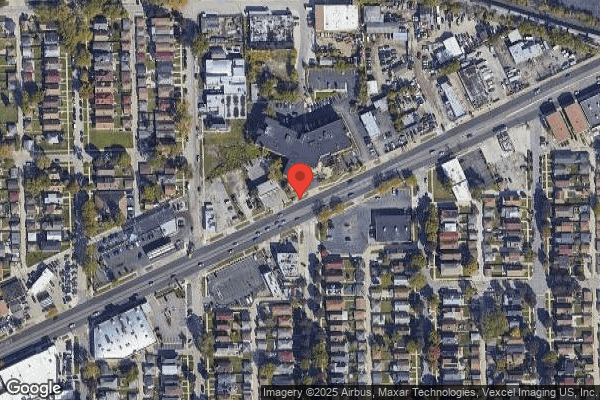
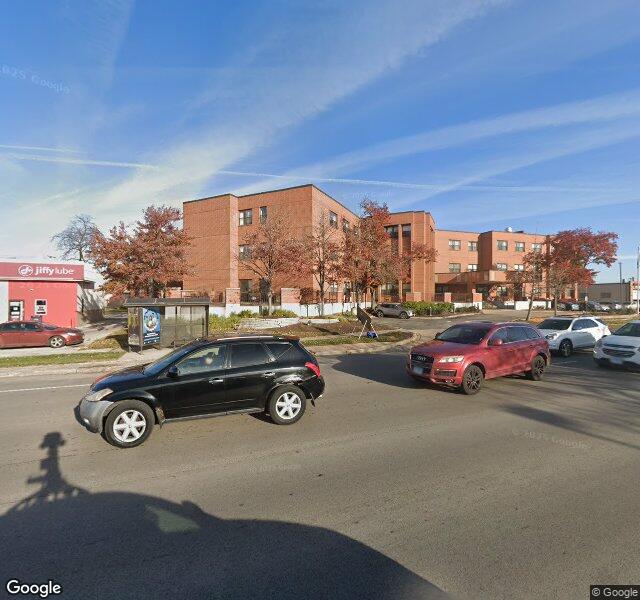
6120 WEST OGDEN, CICERO, IL 60804 (708) 863-0500
For profit - Corporation 249 Beds THE ALDEN NETWORK Data: November 2025 1 Immediate Jeopardy citation
Trust Grade
0/100
#310 of 665 in IL
Last Inspection: March 2025

Within standard 12-15 month inspection cycle. Federal law requires annual inspections.

Overview

Alden Town Manor Rehab & HCC has received a Trust Grade of F, indicating significant concerns about the facility’s care and management. Ranking #310 out of 665 facilities in Illinois places it in the top half, but this is overshadowed by the poor trust grade. The facility is improving, with issues decreasing from 17 in 2024 to 14 in 2025, but it still reported a concerning $328,928 in fines, higher than 76% of Illinois facilities. Staffing is a noted strength with a turnover rate of 0%, which is well below the state average, but the overall staffing rating is only 1 out of 5 stars. Specific incidents include a serious failure to notify a physician about a resident’s worsening condition, leading to a severe medical outcome, and a resident experiencing significant weight loss due to inadequate nutritional interventions. While the facility has excellent quality measures, families should weigh these serious incidents and the low trust grade when considering care options.

Trust Score
F
0/100
In Illinois
#310/665
Top 46%
Safety Record
High Risk
Review needed
Inspections
Getting Better
17 → 14 violations
Staff Stability
○ Average
Turnover data not reported for this facility.
Penalties
✓ Good
$328,928 in fines. Lower than most Illinois facilities. Relatively clean record.
Skilled Nurses
○ Average
Each resident gets 37 minutes of Registered Nurse (RN) attention daily — about average for Illinois. RNs are the most trained staff who monitor for health changes.
Violations
⚠ Watch
49 deficiencies on record. Higher than average. Multiple issues found across inspections.
★★☆☆☆
2.0
Overall Rating
★☆☆☆☆
1.0
Staff Levels
★★★★★
5.0
Care Quality
★★☆☆☆
2.0
Inspection Score
Stable
2024: 17 issues
2025: 14 issues

The Good

  • 5-Star Quality Measures · Strong clinical quality outcomes
  • Full Sprinkler Coverage · Fire safety systems throughout facility
  • No fines on record

Facility shows strength in quality measures, fire safety.

The Bad

2-Star Overall Rating

Below Illinois average (2.5)

Below average - review inspection findings carefully

Federal Fines: $328,928

Well above median ($33,413)

Significant penalties indicating serious issues

Chain: THE ALDEN NETWORK

Part of a multi-facility chain

Ask about local staffing decisions and management

The Ugly 49 deficiencies on record

1 life-threatening 12 actual harm
Sept 2025 1 deficiency
CONCERN (D) 📢 Someone Reported This

A family member, employee, or ombudsman was alarmed enough to file a formal complaint

Potential for Harm - no one hurt, but risky conditions existed

Laboratory Services (Tag F0770)

Could have caused harm · This affected 1 resident

**NOTE- TERMS IN BRACKETS HAVE BEEN EDITED TO PROTECT CONFIDENTIALITY** Based on interview and record review, the facility failed to ensure laboratory services were completed as ordered and in a timel...

Read full inspector narrative →
**NOTE- TERMS IN BRACKETS HAVE BEEN EDITED TO PROTECT CONFIDENTIALITY** Based on interview and record review, the facility failed to ensure laboratory services were completed as ordered and in a timely manner for 1 (R1) of 5 residents reviewed for laboratory services in the sample of 5.Findings include:R1 is an [AGE] year-old female admitted to the facility on [DATE] with diagnosis including but not limited to Chronic Systolic (Congestive) Heart Failure; Hypertensive Heart Disease with Heart Failure; Chronic Obstructive Pulmonary Disease; Type 2 Diabetes Mellitus Without Complications; Arthritis Due To Other Bacteria, Left Knee; Adjustment Disorder With Depressed Mood; and History of Falling.On 08/26/2025 at 01:08 PM Surveyor verified that R1 remains hospitalized at this time and is not available for observations nor interview.On 08/27/2025 at 01:48 PM V3 (Director of Nursing) said, I was not aware that R1 had weekly labs that were ordered post R1's last hospitalization and readmission on [DATE]. Nurses receive hand off report from the discharge facility, the receptionist gets medical records, uploads them into the electronic medical chart and then they bring it to the nurses. Any order that comes from the hospital, should be verified by nurses with attending physician to make sure they are appropriate for the resident. The attending physician may or may not agree with the discharge orders. The nurses should then transcribe all discharge orders into electronic medical chart. Laboratory service orders have to be also transcribed on to the hard copy and placed in the binder for laboratory staff to pick them up each morning when they come to collect residents' specimens.On 08/28/2025 at 10:00 AM V6 (Licensed Practical Nurse) said, I vaguely remember readmitting R1 on 7/17/2025; it's been a month. I don't remember if R1 returned with any new orders for labs. When a resident gets readmitted with new lab orders, I put them in the system (electronic medical chart). R1 was readmitted on Friday (07/18/2025), her labs were going to be drawn on Monday, and the results were supposed to be faxed to infectious disease doctor. They were standing labs, meaning, they are automatically scheduled to be done on a regular, weekly basis. I believe I placed R1's labs in the system as a standing order. Additionally, we place lab orders on a hard copy and place them in the bin for phlebotomist to pick it up and be able to determine which resident needs which labs to be drawn.On 08/28/2025 at 10:25 AM V3 (Director of Nursing) said, I think what happened was, R1 had a standing order for laboratory services; however, upon readmission, V6 (LPN) placed lab order to be done on Monday (07/21/2025) and repeated a week after (07/28/2025) instead of routine, weekly laboratory service. The most recent order should have been placed as routine, weekly laboratory service order. I am unable to produce the original order from 07/18/2025 at this time, it disappeared from the system. There were no further labs drawn after 07/21/2025 and 07/28/2025 until infectious disease clinic called and said they are missing R1's weekly labs. We then placed an order on 08/15/2025 for labs to be restarted on 8/18/2025 (Monday) and continued weekly every Monday. Additionally, nurses placed a one-time order for labs to be drawn on 08/16/2025. R1's labs were drawn after that on 08/25/2025 as per schedule and R1 was hospitalized later in a day on 08/25/2025 for chest pain. All together, we missed labs on 08/04/2025 and 08/11/2025 due to V6's (LPN) mistake while placing lab order.On 08/28/2025 at 12:03 PM V15 (Assistant Director of Nursing) said, I was called by infectious disease clinic to be made aware of R1's missing labs. The clinic staff appeared to be upset and was demanding R1's labs be drawn and sent to the clinic weekly. I explained that I wasn't aware of the order, but I will try to resolve it as soon as I can. The clinic staff proceeded to hang up on me. I gathered all available lab results and sent it to the clinic, I gave them a call; however, I didn't get a response. I tried again and I was able to speak to the clinic staff and confirmed that the clinic received available blood work results; however, did not get further directions.Per record review, R1's discharge order dated 07/18/2025 reads in part, Please draw weekly labs: CBC w DIFF, BUN, Creatinine, and LFT's, Fax results weekly to xxx-xxx-xxxx.Per record review, R1's laboratory service reports show collection dates on 07/21/2025, 07/28/2025, 08/16/2025, and 08/25/2025. Per R1's hospital readmission order dated 07/18/2025, laboratory services should have been provided on weekly basis and were not done on 08/04/2025, 08/11/2025, and 08/18/2025.The facility Job Description: Staff Nurse (Registered Nurse/License Practical Nurse) reads in part, Arrange for diagnostic and therapeutic services, as ordered by the physician; obtain sputum, urine, and other lab tests as ordered.
Apr 2025 1 deficiency
CONCERN (D) 📢 Someone Reported This

A family member, employee, or ombudsman was alarmed enough to file a formal complaint

Potential for Harm - no one hurt, but risky conditions existed

Deficiency F0688 (Tag F0688)

Could have caused harm · This affected 1 resident

**NOTE- TERMS IN BRACKETS HAVE BEEN EDITED TO PROTECT CONFIDENTIALITY** Based on observation, interview, and record review, the facility failed to provide appropriate services, equipment, and assistan...

Read full inspector narrative →
**NOTE- TERMS IN BRACKETS HAVE BEEN EDITED TO PROTECT CONFIDENTIALITY** Based on observation, interview, and record review, the facility failed to provide appropriate services, equipment, and assistance to maintain or improve mobility with maximum practicable independence. This failure affected two (R1, R2) residents out of four residents who were reviewed for services and equipment. Findings include: R1 [AGE] year-old resident admitted to the facility on [DATE] to 2/26/2025 with diagnoses including but not limited to: enterocolitis to clostridium difficile, urinary tract infection, benign prostatic hyperplasia, hyperlipidemia, hypertension, epilepsy, Cerebral vascular accident with left hemiparesis, and dysphagia. R1's Minimum Data Set (MDS), dated [DATE], documents that R1 has a Brief Interview for Mental Status (BIMS) score of 6/15, which suggests that R1 is cognitively impaired. R2 [AGE] year-old resident admitted to the facility on [DATE] with diagnoses including but not limited to: tracheostomy, chronic kidney disease, encephalopathy, adrenal insufficiency, pituitary mass, Hypothyroidism, urinary retention, dysphagia, chronic respiratory failure, and percutaneous endoscopic gastrostomy. R1's Minimum Data Set (MDS) dated [DATE] documents that R1 has a Brief Interview for Mental Status (BIMS) score of 99, which suggested that R2 was not able to complete the interview. On 4/16/2025 at 12:00 PM V9 (Licensed Practical Nurse), I was the regular nurse for R1 while R1 was at the facility. R1 was on bed rest because of right-sided weakness. R1 required assistance with eating, and activity of daily living, and had a urinary catheter. I don't recall ever seeing R1 without the urinary catheter and R1 used to go to see the urologist for that. On 4/16/2025 at 1:30 PM V8 (Restorative Aide) said that R1 has two programs during the shift. One is the placement of the splint and bed mobility, but I only assisted R1 out of bed to go to the doctor's appointment. On 4/16/2025 at 1:36 PM V11(Family friend) said, I went to R1's doctor's appointment and had to bring R1's wheelchair to the facility because R1 did not have one and staff did not get R1's out of bed unless R1 had a doctor's appointment. On 4/16/2025 at 1:06 PM V7(Restorative Nurse) said, After I complete the assessment on admission, I make recommendations and start a program, also I complete annual, quarterly, and change of condition assessments. The goal is to maintain current ability or improve. After residents are discharged from therapy, the restorative nurse will follow recommendations per physical therapy and add at least two programs for the restorative aides to work with each resident. Every floor has a restorative aide responsible for the program. R1 has two programs and R2, I do not see any program added to R2 ' s tasks. I do not know why it is not there. On 4/16/2025 at 11:58 AM V5(Licensed Practical Nurse) said, that catheters are changed as needed when there is a leakage, clogged, or a lot of sediments. R2 does not get out of bed, wheelchairs are provided by nursing after physical therapy recommendations. I don't know why R2 does not have a wheelchair. V5 then checked current orders and orders say, may be up as tolerated. On 4/16/2025 at 11:58 AM V10(Certified Nursing Assistant) and V4(Certified Nursing Assistant) provided care to R2 and they both said, not getting R2 out of bed before. On 4/16/2025 at 3:10 PM V2(Director of Nursing) said that when residents are admitted to the facility during our morning meeting, physical therapy services are discussed as a team, and if residents have Medicare services or insurance physical therapy is started as ordered per physician. R2 did not have his Medicare information and I spoke with R2's family member on 4/7/2025 and the facility still did not have that. R2 has not had a wheelchair, physical therapy screening, or evaluation since admission. R2's has not been up since admission. I expect the staff to follow physician ' s orders and follow up on any information needed to care for the residents. I do not see any restorative program for R2. I know that the family member wanted R2's up for his birthday last week. On 4/16/2025 at 2:26 PM V6(Physical Therapy Supervisor) said, I check orders daily and the census to know who I have to complete evaluation or screening. If a resident does not have orders, I go with the restorative nurse and screen and make recommendations. If a resident comes in with Public Aide insurance, the restorative services will see residents because it will be cheaper for them. R1 has the evaluation and therapy notes. After therapy was completed, the restorative services were initiated with two programs, but for R2 I do not have screening or physical therapy evaluation. R2 did not have a payer source and I was told not to see until his insurance information was available. On record review, R1's physician order dated 10/29/2024 reads May be up as tolerated. R2's physician order dated 3/6/2025 reads, may be up as tolerated and may evaluate and treat physical therapy/occupational therapy. On 4/16/2025 at 3:20 PM V1(Administrator) said, typically if a new admission resident needs therapy and the insurance information is not available the administrator will approve services pending insurance approval and will order any chair recommended per physical therapy. I do not see any physical therapy evaluation, screening, or restorative assessment for R2. I would expect the residents to be evaluated per physical therapy services, and restorative services and make recommendations. The facility is working with R2's family members to bring Medicare information. I know that R2's family wants therapy and an appropriate chair to get the resident out of bed. On 4/17/2025 V2(Administrator) said, the facility do not have a policy for equipment ordering for new admissions. On 4/16/2025 at 2:58 PM, V1 provided Facility Policy Titled, Direct Therapy Services (dated 03/10/2022), which includes: The qualified therapist, in conjunction with the physician and nursing administration, is responsible for determining the necessity for, and the frequency and duration of, the therapy services provided to residents. Residents are provided direct therapy services upon the written order of their physician. 2. All direct therapy services provided to the resident must be ordered by the resident ' s attending physician. 5. To assist the resident in maintaining or improving their functional and physical status, the resident may be assessed for restorative nursing program(s) which are not considered specialized rehabilitative services . Facility provided their policy titled, Restorative Nursing Program (dated 03/10/2022), which includes the following: All residents will be assessed on admission, as change of condition warrants, and quarterly thereafter, for participation in the Restorative Nursing Program (RNP). An individualized program will be developed based on the resident's needs as appropriate. The program(s) will be reflected on the interdisciplinary care plan and consistently carried out by staff.
Mar 2025 8 deficiencies 1 Harm
SERIOUS (G)

Actual Harm - a resident was hurt due to facility failures

Deficiency F0692 (Tag F0692)

A resident was harmed · This affected 1 resident

**NOTE- TERMS IN BRACKETS HAVE BEEN EDITED TO PROTECT CONFIDENTIALITY** Based on interviews, observation, and records reviewed the facility failed to identify and evaluate interventions for one (R70) ...

Read full inspector narrative →
**NOTE- TERMS IN BRACKETS HAVE BEEN EDITED TO PROTECT CONFIDENTIALITY** Based on interviews, observation, and records reviewed the facility failed to identify and evaluate interventions for one (R70) of 13 residents reviewed for nutrition in sample of 54. This failure resulted in R70 having an unplanned significant weight loss of 28% over 7 months. The findings include: R70's diagnosis include but are not limited to Hypertension, Gastro Esophageal Reflux Disease, Incontinence, Muscle Weakness, Chronic Pain, Anxiety, Dysphagia, Facial Weakness following Cerebral Infarction, Hemiplegia and Hemiparesis, Major Depressive Disorder, Muscle Wasting and Atrophy, Non Pressure Chronic Ulcer of Foot (Bunions), Chronic Pain, Recurrent Depressive Disorder, Pneumonia, and Osteoarthritis. On 3/20/25 at 12:35PM V24, CNA, said R70 has contracted hands but she can participate with feeding. V24 said R1 needs assistance, it changes with her sometimes she feeds herself. On 3/20/25 at 12:40PM R70 in her room, in bed, lunch of chopped meat and potatoes and gravy with spoon in it. R70 said I didn't touch it. On 3/20/25 at 12:45PM V12, RN said R70 appetite is poor, she feeds herself. V12 said she refuses what we do. V12 said she is supposed to go to the gastric doctor. V12 said R70 don't eat, we did a calorie count. On 03/20/25 at 10:22 AM V9, Registered Dietician, said I asked about the MDS for R70. V9 said R70 definitely had 10% loss in 6 months and 4.2% loss for 1 month. V9 said R70's weight in July 2024 was 146 pounds, she had a 28% loss of weight. V9 said in January 2025 R70's weight was 113.2 pounds and her current weight is 111 pounds. On 03/20/25 at 11:04 AM V6, MDS Nurse, said I do section K (Swallowing/Nutritional Status) of the MDS, I gather information from the Registered Dietician. V6 said I then enter the information into the assessment. On follow up interview at11:34 AM V6 said R70 had a significant weight loss x 1 month and 6 months. V6 said I made a correction for the 1/9/25 MDS. V6 said R70 was 146 pounds 6 months ago. V6 said I am not part of the weight meeting. At 12:05PM V6 said I updated the care plan and notified the nurse. On 3/21/25 at 11:12AM V20, Nurse Practitioner, said R70's weight loss started in October 2024. V20 said sometimes R70 will eat and other times not at all. V20 said the CNAs told us that R70 was not eating at all even though R70 told us she ate. V20 intervention include trying to get her into a GI doctor, encourage her to eat, we provided supplements, and appetite stimulants. V20 said for the calorie counts we see she may eat breakfast and no lunch or dinner. V20 said we discussed hospice with the progression of her Rheumatoid Arthritis, and I increased her pain medication. V20 said R70 said she doesn't want a feeding tube. She went recent to GI, I called the office, we are questioning her cognitive ability. V20 said R70's agrees to eat but then she does not do it. V20 said we are going based on what the CNAs tell us. V20 said the staff were supposed to do weekly weights based on my conversation with the Dietician. V20 said of course R70 is someone we would be concerned for weight. V20 said R70 is a slow feed, since her hands are arthritic she needs a lot of time. On 3/21/25 at 12:53PM V9, said the extent of the calorie count is all they do with it. There is not a section with the calorie calculation, not for this facility. On 3/20/25 the surveyor requested from V1 evidence of Weight Committee procedures #2, 3, 4 and 5 for R70. Information was not provided by 3:30PM On 3/21/25 11:05AM requested from V1 documentation for weight committee, at 1:27PM the documentation has not been provided. 3/21/25 1:25PM V14, Regional Nurse Consultant, said we are still working on getting the progress notes. Review of Progress notes for R70 written by V9 include 12/10/24; 12/11/24 and 2/17/25 No documented evaluation of calorie count. Review of Progress Notes written by V20 include notes on 11/6/24 and 2/5/25, there is no evaluation of calorie count. Nurse progress notes include 12/9; 12/16; 24; 1/3/25; 1/4/25; 1/9/25; and 1/10/25. No evaluation of calorie count. On 3/21/25 at 2:02PM the facility provided the progress notes for R70. R70 MDS dated [DATE] section K0300 states 0 for weight loss. Current weight is 113 pounds The corrected MDS V6 presented on 3/20/25 notes Weight loss 2- yes, not on prescribed weight loss regimen. Three day Calorie Count reviewed for R70 dated 12/10/25 at 10:45AM and 6:23PM and 12/12/25 at 9:38PM. No total of calorie count, protein count, or total intake percentage. Care Plan reviewed for R70 nutritional support. Interventions include meal monitoring and recording, monitor labs. Review of R70's Order Summary Report includes Check Weight weekly x 4 ordered 1/8/25 and end date 2/5/25. Review of R70's January Medication Administration Record includes 1/8/25; 1/15/25; and 1/29/25 with weight NA. 1/22/25 weight is 113.2. Monthly Weight Report for R70 includes weights December 2024 118.8 pounds; January 116.0 pounds; 109.0 February; and March 111.3 pounds. (V9 said R70's weight in July 2024 was 146 pounds, she had a 28% loss of weight since. Policy for Weight Committee dated 2023 states the purpose to reduce the risk of altered nutritional status. Committee will discuss residents with significant weight change, root cause for weight loss and intervention. The committee will also identify individual with insidious weight loss, gradual weight loss, and develop plan of care. The weigh committee will meet weekly to discuss residents with weekly weights. The committee will evaluate the nutritional status of the resident, identify root cause and develop interventions. Information discussed in Weight Committee to be documented via progress note and care plan as needed. The Weight Committee meeting will be obtained via PCC exception reports. Policy for Weights dated 9/2020 states residents will be weighted to establish a baseline weights and identify trends of weight loss and weight gain. Report any weight loss or gain greater than 5% within one month, 7.5% within three months or 10% within 6 months. Policy for Calorie Count dated 9/20 states a calorie count is to monitor adequacy of resident's calorie intake. 5. If a resident refuses a meal or does not eat any of the items, document the reason why the meal was missed and indicate amount consumed with a zero. (See calorie count, this is not documented.) 6. Dietary services will evaluate and document results and will make appropriate recommendations.
CONCERN (D)

Potential for Harm - no one hurt, but risky conditions existed

Resident Rights (Tag F0550)

Could have caused harm · This affected 1 resident

Based on interviews and records reviewed the facility failed to meet residents' needs when they utilize the call lights for assistance. This failure affected 5 ( R283; R75; R121; R115; and R16 ) resid...

Read full inspector narrative →
Based on interviews and records reviewed the facility failed to meet residents' needs when they utilize the call lights for assistance. This failure affected 5 ( R283; R75; R121; R115; and R16 ) residents reviewed for call light concerns out of a sample of 54 residents. Findings include: A.During Resident Council interview on 03/18/25 at 11:21 AM R19, Resident Council President gave consent for the surveyor to review the council meeting notes. R283 said If I pull the light they come when they want. I call and sometimes I might wait up to an hour. R283 said yesterday I requested an oatmeal that my sister brought me at 4:00am, I used to work nights so that is when I eat. R283 said they didn't bring it in until 8:00AM with breakfast. R283 said I can hear them talking, laughing, and carrying on in the hallway. R283 said why can't they just bring me what I ask and then they can carry on and I'll be taken care of? On 03/19/25 at 11:04 AM R75 and R121 said the staff will turn the call light off and say I will be back in a minute and they don't come back. R75 said it feels like the call lights are on and they forget about you. R75, R121, and R19 said if they comeback at all to help you it takes a long time. R121 said it takes more than half hour to get help for towels, when your sick, or just need some help. On 3/20/25 at 12:45PM V12, RN (Registered Nurse), said R283 told her that he would like food at night, but we didn't know that before. V12 said we will have it for him now that we know. R283 minimal data set section C (Cognitive Pattern) brief interview for mental status dated 3/3/25 documents a score of 15, cognitively intact. R121 minimal data set section C (Cognitive Pattern) brief interview for mental status dated 2/10/25 documents a score of 15, cognitively intact. R75 minimal data set section C (Cognitive Pattern) brief interview for mental status dated 1/10/25 documents a score of 15, cognitively intact. B. R115's minimal data set section C (Cognitive Pattern) brief interview for mental status dated 3/3/25 documents a score of fourteen which indicate cognitively intact. On 3/18/25 at 11:05AM, R115 said, she pushed the call light on the overnight shift because she was vomiting and coughing but no staff came to answer her call light all night. Concern form dated 3/18/25 documents: R115 stated, she pressed call light on night shift and no one came. Follow-up action taken: In-service provided to staff nurse. Time date and person notified of outcome of concern 3/18/2025 at 1:45pm. C. On 3/19/25 at 12:28PM R16 stated facility staff take hours to answer the call light. R16 reported R16 waits the most on night shift. R16 stated about one month ago R16 waited four hours to be changed. R16 reported asking an unknown CNA to be changed around 4:00AM but no staff came to change R16 until around 8:00AM on the next shift. R16 stated telling V11, Unit Manager, about not being changed and call light wait time. R16 reported V11 did not follow up with R16 with R16's concerns. On 3/20/25 at 10:22AM V11 stated V11 heard R16 telling the surveyor about the long call light response time. V11 denied R16 talking to V11 previously about the call lightwait time. The surveyor asked V11 if V11 addressed the concern R16 voiced about the call lights. V11 denied talking to R16 about call light wait because R16 did not come up and talk with V11 personally about the issue. A concern form dated 3/18/25 for R115 states resident states she pressed the call light on night shift and no one came. Follow up action documented 3/18/25 states Inservice provided to nurse. January Resident Council Minutes for January 22, 2025 notes Department/Concern documents Residents have began to complain about call light response time again. A call light inservice dated 3/18/25 was provided by the facility. Call light Policy no date documents: To ensure that resident needs are met.
CONCERN (D)

Potential for Harm - no one hurt, but risky conditions existed

Deficiency F0604 (Tag F0604)

Could have caused harm · This affected 1 resident

**NOTE- TERMS IN BRACKETS HAVE BEEN EDITED TO PROTECT CONFIDENTIALITY** Based on observation, interview, and record review, the facility failed to keep residents free from physical restraints for two ...

Read full inspector narrative →
**NOTE- TERMS IN BRACKETS HAVE BEEN EDITED TO PROTECT CONFIDENTIALITY** Based on observation, interview, and record review, the facility failed to keep residents free from physical restraints for two (R2 and R10) out three residents reviewed for restraints in a total sample of 54. Findings Include: R2 is a [AGE] year old with the following diagnosis: cerebrovascular disease, neuromuscular dysfunction of the bladder, and acquired absence of bilateral legs above the knee. On 03/18/25 at 9:35am R2 was observed sitting across from the nurse's station in a manual wheelchair with back rest not reclined. A tan/gray canvas strap device tied in a knot to left and right arm rest of wheelchair. Blanket was over chest/abdominal area so the front of R2 was not able to be seen. On 03/18/25 02:43 PM, R2 was lying in bed. Lap belt strap noted tied to each arm rest on the wheelchair. On 03/19/25 12:40 PM, R2 was sitting in a manual wheelchair straight up. The lap belt was tied to each side of the wheelchair and velcroed around R2's waist. V19 (CNA) stated R2 wears this strap while up in a wheelchair due to R2 sliding out. R2 was asked to moved R2's arms to try to remove the strap and R2 could not remove the strap unassisted. R2 wears a splint to the right hand and has lack of control to the left arm. 03/21/25 at 11:32AM - V18 reported the facility is a restraint free facility. V18 stated R2 should not be wearing a lap belt and the lap belt needs an order. V18 reported R2 does not have the strength or dexterity to remove the lap belt unassisted. V18 reported restraints are not used because the objective is to not restrict movement. V18 stated a physician must be called and an order must be placed if the lap belt is used. V18 reported R2 uses a splint to the right hand due to a contracture and receives passive range of motion to both hands for joint mobility. V18 stated the lap belt has been discontinued because R2 needs to be using a high back reclining chair. V18 reported the high back reclining chair is more comfortable and safer for R2 than to use a manual wheelchair and lap belt. V18 stated R2 does not have the hand strength or dexterity to remove the lap belt unassisted. V18 reported if the lap belt is currently being used then a physician needs to put in an order and a consent must be obtained. 3/21/25 12:12PM V14 (Regional Nurse Consultant) stated if a lap belt is in use the resident must be able to remove the belt themselves. V14 reported if it cannot be removed without assistance then it is considered a restraint. V14 stated a physician order and consent is needed for a lap belt. V14 reported it also must be documented that the restraint is taken off for rest period during the day and skin checks must also be documented. The Restorative Nursing assessment dated [DATE] documents R2 uses a manual wheelchair and a splint to the right hand during the day. R2 will continue to receive a passive range of motion program to right hand and the two middle fingers of the left hand for contractures. There is no documentation that a high back reclining wheelchair should be in use for R2. There is also no documentation that a lap belt is currently being used for R2. The Restraint Consent dated 1/10/25 documents consent was received from R2's family for the use of the lap belt. There is no witness signature on the form. Two signatures are needed for consent. The Minimum Data Set Section P dated 1/12/25 documents no physicals restraints are in use for R2. The Physician Order Sheet was reviewed and there is no current order for a lap belt to be used. The Care Plan dated 1/20/12 documents R2 is at high risk for falls related to dementia and multiple sclerosis. An intervention dated 7/5/18 documents R2 should use a high back wheelchair in a slight recline position when not having meals. There is no intervention in this care plan that a lap belt should be used while sitting in a wheelchair. The Care Plan dated 5/23/12 documents R2 has limited range of motion related to multiple sclerosis, contracted muscles, and lack of coordination. The Care Plan dated 3/20/25 documents R2 has difficulty sitting upright in a basic wheelchair and uses a high back reclining chair to maintain comfort and promote proper body alignment secondary to stroke, poor muscle control and posture, and multiple sclerosis. R10 is a [AGE] year old with the following diagnosis: chronic kidney disease stage 3, bipolar, schizoaffective disorder, and chronic obstructive pulmonary disease. 03/18/25 09:48 AM R10 has the upper side rails in place on both sides of the bed. Bed bolsters are also noted on each side of the bed. R10 was lying on R10's back. The surveyor asked R10 to roll over to the side. R10 reached for the upper side rail but was unable to move legs to roll to the side due to the close positioning of the bed bolsters. 03/19/25 9:22 AM - R10 again is lying on R10's back. The side rails and bed bolsters are still in the same place. The surveyor again asked R10 to roll to the side and R10 was unable. 03/21/25 at 10:52AM- R10 is lying on R10's back. Bilateral side rails and bilateral bed bolsters are in place. V17 stated R10 has a behavior of getting out of bed and lying on the floor so an interventions was to put bolsters in place. V17 reported R10 has not had the behavior of getting out of bed and lying on the floor since the end of last year. V17 stated R10 needs assistance with turning and repositioning and is mechanical lift for transfers. V17 removed the blankets from R10. The surveyor and V17 asked R10 to attempt to get out of bed. R10 was unable to turn to the side unassisted and was unable to lift legs over the bolsters. V17 reported R10 has calmed down and has not attempted to get out of bed since the end of last year. The surveyor asked V17 what is it called when a resident cannot get out of bed unassisted due to the side rails and bed bolster being in place and the V17 responded that it is considered a restraint. 11:32AM V18 (Restorative Nurse) stated R2 is dependent and needs assistance with all ADL care and mobility. V18 has poor trunk control and is non-ambulatory. V18 reported R2 has had falls in the past but had not had one in the past 90 days. V18 stated R2 has bed bolsters in place. V18 reported R10 has a behavior of sliding out of bed to lie on the floor. V18 denied ever seeing R10 slide out of bed or dangle R10's legs out of the bed but stated that is what staff tells V18. V18 stated R10 has side rails up for assistance with turning. V18 confirmed a restorative assessment was completed by V18 on 3/18/25. V18 denied noting any new changes and reported R10 was still able to get out of bed to at the time of assessment. V18 stated during the assessment the resident is asked to turn to the side and move around the bed but staff still assist the resident. V18 stated if a resident cannot get out of bed unassisted and the bed exit is being blocked by side rails and bed bolsters then it is considered a restraint. V18 defined a restraint as restriction of movement. V18 reported the facility is a restraint free facility. 12:12PM V14 (Regional Nurse Consultant) stated R10 has a habit of putting the legs out of the bed and that R10 is confused at baseline. V14 was unsure of the time frame but stated R10 has not had a fall in a while. V14 was not able to state what interventions R10 has in place for falls or getting out of bed. The surveyor notified V14 that throughout the survey R10 has had both side rails and bilateral bed bolsters in place. The surveyor then told V14 that R10 was instructed to attempt to get out of bed with the side rails and bed bolsters in place but was not able to get out. The surveyor asked V14 what it is called when a resident cannot get out of bed due to it being blocked with side rails and bolsters and V14 responded it would be considered a restraint. The Restorative Nursing assessment dated [DATE] documents R10 uses bilateral quarter side rails. A recommendation is to have R10 in the bed mobility program to assist with turning side to side. The Side Rail assessment dated [DATE] documents R10 does not have a history of falls within the last six months. It documents the side rails would not keep R10 from voluntarily getting out of bed. The Minimum Data Set Section P dated 2/4/25 documents no physical restraints are in use for R10. The Physician Order Sheet was reviewed and there is no current order for any restraints to be used. There is no documented consent for restraints. The Care Plan dated 11/06/2015 documents R10 is at risk for falls due to bipolar and heart disease. R10 is noted to crawl out of low bed to floor and slides from the geri-chair. An intervention dated 8/26/24 documents bed bolsters are applied to the mattress. The policy titled, Restraint (Physical/Devices), dated 09/2020 documents, Policy: It is the philosophy of this facility to support a restraint free environment. In accordance with federal and State laws, the use of the device will only be considered when determined to be necessary through the assessment and care planning process. CMS Definition: Physical restraints are defined as any manual method or physical or mechanical device, material, or equipment attached or adjacent to the resident's body that the individual cannot remove easily which restricts freedom of movement or normal access to one's body. Procedure: .2. Restraints will be ordered by a physician, based on the assessment of the resident capabilities, based on consultation with health care professionals, and demonstrated by the care planning process as a therapeutic intervention will promote the care and services necessary for the resident to attain or maintain the highest practicable physical, mental, or psychosocial well-being.
CONCERN (D)

Potential for Harm - no one hurt, but risky conditions existed

PASARR Coordination (Tag F0644)

Could have caused harm · This affected 1 resident

**NOTE- TERMS IN BRACKETS HAVE BEEN EDITED TO PROTECT CONFIDENTIALITY** Based on interview and record review, the facility failed to coordinate getting residents (R16, R156, R76 and R84) a level II PA...

Read full inspector narrative →
**NOTE- TERMS IN BRACKETS HAVE BEEN EDITED TO PROTECT CONFIDENTIALITY** Based on interview and record review, the facility failed to coordinate getting residents (R16, R156, R76 and R84) a level II PASRR assessment for residents with severe mental illness diagnosis for four out of five residents reviewed for PASRR screening in a total sample of 54. Findings Include: R16 is a [AGE] year old with the following diagnosis: major depressive disorder and post traumatic stress disorder (PTSD). R156 is a [AGE] year old with the following diagnosis: bipolar disorder. R76 admitted in the facility on 5/31/2017 with diagnoses but not limited to: Dementia, Bipolar Disorder and Major Depressive Disorder. R84 admitted in the facility on 6/20/23 with diagnoses of but not limited to: Dementia with other behavior disturbance, schizoaffective disorder, and anxiety. R156 was unable to be interviewed due to mental status. On 3/19/25 at 12:28PM, R16 stated R16 is diagnosed with depression and PTSD. R16 confirmed R16 receives medication daily for managing symptoms. R16 reported R16 also attends psychotherapy sessions for mental health diagnosis. R16 denied being aware if a Level II screen was completed. On 03/19/25 11:08 AM, Reviewed Notice of PASSR Level 1 Screen Outcome dated 3/20/25 reads in part: PASSAR Level 1 Determination: Refer for Level II Onsite. Suspected or Confirmed PASSAR Conditions: (MH) Mental Health Disability. On 03/20/25 12:23 PM, reviewed Notice of PASSR Level 1 Screen Outcome dated 3/20/25, reads in part: PASSAR Level I Determination: Refer for Level II Onsite. Suspected or confirmed PASSAR Conditions: (MH) Mental Health Disability. On 3/20/25 12:47 PM -V7 (Admissions Director) stated V7 gets PASRRs from the hospitals but to renew them. V7 reported social services is responsible for renewing them. V7 reported V7 has never had a need for level 2. V7 was unsure of all the diagnosis that need a level II screen but confirmed if a resident has bipolar then a level II is needed. V7 stated the facility also has marketing team that helps to review PASRRs and will notify the facility if anything is incorrect or missing. 3/20/25 1:03PM - V4 (Social Services) stated that if there is a mental diagnosis the facility submits for a referral for a level II. V4 reported any diagnosis like major depression, schizophrenia, bipolar, or any other mental disorder would qualify for level II assessment. V4 admitted to reviewing the level I assessments when they are complete. V4 stated they have found level I PASRRs have that been completed incorrectly that should have been a level II assessment. V4 was unable to name which residents had incorrect assessments. V4 reported Maximus will usually come within a week to complete a level II screen if needed. V4 stated the importance of completing a level II screen gives the facility interventions to provide for a resident with a mental health diagnosis. V4 was unaware of R156's exact diagnosis but reported if R156 does have a serious mental illness then a level II should have been completed. V4 reported completing the level I screen, and the program generated a level II was not needed. V4 reported refuting the findings with maximus on today 3/20/25. V4 was unable to state R16's mental health diagnosis. V4 stated R16's level I screen was completed yesterday and findings include R16 does not need a level II screen. V4 denied refuting the findings with maximus. V4 was unable to answer why PTSD was not listed on the level I screen as part of R16's diagnosis. The PASRR Level 1 Screen dated 3/19/25 documents the determination as no level II required due to no serious mental illness. R16's diagnosis of PTSD is not listed on the Level I screen that was submitted by the facility. The PASRR Level 1 Screen dated 2/13/24 documents the determination as no level II required due to no serious mental illness. The facility was unable to provide any other documents in the Level I screen besides the determination. The request for a level II screen was submitted to maximum on 3/20/25 at 11:13AM.
CONCERN (D)

Potential for Harm - no one hurt, but risky conditions existed

Quality of Care (Tag F0684)

Could have caused harm · This affected 1 resident

Based on observation, interview and record review, the facility failed to follow doctor's orders for one resident(R89) with a diagnosis of lymphedema by not following physician recommendations of elev...

Read full inspector narrative →
Based on observation, interview and record review, the facility failed to follow doctor's orders for one resident(R89) with a diagnosis of lymphedema by not following physician recommendations of elevating bilateral legs for one of three residents reviewed for quality of care. Findings Includes: R89 has diagnosis of Dementia, Pulmonary Hypertension, Lymphedema and Atherosclerotic Heart Disease. During the survey, (3/18-/3/21/25) R89 was observed with legs flat in the bed in her room. There were no additional pillows available for use to place under her legs. On 3/21/25 at 11:48AM, V23(restorative nurse) said he was not aware of any recommendations to elevate R89's legs. On 3/21/25 at 11:53AM, V22(memory care director) said she was not aware of any recommendations to elevate On 3/21/25 at 11:59AM, V21(nurse practitioner) said she would expect any doctor recommendations to be followed as ordered. V21 said if any resident refuses, she would expect to be notified and the behavior to be documented. V21 said R89 was recommended to keep her legs elevated to help with circulation and prevent fluid from pooling. V21 said she was not aware of any resident refusals. R89's legs. R89's physician progress notes dated 3/7/25 documents: reported patient lymphedema is getting worse in bilateral lower extremities. Keep legs elevated at all times. Under plan documents: elevate legs when in bed on three pillows. R89's physician progress notes dated 3/14/25 documents: follow up for bilateral lower extremity edema pitting. Discussed with staff Keep legs elevated. Under plan documents: elevate legs when in bed on three pillows. R89's progress notes do not indicate any refusal of legs being elevated. R89's point of care task list does not indicate to assist with leg elevation. R89's care plan documents: R89 with Lymphedema Date Initiated: 03/17/2025. Interventions include Encourage and cue resident to elevate edematous extremity while seated or in bed as able and as tolerated. Assist as needed with positioning. Date Initiated: 03/17/2025.
CONCERN (D)

Potential for Harm - no one hurt, but risky conditions existed

Respiratory Care (Tag F0695)

Could have caused harm · This affected 1 resident

Based on observation, interview and record review, the facility failed to date oxygen tubing and to properly store nebulizer mask while not in use for one of three (R13) residents reviewed in a total ...

Read full inspector narrative →
Based on observation, interview and record review, the facility failed to date oxygen tubing and to properly store nebulizer mask while not in use for one of three (R13) residents reviewed in a total sample size of 54. Findings Include: R13' physician order sheet dated 3/18/25 documents: respiratory: oxygen per nasal cannula at two to four liters per minute continuous .order dated (3/13/25). Albuterol sulfate nebulization solution 1.5milliliter inhale orally via nebulizer every six hours as needed for respiratory symptoms order dated (3/13/25) On 3/18/25 at 10:48am, R13 was observed with a nasal cannula on with oxygen running. R13's oxygen tubing was not dated. R13's nebulizer mask was observed laying in R13's second night stand drawer which was partially opened without a bag. V6 (nurse) said, R13 was re-admitted last night. R13's oxygen tubing should be dated and R13's nebulizer mask should be stored in a plastic bag to prevent contamination. On 3/20/25 at 3:59pm, V14 (regional nurse consultant) said, the oxygen tubing should be dated so that staff will know when to change it. Nebulizer mask should be stored in a plastic zip lock bag when not in use for infection control. A nebulizer mask should never be laying inside of the drawer without a bag. Oxygen therapy device- nasal cannula policy dated 9/2020 documents: A nasal cannula will be changed monthly and as needed. Equipment Change Schedule Policy documents: Equipment will be changed following established schedule to prevent cross contamination. Oxygen tubing, nasal cannula and mask are changed every month and as needed.
CONCERN (E)

Potential for Harm - no one hurt, but risky conditions existed

Assessment Accuracy (Tag F0641)

Could have caused harm · This affected multiple residents

**NOTE- TERMS IN BRACKETS HAVE BEEN EDITED TO PROTECT CONFIDENTIALITY** Based on interview and record review, the facility failed to accurately code the minimum data set (MDS) assessment for four (R9,...

Read full inspector narrative →
**NOTE- TERMS IN BRACKETS HAVE BEEN EDITED TO PROTECT CONFIDENTIALITY** Based on interview and record review, the facility failed to accurately code the minimum data set (MDS) assessment for four (R9, R34, R48 and R160) of eight residents reviewed for hospice. In addition, the facility failed to accurately code the weight assessment for one resident (R70) who was identified to have a greater than 10 percent weight loss in 6 months but not identified on the MDS for one of thirteen reviewed for nutrition in a total sample of 54. Findings Include: R160 R160 was admitted to the facility on [DATE] with a diagnosis of cerebrovascular accident. R160's Minimum data set (MDS) dated [DATE] under section J1400 prognosis (Does the resident have a condition or chronic disease that may result in a life expectancy of documents a code 0 which indicates No. R160 hospice admission orders dated 8/29/24 terminal diagnosis of senile degeneration of the brain with 6 months or less to live. On 3/21/25 at 10:15AM, V6(minimum data set, MDS nurse) said a resident receiving hospice services on their minimum data set, MDS section J1400 should be coded as a yes if the documentation is available. Staff have up to 7 days to try to obtain certification if paperwork is not available in the medical record. CMS RAI version 3.0 manual dated October 2024 documents under J1400 coding instructions: code yes if the medical record includes physician documentation: 1)resident is terminally ill; or 2) the resident is receiving hospice services. R9 R9 was admitted to the facility on [DATE] with a diagnosis of Alzheimer's disease. R9 Minimum data set (MDS) dated [DATE] under section J1400 prognosis (Does the resident have a condition or chronic disease that may result in a life expectancy of documents a code 0 which indicates No. R9 hospice admission orders dated 1/14/23 terminal diagnosis of Alzheimer's with 6 months or less to live. R9's physician certification dated 12/19/24 documents: the patients prognosis is six months or less if the disease runs its normal course. On 3/21/25 at 10:15AM, V6(minimum data set, MDS nurse) said a resident receiving hospice services on their minimum data set, MDS section J1400 should be coded as a yes if the documentation is available. Staff have up to 7 days to try to obtain certification if paperwork is not available in the medical record. CMS RAI version 3.0 manual dated October 2024 documents under J1400 coding instructions: code yes if the medical record includes physician documentation: 1)resident is terminally ill; or 2) the resident is receiving hospice services. R34 R34 is a [AGE] year old with the following diagnosis: Parkinson's disease, type 2 diabetes, and neuromuscular dysfunction of the bladder. On 3/20/25 at 3:05PM, V14 (Regional Nurse Consultant) stated R34 originally admitted to hospice in January 2023 but was discharged from hospice in December 2023. V14 reported R34 readmitted to hospice in December 2024. The Hospice Certification Statement dated 1/10/23 documents the physician certified that R34 is terminally ill with a life expectancy of six months or less if the terminal illness runs its normal course. The Recertification Statement dated the effective date of certification as 12/10/24. The physician certified that R34 is terminally ill with a life expectancy of six months or less if the terminal illness runs its normal course. This certification is good until 2/7/25. R34 was again recertified for hospice on 2/8/25 by the physician with a life expectancy of six months or less if the terminal illness runs its normal course. The Care Plan dated 12/11/24 documents R34 was admitted to hospice due to Parkinson's disease. All interventions are documented on 12/11/24. The Minimum Data Set (MDS) Section J dated 12/18/24 documents R34 does not have a life expectancy of less than six months. This is not correctly coded. On 3/21/25 at 10:15AM, V6(minimum data set, MDS nurse) said a resident receiving hospice services on their minimum data set, MDS section J1400 should be coded as a yes if the documentation is available. Staff have up to 7 days to try to obtain certification if paperwork is not available in the medical record. CMS RAI version 3.0 manual dated October 2024 documents under J1400 coding instructions: code yes if the medical record includes physician documentation: 1)resident is terminally ill; or 2) the resident is receiving hospice services. R48 R48 is an [AGE] year old with the following diagnosis: congestive heart failure, type 2 diabetes, and atrial fibrillation. The Hospice Certification Statement dated 1/15/25 documents the physician certified that R48 is terminally ill with a life expectancy of six months or less if the terminal illness runs its normal course. R48 is certified to receive hospice services through 4/14/25. The Care Plan dated 1/16/25 documents R48 requires hospice. All interventions are documented on 1/16/25. The Minimum Data Set (MDS) Section J dated 1/17/25 documents R48 does not have a life expectancy of less than six months. This is not correctly coded. On 3/21/25 at 10:15AM, V6(minimum data set, MDS nurse) said a resident receiving hospice services on their minimum data set, MDS section J1400 should be coded as a yes if the documentation is available. Staff have up to 7 days to try to obtain certification if paperwork is not available in the medical record. CMS RAI version 3.0 manual dated October 2024 documents under J1400 coding instructions: code yes if the medical record includes physician documentation: 1)resident is terminally ill; or 2) the resident is receiving hospice services. R70's diagnosis include but are not limited to Hypertension, Gastro Esophageal Reflux Disease, Incontinence, Muscle Weakness, Chronic Pain, Anxiety, Dysphagia, Facial Weakness following Cerebral Infarction, Hemiplegia and Hemiparesis, Major Depressive Disorder, Muscle Wasting and Atrophy, Non Pressure Chronic Ulcer of Foot (Bunions), Chronic Pain, Recurrent Depressive Disorder, Pneumonia, and Osteoarthritis. On 03/20/25 at 10:22 AM V9, Registered Dietician, said I asked about the MDS for R70. V9 said R70 definitely had 10% loss in 6 months and 4.2% loss for 1 month. V9 said R70's weight in July 2024 was 146 pounds, she had a 28% weight loss. V9 said in January 2025 R70's weight was 113.2 pounds and her current weight is 111 pounds. On 03/20/25 at 11:04 AM V6, MDS Nurse, said I do section K (Swallowing/Nutritional Status) of the MDS, I gather information from the Registered Dietician. V6 said I then enter the information into the assessment. On follow up interview at 11:34 AM V6 said R70 had a significant weight loss x 1 month and 6 months. V6 said I made a correction for the 1/9/25 MDS. V6 said R70 was 146 pounds 6 months ago. V6 said I am not part of the weight meeting. At 12:05PM V6 said I updated the care plan and notified the nurse. MDS dated [DATE] section K0300 states 0 for weight loss. Current weight is 113 pounds The corrected MDS V6 presented on 3/20/25 notes Weight loss 2- yes, not on prescribed weight loss regimen.
CONCERN (F)

Potential for Harm - no one hurt, but risky conditions existed

Staffing Data (Tag F0851)

Could have caused harm · This affected most or all residents

Based on interviews and records reviewed the facility failed to submit accurate and complete data on the Payroll Based Journal. This failure has the potential to affect all 184 residents in the facili...

Read full inspector narrative →
Based on interviews and records reviewed the facility failed to submit accurate and complete data on the Payroll Based Journal. This failure has the potential to affect all 184 residents in the facility. The findings include: On 03/19/25 at 12:55 PM V1, Administrator, said we have no staffing waivers. On 03/20/25 at 09:35 AM V14, Nurse Consultant, said the Interim Director of Nursing, is here at least 5 days, for at least 8 hours. V14 said the DON clocks in (the surveyor requested time cards for 14 days). On 3/20/21 at 10:21AM V1 said Payroll Based Journal (PBJ) data is submitted quarterly and resident census is not included. On 03/20/25 at 12:08 PM V1, Administrator, provided January - March 2025 PBJ Reports. V1 reported unfortunately, for the date of July 2024, August 2024, and September 2024 - there was an error in submission with the integrated file. Therefore, no data was shown for 4th Quarter of 2024. CMS and IDPH were notified of the submission error. On follow up interview, of the same day, V1 was asked by the surveyor for evidence of Director of Nursing included in PBJ and after saying she would check with corporate, V1 said it is not there. Review of the facility PBJ report submitted for the quarter and provided for the surveyors review has no Director of Nursing included. The Centers for Medicare & Medicaid Services Electronic Staffing Data Submission Payroll Based Journal Long Term Care Facility Policy Manual Version 2.6 June 2022, states facilities are required to submit facility census and Director of Nursing Hours on the PBJ.
Mar 2025 2 deficiencies
CONCERN (D) 📢 Someone Reported This

A family member, employee, or ombudsman was alarmed enough to file a formal complaint

Potential for Harm - no one hurt, but risky conditions existed

Report Alleged Abuse (Tag F0609)

Could have caused harm · This affected 1 resident

**NOTE- TERMS IN BRACKETS HAVE BEEN EDITED TO PROTECT CONFIDENTIALITY** Based on interviews and record reviews the facility failed to implement their policy to ensure reporting of an allegation of res...

Read full inspector narrative →
**NOTE- TERMS IN BRACKETS HAVE BEEN EDITED TO PROTECT CONFIDENTIALITY** Based on interviews and record reviews the facility failed to implement their policy to ensure reporting of an allegation of resident-to-resident inappropriate touching, and an allegation of being physically restrained by a family member. This affected three of three residents. (R1-R3) reviewed for abuse policy and procedure. Findings include: a.R1's diagnosis include but are not limited to Dementia, Bilateral Cataracts, and Hearing Loss. R1 is identified in his care plan to have mild cognitive deficits and impaired decision making. R1 was transferred to another facility on 1/16/25. R2's diagnosis include but are not limited to Depression, Multiple Sclerosis, Dysphagia, Cerebrovascular Disease, Colostomy, and Bilateral above the knee amputation. R2's cognitive assessment dated [DATE] identifies R2 is rarely/never understood, cognition is severely impaired. According to R2's assessment she is dependent on staff for all cares and Activities of Daily Living. On 3/12/25 between 2:15PM-2:30PM R2 sitting in a wheelchair across from the nurses' station. R1 alert, awake, looking around. Surveyor greeted R2, no verbal acknowledgment or appropriate response to greeting. R2 remained alert and watching around her during this time. On 3/11/25 at 11:09AM V9, Registered Nurse, said one of the housekeepers reported it to me. V9 said I was in the hallway, I didn't see it. V9 said two housekeeping staff persons approached her and reported. V9 said they said R1 was over whistling at R2 and groping her breast. V9 said it was early at the start of the shift, in the morning. V9 said no one else said they saw anything. V9 said I reported to the Director of Nursing and Administrator, I called them. V9 said she was not sure of the housekeeping staffs' names. On 3/11/25 at 11:54AM V3, Social Services Director, said residents at risk for abuse include those that are total dependent on staff, unable to make needs known, have a history of abuse, have abused someone, or have diagnosis of mental illness or dementia. V3 said the administrator receives all abuse allegations, even on weekends we call her. At 12:51 on follow up interview V3 said I didn't know anything about R1 touching R2's breast. V3 said R1 was on my assignment floor, I should have been told. On 3/11/25 at 12:59PM V5, Administrator, said I will be sending a reportable on R1 and R2. V5 said I didn't know anything until today after I spoke with V3. V5 answered the abuse protocol includes report immediately to IDPH, we investigate, we update care plan and place interventions. On 3/12/25 at 2:00PM V5 said the physicians were not notified of R1 and R2 alleged incident until 3/11/25. V5 said the nurse should have called the physician and the family on 1/5/25. V5 said when I spoke with the family, they had no knowledge of this happening. There was no intervention implemented on 1/5/25 for R1 or R2. Progress Note written by V9 dated 1/5/25 in part states R1 was reported for rubbing on a female patient breast. When asked why he touched the patient in an inappropriate manner R1 stated that It's a pleasure for him and the family told him to do it. I immediately reported the incident to my DON and Administrator. I have educated the patient on why he cannot touch anyone in that manner. He refused the teaching and departed to his room. Review of R1's care plan has no intervention for this behavior on or after 1/5/25. R1's care plan includes history of refusing meals and cares. Progress Note written by V9 dated 1/5/25 in part states R2 was touched on the breast by another patient. I have reported this incident to my DON and Administrator. An initial report to IDPH was sent on 3/11/25 for R1 and R2. A final report dated 3/12/25 was submitted. b. R3's diagnosis include, but are not limited to Metabolic Encephalopathy, Diabetes, Cataracts, Glaucoma, and Legal Blindness. On 3/11/25 at 11:54AM V3, Social Services Director, said R3 told her that they, the family, were tying her up at home. V3 said I didn't ask R3 more about when this happened. I reported to the administrator. On 3/11/25 at 12:59PM V5, Administrator, said I spoke to R3 that day and she said she wanted me to stop brining things up from the past. V5 said R3 is not long term, she is planning to discharge. V5 said I did not report it to IDPH, because the resident said to not bring it up again. V5 said when V3 told me she didn't specify what exactly R3 told her. V5 said today V3 told me R3 said she was being tied up. The surveyor attempted to interview R3 on 3/11/25 at 2:25PM; 3/12/25 at 10:44AM; and 3/13/25 at 9:20AM. The surveyor spoke to R3 in English and Spanish and received no verbal response. The surveyor was unable to obtain a date, time, or location of the alleged incident. Progress notes for R3 dated 3/7/25 states R3 has stated abuse allegations from family. Adult protective services were called. Admin was informed. Cognitive assessment dated [DATE] indicates a score of 14, intact, for R3. R3's care plan dated 3/8/25 states at risk for abuse related to: history of or allegation of abuse towards the resident from someone, total dependence on staff/others for care, allegation was reported to Adult Protective Services. R3's care plan dated 3/7/25 identifies R2 is at risk for abuse and history of abuse and allegation reported to Adult Protective Services. The facility Abuse Policy dated 9/20 states in part implementing systems to investigate all reports and allegations of mistreatment promptly and aggressively and making the necessary changes to prevent future occurrences. Filing accurate and timely investigation reports. The final investigation report will be completed within five working days of the reported incident. Initial reporting of allegations shall be completed immediately upon notification of the allegation. The written report shall be sent to the Department of Public Health. The administrator or designee will inform the resident's representative of the report of an occurrence of potential mistreatment and that an investigation is being conducted. The administrator or designee will inform the resident or residence representative of the conclusion of the investigation.
CONCERN (D) 📢 Someone Reported This

A family member, employee, or ombudsman was alarmed enough to file a formal complaint

Potential for Harm - no one hurt, but risky conditions existed

Investigate Abuse (Tag F0610)

Could have caused harm · This affected 1 resident

**NOTE- TERMS IN BRACKETS HAVE BEEN EDITED TO PROTECT CONFIDENTIALITY** Based on interviews and records reviewed the facility failed to provide evidence that all alleged abuse violations are thoroughl...

Read full inspector narrative →
**NOTE- TERMS IN BRACKETS HAVE BEEN EDITED TO PROTECT CONFIDENTIALITY** Based on interviews and records reviewed the facility failed to provide evidence that all alleged abuse violations are thoroughly investigated. This failure affected three of three residents (R1-R3) reviewed for abuse policy and procedue. The findings include: a.R1's diagnosis include but are not limited to Dementia, Bilateral Cataracts, and Hearing Loss. R1 is identified in his care plan to have mild cognitive deficits and impaired decision making. R1 was transferred to another facility on 1/16/25. R2's diagnosis include but are not limited to Depression, Multiple Sclerosis, Dysphagia, Cerebrovascular Disease, Colostomy, and Bilateral above the knee amputation. R2's cognitive assessment dated [DATE] identifies R2 is rarely/never understood, cognition is severely impaired. According to R2's assessment she is dependent on staff for all cares and Activities of Daily Living. On 3/12/25 between 2:15PM-2:30PM R2 sitting in a wheelchair across from the nurses' station. R1 alert, awake, looking around. Surveyor greeted R2, no verbal acknowledgment or appropriate response to greeting. R2 remained alert and watching around her during this time. On 3/11/25 at 11:09AM V9, Registered Nurse, said two housekeeping staff persons approached her and reported. V9 said they said R1 was over whistling at R2 and groping her breast. V9 said it was early at the start of the shift, in the morning. V9 said no one else said they saw anything. V9 said I reported to the Director of Nursing and Administrator, I called them. V9 said she was not sure of the housekeeping staffs' names. On 3/11/25 at 11:54AM V3, Social Services Director, said the administrator receives all abuse allegations, even on weekends we call her. At 12:51 on follow up interview V3 said I didn't know anything about R1 touching R2's breast. V3 said R1 was on my assignment floor, I should have been told. On 3/11/25 at 12:59PM V5, Administrator, said I will be sending a reportable on R1 and R2. V5 said I didn't know anything until today after I spoke with V3. V5 answered the abuse protocol includes report immediately to IDPH, we investigate, we update care plan and place interventions. Progress Note written by V9 dated 1/5/25 in part states R1 was reported for rubbing on a female patient breast. When asked why he touched the patient in an inappropriate manner R1 stated that It's a pleasure for him and the family told him to do it. I immediately reported the incident to my DON and Administrator. Progress Note written by V9 dated 1/5/25 in part states R2 was touched on the breast by another patient. I have reported this incident to my DON and Administrator. An initial report to IDPH was sent on 3/11/25 for R1 and R2. A final report dated 3/12/25 was submitted. The incident was documented in the residents' record on 1/5/25. b. R3's diagnosis include, but are not limited to Metabolic Encephalopathy, Diabetes, Cataracts, Glaucoma, and Legal Blindness. On 3/11/25 at 11:54AM V3, Social Services Director, said R3 told her that they, the family, were tying her up at home. V3 said I didn't ask R3 more about when this happened. I reported to the administrator. On 3/11/25 at 12:59PM V5, Administrator, said I spoke to R3 that day and she said she wanted me to stop brining things up from the past. V5 said R3 is not long term, she is planning to discharge. V5 said I did not report it to IDPH, because the resident said to not bring it up again. V5 said when V3 told me she didn't specify what exactly R3 told her. V5 said today V3 told me R3 said she was being tied up. Progress notes for R3 dated 3/7/25 states R3 has stated abuse allegations from family. Adult protective services were called. Admin was informed. Cognitive assessment dated [DATE] indicates a score of 14, intact, for R3. R3's care plan dated 3/8/25 states at risk for abuse related to: history of or allegation of abuse towards the resident from someone, total dependence on staff/others for care, allegation was reported to Adult Protective Services. R3's care plan dated 3/7/25 identifies R2 is at risk for abuse and history of abuse and allegation reported to Adult Protective Services. On 3/13/25 V5 presented IDPH reportable stating in part R3 reported concern of abuse. An investigation was initiated.
Jan 2025 2 deficiencies
CONCERN (D) 📢 Someone Reported This

A family member, employee, or ombudsman was alarmed enough to file a formal complaint

Potential for Harm - no one hurt, but risky conditions existed

Transfer Notice (Tag F0623)

Could have caused harm · This affected 1 resident

**NOTE- TERMS IN BRACKETS HAVE BEEN EDITED TO PROTECT CONFIDENTIALITY** Based on interview and record review, the facility failed to notify resident's representative of a hospital transfer for one of ...

Read full inspector narrative →
**NOTE- TERMS IN BRACKETS HAVE BEEN EDITED TO PROTECT CONFIDENTIALITY** Based on interview and record review, the facility failed to notify resident's representative of a hospital transfer for one of three (R1) residents reviewed for transfer policy in the sample of three. Findings include: R1 is a [AGE] year old female admitted to the facility on [DATE] with diagnosis including but not limited to Multiple Sclerosis; Quadriplegia; Neuromuscular Dysfunction of Bladder; Peripheral Vascular Disease; Intervertebral Disc Disorders with Myelopathy, Thoracic Region; Adjustment Disorder with Mixed Anxiety and Depressed Mood; Pressure Ulcer of Sacral Region, Stage 2; and Spinal Stenosis, Lumbar Region with Neurogenic Claudication. On 01/10/2025 at 1:16 PM V9 (Social Service Director) said, Upon admission to the facility, R1 had told me that V20 (Family Member) was her POA (Power of Attorney). R1 said she will reach out and arrange the document to be delivered to the facility. Around the time of R1 hospitalization (12/19/2024), the floor nurse didn't have V20's phone number which was documented in R1's electronic health record. R1 called V20 and told her that she was hospitalized . That's when V20 called me to tell me that she will bring the POA paperwork to the facility. V20 brought it in on 12/23/2024 and I uploaded it to R1's electronic health record. The procedure to obtain POA paperwork is to determine if a resident have a POA. If a resident is not interviewable, I go through the hospital record to see if the POA form is there. I reach out then to the appointed person and obtain the POA paperwork. In R1's case, she specifically asked me not to reach out to anyone, that she's going to talk to them. Surveyor clarified that R1 was admitted on [DATE] and hospitalized on [DATE] and the POA paperwork was not obtained for almost two months, V9 said, I try to follow up as soon as possible. I checked in with R1 few days after admission, but R1 did not tell me if she talked to V20. Since R1 was making decisions for self, I respected her decision. I didn't get an email from V20 in November 2024 with attached POA paperwork, I got it when it was uploaded into electronic health record (12/23/2024). We just wait for the POA paperwork until we receive it, there is no time frame for how long it's deemed to wait. On 01/10/2025 at 3:35 PM V8 (R1's family member 1) said, I went up to the facility on Saturday (12/21/2024) to bring R1 some food and I was told she was not there. I went to the nursing station and nurses told me that she was transferred to the hospital. The nurses said they cannot give me any information because I'm not R1's POA (Power of Attorney). I left the facility and called V20, but she was also not aware that R1 was hospitalized . I decided to call local hospital and that's how I found R1. R1 was admitted to the intensive care unit. V20, emailed V9 (Social Service Director) the POA paperwork again right after we found out R1 was at the hospital. V20 initially emailed it to V9 in November (2024). When we confronted that she should have received the POA documents a month ago, V9 just said I don't know how it got by me. Absent are progress notes to show V8 coming to the facility on [DATE]. On 01/11/2025 at 11:49 AM V1 (Administrator) said, POA (Power of Attorney) takes place only if a person is not decisional. If a person is decisional, responsible for self, and prefer to communicate with their POA, we respect those wishes. I'm not sure what is the time frame to obtain the POA paperwork. Progress Note dated 12/19/2024 01:27 PM reads in part, (R1) Leaving facility via ambulance stretcher. (R1) was disorientated and emitted brown fluids. No Family member information on fill. On 01/11/2025 at 1:02 PM V4 (Director of Nursing) said, If a resident is being hospitalized and there is no POA documentation or emergency contacts, the nurse should clarify with the resident who to notify. If a resident is self-responsible, nurses should at least make a note to indicate that the resident is self-responsible. I'm not sure what is the time frame to obtain POA paperwork. R1's Social History and Initial Social service Assessment dated 10/28/2024 reads in part, Advanced Directives: 1. Healthcare Power of Attorney: active; Follow Up Needed: Collect copies of advanced directives documents. R1's Power of Attorney for Health Care dated 10/14/2024 appoints V20 as R1's power of attorney. The facility Change of Condition policy dated 09/2020 reads in part, To ensure that the resident's physician/physician on call NP and responsible party is kept informed regarding the resident's change n condition. Place call to responsible party to notify them of the resident's change in condition.
CONCERN (D) 📢 Someone Reported This

A family member, employee, or ombudsman was alarmed enough to file a formal complaint

Potential for Harm - no one hurt, but risky conditions existed

Accident Prevention (Tag F0689)

Could have caused harm · This affected 1 resident

**NOTE- TERMS IN BRACKETS HAVE BEEN EDITED TO PROTECT CONFIDENTIALITY** Based on observations, interviews, and record review, the facility failed to implement fall prevention interventions for a resid...

Read full inspector narrative →
**NOTE- TERMS IN BRACKETS HAVE BEEN EDITED TO PROTECT CONFIDENTIALITY** Based on observations, interviews, and record review, the facility failed to implement fall prevention interventions for a resident with a history of and at risk for falls. This failure affects one of three (R2) residents reviewed for falls. Findings include: R2 is a [AGE] year old female admitted to the facility on [DATE] with diagnosis including but not limited to Diffuse Large B-Cell Carcinoma, Lymph Nodes of Head, Face, and Neck; Hemiplegia and Hemiparesis following Cerebral Infarction Affecting Left Dominant Side; Aphasia following Cerebral Infarction; Muscle Weakness; Difficulty in Walking; Type 2 Diabetes Mellitus with Hyperglycemia; Unspecified Dementia; Psychotic Disorder with Delusions due to known Physiological Condition; and Hallucinations. According to R2's MDS (Minimum Data Set) assessment dated [DATE] (post fall) documents the following: Section C, R2 has BIMS (Brief Minimum Data Set) score of 2 indicating severely impaired cognition. In additional, R2 displays inattention and disorganized thinking. Section E, R2 displays behaviors such as hallucinations. Section GG, R2 shows limitations to lower extremities and using mobility device. Additionally, R2's Mobility requires partial, maximal or fully dependent assistance. R2's Fall care plan initiated 07/30/2024 reads in part, (R2) is at risk for falls related to DIFFUSE LARGE B-CELL LYMPHOMA, LYMPH NODES OF HEAD, FACE, AND NECK, HEMIPLEGIA AND HEMIPARESIS (Left), DIVERTICULOSIS, COLON NEOPLASM (Benign), DMII, ANEMIA, GOUT, COLON ANGIODYSPLASIA, and HLD as evidenced by {AEB} weakness, unsteady gait, confusion, Fatigue, fever, painless lump in neck/face/head, unintentional weight loss, SOB, Bloating, Constipation, Cramping, joint pain, swelling, tenderness, dizziness. (R2) uses an assistive device for locomotion. Interventions/Tasks: Encourage and offer rest periods when walking long distances; Encourage participation in activities that promote maintenance of gross motor skills; Encourage resident to Call, don't fall; Monitor for changes in ability to navigate the environment; Promote placement of call light within reach; Provide proper, well maintained footwear; Use proper fitting, non-skid footwear. Incident/Accident Notification - Final Report dated 12/04/2024 reads in part, After thorough investigation, including review of medical records and interviews with the resident, family members and nursing staff, it was noted that (R2) sustained a intertrochanteric fracture. On 11/30/2024 at 6:17 PM (R2) left the faciity on pass with her family for an overnight visit. Per interview with (family member) and while walking down the stairs, (R2) became stiff. The resident returned to the facility on [DATE] at 7:20 PM. (R2) did not have complaints of pain per nursing staff assessments until the early morning of 12/03/2024 when (R2) stated to the nurse on duty that she was experiencing pain in bilateral hips. On 01/10/2025 at 11:15 AM Surveyor observed R2 sitting in the wheelchair, in the main dining room. R2 not wearing proper non-skid footwear. R2 was not interviewable. On 01/11/2025 at 9:56 AM Surveyor observed R2 during group exercise session. R2 noticed to be unable to follow simple directions. On 01/11/2025 at 9:40 AM V13 (CNA) said, I mostly work on the second and third floor unit. I'm familiar with R2. R2 is anxious and likes to move around. Now (post fall), R2 is in the wheelchair, so she doesn't walk anymore. R2 tends to be impulsive and still tries to get up unassisted. Especially now, that R2 cannot walk around independently. R2 was able to walk with steady gait before the incident, we were more so concerned with her wandering. Last night (01/10/2025), I worked night shift and I noticed R2 was trying to get out of bed, so she put to sleep last. R2 does not follow directions. When R2 needs something, she tries to get up and do it herself. I try to anticipate R2's needs, I was not told to do so, I figured though, it will be best for R2 to prevent her from falling. I have about 15 residents per assignment, I round on my residents about three times within the shift (8 hours). On 01/11/2025 at 12:08 PM V6 (Memory Care Director) said upon re-interview, I came into the facility at 7:30 AM on 12/03/2024. CNAs were getting residents up and I was approached by V17 (Certified Nurse Assistant) to translate because R2 did not want to get out of bed. I went to check on R2, and that's when R2 told me that she was in pain. I notified V12 (LPN) and she took over. I tried to ask R2 what happened, but she was confused and, in addition to being new to our unit, R2 was not able to tell us what had happened last night. R2's BIMS (Brief Interview of Mental Status) recently went down and that's one of the reasons R2 was transferred to the Memory Care Unit. R2 is not able to use a call light or be redirected with the score BIMS of 2. If staff tells her to do something, she is not able to follow directions. On 01/11/2025 at 1:02 PM V4 (Director of Nursing) said, On the morning of 12/03/2024, V12 (LPN) alerted me that R2 is complaining of pain, self-reports fall but doesn't know when or how it happened. Initially, R2 had steady gait with a walker, now (after the incident) R2 is propelled via wheelchair. Some of the appropriate fall prevention interventions for R2 would be non-skid socks or shoes, proper footwear, environment free of hazard, and frequent rounding, at least every two hours. The call light wound not be an appropriate intervention for R2. We don't use chair or bed alarms in the facility. R2's hospital record dated 12/04/2024 reads in part, [AGE] year old female with multiple medical comorbidities, including significant dementia, diabetes, who presents from her nursing facility after an unwitnessed fall on 12/02/2024. (R2) was apparently complaining of pain and inability to put weight on the right lower extremity. Radiographs were obtained which show a displaced right intertrochanteric femur fracture. Facility Fall Management Program policy dated 08/2020 reads in part, The facility is committed to minimizing resident falls and/or injury so as to maximize each resident's physical, mental, and psychosocial wellbeing. While preventing all resident falls is not possible, it is facility's policy to act in a proactive manner to identify and assess those residents at risk for falls, plan for preventative strategies, and facilitate safe environment.
Oct 2024 4 deficiencies 2 Harm
SERIOUS (G) 📢 Someone Reported This

A family member, employee, or ombudsman was alarmed enough to file a formal complaint

Actual Harm - a resident was hurt due to facility failures

Notification of Changes (Tag F0580)

A resident was harmed · This affected 1 resident

**NOTE- TERMS IN BRACKETS HAVE BEEN EDITED TO PROTECT CONFIDENTIALITY** Based on interview and record review, the facility failed to notify the physician of one resident's change in condition which in...

Read full inspector narrative →
**NOTE- TERMS IN BRACKETS HAVE BEEN EDITED TO PROTECT CONFIDENTIALITY** Based on interview and record review, the facility failed to notify the physician of one resident's change in condition which included new onset of pain, changes in mobility, skin changes to lower left extremities and refusal of doppler study for over 6 days. This affected one of one (R1) residents reviewed for notification of change. This failure resulted in R1 being found to have an acute displaced fracture of distal tibia from an unknown origin, osteomyelitis and skin necrosis that requiring a left through the knee amputation of the lower extremity. Findings include: R1 had the diagnosis of hemiplegia and hemiparesis following unspecified cerebrovascular disease affecting left non-dominate side, peripheral vascular disease, personal history of (healed) traumatic fracture and history of falls. Minimal data set section C (cognitive pattern) brief interview for mental status (BIMS) dated 8/28/24 documents a score of fourteen which indicated cognitively intact. Section GG (functional abilities and goals) documents: impairment on one side for upper/lower extremity (shoulder, elbow, wrist, hand, hip, knee, ankle, foot). R1 required substantial/maximal assistance- help does more than half the effort. Helper lifts or hold trunk or limbs and provides more than half the effort for roll left to right, sit to lying, lying to sitting on side of bed. Sit to stand not attempted due to medical condition or safety concerns. On 10/17/24 at 4:12PM, V27 (Medical doctor) is unable to recall if she was notified of the refusal of the doppler on 9/26/24. If she was notified of the refusal, she would of ordered another treatment or x-ray. V27 said facility staff and/or her nurse practitioner did not notify her of any changes in pain or condition for R1. R1's progress notes dated 9/26/24 by V9(Nurse): X-ray company came to do doppler on R1 , she refused. Tried to convince her, she was upset and said no. Facility Witness interviews dated 10/3/24 documents: V9(Nurse) received report that R1 was scheduled for a doppler, but she refused. I did not assess her leg. When I asked her to assess her and she refused. I did not notify per primary care provider she refused the doppler study on 9/26/24. The last time R1 was due for a refill of her pain medication, V27(MD) stated there would need to be a review of her pain management because she is using pain medication too often. On 10/17/24 at 9:39am, V17 (CNA) said, R1 started complaining of pain at the end of August to her left contracted leg. R1 always complained of pain. R1 reported she fell while attempting to self-transfer. R1 complained of pain being worse, most severe than her normal pain level after her self-reported transfer/fall. V17 said, R1 was dependent with transfers. R1 was able to stand and pivot on her non-contracted leg with one-person physical assistance. V17 said, she reported the incident to the nurse, agency nurse and all the nurse managers every day during stand-up report. V17 said, stand-up report is where the nurse and managers get reports about resident from the cnas. V17 (CNA) witness statement undated documents: When was the last time you provide care for R1? Not sure, sometimes this week, V17 was not her c.n.a but V17 did assist V24 (CNA). How was R1 transferred? With a mechanical lift. Did she complain about pain? Yes, she did. Who did you notify? V17 notified V9 (nurse) and agency nurse and during stand up. R1 has been complaining for about a month. Two weeks ago, V17 was providing showers and when V17 asked her to take a shower R1 stated no because her leg was hurting. Did you notice anything wrong with her leg? V17 did not notice anything wrong with R1 leg due to R1's leg being contracted. R1 stated that, she was in pain more than usual. V17 notify the nurse about her refusal of shower and leg pain. Did she tell you she was in pain that day? Yes, V17 informed the nurse and stand up. Anything else you would like to add? V17 know they came to so x-ray twice and R1 refused once. On 10/17/24 at 10:08am, V24 (CNA) said, R1 always transferred with a one-person physical assist while she stood and pivoted. V24 said, R1 reported she could not take the pain of standing up to transfer anymore. R1 started to use the mechanical lift for transfers. V24 said, she reported the nurses and nurse managers in stand-up about R1's complaint of pain, change in transfer status and the appearance of R1's leg for about a week to a week in the half prior to R1 being sent to the hospital on [DATE]. V24 said, she reported R1's change in condition every day. V24 said, R1's left lower leg was redden at first and she reported that. Next R1's leg started to swell and she reported that. Then R1's leg turned dark purple in color and she reported that in stand-up because it did not look right. V24 said, towards the end before R1 went to the hospital, when she was putting on R1's shoes, R1's leg felt broken. V24 said, R1 leg was loose near the ankle. R1's leg was dangling. On 10/17/24 at 10:17am, V23 (CNA) said, she started working for the facility on 9/9/24. R1 was a pivot with transfers. V23 said, R1 always had a bandage on her left ankle and foot. V23 said, R1 used to ask her to wrap her left leg up in the blanket in-order to apply pressure. V23 said, R1 complained of pain when she was rolled from right to left during care. During stand-up report, the question was asked if there was any change in resident's condition. V23 said, she did not report anything because all the nurse managers were aware of R1's condition. On 10/16/24 at 1:20pm, V16 (CNA) said, R1 had a darken discoloration area on the left ankle the size of palm. V16 said, the discoloration looked like gangrene which she had seen before on another resident in the past. V16 said, she reported to V4 (unit manager). V16's witness statement dated 10/2/24 documents: On the 25th, V16 saw R1 and she had dark color by her ankle. R1 was in pain. V16 reported to V4. V16 had not seen this dark color on R1 in days prior. V16 asked R1 what happen, she said she didn't know. We transferred R1 with a mechanical lift because we didn't want R1 to stand. V16 asked the nurse what was going on with her foot and she said they were doing an x-ray. V16 texted on 9/25 at 9:17am about the dark ankle. On 10/18/24 at 9:51AM, V3(ADON) said all clinical management participates in stand-up meeting to include herself, V2(DON), unit managers, nurses and CNA's. Clinical management staff would be responsible for following up with any medical concerns that are brought up during stand-up meeting. V3 said V2(DON) was responsible for concerns related to R1 and unable to recall any further details related to R1. V3 said if a resident is experiencing a change in condition, nurses should report to clinical management, report to the physician and documents any orders. All this information should be documented in the progress notes. R1's Clinical and Order alert listing report dated 9/25/24 documents: Pain-new or worsening; Participate less in activities. R1's medical record does not document any notifications to the physician or nurse practitioner of R1 reports of increased pain, changes to skin and changes in mobility/transfer status. Radiology Results examination dated 10/01/24 at 20:45 (8:45pm) reported at 00:30 (12:30am) document: X-ray exam of lower leg. Findings: acute displaced fracture of distal tibia noted. On 10/16/24 at 6:39pm, V18 (hospital staff nurse) said, R1 presented to the emergency department with edema to the left lower extremity and no pedal pulse. The hospital did a work up and found a left tibia fracture. R1 had osteomyelitis and skin necrosis. R1's left limb was not salvageable. R1 had a through the knee amputation of left lower extremity on 10/16/24. Facility medication and treatment refusal policy dated 9/2020 documents: Patient refusal of mediation and or treatment must be recorded in the resident medical record. Under procedure: The date and time the physician was notified as well as the physician response. Facility change of condition policy dated 9/20 documents: To ensure that the resident's physician/physician on call/Nurse practitioner and responsible party is kept informed regarding the residents change in condition.
SERIOUS (G) 📢 Someone Reported This

A family member, employee, or ombudsman was alarmed enough to file a formal complaint

Actual Harm - a resident was hurt due to facility failures

Free from Abuse/Neglect (Tag F0600)

A resident was harmed · This affected 1 resident

**NOTE- TERMS IN BRACKETS HAVE BEEN EDITED TO PROTECT CONFIDENTIALITY** Based on interview and record review, the facility neglected to assess R1 who was observed with a change in condition, new onset...

Read full inspector narrative →
**NOTE- TERMS IN BRACKETS HAVE BEEN EDITED TO PROTECT CONFIDENTIALITY** Based on interview and record review, the facility neglected to assess R1 who was observed with a change in condition, new onset of worsening pain, redness, swollen, dark purple bruised discoloration to the left lower extremity for over four weeks . This affected one of three residents (R1) reviewed for nursing assessments and change of conditon. This failure resulted in R1 be found to have an acute displaced fracture of distal tibia from an unknown origin, osteomyelitis and skin necrosis that requiring a left through the knee amputation of the lower extremity. Findings include: R1 had the diagnosis of hemiplegia and hemiparesis following unspecified cerebrovascular disease affecting left non-dominate side, peripheral vascular disease, personal history of (healed) traumatic fracture and history of falls. Minimal data set section C (cognitive pattern) brief interview for mental status (BIMS) dated 8/28/24 documents a score of fourteen which indicated cognitively intact. Section GG (functional abilities and goals) documents: impairment on one side for upper/lower extremity (shoulder, elbow, wrist, hand, hip, knee, ankle, foot). R1 required substantial/maximal assistance- help does more than half the effort. Helper lifts or hold trunk or limbs and provides more than half the effort for roll left to right, sit to lying, lying to sitting on side of bed. Sit to stand not attempted due to medical condition or safety concerns. On 10/15/24 at 12:24pm, R1 who was assessed to be alert and oriented to person, place and time, said the facility reported she was trying to get in bed by herself. R1 said, that was a lie. R1 said, she had a stroke with left side numbness. R1 said, her left side was dead and she does not have any feeling or control on her left side. R1 said, she uses a motorized wheelchair and can't stand or walk. R1 said, her electric wheelchair has a metal plate foot rest that she can't lift in order to self-transfer. R1 said, she wanted to go to bed, two black female staff members assisted her out of her motorized wheelchair to the bed and dropped her. R1 said, the mechanical lift was broken. R1 did not recall the staff's names or the exact date she was dropped. R1 said, the incident happen about three weeks prior to her being hospitalized . R1 said, she requested to go the hospital and was denied. R1 said, was in pain for three weeks. R1 said, she has to have her leg cut off because it leg got infected due to the bone sticking through the skin. R1 said, she had to have her leg cut off or die. On 10/15/24 at 2:05pm, V9 (nurse) said, during stand-up report she was alerted that R1 had hip pain. R1 had an ultra sound schedule. The tech came to do the ultra sound and said, he could not do the ultra sound because R1's leg looked fractured. V9 said, she assessed R1 left lower leg at that time. R1's leg had a black area with dry skin. V9 said, she did not see a break/opening in R1's skin. V9 said, she was informed R1 had a history of a fracture. V9 said, V2 (don) ordered a stat x-ray. V19 (x-ray tech) incident report dated 10/01/2024 at 4:01pm documents: `When V19 arrived at the facility, the patient (R1) was not in the room, so V19 asked the nurse to inquire with the aide and have R1 placed in bed. When the patient arrived, two CNAs helped R1 into bed using a machine. Once R1 was settled, V19 entered the room and noticed that R1 appeared upset about lying down. V19 explained the procedure and assured R1 that V19 would do it as quickly as possible. Upon examining R1's leg, V19 noticed that R1's foot and lower leg were misaligned, it look's displaced and foot dangling. It was swollen and discolored around the distal lower leg. V19 asked R1 if she had received an X-ray of her left leg or ankle, but she could not remember. Concerned about moving her leg, V19 asked the nurse if an X-ray had been ordered, but she said none had been ordered but wanted to be sure, so she called the Director of Nursing (DON) and the Administrator. The Nurse and DON checked the leg and informed me that the patient had suffered a fracture a long time ago. They advised me to proceed with the Doppler procedure and assured me that an X-ray would be ordered. They even asked V19 to perform the X-ray, but V19 explained that we have different techs and machine for that purpose. V19 suggested they call the office. Radiology Results examination dated 10/01/24 at 17:12 (5:12pm) reported at 19:36 (7:36pm) documents: Bilateral lower extremity arterial Doppler ultrasound Left ABI was not attempted due to possible fracture. Wound in left lower distal leg. Discoloration in left foot. On 10/16/24 at 12:36PM, V1 (administrator) said, she was informed by the team that R1 had some pain, tenderness and refused to have an ultra sound on 9/25/24. V1 said, she was informed, prior to that R1 was trying to self-transfer. R1 use to stand and pivot but R1 had to be transferred with the mechanical lift. V1 said, V10 (treatment nurse) said, R1 had a history vascular diseases so she ordered a Doppler. V1 said, she is not aware of who completed a pain assessment or body assessment for R1 on 9/25/24 when she was informed about R1 pain and tenderness. V1 said, she was not a nurse. V1 said, she went to speak to R1 by herself after stand-up. R1 reported no one harm her. R1 denied attempting to get up. R1 was alert and oriented times three. We found out that R1 had a fracture on 10/1/24. On 10/16/24 at 1:20pm, V16 (cna) said, R1 had a darken discoloration area on the left ankle the size of palm. V16 said, the discoloration looked like gangrene which she had seen before on another resident in the past. V16 said, she reported to V4 (unit manager). V16's witness statement dated 10/2/24 documents: on the 25th, V16 saw R1 and she had dark color by her ankle. R1 was in pain. V16 reported to V4. V16 had not seen this dark color on R1 in days prior. V16 asked R1 what happen, she said she didn't know. We transferred R1 with a mechanical lift because we didn't want R1 to stand. V16 asked the nurse what was going on with her foot and she said they were doing an x-ray. V16 texted on 9/25 at 9:17am about the dark ankle. On 10/16/24 at 1:30PM, V10 (treatment nurse) said, she was informed that R1 had a bruise on her lower leg. V10 said, based on R1's history of Peripheral Vascular Disease she notified the doctor, got an order for a Doppler. V10 said, she did not conduct any type of body assessment. V10 said, the body assessment should have been done by the nurse. V10 said, she does not treat bruises. On 10/16/24 at 6:00pm, V20 (complainant) said, R1 came to the emergency room with thick wool socks and heavy shoes on. R1 complained of pain at an eleven out of ten (11/10). R1's lower left leg wound did not have a dressing in place. The nurse reported, R1 had a fracture and a part of R1's leg bone was showing. R1 reported, she was transferred by staff and dropped. R1 reported, she complained of pain but the facility didn't do anything. On 10/16/24 at 6:39pm, V18 (hospital staff nurse) said, R1 presented to the emergency department with edema to the left lower extremity and no pedal pulse. The hospital did a work up and found a left tibia fracture. R1 had osteomyelitis and skin necrosis. R1's left limb was not salvageable. R1 had a through the knee amputation of left lower extremity on 10/16/24. On 10/17/24 at 9:39am, V17 (cna) said, R1 started complaining of pain at the end of August to her left contracted leg. R1 always complained of pain. R1 reported she fell while attempting to self-transfer. R1 complained of pain being worst, most severe than her normal pain level after her self-reported transfer/fall. V17 said, R1 was able to get herself up off the floor and back into the wheelchair. V17 said she did not witness R1's fall or the self-transfer. V17 said, R1 was dependent with transfers. R1 was able to stand and pivot on her non-contracted leg with one person physical assistance. V17 said, she reported the incident to the nurse, agency nurse and all the nurse managers every day during stand up report. V17 said, stand-up report is where the nurse and managers get reports about resident from the cnas. V17 (cna) witness statement undated documents: When was the last time you provide care for R1? Not sure, sometimes this week, V17 was not her c.n.a but V17 did assist V24 (cna). How was R1 transferred? With a mechanical lift. Did she complain about pain? Yes, she did. Who did you notify? V17 notified V9 (nurse) and agency nurse and during stand up. R1 has been complaining for about a month. Two weeks ago, V17 was providing showers and when V17 asked her to take a shower R1 stated no because her leg was hurting. Did you notice anything wrong with her leg? V17 did not notice anything wrong with R1 leg due to R1's leg being contracted. R1 stated that, she was in pain more than usual. V17 notify the nurse about her refusal of shower and leg pain. Did she mentioned to you at any time that someone dropped her or injured her? She mentioned that night cna dropped her and couldn't tell me who, but V17 don't remember when. Who did you notify? The nurse (not sure who) and at stand up. About a month ago R1 was on her wheelchair and when asked how she got on the chair she told V17 she transferred herself and fell so she can go smoke. Did she tell you she was in pain that day? Yes, V17 informed the nurse and stand up. Anything else you would like to add? V17 know they came to so x-ray twice and R1 refused once. On 10/17/24 at 10:08am, V24 (cna) said, R1 always transferred with a one person physical assist while she stood and pivoted. V24 said, R1 reported she could not take the pain of standing up to transfer anymore. R1 started to use the mechanical lift for transfers. V24 said, she reported the nurses and nurse managers in stand-up about R1's complaint of pain, change in transfer status and the appearance of R1's leg for about a week to a week in the half prior to R1 being sent to the hospital on [DATE]. V24 said, she reported R1's change in condition every day. V24 said, R1's left lower leg was redden at first and she reported that. Next R1's leg started to swell and she reported that. Then R1's leg turned dark purple in color and she reported that in stand-up because it did not look right. V24 said, she asked R1 what happen. R1 reported two variations of what happened. R1 said, she attempted to self- transfer and fell. V24 said, she asked R1 as her leg got worst what happen again. R1 replied, she was dropped by agency cnas. V24 said, the facility did not use agency cnas. V24 said, towards the end before R1 went to the hospital, when she was putting on R1's shoes, R1's leg felt broken. V24 said, R1 leg was loose near the ankle. R1's leg was dangling. On 10/17/24 at 10:17am, V23 (cna) said, she started working for the facility on 9/9/24. R1 was a pivot with transfers. V23 said, R1 always had a bandage on her left ankle and foot. V23 said, R1 used to ask her to wrap her left leg up in the blanket in-order to apply pressure. V23 said, R1 complained of pain when she was rolled from right to left during care. During stand-up report, the question was asked if there was any change in resident's condition. V23 said, she did not report anything because all the nurse managers were aware of R1's condition. On 10/17/24 at 2:32pm, V25 (nurse practitioner) said, if a resident is having a new onset of pain she would expect the nurse to completed a body assessment to determine the location of the pain. On 10/17/24 at 2:59pm, V27 (medial doctor) said, she was aware of R1 having chronic PVD.R1 had a history of refusing care. R1 was alert and responsible for herself. V27 said, she would expect the nurse to complete an body assessment for any new or worsening pain. V27 said, a distal tibia fracture can result from a fall, trauma of the c.n.a putting too much pressure on a resident's limb, V23 (cna) witness statement undated documents on the 27th or 28th, R1 pivots with my assistance. R1 complained about the leg with a bandage on it. R1's Clinical and Order alert listing report dated 9/25/24 documents: Pain-new or worsening; Participate less in activities. Radiology Results examination dated 10/01/24 at 20:45 (8:45pm) reported at 00:30 (12:30am) document: X-ray exam of lower leg. Findings: acute displaced fracture of distal tibia noted. Nursing Note dated 10/2/2024 document: Observed R1 at 7:30 am, she was roaming around in her wheel chair getting ready for breakfast. Looked over R1's X-ray results of the leg and it was reported she had a fracture. Nurse asked R1 could she perform a full body assessment R1 declined. Communicated results to doctor who stated to send R1 out to the hospital. Nurse went to R1 and told R1 we would be sending her to the hospital because she has a fracture. R1 was very upset and didn't want to go the hospital because she didn't want to miss her smoke breaks. Offered R1 pain medication and she declined because wanted her oxycodone but nurse informed R1 it was too early because it had not been 6 hours since the last time she received it. R1 refused any other pain medication. V12 (cna) witness statement dated 10/3/24 documents: V12 stated a few weeks ago on a Saturday, she noticed R1 transferred herself to the chair, she stated R1 told the nurse that she was in pain. She stated nurse instructed the c.n.a's to left R1 out to go smoke. V12 stated, she notified V2 (don) in regards to R1 complaining of pain, V12 stated that R1 has always been a time one person assist in transfers until just recently on 9/25/24. V22 (R1's nurse on 9/25/24) witness statement dated 10/3/24 documents: What type of care does the resident require? I/(V22) am not certain of the type of care she (R1) required. V22 did not have access to the computer system because there was a delay in getting her login information and V22 was not familiar with the computer system. 9/25/24 was the first time V22 took care of R1. V22 was at the facility from 7:30AM-10:30AM then sent home. V22 was not aware of any occurrence that may have occurred with R1. R1 was screaming in pain wanting her oxycodone. R1 was not scheduled to get her oxycodone until 11:50AM but R1 would stop screaming if she could get it at 11AM.What actions, if any did you take in response to the allegation? None because V22 was not aware of any allegations of abuse. If you're familiar with the alleged victim, have you noticed any change in alleged victim's behavior because of the alleged abuse? V22 was not familiar with R1's normal behavior. Facility abuse policy dated 9/20: This facility affirms the right of our residents to be free from abuse, neglect, misappropriation of property, corporal punishment and involuntary seclusion. This facility therefore prohibits mistreatment, neglect or abuse of its residents and has attempted to establish a resident sensitive and resident secure environment. The purpose of this policy is to assure that the facility is doing all that is within its control to prevent occurrences of mistreatment, neglect or abuse of our residents. Neglect is the failure of the facility, its employees or service providers to provide goods and services necessary to avoid physical harm, pain mental anguish or emotional distress.
CONCERN (D) 📢 Someone Reported This

A family member, employee, or ombudsman was alarmed enough to file a formal complaint

Potential for Harm - no one hurt, but risky conditions existed

Report Alleged Abuse (Tag F0609)

Could have caused harm · This affected 1 resident

**NOTE- TERMS IN BRACKETS HAVE BEEN EDITED TO PROTECT CONFIDENTIALITY** Based on interview and record review, the facility failed to follow their abuse policy by not reporting an injury of unknown ori...

Read full inspector narrative →
**NOTE- TERMS IN BRACKETS HAVE BEEN EDITED TO PROTECT CONFIDENTIALITY** Based on interview and record review, the facility failed to follow their abuse policy by not reporting an injury of unknown origin to include bruising and acute displaced fracture of distal tibia to the State regulatory agency. This affected one of three residents (R1) reviewed for reporting injury of unknown origin. Findings Include: R1 had the diagnosis of hemiplegia and hemiparesis following unspecified cerebrovascular disease affecting left non-dominate side and peripheral vascular disease. On 10/15/24 at 12:37PM, V21 (Illinois department of public health regional office staff) reported that there was no facility report incident or reportable incident for R1. On 10/16/24 at 10:50AM, V5 (regional consultant) said, she does not have and could not find a facsimile or email conformation that R1's reportable incident was sent to Illinois Department of Public Health. On 10/16/24 at 12:24PM, V3 (adon) said, injuries of unknown origins should be reported to Illinois Department of Public Health. On 10/16/24 at 12:36PM, V1 (admin) said, injuries of unknown origins should be reported to Illinois Department of Public Health. On 10/16/24 at 1:20pm, V16 (cna) said, she saw R1 who had a darken discoloration the size of hand palm on R1's ankle. V16 said, the discoloration looked like gangrene which she had seen before on another resident in the past. V16 said, she reported to V4 (unit manager). On 10/16/24 at 1:30PM, V10 (treatment nurse) said, she was informed that R1 had a bruise on her lower leg. V10 said, based on R1's history of Peripheral Vascular Disease she notified the doctor, got an order for a Doppler. V10 said, she did not conduct any type of body assessment. V10 said, the body assessment should have been done by the nurse. V10 said, she does not treat bruises. On 10/16/24 at 2:27PM, V5 said, anything in the abuse policy should be reported no later than two hours after being informed. V16's witness statement dated 10/2/24 documents: on the 25th, V16 saw R1 and she had dark color by her ankle. R1 was in pain. V16 reported to V4. V16 had not seen this dark color on R1 in days prior. V16 asked R1 what happen, she said she didn't know. We transferred R1 with a mechanical lift because we didn't want R1 to stand. V16 asked the nurse what was going on with her foot and she said they were doing an x-ray. V16 texted on 9/25 at 9:17am about the dark ankle. R1's Clinical and Order alert listing report dated 9/25/24 documents: Pain-new or worsening; Participate less in activities. (9/26/24) Venous and Arterial Doppler with ABI of bilateral lower extremities (BLE). Radiology Results examination dated 10/01/24 at 17:12 (5:12pm) reported at 19:36 (7:36pm) documents: Bilateral lower extremity arterial Doppler ultrasound Left ABI was not attempted due to possible fracture. Wound in left lower distal leg. Discoloration in left foot. Radiology Results examination dated 10/01/24 at 20:45 (8:45pm) reported at 00:30 (12:30am) document: X-ray exam of lower leg. Findings: acute displaced fracture of distal tibia noted. Facility final report dated 10/7/24 documents: To: Illinois Department of Public Health (DPH.[NAME].LTC@illinois.gov) Resident: R1 is alert and orient to self, place and time with a BIMS score 14. R1 utilizes a motorized wheelchair for ambulation. On 10/1/2024, R1 reported pain in her left lower leg. Full head-to-toe assessment completed which revealed discoloration to lower left extremity. X-ray result results revealed an acute displace fracture distal tibia. Abuse Policy dated 9/20 documents: Identification: the nursing staff is additionally responsible for reporting on a facility incident report the appearance of bruising or unknown origin, lacerations or other abnormalities as they occur. Upon report Reporting: Initial reporting of allegation shall be completed immediately upon notification of an allegation. The written report shall be sent to Department of Public Health. Incident/Accident Reports (for Illinois Facilities) dated 9/2020 documents: The facility shall, by fax or phone, notify the regional office within 24 hours after each reportable incident or accident. If the facility is unable to contact the Regional Office, the facility shall notify the Department's toll-free complaint registry hotline. Any injuries of unknown source are reported immediately (no later than 2 hours) reported to state survey agency.
CONCERN (D) 📢 Someone Reported This

A family member, employee, or ombudsman was alarmed enough to file a formal complaint

Potential for Harm - no one hurt, but risky conditions existed

Respiratory Care (Tag F0695)

Could have caused harm · This affected 1 resident

**NOTE- TERMS IN BRACKETS HAVE BEEN EDITED TO PROTECT CONFIDENTIALITY** Based on observation, interview and records review, the facility failed to follow physician's orders for Oxygen for one (R4) of ...

Read full inspector narrative →
**NOTE- TERMS IN BRACKETS HAVE BEEN EDITED TO PROTECT CONFIDENTIALITY** Based on observation, interview and records review, the facility failed to follow physician's orders for Oxygen for one (R4) of three residents reviewed for Oxygen use. Findings include: R4 was admitted to the facility on [DATE] with diagnosis of nephrotic syndrome, hypertensive heart disease with heart failure, heart failure, and kidney disease. On 10/15/24 at 1:55PM, R4 was observed in bed with nasal cannula attached to a green Oxygen tank. V9(nurse) said R4's oxygen was set to one liter. V9 confirmed R4's oxygen tank was empty and needed to be replaced. R4's physician order dated 2/1/24 documents Oxygen per nasal cannula at two liters per minute continuous every shift. On 10/16/24 at 12:14PM, V3 Assistant Director of Nursing (ADON) said all residents with Oxygen should have Oxygen applied according to the physician orders. The Oxygen tanks should never be empty. R4's Oxygen care plan dated 2/21/24 documents: administer Oxygen per physician orders; elevate the head of the bed while napping or sleeping to avoid shortness of breath while lying flat; monitor for changes in respiratory status; monitor for any signs or symptoms of respiratory distress and report to the medical doctor as needed; obtain Oxygen saturations per doctor orders. Facility Oxygen gas policy dated 9/2020 documents: Oxygen will be provided via compressed gas to the resident per the physician's orders by a nurse. Under procedure: adjust the liter flow control knob on the regulator to the prescribed flow.
Jul 2024 1 deficiency 1 Harm
SERIOUS (G) 📢 Someone Reported This

A family member, employee, or ombudsman was alarmed enough to file a formal complaint

Actual Harm - a resident was hurt due to facility failures

Accident Prevention (Tag F0689)

A resident was harmed · This affected 1 resident

**NOTE- TERMS IN BRACKETS HAVE BEEN EDITED TO PROTECT CONFIDENTIALITY** Based on interview and record reviewed the facility failed to provide supervision for one high fall risk resident who was restle...

Read full inspector narrative →
**NOTE- TERMS IN BRACKETS HAVE BEEN EDITED TO PROTECT CONFIDENTIALITY** Based on interview and record reviewed the facility failed to provide supervision for one high fall risk resident who was restless and attempting to ambulate unassisted, and failed to provide clinical staff assistance to promote a safe sitting position for a high fall risk resident who was seen leaning in her wheelchair. These failures affect two of three residents (R1, R2) reviewed for supervsion and safety. These failures resulted in R1 sustaining an acute nondisplaced right femoral neck fracture and R2 sustaining a closed nondisplaced fracture of the fourth cervical vertebrae. Findings include: 1. According to the facility incident report dated 6/13/24 R1 tried to stand from a sitting position and sat on the floor. R1 is cognitive impaired according to his assessment dated [DATE], score of 3. R1's diagnosis include but are not limited to Vascular Dementia, Chronic Kidney Disease, Other Lack of Coordination, Weakness, Alcohol Dependency, Rheumatoid Arthritis, Osteoarthritis, and Spondylosis. On 7/17/24 at 12:10PM V6, Certified Nursing Assistant (CNA), said R1 was ambulatory, he was walking around most of the shift. V6 said since V6 came at 11:00PM R1 was awake and walking around in the halls. V6 said around 2:00AM and 3:00AM R3 stood up in the hall and he was walking. V6 said R1 was in the hallway the entire night. V6 said R1 said he was waiting for a taxi. V6 said she last saw R1 when he was sitting in a chair near the medication room. V6 said she was in the hallway doing rounds. V6 said V6 heard him, and when V6 saw him, he was on the floor. V6 said V8, CNA, was next to R1 and was helping him at his side. V6 said we had snacks available, but V6 did not give R1 any that night. V6 said V6 did not take R1 to the bathroom that night. V6 said usually, R1 may use the bathroom or be incontinent. On 7/17/24 at 12:32PM V8, CNA, said R1 was walking and then sitting down. V8 said V8 had asked R1 to sit and he did, but then he started walking and he fell. V8 said R1 had been sitting near the nurses station. V8 said to reach R1 when he was sitting, V8 would need to walk out and around of the nurses station. V8 said that was the first time V8 had seen R1 during the shift. V8 said V8 doesn't know if R1 slept during that shift, I did not offer him a snack or assist him to use then bathroom that shift. V8 said when R1 fell, he fell forward, when I saw him he was flat on his belly, his legs straight out, he was not on his face. V8 said V8 was at the desk doing V8's assignment, V8 was not monitoring R1. On 7/17/24 at 5:26PM V15, Registered Nurse said on 6/13/24, R1 was placed at nurses station to monitor him. V15 said when V15 put him there, V15 was at the nurses station doing paper work. V15 said V15 doesn't know if the CNA was there. V15 said R1 was sitting in a chair. V15 said R3 was awake during the night and not wanting to sleep. So we put him a chair. V15 said they did not tell V15 that R3 was a high fall risk. V15 said V15 did not assign anyone to monitor R1 when V15 went to the restroom. V15 said V15 was not informed if he was taken to the bathroom during the shift. V15 said R1 needed assistance with ambulation. V15 said V15 was in the bathroom when R1 fell. V15 said he did not see R1 on the floor because R1 was standing up already when he returned to the unit. On 7/17/24 at 2:37PM V13, Restorative Nurse, said R1 fell related to confusion and unsteady gait and he sustained an injury. V13 said V13 is not aware of interventions the staff had offered him prior to his fall. V13 said R1 may have been placed close to the nurses station. V13 said R1 could walk, but not independently, it was not safe for him. V13 said if R1 was having behaviors we would do 1 person assist for safety or if he was agitated he would need 2 persons. V13 said R1 had a hip fracture from the fall. R1's Functional Abilities assessment dated [DATE] documents R1 is dependent on staff to come to a standing position from sitting in a chair and walking was not attempted, no score at the time of the assessment. R1 was documented to be dependent on staff to use a motorized wheelchair. R1's Bladder and Bowel assessment dated [DATE] documents he was frequently incontinent of both bowel and bladder. Health Conditions assessment dated [DATE] indicates R1 had a fall in the last month and up to 6 months prior to admission. R1's Physical Therapy Notes from 6/9/24 - 6/12/24 notes R1 was able to ambulate with the use of a rolling walker and 1 therapist assistance. On 6/10/24 R1 required manual guidance and Max assistance while ambulating. R1's care plan initiated 6/8/24 states R1 is a HIGH RISK for falls. R1's x-ray dated 6/13/24 impression: acute nondisplaced right femoral neck fracture. The Facility Reported Incident report states following the fall on 6/13/24 R1 was sent to the hospital for further evaluation. According to progress notes, R1 returned to the facility on 6/18/24 after having surgery for a right hip fracture and 7 stitches. 2. R2's diagnosis include but are not limited to Dementia, Bilateral Cataract, and Dependency on Wheelchair. R1's cognitive assessment dated [DATE] indicates she is severely cognitively impaired with a score of 3. Progress notes dated 3/19/24 document R2 utilizes a reclining (brand name) chair for mobility. On 5/24/24 R2 was seen leaning forward in her wheelchair and falling forward. R2 sustained closed fracture of cervical vertebrae. R2's care plan initiated on 10/12/17 documents R2 is at risk for falls related to poor safety awareness secondary to Dementia and history of falls. R2's Functional Abilities assessment dated [DATE] indicate she is dependent on staff for all activities of daily living. Facility Reported Incident Report dated 5/24/24 notes R2 was leaning and fell forward onto the floor. R2 was sent to the hospital for evaluation. Facility was notified R2 was admitted with diagnosis of closed fracture of cervical vertebrae. Progress notes dated 5/28/24 document R2 returned to the facility on 5/28/24 with diagnosis of closed nondisplaced fracture of the fourth cervical vertebrae and right shoulder AC joint separation. On 7/16/24 at 1:56PM V2, Licensed Practical Nurse, said R2 leaned forward and hit the ground. V2 said R2 hit her shoulder and the left side of her forehead. V2 said V2 saw R2 first and the activity aide. V2 said V2 became aware that R2 fell because V2 heard the sound and then V2 looked. V2 said V2 had seen R2 in the TV room before the fall, but was not sure if she was awake. V2 said V2 remembers R2 was in a wheelchair. V2 said the wheelchair stayed in the upright position when R2 fell. V2 said V2 assessed R2 first, did vitals, looked at the bruising on her head and saw redness to her arm. V2 said V2 was sending R2 out because she hit her head, she went out 911. V2 said normally R2 was quiet and non verbal, needs assistance feeding, sits in the chair, does not do activity, she can watch TV. V2 said R2 is assisted by staff and requires total care. V2 said R2 is not able to stand with staff assistance. V2 said R2 was not reaching, she may have gotten tired. V2 said V2 saw her lean in her chair in the past. V2 said the activity staff was in the room when R2 fell, but she was assisting someone else on the opposite side of the room. V2 said R2 was a fall risk. V2 said R2 was at risk because she was not mobile, falls asleep in the chair, and her transfer status is dependent. V2 said R2 was found to have a fractured vertebrae and fracture to right shoulder, and upon readmission to the facility had neck brace and sling. V2 said R2 had a reclining chair as part of R2's fall prevention interventions, and V2 doesn't know if it was reclined when she fell. V2 said it should have been reclined. V2 said the reclining chair was ordered for R2. On 7/16/24 at 2:44PM V3, Certified Nursing Assistant (CNA), said V3 heard R2 fall, V3 went to the TV room to see what happened. V3 said it was a big sound, like something had fallen. V3 said V3 heard it while V3 was standing by the elevator. V3 said when V3 arrived to the TV room, V3 saw R2 on the floor. V3 said R2 had fallen from a tall wheelchair, it had an extended back, to lean back. V3 said for fall precautions we would recline her back in the chair. V3 said V3 think R2's fall was like a dead weight fall. V3 said I don't remember what position the chair was in when R2 fell. V3 said V3 was not assigned to R2, V3 did not get her up that day. On 7/17/24 at 10:29AM V4, Activity Aide stated V4 was in the room giving exercise classes to the resident. V4 said V4 noticed R2 was leaning and V4 adjusted her in her chair. V4 said V4 moved her so she would sit up and not be leaning. V4 said then R2 was leaning again and V4 could not get to her. V4 said R2 fell forward, it happened like in a second. V4 said V4 doesn't know what kind of chair R2 was in, it was some sort of wheelchair. V4 said it was new for her to be leaning like that. On 7/17/24 at 1:49PM V12, Memory Care Director, said activity staff can not reposition residents. V12 said the activity staff would not use devices or recline residents in the chairs. V12 said the activity staff are not clinical. V12 said the activity staff needs to ask for assistance from a nurse or CNA if the resident needs to repositioned. V12 said none of my activity staff are CNAs. On 7/17/24 at 2:37PM V13, Restorative Nurse, said the nurse said R2 fell from the chair. V13 said R2 leaned forward from the chair. V13 said R2 had a high back wheel chair with a taller back and can be reclined. V13 said V13 doesn't know if the chair was reclined when she fell. V13 said R2 used the reclining chair because she had poor trunk control. V13 said when she needs repositioning in the chair, staff should come and redirect her. V13 said CNA's or nurses, no one else, can recline the chair, the clinical team. V13 said V13 had seen her lean before. V13 said if other staff see R2 leaning, they should call a CNA and say that she is leaning. V13 said V13 had done a physical assessment in the past, to determine if the reclining chair was appropriate for her. V13 said V13 felt it was appropriate for her. V13 said V13 did not document that assessment. V13 said when completing fall investigations the restorative team is responsible for the root cause analysis. V13 said we were not documenting the root cause analysis at the time R2 had her fall. The facility activity aide job description was reviewed. Job description does not indicate responsibility for repositioning of residents. The facility policy management on falls dated August 2020 states the facility will assess hazard and risk develop a plan of care to address hazards and risk implement appropriate resident interventions and revise the residents plan of care in order to minimize the risk for fall incidents and or injuries to the resident. Develop a plan of care to include goals and intervention transfers. Provide this probability as appropriate for the resident.
May 2024 2 deficiencies
CONCERN (D) 📢 Someone Reported This

A family member, employee, or ombudsman was alarmed enough to file a formal complaint

Potential for Harm - no one hurt, but risky conditions existed

ADL Care (Tag F0677)

Could have caused harm · This affected 1 resident

Based on observation, interview and record review, the facility failed to provide timely incontinence care for one of three residents (R3) reviewed for incontinence care on the sample list of 18. Find...

Read full inspector narrative →
Based on observation, interview and record review, the facility failed to provide timely incontinence care for one of three residents (R3) reviewed for incontinence care on the sample list of 18. Findings Include: R3's diagnoses include Dementia. R3's Minimum Data Set (MDS) section H (bowel and bladder) dated 2/8/24 documents: Urinary continence: always incontinent. R3's care plan initiated 8/4/23 documents: activities of daily living (ADL) self care performance deficit related to weakness and assist with toileting needs as necessary. On 05/02/24 at 2:20pm, R3 was sitting on the side of the bed, with her gown pulled up exposing her incontinence brief. (Initials) 6:20AM was written on R3's brief with a black marker. R3 was alert and oriented to person, place and time and said she needed to be cleaned. R3 said, she has not been provided incontinence care today. R3 was saturated with urine. R3 also had a wet incontinence pad with a strong smell of urine. V10 (cna) said, she has not provided any care to R3. R3 was her last resident. V10 said, R3 was wet, the bed pad was wet and there is an odor of urine. On 05/03/24 at 12:24pm, V9 (Assistant Administrator), said she over sees R3's unit. V9 said residents should not be in the same incontinence brief for over two hours. Resident's should be checked and changed throughout the day. Staff should be rounding all day.
CONCERN (D) 📢 Someone Reported This

A family member, employee, or ombudsman was alarmed enough to file a formal complaint

Potential for Harm - no one hurt, but risky conditions existed

Accident Prevention (Tag F0689)

Could have caused harm · This affected 1 resident

**NOTE- TERMS IN BRACKETS HAVE BEEN EDITED TO PROTECT CONFIDENTIALITY** Based on interview and record review, the facility failed to supervise one of three residents (R4) reviewed for risk for falls. ...

Read full inspector narrative →
**NOTE- TERMS IN BRACKETS HAVE BEEN EDITED TO PROTECT CONFIDENTIALITY** Based on interview and record review, the facility failed to supervise one of three residents (R4) reviewed for risk for falls. This failure resulted in R4 falling from her wheelchair and having to be transferred to local hospital with a contusion to the bridge of her nose. Findings include: R4 was admitted to the facility 6/6/23 with a diagnosis end stage renal disease, type II diabetes, major depression, Alzheimer's disease, anxiety disorder, dementia and hypertension. R4's Minimum Data Set, dated [DATE] documents R4's brief interview for mental status score 4/15 which indicates severe cognitive impairment. R4's fall risk assessment dated [DATE] documents resident is at risk for falls. Under mobility unsteady gait; under mentation: confused. R4's progress note dated 5/1/24 documents: Writer down the hall doing rounds and assessing patients that were in their rooms when staff hollered out to me and informed me that resident was on floor while in dining room with other residents. Assessed patient and noted bruising and swelling to bridge of nose and area superior to right eye. Contacted MD (Medical Doctor) who requested that R4 be transferred to local hospital for computed tomography (CT) scan and evaluation. R4's incident report dated 5/1/24 at 7:48AM documents under incident description was informed by certified nursing aide that resident was observed on the floor face down in the dining room. Resident unable to give description. Under witnesses: no witness found. Interview dated 5/1/24 from V22 (Housekeeping) documents: V22 saw R4 in the dining room yelling out. V22 said she approached the resident and informed her that someone would be attending to her in a few minutes. R4 responded okay. V22 said she turned her back for two minutes, and R4 was no longer in her chair. V22 yelled for assistance and explained R4 had fallen, another resident told me that R4 did not fall that she threw herself on the floor. Interview form dated 5/1/24 documents: R4 said she felt desperate and she threw herself on the floor. R4 mentioned she will not do that anymore and that she will wait for staff to assist her moving. R4's plan of care dated 4/24 documents: When R4 shows behaviors such as picking her face, stating that she will throw herself on the floor, crying out, staff provide one to one session. On 5/2/24 at 1:27PM, R4 was observed in reclining wheeled chair with deep purple bruising observed around bilateral eyes and nose. On 5/3/24 at 10:47AM, V22 (Housekeeping) said she starts her shift at 7:00AM and works on the third floor. V22 said around 730AM, she will tidy up the dining room. V22 said she was cleaning up a table in the dining room and there were about eight residents including R4. V22 said R4 was at a table in the dining room in her reclining wheeled chair yelling for help. V22 said there were no other staff in the dining room. V22 said she went to R4 to let her know someone would there to help. V22 said she turned around back to her cart and did not see R4. R4 was on the floor on her side under the table. On 5/3/24 at 12:44PM, V7 (Restorative Nurse) said R4 was in the dining room asking for help and then she fell. V7 said a staff should be present in common areas when residents are in them. If R4 was yelling out or having behaviors staff should have stayed with the resident. Staff should monitor common areas to monitor fall risk residents to prevent falls. R4's hospital record dated 5/1/24 documents R4's diagnoses including fall, contusion of scalp, face and neck. Patient arrived form nursing home for unwitnessed fall from wheelchair. Patient has bruise to her face. After calling nursing home, nurse states that patient like to throw herself, patient was in the kitchen awaiting to eat, was found on the ground. Contusion to bridge of nose. Under CT: Soft tissue edema overlying bridge of nose and left frontal bone suggesting contusion.
Mar 2024 1 deficiency
CONCERN (D) 📢 Someone Reported This

A family member, employee, or ombudsman was alarmed enough to file a formal complaint

Potential for Harm - no one hurt, but risky conditions existed

Free from Abuse/Neglect (Tag F0600)

Could have caused harm · This affected 1 resident

Based on interview and record review the facility failed to ensure a resident was free from resident to resident physical abuse. This applies to 1 of 3 residents (R2) reviewed for abuse on the sample ...

Read full inspector narrative →
Based on interview and record review the facility failed to ensure a resident was free from resident to resident physical abuse. This applies to 1 of 3 residents (R2) reviewed for abuse on the sample list of 7. The findings include: R2's face sheet shows she has diagnoses including Dementia, and Alzheimer's Disease. R1's 1/17/24 Minimum Data Set (MDS) assessment shows her memory are cognition are impaired. R3's face sheet shows he has diagnoses including Dementia, Encephalopathy and Alzheimer's Disease. R2's 1/16/24 MDS shows his memory and cognition are severely impaired. R3's Care Plan initiated on 12/29/23 shows he exhibits aggression towards staff and peers. Interventions include calmly and firmly redirect R3. On 3/15/24 at 9:56 AM, V1 (Administrator) said there was a physical altercation between R2 and R3 that was witnessed by V8 (Memory Care Director). V1 said V8 is out on leave and unavailable for interview. V1 said she investigated the incident and did substantiate physical aggression because R3 hit R2 in the head with an open hand. On 3/14/24 at 12:01 PM, V17 (Certified Nursing Assistant/ CNA) said R3 does have some episodes of becoming agitated and the staff can usually redirect R3 by engaging him in activities or giving him a snack. The facility's final State Survey Agency incident report completed by V1 shows on 2/21/24 R3 became physically aggressive and made contact with a female peer (R2) hitting her on the head. V8 (Memory Care Director) witness statement was included in the incident report which states, She (V8) was sitting at the nurses station when she heard the two residents shouting at each other. (V8) then turned to see R3 hit R2 on the top of her head. R2's witness statement states, He is rude, I did nothing to him, and he came over yelling and hit me. The facility provided abuse policy dated 9/20 shows that residents have the right to be free from abuse, neglect, and misappropriation of resident property. The policy describes physical abuse as hitting, slapping, kicking, and pinching.
Feb 2024 9 deficiencies 1 IJ
CRITICAL (J) 📢 Someone Reported This

A family member, employee, or ombudsman was alarmed enough to file a formal complaint

Immediate Jeopardy (IJ) - the most serious Medicare violation

Free from Abuse/Neglect (Tag F0600)

Someone could have died · This affected 1 resident

**NOTE- TERMS IN BRACKETS HAVE BEEN EDITED TO PROTECT CONFIDENTIALITY** Based on interview and record review facility failed to protect a resident from sexual abuse from another resident with a known ...

Read full inspector narrative →
**NOTE- TERMS IN BRACKETS HAVE BEEN EDITED TO PROTECT CONFIDENTIALITY** Based on interview and record review facility failed to protect a resident from sexual abuse from another resident with a known history of sexually inappropriate behavior. This failure applied to two (R136, R585) of six residents reviewed for abuse and resulted in R136 being sexually abused by R585. The Immediate Jeopardy began on 10/22/2023 when R136 was sexually abused by R585. V1 (Administrator) and V2 (Director of Nursing) were notified of the Immediate Jeopardy on 02/08/2024 at 02:38 PM. The surveyor confirmed by interview and record review that the Immediate Jeopardy was removed, and the deficient practice corrected, on 10/27/23, prior to the start of the survey and was therefore Past Noncompliance. Findings include: R136 is a [AGE] year-old female admitted to the facility on [DATE] with diagnosis including but not limited to Alzheimer's Disease, Essential Hypertension, Dementia, and Cerebral Cyst. According to R136's MDS (Minimum Data Set) assessment dated [DATE] under section C, R136 has BIMS (Brief Interview of Mental Status) score of 2 indicating severely impaired cognition. According to R136's MDS (Minimum Data Set) assessment dated [DATE] under section G, R136 required Total Dependence, Two+ person physical assist with bed mobility transfers. R136's care plan dated 01/18/2023 reads in part, (R136) is at risk for abuse; Interventions: Check and assure physical comfort. R136's Abuse Risk assessment dated [DATE] reads in part, (R136) is at risk for abuse due to dx (diagnosis) of dementia. R585 is a [AGE] year old male admitted to the facility 1/13/2023 with diagnosis including but not limited to Alzheimer's Disease, Dementia, Major Depressive Disorder, Hypertensive Chronic Kidney Disease, and Type 2 Diabetes. According to R585's MDS (Minimum Data Set) assessment dated [DATE] under section C, R585 has BIMS (Brief Interview of Mental Status) score of 14 indicating intact cognition. According to R585's MDS (Minimum Data Set) assessment dated [DATE] under section G, R585 required Limited Assistance, One person physical assist with transfers. R585's care plan dated 01/18/2023 reads in part, (R585) is sexually inappropriate with staff; Interventions: Compliment resident for appropriate social interactions. No intervention pertaining to monitoring R585 noticed in the care plan. R585's Abuse Risk assessment dated [DATE] reads in part, Is there a history of/current socially inappropriate behavior? Yes. R585's Psychiatric Progress Note date 09/26/2023 reads in part, (R585) Previously hospitalized d/t (due to) auditory hallucinations, increase confusion, combative behavior, displays inappropriate sexual behavior. On 02/06/24 at 12:59 PM Surveyor observed R136 in the dining room. Surveyor attempted to interview R136, R136 able to say yes', and no, and speaks only Spanish. Surveyor attempted to utilize Spanish translator; however, R136 did not answer when asked about the incident. On 02/06/24 at 02:04 PM Surveyor interviewed V14 (Memory Care Director) who related the following in summary: I was notified of the incident on the morning of 10/23/2023. The incident happened over night from 10/21/2023 to 10/22/2023, and as a result, R585 was transferred out of the facility on 10/23/2023 to provide safety to other residents. On the early morning of 10/22/2023, staff found R585 in R136's room. From what I was told, R136 was calling for help and when staff came into the room, R585 was seen pulling down R136's briefs but was fully clothed. R136 and R585 resided in two different hallways in the dementia unit. They had no know relationship. R585 had history of sexually inappropriate behavior, but only towards staff. R136 was assessed by the nurse on duty and there were no apparent injuries, so she was not sent out to the hospital. The doctor was made aware and assessed her on 10/27/2023. On 02/06/24 at 04:23 PM Surveyor interviewed V1 (Administrator) who related the following in summary: There is no police report or hospital record pertaining to the incident involving R136 and R585 on 10/22/2023. We called V17 (R136's family) and gave details of the incident, we asked if they wanted police to be involved or if they wanted R136 go to the hospital, but V17 refused. V17 was mostly concerned about R585 being removed from the facility, which he was on 10/23/2023. On 02/07/24 at 10:02 AM Surveyor interviewed V15 (Certified Nursing Assistant) who related the following in summary: I was working night shift on 10/21/2023 (11:00 PM to 7:00 AM). When I was rounding at the beginning of my shift, R585 was sitting in the wheelchair outside of his room. It was unlike him, so I encouraged him to go back to his room. I asked him why he's not asleep, R585 said, he was awake all day and doesn't feel sleepy, but went back into his room. I moved on and continued my rounds. At about 1:20 AM, I was sitting on my hall (highest numbers of 300 of the dementia unit). R585's room was in the adjacent hallway to where R136's room was located; I was assigned to the hallway where R136 was residing at the time. The first time, R585 attempted to come through the shower room. The shower room connects two hallways. One of those hallways was where R136' room was located. R585 made an echo when he was propelling through the shower room, so that's how I realized he was trying to get to R136's hallway. I said to R585, I thought you were going to sleep? Are you ready to go back to your room? R585 said Yes. I pushed him back to his room. I closed the shower room doors, on both ends, and returned to my hallway. Around 2:30 AM, R585 propelled down his hallway, around the nursing station and down to R136's hallway. I didn't hear him this time; I just heard R136 saying, No, no, stop, help!. R136 is quiet, she doesn't really talk, so when I heard her calling for help, it was different. R136 was clearly calling for help, that's what made me think something was wrong and I jumped and ran into her room. When I came in, I saw R585 in the bed, on top of R136. R585 had no pants, but his brief and t-shirt were on. R136's brief was off her and folded neatly underneath. I don't believe R585's private parts were out, but his hands were on his diaper, like he was trying to take it off. I separated them, said to R585 stop it and told him to get off R136. I helped R585 to his wheelchair. After that, I reported it to the nurse who met me in the hallway when I got him out of R136's room and pushing back to his room. I reported it to the unit manager and called V1 (Administrator) as well. The incident itself occurred around 2:30-3:00 AM, I called my immediate supervisor right away and V1 around 4:00 AM. V1 talked to me the following morning and I gave her my statement. There were four CNAs and two nurses on the unit that night. One nurse was in the nursing station and the other one was in another resident's room at the time of the incident. Not sure where were other CNAs. Nobody else responded but me. On 02/07/2024 at 10:32 AM Surveyor interviewed V16 (Agency Registered Nurse) who related the following in summary: On 10/22/2023, I was working 11:00 PM-7:00 AM shift. V15 (CNA) was doing her round and came to let me know that R585 was on the top of another resident (R136) in her room. There was no roommate in R136's room at the time. V15 (CNA) said that R585 could not remove himself and that she needs help removing him off R136. R585 was clothed when I came into R136's room. R585 had his t-shirt, diaper, and shorts on. R136's brief was down, and she had her gown on. We placed R585 in his wheelchair and V15 (CNA) took him back to his room. I assessed R136; I performed head-to-toe assessment. I looked at R136 head, looked for any scratches or lacerations. I looked into her mouth, at her neck and shoulders. I looked at her abdomen and legs. Her brief was already pulled down, so I looked at her pubic area, as it was already exposed, but I didn't look between her legs. I moved down her legs, ankles, and feet. R136 doesn't speak but moans when in distress, she didn't display any sort of distress at the time of assessment. I documented it in the electronic medical record. Both residents were monitored for the remaining of the shift. The incident happened between 2:00 AM - 3:00 AM. I notified V21 (Clinical Leader) around 3:30 AM - 4:00 AM, I believe I left her a voicemail and texted her too. I didn't notify anyone else. I did not hear back from her or anybody else. This is the first time I'm giving statement about this incident. The facility never presented abuse policy to me, I'm not familiar with it. My agency provides abuse in-services, I did one in August 2023. We were told to contact elderly services in case of knowledge of any adult abuse, but I did not contact them after this incident. On 02/07/24 at 10:41 AM Surveyor interviewed V17 (R136's family) who related the following in summary: We visit R136 once or twice a week. R136 is not able to talk or have a conversation, she can only say yes and no. The facility notified me, at the end of last year (2023), maybe in November, that somebody was trying to touch or hurt R136. They didn't tell me who was the perpetrator but told me that they were separating men to one side and women to the other side of the unit, and they were getting rid of the perpetrator. The facility never asked me if they can call police or send R136 to the hospital at the time of the incident. On 02/07/24 at 11:03 AM Surveyor interviewed V18 (Medical Director) who related the following in summary: The facility notified me that R585 pulled brief off R136 and was on top of her, not sure the exact date, but I remember they called me in the morning. Staff talked to V17 (R136's family) and they refused to send her out to the hospital. They sent R585 to the hospital due to aggressive behavior. R136 was assessed by V16 (Agency Registered Nurse) and she appeared to be ok, had no injuries. I didn't feel like R136 should have been sent out to the hospital for further assessment. I see R136 every Friday, so I also assessed R136 on the following Friday (10/27/2023). R136 is demented, so she is not a good historian, and she is on hospice care. When residents are on hospice care, it is not recommended to send them to the hospital. I would recommend rape kit, if there were abrasions, or obvious signs of distress. In this case, R136 couldn't give us a statement and we didn't see any signs of rape, so we didn't send her out for further evaluation. On 02/07/2023 at 1:28 PM Surveyor interviewed V19 (Licensed Practical Nurse) who related the following in summary: The incident occurred in October of 2023. Upon beginning of my shift (7:00 AM), I was told by V16 (Agency Registered Nurse) that R585 went into R136's room and tried to get into bed with her. I sent R585 out to the hospital for inappropriate behavior from previous night at around noon on 10/22/2023. R585 was able to transfer out of the bed and into the wheelchair independently. R136's all needs were met with full assist from staff. R136 didn't really speak. When I assessed her on the morning of 10/22/2023, I looked for grimacing because that's how she displayed distress. I didn't talk to R136 about the incident. On 02/07/2024 at 2:34 PM Surveyor interviewed V1 (Administrator) who related the following in summary: The incident occurred on the early morning of 10/22/2023. V15 (Certified Nursing Assistant) called me in the morning of 10/22/2023, not sure about exact time, it was early though. She said, she was doing rounds and heard R136 saying stop and went into her room. V15 saw R585 laying on R136 with her briefs down. I instructed V15 (CNA) to have R585 on 1:1 monitoring. I also called V16 (Agency Registered Nurse) and told her to do full body assessment. I arrived in the facility around 7:00 AM. I spoke to V19 (Licensed Practical Nurse), she said R585 was on 1:1 monitoring, and she was working on sending him out for change in behavior. I don't remember when V18 (Medical Director) was notified, but it was per her order, to send R585 to the hospital. After that, I started in-servicing staff on abuse. I also notified V14 (Memory Care Director) about the issue and called V17 (R136's family) to give them details. I asked if they want police to be involved or send R136 to the hospital, but they refused. I took a statement form V15 (CNA) and V16 (Agency RN) who were witnesses and additional staff who worked R585 and R136. General investigation for sexual abuse consists of removing perpetrator and initiation of investigation. I also report it to IDPH. The date and time of the fax confirmation is not accurate, it says I reported this incident the day before the incident occurred, it's inaccurate. There is no way to confirm the date and time of when this incident was reported. I called the facility to send a report before I arrived at the facility on the morning of 10/22/2024. I had no indication that rape, or penetration occurred in case of R136 and R585 based on staff's statements and assessment. Surveyor clarified if there was anyone in the room at the time of the incident to witness whether rape actually occurred, V1 stated that V15 (CNA) went in there right after she heard R136 screaming, and she didn't see R585 penetrating R136. V1 continued stating that V16 (Agency RN) is an appropriate person to conduct post sexual abuse assessment. Normally, we send sexual abuse victims to the hospital and involve local police, but in this case, R136 didn't have any injuries, so there was no necessity to send her out. I'm not sure when the rape kit should be done. On 02/07/2024 at 5:20 PM Surveyor interviewed V27 (Assistant Director of Nursing) who related the following in summary: R585 was sexually inappropriate towards staff, flash his penis. We thought R585 knew what he was doing, he had dementia but was one of the higher functioning residents, that's why we were looking for placement for him. When R585 was sent out for assessment after the sexual abuse incident involving R136 and himself, we refused to take him back because he already had a placement in a different facility. 4. Progress note dated 10/27/2023 written by V18 (Medical Director) reads in part, Chief Complaint: follow up for Deconditioning, Dementia, Pacemaker, Unable to take care of herself. (R136) seen and evaluated today for follow up on Alzheimer's disease, hypertension, deconditioning, high risk for falls. No indication of assessment pertaining sexual abuse noticed. Progress note dated 10/22/2024 at 11:36 AM reads in part, (R585) sent out to (the local) hospital. Ambulance left at approximately 12:29 PM. R585 was transferred out of the facility approximately 10 hours after the incident occurred. According to record review, no progress note nor assessment documented by V16 (Agency Registered Nurse) pertaining to R136's post incident assessment noticed in the electronic medical record. V1 (Administrator) did not provided V16's (Agency RN) Sexual Assault Nurse Examiner certificate per surveyor's request. V1 (Administrator) did not provide R585's 1:1 monitoring documentation per surveyor's request. Abuse policy dated 09/2020 reads in part, The purpose of this policy is to assure that the facility is doing all that is within its control to prevent occurrences of mistreatment, neglect, or abuse of our residents. Sexual Abuse is non-consensual sexual contact of any type with a resident. This includes, but not limited to, sexual harassment, sexual coercion, or sexual assault. Prevention: As part of social service assessment, staff will identify residents with increased vulnerability for abuse or who have needs and behaviors that might lead to conflict. Through the care planning process, staff will identify any problems, goals and approaches which would reduce the chances of mistreatment for these residents. Staff will continue to monitor the goals and approaches on regular basis. Protection of Residents. The Immediate Jeopardy that began on 10/22/23 was removed on 10/27/23 when the facility took the following actions to remove the immediacy. The deficient practice was corrected on 10/27/23 after the facility took the following steps to correct the noncompliance prior to start of current survey: Corrective Action Taken: 1. The alleged victim R136 was reassessed by the nurse on 10/22/23 and further assessed by the social worker for risk for abuse on 10/23/23 after the alleged incident occurred and deemed as at risk for abuse. 2. R585 was sent out to the hospital for evaluation on 10/22/23. 3. The plan of care for the alleged victim was reviewed and updated pertaining to her risk for abuse initiated on 10/22/2023 and completed on 10/24/2023. 4. On 10/22/2023 the DON, Administrator, Nurse Consultant and Medical Director reviewed the facility policies related to the occurrence: Abuse, Supervision to prevent incidents/accidents, Routine Resident Checks, No changes were made, completed 10/23/2023. 5. Abuse in-services initiated 10/22/2023 with completion date of 10/26/2023. 6. Other resident on the unit were re-assessed by social services for risk for abuse on 10/24/23 and completed on 10/26/2023. All new admissions risk assessment will be completed within 24 hours upon admission and interim care plan will be initiated based on the assessment, and will be reassessed every three months, and as needed. 7. Residents that are identified as at risk and high risk for abuse had review of care plan and care plans were updated by social services based on the assessment. Initiated on 10/22/2023 and completed 10/25/23. 8. On 10/22/23, interviews were conducted by the Administrator with staff and residents, and completed on 10/26/2023. The alleged victim is not interviewable. 9. Staff, including managers are being reeducated policies and procedures on routine resident checks, abuse prevention, and incidents/accidents, The re-education was provided on 10/22/23 and will be completed on 10/27/23. The Administrator is responsible for ensuring the re-education. 10. A review of compliance using Quality Assurance Audit tool for abuse prevention and supervision started Date 10/22/23 and completed 10/27/2023. 11. Audits will be done weekly for four weeks, then monthly x 2 months, and then randomly by Administrator/designee. The Administrator shall ensure that the QAPI Committee meets to review the results of the QA Audits and to make frequency recommendations after two months. 12. Audits on residents requiring supervision to prevent abuse will be reviewed by the Administrator weekly to ensure timely completion 10/22/2023. All audits will be reviewed by QAPI committee with evaluation of trends/patterns and corrective action implemented as indicated. This will be monitored by the Administrator, and completed on 10/27/2023. 13. An emergency QA meeting was held on 10/24/23 by the Administrator with the Interdisciplinary Care Team and Medical Director. Abuse prevention and supervision were discussed along with plans of correction. Medical Director and Interdisciplinary Care Team approved the plan of correction. This will be monitored by the Administrator for completion date of 10/27/2023.
SERIOUS (G) 📢 Someone Reported This

A family member, employee, or ombudsman was alarmed enough to file a formal complaint

Actual Harm - a resident was hurt due to facility failures

Accident Prevention (Tag F0689)

A resident was harmed · This affected 1 resident

**NOTE- TERMS IN BRACKETS HAVE BEEN EDITED TO PROTECT CONFIDENTIALITY** 2. R17 is a [AGE] year-old female with a diagnoses history of Fracture of Left Femur, Partial Paralysis due to Cerebrovascular D...

Read full inspector narrative →
**NOTE- TERMS IN BRACKETS HAVE BEEN EDITED TO PROTECT CONFIDENTIALITY** 2. R17 is a [AGE] year-old female with a diagnoses history of Fracture of Left Femur, Partial Paralysis due to Cerebrovascular Disease Affecting Left Non-Dominant Side, History of Falling, Generalized Anxiety Disorder, and Nicotine Dependence who was admitted to the facility 05/13/2019. On 02/06/24 at 11:25 AM R17 stated she fell 2 to 3 months ago but has no memory of the fall. R17 stated she was on blood thinners, and her head filled up with fluid, so she was afraid touch it. R17 stated she also fell 6 months ago because she couldn't get any help when she needed it. R17 stated she broke her femur during the last fall. R17 stated she had a metal rod in her leg and broke it because she fell so hard. R17 stated the doctors told her they had never seen anything like that. R17 stated she's a sleepwalker and wonders if she was trying to walk when she fell and broke her leg. R17 stated last night they put something on the right side of her bed so she couldn't move because she keeps leaning towards that side. R17 stated she's been in a lot of pain since her fall. R17's current care plan initiated 05/23/2019 documents she has an ADL (Activities of Daily Living) Self Care Performance Deficit secondary to weakness, history of CVA (Coronary Vascular Accident) with left hemiplegia/limitation in range of motion, wheelchair being primary mode of locomotion, COPD/shortness of breath (continues to smoke), impaired balance, history of falls, occasionally incontinent, chronic pain and anxiety; has behaviors of not asking for help although she requires it, and often refuses help; her ADL's tend to fluctuate related to this behavior with interventions including: Encourage palm protector to left hand; Allow enough time for completion of ADL tasks. Do not rush the resident; Assist with ADL tasks as needed; Assist with personal hygiene as needed; Assist with toileting needs as necessary; Encourage resident to participate as able in ADL's, Encourage to participate to the fullest extent possible with each interaction; Nurse encourage use of call light for assistance when needed; Monitor for any signs and symptoms of pain/discomfort during ADLs; Offer as needed analgesics prior to ADL activities and/or rehab if indicated; Palm protector to left hand, encourage resident daily to allow staff to apply; Provide needed level of assistance and support to complete Activities of Daily; Physical/Occupational Therapy evaluation and treatment as per physician orders. R17's current care plan initiated 05/23/2019 documents she is at risk for falls secondary to history of falls, incontinence, left partial paralysis, anxiety, pain, use of opiates, use of psychotropic medication and hypertension., R17 is impulsive, does not always wait for assistance for transfers, noted with impulsive behaviors, continued poor safety awareness and judgement with interventions including: Add Call Don't fall Posters in several areas of room for reminders to ask for assist; Encourage appropriate use of wheelchair; Encourage R17 to ask for assist with all transfers including toileting; Encourage resident to Call, don't fall; encourage resident to report falls as they happen; Encourage R17 to be aware of her surroundings; Encourage the use of a reacher for hard to reach places; Encourage/Remind R17 to wait for assist and if she feels it's taking a bit longer than she expects, call reception to let them know you are waiting for assist rather than doing on her own; Ensure resident is positioned in middle of bed; Evaluate multiple falls to determine commonalities or patterns; Promote placement of call light within reach; Provide 1:1 supportive counseling, reiterating the importance of becoming/remaining treatment plan compliant, especially as it relates to R17's safety; Provide an environment clear of clutter; Provide proper, well maintained footwear; Staff to ensure resident removes her shoes before bed and place in wheelchair for her; Supply a clock resident can see during night time hours; Will review care plan on return from Hospital (Date Initiated: 09/05/2023). R17's physician progress note dated 9/1/2023 at 09:42 AM documents Pain assessment interview was conducted for R17 today; she states frequent Left Hip and neck pain in the last 5 days. R17 describes the pain as stabbing and crushing that make it hard to sleep at night. Incident Report dated 09/02/2023 states at approximately 10 AM R17 self-reported a fall, no visible signs of injury noted, when she was interviewed, she was not really able to state how fall occurred. R17 complained of pain in right hip area, and x ray was ordered, and results were negative for a fracture. However, she continued to complain of pain in left lower extremity on 09/04/2023, an x-ray was ordered and results were positive for a fracture of left femur. Physician was notified with orders received to send her to the emergency room for further evaluation. R17 uses a low bed and floor mats and was not able to state exactly what happened. Per staff R17 was last observed in her bed at 10PM. Predisposing factors include gait imbalance, poor safety awareness, and weakness. R17's X Ray results dated 09/04/2023 documents a positive result for fracture of left distal femur. R17's progress note dated 9/5/2023 2:14 PM documents: This writer was made aware the resident has a fracture on her left distal femur and received order from physician to send her to the emergency room for further evaluation and treatment. R17 verbalized pain to her left hip and had been administered an opioid at 6 AM. R17 refuses to go to hospital because she has not been able to smoke. The restorative RN spoke to R17. R17 was transferred from the first floor to the emergency room and left the facility at approximately 09:30 AM. The incident investigation paperwork provided by the facility did not include documentation of a thorough investigation. This paperwork includes two undated witness statements from V41 (Morning Shift Certified Nursing Assistant) stating R17 could not remember exactly when she fell but she remembered landing on her matt. She has a habit of forgetting to use the call light for assistance; and from V21 (Restorative Nurse) stating R17 can't recall exactly what day and time she fell but remembered landing on her floor mats. R17 forgot to call for assistance and just got herself up to bed. R17's Post Occurrence Documentation progress note dated 1/13/2024 04:40 PM documents: Resident was observed on the floor by her bedside in a right side lying position, R17 was transferred back to bed by two nursing staff. On 02/08/24 at 01:21 PM V5 (Restorative Nurse/LPN/Fall Coordinator) stated R17 refuses assistance and won't wait for assistance especially if trying to go out and smoke. V5 sated R17 might have been half asleep when she fell 09/02/2023. V5 stated R17 often falls asleep in her chair. V5 stated she has had many conversations with R17 about safety awareness and she will listen but will not always correct her behaviors. V5 stated sometimes R17 will be receptive to redirection and sometimes she will continue to do as she pleases. V5 stated normally R17 has a fall when transferring herself when going to smoke. V5 stated we've tried to have someone go out with R17 when she wants to smoke to accommodate her smoking times but often she won't wait for assistance. V5 stated in January it seems R17 missed the chair when getting ready to go smoke. V5 stated R17 likes to smoke before she eats. V5 stated revising R17's care plan interventions for falls may not be received well from R17. V5 stated R17's current fall interventions are sometimes effective in preventing her from falling. V5 stated besides assisting R17 when going to smoke she could not provide any additional personalized interventions to prevent her from falling. V5 stated educating R17 and constant monitoring when she wants to smoke are some possible interventions for preventing her from falling. 3. R109 is a [AGE] year-old female with a diagnoses history of Partial Paralysis due to Brain Hemorrhage, Epilepsy, and History of Falling who was admitted to the facility 10/21/2023. On 02/05/24 at 11:34 AM Observed R109 sitting on the edge of a geriatric chair leaning forward in the 2nd floor dining area unsupervised by staff for several minutes. V42 (Certified Nursing Assistant) stated R109 is not a fall risk. On 02/06/24 at 11:09 AM Observed R109 seemed uncomfortable & didn't look well. R109 reported she had a fall yesterday and a couple of days ago. R109 stated she has some pain on her right upper arm and the right side of her head. R109's current care plan initiated 11/20/2023 documents she is at risk for falls, she has an ADL (Activities of Daily Living) Functional, Performance Deficit; she is a confused [AGE] year-old female readmitting to the facility after being stabilized at hospital post a suspected internal hemorrhage; she experiences weakness and gait abnormality with the Diagnosis of: End Stage Renal Disease, partial paralysis following a brain hemorrhage, COPD, Diabetes Mellitus 2, Hypertension, bacteremia, epilepsy, GERD (Gastro Intestinal Reflux Disease, Non Rheumatic valve stenosis, anemia in chronic kidney disease, cataracts, dependence on renal dialysis, hyperlipidemia, and hypothyroidism; she requires substantial max assistance with most ADLs and is incontinent of both bowel and bladder; and she has a documented history of falls within the last 6 months with interventions including: assist with ADL tasks as needed., Cue resident to grasp side rail and pull herself up to a sitting position or to the side of bed, Monitor/document/report to Nurse any as needed changes in ADL ability, any potential for improvement, reasons for inability to perform ADLs, Provide needed level of assistance and support to complete Activities of Daily Living; Assure resident is wearing eyeglasses; Encourage appropriate use of walker; Promote placement of call light within reach; Provide an environment clear of clutter; Provide proper, well maintained footwear; psych consult for anxiety medication. R17's current care plan initiated 12/12/2023 documents she has potential for injury related to seizure disorder with interventions including: Keep call light within reach. R109's current care plan initiated 12/04/2023 documents she has anxiety symptoms, as evidenced by constantly putting herself on the floor next to her bed, delusions such as stating that a person she knows is present but not there, and false accusations with interventions including: Assure bilateral mats are next to bed. Incident Report/Post Occurrence Documentation 11/20/2023 at 10:30 AM documents at approximately 10:30 A.M. CNA (Certified Nursing Assistant) reported that resident was on the floor in her room. Nurse immediately went to resident's room and observed her on the floor on the left side of her bed lying on the floor mat with her upper body under the bed facing the window. Nurse and staff pulled her out from under the bed. Resident was wearing gown, clean and dry brief and one sock on her right foot. Both quarter side rails were up and in a locked position. Lighting was adequate and floor was dry. Resident was very restless. Resident was observed by nurse approximately 20 minutes prior to incident and was very restless and grabbing at left side rail. Resident was redirected and calmed. Predisposing factors include confusion, gait imbalance, poor safety awareness, recent change in medications, recent illness, weakness, and improper footwear. Fall was unwitnessed. Incident Report dated 01/27/2024 at 5:21 PM documents R109 reported she fell yesterday but didn't tell anyone. Fall was unwitnessed. Predisposing factors include recent change in cognition. R109 was last observed prior to incident by nurse at 3:45 PM. R109's Progress note dated 1/28/2024 at 06:58 AM documents local hospital was called, nurse stated resident admitted into hospital due to fall. R109's hospital report dated 01/28/2024 documents she was placed on high fall risk interventions while in the emergency room; she presented from nursing facility with chief complaint of shortness of breath, she also fell. Incident Report/Post Occurrence Documentation dated 2/3/2024 11:52 PM documents R109 was observed in a sitting position with wheelchair behind her in her room outside the washroom door. R109 stated she was trying to get up from her wheelchair to use the washroom and slid down to a sitting position on the floor. Assisted back to bed with another nursing staff. Was encouraged and educated on use of call light and waiting for assistance from staff, was educated as well on locking wheelchair, resident demonstrated proper locking of wheelchair and use of call light. Predisposing factors include noise, and poor safety awareness. R109 was last observed prior to incident at 10:15 PM. Fall was unwitnessed. R109's Progress note dated 2/4/2024 10:45 AM documents reminded patient to call for assistance. Do not get up without assistance. Patient did not follow instructions. Patient got into wheelchair minutes after I reinforced to use call light, which is close to her. She insisted to go bathroom and not wait. R109's Progress note dated 2/6/2024 10:53 PM documents Notified by CNA (Certified Nursing Assistant) that resident had unwitnessed fall last night and hit her head 1st then right shoulder on bed and slid to the floor. Some discomfort to right shoulder with range of motion. On 02/08/24 at 01:21 PM V5 (Restorative Nurse/LPN/Fall Coordinator) stated she understands R109's urgency in going to the bathroom because she is diabetic. V5 stated in addition to R109's medical acuity, many times she says she needs to use the bathroom and tries to transfer herself. V5 stated R109 is impulsive and has anxiety and requires constant education on safety awareness and using call light to let CNA's (Certified Nursing Assistants) know she needs assistance. V5 stated re-education has not prevented R109 from falling. V5 stated additional fall interventions for R109 may include educating the staff on anticipating her needs, and possibly having her moved closer to the nurses station with the family's approval. V5 stated R109 is one of the facility's falling stars residents. V5 stated falling stars are residents considered high fall risks and they are constantly being monitored by staff. V5 stated every morning during the standup meeting residents who are high fall risk and residents who require frequent monitoring are discussed. V5 stated when R109 is out of her room she should be in the presence of staff. V5 stated if residents are high fall risks and are up and, in their wheelchairs, they should be kept engaged in activities and out of their room. V5 stated most of R109's falls are unwitnessed, and she seems to have a pattern of falling in the evenings which is when she seems to be more active. V5 stated during those times R109 should possibly be monitored more frequently. V5 stated these interventions would be more personalized for R109. 4. R535's medical records indicated resident admitted to the facility on [DATE] and discharged on 01/19/2024. Resident had a past medical history not limited to: hypertension, tremors, anemia, syncope and collapse, psychotic disorder with delusions, vascular dementia, insomnia, palliative care, and Parkinson's disease. R535's care plan with closed date of 01/25/2024 reads in part: had an actual fall with minor injury of small laceration to left eyebrow due to unsteady gait, poor safety awareness and poor endurance and trunk control (11/12/2023) with interventions to continue interventions on the at-risk plan (11/13/2023), monitor/document/report as needed x 72 hours to physician for signs/symptoms of pain, bruises, change in mental status, or new onset of confusion, sleepiness, inability to maintain posture, agitation (11/13/2023); resident will be monitored and placed on high traffic areas for close monitoring and frequent monitoring (11/13/2023). Care plan also indicated that R535 was a high risk for falls secondary to altered elimination pattern, cardiovascular disease, cognitive deficits, history of fall(s), medications that could affect functional level, level of consciousness, gait, visual acuity or cognitive ability, muscle weakness, poor safety awareness, use of assistive devices, use of psychotropic medication and Parkinson's with tremors; notify family and physician of any new fall (04/29/2022). Care plan also indicated R535 had a potential for alteration in skin integrity due to history of laceration to the right eyebrow and multiple medical diagnoses. R535's Fall Risk assessment dated [DATE] indicated resident fall risk score at 11. Scoring guidelines per assessment indicated, for scores 0-11 at risk-implement general safety interventions. Facility presented fall incident list dated 02/05/2024 for date range of 09/05/2023 to 02/05/2024 that indicated R535 had fall incidents on 11/11/2023 at 08:30 PM and 11/23/2023 at 11:30 AM. Facility presented final report investigation completed by V2 (Director of Nursing) dated 11/17/2023 that indicated on 11/11/2023, R535 was observed with active bleeding to his left eyebrow, and was sent out emergently to a local hospital for further evaluation. R535 returned to facility with laceration to left forehead that was closed with skin glue. R535's Nurses Note dated 11/11/2023 20:55 indicated the same. Reviewed hospital after visit summary dated 11/11/2023 that indicated R535 was seen for a laceration that was repaired with skin glue. Facility investigation report indicated R535 was cognitively impaired with a Brief Interview for Mental Status (BIMS) score of 4, and fall incident was unwitnessed yet concluded that R535 reported slipping and sliding while ambulating from bathroom, fell and then crawled to his bed where he had hit his forehead on the bedframe while pulling himself back into bed. Resident was discharged from facility during investigation and was not available for interview. On 02/07/2024, upon further record review, noted Hospice Note dated 11/12/2023 11:19 that indicated R535 had been increasingly weaker and had two falls with injury within 24 hours. Nurses Note dated 11/23/2023 11:12 indicated writer was informed by housekeeping that resident was on the floor, in another patient's room laying on the floor when found by the writer; patient will be transferred to local emergency department for further observations. Hospice Note dated 11/27/2023 22:37 indicated R535 had an unwitnessed fall in his room and was found between his roommate's bed and the wall and sustained a 2.5 centimeter (cm) x 0.3cm laceration to the right brow with active bleeding. First aid was provided and fall protocol was initiated. On 02/07/2024, requested complete fall incident investigations for the following fall incidents: second fall within 24 hours indicated in 11/12/2023 hospice note, and for fall incidents on 11/11/2023, 11/23/2023, and 11/27/2023. V1 (Administrator) only provided a typed, undated and unsigned statement by the nurse on duty at time of incident related to R535's 11/11/2023 fall incident. On 02/08/2024, facility presented hospice certification of terminal illness statement dated 01/03/2024 that indicated R535 had multiple falls over the last few moths and difficulty maintaining trunk strength signed by V28 (Medical Director). No other investigation reports were provided by facility for R535. Facility provided document titled, Management of Falls policy dated 08/2020 reads in part: Policy: The facility will assess hazards and risks, develop a plan of care to address hazards and risks, implement appropriate resident interventions, and revise the resident ' s plan of care in order to minimize the risks for fall incidents and/or injuries to the resident. Procedure: 1. Complete a Fall Risk Assessment upon admission, re-admission, with significant change, post-fall, quarterly, and annually. 2. Orient resident to room, call light, unit and location of the nurse ' s station upon admission to the facility. 3. Develop a plan of care to include goals and interventions which address resident ' s risk factors. Risk factors may include but are not limited to the following: Contributing diagnoses/disorders/disease processes / active infections/other comorbidities, history of fall incidents, Incontinence, Medications (Narcotics, Anti-hypertensives, etc.), assistance required with ADL ' s, gait/transfer/balance issues, Behaviors, and/or cognitive status. 4. Provide assistive devices for mobility, hearing and vision as appropriate for the resident. 5. Assess appropriateness for resident to participate in skilled therapy or restorative programming in order to maintain or improve physical function of resident. 6. Assess and monitor resident ' s immediate environment to ensure appropriate management of potential hazards. 7. Monitor for changes in medical condition and notify physician as necessary to manage changes in status of the resident. 8. Conduct Care Plan Meetings with Resident, Responsible Party, and Facility Interdisciplinary Team quarterly and as needed. 9. Review and/or modify the resident ' s plan of care at least quarterly and as needed in order to minimize risk for fall incidents and/or injury. Facility provided document titled, Incident/Accident Reports policy dated 09/2020 reads in part: Policy: The Incident/Accident Report is completed for all unexplained bruises or abrasions, all accidents or incidents where there is injury or the potential to result in injury, allegations of theft and abuse registered by residents, visitors or other, and resident-to-resident altercations. Procedure: An accident refers to any unexpected or unintentional incident, which may result in injury or illness to resident. This does not include adverse outcomes that are a direct consequence or treatment or care that is provided in accordance with current standards of practice (e.g., drug side effects or reaction). 1. All serious accidents or incidents of residents 2. All injuries of staff, families, and visitors 3. All unusual occurrences 4. All situations requiring the emergency services of a hospital, the police, fire department, or coroner 5. Any type of resident abuse 6. Resident to resident altercation 7. Suicide or attempted suicide 8. Any condition resulting from an incident requiring first aid, physician visit, or transfer to another health care facility 9. An incident/accident report is to be completed and shall complete and shall include: a. date and time of incident/accident b. description and possible cause of incident, physical assessment, injuries noted, vital signs, treatment rendered, and notification of appropriate parties. 10. The facility shall maintain a file of each incident and accident affecting a resident that is not expected outcome of a resident's condition or disease process. A descriptive summary of each incident or accident affecting a resident shall also be recorded in the progress notes or nurse's note of that resident. 12. The Director of Nursing, Assistant Director of Nursing or Nursing Supervisor must notify: a. The Illinois Department of Public Health (IDPH) of any serious incident or accident, Serious means any incident or accident that causes physical harm or injury to a resident. b. The facility shall, by fax or phone, notify the regional office within 24 hours after each reportable incident or accident. c. The facility shall send a narrative summary of each reportable accident or incident to the Department within seven (7) days after the occurrence. 13. e. A minimum of seventy-two (72) hours of documentation by all three shifts on resident status after the incident or accident, vital signs, mental and physical state, follow-up, tests, procedures, and findings are to be determined. 14. All incident/accident reports are reviewed, signed, and investigated by: a. the administrator; and b. the director of nursing or the assistant director of nursing 15. Facility must ensure that the resident environment remains as free of accident hazards as is possible; and each resident receives adequate supervision and assistance devices to prevent accidents. Facility policy: Smoking Policy, dated 8.2023: Policy: The facility will assess hazards and risk factors associated with smoking, develop a plan of care to address hazards and risks, implement appropriate resident interventions, and revise the resident's plan of care to minimize the risks of incidents/accidents associated with smoking. The facility's policy for Management of Falls reviewed 02/08/2024 states: The facility will assess hazards and risks, develop a plan of care to address hazards and risks, implement appropriate resident interventions, and revise the resident's plan of care in order to minimize the risks for fall incidents and/or injuries to the resident. Develop a plan of care to include interventions which address resident's risk factors. Review and/or modify the resident's care plan as needed in order to minimize the risk for fall incidents and/or injury. Based on observation, interview, and record review, the facility failed to follow their policy and procedures for fall prevention by failing to implement personalized fall prevention interventions and failing to supervise a dependent resident with impulsive behaviors. These failures applied to three of 15 residents (R17, R73, R109, R535) reviewed for accidents/supervision and resulted in R17 sustaining a left femur fracture and R73 sustaining a subarachnoid hemorrhage. Findings include: R73 is a [AGE] year-old, male, admitted in the facility on 04/07/2017 with diagnoses of Hemiplegia and Hemiparesis Following Cerebral Infarction Affecting Right Dominant Side; Aphasia Following Cerebral Infarction; and History of Falling. Per MDS (Minimum Data Set) dated 09/08/23, R73 has BIMS (Brief Interview for Mental Status) score of 11, which means moderate impairment in cognition. According to incident report dated 11/19/23, V6 (Registered Nurse, RN) was notified that R73 had a fall in the smoking patio. V6 went to see R73 and was observed lying on the ground with his head pointed towards the left side of his motorized wheelchair. V7 (Activity Director) who was present at the time of incident stated that he started to tilt to the left and she (V7) tried to brace his fall but could not. Progress notes dated 11/19/23 indicated that he (R73) was not strapped in at the time of fall. On 02/06/24 at 11:05 AM, R73 was observed smoking on the outside patio. R73 is alert, oriented, with right hand contracture. He had right above knee amputation. He is unable to talk and carry a full conversation but able to say yes or no, nods head, moves left hand and left leg and can communicate with gestures. He (R73) is using a motorized wheelchair and had the safety belt fastened and secured. R73 was asked regarding fall incident last 11/19/23. R73 communicated via gestures, that he was at the smoking patio, in his motorized wheelchair. He was repositioning himself in the wheelchair and slid. He also communicated that there were staff on the patio, and he tried to ask for help by raising his left hand, but staff did not respond. On 02/06/24 12:05 PM, V7 (Activity Director) was interviewed regarding R73's fall last 11/19/23. V7 replied, That incident with R73, it was the 11 AM smoke. I was the designated staff to supervise. I was lighting cigarettes of other residents. I was on the other side of the table where he (R73) was sitting. I noticed that he was actively tilting. I went there and not able to catch him on time. He fell. He didn't call my attention. He is non-verbal but he can raise his right hand for assistance. Progress notes dated 11/19/23 documented that R73 was assessed and was transferred out to the emergency room for further evaluation and management. R73's Hospital records under Trauma Progress Notes dated 11/24/23 recorded: Diagnosis: Acute right subarachnoid hemorrhage. On 02/06/24 at 1:43 PM, V2 (Director of Nursing) was asked regarding R73. V2 stated, They called me when that incident happened. V7 was with them. She (V7) was distributing the smoking materials like bib, cigarettes when he (R73) was tilting from the wheelchair. She (V7) was about to stop the fall but was too late. When I investigated, the seatbelt was loose when he was smoking outside. The order was to release it during activities. Smoking is an activity, so she (V7) kept it loose. R73 has a safety belt in his wheelchair. He slid from the wheelchair on his left side. He has poor trunk control related to hemiplegia on his right dominant side. A follow-up interview with V2 was conducted on 02/08/24 at 1:12 PM. V2 was again asked if R73's seat belt was loose at the time of incident. V2 stated, His safety belt was totally released. It was totally not secured, it was released, it was not put on. V7 should be monitoring if his (R73) safety belt is on or secured and if he has a problem with repositioning. Designated staff during smoking should be closely monitoring residents, and should be in close contact to all the residents during activities or during smoking. R73's POS (Physician Order Sheet) dated 02/22/22 documented: Self release safety belt while up in wheelchair, check and release every two hours and PRN (when needed), during activities and during meals. V13 (Physician) was asked on 02/07/24 at 11:22 AM regarding R73. V13 verbalized, He uses an electric wheelchair. During smoking, his safety belt should still be secured, not off, not loose. The expectation is that the belt helps him from falling out of the wheelchair. It should be secured/fastened during smoking since he is up in his wheelchair. Care plan regarding at risk for falls dated 04/08/2017 documented interventions: R73 to be escorted to the patio and monitored while on the patio smoking. R73 has a care plan formulated related to the use of self-release safety belt for medical reasons while up in the electric wheelchair related to poor trunk control.
SERIOUS (G) 📢 Someone Reported This

A family member, employee, or ombudsman was alarmed enough to file a formal complaint

Actual Harm - a resident was hurt due to facility failures

Deficiency F0692 (Tag F0692)

A resident was harmed · This affected 1 resident

Based on observation, interview, and record review, the facility failed to follow their policy of obtaining resident weights, failed to document meal intake, and failed to update an individualized car...

Read full inspector narrative →
Based on observation, interview, and record review, the facility failed to follow their policy of obtaining resident weights, failed to document meal intake, and failed to update an individualized care plan for one of two residents who were reviewed for nutrition. This failure applied to one of one (R166) resident reviewed for weight loss and resulted in R166 demonstrating an unintended weight loss of 29% during the first two months of admission. Findings include: R166 was admitted to the facility 10/4/23 with diagnoses that included hypertension, pressure ulcers and dysphagia. During this survey R166 was observed to receive lunch meals in bed, and on 2/6/24 observed to eat 0% of the meal provided. When R166 was interviewed at 1:00PM and observed siting up in bed alert and conversive. R166's arms and face appeared thin, and R166 refused further assessment due to room temperature. R166 mentioned that R166 was not very hungry and didn't want the meal. According to hospital transfer records and the facility's electronic health record, R166 was admitted at a weight of 146 lbs (pounds). During the second week of admission, R166 recorded weight was 145 lbs and the next recorded weight thereafter was recorded to be 103.4 lbs for a total weight loss of 29.18%. On 2/8/24 at 12:00PM V2 DON (Director of Nursing) was interviewed regarding the weight loss of R166. V2 said that it was the policy of the facility that residents who were newly admitted to the facility should have be weighed at least once weekly for four weeks to establish a baseline and pattern for meal habits and intake. After the baseline is established, the resident should have weights recorded at least monthly or daily as appropriate to condition or diagnosis. V2 said this is especially important for residents with wounds because nutritional status greatly affects wound healing. V2 reviewed the recorded weights with the surveyor and noted that the Weight Report for R166 was missing weight results for the third and fourth week of October, and no weight was recorded for November. V2 said that although some nutritional supplements were ordered and in place for R166, it was expected that when the weight loss was identified, that the care plan for nutrition would be revised to provide a more individualized plan. While referring to the Weight Report, V2 said that since the weight loss was identified in December, it remains stable and has even increased with weights reported on 1/5/24 at 107.8 lbs and 2/1/24 106 lbs. R166's Care Plan initiated 10/5/23 states in part; {R166} requires nutritional support {related to} {diagnosis} of dysphagia and presence of pressure wounds; receiving general pureed, {protein supplement} and fortified cereal. Scored malnourished on mini nutrition assessment due to moderate decrease in food intake, bed bound, and BMI (Body Metabolic Index) above 23. Interventions of the care plan were also initiated 10/5/23 and did not indicate any revisions had taken place. Interventions included Monitor labs and wight for signs of effective disease management and Weekly weights. Facility policy titled Weights revised 9/2020 states in part; Policy: Residents will be weighed to establish baseline weights and identify trends of weight loss or weight gain. Procedure: 1. A baseline weight will be established upon admission. The resident will be weighed weekly for 4 weeks after admission and monthly thereafter.
CONCERN (D) 📢 Someone Reported This

A family member, employee, or ombudsman was alarmed enough to file a formal complaint

Potential for Harm - no one hurt, but risky conditions existed

Investigate Abuse (Tag F0610)

Could have caused harm · This affected 1 resident

Based on interview and record review, the facility failed to implement their abuse prevention policy by failing to thoroughly investigate allegations of resident sexual abuse and injury of unknown ori...

Read full inspector narrative →
Based on interview and record review, the facility failed to implement their abuse prevention policy by failing to thoroughly investigate allegations of resident sexual abuse and injury of unknown origin for three (R136, R585, R536) of five residents reviewed for abuse on the sample list of 71. Findings include: 1. On 02/05/2024 at 11:30 AM V1 (Administrator) presented Facility Reported Incident pertaining to R136 and R585 with investigation documents. The investigation consisted of: an Initial and Final copy of a Facility Reported Incident and seven staff interviews. On 02/06/24 at 04:23 PM V1 (Administrator) related the following in summary: There is no police report or hospital record pertaining to incident involving R136 and R585 on 10/22/2023. We called V17 (R136's family) and gave details of the incident, we asked if they would want police to be involved or if they wanted R136 go to the hospital, but V17 refused. V17 was mostly concerned about R585 being removed from the facility which R585 was on 10/23/2023. On 02/07/2024 at 10:32 AM V16 (Agency Registered Nurse) related the following in summary: On 10/22/2023, V16 was working 11pm-7am. V15 (CNA) was doing her rounds and came to let me know that R585 was on the top of another resident (R136) in her room. There was no roommate in R136's room at the time. V15 (CNA) said that R585 could not remove himself and that she needs help removing off R136. R585 was clothed when I came into R136's room. R585 had his t-shirt, brief, and shorts on. R136's brief was down, and she had her gown on. We placed R585 in his wheelchair. I assessed R136; I performed head-to-toe assessment. I looked at R136 head, looked for any scratches, lacerations. I looked into her mouth, at her neck and shoulders. I looked at her abdomen and legs. R136's brief was already down, so V16 looked at her pubic area, as it was already exposed, I didn't look between her legs. I moved down her legs, ankles, and her feet. R136 is non-verbal but moans when in distress. R136 didn't display any sort of distress at the time of assessment. I documented in the electronic medical record. Both residents were monitored for the remaining of the shift. The incident happened between 2-3am. I notified V21 (Clinical Leader) around 3:30a-4a, I believe I left her a voicemail and texted her. I didn't notify anyone else. I did not hear back from her or anybody else. This is the first time I'm giving statement about this incident. The facility never presented the abuse policy to me, I'm not familiar with it. The agency provides abuse in-services, I did one in August 2023. We were told to contact elderly services in case of knowledge of any adult abuse, but I did not contact them after the incident. According to record review, no progress or assessment note documented by V16 (Agency Registered Nurse) pertaining to R136's post incident assessment in the electronic medical record. On 02/07/24 at 10:41 AM Surveyor interviewed V17 (R136's family) who related the following in summary: The facility notified me, around end of last year (2023), maybe November, that somebody was trying to touch or hurt R136. They didn't say who was the perpetrator but told me that they were separating men to one side and women to the other side of the unit, and they were getting rid of the perpetrator. The facility never asked me if they can call police or send R136 to the hospital at the time of the incident. On 02/07/24 at 11:03 AM V18 (Medical Director) related the following in summary: R136 is demented, so she is not a good historian, and she is on hospice care. When residents are on hospice care, it is not recommended to send them to the hospital. I would recommend rape kit, if there were abrasions, or obvious signs of distress. In this case, the R136 couldn't give us statement and we didn't see any signs of rape, so we didn't send her out for further evaluation. On 02/07/2024 at 2:34 PM V1 (Administrator) related the following in summary: I had no indication that rape, or penetration occurred in case of R136 and R585 based on staff statements and assessment. V16 (Agency RN) is an appropriate person to conduct head to toe assessment. Normally, sexual abuse victims are sent out to hospital and police is involved. I'm not sure when would rape kit be appropriate to use. Facility Abuse policy dated 09/20 reads, Investigation: Appoint an Investigator. Once an allegation has been made, the administrator or designee will investigate the allegation and obtain a copy of any documentation related to the incident. The final report shall include facts determined during the process of the investigation, review of medical records, personnel files and interview of witnesses. The final investigation shall also include a conclusion of the investigation based on known facts. 2. R536's medical record indicated resident last admitted to facility on 12/13/2021 and discharged from facility on 10/10/2023. Resident has a past medical history not limited to: hypertension, epilepsy, anemia, wandering, urinary tract infection, vascular dementia, and history of falling. R536's Care Plan with closed date of 10/13/2023 reads in part: at risk for falls related to history of falls, incontinence, seizure disorder and poor safety awareness and wandering secondary to dementia; at risk for abuse related to diagnosis of severe mental illness and/or dementia. Facility presented fall incident list on, and dated 02/05/2024 for date range of 09/05/2023 to 02/05/2024. R536 was not listed. Facility presented initial and final report investigation completed by V1 (Administrator) both dated 10/10/2023 with inconsistencies throughout both reports. Initial report dated 10/10/2023 indicated V1 was notified of injury of unknown origin, a discoloration was noted to R536's right eye. Final report dated 10/10/2023 indicated under occurrence that V1 was notified of injury of unknown origin and discoloration was noted to R536's right eye but under conclusion, report indicated R536 was sent to hospital for a raised discolored area to resident's forehead and upon readmission from hospital, R536 was noted with discoloration under eye that was not present upon initial assessment. Nurses Note dated 10/8/2023 13:28 indicated aide informed nurse on duty that upon getting R536 dressed in the morning, she noticed a bump on the middle of her forehead that was painful to touch. Physician was notified and ordered to sent R536 to the hospital for further evaluation and diagnostic testing. Reviewed R536's hospital paperwork dated 10/09/2023 that indicated R536 was seen for hematoma to her right eyebrow, staff noted bump on head and stated possible fall between 8pm-11am, only trauma noted is hematoma to right eyebrow. Interviews provided by facility all of which indicated R536 had a tendency to bump into objects while walking. Statement by nurse on duty dated 10/12/2023 indicated aide reported to her on morning of 10/08/2023 that R536 had a raised area to the center of her forehead and was sent to local hospital. Report did not suspect abuse, and did not mention injury was status post fall. Nurses Note dated 10/10/2023 06:58 indicated R536 had a small skin tear to her left elbow. Nurses Note dated 10/10/2023 12:00 indicated R536's power of attorney (POA) took resident out on pass at 12:00 PM. Nurses Note dated 10/10/2023 15:15 indicated POA called facility and stated that she was taking R536 to the hospital for evaluation post occurrence. On 02/07/2024 at 3:00 PM, when asked if the complete investigation for both of R536's injuries were provided, V1 (Administrator) said yes then added that abuse was not suspected because it was assumed R536 bumped into something. V1 then said R536's raised area to forehead was observed on 10/08/2023 and reported on 10/10/2023. No documentation found indicating R536 has a history and/or behavior related to bumping into objects while walking. On 02/08/2024 at 10:30 AM, facility presented timeline of incidents for R536. Per V1 and V2 (DON), R536's forehead incident on 10/08/2023 was sustained post fall and that R536's POA alleged abuse after the skin tear that found on 10/10/2024. Timeline indicated investigation was initiated. Surveyor requested interview, none was provided by facility. Survey team reviewed facility reportable incidents upon entering facility and during course of survey for last six months with no report found for R536's 10/10/2023 injury or abuse investigation alleged by 536's daughter/power of attorney. As of 02/08/24 03:46 PM, no further documentation received from facility for R536. Incident/Accident Reports policy dated 09/2020 reads: Policy: The Incident/Accident Report is completed for all unexplained bruises or abrasions, all accidents or incidents where there is injury or the potential to result in injury, allegations of theft and abuse registered by residents, visitors or other, and resident-to-resident altercations. Procedure: An accident refers to any unexpected or unintentional incident, which may result in injury or illness to resident. This does not include adverse outcomes that are a direct consequence or treatment or care that is provided in accordance with current standards of practice (e.g., drug side effects or reaction). 1. all serious accidents or incidents of residents 2. all injuries of staff, families, and visitors 3. all unusual occurrences 4. all situations requiring the emergency services of a hospital, the police, fire department, or coroner 5. any type of resident abuse 6. resident to resident altercation 7. suicide or attempted suicide 8. any condition resulting from an incident requiring first aid, physician visit, or transfer to another health care facility 9. an incident/accident report is to be completed and shall complete and shall include: a. date and time of incident/accident b. description and possible cause of incident, physical assessment, injuries noted, vital signs, treatment rendered, and notification of appropriate parties. 10. The facility shall maintain a file of each incident and accident affecting a resident that is not expected outcome of a resident's condition or disease process. A descriptive summary of each incident or accident affecting a resident shall also be recorded in the progress notes or nurse's note of that resident. 12. The Director of Nursing, Assistant Director of Nursing or Nursing Supervisor must notify: a. The Illinois Department of Public Health (IDPH) of any serious incident or accident, Serious means any incident or accident that causes physical harm or injury to a resident. b. The facility shall, by fax or phone, notify the regional office within 24 hours after each reportable incident or accident. c. The facility shall send a narrative summary of each reportable accident or incident to the Department within seven (7) days after the occurrence. 13. e. A minimum of seventy-two (72) hours of documentation by all three shifts on resident status after the incident or accident, vital signs, mental and physical state, follow-up, tests, procedures, and findings are to be determined. 14. All incident/accident reports are reviewed, signed, and investigated by: a. the administrator; and b. the director of nursing or the assistant director of nursing 15. Facility must ensure that the resident environment remains as free of accident hazards as is possible; and each resident receives adequate supervision and assistance devices to prevent accidents. It is to be noted, that facility policy indicated that physical harm or injury does not include a skin tear or bruise or something covered with a band-aid which is a contraindication of policy's introduction statement as mentioned above.
CONCERN (D)

Potential for Harm - no one hurt, but risky conditions existed

Transfer Requirements (Tag F0622)

Could have caused harm · This affected 1 resident

Based on interview and record review, the facility failed to follow their discharge policy by improperly discharging a resident without permission of the resident or responsible party. This failure af...

Read full inspector narrative →
Based on interview and record review, the facility failed to follow their discharge policy by improperly discharging a resident without permission of the resident or responsible party. This failure affected one (R585) of two residents reviewed for unplanned discharge. Findings include: R585 was admitted to the facility 1/13/23 with diagnoses that included Alzheimer's Dementia. According to R89's electronic health record, R89 was alert and oriented, however experienced periods of confusion and occasionally presented with inappropriate behavior towards staff and residents. Facility reported incident dated 10/22/23 indicated that R585 was involved in an abuse allegation with another resident (R136). In an interview with V15 CNA (Certified Nursing Assistant) on 2/7/24 at 10:02AM, V15 said that the incident occurred at approximately 2:30AM. Progress note written by V19 LPN (Licensed Practical Nurse) on 10/22/23 stated that R585 was being sent out to the hospital via an involuntary petition for inappropriate behavior. R585 left the facility at 12:29PM and did not return. Progress note written by a Social Worker on 10/22/23 stated that R585's daughter called the facility very upset because staff did not inform the family of hospital options. The note also indicated that the Social Worker informed the daughter that V1 Administrator made the decision for R585 to be hospitalized . On 2/8/24 at 1:35PM R585's daughter V43 was interviewed and said that the facility made the decision to send R585 to the hospital and later, they were informed that R585 would not be able to come back to the facility. V43 said the facility staff initiated a discharge to a different nursing facility without any input from the resident or any of the family members. V43 said the entire situation was distressing not only for the family but she noted that during and after the hospitalization, R585 was withdrawn and was not speaking or responding to family when they visited. V43 said that after the transition to the new facility, it took some time before R585 was behaving like himself again. If they would have had a choice, V43 said that they would have preferred for R585 to return to the facility after hospitalization to avoid R85's mental decline. On 2/8/24 at 1:00PM V14 Memory Care Director said that they were made aware of R585's discharge plan by V27 Former ADON (Assistant Director of Nursing). V14 said that they were instructed to send discharge information to the receiving facility while R585 was hospitalized . V14 provided the email messages related to discharge and transfer to the receiving facility. On 2/7/24 at 5:20PM, V27 Former ADON was interviewed and said that R585 was sent to the hospital because they had been demonstrating sexually inappropriate behavior towards staff and because of the incident involving R136. V27 said that the hospital called to discharge R585 back to the facility, however V27 informed the hospital that R585 had been accepted to the transfer facility and that R585 should be sent there instead. V27 said the Social Worker at the hospital accused V27 of dumping R585, however V27 insisted that the family agreed with the transfer. V27 said that transfer and discharge had been initiated prior to the hospitalization, and when the incident of 10/22/23 occurred, administrative staff thought that it would be best for R585 to not return to the facility since the transfer was in progress. Physician Orders were reviewed and did not include an order for discharge or discharge planning. Progress notes were reviewed and did not indicate facility staff notified or discussed discharge planning with R585 or their family members. Care Plan for R585 were reviewed and did not indicate an active transfer or discharge plan. Facility Policy titled Discharge Planning revised 11/17 states in part: Policy: The resident's potential to discharge will be assessed with the resident/their representative initially, quarterly, annually, and with significant changes. Once the Interdisciplinary Team (IDT) determines the resident is a candidate for discharge or the resident/resident representative expresses a desire to discharge that is feasible, under the supervision of the Social Service Director or designee, active discharge planning will ensue. Procedure: 1. Potential and desire for discharge will be assessed on an on-going basis in order to best meet the resident's and family's needs. 2. The Social Service Director or designee will formulate a plan of care addressing the potentiality for discharge, resident's /representative's discharge goals, and any discharge needs and preferences based on the assessment completed with the resident/their representative and IDT. 6. The Nursing Department will obtain a discharge order including orders for referral to home health ad for durable medical equipment, as appropriate, from the resident's physician. 10. The IDT shall complete the Discharge summary Transition and Recapitulation Form for residents who are candidates for discharge. 11. The Discharge summary Transition and Recapitulation form will include input (i.e., preferences and needs) from the resident and/or resident's representative, and the resident and/or resident's representative will be informed about the final plan. The document will be signed and dated by the nurse, resident, and/or resident's representative. Supporting documentation will be provided. 12. After the resident or resident's representative has signed the form indicating understanding of the discharge plan, the original will be provided to the resident/resident representative and a copy remains in the resident's medical record.
CONCERN (D)

Potential for Harm - no one hurt, but risky conditions existed

Transfer Notice (Tag F0623)

Could have caused harm · This affected 1 resident

Based on interview and record review, the facility failed to provide resident and/or responsible party with notification of 10 day bed hold and 30 day discharge. This failure applied to one (R585) of ...

Read full inspector narrative →
Based on interview and record review, the facility failed to provide resident and/or responsible party with notification of 10 day bed hold and 30 day discharge. This failure applied to one (R585) of two residents who were reviewed for unplanned discharge. Findings include: R585 was admitted to the facility 1/13/23 with diagnoses that included Alzheimer's Dementia. According to R89's electronic health record, R89 was alert and oriented, however experienced periods of confusion and occasionally presented with inappropriate behavior towards staff and residents. Facility reported incident dated 10/22/23 indicated that R585 was involved in an abuse allegation with another resident (R136). In an interview with V15 CNA (Certified Nursing Assistant) on 2/7/24 at 10:02AM, V15 said that the incident occurred at approximately 2:30AM. Progress note written by V19 LPN (Licensed Practical Nurse) on 10/22/23 stated that R585 was being sent out to the hospital via an involuntary petition for inappropriate behavior. R585 left the facility at 12:29PM and did not return. On 2/7/24 at 5:20PM, V27 Former ADON was interviewed and said that R585 was sent to the hospital because they had been demonstrating sexually inappropriate behavior towards staff and because of the incident involving R136. V27 said that neither R585 or their family members were provided with 10 day bed hold, or a 30 day discharge notification. The facility was unable to provide proof of 10 day bed hold, or a 30 day discharge notification upon request.
CONCERN (D) 📢 Someone Reported This

A family member, employee, or ombudsman was alarmed enough to file a formal complaint

Potential for Harm - no one hurt, but risky conditions existed

Deficiency F0676 (Tag F0676)

Could have caused harm · This affected 1 resident

**NOTE- TERMS IN BRACKETS HAVE BEEN EDITED TO PROTECT CONFIDENTIALITY** Based on interview and record review, the facility failed to provide restorative services after skilled therapy was completed. T...

Read full inspector narrative →
**NOTE- TERMS IN BRACKETS HAVE BEEN EDITED TO PROTECT CONFIDENTIALITY** Based on interview and record review, the facility failed to provide restorative services after skilled therapy was completed. This failure applied to one of one (R181) resident reviewed for rehabilitation services on the sample list of 71. Findings include: According to electronic medical records, R181, is a [AGE] year-old female admitted on [DATE], with medical diagnosis that include but are not limited to: muscle weakness generalized, unsteadiness on feet, and lack of coordination. On 02/05/2024 at 11:15am, R181 said I came here after surgery. I started receiving physical therapy on 01/11/2024, and I was discharged on 02/01/2024. I am waiting to start with restorative services. On 02/06/2024 at 11:42am, R181 said, I have wanted to walk and move about the facility since my physical therapy ended, but no one from restorative therapy has ever come to assist me with walking. I fear losing all my gains obtained from physical therapy since I am inactive. My goal is to be able to go home walking out of the facility. On 02/06/2024 at 12:09pm, V38 (Therapy Director) said, R181 was in physical therapy from 01/11/2024 to 02/01/2024. I completed a Direct Therapy Restorative Recommendation form as a referral for restorative services, I do not know if they started the services or not. On 02/07/2024 at 10:15am, V30 (Restorative Aide) said, I was not familiar with R181 but V5 (Restorative Nurse) told me yesterday we need to start seeing her and place her on various restorative programs, including walking, bed mobility, and grooming. I plan on seeing her today for the first time to implement these programs, as we should be implementing them as soon as we receive the referral from therapy. On 02/07/2024 at 11:15am, V39 (Restorative Aide) said, I provide restorative therapy to residents throughout the entire facility but have not provided it to R181 because the resident's restorative referral has not been input into the facility's system. In addition, I perform other duties making me unavailable for restorative services. V5 oversees the process of inputting resident referrals into the facility system, after that I will follow through with them. On 02/08/2024 at 4:58pm, V2 (Director of Nursing) provided a copy of the facility's Restorative Nursing Program policy, dated 03/10/2022, which declares: the purpose of a restorative nursing program is to maintain or improve functional abilities in ADL's (activities of daily living) and/or promote ability and wellness where possible, prevent decline or loss of independence, and/or enable residents to attain or maintain their highest practicable level of functioning. A restorative nursing program may be established in conjunction with formalized rehabilitation therapy. Activities provided by restorative nursing staff include walking. The restorative nurse will review the functional assessment and care plan with involved nursing staff and therapy to assure specific needs are identified, plan implemented, and resident placed in the appropriate restorative program(s).
CONCERN (E) 📢 Someone Reported This

A family member, employee, or ombudsman was alarmed enough to file a formal complaint

Potential for Harm - no one hurt, but risky conditions existed

Unnecessary Medications (Tag F0759)

Could have caused harm · This affected multiple residents

Based on observation, interviews, and record reviews, the facility failed to administer medications as ordered; failed to ensure medication is available during medication administration; and failed to...

Read full inspector narrative →
Based on observation, interviews, and record reviews, the facility failed to administer medications as ordered; failed to ensure medication is available during medication administration; and failed to follow policy in the administration of eyedrops and insulin pen. There were 25 opportunities with five errors resulting in a 20% medication error rate. The errors involved four (R119, R137, R170 and R184) of 16 residents in the sample of 71 reviewed for medications. Findings include: On 02/05/24, the following were observed during medication pass: 11:00 AM: V9 (Registered Nurse, RN) was about to give Humalog on R170, however, the medication was not currently available. V9 stated, His Humalog is not available; there is nothing in the convenient box, nothing in the main medication box and even in the insulin boxes. I will order it now. R170's POS (Physician Order Sheet) recorded: Humalog KwikPen SQ (subcutaneously) 100 units per milliliter (u/ml) inject 8 units before meals. At 12:27 PM, V10 (Licensed Practical Nurse, LPN) was observed preparing R119's eyedrop medication. R119 has an order of Systane Solution 0.4 - 0.3% 1 drop in both eyes four times a day. During eyedrop administration, R119 closed her right eye tightly while V10 tried to pull her (R119) upper eyelid upwards as she (V10) tried to instill one drop directly into the center of her R119) eye. R119 closed her eyes tightly several times as she (V10) pulled the upper eyelid and attempted to administer a drop until she (V10) was able to put one drop in her (R119) right eye. V10 did the same procedure when instilling one drop in her (R119) left eye. V10 verbalized, There was a tiny drop that went in to her left eye. At 12:40 PM, V10 was preparing R137's Humalog pen injection. R137's POS documented: Humalog Kwikpen SQ Solution Pen Injector 100u/ml inject as per sliding scale; and Humalog Kwikpen SQ Solution Pen Injector 100u/ml inject 5 units SQ after meals. R137's blood sugar was 303mg/dl (milligrams per deciliter) requiring 5 units of insulin per sliding scale. R137 will receive 10 units. V10 took her (137) Humalog Kwikpen from the cart, turned the dose knob to 2 units and pushed the injection button once. She (V10) then attached a needle to the pen and turned the dose knob to 10 units and administered to R137's right arm. At 1:21 PM, She (V10) did the same preparation on R184's Humalog Kwikpen by turning the dose knob to 2 units then pushed the injection button. She set the dose to 3 units, attached the needle to the pen and then administered to her (R184) left arm. R184's POS recorded: Humalog Kwikpen SQ Solution Pen Injector 100u/ml inject 3 units SQ three times a day. Also, R184 has an order of Calcium Acetate 667mg 1 tablet by mouth with meals for therapeutic supplement related to diagnosis of End Stage Renal Disease. V10 administered her (R184) Calcium Acetate after meals. On 02/06/24 at 10:00 AM, V2 (Director of Nursing) was interviewed regarding availability of medications and administration. V2 stated, We always educate nurses that if only 10 pills are left, nurses will send a message via electronic health records and it goes to Pharmacy. Pharmacy will dispensed and deliver it. They deliver every day, which is early morning at 8 AM and at noon, at 6 PM and midnight. For insulin, we should have it in our main secure medication storage. I don't know what happened to R170's insulin. Also, Nurses need to follow medication orders as scheduled and follow manufacturer's guidelines; and correct administration. Facility's policy titled Medication Administration: General Guidelines, dated 03/2021 documented in part but not limited to the following: A.Policy: To ensure that medications are administered safely as prescribed. D.Procedure: 10. All necessary items/supplies should be readily available for the proper administration of medication. Facility's policy titled Insulin Pen (Non-Mix) dated 09/2020 documented in part but not limited to the following: Policy: Ensure safe and proper set-up and administration of insulin utilizing the insulin pen. Procedure: 3. Attach the new needle. Keep the needle straight as you attach it. 4. Perform a safety test. Always perform this test before each injection! This removes air bubbles and ensures that the pen and needle are working properly. a. Select a dose of 2 units. b. Take off the outer needle cap and keep it to remove the used needle after injection. c. Take the inner needle cap and discard it. Then hold the pen with the needle pointing upward. d. Tap the reservoir gently so any air bubbles rise up to the needle. e. Press the injection button all the way in. Check if insulin comes out of needle. If insulin does not come out, check for air bubbles and repeat test two more times to remove them. If no insulin comes out the third time, try again with a new needle. 5. Select the dose. 6. Inject your dose. Facility's policy titled Medication Pass Guidelines dated 03/2021 stated in part but not limited to the following: 19. Eye Medications To administer drops: Drop the medication into the conjunctival sac. Ask resident to gently close eyes for several minutes; do not squeeze eyes shut, which will wash out medication. Punctal occlusion may be used for several minutes if resident is unable to follow instruction. Wait 3 to 5 minutes between drops to make sure the resident is getting proper dosage and avoid washing out of drops.
CONCERN (E)

Potential for Harm - no one hurt, but risky conditions existed

Infection Control (Tag F0880)

Could have caused harm · This affected multiple residents

**NOTE- TERMS IN BRACKETS HAVE BEEN EDITED TO PROTECT CONFIDENTIALITY** Based on observation, interview, and record review, the facility failed implement transmission-based precautions in a timely man...

Read full inspector narrative →
**NOTE- TERMS IN BRACKETS HAVE BEEN EDITED TO PROTECT CONFIDENTIALITY** Based on observation, interview, and record review, the facility failed implement transmission-based precautions in a timely manner for residents who tested positive for RSV (Respiratory Syncytial Virus) and failed to follow their infection control policy by not wearing appropriate Personal Protective Equipment in an RSV isolation room. These failures applied to two of two residents (R8, R139) reviewed for infection control and has the potential to affect 23 residents being cared for by staff. Findings include: On day one of survey 02/05/2024 between 10:00 AM and 12:30 PM no isolation precautions were observed to be in place for R8 and R139. During observations on the unit, multiple staff were noted to provide care and enter the room without personal protective equipment such as gowns, gloves and face shields. On the following day 02/06/2024 at 12:19 PM contact and droplet isolation sign observed to be in place for R8 and R139 room. At 1:33 PM V37 (Registered Nurse) was interviewed and said that she collected the swabs for R8 and R139 on 1/25/2024 and sent to the lab. During the interview V37 referred to documentation in the electronic medical record that indicated the results of the nasal swabs were reported to the facility 02/02/2024. V37 confirmed that isolation precautions should have been in place for both residents at the time the results were reported, however, according to the physician orders for both resident's, orders were placed on 02/05/2024 which is three days after results were reported. On the third day of the survey 02/07/2024 at 09:56 AM V9 (Registered Nurse) was seen going in to provide care for R8 in the room and it was noted that V9's face mask was not covering V9's nose. At 9:58 AM V9 demonstrated that the proper application of the face mask covered the nose and mouth when donned and said they was caring for residents from rooms 201 to 213. Later V40 (Certified Nursing Assistant) was observed in room without gloves and gown arranging items for R8. V40 said, I don't have to wear gloves just to be in the room, I just have to wear a face shield and mask. V40 said, today I am on the shower team but assisting all residents from room [ROOM NUMBER] to room [ROOM NUMBER]. According to the facility isolation signs for contact precautions, personal protective equipment for all staff and providers include wearing gloves and gown upon entry and removing prior to exiting the room. On 02/08/2024 at 11:58 AM V2 (Director of Nursing/Infection Preventionist) said that R8 and R139 were displaying cold symptoms, which is what prompted the need for a nasal swab. R8 and R139 should have had isolation precautions in place at the time the results were reported from the laboratory. V2 said delay in applying isolation precautions could have potentially put other residents and staff at risk of contracting RSV. V2 said that RSV is a droplet transmitted virus and that contact precautions were used as extra measure. The Facility provided a document titled Guideline for Isolation Precautions (Centers for Disease Control) updated 7/2023 which states in part; Respiratory syncytial virus infection (RSV), in infants young children and immunocompromised adults: Type of Precaution- Contact and Standard [for the] duration of illness. Wear mask according to Standard Precautions. In immunocompromised patients, extend the duration of Contact Precautions due to prolonged shedding. Reliability of antigen testing to determine when to remove patients with prolonged hospitalizations from contact Precautions uncertain. Infection Prevention and Control Manual: Transmission-Based Precautions revised 12/2023 states in part; Policy: Transmission based precautions are used for residents who are known to be suspected of being infected or colonized with infectious agents, including pathogens that require additional control measures to prevent transmission. Transmission based precautions are the second tier of basic infection control and are to be used in addition to Standard Precautions for resident's who may be infected or colonized with certain infectious agents for which additional precautions are needed to prevent transmission. There are 4 categories of transmission-based precautions. Standard precautions apply to all residents. 1. Contact Precautions- The purpose of contact precautions is to prevent transmission of infections that are spread by direct (i.e., person to person) or indirect contact with the resident's environment. Contact precautions require the use of appropriate PPE [personal protective equipment], including a gown and gloves upon entering the room or making contact with the resident or the resident's environment. When leaving the room, PPE will be removed, and hand hygiene performed.
May 2023 6 deficiencies 3 Harm
SERIOUS (G) 📢 Someone Reported This

A family member, employee, or ombudsman was alarmed enough to file a formal complaint

Actual Harm - a resident was hurt due to facility failures

Free from Abuse/Neglect (Tag F0600)

A resident was harmed · This affected 1 resident

**NOTE- TERMS IN BRACKETS HAVE BEEN EDITED TO PROTECT CONFIDENTIALITY** Based on interviews and record reviews, the facility failed to follow their policy and procedures for abuse prevention by not en...

Read full inspector narrative →
**NOTE- TERMS IN BRACKETS HAVE BEEN EDITED TO PROTECT CONFIDENTIALITY** Based on interviews and record reviews, the facility failed to follow their policy and procedures for abuse prevention by not ensuring agency staff caring for a resident who is at risk for abuse was thoroughly informed about the resident's care needs prior to initiating care and by not ensuring staff provided care consistent with standards of practice to prevent pain or injury. This failure applied to one (R1) of three residents reviewed for abuse and resulted in R1 sustaining a fracture which required surgery after being provided with care from staff. Findings include: R1 is a [AGE] year-old female with diagnoses history of Alzheimer's Disease, Dementia w/o Behavioral Disturbance, Vitamin D Deficiency, Bilateral Primary Osteoarthritis of Knee (effective 07/23/2021), Personal History of (Healed) Pathological Fracture (effective 08/02/2021), and Personal History of (Healed) Traumatic Fracture (effective 07/22/2021). R1's Quarterly Minimum Data Set, dated [DATE] and Significant Change Minimum Data Set, dated [DATE] documents she has a Brief Interview for Mental Status score of 03 (severe cognitive impairment). R1's most current care plans initiated 07/23/2021 document R1 is at risk for falls related to previous fall with fracture prior to admission, dementia, poor safety awareness, legally blind, R1 has a behavior of crawling out of bed and scooting on the floor with interventions including floor mats while in bed, use low bed; R1 has potential for pain related to Osteoarthritis of bilateral knees, impaired cognition, history of fracture, a-fib, Diabetes Mellitus and generalized pain with interventions including Assess pain every shift, Monitor for nonverbal indicators of pain daily with care tasks and activities, Administer pain strategies according to Medication Administration Record / Treatment Administration Record. R1's most current care plan initiated 07/28/21 documents she is at risk for abuse related to a diagnoses of severe mental illness and/or dementia with interventions including: at onset of behavior, calmly and firmly attempt to redirect to socially acceptable behaviors, check and assure physical comfort, maintain a calm soothing approach/environment and smile/pay compliments to promote feelings of belonging and importance with resident. R1's most current care plan initiated 11/23/22 documents R1 is receiving an antidepressant psychotropic medication, she is noted to have diagnosis of: generalized anxiety disorder and noted with behavior or mood issues of: anxiousness, depressive symptoms standing up from wheelchair and crawling out of bed, and yelling out with interventions including: avoid overstimulation or under stimulation; provide support/reassurance, engage in groups and activities participation as tolerated; document mood and behaviors as needed as they occur. R1's progress note dated 04/29/2023 6:30 PM documents: writer called R1's room by assistive personal, upon entering room R1 observed in bed with head of bed elevated, yelling and screaming loudly, Upon further as assessment, R1 right leg appear to be red, swollen and dislocated, R1 unable to verbalize what happened, as needed pain medication given, Physician called and orders given to transfer resident to the local hospital emergency room. [sic] R1's progress note dated 04/30/2023 03:22 AM documents: Writer called hospital and was notified that R1 was transferred to another hospital. Writer was notified that R1 has a left thigh bone broken and is still in the hospital emergency room department. R1's April 2023 Medication Administration Record does not include any abnormal observations of her skin. R1's documented pain levels are primarily at zero daily including on 04/29/23 during the morning shift prior to being discharged ; pain levels documented as the following: 4/21/23 Level 1 during the evening 4/26/23 Level 4 during the day MAR does not document that any as needed pain medications were administered from 04/01/23 - 04/29/23. R1's point of care skin observation reports from 04/10/23 - 04/29/23 documents no new skin abnormalities were identified. R1's point of care reports from 04/22/23 - 04/29/23 for behavior of crawling out of bed documents she crawled out of bed once on 04/22/23 noted at 6:53 AM and no other time during those days leading up to 04/29/23. R1's point of care reports from 04/22/23 - 04/29/23 for depressive symptoms or anxiousness documents no occurrences of these behaviors. R1's progress note dated 4/29/2023 10:30 AM documents: Received resident alert and responsive, In stable condition, No signs or symptoms of distress/pain noted. [sic] R1's progress notes from 03/01/23 - 04/29/23 up until 6:30 PM do not document any behaviors of her exhibiting any concerning behaviors or yelling loudly, or showing any signs of pain or distress. R1's progress notes from 04/22/23 - 04/29/23 up until 6:30 PM did not document any falls or reports of pain, discomfort, or injury. Incident Report dated 05/03/23 documents while providing care a CNA (Certified Nursing Assistant) observed R1 to complain of pain in her right leg when being turned on her side for activities of daily living care, the CNA informed the nurse who then observed R1 in bed with her right leg in a bent position at the knee, R1 observed with no other signs of injury other than redness and swelling to the right leg, the physician was notified an ordered R1 to be sent to the hospital; V13 (Agency Certified Nursing Assistant) was interviewed and reported during the incident when he began providing incontinence care to R1 after having a very large bowel movement she began screaming out loud and he continued to clean her up, as she continued to scream he stopped providing care, he then reported it to a nurse who examined R1 and stated she believes R1 had a fracture, he reported it was the first time he ever worked at the facility, he is not sure who he talked to when he arrived to the facility and cannot recall who he spoke with when he initially arrived to the facility and was informed about his sets; V14 (Certified Nursing Assistant) was interviewed and reported R1 typically cries out and screams but was not exhibiting this behavior during the afternoon when providing care for her, R1 is able to assist when she's being changed and can turn herself and lift her legs; V15 (Memory Care Director) was interviewed and reported R1 can communicate if she is in pain, has days where she does not yell or scream, can minimally provide assistance if she is being put in bed or changed; V16 (Licensed Practical Nurse) was interviewed and reported on the day of the incident she was asked to examine R1 and upon arriving to her room V13 was there and stated he didn't know why R1 was yelling out because he didn't know her behavior and was just changing her. V16 reported she observed R1's leg to be swollen and appeared to be dislocated, R1 does crawl out of bed and she has walked in and observed R1 swing her legs over the bed rails a few times; V17 (Certified Nursing Assistant) was interviewed and stated R1 is cognitively still intact and can communicate if she is in pain, he noticed she was in pain, R1 can move some in her bed, she used to put herself on the floor and crawl but it has been a couple of months since he observed her doing that; V18 (Certified Nursing Assistant) was interviewed and reported R1 can move and reposition herself, she is able to assist with her incontinence care and is not a total assist, she usually has R1 place her hand on the rail and get her to turn her body, R1 does scream out the name of V37 (Family Member) if she has needs, R1 can communicate if she is hurt or in pain or if she has other needs; V19 (Licensed Practical Nurse) was interviewed and reported she was R1's nurse when she had to be sent out to the hospital, throughout the day R1 was happy and calm, R1 was speaking Spanish and chatting when she passed her medication, she completed passing medications at 6:15 PM and was called back to R1's room at 6:30 PM and heard R1 yelling out loudly, she observed R1's leg and it visibly looked misplaced and the skin was red and puffy, prior to this R1 was in great spirits; Transmittal page dated 05/03/23 documents 2 pages were submitted to the State Agency including Report Page dated 05/03/23 documenting full investigation initiated, final report to follow; Final Conclusion dated 05/09/23 states local law enforcement was notified of the occurrence, the facility is unable to make a definitive determination as to how R1's injury was sustained, R1 has exhibited behavior of crawling in and out of bed in which she has a care plan for, interventions in place to prevent injury including but not limited to low bed, floor mats, and room near nurse's station were in place prior to the occurrence of the injury, as an additional precautionary measure the facility continues to ensure that staff is oriented to the care needs of the residents for which they are assigned, and to the prevention of abuse. R1's Hospital Report dated 04/29/23 - 04/30/23 documents the facility's Director of Nursing called and reported R1's Registered Nurse at the facility provided care at 6:30 PM and was observed to be comfortable and in no distress and 15 minutes later a Certified Nursing Assistant reported to R1's nurse that she was screaming, with help of interpreter R1 complained of pain in her right leg and was observed with her right thigh swollen, while receiving care from a Certified Nursing Assistant incontinence she began to scream out in pain when turned on her left side; after contacting local family support services department to report suspected elderly abuse a referral was made to the contact the state agency; R1 complained of pain to her right leg and denied falling, when R1 was asked when the pain started she reported she was in her bed when a female moved her abruptly to turn her, R1 reported that she does not walk and uses a wheelchair to ambulate; per emergency medical services they were called to R1's facility because she had a fracture deformity to her right thigh bone, according to facility staff she was found that way, R1 although demented states a girl at nursing home did this to her and appears to be in excruciating pain; R1 arrived to the hospital emergency room with midshaft thigh fracture that needs stabilization regardless of her palliative/hospice status, as she is in excruciating pain; V38 (Orthopedic Physician) also shares V39 (emergency room Physician) concern that R1's injury is a nonaccidental trauma therefore nursing notified the Department of Aging. On 05/09/23 at 10:35 AM V1 (Administrator) stated V13 (Agency Certified Nursing Assistant) is suspended pending investigation for R1's injury. V1 stated the facility is still investigating R1's incident involving injury on 04/29/23. On 05/09/23 from 12:25 PM - 12:30 PM V17 (Certified Nursing Assistant) stated he has worked for the facility more than thirteen years. V17 stated he knows R1 well and she screams like a loud bird whenever she wants to go back to bed or to the bathroom. V17 stated R1 may do this maybe a couple of times a day and some days won't scream at all. V17 stated R1 may make this sound while calling out to one of her family members and sometimes she'll call out V37's (Family Member) name repeatedly really loud which may have been one of her family members who used to take care of her. V17 stated he's never observed R1 to be in pain. V17 stated R1 doesn't normally make those loud sounds while receiving care. On 05/09/23 at 1:45 PM V15 (Memory Care Director) stated she has worked for the facility for approximately 13 years. V15 stated R1 yells out a lot for V37 (Family Member) and yells out ah ah loudly. V15 stated R1 makes that noise sometimes when she wants to go back to bed and at other times for no particular reason. V15 stated some days R1 won't yell out and other days she will yell out off an on throughout a few times a day. V15 stated she has never observed R1 to be in pain and when she does yell out they ask how she's doing and if she's in pain and she never says she's in pain but just may say she just wants to go to bed. V15 stated she has heard that R1 crawls around on the floor but cannot recall any reports of her doing so in April but would have to check her documentation. V15 stated it is documented when R1 is yelling out or crawling around on the floor under the point of care task observations and would be care planned. V15 stated to her knowledge R1 did not have any broken bones or injuries prior to going to the hospital. On 05/09/23 from 2:34 PM - 2:40 PM V19 (Licensed Practical Nurse) stated R1 was the last person she had seen 04/29/23 for medication pass and 15 minutes later when she came back in R1's room R1 was screaming loudly. V19 stated when she pulled the covers back from R1 she observed her right leg and could see the bone through the skin was bent and turned and wasn't normally aligned. V19 stated she could see R1's bone protruding right underneath the skin but it did not breach the skin. V19 stated R1's skin on over the injury was warm and red and she was screaming out in pain really really loud. V19 stated R1 was not yelling out as part of her normal behavior and was instead continuously screaming nonstop in a loud and agonizing way. V19 stated she didn't see when the V13 (Agency Certified Nursing Assistant) went in R1's room to provide incontinence care but he was in her room when she arrived. V19 stated R1 only speaks Spanish and there was another male Spanish speaking CNA (Certified Nursing Assistant) present and he stated R1 could not communicate what happened to her. On 05/10/23 at 12:31 PM V38 (Orthopedic Physician) stated he never examined R1 when she arrived to the hospital emergency room but reviewed her x-rays and recommended transfer to another hospital for surgery. V38 stated the emergency room physician reported that the department of aging was contacted because it didn't make since that the type of fracture R1 sustained happened to a non-ambulatory resident and R1 reported a girl did this to her so he agreed that the department of aging should be notified based on this information. V38 stated the thigh bone fracture R1 sustained usually occurs from a fall that possibly no one witnessed and it is unlikely that it would occur from a patient just laying in bed. On 05/10/23 at 12:41 PM V37 (Family Member) stated R1 reported to her that when she was being changed someone twisted her leg. V37 stated R1 is blind so she could not inform who exactly hurt her. V37 stated R1 is completely blind and can maybe see shapes but cannot clearly see figures. V37 would always complain about the nursing home reporting that they would always mistreat her. V37 stated R1 has not provided specific details as to how they mistreat her but states they don't treat me right and I don't want to be here anymore. V37 stated when R1 was in the emergency room that the physician stated it wasn't an accident. V37 stated R1 is mentally capable of communicating her needs and experiences. On 05/10/23 at 3:09 PM V1 (Administrator) and V11 (Registered Nurse/Restorative Nurse) stated they had not received any reports that R1 had fallen, or been injured, or had been crawling around on the floor prior to her injury on 04/29/23. V11 stated she spoke with V16 (Licensed Practical Nurse) about R1's incident on 04/29/23 and she reported R1 was up in the geriatric chair most of the day for her meals and there was no complaints and she was her usual self. V1 stated V3 (Assistant Director of Nursing) attempted to speak with family after R1 was admitted to the hospital but was unsuccessful. V1 stated they were unable to conclude what happened to R1. V1 stated R1's injury was believed to be an injury of unknown origin at the time which should be reported to the state agency immediately as well as allegations of abuse. V1 stated when she heard that something happened with R1 she immediately suspended V13 (Agency Certified Nursing Assistant) because she knew something had happened with the resident he was working with. V1 stated this would fall into the category of an abuse investigation. V1 stated residents who are at risk for abuse are monitored for signs of abuse by observing a change in mood, change in behavior, verbalized allegations of abuse, observing how staff interact with residents. V1 stated residents are monitored for bruises of unknown origin, scratches, or any injuries that were not normally on their body. V1 stated certified nursing assistants normally report any changes during morning standup meetings. V1 stated the certified nursing assistants notify her immediately of any abnormal physical changes, and they also notify nurses. V1 stated residents are monitored daily for any physical signs of abuse. V1 and V11 stated prior to R1's injury there had been no abnormal physical observations for her nor any abnormal complaints of pain. V11 stated R1's bed was in low position during the time of her injury and she also has floor mats on both sides of the bed. On 05/11/23 from 9:07 AM - 10:02 AM V1 (Administrator) stated it is of the utmost importance that agency staff are informed about the residents they are being cared for. V1 stated V8 (CNA/Scheduler/Unit Manager) is responsible for orienting agency staff or new Certified Nursing Assistants (CNA) about their assigned residents during the morning shift until 3PM and V40 (Administrative Night Manager) is responsible for this orientation during the evening shift and follows up new and agency staff orientation after 3 PM. V1 stated she added V40's position to ensure that orientation and resident education was being implemented during the evening/night shifts. V1 stated stand up meetings including the nurses and CNA's were also added during the evening shift to discuss any pertinent information concerning residents. V1 stated during both times the facility spoke with V13 (Agency Certified Nursing Assistant) told us he couldn't remember who spoke with him about his assigned residents. V1 stated V13 was irritated about his suspension and financial situation and that did come across when interviewing him about the incident with R1. V1 stated V13 stated he can't tell you what lady spoke to him about the residents. V1 stated V13 reported someone told him about his assigned residents, but he couldn't confirm who. V1 stated she's not sure if she asked V13 what information he received about R1 because she was mainly concerned about ensuring he was informed about all of the residents he was assigned to. V1 stated she can't explain why V13 reported to V16 (Licensed Practical Nurse) that he wasn't aware of R1's behaviors and maybe he wasn't aware of R1's behavior of screaming out. V1 stated she's not sure what information V13 may not have received about R1, however she just knows that he confirmed that he was oriented to his assigned residents. V1 stated if there is any important information left out of anything in life it can increase risks. V1 stated she cannot speak for sure about what information V13 received about R1 because she was not there when he was oriented however the facility's standard process of orientation includes providing all pertinent information about the residents being assigned to new and agency staff. V1 stated she doesn't believe R1 had a behavior of screaming during care prior to her incident but if it was a new behavior then V13 would not have been informed of this. V1 stated if R1 did exhibit screaming as a behavior during care it would make sense that V13 would stop and go find someone else to find out why she is screaming during care. V1 stated she is wondering if R1 was exhibiting a new behavior of screaming during care which V13 would not have been informed about. V1 stated hopefully V13 did discontinue providing care when he observed her screaming although in his statements, he did say he continued to provide care to R1 and when she continued screaming that's when he went to go and get someone. V41 (Licensed Practical Nurse/Minimum Data Set Coordinator) stated if a staff is providing incontinence care and a resident screams the staff should stop and assess the resident for anything that may be causing the resident any pain or causing them to scream. V41 stated if staff don't assess the cause of the residents yelling they may not be able to determine what may be harming the resident or may not notice something is causing the resident pain. V41 stated if a residents screams during care because they are injured if staff do not stop to assess what is going on first this could possibly further the injury or cause the resident more pain. V1 stated she did hear that the scream R1 exhibited when she was receiving care from V13 was different than her normal behavior of screaming and yelling. The facility's Abuse Policy reviewed 05/10/23 states: This facility affirms the right of our residents to be free from abuse. This facility therefore prohibits abuse of its residents and has attempted to establish a resident secure environment. The purpose of this policy is to assure that the facility is doing all that is within its control to prevent occurrences of abuse of our residents. This facility is committed to protecting our residents from abuse by anyone. Abuse means any physical injury inflicted upon a resident other than by accidental means in a facility. Abuse is willful infliction of injury resulting in physical harm, pain, or mental anguish. Willful means the individual acted deliberately, not that the individual must have intended the injury or harm. This assumes that all instances of abuse of residents, even those in a coma, cause physical harm or pain or mental anguish. Serious Bodily Injury is any injury involving extreme physical pain; involving protracted loss or impairment of the function of a bodily member; or requiring medical intervention such as surgery, hospitalization, or physical rehabilitation.
SERIOUS (G) 📢 Someone Reported This

A family member, employee, or ombudsman was alarmed enough to file a formal complaint

Actual Harm - a resident was hurt due to facility failures

Quality of Care (Tag F0684)

A resident was harmed · This affected 1 resident

**NOTE- TERMS IN BRACKETS HAVE BEEN EDITED TO PROTECT CONFIDENTIALITY** Based on interview and record review, the facility failed to monitor and treat urinary tract infections for one resident (R3) wh...

Read full inspector narrative →
**NOTE- TERMS IN BRACKETS HAVE BEEN EDITED TO PROTECT CONFIDENTIALITY** Based on interview and record review, the facility failed to monitor and treat urinary tract infections for one resident (R3) who was displaying signs and symptoms of UTI for over one month. This failure affected one of one (R3) resident reviewed for nursing care and resulted in R3 being hospitalized with a diagnosis of sepsis. Findings include: R3 is a [AGE] year old female who originally admitted to the facility on [DATE] and currently resides in the facility. R3 has multiple diagnoses including but not limited to the following: multiple sclerosis, hemiplegia, neuromuscular dysfunction of the bladder, depression, mild protein calorie malnutrition, dysphagia, hydronephrosis, and calculus of kidney. Per facility progress note dated 4/17/23, R3 was sent to the emergency room due to altered mental status. Facility progress note states in part but not limited to the following: At 9:50 AM, R3 was observed alert, nonverbal, only making mumbling and moaning noises when spoken to. Pupils are nonreactive, no direct eye contact, mouth is open, minimal drooling, no asymmetrical facial features, and bilateral arms are flaccid. Nephrostomy tube is draining tea colored, urine is cloudy and odorous. 911 called. A later progress note dated 4/17/23 states in part but not limited to the following: R3 will be admitted to the intensive care unit with diagnosis of sepsis. Per hospital records and Discharge summary dated [DATE] states in part but not limited to the following: R3 presented to the emergency department for complaints of altered mental status. R3 was hypotension refractory to fluids, a positive urinalysis, hypernatremia, and leukocytosis. She was admitted to the ICU for septic shock and pressor support. Discharge diagnoses show but are not limited to the following: urinary tract infection associated with nephrostomy catheter, hypernatremia, and septic shock. Facility progress notes dated 3/8/23-3/12/23 states in part but not limited to the following: notified by hospital that patient urine is cloudy, needs a urinalysis with culture and sensitivity. Result of urinalysis relayed, no new order. Per V12 (Physician), he will consult physician at hospital and return call regarding follow-up. Per urinalysis results dated 3/9/23 show R3 had abnormalities including cloudy urine, large leukocytes, protein: 100, large blood, white blood cells: 5-10, and red blood cells: 5-10. On 5/8/23 at 11:20AM, V26 (family member) was interviewed about R3's hospitalization on 4/17/23. V26 said the hospital told us that R3 was severely dehydrated and her kidneys were not functioning properly. They told us that she had an untreated UTI for a long time which caused her to go septic. On 5/9/23 at 11:05AM, V12 (Physician) was interviewed regarding R3's treatment and care. V12 said R3 has kidney issues and develops kidney stones very rapidly. The tubing gets crusted with calcium from the stones. R3 went to the hospital on 4/17/23 where she was treated for a UTI infection which had led to sepsis. She does not get UTI's often but she is at high risk for developing UTI's due to calcium deposits and the nephrostomy tube. I reviewed the urinalysis that was obtained on 3/9/23 and consulted with the radiologist at the hospital. Our plan was to not order anything but to monitor R3 for signs of symptoms such as altered mental status or possibly do a blood test. It is to be noted that no blood test was ordered/obtained and no documentation of monitoring for signs and symptoms were received. At 1:05PM, V32 (Medical Director) was interviewed regarding infection management within the facility. V32 said I would expect the staff to be taking vitals every shift, monitoring mentation status, looking for a fever, making sure the resident is not experiencing tachycardia to make sure the resident is not experiencing a UTI. However, if a urinalysis comes back positive, I would recommend putting the resident on an antibiotic right away. These residents are geriatric and have comorbidities. If we do not start antibiotics, there is a possibility the resident could end of up in the hospital with sepsis. R3's care plan with initiation date of 1/20/12 states in part but not limited to the following: Focus: R3 requires use of nephrostomy related to frequent renal calculi. Goal: Nephrostomy tube site will be free from signs of infection till next review. Interventions: Empty drainage bag every shift and as needed; notify MD for any change of condition of the resident. Focus: R3 is noted to have potential for dehydration due to lack of awareness to drink fluids and inability to reach for liquids. Goal: R3 will not exhibit signs of dehydration. Interventions: Encourage fluids unless contraindicated. Monitor for signs and symptoms of dehydration such as: change in mental status, fever, infection, electrolyte imbalance, and concentrated urine. Requested policy for preventing urinary tract infections, however did not receive any sort of policy.
SERIOUS (G) 📢 Someone Reported This

A family member, employee, or ombudsman was alarmed enough to file a formal complaint

Actual Harm - a resident was hurt due to facility failures

Accident Prevention (Tag F0689)

A resident was harmed · This affected 1 resident

**NOTE- TERMS IN BRACKETS HAVE BEEN EDITED TO PROTECT CONFIDENTIALITY** Based on interview and record review, the facility failed to have effective fall interventions in place and failed to provide ad...

Read full inspector narrative →
**NOTE- TERMS IN BRACKETS HAVE BEEN EDITED TO PROTECT CONFIDENTIALITY** Based on interview and record review, the facility failed to have effective fall interventions in place and failed to provide adequate supervision to keep residents assessed to be at risk for falls, free from injury related to falls. These failures applied to two (R4 and R5) of four residents reviewed for accidents and supervision and resulted in R4 having a fall and sustaining a right hip fracture and resulted in R5 having a fall that required treatment with three sutures for a laceration to his lip. Findings include: R4 is a [AGE] year old male who originally admitted to the facility on [DATE] and later expired in the facility under hospice care on [DATE]. R4 has multiple diagnoses including but not limited to the following: CHF, palliative care, CAD, CKD IV, pulmonary edema, dementia, type II DM, depression, hyperlipidemia, GERD, and history of falling. Facility incident report dated [DATE] states in part but not limited to the following: Activity staff notified nurse on duty that the resident was on the floor. R4 was observed sitting on the floor with his reclining chair directly behind him. R4 was sitting on his buttocks, back is upward, and knees are flexed. His left arm is extended with his palm on the floor and his right arm is in his lap. The reclining chair was unlocked. R4 is alert and oriented to his name only and was unable to give any explanation of what happened. On [DATE] at 10:26AM, V11 (Restorative Nurse/Fall Coordinator) was interviewed regarding R4's fall on [DATE]. V11 said R4's family member came into the facility and took him back to his room. At some point after this she had left the facility and did not let the staff know she was leaving. No one saw her leave. A staff member saw R4 on the ground in his room. His room was set back in the hallway and not located in a high traffic or visible area. R4 is verbal but not understandable. He was not able to let us know what happened. The intervention we put in place was to educate the family to let us know when they are leaving. R4 needs increased supervision since he would constantly attempt to get up on his own. He should be in a common area and never left unsupervised in his room alone. On [DATE], the family member let us know he was having pain to his pelvis area. An x-ray was ordered which showed he had a fracture to his right hip. However, the family member told us that he had previously fractured his hip in this same area prior to him admitting to the facility. The family opted to not do surgery when this happened. V11 said the CNA is responsible to provide supervision and care for the resident whether the family is visiting or not. R5 is an [AGE] year old male who originally admitted to the facility on [DATE] and currently resides in the facility. R5 has multiple diagnoses including but not limited to the following: hypotension, syncope, dementia, legal blindness, SOB, HTN, insomnia, and hallucinations. Facility incident report dated [DATE] states in part but not limited to the following: Heard yelling from down the hall and when entered R5's room, he was observed to be on his hands and knees at the end of his roommate's bed. Fall mat was pushed against the wall and resident had pulled roommates television down and turned over oxygen concentrator in the room. Blood was noted on the floor and R5's body. Observed blood coming from R5's lower lip from a laceration. R5 states 'I fell and a board hit me.' Laceration noted to lower lip, abrasion noted to left side of chin and to great toe. R5 was sent to emergency room. emergency room report dated [DATE] stated in part but not limited to the following: patient arrived to emergency department complaints of unwitnessed, mechanical fall at nursing home. Patient fell and hit his face on the ground. Patient has cut on his lip and complains of body aches. MD at bedside stitching patients lip. On [DATE] at 2:00PM, V34 (licensed practical nurse) was interviewed regarding R5's fall on [DATE]. V34 said I was the nurse assigned to V34 when he fell on [DATE]. V34 said R5 is blind and needs increased supervision because he will try and get up unassisted. On this day, I heard yelling and went to his room. I observed him on his hands and knees on the ground. There was blood on him and on the floor. He speaks Spanish and I was unable to understand what had happened. From my understanding, he had attempted to get out of bed on his own and fell, pulling down his roommates television and oxygen concentrator. I received orders to send him out to the hospital and he came back with sutures. I would say he is a high fall risk since he does attempt to walk without any assistance. Facility progress note dated [DATE] states in part but not limited to the following: R5 on floor on his floor mat and heard calling out for help. R5 stated he was looking for us. Resident denies any pain or discomfort. No signs of injury. Will cont. to monitor. On [DATE] at 12:05PM, V33 (CNA) was interviewed regarding R5's fall on [DATE]. V33 said I was R5's CNA when he fell on [DATE]. I was doing rounds and walked past R5's room. I observed R5 on the ground on his fall mat. Another staff member, not sure who, helped assist me get him up into his wheelchair and brought him to the nursing station. Prior to this, R5 had not exhibited any sort of behaviors such as trying to get up unassisted or crawling on the floor or out of his bed. At 1:30PM, V11 was interviewed regarding R5's fall on [DATE]. V11 said I was never notified of this incident. If I had been notified, I would have completed a fall incident report. We did not investigate it as a fall. At 3:51PM, V1 (administrator) was interviewed regarding facility understanding of falls. V1 said this would be considered a fall since it is a change of plane. Asked V1 if a resident was found on the floor, with no documentation of any behaviors, and they are unable to let you know what happened, would this be considered a fall? V1 answered yes. It is to be noted that no incident report or interventions were put in place after R5 fell on [DATE]. Facility care plan for R5 dated [DATE] states in part but not limited to the following: R5 is at risk for falls r/t poor safety awareness, recent fall with injury, dementia, left extremity weakness, unsteady gait/impaired balance, use of walker and wheelchair, hypotension, hypertension, various medications, incontinence, decline in ADLs, and blindness. Goal: Will show no change to fall risk score through next review. Interventions: Encourage resident to keep room free of obstacles. Fall risk assessment quarterly and as needed. Provide an environment clear of clutter. Facility policy titled Management of Falls dated 8/2020 states in part but not limited to the following: Policy: the facility will assess hazards and risks, develop a plan of care to address hazards and risks, implement appropriate resident interventions, and revise the resident's plan of care in order to minimize risks for fall incidents and/or injuries to the resident. Procedure: 1. Complete a fall risk assessment upon admission, readmission, significant change, post-fall, quarterly, and annually. 3. Develop a plan of care to include goals and interventions which address resident's risk factors. 6. Assess and monitor resident's immediate environment to ensure appropriate management of potential hazards.
CONCERN (D) 📢 Someone Reported This

A family member, employee, or ombudsman was alarmed enough to file a formal complaint

Potential for Harm - no one hurt, but risky conditions existed

Resident Rights (Tag F0550)

Could have caused harm · This affected 1 resident

**NOTE- TERMS IN BRACKETS HAVE BEEN EDITED TO PROTECT CONFIDENTIALITY** Based on interviews and record reviews, the facility failed to provide assistance related to video calls for a resident with sev...

Read full inspector narrative →
**NOTE- TERMS IN BRACKETS HAVE BEEN EDITED TO PROTECT CONFIDENTIALITY** Based on interviews and record reviews, the facility failed to provide assistance related to video calls for a resident with severe impaired cognition and contracted hands and knees as requested by family. This failure applied to one (R7) of one resident reviewed for resident rights. Findings include: R7 is a [AGE] year old, female, admitted in the facility on 10/15/21 with diagnoses of Anoxic Brain Damage, Not Elsewhere Classified and Persistent Vegetative State. According to progress notes dated 01/19/23, 02/03/23, 03/23/23 and 04/30/23, V10 (Family Member) completed video chats with R7. In an interview with V10 on 05/08/23 at 10:51 AM, he stated that he had been trying to get a video call with R7 twice a week and for the last three and a half weeks, he cannot do it. V10 verbalized, V9 (Resident Attendant, RA) is the one doing the video calls. Lately, he's been working in the front desk a lot, facility has to find someone new to do it. On 05/09/23 at 9:52 AM, V9 was asked regarding video calls and R7. V9 stated, I cover the front desk at the moment while they hire a new receptionist. I work Mondays through Fridays from 8 AM to 4 PM. I do receptionist work like answer the phone, upload paper works, open emails, answer emails, print roster for the building. I was responsible for scheduling video calls for residents. It stopped a few months ago when I took the receptionist job. If family still wants to have video calls with their residents, on the third floor, Social Services is responsible. On second floor - I don't think there is anybody but since I answer the phone, they talk to me about that and I helped with video calls as many times as I can. V10 usually ask me to schedule a video call with R7. I was doing it on and off before I started doing the receptionist job. It was harder but I have done a few video calls with him for R7. I come on Sundays since I am not doing reception on Sundays. Families asked me to schedule the video call since I have been doing it in the past and they are very comfortable with me doing it. But it should be the Administration or Social Services the family should be talking to if they want to request a video call. He (V10) usually text me if he wants a video call with R7. Last text was 04/30/23 and I did the video call. He requested it on 04/25/23 and I scheduled it on 04/30/23. He also texted me 03/22/23 but I was not able to do it and told him that I don't have anyone covering for me at the front desk. I told him that I am already doing the receptionist job. On 05/09/23 at 12:20 PM, V1 (Administrator) was asked regarding video calls. V1 replied, V9, I think is the primary staff doing video calls between families and residents. Video calls started during COVID (Coronavirus Disease) time . We kind of handed it to Activity Department and worked with Activity Aides and RAs. V9 is an RA and is part of the video call team. Not that I am aware of any concerns regarding video calls from any of the staff doing phone calls. His (V9) job description as RA is changing. He is temporarily doing the receptionist job. From my understanding, but I have to confirm with him, that family members requesting for video calls are still supposed to call him, reach out and do video calls whenever they like. If they reach out to him and he's not available, we hand it to activities. He (V9) knows that there are other staff available to do the call. It does not have to be him, we have Activities to do the call. On the 3rd floor, V15 (Memory Care Director) is responsible for video calls. For the second and first floor, V24 (Activity Director) is responsible for the video calls. R7 is a resident on the second floor in the facility. V24 was asked on 05/09/23 at 12:53 PM regarding video calls, stated, I have not schedule any video calls. I haven't done any video calls. I am not responsible for doing video calls. This is not something that was assigned to me. Facility presented policy titled Phase 1 Reopening Guidance reviewed date 02/15/2021 which document in part but not limited to the following: Policy: The facility is committed to reducing the spread and transmission of COVID-19 and will continue to follow all reopening guidance and related recommendations from the CDC (Centers for Disease Control), state and local health departments. Phase 1 Guidance: When criteria indicate eligibility for Phase 1 Reopening, the facility will adhere to the following guidance: 1. Virtual/Window Visitation: a. The facility should make virtual, teleconference, or window visitation available to all residents. Virtual or teleconference visitation should be available as frequently as possible, on a schedule that accommodates residents and their virtual visitors to the greatest extent practicable.
CONCERN (D) 📢 Someone Reported This

A family member, employee, or ombudsman was alarmed enough to file a formal complaint

Potential for Harm - no one hurt, but risky conditions existed

Report Alleged Abuse (Tag F0609)

Could have caused harm · This affected 1 resident

**NOTE- TERMS IN BRACKETS HAVE BEEN EDITED TO PROTECT CONFIDENTIALITY** Based on interviews and record reviews the facility failed to follow their policy and procedures for abuse reporting by not init...

Read full inspector narrative →
**NOTE- TERMS IN BRACKETS HAVE BEEN EDITED TO PROTECT CONFIDENTIALITY** Based on interviews and record reviews the facility failed to follow their policy and procedures for abuse reporting by not initiating an investigation within 24 hours of suspicion into an injury of unknown origin for a resident who's thigh fracture was first identified while receiving care from an agency certified nursing assistance. This failure applies to one of three residents (R1) reviewed for abuse. Findings include: R1 is a [AGE] year-old female with a diagnoses history of Alzheimer's Disease, Dementia w/o Behavioral Disturbance, Vitamin D Deficiency, Bilateral Primary Osteoarthritis of Knee (effective 07/23/2021), Personal History of (Healed) Pathological Fracture (effective 08/02/2021), and Personal History of (Healed) Traumatic Fracture (effective 07/22/2021). R1's Quarterly Minimum Data Set, dated [DATE] and Significant Change Minimum Data Set, dated [DATE] documents she has a Brief Interview for Mental Status score of 03. R1's most current care plans initiated 07/23/2021 document R1 is at risk for falls related to previous fall with fracture prior to admission, dementia, poor safety awareness, legally blind, R1 has a behavior of crawling out of bed and scooting on the floor with interventions including floor mats while in bed, use low bed; R1 has potential for pain related to osteoarthritis of bilateral knees, impaired cognition, history of fracture, a-fib, Diabetes Mellitus and generalized pain with interventions including Assess pain every shift, Monitor for nonverbal indicators of pain daily with care tasks and activities, Administer pain strategies according to Medication Administration Record / Treatment Administration Record; R1's most current care plan initiated 07/28/21 documents she is at risk for abuse related to a diagnoses of severe mental illness and/or dementia with interventions including: at onset of behavior, calmly and firmly attempt to redirect to socially acceptable behaviors, check and assure physical comfort, maintain a calm soothing approach/environment and smile/pay compliments to promote feelings of belonging and importance with resident; R1's most current care plan initiated 11/23/22 documents R1 is receiving an antidepressant psychotropic medication, she is noted to have diagnosis of: generalized anxiety disorder and noted with behavior or mood issues of: anxiousness, depressive symptoms standing up from wheelchair and crawling out of bed, and yelling out with interventions including: avoid overstimulation or under stimulation; provide support/reassurance, engage in groups and activities participation as tolerated; document mood and behaviors as needed as they occur. R1's April 2023 Medication Administration Record does not include any abnormal observations of her skin, documents R1's pain levels primarily at zero daily including on 04/29/23 during the morning shift prior to being discharged and at a level 1 during the evening on 04/21/23 and a level 4 during the day on 04/26/23; and did not receive any as needed pain medications on any day from 04/01/23 - 04/29/23. R1's point of care skin observation reports from 04/10/23 - 04/29/23 documents no new skin abnormalities were identified; R1's point of care reports from 04/22/23 - 04/29/23 for behavior of crawling out of bed documents she crawled out of bed once on 04/22/23 noted at 6:53 AM and no other time during those days leading up to 04/29/23; R1's point of care reports from 04/22/23 - 04/29/23 for depressive symptoms or anxiousness documents no occurrences of these behaviors. R1's progress note dated 4/29/2023 10:30 AM documents: Received resident alert and responsive, In stable condition, No signs or symptoms of distress/pain noted. R1's progress note dated 04/29/2023 6:30 PM documents: writer called R1's room by assistive personal, upon entering room R1 observed in bed with head of bed elevated, yelling and screaming loudly, Upon further as assessment, R1 right leg appear to be red, swollen and dislocated, R1 unable to verbalize what happened, as needed pain medication given, Physician called and orders given to transfer resident to the local hospital emergency room. R1's progress note dated 04/30/2023 03:22 AM documents: Writer called hospital and was notified that R1 was transferred to another hospital. Writer was notified that R1 has a left thigh bone broken and is still in the hospital emergency room department. R1's progress notes from 03/01/23 - 04/29/23 up until 6:30 PM do not document any behaviors of her exhibiting any concerning behaviors or yelling loudly, or showing any signs of pain or distress. R1's progress notes from 04/22/23 - 04/29/23 up until 6:30 PM did not document any falls or reports of pain, discomfort, or injury. Incident Report dated 05/03/23 documents while providing care a CNA (Certified Nursing Assistant) observed R1 to complain of pain in her right leg when being turned on her side for activities of daily living care, the CNA informed the nurse who then observed R1 in bed with her right leg in a bent position at the knee, R1 observed with no other signs of injury other than redness and swelling to the right leg, the physician was notified an ordered R1 to be sent to the hospital; V13 (Agency Certified Nursing Assistant) was interviewed and reported during the incident when he began providing incontinence care to R1 after having a very large bowel movement she began screaming out loud and he continued to clean her up, as she continued to scream he stopped providing care, he then reported it to a nurse who examined R1 and stated she believes R1 had a fracture, he reported it was the first time he ever worked at the facility, he is not sure who he talked to when he arrived to the facility and cannot recall who he spoke with when he initially arrived to the facility and was informed about his sets; V14 (Certified Nursing Assistant) was interviewed and reported R1 typically cries out and screams but was not exhibiting this behavior during the afternoon when providing care for her, R1 is able to assist when she's being changed and can turn herself and lift her legs; V15 (Memory Care Director) was interviewed and reported R1 can communicate if she is in pain, has days where she does not yell or scream, can minimally provide assistance if she is being put in bed or changed; V16 (Licensed Practical Nurse) was interviewed and reported on the day of the incident she was asked to examine R1 and upon arriving to her room V13 was there and stated he didn't know why R1 was yelling out because he didn't know her behavior and was just changing her, V16 reported she observed R1's leg to be swollen and appeared to be dislocated, R1 does crawl out of bed and she has walked in and observed R1 swing her legs over the bed rails a few times; V17 (Certified Nursing Assistant) was interviewed and stated R1 is cognitively still intact and can communicate if she is in pain, he noticed she was in pain, R1 can move some in her bed, she used to put herself on the floor and crawl but it has been a couple of months since he observed her doing that; V18 (Certified Nursing Assistant) was interviewed and reported R1 can move and reposition herself, she is able to assist with her incontinence care and is not a total assist, she usually has R1 place her hand on the rail and get her to turn her body, R1 does scream out the name of V37 if she has needs, R1 can communicate if she is hurt or in pain or if she has other needs; V19 (Licensed Practical Nurse) was interviewed and reported she was R1's nurse when she had to be sent out to the hospital, throughout the day R1 was happy and calm, R1 was speaking Spanish and chatting when she passed her medication, she completed passing medications at 6:15 PM and was called back to R1's room at 6:30 PM and heard R1 yelling out loudly, she observed R1's leg and it visibly looked misplaced and the skin was red and puffy, prior to this R1 was in great spirits; Transmittal page dated 05/03/23 documents 2 pages were submitted to the State Agency including Report Page dated 05/03/23 documenting full investigation initiated, final report to follow; Final Conclusion dated 05/09/23 states local law enforcement was notified of the occurrence, the facility is unable to make a definitive determination as to how R1's injury was sustained, R1 has exhibited behavior of crawling in and out of bed in which she has a care plan for, interventions in place to prevent injury including but not limited to low bed, floor mats, and room near nurse's station were in place prior to the occurrence of the injury, as an additional precautionary measure the facility continues to ensure that staff is oriented to the care needs of the residents for which they are assigned, and to the prevention of abuse. R1's Hospital Report dated 04/29/23 - 04/30/23 documents the facility's Director of Nursing called and reported R1's Registered Nurse at the facility provided care at 6:30 PM and was observed to be comfortable and in no distress and 15 minutes later a Certified Nursing Assistant reported to R1's nurse that she was screaming, with help of interpreter R1 complained of pain in her right leg and was observed with her right thigh swollen, while receiving care from a Certified Nursing Assistant incontinence she began to scream out in pain when turned on her left side; after contacting local family support services department to report suspected elderly abuse a referral was made to the contact the state agency; R1 complained of pain to her right leg and denied falling, when R1 was asked when the pain started she reported she was in her bed when a female moved her abruptly to turn her, R1 reported that she does not walk and uses a wheelchair to ambulate; per emergency medical services they were called to R1's facility because she had a fracture deformity to her right thigh bone, according to facility staff she was found that way, R1 although demented states a girl at nursing home did this to her and appears to be in excruciating pain; R1 arrived to the hospital emergency room with midshaft thigh fracture that needs stabilization regardless of her palliative/hospice status, as she is in excruciating pain; V38 also shares V39 (emergency room Physician) concern that R1's injury is a nonaccidental trauma therefore nursing notified the Department of Aging. On 05/09/23 at 10:35 AM V1 (Administrator) stated V13 (Agency Certified Nursing Assistant) is suspended pending investigation for R1's injury. V1 stated the facility is still investigating R1's incident involving injury on 04/29/23. On 05/09/23 from 12:19 PM - 12:22 PM V1 (Administrator) stated V11 (Registered Nurse/Restorative Nurse) is usually the one who submits reportables, and R1's incident investigation and report were initiated on 05/03/23. V1 stated R1's incident was brought to her attention 05/03/23 and she is the abuse coordinator. V1 stated she has three more people to interview about R1's incident and a couple of additional people to interview. V1 stated the investigation into R1's incident is not complete, and her goal is to complete it. On 05/09/23 at 3:05 PM V1 (Administrator) stated when V11 (Restorative Nurse) was originally informed about R1's injury due to her past behaviors of crawling around on the floor, and throwing her legs over the side of the bed she believed it to be a medical injury and didn't know the nature or seriousness of the injury because she was not in the facility at the time. V1 stated V11 was waiting to receive information from hospital and when she received the information on 05/03/23 she then submitted the initial reportable to the state agency. V1 stated V31 (Assistant Administrator) who was the assistant administrator at the time was coordinating with V11 and initiated interviewing on 04/29/23 regarding R1's injury. V1 stated she assisted V31 with the interviews initiated 04/29/23 and proceeded from their with the investigation. V1 stated that when V11 gave her the report from the hospital 05/03/23 she then followed the rest of the allegation of abuse pathway including notifying the authorities. V1 stated she went back and documented the dates of the interviews. V1 stated no one had reported to her that R1 had been crawling around or throwing her leg over the bed on the day she was found injured or in the previous two days. On 05/10/23 at 3:09 PM V1 (Administrator) and V11 (Registered Nurse/Restorative Nurse) stated they had not received any reports that R1 had fallen, or been injured, or had been crawling around on the floor prior to her injury on 04/29/23. V1 stated V3 (Assistant Director of Nursing) attempted to speak with family after R1 was admitted to the hospital but was unsuccessful. V1 stated R1's injury was believed to be an injury of unknown origin at the time which should be reported to the state agency immediately as well as allegations of abuse. V1 stated when she heard that something happened with R1 she immediately suspended V13 (Agency Certified Nursing Assistant) because she knew something had happened with the resident he was working with. V1 stated this would fall into the category of an abuse investigation. The facility's Abuse Policy reviewed 05/10/23 states: This facility affirms the right of our residents to be free from abuse. The facility will report reasonable suspicion of a crime. This facility therefore prohibits abuse of its residents and has attempted to establish a resident secure environment. The purpose of this policy is to assure that the facility is doing all that is within its control to prevent occurrences of abuse of our residents. This will be done by: Implementing systems to investigate all reports and allegations of mistreatment promptly and aggressively. This facility is committed to protecting our residents from abuse by anyone. Abuse means any physical injury inflicted upon a resident other than by accidental means in a facility. Abuse is willful infliction of injury resulting in physical harm, pain, or mental anguish. Willful means the individual acted deliberately, not that the individual must have intended the injury or harm. This assumes that all instances of abuse of residents, even those in a coma, cause physical harm or pain or mental anguish. Serious Bodily Injury is any injury involving extreme physical pain; involving protracted loss or impairment of the function of a bodily member; or requiring medical intervention such as surgery, hospitalization, or physical rehabilitation. Initial reporting of allegations shall be completed immediately upon notification of the allegation. The written report shall be sent to the state agency. Within five working days after the report of the occurrence, a complete written report of the conclusion of the investigation, including steps the facility has taken in response to the allegation will be sent to the state agency. If the events that cause the reasonable suspicion result in serious bodily injury, the report must be made immediately after forming the suspicion (but no later than two hours after forming the suspicion). Otherwise the report must be made not later than 24 hours after forming suspicion.
CONCERN (D) 📢 Someone Reported This

A family member, employee, or ombudsman was alarmed enough to file a formal complaint

Potential for Harm - no one hurt, but risky conditions existed

Tube Feeding (Tag F0693)

Could have caused harm · This affected 1 resident

**NOTE- TERMS IN BRACKETS HAVE BEEN EDITED TO PROTECT CONFIDENTIALITY** Based on observation, interviews, and record reviews, the facility failed to ensure that feeding tube was securely connected aft...

Read full inspector narrative →
**NOTE- TERMS IN BRACKETS HAVE BEEN EDITED TO PROTECT CONFIDENTIALITY** Based on observation, interviews, and record reviews, the facility failed to ensure that feeding tube was securely connected after provision of care on a resident with severe cognitive impairment and contracted hands and knees. This deficiency affected one (R7) of three residents reviewed for tube feeding care and management. Findings include: R7 is a [AGE] year old, female, admitted in the facility on 10/15/2021 with diagnoses of Anoxic Brain Damage, Not Elsewhere Classified; Encounter for Attention to Gastrostomy and Persistent Vegetative State. R7's POS (Physician Order Sheets) documented the following: 04/07/23: Enteral Feed Order in the afternoon. Tube feeding: Type: Diabetisource. To infuse 1200 ml/day (milliliters per day) 60 ml/hour (milliliters per hour) starts at 1600. 04/07/23: Secure Gastrostomy tubing in an upright position prior to starting feeding in the evening. R7's Progress notes dated 04/25/23 recorded in part but not limited to the following: 7:34 AM - Outgoing nurse notified writer, of broken G tube. MD (Medical Doctor) notified by outgoing nurse and ordered to be sent out by EMS (emergency medical services). 8:18 AM - 6:40 AM: Resident's (R7) G tube is broken. MD notified and an order was received to send resident (R7) out to the hospital for G tube replacement. 5:13 PM - Resident's (R7) G tube was exchanged for a larger 18 French. Progress notes dated 04/26/23, time stamped 12:01 AM documented that R7 came back from the hospital for gastrostomy tube placement. On 05/08/23 at 11:41 AM, R7 was lying in bed, with an ongoing tube feeding at 60ml/hr at 30 ml (milliliters) remaining in bag. Her arms and knees are contracted, assumed a fetal like position when observed. She does not respond to verbal stimuli and both eyes remain closed. V5 (Licensed Practical Nurse, LPN) and V6 (Certified Nurse, Assistant, CNA) came to room. V5 stopped the feeding and disconnected the tubing from her (R7) Gtube. It was observed that her (R7) Gtube appeared longer, approximately 4-5 cm (centimeters) in length, and was placed above the umbilicus. There were no leaks or breaks observed on the tube feeding. V5 and V6 were observed repositioning R7 to her right side. After repositioning, V5 restarted the feeding. R7 is totally dependent on staff for care and mobility. On 05/09/23 at 2:14 PM, V5 was asked regarding incident on R7's Gtube. V5 replied, On 04/25/23 morning shift, it was endorsed to me that her Gtube was pulled out. V28 (Agency LPN), the night shift nurse told me that the CNA was getting her (R7) changed. The CNA broke the tubing while she (R7) is turned . The CNA told her (V28) about it during morning time. CNA did not tell her (V28) at the exact time it happened. She waited until morning comes when she (V28) was about to go home. When I came in at 7 AM, I was told about the Gtube and I checked her (R7) and saw that the feeding port was out and the rest of the tubing was also out and broken. I did call V32 (Medical Director) and ordered her (R7) to be sent out to the hospital. When she (R7) came back, the Gtube was changed. Nurse has to accompany CNA during changing and turning. R7 is a two person assist. During turning, make sure feeding is secured and paused or disconnected to prevent further problems. V29 (Agency CNA) was the staff identified who repositioned R7 when her (R7) Gtube got broken. V28 was interviewed on 05/09/23 at 5:17 PM regarding R7's Gtube. V28 stated, That morning, before going home, she (V29) called my attention that her (R7) feeding was all over her bed. She said she put a towel on her belly because the feeding tube was leaking. I went to her (R7) room, the tip of the feeding port was broken. She (V29) said that they were changing her. They tried to turn her and tube came out. The feeding was still ongoing. I don't know if she did call someone else cause she said they. I told her to call me during care. I was waiting for her to call me since the feeding was ongoing, I need to be called to stop and disconnect the feeding while she changed and turn her, then reconnect and restart the feeding again after care. The morning nurse (V5) came and I endorsed it to him. On 05/09/23 at 5:27 PM, V29 was asked regarding incident on 04/25/23 related to R7's Gtube. V29 verbalized, That time, the nurse (V28) was already in her (R7) room before I got there. She told me that her Gtube feeding was everywhere and she was not connected to the pump and bag anymore. So I cleaned her (R7). She (V28) was telling me that it was messed up. She (V28) was in the room first. I guess she was trying to catch everything. Around 2:00 AM, I changed her brief and repositioned her (R7). I was the only one who provided the care and did the turning. I did the changing and turning by myself. The feeding tube was intact, I did not see any leakage or breaks in the tube. 4:00 AM when she (V28) came to me and told me about the leakage. Since I had to attend to other residents, I got to her (R7) room around 5:40 AM and the feeding was everywhere. I cleaned her and changed her. Nobody informed me that she needed two people for turning and changing. I just did it by myself. I was also not informed that I have to call the nurse before I do the changing and turning. If that is the case, she should have helped me that time. V8 (Unit Manager) was asked on 05/10/23 at 11:07 AM regarding competency evaluation for agency staff. V8 mentioned, I do the orientation for Agency CNAs . When they report, they checked in with me. We go to the unit, I introduced them to the staff and to the nurse they should be reporting to. When it comes to transfers, provision of ADL (activities of daily living) care, anything specifics pertaining to specific residents, I do that. On the second floor, there are a lot of residents need to be assisted by two persons. R7 is one of them. She is on mechanical lift and any resident on mechanical lift needs two persons assist even during changing and turning. For residents with Gtube, CNAs should not touch the machine. They have to call nurse before giving care. I always mention it to all CNAs. Per CNA Competency Checklist dated 04/30/23, it was recorded that V29 passed competency skills for Gtube fed residents, meaning she was educated on the care of residents with Gtube. On 05/10/23 at 11:32 AM, V32 was asked regarding R7's Gtube management and care. V32 stated, She is on vegetative state, has contractures and staff are struggling with her care due to contractures. All we can do is tell staff to do intermittent feedings, precautions. Keep head straight up and place on aspiration precautions. Staff just need to follow the plan of care and monitor Gtube as ordered. R7's POS dated 03/29/23 recorded: Check Gtube connection every two hours to insure proper connection. According to MDS (Minimum Data Set) dated 03/22/23 under Section G, Functional Status: R7 is totally dependent and needs two persons physical assist for bed mobility, dressing, toilet use, personal hygiene and bathing. Care plan on tube feeding and stoma site care dated 10/28/21 documented: Interventions/Tasks - Check placement and patency of feeding tube prior to administering meds, feedings and flushes. Facility's policy titled, Enteral Nutritional Feeding dated 09/2020 stated in part but not limited to the following: Procedure: 19. If resident needs to temporarily lie flat, the feeding should be paused. The feeding may be resumed after resident's position is changed back at least 30 degrees.
Mar 2023 9 deficiencies 2 Harm
SERIOUS (G) 📢 Someone Reported This

A family member, employee, or ombudsman was alarmed enough to file a formal complaint

Actual Harm - a resident was hurt due to facility failures

Pressure Ulcer Prevention (Tag F0686)

A resident was harmed · This affected 1 resident

**NOTE- TERMS IN BRACKETS HAVE BEEN EDITED TO PROTECT CONFIDENTIALITY** Based on observation, interview, and record review, the facility failed to prevent a resident who is incontinent of bowel and bl...

Read full inspector narrative →
**NOTE- TERMS IN BRACKETS HAVE BEEN EDITED TO PROTECT CONFIDENTIALITY** Based on observation, interview, and record review, the facility failed to prevent a resident who is incontinent of bowel and bladder and requires extensive assistance from staff for ADL (Activities of Daily Living) care, from developing a pressure ulcer. These failures affected one (R18) of four residents reviewed for pressure ulcers and resulted in (R18) developing a Stage 3 sacral wound after being admitted to the facility with skin intact. Findings include: R18 is an [AGE] year-old female who was admitted to the facility on [DATE], with past medical history including but not limited to chronic kidney disease stage 4, hypertensive heart disease, type 2 diabetes with Diabetic Peripheral Angiopathy, anemia, dementia, etc. 03/28/23 10:22 AM, resident was observed sleeping in bed with pressure relieving mattress activated, resident was unable to answer any questions. Braden scale assessment dated [DATE] document a score of 14 (moderate risk) for pressure ulcer. New admission skin assessment dated [DATE] documented old bruise to bilateral upper extremities, old scab to heels, skin intact, no concerns. Facility' pressure ulcer list received 03/27/23 documented that R18 has a facility acquired pressure ulcer. Physician order dated 1/4/2023 stated to conduct skin checks one time a day, every Thursday. Documentation of weekly skin checks not provided during the course of this survey. Minimum Data Set (MDS) assessment 3/15/2023 section G (functional status) coded resident as requiring extensive to total dependence on staff for all activities of daily living (ADL). Section H (Bowel and Bladder) of the same assessment coded resident as always incontinent for bowel and bladder. Care plan initiated 1/5/2023 documents the following: resident has potential for alteration in skin integrity CKD, DM, COPD, Osteoporosis, Dementia, Emphysema, Anemia, Long term use of Anticoagulants, depression, and hx of falls. Skin Observation completed old bruising to the bilateral upper extremities, Toenails thick yellow, heels firm, and dry/closed black scab to the LLE Interventions include Inspect skin daily with care, Pericare after incontinent episodes, Barrier cream to areas exposed to moisture/incontinence, etc. ADL care plan initiated 1/9/2023 documents: resident has an ADL Self Care Performance Deficit Decreased Functional Ability, Fluctuating ADLs, Poor coordination. Interventions include Assist with ADL tasks as needed, Check skin for changes during bathing etc. Review of facility concern/grievance log showed a documentation of concern from resident's daughter dated 1/29/2023, stating that the C.N.A for the morning shift did not change resident on that day (sent the previous day), she showed resident's wet clothing to the afternoon shift staff. Further review of medical record shows the following documentation: 2/15/2023 10:00 Skin / Wound Progress Note Per Nurse request: Resident observed with MASD to the Perineum area and Buttocks. Primary made aware. Daughter updated. Orders received and carried out. Preventive measures in place. WC will monitor/ follow. Further review of medical record shows the following progress note dated 2/15/2023: Daughter called and asked for writer to evaluate her mom's buttock Sacral area. writer completed a body assessment small opening noted to the resident sacral area. writer cleansed and barrier protection applied. resident changed and re positioned made as comfortable as possible. No pain verbalized or observed at this time. call light is within reach Will have wound care to follow up for treatment. 2/15/2023 11:12 Nurses Note, Note Text: wound care has evaluated the buttock sacral area. Writer awaiting orders. daughter of resident notified of the findings. She has no questions or concerns currently. plan of care will continue as ordered. Wound assessment dated [DATE] documented two wounds; Wound 1- perinium buttocks diaper dermatitis and Wound 2 - sacral 3, with light exudate measuring 3.5 x 2.0 x 0.1. Wound note assessment dated [DATE] documented a stage 3 pressure ulcer to the sacrum measuring 9.8 x 9.8 x 0.2 and volume of 19.21. 3/29/2023 at 12:00PM, V9 (LPN/wound care) said that the wound team picked up resident on 2/2/2023 for Moisture Associated Dermatitis (MASD) to the perinium. The MASD was caused by moisture and being wet, resident is incontinent of bowel and bladder. V9 added that on 3/7/2023, resident was seen by the wound doctor who categorized her wound as a stage 3 facility acquired pressure ulcer to the sacrum measuring 3.5 x 2.0 x 0.1. The current treatment is Medi honey adapted or calcium alginate and Metro Cream External Cream 0.75 % (Metronidazole (Topical)), apply as needed. V9 said that resident was admitted to the facility with intact skin. Some of the interventions to prevent the development of pressure ulcer include timely incontinent care, turning and repositioning and completion of skin checks. V9 added that she does not know what happened, she was not here all the time. Document presented by V4 (DON) titled, Prevention and Treatment of Pressure Injury (dated 3/02/2021), states in part, that it is the policy of the facility to identify residents at risk for developing pressure injuries, identify the presence of pressure injuries and other skin alterations, implement preventive measures and appropriate treatment .through individualized resident care plan. Under procedures, the policy states that at least daily, staff should remain alert for potential changes in the skin condition during resident care.
SERIOUS (G) 📢 Someone Reported This

A family member, employee, or ombudsman was alarmed enough to file a formal complaint

Actual Harm - a resident was hurt due to facility failures

Accident Prevention (Tag F0689)

A resident was harmed · This affected 1 resident

**NOTE- TERMS IN BRACKETS HAVE BEEN EDITED TO PROTECT CONFIDENTIALITY** Based on observation, interview, and record review, the facility failed to have effective and resident-centered interventions in...

Read full inspector narrative →
**NOTE- TERMS IN BRACKETS HAVE BEEN EDITED TO PROTECT CONFIDENTIALITY** Based on observation, interview, and record review, the facility failed to have effective and resident-centered interventions in place to prevent falls for a resident with a history of falls. This failure applied to one (R5) of eight residents reviewed for falls and resulted in (R5) having five falls in under two months, two of which resulted in injuries, including an odontoid fracture and requiring three stitches to the left side of her head. Findings include: R5 is an [AGE] year old female originally admitting to the facility on 4/18/2018 with multiple diagnoses including but not limited to the following: fibromyalgia, polyosteoarthritis, AFib, dementia, hypothyroidism, depression, osteoporosis, psychosis, pain, CKD III, bipolar disorder, type II DM, HTN, and moderate protein calorie malnutrition. Facility falls incident reports show R5 has had unwitnessed falls on 1/2/23, 1/16/23, 1/22/23, 2/1/23, and 2/22/23. It is to be noted that the falls 2/1/23 and 2/22/23 resulted in injuries requiring R5 to be hospitalized . Facility incident report dated 2/1/23 states in part but not limited to the following: R5 stated that she fell on the floor and rolled out of the bed. R5 ambulated with her walker to the nurse's station. R5 has complained of headache, pain to back of neck and upper back pain. Complete body assessment done: swelling and a bump to right side of forehead right above eyebrow noted. Redness and bruising below right eye with minimal bleeding noted. R5 transferred to hospital for further evaluation. Hospital records dated 2/1/23-2/13/23 state in part but not limited to the following: Admitting diagnosis of closed type II fracture. Patient presented after unwitnessed fall at nursing home. Recommended no surgical intervention, C-Collar. Assessment/plan: Ground level fall, type II odontoid fracture, T11 subacute fracture, and chronic thoracic compression fracture. Reviewed imaging results from MRI cervical spine without contrast, CT thoracic spine without contrast, and lumbar spine 2D reformatted. Facility incident report dated 2/22/23 states in part but not limited to the following: R5 ambulated out of room pushing wheelchair and nurse noted lump and small laceration to forehead. R5 stated I was sitting on the toilet and I fell asleep. I fell off the toilet and hit my head. R5 stated she had a headache. Received order to send to emergency room for evaluation. R5 returned to facility with dry dressing and three sutures to forehead. Hospital records dated 2/22/23 states in part but not limited to the following: Diagnoses: fall with closed head injury and forehead laceration Facility progress note dated 2/22/23 states in part but not limited to the following: R5 will be returning to facility with 3 stitches to the left side of her forehead. On 3/27/23 at 10:15 AM, this surveyor observed R5 to be in room with door closed. R5 was observed sitting in chair in room wearing own clothes and shoes. No fall mats were noted on either side of resident bed at this time. On 3/28/23 at 11:00AM, R5 was observed to be in room with door closed. Upon entrance, resident was standing in bathroom brushing her hair by herself. 3/28/23 at 11:30AM, V16 (Agency Licensed Practical Nurse) was interviewed regarding the resident's she was assigned to. V16 said she currently has no residents who are a high fall risk. It is to be noted that R5 was assigned to V16. V16 says they are notified about residents who are high fall risk by the previous nurse on duty, by the certified nursing assistants (CNA's) on duty, or within a daily communication. V16 said she was not notified of any resident being a high fall risk. 3/28/23 at 12:00PM, it was noted that R5's bedroom door was still closed. V6 (Restorative RN/Fall Coordinator) was interviewed regarding R5. V6 said R5 is at a very high risk for falls. She says some of the interventions we have in place for her are we moved her room to the first floor with no roommates and close to the nursing station, her room is clutter free, the bed is in the lowest position or an appropriate position for her to transfer independently, all items are within close reach, she is provided with a wheelchair and rolling walker for mobility aid. We have tried fall mats when she was on the second floor but they decreased her ability to ambulate safely. At this time, R5 was shuffling through room making bed and organizing clothes. V6 said agency nurses are notified of residents who are at a high risk for falls through reports, meetings, and in their plan of care. On 3/29/23 at 9:55AM, V6 (Restorative RN/Fall Coordinator) said that all R5's falls have been unwitnessed. Said R5 would come out of her room and let the staff know that she had fallen. I updated the resident's plan of care to add interventions and discontinue interventions if they are not appropriate anymore. Facility most recent Minimum Data Set, dated [DATE] states in part but not limited to the following: R5 needs supervision defined as oversight, encouragement, and cueing with bed mobility, transfer, walking in room and corridor, locomotion on and off unit, and extensive assistance with personal hygiene. R5 needs supervision or touching assistance with rolling left and right, sit to lying, lying to sitting on side of bed, sit to stand, chair to bed/bed to chair transfer, toilet transfer, and walking. R5's care plan originally initiated 4/27/2018 states in part but not limited to the following: Focus: R5 has an ADL self-care performance deficit secondary to activity intolerance, confusion, decreased motivation, and fatigue. ADLs noted to fluctuate from time to time due to dementia. Requires supervision/cues/encouragement. R5's care plan originally initiated 4/18/2018 states in part but not limited to the following: Focus: R5 is at risk for falls r/t impaired memory, judgement, and safety awareness, history of falls, osteoarthritis, AFib, dementia, presence of pacemaker, use of wheelchair, use of walker, and use of antidepressant medication. Interventions: Bilateral floor mats dated 2/14/23; Encourage R5 to report falls to staff as they happen dated 1/2/23; low bed dated 2/14/23; encourage appropriate use of assistive devices; keep items within reach; provide an environment clear of clutter. Facility policy dated 8/2020 states in part but not limited to the following: Policy: The facility will assess hazards and risks, develop a plan of care to address hazards and risks, implement appropriate resident interventions, and revise the resident's plan of care in order to minimize the risks for fall incidents and/or injuries to the resident. Procedure: 3. Develop a plan of care to include goals and interventions which address resident's risk factors. Risk factors may include but are not limited to the following: contributing diagnoses and comorbidities, history of fall incidents, assistance required with ADL's, balance issues, behaviors, and/or cognitive status. 9. Review and/or modify the resident's plan of care at least quarterly and as needed in order to minimize risk for fall incidents and/or injury.
CONCERN (D)

Potential for Harm - no one hurt, but risky conditions existed

Comprehensive Care Plan (Tag F0656)

Could have caused harm · This affected 1 resident

**NOTE- TERMS IN BRACKETS HAVE BEEN EDITED TO PROTECT CONFIDENTIALITY** Based on observation, interview, and record review, the facility failed to have a comprehensive, resident-centered care plan in ...

Read full inspector narrative →
**NOTE- TERMS IN BRACKETS HAVE BEEN EDITED TO PROTECT CONFIDENTIALITY** Based on observation, interview, and record review, the facility failed to have a comprehensive, resident-centered care plan in place to address the hearing assistance needs of a resident with significant hearing loss that impacts everyday communication. This failure applied to one (R70) of one resident reviewed for hearing services. Findings include: R70 is an [AGE] year-old female with a diagnoses history of Depressive Episodes, Macular Degeneration, and Age Related Cataracts who was admitted to the facility 12/17/2014. On 03/27/23 at 11:21 AM Observed R70 to be hard of hearing while speaking with surveyor. On 03/27/23 at 02:41 PM Observed R70 having a difficult time hearing while speaking with surveyor and repeatedly pointed to her left ear explaining that she was unable to hear the surveyor well. R70 stated the hearing aid she received was so big and lousy and she can't hear clearly with them. R70 stated the hearing aids also kept making a noise. R70 stated they kept trying to clean them, but nothing helped so she just stop wearing them. R70's current care plan does not include hearing care or hearing aid use. R70's Hearing Aid status report dated 08/28/19 documents patient fit with replacement hearing aids, 6 month supply of batteries dispensed., out of warranty repair. R70's quarterly Minimum Data Sets dated 09/18/2019 and 01/01/23 documents hearing is adequate and no hearing aid. R70's Hearing Aid Evaluation report dated 03/10/23 documents patient has a hearing loss significant enough to impact everyday communication. Hearing aids also reduce listening effort and can improve the patients overall quality of life. The patient's hearing aids will carry a 45-day trial period for the patient to determine subjective benefit; situations it is important for her to hear well include conversation with one person, television, dining room, small groups, religious services, activities, large groups, and meetings; Hearing aids recommended for right and left ear. On 03/29/23 at 01:05 PM V5 (Assistant Administrator) stated during quarterly assessments residents are asked if they need hearing devices or services. On 03/30/23 at 09:15 AM V27 (Certified Nursing Assistant) and V28 (Certified Nursing Assistant) stated they have worked with R70 and she does have trouble hearing. V27 stated at times you have to speak louder to R70 or lean closer to her in order for her to hear. V27 stated she has been working at the facility for 4-5 months and V28 stated he has been working at the facility since February 2023. On 03/30/23 from 09:25 AM - 9:34 AM Observed V4 (Director of Nursing) explain to R70 that he was going to try on her hearing aids and see how they worked for her. Observed R70 say what? and V4 spoke a little louder and repeated what he stated to her. Observed R70 state they don't work. Observed V4 explain to R70 that he replaced the batteries in her hearing aids and will attempt to see if they work. Observed R70 state to V4 that a hearing test was done on her the other day and asked did he receive the results. Observed V4 place R70's hearing aids in her ears. Observed R70 state she can hear with her hearing aids and can hear the television, however there is an echo from the hearing aids when listening to the sound from the television. Observed R70 ask V4 don't they have smaller hearing aids? Observed V4 respond he's not sure but we can see what the audiologist provides. Observed R70 say What? in response. Observed R70 lean closer to V4 when he began speaking again and repeating his statement. Observed R70 report to V4 that her hearing aids are crackling and ask are they her old ones? Observed V4 attempt to place retention cords on R70's hearing aids. Observed R70 ask V4 what the retention cord is for. Observed R70 express she didn't hear what V4 was saying and point to her left ear for him to repeat what he said while V4 explained to her that the retention cords are to keep the hearing aids from falling off her ears. The facility's Ancillary Services/Medically Related Social Service Needs Policy reviewed 03/30/23 states: Residents are assessed for ancillary service needs upon admission, quarterly, and as needed.
CONCERN (D)

Potential for Harm - no one hurt, but risky conditions existed

Deficiency F0685 (Tag F0685)

Could have caused harm · This affected 1 resident

**NOTE- TERMS IN BRACKETS HAVE BEEN EDITED TO PROTECT CONFIDENTIALITY** Based on observations, interviews, and record reviews, the facility failed to follow their policy and procedures for maintaining...

Read full inspector narrative →
**NOTE- TERMS IN BRACKETS HAVE BEEN EDITED TO PROTECT CONFIDENTIALITY** Based on observations, interviews, and record reviews, the facility failed to follow their policy and procedures for maintaining a resident's quality of hearing by not ensuring a resident with impaired hearing who requires a hearing aid was adequately assessed for an effective hearing aid device and not ensuring an adequate hearing aid device was available. This failure applied to one (R70) of one resident reviewed for hearing and vision. Findings include: R70 is an [AGE] year-old female with a diagnoses history of Depressive Episodes, Macular Degeneration, and Age-Related Cataracts who was admitted to the facility 12/17/2014. On 03/27/23 at 11:21 AM Observed R70 to be hard of hearing while speaking with surveyor. On 03/27/23 at 02:41 PM Observed R70 having a difficult time hearing while speaking with surveyor and repeatedly pointed to her left ear explaining that she was unable to hear the surveyor well. R70 stated the hearing aid she received was so big and lousy and she can't hear clearly with them. R70 stated the hearing aids also kept making a noise. R70 stated they kept trying to clean them, but nothing helped so she just stop wearing them. R70's current care plan does not include hearing care or hearing aid use. R70's Hearing Aid status report dated 08/28/19 documents patient fit with replacement hearing aids, 6 month supply of batteries dispensed., out of warranty repair. R70's quarterly Minimum Data Sets dated 09/18/2019 and 01/01/23 documents hearing is adequate and no hearing aid. R70's Hearing Aid Evaluation report dated 03/10/23 documents patient has a hearing loss significant enough to impact everyday communication. Hearing aids also reduce listening effort and can improve the patients overall quality of life; The patients hearing aids will carry a 45-day trial period for the patient to determine subjective benefit; situations it is important for her to hear well include conversation with one person, television, dining room, small groups, religious services, activities, large groups, and meetings; Hearing aids recommended for right and left ear. R70's Nurse Practitioner Progress note dated 12/16/2022 14:25 documents Audiology Center Note: 9/24/2019: Patient arrived reporting hearing aids sounding weak. Hearing aids were clean and checked and returned to patient. On 03/29/23 at 01:05 PM V5 (Assistant Administrator) stated during quarterly assessments residents are asked if they need hearing devices or services. On 03/29/23 at 02:28 PM V1 (Administrator) stated the V2 (Assistant Director of Nursing) and a therapy staff evaluated R70 and she showed no signs of being hard of hearing, however she will be added to the list to be evaluated by the audiologist. R70's Progress note dated 03/29/23 documents R70 mentioned that her hearing aides are with the nurse and that they make a noise; R70 was asked if she had a difficult time hearing V2 and stated no that she can hear fine and was able to hear V2 without any issues. R70's progress notes from December 2022 to March 2023 do not document any refusals to wear her hearing aids. On 03/29/23 at 02:50 PM V4 (Director of Nursing) could not explain why R70 has been issued hearing aids and reportedly has no trouble hearing. On 03/30/23 at 09:15 AM V27 (Certified Nursing Assistant) and V28 (Certified Nursing Assistant) stated they have worked with R70 and she does have trouble hearing. V27 stated at times you have to speak louder to R70 or lean closer to her in order for her to hear. V27 stated she has been working at the facility for 4-5 months and V28 stated he has been working at the facility since February 2023. On 03/30/23 at 09:21 AM V4 (Director of Nursing) stated when he spoke with V31 (Registered Nurse) who has worked at the facility for years she informed him that R70's hearing aids were on the nursing cart because she refuses to wear her hearing aids. V4 confirmed R70 may refuse to wear her hearing aids if she has complaints about how they fit or how they are working. V4 stated if R70 either refuses to wear her hearing aid or expresses concerns about their fit or performance she would be referred to be seen by the audiologist. On 03/30/23 from 09:25 AM - 9:34 AM Observed V4 (Director of Nursing) explain to R70 that he was going to try on her hearing aids and see how they worked for her. Observed R70 say what?, and V4 spoke a little louder and repeated what he stated to her. Observed R70 state they don't work. Observed V4 explain to R70 that he replaced the batteries in her hearing aids and will attempt to see if they work. Observed R70 state to V4 that a hearing test was done on her the other day and asked did he receive the results. Observed V4 place R70's hearing aids in her ears. Observed R70 state she can hear with her hearing aids and can hear the television, however there is an eco from the hearing aids when listening to the sound from the television. Observed R70 ask V4 don't they have smaller hearing aids? Observed V4 respond he's not sure but we can see what the audiologist provides. Observed R70 say What? in response. Observed R70 lean closer to V4 when he began speaking again and repeating his statement. Observed R70 report to V4 that her hearing aids are crackling and ask are they her old ones? Observed V4 attempt to place retention cords on R70's hearing aids. Observed R70 ask V4 what the retention cord is for. Observed R70 express she didn't hear what V4 was saying and point to her left ear for him to repeat what he said while V4 explained to her that the retention cords are to keep the hearing aids from falling off her ears. On 03/30/23 from 11:18 AM V1 (Administrator) stated if after been evaluated by the audiologist on 03/10/23 and using the issued hearing aids, R70 is still unable to use her hearing aids for any reported reason she would be referred back to the audiologist for reassessment. The facility's Ancillary Services/Medically Related Social Service Needs Policy reviewed 03/30/23 states: Residents are assessed for ancillary service needs upon admission, quarterly, and as needed. Based on the results of the assessment the appropriate ancillary service vendors are contacted by social services to set up appointments for further evaluation.
CONCERN (D) 📢 Someone Reported This

A family member, employee, or ombudsman was alarmed enough to file a formal complaint

Potential for Harm - no one hurt, but risky conditions existed

Tube Feeding (Tag F0693)

Could have caused harm · This affected 1 resident

**NOTE- TERMS IN BRACKETS HAVE BEEN EDITED TO PROTECT CONFIDENTIALITY** Based on observation, interviews, and record reviews, the facility failed to monitor that a tube feeding is securely connected a...

Read full inspector narrative →
**NOTE- TERMS IN BRACKETS HAVE BEEN EDITED TO PROTECT CONFIDENTIALITY** Based on observation, interviews, and record reviews, the facility failed to monitor that a tube feeding is securely connected and is prevented from leaking while feeding a resident with severe impaired cognition and contracted hands and knees. This deficiency affects one (R138) of four residents in a sample of 53 reviewed for tube feeding. Findings include: R138 is a [AGE] year-old female, admitted in the facility on 10/15/2021 with diagnoses of Anoxic Brain Damage, Not Elsewhere Classified; Chronic Respiratory Failure, Unspecified Whether with Hypoxia or Hypercapnia; Encounter for Attention to Gastrostomy; Persistent Vegetative State and Dysphasia Following Cerebral Infarction. Physician Order Sheet (POS) dated 07/12/2022 documented: Diabetisource to infuse 1200 ml/day (milliliters per day) 60ml/hr (milliliters per hour) starts at 1600. On 03/27/23 at 10:30 AM, R138 was observed in bed in a supine position. Head of bed elevated at a 30 degree-angle. There is an ongoing enteral feeding of Diabetisource at 60 ml per hour via feeding pump noted. R138 has a gastrostomy tube (Gtube) in placed. The stoma around Gtube site was covered with dressings, dry and intact. There were no leaks noted around the stoma site. Progress notes dated 02/17/23 documented that R138 was sent to hospital for evaluation of the Gtube and possible Gtube placement. Hospital records dated 02/17/23 stated in part but not limited to the following: History and Physical: Subjective: presents for evaluation from the nursing home after staff report that there has been some leaking of gastric contents around the stoma of the Gtube. (R138) has had a Gtube for quite some time. Assessment/Plan: This is chronic Gtube. On evaluation the tube is flushing normally. There is minimal if any current drainage from the stoma site. Suspect some backflow of stomach context secondary to stretching of the stoma which occurs naturally over time with tubes. Does not recommend changing to a larger tube at this time. Recommends only local wound care with barrier cream. Stresses that nursing home should not place a pad over the area but rather leave it open to air. Also recommends pulling the tube taut to the skin with feeds so that the balloon is up against the stomach wall. Recommends bolus feeds rather than drip feeds. Feels no other intervention at this time. The Gtube was lavaged and no evidence of bleeding was noted. Appears appropriate for discharge back to the nursing home. Progress notes dated 03/01/23 documented that R138's Gtube was observed loose and with abdominal secretions draining out. On 03/27/23 at 2:46 PM, V7 (Licensed Practical Nurse, LPN) was asked regarding R138's gastrostomy tube. V7 replied, Her Gtube leaks occasionally. The Gtube was actually short. She is contracted on both arms and legs and she positioned herself with two hands together and puts pressure on the Gtube site making the tip of the Gtube unplug causing the leak. V8 (LPN) also mentioned in an interview, The only thing we can think of is the insertion is loose. The only thing we could come up with is she is rigid and difficult to move her arms. She keeps her arm across the abdomen pressing the Gtube site. On 03/28/23 at 10:43 AM, V2 (Assistant Director of Nursing) was asked on what intervention could be done in preventing R138's Gtube leakage. V2 replied, I was told that the tube site was leaking, a couple of weeks ago. I was told she was sent out. I don't think it was changed. We do wound checks and care on the site making sure there are no signs and symptoms of infection and keeping the family abreast of the situation. We need to find out why the Gtube was leaking. When she flexed her knees, it could pinch the tubing. She is very contracted both upper and lower extremities. I don't know why hospital did not change the Gtube. On 03/28/23 at 3:38 PM, V4 (Director of Nursing) was interviewed regarding R138. V4 verbalized, Her Gtube at one point was leaking. It is still leaking from time to time. She was sent out but she came back with the same Gtube. From the top of my head, they did not have any recommendations. We just do daily dressing making sure keeping the site clean, monitor for further leakage and notify physician. On 03/29/23 at 9:09 AM, R138 was observed in bed, was positioned to her right side with both hands contracted and flexed across the abdominal area. She had an ongoing tube feeding at 60 ml/hr of Diabetisource. V2 was asked if surveyor could see the Gtube site. When V2, assisted by V18 (Registered Nurse, RN) turned R138 on her back, the tube from the bag was observed disconnected from her (R138) Gtube. The feeding formula was leaking, her (R138) incontinence brief, bed sheet, gown and dressing on the tube site were soaked with fluids and feeding formula. There were no leaks from the Gtube itself as noted but from the tip of the feeding bag tubing. V2 verbalized, This is new to me. I just learned about it. According to CNAs (Certified Nurse Assistants) V24 and V25, We repositioned her (R138) around 7:30 AM. Her tube feeding was still connected, her feeding was put on hold when we did the turning. But the tube was still connected when we did the repositioning. On 03/28/23 at 9:49 AM, V6 (RN) was interviewed regarding interventions to prevent R138's Gtube leaks. V6 verbalized, CNAs (Certified Nurse Assistants) and nurses need to make sure the tubing needs to follow her wherever she is being turned to. Nurses need to monitor the connections every two hours and when needed. She is being checked every two hours by CNAs so they can also check her Gtube connections and let nurses know. Facility presented policies titled Enteral Nutritional Feeding dated 09/2020 and Enteral Feeding Tube (Site Care) dated 09/2020, but did not address Gtube care, administration and management.
CONCERN (D) 📢 Someone Reported This

A family member, employee, or ombudsman was alarmed enough to file a formal complaint

Potential for Harm - no one hurt, but risky conditions existed

Deficiency F0697 (Tag F0697)

Could have caused harm · This affected 1 resident

**NOTE- TERMS IN BRACKETS HAVE BEEN EDITED TO PROTECT CONFIDENTIALITY** Based on interviews and record reviews, the facility failed to follow their policy and procedures for providing consistent pain ...

Read full inspector narrative →
**NOTE- TERMS IN BRACKETS HAVE BEEN EDITED TO PROTECT CONFIDENTIALITY** Based on interviews and record reviews, the facility failed to follow their policy and procedures for providing consistent pain management for residents by not ensuring prescribed pain medication was available and by not following physician's orders for scheduled pain medication administration for a resident with chronic knee pain and arthritis. This failure applies to one (R70) of two residents reviewed for pain. Findings include: R70 is an [AGE] year-old female with a diagnoses history of Spinal Stenosis, Primary Generalized Osteoarthritis, and Difficulty in Walking who was admitted to the facility 12/17/2014. On 03/27/23 at 02:36 PM R70 stated her knee is swollen and really hurts. R70 stated a few weeks ago they didn't have any pain pills for her. R70 stated pharmacy didn't deliver her pain medication or something like that was going on. R70 stated one night she was in such horrible pain she was ready to call 911. R70 stated during that time her opioid pain medication didn't come in or wasn't available. R70's Current physician order sheet documents an active order effective 6/12/2020 for one 325 MG opioid pain medication tablet by mouth every 8 hours for Pain Management R70's Current care plan documents R70 experiences pain to knees, back and occasional stomach aches secondary to arthritis, spinal stenosis and IBS (Irritable Bowel Syndrome); R70 receives a daily pain medication and as needed with interventions including: administer pain strategies according to medication administration and treatment administration records and medicate resident as ordered per plan. R70's February 2023 medication administration record documents she did not receive multiple scheduled doses of opioid pain medication from 02/17/23 - 02/19/23; two pain assessments on 02/17/23 and one pain assessment on 02/18/23 during scheduled opioid pain medication administration were not completed; does not include any refusals of opioid pain medication. R70's Nurse Practitioner Progress note dated 12/16/2022 documents opioid pain medication, ten - 325 MG give one tablet by mouth every 8 hours for Pain Management. R70's progress note dated 2/13/2023 documents writer stopped in for a wellness check, R70 stated she was feeling good today outside of the pain she was having in her right knee. The nurse is aware and she's receiving medication for it. R70's Progress note dated 2/16/2023 documents nurse practitioner notified on the phone R70 needs script for opioid pain medication, advised it will come tomorrow in the morning. R70's progress notes dated 2/17/2023 - 02/19/2023 documents opioid pain medication 325MG tablet to be given by mouth every 8 hours for Pain Management is not available and awaiting arrival from pharmacy. R70's Physician progress note dated 2/17/2023 documents: Patient is an [AGE] year-old female who is seen to optimize therapy for back pain, spinal stenosis, osteoarthritis, macular degeneration, and neuromuscular deconditioning with activities of daily living and gait dysfunction. Patient endorses pain in low back that is chronic, constant, and sharp, radiates down the right leg sometimes. R70 rates the pain a 9/10. R70's Pain is relieved to a 6/10 with opioid pain medication and cooling menthol formula. Nothing aggravates the pain. Patient currently taking opioid pain medication every 8 hours without much relief. Pain occasionally wakes her at night. R70's progress notes from February - March 2023 do not document any refusals of pain medication. On 03/29/23 at 01:18 PM V4 (Director of Nursing) stated R70's prescribed opioid pain medication is available in the facilities medication convenience box and can be obtained from the box if needed. V4 stated the facility also has an emergency pharmacy that nurses can call and obtain emergency prescriptions if needed. V4 stated he was not aware that R70 did not receive her prescribed opioid pain medication from 02/17/23 - 02/19/23. V4 stated the concern with R70 not receiving her prescribed opioid pain medication would be she is not receiving medications as prescribed, and this could cause more pain. On 03/30/23 at 11:15 AM - 11:18 AM V2 (Assistant Director of Nursing) stated R70's pain levels were evaluated during the days it was documented that she did not receive her prescribed opioid pain medication and was assessed at a level zero and was given an analgesic which successfully relieved her pain. V2 affirmed this does not necessarily indicate that R70 did not require her prescribed opioid medication. On 03/30/23 at 11:22 AM V34 (Director of Nursing) stated R70 has been complaining of knee pain for a long time and has been receiving opioid pain medication for a year or two. V34 other pain management interventions including being seen by orthopedics, having x-rays, and knee injections have been attempted for R70 but she continues to have knee pain. V34 stated R70 has arthritis of the knees and refuses surgery and is a high risk for surgical intervention. V34 stated an extra strength version of an analgesic medication has been used for R70 however it was not effective. V34 stated her prescribed opioid pain medication is effective. The facility's Pain Management Evaluation Policy reviewed 03/30/23 states: Our mission is to facilitate resident independence, promote resident comfort and preserve resident dignity.
CONCERN (D)

Potential for Harm - no one hurt, but risky conditions existed

Unnecessary Medications (Tag F0759)

Could have caused harm · This affected 1 resident

**NOTE- TERMS IN BRACKETS HAVE BEEN EDITED TO PROTECT CONFIDENTIALITY** Based on observation, interviews, and record reviews, the facility failed to administer medications as ordered. There were 25 op...

Read full inspector narrative →
**NOTE- TERMS IN BRACKETS HAVE BEEN EDITED TO PROTECT CONFIDENTIALITY** Based on observation, interviews, and record reviews, the facility failed to administer medications as ordered. There were 25 opportunities with 3 errors resulting in a 12% medication error rate. The errors involved two residents (R11 and R126) in the sample of 53 reviewed for medications. Findings include: On 03/27/23 at 11:30 AM during medication administration observation, V8 (Licensed Practical Nurse, LPN) was observed preparing insulin for R126. R126's POS (Physician Order Sheet) documented: 07/17/22 - Humalog solution (Insulin Lispro) Inject 6 units subcutaneously with meals. Hold if blood glucose less than 12. 10/25/22 - Humalog solution (Insulin Lispro) Inject as per sliding scale: If 201-250 = 2 units; 251-300 = 3 units; 301-350 = 4 units; 351-450 = 6 units, subcutaneously with meals. V8 took R126's blood glucose level, read as 387mg/dl (milligrams per decilitre) as seen on the glucometer. Sliding scale order is 351-450 = 6 units V8 took R126's Humalog pen, put the needle and turned dose knob to 6 units. V8 stated that the 6 units is the ordered dose. She (V8) turned the dose knob again to 12 units, stated, The additional 6 units is from the sliding scale. The dose knob now showed 12 units. She went to R126's room and administered the Humalog insulin into R126's right lower quadrant at 11:41 AM. V8 did not prime the Humalog pen prior to injection and the ordered 6 units was not administered with meals. Lunch was served to R126 at 12:31 PM. On 03/28/23 at 3:38 PM, V4 (Director of Nursing) was asked regarding expectations on staff during medication administration. V4 replied, Staff has to follow doctor's orders, make sure to follow the 5 rights - route, time, dose, patient, drug. For insulin pen injections, follow the manufacturer's guidelines. Facility's policy titled, Medication Pass Guidelines, dated 04/19 documented in part but not limited to the following: 5. Medication Timing - Meds ordered with food or meal (s) should be given with food or around mealtime. 24. Prefilled Multi-Dose Pens (MDPs) The don'ts: Prime the MDP, if required by the manufacturer: Press the pen's injection button (dose knob) and hold for at least 5 seconds, shooting upward into the air; If you do not see liquid, change the needle and repeat the priming step. Select the dose required by the resident's order: Provide privacy for the resident. Administer the medication. Manufacturer's Guidelines: Instructions for use Humalog KwikPen Insulin Lispro Injection Priming your Pen Prime before each injection. Priming your Pen means removing the air from the needle and cartridge that may collect during normal use and ensures that the pen is working correctly. If you do not prime before each injection, you may get too much or too little insulin. Step 6: to prime your Pen, turn the dose knob to select 2 units. Step 7: Hold your Pen with the needle pointing up. Tap the cartridge holder gently to collect air bubbles at the top. Step 8: Continue holding your Pen with needle pointing up. Push the dose knob in until it stops and 0 is seen in the dose window. hold the dose knob in and count to 5 slowly. You should see insulin at the tip of the needle. If you do not see insulin, repeat priming steps 6 to 8, no more than 4 times. If you still do not see insulin, change the needle and repeat priming steps 6 to 8. Small air bubbles are normal and will not affect your dose. Selecting your dose Step 9: Turn the dose knob to select the number of units you need to inject. The dose indicator should line up with your dose. On 03/27/23 at 12:50 PM, V8 was observed preparing R11's Miralax. According to R11's POS dated 12/16/22: Miralax (Polyethylene Glycol 3350) powder 17 gm/scoop (grams per scoop), Give 1 scoop by mouth three times a day for bowel management. Mix 1 capful (17 gms) in 4-8 oz (ounces) of liquid (use house stock). V8 took the Miralax bottle from the cart and used the bottle top to measure Miralax powder. She poured Miralax powder in the cap but only filling up to the second line which does not indicate 17 g. V2 (Assistant Director of Nursing) was asked regarding Miralax administration. V2 stated, The cap should be filled on top of the white ridge to make it 17 grams. Not below by the midline. Directions found at the back of Miralax bottle stated in part but not limited to the following: The bottle top is a measuring cap marked to contain 17 grams of powder when filled to the indicated line (white section in cap) Adults and children [AGE] years of age and older: fill to top of white section in cap which is marked to indicate the correct dose (17 g).
CONCERN (E)

Potential for Harm - no one hurt, but risky conditions existed

Infection Control (Tag F0880)

Could have caused harm · This affected multiple residents

Based on observation, interviews, and record reviews, the facility failed to clean/disinfect the blood glucose monitoring device per policy and procedure and failed to perform hand hygiene during lunc...

Read full inspector narrative →
Based on observation, interviews, and record reviews, the facility failed to clean/disinfect the blood glucose monitoring device per policy and procedure and failed to perform hand hygiene during lunch service. This deficiency affected eight (R1, R11, R83, R88, R98, R113, R126, and R152) residents reviewed for infection control and has the potential to affect 72 residents currently residing on the third floor in the facility. Findings include: On 03/27/23 at 11:30 AM during medication administration observation, V8 (Licensed Practical Nurse, LPN) took R126's blood glucose level read as 387mg/dl (milligrams per deciliter) as seen on the glucometer. Subsequently, after V8 administered R126's insulin, she put back the glucometer inside cart without cleaning or disinfection. At 12:03 PM, she (V8) took the unclean glucometer from the cart and used it on R113. After the blood sugar monitoring, she did not clean glucometer and put it back in the cart. On 03/28/23 at 3:38 PM, V4 (Director of Nursing) was asked regarding expectations on staff during medication administration. V4 replied, Staff needs to clean the glucometer after each use using disinfectant wipes and follow the manufacturer's guidelines in sanitizing. According to facility's order listing report for residents with orders for blood glucose monitoring, R1, R11, R83, R88, R98 and R152 also use the glucometer. R1, R11, R83, R88, R98 and R152 were under the service care of V8 on 03/27/23 from 7 AM to 7 PM. Facility's policy titled (Brand Name) Blood Glucose Monitoring dated 05/28/2020 stated in part but not limited to the following: Procedure: 12. After each use clean/disinfect outside of the meter with disinfectant wipes. Surveyor: Ugonna, Ngozika On 03/27/23 at 12:15 PM, Observed lunch on the 3rd floor dining room and several staff were assisting residents with their meal. V32 (Certified Nurse Assistant, CNA) was observed assisting residents with meal, he was moving from one resident to the other, periodically adjusting his mask, touching plates and cups in the process without performing any type of hand hygiene. On 03/29/23 at 12:25 PM, V32 was again observed assisting residents with meals, V32 went outside the hall and brought a chair for one resident, then brought another chair for himself, adjusted his face mask and proceeded to feed a resident without performing any hand hygiene. At 1:15PM, V32 was asked if he was ever in-serviced for hand hygiene and he said yes, he just had one about 2 months ago. V32 added that he was supposed to perform hand hygiene every time you use the wash room, when leaving an isolation room, between residents and before and after glove use. On 3/28/2023 at 3:45PM, V4 said that the facility recently had an in-service on hand hygiene last month, staff are supposed to practice hand hygiene before assisting residents with meals and in between residents, also before and after glove use. Facility's policy titled Hand Washing and Hand Hygiene dated 06/04/2020 stated in part but not limited to the following: Guidelines: 1. Hand hygiene must be performed after touching blood, body fluids, secretions, excretions, and contaminated items. Specific examples include but are not limited to: c.Before touching medication or food to be given to a resident. i.Between contacts with different residents.
CONCERN (F)

Potential for Harm - no one hurt, but risky conditions existed

Deficiency F0761 (Tag F0761)

Could have caused harm · This affected most or all residents

Based on observation, interview, and record review, the facility failed to follow their medication storage policy by 1. Failing to ensure medication carts were able to be locked and secure when not in...

Read full inspector narrative →
Based on observation, interview, and record review, the facility failed to follow their medication storage policy by 1. Failing to ensure medication carts were able to be locked and secure when not in use; 2. Failing to store insulin, eye drops, inhalers and creams in individual containers and separately from other medications or items; 3. Failed to sign narcotic medications out of the control book immediately after administering; and 4. Failed to maintain the medication room free of food items. These failures applied to six of seven medication carts and two of three medication rooms that were reviewed for Medication Storage and Labeling. Findings include: On 03/28/23 01:38 PM Surveyor observed Pharmacy personnel installing new locks on medication carts and facility nursing staff telling them that the medication carts were not locking properly, and the drawers were not secure or would come open after walking away. On 03/29/23 at 09:34 AM V4 Director of Nursing said, 'A nurse brought to my attention yesterday that the [medication] cart was not locking. They demonstrated this and it prompted me to investigate other medication carts as we just received 5 new carts recently that were on the 1st and 2nd floors. I spoke to some of the other nurses, and they said, sometimes the cart locks and sometimes it doesn't but they never informed me of this issue prior to this observation. I immediately called the pharmacy, and they were out in less than an hour to address the issue. On 03/28/23 at 03:24 PM V29 LPN (Licensed Practical Nurse) said, I float to work different units and I noticed that some of the new medication carts didn't lock the drawers all the time. They were replaced because they were raggedy and broken in some areas. On 3/29/23 Medication carts were observed as follows: 1st floor- 2, 2nd floor-3, 3rd floor- 2. 03/28/23 03:22 PM 1st floor Team 1 medication cart was reviewed with V16 LPN with the findings that included: Loperamide 2mg foil pack was in top drawer on cart amongst other house stock medications. V16 said this medication is not house stock and should be in its own box and with other medications for R143. V16 moved the pack from the top drawer and placed it in the original box with the rest of R143's medications. The following topical medications were found in the bottom drawer of the cart next to insulin medications and were not stored in individual bags: R7- diclofenac gel, anti- fungal cream R116- diphenhydramine cream R80- hydrocortisone cream, antifungal cream R105- antibiotic ointment. V16 said this resident is not even on this unit anymore, he is upstairs. The following insulin was found in the bottom drawer and not stored in individual bags. R80- Lispro insulin Pen, Insulin glargine, insulin detemir R151- 2 lispro insulin pens that were open and being used. R122- Insulin glargine R23- Insulin glargine R120- Insulin glargine R140- insulin aspart R467- Insulin aspart R23- insulin glargine R14- Insulin glargine V16 said, all of the insulin and topical medications come from the pharmacy in their own bags to prevent getting mixed up with other residents medications. The bag also has the re-order sticker and patient label on it. I don't know why these pens don't have bags, I just agency and I don't work here regularly. On 3/28/23 at 4:07PM 1st floor Team 2 medication cart was reviewed with V29 LPN. V29 removed R94's bottle of bethanochol 25mg from one of the drawers and the top came off and fell to the floor. V29 immediately picked it from the floor and secured it back to the bottle. Later, V29 said, I should have sanitized the top before replacing it back on the pill container. I was moving too fast and wasn't thinking. R113- Glucagon injection kit. V29 said, this shouldn't be on the cart because this resident is upstairs. If he needed this medication, the nurse may not know where to find it. 4 unlabeled unpackaged capsules inside of an empty medication box with R10's name and label. V29 said, these are gabapentin pills, I can tell because of how they look but they should be in a secure package. I don't know the dose. A dirty rusted pocketknife was observed in the top drawer labeled with R89's name. V29 said, this should not be on the medication cart at all, and this resident is not even on this unit anymore. The following medications were found to be in the cart without any individual bags: R10- albuterol inhaler R70- saline nasal spray R58- saline nasal spray 1 Spriva inhaler device and capsules with no name, or container R77- insulin glargine, lispro R96- insulin glargine, aspart The following outside over the counter medications were found without any resident identifiers: 1 package of Gel eyedrops, 2 bottles of oxymazoline eye drops, probiotic pills. A small bottle of Dramamine was on the cart wrapped in blue tape. V29 opened the bottle and inside were clear yellow capsules with Benadryl printed on them. In the bottom of the medication cart, tucked inside of a box containing bandaids, several packaged antibiotic medications were found without patient identifiers: 3 red azithromycin 250mg tablets 8 Bactrim 800/160 tablets 3 Cefposoxime 200mg 4 Doxycycline 100mg 1 levofloxacin 750mg, 2- 500mg While counting narcotic medications with V29, R159 was observed to have 26 tablets in the medication card while the number signed out was 27. V29 said, I am supposed to sign out immediately after giving which I usually do, but the pharmacy was working on the medication cart and I forgot to sign it out. On 03/29/23 at 11:20AM Surveyor and V4 DON reviewed medication rooms on the 1st and 2nd floor with findings that included: 1st floor Med room- a bag containing a salad on a storage cart. V4 said, no food should be in the medication room. At 11:47AM in the second floor medication room, 4 syringes were found in the refrigerator filled with liquid with needles attached labeled for R31, R154, R466 and R155. V4 said, these are pneumonia vaccinations according to the bags they are in. these should not be stored in this way. I believe they were prepared for residents who were not here at the time. They should not have been drawn up if they were not here and they should not have been put back in the fridge. There is now way of knowing what medication is in the syringe without the vial. On 3/29/23 at 11:59AM, 3rd floor Team 1 med cart reviewed with V30 LPN. Two lidocaine 5% patches were found in the medication cart without any resident label. V30 said, I don't think this is house stock medication and I don't know who they belong to. On 03/29/23 at 09:34 AM V4 DON said all inhalers, insulin, eye drops and nasal sprays should be in single bags to prevent cross contamination and maintain infection control. No treatments such as ointments and creams should be stored there because they should be on the separate treatment carts. The nurses are responsible for maintaining, cleaning and organizing the carts. Especially night shift are expected to maintain the carts daily. There isn't any reason why medications that were not labeled with resident info should have been stored in the medication cart. We provide medications that come over the counter. Any other medications that are provided by the resident or family should be given back to the family because they are not securely labeled. It decreases risk of sharing. 03/29/23 11:07 AM It could potentially cause a medication error having the wrong medication in a medication bottle. Facility Policy titled Storage/Labeling/Packaging of Medications revised 3/21 states in part: A. Purpose: to store medication and biologicals under proper conditions of temperature, light and security. B. Policy: 1. Resident-specific medications are placed in a locked cabinet or cart that is affixed to a wall, in close proximity to a nursing station, or in a locked, well-illuminated room accessible only to licensed nursing personnel, licensed pharmacy personnel, or staff members lawfully authorized to administer medications. 5. Individual resident's medications are stored and labeled according to legal requirements, including requirements of acceptable manufacturing practices. 6. Each resident's medications are kept separately from others'. 7. Each resident's medications are stored in original containers and must be properly labeled. 8. All medications for external use are kept in a separate section from internal-use medications. Eye and ear medications are separated by some form of barrier (resealable bag, drawer divider, etc). Intravenous medications are also kept separately. 9. Medications are only administered from their originally dispensed containers.
Dec 2022 1 deficiency
CONCERN (D) 📢 Someone Reported This

A family member, employee, or ombudsman was alarmed enough to file a formal complaint

Potential for Harm - no one hurt, but risky conditions existed

Quality of Care (Tag F0684)

Could have caused harm · This affected 1 resident

**NOTE- TERMS IN BRACKETS HAVE BEEN EDITED TO PROTECT CONFIDENTIALITY** Based on interview and record review, the facility failed to adequately follow through with physician orders for one resident wh...

Read full inspector narrative →
**NOTE- TERMS IN BRACKETS HAVE BEEN EDITED TO PROTECT CONFIDENTIALITY** Based on interview and record review, the facility failed to adequately follow through with physician orders for one resident who was experiencing an increase in confusion and a change of condition. This failure applied to one (R1) of one resident reviewed for physician orders. Findings include: R1 an [AGE] year old female who originally was admitted to the facility on [DATE] with multiple diagnoses which include, but are not limited to the following: encephalopathy, pneumonia, CHF, hypothyroidism, myxedema coma, type II diabetes mellitus, CKD, acute kidney failure, cirrhosis of the liver, HTN, and AFib. R1 experienced a fall in the facility on 07/26/22 where she fractured her right femur. R1 was transferred to the hospital, and later discharged from the facility. On 07/25/2022 at 8:09PM, nursing progress note states in part but not limited to the following: Resident is alert and oriented x 1 to self with increase confusion and talking to objects and individuals that are not there. V24 (Family Member) is at bedside and concerned about resident's mental status. Orders for stat labs and urinary analysis with culture and sensitivity were received. The physicians order sheet states in part but not limited to: Order Summary: Stat CBC, CMP, U/A C&S, and TSH with reflex r/t altered mental status. Order Date: 07/25/22, Start Date: 07/25/22 Per R1's lab result report the CBC/CMP were collected on 7/25/2022 at 5:29PM, received at 5:46PM, and reported at 7:07PM. It is to be noted that there is no documentation or results that a urine analysis was ever collected, obtained, or reported on. 12/28/2022 at 10:50 AM, V18 (Restorative Nurse/Fall Coordinator) was interviewed about R1's altered mental status and fall. V18 stated when R1was admitted to the facility on [DATE] R1 had a BIMS of 13, meaning she was cognitively intact. R1 was experiencing confusion prior to her fall on 07/26/2022. Labs and a urinary analysis were ordered. I am not seeing that any urine was collected or obtained after this was ordered. R1 could have had some sort of infection. I believe the cause of the fall was R1's increase in confusion. 12/28/22 at 12:45 PM, V3 (Assistant Director of Nursing) was interviewed regarding R1's change of condition. V3 said a sudden onset of confusion may indicate an acute immediate change of condition, there is most likely an underlying cause for the confusion such as a urinary tract infection or some other medical concern.
Nov 2022 2 deficiencies 1 Harm
SERIOUS (G) 📢 Someone Reported This

A family member, employee, or ombudsman was alarmed enough to file a formal complaint

Actual Harm - a resident was hurt due to facility failures

Free from Abuse/Neglect (Tag F0600)

A resident was harmed · This affected 1 resident

Based on interview and record review, the facility failed to prevent an incident of staff to resident sexual assault, the facility also allowed the same staff member to provide care to R1 after the ab...

Read full inspector narrative →
Based on interview and record review, the facility failed to prevent an incident of staff to resident sexual assault, the facility also allowed the same staff member to provide care to R1 after the abuse investigation was concluded.This failure affected 1 of 3 (R1) residents reviewed for abuse. This failure resulted in R1 having his penis grabbed, pulled and scratched by facility staff (V7), R1 also said he felt uncomfortable having V7 providing care for him after this incident. Findings Include: On 10/26/22 at 3:17pm, R1 who was assessed to be alert and oriented to person, place and time, said, V7 (C.N.A.) entered my room during normal rounds to check my adult brief. My brief was open. I had a foley at the time. V7 (C.N.A.) wrapped her hand around my penis and pulled it. I asked V7 what she was doing. V7 replied, I'm playing. I told V7, I don't play like that. I told V4 (Nurse). I felt uncomfortable. I didn't report the incident initially, because I was embarrassed. V7 scratched my penis. V7 still works with me which makes me uncomfortable. On 10/27/22 at 10:40am, V4 (nurse) said, R1 reported that on 8/11/22, V7 manhandled him and played with his penis, he did not describe how V7 manhandled him. I reported to V1 (administrator). R1 has never made a false allegation against staff. On 10/27/22 at 4:36pm, V1 (administrator) said, sexual abuse is physical contact that the residents perceived as inappropriate. On 10/28/22 at 12:18pm, V2 (Director of Nursing, D.O.N.) said, I would not have an employee accused of abusing resident working with that resident. On 10/28/22 at 12:59pm, V3 (Assistant D.O.N.) said, V7 worked with R1 after the allegation of abuse. V7 worked with R1 on 10/12/22, 10/14/22, 10/18/22, 10/19/22, 10/21/22, 10/24/22, 10/25/22 and 10/26/22. On 10/28/22 at 1:53pm, V1 said, V7 should not be working with R1. V7 should not be work with R1, if R1 reported he felt uncomfortable with V5 providing care. A staff member accused of abuse still working with any residents that made an allegation of abuse would be considered a form of mental abuse. I am not aware of R1 making false allegation againt staff. On 10/28/22 at 2:39pm, V7 (C.N.A.) said, I am in the room with staff when R1 is receiving care. I witness other staff providing R1 care. IDPH reportable dated 9/5/22 document: IL (R1) said, his usual cna (V7) touched him in a way that was inappropriate and uncomfortable. IL (R1) said the cna (V7) was playing with his penis, and in the event may have scratched. Abuse Policy dated 9/20 documents: The facility affirms the right of our residents to be fee from abuse. Sexual Abuse is non-consensual sexual contact of any type with a resident. This includes, but is not limited to, sexual harassment, sexual coercion or sexual assault. Mental Abuse includes, but is not limit to, humiliation, harassment and threats of punishment or deprivation. Mental abuse may occur through either verbal or nonverbal contact which has the potential to cause the resident to experience humiliation, intimidation, fear, shame, agitation or degradation.
CONCERN (D) 📢 Someone Reported This

A family member, employee, or ombudsman was alarmed enough to file a formal complaint

Potential for Harm - no one hurt, but risky conditions existed

Incontinence Care (Tag F0690)

Could have caused harm · This affected 1 resident

**NOTE- TERMS IN BRACKETS HAVE BEEN EDITED TO PROTECT CONFIDENTIALITY** Based on observation, interview and record review, the facility failed to follow their indwelling catheter policy by not having ...

Read full inspector narrative →
**NOTE- TERMS IN BRACKETS HAVE BEEN EDITED TO PROTECT CONFIDENTIALITY** Based on observation, interview and record review, the facility failed to follow their indwelling catheter policy by not having one resident (R5) catheter bag below the level of the bladder for one of three residents reviewed for catheter care. Findings include: R5 was admitted to the facility on [DATE] with a diagnosis of acquired absence of unspecified leg above the knee, neuromuscular dysfunction of the bladder, hemiplegia, artificial opening of urinary tract and multiple sclerosis. On 10/26/22 at 1:34PM, R5 was observed in R5's bed. V8(CNA) turned R5 to her right side and observed R5 suprapubic catheter leg bag positioned under the residents back filled with urine. V8 said the bag was placed there because R5 will sometimes pull at catheter. On 10/28/22 at 11:53AM, V2(D.O.N.) stated R5's catheter bag should not be placed on the bed or behind the resident. The catheter bag needs to be below the level of the bladder. R5's care plan dated 1/20/12 documents: R5 requires use of nephrostomy related to renal calculi. R5 has been known to inadvertently lift the bag with tubing and pull at it at times. Under interventions: Keep urine collection bag below level of the kidney. Facility policy titled: Indwelling Catheter dated 09/20 documents: Place drainage bag below the level of the resident's bladder to facilitate drainage and minimize stasis of urine.
Understanding Severity Codes (click to expand)
Life-Threatening (Immediate Jeopardy)
J - Isolated K - Pattern L - Widespread
Actual Harm
G - Isolated H - Pattern I - Widespread
Potential for Harm
D - Isolated E - Pattern F - Widespread
No Harm (Minor)
A - Isolated B - Pattern C - Widespread

Questions to Ask on Your Visit

  • "What changes have you made since the serious inspection findings?"
  • "Can I speak with families of current residents?"
  • "What's your RN coverage like on weekends and overnight?"

Our Honest Assessment

Strengths
  • • Licensed and certified facility. Meets minimum state requirements.
Concerns
  • • Multiple safety concerns identified: 1 life-threatening violation(s), 12 harm violation(s), $328,928 in fines, Payment denial on record. Review inspection reports carefully.
  • • 49 deficiencies on record, including 1 critical (life-threatening) violation. These warrant careful review before choosing this facility.
  • • $328,928 in fines. Extremely high, among the most fined facilities in Illinois. Major compliance failures.
  • • Grade F (0/100). Below average facility with significant concerns.
Bottom line: Trust Score of 0/100 indicates significant concerns. Thoroughly evaluate alternatives.

About This Facility

What is Alden Town Manor Rehab & Hcc's CMS Rating?

CMS assigns ALDEN TOWN MANOR REHAB & HCC an overall rating of 2 out of 5 stars, which is considered below average nationally. Within Illinois, this rating places the facility higher than 0% of the state's 100 nursing homes. A rating at this level reflects concerns identified through health inspections, staffing assessments, or quality measures that families should carefully consider.

How is Alden Town Manor Rehab & Hcc Staffed?

CMS rates ALDEN TOWN MANOR REHAB & HCC's staffing level at 1 out of 5 stars, which is much below average compared to other nursing homes.

What Have Inspectors Found at Alden Town Manor Rehab & Hcc?

State health inspectors documented 49 deficiencies at ALDEN TOWN MANOR REHAB & HCC during 2022 to 2025. These included: 1 Immediate Jeopardy (the most serious level, indicating potential for serious harm or death), 12 that caused actual resident harm, and 36 with potential for harm. Immediate Jeopardy findings are rare and represent the most serious regulatory concerns. They require immediate corrective action.

Who Owns and Operates Alden Town Manor Rehab & Hcc?

ALDEN TOWN MANOR REHAB & HCC is owned by a for-profit company. For-profit facilities operate as businesses with obligations to shareholders or private owners. The facility is operated by THE ALDEN NETWORK, a chain that manages multiple nursing homes. With 249 certified beds and approximately 176 residents (about 71% occupancy), it is a large facility located in CICERO, Illinois.

How Does Alden Town Manor Rehab & Hcc Compare to Other Illinois Nursing Homes?

Compared to the 100 nursing homes in Illinois, ALDEN TOWN MANOR REHAB & HCC's overall rating (2 stars) is below the state average of 2.5 and health inspection rating (2 stars) is below the national benchmark.

What Should Families Ask When Visiting Alden Town Manor Rehab & Hcc?

Based on this facility's data, families visiting should ask: "What changes have been made since the serious inspection findings, and how are you preventing similar issues?" "Can you walk me through typical staffing levels on day, evening, and night shifts?" "Can I visit during a mealtime to observe dining assistance and food quality?" "How do you handle medical emergencies, and what is your hospital transfer rate?" These questions are particularly relevant given the facility's Immediate Jeopardy citations and the below-average staffing rating.

Is Alden Town Manor Rehab & Hcc Safe?

Based on CMS inspection data, ALDEN TOWN MANOR REHAB & HCC has documented safety concerns. Inspectors have issued 1 Immediate Jeopardy citation (the most serious violation level indicating risk of serious injury or death). The facility has a 2-star overall rating and ranks #100 of 100 nursing homes in Illinois. Families considering this facility should ask detailed questions about what corrective actions have been taken since these incidents.

Do Nurses at Alden Town Manor Rehab & Hcc Stick Around?

ALDEN TOWN MANOR REHAB & HCC has not reported staff turnover data to CMS. Staff turnover matters because consistent caregivers learn residents' individual needs, medications, and preferences. When staff frequently change, this institutional knowledge is lost. Families should ask the facility directly about their staff retention rates and average employee tenure.

Was Alden Town Manor Rehab & Hcc Ever Fined?

ALDEN TOWN MANOR REHAB & HCC has been fined $328,928 across 7 penalty actions. This is 9.0x the Illinois average of $36,368. Fines at this level are uncommon and typically indicate a pattern of serious deficiencies, repeated violations, or failure to correct problems promptly. CMS reserves penalties of this magnitude for facilities that pose significant, documented risk to resident health or safety. Families should request specific documentation of what issues led to these fines and what systemic changes have been implemented.

Is Alden Town Manor Rehab & Hcc on Any Federal Watch List?

ALDEN TOWN MANOR REHAB & HCC is not on any federal watch list. The most significant is the Special Focus Facility (SFF) program, which identifies the bottom 1% of nursing homes nationally based on persistent, serious quality problems. Not being on this list means the facility has avoided the pattern of deficiencies that triggers enhanced federal oversight. This is a positive indicator, though families should still review the facility's inspection history directly.